Water

Reel-ality

3

cheryl@sfbg.com

SFIFF “I’m the wrong kind of person to be really big and famous,” Elliott Smith admits in Heaven Adores You, Nickolas Rossi’s moving portrait of the late indie musician, who went from regional star to superstar after his Oscar nomination for 1997’s Good Will Hunting. “It was fun … for a day,” Smith reflects — and anyone who saw Smith’s hushed Academy Awards performance, on a night that also included Celine Dion’s chest-thumping rendition of “My Heart Will Go On,” has likely never forgotten it.

But Heaven isn’t overly concerned with Smith’s sudden celebrity and mysterious end (in 2003, he was found with two apparently self-inflicted stab wounds to the chest, but his death was ruled “undetermined,” rather than a suicide). Instead, it’s an artfully crafted study of a unique talent, avoiding music doc clichés in favor of more creative choices, like illustrating college-radio interviews — far more revealing than anything Smith would share with journos seeking Oscar sound bites — with gorgeously composed shots of Smith’s beloved Portland, Ore. Heaven widens to contextualize Smith’s importance within the 1990s Portland scene, with former members of his pre-solo band, Heatmiser, and fellow musician and longtime girlfriend Joanna Bolme among the interviewees. (Unfortunately absent: Hunting director Gus Van Sant.) But Smith’s soulful, eerily timeless songs (described here as “little pictures made of words”) remain Heaven‘s focus — appropriate, since they were always Smith’s focus, too.

A less-tragic tale of reluctant fame unfolds in Jody Shapiro’s Burt’s Buzz, which opens as its subject, Burt’s Bees co-founder Burt Shavitz, arrives in Taiwan to what can only be described as a hero’s welcome. Given the fact that Burt’s Bees products crowd drugstore shelves as ubiquitously as Neutrogena and Cover Girl, you’d be forgiven for assuming THE Burt lives the lavish life of a lip-balm magnate. Which is not the case, since the aging Shavitz prefers an exceedingly spartan life in rural Maine, with a woodstove providing heat and a begrudging acceptance of running water. “A good day is when no one shows up, and you don’t have to go anywhere,” Shavitz opines.

Not that he has any choice. When Burt’s Bees went from homespun to corporate, all the dough went to Shavitz’s former business (and romantic) partner Roxanne Quimby, who’d bought him out when their relationship went sour; most of Shavitz’s income seems to stem from making personal appearances for a company he no longer has much else to do with. (Quimby’s upbeat son is interviewed in her stead, though we do glimpse her in excerpts from a TV program entitled How I Made My Millions.) Still, Shavitz — knowing that Burt’s Bees is stuck with him forever, since his name and bearded visage decorate the brand’s folksy packaging — remains remarkably blasé about his financial situation. He’s not into material possessions, though he’s comfortable enough to have a “majordomo” help him with his affairs, and is enough of a diva to demand rice milk rather than the soy milk proffered by his eager-to-please Taiwanese hosts.

Shapiro’s documentary is a bit overlong (do we really need to see ol’ Burt Skyping with his dog?), but it wisely highlights the most interesting element of Shavitz’s story, which is not “Did he get ripped off?” or “Look at this crazy hippie!” but “Is this guy more self-aware than he’s letting on?” Though his assistant insists “He’s like Colonel Sanders, and he simply does not understand that,” it’s never entirely clear — though Shavitz’s own assertion that “No one has ever accused me of being ambitious” certainly has the ring of truth, rather than bitterness, to it.

Elsewhere in SFIFF’s documentary programming, two films take contrasting approaches to the artistic process. Of local interest, Jeremy Ambers’ Impossible Light, a close-up look at the Bay Lights — the high-tech art installation that illuminates the western span of the Bay Bridge — smartly runs a lean 71 minutes. First, we meet project founder Ben Davis, who had a brain wave one sunny day while idly staring at the bridge, which he’d always appreciated despite its ugly-stepsister status next to the glamorous Golden Gate. After artist and LED wizard Leo Villareal joins up, the ball really gets rolling, and Light tags along as a dedicated group of big thinkers form alliances with Caltrans engineers and other hands-on types who believe in Davis’ “impossible idea.” Nobody who sees this film about what became a truly collaborative process — Bridge workers scale the towers, tinkering with laptops! Creative types scramble to raise eight million bucks from private donors! — will ever take the intricately twinkling end result for granted.

The opposite of straightforward: The Seventh Walk, inspired by the nature-themed art of Indian painter Paramjit Singh. Director Amit Dutta brings Singh’s work to life with his questing camera, floating through the Kangra Valley’s leafy forests and across streams as water rushes, birds squawk, and insects hiss on the soundtrack. We also see Singh himself, dabbing his textured, abstract work onto canvases as the movie around him becomes more surreal. Occasional poetry fragments appear on screen to make the waking-dream vibe even more immersive: “Deep in the forest, the musk deer frantically pursues its own fragrance: laughter!”

Despite its title, it takes awhile for laughter to enter Happiness, Thomas Balmès’ tale of Peyangki, a restless nine-year-old monk living in remote Bhutan — the last pocket of the country, which prizes its “gross national happiness,” to get electricity. Stunningly composed shots (those mountains!) showcase a simple, deeply traditional lifestyle that’s about to completely change, for better and probably worse — ominously, everyone’s conversations already revolve around television. When Peyangki gets the chance to travel to the capital city, he’s fascinated by everything: mannequins, crutches, packaged snacks, aquarium fish, and, at last, TV, where the first thing he glimpses is Wrestlemania (and he’s on to it immediately: “Is it real?”), and you can practically see the innocence melting away.

http://www.youtube.com/watch?v=HA7FKRygwLc

A more conventionally-structured doc comes from Stanley Nelson, no stranger to powerful material with previous films like 2011’s Freedom Riders, 2006’s Jonestown: The Life and Death of People’s Temple, and 2003’s The Murder of Emmett Till. Nelson returns to the civil rights movement for Freedom Summer, which mixes archival material and contemporary interviews to detail the youth-propelled African American voter drive amid menacing intolerance in 1964 Mississippi.

News reports about the disappearances of workers James Chaney, Andrew Goodman, and Michael Schwerner — “Mickey” to wife Rita, as eloquent and composed today as she is in 1964 footage — weave throughout the film, with the discovery of their bodies recalled by folk legend Pete Seeger, who learned about it while performing on a Mississippi stage. While the events detailed in Freedom Summer have been covered by numerous other documentaries, Nelson’s impressive array of talking heads (not identified by name, though many are recognizable) brings a personal, eyewitness touch to this history lesson. *


The 57th San Francisco International Film Festival runs April 24-May 8. Screening venues include the Castro Theatre, 429 Castro, SF; New People Cinema, 1746 Post, SF; Pacific Film Archive, 2575 Bancroft, Berk; and Sundance Kabuki Cinemas, 1881 Post, SF. For tickets (most shows $15) and complete schedule, visit festival.sffs.org.

Left out

37

steve@sfbg.com

It’s never been easy for progressives to mount a serious campaign for the California governor’s office. The high water mark was in 1934 when famous author/activist Upton Sinclair ran on his End Poverty In California platform and got nearly 38 percent of the vote despite being shut out by the major newspapers at the time.

That campaign was cited by both of this year’s leading leftist challengers to Gov. Jerry Brown — Green Party candidate Luis Rodriguez and Peace and Freedom Party candidate Cindy Sheehan — who say the goal of ending poverty is more important than ever, but who are also having a hard time getting media coverage for that message.

The latest Field Poll from April 9 shows Brown with a 40-point lead on his closest challenger, conservative Republican Tim Donnelly (57 to 17 percent, with 20 percent undecided). Republicans Andrew Blount and Neel Kashkari were at 3 and 2 percent, respectively, while Rodriguez and Sheehan are among the 11 also-rans who shared the support of 1 percent of the California electorate.

Perhaps that’s to be expected given that Brown is a Democrat who pulled the state back from the edge of the fiscal abyss largely by backing the Prop. 30 tax package in 2012, with most of the new revenue coming from increased income taxes on the rich. But to hear Rodriguez and Sheehan tell it, Brown is just another agent of the status quo at a time when the growing gap between rich and poor is the state’s most pressing problem.

“We have to put all our resources into ending poverty,” Rodriguez told us.

The campaigns that Rodriguez and Sheehan are running seem indicative of the state of progressive politics in California these days, with good work being done on individual issues by an array of groups, but little coordination among them or serious work on the kind of organizing and coalition-building needed to win statewide office.

There is still hope, particularly given California’s open primary system, where all Rodriguez or Sheehan need to do is beat the top Republican challenger in June in order to face Brown in a two-person race in November — an outcome that would definitely elevate their progressive message.

“One of our sayings is ‘second place wins the race,'” Sheehan told the Guardian.

But at this point, that seems unlikely, a longshot that points to the need for progressive-minded Californians to rebuild the movement and win over new generations of voters, particularly the young people disconnected from electoral politics and largely behind by the economic system.


REACHING VOTERS

When we asked Sheehan how her campaign was going, she replied, “It’s going.” When we pushed for a bit more, she told us, “It’s very, very grassroots and we’ve been trying to get the word out.”

And by “very, very grassroots,” Sheehan seems to mean that it’s not going very well, in terms of fundraising, volunteer support, media exposure, or any of the things a campaign needs to be successful. It’s been a disappointment for a woman who started her public political life as a media darling.

The year after Sheehan’s son Casey died fighting the Iraq War in 2004, she set up an encampment outside then-President George W. Bush’s ranch in Crawford, Texas, instantly becoming a high-profile anti-war activist just as public opinion was turning strongly against the war.

Sheehan parlayed that fame into international activism for peace and other progressive causes, writing a pair of autobiographical/political books, and mounting a primary challenge against then-Speaker of the House Nancy Pelosi in 2008, finishing in second place with about 16 percent of the vote. Sheehan was also the running mate of presidential candidate Roseanne Barr in 2012, although their Peace and Freedom Party ticket didn’t appear on the ballot in most states.

But these days, Sheehan has found it tougher to recapture the media spotlight she once enjoyed, causing her to sometimes bristle with frustration and a sense of entitlement, as she did with us at the Guardian for failing to help her amplify her message before now.

“Who came in 2nd against Pelosi? Who received well into ‘double digits?’ The campaign can’t get steam if ‘lefties’ put the same criteria as the [San Francisco] Chronicle for example for coverage. If I were truly in this for my ‘ego’ I would have quit a long time ago. You write, I campaign all over the world for the things I care about,” Sheehan wrote in a testy April 3 email exchange with me after a supporter seeking our coverage sent her a message in which I questioned the prospects of her campaign.

But getting progressive support in a race against Pelosi in San Francisco clearly isn’t the same thing as having a progressive campaign gain traction with a statewide audience, particularly because Sheehan doesn’t have many prominent endorsers or organizational allies.

By contrast, Rodriguez seems to be outhustling Sheehan, racing up and the down the state to promote his candidacy and work on rebuilding the progressive movement, with an emphasis on reaching communities of color who feel estranged from politics.

“People like me and others on the left need to step up if we’re not going to just accept the control of the two-party system. We have to fight for that democratic reality, we have to make it real,” Rodriguez told us. “You can’t just say vote, vote, vote. You have to give them something to vote for.”


ON THE ISSUES

Rodriguez is the author of 15 books, including poetry, journalism, novels, and a controversial memoir on gang life, Always Running, winning major writing awards for his work. He lives in the Los Angeles area, where he’s been active in community-building in both the arts and political realms.

Rodriguez is running on a platform that brings together environmental, social justice, and anti-poverty issues, areas addressed separately by progressive groups who have made only halting progress on each, “which is why we need to make them inseparable.”

While he said Brown has improved the “terrible situation he inherited from Schwarzenegger,” Rodriguez said that the fortunes of the average Californian haven’t turned around.

“People are hurting in the state of California. I think Brown has to answer for that,” Rodriguez said, noting that people are frustrated with the economic system and looking for solutions. “I don’t think Gov. Brown has a plan for it. In fact, I think he’s making it worse.”

Sheehan is critical of Brown for his opposition to full marijuana legalization, his resistance to prison reform, for allowing fracking, and for doing little to challenge the consolidation of wealth.

“My main issue is always, of course, peace and justice. But a corollary of that is for the resources of this state to be more fairly distributed to help people’s lives,” Sheehan said, calling that economic justice stand an outgrowth of her anti-war activism. “Since my son was killed, I’ve been starting to connect the dots about the empire we live under.”

When she studied California history at UCLA, Sheehan said, “I was inspired by Upton Sinclair and his End Poverty In California campaign in the ’30s.” She reminisces about the California of her childhood, when college education was free and the social safety net was intact, keeping people from economic desperation.

“It’s been done before and we can do it again,” Sheehan said. “I love this state, I love its potential, and I miss the way it was when I was growing up.”


OBSTACLES TO OVERCOME

Money is a challenge for statewide candidates given the size of California, which has at least a half-dozen major media markets that all need to be tapped repeatedly to reach voters throughout the state.

“I won’t take any corporate dollars and only people with money get heard,” Rodriguez told us.

But he says California has a large and growing number of voters who don’t identify with either major party, as well as a huge number of Latino voters who have yet to really make their voices heard at election time.

“I’m really banking on the people that nobody is counting,” Rodriguez said. “This is the time when people need to come together. We have to unite on these central things.”

That’s always a tough task for third-party candidates. Sheehan has a paltry list of endorsers, owing partly to the left-leaning organizations like labor unions staying with Brown, even though Sheehan claims many of their members support her.

“The rank and file is supportive of our message, but the leadership is still tied in with the Democratic Party,” Sheehan told us. “This state is deeply controlled by the Democratic Party, even more than it was a few years ago.”

But Sheehan considers herself a strong and seasoned candidate. “I’ve run for Congress, I’ve run for vice president, and I think that politics should be local,” Sheehan told us, saying her main strength would be, “I would work with people to create a better state, not against people.”

It was a theme she returned to a few times in our conversation, her main selling point. “It’s about inspiring a movement,” Sheehan said. “My biggest gift is getting out there and talking to people.” But if her strengths are indeed inspiring a movement, working with allies, and building coalitions, then why isn’t her campaign doing those things? Sheehan admits that it’s been difficult, telling us, “I found it easier in San Francisco to get the word out.”

Motörhead delivers a classic ear-beating at the Warfield

1

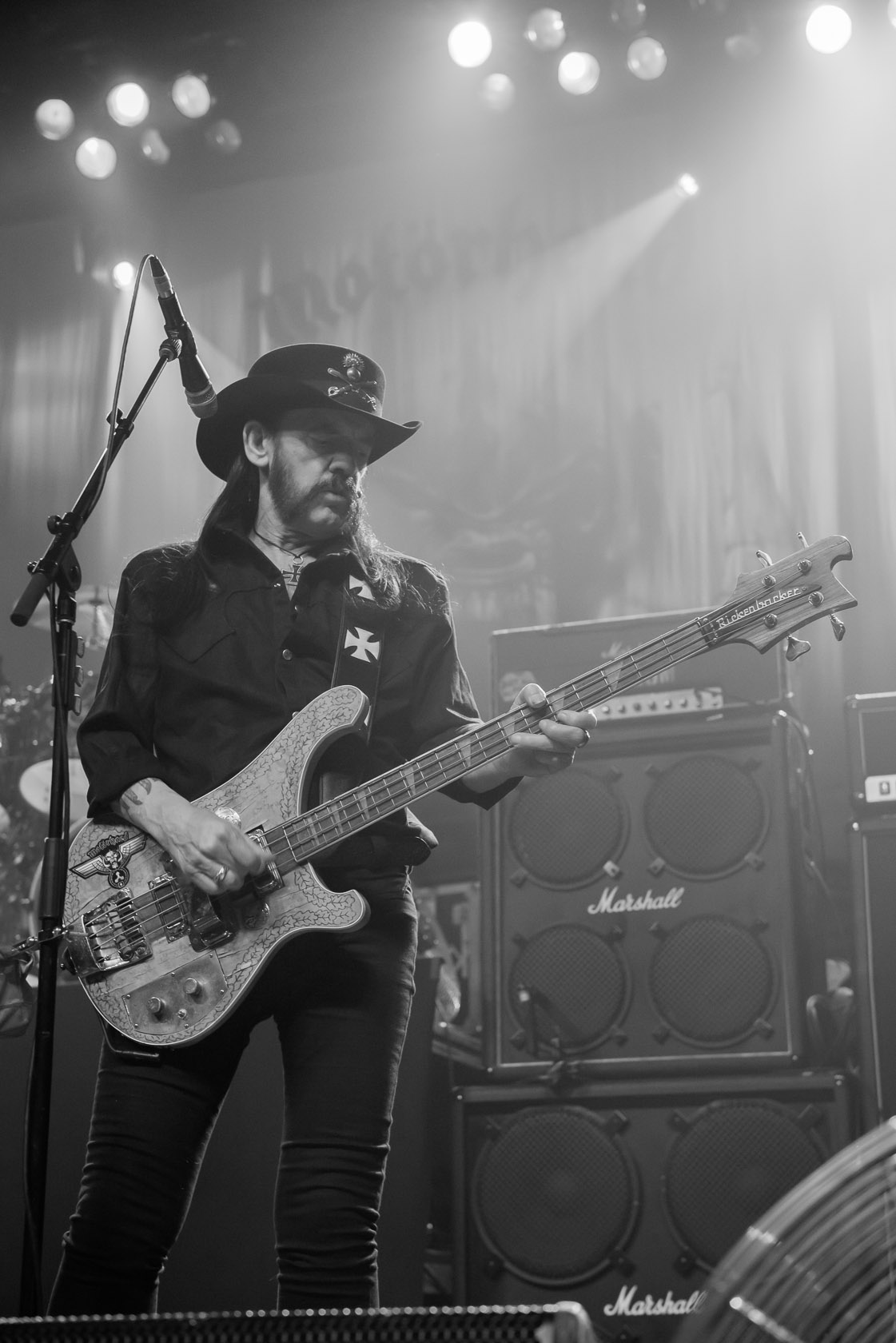
There’s something special about seeing the name Motörhead, umlaut and all, mounted on that grand Market Street marquee, next to a strip club and at the intersection of one of San Francisco’s seediest streets. If you know anything about the band, its history, and iconic frontman Lemmy Kilmister, it just feels right.

The black-clad masses had congregated outside the historic Warfield Theater well before showtime and the mood was noticeably high, as show-goers were surely thankful for either a first chance, another chance, but hopefully not last chance to see and hear the true king of metal live and in-person.

The room was about half-full for opener Graveyard’s set and those in attendance were engaged and impressed.  The Swedish ’70s revival rockers played a solid set consisting mostly of songs from their first two albums, peppered with a few from Lights Out, their third and decidedly less metal offering. Motörhead’s Phil Campbell would later describe them as “the only good thing to come out of Sweden.”

graveyard
Graveyard. All photos by Brittany Powell.

As the main event neared, the room packed up quickly and the mood felt like what one might expect at an appearance of the Pope at a monster truck rally, with the latter being a bit closer to the beating that our ears were about to take.

With the predictability of the tides, the loudest band in the world emerged and delivered the standard greeting:

“We are Motörhead, and we play rock and roll.”

They immediately lunged into “Damage Case,” Lemmy’s head craned upward towards his trademark high mic, where it would remain for most of the show.  He doesn’t move around much these days, but did he ever?  Nonetheless, at 68, his gravelly snarl is still a force to be reckoned with. The floor got rowdy pretty quick and security could be seen ushering, quite roughly, more than a handful of audience members off the floor and presumably out the door. This is the effect that Motörhead has on people, and it has some significance at the Warfield, which used to have seats that went all the way to the front, until the first three rows were ripped out in 1984 at — you guessed it — a Motörhead show. 

motorhead
Motörhead

After the second number, “Stay Clean,” Lemmy took a moment to address the dipshit (or dipshits) in the crowd who were hurling water bottles at the stage. “Please don’t throw shit at us and we won’t throw anything at you,” he said in a polite deadpan, before Campbell threatened  to walk off if it continued. One final item, a pink lighter, whose hurler Campbell called “a real star,” hit the stage — and the barrage was finished, probably thanks to crowd or security intervention, or perhaps a combination of both. 

Despite the disrespect, Lemmy twice told the crowd that we were the best on the tour and that “Coachella definitely isn’t giving [us] any competition.”  Maybe he was just being nice, but I believed him.  

motorhead

The remainder of the show went smoothly enough, with the band playing most of the live favorites punctuated by Campbell’s glowing (like, actually glowing) guitar solo and Mikkey Dee’s bombastic, elevated drum solo, bookended by blasts of smoke, both of which felt a little dated, but this is real rock ‘n’ roll ,and modern-day gimmicks  weren’t needed. The guys didn’t waste much time between songs, except for the occasional intro, and a moment to dedicate “Just ‘Cos You Got the Power” to the “politicians who are stealing all of our money.” 

motorhead

The regular set ended with “Ace of Spades,” during which nobody missed their chance to scream “That’s the way I like it baby, I don’t want to live forever,” all the while probably wishing that Lemmy would live forever, so they would’t have to wonder how long it might be before they’re reminiscing about the times when rock gods still walked the earth. 

SETLIST
Damage Case
Stay Clean
Metropolis
Over the Top
The Chase is Better Than the Catch
Rock It
Lost Woman Blues
Doctor Rock
Just ‘Cos You Got the Power
Going to Brazil
Killed By Death
Ace of Spades
Overkill

Film Listings: April 16 – 22, 2014

0

Film listings are edited by Cheryl Eddy. Reviewers are Kimberly Chun, Dennis Harvey, Lynn Rapoport, and Sara Maria Vizcarrondo. For rep house showtimes, see Rep Clock.

OPENING

Bears John C. Reilly narrates this Disneynature documentary about grizzlies in Alaska. (1:26) Shattuck.

Faust See “Devil’s Advocate.” (2:14) Roxie.

A Haunted House 2 Marlon Wayans returns to star in this sequel, which spoofs last year’s The Conjuring, among other targets. (1:26)

Heaven is for Real No. (1:40)

Only Lovers Left Alive See “Blood Lush.” (2:03) Embarcadero.

The Railway Man The lackluster title — OK, it’s better than that of director Jonathan Teplitzky’s last movie, 2011’s Burning Man, which confused sad Burners everywhere — masks a sensitive and artful adaptation of Eric Lomax’s book, based on a true story, about an English survivor of WWII atrocities. As Railway Man unfolds, we find Eric (Colin Firth), a stammering, attractive eccentric, oddly obsessed with railway schedules, as he meets his sweet soul mate Patti (Nicole Kidman) in vaguely mid-century England. Their romance, however, takes a steep, downward spiral when Patti discovers her new husband’s quirks overlay a deeply damaged spirit, one with scars that never really healed. As Eric grows more isolated, his best friend Finlay (Stellan Skarsgard) reveals some of their experiences as POWs forced to toil on the seemingly impossible-to-build Thai-Burma Railway by Japanese forces. The brutality of the situation comes home when the young Eric (played by Jeremy Irvine of 2011’s War Horse) takes the rap for building a radio and undergoes a period of torture. The horror seems rectifiable when Finlay discovers that the most memorable torturer Nagase (played at various ages by Tanroh Ishida and Hiroyuki Sanada) is still alive and, outrageously, leading tours of the area. Revenge is sweet, as so many other movies looking at this era have told us, but Railway Man strives for a deeper, more difficult message while telling its story with the care and attention to detail that points away from the weedy jungle of a traumatic past — and toward some kind of true north where reconciliation lies. (1:53) Albany, Embarcadero. (Chun)

That Demon Within Hong Kong action director Dante Lam’s latest resides firmly within his preferred wheelhouse of hyper-stylized cops-and-robbers thriller, though this one’s more ghoulish than previous efforts like 2008’s Beast Stalker. Merciless bandits — identities concealed behind traditional masks — have been causing all kinds of trouble, heisting diamonds, mowing down bystanders, blowing up cars, exchanging mad gunfire with police, etc. After he’s injured in one such battle, sinister Hon (Nick Cheung), aka “the Demon King,” stumbles to the hospital, where cop Dave (Daniel Wu) donates blood to save the man’s life, not realizing he’s just revived HK’s public enemy number one. The gangster is soon back to his violent schemes, and Dave — a withdrawn loner given to sudden rage spirals — starts having spooky hallucinations (or are they memories?) that suggest either the duo has some kind of psychic connection, or that Dave is straight-up losing his mind. Meanwhile, a police inspector everyone calls “Pops” (Lam Kar-wah) becomes obsessed with taking Hon down, with additional tension supplied by crooked cops and infighting among the criminal organization. Does an overwrought, mind-warpingly brutal finale await? Hell yes it does. (1:52) Metreon. (Eddy)

Transcendence Academy Award-winning cinematographer Wally Pfister (2010’s Inception) makes his directorial debut with this sci-fi thriller about an AI expert (Johnny Depp) who downloads his own mind into a computer, with dangerously chaotic results. (1:59) California, Four Star, Marina.

Watermark Daring to touch the hem of — and then surpass — Godfrey Reggio’s trippy-movie-slash-visual-essays (1982’s Koyaanisqatsi, 2013’s Visitors) and their sumptuous visual delights and global expansivenesses, with none of the cheese or sensational aftertaste, Watermark reunites documentarian Jennifer Baichwal and photographer Edward Burtynsky, the latter the subject of her 2006 film, Manufactured Landscapes. Baichwal works directly with Burtynsky, as well as DP Nick de Pencier, as the artist assembles a book on the ways water has been shaped by humans. Using mostly natural sound and an unobtrusive score, she’s able to beautifully translate the sensibility of Burtynsky’s still images by following the photographer as he works, taking to the air and going to ground with succinct interviews that span the globe. We meet scientists studying ice cores drilled in Greenland, Chinese abalone farmers, leather workers in Bangladesh, and denizens on both sides of the US/Mexico border who reminisce about ways of life that have been lost to dams. Even as it continually, indirectly poses questions about humans’ dependence on, desire to control, and uses for water, the movie always reminds us of the presence and majesty of oceans, rivers, and tributaries with indelible images — whether it’s a time-lapse study of the largest arch dam in the world; the glorious mandalas of water drilling sites related to the Ogallala Aquifer; or a shockingly stylized scene of Chinese rice terraces that resembles some lost Oskar Kokoschka woodcut. While striking a relevant note in a drought-stricken California, Watermark reaches a kind of elegant earthbound poetry and leaves one wondering what Baichwal and Burtynsky will grapple with next. (1:31) Opera Plaza, Shattuck. (Chun)

ONGOING

Afternoon of a Faun: Tanaquil Le Clercq Writer-director Nancy Buirski’s documentary follows the short, brilliant career of a young dancer named Tanaquil Le Clercq, who came up in the New York City ballet world of the 1940s and ’50s. Le Clercq was discovered by George Balanchine, married him (as three other dancers had done before her), sparked a paradigm shift in the ballet world regarding what was considered the quintessential dancer’s body, had numerous ballets set on her by Balanchine and Jerome Robbins, and then, at the peak of her career, at age 27, was stricken by polio and left paralyzed in both legs. The film takes its time moving toward this catastrophe, recounting Le Clercq’s early adult life through interviews with her contemporaries and tracking her professional progress through gorgeous archival footage of her performances. Equally moving archival material are the letters from a longtime correspondence between Le Clercq and Robbins that documented two very different periods of her life: the first, when Robbins was choreographing ballets for her, including Afternoon of a Faun, and professing his love; the second, after her paralysis, when she wrote him a series of poignant communications describing her impressions of her illness and her new, circumscribed world. The film has some trouble holding on to its center — as in life, Balanchine proves a magnetic force, and Afternoon of a Faun feels inexorably drawn to his professional and personal details. We don’t get enough of Le Clercq, which you could say is the tragedy of her story — nobody did. But the letters do provide a sense of someone resourceful and responsive to life’s richness and joys, someone who would get past this crisis and find a way to reshape her life. (1:31) Opera Plaza. (Rapoport)

Bad Words Settling a grudge score whose precise origin remains unclear until late in the game, world-class misanthrope Guy Trilby (Jason Bateman) is celebrating his 40th birthday by competing in a national spelling bee. Yes, spelling bees are generally for children, and so is this one. But Guy has found a legal loophole permitting his participation, and the general hate wending his way from contest staff (Allison Janney, Philip Baker Hall) — let alone the tiger-mom-and-dad parents ready to form a lynch mob — is just icing on the cake where he’s concerned. What’s more, as some sort of majorly underachieving near-genius, he’s in fact well equipped to whup the bejesus out of overachieving eight-year-olds when it comes to saying the right letters out loud. The only people on his side, sorta, are the online journalist (Kathryn Hahn) reporting on his perverse quest, and the insidiously cute Indian American competitor (Rohan Chand) who wants to be besties, or perhaps just to psych him out. (Note: The tyke’s admitted favorite word is “subjugate.”) Written by Andrew Dodge, this comedy in the tradition (a little too obviously) of 2003’s Bad Santa and such provides the always enjoyable Bateman with not only a tailor-made lead role, but a directorial debut as well. He does just fine by both. Yet as nicely crafted and frequently-pretty-funny Bad Words is, at core it’s a rather petty movie — small, derivative, and cynically mean-spirited without the courage of genuine biliousness. It’s at once not-half-bad, and not half as badass as it pretends to be. (1:29) 1000 Van Ness. (Harvey)

Captain America: The Winter Soldier Marvel’s most wholesome hero returns in this latest film in the Avengers series, and while it doesn’t deviate from the expected formula (it’s not a spoiler to say that yes, the world is saved yet again), it manages to incorporate a surprisingly timely plot about the dangers of government surveillance. Steve Rogers (Chris Evans), hunkiest 95-year-old ever, is still figuring out his place in the 21st century after his post-World War II deep freeze. Nick Fury (Samuel L. Jackson) has him running random rescue missions with the help of Black Widow (Scarlett Johansson), but SHIELD is working on a top-secret project that will allow it to predict crimes before they occur. It isn’t long before Cap’s distrust of the weapon — he may be old-fashioned, but he ain’t stupid — uncovers a sinister plot led by a familiar enemy, with Steve’s former BFF Bucky doing its bidding as the science-experiment-turned-assassin Winter Soldier (Sebastian Stan). Anthony Mackie, Robert Redford, and series regular Cobie Smulders are fine in supporting roles, and Johansson finally gets more to do than punch and pose, but the likable Evans ably carries the movie — he may not have the charisma of Robert Downey Jr., but he brings wit and depth to a role that would otherwise be defined mainly by biceps and CG-heavy fights. Oh, and you know the drill by now: superfans will want to stick around for two additional scenes tucked into the end credits. (2:16) Balboa, Marina, Metreon, 1000 Van Ness, Sundance Kabuki. (Eddy)

Cesar Chavez “You always have a choice,” Cesar Chavez (Michael Peña) tells his bullied son when advising him to turn the other cheek. Likewise, actor-turned-director Diego Luna had a choice when it came to tackling his first English-language film; he could have selected a less complicated, sprawling story. So he gets props for that simple act — especially at a time when workers’ rights and union power have been so dramatically eroded — and for his attempts to impact some complicated nuance to Chavez’s fully evident heroism. Painting his moving pictures in dusty earth tones and burnt sunlight with the help of cinematographer Enrique Chediak, Luna vaults straight into Chavez’s work with the grape pickers that would come to join the United Farm Workers — with just a brief voiceover about Chavez’s roots as the native-born son of a farm owner turned worker, post-Depression. Uprooting wife Helen (America Ferrera) and his family and moving to Delano as a sign of activist commitment, Chavez is seemingly quickly drawn into the 1965 strike by the Mexican workers’ sometime rivals: Filipino pickers (see the recent CAAMFest short documentary Delano Manongs for some of their side of the story). From there, the focus hones in on Chavez, speaking out against violence and “chicken shit macho ideals,” hunger striking, and activating unions overseas, though Luna does give voice to cohorts like Dolores Huerta (Rosario Dawson), growers like Bogdanovitch (John Malkovich), and the many nameless strikers — some of whom lost their lives during the astonishingly lengthy, taxing five-year strike. Luna’s win would be a blue-collar epic on par with 1979’s Norma Rae, and on some levels, he succeeds; scanning the faces of the weathered, hopeful extras in crowd scenes, you can’t help but feel the solidarity. The people have the power, as a poet once put it, and tellingly, his choice of Peña, stolidly opaque when charismatic warmth is called for, might be the key weakness here. One suspects the director or his frequent costar Gael García Bernal would make a more riveting Chavez. (1:38) Metreon. (Chun)

Cuban Fury (1:37) Metreon, 1000 Van Ness.

Divergent Based on the blockbuster dystopian-future YA novel by Veronica Roth (the first in a trilogy), Divergent is set in a future city-state version of Chicago in which society is divided into five character-based, color-coded factions: Erudite, Amity, Candor, Abnegation, and Dauntless. Like her peers, Beatrice Prior (Shailene Woodley), the film’s Abnegation-born teenage heroine, must choose a permanent faction — with the help of a standardized aptitude test that forgoes penciling in bubbles in favor of virtual reality psychic manipulation. When the test fails to triangulate her sole innate personality trait, she learns that she belongs to a secret, endangered sixth category: Divergent, an astonishing set of people who are not only capable of, say, acts of selflessness but can also produce intelligent thought, or manifest bravery in the face of danger. Forced to hide her aberrant nature in a society whose leaders (Kate Winslet) are prone to statements like “The future belongs to those who know where they belong,” and seemingly bored among Abnegation’s hive of gray cardigan-wearing worker bees, Beatrice chooses Dauntless, a dashing gang of black-clad, alterna-rock music video extras who jump on and off moving trains and live in a warehouse-chic compound whose dining hall recalls the patio at Zeitgeist. Fittingly, a surly, tattooed young man named Four (Theo James) leads Beatrice, now Tris, and her fellow initiates through a harsh proving regimen that, if they fail, will cast them into an impoverished underclass. Director Neil Burger (2006’s The Illusionist, 2011’s Limitless) and the behemoth marketing force behind Divergent are clearly hoping to stir up the kind of madness stoked by the Twilight and Hunger Games series, but while there are bones a-plenty to pick with those franchises, Divergent may have them beat for pure daffiness of premise and diameter of plot holes — and that’s after screenwriters Evan Daugherty and Vanessa Taylor’s major suturing of the source material’s lacunae. The daffiness doesn’t translate into imaginative world-building, and while a couple of scenes convey the visceral thrills of life in Dauntless, the tension between Tris and Four is awkwardly ratcheted up, and the film’s shift into a mode of crisis is equally jolting without generating much heat. (2:20) Metreon, 1000 Van Ness. (Rapoport)

Dom Hemingway We first meet English safecracker Dom (Jude Law) as he delivers an extremely verbose and flowery ode to his penis, addressing no one in particular, while he’s getting blown in prison. Whether you find this opening a knockout or painfully faux will determine how you react to the rest of Richard Shepard’s new film, because it’s all in that same overwritten, pseudo-shocking, showoff vein, Sprung after 12 years, Dom is reunited with his former henchman Dickie (Richard E. Grant), and the two go to the South of France to collect the reward owed for not ratting out crime kingpin Mr. Fontaine (Demian Bichir). This detour into the high life goes awry, however, sending the duo back to London, where Dom — who admits having “anger issues,” which is putting it mildly — tries to woo a new employer (Jumayn Hunter) and, offsetting his general loutishness with mawkish interludes, to re-ingratiate himself with his long-estranged daughter (Emilia Clarke). Moving into Guy Ritchie terrain with none of the deftness the same writer-director had brought to debunking James Bond territory in 2006’s similarly black-comedic crime tale The Matador, Dom Hemingway might bludgeon some viewers into sharing its air of waggish, self conscious merriment. But like Law’s performance, it labors so effortfully hard after that affect that you’re just as likely to find the whole enterprise overbearing. (1:33) Metreon, Sundance Kabuki. (Harvey)

Draft Day (2:00) 1000 Van Ness, Presidio, SF Center, Sundance Kabuki.

Finding Vivian Maier Much like In the Realms of the Unreal, the 2004 doc about Henry Darger, Finding Vivian Maier explores the lonely life of a gifted artist whose talents were discovered posthumously. In this case, however, the filmmaker — John Maloof, who co-directs with Charlie Siskel — is responsible for Maier’s rise to fame. A practiced flea-market hunter, he picked up a carton of negatives at a 2007 auction; they turned out to be striking examples of early street photography. He was so taken with the work (snapped by a woman so obscure she was un-Google-able) that he began posting images online. Unexpectedly, they became a viral sensation, and Maloof became determined to learn more about the camerawoman. Turns out Vivian Maier was a career nanny in the Chicago area, with plenty of former employers to share their memories. She was an intensely private person who some remembered as delightfully adventurous and others remembered as eccentric, mentally unstable, or even cruel; she was a hoarder who was distrustful of men, and she spoke with a maybe-fake French accent. And she was obsessed with taking photographs that she never showed to anyone; the hundreds of thousands now in Maloof’s collection (along with 8mm and 16mm films) offer the only insight into her creative mind. “She had a great eye, a sense of humor, and a sense of tragedy,” remarks acclaimed photographer Mary Ellen Mark. “But there’s a piece of the puzzle missing.” The film’s central question — why was Maier so secretive about her hobby? — may never be answered. But as the film also suggests, that mystery adds another layer of fascination to her keenly observed photos. (1:23) Clay. (Eddy)

The Galapagos Affair: Satan Came to Eden Extensive archival footage and home movies (plus one short, narrative film) enhance this absorbing doc from San Francisco-based Dayna Goldfine and Dan Geller (2005’s Ballets Russes). It tells the tale of a double murder that occurred in the early 1930s on Floreana — the most remote of the already scarcely-populated Galapagos Islands. A top-notch cast (Cate Blanchett, Diane Kruger, Connie Nielsen, Josh Radnour) gives voice to the letters and diary entries of the players in this stranger-than-fiction story, which involved an array of Europeans who’d moved away from civilization in search of utopian simplicity — most intriguingly, a maybe-fake Baroness and her two young lovers — and realized too late that paradise isn’t all it’s cracked up to be. Goldfine and Geller add further detail to the historic drama by visiting the present-day Galapagos, speaking with residents about the lingering mystery and offering a glimpse of what life on the isolated islands is like today. (2:00) Embarcadero. (Eddy)

The Grand Budapest Hotel Is this the first Wes Anderson movie to feature a shootout? It’s definitely the first Anderson flick to include a severed head. That’s not to say The Grand Budapest Hotel, “inspired by” the works of Austrian novelist Stefan Zweig, represents too much of a shift for the director — his intricate approach to art direction is still very much in place, as are the deadpan line deliveries and a cast stuffed with Anderson regulars. But there’s a slightly more serious vibe here, a welcome change from 2012’s tooth-achingly twee Moonrise Kingdom. Thank Ralph Fiennes’ performance as liberally perfumed concierge extraordinaire M. Gustave, which mixes a shot of melancholy into the whimsy, and newcomer Tony Revolori as Zero, his loyal lobby boy, who provides gravitas despite only being a teenager. (Being played by F. Murray Abraham as an older adult probably helps in that department.) Hotel‘s early 20th century Europe setting proves an ideal canvas for Anderson’s love of detail — the titular creation rivals Stanley Kubrick’s rendering of the Overlook Hotel — and his supporting cast, as always, looks to be enjoying the hell out of being a part of Anderson’s universe, with Willem Dafoe, Jeff Goldblum, and Adrien Brody having particularly oversized fun. Is this the best Wes Anderson movie since 2001’s The Royal Tenenbaums? Yes. (1:40) Balboa, 1000 Van Ness, Presidio, SF Center, Sundance Kabuki, Vogue. (Eddy)

Jodorowsky’s Dune A Chilean émigré to Paris, Alejandro Jodorowsky had avant-garde interests that led him from theater and comic book art to film, making his feature debut with 1968’s Fando y Lis. Undaunted by its poor reception, he created El Topo (1970), a blood-soaked mix of spaghetti western, mysticism, and Buñuellian parabolic grotesquerie that became the very first “midnight movie.” After that success, he was given nearly a million dollars to “do what he wanted” with 1973’s similarly out-there The Holy Mountain, which became a big hit in Europe. French producer Michel Seydoux asked Jodorowsky what he’d like to do next. Dune, he said. In many ways it seemed a perfect match of director and material. Yet Dune would be an enormous undertaking in terms of scale, expense, and technical challenges. What moneymen in their right mind would entrust this flamboyant genius/nut job with it? They wouldn’t, as it turned out. So doc Jodorowsky’s Dune is the story of “the greatest film never made,” one that’s brain-exploding enough in description alone. But there’s more than description to go on here, since in 1975 the director and his collaborators created a beautifully detailed volume of storyboards and other preproduction minutiae they hoped would lure Hollywood studios aboard this space phantasmagoria. From this goldmine of material, as well as input from the surviving participants, Pavich is able to reconstruct not just the film’s making and unmaking, but to an extent the film itself — there are animated storyboard sequences here that offer just a partial yet still breathtaking glimpse of what might have been. (1:30) Embarcadero. (Harvey)

Joe “I know what keeps me alive is restraint,” says Nicolas Cage’s titular character, a hard-drinking, taciturn but honorable semi-loner who supervises a crew of laborers clearing undesirable trees in the Mississippi countryside. That aside, his business is mostly drinking, occasionally getting laid, and staying out of trouble — we glean he’s had more than enough of the latter in his past. Thus it’s against his better judgment that he helps out newly arrived transient teen Gary (the excellent Tye Sheridan, of 2012’s Mud and 2011’s The Tree of Life), who’s struggling to support his bedraggled mother and mute sister. Actually he takes a shine to the kid, and vice versa; the reason for caution is Gary’s father, whom he himself calls a “selfish old drunk.” And that’s a kind description of this vicious, violent, lazy, conscienceless boozehound, who has gotten his pitiful family thrown out of town many times before and no doubt will manage it once again in this new burg, where they’ve found an empty condemned house to squat in. David Gordon Green’s latest is based on a novel by the late Larry Brown, and like that writer’s prose, its considerable skill of execution manages to render serious and grimly palatable a steaming plate load of high white trash melodrama that might otherwise be undigestible. (Strip away the fine performances, staging and atmosphere, and there’s not much difference between Joe and the retro Southern grind house likes of 1969’s Shanty Tramp, 1974’s ‘Gator Bait or 1963’s Scum of the Earth.) Like Mud and 2011’s Killer Joe, this is a rural Gothic neither truly realistic or caricatured to the point of parody, but hanging between those two poles — to an effect that’s impressive and potent, though some may not enjoy wallowing in this particular depressing mire of grotesque nastiness en route to redemption. (1:57) Metreon, Presidio. (Harvey)

The Lego Movie (1:41) Metreon.

The Lunchbox Ila (Nimrat Kaur) is a self-possessed housewife and a great cook, whose husband confuses her for another piece of furniture. She tries to arouse his affections with elaborate lunches she makes and sends through the city’s lunchbox delivery service. Like marriage in India, lunchbox delivery has a failure rate of zero, which is what makes aberrations seem like magical occurrences. So when widow Saajan (Irrfan Khan) receives her adoring food, he humbly receives the magical lunches like a revival of the senses. Once Ila realizes her lunchbox is feeding the wrong man she writes a note and Saajan replies — tersely, like a man who hasn’t held a conversation in a decade — and the impossible circumstances lend their exchanges a romance that challenges her emotional fidelity and his retreat from society. She confides her husband is cheating. He confides his sympathy for men of lower castes. It’s a May/December affair if it’s an affair at all — but the chemistry we expect the actors to have in the same room is what fuels our urge to see it; that’s a rare and haunting dynamic. Newcomer Kaur is perfect as Ila, a beauty unmarked by her rigorous distaff; her soft features and exhausted expression lend a richness to the troubles she can’t share with her similarly stoic mother (Lillete Dubey). Everyone is sacrificing something and poverty seeps into every crack, every life, without exception — their inner lives are their richness. (1:44) Opera Plaza. (Vizcarrondo)

Mr. Peabody and Sherman Mr. P. (voiced by Ty Burrell) is a Nobel Prize-winning genius dog, Sherman (Max Charles) his adopted human son. When the latter attends his first day of school, his extremely precocious knowledge of history attracts jealous interest from bratty classmate Penny (Ariel Winter), with the eventual result that all three end up being transported in Peabody’s WABAC time machine to various fabled moments — involving Marie Antoinette, King Tut, the Trojan Horse, etc. — where Penny invariably gets them in deep trouble. Rob Minkoff’s first all-animation feature since The Lion King 20 years ago is spun off from the same-named segments in Jay Ward’s TV Rocky and Bullwinkle Show some decades earlier. It’s a very busy (sometimes to the brink of clutter), often witty, imaginatively constructed, visually impressive, and for the most part highly enjoyable comic adventure. The only minuses are some perfunctory “It’s about family”-type sentimentality — and scenarist Craig Wright’s determination to draw from history the “lesson” that nearly all women are pains in the ass who create problems they must then be rescued from. (1:30) 1000 Van Ness. (Harvey)

Muppets Most Wanted Building on the success of The Muppets, Jim Henson’s beloved creations return to capitalize on their revitalized (and Disney-owned) fame. This follow-up from Muppets director James Tobin — technically, it’s the seventh sequel to the original 1979 Muppet Movie, as Dr. Bunsen Honeydew points out in one of the film’s many meta moments — improves upon the 2011 film, which had its charms but suffered by concentrating too much on the Jason Segal-Amy Adams romance, not to mention annoying new kid Walter. Here, human co-stars Ricky Gervais, Tina Fey, and others (there are more cameos than you can count) are relegated to supporting roles, with the central conflict revolving around the Muppets’ inability to notice that Constantine, “the world’s most dangerous frog,” has infiltrated their group, sending Kermit to Siberian prison in his place. Constantine and his accomplice (Gervais, whose character’s last name is “Badguy”) use the Muppets’ world tour as a front for their jewel-heist operation; meanwhile, his infatuated warden (Fey) forces Kermit to direct the annual gulag musical. Not helping matters are a bumbling Interpol agent (Ty Burrell) and his CIA counterpart (Sam the American Eagle, natch). Really, all that’s needed is a simple plot, catchy songs, and plenty of room to let the Muppets do their thing — Miss Piggy and Animal are particularly enjoyable here; Walter’s still around, but he’s way more tolerable now that he’s gotten past his “man or muppet” angst — and the film delivers. All the knowing winks to the grown-up fans in the audience are just an appreciated bonus. (1:46) 1000 Van Ness, SF Center. (Eddy)

Noah Darren Aronofsky’s Biblical epic begins with a brief recap of prior Genesis events — creation is detailed a bit more in clever fashion later on — leading up to mankind’s messing up such that God wants to wipe the slate clean and start over. That means getting Noah (Russell Crowe), wife Naameh (Jennifer Connelly), and their three sons and one adopted daughter (Emma Watson) to build an ark that can save them and two of every animal species from the imminent slate-wiping Great Flood. (The rest of humanity, having sinned too much, can just feed the fishes.) They get some help from fallen angels turned into Ray Harryhausen-type giant rock creatures voiced by Nick Nolte and others. There’s an admirable brute force and some startling imagery to this uneven, somber, Iceland-shot tale “inspired” by the Good Book (which, needless to say, has endured more than its share of revisions over the centuries). Purists may quibble over some choices, including the device of turning minor Biblical figure Tubal-Cain (Ray Winstone) into a royal-stowaway villain, and political conservatives have already squawked a bit over Aronofsky’s not-so-subtle message of eco-consciousness, with Noah being bade to “replenish the Earth” that man has hitherto rendered barren. But for the most part this is a respectable, forceful interpretation that should stir useful discussion amongst believers and non believers alike. Its biggest problem is that after the impressively harrowing flood itself, we’re trapped on the ark dealing with the lesser crises of a pregnancy, a discontented middle son (Logan Lerman), and that stowaway’s plotting — ponderous intrigues that might have been leavened if the director had allowed us to hang out with the animals a little, rather than sedating the whole menagerie for the entire voyage. (2:07) 1000 Van Ness, SF Center, Sundance Kabuki. (Harvey)

Nymphomaniac: Volume I Found battered and unconscious in a back alley, Joe (Charlotte Gainsbourg) is taken in by good Samaritan Seligman (Stellan Skarsgaard), to whom she explains “It’s all my fault — I’m just a bad human being.” But he doesn’t believe there are such things. She seeks to enlighten him by narrating the story of her life so far, from carnally curious childhood to sexually voracious adulthood. Stacy Martin plays her younger self through a guided tour of excesses variously involving Christian Slater and Connie Nielsen as her parents; a buncha guys fucked on a train, on a teenage dare; Uma Thurman as one histrionically scorned woman; and Shai LaBeouf as a first love who’s a cipher either because he’s written that way, or because this particular actor can’t make sense out of him. For all its intended provocation, including some graphic but unsurprisingly (coming from this director) unerotic XXX action, von Trier’s latest is actually less offensive than much of his prior output: He’s regained his sense of humor here, and annoying as its “Look at me, I’m an unpredictable artist” crap can be (notably all the stuff about fly-fishing, cake forks, numerology, etc. that seems randomly drawn from some Great Big Book of Useless Trivia), the film’s episodic progress is divertingly colorful enough. But is Joe going to turn out to be more than a two-dimensional authorial device from a director who’s never exactly sussed women (or liked people in general)? Will Nymphomaniac arrive at some pointed whole greater than the sum of its naughty bits? The answer to both is probably “Nah.” But we won’t know for sure until the two-hour second half arrives (see review below) of a movie that, in fairness, was never really intended to be split up like this. (1:50) Smith Rafael. (Harvey)

Nymphomaniac, Volume II The second half of Lars von Trier’s anecdotal epic begins with Joe (Charlotte Gainsbourg) recalling the quasi-religious experience of her spontaneous first orgasm at age 12. Then she continues to tell bookish good Samaritan Seligman (Stellan Skarsgard) — who reveals he’s an asexual 60-something virgin — the story of her sexually compulsive life to date. Despite finding domestic stability at last with Jerome (Shia LeBeouf), she proves to have no talent for motherhood, and hits a tormenting period of frigidity eventually relieved only by the brutal ministrations of sadist K (Jamie Bell, burying Billy Elliott for good). She finds a suitable professional outlet for her peculiarly antisocial personality, working as a sometimes ruthless debt collector under the tutelage of L (Willem Dafoe), and he in turn encourages her to develop her own protégé in the form of needy teenager P (Mia Goth). If Vol. I raised the question “Will all this have a point?,” Vol. II provides the answer, and it’s (as expected) “Not really.” Still, there’s no room for boredom in the filmmaker’s most playfully arbitrary, entertaining, and least misanthropic (very relatively speaking) effort since his last four-hour-plus project 20 years ago, TV miniseries The Kingdom. Never mind that von Trier (in one of many moments when he uses Joe or Seligman as his mouthpiece) protests against the tyranny of political correctitude that renders a word like “Negro” unsayable — you’re still free to feel offended when his camera spends more time ogling two African men’s variably erect dicks in one brief scene that it does all the white actors’ cocks combined. But then there’s considerably more graphic content all around in this windup, which ends on a predictable note of cheap, melodramatic irony. But that’s part of the charm of the whole enterprise: Reeling heedlessly from the pedantic to the shocking to the trivial, like a spoiled child it manages to be kinda cute even when it’s deliberately pissing you off. (2:10) Opera Plaza, Smith Rafael. (Harvey)

Oculus Tim (Brenton Thwaites) and Kaylie (Karen Gillan) are grown siblings with a horrible shared past: When they were children, their parents (Rory Cochrane, Katee Sankhoff) moved them all into a nice suburban house, decorating it with, among other things, a 300-year-old mirror. But that antique seemed to have an increasingly disturbing effect on dad, then mom too, to ultimately homicidal, offspring-orphaning effect. Over a decade later, Tim is released from a juvenile mental lockup, ready to live a normal life after years of therapy have cleaned him of the supernatural delusions he think landed him there in the first place. Imagine his dismay when Kaylie announces she has spent the meantime researching aforementioned “evil mirror” — which turns out to have had a very gruesome history of mysteriously connected deaths — and painstakingly re-acquiring it. She means to destroy it so it can never wreak havoc, and has set up an elaborate room of camcorders and other equipment in which to “prove” its malevolence first, with Tim her very reluctant helper. Needless to say, this experiment (which he initially goes along with only in order to debunk the whole thing for good) turns out to be a very, very bad idea. The mirror is clever — demonically clever. It can warp time and perspective so our protagonists don’t know whether what they’re experiencing is real or not. Expanding on his 2006 short film (which was made before his excellent, little-seen 2011 horror feature Absentia), Mike Flanagan’s tense, atmospheric movie isn’t quite as scary as you might wish, partly because the villain (the spirit behind the mirror) isn’t particularly well-imagined in generic look or murky motivation. But it is the rare new horror flick that is genuinely intricate and surprising plot-wise — no small thing in the current landscape of endless remakes and rehashes. (1:44) Metreon, 1000 Van Ness. (Harvey)

On My Way Not for nothing too does the title On My Way evoke Going Places (1974): director Emmanuelle Bercot is less interested in exploring Catherine Deneuve’s at-times-chilled hauteur than roughing up, grounding, and blowing fresh country air through that still intimidatingly gorgeous image. Deneuve’s Bettie lost her way long ago — the former beauty queen, who never rose beyond her Miss Brittany status, is in a state of stagnation, working at her seafood restaurant, having affairs with married men, living with her mother, and still sleeping in her girlhood room. One workday mid-lunch hour, she gets in her car and drives, ignoring all her ordinary responsibilities and disappearing down the wormhole of dive bars and back roads. She seems destined to drift until her enraged, equally lost daughter Muriel (Camille) calls in a favor: give her son Charly (Nemo Schiffman) a ride to his paternal grandfather’s. It’s chance to reconnect and correct course, even after Bettie’s money is spent, her restaurant appears doomed, and the adorable, infuriating Charly acts out. The way is clear, however: what could have been a musty, predictable affair, in the style of so many boomer tales in the movie houses these days, is given a crucial infusion of humanity and life, as Bercot keeps an affectionate eye trained on the unglamorous everyday attractions of a French backwater and Deneuve works that ineffable charm that draws all eyes to her onscreen. Her Bettie may have kicked her cigarette habit long ago, but she’s still smokin’ — in every way. (1:53) Embarcadero. (Chun)

Particle Fever “We are hearing nature talk to us,” a physicist remarks in awe near the end of Particle Fever, Mark Levinson’s intriguing doc about the 2012 discovery of the Higgs boson particle. Earlier, another scientist says, “I’ve never heard of a moment like this in [science] history, where an entire field is hinging on a single event.” The event, of course, is the launch of the Large Hardon Collider, the enormous machine that enabled the discovery. Though some interest in physics is probably necessary to enjoy Particle Fever, extensive knowledge of quarks and such is not, since the film uses elegant animation to refresh the basics for anyone whose eyes glazed over during high-school science. But though he offers plenty of context, Levinson wisely focuses his film on a handful of genial eggheads who are involved in the project, either hands-on at the European Organization for Nuclear Research (CERN), or watching from afar as the mighty LHC comes to life. Their excitement brings a welcome warmth to the proceedings — and their “fever” becomes contagious. (1:39) Opera Plaza. (Eddy)

The Raid 2 One need not have seen 2011’s The Raid: Redemption to appreciate this latest collaboration between Welsh director Gareth Evans and Indonesian actor, martial artist, and fight choreographer Iko Uwais — it’s recommended, of course, but the sequel stands alone on its own merits. Overstuffed with gloriously brutal, cleverly choreographed fight scenes, The Raid 2 — sometimes written with the subtitle “Berendal,” which means “thugs” — picks up immediately after the events of the first film. Quick recap of part one: a special-forces team invades an apartment tower controlled by gangsters. Among the cops is idealistic Rama (Uwais). Seemingly bulletproof and fleet of fists and feet, Rama battles his way floor-by-floor, encountering machete-toting heavies and wild-eyed maniacs; he also soon realizes he’s working for a police department that’s as corrupt as the gangster crew. The Raid‘s gritty, unadorned approach resonated with thrillseeking audiences weary of CG overload. A second Raid film was inevitable, especially since Evans — who became interested in Indonesian martial arts, or pencak silat, while working on 2007 doc The Mystic Art of Indonesia — already had its story in mind: Rama goes undercover within a criminal organization, a ploy that necessitates he do a prison stint to gain the trust of a local kingpin. Naturally, not much goes according to plan, and much blood is shed along the way, as multiple power-crazed villains set their sinister plans into motion. With expanded locations and ever-more daring (yet bone-breakingly realistic) fight scenes aplenty — including a brawl inside a moving vehicle, and a muddy, bloody prison-yard riot — The Raid 2 more than delivers. Easily the action film of the year so far, with no contenders likely to topple it in the coming months. (2:19) Metreon, 1000 Van Ness, Sundance Kabuki. (Eddy)

Rio 2 (1:41) Four Star, Metreon, 1000 Van Ness, Presidio.

300: Rise of An Empire We pick up the 300 franchise right where director Zack Snyder left off in 2006, with this prequel-sequel, which spins off an as-yet-unreleased Frank Miller graphic novel. In the hands of director Noam Murro, with Snyder still in the house as writer, 300: Rise of an Empire contorts itself, flipping back and forth in time, in an attempt to explain the making of Persian evil prince stereotype Xerxes (Rodrigo Santoro) —all purring androgyny, fashionable piercings, and Iran-baiting, Bush-era malevolence — before following through on avenging 300‘s romantically outnumbered, chesty Spartans. As told by the angry, mourning Spartan Queen Gorgo (Lena Headey of Game of Thrones), the whole mess apparently began during the Battle of Marathon, when Athenian General Themistokles (Sullivan Stapleton) killed Xerxes’s royal father with a well-aimed miracle arrow. That act ushers in Xerxes’s transformation into a “God King” bent on vengeance, aided and encouraged by his equally vengeful, elegantly mega-goth naval commander Artemisia (Eva Green), a Greek-hating Greek who likes to up the perversity quotient by making out with decapitated heads. In case you didn’t get it: know that vengeance is a prime mover for almost all the parties (except perhaps high-minded hottie Themistokles). Very loosely tethered to history and supplied with plenty of shirtless Greeks, taut thighs, wildly splintering ships, and even proto-suicide bombers, Rise skews toward a more naturalistic, less digitally waxy look than 300, as dust motes and fire sparks perpetually telegraph depth of field, shrieking, “See your 3D dollars hard at work!” Also working hard and making all that wrath look diabolically effortless is Green, who as the pitch-black counterpart to Gorga, turns out to be the real hero of the franchise, saving it from being yet another by-the-book sword-and-sandal war-game exercise populated by wholesome-looking, buff, blond jock-soldiers. Green’s feline line readings and languid camp attitude have a way of cutting through the sausage fest of the Greek pec-ing order, even during the Battle of, seriously, Salamis. (1:43) Metreon. (Chun)

Under the Skin At the moment, Scarlett Johansson is playing a superhero in the world’s top blockbuster. Her concurrent role in Jonathan Glazer’s Under the Skin — the tale of an alien who comes to earth to capture men, but goes rogue once her curiosity about the human world gets the better of her — could not be more different in story or scope. Her character’s camouflage (dark wig, thickly-applied lipstick) was carefully calibrated to make her unrecognizable, since Glazer (2000’s Sexy Beast) filmed the alien’s “pick-up” scenes — in which Johansson’s unnamed character cruises around Glasgow in a nondescript van, prowling for prey — using hidden cameras and real people who had no idea they were interacting with a movie star. The film takes liberties with its source material (Michel Farber’s novel), with “feeding” scenes that are far more abstract than as written in the book, allowing for one of the film’s most striking visual motifs. After the alien seduces a victim, he’s lured into what looks like a run-down house. The setting changes into a dark room that seems to represent an otherworldly void, with composer Mica Levi’s spine-tingling score exponentially enhancing the dread. What happens next? It’s never fully explained, but it doesn’t need to be. When the alien begins to mistakenly believe that her fleshy, temporary form is her own, she abandons her predatory quest — but her ill-advised exploration of humanity leads her into another dark place. A chilling, visceral climax caps one of the most innovative sci-fi movies in recent memory. (1:47) SF Center, Sundance Kabuki. (Eddy)

Le Week-End Director Roger Michell and writer Hanif Kureishi first collaborated two decades ago on The Buddha of Suburbia, when the latter was still in the business of being Britain’s brashest multiculti hipster voice. But in the last 10 years they’ve made a habit of slowing down to sketching portraits of older lives — and providing great roles for the nation’s bottomless well of remarkable veteran actors. Here Lindsay Duncan and Jim Broadbent play a pair of English academics trying to re-create their long-ago honeymoon’s magic on an anniversary weekend in Paris. They love each other, but their relationship is thorny and complicated in ways that time has done nothing to smooth over. This beautifully observed duet goes way beyond the usual adorable-old-coot terrain of such stories on screen; it has charm and humor, but these are unpredictable, fully rounded characters, not comforting caricatures. Briefly turning this into a seriocomedy three-way is Most Valuable Berserker Jeff Goldblum as an old friend encountered by chance. It’s not his story, but damned if he doesn’t just about steal the movie anyway. (1:33) Embarcadero. (Harvey) *


Save the world, work less

56

steve@sfbg.com

Save the world, work less. That dual proposition should have universal appeal in any sane society. And those two ideas are inextricably linked by the realities of global climate change because there is a direct connection between economic activity and greenhouse gas emissions.

Simply put, every hour of work we do cooks the planet and its sensitive ecosystems a little bit more, and going home to relax and enjoy some leisure time is like taking this boiling pot of water off the burner.

Most of us burn energy getting to and from work, stocking and powering our offices, and performing the myriad tasks that translate into digits on our paychecks. The challenge of working less is a societal one, not an individual mandate: How can we allow people to work less and still meet their basic needs?

This goal of slowing down and spending less time at work — as radical as it may sound — was at the center of mainstream American political discourse for much of our history, considered by thinkers of all ideological stripes to be the natural endpoint of technological development. It was mostly forgotten here in the 1940s, strangely so, even as worker productivity increased dramatically.

But it’s worth remembering now that we understand the environmental consequences of our growth-based economic system. Our current approach isn’t good for the health of the planet and its creatures, and it’s not good for the happiness and productivity of overworked Americans, so perhaps it’s time to revisit this once-popular idea.

Last year, there was a brief burst of national media coverage around this “save the world, work less” idea, triggered by a report by the Washington DC-based Center for Economic and Policy Research, entitled “Reduced Work Hours as a Means of Slowing Climate Change.”

“As productivity grows in high-income, as well as developing countries, social choices will be made as to how much of the productivity gains will be taken in the form of higher consumption levels versus fewer work hours,” author David Rosnick wrote in the introduction.

He notes that per capita work hours were reduced by 50 percent in recent decades in Europe compared to US workers who spend as much time as ever on the job, despite being a world leader in developing technologies that make us more productive. Working more means consuming more, on and off the job.

“This choice between fewer work hours versus increased consumption has significant implications for the rate of climate change,” the report said before going on to study various climate change and economic growth models.

It isn’t just global warming that working less will help address, but a whole range of related environmental problems: loss of biodiversity and natural habitat; rapid depletion of important natural resources, from fossil fuel to fresh water; and the pollution of our environment with harmful chemicals and obsolete gadgets.

Every day that the global workforce is on the job, those problems all get worse, mitigated only slightly by the handful of occupations devoted to cleaning up those messes. The Rosnick report contemplates only a slight reduction in working hours, gradually shaving a few hours off the week and offering a little more vacation time.

“The paper estimates the impact on climate change of reducing work hours over the rest of the century by an annual average of 0.5 percent. It finds that such a change in work hours would eliminate about one-quarter to one-half of the global warming that is not already locked in (i.e. warming that would be caused by 1990 levels of greenhouse gas concentrations already in the atmosphere),” the report concludes.

What I’m talking about is something more radical, a change that meets the daunting and unaddressed challenge that climate change is presenting. Let’s start the discussion in the range of a full day off to cutting our work hours in half — and eliminating half of the wasteful, exploitive, demeaning, make-work jobs that this economy-on-steroids is creating for us, and forcing us to take if we want to meet our basic needs.

Taking even a day back for ourselves and our environment will seem like crazy-talk to many readers, even though our bosses would still command more days each week than we would. But the idea that our machines and other innovations would lead us to work far less than we do now — and that this would be a natural and widely accepted and expected part of economic evolution — has a long and esteemed philosophical history.

Perhaps this forgotten goal is one worth remembering at this critical moment in our economic and environmental development.


HISTORY LESSON

Author and historian Chris Carlsson has been beating the “work less” drum in San Francisco since Jimmy Carter was president, when he and his fellow anti-capitalist activists decried the dawning of an age of aggressive business deregulation that continues to this day.

They responded with creative political theater and protests on the streets of the Financial District, and with the founding of a magazine called Processed World, highlighting how new information technologies were making corporations more powerful than ever without improving the lives of workers.

“What do we actually do all day and why? That’s the most basic question that you’d think we’d be talking about all the time,” Carlsson told us. “We live in an incredibly powerful and overarching propaganda society that tells you to get your joy from work.”

But Carlsson isn’t buying it, noting that huge swaths of the economy are based on exploiting people or the planet, or just creating unproductive economic churn that wastes energy for its own sake. After all, the Gross Domestic Product measures everything, the good, the bad, and the ugly.

“The logic of growth that underlies this society is fundamentally flawed,” Carlsson said. “It’s the logic of the cancer cell — it makes no sense.”

What makes more sense is to be smart about how we’re using our energy, to create an economy that economizes instead of just consuming everything in its path. He said that we should ask, “What work do we need to do and to what end?”

We used to ask such questions in this country. There was a time when working less was the goal of our technological development.

“Throughout the 19th century, and well into the 20th, the reduction of worktime was one of the nation’s most pressing issues,” professor Juliet B. Schor wrote in her seminal 1991 book The Overworked American: The Unexpected Decline of Leisure. “Through the Depression, hours remained a major social preoccupation. Today these debates and conflicts are long forgotten.”

Work hours were steadily reduced as these debates raged, and it was widely assumed that even greater reductions in work hours was all but inevitable. “By today, it was estimated that we could have either a 22-hour week, a six-month workyear, or a standard retirement age of 38,” Schor wrote, citing a 1958 study and testimony to Congress in 1967.

But that didn’t happen. Instead, declining work hours leveled off in the late 1940s even as worker productivity grew rapidly, increasing an average of 3 percent per year 1948-1968. Then, in the 1970s, workers in the US began to work steadily more hours each week while their European counterparts moved in the opposite direction.

“People tend to think the way things are is the way it’s always been,” Carlsson said. “Once upon a time, they thought technology would produce more leisure time, but that didn’t happen.”

Writer David Spencer took on the topic in a widely shared essay published in The Guardian UK in February entitled “Why work more? We should be working less for a better quality of life: Our society tolerates long working hours for some and zero hours for others. This doesn’t make sense.”

He cites practical benefits of working less, from reducing unemployment to increasing the productivity and happiness of workers, and cites a long and varied philosophical history supporting this forgotten goal, including opposing economists John Maynard Keynes and Karl Marx.

Keynes called less work the “ultimate solution” to unemployment and he “also saw merit in using productivity gains to reduce work time and famously looked forward to a time (around 2030) when people would be required to work 15 hours a week. Working less was part of Keynes’s vision of a ‘good society,'” Spencer wrote.

“Marx importantly thought that under communism work in the ‘realm of necessity’ could be fulfilling as it would elicit and harness the creativity of workers. Whatever irksome work remained in realm of necessity could be lessened by the harnessing of technology,” Spencer wrote.

He also cited Bertrand Russell’s acclaimed 1932 essay, “In Praise of Idleness,” in which the famed mathematician reasoned that working a four-hour day would cure many societal ills. “I think that there is far too much work done in the world, that immense harm is caused by the belief that work is virtuous, and that what needs to be preached in modern industrial countries is quite different from what always has been preached,” Russell wrote.

Spencer concluded his article by writing, “Ultimately, the reduction in working time is about creating more opportunities for people to realize their potential in all manner of activities including within the work sphere. Working less, in short, is about allowing us to live more.”


JOBS VS. WORK

Schor’s research has shown how long working hours — and the uneven distribution of those hours among workers — has hampered our economy, hurt our environment, and undermined human happiness.

“We have an increasingly poorly functioning economy and a catastrophic environmental situation,” Schor told us in a phone interview from her office at Boston College, explaining how the increasingly dire climate change scenarios add urgency to talking about how we’re working.

Schor has studied the problem with other researchers, with some of her work forming the basis for Rosnick’s work, including the 2012 paper Schor authored with University of Alabama Professor Kyle Knight entitled “Could working less reduce pressures on the environment?” The short answer is yes.

“As humanity’s overshoot of environmental limits become increasingly manifest and its consequences become clearer, more attention is being paid to the idea of supplanting the pervasive growth paradigm of contemporary societies,” the report says.

The United States seems to be a case study for what’s wrong.

“There’s quite a bit of evidence that countries with high annual work hours have much higher carbon emissions and carbon footprints,” Schor told us, noting that the latter category also takes into account the impacts of the products and services we use. And it isn’t just the energy we expend at work, but how we live our stressed-out personal lives.

“If households have less time due to hours of work, they do things in a more carbon-intensive way,” Schor said, with her research finding those who work long hours often tend to drive cars by themselves more often (after all, carpooling or public transportation take time and planning) and eat more processed foods.

Other countries have found ways of breaking this vicious cycle. A generation ago, Schor said, the Netherlands began a policy of converting many government jobs to 80 percent hours, giving employees an extra day off each week, and encouraging many private sector employers to do the same. The result was happier employees and a stronger economy.

“The Netherlands had tremendous success with their program and they’ve ended up with the highest labor productivity in Europe, and one of the happiest populations,” Schor told us. “Working hours is a triple dividend policy change.”

By that she means that reducing per capita work hours simultaneously lowers the unemployment rate by making more jobs available, helps address global warming and other environmental challenges, and allows people to lead happier lives, with more time for family, leisure, and activities of their choosing.

Ironically, a big reason why it’s been so difficult for the climate change movement to gain traction is that we’re all spending too much time and energy on making a living to have the bandwidth needed to sustain a serious and sustained political uprising.

When I presented this article’s thesis to Bill McKibben, the author and activist whose 350.org movement is desperately trying to prevent carbon concentrations in the atmosphere from passing critical levels, he said, “If people figure out ways to work less at their jobs, I hope they’ll spend some of their time on our too-often neglected work as citizens. In particular, we need a hell of a lot of people willing to devote some time to breaking the power of the fossil fuel industry.”

world

That’s the vicious circle we now find ourselves in. There is so much work to do in addressing huge challenges such as global warming and transitioning to more sustainable economic and energy systems, but we’re working harder than ever just to meet our basic needs — usually in ways that exacerbate these challenges.

“I don’t have time for a job, I have too much work to do,” is the dilemma facing Carlsson and others who seek to devote themselves to making the world a better place for all living things.

To get our heads around the problem, we need to overcome the mistaken belief that all jobs and economic activity are good, a core tenet of Mayor Ed Lee’s economic development policies and his relentless “jobs agenda” boosterism and business tax cuts. Not only has the approach triggered the gentrification and displacement that have roiled the city’s political landscape in the last year, but it relies on a faulty and overly simplistic assumption: All jobs are good for society, regardless of their pay or impact on people and the planet.

Lee’s mantra is just the latest riff on the fabled Protestant work ethic, which US conservatives and neoliberals since the Reagan Era have used to dismantle the US welfare system, pushing the idea that it’s better for a single mother to flip our hamburgers or scrub our floors than to get the assistance she needs to stay home and take care of her own home and children.

“There is a belief that work is the best form of welfare and that those who are able to work ought to work. This particular focus on work has come at the expense of another, far more radical policy goal, that of creating ‘less work,'” Spencer wrote in his Guardian essay. “Yet…the pursuit of less work could provide a better standard of life, including a better quality of work life.”

And it may also help save us from environmental catastrophe.


GLOBAL TIPPING POINT

The Intergovernmental Panel on Climate Change, the top research body on the issue recognized by the United Nations, recently released its fifth report summarizing and analyzing the science and policies around climate change, striking a more urgent tone than in previous reports.

On April 13 at a climate conference in Berlin, the panel released a new report noting that greenhouse gas emissions are rising faster than ever and urgent action is needed in the next decade to avert a serious crisis.

“We cannot afford to lose another decade,” Ottmar Edenhofer, a German economist and co-chairman of the committee that wrote the report, told The New York Times. “If we lose another decade, it becomes extremely costly to achieve climate stabilization.”

After the panel released an earlier section of the report on March 31, it wrote in a public statement: “The report concludes that responding to climate change involves making choices about risks in a changing world. The nature of the risks of climate change is increasingly clear, though climate change will also continue to produce surprises.”

The known impacts will be displaced populations in poor countries inundated by rising seas, significant changes to life-supporting ecosystems (such as less precipitation in California and other regions, creating possible fresh water shortages), food shortages from loss of agricultural land, and more extreme weather events.

What we don’t yet know, these “surprises,” could be even scarier because this is such uncharted territory. Never before have human activities had such an impact on the natural world and its delicate balances, such as in how energy circulates through the world’s oceans and what it means to disrupt half of the planet’s surface area.

Researchers have warned that we could be approaching a “global tipping point,” in which the impact of climate change affects other systems in the natural world and threatens to spiral out of control toward another mass extinction. And a new report funded partially by the National Science Foundation and NASA’s Goodard Space Center combines the environmental data with growing inequities in the distribution of wealth to warn that modern society as we know it could collapse.

“The fall of the Roman Empire, and the equally (if not more) advanced Han, Mauryan, and Gupta Empires, as well as so many advanced Mesopotamian Empires, are all testimony to the fact that advanced, sophisticated, complex, and creative civilizations can be both fragile and impermanent,” the report warned.

It cites two critical features that have triggered most major societal collapses in past, both of which are increasingly pervasive problems today: “the stretching of resources due to the strain placed on the ecological carrying capacity”; and “the economic stratification of society into Elites [rich] and Masses (or ‘Commoners’),” which makes it more difficult to deal with problems that arise.

Both of these problems would be addressed by doing less overall work, and distributing the work and the rewards for that work more evenly.


SYSTEMIC PROBLEM

Carol Zabin — research director for the Center for Labor Research and Education at UC Berkeley, who has studied the relation between jobs and climate change — has some doubts about the strategy of addressing global warming by reducing economic output and working less.

“Economic activity which uses energy is not immediately correlated with work hours,” she told us, noting that some labor-saving industrial processes use more energy than human-powered alternatives. And she also said that, “some leisure activities could be consumptive activities that are just as bad or worse than work.”

She does concede that there is a direct connection between energy use and climate change, and that most economic activity uses energy. Zabin also said there was a clear and measurable reduction in greenhouse gas emissions during the Great Recession that began with the 2008 economic crash, when economic growth stalled and unemployment was high.

“When we’re in recessions and output and consumption slow, we see a reduction in impact on the climate,” Zabin said, although she added, “They’re correlated, but they’re not causal.”

Other studies have made direct connections between work and energy use, at least when averaged out across the population, studies that Rosnick cited in his study. “Recent work estimated that a 1 percent increase in annual hours per employee is associated with a 1.5 percent increase in carbon footprint,” it said, citing the 2012 Knight study.

Zabin’s main stumbling block was a political one, rooted in the assumption that American-style capitalism, based on conspicuous consumption, would continue more or less as is. “Politically, reducing economic growth is really, really unviable,” she told us, noting how that would hurt the working class.

But again, doesn’t that just assume that the pain of an economic slowdown couldn’t be more broadly shared, with the rich absorbing more of the impact than they have so far? Can’t we move to an economic system that is more sustainable and more equitable?

“It seems a little utopian when we have a problem we need to address by reducing energy use,” Zabin said before finally taking that next logical step: “If we had socialism and central planning, we could shut the whole thing down a notch.”

Instead, we have capitalism, and she said, “we have a climate problem that is probably not going to be solved anyway.”

So we have capitalism and unchecked global warming, or we can have a more sustainable system and socialism. Hmm, which one should we pick? European leaders have already started opting for the latter option, slowing down their economic output, reducing work hours, and substantially lowering the continent’s carbon footprint.

That brings us back to the basic question set forth in the Rosnick study: As productivity increases, should those gains go to increase the wages of workers or to reduce their hours? From the perspective of global warming, the answer is clearly the latter. But that question is complicated in US these days by the bosses, investors, and corporations keeping the productivity gains for themselves.

“It is worth noting that the pursuit of reduced work hours as a policy alternative would be much more difficult in an economy where inequality is high and/or growing. In the United States, for example, just under two-thirds of all income gains from 1973-2007 went to the top 1 percent of households. In that type of economy, the majority of workers would have to take an absolute reduction in their living standards in order to work less. The analysis of this paper assumes that the gains from productivity growth will be more broadly shared in the future, as they have been in the past,” the study concludes.

So it appears we have some work to do, and that starts with making a connection between Earth Day and May Day.


EARTH DAY TO MAY DAY

The Global Climate Convergence (www.globalclimateconvergence.org) grew out of a Jan. 18 conference in Chicago that brought together a variety of progressive, environmental, and social justice groups to work together on combating climate change. They’re planning “10 days to change course,” a burst of political organizing and activism between Earth Day and May Day, highlighting the connection between empowering workers and saving the planet.

“It provides coordinated action and collaboration across fronts of struggle and national borders to harness the transformative power we already possess as a thousand separate movements. These grassroots justice movements are sweeping the globe, rising up against the global assault on our shared economy, ecology, peace and democracy. The accelerating climate disaster, which threatens to unravel civilization as soon as 2050, intensifies all of these struggles and creates new urgency for collaboration and unified action. Earth Day to May Day 2014 (April 22 — May 1) will be the first in a series of expanding annual actions,” the group announced.

San Mateo resident Ragina Johnson, who is coordinating events in the Bay Area, told us May Day, the international workers’ rights holiday, grew out of the struggle for the eight-hour workday in the United States, so it’s appropriate to use the occasion to call for society to slow down and balance the demands of capital with the needs of the people and the planet.

“What we’re seeing now is an enormous opportunity to link up these movements,” she told us. “It has really put us on the forefront of building a new progressive left in this country that takes on these issues.”

In San Francisco, she said the tech industry is a ripe target for activism.

“Technology has many employees working 60 hours a week, and what is the technology going to? It’s going to bottom line profits instead of reducing people’s work hours,” she said.

That’s something the researchers have found as well.

“Right now, the problem is workers aren’t getting any of those productivity gains, it’s all going to capital,” Schor told us. “People don’t see the connection between the maldistribution of hours and high unemployment.”

She said the solution should involve “policies that make it easier to work shorter hours and still meet people’s basic needs, and health insurance reform is one of those.”

Yet even the suggestion that reducing work hours might be a worthy societal goal makes the head of conservatives explode. When the San Francisco Chronicle published an article about how “working a bit less” could help many people qualify for healthcare subsidies under the Affordable Care Act (“Lower 2014 income can net huge health care subsidy,” 10/12/13), the right-wing blogosphere went nuts decrying what one site called the “toxic essence of the welfare state.”

Chronicle columnist Debra Saunders parroted the criticism in her Feb. 7 column. “The CBO had determined that ‘workers will choose to supply less labor — given the new taxes and other incentives they will face and the financial benefits some will receive.’ To many Democrats, apparently, that’s all good,” she wrote of Congressional Budget Office predictions that Obamacare could help reduce hours worked.

Not too many Democratic politicians have embraced the idea of working less, but maybe they should if we’re really going to attack climate change and other environmental challenges. Capitalism has given us great abundance, more than we need and more than we can safely sustain, so let’s talk about slowing things down.

“There’s a huge amount of work going on in society that nobody wants to do and nobody should do,” Carlsson said, imagining a world where economic desperation didn’t dictate the work we do. “Most of us would be free to do what we want to do, and most of us would do useful things.”

And what about those who would choose idleness and sloth? So what? At this point, Mother Earth would happily trade her legions of crazed workaholics for a healthy population of slackers, those content to work and consume less.

Maybe someday we’ll even look back and wonder why we ever considered greed and overwork to be virtues, rather than valuing a more healthy balance between our jobs and our personal lives, our bosses and our families, ourselves and the natural world that sustains us.

Wind it up

3

arts@sfbg.com

CULTURE They’re out there in the water at Ocean Beach and Crissy Field, whipping by the toll plaza, sailing giant kites like crescent moons. Those freaky, flying water monkeys — soaring around the bay via kites strong enough to tow cars — are kitesurfers, also called kiteboarders.

Thanks to its ideal mix of geography and weather, the Bay Area is a phenomenal place for the increasingly popular sport. “It’s a world-class kiteboarding destination,” says Jeff Kafka, owner of Burlingame kiteboarding school Wind Over Water. “You might have to wear a wetsuit most of the time, but we have some of the best wind in the world.”

Kitesurfing is a combination of sailing, surfing, and power kiting, in which a large kite is used to pull a rider on any and all types of boards (surfboards, wakeboards) with and without foot straps. The kites range in size from as small as a kitchen table to as big as a bus; smaller kites are used in heavier winds, while bigger kites are used in lighter winds. The most common size is probably 12 meters (about as big as an average parking spot). Almost all kitesurfing kites have inflatable frames that keep them from sinking in the event of a crash.

Most kites have four lines that run to a control bar — letting the rider steer — which is hooked to a body harness that takes most of the pull. Quick release systems have evolved to help reduce the kite’s speed and even disconnect the rigging in the blink of an eye, drastically improving the safety of the sport. Contrast this to the sport’s early-1980s origins, when brothers Bruno and Dominique Legaignoux launched the first water kites off the Atlantic coast of France. In those days, a hunting knife strapped to one’s leg was considered a quick release system.

“A lot of people were getting hurt back then and we needed a safer way to continue the sport,” says Sandy Parker of the Kitopia School of Kiteboarding, in the Sacramento Delta. “That was part of the reason for forming the school.”

While the Bay Area is a hotbed for the sport, there are International Kiteboarding Organization-certified schools all over the world equipped with jet skis and radio helmets, ready to get newbies into the water as safely as possible. Traditionally, students are started with “trainer” kites — two-lined kites with little more power than a toy stunt kite.

“The trainer kite’s a good practice kite,” says Kafka. “You can send somebody off and they can mess around with very little instruction.”

But as safety systems and kites have advanced, some schools have begun putting large, powerful kites in people’s hands sooner.

“I don’t really recommend any trainer kite usage prior to coming out,” says John von Tesmar, with Treasure Island’s KiteTheBay. (His jet boat is named, appropriately, Windseeker.) “I hook the kite to the boat and, right then, you can get someone’s virgin hands on the bar.”

Either way, the next step is learning the safety systems, and how to independently steer a full-size kite. After that comes water maneuvers and then board start, when the student hopefully gets up and riding. This usually takes about four to six hours and is generally broken into two sessions. With lessons averaging around $100 per hour, a lot of people — especially experienced surfers and snowboarders — try to avoid taking lessons.

“Saying that you’re accomplished at boardsports but have zero kite experience is akin to saying you’re excellent at hitting a ball with a mallet but don’t know how to ride a horse, and now you want to play polo,” says Rebbecca Geffert of Boardsports School, which operates around the Bay Area. (Full disclosure: I am an IKO-certified kitesurfing instructor and teach at Boardsports.) “The kite is the horse. It’s all about kite control. Board skills are secondary.”

Adds Royce Vaughn of Emeryville’s KGB Kitesurfing, “At the end of the day, there are a lot of variables in kiteboarding. It’s not just as easy as learning how to fly a kite and jumpin’ on a board. There’s a lot of safety involved.”

Though lessons can be a bit steep, most shops give a discount on gear to students. Some will even throw in free lessons if you buy a complete set-up. And being involved with a school opens up a worldwide network of education, socializing, and employment. There’s more than one globe-trotting telecommuter out there who supplements his or her traveling expenses by teaching kitesurfing. Or perhaps you want to get into snowkiting or racing. The sport is full of possibilities.

“Once you get the basic mechanics, it’s just where you want to take it, what board you want to ride on, what types of tricks you want to do, or if you don’t want to do any tricks at all,” says Kafka. “Maybe you just want to have a nice afternoon ridin’ along in the bay.” *


International Kiteboarding Organization

www.ikointl.com


Boardsports School

www.boardsportsschool.com

KiteTheBay

www.kitethebay.com

KGB Kiteboarding

www.kgbswag.com


Kitopia

www.kitopia.biz


Live 2 Kite

www.live2kite.com  

Wind over Water

www.windoverwatergear.com

Coachella for agoraphobics: How to do the festival without leaving your house

0

Fun fact: I’m bad at festivals. It’s not that I don’t enjoy them, per se: there’s live music, the outdoors, fried food, great people-watching.

It’s just that — well, okay, I lied, I usually don’t enjoy them. I’m not 22 anymore. I don’t like waiting in long lines for disgusting Port-a-Potties. The sound is often unpreventably terrible. Trying to see all the bands you really care about becomes a headache-inducing feat of scheduling Sudoku. And the people-watching, while entertaining, often devolves into being so annoyed at/dismayed by the people around me that I’m too distracted to enjoy the music.

I’m great at parties, I promise!

Here’s the thing: I truly love a lot of the acts on the lineup at Coachella this year. OutKast, The Dismemberment Plan, come on. And the fact that I’m not going to see the Replacements tonight makes me feel all kinds of superfan failure feelings (see: the name of my column).

I can’t be alone in my competing excitement about this year’s artists and total lack of desire to physically be on the hot, crowded premises for their shows. Thus, without further ado — before your social networks start blowing up with pictures of your friends having The Time of Their Lives there — a step-by-step guide to doing Coachella this weekend from the comfort of your own home.

Step 1: Get dressed. Ladies, you’re gonna want one of these.

ha

On the bottom, go for the timeless, comfortable class of cutoff shorts that let the entire bottom half of your ass hang out the leg holes (you can Google image-search that one yourself). Pair with tall, furry boots. If you’ve been working out lately — or even following the Coachella diet — and really want to show off your complete lack of self-awareness, try appropriating the rich, storied culture of a persecuted people with your headgear. Guys, you can do this one too.

vh

bad

no

Step 2. Hit the hardware store and garden supply center. You want a high-powered space heater and several bags of very dry dirt — we’re in a drought here, after all. On the way home, collect a full trash bag of empty beer bottles, used condoms, and other detritus from the street. (Optional, depending on personal preference: Buy drugs.) When you get home, turn the heater on full blast and close the windows; then scatter dirt and garbage everywhere.

Step 3. Invite some friends over. You’re not into big crowds, but come on, you’re not anti-social. Bonus points if you can get a local celebrity, like John Waters, Rider Strong, or the Tamale Lady. Instagram the shit out of everything they do, such as taking selfies, taking more selfies, and sitting on their bodyguards’ shoulders, smoking blunts.

lc

coachella

rihanna

Step 4. Put on some tunes. To get that special “festival” sound, try turning the volume and bass up until every single element is distorted, then wrap your speakers in heavy blankets. Follow up by either standing with your ear smashed against them or walking half a mile away. Here’s a playlist featuring all of Friday, to get you started:

Step 5. Sometime around 5am (your mileage may very depending on drugs of choice), try going to sleep. Hey, look at that — you’re in your own bed! If you want to get that authentic camping feeling, make your friends stay over and sleep in super-cramped positions next to you. Ideally, you’ll wake up to the sound of someone vomiting five feet away from your head. I’m lucky enough to have a bedroom window facing 16th Street; again, YMMV.

But don’t think about that now. Get a little bit of rest. Drink some water. Tomorrow’s another long, glorious day of the best music festival you’ve ever been to, and if you want to have document the Time of Your Life, you’re gonna need your energy.

[More seriously — we do have a photographer at Coachella this weekend, check back here for cool photos that are not the result of me gleefully Google image-searching “Coachella headdress terrible.”]

Brains, robots, and their evolution

1

rebecca@sfbg.com

The Bay Area is fully engaged with the technology industry, triggering political flare-ups over Google Glass, tech buses, and larger debates over how the tech industry is morphing the Bay Area’s social and economic landscape. Meanwhile, university researchers are busily putting technology to use in service of their studies, or carefully examining how technology is shaping people’s lives.

A pair of recent events in San Francisco and Berkeley illuminate how web-based technology has become deeply embedded in everyday life, helping to shape human realms as personal and unique as emotions, brain health, and behavior.

Medical researchers at the University of California San Francisco have devised a tool they hope will advance our understanding of neuroscience and brain disease. On April 8, UCSF researchers launched a new project called the Brain Health Registry, which uses the Internet to recruit volunteer research subjects who play online brain games as part of the enrollment.

Across the bay at UC Berkeley’s Center for New Media, a recent symposium explored the implications of living in a world increasingly populated with robots and “smart” technologies that are designed to anticipate and respond to human behavior and dynamic environments. The April 4 event, called Robots and New Media, highlighted some thorny and intriguing questions about how robots “play a critical new role as extensions of ourselves,” according to the event description.

With discussion from cognitive neuroscientists about what happens to the human brain during interactions with robots, the talk also dived into questions about how much trust people should be willing to lend to emerging technologies.


BRAIN TRUST

Michael Weiner often wonders whether swimming in the San Francisco Bay can be credited with sharpening the mind. “I can tell you this: It sure makes you feel good,” said Weiner, who frequently plunges into the frigid bay waters as a member of the Dolphin Club.

For Weiner, a professor of radiology at the University of San Francisco who specializes in Alzheimer’s research, the curiosity goes beyond idle speculation. He’d like to conduct a clinical study to explore the impact that swimming in cold water has on mental functioning. But at the moment, he and a team of UCSF researchers are focused on a much bigger project.

Weiner is the founder of UCSF’s Brain Health Registry, designed to answer these brain impact questions by making it easier to do clinical studies. Realizing that the high cost of recruiting volunteers can slow down cognitive research, he’s turned to the Internet to build a database of volunteer subjects.

“The idea is to collect tens of thousands of people into a registry and then use it to select subjects for clinical trial,” he explained. To enroll, participants provide their names and other personal information, and answer questions about their patterns around sleep, mood, exercise, medications, use of alcohol, and other behaviors. They also take online cognitive tests provided by Lumosity, a brain-game company.

Their test results and personal information are then entered into the registry, which can be used to aid research in several ways. It can be analyzed to detect trends — for example, are there patterns suggesting a linkage between sleep disorders and poor cognitive functioning? It could be used to help researchers detect people with very early Alzheimer’s, Weiner noted. And UCSF researchers can contact registry volunteers to invite them in for clinical studies.

“I want 50,000 people of all ages within the San Francisco Bay Area,” Weiner said of his initial goal. By the end of 2017, the recruitment goal is 100,000. So far, 2,000 have signed up as volunteer subjects.

The Brain Health Registry could turn out to be a tool for facilitating long-term goals like finding a cure for Alzheimer’s. But having this giant database filled with sensitive personal information brings up at least one important question: What if there’s a data breach?

“I’ve been doing research for a long time, and never has there been a loss of data,” Weiner responded, vouching for the system’s ability to keep data safe. “I’m in there, my two children are in there.”


LIKABLE ROBOTS

Carla Diana spoke at Berkeley’s Center for New Media symposium on April 4. A designer whose work involves playing around with the expressive elements of technology, she helped create a robot called Simon with a team of researchers at the Georgia Institute of Technology.

She said the purpose of designing Simon was “to study how we can interact with the machine in the most natural way possible.”

Simon is cute and looks like a doll. With an all-white head and torso designed by Meka Robotics, a San Francisco-based robotics company that was recently acquired by Google, Simon has expressive droopy eyes outfitted with cameras, light-up ears that flop up and down, and mechanical hands that grip things.

He (it?) is programmed to track people as they interact with him, understand spoken sentences, and respond with expressive sound and movement that mimics human social behavior. Diana said the robot was designed with diminutive features on purpose, as a way of conveying that he has a lot to learn.

Diana is a fellow at Smart Design, where she oversees the Smart Interaction Lab. Her work isn’t just about making machines — it’s also about studying how people interact with smart technologies, and thinking carefully about things like how the “personality” of a machine can excite people, motivate them, or push their buttons, so to speak, by designing for a sensory experience.

Asked during the question-and-answer period about the ethical implications of designing machines meant to reach people on an emotional level, Diana acknowledged that this is precisely what smart technology designers are up to.

“It’s the responsibility of the designer to realize that we are doing that,” she replied. “We are creating entities that have the ability to manipulate humans’ emotions. And that’s that.”


WELCOME TO THE MACHINE

Mireille Hildebrandt, a lawyer, researcher, philosopher, and professor who flew in from the Netherlands to speak at the symposium, offered a big-picture view of what it means for people to interact with “smart” technologies or robotic machines, and she threw out questions about the overarching implications.

“We’re moving toward something called ubiquitous computing,” she explained. “The environment starts to adapt to your assumed, preferred preferences.”

Common examples of this adaptable technology abound on the Internet: Targeted advertising is based on individuals’ unique preferences. Google search tries to guess what you’re looking for before you finish typing.

What happens when this kind of “smart,” predictive tech goes beyond the computer screen? In some cases, that’s already happening: Think facial recognition technology that can scan an environment to detect a specific person. A less creepy example is smart appliances such as thermostats or robotic vacuum cleaners.

Bringing it up a notch, Hildebrant asked the audience to imagine that everyone had a personal robot. “What if your robot does some A/B design, testing your moods, susceptibility to spending, voting, and other behaviors?” she asked. “What if your robot is online with its peers, sharing your behaviors to improve the user experience? … However smart they are, they aren’t human. They have no consciousness, let alone self-consciousness.”

In a robotic environment, she said, “You can be calculated. When I, as a robot, act like this, then [a person’s] behavior will likely be like that. … We would have to realize that they are continuously anticipating us.”

To live in this kind of souped-up environment brings up big questions, Hildebrant said: “Who’s in control? What’s the business model? And how will it affect our privacy?”

SF’s culture of corruption

12

EDITORIAL The extent of the charges in the criminal complaint against Sen. Leland Yee, political consultant Keith Jackson, and others are shocking and sensational: international arms trafficking, drug dealing, money laundering, cavorting with organized crime figures, murder for hire. But the basic allegation that Yee and Jackson practiced a corrupt, transactional kind of politics wasn’t surprising to anyone who knew how they operated.

What’s worse, they were simply a more extreme — and now, thanks to FBI wiretaps and undercover agents, a better documented — example of the political corruption that is endemic to San Francisco and some other high-stakes American cities. The city of St. Francis gets sold out to the highest bidders everyday, by politicians who value wealthy constituents over the vast majority of us who are just trying to get by — and over the interests of city finances and governance.

Part of the problem is inherent in our money-driven political system, in which politicians are constantly hustling for cash from people who want things from them. Politicians deny they take actions with political contributions in mind, but well-heeled capital and labor interests don’t spend millions of dollars on contributions out of the goodness of their hearts. These are business transactions.

We wholeheartedly support the call Senate President Darrell Steinberg made for fundamental political reform during the March 28 vote to suspend Yee and two of his allegedly corrupt colleagues. These cases aren’t aberrations, they are indicative of how power get wielded when it’s based on wealth. That’s the reality that has gotten even uglier since the Citizens United decision equated money with political speech and upped the ante for would-be public servants.

But much of the problem is particular to San Francisco, where cozy relationships between politicians and corporate interests are often feted in plain view. Former Mayor Willie Brown — a lawyer and unregistered lobbyist who won’t reveal his huge corporate client list despite having an influential weekly column in the San Francisco Chronicle — helped install his longtime City Hall functionary Ed Lee into Room 200 to guard against anyone asking too much of the rich and powerful. Yee and Lee represented rival Chinatown economic factions, both wanting to use the power of the Mayor’s Office for their interests.

In his March 22 column, Brown once again repeated a joke he’s used before, that the “e” in email stands for “evidence,” which is really only funny in a sick political culture that celebrates slick rule-breakers. And it was from Brown that Lee learned it was acceptable to brazenly give tax breaks and regulatory passes to the tech companies that his top fundraiser, venture capitalist Ron Conway, are invested in.

Megadeveloper Lennar Urban used its wealth and political connections to take control of San Francisco’s biggest tracts of undeveloped and underdeveloped land, including Hunters and Candlestick points and Treasure Island, paying off community groups and hiring Jackson and other political henchmen to get the job done.

In fact, the FBI complaint says Jackson was working on behalf of that project when he approached accused Chinatown gangster Raymond “Shrimp Boy” Chow for support, leading to their alleged involvement in a string of wild criminal conspiracies. Meanwhile, Chow was getting public commendations from San Francisco-based politicians including Lee, Yee, Gavin Newsom, Dianne Feinstein, Fiona Ma, and even Tom Ammiano. Chow courted political legitimacy the same way politicians seek cash, and mainstream media outlets were happy to play along.

Throughout his political career, Yee has carried water for Pacific Gas & Electric, perhaps the most corrupting contributor to political campaigns in the city’s history. PG&E’s influence at City Hall had thankfully waned in recent years as a result of overreach and deadly criminal negligence, until Lee and his appointees last year killed CleanPowerSF (see “Challenge Mayor Lee and his lies,” 9/17/13) on a pretext so thin it could only be gift to PG&E.

In many ways, San Francisco hasn’t changed. It’s still the old Barbary Coast, ruled by capitalist thugs and corrupt politicians, only with glossy modern spin created by armies of well-paid political consultants. But we all deserve better.

Yee and Jackson should go to prison if there’s even a slice of truth to the allegations against them. And maybe they’ll cut deals and take other political figures down with them, giving us more of a peek behind the curtain of political power. But it’s up to all of us to break the close ties between economic and political power and begin to restore the democratic power of everyday people.

Sweet, psyched-out, and dirty

2

esilvers@sfbg.com

LEFT OF THE DIAL Setting aside the darkly ear-wormy melodies, haunting vocals, and refreshingly crisp grunge-pop that goes into Everyone Is Dirty‘s sound, it’s singer Sivan Gur-Arieh’s violin — slicing sweetly above the chaos of a final chorus, adding a heightened sense of gothic romance to a bridge — that sets the Oakland art-rock quartet apart from the current fuzzy, grungey masses.

Good thing Gur-Arieh’s come to peace with the fact that she plays it.

“I’ve had a love-hate relationship with my violin since I was a kid,” says the singer, an Oakland native whose father taught her play when she was in elementary school. “I mean, growing up, you don’t always want to be staying home standing in front of a music stand, playing scales for two hours at a time. I’ve definitely put my violin under the bed and not played it…but it always came back out.

“I’m at a point where I realize it’s a tool, and it’s a tool I know how to use, and you don’t always get to choose that,” she says, earnestly, like someone speaking about a handicap. “Now, I’m just at, I play the violin. Whether it’s a nerdy instrument or not, I do it and it’s a part of me.”

It’s also a big part of the band’s charisma, an invitingness coming through music that technically should feel cold — sure, Gur-Arieh’s distinctive whisper-wail would be at home providing the soundtrack to an artsy vampire flick, but you also trust her, and the weirdness, in the same way you trust the Pixies‘ or Sonic Youth‘s weirdness; it doesn’t seem to be an affectation.

Then there’s a very ’90s sensibility about pop’s borders, reminiscent of SF’s own Imperial Teen, maybe Sleater-Kinney, and I want to say a more jagged Veruca Salt but maybe I’m just ridiculously excited that they’re reuniting so I’m hearing them everywhere? Regardless: Add in psyched-out guitar riffs from Christopher Daddio, a super warm, strong rhythm section courtesy of Tony Sales on drums and Tyler English on bass, and you start to understand why the four-piece, at just a year and a few months old, has earned serious devotees around the Bay Area as well as highly coveted free studio time at Different Fur via Converse’s Rubber Tracks pop-up — all before releasing a full-length record.

That’s in the works, Gur-Arieh assures me. This January marked both the band’s one-year anniversary (its first show as a four-piece rocked Cafe Du Nord, sigh) and another major milestone: They signed with Breakup Records, the husband-and-wife-run label, formerly out of Oakland (now out of Portland but with a heavy bias toward bands from their former hometown); the label will be producing EID’s first full-length at the end of May.

In the meantime, the band has been releasing teasers of what we can expect, like “California” — a full psych-rock sprint that gets undeniably reminiscent of the Dead Kennedys‘ “California Uber Alles” in its chorus, when the layers of sci-fi guitar drop out for Gur-Arieh to admonish “California, put your pants on/you’ve had too much to drink.” They just re-recorded that one for the full-length, at Daddio’s home studio, where they do most of their recording. “He’s an engineer, and he’s a perfectionist,” says the singer. “The fact that he’s able to make everything sound so good just using mic placement…it’s incredible to me.” On “Mama, No!!!” things take a turn for the Nirvana-esque, though the band keeps it dynamic by playing expertly with contrasts — the sing-song of Gur-Arieh’s voice with unrestrained drum crashes, the urgent peal of violin over fuzzed-out guitar.

She and Daddio, who met when Gur-Arieh was in film school in Chicago and New York (he did sound design for her thesis film), share primary songwriting duties; when the singer moved back to the Bay Area, they started seeking out the band’s rhythm section. Film still plays a big part in how the singer thinks about music, she says. “I make our videos for the most part,” she says. “They’re very connected to me. I’ve always been a musician, but I’ve also always been painting, writing poetry&ldots;film is kind of an extension of music, to me.”

Everyone Is Dirty will be sharing a bill on April 5 with a pair of similarly dramatic, cinematic, female-fronted bands: Rich Girls, the new(ish) gothy garage project from Luisa Black (formerly of The Blacks) opens, and Happy Fangs, whose contrasting male-female vocal dynamic, courtesy of Rebecca Bortman and Mike Cobra, has just been supplemented by the addition of Sacramento drummer Jess Gowrie. It’s the kind of lineup that has the potential to kick your ass, then wrap it up and hand it back to you with a sweet smile as an experimental art project. I mean this in an entirely positive way.

“I’ve been really into this violin player from Chicago named Leroy Jenkins lately,” says Gur-Arieh, when asked what she’s been listening to. “If you look him up on YouTube, his playing was so weird and messy and imperfect, and that’s super inspirational to me. That’s unique especially for violin players, because they tend to be so focused on perfection, on playing other peoples’ music perfectly, and he was an emotional player — not afraid to make the violin sound piercing,” she says, “and dirty.”

Happy Fangs w/ Everyone Is Dirty and Rich Girls
Sat/5, 8pm, $10
Bottom of the Hill
1233 17th St, SF
www.bottomofthehill.com


While we’re riding high on the female-fronted band kick, a few other kick-ass ladies to look out for this month:

Given the current classic funk-soul revival — see Sharon Jones‘ sold-out stint at the Fillmore last week — there’s just no good reason why Wicked Mercies hasn’t blown up yet. Fronted by three seriously talented female vocalists, with a brass section that culls from the best of the old-school San Francisco soul scene, the band – which bills itself as “working class talent” that brings “the sound of San Francisco street soul to the people” — has been a dance party-starting staple at funk-friendly venues like the Boom Boom Room for a few years now, so there’s little doubt that a room as small as Amnesia is going to get sweaty very quickly. Remember to drink water.

Wicked Mercies
With the Go Ahead
Sat/5, 9pm, $8-$10
Amnesia
853 Valencia, SF
www.amnesiathebar.com

Forming a band when you’re in middle school that actually goes on to critical praise and some commercial success before you’ve graduated from high school means a few things. For The She’s, which the Bay Guardian ever-so-aptly identified as a band On the Rise in 2013, one thing it means is giving interviews about your upcoming second EP that involves quotes like this one, from singer-guitarist Hannah Valente in a recent Bay Bridged interview: “It’s going to sound a lot different. On our first album, there are songs that we wrote in eighth grade.”

All good-natured (and, let’s be real, envious) ribbing aside, there’s no question that The She’s have pretty much won the hearts of any red-blooded San Franciscan with an affinity for summery dream-pop; they’re also entering a stage of band-life reserved for artists who achieve a certain level of success while so young that their age becomes part of the shtick. This next stage is when they’re going to have to prove that they’re talented songwriters and performers, period, as opposed to being really, really good for a band made up of high school kids. For the record, I think the former is true, but their sophomore EP, Dreamers, due out April 15, will have to do the talking. Catch ’em for free at Amoeba on April 12, or the official (all ages!) release show at the Rickshaw Stop.

The She’s
With TV Girl, Lemme Adams, and Cocktails
April 18, 9pm, $10-$12
Rickshaw Stop
155 Fell, SF
www.rickshawstop.com

Bloodshed in Bernal Heights

34

rebecca@sfbg.com

On Friday morning, March 21, the day that Alejandro Nieto was shot and killed by San Francisco Police Department officers, he went to the gym with his friend Byron Pedroza. It was something they did often, Pedroza said; the two of them had signed up for gym memberships together. “He’d be like, ‘B, get up. Let’s go work out.'”

Nieto and Pedroza had met at El Toro nightclub, where Nieto worked as a security guard for nearly two years. The club, which attracts Latino clientele and hosts live performances on Mondays, has tight security: There are several guards equipped with Tasers.

“He was the type of person who’d help me a lot,” Pedroza said. “Thanks to him, I went to college,” enrolling at City College of San Francisco.

Nieto was a semester away from completing his degree in administration of justice. He was studying on scholarship, in pursuit of his goal to become a youth probation officer. Nieto drove a ’95 Chevy Caprice — an old police car, Pedroza said — and they fixed it up together.

Ramiro Del Rio, Nieto’s co-worker at El Toro, described him as punctual and considerate. He’d seen Nieto in stressful situations before, when dealing with drunk and rowdy bar patrons. “He was very calm,” Del Rio said of Nieto. “He would always want to talk to the person without using aggressive force.”

Nieto favored juice and soda instead of alcohol, he said, but after he started working out, “it was straight water.” Also, “He was Buddhist.”


HIS WORK TASER

Nieto had been scheduled to work that night, March 21. Instead, he was killed in Bernal Heights Park from multiple gunshot wounds inflicted by rounds fired by at least four officers. It’s unknown exactly how many bullet wounds Nieto sustained; friends said they believed at least 14 rounds had been fired.

As of March 31, the San Francisco Medical Examiner still had not released autopsy results. The officers involved had been placed on paid leave. Nieto’s community remained stunned by his sudden death, staging a march through the Mission the following weekend to protest what they viewed as an unjust use of deadly force.

According to a transcript from a 911 call placed minutes before the shooting, which Police Chief Greg Suhr read aloud during a March 25 public meeting at Leonard Flynn Elementary School held to discuss the incident, officers opened fire within three and a half minutes of arriving at Bernal Heights Park.

Police were responding to calls reporting a man “with a gun on his hip. A black handgun,” according to the call record, which Suhr read aloud. Police did not reveal the identity of the caller, but noted that the caller was not a police officer.

A neighbor who declined to be named told the Bay Guardian that shortly before the shooting, two men walking down the pedestrian pathway on the park’s north slope alerted a jogger of a man ahead with a gun on his hip. The jogger, who came within 50 feet of the man, reported noticing that he was “pacing back and forth” and “air boxing.”

The person who phoned 911 also initially reported seeing a man pacing back and forth. But minutes later, the anonymous caller reported to 911 dispatchers, “He is eating chips … but resting his hand on the gun.”

In reality, there was no gun — it was Nieto’s Taser, carried in a holster. Friends who spoke at a March 24 vigil said they believed Nieto had headed up there to eat a burrito while looking out at the city from the top of the hill, a place he often went to clear his head.

A sergeant from the Ingleside station and other police officers arrived at the scene minutes after receiving reports of a man with a gun, Suhr said at the public meeting. Police faced Nieto from a distance of about 75 feet, up a hill.

“When the officers asked him to show his hands, he drew the Taser from the holster,” Suhr said. Nieto then told police to show their hands, and pointed the Taser at the officers, Suhr told a large crowd in attendance. Due to the distance, the chief said, the officers did not see the yellow markings that would have alerted them that it was a Taser and not a gun.

“These particular Tasers, as soon as they’re drawn, they emit a dot, a red dot,” Suhr said. “When the officers saw the laser sight on them, tracking, they believed it to be a firearm, and they fired at Mr. Nieto.” Believing he had a gun, Suhr said, police “fired in defense of their own lives.” In a later interview, he confirmed that officers would not have used lethal force had they known Nieto possessed a Taser instead of a firearm.

Both Pedroza and Del Rio said Nieto had shown them his new Taser, and said it emits a red dot only when one pushes a button to turn it on. According to a Taser operating manual, the stun gun has a range of 15 feet.

Asked how many 911 calls were placed, Suhr said he did not have that information. When the Bay Guardian contacted the Department of Emergency Management to request audio from 911 calls, it was denied on the grounds that “it is part of an ongoing criminal investigation.”


COMMUNITY OUTRAGE

For several hours following Suhr’s explanation, friends and community members took turns at the microphone to vent outrage, frustration, and sadness over Nieto’s death. Many referenced an overarching trend of police violence directed against black and Latino youth.

Some voiced skepticism of the police account. Benjamin Bac Sierra — an English instructor at City College and friend of Nieto’s, who had once driven down Mission Street with him during a low rider parade, shouting “si se puede!” to cheering onlookers — told the Guardian, “In my heart, I do not believe that he pointed his Taser at the officers.”

At the gym, on the morning of the day Nieto died, Pedroza said, “I could tell he had a lot on his mind.” Nieto had told him it had to do with a woman he’d been seeing, a mother of three. “He was in love with her,” Pedroza said.

Yet Nieto’s relationship with Yajaira Barrera Estrada had created a conflict between him and Arthur Vega, Barrera Estrada’s three children’s father, whom Nieto had once been friends with. Public records list Vega as Barrera Estrada’s husband, and show the two living at separate addresses. It had culminated in a physical confrontation outside Barrera’s home several weeks earlier, during which Nieto allegedly stunned Vega with his Taser. Vega’s account, as described in a court filing requesting a temporary restraining order, suggests this was unprovoked; Pedroza said Nieto had believed Vega was going to harm him and might have a gun. Vega could not be reached for comment.

After that incident, Pedroza described Nieto as seeming worried and easily distracted. Pedroza believed that in the weeks leading up to the shooting, the conflict had caused Nieto to fear for his life.

Court records show that Barrera Estrada had also filed a request for a temporary restraining order against Nieto stemming from that incident, which was partially granted pending an April 11 hearing. When we reached Barrera Estrada by phone, she declined to discuss it, saying only: “Alex was an excellent person. I don’t know why the media is writing bad things about him. I don’t know why the police shot him. He was an excellent person with me.”

At the meeting, Suhr noted that Nieto was prohibited from owning a firearm due to a history of mental illness. Del Rio said he hadn’t seen evidence of this in Nieto’s behavior at the nightclub, where he spent five or six nights a week. “He never seemed crazy or mentally ill when he was working.” According to state records, Nieto obtained registration to work as a guard/patrolperson in June of 2007, which required completion of a 40-hour course.

As the crowd listened at the town hall meeting, Nieto’s father, Refugio, told Sup. David Campos that police had arrived at his home in the afternoon the day after the shooting, then questioned him about his son prior to revealing that he had been killed. Then police confiscated his car, Refugio Nieto told Campos, saying it was needed for an investigation. Then, according to Pedroza, police also went to Barrera Estrada’s residence, notified her of his death, and searched the premises.

Just before sunset on March 24, about 150 friends and community supporters gathered for a vigil in memory of Nieto. They lit candles, sang, burned incense, and conducted Buddhist chants in honor of his spiritual practice.

Sup. John Avalos said he’d known Nieto through Coleman Advocates for Children & Youth. “What we saw in Alejandro was that he had a really big heart,” Avalos said. He added, “Blood’s been shed, in this case, by people we’re supposed to trust. But … we have a lot of difficulty trusting our police, because from time to time, these things happen.”

Alerts: April 2 – 8, 2014

0

WEDNESDAY 2


Anti-eviction march

24th and Mission BART Station, SF. evictionfreesf.org. 11:30am, free. Eviction Free San Francisco will lead “a spirited lunchtime march and picket” to the Mission offices of Vanguard Properties, in response to an Ellis Act eviction that has been filed against longtime tenant Benito Santiago, a Duboce Triangle resident who was born and raised in San Francisco.

THURSDAY 3


Public meeting on tech shuttle plan

City Hall, 1 Dr Carlton B Goodlett, SF. 3pm, free. The San Francisco Board of Supervisors will vote on a controversial pilot program that will allow private shuttles, such as Google buses, to use Muni bus stops for a fee of $1 per stop per day. The program, approved by the San Francisco Metropolitan Transportation Agency in January, has been appealed on the grounds that it should undergo a full environmental review under the California Environmental Quality Act. The Board will vote on whether the appeal should move forward.


FRIDAY 4


IMPACT

Laney College, 900 Fallon, Oakl. www.destinyarts.org. 7:30pm, $20. This is the opening night of IMPACT, a full-length work featuring a cast of 42 talented youth ages 9 to 18 performing a combination of hip-hop, modern and aerial dance, theater, spoken word, rap and song. This group has chosen to take a stand around issues that have powerful impact on themselves, their communities and their world: Environmental destruction, unhealthy food and water, negative attitudes about their bodies, and violence of all kinds.


Talk: Robots and new media

Banatao Auditorium, Sutardja Dai Hall, UC Berkeley. 2594 Hearst, Berk. robotsandnewmedia.com. 9am-5pm, free. The Center for New Media at UC Berkeley will host this daylong symposium to explore “a new range of more social, personal, expressive, nurturing, and emotional robotic platforms and applications.” Featuring talks by philosopher Hubert Dreyfus of UC Berkeley, Mark Pauline of Survival Research Labs, UC Berkeley robotics professor Ken Goldberg and more.


SATURDAY 5


SF LGBT Center’s Annual Soiree

City View at Metreon, 135 4th St, SF. tinyurl.com/lgbtsoiree. 6:30-8pm VIP reception; party admission 8pm-midnight; $150 or $95 respectively. Come out in support of San Francisco’s Lesbian Gay Bisexual Transgender (LGBT) Community Center, which offers free services like career counseling, job fairs, social activities, mentorships, youth meals, daycare and a space for LGBT people to organize and secure equal rights. With a hosted bar, gourmet morsels, silent auction, music, dancing and live entertainment it promises to be a fancy affair.

SUNDAY 6

Ending Solitary Confinement Berkeley Fellowship of Unitarian Universalists’ Hall, 1924 Bonita, Berk. www.bfuu.org. 2pm, $5-10 suggested donation, no one turned away for lack of funds. Laura Magnani of the American Friends Service Committee will be speaking on Solitary Confinement in California prisons, and what we can do to work to abolish it or promote its more limited use. She will be joined by Marie Levin, sister of a prisoner who has organized and participated in prisoner hunger strikes in the past few years.

One Lorde to rule them all: An evening at the Fox with one seriously royal 17-year-old

15

I woke up this morning wondering if I could pull off an orange jumpsuit. I wasn’t contemplating how I would fare in a state penitentiary, mind you, but rather whether or not I was as cool as Lorde.

It’s Wednesday night at the Fox Theater in Oakland and, clad in an wide-legged orange jumpsuit, Lorde looks like the newest addition to Orange Is the New Black. The oversized one-piece cinches at the waist and is cropped at the elbow and calf. It’s not particularly flattering, but Lorde rocks it. She marches on stage in her signature footwear: clunky black leather platform boots. When the singer turns around the suit reveals a horizontal cutout in the middle of her back — just a hint of sex appeal.

She’s not trying to impress the boys, though. The jumpsuit at times gives the singer a slight camel toe. In stark contrast to her peers, the Disney princesses and even the post-Disney Miley Cyrus, Lorde revels in darkness, growing pains, and awkward dancing.

When she’s performing on stage, it’s easy to forget that Ella Marija Lani Yelich-O’Connor is only 17 years old. The New Zealand singer known as Lorde was launched into international fame when her first single, “Royals,” became radio’s most played song last summer. What began as the summer’s catchiest tune quickly turned into an overplayed hit that even Lorde herself tried to ban from the radio.

From the first song of the set, Lorde commands her audience into a deep trance with “Glory and Gore.” She walks to the center of the stage, where she meets the microphone, and dives right in. A single spotlight shining from above shadows the singer’s face as she chants the opening verse. All you have is her voice, the silhouette of her long curly mane and hints of spastic movements. The awkward dancing is utterly relatable, a combination of an epileptic fit and teenage white girl dance that I’ve certainly been a victim of. In the split second that the bass drops, strobe lights shine directly onto Lorde’s face. When the strobes hit, she sings out to the audience, dramatically unveiling her signature pale complexion and dark lipstick.

lorde
Lorde. All photos by Charles Russo.

Curly-haired, black lipstick-sporting clones squeal in excitement after her opening song. The curtain rises as Lorde launches into “Biting Down,” the darkest track on the extended issue of her debut album, Pure Heroine. The trance-like song is layered with deep synths and repetitive vocals. “It feels better biting down,” she repeats over psychedelic instrumentals. Her two-person band sports an all-white ensemble. The keyboard player and drummer’s outfits resemble straightjackets, furthering the correctional institution feel. White kaleidoscope lights project out to the audience, onto the ornate walls of the Fox Theatre and onto the ostentatious chandelier balancing above stage. The monochromatic strobe lights and costumes put all eyes on the lady in red. Tonight, we are in the Dark Lorde’s world and she is the ruler.

“It’s so good to see you again,” she croons. Last time she was in San Francisco was for Not So Silent Night; this time, it’s for the last leg of her US tour. “Beautiful city by the way, so green.” A definite reference to the city’s favorite pastime.

With “Buzzcut Season,” three screens display a daze of water reflections. The poetic lyrics written by the singer herself builds imagery of serenity and solace. Lorde hides behind a sea of lights. Her silhouette sways back and forth in a dreamlike state. She brings us away from the dreariness of the world and into the beautifully twisted realm of her dreams. Lorde glides her hands through the air to the rhythm of the music. The deep trance sets in with “Swinging Party,” a track that exposes the natural vibrato of Lorde’s dark voice over soft synths. Mirrored projections of Lorde’s performance hit the screen, creating a kaleidoscope of her face.

lorde

The visuals build throughout the show, from all-white lights to rich purple, red, and orange hues that saturate the stage. Smoke machines create a dark playground for the young ruler. Lorde comfortably plays with the shadows, dances in the smoke, and hides from the light. She touches the security blanket that is her hair and whips it back and forth as she bends over in song.

The familiar horn of the opening of “400 Lux” signals my favorite song. The bass drops, and visuals of moving landscapes hit the screen as she belts out exceptional vocals. “We’re never done with killing time / Can I kill it with you?” The poetic lyrics dismiss any feelings of unworthiness — she likes you. The Lorde then covers Son Lux’s “Easy” as she sways in and out of the eerie smoke. Later, the spectacular rendition of “Royals” makes the song bearable, retrieving memories of summer bliss. The slight remix carries entrancing vocals and repetitive verses. Her voice echoes phenomenally through the hollow hall, and giant ornate digital crowns are displayed on the screen during the chorus, cementing Lorde’s title as our ruler.

“Oakland, you’re here,” the Dark Lorde hums affectionately. The crowd wails back in admiration. “You sold out this theater tonight, because you’re 17 or you’re 15 or you’re 22. You’ve gone through it. You understand what it’s like to feel like this. And I’m so lucky that every night I get to play in a different city, a different theater full of people who understand what I’m talking about…who get it. There is nothing more important that that connection.”

lorde

After singing “Ribs,” Lorde dives into her finale. She performs her third single, “Team,” which becomes a psychedelic rave. A rain of purple, white, and pink lights shower the stage and the singer sneaks offstage in a mesmerizing 30-second interlude of instrumentals and beautifully entrancing lights.

She reemerges, not in her plebeian jumpsuit but in an ostentatious metallic lamé number. Lorde opens her arms to reveal a gold gown with a long gold cloak attached to her hands. The cape gives her gold wings — only the best for our queen. Like a phoenix, the awkward teenager dies and is reborn into full-fledged royalty. She belts out the chorus to “Team” one final time. Shots of Lorde-stamped confetti jet into the air, floating majestically down to her worshippers.

Lorde closes the show fittingly with the final song from Pure Heroine, “A World Alone.” The stark guitar, dreamy beats, and symbolic lyrics bring the sublime performance to its end. “You’re my best friend and we’re dancing in a world alone,” she tenderly sings to the crowd. The 15-year-olds, 17-year-olds, the 22-year-olds gaze at the teenager onstage, mesmerized by her honesty, poetic genius, and ability to transcend puberty. If only we could all come out of our awkward teenage years in a gold lamé cape.

Music Listings: July 2-July 8, 2014

0

WEDNESDAY 2
ROCK
Bottom of the Hill: 1233 17th St., San Francisco. Middlesleep, Halsted, Cazadero, 9pm, $8.
El Rio: 3158 Mission, San Francisco. Jet Trash, The Nurseries, Yet, The Riders, 8pm, $6.
Elbo Room: 647 Valencia, San Francisco. Sean O’Brien & His Dirty Hands, Spider Heart, New American Farmers, 9pm, $8.
The Independent: 628 Divisadero, San Francisco. EMA, Mas Ysa, 8pm, $15.
Milk Bar: 1840 Haight, San Francisco. Down Dirty Shake, The Love Dimension, Buzzmutt, Talk of Shamans, DJ Darragh Skelton, 8pm, $5.
Rickshaw Stop: 155 Fell, San Francisco. Be Calm Honcho, The She’s, Owl Paws, 8pm, $10.
DANCE
Beaux: 2344 Market, San Francisco. “BroMance: A Night Out for the Fellas,” 9pm, free.
The Cafe: 2369 Market, San Francisco. “Sticky Wednesdays,” w/ DJ Mark Andrus, 8pm, free.
Cat Club: 1190 Folsom, San Francisco. “Bondage-A-Go-Go,” w/ DJ Damon, Tomas Diablo, guests, 9:30pm, $7-$10.
Club X: 715 Harrison, San Francisco. “Electro Pop Rocks: EPR USA,” 18+ dance night with Far Too Loud, 9pm
F8: 1192 Folsom, San Francisco. “Housepitality,” w/ King Britt, Fil Latorre, Mike Bee, 9pm, $5-$10.
Infusion Lounge: 124 Ellis, San Francisco. “Indulgence,” 10pm
Lookout: 3600 16th St., San Francisco. “What?,” 7pm, free.
Madrone Art Bar: 500 Divisadero, San Francisco. “Rock the Spot,” 9pm, free.
MatrixFillmore: 3138 Fillmore, San Francisco. “Reload,” w/ DJ Big Bad Bruce, 10pm, free.
Monarch: 101 Sixth St., San Francisco. “Advance,” w/ Flaco, Tchphnx, Professor Bang, Shadow Spirit, Joe Mousepad, 9pm, $5 (free before 10pm).
Q Bar: 456 Castro, San Francisco. “Booty Call,” w/ Juanita More, 9pm, $3.
HIP-HOP
Brick & Mortar Music Hall: 1710 Mission, San Francisco. Evenodds, Equipto, DJ H Holla, 10pm, $10-$15.
Skylark Bar: 3089 16th St., San Francisco. “Mixtape Wednesday,” w/ resident DJs Strategy, Junot, Herb Digs, & guests, 9pm, $5.
ACOUSTIC
Cafe Divine: 1600 Stockton, San Francisco. Craig Ventresco & Meredith Axelrod, 7pm, free.
Fiddler’s Green: 1333 Columbus, San Francisco. Terry Savastano, Every other Wednesday, 9:30pm, free/donation.
Hotel Utah: 500 Fourth St., San Francisco. Karmen Buttler, Bekah Barnett, 8pm, $10.
Plough & Stars: 116 Clement, San Francisco. Jeanie & Chuck’s Bluegrass Country Jam, First Wednesday of every month, 9pm, free.
JAZZ
Amnesia: 853 Valencia, San Francisco. Gaucho, Eric Garland’s Jazz Session, The Amnesiacs, 7pm, free.
Balancoire: 2565 Mission, San Francisco. “Cat’s Corner,” 9pm, $10.
Burritt Room: 417 Stockton St., San Francisco. Terry Disley’s Rocking Jazz Trio, 6pm, free.
Cafe Claude: 7 Claude, San Francisco. The Monroe Trio, 7:30pm, free.
Jazz Bistro at Les Joulins: 44 Ellis, San Francisco. Charles Unger Experience, 7:30pm, free.
Le Colonial: 20 Cosmo, San Francisco. The Cosmo Alleycats featuring Ms. Emily Wade Adams, 7pm, free.
Level III: 500 Post, San Francisco. Sony Holland, Wednesdays-Fridays, 5-8pm, free.
Pier 23 Cafe: Pier 23, San Francisco. Gary Zellerbach, 6pm, free.
Revolution Cafe: 3248 22nd St., San Francisco. Michael Parsons, First Wednesday of every month, 9pm
Savanna Jazz Club: 2937 Mission, San Francisco. Savanna Jazz Jam with Eric Tillman, 7pm, $5.
Top of the Mark: One Nob Hill, 999 California, San Francisco. Ricardo Scales, Wednesdays, 6:30-11:30pm, $5.
Zingari: 501 Post, San Francisco. Anne O’Brien, First Wednesday of every month, 7:30pm, free.
INTERNATIONAL
Bissap Baobab: 3372 19th St., San Francisco. “Baobab!,” timba dance party with DJ WaltDigz, 10pm, $5.
Cafe Cocomo: 650 Indiana, San Francisco. “Bachatalicious,” w/ DJs Good Sho & Rodney, 7pm, $5-$10.
Make-Out Room: 3225 22nd St., San Francisco. “Frigo-Bar,” First Wednesday of every month, 9pm, free.
BLUES
Biscuits and Blues: 401 Mason, San Francisco. Eddie Neon, 7:30 & 9:30pm, $15.
Union Square Park: 333 Post, San Francisco. Dr. Mojo, 6pm, free.
SOUL
Monarch: 101 Sixth St., San Francisco. “Color Me Badd,” coloring books and R&B jams with Matt Haze, DJ Alarm, Broke-Ass Stuart, guests, Wednesdays, 5:30-9:30pm, free.
THURSDAY 3
ROCK
Bottom of the Hill: 1233 17th St., San Francisco. Marine Life, Whiskerman, Mild Meddle, 9pm, $8.
Brick & Mortar Music Hall: 1710 Mission, San Francisco. Sit Kitty Sit, Bent Knee, Strange Hotel, 9pm, $7-$10.
The Chapel: 777 Valencia, San Francisco. Phox, 9pm, $12.
Hemlock Tavern: 1131 Polk, San Francisco. Male Gaze, Thunders, Pat Thomas, 8:30pm, $6.
Make-Out Room: 3225 22nd St., San Francisco. Swiftumz, Dirty Ghosts, DJ Foodcourt, 7:30pm, $8.
Milk Bar: 1840 Haight, San Francisco. The Burning of Rome, The Bixby Knolls, Kingsborough, 8:30pm, $5.
DANCE
1015 Folsom: 1015 Folsom, San Francisco. “The Big Bang,” w/ Giraffage, Crnkn, Jacuzzi, Pumpkin, The Human Experience, Nico Luminous, DJ Dials, Insightful, Releece, Getright, Chad Salty, more, 10pm, $20 advance.
Abbey Tavern: 4100 Geary, San Francisco. DJ Schrobi-Girl, 10pm, free.
Aunt Charlie’s Lounge: 133 Turk, San Francisco. “Tubesteak Connection,” w/ DJ Bus Station John, 9pm, $5-$7.
Beaux: 2344 Market, San Francisco. “Twerk Thursdays,” 9pm, free.
The Cafe: 2369 Market, San Francisco. “¡Pan Dulce!,” 9pm, $5.
Cat Club: 1190 Folsom, San Francisco. “Class of 1984,” ‘80s night with DJs Damon, Steve Washington, Dangerous Dan, and guests, 9pm, $6 (free before 9:30pm).
The Cellar: 685 Sutter, San Francisco. “XO,” 10pm, $5.
Club X: 715 Harrison, San Francisco. “The Crib,” 18+ LGBT dance party, 9:30pm, $10.
The Cosmo Bar & Lounge: 440 Broadway, San Francisco. “Thumpday Thursday,” 9:30pm, $10.
Elbo Room: 647 Valencia, San Francisco. “Hi Life,” w/ resident DJs Pleasuremaker & Izzy*Wize, 9:30pm, $6.
F8: 1192 Folsom, San Francisco. “Beat Church,” w/ resident DJs Neptune & Kitty-D, First Thursday of every month, 10pm, $10.
Harlot: 46 Minna, San Francisco. “#Y2KTHURS,” w/ DJ Mei-Lwun, 9pm, free.
Infusion Lounge: 124 Ellis, San Francisco. “I Love Thursdays,” 10pm, $10.
Madrone Art Bar: 500 Divisadero, San Francisco. “Night Fever,” 9pm, $5 after 10pm
Monarch: 101 Sixth St., San Francisco. “As You Like It,” w/ Marcel Fengler, Sigha, Mossmoss, Brian Knarfield, 9pm, $15-$25.
OMG: 43 Sixth St., San Francisco. “Techno Fun,” w/ Lisa Rose, Mozaic, Lt. Daaan, 9pm, $5.
Raven: 1151 Folsom, San Francisco. “1999,” w/ VJ Mark Andrus, 8pm, free.
Rickshaw Stop: 155 Fell, San Francisco. “Popscene,” w/ Tove Lo, Aaron Axelsen, Miles the DJ, 9pm, sold out.
Ruby Skye: 420 Mason, San Francisco. “Torq,” w/ Autoerotique, 9pm, $10-$25.
Temple: 540 Howard, San Francisco. Pre-Independence Day Party, 18+ dance night with Discopill, Matt Haze, Neon Neo, DJ Imani, 10pm, $10 (free before midnight with RSVP).
Trax: 1437 Haight, San Francisco. “Beats Reality: A Psychelelic Social,” w/ resident DJs Justime & Jim Hopkins, 9pm, free.
Underground SF: 424 Haight, San Francisco. “Bubble,” 10pm, free.
Vessel: 85 Campton, San Francisco. “Big Fun,” w/ Ejeca, 10pm, $5-$10.
HIP-HOP
John Colins: 138 Minna, San Francisco. “Future Flavas,” w/ DJ Natural, 10pm, free.
Mezzanine: 444 Jessie, San Francisco. “Cream of Beat,” w/ Keith Murray, JT the Bigga Figga, Mind Motion, Ivan, Dark Money, Apollo, Mr. E, D-Sharp, Miles Medina, Remedy, 9pm, $20-$50.
Skylark Bar: 3089 16th St., San Francisco. “Peaches,” w/ lady DJs DeeAndroid, Lady Fingaz, That Girl, Umami, Inkfat, and Andre, 10pm, free.
ACOUSTIC
Amnesia: 853 Valencia, San Francisco. The Blue Ribbon Healers, Western Justice, Misisipi Mike & The Midnight Gamblers, 9pm, $7.
Atlas Cafe: 3049 20th St., San Francisco. Bermuda Grass, 8pm, free.
Bazaar Cafe: 5927 California, San Francisco. Acoustic Open Mic, 7pm
Hotel Utah: 500 Fourth St., San Francisco. Songwriters in the Round with Heather Combs, Melissa Phillips & James DePrato, James Nash, Anne Heaton, 8pm, $8.
Musicians Union Local 6: 116 Ninth St., San Francisco. San Francisco Singer-Songwriters’ Workshop, hosted by Robin Yukiko, First Thursday of every month, 6:30pm, $25 (free for AFM members).
Plough & Stars: 116 Clement, San Francisco. The Shannon Céilí Band, First Thursday of every month, 9pm, free.
Red Poppy Art House: 2698 Folsom, San Francisco. Ila Cantor, Jacob Aranda, 7:30pm, $15-$20.
JAZZ
Cafe Claude: 7 Claude, San Francisco. Marcus Shelby Trio, 7:30pm, free.
Jazz Bistro at Les Joulins: 44 Ellis, San Francisco. Eugene Pliner Quartet with Tod Dickow, First and Third Thursday of every month, 7:30pm, free.
Le Colonial: 20 Cosmo, San Francisco. Steve Lucky & The Rhumba Bums, 7:30pm
Level III: 500 Post, San Francisco. Sony Holland, Wednesdays-Fridays, 5-8pm, free.
Pier 23 Cafe: Pier 23, San Francisco. Snakebite & Friends, 7pm, free.
The Royal Cuckoo: 3202 Mission, San Francisco. Charlie Siebert & Chris Siebert, 7:30pm, free.
Savanna Jazz Club: 2937 Mission, San Francisco. Savanna Jazz Jam with Eric Tillman, 7pm, $5.
Top of the Mark: One Nob Hill, 999 California, San Francisco. Pure Ecstasy, 7:30pm, $10.
Yoshi’s San Francisco: 1330 Fillmore, San Francisco. David Murray Infinity Quartet, 8 & 10pm, $19-$28.
INTERNATIONAL
Blush! Wine Bar: 476 Castro, San Francisco. Americano Social Club, 7:30pm, free.
Roccapulco Supper Club: 3140 Mission, San Francisco. Avance, 8pm
Sheba Piano Lounge: 1419 Fillmore, San Francisco. Gary Flores & Descarga Caliente, 8pm
Verdi Club: 2424 Mariposa, San Francisco. The Verdi Club Milonga, w/ Christy Coté, DJ Emilio Flores, guests, 9pm, $10-$15.
Yerba Buena Gardens: Fourth St. & Mission, San Francisco. Les Gwan Jupons, 12:30pm, free.
REGGAE
Pissed Off Pete’s: 4528 Mission St., San Francisco. Reggae Thursdays, w/ resident DJ Jah Yzer, 9pm, free.
BLUES
50 Mason Social House: 50 Mason, San Francisco. Bill Phillippe, 5:30pm, free.
Biscuits and Blues: 401 Mason, San Francisco. Cole Fonseca, 7:30 & 9:30pm, $15.
The Saloon: 1232 Grant, San Francisco. Chris Ford, First Thursday of every month, 4pm
COUNTRY
McTeague’s Saloon: 1237 Polk, San Francisco. “Twang Honky Tonk,” w/ Sheriff Paul, Deputy Saralynn, and Honky Tonk Henry, 7pm
The Parlor: 2801 Leavenworth, San Francisco. “Honky Tonk Thursdays,” w/ DJ Juan Burgandy, 9pm, free.
EXPERIMENTAL
Center for New Music: 55 Taylor, San Francisco. Of Land & Sea: Natural-Object Instruments by Cheryl Leonard, 6pm, free.
The Luggage Store: 1007 Market, San Francisco. Earth Blind, The Norman Conquest, 8pm, $6-$10.
ROCKABILLY
Tupelo: 1337 Green, San Francisco. Whisky Pills Fiasco, First Thursday of every month, 9pm
SOUL
The Independent: 628 Divisadero, San Francisco. Young & Sick, 8pm, $12-$14.
FRIDAY 4
ROCK
Amnesia: 853 Valencia, San Francisco. Should We Run, 7pm, free.
Bottom of the Hill: 1233 17th St., San Francisco. Cuban Cigar Crisis, The Record Winter, Panic Is Perfect, 9pm, $8.
El Rio: 3158 Mission, San Francisco. Ninth Annual El Rio Big Time Freedom Fest, With Golden Void, Bobb Saggeth, Once & Future Band, and Fine Points., 2pm, $8.
Hemlock Tavern: 1131 Polk, San Francisco. The Old Firm Casuals, Pressure Point, Roadside Bombs, 5pm, $12; The Chuckleberries, Thunderroads, 10pm, $5.
Milk Bar: 1840 Haight, San Francisco. The American Professionals, When Particles Collide, The Honey Wilders, 8:30pm, $5.
Thee Parkside: 1600 17th St., San Francisco. Thee Parkside’s Lowdown Throwdown, With Chrome Eagle, Dirty Denim, The Yes-Go’s, DJ Longshot, tricycle races, arm wrestling, and more., 1pm, free.
DANCE
1015 Folsom: 1015 Folsom, San Francisco. Protoculture & Shogun, w/ Taj, Blurr, Meikee Magnetic, MytyMyke, Adam Cova, Kepik, NovaSpace, Non Sequitur, Mario Mar, more, 10pm, $20-$25 advance.
Amnesia: 853 Valencia, San Francisco. “Brass Tax,” w/ resident DJs JoeJoe, Ding Dong, Ernie Trevino, Mace, First Friday of every month, 10pm, $5.
Audio Discotech: 316 11th St., San Francisco. Grum, Kirin Rider, Grensta, 9:30pm, $10 advance.
Beaux: 2344 Market, San Francisco. “Manimal,” 9pm
The Cafe: 2369 Market, San Francisco. “Boy Bar,” 9pm, $5.
Cat Club: 1190 Folsom, San Francisco. “Strangelove: Military Fashion Show,” w/ DJs Tomas Diablo, Lexor, Xander, and Fact.50, 9:30pm, $8 ($5 before 10pm).
The Cellar: 685 Sutter, San Francisco. “F.T.S.: For the Story,” 10pm
DNA Lounge: 375 11th St., San Francisco. “So Stoked: ‘Merica! Fuck Yeah!,” w/ Luna-C, Rhythmics, No Left Turn, Tranz Am, Rafer Rawb, Anglerfish, Darko, DJ Carrotkore, 7pm, $10-$20.
The EndUp: 401 Sixth St., San Francisco. “Trade,” 10pm, free before midnight.
The Grand Nightclub: 520 Fourth St., San Francisco. “We Rock Fridays,” 9:30pm
Infusion Lounge: 124 Ellis, San Francisco. “Flight Fridays,” 10pm, $20.
Lookout: 3600 16th St., San Francisco. “HYSL: Handle Your Shit Lady,” 9pm, $3.
Madrone Art Bar: 500 Divisadero, San Francisco. “Dirty Rotten Dance Party,” w/ Kap10 Harris, Shane King, guests, First Friday of every month, 9pm, $5.
MatrixFillmore: 3138 Fillmore, San Francisco. “F-Style Fridays,” w/ DJ Jared-F, 9pm
Mercer: 255 Rhode Island, San Francisco. “All of the Above,” w/ King Most, Freddy Anzures, Marky, First Friday of every month, 9pm, $10 (free before 10pm).
Mezzanine: 444 Jessie, San Francisco. “Future Fridays,” w/ Kill Paris, TastyTreat, Tech Minds, 9pm, $15.
Mighty: 119 Utah, San Francisco. “Heart Phoenix: Independance,” w/ Justin Jay, Daniel Dubb, David Hohme, Derek Hena, Bo, Deckard, Boris Levit, Josh Vincent, Vitamindevo, Zita Molnar, Alastair,am Rebel, 9pm, $10-$15 advance.
Monarch: 101 Sixth St., San Francisco. “Green Gorilla 4th of July,” w/ Sleight of Hands, Shiny Objects, Bells & Whistles, Joey Alaniz, Jamie James, Joel Conway, Kimmy Le Funk, Mr. Perry, 9pm, $10.
Neck of the Woods: 406 Clement, San Francisco. “That ‘80s Show,” w/ DJ Dave Paul (downstairs), First Friday of every month, 8pm, $5.
OMG: 43 Sixth St., San Francisco. “Deep Inside,” 9pm, free.
Powerhouse: 1347 Folsom, San Francisco. “Nasty,” First Friday of every month, 10pm, $5.
Q Bar: 456 Castro, San Francisco. “Pump: Worq It Out Fridays,” w/ resident DJ Christopher B, 9pm, $3.
Temple: 540 Howard, San Francisco. Independence Day with Monika, DJ Rose, Reflecta, Deejay Tone, 10pm, $15.
Treasure Island Event Venue: 401 California Ave., San Francisco. “Independence Island: 4th of July Raveolution Massive,” 18+ dance party with G. Jones, Sam F, Entyme, SwitchBlade, Carlos Alfonzo, Infusion, Omega, Linx, Nico Crispy, Ross.FM, Frank Nitty, more, 9pm, $15+ advance.
Vessel: 85 Campton, San Francisco. Maor Levi, SNR, Daun Giventi, 10pm, $10-$30.
HIP-HOP
DNA Lounge: 375 11th St., San Francisco. “Indepen-DANCE Day,” w/ DJs Dave Paul, Myster C, and Mr. Washington, 9pm, $5 advance.
EZ5: 682 Commercial, San Francisco. “Decompression,” Fridays, 5-9pm
Manor West: 750 Harrison, San Francisco. “Popular Demand: July 4th Takeover,” w/ P-Lo, DJ ASAP, Caprise, 10pm, $20.
ACOUSTIC
The Sports Basement: 610 Old Mason, San Francisco. “Breakfast with Enzo,” w/ Enzo Garcia, 10am, $5.
St. Cyprian’s Episcopal Church: 2097 Turk, San Francisco. First Fridays Song Circle, First Friday of every month, 7pm, $5-$10.
JAZZ
Atlas Cafe: 3049 20th St., San Francisco. The Emergency Ensemble, First Friday of every month, 7:30pm, free.
Bird & Beckett: 653 Chenery, San Francisco. Don Prell’s SeaBop Ensemble, First Friday of every month, 5:30pm, $10 suggested donation per adult.
Cliff House: 1090 Point Lobos, San Francisco. John Kalleen Group, First Friday of every month, 7pm
Jazz Bistro at Les Joulins: 44 Ellis, San Francisco. Charles Unger Experience, 7:30pm, free.
Level III: 500 Post, San Francisco. Sony Holland, Wednesdays-Fridays, 5-8pm, free.
The Royale: 800 Post, San Francisco. Wrapped in Plastic, First Friday of every month, 9pm, free.
Savanna Jazz Club: 2937 Mission, San Francisco. Savanna Jazz Trio with Eric Tillman, 7:30pm, $8.
Top of the Mark: One Nob Hill, 999 California, San Francisco. Black Market Jazz Orchestra, 9pm, $10.
Zingari: 501 Post, San Francisco. Joyce Grant, 8pm, free.
INTERNATIONAL
Bissap Baobab: 3372 19th St., San Francisco. “Paris-Dakar African Mix Coupe Decale,” 10pm, $5.
Cafe Cocomo: 650 Indiana, San Francisco. Taste Fridays, featuring local cuisine tastings, salsa bands, dance lessons, and more, 7:30pm, $15 (free entry to patio).
Elbo Room: 647 Valencia, San Francisco. “Copa,” w/ DJs Vanka, Zamba, and Elan, 10pm, $5-$10.
Pachamama Restaurant: 1630 Powell, San Francisco. Cuban Night with Fito Reinoso, 7:30 & 9:15pm, $15-$18.
Roccapulco Supper Club: 3140 Mission, San Francisco. Fuego Latino, 9pm
REGGAE
Gestalt Haus: 3159 16th St., San Francisco. “Music Like Dirt,” 7:30pm, free.
Showdown: 10 Sixth St., San Francisco. “How the West Was Won,” w/ Nowtime Sound, First Friday of every month, 10pm, free.
BLUES
Biscuits and Blues: 401 Mason, San Francisco. Junior Watson, 7:30 & 10pm, $20.
Tupelo: 1337 Green, San Francisco. Jinx Jones & The KingTones, First Friday of every month, 9pm
FUNK
Boom Boom Room: 1601 Fillmore, San Francisco. Turkuaz, DJ K-Os, 9:30pm, $15 advance.
SOUL
Edinburgh Castle: 950 Geary, San Francisco. “Soul Crush,” w/ DJ Serious Leisure, 10pm, free.
The Knockout: 3223 Mission, San Francisco. “Oldies Night,” w/ DJs Primo, Daniel, Lost Cat, friends, First Friday of every month, 10pm, $5.
Red Poppy Art House: 2698 Folsom, San Francisco. Gillian Harwin & Reverse Double Clutch, 7:30pm, $10-$15.
SATURDAY 5
ROCK
Bottom of the Hill: 1233 17th St., San Francisco. Daikon, Bang Bang, C’est Dommage, 9:30pm, $7.
The Chapel: 777 Valencia, San Francisco. The Fresh & Onlys, Cold Beat, Devon Williams, 9pm, $15.
El Rio: 3158 Mission, San Francisco. Hung Like a Nun, Bones of a Feather, Middle Class Murder, 9pm, $5.
Hemlock Tavern: 1131 Polk, San Francisco. Balms, Couches, No Maps, Drivers, 9pm, $7.
Make-Out Room: 3225 22nd St., San Francisco. Windham Flat, Sunhaze, 7:30pm, $8.
Neck of the Woods: 406 Clement, San Francisco. People of the Sun, Little Galaxies, Christian Francisco, 9:30pm, $8.
Slim’s: 333 11th St., San Francisco. Kiwi Time, Vela Eyes, Fever Charm, DJ Alex Starfire, 9pm, $11.
Sub-Mission Art Space (Balazo 18 Gallery): 2183 Mission, San Francisco. Bum City Saints, Bloodshot & Dilated, Blank Spots, Instant Gratification, Baja Sociedad, 7pm, $8.
Thee Parkside: 1600 17th St., San Francisco. Black Pussy, Mothership, 9pm, $8.
Tupelo: 1337 Green, San Francisco. Shantytown, 9pm
DANCE
Audio Discotech: 316 11th St., San Francisco. Doctor Dru, Pacific Disco, Papa Lu, Bryan Boogie, 9:30pm, $5-$20.
BeatBox: 314 11th St., San Francisco. “Chaos,” w/ DJs Andrew Gibbons & Tristan Jaxx, 10pm, $10-$20.
Cat Club: 1190 Folsom, San Francisco. “Leisure,” w/ DJs Aaron, Omar, & Jetset James, First Saturday of every month, 10pm, $7.
DNA Lounge: 375 11th St., San Francisco. “Bootie S.F.,” w/ A+D, DJ Tripp, DJ Fox, Mei-Lwun, J-Ev, Joseph Lee, DJ Freccero, John!John!, more, 9pm, $10-$15.
The EndUp: 401 Sixth St., San Francisco. “Play,” w/ Jay Tripwire, Clarian, Nick Williams, Dao & Pwny, 10pm, $15-$20.
Il Pirata: 2007 16th St., San Francisco. “Requiem,” w/ DJs Xiola, MD, and Mystical Krystal, 10pm, $5 before 11:30pm
Lookout: 3600 16th St., San Francisco. “Bounce!,” 9pm, $3.
Madrone Art Bar: 500 Divisadero, San Francisco. “The Prince & Michael Experience,” w/ DJ Dave Paul, First Saturday of every month, 9pm, $5.
Mezzanine: 444 Jessie, San Francisco. Finger Lickin’ Fort Mason After Party, w/ Gareth Emery, Christina Noveli, Mossberg Pump, 10pm, $25-$35.
Mighty: 119 Utah, San Francisco. “Mighty Real,” w/ Dimitri from Paris, David Harness, 10pm, $15-$20 advance.
Monarch: 101 Sixth St., San Francisco. “Stars & Stripes,” w/ DJs Mancub, Sol, Tamo, and Seven, 9:30pm, $10 (free before 10pm).
Public Works: 161 Erie, San Francisco. Cosmic Kids, Honey Soundsystem (Jason Kendig, Jackie House, Robot Hustle), plus a screening of the Tycho Boiler Room performance from 6/26, free with RSVP.
The Regency Ballroom: 1290 Sutter, San Francisco. Finger Lickin’ Fort Mason After Party, w/ 3lau, Don Diablo, WhiteNoize, 10pm, $20-$30.
Slide: 430 Mason, San Francisco. “Lights Out,” w/ Phonat, 10pm, $10 advance.
The Stud: 399 Ninth St., San Francisco. “Go Bang!,” w/ Homero Espinosa, Allen Craig, Tobirus Mozelle, Steve Fabus, Sergio Fedasz, Prince Wolf, 9pm, $7 (free before 10pm).
Supperclub San Francisco: 657 Harrison, San Francisco. “America Fu*k Yeah,” w/ DJs Michael Anthony, B. Smiley, and Yewplay, 10pm
Temple: 540 Howard, San Francisco. Landis, Michael Milano, Philt3r, Gill Trip, Mr. Kitt, A2D, 10pm, $20.
Underground SF: 424 Haight, San Francisco. “Push the Feeling,” w/ Silver Hands, Yr Skull, Epicsauce DJs, 9pm, $6.
Vessel: 85 Campton, San Francisco. Lazy Rich, Hot Mouth, Feldy, 10pm, $10-$30.
HIP-HOP
John Colins: 138 Minna, San Francisco. “N.E.W.: Never Ending Weekend,” w/ DJ Jerry Ross, First Saturday of every month, 9pm, free before 11pm
Slate Bar: 2925 16th St., San Francisco. “Musicology,” w/ DJs Jah Yzer & Ren the Vinyl Archaeologist, 10pm, $5 (free before 11pm).
ACOUSTIC
Atlas Cafe: 3049 20th St., San Francisco. Craig Ventresco and/or Meredith Axelrod, Saturdays, 4-6pm, free.
Bazaar Cafe: 5927 California, San Francisco. David Whitaker, 7pm
Bender’s: 806 S. Van Ness, San Francisco. Sweetdeluxe (Jimmy Sweetwater & Dick Deluxe), 10pm, $5.
Hotel Utah: 500 Fourth St., San Francisco. Salet, Autumn Sky, Karmen Kimball & Alex Lasner, 9pm, $10.
The Independent: 628 Divisadero, San Francisco. S. Carey, The Pines, 9pm, $15.
Pa’ina: 1865 Post, San Francisco. Ukulenny, 7pm, free.
Plough & Stars: 116 Clement, San Francisco. Red, White, and Bluegrass, With music by The Trespassers, The Mountain Men, and One Grass Two Grass Red Grass Bluegrass., 9pm, $10-$15.
Revolution Cafe: 3248 22nd St., San Francisco. Seth Augustus, First Saturday of every month, 9:30pm, free/donation.
St. Cyprian’s Episcopal Church: 2097 Turk, San Francisco. Molly Tuttle Trio with Bill Evans, 8pm, $15-$18.
JAZZ
Biscuits and Blues: 401 Mason, San Francisco. Lavay Smith & Her Red Hot Skillet Lickers, 7:30 & 10pm, $22.
Cafe Claude: 7 Claude, San Francisco. Lori Carsillo, 7:30pm, free.
Jazz Bistro at Les Joulins: 44 Ellis, San Francisco. Bill “Doc” Webster & Jazz Nostalgia, 7:30pm, free.
Red Poppy Art House: 2698 Folsom, San Francisco. Prasant Radhakrishnan & Rohan Krishnamurthy, Kavita Shah, 7:30pm, $15-$20.
Sheba Piano Lounge: 1419 Fillmore, San Francisco. The Robert Stewart Experience, 9pm
INTERNATIONAL
1015 Folsom: 1015 Folsom, San Francisco. “Pura,” 9pm, $20.
Bissap Baobab: 3372 19th St., San Francisco. “Paris-Dakar African Mix Coupe Decale,” 10pm, $5.
Make-Out Room: 3225 22nd St., San Francisco. “El SuperRitmo,” w/ DJs Roger Mas & El Kool Kyle, 10pm, $5-$10.
Pachamama Restaurant: 1630 Powell, San Francisco. Eddy Navia & Pachamama Band, 8pm, free.
Space 550: 550 Barneveld, San Francisco. “Club Fuego,” 9:30pm
REGGAE
Neck of the Woods: 406 Clement, San Francisco. Mango Kingz, Pacific Soul Band, 9pm, $12-$15.
BLUES
Pier 23 Cafe: Pier 23, San Francisco. Bobbie Webb & Smooth Blues, 8pm, free.
The Saloon: 1232 Grant, San Francisco. The Jukes, First Saturday of every month, 4pm; Daniel Castro, First Saturday of every month, 9:30pm
COUNTRY
The Riptide: 3639 Taraval, San Francisco. The Riptide 10th Anniversary Party with Red Meat, 9:30pm, free.
FUNK
Boom Boom Room: 1601 Fillmore, San Francisco. Steppin’, noon, free; Turkuaz, DJ K-Os, 9:30pm, $12-$15.
SOUL
El Rio: 3158 Mission, San Francisco. “Hard French,” w/ DJs Carnita & Brown Amy, First Saturday of every month, 2pm, $7.
Elbo Room: 647 Valencia, San Francisco. “Saturday Night Soul Party,” w/ DJs Lucky, Phengren Oswald, & Paul Paul, First Saturday of every month, 10pm, $10 ($5 in formal attire).
Yoshi’s San Francisco: 1330 Fillmore, San Francisco. “Yoshi’s Got Soul,” w/ Current Personae, The Original Jambassadors, No Water After Midnight (in Yoshi’s lounge), 1pm, free.
SUNDAY 6
ROCK
The Chapel: 777 Valencia, San Francisco. Dot Hacker, 8pm, $15.
DANCE
Audio Discotech: 316 11th St., San Francisco. “London Calling: Chapter 7 – The Final Chapter,” w/ Matt Tolfrey, Nikita, Jason Kendig, Fedora, Spesh, Scott Carrelli, more, 2pm, $10 advance.
The Cellar: 685 Sutter, San Francisco. “Replay Sundays,” 9pm, free.
The Edge: 4149 18th St., San Francisco. “’80s at 8,” w/ DJ MC2, 8pm
Elbo Room: 647 Valencia, San Francisco. “Dub Mission,” w/ DJ Sep & Adam Twelve, 9pm, $6 (free before 9:30pm).
The EndUp: 401 Sixth St., San Francisco. “Sundaze,” 1pm, free before 3 p.m; “BoomBox,” First Sunday of every month, 8pm
F8: 1192 Folsom, San Francisco. “Stamina: 3-Year Anniversary,” w/ Ben Soundscape, Collette Warren, Gridlok, Submorphics, Bachelors of Science, Flaco, Method One, Jamal, 10pm, free.
The Knockout: 3223 Mission, San Francisco. “Sweater Funk,” 10pm, free.
Lookout: 3600 16th St., San Francisco. “Jock,” Sundays, 3-8pm, $2.
MatrixFillmore: 3138 Fillmore, San Francisco. “Bounce,” w/ DJ Just, 10pm
Monarch: 101 Sixth St., San Francisco. “Werd,” 7pm, $5-$10.
The Parlor: 2801 Leavenworth, San Francisco. “Sunday Sessions,” w/ DJ Marc deVasconcelos, 9pm, free.
Q Bar: 456 Castro, San Francisco. “Gigante,” 8pm, free.
Temple: 540 Howard, San Francisco. “Sunset Arcade,” 18+ dance party & game night, 9pm, $10.
HIP-HOP
Boom Boom Room: 1601 Fillmore, San Francisco. “Return of the Cypher,” 9:30pm, free.
El Rio: 3158 Mission, San Francisco. “Swagger Like Us,” First Sunday of every month, 3pm
Public Works: 161 Erie, San Francisco. EMC (featuring Masta Ace, Punchline, Wordsworth, and Stricklin), Opio, BPos, Equipto, Ren the Vinyl Archaelogist, 8pm, $15-$18.
Skylark Bar: 3089 16th St., San Francisco. “Shooz,” w/ DJ Raymundo & guests, First Sunday of every month, 10pm, free.
ACOUSTIC
Bazaar Cafe: 5927 California, San Francisco. Rebecca Chapa, 6pm
The Chieftain: 198 Fifth St., San Francisco. Traditional Irish Session, 6pm
Hotel Utah: 500 Fourth St., San Francisco. Gipsy Moon, Mercury’s Antennae, Emily Yates, 8pm, $10.
The Lucky Horseshoe: 453 Cortland, San Francisco. Bernal Mountain Bluegrass Jam, 4pm, free.
Madrone Art Bar: 500 Divisadero, San Francisco. Spike’s Mic Night, Sundays, 4-8pm, free.
Plough & Stars: 116 Clement, San Francisco. Seisiún with Sean O’Donnell, 9pm
JAZZ
Amnesia: 853 Valencia, San Francisco. Kally Price Old Blues & Jazz Band, First Sunday of every month, 9pm, $7-$10.
Bird & Beckett: 653 Chenery, San Francisco. Buena Vista Jazz, 4:30pm
Black Coalition on AIDS/Rafiki Wellness: 601 Cesar Chavez, San Francisco. Wajeedah Hameed, 4-6pm, $8-$10.
Cafe Claude: 7 Claude, San Francisco. Jean Ramirez, 7pm, free.
Jazz Bistro at Les Joulins: 44 Ellis, San Francisco. Bill “Doc” Webster & Jazz Nostalgia, 7:30pm, free.
Madrone Art Bar: 500 Divisadero, San Francisco. “Sunday Sessions,” 10pm, free.
Musicians Union Local 6: 116 Ninth St., San Francisco. Noertker’s Moxie, DunkelpeK, 7:30pm, $8-$10.
Pier 23 Cafe: Pier 23, San Francisco. Josh Jones Quartet, 5pm, free.
The Royal Cuckoo: 3202 Mission, San Francisco. Lavay Smith & Chris Siebert, 7:30pm, free.
Savanna Jazz Club: 2937 Mission, San Francisco. Savanna Jazz Jam with David Byrd, 7pm, $5.
INTERNATIONAL
50 Mason Social House: 50 Mason, San Francisco. “Sabor Sundays,” w/ Fito Reinoso, 6pm, $10.
Atmosphere: 447 Broadway, San Francisco. “Hot Bachata Nights,” w/ DJ El Guapo, 5:30pm, $10-$20.
Bissap Baobab: 3372 19th St., San Francisco. “Brazil & Beyond,” 6:30pm, free.
Butterfly: Pier 33, San Francisco. “La Tardeada,” w/ resident DJs Mind Motion, WaltDigz, and I-Cue, Sundays, 4-10pm, free.
Revolution Cafe: 3248 22nd St., San Francisco. Balkan Jam Night, 8:30pm
Thirsty Bear Brewing Company: 661 Howard, San Francisco. “The Flamenco Room,” 7:30 & 8:30pm
BLUES
Biscuits and Blues: 401 Mason, San Francisco. Kara Grainger, 7 & 9pm, $24.
The Saloon: 1232 Grant, San Francisco. Blues Power, 4pm
Sheba Piano Lounge: 1419 Fillmore, San Francisco. Bohemian Knuckleboogie, 8pm, free.
Swig: 571 Geary, San Francisco. Sunday Blues Jam with Ed Ivey, 9pm
COUNTRY
The Riptide: 3639 Taraval, San Francisco. Hillbilly Hootenanny West Side Revue, First Sunday of every month, 7:30pm, free.
FUNK
Boom Boom Room: 1601 Fillmore, San Francisco. Steppin’, noon, free.
SOUL
Yoshi’s San Francisco: 1330 Fillmore, San Francisco. “Yoshi’s Got Soul,” w/ Big Blu Soul Revue, Soul Mechanix, The Jurassic (in Yoshi’s lounge), 1pm, free; Teedra Moses, 1-O.A.K., 7 & 9pm, $20-$26.
MONDAY 7
ROCK
Amoeba Music: 1855 Haight, San Francisco. Cloud Nothings, 6pm, free.
Elbo Room: 647 Valencia, San Francisco. Serpent Crown, Tetrach, Hysteria, 9pm, $6.
Hemlock Tavern: 1131 Polk, San Francisco. The Gizmos, Dancer, 8:30pm, $10-$12.
Rickshaw Stop: 155 Fell, San Francisco. Amen Dunes, Axxa/Abraxas, Vaniish, 8pm, $10-$12.
DANCE
DNA Lounge: 375 11th St., San Francisco. “Death Guild,” 18+ dance party with DJs Decay, Joe Radio, Melting Girl, & guests, 9:30pm, $3-$5.
Q Bar: 456 Castro, San Francisco. “Wanted,” w/ DJs Key&Kite and Richie Panic, 9pm, free.
HIP-HOP
Brick & Mortar Music Hall: 1710 Mission, San Francisco. Clipping, Signor Benedick, 9pm, $10-$12.
ACOUSTIC
Amnesia: 853 Valencia, San Francisco. Front Country, Lindsay Lou & The Flatbellys, 9pm, free.
Fiddler’s Green: 1333 Columbus, San Francisco. Terry Savastano, 9:30pm, free/donation.
Hotel Utah: 500 Fourth St., San Francisco. Open Mic with Brendan Getzell, 8pm, free.
Osteria: 3277 Sacramento, San Francisco. “Acoustic Bistro,” 7pm, free.
The Saloon: 1232 Grant, San Francisco. Peter Lindman, 4pm
JAZZ
Cafe Divine: 1600 Stockton, San Francisco. Rob Reich, First and Third Monday of every month, 7pm
Jazz Bistro at Les Joulins: 44 Ellis, San Francisco. Eugene Pliner Quartet with Tod Dickow, 7:30pm, free.
Le Colonial: 20 Cosmo, San Francisco. Le Jazz Hot, 7pm, free.
Make-Out Room: 3225 22nd St., San Francisco. “The Monday Make-Out,” w/ Beauty School, Host Family, Larry Ochs/Donald Robinson Duo, 8pm, free.
Sheba Piano Lounge: 1419 Fillmore, San Francisco. City Jazz Instrumental Jam Session, 8pm
Tupelo: 1337 Green, San Francisco. Carol Doda, Dick Winn, and Friends, First Monday of every month, 8pm
REGGAE
Skylark Bar: 3089 16th St., San Francisco. “Skylarking,” w/ I&I Vibration, 10pm, free.
BLUES
Elite Cafe: 2049 Fillmore, San Francisco. “Fried Chicken & Blues,” 6pm
The Saloon: 1232 Grant, San Francisco. The Bachelors, 9:30pm
SOUL
Madrone Art Bar: 500 Divisadero, San Francisco. “M.O.M. (Motown on Mondays),” w/ DJ Gordo Cabeza & Timoteo Gigante, 8pm, $3 after 9pm
TUESDAY 8
ROCK
Amnesia: 853 Valencia, San Francisco. City Tribe, 9:15pm continues through July 29.
Bottom of the Hill: 1233 17th St., San Francisco. Man with a Mission, Growwler, The Chuckleberries, 9pm, $12.
El Rio: 3158 Mission, San Francisco. Sad Tires, Clumsy Concentration, G.A.F., 7pm, $5.
Hotel Utah: 500 Fourth St., San Francisco. Direction, Grit & Gold, We Is Shore Dedicated, 8pm, $8.
The Knockout: 3223 Mission, San Francisco. TV.Static, The 100 Keens, Dirty Denim, DJ Lacy Lust, 9:30pm, $6.
DANCE
Aunt Charlie’s Lounge: 133 Turk, San Francisco. “High Fantasy,” w/ DJ Viv, Myles Cooper, & guests, 10pm, $2.
Boom Boom Room: 1601 Fillmore, San Francisco. “Time Warp Tuesdays,” w/ DJ Madison, 9pm, free.
Brick & Mortar Music Hall: 1710 Mission, San Francisco. Ryan Farish, Blackburner, T-Mass, Foxchild, 9pm, $10-$12.
Harlot: 46 Minna, San Francisco. “Tutu Tuesday,” w/ resident DJ Atish, Second Tuesday of every month, 9pm, $7 ($2 in a tutu before 11pm).
Monarch: 101 Sixth St., San Francisco. “Soundpieces,” 10pm, free-$10.
Q Bar: 456 Castro, San Francisco. “Switch,” w/ DJs Jenna Riot & Andre, 9pm, $3.
Underground SF: 424 Haight, San Francisco. “Shelter,” 10pm, free.
HIP-HOP
Double Dutch: 3192 16th St., San Francisco. “Takin’ It Back Tuesdays,” w/ DJs Mr. Murdock & Roman Nunez, Second Tuesday of every month, 10pm, free.
ACOUSTIC
Bazaar Cafe: 5927 California, San Francisco. Songwriter in Residence: Bonnie Sun, 7pm continues through July 29.
The Chapel: 777 Valencia, San Francisco. JimBo Trout, 8pm, free.
Plough & Stars: 116 Clement, San Francisco. Seisiún with Vinnie Cronin, 9pm
Revolution Cafe: 3248 22nd St., San Francisco. CelloJoe, Second Tuesday of every month, 9pm
JAZZ
Burritt Room: 417 Stockton St., San Francisco. Terry Disley’s Rocking Jazz Trio, 6pm, free.
Cafe Divine: 1600 Stockton, San Francisco. Chris Amberger, 7pm
Jazz Bistro at Les Joulins: 44 Ellis, San Francisco. Clifford Lamb, Mel Butts, and Friends, 7:30pm, free.
Le Colonial: 20 Cosmo, San Francisco. Lavay Smith & Her Red Hot Skillet Lickers, 7pm
Verdi Club: 2424 Mariposa, San Francisco. “Tuesday Night Jump,” w/ Stompy Jones, 9pm, $10-$12.
Wine Kitchen: 507 Divisadero St., San Francisco. Hot Club Pacific, 7:30pm
Yoshi’s San Francisco: 1330 Fillmore, San Francisco. Tommy Igoe Big Band, 8pm, $22.
INTERNATIONAL
Cafe Cocomo: 650 Indiana, San Francisco. Salsa Tuesday, w/ DJs Good Sho & El de la Clave, 8:30pm, $10.
The Cosmo Bar & Lounge: 440 Broadway, San Francisco. Conga Tuesdays, 8pm, $7-$10.
F8: 1192 Folsom, San Francisco. “Underground Nomads,” w/ rotating resident DJs Amar, Sep, and Dulce Vita, plus guests, 9pm, $5 (free before 9:30pm).
REGGAE
Milk Bar: 1840 Haight, San Francisco. “Bless Up,” w/ Jah Warrior Shelter Hi-Fi, 10pm
BLUES
Biscuits and Blues: 401 Mason, San Francisco. “Bay City Blues,” w/ Chris Cain, 7:30 & 9:30pm, $20.
SOUL
Make-Out Room: 3225 22nd St., San Francisco. “Lost & Found,” w/ DJs Primo, Lucky, and guests, 9:30pm, free.


Natural selection

0

arts@sfbg.com

DANCE Looking at ODC/Dance choreographers Brenda Way and KT Nelson’s first evening-length collaboration, boulders and bones, proved to be both fascinating and frustrating. Fascinating, because the work beautifully addressed a question probably going back to when we first took a chisel to a rock and stamped a dancing circle into the ground. In order to create, apparently, you must disturb nature’s order; you break down what’s there to make room for what will be. Frustrating, because boulders’ balancing act between visuals, music, and dance didn’t push the work far enough beyond the inspiration provided by RJ Muna’s documentary about the making of Andy Goldsworthy’s stunning Culvert Cairn.

boulders opens with Muna’s time-lapse film, which follows Goldsworthy tearing up the earth, rearranging it, and ending with an exquisitely embedded sculpture. Muna is a gifted photographer but the rhythm he imposed on the visuals felt unmusical and top-heavy. I almost wish that the choreographers had not shown the film, since it put an underpinning of narrative implications on the dance’s structure that at times felt restrictive. boulders is also an hour long, probably not a time frame Way and Nelson are all that comfortable with yet.

Still, despite some plodding moments, boulders soars when it finds its own voice, starting with the transition from the film to the stage. We find Music (Zoë Keating and her magic cello) and Dance (Anne Zivolich at her most evanescent) in Alexander Nichols’ black-hole set that emerged from Goldsworthy’s Culvert.

Each of the women gets a major solo. Having been moved downstage right, Keating displays playing that blooms into exquisite, melodic raptures that are about as rhythmically dancey as anything I have heard of hers. Zivolich, caught in a large spotlight — a mirror image of Nichols’ hole against a soft landscape — seems like a spirit trying to find a place to alight. The intensity of her searching, flipping, flying almost looked like a duet with that blackness. It’s a long, risky solo, performed in silence but Zivolich was free like the wind and twitchy as a nervous wreck. She pulled on all of her considerable technical and emotional resources to bring off a remarkable tour de force.

Despite the fact that Way and Nelson have different creative sensibilities, for boulders they have found a common language, in which individuals often disappear in pileups, and rolls on the floor or small units coalesce into larger ones only to explode. Balances are fragile except when Maggie Stack freezes in the middle of a run and has to be released, or Natasha Adorlee Johnson throws herself against Jeremy Smith and just about knocks him over.

Much of the choreography consists of small unison duets that suggest a sense of order that is constantly undermined. The dancers line up until somebody squeezes into a space between, or Yayoi Kambara nonchalantly squeezes their proper straight line into a muddle. People drag themselves, or crawl close to the ground. They end between each other’s legs or flat on their back hoisting a partner overhead. They are pushed like brooms or swung in whipping circles. Some of the maneuvers suggest animal, or at least non-biped, behavior.

Zivolich and Kambara’s duet emphasizes their different personalities, with Kambara towering over the petite Zivolich, though without a note of rancor. Zivolich and Dennis Adam again and again meet up as if getting to know each other. He swings her overhead like a helicopter propeller; she precariously leans against his lower arm, and in the end he sprinkles her with some red dust and caresses her cheek.

In its third part, boulders radically changes gears. With the dancers dressed in white gossamer garments, and the women in spring-green bodices, they look like celebrants, perhaps of some ancient rite. They again line up; this time with feet that deliver unison staccato stomps, but arms that fly all over. Then they spread in easily flowing sequences that stream out of that black hole like water. It’s a celebration of new life, perhaps love, certainly the power of dance.

boulders is an honorable tribute to Goldsworthy — but ultimately it’s no competition to the force, resonance, and weightiness of what looked like a teardrop quarried out of the earth.

boulders and bones will be shown again in ODC’s program A (Wed/26, Fri/28, and Sun/30). Program B (Thu/27 and Sat/29) includes Kimi Okada’s delightful Two If By Sea; Way’s dystopic Unintended Consequences: A Meditation, set to Laurie Anderson; and the exuberant Triangulating Euclid, choreographed by Way, Nelson, and Kate Weare. *


“ODC/Dance Downtown”

Wed/26-Thu/27, 7:30pm; Fri/28-Sat/29, 8pm; Sun/30, 4pm, $20-75

Yerba Buena Center for the Arts Theater

700 Howard, SF

www.ybca.org.

Rep Clock: March 12 -18, 2014

0

Schedules are for Wed/12-Tue/18 except where noted. Director and year are given when available. Double and triple features marked with a •. All times pm unless otherwise specified.

ARTISTS’ TELEVISION ACCESS 992 Valencia, SF; www.atasite.org. $7-10. “Matters of Water: Fluid Dynamics + Aqueous Abstractions,” Thu, 8. Film and video program curated by Molly Hankwitz. Druid Underground Film Festival, “avant-weird” short films from around the world, Fri, 8. Other Cinema: Pasolini’s Last Words (Crane, 2012), plus tributes to William S. Burroughs, Sat, 8:30.

BERKELEY FELLOWSHIP OF UNITARIAN UNIVERSALISTS 1924 Cedar, Berk; www.bfuu.org. $5-10. Terms and Conditions May Apply (Hoback, 2013), Thu, 7.

CASTRO 429 Castro, SF; (415) 621-6120, www.castrotheatre.com. $8.50-11. “Philip Seymour Hoffman (1967-2014):” •Flawless (Schumacher, 1999), Wed, 7, and Boogie Nights (Anderson, 1997), Wed, 9:05. CAAMfest 2014, Thu and Sun. Full schedule at caamfest.com/2014. •The World’s End (Wright, 2013), Fri, 7, and This Is the End (Goldberg and Rogen, 2013), Fri, 9:10. “Putting on the Ritz: A Celebration of Tony, Grammy, Emmy, and Oscar Winner Rita Moreno:” West Side Story (Wise, 1961), presented sing-along style and introduced by Moreno, Sat, 1; The Ritz (Lester, 1976), gala event with Moreno interviewed onstage, Sat, 8. For advance tickets $12.50-60) visit www.ticketfly.com. •Gravity (Cuarón, 2013), Mon, 7, and Silent Running (Trumbull, 1972), Mon, 8:35. Free to Play Tue, 8.

CHRISTOPHER B. SMITH RAFAEL FILM CENTER 1118 Fourth St, San Rafael; (415) 454-1222, www.cafilm.org. $6.50-$10.75. times. The Rocket (Mordaunt, 2013), call for dates and times. The Lunchbox (Batra, 2013), March 14-20, call for times.

CLAY 2261 Fillmore, SF; www.landmarktheatres.com. $10. “Midnight Movies:” Bottle Rocket (Anderson, 1996), Fri-Sat, midnight.

EXPLORATORIUM Pier 15, SF; www.exploratorium.edu. Free with museum admission ($19-25). “Off the Screen: Let Your Light Shine with Jodie Mack,” Thu, 7 (18+ program) and Sat, 1 (all-ages program). With Jodie Mack in person; co-presented by the SF Cinematheque.

FIRST UNITARIAN CHURCH OF BERKELEY 1 Lawson, Kensington; www.orphanwisdom.com. $10-20. Griefwalker (Wilson, 2008), Fri, 7.

GOETHE-INSTITUT SAN FRANCISCO 530 Bush, SF; goethe.de/ins/us/saf/enindex.htm. $5. The Blind Flyers (Sahling, 2004), Wed, 6:30.

JCCSF Kanbar Hall, 3200 California, SF; jccsf.org/arts. $18. Grease (Kleiser, 1978), presented sing-along style, Sat, 2 and 7:30.

MECHANICS’ INSTITUTE 57 Post, SF; milibrary.org/events. $10. “CinemaLit Film Series: Mystique of the City: Films Shot in San Francisco:” Experiment in Terror (Edwards, 1962), Fri, 6.

PACIFIC FILM ARCHIVE 2575 Bancroft, Berk; (510) 642-5249, bampfa.berkeley.edu. $5.50-9.50. “Film 50: History of Cinema:” Umberto D. (De Sica, 1952), with lecture by Emily Carpenter, Wed, 3:10. “Jokers Wild: American Comedy, 1960-1989:” Watermelon Man (Van Peebles, 1970), Wed, 7. “Jean-Luc Godard: Expect Everything from Cinema:” Made in USA (1966), Thu, 7. CAAMfest 2014, March 14-21. Full schedule at caamfest.com/2014.

ROXIE 3117 and 3125 16th St, SF; (415) 863-1087, www.roxie.com. $6.50-11. “Wes Anderson in 35mm:” Fantastic Mr. Fox (2009), Wed, 7. 12 O’Clock Boys (Nathan, 2013), Wed-Thu, 9:30. Awful Nice (Sklar, 2013), Wed-Thu, 7, 9. 7 Boxes (Maneglia, 2014), Thu, 7.

SHATTUCK 2230 Shattuck, Berk; www.thewisdomtreefilm.com. $12. The Wisdom Tree (Shah, 2013), Thu, 7.

YERBA BUENA CENTER FOR THE ARTS 701 Mission, SF; www.ybca.org. $8-10. “Design and Architecture Films Showcase:” •Fallingwater: Frank Lloyd Wright’s Masterwork (Love, 1994/2011), and The Oyler House: Richard Neutra’s Desert Retreat (Dorsey, 2012), Thu, 7 and Sun, 4; Kiss the Water (Steel, 2013), Sun, 2.. *


Telling tales

0

cheryl@sfbg.com

CAAMFEST The feel-good movie of last year’s Center for Asian American Media film festival was The Cheer Ambassadors, a documentary charting the high-flying accomplishments of Bangkok University’s cheerleading team. This year’s The Road to Fame taps the same performance theme, but there’s an undercurrent of melancholy that tugs at each of its peppy subjects. The setting is Beijing’s Central Academy of Drama, where young adults envision careers like those of celebrity alums Gong Li and Zhang Ziyi. The reality, of course, is that the majority of them will struggle to get any job after graduation, much less realize their show-biz fantasies.

Added pressure is applied by the kids’ parents. Though Chinese youth may have adopted Western-style dreams of the spotlight, many in the older generation were denied the chance to go to college or experience any freedom of occupational choice. All of The Road to Fame‘s featured subjects are in the 19-to-21 age range, born in the era of China’s one-child policy, so the incentive to succeed is particularly urgent, for both financial and emotional reasons. With two parents and four grandparents looking on, “There are six pairs of eyes on only one child,” points out drama teacher Liu Hongmei, whose own martial-arts movie career was supplanted by her desire to work with students.

http://www.youtube.com/watch?v=uzaI2IW0hLk

Given all of these factors, the choice of musical Fame — about a performing-arts school teeming with wannabe stars — as the kids’ final showcase is wonderfully apt. As a bonus, American teachers with Broadway bona fides (the lead has a hint of Corky St. Clair flair) have come to China to work with the students, including standouts like charismatic Chen Lei, who comes from “a simple family” that expects her to take care of them, frustrating her desires to work abroad; and Wu Heng, a talented singer with luxuriant pop-star hair whose parents joke (or are they joking?) about him supporting them. Tension arises during casting, and the expected backstage drama ensues as “A” and “B” casts are chosen and the kids — already fearing the uncertainty of life post-graduation — start to get a sense of how difficult making it will be. On a side note, The Road to Fame is the latest from Chinese-born, US-educated blogger and filmmaker (2005’s Beijing or Bust) Hao Wu, who was detained by Chinese authorities in 2006 while filming a documentary on Christian Chinese house churches. (Presumably, the government viewed musical theater as a more “appropriate” topic.)

Along with The Road to Fame, CAAMFest’s documentary competition is composed almost entirely of urgently contemporary tales. In American Arab, Iraqi American filmmaker Usama Alshaibi takes a deeply personal look at what it’s like to live in the US — specifically, small-town Iowa — post-9/11 with the first name “Usama.” (The results are not entirely surprising.) More compelling is Dianne Fukami and Eli Olson’s Stories From Tohoku, a sensitive study of Japanese still struggling to rebuild after the devastating 2011 earthquake and tsunami. Interviews with survivors, as well as Japanese Americans (including Kristi Yamaguchi, who visits the region to lend support), illuminate the incredible resilience of people whose communities were completely flattened.

“My history has disappeared, so at this point, all I can do is enjoy my life,” says one woman as she points out where her house used to stand. Though not everyone reacted with such calmness — a chef who volunteered at a relief center recalls becoming resentful amid increasing demand for his services — there’s an overall sense that the culture’s embrace of what Zen Buddhism terms “Gaman,” or “enduring the seemingly unbearable with patience and dignity,” helps Japanese recoup from tragedy, be it war, internment camps (in the case of Japanese Americans), or natural disaster.

Less elegantly crafted but no less searing is Duc Nguyen’s Stateless, about the handful of Vietnamese people still holding out hope for resettlement after years or even decades of living as illegal aliens in the Philippines. Aided by a determined lawyer whose practice seems to be their only source of advice and hope, the refugees — unable to return home and live under a post-war regime that’s marked them as troublemakers — struggle to get by, with the golden promise of asylum in the US shimmering just out of reach. It’s a moving tale, but it’s compressed into a 55-minute film that sometimes comes up short on context.

The sole film with experimental leanings in the documentary competition is Lordville, a quiet exploration of the nearly abandoned town of Lordville, NY. Though a few determined eccentrics have kept the population of the oft-flooded burg from dipping to zero, it’s the past that filmmaker Rea Tajiri, a Lordville resident, is most interested in, thanks to her ownership of a home owned by one of the town’s founders. Native American history, misty roads, broken-down houses, ever-present flowing water, and the musings of neighbors, a genealogist, and an environmental scientist fill in this portrait of a place where natural and human history are often at odds, and yet are inextricably bound.

The remaining films in the doc competition: Tenzin Tsetan Choklay’s Bringing Tibet Home, about a Tibetan artist who smuggles soil out of his embattled homeland for an installation in India; Masahiro Sugano’s Cambodian Son, about Cambodian American poet and activist Kosal Khiev; and Esy Casey’s Jeepney, about the Philippines’ iconic public-transport buses. *

CAAMFEST

March 13-23, most shows $12

Various SF and East Bay venues

www.caamedia.org


SF bans water bottles

27

San Francisco continues to lead the way in the nation’s environmental policy, with the Board of Supervisors on March 4 voting unanimously to bar the city from buying plastic water bottles and to ban distribution of plastic water bottles smaller than 21 ounces on city property starting Oct. 1. The ban excludes city marathons and other sporting events.

"We all know with climate change, and the importance of combating climate change, San Francisco has been leading the way to fight for our environment," Board President David Chiu, who authored the legislation, said at the hearing. "That’s why I ask you to support this ordinance to reduce and discourage single-use, single-serving plastic water bottles in San Francisco."

Chiu held up a water bottle at the board meeting, a quarter of the way full with oil, to illustrate how much oil is used in the production and transport of plastic water bottles. He also reminded San Franciscans that the current fad of buying bottled water only started in the 1990s when the bottled water industry mounted a huge ad campaign that got Americans buying bottled water.

Somehow, Chiu noted, "for centuries, everybody managed to stay hydrated." (Francisco Alvarado)

Mass action against Keystone XL

Nine environmental activists were arrested in San Francisco for marching through the financial district and entering One Spear Tower on March 3, the building that houses local offices of the State Department, to express opposition to the proposed Keystone XL pipeline.

A day earlier, a mass protest against the oil pipeline was staged outside the White House in Washington, D.C. Roughly 200 protesters were arrested after using plastic zip ties to lock themselves to the White House fence.

Meanwhile, thousands more have made a vow — at least in the sense of clicking to add their name to a petition — to engage in peaceful civil disobedience if President Barack Obama grants ultimate approval for the oil infrastructure project, which would transport 830,000 barrels of crude oil from Canada to the Gulf Coast.

Nonprofit Credo Action has created an online petition urging people to get ready to respond with peaceful civil disobedience if the pipeline wins final approval. (Rebecca Bowe)

City weighs lawsuit over Airbnb

The San Francisco City Attorney’s Office is finally preparing to take action against the illegal short-term housing rentals facilitated by Airbnb, something we’ve been hearing that the Examiner also reported on March 6 ("SF landlords could face legal fight over rentals on Airbnb, other services"), an action that would address the company’s apparent stall tactics.

Despite a business model that violates a variety of San Francisco laws — most notably zoning, planning, and tenant regulations — and Airbnb’s flagrant flouting of a two-year-old city ruling that it should be collecting and paying the city’s transient occupancy tax (see "Into thin air," Aug. 6), the City has appeared unwilling or unable to enforce its laws or address these issues.

"We’re aware of multiple housing allegations, including some that community leaders have brought to us," City Attorney’s Office spokesperson Matt Dorsey told the Guardian, confirming that the office is considering taking legal action to enforce local laws governing short-term housing rentals but refusing to provide details.

Board of Supervisors President David Chiu took on the problem over a year ago, working with the company and its critics to develop compromise legislation that would legalize and tax the activities of Airbnb and its hosts, but the multi-layered legal and logistical challenges in doing so have so far proven too much for the otherwise effective legislator.

"My staff has held meetings with Planning staff and its enforcement team to discuss enforcement and related challenges. We’ve also been in touch with the City Attorney’s Office on these issues," Chiu told the Guardian, saying he and his staff have recently been focused on other tenants and secondary unit legislation, but they "plan to refocus on our shareable housing efforts soon." (Steven T. Jones)

Blaming pedestrians

ABC7 News Investigative Team’s new "investigative report" on pedestrian safety stirred controversy last week as street safety advocates called out the video for its insensitivity towards pedestrian deaths and lax attitude towards unsafe drivers.

Streetsblog SF and others in San Francisco said the report engaged in "victim blaming."

ABC7’s pedestrian safety coverage comes on the heels of a number of high-profile traffic collision deaths, including that of 6-year-old Sofia Liu, killed on New Year’s Eve. Since then, the Walk First program to create safer streets has garnered more attention, culminating in Mayor Ed Lee’s announcement today to partially fund safety improvements to the city’s most dangerous intersections, to the tune of $17 million — improvements that languished due to funding gaps since the program was announced in April.

But making all the needed improvements though would cost $240 million, according to city estimates, and that funding has yet to be identified. Suffice to say, the traffic enforcement debate still rages in San Francisco, with emphasis on the word ‘rage.’

"We’ve seen ‘blame the pedestrians’ from police and in the media," Leah Shahum, executive director of the San Francisco Bike Coalition, said at a pedestrian safety hearing in January. Police Chief Greg Suhr that night apologized for his officers’ lax enforcement of drivers, and focus on pedestrians, and pledged to change policies to focus on drivers going forward.

It’s too bad ABC 7’s I-Team didn’t get that memo.

"In San Francisco, simply stepping off the curb can be deadly," ABC reporter Dan Noyes narrates in their video report. The word ‘deadly’ is capped off with a Hollywood-style musical flourish, like a horror movie moments before the big scare.

"Pedestrians are making mistakes over and over again," Noyes narrates. The video cuts to pedestrian after pedestrian looking at cell phones, jaywalking, or otherwise engaging in unsafe behavior. It’s fair to say the piece, headlined "I-Team investigates what’s causing pedestrian deaths," places responsibility of pedestrian safety squarely on the shoulders of pedestrians. (Joe Fitzgerald Rodriguez)

High-speed challenges

The California High Speed rail project has been facing resistance that threatens to derail the project. Not only has public support for the $68 billion project wavered in recent years, now the project faces a legal battle that could delay the project before the first rail is laid.

On March 4, Sacramento County Superior Court Judge Michael Kenny ruled that a lawsuit brought on by King County can go to trial. The lawsuit raises questions about the legality of using 2008’s voter-approved Prop 1A funding, $9.95 billion worth of bonds, to upgrade and electrify Caltrain’s tracks and incorporate them into the high speed system.
Another concern was that the proposed high-speed system would not be able to pull through with its promise of a 2 hour 40 minute nonstop ride from downtown San Francisco to Los Angeles’ Union Station if the high speed system had to share tracks with Caltrain.

The lawsuit also threatens to leave San Francisco’s new $4.5 billion Transbay Terminal without its planned underground high speed rail station, which could be disastrous for that project as well.

None of this seems to faze Rod Diridon, executive director of the Mineta Transportation Institute based out of San Jose State University and former founding board member of the California High-Speed Rail Authority Board. He told the Guardian: "I think that [the project] will happen now. I think that our wonderful governor and our legislative leaders are going make it happen now…. If it was delayed it would only be a matter of time before it came back." (Francisco Alvarado)

Watchdogs in action

1

news@sfbg.com

The Society of Professional Journalists, Northern California, will honor the following James Madison Freedom of Information Award winners during a March 20 banquet. Details on their work and the dinner are available at www.spjnorcal.org.


VOICE FOR PRISONERS

Throughout his 29-year journalism career, Peter Sussman, a retired San Francisco Chronicle editor, advocated for greater media access to prisoners and fought to uphold the rights of inmate journalists. In the 1980s, federal prison officials cracked down on inmate Dannie “Red Hog” Martin for writing to Sussman to share what life was like behind bars.

The retaliation spurred an epic battle over free speech within prison walls, and Sussman responded by publishing Martin’s regular writings about prison life, and later co-authoring a book with him titled Committing Journalism: The Prison Writings of Red Hog.

In the mid-’90s, Sussman fought state prison officials’ restrictions on media interviews with prisoners. He also helped write and sponsor statewide legislation to overturn limits restricting media access to prisons. Sussman will receive the Norwin S. Yoffie Award for Career Achievement.


GUIDING ASPIRING JOURNALISTS

Beverly Kees Educator Award winner Rob Gunnison is a former instructor and administrator at UC Berkeley’s Graduate School of Journalism, where he arrived after spending 15 years covering government and politics in Sacramento for the San Francisco Chronicle.

As a longtime instructor of a course called “Reporting and Writing the News,” Gunnison has continued to educate hungry young journalists on how to seek public records and carry out investigative reporting projects.


EXPOSING ATROCITIES

Peter Buxton will be honored with the FOI Whistleblower/Source Award. In 1972, Buxton played a key role in alerting the press to the ongoing operation of the Tuskegee syphilis experiments, where African American sharecroppers were intentionally exposed to the disease, without treatment or their knowledge, so researchers could study its progression.

By the time the story was related to the press, 28 men had died of syphilis, and 100 others had died of related complications. That leak helped spur Congressional hearings on the practice beginning in 1973, ultimately spurring a complete overhaul of federal regulations. A class-action lawsuit was filed, resulting in a $10 million settlement.


EXPOSING BART’S SCHEME

Reporter Tom Vacar of KTVU pushed for records determining whether replacement drivers that BART was training to help break last year’s labor strike were qualified to safely operate the trains, eventually finding that they had been simply rubber-stamped by the California Public Utilities Commission.

Those findings proved gravely significant on Oct. 21 when two workers on the tracks were killed by a BART train operated at the time by an uncertified trainee, an accident still being investigated by the National Transportation Safety Board.


STANDING FOR SUNSHINE

California Sen. Leland Yee is once again being honored by SPJ Norcal for his work on sunshine issues, including last year criticizing Gov. Jerry Brown and other fellow Democrats who had sought to weaken the California Public Records Act, instead seeking to strengthen the ability of the courts to enforce the law.


FIGHTING THE CITY

Freelance journalist Richard Knee’s Distinguished Service Award caps a 12-year fight for open government in a city eager to stash its skeletons securely in closets.

Knee is a longtime member of the San Francisco’s Sunshine Ordinance Task Force, created in 1994 to safeguard the city’s Sunshine Ordinance, and he has fought to maintain its power and relevance.

Over the years, many city agencies have fought against the task force, from the City Attorney’s Office to a group of four supervisors who claimed the task force was wasting public money, a struggle that is still ongoing.


BADGES AND ACCOUNTABILITY

The Lake County News and its co-founders Elizabeth Larson and John Jensen will received a News Media Award for a protracted legal battle with local law enforcement for a simple journalistic right: interview access.

The scrappy local paper detailed allegations that Lake County Sheriff Frank Rivero and his deputies wrongfully detained suspects on trumped up charges, made threats, conducted warrantless home searches, and violated suspects’ civil rights.

Rivero’s office responded by blacklisting the paper from interviews, a fundamental building block of news coverage. The paper sued the Lake County Sheriff’s Department, eventually winning its battle to obtain the right to keep asking the sheriff the tough questions.


PROTECTING THEIR SOURCES

When Saratoga High School student Audrie Potts committed suicide in September 2012, her parents alleged she was pushed over the edge by cyber bullying over photos of Potts at a party. High school journalists Samuel Liu, Sabrina Chen, and Cristina Curcelli of The Saratoga Falcon scooped the sensational national media outlets that descended on the story, but they were subpoenaed by the Potts family to reveal their sources.

They refused, citing California’s shield law in a successful legal defense that strengthened the rights of student journalists. As Liu said, “We are not willing to destroy our journalistic integrity by giving up our confidential sources, we got this information on the condition of anonymity, from people that trusted us.”


BUYING FRIENDS AT CITY HALL

Bay Guardian News Editor Rebecca Bowe and Reporter Joe Fitzgerald Rodriguez are being honored with a Journalist Award for “Friends in the Shadows,” (10/8/13) our investigation of the shady ways that developers and other powerful players buy influence at City Hall.

“Their detailed and thorough account explored a trail of money through myriad city agencies and departments,” the awards committee wrote, noting how the paper “used public records, interviews and independent research to probe how developers, corporations and city contractors use indirect gifts to city agencies to buy influence.”


NEWS FROM INSIDE

For accomplishing “extraordinary journalism under extraordinary circumstances,” The San Quentin News is being honored with a News Media Award. It is California’s only inmate-produced newspaper, and one of the few in existence worldwide.

The San Quentin News publishes about 20 pages monthly, and has a press run of 11,500 for inmates, correctional officers, staff, and community members. It’s distributed to 17 other prisons throughout California.

Under the scrutiny of prison authorities, the inmate journalists and volunteers wound up covering a historic prison hunger strike, the overcrowding of the prison population, and the denial of compassionate release for a dying inmate, an octogenarian with a terminal illness.


EXPOSING TORTURERS

The Western Hemisphere Institute for Security Cooperation (WHINSEC), better known as the name it held prior to 2001, the School of the Americas, is a combat training school for Latin American soldiers and commanders, with many graduates going on to commit human rights atrocities.

School of the Americas Watch founder Judith Litesky, a former nun, and Theresa Cameranesi, filed a lawsuit in federal court in San Francisco seeking the list of those who had gone though courses that include counter insurgency techniques, sniper training, psychological warfare, military intelligence and interrogation tactics.

Last year, the pair won a significant victory when a federal judge in Oakland ruled that the government could not cite national security reasons in withholding the names. Although the case is ongoing, they are being honored with a Citizen Award.


FIGHTING CORPORATE SNOOPS

In 2008, journalists from The New York Times and BusinessWeek looked to Terry Gross of Gross Belsky Alonso for legal counsel in a case against Hewlett-Packard. In a staggering display of corporate snooping, the tech giant had illegally obtained private telephone records of the journalists, in an attempt to gain access to the identities of their sources.

Gross has also defended journalists against police in cases regarding media access for breaking-news events, and he’s helped to expand the rights of online journalists. This year, Gross will receive the FOI Legal Counsel Award.


BAD BRIDGE, GOOD JOURNALIST

Sacramento Bee Senior Investigative Reporter Charles Piller will be honored with a Journalist Award for exposing corrosion problems in the long delayed, cost-plagued eastern span of the San Francisco-Oakland Bay Bridge. His breaking story and subsequent follow-ups revealed Caltrans’ inadequate corrosion testing, as well as inadequate responses to bridge inspectors who for more than two years warned Caltrans of water leaks and corrosion — only to go unheeded.


SUNSHINE COLUMNIST

Editorial and Commentary Award winner Daniel Borenstein, who writes for the Bay Area News Group, issued a strong response to a legislative attack on California’s Public Records Act last year, ultimately helping to defeat proposed changes that would have gutted the law.

“Without the state Public Records Act, we would never know about the Oakley City Manager’s $366,500 taxpayer-funded mortgage scheme, the Washington Township hospital CEO’s $800,000-plus annual compensation or the retired San Ramon Valley fire chief’s $310,000 yearly pension,” Borenstein wrote in one of his columns. “We would be ignorant of broken bolts on the Bay Bridge, the cover-up of Moraga teachers sexually abusing students, a BART train operator who collected salary and benefits totaling $193,407, the former BART general manager who received $420,000 the year after she was fired or the Port of Oakland executives who spent $4,500 one night at a Texas strip club.”

SF votes to ban plastic water bottles on city property

26

San Francisco continues to lead the way in the nation’s environmental policy, with the Board of Supervisors today [Tues/4] voting unanimously to bar the city from buying plastic water bottles and to ban distribution of plastic water bottles smaller than 21 ounces on city property starting Oct. 1. The ban excludes city marathons and other sporting events.

“We all know with climate change, and the importance of combating climate change, San Francisco has been leading the way to fight for our environment,” Board President David Chiu, who authored the legislation, said at the hearing. “That’s why I ask you to support this ordinance to reduce and discourage single-use, single-serving plastic water bottles in San Francisco.”

Chiu held up a water bottle at the board meeting, a quarter of the way full with oil, to illustrate how much oil is used in the production and transport of plastic water bottles. He also reminded San Franciscans that the current fad of buying bottled water only started in the 1990s when the bottled water industry mounted a huge ad campaign that got Americans buying bottled water.

Somehow, Chiu noted, “for centuries, everybody managed to stay hydrated.”  

Proponents say they hope the ban will put a dent in the nearly 60 million water bottles Americans use daily and decrease the amount of plastics that take up room in the oceans and landfills.

“We applaud Supervisor Chiu and San Francisco’s leadership in the movement to think outside the bottle,” said Katherine Sawyer, Campaign Organizer of Think Outside the Bottle at Corporate Accountability International, which took part in a taste test event comparing SF tap water to bottled water before the hearing. “By taking this step, San Francisco continues to be a pioneer, paving the way for cities, states, and national parks across the country to follow suit and buck the bottle. Not only does this measure eliminate wasteful spending on such an eco-unfriendly product, but it also opens doors to increased investment in the most essential of municipal services—water.”

The ban will return to the board next week for a final vote, after which it will head to Mayor Ed Lee for his signature.