War

Film Listings

0

Film listings are edited by Cheryl Eddy. Reviewers are Kimberly Chun, Michelle Devereaux, Peter Galvin, Max Goldberg, Dennis Harvey, Johnny Ray Huston, Louis Peitzman, Lynn Rapoport, Ben Richardson, and Matt Sussman. For rep house showtimes, see Rep Clock. For first-run showtimes, see Movie Guide at www.sfbg.com. For complete film listings, see www.sfbg.com.

OPENING

Biutiful See “Que Tristeza.” (2:18) California.

*Ip Man 2: Legend of the Grandmaster There’s an ounce of irony that the Wing Chun master who ended up popularizing martial arts throughout the world by way of his most famous pupil, Bruce Lee, would still be the subject of contention (see dueling biopics like Wong Kar-wai’s forthcoming The Grandmasters) and the center of passionate nationalism. In 2008’s Ip Man, the modest master (Donnie Yen) pit his considerable skills against the karate of the invading Japanese army, and here, in ’50s Hong Kong, he tests his skills against the British colonists’ boxing champion. Imperial villainy is painted in broad strokes, but that’s the only predictable stumble in this otherwise step-above effort, with its handsome, sepia-toned art direction and its martial arts choreography by Sammo Hung. As 2 opens, the noble Ip Man has survived the tribulations of WWII only to find himself tussling with rival martial arts groups in rough-and-tumble HK in his efforts to start a Wing Chun school. His most formidable opponent is the powerful master Hung Chun-nam (Hung, who threatens to steal scenes from an earnest if adept Yen), until the two are finally brought together by shared Chinese family values in the ugly face of colonial injustice. The focus of this sequel, once pegged to Ip Man and Lee’s relationship, shifted when director Wilson Yip and company failed to finalize film rights with the star’s descendants, yet much like its near-saintly subject, Ip Man 2 succeeds despite all obstacles. (1:48) Four Star, Shattuck. (Chun)

*Lemmy: 49% Motherfucker, 51% Son Of A Bitch One thing is certain: Motorhead’s Lemmy Kilmister is a total badass. Greg Olliver and Wes Orshoski’s adoring portrait is strongest when it captures the legend going about his everyday business: rocking out onstage before thousands; obsessing over a video game at his favorite Sunset Strip hangout, the Rainbow; kicking it at his humble, jam-packed, rent-controlled apartment. The seemingly ageless Lemmy (he’s 65!) is a fascinating character, a complete original who does whatever he likes (gambles, collects Nazi memorabilia as an offshoot of his military-history fascination, speed) and doesn’t particularly give a fuck what anyone thinks. This lifestyle works only because he is such an inherently cool cat, with a mystifying ability to put away endless amounts of booze and drugs. As such, he’s worshiped not just by average-human Motorhead fans, but also a huge array of celebrities, many of whom were apparently lining up to appear in this film. Some participants make sense (Ozzy Osbourne), others (Billy Bob Thornton?) just pad the doc’s already overlong running time. Still, despite quite a bit of unnecessary fawning, Lemmy offers an entertaining look at the man behind the myth — and pretty leads one to believe that the myth is, indeed, 100 percent real. (1:57) Roxie. (Eddy)

The Mechanic B-movie bros Jason Statham and Ben Foster play assassins with revenge on the brain. (1:40)

Nenette Veteran French documentarian Nicolas Philibert’s latest spends just over an hour gazing into the infinitely weary visage of its title figure, a Bornean orangutan who’s spent nearly all of her 40 years as a star resident at the zoo within Paris’ Jardin des Plantes. Now very old by the species’ standards, she’s “had three husbands and wore them all out” — as her longest-running attendant says — along with four babies, one of whom still lives with her. As Nenette can’t speak for herself, the director lets humans try to do so while revealing much about themselves, from the institution’s multinational visitors (one child regards the doughy, pendulant-breasted subject and says “She’s almost as big as Mum!”) as well as her professional keepers, who reveal some surprising insights into Nenette’s personality. One of the latter waxes philosophic about the “life in captivity” that has left Nenette so inert and seemingly depressed: “she spends her whole life doing nothing. Everything comes to her. She doesn’t have to fight or resist or come up with ways to deal with things. She’s like a kept woman, a hairy one. A victim of her rarity.” In its wry and modest way, Philibert’s film ponders the relationship between keepers and kept, wondering if in response to an endless parade of spectator curiosity Nenette might simply be thinking “When are they going to leave me alone?” It is preceded by the director’s 11-minute Night Falls on the Menagerie. (1:17) Lumiere, Shattuck. (Harvey)

The Rite Anthony Hopkins plays a priest whose exorcism-y past comes back to haunt him. (1:47) Shattuck.

ONGOING

*Another Year (2:09) Albany, Embarcadero.

Barney’s Version (2:12) Embarcadero, Shattuck, Sundance Kabuki.

Bhutto (1:51) Opera Plaza.

*Black Swan (1:50) California, Empire, 1000 Van Ness, Piedmont, Presidio, Sundance Kabuki.

*Blue Valentine Sometimes a performance stands out and grabs attention for embodying a particular personality type or emotional state that’s instantly familiar yet infrequently explored in much depth at the movies. What’s most striking about Derek Cianfrance’s Blue Valentine is the primary focus it lends Michelle Williams’ role as the more disgruntled half of a marriage that’s on its last legs whether the other half knows that or not. Ryan Gosling has the showier part — his Dean is mercurial, childish, more prone to both anger and delight, a babbler who tries to control situations by motor-mouthing or goofing through them. But Williams’ Cindy has reached the point where all his sound and fury can no longer pass as anything but static that must be tuned out as much as possible so that things get done. Things like parenting, going to work, getting the bills paid, and so forth. It’s taken a few years for Cindy to realize that she’s losing ground in her lifelong battle for self-improvement with every exasperating minute she continues to tolerate him. Williams’ bile-swallowing silences and the involuntary recoil that greets Dean’s attempts to touch Cindy are the film’s central emotional color: that state in which the loyalty, obligation, fear, pity, or whatever has kept you tied to a failing relationship is being whittled away by growing revulsion. Gosling’s excellent stab at an underwritten part is at a disadvantage compared to Williams, who just about burns a hole through the screen. (1:53) 1000 Van Ness, SF Center, Shattuck, Sundance Kabuki. (Harvey)

Casino Jack (1:48) Opera Plaza.

Country Strong (1:51) 1000 Van Ness.

The Dilemma (1:58) 1000 Van Ness, SF Center.

Evangelion 2.0: You Can (Not) Advance (1:52) Viz Cinema.

The Fighter (1:54) Marina, 1000 Van Ness, SF Center, Sundance Kabuki.

*The Girl Who Kicked the Hornet’s Nest (2:28) Opera Plaza.

*The Green Hornet (1:29) 1000 Van Ness, SF Center, Sundance Kabuki.

*I Love You Phillip Morris (1:38) Lumiere.

*The Illusionist (1:20) Clay, Shattuck, Smith Rafael.

Inside Job (2:00) Lumiere, Shattuck.

The King’s Speech (1:58) Albany, Embarcadero, Empire, Marina, 1000 Van Ness, Piedmont, Sundance Kabuki.

No Strings Attached The worst thing about No Strings Attached is its advertising campaign. An eyeroll-worthy tagline — “Can sex friends stay best friends?” distracts from the fact that this is a sharp and satisfying romantic comedy. Perhaps it’s not the most likely follow-up to Black Swan (2010), but Natalie Portman is predictably charming, and Ashton Kutcher proves he’s leading man material after all. They’re aided by an exceptional supporting cast, including indie darlings Greta Gerwig and Olivia Thirlby, and underrated comic actors Lake Bell and Mindy Kaling. No Strings Attached is a welcome return to form from director Ivan Reitman, who gave us classics like Ghostbusters (1984) before tainting his image with Six Days Seven Nights (1998) and My Super Ex-Girlfriend (2006). There are likely going to be many who will dismiss Reitman’s latest out of hand — and with those misleading trailers and posters, it’s hard to blame them. But I advise you to give No Strings Attached a chance: at the very least, it’ll counter the image of Portman tearing at a stubborn hangnail. (1:50) 1000 Van Ness, Presidio. (Peitzman)

*Nuremberg: Its Lesson For Today (1:18) Opera Plaza, Shattuck, Smith Rafael.

127 Hours (1:30) Presidio.

*Rabbit Hole (1:32) Embarcadero.

Season of the Witch (1:38) 1000 Van Ness.

*The Social Network (2:00) Four Star, Shattuck.

Somewhere (1:38) SF Center, Shattuck.

Tangled (1:32) 1000 Van Ness.

Tron: Legacy (2:05) 1000 Van Ness.

*True Grit (1:50) California, Empire, Four Star, 1000 Van Ness, Presidio, SF Center, Sundance Kabuki.

*Two in the Wave Emmanuel Laurent chronicles the hugely influential French nouvelle vague through the lives of its flagship auteurs in Two in the Wave. Raised in hardscrabble poverty, Francois Truffaut made films that reflected an increasingly sentimental yearning for the middle class. Jean-Luc Godard was raised in Swiss bourgeois comfort — yet he gravitated toward a Marxist proletarianism perversely avant-garde in the extreme. Both shared (and fought over) onscreen muse Jean-Pierre Léaud, plucked from Parisian streets to star in Truffaut’s 1959 The 400 Blows. One might reasonably conclude from evidence here that Truffaut, dead from a brain tumor in 1984, was the greater artist — or at least humanitarian. Yet coldly intellectual, ever-more-bilious Godard continues into his 80s, last year’s abstract Film Socialisme restoring him to rarefied critical if not popular favor. This dual portrait reaches an ingratiating zenith toward its end, when we see surviving interviewee Léaud growing up onscreen, anxious to please twin mentors. The Roxie’s weeklong showcase is double-billed with all five films in which the actor played Truffaut alter ego Antoine Doinel, from Blows to 1979’s Love on the Run. (1:33) Roxie. (Harvey)

The Way Back Master director Peter Weir returns to the man-versus-nature-and-each-other canvas of his previous film, 2003’s Master and Commander: The Far Side of the World, for this truth-based tale about a multinational crew of gulag escapees during the early days of World War II. Figuring he’d rather take his chances battling the elements (bitter cold, extreme heat, wolves, bounty-hunting natives, would-be cannibals) than face certain death doing back-breaking work in Siberia, Polish prisoner Janusz (Jim Sturgess from 2007’s Across the Universe) organizes a breakout. Joining him are a ragtag group, most of whom have been incarcerated for minor offenses that nonetheless rankled the ruling Communists. (One exception: Colin Farrell’s heavily tattooed, knife-wielding career criminal.) As the men, including taciturn American Mr. Smith (Ed Harris), slog across treacherous terrain, they lose some of their own numbers, and pick up another fugitive, fragile teenager Irina (Saoirse Ronin). The Way Back is a high-quality production, and certainly one of recent years’ most successful attempts at this kind of survivalist epic. But it throws exactly no curveballs (see: Werner Herzog’s 2006 Rescue Dawn, similar but far less predictable), and like its characters trudges toward a dutifully noble finish. (2:13) Bridge, Shattuck. (Eddy)<\!s>
 

Stage Listings

0

Stage listings are compiled by Guardian staff. Performance times may change; call venues to confirm. Reviewers are Robert Avila, Rita Felciano, and Nicole Gluckstern. Submit items for the listings at listings@sfbg.com. For further information on how to submit items for the listings, see Picks. For complete listings, see www.sfbg.com.

THEATER

ONGOING

Audition – A Play Exit Theater, 156 Eddy; (800) 838-3006, www.brownpapertickets.com. Call for price. Thurs and Sat, 8pm; Sun, 3pm. Through Feb 13. GenerationTheatre presents a comedy of the absurd by Roland David Valayre.

Bone to Pick and Diadem Exit on Taylor, 277 Taylor; (800) 838-3006, www.cuttingball.com. $15-50. Thurs-Sat, 8pm; Sun, 5pm. Through Feb 13. Cutting Ball Theatre presents a pair of plays by Eugenie Chan.

Clue Boxcar Playhouse, 505 Natoma; 776-1747, www.boxcartheatre.org. $15-35. Wed-Fri, 8pm; Sat, 7 and 10pm. Through Feb 19. A play based on a film based on a board game is just the kind of tangled genealogy much goodtime theater is made of these days. So there’s nothing too new about Boxcar’s stage adaptation of the manic 1985 comedy derived from a once popular Parker Bros. diversion. In fact, it’s at least the second stage adaptation of same to be offered in San Francisco. (Impossible Productions remounted its version at the Dark Room just last year.) Nevertheless, led by adapter-director Nick A. Olivero, Boxcar’s production pursues its vision like a mad yen, with a loving fidelity and self-referential glee that are not so much inspired as just plain zealous (although Olivero’s scenic design does reach new heights: a TV-toned board-game set that the audience peers down on from six-feet-high balconies ringing the stage). Performances are dutiful and solid for the most part, with especially nice work from Brian Martin (as the butler) and J. Conrad Frank (as Mrs. Peacock). Although there’s something vaguely and not unpleasantly hypnotic about it all, groups of cult-film line-gleaners may be the best audience for this one. (Avila)

*The Companion Piece Z Space at Theatre Artaud, 450 Florida; (800) 838-3006, www.themarsh.org. Call for price. Thurs 7pm; Fri-Sat, 8pm; Sun, 5pm. Through Feb 13. Z Space presents the world premiere of a new play by Mark Jackson, with Beth Wilmurt and Christopher Kuckenbaker.

*A Hand in Desire Viracocha, 998 Valencia; www.viracochasf.com. $10-20. See website for dates and times. Through 1/29 Even though the card game of choice in Tennesee Willams’ A Streetcar Named Desire is poker, it’s fitting that the five-member cast of EmSpace Dance’s adaptation A Hand in Desire should play at hearts instead. After all, as Mitch (Christopher White) reminds us, “poker shouldn’t be played in a house with women” And besides, hearts are very much the core of each character: the heart of Blanche, a flighty bird, the heart of Stella, a string of colored lights, the heart of the doomed Allen Grey (Kegan Marling), an open wound. As the cast plays onstage with a custom-designed deck, each trump card is turned over to a laconic narrator/conductor (Heather Robinson) who names the scene they are to play next. Each evening promises a different sequence of scenes, some of which stick more closely to the original script than others. However, the ensemble is at it’s best when it lets go of text altogether, such as the scene “a cleft in the rock of the world I could hide in,” during which Stella (Natalie Greene) and Stanley (Peter Griggs) get it on, and Blanche (Rowena Richie) awkwardly waltzes with Mitch as Alan insinuates himself into their duet. Musicians Joshua Pollock and Chris Broderick tie the whole experiment together with aplomb. (Gluckstern)

Out of Sight The Marsh, 1062 Valencia; (800) 838-3006, www.themarsh.org. $15-35. Thurs and Sat, 8pm; Sun, 3pm. Through Feb 13. The Marsh presents a new solo show by Sara Felder.

Party of 2 – The New Mating Musical Shelton Theater, 533 Sutter; (800) 838-3006, www.partyof2themusical.com. $27-29. Sun, 3pm. Open-ended. A musical about relationships by Shopping! The Musical author Morris Bobrow.

*Pearls Over Shanghai Thrillpeddlers’ Hypnodrome, 575 Tenth St; 1-800-838-3006, www.brownpapertickets.com. $30-69. Sat, 8pm. Through April 9. Thrillpeddlers’ acclaimed production of the Cockettes musical continues its successful run.

Spalding Gray: Stories Left to Tell Gough Street Playhouse, 1620 Gough; (510) 207-5774, www.custommade.org. $10-25. Thurs-Sat, 8pm. Through Feb 19. Custom Made Theatre presents stories by the late writer and performer.

Treefall New Conservatory Theatre Center, 25 Van Ness; 861-8972, www.nctsf.org. $24-40. Call for dates and times. Through Feb 27. New Conservatory Theatre Center presents a tale of erotic attraction by Henry Murray.

BAY AREA

The Agony and the Ecstasy of Steve Jobs Berkeley Rep, Thrust Stage, 2025 Addison, Berk; (510) 647-2949, www.berkeleyrep.org. $14.50-73. Call for dates and times. Through Feb 27. Storyteller Mike Daisey spins a yarn about the Apple head.

East 14th – True Tales of a Reluctant Player The Marsh Berkeley, 2120 Allston Way, Berk; (800) 838-3006, www.themarsh.org. $20-50. Call for times. Through Feb 13. Don Reed’s one-man show continues its extended run.

Heartbreak House Live Oak Theatre, 1301 Shattuck, Berk; (510) 649-0999, www.berkeleyrep.org. $12-15. Fri-Sat, 8pm (also Feb 13, 2pm; Feb, 17, 8pm). Through Feb 19. Actors Ensemble of Berkeley presents the George Bernard Shaw comedy set just before World War I.

The Last Cargo Cult Berkeley Repertory Theatre, Thrust Stage, 2025 Addison, Berk; (510) 647-2949, www.berkeleyrep.org. $14.50-73. Call for dates and times. Through Feb 20. As fans of J. Maarten Troost have learned, life on an island “paradise” is far less idyllic than the imagination yearns to believe. So it’s hardly surprising that Mike Daisey’s monologue The Last Cargo Cult begins with a white-knuckle ride in a prop plane piloted by a man with a milky eye. Daisey’s destination, the Pacific island of Tanna, is the location of one of the world’s last so-called “cargo cults”, and their big celebration “John Frum Day” is approaching. Daisey’s intention to hang out at the festivities smacks a little of entitled voyeurism, but the parallel he manages to draw between the complexities of a religion dedicated to a mythical cargo of “awesome shit”, and our own dedication to the acquisition of same, is a striking one. From our almost blind faith in the value of basically valueless currency, to our even blinder faith that indenturing ourselves by debt will enrich us, the foundations of our own “cargo cult” are revealed smartly by Daisey to be just as precarious as if built at the base of a volcano as in Tanna. Still, I found the most revealing thing about the evening to be the moment when the couple next to me took off with a $100 bill they’d acquired free-of-charge at the door, to which I can’t help but ask them: “Did you get your money’s worth?” (Gluckstern)

No Good Deed Pear Avenue Theatre, 1220 Pear, Mtn View; (650) 254-1148, www.thepear.org. $15-30. Thurs-Fri, 8pm; Sat, 8pm; Sun, 2pm. Pear Avenue Theatre presents a world premiere noir-inflected play by Paul Braverman.

*Of the Earth – The Salt Plays Ashby Stage, 1901 Ashby; (510) 841-6500, www.shotgunplayers.org. $17-30. Thurs-Sat, 8pm; Sun, 5pm. Through Sun/30. If those whom the gods favor die young, it’s probably just as well for Odysseus (Dan Bruno) that Zeus (Rami Margron) happens to be irked at him. That Zeus occasionally manifests as a scary nurse with a penchant for ballroom dance is one of but many mysterious angles Jon Tracy teases out of the standard Odysseus myth. Another involves the instant-messaging potential of paper planes; a third, a blunt addiction metaphor for warmongering. In what must surely be a happy coincidence, the design elements and staging of Of the Earth are curiously similar to those of the recent Cutting Ball production of The Tempest. Characters leaping about from floor-to-ceiling ladders to physically embody shipwrecks and monsters, a handful of actors playing multiple roles, watery video installations, even the allusion to mental illness and modern psychiatry are threads that tie the two productions, however unsuspectingly, together. Happily for The Shotgun Players, their version floats above the comparison with a host of extra tension-drivers—the sinuously menacing fighting-style of Posiedon (Anna Ishida), the heart-throb pounding of Taiko drums, the sensual machinations of Circe (Charisse Loriaux), the clever usage of Penelope’s (Lexie Papedo) “tapestry” to weave together the action. And though at times the thread is broken mid-scene, we are finally given to understand that this epic tale of war’s fallout is first and finally a story of love. (Gluckstern)

Strange Travel Suggestions The Marsh Berkeley, Cabaret, 2120 Allston Way, Berk; (800) 838-3006, www.themarsh.org. $15-35. Thurs-Fri, 8pm; Sat, 5pm. Through Feb 19. Jeff Greenwald stars in a one-man show about the vagaries of wanderlust.

The 39 Steps TheatreWorks at the Mountain View Center for the Performing Arts, 500 Castro, Mtn View; (650) 463-1960, www.theatreworks.org. $24-79. Tues-Wed, 7:30pm; Thurs-Fri, 8pm; Sat, 2 and 8pm; Sun, 2 and 7pm. Through Feb 13. TheatreWorks presents Patrick Barlow’s comic adaptation of the book and movie of the same name.

World’s Funniest Bubble Show The Marsh Berkeley, 2120 Allston Way, Berk; (800) 838-3006, www.themarsh.org. $8-11. Sun, 11am. Through April 3. The Amazing Bubble Man extends the bubble-making celebration.

PERFORMANCE/DANCE

Gush Brava Theater, 2783 24th St; 6470-2822, www.brava.org. Call for dates and times (through Jan 29). $15-35. Brava presents a dance series curated by Joe Goode.

A Hand in Desire Viracocha, 998 Valencia; (800) 838-3006, www.brownpapertickets.com. $20. Fri-Sat, 8pm (through Jan 29). EmSpace Dance presents a “remix” of A Streetcar Named Desire.

Women of the Way Festival Shotwell Studios, 3252-A Shotwell; and The Garage, 975 Howard; (800) 838-3006, www.ftloose.org. Call for dates and times (through Jan 30). $15-20. The dance festival celebrates it 11th anniversary with 23 new shows.

BAY AREA

Marga’s Funny Mondays The Cabaret at The Marsh Berkeley, 2120 Allston; (800) 838-3006, www.themarsh.org. Mon/31, 8pm. $10. Marga Gomez hosts a Monday night comedy series.


What you can do for your country

31

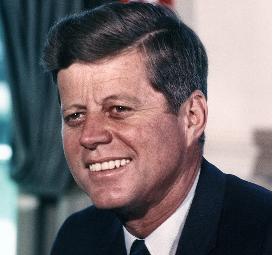
The radio’s been full of stories about the Kennedy inauguration, about that cold, snowy day in 1961 when a young president inspired the nation and the world with a call to civic engagement and sacrifice. Kennedy spoke of the torch being passed to a new generation, and in some ways, he was the first real post-War president. But his most stirring line — “Ask not what your country can do for you; ask what you can do for your country” — was very much a WWII-era sentiment, a notion that everything wasn’t about getting rich and demanding things, but that America stood for public service.


Not surprisingly, the taxes on rich people back then were much higher, and the income and wealth gap much smaller, and the middle class much larger. There was, of course, terrible poverty, but Kennedy and his successor, Lyndon Johnson, talked about using government resources to end it. The idea of a “war on poverty” wasn’t even that radical.


It’s stunning to me how quickly that spirit vanished.


The Vietnam War, the Nixon-era crackdown on protesters, COINTELPRO, the war on drugs … by the 20th anniversary of that famous speech, it was all over. And the anthem of the late 1970s, in the leftist circles where I hung out, went like this:


Ask not what you can do for your country


What’s your country been doin’ to you?


And when Ronald Reagan said government is not the solution, it’s the problem, lots of those Avengers fans cheered, too.


Now it’s almost impossible to get anyone to support even modest taxes to pay for basic government services, and the public sector is under constant attack.


Man, if I were into conspiracies, I could go a long way with this one.


Our Weekly Picks: January 19-25

0

WEDNESDAY 19

EVENT

“20 Under 40: Stories from The New Yorker”

Leave it to The New Yorker to pull out a short story series of “young fiction writers who we will believe are, or will be, key to their generation” who makes good on the promise. The 20 Under 40 class of 1999 featured Junot Díaz, Jhumpa Lahiri, and Jonathan Franzen — before the three had soared to the forefront of modern literature. This year’s edition has now been anthologized after being run story by story in the magazine. This event at City Lights gives Left Coasters a chance to thrill to readings by the collection’s exciting West Coast names: Chris Adrian, Daniel Alarcón, and Yiyun Li. (Caitlin Donohue)

7 p.m., free

City Lights Bookstore

261 Columbus, SF

(415) 362-4921

www.citylights.com


EVENT

“Nerd Nite”

Last year’s megahit The Social Network proved that nerds are now totally mainstream (see also: Mark “Person of the Year” Zuckerberg’s face taking up the entire cover of Time magazine). Geeks are golden (literally — Zuck’s worth like $7 billion), so there’s no shame in hitting up “Nerd Nite,” the monthly gathering for those who enjoy celebrating the cerebral (also, drinking; it’s at a bar, after all). As you might suspect, January’s edition goes way beyond center parts and suspenders; featured smarty-pants include an engineer heading up an open-source team competing for a $30 mil prize offered by Google to anyone who can fund, build, and land a robot on the Moon (what, like it’s hard?) and an actual (necro)neuroscientist speaking on “Scanning the Zombie Brain.” Brains: trendy, and delicious! (Cheryl Eddy)

7:30 p.m., $8

Rickshaw Stop

155 Fell, SF

www.rickshawstop.com


THURSDAY 20

MUSIC

Tobacco

Dusting off the confetti and party debris that usually accompanies Black Moth Super Rainbow’s performances, Tobacco breaks from his so-called side project to take matters into his own smokin’ hot meat hooks and show off last year’s Maniac Meat and his freshest slab of sound, La Uti EP. It’s all bewitching stuff, even without the motor-mouthed rap by Aesop Rock that graced Tobacco’s debut Fucked Up Friends. These days matters are less manic though plenty witchy (“Fresh Hex,” featuring Beck) with beats that land as heavily as heck (“Sweatmother”). Hex, if the Butthole Surfers can luck into a hit, who’s to say that the Pittsburgh music meister won’t have the kids singing along to “Motorlicker” or “Lamborghini Meltdown” sometime soon? (Kimberly Chun)

With Seventeen Evergreen and Odd Nosdam

10 p.m., $13–$16

New Parish

579 18th St., Oakl.

www.thenewparish.com


PERFORMANCE

Raw-Dios

Sing it, Roots (from the group’s song “Rising Up”): “Yesterday I saw a B-girl crying/ She told me that the radio’s been playing the same song all day long.” Clear Channel now owns 10 percent of all radio stations in this country, 776,000 advertising displays, and 200 major concert venues. Small wonder the truth is hard to come by. But this stage production, starring veterans of the Teatro Campesino activist theater and the spoken word scene, finds hope: the based-on-truth story of a raunchy morning show DJ that flips the corporate script when the U.S. starts bombing Iraq in 2003. A play to hope to … (Donohue)

Thurs/20-Sat/22, 8 p.m., $16

Mission Cultural Center for Latino Arts

2868 Mission, SF

(415) 643-2785

www.missionculturalcenter.org


THEATER

Bone to Pick and Diadem

Cutting Ball Theater presents a reimagining of the myth of Ariadne, Theseus, and the Minotaur. Bone to Pick premiered in 2008 to critical acclaim, and now returns with its sequel, Diadem. Bone to Pick begins with Ariadne as a waitress in a diner — 3,000 years after being left on the island of Naxos, which now happens to be a deserted U.S. Army base. Diadem flashes back to the day Ariadne was left on Naxos by Theseus. Written by Eugenie Chan and directed by Rob Melrose, Greek mythology takes a new twist in this postmodern explanation of love, war, and complicity. (Emmaly Wiederholt)

Through Feb. 13

Thurs.–Sat., 8 p.m.; Sun., 5 p.m., $15–$50

Exit on Taylor

277 Taylor, SF

(415) 419-3584

www.cuttingball.com


FILM/COMEDY

“RiffTrax Presents Night of the Shorts”

In the tradition of Mystery Science Theater 3000, RiffTrax can help turn even the lamest piece of cinematic garbage into worthwhile viewing. Selling audio commentaries through its website meant to be played in sync with various current or justifiably forgotten films, the RiffTrax team wastes no opportunity to exploit plot holes or bash lame special effects and embarrassingly awful acting. As part of the SF Sketchfest, Kevin Murphy and Bill Corbett, two of the company’s founding members and former MST3000 writers, will be ripping apart PSAs and training and safety shorts alongside comedians such as Maria Bamford, Paul F. Tomkins, and Adam Savage. (Landon Moblad)

9:30 p.m., $25

Castro Theatre

429 Castro, SF

www.sfsketchfest.com


FRIDAY 21

MUSIC

Witchburn

Jamie Nova’s voice takes no prisoners. Bluesy and deep, gritty and unfaltering — think, “Black Velvet, If You Please” but without all the drama. It makes sense considering her years of practice in her other endeavor, the AC/DC tribute band Hells Belles, as Bon Scott-Brian Johnson. In the Seattle-based Witchburn, Nova’s strong vocals are a quintessential match for straightforward rock. Guitarist Mischa Kianne, who’s been hammering away metal riffs since junior high, is her six-string equivalent. With a debut album produced by Jack Endino, the man behind seemingly every good band from Nirvana to High on Fire, Witchburn is rock incarnate. (Kat Renz)

With Sassy!!! and Diemond

9 p.m., $5

El Rio

3158 Mission, SF

(415) 282-3325

www.elriosf.com FILM


FILM

Two in the Wave and “Bringing Up Léaud: The Antoine Doinel Cycle”

Emmanuel Laurent chronicles the hugely influential French nouvelle vague through the lives of its flagship auteurs in Two in the Wave. Raised in hardscrabble poverty, Francois Truffaut made films that reflected an increasingly sentimental yearning for the middle class. Jean-Luc Godard was raised in Swiss bourgeois comfort — yet he gravitated toward a Marxist proletarianism perversely avant-garde in the extreme. Both shared (and fought over) onscreen muse Jean-Pierre Léaud, plucked from Parisian streets to star in Truffaut’s 1959 The 400 Blows. One might reasonably conclude from evidence here that Truffaut, dead from a brain tumor in 1984, was the greater artist — or at least humanitarian. Yet coldly intellectual, ever-more-bilious Godard continues into his 80s, last year’s abstract Film Socialisme restoring him to rarefied critical if not popular favor. This dual portrait reaches an ingratiating zenith toward its end, when we see surviving interviewee Léaud growing up onscreen, anxious to please twin mentors. The Roxie’s weeklong showcase is double-billed with all five films in which the actor played Truffaut alter ego Antoine Doinel, from Blows to 1979’s Love on the Run. (Dennis Harvey)

Jan. 21–27, $5–$9.75

Roxie

3117 16th St., SF

(415) 863-1087

www.roxie.com


SATURDAY 22

MUSIC

“Jersey Score”

It’s not enough that the Situation, Ronnie, and Vinny graced a certain New York alt weekly’s 2010 Queer Issue cover. It’s not enough that Snooki’s novel, A Shore Thing, could be read as an homage to Truman Capote’s Answered Prayers. (Sample line: “She could pour a shot of tequila down his belly and slurp it out of his navel without getting splashed in the face.”) Nor is it sufficient that the gay community has enough G.T.L. freaks — call them gaydos — to fill a million grenade-filled hot tubs. No, now we must celebrate Jersey Shore‘s beachy meatballs with a one-off party dedicated to “tanned-up muscle boys and fist-pumping homos that are D.T.F.” Exuberant promoter Joshua J.’s shindigs are equal parts irony and earnestness, which in this case basically equals frickle bombs no matter how you slice it. With creepin’ DJs Robert Jeffrey and Juan Garcia playing Pauly D classics. (Marke B.)

9 p.m., $5

UndergroundSF

424 Haight, SF

www.joshuajpresents.com


MUSIC

Juan MacLean DJ set

“The” Juan MacLean, club cornerstone of heralded New York City dance punk label DFA: that affiliation goes back to Six Finger Satellite, the band in which MacLean (at that time John) played guitar and future LCD Soundsystem mastermind James Murphy produced material and ear-drum destroying live setups. Since then MacLean has transitioned to creating steady dance grooves, where drums hit hard and fast atop a background of melancholy melodies, uncompressed and rarely distorted. His recent !K7 release, DJ-Kicks, is a straightforward ode to house music and was labeled the best compilation of last year by DJ Mag. (Ryan Prendiville)

With Conor and Vin Sol, and Jason Kendig

10 p.m., call for price

Public Works

161 Erie, SF

(415) 932-0955

www.publicsf.com


MUSIC

Fu Manchu

Sometimes, when I can’t get warm to save my life, I’ll bundle up, find a south-facing hillside full of sage and agave, and listen to Fu Manchu. I’ll forget I’m in San Francisco where I haven’t had tan legs in more than four years, reveling instead in that consummate blend of 1970s classic rock, 1980s SoCal punk, 1990s stoner metal, and skate-movie soundtrack sunshine. This is the band’s 20th anniversary tour, it’s playing two sets: one of its third album, “In Search of …” from an unprecedented start to finish, and the other with songs off its first two records. Opening band Santa Cruz’s Dusted Angel is worth being on time. (Renz)

With Dusted Angel

10 p.m., $12

Bottom of the Hill

1233 17th St., SF

(415) 621-4455

www.bottomofthehill.com


MONDAY 24

EVENT

“Porchlight”

This month at Porchlight, San Francisco’s “premiere storytelling series,” hosts Arline Klatte and Beth Lisick present “Giving It Up! Stories about Quitting, Stopping, Letting Go, and Never Coming.” Featured anecdotalists this month include up-and-coming comedian and “Lazy Sunday” counter clerk Emily Heller, and working-class weirdo Scott “Meatman” Vermiere, a self-admitted expert in hiding places whose nickname is absolutely not ironic. With an ever-changing cast of yarn-spinners, there’s no way of knowing where the 10-minute tales will go. But that’s the point. (Prendiville)

8 p.m., $15

Verdi Club

2424 Mariposa, SF

www.porchlightsf.com


The Guardian listings deadline is two weeks prior to our Wednesday publication date. To submit an item for consideration, please include the title of the event, a brief description of the event, date and time, venue name, street address (listing cross streets only isn’t sufficient), city, telephone number readers can call for more information, telephone number for media, and admission costs. Send information to Listings, the Guardian Building, 135 Mississippi St., SF, CA 94107; fax to (415) 487-2506; or e-mail (paste press release into e-mail body — no text attachments, please) to listings@sfbg.com. Digital photos may be submitted in jpeg format; the image must be at least 240 dpi and four inches by six inches in size. We regret we cannot accept listings over the phone.

Snap Sounds: Wovenhand

0

WOVENHAND
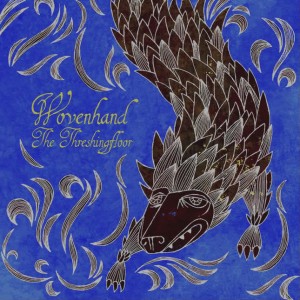
The Threshingfloor
(Sounds Familyre)

Whether it be the western plains or the Appalachian highlands, David Eugene Edwards of Wovenhand has long looked to the American landscape for inspiration, crafting songs which weave these diverse geographies together into a bold tapestry of richly textured sound. And yet, dating all the way back to the early days of 16 Horsepower, Edwards has never shied away from sifting a few foreign elements into his bold Americana. With The Threshingfloor (Sounds Familyre, 2010), he sets his gaze eastward, blending elements of Eastern European, Middle Eastern, and Romani gypsy music into his stark melodies and faith-layered lyrics.

From the driving oud of the title track, to the celestial Hungarian flute of “Terre Haute,” from the singing grass to the orchard gate, The Threshingfloor is the musical incarnation of the toil and bonebreak of a late-summer harvest: a passionate reverberation of hard physical labor and a harder metaphysical reward.

Wovenhand, “The Threshingfloor”:

Conjuring sheaves of wheat from desert drone, and scorched earth from fertile finger-picking, Wovenhand continues to establish itself as the thinking fan’s indie band, constantly morphing musically yet never losing touch of its essential intention or intonation. As always there are a couple of songs that poke into the nether edges of its versatility: in this case “The Truth” plays like one of Edward’s early new wave-styled tracks from his Bloodflower days, and the straight-up cow-town rockabilly of “Denver City” serves up war whoops and vocal distortions. But the tracks that linger long after the CD ends definitely rank among the most rooted in devotion, particularly “A Holy Measure,” “Behind Your Breath,” and “Terre Haute.”
 
WOVENHAND
With Git Some and Common Eider, King Eider
Tues/25, 9 p.m.; $13
Bottom of the Hill
1233 17th St., SF
(415) 621-4455
www.bottomofthehill.com
www.soundsfamilyre.com

Dick Meister: Ronald Reagan’s Law of the Jungle

11

Dick Meister, formerly labor editor of the SF Chronicle and KQED-TV Newsroom, has covered labor, politics and other matters for a half-century.

The 100th anniversary of Ronald Reagan’ s birth is coming up in February, and before the inevitable gushing over what a wonderful leader he was begins, let me get in a few words about what sort of a leader he really was.

Ronald Reagan was, above all, one of the most viciously anti-labor presidents in American history, one of the worst enemies the country’s working people ever faced.

Republican presidents never have had much regard for unions. But until Reagan, no Republican president had dared challenge labor’s firm legal standing, gained through Democratic President Franklin D. Roosevelt in the mid-1930s.

Reagan’s Republican predecessors treated union leaders much as they treated Democratic members of Congress – as adversaries to be fought with at times, but also as people to be bargained with at other times. Reagan, however, engaged in precious little bargaining. He waged almost continuous war against organized labor and the country’s workers from the time he assumed office in 1980 until leaving the presidency in 1988.

Reagan had little apparent reason to fear labor politically. Opinion polls at the time showed that unions were opposed by nearly half of all Americans, and that nearly half of those who belonged to unions had voted for Reagan in both his presidential campaigns.

Reagan, at any rate, was a true ideologue of the anti-labor political right. Yes, he had been president of the Screen Actors Guild, but he was notoriously pro-management in that position. He led the way to a strike-ending agreement in 1959 that greatly weakened the union and finally resigned as union president under heavy membership pressure before his term ended.

Reagan’s war on labor as U.S. president began in the summer of 1981, when he fired 13,000 striking air traffic controllers and destroyed their union.

As Washington post columnist Harold Meyerson noted, that was “an unambiguous signal that employers need feel little or no obligation to their workers. Employers got that message loud and clear, illegally firing workers who sought to unionize, replacing  permanent employees  who could collect benefits with temps who could not, and shipping factories and jobs abroad.”

Reagan gave dedicated union foes direct control of the federal agencies that were originally designed to protect and further the rights of workers and their unions. Most important was Reagan’s appointment of three management representatives to the five- member National Labor Relations Board.

The appointees included NLRB Chairman Donald Dotson, who declared that “unionized labor relations have been the major contributors to the decline and failure of once healthy industries” and have caused “destruction of individual freedom.”

A House committee found that under Dotson, the NLRB abandoned its legal obligation to promote collective bargaining, in what amounted to “a betrayal of American workers.”

The NLRB settled only about half as many complaints about employers’ illegal actions as did the board during the previous administration of Democrat Jimmy Carter. Most of the complaints were against employers who responded to organizing drives by illegally firing union supporters. The employers were well aware that, under Reagan, the NLRB was taking an average of three years to rule on complaints, and the board did no more than order that the discharged unionists be reinstated with back pay – which was much cheaper than if the employers had been operating under a union contract.

The board stalled as long before acting on petitions from workers seeking union representation elections, and generally stalled for another year or two after such votes before certifying winning unions as the workers’ bargaining agents. Also under Reagan, employers were allowed to permanently replace workers who dared exercise their legal right to strike.

Reagan’s Labor Department was as one-sided as the NLRB. It became an anti-Labor Department, virtually ignoring, for example, the union-busting consultants that many employers hired to help them fend off unionization.

Very few consultants and very few of those who hired them were asked for the financial disclosure statements that the law demands, Yet all unions were required to file the statements that the law required of them – and that could be used to the advantage of their opponents. Although the department cut its overall budget by more than 10 percent, it increased the budget for such union-busting activities by almost 40 percent.

Among Reagan’s many other outrages, there were his attempts to lower the minimum wage for younger workers, weaken the child labor and anti-sweatshop laws, tax fringe benefits, and cut back programs to train unemployed workers for available jobs. He also tried to replace thousands of federal employees with temporary workers who would not have civil service or union protection.

Reagan all but dismantled programs that required affirmative action and other steps against discrimination by federal contractors. And he seriously undermined job safety programs.  He closed one-third of the Occupational Safety and Health Administration’s field offices, trimmed the agency’s staff by more than one-fourth and decreased the number of penalties assessed against offending employers by almost three-fourths.

Rather than enforce the laws, Reagan appointees sought “voluntary compliance” from employers on safety matters – and generally didn’t get or expect it. Reagan had so tilted the safety laws in favor of employers that safety experts declared them virtually useless.

The same could have been said of all other labor laws in the Reagan era. A statement issued at the time by the leaders of several major unions concluded that it would have been more advantageous for those who worked for a living to ignore the laws and return to “the law of the jungle” that prevailed a half-century before.

The suggestion came a little late. Ronald Reagan had already plunged the nation’s labor-management relations deep into the jungle.

Yet Reagan will nevertheless be honored in centennial celebrations throughout the United States, in Europe and elsewhere in coming days.  He’s become a much beloved mythical figure, and nothing will change that, certainly not the unheard or unacknowledged facts of his presidency and its disastrous effects on America’s working people, many of whom ironically will be among the celebrants.

Dick Meister, former labor editor of the SF Chronicle and KQED-TV Newsroom, has covered labor and politics for a half-century. Contact him through his website, www.dickmeister.com, which includes more than 250 of his columns.

Music Listings

0

Music listings are compiled by Cheryl Eddy. Since club life is unpredictable, it’s a good idea to call ahead to confirm bookings and hours. Prices are listed when provided to us. Submit items for the listings at listings@sfbg.com. For further information on how to submit items for the listings, see Picks.

WEDNESDAY 19

ROCK/BLUES/HIP-HOP

Atlantic/Pacific, Ash Reiter, Sonny Pete, DJs Bagel Ted and Julie T Milk Bar. 8pm, $5.

Tia Carroll and Hard Work Biscuits and Blues. 8 and 10pm, $15.

Dead Westerns, Mosshead, Street Pyramids Hemlock Tavern. 9pm, $6.

Zoe Keating, Inu feat. Zoe Keating, Tycho Independent. 8pm, $17.

Bryan McPherson, Mick Leonardi, Graham Patzner Hotel Utah. 8pm, $7.

Third Victim of Abigail Rutledge, SuperfinosVTO, Young Lovers Kimo’s. 9pm.

White Manna, Greg Ashley, Outlaw, Rachel Fannan Elbo Room. 9pm, $7.

Young Prisms, Melted Toys Bottom of the Hill. 9pm, $10.

JAZZ/NEW MUSIC

Cat’s Corner with Christine and Nathan Savanna Jazz. 9pm, $10.

Congress, Conspiracy of Venus, Mindi Hadan Café Du Nord. 8:30pm, $10.

Dink Dink Dink, Gaucho, Michael Abraham Amnesia. 7pm, free.

Ben Marcato and the Mondo Combo Top of the Mark. 7:30pm, $10.

Michael Parsons Revolution Café, 3248 22nd St, SF; (415) 642-0474. 8:30pm, free.

Roy Hargrove Quintet Yoshi’s San Francisco. 8 and 10pm, $16-22.

Paula West and the George Mesterhazy Quartet Rrazz Room. 8pm, $35.

FOLK/WORLD/COUNTRY

Triskela Koret Auditorium, San Francisco Public Library, 100 Larkin, SF; (510) 548-3326. 6pm, free.

DANCE CLUBS

Booty Call Q-Bar, 456 Castro, SF; www.bootycallwednesdays.com. 9pm. Juanita Moore hosts this dance party, featuring DJ Robot Hustle.

Cannonball Beauty Bar. 10pm, free. Rock, indie, and nu-disco with DJ White Mike.

Hands Down! Bar on Church. 9pm, free. With DJs Claksaarb, Mykill, and guests spinning indie, electro, house, and bangers.

Jam Fresh Wednesdays Vessel, 85 Campton, SF; (415) 433-8585. 9:30pm, free. With DJs Slick D, Chris Clouse, Rich Era, Don Lynch, and more spinning top40, mashups, hip hop, and remixes.

Mary-Go-Round Lookout, 3600 16th St, SF; (415) 431-0306. 10pm, $5. A weekly drag show with hosts Cookie Dough, Pollo Del Mar, and Suppositori Spelling.

Respect Wednesdays End Up. 10pm, $5. Rotating DJs Daddy Rolo, Young Fyah, Irie Dole, I-Vier, Sake One, Serg, and more spinning reggae, dancehall, roots, lovers rock, and mash ups.

Synchronize Il Pirata, 2007 16th St, SF; (415) 626-2626. 10pm, free. Psychedelic dance music with DJs Helios, Gatto Matto, Psy Lotus, Intergalactoid, and guests.

THURSDAY 20

ROCK/BLUES/HIP-HOP

Jonathan Coulton, Paul and Storm Great American Music Hall. 7:30pm, $25.

Inferno of Joy, White Barons, Bite, Last Internationale Thee Parkside. 9pm, $6-7.

Mac Miller Slim’s. 9pm, $16.

Nectarine Pie, These Hills of Gold, Memory’s Mystic Band Hemlock Tavern. 9pm, $7.

Peter Wolf Crier, Retribution Gospel Choir, Cannons and Clouds Bottom of the Hill. 9pm, $10.

Johnny Vernazza and the Knockouts Biscuits and Blues. 8 and 10pm, $15.

Wailers, Tomorrows Bad Seeds, Duane Stephenson Independent. 9pm, $25.

Worker Bee, Sleeptalks, Nick Reinhart, Sunbeam Rd. Café Du Nord. 8pm, $10.

JAZZ/NEW MUSIC

Ara Anderson and Michael McIntosh Revolution Café, 3248 22nd St, SF; (415) 642-0474. 8:30pm, free.

Roy Hargrove Quintet Yoshi’s San Francisco. 8 and 10pm, $16-22.

Savanna Jazz Trio and jam session Savanna Jazz. 7:30pm, $5.

Stompy Jones Top of the Mark. 7:30pm, $10.

Paula West and the George Mesterhazy Quartet Rrazz Room. 8pm, $40.

FOLK/WORLD/COUNTRY

Adam Traum Atlas Café. 8pm, free.

DANCE CLUBS

Afrolicious Elbo Room. 9:30pm, $10. DJs Pleasuremaker and Señor Oz spin Afrobeat, tropicália, electro, samba, and funk.

Caribbean Connection Little Baobab, 3388 19th St, SF; (415) 643-3558. 10pm, $3. DJ Stevie B and guests spin reggae, soca, zouk, reggaetón, and more.

Club Jammies Edinburgh Castle. 10pm, free. DJs EBERrad and White Mice spinning reggae, punk, dub, and post punk.

Drop the Pressure Underground SF. 6-10pm, free. Electro, house, and datafunk highlight this weekly happy hour.

Good Foot Som., 2925 16th St, SF; (415) 558-8521. 10pm, free. With resident DJs Haylow, A-Ron, Prince Aries, Boogie Brown, Ammbush, plus food carts and community creativity.

Guilty Pleasures Gestalt, 3159 16th St, SF; (415) 560-0137. 9:30pm, free. DJ TophZilla, Rob Metal, DJ Stef, and Disco-D spin punk, metal, electro-funk, and 80s.

Jivin’ Dirty Disco Butter, 354 11th St., SF; (415) 863-5964. 8pm, free. With DJs spinning disco, funk, and classics.

Koko Puffs Koko Cocktails, 1060 Geary, SF; (415) 885-4788. 10pm, free. Dubby roots reggae and Jamaican funk from rotating DJs.

Mestiza Bollywood Café, 3376 19th St, SF; (415) 970-0362. 10pm, free. Showcasing progressive Latin and global beats with DJ Juan Data.

Nightvision Harlot, 46 Minna, SF; (415) 777-1077. 9:30pm, $10. DJs Danny Daze, Franky Boissy, and more spinning house, electro, hip hop, funk, and more.

Peaches Skylark, 10pm, free. With an all female DJ line up featuring Deeandroid, Lady Fingaz, That Girl, and Umami spinning hip hop.

Popscene Rickshaw Stop. 9pm, $10. With Royal Bangs and Foster the People.

Two Thousand a LOVE-in Kimo’s. 9pm. With SF Block Party, Seapora, and Gypsy Love.

FRIDAY 21

ROCK/BLUES/HIP-HOP

Bayonics, Skins and Needles Elbo Room. 10pm, $10-13.

Jay Brannan, Dave Smallen, Jhameel Bottom of the Hill. 9:30pm, $14.

Shane Dwight Biscuits and Blues. 8 and 10pm, $20.

Guster Fillmore. 8pm, $27.50.

Man/Miracle, Butterfly Bones, Elephant and Castle Hemlock Tavern. 9:30pm, $7.

Mission Players Coda. 10pm, $10.

Papa Grows Funk, Allofasudden Slim’s. 9pm, $25.

Passenger and Poilot, Black Swan, Hypnotist Collectors Red Devil Lounge. 8pm, $8.

Pimps of Joytime, Staxx Brothers Independent. 9pm, $25.

Planet Booty, Super Adventure Club, Greenhorse, MC Ladyfinger Café Du Nord. 9pm, $12.

Ra Ra Riot, Givers Great American Music Hall. 9pm, $18.

Sassy!!!, Witchburn, Diemond El Rio. 9pm, $5.

Harley White Jr. Studio Gracia, 19 Heron, SF; www.beyondblues.com. 8pm, $15.

JAZZ/NEW MUSIC

Benn Bacot Savanna Jazz. 7:30pm, $5.

Black Market Jazz Orchestra Top of the Mark. 9pm, $10.

Emily Anne’s Delight Revolution Café, 3248 22nd St, SF; (415) 642-0474. 9pm, free.

Roy Hargrove Quintet Yoshi’s San Francisco. 8 and 10pm, $20-26.

Scott Amendola Quartet Red Poppy Art House. 8pm, $12-20.

Paula West and the George Mesterhazy Quartet Rrazz Room. 8pm, $45.

DANCE CLUBS

Dirty Rotten Dance Party Madrone Art Bar. 9pm, $5. With DJs Morale, Kap10 Harris, and Shane King spinning electro, bootybass, crunk, swampy breaks, hyphy, rap, and party classics.

DJ Meat Hookz Thee Parkside. 8pm, free. Funk, soul, and hip-hop.

DJ Momentum Medjool, 2522 Mission, SF; www.medjoolsf.com. 10:30pm, $10.

DJ What’s His Fuck Riptide Tavern. 9pm, free. Old school punk rock and other gems.

Exhale, Fridays Project One Gallery, 251 Rhode Island, SF; (415) 465-2129. 5pm, $5. Happy hour with art, fine food, and music with Vin Sol, King Most, DJ Centipede, and Shane King.

Fat Stack Fridays Koko Cocktails, 1060 Geary, SF; (415) 885-4788. 10pm, free. With rotating DJs B-Cause, Vinnie Esparza, Mr. Robinson, Toph One, and Slopoke.

Fubar Fridays Butter, 354 11th St., SF; (415) 863-5964. 6pm, $5. With DJs spinning retro mashup remixes.

Good Life Fridays Apartment 24, 440 Broadway, SF; (415) 989-3434. 10pm, $10. With DJ Brian spinning hip hop, mashups, and top 40.

Hot Chocolate Milk. 9pm, $5. With DJs Big Fat Frog, Chardmo, DuseRock, and more spinning old and new school funk.

House of Voodoo Blue Macaw, 2565 Mission, SF; www.houseofvoodoo.com. 9pm, free ($5 after 10pm).

Oldies Night Knockout. 9pm, $2-4. DJs Primo, Daniel, and Lost Cat spin doo-wop, one-hit wonders, soul, and more.

Radioactivity 222 Hyde, 222 Hyde, SF; www.222hyde.com. 6-9:30pm. Kraut-minimal wave-cosmic-Italo standards with Cole Palme, Tristes Tropiques, and Robots.In.Heat.

Rockabilly Fridays Jay N Bee Club, 2736 20th St, SF; (415) 824-4190. 9pm, free. With DJs Rockin’ Raul, Oakie Oran, Sergio Iglesias, and Tanoa “Samoa Boy” spinning 50s and 60s Doo Wop, Rockabilly, Bop, Jive, and more.

Singapore 60s Happy Hour Knockout. 5:30pm, free. DJ Sid Presley spins rare pop, garage, and freakbeat from SE Asia, circa 1964-72.

Some Thing Stud. 10pm, $7. VivvyAnne Forevermore, Glamamore, and DJ Down-E give you fierce drag shows and afterhours dancing.

Trannyshack: Star Search DNA Lounge. 9:30pm, $15. Heklina and Peaches Christ host this drag-tastic talent show.

Vintage Orson, 508 Fourth St, SF; (415) 777-1508. 5:30-11pm, free. DJ TophOne and guest spin jazzy beats for cocktalians.

SATURDAY 22

ROCK/BLUES/HIP-HOP

Justin Ancheta, Con Brio, Titan Ups Amnesia. 9pm.

Asylum Street Spankers Great American Music Hall. 8pm, $30.

David Berkeley. Bhi Bhiman Swedish American Hall (upstairs from Café Du Nord). 8pm, $22.

Family Crest, Moanin’ Dove, Welcome Matt Café Du Nord. 9pm, $12.

Fu Manchu, Dusted Angel Bottom of the Hill. 10pm, $12.

Hate Crime, Grandma’s Boyfriend, Symbolick Jews, Dinner With the Kids Li-Po Lounge. 9pm, $5.

Josh Klipp, Joe Stephens, Alex Davis, Storm Florez, Eli Conley El Rio. 6pm, free.

Lecherous Gaze, Ripper Bender’s, 800 S. Van Ness, SF; www.bendersbar.com. 10pm, $5.

Meris, High Horse, Super Proxy Thee Parkside. 3pm, free.

Old 97s Fillmore. 9pm, $26.50.

Pigs, Outdoorsmen, Dead Meat, Dadfag Hemlock Tavern. 9:30pm, $7.

Pimps of Joytime, J Boogie’s Dubtronic Science Independent. 9pm, $25.

Rubber Souldiers, Moonlight Rodeo Slim’s. 9pm, $15.

Sioux City Kid and the Revolutionary Ramblers, That Ghost, Hanalei, Thee Landlords Thee Parkside. 9pm, $7.

Sugaray and CK All Stars Biscuits and Blues. 8 and 10pm, $20.

Wonderbread 5, Foreverland Bimbo’s 365 Club. 9pm, $20.

JAZZ/NEW MUSIC

Gina Harris and Torbie Phillips Savanna Jazz. 7:30pm, $8.

Roy Hargrove Quintet Yoshi’s San Francisco. 8 and 10pm, $26.

Jesse Scheinin Revolution Café, 3248 22nd St, SF; (415) 642-0474. 9pm, free.

Thingamajigs Performance Group Meridian Gallery, 535 Powell, SF; (510) 444-1322. 8pm, $10.

Paula West and the George Mesterhazy Quartet Rrazz Room. 8pm, $45.

FOLK/WORLD/COUNTRY

Kafana Balkan, Brass Menazeri, DJ Zeljko Rickshaw Stop. 9pm, $10.

Genghis Blues Review Kaleidoscope Free Speech Zone, 3109 24th St, SF; www.kaleidoscopefreespeechzone.com. 8:30pm, $10. With Kongar-ol Ondar and more.

Pickpocket Ensemble Red Poppy Art House. 8pm, $12-15.

“Suonare e Passeggiare: Extravagant Music from 17th Century Italy and Spain” Most Holy Redeemer Church, 100 Diamond, SF; www.musicsources.org. 2pm, $20.

Craig Ventresco and Meredith Axelrod Atlas Café. 4pm, free.

DANCE CLUBS

Bar on Church 9pm. Rotating DJs Foxxee, Joseph Lee, Zhaldee, Mark Andrus, and Nuxx.

Barracuda 111 Minna. 9pm, $10. Eclectic 80s music with DJs Damon and Phillie Ocean plus 80s cult video projections, a laser light show, prom balloons, and 80s inspired fashion.

Bootie: Boston in SF with DJ BC DNA Lounge. 9pm, $6-12. Mash-ups from the East Coast.

Debaser Knockout. 9pm, $5. DJ Jamie Jams, Emdee, and Stab Master Arson spin 90s hip-hop.

DJ Duserock Medjool, 2522 Mission, SF; www.medjoolsf.com. 10:30pm, $10.

4 Years: One Funktion Elbo Room. 10pm, $5-10. 4OneFunktion hip-hop party four-year anniversary with sets by B. Cause and Mista B, F.A.M.E., Light Up the Darkness, and more.

Go Bang! Deco Lounge, 510 Turk, SF; www.decosf.com. 9pm, free ($5 after 10pm). Atomic dancefloor disco action with Eddy Bauer, DJ FreshStep, and DJ Flight.

HYP Club Eight, 1151 Folsom, SF; www.eightsf.com. 10pm, free. Gay and lesbian hip-hop party, featuring DJs spinning the newest in the top 40s hip hop and hyphy.

Jersey Score Underground SF. 9pm, free ($5 after 10pm). Jersey Shore-themed gay dance party with DJs Robert Jeffrey and Juan Garcia.

Reggae Gold Club Six. 9pm, $15. With DJs Daddy Rolo, Polo Mo’qz, Tesfa, Serg, and Fuze spinning dancehall and reggae.

Rock City Butter, 354 11th St., SF; (415) 863-5964. 6pm, $5 after 10pm. With DJs spinning party rock.

Spirit Fingers Sessions 330 Ritch. 9pm, free. With DJ Morse Code and live guest performances.

SUNDAY 23

ROCK/BLUES/HIP-HOP

Angels on Acid, Cystem Cex, NPMN DNA Lounge. 8pm, $10.

Beep!, Dinosaur Feathers, Careerers Hemlock Tavern. 9pm, $6.

Black Swans, Will Sprott, Pancho-San Knockout. 9pm, $5.

Bryan Greenberg Café Du Nord. 8pm, $14.

Madball, Cruel Hand, Crucified, Boundaries Thee Parkside. 7:30pm, $15.

Jake Mann and the Upper Hand, Grand Lake, Il Gato Bottom of the Hill. 8:30pm, $8.

Sour Mash Hug Band, Crux Amnesia. 9pm, $7-10.

Symbolick Jews, Grandma’s Boyfriend, Stowaways, Subfobias Kimo’s. 8pm, $7.

La Veda, Epiphany Castro, Eric De Arantahna El Rio. 6pm, $8.

JAZZ/NEW MUSIC

Los Boleros Savanna Jazz. 7:30pm, $5.

Christy and the Lowdowns Revolution Café, 3248 22nd St, SF; (415) 642-0474. 9pm, free.

Lua Hadar, Jason Martineau, Dan Feiszli Bliss Bar, 4026 24th St, SF; www.blissbarsf.com. 4:30pm, $10.

Paula West and the George Mesterhazy Quartet Rrazz Room. 7pm, $40.

FOLK/WORLD/COUNTRY

Blue Diamond Fillups Thee Parkside. 4pm, free.

Kat Parra Latin/World Ensemble Red Poppy Art House. 7pm, $12-20.

DANCE CLUBS

DiscoFunk Mashups Cat Club. 10pm, free. House and 70’s music.

Dub Mission Elbo Room. 9pm, $6. Dub, roots, and classic dancehall with DJs Sep, J Boogie, and guest Kentyah.

Gloss Sundays Trigger, 2344 Market, SF; (415) 551-CLUB. 7pm. With DJ Hawthorne spinning house, funk, soul, retro, and disco.

Honey Soundsystem Paradise Lounge. 8pm-2am. “Dance floor for dancers – sound system for lovers.” Got that?

Kick It Bar on Church. 9pm. Hip-hop with DJ Zax.

Religion Bar on Church. 3pm. With DJ Nikita.

Swing Out Sundays Rock-It Room. 7pm, free (dance lessons $15). DJ BeBop Burnie spins 20s through 50s swing, jive, and more.

MONDAY 24

ROCK/BLUES/HIP-HOP

Midnite, Jah Yzer Independent. 9pm, $28.

War Yoshi’s San Francisco. 8pm, $40.

JAZZ/NEW MUSIC

Lavay Smith Swinget with Jules Broussard Enrico’s, 504 Broadway, SF; (415) 982-6223. 7pm, free.

DANCE CLUBS

Black Gold Koko Cocktails, 1060 Geary, SF; (415) 885-4788. 10pm-2am, free. Senator Soul spins Detroit soul, Motown, New Orleans R&B, and more — all on 45!

Death Guild DNA Lounge. 9:30pm, $3-5. Gothic, industrial, and synthpop with Joe Radio, Decay, and Melting Girl.

Krazy Mondays Beauty Bar. 10pm, free. With DJs Ant-1, $ir-Tipp, Ruby Red I, Lo, and Gelo spinning hip hop.

M.O.M. Madrone Art Bar. 6pm, free. With DJ Gordo Cabeza and guests playing all Motown every Monday.

Manic Mondays Bar on Church. 9pm. Drink 80-cent cosmos with Djs Mark Andrus and Dangerous Dan.

Network Mondays Azul Lounge, One Tillman Pl, SF; www.inhousetalent.com. 9pm, $5. Hip-hop, R&B, and spoken word open mic, plus featured performers.

Skylarking Skylark. 10pm, free. With resident DJs I & I Vibration, Beatnok, and Mr. Lucky and weekly guest DJs.

Smile! Knockout. 9pm, $7. DJ Neil Martinson spins psych, soul, glam, bubblegum, and more.

TUESDAY 25

ROCK/BLUES/HIP-HOP

Paul Banks and the Carousels Elbo Room. 9pm.

Barn Owl, Phil Manley Life Coach, Diego Andres Gonzalez Hemlock Tavern. 9pm, $6.

Sonya Cotton, Honeycomb, Ever Isles Rickshaw Stop. 8pm, $10.

Eli Wise Band, Evon, Steel Hotcakes El Rio. 7pm, free.

Ghost of a Saber Tooth Tiger, Laura Gibson Café Du Nord. 8pm, $17. Amos Lee, Vusi Mahlasela Fillmore. 8pm, $25. Midnite, Jah Yzer Independent. 9pm, $28. Sandwitches, Art Museums, Soft Bombs, Rachel Fannan Slim’s. 8pm, $5. War Yoshi’s San Francisco. 8pm, $40. Wovenhand, Git Some, Common Eider King Eider Bottom of the Hill. 9pm, $13. FOLK/WORLD/COUNTRY Graham Connah Revolution Café, 3248 22nd St, SF; (415) 642-0474. 8:30pm, free. JAZZ/NEW MUSIC Ricardo Scales Top of the Mark. 6:30pm, $5. DANCE CLUBS Eclectic Company Skylark, 9pm, free. DJs Tones and Jaybee spin old school hip hop, bass, dub, glitch, and electro. Extra Classic DJ Night Little Baobab, 3388 19th St, SF; www.bissapbaobab.com. 10pm. Dub, roots, rockers, and reggae from the 60s, 70s, and 80s. Share the Love Trigger, 2344 Market, SF; (415) 551-CLUB. 5pm, free. With DJ Pam Hubbuck spinning house. Stump the Wizard Argus Lounge. 9pm, free. Interactive DJ game with What’s His Fuck and the Wizard.

Stage Listings

0

Stage listings are compiled by Guardian staff. Performance times may change; call venues to confirm. Reviewers are Robert Avila, Rita Felciano, and Nicole Gluckstern. Submit items for the listings at listings@sfbg.com. For further information on how to submit items for the listings, see Picks. For complete listings, see www.sfbg.com.

THEATER

OPENING

Audition – A Play Exit Theater, 156 Eddy; (800) 838-3006, www.brownpapertickets.com. Call for price. Opens Thurs/20, 8pm. Runs Thurs and Sat, 8pm; Sun, 3pm. GenerationTheatre presents a comedy of the absurd by Roland David Valayre.

Bone to Pick and Diadem Exit on Taylor, 277 Taylor; (800) 838-3006, www.cuttingball.com. $15-50. Opens Thurs/20, 8pm. Runs Thurs-Sat, 8pm; Sun, 5pm. Cutting Ball Theatre presents a pair of plays by Eugenie Chan.

The Companion Piece Z Space at Theatre Artaud, 450 Florida; (800) 838-3006, www.zspace.org. $20-40. Call for price. Previews Wed/19-Thurs/20, 7pm; Fri/21, 8pm. Opens Sat/22, 8pm. Runs Thurs 7pm; Fri-Sat, 8pm; Sun, 5pm. Through Feb 13. Z Space presents the world premiere of a new play by Mark Jackson, with Beth Wilmurt and Christopher Kuckenbaker.

Out of Sight The Marsh, 1062 Valencia; (800) 838-3006, www.themarsh.org. $15-35. Previews Thurs/20, 8pm. Opens Sat/22, 8pm. Runs Thurs and Sat, 8pm; Sun, 3pm. Through Feb 13. The Marsh presents a new solo show by Sara Felder.

Spalding Gray: Stories Left to Tell Gough Street Playhouse, 1620 Gough; (510) 207-5774, www.custommade.org. $10-25. Previews Fri/21-Sat/22, 8pm. Opens Tues/25, 8pm. Runs Thurs-Sat, 8pm. Through Feb 19. Custom Made Theatre presents stories by the late writer and performer.

The 39 Steps TheatreWorks at the Mountain View Center for the Performing Arts, 500 Castro, Mtn View; (650) 463-1960, www.theatreworks.org. $24-79. Previews Wed/19, 7:30pm; Thurs/20-Fri/21, 8pm. Opens Sat/22, 8pm. Runs Tues-Wed, 7:30pm; Thurs-Fri, 8pm; Sat, 2 and 8pm; Sun, 2 and 7pm. TheatreWorks presents Patrick Barlow’s comic adaptation of the book and movie of the same name.

Treefall New Conservatory Theatre Center, 25 Van Ness; 861-8972, www.nctsf.org. $24-40. Previews Fri/21-Sat/22, 8pm; Sun/23, 2pm; Jan 26-28, 8pm. Opens Jan 29, 8pm. Through Feb 27. New Conservatory Theatre Center presents a tale of erotic attraction by Henry Murray.

BAY AREA

The Agony and the Ecstasy of Steve Jobs Berkeley Rep, Thrust Stage, 2025 Addison, Berk; (510) 647-2949, www.berkeleyrep.org. $14.50-73. Previews Thurs/20-Sat/22, 8pm. Opens Sun/23, 7pm. Call for dates and times. Through Feb 27. Storyteller Mike Daisey spins a yarn about the Apple head.

Heartbreak House Live Oak Theatre, 1301 Shattuck, Berk; (510) 649-0999, www.berkeleyrep.org. $12-15. Opens Fri/21, 8pm. Runs Fri-Sat, 8pm (also Feb 13, 2pm; Feb, 17, 8pm). Through Feb 19.Actors Ensemble of Berkeley presents the George Bernard Shaw comedy set just before World War I.

ONGOING

Clue Boxcar Playhouse, 505 Natoma; 776-1747, www.boxcartheatre.org. $15-35. Wed-Fri, 8pm; Sat, 7 and 10pm. Through Feb 19. Boxcar Theatre presents a play based on a movie based on a board game.

No Good Deed Pear Avenue Theatre, 1220 Pear, Mtn View; (650) 254-1148, www.thepear.org. $15-30. Thurs-Fri, 8pm; Sat, 8pm; Sun, 2pm. Pear Avenue Theatre presents a world premiere noir-inflected play by Paul Braverman.

Party of 2 – The New Mating Musical Shelton Theater, 533 Sutter; (800) 838-3006, www.partyof2themusical.com. $27-29. Sun, 3pm. Open-ended. A musical about relationships by Shopping! The Musical author Morris Bobrow.

*Pearls Over Shanghai Thrillpeddlers’ Hypnodrome, 575 Tenth St; 1-800-838-3006, www.brownpapertickets.com. $30-69. Sat, 8pm. Through April 9. Thrillpeddlers’ acclaimed production of the Cockettes musical continues its successful run.

BAY AREA

East 14th – True Tales of a Reluctant Player The Marsh Berkeley, 2120 Allston Way, Berk; (800) 838-3006, www.themarsh.org. $20-50. Call for times. Through Feb 13. Don Reed’s one-man show continues its extended run.

The Last Cargo Cult Berkeley Repertory Theatre, Thrust Stage, 2025 Addison, Berk; (510) 647-2949, www.berkeleyrep.org. $14.50-73. Call for dates and times. Through Feb 20. Mike Daisey stars in a one-man show about obsession with commerce.

*Of the Earth – The Salt Plays Ashby Stage, 1901 Ashby; (510) 841-6500, www.shotgunplayers.org. $17-30. Thurs-Sat, 8pm; Sun, 5pm. Through Jan 30. If those whom the gods favor die young, it’s probably just as well for Odysseus (Dan Bruno) that Zeus (Rami Margron) happens to be irked at him. That Zeus occasionally manifests as a scary nurse with a penchant for ballroom dance is one of but many mysterious angles Jon Tracy teases out of the standard Odysseus myth. Another involves the instant-messaging potential of paper planes; a third, a blunt addiction metaphor for warmongering. In what must surely be a happy coincidence, the design elements and staging of Of the Earth are curiously similar to those of the recent Cutting Ball production of The Tempest. Characters leaping about from floor-to-ceiling ladders to physically embody shipwrecks and monsters, a handful of actors playing multiple roles, watery video installations, even the allusion to mental illness and modern psychiatry are threads that tie the two productions, however unsuspectingly, together. Happily for The Shotgun Players, their version floats above the comparison with a host of extra tension-drivers—the sinuously menacing fighting-style of Posiedon (Anna Ishida), the heart-throb pounding of Taiko drums, the sensual machinations of Circe (Charisse Loriaux), the clever usage of Penelope’s (Lexie Papedo) “tapestry” to weave together the action. And though at times the thread is broken mid-scene, we are finally given to understand that this epic tale of war’s fallout is first and finally a story of love. (Gluckstern)

Strange Travel Suggestions The Marsh Berkeley, Cabaret, 2120 Allston Way, Berk; (800) 838-3006, www.themarsh.org. $15-35. Thurs-Fri, 8pm; Sat, 5pm. Through Feb 19. Jeff Greenwald stars in a one-man show about the vagaries of wanderlust.

World’s Funniest Bubble Show The Marsh Berkeley, 2120 Allston Way, Berk; (800) 838-3006, www.themarsh.org. $8-11. Sun, 11am. Through April 3. The Amazing Bubble Man extends the bubble-making celebration.

PERFORMANCE/DANCE

Gush Brava Theater, 2783 24th St; 6470-2822, www.brava.org. Call for dates and times (through Jan 29). $15-35. Brava presents a dance series curated by Joe Goode.

A Hand in Desire Viracocha, 998 Valencia; (800) 838-3006, www.brownpapertickets.com. $20. Fri-Sat, 8pm (through Jan 29). EmSpace Dance presents a “remix” of A Streetcar Named Desire.

Women of the Way Festival Shotwell Studios, 3252-A Shotwell; and The Garage, 975 Howard; (800) 838-3006, www.ftloose.org. Call for dates and times (through Jan 30). $15-20. The dance festival celebrates it 11th anniversary with 23 new shows.

BAY AREA

Marga’s Funny Mondays The Cabaret at The Marsh Berkeley, 2120 Allston; (800) 838-3006, www.themarsh.org. Mon/24, 8pm. $10. Marga Gomez kicks off a Monday night comedy series.

Tango Buenos Aires Zellerbach Hall, UC Berkeley campus, Berk; (510) 642-9988, www.calperformances.org. Fri/21, 8pm. $22-52. The dance company visits the Bay Area as part of a ten-week tour of North America.

Lee should stop the recycling eviction

3

EDITORIAL Mayor Ed Lee needs to demonstrate, as we noted last week, that he’s making a clean break from the politics and policies of the Newsom administration — and there are things he can do immediately to reassure San Franciscans that he’s going to offer more than another 11 months of a failed administration.

He can start by calling off the eviction of the Haight Ashbury Neighborhood Recycling Center.

The move by Newsom to evict the recycling center, on the edge of Golden Gate Park, was part of his administration’s war on the poor. It made no sense from a financial or environmental perspective. The center, which pays rent to the city, would be replaced by a community garden, which would pay nothing. The center creates green jobs that pay a living wage; all the workers would be laid off under Newsom’s plan. The center also operates a native plant nursery and provides a drop-off recycling site for local businesses.

A community garden makes only limited sense in a shady area that gets fog most of the year.

The only reason Newsom was determined to get rid of the place is that low-income people who collect bottles and cans around the city (an environmentally positive activity, by the way) come by the center to drop them off and pick up a little cash. Some of the wealthier residents of the Haight don’t like poor people wandering through their neighborhood. It’s class warfare, declared by the Newsom administration — and Lee, who got his start as a poverty lawyer, doesn’t have to tolerate it.

Lee should direct the Recreation and Parks Department to cease the eviction proceedings and negotiate a long-term lease for the Frederick Street site.

It seems like a small item in the long list of issues the new mayor will have to deal with — but the HANC recycling center has strong symbolic importance. Ending the eviction and allowing the center to stay would be a sign that Lee intends to be a mayor who is willing to work with the progressives and that he’s not going to try to solve all the city’s problems by blaming, harassing, and criminalizing people who are barely surviving in San Francisco.

The new mayor could take another simple step toward broad credibility by opening up his office — to the public and the press. Under Newsom, Room 200 was an unfriendly place to outsiders, and often the news media were treated as enemies. Lee should start holding regular press conferences — not just stage-managed events designed to showcase one issue, but broad-ranging, open sessions where reporters can ask questions about anything his administration is doing. And he ought to direct his press office to make compliance with the Sunshine Ordinance a priority.

For starters, he could release whatever proposed budget cuts Newsom left behind. It’s hard to believe the former mayor just turned them over to Lee without a list of things that were on the chopping block. The sooner the public sees where the previous administration was going, the sooner we can all determine what, if anything, Lee will do differently.

Here, kitty kitty

0

VINTAGE SEXY CINEMA “Ooh-la-la!” For decades this nonsense phrase personified “Continental” knowingness of a nature heavily suggestive to Yanks and yoinks raised under the buzz-kill shadow of a nation founded by Puritans. Just what did it mean? Oral knowledge unbeknownst to Oral Roberts? Sneaky-Pete glimpses of furry minx? Houses of ill repute and burgundy upholstery? Whatever: for long decades, Americans figured Old Europe knew sensual pleasures we were too nouveau to grasp, let alone grapple with.

Hollywood evinced salacious interest in exotic European sirens from early days — seminal silent vamp Theda Bara was credited with all kinds of exotic origin, though her actual city of birth was not-so-decadent Cincinnati. Soulful exported sensuality spanned subsequent decades from Garbo and Dietrich to “heady” Hedy Lamarr and driven-snow Scandinavian (till she got pregnant and left her husband for Rossellini) Ingrid Bergman.

These celluloid goddesses were afforded regal glamour and mystique, as if the Atlantic crossing kept foreign emotions remote. But after World War II, something happened. For one thing, Silvana Mangano exposed substantial melons in the florid post-neorealist melodrama of 1949’s agricultural potboiler Bitter Rice. She ignited a craze for voluptuous Euro-babes that lasted at least two decades, until censorship’s downfall rendered merely-hinted nudity as chaste as Mary Poppins.

Those glory days of international starlet innuendo are commemorated in “Love Kittens,” a new First Run Features DVD box comprising four vintage features of maximum retro spiciness. Two-star Agnès Laurent, which the sage L.A. Times then proclaimed had “a better figure than Mademoiselle Bardot!” Form-fitting duds notwithstanding, she now seems as merely cute as squeaky-clean contemporary Sandra Dee. Her first exported sensation was 1957’s The Nude Set, a.k.a. Mademoiselle Striptease, in which she’s a provincial student pressed to impress her fiancé by practicing the ecdysiast art form in a Parisian basement jazz club. Fear not: this delicious dunce is soon ushered safe back to bourgeois complacency by her stalwart if questionably faithful betrothed.

That same year, she guest-starred in Les Collegiennes, released in the U.S. as The Twilight Girls. The real star is Chanel model and Life magazine cover girl Marie-Hélène Arnaud, playing a newly arrived teacher at a girls academy. One of her charges is Catherine Deneuve — a barely recognizable 13-year-old making her screen debut in scenes restored from their originally cut U.S. release. Laurent is the high-born adolescent whose arrival at the school triggers scandalous entanglements.

Defined by another girl’s line “Please stop crying … whatever it is you’re thinking of now!” this melodramatic curio is like 1969’s The Prime of Miss Jean Brodie meets 1931’s Mädchen in Uniform meets you-name-it. (Lesbian sentiments are signaled by theremin noodling. Why? Because they’re weird!) Yet it’s largely a smart, sophisticated, just-sporadically-lurid tale that might’ve been better appreciated had it not been billed as “sexy, secretive, seductive” exploitation. It probably didn’t help that scenes crudely inserted after principal photography added two dormitory dwellers much inclined to shed bras and bounce a lot.

Laurent’s vogue was brief — she retired from the screen a half-century ago, dying just last year at age 74 — in contrast to “Teutonic temptress” Elke Sommer, who still occasionally acts in one of her purported seven language fluencies. She had planned, in fact, on becoming a diplomatic translator when modeling called instead. Winning a pageant on vacation in Italy, she got discovered by neorealist pioneer Vittorio De Sica and was soon hopping around the continent as the latest blonde bombshell dropped in Bardot’s wake. By 1963 she’d hit Hollywood, prettying up increasingly dismal mainstream dreck like Boy, Did I Get a Wrong Number! (1966) and Deadlier Than the Male (1967).

But first she impersonated a Frenchwoman in her two “Love Kittens” opuses, both directed by semi-forgotten Gallic sexploitation expert Max Pecas. She was just 21 — though already very worldly, not to mention curvy — in 1961’s Daniella by Night, playing a model whose work travel sinks her in a Roman potboiler of espionage, blackmail, and murder. (This intrigue’s gist is summed up by one character’s great line: “Apparently, everyone’s jealous of everyone else.”) Our heroine’s virtue is mortally endangered in several circumstances that threaten to separate her from clothing. It would take too long here to explain the pretzel logic by which Danielle must strip before a nightclub audience, then exit with horny American sailors, in order to escape assassination.

In Pecas’ 1963 Sommer vehicle Sweet Ecstasy — one should note certain territories saw it as Sweet Violence — she’s a crass seductress willing to play free-trade merchandise amid a yachtload of quasi-beatnik spoiled rich kids. Eventually she’s redeemed by caring enough to discourage a boy from participating in the craziest variation ever on a chicken contest, involving blindfolded leaps from construction-site cranes.

The difference between these European “sex” flicks and those coming just a few years later is remarkable. There’s so much plot, so many name actors (at least ones familiar to arthouse audiences at the time), and so much production gloss floating the tame exploitation elements, with their ludicrous excuses for toplessness. When heavily painted Sommer was steaming up screens as still import-only Eurobabe (“Nudest Elke Sommer is filmdom’s friskiest frisk!” Playboy exhaled), her movies weren’t exactly classy, but they weren’t Z-grade trash, either.

Her Pecas films remain treasure troves for Francopop enthusiasts: the first was co-scored by Charles Anzavour, the second featured songs by Johnny Halladay. By 1968 — still well before hardcore’s advent — collapsing censorship standards meant racy stuff could predominate, with only a slender g-string of narrative coverage required. Sommer might have been cheesecake — but she was too famous to give it up that freely.

SF’s new political era

31

news@sfbg.com

You can argue about what the word “progressive” means, and you can argue about the process and the politics that put Ed Lee in the Mayor’s Office. And you can talk forever about which group or faction has how much of a majority on the San Francisco Board of Supervisors, but you have to admit: this city has just undergone a significant political realignment.

Some of that was inevitable. The last members of the class of 2000, the supervisors who were elected in a rebellion against the sleaze, corruption, and runaway development policies of the Willie Brown administration, have left office. Gavin Newsom, the mayor who was often at war with the board and who encouraged a spirit of rancor and partisanship, is finally off to Sacramento. For the first time since 1978, the supervisors will be working with a mayor they chose themselves.

For much of the past 15 years, progressive politics was as much about stopping bad things — preventing Brown and then Newsom from wrecking the city — as it was about promoting good things. But the “politics of anti,” as San Francisco State political scientist Rich DeLeon describes is, wasn’t a central theme in the November elections, and this generation of supervisors comes into office with a different agenda.

Besides, one of the clear divisions on the board the past seven years was the Newsom allies against the progressives — something that dissipated instantly when Lee took over.

But the realignment goes deeper.

Until recently, the progressives on the board had a working majority — a caucus, so to speak — and they tended to vote together much of the time. The lines on the board were drawn almost entirely by what Newsom disparagingly calls ideology but could more accurately be described as a shared set of political values, a shared urban agenda.

There are still six supervisors who call themselves progressives, but the idea that they’ll stick together was shattered in the battle over a new mayor — and the notion that there’s anything like a progressive caucus died with Board President David Chiu’s election (his majority came in part from the conservative side, with three progressives opposing him) and with Chiu’s new committee assignments, which for the first time in a decade put control of key assignments in the hands of the fiscal conservatives.


A PROGRESSIVE MAJORITY?

The progressive bloc on the board was never monolithic. There were always disagreements and fractures. And, thanks to the Brown Act, the progressives don’t actually meet outside of the formal board sessions. But it was fair and accurate to say that, most of the time, the six members of the board majority functioned almost as a political party, working together on issues and counting on each other for key votes. There was, for example, a dispute two years ago over the board presidency — but in the end, Chiu was elected with exactly six votes, all from the progressive majority that came together in the end.

That all started to fall apart the minute the board was faced with the prospect of choosing a new mayor. For one thing, the progressives couldn’t agree on a strategy — should they look for someone who would seek reelection in November, or try to find an acceptable interim mayor? The rules that barred supervisors from voting for themselves made it more tricky; six votes were not enough to elect any of the existing members. And, not surprisingly, some of the progressives had mayoral ambitions themselves.

When state Assemblymember Tom Ammiano — who would have had six votes easily — took himself out of the running, there was no other obvious progressive candidate. And with no other obvious candidate, and little opportunity for open discussion, the progressives couldn’t come to an agreement.

But by the Jan. 4 board meeting, five of the six had coalesced around Sheriff Mike Hennessey. Chiu, however, was supporting Ed Lee, someone he had known and worked with in the Asian community and whom he considered a progressive candidate. And once it became clear that Lee was headed toward victory, Sup. Eric Mar announced that he, too, would be in Lee’s camp.

A few days later, when the new board convened to choose a president, the progressive solidarity was gone. Sups. David Campos, John Avalos, and Ross Mirkarimi, now the solid left wing of the board, voted for Avalos. Chiu won with the support of Mar, Sup. Jane Kim, and the moderate-to-conservative flank.

Now the Budget Committee — long controlled by a progressive chair and a progressive majority — will be led by Carmen Chu, who is among the most fiscally conservative board members. The Land Use and Development Committee will be chaired by Mar, but two of the three members are from the moderate side. Same goes for Rules, where Sup. Sean Elsbernd, for years the most conservative board member, will work with ideological ally Sup. Mark Farrell on confirming mayoral appointments, redrawing supervisorial districts, and promoting or blocking charter amendments as Kim, the chair, does her best to contain the damage.

You can argue that having independent-minded supervisors who don’t vote as a caucus is a good thing. You can also argue that a fractured left will never win against a united downtown. And both arguments have merit.

But you can’t argue any more that the board has the same sort of progressive majority it’s had for the past 10 years. That’s over. It’s a new — and different — political era.

What happens now? Will the progressives hold enough votes to have an influence on the city budget (and ensure that the deficit solutions include new revenue and not just cuts)? What legislative priorities will the supervisors be pushing in the next year? How will the votes shake out on difficult new proposals (and ongoing issues like community choice aggregation)?

Mayor Lee has pledged to work with the board and will show up for monthly questions. How will he respond to the sorts of progressive legislation — like tenant protections, transit-first policies, immigrant rights measures, and stronger affordable housing standards — that Newsom routinely vetoed?

How will this all play out in a year when the city will also be electing a new mayor?


IDENTITY POLITICS?

When Sups. Chiu, Mar, and Kim broke with their three progressive colleagues to support Chiu for board president — just as Chiu and Mar helped clear the path for Ed Lee to become mayor days earlier — it seemed to many political observers that identity had trumped ideology on the board. There’s some truth to that observation, but it’s too simple an explanation. There’s also the fact that Chiu strongly supported Kim, who is a personal friend and former roommate, in her election, so it’s no surprise she went with him for board president.

And the phrase itself is so laden with baggage and problems that it’s hard to talk about. It has come to signify a wide range of political activity and theorizing founded in the shared experiences of injustice of members of certain social groups. “Rather than organizing solely around belief systems, programmatic manifestoes, or party affiliation, identity political formations typically aim to secure the political freedom of a specific constituency marginalized within its larger context,” says the Stanford Encyclopedia of Philosophy, an ongoing research project by the students and faculty at Stanford University.

Although the notion of identity politics took hold during the social movements of the 1960s and ’70s — when liberation and organizing movements among women and various ethic and other identity groups fed a larger liberal democratic surge that targeted war, economic inequity, social injustice, and other issues — it’s also a political approach that has divided the populace.

“One of the central charges against identity politics by liberals, among others, has been its alleged reliance on notions of sameness to justify political mobilization,” says the Stanford Encyclopedia. “Looking for people who are like you rather than who share your political values as allies runs the risk of sidelining critical political analysis of complex social locations and ghettoizing members of social groups as the only persons capable of making or understanding claims to justice.”

Mar explains that the reality of identity politics and whether it’s a factor in the current politics at City Hall is far more complex.

“With me, David Chiu, and Jane Kim as a block of three progressive Asians — and I still define David Chiu as a progressive though I think some are questioning that — we all come out of what I would call a pro-housing justice, transit-first, and environmental sustainability [mindset],” Mar told us. “But I think because of our ethnic background and experiences, we may have different perspectives at times than other progressives.”

For example, Mar said, many working class families of color need to drive a car so they’ll differ from progressives who want to limit parking spaces to discourage driving. He also has reservations about the proposed congestion pricing fee and how it might affect low-income drivers.\

“I think often when progressive people of color come into office — Jane Kim might be one of the best examples — that sometimes there’s an assumption that her issues are going to be the same as a white progressive or a Latino progressive,” he said. “But I think kind of the different identities that we all have mean that we’re more complex.”

Campos, a Latino immigrant who is openly gay, noted that “as a progressive person of color, I have at times felt that the progressive movement didn’t recognize the importance of identity politics and what it means for me to have another person of color in power.”

But, he added, “I don’t think identity politics alone should guide what happens. A progressive agenda isn’t just about race but class, sexual orientation, and other things. It’s not enough to say that identity politics justifies everything.”

University of San Francisco political science professor Corey Cook told the Guardian that identity has always been a strong factor in San Francisco politics, even if it was overshadowed by the political realignment around progressive ideology that occurred in 2000, mostly as a reaction to an economic agenda based on rapid development and political cronyism.

“I’m not sure that identity wasn’t relevant, but it was swamped by ideology,” Cook told the Guardian. Now, he said, another political realignment seems to be occurring, one that downplays ideology compared to the position it has held for the last 10 years. “I’m not sure that ideology is dead. But the dynamics have definitely changed.”

Cook sees what may be a more important change reflected in Chiu’s decision to put the political moderates in control of key board committees. But he said that shift was probably inevitable given the difficulties of unifying the diverse progressive constituencies.

“It’s hard to hold a progressive coalition together, and it’s amazing that it has lasted this long,” he said.

There’s another kind of identity politics at play as well — that of native San Franciscans, who often express resentment at progressive newcomers talking about what kind of city this is, versus those who see San Francisco as a city of immigrants and ideas, a place being shaped by a wider constituency than the old-timers like to acknowledge.

“I’m honored to join Sups. Elsbernd and Cohen in representing the neighborhoods they grew up in,” Sup. Mark Farrell said during his opening remarks after being sworn in Jan. 8., sobbing when he thanked his parents for their support.

As he continued, he fed the criticism of the notion of ideology-based politics that has been a popular trope with Gavin Newsom and other fiscal conservatives in recent years, telling the crowd he wanted “to turn City Hall into a place based on issues and ideas, not ideology.”

Cohen also placed more importance on her birthright than on her political philosophy, telling stories about entering board chambers through the back door at age 16 when she was part of a youth program created by then-Mayor Frank Jordan, and with former Mayor Dianne Feinstein coming to speak at Cohen’s third-grade class. “I am a San Francisco native, and that is a responsibility I take seriously,” said Cohen, who graduated from the Emerge Program, which grooms women for political office,

“We will have another woman as president of the Board of Supervisors, and we will have a woman as mayor of San Francisco,” she added. And as the sole African American on the board, she also pledged, “I will be working to add more members of the African American community to the elected family of San Francisco.”

But what issues she plans to focus on and what values she’ll represent were unclear in her comments — as they were throughout her campaign, despite the efforts of journalists and activists to discern her political philosophy. In her public comments, her only stated goal was to build bridges between the community and City Hall and let decisions be guided by the people “not political ideologies.”

Oftentimes in recent San Francisco history, identity and ideology have worked in concert, as they did with former Sup. Harvey Milk, who broke barriers as the first openly gay elected official, but who also championed a broad progressive agenda that included tenants rights, protecting civil liberties, and creating more parks and public spaces.

Sup. Scott Wiener, shortly after being sworn into office, acknowledged the legacy of his district, which was once represented by Milk and fellow gay progressive leader Harry Britt, telling the crowd: “I’m keenly aware of the leadership that has come through this district and I have huge shoes to fill.”

Yet Wiener, a moderate, comes from a different ideological camp than Milk and Britt and he echoed the board’s new mantra of collaboration and compromise. “I will always try to find common ground. There is always common ground,” he said.


GETTING THINGS DONE?

Chiu is making a clear effort to break with the past, and has been critical of some progressive leaders. “I think it’s important that we do not have a small group of progressive leaders who are dictating to the rest of the progressive community what is progressive,” he said.

While he didn’t single out former Sup. Chris Daly by name, he does seem to be trying to repudiate Daly’s leadership style. “I think that while the progressive left and the progressive community leaders have had very significant accomplishments over the past 10 years, I do think that there are many times when our oppositional tactics have set us back.”

When Chiu was reelected board president, he told the crowd that “none of us were voted into office to take positions. We were voted into office to get things done.”

Some progressives were not at all happy with that comment. “I thought that was a terrible thing to say,” Avalos told the Guardian, arguing the positions that elected officials take shape the legislation that follows. As an example, he cited the positions that progressive members of Congress took in favor of the public option during the health care reform debate.

Talking about getting things done is “a sanctimonious talking point that fits well with what the Chronicle and big papers want to hear,” Avalos said. He said the Chronicle and other downtown interests are more interested in preserving the status quo and blocking progressive reforms. “It’s what they want to see not get done.”

Campos even challenged the comment publicly during the Jan. 11 board meeting when he said, “It’s important to get things done, but I don’t think getting things done is enough. We have to ask ourselves: what is it that we’re getting done? How is it that we’re getting things done? And for whom is it that we’re doing what we’re doing? Is it for the people, or the downtown corporate interests? I hope it’s not getting things done behind closed doors.”

Chiu said that, for him, getting things done is about expanding the progressive movement and consolidating its recent gains. “I think we all share a political goal. As progressives, we all share a political goal of getting things done and growing mainstream support for our shared progressive principles so that they really become the values of our entire city.”

To do that, he said, progressives are going to need to be more conciliatory and cooperative than they’ve been in the past. “I think it’s easy to slip into a more oppositional way of discussing progressive values, but I’m really pushing to move beyond that.”

The biggest single issue this spring will be the budget — and it’s hard to know exactly where the board president will draw his lines. “I have spoken to Mayor Lee about the need for open, transparent, and community-based budget processes and he’s open to that,” Chiu told us — and that alone would be a huge change. But the key progressive priority for the spring will be finding ways to avoid brutal budget cuts — and that means looking for new revenue.

When asked whether new general revenue will be a part of the budget solution, instead of Newsom’s Republican-style cuts-only approaches, Chiu was cautious. “I am open to considering revenues as part of the overall set of solutions to close the budget deficit,” he said. “I am willing to be one elected here that will try to make that argument.” But with his political clout and connections right now, he can do a lot more than be one person making an argument.

Chiu has always been open to new revenue solutions and even led the way in challenging the cuts-only approach to both the city budget and MTA budget two years in a row, only to back down in the end and cut a deal with Newsom. When asked whether things will be better this year given his closer relationship to Lee, Chiu replied, “I think things are going to be different in the coming months.”

During the board’s Jan. 7 deliberation on Lee, Sup. Eric Mar also said that based on his communications with Lee, Mar believed that the Mayor’s Office is open to supporting new revenue measures. He echoed the point later to us.

In addition to supporting the open, inclusive budget process, Mar called for “a humane budget that protects the safety net and services to the most vulnerable people in San Francisco is kind of the critical, top priority.

“I think it’s going to be difficult working with the different forces in the budget process,” he added. “That’s why I wish it could have been a progressive who was chairing the budget process.”

Mar said progressive activism on the budget process is needed now more than ever. “The Budget Justice Coalition from last year I think has to be reenergized so that so many groups are not competing for their own piece of the pie, but that it’s more of a for-all, share-the-pain budget with as many people communicating from outside as possible, putting the pressure on the mayor and the board to make sure that the critical safety net’s protected.”


CUTS WILL BE CENTER STAGE

But major cuts — and the issue of city employees pay and benefits — will also be center stage.

At the board’s Jan. 11 meeting, before the supervisors voted unanimously to nominate Lee as interim mayor, Sup. Elsbernd signaled that city workers’ retirement and health benefits will once again be at the center of the fight to balance the budget.

Elsbernd noted that in past years he was accused of exaggerating the negative impacts that city employees’ benefits have on the city’s budget. “But rather than being inflated, they were deflated,” Elsbernd said, noting that benefits will soon consume 18.14 percent of payroll and will account for 26 percent in three years.

“Does the budget deficit include this amount?” he asked.

And at the after-party that followed Lee’s swearing-in, Public Defender Jeff Adachi, who caused a furor last fall when he launched the ill-considered Measure B, which sought to reform workers’ benefits packages, told us he is not one to give up lightly.

“We learned a lot from that,” Adachi said. “This is still the huge elephant in City Hall. The city’s pension liability just went up another 1 percent, which is another $30 million”

Chu agreed that worker benefits would be a central part of the budget-balancing debate. “Any conversation about the long-term future of San Francisco’s budget has to look at the reality of where the bulk of our spending is,” she said.

Avalos noted that he plans to talk to labor and community based organizations about ways to increase city revenue. “I’m going to work behind the scene on the budget to make sure the communities are well-spoken for,” Avalos said, later adding, “But it’s hard, given that we need a two-thirds majority to pass stuff on the ballot.”

Last year, Avalos helped put two measures on the ballot to increase revenue: Prop. J, which sought to close loopholes in the city’s current hotel tax and asked visitors to pay a slightly higher hotel tax (about $3 a night) for three years, and Prop. N, the real property transfer tax that slightly increased the tax charged by the city on the sale of property worth more than $5 million.

Prop. N should raise $45 million, Avalos said. “I’ve always had my sights set on raising revenue, but making cuts is inevitable.”


THE IDEOLOGY ARGUMENT

Newsom and his allies loved to use “ideology” as a term of disparagement, a way to paint progressives as crazies driven by some sort of Commie-plot secret agenda. But there’s nothing wrong with ideology; Newsom’s fiscal conservative stance and his vow not to raise taxes were ideologies, too. The moderate positions some of the more centrist board members take stem from a basic ideology. Wiener, for example, told us that he thinks that in tough economic times, local government should do less but do it better. That’s a clear, consistent ideology.

For much of the past decade, the defining characteristic of the progressives on the board has been a loosely shared urban ideology supported by tenants, immigrant-rights groups, queer and labor activists, environmentalists, preservationists, supporters of public power and sunshine and foes of big corporate consolidation and economic power. Diversity and inclusiveness was part of that ideology, but it went beyond any one political interest or identity group.

It was often about fighting — against corruption and big-business hegemony and for economic and social equality. The progressive agenda started from the position that city government under Brown and Newsom had been going in the wrong direction and that substantive change was necessary. And sometimes, up against powerful mayors and their well-heeled backers, being polite and accommodating and seeking common ground didn’t work.

As outgoing Sup. Daly put it at his final meeting: “I’ve seen go-along to get along. If you want to do more than that, if you think there’s a fundamental problem with the way things are in this world, then go-along to get along doesn’t do it.” When Chiu announced that the new progressive politics is one of pragmatism, he was making a break from that ideology. He was signaling a different kind of politics. He has urged us to be optimistic about the new year — but we still don’t know what the new agenda will look like, how it will be defined, or at what point Chiu and his allies will say they’ve compromised and reached out enough and are ready to take a strong, even oppositional, stand. We do know the outcome will affect the lives of a lot of San Franciscans. And when the budget decisions start rolling down the pike, the political lines will be drawn fairly clearly. Because reaching across the aisle and working together sounds great in theory — but in practice, there is nothing even resembling a consensus on the board about how the city’s most serious problems should be resolved. And there are some ugly battles ahead.

SFBG Radio: Truth and MLK Day

2

Today Johnny and Tim talk about how Martn Luther King Jr. Day celebrations tend to ignore the history of the civil rights leader who was also a progressive on labor and economic issues — and an outspoken opponent of the Vietnam war. Listen after the jump. 

sfbgradio1182011 by endorsements2010

Editorial: New Mayor Ed Lee should stop the recycling eviction

8

Mayor Ed Lee needs to demonstrate, as we noted in last week’s editorial, that he’s making a clean break from the politics and policies of the Newsom administration and there are things he can do immediately to reassure San Franciscans that he’s going to offer more than another 11 months of a failed administration.

He can start by calling off the eviction of the Haight Ashbury Neighborhood Recycling Center.

The move by Newsom to evict the recycling center, on the edge of Golden Gate Park, was part of his administration’s war on the poor. It made no sense from a financial or environmental perspective. The center, which pays rent to the city, would be replaced by a community garden, which would pay nothing. The center creates green jobs that pay a living wage; all the workers would be laid off under Newsom’s plan. The center also operates a native plant nursery and provides a drop-off recycling site for local businesses.

A community garden makes only limited sense in a shady area that gets fog most of the year.

The only reason Newsom was determined to get rid of the place is that low-income people who collect bottles and cans around the city (an environmentally positive activity, by the way) come by the center to drop them off and pick up a little cash. Some of the wealthier residents of the Haight don’t like poor people wandering through their neighborhood. It’s class warfare, declared by the Newsom administration and Lee, who got his start as a poverty lawyer, doesn’t have to tolerate it.

Lee should direct the Recreation and Parks Department to cease the eviction proceedings and negotiate a long-term lease for the Frederick Street site.

It seems like a small item in the long list of issues the new mayor will have to deal with but the HANC recycling center has strong symbolic importance. Ending the eviction and allowing the center to stay would be a sign that Lee intends to be a mayor who is willing to work with the progressives and that he’s not going to try to solve all the city’s problems by blaming, harassing, and criminalizing people who are barely surviving in San Francisco.

The new mayor could take another simple step toward broad credibility by opening up his office to the public and the press. Under Newsom, Room 200 was an unfriendly place to outsiders, and often the news media were treated as enemies. Lee should start holding regular press conferences not just stage-managed events designed to showcase one issue, but broad-ranging, open sessions where reporters can ask questions about anything his administration is doing. And he ought to direct his press office to make compliance with the Sunshine Ordinance a priority.

For starters, he could release whatever proposed budget cuts Newsom left behind. It’s hard to believe the former mayor just turned them over to Lee without a list of things that were on the chopping block. The sooner the public sees where the previous administration was going, the sooner we can all determine what, if anything, Lee will do differently.  

John Ross dies at 72

21

When John Ross left Terminal Island, the federal prison in Los Angeles, after serving a couple of years for refusing the Vietnam draft, the warden shook his head and said: “Ross, you never learned how to be a prisoner.”


I’m not writing the epitaph for whatever gravestone he has or doesn’t have, wherever it might be in the world, but that’s what I’d put on it: “John Ross, 1938-2011. Never learned how to be a prisoner.”


John, who died over the weekend, was a poet, author, activist, agitator and uncontrollable shit disturber, utterly and sometimes insanely fearless, pure of heart and devoted to the cause of social justice so deeply that he could never let up, even for a minute. He was also my friend.


John was a tenant organizer in San Francisco in the 1960s. He ran for supervisor once on a platform of rent control and ending the war; he was kicked off the ballot on the basis that he was a convicted felon. He never got his filing fee back.


After a while, he headed north for Arcata, back to the land, so to speak, and became something of a farmer. He wrote poetry, self-published maybe half a dozen books, most of which I have, some of which are probably lost forever. He wrote freelance for the Guardian, but he had no phone; you’d call him at a bar in Arcata (he swore later that Thomas Pynchon was one of his barmates), leave a message and he’d check in when he got it.


Then in 1984, he showed up at our office in San Francisco, fleeing the Campaign Against Marijuana Planting, which had raided his plot, trashed his house, thrown his typewriter out the window and missed capturing him by a few minutes. He sold the last of the crop in the city, found a room and started writing for us regularly.


He was one of the single most talented writers I’ve ever met — and a reporter willing to go anywhere for a story. He was also an absolute pain in the ass to work with. Every John Ross story I ever edited was a nightmare. He hated editors, almost as a matter of religion; every single word was sacred, and anytime I tried to mess with what he’d created he’d threaten to quit. “Take my name off the masthead; I’m never working for you again” was almost a mantra with us. It got to the point where I had to say: No, John. You can’t quit. You’re part of this operation forever, like it or not. And he always came around.


But it’s not a surprise that he never held down a real job for long.


Sandy Close at Pacific News Service sent him to Mexico City after the big earthquake in 1985, and he wound up at the Hotel Isabel, where he lived for the next 25 years. He took on stories nobody else would do or could do; he’d go places nobody else would dare. “Tim,” he’d always tell me, “you have to go where the story is.”


When the Zapatistas began their rebellion, he hitched a ride south from Mexico City, then hiked into the hills in Chiapas with a bag of granola and a couple of bottles of water, found the rebels in a little hamlet, met Subcommander Marcos and got interviews and information that left the rest of the media in the dust. In the first story he sent me, he described seeing a couple of reporters from the San Francisco Chronicle zipping by in a fancy rented jeep, with about $1,000 worth of camera gear, totally befuddled. They were out of their league; John was right at home.


He called me once, late at night, to ask if I knew any doctors in town. Turns out he’d been beaten pretty badly by the Mexican authorities just before getting on a plane to SF. I asked him how it happened, and he told me that he’d decided, on his own, to stand in the Mexico City airport and make a speech denouncing the government. The cops didn’t respond kindly.


He went to Iraq before the war to serve as a human shield in Baghdad (his emails were all signed “John Ross, humanshield”), left after having some clashes (imagine that) with his Iraqi government minders, travelled all over the world writing and selling his books, sent me pieces from everywhere, lost his eye to an old injury from fighting with the SFPD (his email signature became “Juan Eye”), won and refused an award from the City of San Francisco, wrote a major investigative piece on the death of journalist Brad Will and kept writing until the very end. When he was diagnosed with terminal liver cancer, he started signing his emails “John Ross, not dead yet.”


The last message I got was on Nov. 4. After complaining some more about the cops, he wrote:


“it appears ive written my last articles for the bay guardian — the doctors have given me six months on the outside and then its goodbye this cruel world — we raised some hell when i was here.” It’s signed: “insolidarity johnross enroute.”


Yes, John: We raised some some hell when you were here. Good luck enroute. And I will miss you forever.


John Ross leaves a son, Dante A. Ross, a daughter, Carla Ross-Allen, and a granddaughter, Zoe Ross-Allen, as well as a stepdaughter, Dylan Melbourne and her daugther Honore, as well as a sister, Susan Gardner. Memorial info is pending; I’ll keep you posted.


You can read some of John’s recent articles here and here and a lot more here.

A fiction writer that beats FOX News for war coverage

0

Kudos to the New Yorker for bringing Daniel Alarcón to the attention of the eastern rag’s audience. The Oakland writer is one of the three West coast scribes from the New Yorker’s 20 Under 40 “young” writers anthology who will be reading at City Lights Books on Weds/19. I suggest you go check up on the event – if not for the magazine’s time-proven track record of tagging future lit stars, then because the more people in this country who read Alarcón, the less likely we are to plunge our country into madness.

Alarcón’s are war stories, but not in the sense that we grow up with in America, where the term brings to mind bombs and sharp, whizzing death. Alarcon draws on his cultural memory of home country Peru (where he left for Birmingham, Alabama when he was three years old) to speak of the more prosaic nature of conflict through the eyes of people to whom it is brought, not those that strap on uniforms and board helicopters to go to it. 

Take the novel he’s best known for, Lost City Radio (Harper Collins, 288 pages, $24.95). It takes place – in the grand tradition of Latin American epics — in a mythic town, or at least an unnamed city. A war has raged for years, resulting in the disappearance of radio star Norma’s husband, Rey. An orphaned boy from the city shows up and with him an end to her endless, ragged wonderings about what happened to Rey. Every one of the book’s characters is struggling to deal with the real nature of war: a messy business, sure — but not one where the women, children, and elderly are left at home, as they are in many of our country’s depictions of conflict.

There are few gunshots fired in Lost City Radio. Instead, the scene of war is rendered in social notes – illicit dance parties held after curfew, names you can and can’t say on the radio, acceptance of loss, confusion. The story that Alarcón contributes to 20 Under 40 is Second Lives, which tells the story of a Peruvian family who sends their eldest son away from inflation and civil war to America, where he promptly immerses himself in the American life, which is to say he starts water-skiing, job-hopping, and stops writing home to his mom, dad, and brother.

What would our wars — including the one we are waging on immigration — be like if the general populace of our country saw it this way, instead of through the clip art pyrotechnics of TV news channels? 

Plus, Alarcón is the only author I’ve ever heard to name-check a seminal tome from my childhood, The Phantom Tollbooth as being an influential one in his life. Plus, he lives in Oakland. The night’s other readers, Chris Adrian and Yiyun Li, both hail from the Bay too. The last time the New Yorker pulled this same anthology stunt in 1999 they pegged Junót Diaz, Jonathan Franzen, and Jhumpa Lahiri before their ascent into best-sellerdom, so it’ll be perfect if you’re the before-the-curve type about the national fiction scene.


20 Under 40: Stories from the New Yorker

Weds/19 7 p.m., free

City Lights Books

261 Columbus, SF

(415) 362-4921

www.citylights.com


Stage Listings

0

Stage listings are compiled by Johnny Ray Huston. Performance times may change; call venues to confirm. Reviewers are Robert Avila, Rita Felciano, and Nicole Gluckstern. Submit items for the listings at listings@sfbg.com. For further information on how to submit items for the listings, see Picks. For complete listings, see www.sfbg.com.

THEATER

OPENING

Bone to Pick and Diadem Exit on Taylor, 277 Taylor; (800) 838-3006, www.cuttingball.com. $15-50. Previews Fri/14-Sat/15, 8pm; Sun/16, 5pm. Opens Jan 20, 8pm. Runs Thurs-Sat, 8pm; Sun, 5pm. Cutting Ball Theatre presents a pair of plays by Eugenie Chan.

The Companion Piece Z Space at Theatre Artaud, 450 Florida; (800) 838-3006, www.themarsh.org. Call for price. Previews Tues/18, 7pm; Jan 19 and 20, 7pm; Jan 21, 8pm. Opens Sat/22, 8pm. Runs Thurs 7pm; Fri-Sat, 8pm; Sun, 5pm. Through Feb 13. Z Space presents the world premiere of a new play by Mark Jackson, with Beth Wilmurt and Christopher Kuckenbaker.

Out of Sight The Marsh, 1062 Valencia; (800) 838-3006, www.themarsh.org. $15-35. Previews Thurs/13 (through Jan 21). Opens Jan 22, 8pm. Runs Thurs and Sat, 8pm; Sun, 3pm (except Sun/16 at 7pm). The Marsh presents a new solo show by Sara Felder.

BAY AREA

The Last Cargo Cult Berkeley Repertory Theatre, Thrust Stage, 2025 Addison, Berk; (510) 647-2949, www.berkeleyrep.org. $14.50-73. Opens Wed/12, 8pm. Call for dates and times. Through Feb 20. Mike Daisey stars in a one-man show about obsession with commerce.

ONGOING

Clue Boxcar Playhouse, 505 Natoma; 776-1747, www.boxcartheatre.org. $15-35. Wed-Fri, 8pm; Sat, 7 and 10pm. Through Feb 19. Boxcar Theatre presents a play based on a movie based on a board game.

Dirty Little Showtunes! A Parody Musical Revue New Conservatory Theatre Center, 25 Van Ness; 861-8972, www.nctcsf.org. $24-40. Wed-Sat, 8pm; Sun, 2pm. Through Sun/16. Tom Orr’s adults-only holiday show returns, with direction by F. Allen Sawyer and musical direction by Scrumbly Koldewyn.

*Forever Tango Marines’ Memorial Theatre, 609 Sutter; 771-6900; www.marinesmemorialtheatre.com. $45-100. Call for dates and times. Through Wed/12. Luis Bravo’s atmospheric showcase is a slick, showy mélange of music and dancing whose fluid precision and assemblage of talent make it hard to resist. Cheryl Burke heads up an amazing 13-member ensemble of very stylishly draped dancers (exquisite costuming by Argemira Affonso) who singularly, all together, and of course in dramatic couplings, blend supreme control and dramatic restraint with unabashed sexual allure and volcanic energy. The orchestra, meanwhile, under direction of Eduardo Miceli, creates the intoxicating ether that sets everything in motion. (Avila)

The Lion in Winter Actors Theatre, 855 Bush; 345-1287, www.ticketweb.com. $26-38. Wed-Sat, 8pm. Through Sat/15. Actors Theatre of SF presents James Goldman’s play of palace intrigue.

Lost in Yonkers Kanbar Hall, Jewish Community Center SF, 3200 California; 292-1233, www.jccsf.org/arts. $20-39. Thurs-Sat, 8pm; Sun, 2 and 7pm. Through Jan 16. There’s a lot to like about Grandma Kurnitz (Naomi Newman), though she’d do her best to discourage you from thinking it. Her grown children are as neurotic a collection of misfits as you would expect at a Woody Allen family reunion, her grandchildren are afraid of her, and she hasn’t had a single friend in the 30+ years she’s lived in Yonkers. Set during World War 2, Neil Simon’s Lost in Yonkers portrays a family coming to terms with the times, and more importantly with itself over the course of ten months, as teenaged Jay (Zachary Frier-Harrison) and Arty (Noah Silverman St. John) are left in their Grandmother’s grudging care while their father Eddie (Greg Alexander) trawls the South for scrap metal to pay off an impatient loan shark. Meanwhile, their flighty yet sincere aunt Bella (Deb Fink), a grown woman with the mental attributes of a preteen Pollyanna, actually does the work of holding together the family that Grandma just can’t help but to try to scare off at the slightest provocation. A deliberately-paced production, some of the more emotional content flags a little in the translation, but a tightly-wound face-off between the boys and their Uncle Louie (Søren Oliver) — a small-time mobster with an Alexei Sayle air — and a surprising revelation from Bella are superbly played. (Gluckstern)

Party of 2 – The New Mating Musical Shelton Theater, 533 Sutter; (800) 838-3006, www.partyof2themusical.com. $27-29. Sun, 3pm. Open-ended. A musical about relationships by Shopping! The Musical author Morris Bobrow.

*Pearls Over Shanghai Thrillpeddlers’ Hypnodrome, 575 Tenth St; 1-800-838-3006, www.brownpapertickets.com. $30-69. Sat, 8pm. Through April 9. Thrillpeddlers’ acclaimed production of the Cockettes musical continues its successful run.

BAY AREA

East 14th – True Tales of a Reluctant Player The Marsh Berkeley, 2120 Allston Way, Berk; (800) 838-3006, www.themarsh.org. $20-50. Call for times. Through Feb 13. Don Reed’s one-man show continues its extended run.

Lemony Snicket’s The Composer is Dead Berkeley Repertory Theatre, Roda Theatre, 2015 Addison, Berk; (510) 647-2949, www.berkeleyrep.org. Call for dates and times. Through Sat/15. Berkeley Rep premieres the new musical, written by Lemony Snicket, with music by Nathaniel Stookey.

*Of the Earth – The Salt Plays Ashby Stage, 1901 Ashby; (510) 841-6500, www.shotgunplayers.org. $17-30. Thurs-Sat, 8pm; Sun, 5pm. Through Jan 30. If those whom the gods favor die young, it’s probably just as well for Odysseus (Dan Bruno) that Zeus (Rami Margron) happens to be irked at him. That Zeus occasionally manifests as a scary nurse with a penchant for ballroom dance is one of but many mysterious angles Jon Tracy teases out of the standard Odysseus myth. Another involves the instant-messaging potential of paper planes; a third, a blunt addiction metaphor for warmongering. In what must surely be a happy coincidence, the design elements and staging of Of the Earth are curiously similar to those of the recent Cutting Ball production of The Tempest. Characters leaping about from floor-to-ceiling ladders to physically embody shipwrecks and monsters, a handful of actors playing multiple roles, watery video installations, even the allusion to mental illness and modern psychiatry are threads that tie the two productions, however unsuspectingly, together. Happily for The Shotgun Players, their version floats above the comparison with a host of extra tension-drivers—the sinuously menacing fighting-style of Posiedon (Anna Ishida), the heart-throb pounding of Taiko drums, the sensual machinations of Circe (Charisse Loriaux), the clever usage of Penelope’s (Lexie Papedo) “tapestry” to weave together the action. And though at times the thread is broken mid-scene, we are finally given to understand that this epic tale of war’s fallout is first and finally a story of love. (Gluckstern)

Strange Travel Suggestions The Marsh Berkeley, Cabaret, 2120 Allston Way, Berk; (800) 838-3006, www.themarsh.org. $15-35. Thurs-Fri, 8pm; Sat, 5pm. Jeff Greenwald stars in a one-man show about the vagaries of wanderlust.


PERFORMANCE/DANCE

Gush Brava Theater, 2783 24th St; 6470-2822, www.brava.org. Thurs/13 through Jan 29. $15-35. Brava presents a dance series curated by Joe Goode.

Women of the Way Festival Shotwell Studios, 3252-A Shotwell; and The Garage, 975 Howard; (800) 838-3006, www.ftloose.org. Call for dates and times; Thurs/13 through Jan 30. $15-20. The dance festival celebrates it 11th anniversary with 23 new shows.

BAY AREA

SF Ethnic Dance Festival Auditions Zellerbach Hall, UC Berkeley campus, Berk; 474-3914, www.worldartswest.org. Sat/8, 10am-6pm; Sun/9, 10am-7pm. $10. The second of two weekends of auditions for this year’s festival, open to the public.

Alerts

0

alert@sfbg.com

WEDNESDAY, JAN. 12


Bradley Manning rally

Take the streets to protest the Berkeley City Council for backing down on plans to demand the freedom of Bradley Manning, the U.S. Army soldier imprisoned for exposing U.S. war crimes in Iraq by allegedly leaking documents to WikiLeaks. Legendary whistleblower Daniel Ellsberg speaks.

11:30 a.m.–1:30 p.m., free

Berkeley Old City Hall

2134 MLK Jr. Way, Berk.

THURSDAY, JAN. 13


Free the Hikers benefit

Lia Rose, a former classmate of one of the hikers still held hostage in Iran, chose to make her album release show a benefit to help free Josh Fattal and Shane Bauer. Joining her on stage will be Tim Marcus and Andrew Macguire, among others.

9:30 p.m., $12 (proceeds benefit Free the Hikers)

Roxie

3117 16th St., SF

www.roxie.com


Fiery Feminists of Color

Join Radical Women and the editors of Shout out! Women of Color Respond to Violence, as they discuss and analyze the violence against Native American, South Asian, and Afghan women. A winter buffet with a vegetarian option will be served.

6:15 p.m., $7.50 suggested donation

New Valencia Hall

625 Larkin, Suite. 202, SF

www.radicalwomen.org


Protesters fundraiser

Help JR Valrey and Holly Works, the last two of the Oakland 100 (those arrested during the protests following the murder of Oscar Grant last year) raise legal defense funds for their upcoming trials.

7 p.m., $10–$1,000 suggested donation

Black Dot Café

1195 Pine, Oakl.

SUNDAY, JAN. 16


Arrested protestors hearing

Show support for the dozens of protesters arrested at the recent rallies demanding justice for Oscar Grant as they attend their hearings.

9 a.m, free

Wiley M. Manuel Courthouse, Dept. 112

661 Washington, Oakl.


Capitalism doc

Richard Wolff explains in his documentary, Capitalism Hits the Fan: The Global Economic Meltdown and What to Do About It, how deep economic structures contributed to the global financial crisis and several depressions and recessions over the last 75 years.

7:30 p.m., $12 advance ($15 at the door)

Berkeley Hillside Club

2286 Cedar St, Berk.

www.hillsideclub.org

MONDAY, JAN. 17


Protest SFPD actions

Protest the San Francisco Police Department’s treatment of the disabled and people with mental health issues. Meet outside the SF Behavioral Health Center — where SFPD recently shot and killed a mentally disabled man in a wheelchair — and march to City Hall where a rally with speakers will be held by the Polk Street entrance.

12–3 p.m., free

Meet at 10th and Howard streets, SF

djasik87.9@gmail.com

TUESDAY, JAN. 18


Reigniting the Climate Justice Movement

Join environmentally focused nonprofits from around the Bay Area as they discuss climate change and what to expect in terms of U.S. legislation after the recent international climate negotiations in Cancun.

7 p.m., free

David Brower Center, Tamalpais Room

2150 Allston Way, Berk.

(510) 486-0286 

Mail items for Alerts to the Guardian Building, 135 Mississippi St., SF, CA 94107; fax to (415) 437-3658; or e-mail alert@sfbg.com. Please include a contact telephone number. Items must be received at least one week prior to the publication date.

Michael Mina

24

paulr@sfbg.com

DINE When Michael Mina closed his eponymous restaurant in Union Square last year, I did not mourn. I had visited the place early in its run, toward the end of the summer of 2004, and felt as if I’d been seated inside a giant pillowcase, with awkward ergonomics and over fussy food — good food, of course, but expensive and show-offy. The desire — I might say the lust — of human beings to leave their mark on the world, whether by making rivers run backward or carving radishes into rose blooms, is a constant, for better or worse, and one notes its manifestations with wary neutrality. But as a philosophical matter I subscribe to the Alice Waters school of letting foods speak in their own voices instead of turning them into chefly statements, and in this sense a certain sort of high-style cooking poses issues for me.

In October, Michael Mina reopened in the old Aqua space, and a circle was closed, since Mina had been Aqua’s chef for a decade, through the 1990s and into the new millennium. How, I wondered, did they actually move the restaurant? Did they pack it into moving vans and speed off in the middle of the night, the way the Baltimore Colts did in 1984? However the move was accomplished, it was well worth making. The new space, while vault-like, is softened by curvature of the spine; it’s also quiet enough for comfortable conversation even when full. The ergonomics are much improved.

And the food? Well, Mina still likes his flights, his arrays of one- or two-bite treats, but the general tone of things is more muscular — an amuse-bouche of beluga-lentil soup, say, served in a demitasse with a small square of grilled-cheese sandwich on the side — and at times even rustic, as with the baskets of grilled levain to be spread with ricotta cheese enhanced by honey and pepper.

The smaller courses are mostly wondrous. A platter of hors d’oeuvres ($16/person) was a blitzkrieg of sensory experience, including a sublime crab fritter nested in a lettuce cup, a small filet of cured ocean trout propped on a mini-blini, a sensuous round of blood-red steak tartare, and (tasting mainly of fat), a foie gras “pb&j” with a buckwheat cake and huckleberry preserves.

The spell did weaken some with the main courses; a “five seas” tasting of Japanese fish ($42) could have been an appetizer plate, as could a duo of crispy fish ($39). A frenched rack of Prather Ranch lamb ($39), on the other hand, offered real ooomph, although views were divided about the niçoise-style fregola pasta, mixed with shreds of lamb osso buco served in an elegant little pot on the side — too rustic and not part of the greater whole? Maybe, but I liked it anyway.


Although the eagle-eyed will note that Michael Mina’s prices are top-tier, I hesitate to describe the restaurant as a haven for the rich, if only because an experience there is actually available to people whose incomes don’t reach past the payroll-tax cap. I have no issue with the rich per se — they, like the poor, will be with us always — but I feel no special urge to worship them or their achievements. I leave that task to them, since they seem to be well-equipped for it.

It is a writer’s job to afflict the comfortable and complacent, and so a few weeks ago I noted the absurdity of Senate Republicans’ waging all-out legislative war to extend the so-called Bush tax cuts on adjusted incomes over $250,000 when doing so requires us to borrow yet more money from foreign creditors, chief among them China. This brief noting of the obvious occasioned a hail of furious, invective-laden email — “cheesy,” “socialist” — hurled by web trolls from as far afield as Cape Cod.

I recognize such outbursts of right-wing media thugs because I’ve seen them before. In October 2008, when I dared to mention other obvious absurdities — Sarah Palin, our antediluvian Cuba policy — abuse also poured in from afar and I was even denounced by noted high school graduate James Taranto in the politics blog he writes for The Wall Street Journal. The wing nuts of the right perceive, I guess, that tax cuts for the rich — following bail-outs for reckless Wall Streeters — are politically touchy in a time when the federal deficit has become an aneurysm. They believe that media intimidation, even of small fry like me, is always worth a try. And plainly they believe that the next presidential campaign is already on. There, I agree with them. *

MICHAEL MINA

Dinner: Sun.–Thurs., 5:30–10 p.m.; Fri.–Sat., 5:30–10:30 p.m.

Lunch: Mon.–Fri., 11:30 a.m.–2:30 p.m.

252 California, SF

(415) 397-9222

www.michaelmina.net

Full bar

AE/DS/MC/V

Comfortable noise level

Wheelchair accessible


Dark end of the street

0

DOCUMENTARY CLASSIC This column space is usually devoted to pop culture detritus. But this week we’ll bend the Trash definition to encompass human detritus, as in such timeless phrases as “Those people are nothing but trash.” The occasion is the Roxie’s restored re-release showcase of On the Bowery, a 1956 piece of early U.S. independent cinema that won major prizes. But it also struck many observers at the time as akin to literal trash: they wanted it dragged into some dark alley under cover of darkness, then quietly removed, lest polite society sift through the unflattering mess.

The 65-minute feature echoed Italian neorealism’s influence, as it mixed documentary footage with dramatic elements using amateur actors basically playing themselves. It provided a filmmaking “school” for debuting director Lionel Rogosin, a son of well-off New York City Jewish textile manufacturers who, like many of his peers, felt the need to make work addressing social equity rather than just “enjoy life” after the Holocaust. He hit on film as his chosen medium, South Africa’s apartheid system as desired subject — but as he knew nothing about filmmaking, taking on some smaller project first seemed apt.

Interviewed just before his turn-of-millennium death for 2009’s The Perfect Team: The Making of On the Bowery, which the Roxie is also showing, Rogosin recalls approaching this endeavor (initially planned as a short) with characteristic immersive fervency.

Having decided to focus on New York’s Skid Row district — the onetime flourishing heart of Manhattan whose slow degeneration began when an overground rail built in the 1870s bypassed stopping there — he spent a full six months befriending and bar-crawling with “Bowery bums,” occasionally slinking back to his Village apartment. (To neighbors’ consternation, sometimes these new pals would come uptown to pound on his door at 4 a.m., shaking the rich guy down for gin money.)

In the saloons and flops he found his cast, even his crew: cinematographer Richard Bagley, who shot 1948’s Oscar-nominated The Quiet One (another neorealist semidocumentary, about a Harlem juvenile delinquent), was found carousing thereabouts. (He died of cirrhosis in 1961 at 41. That was six years later and four years younger than Pulitzer Prize-winning scribe James Agee, who’d written The Quiet One and drank himself to death before he could write Bowery.)

Bagley understood what Rogosin meant in wanting the film to look like Rembrandt’s portraits of 17th-century Amsterdam’s poor and diseased — black and white On the Bowery has stunning passages of nothing but faces ruined by hooch and hardship, soulful in their grotesquerie. (Probably many were beyond registering being filmed.) The slim story, dialogue improvised within a barely scripted structure, centers on itinerant railroad worker Ray. Drifting into town between jobs, this uncomplicated rural Southerner has the ill fortune to get buddied up by the older Gorman, a.k.a. Doc (he claims to have blown a legit surgeon’s career), who spies a soft touch. Umpteen glasses later, Ray is left unconscious at the curb, his battered suitcase stolen by Doc to buy a few hours’ privacy in one flophouse’s chicken wire “room.”

Ray awakens the next day sobered but not sore, determined to stay dry long enough to clean up, get some work, and get outta here. Knowing his weakness for the sauce, he recognizes Bowery life as a pit he might easily vanish in. But after an abortive night at a depressing church mission, he answers the siren call of Doc’s mooching hospitality and gets in worse straits than ever. There’s both surprising redemption and a stone-cold reality check at the end of this woozy-view slice of gutter life.

On the Bowery won great acclaim in Europe and an eventual Oscar nomination as Best Documentary. (It was also inducted into the National Film Registry in 2008.) Yet it was scarcely distributed here, and outright condemned in some quarters. Eisenhower America preferred the less seemly aspects of its domestic life be kept hidden from view. Bagley’s shocking vistas of bruised, broken, passed-out “forgotten men” littering already decrepit city sidewalks at dawn — like extras in a Cold War sci-fi scare film about the Bomb — seemed not just an ugly truth but an unallowable one.

The New York Times and other commentators assailed the filmmakers for wallowing in gratuitous filth. At an otherwise triumphant Venice Festival premiere, socialite ambassador Clare Boothe Luce and publishing tycoon husband Henry snubbed Rogosin, the first Yank to win its Documentary Grand Prize. She reportedly encouraged the U.S. State Department to suppress Bowery‘s further exposure abroad — and was no doubt appalled when it became a runaway hit in certain Eastern Bloc nations.

Rogosin did make that South Africa film (1958’s Come Back, Africa, another Venice sensation) as well as several other little-seen social-justice documentaries, before continual funding shortages forced his mid-1970s retirement from the medium.

On the Bowery‘s “stars” imitated the art that had replicated their lives. Having been told by a real physician that he wouldn’t survive even one more binge, Gorman “Doc” Hendricks honored the crew’s pleas and stayed sober as long as the film was being shot. Once it wrapped, he promptly relapsed and died, never seeing a frame of the end product.

Handsome, affable 42-year-old Ray Salyer helped Rogosin promote the movie, dignified and frank about his own alcoholism in a Today interview excerpted in The Perfect Team. That publicity attracted Hollywood acting offers, including a purported $40,000 contract Salyer refused. When the attention got to be too much, he simply “hopped on a freight train and nobody ever saw him again.” Legend has it he later returned to the Bowery, dying there. A surviving nephew recalled his father (Ray’s twin among a brutal Kentucky Methodist minister’s 12 children) saying this wayward brother “returned permanently screwed up” from World War II military service. He was “still the charming, witty, engaging guy he had been, but with a deep sadness in his eyes. And he couldn’t drink enough to make it go away.”

ON THE BOWERY

Jan 14–20, $5–$9.75

Roxie Theater

3117 16th St., SF

(415) 431-3611

www.roxie.com


The Performant: Fresh Starts

2

Renewing ourselves with Right Brian Performancelab and Ween cover band Golden Eel
 
I spent my New Year’s Eve basically riding around in circles from shut-down party to shut-down party. (Let’s hear it for that War on Fun!) But I’m a big believer in the symbolic do-over that the first week of the year offers up as a recompense for the things left undone over the last one. Looking back and yet forward, Right Brian Performancelab’s one night reprise of September’s “The Elephant in the Room” served as a good example of how to straddle the line between past accomplishments and future ambitions. After a four-year parenting hiatus, Performancelab’s John Baumann and Jennifer Gwirtz’ reentry into the hybrid arts scene combined movement, text, shadow, and song into a piece both playful and poignant.

An invisible elephant, “ignored by the crowned heads of Europe,” graced the center of a low-rent circus ring. An elephant of course is a convenient metaphor for an unwieldy truth, hinted at obliquely throughout the piece. At times very large, at times very small, and at times created by the very bodies of the performers attempting to come up with its ultimate definition, the elephant inhabited its mutable space with the silent aplomb of a consummate pro. Meanwhile, the Performancelab cast — Baumann, Gwirtz, Laura Marsh, and Lisa Claybaugh — pinwheeled around it dressed like ragamuffin circus clowns, exploring the forces of gravity, fear, and dream. From a study in the anarchy of goofing off to a lone woman’s struggle against a headwind of unseen adversity, a comical interlude with Dr Suess’s legal team to a slow-motio Alice in Wonderland eat me/drink me sequence, a faceoff at the water cooler between “the counter-culture” and “ the establishment” to an ode to willful obliviousness, each small piece sparkled with sly intelligence, humor, and heart. It could have been just a tentative toe dip into the performance pool, but it felt more like an attempt to test the high dive.
 
It also seemed appropriate to the spirit of New Year’s to welcome the appearance of a new band to the barroom circuit on January 1st. Admittedly, it was a cover band. But sometimes all you want on a Saturday night is to drop five bucks at Benders and bliss out to a few favorite tunes, and for that, Ween cover band Golden Eel totally fit the bill. Playing a mix mainly from Chocolate and Cheese and The Mollusk, Cree Rider, Misisipi Mike, John Diaz, and Tony Sales demonstrated the enviable musical flexibility of their heroes while avoiding the temptation to attempt emulating studio recordings note for note. Their interpretations of “Baby Bitch,” “Push th’ Little Daisies,” “Piss up a Rope,” and “Buenas Tardes Amigo,” were particularly tight and full of fun. True they kept their instrumental jamming time way below the Ween standard, but 30-minute versions of “Poop Ship Destroyer” are probably best left to the pros anyhow.

Going commando

0

CHEESY, SLEAZY CINEMA Last year found Jack Abramoff a peculiarly hot commodity at the movies, especially if you consider he spent most of the year in federal prison and hadn’t exercised his own Hollywood ambitions in nearly a quarter-century.

But then his recent on-screen exposure was not of an ilk he’d have chosen for himself: as subject of a documentary (2010’s Casino Jack and the United States of Money) and biographical drama (plain Casino Jack, also 2010) both depicting the now-infamous Washington, D.C., lobbyist as personification of that Shrub Era conservative jingoism, corrupt backdoor business deals, egomania, and greed that helped land us in our current economic craphole. And which got him four years, ending last month even as former Republican House Majority leader and BFF Tom DeLay faced the start of his own money-laundering slammer stint.

Abramoff was not likely to have enjoyed either portrait, not even as semi-sympathetically (albeit poorly) portrayed by Academy Award-winning thespian Kevin Spacey in the weaker film. If he’d been able to invent his own starring vehicle, no doubt it would have been more a flatteringly bold cross of 1987’s Wall Street (the Michael Douglas part), 1960’s Exodus (the Paul Newman as he-man crusader for Israel part) and 1980s Rocky-Rambo Stallone (the whole enchilada, from bulging biceps to rippling Old Glory and Commie-wasting weaponry). In the Reagan America of his physical if not yet political prime, he really was a bit of all those things: bodybuilder, Zionist, rabid anti-Red.

Whether he ever harbored dreams of being a celluloid hero, or was always content to become a real-life Supermensch, Abramoff did once make a movie — exactly one — exemplifying his beliefs and self-image in suitably cartoonish fashion, before realizing Hollywood’s corridors of power were puny game for a real man. So he moved on to the more hallowed halls of D.C. and Manhattan. But first, there was Red Scorpion.

This 1988 actioner starred 6-foot, 5-inch Swedish meatball Dolph Lundgren, hot from playing the robo-Russkie villain in Rocky IV (1985) and He-Man in Masters of the Universe (1987), as a “perfect killing machine” sent by evil Soviet commanders to assassinate a resistance leader in a fictive African nation under the thumb of Communist oppressors.

Tending not to play well with others, Lt. Nikolai Rachenko spends his first night here in jail for “disorderly conduct” — after a few drinks he’d kicked open a saloon door, beat up half the patrons, and machine-gunned the joint. Boys will be boys. He shares a cell with a local freedom fighter (Al White) and an American reporter (M. Emmet Walsh at his formidably most-obnoxious). For no obvious reason our steroid miracle of a KGB enforcer decides moments later to switch sides and help them escape. This effort requires killing about a million extras playing Russian and Cuban military occupiers to the tune of Little Richard’s “Good Golly Miss Molly.” (Because nothing says “Democracy rocks!” like the orgasmic trills of an African American queen.)

Slowly-dawning ability to feel empathy for suffering peoples indicated by the heavings of his perpetually oiled torso and completely unintelligible mutterings, Nikolai is recaptured by former masters and made to endure homoerotic torture. He escapes again, staggering through the desert alone, shirtless and shiny. Bushmen rescuers teach this Golden Bwana something or other — like Billy Jack, he sweats, grunts, and hallucinates toward enlightenment — and give him a scorpion tattoo as diploma.

Now armed spiritually as well as abdominally to do good, his reappearance in civilization spurs Walsh to call this juiced Russki “the gutsiest goddamn sonuvabitch I ever met.” (Arne Olsen’s screenplay, from the brothers Jack and Robert Abramoff’s story idea, is seldom even this articulate.)

The climactic triumphant popular uprising at one point hinges on Lundgren lifting a truck out of a sandtrap with his bare bulging guns, a bit included purportedly because Jack Abramoff was an iron-pumping addict himself at the time. (What makes the scene funnier is that it evidently occurred to no one that Nikolai’s load would be lightened if Walsh got his fat ass out of the truck cab for a minute.)

A movie rife with bad dialogue badly spoken — you’ll gulp as White seemingly enthuses “When we arrive there will be a celebration and much fisting!” — ends aptly with the worst pronunciation ever of “Fucken’ A.” Our heroes are then freeze-framed while strolling over another umpteen freshly killed Commies.

Red Scorpion was shrugged off as what it basically was, yet another Rambo ripoff arriving toward the tail end of that subgenre’s lifespan. (A theatrical flop, it did well enough on tape and cable to prompt 1994’s in-name-only sequel Red Scorpion 2, on which the Abramoffs got executive producer credits.) There certainly are more cheap, inept, laughable, senseless, just plain dumb films of its ilk — though this one does excel at dumbness — and unlike many it does have one good joke, involving a grenade and a decapitated hand. Otherwise, if not for its primary motivator’s subsequent antics, Red Scorpion would be just another forgotten B-grade cultural relic.

But the Beverly Hills-raised Abramoff — who spent the earlier part of the 1980s as an aggressive far-right youth activist — intended this first-last cinematic venture as a stealth combo of dynamite popular entertainment and anti-Red Menace propaganda. He modeled the character of “Mombaka’s” resistance savior Sundata (played by Ruben Nthodi) on real-life Angolan anti-Marxist rebel warlord Jonas Savimbi, a darling of later Cold War hawks. (Others would soon call him “a charismatic homicidal maniac.”)

It is still debated whether Red Scorpion‘s $16 million budget was secretly funded primarily by the South African government and/or military. Abramoff denies it — though he had already spearheaded support of the apartheid regime as College Republican National Committee chairman and founder of the dubiously named think tank, International Freedom Foundation. In any case, once protestors got wind of the production shooting in South Africa-controlled Namibia — defying an international boycott — a skittish Warner Bros. pulled out as distributor. (Scorpion was then picked up in the U.S. by Shapiro-Glickenhaus, who later gave us 1990’s Frankenhooker and 1992’s Basket Case 3: The Progeny.)

The shoot was fraught. Some actors and crew complained they were never paid; production was suspended for three months when money ran out; star attraction Lundgren was apparently quite the hulking handful on and off set. Afterward, Abramoff — who’d converted to Orthodox Judaism at age 12 after seeing Fiddler on the Roof (1971) — blamed the film’s potty-mouthed and violent excesses on director Joseph Zito (of future Tea Party fan Chuck Norris’ own 1985 anti-Commie classic Invasion U.S.A.) He founded something called the Committee For Traditional Jewish Values in Entertainment as penance.

That noble latter endeavor was abandoned about five seconds later, however, since by then Abramoff realized he had better things to do than mess around with pansy-ass showbiz. Among his future, better-known achievements — the ones that got him top billing as Inmate 27593-112 — were bilking casino-owning Native American tribes, keeping third world factory sweatshops safe from investigation, pimping Congress to myriad corporations, and otherwise pedaling corruption ’round the globe, all while clutching family values and raving against the Godforsaken liberals. He was ever so righteous about doing wrong.

Today, he’s free, if uncharacteristically silent, having finished both his hoosegow stint and a halfway-house stay during which he worked for below minimum wage at a Baltimore kosher pizzaria. One suspects he will not be flippin’ pie in the future, however. Sibling Robert Abramoff is still in the biz, producing such fascinating-sounding recent projects as 2009’s Pauly Shore and Friends, 2009’s Jesus People: The Movie, and 2010’s Dino Mom.

Lundgren, recently looking fine (if downsized) in 2010’s all-star Expendables, now directs his own direct-to-DVD action vehicles. Still fighting the good fight, alongside Israeli special forces and South African mercenaries, Savimbi died in a hail of machine-gun fire eight years ago. That event helped end Angola’s civil war after nearly three decades. And Red Scorpion lives on, more or less. I found my used VHS copy at Rasputin Music for 50 cents. Fucken’ A!