War

Gun control, race, and the founding fathers

27

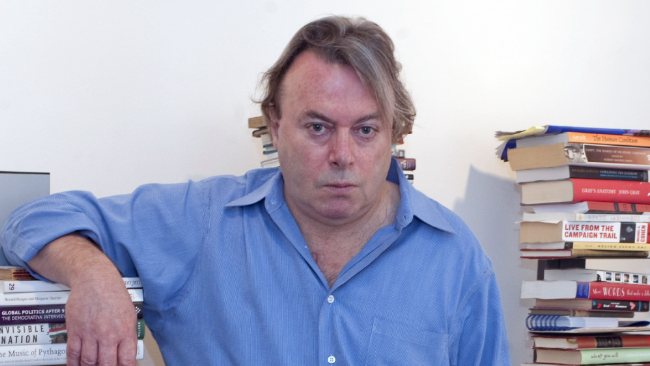
KPFA’s Mitch Jeserich, one of my favorite people on the radio, had a fascinating discussion this morning with Adam Winkler, who’s written an new book about the history of gun control. Everyone who fights with me on this blog knows I’m not a big fan of guns, and Winkler, a professor of constitutional law at UCLA, doesn’t completely agree with me.

But there’s some interesting stuff in his book and it’s worth listening to the show — in part because it shows just how inconsistent the gun nuts have been over the years and how their claims about the Second Amendment don’t hold up when you look at history.

For starters, Winkler told Jeserich, the noble founding fathers, those folks who put the right to keep and bear arms in the founding document of this great nation, were not at all opposed to gun control. They had all kinds of gun laws — most notably laws barring black people from owning guns. They also required that all muskets be regularly inspected and registered.

The racial element of gun control is nothing new, but Winkler shows some of the hypocrisy: In the 1960s, when the Black Panthers began carrying loaded guns on the streets (for self-defense against violent, racist white cops) the California Legislature set out to limit the right to bear arms in public — and Ronald Reagan, that staunch Second-Amendment guy who is worshiped by the NRA, fully supported the restrictions. In fact, he said in public that nobody should have the right to carry a loaded weapon on a public street.

At least, not as long as black people were doing it.

Even the NRA was not founded as a pro-gun group. It emerged after the Civil War to teach northerners better marksmanship. That mission continues, to a certain extent — I still have my NRA Marksman First Class medal, earned in summer camp in the 1960s, when they let kids do shit like that. But these days, it’s all about fighting any limits at all on the right to carry any weapons you can imagine.

So it’s worth remembering: The gun lobby didn’t always lobby for free access to guns (particularly not for guns for African-Americans). And the folks who wrote the Second Amendment were all in favor of a “well-regulated militia” whose members — at that time, the general (white) populace — had to declare, register and present to government agents on a regular basis all of their firearms.


The GOP and class warfare

42

Every political consultant knows that words like “together” and “unite” play well with voters. That’s why you hear them so much on the campaign trail, from races for local office to presidential campaigns. Remember Obama’s signature speech, with his signature line?

Now even as we speak, there are those who are preparing to divide us, the spin masters, the negative ad peddlers who embrace the politics of anything goes. Well, I say to them tonight, there is not a liberal America and a conservative America – there is the United States of America. There is not a Black America and a White America and Latino America and Asian America – there’s the United States of America.

Now the Republicans are claiming that it’s the Obama administration that’s dividing America:

Democrats will “poison the American spirit by pitting one American against another and engaging in class warfare,” Romney said. “I believe in an America that is one nation under God, and I will keep it that way.”

But here’s the thing: Obama actually tried to work with both sides. I wish he hadn’t tried so hard, since the Republicans have no interest in helping him govern, but you can’t say he was a divider. The GOP candidates, on the other hand, can’t possibly succeed without being divisive; as Kos points, that’s all they have:

Their entire schtick is predicated on pitting Americans against Americans. Without such demonization, they would be unable to function as an ongoing concern.

I don’t have to run for office, so I can get away with saying this: I am not a uniter, not in the sense that the politicians are using the word. I want us all to get along and I’m not a fan of violence, but there’s already a war on in this country. There’s a class war — and our side didn’t start it. Americans have already been pitted against each other — not by Obama but by a small group of the very rich and the political toadies who support them, who have systematically dismantled the tax, education and service system that once made at least an attempt at creating a country with a level playing field, a stable middle class and an income and wealth distribution curve that wasn’t grossly distorted.

The one percent has declared war on the rest of us. And we’re supposed to sit here and take it and not fight back?

Or should we attempt to drown corporatocracy in the bathtub?

Lights, Jolie, action

0

arts@sfbg.com

FILM The grudging, occasionally outright hostile tone some critics, culture vultures, and fan types have taken toward In the Land of Blood and Honey points toward a fundamental problem most of them have, though few admit it: the belief that Angelina Jolie is just too damn famous, too much a figure of public speculation and private fantasy, to be taken seriously — let alone to make a movie about rape and genocide during the War in the Balkans.

That bleak historical chapter occurred about the same time that Jolie was a Beverly Hills goth teen into knife play, too many recreational drugs, and her brother (eww), with a fledgling professional resume consisting of modeling gigs, music videos, and an inglorious starring role in 1993’s Cyborg 2. Since then she has grown up a lot, and in ways that count (adopting children as well as bearing them, actually working at her “humanitarian causes” rather than using them as photo ops), is sort of a model world citizen as far as ginormous movie stars go. She also paired off with another such example, Brad Pitt — World’s Sexiest Woman, meet World’s Sexiest Man, cue celestial chorus — and while it may be a coincidence, shortly after that event he started consistently behaving onscreen like a real actor and less like an International Male model.

Jolie, too, can act, but since becoming a big star (circa 2001’s Lara Croft: Tomb Raider), it’s been disappointing how seldom she’s been called upon to do so — as opposed to bringing the near-cartoonish va-voom and ass-whup in movies like 2003’s Lara Croft Tomb Raider: The Cradle of Life, 2005’s Mr. & Mrs. Smith, 2008’s Wanted, and 2010’s Salt. Truth be told, when she has gotten a serious part in a serious film such as 2008’s Changeling or 2007’s A Mighty Heart, the stubborn glare of celebrity hobbles our ability to let her disappear into the role. It’s not fair, but there ya go. Those are highly competent, versatile performances that nonetheless might be more effective if delivered by someone whose first name alone seems to call for an exclamation point.

This is all beside the point when it comes to In the Land of Blood and Honey, or ought to be. But the fact is, her narrative debut as writer and director (she’s also credited with a little-seen 2007 documentary, A Place in Time) would probably be getting reviews in the respectable-to-rave range if created by anyone else. It’s certainly gotten some of those, but you’d be hard-pressed not to glimpse a certain “Who does she think she is?” resentment behind others who see the film as heavy-handed do-gooderism from a chick who should leave cinematic commentary about profoundly tragic historical events to people who are less … er, sexy.

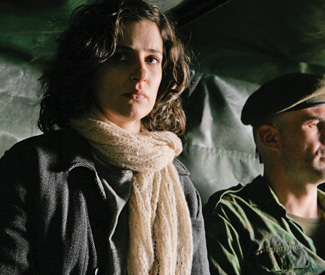
Not that Blood and Honey doesn’t have its genuine faults. There’s contrivance in the way that young Muslim painter Ajla (Zana Marjanovic) and Serb cop Danijel (Goran Kostic) have a first date just as the war reaches 1992 Sarajevo — we never do find out how they met or how well they already know each other — then intersect again when she’s a POW and he’s an officer in the Serbian Army. This allows him to save her from the regular rapes other women prisoners suffer at the hands of guards, and eventually to set her up as his protected mistress, a breach of code that is unwelcome news to the ears of his powerful father General Nobosjsa (Rade Serbedzija), a fanatical “ethnic cleanser.” This premise is typical movie exceptionalism, even if it’s still a good step above the usual device of casting a Western character-star as our guide in unpleasant foreign affairs (see: Christian Bale in Zhang Yimou’s new Rape of Nanking drama The Flowers of War). The queasy but passionate love under impossible circumstances between Danijel and Ajla is compelling, but never as powerful as several instances of madness and cruelty that befall subsidiary characters, like the brutalization of a young woman who volunteers her sewing services, or an infant’s thoughtless fate simply for crying. The shocking senselessness of war atrocities depicted in scenes like these have some of the gut-punch impact of similar bits in Schindler’s List (1993). Keeping herself off camera (unlike many an actor turned director), Jolie also keeps stylistic flourishes likewise; Blood and Honey isn’t impersonal, but eschews any vestige of auteurist “personality.” (Comparisons may be odious, but it’s worth noting the seriousness Jolie achieves this way is the diametrical opposite of the superficial showiness displayed by Madonna’s directorial calisthenics to date.) It’s immaculately crafted, though, and the assurance with which the director tempers her own screenplay’s potential for excess suggests a refined intelligence beyond what can be condescendingly explained away by having the funds and ability to hire first-rate collaborators.

While not a great movie, Blood and Honey is a very good one; an honorable achievement, not just a vehicle for honorable intentions. Of course the point is nothing more complicated than “War is hell,” but how often do movies actually punch that across, as opposed to pouting a bit while making war look exciting?

Don’t hate her movie because she’s beautiful, rich, freaky, not Jennifer Aniston, or anything else related to the larger-than-lifeness of being Angelina Jolie. If someone else made In the Land of Blood and Honey, there would be little question about admiring its stark effectiveness. Of course, if someone else had made it, you probably wouldn’t be interested in seeing it, or even able to — the one positive her celebrity brings to bear here.

IN THE LAND OF BLOOD AND HONEY opens Fri/5 in San Francisco.

Our Weekly Picks: January 4-10

0

WEDNESDAY 4

Starfucker

Reptilians, the latest LP from Portland, Ore.’s Starfucker, shows a clear obsession with death. But, you might not realize it from the opening track, “Born,” which takes a Flaming Lips style approach and brings some rock skuzz to a child-like stare into the abyss. This band keeps getting bigger (as does its audience — this Oakland date was added after two scheduled shows this week sold out,) and now with five touring members, the sounds gotten more expansive: euphoric electronica, Australian/Minogue-ish pop, 8bit arpeggios, Pixies’ bass lines, plus the signature Alan Watts samples. It could be a little much for a synth rock group, but for now, considering impending annihilation, Starfucker doesn’t seem to give a fuck. (Ryan Prendiville)

With Painted Palms, and Feelings

9 p.m., $20–$23

New Parish

579 18th St., Oakl.

(415) 371-1631

www.thenewparish.com


Week End

Yes, there was a standout 2011 movie called Weekend — Nottingham guy meets bound-for-America Nottingham guy for a one-night stand that turns out to be something more — but this screening is of another film with a very similar name, 1967’s Week End. Pro-tip: add Weekend to your Netflix queue and add Week End to your weekend plans. Jean-Luc Godard’s surreal, prescient satire of our ever-declining civilization, featuring cinema’s most epic (and most epically-filmed) traffic jam, unspools on the big screen in the form of a brand-new 35mm print. Oui-kend! (Cheryl Eddy)

Fri/6-Sun/8, 7 and 9:15 p.m. (also Sat/7-Sun/8, 2:30 and 4:45 p.m.), $7.50–<\d>$10

Castro Theatre

429 Castro, SF

(415) 621-6120


Grass Widow

Celebrate the first Friday of 2012 in Oakland with a free performance by San Francisco’s popular harmonizing punk trio, Grass Widow. Traipse through forward-thinking art instillations at nearby galleries as part of Art Murmur, then pop into the Uptown for an early start — doors are at 6 p.m. so there’s ample drinking time before bands. And those bands are high quality. Every time I see Grass Widow live, I’m smacked with its sheer blistering force; last catching the act upon its return from tour at a Public Works show featuring the resurgent Erase Errata, I was again swept up by the pummeling skills of guitarist Raven Mahon, drummer Lillian Maring, and bassist Hannah Lew. Art, drinks, and cheap-o rock’n’roll, it’ll be a solid First Fridays escape from reality. (Emily Savage)

With Culture Kids, Churches, and Wave Array

9 p.m., free

Uptown 1928 Telegraph, Oakl.

(510) 451-8100

www.uptownnightclub.com


Stripmall Architecture

The video for Stripmall Architecture’s “Radium Girls” features a neon-painted Rebecca Coseboom making weird “come hither” faces as she sings into the camera. It’s trippy and alluring, and it’s precisely how I would describe the local quartet’s dark-tinted pop music. Though Stripmall Architecture might be somewhat under your radar, founding couple Rebecca and Ryan Coseboom have worked with DJ Shadow, and Cocteau Twins guitarist Robin Guthrie, and toured the country with Bob Mould. The group wails on guitars and synthesizers, but Rebecca’s angelic voice is the driving force of its sound. After watching “Radium Girls,” I found a bunch of clips of the freaky light show the band puts on for live performances. So, you should probably check them out. (Frances Capell)

With Return to Mono and TIGERcat

9 p.m., $10

Rickshaw Stop

155 Fell, SF

(415) 861-2011

www.rickshawstop.com


FRIDAY 6

Frank & Tony

Francis Harris (a.k.a. Adultnapper) has a gift for building minimal tracks. One of the best songs of the last year, “Idiot Fair (feat. Black Light Smoke)” was a restrained bit of deep tech house released on Berlin’s Poker Flat Recordings. A steady bump with a little shake and some alternating clipped keys and snares for five minute — it didn’t slow build, it pleasantly idled — until a pair of brooding, stressed male vocals dropped into play. While Scissor and Thread — a Brooklyn-based label Harris started with players including French DJ (Tony) Anthony Collins — bills itself as an independent rather than dance imprint, the releases so far from Harris and Black Light Smoke sound quite promising. (Prendiville)

With Adnan Sharif (Forward), Michael Perry (Fedora)

9:30 p.m., $10–$15

Public Works

161 Erie, SF

(415) 932-0955

www.publicsf.com


The Proud

Local playwright Aaron Loeb’s previous work was entitled Abraham Lincoln’s Big, Gay Dance Party and featured a chorus line of dancin’ beardos in stovepipe hats. His latest, The Proud, workshopping at Dance Brigade’s Dance Mission Theater, features a more serious subject matter (presented in collaboration with Iraq Vets Against the War, the play is about post-traumatic stress disorder) — but a no less memorable chorus, in the form of Dance Bridgade’a formidable drummers and dancers. The Proud is drawn from interviews with Bay Area veterans of Iraq and Afghanistan, focusing on both PTSD and — in keeping with Dance Brigade’s commitment to feminist themes — the treatment of women in the military. Even in “staged reading” form, The Proud promises to be powerful stuff. (Eddy)

Sat/7, 8 p.m.; Sun/8, 6 p.m.; Mon/9, 5 p.m., free

Dance Mission Theater

3316 24th St., SF

(415) 826-4441

www.dancemission.com


SATURDAY 7

“Primo”

What gentle vibrations run through a family that produces a plural of career artists? Somewhere back in the generations was a genetic seed planted, later blooming into progeny given to walking the world with paint-spattered paws and dreamy gazes fixed on rooftops or the curvature of a cat’s cheekbones? Pending a scientific conclusion, we can look to the new art exhibition by cousins Hugh and David D’Andrade for clues. Budding geneticists will find comparisons of the two’s bodies of work — Hugh’s illustrative dream world most recently featured on an iconic Occupy flier, David’s sweeps of pigment that seem almost sculpture-like — to be catnip for the dabbler in DNA studies. (Caitlin Donohue)

Through Feb. 18

Opening reception: 6-9:30 p.m., free

a.Muse gallery

614 Alabama, SF

(415) 279-6281

www.yourmusegallery.com


“Accordions with Love II”

This event is actually a double whammy, two full shows of squeezebox pride. First, there’s the early show, “Accordion Babes Review” which kicks off at happy hour and includes accordion-filled sets by Yeti, Amber Lee & the Anomalies, Luz Gaxiola & Circus Finelli, Vagabondage, and more. Next up, there’s “The Big Squeeze,” the nighttime show beginning at 9 p.m. This one features Mark Growden, Gabrielle Ekedal & Angus Matin, Eggplant Casino, and yes, even more. It’s a packed lineup, one that should envitably lead to your perfect come-on for the night, “My, how your accordion bellows.” (Savage)

5 p.m. and 9 p.m., $10 per show

Amnesia

835 Valencia, SF

(415) 970-0012

www.amnesiathebar.com

Phonte and 9th Wonder

It’s a little hard to wrap my head around the notion that Charity Starts At Home, released in September, is the debut solo album from North Carolina Justus League rapper Phonte. One of the most straight-talking, artistically varied artists around, Phonte has done practically everything but a solo album: classic underground records with the group Little Brother, the electronic R&B project Foreign Exchange with Dutch producer Nicolay (hip-hop’s answer to the Postal Service), and alter-egos like Tigallo and the hilariously authentic old school soul singer, Percy Miracles. Among it’s highlights, Charity sees the MC once again collaborating (after a 6 year break) with top-tier producer and former Little Brother member 9th Wonder. (Prendiville)

With Median, Rapsody

9 p.m., $22-40

New Parish

579 18th St., Oakl.

(415) 371-1631

www.thenewparish.com


SUNDAY 8

The Future of Motive Power

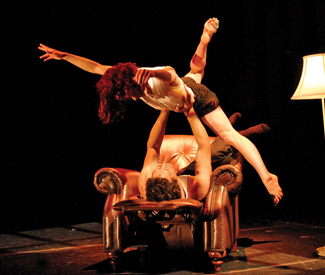
Nikola Tesla died at the New Yorker Hotel in 1943, alone and without a cent to his name. In the last years of his life, the “electric wizard” behind wireless communication and the induction motor had been promoting a death ray, subsisting on vegetable potions, and obsessing about pigeons (he claimed to love one pigeon like “a man loves a woman”). Future Motive Power, a play by the local performance ensemble Mugwumpin, is inspired by the inventor-wizard’s life, its peculiarities and myths, and the science that lives in its wake. Created specifically for the historic Old Mint, it’s a self-proclaimed “performative fever dream.” (James H. Miller)

8 p.m., $30 includes drinks and hors d’oeuvres

Old Mint

88 Fifth St., SF

(415) 967-1574

www.mugwumpin.org


MONDAY 9

Soft White Sixties

A congregant at the church of classic, mind-reeling Seventies rock, Soft White Sixties once described its sound as “Rock ‘n’ roll, heavy on the roll, dipped in soul.” This audio-fanatic show is particularly fitting for SWS and its followers for it’s part of Communion, a live music forum began in the UK by Mumford & Sons’ Ben Lovett, Kevin Jones, and noted producer Ian Grimbl. Established in 2006 London, Communion began as a monthly showcase for emerging singer-songwriters, a modern-day creative salon. It came to San Francisco near the end of last year, and continues to produce unique lineups and fanciful collaborations monthly at Cafe Du Nord. (Savage)

With Zane Carney, Big Eagle, Gabriel Kelly, and Amy Blashkie

8:30pm, $12.

Cafe Du Nord

2170 Market, SF

(415) 861-5016

www.cafedunord.com


TUESDAY 10

Thee Cormans

In the grand tradition of costumed surf punk bands that straddle rock’n’roll and comedic timing (Phantom Surfers, Mummies), here comes Thee Cormans, a green-skinned, gorilla-masked, bug-eyed gang of wily monster motorcyclists in ripped vests riding curling waves of reverb. And like its rowdy foreparents, this fuzzed out Southern California based band has a live show that puts tender mumbling indie acts to shame. That exuberance also fits in neatly with Thee Cormans’ label, In the Red, which itself is making waves for a future-retro mishmosh output of eccentric weirdos, cultured punks, and generally genre-less acts. Viva costumery. (Savage)

With the Shrouds, the Khans, and Swiss Family Skiers

8:30 p.m., $6

Hemlock Tavern

1131 Polk, SF

(415) 923-0923

www.hemlocktavern.com 

The Guardian listings deadline is two weeks prior to our Wednesday publication date. To submit an item for consideration, please include the title of the event, a brief description of the event, date and time, venue name, street address (listing cross streets only isn’t sufficient), city, telephone number readers can call for more information, telephone number for media, and admission costs. Send information to Listings, the Guardian Building, 135 Mississippi St., SF, CA 94107; fax to (415) 487-2506; or e-mail (paste press release into e-mail body — no text attachments, please) to listings@sfbg.com. Digital photos may be submitted in jpeg format; the image must be at least 240 dpi and four inches by six inches in size. We regret we cannot accept listings over the phone.

Stage Listings

0

Performance times may change; call venues to confirm. Reviewers are Robert Avila, Rita Felciano, and Nicole Gluckstern. Submit items for the listings at listings@sfbg.com. For further information on how to submit items for the listings, see Picks.

THEATER

OPENING

Future Motive Power Old Mint, 88 Fifth St, SF; www.mugwumpin.org. $15-30 (previews, pay what you can). Previews Fri/6-Sat/7, 8pm. Opens Sun/8, 8pm. Runs Fri-Sun, 8pm. Through Jan 29. Mugwumpin takes on the life of Nikola Tesla in its latest performance piece.

The Two-Character Play Eureka Theatre, 215 Jackson, SF; www.therhino.org. $10-25. Previews Wed/4-Fri/6, 8pm. Opens Sat/7, 8pm. Runs Tues-Sat, 8pm; Sun, 3pm. Through Jan 15. Theatre Rhinoceros performs Tennessee Williams’ backstage drama about a brother and a sister torn apart by secrets.

ONGOING

Not Getting Any Younger Marsh San Francisco, Studio Theater, 1062 Valencia, SF; (415) 826-5750, www.themarsh.org. $15-50. Fri, 8pm; Sat, 5 and 8:30pm. Extended through Feb 25. Marga Gomez is back at the Marsh, a couple of too-brief decades after inaugurating the theater’s new stage with her first solo show — an apt setting, in other words, for the writer-performer’s latest monologue, a reflection on the inevitable process of aging for a Latina lesbian comedian and artist who still hangs at Starbucks and can’t be trusted with the details of her own Wikipedia entry. If the thought of someone as perennially irreverent, insouciant, and appealingly immature as Gomez makes you depressed, the show is, strangely enough, the best antidote. (Avila)

*Period of Adjustment SF Playhouse, 533 Sutter, SF; (415) 677-9596, www.sfplayhouse.org. $20-50. Tues-Thurs, 7pm; Fri-Sat, 9pm (also Sat, 3pm). Through Jan 14. A nervous young man with an unaccountable tremor, George Haverstick (a compellingly manic Patrick Alparone) has waited until his honeymoon to finally call on his old Korean War buddy, Ralph (a stout but tender Johnny Moreno) — only to drop his new bride, Isabel (the terrifically quick and sympathetic MacKenzie Meehan), at the doorstep and hurry away. As it happens, Ralph’s wife of five years, Dorothea (an appealing Maggie Mason), has just quit him and taken their young son with her, turning the family Christmas tree and its uncollected gifts into a forlorn monument to a broken home — which, incidentally, has a tremor of its own, having been built atop a vast cavern. Tennessee Williams calls his 1960 play “a serious comedy,” which is about right, since although things end on a warm and cozy note, the painful crises of two couples and the lost natures of two veterans — buried alive in two suburbs each called “High Point” — are the stuff of real distress. SF Playhouse artistic director Bill English gets moving but clear-eyed, unsentimental performances from his strong cast — bolstered by Jean Forsman and Joe Madero as Dorothea’s parents—whose principals do measured justice to the complex sexual and psychological tensions woven throughout. If not one of Williams’s great plays, this is an engaging and surprisingly memorable one just the same, with the playwright’s distinctive blend of the metaphorical and concrete. As a rare snowfall blankets this Memphis Christmas Eve, 1958, something dark and brooding lingers in the storybook cheer. (Avila)

Xanadu New Conservatory Theatre Center, 25 Van Ness, SF; (415) 861-8972, www.nctcsf.org. $25-45. Wed-Sat, 8pm; Sun, 2pm (no show Sun/1). Through Jan 15. New Conservatory Theatre Center performs the retro roller-skating musical.

BAY AREA

*God’s Plot Ashby Stage, 1901 Ashby, Berk; (510) 841-6500, www.shotgunplayers.org. $18-27. Wed-Thurs, 7pm; Fri-Sat, 8pm; Sun, 5pm. Through Jan 15. Playwright-director Mark Jackson excavates a bit of deep history for Occupy USA, an episode in the annals of colonial American theater and jurisprudence that played, and plays, like a rehearsal for a revolution — this time with music. Capping Shotgun Players’ 20th anniversary season of new work, God’s Plot comically animates and literally underscores (through song, and irresistible banjo and bass accompaniment courtesy of Josh Pollock and Travis Kindred) the story surrounding “Ye Bare and Ye Cubb,” a play performed in 1665 Virginia but now lost. The legal battle that engulfed this satire of the English crown and its economic and political domination of the colonies was an early instance of the close but little acknowledged relationship between art and politics in proto-American society, with much too of religious conflict in the mix (personified here by a powerfully smoldering John Mercer as closet-Quaker Edward Martin). The playwright, a brash self-inventor named William Darby (a sure, charismatic Carl Holvick-Thomas), colludes with a disgruntled merchant (Anthony Nemirovsky) and a former indentured servant climbing the social ladder as a new tenant hand (Will Hand). Darby, meanwhile, is secretly wooing — and even more, being wooed by — Tryal Pore (an ebullient, magnetic Juliana Lustenader), a young woman even braver and more outspoken than he. As an expression of her novel and unbridled spirit, Tryal alone breaks into song to express her feelings or observations. Her temperament is meanwhile a source of worry to her father (a comically deft Kevin Clarke) and mother (Fontana Butterfield), but also attracts an unwitting suitor (a compellingly serious Joe Salazar). The play’s overarching narrative of nationalist ferment, which reaches an overtly stirring pitch, thus comes mirrored by the tension in two dramatic triangles whose common point is the precocious, golden-throated Tryal Pore. More of the private drama might have served the overall balance of the play, but a good part of the achievement of director Jackson and his generally muscular cast is making a complex play of enduring ideas and conflicts look so effortless and fun. (Avila)

*The Kipling Hotel: True Misadventures of the Electric Pink ’80s New venue: Marsh Berkeley, 2120 Allston, Berk; (415) 282-3055, www.themarsh.org. $20-50. Opens Sat/7, 8:30pm. Runs Sat, 8:30pm; Sun, 7pm. Through Feb 12. This new autobiographical solo show by Don Reed, writer-performer of the fine and long-running East 14th, is another slice of the artist’s journey from 1970s Oakland ghetto to comedy-circuit respectability — here via a partial debate-scholarship to UCLA. The titular Los Angeles residency hotel was where Reed lived and worked for a time in the 1980s while attending university. It’s also a rich mine of memory and material for this physically protean and charismatic comic actor, who sails through two acts of often hilarious, sometimes touching vignettes loosely structured around his time on the hotel’s young wait staff, which catered to the needs of elderly patrons who might need conversation as much as breakfast. On opening night, the episodic narrative seemed to pass through several endings before settling on one whose tidy moral was delivered with too heavy a hand, but if the piece runs a little long, it’s only the last 20 minutes that noticeably meanders. And even with some awkward bumps along the way, it’s never a dull thing watching Reed work. (Avila)

*The Wild Bride Berkeley Repertory Theatre, Roda Theatre, 2015 Addison, Berk; (510) 647-2949, www.berkeleyrep.org. $14.50-73. Tues, Thurs-Sat, 8pm (also Sat, 2pm); Wed and Sun, 7pm (also Sun/8 and Jan 15, 2pm; Jan 22, show at 2pm only). Extended through Jan 22. In the first act of Kneehigh Theatre’s The Wild Bride, the destinies of an innocent girl (Audrey Brisson), her moonshine-making father (Stuart Goodwin), and a predatory devil in a cheap suit (Stuart McLoughlin) become inextricably entwined by an ill-fated bargain. Steeped in European fairytale logic and American folk and blues music, Bride is inventively staged at the base of a giant tree, combining mime, puppetry, dance, live music, Cirque du Soleil-style vocals, acrobatics, and taut verse into a swooping, expressionistic fable. Accidentally promised to the devil by her doting but drink-dulled dad, “The Girl” suffers first the creepy indignity of being perved on by her preternatural suitor, and secondly the horror of having her hands chopped off by her own father, actions which drive her to flee into the woods, morphing into a character known only as “The Wild” (played by Patrycja Kujawska). After a stint as an unlikely, Edward Scissorhands-esque queen, The Wild too is driven from comfort and morphs a second time into a third character “The Woman” (Éva Magyar), an experience-toughened mother bear who kicks the devil’s ass (literally), and triumphs over adversity, without even uttering a single word. At turns dark, dexterous, fanciful, and fatal, Bride rises above the usual holiday fare with a timeless enchantment. (Gluckstern)

The World’s Funniest Bubble Show Marsh Berkeley, TheaterStage, 2120 Allston, Berk; (415) 826-5750, www.themarsh.org. $8-50. Extended run: Jan 15, Jan 21, Feb 12, 19, 26, March 11, and 18, 11am. Louis “The Amazing Bubble Man” Pearl returns with this kid-friendly, bubble-tastic comedy.

PERFORMANCE/DANCE

Café Royale 800 Post, SF; (415) 641-6033. Free. Fri, 8pm: Spoken word with Sarah Kay and Phil Kaye. Mon, 7pm: Comedy with Cara Tramontano.

“Cut the Crap! With Semi-Motivational Guru, Clam Lynch” Dark Room, 2263 Mission, SF; www.darkroomsf.com. Fri/6 and Jan 13, 8pm. $15. Get motivated with self-help-guru-satirizing comedian Clam Lynch.

“A Funny Night for Comedy” Actors Theatre of San Francisco, 855 Bush, SF; (415) 345-1287. Sun, 7pm. $10. With host Natasha Muse.

“The Proud” Dance Mission Theater, 3316 24th St, SF; (415) 826-4441, www.dancemission.com. Sat, 8pm; Sun, 6pm; Mon, 5pm. Free. Dance Brigade’s Dance Mission Theater and Iraq Vets Against the War present this workshop production of Aaron Loeb’s new play about post-traumatic stress syndrome.

Film Listings

0

Film listings are edited by Cheryl Eddy. Reviewers are Kimberly Chun, Max Goldberg, Dennis Harvey, Lynn Rapoport, and Matt Sussman. For rep house showtimes, see Rep Clock. Due to the New Year holiday, theater information was incomplete at presstime.

OPENING

The Conquest Yet another entry in the relatively new, burgeoning genre of mostly comic biopics portraying political figures still or at least recently in office, Xavier Durringer’s film chronicles conservative Nicolas Sarkozy’s rise to the French presidency. As cannily impersonated by Denis Podalydès, Sarkozy (a.k.a. the Midget, to his detractors) is a Napoleon complex-afflicted shark whose need for perpetual careerist motion cancels out enjoyment even for his triumphs — save, perhaps, a momentary gloat over enemies left trampled. At the start he’s already neared the top of the government ladder, albeit not nearly near enough. Several years’ further upward scrambling are framed by flash-forwards to 2007, when he’s on the verge of finally becoming president, albeit at the cost of “top advisor” and long-suffering first wife Cécilia (Florence Pernel) jumping ship. Her earlier lament “Our life has become a TV show” has been ignored by a spouse quite happy living an almost entirely public, media-hounded life. (Although as his popularity continues to sink, Sarkozy almost certainly doesn’t feel that way now.) Without depiction of or insight into the main figure’s background, The Conquest becomes an entertaining but superficial, near-farcical enterprise providing little insight into what makes him tick. But then, that’s the problem with instant biographies — it’s a lot easier to grasp a significant figure’s complexities when enough time has passed for hindsight to clear the immediate fog of scandal, spectacle, and grotesquerie. (1:45) (Harvey) The Devil Inside Another year, another CG-heavy exorcism movie. (1:27)

*Everyday Sunshine: The Story of Fishbone This doc offers a lively, revealing look at SoCal ska-punk rockers Fishbone, a band that formed circa 1979 in a San Fernando Valley junior high newly filled with bussed-in South Central kids. In its heyday, Fishbone enjoyed cult success with hits like “Party at Ground Zero” and the tune that gives the film its title; Everyday Sunshine speaks to Fishbone’s broad appeal, as famous faces chime in to reminisce (and longtime fan Laurence Fishburne narrates), but it also illuminates some of the reasons its members never became megastars. Codirectors Chris Metzler (a San Francisco resident best-known for 2004’s Plagues and Pleasures on the Salton Sea) and Lev Anderson spent months on the road with the band, capturing the infectious energy of its live shows in addition to behind-the-scenes tension. Past members add their voices, but the main protagonists are bassist-vocalist Norwood Fisher and lead vocalist-saxophone player Angelo Moore. Their intertwining stories offer a poignant portrait of creative soulmates who’ve weathered many storms (personality conflicts, legal and money troubles, an industry that didn’t know how to categorize them) without once giving up on their music. In addition to its compelling story, the film’s quirkier stylistic choices, including animation, lift Everyday Sunshine above the crowded field of traditional music docs. The filmmakers will be on hand for Q&As on opening weekend, with the band in person (and performing short sets) at Fri/6 shows. (1:47) Roxie. (Eddy)

In the Land of Blood and Honey See “Lights, Jolie, Action.” (2:07)

It Came from Detroit See Trash. (1:27) Roxie.

King of Devil’s Island When teenaged Erling (Benjamin Helstad) arrives at Bastøy Prison — more labor camp than reform school — he’s more worldly than many of the other boys there, especially Olav (Trond Nilssen), though the newcomer and long-time inmate bond over a shared fascination with seafaring life. That’s about the only happy thing that happens in Bastøy; set in 1915, King of Devil’s Island is based on the Norwegian island prison’s troubled past, and a rebellion that erupts when the boys reach the breaking point. Surprisingly, it’s not the exhausting work (hauling rocks and trees as rain and snow whip across gloomy fjords) that leads to unrest — it’s the failure of the camp’s strict-but-not-sadistic overseer (go-to stern Scandinavian Stellan Skarsgård) to remove a “housefather” with rapey tendencies. An overlong running time enables a few too many climaxes (though the big uprising is well-earned, and cathartic), but director Marius Holst avoids melodrama, and powerful performances, particularly by the glowering Helstad, elevate the grim King above typical hell-is-for-children fare. (1:54) SFFS New People Cinema. (Eddy)

ONGOING

*The Adventures of Tintin Producer Peter Jackson and director Steven Spielberg join forces to adapt the work of Belgian comic creator Hergé, using performance-capture 3D animation (and featuring that new technology’s most prominent performer, Andy Serkis, in a key role). Hergé wrote over 20 volumes following the globe-trotting exploits of intrepid young reporter Tintin (Jamie Bell) and his canine companion, Snowy; The Adventures of Tintin draws from a trio of books dating from the early 1940s, tweaking the tales a bit but retaining the series’ ebullient energy and sharp humor. After he impulsively buys a model ship, Tintin is sucked into a mystery involving a long-lost pirate treasure sought by the sinister Sakharine (Daniel Craig) and, eventually, newfound Tintin ally Captain Haddock (Serkis). Fan favorites Thompson and Thomson (Simon Pegg and Nick Frost — frequent compadre Edgar Wright co-wrote the script) and a certain “Milanese Nightingale” make appearances in a story that careens between exotic locales and high-seas battles, and is packed with epic chase scenes that would leave Indiana Jones breathless. And in case you were worried, Tintin boasts the least creepy, least “uncanny valley” performance-capture animation I’ve seen to date. (1:47) (Eddy)

Alvin and the Chipmunks: Chip-wrecked (1:27)

*The Artist With the charisma-oozing agility of Douglas Fairbanks swashbuckling his way past opponents and the supreme confidence of Rudolph Valentino leaning, mid-swoon, into a maiden, French director-writer Michel Hazanavicius hits a sweet spot, or beauty mark of sorts, with his radiant new film The Artist. In a feat worthy of Fairbanks or Errol Flynn, Hazanavicius juggles a marvelously layered love story between a man and a woman, tensions between the silents and the talkies, and a movie buff’s appreciation of the power of film — embodied in particular by early Hollywood’s union of European artistry and American commerce. Dashing silent film star George Valentin (Jean Dujardin, who channels Fairbanks, Flynn, and William Powell — and won this year’s Cannes best actor prize) is at the height of his career, adorable Jack Russell by his side, until the talkies threaten to relegate him to yesterday’s news. The talent nurtured in the thick of the studio system yearns for real power, telling the newspapers, “I’m not a puppet anymore — I’m an artist,” and finances and directs his own melodrama, while his youthful protégé Peppy Miller (Bérénice Béjo) becomes a yakky flapper age’s new It Girl. Both a crowd-pleasing entertainment and a loving précis on early film history, The Artist never checks its brains at the door, remaining self-aware of its own conceit and its forebears, yet unashamed to touch the audience, without an ounce of cynicism. (1:40) (Chun)

Being Elmo: A Puppeteer’s Journey (1:25)

A Dangerous Method Cool and chatty (unsurprisingly, given its subject matter and the fact that it’s based on a play and a novel), David Cronenberg’s latest begins in 1904 Zurich as a shrieking patient (Keira Knightley) is escorted into the care of psychiatrist Carl Jung (Michael Fassbender). Dr. Jung, an admirer of Sigmund Freud, tests the “talking cure” on the woman, who turns out to be the fiercely intelligent and conveniently beautiful Sabina Spielrein. An attraction, both intellectual and sexual, soon develops, no matter that Jung is Sabina’s doctor, or that he happens to be married to a prim wife whose family wealth keeps him in boats and lake houses. Meanwhile, Jung and Freud (an excellent Viggo Mortensen) begin corresponding, eventually meeting and forming a friendship that’s tested first when Sabina comes between them, and later when Jung expresses a growing interest in fringe pursuits like parapsychology. The scenes between Freud and Jung are A Dangerous Method‘s most intriguing — save those brief few involving Vincent Cassel as a doctor-turned-patient who advises Jung to “never repress anything” — but the film is mostly concerned with Jung’s various Sabina-related dramas. Pity that this is a tightly-wound Fassbender’s least dynamic performance of the year, and that Knightley, way over the top in Sabina’s hysterical scenes, telegraphs “casting mistake” from the get-go. (1:39) (Eddy)

The Darkest Hour (1:29)

*The Descendants Like all of Alexander Payne’s films save 1996 debut Citizen Ruth, The Descendants is an adaptation, this time from Kaui Hart Hemmings’ excellent 2007 novel. Matt King (George Clooney) is a Honolulu lawyer burdened by various things, mostly a) being a haole (i.e. white) person nonetheless descended from Hawaiian royalty, rich in real estate most natives figure his kind stole from them; and b) being father to two children by a wife who’s been in a coma since a boating accident three weeks ago. Already having a hard time transitioning from workaholic to hands-on dad, Matt soon finds out this new role is permanent, like it or not — spouse Elizabeth (Patricia Hastie, just briefly seen animate) will not wake up. The Descendants covers the few days in which Matt has to share this news with Elizabeth’s loved ones, mostly notably Shailene Woodley and Amara Miller as disparately rebellious teen and 10-year-old daughters. Plus there’s the unpleasant discovery that the glam, sporty, demanding wife he’d increasingly seemed “not enough” for had indeed been looking elsewhere. When has George Clooney suggested insecurity enough to play a man afraid he’s too small in character for a larger-than-life spouse? But dressed here in oversized shorts and Hawaiian shirts, the usually suave performer looks shrunken and paunchy; his hooded eyes convey the stung joke’s-on-me viewpoint of someone who figures acknowledging depression would be an undeserved indulgence. Payne’s film can’t translate all the book’s rueful hilarity, fit in much marital backstory, or quite get across the evolving weirdness of Miller’s Scottie — though the young actors are all fine — but the film’s reined-in observations of odd yet relatable adult and family lives are all the more satisfying for lack of grandiose ambition. (1:55) (Harvey)

*Drive Such a lovely way to Drive, drunk on the sensual depths of a lush, saturated jewel tone palette and a dreamlike, almost luxurious pacing that gives off the steamy hothouse pop romanticism of ’80s-era Michael Mann and David Lynch — with the bracing, impactful flecks of threat and ultraviolence that might accompany a car chase, a moody noir, or both, as filtered through a first-wave music video. Drive comes dressed in the klassic komforts — from the Steve McQueen-esque stances and perfectly cut jackets of Ryan Gosling as the Driver Who Shall Remain Nameless to the foreboding lingering in the shadows and the wittily static, statuesque strippers that decorate the background. Gosling’s Driver is in line with Mann’s other upstanding working men who hew to an old-school moral code and are excellent at what they do, regardless of what side of the law they’re working: he likes to keep it clear and simple — his services as a wheelman boil down to five minutes, in and out — but matters get messy when he falls for sweet-faced neighbor Irene (Carey Mulligan), who lives down the hall with her small son, and her ex-con husband (Oscar Isaac) is dragged back into the game. Populated by pungent side players like Albert Brooks, Bryan Cranston, Ron Perlman, and Christina Hendricks, and scattered with readily embeddable moments like a life-changing elevator kiss that goes bloodily wrong-right, Drive turns into a real coming-out affair for both Danish director Nicolas Winding Refn (2008’s Bronson), who rises above any crisis of influence or confluence of genre to pick up the po-mo baton that Lynch left behind, and 2011’s MVP Ryan Gosling, who gets to flex his leading-man muscles in a truly cinematic role, an anti-hero and under-the-hood psychopath looking for the real hero within. (1:40) (Chun)

The Flowers of War (2:21)

*The Girl With the Dragon Tattoo The meeting of Stieg Larsson’s first “Millennium” book and David Fincher promised fireworks, as he’s a director who can be equally vivid and exacting with just the elements key to the series: procedural detail, obsession, violence, tweaked genre conventions, mind games, haunted protagonists, and expansive story arcs. But perhaps because this possible franchise launch had to be rushed into production to ride the Larsson wave, what should have been a terrific matchup turns out to be just a good one — superior in some stylistic departments (notably Trent Reznor and Atticus Ross’ pulsing score), but overall neither an improvement nor a disappointment in comparison to the uninspired but effective 2009 Swedish film version. Daniel Craig plays Mikael Blomkvist, the muckraking Stockholm journalist whose public disgrace after a failed expose of a suspect corporate tycoon makes him the perfect candidate for an unexpected assignment: staying sequestered in the wealthy, warring Vanger clan’s island home to secretly investigate a teenage girl’s disappearance and presumed murder 40 years ago. His testy helpmate is the singular Lisbeth Salander (Rooney Mara), antisocial hacker, researcher, and ex-mental patient par excellence. Nearly three hours long, the compressed, slightly altered (get over it) storyline nonetheless feels rushed at times; Fincher manages the rare feat of making mostly internet research exciting in filmic terms, yet oddly the book’s more shocking episodes of sex and/or mayhem don’t have the memorable impact one might expect from him. The leads are fine, as is the big support cast of recognizable faces (Christopher Plummer, Stellan Skarsgård, Robin Wright, etc.) But the knockout suspense, atmosphere, and urgency one hoped for isn’t present in this intelligent, not entirely satisfying treatment. On the other hand, maybe those who’ve already read the books and seen the prior films have already had so much exposure to this material that a revelatory experience is no longer possible. (2:38) (Harvey)

Le Havre Aki Kaurismäki’s second French-language film (following 1992’s La Vie de Boheme) offers commentary on modern immigration issues wrapped in the gauze of a feel good fairy tale and cozy French provincialism a la Marcel Pagnol. Worried about the health of his hospitalized wife (Kaurismäki regular Kati Outinen), veteran layabout and sometime shoe shiner Marcel (Andre Wilms) gets some welcome distraction in coming to the aid of Idrissa (Blondin Miguel), a young African illegally trying to make way to his mother in London while eluding the gendarmes. Marcel’s whole neighborhood of port-town busybodies and industrious émigrés eventually join in the cause, turning Le Havre into a sort of old-folks caper comedy with an incongruously sunny take on a rising European multiculturalism in which there are no real racist xenophobes, just grumps deserving comeuppance. Incongruous because Kaurismäki is, of course, the king of sardonically funny Finnish miserabilism — and while it’s charmed many on the festival circuit, this combination of his usual poker-faced style and feel-good storytelling formula may strike others as an oil-and-water mismatch. (1:43) (Harvey)

Hugo Hugo turns on an obviously genius conceit: Martin Scorsese, working with 3D, CGI, and a host of other gimmicky effects, creates a children’s fable that ultimately concerns one of early film’s pioneering special-effects fantasists. That enthusiasm for moviemaking magic, transferred across more than a century of film history, was catching, judging from Scorsese’s fizzy, exhilarating, almost-nauseating vault through an oh-so-faux Parisian train station and his carefully layered vortex of picture planes as Hugo Cabret (Asa Butterfield), an intrepid engineering genius of an urchin, scrambles across catwalk above a buzzing station and a hotheaded station inspector (Sacha Baron Cohen). Despite the special effects fireworks going off all around him, Hugo has it rough: after the passing of his beloved father (Jude Law), he has been stuck with an nasty drunk of a caretaker uncle (Ray Winstone), who leaves his duties of clock upkeep at a Paris train station to his charge. Hugo must steal croissants to survive and mechanical toy parts to work on the elaborate, enigmatic automaton he was repairing with his father, until he’s caught by the fierce toy seller (Ben Kingsley) with a mysterious lousy mood and a cute, bright ward, Isabelle (Chloe Grace Moretz). Although the surprisingly dark-ish Hugo gives Scorsese a chance to dabble a new technological toolbox — and the chance to wax pedantically, if passionately, about the importance of film archival studies — the effort never quite despite transcends its self-conscious dazzle, lagging pacing, diffuse narrative, and simplistic screenplay by John Logan, based on Brian Selznick’s book. Even the actorly heavy lifting provided by assets like Kingsley and Moretz and the backloaded love for the fantastic proponents at the dawn of filmmaking fail to help matters. Scorsese attempts to steal a little of the latters’ zeal, but one can only imagine what those wizards would do with motion-capture animation or a blockbuster-sized server farm. (2:07) (Chun)

I Melt With You A lamentation frequently heard is that men don’t know how to express their feelings. At least not the theoretically less “manly” ones of vulnerability, self-doubt, weepiness, affection, “do these board shorts make me look fat?,” etc. Every once in a while, however, there comes an entertainment that makes you think: better to keep those feelings unexpressed, bud. “Entertainment” is a term pretty loosely applied to I Melt With You, which careens drunkenly between the obnoxious, embarrassing, and unintentionally hilarious before really jumping off a cliff of unearned, fatal self importance. Richard (Thomas Jane) is a once-promising novelist whose printed output stalled short of the sophomore slump, and who’s now reduced to teaching actual sophomores. Jonathan (Rob Lowe) has blown his marriage, child custody, and Hippocratic Oath playing Dr. Feelgood to prescription-addicted socialites. Ron (Jeremy Piven) is a symptom of high-flying Wall Street corruption whose lush life is about to collapse under a hailstorm of federal fraud investigation. Tim (Christian McKay) is depressed — hey, somebody has to be fourth-billed and most expendable plot-wise. They’re gathering at shared age 44 — the horror — for their annual week long bacchanal at an impressive cliffside Monterey manse. Faced with the unbearable triteness of their being, these quixotically arrogant self-loathers implode in terms just as meaningful as you’d expect from four reasonably privileged grown white men whose primary source of angst is the fact that life didn’t turn out to be as easy or fun as imagined in their freshman dorm. Credit is due to director Mark Pellington (1999’s Arlington Road) and first-time (possibly last-time) scenarist Glenn Porter for their resolute belief that such crybaby bathos merits tragic grandeur. They take the term “epic fail” seriously, making I Melt the Götterdämmerung of male menopause movies. (1:47) (Harvey)

J. Edgar The usual polished, sober understatement of Clint Eastwood’s directing style and the highlights-compiling CliffsNotes nature of Dustin Lance Black’s screenplay turn out to be interestingly wrong choices for this biopic about one of the last American century’s most divisive figures. Interesting in that they’re perhaps among the very few who would now dare viewing the late, longtime FBI chief with so much admiration tempered by awareness of his faults — rather than the other way around. After all, Hoover (played by Leonardo DiCaprio) strengthened his bureau in ways that, yes, often protected citizens and state, but at what cost? The D.C. native eventually took to frequently “bending” the law, witch-hunting dubious national enemies (he thought the Civil Rights movement our worst threat since the bomb-planting Bolshevik anarchists of half a century earlier), blackmailing personal ones, weakening individual rights against surveillance, hoarding power (he resented the White House’s superior authority), lying publicly, and doing just about anything to heighten his own fame. A movie that internalized and communicated his rising paranoid megalomania (ironically Hoover died during the presidency of Nixon, his equal in that regard) might have stood some chance of making us understand this contradiction-riddled cipher. But J. Edgar is doggedly neutral, almost colorless (literally so, in near-monochrome visual presentation), its weird appreciation of the subject’s perfectionism and stick-to-it-iveness shutting out almost any penetrating insight. (Plus there’s Eastwood’s own by-now-de rigueur soundtrack of quasi-jazz noodling to make what is vivid here seem more dull and polite.) The love that dare not speak its name — or, evidently, risk more than a rare peck on the cheek — between Hoover and right-hand-man/life companion Clyde Tolson (Armie Hammer, very good if poorly served by his old-age makeup) becomes both the most compelling and borderline-silly thing here, fueled by a nervous discretion that seems equal parts Black’s interest and Eastwood’s discomfort. While you might think the directors polar opposites in many ways, the movie J. Edgar ultimately recalls most is Oliver Stone’s 1995 Nixon: both ambitiously, rather sympathetically grapple with still-warm dead gorgons and lose, filmmaker and lead performance alike laboring admirably to intelligent yet curiously stilted effect. (2:17) (Harvey)

*Melancholia Lars von Trier is a filmmaker so fond of courting controversy it’s like he does it in spite of himself — his rambling comments about Hitler (“I’m a Nazi”) were enough to get him banned from the Cannes Film Festival earlier this year, where Melancholia had its debut (and star Kirsten Dunst won Best Actress). Oops. Maybe after the (here’s that word again) controversy that accompanied 2009’s Antichrist, von Trier felt like he needed a shocking context for his more mellow latest. Pity that, for Melancholia is one of his strongest, most thoughtful works to date. Split into two parts, the film follows first the opulent, disastrous, never-ending wedding reception of Justine (Dunst) and Michael (Alexander Skarsgard), held at a lavish estate owned by John (Kiefer Sutherland), the tweedy husband of Justine’s sister, Claire (Charlotte Gainsbourg). Amid the turmoil of arguments (John Hurt and Charlotte Rampling as Justine and Claire’s divorced parents), pushy guests (Stellan Skarsgard as Justine’s boss), livid wedding planner (Udo Kier, amazing), and hurt feelings (Michael is the least-wanted groom since Kris Humphries), it’s clear that something is wrong with Justine beyond just marital jitters. The film’s second half begins an unspecified amount of time later, as Claire talks her severely depressed, near-catatonic sister into moving into John’s mansion. As Justine mopes, it’s revealed that a small planet, Melancholia — glimpsed in Melancholia‘s Wagner-scored opening overture — is set to pass perilously close to Earth. John, an amateur astronomer, is thrilled; Claire, fearful for her young son’s future and goaded into high anxiety by internet doomsayers, is convinced the planets will collide, no matter what John says. Since Justine (apparently von Trier’s stand-in for himself) is convinced that the world’s an irredeemably evil place, she takes the news with a shrug. Von Trier’s vision of the apocalypse is somber and surprisingly poetic; Dunst and Gainsbourg do outstanding work as polar-opposite sisters whose very different reactions to impending disaster are equally extreme. (2:15) (Eddy)

Midnight in Paris Owen Wilson plays Gil, a self-confessed “Hollywood hack” visiting the City of Light with his conservative future in-laws and crassly materialistic fiancée Inez (Rachel McAdams). A romantic obviously at odds with their selfish pragmatism (somehow he hasn’t realized that yet), he’s in love with Paris and particularly its fabled artistic past. Walking back to his hotel alone one night, he’s beckoned into an antique vehicle and finds himself transported to the 1920s, at every turn meeting the Fitzgeralds, Gertrude Stein (Kathy Bates), Dali (Adrien Brody), etc. He also meets Adriana (Marion Cotillard), a woman alluring enough to be fought over by Hemingway (Corey Stoll) and Picasso (Marcial di Fonzo Bo) — though she fancies aspiring literary novelist Gil. Woody Allen’s latest is a pleasant trifle, no more, no less. Its toying with a form of magical escapism from the dreary present recalls The Purple Rose of Cairo (1985), albeit without that film’s greater structural ingeniousness and considerable heart. None of the actors are at their best, though Cotillard is indeed beguiling and Wilson dithers charmingly as usual. Still — it’s pleasant. (1:34) (Harvey)

Mission Impossible: Ghost Protocol No world landmark (the Kremlin, the Burj Khalifia) is too iconic and/or freaking tall for uber-adrenalized Impossible Missions Force agent Ethan Hunt (Tom Cruise) and his team (Jeremy Renner, Paula Patton, Simon “Comic Relief” Pegg) to infiltrate, climb, assume false identities in, use as a home base for unleashing futuristic spy technology that seems almost plausible (with the help of lots of iPads), race a BMW through, etc. One kind of gets the sense that Cruise and company sat down with a piece of paper and were like, “What stunts haven’t we done before, and how many of them can I do with my shirt off?” Celebrated animation director Brad Bird (2004’s The Incredibles) is right at home with Ghost Protocol as his first live-action effort — the film’s plot (set in the present day, it involves a positively vintage blend of Russians and nukes) and even its unmemorable villain take a back seat to Cruise’s secret-agent shenanigans, most of which take the form of a crazy plan that must be altered at the last minute, resulting in an even crazier plan, which must be implemented despite the sudden appearance of yet another ludicrously daunting obstacle, like, say, a howling sandstorm. For maximum big dumb fun, make sure you catch the IMAX version. A warning, though: any time the movie screeches to a halt to explore emotions or attempt characterization … zzz. (2:13) (Eddy)

The Muppets Of course The Muppets is a movie appropriate for small fry, with a furry cast (supplemented by human co-stars Jason Segel and Amy Adams) cracking wise and conveying broad themes about the importance of friendship, self-confidence, and keeping dreams alive despite sabotage attempts by sleazy oil tycoons (Chris Cooper, comically evil in the grand Muppet-villain tradition). But the true target seems to be adults who grew up watching The Muppet Show and the earliest Muppet movies (1999’s Muppets from Space doesn’t count); the “getting the gang back together” sequence takes up much of the film’s first half, followed by a familiar rendition of “let’s put on a show” in the second. Interwoven are constant reminders of how the Muppets’ brand of humor — including Fozzie Bear’s corny stand-up bits — is a comforting throwback to simpler times, even with a barrage of celeb cameos and contemporary gags (chickens clucking a Cee-Lo Green tune — I think you can guess which one). Co-writer Segal pays appropriate homage to the late Jim Henson’s merry creations, but it remains to be seen if The Muppets will usher in a new generation of fans, or simply serve as nostalgia fodder for grown-ups like, uh, me, who may or may not totally still own a copy of Miss Piggy’s Guide to Life. (1:38) (Eddy)

My Week With Marilyn Statuette-clutching odds are high for Michelle Williams, as her impersonation of a famous dead celebrity is “well-rounded” in the sense that we get to see her drunk, disorderly, depressed, and so forth. Her Marilyn Monroe is a conscientious performance. But when the movie isn’t rolling in the expected pathos, it’s having other characters point out how instinctive and “magical” Monroe is onscreen — and Williams doesn’t have that in her. Who could? Williams is remarkable playing figures so ordinary you might look right through them on the street, in Wendy and Lucy (2008), Blue Valentine (2010), etc. But as Monroe, all she can do is play the little-lost girl behind the sizzle. Without the sizzle. Which is, admittedly, exactly what My Week — based on a dubious true story — asks of her. It is true that in 1956 the Hollywood icon traveled to England to co-star with director Sir Laurence Olivier (Kenneth Branagh) in a fluff romance, The Prince and the Showgirl; and that she drove him crazy with her tardiness, mood swings, and crises. It’s debatable whether she really got so chummy with young production gofer Colin Clark, our wistful guide down memory lane. He’s played with simpering wide-eyed adoration by Eddie Redmayne, and his suitably same-aged secondary romantic interest (Emma Watson) is even duller. This conceit could have made for a sly semi-factual comedy of egos, neurosis, and miscommunication. But in a rare big-screen foray, U.K. TV staples director Simon Curtis and scenarist Adrian Hodges play it all with formulaic earnestness — Marilyn is the wounded angel who turns a starstruck boy into a brokenhearted but wiser man as the inevitable atrocious score orders our eyes to mist over. (1:36) (Harvey)

New Year’s Eve (1:58)

*Pariah A teenage girl stands stock-still in a dark nightclub, gazing with desire and fear at the half-naked female dancers on the stage. Later, riding home on the bus, she slowly removes the layers of butch that held her together in the club, stripping down to some version of the person her parents need to see when she walks in the door. Nearly wordlessly, the opening scenes of Dee Rees’s Pariah poignantly depict the embattled internal life of Alike (Adepero Oduye), a 17-year-old African American girl living in Brooklyn with her family and struggling both to be seen as she is and to determine what that might look like. The battles are being waged externally, too, between Alike’s adoring father (Charles Parnell), living in willful ignorance, and angry, rigid mother (Kim Wayans), desperately enforcing a feminine dress code and steering Alike away from openly butch friend Laura (Pernell Walker). Rees’ script beautifully conveys a household of landmines and chasms, which widen as husband and wife and daughter struggle and fail to communicate, asking the wrong questions, fearfully skirting the truth about Alike’s sexuality and her parents’ crumbling marriage. And the world outside proves full of romantic pitfalls and the tensions of longtime friendship and peer pressure. The poems in which the talented Alike takes solace and makes her way toward a more truthful existence are beautiful, but at a certain point the lyricism overtakes the film, forcing an ending that is tidy but less than satisfying. (1:26) (Rapoport)

*Shame It’s been a big 2011 for Michael Fassbender, with Jane Eyre, X-Men: First Class, Shame, and A Dangerous Method raising his profile from art-house standout to legit movie star (of the “movie stars who can also act” variety). Shame may only reach one-zillionth of X-Men‘s audience due to its NC-17 rating, but this re-teaming with Hunger (2008) director Steve McQueen is Fassbender’s highest achievement to date. He plays Brandon, a New Yorker whose life is tightly calibrated to enable a raging sex addiction within an otherwise sterile existence, including an undefined corporate job and a spartan (yet expensive-looking) apartment. When brash, needy, messy younger sister Cissy (Carey Mulligan, speaking of actors having banner years) shows up, yakking her life all over his, chaos results. Shame is a movie that unfolds in subtle details and oversized actions, with artful direction despite its oft-salacious content. If scattered moments seem forced (loopy Cissy’s sudden transformation, for one scene, into a classy jazz singer), the emotions — particularly the titular one — never feel less than real and raw. (1:39) (Eddy)

Sherlock Holmes: A Game of Shadows Maybe Guy Ritchie should’ve quit while he was ahead. Thanks to strong performances from Robert Downey Jr. and Jude Law, the British director’s first Holmes flick proved surprisingly fun. Two years later, it’s clear that Ritchie’s well of creatitivity has run dry. Sherlock Holmes: A Game of Shadows is cliched and overlong, burying a few good ideas under an avalanche of tired action movie stalwarts gone steampunk. To be fair, the set design and art direction are still sumptuous, creating a hyperbolic, detailed vision of Victorian Europe. New cast additions Jared Harris (as Moriarty, maliciously polite) and Stephen Fry (as Mycroft, eccentric and nude) do well with limited material. Noomi Rapace, playing a helpful gypsy, is superfluous. Downey Jr. and Law are still game for some amusing PG-13 homoeroticism, but it’s the former’s disinterested performance that ensures the movie’s downfall. Forced to make do without witty quips or interesting deductions, the Holmes of A Game of Shadows is part bruiser, part buffoon. The game’s a flop, Watson. (2:09) (Ben Richardson)

The Sitter Which lovable schlub do you identify with more — Zach Galifianakis or Jonah Hill? Galiafiankias was already a full-blown standup-of-sorts talent before he broke into the cineplexes, but Hill — son of Richard Feldstein, account to rockers such as Metallica — seems like a natural talent of the kind that wasn’t buffed and bruised onstage, but embodies a kind of Apatow-like organic funniness untied to one-liners and conventional shtick. In a way that musicians like his father’s clients might appreciate, he riffs well, and that talent serves him pretty well in The Sitter, which the actor has described as a mash-up of Adventures in Babysitting (1987) and After Hours (1985), only more punk rock. It’s actually more hip-hop pop, as filtered through a hapless but smartypants college drop-out and pitched to his 20-something peer group rather than the rug rats, but who’s sweatin’? As our tale opens, Noah (Hill) is not-so-busy failing to launch, living with his lovelorn mom, when he gets roped into sitting her pal’s kids as a good deed. The little monsters (Max Records, Landry Bender, and Kevin Hernandez) need a dose of harsh reality, and surprise, Noah is prepared to give it to them, when he goes on a drug run for his bad girlfriend (Ari Graynor). Hill does well with what he’s got to work with, as do such sketched-out figures like Sam Rockwell’s oddball gay dealer, who seems clearly derived from Alfred Molina’s character in Boogie Nights (1997), and though this effort never quite transcends its obvious sound-bite inspirations (and makes sure everyone feels far too good at the end), it delivers some cute-crass pleasure for just a brief sitting. (1:21) (Chun)

The Skin I Live In I’d like to think that Pedro Almodóvar is too far along in his frequently-celebrated career to be having a midlife crisis, but all the classic signs are on display in his flashy, disjointed new thriller. Still mourning the death of his burn victim wife and removed from his psychologically disturbed daughter, brilliant-but-ethically compromised plastic surgeon Robert (played with smoldering creepiness by former Almodóvar heartthrob Antonio Banderas) throws himself into developing a new injury-resistant form of prosthetic skin, testing it on his mysterious live-in guinea pig, Vera (the gorgeous Elena Anaya, whose every curve is on view thanks to an après-ski-ready body suit). Eventually, all hell breaks loose, as does Vera, whose back story, as we find out, owes equally to 1960’s Eyes Without a Face and perhaps one of the Saw films. And that’s not even the half of it — to fully recount every sharp turn, digression and MacGuffin thrown at us would take the entirety of this review. That’s not news for Almodóvar, though. Much like Rainer Werner Fassbinder before him, Almodóvar’s métier is melodrama, as refracted through a gay cinephile’s recuperative affections. His strength as a filmmaker is to keep us emotionally tethered to the story he’s telling, amidst all the allusions, sex changes and plot twists torn straight from a telenovela. The real shame of The Skin I Live In is that so much happens that you don’t actually have time to care much about any of it. Although its many surfaces are beautiful to behold (thanks largely to cinematographer José Luis Alcaine), The Skin I Live In ultimately lacks a key muscle: a heart. (1:57) (Sussman)

*Tinker Tailor Soldier Spy Tomas Alfredson (2008’s Let the Right One In) directs from Bridget O’Connor and Peter Straughan’s sterling adaptation of John le Carré’s classic spy vs. spy tale, with Gary Oldman making the role of George Smiley (famously embodied by Alec Guinness in the 1979 miniseries) completely his own. Your complete attention is demanded, and deserved, by this tale of a Cold War-era, recently retired MI6 agent (Oldman) pressed back into service at “the Circus” to ferret out a Soviet mole. Building off Oldman’s masterful, understated performance, Alfredson layers intrigue and an attention to weird details (a fly buzzing around a car, the sound of toast being scraped with butter) that heighten the film’s deceptively beige 1970s palette. With espionage-movie trappings galore (safe houses, code machines), a returned-to flashback to a surreal office Christmas party, and bang-on supporting performances by John Hurt, Mark Strong, Colin Firth, Toby Jones, and the suddenly ubiquitous Benedict Cumberbatch, Tinker Tailor epitomizes rule one of filmmaking: show me, don’t tell me. A movie that assumes its audience isn’t completely brain-dead is cause for celebration and multiple viewings — not to mention a place among the year’s best. (2:07) (Eddy)

*Tomboy In her second feature, French filmmaker Céline Sciamma (2007’s Water Lilies) depicts the brave and possibly perilous gender experimentations of a 10-year-old girl. Laure (Zoé Héran) moves with her family to a new town, falls in with the neighborhood gang during the summer vacation, and takes the stranger-comes-to-town opportunity to adopt a new, male persona, Mikael, a leap of faith we see her consider for a moment before jumping, eyes open. Watching Mikael quietly observe and then pick up the rough mannerisms and posturing of his new peers, while negotiating a shy romance with Lisa (Jeanne Disson), the sole female member of the gang, is to shift from amazement to amusement to anxiety and back again. As the children play games in the woods and roughhouse on a raft in the water and use a round of Truth or Dare to inspect their relationships to one another, all far from the eyes of the adults on the film’s periphery, Mikael takes greater and greater risks to inhabit an identity that he is constructing as he goes, and that is doomed to be demolished sooner, via accidental discovery, or later, when fall comes and the children march off to school together. All of this is superbly handled by Sciamma, who gently guides her largely nonprofessional young cast through the material without forcing them into a single precocious situation or speech. The result is a sweet, delicate story with a steady undercurrent of dread, as we wait for summer’s end and hope for the best and imagine the worst. (1:22) (Rapoport)

Twilight Saga: Breaking Dawn — Part One Some may have found Robert Pattinson’s stalker-suitor Edward Cullen sufficiently creepy (fits of overprotective rage, flirtatious comments about his new girlfriend’s lip-smackingly narcotic blood) in 2008’s first installment of the Twilight franchise. And nothing much in 2009’s New Moon (suicide attempt) or 2010’s Eclipse (jealous fits, poor communication) strongly suggested he was LTR material, to say nothing of marriage for all eternity. But Twilight 3.5 is where things in the land of near-constant cloud cover and perpetually shirtless adolescent werewolves go seriously off the rails — starting with the post-graduation teen nuptials of bloodsucker Edward and his tasty-smelling human bride, Bella Swan (Kristen Stewart), and ramping up considerably when it turns out that Edward’s undead sperm are, inexplicably, still viable for baby-making. One of the film’s only sensible lines is uttered at the wedding by high school frenemy Jessica (Anna Kendrick), who snidely wonders whether Bella is starting to show. Of course not, in this Mormon-made tale, directed by Bill Condon (1998’s Gods and Monsters, 2004’s Kinsey). And while Bella’s dad, Charlie (Billy Burke), seems slightly more disgruntled than usual, no one other than lovesick werewolf Jacob Black (Taylor Lautner) seems to question the wisdom of this shotgun-free leap from high school to honeymoon. The latter, however, after a few awkward allusions to rough sex, is soon over, and Bella does indeed start showing. Suffice it to say, it’s not one of those pregnancies that make your skin glow and your hair more lustrous. What follows is like a PSA warning against vampire-bleeder cohabitation, and one wonders if even the staunchest members of Team Edward will flinch, or adjust their stance of dewy-eyed appreciation. (1:57) (Rapoport)

*War Horse If the idea of watching heroic horses getting slaughtered amid the brutal trench warfare of World War I fills your heart with disgust, then you might want to applaud Steven Spielberg and his relatively sensitive touch with that material in the heartrending War Horse. The PG-13 rating also gives you some idea that the director will be hewing to the movie’s origins as a children’s book. Spielberg paints this tale about loss of innocence, be it in the fields of the farm or the battle, in broad strokes, but here, you might feel a bit less manipulated by his prowess as a crowd-pleasing storyteller, less conscious about the legacy he draws on, and more immersed in a story that stays as close as it can to its animal protagonist’s point of view, short of pulling a Mr. Ed. War Horse opens with Joey’s birth and follows him as he’s sold to a struggling English farm run by traumatized war veteran Ted (Peter Mullan), his spunky wife Rose (Emily Watson), and his animal-loving son Albert (Jeremy Irvine). Circumstance — and an unyielding landlord (David Thewlis) — sends Joey off to the so-called Great War, first into the care of an honorable captain (Tom Hiddleston), later a French girl (Celine Buckens), and worst, into the arms of the German enemy, where he toils as a disposable beast of burden charged with hauling the literal machines of war uphill. Spielberg shields viewers both young and old from the more explicit horrors, though gracefully imparts war’s terrors, sending fresh chills through a viewer when, for instance, a child riding a horse disappears over a ridge and fails to return. No one’s immune from tears, and you have to wonder how much healing is actually possible at War Horse‘s conclusion, despite its stylized, symbolism-laden beauty. Nonetheless cinephiles will glean a certain pleasure from images that clearly nod to the blood-red skies of Gone With the Wind (1939), the ominous deep focus of Orson Wells, and the too-bright Technicolor clarity-slash-artifice of National Velvet (1944). (2:26) (Chun)

We Bought A Zoo “If you could choose between animals or humans or animals, which would you choose?” is a standard question among passionate critter lovers, and Cameron Crowe and company go out of their way to outline which side of the divide they stand on. The result won’t please animal-centric fans of, say, Rise of the Planet of the Apes. Reporter Benjamin Mee (Matt Damon) has just lost his beloved wife and is so overwhelmed by all the solo dad time he’s had with his two cute kids, Dylan (Colin Ford) and Rosie (Maggie Elizabeth Jones), that he’s ready to do something rash. Despite the advice of his brother (Thomas Haden Church), he quits his newspaper job and throws his lot in with the ultimate child’s amusement: he buys a ramshackle zoo in the boonies and tries his darnedest to fix it. Coming with the property is the fetching if brusque zookeeper Kelly (Scarlett Johansson, slightly bushier of eyebrow — read: homelier — than usual) and a mixed bag of kooky workers (including Elle Fanning and Crowe fave Patrick Fugit). The challenge for Ben is to get the zoo up to speed, with zero previous experience and limited lucre. Unfortunately Crowe takes the human vs. animal choice to heart and errs on the side of the humanoids: there’s way too few animals here and far too little about the zoo itself. Much like an overbearing zookeeper, the filmmaker protects us from this semi-tame kingdom, when really a viewer wants to know is, when are we going to get more stories about the animals? Can we have a real tour of the grounds? Even the comic efforts of Haden Church and J.B. Smoove as Ben’s realtor aren’t enough to whisk away one’s impatience (or the unsettling feeling that Ben’s affinity for a elderly ailing tiger will end with an SF Zoo-style arm removal) with all these damn people standing between us and the creatures, like a crowd of gawkers hogging the view of the lions. (2:03) (Chun)

*Young Adult We first meet Mavis Gary (Charlize Theron) passed out next to last night’s bar pickup, whose name she won’t remember upon waking. You get the feeling this scenario happens a lot to Mavis — she’s the aging Manhattan model who seems like a trophy until the guy realizes she’s an even bigger asshole than he is. Plus, she’s in Minneapolis, on a house-grade scotch budget, where the denizens of the Midwestern home town she’s long abandoned assume she’s living a relatively glittering existence as swinging single and published author (albeit ghost author, of a petering-out tween fiction franchise). But no, her life is empty. Save your sympathy, however — Mavis might feel she’s missing something, but her consumerist values and incredible selfishness aren’t going to be sacrificed in finding it. After getting a courtesy baby announcement from old boyfriend Buddy (Patrick Wilson), she makes a determination as arbitrary as it is adamant: they were always meant to be together, and she needs to reclaim him so they can re-live their glory as King Jock and Queen Bitch of high school. Never mind that Buddy is quite happy where he is — let alone that new baby, and a wife (Elizabeth Reaser) less glam but cooler than Mavis will ever be. Acting as her confidant on this kamikaze mission is ex-classmate Matt (Patton Oswalt), who wants to reverse time about two decades for very different reasons. This reunion for the Juno (2007) duo of director Jason Reitman and writer Diablo Cody puts the latter’s facile wit to more complex, mature, organic use — though this ruthless yet quiet black character comedy is no uptempo crowd-pleaser. Rather, it’s an insidious, incisive commentary on such entertainments, as well as on juvie fiction like Sweet Valley High, whose adaptation is what Cody was developing before this tangent trumped it. It’s a surprisingly nervy movie, more like a 20-years-later sequel to Heathers (1988) than to Juno. (1:34) (Harvey)


The Iowa Caucuses are silly (but we’re all watching)

18

We all know (or we ought to) that Iowa is radically unrepresentative of the United States and that the Iowa Caucuses are a dumb barometer for choosing a president and that only really insane news media coverage has made this into such a big event. And this year it’s a freak show, complete with Santorum Salad and a weird World War II reference and that creepy guy calling that deadly dull guy a liar and lots of other fun Republican tomfoolery.

But here’s the question for those of us who don’t vote in Iowa (and wouldn’t be hanging out at a Republican caucus anyway): Is it better for one of the major-league wingnuts to win, or should we all hope that Mitt Romney, who is going to be the nominee anyway, comes out ahead and we can stop wasting our time talking about Michelle Bachman, Ron Paul, Newt Gingrich and that guy named Santorum?

Seriously: Is it better for the country to have the Republicans look even crazier than they really are, and have someone who’s gone far off the deep end become the front-runner, and leave Obama looking like the only grownup in the race — or is it better if Iowans dismiss the worst of the worst and go with someone who’s just a typical opportunistic sack of shit but who once managed to run the liberal state of Massachussetts and probably wouldn’t attempt to have half of San Francisco locked in prison on general principles?

I must admit, I’m tempted to root for the nutjobs.

The Performant: The Great Leap Forward

0

A year on the city’s wilder side, and looking ahead to more fine times

End-of-the-year roundups are all well and good, allowing us the opportunity to celebrate one last time the innovations of the past. But I’ve always preferred to look ahead into the future, so in that spirit here’s a shortlist of some of my fave Performant coverage from 2011 of ongoing and perennial events that you can still look forward to checking out in 2012—and beyond!


Sea Chantey Sing: The monthly Sea Chantey sing <www.nps.gov/safr/historyculture/chantey-sing.htm> at Hyde Street pier just turned thirty, but it feels utterly timeless, and is guaranteed the most fun you’ll ever have sober on a Saturday night, no contest. The multi-generational turnout always includes salty old pros benignly rubbing elbows with landlubbers who think the Pogues wrote “South Australia,” and just as no-one is turned away for lack of funds (it’s a free event), no-one is turned away from participating, even if “participating” means sitting in gap-mouthed awe of the regulars whose encyclopedic recall of dozens of Chanteys would make Alan Lomax weak at the knees.

Home Theatre Festival: It’s almost embarrassing how I can’t stop gushing about the homegrown phenomenon that is The Home Theatre Festival. Seriously, it’s like I’m a pre-pubescent girl at the Gymkhana, swooning over the stallions. But it’s hard not to be enamored of an event that took a devastatingly simple concept (hey artists, make art at home for fun and profit!) and turned it into a branded, annual festival whose participants span the globe and whose influence just keeps spreading. Don’t think art made at home is “legit”? You’re on the wrong side of history, friend.

Hoodslam: Real-life superhero training or reckless mayhem? This monthly amateur-wrestling tournament, currently located at the Oakland Metro Operahouse, is a rough-and-tumble turf war between spandex-clad Zombies, dubious family dynasties, videogame-inspired villains, mobsters, gimps, dark overlords, and carnivorous werewolves. Further cranking the sensory overload to eleven with acerbic commentators, an aggro-metal house band, fire-eating babes, a seven-foot tall Pink Panther referee, and the uber-suave ring announcer Ike Emilio Burner, whose booming introduction of each match rolls across the room like a tsunami of too cool, Hoodslam taps into an almost primal gladiatorial urge with an unmistakably Oakland swagger.

The Lost Church: Neither lost, nor a church, this hidden temple of tunesmiths and troubadours worships at the altar of Americana with offerings of the dirty blues, Appalachian-style folk, and alt-rock in a retro jewel-box theatre space. And speaking of theatre, they do that too on an occasional basis, and an evening at The Lost Church might turn out to be a combination of all of the above—an intriguing alchemy.

American Tripps: Spreading the gospel of Berlin-style Ping-pong since August 2011, American Tripps has attracted a cult following of sporty young things in sweatbands who gather every couple of weeks around a single ping-pong table for a rousing evening of rundlauf. Another deceptively simple concept just waiting for someone to come forward and run with it (in this instance, Allan Hough of Mission Mission) American Tripps is a perfect balance between being challenging enough to attract good players and easy enough to keep the uncoordinated masses in the game, whether it’s the first round, or the thirtieth.

Give The Performant a reason to Twit. Follow @enkohl for of-the-minute updates from the underground.

Louis Dunn asks ex-President Bush: Was the Iraq war worth it?

0

Lead paragraph in the lead story in Thursday’s New York Times (12/29/11):

“BAGHDAD–The Obama administration is moving ahead with the sale of nearly $11 billion worth of arms and training for the Iraqi military despite concerns that Prime Minister Nuri Kamal al-Maliki is seeking to consolidate authority, create a one party Shiite-dominated state and abandon the American-backed power-sharing government.”

B3 note: the graphics and cartoons of Louis Dunn, a former Guardian art director and artist, will be featured regularly in the Guardian, on the Guardian website, and on the Bruce blog.

Stage Listings

0

Stage listings are compiled by Guardian staff. Performance times may change; call venues to confirm. Reviewers are Robert Avila, Rita Felciano, and Nicole Gluckstern. Submit items for the listings at listings@sfbg.com. For further information on how to submit items for the listings, see Picks.

THEATER

ONGOING

Absolutely San Francisco Alcove Theater, 414 Mason, Ste 502, SF; (415) 992-8168, www.thealcovetheater.com. $32-50. Thurs/29, 8pm. Not Quite Opera Productions presents Anne Nygren Doherty’s musical about San Francisco, with five characters all portrayed by Mary Gibboney.

*On the Air Pier 29 on the Embarcadero (at Battery), SF; (415) 438-2668, love.zinzanni.org. $117 and up (includes dinner). Wed/28-Fri/30, 6:15pm (also Wed/28, 11:30am); Sat/31, 8:30pm. Teatro ZinZanni’s final production at its longtime nest on Pier 29 is a nostalgia-infused banquet of bits structured around an old-time radio variety show, featuring headliners Geoff Hoyle (Geezer) and blues singer Duffy Bishop. If you haven’t seen juggling on the radio, for instance, it’s pretty awesome, especially with a performer like Bernard Hazens, whose footing atop a precarious tower of tubes and cubes is already cringingly extraordinary. But all the performers are dependably first-rate, including Andrea Conway’s comic chandelier lunacy, aerialist and enchanting space alien Elena Gatilova’s gorgeous “circeaux” act, graceful hand-balancer Christopher Phi, class-act tapper Wayne Doba, and radio MC Mat Plendl’s raucously tweeny hula-hooping. Add some sultry blues numbers by raunchy belter Bishop, Hoyle’s masterful characterizations (including some wonderful shtick-within-a-shtick as one-liner maestro “Red Bottoms”), a few classic commercials, and a healthy dose of audience participation and you start to feel nicely satiated and ready for a good cigar. Smoothly helmed by ZinZanni creative director Norm Langill, On the Air signals off-the-air for the popular dinner circus — until it can secure a new patch of local real estate for its antique spiegeltent — so tune in while you may. (Avila)

*Period of Adjustment SF Playhouse, 533 Sutter, SF; (415) 677-9596, www.sfplayhouse.org. $20-50. Tues-Thurs, 7pm; Fri-Sat, 9pm (also Sat, 3pm). Through Jan 14. A nervous young man with an unaccountable tremor, George Haverstick (a compellingly manic Patrick Alparone) has waited until his honeymoon to finally call on his old Korean War buddy, Ralph (a stout but tender Johnny Moreno) — only to drop his new bride, Isabel (the terrifically quick and sympathetic MacKenzie Meehan), at the doorstep and hurry away. As it happens, Ralph’s wife of five years, Dorothea (an appealing Maggie Mason), has just quit him and taken their young son with her, turning the family Christmas tree and its uncollected gifts into a forlorn monument to a broken home — which, incidentally, has a tremor of its own, having been built atop a vast cavern. Tennessee Williams calls his 1960 play “a serious comedy,” which is about right, since although things end on a warm and cozy note, the painful crises of two couples and the lost natures of two veterans — buried alive in two suburbs each called “High Point” — are the stuff of real distress. SF Playhouse artistic director Bill English gets moving but clear-eyed, unsentimental performances from his strong cast — bolstered by Jean Forsman and Joe Madero as Dorothea’s parents—whose principals do measured justice to the complex sexual and psychological tensions woven throughout. If not one of Williams’s great plays, this is an engaging and surprisingly memorable one just the same, with the playwright’s distinctive blend of the metaphorical and concrete. As a rare snowfall blankets this Memphis Christmas Eve, 1958, something dark and brooding lingers in the storybook cheer. (Avila)

Xanadu New Conservatory Theatre Center, 25 Van Ness, SF; (415) 861-8972, www.nctcsf.org. $25-45. Wed-Sat, 8pm; Sun, 2pm (no show Sun/1). Through Jan 15. New Conservatory Theatre Center performs the retro roller-skating musical.

BAY AREA

*God’s Plot Ashby Stage, 1901 Ashby, Berk; (510) 841-6500, www.shotgunplayers.org. $18-27. Wed-Thurs, 7pm; Fri-Sat, 8pm; Sun, 5pm. Through Jan 15. Playwright-director Mark Jackson excavates a bit of deep history for Occupy USA, an episode in the annals of colonial American theater and jurisprudence that played, and plays, like a rehearsal for a revolution — this time with music. Capping Shotgun Players’ 20th anniversary season of new work, God’s Plot comically animates and literally underscores (through song, and irresistible banjo and bass accompaniment courtesy of Josh Pollock and Travis Kindred) the story surrounding “Ye Bare and Ye Cubb,” a play performed in 1665 Virginia but now lost. The legal battle that engulfed this satire of the English crown and its economic and political domination of the colonies was an early instance of the close but little acknowledged relationship between art and politics in proto-American society, with much too of religious conflict in the mix (personified here by a powerfully smoldering John Mercer as closet-Quaker Edward Martin). The playwright, a brash self-inventor named William Darby (a sure, charismatic Carl Holvick-Thomas), colludes with a disgruntled merchant (Anthony Nemirovsky) and a former indentured servant climbing the social ladder as a new tenant hand (Will Hand). Darby, meanwhile, is secretly wooing — and even more, being wooed by — Tryal Pore (an ebullient, magnetic Juliana Lustenader), a young woman even braver and more outspoken than he. As an expression of her novel and unbridled spirit, Tryal alone breaks into song to express her feelings or observations. Her temperament is meanwhile a source of worry to her father (a comically deft Kevin Clarke) and mother (Fontana Butterfield), but also attracts an unwitting suitor (a compellingly serious Joe Salazar). The play’s overarching narrative of nationalist ferment, which reaches an overtly stirring pitch, thus comes mirrored by the tension in two dramatic triangles whose common point is the precocious, golden-throated Tryal Pore. More of the private drama might have served the overall balance of the play, but a good part of the achievement of director Jackson and his generally muscular cast is making a complex play of enduring ideas and conflicts look so effortless and fun. (Avila)

The Secret Garden TheatreWorks at Lucie Stern Theatre, 1305 Middlefield, Palo Alto; (650) 463-1960, www.theatreworks.org. $19-72. Wed/28, 7:30pm; Thurs/29-Fri/30, 8pm (also Fri/30, 2pm); Sat/31, 2pm. TheatreWorks performs the Tony Award-winning musical adaptation of Frances Hodgson Burnett’s novel.

*The Wild Bride Berkeley Repertory Theatre, Roda Theatre, 2015 Addison, Berk; (510) 647-2949, www.berkeleyrep.org. $14.50-73. Tues, Thurs-Sat, 8pm (also Thurs/29 and Sat, 2pm); Wed and Sun, 7pm (also Jan 8 and 15, 2pm; Jan 22, show at 2pm only). Extended through Jan 22. In the first act of Kneehigh Theatre’s The Wild Bride, the destinies of an innocent girl (Audrey Brisson), her moonshine-making father (Stuart Goodwin), and a predatory devil in a cheap suit (Stuart McLoughlin) become inextricably entwined by an ill-fated bargain. Steeped in European fairytale logic and American folk and blues music, Bride is inventively staged at the base of a giant tree, combining mime, puppetry, dance, live music, Cirque du Soleil-style vocals, acrobatics, and taut verse into a swooping, expressionistic fable. Accidentally promised to the devil by her doting but drink-dulled dad, “The Girl” suffers first the creepy indignity of being perved on by her preternatural suitor, and secondly the horror of having her hands chopped off by her own father, actions which drive her to flee into the woods, morphing into a character known only as “The Wild” (played by Patrycja Kujawska). After a stint as an unlikely, Edward Scissorhands-esque queen, The Wild too is driven from comfort and morphs a second time into a third character “The Woman” (Éva Magyar), an experience-toughened mother bear who kicks the devil’s ass (literally), and triumphs over adversity, without even uttering a single word. At turns dark, dexterous, fanciful, and fatal, Bride rises above the usual holiday fare with a timeless enchantment. (Gluckstern)

The World’s Funniest Bubble Show Marsh Berkeley, TheaterStage, 2120 Allston, Berk; (415) 826-5750, www.themarsh.org. $8-50. Wed/28-Sat/31, 11am. Louis “The Amazing Bubble Man” Pearl returns with this kid-friendly, bubble-tastic comedy.

PERFORMANCE/DANCE

“BATS Improv New Year’s Eve Special Performance” Bayfront Theater, Fort Mason Center, Marina at Laguna, SF; (415) 474-6776, www.improv.org. Sat, 8pm. $30-40. The landmark improv company performs to ring in the new year, with a dance party to follow.

“Club Chuckles” Hemlock Tavern, 1131 Polk, SF; (415) 923-0925. Thurs, 7:30 and 9:30pm. $15. Comedy with Tig Notaro, Sean Keane, and Groomed for Success.

“Cut the Crap! With Semi-Motivational Guru, Clam Lynch” Dark Room, 2263 Mission, SF; www.darkroomsf.com. Jan 6 and Jan 13, 8pm. $15. Get motivated with self-help-guru-satirizing comedian Clam Lynch.

“Dream Queens Revue: It’s Almost New Year’s Show” Aunt Charlie’s Lounge, 133 Turk, SF; www.auntcharlieslounge.com. Wed, 9:30pm. Free. Drag with Colette Ashton, Ruby Slippers, Sophilya Leggz, and more.

“Forking II: A Merry FORKING Christmas” StageWerx, 446 Valencia, SF; www.pianofight.com.Wed/28-Fri/30, 8pm. $25-35. Well holy forking shit, it’s been three years already since Daniel Heath’s A Merry Forking Christmas debuted at PianoFight’s old Off-Market Theater digs, and in that time a few new faces have been added to the cast, and a few loose ends tied up in a bow, rendering the overall package a ho-ho-holiday treat worth indulging in. Hate the holidays? Not nearly as much as Goth girl morgue assistant Charlotte (Leah Shesky); her buddy Monique (Emma Shelton), a frustrated culinary genius selling pot cookies to stressed-out shoppers; Adam (Jed Goldstein), a disaffected Jew hired on as a Mall Santa from a temp agency; or Charles (Alex Boyd), an effete metrosexual dangerously enervated by his fiancée’s perfectionist vigor (Nicole Hammersla). Hilariously guided by Ray Hobbs and Gabrielle Patacsil, who play a variety of bit roles (Headbanger vs. Bible Banger, embattled parents fighting over the last coveted “Meat Panda,” feral children), the audience periodically gets to vote over the next permutation of plot, the “forks” alluded to in the title. According to artistic director Rob Ready (also featured in the cast as “Old Ben”), there are 362,880 possible combinations, and yes, the actors have memorized them all. Question is, will you? (Gluckstern)

“The Last Butch Standing” Victoria Theatre, 2961 16th St, SF; www.therhino.org. Sat, 7 and 9pm. $30-35. Singer and comedian Lea DeLaria performs her solo satire.

“Laughter Against the Machine: Guerrilla Stand-Up Comedy Fourth Annual New Year’s Eve” Phoenix Theatre, 414 Mason, Sixth Flr, SF; www.brownpapertickets.com. Thurs-Sat, 7pm (also Fri/30, 9:30pm; Sat/31, 10pm). $20-25. W. Kamau Bell, Nato Green, and Janine Brito perform their trademark brand of socially-conscious comedy.

“Magic and More New Year’s Eve with Frisco Fred” Actors Theatre of San Francisco, 855 Bush, SF; www.actorstheatresf.org. Sat, 7:30pm. $40. Family-friendly variety show starring comedian and circus performer Frisco Fred.

“Not Your Normal New Year’s Eve” Herbst Theatre, 401 Van Ness, SF; www.nynnye.com. Sat, 8pm. $25-59. Cutting-edge comedy with Brent Weinbach, Jill Bourque, Kevin Camia, and more, plus live music and a balloon drop.

“Picklewater Clown Cabaret presents a Prescott Circus Fundraiser” StageWerx, 446 Valencia, SF; www.brownpapertickets.com. Mon, 7 and 9pm. $15. Clowns helping clowns!

“Qcomedy Showcase” Martuni’s, 4 Valencia, SF; www.qcomedy.com. Mon, 8pm. $5-15. With comedians Justin Lucas, Simone Campbell, Jennifer Dronsky, and guest host Pippi Lovestocking.

“A San Francisco New Year’s Comedy Show” Actors Theatre of San Francisco, 855 Bush, SF; www.actorstheatresf.org. Sat, 10pm, $40. With headliner Will Franken.

“Santaland Diaries” Eureka Theatre, 215 Jackson, SF; www.combinedartform.com. Wed/28-Fri/30, 8pm. $20-50. Combined Artform presents David Sedaris’ holiday comedy.

“Yes Sweet Can” Dance Mission Theater, 3316 24th St, SF; (415) 225-7281, www.sweetcanproductions.com. Wed/28-Thurs/29, 2:30 and 4:30pm; Fri/30, 4 and 8pm; Sat/31-Sun/1, 2pm. $15-60. Sweet Can Productions presents an hourlong extravaganza of circus arts for the holidays.

Film Listings

0

Film listings are edited by Cheryl Eddy. Reviewers are Kimberly Chun, Max Goldberg, Dennis Harvey, Lynn Rapoport, and Matt Sussman. For rep house showtimes, see Rep Clock. For complete film listings, see www.sfbg.com. Due to the Christmas holiday, theater information was incomplete at presstime.

OPENING

Holy Rollers: The True Story of Card Counting Christians For a time, one of the most successful card-counting outfits in America was “the Churchteam,” a group of 20-somethings who mapped out a businesslike way of relieving casinos of millions of dollars. Two managers trained a pack of players, who would then travel to Las Vegas and other places, armed with stacks of bills (contributed by investors) and the cojones to cheat until they were “backed off” from the blackjack table. (As 2009’s The Hangover, excerpted here, points out, counting cards isn’t illegal — it’s merely “frowned upon.”) Neat story, but the real hook here is that the Churchteam was comprised almost entirely of practicing Christians; their shared faith insured that nobody would steal from the team’s profits. (Of course, when the team starts losing, and theft is suspected, all eyes fasten upon the single non-Christian in the pack.) The fast-paced Holy Rollers tends toward the highly enjoyable, but the Churchteam members are so self-satisfied that they prove difficult to root for at times. Holy smugness, bro! (1:35) Roxie. (Eddy)

*Pariah A teenage girl stands stock-still in a dark nightclub, gazing with desire and fear at the half-naked female dancers on the stage. Later, riding home on the bus, she slowly removes the layers of butch that held her together in the club, stripping down to some version of the person her parents need to see when she walks in the door. Nearly wordlessly, the opening scenes of Dee Rees’s Pariah poignantly depict the embattled internal life of Alike (Adepero Oduye), a 17-year-old African American girl living in Brooklyn with her family and struggling both to be seen as she is and to determine what that might look like. The battles are being waged externally, too, between Alike’s adoring father (Charles Parnell), living in willful ignorance, and angry, rigid mother (Kim Wayans), desperately enforcing a feminine dress code and steering Alike away from openly butch friend Laura (Pernell Walker). Rees’ script beautifully conveys a household of landmines and chasms, which widen as husband and wife and daughter struggle and fail to communicate, asking the wrong questions, fearfully skirting the truth about Alike’s sexuality and her parents’ crumbling marriage. And the world outside proves full of romantic pitfalls and the tensions of longtime friendship and peer pressure. The poems in which the talented Alike takes solace and makes her way toward a more truthful existence are beautiful, but at a certain point the lyricism overtakes the film, forcing an ending that is tidy but less than satisfying. (1:26) Embarcadero. (Rapoport)

Paul Goodman Changed My Life Social theorist, poet, novelist, essayist, co-founder of Gestalt therapy, anarchist, activist, pacifist, intellectual provocateur, queer-identified bisexual, husband, father, radical nerd — these are just some of the many hats Goodman wore during his fairly brief tenure as one of the most influential American thinkers of the mid-20th century. His 1960 non-fiction tome Growing Up Absurd explained an emerging generation’s disenchantment with the “establishment” society it would soon rebel against, making him an unlikely, tweedy, middle-aged spokesman for the rising youth movement. (Though before his 1972 death at age 60, he would grow disillusioned with that movement.) A fascinating mind, a sometimes impossible personality, he’s fallen somewhat into neglect as recent decades have favored conformism over the humanist re-making of society he advocated, and which for a while there actually seemed possible. Thus it’s as good a moment as any for Jonathan Lee’s documentary, which mixes biographical overview and appreciation of the subject’s disparate work and ideas with extant footage of him speaking and interviews with surviving friends, family, and colleagues. Maybe “mixes” is a less apt term than “scrambles” — faced with an admittedly bewildering pile of information (and contradiction), Lee fails to find any viable organizing principle. Always interesting, this scattershot documentary nonetheless never quite finds a secure foothold on its sprawling, slippery subject. Still, as introduction or just nostalgic flashback to Goodman’s legacy, it’s worth a look. (1:29) SFFS New People Cinema. (Harvey)

ONGOING

*The Adventures of Tintin Producer Peter Jackson and director Steven Spielberg join forces to adapt the work of Belgian comic creator Hergé, using performance-capture 3D animation (and featuring that new technology’s most prominent performer, Andy Serkis, in a key role). Hergé wrote over 20 volumes following the globe-trotting exploits of intrepid young reporter Tintin (Jamie Bell) and his canine companion, Snowy; The Adventures of Tintin draws from a trio of books dating from the early 1940s, tweaking the tales a bit but retaining the series’ ebullient energy and sharp humor. After he impulsively buys a model ship, Tintin is sucked into a mystery involving a long-lost pirate treasure sought by the sinister Sakharine (Daniel Craig) and, eventually, newfound Tintin ally Captain Haddock (Serkis). Fan favorites Thompson and Thomson (Simon Pegg and Nick Frost — frequent compadre Edgar Wright co-wrote the script) and a certain “Milanese Nightingale” make appearances in a story that careens between exotic locales and high-seas battles, and is packed with epic chase scenes that would leave Indiana Jones breathless. And in case you were worried, Tintin boasts the least creepy, least “uncanny valley” performance-capture animation I’ve seen to date. (1:47) (Eddy)

Alvin and the Chipmunks: Chip-wrecked (1:27)

*The Artist (1:40)

Being Elmo: A Puppeteer’s Journey (1:25)

A Dangerous Method (1:39)

The Darkest Hour (1:29)

*The Descendants (1:55)

*Drive (1:40)

The Flowers of War (2:21)

*The Girl With the Dragon Tattoo The meeting of Stieg Larsson’s first “Millennium” book and David Fincher promised fireworks, as he’s a director who can be equally vivid and exacting with just the elements key to the series: procedural detail, obsession, violence, tweaked genre conventions, mind games, haunted protagonists, and expansive story arcs. But perhaps because this possible franchise launch had to be rushed into production to ride the Larsson wave, what should have been a terrific matchup turns out to be just a good one — superior in some stylistic departments (notably Trent Reznor and Atticus Ross’ pulsing score), but overall neither an improvement nor a disappointment in comparison to the uninspired but effective 2009 Swedish film version. Daniel Craig plays Mikael Blomkvist, the muckraking Stockholm journalist whose public disgrace after a failed expose of a suspect corporate tycoon makes him the perfect candidate for an unexpected assignment: staying sequestered in the wealthy, warring Vanger clan’s island home to secretly investigate a teenage girl’s disappearance and presumed murder 40 years ago. His testy helpmate is the singular Lisbeth Salander (Rooney Mara), antisocial hacker, researcher, and ex-mental patient par excellence. Nearly three hours long, the compressed, slightly altered (get over it) storyline nonetheless feels rushed at times; Fincher manages the rare feat of making mostly internet research exciting in filmic terms, yet oddly the book’s more shocking episodes of sex and/or mayhem don’t have the memorable impact one might expect from him. The leads are fine, as is the big support cast of recognizable faces (Christopher Plummer, Stellan Skarsgård, Robin Wright, etc.) But the knockout suspense, atmosphere, and urgency one hoped for isn’t present in this intelligent, not entirely satisfying treatment. On the other hand, maybe those who’ve already read the books and seen the prior films have already had so much exposure to this material that a revelatory experience is no longer possible. (2:38) (Harvey)

Le Havre (1:43)

Hugo (2:07)

I Melt With You (1:47)

J. Edgar (2:17)

*Melancholia (2:15)

Midnight in Paris (1:34)

Mission Impossible: Ghost Protocol No world landmark (the Kremlin, the Burj Khalifia) is too iconic and/or freaking tall for uber-adrenalized Impossible Missions Force agent Ethan Hunt (Tom Cruise) and his team (Jeremy Renner, Paula Patton, Simon “Comic Relief” Pegg) to infiltrate, climb, assume false identities in, use as a home base for unleashing futuristic spy technology that seems almost plausible (with the help of lots of iPads), race a BMW through, etc. One kind of gets the sense that Cruise and company sat down with a piece of paper and were like, “What stunts haven’t we done before, and how many of them can I do with my shirt off?” Celebrated animation director Brad Bird (2004’s The Incredibles) is right at home with Ghost Protocol as his first live-action effort — the film’s plot (set in the present day, it involves a positively vintage blend of Russians and nukes) and even its unmemorable villain take a back seat to Cruise’s secret-agent shenanigans, most of which take the form of a crazy plan that must be altered at the last minute, resulting in an even crazier plan, which must be implemented despite the sudden appearance of yet another ludicrously daunting obstacle, like, say, a howling sandstorm. For maximum big dumb fun, make sure you catch the IMAX version. A warning, though: any time the movie screeches to a halt to explore emotions or attempt characterization … zzz. (2:13) (Eddy)

The Muppets (1:38)

*My Reincarnation (1:22) Roxie, Smith Rafael.

My Week With Marilyn (1:36)

New Year’s Eve (1:58)

*Shame (1:39)

Sherlock Holmes: A Game of Shadows Maybe Guy Ritchie should’ve quit while he was ahead. Thanks to strong performances from Robert Downey Jr. and Jude Law, the British director’s first Holmes flick proved surprisingly fun. Two years later, it’s clear that Ritchie’s well of creatitivity has run dry. Sherlock Holmes: A Game of Shadows is cliched and overlong, burying a few good ideas under an avalanche of tired action movie stalwarts gone steampunk. To be fair, the set design and art direction are still sumptuous, creating a hyperbolic, detailed vision of Victorian Europe. New cast additions Jared Harris (as Moriarty, maliciously polite) and Stephen Fry (as Mycroft, eccentric and nude) do well with limited material. Noomi Rapace, playing a helpful gypsy, is superfluous. Downey Jr. and Law are still game for some amusing PG-13 homoeroticism, but it’s the former’s disinterested performance that ensures the movie’s downfall. Forced to make do without witty quips or interesting deductions, the Holmes of A Game of Shadows is part bruiser, part buffoon. The game’s a flop, Watson. (2:09) (Ben Richardson)

*Silent Souls Director Aleksei Fedorchenko and scenarist Denis Osokin’s enigmatic feature follows two men on a modern road trip that might well be deep into the bottomless past of Russia’s diverse religious rituals, mysticisms, and folklore. Coworkers travel cross-country to perform complicated Meryan ethnic rites for one protagonist’s late, beloved younger wife. This involves the transport of two birds, some surprisingly graphic personal reminiscences, an oceanfront funeral pyre, and other incidents whose full import the filmmakers are happy to leave somewhat cryptic. Gently comic, lyrical, at times borderline surreal, Souls belies a short running time of just an hour and a quarter — for all its intangibles, by the end this beguiling journey feels too substantial to have possibly taken so little of our time. (1:15) Roxie, SFFS New People Cinema. (Harvey)

The Sitter (1:21)

The Skin I Live In (1:57)

*Tinker Tailor Soldier Spy (2:07)

*Tomboy (1:22) (Rapoport)

Twilight Saga: Breaking Dawn — Part One

*War Horse If the idea of watching heroic horses getting slaughtered amid the brutal trench warfare of World War I fills your heart with disgust, then you might want to applaud Steven Spielberg and his relatively sensitive touch with that material in the heartrending War Horse. The PG-13 rating also gives you some idea that the director will be hewing to the movie’s origins as a children’s book. Spielberg paints this tale about loss of innocence, be it in the fields of the farm or the battle, in broad strokes, but here, you might feel a bit less manipulated by his prowess as a crowd-pleasing storyteller, less conscious about the legacy he draws on, and more immersed in a story that stays as close as it can to its animal protagonist’s point of view, short of pulling a Mr. Ed. War Horse opens with Joey’s birth and follows him as he’s sold to a struggling English farm run by traumatized war veteran Ted (Peter Mullan), his spunky wife Rose (Emily Watson), and his animal-loving son Albert (Jeremy Irvine). Circumstance — and an unyielding landlord (David Thewlis) — sends Joey off to the so-called Great War, first into the care of an honorable captain (Tom Hiddleston), later a French girl (Celine Buckens), and worst, into the arms of the German enemy, where he toils as a disposable beast of burden charged with hauling the literal machines of war uphill. Spielberg shields viewers both young and old from the more explicit horrors, though gracefully imparts war’s terrors, sending fresh chills through a viewer when, for instance, a child riding a horse disappears over a ridge and fails to return. No one’s immune from tears, and you have to wonder how much healing is actually possible at War Horse‘s conclusion, despite its stylized, symbolism-laden beauty. Nonetheless cinephiles will glean a certain pleasure from images that clearly nod to the blood-red skies of Gone With the Wind (1939), the ominous deep focus of Orson Wells, and the too-bright Technicolor clarity-slash-artifice of National Velvet (1944). (2:26) (Chun)

We Bought A Zoo “If you could choose between animals or humans or animals, which would you choose?” is a standard question among passionate critter lovers, and Cameron Crowe and company go out of their way to outline which side of the divide they stand on. The result won’t please animal-centric fans of, say, Rise of the Planet of the Apes. Reporter Benjamin Mee (Matt Damon) has just lost his beloved wife and is so overwhelmed by all the solo dad time he’s had with his two cute kids, Dylan (Colin Ford) and Rosie (Maggie Elizabeth Jones), that he’s ready to do something rash. Despite the advice of his brother (Thomas Haden Church), he quits his newspaper job and throws his lot in with the ultimate child’s amusement: he buys a ramshackle zoo in the boonies and tries his darnedest to fix it. Coming with the property is the fetching if brusque zookeeper Kelly (Scarlett Johansson, slightly bushier of eyebrow — read: homelier — than usual) and a mixed bag of kooky workers (including Elle Fanning and Crowe fave Patrick Fugit). The challenge for Ben is to get the zoo up to speed, with zero previous experience and limited lucre. Unfortunately Crowe takes the human vs. animal choice to heart and errs on the side of the humanoids: there’s way too few animals here and far too little about the zoo itself. Much like an overbearing zookeeper, the filmmaker protects us from this semi-tame kingdom, when really a viewer wants to know is, when are we going to get more stories about the animals? Can we have a real tour of the grounds? Even the comic efforts of Haden Church and J.B. Smoove as Ben’s realtor aren’t enough to whisk away one’s impatience (or the unsettling feeling that Ben’s affinity for a elderly ailing tiger will end with an SF Zoo-style arm removal) with all these damn people standing between us and the creatures, like a crowd of gawkers hogging the view of the lions. (2:03) (Chun)

*Young Adult (1:34)

The brawn identity

0

arts@sfbg.com

YEAR IN FILM How did the tiger get its stripes? Or, more pertinently, how did the superman get his tights? This has been the thrust of most big-budget superhero movies since the genre’s big boom a decade ago — a strict adherence to monomythic convention, with modern action movie trappings to make the material accessible to newcomers.

But these titans from Marvel and DC’s pages weren’t born yesterday. Indeed, many are inextricable from the historical contexts that birthed them. Recent adaptations often seek contemporary relevance or fresh spins on old characters. Sure, some of these superfolks need an upgrade, but when new interpretations have the integrity to treat the source comics as stories worth telling on their own terms, the results can far surpass convoluted attempts to “improve” upon the originals.

The heroes finally returned to their roots in 2011, with two major productions taking up specific historical periods. Matthew Vaughn’s sleek if slightly smarmy X-Men: First Class flashes back to the merry mutants’ rise during the swingin’ sixties, while Joe Johnston forges a thrilling wartime adventure in Captain America: The First Avenger. But not all period superhero movies are created equal.

First Class is, for all its potential, a mishmash of sub-Mad Men costuming and mortifyingly ham-fisted social messages. Inspired casting doesn’t salvage the film from its central flaw: it’s a standard-issue superhero blockbuster masquerading as something savvier. It plays fast and loose with genre but never to its advantage, and mishandles the source material’s anti-prejudice themes. It also warps real history, revising the Cuban Missile Crisis in order to force a historical context. But its mawkish civil rights rhetoric and Cold War paranoia can’t conceal the fact that the film feels essentially contemporary.

Captain America, conversely, hits all the right beats. Others have noted that Johnston previously helmed 1991’s The Rocketeer, so it’s no surprise he knows how to put on a good pulpy show. But the movie blends Nazi occult weirdness with a grounded, convincing patriotism that reinforces the World War II setting. It has its problems as a historical film — for one thing, it never directly treats the Holocaust. But it doesn’t feel like the same origin story we’ve repeatedly seen; instead it feels like a superhero movie successfully taking on a different genre. It’s just this sort of adventurousness we can hope for as the studios continue to mine the funnybooks for ideas — comics have a rich history, so why not explore it instead of update it?

Doom lens

0

cheryl@sfbg.com

YEAR IN FILM As everyone and John Cusack knows, 2012 is it. And not in a “billboard-buying Alameda radio preacher Harold Camping’s bungled Rapture predictions” kind of way. This is an all-in situation. The Mesoamerican Long Count calendar, a complicated and ancient system most enthusiastically explained by conspiracy theorists, winds up its 13th 144,000 day cycle on December 21, 2012. TL; DR: we’re toast.

Though pesky, facts-knowing Latin American archaeology scholars have suggested that this doesn’t actually mean the end of the world is nigh, good luck dissuading zillions of bloggers, survivalists, religious fanatics, super-volcano watchers, and people who lie awake at night, biting their fingernails over the Large Hadron Collider. Imminent catastrophe awaits! Are you ready?

Enter Hollywood, which in its 100-plus year history has never had any qualms about exploiting society’s extant feelings of fear and dread. In 2009, 2012 prophesized global destruction (“Mankind’s earliest civilization warned us this day would come!”) as only a film with a lavish special effects budget could. Yet it offered last-act hope, a preferred tactic of master of disaster Roland Emmerich — who, having ice-aged, Godzilla’d, and alien-invaded the planet in a succession of go-boom films over the past 15 years, switched gears in 2011 with Shakespeare mystery Anonymous. (Last-ditch artistic atonement, perhaps?)

The apocalyptic films of 2011 took a different approach, opting to emphasize existential terror instead of fireballs, with no happy endings in sight. Lars von Trier’s Melancholia inspects the one percent by peering into the lives of two privileged sisters: depressed Justine (Kirsten Dunst) and anxious Claire (Charlotte Gainsbourg). The film’s first half unfolds at Justine’s lavish wedding reception — held at Claire’s horsy estate — which devolves into a mini-disaster movie of its own. The stretch limo carrying the newlyweds is too bulky to navigate the property’s narrow, curving driveway, until the bride slides behind the wheel and gets the tires pointed in the right direction. It’s Justine’s last moment of glee, as her marriage-jinxing erratic behavior soon gives way to crippling malaise.

As it turns out, a newly-discovered planet, conveniently named Melancholia, is heading toward earth. A collision course is not guaranteed, but it’s pretty obvious where things are heading, and this is not the kind of movie that sends Bruce Willis into space with drilling equipment to save the day. As Claire whips herself into a panic, clicking through fear mongering websites (Melancholia‘s only evidence of a world beyond the mansion’s well-manicured grounds), Justine accepts the impending apocalypse with cool detachment. “The earth is evil,” she tells her sister. “We don’t need to grieve for it.”

Though there’s no looming threat from outer space, the sky looks plenty ominous to Curtis (Michael Shannon), troubled protagonist of Jeff Nichols’ Take Shelter. Nightmares of the I-wake-up-screaming variety have become a regular thing, and though Curtis desperately needs the health insurance provided by his construction job — his daughter (Tova Stewart) is about to get an operation to restore her hearing — he’s become obsessed with upgrading the storm shelter in his backyard. Friends and neighbors, initially supportive, become angry and confused. A public meltdown is inevitable: “There is a STORM coming like nothing you have ever seen, and not A ONE OF YOU is prepared for it!” he bellows at a community dinner, spewing fire like a small-town Cassandra.

There’s more: Curtis’ mother is schizophrenic. Is history repeating, or are his visions actually prophetic? Is Nichols hinting at Biblical themes, or is he making a statement about mental illness, or the destruction of the American dream? The film’s provocative finale could be interpreted a variety of ways; though there’s no Melancholia-style conclusion, Take Shelter‘s message remains memorably unsettling.

But even if the world doesn’t actually take a buy-out in 2012, it’ll get there someday — as Terrence Malick’s dreamy Tree of Life, which is more or less the story of everything that has ever and will ever happen, points out. For film fans, the signs of a dying planet are all too clear. Just take a look at the top-grossing movies of 2011: all of them are either sequels or part of a series. Transformers: Dark of the Moon relieved ticket buyers of over $352 million, even though previous installment Transformers: Revenge of the Fallen (2009) was scientifically proven to have sucked the soul out of anyone who watched it. (True story.)

With the crap economy making even gigant-o-stars nostalgic for their $20 million paydays, the Hollywood-industrial complex concentrated on proven moneymakers, with a few notable exceptions (bless you, Bridesmaids). In 2011, all bets were off. No cult property was too sacred to remake, no “reboot” deemed unnecessary, no superhero with the word “green” in his name unworthy of an entire feature film, no use of 3D too gratuitous. Original ideas were placed on the endangered species list, unless you counted the very small handful of smarter films that somehow managed to break through (look hard; most of them came out in December). Though there’s always a chance that entertainment aimed at the masses will have a brain (2012’s The Dark Knight Rises looks promising), that’s all there is. A chance.

Worse yet: recent news that major film studios plan to stop releasing 35mm prints from their archives. Rep houses will be forced to show films either digitally or not at all. It’s a cost-cutting measure that will deny future generations the irreplaceable delight of watching a movie projected from film, as was intended by the artist who made it. (Somewhere, Stanley Kubrick is seething.) Why bother going to see an old movie at all, if you’re just gonna be watching the equivalent of blown-up DVD? Might as well stay home and watch the Kardashians shop for shoes that cost more than your rent.

Man, maybe I am ready for 2012 after all. At least there’s an alternative end-times scenario to look forward to: the adaptation of Max Brooks’ excellent novel World War Z, about a world rebuilding itself after a zombie holocaust. Its not-so-coincidental release date? December 21, 2012. You’ve been warned. 

www.thepetitionsite.com/1/fight-for-35mm/


Occupy and the hostile media

8

OPINION Every progressive movement in U.S. history was portrayed negatively by mainstream media at the time it was happening. It’s no surprise that the media portray the Occupy Wall Street movement in the same light.

During the Montgomery bus boycott, mainstream media outlets interviewed black folks who were against it and talked about how the boycott was misguided and hurt the local economy. The day after the boycott started, the Montgomery Advertiser ran a story featuring the manager of the bus lines saying that bus drivers were being shot at and rocks were being thrown at them.

During the rest of the civil rights movement, protesters who were fire-hosed and otherwise brutalized were called “violent protesters” in the mainstream media, which again featured interviews with people saying that the protests were wrongheaded.

During the Anti-Vietnam War movement, the mainstream media portrayed protesters as out of touch, violent, and dirty. There was a picture in the San Francisco Chronicle of a guy who was throwing back a tear gas canister that had been shot at the peaceful crowd. This was shown as proof of protesters being wild, out of touch, and violent. The Black Panther Party had free breakfast programs and was beloved worldwide — but every mainstream media outlet that covered it, covered it negatively.

There has never been any strike, work stoppage, or union action that was supported by the mainstream media at the time that it was happening.

The mainstream press didn’t support the Anti-Apartheid movement and doesn’t support the boycott, disinvestment and sanctions movement for Palestine.

The mainstream press is always on the wrong side of history because it’s always on the side of the status quo, which is capitalist exploitation and oppression.

Here’s an example: Every article about the port shutdown featured a trucker speaking against the shutdown. However, the Occupy movement received and circulated a letter from an organization representing hundreds of port truckers which thanked us all for this action in support of their struggle. None of those folks were interviewed by media.

Another example: In any movement we will make in the U.S. that is multi-racial, there will be real problems to fix around race. These are good problems, because they come from the fact that a lot of different groups of people who normally wouldn’t work together are doing so now.

But the article in the Chronicle that supposedly showed that Occupy Oakland doesn’t connect with black folks was poor and unethical journalism. The paper quoted only two black folks; one said the answer is to tell other Black folks to “Stop The Violence.” Okay. But the Chron didn’t interview any of the folks in the neighborhood around Gayla Newsome who was put back into her foreclosed home. They didn’t interview anyone from the neighborhood around 10th and Mandela, where the Tactical Action Committee has made a foreclosed Fannie Mae home into a community center with workshops for the community. They didn’t interview anyone involved with Occupy Oakland’s November 19th march, which was 2,000 strong and focused on school closures. They didn’t interview any of the many black union members who have worked with us. They didn’t interview anyone in the People Of Color Caucus, or anyone else who is black and works with Occupy Oakland.

Don’t be surprised at the media’s negative portrayal of our movement. It’s happening because we are growing, we are effective, and we are right. *

Boots Riley is a musician and activist.

Period Piece: Brannan Street sense (and Geary Boulevard, too)

0

Guardian history writer Lucy Schiller is exploring the city street-by-street in the slow week inter-holiday weekends. Today, learn about Samuel Brannan’s shipment of Mormons to San Francisco and John Geary side jobs (which include governor of Philadelphia). Click here for yesterday’s installment on Baker Street.

Brannan Street 

Named for Samuel Brannan, Mormon, ex-Mormon, journalist, Gold Rush instigator

Samuel Brannan (1819-1889) brought 240 Mormons to San Francisco on a ship along with a printing press, effectively tripling the tiny town’s population. And though he himself steered clear of panning for gold, Brannan was the first man to capitalize on the Gold Rush. And capitalize he did, publishing news of California’s gleaming bounty in his newspaper The California Star, while simultaneously selling mining supplies out of a well-placed general store. Brannan quickly became a millionaire, and with his notoriety, his character displayed itself. After being expelled from the church for some pretty questionable tithe diversions, Brannan became an integral member of San Francisco’s notorious citizen police force, the Vigilance Committee. Brannan Street runs in a fittingly prominent path parallel to Market.

Geary Boulevard

Named for John Geary, postmaster, mayor, governor

Just like the street named in his honor, John Geary (1819-1873) was a bustling behemoth, standing around six and a half feet tall and holding the dubious honor of more than 10 war wounds. He also managed to hold an impressive array of titles throughout his violent life, working as San Francisco’s first postmaster, last alcade (premier authority during Mexican rule), first mayor, military general, governor of Kansas, and governor of Pennsylvania. Geary levied the first taxes on San Franciscans, established the first jail (a stinking, unsanitary mess on the ship Euphemia), and ensured that both Washington Square and Union Square remain public spaces.  


Period Piece: Baker Street sense

1

Guardian history writer Lucy A. Schiller is examining SF’s history corner by corner this week — in this piece, the murder in Baker Street’s torrid past

It should come as no surprise that many of San Francisco’s streets are named for old white men. After all, many financially successful California pioneers were just that (occasionally minus the “old”). But the figures referenced by San Franciscan alleys, thoroughfares, boulevards, and avenues do hold some insight into the city’s past. The picture of 19th century San Francisco painted by its street names is a wildly weird one. Common themes: lawlessness, violence, sometimes ugly individualism, and the occasional progressive value.

Baker Street

Named for Edward Dickinson Baker, orator, senator, friend of Abe Lincoln

Edward D. Baker (1811-1861) holds a distinct honor in American history as the only sitting senator to have been killed in the Civil War. The British-born, Free Soil politician traveled in his youth throughout the Midwest (including a stint at a cotton mill in a failed utopian community) before moving to San Francisco and quickly making his mark as a lawyer and public speaker. A sort of Californian Abraham Lincoln (the President was a close friend and named his second son after Baker), the senator was renowned for his oratorical skills. Attorney general George Williams later called Baker “the most eloquent man I ever heard speak.” Baker was killed in Virginia at the Battle of Ball’s Bluff. The silvertongued politician’s eponymous street stretches from Buena Vista Park to the Marina. 


A bad incentive for pot busts

3

The Bay Citizen ran, without comment or perspective, a Bay City News item Dec. 23 noting that the Hayward Police Department and other local law-enforcement agencies picked up some $1.2 million when the feds disbursed the money that was seized from a marijuana dispensary that was busted in 2006.

This is a dirty side of the drug war that doesn’t get enough discussion or attention: When the cops bust dealers who have cash (or even fancy cars) on hand, the money doesn’t go to the general fund of a city or to the federal treasury (to fund, perhaps, alternatives to incarceration, drug treatment or education). It goes directly to the police agencies that made the arrests.

That’s a huge incentive — a direct cash incentive — for police to focus on arresting drug dealers (in this case, an operation that was selling marijuana, which everyone with any sense knows ought to be legal anyway).

In an era of diminshed resources, if you’re a police chief and you have a choice — send your officers to raid a pot club, or send them onto the streets to try to prevent violent crimes — there’s a financial incentive to go after the pot club. That skews law-enforcement priorities in a bad way.

I’m hardly the first one to make this point, but it’s worth thinking about when we see this kind of story celebrating the “true holiday gift” of drug money.


Top flight

0

arts@sfbg.com

YEAR IN DANCE If you are a trend spotter, you will have noticed two changes within the local dance ecology that probably will influence how we see dance in the foreseeable future.

First, not only have dancers been foregoing the proscenium theater — after all, there aren’t that many around here — but they’ve also been sidestepping theaters altogether. They find spaces in museums, bars, parks, and streets, even former newspaper offices. Or they perform in studios which become informal community gatherings where audiences, in addition to seeing work, get a sense of participating in something being created. Dancers’ Group and CounterPULSE’s “2nd Sundays,” the RAWDance’s “CONCEPT Series,” and Kunst-Stoff Arts are among the most prominent examples of this.

The second change relates to funding. No need to spell out how dire the financial picture has become for big organizations that have infrastructures to support. But for the small and medium-sized companies, it’s been just about catastrophic. So how to get the cash to put on a show or take advantage of a touring opportunity? In the commercial world it’s called “direct marketing.” Dancers are nothing if not entrepreneurial. They are taking to the internet, asking for small donations and keeping people informed about the progress of the “campaign.”

Trying to rethink the past 12 months of dance viewing is mind-boggling; coming up with a “best-of list” is no less so. Take the following ten as one observer’s bouquet to all the dancers who have enriched our lives in 2011. They are listed chronologically by the date of when they were seen.

In its third program (Feb. 24, War Memorial Opera House), San Francisco Ballet showcased the classical language as infinitely pliable and capable of contemporary expressiveness. Yet Yuri Possokhov and William Forsythe could not have done it more differently. Possokhov’s 2010 small-scaled Classical Symphony — three couples and a corps of eight — seduced with its speed, wit, and exuberance. Forsythe’s 1984 tour de force Artifact Suite challenged a huge ensemble with gale-force attacks, imploding unisons, and ever-changing designs. In this context even Helgi Tomasson’s 1993 Nanna’s Lied looked decent.

Spanning 55 years of work, the Merce Cunningham Company (Feb. 3, Cal Performances/Zellerbach Hall) bid its farewell with three pieces that beautifully showcased the late choreographer’s extraordinary range. Antic Meet (1958) showed him young and clever; in the lyrical Pond Way (1998) we saw Cunningham’s affinity for the natural world, and in Sounddance (1975) the backdrop swallowed his dancers one by one. It was a good-bye from artist who had the guts to pull the curtain on himself.

Zaccho Dance Theatre‘s The Monkey and the Devil (April 17, Novellus Theater) didn’t pull any punches about the persistence of racism. A tough show to watch, it was low on “entertainment” values but chock-full of convincingly painful confrontations in which two couples, one white, one black, mirrored each others’ anguish and anger.

In 1979, audiences were taken aback by Lucinda ChildsDance (April 28, San Francisco Performances/Novellus Theater) which incorporated a film by Sol LeWitt and a score by Philip Glass. Its rigor, aesthetic purity, and pedestrian vocabulary alienated many. Yet Dance is a gorgeous piece of choreographic architecture. How fun it was to watch, in 2011, dancers doing the exact same steps so differently as those caught on the film more than 30 years ago.

The Polish Teatr Zar‘s stunningly original and impeccably realized The Gospels of Childhood Triptych, (May 25, St. Gregory’s Episcopal Church and Potrero Hill Neighborhood House) is one of the reasons that the San Francisco International Arts Festival has to exist. With its ritualistic pacing and its fusion of music, movement, and language (“Zar” means “funeral song”), Gospels attempted to suggest something approaching the divine and the restrictions of the self.

Pooling resources is today’s mantra. But few go to the depth of intellectual and emotional sharing that Janice Garrett and Charles Moulton do. They co-choreographed the exhilarating The Experience of Flight in Dreams (June 9, ODC Theater) and came up with a soloists-ensemble format rarely seen in modern dance. To have such a unified and well-realized perspective from such different artists was thrilling.

Science, or writers such Maxine Hong Kingston or Gary Snyder, often inspire Kathryn Roszak‘s work. The reprise of the fine Pensive Spring (Sept. 25, Hertz Hall, UC Berkeley), based on the works by Emily Dickinson, proved to be a thoroughly intelligent and finely crafted dance theater piece that illuminated a great creative mind through music, dance, and language.

AXIS Dance Company (Oct. 7, Malonga Casquelourd Theater) commissioned the Australian choreographer Marc Brew to give the company its first story-ballet. Taking a bow to dance history and soap operas, Brew’s slyly voyeuristic Full of Words moved through knotted entanglements with insight, humor, and compassion. It was a fine vehicle for the company and should be around for a long time.

José Limón is a giant of early modern dance, yet few practitioners have ever seen his work live. So for tiny San Jose’s sjDANCEco (Oct. 15, California Theatre, San Jose) to attempt Missa Brevis, a major Limon choreography, just about amounted to hubris. But former Limón dancer and sjDANCEco’s artistic director, Gary Masters, scoured the community and trained the dancers — some of them college and high school students — in the requisite combination of strength and restraint. The performance of this jewel of modernism became a minor miracle.

Finally, Deborah Slater and Julie Hébert‘s Night Falls (Oct. 21, ODC Theater) looked at the process of aging from a “three ages of man” perspective, except that this was a woman’s life crisis. Most intriguing was the way language and dance — much of it gestural — bounced off each other, creating the vibrant environment in which the performers could fully extend themselves.

Curtain calls

2

arts@sfbg.com

YEAR IN THEATER With a grateful nod to former colleague Brad Rosenstein, we re-inaugurate a system of accolades and nah-ccolades celebrating some memorable highs and lows of the rapidly closing year in theater and performance.


Most Memorable Food Fight

A Three Little Dumplings Adventure

Within seconds of the appearance of the three titular protagonists of Megan Cohen’s A Three Little Dumplings Adventure — a hot pink and powder blue hurricane wreaking havoc on the subdued prison of a suburban living room — it was impossible not to get sucked into their chaotic orbit. Alternating between being patently obnoxious, emotionally unanchored, and frankly homicidal, the “three little dumplings” played by Sarah Moser, Molly Holcomb, and Megan Trout teased, baited, jabbed, and wrestled each other across the stage, culminating in Moser pinning Trout to the floor threatening to eat her (“dumpling” being no tidy euphemism here, but a physiological condition). Presented at the Bay One Acts Festival, it was definitely the year’s best meta-cannibalistic food frenzy, and it whetted our appetite for more. (Nicole Gluckstern)


Best Drug Story

Greg Proops at “Previously Secret Information”

Admittedly the best highs are often hard to remember. Kudos to the seemingly rock-hard memory of otherwise mellow-ab’d comedian Greg Proops, who recalled prodigious intake and takeout as a Chicken Delite delivery boy in 1970s San Carlos for an edition of Joe Klocek’s storytelling series, “Previously Secret Information.” (Robert Avila)


Best Political-Historical Thesis Disguised as a Wildly Funny and Louche “Songplay”

Beardo

Their own prior hit, 2008’s Beowulf: A Thousand Years of Baggage, was going to be a hard act to follow. But Banana Bag & Bodice and producers Shotgun Players made playwright Jason Craig and composer Dave Malloy’s take on Rasputin look like child’s play — very precocious child’s play — where performances, music, costumes, mise-en-scène, themes, and dialogue all contributed to another hirsute masterpiece. (Avila)


Most Inscrutable Triumvirate

Mimu Tsujimura, Lily Tung Crystal, and Katie Chan in Songs of the Dragons Flying to Heaven

Speaking of frankly homicidal, the otherwise nameless characters “Korean 1, 2, and 3” in the joint Crowded Fire/Asian American Theater Company production of Young Jean Lee’s Songs of the Dragons Flying to Heaven were as outrageously bloodthirsty a collection of countertypical characters as ever graced the Thick House stage. By turns violent, ecstatic, girlish, and demented, the eclectic trio played by Mimu Tsujimura, Lily Tung Crystal, and Katie Chan skewered every tradition-bound Asian stereotype in the book. Clad in the dazzle camouflage of their flowing silk dresses, rendering their monologues in their respective “mother” tongues, not spoken by this or many other audience members, the fiercely energetic characters expertly revealed themselves by not revealing a thing. (Gluckstern)


Best Lighting Design

Allen Willner for inkBoat’s The Line Between

Willner’s worked wonders before, not least with longtime collaborators inkBoat (Heaven’s Radio), but he outdoes himself in this wild and excellent production, making the lighting design a full member of the ensemble with a world of shifting moods and ideas. (Avila)


Best Tentative Revival of a Theatrical Artform

Puppetry

Where have all the puppets gone? It seemed like for a few years there they all went into hiding, perhaps barricading themselves in little puppet bunkers, awaiting the end times. But a modest slew of puppet-driven performances resurfaced over the course of 2011, reigniting our hopes for a full-blown revival in the future. A shortlist of memorable puppets encountered this year include Lone Wolf Tribe’s dark circus of clowns and war veterans in Hobo Grunt Cycle; a beleaguered Orson Welles puppet manipulated by Nathanial Justiniano’s sociopathic Naked Empire Bouffon Company alter ego Cousin Cruelty; Thomas John’s “hard-boiled” egg puppets who populated his Humpty Dumpty noir thriller The Lady on the Wall; the over-the-top awesomeness of a trio of Audrey Jrs. in Boxcar Theatre’s Little Shop of Horrors, and the silently suffering soldier of Aurora Theatre’s A Soldier’s Tale. Here’s hoping this miscellany foreshadows the triumphal return of the missing puppets, to as opposed to their last hurrah. (Gluckstern)


Nicest timing

The Agony and the Ecstasy of Steve Jobs

Just before public figures across the spectrum wailed their approval of a fallen business idol, Seattle-based monologist Mike Daisey, at Berkeley Rep, not-so-quietly reminded people of what a corporation is. Then Occupy Wall Street happened. (Avila)


Most Polarizing Descent Into the Reptilian Complex

Chekhov Lizardbrain

Whether you loved it or loathed it, Pig Iron’s touring production of Chekhov Lizardbrain was certainly one of the year’s most striking. Performing as part of foolsFURY’s Fury Factory, the Philadelphia-based Pig Iron spearheaded an expedition into the inner workings of one man’s brain beset by shifting vagaries of memory and truth. Combining a series of pompously-referenced “rules” of drama, stock Chekhovian alter-egos, and the dual personalities — internal and external — of an undersocialized protagonist (James Sugg) struggling to shape his memories into a recognizable narrative, Chekhov Lizardbrain elicited the most polarized reaction from its sold-out houses I saw all year. From a standing ovation to a fair number of disgruntled walk-outs, this dark-edged exploration inspired a panorama of strong responses in its audience, a solid sign of success in my book. (Gluckstern)


Best Labor of Love

The Companion Piece

Inspired by a concept by Beth Wilmurt, who was inspired by a book about the biological roots of human emotions (A General Theory of Love), Mark Jackson directed Wilmurt and fellow “vaudevillians” Christopher Kuckenbaker and Jake Rodriguez at Z Space in one of the most inspired pieces of devised theater all year (with a close second going to Jackson’s own SF State production of the blissful Wallflower). (Avila)


Best Conversation Starter

The closure of a “remixed” Little Shop of Horrors

Another polarizing moment in Bay Area theater occurred this summer when Boxcar Theatre’s ambitious remix of the cultish Alan Menken and Howard Ashman musical Little Shop of Horrors was shut down by Music Theatre International due to admitted violations of its licensing agreement. The debate inspired by both the violations and the show’s subsequent closure was as passionate and considered as the production that inspired it, from both perspectives of the situation. Without taking sides, I found the conversation about artistic freedom vs. artists’ rights to their own works to be as stimulating and thought-provoking as any night in the theater could strive to be. It seems unlikely that Boxcar Theatre knowingly set out to become the vanguard for open-source theater-making, but here’s hoping it’s a banner they are willing to carry a little longer. (Gluckstern)


Best Part of Getting Old

Geezer at the Marsh

I’m glad I lived long enough to see Geoff Hoyle live long enough to produce this solo piece extraordinaire. (Avila)


Best Couch-Surfing Opportunity

“Home Theater Festival”

Sometimes it’s hard to leave the comfort of one’s home to gamble on the capricious vicissitudes of a theater outing. Gambling in the comfort of someone else’s home was, on the other hand, really easy. (Avila)


Best Ostentatious Design Overload

The Lily’s Revenge

Watching the four-and-a-half-hour epic performance mash-up that was Taylor Mac’s The Lily’s Revenge at the Magic Theatre was in parts harrowing, exhausting, and transcendentally fabulous, but what stuck with me long after the vague twists of plot and character had mostly faded from my memory were indelible images of the seriously overwhelming design. From dazzling, sequined flower costumes by Lindsay W. Davis, to four complete sets built to accommodate five acts designed by Andrew Boyce, to the extravagant lighting by Sarah Sidman, The Lily’s Revenge could have been subtitled The Tech Crew’s Revenge, which would have been a fitting description of the glorious fantasia created by the uniformly top-notch production team. (Gluckstern)


Best Jump on George Clooney

Farragut North

North is better known to multiplex crowds as The Ides of March. But Bay Area theatergoers were first to get a former Howard Dean speechwriter’s fictionalized story of real-deal electoral politics in a so called democracy — and in a nimble low-budge production from OpenTab Productions at Noh Space that made it all the sweeter for not being Hollywooden. (Avila)


Best Planned Revitalization of a Theater District Linchpin

PianoFight at Original Joe’s

When the venerable, family-run Original Joe’s at 144 Taylor burned down in 2007 it was a catastrophic blow to the neighborhood — especially to all the theaters in the area who had adopted it over the years as a go-to post-show hang-out. It even served as a San Francisco Fringe Festival off-site venue for several years, hosting the likes of RIPE Theatre and Dan Carbone. So it was wonderful news on many levels when the turbo-charged PianoFight theater company signed a ten-year lease with the Duggan family to turn the old Original Joe’s into the new home of PianoFight. In addition to rebuilding the restaurant and bar, PianoFight plans to house two theaters, offices, and rehearsal spaces under the same roof — a huge boost to the neighborhood and greater theatrical community both. (Gluckstern)


Worst-Attended Theatrical Gem

Hobo Grunt Cycle at the Exit Theater

I’m not sure why there were so few people in the audience for this stunning cri de coeur against warfare by Kevin Augustine’s rightly acclaimed New York–based puppet theater ensemble, Lone Wolf Tribe. As hard as it can be to look at the real face of war, this piece brilliantly insisted on the need to do just that: manipulated with consummate grace by one or more black-clad puppeteers, Augustine’s life-sized puppets remained strikingly sentient, heartbreakingly damaged beings you absolutely could not take your eyes off. (Avila)


Classiest Beginning to a Final Bow

In the Maze of Our Own Lives

Playwright-director Corey Fischer’s sleekly staged, prescient take on the radically influential Group Theatre ensemble of the thoroughly agitated 1930s, In the Maze of Our Own Lives, which lead off the Jewish Theatre’s 34th and last season. (Avila)

Best Reason to Cross the Bridge: SQUART at Headlands Center for the Arts This 24-hour, all-stops-pulled-out version of choreographer Laura Arrington’s shrewd experimental series in collaborative performance-making capped a residency at the Headlands with a well-attended set of four sneaky, astonishing pieces by a multi-talented ensemble of harried sleep-deprived creator-conspirators. Why isn’t art always made this way? (Avila)

Worst Gas-to-Show Ratio Lolita Roadtrip at San Jose Stage A surprisingly unmoving outing from otherwise quick playwright Trevor Allen, who indeed quickly bounced back with a remounting of his popular solo, Working for the Mouse. (Avila)  

Strangest Encounter Between “Performer” and “Audience” Robert Steijn Steijn questioned everything, including what the hell he was doing onstage in front of the people assembled to see the famed Dutch performer at Joe Goode’s new annex in the Mission. They were all good questions, and the micro-choreography of physical and psychic states to which they pointed charged the room with a delicate intensity that encouraged many thoughtful beers afterward. (Avila)

Short takes: Biggest Dick: Kevin Spacey as Richard III. With balls and chops to match.  

Best Beefcake Ham and Cheese on Wry for under $100: Hugh Jackman at the Curran.

Best use of salvia: Philip Huang at “Too Much!”  

Best medicine for complacency: Cancer Cells, selections from late works and words by Harold Pinter by Performers Under Stress.  

Biggest site-specific punch (with gloves on or off): Peter Griggs’ one-man show, Killer Queen: The Story of Paco the Pink Pounder, at Michael the Boxer Gym and Barbershop.

Most intellectually stimulating drag lecture: David Greenspan reading Gertrude Stein’s Plays at the Contemporary Jewish Museum. (Avila)

Stage Listings

0

Stage listings are compiled by Guardian staff. Performance times may change; call venues to confirm. Reviewers are Robert Avila, Rita Felciano, and Nicole Gluckstern. Submit items for the listings at listings@sfbg.com. For further information on how to submit items for the listings, see Picks.

THEATER

ONGOING

Absolutely San Francisco Alcove Theater, 414 Mason, Ste 502, SF; (415) 992-8168, www.thealcovetheater.com. $32-50. Thurs, 8pm. Through Dec 29. Not Quite Opera Productions presents Anne Nygren Doherty’s musical about San Francisco, with five characters all portrayed by Mary Gibboney.

The Golden Girls: The Christmas Episodes Victoria Theatre 2961 16th St, SF; www.trannyshack.com. $30. Thurs/22-Fri/23, 8pm. Despite the unseasonably warm weather, it was beginning to feel a lot like Christmas, circa 1987, thanks to the return of four luminous drag queens and a little TV-to-stage holiday special that, after six years, can safely be called a San Francisco tradition. Heklina (Dorothy), Pollo Del Mar (Rose), Matthew Martin (Blanche), and Cookie Dough (Sophia) are the older ladies of Miami, delivering verbatim two episodes of the famed sitcom, each with a special gay yuletide theme — fleshed out by special guests Laurie Bushman (as Blanche’s gay kid brother Clayton) and Manuel Caneri (as thinly disguised lesbian Jean). (Opening night also saw special appearances by morning-radio personalities and emcees Fernando Ventura and Greg Sherrell.) Of course, a Word for Word production this isn’t. Knowing drag mischief and unflappable performances allow a certain welcome latitude in attitude, not to mention costuming, which is wonderful in that Pasadena estate sale way: a veritable bazaar of ’80s bizarre. (Avila)

*On the Air Pier 29 on the Embarcadero (at Battery), SF; (415) 438-2668, love.zinzanni.org. $117 and up (includes dinner). Wed/21, Fri/23, Tues/27, Dec 28-30, 6:15pm (also Dec 28, 11:30am); Sat/24, 11:30am; Dec 31, 8:30pm. Teatro ZinZanni’s final production at its longtime nest on Pier 29 is a nostalgia-infused banquet of bits structured around an old-time radio variety show, featuring headliners Geoff Hoyle (Geezer) and blues singer Duffy Bishop. If you haven’t seen juggling on the radio, for instance, it’s pretty awesome, especially with a performer like Bernard Hazens, whose footing atop a precarious tower of tubes and cubes is already cringingly extraordinary. But all the performers are dependably first-rate, including Andrea Conway’s comic chandelier lunacy, aerialist and enchanting space alien Elena Gatilova’s gorgeous “circeaux” act, graceful hand-balancer Christopher Phi, class-act tapper Wayne Doba, and radio MC Mat Plendl’s raucously tweeny hula-hooping. Add some sultry blues numbers by raunchy belter Bishop, Hoyle’s masterful characterizations (including some wonderful shtick-within-a-shtick as one-liner maestro “Red Bottoms”), a few classic commercials, and a healthy dose of audience participation and you start to feel nicely satiated and ready for a good cigar. Smoothly helmed by ZinZanni creative director Norm Langill, On the Air signals off-the-air for the popular dinner circus — until it can secure a new patch of local real estate for its antique spiegeltent — so tune in while you may. (Avila)

*Period of Adjustment SF Playhouse, 533 Sutter, SF; (415) 677-9596, www.sfplayhouse.org. $20-50. Tues-Thurs, 7pm (also Wed/21-Thurs/22, 2pm); Fri-Sat, 9pm (also Sat, 3pm; no show Sat/24). Through Jan 14. A nervous young man with an unaccountable tremor, George Haverstick (a compellingly manic Patrick Alparone) has waited until his honeymoon to finally call on his old Korean War buddy, Ralph (a stout but tender Johnny Moreno) — only to drop his new bride, Isabel (the terrifically quick and sympathetic MacKenzie Meehan), at the doorstep and hurry away. As it happens, Ralph’s wife of five years, Dorothea (an appealing Maggie Mason), has just quit him and taken their young son with her, turning the family Christmas tree and its uncollected gifts into a forlorn monument to a broken home — which, incidentally, has a tremor of its own, having been built atop a vast cavern. Tennessee Williams calls his 1960 play “a serious comedy,” which is about right, since although things end on a warm and cozy note, the painful crises of two couples and the lost natures of two veterans — buried alive in two suburbs each called “High Point” — are the stuff of real distress. SF Playhouse artistic director Bill English gets moving but clear-eyed, unsentimental performances from his strong cast — bolstered by Jean Forsman and Joe Madero as Dorothea’s parents—whose principals do measured justice to the complex sexual and psychological tensions woven throughout. If not one of Williams’s great plays, this is an engaging and surprisingly memorable one just the same, with the playwright’s distinctive blend of the metaphorical and concrete. As a rare snowfall blankets this Memphis Christmas Eve, 1958, something dark and brooding lingers in the storybook cheer. (Avila)

A Tale of Two Genres SF Playhouse, 533 Sutter, SF; (415) 869-5384, www.un-scripted.com. $10-20. Wed/21, 8pm. Un-Scripted Theater Company presents an improvised musical inspired by Charles Dickens.

Xanadu New Conservatory Theatre Center, 25 Van Ness, SF; (415) 861-8972, www.nctcsf.org. $25-45. Wed-Sat, 8pm (no show Sat/24); Sun, 2pm (no show Sun/25 or Jan 1). Through Jan 15. New Conservatory Theatre Center performs the retro roller-skating musical.

BAY AREA

*God’s Plot Ashby Stage, 1901 Ashby, Berk; (510) 841-6500, www.shotgunplayers.org. $18-27. Wed-Thurs, 7pm; Fri-Sat, 8pm; Sun, 5pm (no shows Wed/21-Sun/25). Through Jan 15. Playwright-director Mark Jackson excavates a bit of deep history for Occupy USA, an episode in the annals of colonial American theater and jurisprudence that played, and plays, like a rehearsal for a revolution — this time with music. Capping Shotgun Players’ 20th anniversary season of new work, God’s Plot comically animates and literally underscores (through song, and irresistible banjo and bass accompaniment courtesy of Josh Pollock and Travis Kindred) the story surrounding “Ye Bare and Ye Cubb,” a play performed in 1665 Virginia but now lost. The legal battle that engulfed this satire of the English crown and its economic and political domination of the colonies was an early instance of the close but little acknowledged relationship between art and politics in proto-American society, with much too of religious conflict in the mix (personified here by a powerfully smoldering John Mercer as closet-Quaker Edward Martin). The playwright, a brash self-inventor named William Darby (a sure, charismatic Carl Holvick-Thomas), colludes with a disgruntled merchant (Anthony Nemirovsky) and a former indentured servant climbing the social ladder as a new tenant hand (Will Hand). Darby, meanwhile, is secretly wooing — and even more, being wooed by — Tryal Pore (an ebullient, magnetic Juliana Lustenader), a young woman even braver and more outspoken than he. As an expression of her novel and unbridled spirit, Tryal alone breaks into song to express her feelings or observations. Her temperament is meanwhile a source of worry to her father (a comically deft Kevin Clarke) and mother (Fontana Butterfield), but also attracts an unwitting suitor (a compellingly serious Joe Salazar). The play’s overarching narrative of nationalist ferment, which reaches an overtly stirring pitch, thus comes mirrored by the tension in two dramatic triangles whose common point is the precocious, golden-throated Tryal Pore. More of the private drama might have served the overall balance of the play, but a good part of the achievement of director Jackson and his generally muscular cast is making a complex play of enduring ideas and conflicts look so effortless and fun. (Avila)

The Secret Garden TheatreWorks at Lucie Stern Theatre, 1305 Middlefield, Palo Alto; (650) 463-1960, www.theatreworks.org. $19-72. Wed/21, 2 and 7:30pm; Thurs/22-Fri/23, 8pm; Sat/24, 1 and 6pm; Dec 27-28, 7:30pm; Dec 29-30, 8pm (also Dec 30, 2pm); Dec 31, 2pm. TheatreWorks performs the Tony Award-winning musical adaptation of Frances Hodgson Burnett’s novel.

*The Wild Bride Berkeley Repertory Theatre, Roda Theatre, 2015 Addison, Berk; (510) 647-2949, www.berkeleyrep.org. $14.50-73. Tues, Thurs-Sat, 8pm (also Thurs and Sat, 2pm); Wed and Sun, 7pm (no show Sun/25). Through Jan 1. In the first act of Kneehigh Theatre’s The Wild Bride, the destinies of an innocent girl (Audrey Brisson), her moonshine-making father (Stuart Goodwin), and a predatory devil in a cheap suit (Stuart McLoughlin) become inextricably entwined by an ill-fated bargain. Steeped in European fairytale logic and American folk and blues music, Bride is inventively staged at the base of a giant tree, combining mime, puppetry, dance, live music, Cirque du Soleil-style vocals, acrobatics, and taut verse into a swooping, expressionistic fable. Accidentally promised to the devil by her doting but drink-dulled dad, “The Girl” suffers first the creepy indignity of being perved on by her preternatural suitor, and secondly the horror of having her hands chopped off by her own father, actions which drive her to flee into the woods, morphing into a character known only as “The Wild” (played by Patrycja Kujawska). After a stint as an unlikely, Edward Scissorhands-esque queen, The Wild too is driven from comfort and morphs a second time into a third character “The Woman” (Éva Magyar), an experience-toughened mother bear who kicks the devil’s ass (literally), and triumphs over adversity, without even uttering a single word. At turns dark, dexterous, fanciful, and fatal, Bride rises above the usual holiday fare with a timeless enchantment. (Gluckstern)

The World’s Funniest Bubble Show Marsh Berkeley, TheaterStage, 2120 Allston, Berk; (415) 826-5750, www.themarsh.org. $8-50. Sun and Dec 26-30, 11am (no show Sun/25). Through Dec 31. Louis “The Amazing Bubble Man” Pearl returns with this kid-friendly, bubble-tastic comedy.

PERFORMANCE/DANCE

“Cut the Crap! With Semi-Motivational Guru, Clam Lynch” Dark Room, 2263 Mission, SF; www.darkroomsf.com. Jan 6 and Jan 13, 8pm. $15. Get motivated with self-help-guru-satirizing comedian Clam Lynch.

“Dieter und Shiela at the San Francisco International Youth Hostel” Eureka Theatre, 215 Jackson, SF; www.combinedartform.com. Wed-Fri, 9:30pm, $20. Will Franken presents his latest solo, multi-character comedy.

“Forking II: A Merry FORKING Christmas” StageWerx, 446 Valencia, SF; www.pianofight.com.Wed/21-Fri/23 and Dec 25-30, 8pm. $25-35. Well holy forking shit, it’s been three years already since Daniel Heath’s A Merry Forking Christmas debuted at PianoFight’s old Off-Market Theater digs, and in that time a few new faces have been added to the cast, and a few loose ends tied up in a bow, rendering the overall package a ho-ho-holiday treat worth indulging in. Hate the holidays? Not nearly as much as Goth girl morgue assistant Charlotte (Leah Shesky); her buddy Monique (Emma Shelton), a frustrated culinary genius selling pot cookies to stressed-out shoppers; Adam (Jed Goldstein), a disaffected Jew hired on as a Mall Santa from a temp agency; or Charles (Alex Boyd), an effete metrosexual dangerously enervated by his fiancée’s perfectionist vigor (Nicole Hammersla). Hilariously guided by Ray Hobbs and Gabrielle Patacsil, who play a variety of bit roles (Headbanger vs. Bible Banger, embattled parents fighting over the last coveted “Meat Panda,” feral children), the audience periodically gets to vote over the next permutation of plot, the “forks” alluded to in the title. According to artistic director Rob Ready (also featured in the cast as “Old Ben”), there are 362,880 possible combinations, and yes, the actors have memorized them all. Question is, will you? (Gluckstern)

“Kung Pao Kosher Comedy” New Asia Restaurant, 772 Pacific, SF; (415) 522-3737, www.koshercomedy.com. Fri-Sat, 6 and 9:30pm; Sun, 5 and 8:30pm. $42-62. Now in its 19th year, this night of “Jewish comedy on Christmas in a Chinese restaurant (where else?)” features headliners Elaine Boosler, Avi Liberman, Jeff Applebaum, and Lisa Geduldig.

Mark Foehringer Dance Project | SF Children’s Creativity Museum, 221 Fourth St, SF; www.brownpapertickets.com. Wed-Fri, 11am and 2pm. $20-35. The contemporary ballet company performs Mark Foehringer’s Nutcracker Sweets.

“Santaland Diaries” Eureka Theatre, 215 Jackson, SF; www.combinedartform.com. Thurs/22-Sat/24 and Dec 26-30, 8pm (also Fri/23-Sat/24, 3pm). $20-50. Combined Artform presents David Sedaris’ holiday comedy.

Smuin Ballet Yerba Buena Center for the Arts, 701 Mission, SF; www.smuinballet.org. Wed-Fri, 8pm (also Wed, 2pm); Sat, 2pm. $65. The company performs its acclaimed tribute to the holidays, The Christmas Ballet.

“Tenderloin Christmas Hustler: Occupy the ‘Loin!” Phoenix Theater, 414 Mason, Sixth Flr, SF; www.tenderloinxmashustler.com. Wed-Fri, 8pm. $20-25. Mash-up Christmas parody, complete with sock puppet Jesus at intermission.

“Welcome to Boswick’s House” SF Playhouse, 533 Sutter, SF; www.boswick.net. Thurs-Fri and Mon-Tues, 11am. $19. Boswick the Clown performs a goofy holiday show aimed at kids ages 4-8 years old.

“Yes Sweet Can” Dance Mission Theater, 3316 24th St, SF; (415) 225-7281, www.sweetcanproductions.com. Dec 27-29, 2:30 and 4:30pm; Dec 30, 4 and 8pm; Dec 31-Jan 1, 2pm. $15-60. Sweet Can Productions presents an hourlong extravaganza of circus arts for the holidays.

Film Listings

0

Film listings are edited by Cheryl Eddy. Reviewers are Kimberly Chun, Max Goldberg, Dennis Harvey, Lynn Rapoport, and Matt Sussman. For rep house showtimes, see Rep Clock.

OPENING

*The Adventures of Tintin Producer Peter Jackson and director Steven Spielberg join forces to adapt the work of Belgian comic creator Hergé, using performance-capture 3D animation (and featuring that new technology’s most prominent performer, Andy Serkis, in a key role). Hergé wrote over 20 volumes following the globe-trotting exploits of intrepid young reporter Tintin (Jamie Bell) and his canine companion, Snowy; The Adventures of Tintin draws from a trio of books dating from the early 1940s, tweaking the tales a bit but retaining the series’ ebullient energy and sharp humor. After he impulsively buys a model ship, Tintin is sucked into a mystery involving a long-lost pirate treasure sought by the sinister Sakharine (Daniel Craig) and, eventually, newfound Tintin ally Captain Haddock (Serkis). Fan favorites Thompson and Thomson (Simon Pegg and Nick Frost — frequent compadre Edgar Wright co-wrote the script) and a certain “Milanese Nightingale” make appearances in a story that careens between exotic locales and high-seas battles, and is packed with epic chase scenes that would leave Indiana Jones breathless. And in case you were worried, Tintin boasts the least creepy, least “uncanny valley” performance-capture animation I’ve seen to date. (1:47) Presidio. (Eddy)

The Darkest Hour Aliens invade and drain the planet’s power supply, or something. Save us, Emile Hirsch! (1:29) Shattuck.

The Flowers of War Christian Bale stars in Zhang Yimou’s period drama as a man who poses as a priest to protect a group of women during the 1937 Nanking Massacre. (2:21) Bridge.

*The Girl With the Dragon Tattoo The meeting of Stieg Larsson’s first “Millennium” book and David Fincher promised fireworks, as he’s a director who can be equally vivid and exacting with just the elements key to the series: procedural detail, obsession, violence, tweaked genre conventions, mind games, haunted protagonists, and expansive story arcs. But perhaps because this possible franchise launch had to be rushed into production to ride the Larsson wave, what should have been a terrific matchup turns out to be just a good one — superior in some stylistic departments (notably Trent Reznor and Atticus Ross’ pulsing score), but overall neither an improvement nor a disappointment in comparison to the uninspired but effective 2009 Swedish film version. Daniel Craig plays Mikael Blomkvist, the muckraking Stockholm journalist whose public disgrace after a failed expose of a suspect corporate tycoon makes him the perfect candidate for an unexpected assignment: staying sequestered in the wealthy, warring Vanger clan’s island home to secretly investigate a teenage girl’s disappearance and presumed murder 40 years ago. His testy helpmate is the singular Lisbeth Salander (Rooney Mara), antisocial hacker, researcher, and ex-mental patient par excellence. Nearly three hours long, the compressed, slightly altered (get over it) storyline nonetheless feels rushed at times; Fincher manages the rare feat of making mostly internet research exciting in filmic terms, yet oddly the book’s more shocking episodes of sex and/or mayhem don’t have the memorable impact one might expect from him. The leads are fine, as is the big support cast of recognizable faces (Christopher Plummer, Stellan Skarsgård, Robin Wright, etc.) But the knockout suspense, atmosphere, and urgency one hoped for isn’t present in this intelligent, not entirely satisfying treatment. On the other hand, maybe those who’ve already read the books and seen the prior films have already had so much exposure to this material that a revelatory experience is no longer possible. (2:38) Four Star, Presidio. (Harvey)

I Melt With You See “The Unbearable Triteness of Being.” (1:47) Lumiere.

Mission Impossible: Ghost Protocol No world landmark (the Kremlin, the Burj Khalifia) is too iconic and/or freaking tall for uber-adrenalized Impossible Missions Force agent Ethan Hunt (Tom Cruise) and his team (Jeremy Renner, Paula Patton, Simon “Comic Relief” Pegg) to infiltrate, climb, assume false identities in, use as a home base for unleashing futuristic spy technology that seems almost plausible (with the help of lots of iPads), race a BMW through, etc. One kind of gets the sense that Cruise and company sat down with a piece of paper and were like, “What stunts haven’t we done before, and how many of them can I do with my shirt off?” Celebrated animation director Brad Bird (2004’s The Incredibles) is right at home with Ghost Protocol as his first live-action effort — the film’s plot (set in the present day, it involves a positively vintage blend of Russians and nukes) and even its unmemorable villain take a back seat to Cruise’s secret-agent shenanigans, most of which take the form of a crazy plan that must be altered at the last minute, resulting in an even crazier plan, which must be implemented despite the sudden appearance of yet another ludicrously daunting obstacle, like, say, a howling sandstorm. For maximum big dumb fun, make sure you catch the IMAX version. A warning, though: any time the movie screeches to a halt to explore emotions or attempt characterization … zzz. (2:13) Presidio. (Eddy)

*My Reincarnation Reincarnation may not only sound far-fetched to a Westerner, but also unsettling. Imagine being told that you’re the manifestation of someone else — a dead stranger, essentially — and that your life is a mere shadow of that someone’s past life. At the heart of Jennifer Fox’s sweeping documentary is a father-son relationship strained by this clash between Western culture and Buddhist tradition. Filmed over 20 years, the documentary follows a Tibetan Buddhist Master, Chögyal Namkhai Norbu, and his son, Yeshi, who is believed to be the reincarnation of his great uncle. Yeshi is a normal Italian teenager who wants to be a photographer and play music, and receive some attention from his detached father. But Chögyal Namkhai Norbu insists on treating his son like a student, not his own flesh and blood. Reincarnation is a vast and intriguing look at a faith and a family, how the two intertwine, and how they can both ultimately change. (1:22) Roxie, Smith Rafael. (James H. Miller)

*Silent Souls Director Aleksei Fedorchenko and scenarist Denis Osokin’s enigmatic feature follows two men on a modern road trip that might well be deep into the bottomless past of Russia’s diverse religious rituals, mysticisms, and folklore. Coworkers travel cross-country to perform complicated Meryan ethnic rites for one protagonist’s late, beloved younger wife. This involves the transport of two birds, some surprisingly graphic personal reminiscences, an oceanfront funeral pyre, and other incidents whose full import the filmmakers are happy to leave somewhat cryptic. Gently comic, lyrical, at times borderline surreal, Souls belies a short running time of just an hour and a quarter — for all its intangibles, by the end this beguiling journey feels too substantial to have possibly taken so little of our time. (1:15) SFFS New People Cinema. (Harvey)

*War Horse If the idea of watching heroic horses getting slaughtered amid the brutal trench warfare of World War I fills your heart with disgust, then you might want to applaud Steven Spielberg and his relatively sensitive touch with that material in the heartrending War Horse. The PG-13 rating also gives you some idea that the director will be hewing to the movie’s origins as a children’s book. Spielberg paints this tale about loss of innocence, be it in the fields of the farm or the battle, in broad strokes, but here, you might feel a bit less manipulated by his prowess as a crowd-pleasing storyteller, less conscious about the legacy he draws on, and more immersed in a story that stays as close as it can to its animal protagonist’s point of view, short of pulling a Mr. Ed. War Horse opens with Joey’s birth and follows him as he’s sold to a struggling English farm run by traumatized war veteran Ted (Peter Mullan), his spunky wife Rose (Emily Watson), and his animal-loving son Albert (Jeremy Irvine). Circumstance — and an unyielding landlord (David Thewlis) — sends Joey off to the so-called Great War, first into the care of an honorable captain (Tom Hiddleston), later a French girl (Celine Buckens), and worst, into the arms of the German enemy, where he toils as a disposable beast of burden charged with hauling the literal machines of war uphill. Spielberg shields viewers both young and old from the more explicit horrors, though gracefully imparts war’s terrors, sending fresh chills through a viewer when, for instance, a child riding a horse disappears over a ridge and fails to return. No one’s immune from tears, and you have to wonder how much healing is actually possible at War Horse‘s conclusion, despite its stylized, symbolism-laden beauty. Nonetheless cinephiles will glean a certain pleasure from images that clearly nod to the blood-red skies of Gone With the Wind (1939), the ominous deep focus of Orson Wells, and the too-bright Technicolor clarity-slash-artifice of National Velvet (1944). (2:26) Balboa, Presidio, Shattuck. (Chun)

We Bought A Zoo Notorious heartstring manipulator Cameron Crowe directs this tale of a single dad (Matt Damon) who unexpectedly becomes the owner of a small zoo. (2:03) Balboa.

ONGOING

Alvin and the Chipmunks: Chip-wrecked (1:27) 1000 Van Ness.

Arthur Christmas (1:37) 1000 Van Ness.

*The Artist With the charisma-oozing agility of Douglas Fairbanks swashbuckling his way past opponents and the supreme confidence of Rudolph Valentino leaning, mid-swoon, into a maiden, French director-writer Michel Hazanavicius hits a sweet spot, or beauty mark of sorts, with his radiant new film The Artist. In a feat worthy of Fairbanks or Errol Flynn, Hazanavicius juggles a marvelously layered love story between a man and a woman, tensions between the silents and the talkies, and a movie buff’s appreciation of the power of film — embodied in particular by early Hollywood’s union of European artistry and American commerce. Dashing silent film star George Valentin (Jean Dujardin, who channels Fairbanks, Flynn, and William Powell — and won this year’s Cannes best actor prize) is at the height of his career, adorable Jack Russell by his side, until the talkies threaten to relegate him to yesterday’s news. The talent nurtured in the thick of the studio system yearns for real power, telling the newspapers, “I’m not a puppet anymore — I’m an artist,” and finances and directs his own melodrama, while his youthful protégé Peppy Miller (Bérénice Béjo) becomes a yakky flapper age’s new It Girl. Both a crowd-pleasing entertainment and a loving précis on early film history, The Artist never checks its brains at the door, remaining self-aware of its own conceit and its forebears, yet unashamed to touch the audience, without an ounce of cynicism. (1:40) California, Embarcadero, Piedmont. (Chun)

Being Elmo: A Puppeteer’s Journey (1:25) Opera Plaza, Shattuck.

A Dangerous Method (1:39) Albany, Embarcadero, Sundance Kabuki.

*The Descendants (1:55) California, Marina, 1000 Van Ness, Piedmont, SF Center, Sundance Kabuki.

*Drive (1:40) Castro, Lumiere.

Footprints (1:20) Roxie.

Le Havre (1:43) Opera Plaza.

Hugo (2:07) 1000 Van Ness, Shattuck, Sundance Kabuki.

Immortals (1:50) 1000 Van Ness.

J. Edgar (2:17) 1000 Van Ness, Opera Plaza, SF Center.

*Melancholia (2:15) Lumiere, Shattuck.

Midnight in Paris (1:34) Shattuck.

The Muppets (1:38) 1000 Van Ness, Presidio.

My Week With Marilyn (1:36) Albany, Clay, 1000 Van Ness, Piedmont.

New Year’s Eve (1:58) 1000 Van Ness, Sundance Kabuki.

Paul McCartney: The Love We Make (1:34) Roxie.

*Shame (1:39) Embarcadero, Shattuck, Sundance Kabuki.

Sherlock Holmes: A Game of Shadows Maybe Guy Ritchie should’ve quit while he was ahead. Thanks to strong performances from Robert Downey Jr. and Jude Law, the British director’s first Holmes flick proved surprisingly fun. Two years later, it’s clear that Ritchie’s well of creatitivity has run dry. Sherlock Holmes: A Game of Shadows is cliched and overlong, burying a few good ideas under an avalanche of tired action movie stalwarts gone steampunk. To be fair, the set design and art direction are still sumptuous, creating a hyperbolic, detailed vision of Victorian Europe. New cast additions Jared Harris (as Moriarty, maliciously polite) and Stephen Fry (as Mycroft, eccentric and nude) do well with limited material. Noomi Rapace, playing a helpful gypsy, is superfluous. Downey Jr. and Law are still game for some amusing PG-13 homoeroticism, but it’s the former’s disinterested performance that ensures the movie’s downfall. Forced to make do without witty quips or interesting deductions, the Holmes of A Game of Shadows is part bruiser, part buffoon. The game’s a flop, Watson. (2:09) Four Star, Marina, 1000 Van Ness, SF Center, Sundance Kabuki. (Ben Richardson)

The Sitter (1:21) 1000 Van Ness.

The Skin I Live In (1:57) Opera Plaza, Shattuck.

*Tinker Tailor Soldier Spy (2:07) SF Center, Shattuck, Sundance Kabuki.

*Tomboy (1:22) Shattuck.

The Tree of Life Mainstream American films are so rarely adventuresome that overreactive gratitude frequently greets those rare, self-conscious, usually Oscar-baiting stabs at profundity. Terrence Malick has made those gestures so sparingly over four decades that his scarcity is widely taken for genius. Now there’s The Tree of Life, at once astonishingly ambitious — insofar as general addressing the origin/meaning of life goes — and a small domestic narrative artificially inflated to a maximally pretentious pressure-point. The thesis here is a conflict between “nature” (the way of striving, dissatisfied, angry humanity) and “grace” (the way of love, femininity, and God). After a while Tree settles into a fairly conventional narrative groove, dissecting — albeit in meandering fashion — the travails of a middle-class Texas household whose patriarch (a solid Brad Pitt) is sternly demanding of his three young sons. As a modern-day survivor of that household, Malick’s career-reviving ally Sean Penn has little to do but look angst-ridden while wandering about various alien landscapes. Set in Waco but also shot in Rome, at Versailles, and in Saturn’s orbit (trust me), The Tree of Life is so astonishingly self-important while so undernourished on some basic levels that it would be easy to dismiss as lofty bullshit. Its Cannes premiere audience booed and cheered — both factions right, to an extent. (2:18) Castro. (Harvey)

Twilight Saga: Breaking Dawn — Part One (1:57) 1000 Van Ness, SF Center.

*Young Adult (1:34) California, 1000 Van Ness. 


Editor’s notes

2

steve@sfbg.com

Hugely influential political figures died in the last week: Czech playwright-turned-president Vaclav Havel, North Korea’s “dear leader” Kim Jong-Il, and writer Christopher Hitchens, who shaped perceptions of war and religion. But it was the death of investment banker Warren Hellman that has most affected me and the rest of San Francisco.

It wasn’t just because I knew and greatly respected the man, but it was how I came to know Warren and the unique role that he played in this polarized city. Up until 2007, I saw Hellman as just another wealthy Republican power broker pumping money into conservative campaigns that the Bay Guardian and progressives were constantly fighting.

Even before Occupy coined that new paradigm, I saw him as part of the one percent working to keep the 99 percent down, and I bitterly resented what the very rich were doing to San Francisco. But increasingly, Hellman began to break with his downtown allies, partnering with bicyclists, burners, and music lovers on various pursuits. So I decided to do an in-depth profile of this courageously independent man (see “Out of downtown,” 5/19/07) and that evolved into an ongoing relationship.

Like everyone else, I appreciate what Warren has done for San Francisco, particularly his creation of the Hardly Strictly Bluegrass Festival, the Bay Citizen, the San Francisco Foundation, and other important institutions. He felt an obligation to use his wealth for the common good.

But even more striking was his humble and cooperative approach. He believed luck matters more than ability in people’s socioeconomic status. So Warren brought goodwill and real curiosity to all his interactions — he wanted to learn from San Franciscans of all kinds, to let them shape him and this city. I can think of no better example to follow during this holiday season and the fraught political year that follows.

Louis Dunn: Mission accomplished in Iraq

2


New York Times headline (12/19/11): “Last Convoy of American Troops Leaves Iraq, Marking a War’s End”

Second paragraph in the Times story:  “As an indication of the country the United States is leaving behind, for security reasons the last soldiers made no time for goodbyes to Iraquis with whom they had become acquainted. To keep details of the final trip secret from insurgents–or Iraq security officers aligned with militias–interpreters for the last unit to leave the base called local tribal sheiks and and govenment leaders on Saturday morning and conveyed  that business would go on as usual, not letting on that  all the Americans would soon be gone.”

Final three  paragraphs  in the Times story:  “History’s final judgment on the war, which claimed nearly 4,500 American lives and cost almost $1 trilliion, may not be determined for decades.

“But as the last troop convoy crossed over, it marked neither victory nor defeat, but a kind of stalemate–one in which the optimists say violence has been reduced to a level that will allow the country to continue on its lurching path toward stability and democracy, and in which the pessimists say the American presence has been a Band-Aid on a festering wound.

“‘Things will go worse in Iraq after the U.S. withdrawal, on all levels–security, economics and services,'”said Hatem Imam, a businessman in Basra.  “‘We are not ready for this.'”

Impertinent questions: So how many civilians deaths were there?  And what the hell were we doing in Iraq in the first place?

Note:  The graphics and cartoons of Louis Dunn, former Guardian art director, illustrator, and cartoonist, will appear regularly in the Bruce blog and in the Guardian. B3


Christopher Hitchens, the war and religion

3

Everything that can be said about Christopher Hitchens has already been said. Thanks to the wonders of the Internet (and the fact that we all knew he was going to die soon), every friend, foe, analyst and critic in the world weighed in on the guy who was both an Oxford-educated British snob, a hard-partying literary figure, a one-time Trotskyite and, over the past decade, a disgraceful fan of the Iraq War.

He’d barely been dead an hour when the plaudits and attacks started to roll in — and I’m nowhere near qualified to join that party. (Although I will say: I have to give a certain amount of credit to anyone who can get away with calling Mother Teresa a “thieving, fanatical Albanian dwarf.”)

But I will say this: “God is not Great: How Religion Poisons Everything” is a wonderful read, and there was nothing more entertaining in the world than listening to Hitchens debate learned and respected religious figures on the Bible, hell and Jesus. While he’s (righly) lambasted for popularizing the term “Islamofascist,” he wasn’t much kinder to the Pope; he despised all religious leaders, rejected calls for a deathbed conversion and died a confirmed atheist.

I heard him once ask a noted Baptist minister whether he was really going to suffer unspeakable torture for eternity just because he didn’t believe in the Baptist God; the guy couldn’t answer him. He could discuss the great religious texts like the scholar he was and make jokes along the way.

I’m not much for the upper classes in general, and the British upper classes seem to have a particular sense of entitlement that grates on me, particularly when they weave back and forth between socialism and fine champagne. But you have to admit: The guy had style.