Video

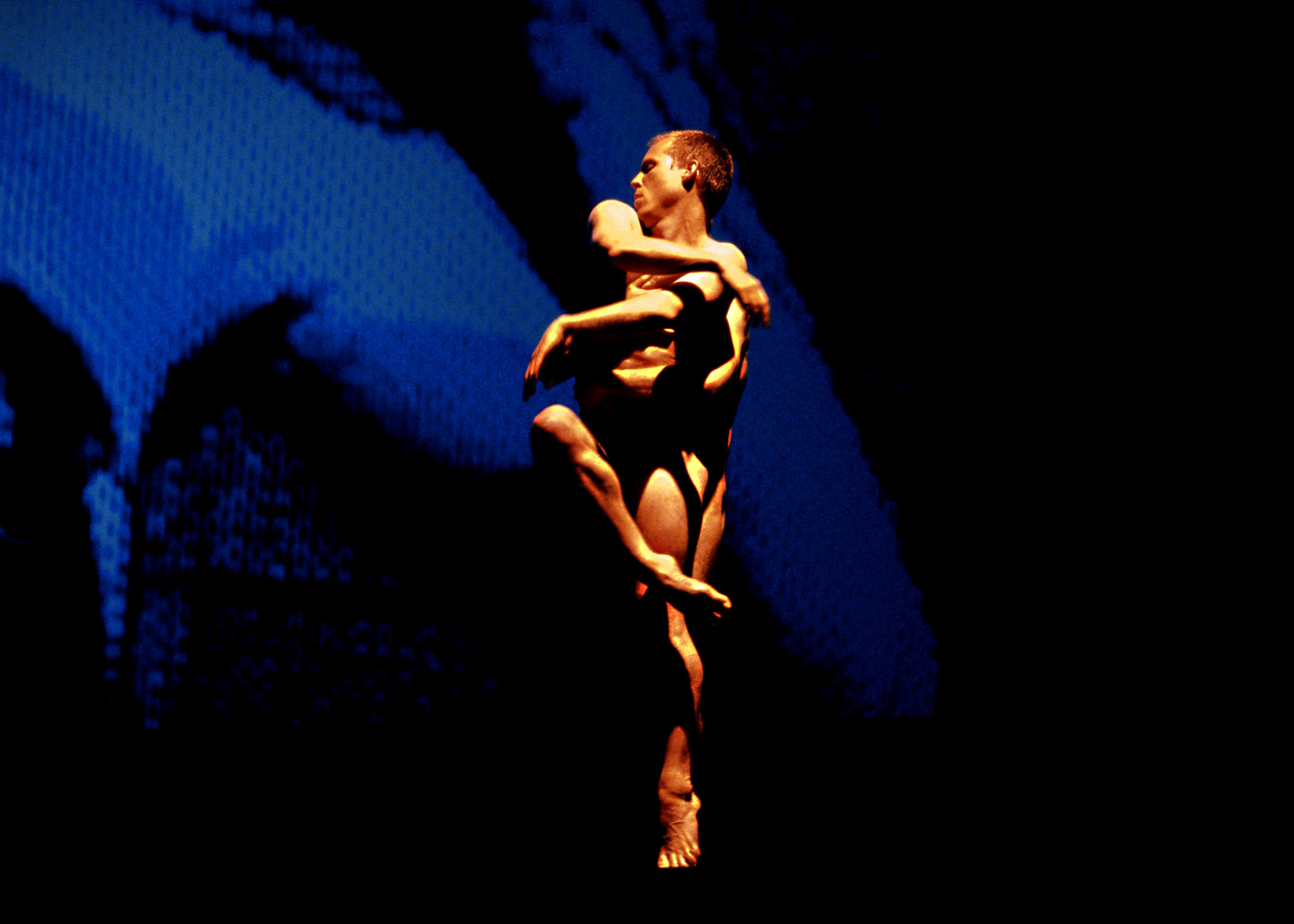
The Photo Issue: Dean Dempsey

0

SFBG What’s it’s like stepping in front of your camera?
Dean Dempsey I don’t have any strong feelings about it, perhaps because I know there is so much post-production involved. I certainly behave as though I am being watched, or surveyed. A bit like what John Berger said, “Women watch themselves being looked at,” and although I’m not a biological woman that rings true for me, and perhaps for many artists who turn the camera onto themselves.There is a spectacle element involved.

SFBG How about the process of being a different person or character or being? What does it feel like — is it experimental, psychological, revelatory, any or all of the above?
DD Sometimes I surprise myself in how unexperimental it feels. I’ve never really been a fan of experiment, perhaps because I feel that it suggests a sort of aimlessness. I do, however, feel it is playful, and there certainly is a revelatory aspect to it. Psychologically, I’m constantly having to imagine the presence of characters that aren’t in fact there — especially for the multiple self-composites. I have to imagine eye-contact, gestures, and conversation. In the process, it doesn’t make any sense. I just look a bit nutty as I pose in various positions to invent relationships with characters who are not immediately present. In this respect, there again is the resurfacing of “phantom.”

SFBG Has it taken you in directions or resulted in visions you didn’t anticipate? I ask this because your series’ seem to inform each other, and in a manner that doesn’t seem predictable, even if the realized images are obviously very carefully composed.

DD The playful,psychological or phantom? Or all three?

SFBG All three. Let’s be expansive, for now.
DD The series “You, Me and the Other” has really informed the bulk of these new series’, “Fragmentations” and “Artifice.” At first I was interested in a more literal interpretation of otherness and spectacle. I wanted, and continue to want, to explore notions of belonging while questioning the ways in which ideas of normality are constructed.
But as I continued with those images, which were about the multiple and theatrical side of my work, I began to explore a little deeper why I was doing them — why I was so invested in the gaze. I’m not at all interested in making “identity art,” but I can’t deny the pivotal ways childhood has informed my practice. So from having a whole lot of myself within a single frame, there has been a complete implosion in “Fragmentations.” That erasure takes place not just to anatomically dismember my characters, but to emphasise what is left over. There is a sort of implosion in “Artifice” as well, as the characters embody something more subhuman and alienated, making it more difficult to encapsulate into specific meanings, in a way.

SFBG What kinds of reactions have you encountered to “Artifice,” and in turn to “Fragmentations”? To me, these series’ manage to be interrelated, though in a surface sense “Artifice” is quite brash and overtly performative and imaginative, while ‘Fragmentations’ is more elliptical.
DD They are very much interrelated. I’ve been working on both series’ at the same time for quite some time now. There are images in each body of work that I haven’t shown anybody because there are other images that have to come first. But yes, on the surface, there is a difference. Conceptually, they are both informed by personal biographical history and each series investigates methods of spectacle and exclusion. Although with a difference in general aesthetic, each series is about the pieces that complete us; the pieces of our body, our process, our gender – pieces of social fabric.

SFBG Biographical history is present in your work in a variety of forms or absences. How has your family responded to your photography, and in what ways might you feel a familial influence in making an image or a series?
DD It’s funny, because the only familial influence with my work is more through a variety of absences — the absence of a father, the absence of a visible Mexican identity, the absence of siblings, and so on. I met my father in 2005, just a few months before I was about to move to San Francisco to attend college. And just two years after that he was hit by a Union Pacific train, losing two limbs. So again, there is a return of absence (this time anatomical) that emerges in my photoworks. He’s been very cooperative in letting me take portraits of him, even at the site of the accident. I even showed him my reenactments of him and he asked, “I don’t remember you taking those of me, when was that?” A lifetime of transiency and drug use hasn’t made him the sharpest of knives, but it certainly has made him an interesting subject.
It was only yesterday I told my mother about it. It took over 3 years for me to process and even begin to find the language to articulate how I felt. It wasn’t so much a secret, I just didn’t know how to say it. The details of his accident continue to reveal themselves in my work, even if they are depersonalized, so I knew it was something I couldn’t avoid much longer. She hasn’t seen him in 20 years. I recorded the conversation, maybe I’ll use it for This American Life. It really is a good story.

SFBG In a different sense, just as there is absence “present” in your photography, there’s also a multiplicity of self. Does that come naturally in relation to your personality? I don’t mean this in an MPD sense, but rather do you feel a creative urge to perform and discover things through performance?
DD It must come naturally because that is in some ways a more difficult part of my process to locate. I have an idea and I know what I need, or don’t need, to materialize it. But as my various bodies of work develop and expand, I’ve become more aware of their shared concept as well as what sets them apart. It is a constant discovery. Performance is fundamental in my work, whether in the act or in the idea behind the image. My content addresses performance in relationship to the constructs of gender and race, and notions of (dis)belonging. Everybody is always performing, even when there isn’t an audience to see it. So in this way, the performer becomes its spectator. By digitally inserting myself multiple times, or even by dismembering the figures I emobody, I’m envisioning a completed project. I’m thinking of how I will see myself, or the people I perform. Not to reference Berger again, but I’m watching myself being looked at.

SFBG What drew you to photography, and what photographic works have had the strongest impact on you in life?
DD I think I was, at first, most allured by the deceptive nature of photography. The medium is often falsely attributed as being very honest and undiscerning, yet a photo (and the photographer) always omits something from the frame. They deem what is worthy enough to be documented, and they choose what is seen. And I won’t begin to mention how Photoshop and image editing software furthers this point.
A good image, or least one I personally find most engaging, is one that suggests a larger narrative but refuses to explain itself. I call them little “cinematic babies,” because these sorts of pictures act as a still, forcing us to image what is happening before and after that with which we can see. What good is a piece of art, or anything, without the implication of its audience? Without outside interest it folds. But these are all my personal opinions, I could care less about constituting what is universally “good,” I’ll leave that to the bigger-headed.
Regarding influences, it’s always a tough question for me. I tend to jump around a lot, but I’ve always enjoyed folks like Carrie Mae Weems, Andreas Gursky, and even sculptural and installation artists like Santiago Serra and Sarah Lucas.

SFBG Ah, and now we segue to the inevitable question — do you have any interest in making films?
DD Yes! It’s funny because I feel sometime these photoworks began as studies for films. Beyond the technical aspect of putting a film or video together, there is still a conceptual formula of sorts that is in the works. But working more with the moving image is definitely in my horizon, I’d say before the end of this year.

The yellow wallpaper

0

arts@sfbg.com

HAIRY EYEBALL New York City construction workers at the World Trade Center site recently unearthed an 18th-century ship hull. More interesting is that scientists believe that the structure was part of the massive landfill that extended lower Manhattan further into the Hudson River. You don’t have to read too deep to hit on the symbolism of this story, even if the occurrence at its center isn’t so uncommon in a city as densely developed and old as New York (see the 1991 discovery of a 200-year old African burial ground, also in lower Manhattan). Beneath the site where the Twin Towers fell lies further wreckage, older ruins. Nothing is ever truly gone. What lies buried will eventually surface. The present is always haunted by the past.

The same could be said of the art world, which has recently been holding some flashy curatorial séances of its own. Two exhibits don’t necessarily make a trend, but the Berkeley Art Museum’s current “Hauntology,” recently reviewed in this paper, and the Solomon R. Guggenheim Musuem’s ongoing exhibit “Haunted: Contemporary: Photography/Video/Performance,” both summon the specters of late-1980s academic theory (Derrida in name and word, in the case of BAM’s show) in their selection of works that address the unseen yet felt presences — aesthetic, historical, political — floating amid the present.

You can also add “Now, It’s About What You Can’t See” to the list, although this group show at Triple Base Gallery of paintings, drawings, and installations is not as enthralled by its organizing principle — what is absent may not be forgotten — as the previously mentioned exhibits are to critical theory and now-old debates around appropriation in photography. As Triple Base’s statement declares, though the artists vary by age and medium, their works, “provide faint shadowy traces of moments to imagine what once existed and hint at an ever-evolving history.”

The faintest traces belong to Rachel E. Foster’s wall installation, which is practically invisible from certain angles. Only by moving back and forth in front of the surface does the repeatedly painted word “ghost” emerge from the seemingly contiguous white field of the gallery’s wall. As in her older works involving text, here, Foster cleverly collapses medium and message, using a representational strategy to bring a word’s meaning to life. In this case, the word “ghost” becomes just that.

Unfortunately, it’s hard not to read Foster’s installation as a commentary on the small group of Eleanor Kent’s early oil paintings, which are hung on the same wall. Inspired by her life in Noe Valley in the 1960s when she was still associated with the Bay Area Figurative movement, Kent’s small-scale domestic scenes — her son playing, a couple talking over dinner — aren’t by themselves elegiac. But Foster’s apparitional wallpaper imbues Kent’s facelessness figures and rough outlines with an air of loss that might not be present otherwise.

Wallpaper is put to different use in Mara Baldwin’s How to remember where you put something, the sharpest and most moving articulation of the show’s preoccupation with absence and memory. Baldwin, it appears, has removed and rehung a large section of old wallpaper. The yellowish pattern of red and yellow flowers has faded with age, as revealed by two brighter rectangles near the section’s center that suggest the spaces where perhaps art or photos had once been hung (curiously, no nail holes are visible). But looking closer, you realize that the paper in the less-faded sections is not the same paper at all, but a continuation of the wallpaper’s design in watercolor.

The piece’s two painted sections aren’t simply indexes for what’s gone missing (which may not have even existed in the first place). Executed by Baldwin’s steady, patient hand, the painted sections also draw attention to what they are intended to replicate: the banal, mass-produced wallpaper that surrounds them. By flattening background and subject, Baldwin makes painting the aid to memory of the piece’s title, while also suggesting that “putting on a new coat of paint” always involves some form of erasure. Chechu Alava’s soft-focus portrait of a sylph-like young woman in a slip is more conventionally ghostly, but not nearly as haunting as Foster’s hidden graffiti or Baldwin’s yellow wallpaper.


MORE TOPOGRAPHICS

As I wrote two columns ago in my review of the multi-gallery show “They Knew What They Wanted,” the George Eastman House’s 1975 exhibit “New Topographics” — currently hanging in a reassembled version at SFMOMA — continues to cast its shadow over contemporary art and curatorial practice, particularly where landscape is concerned.

“Land Use,” at Oakland’s Swarm Gallery, could easily be a satellite to both exhibits. Bill Mattick’s color photographs documenting the ecological cost of urban and industrial development in Southern California are the closest relatives to the grim indictments of such “New Topographic” participants as Joe Deal, Robert Adams, and Lewis Baltz. Chris Sicat’s pieces of reclaimed wood “colored in” with soft graphite pencils are less successful as sculptures than as documents of the artist’s attempts to work within natural form of his materials. Sculptor Reenie Charrière takes a similar tack with manmade waste, aggregating the plastic bits that don’t make it to the recycling center into playful, biologic forms.

NOW, IT’S ABOUT WHAT YOU CAN’T SEE

Through Aug. 29

Triple Base

3041 24th St., SF

(415) 643-3943

www.basebasebase.com

LAND USE

Through Sept. 12

Swarm Gallery

560 Second St, Oakl.

(510) 839-2787

www.swarmgallery.com

My buddy and meme: Winnebago Man’s unlikely star turn

0

An irascible ex-TV news anchor shoots a promo video for Winnebago in Iowa in the summer of 1988. It’s hot out, the crew isn’t giving him what he needs, and he swears. A lot. Fast forward 20 years, and the video that damn crew complied of his least flattering outtakes has garnered over 20 million hits on YouTube. Filmmaker Ben Steinbauer hired a detective to find out what happened to the star of his favorite viral video, and the ensuing film, Winnebago Man (which starts Fri/30), turns up some surprising conclusions about the notion of, as Steinbauer put it to me in our recent interview at the Mark Hopkins Hotel, “accidental notoriety.” Some people are calling the film an exploitation of the alternately crude and eloquent Jack Rebney, a new media naïf – but my half hour with the pair raised questions in my eyes of who was using who to tell what story.   


San Francisco Bay Guardian: So Jack, tell me about the last time you were in San Francisco. That’s the climax of the film.

Jack Rebney: Well of course, just when we were finishing the movie we had the opportunity to be up in the Haight playing [at the 2008 Found Footage Festival at Red Vic Movie House] and that was the first opportunity for Ben and I to do our dog and pony show. We had just an incredible time.

Ben Steinbauer: You’l l never guess who the pony is.

JR: The people were just, it was electric. It was just quite unusual. I was enormously taken with it. You could feel the vibes between the people and Ben and I. 


SFBG: That’s Haight-Ashbury for you. Ben, I have a question for you. Did your intent and motivation for this film change throughout filming it?

BS: No question. I started out making the movie because I was a big fan of the clip. I got the VHS tape in 2001, my friends and I would all quote it. Cut to four years later when YouTube was popping up and there was this idea of accidental celebrity, or unwanted notoriety. I thought, I wonder how the star of my favorite clip is dealing with this same thing? It just started from there with me as a fan wanting to meet Jack and understand this new technological and cultural phenomenon.


SFBG: Jack, do you remember the original Winnebago shoot?

JR: Like a boil. It was horrible, it was a violent, violent moment in my life. I was used to operating with camera crews, and audio people, and grips, ecetera who were at the highest levels of media. I never had to do a damn thing. All I had to do was babble, do my patented babble. As it was the middle of the summer in Iowa it was 100 degrees or more. The humidity was 98%. There were billions upon billions of flies. There’s a quote that always amuses me, apparently a lot of other people too: God in his infinite wisdom created the fly and they’re all in Iowa. But you have to keep in mind that there was never any of what today we categorize as anger. Its been said I’m the angriest man on earth — that’s actually not true at all. The Winnebago corporation had hired me to do the very best possible marketing film I could do, they percieved that I would be able to do a good film for them. So when it didn’t work right, I swear. Because I think it’s marvelously expressive. If you hit your thumb with a hammer, you don’t say golly wompers.

BS: Jack worked in media at a time when the news was shot on 16mm film. The concept that you could leave the cameras rolling to capture outtakes was foreign, let alone the idea that you could rapidly share video like this and 20 plus years later people in Japan could be laughing – it’s literally science fiction.


SFBG: Jack, did you know the cameras were rolling?

JR: No! Because I would say “cap it!” which in the vernacular means shut it down, stop rolling. 


SFBG: Do you guys think after going through this process that it’s important for people these days to be aware of what’s going on with the Internet?

BS: My interest in this was the realization that we all have digital reputations. That’s a new concept.

JR: Harry Truman made the comment, if you can’t stand the heat, get out of the kitchen. It is for me a total absence of interest. I get a lot of film shot at me, I’ve shot a lot of film at people, stuck a lot of microphones in the face of a lot of people who are actually of some consequence. This was an irrelevancy. But now it’s taken on something else, a life unto itself. 


SFBG: When did you become vested in this film, Jack?

JR: After the first time Ben came up to my little cabin. As is explained in the film, I was on my best behavior, Mary Poppin-esque.

BS: He basically fooled me.

JR: There are two things that are terribly important here. One, this kid knows what he’s doing: he teaches media at the University of Texas. Could this be an adjunct at the beginning of what is possibly his film career? Could this help him? Could this be something? I have people that when I was a youngster make it possible  for me to get positions that normally I could never have attained. On the other hand, for years and years I’ve been a socio-political commentator and I’ve attacked very nearly everything, and I love it because it strikes that the vast majority of people are not thinking, they’re not given anything in media. They’re given milk and honey. Well there’s no more milk and honey! It’s over. It’s time to either fall into a very deep abyss or we’re going to pull ourselves up by our bootstraps and I thought wait a minute, I can enunciate this. I thought well, okay, this kid wants to shoot me? He wants to turn the camera on? I’ll give him something to think about.


SFBG: Are you having a good time traveling together? You’re spending a lot of time together.

BS: Well we just had the best lunch I think I’ve ever eaten –

JR: Years ago when I had the opportunity to come to SF, I would eat lunch or dinner at Scoma’s [random note: this year’s Best of the Bay seafood restaurant!]. It is absolutely nonpareil.

BS: We tried to order that on the menu.

JR: Shut up Ben. In any event, it was absolutely magnificent. San Francisco is a city that has – there is nothing lacking here. There’s an enormous number of absolute nutcases running around, but that what gives it it’s vitality. 


Winnebago Man 

Starts Fri/30 2:25, 4:45, 7:15, and 9:45 p.m.

 With introduction by the Dead Kennedys East Bay Ray and post show Q&A with Jack Rebney and Ben Steinbauer at Fri/30 and Sat/31’s 7:15 and 9:45 shows

Landmark Lumiere Theatre

1572 California, SF

(415) 267-4893

www.landmarktheatres.com


also playing at Shattuck Cinemas (2230 Shattuck, Berk. (510) 464-5980, www.landmarktheatres.com)

“Growing Up Twisted:” take it … or leave it

2

For every awesome reality show (Real Housewives of New Jersey), there are dozens that feel forced and pointless (keeping it within Bravo, the Housewives network, anyone else seen that Work of Art show? Can you explain the point, or the appeal?) Into the “I’m already famous” sub-genre of reality shows (as opposed to the “I’ll do anything to be famous” sub-genre) tumbles Growing Up Twisted, a new seven-part series that debuted this week on A&E. It’s unclear if we have the success of Gene Simmons Family Jewels (also an A&E production) to thank for this, or if this is some kind of attempt to reclaim the glory that once was MTV’s The Osbournes. If it’s the latter, the world needs to realize that there’s only one Ozzy (and only one Sharon, for that matter), and there will never be another Osbournes.

That said, Dee Snider — fright-wigged leader of Twisted Sister and enemy-for-life of Tipper Gore’s Parents Music Resource Center — was entertaining in the 80s, and appears to have aged with far less slurring side effects than Osbournes-era Ozzy. If there’s no discernable reason we should be watching his brood stomp around their Long Island mansion, at least there are some genuinely funny moments along the way. Filling the Sharon role is Dee’s wife Suzette; they met when she was 15 and he was 21, and have been together ever since (one of the first episodes highlights their 34th anniversary). A busty blonde who considers a skin-tight leopard-print dress to be a “conservative” look, the boisterous Suzette wears the pants in the marriage — I could see her fitting into a Real Housewives scenario, no problem. She’s be the one who gets into fistfights and doesn’t apologize.

Other Sniders include aspiring rocker Jesse (his ability to rock remains unconfirmed as of episode two, for all we see him croon is a sappy ballad to his infant daughter; in addition, he wears his hair in a most unfortunate mohawk, with designs shaved into the sides of his head); stand-up comedian Shane (initially, I thought he was the most normal of the crew, until I realized he was periodically wearing a cape around the house); Cody (described as “a filmmaker,” he’s probably more accurately tagged “a shit-starter); and baby of the family Cheyenne (a Hot Topic-clad young teen who throws a toddler-style tantrum when her beloved trampoline is removed from the family’s backyard).

So, to quickly recap: the kids are named Jesse, Shane, Cody, and Cheyenne. Wild West theme much?

Anyway, A&E aired the first two 30-minute episodes back-to-back on Tues/27; according to A&E’s website, they’ll repeat before the new eps air Tues/3. The first episode, “Baptism By Snider,” follows the frantic efforts of the family to put together a backyard christening for Jesse’s baby (hence, the need to move Cheyenne’s trampoline: “It meeeeeans something to me!” she wails in protest, taking a stand like only a 13-year-old kid who’s been showered with expensive toys all her life can). There’s also a side bit about Jesse’s music career (he’s written a song about how he won’t leave his daughter at home while he goes on tour, like Dee did to him — burn), and a family outing to a comedy club to see Shane perform (do I need to tell you he includes a “We’re Not Gonna Take It” joke?)

Episode two, “Carpet and Drapes,” goes for a slightly raunchier theme; there’s no baby business in this one. Instead, it’s Dee and Suzette’s anniversary. Tender tributes to their love include Suzette’s decision to shave her pubic hair into a heart shape and dye it hot pink (Shane and Cody are either overly offended by this notion, or a little too excited by it; you be the judge). In a scene that’s as close as Growing Up Twisted will ever come to O. Henry, Dee takes Suzette out for a romantic dinner to reveal he’s touched up the fading “Suzette” tattoo on his arm — only to discover that she’s just had her “Dee” tattoo lasered off. This is played for high drama; Dee’s deep Wound of Body Art Betrayal is healed only when Suzette decides she’ll get a big new tattoo where only he can see it (even though she admits that her wardrobe doesn’t leave many places the sun don’t shine).

What’s ahead for this kooky, ooky family? Episode three involves Shane shooting a video for his improv class (and with his brothers, taking revenge on a store clerk who insults his mother’s deliberately cultivated MILF aesthetic); Episode 4 focuses on Suzette’s empty nest syndrome (should they adopt another kid? Especially when Child Protective Services is paying calls regarding other matters?) Hmm. The theme song for Growing Up Twisted insists “Once you get a taste, you’re forever addicted!” Dunno. Perhaps they can loan out that ditty to the Housewives.

Check out the first two episodes of Growing Up Twisted on A&E.com. And, just for fun: Twisted Sister’s video for “I Wanna Rock.” Classic.

Behind the Scenes: Shooting our 2010 Local Heroes

0

Take a peek at the robo-amazing Blue Sky Studios, as photographers Keeney + Law shoot three of this year’s Best of the Bay Local Heroes. Video by Michael Keeney.

Big Brother? Body cams, face-recognition apps, and liquid body armor

The San Francisco Chronicle reported yesterday that several police departments in California are equipping officers with tiny cameras to wear while on duty. San Jose and Oakland police departments are reportedly testing out similar technology, and the so-called body cams are under consideration in Seattle too.
To be sure, this could be a welcome development for police-watchdog organizations who’ve found that it is difficult to hold an officer accountable for misconduct when you have little to go on besides an officer’s word versus that of the person alleging abuse.

According to a Popular Mechanics article about the Axon, a body cam worn behind the ear manufactured by Taser International, the technology was conceived of to fend off abuse allegations against police officers. It’s an ironic twist, considering that for 20 years activists affiliated with volunteer-run Copwatch groups have shadowed cops with their own cameras to capture police misconduct on film. Taser International also makes a miniature camera that clips onto a Taser and starts recording when the weapon is deployed.

Steve Tuttle of Taser International is quoted in the article explaining how body cams could benefit police:

“At first blush, it sounds like Big Brother. But if we’re not doing it, it’s the kid next door recording it with his cellphone. And what if he didn’t flip it open in time, and he doesn’t catch his buddy making verbal threats or attacking the officers first? What happens then?”

The presence of a camera lens could possibly deescalate situations by inducing violent offenders to think twice about their actions, or dissuading officers from using excessive force. But it gives rise to plenty of questions. What if people are recorded without probable cause? What if an officer decides to stop recording just before delivering a baton blow to someone’s head? Will the technology further erode community trust in law enforcement? Will police officers experience more anxiety because their every move could be subject to scrutiny?

Kellie Evans, associate director of the American Civil Liberties Union of Northern California, said the body cams have the potential to benefit police and police watchdogs, but warned that success would depend on regulations pinned down during implementation.

“Departments need to have very clear rules about when the camera will be turned on,” Evans said. It’s essential that departments clearly spell out how the recordings will be used and how the integrity of the footage will be preserved, she added. “We all know that police misconduct is taken more seriously when a video tape is involved,” she said.

We put in a call to the San Francisco Police Department to find out if anything is in the works to test out police body cams in the city, but haven’t received a response yet. Media Relations Officer Samson Chan did, however, chuckle ruefully and offer that he doubted if the department’s budget would permit such a thing. Axon cameras cost $1,700 each, according to the Chronicle story.

Meanwhile, there are other noteworthy developments on the high-tech police gear front. A new iPhone app that can instantly identify suspects is being tested out by a Massachusetts police department, PC World reports. Using facial recognition software, the app — called MORIS (Mobile Offender Recognition and Identification System) — allows officers to point their mobile phones at a person to call up identifying information. If a biometric match is found, information associated with that person is immediately sent back to the iPhone.

Asked what she thought about the app, Evans — who hadn’t heard anything about it before we forwarded her the article  — told us, “This technology isn’t a substitute for traditional police work.”

Facial recognition technology is fraught with problems, she said, and agencies have abandoned it before because it tends to churn out a high degree of false positives and false negatives. “Too many mistakes can be made,” she cautioned.

“This does raise a lot of red flags for us,” Evans added. “It would be critical that police not be using it in some roving fashion.”

The third new product to land on our radar is perhaps the most sci-fi of all. Fast Company reports that team of U.K. scientists has unveiled liquid body armor that hardens on impact to become bulletproof, using something called “non-Newtonian fluid mechanics” that we do not pretend to understand.

We didn’t bother asking if police departments in Oakland or San Francisco have any plans to outfit their officers with liquid body armor just yet. Apparently, it’s anyone’s guess when it would be put to use in the field, and even then it will likely be shielding U.S. soldiers.

Best of the Bay 2010 Readers Poll: Shopping

0

2010 READERS POLL WINNERS:

SHOPPING


BEST INDEPENDENT BOOKSTORE

Green Apple

506 Clement, SF. (415) 387-2272, www.greenapplebooks.com


BEST USED BOOKSTORE

Green Apple

506 Clement, SF. (415) 387-2272, www.greenapplebooks.com


BEST SPECIALTY BOOKSTORE

Green Arcade

1680 Market, SF. (415) 431-6800, www.thegreenarcade.com


BEST COMIC BOOK STORE

Isotope

326 Fell, SF. (415) 621-6543, www.isotopecomics.com


BEST MAGAZINE SELECTION

Fog City News

455 Market, SF. (415) 543-7400, www.fogcitynews.com


BEST PLACE TO BUY VINYL

Amoeba

1855 Haight, SF. (415) 831-1200; 2455 Telegraph, Berk. (510) 549-1125, www.amoeba.com


BEST PLACE TO BUY CDS

Amoeba

1855 Haight, SF. (415) 831-1200; 2455 Telegraph, Berk. (510) 549-1125, www.amoeba.com


BEST PLACE TO RENT MOVIES

Lost Weekend

1034 Valencia, SF. (415) 643-3373, www.lostweekendvideo.com


BEST GROCERY STORE

Rainbow

1745 Folsom, SF. (415) 863-0620, www.rainbowgrocery.org


BEST CLOTHING STORE (WOMEN)

Ambiance

Various locations, SF. www.ambiancesf.com


BEST CLOTHING STORE (MEN)

Sui Generis

2265 Market, SF. (415) 437-2265, www.suigenerisconsignment.com


BEST CLOTHING STORE (KIDS)

Chloe’s Closet

451 Cortland, SF. (415) 642-3300, www.chloescloset.com


BEST LOCAL DESIGNER

Colleen Mauer

(415) 637-7762, www.colleenmauerdesigns.com


BEST VINTAGE CLOTHING STORE

Crossroads

Various Bay Area locations. www.crossroadstrading.com


BEST THRIFT STORE

Thrift Town

2101 Mission, SF. (415) 861-1132, www.thrifttown.com


BEST SHOE STORE

Shoe Biz

Various locations, SF. www.shoebizsf.com


BEST FURNITURE STORE

Therapy

Various Bay Area locations. www.shopattherapy.com


BEST FLEA MARKET

Alameda Point Antiques and Collectibles Fair

Main and Navy, Alameda. (510) 522-7500, www.antiquesbybay.com


BEST HARDWARE STORE

Cole Hardware

Various locations, SF. www.colehardware.com


BEST TOY STORE

The Ark

Various Bay Area locations. www.thearktoys.com


BEST SHOP FOR PARENTS-TO-BE

Peek-A-Bootique

1306 Castro, SF. (415) 641-6192, www.peekabootiquesf.com


BEST BIKE SHOP

Valencia Cyclery

1065 and 1077 Valencia, SF. (415) 550-6601, www.valenciacyclery.com


BEST PET SHOP

Cheengoo

2250 Union No. 1A, SF. (415) 337-8481, www.cheengoo.com


BEST PLACE TO BUY EYEWEAR

Eye Gotcha Optometric

586 Castro, SF. (415) 431-2988, www.eyegotchasf.com


BEST CANNABIS CLUB

Harborside

1840 Embarcadero, Oakl. (510) 533-0146, www.harborsidehealthcenter.com


BEST STORE STAFF

Community Thrift

623 Valencia, SF. (415) 861-4910, www.communitythriftsf.org


BEST QUIRKY SPECIALTY STORE

Paxton Gate

824 Valencia, SF. (415) 824-1872, www.paxtongate.com


BEST ECO-FRIENDLY RETAILER

Green Arcade

1680 Market, SF. (415) 431-6800, www.thegreenarcade.com


BEST SPORTING GOODS STORE

Sports Basement

Various Bay Area locations. www.sportsbasement.com


BEST PLACE TO BUY CAMPING GEAR

REI

Various Bay Area locations. www.rei.com


BEST FLOWER SHOP

Church Street Flowers

212 Church, SF. (415) 553-7762, www.churchstreetflowers.com


BEST PLACE TO BUY LINGERIE

Agent Provocateur

54 Geary, SF. (415) 421-0229, www.agentprovocateur.com


BEST PLACE TO BUY SEX TOYS

Good Vibrations

Various Bay Area locations. www.goodvibes.com


BEST PLACE TO BUY FETISH GEAR

Madame S

385 Eighth St., SF. (415) 863-9447, www.madame-s.com


BEST ADULT VIDEO STORE

Folsom Gulch

947 Folsom, SF. (415) 495-6402


Best of the Bay 2010 Editors Picks: Shopping

0


Best of the Bay 2010 Editors Picks: Shopping


BEST SUBJUGATION TO A QUEEN

Well before colony collapse disorder became a phrase of terror, Bay Area bee geeks were eyeing their neglected backyard anise and eucalyptus plants as potential ambrosial fill-up stations for honeybees. In 2008, Her Majesty’s Secret Beekeeper entered the scene, giving the city’s swelling ranks of colonial wannabees the ultimate sweet spot: a one-stop source for everything Apoidea. The clean, light-filled store — which has the distinction of being the only urban beekeeping store in the country — stocks backyard starter kits and supplies, those fabulous white hazmat-style suits (and really, haven’t you always wanted one for demonstrations or Halloween?) beeswax candles, books, bee DIY products (i.e., honey and honeycombs), and, yes, bees. Let’s face it, you haven’t really tasted SF or embraced its hive mentality until you’ve drizzled some Gold Fine Crystal over your locally baked artisanal bread.

3520 20th St., SF. (415) 744-1465. www.hmsbeekeeper.com


BEST STEAMY SHOPPING

Shopping at P-Kok can be exhausting. You have to the cross the street, sometimes several times, just to take in all the cute clothes, bags, jewelry, scarves, etc. (and all at affordable prices) at P-Kok’s two Haight Street locations. It’s enough to make you want to find a tranquil garden, flop down on a chaise lounge with a beverage, and soothe your weary self with a sauna. At the P-Kok on the even side of the street (the one at 776 Haight), you can. Formerly the site of a day spa, P-Kok has preserved and replanted the inherited backyard garden sauna — renamed Eden — and rents it for $15 an hour. The best part: it accommodates up to 10. Packed like sardines or solo, it’s the perfect antidote to bustling Haight Street— and the perfect refreshment before going back out into P-Kok(s) and loading up on more cute stuff.

776 Haight, SF. (415) 503-1280, www.pkoksf.com


BEST PLACE TO PLAY FOOTSIE

Distraction is the enemy of sock shopping — you came for ultrathin running socks, but omigod, the store has lilac suede Fluevogs with four-inch heels! Before you know it, you’re out $250 and you still have no socks. That cannot happen at SockShop Haight Street. The small, newish, locally-owned store has nothing but socks and sock-related habiliment, including high socks, low socks, toe socks, boot socks, jock socks, kids socks, dad socks, tights, slipper-socks, and sock monkeys. And within those categories, SockShop goes way deep with wool socks, striped socks, plain socks, dot socks, cotton socks, argyle socks, cashmere socks, skull socks, floral socks, flag socks, food socks, animal socks, music socks, holiday socks, fox socks, blocks socks, and rocks socks … Really, need we say more?

1780 Haight, SF. (415) 396-5400, www.sockshoponhaight.com


BEST MAJOLICA RUSH

OK, not all of us can afford to buy some ancient heap of stones fixer-upper villa in Siena where, caressed by sun and Italian hunks, we blossom into writers (bite us, Under the Tuscan Sun and Bella Tuscany). No, we must make do in our fog-shrouded garrets, scrounging for dropped change for a $2 cappuccino. But at some point, we can all afford to splurge on at least one small piece of authentic Italian splendor to add luster to our hardscrabble lives. That’s when we head to Biordi Art Imports in North Beach, a floor-to-ceiling treasure trove of hand-painted Majolica ceramics. And once you start sipping your coffee from a gorgeous De Simone mug or spooning your gruel from a colorful Eurgenio Ricciarelli bowl, the virtual sunlight comes rushing in. You won’t miss that stinkin’ villa at all. Maybe the hunks.

412 Columbus, SF. (415) 392-8096, www.biordi.com


BEST CACHE OF GRACE NOTES

Be it ever so humble or token, city dwellers always seem to crave some connection to the natural world: the single bathroom orchid, the three desktop seashells, the rock and glass arrangement lining the windowsill. When it comes to finding these small grace notes (outside of illicitly pocketing them from Glass Beach or Muir Woods), our vote goes to Xapno. The small one-woman shop in the Lower Haight offers a beautiful and fragrant cornucopia of the best that nature and humanity create: fresh and dried flowers, plants, vases, candles, jewelry, cards, shells, branches, cacti, books, paper, paintings, and sometimes clothes and shoes. Furthermore, about half the artists are local, including a ceramics student at City College who has been baking baskets-full of delicate ceramic roses in varying shades of ivory, peach, and pink.

678 Haight, SF. (415) 863-8199, www.xapno.com


BEST GIRLY GIFTERIA

Ombre feather earrings, Hollywood Regency lamps, and two-headed chicks by way of the taxidermist — that’s what BellJar is made of. Less evocative of Sylvia Plath’s total collapse than a delicate glass chamber filled with oodles of fascinating objects, the Mission boutique has made a name for itself as the discriminating gothette or vintage girl’s go-to for unique tchotchkes and gifts for loved ones — or, better yet, one’s own bad, sweet self. Here, and on the store’s recently revamped website, you’ll find delightfully retro-esque and oh-so-womanly clothing, witty trinkets that draw inspiration from nature’s bounty, exquisite earrings and necklaces, and founder Sasha Darling’s dark-femme ‘n’ fabulous eye for the Francophile, the girly, and the gorgeously Grimm.

3187 16th St., SF. (415) 626-1749, www.shopbelljarsf.com


BEST HANDCRAFTED NIP-HUGGERS

Seductively snug latex over a perfectly pert nipple — yes, please! Skip the tassels, beads and sequins, and go for a super-sexy set of pasties that show off your breasts and hint at the budding shape beneath. The Heartbreaker pasties by Madame S are individually fashioned by hand in the SoMa fetish wear and sex shop’s very own latex production lab by Madame’s devilishly talented crafters. Hidden in the back behind kinky-costumed mannequins and closed doors, your breast’s friend is taking on a cute, heart-shaped form right now and you should be anticipating ways to fit them into your daily wardrobe. Traditional black- and red-rimmed, these pasties are coquettish, classy, and come-hither all at once. Guaranteed to make jaws drop and temperatures rise with appreciation.

385 Eighth St., SF. (415) 863-9447, www.madame-s.com


BEST GOLD-GILDED GUIGNOL

Nothing celebrates life more than death — or at least, nothing is more invigoratingly creepy than opening a beautifully wrapped gift to find a life-size crown of thorns made with an assortment of deceased birds’ legs. Haight boutique Loved to Death is stocked with goose-bump inflicting fancies, many of which are gold-encrusted and way more thought-provoking than a living bouquet. Say “I love you” with a 24-karat badger-claw brooch, surprise him with a scorpion in a vial, or show her you care by putting an antique baby doll head under her pillow. Taxidermy (no animals were killed in the making — they were dead already), resurrected art, antiques, and goth-hip jewelry are way more fun when they test your lover’s limits. And if your delicate beloved can’t handle your purchase, you’ll get to keep the muskrat mandible gold-gilded earrings yourself.

1681 Haight, SF. (415) 551-0136, www.lovedtodeath.net


BEST HOMEGROWN DISNEY ALTERNATIVE

“We want to make things that have joy and humor, but that people aren’t embarrassed to have lying around their house,” says Gama-Go cofounder Greg Long. When Long and Chris Edmundson quit their day jobs at an East Bay toy company 10 years ago, they were following a dream to make well-designed, cartoon-inspired clothing and products that played off the enormously popular, collectible-crazy pop surrealism movement happening in L.A. at the time. It was a vision that launched a thousand T-shirts. Today, some of Gama’s cute-with-bite stock characters like Tigerlily, DeathBot, and that cuddly ice-bluish fave, Yeti, are common sights on city streets, clubbers’ chests, and shopaholics’ totes. And now there’s Go for your pad too. Guitar-shaped spatulas and “pot” holders that resemble big old Mary Jane leaves make perfect gifts for that urban class clown.

335 Eighth St., SF. (415) 626-1213, www.gama-go.com


BEST SMELL OF AEROSOL IN THE MORNING

Photo by Ben Hopfer

Screw a monument and urban planning: we live in City Beautiful. Walk down nearly any street in SF and there on the pavement and buildings you will find the stencils, murals, super burners, tags, and — how do you say? — art that makes this town rich in color, rich in mind. So where does the discerning street artist go for the tools and gear she needs to make these blocks pop? It’s gotta be 1:AM gallery, where prices on paint pens and aerosol spray trump the art supply and hardware stores every time. (1:AM as in “First Amendment” — and a tagger’s preferred rise and shine.) Not to mention the whole gallery side of the space, which hosts some of the most original sometimes-street artists around — who often tag the outside of the store’s Sixth Street walls in kaleidoscopic temporary letterings and designs.

1000 Howard, SF. (415) 861-5089, www.1amsf.com


BEST MAKEUP AS DRAMATIC AS YOU ARE

Word to the aspiring pageant queens: (apparently) it’s not all about the Vaseline on the teeth and duct-taped boobs. You want that crown, you need a face full of grade-A goos and glosses — and we know just the place to get them, girl. Kryolan Professional Makeup has been in the primp game since 1942, plumping and perking a passel of pretties, including the 2010 Miss USA contestants. But maybe you’re a DIY kind of queen? All good — Kryolan’s got a kaleidoscopic showroom full of the glitz and glamour for them bright lights, including glitter in animal, vegetable, and mineral form (the company produces more than 16,000 products in 750 colors — over the top, just like you!). If you need help slopping it on in style, or just some tips on how to blend with a little subtlety, then strut, mamma, strut to application classes in the same building.

132 Ninth St., SF. (415) 863-9684, www.kryolan.com


BEST RUN TO FREEDOM

Better circulation, cardiovascular health, time to reflect: running makes you free. (Especially if it’s away from an out-of-shape cop.) But pounding these city streets can be tough on the joints and bones. You’d like a little freedom from aching discomfort as well. So jog over to On the Run, an Inner Sunset shoe store that specializes in helping peeps in pain — seriously, half the store’s first-time customers arrive with a doctor’s referral. Its trained staff will send you for a walk on an electronic pad that measures foot pressure, plus pronation and supination (both refer to the angle at which your foot hits the block). They use a fancy device to measure your feet accurately, then hook you up with some sweet kicks that have you feeling fit, fast, and fab. You pay a bit more for all this podiatric prognostication, but hey, all runners know there’s gotta be some pain in the gain.

1310 Ninth Ave., SF. (415) 665-5311, www.ontherunshoes.com


BEST SUCCOR FOR SUCCULENTS

The fog makes a great excuse for those with black thumbs. Usually we can blame our houseplants’ premature striptease of this mortal coil on the clouded vagaries of our mini-ecosystem. However, even fact-based finger-pointing fails when it comes to the death of a beloved succulent. One simply should not be able to kill a cactus. And yet one does. Sigh. Should your astrophytum be stymied or your once-verdant aloe shade into an unbecoming red, Succulence is there. This secret garden store is hidden away on a Bernal Heights video store’s back patio, packed with many a bulbous, spiny, or just plain prickly new friend for you to take home in an inventive recycled planter. But don’t ditch that sickly chum languishing in your window box! Succulence also mixes a special soil blend that can resuscitate even the saddest looking ball o’ spikes.

402 Cortland, SF. (415) 282-2212


BEST TEMPLE OF LIFE

In some lovely, distant universe, all we buy are magnificent orchids, and all the money goes to AIDS prevention and relief organizations. This impractically gorgeous fantasy becomes reality at nonprofit Orchid Mania’s beautifully named Orchid Temple, based in an unassuming house in the Excelsior District that contains a three-climate greenhouse. OM has packed its temple with orchids that resemble dancing ladies, some smelling of blood (all the better to woo their insect pollinators), that will stop your housemates in their tracks with their glory on your kitchen table. Call ahead to alert the temple guards — or show up during the all-volunteer operation’s open orchard hours, 11 a.m.-2 p.m. Sundays — and take your time browsing for a worthy cause. The temple also functions as a bulb foster home to keep rare species from extinction. Let’s just say they’re into the preservation of beautiful lives all around.

717 Geneva, SF. (415) 841-1678, www.orchids.org


BEST ONE-STOP SKULL SHOP

You can’t walk by Martin’s 16th Street Emporium without ogling the ghoulish delights displayed in the windows. Casual strollers might be forgiven for thinking the place is called “The Skull Store” — an apt description, anyway, considering that the store is stuffed floor-to-ceiling with skulls galore. Though it’s not open very often (try Thurs.-Sat. afternoons — look for the pirate flag out front), it’s well worth a special visit to pick up a gift for your favorite skull collector. Sterling silver jewelry is the main attraction, with everything from dangerous-looking knuckle-duster rings (scary skull!) to delicate pendants and earrings (fashion skull!). It also carries skull figurines and other knickknacks, not all of them skull-related, but many of them vintage. Imagine stumbling upon an uber-cool, slightly spooky estate sale. If the estate was owned by Cap’n Blood, that is.

3248 16th St., SF. (415) 552-4631, www.skullsinsf.com


BEST STASH OF CULTURED BOOTIE

Do you need a dashiki-looking starter jacket, a grafted Italian fresco, an antique colored glass chandelier — like, yesterday? Friend, welcome to the power of collection. And welcome to Cottage Industry, the domain of a one Claudio Barone. The Italian-born Barone has spent the last 22 years traipsing about the globe, purchasing goods from indigenous craftspeople (at prices reasonable to all parties involved), and then retreating to Fillmore, treasure secured and ready to be squeezed into his darling shop — waiting for the day when you must, absolutely, positively, have that carved ebony figurine from the Congo, right away! Even if your mission lacks a hysterical level of urgency, do drop by. The piled shelves of goods ranging in price from 10 cents to $30,000 will either heighten or assuage the most pressing case of wanderlust.

2326 Fillmore, SF. (415) 885-0326


BEST FOLDING FANATICS

A gorilla sits in Japantown’s classic origami store. She’s squat and a little wrinkly, but say what you want about her lumps and rolls, she’s fantastically multidimensional — and even carries a little baby on her back. You can expect that kind of artistic wonder from Paper Tree, opened by the Mihara family in 1978 and run to this day by sisters Vicky and Linda, who constructed the primate in question. Not only can their shop meet your most fantastical origami needs (and those for quirky Japanese “office supplies” like sushi-shaped erasers and beribboned money envelopes), but the Miharas are serious about taking a role in their neighborhood community. Their lively origami classes and art, a staple for the last 43 years at the Cherry Blossom Festival, are testament to their desire to share the love of a good fold.

1743 Buchanan, SF. (415) 921-7100, www.paper-tree.com


BEST BEACHY DREAMS

There are those who blow and bluster about the lack of true beach weather in our city of rolling fog. And then there are those that smile and manifest sunbeams. Of the latter faction is Meggie White, whose Marina boutique, .meggie., imparts the same hope for rays as its fetching blonde owner. A breezy interior of hardwood and weathered white fixtures plays snazzy backdrop to .meggie.’s wonderland: fly floral sundresses share racks with the thinnest of sherbet-colored tees and cardigans. So stock up — what if that freak summer sunburst pokes through, and you without your pastels! .meggie. stocks several local designers, and White herself makes a supremely sand-worthy line of hand-forged silver, stone, and shell jewelry. So much more fun than that panicked schlep to J.Crew.

2277 Union, SF. (415) 525-3586, www.meggiejewelry.com


BEST SOLUTION TO THE OMNIVORE’S DILEMMA

Stymied on the menu for tonight’s dinner? Try this: start with a solid base of local, independent business, add two cups of foodie focus, stir in equal parts retro chic and current craze, bake with a product no one can get enough of, and never allow to cool (serve each slice with a celebrity sighting.) Problem solved! Such is the taste of your new culinary North Star, Omnivore Books, which happens to be the hawtest cookbook-only lit shop in Noe Valley. Owner Celia Sack has stocked her shelves with yummy tomes both new and old, and the small space packs in hungry audiences for its stellar author events. Recent speakers have included New York Times food writer Frank Bruni and local cheesemonger Gordon Edgar. It’s enough food inspiration to sate the least decisive dining divas among us.

3885 Cesar Chavez, SF. (415) 282-4712, www.omnivorebooks.com


BEST TL ROUGHNECKS

So you’re headed to psych class at City College one day when, on a dime, you say forget it — I’m going to follow my love and start a mini-skateboard empire in the Tenderloin instead. Welcome to the life of Johnny Roughneck. The boarder opened tee shirt treasure trove Dwntwn Skate Supply to hawk his Roughneck line of skate hardware and give a hand to new designers, like those of TL-repping clothing line The Loin, all while establishing a let’s-have-fun attitude in a neighborhood that often has its odds stacked against it. Occasional barbeques out on the Hyde Street pavement have given the shop some presence on the block, and Dwntwn has even played jump-off to some wildly legit skating events. Check out the video of the Roughneck crew’s 2010 Caltrain tour for Bay skating inspiration.

644 Hyde, SF. (415) 913-7422, www.dwntwnsf.com


BEST PRINTER WITH A PURPOSE

Raising your fist is all well and good, but if your arm gets tired, you’ll want that rebel yell printed on your T-shirt for good measure. After helping to found the Mission’s community screen-printing shop, Mission Gráfica, radical artist Jos Sanches opened Alliance Graphics in 1988. He needed a place where he could continue to churn out his poster print protests against the world’s various sources of evil (capitalism, neoimperialism, commercialism, and a busted justice system, to name some of his faves) — and still be a resource for the progressive causes that to this day need a voice on the street. Does your war cry scream out to be monogrammed on a bumper sticker, backpack, or umbrella? Alliance can get the job done right, with union labor and made in the USA products to boot.

1101 Eighth St., Berk. (510) 845-8835, www.unionbug.com


BEST FAST TRACK TO THRIFT BLISS

Lord, these used clothing stores. The racks of oversized leggings, the bins of kitty-appliquéd sweatshirts, the puff paint visors. (Wait, are those hip now?) Who has the time for such excavations? There are times when you just want to throw your hands in the air like you just don’t care and head to the local Anthropologie. But back down off that ledge! Delisa Sage’s Collage on Potrero Hill can be your one-stop cool kid shop when you haven’t the time to rifle through Grandma’s old church dresses. Skone-Rees has stocked her boutique with well-edited used clothing at prices not too far above Goodwill price gouges. (Her nifty store of scavenged home décor is next door.) And you’ll never find her array of locally-made jewelry and well-preserved boots and slippers at any Salvation Army. But be forewarned: Collage’s collection of late 1990s failed tech startup mascot hats is a bit lacking.

1345 18th St., SF. (415) 282-4401, www.collage-gallery.com


BEST BOUTIQUE STARR

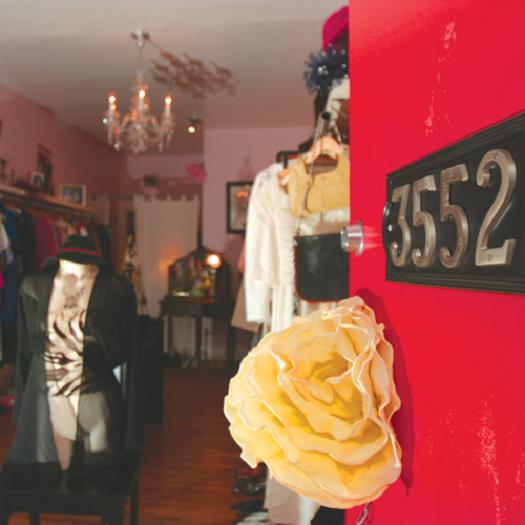
Is there anything that Bianca Starr owner Bianca Kaplan can’t do? After moving on from her and hubby’s bangin’ DJ spot, 222 Hyde, Kaplan turned her eyes from beats to threads — secondhand designer label threads, which her Mission boutique sells to all the fly ladies looking for a clubby, classy, strappy looks (with just a hint of “Dynasty” decadence and chola sass) in which to creature up the night. Dresses, separates, handbags, belts, jewelry, and footwear: no detail is overlooked. Always collaborative, Kaplan picks chic up-and-coming designers to feature at her packed monthly stylist boutique events, and hands them the reigns to her racks for the night. And if you happen to stroll past Bianca Starr (so-called for her childhood friend’s coolest name ever) on a sunny day, you might just catch Kaplan and her girlfriends lounging streetside with a bottle of champagne. Wearing the cutest frocks you’ve ever seen, natch.

3552 20th St., SF. (415) 341-1020, www.biancastarr.com


BEST FANTASY FABRICATORS

Photo by Ben Hopfer

The mother-in-law’s birthday approaches, and all we know is that she likes to knit socks. Maybe we can help out with her frosty feet at the ImagiKnit store we always pass in the Castro? Probably great for some yarn — maybe a little bit fusty, too, though, and maybe somewhat intimidating to those who’ve never pearled. Imagine our surprise as we enter a rainbow wonderland busting with spectacular spun materials — spiky mohair, luminous silk, titillating cashmere, speckled cotton — and staffed by immediately accommodating people who don’t want to stick needles in our naïve newbie eyes. More shock: we run into several of our hippest friends leafing through vintage pattern books and holding court at the DIY wool winders. ImagiKnit’s community vibe and vibrant stock draw us in for hours. In the end we make the momentous decision to knit those socks ourselves. Sorry about the six toes, Mom.

3897 18th Street, SF. (415) 621-6642, www.imagiknit.com


BEST NIBSTER

Fountain pen lovers are a strange bunch. We spend hundreds of dollars on something that’s part status symbol, part jewelry, part objet d’art and, oh, yes, part writing instrument. Sometimes these works of exquisite craftsmanship write beautifully; sometimes they leak, skip, spurt ink all over the paper (and our hands), and don’t write at all. That’s why Stephanie Boyette, the fountain pen expert at Flax, is our favorite nibster. She can help you pick the right pen and ink, tell you how to use acrylic flow enhancers, give you tips on maintenance, and often tell you with a quick glance why your precious pen is malfunctioning. In fact, she’s so devoted that she’s been chosen to work as an apprentice to John Mottishaw, the Los Angeles nib-repair expert who is widely regarded as the best fountain pen surgeon in America.

1699 Market, SF. (415) 552-2355, www.flaxart.com


BEST PLACE TO FLIP YOUR WIG

What’s that on your head? If it ain’t a wig, get thee to the Wig Factory, pronto, because every man, woman, boy, girl, dog, cat, bird, and goldfish needs at least one follicular embellishment to send their look into another, more fabulous dimension. The Wig Factory’s capital selection includes everything from utter realness to costume frivolity — it’s got you covered like Andre Agassi’s cranium after half a can of Ron Popeil’s spray-on hair. Devotees know that Wig Factory is subject to some controversy because of its rules limiting the number of hairpieces you can try on in a single visit, which some people complain about. Such folks conflate whining with Yelping — ignore them. Do you want to try on a wig that’s already been tested by a hundred finicky entitled shoppers who think their scalps don’t stink? We don’t think so. Queens and princesses, beauty is here, on a mannequin head. Kings and princes, you can look like Adam Lambert or a Brylcreemed silver fox in a single fitting.

3020 Mission, SF. (415) 282-4939


BEST MINTY FRESH FASHIONS

It’s easy to show your California love when it’s directed at Mint Mall, a SF-based online clothing shop that mixes fine originals with vintage finds. An appreciation for natural fabrics, an eye for vibrant eras of well-known and obscure labels, and the type of tough dedication required to make the best thrifting finds are three of the special ingredients that make up Mint Mall. But the two main factors are co-owners Corina Biliandzija and Genevieve Dodge, who teamed up over half-a-decade ago and have refined their own designs and vintage visions with each passing day. Mint Mall items are fun to wear and born from the pair’s love and enthusiasm for fashion and everyday style. Native fringe, Aztec or cartoon prints, bell-sleeved tunic tops, Grecian gold thread minis, Bergdorf Goodman floral maxis, Diane von Furstenberg silk wraps, Givenchy platforms, original hoodies — the dynamic duo behind Mint Mall work hard for your closet, so you better treat them right.

www.stores.ebay.com/the-mint-mall


BEST SWEET SHOP TO MAKE A SUPERSTAR PROUD

Even before it opened, Candy Darling had a reputation, thanks to its fabulous name and kicky red plastic sign. Passersby were left to wonder — would it be a candy shop, or a drag queen fashion emporium? Those with a sweet tooth were the ones who received the happy answer, though, to be honest, there’s something wonderfully Grey Gardens about the store’s vintage 1960s or ’70s feel. Candy Darling the Warhol superstar was utterly unique, the essence of feminine glamour, and as soft and lovely as a lilac-scented breeze. Candy Darling the corner shop is a little paradise of sea-salt caramels, milk chocolate turtles, rocky road clusters, English toffee bars, and dark chocolate-dipped candied ginger. It does its namesake proud, which is no small feat. Visit Candy Darling just once and you might never see Mrs. See again.

798 Sutter, SF. (415) 346-1500


BEST BOOK HAVEN FOR ART LOVERS

A great bookstore is almost like an inspiring place of worship, except more fun and more grounded in palpable truth. Some of San Francisco’s best bookstores are nestled into nooks, like the esoteric Bolerium, or ready to move, like 871 Fine Arts. The numbers in this tome emporium and gallery’s name are enigmatic: for years, it brought some historical heart and heft to the art biz maze that is 49 Geary, and now it’s at 20 Hawthorne, another half-hidden location. (So the name’s obviously not address-oriented; perhaps it refers to the year Viking king Bagsecg died?) Owner Adrienne Fish has developed a selection of art books that is simply second to none in SF — 871 mixes old and new titles, is well-organized, and brings a sense of depth and breadth to any movement or era. The layout and lighting are attractive and efficient, and browsers and buyers can also enjoy an art show during a visit, since Fish’s curatorial acumen regarding California art is extra-sharp.

20 Hawthorne, SF. (415) 543-5155


BEST KANDI WHEN YOU’RE RANDY

Great reasons to use a glass dildo: they last longer, they’re less likely to harbor harmful bacteria, they retain temperature well — and on first glance, they more resemble works of fine art than hump handles. It was this urge toward aesthetic excellence that compelled Samantha Liu to open Glass Kandi, the display shop for her online catalog Glass Dildo Me. Liu provides expert guidance to the adventurous singles and curious couples who grace her door, smoothly introducing them to the exact masterpiece of whorled glass and embedded metals that will rev their engines. And don’t worry if you have a lady who likes to accessorize — Glass Kandi’s arsenal of whips, wigs, jewelry, and more is tinglingly top notch.

569 Geary, SF. (415) 931-2256, www.glasskandi.com


BEST SQUEAKY-SHARP WHEELS

It’s a bad cliché. The snooty bike repair dude, sniffing down his (lensless) thick-frame glasses at your beloved, if somewhat mind-boggling, bicycle. Will he overquote you? Will he really fix the problem with due diligence? Will you regret asking him the question in the first place? Blow by those stereotypical scaries and enter the world of Roaring Mouse Cycles. Racks and racks of high-quality road, track, and mountain bikes await to be sized expertly to your frame. (Should your size not be in stock, they’ll order it for you with a perfect-fit guarantee). Plus, the racing enthusiast staff is pro enough to know exactly what your two-wheeled buddy needs to get rolling again. They pride themselves on a steel frame code of service, and definitely won’t hurt your bike — or your ego. You’ll never feel velo-vapid again!

1352 Irving, SF. (415) 753-6272, www.roaringmousecycles.com


BEST REFINED RUGGEDNESS

Photo by Ben Hopfer

Way out west, where Midwestern dreams take form, there’s a Victorian that predates the great 1906 quake. There, you’ll find men’s workwear goods refined to something like an art form. They’re well-arranged in a shop known to sport an American flag or two, not in any jingoistic way, but as a reflection of its “finest quality dry goods”: jeans, shirts, bags, boots, and other masculine items, all selected by Todd Barket, whose design eye has influenced some of the more popular mass-market clothing brands on Market Street. The attire in Unionmade is considerably pricier for the most part, but with a sharpness, durability, and practical ingenuity (they’ve carried Chester Wallace canvas bags built to fit two six-packs) you won’t find for a lower tag. While a different nearby store has Japanese denim for those whose wallets can indulge in jean dreams, Barket stocks Levi’s from the ’40s, ’50s, and ’60s, a tack that taps into the brand’s SF past and relates to it newer brands such as Woolrich and Gitman Tanner. Look for the Unionmade label, or rather, for the stamp on your bag when you’ve made a purchase.

493 Sanchez, SF. (415) 861-3373, www.unionmadegoods.com


BEST FRILLS OF A LIFETIME

If you can’t find something to geek out on in Japantown’s five-story New People Tokyo fashion mall, you’re not doing it right. But not many of the pop culture palace’s multitudinous corners have spawned their very own local subcultures — which brings us to Baby, the Stars Shine Bright, a Harajuku ministore mecca, and one of the original brands responsible for the “Sweet Lolita” dress up movement in Japan. Lady-like Lolita adherents flounce around in intensely festooned outfits otherwise seen only on the most precious of collectible baby dolls. And since this is the BSSB brand’s only U.S. retail source, pretty-pretty princesses come from far and wide to partake in the store’s frillfest of matching dresses, bonnets, Mary Janes, and parasols. For extra credit, the Lolitas can play at BSSB-organized tea parties, held at pinkies-up swank spots all over the city.

1746 Post, SF. (415) 525-8630, www.newpeopleworld.com


Arrests made as hotel workers and their supporters target Hyatt

5

Images by Ramsey El-Qare, who contributed to this report.

An ongoing labor conflict between the hospitality workers union Unite-Here Local 2 and the Hyatt Corporation boiled over into the streets yesterday (7/22) with a union-organized protest and civil disobedience outside the Grand Hyatt San Francisco hotel. Union leaders see the action as another step in the fight for their members’ workplace rights. Hotel management called the action a staged spectacle and a waste of energy that would be better spent at the bargaining table.
San Francisco hospitality workers have been without a contract for nearly a year as Local 2 and hotel management of several corporations have reached an impasse over securing health care benefits, pension improvement, wage increases, and the right to organize without intimidation from employers. San Francisco Police Department Sgt. Tadao Yamaguchi confirmed that 150 demonstrators were arrested after blocking Stockton Street outside the Grand Hyatt San Francisco hotel. All were cited and released.

“The Hyatt Corporation has repeatedly said they want workers to pay hundreds of dollars per month for family medical,” Local 2 spokeswoman Riddhi Mehta told the Guardian. “Workers have sacrificed wages for decades to keep health care, to the point that their average income is $30,000 to $35,000 per year.”

Hyatt spokesman Peter Hillman told the Guardian that management wants to renegotiate the health care portion of the contract, but that negotiations hadn’t reached the point to make specific demands for worker contributions to the plan.

“They are sitting on top of $35 million that could be used to help address the overall health care plan that hasn’t been addressed in 30 years,” Hillman told us. “If there is finger pointing on profits and all that, I would ask them why they haven’t opened up that?”

Mehta told the Guardian that $35 million is in an health and welfare trust fund specifically for emergencies, like earthquakes or lockouts in which union members aren’t working enough hours to get health benefits. Local 2 President Mike Casey told the Guardian that the union does not control the trust fund. It’s managed by trustees from both employers and the union. “Bringing this up is it’s a delay tactic on their part,” Mehta said.

Casey, who was arrested during the demonstration, said it was a success. “We’re going to win,” he said. “It’s going to take some time. It’s a question of who’s going to last one day longer than the other side.”

“The game Unite Here is playing is to generate more union membership, to some extent at the expense of the current membership,” Hillman said. “These are staged spectacles. The energy would be better spent at the bargaining table and we encourage Local 2 to come back to that.”

To watch video of the action taken by the Guardian, click here, here, here, here, and here.


Trashy art: Recology’s 20 years of shoving artists into heaps

4

One thing I learned yesterday about the artist in residence program at the Recology dump; Sirron Norris and other alums were not wading through the mountains of lightly used diapers and rotting carrots to cull the materials for the flights of foraged fancy they produce in the program, a 20-year retrospective of which opens today, Wed/21, at Intersection 5M. No no, they pick through the goods turned up by the city’s curb-side and drop-off recycling program, which you think would be a little cleaner. I mean, look at the art they made from it. But you’d be surprised…  

“That section anyone can drop something off is where you garbage pick,” artist Sirron Norris tells me when I called him up for comment on the sweet gallery show Recology’s assembled. He assured me that the dump’s program changed his artistic trajectory, and yet “You will come across rotting food — vegetables and rotting stuff. They’ll dump fish in the styrofoam cases, a lot of vegetables — a lot. Ive seen all kinds of stuff, nasty stuff and trippy stuff, a box full of stuffed animals; a box you could fit a loveseat in [note: here Norris commenced with a story about said box I don’t feel comfortable relating to my gentle readers. Ask him for details when you see him, dear ones]. Tons of pills, so many pills. Cough syrup.” 

“It’s up to them if they want to wear a respirator,” says dump advisory board member (and program director for Intersection for the Arts, who let us into the building even though I blatantly got the day wrong of the exhibit’s opening reception – thanks!) Kevin Chen. Artists, who spend up to eight hours a day at the recycling facility, are encouraged to wear not only steel toed boats, but also steel soled boots. Tre rugged, no?

But judging from the gems assembled at the Recology retrospective, the experience is more than worth the sanitary incursions. A kicky dress made from bottle caps and junk food wrappers by Remi Rubel hung next to Sandy Drobny’s intricately woven “Caution” tape apron. I wanted them for my own, just like I wanted to sit and finger Linda Raynsford’s saws carved to resemble their enemies in nature, the majestic fir tree, every day before I head to work. 

What I saw yesterday

The retrospective provides a lot to look at, nearly all of it made from things that otherwise would have been crushed into recycling. Packard Jennings created a “Terrorist Alert” board during his 2003 residency, which he installed on Division Street to warn post- 9/11 automobile drivers of threat levels approaching the ominous “pineapple” or “far-fetched” measure of urgency. David Hevel’s trio of bright fascinators – which he reverse-melts with a blowtorch in a video installation included in the gallery – baffled me with their preciousness until Chen cleared up their providence. “Sometimes a party store will drop off a whole bunch of stuff,” he said. Ah, streamers and sparkles, got it. 

Perhaps for obvious reasons, the residency program is an SF exclusive in this country. Chen says a similar program is being plotted for Portland, Oregon, but the set up – which allows artists free range in the recycling area in exchange for giving Recology temporary ownership of the pieces created, plus a few for their permanent collection – is mainly made possible here by a dump administration who, Chen told us, “really loves art.” Thanks guys! The whole thing left me stoked to check out the actual trash heap itself, where a sculpture garden lives and where regular gallery openings give people a chance to see their waste in a whole new light. 

Just like Norris did. “You’d see these piles and the piles would have these really great stories,” the artist told me, speaking as a man who knows the worth of another’s cast-offs. “I furnished my entire apartment from that place — cool stuff too, like old displays from Radio Shack.” 


Art at the Dump: 20 Years of the Artist in Residence Program at Recology

opening reception: Wed/21 6-8 p.m., free

through Sept. 25

5M

925 Mission, SF

www.sunsetscavenger.com

Redevelopment requires “duty of loyalty” from Arc Ecology

0

As a longtime member of the Mayor’s Hunters Point Shipyard Citizens Advisory Committee (CAC), Scott Madison took exception to a “duty of loyalty” clause in Arc Ecology’s most recent contract with the Redevelopment Agency.

This new requirement in Arc’s contract came up for discussion during the CAC’s July 12 meeting, Madison said.The rest of CAC did not rise up in support of his concerns, Madison adds. But he is convinced the requirement will harm the community that surrounds the 770-acre area that the city and Lennar want to develop with their massive Candlestick-Shipyard redevelopment plan.

The Board of Supervisors will consider that plan at their July 27 meeting, along with suggestions that Arc and the Sierra Club have been making for years. These suggestions include strengthening the terms governing the transfer of Parcel E-2, the most polluted shipyard site, and removing what Arc and the Sierra Club believe is an unnecessary bridge over the environmentally sensitive Yosemite Slough.

Arc has been monitoring the environmental impacts of the shipyard since 1984, and has provided neighborhood groups with information and technical support related to cleanup and redevelopment since 1986. And more recently, Arc Ecology opened a “community window on the shipyard cleanup” on Third Street, which is also accessible online, to provide information and resources for more meaningful community involvement in the cleanup.

Arc hosts environmental education discussions and community workshops and submits written comments to the Navy about the cleanup and to appropriate agencies on related shipyard redevelopment and reuse plans.

“We are working with the BVHP community to ensure that the transfer, redevelopment, and reuse are to the maximum benefit of the neighboring community,” Arc’s website states.

But in the past few years, as Lennar’s political Candlestick-Shipyard juggernaut has been gathering speed, Arc has ruffled feathers in the Mayor’s Office by developing Alternatives For Study, a document that explores detailed alternativesto the current Candlestick-Shipyard plan.

None of ARC’s alternatives are opposed to the development, but they all suggest ways to improve it, including an option that would not involve building a bridge over the slough, or a stadium on the shipyard, and would prevent the taking of 23 acres of state park land which Lennar wants so it can build luxury waterfront condos in the middle of the current Candlestick Point State Recreation Area, a plan that would be unthinkable if it was proposed for Crissy Field.

But the city, and in particular Michael Cohen, Mayor Gavin Newsom’s top economic advisor, view these alternatives, as signs of disloyalty, as they seek to rush Lennar’s massive 770-acre redevelopment plan over the finishing line, while arguing that any further amendments will make the plan more difficult for Lennar to shop around to investors, especially in light of the depressed economy.

The growing coziness between the city and the developer was put on full public display last week, when Sup. David Campos asked the project’s proponents to step forward at the Board’s July 13 hearing on the project’s EIR.

As Lennar Urban’s Kofi Bonner began to rise from his seat in the public seating area, Cohen, who had just finished answering Campos’ questions about the bridge and the project’s financing liabilities from the city’s bullpen in the Board’s chambers, raced over to the podium before Bonner had a chance to speak.

This uneasy closeness between city and developer, along with Arc’s extensive background in shipyard related matters, are why Madison believes the city’s residents are best served when Arc can express its opinions freely, even if that involves critiquing plans that the city seems to have grown increasingly defensive about, ever since it entered into a partnership with the Florida-based Lennar.

“Yes, it’s true that the city is paying for this contract with Arc, but it seems to me that this particular contractor’s responsibility should be primarily to the Citizen’s Advisory Committee, and not the city,” Madison said. “What if Arc reaches a conclusion that is odd with the developer, city agencies and other consultants? Would Arc be prohibited from making it public?”

Madison says the city has claimed that Arc would not be prohibited from such activities, and that the contract contains standard language. But he also adds that certain parties who are boosters for the city’s redevelopment plan object to what Arc and Bloom are doing in terms of raising valid science-based concerns.

“At the meeting, Al Norman said he hopes the Redevelopment Agency handcuffs Saul, not just by the hands but by the ankles,” Madison claimed.

And Bloom said that after his group made a video of him walking around wearing a “Can I buy your park?” billboard to illustrate what Lennar’s plan will do to the only state park in San Francisco, he was told that if Willie Brown was still mayor, Arc would have lost its contract, and all department heads who had been supportive of awarding it to Arc, would have been fired, too

Bloom notes that under Mayor Brown, he was awarded several contracts and helped author Prop. P, the measure that voters approved in 2000, which called upon the Navy to clean up the shipyard to the highest levels practical.

“Even Willie understood the need for balance,” Bloom said.
 
Bloom protested the city’s “duty of loyalty” requirement at the CAC’s July 12 meeting, but has apparently decided that the clause isn’t an insurmountable obstacle, because he has apparently since signed the contract. UPDATE: I just spoke to Bloom who told me that he has not yet signed the contract and is still working to get Redevelopment to see the problem with this requirement.

“At the CAC meeting, the committee endorsed the proposal to give us the contract,” Bloom explained. “But it’s up to the Redevelopment Commission to approve the contract, something they are set to consider at their September 7 meeting. We are making the argument that they need to think about the contract in broader terms.”

And Madison notes that it’s common sense that if you want a truly independent voice advising Redevelopment on the shipyard cleanup plan, then that voice should be allowed to be genuinely independent.

“The fact that the city is paying the bill for the contract shouldn’t require an organization to sign an extraordinary Duty of Loyalty, which conflicts with its true loyalty to the surrounding community,” Madison said.

The Guardian’s recent immediate disclosure request to Redevelopment should reveal the exact terms of Arc’s Duty of Loyalty requirement. And Matt Dorsey, spokesperson for the City Attorney’s Office says such clauses are rare.

“We are unaware of any confidentiality requirements being made, except in very rare circumstances, such as contracts related to the airport where there may be terrorist concerns,” Dorsey said. Stay tuned.

Hot sexy events July 21-27

1


“What was that video about Eric? Wow! Girl’s butt in your face and everything!” I hope not too many of you are keeping tabs on FOX News, because in terms of sheer entertainment value we here at the SFBG simply cannot compete with Glenn Beck and his cronies’ 2009 commentary on the SF’s pervert art scene. Just watching him pump his blonde little eyebrows up and down while saying the words “the world’s only underground kinky art porno horror flick, complete with four men, three women and one gorilla,” – hey Beck, stay the hell away from my beat!

Yeah yeah yeah, what the hell am I talking about. So the National Endowment for the Arts kicks down some precious ducats from their $80 million stimulus pot to SF org’s like Cinematheque, Frameline Films, and CounterPULSE, whose series Perverts Put Out was honored with a name check on the fair and balanced news channel. What are they so tantalizingly riled over? Well my friends, check it out for yourselves when PPO hits the Center for Sex and Culture stage this weekend as part of its traditional, pre Dore Alley Fair show (Sat/24). 


Alex Ironrod

The semi-retired leather champ-author talks about his Leather Masters and slaves series, which follows the adventures of Tarquin and Paul and their buddies in the L.A. leather scene.

Thurs/22 7:30 p.m., free

A Different Light bookstore

489 Castro, SF

(415) 431-0891

www.adl-book.blogspot.com


Bay of Pigs

For all the fun of the street fair without the gawkers and sunshine, head to the Bay of Pigs. This is the UYA’s official Saturday pre-party, and you can bet your well oiled, mid-shin-high boots that there’ll be enough visuals to keep you stimulated; dancers, demos, and spaces to cavort and carouse like you wouldn’t believe.

Sat/24 10 p.m.-4 a.m., $50

525 Harrison, SF

(415) 777-3247

www.folsomstreetfair.org


Perverts Put Out For Dore

As seen on FOX news! Philip Huang, Steven Schwartz, and Gina de Vries will leave their hangups at the door, and Dr. Carol Queen and Simon Sheppard host.

Sat/24 7:30 p.m., 

Center for Sex and Culture

1519 Mission, Suite 1

(415) 552-7399

www.sexandculture.org


Up Your Alley Street Fair

Swing your partner round and round! Take your kinks down to SoMa for an leather SF tradition: UYA has been rocking Dore to its very soul since 1987. Just be sure to walk that fine line of legality. Nudity’s no crime, but lewd behavior, the festival website says, will get you the boot. Well, after a couple verbal warnings… 

Sun/25 11 a.m.-6 p.m., $5 suggested donation

Dore between Folsom and Howard, SF

(415) 777-3247

www.folsomstreetfair.org


Sex Positive Sex Workshop

Dr. Carol Queen doesn’t sleep. In a good way. Today she’s hosting a class for all those considering, or currently delving into, sex work. She’ll be breaking down the inter-sniping that can too often occur between divisions of work (dancer vs. escort vs. street worker), and sharing the reasons for solidarity if you’re gonna be up on that pole or on your back for cash. Hint: they’re important.

Sun/25 6 p.m., $10

Femina Potens gallery

2199 Market, SF

(415) 864-1558

www.feminapotens.org


The Art of Female Ejaculation

“The Fountain of the Goddess” is the subtitle for Sheri Winston’s primer on how to get your favorite va-jay-jay (ugh, no props to your proto-linguistic ingenuity, Oprah) gushing that sweet, sweet Amrita. Oh yes, she goes there. Winston will take you back into ancient India’s reverence for the “Nectar of Life,” which sadly today has been reduced to fodder for Amsterdam sideshow-porn star shooting competition. Learn how to evoke your inner squirting goddess with her.

Tues/27 6- 8 p.m., $25-30

Good Vibrations

1620 Polk, SF

(415) 345-0400

www.goodvibes.com 


Public trance-portation

0

arts@sfbg.com

THEATER When caught riding Muni, one way to while away the time and ignore the lunatic seated next to you is to gaze out on the passing scene and its traffic, at the buildings and neighborhoods and detritus of the city, at all the lovers and loners, the shiny things people wear and drive and push and collect, as well as the tattered and forgotten stuff no one loves anymore.

It’s cheerier than remembering you’re stuck on a Muni bus, anyway. It’s a big ready-made rolling show and it’s only $2. True, Antenna Theater’s new ride, The Magic Bus, costs a little more, but then it comes with an added twist: time travel. I was stuck in traffic in 1968 last weekend. How many Muni riders can say that? Maybe only a dozen, tops.

Copresented with Teacher with the Bus (Jens-Peter Jungclaussen’s wheel-bound extracurricular excursion line), The Magic Bus is Antenna Theater’s latest experiential outing. Scooping up audience-passengers in Union Square, the bus — painted in somewhat low-key shades of psychedelia and hosted by a genial “hippie flight attendant” played by either Rana Kangas-Kent or Sarah David — goes tripping through the city and back in time to the 1960s, with all their hoary contradictions, antecedents, and legacies. These include but are by no means limited to monkeys in orbit; astronauts on the moon; wars overseas; civil rights struggles at home; communes off the grid; and sex, drugs, and rock ‘n’ roll seemingly everywhere.

The interior video and sound collage — expertly composed by a collaborative team of artists and Antenna’s artistic director Chris Hardman, who supplies the concept, script, sound design, and onboard 3-D artwork — makes the real-life scene outside the bus something like a palimpsest, only the past, rather than bleeding through to the surface, is cast over the present by video screens that automatically descend over the windows.

If there’s something a bit pat and predictable about such a project from the get-go, it would still be hard to reduce the overall effect of the ride to the admittedly too-familiar narrative it rehearses. That’s partly because you actually are moving, through a real city in real time, and stuff is happening outside those windows. The conversation between past and present is immediate and captivating.

Screens rise momentarily on the Financial District, for instance, where the Transamerica Pyramid building fills out the windows on one side of the bus and the odd pedestrian strolls by in front. Here, the voice-over introduces the pyramid structure, and the pyramid scheme it represents, amid the other soaring money towers that “reach so high as to block out the sun for most of the day.” Deceptively straightforward, the video narrative goes on to satirize, mock, and dissect the corporate ethos and the ideology of success American-style, as we hear Allen Ginsberg howling, “Molloch, whose blood is running money … “

Tried-and-true tropes, of course, and rather easy ones at that. But there’s no denying a certain willingness to embrace them, here at the edge of capitalism’s ever-expanding desert. Moreover, Magic Bus‘s narrative is lively and thoughtful even while limning well-traveled terrain. If “hobbit hippie” consciousness is with us still, in subtler but more widespread patterns of sustainable living, it’s now driven less by “a beautiful vision of the future,” notes the narrator, “than necessity.”

THE MAGIC BUS

Through August 8, $20–$25

Union Square, SF

(415) 332-8867

www.antenna-theater.org

Our Weekly Picks: July 21-27, 2010

0

WEDNESDAY 21

MUSIC

Nobunny

There’s no telling where Justin Champlin, clad in tighty-whiteys and a bunny mask, got his rabbit obsession, though Bunnicula comes to mind. Known for his stage antics, the Nobunny leader — and sole member, really, if you exclude the backing musicians shuffling in and out — is something of a rock ‘n’ roll animal classified in the punk rock phylum (or garage rock class). Love Visions (2008), with homages like “Chuck Berry Holiday,” produced catchy tracks faster than a rabbit could procreate. Champlin’s histrionics, and even messier sound, recall the Ramones or more recently, Hunx and His Punx. (Ryan Lattanzio)

With Spits, Scumby, and Carolyn the DJ

9 p.m., $12

Bottom of the Hill

1233 17th St., SF

(415) 621-4455

www.bottomofthehill.com


THURSDAY 22

FILM

Five Easy Pieces

A few years after creating wannabe-pop group the Monkees, Bob Rafelson wrote — along with Carole Eastman — and directed 1970’s Five Easy Pieces. Like Easy Rider (1969), it’s a man-is-a-lonely-island-unto-himself picture starring Jack Nicholson and the squalid splendor of the American landscape. Bobby leaves his affluent family for the life of an oil rigger, but what he finds are consequences both understated and overwhelming. Nominated for four Oscars, Pieces is not an easy film. Like the literature of Cormac McCarthy or Hemingway, it’s biblical, masculine stuff. Yet for all its ruggedness, it has a bittersweet side worth noting for Laszlo Kovacs’ muted cinematography, as well as the weepy country tunes of Tammy Wynette. (Lattanzio)

7 p.m., $5.50–$9.50

Pacific Film Archive

2575 Bancroft, Berk.

(510) 642-5249

www.bampfa.berkeley.edu


VISUAL ART

“Wondrous Strange: A Twenty-First Century Cabinet of Curiosities”

The medieval notion of a cabinet of curiosities or Wunderkammern holds great fascination to this day, even though a room filled with animal bones, coins, and unmarked pottery shards would seem a fairly undisciplined display format for scientific artifacts at this point. But if the Wunderkammern is academically anachronistic, the folks at SFMOMA Artists Gallery still find it a useful vehicle for conveying art and culture. The opening of “Wondrous Strange” will feature a time traveler costume contest, burlesque performance by the Burley Sisters, and music from the Grannies. The opening ceremonies will also extend to the nearby Long Now Foundation (also in Fort Mason’s Building A), where interested parties can check out their prototypes for the 10,000 Year Clock. (Sam Stander)

Through Aug 28

5:30 p.m., free

SFMOMA Artists Gallery

Bldg. A, Fort Mason Center

Marina at Laguna, SF

(415) 441-4777

www.sfmoma.org


FILM

Behind the Burly Q

While relatively tame by today’s standards, burlesque was once perceived as a scandalous art form. Featuring comedians, strippers, and satire, burlesque threatened conservative views about sex and sought to undermine accepted social norms. Even though vaudeville-inspired acts have recently made a nostalgic comeback, their roots remain widely misunderstood. Director Leslie Zemeckis’ documentary Behind the Burly Q goes straight to the source to uncover more than just pasties. By interviewing many of the women and men who starred and worked in the industry, Zemeckis traces the often overlooked history of American burlesque and honors all those who managed to use a g-string as a political weapon. (Katie Gaydos)

Thurs/22-Sat/24, 7:30 p.m.;

Sun/25, 4 and 6 p.m., $6–$8

Yerba Buena Center for the Arts

701 Mission, SF

(415) 978-2787

www.ybca.org


FRIDAY 23

MUSIC

Cynic

Along with most of the rest of his band, Cynic guitarist Paul Masvidal avoided an awkward ’90s-metal swan song by disappearing into the jazz scene. Suddenly, in 2006, Masvidal and his main collaborator, drummer Sean Reinert, resurfaced with a renewed sense of purpose, and the release of 2008’s Traced in Air ushered in an era of relentless touring that saw the prog-metallers quickly reestablish their towering reputation. This summer’s Decibel-sponsored headlining tour features the band playing its 1993 classic Focus in its entirety, so prepare for Mixolydian assault. (Ben Richardson)

With Intronaut, Dysrhythmia

8 p.m., $17

Slim’s

333 11th St., SF

(415) 255-0333

www.slims-sf.com


DANCE

Carmina Burana: Revisited

For a few years, choreographer Enrico Labayen disappeared from the local radar screen. He now has reemerged with an ambitious full-evening work based on two rituals from opposing sides of the planet. Turns out that Labayen, an early member of Alonzo King’s LINES Dance Company who also has 15 years’ experience as an independent choreographer, spent the intervening years in his native Philippines to study the matriarchal aspects of its culture that have long fascinated him. His new Carmina Burana: Revisited delves into Carl Orff’s raucous reimagining of Medieval European Christianity for a work that explores the choreographer’s own memory of Tadtarin, a Philippine ritual that celebrates femininity. (Rita Felciano)

Fri/23-Sat/24, 8 p.m.; Sun/25, 7 p.m., $30

Dance Mission Theater

3316 24th St., SF

(415) 273-4633

www.brownpapertickets.com


MUSIC

Grouper

Portland, Ore.’s Liz Harris, who records and performs ambient drone music as Grouper, has composed a new piece specifically for the Berkeley Art Museum, which incorporates video as well as tape music and live instrumentation. This continues the “L@TE: Friday Nights @ BAM/PFA” series’ dedication to avant-garde performance. Previously, L@TE has brought in such luminaries as Terry Reilly and the Residents; later this summer the series features sometime Grouper collaborator Jamie Stewart of Xiu Xiu. Grouper’s premiere of “SLEEP” will be preceded by music from Eugene Petrushansky, who plays early music on a harpsichord of his own construction, an interesting juxtaposition and perhaps fitting complement to Harris’ intense soundscapes. (Stander)

7:30 p.m., $5

Berkeley Art Museum, Gallery B

2625 Bancroft, SF

(510) 642-0808

www.bampfa.berkeley.edu


SATURDAY 24

EVENT

Tori Spelling

The Oxygen Network — the equivalent of an unclaimed baggage room for celebrities past their prime — still airs Tori and Dean: Home Sweet Hollywood, where Tori Spelling can be seen redecorating her house or renewing her vows (eep!) But unlike most stars in the dreary constellation of reality TV, Spelling actually isn’t that dumb. With a resume longer than the New York Times best seller list she topped in 2008, she’s the ultimate media mogul. In her new book, uncharted terriTORI, she returns to the Narcissus pool of sTORI Telling with some fresh anecdotes like her bout with H1N1 and her life as a Twit. Err … I mean, a Tweeter. (Lattanzio)

7 p.m., free

Books, Inc.

2251 Chestnut, SF

(415) 931-3633

www.booksinc.net


DANCE/MUSIC

“Salsa on the Fillmore”

Why watch Dancing With the Stars when you can dance under the stars? All right, the summer fog might not stay away long enough for us to actually see any stars, but thanks to dance festival “Salsa on the Fillmore,” we can safely say, for once, a night in SF will be hot and sweaty. Forget bar hopping in the Mission. With open dance floors and live music at Yoshi’s, Rasselas Jazz Club, Sheba Piano Lounge, and 1300 on Fillmore, it’s time to go rumba hopping! Start off the night at Fillmore Center Plaza with free salsa lessons by Bay Area Latin dance instructors Juan Gil and Rebecca Miller, and live music by Los Bolores. (Gaydos)

7 p.m.–2 a.m., free–$25

Fillmore between Eddy and Geary, SF

(808) 352-4315

www.salsaonfillmore.com


MUSIC

Bay Area Rockin’ Solidarity Labor Chorus

If you have any affinity at all for the American labor movement, these are depressing times. All that populist energy generated in the wake of 2008’s financial meltdown seems to have been wasted on fruitless antigovernment paranoia, while essential state services are being eliminated nationwide, taking thousands of union jobs with them. Those sympathetic to the cause of social justice can be forgiven for not feeling much like singing. On the other hand, nothing rabble-rouses like a good anthem, and no movement ever got far on despair. The Bay Area Rockin’ Solidarity Labor Chorus realizes this, and is presenting, as part of the Bay’s yearly LaborFest, a program of union songs old and new, celebrating victories won and anticipating those still to come. (Zach Ritter)

7 p.m., $5

ILWU 34 Hall

801 Second St., SF

(415) 648-3457

www.laborfest.net


SUNDAY 25

MUSIC

Queensryche

Queensryche and burlesque. On the one hand, it’s a completely arbitrary juxtaposition, akin to, say, “submarines and kumquats.” On the other, it makes perfect sense. The veteran Seattle prog-metal act have always had a flair for the theatrical, the lushly orchestrated, the ever-so-slightly over the top. And during a break in the recording of its new album, the band decided to really go for broke, setting out on the road with the “world’s only adults-only rock show,” featuring contortionists, trapeze artists, jugglers, and other delights. If you’ve been waiting your entire life to combine scantily clad women and immaculately composed concept albums, wait no longer. (Richardson)

8 p.m., $40

Regency Ballroom

1290 Sutter, SF

(415) 673-5716

www.theregencyballroom.com


MUSIC

Bomba Estéreo

While our government issues frantic safety advisories to Colombia-minded travelers, Locumbia ticks out a merry beat toward a perch atop South America’s creative culture heap. Medellín, Bogotá, Chico Trujillo, the via-L.A. party tunes of Very Be Careful — this a land where you festivate like you mean it, even if a decades-long battle between the guerrillas and army rages in the hinterlands. Lucky for media-boozled us: the international tour. Bomba Estéreo mixes hawt psychedelic cumbia beats with Caribbean folkloric sound and enough echo to qualify as a dance group. Speaking of dance group — start one under the Stern Grove green at the group’s free show. (Caitlin Donohue)

  With Jovanotti

2 p.m., free

Sigmund Stern Grove

Sloat and 19th Ave., SF

(415) 252-6252

www.sterngrove.org


TUESDAY 27

MUSIC

Obits

The album cover for Obits’ I Blame You claims it is “Xtra Compressed for Maximum Listener Fatigue,” and, while 41 minutes doesn’t seem like such a short album these days, the music itself has a tight, claustrophobic intensity that really good garage rock delivers so well. Lead guitarist Rick Froberg, formerly of Hot Snakes and Drive Like Jehu, journeys through all manner of rock in those 41 minutes, skewing the familiar sounds of surfer twang and post-punk into a nonstop groove that leaves the listener just as breathless as the cover promises. Obits knows you don’t have to break any musical barriers to crack a few eardrums. (Peter Galvin)

With Night Marchers and Moonhearts

9 p.m., $14

Bottom of the Hill

1233 17th St, SF

(415) 621-4455

www.bottomofthehill.com


EVENT

“Visions of the Gameocalypse”

In a world where gaming is “no longer just for kids!” or nerds, and where major members of the artistic establishment (cough-Ebert-cough) take up arms against the perceived aesthetic immaturity of videogames for no good reason, it would do us all a little good to get a firmer grasp on how computerized gaming has developed. Jesse Schell, CEO of Schell Games and author of The Art of Game Design: a book of lenses, will be presenting his thoughts on the “social, cognitive, and technological trends” in gaming. We can only hope the event’s gloomy title, “Visions of the Gamepocalypse,” is tongue-in-cheek, though it definitely implies a refreshingly futurist approach to games. (Stander)

7:30 p.m., $10

Novellus Theater

Yerba Buena Center for the Arts

700 Howard, SF

(415) 978-2787

www.ybca.org 


The Guardian listings deadline is two weeks prior to our Wednesday publication date. To submit an item for consideration, please include the title of the event, a brief description of the event, date and time, venue name, street address (listing cross streets only isn’t sufficient), city, telephone number readers can call for more information, telephone number for media, and admission costs. Send information to Listings, the Guardian Building, 135 Mississippi St., SF, CA 94107; fax to (415) 487-2506; or e-mail (paste press release into e-mail body — no text attachments, please) to listings@sfbg.com. We cannot guarantee the return of photos, but enclosing an SASE helps. Digital photos may be submitted in jpeg format; the image must be at least 240 dpi and four inches by six inches in size. We regret we cannot accept listings over the phone.

Fantasy island

3

johnny@sfbg.com

MUSIC The Aunt Charlie’s in the video for Myles Cooper‘s song “Gonna Find Boyfriends Today” is a massive tree with a vagina dentata doorway where cupcakes, eggs, top-hatted Mr. Peanuts and white-gloved strawberries dance, while Muppets sing a chorus. Nestled in the tenderest spot of the city’s loins, just off Market Street, the Aunt Charlie’s of San Francisco is a different place, but not really. One night a week, it’s the site of High Fantasy, a club hosted by Cooper and Alexis Penney that — as Cooper says — “belongs to the fantasies of those who come and need to imagine and party.”

Aunt Charlie’s is also one nexus of a mini-movement of sorts of truly new gay pop music in 2010. Witty, both ironic and utterly sincere, and catchier than any mega-production you might hear on the radio, Cooper’s bedroom reggaeton — or, to use his phrase, digital dancehall — debut single is one of its anthems. “I made a YouTube video to remember the song when I wrote it,” he explains, when asked about “Gonna Find Boyfriends Today”‘s genesis. “I still have it. I was on Ambien late at night. The writing took like 30 seconds, but coming up with the chord changes and sound was more cognitive. I was listening to ‘Supermodel,’ the Rupaul song, and the first line is ripped off from it.”

Decked out in gonzo cartoon cover art by Skye Thorstenson, who made the song’s video, “Gonna Find Boyfriends Today” has just been released as a 7-inch single by Transparent in England, where the fabled weekly New Musical Express recently placed Cooper ninth on a list of “The 50 Most Fearless People in Music,” one spot below Lady Gaga. Tonight, the fearless man with the brush cut and Mr. Rogers attire is camped out a table at Aunt Charlie’s, where DJ Bus Station John is prepping for his weekly night, Tubesteak Connection. “Bus Station, where is my boyfriend tonight?,” a regular calls out from the bar. “Oh, she’s around,” John answers.

Cooper is about to go on a summer trip to Chicago, then Africa, then Chicago again. Two nights before, at High Fantasy, a chorus of four performers serenaded him with Toto’s “Africa.” “I felt like somebody cared,” he says, with characteristic low-key geniality. Many people travel to Africa, but not many make music videos with close relatives during the trip — that’s Cooper’s goal. “I’m writing a song, an anthem called ‘You’ve Got to Love Your Family’,” he says. “I don’t always get along with my family, and I feel like this is a test. It’ll be funny to do the video with them lip-syncing the song. We’ll be on safari, and it’ll capture my family’s funny interaction with me. My mom never wants to be on camera.”

It’s this kind of true directness and simple originality that likely inspired NME to deem Cooper one of the 10 most fearless musicians on the globe. His surface appearance of intense normalcy is paired with wild creativity. “I got these shoes because they kind of remind me of a Noe Valley 50-year-old in a way that’s sexy to me,” he says, pointing down to his feet. “My fashion choices are perverse and I like to be in costume.” At High Fantasy, that costume might include a glitter-encrusted Bart Simpson T-shirt with Tupac tattooed on Bart’s stomach. At a Lilith Fair-inspired drag night he once put on at The Stud, his look included “a flannel skirt and a dolphin airbrushed on my ankle and and really ugly Doc Marten sandals and a tie-dyed shirt and gross curly wig.”

Cooper’s look and outlook has some connections to a recent day gig working with boys and girls aged 5 and 6. There might be moments where he wishes some kids’ face were an iPad so he can create or communicate on the job, but there’s an honest and committed through-line between his daytime life and nightlife. A recent show by his group Myles Cooper USA included giant acid house yellow smiley faces that were painted by the kids. He says he recently gave them a fashion poll: which label is better, Ed Hardy or Baby Phat? Baby Phat won by one vote, cast by him (“I like the cat on the logo”).

Cooper used to play in the Passionistas, a three-piece that put out one excellent pop-punk album in 2007 before disbanding. Going solo allows him to edit himself while giving his imagination free rein. That means he can incorporate his visits to Chicago (and greater journey to and from the Windy City and Africa) into the music he’s making today; the city is where he filmed the video for his next single, “Hair,” a many-voiced delight that places him alongside Morrissey and Jens Lekman in the hairdo-song hall of fame. “House music has always been a mysterious thing to me, because I’ve always thought of it as this perfected music that wasn’t made by people,” he says, when asked about the sound of Chicago. “I don’t think that anymore, I see how human it is. Even if the people I see are just playing records, I want to see what tempo they are, what key they’re in, what people are doing as they hear the music, and what they’re looking like when they do it.”


BIG LOVE

“I had a crush on Myles for a while, I thought he was so hot and the perfect boyfriend for me,” Alexis Penney says at Aunt Charlie’s. It’s a few weeks later, and Penney is prepping the bar for another night of High Fantasy. We’ve met at the apartment she shares with Dade Elderon of Party Effects, where she puts Band-Aids in a pair of high-heeled shoes before we head out, a little move that seems especially necessary less than half an hour later, when she’s scaling — quickly and faultlessly — a wooden ladder-like staircase to find and gather decorations. “The trick to having a club is that you have to go out a lot, so people know you,” Penney declares, gathering and arranging a train of white tulle that’s just long enough for the Bride of Godzilla.

Thing is, Penney — who grew High Fantasy out of Thing, a night she put on with Seth Bogart of Hunx and His Punx — shouldn’t necessarily need to go out to be known. Her first recording, “Lonely Sea,” produced by Nick Weiss of Teengirl Fantasy, could be the number one hit of 2010 for anyone who ever had a heart. Like Cooper’s “Gonna Find Boyfriends Today,” it takes touchstones of gay pop past — in this case, the churchy keyboard sounds and insistent crossover house beat of songs like “Supermodel” and Crystal Waters’ “Gypsy Woman” — and adds some plaintive MIDI saxophone sounds at just the right moment, while wedding it to a beautifully frank and completely modern vocal about a broken relationship.

Penney is a busy girl. She edits, writes and photographs for SORE, an online magazine that captures San Francisco gay nightlife. SORE was born in Kansas City, where Penney is from, when she and a friend named Roy and Cody Critcheloe from the group SSION decided they wanted “a sort of punk answer” to the popular lifestyle magazine BUTT. “I photograph things because I think they look funny, I don’t do it because it’s nightlife photography,” Penney says, bunching a ball of electric blue tulle into a ball against the back wall of the bar. “My ultimate fantasy for SORE, which will never happen, would be for it to be a print magazine. None of this ‘We talk about sex, but we make $100,000 a year’ material. Real gay life.”

Penney’s gay life, buoyed by friends like Monistat, is realer than most. “I wander around in my T-shirt and jeans a lot in the daytime, that’s normal,” she says. “But I needed to challenge myself with fashion. And [cross-dressing] went in line with the fact that I was dating someone [Bogart] who owned a vintage store. We were constantly thrifting and I had so much clothing at my disposal. I decided I’d just wear a bra, because you just don’t see a guy wearing a bra. Or I’d wear a bra and a lift, or a really slutty cocktail dress. I dress in women’s clothes interchangeably. I don’t trip about it. As much as people in SF say they’re trans-friendly, people really trip about gender. A lot of drag queens, they’re in or they’re out. I don’t even care.”

True. Except in Penney’s case, not caring is actually caring more than most people have the guts to in a society where every micro-subculture seems to breed conformity. It’s this directness, different from Cooper’s, or Bogart’s flirty and radically seductive candor, that distinguishes the music that Penney has made so far with Weiss. “I instantly felt a musical connection with Alexis, and the shine of her confident aura,” Weiss writes, when asked about first meeting Penney and the making of “Lonely Sea.” “My celebratory buoyant house beat mixed with Alexis’ love-lost lyrics so instantly I knew we had a hit.”

Both Penney and Bogart (as H.U.N.X.) have been recording with Weiss, and the results are everything from moving (“Lonely Sea”) and slinky and ebulliently powerful (Penney’s “Like the Devil”, the sun to “Lonely Sea”‘s elemental moon, and every bit its equal) to sexy in an existentially lonely way (H.U.N.X.’s “Can A Man Hear Me”) and hilarious (H.U.N.X.’s vampire cruising track “I Vant to Suck Your Cock”). For the prodigious Weiss, the connection to Penney might go back to a shared childhood love of Annie Lennox, particularly her 1992 album Diva. “Seth and Alexis are both really hyper-specific about what they’re going for,” he says, breaking down the collaborations. “Seth likes to work really fast and doesn’t usually go over two takes on a song. Alexis likes to throw out tons of reference points while we’re writing: ‘Give me something a little more trip hop-acid-tropical-wave-current please! And could you make it a little more world?'”

“Myles [Cooper] and I nerd out over music and songwriting over text message. He’s totally a visionary,” Weiss goes on to enthuse. In the separate but connected sounds of Cooper, Penney, H.U.N.X. and Teengirl Fantasy, all the wonderful gender-blur and sexuality of 1992 — when Lennox went solo and Boy George burst back into the limelight via The Crying Game — are remade anew, at a time when lifestyles feels like strait-jackets. There is inspiration to be taken from these artists’ love and support for one another on a daily and a big-picture basis. It’s the kind of force that can make changes within a broader culture, at least on small, rippling levels. This is gay pop in 2010: not striking mannered classic gay or rock poses, but instead allowing fabulous and tricky versions of one’s self to manifest and bloom.

“I could talk for days about nothing,” Penney says at one point, just before another night of High Fantasy begins. But really, she has something to say: “My relationship with music is that if I can’t connect emotionally with it, I just don’t like it.” And another thing: “I get really messy and really wasted but I always know where I’m at and who I am.” And another: “I always respect the person who you remember from the party. I want to be irreverent and confident enough to look like a freak.” And another: “Everyone wants to be something, but not everyone admits it to themselves.” And yet another: “I’m 23, I’ve tried every drug, I’ve never said no to sex, and here I am — I’m totally crazy.”

And — what the hell — one more thing: “I’ve got a lot to give. I’ve got a big heart, and a big boner.”

www.mylescooper.com
www.myspace.com/alexispenneymusic
www.myspace.com/gayestmusicever
www.myspace.com/mylescooper

Against nostalgia

0

arts@sfbg.com

VISUAL ART/MUSIC Whether through the distorted visual crackle of old videotape or the gauzy gaze of a photograph, there is a class of artwork that challenges the spectator to engage with something not immediately present. It’s as if there is something floating behind the image at hand, which the mind is desperately hungry to grasp, but cannot perceive. This effect we call “haunting,” and often leave it at that. But 17 years ago, French philosopher Jacques Derrida developed a way of thinking about the concept of the ghost in terms of its symbolic relevance to our experience of history, and his “hauntological” approach continues to inform strains of art and music criticism as well as political philosophy.

Inspired by Derrida along with a recent spate of hauntologically inclined British electronic music, the Berkeley Art Museum’s “Hauntology” exhibit assembles an array of such unsettling works across several media. Curated by local artist/musician Scott Hewicker and BAM director Lawrence Rinder, the small but affecting gallery is composed mostly of selections from BAM’s collection that fit in one way or another into the rubric of hauntology.

Working, with a few exceptions, from within the museum’s existing collection was ultimately liberating, according to Hewicker. “I think we wanted to take it another step further in some other open direction, and kind of be very poetic about it, and not be in this defined realm that doesn’t really have a very strict … defined realm,” Hewicker laughingly explains, on the opening day of the exhibit.

Besides that circumstantial constraint, the idea of a hauntology show presents a couple other interesting conundrums. For one thing, hauntology is not a genre of art; it’s an I-know-it-when-I-see-it affair at best, more of a critical framework than a set of conventions. For another thing, there is no defined hauntological movement in visual art (though there is arguably one in music), now or at any point in the past.

What defines hauntological art is loosely derived from Derrida’s idea, as quoted in the exhibit’s manifesto, of “the persistence of a present past,” a past not immediately perceptible but always exerting itself on the present. Hewicker and Rinder interpret this in a number of ways through their selections. The 1820 painting by an unknown artist View of Providence, Rhode Island invites questions of context — who painted this? and why? — and its ominous black grids of windows necessitate a similar curiosity: what’s behind them? In Roger Ballen’s Twirling Wires (2001), on the other hand, the question has more to do with what is actually transpiring in the photograph of a blanket-swaddled man seemingly menaced by a floating mass of wires.

Besides Derrida’s foundational 1993 book Specters of Marx, the curators point to British music journalist Simon Reynolds’ writings on electronic musicians such as Burial and the various artists on the Ghost Box label. Reynolds seems to have opened up the field for discussing hauntological aesthetics in modern popular culture. Another acknowledged inspiration is Adam Harper’s blog, Rouge’s Foam (www.rougesfoam.blogspot.com), which treats music and visual art from a hauntological perspective. Hewicker elaborates: “He was sort of the motivation for the show in the sense that he called for kind of a nonstylistic approach to art in a hauntological sense — that it wasn’t just about spooky images, necessarily, but … these things that have these layered meanings beneath them.”

Perhaps the most exciting issue raised by the show is that of medium — what it communicates (i.e. artistic medium as spirit medium), and what it means to make the medium the subject of a piece. Much of the exhibit consists of two-dimensional visual art, but the few deviations stand out. On the inclusion of video, audio, and sculpture, Rinder muses over e-mail, “People don’t think in as clearly material or disciplinary categories as they used to. So it felt natural to select from this broad range of works.”

Despite the fundamental role music plays in the exhibit’s conception, only one audio piece was incorporated into the exhibit, Ivan Seal’s Stuttering Piano (2007). Seal has produced cover art for such releases as the 2008 reissue of Persistent Repetition of Phrases by hauntological ambient project the Caretaker, but none of his visual art was in the collection. His audio works often accompany his paintings, so the curators saw this as an intriguing “solution” to that unavailability.

Lutz Bacher’s video piece Olympiad (1997) is a silent stuttering image, the deteriorated quality of which makes it disorienting to watch; many works in the exhibit similarly hound the viewer via their chosen medium. Paul Sietsema’s 2009 diptych Ship Drawing, oriented as the gallery’s centerpiece, is as concerned with medium as any piece in the show. One side depicts a drawing of a ship — note, specifically a drawing of one, since the weathered paper it appears on is also rendered in ink. The other half simply shows a blank bit of the same paper. Thus, the medium becomes the subject. In this way, even the nature of their own production is part of the past that haunts these works.

So all this art, spanning centuries, cultures, and movements, brought together at BAM — why now? Hewicker cites “ghosts that people are not addressing” as evidenced by the “Tea Party movement, the sort of revisionist nostalgia, the rewriting of textbooks in Texas.” Derrida’s ideas are still relevant to today’s political world, and that resonates in how this art affects us, whether it was created in 1658 or 2008.

As one would hope from a thoughtfully curated show, motifs emerge among the included works. There are myriad obscured faces, indecipherable objects, and artworks within artworks, as well as subtler commonalities. This conspires to reinforce the sense of hauntedness in the exhibit, as if something has come down through the ages to inspire art that not only, as Rinder puts it, “[evokes] futuristic ruins, displaced subjectivities, and uncanny silences,” but more important, leaves us ill at ease.

HAUNTOLOGY

Through Dec. 5, $5–$8 (free for students and children)

Berkeley Art Museum

2626 Bancroft, Berk.

(510) 642-0808

www.bampfa.berkeley.edu

Here’s lookin’ at you, Vic

1

cheryl@sfbg.com

FILM Ah, Friday night at the movies: chatty mobs, unable to detach from their smart phones or fathom seeing a movie that isn’t both brand-new and unnecessarily 3-D’d. With such a bummer scene in the outside world, might as well stay home and watch edited-for-TV Seagal flicks on TBS, right?

Insert screeching needle-on-a-record sound here. Third option: head to one of the city’s most offbeat repertory theaters, collectively-run Haight Street landmark the Red Vic, which celebrates its 30th birthday this week.

“So often we hear people say, ‘Oh, we love the Red Vic! But we haven’t been there in years,'” collective member Claudia Lehan says. “That’s our biggest joke. We’re still here, we’re hanging in, but we need people to come to the movies. We’re doing our best to provide what people want.”

For the past three decades, that has meant a unique space (bench-style seating; organic popcorn and home-baked treats) with programming that reflects the theater’s eclectic spirit. Along with films skating the gap between first-run cineplex and DVD (Kick-Ass, The Runaways), a recent Red Vic calendar also lists the Burning Man Film Festival, local-interest doc It Came From Kuchar, a surf-movie night, a San Francisco Museum and Historical Society-presented program on the Haight, and the cult classic Freaks (1932).

“I think we’re a unique night out,” Lehan says. “The whole experience — the movie itself, it’s such an intimate theater, and it’s community-based.”

On a recent afternoon, I met with current collective members Lehan, Jack Rix, and Susie Bell; the fourth and newest member, Sam Sharkey (who late-night movie fans will know from Landmark Theatres), was out of town. Also joining us was Jack’s wife, Betsy Rix; she, along with Jack, Brad Reed, and Terry Seefeld, cofounded the Red Vic in 1980, with the help of other key players, including Martha Beck (who appears in the Red Vic’s adorable pre-show trailer) and Gary Aaronson.


RED HEADS

“We were all door-to-door canvassers in the ’70s,” Betsy remembers. “We’d go out after, and say, ‘There’s gotta be something better out there for us to do.’ We started thinking about starting a business together: a bookstore, or a movie theater. Movie theater seemed like a really good idea. At that time, there was a thriving repertory scene. We talked right away about having couches, nondisposable popcorn bowls — just to make it a totally different kind of movie theater. We plugged away on the idea for over a year.”

After some scouting, the group found its first venue, just down the street from its current location at 1727 Haight. “The Red Victorian Bed and Breakfast had an international marketplace that was closing up. It was a great big space,” Betsy says. “We got a lease for 10 years and renovated it.”

Visit the Red Vic’s cozy lobby, and you’ll see their first calendar hanging on the wall. You might be fooled into thinking the theater opened in 1980 on July 14, with a screening of the 1942 classic Casablanca. That was the original plan — until all of the projection equipment was stolen. Fortunately, the group was insured, but they had to delay their debut until new equipment could be ordered. When it arrived, they opened with the film scheduled for that day, July 25: 1977’s Outrageous!

Within the first month, Betsy says, they had their first bomb (1969 Oscar winner Midnight Cowboy) and their first hit, Jacques Rivette’s Celine and Julie Go Boating (1974). From the beginning, Red Vic audiences were determined to support the theater’s more unexpected film choices. A recent favorite has been Tommy Wiseau’s The Room (2003), a terrible-amazing vanity project that’s drawn hoards of devotees to its frequent Red Vic midnight showings. At $25 a pop, Wiseau bobbleheads are an in-demand item at the concession stand.


BIG(GER) RED

Though the Red Victorian hotel would give the Red Vic its name, the theater’s address would eventually change. “We’d had a fairly antagonistic relationship with the landlady,” recalls Betsy. “We knew for many years that in 1990, when the lease was up, we had to go.”

Fortunately, “it worked out better for everyone,” Jack Rix says. He and Betsy ended up buying the building that houses the Red Vic today, flanked by Escape from New York Pizza and the Alembic Bar. “Awesome neighbors,” agree the collective members, who tend to cheerfully talk over each other like family members. Though Jack suggests that the success of a collective is “like making sausage — you don’t really want to delve into it too much,” it’s clear the unique structure of the theater’s “management” has enabled it to thrive. The non-collective members at the Red Vic are volunteers who work in exchange for free movies.

The Red Vic’s permanent home holds 143; in keeping with the theater’s cinephile roots, “we remain committed to 35mm. We really try to show things in 35mm,” Jack says.

This dedication can sometimes lead to extremes (thanks to a distributor snafu, they once had to contact director Jim Jarmusch directly to borrow one of his films). But you’ll never see video at the Red Vic, unless the work was specifically made for it.

“If it’s made on video, and meant to be screened on video, we do have a pretty kick-ass projector,” Lehan says. “But if it’s made for 35mm … “

That projector comes in handy when local filmmakers, whose projects are often created using the more accessible video format, are on the calendar. “We really enjoy showing local films that people aren’t going to get to see anywhere else,” Jack says. “Lately something that’s worked pretty well is to rent the theater to filmmakers. It seems to work well both ways, because we get a minimum amount of business that’s guaranteed, and filmmakers get their movie shown.”


RED-HOT TICKETS

Though making gobs of money isn’t exactly the Red Vic’s goal, it has had some certified hits over the years. Used to be you couldn’t pick up one of the Red Vic’s signature red-and-black calendars without seeing trippy, time-lapse-heavy Baraka (1992) on the schedule. “We’re taking a break [from Baraka] for a little bit,” Lehan says with a chuckle.

Other success stories (besides The Room, as noted above) include two films coming up in August, El Topo (1970) and Dead Man (1995), plus anything by Werner Herzog, 1998 big-wave surf film Maverick’s (“Lines around the block,” Susie Bell recalls), and The Big Lebowski (1998), which returns every year on April 20, the high holiday for stoners. The Red Vic’s political leanings also draw crowds (“A new Noam Chomsky documentary will always do well,” per Bell), along with “stuff that’s really beautiful that looks good up on the big screen,” according to Jack.

For the past several years, the Red Vic has screened Hal Ashby’s 1971 dark comedy Harold and Maude on its birthday, July 25. It was a favorite of the late Steve Kasper, a friend and regular customer from the Red Vic’s earliest days. “He loved Harold and Maude,” Betsy says. “I don’t think we had really thought about showing it, but he brought it in. He was the one who started handing out daisies [after the film, a tradition that continues]. And it just really caught on.”

For 30 years, its cozy sense of community has remained unchanged. But the Red Vic, like other repertory theaters, has felt the 21st century pinch: DVDs, video-on-demand, and the Internet mean that less people bother seeking out off-the-beaten-path exhibitors. For the most part, though, collective members remain cautiously optimistic about the decades ahead.

“The first time we showed Aguirre: The Wrath of God (1972), which is a movie I really love, it did really well. I remember being amazed that we could show something like that and people would show up to see pure art on the wall of your funky little movie theater,” Jack says, before turning philosophical. “These are tough times for repertory theaters. To a certain extent, it’s use it or lose it. If people don’t support little theaters, they’re definitely not going to be around much too much longer.” 

HAROLD AND MAUDE

July 25–28, 7:15 and 9:15 p.m.

(also Sun/25, 2 and 4 p.m.; July 28, 2 p.m.), $6–$9

Red Vic Movie House

1727 Haight, SF

(415) 668-3994

www.redvicmoviehouse.com

Live Shots: Die Antwoord, Rickshaw Stop, 07/16/2010

0

Zef!? I may not understand it, but I got a crash course after sweating, watching, and surviving a Die Antwoord show. If a hot and packed house crammed with drunks is zef, the Rickshaw Stop was so fokken zef. The duo of Ninja and Yo-Landi (DJ Hi-Tek was absent?) plowed through their debut album $o$ with fury and madness. Luckily I got one of the few vantage points to take these shots surviving most of it. After the jump, a video sent to us by Big Up Magazine

Falling in love with the Foundry’s Please Love Me

0

After the SF-based dance company the Foundry (founded by Alex Ketley and Christian Burns in 1998) performed their most recent project, Please Love Me, July 7 at Theater Artaud, I overheard a woman ask her friend: “Well, what did you think?” After a minute of searching for just the right words, her friend replied, “I feel like I just had really intense, emotional sex. I need a second to process it.” While Please Love Me isn’t about sex, the woman’s answer seems fitting. Combining dance with original music and video projection by former Ballet Frankfurt media artist Les Stuck, Please Love Me is intense, beautiful and emotionally poignant.

The piece starts with dancer Malinda Lavelle slowly moving through a series of gestures and shapes as the Foundry’s four other dancers (Burns, Andrea Basile, Kara Davis and Joy Prendergast) sit in a line of chairs behind her. Our attention is immediately drawn to the relationship between performer and audience as we watch not only Lavelle, but also the other dancers watching Lavelle. In addition to this “audience” of four dancers, chairs occupied by regular audience members line both sides of the stage and add an element of up-close-and-personal intimacy to Theater Artaud while blurring the line between performer and observer.

Ketley’s interest in that blurry line, so to speak, is key to his innovative choreography. As Basile and Davis dance together in one of the pieces’ fast-paced duets, their movements build in speed and momentum to the point where it becomes difficult to tell whether their powerful intensity conveys a sense of fighting or loving. It is exactly these kinds of dichotomies (love and frustration, connection and disconnection, performer and observer) that Ketley captures so eloquently.

Later in the piece, Burns and Davis dance together as they voice stream-of-consciousness dialogue. Phrases like “all I ever do is this,” “more sex, more couples,” “movie rentals,” “a policeman shoots himself the neighbors’ backyard,” “I saw you twice, briefly, but never again,” and finally, “in the end, please love me” add a sense of loaded meaning to each action. While following no specific storyline, each piece of movement and phrase is relatable and random enough for open interpretation by the audience.

In their duet, Davis and Burns maintain a constant awareness of each other even when moving independently. We see this same awareness in a roantic duet between Burns and Basile. Always in the present movement and moment, they own each step with a sense of life-or-death urgency that gives the piece its characteristic realness and honesty.

It’s hard to pinpoint or describe what makes the Foundry dancers so amazing. Surely, they all have breathtaking technique, yet they also bring something more. They each possess a unique quality that refuses to be pinned down. My eye kept being drawn again and again to subtle nuances: the way Lavelle suggests a world of meaning and emotion through a single small gesture; the way Prendergast moves through a flurry of guttural movement and sound before striking a classical ballet arabesque; the way Davis walks away from Andrea Basile at the end of their duet, and then the way she returns. The way Basile leans her head on Burns’ chest during their duet. All these instances drew me in and left me feeling connected to the dancers in a profoundly moving, yet inexplicable way.

Kara Davis and Christian Burns dancing in Please Love Me:


National Lawyers Guild pushes back against OPD

Shortly after filming a protester being arrested by police in riot gear near 12th street and Broadway in Oakland, the Guardian caught up with Dan Siegel, a legal observer for the National Lawyers Guild, who had also witnessed the incident. The protester, who is at this time unidentified, was featured on the cover of this week’s San Francisco Bay Guardian, squaring off with an officer in the police line shortly before being arrested.

Siegel described excessively forceful tactics employed by police officers that created more confrontation with protesters than was necessary in the hours of largely peaceful protests that gave way to shattering glass and trashcan fires when the sun went down. The unidentified protester was arrested at least an hour before police declared the assembly to be unlawful and ordered the crowd to disperse.

http://www.youtube.com/watch?v=FvMvi7mqdl8

The San Francisco Bay Area chapter of the National Lawyers Guild has publicly condemned police conduct at the scene of the July 8 protests that turned to riots, and the organization is considering legal action against the Oakland Police Department, according to a news release posted on the guild’s website yesterday.

Carlos Villarreal, executive director of the National Lawyers Guild SF Bay Area Chapter, told the Guardian that possible legal action against the OPD was in very early stages, but NLG attorneys have met with many of the people who were arrested or otherwise detained or hurt by law enforcement. Villarreal confirmed that NLG attorneys have met with the unidentified protester in the video.

“If someone is in the streets, and they’ve been ordered to disperse, the method to get them to disperse is not to hit them in the head or the back with batons,” Villarreal said. “Law enforcement potentially has a role to play if there are unlawful assemblies that become violent, but it shouldn’t be the kind of involvement that deters people from completely lawful protest and assembly, which I believe by and large was what was going on.”

The Performant: Shrouds Illuminated at the LAB and Garage

1

Nicole Gluckstern reports on the Bay Area arts and culture scene

It sounds a little strange, but I’ve been thinking about shrouds. Not in a morbid way, just in the practical sense. Mostly I wonder what kind of material gets used. Movie mummy shrouds always seem to be made of cheesecloth, but that strikes me as a little flimsy for a swaddled delivery into the afterlife. Actually, speaking of swaddling, doesn’t it seem a little curious that babies and corpses should be wrapped so similarly — at least in the days before they invented the Tickle-Me-Elmo onesie?

But back to the shrouds. I’m sure they’re on my mind because of the Illuminated Forest exhibit at The LAB, part of this summer’s Soundwave festival. I walked in and these great swaths of white tulle were draped, floor to ceiling in front of the entryway and all around the exhibit hall, separating each small nook from the next cranny, and providing screenage for video projections of forest color and form. Occasionally someone would get lost in the layers and have to flail their way out again. But the ghostly silhouettes of gallery-goers flowed smoothly, for the most part, like physical embodiments of the trickling water field recordings provided by Ben Bracken and Agnes Szelag.

Hiding behind one curtain/shroud/swaddle – a parade of turtle-like sculptures with rippling clam-shell bodies (Vaughn Bell); behind another –a Dr. Seuss-ian grove of calico trees and cuddly corduroy stones (Suzanne Husky). Oh to curl up on this forest floor and take a nap! Behind another curtain, some people were sneaking in, if not naps, then at least a bit of down time, watching a film clip of body as landscape while a nearby video installation shrouded within a hand-crafted nest screened the intrepid adventures of a burrowing mole (San Easterson).

Saturday, the theme remained intact. I walked into the Garage for Dark Porch Theatre’s “Comedy Ballet,” and a white curtain was hanging across the stage. While the curtain didn’t last long, death remained an almost constant presence onstage, as the assembled company riffed on Dia de Los Muertos, crematory ashes, Mesoamerican mythology, human sacrifice, and a journey to the underworld, as well as job insecurity, betrayal, bizarre sex fetishes, and other trauma
topics.

Margery Fairchild’s dance choreography, more comedy than ballet, brought a welcome leavening of slapstick to the action, and in particular to the menacing trio of “intrepid gentlemen” (Anjeli Jana, Matthew von MeeZee, Bryce Charley). Nathan Tucker’s out-of-work, off-his-nut, alcohol-soaked Foreplay embodied the term “blowhard” in the most bombastic sense of the word. And a deadpan Amy Seimetz as an increasingly frazzled interviewer for some unnamed project or research facility kept the metaphysical conundrums from over-powering the fun.

Slated for a November run at the EXIT Theatre, it’s easy to see this quirky square peg of a show fitting more smoothly into the traditional Halloween-tide niche, but the attentive crowd at the Garage didn’t seem to mind the head start. As for me, I’m sorry to report that despite the abundance of funereal themes, not a single shroud was featured in “Comedy Ballet”—but some fetching silver lame swaddling is, which pretty much made up for it.
 

Illuminated Forest at the LAB through August 7
Wed-Sat, 1 p.m.-6 p.m.
2948 16th St, SF
(415) 864-8855
www.thelab.org
 
“Comedy Ballet” at the Garage through July 18
8 p.m.
975 Howard, SF
(415) 518-1517
www.975howard.com