Travel

Our Weekly Picks: June 15-21, 2011

0

WEDNESDAY 15

EVENT

“Snakes and Lizards: The Summer of Slither”

“It is I; be not afraid.” Such were the comforting words, according to the Gospel of John, spoketh by Jesus C. unto his disciples after he reportedly walked across the sea. Now imagine another creature — right here, right now — capable of sprinting across the water: the neon-emerald mini-pterodactyl “green basilisk lizard,” expressing the same sentiment through its namesake stare. Need you be afraid of the 60 snakes and lizards — collectively known as “squamates” — visiting the California Academy of Sciences till September? Maybe. But these scaly species, along with their academy interpreters, have an important role this summer as live ambassadors from the reptilian realm. You just might find God, the devil, Darwin, or all three. (Kat Renz) Through Sept. 5

Mon.–Sat., 9:30 a.m.–5 p.m.;

Sun., 11 a.m.–-5 p.m., $19.95–$29.95

California Academy of Sciences

55 Music Concourse, Golden Gate Park, SF

(415) 379-8000

www.calacademy.org


THURSDAY 16

PERFORMANCE

Fresh Meat Festival

Fresh Meat, the transgender and queer performance festival, is 10 years fresh this year. And to celebrate, the festival offers its most ambitious program to date, four full nights’ worth of work, including Vogue Evolution, the New York City LGBT street dance group featured on the reality competition America’s Best Dance Crew. Also fleshing out this year’s roster: Los Angeles–based Robbie Tristan and Willem DeVries (same-sex ballroom world champions), New Mexico’s Cohdi Harrell (world-class trapeze artist), Sean Dorsey Dance, Na Lei Hulu I Ka Wekiu (an all-male hula company), the Gay Asian Pacific Alliance Men’s Chorus, glamourpuss singer-songwriter Shawna Virago, and comedian Natasha Muse. (Robert Avila)

Thurs/16–Sat/18, 8 p.m.;

Sun/19, 7 p.m., $15–$20

Z Space at Theater Artaud

450 Florida, SF

www.freshmeatproductions.org


FRIDAY 17

DANCE

Epiphany Productions Sonic Dance Theater

Recently returned from Mexicali, Mexico, the globetrotting choreographer Kim Epifano brings her art and travels back to SF with a home season work at the ODC Theater. Solo Lo Que Fue, a dance film shot at Cantina El Norteño, a historic bar in Mexicali, features a site-specific dance with performers from the region. The program also includes Heelomali, a multimedia piece created with composer and didgeridoo master Stephen Kent and Burmese harp player Su Wai, as well as Alonesome/Twosome, a duet inspired by an airmail drawing sent to Epifano by acclaimed artist Remy Charlip with live music by Epifano and Kent. Enjoy this armchair travel from the theater. (Julie Potter)

Fri/17–Sun/19, 8 p.m.; Sun/19, 7 p.m., $16–$20

ODC Theater

3153 17th St., SF

(415) 863-9834

www.odcdance.org


MUSIC

Horrid Red

Imagine an almost ludicrously compact car of obscure design speeding through the Teutonic countryside. It’s the early to mid-1980s. Driver and passenger, both with shaved heads and dressed entirely in black, are leaving their usual neon-soaked haunts in Berlin for a weekend in the mountains. They are very much in love, and Horrid Red is the soundtrack to their affections. Featuring three-fourths of shitgaze pioneers Teenage Panzerkorps, Horrid Red eschews the aggression of this other incarnation and opts instead for a near-perfect and haunting blend of krautrock, new wave, and early minimalist punk. Split between two continents (vocalist Bunker Wolf lives in Germany while the rest of the band resides right here in San Francisco), Horrid Red is a collaborative effort that only rarely allows for live performance. In other words, don’t miss them. (Cooper Berkmoyer)

With Burial Hex and Brute Heart

9:30 p.m., $8

Hemlock

1131 Polk, SF

(415) 923-0923

www.hemlocktavern.com


SATURDAY 18

DANCE

Patricia Bulitt

Patricia Bulitt is for the birds. Literally. She has been making dances about them for more than 30 years, first in Alaska, most recently in New Zealand and Japan. To her they are harbingers of peace and beauty, qualities she finds woefully absent in our humdrum existence, and her dances honor them. One piece was dedicated to the native birds of Lake Merritt in an Oakland refuge, another to a blackbird residing in grove on the UC Berkeley campus. But her biggest love is the majestic egret. Her Egretfully, performed on the lawn below the nesting couples at the Audubon Canyon Ranch, has become an annual event. (Rita Felciano)

2–4 p.m., free (contributions requested)

Audubon Canyon Ranch

4900 Shoreline Hwy., Stinson Beach

415-868-9244

www.egret.org


MUSIC

Pete Rock

Pete Rock recently tweeted about “dat Montel Williams blender, the fucking truth. Watch ur fingers, dat shit will blend ur joints up nicely lol.” A mainstay of classic 1990s hip-hop, Pete Rock isn’t new to blending, plucking from the depths of R&B, funk, and jazz records for his signature fusion of music styles. With his kitchen blender, Rock concocted an “apple, celery, parsley drink” and declared that “man dis shit is good.” Tonight is the chance to see what he’ll cook up outside the kitchen, as the legendary producer performs a two-hour set. In the spirit of remixes, Yoshi’s offers Japanese delicacies to sample alongside the music. (David Getman)

10:30 p.m., $25

Yoshi’s San Francisco

1330 Fillmore, SF

(415) 655-5600

www.yoshis.com


EVENT

Northern California Pirate Festival

Arrr! Forget about all other expeditions ye may have plotted for this here comin’ weekend, ya lousy bilge rats! Ye best be settin’ sail for swashbuckling adventures of all manner at the fifth annual Northern California Pirate Festival, a true buccaneer’s dream come true. Costumed revelry, sword-fighting, sailing ships, canon firings, music, food, grog, wenches, treasure, and more be in store, whether ye be a seasoned deck hand or a curious landlubber. What better way to spend Father’s Day weekend than to take Dad to see the new Pirates of the Caribbean flick — be warned, ye may want to bring along a healthy ration of rum — and then make way for a festival where you may actually walk away with $5,000 in gold coins and treasure? (Sean McCourt)

10 a.m.–6 p.m., free

Vallejo Waterfront Park

Adjacent to Vallejo Ferry Terminal

298 Mare Island Way, Vallejo

1-800-921-YARR

www.norcalpiratefestival.com


MUSIC

Bill Callahan

Apocalypse, Bill Callahan’s follow-up to 2009’s beautiful Sometimes I Wish We Were an Eagle, is a striking left turn from the lush production and personal reflection that populated much of that album. Instead, with his deeply rich baritone always front and center in the mix, Callahan has created a song cycle more in line with the fractured folk and wry humor of Smog, the alias he worked under for nearly 20 years. Apocalypse stretches eight songs over the course of 40 minutes, each full of stark takes on American roots music and wrapped in simple, haunting arrangements. It’s another example of Callahan’s slow, steady climb to the upper echelon of modern American songwriters. (Landon Moblad)

With Michael Chapman

9 p.m., $20

Independent

628 Divisadero, SF

(415) 771-1421

www.theindependentsf.com


SUNDAY 19

MUSIC

Sharon Jones and the Dap Kings

To ring in its 74th season of free summer performances, organizers of the Stern Grove Festival enlist Motown-revivalist masters Sharon Jones and the Dap Kings. With a massive voice in the lead and instruments authentic to the period, the band is tailor-made for the festival circuit and outdoor arenas. Today’s concert is the first of many to come this summer, including performances by Neko Case, Aaron Neville, and the trifecta that is the SF Symphony, Ballet, and Opera. Nothing beats listening to Sharon Jones and Co. jam — other than listening to Sharon Jones while picnicking on rolling hills.Beer and wine welcome. (Getman)

With Ben L’Oncle Soul

2 p.m., free

Sigmund Stern Grove

19th Ave. at Sloat, SF

(415) 252-6252

www.sterngrove.org


FILM

Wings of Desire

Before there was City of Angels (1998), and before there was “Stillness Is the Move,” there was 1987’s Wings of Desire. Three years after Paris, Texas, German New Wave director Wim Wenders made this art film that went on to inspire that insipid remake, as well as the Dirty Projectors’ pop song. An angel falls for a mortal trapeze artist amid the graffitied wasteland of West Berlin and sheds his wings in exchange for love, mortality, and coffee. With music from Nick Cave and Crime and the City Solution, it’s essential viewing for all the hopeless romantics hopelessly trapped in the ’80s, before being so was hip or ironic. Wenders just knows. (Ryan Lattanzio)

Sun/19–Mon/20, 7:30 p.m.

Also Sun/19, 2 and 4:45 p.m., $6–$9

Red Vic Movie House

1727 Haight, SF

(415) 668-3994

www.redvicmoviehouse.com


PERFORMANCE

“Hubba Hubba Revue: Flying Saucer Beach Party”

In the vein of classic B-movies from the 1950s and ’60s like Horror of Party Beach (1964), Hubba Hubba Revue’s Flying Saucer Beach Party promises to be a sci-fi summer kick off that will deliver a ghoulishly good time. In addition to a bevy of burlesque beauties from the Bay Area and the greater known universe, the afternoon will feature live surf rock from the Deadlies and Pollo Del Mar, special guests Balrok and the Cave Girls from Creepy KOFY Movie Time, a “Martians, Maidens, and Monsters” swimsuit and costume contest, and much more monstrous fun! (Sean McCourt)

2–8 p.m., $10–$12

DNA Lounge

375 11th St., SF

(415) 626-1409

www.dnalounge.com


TUESDAY 21

MUSIC

Martyrdod

When you describe a band as blackened crustcore from Sweden, you’re bound to raise a few eyebrows. Blackened crustcore? Why not just crustcore? Wait … what the hell is crustcore? Martyrdod has been around since 2001 and has consistently carried the banner high for heaviness in punk. What sets it apart from contemporaries, besides how utterly crushing it is, is the subtle way a black metal influence has worked itself into Martyrdod’s records; it’s punk and it’s heavy, but its also gloomy and terse. It’s filled with despair and anger and totally without hope. Think Motorhead if Lemmy was really into Crass and Darkthrone. The atmospheric considerations don’t diminish the intensity of the assault, and Martyrdod emerges on this, its West Coast tour, as a punishing force in punk. (Berkmoyer)

With No Statik and Yadokai

9:30 p.m., $7

Knockout

3223 Mission, SF

(415) 550-6994

www.theknockoutsf.com 


The Guardian listings deadline is two weeks prior to our Wednesday publication date. To submit an item for consideration, please include the title of the event, a brief description of the event, date and time, venue name, street address (listing cross streets only isn’t sufficient), city, telephone number readers can call for more information, telephone number for media, and admission costs. Send information to Listings, the Guardian Building, 135 Mississippi St., SF, CA 94107; fax to (415) 487-2506; or e-mail (paste press release into e-mail body — no text attachments, please) to listings@sfbg.com. Digital photos may be submitted in jpeg format; the image must be at least 240 dpi and four inches by six inches in size. We regret we cannot accept listings over the phone.


Film Listings

0

Film listings are edited by Cheryl Eddy. Reviewers are Kimberly Chun, Michelle Devereaux, Peter Galvin, Max Goldberg, Dennis Harvey, Johnny Ray Huston, Louis Peitzman, Lynn Rapoport, Ben Richardson, and Matt Sussman. For rep house showtimes, see Rep Clock. For first-run showtimes, see Movie Guide.

FRAMELINE

The 35th San Francisco International LGBT Film Festival runs June 16-26 at the Castro, 429 Castro, SF; Rialto Cinemas Elmwood, 2966 College, Berk; Roxie, 3117 16th St., SF; and Victoria, 2961 16th St., SF. For tickets (most films $9-$15) and complete schedule, visit www.frameline.org.

OPENING

The Art of Getting By The Art of Getting By is all about those confusing, mixed-up and apparently sexually frustrating months before high school graduation. George (Freddie Highmore) is a trench coat-wearing misanthrope — an old soul, as they say — whose parents and teachers are always trying to put him inside a box and tell him how to think. He finds a kindred sprit in Sally (Emma Roberts) who smokes and watches Louis Malle films. Hot. Heavily scored by the now-ancient songs of early ’00s blog bands, it may all sound like indie bullshit but this one has charm and wit despite its post-trend package. Like a sad little crayon, Highmore is a competent Michael Cera surrogate du jour. Writer-director Gavin Wiesen embraces hell of clichés, but he suitably sums up a generational angst along the way. The film may not always feel real, but it does have real feeling. Look out for great performances from Blair Underwood and Alicia Silverstone. (1:24) Shattuck, Sundance Kabuki. (Ryan Lattanzio)

*Beautiful Boy Save the children, but pity the parents. Director-cowriter Shawn Ku’s Beautiful Boy is one of two recent films concerning parents of kids who go on school killing sprees, and it’ll get potentially shortchanged due to the forthcoming We Need to Talk About Kevin‘s head-turning cast and its Hitchcockian literary source material. Still, Beautiful Boy shines in its own humble way, by dint of its quiet sense of integrity and refusal to pander. The bone-deep unhappiness suffusing the family concerned was present long before 18-year-old college student Sammy (Kyle Gallner) picked up a gun, killed more than a dozen people, then took his own life. Surviving parents Kate (Maria Bello) and Bill (Michael Sheen) already kept separate bedrooms under the same roof and led separate lives, with Bill pasting an unsettling grin on for work and Maria relentlessly pushing to make everything all right, neither noticing the barely perceptible warning signs that their only son was succumbing to despair. Belying its title, Beautiful Boy is less focused on the desperate youngster than on the adults attempting to cope with the horror he’s wrought — not necessarily cleaning up after him or picking up the pieces, but somehow finding their way through their own explosive responses. Bolstered by fine performances by Bello and Sheen, it’s yet another installment in the post-9/11 cinema of trauma — this time, attempting to imagine the unimaginable and to comprehend a kind of healing. (1:40) SF Center. (Chun)

Green Lantern Ryan Reynolds stars as the green-suited hero. (1:45) Four Star, Presidio, Sundance Kabuki.

Just Like Us You want to like Just Like Us, Egyptian American director-comedian Ahmed Ahmed’s documentary charting his tour of the Middle East. The comic gets credit for touching on potentially thought-provoking material while fishing for laughs amid a potential minefield of religious and cultural taboos and pushing audience boundaries in countries where national borders are hard-fought and loaded with controversy. Journeying from Dubai to Beirut to Ahmed’s ancestral homeland, the friendly band of merrymakers, including female comic Whitney Cummings, deals with self-censorship, sight-sees, and learns what kind of jokes fly with an audience unaccustomed to the conventions of standup comedy. Unfortunately the doc feels self-interested and suffers from the fact we hear so little from the ordinary people in the cheap seats. The hope is that Ahmed and his crew would break it all down and crack it open, but just as its title and its comedians’ jokes go, Just Like Us prefers to play it safe, underlining a good-natured message of inclusion and unity, never quite hitting the smart, sharp commentary that the best comedy aspires to. (1:12) Lumiere. (Chun)

*Last Mountain Appalachia remains a gorgeous natural refuge — at least those parts not razored by coal-mining corporations who dynamite the tops off hills in order to access mineral deposits. Flooding, deforestation, chemical contamination, and human ailments including brain tumors are among the significant accusations levied against greedy privatizations by Bill Haney’s documentary. On the other hand, a huge amount of the nation’s electricity hies from the region’s coal. Gorgeously photographed, Last Mountain is a stark portrait of political corruption rolling back all environmental regulation. Who’s the major reactionary villain here? Duh: W. At times the movie seems overmuch a promotion for Robert F. Kennedy, Jr., a croak-voiced environmental activist who objects to the spoilage of his privileged childhood vacation playground. But he’s right — at least ideologically. (To his credit, he calls out corporations as the dominating players in “our campaign finance system, which is just a system of legalized bribery.”) For locals who’ve both profited and suffered from strip-mining (the area’s cancer rate is sky-high, sometimes-fatal workplace violations ditto), as well as imported civil disobedience protestors, the reality is much harsher. (1:35) Embarcadero, Shattuck. (Harvey)

*Making the Boys In 1968 The Boys in the Band revolutionized Broadway and opened a lot of minds by being a hit play (and film) about NYC homosexuals. Yet on the cusp of “Gay Liberation” and for many years thereafter, much of the actual gay community hugely objected to author Mart Crowley’s fictive portrait of its ‘mos as insular, shallow, classist, bitchy, and guilt-ridden. It was (as interviewee Edward Albee notes here) a picture ideally suited to straight Broadway audiences who lined up to see queers rendered pitiful if still identifiably human. Crayton Robey’s absorbing documentary chronicles the bumpy road of Boys and its creators — Crowley never had another hit, floundering until he moved into TV series scripting. The cast of the 1970 movie version, directed by William Friedkin (one year before The French Connection, followed by The Exorcist), saw their big break turn into a virtual industry blacklisting. Exceptions were unimpeachably heterosexual thespians Laurence Luckinbill and Cliff Gorman, who only “played” gay. This engrossing document recalls a work that trailblazed, was rejected as politically correct, then re embraced as an important touchstone in gay visibility and self-empowerment. (1:33) Roxie. (Harvey)

Mr. Popper’s Penguins Jim Carrey plays a New Yorker who suddenly finds himself taking care of six penguins. Wackiness ensues. (1:35) Presidio.

*The Trip See “In Spite of Himself.” (1:52) Clay, Smith Rafael.

*Trollhunter Yes, The Troll Hunter riffs off The Blair Witch Project (1999) with both whimsy and, um, rabidity. Yes, you may gawk at its humongoid, anatomically correct, three-headed trolls, never to be mistaken for grotesquely cute rubber dolls, Orcs, or garden gnomes again. Yes, you may not believe, but you will find this lampoon of reality TV-style journalism, and an affectionate jab at Norway’s favorite mythical creature, very entertaining. Told that a series of strange attacks could be chalked up to marauding bears, three college students (Glenn Erland Tosterud, Tomas Alf Larsen, and Johanna Morck) strap on their gumshoes and choose instead to pursue a mysterious poacher Hans (Otto Jespersen) who repeatedly rebuffs their interview attempts. Little did the young folk realize that their late-night excursions following the hunter into the woods would lead at least one of them to rue his or her christening day. Ornamenting his yarn with beauty shots of majestic mountains, fjords, and waterfalls, Norwegian director-writer André Ovredal takes the viewer beyond horror-fantasy — handheld camera at the ready — and into a semi-goofy wilderness of dark comedy, populated by rock-eating, fart-blowing trolls and overshadowed by a Scandinavian government cover-up sorta-worthy of The Girl with the Dragon Tattoo (2009). (1:30) Lumiere, Shattuck. (Chun)

ONGOING

*L’Amour Fou Pierre Thoretton’s documentary L’amour fou opens with two clips of men bidding farewell. The first, from 2002, is of the French-Algerian couturier Yves Saint Laurent announcing his retirement in a moving and emotional speech worthy of his favorite writer Marcel Proust. The second is of Pierre Bergé, Saint Laurent’s longtime business partner and former lover, eulogizing his departed friend at the designer’s memorial service six years later. Thoretton’s film is suffused with goodbyes, many tender and candid, some portentous and rehearsed. To be sure, L’amour fou is a touching portrait of the powerful and tempestuous bond between Saint Laurent and Bergé, a bond that lasted close to five decades and resulted in one of the great empires of 20th century fashion. But it is also, alongside David Teboud’s two 2002 YSL documentaries, another entry in the hagiography of Saint Laurent, one cannily steered by Bergé as much as by Thoretton. Well-spoken and charming, Bergé still comes off as the punchy entrepreneurial foil to Saint Laurent’s dazzling but fragile genius. He can be both hyperbolic (praising Saint Laurent’s gifts) but also forthcoming (discussing the designer’s demons). Former muses Loulou de la Falaise and Betty Catroux are also interviewed, but this is clearly Bergé’s show. (1:43) Opera Plaza. (Sussman)

*Beginners There is nothing conventional about Beginners, a film that starts off with the funeral arrangements for one of its central characters. That man is Hal (Christopher Plummer), who came out to his son Oliver (Ewan McGregor) at the ripe age of 75. Through flashbacks, we see the relationship play out — Oliver’s inability to commit tempered by his father’s tremendous late-stage passion for life. Hal himself is a rare character: an elderly gay man, secure in his sexuality and, by his own admission, horny. He even has a much younger boyfriend, played by the handsome Goran Visnjic. While the father-son bond is the heart of Beginners, we also see the charming development of a relationship between Oliver and French actor Anna (Mélanie Laurent). It all comes together beautifully in a film that is bittersweet but ultimately satisfying. Beginners deserves praise not only for telling a story too often left untold, but for doing so with grace and a refreshing sense of whimsy. (1:44) Embarcadero, Piedmont, Sundance Kabuki. (Peitzman)

*Bill Cunningham New York To say that Bill Cunningham, the 82-year old New York Times photographer, has made documenting how New Yorkers dress his life’s work would be an understatement. To be sure, Cunningham’s two decades-old Sunday Times columns — “On the Street,” which tracks street-fashion, and “Evening Hours,” which covers the charity gala circuit — are about the clothes. And, my, what clothes they are. But Cunningham is a sartorial anthropologist, and his pictures always tell the bigger story behind the changing hemlines, which socialite wore what designer, or the latest trend in footwear. Whether tracking the near-infinite variations of a particular hue, a sudden bumper-crop of cropped blazers, or the fanciful leaps of well-heeled pedestrians dodging February slush puddles, Cunningham’s talent lies in his ability to recognize fleeting moments of beauty, creativity, humor, and joy. That last quality courses through Bill Cunningham New York, Richard Press’ captivating and moving portrait of a man whose reticence and personal asceticism are proportional to his total devotion to documenting what Harold Koda, chief curator at the Costume Institute at the Metropolitan Museum of Art, describes in the film as “ordinary people going about their lives, dressed in fascinating ways.” (1:24) Balboa, Opera Plaza. (Sussman)

Bride Flight Who doesn’t love a sweeping Dutch period piece? Ben Sombogaart’s Bride Flight is pure melodrama soup, enough to give even the most devout arthouse-goer the bloats. Emigrating from post-World War II Holland to New Zealand with two gal pals, the sweetly staid Ada (Karina Smulders) falls for smarm-ball Frank (Waldemar Torenstra, the Dutchman’s James Franco) and kind of joins the mile high club to the behest of her conscience. The women arrive with emotional baggage and carry-ons of the uterine kind. As the harem adjusts to the country mores of the Highlands, Frank tries a poke at all of them in a series of sex scenes more moldy than smoldery. This Flight, set to a plodding score and stuffy mise-en-scene, never quite leaves the runway. Not to mention the whole picture, pale as a corpse, resembles one of those old-timey photographs of your great grandma’s wedding. These kinds of pastoral romances ought to be put out to, well, pasture. (2:10) Opera Plaza, Shattuck. (Lattanzio)

*Bridesmaids For anyone burned out on bad romantic comedies, Bridesmaids can teach you how to love again. This film is an answer to those who have lamented the lack of strong female roles in comedy, of good vehicles for Saturday Night Live cast members, of an appropriate showcase for Melissa McCarthy. The hilarious but grounded Kristen Wiig stars as Annie, whose best friend Lillian (Maya Rudolph) is getting hitched. Financially and romantically unstable, Annie tries to throw herself into her maid of honor duties — all while competing with the far more refined Helen (Rose Byrne). Bridesmaids is one of the best comedies in recent memory, treating its relatable female characters with sympathy. It’s also damn funny from start to finish, which is more than can be said for most of the comedies Hollywood continues to churn out. Here’s your choice: let Bridesmaids work its charm on you, or never allow yourself to complain about an Adam Sandler flick again. (2:04) Empire, Marina, 1000 Van Ness, Shattuck, Sundance Kabuki. (Peitzman)

*Cave of Forgotten Dreams The latest documentary from Werner Herzog once again goes where no filmmaker — or many human beings, for that matter — has gone before: the Chauvet-Pont-d’Arc Cave, a heavily-guarded cavern in Southern France containing the oldest prehistoric artwork on record. Access is highly restricted, but Herzog’s 3D study is surely the next best thing to an in-person visit. The eerie beauty of the works leads to a typically Herzog-ian quest to learn more about the primitive culture that produced the paintings; as usual, Herzog’s experts have their own quirks (like a circus performer-turned-scientist), and the director’s own wry narration is peppered with random pop culture references and existential ponderings. It’s all interwoven with footage of crude yet beautiful renderings of horses and rhinos, calcified cave-bear skulls, and other time-capsule peeks at life tens of thousands of years ago. The end result is awe-inspiring. (1:35) Balboa, SF Center, Shattuck. (Eddy)

*The Double Hour Slovenian hotel maid Sonia (Ksenia Rappoport) and security guard Guido (Filippo Timi) are two lonely people in the Italian city of Turin. They find one another (via a speed-dating service) and things are seriously looking up for the fledgling couple when calamity strikes. This first feature by music video director Giuseppe Capotondi takes a spare, somber approach to a screenplay (by Alessandro Fabbri, Ludovica Rampoldi, and Stefano Sardo) that strikingly keeps raising, then resisting genre categorization. Suffice it to say their story goes from lonely-hearts romance to violent thriller, ghost story, criminal intrigue, and yet more. It doesn’t all work seamlessly, but such narrative unpredictability is so rare at the movies these days that The Double Hour is worth seeing simply for the satisfying feeling of never being sure where it’s headed. (1:35) Opera Plaza. (Harvey)

*Everything Must Go Just skirting the edge of sentimentality and banality, Everything Must Go aims to do justice by its source material: Raymond Carver’s rueful, characteristically spare short story, “Why Don’t You Dance?,” from the 1988 collection Where I’m Calling From. And it mostly succeeds with some restraint from its director-writer Dan Rush, who mainly helmed commercials in the past. Everything Must Go gropes toward a cinematic search for meaning for the Willy Lomans on both sides of the camera — it’s been a while since Will Ferrell attempted to stretch beyond selling a joke, albeit often extended ones about masculinity, and go further as an actor than 2006’s Stranger Than Fiction. The focus here turns to the despairing, voyeuristic whiskey drinker of Carver’s highly-charged short story, fills in the blanks that the writer always carefully threaded into his work, and essentially pushes him down a crevasse into the worst day of his life: Ferrell’s Nick has been fired and his wife has left him, changing the locks, putting a hold on all his bank accounts, and depositing his worldly possessions on the lawn of their house. Nick’s car has been reclaimed, his neighbors are miffed that he’s sleeping on his lawn, the cops are doing drive-bys, and he’s fallen off the wagon. His only reprieve, says his sponsor Frank (Michael Pena), is to pretend to hold a yard sale; his only help, a neighborhood boy Kenny who’s searching for a father figure (Christopher Jordan Wallace, who played his dad Notorious B.I.G. as a child in 2009’s Notorious) and the new neighbor across the street (Rebecca Hall). Though Rush expands the characters way beyond the narrow, brilliant scope of Carver’s original narrative, the urge to stay with those fallible people — as well as the details of their life and the way suburban detritus defines them, even as those possessions are forcibly stripped away — remains. It makes for an interesting animal of a dramedy, though in Everything Must Go‘s search for bright spots and moments of hope, it’s nowhere near as raw, uncompromising, and tautly loaded as Carver’s work can be. (1:36) SF Center. (Chun)

The Hangover Part II What do you do with a problematic mess like Hangover Part II? I was a fan of The Hangover (2009), as well as director-cowriter Todd Phillips’ 1994 GG Allin doc, Hated, so I was rooting for II, this time set in the East’s Sin City of Bangkok, while simultaneously dreading the inevitable Asian/”ching-chang-chong” jokes. Would this would-be hit sequel be funnier if they packed in more of those? Doubtful. The problem is that most of II‘s so-called humor, Asian or no, falls completely flat — and any gross-out yuks regarding wicked, wicked Bangkok are fairly old hat at this point, long after Shocking Asia (1976) and innumerable episodes of No Reservations and other extreme travel offerings. This Hangover around, mild-ish dentist Stu (Ed Helms) is heading to the altar with Lauren (The Real World: San Diego‘s Jamie Chung), with buds Phil (Bradley Cooper) and Doug (Justin Bartha) in tow. Alan (Zach Galifianakis) has completely broken with reality — he’s the pity invite who somehow ropes in the gangster wild-card Mr. Chow (Ken Jeong). Blackouts, natch, and not-very-funny high jinks ensue, with Jeong, surprisingly, pulling small sections of II out of the crapper. Phillips obviously specializes in men-behaving-badly, but II‘s most recent character tweaks, turning Phil into an arrogant, delusional creep and Alan into an arrogant, delusional kook, seem beside the point. Because almost none of the jokes work, and that includes the tired jabs at tranny strippers because we all know how supposedly straight white guys get hella grossed out by brown chicks with dicks. Lame. (1:42) Marina, 1000 Van Ness, SF Center, Shattuck, Sundance Kabuki. (Chun)

*Incendies When tightly wound émigré Nawal (Luba Azabal) dies, she leaves behind adult twins Jeanne (Mélissa Désormeaux-Poulin) and Simon (Maxim Gaudette) — and leaves them documents that only compound their feelings of grief and anger, suggesting that what little they thought they knew about their background might have been a lie. While resentful Simon at first stays home in Montreal, Jeanne travels to fictive “Fuad” (a stand-in for source-material playwright Wajdi Mouawad’s native Lebanon), playing detective to piece together decades later the truth of why their mother fled her homeland at the height of its long, brutal civil war. Alternating between present-day and flashback sequences, this latest by Canadian director Denis Villeneuve (2000’s Maelstrom) achieves an urgent sweep punctuated by moments of shocking violence. Resembling The Kite Runner in some respects as a portrait of the civilian victimization excused by war, it also resembles that work in arguably piling on more traumatic incidences and revelations than one story can bear — though so much here has great impact that a sense of over-contrivance toward the very end only slightly mars the whole. (2:10) Shattuck. (Harvey)

Judy Moody and the Not Bummer Summer Try not trying so hard, Judy Moody. The tween paperback fave gets an OTT makeover for the cineplex, as director John Schultz and company throw as many bells, whistles, silly new slang, kooky gruesome colors, CGI twinkles, sing-along subtitles, and zany hijinks into the mix as possible, in vain hope of keeping kiddie eyeballs from drifting. Bright-eyed redhead Judy Moody (Jordana Beatty) — think Pippi Longstocking, only way more annoying — is stuck at home for the season, sans most of her pals and parentals, scuttling her plans for a Not Bummer Summer filled with weirdly competitive thrill points (her very own invention) and pointless faux adventures (ditto). Her cute, arty, wack-eee Aunt Opal (Heather Graham) offers some diverting solace, but the summer seems to find its groove only after Judy slimily co-opts younger bro Stink’s (Parris Mosteller) obsession with Bigfoot. Lovers of visceral kid stuff will appreciate Judy and mob’s affection for pee and puke references — too bad the entire enterprise just reeks of very bummer desperation. (1:31) 1000 Van Ness, Shattuck. (Chun)

Kung Fu Panda 2 The affable affirmations of 2008’s Kung Fu Panda take a back seat to relentlessly elaborate, gag-filled action sequences in this DreamWorks Animation sequel, which ought to satisfy kids but not entertain their parents as much as its predecessor. Po (voiced by Jack Black), the overeating panda and ordained Dragon Warrior of the title, joins forces with a cavalcade of other sparring wildlife to battle Lord Shen (Gary Oldman), a petulant peacock whose arsenal of cannons threatens to overwhelm kung fu. But Shen is also part of Po’s hazy past, so the panda’s quest to save China is also a quest for self-fulfillment and “inner peace.” There’s less character development in this installment, though the growing friendship between Po and the “hardcore” Tigress (Angelina Jolie) is occasionally touching. The 3-D visuals are rarely more than a gimmick, save for a series of eye-catching flashbacks in the style of cel-shaded animation. (1:30) 1000 Van Ness, SF Center. (Sam Stander)

Midnight in Paris Owen Wilson plays Gil, a self-confessed “Hollywood hack” visiting the City of Light with his conservative future in-laws and crassly materialistic fiancée Inez (Rachel McAdams). A romantic obviously at odds with their selfish pragmatism (somehow he hasn’t realized that yet), he’s in love with Paris and particularly its fabled artistic past. Walking back to his hotel alone one night, he’s beckoned into an antique vehicle and finds himself transported to the 1920s, at every turn meeting the Fitzgeralds, Gertrude Stein (Kathy Bates), Dali (Adrien Brody), etc. He also meets Adriana (Marion Cotillard), a woman alluring enough to be fought over by Hemingway (Corey Stoll) and Picasso (Marcial di Fonzo Bo) — though she fancies aspiring literary novelist Gil. Woody Allen’s latest is a pleasant trifle, no more, no less. Its toying with a form of magical escapism from the dreary present recalls The Purple Rose of Cairo (1985), albeit without that film’s greater structural ingeniousness and considerable heart. None of the actors are at their best, though Cotillard is indeed beguiling and Wilson dithers charmingly as usual. Still — it’s pleasant. (1:34) Albany, Balboa, Embarcadero, 1000 Van Ness, Piedmont, Sundance Kabuki. (Harvey)

*My Perestroika Robin Hessman’s very engaging documentary takes one very relatable look at how changes since glasnost have affected some average Russians. The subjects here are five thirtysomethings who, growing up in Moscow in the 70s and 80s, were the last generation to experience full-on Communist Party indoctrination. But just as they reached adulthood, the whole system dissolved, confusing long-held beliefs and variably impacting their futures. Andrei has ridden the capitalist choo-choo to considerable enrichment as the proprietor of luxury Western menswear shops. But single mother Olga, unlucky in love, just scrapes by, while married schoolteachers Lyuba and Boris are lucky to have inherited an apartment (cramped as it is) they could otherwise ill afford. Meanwhile Ruslan, once member of a famous punk band (which he abandoned on principal because it was getting “too commercial”), both disdains and resents the new order just as he did the old one. Home movies and old footage of pageantry celebrating Soviet socialist glory make a whole ‘nother era come to life in this intimate, unexpectedly charming portrait of its long-term aftermath. (1:27) Balboa. (Harvey)

Pirates of the Caribbean: On Stranger Tides The last time we saw rascally Captain Jack Sparrow (Johnny Depp), he was fighting his most formidable enemy yet: the potentially franchise-ending Pirates of the Caribbean: At World’s End (2007). The first Pirates movie (2003) was a surprise critical success, earning Depp his first-ever Oscar nomination; subsequent entries, though no less moneymaking, suffered from a detectable case of sequel-itis. Overseeing this reboot of sorts is director Rob Marshall (2002’s Chicago), who keeps the World’s End notion of sending Jack to find the Fountain of Youth, but adds in a raft of new faces, including Deadwood‘s Ian McShane (as Blackbeard) and lady pirate Penélope Cruz. The story is predictably over-the-top, with the expected supernatural elements mingling with sparring both sword-driven and verbal — as well as an underlying theme about faith that’s nowhere near as fun as the film’s lesser motifs (revenge, for one). It’s basically a big swirl of silly swashbuckling, nothing more or less. And speaking of Depp, the fact that the oft-ridiculous Sparrow is still an amusing character can only be chalked up to the actor’s own brand of untouchable cool. If it was anyone else, Sparrow’d be in Austin Powers territory by now. (2:05) 1000 Van Ness. (Eddy)

*Le Quattro Volte There are “documentaries” that use staged or fictive elements to fib, and others toward some greater truth. Michelangelo Frammartino’s Le Quattro Volte is of the second type. You might well question just how much of this “docu-essay” simply occurred on camera, or occurred when/how it did for the camera. But that really doesn’t matter, because the results have their own enigmatic, lyrical truth, one that might not have been arrived at by pure observation. In some ways, this is a better movie about life, existence, and the possibility of God than The Tree of Life. At the very least, it’s shorter. It might help to know — though the film itself won’t tell you — that Frammartino drew inspiration from the purported theories of ancient Greek philosopher, mathematician, and mystic Pythagoras. (Purported because his sect was highly secretive and no writings survive.) He believed in transmigration of the soul, a.k.a. metempsychosis — souls reincarnating from human to animal to various elements, endlessly replenishing nature. There, now you have some CliffsNotes on a movie that itself chooses to wash over the viewer almost as neutrally as the stationary landscape studies of James Benning. Void of recorded music and nearly all speech (the few overheard bits go untranslated), Frammartino’s film — shot in and around the medieval Calabrian village of Serra San Bruno — is part neorealist nod and part metaphysical rapture. It is gorgeous, and occasionally goofy, just like the deity one might pick to be Up There. (1:28) Lumiere, Shattuck. (Harvey)

Submarine (1:37) SF Center.

*Super 8 The latest from J.J. Abrams is very conspicuously produced by Steven Spielberg; it evokes 1982’s E.T.: The Extra-Terrestrial as well as 1985’s The Goonies and 1982’s Poltergeist (so Spielbergian in nature you’d be forgiven for assuming he directed, rather than simply produced, the pair). But having Grandpa Stevie blessing your flick is surely a good thing, especially when you’re already as capable as Abrams. Super 8 is set in 1979, high time for its titular medium, used by a group of horror movie-loving kids to film their backyard zombie epic; later in the film, old-school celluloid reveals the mystery behind exactly what escaped following a spectacular train wreck on the edge of their small Ohio town. The PG-13 Super 8 aims to frighten, albeit gently; there’s a lot of nostalgia afoot, and things do veer into sappiness at the end (that, plus the band of kids at its center, evoke the trademarks of another Grandpa Stevie: Stephen King). But the kid actors (especially the much-vaunted Elle Fanning) are great, and there’s palpable imagination and atmosphere afoot, rare qualities in blockbusters today. Super 8 tries, and mostly succeeds, in progressing the fears and themes addressed by E.T. (divorce, loneliness, growing up) into century 21, making the unknowns darker and the consequences more dire. (1:52) California, Empire, Four Star, 1000 Van Ness, Presidio. (Eddy)

*13 Assassins 13 Assassins is clearly destined to be prolific director Takashi Miike’s greatest success outside Japan yet. It’s another departure for the multi-genre-conquering Miike, doubtless one of the most conventional movies he’s made in theme and execution. That’s key to its appeal — rigorously traditional, taking its sweet time getting to samurai action that is pointedly not heightened by wire work or CGI, it arrives at the kind of slam-dunk prolonged battle climax that only a measured buildup can let you properly appreciate. In the 1840s, samurai are in decline but feudalism is still hale. It’s a time of peace, though not for the unfortunates who live under regional tyrant Lord Naritsugu (Goro Inagaki), a li’l Nippon Caligula who taxes and oppresses his people to the point of starvation. Alas, the current Shogun is his sibling, and plans to make little bro his chief adviser — so a concerned Shogun official secretly hires veteran samurai Shinzaemon (Koji Yakusho) to assassinate the Lord. Fully an hour is spent on our hero doing “assembling the team” stuff, recruiting other unemployed, retired, or wannabe samurai. When the protagonists finally commence their mission, their target is already aware he’s being pursued, and he’s surrounded by some 200 soldiers by the time Miike arrives at the film’s sustained, spectacular climax: a small village which Shinzaemon and co. have turned into a giant boobytrap so that 13 men can divide and destroy an ogre-guarding army. A major reason why mainstream Hollywood fantasy and straight action movies have gotten so depressingly interchangeable is that digital FX and stunt work can (and does) visualize any stupid idea — heroes who get thrown 200 feet into walls by monsters then getting up to fight some more, etc. 13 Assassins is thrilling because its action, while sporting against-the-odds ingeniousness and sheer luck by our heroes as in any trad genre film, is still vividly, bloodily, credibly physical. (2:06) Bridge, Shattuck. (Harvey)

The Topp Twins: Untouchable Girls It’s hard to name an American equivalent of New Zealand’s Topp Twins — a folk-singing, comedy-slinging, cross-dressing duo who’re the biggest Kiwi stars you’ve never heard of (but may be just as beloved as, say, Peter Jackson in their homeland). Recent inductees in the New Zealand Music Hall of Fame, the fiftysomething Jools and Lynda, both lesbians, sing country-tinged tunes that slide easily from broad and goofy (with an array of costumed personas) to extremely political, sounding off on LGBT and Maori rights, among other topics. Even if you’re not a fan of their musical style, it’s undeniable that their identical voices make for some stirring harmonies, and their optimism, even when a serious illness strikes, is inspiring. This doc — which combines interviews, home movies, and performance footage — will surely earn them scores of new stateside fans. (1:24) Roxie. (Eddy)

The Tree of Life Mainstream American films are so rarely adventuresome that overreactive gratitude frequently greets those rare, self-conscious, usually Oscar-baiting stabs at profundity. Terrence Malick has made those gestures so sparingly over four decades that his scarcity is widely taken for genius. Now there’s The Tree of Life, at once astonishingly ambitious — insofar as general addressing the origin/meaning of life goes — and a small domestic narrative artificially inflated to a maximally pretentious pressure-point. The thesis here is a conflict between “nature” (the way of striving, dissatisfied, angry humanity) and “grace” (the way of love, femininity, and God). After a while Tree settles into a fairly conventional narrative groove, dissecting — albeit in meandering fashion — the travails of a middle-class Texas household whose patriarch (a solid Brad Pitt) is sternly demanding of his three young sons. As a modern-day survivor of that household, Malick’s career-reviving ally Sean Penn has little to do but look angst-ridden while wandering about various alien landscapes. Set in Waco but also shot in Rome, at Versailles, and in Saturn’s orbit (trust me), The Tree of Life is so astonishingly self-important while so undernourished on some basic levels that it would be easy to dismiss as lofty bullshit. Its Cannes premiere audience booed and cheered — both factions right, to an extent. (2:18) California, Embarcadero, Smith Rafael, Sundance Kabuki. (Harvey)

*X-Men: First Class Cynics might see this prequel as pandering to a more tweeny demographic, and certainly there are so many ways it could have gone terribly wrong, in an infantile, way-too-cute X-Babies kinda way. But despite some overly choppy edits that shortchange brief moments of narrative clarity, X-Men: First Class gets high marks for its fairly first-class, compelling acting — specifically from Michael Fassbender as the enraged, angst-ridden Magneto and James McAvoy as the idealistic, humanist Charles Xavier. Of course, the celebrated X-Men tale itself plays a major part: the origin story of Magneto, a.k.a. Erik Lehnsherr, a Holocaust survivor, is given added heft with a few tweaks: here, in an echo of Fassbender’s turn in Inglourious Basterds (2009), his master of metal draws on his bottomless rage to ruthlessly destroy the Nazis who used him as a lab rat in experiments to build a master race. The last on his list is the energy-wrangling Sebastian Shaw (Kevin Bacon), who’s set up a sweet Bond-like scenario, protected by super-serious bikini-vixen Emma Frost (January Jones). The complications are that Erik doesn’t ultimately differ from his Frankensteins — he pushes mutant power to the detriment of those puny, bigoted humans — and his unexpected collaborator and friend is Xavier, the privileged, highly psychic scion who hopes to broker an understanding between mutants and human and use mutant talent to peaceful ends. Together, they can move mountains—or at least satellite dishes and submarines. Jennifer Lawrence as Raven/Mystique and Nicholas Hoult as Hank McCoy/Beast fill out the cast, voicing those eternal X-Men dualities — preserving difference vs. conformity, intoxicating power vs. reasoned discipline. All core superhero concerns, as well as teen identity issues — given a fresh charge. (2:20) Empire, 1000 Van Ness, Presidio, Sundance Kabuki. (Chun)


Broke-Ass Stuart has a TV show!

0

Young, Broke & Beautiful (debuting June 24) plays like an odd hybrid of those cable reality shows best saved for long airplane flights: its jerky cinematography and self-satisfaction bring back memories of MTV Cribs, its title seems fit for an Oxygen drama, and it strives for the attitude of other irreverent travel shows like Insomniac
with Dave Attel
.

IFC’s new travel show chases writer Stuart Schuffman, a.k.a. “Broke-Ass Stuart,” around American cities (first up: San Diego; the episode provided for review was New Orleans; and future shows focus on Baltimore, Boston, Detroit, and Memphis) as he decrees certain things “broke-ass” ($32 swamp airboat-rides) and others “totally not” broke-ass (a $10,000 Jaguar pelt in a vintage shop). There isn’t a scene which doesn’t see Broke-Ass Stuart (a sometimes local who penned cult favorite Broke-Ass Stuart’s Guide to Living Cheaply in San Francisco, among others) branding a spot with some variation on the term “authentic local hangout,” and then promptly tagging a wall, bus pole, or even child’s face with his signature Young, Broke & Beautiful bumper sticker.

If you can get past the fingerless gloves and those moments when our host points at the camera and yells something about being a “bad mamajama,” his show does yield some interesting moments with city-dwellers that fulfill YBB’s mission statement of “uncovering hidden, cheap and carefully guarded gems.” It’s amusing to watch Broke-Ass Stuart roll up for drive-through daiquiris and then stop for a brief interview with New Orleans musicians Irma Thomas and George Porter, Jr. These conversations are the highlights of the show, though they’re packed so tightly together that none last longer than a few minutes.

Young, Broke & Beautiful is a whirlwind with a “throw everything at the wall and see what sticks” approach. As the credits roll and Broke-Ass Stuart is safely plain-old Stuart Schuffman again, it’s hard to ignore the feeling that a good number of the haunts showcased were worth vicarious attendance.

Young, Broke & Beautiful (pegged by its network as “a travel show for explorers and wanderers with a desire to celebrate everything weird and unique”) premieres Friday, June 24 at 11 p.m. on IFC.

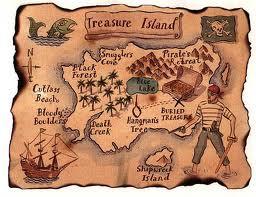
Treasure Island: So “special”

2

Actually, there are a bunch of problems. The Chron says the developers want to make the place “special,” a community of its own:


Developers hope the project, which goes before the Board of Supervisors for approval today, will feel like an urban village in the middle of a bustling metropolitan area. They hope urban farms, plentiful public transit and shared community spaces will give residents of the island a sense of community not found in other developments. …


For Treasure Island to be successful, developers and city planning experts agree that the residents of the island must feel like part of a special, distinct neighborhood where people want to spend time, and not just another community of commuters to San Francisco.


But the numbers don’t add up.

The plans call for 19,000 people living on the island — and there won’t be anywhere near enough employment opportunities for even a fraction of that number. So most of the residents are going to work somewhere else. Which means that twice a day they’ll have to travel — to and from San Francisco or to and from the East Bay — and there’s just no easy way to get that many people off that island to those locations.

Ther Bay Bridge is already beyond capacity during the periods when most of these people are going to be commuting. Yes, you can add a bunch of Muni buses to carry a lot of people, but that’s going to cost a lot of money. So would increasing ferry service to the level that this project would require. And if the past 50 years of San Francisco development is any guide (and it ought to be), the developers won’t pay enough for the transportation and the city won’t have the money to do it right so it won’t happen.

And even if the project meets the developers’ dreams in 30 years, it’s going to be a long, messy slog along the way. 

How, for example, will people who live on the island get their kids to school? Given San Francisco’s school-choice system, and the fact that there won’t be elementary, middle and high schools on the island anyway, and the school district can’t pay for the bus routes it has now, much less for new buses going to Treasure Island, you’re going to have hundreds of parents going to schools all over the city — and there will be only one way to get there: In cars.

(I’m all for no-car travel, but let’s be serious: Who’s got the time to take a kindergartener on the ferry downtown and on one or maybe two bus connections to a school — then turn around and take another bus to work? It isn’t going to happen. And nobody’s sending elementary school kids on Muni to school alone.)

If the supermarket isn’t built before most people move in, then you’ve got the grocery problem: It’s hard to do a week’s shopping on Muni and then a ferry. And what happens when you forget the milk (or run out of beer on the weekend?) No way to walk to the store, so you get in the car.

To make it even worse, 80 percent of the people who live there will be rich (since that’s who can afford market-rate housing). They’ll all have cars (and the developer kindly is providing parking spaces for all of them).

I just don’t see how it’s going to work. 

Film Listings

0

Film listings are edited by Cheryl Eddy. Reviewers are Kimberly Chun, Michelle Devereaux, Peter Galvin, Max Goldberg, Dennis Harvey, Johnny Ray Huston, Louis Peitzman, Lynn Rapoport, Ben Richardson, and Matt Sussman. For rep house showtimes, see Rep Clock. For first-run showtimes, see Movie Guide.

ANOTHER HOLE IN THE HEAD

The eighth Another Hole in the Head Film Festival runs through June 17 at the Roxie Theater, 3117 16th St., SF. For tickets ($11) and complete schedule, visit www.sfindie.com.

OPENING

*Beginners See “Father’s Day.” (1:44) Embarcadero.

Bride Flight Who doesn’t love a sweeping Dutch period piece? Ben Sombogaart’s Bride Flight is pure melodrama soup, enough to give even the most devout arthouse-goer the bloats. Emigrating from post-World War II Holland to New Zealand with two gal pals, the sweetly staid Ada (Karina Smulders) falls for smarm-ball Frank (Waldemar Torenstra, the Dutchman’s James Franco) and kind of joins the mile high club to the behest of her conscience. The women arrive with emotional baggage and carry-ons of the uterine kind. As the harem adjusts to the country mores of the Highlands, Frank tries a poke at all of them in a series of sex scenes more moldy than smoldery. This Flight, set to a plodding score and stuffy mise-en-scene, never quite leaves the runway. Not to mention the whole picture, pale as a corpse, resembles one of those old-timey photographs of your great grandma’s wedding. These kinds of pastoral romances ought to be put out to, well, pasture. (2:10) Clay, Shattuck. (Ryan Lattanzio)

Judy Moody and the Not Bummer Summer A girl has an adventurous summer in this live-action family film adapted from the best-selling book. (1:31) Shattuck.

My Heart is an Idiot Although My Heart is an Idiot is billed as a documentary about love, it fails to wade in at any depth. Instead, it focuses on the routine personal issues its subject, Davy Rothbart (editor-publisher of Found magazine), has with his own past and present romances. The only person mystified by his troubled relationships, though, is Davy. You want to palm your forehead and mumble “duh” throughout much of the film, but therein lies, perhaps, its one saving grace; Davy is almost miraculously endearing as a tragic romantic cast by himself as the protagonist of his own epic love story. Is this self-indulgent? Yes. Is he naive? Yes. Does he look kinda pathetic? Absolutely. Though it’s hard not to empathize with and even quietly champion someone who thoroughly wants to believe in true love (even if he doesn’t seem to know what that means), it’s also ultimately hard to really care. (1:34) Roxie. (Cooper Berkmoyer)

*Le Quattro Volte See “Wheel in the Sky Keeps on Turnin’.” (1:28) Lumiere, Shattuck.

Submarine Coming-of-age tale about a 15-year-old who becomes a little too interested in the sex life of his parents. (1:37)

Super 8 They’re heeeere. (1:52) California, Four Star, Presidio.

ONGOING

*L’Amour Fou Pierre Thoretton’s documentary L’amour fou opens with two clips of men bidding farewell. The first, from 2002, is of the French-Algerian couturier Yves Saint Laurent announcing his retirement in a moving and emotional speech worthy of his favorite writer Marcel Proust. The second is of Pierre Bergé, Saint Laurent’s longtime business partner and former lover, eulogizing his departed friend at the designer’s memorial service six years later. Thoretton’s film is suffused with goodbyes, many tender and candid, some portentous and rehearsed. To be sure, L’amour fou is a touching portrait of the powerful and tempestuous bond between Saint Laurent and Bergé, a bond that lasted close to five decades and resulted in one of the great empires of 20th century fashion. But it is also, alongside David Teboud’s two 2002 YSL documentaries, another entry in the hagiography of Saint Laurent, one cannily steered by Bergé as much as by Thoretton. Well-spoken and charming, Bergé still comes off as the punchy entrepreneurial foil to Saint Laurent’s dazzling but fragile genius. He can be both hyperbolic (praising Saint Laurent’s gifts) but also forthcoming (discussing the designer’s demons). Former muses Loulou de la Falaise and Betty Catroux are also interviewed, but this is clearly Bergé’s show. (1:43) Opera Plaza. (Sussman)

*Bill Cunningham New York To say that Bill Cunningham, the 82-year old New York Times photographer, has made documenting how New Yorkers dress his life’s work would be an understatement. To be sure, Cunningham’s two decades-old Sunday Times columns — “On the Street,” which tracks street-fashion, and “Evening Hours,” which covers the charity gala circuit — are about the clothes. And, my, what clothes they are. But Cunningham is a sartorial anthropologist, and his pictures always tell the bigger story behind the changing hemlines, which socialite wore what designer, or the latest trend in footwear. Whether tracking the near-infinite variations of a particular hue, a sudden bumper-crop of cropped blazers, or the fanciful leaps of well-heeled pedestrians dodging February slush puddles, Cunningham’s talent lies in his ability to recognize fleeting moments of beauty, creativity, humor, and joy. That last quality courses through Bill Cunningham New York, Richard Press’ captivating and moving portrait of a man whose reticence and personal asceticism are proportional to his total devotion to documenting what Harold Koda, chief curator at the Costume Institute at the Metropolitan Museum of Art, describes in the film as “ordinary people going about their lives, dressed in fascinating ways.” (1:24) Opera Plaza. (Sussman)

*Blank City “No one was doing what they were trained to do” — key to the explosion in Super-8 movie-making in late ’70s and mid-’80s New York City, according to John Lurie, star of 1984’s Stranger Than Paradise. Filling in the blanks of a burnt-out city-turned-artistic playground, musicians like Lurie and Jim Jarmusch made films, and artists such as Jean-Michel Basquiat and Richard Kern plopped themselves in front of the camera or behind it. Those grainy artifacts were populated by performers oozing with character and charisma, à la Steve Buscemi and Debbie Harry, while combos that ran the generational gamut, from Patti Smith to the Contortions to Sonic Youth, provided the soundtracks as well as the vivid onstage visuals. French filmmaker Celine Danhier does the noble work of trying to encapsulate and couple the disparate No Wave and Transgressive cinemas under the umbrella of shared geography — the squatter-friendly, pre-Times Square-cleanup New York — though organizationally and conceptually Blank City has a tough time surmounting flaws like choppy chronology and uneven allotments of screen time. The No Wave years get short shrift — you’re yearning to see more of the actual films. Should these two movements be paired in the first place — and where does the wildly successful 1983 hip-hop document Wild Style fall (and why isn’t the same year’s Style Wars included)? Danhier fails to make convincing connections, though the snippets of interviews with provocateurs like Amos Poe and Lydia Lunch almost make up for it (who knew, say, that late Dreamlander Cookie Mueller was Rainer Werner Fassbinder’s dealer, as John Waters gossips?), and snippets of movies such as the vibrant Downtown 81 (1981) transmit the scene’s energy — loud, clear, and cacophonous. (1:35) Shattuck. (Chun)

*Bridesmaids For anyone burned out on bad romantic comedies, Bridesmaids can teach you how to love again. This film is an answer to those who have lamented the lack of strong female roles in comedy, of good vehicles for Saturday Night Live cast members, of an appropriate showcase for Melissa McCarthy. The hilarious but grounded Kristen Wiig stars as Annie, whose best friend Lillian (Maya Rudolph) is getting hitched. Financially and romantically unstable, Annie tries to throw herself into her maid of honor duties — all while competing with the far more refined Helen (Rose Byrne). Bridesmaids is one of the best comedies in recent memory, treating its relatable female characters with sympathy. It’s also damn funny from start to finish, which is more than can be said for most of the comedies Hollywood continues to churn out. Here’s your choice: let Bridesmaids work its charm on you, or never allow yourself to complain about an Adam Sandler flick again. (2:04) Empire, Marina, 1000 Van Ness, Shattuck, Sundance Kabuki. (Peitzman)

*Cave of Forgotten Dreams The latest documentary from Werner Herzog once again goes where no filmmaker — or many human beings, for that matter — has gone before: the Chauvet-Pont-d’Arc Cave, a heavily-guarded cavern in Southern France containing the oldest prehistoric artwork on record. Access is highly restricted, but Herzog’s 3D study is surely the next best thing to an in-person visit. The eerie beauty of the works leads to a typically Herzog-ian quest to learn more about the primitive culture that produced the paintings; as usual, Herzog’s experts have their own quirks (like a circus performer-turned-scientist), and the director’s own wry narration is peppered with random pop culture references and existential ponderings. It’s all interwoven with footage of crude yet beautiful renderings of horses and rhinos, calcified cave-bear skulls, and other time-capsule peeks at life tens of thousands of years ago. The end result is awe-inspiring. (1:35) SF Center, Shattuck. (Eddy)

*The Double Hour Slovenian hotel maid Sonia (Ksenia Rappoport) and security guard Guido (Filippo Timi) are two lonely people in the Italian city of Turin. They find one another (via a speed-dating service) and things are seriously looking up for the fledgling couple when calamity strikes. This first feature by music video director Giuseppe Capotondi takes a spare, somber approach to a screenplay (by Alessandro Fabbri, Ludovica Rampoldi, and Stefano Sardo) that strikingly keeps raising, then resisting genre categorization. Suffice it to say their story goes from lonely-hearts romance to violent thriller, ghost story, criminal intrigue, and yet more. It doesn’t all work seamlessly, but such narrative unpredictability is so rare at the movies these days that The Double Hour is worth seeing simply for the satisfying feeling of never being sure where it’s headed. (1:35) Piedmont, Shattuck, Smith Rafael. (Harvey)

*Everything Must Go Just skirting the edge of sentimentality and banality, Everything Must Go aims to do justice by its source material: Raymond Carver’s rueful, characteristically spare short story, “Why Don’t You Dance?,” from the 1988 collection Where I’m Calling From. And it mostly succeeds with some restraint from its director-writer Dan Rush, who mainly helmed commercials in the past. Everything Must Go gropes toward a cinematic search for meaning for the Willy Lomans on both sides of the camera — it’s been a while since Will Ferrell attempted to stretch beyond selling a joke, albeit often extended ones about masculinity, and go further as an actor than 2006’s Stranger Than Fiction. The focus here turns to the despairing, voyeuristic whiskey drinker of Carver’s highly-charged short story, fills in the blanks that the writer always carefully threaded into his work, and essentially pushes him down a crevasse into the worst day of his life: Ferrell’s Nick has been fired and his wife has left him, changing the locks, putting a hold on all his bank accounts, and depositing his worldly possessions on the lawn of their house. Nick’s car has been reclaimed, his neighbors are miffed that he’s sleeping on his lawn, the cops are doing drive-bys, and he’s fallen off the wagon. His only reprieve, says his sponsor Frank (Michael Pena), is to pretend to hold a yard sale; his only help, a neighborhood boy Kenny who’s searching for a father figure (Christopher Jordan Wallace, who played his dad Notorious B.I.G. as a child in 2009’s Notorious) and the new neighbor across the street (Rebecca Hall). Though Rush expands the characters way beyond the narrow, brilliant scope of Carver’s original narrative, the urge to stay with those fallible people — as well as the details of their life and the way suburban detritus defines them, even as those possessions are forcibly stripped away — remains. It makes for an interesting animal of a dramedy, though in Everything Must Go‘s search for bright spots and moments of hope, it’s nowhere near as raw, uncompromising, and tautly loaded as Carver’s work can be. (1:36) Piedmont, SF Center. (Chun)

Fast Five There are plenty of laugh-out-loud moments in Fast Five, in addition to a much demolition derby-style crunch — instances that stretch credulity and simultaneously trigger a chuckle at the OTT fantasy of the entire enterprise. Two unarmed men chained to the ceiling kick their way out of a torture cell, jump favela rooftops to freedom with nary a bullet wound in sight, and, in the movie’s smash-’em-up tour de force, use a bank vault as a hulking pair of not-so-fuzzy dice to pulverize an unsuspecting Rio de Janeiro. Not for nothing is rapper Ludacris attached to this franchise — his name says it all (why not go further than his simple closing track, director Justin Lin, now designated the keeper of Fast flame, and have him providing the rap-eratic score/running commentary throughout?) In this installment, shady hero Dominic (Vin Diesel) needs busting out of jail — check, thanks to undercover-cop-turned-pal Brian (Paul Walker) and Dominic’s sis Mia (Jordana Brewster). Time to go on the lam in Brazil and to bring bossa nova culture down to level of thieving L.A. gearheads, as the gearhead threesome assemble their dream team of thieves to undertake a last big heist that will set ’em up for life. Still, despite the predictable pseudo-twists — can’t we all see the bromance-bonding between testosteroni boys Diesel and Dwayne Johnson coming from miles of blacktop away? — there’s enough genre fun, stunt driving marvels, and action choreography here (Lin, who made his name in ambitious indies like 2002’s Better Luck Tomorrow, has developed a knack for harnessing/shooting the seeming chaos) — to please fans looking for a bigger, louder kick. (1:41) 1000 Van Ness. (Chun)

The First Grader After a government announcement offering free elementary school educations to all Kenyans, an elderly man, Maruge (Oliver Litondo), shuffles to the nearest rural classroom in search of reading lessons. Though school officials (and parents, miffed that the man would take a child’s place in the already overcrowded system) protest, open-minded head teacher Jane (Naomie Harris) allows him to stay and study. Maruge’s freedom-fighter past, which cost him his family at the brutal hands of the British, is an important part of this true story, which otherwise would’ve felt a bit too heavy on the heartwarming tip. (His classmates, actual students at the school used for filming, are pretty unavoidably adorable.) As directed by Justin Chadwick (2008’s The Other Boleyn Girl ), Harris and Litondo turn in passionate performances, but the film unfolds like a heavy-handed TV movie. The facts of this story are inspiring enough — the film shouldn’t have to try so hard. (1:43) Shattuck, Smith Rafael. (Eddy)

Forks Over Knives Lee Fulkerson steps up as the latest filmmaker-turned-guinea-pig to appear in his own documentary about nutrition. As he makes progress on his 12-week plan to adopt a “whole foods, plant-based diet” (and curb his Red Bull addiction), he meets with other former junk food junkies, as well as health professionals who’ve made it their mission to prevent or even reverse diseases strictly through dietary changes. Along the way, Forks Over Knives dishes out scientific factoids both enlightening and alarming about the way people (mostly us fatty Americans, though the film investigates a groundbreaking cancer study in China) have steadily gotten unhealthier as a direct result of what they are (or in some cases, are not) eating. Fulkerson isn’t as entertaining as Morgan Spurlock (and it’s unlikely his movie will have the mainstream appeal of 2004’s Super Size Me), but the staunchly pro-vegan Forks Over Knives certainly offers some interesting, ahem, food for thought. (1:36) Opera Plaza. (Eddy)

The Hangover Part II What do you do with a problematic mess like Hangover Part II? I was a fan of The Hangover (2009), as well as director-cowriter Todd Phillips’ 1994 GG Allin doc, Hated, so I was rooting for II, this time set in the East’s Sin City of Bangkok, while simultaneously dreading the inevitable Asian/”ching-chang-chong” jokes. Would this would-be hit sequel be funnier if they packed in more of those? Doubtful. The problem is that most of II‘s so-called humor, Asian or no, falls completely flat — and any gross-out yuks regarding wicked, wicked Bangkok are fairly old hat at this point, long after Shocking Asia (1976) and innumerable episodes of No Reservations and other extreme travel offerings. This Hangover around, mild-ish dentist Stu (Ed Helms) is heading to the altar with Lauren (The Real World: San Diego‘s Jamie Chung), with buds Phil (Bradley Cooper) and Doug (Justin Bartha) in tow. Alan (Zach Galifianakis) has completely broken with reality — he’s the pity invite who somehow ropes in the gangster wild-card Mr. Chow (Ken Jeong). Blackouts, natch, and not-very-funny high jinks ensue, with Jeong, surprisingly, pulling small sections of II out of the crapper. Phillips obviously specializes in men-behaving-badly, but II‘s most recent character tweaks, turning Phil into an arrogant, delusional creep and Alan into an arrogant, delusional kook, seem beside the point. Because almost none of the jokes work, and that includes the tired jabs at tranny strippers because we all know how supposedly straight white guys get hella grossed out by brown chicks with dicks. Lame. (1:42) Empire, Four Star, Marina, 1000 Van Ness, Presidio, SF Center, Shattuck, Sundance Kabuki. (Chun)

*Incendies When tightly wound émigré Nawal (Luba Azabal) dies, she leaves behind adult twins Jeanne (Mélissa Désormeaux-Poulin) and Simon (Maxim Gaudette) — and leaves them documents that only compound their feelings of grief and anger, suggesting that what little they thought they knew about their background might have been a lie. While resentful Simon at first stays home in Montreal, Jeanne travels to fictive “Fuad” (a stand-in for source-material playwright Wajdi Mouawad’s native Lebanon), playing detective to piece together decades later the truth of why their mother fled her homeland at the height of its long, brutal civil war. Alternating between present-day and flashback sequences, this latest by Canadian director Denis Villeneuve (2000’s Maelstrom) achieves an urgent sweep punctuated by moments of shocking violence. Resembling The Kite Runner in some respects as a portrait of the civilian victimization excused by war, it also resembles that work in arguably piling on more traumatic incidences and revelations than one story can bear — though so much here has great impact that a sense of over-contrivance toward the very end only slightly mars the whole. (2:10) Shattuck. (Harvey)

Kung Fu Panda 2 The affable affirmations of 2008’s Kung Fu Panda take a back seat to relentlessly elaborate, gag-filled action sequences in this DreamWorks Animation sequel, which ought to satisfy kids but not entertain their parents as much as its predecessor. Po (voiced by Jack Black), the overeating panda and ordained Dragon Warrior of the title, joins forces with a cavalcade of other sparring wildlife to battle Lord Shen (Gary Oldman), a petulant peacock whose arsenal of cannons threatens to overwhelm kung fu. But Shen is also part of Po’s hazy past, so the panda’s quest to save China is also a quest for self-fulfillment and “inner peace.” There’s less character development in this installment, though the growing friendship between Po and the “hardcore” Tigress (Angelina Jolie) is occasionally touching. The 3-D visuals are rarely more than a gimmick, save for a series of eye-catching flashbacks in the style of cel-shaded animation. (1:30) 1000 Van Ness, Presidio, SF Center, Sundance Kabuki. (Sam Stander)

Midnight in Paris Owen Wilson plays Gil, a self-confessed “Hollywood hack” visiting the City of Light with his conservative future in-laws and crassly materialistic fiancée Inez (Rachel McAdams). A romantic obviously at odds with their selfish pragmatism (somehow he hasn’t realized that yet), he’s in love with Paris and particularly its fabled artistic past. Walking back to his hotel alone one night, he’s beckoned into an antique vehicle and finds himself transported to the 1920s, at every turn meeting the Fitzgeralds, Gertrude Stein (Kathy Bates), Dali (Adrien Brody), etc. He also meets Adriana (Marion Cotillard), a woman alluring enough to be fought over by Hemingway (Corey Stoll) and Picasso (Marcial di Fonzo Bo) — though she fancies aspiring literary novelist Gil. Woody Allen’s latest is a pleasant trifle, no more, no less. Its toying with a form of magical escapism from the dreary present recalls The Purple Rose of Cairo (1985), albeit without that film’s greater structural ingeniousness and considerable heart. None of the actors are at their best, though Cotillard is indeed beguiling and Wilson dithers charmingly as usual. Still — it’s pleasant. (1:34) Albany, Piedmont, Shattuck, Sundance Kabuki. (Harvey)

*Nostalgia for the Light Chile’s Atacama Desert, the setting for Patricio Guzmán’s lyrically haunting and meditative documentary, is supposedly the driest place on earth. As a result, it’s also the most ideal place to study the stars. Here, in this most Mars-like of earthly landscapes, astronomers look to the heavens in an attempt to decode the origins of the universe. Guzmán superimposes images from the world’s most powerful telescopes — effluent, gaseous nebulas, clusters of constellations rendered in 3-D brilliance — over the night sky of Atacama for an even more otherworldly effect, but it’s the film’s terrestrial preoccupations that resonate most. For decades, a small, ever dwindling group of women have scoured the cracked clay of Atacama searching for loved ones who disappeared early in Augusto Pinochet’s regime. They take their tiny, toy-like spades and sift through the dirt, finding a partial jawbone here, an entire mummified corpse there. Guzmán’s attempt through voice-over to make these “architects of memory,” both astronomers and excavators alike, a metaphor for Chile’s reluctance to deal with its past atrocities is only marginally successful. Here, it’s the images that do all the talking — if “memory has a gravitational force,” their emotional weight is as inescapable as a black hole. (1:30) Opera Plaza. (Devereaux)

Pirates of the Caribbean: On Stranger Tides The last time we saw rascally Captain Jack Sparrow (Johnny Depp), he was fighting his most formidable enemy yet: the potentially franchise-ending Pirates of the Caribbean: At World’s End (2007). The first Pirates movie (2003) was a surprise critical success, earning Depp his first-ever Oscar nomination; subsequent entries, though no less moneymaking, suffered from a detectable case of sequel-itis. Overseeing this reboot of sorts is director Rob Marshall (2002’s Chicago), who keeps the World’s End notion of sending Jack to find the Fountain of Youth, but adds in a raft of new faces, including Deadwood‘s Ian McShane (as Blackbeard) and lady pirate Penélope Cruz. The story is predictably over-the-top, with the expected supernatural elements mingling with sparring both sword-driven and verbal — as well as an underlying theme about faith that’s nowhere near as fun as the film’s lesser motifs (revenge, for one). It’s basically a big swirl of silly swashbuckling, nothing more or less. And speaking of Depp, the fact that the oft-ridiculous Sparrow is still an amusing character can only be chalked up to the actor’s own brand of untouchable cool. If it was anyone else, Sparrow’d be in Austin Powers territory by now. (2:05) 1000 Van Ness, Sundance Kabuki. (Eddy)

Queen to Play From first-time feature director Caroline Bottaro comes this drama about … chess. Wait! Before your eyes glaze over, here are a few more fast facts: it’s set in idyllic Corsica and features, as an American expat, Kevin Kline in his first French-speaking role. (Side note: is there a Kline comeback afoot? First No Strings Attached, then The Conspirator, and now Queen to Play. All within a few short months.) Lovely French superstar Sandrine Bonnaire plays Héléne, a hotel maid who has more or less accepted her unremarkable life — until she happens to catch a couple (one half of which is played by Jennifer Beals, cast because Bottaro is a longtime fan of 1983’s Flashdance!) playing chess. An unlikely obsession soon follows, and she asks Kline’s character, a reclusive doctor who’s on her freelance house-cleaning route, to help her up her game. None too pleased with this new friendship are Héléne’s husband and nosy neighbors, who are both suspicious of the doctor and unsure of how to treat the formerly complacent Héléne’s newfound, chess-inspired confidence. Queen to Play can get a little corny (we’re reminded over and over that the queen is “the most powerful piece”), and chess is by nature not very cinematic (slightly more fascinating than watching someone type, say). But Bonnaire’s quietly powerful performance is worth sticking around for, even when the novelty of whiskery, cardigan-wearing, French-spouting Kline wears off. (1:36) Smith Rafael. (Eddy)

*13 Assassins 13 Assassins is clearly destined to be prolific director Takashi Miike’s greatest success outside Japan yet. It’s another departure for the multi-genre-conquering Miike, doubtless one of the most conventional movies he’s made in theme and execution. That’s key to its appeal — rigorously traditional, taking its sweet time getting to samurai action that is pointedly not heightened by wire work or CGI, it arrives at the kind of slam-dunk prolonged battle climax that only a measured buildup can let you properly appreciate. In the 1840s, samurai are in decline but feudalism is still hale. It’s a time of peace, though not for the unfortunates who live under regional tyrant Lord Naritsugu (Goro Inagaki), a li’l Nippon Caligula who taxes and oppresses his people to the point of starvation. Alas, the current Shogun is his sibling, and plans to make little bro his chief adviser — so a concerned Shogun official secretly hires veteran samurai Shinzaemon (Koji Yakusho) to assassinate the Lord. Fully an hour is spent on our hero doing “assembling the team” stuff, recruiting other unemployed, retired, or wannabe samurai. When the protagonists finally commence their mission, their target is already aware he’s being pursued, and he’s surrounded by some 200 soldiers by the time Miike arrives at the film’s sustained, spectacular climax: a small village which Shinzaemon and co. have turned into a giant boobytrap so that 13 men can divide and destroy an ogre-guarding army. A major reason why mainstream Hollywood fantasy and straight action movies have gotten so depressingly interchangeable is that digital FX and stunt work can (and does) visualize any stupid idea — heroes who get thrown 200 feet into walls by monsters then getting up to fight some more, etc. 13 Assassins is thrilling because its action, while sporting against-the-odds ingeniousness and sheer luck by our heroes as in any trad genre film, is still vividly, bloodily, credibly physical. (2:06) Bridge, Shattuck, Smith Rafael. (Harvey)

*Thor When it comes to superhero movies, I’m not easily impressed. Couple that with my complete disinterest in the character of Thor, and I didn’t go into his big-screen debut with any level of excitement. Turns out Kenneth Branagh’s Thor is a genre standout — the best I’ve seen since 2008’s Iron Man. For those who don’t know the mythology, the film follows Thor (Chris Hemsworth) as he’s exiled from the realm of Asgard to Earth. Once there, he must reclaim his mighty hammer — along with his powers — in order to save the world and win the heart of astrophysicist Jane Foster (Natalie Portman). Hemsworth is perfectly cast as the titular hero: he’s adept at bringing charm to a larger-than-life god. The script is a huge help, striking the ideal balance between action, drama, and humor. That’s right, Thor is seriously funny. On top of that, the effects are sensational. Sure, the 3D is once again unnecessary, but it’s admittedly kind of fun when you’re zooming through space. (2:03) 1000 Van Ness. (Peitzman)

The Tree of Life Mainstream American films are so rarely adventuresome that overreactive gratitude frequently greets those rare, self-conscious, usually Oscar-baiting stabs at profundity. Terrence Malick has made those gestures so sparingly over four decades that his scarcity is widely taken for genius. Now there’s The Tree of Life, at once astonishingly ambitious — insofar as general addressing the origin/meaning of life goes — and a small domestic narrative artificially inflated to a maximally pretentious pressure-point. The thesis here is a conflict between “nature” (the way of striving, dissatisfied, angry humanity) and “grace” (the way of love, femininity, and God). After a while Tree settles into a fairly conventional narrative groove, dissecting — albeit in meandering fashion — the travails of a middle-class Texas household whose patriarch (a solid Brad Pitt) is sternly demanding of his three young sons. As a modern-day survivor of that household, Malick’s career-reviving ally Sean Penn has little to do but look angst-ridden while wandering about various alien landscapes. Set in Waco but also shot in Rome, at Versailles, and in Saturn’s orbit (trust me), The Tree of Life is so astonishingly self-important while so undernourished on some basic levels that it would be easy to dismiss as lofty bullshit. Its Cannes premiere audience booed and cheered — both factions right, to an extent. (2:18) California, Embarcadero. (Harvey)

*Win Win Is Tom McCarthy the most versatile guy in Hollywood? He’s a successful character actor (in big-budget movies like 2009’s 2012; smaller-scale pictures like 2005’s Good Night, and Good Luck; and the final season of The Wire). He’s an Oscar-nominated screenwriter (2009’s Up). And he’s the writer-director of two highly acclaimed indie dramas, The Station Agent (2003) and The Visitor (2007). Clearly, McCarthy must not sleep much. His latest, Win Win, is a comedy set in his hometown of New Providence, N.J. Paul Giamatti stars as Mike Flaherty, a lawyer who’s feeling the economic pinch. Betraying his own basic good-guy-ness, he takes advantage of a senile client, Leo (Burt Young), when he spots the opportunity to pull in some badly-needed extra cash. Matters complicate with the appearance of Leo’s grandson, Kyle (newcomer Alex Shaffer), a runaway from Ohio. Though Mike’s wife, Jackie (Amy Ryan), is suspicious of the taciturn teen, she allows Kyle to crash with the Flaherty family. As luck would have it, Kyle is a superstar wrestler — and Mike happens to coach the local high school team. Things are going well until Kyle’s greedy mother (Melanie Lynskey) turns up and starts sniffing around her father’s finances. Lessons are learned, sure, and there are no big plot twists beyond typical indie-comedy turf. But the script delivers more genuine laughs than you’d expect from a movie that’s essentially about the recession. (1:46) Shattuck. (Eddy)

*X-Men: First Class Cynics might see this prequel as pandering to a more tweeny demographic, and certainly there are so many ways it could have gone terribly wrong, in an infantile, way-too-cute X-Babies kinda way. But despite some overly choppy edits that shortchange brief moments of narrative clarity, X-Men: First Class gets high marks for its fairly first-class, compelling acting — specifically from Michael Fassbender as the enraged, angst-ridden Magneto and James McAvoy as the idealistic, humanist Charles Xavier. Of course, the celebrated X-Men tale itself plays a major part: the origin story of Magneto, a.k.a. Erik Lehnsherr, a Holocaust survivor, is given added heft with a few tweaks: here, in an echo of Fassbender’s turn in Inglourious Basterds (2009), his master of metal draws on his bottomless rage to ruthlessly destroy the Nazis who used him as a lab rat in experiments to build a master race. The last on his list is the energy-wrangling Sebastian Shaw (Kevin Bacon), who’s set up a sweet Bond-like scenario, protected by super-serious bikini-vixen Emma Frost (January Jones). The complications are that Erik doesn’t ultimately differ from his Frankensteins — he pushes mutant power to the detriment of those puny, bigoted humans — and his unexpected collaborator and friend is Xavier, the privileged, highly psychic scion who hopes to broker an understanding between mutants and human and use mutant talent to peaceful ends. Together, they can move mountains—or at least satellite dishes and submarines. Jennifer Lawrence as Raven/Mystique and Nicholas Hoult as Hank McCoy/Beast fill out the cast, voicing those eternal X-Men dualities — preserving difference vs. conformity, intoxicating power vs. reasoned discipline. All core superhero concerns, as well as teen identity issues — given a fresh charge. (2:20) Empire, 1000 Van Ness, Presidio, Sundance Kabuki. (Chun)


Through the lens of hip-hop

1

Photographer/filmmaker Brian Cross charts a musical map of the African diaspora in the Americas — and opens new Summit Peek Gallery show tonight (6/2), “If It Fits in the Backpack: 10 Years on the Road with Mochilla”

Last year, Los Angeles-based production group Mochilla released Timeless,a trilogy film series documenting three concerts performed in L.A., early 2009. For these concerts, the photographer/filmmaker/DJ duo behind Mochilla, Brian Cross and Eric Coleman, shined light on three composers who have helped influence and shape hip-hop in different ways: the originator of Ethio-jazz, Mulatu Astatke; leftfield Brazilian arranger, Arthur Verocai; and a gutsy rendition of J Dilla’s beats crafted by Miguel Atwood-Ferguson with 60-piece orchestra. The films paint intimate portraits of musical exchange and live performance while paying tribute to some of the overlooked giants of the sprawling African musical diaspora.

In many ways Timeless is a culmination of themes explored in Mochilla’s films from the past decade. Their first project, Keepintime: Talking Drums and Whispering Vinyl (2001), and the follow-up live recording and DVD release in 2004, captured improvisational collaboration between L.A. hiphop producers and DJs, such as Madlib and J.Rocc, among others, with some of the powerhouse session drummers who inspired their sample-based work. Brasilintime: Batucada Com Discos (2007) also navigated the dynamic tension between an older generation of drummers, this time including legendary Brazilian percussionists, and the new school of analog producer/turntablists.


But not only did Mochilla depict creative partnership between these two forms of percussionists, they also translated the cut-up aesthetic of the DJ and rhythmic momentum of the drummer to the inner workings of the films themselves. A pastiche of words, music, and imagery composed of still shots and footage drive forward the fragmented stories, and striking moments of reconciliation, which unfold on screen.

More recently, Cross (known more familiarly as B+) set off to Columbia to document the Petronio Alvarez music festival as well as collaborative work between Will Holland (a.k.a. Quantic) and Ernesto “Fruko” Estrada, who could be credited with forging the rootsy, Afro-Columbian take on salsa. Mochilla also shot a good deal of the footage for Banksy’s street art disaster film from last year, Exit Through the Gift Shop, caught wayward rapper Jay Electronica at the Pyramids in Egypt and recording in South Africa, and documented Nas and Damian Marley on tour. To put it short, the dudes put in work.

“I look more for the off-handed moments that can be sustained as photos in themselves,” Cross tells me over the phone, while working in the dark room basement of his home in Los Angeles. He says that he’s excited to see how the large hand-printed photos will look in the upcoming Mochilla showcase at the new Peek Gallery in the Mission, this Thursday. “I’m trying to be iconic, but at the same time I don’t want to make publicity photos for record companies,” Cross says. “The videos, in a way, can be much more interesting because the fluidity allows for a certain kind of candidness.”

Cross, 44, has quite a history with such candidness in his work. Born in Limerick, Ireland, Cross moved to San Francisco’s Mission district in 1990 before attending CalArts in Southern California to study photography. While still completing his degree, Cross started writing what would become a landmark book on the emergence and socio-political implications of hiphop in L.A., It’s Not About a Salary: Rap, Race, and Resistance in Los Angeles (Verso Books, 1993). He is responsible for a number of iconic album covers of underground hiphop acts, from Freestyle Fellowship to Ras Kass and Mos Def. And Cross also made headway with more than a few magazine photo spreads and music videos throughout the past couple decades, notably including an arresting multi-textured piece for DJ Shadow’s “Midnight in a Perfect World” off Entroducing….. (Mo’ Wax Records, 1996).


Looking over Cross’ ever-growing body of work, some primary themes consistently arise: Through the lens of hiphop, Cross orients a number of conversations, multi-generational interchanges, rhythmic confluences, and resistant divergences that weave through the diaspora of African musical traditions in the Americas. “There’s an anthropological side as well as an ethnomusicologist side to it—an attempt to make a map of the diaspora in terms of the music set by the present,” Cross explains. “The goal is ultimately to document in a way that is not strictly historical, but to let the past speak to now rather than the other way round.”

SFBG I find an interesting dynamic in your film work and the documented live performances. On the one hand, you’ll take hiphop producers and DJs and pair them with percussionists, so as to put the contemporary in tension with the recent past that informed those contemporaries. On the other hand, there’s another element of featuring the music of those composers themselves. In what way do you think the past speaks to the present, as you put it, in both those approaches?

Brian Cross The idea is that somehow you don’t want to frame it off. In other words, for Keepintime, we didn’t want to get Paul Humphrey or Earl Palmer involved in something and frame off the dialogue in terms of, ‘Ok Paul, we want you to play the classic break on “One Man Band (Plays all Alone),” and now we’re going to layer something on top of it and develop a routine.’ But that’s not what’s interesting about Paul Humphrey. Yeah, it’s amazing he did that, and that’s why we’re choosing to work with him. But Paul Humphrey is somebody living and breathing; he’s our past, but he’s also our present. We want to open up a space of dialogue that is open to this series of works but isn’t limited to it.

For the Brasilintime project, we could have gone to Brazil and found obscure musicians who made amazing recordings and complete the narrative in the way that normal Eurocentric or Western versions of the story go: We bring them to Carnegie Hall, we do a concert, venerate them, and show them that Carnegie Hall is in fact the best venue in the world and is the most important place to see music. Whoa whoa whoa, back it up, we’re not going to do that. We’re going to go to there and engage, and try to actually build a bridge to the music. Let’s not have this as a one-sided sentence that leads in a single direction. Generally, what we try to do is to de-center, to find ways in which we can open up, because, invariably, when you do these things, that’s when you make discoveries. Oh, Mamao and Wilson das Neves played on the Jose Mauro record, he died before the record came out, and then Dilla sampled it … that’s when you make these discoveries.

You know I don’t mind the Buena Vista Social Club [1997] record. Ry Cooder is a great producer and a great musician, but the film is fucking awful. It’s so fucking wrongheaded. And that director, Wim Wenders, is smarter than that, man. We’re people of the left, he knows better than that. Of course, everybody got involved and was super happy that these guys were finally discovered, and we can fully appreciate how beautiful their music is and the contributions they’ve made. But then Carnegie Hall is put into the equation; we don’t need to reaffirm the same set of cultural values. We don’t need that. Maybe that’s kind of a trite example, but I’m interested in trying to forge ways to talk about music, or to explore possibilities of music, that don’t fall into the same set of traps that most writing and television and documentaries about music fall into.

SFBG Yeah, there are standard methods for placing outsider music, or the marginal narratives of musical traditions and musicianship, into the mainstream narrative, one of validation internal to our own frameworks of understanding. As a photography and filmmaker, how do you approach a sense of the outsider, or the musician who is resistant, or peripheral to the grand narratives? What techniques do you take up in order to engage these musicians and traditions and make them visible for a broader audience?

BC Well, when it comes to Brazilian music, I’m pretty serious about my shit. I do my research thoroughly. I try to put my best foot into it. But other than that, it’s pure human relationships, man. For me, here’s my pet peeve: Too much of the stuff happening right now is done without real social engagement. It’s through the Internet, whether it’s digital digging, or people paying 800 dollars for an obscure record from Ethiopia or Angola, when you could buy a ticket to go there for the same amount. You should be going. That’s the responsibility. The responsibility is to go there, actually experience it, and see what works on the ground.

To go back to Ry Cooder, when he went to Cuba to make Buena Vista, that wasn’t the music people were listening to in Cuba. People were listening to Timba, and Timba is a completely different thing. I just think there’s a lot more to be gained from actually going to say, Baranquilla, and spending time there in the town—meeting people, buying records, meeting musicians—than there is from surfing the Internet and finding the latest hot cumbia re-groove from Argentina or whatever. If you’re serious about your shit you have to go there, engage on the ground, and see what makes sense. You like Wu-Tang? Go to Staten Island. Go for a walk around the projects. Go visit P.L.O. Liquors where all those songs came from. That’s the kind of compliment you need to be paying people. And there’s ways to do this that aren’t touristic. You can go and feel the vibe there. It might seem obvious, but it gets lost in these discussions.

SFBG Do you see that as your primary motivational force? That your projects are prefaced on this desire to travel, meet these musicians that inspire you where they live and make music; find out what they’re doing, why they’re doing it, and be a part of it?

BC Well, the two things are kind of contingent. It’s cyclical somehow. I’m there, experiencing, helping to build bridges as best as I can, and I’m also thinking about photographs because that’s what I do.

SFBG How do you think this approach fits back into your earlier photo work in Los Angeles and your book, ‘It’s Not about a Salary?’

BC It’s an extension of it, really. You know the book is a very primitive thing, if you actually sit there and read it from cover to cover, which I did for a project a couple years ago, and I was highly embarrassed (laughs). But there was no model. It’s not like Can’t Stop Won’t Stop [Picador, 2005] existed, and someone had put that work down. I was 26, I had been into hiphop since I was 17, and I gave it a stab. And, of course, I put myself into a cultural debate that I didn’t know much about, for my own peril.

Ostensibly, the work isn’t much different. In that book, yeah, it’s about hiphop in Los Angeles, but I also managed to talk to Roy Porter, The Watts Prophets, Kamau Daaoood, Horace Tapscott, and a whole slew of other people who didn’t straightforwardly have anything to do with hiphop in Los Angeles. But in another way, they had everything to do with it. What has always been interesting for me with hiphop is that it has this historical reach. That’s what I tried to bring into the book. There’s definitely things which I don’t agree with now, and suppositions that I made or thought what would happen which didn’t. But it was a critical moment, right before The Chronic [Death Row, 1992], which I think was really a world changer.

The amazing thing about the golden era of hiphop, as they call it now, that era up to ‘95 or ’96, is that it was incredibly inclusive music. There was Japanese Koto, all sorts of rhythms from the Caribbean, rock, jazz, funk, you name it. That sourced people into record stores in different ways. The categories didn’t make sense as they did previously. That’s the magnetic lure of it. Somehow, hiphop allowed this extraordinary ability to look at previously recorded things and make them work in the present. For me, that was a critical modernist moment, or as the prevailing discourse has it a post-modernist moment—the collage and montage.

SFBG That brings up another interesting point in your work in the idea that when listening to hiphop not only is the origin of the break or the sample concealed, but also the artist’s background is concealed. The identity of the artist is mystified. Would you say that your projects aim towards making visible the musician as a person rooted in an environment or social setting?

BC The two-sided sword of the invention of youth culture is that it posits a kind of energy and dynamism to what we call youth. The problem is that the way it’s commodified is made contingent on the exclusion of anything outside youthful values or youthful thinking. I don’t agree with that. And if you look at the music of the diaspora, it’s not there. These kind of generational fishers don’t exist in other traditions of music: not in Latin, not in African-oriented music, and in my understanding of European folk traditions, they’re not there either.

While I find aspects of youth admirable, it shouldn’t ever be considered an exclusive category. For instance, David Axelrod is in his late 70s, and he has as much to contribute, and as many interesting things to say now as he did when he was 30. The thing is we’ve consigned him off to a category as if he doesn’t exist. And that seems ridiculous to me. I mean James Gadson still has fire now as a drummer just as he did when he played with Bill Withers. Why would we decide that he no longer has importance? It’s not like people have stopped listening to Bill Withers. But that’s how our music culture works. We fetishize the appearance of youth, but we’re not entirely clear on the implications of that. So, I like the idea of putting the person in the room if I can. For inclusivity, it has to be that.

And we have to get past the old ways of thinking, too. When I was first doing this, it was all super secretive. No one was supposed to know what your samples were or where your drums came from, because that was your tool kit, and if everyone had the same tool kit, it wouldn’t be interesting anymore. But I don’t buy that. In the end, there’s a deluge of information out there, it’s what you do with it that’s important. Your understanding and ability to manipulate the history is what’s important.

SFBG Even when you put out ‘Keepintime,’ I imagine that people worried that you would unveil the alchemic creative process, otherwise covered up, behind a hiphop record.

BC It goes back even before that. Take the video I did for DJ Shadow’s “Midnight In A Perfect World.” It plots out a series of concerns that I’m still interested in. You know, Earl Palmer is in there, and the sample is from a David Axelrod record. And they didn’t clear the sample. Shadow was terrified that Earl was going to recognize the song. But Earl didn’t even remember David Axelrod the person, let alone the record (laughs). They weren’t hits! Earl wasn’t sitting around listening to Axelrod records. But if you’re going to be too scared to talk to him, we’ll never learn anything from the guy. And then he shows up, and we’re transported to a whole different world: New Orleans before World War II.

You could say rock n’ roll came from the soles of Earl Palmer’s shoes. He was a child vaudeville performer, a tap dancer, and he battled against Sammy Davis Junior, and a lot of cats from that era. But he was never the best dude, and he was always interested in drums, so he taught himself how to play drums. So, that shuffle beat, that swamp beat as they call it, which became the foundation of rock n’ roll drumming, came from a guy who’s a tap dancer in black vaudeville as a child, who figured out a way to transform his tap dancing onto a drum kit. Think of the multi-billion dollar industry that rock n’ roll has become, and we still don’t know these things. We have to sit down and talk to these guys to find out these stories.

If It Fits in the Backpack: 10 Years on the Road with Mochilla
Opening photo exhibition w/ film screenings and Q&A
With Brian Cross and Eric Coleman
Thurs./02, 7p.m.-11p.m., free (thru 06/30)
Peek Gallery (Summit SF)
780 Valencia Ave. @19th St., SF
(415) 861-5330
www.thesummit-sf.com/peekgallery.html

Phantom menaces

cheryl@sfbg.com

FILM Does anyone actually believe Ghost Adventures is real? Including its hosts? For the uninitiated, this is the Travel Channel show that locks a trio of doucheba — er, paranormal investigators inside an allegedly haunted location overnight, leaving them with an arsenal of high-tech gadgets to record any paranormal happenings.

Inevitably, these goings-on include supernatural “voices” captured by one of their doohickeys (the voice always sounds exactly like garbled static, but is subtitled into meaning — usually a variation of “Get out!”) Main host Zak Bagans employs obnoxious tactics to goad the spirits into responding. Did you see that one where he decided he needed to bare his telegenically pumped-up chest to provoke the phantom that hated tattoos? It was fully necessary, people. For science. Also, it was 24-karat unintentional comedy gold.

Ghost Adventures and similar shows (main ingredient: shaky, sickly-green night vision) are ripe for parody, but they’re also au courant. As anyone with a pair of eyes and a thirst for blood can attest, there’s been a trend in “I am filming myself at all times” horror since ye olden days of The Blair Witch Project (1999), sure to be buoyed along for another decade-plus thanks to the monster success of 2007’s Paranormal Activity. (Last year’s The Last Exorcism being a prime example.) If these films are fake-real, then shows like Ghost Adventures, which follow regular people through actual abandoned prisons, sanitariums, and the like, are real-fake.

Which brings us to Grave Encounters, a fake-real movie that does a number on Zak Bagans types and delivers some pretty decent scares in the process. (Don’t be put off by the directors’ corny nom de screen, “the Vicious Brothers.” Although, dudes — really?) The film, which closes out the 2011 Another Hole in the Head Film Festival, is introduced by a slick production-company type who assures us that what we are about to see is undoctored video from a ghost-hunting reality show. Seems the crew of Grave Encounters, including lead investigator Lance Preston (Sean Rogerson), have vanished from the crumbling confines of their latest filming location, a decrepit mental hospital with a sinister past.

With this Blair Witch-y setup, the found footage rolls, including outtakes that let us know Lance and company are skeptics not above manipulating circumstances to get the shots they need. The faux-show apes Ghost Adventures‘ title sequence, low-angle shots, and jumpy editing. There’s even a slightly unhinged caretaker on hand to lock the Grave Encounters folks in for the night. And this wouldn’t be a horror movie (as opposed to a highly questionable reality show) if creepy critters didn’t end up coming out to play. It’s not a spoiler to disclose that once doors start slamming by themselves, full-scale shit-hitting-fannage (shades of 2001’s excellent Session 9) is not far behind.

In a similar vein, but with a more succinct running time and more likeable characters, is Haunted Changi, one of HoleHead’s opening-night films. A group of young filmmakers (portrayed by actors who have the same names as their characters) set out to make a documentary about Singapore’s Old Changi Hospital, a vacant structure troubled by the lingering fragments of World War II-era prisoners of war and their decapitation-happy Japanese captors. Plus, the occasional vampire. Old Changi Hospital is apparently a bona fide ghost-hunting hotspot, which makes the fake-real Haunted Changi a little more real than it probably ought to be.

After the four-person crew’s initial visit to the hospital, director Andrew (Andrew Lau, also credited as Haunted Changi‘s director) becomes obsessed with the place, returning again and again to shoot more footage and hang out with a mysterious woman he encounters there. Meanwhile, uptight producer Sheena (Sheena Chung), dreadlocked sound guy Farid (Farid Azlam), and “I am filming myself at all times” camera guy Audi (Audi Khalis) feel the after-effects in different ways — all of them bad.

Haunted Changi features a scene where a group of paranormal investigators use a little kid as their supernatural-activity barometer, like a canary in a coal mine. Way creepy, and one of the few novel ideas in a film that’s solid without being particularly original. Still, Old Changi Hospital has plenty of built-in atmosphere; a real-real documentary on its history would probably be just as scary as Haunted Changi‘s paranormal fantasy.

ANOTHER HOLE IN THE HEAD FILM FESTIVAL

June 2–17, $11

Roxie Theater

3117 16th St., SF

www.sfindie.com


NUGGETS OF GUTS: SHORT TAKES ON ANOTHER HOLE IN THE HEAD 2011

Absentia (Mike Flanagan, U.S., 2010) Daniel has been missing for seven years. His wife, Tricia (Courtney Bell), has dutifully done all the right things, distributing missing-person posters, mourning, seeking therapy, and filling out the paperwork to have him declared dead in absentia. But — heavily pregnant by a new suitor — she’s more than ready to move on with her life. In town to help with this task is her younger sister, Callie (Katie Parker), a former drug addict who nudges Tricia to look for new apartments and work on her social life. But is Daniel really dead? Tricia’s been having freaky visions that suggest he’s still … somewhere. And what, exactly, is haunting that tunnel down the block from Tricia’s front door? Absentia is an indie-horror find: Bell and Parker are totally believable as sisters who stick together despite their complicated relationship, and writer-director Mike Flanagan conjures serious menace from a benign suburban streetscape. Mon/6, 9:20 p.m.; June 12, 5:20 p.m. (Cheryl Eddy)

Apocrypha (Michael Fredianelli, U.S., 2011) Vampires are about as ubiquitous and tired a pop cultural fixture as the Kardashians and it’s getting harder and harder to come up with an original twist on such a shopworn staple. That’s all the more reason why I wanted Apocrypha, a modestly-budgeted, locally-made indie premiering at HoleHead, to make good on its promising premise that vampires aren’t just bloodsuckers, they’re also amnesiacs. Unfortunately, director Michael Fredianelli (who also coproduced, edited, cowrote, and stars in the film) makes a hot mess out of this neat idea thanks to weak dialogue, inept direction, lackluster performances, and a virulent misogynistic streak that’s far more unsettling than the inevitable torrents of blood. Fredianelli plays Griffith Townsend, a man at wit’s end to understand his growing compulsion to bite the women he takes home. Eventually, his path crosses with Maggie (cowriter and coproducer Kat Reichmuth) — an equally confused woman trying to find out how she woke up in Golden Gate Park — with whom he shares a dark, and somewhat obvious, connection. When Townsend’s job as a senior editor at the San Francisco Chronicle, rather than all the neck-biting, requires the greatest suspension of audience disbelief, you know it’s time to go back to the drawing board. June 11, 3:20 p.m. (Matt Sussman)

Auschwitz (Uwe Boll, Germany, 2010) It takes serious cojones or at least a healthy dose of self-delusion, for Uwe Boll to decide he’s the one to give us a realistic depiction of Auschwitz. Boll is often considered cinema’s most reviled director, known more for his schlocky video game adaptations than for his sense of morality. But in Auschwitz, he does his best to reflect on a horrific atrocity, bookending his portrayal of the death camp with a short documentary in which he questions German youth about the Holocaust. The mind-boggling ignorance on display is somewhat effective, but these teenagers likely know about as much as most American high schoolers — if not more. And Boll’s gritty Auschwitz isn’t the answer: it’s hard to watch at times, and it’s certainly more to the point than Spielberg’s Schindler’s List (1993). But Boll shows his trademark lack of restraint, and the legitimately stirring moments are undercut by shock value violence. June 10, 9:20 p.m.; June 13, 7:20 p.m. (Louis Peitzman)

Helldriver (Yoshihiro Nishimura, Japan, 2010) Leave it to Japanese director Yoshihiro Nishimura (2008’s Tokyo Gore Police) to give us a joyous, blood-soaked twist on zombies. Helldriver‘s living dead are distinguished by the antlers growing out of their foreheads — antlers that can be removed and ground into powder for use as a popular street drug. There’s more of a plot to Helldriver than the set-up, but it’s admittedly a little tough to make sense of it with body parts and buckets of blood flying in all directions. Short version: Kika (Yumiko Hara) has to take down her evil stepmother, who has become the Zombie Queen. To say there are casualties along the way is an understatement — nearly every character is flayed, decapitated, or torn into pieces, all with gleeful abandon. However gross Helldriver may be, it’s an awful lot of fun, an over-the-top, distinctly Japanese reinvention of the genre. Fri/3 and June 13, 9:20 p.m. (Peitzman)

The Mole Man of Belmont Avenue (Mike Bradecich and John LaFlamboy, U.S., 2010) What happens when a pair of slacker brothers (writers-directors-stars Mike Bradecich and John LaFlamboy) inherit a dilapidated apartment building with a perilously low occupancy rate? What if that building also has a pet-eating monster scrambling between its walls? And what’s that ever-hungry monster gonna eat once all the pets are gone? Dilemmas — all of them absurd, some of them gory, and most of them hilarious — abound in this clever, fast-paced cracker featuring Robert “Freddy Krueger” Englund in a cameo as a cranky, horny tenant. Chicago-bred comedians Bradecich and LaFlamboy have Simon Pegg-Nick Frost levels of chemistry. Is it too much to hope that the dreaded Mole Man will return so there’ll be a sequel? Sun/5, 7:20 p.m.; Tues/7, 9:20 p.m. (Eddy)

The Oregonian (Calvin Lee Reeder, U.S., 2010) More an experiment in tedium than terror, Calvin Lee Reeder’s The Oregonian will look familiar to anyone who has seen their share of David Lynch movies. Only unlike Lynch, Reeder offers little in the way of narrative or structure to counterbalance all the creepy randomness he throws at us. One can truly sympathize with the film’s nameless heroine — a frightened young woman who, upon waking up in a station wagon covered in blood, embarks on a hellish journey through the Oregon countryside — for in watching The Oregonian in its entirety the audience also undergoes a seemingly endless slog, only the succession of borrowed gestures merely exhausts rather than frightens. If you really want some good backwoods scares, watch Gummo (1997) or the Texas Chainsaw Massacre (1974) instead. Sat/4, 9:20 p.m.; June 16, 7:20 p.m. (Sussman)

Film Listings

0

Film listings are edited by Cheryl Eddy. Reviewers are Kimberly Chun, Michelle Devereaux, Peter Galvin, Max Goldberg, Dennis Harvey, Johnny Ray Huston, Louis Peitzman, Lynn Rapoport, Ben Richardson, and Matt Sussman. For rep house showtimes, see Rep Clock. For first-run showtimes, see Movie Guide. Due to the Memorial Day holiday, theater information was incomplete at presstime.

ANOTHER HOLE IN THE HEAD

The eighth Another Hole in the Head Film Festival runs June 2-17 at the Roxie Theater, 3117 16th St., SF. For tickets ($11) and complete schedule, visit www.sfindie.com.

OPENING

*Blank City “No one was doing what they were trained to do” — key to the explosion in Super-8 movie-making in late ’70s and mid-’80s New York City, according to John Lurie, star of 1984’s Stranger Than Paradise. Filling in the blanks of a burnt-out city-turned-artistic playground, musicians like Lurie and Jim Jarmusch made films, and artists such as Jean-Michel Basquiat and Richard Kern plopped themselves in front of the camera or behind it. Those grainy artifacts were populated by performers oozing with character and charisma, à la Steve Buscemi and Debbie Harry, while combos that ran the generational gamut, from Patti Smith to the Contortions to Sonic Youth, provided the soundtracks as well as the vivid onstage visuals. French filmmaker Celine Danhier does the noble work of trying to encapsulate and couple the disparate No Wave and Transgressive cinemas under the umbrella of shared geography — the squatter-friendly, pre-Times Square-cleanup New York — though organizationally and conceptually Blank City has a tough time surmounting flaws like choppy chronology and uneven allotments of screen time. The No Wave years get short shrift — you’re yearning to see more of the actual films. Should these two movements be paired in the first place — and where does the wildly successful 1983 hip-hop document Wild Style fall (and why isn’t the same year’s Style Wars included)? Danhier fails to make convincing connections, though the snippets of interviews with provocateurs like Amos Poe and Lydia Lunch almost make up for it (who knew, say, that late Dreamlander Cookie Mueller was Rainer Werner Fassbinder’s dealer, as John Waters gossips?), and snippets of movies such as the vibrant Downtown 81 (1981) transmit the scene’s energy — loud, clear, and cacophonous. (1:35) (Chun)

*Dumbstruck Don’t get it twisted and splintered, Charlie McCarthy: this almost-earnest doc devoted to one of the world’s geekiest forms of entertainment, ventriloquism, knows its subject comes cloaked in cheese and then some. But despite a slightly clunky, by-the-book structure — writer-director Mark Goffman (The West Wing, Law & Order: SVU) never quite takes the potentially loaded material beyond its certain safe, linear confines — Dumbstruck surprises with its profiles of the very eccentric people who are driven to spiel through dummies. Kim, a former Miss Ohio beauty queen, is trying to rise above kiddie shows and hit the coveted cruise circuit, as her mother wrings her hands at home, worrying that her daughter will never stop playing with dolls and start popping out some real children. Wilma has hit rock bottom, ostracized by her family because of her love of ventriloquism and on the verge of eviction, and Terry has made it to the top after years of struggle, winning America’s Got Talent and ultimately a $100 million contract at a Vegas Casino. Goffman obviously put in the hours with his subjects — you just wish he had dug deeper into the interior life of his ventriloquists: why does Kim, who resembles a human Barbie doll, feel compelled to perform through her grotesque floozy puppet, and why did the waifish tween Dylan choose the smooth-talking black doll as his counterpart? I’ll be waiting for answers in the Waiting for Guffman-style feature that just might come in Dumbstruck‘s wake. (1:24) (Chun)

Empire of Silver Love, not money, is at the core of Empire of Silver — that’s the M.O. of a Shanxi banking family’s libertine third son, or “Third Master” (Aaron Kwok) in this epic tug-of-war between Confucian duty and free will. The Third Master pines for his true love, his stepmother (Hao Lei), yet change is going off all around the star-crossed couple in China at the end of the 19th century and the start of the 20th, and the youthful scion ends up pouring his passion into the family business, attempting to tread his own path, apart from his Machiavellian father (Tielin Zhang). Much like her protagonist, however, director (and Stanford alum) Christina Yao seems more besotted with romance than finance, bathing those scenes with the love light and sensual hues reminiscent of Zhang Yimou’s early movies. Though Yao handles the widescreen crowd scenes with aplomb, her chosen focus on money, rather than honey, leaches the action of its emotional charge. It doesn’t help that, on the heels of the Great Recession, it’s unlikely that anyone buys the idea of a financial industry with ironclad integrity — or gives a flying yuan about the lives of bankers. (1:52) (Chun)

Mia and the Migoo A young girl fights to protect the planet in this traditionally-animated French import. (1:32)

The Tree of Life See “The Importance of Being Self-Important.” (2:18)

X-Men: First Class Matthew Vaughn (2010’s Kick-Ass) helms this reboot of the comic-book series, with a new cast headed up by James McAvoy, Michael Fassbender, and January Jones. (2:20)

ONGOING

*L’Amour Fou Pierre Thoretton’s documentary L’amour fou opens with two clips of men bidding farewell. The first, from 2002, is of the French-Algerian couturier Yves Saint Laurent announcing his retirement in a moving and emotional speech worthy of his favorite writer Marcel Proust. The second is of Pierre Bergé, Saint Laurent’s longtime business partner and former lover, eulogizing his departed friend at the designer’s memorial service six years later. Thoretton’s film is suffused with goodbyes, many tender and candid, some portentous and rehearsed. To be sure, L’amour fou is a touching portrait of the powerful and tempestuous bond between Saint Laurent and Bergé, a bond that lasted close to five decades and resulted in one of the great empires of 20th century fashion. But it is also, alongside David Teboud’s two 2002 YSL documentaries, another entry in the hagiography of Saint Laurent, one cannily steered by Bergé as much as by Thoretton. Well-spoken and charming, Bergé still comes off as the punchy entrepreneurial foil to Saint Laurent’s dazzling but fragile genius. He can be both hyperbolic (praising Saint Laurent’s gifts) but also forthcoming (discussing the designer’s demons). Former muses Loulou de la Falaise and Betty Catroux are also interviewed, but this is clearly Bergé’s show. (1:43) (Sussman)

The Beaver It’s been more than 15 years since Jodie Foster sat in the director’s chair; she’s back with The Beaver, which tells the unique story of Walter Black (Mel Gibson), a clinically depressed man who struggles through his suicidal desires with the help of a beaver puppet. Walter uses the puppet — which he also voices — as a way of connecting with his family and the outside world. The film examines both the comedic aspects and the devastating reality of mental illness, and the script walks the line between dark and light — it’s the first feature from Kyle Killen, who created the critically adored but short-lived TV series Lone Star. The Beaver gets points for ambition, but it’s ultimately too all over the place to come together in the end. The moments of humanity are undercut by scenes of Walter and his wife Meredith (Foster) having sex with the puppet in the bed — intentionally funny, but jarring nonetheless. Still, Foster’s direction is solid and, for all its faults, The Beaver is a great reminder of Gibson’s legitimate talent. (1:31) (Peitzman)

*Bill Cunningham New York To say that Bill Cunningham, the 82-year old New York Times photographer, has made documenting how New Yorkers dress his life’s work would be an understatement. To be sure, Cunningham’s two decades-old Sunday Times columns — “On the Street,” which tracks street-fashion, and “Evening Hours,” which covers the charity gala circuit — are about the clothes. And, my, what clothes they are. But Cunningham is a sartorial anthropologist, and his pictures always tell the bigger story behind the changing hemlines, which socialite wore what designer, or the latest trend in footwear. Whether tracking the near-infinite variations of a particular hue, a sudden bumper-crop of cropped blazers, or the fanciful leaps of well-heeled pedestrians dodging February slush puddles, Cunningham’s talent lies in his ability to recognize fleeting moments of beauty, creativity, humor, and joy. That last quality courses through Bill Cunningham New York, Richard Press’ captivating and moving portrait of a man whose reticence and personal asceticism are proportional to his total devotion to documenting what Harold Koda, chief curator at the Costume Institute at the Metropolitan Museum of Art, describes in the film as “ordinary people going about their lives, dressed in fascinating ways.” (1:24) (Sussman)

*Bridesmaids For anyone burned out on bad romantic comedies, Bridesmaids can teach you how to love again. This film is an answer to those who have lamented the lack of strong female roles in comedy, of good vehicles for Saturday Night Live cast members, of an appropriate showcase for Melissa McCarthy. The hilarious but grounded Kristen Wiig stars as Annie, whose best friend Lillian (Maya Rudolph) is getting hitched. Financially and romantically unstable, Annie tries to throw herself into her maid of honor duties — all while competing with the far more refined Helen (Rose Byrne). Bridesmaids is one of the best comedies in recent memory, treating its relatable female characters with sympathy. It’s also damn funny from start to finish, which is more than can be said for most of the comedies Hollywood continues to churn out. Here’s your choice: let Bridesmaids work its charm on you, or never allow yourself to complain about an Adam Sandler flick again. (2:04) (Peitzman)

*Cave of Forgotten Dreams The latest documentary from Werner Herzog once again goes where no filmmaker — or many human beings, for that matter — has gone before: the Chauvet-Pont-d’Arc Cave, a heavily-guarded cavern in Southern France containing the oldest prehistoric artwork on record. Access is highly restricted, but Herzog’s 3D study is surely the next best thing to an in-person visit. The eerie beauty of the works leads to a typically Herzog-ian quest to learn more about the primitive culture that produced the paintings; as usual, Herzog’s experts have their own quirks (like a circus performer-turned-scientist), and the director’s own wry narration is peppered with random pop culture references and existential ponderings. It’s all interwoven with footage of crude yet beautiful renderings of horses and rhinos, calcified cave-bear skulls, and other time-capsule peeks at life tens of thousands of years ago. The end result is awe-inspiring. (1:35) (Eddy)

The Conspirator It may not be your standard legal drama, but The Conspirator is a lot more enjoyable when you think of it as an extended episode of Law & Order. The film chronicles the trial of Mary Surratt (Robin Wright), the lone woman charged in the conspiracy to assassinate Abraham Lincoln. It’s a fascinating story, especially for those who don’t know much of the history past John Wilkes Booth. But while the subject matter is compelling, the execution is hit-or-miss. Wright is sympathetic as Surratt, but the usually great James McAvoy is somewhat forgettable in the pivotal role of Frederick Aiken, Surratt’s conflicted lawyer. It’s hard to say what it is that’s missing from The Conspirator: the cast — which also includes Evan Rachel Wood and Tom Wilkinson — is great, and this is a story that’s long overdue to be told. Still, something is lacking. Could it be the presence of everyone’s favorite detective, the late Lennie Briscoe? (2:02) (Peitzman)

*The Double Hour Slovenian hotel maid Sonia (Ksenia Rappoport) and security guard Guido (Filippo Timi) are two lonely people in the Italian city of Turin. They find one another (via a speed-dating service) and things are seriously looking up for the fledgling couple when calamity strikes. This first feature by music video director Giuseppe Capotondi takes a spare, somber approach to a screenplay (by Alessandro Fabbri, Ludovica Rampoldi, and Stefano Sardo) that strikingly keeps raising, then resisting genre categorization. Suffice it to say their story goes from lonely-hearts romance to violent thriller, ghost story, criminal intrigue, and yet more. It doesn’t all work seamlessly, but such narrative unpredictability is so rare at the movies these days that The Double Hour is worth seeing simply for the satisfying feeling of never being sure where it’s headed. (1:35) Smith Rafael. (Harvey)

*Everything Must Go Just skirting the edge of sentimentality and banality, Everything Must Go aims to do justice by its source material: Raymond Carver’s rueful, characteristically spare short story, “Why Don’t You Dance?,” from the 1988 collection Where I’m Calling From. And it mostly succeeds with some restraint from its director-writer Dan Rush, who mainly helmed commercials in the past. Everything Must Go gropes toward a cinematic search for meaning for the Willy Lomans on both sides of the camera — it’s been a while since Will Ferrell attempted to stretch beyond selling a joke, albeit often extended ones about masculinity, and go further as an actor than 2006’s Stranger Than Fiction. The focus here turns to the despairing, voyeuristic whiskey drinker of Carver’s highly-charged short story, fills in the blanks that the writer always carefully threaded into his work, and essentially pushes him down a crevasse into the worst day of his life: Ferrell’s Nick has been fired and his wife has left him, changing the locks, putting a hold on all his bank accounts, and depositing his worldly possessions on the lawn of their house. Nick’s car has been reclaimed, his neighbors are miffed that he’s sleeping on his lawn, the cops are doing drive-bys, and he’s fallen off the wagon. His only reprieve, says his sponsor Frank (Michael Pena), is to pretend to hold a yard sale; his only help, a neighborhood boy Kenny who’s searching for a father figure (Christopher Jordan Wallace, who played his dad Notorious B.I.G. as a child in 2009’s Notorious) and the new neighbor across the street (Rebecca Hall). Though Rush expands the characters way beyond the narrow, brilliant scope of Carver’s original narrative, the urge to stay with those fallible people — as well as the details of their life and the way suburban detritus defines them, even as those possessions are forcibly stripped away — remains. It makes for an interesting animal of a dramedy, though in Everything Must Go‘s search for bright spots and moments of hope, it’s nowhere near as raw, uncompromising, and tautly loaded as Carver’s work can be. (1:36) (Chun)

Fast Five There are plenty of laugh-out-loud moments in Fast Five, in addition to a much demolition derby-style crunch — instances that stretch credulity and simultaneously trigger a chuckle at the OTT fantasy of the entire enterprise. Two unarmed men chained to the ceiling kick their way out of a torture cell, jump favela rooftops to freedom with nary a bullet wound in sight, and, in the movie’s smash-’em-up tour de force, use a bank vault as a hulking pair of not-so-fuzzy dice to pulverize an unsuspecting Rio de Janeiro. Not for nothing is rapper Ludacris attached to this franchise — his name says it all (why not go further than his simple closing track, director Justin Lin, now designated the keeper of Fast flame, and have him providing the rap-eratic score/running commentary throughout?) In this installment, shady hero Dominic (Vin Diesel) needs busting out of jail — check, thanks to undercover-cop-turned-pal Brian (Paul Walker) and Dominic’s sis Mia (Jordana Brewster). Time to go on the lam in Brazil and to bring bossa nova culture down to level of thieving L.A. gearheads, as the gearhead threesome assemble their dream team of thieves to undertake a last big heist that will set ’em up for life. Still, despite the predictable pseudo-twists — can’t we all see the bromance-bonding between testosteroni boys Diesel and Dwayne Johnson coming from miles of blacktop away? — there’s enough genre fun, stunt driving marvels, and action choreography here (Lin, who made his name in ambitious indies like 2002’s Better Luck Tomorrow, has developed a knack for harnessing/shooting the seeming chaos) — to please fans looking for a bigger, louder kick. (1:41) (Chun)

The First Grader After a government announcement offering free elementary school educations to all Kenyans, an elderly man, Maruge (Oliver Litondo), shuffles to the nearest rural classroom in search of reading lessons. Though school officials (and parents, miffed that the man would take a child’s place in the already overcrowded system) protest, open-minded head teacher Jane (Naomie Harris) allows him to stay and study. Maruge’s freedom-fighter past, which cost him his family at the brutal hands of the British, is an important part of this true story, which otherwise would’ve felt a bit too heavy on the heartwarming tip. (His classmates, actual students at the school used for filming, are pretty unavoidably adorable.) As directed by Justin Chadwick (2008’s The Other Boleyn Girl ), Harris and Litondo turn in passionate performances, but the film unfolds like a heavy-handed TV movie. The facts of this story are inspiring enough — the film shouldn’t have to try so hard. (1:43) Smith Rafael. (Eddy)

Forks Over Knives Lee Fulkerson steps up as the latest filmmaker-turned-guinea-pig to appear in his own documentary about nutrition. As he makes progress on his 12-week plan to adopt a “whole foods, plant-based diet” (and curb his Red Bull addiction), he meets with other former junk food junkies, as well as health professionals who’ve made it their mission to prevent or even reverse diseases strictly through dietary changes. Along the way, Forks Over Knives dishes out scientific factoids both enlightening and alarming about the way people (mostly us fatty Americans, though the film investigates a groundbreaking cancer study in China) have steadily gotten unhealthier as a direct result of what they are (or in some cases, are not) eating. Fulkerson isn’t as entertaining as Morgan Spurlock (and it’s unlikely his movie will have the mainstream appeal of 2004’s Super Size Me), but the staunchly pro-vegan Forks Over Knives certainly offers some interesting, ahem, food for thought. (1:36) (Eddy)

The Hangover Part II What do you do with a problematic mess like Hangover Part II? I was a fan of The Hangover (2009), as well as director-cowriter Todd Phillips’ 1994 GG Allin doc, Hated, so I was rooting for II, this time set in the East’s Sin City of Bangkok, while simultaneously dreading the inevitable Asian/”ching-chang-chong” jokes. Would this would-be hit sequel be funnier if they packed in more of those? Doubtful. The problem is that most of II‘s so-called humor, Asian or no, falls completely flat — and any gross-out yuks regarding wicked, wicked Bangkok are fairly old hat at this point, long after Shocking Asia (1976) and innumerable episodes of No Reservations and other extreme travel offerings. This Hangover around, mild-ish dentist Stu (Ed Helms) is heading to the altar with Lauren (The Real World: San Diego‘s Jamie Chung), with buds Phil (Bradley Cooper) and Doug (Justin Bartha) in tow. Alan (Zach Galifianakis) has completely broken with reality — he’s the pity invite who somehow ropes in the gangster wild-card Mr. Chow (Ken Jeong). Blackouts, natch, and not-very-funny high jinks ensue, with Jeong, surprisingly, pulling small sections of II out of the crapper. Phillips obviously specializes in men-behaving-badly, but II‘s most recent character tweaks, turning Phil into an arrogant, delusional creep and Alan into an arrogant, delusional kook, seem beside the point. Because almost none of the jokes work, and that includes the tired jabs at tranny strippers because we all know how supposedly straight white guys get hella grossed out by brown chicks with dicks. Lame. (1:42) (Chun)

*Hesher Young teen TJ (Devin Brochu) has lost his mom, and her shockingly sudden passing has sent his entire family into a tailspin. His father (Rainn Wilson) can barely rouse himself from his heavily medicated stupor, while his lonely grandmother (Piper Laurie) is left to care for the wrecked men folk as best she can. All TJ can do is to try to desperately hang onto the smashed car that has been sold to the used car salesman and then the junkyard. So it almost seems like a dream when he catches the attention of an aloof, threatening metalhead named Hesher (a typecast-squashing, perfectly on-point Joseph Gordon-Levitt), squatting in an empty suburban model home. Hesher threatens to kill him, then moves in, becoming his so-called “friend” and brand-new, unwanted shadow. What’s a grieving family lost in its own tragic inertia supposed to do with a home invasion staged by an angry, malevolent spirit? Coming to terms with Hesher’s presence becomes a lot like going through Kubler-Ross’s five stages of grief: there’s the denial that he’s taken over the living-room TV and rejiggered the cable to get a free porn channel, the anger that he’s set fire to your enemy’s hot rod and left you at the scene of the crime, and lastly the acceptance that there’s no good, right, or unmessy way to say goodbye. Director Spencer Susser (with co-writer David Michod of 2010’s Animal Kingdom) modeled the character of Hesher after late Metallica bassist Cliff Burton, and that fact, along with the film’s independent-minded spirit, is probably one of the reasons why Metallica allowed more than one of their songs to be used in the film. Hesher itself also likely had something to do with it: if the intrigue with heavy-metal-parking-lot culture doesn’t do donuts in your cul-de-sac, then the sobering story might. (1:45) (Chun)

Hobo With a Shotgun Hobo With a Shotgun began as a $150 faux-trailer short that got considerable exposure online and off. The resulting long-form debut for director Jason Eisener and scenarist John Davies is doubtless the zenith in Halifax, Nova Scotia-shot retro ‘ploitation splatter comedies to date. Which tells you nothing, of course. But it is pretty good — not great — insofar as spoofy gross-out nods to yesteryear’s exploitation cinema go. Better than Machete (2010), a whole lot better than the likes of Zombie Strippers! (2008) or 95 percent of what Troma puts out. Grizzled Rutger Hauer stars as the titular character who rides rails into an equally nameless berg nicknamed “Fuck Town” because it’s so plagued by drugs ‘n’ thugz. The hoodlums are led by crime kingpin “The Drake” (Brian Downey) and goon sons (Gregory Smith, Nick Bateman) whose violent perversities are Caligula-licious. With corrupt police force in pocket, they’re free to terrorize the populace via acts of degradation and violence pushed over the bad-taste top and then some. When Hauer’s hobo rescues a prostitute (Molly Dunsworth) from this clan’s clutches, he trips his own mental wire from peaceably detached transient to pawnshop-armed streetsweeper of scum, à la 1980s vintage vigilante cheese. Hobo With a Shotgun faithfully apes exploitation conventions, from its lurid widescreen Technicolor hues to a score combining overproduced 1970s funky soundtrack kitsch with ’80s direct-to-video synth pulsing. Throughout, Hauer maintains a straight face. Maybe a tad more so than necessary — this movie could have used the wilder streak crazy-coot comedic streak shown by Jeff Bridges in last year’s True Grit or Kurt Russell in 2007’s Grindhouse. (1:26) Lumiere. (Harvey)

*Incendies When tightly wound émigré Nawal (Luba Azabal) dies, she leaves behind adult twins Jeanne (Mélissa Désormeaux-Poulin) and Simon (Maxim Gaudette) — and leaves them documents that only compound their feelings of grief and anger, suggesting that what little they thought they knew about their background might have been a lie. While resentful Simon at first stays home in Montreal, Jeanne travels to fictive “Fuad” (a stand-in for source-material playwright Wajdi Mouawad’s native Lebanon), playing detective to piece together decades later the truth of why their mother fled her homeland at the height of its long, brutal civil war. Alternating between present-day and flashback sequences, this latest by Canadian director Denis Villeneuve (2000’s Maelstrom) achieves an urgent sweep punctuated by moments of shocking violence. Resembling The Kite Runner in some respects as a portrait of the civilian victimization excused by war, it also resembles that work in arguably piling on more traumatic incidences and revelations than one story can bear — though so much here has great impact that a sense of over-contrivance toward the very end only slightly mars the whole. (2:10) (Harvey)

*Into Eternity Danish artist Michael Madsen (no, not that Michael Madsen) sneaks into Werner Herzog territory with this rather existential documentary about nuclear waste storage. Though he lacks Herzog’s distinctive, delightful style (his narration is way too corny, and his interview subjects lack any discernable quirks), Madsen is onto something here. Ostensibly, his film is an exploration of Finland’s Onkalo, an enormous underground facility built to store highly dangerous waste until it is no longer radioactive. Ho-hum, until you realize the facility must remain intact and functional for 100,000 years. How, Into Eternity asks, can we plan that far in the future? We can anticipate most natural-disaster scenarios, but what about human intrusion? How can we prevent future civilizations from drilling into the deadly cache, either accidentally or deliberately? How do we warn them? Should we warn them? Will humans even be around that far in the future? All we are is dust in the wind? Needless to say, this quiet, stylistically unassuming doc goes way, way deeper than 500 meters below Finland’s ancient bedrock. (1:15) Roxie. (Eddy)

Kung Fu Panda 2 The affable affirmations of 2008’s Kung Fu Panda take a back seat to relentlessly elaborate, gag-filled action sequences in this DreamWorks Animation sequel, which ought to satisfy kids but not entertain their parents as much as its predecessor. Po (voiced by Jack Black), the overeating panda and ordained Dragon Warrior of the title, joins forces with a cavalcade of other sparring wildlife to battle Lord Shen (Gary Oldman), a petulant peacock whose arsenal of cannons threatens to overwhelm kung fu. But Shen is also part of Po’s hazy past, so the panda’s quest to save China is also a quest for self-fulfillment and “inner peace.” There’s less character development in this installment, though the growing friendship between Po and the “hardcore” Tigress (Angelina Jolie) is occasionally touching. The 3-D visuals are rarely more than a gimmick, save for a series of eye-catching flashbacks in the style of cel-shaded animation. (1:30) (Sam Stander)

*Meek’s Cutoff After three broke down road movies (1994’s River of Grass, 2006’s Old Joy, 2008’s Wendy and Lucy), Kelly Reichardt’s new frontier story tilts decisively towards socially-minded existentialism. It’s 1845 on the choked plains of Oregon, miles from the fertile valley where a wagon train of three families is headed. They’ve hired the rogue guide Meek to show them the way, but he’s got them lost and low on water. When the group captures a Cayeuse Indian, Solomon proposes they keep him on as a compass; Meek thinks it better to hang him and be done with it. The periodic shots of the men deliberating are filmed from a distance — the earshot range of the three women (Michelle Williams, Zoe Kazan, and Shirley Henderson) who set up camp each night. It’s through subtle moves like these that Meek’s Cutoff gives a vivid taste of being subject to fate and, worse still, the likes of Meek. Reichardt winnows away the close-ups, small talk, and music that provided the simple gifts of her earlier work, and the overall effect is suitably austere. (1:44) (Goldberg)

Midnight in Paris Owen Wilson plays Gil, a self-confessed “Hollywood hack” visiting the City of Light with his conservative future in-laws and crassly materialistic fiancée Inez (Rachel McAdams). A romantic obviously at odds with their selfish pragmatism (somehow he hasn’t realized that yet), he’s in love with Paris and particularly its fabled artistic past. Walking back to his hotel alone one night, he’s beckoned into an antique vehicle and finds himself transported to the 1920s, at every turn meeting the Fitzgeralds, Gertrude Stein (Kathy Bates), Dali (Adrien Brody), etc. He also meets Adriana (Marion Cotillard), a woman alluring enough to be fought over by Hemingway (Corey Stoll) and Picasso (Marcial di Fonzo Bo) — though she fancies aspiring literary novelist Gil. Woody Allen’s latest is a pleasant trifle, no more, no less. Its toying with a form of magical escapism from the dreary present recalls The Purple Rose of Cairo (1985), albeit without that film’s greater structural ingeniousness and considerable heart. None of the actors are at their best, though Cotillard is indeed beguiling and Wilson dithers charmingly as usual. Still — it’s pleasant. (1:34) (Harvey)

Pirates of the Caribbean: On Stranger Tides The last time we saw rascally Captain Jack Sparrow (Johnny Depp), he was fighting his most formidable enemy yet: the potentially franchise-ending Pirates of the Caribbean: At World’s End (2007). The first Pirates movie (2003) was a surprise critical success, earning Depp his first-ever Oscar nomination; subsequent entries, though no less moneymaking, suffered from a detectable case of sequel-itis. Overseeing this reboot of sorts is director Rob Marshall (2002’s Chicago), who keeps the World’s End notion of sending Jack to find the Fountain of Youth, but adds in a raft of new faces, including Deadwood‘s Ian McShane (as Blackbeard) and lady pirate Penélope Cruz. The story is predictably over-the-top, with the expected supernatural elements mingling with sparring both sword-driven and verbal — as well as an underlying theme about faith that’s nowhere near as fun as the film’s lesser motifs (revenge, for one). It’s basically a big swirl of silly swashbuckling, nothing more or less. And speaking of Depp, the fact that the oft-ridiculous Sparrow is still an amusing character can only be chalked up to the actor’s own brand of untouchable cool. If it was anyone else, Sparrow’d be in Austin Powers territory by now. (2:05) (Eddy)

Potiche When we first meet Catherine Deneuve’s Suzanne — the titular trophy wife (or potiche) of Francois Ozon’s new airspun comedy — she is on her morning jog, barely breaking a sweat as she huffs and puffs in her maroon Adidas tracksuit, her hair still in curlers. It’s 1977 and Suzanne’s life as a bourgeois homemaker in a small provincial French town has played out as smoothly as one of her many poly-blend skirt suits: a devoted mother to two grown children and loving wife who turns a blind eye to the philandering of husband Robert (Fabrice Luchini), Suzanne is on the fast track to comfortable irrelevance. All that changes when the workers at Robert’s umbrella factory strike and take him hostage. Suzanne, with the help of union leader and old flame Babin (Gerard Depardieu, as big as a house), negotiates a peace, and soon turns around the company’s fortunes with her new-found confidence and business savvy. But when Robert wrests back control with the help of a duped Babin, Suzanne does an Elle Woods and takes them both on in a surprise run for political office. True to the film’s light théâtre de boulevard source material, Ozon keeps things brisk and cheeky (Suzanne sings with as much ease as she spouts off Women’s Lib boilerplate) to the point where his cast’s hammy performances start blending into the cheery production design. Satire needs an edge that Potiche, for all its charm, never provides. (1:43) (Sussman)

Queen to Play From first-time feature director Caroline Bottaro comes this drama about … chess. Wait! Before your eyes glaze over, here are a few more fast facts: it’s set in idyllic Corsica and features, as an American expat, Kevin Kline in his first French-speaking role. (Side note: is there a Kline comeback afoot? First No Strings Attached, then The Conspirator, and now Queen to Play. All within a few short months.) Lovely French superstar Sandrine Bonnaire plays Héléne, a hotel maid who has more or less accepted her unremarkable life — until she happens to catch a couple (one half of which is played by Jennifer Beals, cast because Bottaro is a longtime fan of 1983’s Flashdance!) playing chess. An unlikely obsession soon follows, and she asks Kline’s character, a reclusive doctor who’s on her freelance house-cleaning route, to help her up her game. None too pleased with this new friendship are Héléne’s husband and nosy neighbors, who are both suspicious of the doctor and unsure of how to treat the formerly complacent Héléne’s newfound, chess-inspired confidence. Queen to Play can get a little corny (we’re reminded over and over that the queen is “the most powerful piece”), and chess is by nature not very cinematic (slightly more fascinating than watching someone type, say). But Bonnaire’s quietly powerful performance is worth sticking around for, even when the novelty of whiskery, cardigan-wearing, French-spouting Kline wears off. (1:36) Smith Rafael. (Eddy)

Rio (1:32)

Something Borrowed (1:53)

*13 Assassins 13 Assassins is clearly destined to be prolific director Takashi Miike’s greatest success outside Japan yet. It’s another departure for the multi-genre-conquering Miike, doubtless one of the most conventional movies he’s made in theme and execution. That’s key to its appeal — rigorously traditional, taking its sweet time getting to samurai action that is pointedly not heightened by wire work or CGI, it arrives at the kind of slam-dunk prolonged battle climax that only a measured buildup can let you properly appreciate. In the 1840s, samurai are in decline but feudalism is still hale. It’s a time of peace, though not for the unfortunates who live under regional tyrant Lord Naritsugu (Goro Inagaki), a li’l Nippon Caligula who taxes and oppresses his people to the point of starvation. Alas, the current Shogun is his sibling, and plans to make little bro his chief adviser — so a concerned Shogun official secretly hires veteran samurai Shinzaemon (Koji Yakusho) to assassinate the Lord. Fully an hour is spent on our hero doing “assembling the team” stuff, recruiting other unemployed, retired, or wannabe samurai. When the protagonists finally commence their mission, their target is already aware he’s being pursued, and he’s surrounded by some 200 soldiers by the time Miike arrives at the film’s sustained, spectacular climax: a small village which Shinzaemon and co. have turned into a giant boobytrap so that 13 men can divide and destroy an ogre-guarding army. A major reason why mainstream Hollywood fantasy and straight action movies have gotten so depressingly interchangeable is that digital FX and stunt work can (and does) visualize any stupid idea — heroes who get thrown 200 feet into walls by monsters then getting up to fight some more, etc. 13 Assassins is thrilling because its action, while sporting against-the-odds ingeniousness and sheer luck by our heroes as in any trad genre film, is still vividly, bloodily, credibly physical. (2:06) (Harvey)

*Thor When it comes to superhero movies, I’m not easily impressed. Couple that with my complete disinterest in the character of Thor, and I didn’t go into his big-screen debut with any level of excitement. Turns out Kenneth Branagh’s Thor is a genre standout — the best I’ve seen since 2008’s Iron Man. For those who don’t know the mythology, the film follows Thor (Chris Hemsworth) as he’s exiled from the realm of Asgard to Earth. Once there, he must reclaim his mighty hammer — along with his powers — in order to save the world and win the heart of astrophysicist Jane Foster (Natalie Portman). Hemsworth is perfectly cast as the titular hero: he’s adept at bringing charm to a larger-than-life god. The script is a huge help, striking the ideal balance between action, drama, and humor. That’s right, Thor is seriously funny. On top of that, the effects are sensational. Sure, the 3D is once again unnecessary, but it’s admittedly kind of fun when you’re zooming through space. (2:03) (Peitzman)

The Topp Twins: Untouchable Girls It’s hard to name an American equivalent of New Zealand’s Topp Twins — a folk-singing, comedy-slinging, cross-dressing duo who’re the biggest Kiwi stars you’ve never heard of (but may be just as beloved as, say, Peter Jackson in their homeland). Recent inductees in the New Zealand Music Hall of Fame, the fiftysomething Jools and Lynda, both lesbians, sing country-tinged tunes that slide easily from broad and goofy (with an array of costumed personas) to extremely political, sounding off on LGBT and Maori rights, among other topics. Even if you’re not a fan of their musical style, it’s undeniable that their identical voices make for some stirring harmonies, and their optimism, even when a serious illness strikes, is inspiring. This doc — which combines interviews, home movies, and performance footage — will surely earn them scores of new stateside fans. (1:24) (Eddy)

Water for Elephants A young man named Jacob Jankowski (Robert Pattinson) turns his back on catastrophe and runs off to join the circus. It sounds like a fantasy, but this was never Jacob’s dream, and the circus world of Water for Elephants isn’t all death-defying feats and pretty women on horses. Or rather, the pretty woman also rides an elephant named Rosie and the casualties tend to occur outside the big top, after the rubes have gone home. Stumbling onto a train and into this world by chance, Jacob manages to charm the sadistic sociopath who runs the show, August (Christophe Waltz), and is charmed in turn by August’s wife, Marlena (Reese Witherspoon), a star performer and the object of August’s abusive, obsessive affections. Director Francis Lawrence’s film, an adaptation of Sarah Gruen’s 2006 novel, depicts a harsh Depression-era landscape in which troupes founder in small towns across America, waiting to be scavenged for parts — performers and animals — by other circuses passing through. Waltz’s August is a frightening man who defines a layoff as throwing workers off a moving train, and the anxiety of anticipating his moods and moves supplies most of the movie’s dramatic tension; Jacob and Marlena’s pallid love story feeds off it rather than adding its own. The film also suffers from a frame tale that feels awkward and forced, though Hal Holbrook makes heroic efforts as the elderly Jacob, surfacing on the grounds of — what else? — a modern-day circus to recount his tale of tragedy and romance. (2:00) (Rapoport)

*Win Win Is Tom McCarthy the most versatile guy in Hollywood? He’s a successful character actor (in big-budget movies like 2009’s 2012; smaller-scale pictures like 2005’s Good Night, and Good Luck; and the final season of The Wire). He’s an Oscar-nominated screenwriter (2009’s Up). And he’s the writer-director of two highly acclaimed indie dramas, The Station Agent (2003) and The Visitor (2007). Clearly, McCarthy must not sleep much. His latest, Win Win, is a comedy set in his hometown of New Providence, N.J. Paul Giamatti stars as Mike Flaherty, a lawyer who’s feeling the economic pinch. Betraying his own basic good-guy-ness, he takes advantage of a senile client, Leo (Burt Young), when he spots the opportunity to pull in some badly-needed extra cash. Matters complicate with the appearance of Leo’s grandson, Kyle (newcomer Alex Shaffer), a runaway from Ohio. Though Mike’s wife, Jackie (Amy Ryan), is suspicious of the taciturn teen, she allows Kyle to crash with the Flaherty family. As luck would have it, Kyle is a superstar wrestler — and Mike happens to coach the local high school team. Things are going well until Kyle’s greedy mother (Melanie Lynskey) turns up and starts sniffing around her father’s finances. Lessons are learned, sure, and there are no big plot twists beyond typical indie-comedy turf. But the script delivers more genuine laughs than you’d expect from a movie that’s essentially about the recession. (1:46) (Eddy)


 

The secret life of Michael Peevey

11

rebeccab@sfbg.com

Inside a legislative hearing room at the state capitol, things were beginning to get uncomfortable. Roughly five weeks had passed since a Pacific Gas & Electric Co. pipeline explosion killed eight and leveled an entire San Bruno neighborhood, and this California Senate committee hearing was an early attempt to get answers.

San Bruno residents who lost loved ones in the deadly explosion huddled in the front row, their eyes fixed on company representatives and agency bureaucrats as they spoke. At the back of the room, a band of immaculately dressed PG&E executives and utility lawyers sat clustered together.

Richard Clark, director of the consumer protection and safety division of the California Public Utilities Commission (CPUC), fielded questions from visibly frustrated state legislators. Sen. Dean Florez (D-Shafter) wanted know why the CPUC hadn’t done anything when PG&E ignored an impaired section of the ruptured pipeline even after it was granted $5 million to fix it.

“Did the PUC do any accounting when you gave them $5 million?” Florez demanded. “Do we just give them money and cross our fingers and hope they fix it? Is that what we do? Until some terrible tragedy occurs?”

Sen. Mark Leno (D-San Francisco) said the CPUC needed to step it up and start practicing serious hands-on oversight. He recalled a tragedy that occurred in 2008 when a gas leak in Rancho Cordova triggered a pipeline explosion, killing one person and injuring several others. Although an investigation determined that PG&E was at fault, the CPUC hadn’t yet gotten around to fining the company.

“We’ve got a pattern here,” Leno said. “And we’re not doing anything differently.”

Less than three weeks after CPUC staff members were grilled in Sacramento, Michael Peevey — president of the CPUC and the top energy official in the state — boarded an airplane for Madrid. He was embarking on a 12-day travel-study excursion, with stops in Sevilla and Barcelona, sponsored by the California Foundation on the Environment and the Economy (CFEE).

Peevey’s wife, California Sen. Carol Liu (D-Glendale), was along for the trip. So were two other state senators, several members of the state Assembly, CPUC commissioner Nancy Ryan, and a host of representatives from the energy industry. The group included executives from Chevron, Mirant (now GenOn, the owner of the Potrero power plant), Covanta Energy Corporation, Shell Energy North America, and engineering giant AECOM. High-ranking executives of the state’s investor-owned utilities also participated, including Fong Wan, the senior vice president of energy procurement for PG&E.

Although strict rules normally govern commissioners’ interactions with parties that have a financial stake in the outcomes of commission rulings, there wasn’t anything especially unusual about Peevey traveling internationally with a group that included representatives from the same companies his regulatory commission oversees. CFEE trips happen every year. The nonprofit has footed the bill to fly groups of regulators, legislators, and utility executives to prime vacation destinations like Italy, Brazil, and South Africa in recent years, excursions organizers say are critical for educating top-level stakeholders about worldwide best practices for sustainable systems. However, groups such as The Utility Reform Network (TURN) have decried CFEE trips as “lobbying junkets.”

As PG&E and the CPUC both work to win back the public’s confidence after their latest deadly failure, it’s worth analyzing whether their relationship — shaped by vacations together at exotic locales — has grown too cozy.


THE BUDDY SYSTEM

CFEE isn’t the only nonprofit that regularly flies Peevey overseas for green travel tours with high-ranking utility executives, and the 12 days he spent in Spain wasn’t the only time he spent away from official duties and in the company of the corporations his commission regulates.

These controversial getaways are just a small part of Peevey’s involvement with private-sector interests. He also chairs the board of a nonprofit investment fund created as part of a $30 million settlement agreement with PG&E. Called the California Clean Energy Fund, it funnels money into private venture-capital funds that invest in green start-ups, plus a few companies in the fossil-fuel sector.

While legislators have voiced frustration that lax CPUC oversight of PG&E on pipeline-safety issues opened the door to disaster in San Bruno, inside observers are critical of the outright favors Peevey has granted utilities, such as guaranteeing an unprecedented, higher-than-ever profit margin for PG&E as part of the company’s 2004 bankruptcy settlement.

The CPUC is set up to perform as a watchdog agency, yet social and professional ties running deep within California’s insular energy community mean regulators sometimes run in the same circles as the executives who answer to them, making for cozier relationships than the general public might anticipate. It’s an old-fashioned insider game that one longtime observer wryly characterizes as “the buddy system.” But the buddy system can bring consequences.

As the public face of the CPUC, Peevey repeatedly has been thrust into the spotlight. He has absorbed advocates’ concerns about pipeline safety, rising electricity rates, SmartMeters, missed targets for energy efficiency, and municipalities’ David-vs.-Goliath battles with PG&E to implement community choice aggregation (CCA), to name a few. He’s a magnet for public scrutiny while occupying the center seat at commission meetings, but Peevey’s behind-the-scenes engagements with private-sector organizations bent on shaping statewide energy policy demonstrate how power is wielded in California’s energy world, a system in which regulators seem to be partnering with utilities rather than policing them.

Based at Pier 35 in San Francisco, CFEE’s board of directors is composed of a small group of officers, plus a long list of members who hail from some of the most prominent businesses nationwide. Shell, Chevron, J.P. Morgan, Goldman Sachs, AT&T, and PG&E all hold positions on CFEE’s membership board, and each entity chips in to fund the foundation’s activities and travel excursions.

The group also includes representatives from labor organizations like the International Brotherhood of Electrical Workers and mainstream environmental groups such as the Natural Resources Defense Council. Among the emeritus members of CFEE’s governing board are some high-ranking figures, such as CIA director-turned-Pentagon boss Leon Panetta. CFEE received $45,000 in donations from PG&E in 2009 (the most recent year available) and was granted similar amounts in prior years.

CFEE spokesperson P.J. Johnston, the son of former state senator and CFEE officer Patrick Johnston and the press secretary under former Mayor Willie Brown, described the trips as valuable opportunities for top-level stakeholders to gain insight on best practices and engage in noncombative dialogue on key issues.

“The idea for us was that it made sense to have someplace where it was nonconfrontational to engage in policy, work-type discussions,” Johnston explained. He added that the trips are “all about policy, on the 30,000-foot level,” and emphasized that discussions aren’t about specific decisions pending before the CPUC.

Loretta Lynch, a former president of the CPUC who brought a reformist spirit to the agency and was never shy about rebuking utilities, is skeptical of CFEE’s stated program goals. When she was first appointed to the commission, Lynch said, CFEE contacted her to ask where she wanted to travel. If the trips are arranged to fly regulators to destinations they’ve been itching to visit, she reasoned, must-see green innovations probably aren’t dictating the itineraries. “To me,” Lynch said, “they don’t have anything to study in mind.”


“PARTYING WITH THE JUDGE”

The CFEE trip to Spain included a briefing on developing wind energy from AES, a company working on wind and solar development in California that also operates polluting, gas-fired power plants in Huntington Beach, Long Beach, and Redondo Beach. There was a round table on solar energy featuring a presentation from the Independent Energy Producers Association, a trade group that regularly files petitions and comments on CPUC proceedings. The trip included a tour of a desalination plant, a talk from the president of the Madrid Chamber of Commerce, and discussions about California’s energy market. Scheduled activities ended by midafternoon on some days, and the itinerary left a Friday afternoon, Saturday, and Sunday in Sevilla wide open.

Asked to comment on concerns about inappropriate lobbying, Johnston said: “We’re not guarding against anyone’s potential behavior any more than we would be on the streets of Sacramento. We’re not setting ourselves up as the guardians. We’re not facilitating that, per se, either.” He added, “I realize there are critics of any kind of travel and any kind of commingling. But it is wise for us not to close our eyes to the rest of the world, and there’s not a great appetite for spending taxpayer money on these trips.”

Yet Lynch countered that there is an important distinction between the roles of Sacramento legislators and that of utility commissioners. “Regulators are not legislators,” Lynch said. “They’re more like judges. Their decisions have the power of a judge’s decision.” By inviting commissioners along on these lavish getaways, she said, “it’s as if you’re partying with the judge.”

Mindy Spatt, a spokesperson for TURN, echoed Lynch’s concerns. “These ostensibly educational trips are essentially lobbying junkets, where utilities … wine and dine legislators,” Spatt said. TURN raised the issue several years ago, she said, when Peevey joined a CFEE trip attended by a representative of Southern California Edison “just coincidentally at the exact same time that he was penning an alternate decision in Edison’s rate case.” She added: “In TURN’s perspective, the commissioners need to be more in touch with what actual utility customers are experiencing, rather than in touch with the top restaurants in Brazil.”

While Peevey is only one of a host of officials who attend CFEE trips, he has more than just a casual tie to the nonprofit. From 1973 to 1983, he served as president of the California Coalition for Environment and Economic Balance (CCEEB), an organization CFEE grew out of and whose membership shares some overlap with CFEE.

Based in San Francisco, CCEEB was founded by Edmund G. “Pat” Brown (Gov. Jerry Brown’s father) in 1973. CCEEB backed a late-1970s proposal to construct a series of nuclear power plants along the California coastline. More recently, the group honored BP with a 2009 award for environmental education — shortly before the company and lax federal regulators were responsible for the worst oil spill in U.S. history.


A YEAR IN THE LIFE

Spain wasn’t the only country Peevey jetted off to with complimentary airfare in 2010. According to a Form 700 filing with the Fair Political Practices Commission, he also traveled to Germany from Aug. 1–5 for a sustainable energy study tour organized by the Energy Coalition. Joining that trip were representatives from investor-owned utilities PG&E, Southern California Edison, and Sempra, plus various city officials and energy experts from the Swedish Energy Agency.

The group stayed at the Radisson Blu Berlin Hotel, which is famous for its AquaDom. “Standing at 25 meters high, it is the world’s largest cylindrical aquarium containing 1 million liters of saltwater,” according to the hotel website. All Radisson Blu Berlin guests have free access to “the hotel’s well-being area,” called Splash, which features a pool, sauna, steam bath, and fitness room.

Based in Irvine, the Energy Coalition’s Board of Directors is chaired by Warren Mitchell, a retired chair of the Southern California Gas Co. and San Diego Gas & Electric Co.. Another director is a utility lawyer who also sits on the board of directors of the Northeast Gas Association, a consortium of natural gas companies in the northeastern U.S.

Founded in the late 1970s by John Phillips to get large businesses to reduce energy consumption in partnership with utilities, the Energy Coalition has arranged excursions for years to bring energy regulators, city officials, and utility executives to Sweden (where Phillips’ wife was born) to exchange ideas on energy issues. The nonprofit organizes an annual summit called the Aspen Accord, “an energy policy forum where cities, utilities, regulators, and end-users collaborate to identify problems and propose solutions to our most pressing energy issues,” according to a 2009 tax filing. While it used to be held in Aspen, Colo., the most recent Aspen Accord was held at San Francisco’s Westin St. Francis. Peevey gave introductory remarks, and the conference featured talks from PG&E, among others.

Craig Perkins, executive director, told the Guardian that the Aspen Accord and study trips are designed to create a venue for major stakeholders to arrive at outside-the-box solutions. “What we try to do is get everybody out of their comfort zone, if you will — that’s the best way to support more creative thinking,” he said. Official regulatory proceedings are “so rigidly legalistic and bureaucratic that it almost prevents any creative thought from happening,” he added. “We’re not in San Francisco, we’re not in Sacramento, we’re not in corporate offices — let’s just talk about these really big issues, and really big challenges.”

The Germany tour included meetings with the Berlin Energy Agency, talks about climate policy, and a tour of an eco-community in Freiburg. Perkins said utility companies must to pay their own way on the trips, but costs are covered for governmental officials.

An Energy Coalition tax filing reveals that board members receive a monthly retainer of $1,000, quarterly meeting fees of $1,000, plus $500 for each board committee meeting. Teleconferences also result in $500 meeting fees.

Several years ago, the Energy Coalition partnered with PG&E to create the Business Energy Coalition, which paid businesses including Bank of America and the Westin St. Francis $50 per KW of energy savings for banding together to reduce energy during peak load hours. According to a tax filing, total annual Energy Coalition revenue dropped from $10.7 million in 2008 to $3.75 million in 2009 “due to large revenue receipts for participant incentives” for the Business Energy Coalition program, as “revenues were used for direct pass-through payments to program participants and contractors.” In 2006, according to a CPUC filing, PG&E paid the Energy Coalition $227,373 for unspecified consulting services.

In addition to the $8,880 trip to Spain (comped), and the $6,583 trip to Germany last year (comped), Peevey’s 2010 disclosure form shows that he also went to Australia May 14-19 to participate in a conference hosted by the Sydney-based Total Environment Center called “Smart Metering to Empower the Smart Grid” ($12,577, comped). And while it doesn’t show up on his FPPC filing, an agenda for CFEE’s Energy Roundtable Summit from Dec. 9-10 at the Carneros Inn in Napa lists Peevey as a participant. A glance through past filings suggests that 2010 was no anomaly; it’s a typical year in the life of a jet-setting utilities regulator.


GREEN CAPITALISM

Peevey once served as president of the Southern California Edison, an investor-owned utility, and was president of NewEnergy, Inc., an electricity company that later was sold to Williams Energy. Yet his professional image is that of a forward-thinker on climate change. According to a bio on the CPUC website, he’s received awards for achievements on green and sustainable energy from various organizations throughout California.

In 2005, speaking in Berkeley at an annual conference for the California Climate Action Registry, Peevey touted a list of his accomplishments on sustainable energy. My final example of PUC actions on climate change is related to PG&Es bankruptcy, he said. When they emerged from bankruptcy last year, one of many conditions of our support for their reorganization plan was that they create a $30 million Clean Energy Fund, devoted to investing in California businesses developing and producing clean technologies.

What Peevey didnt mention is that he chairs the board of directors of that fund. As a nonprofit venture capital fund, the obscure, San Francisco-based CalCEF sounds like an oxymoron. Based on the terms of the PG&E bankruptcy settlement, its governed by a nine-member board consisting of three CPUC appointees, three PG&E appointees, and the rest selected jointly by the CPUC and PG&E appointees. Other board members include past PG&E executives, a former member of the California Energy Commission, and a former chair of the board of governors of the California Independent System Operator (Cal-ISO), the body that ensures statewide grid reliability and blocked the closure of the Mirant Potrero Power Plant for years.

The nonprofit’s stated mission is to catalyze clean energy investment to aid in the state’s transition away from fossil fuels. CalCEF president Dan Adler described it as a sort of seasoned guide for fledgling green companies that might otherwise fail to navigate the murky, complicated clean-energy sector. CalCEF is in a position to usher start-ups toward success with a combination of funding, networking, and insider wisdom on state energy policy.

Among the challenges that the clean-energy sector faces, Adler said, are the utilities themselves. “They are effectively monopoly, or oligopoly, controllers of the energy industry,” he said. “And they don’t like outside innovation coming and disrupting their work process or their relationship with their customers.”

CalCEF aims to guide the finance community “to be partners with what public policy is doing around clean tech and clean energy,” Adler went on. “There’s a tremendous amount of money to be made, but there’s also a lot of opportunity for money to be wasted. If you don’t have a private-sector investment community that understands these rules and can put their money alongside these rules in a collaborative framework, we’re very unlikely to achieve the really aggressive energy targets that California has set.”

Yet as one skeptical energy insider noted, “there are 15 to 20 other funds, with 10 times as much money, an hour south in the same field,” referring to the burgeoning clean-tech hub in Silicon Valley. It’s questionable whether the CPUC is actually fulfilling some dire need with CalCEF, this person said.

Lynch, not surprisingly, takes a dim view of CalCEF. The former CPUC president questions what business the CPUC has creating a private foundation to guide venture capital investment. “It is a fundamental distortion of the PUC’s authority,” she charged, “all in service of Peevey’s ambitions.”

Peevey’s economic disclosure showed that he holds more than $1 million in a private family trust, without disclosing whether private investments contributed to that fund.

Adler stressed that there is arms-length relationship between CalCEF board members and the companies that benefit from the fund’s investments. “Because we are a nonprofit, and because we have on our board members of the regulatory community, we recognized quickly that we can’t be making direct investments into companies,” said Adler, a former CPUC staff member who was highly regarded even by the critics of CalCEF. “So … we’ve picked the venture-capital funds that we wanted to partner with.”

CalCEF funnels its capital into three different for-profit investment firms, which in turn select the companies that will be included in CalCEF’s investment portfolio. Several directors of the partnering investment firms also sit on the boards of directors of the companies they invest in. The startups run the gamut, from carbon-offset outfits, to energy-efficient lighting manufacturers to solar and wind companies, to biofuels startups to various kinds of technology firms related to the smart grid.

But CalCEF has also poured money into companies that bolster the fossil-fuel industry. One of its first investments was CoalTek, a company developing technology for so-called “clean coal.” Asked to explain why, Adler told the Guardian, “We don’t have veto power on every deal that goes down.”

Adler said he personally believes that “there’s no such thing as clean coal,” but tempered this by adding, “there are some very smart people in our community who will tell you that there’s no future … without coal.”

Another CalCEF investment, DynaPump, is developing technology to make it more energy efficient to pump oil and gas. Asked about this decision, Adler responded: “I will say that when we were approached with this investment by the venture partner that ultimately undertook it, we had our misgivings. If you can save energy in the production of oil and gas, then you’re definitely making a contribution to overall energy efficiency.”


TAX-EXEMPT TESLA

There appear to be some closer-than-arms-length links between CalCEF board members and the investment fund’s beneficiaries. A bio for CalCEF director Nancy Pfund, for example, notes that in her capacity as manager of an outside investment fund, she had “worked closely” with Tesla Motors, a CalCEF investment. Tesla provided CalCEF’s first investment return earlier this year after Tesla went public. A principal of one of the investment firms that works with CalCEF, Stephen Jurvetson of Draper Fisher Jurvetson, holds Tesla shares in a personal trust, according to a filing with the U.S. Securities and Exchange Commission.

Tesla manufactures sleek, electric, zero-emission sports cars with prices in the six-figures, and it’s gearing up to roll out a model that will cost somewhere closer to $50,000. The company’s success was helped by a sales-and-use-tax exclusion granted by the state of California last year. Peevey had a hand in that, too. Few Californians may have heard of the California Alternative Energy and Advanced Transportation Financing Authority (CAEATFA), a state body within the Office of the Treasurer, which has the power to authorize sales-tax exclusions for companies that are developing alternative energy technologies. Peevey has a seat on it.

In October 2009, according to a CAEATFA document, Tesla was granted a sales tax exclusion from that financing authority. The sports car manufacturer had received a tax break of $3.3 million as of December 2010, and stands to gain a tax break as large as $29.1 million, depending on its property purchases. As a CAEATFA member, Peevey approved the deal by proxy.

A central question is whether the CalCEF dollars that benefited Tesla and other CalCEF portfolio investments were originally derived from PG&E shareholder profits or ratepayer funds. Adler was careful to note that the initial $30 million came from company shareholders, not PG&E customers. But Lynch pointed out that every dime in PG&E coffers originates with the millions of customers who pay utility bills.

Lynch noted another provision of the bankruptcy settlement agreement, which guarantees PG&E a minimum annual profit of 11.2 percent, catapulting it forever into a higher rate of return than the 8 percent to 11 percent profit traditionally granted by the CPUC in prior decades. “They’re manipulating how big this bucket is to siphon off funds into programs like CalCEF,” Lynch said. “It’s all to give Peevey and his friends access — and to greenwash what was a very stinky deal for the ratepayer.”


ELUSIVE CLEAN ENERGY FUTURE

In California, a national leader in addressing climate change, the stakes are high in the energy sector. The CPUC is tasked not only with shoring up transmission-pipeline safety to prevent another San Bruno disaster, but helping to chart a course away from reliance on fossil fuel-powered energy sources.

CFEE, the Energy Coalition, and CalCEF share a common thread — their missions relate to advancing the cause of a clean energy future in California. And while utility funding and partnership is evident in all three operations, the overarching goal is understood to be green.

But as Adler observed, the utilities themselves present one of the greatest obstacles to progress on a clean-energy transition. While California has increased renewable energy sources, it’s done a poor job at supplanting fossil fuel generation with green alternatives, in part because the CPUC has allowed for increasing fossil fuel power generation even as renewable energy expands. According to a listing on the California Energy Commission website, nine natural gas power plants have won approval statewide and are moving toward construction, while six new ones are under review.

The CalCEF approach to addressing climate change, rather than aggressively targeting polluting industries, is to encourage the fledgling green industry in hopes of facilitating success in partnership with the financial sector. In many cases, the backers of the clean-tech companies are the same players behind the big energy giants.

Environmental advocates are critical. “If anyone thinks the CPUC is set up to serve public interests, forget that,” says Al Weinrub, executive director of the Local Clean Energy Alliance, a group that organized against PG&E’s ill-fated Proposition 16 last year. “They never have and they never will.”

Weinrub said he viewed proponents of green energy as falling into two camps: Moneyed interests motivated by a growing new market sector, and activists motivated by environmental and social justice causes. Major green investment firms “want to de-carbonize capitalism,” he observed. “But everything else stays the same.”

Peevey is considered a major driver behind the state’s climate change legislation, and he’s highly regarded for his dedication to green energy. Yet as long as the interlocking dynamic between energy regulators and California’s largest utilities goes unchallenged, change will only come in a way that’s as comfortable, profitable, and manageable for the state’s top polluters as they wish. And in a state with an aging energy infrastructure that’s vulnerable to the impacts of climate change, that pace isn’t nearly quick enough. 


Our Weekly Picks: May 18-24, 2011

0

WEDNESDAY 18

EVENT

Larry Flynt

To some, Larry Flynt is crass smut peddler. For many others, he is a champion for the First Amendment who has engaged in a variety of legal battles defending the freedom of speech since the 1970s, perhaps most infamously against the late Rev. Jerry Falwell. The legendary Hustler publisher comes to the city to discuss his new book, One Nation Under Sex, in which the now 68-year-old media mogul examines the world of politicians and sex scandals — and their impacts on American history. In addition to a book signing, Flynt’s coauthor, Columbia University professor David Eisenbach, will join him in conversation with the San Francisco Chronicle’s Phil Bronstein. (Sean McCourt)

6:30 p.m., $7–$45

Commonwealth Club

595 Market, SF

(415) 597-6700

www.commonwealthclub.org


THEATER

Tales of the City

Armistead Maupin’s San Francisco spirit gets a musical makeover courtesy of American Conservatory Theater in the new production Tales of the City, directed by Jason Moore, with libretto by Tony Award-winning writer Jeff Whitty, music and lyrics by John Garden and Jake Shears of the Scissor Sisters, and choreography by Larry Keigwin. Based on Maupin’s two novels set in 1970s San Francisco, Tales of the City and More Tales of the City, the author’s memorable characters navigate the foggy skies, disco clubs, and legendary 28 Barbary Lane. As A.C.T.’s biggest undertaking ever, the grand musical boasts a large cast and celebrates the glorious oddities of San Francisco. Previews start this week! (Julie Potter)

Through July 10

Check website for dates and times, $35–$98

American Conservatory Theater

405 Geary, SF

(415) 749-2228

www.act-sf.org


MUSIC

Light Asylum

Last year, James Murphy explained that by disbanding LCD Soundsystem, he would free more time to make coffee and produce for bands like Arcade Fire, the Flaming Lips and, er … Light Asylum? With a single EP recalling the goth side of New Wave, Light Asylum has made a strong impression. Bruno Coviello’s synths tend to come in first, playing tight loops that speed up the heart rate, priming it for the emotional impact of Shannon Funchess’ deep, brooding voice. (Drawing Grace Jones comparisons, if you imagine her covering Depeche Mode or Ian Curtis.) It’s ultimately captivating, accompanied by a fog machine and a dark dance floor. (Ryan Prendiville)

With Water Borders, Boyz IV Men, WhITCH, Nako, and Richie Panic

9 p.m., $10

Public Works

161 Erie, SF

(415) 932-0955

www.publicsf.com


THURSDAY 19

PERFORMANCE

Kunst-Stoff arts/fest

Join local dance artists Mary Carbonara, Jesse Hewit, Christy Funsch, Stephen Pelton, Julia Stiefel, Marina Fukushima, and Daiane Lopes da Silva for a robust installment of Kunst Stoff arts/fest, a multi-weekend festival of cross-disciplinary performances selected by Kunst-Stoff artistic director Yannis Adoniou. Recently relocated to Civic Center, the new Kunst-Stoff space offers an intimate venue for performance and continues to champion experimental voices in the field. Come back next week for additional programs by Kunst-Stoff, Rob Bailis, Laura Arrington, Abby Crain, and Margit Galante. Performances range from works in process and improvisations to full completed works, demonstrating a broad range of contemporary expressions. (Potter)

Thurs/19–Sat/21 and May 26–28, 8:30 p.m., $15

Kunst-Stoff Arts

1 Grove, SF

(415) 777-0172

www.kunst-stoff.org


EVENT

“Great Expectations: The Opulence of Alone”

Loneliness is a lot of things, but most folks wouldn’t say that it’s opulent. That’s why Bay Area artists Hannah “Daddy” Cairns, Kari “iamMom” Koller, Angela “MYSDIX” Dix, and Najva Sol are not like most folks. These boundary-bending queers and friends present an interactive gallery spectacle aimed at embracing Alone. Presented in conjunction with SF and New York City collective the Lowbrow Society for Arts (and part of the 100 Days of Spring series at local community space the Schoolhouse) this event promises encounters with life-size Victorian doll-people and wandering portrayals of Mrs. Havisham (that spinster chick from Great Expectations). Plus: video projections of bloody cow-heart romance, an uncanny photo booth, provocative poetics, a try-on costume chest, and overall enchantingly dark vibes that will make you want to go home and listen to Kate Bush alone in your bathrobe. (Hannah Tepper)

Thurs/19–Fri/20, 7 p.m., $3 suggested donation

Schoolhouse

1592 Market, SF

(240) 505-8665

www.lowbrowsociety.org


DANCE

“8x8x8”

Dancers are peripatetic, and not just on stage. Like the wandering minstrels of old, they travel to take their art to the people rather than sitting at home lamenting the absence of audiences. One of the more adventurous along those lines is Rande Paufve’s six-year-old “8x8x8,” which brings dancers, eight at time, to unusual performance venues (clubs, bars) with stages about eight-feet square. This year Paufve and her troupers are offering downtown dance — witty, urban, smart, small-scale — to patrons of Oakland’s Uptown, who will see choreography by Paufve as well as other locals Janet Das, Melecio Estrella and Andrew Ward, Abigail Hosein, Dandelion Dancetheater, Navarette x Kajiyama, Lisa Townsend, and (from Oregon) Gregg Bielemeier. And in the end they’ll be invited to join the dance — drink in hand. (Rita Felciano)

8:30 p.m., $8

Uptown

1928 Telegraph, Oakl.

www.paufvedance.org


EVENT

“San Francisco Cinematheque at 50”

Five decades and thousands of screenings later, San Francisco Cinematheque is having a party. The long itinerant experimental film series dates its anniversary back to the summer afternoon in 1961 when Bruce Baillie rigged a projection space in the East Bay redwoods. Canyon Cinema eventually came down from the hills and split into a distribution co-op and the Cinematheque. Neither is profitable; both are essential. Help pitch in at this festive benefit featuring films by Larry Jordan, Paul Clipson, and Kerry Laitala; live performances by garage rockers Primary Structures and longtime Beastie Boys collaborator Money Mark; and a silent art auction featuring artwork by several first-rate experimental filmmakers. (Max Goldberg)

8 p.m., $25–$45

111 Minna Gallery

111 Minna, SF

(415) 552-1990

www.sfcinematheque.org


DANCE

Oakland Ballet

The renewal of ballet in Oakland seems well on its way. In December the new Artistic Director Graham Lustig’s Nutcracker was a charmer of wit and sentiment. Now he is presenting his first season with choreography by two smart, talented dance-makers. Sonja Delwaide choreographed Mozart’s enchanting glass harmonica music; Amy Seiwert adapted and enlarged her splendid 2009 “Response to Change.” In addition to a new duet, Lustig presents the entirety of his reconstituted Oakland Ballet Company through his “VISTA” with music from the Lounge Lizards. The Laney Foyer is given over to four local artists’ visual responses to watching the dancers at work. Sounds good, all of it. (Felciano)

Thurs/19–Sat/21, 8 p.m. (also Sat/21, 3 p.m.), $15–$38

Laney College

900 Fallon, Oakl.

1-866-711-6037

www.oaklandballet.org


FRIDAY 20

EVENT

Endangered Species Day

Aside from cockroaches, humans are one of the least imperiled species, by sheer numbers at least, on the planet. Which — combined with our big brains, opposable thumbs, and raging self-consciousness — means we have the power and the intelligence to help those less fortunate, right? The Golden Gate National Recreation Area, stretching from Point Reyes to Pacifica, has more plants and animals in federally-listed dire straits than Yosemite, Yellowstone, Sequoia, and King’s Canyon National Parks combined. Join volunteer habitat restoration projects in the Presidio, Muir Beach, and San Mateo’s Milagra Ridge to honor the Senate-designated Endangered Species Day. Save the world? Save yourself? Is there a difference? You are the environment, sweet pea! (Kat Renz)

 Fri/20, 1–4 p.m.; Sat/21, 9 a.m.–1 p.m., free

Various locations

(415) 561-3077

www.parksconservancy.org


SATURDAY  21

EVENT

“World War II: Fighting the War With Ink and Paint”

When the United States was drawn into World War II in December, 1941, the Walt Disney studio began contributing to the war effort in a variety of ways — making training videos for soldiers, designing insignias and logos for different branches of the military, and of course, making cartoons, albeit this time to bolster public morale. Beloved characters such as Mickey, Donald, and Pluto all did their part to comfort and encourage Americans during that difficult time. Disney historian Paul F. Anderson will be on hand for “Fighting the War With Ink and Paint,” a multimedia presentation about that fascinating and important era in the Disney legacy. (McCourt)

3 p.m., $9–$12

Walt Disney Family Museum Theater

104 Montgomery, Presidio, SF

(415) 345-6800

www.waltdisney.org


SUNDAY 22

MUSIC

“Twang Sunday”

Want the most twang for your buck? Pedal or lap steel guitar, an electric or acoustic, or p’haps a banjo or piano? Git ’em all — the strings’ll be vibrating aplenty at Thee Parkside’s weekly dose of variations on the country music theme. The Careless Hearts are up from San Jose, weaving stories through harmonized drawls while blending rock ‘n’ roll, indie, folk, and of course, country, with dusty grace. Locals the GoldDiggers offer alt-country expertise, and Rick McCulley, with a throat of rocks reminiscent of a male Lucinda Williams, is power pop with an Americana edge. The music is free — and for just $5, you can get your tummy in sync with the tunes by chowing down on some pulled-pork barbecue. Yeehaw! (Renz)

4 p.m., free

Thee Parkside

1600 17th St., SF

(415) 252-1330

www.theeparkside.com


MONDAY 23

MUSIC

Bomba Estereo

A specific type of ignorant American, I can’t understand Spanish. But if I did, I probably still wouldn’t know what Liliana Saumet is saying on the mic. Hailing from Bogotá, Colombia, Bomba Estereo combines electro and cumbia to create a sublimely tropical psychedelia. But when singer Saumet really starts to rip, and the staccato drum beats seem to stand still behind her pace, a serious hip-hop element unavoidably shines through. One of the band’s last stops on their North American tour is at the extremely intimate New Parish. (Please: if the lyrics are the Colombian equivalent of the Black Eyed Peas’, don’t tell me.) (Prendiville)

8:30 p.m., $18

New Parish

579 18th St., Oakl.

www.thenewparish.com 


The Guardian listings deadline is two weeks prior to our Wednesday publication date. To submit an item for consideration, please include the title of the event, a brief description of the event, date and time, venue name, street address (listing cross streets only isn’t sufficient), city, telephone number readers can call for more information, telephone number for media, and admission costs. Send information to Listings, the Guardian Building, 135 Mississippi St., SF, CA 94107; fax to (415) 487-2506; or e-mail (paste press release into e-mail body — no text attachments, please) to listings@sfbg.com. Digital photos may be submitted in jpeg format; the image must be at least 240 dpi and four inches by six inches in size. We regret we cannot accept listings over the phone.


Appetite: Island bites, part four

0

I spent some brilliant days — and the first three of five installations in my Hawaiian series — exploring Oahu. But based on what every traveler I’d ever met had told me, I knew it could only get better with Kauai. This time around, let’s talk the restaurant scene on Kauai – next time, I’ll feature its hotels and drink. 

But first, the ugly: traffic jams are jarring shocks on the island’s east side near Lihue, particularly in Kapaa. One-lane roads at a dead stop along stetches of strip malls are downright irritating. I almost missed my flight home when it took one hour to go 10 miles from Kapaa to Lihue Airport (the day before the same route took 10 minutes).

But on the South and North shores there was little to no traffic. Even in Lihue, where the main airport is based, mountains and fields surround the tiny town. Kauai is imminently more laid back than the already relaxed Oahu — a distinction I savored, even if Honolulu is clearly the leader in food and dining.

A helicopter ride over the famed Napali Coast and around the entirety of Kauai is nothing short of magical. Though you will spend roughly $350 per person, it’s worth it. It cost $250 when we payed in cash at Inter-island Helicopters – whose friendly, fun staff and pilot gave us a wonderful, hour-long tour, just take note: those shiny, red copters on the website are not the ones we rode, ours was more like an old army helicopters, with open air, no doors — terrifying to take off in, but one quickly acclimates to the feeling.

You’ll need a helicopter ride to take in the Napali Coast, sans blisters

I can honestly say this was one of the best travel adventures of my life, and I’ve traveled to five continents. Views are breathtaking, yes, but getting up close and personal is the real thrill.

On a less windy day, our pilot flew close into craters and mountain niches, through the gorgeous Waimea Canyon, over blowholes and coffee plantations, and along the coastline. We covered the entire island, smelled rain from the highest peaks, and took in the pristine blue of the ocean.

Whatever you do on Kauai, do this. Next time I will try an ocean boat ride, the only other way to actually see the Napali Coast without hiking it (an arduous journey meant for the hardcore and even then, limited paths mean you can’t hike it in its entirety). I’m sure a boat ride can be full of thrills, but it can’t give the all-encompassing view of the entire island you can see via air.

But no matter how you see it, see Kauai at least once in your life. It’s incredible how a tiny island can enchant. Even for a big city girl like myself, Kauai had a way of wrapping my days up in its mellow spell.


CHEAP EATS

Mark’s Place, Lihue:

Mark’s Place musubi, for those who like their Hawaiian snacks authentic

My favorite plate lunch of the trip, Mark’s Place is a true local’s gem. It’s a clean hole-in-the-wall with creative daily specials and desserts and salads on top of traditional loco moco, beef stew, and chicken katsu.

Specials were not just ultra-fresh, they were gourmet. I loved a dish of blackened mahi mahi ($8.95) gently drizzled in a lilikoi (passion fruit) mustard sauce, served over quinoa and sauteed spinach. A green salad in papaya seed dressing accompanied the fish.

At that price, the dish was a steal, and you’d expect it to shine in any restaurant setting – only you order it as take-out in an industrial neighborhood frequented by blue collar workers, with whom you’ll be sharing one outdoor picnic table. Mark’s Place’s simple, fresh musubi ($2.25), particularly the teriyaki beef variety, makes a fine snack.


Kountry Kitchen, Kapaa: 

Kountry Kitchen was my top breakfast on Kauai. Packed with locals, my eyes widened at the sight of what must have been the most massive pancakes I’ve seen (and I’ve had some gigantic ones). Good thing I saw them before ordering two — it’s a mere $6-8 for two pancakes, which could feed a few tourist between them.

Macadamia nut pancakes are a popular pick at Kountry Kitchen, but I couldn’t resist the day’s special: Elvis pancakes. Yes, this means peanut butter and bananas, the King’s beloved combo. Accompanied with awesome housemade coconut syrup, they were perfection.


Shrimp Station, Waimea:

If you’re going to Waimea, don’t miss this classic shrimp window with outdoor picnic tables, reminiscent of the shrimp trucks and window fronts on Oahu’s North Shore. Shrimp Station serves killer coconut shrimp, plus beer-battered, garlic, or sweet chili garlic.

A basket of coconut shrimp was juicy and savory with ginger-papaya tartar sauce. Our pace was slow while we lingered at the picnic tables in this sleepy little town. Quintessential southern Kauai.


Koloa Fish Market, Koloa: 

An authentic, plate lunch take-out only shop, Koloa Fish Market is beloved in southern Kauai. It serves heaps of Kalua pork, lau lau (shredded pork wrapped in a taro leaf), and all kinds of poke, from raw ahi to octopus. Ordering food and taking it back to our Grand Hyatt porch with a bottle of wine was a pleasure.

Though cheap and plentiful, I found Koloa’s flavors not particularly impressive. I’m crazy about fish (raw, cooked, any which way), but this is no pristine poke experience. Fresh as it is, I find eating at similar hole-in-the-walls around Hawaii, authenticity seems to mean hunks of seafood drowning in oil — well-prepared but lacking that ultra-fresh, of-the-sea taste. I find plenty to love in local Hawaiian cooking, but personally find more flavor and finesse with raw fish in other culinary styles.

Salty, fall-apart pork (in lau lau or Kalua styles) was better than the seafood but not as satisfying for me as pulled pork barbecue from the South. 


Papalani Gelato, Koloa: 

It’s no Italian gelato or San Francisco ice cream (à la Humphry or Bi-Rite), but Papalani Gelato is organic, with straightforward island flavors like lilikoi, mango, papaya, and macadamia nut. It’s the go-to local ice cream shop (as opposed to sugary, lower quality cream at the shop a couple doors down – I tried both).


Mermaids Cafe, Kapaa:

Mermaids Cafe is about one thing: ahi nori wraps ($9.45). Basically a giant burrito made with a green tortilla with a layer of nori, or seawood, they come stuffed with seared ahi tuna tossed in wasabi cream, pickled ginger, and rice.

This hippie-spirited walk-up counter isn’t quite what I’d call gourmet – there is something slightly amateur about the food (are things cooked in burnt oil?) But the cafe does bring fresh, vegetarian-oriented food and hippie clientele to the island — and those factors hardly mask its Hawaiian spirit. Plus, you can fill up for $10.


MID-RANGE

22 North, Lihue: 

Maybe the best meal I had in Kauai, and certainly the most creative, 22 North is on the grounds of Kilohana Plantation. Kilohana, if you squint past the touristy jewelry shops and such, is among the last remaining glimpses of the sugar glory days of Hawaii. The 1930s spirit prevails, lazy breezes blowing through the original house (where a few rooms still showcase ’30s decor), while whiffs of whole pig roasting underground in expectation of a luau intoxicate.

Tourist trappings aside, I enjoyed an hour and a half ride on the plantation’s 1939 Whitcomb diesel engine train, taking in 50 varieties of fruits and vegetables growing alongside the tracks that ran through the working farm. The best part was stopping to feed bread to a herd of pigs.

Afterwards, I sat in the courtyard of the plantation house for a meal at 22 North. Farm fresh is no exaggeration here — many ingredients come straight from the surrounding fields. 

The playful, contemporary hand given to many a dish is reason enough to dine here. But 22 North’s cocktails were the best I had on Kauai. Intriguingly, one was unlike any other I’ve had before – a rare occurrence for me anywhere, much less in a region not known for cocktails. Blue Rhum ($8) impressed me with its light rum, home-grown Kilohana pineapple, lime, and a stunning frond of African blue basil – it was aromatic and sophisticated. 

The rest were a mixed bag. The Paloma Fresca ($8) was unable to find a harmony between its tequila and grapefruit, but it benefited from local citrus and Kiawe honey. Fried Green Tomatoes ($11) gave a nod to the Southern United States with tomatoes from the farm encrusted in cornmeal, served with a romaine salad in a Maui onion buttermilk chive dressing.

22 North’s burger ($11) was satisfyingly juicy, made with local meat (rotates between beef, lamb, and veal). The cubano sandwich ($9) was pulled pork and house-cured ham laden with homemade pickles and mustard. The restaurant serve gougères ($5) made with fennel honey butter, baccala fritters ($7) with macadamia nut romesco, and sesame-crusted tuna ($28) poached in carrot, ginger, and white wine with a “forbidden rice cake.”

Dessert (all $8) is another highlight here. Local fruit pie benefits from even more home-grown produce, served warm, enclosed in a surprisingly French pie crust that was flaky and buttery, and topped with a scoop of Kauai’s own Lappert’s vanilla ice cream.

22 North has four different “adult floats” ($12) all made with ice cream and beer or spirits — oddly delightful. Though I’ve had beer floats before, I’ve never had one with the refreshing tang of the coconut porter float made with Maui Brewing Co. coconut porter and toasted coconut.

All around, this meal was the most uniquely satisfying of my Kauai visit, and the one that best represents local bounty.


EXPENSIVE

Tidepools, Koloa:

Tidepools at the otherworldly Grand Hyatt captures the magic of its setting in a Disneyland-esque way. It almost feels fake: tiki torches light up a lagoon as you dine under open-air, thatched-roof huts listening to frogs croak. Idyllic.

Certainly the menu reads old school – and there is a dated air about the place, but there are culinary surprises that hold the spell of the setting. It’s $32-55 for entrees and a more reasonable $9-15 for appetizers. You’re right: in the scheme of fine restaurants, it’s not worth that high price tag. But you’re in Kauai and this is one of the best meals you’ll have there, in an environment that helps that cost go down more easily.

Salads (like $9 Manoa lettuce with a creamy Maui onion-garlic dressing and shaved manchego cheese) and sashimi starters (like $15 ahi with Hawaiian hearts of palm and shiso leaf) are fresh and pleasing. Brandt Farms organic prime NY strip steak ($48) is shockingly juicy when cooked medium-rare, and packed with flavor. The other surprise is the crowd-pleasing macadamia nut mahi mahi ($32): lightly encrusted in nuts over coconut jasmine rice in a tropical rum buerre blanc. It tastes of Hawaii: redolent of the sea, gently sweet, with a nutty goodness.


— Subscribe to Virgina’s twice monthly newsletter, The Perfect Spot


Boxed out

5

rebeccab@sfbg.com

The Board of Supervisors is gearing up to revisit whether telecommunications giant AT&T should be permitted to install 726 new metal boxes on city sidewalks for a communications network upgrade, without completing an environmental impact review.

At an April 26 meeting, the board spent several tedious hours listening to concerns such as whether the boxes would attract graffiti or clutter the sidewalks, and debated the finer points of whether the project could legally be considered exempt, ultimately resolving to take up the issue again May 24.

Meanwhile, a small cadre of tech-savvy San Franciscans has seized on this debate as an opportunity to drum up enthusiasm for an alternate vision of a citywide communications future, one with faster connection speeds that wouldn’t necessarily be controlled by the AT&T and Comcast duopoly.

At the meeting, AT&T California President Ken McNeely, dressed in a sharp suit, trumpeted the company’s proposed upgrade, part of a new system called U-verse. “This is the largest single upgrade to the San Francisco local phone network in more than a century,” he said. “Our network will provide the next-generation IP technologies that San Francisco needs to provide if it wants to continue to attract the best and brightest in the region.”

Yet Rudy Rucker, bearded and clad in a camouflage T-shirt, sounded a different note. “The U.S. is No. 30 in the world in Internet speed,” he said. “The boxes are not the way to go. What we need to do is rework the entire infrastructure of how we do communications in the city. We’re relying on copper lines. We need to pull all those out, recycle the copper, and put in fiber-optic cable.” Rucker is a cofounder of MonkeyBrains, an independent Internet service provider (ISP) based in San Francisco.

AT&T’s U-verse upgrade would enable it to offer connection speeds three times faster than current service — but not nearly as fast as what fiber proponents envision. Several members of the tech industry interviewed by the Guardian cautioned that another AT&T upgrade might be necessary after less than a decade to keep pace with technological advancement. At that point, it’s anyone’s guess whether those boxes would continue to be useful. AT&T did not respond to a query from the Guardian.

SPEED FREAKS

When it comes to Internet speeds, the United States trails Asia and some European countries. “We’ve fallen from first place,” said Ashwin Navin, who founded several tech startups including a file-sharing company called BitTorrent. “It’s really put our software and technology industry at a disadvantage.”

According to a website that compares connection speeds using data compilation, California ranks 23rd in the nation, while San Francisco doesn’t even clear the top 30 cities nationwide, Navin noted.

Yet much faster connection speeds are possible — even commonplace — in countries such as Japan and Singapore. “Right now, the average download speed in San Francisco is something around eight megabits,” explained Dana Sniezko, who’s emerged as a tech activist since creating a website called SF Fiber, which calls for a neutral, open, affordable community fiber network. “What U-verse is going to offer is about three times that. Something like fiber can offer service that’s 1,000 megabits [called a gigabit], or even much larger than that. Fiber allows you to really have a huge capacity for the future.”

Put in practical terms, Sniezko said, the difference between a connection speed of eight megabits and a gigabit amounts to downloading a full-length feature film in 90 minutes, versus several seconds. And since fiber also can deliver faster upload speeds, it opens the door to new possibilities. “It lets individuals potentially come up with really innovative and creative ideas,” Sniezko said. “If you wanted to have your own streaming TV channel from your house, you could. Or anything, really.”

Fiber already exists under San Francisco city streets — but most places lack the direct connections to homes or businesses, so the capacity is not realized. The city’s Department of Technology and Information Services (DTIS) convened a study in 2007 for developing the infrastructure to create a full-fiber network, deeming fiber “the holy grail of communications networking: unlimited capacity, long life, and global reach.”

Since then, progress has been slow. AT&T’s new system would also be based on fiber, but information would still travel to homes or offices over copper phone lines, resulting in slower speeds than a direct connection could supply.

On a recent afternoon, MonkeyBrains cofounder Alex Menendez scrambled up a ladder leading from his small Potrero Hill office space to show off some rooftop antennas and laser devices. There was a clear view from the flat, sunny roof to the office building the laser was pointed at, many blocks away. Secured to a hand-built metal stand, the gadgets were part of the company’s high-speed Internet network, which counts KQED among its roughly 1,000 subscribers.

Menendez was explaining how his small company is able to use these microwave devices in combination with fiber-optic cables to provide high-speed Internet by leapfrogging from node to node throughout San Francisco.

Menendez said he didn’t feel strongly one way or another about AT&T’s metal boxes. “But it raises a more interesting issue: what’s the 50-year-down-the-line solution? There’s much better technology out there. It could be super-affordable, with a wide-open, massive amount of bandwidth.”

But, he added, it won’t happen without the support of local government.

MISSED CONNECTIONS

The City and County of San Francisco owns an underground fiber-optic network spanning more than 110 miles, used mostly for municipal and emergency purposes. AT&T has its own fiber — and with a history going back more than a century in San Francisco, it also has a lock on the market.

AT&T owns underground cables, copper phone lines, and rights-of-way, making it necessary for small market players to interface with the corporation and pay fees. This makes it difficult for local ISPs to compete on any meaningful scale. “They have the right to trench the street,” Menendez explained. “We don’t.”

Mendendez and others are looking at micro-trenching as a possible way around this. Last summer, Google hosted an event at its Mountain View headquarters called the Micro-trenching Olympics (“A very Google-y thing to do,” according to a company representative speaking in a YouTube video) to find out which contractor could best slice a one-inch wide, nine-inch deep trench in a parking lot and install fiber-optic cable inside. The idea behind micro-trenching is that it’s fast and minimally disruptive — and best of all, it doesn’t interfere with existing infrastructure, so there’s no need to pay a fee to AT&T, or any other company.

Some in the tech community are hoping it will signify a new and efficient way to link fiber-optic cable directly to homes and businesses, ultimately resulting in the kind of Internet speed that would let you download a movie in less than ten seconds. With micro-trenching, there would be no need for utility boxes.

Navin, Mendendez, and several others have talked up the idea of micro-trenching a small area in the Mission District to bring fiber-optic, high-speed Internet to an entire neighborhood. Yet their early conversations with the city’s Department of Public Works suggest that it may be a slow process. “They were like, ‘What is this?'” Menendez recounted. “There’s no established permitting process.”

Meanwhile, Board of Supervisors President David Chiu recently asked DTIS to examine the possibility of leasing excess capacity on city-owned dark-fiber infrastructure, which is currently in place but not being used. This could boost bandwidth for entities such as nonprofits, health care facilities, biotech companies, digital media companies, or universities, Chiu said, while bolstering city coffers. “There are many places in town that need a lot more bandwidth, and this is an easy way to provide it,” he said.

Sniezko noted that other cities have created open-access networks to deploy fiber. “This is really effective because it’s a lot like a public utility,” she explained. “The city or someone fills a pipe, and then anyone who wants to run information or service on that pipe can do so. They pay a leasing fee. This has worked in many places in Europe, and they actually do it in Utah. In many cases, it’s really cool — because it’s publicly owned and it’s neutral. There’s no prioritizing traffic for one thing over another, or limitation on who’s allowed to offer service on the network. It … creates some good public infrastructure, and also allows for competition, and it sort of revives the local ISP. Chiu’s proposal is a little bit in that vein, it sounds like. But he hasn’t released a lot of details on it yet, so we’re still looking.”

Visit www.sffiber.info for more info


Kids on bikes

0

news@sfbg.com

To meet San Francisco’s policy goal of having 20 percent of all vehicle trips made by bicycle by the year 2020, advocates and officials say the city will need to make cycling more attractive to the young and old, from age 8 to 80. But there are some built-in challenges to getting more school children on bikes, even if there has been some recent progress, as demonstrated during the Bike to School Day in April.

“I see more and more middle and high school teams out there,” Leah Shahum, executive director of the San Francisco Bicycle Coalition, said of the group rides to and from school that parents have been organizing.

According to a 2009 David Binder poll, seven out of 10 residents in San Francisco use a bicycle (this includes regular commuters and once-a-year riders) and last year’s city count of bike ridership from the San Francisco Municipal Transportation Agency’s annual report saw a 58 percent increase in the number of cyclists on the road. At any given time during regular business weekday hours, some 9,210 riders pedal through the streets, according to last year’s results.

Children account for some of that increase, as demonstrated by the Bike to School Day event and its 3,000 riders — the most ever. Shahum attributes some of the increase to the new separated bikeways on Market Street, Alemany Boulevard, and Laguna Honda Boulevard, which allow children and their parents to feel safer. “When the bikeway was introduced, the numbers increased — there is growing demand.”

Programs like the Department of Public Health’s Safe Routes to School and SF Unified School District’s Student Support Services Department are helping to raise awareness of the improvements to encourage more cycling by young people.

Safe Routes to School Project Coordinator Ana Validzic said cycling is often more convenient than driving to school, particularly given the difficult parking situations at schools. Martha Adriasola, a committee member for the program, said parents and students also are attracted by the increased physical activity from cycling.

But a large portion of San Francisco’s grade school-bound population has yet to join the pedal revolution. Adriasola mentioned several reasons that prevent children from biking, including getting to schools on hills or far from home as well as the lack of bike storage at schools.

“There used to be a lot of concern about where to keep the bicycles,” Adriasola told the Guardian. But that’s changing thanks to a recent grant from the Department of Sustainability will provide bike racks for students at all schools in the district.

“That was one of the missing pieces,” Shahum said of the bike racks. “The district understands that it is good for the city for folks to ride their bikes.”

With new racks lining the campuses, the question remains whether there will be enough riders to fill them. Efforts to improve diversity in the school system and parent preferences for certain schools mean many kids travel across town to school.

Gentle Blythe, SFUSD’s executive director of public outreach and communications, said that last year the school board modified its school selection system to encourage more students to attend their local schools by resolving ties between applicants based on whether the applicant lives in the school’s attendance area. Currently, Blythe said, three out of every four applicants list a school that is not the one closest to their home as their first choice.

According to SFUSD’s 2010 fall enrollment maps, which show all the district’s elementary schools and compares them to the students’ residences, most of the 72 schools have as many students traveling from across the district as those living within a mile of the campus. Parker Elementary in North Beach is such an example, with an almost equal number living inside and outside the neighborhood, including some who live as far away as Visitacion Valley.

With such a long way to ride, it’s difficult for parents and those concerned with safety to feel comfortable allowing children to ride. But Shahum believes it’s still possible. SFBC’s Connecting the City project advocates for safe, cross-town bikeways throughout the city, which could draw more children onto the streets.

Shahum noted that bicycling increased dramatically even when there was a court injunction barring new bike projects. “Imagine the change we can expect when the changes do come,” she said.

She also said that events such as Sunday Streets, the monthly carfree streets events, are attracting families and encouraging them to start cycling together. So the answer to encouraging more youth cycling may be to make the streets safer and more inviting for everyone.

“We hope, through the Connecting the City vision, to see people riding on cross-town bikeways — for everyone from 8 to 80.” she said. 

TED taps Flux to talk about building community through art

0

In the wake of its artistic and community-building success building the Temple of Flux at Burning Man last year, which I profiled in “Burners in Flux” following a five-month immersion journalism project, the nonprofit Flux Foundation has been selected as finalists to address TED2012: Full Spectrum. TED, which stands for Technology, Entertainment and Design, has become the country’s premier cutting edge speakers forum.

Principal artists Rebecca Anders, Jessica Hobbs, Catie Magee, and Peter Kimelman will travel to New York City to do a live presentation with three other Flux crew members to the TED selection panel on May 24. The opportunity was opened up by a great video the team produced, which accentuated the transcendent nature of this collaborative art project, closing with the line, “We built community through art and we’d like to show you how.”

That idea – big art as a catalyst to creating community – was a major theme in my article, as well as the conclusion of my book, The Tribes of Burning Man: How an Experimental City in the Desert is Shaping the New American Counterculture, which focused the Temple of Flux. And it’s something the Flux crew is continuing to do out in its American Steel workspace in West Oakland, where they are working on another ambitious new installation art piece.

Brollyflock, “a renegade flock of umbrellas,” was commissioned by event producer Insomniac for the Electric Daisy Carnival in Las Vegas and Noctural in San Bernardino, and which the crew hopes to display at TED2012. But to realize its ambitious goals, Flux Foundation has started a Kickstarter campaign with a $2,000 goal, so kick in if you want to see this homegrown success story continue to ascend.

Stage Listings

0

Stage listings are compiled by Guardian staff. Performance times may change; call venues to confirm. Reviewers are Robert Avila, Rita Felciano, and Nicole Gluckstern. Submit items for the listings at listings@sfbg.com. For further information on how to submit items for the listings, see Picks. 

THEATER

OPENING

Candide of California 1620 Gough; www.custommade.org. $10-28. Previews Fri/13-Sat/14, 8pm. Opens Tues/17, 8pm. Runs Thurs-Sat, 8pm. Through June 4. Custom Made Theatre presents this modernized version of the Voltaire tale, which was a hit at the SF Fringe Festival.

Risk is This…The Cutting Ball New Experimental Plays Festival EXIT on Taylor, 227 Taylor; (800) 838-3006, www.cuttingball.com. $20-50. Opens Fri/13, 8pm. Runs Fri-Sat, 8pm. Through June 25. Cutting Ball Theater closes its 11th season with a festival of experimental plays, including works by Eugenie Chan, Rob Melrose, and Annie Elias.

BAY AREA

A Connecticut Yankee in King Arthur’s Court Pear Avenue Theatre, 1220 Pear Avenue, Mtn View; (650) 254-1148, www.thepear.org. $15-30. Previews Fri/13, 8pm. Opens Sat/14, 8pm. Runs Thurs-Sat, 8pm; Sun, 2pm. Through May 20. Pear Avenue Theatre presents an adaptation of Mark Twain’s novella.

OPEN. Central Stage, 5221 Central, Richmond; (800) 838-3006, www.raggedwing.org. $15-35. Previews Thurs/12, 8pm. Opens Fri/13, 8pm. Runs Thurs-Sat, 8pm. Through June 11. Ragged Wing Ensemble presents a new Bluebeard-inspired play written and directed by Amy Sass.

ONGOING

Absolutely San Francisco Alcove Theater, 414 Mason; 992-8168, www.absolutelysanfrancisco.com. $32-50. Check for dates and times. Open-ended. Not Quite Opera Productions presents a musical.

*Caliente Pier 29, The Embarcadero; 438-2668, www.love.zinzanni.org. $117-145. Wed-Sat, 6pm; Sun, 5pm. Open-ended. Ricardo Salinas, cofounder of famed Mission-born radical Latino comedy trio Culture Clash, penetrates the velvet enclave of Teatro ZinZanni, taking the helm for its latest Euro-style dinner-cirque cabaret show. Under Salinas’ inspired direction, the evening plays as a revolt by brown-hued kitchen and wait staff against a ruthless takeover by, what else, a Chinese conglomerate. Multiculti clashes ensue, with the underdogs led by a brother-sister team played charmingly by ZinZanni regulars Christine Deaver and Robert Lopez, and with much expert repartee and physical humor neatly enveloping characteristically stunning feats of acrobatics and circus arts that leave forkfuls of grub hovering before slack-jawed mouths. I don’t know how many actual kitchen staffers out there can afford the ticket price (though it does come with a tasty five-course meal in addition to a first-class show), but the blend of Salinas and company’s shrewd if subdued social commentary and big-heated Latin-fueled humor—not to mention the exquisite musical numbers featuring guest star Rebekah Del Rio—lead to something altogether harmonious. (Avila)

Cancer Cells The Garage, 975 Howard; 518-1517, www.975howard.com. $15. Fri-Sat, 8pm; Sun, 2pm. Through May 22. Performers Under Stress and directors Geoff Bangs and Scott Baker offer this well-conceived program of late Pinter works, a total of nine plays and poems intelligently arranged and unevenly but in some cases vibrantly performed (especially in the case of One for the Road) in a fleet 90-minute evening. With the titular poem, written as the esteemed playwright was undergoing chemo (and recited here with somewhat unnecessary emotion by Valerie Fachman), a telling definition of cancer cells arises: “They have forgotten how to die/ And so extend their killing life.” Given the unbridled political nature of the work that follows—including the devastatingly stark (yet ever articulate to the point of being unexpected) dramatic vocabulary of Mountain Language, a compact depiction and rumination on state-sponsored genocide—those cancer cells grow out of their literal referent into a literary metaphor for the warping, perverting, and devastating consequences of supreme, unchecked power and its Olympian delusions. Pinter’s late works, written with a pronounced urgency in the face of ever-widening war and genocide, advance his shrewd and potent ability for exposing the obscenity beneath the shell games of language as deployed by power in pursuit of its imperial and totalitarian aims. (Avila)

Devil/Fish 2781 24th St; www.cirquenoveau.com. $26. Fri-Sat, 7pm; Sun, 6pm. Through May 22. Cirque Noveau presents a story involving aerial performance, acrobatics, and more.

Eleanor EXIT Theatre, 156 Eddy; (800) 838-3006, www.brownpapertickets.com. $10-25. Thurs-Sat, 8pm; Sun, 3pm. Through May 28. Though it seems fitting that a two-and-a-half-hour long epic about historical diva and queen Eleanor of Aquitane should debut at EXIT Theatre’s DIVAfest, Dark Porch Theatre’s production of Eleanor lacks the charisma of its muse. A confused tangle of unnecessary subplots and under-developed characters, Eleanor tries to fit in an 800-year-old grudge match, a thwarted celestial ascension, political chicanery, assassination, adultery, an existential chess game, a crusade, medieval grrrl power, and the quest for the holy grail into a single show, with decidedly mixed results. On the one hand, Alice Moore as the titular queen is a delicious blend of regal and calculating, and Nathan Tucker as her equally conniving consort, Henry II, makes a surprisingly vital and robust king. The design elements are strong, and Dark Porch Theatre’s trademark live music and physical-movement interludes are cleverly arranged. But on the downside, Eleanor also displays what is gradually becoming another one of DPT’s trademarks, an overly convoluted script in need of major tightening in focus. Playwright/director Margery Fairchild needs to sacrifice a good chunk of bit-player intrigue, and rely more on the strength of her iconic queen, to move the action to an endgame more rewarding than this version’s anti-climactic exile to eternal oblivion. (Gluckstern)

*Geezer Marsh, 1062 Valencia; (800) 838-3006, www.themarsh.org. $20-50. Thurs, 8pm; Sat, 5pm; Sun, 3pm. Through July 10. The Marsh presents a new solo show about aging and mortality by Geoff Hoyle.

Hugh Jackman, in Performance at the Curran Theatre Curran Theatre, 445 Geary; (888) 746-1799, www.shnsf.com. $40-150. Tues-Fri, 8pm; Sat, 2 and 8pm; Sun, 2pm. Through May 15.The shout that went up the moment he came onstage was enough to let you know this entertainer could do no wrong with this audience. But perhaps just to be on the safe side, Hugh Jackman immediately began courting the 1700 people packed into the Curran from the front rows to the balcony, speaking to many individually, embracing one or two, bringing some onstage, or just flashing them his leading-man smile. Jackman’s limited and exclusive San Francisco engagement, courtesy of producer Carole Shorenstein Hays, wasn’t my cup of tea, or whatever they drink Down Under, but devotees of the Aussie star from Hollywood (X-Men) and Broadway (The Boy from Oz) got the love-fest they wanted. And the multifaceted actor is all pro, likeable and impressive even amid the cheesier aspects of a throwback form: a song-and-dance varietal in an old-school showbiz vein, featuring much personal and professional reminiscing, joking around (including tussles with his personal trainer [Steve Lord] over a dancing prohibition in the buff-up period before his next Wolverine pic), musical routines, and somewhat incongruous medleys backed by an 18-piece band (under direction of Patrick Vaccariello) and flanked by Broadway talents Merle Dandridge (Rent, Spamalot, Aida) and Angel Reda (Wicked). (Avila)

Loveland The Marsh, Studio Theater, 1062 Valencia; (800) 838-3006, www.themarsh.org. $20-50. Fri, 8pm; Sat, 8:30pm. Through June 4. Ann Randolph’s popular one-woman show about a misfit returning to Ohio from L.A. extends its run.

*Lucky Girl EXIT Studio, 156 Eddy; (800) 838-3006, www.brownpapertickets.com. $10-25. Thurs-Sat, 8pm; Sun, 3pm. Through May 28. Honey (Cheryl Smith) talks about “the shoes” first, the shoes repeatedly, against even her analyst’s power to retain a common interest in the footwear of her attacker. Why should she so concern herself with this detail of the man who assaulted her, wounding her in ways too subtle and deep to measure—unless through the wayward precision of the poetical imagination some measure might actually be taken. That is the force and beauty of Lucky Girl, a notable new stage adaptation by Tom Juarez of poet Frances Driscoll’s 1997 collection, The Rape Poems, which premieres as part of Exit Theatre’s DIVAfest 2011. Juarez crafts an engagingly dynamic and delicate narrative arc from Driscoll’s thematically joined but otherwise disparate poems, gorgeously formulated verses that delve into a devastating subject with an unexpected range of humor, insight, and compassion. This supple range is acutely grasped and exquisitely interpreted by Smith, whose gripping performance (keenly directed by Kathryn Wood) eschews anything remotely sentimental for a complex and moving portrait of the enduring aftermath of terror. (Avila)

A Most Notorious Woman EXIT Stage Left, 156 Eddy; (800) 838-3006, www.brownpapertickets.com. $10-25. Thurs-Sat, 8pm. Through May 28. The axiom “well-behaved women seldom make history” comes to mind when watching a reenactment of the strange but true tale of the meeting between renegade pirate “queen” Grace O’Malley and Queen Elizabeth I. Both exceptionally powerful women in their day, they must surely have found some novel comfort in the presence of the other. Christina Augello plays both divas for DIVAfest with swashbuckling verve in Maggie Cronin’s historical drama, A Most Notorious Woman. Also inhabiting several bit characters along the way, Augello infuses Grace with a matter-of-fact, workaday groundedness, while her Elizabeth is all fuss and neuroses, chattering away to “Leicester” on a thoroughly modern cell-phone while plotting political intrigues. Watching Augello shift between the two strong-willed characters is the production’s greatest pleasure, along with some clever set and costuming flourishes courtesy of John Mayne and Laura Hazlett. There are some awkwardly-paced attempts at shadowplay which interrupt the overall flow, and the presence of an omniscient narrator, a sea-queen wrapped in kelp, is a puzzling distraction, but as staged history lessons of ill-behaved women go, Notorious is both informative and entertaining. (Gluckstern)

Party of 2 — The New Mating Musical Shelton Theater, 533 Sutter; (800) 838-3006, www.partyof2themusical.com. $27-29. Fri, 9pm. Open-ended. A musical about relationships by Shopping! The Musical author Morris Bobrow.

The Real Americans The Marsh MainStage, 1062 Valencia; 282-3055, www.themarsh.org. $25-50. Fri, 8pm; Sat, 8:30pm (also July 10, 17, and 24, 2pm). Through July 24. Dan Hoyle’s popular show about city and small-town life, directed by Charlie Varon, continues its run.

Secret Identity Crisis SF Playhouse, Stage 2, 533 Sutter; 869-5384, www.un-scripted.com. $10-20. Thurs-Sat, 8pm. Through Sat/14. Un-Scripted Theater Company presents a story about unmasked heroes.

Shopping! The Musical Shelton Theater, 533 Sutter; (800) 838-3006, www.shoppingthemusical.com. $27-29. Sat, 8pm. Open-ended. A musical comedy revue about shopping by Morris Bobrow.

Silk Stockings Eureka Theatre, 215 Jackson; 255-8207, www.42ndstmoon.org. $24-44. Wed, 7pm; Thurs-Fri, 8pm; Sat, 6pm; Sun, 3pm. Through May 22. 42nd Street Moon presents a Cole Porter production.

A Streetcar Named Desire Actors Theatre, 855 Bush; 345-1287, www.actorstheatresf.org. $26-38. Wed-Sat, 8pm. Through June 4. Actors Theatre of San Francisco presents the Tennessee Williams tale.

Talking With Angels Royce Gallery, 2901 Mariposa; (800) 838-3006, www.brownpapertickets.com. $21-35. Thurs-Sat, 8pm. Through May 21. A play by Shelley Mitchell set in Nazi-occupied Hungary.

*Vice Palace: The Last Cockettes Musical Thrillpeddlers’ Hypnodrome, 575 10th St; (800) 838-3006, www.brownpapertickets.com. $30-35. Fri-Sat, 8pm; Sun, 7pm. Through July 31. Hot on the high heels of a 22-month run of Pearls Over Shanghai, the Thrillpeddlers are continuing their Theatre of the Ridiculous revival with a tits-up, balls-out production of The Cockettes’ last musical, Vice Palace. Loosely based on the terrifyingly grim “Masque of the Red Death” by Edgar Allan Poe, part of the thrill of Palace is the way that it weds the campy drag-glamour of Pearls Over Shanghai with the Thrillpeddlers’ signature Grand Guignol aesthetic. From an opening number set on a plague-stricken street (“There’s Blood on Your Face”) to a charming little cabaret about Caligula, staged with live assassinations, an undercurrent of darkness runs like blood beneath the shameless slapstick of the thinly-plotted revue. As plague-obsessed hostess Divina (Leigh Crow) and her right-hand “gal” Bella (Eric Tyson Wertz) try to distract a group of stir-crazy socialites from the dangers outside the villa walls, the entertainments range from silly to salacious: a suggestively-sung song about camel’s humps, the wistful ballad “Just a Lonely Little Turd,” a truly unexpected Rite of Spring-style dance number entitled “Flesh Ballet.” Sumptuously costumed by Kara Emry, cleverly lit by Nicholas Torre, accompanied by songwriter/lyricist (and original Cockette) Scrumbly Koldewyn, and anchored by a core of Thrillpeddler regulars, Palace is one nice vice. (Gluckstern)

BAY AREA

Cripple of Inishmaan Zellerbach Playhouse, UC Berkeley Campus, Berk; (510) 642-9988, www.calperformances.org. $68. Wed/11-Fri/13, 8pm; Sat/14, 2 and 8pm. The Irish theater company Druid presents a send-up of rural Irish life, written by Martin McDonagh.

Disassembly La Val’s Subterranean, 1834 Euclid, Berk; www.impacttheatre.com. $10-20. Thurs-Sat, 8pm (through June 11). Impact Theatre presents the world premiere of a dark comedy by Steve Yockey.

East 14th – True Tales of a Reluctant Player The Marsh Berkeley, 2120 Allston, Berk; (800) 838-3006, www.themarsh.org. Sat, 8:30pm; Sun, 7pm (except Sat/14, 8pm). Through June 18. Don Reed’s one-man solo show extends its run.

Lady With All the Answers Center REPertory Company, Lesher Center for the Arts, Knight Stage 3 Theatre, 1601 Civic Center, Walnut Creek; (925) 943-SHOW, www.centerrep.org. $45. Thurs-Sat, 8:15pm; Sun, 2:15pm. Through Sun/15. Center REPpresents Kerri Shawn’s one-woman play about Ann Landers.

Not a Genuine Black Man The Marsh Berkeley, TheaterStage, 2120 Allston, Berk; (800) 838-3006, www.themarsh.org. $20-50. Thurs, 7:30pm. Through June 16. Brian Copeland’s solo show about Bay Area history continues its successful run.

Passion Play Live Oak Theatre, 1301 Shattuck, Berk; (510) 649-5999, www.aeofberkeley.org. $10-15. Fri-Sat, 7pm (also Sun/15, 2pm). Through May 21. Actors Ensemble of Berkeley presents the West Coast premiere of a time-travel play by Sarah Ruhl.

Three Sisters Berkeley Repertory Theatre, Thrust Stage, 2025 Addison, Berk; (510) 647-2949, www.berkeleyrep.org. $29-73. Check for dates and times. Through May 22. Berkeley Rep presents a new version of Chekhov’s 1901 play by Sarah Ruhl (In the Next Room, Eurydice), directed by Les Waters. The language sounds generally and pleasingly modern in the mouths of the titular Prozorov sisters—Olga (Wendy Rich Stetson), Masha (Natalia Payne), and Irina (Heather Wood)—although the production is rather traditional in staging (period set by Annie Smart, and corresponding costumes by Ilona Somogyi). We follow the restless siblings and their flock of soldier-admirers through a handful of years in their provincial town, where their late father was an elite military officer. In this period, the dashing officer Vershinin (Bruce McKenzie) brings a spark of new life—especially to the unhappily married Masha—and stokes the sisters’ ultimately unanswered desire to return to their beloved Moscow. The production breathes a good deal of life into the play, whose half-foolish and heartbreakingly funny characters so palpably exude a complex set of longings and misplaced desires, but it labors under an initial stiffness and a somewhat jagged set of performances. (Payne’s twitchy Masha, for instance, whose features maintain throughout a look of unwelcome surprise, feels incongruent at times). Some of the more moving turns concentrate here in the supporting characters, including James Carpenter as Chebutykin, the fawning old doctor who has forgotten all he used to know; Thomas Jay Ryan as Tuzenbach, the self-conscious Russian of German descent desperately smitten with Irina; and Alex Moggridge as the sisters’ much put-upon, feckless, alternately gentle and petulant brother, Andrei. (Avila)

The World’s Funniest Bubble Show The Marsh Berkeley, Cabaret, 2120 Allston Way, Berk; (800) 838-3006, www.themarsh.org. $8-50. Through July 10. The Amazing Bubble Man performs.

PERFORMANCE

Bay Area Black Comedy Competition Paramount Theatre, 2025 Broadway, Oakl; www.blackcomedycompetition.com. Sat/14, 8pm. $25-45. Don “D.C.” Curry hosts the finals of the competition

Boars Head Cafe Royale, 800 Post; 641-6033. Mon/16, 7:30pm. Free. SF Theater Pub revisits Shakespeare’s Henry IV plays.

Cabaret Lunatique Pier 29 on the Embarcadero; 438-2668, www.love.zinzanni.org. Sat/14, 11:15pm. $25-25. Teatro ZinZanni’s cabaret presents “Celebrate the Mission,” the third of nine performances focusing on specific neighborhoods.

The Devil-Ettes Present…Go Go Mania! Rickshaw Stop, 155 Fell; 861-2011, www.devilettes.com. Fri/13, 9pm. $10. A night of burlesque and rock.

DIVAfest EXIT Theatre, 156 Eddy; 673-3847, www.theexit.org. Through May 28. Check for times and prices. Plays and performances by women artists, including Maggie Cronin, Christina Augello, Margery Fairchild, and Diane DiPrima.

Gods of San Francisco Shotwell Studios, 3252 19th St; Fri-Sat, 8pm (through May 21). $15-20. Ko Labs presents a one-act musical about a mother and daughter in the aftermath of the 1906 earthquake.

Gustafer Yellowgold’s Infinity Sock Show Park Library,1950 Page; 355-5656, www.sfpl.org. Thurs/12, 11am. (Also Bernal Heights Library, 500 Cortland; 355-5663, www.sfpl.org. Thurs/12, 3:30pm.) Free. A free performance that is part of a two-week residency.

Katya Takes You Home Jewish Theatre, 470 Florida; www.russianoperadiva.com. Thurs-Sat, 8pm (also Tues/17, 8pm; Sun/22, 4pm). Through May 22. $20-30. Katya Smirnoff-Skyy presents an original cabaret.

SF Merionettes Synchronized Swimming Show Balboa Pool, 51 Havelock; (206) 240-0488, www.sf-merionettes.org. Sun/15, 5pm. $10 (suggested donation). The team of swimmers from eight to 17 holds an exhibition of 2011 routines.

Theatresports and Improvised Noir Bayfront Theater, Fort Mason Center; 474-6776, www.improv.org. Fri-Sat, 8pm (through May 28). $17-20. BATS Improv Theatre presents competition and noir performances.

Lilias White Fairmont Hotel, Venetian Room, 950 Mason; 392-4400, www.bayareacabaret.org. $45. The singer pays tribute to Cy Coleman with “My Guy Cy.”

Words and Voices: Litquake Tribute to Gertrude Stein Yerba Buena Gardens, Mission and 3rd; 543-1718, www.ybca.org. Tues/17, 12:30pm. Free. One of 90 events at this year’s Yerba Buena Gardens Festival.

Yale Glee Club Marines’ Memorial Theatre, 609 Sutter; 771-6900, www.marinesmemorialtheatre.com. Sat/14, 8pm. $75-125. The club is joined by Darren Criss and the SFGC Alumnae Chorus for a performance benefiting No Bully and YouthAware.

BAY AREA

Alameda Children’s Musical Theatre Altarena Playhouse, 1409 High, Alameda; (510) 521-6965, www.acmtkids.org. Fri/13, 7:30pm; Sat/14, 2 and 7:30pm. $7-13. A production of Shakespeare’s A Midsummer Night’s Dream, directed by Sara Kraft.

DANCE

CubaCaribe Festival Dance Mission, 3316 24th; 273-4633, www.brownpapertickets.com. Fri/13-Sat/14, 8pm; Sun/15, 7pm. $10-24. A program including performances by Colette Eloi’s El Wah Movement and Danys Pérez’s Oyu Oro.

Copious Dance Theater Z Space, 450 Florida; www.copiousdance.org. Fri/13-Sat/14, 8pm; Sun/15, 5pm. $18. The company brings four works to the stage, including Portals of Grace, Little Voices, and Secret’s Lament.

Luminous Connections Palace of Fine Arts, 3301 Lyon; 695-5720, www.sfsota.org. Fri/13-Sat/14, 8pm. $14-24. San Francisco School of the Arts Pre-Professional Dance Program presents a dance concert, under the direction of Elvia Marta.

Moveable Feast The Garage SF, 975 Howard; (800) 838-3006, www.brownpapertickets.com. Wed/11, 8pm. $10-20. Tanya Bello’s Project. B. presents a full-evening show.

Smuin Ballet Yerba Buena Center for the Arts, 701 Mission; 978-2787, www.ybca.org. Wed/11-Fri/13, 8pm; Sat/14, 2 and 8pm; Sun/15, 2pm. $20-62. Smuin Ballet presents a spring program, including choreography by Choo-San Goh, Amy Seiwert, and Michael Smuin.

BAY AREA

Company C Contemporary Ballet Lesher Center for the Arts, 1601 Civic Drive, Walnut Creek; (925) 943-SHOW, www.lesherartscenter.org. Fri/13, 8pm; Sat/14, 2 and 8pm. $15-40. The company presents three world premieres.

Savage Jazz Dance and Napoles Malonga Casquelourd Center for the Arts Theatre, 1428 Alice, Oakl; (800) 838-3006, www.brownpapertickets.com. Thurs/12-Sat/14, 8pm. $5-25. The companies present “Gonzo,” which includes three world premieres by Savage Jazz Dance Company. 

Stage Listings

0

Stage listings are compiled by Guardian staff. Performance times may change; call venues to confirm. Reviewers are Robert Avila, Rita Felciano, and Nicole Gluckstern. Submit items for the listings at listings@sfbg.com. For further information on how to submit items for the listings, see Picks. For complete listings, see www.sfbg.com.

THEATER

OPENING

Silk Stockings Eureka Theatre, 215 Jackson; 255-8207, www.42ndstmoon.org. $24-44. Previews Wed/4, 7pm; Thurs/5-Fri/6, 8pm. Opens Sat/7, 6pm. Runs Wed, 7pm; Thurs-Fri, 8pm; Sat, 6pm; Sun, 3pm. Through May 22. 42nd Street Moon presents a Cole Porter production.

ONGOING

Absolutely San Francisco Alcove Theater, 414 Mason; 992-8168, www.absolutelysanfrancisco.com. $32-50. Check for dates and times. Open-ended. Not Quite Opera Productions presents a musical.

*Caliente Pier 29, The Embarcadero; 438-2668, www.love.zinzanni.org. $117-145. Wed-Sat, 6pm; Sun, 5pm. Open-ended. Ricardo Salinas, cofounder of famed Mission-born radical Latino comedy trio Culture Clash, penetrates the velvet enclave of Teatro ZinZanni, taking the helm for its latest Euro-style dinner-cirque cabaret show. Under Salinas’ inspired direction, the evening plays as a revolt by brown-hued kitchen and wait staff against a ruthless takeover by, what else, a Chinese conglomerate. Multiculti clashes ensue, with the underdogs led by a brother-sister team played charmingly by ZinZanni regulars Christine Deaver and Robert Lopez, and with much expert repartee and physical humor neatly enveloping characteristically stunning feats of acrobatics and circus arts that leave forkfuls of grub hovering before slack-jawed mouths. I don’t know how many actual kitchen staffers out there can afford the ticket price (though it does come with a tasty five-course meal in addition to a first-class show), but the blend of Salinas and company’s shrewd if subdued social commentary and big-heated Latin-fueled humor—not to mention the exquisite musical numbers featuring guest star Rebekah Del Rio—lead to something altogether harmonious. (Avila)

Cancer Cells The Garage, 975 Howard; 518-1517, www.975howard.com. $15. Fri-Sat, 8pm; Sun, 2pm. Through May 22. Performers Under Stress and directors Geoff Bangs and Scott Baker offer this well-conceived program of late Pinter works, a total of nine plays and poems intelligently arranged and unevenly but in some cases vibrantly performed (especially in the case of One for the Road) in a fleet 90-minute evening. With the titular poem, written as the esteemed playwright was undergoing chemo (and recited here with somewhat unnecessary emotion by Valerie Fachman), a telling definition of cancer cells arises: “They have forgotten how to die/ And so extend their killing life.” Given the unbridled political nature of the work that follows—including the devastatingly stark (yet ever articulate to the point of being unexpected) dramatic vocabulary of Mountain Language, a compact depiction and rumination on state-sponsored genocide—those cancer cells grow out of their literal referent into a literary metaphor for the warping, perverting, and devastating consequences of supreme, unchecked power and its Olympian delusions. Pinter’s late works, written with a pronounced urgency in the face of ever-widening war and genocide, advance his shrewd and potent ability for exposing the obscenity beneath the shell games of language as deployed by power in pursuit of its imperial and totalitarian aims. (Avila)

Collected Stories Stage Werx, 533 Sutter; Z(800) 838-3006, www.brownpapertickets.com. $20-25. Fri-Sat, 8pm. Through Sat/ 7. Stage Werx presents David Margulies’ drama about art, ethics, and betrayal.

Cordelia NOHspace, 2840 Mariposa; (800) 838-3006, www.brownpapertickets.com. $18-20. Wed-Thurs, 7pm; Fri-Sat, 8pm. Through Sat/7. Theatre of Yugen presents world premiere of an abstraction of Shakespeare’s King Lear.

Devil/Fish 2781 24th St; www.cirquenoveau.com. $26. Fri-Sat, 7pm; Sun, 6pm. Through May 22. Cirque Noveau presents a story involving aerial performance, acrobatics, and more.

*Geezer Marsh, 1062 Valencia; (800) 838-3006, www.themarsh.org. $20-50. Thurs, 8pm; Sat, 5pm; Sun, 3pm. Through July 10. The Marsh presents a new solo show about aging and mortality by Geoff Hoyle.

*Killer Queen: The Story of Paco the Pink Pounder Michael the Boxer Gym and Barbershop, 96 Lafayette; (800) 838-3006, www.brownpapertickets.com. $20. Thurs-Sat, 8pm; Sun, 7pm. Through Sun/8. The boxing ring is no metaphor in Killer Queen, a vital and walloping new solo play by Peter Griggs set in a small, real-life boxing gym in SoMa (before moving to another in Los Angeles later in the run). And yet the ring—around which a privileged audience is excitingly pressed—encompasses so much of the queer American experience since the 1970s and ’80s that every punch, literary or otherwise, reverberates with wider significance and poetical precision. Griggs, as a gay youth of color who grows up to be the first openly gay title holder in his class, occupies that ring and that life with a rare and utterly persuasive intensity as he alternately cajoles, flirts with, dismisses, and even menaces his audience between a captivating narrative and highly credible boxing choreography (including a tense training scene with the gym’s Michael Onello). An effeminate boy growing up in a violently homophobic society, “Paco” (as he’s nicknamed despite not being Latino) discovers boxing—and Queen—in time to save his life, thanks to two crucial surrogate fathers. Set to the music of the seminal rock band (sometimes using original recordings, sometimes interpretations by nearby piano accompanist Stephen Mello), the music is, like the ring, anything but arbitrary, and beautifully deployed overall. There are some rough or abrupt transitions and some muddiness in the underscoring of dialogue, but these are minor and passing and hardly take away from a unique, enthralling work directed with incisive attention to emotional as well as social truths by Wolfgang Wachalovsky (cofounder of queer performance incubator THEOFFCENTER, which co-produced with Burning Monk Collective). Indeed, it’s the very rawness around the edges of this studiously developed piece—including a passionate digression concerning the current “It Gets Better” campaign pitched at queer youth—that gives it an immediate and politically-charged quality above and beyond the electricity of the setting and the pulsating athletic movement it foregrounds. Beyond the stage-ring, moreover, the play remains as serious as its site-specific setting: its development has led to the founding in LA of an Empowerment Center for disadvantaged queer youth as well as the first Gay Boxing League. (Avila)

Loveland The Marsh, 1062 Valencia; (800) 838-3006, www.themarsh.org. $20-35. Fri, 8pm; Sat, 8:30pm (also Sun/8, 7pm). Through Sun/8. Ann Rudolph’s one-woman show continues its successful run.

Party of 2 — The New Mating Musical Shelton Theater, 533 Sutter; 1-800-838-3006, www.partyof2themusical.com. $27-29. Fri, 9pm. Open-ended. A musical about relationships by Shopping! The Musical author Morris Bobrow.

Secret Identity Crisis SF Playhouse, Stage 2, 533 Sutter; 869-5384, www.un-scripted.com. $10-20. Thurs-Sat, 8pm (no show Sat/7). Through May 14. Un-Scripted Theater Company presents a story about unmasked heroes.

Shopping! The Musical Shelton Theater, 533 Sutter; (800) 838-3006, www.shoppingthemusical.com. $27-29. Sat, 8pm. Open-ended. A musical comedy revue about shopping by Morris Bobrow.

A Streetcar Named Desire Actors Theatre, 855 Bush; 345-1287, www.actorstheatresf.org. $26-38. Wed-Sat, 8pm. Through June 4. Actors Theatre of San Francisco presents the Tennessee Williams tale.

Talking With Angels Royce Gallery, 2901 Mariposa; (800) 838-3006, www.brownpapertickets.com. $21-35. Thurs-Sat, 8pm. Through May 21. A play by Shelley Mitchell set in Nazi-occupied Hungary.

Vice Palace: The Last Cockettes Musical Thrillpeddlers’ Hypnodrome, 575 10th St; (800) 838-3006, www.brownpapertickets.com. $30-35. Fri-Sat, 8pm; Sun, 7pm. Through July 31. Thrillpeddlers presents composer Scrumbly Koldewyn’s revival of the 1972 musical revue.

BAY AREA

East 14th – True Tale of a Reluctant Player The Marsh Berkeley, 2120 Allston Way, Berk; (800) 838-3006, www.themarsh.org. $20-50. Sat, 8pm; Sun, 7pm. Through Sun/8. Don Reed’s one-man show continues.

*Eccentricities of a Nightingale Aurora Theatre, 2081 Addison; (510) 843-4822, www.auroratheatre.org. $10-55. Tues, 7pm; Wed-Sat, 8pm; Sun, 2 and 7pm. Through Sun/8. Bracketed literally from beginning to end by fireworks, Aurora Theatre’s production of Tennessee Williams’ The Eccentricities of a Nightingale offers some serious bang. On the surface, a tragic-comic tale of unrequited love in small-town Mississippi, Eccentricities plunges into deeper waters, exploring the ever-waged war between societal norms and its misfits — and the struggle to remain true to oneself — with a subtly layered approach. Protagonist Alma (Beth Wilmurt), the titular Nightingale, isolated by her complicated family circumstances and her own mild eccentricities, carries a long-burning torch for the boy-next-door, a rather callow young doctor (Thomas Gorrebeeck) with a terrifyingly overprotective mother (Marcia Pizzo). But Alma’s yearning, as much habit as attraction, has less to do with a dream of settling down with a nice doctor husband, but rather of freeing herself from the conventions that threaten to crush her spirit. Alma’s nervous artistic temperament hides a solidly pragmatic core, and when she has her young doctor alone in a hotel room at last, her plea for him to “give me an hour and I’ll make a lifetime of it,” rings not of desperation but of the adventure she craves. Director Tom Ross deftly brings out the gentle humor and bittersweet victory in the text via a strong cast and stellar design team. (Gluckstern)

Lady With All the Answers Center REPertory Company, Lesher Center for the Arts, Knight Stage 3 Theatre, 1601 Civic Center, Walnut Creek; (925) 943-SHOW, www.centerrep.org. $45. Thurs-Sat, 8:15pm; Sun, 2:15pm. Through May 15. Center REPpresents Kerri Shawn’s one-woman play about Ann Landers.

Not a Genuine Black Man The Marsh Berkeley, TheaterStage, 2120 Allston Way, Berk; (800) 838-3006, www.themarsh.org. $20-50. Thurs, 7:30pm. Through Thurs/5. Brian Copeland’s one-man show continues.

Out of Sight The Marsh Berkeley, Theaterstage, 2120 Allston Way, Berk; (800) 838-3006, www.themarsh.org. $20-50. Sat, 5pm (no show Sat/9); Sun, 3pm. Through May 8. Sara Felder’s one-woman show returns.

Passion Play Live Oak Theatre, 1301 Shattuck, Berk; (510) 649-5999, www.aeofberkeley.org. $10-15. Fri-Sat, 7pm (also Sun/8, and may 15, 2pm). Through May 21. Actors Ensemble of Berkeley presents the West Coast premiere of a time-travel play by Sarah Ruhl.

Three Sisters Berkeley Repertory Theatre, Thrust Stage, 2025 Addison, Berk; (510) 647-2949, www.berkeleyrep.org. $29-73. Dates and times vary. Through May 22. Berkeley Rep presents a new version of Chekhov’s 1901 play by Sarah Ruhl (In the Next Room, Eurydice), directed by Les Waters. The language sounds generally and pleasingly modern in the mouths of the titular Prozorov sisters—Olga (Wendy Rich Stetson), Masha (Natalia Payne), and Irina (Heather Wood)—although the production is rather traditional in staging (period set by Annie Smart, and corresponding costumes by Ilona Somogyi). We follow the restless siblings and their flock of soldier-admirers through a handful of years in their provincial town, where their late father was an elite military officer. In this period, the dashing officer Vershinin (Bruce McKenzie) brings a spark of new life—especially to the unhappily married Masha—and stokes the sisters’ ultimately unanswered desire to return to their beloved Moscow. The production breathes a good deal of life into the play, whose half-foolish and heartbreakingly funny characters so palpably exude a complex set of longings and misplaced desires, but it labors under an initial stiffness and a somewhat jagged set of performances. (Payne’s twitchy Masha, for instance, whose features maintain throughout a look of unwelcome surprise, feels incongruent at times). Some of the more moving turns concentrate here in the supporting characters, including James Carpenter as Chebutykin, the fawning old doctor who has forgotten all he used to know; Thomas Jay Ryan as Tuzenbach, the self-conscious Russian of German descent desperately smitten with Irina; and Alex Moggridge as the sisters’ much put-upon, feckless, alternately gentle and petulant brother, Andrei. (Avila)

The World’s Funniest Bubble Show The Marsh Berkeley, Cabaret, 2120 Allston Way, Berk; (800) 838-3006, www.themarsh.org. $8-50. Through July 10. The Amazing Bubble Man performs.

PERFORMANCE

DIVAfest EXIT Theatre, 156 Eddy; 673-3847, www.theexit.org. Check for times and prices. Through May 28. Plays and performances by women artists, including Maggie Cronin, Christina Augello, Margery Fairchild, Cheryl Smith, and Diane di Prima. 

Earth Day in City Hall … on Wells Fargo’s dime

Who was lucky enough to get treated to Mayor Ed Lee’s Earth Day Breakfast in City Hall, with the city’s top politicos and a smattering of high-profile San Franciscans? After noticing that the Board of Supervisors had approved a grant of $12,000 from Wells Fargo a few weeks ago to sponsor the event, the Guardian contacted the Mayor’s Office to ask for the guest list. The response came from the city’s Department of the Environment, which accepted the donation and organized the affair.

The 472-person invite list (we don’t know how many actually attended) included prominent figures such as Sens. Barbara Boxer and Dianne Feinstein, Rep. Nancy Pelosi, billionaire investor Warren Hellman, and former San Francisco Mayor Willie Brown. All 11 members of the Board of Supervisors were invited, too, as were mayoral hopefuls City Attorney Dennis Herrera, Assessor-Recorder Phil Ting, and state Sen. Leland Yee.
 
Invitations were extended to some truly green organizations, too, such as Green for All, Save the Bay, Rainforest Action Network, the Ella Baker Center for Human Rights, the Sierra Club, the Apollo Alliance, Greenaction, and others.

And many seats were reserved for the corporate sector. A total of nine representatives of Pacific Gas & Electric Co. were on the list. There were seven from Cisco, several from consulting and design firm CH2MHill, and a couple representatives from Skidmore, Owings & Merrill — the firm that’s doing the Parkmerced overhaul and which was tapped to envision waterfront venues for the America’s Cup. 

Seven representatives — including the CEO — were invited from Recology, which is in the midst of a debate over its high-stakes, $275 million no-bid garbage contract with the city.

According to Mark Westlund of the Department of the Environment, only half of the Wells Fargo grant went toward the mayor’s Earth Day Breakfast, “the remainder to a series of community events held in the Department’s EcoCenter lobby.” The other sponsors included Blue Shield of California ($2,000); CH2MHill; Skidmore, Owings & Merrill; United Airlines; Environmental Science Associates ($4,000); Levi Strauss & Co.; Cisco ($6,000) and Starbucks — which provided BPA-free travel mugs (double green points!).

It’s nice that San Francisco taxpayers didn’t have to shell out the $18,000 for all these people to celebrate Earth Day together. But at an event such as this, with so many millions of dollars in city contracts and major development projects flying around (not to mention the half a dozen or so people in need of campaign contributions), you can bet they weren’t all talking to one another about saving the planet.

FEAST: 10 contemporary kitchen essentials

0

By now, you (hopefully) know the basic building blocks of good eating: fresh, in-season vegetables and fruits, whole grains, and — for the carnivorous set — lean, unprocessed meat and fish. Awesome. But unless you’re an adherent of the new Paleo diet fad, which mimics the eating habits of our hunter-gatherer ancestors, it’s going to take a bit more to transform this no-frills foundation into something you’d want to sit down to. Here are a few kitchen essentials that can quickly shift your cooking from serviceable to superb. (Emily Appelbaum)


SESAME OIL

Ancient Assyrian legend holds that when the gods assembled to create the universe, their drink of choice was sesame seed wine. And when Ali Baba needed to unseal a magic cave stocked with treasure, it was Sesamum indicum, which bursts open at maturity, that he invoked with the famous phrase “Open, Sesame!” If you’re looking to introduce some similar magic into your cooking, sesame oil is a good place to start. The cold-pressed oil has a light flavor and high smoke point, making it ideal for fast, high-temperature stir fries and wok cooking. When toasted, the oil becomes rich, smoky, and deep. A few drops make salads and noodle dishes sinfully savory and create the perfect base for dipping sauces. For a decadent indulgence, try the following: spread hot toast with miso (fermented soybean paste), top with a slice of avocado, and a drizzle of toasted sesame oil, then close your eyes and float a bit.

Available at Ming Lee Trading Inc. 759 Jackson, SF. (415) 217-0088


TAHINI

Speaking of sesames, Bay Area veggies, vegans, and carnivores alike have been blending tahini, a paste made from hulled sesame seeds, into homemade hummus for years. When mixed with a little fresh garlic, lemon, and salt, tahini will make quick work of a can of garbanzos — but there are tons of other uses for this simple spread. Try branching out with bean dips. Include white cannellini beans, black beans, or even kidney beans, which are super-high in antioxidants. Ditch expensive bottled salad dressing in favor of tahini mixed with soy sauce, lemon juice, or cider vinegar, and any fresh herbs you like. Toss soba noodles with steamed veggies and tahini for a fast, healthy dish served hot or cold. Or, for a whole array of desserts, start by kneading tahini and honey into flour for a tender, pliable pastry.

Available at Semiramis Imports, 2990 Mission, SF. (415) 824-6555


QUINOA

If you haven’t tried this indigenous staple from the Andes, you’re missing out. Stocked with the full set of essential amino acids, these unassuming seeds may be the most complete protein source the plant kingdom can provide. Quinoa even made NASA’s short list for crops to be included in ecological life support systems for long-duration manned spaceflights. It cooks in minutes and — with its mild, nutty taste and light texture — it’s an ideal base for curries, stews, and cold salads mixed tabouleh-style. Unfortunately, the quinoa craze in wealthy countries has left the crop unaffordable in some traditional regions such as the Bolivian salt flats, where most cultivated quinoa is now grown for export. Be sure to look for quinoa from companies like La Yapa Organic that pay a fair price to farmers.

Available at Rainbow Grocery, 1745 Folsom, SF. (415) 863-0620, www.rainbow.coop


COCONUT MILK

If you’re the kind of good San Francisco citizen who duly visits the local farmers market every week, gets carried away by the textures and colors and aromas of nature’s bounty, and then balks at everything you’ve brought home when it comes time to stuff it in the fridge — fear not. Coconut milk is the thing for you. Nothing else can so quickly transform a mountain of disparate vegetables into a rich, harmonious meal. Nearly any food in any season (potatoes regular and sweet, carrots, sweet and spicy peppers, pineapple, green beans, onions, garlic, eggplant, zucchini, tomatoes, pumpkin, spinach, kale) can feel at home in a coconut milk bath, spiced with a pinch of curry powder or garam masala and perfumed with handful of fresh herbs.

Available at Khanh Phong Supermarket, 429 Ninth St., Oakl., (510) 839-9094


FRESH-GROUND BLACK PEPPER

My list of Things for Which There Is No Excuse is short, and most of the items on it — like tube tops and being mean — are negotiable under certain circumstances. But one entry that cannot be compromised on is the use of pre-ground black pepper. It is simply never, ever OK. The difference between the freshly cracked pepper and the plebian, tasteless grey powder that sifts from a can is like the difference between a jam band CD and a live show. Invest in a good-quality peppermill and you’ll end up putting pepper in all kinds of places you never imagined: after experiencing pepper’s pungency in soups and bisques, on roasted root vegetables, and over tomatoes served sliced and sprinkled with kosher salt, you’ll find yourself shaking it onto strawberries marinated in balsamic vinegar and pondering the possibilities of peppercorn ice-cream. A few turns of your grinder set to coarse can quite possibly make the world go ’round.

To browse more varieties of pepper than you crank a mill at, visit San Francisco Herb Co. 250 14th St., SF. (415) 861-3018, www.sfherb.com


FRESH-GROUND NUTMEG

Everything said on the subject of black pepper applies — with perhaps a smidge less fervor — to nutmeg. That sickly stuff stuck with humidity to the inside of a glass shaker at Starbucks does not even remotely resemble the delicately perfumed flakes that you scrape from a whole nutmeg seed, the hard, egg-shaped center of the nutmeg tree’s fruit). Once you stop shaking the horrid pre-ground granules over your coffee, you’re likely to realize the nutmeg is not just a sweet spice. It goes particularly well with cheese and cream sauces, enriches egg and pasta dishes, and enhances all types of savory cookery with that little something-something that makes diners go “hmmm.” But if you want to relegate it to the dessert realm, no one’s going to stop you from grating a little bit over your midnight dish of chocolate ice-cream.

Fremont-based organic spice company Spicely distributes to a bevy of Bay Area retailers, but their products are also available in bulk on its website, www.spicely.com


FRESH GINGER

Like nutmeg, the edible rhizome of Zingiber officinale is often relegated to the subsidiary role of sweet spice — at least in American cooking. But travel nearly anywhere else in the world, from Morocco to Malaysia, Venezuela to Vietnam, and ginger plays the snappy star in soups, roasts, stews, and salads. Grate fresh ginger and garlic into peanut oil as the base for a superlative stir-fry. Stir into soups for a revitalizing broth. For a crisp, peppery salad, shred cabbage, carrots, and green beans and toss with ginger, vinegar, or lime juice, and maybe a dollop of peanut butter (or use your newly purchased tahini). Pulse ginger, chiles, and garlic in your food processor for a quick crust to sear onto meats or tofu. Ginger is a versatile gal, so don’t be afraid to experiment.

Available at New May Wah Market, 707-719 Clement, SF. (415) 668-2583


FRESH LEMONS AND LIMES

Nothing wakes up heavy, sleepy flavors like a bright squeeze of acid, but don’t even bother with the bottled stuff here. Before you juice, take a second to zest the thin colored rind — which contains tons of essential oils — from the outside of the fruit, being careful to stay away from the white pith. Then cut in half through the equator and squeeze. Older fruits can be coaxed to spill their juice by rolling back and forth between the palm and the cutting board. Or zap in the microwave for just a few seconds. Lemons add zip to Italian and French dishes, limes to Asian, Indian and Latin. The brave and adventurous might even try whole lemons or limes — rind, pith, pulp, and all — chopped very finely in salsas; crusts for veggies, fish or tofu; and marinades. An old-timey recipe for something called Funeral Pie uses whole lemons, thrown in a blender with some sugar, eggs, and a little flour. The result is poured in a pie crust and “Viola!” A super-quick desert ready in a flash, in case of Great Aunt Millie’s untimely demise.

Bi-Rite Market stocks organic, biodynamic lemons and limes from Becks Grove whenever possible. 3639 18th St., SF. (415) 241-9760


BLACK BEAN SAUCE

Hot Chinese sriracha sauce might be manufactured right here in Northern California, but that’s no excuse for indiscriminately squirting that sticky red rooster bottle over everything — from eggs to escargot — that stands still long enough. If it’s spice you’re craving, aim for a subtler, deeper flavor. Chinese-style black bean sauces, garlic or chili, provide plenty of heat without the cloying, vinegary sweetness of sriracha. Instead, their fire is mellow and a bit smoky, and develops on the tongue. Try over steamed veggies such as asparagus, broccoli, or bok choy. Use to marinate tofu or chicken, and serve over everything from tempeh to tacos. If you like the taste, try going a step further and purchasing some fermented black beans — a salty, spicy condiment something like a cross between miso and Marmite.

Available at Pang Kee Bargain Market, 1308 Stockton, SF., (415) 982-1959


REAL MUSTARD

All mustards are essentially a combination of whole or ground mustard seeds suspended in vinegar and spices. But subtle variations in the type of grind and proportions of ingredients can make all the difference. If you inhabit the realm of ballpark-yellow, your culinary development has been sorely stunted. All mustards work as emulsifiers, making them ideal mix-ins for dressings, marinades, and notoriously finicky Hollandaise sauces. Whole grain mustards combined with miso, maple syrup, horseradish, or Parmesan cheese (not all at once!) make a crunchy coating for salmon, chicken, pork chops, or baked squash. Finely-ground mustards like German Hangstenberg are superhot and go well with preserved meats and blander veggies like cabbage. Some mustards are made with imported vinegars or champagnes, and are best paired with simple breads and cheeses so their unique flavors come through. And for something a little closer to home, try Mendocino Mustards, made in Fort Bragg.

Available at Canyon Market, 2815 Diamond, SF. (415) 586-9999


Spies in blue

19

sarah@sfbg.com

San Francisco cops assigned to the FBI’s terrorism task force can ignore local police orders and California privacy laws to spy on people without any evidence of a crime.

That’s what a recently released memo appears to say — and it has sent shockwaves through the civil liberties community.

It also has members of the S.F. Police Commission asking why a carefully crafted set of rules on intelligence gathering, approved in the wake of police spy scandals in the 1990s, were bypassed without the knowledge or consent of the commission.

“It’s a bombshell,” said John Crew, a long-time police practices expert with the American Civil Liberties Union of Northern California.

The ACLU obtained the document April 4 under the California Public Records Act after a long battle. It’s a 2007 memorandum of understanding outlining the terms of an agreement between the city and the FBI for San Francisco’s participation in the Joint Terrorism Task Force.

And, according to Crew, it effectively puts local officers under the control of the FBI. “That means Police Commission policies do not apply,” Crew said. “It allows San Francisco police to circumvent local intelligence-gathering policies and follow more permissive federal rules.”

Veena Dubal, a staff attorney at the Asian Law Caucus, agreed: “This MOU confirms our worst fears,” she said.

Dubal noted that in the waning months of the Bush administration, the FBI changed its policies to allow federal authorities to collect intelligence on a person even if the subject is not suspected of a crime. The FBI is now allowed to spy on Americans who have done nothing wrong — and who may be engaged in activities protected by the First Amendment.

FBI activity under this new “assessment” category has since come under fire, and a recent report in The New York Times showed that the FBI has conducted thousands of assessments each month, and that these guidelines continue under Obama.

And if the feds do control San Francisco police policy, then the San Francisco cops could be spying on innocent people — a dramatic change from longstanding city policy. “The MOU is disturbing,” Police Commission member Petra DeJesus told the Guardian. “The department is assuring us that local policies are not being violated — but it looks as if it’s subject to interpretation.”

It’s the latest sign of a dangerous trend: San Francisco cops are working closely with the feds, often in ways that run counter to city policy.

And it raises a far-reaching question: With a district attorney who used to be police chief, a civilian commission that isn’t getting a straight story from the cops, and a climate of secrecy over San Francisco’s intimate relations with outside agencies, who is watching the cops?


SPIES LIKE US

San Francisco has a long — and ugly — history of police surveillance on political groups. SFPD officers spied on law-abiding organizations during the 1984 Democratic National Convention; kept files in the 1980s on 100 Bay Area civil, labor, and special interest groups; and carried out undercover surveillance of political groups focused on El Salvador and Central America.

Those abuses led the Police Commission to develop a departmental general order in 1990 known as DGO 8.10. The local intelligence guidelines require “articulable and reasonable suspicion” before SFPD officers are allowed to collect information on anyone.

Even those rules weren’t enough to halt the spies in blue. In 1993, police inspector Tom Gerard was caught spying on political groups — particularly Arab American and anti-apartheid organizations and groups Gerard described as “pinko” — and selling that information to agents for the Anti-Defamation League.

As the ACLU and Asian Law Caucus noted in a December 2010 letter to Cdr. Daniel Mahoney: “That scandal was not just about the fact that peaceful organizations and individuals were being unlawfully spied upon and their private information sold to foreign governments, but that the guidelines adopted in 1990 had never been fully implemented by SFPD. No officers had been trained on the new guidelines and no meaningful audit had ever been implemented.”

Over the years, the commission has tried to keep tabs on police intelligence and prevent more spy scandals. The general order mandates that local police officials have to request general authority from a commanding officer and the chief to investigate any activity that comes under First Amendment protections — and must specify in the request what the facts are that give rise to this suspicion of criminal activity. The order also states that the chief can’t approve any request that doesn’t include evidence of possible criminal activity.

Those requests are reviewed monthly by the Police Commission and there are annual audits of the SFPD files to monitor compliance — so the notion that the local cops are joining the FBI spy squad without commission oversight is more than a little disturbing.

Officials with the FBI and SFPD are doing their best to reassure the local community that there’s nothing to worry about. But so far their replies seem to duck questions about whether FBI guidelines trump local policies. For example, the MOU states that “when there is a conflict, [task force members] are held to the standard that provides the greatest organizational benefit.”

We asked Mahoney to clarify: does that mean the local cops could be held to the FBI’s standards?

“The San Francisco Police Officer(s) who are assigned to the Joint Terrorism Task Force always have and continue to be required to follow all SFPD’s policies and procedures,” Mahoney replied in a statement.

That’s confusing; do they follow SFPD policies, or obey the MOU?

We asked FBI special agent-in-charge Stephanie Douglas whether SFPD officers are involved in surveillance and “assessments” (that FBI code word for creating spy files on individuals and groups) and whether they are identifying as SFPD or FBI officers.

“The FBI only initiates investigations on allegations of criminal wrongdoing or threats to our national security,” Douglas replied April 21. “Our investigations are conducted in compliance with the Constitution, the laws of the United States, the Attorney General Guidelines, the Domestic Investigation and Operations Guide, and all other FBI policies.”

Okay, that’s typical FBI-speak. Here’s more: “The JTTF is a task force comprised of FBI special agents, agents from other federal agencies, and local police officers who have been officially deputized as federal task force officers (TFOs) who have the power and authority of a federal agent. Because all JTTF TFOs are actually de facto federal agents, they are required to operate under federal laws and policies when involved in a JTTF case.”

So the cops are actually feds. But wait: “Our standard JTTF MOU recognizes, however, that the JTTF TFOs do wear two hats, as it were, and directs JTTF TFOs to follow his or her own agency’s policy when it is stricter than the FBI policy under certain circumstances,” Douglas concluded.

Again: not exactly clear, and not exactly reassuring.

“At some point they need to say whether SFPD officers are engaged in assessments,” Crew said.

These questions have spurred the Police Commission and Human Rights Commission to schedule a joint hearing in May to discuss what the document means, why SFPD never alerted the civilian oversight authorities, and whether a clarifying addendum can be tacked onto the agreement.


SPY FOR US OR LEAVE

The concerns are likely to be intensified by recent developments in Portland, Ore.

Portland dropped out of the Joint Terrorism Task Force in 2005 over concerns that local cops would be violating privacy laws. But in November 2010, the FBI thwarted a bomb plot allegedly linked to terrorists, and city officials came under pressure to rejoin the JTTF.

But Mayor Sam Adams has insisted on language that would bar local cops from doing surveillance and assessments, which, apparently, won’t fly with the feds.

On April 20, Willamette Week, the Portland alternative paper, wrote that Adams “effectively scuttled” Portland’s reentry into its local JTTF because of his anti-spying language.

In an April 19 letter to Adams, U.S. Attorney for Oregon Dwight Holton stated that Adams’ proposal of only allowing officers with the Portland Police Bureau to be involved in investigations and not in FBI assessments was a deal-breaker.

“Unfortunately, as currently drafted, the proposed resolution does not provide a way in which the PPB can rejoin the team,” Holton wrote. “There is a single provision that stands as a roadblock to participation — specifically the provision that seeks to have the City Council delineate only certain investigative steps a task force officer can take part in. Specifically, the resolution seeks to dictate for the JTTF which stages of an investigation task force officers from the [Portland police] can work on.”

“Investigation and prevention of complex crimes and terrorism are typically fluid and fast-moving,” he added. “It makes no sense to ask [Portland police] officers to be in for one part of a conversation, but out for another part of the same conversation as investigators discuss findings from assessments, investigations, etc. in evaluating and addressing terrorist threats in Portland and beyond.”

The message isn’t lost on San Francisco civil liberties activists. If you don’t let your cops join the spy squad, they can’t be a part of the task force.

“It was one thing to join the JTTF 10 years ago when they were operating under guidelines that, while not to the ALCU’s taste, were at least tied to some level of suspicion,” Adams said. “But they have taken their procedures and guidelines and moved them to the far right. It’s one thing to say that it’s necessary for the FBI to do that, and quite another to say that local agencies have to forfeit their own policies — and with no public debate or decision-making.”


ASK THE FEDS FIRST

Further complicating the question of police oversight is the fact that George Gascón, who was police chief when civil liberties groups started asking for a copy of the MOU last fall, refused to turn over the document without asking the feds first.

In a Jan. 4 letter to the ACLU and ALC, Gascón and Mahoney stated that the SFPD could not speak to information about the duties, functions, and numbers of officers assigned to the Joint Terrorism Task Force “without conferring with our partners in the Federal Bureau of Investigation.”

“I am sure you can appreciate the delicate balance we hold in crafting policy that not only supports our mission in the ultimate protection of life, but also in advancing democratic values through collaboration with the communities we serve,” Gascón and Mahoney wrote.

And Gascón is now district attorney.

“It raises the question of accountability,” said Public Defender Jeff Adachi “We want to make sure that police officers working in the city, regardless of whether it be for the feds or the SFPD, are complying with general orders and policies established by the department. But when officers go on an assignment with the feds, we don’t know if they are operating under parameters set by local law.”

Unearthing the FBI’s hitherto clandestine MOU with the SFPD appears to be yet another sign that local police are increasingly being subjected to federal policies not in keeping with local procedures.

As the Guardian previously reported, the 2008 decimation of San Francisco’s sanctuary city legislation and the 2010 activation of the federal government’s controversial Secure Communities program, which both happened during former Mayor Gavin Newsom’s tenure, means that the city of St. Francis now ranks among the top 38 counties nationwide that are deporting “noncriminal aliens.”

Dubal also noted that the FBI came to the SFPD in 1996 asking for help with the task force, but also sought a waiver from the Police Commission so officers could participate without having to follow local rules. “And within two weeks, then Mayor Willie Brown said, not in our town,” Dubal said. “So in 1997, the SFPD said we are not going to join unless we can follow our own rules. And in 2001, when the SFPD joined, it was under an MOU that required them to comply with SFPD rules and was signed in 2002 by then-SFPD Chief [Earl] Saunders.”

Dubal said that after local law enforcement agencies sign an MOU with the FBI, they designate and assign officers to work from FBI headquarters. “In the past, two SFPD officers, paid with San Francisco tax dollars, physically worked in the FBI’s office in a secure room where you can only go if you have security clearance. But they still can’t spy without reasonable suspicion, and they also need audits.”

Crew and Dubal said that in a recent meeting, SFPD officials assured them that local police were following General Order 8.10, but that they are open to creating an MOU addendum to clarify this.

Crew and Dubal remain unsure if the FBI would be agreeable to signing off on that. They note that the FBI has previously stated that its JTTF has sensitive investigations going on so it can’t give the public all the information. “Fine, but the issue is, Are these investigations based on suspicion, or are they based on religious background, associations, ethnicity, and travel patterns?” Dubal said.

They also doubt that the MOU would even have surfaced if not for comments that then SFPD Chief Gascón made, first in October 2009, then in March 2010, that triggered an uproar in the local Muslim, Arab, and Pakistani and Afghani communities.

At the time, Gascón, who has a law degree and graduated from the FBI Academy, had just landed in San Francisco fresh from a stint as police chief for Meza, Ariz., where he drew praise for speaking out against Maricopa County Sheriff Joe Arpaio’s inhumane treatment of undocumented immigrants Given this seemingly progressive stance, Gascón shocked civil libertarians in San Francisco when he said he wanted to unearth SFPD’s intelligence unit, which was disbanded amid scandal in the early 1990s.

“We have to realize that in the post-9/11 world, San Francisco is an iconic city, like New York, Washington. and Los Angeles,” Gascón said. “If somebody wanted to make a big statement about something they disliked about America, doing it here would definitely get attention. We need to know what is going on under the surface of the city.”

But Gascón did not say how a revived police spy unit, which had been shut down in large part due to Crew’s work, would operate. And six months later, he upset Bay Area Muslims during a March 2010 breakfast by reportedly saying that the Hall of Justice building was not just susceptible to earthquakes, but also to an attack by members of the city’s Middle Eastern community who could park a van in front of it and blow it up.

Gascón subsequently claimed that he “never referred to Middle Easterners or Arab Americans,” but that he had instead singled out the Afghanistan and Yemen communities because they pose “potential terrorism risks”

“In light of Gascón’s comments and his desire to resurrect the intelligence unit, people were asking, ‘Is it possible that the SFPD is also doing the same thing?'” Dubal asked, noting that she started getting complaints in 2009 and throughout 2010 about the FBI.

“Folks were saying that the FBI was asking about their religious identity, their family situation, and their political activities,” she recalled. “I certainly saw an upswing in innocent people being contacted. People were saying, ‘What the hell? — the FBI knocked on my door at 5 a.m.'”


COMMUNITIES UNDER SIEGE

A 2011 Human Rights Commission report documents frequent complaints from Arab, Muslim, and South Asian communities facing racial and religious profiling while traveling and unwaraanted interrogation, surveillance, and infiltration by local and federal law enforcement personnel at their homes, places of worship, and workplaces.

The report recommended asking the supervisors and the Police Commission to “ensure that all SFPD officers, including those deputized to the Joint Terrorism Task Force, follow and comply with local and state privacy laws, including DGO 8.10.”

On April 5, the Board of Supervisors voted 10-0 to approve a resolution, sponsored by Sup. Ross Mirkarimi and cosponsored by Sups David Chiu, Eric Mar, David Campos, and John Avalos, to endorse the HRC report.

All this is happening against the backdrop of FBI guidelines that have been loosened twice since September 2011, first by U.S. Attorney General John Ashcroft in the wake of the 9/11 terrorist attacks, then by Attorney General Michael Mukasey in the dying days of the Bush administration, and now by the Obama administration.

And as The New York Times reported in March, records obtained through a Freedom of Information Act request show that between Dec. 2008 and March 2009, the FBI began 11,667 assessments of people and groups for criminal/terror links, completed 8,605 assessments, and launched more than 400 intensive investigations based on the assessments. The FBI also told the Times that agents continue to open assessments at about the same pace

Crew noted that Mukasey’s guidelines marked the first time since 1976 that the FBI has been allowed to do assessments and collect files without a suspicion that a crime has occurred.

Dubal observed that the most relevant documents to emerge from a recent FOIA request to determine if the FBI has engaged in disturbing intelligence gathering activities are those related to “geomapping.”

“The materials are not particular to Northern California, but they show how FBI maps communities based in ethnic concentrations,” Dubal said.

Dubal also pointed to the case of Yasir Afifi, an Egyptian American student from Santa Clara, who found an FBI tracking device on his car when he took it in for an oil change. In March 2011, CAIR filed suit in Washington, D.C., alleging that the FBI violated Afifi’s First, Fourth, and Fifth Amendment rights by failing to obtain a warrant.

DeJesus recently told the Guardian that the Police Commission was never made aware of the MOU’s existence. “The chief should have checked in with the commission president, at the very least,” she said. “The idea that they were not reporting this to anyone is disconcerting.”

“The SFPD does not have the authority to enter into a secret agreement with the FBI whereby some of its officers are allowed to conduct intelligence operations in violation of the Police Commission’s General Order 8.10,” Crew added.

In a Jan. 25 letter to Mahoney, representatives from the ACLU and the ALC noted that “in the past, the SFPD had not previously deferred to the FBI on whether or how to openly address how San Francisco police officers will be supervised and held to well-established and painstakingly and collaboratively crafted San Francisco general orders.”

“These are low-level investigations that require no criminal predicate, meaning that when initiating an assessment, FBI agents can conduct intrusive forms of investigation without any criminal suspicion,” Dubal said. “These include interviewing innocent Americans, infiltrating organizations, using open source data to spy and surveil, going into religious centers such as mosques to spy and surveil, and recruiting and using informants.”


Stage Listings

0

Stage listings are compiled by Guardian staff. Performance times may change; call venues to confirm. Reviewers are Robert Avila, Rita Felciano, and Nicole Gluckstern. Submit items for the listings at listings@sfbg.com. For further information on how to submit items for the listings, see Picks. For complete listings, see www.sfbg.com.

THEATER

OPENING

Vice Palace: The Last Cockettes Musical Thrillpeddlers’ Hypnodrome, 575 10th St; (800) 838-3006, www.brownpapertickets.com. $30-35. Opens Fri/29, 8pm. Runs Fri-Sat, 8pm; Sun, 7pm. Through July 31. Thrillpeddlers presents composer Scrumbly Koldewyn’s revival of the 1972 musical revue.


ONGOING

The Busy World is Hushed New Conservatory Theatre Center, 25 Van Ness; 861-8972, www.nctcsf,org. $24-40. Wed-Sat, 8pm; Sun, 2pm. Through May 1. New Conservatory Theatre Center presents the world premiere of a play by Keith Bunin.

*Caliente Pier 29, The Embarcadero; 438-2668, www.love.zinzanni.org. $117-145. Wed-Sat, 6pm; Sun, 5pm. Open-ended. Ricardo Salinas, cofounder of famed Mission-born radical Latino comedy trio Culture Clash, penetrates the velvet enclave of Teatro ZinZanni, taking the helm for its latest Euro-style dinner-cirque cabaret show. Under Salinas’ inspired direction, the evening plays as a revolt by brown-hued kitchen and wait staff against a ruthless takeover by, what else, a Chinese conglomerate. Multiculti clashes ensue, with the underdogs led by a brother-sister team played charmingly by ZinZanni regulars Christine Deaver and Robert Lopez, and with much expert repartee and physical humor neatly enveloping characteristically stunning feats of acrobatics and circus arts that leave forkfuls of grub hovering before slack-jawed mouths. I don’t know how many actual kitchen staffers out there can afford the ticket price (though it does come with a tasty five-course meal in addition to a first-class show), but the blend of Salinas and company’s shrewd if subdued social commentary and big-heated Latin-fueled humor—not to mention the exquisite musical numbers featuring guest star Rebekah Del Rio—lead to something altogether harmonious. (Avila)

Collected Stories Stage Werx, 533 Sutter; Z(800) 838-3006, www.brownpapertickets.com. $20-25. Fri-Sat, 8pm (alos April 24 2pm). Through May 7. Stage Werx presents David Margulies’ drama about art, ethics, and betrayal.

Cordelia NOHspace, 2840 Mariposa; (800) 838-3006, www.brownpapertickets.com. $18-20. Wed-Thurs, 7pm; Fri-Sat, 8pm. Through May 7. Theatre of Yugen presents world premiere of an abstraction of Shakespeare’s King Lear.

*40 Pounds in 12 Weeks The Marsh, Studio Theater, 1074 Valencia; (800) 838-3006, www.themarsh.org. $15-35. Call for dates and times. Through Sat/30. Pidge Meade’s one-woman show extends its successful run.

*Geezer Marsh, 1062 Valencia; (800) 838-3006, www.themarsh.org. $20-50. Thurs, 8pm; Sat, 5pm; Sun, 3pm. Through July 10. The Marsh presents a new solo show about aging and mortality by Geoff Hoyle.

*Into the Clear Blue Sky Phoenix Theater, 414 Mason; 913-7272, www.sleepwalkerstheatre.com. $15-17. Thurs-Sat, 8pm. Through Sat/30. In our post-apocalyptic future as imagined by J.C. Lee, New Jersey is a pitched battleground of mythic proportions, and the moon is open for business. Against a spare backdrop of torn, crumpled fragments of letters and skillfully understated lighting (designed respectively by Ben Randle, Christian Mejia, and Alexander C. Senchak), a nuclear family of four experiences a severe meltdown. We meet a deadbeat dad who disappears into space (Christopher Nelson), a runaway daughter whose hands are disfigured by chemical burns (Dina Percia), a slightly unhinged, Neruda-quoting mother (Pamela Smith), and a banished son, Kale (Eric Kerr), who sets out on a hero’s quest to bring his sister home. The second part of the “This World and After” trilogy, being staged this season in its entirety by Sleepwalkers Theatre, Into the Clear Blue Sky may be set in a futuristic world beset by cannibals and sea monsters, but its primary concerns are those close to the heart. In fact, the most sympathetic character by far is the lovelorn neighbor boy, Cody (Adrian Anchondo), who would wear his heart on his sleeve if he had sleeves to wear it on; a bare-chested, face-painted, poetry-spouting Sancho Panza to Kale’s Quixote. Under Ben Randle’s direction, the actors morph easily from their characters into parts of the set and even the lighting team, making the most of a small budget with their large collaborative effort. (Gluckstern)

Loveland The Marsh, 1062 Valencia; (800) 838-3006, www.themarsh.org. $20-35. Fri, 8pm; Sat, 8:30pm (also Sun/1 and 8, 7pm). Through May 8. Ann Rudolph’s one-woman show continues its successful run.

M. Butterfly Gough Street Playhouse, 1620 Gough; (510) 207-5774, www.custommade.org. $20-28. Thurs-Sat, 8pm. Through Sat/30. Custom Made Theatre presents David Henry Hwang’s award-winning play.

No Exit A.C.T., 415 Geary; (415) 749-2228, www.act-sf.org. $10-85. Wed-Sat, 8pm; Sun, 2pm. Through Sun/1. Canada’s Virtual Stage and Electric Company Theatre’s production of Jean-Paul Sartre’s 1944 hell-in-a-three–hander conceives it, rather, as a four-hander in something less than three dimensions. After director Kim Collier’s concept, the production (originally staged in a warehouse but presented here on ACT’s massive Geary stage) expands the duties and significance of the Valet (Jonathan Young) into a wandering, whistling comic lackey whose winking acquaintance with the audience reveals a desperation to escape his own portion of hell’s (and humanity’s) eternal psychological dungeon. Meanwhile, and further distractingly, Collier casts the traditional principals—three unwitting mutual torturers made up of a craven journalist (Andy Thompson), a butch home-wrecker (Laara Sadiq), and a spoiled trophy bride (Lucia Frangione)—off the stage entirely, projecting their images to us in three flat video panels. This two-dimensional realm is perhaps as claustrophobic a set-up as imaginable in so large a space as the Geary, which is part of the point, although the effect as staged rarely rises above gimmickry, especially with the monkey business concerning the Valet. Moreover, the acting as projected, with mugs in the camera lens and voices relayed over speakers, feels overly broad. All it brings anew out of the play (or Paul Bowles’ crystalline adaptation) is a suspicion that Sartre’s brainy but artificial and familiar composition is too dated for us without some cat toys to grab our attention. If that’s the case, then the nip should have been stronger. (Avila)

Party of 2 — The New Mating Musical Shelton Theater, 533 Sutter; 1-800-838-3006, www.partyof2themusical.com. $27-29. Fri, 9pm. Open-ended. A musical about relationships by Shopping! The Musical author Morris Bobrow.

The Real Americans The Marsh MainStage, 1062 Valencia; 282-3055, www.themarsh.org. $25-35. Fri, 8pm; Sat, 8:30pm. Through Sat/30. Dan Hoyle’s hit show returns for another engagement.

Sea Turtles Exit Theater, 156 Eddy; www.generationtheatre.com. $15-25. Fri-Sat, 8pm; Sun, 3pm (also April 28, 8pm). Through Sat/30. GenerationTheatre presents an original play by David Valayre.

Secret Identity Crisis SF Playhouse, Stage 2, 533 Sutter; 869-5384, www.un-scripted.com. $10-20. Thurs-Sat, 8pm (no show May 7). Through May 14. Un-Scripted Theater Company presents a story about unmasked heroes.

Shopping! The Musical Shelton Theater, 533 Sutter; (800) 838-3006, www.shoppingthemusical.com. $27-29. Sat, 8pm. Open-ended. A musical comedy revue about shopping by Morris Bobrow.

A Streetcar Named Desire Actors Theatre, 855 Bush; 345-1287, www.actorstheatresf.org. $26-38. Wed-Sat, 8pm. Through June 4. Actors Theatre of San Francisco presents the Tennessee Williams tale.

Talking With Angels Royce Gallery, 2901 Mariposa; (800) 838-3006, www.brownpapertickets.com. $21-35. Thurs-Sat, 8pm. Through May 21. A play by Shelley Mitchell set in Nazi-occupied Hungary.

Twelfth Night African American Art & Culture Complex, 762 Fulton; (800) 838-3006, www.African-AmericanShakes.org. $15-35. Sat, 8pm; Sun, 3pm. Through Sun/1. African-American Shakespeare Company presents a jazzy interpretation of the Bard.

BAY AREA

East 14th – True Tale of a Reluctant Player The Marsh Berkeley, 2120 Allston Way, Berk; (800) 838-3006, www.themarsh.org. $20-50. Sat, 8pm; Sun, 7pm. Through May 8. Don Reed’s one-man show continues.

*Eccentricities of a Nightingale Aurora Theatre, 2081 Addison; (510) 843-4822, www.auroratheatre.org. $10-55. Tues, 7pm; Wed-Sat, 8pm; Sun, 2 and 7pm. Through May 8. Bracketed literally from beginning to end by fireworks, Aurora Theatre’s production of Tennesee Williams’ The Eccentricities of a Nightingale offers some serious bang. On the surface, a tragic-comic tale of unrequited love in small-town Mississippi, Eccentricities plunges into deeper waters, exploring the ever-waged war between societal norms and its misfits — and the struggle to remain true to oneself — with a subtly layered approach. Protagonist Alma (Beth Wilmurt), the titular Nightingale, isolated by her complicated family circumstances and her own mild eccentricities, carries a long-burning torch for the boy-next-door, a rather callow young doctor (Thomas Gorrebeeck) with a terrifyingly overprotective mother (Marcia Pizzo). But Alma’s yearning, as much habit as attraction, has less to do with a dream of settling down with a nice doctor husband, but rather of freeing herself from the conventions that threaten to crush her spirit. Alma’s nervous artistic temperament hides a solidly pragmatic core, and when she has her young doctor alone in a hotel room at last, her plea for him to “give me an hour and I’ll make a lifetime of it,” rings not of desperation but of the adventure she craves. Director Tom Ross deftly brings out the gentle humor and bittersweet victory in the text via a strong cast and stellar design team. (Gluckstern)

Lolita Roadtrip San Jose Stage, 490 S. 1st St, San Jose; (408) 283-7142, www.thestage.org. $20-40. Wed-Thurs, 7:30pm; Fri-Sat, 8pm; Sun, 2pm. Through Sun/1. An emotionally scarred graduate student (Chloë Bronzan) writing her thesis on Vladimir Nabokov’s Lolita heads from New York back to Stanford to confront her own personal Humbert Humbert of a thesis adviser (Julian López-Morillas). Accompanying her is a handsome underage hustler (Patrick Alparone) who finagles a ride as far as Santa Monica with hopes of making her his first female conquest. Meanwhile, the Stanford literature prof attends to his dying wife (Stacy Ross) between final touches on the last chapter of a secretly predacious book and dull lectures on “sex and death” to his undergraduate class. As co-presented by San Jose Stage and PlayGround, Bay Area playwright Trevor Allen’s latest has a high-powered director, cast, and crew behind it but nevertheless limps along as a flatfooted cross-country trek into a traumatic past, its narrative meagerly fueled by reference to a real-life road trip undertaken by Nabokov and family in 1941 (during which the writer and butterfly enthusiast discovered a new subspecies of Lepidoptera) and thin fumes drawn from a still great if long since controversial novel. It feels like an empty exercise and unfortunately abounds in corny humor as “corny humor,” joyless crosscutting of multiple monologues, a thematically leaden butterfly lecture by Nabokov (López-Morillas), forced repartee (delivered at a tediously breathless pace), and far-fetched situations. There was the pupa of an idea here at one point, but it was neither new (even as a subspecies) nor sensibly developed before being asked to fly. (Avila)

Not a Genuine Black Man The Marsh Berkeley, TheaterStage, 2120 Allston Way, Berk; (800) 838-3006, www.themarsh.org. $20-50. Thurs, 7:30pm. Through May 5. Brian Copeland’s one-man show continues.

Out of Sight The Marsh Berkeley, Theaterstage, 2120 Allston Way, Berk; (800) 838-3006, www.themarsh.org. $20-50. Sat, 5pm (no show Sat/9); Sun, 3pm. Through May 8. Sara Felder’s one-woman show returns.

Passion Play Live Oak Theatre, 1301 Shattuck, Berk; (510) 649-5999, www.aeofberkeley.org. $10-15. Fri-Sat, 7pm (also May 1, 18, and 15, 2pm). Through May 21. Actors Ensemble of Berkeley presents the West Coast premiere of a time-travel play by Sarah Ruhl.

Three Sisters Berkeley Repertory Theatre, Thrust Stage, 2025 Addison, Berk; (510) 647-2949, www.berkeleyrep.org. $29-73. Dates and times vary. Through May 22. The creators of In the Next Room present a new take on Chekhov. The World’s Funniest Bubble Show The Marsh Berkeley, Cabaret, 2120 Allston Way, Berk; (800) 838-3006, www.themarsh.org. $8-50. Through July 10. The Amazing Bubble Man returns. *

Stage Listings

0

Stage listings are compiled by Guardian staff. Performance times may change; call venues to confirm. Reviewers are Robert Avila, Rita Felciano, and Nicole Gluckstern. Submit items for the listings at listings@sfbg.com. For further information on how to submit items for the listings, see Picks. For complete listings, see www.sfbg.com.

THEATER

OPENING

Vice Palace: The Last Cockettes Musical Thrillpeddlers’ Hypnodrome, 575 10th St; (800) 838-3006, www.brownpapertickets.com. $30-35. Previews Fri/22-Sat/23, 8pm; Sun/24, 7pm. Opens April 29, 8pm. Runs Fri-Sat, 8pm; Sun, 7pm. Through July 31. Thrillpeddlers presents composer Scrumbly Koldewyn’s revival of the 1972 musical revue.

BAY AREA

Passion Play Live Oak Theatre, 1301 Shattuck, Berk; (510) 649-5999, www.aeofberkeley.org. $10-15. Opens Fri/22, 7pm. Runs Fri-Sat, 7pm (also May 1, 18, and 15, 2pm). Through May 21. Actors Ensemble of Berkeley presents the West Coast premiere of a time-travel play by Sarah Ruhl.

ONGOING

The Busy World is Hushed New Conservatory Theatre Center, 25 Van Ness; 861-8972, www.nctcsf,org. $24-40. Wed-Sat, 8pm; Sun, 2pm. Through May 1. New Conservatory Theatre Center presents the world premiere of a play by Keith Bunin.

*Caliente Pier 29, The Embarcadero; 438-2668, www.love.zinzanni.org. $117-145. Wed-Sat, 6pm; Sun, 5pm. Open-ended. Teatro Zinzanni presents a new production conceived in San Francisco.

Collected Stories Stage Werx, 533 Sutter; Z(800) 838-3006, www.brownpapertickets.com. $20-25. Fri-Sat, 8pm (alos April 24 2pm). Through May 7. Stage Werx presents David Margulies’ drama about art, ethics, and betrayal.

Cordelia NOHspace, 2840 Mariposa; (800) 838-3006, www.brownpapertickets.com. $18-20. Wed-Thurs, 7pm; Fri-Sat, 8pm. Through May 7. Theatre of Yugen presents world premiere of an abstraction of Shakespeare’s King Lear.

*40 Pounds in 12 Weeks The Marsh, Studio Theater, 1074 Valencia; (800) 838-3006, www.themarsh.org. $15-35. Call for dates and times. Through April 30. Pidge Meade’s one-woman show extends its successful run.

*Geezer Marsh, 1062 Valencia; (800) 838-3006, www.themarsh.org. $20-50. Thurs, 8pm; Sat, 5pm; Sun, 3pm. Through July 10. The Marsh presents a new solo show about aging and mortality by Geoff Hoyle.

*Into the Clear Blue Sky Phoenix Theater, 414 Mason; 913-7272, www.sleepwalkerstheatre.com. $15-17. Thurs-Sat, 8pm. Through April 30. In our post-apocalyptic future as imagined by J.C. Lee, New Jersey is a pitched battleground of mythic proportions, and the moon is open for business. Against a spare backdrop of torn, crumpled fragments of letters and skillfully understated lighting (designed respectively by Ben Randle, Christian Mejia, and Alexander C. Senchak), a nuclear family of four experiences a severe meltdown. We meet a deadbeat dad who disappears into space (Christopher Nelson), a runaway daughter whose hands are disfigured by chemical burns (Dina Percia), a slightly unhinged, Neruda-quoting mother (Pamela Smith), and a banished son, Kale (Eric Kerr), who sets out on a hero’s quest to bring his sister home. The second part of the “This World and After” trilogy, being staged this season in its entirety by Sleepwalkers Theatre, Into the Clear Blue Sky may be set in a futuristic world beset by cannibals and sea monsters, but its primary concerns are those close to the heart. In fact, the most sympathetic character by far is the lovelorn neighbor boy, Cody (Adrian Anchondo), who would wear his heart on his sleeve if he had sleeves to wear it on; a bare-chested, face-painted, poetry-spouting Sancho Panza to Kale’s Quixote. Under Ben Randle’s direction, the actors morph easily from their characters into parts of the set and even the lighting team, making the most of a small budget with their large collaborative effort. (Gluckstern)

KML Reboots Traveling Jewish Theater, 470 Floriad; www.killingmylobster.com. $10-20. Thurs-Fri, 8pm; Sat, 7 and 10pm; Sun, 7pm. Through Sun/24. The sketch comedians present a new show about the pleasures and pains of technology.

Loveland The Marsh, 1062 Valencia; (800) 838-3006, www.themarsh.org. $20-35. Fri, 8pm; Sat, 8:30pm (also May 1 and 8, 7pm). Through May 8. Ann Rudolph’s one-woman show continues its successful run.

M. Butterfly Gough Street Playhouse, 1620 Gough; (510) 207-5774, www.custommade.org. $20-28. Thurs-Sat, 8pm. Through April 30. Custom Made Theatre presents David Henry Hwang’s award-winning play.

Party of 2 — The New Mating Musical Shelton Theater, 533 Sutter; 1-800-838-3006, www.partyof2themusical.com. $27-29. Fri, 9pm. Open-ended. A musical about relationships by Shopping! The Musical author Morris Bobrow.

The Real Americans The Marsh MainStage, 1062 Valencia; 282-3055, www.themarsh.org. $25-35. Fri, 8pm; Sat, 8:30pm. Through April 30. Dan Hoyle’s hit show returns for another engagement.

Sea Turtles Exit Theater, 156 Eddy; www.generationtheatre.com. $15-25. Fri-Sat, 8pm; Sun, 3pm (also April 28, 8pm). Through April 30. GenerationTheatre presents an original play by David Valayre.

Secret Identity Crisis SF Playhouse, Stage 2, 533 Sutter; 869-5384, www.un-scripted.com. $10-20. Thurs-Sat, 8pm (no show May 7). Through May 14. Un-Scripted Theater Company presents a story about unmasked heroes.

Shopping! The Musical Shelton Theater, 533 Sutter; (800) 838-3006, www.shoppingthemusical.com. $27-29. Sat, 8pm. Open-ended. A musical comedy revue about shopping by Morris Bobrow.

A Streetcar Named Desire Actors Theatre, 855 Bush; 345-1287, www.actorstheatresf.org. $26-38. Wed-Sat, 8pm. Through June 4. Actors Theatre of San Francisco presents the Tennessee Williams tale.

Talking With Angels Royce Gallery, 2901 Mariposa; (800) 838-3006, www.brownpapertickets.com. $21-35. Thurs-Sat, 8pm. Through May 21. A play by Shelley Mitchell set in Nazi-occupied Hungary.

Tape The Dark Room, 2263 Mission; www.darkroomsf.com. $10-20. Fri-Sat, 8pm. Through Sat/23. The 4th Mirror presents a production of the play by Stephen Belber.

Twelfth Night African American Art & Culture Complex, 762 Fulton; (800) 838-3006, www.African-AmericanShakes.org. $15-35. Sat, 8pm; Sun, 3pm (no performance April 24). Through May 1. African-American Shakespeare Company presents a jazzy interpretation of the Bard.

*Wirehead SF Playhouse, 533 Sutter; 677-9596, www.sfplayhouse.org. $30-50. Tues-Wed, 7pm; Thurs-Fri, 8pm; Sat, 3and 8pm. Through Sat/23. Perfectionism’s ruthless class dimensions come to the fore in SF Playhouse’s smart, fun, and sharply staged Bay Area premiere about the super-smart posthumans of the near future, and the rest of us. A shady China-based conglomerate with a name that sounds like Sin-Tell sells a scintillating if dangerous procedure for those already well connected: a hardwire boost to the neural circuitry that gives the recipient more than an edge on the competition and something just shy of godlike powers. Two friends and colleagues in a banking firm (Craig Marker and Gabriel Marin) and their variously class-marked but equally ambitious girlfriends (Lauren Grace and Madeleine H.D. Brown) are all drawn into this cyborgian gold rush, and it gets sticky in more ways than one, as meanwhile a brash local DJ named RIP (Scott Coopwood) raps sardonically over the airwaves about this latest twist in an old game. SF Playhouse’s Susi Damilano directs a charismatic cast (including a terrific Cole Alexander Smith in a related series of frenetic roles) in Matt Benjamin and Logan Brown’s culture-jamming riposte to tech-mad humanist hogwash about Progress. It gets you thinking. (Avila)

BAY AREA

*Beardo Ashby Stage, 1901 Ashby, Berk; (510) 841-6500, www.shotgunplayers.org. $17-26. Thurs-Sat, 8pm; Sun, 5pm. Through Sun/24. Shotgun Players present a an original songplay about Rasputin.

East 14th – True Tale of a Reluctant Player The Marsh Berkeley, 2120 Allston Way, Berk; (800) 838-3006, www.themarsh.org. $20-50. Sat, 8pm; Sun, 7pm. Through May 8. Don Reed’s one-man show continues.

*Eccentricities of a Nightingale Aurora Theatre, 2081 Addison; (510) 843-4822, www.auroratheatre.org. $10-55. Tues, 7pm; Wed-Sat, 8pm; Sun, 2 and 7pm. Through May 8. Bracketed literally from beginning to end by fireworks, Aurora Theatre’s production of Tennesee Williams’ The Eccentricities of a Nightingale offers some serious bang. On the surface, a tragic-comic tale of unrequited love in small-town Mississippi, Eccentricities plunges into deeper waters, exploring the ever-waged war between societal norms and its misfits — and the struggle to remain true to oneself — with a subtly layered approach. Protagonist Alma (Beth Wilmurt), the titular Nightingale, isolated by her complicated family circumstances and her own mild eccentricities, carries a long-burning torch for the boy-next-door, a rather callow young doctor (Thomas Gorrebeeck) with a terrifyingly overprotective mother (Marcia Pizzo). But Alma’s yearning, as much habit as attraction, has less to do with a dream of settling down with a nice doctor husband, but rather of freeing herself from the conventions that threaten to crush her spirit. Alma’s nervous artistic temperament hides a solidly pragmatic core, and when she has her young doctor alone in a hotel room at last, her plea for him to “give me an hour and I’ll make a lifetime of it,” rings not of desperation but of the adventure she craves. Director Tom Ross deftly brings out the gentle humor and bittersweet victory in the text via a strong cast and stellar design team. (Gluckstern)

Not a Genuine Black Man The Marsh Berkeley, TheaterStage, 2120 Allston Way, Berk; (800) 838-3006, www.themarsh.org. $20-50. Thurs, 7:30pm. Through May 5. Brian Copeland’s one-man show continues.

Out of Sight The Marsh Berkeley, Theaterstage, 2120 Allston Way, Berk; (800) 838-3006, www.themarsh.org. $20-50. Sat, 5pm (no show Sat/9); Sun, 3pm. Through May 8. Sara Felder’s one-woman show returns.

Singing at the Edge of the World The Cabaret at The Marsh Berkeley, 2120 Allston Way, Berk; (800) 838-3006, www.brownpapertickets.com. $15-35. Thurs-Fri, 8pm; Sat, 5pm. Through Sat/16. The Marsh presents a one-man show by Randy Rutherford.

Slices 2011 pear Avenue Theatre, 1220 Pear, Mtn View; (650) 254-1148, www.thepear.org. $15-30. Thurs-Sat, 8pm; Sun, 2pm. Through April 24. Pear Avenue Theatre presents its annual festival of short plays.

Snow Falling on Cedars TheatreWorks at Mountain View Center for the Performing Arts, 500 Castro, Mtn View; (650) 463-1960, www.theatreworks.org. $24-67. Tues-Wed, 7:30pm; Thurs-Fri, 8pm; Sat, 2 and 8pm; Sun, 2 and 7pm. Through April 24. TheatreWorks presents a stage adaptation of the David Guterson novel.

Three Sisters Berkeley Reperory Theatre, Thrust Stage, 2025 Addison, Berk; (510) 647-2949, www.berkeleyrep.org. $29-73. Dates and times vary. Through May 22. The creators of Eurydice and In the Next Room present a new take on Chekhov.

The World’s Funniest Bubble Show The Marsh Berkeley, Cabaret, 2120 Allston Way, Berk; (800) 838-3006, www.themarsh.org. $8-50. Through July 10. The Amazing Bubble Man returns.

PERFORMANCE/DANCE

Alonzo King LINES Ballet Yerba Buena Center for the Arts; 701 Mission; (415) 978-2787, www.ybca.org. Wed/20-Thurs/21, 7:30pm; Fri/22-Sat/23, 8pm; Sun/24, 5pm. Check for prices. Alonzo King LINES Ballet’s new Triangle of the Squinches—the title refers to a structural device—is a dance about affinities. Dance is often described as “architectural,” and architectural creations are sometimes described as having “dancing” qualities. Architect Christopher Haas created what looked like a solid wall that made up of rubberized strings, and another wall – monumental, but also malleable – out of corrugated cardboard. The dancers’ movements infused these seemingly solid structures with motion. But the choreography stayed on the level of “Let’s see what we can do with this.” Still, LINES is LINES. The dancing, particularly by newcomers Courtney Henry and Michael Montgomery, was gorgeous. Mickey Hart’s score had a beautiful shimmer to it, combining earthly sounds with celestial ones. (Felciano) 

New school

1

CAREERS AND ED You don’t need a degree, or even the patience to sift through US Census Bureau reports on educational attainment, to know that each year this nation graduates more students from institutions of higher ed — public and private universities, colleges, junior colleges, and professional schools — than it did the year before. San Francisco is second only to Seattle in the number of papered persons running around, and statistics say that they, in turn, are more likely to raise little educational overachievers of their own. With this glut of matriculation on the horizon, it’s hard not to ponder the degree programs of the future: an associate’s in astrotourism? A bachelor’s of biosynthetic anatomy? A PhD of P4TA? (That’s “preparing for the apocalypse” for the cyber-stupid.) Hard to say. But before we get carried away, here’s a sampling of programs fit for a brave new world that can be found in the here and now.


SOLAR PHOTOVOLTAIC DESIGN AND INSTALLATION

California South Bay University sits smack-dab in the center of Silicon Valley, so it’s no surprise that the offerings are high-tech. The larger California zeitgeist seems to be rolling in on the San Francisco fog, though, and interesting patterns — like a master’s of science in green energy technology — have emerged. But the university really takes advantage of the Santa Clara Valley sunshine (and billowing demand for sustainable energy) with its Interstate Renewable Energy Council-accredited certificate program in solar photovoltaics, the science of connecting the two. If a full-fledged degree isn’t in your forecast, the school offers two 40-hour courses that might be a perfect fit.

California South Bay University, 1107 North Fair Oaks, Sunnyvale. (408) 400-9008, www.csbu.us


INTERACTION DESIGN

Degrees in video-game design and Web programming are old hat, but California College of the Arts takes the idea of the user interface beyond the screen, and plugs it back into real life. The school’s focus on design that users can interact with includes classes on platforms from cell phone to sculpture, game console to gallery, preparing students to “create meaningful and innovative designed experiences in the realms of work, lifestyle, and play.” Vague? Yes. Useful? Possibly. That three-dimensional holographic surround-sound computer interface that Tom Cruise uses in Minority Report? Get your virtual-reality gloves out ’cause it’s on its way …

California College of the Arts, 1111 Eighth St., SF. 1-800-477-1278, www.cca.edu


LANDSCAPE HORTICULTURE

Horticulture goes high-tech at Merritt College. The school claims to have all the most up-to-date equipment in the field, and with 5,000 square feet of computerized greenhouses, a 5,000-square-foot lath house, a floral and drafting lab, and disciplines such as “turf management,” we doubt anyone would argue. And to think, we were still relying on dirt, sun, and water to do our growing.

Merritt College, 12500 Campus Drive, Oakl. (510) 531-4911, www.merritt.edu


BOOK ART AND CREATIVE WRITING

This master’s program allows students to develop as writers and visual artists simultaneously, and encourages a “deep exploration of the book form in both content and materiality.” The interplay of form and content is not a new academic trope, but given that physical codices may soon be obsolete, taking a moment to ponder the book as object might not be a bad idea — lest future generations wonder why we wrote all over our toilet paper. Literary artifacts? Worth checking out!

Mills College, 5000 MacArthur Blvd., Oakl. (510) 430-2255, www.mills.edu


GREEN AND SUSTAINABLE TRAVEL

Tourists looking for a tequila sunrise and a tan may not realize that the pool they’re baking beside used to be a jungle. Each year, sensitive wildlife areas the world over are steamrolled under hotel strips. At the same time, environmentally-conscious tourism has become a booming industry. Given the facts, a student could do worse than this City College Business School program. The quickie certificate takes just a year — not a bad thing, considering ecotourism’s popularity and the rapidly decreasing availability of stuff left to tour.

City College of San Francisco, Ocean Campus, 50 Phelan, SF. (415) 239-300, www.ccsf.edu


HIV/STI PREVENTION

With a focus on risk reduction counseling, data collection, and outreach strategies, this one-year certificate in HIV/STI prevention studies from City College’s health education department just seems like a really good plan to bring a brighter future to all.

City College of San Francisco, Ocean Campus, 50 Phelan, SF. (415) 239-3000, www.ccsf.edu


FOLKLORE

Preparing for the future is all about remembering the past … or so might say a folklorist with a master’s or doctorate from UC Berkeley. An interdisciplinary degree from the department of anthropology, folkloristics (that’s the term) provide a new spin on the studies of ethnicity, nationality, gender, and sexuality, as well as the chance to revive vernacular tales, customs, beliefs, and plain ol’ stories from days gone by.

UC Berkeley, 318 Sproul Hall No. 5900, Berk. (510) 642-7405, www.berkeley.edu


RAZA STUDIES

That “melting pot” we all learned about in grade school is on the boil — bubbling with a range of issues both sweet and spicy, and some we haven’t even tasted yet. As our country continues to diversify, equity, social justice, and community empowerment will only become more important. San Francisco State University’s B.A. in raza studies seeks to offer future leaders the knowledge, skills, and social consciousness necessary to navigate an increasingly complex social landscape.

San Francisco State University, 1600 Holloway Ave., SF. (415) 338-1111, www.sfsu.edu


TAXATION

If everything else on this list is just a bit too futuristic and far out, Golden Gate University offers one of the country’s oldest and best-respected graduate programs in taxation. Looking for the ultimate in job security? This is your best bet since the San Francisco College of Mortuary Sciences closed in 2002. Death … and taxes. Golden Gate University School of Taxation, 536 Mission, SF. (415) 442-7880, www.ggu.edu

Taxes — without the GOP

1

EDITORIAL Gov. Jerry Brown did everything he promised to do. He negotiated in good faith with the Republicans. He listened to their ideas. He made it clear he was willing to accept concepts (pension reform, for example) that his biggest campaign supporters wouldn’t like. And he got absolutely nowhere.

The Republicans in Sacramento have demonstrated over the past two months that they have no interest in solving the state’s budget crisis and that they’re nothing more than obstructionists. It’s time for the Democratic Party leadership to give up on all this talk of bipartisanship and craft a budget solution that works — without the GOP.

There are several possible alternatives, but they all require Brown and the Democratic leadership in the Legislature to acknowledge that there’s no way to keep the state solvent and functional without at least extending existing taxes — and no way to get two-thirds support in the Assembly or Senate for any tax measure.

There’s some talk among progressives in Sacramento of using a creative legal strategy to put the extension of temporary sales and car taxes on the ballot with a simple majority vote. In essence, the Legislature can amend any existing law with a simple majority vote — and amending the current tax code to extend the temporary taxes for a year might work. Republicans will howl and sue, and it’s possible that the courts will side with them — but it’s worth a try. At the very least, the Democrats will be highlighting the difference between the two parties, giving the public a clear choice — and putting the GOP legislators on notice that if they won’t help find a solution, they’re going to be irrelevant.

The other option is to start gathering signatures immediately for a ballot initiative, or series of initiatives, that not only extends the temporary taxes but increases taxes on big corporations and the very rich. It’s too bad Brown didn’t start that process months ago; it would have given him immense bargaining clout with the Republicans. As it is, any initiative would have to wait until November; there’s nowhere near enough time to qualify a measure for a special June election.

Still, a lot of the projected state cuts could be delayed until after the voters have a chance to weigh in — and the politics are clearly on the side of progressive taxes. In fact, a poll commissioned by the California Federation of Teachers shows that 78 percent of Californians support a 1 percent increase in income taxes for Californians earning more than $500,000 a year. Even Republicans back the notion by a 60 percent majority.

With Brown leading the charge, raising the money for a signature-gathering effort and a strong campaign shouldn’t be a problem. And if California can start clearing up its red ink with taxes on the very wealthy, it will send a profound message nationwide.

Brown, to his credit, is finally starting to travel around the state and preach his message. He’s hitting Republican districts and trying to get voters to pressure their representatives to work with him. It’s a nice idea, two months too late — and it’s unlikely to turn any legislators around at this point.

On the other hand, the governor, whose popularity is high, would do wonders for the politics of the state and the nation by resuming the old populist stance he took in the early 1990s when he campaigned for president as a foe of corporate power and concentrated wealth. The folks at Calbuzz, the Santa Barbara political blog, put it nicely, suggesting that Brown start channeling the legendary former Wisconsin governor, Bob La Follette.

“As a political matter, it’s time for Jerry Brown to reach for his inner La Follette and start sounding some good, old-fashioned, Wisconsin-style populism. Instead of going after the railroads, as La Follette did, however, Brown should aim at the ultrawealthy, the oil companies, and other greedy corporate interests that have a) allowed the California Republican Party to gridlock the budget process and b) fought to keep special corporate loopholes, including outrageously low property tax rates from Prop. 13.”

That’s how you turn California around.