Travel

Sundance Diary, volume eight: the final countdown

0

In a series of posts, Midnites for Maniacs curator-host and Academy of Art film-history teacher Jesse Hawthorne Ficks reports on the 2012 Sundance Film Festival. Check out his first, second, third, fourth, fifth, sixth, and seventh entries.
 
No film at this year’s festival encountered as much controversy as Craig Zobel’s Compliance. At the first public screening, an all-out shouting match erupted, with an audience member yelling “Sundance can do better!” You can’t buy that kind of publicity. Every screening (public and press) that followed was jam-packed with people hoping to experience the most shocking film at Sundance, and the film does not disappoint. (Beware: every review I have happened upon has unnecessarily spoiled major plots in the film, which is based on true events.)

What is so impressive about Zobel’s film is how it builds up a sense of ever-impending terror. In fact, I would go as far as to say that the film steps into Psycho (1960) terrain, specifically in the final act of the film. Compliance aims to confront a society filled with people who are trained to follow rules without questioning them. Magnolia Pictures, which previously collaborated with Zobel on his debut film Great World of Sound (which premiered at Sundance in 2007), picked up the film for theatrical release; if you dare to check it out, prepare to be traumatized. You’ll be screaming about one of the most audacious movies of 2012 — and that’s exactly why the film is so brilliant.

Before moving on, the short film that screened before Compliance needs a special mention for being one of the best films at Sundance 2012. Nash Edgerton’s follow up to last year’s brilliantly dark short Spider is an 11-minute short entitled Bear. Not only did it catch me completely off guard every step of the way, it’s the kind of slick, quick fix that had me panting at the idea of him creating a feature-length film.

Back to horror now. Rodney Ascher’s first feature, Room 237, explores the dozens of theories that fans all over the world have regarding Stanley Kubrick’s The Shining (1980). Ascher, who debuted at Sundance with his masterful short The S from Hell (2010) — about how the 1964 Screen Gems logo gave people nightmares for years … no, really! — has brought the same sort of enthusiasm towards this cinephilia fantasy.

Investigating theories about Kubrick’s methods vs. his madness, Ascher’s film uncovers just as many details that will give you goosebumps all the way home as it reveals some of the most outlandish speculations you could ever eavesdrop on. Which is why the film is so damn addictive! Just by putting this much time and energy into deconstructing a film that many 1980 audiences felt was inessential art, you realize how important critical thought truly is. Not only should this film be taught in cinema studies classes in hopes to crack Kubrick’s specific codes in The Shining, it’s the concept behind Room 237 (don’t look in the bath tub!) that deserves to be celebrated.

Jesse Hawthorne Ficks’ Sundance 2012 Top Ten
1. Rick Alverson’s The Comedy (USA)
2. Craig Zobel’s Compliance (USA)
3. Katie Aselton’s Black Rock (USA)
4. Matthew Akers’s Marina Abramović: The Artist is Present (USA)
5. Benh Zeitlin’s Beasts of the Southern Wild (USA)
6. Gareth Evans’s The Raid (Indonesia)
7. Spike Lee’s Red Hook Summer (USA)
8. Rodney Ascher’s Room 237 (USA)
9. Nash Edgerton’s Bear (Austrailia)
10. Ben Lewin’s The Surrogate (USA)

Making history: Joanne Griffith’s ‘Redefining Black Power’ project comes to the Bay

0

“Joanne [Griffith]’s work is centered on one theme: not to offer information as a point of journalistic fact, but to act as a conduit for debate and conversation, especially around issues relating to the African diaspora experience.” So writes Brian Shazor, director of the Pacifica Radio Archives, in the foreward to Griffith’s new book Redefining Black Power: Reflections on the State of Black America (City Lights Books, 206pp, $16.95). Griffith will be presenting her work, part of an interactive project to archive the state of African Americans in the United States in the Bay Area this week — starting tonight (Wed/8) at the Museum of the African Diaspora.

This shouldn’t have to be said, but in these times of reductive news media it does: Obama isn’t the only black voice that needs to be heard, during this Black History Month or any other month. Inspired by the archives of progressive African American voice kept by LA’s Pacifica Radio Archives, Griffith — a leading progressive voice herself, having reported on issues from around the African diaspora for the BBC and NPR — transcribes her interviews with leading thoughtmakers for the book, set up as a series of dialogues. Hear from political prisoner Ramona Africa why Obama is “the new crack,” journalist Linn Washington, Jr. on media matters, green jobs leader Van Jones on hybrid activism. The president is used as a theme of the book, but the interviews use him as a lens to look at issues that range far beyond the White House.

Griffith and the other minds behind Redefining Black Power want these interviews to serve as a jumping off point for other unheard voices. Head over to the book’s website and you’ll find directions on how to add your point of view to those of the better-known activists and professionals already immortalized in the Pacifica archives. You can go to one of Griffith’s upcoming readings (details below) for inspiration. Or better yet, read our recent email interview with her and then do that. 

SFBG: Explain where the interviews in the book came from. How did you become acquainted with the Pacifica Radio Archives. Why are they important for people to hear?

JG: The idea for the Redefining Black Power Project, of which the book is part, was born out of the historic audio held in the Pacifica Radio Archives; a national treasure trove of material charting America’s history from a progressive perspective dating back to 1949. Within the collection are key recordings from the civil rights, black power and black freedom movement, including Rosa Parks, Shirley Chisholm, Jesse Jackson, Malcolm X, James Baldwin, Lorraine Hansberry, Dr. Martin Luther King Jr., Bobby Seale, Elaine Brown, and so many others. But it was one recording of Fannie Lou Hamer addressing the 1964 Democratic National Convention that sparked the idea for Redefining Black Power. The director of the Pacifica Radio Archives, Brian DeShazor, heard the tape and wanted to find a permanent way to preserve and share the voices held in the archives with a wider audience, and what better way than through the written word. Brian approached City Lights Books with the idea, and this book is the result, drawing on the voices of history to link us to the election of Barack Obama, one of the most significant moments in the social and political history of the United States. Through this project, we hope to preserve the voices, opinions and perspectives of African-Americans in this so called ‘Age of Obama’ for historians to digest and explore in years to come. 

How did I get involved? As a complete audio nut, I always make a point of visiting local radio stations wherever I travel in the world. Back in 2007, I was in Los Angeles, called KPFK to arrange a visit and was introduced to the Pacifica Radio Archives. Speaking with Brian DeShazor, we came up with an idea to share the historic collection with a UK audience and I’ve been doing this every Sunday evening on BBC Radio 5 Live in the UK for over four years. Because of this work and the extensive list of people I have interviewed over the years, Brian invited me to do the interviews for the Redefining Black Power project. Through this book, we delve into the role of the activist from different perspectives; the legal system, the media, religion, the economy, green politics and emotional justice. All were recorded between September 2009 and August 2011. To be clear though, this book is not an anthology of black leaders speaking on the Obama presidency. This is simply a taster of opinions on the subject, but everyone is encouraged to participate with their thoughts and opinions at www.redefiningblackpower.com and come out to the many events we’re hosting throughout February, including here in the Bay Area at the Museum of African Diaspora from 7 p.m. on Wednesday Feb 8 and at Marcus Books in Oakland with guest panelists Hodari Davis from Youth Speaks and social justice activist Dereca Blackmon on Thursday Feb 9 from 6.30 p.m.

SFBG: Has there been an interview you’ve conducted in which your subject’s answers have deeply surprised you? 

JG: Every interview had its own surprise; from Ramona Africa describing President Obama as ‘the new crack’ and why she refused to vote, to economist Dr. Julianne Malveaux revealing the financially precarious situations many African Americans find themselves in; from high foreclosure rates and high unemployment to the low levels of accumulated wealth for black women. Very sobering statistics. Michelle Alexander, too, the author of The New Jim Crow: Mass Incarceration in the Age of Colorblindness really shocked me when she said that more African American men are currently incarcerated than were enslaved in 1850. 

However, it was Dr Vincent Harding, the man behind Dr. Martin Luther King Jr’s “Beyond Vietnam” speech that surprised me the most. A true veteran of the civil rights movement, he made the point that the election of President Obama was never the goal of the movement; instead he prefers to call the work “the movement for the expansion and deepening of democracy in America.” Put this way, it made me realize more than ever, that the work we do today is not in isolation, but part of a wider movement, stretching back all the way to slavery. And the work isn’t over. 

SFBG: Your introduction ends with a quote from Kanye and Jay-Z’s Watch the Throne album. What role, if any, does hip-hop play in the book?

JG: Hip-hop doesn’t play a role in this book, other than this quote, but it will feature heavily in the next volume of Redefining Black Power which will focus on the reflections of black entertainers, writers, poets and performers on this moment in US history.  

SFBG: What would be the best way the United States could spend Black History Month?

JG: Black history — regardless of whether it is the United States or the UK where I moved from or anywhere else — should be acknowledged daily; this is the only way for us to keep memories alive and never forget where transformative change, like the election of President Obama, comes from. 

Listening to recordings like those held in the Pacifica Radio Archives with our youth would be a great place to start. I spent a couple of days with a group of students in Detroit, sharing the archive material and getting them to discuss their thoughts on the recordings; Audre Laude, James Baldwin, Muhammad Ali, Nelson Mandela, and others. Every one of them said they wished they had heard these voices before. It gave them a context to their own lives that didn’t exist previously, while encouraging them to never give up; too many people have suffered for them to let less than favorable circumstances stop them now. 

SFBG: Who should read this book? How should it be used?

JG: Use it as a conversation starter to discuss issues in your own community. Parents, use it as a way to engage your children in history. Students, use it as a resource for papers on race and the Obama presidency. Most importantly, everyone, share your thoughts at www.redefiningblackpower.com. This book is not the end of the project; we’re only getting started. 

Joanne Griffith’s Redefining Black Power author readings:

Wed/8 7 p.m., free with $10 museum admission

Museum of the African Diaspora

685 Mission, SF

(415) 358-7252

www.moadsf.org


Thu/9 6:30-8 p.m., free

Marcus Books

3900 Martin Luther King Jr. Way, Oakl.

(510) 652-3244

www.marcusbookstores.com


Film Listings

0

Film listings are edited by Cheryl Eddy. Reviewers are Kimberly Chun, Max Goldberg, Dennis Harvey, Lynn Rapoport, and Matt Sussman. For rep house showtimes, see Rep Clock. For complete listings, including more Ongoing films, see www.sfbg.com.

INDIEFEST

The 14th San Francisco Independent Film Festival runs Feb 9-23 at the Roxie Theater, 3117 16th St, SF. For tickets (most films $11) and schedule info, visit www.sfindie.com. For commentary, see “Twisted Misters.”

OPENING

*Elite Squad: The Enemy Within A huge hit in its native Brazil, this drama from director José Padilha (2002’s Bus 174) uses insane amounts of bullets to spin a twisted tale of police and government corruption. It’s a sequel of sorts to 2007’s The Elite Squad, though having missed that film isn’t a barrier to enjoying part two. Special ops cop Roberto Nascimento (Wagner Moura) returns; he’s higher up the bureaucratic food chain, but finds himself locked in a constant battle with bad guys both criminal and co-worker. (“I created the monster that would eat me up,” he realizes after an elaborate scheme to eliminate drug dealers and dirty cops goes horribly awry.) Meanwhile, his wife is now his ex-wife, and she’s remarried a lefty politician (Irandhir Santos) who’s particularly interested in exposing the same villains making Nascimento’s life hell, while also making Nascimento’s life hell himself. Fans of The Wire and particularly City of God — Enemy co-writer Bráulio Mantovani was an Oscar nominee for that 2002 film — will have particular interest in Enemy, though it never quite achieves those works’ memorable heights. One possible reason: too much Nascimento voice-over. How do you say “show me, don’t tell me” in Portuguese? (1:55) Four Star. (Eddy)

*I Am Bruce Lee Not to be confused with Bruce Lee: A Warrior’s Journey (2000), this Spike TV co-production is nonetheless a similarly praise-filled portrait of the groundbreaking, charismatic action star. Warrior’s Journey‘s main coup was revealing long-thought-lost footage from 1978’s The Game of Death, one of only five feature films starring Lee (two of which were posthumous, including 1973 smash Enter the Dragon). I Am Bruce Lee tilts more toward exploring Lee’s lasting legacy — an extended debate over whether or not he invented what we now call “mixed martial arts” definitely plays to the doc’s Spike TV interests — but also contains the expected biography, with an emphasis on Lee’s unique approaches to martial arts and philosophy, as well as input from suspects usual (Lee’s widow and daughter, top Lee student Dan Inosanto, etc.), understandable (boxer Manny Pacquiao, martial arts champ Cung Lee), and fanboy (Mickey Rourke, Ed O’Neill). Screening in a very limited run, I Am Bruce Lee is a flashy, entertaining primer for beginning students of Lee (lesson one: he was basically the coolest guy who ever lived); longtime fans may not learn anything new, but will no doubt find much to enjoy anyway. (1:34) Four Star, Metreon. (Eddy)

Journey 2: The Mysterious Island Dwayne Johnson and Vanessa Hudgens play a father-daughter team of explorers in this sequel to 2008’s Journey to the Center of the Earth. (1:34)

Once Upon a Time in Anatolia Turkish director Nuri Bilge Ceylan’s deconstructed Turkish police procedural offers little action but plenty of atmosphere. The search for a corpse by a group of men — a prosecutor, a commissar, a doctor, and their two main suspects— through the desolate, wind-scoured hills of rural Anatolia, is in fact something of a Hitchcockian MacGuffin. Ceylan’s real investigation is philosophical, zeroing in on the way in which each of these men constructs his own truth out of the re-telling and mis-telling of past events. And the drudgery of this protracted investigation, much of it depicted in real-time, provides plenty of opportunities for all of the players to tell their stories or to simply ruminate, often bitterly, about their own lives. There is palpable loneliness that courses through all the chatter, formally mirrored by Ceylan’s penchant long-takes of isolated figures swallowed by the countryside or the darkness of night. But despite the endless landscape that surrounds them, there is no exit for these small men. (2:37) SF Film Society Cinema. (Sussman)

Safe House Denzel Washington is a rogue CIA agent who goes on the run with a rookie (Ryan Reynolds) when mercenaries attack. (2:00) Presidio.

Star Wars: Episode 1: The Phantom Menace 3D Spoiler alert: no matter how rad the special effects look in 3D, this movie will still contain Jar Jar Binks. (2:16)

This Means War Another flick about battlin’ CIA agents — this time, though, it’s Chris Pine and Tom Hardy fighting over Reese Witherspoon. (2:00)

“2011 Oscar-Nominated Short Films, Live Action and Animated” See the shorts tipped to compete for Oscar gold in two separate programs, divided into live-action and animated films. Lumiere, Opera Plaza, Shattuck, Smith Rafael.

The Vow Sorry Rachel McAdams and Channing Tatum, but 1987’s Overboard is the best amnesia-themed romance of all time. (1:44) Marina.

W.E. Madonna’s having a big week, no? (1:59) Bridge.

ONGOING

Big Miracle Three gray whales trapped beneath the Beaufort Sea ice near the tiny town of Barrow, Alaska become an international cause célèbre through the uneasily combined efforts of an Anchorage reporter (John Krasinski), a Greenpeace activist (Drew Barrymore), a group of chainsaw-toting Inupiaq fishermen, a Greenpeace-hating oilman (Ted Danson), a Reagan-administration aide (Vinessa Shaw), a U.S. Army colonel (Dermot Mulroney), a pair of Minnesotan entrepreneurs (James LeGros and Rob Riggle) with a homemade deicing machine, and the crew of a Soviet icebreaking ship. The magical pixie dust of Hollywood has been sprinkled liberally over events that did indeed take place in 1988, but the media frenzy that blossoms out of one little local newscast is entirely believable. Everyone loves a good whale story, and this one is a tearjerker — though the kind that parents can bring their kids to without worrying overly much about subsequent weeks of deep-sea-set nightmares and having to explain terms like “critically endangered Western North Pacific gray whale” if they don’t want to. The film makes clear that the weak-on-the-environment Reagan administration and Danson’s oilman stand to gain some powerfully good PR from this feat, with potentially devastating ecological results down the line, and Barrymore’s character gets to recite a quick litany of impending oceanic catastrophes. But this kind of talk is characterized as less useful than a nice, quick, visceral pull on the heartstrings, and while offering us the pleasurable sight of whales breaching in open water, the film avoids panning out too much farther, which may be why the miracle looks so big. (2:03) 1000 Van Ness. (Rapoport)

*Chronicle A misfit (Dane DeHaan) with an abusive father and an ever-present video camera, his affable cousin (Matt Garretty), and a popular jock (Michael B. Jordan) discover a strange, glowing object in the woods; before long, the boys realize they are newly telekinetic. At first, it’s all a lark, pulling pranks and — in the movie’s most exhilarating scene — learning to fly, but the fun ends when the one with the anger problem (guess which) starts abusing the ol’ with-great-power-comes-great-responsibilities creed. Chronicle is a pleasant surprise in a time when it’s better not to expect much from films aimed at teens; it grounds the superhero story in a (mostly) believable high-school setting, gently intellectualizes the boys’ dilemma (“hubris” is discussed), and also understands how satisfying it is to see superpowers used in the service of pure silliness — like, say, pretending you just happen to be really, really, really, good at magic tricks. First-time feature director Josh Trank and screenwriter Max “son of John” Landis also find creative ways, some more successful than others, to work with the film’s “self-shot” structure. The technique (curse you, Blair Witch) is long past feeling innovative, but Chronicle amply justifies its use in telling its story. (1:23) 1000 Van Ness. (Eddy)

*Come Back, Africa Opposition to apartheid didn’t really pick up steam as a popular cause in the U.S. until the early 1980s. Which makes it all the more remarkable that New York City-based documentarian Lionel Rogosin made Come Back, Africa (1959) about a quarter-century earlier — though less surprisingly, the film itself was barely seen here at the time. Now finally playing American theaters outside his home town in a restored print, it’s a time capsule whose background is as intriguing as the history it captures onscreen. The horrors of World War II and some subsequent global travel had stirred a profound awareness of social injustices in Rogosin, who began planning a feature about South Africa while still working at his father’s textile business. He had very little filmmaking experience, however, so he took $30,000 of his earnings and as “practice” made On the Bowery (1956), a semi staged portrait of Manhattan’s skid row area that won considerable praise, if also some shocked and appalled responses from Eisenhower-era keepers of America’s wholesome, prosperous self-image. Armed with the confidence bestowed by that successful effort and several international awards, Bogosin traveled to South Africa — not for the first time, but now with the earnest intent of making his expose. In the mid- to late ’50s, however, that was hardly a simple task. The film, which mixes a loose, acted narrative with completely nonfiction elements, follows the luckless wanderings of an agreeable protagonist played by a first-time actor — Zacharia Mgabi, a 30-ish bearded worker “discovered” on a bus queue. His character, Zachariah, is caught in one catch-22 of apartheid life: he can’t get a job without the appropriate permits, and can’t get the permits without a job. And so on. All show and almost no “tell,” Come Back, Africa wasn’t shown in South Africa until the late 1980s; it nonetheless proved a great influence on development of the whole continent’s indigenous cinematic voices. (1:24) Roxie. (Harvey)

*Coriolanus For his film directing debut, Ralph Fiennes has chosen some pretty strong material: a military drama that is among Shakespeare’s least popular works, not that adapting the Bard to the screen has ever been easy. (Look how many times Kenneth Branagh, an even more fabled Shakespearean Brit on stage than Ralph, has managed to fumble that task.) The titular war hero, raised to glory in battle and little else, is undone by political backstabbers and his own contempt for the “common people” when appointed to a governmental role requiring some diplomatic finesse. This turn of events puts him right back in the role he was born for: that of ruthless, furious avenger, no matter that now he aims to conquer the Rome he’d hitherto pledged to defend. The setting of a modern city in crisis (threadbare protesting masses vs. oppressive police state) works just fine, Elizabethan language and all, as does Fiennes’ choice of a gritty contemporary action feel (using cinematographer Barry Ackroyd of 2006’s United 93 and 2008’s The Hurt Locker). He’s got a strong supporting cast — particularly Vanessa Redgrave as Coriolanus’ hawkish mother Volumnia — and an excellent lead in one Ralph Fiennes, who here becomes so warped by bloodthirst he seems to mutate into Lord Voldemort before our eyes, without need of any prosthetics. His crazy eyes under a razored bald pate are a special effect quite alarmingly inhuman enough. (2:03) Embarcadero. (Harvey)

*Haywire Female empowerment gets its kung-fu-grip thighs around the beet-red throat of all the old action-heroes. Despite a deflated second half — and director Steven Soderbergh’s determinedly cool-headed yet ultimately exciting-quelling approach to Bourne-free action scenes — Haywire is fully capable of seizing and demanding everyone’s attention, particularly that of the feminists in the darkened theater who have given up looking for an action star that might best Angelina Jolie’s Lara Croft. Former pro mixed martial arts fighter Gina Carano, who plays it as studiedly intense and charismatic as crossover grapplers Lee, Norris, and Seagal before her, is that woman, with convincingly formidable neck and shoulder muscles to distract from her curves. Her Mallory Kane is one of the few women in Haywire‘s pared-down, stylized mise-en-scene — the lone female in a world of men out to get her, starting with the opening diner scene of a watchful Mallory confronted by a man (Channing Tatum) playing at being her boyfriend, fed up with her shit, and preparing to pack her into the car — a scenario that doubtless many rebel girls can relate to until it explodes into an ultraviolent, floor-thrashing fight scene. Turns out Mallory is an ex-Marine and Blackwater-style mercenary, ready to get out of the firm and out of a relationship with her boss, Kenneth (Ewan McGregor), when she learns, the bruising way, that she’s been set up. The diner scene sets the tone for rest of Haywire, an otherwise straightforward (albeit flashback-loaded) feminist whodunit of sorts, limned with subtextual currents of sexualized violence and unfolding over a series of encounters with men who could be suitors — or killers. (1:45) California, 1000 Van Ness. (Chun)

*Pariah A teenage girl stands stock-still in a dark nightclub, gazing with desire and fear at the half-naked female dancers on the stage. Later, riding home on the bus, she slowly removes the layers of butch that held her together in the club, stripping down to some version of the person her parents need to see when she walks in the door. Nearly wordlessly, the opening scenes of Dee Rees’s Pariah poignantly depict the embattled internal life of Alike (Adepero Oduye), a 17-year-old African American girl living in Brooklyn with her family and struggling both to be seen as she is and to determine what that might look like. The battles are being waged externally, too, between Alike’s adoring father (Charles Parnell), living in willful ignorance, and angry, rigid mother (Kim Wayans), desperately enforcing a feminine dress code and steering Alike away from openly butch friend Laura (Pernell Walker). Rees’ script beautifully conveys a household of landmines and chasms, which widen as husband and wife and daughter struggle and fail to communicate, asking the wrong questions, fearfully skirting the truth about Alike’s sexuality and her parents’ crumbling marriage. And the world outside proves full of romantic pitfalls and the tensions of longtime friendship and peer pressure. The poems in which the talented Alike takes solace and makes her way toward a more truthful existence are beautiful, but at a certain point the lyricism overtakes the film, forcing an ending that is tidy but less than satisfying. (1:26) Lumiere, SF Center. (Rapoport)

The Woman in Black Daniel Radcliffe (a.k.a. Harry Potter) plays a grieving young widower in an old-fashioned ghost story, set in the era of spirit hands and other visitations from beyond the veil. But while Victorian séances were generally aimed at the dearly departed, the titular visitant (Liz White), who haunts the isolated estate of Eel Marsh House and its environs, is a vindictive, mean-spirited creature, avenging the long-ago loss of her child by wreaking havoc and heartbreak among the families of the nearby village, among them a local landowner (Ciarán Hinds) and his wife (Janet McTeer). Radcliffe’s character, a lawyer named Arthur Kipps, has been tasked with settling the affairs of the mansion’s recently deceased owner, an assignment that requires sifting through mounds of dusty, crumpled ephemera in one of the creakiest, squeakiest buildings ever constructed. Set at the end of a narrow spit of land that disappears into the surrounding wetlands when the tide is high, Eel Marsh House is a charming place to be marooned after dark. But no amount of horrified screams from the audience will keep Kipps from his duties, though it’s hard to make much headway amid the unrelenting creepiness. Nearly every moment brings a fresh inexplicable thumping noise from an upper floor; a new room full of dead-eyed dolls that Kipps has no business wandering into; another freakishly screaming face next to his as he gazes out the window. The house is a richly textured set piece; the horror is of the sort that makes you jump and then laugh, both at the filmmakers, for springing the same tricks on you over and over, and at yourself, for falling prey to them every time. (1:36) 1000 Van Ness, Shattuck. (Rapoport)

Sundance Diary, volume seven: up all night!

0

In a series of posts, Midnites for Maniacs curator-host and Academy of Art film-history teacher Jesse Hawthorne Ficks reports on the 2012 Sundance Film Festival. Check out his first, second, third, fourth, fifth, and sixth entries.

Park City at Midnight is what excites me most about each Sundance Film Festival. Yet, many other films screen at midnight that aren’t technically part of the actual category, which brings up the dilemma of what type of film warrants the designation of “Midnight Movie.” Late-night audiences range from the inebriated to the intellectual (and often both combined). This year’s crop of midnight films, in and out of the Park City at Midnight category, was genuinely one of the most eclectic and enjoyable group of films presented in years.

Quentin Dupieux’s Wrong — his follow-up to 2010’s unstoppable cult hit Rubber — is an absurdist journey where everything and nothing can happen, as long as it’s what you’d least expect from a narrative. The reactionary rules of this wandering wonder (don’t read any spoilers about it!) seem to have expanded David Lynch’s quietest, most awkward moments into a web of surrealist silliness that I immediately wanted to watch again as soon as it was over. As audiences were exiting at two in the morning, half of them were bleary-eyed from laughing hysterically, while the other half were in groggy, drunken stupors. For me, this confirms that Dupieux has achieved exactly what he wanted (to make the obvious joke, something so Wrong it’s right).

First-time filmmaker Richard Bates Jr.’s Excision snuck up on the audience, earning mad respect from the sold-out crowd as his film transformed from bloody fun to gory darkness, concluding with one hell of a jaw-dropping finale. While 90210 star AnnaLynne McCord truly went Method to exquisitely explore a disturbed high-schooler, Traci Lords’ passionate and complex performance as her perplexed mother should also be noted — she truly reached shades of Piper Laurie in Carrie (1976).

Jon Wright’s Grabbers had the buzz of being Bong Joon-ho’s The Host (2006) by way of Edgar Wright. The very enjoyable Irish film (which sports a hilarious drunken performance by newcomer Ruth Bradley) quite nicely fills a void for fans of tongue-in-cheek monster movies, and would best be experienced in a theater filled with boisterous bellows from fellow Anglophiles.

http://www.youtube.com/watch?v=uWlmhMSnVdM

In previous Sundance Diary installments, I discussed Tim and Eric’s Billion Dollar Movie and Katie Aselton’s triumphant Black Rock. Now, it’s time talk about Gareth Huw Evans’s unruly, uncompromising, and unbelievable Indonesian action film The Raid. Not since Sundance 1992 (John Woo’s Hard Boiled and Tsui Hark’s Dragon Inn) have I experienced the type of nonstop excitement as The Raid. This movie contains inventive fight sequences and hypnotic violence so insane and intense that you have to scream at the top of your lungs while simultaneously assuming a few of the stunt people had to have died during the film! (Jot down the name Iko Uwais, for this man will be taking over the world shortly, especially if he can shine in his U.S. debut, a remake of Mortal Combat coming in 2013). The Raid offers proof positive that a martial arts extravaganza can be as profoundly affecting as any essential art film.

Up next: Jesse Hawthorne Ficks’ eighth and final Sundance Diary, with his top ten from the festival!

Sundance Diary, volume six: dramarama

0

In a series of posts, Midnites for Maniacs curator-host and Academy of Art film-history teacher Jesse Hawthorne Ficks reports on the 2012 Sundance Film Festival. Check out his first, second, third, fourth, and fifth entries.

So Yong Kim’s character study For Ellen is only 93 minutes long, but the experience of watching it felt like it took an eternity. But — even though the film did not win awards at this year’s festival — it resonated; it was filled with many memorable, quiet moments. Paul Dano (never before so vulnerable) takes the reigns as a struggling musician who, while taking a break from touring to sign the papers for his long-overdue divorce, is forced to confront his own selfish tendencies when his custody rights start slipping through his fingers.

Writer-director Kim (2008’s Treeless Mountain) uses long, handheld takes that often prevent the viewer from seeing the actual feelings of our anti-hero. This subtle slice-of-life portrait never wavers from its sullen tone, which might explain why many critics seemed underwhelmed after its screening. For Ellen doesn’t give its flawed protagonist an easy way out, in a way that’s reminiscent of Darren Aranofsky’s The Wrestler (2008). 

Ira Sachs (2005’s Forty Shades of Blue) delivered his most personal film to date with Keep the Lights On; oddly enough, it might be a little too personal for its own good. Chronicling an extremely passionate and self-destructive relationship from the late 90s to the present, Sachs transparently exposes the very modern Chelsea neighborhood life of daily phone sex, random hook-ups, and casual usage of hard drugs — all wrapped up in a self-absorbed universe that I am sure more people in this generation can relate to than would actually like to admit. The indie auteur’s latest beautifully-shot effort goes overboard with its honesty (especially toward the end) and I was left in an emotional limbo, wanting to care but feeling like I had read too much of someone’s personal diary.

Barely recognized as mumblecore’s first female director, Ry Russo-Young seems to have graduated to full-fledged indie director with Nobody Walks, which won a Special Jury Prize for Excellence in Independent Film Producing. Most audience members were at the screening thanks to star John Krasinski (The Office), who delivers his usual charm. But truly stealing the show was Olivia Thirlby, whose irresponsible yet utterly motivated 23-year-old artist is so wonderfully performed that you forget about some of the major cues the film has taken from Lisa Cholodenko’s Laurel Canyon (2002) and Tom Kapinos’s Californication. Lena Dunham, who made 2011’s monumental Tiny Furniture, co-wrote the film, and her unromanticized take on strong female voices shines quite brightly here.      

But nothing in this year’s Dramatic Competition could compare to Ben Lewin’s The Surrogate, which won both the U.S. Dramatic Audience Award and a Special Jury Prize for Ensemble Acting. Truly delivering hands-down next year’s best actor performance, John Hawkes (2010’s Winter’s Bone) portrays Berkeley, Calif. journalist Mark O’Brien, whose poetry, autobiographical writings, and physical limitations gave writer/director Ben Lewin more than you could ever ask for. O’Brien’s real-life story was already told in Jessica Yu’s 1995 Academy Award-winning documentary Breathing Lessons: The Life and Work of Mark O’Brien, which hauntingly showcased O’Brien’s inspired and difficult life. For his narrative take, Lewin has pinpointed a very specific part of the story, creating a timeless romance and life-altering drama that ranks alongside Dalton Trumbo’s Johnny Got His Gun (1938) and David Lynch’s The Elephant Man (1980).

http://www.youtube.com/watch?v=SnUuVxL0UJ4

But it’s the acting that makes this film so unforgettable. Hawkes conveys complicated emotions and captures O’Brien’s soft-spoken syntax without ever slipping into pretension. William H. Macy throws in some very needed humor as an understanding, catch-22’d priest, and Helen Hunt gives the film that certain extra sense of surprise and understanding. It’s a cliché to say so, but it’s true: the film left nary a dry eye in the house. The Surrogate will be “the little film that could” for 2012 and for years after.

Up next: night owl Jesse Hawthorne Ficks tackles more Park City at Midnight movies.

Sundance Diary, volume five: it’s Mark Duplass’ world, we just live in it

1

In a series of posts, Midnites for Maniacs curator-host and Academy of Art film-history teacher Jesse Hawthorne Ficks reports on the 2012 Sundance Film Festival. Check out his first, second, third, and fourth entries.

Colin Trevorrow’s quasi-romantic quirkfest Safety Not Guaranteed, which won the Waldo Salt Screenwriting Award, also achieved a near-miracle by coaxing smiles out of some of Sundance’s grumpiest audiences. Speaking of wonderfully grumpy, this movie stars Parks and Recreation fave Aubrey Plaza and Jake M. Johnson of The New Girl; their priceless personas are in big-screen effect as their characters hunt down a man who posted a classified ad in search of a time-travel companion.

What makes this film truly work is the sheer sincerity of Mark Duplass (as the would-be time traveller). His performance not only hilariously channels Michael J. Fox in 1985’s Back to the Future, but he genuinely achieves a level of poignancy that perfectly fits the film’s motif of loneliness. Safety Not Guaranteed looks to have the same mainstream crossover appeal that Miguel Arteta tapped into last year with Cedar Rapids.

The busy Duplass was part of two other films at this year’s festival, including Lynn Shelton’s pitch-perfect indie flick Your Sister’s Sister, the follow-up to her genre-defining bromance Humpday (2009). Depressed and confused 30-something Jack (Duplass, who is truly a master of casual awkwardness) heads off to a remote island to figure out where his life is headed. The only trouble: his best friend (a mesmerizing Emily Blunt) also has a lesbian sister (Rosemarie DeWitt) who is already on the island doing her own soul searching. With this contemplative, honest, and hilarious film, Shelton proves herself to be quite a splendid voice for our current generation of progressive pitfallers. Once again, Duplass brings a sensitivity to his modern-male roles that generations to come will still be deconstructing.

Duplass also wrote the screenplay for Black Rock, directed by (and starring) his wife, Katie Aselton (2010’s improvised marriage drama The Freebie). Easily the best entry in this year’s Park City at Midnight category, Black Rock is about three BFFs (Aselton, Kate Bosworth, and Lake Bell) whose weekend reunion on a remote island goes awry when they run into some … threatening situations. This tense, brilliantly revisionist genre flick manages to pave new roads for a genuine, even primal feminism long overdue in the horror genre. Let me be the first to put this on the same level as Neil Marshall’s The Descent (2005).

On Monday: Jesse Hawthorne Ficks takes on Sundance’s Dramatic Competition films. Oh, the drama!

On the township

0

FILM Opposition to apartheid didn’t really pick up steam as a popular cause in the U.S. until the early 1980s. Which makes it all the more remarkable that New York City-based documentarian Lionel Rogosin made Come Back, Africa about a quarter-century earlier — though less surprisingly, the film itself was barely seen here at the time. Now finally playing American theaters outside his home town in a restored print, it’s a time capsule whose background is as intriguing as the history it captures onscreen.

The horrors of World War II and some subsequent global travel had stirred a profound awareness of social injustices in Rogosin, who began planning a feature about South Africa while still working at his father’s textile business. He had very little filmmaking experience, however, so he took $30,000 of his earnings and as “practice” made On the Bowery (1956), a semi staged portrait of Manhattan’s skid row area that won considerable praise, if also some shocked and appalled responses from Eisenhower-era keepers of America’s wholesome, prosperous self-image. (It was, as 1959’s Come Back, Africa would also be, much more widely appreciated in Europe.)

Armed with the confidence bestowed by that successful effort and several international awards, Bogosin traveled to South Africa — not for the first time, but now with the earnest intent of making his expose. In the mid- to late ’50s, however, that was hardly a simple task. He and wife Elinor Hart had to do everything clandestinely, from making contacts in the activist underground to recruiting actors and crew. (The latter eventually had to be brought in mostly from Europe and Israel.) To get permits he fed the government authorities a series of lines: first he pretended to be making an airline travelogue to encourage tourism; then a music documentary to show local blacks “were basically a happy people;” then another doc, about the Boer War. Amazingly, despite the myriad likelihoods of being informed on, he shot the entire film without being shut down or deported. It remained, however, a stressful and dangerous endeavor for all concerned.

Like On the Bowery, Come Back, Africa qualified as a documentary by the looser standards of the time (Rogosin preferred the term “poetic realism”), but mixed a loose, acted narrative with completely nonfiction elements. Like the prior film, it also followed the luckless wanderings of an agreeable protagonist played by a first-time actor actually found on the street — here Zacharia Mgabi, a 30-ish bearded worker “discovered” on a bus queue.

His character, Zachariah, is caught in one catch-22 of apartheid life: he can’t get a job without the appropriate permits, and can’t get the permits without a job. First he tries finding employment in the misery of a mining encampment, then travels to Johannesburg — where it’s illegal for him to be without further permits — where he’s bounced from one position to another. Working as “house boy” to a middle-class white couple, he’s fired when the racist, shrewish wife (a memorable performance by Myrtle Berman) catches him sneaking a drink from her own secret booze stash. An auto-shop stint is lost due to a friend’s incessant goofing off, while service as porter in a hotel is terminated when a hysterical white lady guest cries “Rape!” simply because he surprises her in a hallway.

Meanwhile Zachariah’s wife arrives from their native KwaZulu, and they tentatively set up house in a Sophiatown shack. (Come Back, Africa is of particular interest for its scenes there — within a few years the government had forcibly emptied this poor black township, having made its population mix of races illegal, and the area was razed to become an unrecognizable whites only suburb.) But even this small foothold on stability is doomed. Just as alcoholism dragged On the Bowery‘s hero back into a downward spiral at the end (both on- and offscreen), so Zachariah and his family are helpless to save themselves from the violence, police harassment, and self-destruction apartheid breeds and maintains itself with.

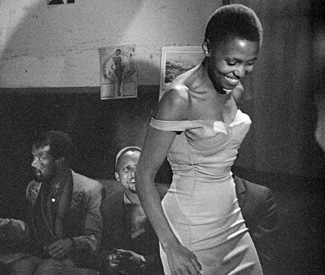
All show and almost no “tell,” Come Back, Africa pauses around the two-thirds point to let several men pass around a bottle, discussing the nature of and solutions to their oppression. They’re happily interrupted by the incongruity of a young woman in an elegant cocktail dress — no less than a then-unknown Miriam Makeba, who sings a couple of songs in her inimitable voice. When the film was finished, Rogosin bribed officials to get her out of the country, bankrolling his contracted “discovery’s” launch at the Venice Festival, and in the U.S. and England. But to his great disappointment, she was quickly taken under Harry Belafonte’s wing, dismissing her first benefactor as “not very nice” and “an amateur.” Thus a legend was born, with Rogosin pretty much cut out of the resume.

Come Back, Africa, too, would disappoint its maker in some respects. With a furious South African government swiftly condemning this portrait as “distorted,” his original plans for a trilogy became impossible. The film won a number of prizes — although unlike On the Bowery, it was pointedly not nominated for a Best Documentary Oscar — and would eventually be widely seen on European television. But it has still never been broadcast in the U.S., and despite Rogosin’s efforts — he went so far as to open NYC’s still-extant Bleeker Street Cinemas in 1960 to show it and other important new works — it collided with a thud against the overwhelming indifference of middle-class white audiences. They were barely starting to confront such thorny racial issues in their own backyard, much less in far-flung nations. Not shown in South Africa until the late 1980s, Come Back nonetheless proved a great influence on development of the whole continent’s indigenous cinematic voices.

A liberal shit-kicker to the end, Rogosin made other documentaries, was integral to the New American Cinema movement (alongside Jonas Mekas, Robert Downey Sr., Shirley Clark, and other experimental luminaries), founded distribution company Impact Films, and moved to England for a spell before dying in Los Angeles at the century’s turn. It’s a pity he didn’t live to see his two first features restored and rediscovered — though interviews late in life suggest he never let limited exposure dampen his activist zeal one whit.

COME BACK, AFRICA opens Fri/3 at the Roxie.

Sundance Diary, volume four: more docs!

0

In a series of posts, Midnites for Maniacs curator-host and Academy of Art film-history teacher Jesse Hawthorne Ficks reports on the 2012 Sundance Film Festival. Check out his first, second, and third entries.

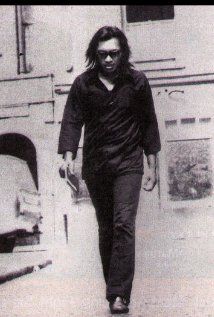
Winner of both the World Documentary Audience Award and the Special Jury Prize for its celebration of the artistic spirit is every musicologist’s dream film: Malik Bendjelloul’s Searching for Sugar Man. This larger-than-life tale is about obscure Detroit singer-songwriter Rodriguez, who created two brilliant albums, Cold Fact (1969) and Coming from Reality (1971), which some have compared to Bob Dylan’s greatest works. Yet virtually no one bought either of the records … except South Africans. The film reveals a fan base of millions, comprised of multiple generations who have viewed Rodriguez’s songs as political anthems for 40 years. And that’s just the first 15 minutes of the film!

Rodriguez’s lyrics and lifestyle celebrated a working-class hero mentality that seems to be as precious as the songs themselves, and Benjelloul’s film about his impact on a seemingly far-removed audience is a standout. But here’s a warning: be careful while reading any reviews of this film before you see it! Every single critic I’ve read has spoiled major dramatic points in the film, so try your best to catch it before you come into contact with any spoilers.

A few more for your doc queue:

The makers of 2006’s Jesus Camp, Heidi Ewing and Rachel Grady, picked up the U.S. Documentary Editing Award for their latest, Detropia. It poetically unearths a hopeless, dying city using beautifully dramatic storytelling, though the film itself feels a bit unfinished towards the final act. Kristi Jacobson and Lori Silverbush’s Finding North takes on hunger in America; many left the film wondering how they could take action to help ease the epidemic. David France’s superb How to Survive a Plague, about AIDS activists in the late 80s, left me and quite a few other critics totally devastated. France’s film is truly an emotional equivalent to last year’s U.S. Documentary Grand Jury Award winner about assisted suicide, How to Die in Oregon. This year’s World Cinema Documentary Editing Award went to Lisanne Pajot and James Swirsky’s Indie Game: The Movie, which follows a group of independent video game designers pouring a psychotic amount of hard work into their creation, Super Meat Boy.

But the most memorable among this year’s crop of socially-aware docs was Lauren Greenfield’s Queen of Versailles, which won the U.S. Directing Award for Best Documentary. The film follows an uber-rich U.S. family whose lavish lifestyle is slowly being toppled by the current recession. The inverted journey invites audiences to begin by scapegoating the couple (as it happens, the paterfamilias, David Siegel, is suing Sundance and the filmmakers for defamation). But as things onscreen turn sour, director Greenfield masterfully brings things back around, holding up a culture-of-entitlement mirror to the audience. This film stuck with me for days after the screening.  

Coming up next: Jesse Hawthorne Ficks on Sundance’s midnight movies (duh), and more!

Sundance Diary, volume three: docs!

0

In a series of posts, Midnites for Maniacs curator-host and Academy of Art film-history teacher Jesse Hawthorne Ficks reports on the 2012 Sundance Film Festival. Check out his first and second entries.

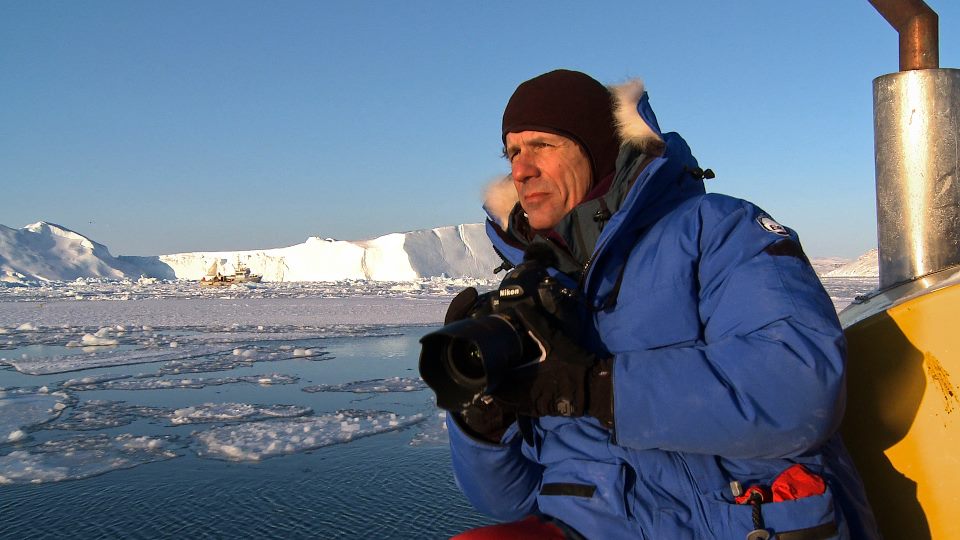
Jeff Orlowski’s Chasing Ice, which won this year’s Excellence in Cinematography Award for a U.S. Documentary, manages to sidestep the frivolous argument between liberals and conservatives as to whether or not the polar ice caps are melting. In fact, this beautiful documentary is so jaw-droppingly visual, you end up interacting with and understanding the planet’s ice structures as if they were your own grandparents. Trekking out to the furthest spots in the Northern Hemisphere, National Geographic photographer James Balog, his hard working-crew, and director Jeff Orlowski have created a document that will force the world to actually see what is happening as opposed to arguing assumptions. What I found even more unnerving is how beautiful I found crumbling ice caps to be. Am I part of the problem?
 
Doc fans will recognize the name Kirby Dick; his previous works include This Film is Not Yet Rated (2006), which exposed the MPAA (the highly-secretive, surprisingly small group which has been censoring cinema since 1968), and his controversial 2009 film Outrage, which aggressively outed closeted gay politicians who have and continue to vote against gay rights.

http://www.youtube.com/watch?v=1ifc_ongQFQ

At this year’s fest, Dick picked up the U.S. Documentary Audience Award for his latest disturbing documentary, The Invisible War. The film launches a massive exploration into the epidemic of rape in the US military, and the unbelievable actions taken within the system’s hierarchy to cover it up. It is utterly awful to realize that there are thousands of women and men who have been violated, humiliated, and robbed of justice, all while serving their country. You will leave this film a changed person.

Movies about artists always have the possibility of turning into an extended commercial — which isn’t necessarily a bad thing; it’s just important to not lose sight of that. Two documentaries from last year’s festival, Richard Press’s Bill Cunningham New York and Ricki Stern and Anne Sundberg’s Joan Rivers: A Piece of Work, highlighted not just the artist but managed to achieve something much deeper and more profound. This year, Matthew Akers’s Marina Abramović: The Artist is Present was similarly able to uncover something extremely haunting and even beguiling about its subject.

Abramović, one of the godmothers of performance art, is brilliantly shown to be audacious, committed, and finally successful, yet totally alone. This beautifully-constructed piece knows that what we are really dealing with is a person who wants to connect with every single other person on the planet. Abramović’s art is her life, and Akers’ film practices what its subject preaches by exporting her message to moviegoers, enabling her to touch even the people that she doesn’t come into direct contact with. Easily the best documentary of the Sundance Film Festival, it’s also an early contender for best doc of 2012. 

Up next: Jesse Hawthorne Ficks reports on even more docs!

Jeffrey Sachs: The necessity for sustainable development

2

By Jeffrey D. Sachs
Jeffrey D. Sachs is Professor of Economics and Director of the Earth Institute at Columbia University. He is also Special Adviser to United Nations Secretary-General on the Millennium Development Goals.

ADDIS ABABA – Sustainable development means achieving economic growth that is widely shared and that protects the earth’s vital resources. Our current global economy, however, is not sustainable, with more than one billion people left behind by economic progress and the earth’s environment suffering terrible damage from human activity. Sustainable development requires mobilizing new technologies that are guided by shared social values.

United Nations Secretary-General Ban Ki-moon has rightly declared sustainable development to be at the top of the global agenda. We have entered a dangerous period in which a huge and growing population, combined with rapid economic growth, now threatens to have a catastrophic impact on the earth’s climate, biodiversity, and fresh-water supplies. Scientists call this new period the Anthropocene – in which human beings have become the main causes of the earth’s physical and biological changes. 

The Secretary-General’s Global Sustainability Panel has issued a new report that outlines a framework for sustainable development. The GSP rightly notes that sustainable development has three pillars: ending extreme poverty; ensuring that prosperity is shared by all, including women, youth, and minorities; and protecting the natural environment. These can be termed the economic, social, and environmental pillars of sustainable development, or, more simply, the “triple bottom line” of sustainable development.

The GSP has called for world leaders to adopt a new set of Sustainable Development Goals, or SDGs, that will help to shape global policies and actions after the 2015 target date for achieving the Millennium Development Goals (MDGs). Whereas the MDGs focus on reducing extreme poverty, the SDGs will focus on all three pillars of sustainable development: ending extreme poverty, sharing the benefits of economic development for all of society, and protecting the Earth.

It is, of course, one thing to set SDGs and quite another to achieve them. The problem can be seen by looking at one key challenge: climate change. Today, there are seven billion people on the planet, and each one, on average, is responsible for the release each year of a bit more than four tons of carbon dioxide into the atmosphere. This CO2 is emitted when we burn coal, oil, and gas to produce electricity, drive our cars, or heat our homes. All told, humans emit roughly 30 billion tons of CO2 per year into the atmosphere, enough to change the climate sharply within a few decades.

By 2050, there will most likely be more than nine billion people. If these people are richer than people today (and therefore using more energy per person), total emissions worldwide could double or even triple. This is the great dilemma: we need to emit less CO2, but we are on a global path to emit much more.

We should care about that scenario, because remaining on a path of rising global emissions is almost certain to cause havoc and suffering for billions of people as they are hit by a torrent of droughts, heat waves, hurricanes, and more. We have already experienced the onset of this misery in recent years, with a spate of devastating famines, floods, and other climate-related disasters.

So, how can the world’s people – especially its poor people – benefit from more electricity and more access to modern transportation, but in a way that saves the planet rather than destroys it? The truth is that we can’t – unless we improve dramatically the technologies that we use.

We need to use energy far more wisely while shifting from fossil fuels to low-carbon energy sources. Such decisive improvements are certainly possible and economically realistic.

Consider the energy inefficiency of an automobile, for example. We currently move around 1,000 to 2,000 kilograms of machinery to transport only one or just a few people, each weighing perhaps 75 kilograms (165 lbs.). And we do so using an internal combustion engine that utilizes only a small part of the energy released by burning the gasoline. Most of the energy is lost as waste heat.

We could therefore achieve huge reductions in CO2 emissions by converting to small, lightweight, battery-powered vehicles running on highly efficient electric motors and charged by a low-carbon energy source such as solar power. Even better, by shifting to electric vehicles, we would be able to use cutting-edge information technology to make them smart – even smart enough to drive themselves using advanced data-processing and positioning systems.

The benefits of information and communications technologies can be found in every area of human activity: better farming using GPS and micro-dosing of fertilizers; precision manufacturing; buildings that know how to economize on energy use; and, of course, the transformative, distance-erasing power of the Internet. Mobile broadband is already connecting even the most distant villages in rural Africa and India, thereby cutting down significantly on the need for travel.

Banking is now done by phone, and so, too, is a growing range of medical diagnostics. Electronic books are beamed directly to handheld devices, without the need for bookshops, travel, and the pulp and paper of physical books. Education is increasingly online as well, and will soon enable students everywhere to receive first-rate instruction at almost a zero “marginal” cost for enrolling another student.

Yet getting from here to sustainable development will not just be a matter of technology. It will also be a matter of market incentives, government regulations, and public support for research and development. But, even more fundamental than policies and governance will be the challenge of values. We must understand our shared fate, and embrace sustainable development as a common commitment to decency for all human beings, today and in the future.

Jeffrey D. Sachs is Professor of Economics and Director of the Earth Institute at Columbia University. He is also Special Adviser to United Nations Secretary-General on the Millennium Development Goals.

Copyright: Project Syndicate, 2012.
www.project-syndicate.org

Sundance Diary, volume two: ‘Beasts’ and ‘Daughters’

0

In a series of posts, Midnites for Maniacs curator-host and Academy of Art film-history teacher Jesse Hawthorne Ficks reports on the 2012 Sundance Film Festival. Check out his first entry here.

The surprise hit at this year’s Sundance Film Festival was Benh Zeitlin’s Beasts of the Southern Wild, which not only has the power to hypnotize but to also enlighten with its striking cinematography, fantastical special effects (wonderfully designed by San Francisco’s own Academy of Art University), and a truly guttural performance by newcomer Quvenzhané Wallis. She plays Hushpuppy, a precocious six-year-old searching to understand a world post-Katrina, post-race, and more importantly post-childhood.

Combining David Gordon Green’s George Washington (2001), Spike Jonze’s Where the Wild Things Are (2008), and most appropriately Julie Dash’s Daughters of the Dust (1991), Zeitlin has created a genuinely haunting enigma for modern audiences that deserves multiple viewings for maximum understanding. But even though it won both the U.S. Dramatic Grand Jury Prize and the U.S. Dramatic Excellence in Cinematography Award at this year’s festival, will Beasts ultimately be able to find an audience outside of the festival?

As it happens, Daughters of the Dust was restored for this year’s festival (and correctly color timed for the first time ever!) This visual poem exploring South Carolina’s coastal Gullah culture is as modern, historical, profound, and universal as Jane Campion’s The Piano (1993) and Terrence Malick’s Tree of Life. Yet for some reason, the film did not find a very large audience. With Sundance holding a 30-plus minute Q&A with Dash herself following the screening, many historical and symbolic details were explored — but more importantly, you were able to just sit with the film.

http://www.youtube.com/watch?v=c4PEcVK6gbM

When I was in college, Daughters was truly was one of the most difficult movies for me to keep up with (I fell asleep multiple times, couldn’t understand the character’s accents, etc.) Seeing it again for its 20th anniversary, the film feels more than ever like a revelatory example of visual narrative cinema: images and sounds sweep the viewer into a place where they can slow down and absorb the kind of filmmaking that can resonate in your soul.

Up next: Jesse Hawthorne Ficks goes doc-wild in his third Sundance Diary.

Sundance Diary, volume one: the hipster chronicles

0

In a series of posts, Midnites for Maniacs curator-host and Academy of Art film-history teacher Jesse Hawthorne Ficks reports on the 2012 Sundance Film Festival.

This was my 22nd consecutive Sundance Film Festival (which is well over half of my life), and I found myself more excited than ever to pack in as many films as humanly possible in seven days. Thirty-seven programs were achieved, and mind you: the trick is not to fall asleep, which so often happens at press screenings, resulting in many critics hypocritically denouncing whatever film they slept through.

Oddly enough, two of the biggest world premieres of the festival, Lee Toland Krieger’s Celeste and Jesse Forever and Josh Radnor’s Liberal Arts both explore the lives of thirtysomething men named Jesse who “have a lot of potential” but for some reason just aren’t making the most of their lives.

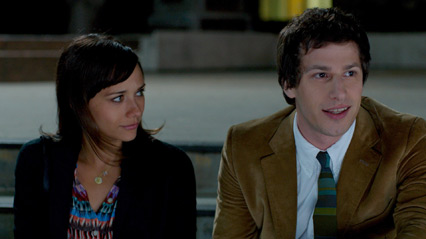
Krieger’s film is about a couple who have decided to get a divorce, yet find themselves spending even more time together than when they were married. Rashida Jones (from Parks and Recreation) and Andy Samberg (can we just talk about how underrated his 2007 film Hot Rod was?) star in an amazing dramatic comedy that allows a difficult subject (“How to break up with a loved one?”) to sneak up on you by the gripping third act. Allusions to Marc Webb’s decade-defining 500 Days of Summer (2009) are well-deserved; I found this film to be an instant classic.

Liberal Arts is Radnor’s follow-up to last year’s Dramatic Audience Award winner, Happythankyoumoreplease; it tells the (terrifyingly) relatable story of a thirtysomething intellectual (Radnor as Jesse) who falls for a plucky young student who is wise beyond her years; she’s played by Elizabeth Olsen, fresh off her astounding performance in last year’s Sundance hit Martha Marcy May Marlene. But this ode to Woody Allen’s Manhattan (1979) has more going for it than just an age-gap relationship dilemma. Not only does Zac Efron pop up as Jesse’s spiritual guru (which garnered major gasps from many audience members), but Richard Jenkins delivers a haunting performance as Jesse’s “second favorite professor” who has finally decided to retire from his tenured position. Radnor achieves a surprising amount of poignancy by way of light-hearted comedy. Woody Allen would no doubt approve.

With two films at the festival, cult actor-directors Tim Heidecker and Eric Wareheim (Tim and Eric Awesome Show, Great Job!) proved that they could tackle both heaven and hell. The comedy duo’s directorial debut, Tim and Eric’s Billion Dollar Movie, brought their purposefully clunky and abstract comedy to the big screen with some very mixed results. Following in the footsteps of such surreal “nonsense” masterpieces as H.C. Potter’s Hellzapoppin’ (1941), Bob Rafelson’s Head (1970), and Tom Green’s Freddy Got Fingered (2001), fans of the show will be treated to many truly disgusting and hilarious sequences along with a ton of cameos, leaving the uninitiated understandably dumbfounded.

However, the 90-minute film did seem to have some trouble translating the chaotic immediacy of Awesome Show‘s 11-minute episodes, leaving many in the midnight premiere wanting desperately to laugh a whole lot more. (Not sure I agree with the film’s “Better than The Lorax” ad campaign, but they get points for inventive advertising.)

But not to fear, Rick Alverson‘s ironically titled The Comedy was the jewel of the festival, or the anti-jewel — it was the most polarizing film of Sundance 2012. It follows a 35-year-old Williamsberg hipster named Swanson (stunningly played by Heidecker) as he antics through his daily quest: attempting to get any reaction from any sort of person. This leads him to say and do some of the most confusing and borderline offensive stuff imaginable.

While this sent many towards the exit doors (and left a fair amount baffled in their seats, whispering “This has got to be the worst film ever made!”), audience members who dared remain were treated to a perceptive, modern-day study of hipster culture that reveals a despicable and terrible truth. You may find yourself relating to Alverson’s perceptive anti-hero in ways comparable to Robert DeNiro in Taxi Driver (1976), Peter Falk in Husbands (1970), and Jack Nicholson in Five Easy Pieces (1970). And since The Comedy was made not necessarily to be enjoyed, it will probably, sadly, take 20 years for people to recognize that there is no finer film to define this generation.

This isn’t to say that there aren’t going to be more films presenting what it is to be modern day man-child — after all, mumblecore movies and hipster cinema emerged as early as 1991 with Richard Linklater’s Slacker. I noticed that many people at Sundance were immediately averting themselves from Destin Daniel Cretton’s I Am Not a Hipster, just because of its title. It’s a curious dilemma that plagues this era (and it relates directly to Alvie Singer’s life philosophy: “I would never want to belong to any club that would have someone like me for a member.” This quote from Woody Allen’s 1977 Annie Hall, itself a Groucho Marx reference, seems to be one of the most difficult hurdles for super-self-aware hipster culture to overcome.)

Cretton’s film focuses on Brook (played by Dominic Bogart), a skinny-jeaned indie rocker who finds himself trapped in a cycle of contempt and cynicism. Suddenly his three sisters arrive (Greek chorus, anyone?), thus beginning a surprisingly genuine exploration of the kind of grumpy guy that most of us thirtysomethings have either been or encountered this past decade. Some very true emotions are earned by the end of this 90 minutes; hopefully audiences will confront their individual issues and start taking that next step towards embracing their own hipster tendencies. Or not.


Up next: Jesse Hawthorne Ficks’ second Sundance Diary, covering even more dramatic competition films, midnight movies, and more. He saw 37 films, people. His diary is epic!

What are people?

4

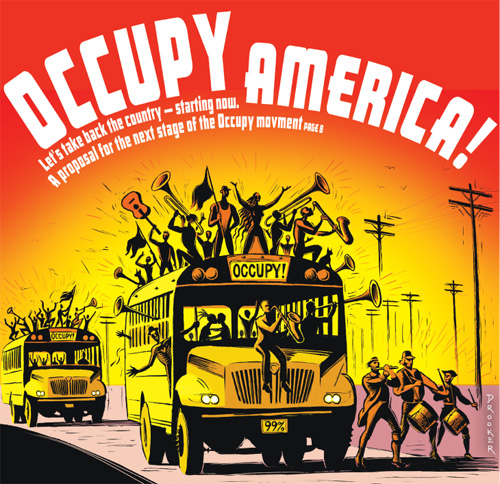
Protesters from the Occupy movement and beyond gathered in front of the Ninth Circuit Court of Appeals in San Francisco on Jan. 20, calling for the adoption of a 28th amendment to the U.S. Constitution aimed at refuting the idea that corporations should have the same rights as people, a legal doctrine know as corporate personhood.

The event was part of a day of action at courthouses around the country, seeking to raise public awareness about the unfettered influence of corporate money in U.S. elections and draw attention to the second anniversary of the landmark corporate personhood decision by U.S. Supreme Court, Citizens United vs the Federal Elections Commission.

“We are here not to protest, not to petition, and not to plead, but to proclaim a truth that should be self evident, even to the Supreme Court: Corporations are not people; money is not speech,” said Abraham Entin, of North Bay Move To Amend, addressing a crowd gathered at the courthouse. “Corporations work very hard to convince us that we cannot do without them and the products they produce. They tell us they are too big to fail, and that our survival is dependent on their survival … Occupy has changed all that.”

In a contentious 5-4 ruling handed down on Jan. 21, 2010, the Citizens United case solidified the legal framework that bequeaths corporations the same rights under the Constitution as real, living, breathing, U.S. citizens, and by merit of their First Amendment rights as citizens bars any restrictions placed on a corporation’s ability to spend money to influence elections.

When Republican presidential candidate Mitt Romney famously said on the campaign trail that “corporations are people, my friend, because corporations have people inside them,” he is reflecting the logic of the majority opinion in the Citizens United case. The court’s majority asserted that corporations are essentially an association of people and thus enjoy the same rights as individuals.

The court also claimed that it is impossible to distinguish between the corporate media outlets and other corporate speech, so all corporations should enjoy the free speech rights saved for the press. Furthermore, because journalists often have to spend money to achieve speech, money spent on messaging by all corporations represents protected speech.

Corporations, a relatively modern invention, aren’t actually discussed in the Constitution. But the notion of corporation personhood began around 1886 in the case of Santa Clara County v. Southern Pacific Railroad. What Citizens United did was equate corporate money spent to influence elections with protected political speech, upending attempts at election reforms and gutting the McCain-Feingold Act of 2002 that regulated federal election campaigns.

That corporations act to corrupt our democratic systems for their own profit is not conspiracy, it’s simply a byproduct of what they are. Corporations are legally obligated to act to maximize their profits for the benefit of their shareholders, otherwise their board and corporate officers are considered negligent of their obligations to their shareholders’ financial interests. Unlike journalists, whose professional credo calls for fairness and acting in the public interest, corporations are designed to act in their own interests.

As Justice John Paul Stevens wrote for the dissenting judges in Citizens United, “Corporations have no consciences, no beliefs, no feelings, no thoughts, no desires. Corporations help structure and facilitate the activities of human beings, to be sure, and their ‘personhood’ often serves as a useful legal fiction. But they are not themselves members of ‘We the People’ by whom and for whom our Constitution was established.”

The resulting flood of corporate money into election campaigns since the court’s ruling is delivered through an aqueduct known as the Super PAC (political action committee). In the wake of Citizens United, election spending by Super PACs in the 2010 midterm elections exceeded $300 million dollars, more spending than the overall spending in the previous five midterm elections combined.

Unlike donations to campaigns, which so far remain regulated, Super PAC money is spent directly by the Super PAC, and can be spent attacking as well as supporting candidates, leading to fears that corporations can exert influence on incumbents before a re-election campaigns by threatening to spend money attacking them in the upcoming election cycle.

“Corporations are human creations, state creations, legal entities … There is no reason we cannot limit their spending,” said Carlos Villarreal, executive director of the National Lawyers Guild’s Bay Area chapter. “Nonprofit organizations are limited in their political spending. Churches and charitable organizations are also limited in their spending. So why not for-profit corporations?”

Perhaps no group knows more about government limits to free speech than participants of the Occupy movement. Elastic restrictions on individual free speech and freedom of association rights spelled out in the First Amendment, resting on alleged risks to health and public safety, have led to Occupy encampments across the nation being restricted and evicted, at times enforced by brutal police crackdowns.

The right of the government to restrict individual and group speech that officials believe represents a clear and present danger was established by the Supreme Court in the 1919 Schenck v United States case — the famous “don’t yell fire in a crowded theater” case. What is not widely known is that this case was a re-examination of the famous 1917 Espionage Act. The “crowded theater” was our nation’s entry into World War I, and those being jailed for “yelling fire” were labor organizers and pacifists expressing their opposition to our entry into the war.

Relying on Schenck, courts have consistently defended restrictions on individual free speech when there is a compelling interest to public safety, the so-called “clear and present danger” standard. Villarreal and the crowd gathered before the Ninth Circuit asserted that corporate influence in our democratic processes represents a clear and present danger to society. “There is no more compelling interest than protecting democracy,” said Villarreal.

Despite the apparent double standard, legal experts say the courts action in the Citizens United case leaves a constitutional amendment as the only avenue left for regulating corporate money in elections and ending corporate personhood, but the movement to take on that Herculean task has already begun.

U.S. Sen. Bernie Sanders (I-VT) and Rep. Ted Deutch (D-FL) have introduced legislation proposing a 28th Amendment to the Constitution. While the language differs from another amendment presented by the group Move to Amend, it also takes aim at ending corporate personhood.

“Two years ago, the United States Supreme Court betrayed our Constitution and those who fought to ensure that its protections are enjoyed equally by all persons regardless of religion, race or gender, by engaging in an unabashed power-grab on behalf of corporate America,” Sanders wrote in a Jan. 20 Guardian(UK) column.

In Sanders’ home state of Vermont, the state Senate is also considering a resolution calling for a constitutional amendment against corporate personhood. A similar resolution, authored by Alix Rosenthal, was adopted by the San Francisco Democratic County Central Committee during a special meeting on Jan. 21. There was just one dissenting vote, and DCCC members say they plan to push for the state party organization to also adopt the stance.

The hurdles set forth to amend the U.S. Constitution, outlined in Article V, are substantial. In order for an amendment to even be considered, a super majority of both houses of Congress must initiate the process, or two-thirds of states must call for the amendment. Proposed amendments passing this threshold are then adopted only after three-quarters of state legislatures ratify the proposed amendment. But that difficult road is one the protesters said they are ready to travel. “We are here on a rainy day with warm hearts and wet feet. We are the 100 percent, the humans. No corporation has every experienced the thrill of wet feet,” said Gangs of America author Ted Nace. “We are the fools who go out on a wet day to fix a broken world. Eighty percent of the public want to fix this. That means we are halfway to our goal. What remains is organization, mobilization.”

In the realms of the unreal

3

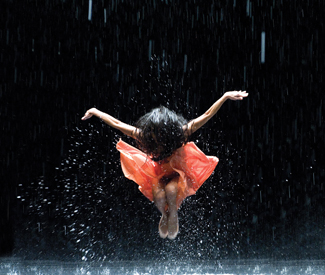
FILM/DANCE Watching Pina Bausch’s choreography on film should not have been as absorbing and deeply affecting of an experience as it was. Dance on film tends to disappoint — the camera flattens the body and distorts perspective, and you either see too many or not enough details. Avatar (2009) certainly didn’t convince me that 3D was the answer.

However, improved technology gave Wim Wenders (1999’s Buena Vista Social Club; 1987’s Wings of Desire) the additional tools he needed to accomplish what he and fellow German Bausch had talked about for 20 years: collaborating on a documentary about her work. Instead of making a film about the rebel dance maker, Wenders made it for Bausch, who died in June 2009, two days before the start of filming.

Pina is an eloquent tribute to a tiny, soft-spoken, mousy-looking artist who turned the conventions of theatrical dance upside down. She was a great artist and true innovator whose thinking was crucially shaped by her work in the 1960s with Antony Tudor and the team of Donya Feuer and Paul Sanasardo.

Wenders’ great accomplishment in this beautifully paced and edited document is its ability to elucidate Bausch’s work in a way that words probably cannot. While it’s good to see dance’s physicality and its multi dimensionality on screen, it’s even better that the camera goes inside the dances to touch tiny details and essential qualities in the performers’ every gesture. No proscenium theater can offer that kind of intimacy.

Appropriately, intimacy (the eternal desire for it) and loneliness (an existential state of being) were the two contradictory forces that Bausch kept exploring over and over. There is something absurd about the way her dancers never tire of being curious, silly, cruel, childish, hysterical, loving, and angry. The nobility and desperation comes from not giving up.

By taking fragments of the dances into the environment — both natural and artificial — of Wuppertal, Germany, Wenders places them inside the emotional lives of ordinary people (subjects of all of Bausch’s work), where there is room for a man with rabbit ears to ride public transportation and couples make love at intersections.

In Bausch’s work, sets — deluges, walls that crumble, hippos, mountains, floors made from dirt, grass, and carnations — are the obstacles that challenge and dwarf the dancer. Wenders chose his outside “sets” brilliantly to similar effect. Many locations are huge: gyms, factories, convention halls, and quarries — and the performers are clearly strangers.

The 3D technology Wenders uses rarely jumps out at the viewer. Instead, his space has a sheen and glassy quality that is non-realistic; it seems to pervade the whole film even in its more conventionally-shot sequences. While it’s good to see dance’s physical multidimensionality, perhaps even more satisfying is Wenders’s juxtaposing of different senses of dimensionality into a coherent whole that I suspect Bausch would have approved of. It’s the artifice and not the realism that makes Pina the fine work it is.

Before her death, Bausch had chosen four choreographies as the film’s core material. They were excellent picks, though it’s curious that three of them are quite early while Vollmond is her last complete work, more in the genre of her later “travel-inspired” pieces. Perhaps she meant to tell us something. Café Mueller shows a young Bausch in a dreamy, nightmarish labyrinthine environment; The Rite of Spring starts her investigation of male-female struggles; and Kontakthof is a work about the eternal mating frenzy as danced by her own company, a group of seniors, and an ensemble of teenagers.

Not pre-planned, however, was Wenders’ brilliant decision to include “interviews” with the dancers. They silently look at the camera but their grief-stricken faces speak of loss, loneliness, and a sense of abandonment. They were thinking about Bausch’s death, but perhaps also about her work. *

PINA opens Fri/20 in San Francisco.

Wall played

0

Also in this issue, Guardian writer Matt Sussman on who got the hype — and who earned it — in the galleries at Art Basel Miami 2011

VISUAL ART The popular face of Miami is made of aqua blue views and chrome rims, but the parts of Wynwood that haven’t been covered by murals yet look more like asphalt and the muted tones of low-cost rentals. Since the 1950s it’s been largely a Puerto Rican neighborhood. It’s also where many African Americans moved when they got priced out of the Overtown neighborhood to the south, where they were originally relegated by Jim Crow laws.

But, in a high-low art tornado last month, Wynwood is also where I learn that the popular legend labeling the Mission District the neighborhood with the most densely-packed street art in the world is total bunk.

Wynwood’s main drag Second Avenue is Clarion Alley on acid. Having come straight from Miami International Airport, my rental car barely inches down the strip, so omnipresent are the weaving, goggling packs of urban art voyeurs in oversized silk shirt-dresses and vertiginous wedge heels or where’d-you-get-’em sneakers. The only sign of the neighborhood’s year-round residents are the sporadic flaggers in self-bought orange vests waving cars into parking spots.

Angry sharks, Persian cat-women, color-washed streetcars, and owls sitting shotgun in convertibles — sometimes layered on top of each other — grace walls here. Designs pour off walls and onto the sidewalk. Here, the fairytale nymphs and walking houses of Os Gemeos on a fancy restaurant; there, a massive black-and-white photo wheatpaste by JR of bulging, watching eyes that echo the look of passers-by. I nearly break my neck on Mexico City artists Sego and Saner’s horned beetle-men, who clutch amulets and wear fanged leopard masks on the backs of their heads. Absolut Vodka has occupied a parking lot with a temporary open-air club, dotting it with human-sized aerosol cans and fencing it off with chainlink. It’s enough to make any street art fan lose their shit, or at least the rental car.

I’ve parachuted into the middle of Miami’s yearly art inferno, a.k.a. the week that the Art Basel art fair comes to town. Since 2002, this Swedish import has filled Miami Beach Convention Center with astronomically-priced works from over 260 international galleries. Umpteen ancillary art and design fairs populate deco hotel-land and its surrounds during this time — the city becomes one largely, loudly turned-out gallery opening.

Wynwood, with its surplus of 80-foot blank walls, hosts many an art collection — but it’s most visible contribution to the scene is its dense network of murals. Of these, the undisputed center is a compound of buildings grouped around a courtyard of marquee works dubbed Wynwood Walls. The properties were purchased by (in)famous neighborhood rejuvenator Tony Goldman in 2004. Many hold Goldman responsible for the gentrification of Soho, South Beach, and city center Philadelphia.

Wynwood Walls is his carefully orchestrated attempt to use the allure of street art to change the area’s economic fortune. Shortly before Art Basel 2011, Goldman produced a series of YouTube shorts dubbed “Here Comes the Neighborhood,” in which longtime graffiti photographer Martha Cooper cheerfully opines “Now we’ve got something [street art] that people are calling the biggest art movement in history of the world. And it just might be.”

The night of my arrival, the amount of in-progress murals at which the crawling traffic gives one an opportunity to gawk is striking. At least a dozen artists labor within a four-block radius, greeting fans, drinking beers and staring up at their half-finished creations contemplatively.

Such was the mood in which I find Buenos Aires street artist Ever, who along with an assistant is completing a massive wall featuring two disembodied heads emitting his signature riotously colorful cognitive mapping hives, which in the past he’s painted emerging from the brains of Mao Tse-Tung and his own younger brother. Ever was flown up by a community-based Atlanta street art festival, Living Walls, to paint a Second Avenue parking lot wall as part of the festival’s first project outside of Georgia.

It’s not his first international street art festival, but Ever is among the artists under-impressed with the Basel-time scene in Wynwood.

“It’s like the alcohol. I hate the shit — but one drink more!” We talk when the dust of Basel has long settled; Ever, fellow street and gallery artist Apex, and I perched around Apex’s studio in a Market and Sixth Street garment factory building.

Apex, who has been to Miami during Basel week four times, and twice to paint the crystallized, color-saturated “super burner” murals he is known for, explains that for him, the problem is exploitation. Street artists typically paint walls for a pittance or for free, in a neighborhood where businesses are making boatloads of money off spectators that come to marvel.

“You have, like, Tony Goldman, he gives a certain amount of money, property owners make money, but artists, a few make money,” Apex explains. “The rest, no. Artists get caught in the excitement of it. But who is getting paid off of it?”

“Who wins,” Ever adds.

“If someone is making money off of it, you should know who that is,” concludes Apex.

But the two artists agree that Art Basel week is an excellent education in the workings of the high art world for aspiring professionals, and that the camaraderie that flourishes between street artists can be important, inspirational.

And of course, the parties. Basel is known for them — 2011 featured everything from the $200-a-ticket “Fuck Me I’m Famous” David Guetta show to surprise kudos for the partykids from Pharrell onstage at Yelawolf’s Saturday night gig at a castle-shaped outdoor club in Wynwood. On my first night in town, the whole Living Walls gang — organizers, artists, errant alternative journalist from San Francisco — pile into cars and hit the Design District to check out the opening of the group show of Primary Flight, a local collective that got its start commissioning murals wall-by-wall in Wynwood.

“We started noticing we weren’t the breadwinners of the galleries,” Primary Flight founder Books Bischof tells me in a phone interview. “It was like fuck you, we’re going to take to the streets. We’re all curators in a sense, so we might as well get up and be seen.” Bischof logged time connecting with local graffiti crews and Wynwood’s homeless population to make sure he had community support for bringing the art crowd into the neighborhood during Basel week. He somewhat resents Goldman’s “just buy it” approach. “When we learned about [his Wynwood building purchases] we were like, well that’s kind of fucked.” (Though officially the two camps exist amicably, Goldman told me he upon arriving in the neighborhood he found Primary Flight’s piecemeal approach to its murals “helter-skelter.”)

But along with Wynwood’s art scene, Primary Flight has grown. In addition to its mural program — through which Apex painted his 2011 Miami wall — attendees at the collective’s gallery space could take in traditional paintings and sculptures, but also Mira Kum’s “I Pig, Therefore I Am” installation featuring the artist in the nude, living with two pigs in a small enclosure for 104 hours. “We represent artists with a street art, fuck you swagger,” comments Bischof.

Things are much more established now in Wynwood, which by most counts serves as Miami’s arts district year-round. There are expensive coffeeshops and bars, fine restaurants, precious florists, and blocks of galleries selling accessible art. (During Art Basel week, one of these is given over to an artist who specializes in kawaii food art printed onto affordable decals and posters. An entire wall is covered in swirly-topped ice cream cones in a hundred color options.)

Though professional street art certainly existed prior to his engagement, this upscaling can largely be attributed to Goldman’s speculative interest. Goldman’s PR agency sends me press materials dubbing Wynwood “the next great discovery in the Goldman Properties portfolio.” His company’s general methodology is to buy up historic buildings in socioeconomically depressed neighborhoods and fill them with upscale businesses that attract more pedestrian traffic.

There is little doubt that Goldman envisions the future of Wynwood as a place where housing units rent for far more than many of its current residents can afford. His team has spent considerable time and effort working with Miami’s city council on creating live-work zoning in Wynwood (not unsimilar to the type of zoning that loaded San Francisco’s SoMa with high cost condos). After the Basel hangover has dissipated, I get a chance to talk with him.

“When I went to Wynwood and I had boxy warehouse buildings, it was a much different challenge for me,” says Goldman during our decorous phone interview. “Now I could be free. Some people would look at ugly buildings and empty parking lots and loading zones — what I saw was an international outdoor street art museum. Huge canvas opportunities.” He bought six of those buildings in the center of the neighborhood, two of which now house spendy restaurants run by his son and daughter.

Goldman is not completely without street art cred. Since 1984, he has owned a massive wall on Manhattan’s Bowery and Houston Streets that has hosted murals from Keith Haring, Barry McGee, and Shepard Fairey. “[Street art] is freer in a lot of ways than walking in a museum, which a lot of street artists consider graveyards,” he says. “Not that I agree with them, not that I disagree with them either. I think Wynwood Walls is one place that has validated the art form as an important contribution to contemporary art.”

But Wynwood Walls also serves as the main attraction to an area in which Goldman Properties has monetarily invested. “It [is] a center place that the arts district really didn’t have, a town square, a centerpiece that was defined architecturally,” reflects Goldman. “It served its purpose.”

But perhaps this use of street art as tool of gentrification is not so incongruous. After all, most if not all professional street artists are able to create murals only by selling gallery-ready pieces. Ever tells of painting a mural for Coca-Cola with studiomate Jaz, only to use his paycheck to create three more public walls. “The reality of art is you always need a rich person,” he says.

Which is, more or less, to say that even in Wynwood, professional street art is not entirely soulless. Take for example one of Ever’s favorite Wynwood pieces, done by Spanish artist Escif. The wall was so popular, in fact, it merited a cameo in a “Here Comes the Neighborhood” episode. And not for its bright colors or revolutionary design; it’s just black capital letters on a flat white background.

But it does have a pretty direct message for good-intentioned folks in Wynwood. It says: “Remember, u’re not doing it for the money.”

What recession?

0

Also in this issue: Guardian culture editor Caitlin Donohue on Art Basel Miami 2011’s street art scene

VISUAL ART Now in its 10th year, Art Basel Miami Beach (ABMB)— the art world’s annual “spring beak” during which power brokers, status-seekers, and a curious public descend on Miami Beach over the first weekend in December — makes for an easy target, engorging South Beach’s already cartoonish version of “living large” by bringing its own cold strains of entitlement, status, and exclusivity.

Perhaps this is what advertising mogul and mega-collector Charles Saatchi decried (somewhat sanctimoniously) as “the hideousness of the art world” in an op-ed piece for the UK Guardian, conveniently published during the fair’s run. Those who liked to show off certainly did: luxury SUVs continually clogged the viaducts across Biscayne Bay; I counted more blue-chip handbags and heels than in the September issue of Vogue; and there was always buzz of a party or dinner you weren’t on the list for. (Party-crashing is ABMB’s unofficial blood sport).

“I just stopped Tweeting,” remarked a social media manager for a San Francisco museum, as we shared a bleary-eyed ride to the airport on Monday night. “I mean, how many jokes can you make about the money?”

My van-mate’s fatigue was understandable. The fair itself is exhausting, having grown to include some 260 international exhibitors that transform the Miami Beach Convention Center into a warren of aisles and booths, as well as programs of outdoor sculpture, video, and a series of panel discussions and Q&As. And this isn’t even including the aforementioned endless circuit of afterhours soirées.

But his bafflement also pointed towards the way business is done at Art Basel, bringing to mind Marx’s characterization of capital as a kind of magic act. Most of the transactions happened offstage, with a majority of pieces selling before the fair had even opened. As a curator friend jokingly asked, echoing sentiments she has been hearing all weekend from gallery associates: “Where’s the recession?”

There certainly wasn’t much in the way of finger-pointing on the convention center floor. Threats of an Occupy-style protest remained just that. Danish collective Superflex’s giant flags emblazoned with logos of bankrupt banks (at Peter Blum Gallery) attempted to reveal the elephant in the room. They might have been overpowered, however, by the flash of Barbara Kruger’s riotous wall texts at Mary Boone, which proclaimed “Money makes money” and “Plenty should be enough.” The ripest visual metaphor for wasteful abundance was certainly Paulo Nazareth’s “Banana Market/Art Market,” a green Volkswagen van filled with real bananas that spilled out onto the convention floor.

Even though the writing was on the wall, visitors seemed more keen on getting their pictures taken with some of the single-artist installations that were part of the”Ark Kabinett” program. Ai Weiwei’s barren tree made from pieces of dead tree trunks collected in Southern China had almost as long of a queue as Elmgreen and Dragset’s marble sculpture of a neoclassical male nude hooked up to an IV, the centerpiece of Amigos, the un-ambiguously gay duo’s deconstructed bathhouse that took over Galeria Helga de Alvear’s booths.

There were a few welcome surprises: new LA-based artist Melodie Mousset’s mixed-media piece “On Stoning and Unstoning” (at Vielmetter) offered a politically astute and formally bold tonic to the generally conservative, painting-heavy selection, as did older sexually and politically frank pieces by second-wave feminist artists such as Martha Rosler and Joan Semmel.

However, the most exciting art could be found outside the convention center, mainly in the rapidly-gentrifying Wynwood neighborhood which now boasts more than 40 galleries (nearly quadruple the number from eight years ago). Many of Miami’s biggest collectors have followed suit, setting up warehouses in the adjacent Design District where their collections are on view to the public.

“Frames and Documents,” the Ella Fontanalas-Cisneros Collection’s sensitively curated selection of Conceptualist art from the 1960s to the late ’80s— which juxtaposed the work of Central and South American artists with that of their American and European contemporaries — was brimful with lush aesthetic rewards delivered with the barest of means.

I renewed too many loves that afternoon (and found some new ones, as well) to list in full, but another institutional stand-out was the Miami Art Museum’s “American People, Black Light,” a retrospective of Faith Ringgold’s early paintings from the ’60s that capture with unflinching clarity the anguish, ambivalence and rage of the Civil Rights era. Given Ringgold’s profile, it’s shocking that they’ve never been the subject of their own exhibition until now.

Much has been made of the “trickle down” effect ABMB has had on the cultural revitalization of Miami. (Wynwood is the most frequently cited example). The most hopeful and lasting sign I saw of any such change was a few blocks down from the Cisneros collection, at the small gallery Wet Heat Project. For the group show “A Piece of Me” pairs of art students from local high schools had been matched with four mid-career alumni from Miami’s New World School of the Arts. Each student team then conceived, developed, and produced a video installation in response to a piece by their alumni mentor, with both the final video pieces and those works that inspired them on display in the gallery.

What could’ve been a gimmicky set-up resulted in some truly inventive, thoughtful, and original work on the part of the students. Moreover, “A Piece of Me” offers one portable model for bridging the community at large and the art community. As Max Gonzalez, one of the participating students who was on hand, said of his installation, “It was go big or go home for us.”

Next to that vote of confidence, the Miami Beach Convention Center floor — littered with big names and bigger baubles destined for law firm lobbies and penthouse living rooms — seemed that many more miles away.

Matt Sussman writes the Guardian’s biweekly Hairy Eyeball column.

Occupy Nation

15

news@sfbg.com

The Occupy movement that spread across the country last fall has already changed the national discussion: It’s brought attention to the serious, systemic problem of gross inequities of wealth and power and the mass hardships that have resulted from that imbalance.

Occupy put a new paradigm in the political debate — the 1 percent is exploiting the 99 percent — and it’s tapping the energy and imagination of a new generation of activists.

When Adbusters magazine first proposed the idea of occupying Wall Street last summer, kicking off on Sept. 17, it called for a focus on how money was corrupting the political system. “Democracy not Corporatocracy,” the magazine declared — but that focus quickly broadened to encompass related issues ranging from foreclosures and the housing crisis to self-dealing financiers and industrialists who take ever more profits but provide fewer jobs to the ways that poor and disenfranchised people suffer disproportionately in this economic system.

It was a primal scream, sounded most strongly by young people who decided it was time to fight for their future. The participants have used the prompt to create a movement that drew from all walks of life: recent college graduates and the homeless, labor leaders and anarchists, communities of colors and old hippies, returning soldiers and business people. They’re voicing a wide variety of concerns and issues, but they share a common interest in empowering the average person, challenging the status quo, and demanding economic justice.

We chronicled and actively supported the Occupy movement from its early days through its repeated expulsions from public plazas by police, particularly in San Francisco, Oakland, and Berkeley. We supported the right of the protesters to remain — even as we understood they couldn’t and shouldn’t simply stay forever. Occupy needed to evolve if it was to hold the public’s interest. The movement would ultimately morph into something else.

That time has come. This spring, Occupy is poised to return as a mass movement — and there’s no shortage of energy or ideas about what comes next. Countless activists have proposed occupying foreclosed homes, shutting down ports and blocking business in bank lobbies. Those all have merit. But if the movement is going to challenge the hegemony of the 1 percent, it will involve moving onto a larger stage and coming together around bold ideas — like a national convention in Washington, D.C. to write new rules for the nation’s political and economic systems.

Imagine thousands of Occupy activists spending the spring drafting Constitutional amendments — for example, to end corporate personhood and repeal the Citizens United decision that gave corporations unlimited ability to influence elections — and a broader platform for deep and lasting change in the United States.

Imagine a broad-based discussion — in meetings and on the web — to develop a platform for economic justice, a set of ideas that could range from self-sustaining community economics to profound changes in the way America is governed.

Imagine thousands of activists crossing the country in caravans, occupying public space in cities along the way, and winding up with a convention in Washington, D.C.

Imagine organizing a week of activities — not just political meetings but parties and cultural events — to make Occupy the center of the nation’s attention and an inspiring example for an international audience.

Imagine ending with a massive mobilization that brings hundreds of thousands of people to the nation’s capitol — and into the movement.

Occupy activists are already having discussions about some of these concepts (see sidebar). Thousands of activists are already converging on D.C. right now for the Occupy Congress, one of many projects that the movement can build on.


DEFINING MOMENTS

Mass social movements of the 20th Century often had defining moments — the S.F. General Strike of 1934; the Bonus Army’s occupation of Washington D.C.; the Freedom Rides, bus boycotts and Rev. Martin Luther King Jr.’s March on Washington; Earth Day 1970; the Vietnam War teach-ins and moratoriums. None of those movements were politically monolithic; all of them had internal conflicts over tactics and strategies.

But they came together in ways that made a political statement, created long-term organizing efforts, and led to significant reforms. Occupy can do the same — and more. At a time of historic inequities in wealth and power, when the rich and the right wing are stealing the future of generations of Americans, the potential for real change is enormous.

If something’s going to happen this spring and summer, the planning should get under way now.

A convention could begin in late June, in Washington D.C. — with the goal of ratifying on the Fourth of July a platform document that presents the movement’s positions, principles, and demands. Occupy groups from around the country would endorse the idea in their General Assemblies, according to procedures that they have already established and refined through the fall, and make it their own.

This winter and spring, activists would develop and hone the various proposals that would be considered at the convention and the procedures for adopting them. They could develop regional working groups or use online tools to broadly crowd-source solutions, like the people of Iceland did last year when they wrote a new constitution for that country. They would build support for ideas to meet the convention’s high-bar for its platform, probably the 90 percent threshold that many Occupy groups have adopted for taking action.

Whatever form that document takes, the exercise would unite the movement around a specific, achievable goal and give it something that it has lacked so far: an agenda and set of demands on the existing system — and a set of alternative approaches to politics.

While it might contain a multitude of issues and solutions to the complicated problems we face, it would represent the simple premise our nation was founded on: the people’s right to create a government of their choosing.

There’s already an Occupy group planning a convention in Philadelphia that weekend, and there’s a lot of symbolic value to the day. After all, on another July 4th long ago, a group of people met in Philly to draft a document called the Declaration of Independence that said, among other things, that “governments … deriv[e] their just powers from the consent of the governed … [and] whenever any Form of Government becomes destructive of these ends, it is the Right of the People to alter or to abolish it, and to institute new Government, laying its foundation on such principles and organizing its powers in such form, as to them shall seem most likely to effect their Safety and Happiness.”


ON THE ROAD

If the date is right and the organizing effort is effective, there’s no reason that Occupy couldn’t get close to a million people into the nation’s capital for an economic justice march and rally.

That, combined with teach-ins, events and days of action across the country, could kick off a new stage of a movement that has the greatest potential in a generation or more to change the direction of American politics.

Creating a platform for constitutional and political reform is perhaps even more important than the final product. In other words, the journey is even more important than the destination — and when we say journey, we mean that literally.

Occupy groups from around the country could travel together in zig-zagging paths to the Capitol, stopping and rallying in — indeed, Occupying! — every major city in the country along the way.

It could begin a week or more before the conference, along the coasts and the northern and southern borders: San Francisco and Savannah, Los Angeles and New York City, Seattle and Miami, Chicago and El Paso, Billings and New Orleans — Portland, Oregon and Portland, Maine.

At each stop, participants would gather in that city’s central plaza or another significant area with their tents and supplies, stage a rally and general assembly, and peacefully occupy for a night. Then they would break camp in the morning, travel to the next city, and do it all over again.

Along the way, the movement would attract international media attention and new participants. The caravans could also begin the work of writing the convention platform, dividing the many tasks up into regional working groups that could work on solutions and new structures in the encampments or on the road.

At each stop, the caravan would assert the right to assemble for the night at the place of its choosing, without seeking permits or submitting to any higher authorities. And at the end of that journey, the various caravans could converge on the National Mall in Washington D.C., set up a massive tent city with infrastructure needed to maintain it for a week or so, and assert the right to stay there until the job was done.

The final document would probably need to be hammered out in a convention hall with delegates from each of the participating cities, and those delegates could confer with their constituencies according to whatever procedures they prescribe. This and many of the details — from how to respond to police crackdowns to consulting of experts to the specific scope and procedures of this democratic exercise — would need to be developed over the spring.

But the Occupy movement has already started this conversation and developed the mechanisms for self-governance. It may be messy and contentious and probably even seem doomed at times, but that’s always the case with grassroots organizations that lack top-down structures.

Proposals will range from the eminently reasonable (asking Congress to end corporate personhood) to the seemingly crazy (rewriting the entire U.S. Constitution). But an Occupy platform will have value no matter what it says. We’re not fond of quoting Milton Friedman, the late right-wing economist, but he had a remarkable statement about the value of bold ideas:

“It is worth discussing radical changes, not in the expectation that they will be adopted promptly, but for two other reasons. One is to construct an ideal goal, so that incremental changes can be judged by whether they move the institutional structure toward or away from that ideal. The other reason is very different. It is so that if a crisis requiring or facilitating radical change does arrive, alternatives will be available that have been carefully developed and fully explored.”

After the delegates in the convention hall have approved the document, they could present it to the larger encampment — and use it as the basis for a massive rally on the final day. Then the occupiers can go back home — where the real work will begin.

Because Occupy will wind up spawning dozens, hundreds of local and national organizations — small and large, working on urban issues and state issues and national and international issues.


WASHINGTON’S BEEN OCCUPIED BEFORE

The history of social movements in this country offers some important lessons for Occupy.

The notion of direct action — of in-your-face demonstrations designed to force injustice onto the national stage, sometimes involving occupying public space — has long been a part of protest politics in this country. In fact, in the depth of the Great Depression, more than 40,000 former soldiers occupied a marsh on the edge of Washington D.C., created a self-sustaining campground, and demanded that bonus money promised at the end of World War I be paid out immediately.

The so-called Bonus Army attracted tremendous national attention before General Douglas Macarthur, assisted by Major George Patton and Major Dwight Eisenhower, used active-duty troops to roust the occupiers.

The Freedom Rides of the early 1960s showed the spirit of independence and democratic direct action. Raymond Arsenault, a professor at the University of South Florida, brilliantly outlines the story of the early civil rights actions in a 2007 Oxford University Press book (Freedom Rides: 1961 and the Struggle for Racial Justice) that became a national phenomenon when Oprah Winfrey devoted a show and a substantial online exhibition to it.

Arsenault notes that the rides were not popular with what was then the mainstream of the civil rights movement — no less a leader than Thurgood Marshall thought the idea of a mixed group of black and white people riding buses together through the deep south was dangerous and could lead to a political backlash. The riders were denounced as “agitators” and initially were isolated.

The first freedom ride, in May, 1961, left Washington D.C. but never reached its destination of New Orleans; the bus was surrounded by angry mobs in Birmingham, Alabama, and the drivers refused to continue.

But soon other rides rose up spontaneously, and in the end there were more than 60, with 430 riders. Writes Arsenault:

“Deliberately provoking a crisis of authority, the Riders challenged Federal officials to enforce the law and uphold the constitutional right to travel without being subjected to degrading and humiliating racial restrictions … None of the obstacles placed in their path—not widespread censure, not political and financial pressure, not arrest and imprisonment, not even the threat of death—seemed to weaken their commitment to nonviolent struggle. On the contrary, the hardships and suffering imposed upon them appeared to stiffen their resolve.”

The Occupy movement has already shown similar resolve — and the police batons, tear gas, pepper spray, and rubber bullets have only given the movement more energy and determination.

David S. Meyer, a professor at U.C. Irvine and an expert on the history of political movements, notes that the civil rights movement went in different directions after the freedom rides and the March on Washington. Some wanted to continue direct action; some wanted to continue the fight in the court system and push Congress to adopt civil rights laws; some thought the best tactic was to work to elect African Americans to local, state and federal office.

Actually, all of those things were necessary — and Occupy will need to work on a multitude of levels, too, and with a diversity of tactics.

Single-day events have had an impact, too. Earth Day, 1970, was probably the largest single demonstration of the era — in part because it was so decentralized. A national organization designed events in some cities — but hundreds of other environmentalists took the opportunity to do their own actions, some involving disrupting the operations of polluters. The outcome wasn’t a national platform but the birth of dozens of new organizations, some of which are still around today.

There’s an unavoidable dilemma here for this wonderfully anarchic movement: The larger it gets, the more it develops the ability to demand and win reforms, the more it will need structure and organization. And the more that happens, the further Occupy will move from its original leaderless experiment in true grassroots democracy.

But these are the problems a movement wants to have — dealing with growth and expanding influence is a lot more pleasant than realizing (as a lot of traditional progressive political groups have) that you aren’t getting anywhere.

All of the discussions around the next step for Occupy are taking place in the context of a presidential election that will also likely change the makeup of Congress. That’s an opportunity — and a challenge. As Meyer notes, “social movements often dissipate in election years, when money and energy goes into electoral campaigns.” At the same time, Occupy has already influenced the national debate — and that can continue through the election season, even if (as is likely) neither of the major party candidates is talking seriously about economic justice.

That’s why a formal platform could be so useful — candidates from President Obama to members or Congress can be presented with the proposals, and judged on their response.

Some of the Occupy groups are talking about creating a third political party — a daunting task, but certainly worth discussion.

But the important thing is to let this genie out of the bottle, to move Occupy into the next level of politics, to use a convention, rally, and national event to reassert the power of the people to control our political and economic institutions — and to change or abolish them as we see fit.

OCCUPY AMERICA IS ALREADY UNDERWAY

All across the country, Occupy organizers are developing and implementing creative ways to connect and come together, many of which we drew from for our proposal. We hope all of these people will build on each other’s ideas, work together, and harness their power.

From invading the halls of Congress to “occutripping” road trips to ballot initiatives, here is a list of groups already working on ways to Occupy America:


OCCUPY CONGRESS

Occupy Congress is an effort to bring people from around the country — and, in many cases, from around the world — to Washington DC on Jan. 17. The idea is to “bring the message of Occupy to the doorstep of the capital.” The day’s planned events include a “multi-occupation general assembly,” as well as teach-ins, idea sharing, open mics, and a protest in front of the Capitol building.

A huge network of transportation sharing was formed around Occupy Congress, with a busy Ridebuzz ridesharing online bulletin board, and several Occupy camps organizing buses all around the country, as well as in Montreal and Quebec.

There are still two Occupy tent cities in DC, the Occupy DC encampment at McPherson Square and an occupation called Freedom Plaza, just blocks from the White House. Both will be accepting hundreds of new occupiers for the event, although a poster on the Occupy Congress website warns that “the McPherson Square Park Service will be enforcing a 500 person limit.”

www.occupyyourcongress.info


OCCUPY BUS

The Occupy Bus service was set up for Occupy Congress, but organizers say if the idea works out, it can grow and repeat for other national Occupy calls to action. They have set up buses leaving from 60 cities in 28 U.S. states as well as Canada’s Quebec province. The buses are free to those who can’t afford to pay, and for those who pay, all profits will be donated to Occupy DC camps.

If all goes to plan, buses will be packed with passengers, their gear, and bigger donations for the event, as the “undercarriages of a bus are voluminous.” What gear do they expect each occupier to bring? “One large bag, one small bag, and a tent.”

congress.occupybus.com


DENVER OCCUTRIP

Many occupations have put together car and busloads of people to road trip to other occupations, hoping to learn, teach, network, and connect the movement across geographic barriers. One example is the Denver Occutrip, in which a handful of protesters toured West Coast occupations. The tenacious Occupy Denver recently made headlines when, rather than allow police to easily dismantle their encampment, a couple of occupiers set the camp on fire. It sent delegates to Occupations in Las Vegas, Los Angeles, Long Beach, Oakland, San Francisco, Berkeley, and Sacramento.

Sean Valdez, one of the participants, said the trip was important to “get the full story. What I’d been told by the media was that Occupy Oakland was pretty much dead, but we got there and saw there are still tons of dedicated, organized people working on it. It was important to see it with our own eyes, and gave a lot of hope for Occupy.”

Like lots of road-tripping Occupiers, they made it to Oakland for the Dec. 12 West Coast Port Shutdown action there. In fact, “occutrippers” from all around the country have flocked to Bay Area occupations in general, and especially the uniquely radical Occupy Oakland.

www.occupydenver.org/denver-occutrip-road-trip/


OCCUPY THE CONSTITUTION

An Occupy Wall Street offshoot — Constitution Working Group, Occupy the Constitution — argues that many of the Occupy movements concerns stem from violations of the constitution. They hope to address this with several petitions on issues such as corporate bailouts, war powers, public education, and the Federal Reserve bank. The group hopes to get signatures from 3-5 percent of the United States population before the list of petitions is “formally served to the appropriate elected officials.”

www.givemeliberty.org/occupy


THE 99% DECLARATION

This is a super-patriotic take on the Occupy movement, described on its website as an “effort run solely by the energy of volunteers who care about our great country and want to bring it back to its GLORY.” The group’s detailed plan includes holding nationwide elections on the weekend of March 30 to choose two delegates from “each of the 435 congressional districts plus Washington, D.C. and the U.S. Territories.”

These delegates would write up lists of grievances with the help of their Occupy constituents, then convene on July 4, 2012 in Philadelphia for a National General Assembly. They plan to present a unified list of grievances to Congress, the President, and the Supreme Court. If the grievances are not addressed, they would “reconvene to organize a new grassroots campaign for political candidates who publicly pledge to redress the grievances. These candidates will seek election for all open Congressional seats in the mid-term election of 2014 and in the elections of 2016 and 2018.”

www.the-99-declaration.org/


MOVE TO AMEND/OCCUPY THE COURTS

Move to Amend is a coalition focusing on one of the Occupy movement’s main concerns: corporate personhood. The group hopes to overturn the Citizens United vs. Federal Elections Commission ruling and “amend our Constitution to firmly establish that money is not speech, and that human beings, not corporations, are persons entitled to constitutional rights.”

The group has drafted a petition, signed so far by more than 150,000 people, and established chapters across the country. Its next big step is a national day of action called Occupy the Courts on Jan. 20. On the anniversary of the Citizens United ruling, the group plans to “Occupy the US Supreme Court” and hold solidarity occupations in federal courts around the country.

www.movetoamend.org/


THE OCCUPY CARAVAN

The Occupy Caravan idea originated at Occupy Wall Street, but the group has been coordinating with occupations across the country. If all goes according to plan, a caravan of RVs, cars, and buses will leave Los Angeles in April and take a trip through the South to 16 different Occupations before ending up in Washington DC.

Buddy, one of the organizers, tells us that the group already has “a commitment right now of 10 to 11 RVs, scores of vehicles, and a bio-diesel green machine bus. This caravan will visit cities, encircle city halls, and visit the local Occupy groups to assert their presence, and move on to the next, not stopping for long in each destination.”

This caravan is all about the journey, calling itself a “civil rights vacation with friends and family” and planning to gather “more RVs, more cars, more supporters…and more LOVE” along the way.

occupycaravan.webs.com

OCCUPY WALL STREET WEST

The Occupy movement in San Francisco has been relatively quiet for the past few weeks, but it’s planning to reemerge with a bang on Jan. 20, with an all-day, multi-event rally and march that aims to shut down the Financial District.

The protest is an effort to bring attention to banks’ complicity in the housing crisis plaguing the United States, and how that process manifests itself here in San Francisco.

At least 20 events are planned, centered in the Financial District. The plans range from teach-ins at banks to “occupy the Civic Center playground” for kids to a planned building takeover where hundreds are expected to risk arrest. A list of planned events can be found at www.occupywallstwest.org/wordpress/?page_id=74.

The day is presented by the Occupy SF Housing Coalition, which includes 10 housing rights and homeless advocacy groups. Dozens of other organizations will be involved in demonstrations throughout the day. “We’re asking the banks to start doing the right thing,” said Gene Doherty, a media spokesperson for the Occupy SF Housing Coalition. “No more foreclosures and evictions for profits. On the 20th, we will bring this message to the headquarters of those banks.”




“Toto, I don’t think we’re in Kansas anymore”: Good Vibrations’ company leaders on getting big

0

What will be the San Francisco-in-the-aughtteens equivalent of the creation of Good Vibrations in the Mission District in 1977? Let’s hope some fresh new sexuality invention is fomenting that will be rocking our beds in three decades with the robustness that Good Vibes has shown. From that initial single location, the well-lit place for women to shop for vibrators has expanded to encompass not only six brick-and-mortar shops (five in the Bay Area, one in Massachusetts) — but also a robust online business that has taken the original founders’ dreams of teaching America how to have safer, better sex and made it a reality. In 2007, the one-time worker-owned co-op turned corporation was sold to GVA-TWN, a Cleveland, Ohio sex toy company. 

But the engineers behind the Good Vibes brand say it hasn’t stopped growing. Last week, on the occasion of the brand’s new branch opening (on Lakeshore Avenue in Oakland Jan. 28, details below) the Guardian conducted email interviews with the company’s chief operating officer Jackie Strano and staff sexologist Carol Queen. The woman waxed pleasurably — dammit, now everything is sounding dirty — on the company’s possible digital education programs of the future, Carol Queen shared her views on a future with a Good Vibes location in every American city, plus we reveal what the hell a SESA is, and how it can help improve your orgasms.


San Francisco Bay Guardian: Good Vibrations’ store locations have been growing in leaps and bounds recently. Have online sales been burgeoning at an equal rate?

Jackie Strano, chief operating officer: We are up in double-digit percentages and are grateful for our loyal and fabulous customers. It’s a good place to be after some hard and lean years. We have been committed to keeping expenses down and making the company healthy again. We are still here 35 years later and have learned some hard lessons along the way. We’re grateful for everyone who visits goodvibes.com and who writes and yelps about us. We have always relied on grass roots word of mouth and are proud that our stellar reputation is still intact.

Carol Queen, staff sexologist: We also have always known how significant it is to people to have access to a live experience in one of our brick-and-mortar stores. This is the context within which the Good Vibrations difference was developed, and it really does matter to people when they can see and touch the products, leaf through the books, and talk to a Sex Educator Sales Associate (SESA).


SFBG: What is the company’s vision of success? How big does it want to get? Are there going to be Good Vibes in Kansas someday?

CQ: If we were in Kansas, would Dorothy have to stop saying “Toto, I don’t think we’re in Kansas anymore?” Actually, there has been a faction since co-op days that wanted Good Vibrations to be everywhere — we devoted an entire annual planning meeting to this in about 1997! And we have certainly discussed the possibility of expanding into other regions. Success in that context would mean that people in a much wider range of the US would know about and have access to a Good Vibes store and that we would be able to influence other cities with our values about sex education and culture, as we have in the Bay Area.

JS: Success is paying all your bills, making payroll, opening new stores, introducing new products, being the go-to source for reliable and accurate information on sexual health, and pushing out campaigns like our Ecorotic rating system. But success is also being agents for social change for 35 years and success to me is hearing from someone or meeting someone who says we helped change their life for the better. The original company vision was to have a store in every city so people would have access to a safe and welcoming space to learn more about sex and sexual health. This was before the Internet exploded and companies like Amazon ever existed. We have similar goals still, but overall success is staying solvent and profitable while we reach the masses and keep changing people’s lives for the better.


SFBG: Are there plans to expand the educational opportunities the company’s known for?

JS: Absolutely. We have been active in this arena over the last year, especially where we have sponsored college tours of certified sex educators and we are currently pursuing digital channels for our education department to be featured. We are the only company in our sector that employs two Ph.D.s on staff and we continue to train our staff with the program originated by us. We also partner with many bloggers, authors, and educators at large.

CQ: Wherever we expand, there will be educational programming; we will develop it hand-in-hand with the new area’s existing resources, and take advantage of the fact that many sex educators today travel widely to teach and offer workshops. Charlie Glickman, my colleague in the education department of GV, already does SESA trainings (our in-house staff sex-ed trainings) via webconferencing, so who knows, there may also be more virtual opportunities for education that we can develop.


SFBG: Do you still consider it a San Francisco company?

JS: Yes of course. We are proud of our roots here. Mind you we have been part of the greater Bay Area, including Berkeley and Oakland for decades but our headquarters are here. Our website serves the world and we have stores in Berkeley, Oakland, and Brookline, Massachusetts. We have partnered with many national organizations throughout the years but we are always involved in local communities of all genders, races, and classes here in the Bay Area, including San Francisco where we have four stores.

CQ: At our core, absolutely. We could only have been founded and grown in San Francisco.


SFBG: How has the way Good Vibes markets itself changed over the years?

JS: It’s interesting to look at old catalogs and marketing collateral because the message and logo hasn’t changed much at all, but the collateral and graphics change as we morphed from proprietary illustrations to branded photos and other campaigns depending upon what event we were sponsoring or what season we were calling out. As I said before, we have always relied on grassroots word-of-mouth and customer loyalty, and I think that social media helps translate that perfectly in this day and age. We have always marketed ourselves as the clean, well-lit, women-focused vibrator store where people feel safe and welcomed. We will never change our mantra that “pleasure is your birthright.” We may have an event called “Mommy’s Playdate,” as some of us get older and have kids (ha ha), and our newer stores have a more boutique imprint and overall feel — but we still just want to have fun and hope that people get that when they think of us. We are extremely pleased that things have gotten more mainstream around sexuality, and that sexual health and education are more accepted in the daily dialogue, but we are spoiled by being in some coastal cities and progressive areas. There is still a lot of work to do for everyone to feel safe and welcomed and we are tireless in our efforts to change the world and not just our own backyard.

CQ: We’re very much the same AND different when it comes to marketing. For the first 15 years or so of GV’s existence we did little beyond guerilla marketing — our fully-developed education program began as a way to get new people to enter the store. Then as now, our number one source of new customers is word-of-mouth, though we now have social networking to help boost that — [it’s not just] people bringing their Kansas cousin in to buy a Hitachi Magic Wand! That said, my own role at Good Vibrations developed to try to leverage editorial opportunities. We were the first company to offer a Ph.D. sexologist as a press commentator or expert, and by the end of the 1990s we were judiciously buying advertising in national publications, not just local ones. The other very-much-noticed change was when we began using photos, not just drawn graphics, in our ads and catalogs.


SFBG: Are there any product areas that the company would like to expand into? What about trans-oriented gear?

CQ: Well, we do have some trans-related products, especially for transmen — in fact, our wholesale division distributes packers (along with lots of vibrators and other toys) to other stores around the world. This has been the biggest in-house change lately, in fact — that we are taking charge of this part of the product line and marketing it to other companies, not just selling these items exclusively. I believe our next ideas for product development will involve the wealth of informational content we’ve developed over the years.

JS: Yes we are very keen on product development and bringing new offerings to market especially that are non-toxic and good for you. We carry a lot of products that are transgender-oriented and actually have a transgendered shopping guide on our web site. We were the first ones to do so, others have copied us now but we were the first. We also have a sex and gender policy we are very proud of that is built into the company handbook and culture. 


Good Vibrations’ Lakeshore store opening

Jan. 28 6-9 p.m., free

Good Vibrations

3219 Lakeshore, Oakl.

(510) 788-2389

www.goodvibes.com

Ceviche secrets with Culture Kitchen

0

After an incredibly steep hike up 24th Street, Sam Love and I arrived on the doorstep of Culture Kitchen, a traveling cooking class that hires immigrant women to teach their home recipes and share spicy and savory secrets of their culture. 

Using the kitchen that a friend offered up, our chef for the night was Maria, a native of Peru, who gave us a lesson in ceviche — that beloved raw fish dish one “cooks” in lime juice — a classic chicken dish called aji de gallina, and sweet filled alfajores.

We all got to work squeezing limes, chopping onions, mixing dough, and swapping travel-food stories. We discovered some great cooking tips, like how to make instant dulce de leche by sticking a can of condensed milk in a boiling pot of water and letting it simmer for a few hours. We also learned how to properly plate Peruvian ceviche, a style that includes two kinds of corn, yam, iceberg lettuce (for show. Ok, I ate it!) and of course delicious white fish, smothered in onions and tangy lime juice. 

Two hours after we started, we all sat down at a long communal table, the full moon glistening over the city (the kitchen we were using had the most amazing view. Bonus!), to enjoy the foods of our labor. We asked Maria how she learned to cook and she said that in Peru, her abuela is a master home chef and taught her all these recipes. She also told us that her abuela won’t like her sharing them with us. Good cooking is a way to a man’s heart and you don’t want just anyone to know how to make all the good dishes. Sworn to secrecy, Sam Love and I left that evening with over-stuffed bellies, a few lovely new friends, the recipes to throw a super-authentic Peruvian dinner party (that not even friends of Abuela can replicate) and, I kid you not, leftovers.

For information on the next Culture Kitchen get-together, head to www.culturekitchensf.com


Bikes and sailboats

8

OPINION I’m not much of a sailor. In fact, I’ve been known to turn more than a little green when venturing out on the bay under sail. So it may seem a little odd that I am excited about the America’s Cup regatta coming to San Francisco. This high-profile international yacht race has the potential to accomplish even more impressive feats on land than on water, ultimately leaving a legacy of safer streets and more accessible neighborhoods.

An anticipated five million spectators will put the city’s transportation infrastructure to the test. It starts this summer with the qualifying races, then ramps up in summer, 2013, when upward of a half million people are expected to travel to the waterfront on peak race days.

There’s no possible way to move all of these people around this tightly packed city in cars. For proof, talk to anyone who’s been near the waterfront during Fleet Week, a traffic nightmare at a fraction of the size of the America’s Cup.

The Mayor’s Office plan for the America’s Cup wisely puts bicycle transportation front and center. Event planners and politicians know that traffic and parking constraints will preclude many from driving, and transit capacity can be stretched only so far so fast.

Event organizers propose investing in a robust bike share program, park-and-ride lots where visitors can ditch their cars on the edge of the city and pedal the last few miles, and plenty of secure valet bike parking lots.

The most important component is ensuring that the city also invests in safe, comfortable routes welcoming the wide diversity of people who will be trying out two wheels — people who are likely to continue biking long after the events if they have a good experience.

A top priority must be the Embarcadero. Already an enormously popular — and overcrowded — bike route for locals and visitors, the Embarcadero should be made more welcoming to the huge numbers of people who will be drawn there on bikes and by foot.

On big event days, the plan calls for temporarily designating an existing travel lane as bicycle-only space and freeing up the pathway for walking — a more comfortable set-up for everyone.

I urge city leaders to take advantage of this opportunity to pilot a permanent, dedicated bikeway on the waterside of the roadway — the EmBIKEadero. It’s a low-cost, easy way to reconnect people with the waterfront and offer an unparalleled biking experience.

Imagine riding on a mini-version of Sunday Streets on the Embarcadero any day of the week. Imagine a New York City-style high line for S.F.’s waterfront, from Mission Bay to the Golden Gate Bridge. Imagine a way to connect diverse neighborhoods and draw people to local businesses…long after the yachts have left the bay.

The city should also use the momentum behind the America’s Cup to test other opportunities for safe, more welcoming streets, including Polk Street, a major connector to the northern waterfront and already an important route for the growing number of people biking in San Francisco.

Market Street should continue to be a site for innovation. Recent pilot programs prioritizing biking, walking, and transit are already proving to save bus riders time and the Muni system big dollars.

The America’s Cup is our opportunity not only to stage a world-class event, but to build toward a world-class bicycling city.

Leah Shahum is executive director of the San Francisco Bicycle Coalition. To learn more about the San Francisco Bicycle Coalition’s vision for the EmBIKEadero, see connectingthecity.org

Time is now

0

emilysavage@sfbg.com

Music Last spring there was no end in sight. The future seemed bleak for what was once a promising project — the chance of a lifetime for Bay Area septet the 21st Century. Now, a full year after its intended release, the colorful debut album, The City, will see the light of day.

The struggle for The City began in 2010 with Kickstarter. Well, technically it began with an idea. Multi-instrumentalist Bevan Herbekian had been bouncing around the world since graduating from U.C. Santa Cruz. He’d come to San Francisco, the city closest to his Northern California-born heart, then promptly traveled to Europe, back to SF, next out to the Middle East — Israel, Egypt, Jordan — a quick stop in New Orleans and he was again back to the Bay. During those years, he was collecting sound. A guitarist, bassist, pianist and singer-songwriter since age 12, he fiddled with mandolin and banjo. In Jerusalem, he was gifted a small guitar and ended up busking a few times at a local shuk.

Upon Herbekian’s return to San Francisco, he decided to create the band of his dreams, an expansive folk-pop act with intricate arrangements, multi-part harmonies, and plenty of acoustic instruments. He gathered up friends, former bandmates, and a few Craigslisters, and created the 21st Century. The band now includes a lead guitarist, rhythm guitarist, bassist, drummer, keyboardists, a trumpet player, a set of musical sisters, and the occasional live saxophonist.

Herbekian then worked on a set of creamy folk-pop tunes with abstract lyrics touching on the darkness and ebullient light of moving to a new city, specifically San Francisco (though he now resides in Berkeley). Sitting in the eternally packed Mission Pie, Herbekian recounts crafting the songs for The City, while he was living just down the street from the restaurant, near 25th and Bryant. “[the song] ‘We Are Waiters’ has some specifics about living in San Francisco, in the Mission,” he pauses, taking a moment to collect his thoughts, “[it’s] about being young, living in this city, and going back and forth between feeling exuberant and like you don’t know how to reconcile that with adulthood.” A common refrain in this adult-kid city of ours.

He recounts the battle to release The City. “It honestly felt like this project was fated to never be completed. There was always some catch, some snag.” In the summer of 2010 the band met a producer who wanted to record and promote the album. Void of funds enough to travel and record, the 21st Century turned to Kickstarter and brought in $11,000, which Herbekian describes as “nuts” and “truly amazing.”

With funding in place, the band flew to Texas, recorded the album, then returned home to await mixing. Something got lost in translation however, and the mixes, which was returned to them months after recording (in spring of 2011) were “way off the mark.”

“[Our music] is relatively pop-based, but I like to think that there’s a sense of artistry to it. We really pay attention to the details and do all these big arrangements, but the mixes just sounded like glossy top 40 pop,” explains Herbekian. He wanted more Brian Wilson, less Justin Bieber. He next made the difficult decision to part ways with the producer, gather the loose tracks, and find another way to finish the album. A few band members left at this point, and Herbekian felt the pressure weighing down.

“Four weeks after that decision was made we were left with a fraction of our musical family, still in debt, and no relationship with the person who we were hoping was going to be our ticket to something — and all these sessions we had no idea what to do with.” Herbekian had worked on home recording projects, but nothing of this scale.

By chance, one of the band members was pals with Ben Tanner, a touring musician and producer who works at Fame Studios in Muscle Shoals, Alabama. “I had him take a shot at the song that I thought was the absolute worst and he resurrected it.” Tanner continued to resurrect the album, piece by piece, working closely with Herbekian. The two wrote tireless emails and many late night phone calls transpired; they were sending mixes back and forth for months. “I’ve never met him in person but he’s a saint to me,” Herbekian enthuses.

The hard work has paid off, and Herbekian beams as he finally holds the completed album in his hands. The City‘s release party is this weekend at Red Devil Lounge and he can hardly believe it. At this point the process has taken so long that the band already has a batch of new songs, two full albums-worth. For this one, Herbekian says, “We might just go back to recording it ourselves.” *


The 21st Century

With the Blank Tapes, Mark David Ashworth, and Muralismo

Fri/6, 8 p.m., $10

Red Devil Lounge

1695 Polk, SF

(415) 921-1695

www.reddevillounge.com

King of the beach

0

emilysavage@sfbg.com

Music In the beginning, the ocean was quiet. And before Dick Dale, the chords were thin, flat, and sweet. A young surfer growing up in picturesque 1950s Southern California, Dale changed the course of rock’n’roll with the thick, wet reverberating sound of Middle Eastern-influenced surf guitar and a little song called “Misirlou.”

On that same album, 1962’s Surfer’s Choice (Deltone), he released crashing waves of perma-hits, from the similarly instrumental first hit “Let’s Go Trippin'” with its walking guitar line, to juicy-hippie pop track “Peppermint Man.” In the decades that followed, Dale influenced an expanding scope of musicians with innovative style, new amp sounds created with the help of pal Leo Fender, and his own signature guitars. He’s lead a paradoxical life, the eccentric icon keeping exotic animals (most notably, a pet jaguar), but also a ’60s-famous rocker who never touched a drug in his life. Thanks to healthy living and strong values, he’s in a continuous prime despite lifelong illnesses; he keeps playing, keeps touring, and has hopes to get back to the beach soon.

I spoke with the maestro on the phone days before the holidays in anticipation of his Oakland show this weekend; in a friendly, frank, and meandering conversation he openly discussed his storied past, his eternal love for the water, and a surprising favorite instrument:

San Francisco Bay Guardian You’re about to go back out on tour?

Dick Dale We just finished another tour — 20 concerts on the East Coast where I was born. And now I’m going up to Washington and back. I go to Solana Beach, San Jose, and Oakland at the Uptown. We play all over the world though. In Europe we play to 490,000 people outdoors, then we go play fairs. But I like the club circuit, I’ve been doing it so many years. It’s good because it’s a personal thing. I’ve been dealing with cancer for the last five years and diabetes on top of that, and when they see me on stage, it’s like a big club [atmosphere], and they say ‘how can he do that without taking drugs?’

I’ve never had a drug in my body in all my life. I don’t take pain pills, never had alcohol in my body in my life. Your body is your temple. I’ve been a vegetarian for many years, never ate anything with a face. That’s what gave me the strength to fight the cancer. The people, they see me performing and say ‘wow, how do you keep doing that?’

When I was 20 they gave me three months to live from rectal cancer. I’m still here at 74, doing 30 concerts in a row. When I get to performing I just don’t leave. I get at the doorway with my wife Lana and I talk with the people and sign until everybody leaves.

SFBG Where’s your home base now?

DD I live near Twentynine Palms, actually Wonder Valley above Palm Springs. I still have my boats in Balboa in Newport Beach though, I came there in 1955. I came first to Southwest LA then to Balboa where I created what I created in the Rendezvous Ballroom — [it was] where all the big bands played in the late ’50s.

I created the first power amplifiers with Leo Fender, we put transformers and big 15-inch speakers. That’s why they call me not only the King of the Surf Guitar — ’cause I was surfing everyday — but also the Father of Heavy Metal because I played on 60-gauge guitar strings, and strings are normally small, thin, but mine, they called ’em telephone cables, because I wanted a big, fat sound.

SFBG When did you first discover an interest in music?

DD When I was a kid back in Boston. I’m self-taught. Never took a lesson. Piano being my favorite. And I always played trumpet, sax, accordions, and harmonicas — you name it! I was just inducted into the Musicians Hall of Fame & Museum in Nashville. That’s the real deal, that’s where you’re voted upon by over a hundred thousand players, musicians.

SFBG And how’d that feel? It must’ve been exciting.

DD That was the real thing! That other [rock history museum], that’s just governed by a dozen people around a table. I really never paid attention to any of these though really, I’ve always been a rebel in the business. The big agencies and recording companies, they don’t like me, haven’t liked me since I was a beginner in this business because I knew what they were doing when they had these kids sign — they were taking away all their royalties. I tell the kids now, don’t sign with a big company, the minute you sign, you sign over your rights.

SFBG Do you meet a lot of younger bands? Do you see your influence on their music?

DD Yeah, they all open up for me. It’s been going on and on though. I found Jimi Hendrix when he was playing bass for Little Richard in a bar in Pasadena for 20 people. Stevie Ray Vaughan, his first records he learned on were Dick Dale records. I’m the guy who created the first power amplifiers with Leo Fender. In fact, I just got through doing one of the songs on the album for Glen Campbell’s last album. Glen played backup guitar in my recording sessions back at Capitol [in the 1960s].

http://www.youtube.com/watch?v=KCCJtR-RjHg&feature=fvst

SFBG Do you ever think about releasing new material?

DD My son, Jimmy [who’s 19], he matches me note to note, but I also taught him drums like Gene Krupa. Jimmy and I, we do dueling guitars. We just created two new guitars. Jimmy has one called the Jimmy Dale Signature Kingman guitar, and I have the Dick Dale Signature Malibu guitar. And my guitar is about three-quarters size so you can put it in a car and play it. It’s something I’ve been screaming about for 20 years, nobody would listen. Finally Fender wanted to me to do something and I said I won’t do it unless you make this guitar.

On acoustic guitars it’s usually six-to-eight inches deep to make a big sound, but they don’t realize its unnatural for the average human to put their arm over the top of the guitar and start strumming, you get a cramp in your back, the older you get, the quicker that comes. I’ve always said ‘why can’t I just drop my arm straight down?’ Instead of eight inches deep, make it three inches. They all said ‘you’re not going to get the sound.’

When you have molecules for mahogany, they’re a certain shape, you strike a note with a string, it’ll go ‘BING!’ The note wants to travel like a tsunami wave, a continuation, so it travels through the back, up the side, but when it goes to the top base with a different wood, it’s like somebody changed the recipe for your soup. You’re going to hear the string, but you’ll never hear the color of the sound, the pureness, undisturbed.

I tried to explain that to them using one wood so it’ll be all the same molecules. I convinced them to do that, they made that guitar then I had them put on two pick guards, one on top, so you save the face of the guitar, then I had them put on a tuner. Then I had them strum it and those techs, their jaws just dropped. I said, ‘see? The world is no longer flat, fellas.’

The last tour we did, was only just Jimmy and I doing dueling guitars. We sat in two chairs like the Smothers Brothers, picking on each other, father and son. Now we’re doing the tour with my band, and now he’s doing drums for me.

SFBG I saw that you were inducted into the Surfing Walk of Fame in Huntington Beach.

DD Yeah, everybody can walk all over me now. No, I’m just joking, I make fun of everything. I used to surf the pier all the time. I’ll be back in the water again, it’s just that we’ve been on such a hellacious schedule that I don’t even have time. When I go back, I’ll be back in the water. To me that’s the greatest healer.


Dick Dale

With The Bitter Honeys, and the Dirty Hand Family Band

Sat/7, 10 p.m., $20

Uptown

1928 Telegraph, Oakl.

(510) 451-8100

www.uptownnightclub.com

Film Listings

0

Film listings are edited by Cheryl Eddy. Reviewers are Kimberly Chun, Max Goldberg, Dennis Harvey, Lynn Rapoport, and Matt Sussman. For rep house showtimes, see Rep Clock. For complete film listings, see www.sfbg.com. Due to the Christmas holiday, theater information was incomplete at presstime.

OPENING

Holy Rollers: The True Story of Card Counting Christians For a time, one of the most successful card-counting outfits in America was “the Churchteam,” a group of 20-somethings who mapped out a businesslike way of relieving casinos of millions of dollars. Two managers trained a pack of players, who would then travel to Las Vegas and other places, armed with stacks of bills (contributed by investors) and the cojones to cheat until they were “backed off” from the blackjack table. (As 2009’s The Hangover, excerpted here, points out, counting cards isn’t illegal — it’s merely “frowned upon.”) Neat story, but the real hook here is that the Churchteam was comprised almost entirely of practicing Christians; their shared faith insured that nobody would steal from the team’s profits. (Of course, when the team starts losing, and theft is suspected, all eyes fasten upon the single non-Christian in the pack.) The fast-paced Holy Rollers tends toward the highly enjoyable, but the Churchteam members are so self-satisfied that they prove difficult to root for at times. Holy smugness, bro! (1:35) Roxie. (Eddy)

*Pariah A teenage girl stands stock-still in a dark nightclub, gazing with desire and fear at the half-naked female dancers on the stage. Later, riding home on the bus, she slowly removes the layers of butch that held her together in the club, stripping down to some version of the person her parents need to see when she walks in the door. Nearly wordlessly, the opening scenes of Dee Rees’s Pariah poignantly depict the embattled internal life of Alike (Adepero Oduye), a 17-year-old African American girl living in Brooklyn with her family and struggling both to be seen as she is and to determine what that might look like. The battles are being waged externally, too, between Alike’s adoring father (Charles Parnell), living in willful ignorance, and angry, rigid mother (Kim Wayans), desperately enforcing a feminine dress code and steering Alike away from openly butch friend Laura (Pernell Walker). Rees’ script beautifully conveys a household of landmines and chasms, which widen as husband and wife and daughter struggle and fail to communicate, asking the wrong questions, fearfully skirting the truth about Alike’s sexuality and her parents’ crumbling marriage. And the world outside proves full of romantic pitfalls and the tensions of longtime friendship and peer pressure. The poems in which the talented Alike takes solace and makes her way toward a more truthful existence are beautiful, but at a certain point the lyricism overtakes the film, forcing an ending that is tidy but less than satisfying. (1:26) Embarcadero. (Rapoport)

Paul Goodman Changed My Life Social theorist, poet, novelist, essayist, co-founder of Gestalt therapy, anarchist, activist, pacifist, intellectual provocateur, queer-identified bisexual, husband, father, radical nerd — these are just some of the many hats Goodman wore during his fairly brief tenure as one of the most influential American thinkers of the mid-20th century. His 1960 non-fiction tome Growing Up Absurd explained an emerging generation’s disenchantment with the “establishment” society it would soon rebel against, making him an unlikely, tweedy, middle-aged spokesman for the rising youth movement. (Though before his 1972 death at age 60, he would grow disillusioned with that movement.) A fascinating mind, a sometimes impossible personality, he’s fallen somewhat into neglect as recent decades have favored conformism over the humanist re-making of society he advocated, and which for a while there actually seemed possible. Thus it’s as good a moment as any for Jonathan Lee’s documentary, which mixes biographical overview and appreciation of the subject’s disparate work and ideas with extant footage of him speaking and interviews with surviving friends, family, and colleagues. Maybe “mixes” is a less apt term than “scrambles” — faced with an admittedly bewildering pile of information (and contradiction), Lee fails to find any viable organizing principle. Always interesting, this scattershot documentary nonetheless never quite finds a secure foothold on its sprawling, slippery subject. Still, as introduction or just nostalgic flashback to Goodman’s legacy, it’s worth a look. (1:29) SFFS New People Cinema. (Harvey)

ONGOING

*The Adventures of Tintin Producer Peter Jackson and director Steven Spielberg join forces to adapt the work of Belgian comic creator Hergé, using performance-capture 3D animation (and featuring that new technology’s most prominent performer, Andy Serkis, in a key role). Hergé wrote over 20 volumes following the globe-trotting exploits of intrepid young reporter Tintin (Jamie Bell) and his canine companion, Snowy; The Adventures of Tintin draws from a trio of books dating from the early 1940s, tweaking the tales a bit but retaining the series’ ebullient energy and sharp humor. After he impulsively buys a model ship, Tintin is sucked into a mystery involving a long-lost pirate treasure sought by the sinister Sakharine (Daniel Craig) and, eventually, newfound Tintin ally Captain Haddock (Serkis). Fan favorites Thompson and Thomson (Simon Pegg and Nick Frost — frequent compadre Edgar Wright co-wrote the script) and a certain “Milanese Nightingale” make appearances in a story that careens between exotic locales and high-seas battles, and is packed with epic chase scenes that would leave Indiana Jones breathless. And in case you were worried, Tintin boasts the least creepy, least “uncanny valley” performance-capture animation I’ve seen to date. (1:47) (Eddy)

Alvin and the Chipmunks: Chip-wrecked (1:27)

*The Artist (1:40)

Being Elmo: A Puppeteer’s Journey (1:25)

A Dangerous Method (1:39)

The Darkest Hour (1:29)

*The Descendants (1:55)

*Drive (1:40)

The Flowers of War (2:21)

*The Girl With the Dragon Tattoo The meeting of Stieg Larsson’s first “Millennium” book and David Fincher promised fireworks, as he’s a director who can be equally vivid and exacting with just the elements key to the series: procedural detail, obsession, violence, tweaked genre conventions, mind games, haunted protagonists, and expansive story arcs. But perhaps because this possible franchise launch had to be rushed into production to ride the Larsson wave, what should have been a terrific matchup turns out to be just a good one — superior in some stylistic departments (notably Trent Reznor and Atticus Ross’ pulsing score), but overall neither an improvement nor a disappointment in comparison to the uninspired but effective 2009 Swedish film version. Daniel Craig plays Mikael Blomkvist, the muckraking Stockholm journalist whose public disgrace after a failed expose of a suspect corporate tycoon makes him the perfect candidate for an unexpected assignment: staying sequestered in the wealthy, warring Vanger clan’s island home to secretly investigate a teenage girl’s disappearance and presumed murder 40 years ago. His testy helpmate is the singular Lisbeth Salander (Rooney Mara), antisocial hacker, researcher, and ex-mental patient par excellence. Nearly three hours long, the compressed, slightly altered (get over it) storyline nonetheless feels rushed at times; Fincher manages the rare feat of making mostly internet research exciting in filmic terms, yet oddly the book’s more shocking episodes of sex and/or mayhem don’t have the memorable impact one might expect from him. The leads are fine, as is the big support cast of recognizable faces (Christopher Plummer, Stellan Skarsgård, Robin Wright, etc.) But the knockout suspense, atmosphere, and urgency one hoped for isn’t present in this intelligent, not entirely satisfying treatment. On the other hand, maybe those who’ve already read the books and seen the prior films have already had so much exposure to this material that a revelatory experience is no longer possible. (2:38) (Harvey)

Le Havre (1:43)

Hugo (2:07)

I Melt With You (1:47)

J. Edgar (2:17)

*Melancholia (2:15)

Midnight in Paris (1:34)

Mission Impossible: Ghost Protocol No world landmark (the Kremlin, the Burj Khalifia) is too iconic and/or freaking tall for uber-adrenalized Impossible Missions Force agent Ethan Hunt (Tom Cruise) and his team (Jeremy Renner, Paula Patton, Simon “Comic Relief” Pegg) to infiltrate, climb, assume false identities in, use as a home base for unleashing futuristic spy technology that seems almost plausible (with the help of lots of iPads), race a BMW through, etc. One kind of gets the sense that Cruise and company sat down with a piece of paper and were like, “What stunts haven’t we done before, and how many of them can I do with my shirt off?” Celebrated animation director Brad Bird (2004’s The Incredibles) is right at home with Ghost Protocol as his first live-action effort — the film’s plot (set in the present day, it involves a positively vintage blend of Russians and nukes) and even its unmemorable villain take a back seat to Cruise’s secret-agent shenanigans, most of which take the form of a crazy plan that must be altered at the last minute, resulting in an even crazier plan, which must be implemented despite the sudden appearance of yet another ludicrously daunting obstacle, like, say, a howling sandstorm. For maximum big dumb fun, make sure you catch the IMAX version. A warning, though: any time the movie screeches to a halt to explore emotions or attempt characterization … zzz. (2:13) (Eddy)

The Muppets (1:38)

*My Reincarnation (1:22) Roxie, Smith Rafael.

My Week With Marilyn (1:36)

New Year’s Eve (1:58)

*Shame (1:39)

Sherlock Holmes: A Game of Shadows Maybe Guy Ritchie should’ve quit while he was ahead. Thanks to strong performances from Robert Downey Jr. and Jude Law, the British director’s first Holmes flick proved surprisingly fun. Two years later, it’s clear that Ritchie’s well of creatitivity has run dry. Sherlock Holmes: A Game of Shadows is cliched and overlong, burying a few good ideas under an avalanche of tired action movie stalwarts gone steampunk. To be fair, the set design and art direction are still sumptuous, creating a hyperbolic, detailed vision of Victorian Europe. New cast additions Jared Harris (as Moriarty, maliciously polite) and Stephen Fry (as Mycroft, eccentric and nude) do well with limited material. Noomi Rapace, playing a helpful gypsy, is superfluous. Downey Jr. and Law are still game for some amusing PG-13 homoeroticism, but it’s the former’s disinterested performance that ensures the movie’s downfall. Forced to make do without witty quips or interesting deductions, the Holmes of A Game of Shadows is part bruiser, part buffoon. The game’s a flop, Watson. (2:09) (Ben Richardson)

*Silent Souls Director Aleksei Fedorchenko and scenarist Denis Osokin’s enigmatic feature follows two men on a modern road trip that might well be deep into the bottomless past of Russia’s diverse religious rituals, mysticisms, and folklore. Coworkers travel cross-country to perform complicated Meryan ethnic rites for one protagonist’s late, beloved younger wife. This involves the transport of two birds, some surprisingly graphic personal reminiscences, an oceanfront funeral pyre, and other incidents whose full import the filmmakers are happy to leave somewhat cryptic. Gently comic, lyrical, at times borderline surreal, Souls belies a short running time of just an hour and a quarter — for all its intangibles, by the end this beguiling journey feels too substantial to have possibly taken so little of our time. (1:15) Roxie, SFFS New People Cinema. (Harvey)

The Sitter (1:21)

The Skin I Live In (1:57)

*Tinker Tailor Soldier Spy (2:07)

*Tomboy (1:22) (Rapoport)

Twilight Saga: Breaking Dawn — Part One

*War Horse If the idea of watching heroic horses getting slaughtered amid the brutal trench warfare of World War I fills your heart with disgust, then you might want to applaud Steven Spielberg and his relatively sensitive touch with that material in the heartrending War Horse. The PG-13 rating also gives you some idea that the director will be hewing to the movie’s origins as a children’s book. Spielberg paints this tale about loss of innocence, be it in the fields of the farm or the battle, in broad strokes, but here, you might feel a bit less manipulated by his prowess as a crowd-pleasing storyteller, less conscious about the legacy he draws on, and more immersed in a story that stays as close as it can to its animal protagonist’s point of view, short of pulling a Mr. Ed. War Horse opens with Joey’s birth and follows him as he’s sold to a struggling English farm run by traumatized war veteran Ted (Peter Mullan), his spunky wife Rose (Emily Watson), and his animal-loving son Albert (Jeremy Irvine). Circumstance — and an unyielding landlord (David Thewlis) — sends Joey off to the so-called Great War, first into the care of an honorable captain (Tom Hiddleston), later a French girl (Celine Buckens), and worst, into the arms of the German enemy, where he toils as a disposable beast of burden charged with hauling the literal machines of war uphill. Spielberg shields viewers both young and old from the more explicit horrors, though gracefully imparts war’s terrors, sending fresh chills through a viewer when, for instance, a child riding a horse disappears over a ridge and fails to return. No one’s immune from tears, and you have to wonder how much healing is actually possible at War Horse‘s conclusion, despite its stylized, symbolism-laden beauty. Nonetheless cinephiles will glean a certain pleasure from images that clearly nod to the blood-red skies of Gone With the Wind (1939), the ominous deep focus of Orson Wells, and the too-bright Technicolor clarity-slash-artifice of National Velvet (1944). (2:26) (Chun)

We Bought A Zoo “If you could choose between animals or humans or animals, which would you choose?” is a standard question among passionate critter lovers, and Cameron Crowe and company go out of their way to outline which side of the divide they stand on. The result won’t please animal-centric fans of, say, Rise of the Planet of the Apes. Reporter Benjamin Mee (Matt Damon) has just lost his beloved wife and is so overwhelmed by all the solo dad time he’s had with his two cute kids, Dylan (Colin Ford) and Rosie (Maggie Elizabeth Jones), that he’s ready to do something rash. Despite the advice of his brother (Thomas Haden Church), he quits his newspaper job and throws his lot in with the ultimate child’s amusement: he buys a ramshackle zoo in the boonies and tries his darnedest to fix it. Coming with the property is the fetching if brusque zookeeper Kelly (Scarlett Johansson, slightly bushier of eyebrow — read: homelier — than usual) and a mixed bag of kooky workers (including Elle Fanning and Crowe fave Patrick Fugit). The challenge for Ben is to get the zoo up to speed, with zero previous experience and limited lucre. Unfortunately Crowe takes the human vs. animal choice to heart and errs on the side of the humanoids: there’s way too few animals here and far too little about the zoo itself. Much like an overbearing zookeeper, the filmmaker protects us from this semi-tame kingdom, when really a viewer wants to know is, when are we going to get more stories about the animals? Can we have a real tour of the grounds? Even the comic efforts of Haden Church and J.B. Smoove as Ben’s realtor aren’t enough to whisk away one’s impatience (or the unsettling feeling that Ben’s affinity for a elderly ailing tiger will end with an SF Zoo-style arm removal) with all these damn people standing between us and the creatures, like a crowd of gawkers hogging the view of the lions. (2:03) (Chun)

*Young Adult (1:34)