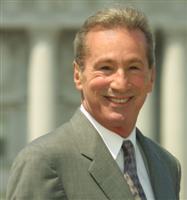
Tom Ammiano

The Chronicle’s dishonest hit on district elections

8

The move to get rid of district elections – which is based entirely on the fact that big business and more conservative voices (including the Chron) don’t like the progressive policy positions of the current board – is now well under way. The Chron devoted its Insight section to the issue Feb. 28, leading with a long editorial that wandered back and forth between points and never really made the case.


An example of the Chron’s logic:


But sitting atop the decision-making tree [in San Francisco] are small-time politicos, some elected with fewer than 10,000 votes in a city with a population of 808,976.


Horrifying! It’s as if the United States Congress – which has to decide issues like war and peace — was made up of local politicos who were elected with as few as 100,000 votes in a nation of 350 million.


Or as if the California Assembly – which has to deal with a $28 billion budget deficit – was made up of local politicos who were elected with as few as 50,000 votes in a state of more than 35 million.


A district supes votes could represent about 1.2 percent of the entire city. A state Assembly member could represent only 0.1 percent of the population of the state. And yet, I don’t hear the Chron calling for the state Assembly to be replaced with an at-large body.


More:


A town with sweeping plans to develop two empty Navy bases at Hunters Point and Treasure Island, fill vacant offices with new jobs, and cut its budget by more than a half billion dollars isn’t getting the thought, expertise – and citywide vision – it needs for these challenges.
This lack of broad leadership obstructs the city’s future. A major cause is the district election system that magnifies neighborhood and tight-knit interest groups to produce officeholders with little stake in citywide questions. If all politics is local, as former House Speaker Tip O’Neill famously declared, then San Francisco has pushed this dictum to the max. It’s all about me and my neighborhood.


That’s absolutely, factually untrue – the district elected board has done more to advance citywide issues – from minimum wage to health care to the rainy day fund to infrastructure planning – than any at-large board in the previous 20 years.


And the Chron’s own editorial contradicts that argument:


Supervisor David Campos (a winner with 9,440 votes) led a move to keep illegal immigrants who are juveniles accused of felonies from being turned over to federal authorities, despite a city legal opinion that the idea wouldn’t fly. Supervisor John Avalos (6,918 votes) dreamed up the “must spend” order directing the mayor to maintain expenditures in a record deficit year. Thankfully, he dropped the idea at the 11th hour


Okay, I get that the Chronicle editorial board doesn’t like the Campos sanctuary bill or the Avalos must-spend legislation – but that are both citywide issues. They have nothing to do with “me and my neighborhood.”


Which is really the entire point here. The Chron doesn’t like the outcome of district elections – because over the past ten years, the progressives have shown they can win district races. There’s a good reason for that; in district races, you don’t need to raise huge amounts of money.


As Assemblymember Tom Ammiano and Supervisor David Chiu point out in an opposing editorial:


Part of that increased accessibility to government is the result of the decrease in the cost of running a district versus a citywide election. In the 1994 citywide elections, the average winning candidate spent $456,000 in today’s dollars. That’s 225 percent greater than the amount spent today: In 2008, the winning candidates spent an average of $204,000. Candidates needing to raise money for a citywide race will inevitably turn to special interests for contributions. If you believe elected representatives should speak up for people, not just the special interests that donated to their campaigns, today’s district system serves you better.


They also note:


Before district elections were passed, under a citywide election system, many neighborhoods – the Excelsior, the Sunset, the Mission and Bayview-Hunters Point – had no supervisor of their own. Today, all residents can pick up the phone and reach an office responsible for their neighborhood and responsive to their concerns – a broken streetlight, a dangerous pothole or a consistently tardy Muni line.


A lot of people don’t like Chris Daly’s personality, and some don’t like his politics, but if you’re a person living on SSI in a grubby little hotel room in the Tenderloin and you need help, you can walk into his office and get a welcome reception and assistance with your needs. You won’t get that from the mayor.


On the other hand, do you think, Don Fisher ever needed to stand in line and try to make a 15-minute appointment to talk to Gavin Newsom? Seriously?


And while we’re on the personality stuff: Yeah, some of Daly’s antics have been over the top. But he’s no worse than some of the others who have served on citywide boards. Former Sup. Bill Maher once accused one of his opponents of having a small penis, and waved around two fingers spread about an inch apart to the press and public.


More important, we had supervisors who did nothing. We had supervisors who did exactly what the mayor said without any question. We had supervisors who were wholly-owned subsidiaries of major local corporations. I’ll take Chris Daly over those folks any day.


By any rational standard, the district board over the past ten years has been more productive, more accountable, more representative and more accessible than any at-large board I’ve seen in my almost 30 years of covering this city.


So the Chron needs to shut up about “citywide perspective”’ and personalities. If the paper wants to oppose district elections, it needs to drop the poll-tested downtown talking points and tell the truth:


The current board is too liberal for the Chron. The moderate candidates the paper prefers can’t win in districts. So they want to change the rules.


That’s the story, beginning, middle and end.



Marching on Sacramento

15

Angry parents, hundreds of them, met in Marina Middle School to demand an end to cuts in education.

Angry Muni riders, hundreds of them, jammed City Hall to oppose Muni fare hikes and service cuts.

Angry students from the University of California — thousands of them — will hold a huge event March 4th to push for better education funding and lower fees.

There’s something going on here — because in every case, grassroots activists in huge numbers (numbers that dwarf the so-called Tea Party events) want to force the state of California to change its budget priorities. And they are starting to talk seriously about taxes.

The Republicans are pretty intransigent up in Sacramento. But if these groups — the public school parents, the UC students, the transit users and the wide range of other middle-class folks who are sick to death of California’s budget mess and how it’s screwing them — could start working together, we could see a powerful coalition emerging.

And what that coalition needs to do, among other things, is push for Assemblyman Tom Ammiano’s legislation to change Prop. 13 and Sen. Mark Leno’s efforts to allow a local vehicle license fee, and a Constitutional amendment to get rid of the two-thirds majority for budget approval and tax hikes.

The Republicans have all signed this no-new-taxes pledge and it’s going to be hard to move them. Any attempt to change Prop. 13 will be met with huge opposition from big business. I used to think that it was hopeless even to talk about that … but maybe it’s not. Maybe if everyone who’s angry about government cuts understood that the only way to solve the problem in the end is to allow local government to raise money for the schools through property taxes, and allow state government to raise income taxes on the rich and impose taxes on big businesses, we’d be able to build a movement that could make some progress.

It’s worth thinking about.


PG&E’s laughable Prop 16: Who needs friends when you’ve got $35 million?

Last month, when the Guardian sent an intern to cover a debate between Pacific Gas & Electric Co. spokesperson David Townsend and California Sen. Mark Leno, the reporter was ejected from the event at Townsend’s request.

I figured I’d be immune from such nonsense when I ventured to the state capitol yesterday for a joint informational hearing about Proposition 16, the ballot initiative that PG&E has bankrolled for the June ballot for the purpose of extinguishing competition in its service territory. The initiative would establish a two-thirds majority vote before any municipal electricity program could get up and running, and its sole sponsor is PG&E.

But just after I snapped a photo of Sen. Mark Leno and Assemblyman Tom Ammiano chuckling sardonically at a PG&E executive who had mistakenly referred to the ballot initiative as “Prop 13,” a guard swooped in and ordered me to stop photographing and turn off my voice recorder.

I shot him a dirty look at first, but then realized that I could wind up meeting the same fate as our unfortunate intern if I didn’t cooperate. He informed me that it’s protocol to provide advance notification before photographing or recording a public meeting at the capitol (despite the fact that the hearing is televised and open to the public). Then he asked for my name and affiliation, and said he would have to ask committee members for permission before he could allow me to do any more recording or photographing. Presumably, the decision would be based on who was asking. He vanished and, a few minutes later, returned to say that the answer was “no.”

Thus, I was reduced to frantically scribbling down notes, which means the exchanges transcribed below aren’t as complete as they could be. (Anyone know of an acupuncturist who can soothe muscle stiffness in the forearm?)

Yesterday’s hearing made it clear that PG&E has little support for the ballot initiative other than its own war chest of funding, and it’s royally pissed off the Legislature besides. PG&E Senior Director Ed Bedwell blushed a bright red hue more than once when he was assailed with statements such as, “Alienating those who are usually in your camp is not a good sign,” an admonishment delivered by Assembly Member Tom Ammiano when pointing out that not even California’s other investor-owned utilities are behind the initiative.

Apparently, not even the Republican members of the Senate Energy, Utilities and Communications Committee and the Assembly Utilities and Commerce Committee could stand the smell of the PG&E’s bullshit, as every one of them had walked out of the room by the end. Not a single member of either legislative committee had a positive word for the proposition, but Assembly Member Jared Huffman plainly stated his opinion: “I think this is a terrible initiative.”

Nor was there any evidence of the “coalition” supporting Prop 16 that the PG&E-funded public relations firm that orchestrated this campaign claims exists. Every single member of the public who commented voiced strong opposition, and most had traveled there on their own dime.

Even the conservative-leaning Agricultural Energy Consumers Association, which represents 40,000 growers, is against it. “It would have a chilling effect on the farming community,” Michael Boccadoro of the Agricultural Energy Consumers testified. A representative from the California Chamber of Commerce spoke in favor, but local Chambers of Commerce are not unified in their support.

Paul Hauser, of Redding Electric Utility, testified that if customers in his territory —  which has been slammed with high unemployment — were paying PG&E prices instead of the municipal electricity rates, every single man, woman, and child would have to fork over an extra $440 per year.

The Pacific Gas & Electric Corporation, which is the parent company of the regulated Pacific Gas & Electric Company, has vowed to spend $35 million on Prop 16. Since the corporation derives all of its funding from the company, which is regulated by the California Public Utilities Commission and earns its money through customer billing, this means that every PG&E ratepayer is pitching in. Speaking of bills, PG&E rates will increase 30 percent by 2013 if PG&E is granted its requested hikes, according to The Utility Reform Network.

“Maybe it’s time the Legislature took a very hard look at whether that parent corporation needs to exist,” Boccadoro, of the agricultural group, commented. “Maybe it’s time for a vote on rate increases as well.”

One point that came up over and over again during questioning was the fact that instead of proposing changes to legislation, PG&E sought to use the initiative process to get its way, a move that Leno argues is flouting the democratic process. A second point was that its move is inconsistent with a statute that requires utilities to “cooperate fully” with community-choice aggregation programs. Below are some exchanges between members of the Legislature and Bedwell, the PG&E executive.

Leno: Can you describe to us how Prop 16 exemplifies your abiding by the statute of AB 117 in “cooperating fully?”
Bedwell: Can you repeat that?
Leno: (repeats language of statute)
Bedwell: … “I don’t see how that’s necessarily inconsistent. The cooperation aspect is in the implementation…”
(Leno takes issue with this, saying that they could have proposed that such language be included in the bill at the time it was being drafted. He points out that Prop 16 would present a “hurdle” to municipal power programs, and asks Bedwell if he agrees.)
Bedwell: Says he thinks it would create “a high bar.”
Leno: “A high bar. How is a high bar in any way consistent with ‘cooperate fully?’”
Bedwell: … “I don’t see it’s a matter of cooperation or lack of cooperation. …”

Bedwell: “We value our customers. I think you know through the last six or seven years in San Francisco, you know that we’re very committed to retaining our customers.”
Leno: (Explains that he is a PG&E customer in San Francisco, and a Sacramento Municipal Utility District [SMUD] customer in Sacramento.) “I pay PG&E 25 percent more, and I get more green power here in Sacramento. [In PG&E’s San Francisco territory] my business suffers regularly from blackouts. I’ve never had a blackout here in Sacramento.”

No more silence on Prop. 16

0

EDITORIAL Pacific Gas and Electric Co. has found few allies in its effort to halt the spread of public power in California. The Sacramento Bee has come out strongly against PG&E’s initiative, Proposition 16 on the June ballot. Los Angeles Times columnists have denounced it. Six Democratic leaders in the California Senate have called for the company to withdraw the measure. Even the California Association of Realtors, hardly a radical environmental group, has come out strongly against the measure, in part because it’s so badly worded that it could halt residential and commercial development in large parts of the state.

But PG&E has already set aside $30 million to try to pass this thing — and since the cities and counties that would be hit hardest can’t use public money to defeat it, elected officials across the state need to be using every opportunity they have to speak out against it.

Prop. 16 is about the most anti-democratic measure you can imagine. It mandates that any local agency that wants to sell retail electricity to customers first get the approval of two-thirds of the local electorate. The two-thirds majority has been the cause of the debilitating budget gridlock in Sacramento, and it will almost certainly end efforts to expand public power or create community choice aggregation (CCA) co-ops in the state.

It actually states that no existing public power agency can add new customers or expand its delivery service without a two-thirds vote — which means, according to former California Energy Commissioner John Geesman, that no new residential or commercial development in the 48 California communities that have public power could be given electricity hook-ups.

It also, of course, eliminates the possibility of competition in the electricity business, making PG&E the only entity legally allowed to sell power in much of Northern California. That’s a radically anti-consumer position that most residents of the state would reject — if they understood it.

And there’s the problem. With PG&E spending $30 million (of our ratepayer money) promoting this, using misleading language and a campaign based on lies, and with very little money available for a counter-campaign, it’s going to be hard to get the message out.

That’s why every single elected official, candidate for office, and political group in the state that isn’t entirely bought off by PG&E needs to loudly oppose it, now.

And there’s still a lot of silence out there.

State Sen. Mark Leno and Assembly Member Tom Ammiano, to their credit, are not only opposing Prop. 16, they are helping lead the campaign against it. Sup. Ross Mirkarimi has helped build the coalition that’s running the No on 16 effort. The San Francisco Board of Supervisors has passed a resolution opposing the initiative. Sup. Bevan Dufty, who is running for mayor, is a public opponent. State Sen. Leland Yee’s office told us he opposes it (although he hasn’t made much of a big public issue of the measure). Same for City Attorney Dennis Herrera.

But where is Mayor Gavin Newsom? Where is District Attorney Kamala Harris, who is running for attorney general? Where’s Rep. Nancy Pelosi and Sens. Dianne Feinstein and Barbara Boxer? Where’s the City Hall press conference with the mayor and every other elected official in town denouncing Prop. 16 and urging San Franciscans to vote against it?

The silence is a disgrace, and amounts to a tacit endorsements of PG&E’s efforts.

And it’s happening at the same time that the supervisors are pushing against a tight deadline to get the city’s Community Choice Aggregation program up and running.

San Francisco is the only city in the United States with a federal mandate to sell public power, and the city is moving rapidly to set up a CCA system. This is a monumental threat to the city — and everyone either in office or seeking office needs to recognize that and speak out. Prop. 16 and CCA ought to be a factor in every local organization’s endorsements for Democratic County Central Committee and supervisor this year, and any candidate who can’t stand up to PG&E has no business seeking office in San Francisco.

Editorial: No more silence on PG&E’s statewide power grab

1

Every single elected official, candidate for office, and political group in the state that isn’t entirely bought off by PG&E needs to loudly oppose Prop. 16 – now

EDITORIAL Pacific Gas and Electric Co. has found few allies in its effort to halt the spread of public power in California. The Sacramento Bee has come out strongly against PG&E’s initiative, Proposition 16 on the June ballot. Los Angeles Times columnists have denounced it. Six Democratic leaders in the California Senate have called for the company to withdraw the measure. Even the California Association of Realtors, hardly a radical environmental group, has come out strongly against the measure, in part because it’s so badly worded that it could halt residential and commercial development in large parts of the state.

But PG&E has already set aside $30 million to try to pass this thing – and since the cities and counties that would be hit hardest can’t use public money to defeat it, elected officials across the state need to be using every opportunity they have to speak out against it.

Prop. 16 is about the most anti-democratic measure you can imagine. It mandates that any local agency that wants to sell retail electricity to customers first get the approval of two-thirds of the local electorate. The two-thirds majority has been the cause of the debilitating budget gridlock in Sacramento, and it will almost certainly end efforts to expand public power or create community choice aggregation (CCA) co-ops in the state.

It actually states that no existing public power agency can add new customers or expand its delivery service without a two-thirds vote — which means, according to former California Energy Commissioner John Geesman, that no new residential or commercial development in the 48 California communities that have public power could be given electricity hook-ups.

It also, of course, eliminates the possibility of competition in the electricity business, making PG&E the only entity legally allowed to sell power in much of Northern California. That’s a radically anti-consumer position that most residents of the state would reject – if they understood it.

And there’s the problem. With PG&E spending $30 million (of our ratepayer money) promoting this, using misleading language and a campaign based on lies, and with very little money available for a counter-campaign, it’s going to be hard to get the message out.

That’s why every single elected official, candidate for office, and political group in the state that isn’t entirely bought off by PG&E needs to loudly oppose it, now.

And there’s still a lot of silence out there.

State Sen. Mark Leno and Assembly Member Tom Ammiano, to their credit, are not only opposing Prop. 16, they are helping lead the campaign against it. Sup. Ross Mirkarimi has helped build the coalition that’s running the No on 16 effort. The San Francisco Board of Supervisors has passed a resolution opposing the initiative. Sup. Bevan Dufty, who is running for mayor, is a public opponent. State Sen. Leland Yee’s office told us he opposes it (although he hasn’t made much of a big public issue of the measure). Same for City Attorney Dennis Herrera.

But where is Mayor Gavin Newsom? Where is District Attorney Kamala Harris, who is running for attorney general? Where’s Rep. Nancy Pelosi and Sens. Dianne Feinstein and Barbara Boxer? Where’s the City Hall press conference with the mayor and every other elected official in town denouncing Prop. 16 and urging San Franciscans to vote against it?

The silence is a disgrace, and amounts to a tacit endorsements of PG&E’s efforts.

And it’s happening at the same time that the supervisors are pushing against a tight deadline to get the city’s Community Choice Aggregation program up and running.

San Francisco is the only city in the United States with a federal mandate to sell public power, and the city is moving rapidly to set up a CCA system. This is a monumental threat to the city – and everyone either in office or seeking office needs to recognize that and speak out. Prop. 16 and CCA ought to be a factor in every local organization’s endorsements for Democratic County Central Committee and supervisor this year, and any candidate who can’t stand up to PG&E has no business seeking office in San Francisco.

Clean money campaign launches in SF

0

The campaign for Prop. 15, the California Fair Elections Act, kicks off in San Francisco this Sunday afternoon. It’s an appropriate city to launch this effort, given San Francisco’s leadership on electoral reform, from our pioneering ranked choice voting system to our low political contribution limits to the public financing available in the races for mayor and the Board of Supervisors.

As I discussed in an article this week’s paper, the measure would create a pilot public financing program in the 2014 and 2018 races for the Secretary of State, funded by a $350 annual fee on lobbyists and their employers. It was placed on the ballot by legislation pushed primarily by Bay Area legislators Loni Hancock, Mark Leno, and Tom Ammiano.

Those legislators, along with Sup. Ross Mirkarimi, campaign chair Trent Lange, and California Nurses Association president Deborah Burger, are scheduled to speak at the event, with takes place at 1 p.m. outside the Main Library, 100 Larkin Street.

And speaking of pot…

3

Just minutes after my last post on medical marijuana, Assembly member Tom Ammiano announced that he has reintroduced state legislation that would legalize and tax marijuana. Assembly Bill 2254 follows an earlier bill by Ammiano, AB 390, which made history in January by clearing the Assembly Public Safety Committee, only to die from failing to clear a second committee before the legislative deadline.

“Just look at what is happening in our state and it’s obvious that the existing model of prohibition has been a tragic failure. Our prisons are overflowing and it’s easier now for teenagers to get marijuana than alcohol. But yet we continue to spend our limited resources on a failed war on drugs instead of education, health care or job training. With this bill, California can finally have a policy towards marijuana that reflects reality,” Ammiano said in a prepared statement. “We simply cannot afford to continue keeping our heads in the sand and pretend that everything is fine.  It’s time for California to regain control of this issue by taxing and regulating marijuana.”

Marijuana really is medicine

5

Just in time for Medical Marijuana Week comes word that the first U.S. clinical trials on marijuana in more than 20 years has found that it is effective in relieving pain and treating multiple sclerosis and other ailments, potentially opening the way for the federal government to revisit its longstanding claim that pot has no medicinal value.

Most significant are findings that even low levels of marijuana offer significant pain relief with minimal health consequences. Unfortunately, the San Francisco Chronicle also reports that the UC San Diego researchers have almost run out of funding before all its planned tests have been completed.

San Francisco has long been a leader in the medical marijuana movement, both with its proactive approach to regulating cannabis clubs, and with the sponsorship of efforts to decriminalize pot by state legislators Tom Ammiano and Mark Leno. Oakland’s pot-cultivation school Oaksterdam University also bankrolled an initiative aimed for the November ballot that would legalize weed for even recreational use.

The people vs. corporate power

2

steve@sfbg.com

The June 8 election is shaping up to be one that pits the people against powerful business interests, a contest that will demonstrate either that money still rules or that growing public opposition to corporate con-jobs has finally taken root.

On the state level, the five ballot measures include two brazen money-making schemes and two experiments in election reform, along with primary races that are still in flux. In San Francisco, where the ballot measures still have a few more weeks to shake out, the election will feature two rarely contested judges races, recession relief for renters, City Hall fiscal reforms, and a fight for control of the local Democratic Party.

So far, only four local measures have qualified for the San Francisco ballot, all placed there by members of the Board of Supervisors. Progressives qualified the Renters Economic Relief package (which limits rent increases during recessions and sets conditions for landlords passing costs to tenants), an initiative establishing community policing standards, and one affirming city support for making Transbay Terminal the northern high-speed rail terminus. Supervisors were unanimous in supporting a charter amendment governing the Film Commission.

But the board is still hashing out changes to the more controversial ballot proposals, a debate that will continue at its Feb. 23 meeting. They include an overhaul of how the city funds its pension program and an effort to remove Muni salary minimums from the city charter, both by Sup. Sean Elsbernd; a $652 million seismic safety bond proposed by Mayor Gavin Newsom; and a Sup. John Avalos charter amendment that would prevent the mayor from unilaterally defunding certain budget expenditures. All measures must be approved by March 5.

Also still forming up in the coming weeks are primary races for legislative seats (although no incumbents appear to be facing strong challenges) and all eight state constitutional offices, including governor (where Attorney General Jerry Brown seems poised to easily win the Democratic nomination), lieutenant governor, and attorney general (which District Attorney Kamala Harris is running for).

Candidates have until March 12 to declare themselves for statewide and legislative offices, as well as for the San Francisco Democratic County Central Committee, which could play a key role in this fall’s Board of Supervisors elections. Two years ago, a slate of progressives led by Aaron Peskin and Chris Daly launched a surprise attack to wrest control of the board away from the moderates who have long controlled it. Newsom, U.S. Sen. Dianne Feinstein, and their downtown allies are expected to try hard to regain control over their party’s purse-strings and endorsements.


JUDGING THE JUDGES

Another struggle from two years ago is also being replayed. In 2008, then-Sup. Gerardo Sandoval successfully challenged Superior Court Judge Thomas Mellon, arguing the Republican-appointed jurist was too conservative (and the entire court is not diverse enough) for San Francisco. This time the target is Judge Richard Ulmer, a conservative appointed by Gov. Arnold Schwarzenegger. Ulmer is being challenged by two LGBT attorneys, Daniel Dean and Michael Nava, the latter endorsed by Sen. Mark Leno, Assembly Member Tom Ammiano, and Peskin, who chairs the Democratic Party and could be helpful in the race. “He’s a brilliant guy,” Leno said of Nava.

Leno also has endorsed deputy public defender Linda Colfax, a Latina lesbian, in a four-way race to replace retiring Judge Wallace Douglass. The other candidates are Harry Dorfman, Roderick McLeod, and Robert Retana. If no candidate wins a majority of votes, the top two finishers square off in a runoff election in November.

Leno said he’s thrilled to see a diverse crowd of attorneys seeking judgeships: “This governor has failed horribly in his appointments, not only with the LGBT community, but with communities of color as well.”


TWO COMPANIES TRY TO BUY CALIF.

The struggle between the broad public interest and the wealthy power brokers that have long-dominated California politics is most apparent in the state propositions, which have been certified and for which ballot arguments are now being collected by the California Secretary of State’s Office.

Two of those ballot measures, Propositions 16 and 17, are blatantly self-serving efforts by a pair of powerful corporations to increase their profitability, however deceptively and with overwhelming amounts of campaign cash they are presented.

Prop. 16, sponsored by Pacific Gas & Electric Co., would require local governments to get two-thirds of voters to approve creation of energy programs like Clean Power SF, San Francisco’s plan for developing renewable energy projects and selling that power directly to citizens.

As we’ve reported (“Battle royale,” Jan. 13, and “PG&E attack mailer puts City Hall on defensive,” Dec. 22, 2009), PG&E placed the measure on the ballot to avoid having to repeatedly crush public power initiatives around the state with multimillion dollar campaigns, even though political leaders like Leno and Sup. Ross Mirkarimi say the measure violates the state’s community choice aggregation law. That law allows local governments to create energy programs and prohibits PG&E from interfering with those efforts.

“The unregulated behavior of corporate arrogance is killing our democracy. Prop. 17, sponsored by Mercury Insurance, would let companies increase car insurance premiums for a variety of reasons that are now prohibited by the 1988 measure Prop. 103. Mercury has continuously attacked that landmark law, using lawsuits, huge political contributions, sponsored legislation, and, according to newly released documents from the California Department of Insurance (see “The malevolence of Mercury Insurance,” Feb. 10, Guardian Politics blog), blatantly illegal activity in setting premiums and excluding certain customers, such as artists, bartenders, and members of the military.

“The Mercury initiative is even more pernicious than what it was doing before,” Harvey Rosenfield, who wrote Prop. 103 and works for Consumer Watchdog, told the Guardian. “Under Mercury’s initiative, if you’ve never had prior insurance, you can be surcharged for the first time. Then they’ve thrown in some other tricks and traps.”

Mercury spokesperson Coby King told us the company has been unfairly maligned and denies that the measure is simply about boosting its profits: “Prop. 103 is the law of the land, but to the extent there are improvements that can be made that are pro-business and pro-consumer, Mercury has not been shy about acting in the public interest.”

Yet few public interest groups or public officials believe the claims being made by Mercury or PG&E, and they hope that the public won’t be fooled.

“These are measures designed to give a financial advantage to a specific industry or company,” U.S. Rep. John Garamendi, who battled Mercury as California’s first insurance commissioner, told us. He strongly opposes both measures, but did say, “Money talks. It always has, particularly in propositions.”

Yet Leno said he’s a bit more hopeful: “Californians have been savvy in the past, and I do believe they’ll be able to see through the tens of millions of dollars in misleading ads.”

“To me, it’s a classic case study of what’s going on with the initiative process in California and with politics in general,” said Derek Cressman, western regional director of California Common Cause. “There are two initiatives literally sponsored by corporations to push very narrow interests.”

Yet Cressman said recent events could help. There’s been a big public outcry in recent weeks over the U.S. Supreme Court’s decision to allow unlimited corporate spending to influence elections, the role that insurance companies played in sinking federal health care reform efforts, and the way businesses interests are hindering efforts to deal with global warming.

“It makes people aware of the overwhelming role corporations are playing in dictating government policy,” Cressman said.


TAKE OUT THE MONEY

A pair of election reform measures might help lessen the influence of money and political parties. Prop. 14 is an open primaries measure that Sen. Abel Maldonado (R-Santa Maria) got placed on the ballot as a condition for breaking last year’s budget stalemate. It would create a single primary ballot and send the top two finishers to the general election, regardless of party.

Prop. 15, the California Fair Elections Act, takes direct aim at the corrupting influence of money in elections, creating a pilot public finance program in the secretary of state races for 2014 and 2018. The measure, which has broad support from politicians and good government groups in the Bay Area, is modeled on successful programs in Maine and Arizona.

“No elected official should be in the fundraising game the way they are now,” campaign chair Trent Lange told us. “This is a way to change how we fund elections.”

The idea is to create a model that will eventually be used for other offices. The campaign fund would be generated by a $350 annual fee on lobbyists, lobbying firms, and lobbyist employers. Currently lobbyists pay just $12.50 per year to register, which Lange said, “just shows the power of lobbyists in Sacramento.” *


The “Newsom wins” merry-go-round: What fun

10

Gavin Newsom still hasn’t said for sure that he’s in the race for lt. governor, although just about everyone in town now thinks he’s going for it.

But the very prospect of the mayor leaving office before his term is up has the political classes speculating: Who gets that job? And how does it happen?

It’s actually pretty interesting.

Under the City Charter, the president of the Board of Supervisors becomes acting mayor in the event that the mayor leaves office before the end of his or her term. Then the supervisors, by a six-vote majority, can appoint someone else to the job.

Melissa Griffin lays out one piece of the scenario, which is that the board could appoint a new mayor in advance, without anyone serving as acting mayor.

But there’s much more to the story.

According to a fascinating city attorney’s opinion issued in 1978 (PDF), when George Moscone and Harvey Milk were killed and Dianne Feinstein was board president, no supervisor is allowed to vote on his or her own appointment. Which would mean that if, say, Board President David Chiu wanted the job, he’d need six votes not including his own.

Now the plot thickens. Suppose nobody can round up six votes — that is, a majority of the supervisors can’t agree on a new mayor? Well, Chiu, as board president, would be acting mayor — potentially for the entire duration of Newsom’s term, roughly a year. He’d also remain as board president. It’s the same as if the mayor goes out of the state and names an acting mayor in his place; that person is still a supervisor. So Chiu would have all the powers of both the mayor and the board president — and immense amout of clout for one person at City Hall.

But wait, there’s more: Chiu is board president only until the board elected in November of this year takes office, which would be about five days after Newsom would become lite guv. So unless the current board can choose a new mayor, with six votes (not including the vote of any supervisor being nominated), the new board would elect a new board president — who would instantly become acting mayor at the same time.

And since supervisors are allowed to vote for themselves for board president, any member would be allowed to vote for him- or herself for acting mayor.

Confused yet? Clearly, the folks who wrote the City Charter never actually envisioned this scenario (or didn’t think about it very much).

Of course, what that means that with the current board split the way it is, with exactly six solid progressive votes, someone who isn’t currently on the board (say, Aaron Peskin — or Tom Ammiano, or Mark Leno, or whoever) would have a better chance of getting a majority than a current member, who would need at least one of the moderate bloc votes.

And if Newsom runs, it will make the fall supervisorial elections even more important, because potentially those newly elected supes will be choosing not only a board president but a mayor.

Here’s another fun twist: If District Attorney Kamala Harris is elected attorney general, the mayor gets to appoint a new D.A. But suppose Newsom also wins and is sworn in a few minutes before Harris. Presumably acting mayor David Chiu (a former prosecutor who rumor has it might like to be D.A. himself someday) would choose the new D.A. — and suppose Chiu knows he doesn’t have six votes to be mayor. There’s no reason why he couldn’t appoint himself D.A., leaving a vacancy on the board and a vacancy for board president, which would be filled by anyone who could get six votes, who would then be acting mayor and could appoint a new supervisor to Chiu’s seat. Who could then be the deciding vote on who gets to be mayor.

Whoa. I can’t wait. Run, Gavin, Run.

Ammiano reviving Prop. 13 reform

13

Assemblymember Tom Ammiano is trying to put property-tax reform back on the California agenda. He’s introducing a measure that would call for taxing commercial and residential property at different rates — which would involve a significant change to Prop. 13. It’s been tried before, and big business interests have always managed to shoot it down, but as Ammiano puts it, these are different times:

“For over thirty years, Proposition 13 has allowed corporate landowners to benefit from tax loopholes while shifting the real tax burden to individual homeowners and reducing California’s tax base. “We cannot continue to cut funding from our schools, our parks and our vital human services without addressing the need for new revenue and an equitable tax system.  Reforming Proposition 13 will not solve all of the state’s budget problems but it’s a crucial step in the right direction.”

 It’s not exactly clear at this point what form the legislation will take; it might be a resolution followed by a Constitutional amendment. And I don’t think even Ammiano believes that both houses of the Legislature will happily vote to make big commercial property owners pay their fair share of the state’s tax burden. But it’s worth talking about, worth pushing, worth reminding people that one of the reasons the state is so broke is that the property tax system is frozen in time, a legacy of a very different era in California.For over thirty years, Proposition 13 has allowed corporate landowners to benefit from tax loopholes while shifting the real tax burden to individual homeowners and reducing California‘s tax base.  We cannot continue to cut funding from our schools, our parks and our vital human services without addressing the need for new revenue and an equitable tax system.  Reforming Proposition 13 will not solve all of the state’s budget problems but it’s a crucial step in the right direction.”


And a split roll is probably the only way to amend Prop. 13 at this point, since so many homeowners are so happy with it.


Alerts

0

alerts@sfbg.com

WEDNESDAY, FEB. 17

Same Sex Marriage Forum

Attend this forum about which entity — the state or the federal government — should define marriage. The forum is led by a panel of experts from human rights organizations and SF Chief Deputy City Attorney Therese Stewart, attorney for the plaintiffs in the current court case challenging Proposition 8.

6:30 p.m., $20

Commonwealth Club

595 Market, 2nd floor, SF

(415) 597-6700


THURSDAY, FEB. 18

Human rights in Chiapas

Hear Victor Hugo López of Fray Bartolomé de las Casas Human Rights Center (Frayba) in San Cristóbal de las Casas, Chiapas, Mexico. López will discuss human rights and the prospects for political change in the region in 2010. Frayba produces human rights reports, defends cases in court, and supports indigenous communities under attack.

7:30 p.m., $5–$10 sliding scale

La Peña Cultural Center

3105 Shattuck, Berk.

(510 654-9587


Wreaking HavoQ

Attend this organizing meeting for Pride at Work, a queer advocacy group fighting for economic and social justice. The meeting will cover upcoming projects such as fighting the gentrification of queer neighborhoods, resisting attacks on immigrants, and advocating for queer workers’ rights.

6 p.m., free

UNITE HERE Local 2

209 Golden Gate, SF

sfprideatwork.org


SUNDAY, FEB. 21

Day of Remembrance

Commemorate the anniversary of Executive Order 9066, which led to the incarceration of 120,000 people of Japanese descent in 1942 during World War II. The event features a speech by California Assembly Member Warren Furutani (D-Long Beach), a performance by Purple Moon Dance Project, a candle- lighting ceremony, and more. Reception to follow at the Japanese Cultural and Community Center at 1840 Sutter.

2 p.m., free

Kabuki Sundance Cinema

1881 Post, SF

(415) 921-5007


Peacemas

Celebrate the anniversary of the peace symbol with an evening of entertainment that includes inspirational clown Wavy Gravy, Selma Vincent as Mrs. T. Bill Banks of the National Association of Rich People, jazz violinist India Cooke, and more.

7 p.m., free

Redwood Gardens

2950 Derby, Berk.

(510) 845-5481


Yeasayers for Prop. 15

Hear Sen. Mark Leno (D-SF), Assembly Member Tom Ammiano (D-SF), and other luminaries speak in support of the California Fair Elections Act, or Proposition 15, on the upcoming June ballot. The act would pilot a voluntary system of public financing for secretary of state campaigns, which means elected officials can spend less time fund-raising and more time solving California’s problems.

1 p.m., free

San Francisco Main Library

100 Larkin, SF

(415) 648-6740


TUESDAY, FEB. 23


A chicken in every yard

Learn the logistics of raising chickens in a urban environment at this workshop with Alexis Koefoed. The Soul Food Farm maven will answer questions about the legality of raising chickens in your area, what it costs to raise chickens, where to buy chicks, and more. There are two sessions.

6 p.m. and 7:30 p.m., $20

18 Reasons

593 Guerrero, SF email info@18reasons.org 2 Mail items for Alerts to the Guardian Building, 135 Mississippi St., SF, CA 94107; fax to (415) 255-8762; or e-mail alert@sfbg.com. Please include a contact telephone number. Items must be received at least one week prior to the publication date.

Editorial: The attack on district elections

0

Nobody can honestly say that the district supervisors have ignored citywide issues or that they don’t have a citywide perspective.

The Chamber of Commerce, the Mayor’s Office, and the San Francisco Chronicle have created, apparently out of whole cloth, a new attack on district elections of supervisors. And although there’s no campaign or formal proposal on the table, the new move needs to be taken seriously.

And it’s important to understand from the start what this is really about.

The Chamber and the Chron are talking about the need for more “citywide perspective,” trying to spin the notion that supervisors elected by district care only about micro-local, parochial issues. But after 10 years of district elections, the record is exactly the opposite. District-elected supervisors have devoted themselves to a long string of exceptional citywide reform measures and have been guilty of very little district pandering.

Consider a few examples:

Healthy San Francisco, the local effort at universal health care that has drawn national attention and plaudits from President Obama, was a product of the district board, led by then-Sup. Tom Ammiano. So was the rainy day fund, which has provided millions to the public schools and prevented widespread teacher layoffs.

The district board reformed the makeup of the Planning Commission, Police Commission, and Board of Appeals.

District-elected Sup. Ross Mirkarimi’s legislation restricting the use of plastic bags has been hailed by environmental groups all over the country.

The district board passed the city’s minimum wage and sick day laws.

The district board created a citywide infrastructure plan and bond program.

Community choice aggregation, a direct challenge to Pacific Gas and Electric Co. that will bring San Francisco clean energy and lower electricity rates, is entirely a product of the district board. So is campaign finance reform, sanctuary city protecting for immigrants, a long list of tenant-protecting laws … the list goes on and on. What significant policy initiatives came out of the previous 10 years of at-large supervisors? Very little — except the promotion of hyper-expensive live-work lofts; the displacement of thousands of tenants, artists, and low-income people; and the economic cleansing of San Francisco, all on behalf of the dot-com boom, real estate speculators, and developers.

People can agree or disagree with what the board has done in the past decade, but nobody can honestly say that the district supervisors have ignored citywide issues or that they don’t have a citywide perspective.

No, this has nothing to do with citywide issues vs. district issues. It’s entirely about policy — about the fact that district supervisors are more progressive. About the fact that downtown can’t possibly get a majority under a district system — because with small districts, big money can’t carry the day.

Under an at-large system, nobody can seriously run for supervisor without at lest $250,000, and candidates who start off without high name recognition need twice that. There’s only one way to get that kind of money — and it’s not from protecting tenants and immigrants and fighting developers and PG&E.

In a district system, grassroots organizing — the stuff that labor and nonprofits and progressive groups are good at — is more important than raising money. So district supes are accountable to a different constituency.

Polls consistently show that people like having district supervisors — and for good reason. With at-large elections, the only people who have regular, direct access to the supervisors are big donors and lobbyists who can deliver money. District supervisors are out in the neighborhoods, take phone calls from community activists, and are far more accessible to their constituents.

So instead of trying to repeal the district system, the Chamber has come up with this “hybrid” effort. The idea would be to reduce the number of districts to seven and elect four supervisors citywide.

What that means, of course, is that a third of the board, elected on a pile of money, will be pretty much call-up votes for downtown. With two more from the more conservative districts, you’ve got a majority.

So this is about money and political control, and about the political direction the city is going, and about who’s going to set that direction. That’s the message progressive leaders need to start putting out, now. And every incumbent supervisor, and every candidate for supervisor, needs to make preservation of district elections a public priority


The attack on district elections

3

EDITORIAL The Chamber of Commerce, the Mayor’s Office, and the San Francisco Chronicle have created, apparently out of whole cloth, a new attack on district elections of supervisors. And although there’s no campaign or formal proposal on the table, the new move needs to be taken seriously.

And it’s important to understand from the start what this is really about.

The Chamber and the Chron are talking about the need for more “citywide perspective,” trying to spin the notion that supervisors elected by district care only about micro-local, parochial issues. But after 10 years of district elections, the record is exactly the opposite. District-elected supervisors have devoted themselves to a long string of exceptional citywide reform measures and have been guilty of very little district pandering.

Consider a few examples:

Healthy San Francisco, the local effort at universal health care that has drawn national attention and plaudits from President Obama, was a product of the district board, led by then-Sup. Tom Ammiano. So was the rainy day fund, which has provided millions to the public schools and prevented widespread teacher layoffs.

The district board reformed the makeup of the Planning Commission, Police Commission, and Board of Appeals.

District-elected Sup. Ross Mirkarimi’s legislation restricting the use of plastic bags has been hailed by environmental groups all over the country.

The district board passed the city’s minimum wage and sick day laws.

The district board created a citywide infrastructure plan and bond program.

Community choice aggregation, a direct challenge to Pacific Gas and Electric Co. that will bring San Francisco clean energy and lower electricity rates, is entirely a product of the district board. So is campaign finance reform, sanctuary city protecting for immigrants, a long list of tenant-protecting laws … the list goes on and on. What significant policy initiatives came out of the previous 10 years of at-large supervisors? Very little — except the promotion of hyper-expensive live-work lofts; the displacement of thousands of tenants, artists, and low-income people; and the economic cleansing of San Francisco, all on behalf of the dot-com boom, real estate speculators, and developers.

People can agree or disagree with what the board has done in the past decade, but nobody can honestly say that the district supervisors have ignored citywide issues or that they don’t have a citywide perspective.

No, this has nothing to do with citywide issues vs. district issues. It’s entirely about policy — about the fact that district supervisors are more progressive. About the fact that downtown can’t possibly get a majority under a district system — because with small districts, big money can’t carry the day.

Under an at-large system, nobody can seriously run for supervisor without at lest $250,000, and candidates who start off without high name recognition need twice that. There’s only one way to get that kind of money — and it’s not from protecting tenants and immigrants and fighting developers and PG&E.

In a district system, grassroots organizing — the stuff that labor and nonprofits and progressive groups are good at — is more important than raising money. So district supes are accountable to a different constituency.

Polls consistently show that people like having district supervisors — and for good reason. With at-large elections, the only people who have regular, direct access to the supervisors are big donors and lobbyists who can deliver money. District supervisors are out in the neighborhoods, take phone calls from community activists, and are far more accessible to their constituents.

So instead of trying to repeal the district system, the Chamber has come up with this “hybrid” effort. The idea would be to reduce the number of districts to seven and elect four supervisors citywide.

What that means, of course, is that a third of the board, elected on a pile of money, will be pretty much call-up votes for downtown. With two more from the more conservative districts, you’ve got a majority.

So this is about money and political control, and about the political direction the city is going, and about who’s going to set that direction. That’s the message progressive leaders need to start putting out, now. And every incumbent supervisor, and every candidate for supervisor, needs to make preservation of district elections a public priority.

OMG those Prop. 8 backers are looney

0

By Tim Redmond

And if you didn’t already know that, check this out. There’s more in the trial transcripts (pd):

And you say:
15 “The San Francisco city government is under
16 the rule of homosexuals.”
17 Do you see that?
18 A. Yes.
19 Q. Did you believe that, sir?
20 A. Yes, I believed that.
21 Q. Who are the homosexuals that San Francisco is under the
22 rule of?
23 A. Uhm, at that time, supervisor Tom Ammiano was a supervisor
24 there.
25 Q. And there was also a mayor, right?

1 A. Yes.
2 Q. The mayor was a homosexual, was he, according to you?
3 A. I don’t think so.
4 Q. You don’t think so? No, I don’t think so either

,

And

Well, let’s see, as we go through this, how you use words.
25 You go on to say that:

1 “After legalizing same-sex marriages they
2 want to legalize prostitution.”
3 Do you see that?
4 A. Yes.
5 Q. Did you think the people who were opposing Proposition 8
6 wanted to legalize prostitution?
7 A. Uhm, that was a Proposition K at that time, on the
8 San Francisco ballot. And I saw several homosexual
9 politicians, they supported that. So I draw from that — from
10 their support that they want to legalize prostitution.
11 Q. But that didn’t have anything to do with Proposition 8;
12 did it, sir?
13 A. No.
14 Q. No, it didn’t.

And

Now, the second paragraph refers to Mayor Newsom. Do
8 you see that?
9 A. Yes.
10 Q. It says:
11 “The mayor says homosexuals are minorities
12 and should not be discriminated against.”
13 Do you see that?
14 A. Yes.
15 Q. Now, you would agree that homosexuals are a minority,
16 correct?
17 A. I — I don’t believe they are minorities.
18 Q. You don’t believe they are the minority?
19 A. I am a minority.
20 Q. You are a minority.
21 What percentage of the population do you think are
22 homosexuals?
23 A. My understanding of minority is —
24 Q. What percentage of the population —
25 A. — based on skin color.

1 Q. What percentage of the population is homosexual?
2 A. I — what I read is, about from 2 to 4 percent.
3 Q. 2 to 4 percent?
4 A. Right.
5 Q. Is that a minority, sir?
6 A. In terms of their sexual practice, it is.

I don’t even know what to say.

Meet Gavin Newsom: whine clerk

0

Text by Sarah Phelan

newsomd.jpg
Sorry, Maureen, but you omitted more than a few details of the real trials of Mayor Gavin Newsom…

I’m usually a fan of Maureen Dowd’s finely pointed writing, but her interview with Mayor Gavin Newsom in today’s New York Times left me with the sinking feeling that she was writing with an uncharacteristically unsharpened pencil.

Yes, it was funny when Dowd wrote, “It’s easy to picture the lithe and charming Newsom–with the well-cut suits, the electric Telsa, the beautiful blonde wife and baby–advising a Pacific Heights couple on a cabernet with aromas of eucalyptus and mint.”

But beyond that delightful dig, Dowd kept her pencil on an unusually tight leash.

Maybe that’s because Dowd doesn’t know the ins and outs of San Francisco politics and was fooled into misrepresenting Newsom’s whining as the rueful ruminations of a man so very far ahead of his time.

But it’s hard to believe that the indomitable Dowd doesn’t know that Newsom’s political career has been short circuited for a million reasons above and beyond gay marriage.

Maybe the fact that Newsom slept with his campaign manager’s wife isn’t perceived as a deal breaker in circles where everyone always seems to be betraying every one else.

But how about Newsom’s failure to show backbone when then Sup. (and now State Assemblymember) Tom Ammiano was trying to launch San Francisco’s trailblazing health care program–yes, the same one that President Obama has recently and widely praised, and for which Newsom has been happy to take all the credit?

Instead of showing leadership on Healthy San Francisco, Newsom stood back and let Ammiano do the heavy lifting, in face of the threat of legal opposition from the Golden Gate Restaurant Association. Newsom’s cowardice on that issue seems entirely understandable, given that, as Dowd points out, “Before he got into politics, after all, he started a boutique wine shop in Napa Valley that blossomed into a multimillion-dollar business.” (Heaven forbid that the former owner of a wine boutique would be seen leading the charge to ensure that the restaurant industry helps employees go see a doctor instead of sneezing into the endive soup and eucalyptus-scented cabernet that the Pacific Heights mafia has come to enjoy.)

But Dowd doesn’t make that, or any other, connection.

Instead, she lets Newsom stick his not-so-subtle knives into Obama’s back on same-sex marriage, without pointing out that after Newsom rushed into gay marriage, he failed to launch a much needed statewide campaign to reach out, across the aisle of intolerance, and help defeat the Prop. 8 party poopers.

The final insult in Dowd’s puff piece is when she lets the current mayor of San Francisco get away unchallenged with his bogus claim that, “we’ve always fought for the rights of minorities and against the whims of majorities.” Try telling that to the immigrants whose families have been ripped apart because gubernatorial candidate Newsom failed to support giving undocumented kids their day in court, before reporting them to the feds for deportation.

But Dowd does at least gives us a preview of what to expect when we stumble unwittingly into a wine store, somewhere in the backwaters of Napa, and overhear the clerk complaining that no one really understood him, back when he was mayor of San Francisco. Meet Gavin Newsom: whine clerk.

Historic victory for marijuana legalization

0

By Steven T. Jones
potpic.jpg
When the Assembly Public Safety Committee voted 4-3 this morning to approve Assembly Bill 390 – legislation by Tom Ammiano that would legalize and tax marijuana, even for purely recreational use – it was an unprecedented action in the United States.

“It’s huge. It’s exciting. And we really have to thank [Democratic committee members Nancy] Skinner, [Jerry] Hill, and Jared Huffman for their support,” Ammiano told the Guardian. “I’m feeling really gratified.”

Unfortunately, the bill has now been referred to the Assembly Health Committee and the full Assembly must approve a rule waiver to get it heard by Friday’s deadline for such two-year bills to clear committee. Even if that happens, the Health Committee is larger and filled with more moderate Democrats, so it’s chances of being approved in this session are slim.

“It doesn’t diminish what happened today. If it dies, we’ll reintroduce it by the end of the month,” Ammiano said. His press secretary, Quintin Mecke, told us, “This is the first time in U.S. history – not just California history, but U.S. history – that a bill that would legalize marijuana has passed a legislative committee.”

Alerts

0

alerts@sfbg.com

WEDNESDAY, DEC. 16

SF Carbon Collaborative


Attend this panel discussion on justice, equity, and sufficiency in climate negotiations and the role these values play in national and local climate action. Speakers include Jonah Sachs, cofounder of Free Range Studios and Linda Maepa, from Electron Vault Now.

6 p.m., free

Crocker Galleria

Green Zebra storefront

50 Post, SF

www.carboncollaborative.org

THURSDAY, DEC. 17

City College meeting


Attend this monthly business meeting of City College of San Francisco’s Board of Trustees. A video of the meeting will also be telecast on EaTV Cable Channel 27 at 8:30 p.m. Dec. 23.

6 p.m., free

Auditorium

City College

33 Gough Campus, SF

www.ccsf.edu

Stop the violence


Take part in the International Day to End Violence Against Sex Workers by attending this memorial vigil ritual at Femina Potens Art Gallery, a space dedicated to LGBT visual arts exhibitions, media arts events, public arts projects, performances, and educational programs.

7 p.m., free

Femina Potens Art Gallery

2199 Market, SF

(415) 864-1558

Protest BART’s police chief


Protest at a forum being held by BART to hear the community’s thoughts and opinions on choosing a new BART police chief. Don’t let Chief Gary Gee walk away from his job with no accountability for the Jan. 1 murder of Oscar Grant by a BART police officer.

6 p.m., free

Joseph P. Bort MetroCenter Auditorium

101 Eighth St., Oakl.

www.indybay.org/oscargrant

Traditional Seeds


Join in the dialogue about the value of traditional crop varieties and ecological agriculture in an increasingly unstable world climate at this talk featuring Debal Deb, ecologist and founding director of the Center for Interdisciplinary Studies in West Bengal, India.

7p.m.; free, donations for Dr. Deb’s initiatives accepted

Ecology Center

2530 San Pablo, Berk.

(510) 548-4915

Wine for a cause


Attend this wine tasting event titled "Drink Good Wine, Do Good Works" featuring wines that support access to healthcare for California vineyard workers. Donate canned goods to SF Food Bank for $5 off admission.

6 p.m., $15

Jovino

2184 Union, SF

(650) 796-1607

FRIDAY, DEC. 18

Say no to war


Rally to demand that we bring our troops home now.

2 p.m., free

Acton and University, Berk.

(510) 841-4143

Women in Black vigil


Protest the ongoing occupation of Palestine and attacks on Gazans by attending this vigil for Tristan Anderson, who was critically injured by Israeli forces, and by contacting the Consul General David Akov at the Israeli Consulate to demand an end to the violence at concal.sec@sanfrancisco.mfa.gov.il.

Noon, free

Bancroft and Telegraph, Berk.

(510) 548-6310

SATURDAY, DEC. 19

Single-payer now


Attend this healthcare forum and holiday potluck featuring presentations by Assembly Member Tom Ammiano, principal author of SB 810 California Universal Healthcare Act, and Rep. Eric Massa (D-N.Y.), one of two cosponsors of HR 676 . Single-payer legislation has been passed twice by the California legislature but was vetoed by Gov. Schwarzenegger.

3 p.m., free

St. Mary’s Cathedral

1111 Gough, SF

(415) 695-7891

Mail items for Alerts to the Guardian Building, 135 Mississippi St., SF, CA 94107; fax to (415) 255-8762; or e-mail alerts@sfbg.com. Please include a contact telephone number. Items must be received at least one week prior to the publication date.

Marijuana initiative headed for California ballot?

7

By Steven T. Jones
jointphoto.jpg
Californians may vote next year on whether to legalize marijuana. Proponents for the initiative that is primarily being bankrolled by Oaksterdam University founder Richard Lee today reportedly confirmed that they have more than enough signatures to qualify for the November 2010 ballot.

If approved by voters and not blocked by the courts or federal government, the measure would allow California cities and counties to adopt their own laws for regulating and taxing marijuana, even for purely recreational use. Polls have consistently shown that a majority of Californians support legalizing weed.

“It was so easy to get them,” Lee told the Los Angeles Times, referring to the 680,000 signatures that he says they have collected, clearing the 434,000 threshold needed to qualify. “People were so eager to sign.”

The California Secretary of State’s Office must still confirm that the campaign gathered enough valid signatures from registered voters. Meanwhile, Assembly member Tom Ammiano’s AB 390 – which would decriminalize and tax marijuana statewide – will also be considered by the Legislature next year. Its first formal hearing, before the Assembly Public Safety Committee, is set for Jan. 12.

Supes to vote on restoring DPH cuts (again)

2

By Rebecca Bowe

This afternoon, a special meeting of the Budget & Finance Committee will be held to determine whether to take roughly $8 million out of the Department of Public Health reserve — money that’s already spoken for, but that some Supervisors say will be replenished before the next budget cycle — in order to stave off layoffs and salary cuts to front-line city workers in the Department of Public Health. Directly after the special meeting, the item will go before the full Board for a vote at today’s meeting.

SEIU Local 1021, the union representing city workers who’ve been pitted in an ongoing battle with mayor since the budget cuts were announced, has done its best to line up the eight votes needed to restore the cuts, leaning heavily on Sup. Sophie Maxwell to reverse her prior position by robo-calling in her district and encouraging political heavyweights to urge her to support the item.

On a conference call yesterday afternoon, Assembly Member Tom Ammiano said the city should count on stimulus dollars generated by Assembly Bill 1383 to refund the roughly $8 million.

“There seems to be a dispute about those funds, but we took the extra step to get the funding,” Ammiano said, noting that he worked with Assembly Member Dave Jones on the legislation that secures the money for public health services. “They pulled the trigger much too early here,” Ammiano said, referring to the layoffs. Noting that the mayor seemed to be disputing the purpose of the funding, Ammiano said, “I thought the purpose was to prevent layoffs.”

When asked what the Mayor Gavin Newsom thought the money should be used for, his press secretary, Joe Arellano, indicated that Newsom disagrees that it should be applied to stave off immediate layoffs. “The funds will ultimately will be used to prevent layoffs and other cuts, since, assuming it comes to us in time to apply toward next year’s deficit, it will reduce the cuts we need to make in order to balance,” Arellano said.

Check back here later for an update.

Newsom and the next chapter

3

By Tim Redmond

It’s a little weird that Gavin Newsom just disappeared after dropping out of the governor’s race. I had a feeling that he wasn’t going to hold up well under the pressure; he loves celebrity, loves to be on the A-List and loves to hear himself talk, but he can’t take a punch. And getting hit, a lot, is a big part of statewide politics. So I suspect that when he realized that this particular dream was over — clunk! — and that in two years, he’s not going to be anything but Gavin Newsom, citizen, he had a little meltdown.

This ought to be cause for concern: Somebody has to run the city for the next two years, and either Newsom is going to buck up, get back to work and try to change the way he does business — or he’s going to be a bitter lame-duck who can’t get anything accomplished except to go all Nixonian and attack his enemies.

I’m really hoping it’s the former — and now that he’s off his statewide horse, I think it’s safe to say that most of the supervisors, including the progressives he so disdains, would be more than willing to start working with him. I’d love to see the mayor come back from Hawaii with a clear understanding of what went wrong with his campaign. As we point out in an editorial today:

If the real Gavin Newsom had been anything like the campaign picture his handlers tried to present, he would have been a serious candidate. Newsom the candidate was a leader who brought San Franciscans together to get things accomplished. He was a progressive thinker who created universal health care and an effective budget process with a rainy day fund that prevented teacher layoffs. He was bold enough to challenge federal and state law on same-sex marriage and demand equality for all.

But Newsom the mayor was actually a snippy politician who refused to work with the Board of Supervisors and would never engage his opponents. He was great at press releases but short on accomplishments — universal health care and the rainy day fund were projects put together by Tom Ammiano, one of the supervisors the mayor disdained, who is now a state Assembly member. He refused to take a lead role fighting Pacific Gas and Electric Co. to promote clean energy and public power. And for all his success in moving same-sex marriage forward, he never once managed to bring that kind of progressive energy or policy-making to economic issues. His budget this year was the same as Republican Gov. Arnold Schwarzenegger’s budget — cuts and fees only. No new taxes.

As a result, the progressives and independent voters in his own town didn’t support his campaign — and without the environmentalists, labor, tenants, and progressive elected officials from San Francisco behind him, there was no way he could generate an honest grassroots movement.

I’d love to see the mayor reach out to the folks who have been snubbed all these years. Let’s talk about making the city budget work for everyone — and if that means some new revenue sources (which lots of other cities seemed to be able to pull off), at least he doesn’t have to worry about running statewide after raising local taxes.

He can take a hard look at where his cuts have really hit and try to work with labor to spread the pain a little better and chop from the top, not just the bottom.

He can become a real, serious clean-energy leader by strongly supporting CCA and taking a visible public role in the campaign against PG&E’s anti-public-power initiative.

The city’s ready for a Gavin, Chapter Two. And he wouldn’t be the first politician to rebound from a defeat, learn his lesson and start his career up again.

Any bets on whether that’s going to happen?

Inside Oaksterdam University

1

Photos, audio and slideshow by Rebecca Bowe


A tour of Oakland’s “Cannabis College,” featuring spokesperson Salwa Ibrahim and co-founder Richard Lee.

This week, we report on two efforts currently underway to tax and regulate marijuana — AB 390, legislation introduced by Assembly member Tom Ammiano that would legalize marijuana and regulate it in similar fashion to alcohol, and Tax Cannabis 2010, a ballot initiative that would give California counties the option to legalize.

Oakland-based Oaksterdam University — a.k.a. “Cannabis College” — is the driver behind the ballot initiative. Since OU opened its doors in 2007, about 5,000 students have taken classes to learn the politics and practical skills associated with the medical marijuana industry. Co-founder Richard Lee says he expects to be able to enroll 5,000 students per year once the school moves into new digs at a 30,000 square-foot facility several blocks away.

For now, OU’s courses are primarily taught out of a single classroom located nearby the 19th Street Bart station in downtown Oakland. When the Guardian stopped by last week, spokesperson Salwa Ibrahim led us on a tour of OU’s classroom, horticulture center, and one of its dispensaries for medical marijuana. We also chatted with Lee about courses at OU and his view on the economic benefits associated with legalization. To check it out, watch the slideshow.

Pot pioneers

0

rebeccab@sfbg.com

Two serious bids to legalize marijuana in California are moving forward simultaneously. And while decisions won’t be made for months, both efforts have generated interest from around the world.

"We’re on the cover of Newsweek right now. We were on the cover of Fortune magazine a few weeks ago," said Salwa Ibrahim, a spokesperson for Oaksterdam University, based in downtown Oakland. "We’ve gotten attention from every continent on the planet — well, except Antarctica, I suppose."

Founded in 2007, Oaksterdam — a.k.a. "Cannabis College" — is a training school for the medical marijuana industry. It’s grown steadily since its inception, and expects to double its student body next year. OU is the driver behind a ballot initiative currently in circulation that would give counties the option to tax and regulate marijuana, permitting individuals to cultivate up to 25 square feet for personal consumption. Like alcohol, it would only be accessible to people 21 and older.

So far the campaign has collected 40 percent of the signatures needed to put the question to voters on the November 2010 ballot, and proponent Richard Lee, cofounder of OU, is confident that they’ll hit the threshold by Thanksgiving.

Meanwhile, Quintin Mecke, spokesperson for Assembly Member Tom Ammiano, has been fielding phone calls from journalists from around the world. Ammiano made headlines in February when he introduced Assembly Bill 390, legislation to legalize and tax marijuana statewide, reguutf8g it the same way as alcohol.

Ammiano’s proposal was presented at an informational hearing in Sacramento on Oct. 28, and could be formally considered by early January 2010.

"We’re really not pushing anything that’s not already socially accepted," Mecke said. According to a Field Poll released in April, 56 percent of Californians support legalization, a record high. Although consumption of marijuana peaked in the 1970s, polls at the time showed that public support for legalization never rose higher than around 25 percent.

Both Ammiano and Lee closely monitored public opinion before spearheading their efforts, and recognized a shift in the wind as public sentiment warmed and the Obama administration proved far more tolerant of state medical marijuana laws than its predecessor.

Proponents say the bitter economic climate is one reason the idea of legalization is getting more play than ever. Already the state’s largest cash crop, legalized marijuana carries a revenue potential of as much as $1.4 billion annually, a boon for California’s flagging economy, according to the Board of Equalization.

In Oakland, OU and its affiliated medical marijuana dispensaries seem to be flouting the economic trends of the day as a business that is gaining momentum rather than cutting corners. Lee says his ultimate goal is to place Oakland on the map as a West Coast version of Amsterdam.

Four dispensaries operating in downtown Oakland have already sparked a boost in tourism, creating an international buzz that draws visitors from afar. "One of Oakland’s big problems is something they call ‘leakage’ on the retail," Lee said. "And that is that Oakland residents don’t shop in Oakland. With cannabis … we have 60 percent from outside. We have ‘floodage’ instead of ‘leakage.’"

With the state facing an unprecedented budget shortfall, the revenue potential "happens to be the icing on the cake," Mecke said. He said Ammiano’s primary reason for introducing the legislation is that "the prohibition model has failed." Studies have found the drug to be safer than alcohol (there are no documented deaths associated with an overdose of marijuana consumption, and it’s been proven to have medicinal value), Mecke points out. Meanwhile, marijuana-related arrests are on the rise, and precious public dollars allocated for law enforcement are badly needed to combat other kinds of criminal activity, he says.

"Several tens of millions of dollars" could be saved annually in correctional costs by reducing the number of marijuana-related offenders serving jail sentences, according to a report by the California Legislative Analyst’s Office that was presented at the informational hearing. The LAO also found that legalizing marijuana could result in a "major reduction" in state and local law enforcement costs.

Lee’s personal story is interlinked with the law-enforcement argument for legalization. In 1991, while living in Texas, he became the victim of a carjacking. "It took the police 45 minutes to respond," he said. "That’s what really made me mad. I blamed the lack of police protection on the fact that the police were wasting their time looking for people like me and my friends instead of the real sociopaths and predators out there."
Yet if testimony at the informational hearing was any indication, most of the law-enforcement community doesn’t hold the same viewpoint.

"I have seen nothing good come of this," John Standish, president of the California Peace Officers’ Association, said. Standish told Ammiano he believes the potential tax revenues would be far outweighed by costs associated with marijuana-related medical treatments, dangers linked with drugged driving, and worker absences.

Others associated with law enforcement expressed concern that the legalization would make it easier for minors to obtain marijuana. Sara Simpson, speaking on behalf of the California Office of the Attorney General’s Bureau of Narcotics Enforcement, emphasized the rise of armed Mexican drug trafficking organizations (DTOs) conducting growing operations on California public lands. "We believe regulation of marijuana will have little effect on illegal DTOs," she noted.

Jim Gray, a retired judge who testified at the hearing, took the opposite view. "The only way you put these Mexican drug cartels out of business is to undercut the price, and AB390 is a really good place to start," he said. "Today our marijuana laws are putting our children in harm’s way. It is easier for young people to get marijuana than it is to get alcohol."

The wild card for any move toward legalization, meanwhile, is federal law. The drug remains illegal under federal statutes, so the success of any tax-and-regulate experiment would depend on whether the feds were willing to tolerate legalized recreational use of the controlled substance, as it has for medical purposes. "California could be out of the gate early if in fact there is a change in federal law," Ammiano pointed out at the hearing. At the same time, if legalization is approved and federal law remains unchanged, the state policy could be thrown into question in the future under a change in administration.

"Change doesn’t happen unless states take a stand on something," Mecke said. "Given the success with medical marijuana, we don’t think it’s a stretch to continue the push for recreational use. We think it’s reflective of public sentiment and public interest. It’s good public policy as well."

Lee, for his part, simply believes that laws prohibiting marijuana are unjust and should be repealed. "I’m really kind of conservative," he said as he sat just yards away from OU’s horticulture room, where two students were busy trimming the pungent herb. "Basically I like the police, and the laws, and people who respect them and obey them. But when you make laws that are totally ridiculous and hypocritical and unfair … we have to get rid of those laws."

Editorial: The next Gavin Newsom

0

EDITORIAL It’s possible that Mayor Gavin Newsom took a long look at himself, his life, and his future last week and decided that politics — intense, 24/7/365 politics — wasn’t what he wanted right now. It’s possible (as Randy Shaw noted in Beyondchron.org) that Newsom "now joins longtime adversary Chris Daly in putting family relationships ahead of one’s political career." It’s possible that he never really wanted a future in electoral politics and was driven to run for governor less by personal ambition than by the desire of his advisors to see him in a higher political role.

In that case, Newsom has a responsibility to do the best job he can over the final two years of his term as mayor, then step away and find something else to do with his life.

But since it’s also possible — even likely — that Newsom still hopes to have a political career, and that his decision to drop out of the governor’s race was as much about his failure to gain any traction as it was about his family obligations, it’s worth talking about why his campaign failed and what he can and should do next.

For starters, Newsom never expected to beat Attorney General Jerry Brown in the big-donor fundraising battle. He was hoping to put together a grassroots operation, to mobilize the Obama constituency, and build a war chest with tens of thousands of small donors organized through social media and technology. And that kind of effort could have worked — Brown has name recognition and money, but not much else. It’s hard to imagine large masses of young activists donating time and energy to his primary campaign.

The problem was, those legions of California activists weren’t terribly excited about Newsom either. And there are good reasons for that — reasons Newsom needs to understand if he wants to run for statewide elected office in the future.

If the real Gavin Newsom had been anything like the campaign picture his handlers tried to present, he would have been a serious candidate. Newsom the candidate was a leader who brought San Franciscans together to get things accomplished. He was a progressive thinker who created universal health care and an effective budget process with a rainy day fund that prevented teacher layoffs. He was bold enough to challenge federal and state law on same-sex marriage and demand equality for all.

But Newsom the mayor was actually a snippy politician who refused to work with the Board of Supervisors and would never engage his opponents. He was great at press releases but short on accomplishments — universal health care and the rainy day fund were projects put together by Tom Ammiano, one of the supervisors the mayor disdained, who is now a state Assembly member. He refused to take a lead role fighting Pacific Gas and Electric Co. to promote clean energy and public power. And for all his success in moving same-sex marriage forward, he never once managed to bring that kind of progressive energy or policy-making to economic issues. His budget this year was the same as Republican Gov. Arnold Schwarzenegger’s budget — cuts and fees only. No new taxes.

As a result, the progressives and independent voters in his own town didn’t support his campaign — and without the environmentalists, labor, tenants, and progressive elected officials from San Francisco behind him, there was no way he could generate an honest grassroots movement in a Democratic primary.

Now he’s back from the campaign trail — and he has two years to pick up on the lessons of his ignominious political collapse. If he wants any kind of a political future, he needs to change. First, he needs to start engaging and working with the supervisors — even the ones who disagree with him. (Showing up for "question time" would be a huge step). He needs to take the city’s structural budget deficit seriously and present plans for progressive taxes to help close it. He needs to show he can take on big powerful local interests — PG&E, for example — by opposing the utility’s anti-public power initiative and putting his political capital on the line to support community choice aggregation.

Newsom the imperial mayor has, we hope, been a bit humbled. Let’s see if he comes out of this chapter as an embittered, angry (and ultimately unsuccessful) mayor committed to punishing his enemies — or a serious city leader who can live up to his own hype.