Style

Our Brother the Native documents love on ‘Vows’

0

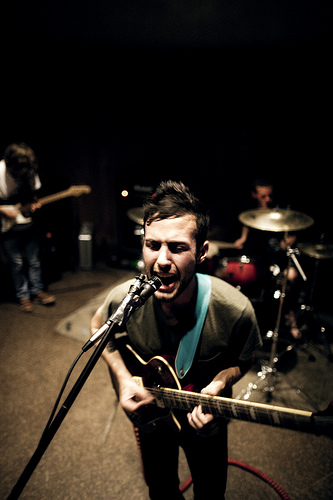
When I call Josh Bertram of Our Brother The Native at his home in Pontiac, Mich., he’s unwinding with hot tea and whiskey after “one of those days” at the office. The 22-year-old art director harbors an insuppressible passion for music, which is tough to convey to his older coworkers. “I feel like they progressively get more and more weirded out by me,” he admits. Bertram graciously welcomes my questions, speaking openly and eloquently about his new album, Vows.

At age 16, Bertram began recording with high school friend John-Michael Foss. They soon linked up with California resident Chaz Knapp and started collaborating via the Internet. “There wasn’t a lot of that kind of thing going on,” says Bertram. “Now, that’s really common.”

Bertram, Foss, and Knapp only met face to face after Our Brother The Native recorded its first full length album. Following its debut, Tooth And Claw, the band put out a host of material ranging from “pretty folk” to “post rock” on FatCat Records. Through all the style shifts, an avid fascination with circuit-bent instruments and layered sounds remained a consistent focus. After 2009’s Sacred Psalms, however, the steady outflow of releases came to a halt.

“Chaz and I were never really satisfied with the records we put out,” says Bertram. “I’ve been documenting my artistic growth over the years. It’s kind of like looking at embarrassing photos from high school. Finally, I was like alright, I need to slow it down.”

Production slowed, but Bertram’s been busier than ever. “It’s such an ambitious project to get all these players and instruments recorded,” he says. “It just took a lot longer.” The self-described sound geek did all the tracking for Vows himself. Guitar, banjo, ukulele, piano, synthesizer, and alto saxophone were among the instruments he played on the album. Knapp wrote the orchestral arrangements, and Nick Cowman of Oakland’s Religious Girls laid down the drums. “A lot of these songs had almost 120 tracks of instruments and sounds,” Bertram tells me. The final mixing of the album became an eight month endeavor.

Vows (released late October) is a dynamic flurry of sounds. Dense arrangements of strings, wind instruments, and clattering percussion accompany harrowing vocals from Bertram and an ethereal chorus of friends. “There’s so much to take in on this record,” Bertram affirms. “It’s kind of exhausting.”

In the course of recording the album, Bertram fell in love for the first time. “I wanted to make it sort of like marriage vows documenting various stages of love,” he says. “This is the first [album] I feel has actual human depth.” Ironically, it’s also the first time Bertram’s had difficulty finding a label. He’s digitally self-releasing Vows in the hopes that someone takes interest in putting out a physical version. “I don’t want fame or fortune or anything,” Bertram tells me. “I just want people to hear it. If I could have a conversation with you about your art, my art… I just want music to instigate these sort of things.”

Our Brother the Native
With Future Twin, Dead Eyes, and the Mallard
Sat/12, 9 p.m., $5
Engine Works
190 Capp, SF
(415) 563-8941

Wag the dog: The SF kennel that makes your apartment look like kibble

2

Wiggle that paw into your trusty Birkin for a spare $150 this holiday season — you’re staying in the best room in town. Of course, the hospitality staff there is going to be a little hands-on. They’ll wake you at 6 a.m., feed you breakfast, put you in a play group with future-friends that share your weight, age, and temperment. They’ll read you a short story during nightly “cuddletimes” and make sure your owners can see you on the livefeed at all times. Also, in this scenario you are a dog.

“People don’t want a kennel these days,” Jose Gonzales, director of guest services at the Mission’s Wag Hotel, is showing me through his kennel’s state-of-the-art facilities. “They want a safe, clean, convenient place to leave their pet.”

Wag’s first branch opened in Sacramento in 2005, at which time Gonzales tells me “we really, literally redefined pet care.” Redefined it to mean luxury summer camp for the dander set, that is.

Where’s my mint. Guardian photo by Caitlin Donohue

The center is open 24 hours a day. In Wag’s parlance, its human customers are “parents,” individuals who need only peek at their iPhones and the hotel’s playroom livestreams shown thereon to determine whether Pawla Abdul needs another dog biscuit (Gonzales says he is wont to call in requests that employees give snacks to his own pooch when he leaves his furry friend to Wag). 

Wag smells more like air freshener than canine as the two of us explore its bowels, Gonzales imparting a stream of information and myself dutifully following after. Here are the glistening, occasionally flatscreen-bedecked two-room enclosures that house steerage boarders (the dog bowl in the door means the “room” has been serviced), the vast playrooms looked down upon by even more vast skylights. 

There are 239 of these quarters at Wag. Usually there are less than 100 dogs staying in them, although at peak times over holidays, there can be enough to necessitate 50 to 60 employees, when it’s “all paws on deck,” as Gonzales puns. There is a rooftop garden for dogs that love to feel the sun on their furry faces, even report cards given to each parent at their offspring-from-another-bitch’s terminus at Wag. These rate Puppy’s bowel movements, and cite the friends they’ve made at Wag by breed and name. There are special activities planned intermittently, like the 12 Days of Winter event from Dec. 1-16 that will afford the dogs opportunities to take photos on Santa’s lap and have staff members design stockings for them that suit their personalities. 

Reading selections in the Wag Suite. Guardian photo by Caitlin Donohue

But for some, this comfort is not enough. And there is still a chance for your young pup to be the first guest at the $150 a night Golden Gate Suite.

This is the grand finale of Gonzales’ tour. Here, in a secluded hallway far from the whines and yelps of steerage, a genteel canine can while away the three to four days that constitute the average stay at the hotel, in jet-setting style. 

A double bed (slung low to the floor, no jumping for the dogs of the one percent) with organic sheets, layers of pillows, and a faux fur throw is the centerpiece of the room, which rather resembles a slick private double in a high-end hostel. Upon the pillows rest a box of doggy “chocolates” made by a local artisan and a plush remote control, which does not operate the large flatscreen on one side of the room where room occupants will view their owners each night for a heart-warming Skype chat. 

There is also a stack of books for storytime on a coffee table. “I personally like The Giving Tree,” Gonzales tells me. “But that’s a personal favorite.”

“A lot of people thought that the room was built to be over the top,” he reflects, shortly before we call in a golden labrador named Montana to lounge for my camera on the bed and whine impatiently for the box of artisan treats Gonzales has safely hid behind his back. “But we built it to be practical. We looked at what a dog needs and what will make the client and dog super-happy.”

This super-happiness, Wag has decided, lies in bridging the gap between pet and human when the two must be geographically separated. To mimic the home environment, Golden Gate Suite patrons can even sit down with hotel employees to determine which Pandora channel their beloved four-legger will listen to. 

On the occasion of my visit, classical is playing throughout the hotel. “We’ve had different feedback from clients that they don’t want their dog listening to classical,” says the director of guest services. “Maybe they want movie noise. Yeah, dogs don’t watch movies. But we want them to feel at home.”


Wag Hotel

25 14th St., SF

(415) 876-0700

www.waghotels.com

Period Piece: Duels to death on the shores of Lake Merced

0

Leaving aside the wanton killing, there was something charming about olden-style justice. Back in the day, a political figure could draft a nasty note that ended with  “your obedient servant,” pass it off to some friends to deliver to a sworn enemy, and wait for his duel to the death to be scheduled. 

It’s probably good those days are over. Bay Area pacifists have two men to thank for the cessation of formalized murder: Senator David Broderick and Judge David Terry – who were probably not the original frenemies, but certainly early bearers of the standard. The two ensured the end of legal dueling with their fatal 1859 clash on the banks of Lake Merced.

San Franciscans of the 19th century already knew both Broderick and Terry to be firebrands. “Dave” Broderick worked as a barkeeper before making his way into a California Senate seat, a vocal working-class Democrat. In his first-ever speech to colleagues, Broderick stood up and criticized President Buchanan on the issue of slavery to a room of aghast murmurs.

(A) is for Assasination. Site of the 1859 Broderick-Terry duel.

Terry, a Democrat from the South and California Supreme Court judge, had stabbed an opponent in the neck a few years before the Lake Merced incident came to fruition. His victim survived, and Terry narrowly escaped hanging. 

The Lecompton Constitution, attempting to install slavery in the new state of Kansas, met turmoil within the Democratic Party. Broderick took a cutting abolitionist stance and Terry a bloated pro-slavery one.

“A miserable remnant of a faction, sailing under false colors, trying to obtain votes under false pretenses,” Terry said of Broderick’s supporters in a speech that later compared Broderick (unfavorably) to Frederick Douglass. 

Broderick perturbedly read the speech at breakfast a few days later. A friend of Terry’s sat nearby.

“I have said I considered him the only honest man on the Supreme bench, but now I take it all back,” remarked Broderick.

Letters were delivered between the two. Honors began to be questioned. 

“I…require of you a retraction of those remarks,” wrote Terry, angrily.

“I have to desire you to state what were the remarks that you designate…as offensive,” Broderick obliquely replied.

Terry, frustrated, quoted his opponent, ending the note with an invocation of his honor as “an officer or a gentleman.” But Broderick seemed determined to cause Terry irritation.

“You are the best judge as to whether this language affords good ground of offence,” he wrote back, retraction not included.

Poked into a fury, Terry demanded a duel at “Laguna Merced,” and Broderick accepted. 

Those present at the duel later pegged Terry as the more practiced marksman. Broderick, it was said, seemed unprepared and awkward from the get-go. He carelessly chose an unfamiliar hairtrigger pistol, which fired early and off-mark. Terry took careful aim an instant later and struck Broderick in the breast. 

Broderick was to die within a few days. Anti-dueling legislation was enacted shortly afterwards. But Terry escaped legal retribution and joined up with Confederate forces at the start of the Civil War. For all the talk of glory and honor, he was shot and killed after slapping a U.S. Supreme Court judge in the face (an old friend of Broderick’s, the judge had jailed Terry for contempt during a hearing relating to Mrs. Terry).

“Slavery is old, decrepit and consumptive; freedom is young, strong and vigorous,” spoke Broderick early in his senatorial career. After his galvanizing death, much of California agreed, pushing pro-slavery Democrats out of office in favor of Republican ones. 

Today, the shady spot hosts two stone markers that indicate where the duelers faced off. 

Cold snappy

2

SUPER EGO Good thing my decorative Honey Badger-skin leg warmers double as a fierce muff-scarf combo, because Saturday I was stumbling back from a bomb underground warehouse launch — peel your ears for “The New Black” — and it was colder than the all-pleather interior of a second-hand Kardashian. Of-a-sudden! I’m about to wear jeggings over thermies over two pairs of liquor store pantyhose and rap about it just to stay warm. She’ll be serving you Sheer Energy undercover, burning up sidewalks at dawn with her layers of L’Eggs.

I’m still drunk, apparently. Let’s just keep warm the old-fashioned way, OK? Dancing with abandon sure seems melty enough.


BITCH HEEL

Nineteen drag queens! That’s how many licks it takes to get to the center of a Tootsie Pop — and to provide overwhelming entertainment at this benefit for Rocket Dog Rescue. Sister Roma and Phatima Rude host. Everybody barks.

Wed/9, 8 p.m. $25. Public Works, 161 Erie, SF. www.publicsf.com


BOOTY CALL

Juanita More and Joshua J.’s weekly party draws a lovely queer crowd that certainly knows how to find its light (photos are taken continuously in the backroom). The music’s usually flash-forward , too — for its four-year anniversary, the party pops with NYC’s deliciously hard-driving house DJ W. Jeremy of House of Stank.

Wed/9, 9 p.m., $4. Q Bar, 456 Castro, SF. www.bootycallwednesdays.com


SIDESHOW

OK folks it’s definitely benefit season — and this Burner-circus-burlesque party for KSea Flux, cherished SF underground mainstay who fell gravely ill last year, looks the business. Vau de Vire Society, Jill Tracy, Squidling Bros. Sideshow, Bad Unkl Sista, and seemingly zillions more will work their nightlife magic.

Thu/10, 8 p.m., $10. 375 DNA Lounge, 11th St., SF. www.dnalounge.com


FALTY DL

Equal parts head-tripper and bass-ripper, the wonderfully complex New Yorker scored big props playing the Radiohead tour, and isn’t afraid to drop Frank Zappa, Mobb Deep, and Aphex Twin into sets that cohere somehow into glistening workouts.

Fri/11, 9:30 p.m.-3 a.m., $10 advance. SOM, 2925 16th St., SF. www.som-bar.com


TIAGO

I have been dying to go to Lisbon’s Lux club for years, because hello sweaty Portuguesas getting down to quality music. Sparkling leftfield disco and dubby techno Lux resident Tiago (average set length there: seven hours) represents at the No Way Back monthly party.

Fri/11, 10 p.m., $5–$10. 222 Hyde, SF. www.222hyde.com


RAREBITS

Or you could just grab a strong drink at relaunched queer bar Truck and listen to some mighty eclectic tunes at this new monthly party, with cute DJs Josh Cheon, Chicken, and more. No pressure!

Fri/11, 6 p.m.-10 p.m., free. Truck, 1900 Folsom, SF. www.trucksf.com


HI-TEK SOUL

Two of the Belleville Three inventors of techno, Derrick May and Kevin Saunderson, have re-teamed up to show the kids how it’s done, Detroit-style. The mere idea of these two actual legends vibing live on four turntables and a drum machine makes me kinda weak.

Sat/12, 10 p.m.-4 a.m., $20. Public Works, 161 Erie, SF. wwwpublicsf.com


KOZE

SF’s As You Like It party crew continues its amazing run of special guests with this Hamburg master of harder-end post-minimal techno effects, playing a special four-hour set. The last time I saw him it felt like my chest was thumping a brilliant melody, so get ready for some upfront bass.

Sat/12, 9 p.m.-4 a.m., $25–$30. Beatbox, 314 11th St., SF. www.ayli-sf.com


YELLE

Edgy neon pop-dance princess of France puts on one hell of a show, full of catchy tunes, banging drums, and occasional crowd-surfing. Can we have her take over our Top Ten here please?

Sat/12, 9 p.m., $27.50 advance. Mezzanine, 444 Jessie, SF. www.mezzaninesf.com


CHEB I SABBAH BENEFIT

This festive benefit for the beloved, cancer-stricken godfather of global dance sounds will feature Cheb himself on the decks joined by guitarist Vir MCoy for live jams, plus DJs Freq Nasty, Janaka Selekta, and Dub Gabriel.

Sun/13, 8 p.m., $15. 1015 Folsom, SF. www.1015.com


PROSUMER

The kick-ass cutting-edge tech-house resident of Berlin’s fabled Panoramabar returns to the Honey Soundsystem Sunday weekly party to bring one of the best SF crowds to its knees. ($20 says he’ll be wearing shorts.)

Sun/13, 8 p.m., $5. Holy Cow, 1535 Folsom, SF. www.honeysoundsystem.com

GOLDIES 2011: Katie Faulkner

0

GOLDIES In 2005, in deference to the shaky ground we walk on, choreographer Katie Faulkner dubbed her new ensemble little seismic dance company. For an upstart, it seemed an oddly modest name — considering the waves she’d been making, something grander might have been more appropriate. But then that’s not Faulkner’s style. Her choreography doesn’t shout; it grabs you because her dances are full of surprises, finely crafted, and have a strong sense of identity.

Most exhilarating about Faulkner’s work is its sense of adventure. You never know what this North Carolina-born choreographer will dive into next. She thrives on intimacy — a solo physicalizing the process of dying in the Road Ahead — as well as the messy process of choreographing by committee. She created Terra Incognita, Revisited, shown last summer at the 2011 WestWave Dance Festival, with colleagues Kara Davis, Manuelito Biag, and Alex Ketley. For We Don’t Belong Here, a recent commission for the Dancers’ Group ONSITE series, she needed 20 dancers. So she held “very stringent auditions,” explaining, “I needed people who could hold their own and also contribute to the process.”

Perhaps Faulkner developed her appetite for the untried through an early interest in theater. An inspiring teacher in a playwriting class encouraged her to “take myself more seriously as a creative person.” She never did finish that play, opting for what she thought dance would give her over the precision of language: “a sense of looseness and abstraction.” But it’s not by chance that she has worked so often with former ODC dancer Private Freeman, an intensely physical and dramatic performer.

Perhaps joining AXIS Dance Company straight out of Mills College (she earned her MFA in 2002) also created possibilities a more conventional company might not have offered. Not only did Faulkner’s four years with AXIS challenge her to perform a wide range of repertoire, she also watched experienced choreographers step into what was for them virgin territory. It was at AXIS that Faulkner had her first taste of choreography. The intricate, yet crystal-clear Decorum looked at sibling rivalry within a constrained environment. In it she remembered having grown up in a community “where there was a right and wrong way to look and to be.”

Faulkner, who calls her own work “imagistic,” also has made intriguing dance films and will, if she has anything to say about it, do more. The duo Loom (2008) is set on San Francisco’s rooftops; for the quartet High Tide (2006) she traveled to the edge of the continent. Up next is a still vague project about multiple perspectives. She might want to take a look at Rashomon.

Confit basteeya, garlicky marrow

0

virginia@sfbg.com

APPETITE Here are four recent standout dishes or meals, offering affordable hole-in-the-wall charm or upscale creativity.


HAVEN PREVIEW AT PLUM

Anticipating the opening of Daniel Patterson’s restaurant (currently slated to happen by year’s end), Haven in Jack London Square, there have been a series of preview dinners on Tuesdays at his Oakland restaurant, Plum — the last one is Tue/15. Haven chef Kim Alter has been on hand to cook a five-course Haven dinner, applying the indelible signature style she established at Sausalito’s Plate Shop.

While I saw Alter’s promise there, I find myself more excited by the Haven preview. It seems her meticulous artistry is making space for comfort in a way that satisfies, yet is neither routine nor predictable.

Three cheers for her bone marrow dish, possibly my favorite bone marrow interpretation ever. A trail of garlic scents the air as two hefty bones come out. Vivid, pickled watermelon radishes brighten up the marrow visually, while leeks and yuzu juice add unexpected layers. Smeared over crusty bread, it was so perfectly indulgent we wanted to applaud. A main course of duck breast and tender duck confit delighted with the accompaniment of beets multiple ways, including dehydrated beets ground up with rye grain, or in German sauerkraut style.

Cocktail king Scott Beattie put three classics on the preview dinner menu, getting creative with ingredients in keeping with a gin theme. Old World Spirits’ Rusty Blade gin made a lush base with maraschino liqueur and Carpano Antica sweet vermouth for his take on a classic Martinez ($10). Smooth and sexy with the duck dish in particular.

Patterson’s flagship is the much-lauded Coi, and Coi’s pastry chef Matt Tinder took care of dessert, winning me over by filling buttery brioche with warm Brillat-Savarin cheese, topped with crispy honeycomb. Savory, creamy, with gently floral honey, it’s a dessert exemplifying the spirit of the entire dinner: inventive yet ultimately gratifying. I’m left expectant for what Alter and crew will cook at Haven.

Plum is located at 2214 Broadway, Oakl. (510) 444-7586, www.plumoakland.com. For the final Haven preview dinner, Tue/15, simply reserve for dinner for that date.


GRILL HOUSE MEDITERRANEAN

After moving around to various Tenderloin and North Bay storefronts, gifted Turkish chef Vahit Besir’s started at the new Grill House Mediterranean, only to leave a few weeks later. I caught him on one visit to this humble hole-in-the-wall, no longer there on my most recent stop. Though other food writers have deemed their visits inconsistent, my tastes here have been steady and as such, I find it a worthy place to pick up Middle Eastern bites when in the ‘Loin, though missing Besir.

Shredded chicken, lamb, or beef shawarma ($9.99 plate, or combo of all three: $11.99) fills out a toasted lavash wrap ($6.99-7.99) quite nicely, companion to lettuce, tomato, cucumber, hummus, and tahini sauce (as spicy as you wish).

The menu runs $10 or less with ubiquitous starters ($3.99 each) of baba ganoush, tabouli, dolmas, piyaz (white bean salad), and lahmajun, essentially Middle Eastern flatbread topped with ground beef. The most addictive bite is feta cheese pie ($3.99) straight out of the oven (or stuffed with beef, chicken or spinach). Tomatoes and warm feta ooze from a roll sprinkled in sesame seeds. A supreme Middle Eastern treat.

533 Jones, SF. (415) 440-7786, www.grillhousesf.com


PRIME DIP SANDWICHES

Blue collar workers and Civic Center government staff line-up at Prime Dip, a new sandwich shop on Larkin. No frills, just hefty dip sandwiches ($6.99-7.99) on French bread, including a popular prime rib dip. Under $8 is a deal for such hefty rolls, including a choice of sides like mac n’ cheese or mixed veggies. There’s a loaded lobster dip ($12.99) with hot dill butter, though I find my New Jersey (NY) roots push me straight for the hot pastrami dip. Crusty French bread softens when dipped in meaty jus, while spicy mustard and melted Swiss cushion thinly sliced pastrami.

518 Larkin, SF. (415) 800-8244


AZIZA

A meal at Aziza is never boring. Celebrated Chef Mourad Lahlou (whose new cookbook Mourad: New Moroccan was just released) puts such an artistic spin on Moroccan food. Some dishes achieve greater heights than others — but all fascinate, reinterpreting traditional elements. Although Aziza’s anticipated downtown location just fell through, the hunt for a new building continues.

Savory, garden-fresh cocktails were the highlight of a recent visit, but on the food front, juicy, little meatballs ($14) on skewers with grapes play the sweet-savory card to winning effect, accented by herb-tossed jicama. I adore Lahlou’s basteeya (or bastilla), to me the ultimate Moroccan dish. This visit it was tweaked from the usual chicken or traditional squab, filled instead with duck confit. Tender, shredded duck is encased in phyllo dough ($22), sweetly contrasted by raisins, cinnamon, and powdered sugar, plus slivers of almonds. Savory-plus-sweet gets me every time.

5800 Geary, SF. (415) 752-2222, www.aziza-sf.com

Subscribe to Virgina’s twice-monthly newsletter, The Perfect Spot at www.theperfectspotsf.com


Film Listings

0

Film listings are edited by Cheryl Eddy. Reviewers are Kimberly Chun, Max Goldberg, Dennis Harvey, Lynn Rapoport, and Matt Sussman. For rep house showtimes, see Rep Clock.

OPENING

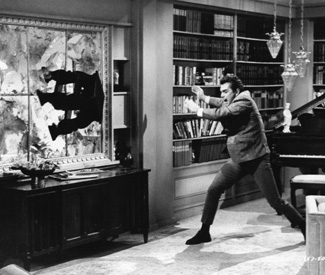
*Bedazzled and The Car After several weeks of delivering some fairly purgatorial cinematic meditations on Mephistopheles, the Vortex Room’s final demonic double bill is da bomb. First up is mother of all cult comedies Bedazzled (1967), in which Goon Show regulars Peter Cook and Dudley Moore ramped up their anticipation of Monty Python-esque absurd sketch-humor outrages by positing themselves as wily Devil and major chump in a not-so-swinging contemporary London. Moore’s besotted (with the divine Eleanor Bron) Wimpy Burger employee gets seven wishes for true happiness in exchange for his soul, but each fantasy granted — ranging from animation to killer pop-star satire to nuns on trampolines — somehow comes with a fly in its ointment. Too ahead of its time for popular success (despite an elongated cameo by reigning sexpot Raquel Welch as Lillian Lust), Bedazzled is now a bit dated, but still bloody marvelous. One doubts that compound adjective was ever applied to The Car (1977), which came out a decade later and sort of managed to couple 1975’s Jaws and 1976’s The Omen (albeit without achieving anywhere near their success). A killer car — a black Continental Mark III, to be precise — trolls around the Southwest edging bicyclists off cliffs, mowing down pedestrians, even attacking potty-mouthed schoolteachers inside their homes. (This last scene alone is definitely worth the price of admission.) What’s more, there appears to be no driver, suggesting this vehicle is fueled by pure evil. James Brolin at his hairiest is the local sheriff whose guns alone can’t save the town. Unquestionably silly, The Car nonetheless remains the Rolls Royce of supernaturally-possessed-automotive-transportation movies. Vortex Room. (Harvey)

*El Bulli: Cooking in Progress Oh to be a fly on the wall of El Bulli — back in 2008 and 2009, when director Gereon Wetzel turned his lens on the Spanish landmark, it was considered the best restaurant in the world. This elegantly wrought documentary, covering a year at the culinary destination (now closed), allows you to do just that. Wetzel opens on chef-owner Ferran Adrià shutting down his remarkable eatery for the winter and then drifting in and out of his staff’s Barcelona lab as they develop dishes for the forthcoming season. Head chef Oriol Castro and other trusted staffers treat ingredients with the detached methodicalness of scientists — a champignon mushroom, say, might be liquefied from its fried, raw, sous-vide-cooked states — and the mindful intuition of artists, taking notes on both MacBooks and paper, accompanied by drawings and much photo-snapping. Fortunately the respectful Wetzel doesn’t shy away from depicting the humdrum mechanics of running a restaurant, as Adrià is perpetually interrupted by his phone, must wrangle with fishmongers reluctant to disclose “secret” seasonal schedules, and slowly goes through the process of creating an oil cocktail and conceptualizing a ravioli whose pasta disappears when it hits the tongue, tasting everything as he goes. Energized by an alternately snappy and meditative percussive score, this look into the most influential avant-garde restaurant in the world is a lot like the concluding photographs of the many menu items we glimpse at their inception — a memorable, sublimely rendered document that leaves you hungry for more. (1:48) Embarcadero. (Chun)

Le Havre Aki Kaurismäki’s second French-language film (following 1992’s La Vie de Boheme) offers commentary on modern immigration issues wrapped in the gauze of a feel good fairy tale and cozy French provincialism a la Marcel Pagnol. Worried about the health of his hospitalized wife (Kaurismäki regular Kati Outinen), veteran layabout and sometime shoe shiner Marcel (Andre Wilms) gets some welcome distraction in coming to the aid of Idrissa (Blondin Miguel), a young African illegally trying to make way to his mother in London while eluding the gendarmes. Marcel’s whole neighborhood of port-town busybodies and industrious émigrés eventually join in the cause, turning Le Havre into a sort of old-folks caper comedy with an incongruously sunny take on a rising European multiculturalism in which there are no real racist xenophobes, just grumps deserving comeuppance. Incongruous because Kaurismäki is, of course, the king of sardonically funny Finnish miserabilism — and while it’s charmed many on the festival circuit, this combination of his usual poker-faced style and feel-good storytelling formula may strike others as an oil-and-water mismatch. (1:43) Clay, Smith Rafael. (Harvey)

Immortals Tarsem Singh (2006’s The Fall) directs Mickey Rourke and Stephen Dorff in this CG-laden mythology adventure. (1:50) Presidio.

*Into the Abyss: A Tale of Death, a Tale of Life How remarkable is it that, some 50-plus features along, filmmaker Werner Herzog would become the closest thing to a cinema’s conscience? This time the abyss is much closer to home than the Amazon rainforest or the Kuwaiti oil fields — it lies in the heart of Rick Perry country. What begins as an examination of capital punishment, introduced with an interview with Reverend Richard Lopez, who has accompanied Texas death row inmates to their end, becomes a seeming labyrinth of human tragedy. Coming into focus is the execution of Michael Perry, convicted as a teenager of the murder of a Conroe, Tex., woman, her son, and his friend — all for sake of a red Camaro. Herzog obtains an insightful interview with the inmate, just days before his execution, as well as his cohort Jason Burkett, police, an executioner, and the victims’ family members, in this haunting examination of crime, punishment, and a small town in Texas where so many appear to have gone wrong. So wrong that one might see Into the Abyss as more related to 1977’s Stroszek and its critical albeit compassionate take on American life, than Herzog’s last tone poem about the mysterious artists of 2010’s Cave of Forgotten Dreams (and it’s also obviously directly connected to next year’s TV documentary, Death Row). The layered tragedies and the strata of destroyed lives stays with you, as do the documentary’s difficult questions, Herzog’s gentle humanity as an interviewer, and the fascinating characters that don’t quite fit into a more traditional narrative — the Conroe bystander once stabbed with a screwdriver who learned to read in prison, and the dreamy woman impregnated by a killer whose entire doomed family appears to be incarcerated. (1:46) Embarcadero. (Chun)

J. Edgar The usual polished, sober understatement of Clint Eastwood’s directing style and the highlights-compiling CliffsNotes nature of Dustin Lance Black’s screenplay turn out to be interestingly wrong choices for this biopic about one of the last American century’s most divisive figures. Interesting in that they’re perhaps among the very few who would now dare viewing the late, longtime FBI chief with so much admiration tempered by awareness of his faults — rather than the other way around. After all, Hoover (played by Leonardo DiCaprio) strengthened his bureau in ways that, yes, often protected citizens and state, but at what cost? The D.C. native eventually took to frequently “bending” the law, witch-hunting dubious national enemies (he thought the Civil Rights movement our worst threat since the bomb-planting Bolshevik anarchists of half a century earlier), blackmailing personal ones, weakening individual rights against surveillance, hoarding power (he resented the White House’s superior authority), lying publicly, and doing just about anything to heighten his own fame. A movie that internalized and communicated his rising paranoid megalomania (ironically Hoover died during the presidency of Nixon, his equal in that regard) might have stood some chance of making us understand this contradiction-riddled cipher. But J. Edgar is doggedly neutral, almost colorless (literally so, in near-monochrome visual presentation), its weird appreciation of the subject’s perfectionism and stick-to-it-iveness shutting out almost any penetrating insight. (Plus there’s Eastwood’s own by-now-de rigueur soundtrack of quasi-jazz noodling to make what is vivid here seem more dull and polite.) The love that dare not speak its name — or, evidently, risk more than a rare peck on the cheek — between Hoover and right-hand-man/life companion Clyde Tolson (Armie Hammer, very good if poorly served by his old-age makeup) becomes both the most compelling and borderline-silly thing here, fueled by a nervous discretion that seems equal parts Black’s interest and Eastwood’s discomfort. While you might think the directors polar opposites in many ways, the movie J. Edgar ultimately recalls most is Oliver Stone’s 1995 Nixon: both ambitiously, rather sympathetically grapple with still-warm dead gorgons and lose, filmmaker and lead performance alike laboring admirably to intelligent yet curiously stilted effect. (2:17) Marina. (Harvey)

Jack and Jill Adam Sandler plays a dude who has a Thanksgiving from hell thanks to his twin sister (played by an in-drag Adam Sandler). Somehow Al Pacino is also involved. (runtime not available) Presidio.

*Melancholia Lars von Trier is a filmmaker so fond of courting controversy it’s like he does it in spite of himself — his rambling comments about Hitler (“I’m a Nazi”) were enough to get him banned from the Cannes Film Festival earlier this year, where Melancholia had its debut (and star Kirsten Dunst won Best Actress). Oops. Maybe after the (here’s that word again) controversy that accompanied 2009’s Antichrist, von Trier felt like he needed a shocking context for his more mellow latest. Pity that, for Melancholia is one of his strongest, most thoughtful works to date. Split into two parts, the film follows first the opulent, disastrous, never-ending wedding reception of Justine (Dunst) and Michael (Alexander Skarsgard), held at a lavish estate owned by John (Kiefer Sutherland), the tweedy husband of Justine’s sister, Claire (Charlotte Gainsbourg). Amid the turmoil of arguments (John Hurt and Charlotte Rampling as Justine and Claire’s divorced parents), pushy guests (Stellan Skarsgard as Justine’s boss), livid wedding planner (Udo Kier, amazing), and hurt feelings (Michael is the least-wanted groom since Kris Humphries), it’s clear that something is wrong with Justine beyond just marital jitters. The film’s second half begins an unspecified amount of time later, as Claire talks her severely depressed, near-catatonic sister into moving into John’s mansion. As Justine mopes, it’s revealed that a small planet, Melancholia — glimpsed in Melancholia‘s Wagner-scored opening overture — is set to pass perilously close to Earth. John, an amateur astronomer, is thrilled; Claire, fearful for her young son’s future and goaded into high anxiety by internet doomsayers, is convinced the planets will collide, no matter what John says. Since Justine (apparently von Trier’s stand-in for himself) is convinced that the world’s an irredeemably evil place, she takes the news with a shrug. Von Trier’s vision of the apocalypse is somber and surprisingly poetic; Dunst and Gainsbourg do outstanding work as polar-opposite sisters whose very different reactions to impending disaster are equally extreme. (2:15) Embarcadero. (Eddy)

Octubre This downtempo drama directed by Daniel and Diego Vega follows Clemente (Bruno Odar), a stone-faced moneylender living in a shabby apartment in Lima, Peru. Clemente’s days couldn’t be more bleak. When he’s not dealing with clients over his kitchen table — appraising watches and jewelry, handing out or collecting cash — he’s eating egg sandwiches and paying cold visits to prostitutes. When one of them leaves a baby girl in his apartment, Clemente goes on a search for the mother. Meanwhile, he enlists a client, Sofía (Gabriela Velásquez), as a live-in nanny for the baby. Both Sofía and the baby add some life and color to Clemente’s apartment and ultimately, his reclusive existence. Octubre is a slow rolling and muted film that’s interested in detail. Most of the time, you’re searching Clemente’s stony face (Odar’s acting is superb and unbroken), hoping he might betray a thought or even better, a feeling — he does. (1:23) SFFS New People Cinema. (James H. Miller)

ONGOING

Anonymous Hark, what bosom through yonder bodice heaves? If you like your Shakespearean capers OTT and chock-full of fleshy drama, political intrigue, and groundling sensation, then Anonymous will enthrall (and if the lurid storyline doesn’t hold, the acting should). Writer John Orloff spins his story off one popular theory of Shakespeare authorship — that Edward de Vere, the 17th Earl of Oxford, was the true pen behind the works attributed to William Shakespeare of Stratford-upon-Avon. Our modern-day narrator (Derek Jacobi) foregrounds the fictitious nature of the proceedings, pulling back the curtain on Ben Jonson (Sebastian Armesto) staging his unruly comedies for the mob, much to the amusement of a mysterious aging dandy of a visitor: the Earl of Oxford (Rhys Ifans). Hungry for the glory that has always slipped through his pretty fingers, the Earl yearns to have his works staged for audiences beyond those in court, where Queen Elizabeth I (Vanessa Redgrave as the elder regent, daughter Joely Richardson as the lusty young royal) dotes on them, and out of the reach of his puritan father-in-law Robert Cecil (David Thewlis), Elizabeth’s close advisor, and he devises a plan for Jonson to stage them under his own name. But much more is triggered by the productions, uncovering secret trysts, hunchback stratagems, and more royal bastards than you can shake a scepter at. Director Roland Emmerich invests the production with the requisite high drama — and camp — to match the material, as well as pleasing layers of grime and toxic-looking Elizabethan makeup for both the ladies and the dudes who look like ladies (the crowd-surfing, however, strikes the off-key grunge-era note). And if the inherent elitism of the tale — could only a nobleman have written those remarkable plays and sonnets? — offends, fortunately the cast members are more than mere players. Ifans invests his decadent Earl with the jaded gaze and smudgy guyliner of a fading rock star, and Redgrave plays her Elizabeth like a deranged, gulled grotesque. (2:10) 1000 Van Ness, SF Center, Sundance Kabuki. (Chun)

*Drive Such a lovely way to Drive, drunk on the sensual depths of a lush, saturated jewel tone palette and a dreamlike, almost luxurious pacing that gives off the steamy hothouse pop romanticism of ’80s-era Michael Mann and David Lynch — with the bracing, impactful flecks of threat and ultraviolence that might accompany a car chase, a moody noir, or both, as filtered through a first-wave music video. Drive comes dressed in the klassic komforts — from the Steve McQueen-esque stances and perfectly cut jackets of Ryan Gosling as the Driver Who Shall Remain Nameless to the foreboding lingering in the shadows and the wittily static, statuesque strippers that decorate the background. Gosling’s Driver is in line with Mann’s other upstanding working men who hew to an old-school moral code and are excellent at what they do, regardless of what side of the law they’re working: he likes to keep it clear and simple — his services as a wheelman boil down to five minutes, in and out — but matters get messy when he falls for sweet-faced neighbor Irene (Carey Mulligan), who lives down the hall with her small son, and her ex-con husband (Oscar Isaac) is dragged back into the game. Populated by pungent side players like Albert Brooks, Bryan Cranston, Ron Perlman, and Christina Hendricks, and scattered with readily embeddable moments like a life-changing elevator kiss that goes bloodily wrong-right, Drive turns into a real coming-out affair for both Danish director Nicolas Winding Refn (2008’s Bronson), who rises above any crisis of influence or confluence of genre to pick up the po-mo baton that Lynch left behind, and 2011’s MVP Ryan Gosling, who gets to flex his leading-man muscles in a truly cinematic role, an anti-hero and under-the-hood psychopath looking for the real hero within. (1:40) Bridge, SF Center. (Chun)

50/50 This is nothing but a mainstream rom-com-dramedy wrapped in indie sheep’s clothes. When Adam (Joseph Gordon-Levitt) learns he has cancer, he undergoes the requisite denial, anger, bargaining, depression, and acceptance like a formality. Aided by his bird-brained but lovable best friend Kyle (Seth Rogan), lovable klutz of a counselor Katherine (Anna Kendrick), and panicky mother (Anjelica Huston), Adam gets a new lease on life. This comes in the form of one-night-stands, furious revelations in parked cars, and a prescribed dose of wacky tobaccy. If 50/50 all sounds like the setup for a pseudo-insightful, kooky feel-goodery, it is. The film doesn’t have the brains or spleen to get down to the bone of cancer. Instead, director Jonathan Levine (2008’s The Wackness) and screenwriter Will Reiser favor highfalutin’ monologues, wooden characters, and a Hollywood ending (with just the right amount of ambiguity). Still, Gordon-Levitt is the most gorgeous cancer patient you will ever see, bald head and all. (1:40) Bridge, Four Star, 1000 Van Ness, SF Center, Sundance Kabuki. (Ryan Lattanzio)

Footloose Another unnecessary remake joins the queue at the box office, aiming for the pockets of ’80s-era nostalgics and fans of dance movies and naked opportunism. A recap for those (if there are those) who never saw the 1984 original: city boy Ren McCormack moves to a Middle American speck-on-the-map called Bomont and riles the town’s inhabitants with his rock ‘n’ roll ways — rock ‘n’ roll, and the lewd acts of physicality it inspires, i.e., dancing, having been criminalized by the town council to preserve the souls and bodies of Bomont’s young people. Ren falls for wayward preacher’s daughter Ariel Moore — whose father has sponsored this oversolicitous piece of legislation — and vows to fight city hall on the civil rights issue of a senior prom. Ren McCormack 2.0 is one Kenny Wormald (prepped for the gig by his tenure in the straight-to-cable dance-movie sequel Center Stage: Turn It Up), who forgoes the ass-grabbing blue jeans that Kevin Bacon once angry-danced through a flour mill in. Otherwise, the 2011 version, directed and cowritten by Craig Brewer (2005’s Hustle & Flow), regurgitates much of the original, hoping to leverage classic lines, familiar scenes, and that Dance Your Ass Off T-shirt of Ariel’s. It doesn’t work. Ren and Ariel (Dancing with the Stars‘ Julianne Hough) are blandly unsympathetic and have the chemistry of two wet paper towels, the adult supporting cast should have known better, and the entire film comes off as a tired, tuneless echo. (1:53) Four Star. (Rapoport)

*Gainsbourg: The Man Who Loved Women Those hungry for more of the real Serge Gainsbourg — after being tantalized and teased by Joann Sfar’s whimsical comic book-inspired feature — will want to catch this documentary by Pascal Forneri for many of the details that didn’t fit or were skimmed over, here, in the very words and image of the songwriter and the many iconic women in his life. Much of the chanson master’s photographic or video history seems to be here — from his blunt-force on-camera proposition of Whitney Houston to multiple, insightful interviews with the love of his life, Jane Birkin, as well as the many women who won his heart for just a little while, such as Brigitte Bardot, Juliette Gréco, Françoise Hardy, and Vanessa Paradis. Gainsbourg may be marred by its somewhat choppy, mystifying structure, at times chronological, at times organized according to creative periods, but overriding all are the actual footage and photographs loosely, louchely assembled and collaged by Forneri; delightful pre-music-videos Scopitones of everyone from France Gall to Anna Karina; and the gemlike, oh-so-quotable interviews with the mercurial, admirably honest musical genius and eternally subversive provocateur. Quibble as you might with the short shrift given his later career—in addition to major ’70s LPs like Histoire de Melody Nelson and L’Homme à tête de chou (Cabbage-Head Man) — this is a must-see for fans both casual and seriously seduced. (1:45) Roxie. (Chun)

The Ides of March Battling it out in the Ohio primaries are two leading Democratic presidential candidates. Filling the role of idealistic upstart new to the national stage — even his poster looks like you-know-who’s Hope one — is Governor Mike Morris (George Clooney), who’s running neck-and-neck in the polls with his rival thanks to veteran campaign manager (Philip Seymour Hoffman) and ambitious young press secretary Steven (Ryan Gosling). The latter is so tipped for success that he’s wooed to switch teams by a rival politico’s campaign chief (Paul Giamatti). While he declines, even meeting with a representative from the opposing camp is a dangerous move for Steven, who’s already juggling complex loyalties to various folk including New York Times reporter Ida (Marisa Tomei) and campaign intern Molly (Evan Rachel Wood), who happens to be the daughter of the Democratic National Party chairman. Adapted from Beau Willimon’s acclaimed play Farragut North, Clooney’s fourth directorial feature is assured, expertly played, and full of sharp insider dialogue. (Willimon worked on Howard Dean’s 2004 run for the White House.) It’s all thoroughly engaging — yet what evolves into a thriller of sorts involving blackmail and revenge ultimately seems rather beside the point, as it turns upon an old-school personal morals quandary rather than diving seriously into the corporate, religious, and other special interests that really determine (or at least spin) the issues in today’s political landscape. Though stuffed with up-to-the-moment references, Ides already feels curiously dated. (1:51) Marina, 1000 Van Ness, Sundance Kabuki. (Harvey)

In Time Justin Timberlake moves from romantic comedy to social commentary to play Will Salas, a young man from the ghetto living one day at a time. Many 12-steppers may make this claim, but Salas literally is, because in his world, time actually is money and people pay, say, four minutes for a cup of coffee, a couple hours for a bus ride home from work, and years to travel into a time zone where people don’t run from place to place to stay ahead of death. In writer-director Andrew Niccol’s latest piece of speculative cinema, humans are born with a digitized timepiece installed in their forearm and a default sell-by date of 25 years, with one to grow on — though most end up selling theirs off fairly quickly while struggling to pay rent and put food on the table. Time zones have replaced area codes in defining social stature and signaling material wealth, alongside those pesky devices that give the phrase “internal clock” an ominous literality. Niccol also wrote and directed Gattaca (1997) and wrote The Truman Show (1998), two other films in which technological advances have facilitated a merciless, menacing brand of social engineering. In all three, what is most alarming is the through line between a dystopian society and our own, and what is most hopeful is the embattled protagonist’s promises that we don’t have to go down that road. Amanda Seyfried proves convincible as a bored heiress to eons, her father (Vincent Kartheiser) less amenable to Robin Hood-style time banditry. (1:55) 1000 Van Ness, SF Center. (Rapoport)

Johnny English Reborn (1:41) Four Star.

*Like Crazy Jacob (Anton Yelchin) and Anna (Felicity Jones) meet near the end of college; after a magical date, they’re ferociously hooked on each other. Trouble is, she’s in Los Angeles on a soon-to-expire student visa — and when she impulsively overstays, then jets home to London for a visit months later, her re-entry to America is stopped cold at LAX. (True love’s no match for homeland security.) An on-and-off long-distance romance ensues, and becomes increasingly strained, even as their respective careers (he makes furniture, she’s a magazine staffer) flourish. Director and co-writer Drake Doremus (2010’s Douchebag) achieves a rare midpoint between gritty mumblecore and shiny Hollywood romance; the characters feel very real and the script ably captures the frustration that settles in when idealized fantasies give way to the messy workings of everyday life. There are some contrivances here — Anna’s love-token gift from Jacob, a bracelet engraved “Patience,” breaks when she’s with another guy — but for the most part, Like Crazy offers an honest portrait of heartbreak. (1:29) SF Center. (Eddy)

*Love Crime Early this year came the announcement that Brian De Palma was hot to do an English remake of Alain Corneau’s Love Crime. The results, should they come to fruition, may well prove a landmark in the annals of lurid guilty-pleasure trash. But with the original Love Crime finally making it to local theaters, it’s an opportune moment to be appalled in advance about what sleazy things could potentially be done to this neat, dry, fully clothed model of a modern Hitchcockian thriller. No doubt in France Love Crime looks pretty mainstream. But here its soon-to be-despoiled virtues of narrative intricacy and restraint are upscale pleasures. Ludivine Sagnier plays assistant to high-powered corporate executive Christine (Kristin Scott Thomas). The boss enjoys molding protégée Isabelle to her own image, making them a double team of carefully planned guile unafraid to use sex appeal as a business strategy. But Isabelle is expected to know her place — even when that place robs her of credit for her own ideas — and when she stages a small rebellion, Christine’s revenge is cruelly out of scale, a high-heeled boot brought down to squash an ant. Halfway through an act of vengeance occurs that is shocking and satisfying, even if it leaves the remainder of Corneau and Nathalie Carter’s clever screenplay deprived of the very thing that had made it such a sardonic delight so far. Though it’s no masterpiece, Love Crime closes the book on his Corneau’s career Corneau (he died at age 67 last August) not with a bang but with a crisp, satisfying snap. (1:46) Lumiere. (Harvey)

*Margin Call Think of Margin Call as a Mamet-like, fictitious insider jab at the financial crisis, a novelistic rejoinder to Oscar-winning doc Inside Job (2010). First-time feature director and writer J.C. Chandor shows a deft hand with complex, writerly material, creating a darting dance of smart dialogue and well-etched characters as he sidesteps the hazards of overtheatricality, a.k.a. the crushing, overbearing proscenium. The film opens on a familiar Great Recession scene: lay-off day at an investment bank, marked by HR functionaries calling workers one by one into fishbowl conference rooms. The first victim is the most critical — Eric Dale (Stanley Tucci), a risk-management staffer who has stumbled on an investment miscalculation that could potentially trigger a Wall Street collapse. On his way out, he passes a drive with his findings to one of his young protégés, Peter (Zachary Quinto), setting off a flash storm over the next 24 hours that will entangle his boss Sam (Kevin Spacey), who’s agonizing over his dying dog while putting up a go-big-or-go-home front; cynical trading manager Will (Paul Bettany); and the firm’s intimidating head (Jeremy Irons), who gets to utter the lines, “Explain to me as you would to a child. Or a Golden Retriever.” Such top-notch players get to really flex their skills here, equipped with Chandor’s spot-on script, which manages to convey the big issues, infuse the numbers with drama and the money managers with humanity, and never talk down to the audience. (1:45) Sundance Kabuki. (Chun)

*Martha Marcy May Marlene If Winter’s Bone star Jennifer Lawrence was the breakout ingénue of 2010, look for Martha Marcy May Marlene‘s Elizabeth Olsen to take the 2011 title. Both films are backwoodsy and harrowing and offer juicy roles for their leading starlets — not to mention a pair of sinister supporting roles for the great John Harkes. Here, he’s a Manson-y figure who retains disturbing control over Olsen’s character even after the multi-monikered girl flees his back-to-the-land cult. Writer-director Sean Durkin goes for unflashy realism and mounds on the dread as the hollow-eyed Martha attempts to resume normal life, to the initial delight of her estranged, guilt-ridden older sister (Sarah Paulson). Soon, however, it becomes clear that Things Are Not Ok. You’d be forgiven for pooh-poohing Olsen from the get-go; lavish Sundance buzz and the fact that she’s Mary-Kate and Ashley’s sis have already landed her mountains of pre-release publicity. But her performance is unforgettable, and absolutely fearless. (1:41) Sundance Kabuki. (Eddy)

Midnight in Paris Owen Wilson plays Gil, a self-confessed “Hollywood hack” visiting the City of Light with his conservative future in-laws and crassly materialistic fiancée Inez (Rachel McAdams). A romantic obviously at odds with their selfish pragmatism (somehow he hasn’t realized that yet), he’s in love with Paris and particularly its fabled artistic past. Walking back to his hotel alone one night, he’s beckoned into an antique vehicle and finds himself transported to the 1920s, at every turn meeting the Fitzgeralds, Gertrude Stein (Kathy Bates), Dali (Adrien Brody), etc. He also meets Adriana (Marion Cotillard), a woman alluring enough to be fought over by Hemingway (Corey Stoll) and Picasso (Marcial di Fonzo Bo) — though she fancies aspiring literary novelist Gil. Woody Allen’s latest is a pleasant trifle, no more, no less. Its toying with a form of magical escapism from the dreary present recalls The Purple Rose of Cairo (1985), albeit without that film’s greater structural ingeniousness and considerable heart. None of the actors are at their best, though Cotillard is indeed beguiling and Wilson dithers charmingly as usual. Still — it’s pleasant. (1:34) Opera Plaza. (Harvey)

Moneyball As fun as it is to watch Brad Pitt listen to the radio, work out, hang out with his cute kid, and drive down I-80 over and over again, it doesn’t quite translate into compelling cinema for the casual baseball fan. A wholesale buy-in to the cult of personality — be it A’s manager Billy Beane or the actor who plays him — is at the center of Moneyball‘s issues. Beane (Pitt) is facing the sad, inevitable fate of having to replace his star players, Jason Giambi and Johnny Damon, once they command the cash from the more-moneyed teams. He’s gotta think outside of the corporate box, and he finds a few key answers in Peter Brand (a.k.a. Paul DePodesta, played by Jonah Hill), who’s working with the sabermetric ideas of Bill James: scout the undervalued players that get on base to work against better-funded big-hitters. Similarly, against popular thought, Moneyball works best when director Bennett Miller (2005’s Capote) strays from the slightly flattening sunniness of its lead actor and plunges into the number crunching — attempting to visualize the abstract and tapping into the David Fincher network, as it were (in a related note, Aaron Sorkin co-wrote Moneyball‘s screenplay) — though the funny anti-chemistry between Pitt and Hill is at times capable of pulling Moneyball out of its slump. (2:13) Marina, 1000 Van Ness, Sundance Kabuki. (Chun)

Oranges and Sunshine At the center of this saga of lives ripped apart by church and state is Margaret Humphreys, the Englishwoman who uncovered the scandalous mass deportation of children from England to Australia. In one of her most rewarding roles since The Proposition (2005), her last foray to Oz, Watson portrays the English social worker who in the ’80s learns of multiple cases of now-adult orphans in Australia who don’t know their real name or even age but remember that they once lived in the UK. She starts to explore the past of victims such as Jack (Hugo Weaving) and Len (David Wenham) and tries to reunite them with their families, including mothers who were told their youngsters were adopted into real families. In the course of her work, and at the expense of her own family life, Humphreys discovers the horrors that befell many young deportees — as child slave-laborers — and the corruption that extends its fingers into government and the Catholic church. In his first feature film, director Jim Loach, son of crusading cinematic force Ken Loach, turns over each stone with care and compassion, finding the perfect filter through which to tell this well-modulated story in Watson, whose Humphreys faces harassment and post-traumatic stress disorder in her quest to heal the children who were lured overseas in the hope that they would ride horses to school and pick oranges off a tree for breakfast. (1:45) Opera Plaza. (Chun)

*Paranormal Activity 3 A prequel to a prequel, this third installment in the faux-home-movie horror series is as good as one could reasonably hope for: considerably better than 2010’s part two, even if inevitably it can’t replicate the relatively fresh impact of the 2007 original. After a brief introductory sequence we’re in 1988, with the grown-up sisters of the first two films now children (Chloe Csengery, Jessica Tyler Brown) living with a recently separated mom (Lauren Bitter) and her nice new boyfriend (Christopher Smith). His wedding-video business provides the excuse for many a surveillance cam to be set up in their home once things start going bump in the night (and sometimes day). Which indeed they do, pretty quickly. Brown’s little Kristi has an invisible friend called Toby she says is “real,” though of course everyone else trusts he’s a normal, harmless imaginary pal. Needless to say, they are wrong. Written by Christopher Landon (Paranormal Activity 2, 2007’s Disturbia) and directed by the guys (Henry Joost, Ariel Schulman) who made interesting nonfiction feature Catfish (2010), this quickly made follow-up does a good job piling on more scares without getting shameless or ludicrous about it, extends the series’ mythology in ways that easily pave way toward future chapters, and maintains the found-footage illusion well enough. (Excellent child performances and creepy camcorder “pans” atop an oscillating fan motor prove a great help; try to forget that video quality just wasn’t this good in ’88.) Not great, but thoroughly decent, and worth seeing in a theater — this remains one chiller concept whose effectiveness can only be diminished to the point of near-uselessness on the small screen. (1:24) 1000 Van Ness. (Harvey)

*Point Blank Not for nothing did Hollywood remake French filmmaker Fred Cavaye’s last film, Anything for Her (2008) as The Next Three Days (2010) — Cavaye’s latest, tauter-than-taut thriller almost screams out for a similar rework, with its Bourne-like handheld camera work, high-impact immediacy, and noirish narrative economy. Point Blank — not to be confused with the 1967 Lee Marvin vehicle —kicks off with a literal slam: a mystery man (Roschdy Zem) crashing into a metal barrier, on the run from two menacing figures until he is cornered and then taken out of the action by fate. His mind mainly on the welfare of his very pregnant wife Nadia (Elena Anaya), nursing assistant Samuel (Gilles Lellouche) has the bad luck to stumble on a faux doctor attempting to make sure that the injured man never rises from his hospital bed. As police wrangle over whose case this exactly is — the murder of an industrialist seems to have expanded the powers of the stony-faced, monolithic Commandant Werner (Gerard Lanvin) — Samuel gets sucked into the mystery man’s lot, a conspiracy that allows them to trust no one, and seemingly impossibly odds against getting out of the mess alive. Cavaye never quite stops applying the pressure in this clever, unrelenting cat-and-mouse and mouse-and-his-spouse game, topping it with a nerve-jangling search through a messily chaotic police station. (1:24) Opera Plaza. (Chun)

Puss in Boots (1:45) 1000 Van Ness, Presidio.

Real Steel Everybody knows what this movie about rocking, socking robots should have been called. Had the producers secured the rights to the name, we’d all be sitting down to Over The Top II: Child Endangerment. Absentee father Charlie Kenton (Hugh Jackman) and his much-too-young son Max (Dakota Goyo) haul their remote-controlled pugilists in a big old truck from one underground competition to the next. Along the way Charlie learns what it means to be a loving father while still routinely managing to leave cherubic Max alone in scenarios of astonishing peril. Seriously, there are displays of parental neglect in this movie that strain credulity well beyond any of its Rock ‘Em Sock ‘Em elements. Fortunately the filmmakers had the good sense to make those elements awesome. The robots look great and the ring action can be surprisingly stirring in spite of the paper-thin human story it depends on. And as adept as the script proves to be at skirting the question of robot sentience, we’re no less compelled to root for our scrappy contender. Recommended if you love finely wrought spectacle but hate strong characterization and children. (2:07) 1000 Van Ness. (Jason Shamai)

Revenge of the Electric Car The timing is right for Chris Paine to make a follow-up to his 2006 Who Killed the Electric Car?, a celebrity-studded doc examining the much-mourned downfall of GM’s EV1 — with gas prices so high and oil politics so distressing, even drivers who don’t consider themselves radical environmentalists are interested in going electric, as choices aplenty flood the marketplace. The aptly-titled Revenge of the Electric Car makes nice with GM’s Bob Lutz as he readies the release of the Chevy Volt. It also profiles Silicon Valley’s own electric car startup, Tesla; tracks Nissan’s top gun Carlos Ghosn as he pushes the Nissan Leaf into production; and even digs up an off-the-grid mechanical wizard known as “Gadget,” who makes his living converting regular autos (if a Porsche is “regular”) into vehicles with plug-in power. The film makes it clear that for most of these folks, business comes first — sure, it’s great to be green, but you have to make green, too — and there’s some tension when the crash of 2008 threatens the auto industry’s enthusiasm for planet-friendly innovations. But there’s far more optimism here than Paine’s first Electric Car film, not to mention a refreshing lack of Mel Gibson. (1:30) Lumiere. (Eddy)

The Rum Diary Hunter S. Thompson’s writing has been adapted twice before into feature form. Truly execrable Where the Buffalo Roam (1980) suggested his style was unfilmable, but Terry Gilliam’s Fear and Loathing in Las Vegas (1998) duly captured a “gonzo” mindset filtered through quantities of drugs and alcohol that might kill the ordinary mortal — a hallucinatory excess whose unpleasant effectiveness was underlined by the loathing Fear won in most quarters. Now between those two extremes there’s the curiously mild third point of this Johnny Depp pet project, translating an early, autobiographical novel unpublished until late in the author’s life. Failed fiction writer Paul Kemp (Johnny Depp) thinks things are looking up when he’s hired to an English-language San Juan newspaper circa 1960 — though it turns out he was the only applicant. A gruff editor (Richard Jenkins), genially reckless photographer flatmate (Michael Rispoli) and trainwreck vision of his future self (Giovanni Ribisi) introduce him to the thanklessness of writing puff pieces for the gringo community of tourists and robber barons. One of the latter (Aaron Eckhart as Sanderson) introduces him to the spoils to be had exploiting this tax-shelter island “paradise” without sharing one cent with its angrily cast-aside, impoverished natives. Sanderson also introduces Kemp to blonde wild child Chenault (Amber Heard), who’s just the stock Girl here. Presumably hired for his Withnail & I (1987) cred, Bruce Robinson brings little of that 1987’s cult classic’s subversive cheek to his first writing-directing assignment in two decades. Handsomely illustrating without inhabiting its era, toying with matters of narrative and thematic import (American colonialism, Kemp-slash-Thompson finding his writing “voice,” etc.) that never develop, this slack quasi-caper comedy ambles nowhere in particular pleasantly enough. But the point, let alone the rage and outrageousness one expects from Thompson, is missing. On the plus side, there’s some succulent dialogue, as when Ribisi asks Depp for an amateur STD evaluation: “Is it clap?” “A standing ovation.” (2:00) Four Star, 1000 Van Ness, Sundance Kabuki. (Harvey)

The Skin I Live In I’d like to think that Pedro Almodóvar is too far along in his frequently-celebrated career to be having a midlife crisis, but all the classic signs are on display in his flashy, disjointed new thriller. Still mourning the death of his burn victim wife and removed from his psychologically disturbed daughter, brilliant-but-ethically compromised plastic surgeon Robert (played with smoldering creepiness by former Almodóvar heartthrob Antonio Banderas) throws himself into developing a new injury-resistant form of prosthetic skin, testing it on his mysterious live-in guinea pig, Vera (the gorgeous Elena Anaya, whose every curve is on view thanks to an après-ski-ready body suit). Eventually, all hell breaks loose, as does Vera, whose back story, as we find out, owes equally to 1960’s Eyes Without a Face and perhaps one of the Saw films. And that’s not even the half of it — to fully recount every sharp turn, digression and MacGuffin thrown at us would take the entirety of this review. That’s not news for Almodóvar, though. Much like Rainer Werner Fassbinder before him, Almodóvar’s métier is melodrama, as refracted through a gay cinephile’s recuperative affections. His strength as a filmmaker is to keep us emotionally tethered to the story he’s telling, amidst all the allusions, sex changes and plot twists torn straight from a telenovela. The real shame of The Skin I Live In is that so much happens that you don’t actually have time to care much about any of it. Although its many surfaces are beautiful to behold (thanks largely to cinematographer José Luis Alcaine), The Skin I Live In ultimately lacks a key muscle: a heart. (1:57) Embarcadero, Sundance Kabuki. (Sussman)

*Sutro’s: The Palace at Land’s End Filmmaker Tom Wyrsch (2008’s Watch Horror Films, Keep America Strong and 2009’s Remembering Playland) explores the unique and fascinating history behind San Francisco’s Sutro Baths in his latest project, an enjoyable documentary that covers the stories behind Adolph Sutro, the construction of his swimming pools, and the amazingly diverse, and somewhat strange collection of other attractions that entertained generations of locals that came to Land’s End for amusement. Told through interviews with local historians and residents, the narrative is illustrated with a host of rarely-seen historic photographs, archival film footage, contemporary video, and images of old documents, advertisements and newspapers. The film should appeal not only to older viewers who fondly remember going to Sutro’s as children, and sadly recall it burning down in 1966, but also younger audiences who have wandered through the ruins below the Cliff House and wondered what once stood there. (1:24) Balboa. (Sean McCourt)

Tower Heist The mildest of mysteries drift around the edges of Tower Heist — like, how plausible is Ben Stiller as the blue-collar manager of a tony uptown NYC residence? How is that Eddie Murphy’s face has grown smoother and more seamless with age? And how much heavy lifting goes into an audience member’s suspension of disbelief concerning a certain key theft, dangling umpteen floors above Thanksgiving parade, in the finale? Yet those questions might not to deter those eager to escape into this determinedly undemanding, faintly entertaining Robin Hood-style comedy-thriller. Josh Kovacs (Stiller) is the wildly competent manager of an upscale residence — toadying smoothly and making life run perfectly for his entitled employers — till Bernie Madoff-like penthouse dweller Arthur Shaw (Alan Alda) is arrested for big-time financial fraud, catching the pension fund of Josh’s staffers in his vortex. After a showy standoff gets the upstanding Josh fired, he assembles a crew of ex-employees Enrique (Michael Peña) and Charlie (Casey Affleck), maid Odessa (Gabourey Sidibe), and foreclosed former resident Mr. Fitzhugh (Matthew Broderick), as well as childhood friend, neighbor, and thief Slide (Murphy). Murphy gets to slink effortlessly through supposed comeback role — is he vital here? Not really. Nevertheless, a few twists and a good-hearted feel for the working-class 99 percent who got screwed by the financial sector make this likely the most likable movie Brett Ratner has made since 2006’s X-Men: The Last Stand — provided you can get over those dangles over the yawning gaps in logic. (1:45) Balboa, 1000 Van Ness, Presidio. (Chun)

A Very Harold and Kumar 3D Christmas Delivery of a mystery package to the crash pad Kumar (Kal Penn) no longer shares with now-married, successfully yuppiefied Harold (John Cho) forces the former to visit the latter in suburbia after a couple years’ bromantic lapse. Unfortunately Kumar’s unreconstructed stonerdom once again wreaks havoc with Harold’s well-laid plans, necessitating another serpentine quest, this time aimed toward an all-important replacement Xmas tree but continually waylaid by random stuff. Which this time includes pot (of course), an unidentified hallucinogen, ecstasy, a baby accidentally dosed on all the aforementioned, claymation, Ukrainian mobsters, several penises in peril, a “Wafflebot,” and a Radio City Music Hall-type stage holiday musical extravaganza starring who else but Neil Patrick Harris. Only in it for ten minutes or so, NPH manages to make his iffy material seem golden. But despite all CGI wrapping and self-aware 3D gratuitousness, this third Harold and Kumar adventure is by far the weakest. While the prior installments were hit/miss but anarchic, occasionally subversive, and always good-natured, Christmas substitutes actual race jokes for jokes about racism, amongst numerous errors on the side of simple crassness. There are some laughs, but you know creators Jon Hurwitz and Hayden Schlossberg are losing interest when the majority of their gags would work as well for Adam Sandler. Cho and Penn remain very likeable; this time, however, their movie isn’t. (1:30) 1000 Van Ness. (Harvey)

*Weekend In post-World War II Britain, the “Angry Young Man” school excited international interest even as it triggered alarm and disdain from various native bastions of cultural conservatism. Alan Sillitoe’s Saturday Night and Sunday Morning (1958) discomfited many by depicting a young factory grunt who frequently wakes in a married woman’s bed, chases other available tail, lies as naturally as he breathes, and calls neighborhood busybodies “bitches and whores.” Today British movies (at least the ones that get exported) are still more or less divided by a sort of class system. There’s the Masterpiece Theatre school of costumed romance and intrigue on one hand, the pint-mouthed rebel yellers practicing gritty realism on another. Except contemporary examples of the latter now allow that Angry Young Men might be something else beyond the radar once tuned to cocky, white male antiheroes. The “something else” is gay in Weekend, which was shot in some of the same Nottingham locations where Albert Finney kicked against the pricks in the 1960 film version of Saturday Night. The landscape has changed, but is still nondescript; the boozy clubs still loud but with different bad music. It’s at one such that bearded, late-20s Russell (Tom Cullen) wakes up next morning with a hangover next to no married lady but rather Glen (Chris New). It would be unfair to reveal more of Weekend‘s plot, what little there is. Suffice it to say these two lads get to know each other over less than 48 hours, during which it emerges that Russell isn’t really “out,” while Glen is with a vengeance — though the matter of who is more emotionally mature or well adjusted isn’t so simple. Writer-director Andrew Haigh made one prior feature, a semi-interesting, perhaps semi-staged portrait of a male hustler called Greek Pete (2009). It didn’t really prepare one for Weekend, which is the kind of yakkety, bumps and-all romantic brief encounter movies (or any other media) so rarely render this fresh, natural, and un-stagy. (1:36) Lumiere. (Harvey)

The Woman on the Sixth Floor There is a particular strain of populist European comedy in which stuffy northerners are loosened up by liberating exposure to those sensual, passionate, loud, all-embracing simple folk from the sunny south. The line between multicultural inclusion and condescension is a thin one these movies not infrequently cross. Set in 1960, Philippe Le Guay’s film has a bourgeoisie Paris couple hiring a new maid in the person of attractive young Maria (Natalia Verbeke). She joins a large group of Spanish women toiling for snobbish French gentry in the same building. Her presence has a leavening effect on investment counselor employer Jean-Louis (Fabrice Luchini), to the point where he actually troubles to improve the poorly housed maids’ lot. (Hitherto no one has cared that their shared toilet is broken.) But he also takes an inappropriate and (initially) unwanted romantic interest in this woman, lending a creepy edge to what’s intended as a feel-good romp. (For the record, Verbeke is about a quarter-century younger than Luchini — a difference one can’t imagine the film would ignore so completely if the genders were reversed.) Le Guay’s screenplay trades in easy stereotypes — the Spanish “help” are all big-hearted lovers of life, the Gallic upper-crusters (including Sandrine Kiberlain as J-L’s shallow, insecure wife) emotionally constipated, xenophobic boors — predictable conflicts and pat resolutions. As formulaic crowd-pleasers go, it could be worse. But don’t be fooled — if this were in English, there’d be no fawning mainstream reviews. In fact, it has been in English, more or less. And that ugly moment in cinematic history was called Spanglish (2004). (1:44) Opera Plaza. (Harvey)

Dam-Funk brings modern funk and futuristic shoulder synth to Mezzanine

0

The Mezzanine wasn’t packed to capacity Saturday night, but there was a point about a quarter into Dam-Funk’s set when things started to get electric on the dance floor. I was in a sort of self-imposed paralysis, but looking around, it seemed as if I was surrounded by about half a dozen people, each just completely going for it. Woman in a sundress, shaking it back and forth without spilling the second half of her drink; A couple of businessmen out for a night during a layover; Short brunette busting out some fly girl moves not seen since In Living Color; Some jaw-some kid with ass length blonde hair and a complete tie-died outfit (with matching head-band), popping, locking, sliding, swerving, and whatever, all in a way that screamed drugs; A skinny guy with a flat-top and glasses, dancing with two girls and doing the robot. The fucking robot.

Everyone was getting down to the best of their ability; they were getting down to the combined forced of Master Blazter: L.A. musicians Dam-Funk, Computer Jay, and J-1. I had told my friends that we were going to a funk show, which was true in one sense, but totally misleading. Sure, the show was part of the SF Funk Fest, but for a lot of people, the term funk conjures up images of a bygone era of music, now performed by revivalists. Early in, Dam-Funk (his music’s greatest defender) got on the mic to clear this up, saying that what they were playing wasn’t “retro funk” – pronouncing retro like his wanted to spit – it was “modern funk.”

Whatever it is (some call it boogie funk), it’s got a heavy electronic sound, built on Dam-Funk’s Roland keyboards and shoulder synth (he also doesn’t like to hear people call that a keytar), Computer Jay’s beat work, and J-1’s breaks on the drum kit. A little bit of George Clinton/Sun Ra styled spaciness, mixed with some West Coast G rap cool, with some Prince style stage presence, there’s a lot of references to pick up, but the end product seems slightly futuristic. Not the reincarnation of Stevie Wonder in the year 2077, but like 14 months into the future, when all known musical genres have completed melded.

As a group, Master Blazter can jam out on a track, building it up beyond what the audience thinks it can take and holding it there, but knows when to shift and refocus attention, leading to some fairly memorable solos: Dam-Funk taking over on the drums for a super-syncopated session. Or, Computer Jay letting go of his giant console and coaxing a big, bouncy beat out of a little tiny controller with the playfulness of a child with a Gameboy. And, of course, Dam-Funk bringing his keyt – shoulder synth down into the crowd, letting the mob join in and smack the keys. The fact that the last one didn’t devolve into noise is a testament to how well the rest of the group grounded the beat.

The only lull in the evening came right before the encore moment. I don’t know if somebody actually said anything to him to occasion it, or if it was just a standard part of the show (I’m leaning this way,) but Dam-Funk went into a fairly long interlude mid-track about being called “nigga.” The beat seemed to hang on endless symbol crashes as Dam Funk asked “What makes me different from (insert black figure)?” MLK Jr., Malcolm X, Colin Powell, Bill Cosby. (I started to nervously laugh when he got to Cosby, the intensity ratcheting up out of nowhere, along with the many possible absurd answers to that rhetorical question.) This was mixed with declarations that this wasn’t just a “coon show.”* Maybe part of getting people to take his music as more than just dance music involves provocation, but in an interesting twist, and showing that he wasn’t just covering Sly Stone’s “Don’t Call Me Nigger, Whitey,” Dam-Funk said at one point he was speaking to the black guys in the audience “I’m not your nigga, I’m your brother.” If he wanted to challenge people, he did, as the atmosphere definitely changed, and a few tired couples seemed to take it as a cue to leave.

The energy down, it wasn’t enough to totally derail the night. Mainly because even when the DJ (possibly just picking up clues from the crowd) started playing records, J-1 came to the front of the stage and – with some throat slicing motions – signaled both “cut that shit off” and “this shows not over.” Dam-Funk returned to the stage (and smaller crowd) for an encore, which included the single “Hood Pass Intact.” Among Dam-Funk’s catchiest, straightforward songs, it’s a celebration of keeping it real, and a good option for introducing people to his music. Typically one of the easiest songs to get into, on Saturday night it was also the hardest to get to.

*Google “Dam Funk Antoine Dodson” for more on this topic.

Live Shots: Anamanaguchi at Slim’s

0

The self-proclaimed “nerds” behind me in the will-call line at Slim’s Sunday night were lamenting the theft of their culture. “I hate it when hipsters try to act like us,” one said, with threatening hostility. “Because you’re not one of us, you don’t know what it’s like, and it’s not fucking cool.” Oh crap, I thought, looking straight ahead. Are they talking about me? Do they think I’m a poser, coming to this show because it’s hip? That I wear chunky orthopedics and thick rimmed glasses for the purpose of ironic style? I got my ticket and went inside as fast as I could, away from the geek toughs.

Luckily the show itself wasn’t as militantly nerdcore as the line. Anamanaguchi borrows the speed and intensity of punk rock, but also has other notable influences. The band that’s known for making songs inspired by 8bit video game soundtracks, started out with “Space Wax America,” a new song that not only nods to Weezer’s “Surf Wax America” but has a bouncy background beat that could fit in with happy Euro techno. (Or maybe that certain rave quality was just the armfuls of glowsticks the band threw out to the audience. Or the visuals: colorful anime references including dogs, cats, and a never quite resolving cthuhlu Pokemon.) It’s like Anamanaguchi takes all the fun parts from genres and ditches the rest. And the band looks to be having a blast, particularly guitarist/member-who-handles-most-mic-breaks, Peter Berkman, who performed in a clearly homemade and adorable Adventure Time costume.

The band created the soundtrack to the video game version of the Scott Pilgrim Versus The World graphic novels, so combined with Halloween eve, I wasn’t surprised to see some evil ex-boyfriends amongst the crowd. I was, however, caught off guard by what appeared to be a combination of Ramona Flowers and the The Dark Knight’s Joker, giant red lips and short green hair with long tufts hanging down in front of each ear. Afterward, I asked her if I was identifying it right and she said, “Well, Ramona Flowers is my everyday look, and I wanted to be the Joker, so I guess you could say yes.” I checked my wallet and looked around for the guys from the line. If they still had it in for me, I could always give the girl a twenty to tell them “He’s with me.”

Opener: During a song about Jesus and fucking asses up like a car crash, opener Knife City took a brief swig of his beer and proceeded to spit it over the crowd in the front. The reaction from the rest of the crowd, looks of disgust and puzzlement, quickly revealed who was punk or not.

THREAD Show – Indie fashion extravganza

0

Support the local design scene by shopping the latest trends at THREAD Show, a travelling showcase of the best indie fashion.
 
In addition to shopping, you’ll  find sweet interactive features like live music, a pop-up local art gallery, Style Lounge, Nail Bar, THREAD Wellness Lounge with mini-massages, DIY Gift Wrapping Lounge, Fashion Art Installation, photo booth, plus a Clothing Swap Lounge.

Guests can either pre-register up to 24 hours prior to the show here, or bring a bag of clothes for swapping, to get in for $5. Otherwise, general admission tickets will be be available at the door for $10.
 
Sunday, November 20 from Noon to 5pm @ Metreon, 101 4th St., SF

Here’s an example of what to expect:


When Occupy Oakland shut down the port (VIDEO)

The grand finale of a day of rallies and marches scheduled for Oakland’s Nov. 2 General Strike was a shutdown of the Port of Oakland, in which hordes of protesters accessed the property from different entry points, standing atop train cars and trucks while whooping and chanting. Clusters of groups blocking each gate of the sprawling property featured something different: Brass bands, small assemblies using the “human mic” style of communicating as a crowd, dance parties, and impromptu reunions.

Hours later, things had taken a far more serious turn, as police were amassed near 14th and Broadway and dispersing teargas and reportedly firing rubber bullets in yet another nighttime clash in the streets.

But in the hour or so just before sunset, the march was happily advancing toward the protesters’ intended target, causing delays to the 7 p.m. longshoremen shift. Here’s a video of scenes from the port shut down, including an interview with a truck driver, Andres, who had several people standing atop his truck and flying signs while we interviewed him.

Video by Rebecca Bowe

Frame missing

0

arts@sfbg.com

FILM Of all Elliot Lavine’s noir programs for the Roxie, “Not Necessarily Noir” is both the toughest sell and the most creative from a curatorial perspective. There are two programs in this abbreviated “Not Necessarily Noir” run that should have built-in audiences — a slam dunk Joan Crawford double bill of Johnny Guitar (1954) and Female on the Beach (1955), and a full course of Ed Wood — but the terrifically nervous movies at the start of the series do the most to stake out its intuitive terrain.

As a thorough revision of Robert Siodmak’s classic adaptation of the Hemingway story, Don Siegel’s The Killers (1964) is a fine place to begin. Siegel’s remake was initially contracted for television, but that fell through when the director littered the film with mean specks of violence; a sniper sequence seemed in especially poor taste after the Kennedy assassination. If they only knew: in the movie version it’s Ronald Reagan pulling the trigger.

The wild casting combinations are dynamite in Siegel’s hands: the future president and John Cassavetes brawl and killer pair Lee Marvin and Clu Gulager pursue the story of a big heist. Marvin’s hired gun wants to know what made former racecar driver Johnny North (Cassavetes) die without a fight. Gulager’s goofy psychopath needs the suggestion of a million bucks to get interested. Ducking Siodmak’s smooth noir style, Siegel gives us hard daylight, cheap motels, and actors sweating through their makeup. The director approaches fatalism matter-of-factly, leaving the expressionistic language of seduction and madness without much purchase. With characteristic perversity, Siegel has Johnny accuse femme fatale Sheila Farr (Angie Dickinson, a Kennedy friend) of betrayal when his head is wrapped up following an auto accident. It should be an emotional peak and we can’t even see his eyes.

Against the odds of its title, the unjustly obscure Brainstorm (1965) charts a well-plotted crackup. With its glinting surfaces, jazz score, and debauched party scenes, the William Conrad film can evoke a pulp La Dolce Vita (1960) or La Notte (1961). Jim (Jeffrey Hunter) is a chiseled intellectual manning room-sized computers. In a dreamlike prologue, he discovers a beautiful woman (Anne Francis) wrapped in mink in the backseat of her car. She’s unconscious, and her car is parked in the path of a train. After the rescue, Jim finds out she belongs to Jim’s boss Cort Benson (Dana Andrews in a fine menacing turn). A little later Cort finds out the two youngsters have been playing around and uses his power to cast Jim as a lunatic. Jim begins to play along when he realizes it could make for a persuasive alibi for murder.

Brainstorm never ventures into the underworld, but Conrad’s squeezed widescreen framing gives the sense of being underwater. Along with the hard horizontals of modernist offices and passing references to the Nuremberg Trials, the film’s self-conscious tripling of female threat (the traditional femme fatale, a woman psychologist, a hired hand who accuses Jim of lewd phone calls) insinuates deep pathological reserves of noir anxiety. Brainstorm‘s disintegration isn’t quite up to Shock Corridor (1963) and The Manchurian Candidate (1962), but they’re all stirring the same pot.

If Clint Eastwood’s avenging cop in Siegel’s Dirty Harry (1971) was a neo-noir lodestar, his directorial debut of that same year pushed in a different direction. In Play Misty for Me, an extreme amplification of the femme fatale into a castrating bitch (many fatal attractions followed) obscures his character’s masculine code. As Dave, Eastwood appears every bit the New Hollywood playboy driving along the Pacific Coast Highway to his nighttime disc jockey gig. After the show he has a drink with his barkeep friend (Siegel, naturally) and soon looks to pick up a swell-looking babe down the bar (Jessica Walter). Back at her place Evelyn admits she’s the one always calling in with a request for “Misty,” and things only get stickier from there.

Dave grasps at Evelyn’s movie-romance psychosis with the same hard stare reserved for bad dudes in the spaghetti westerns and crime movies, but here this front signals disbelief, frustration, and ineffectuality. Instead of trapping his onscreen persona in the frame, as in the classical noir, Eastwood pictures himself enjoying a false mastery of space. Dave strolls with a good girl in sylvan nature (shades of 1947’s Out of the Past), but the unnervingly distant framings anticipate the knockout moment when Evelyn’s hand strikes menacingly into the foreground of one of these shots. Play Misty for Me isn’t necessarily noir, but Eastwood’s cunning extension of the “deadly is the female” trope doesn’t play nice with the audience’s identification — and that’s maybe the coolest killer of all.

“NOT NECESSARILY NOIR II”

Nov. 4-8, $5–$9.75

Roxie Theater

3117 16th St., SF

(415) 863-1087

www.roxie.com


Wine tales

0

virginia@sfbg.com

APPETITE The wine scene never rests, particularly during harvest time. Besides traveling to Bordeaux for harvest a couple weeks ago (where I picked grapes with the harvesters one day in Sauternes), and continued weekends in Napa and Sonoma, I’ve been savoring the city’s latest wine bars, wine books, and a rare panel for Robert Mondavi staff of key Napa winemakers discussing Napa’s premier soil.


NEW CITY SIPS

Alongside the best wine bar openings of 2010 — like Barrique (www.barriquesf.com) and Fat Angel (www.fatangelsf.com) — there are the new Barrel Room (www.barrelroomsf.com) in the old Hidden Vine space, and the new Hidden Vine (www.thehiddenvine.com), near the Transamerica Building.

But for city-produced vino, I’d head to brand new Bluxome Street Winery (www.bluxomewinery.com). Reclaiming a SoMa winemaking heritage they say was thriving pre-1906 Great Quake, the Bluxome crew grows their own grapes within 100 miles of SF, producing a handful of whites and reds, from Sauvignon Blanc to Pinot. Tasting through flights of each, I found all balanced and interesting, particularly a Chardonnay, which reigns in typically over-oaked California qualities for a pleasantly acidic, well-rounded white. In the tasting room, sit in front of giant windows overlooking production of the wine you’re tasting.


GRAND CRU AT TO KALON

This summer I spent an unforgettable weekend with Robert Mondavi staff at Mondavi’s To Kalon vineyards, where vines were first planted in 1868. Mondavi’s master of wine, Mark de Vere, deems this land, “the preeminent Grand Cru [exceptional growth] site of Napa since the 19th century.” At the cost of more than $40,000 per acre, it’s outrageously expensive land. But to the winemakers who each claim a plot of it, they say it produces some of California’s (and the world’s) finest wine, reflective of the unique terroir of Napa.

A panel of six To Kalon winemakers (including Mondavi’s Genevieve Janssens, a Frenchwoman named 2010 winemaker of the year by Wine Enthusiast) mesmerized me, discussing how Napa is reaching maturing in the quality of vines, land, and winemaker technique. Tor Kenward, of TOR wines, said working with To Kalon vines is “intellectually challenging…. Despite price, it’s fascinating to work with.”

Sampling five To Kalon Cabernet Sauvignons side-by-side, each reflects similar characteristics pointing to the properties inherent in the land. Each also reflects winemaker style (these winemakers likewise produce wines from other Napa regions).

Standouts were Carter Cellars 2008 Cab ($125 a bottle), with dusty earth and spice giving it profound character, balanced by bright floral notes. At a mere 185-300 cases a year, it’s truly a limited wine. The other was TOR’s 2008 Cab ($150, with 400-500 cases a year). A clean, mineral nose exudes light perfume, while it tastes of dark berries with gentle spice, vanilla, and a creamy finish.

As one would expect, these are pricey bottles, hovering between $125-150 due to immense land costs. Provenance Vineyards was the exception at $75 a bottle for its 2007 Cab, exhibiting notes of white pepper, vanilla, and berries. Provenance winemaker Tom Rinaldi may get flak for not increasing the price of his To Kalon wine to more closely match fellow winemakers, but he keeps costs low for reasons akin to benefiting from rent control: he secured an early contract and plot with an essentially fixed price. I admire that although he could be making double, he has chosen not to put this on his customers… yet. (His current rates will be re-examined soon.)

Tor Kenward commented on Napa’s maturing winemaking, playfully expressing California’s place in the wine world: “I’ve gone mano y mano with Bordeaux through the decades. It’s amazing how California goes head to head.”


DRINKING IN PAGES

My recent flights overseas required some serious reading, and finishing Natalie Maclean’s new Unquenchable: A Tipsy Quest for the World’s Best Bargain Wines (www.nataliemaclean.com) helped a 10-hour flight pass quickly.

Each section hits a different part of the world in search of high quality, value wines. From South Africa to Sicily, wine terms and history are subtly slipped into stories about individual winemakers and pairing recipes. A cheery book cover belies Ms. Maclean’s skill with imagery (she’s won the M.F.K. Fisher Distinguished Writing Award and four James Beard Foundation Journalism Awards). For example, in her particularly engaging chapter on German riesling, she compares riesling as the “quivering … opera diva Sarah Brightman singing pop tunes… [with a] range [that] stretches far beyond what I hear,” to popular chardonnays as: “breathy pop stars who have to whisper the high notes.”

Subscribe to Virgina’s twice monthly newsletter, The Perfect Spot (www.theperfectspotsf.com)


Beautiful pop

2

emilysavage@sfbg.com

MUSIC I half-expect Jhameel to be sporting face paint whiskers swiped across his cheeks as I walk up to meet him at Cafe Strada near the UC Berkeley campus. Lyrically, he’s inspired by Ben Gibbard, musically by Sufjan Stevens, but aesthetically, it’s early Bowie.

After listening to Jhameel’s latest full-length — The Human Condition, which came out in early 2011 — on repeat, I’ve grown accustomed to seeing his face painted with black streaks like on the cover, or in rainbow stripes like in the frenetic video for the poppy “How Many Lovers.” The rational side of my brain, however, assures me he’ll show up in street clothes.

It’s not like the multi-instrumentalist singer-songwriter wears face paint in real life, or even in all of his output. In reality, his style is gradually morphing. It’s fluid, like the danceable baroque-pop music itself, which Jhameel (his legal name, meaning “beautiful”) composes and creates almost entirely solo. He played every instrument on the album: guitar, piano, bass, drums, violin, cello, trumpet, keyboard. While it’s not his biggest strength (that would be violin), he says he’s most in line with the cello. “I relate to its personality,” he explains, fresh-faced when we spot each other at the cafe wearing similar black pea coats, “It’s got a strong foundation. It’s rooted in the ground. I get a good vibe out it.”

The son of a master violinist (who appeared in the original Fame) Jhameel spent his childhood surrounded by instruments. “I’ve been writing [music] since before I can remember, it’s been like a language for me.” It can be included in the long list of languages he knows, including Spanish, bits of Korean and Chinese, Latin, some Russian, and near fluency in Arabic.

He majored in Arabic at Berkeley and graduated in two years, paying for schooling through ROTC (Reserve Officers’ Training Corps). But something happened during that time, a “cliché self-identity crises” — a seismic shift of values, mentality. He won’t shed too much light on the life change, but he says he had to let go of ROTC. He joined a co-op; the contrasts enlivened his lyrics. “I only have one life to do this. I’d like to have a positive effect on the world.”

In a stroke of DIY music-maker ingenuity, Jhameel this week announced that beginning Nov. 8, he’ll release a new song every week for the next five weeks in a series called Waves. Each song will be accompanied by individual photography, and will be totally free to download. He calls the upcoming series more primal and animalistic then the highly poetic The Human Condition, which is an analysis of emotion.

He does have some experience mining pop culture. Early in this musical journey he covered T-Pain’s “Buy You a Drink” — on violin — and posted it to Youtube. It’s the perfect slice of modern music. Go watch it now. He’s not wearing any fancy face paint, but he’s got style.

(Note: this article has been changed from its original print version to reflect Jhameel’s decision after press time to change the nature of his next release.)

JHAMEEL

With Company of Thieves, and Motopony

Nov. 14, 9:30 p.m., $12

Cafe Du Nord

2170 Market, SF

(415) 861-5016

www.cafedunord.com


Film Listings

0

Film listings are edited by Cheryl Eddy. Reviewers are Kimberly Chun, Max Goldberg, Dennis Harvey, Lynn Rapoport, and Matt Sussman. For rep house showtimes, see Rep Clock.

OPENING

Asylum of Satan and The Devil and Max Devlin The Vortex Room’s penultimate program of Satanic cinema weighs deeper into approximating the torments of hell, starting with the 1972 Asylum. The inevitable young lovely (Carla Borelli) is committed to a mental institution against her will. The other patients dress in white robes with heavy hoods like Klan members — in wheelchairs, yet — and the few other “normal” inmates tend to die horrible deaths under “treatment.” Reaching Andy Milligan-level amateurity of performance and filmmaking (complete with a library-music score), this patience-testing horror was the first feature from William Girdler, who stuck with exploitation genres but managed a steep learning curve. During the next few years he ascended to guilty-pleasure blaxploitation Exorcist rip-off Abby (1974) to competent hairy Jaws (1975) rip-off Grizzly (1976) to a true original, 1978’s berserk all-star The Manitou, in which a 400-year-old evil Native American spirit grows as a tumor from Susan Strasberg’s neck. Sadly, we’ll never know where Girdler could have gone from that zenith — he died in a helicopter crash at age 30 the same year. For maximum incongruity, Asylum‘s co-feature is 1981’s The Devil and Max Devlin, in which Elliott Gould plays a mean L.A. slumlord who’s run over by a bus full of Hare Krishnas. Waking up in Hades, Satan (Bill Cosby — what about that casting seems disturbingly just-right?), offers Max a deal: he can get outta jail free if he delivers three souls by making some innocent kids into selfish brats. One of them is a teen singer who, in a strange in-joke, sounds exactly and looks quite a bit like Barbra Streisand (the former Mrs. Gould). With its non-cute representations of Hell and deliberately humorless Cosby, this ersatz comedy made at the height of Disney’s post-Walt wilderness wandering won the Mouse House one of its first PG (as opposed to G) ratings. Mercifully Beelzebub’s further influence was curtailed before the studio reached the logical end point of this path, producing porn. Vortex Room. (Harvey)

I Think It’s Raining In local film curator Joshua Moore’s first feature, screening on opening night at Cinema by the Bay, a young woman named Renata (Alexandra Clayton) returns to her hometown of San Francisco after unspecified wanderings, replants herself loosely (in a motel), and proceeds to drift across the city, connecting with old friends and with strangers and disconnecting in response to internal impulses like panic attacks and drunken vitriol. The film is filled with evocative moments, like a scene in a nightclub where Renata’s musician friends call her up to perform a song (written and sung by Clayton) that seems to sketch out all the charms and failings and pitfalls and misadventures that make up her mysterious biography — Super 8 images flickering across her face, her own image set off in the darkness and isolated from the life and warmth around her. Renata is clearly moving in an atmosphere of emotional disturbances, and her discomfort and unsteadiness transmit powerfully, leaving the viewer equally uneasy and afraid. The mood temporarily lightens during a random, rainy-day encounter with a young man, Val (Andrew Dulman), who seems tuned in to Renata’s frequency without emitting the same anxious bursts of static — or perhaps simply inspires her to try to tune in to his. But it’s painfully unclear how sustaining such a mode can be for a protagonist who admits to lacking the primary skills for holding on to happiness. (1:32) SFFS New People Cinema. (Rapoport)

*Like Crazy Jacob (Anton Yelchin) and Anna (Felicity Jones) meet near the end of college; after a magical date, they’re ferociously hooked on each other. Trouble is, she’s in Los Angeles on a soon-to-expire student visa — and when she impulsively overstays, then jets home to London for a visit months later, her re-entry to America is stopped cold at LAX. (True love’s no match for homeland security.) An on-and-off long-distance romance ensues, and becomes increasingly strained, even as their respective careers (he makes furniture, she’s a magazine staffer) flourish. Director and co-writer Drake Doremus (2010’s Douchebag) achieves a rare midpoint between gritty mumblecore and shiny Hollywood romance; the characters feel very real and the script ably captures the frustration that settles in when idealized fantasies give way to the messy workings of everyday life. There are some contrivances here — Anna’s love-token gift from Jacob, a bracelet engraved “Patience,” breaks when she’s with another guy — but for the most part, Like Crazy offers an honest portrait of heartbreak. (1:29) (Eddy)

Revenge of the Electric Car The timing is right for Chris Paine to make a follow-up to his 2006 Who Killed the Electric Car?, a celebrity-studded doc examining the much-mourned downfall of GM’s EV1 — with gas prices so high and oil politics so distressing, even drivers who don’t consider themselves radical environmentalists are interested in going electric, as choices aplenty flood the marketplace. The aptly-titled Revenge of the Electric Car makes nice with GM’s Bob Lutz as he readies the release of the Chevy Volt. It also profiles Silicon Valley’s own electric car startup, Tesla; tracks Nissan’s top gun Carlos Ghosn as he pushes the Nissan Leaf into production; and even digs up an off-the-grid mechanical wizard known as “Gadget,” who makes his living converting regular autos (if a Porsche is “regular”) into vehicles with plug-in power. The film makes it clear that for most of these folks, business comes first — sure, it’s great to be green, but you have to make green, too — and there’s some tension when the crash of 2008 threatens the auto industry’s enthusiasm for planet-friendly innovations. But there’s far more optimism here than Paine’s first Electric Car film, not to mention a refreshing lack of Mel Gibson. (1:30) Embarcadero, Shattuck. (Eddy)

*Sutro’s: The Palace at Land’s End Filmmaker Tom Wyrsch (2008’s Watch Horror Films, Keep America Strong and 2009’s Remembering Playland) explores the unique and fascinating history behind San Francisco’s Sutro Baths in his latest project, an enjoyable documentary that covers the stories behind Adolph Sutro, the construction of his swimming pools, and the amazingly diverse, and somewhat strange collection of other attractions that entertained generations of locals that came to Land’s End for amusement. Told through interviews with local historians and residents, the narrative is illustrated with a host of rarely-seen historic photographs, archival film footage, contemporary video, and images of old documents, advertisements and newspapers. The film should appeal not only to older viewers who fondly remember going to Sutro’s as children, and sadly recall it burning down in 1966, but also younger audiences who have wandered through the ruins below the Cliff House and wondered what once stood there. (1:24) Balboa. (Sean McCourt)

Tower Heist Members of the 99% (real-life zillionaires Ben Stiller and Eddie Murphy) team up to get revenge on a sleazy Wall Street 1%-er (Alan Alda). Brett Ratner (also a real-life zillionaire) directs, so don’t actually expect much timely social commentary. (1:45) Balboa, Presidio, Shattuck.

A Very Harold and Kumar 3D Christmas The bros are back in this year’s first, and no doubt stoniest, holiday-themed release. (1:30)

ONGOING

Anonymous Hark, what bosom through yonder bodice heaves? If you like your Shakespearean capers OTT and chock-full of fleshy drama, political intrigue, and groundling sensation, then Anonymous will enthrall (and if the lurid storyline doesn’t hold, the acting should). Writer John Orloff spins his story off one popular theory of Shakespeare authorship — that Edward de Vere, the 17th Earl of Oxford, was the true pen behind the works attributed to William Shakespeare of Stratford-upon-Avon. Our modern-day narrator (Derek Jacobi) foregrounds the fictitious nature of the proceedings, pulling back the curtain on Ben Jonson (Sebastian Armesto) staging his unruly comedies for the mob, much to the amusement of a mysterious aging dandy of a visitor: the Earl of Oxford (Rhys Ifans). Hungry for the glory that has always slipped through his pretty fingers, the Earl yearns to have his works staged for audiences beyond those in court, where Queen Elizabeth I (Vanessa Redgrave as the elder regent, daughter Joely Richardson as the lusty young royal) dotes on them, and out of the reach of his puritan father-in-law Robert Cecil (David Thewlis), Elizabeth’s close advisor, and he devises a plan for Jonson to stage them under his own name. But much more is triggered by the productions, uncovering secret trysts, hunchback stratagems, and more royal bastards than you can shake a scepter at. Director Roland Emmerich invests the production with the requisite high drama — and camp — to match the material, as well as pleasing layers of grime and toxic-looking Elizabethan makeup for both the ladies and the dudes who look like ladies (the crowd-surfing, however, strikes the off-key grunge-era note). And if the inherent elitism of the tale — could only a nobleman have written those remarkable plays and sonnets? — offends, fortunately the cast members are more than mere players. Ifans invests his decadent Earl with the jaded gaze and smudgy guyliner of a fading rock star, and Redgrave plays her Elizabeth like a deranged, gulled grotesque. (2:10) 1000 Van Ness, SF Center, Sundance Kabuki. (Chun)

*The Black Power Mixtape 1967-1975 Cinematic crate-diggers have plenty to celebrate, checking the results of The Black Power Mixtape 1967-1975. Swedish documentarian Göran Hugo Olsson had heard whispers for years that Swedish television archives possessed more archival footage of the Black Panthers than anyone in the states — while poring through film for a doc on Philly soul, he discovered the rumors were dead-on. With this lyrical film, coproduced by the Bay Area’s Danny Glover, Olsson has assembled an elegant snapshot of black activists and urban life in America, relying on the vivid, startlingly crisp images of figures such as Stokely Carmichael and Huey P. Newton at their peak, while staying true to the wide-open, refreshingly nonjudgmental lens of the Swedish camera crews. Questlove of the Roots and Om’Mas Keith provide the haunting score for the film, beautifully historicized with shots of Oakland in the 1960s and Harlem in the ’70s. It’s made indelible thanks to footage of proto-Panther school kids singing songs about grabbing their guns, and an unforgettable interview with a fiery Angela Davis talking about the uses of violence, from behind bars and from the place of personally knowing the girls who died in the infamous Birmingham, Ala., church bombing of 1963. (1:36) Shattuck. (Chun)

*Contagion Tasked with such panic-inducing material, one has to appreciate director Steven Soderbergh’s cool head and hand with Contagion. Some might even dub this epic thriller (of sorts) cold, clinical, and completely lacking in bedside manner. Still, for those who’d rather be in the hands of a doctor who refuses to talk down to the patient, Contagion comes on like a refreshingly smart, somewhat melodrama-free clean room, a clear-eyed response to a messy, terrifying subject. A deadly virus is spreading swiftly — sans cure, vaccine, or sense — starting with a few unlikely suspects: globe-trotting corporate exec Beth (Gwyneth Paltrow), a waiter, a European tourist, and a Japanese businessman. The chase is on to track the disease’s genesis and find a way to combat it, from the halls of the San Francisco Chronicle and blog posts of citizen activist-journalist Alan (Jude Law), to the emergency hospital in the Midwest set up by intrepid Dr. Mears (Kate Winslet), to a tiny village in China with a World Health investigator (Marion Cotillard). Soderbergh’s brisk, businesslike storytelling approach nicely counterpoints the hysteria going off on the ground, as looting and anarchy breaks out around Beth’s immune widower Mitch (Matt Damon), and draws you in — though the tact of making this disease’s Typhoid Mary a sexually profligate woman is unsettling and borderline offensive, as is the predictable blame-it-on-the-Chinese origin coda. (1:42) Shattuck. (Chun)

*Drive Such a lovely way to Drive, drunk on the sensual depths of a lush, saturated jewel tone palette and a dreamlike, almost luxurious pacing that gives off the steamy hothouse pop romanticism of ’80s-era Michael Mann and David Lynch — with the bracing, impactful flecks of threat and ultraviolence that might accompany a car chase, a moody noir, or both, as filtered through a first-wave music video. Drive comes dressed in the klassic komforts — from the Steve McQueen-esque stances and perfectly cut jackets of Ryan Gosling as the Driver Who Shall Remain Nameless to the foreboding lingering in the shadows and the wittily static, statuesque strippers that decorate the background. Gosling’s Driver is in line with Mann’s other upstanding working men who hew to an old-school moral code and are excellent at what they do, regardless of what side of the law they’re working: he likes to keep it clear and simple — his services as a wheelman boil down to five minutes, in and out — but matters get messy when he falls for sweet-faced neighbor Irene (Carey Mulligan), who lives down the hall with her small son, and her ex-con husband (Oscar Isaac) is dragged back into the game. Populated by pungent side players like Albert Brooks, Bryan Cranston, Ron Perlman, and Christina Hendricks, and scattered with readily embeddable moments like a life-changing elevator kiss that goes bloodily wrong-right, Drive turns into a real coming-out affair for both Danish director Nicolas Winding Refn (2008’s Bronson), who rises above any crisis of influence or confluence of genre to pick up the po-mo baton that Lynch left behind, and 2011’s MVP Ryan Gosling, who gets to flex his leading-man muscles in a truly cinematic role, an anti-hero and under-the-hood psychopath looking for the real hero within. (1:40) Bridge, SF Center. (Chun)

50/50 This is nothing but a mainstream rom-com-dramedy wrapped in indie sheep’s clothes. When Adam (Joseph Gordon-Levitt) learns he has cancer, he undergoes the requisite denial, anger, bargaining, depression, and acceptance like a formality. Aided by his bird-brained but lovable best friend Kyle (Seth Rogan), lovable klutz of a counselor Katherine (Anna Kendrick), and panicky mother (Anjelica Huston), Adam gets a new lease on life. This comes in the form of one-night-stands, furious revelations in parked cars, and a prescribed dose of wacky tobaccy. If 50/50 all sounds like the setup for a pseudo-insightful, kooky feel-goodery, it is. The film doesn’t have the brains or spleen to get down to the bone of cancer. Instead, director Jonathan Levine (2008’s The Wackness) and screenwriter Will Reiser favor highfalutin’ monologues, wooden characters, and a Hollywood ending (with just the right amount of ambiguity). Still, Gordon-Levitt is the most gorgeous cancer patient you will ever see, bald head and all. (1:40) Four Star, 1000 Van Ness, SF Center, Sundance Kabuki. (Ryan Lattanzio)

Footloose Another unnecessary remake joins the queue at the box office, aiming for the pockets of ’80s-era nostalgics and fans of dance movies and naked opportunism. A recap for those (if there are those) who never saw the 1984 original: city boy Ren McCormack moves to a Middle American speck-on-the-map called Bomont and riles the town’s inhabitants with his rock ‘n’ roll ways — rock ‘n’ roll, and the lewd acts of physicality it inspires, i.e., dancing, having been criminalized by the town council to preserve the souls and bodies of Bomont’s young people. Ren falls for wayward preacher’s daughter Ariel Moore — whose father has sponsored this oversolicitous piece of legislation — and vows to fight city hall on the civil rights issue of a senior prom. Ren McCormack 2.0 is one Kenny Wormald (prepped for the gig by his tenure in the straight-to-cable dance-movie sequel Center Stage: Turn It Up), who forgoes the ass-grabbing blue jeans that Kevin Bacon once angry-danced through a flour mill in. Otherwise, the 2011 version, directed and cowritten by Craig Brewer (2005’s Hustle & Flow), regurgitates much of the original, hoping to leverage classic lines, familiar scenes, and that Dance Your Ass Off T-shirt of Ariel’s. It doesn’t work. Ren and Ariel (Dancing with the Stars‘ Julianne Hough) are blandly unsympathetic and have the chemistry of two wet paper towels, the adult supporting cast should have known better, and the entire film comes off as a tired, tuneless echo. (1:53) 1000 Van Ness, Presidio. (Rapoport)

Gainsbourg: A Heroic Life Far from perfect, yet imbued with all the playful, artful qualities of the maestro himself, writer-director Joann Sfar goes out of his way to tell singer-songwriter Serge Gainsbourg’s tale the way that he sees it, as that of an artist, and in the process creates a wonderland of cartoonish perversity from the cradle to the grave. The remainder of A Heroic Life is almost eclipsed by the film’s earliest interludes, which trail the already too-clever-for-his-own-good young musician and painter, born Lucien Ginsburg, as he proudly claims his gold star from the Nazis. With echoes of 400 Blows (1959) resounding with every wayward step, the brash young Lucien lives by his active imagination, dreaming up a fat, spiderlike plaything from the monstrous Jew depicted in Nazi propaganda and conjuring an imaginary alter-ego he dubs his ugly Mug. Though Heroic Life‘s adult Serge is seamlessly embodied by Eric Elmosnino, few of the moments from the grown lothario’s life rival those initial scenes, with the exception of his exuberant love affair with Brigitte Bardot (Laetitia Casta) and the fantastic music that came out of it. Still, it’s a joy to hear his music, even in short snatches, with subtitles that clearly spell out Gainsbourg’s talents as a stunning, uniquely talented lyricist. (2:02) Lumiere, Smith Rafael. (Chun)

*Gainsbourg: The Man Who Loved Women Those hungry for more of the real Serge Gainsbourg — after being tantalized and teased by Joann Sfar’s whimsical comic book-inspired feature — will want to catch this documentary by Pascal Forneri for many of the details that didn’t fit or were skimmed over, here, in the very words and image of the songwriter and the many iconic women in his life. Much of the chanson master’s photographic or video history seems to be here — from his blunt-force on-camera proposition of Whitney Houston to multiple, insightful interviews with the love of his life, Jane Birkin, as well as the many women who won his heart for just a little while, such as Brigitte Bardot, Juliette Gréco, Françoise Hardy, and Vanessa Paradis. Gainsbourg may be marred by its somewhat choppy, mystifying structure, at times chronological, at times organized according to creative periods, but overriding all are the actual footage and photographs loosely, louchely assembled and collaged by Forneri; delightful pre-music-videos Scopitones of everyone from France Gall to Anna Karina; and the gemlike, oh-so-quotable interviews with the mercurial, admirably honest musical genius and eternally subversive provocateur. Quibble as you might with the short shrift given his later career—in addition to major ’70s LPs like Histoire de Melody Nelson and L’Homme à tête de chou (Cabbage-Head Man) — this is a must-see for fans both casual and seriously seduced. (1:45) Roxie. (Chun)

The Help It’s tough to stitch ‘n’ bitch ‘n’ moan in the face of such heart-felt female bonding, even after you brush away the tears away and wonder why the so-called help’s stories needed to be cobbled with those of the creamy-skinned daughters of privilege that employed them. The Help purports to be the tale of the 1960s African American maids hired by a bourgie segment of Southern womanhood — resourceful hard-workers like Aibileen (Viola Davis) and Minny (Octavia Spencer) raise their employers’ daughters, filling them with pride and strength if they do their job well, while missing out on their own kids’ childhood. Then those daughters turn around and hurt their caretakers, often treating them little better than the slaves their families once owned. Hinging on a self-hatred that devalues the nurturing, housekeeping skills that were considered women’s birthright, this unending ugly, heartbreaking story of the everyday injustices spells separate-and-unequal bathrooms for the family and their help when it comes to certain sniping queen bees like Hilly (Bryce Dallas Howard). But the times they are a-changing, and the help get an assist from ugly duckling of a writer Skeeter (Emma Stone, playing against type, sort of, with fizzy hair), who risks social ostracism to get the housekeepers’ experiences down on paper, amid the Junior League gossip girls and the seismic shifts coming in the civil rights-era South. Based on the best-seller by Kathryn Stockett, The Help hitches the fortunes of two forces together — the African American women who are trying to survive and find respect, and the white women who have to define themselves as more than dependent breeders — under the banner of a feel-good weepie, though not without its guilty shadings, from the way the pale-faced ladies already have a jump, in so many ways, on their African American sisters to the Keane-eyed meekness of Davis’ Aibileen to The Help‘s most memorable performances, which are also tellingly throwback (Howard’s stinging hornet of a Southern belle and Jessica Chastain’s white-trash bimbo-with-a-heart-of-gold). (2:17) Shattuck. (Chun)

The Ides of March Battling it out in the Ohio primaries are two leading Democratic presidential candidates. Filling the role of idealistic upstart new to the national stage — even his poster looks like you-know-who’s Hope one — is Governor Mike Morris (George Clooney), who’s running neck-and-neck in the polls with his rival thanks to veteran campaign manager (Philip Seymour Hoffman) and ambitious young press secretary Steven (Ryan Gosling). The latter is so tipped for success that he’s wooed to switch teams by a rival politico’s campaign chief (Paul Giamatti). While he declines, even meeting with a representative from the opposing camp is a dangerous move for Steven, who’s already juggling complex loyalties to various folk including New York Times reporter Ida (Marisa Tomei) and campaign intern Molly (Evan Rachel Wood), who happens to be the daughter of the Democratic National Party chairman. Adapted from Beau Willimon’s acclaimed play Farragut North, Clooney’s fourth directorial feature is assured, expertly played, and full of sharp insider dialogue. (Willimon worked on Howard Dean’s 2004 run for the White House.) It’s all thoroughly engaging — yet what evolves into a thriller of sorts involving blackmail and revenge ultimately seems rather beside the point, as it turns upon an old-school personal morals quandary rather than diving seriously into the corporate, religious, and other special interests that really determine (or at least spin) the issues in today’s political landscape. Though stuffed with up-to-the-moment references, Ides already feels curiously dated. (1:51) California, Marina, 1000 Van Ness, Piedmont, Sundance Kabuki. (Harvey)

In Time Justin Timberlake moves from romantic comedy to social commentary to play Will Salas, a young man from the ghetto living one day at a time. Many 12-steppers may make this claim, but Salas literally is, because in his world, time actually is money and people pay, say, four minutes for a cup of coffee, a couple hours for a bus ride home from work, and years to travel into a time zone where people don’t run from place to place to stay ahead of death. In writer-director Andrew Niccol’s latest piece of speculative cinema, humans are born with a digitized timepiece installed in their forearm and a default sell-by date of 25 years, with one to grow on — though most end up selling theirs off fairly quickly while struggling to pay rent and put food on the table. Time zones have replaced area codes in defining social stature and signaling material wealth, alongside those pesky devices that give the phrase “internal clock” an ominous literality. Niccol also wrote and directed Gattaca (1997) and wrote The Truman Show (1998), two other films in which technological advances have facilitated a merciless, menacing brand of social engineering. In all three, what is most alarming is the through line between a dystopian society and our own, and what is most hopeful is the embattled protagonist’s promises that we don’t have to go down that road. Amanda Seyfried proves convincible as a bored heiress to eons, her father (Vincent Kartheiser) less amenable to Robin Hood-style time banditry. (1:55) 1000 Van Ness, SF Center. (Rapoport)

Johnny English Reborn (1:41) 1000 Van Ness, SF Center.

The Legend is Born: Ip Man If you prefer your martial arts movies Zhang Yimou-lush, Jackie Chan-hilarious, or Tsui Hark-insane, you’ll want to skip The Legend is Born: Ip Man, an earnest, unfussy semi-biopic about the early years of Wing Chun grandmaster Yip Man (he taught Bruce Lee … respect). Here, he’s called Ip Man and is played by the bland Dennis To, who might be carved from wood if not for his many nimble fight scenes — playful dispute-settling, grueling training sequences, to-the-death clashes, etc. The Ip Man story has been popular Hong Kong movie fodder in recent years, with the far more charistmatic Donnie Yen playing the lead in a pair of 2008 and 2010 flicks. This apparently unrelated production is less flashier than those films, but purists will appreciate appearances by fightin’ screen legends Sammo Hung and Yuen Bao, plus a cameo by Yip Man’s real-life son. Side note: director Herman Yau co-directed absolutely bonkers crime drama The Untold Story (1993), starring Anthony Wong as a Sweeney Todd type who runs a restaurant famed for its “pork” buns. Worth a look, fiends. (1:40) Four Star. (Eddy)

The Lion King 3D (1:29) SF Center.

*Love Crime Early this year came the announcement that Brian De Palma was hot to do an English remake of Alain Corneau’s Love Crime. The results, should they come to fruition, may well prove a landmark in the annals of lurid guilty-pleasure trash. But with the original Love Crime finally making it to local theaters, it’s an opportune moment to be appalled in advance about what sleazy things could potentially be done to this neat, dry, fully clothed model of a modern Hitchcockian thriller. No doubt in France Love Crime looks pretty mainstream. But here its soon-to be-despoiled virtues of narrative intricacy and restraint are upscale pleasures. Ludivine Sagnier plays assistant to high-powered corporate executive Christine (Kristin Scott Thomas). The boss enjoys molding protégée Isabelle to her own image, making them a double team of carefully planned guile unafraid to use sex appeal as a business strategy. But Isabelle is expected to know her place — even when that place robs her of credit for her own ideas — and when she stages a small rebellion, Christine’s revenge is cruelly out of scale, a high-heeled boot brought down to squash an ant. Halfway through an act of vengeance occurs that is shocking and satisfying, even if it leaves the remainder of Corneau and Nathalie Carter’s clever screenplay deprived of the very thing that had made it such a sardonic delight so far. Though it’s no masterpiece, Love Crime closes the book on his Corneau’s career Corneau (he died at age 67 last August) not with a bang but with a crisp, satisfying snap. (1:46) Lumiere. (Harvey)

*Margin Call Think of Margin Call as a Mamet-like, fictitious insider jab at the financial crisis, a novelistic rejoinder to Oscar-winning doc Inside Job (2010). First-time feature director and writer J.C. Chandor shows a deft hand with complex, writerly material, creating a darting dance of smart dialogue and well-etched characters as he sidesteps the hazards of overtheatricality, a.k.a. the crushing, overbearing proscenium. The film opens on a familiar Great Recession scene: lay-off day at an investment bank, marked by HR functionaries calling workers one by one into fishbowl conference rooms. The first victim is the most critical — Eric Dale (Stanley Tucci), a risk-management staffer who has stumbled on an investment miscalculation that could potentially trigger a Wall Street collapse. On his way out, he passes a drive with his findings to one of his young protégés, Peter (Zachary Quinto), setting off a flash storm over the next 24 hours that will entangle his boss Sam (Kevin Spacey), who’s agonizing over his dying dog while putting up a go-big-or-go-home front; cynical trading manager Will (Paul Bettany); and the firm’s intimidating head (Jeremy Irons), who gets to utter the lines, “Explain to me as you would to a child. Or a Golden Retriever.” Such top-notch players get to really flex their skills here, equipped with Chandor’s spot-on script, which manages to convey the big issues, infuse the numbers with drama and the money managers with humanity, and never talk down to the audience. (1:45) Shattuck, Sundance Kabuki. (Chun)

*Martha Marcy May Marlene If Winter’s Bone star Jennifer Lawrence was the breakout ingénue of 2010, look for Martha Marcy May Marlene‘s Elizabeth Olsen to take the 2011 title. Both films are backwoodsy and harrowing and offer juicy roles for their leading starlets — not to mention a pair of sinister supporting roles for the great John Harkes. Here, he’s a Manson-y figure who retains disturbing control over Olsen’s character even after the multi-monikered girl flees his back-to-the-land cult. Writer-director Sean Durkin goes for unflashy realism and mounds on the dread as the hollow-eyed Martha attempts to resume normal life, to the initial delight of her estranged, guilt-ridden older sister (Sarah Paulson). Soon, however, it becomes clear that Things Are Not Ok. You’d be forgiven for pooh-poohing Olsen from the get-go; lavish Sundance buzz and the fact that she’s Mary-Kate and Ashley’s sis have already landed her mountains of pre-release publicity. But her performance is unforgettable, and absolutely fearless. (1:41) Sundance Kabuki. (Eddy)

Midnight in Paris Owen Wilson plays Gil, a self-confessed “Hollywood hack” visiting the City of Light with his conservative future in-laws and crassly materialistic fiancée Inez (Rachel McAdams). A romantic obviously at odds with their selfish pragmatism (somehow he hasn’t realized that yet), he’s in love with Paris and particularly its fabled artistic past. Walking back to his hotel alone one night, he’s beckoned into an antique vehicle and finds himself transported to the 1920s, at every turn meeting the Fitzgeralds, Gertrude Stein (Kathy Bates), Dali (Adrien Brody), etc. He also meets Adriana (Marion Cotillard), a woman alluring enough to be fought over by Hemingway (Corey Stoll) and Picasso (Marcial di Fonzo Bo) — though she fancies aspiring literary novelist Gil. Woody Allen’s latest is a pleasant trifle, no more, no less. Its toying with a form of magical escapism from the dreary present recalls The Purple Rose of Cairo (1985), albeit without that film’s greater structural ingeniousness and considerable heart. None of the actors are at their best, though Cotillard is indeed beguiling and Wilson dithers charmingly as usual. Still — it’s pleasant. (1:34) Opera Plaza, Shattuck. (Harvey)

Moneyball As fun as it is to watch Brad Pitt listen to the radio, work out, hang out with his cute kid, and drive down I-80 over and over again, it doesn’t quite translate into compelling cinema for the casual baseball fan. A wholesale buy-in to the cult of personality — be it A’s manager Billy Beane or the actor who plays him — is at the center of Moneyball‘s issues. Beane (Pitt) is facing the sad, inevitable fate of having to replace his star players, Jason Giambi and Johnny Damon, once they command the cash from the more-moneyed teams. He’s gotta think outside of the corporate box, and he finds a few key answers in Peter Brand (a.k.a. Paul DePodesta, played by Jonah Hill), who’s working with the sabermetric ideas of Bill James: scout the undervalued players that get on base to work against better-funded big-hitters. Similarly, against popular thought, Moneyball works best when director Bennett Miller (2005’s Capote) strays from the slightly flattening sunniness of its lead actor and plunges into the number crunching — attempting to visualize the abstract and tapping into the David Fincher network, as it were (in a related note, Aaron Sorkin co-wrote Moneyball‘s screenplay) — though the funny anti-chemistry between Pitt and Hill is at times capable of pulling Moneyball out of its slump. (2:13) Four Star, 1000 Van Ness, Presidio, Sundance Kabuki. (Chun)

*My Afternoons with Margueritte There’s just one moment in this tender French dramedy that touches on star Gerard Depardieu’s real life: his quasi-literate salt-of-the-earth character, Germain, rushes to save his depressed friend from possible suicide only to have his pretentious pal pee on the ground in front of him. Perhaps Depardieu’s recent urinary run-in, on the floor of an airline cabin, was an inspired reference to this moment. In any case, My Afternoons With Margueritte offers a hope of the most humanist sort, for all those bumblers and sad cases that are usually shuttled to the side in the desperate ’00s, as Depardieu demonstrates that he’s fully capable of carrying a film with sheer life force, rotund gut and straw-mop ‘do and all. In fact he’s almost daring you to hate on his aging, bumptious current incarnation: Germain is the 50-something who never quite grew up or left home. The vegetable farmer is treated poorly by his doddering tramp of a mother and is widely considered the village idiot, the butt of all the jokes down at the cafe, though contrary to most assumptions, he manages to score a beautiful, bus-driving girlfriend (Sophie Guillemin). However the true love of his life might be the empathetic, intelligent older woman, Margueritte (Gisele Casadesus), that he meets in the park while counting pigeons. There’s a wee bit of Maude to Germain’s Harold, though Jean Becker’s chaste love story is content to remain within the wholesome confines of small-town life — not a bad thing when it comes to looking for grace in a rough world. (1:22) Opera Plaza. (Chun)

Oranges and Sunshine At the center of this saga of lives ripped apart by church and state is Margaret Humphreys, the Englishwoman who uncovered the scandalous mass deportation of children from England to Australia. In one of her most rewarding roles since The Proposition (2005), her last foray to Oz, Watson portrays the English social worker who in the ’80s learns of multiple cases of now-adult orphans in Australia who don’t know their real name or even age but remember that they once lived in the UK. She starts to explore the past of victims such as Jack (Hugo Weaving) and Len (David Wenham) and tries to reunite them with their families, including mothers who were told their youngsters were adopted into real families. In the course of her work, and at the expense of her own family life, Humphreys discovers the horrors that befell many young deportees — as child slave-laborers — and the corruption that extends its fingers into government and the Catholic church. In his first feature film, director Jim Loach, son of crusading cinematic force Ken Loach, turns over each stone with care and compassion, finding the perfect filter through which to tell this well-modulated story in Watson, whose Humphreys faces harassment and post-traumatic stress disorder in her quest to heal the children who were lured overseas in the hope that they would ride horses to school and pick oranges off a tree for breakfast. (1:45) Albany, Embarcadero. (Chun)

*Paranormal Activity 3 A prequel to a prequel, this third installment in the faux-home-movie horror series is as good as one could reasonably hope for: considerably better than 2010’s part two, even if inevitably it can’t replicate the relatively fresh impact of the 2007 original. After a brief introductory sequence we’re in 1988, with the grown-up sisters of the first two films now children (Chloe Csengery, Jessica Tyler Brown) living with a recently separated mom (Lauren Bitter) and her nice new boyfriend (Christopher Smith). His wedding-video business provides the excuse for many a surveillance cam to be set up in their home once things start going bump in the night (and sometimes day). Which indeed they do, pretty quickly. Brown’s little Kristi has an invisible friend called Toby she says is “real,” though of course everyone else trusts he’s a normal, harmless imaginary pal. Needless to say, they are wrong. Written by Christopher Landon (Paranormal Activity 2, 2007’s Disturbia) and directed by the guys (Henry Joost, Ariel Schulman) who made interesting nonfiction feature Catfish (2010), this quickly made follow-up does a good job piling on more scares without getting shameless or ludicrous about it, extends the series’ mythology in ways that easily pave way toward future chapters, and maintains the found-footage illusion well enough. (Excellent child performances and creepy camcorder “pans” atop an oscillating fan motor prove a great help; try to forget that video quality just wasn’t this good in ’88.) Not great, but thoroughly decent, and worth seeing in a theater — this remains one chiller concept whose effectiveness can only be diminished to the point of near-uselessness on the small screen. (1:24) California, 1000 Van Ness. (Harvey)

*Point Blank Not for nothing did Hollywood remake French filmmaker Fred Cavaye’s last film, Anything for Her (2008) as The Next Three Days (2010) — Cavaye’s latest, tauter-than-taut thriller almost screams out for a similar rework, with its Bourne-like handheld camera work, high-impact immediacy, and noirish narrative economy. Point Blank — not to be confused with the 1967 Lee Marvin vehicle —kicks off with a literal slam: a mystery man (Roschdy Zem) crashing into a metal barrier, on the run from two menacing figures until he is cornered and then taken out of the action by fate. His mind mainly on the welfare of his very pregnant wife Nadia (Elena Anaya), nursing assistant Samuel (Gilles Lellouche) has the bad luck to stumble on a faux doctor attempting to make sure that the injured man never rises from his hospital bed. As police wrangle over whose case this exactly is — the murder of an industrialist seems to have expanded the powers of the stony-faced, monolithic Commandant Werner (Gerard Lanvin) — Samuel gets sucked into the mystery man’s lot, a conspiracy that allows them to trust no one, and seemingly impossibly odds against getting out of the mess alive. Cavaye never quite stops applying the pressure in this clever, unrelenting cat-and-mouse and mouse-and-his-spouse game, topping it with a nerve-jangling search through a messily chaotic police station. (1:24) Opera Plaza. (Chun)

Puss in Boots (1:45) 1000 Van Ness, Presidio.

Real Steel Everybody knows what this movie about rocking, socking robots should have been called. Had the producers secured the rights to the name, we’d all be sitting down to Over The Top II: Child Endangerment. Absentee father Charlie Kenton (Hugh Jackman) and his much-too-young son Max (Dakota Goyo) haul their remote-controlled pugilists in a big old truck from one underground competition to the next. Along the way Charlie learns what it means to be a loving father while still routinely managing to leave cherubic Max alone in scenarios of astonishing peril. Seriously, there are displays of parental neglect in this movie that strain credulity well beyond any of its Rock ‘Em Sock ‘Em elements. Fortunately the filmmakers had the good sense to make those elements awesome. The robots look great and the ring action can be surprisingly stirring in spite of the paper-thin human story it depends on. And as adept as the script proves to be at skirting the question of robot sentience, we’re no less compelled to root for our scrappy contender. Recommended if you love finely wrought spectacle but hate strong characterization and children. (2:07) 1000 Van Ness, Shattuck. (Jason Shamai)

The Rum Diary Hunter S. Thompson’s writing has been adapted twice before into feature form. Truly execrable Where the Buffalo Roam (1980) suggested his style was unfilmable, but Terry Gilliam’s Fear and Loathing in Las Vegas (1998) duly captured a “gonzo” mindset filtered through quantities of drugs and alcohol that might kill the ordinary mortal — a hallucinatory excess whose unpleasant effectiveness was underlined by the loathing Fear won in most quarters. Now between those two extremes there’s the curiously mild third point of this Johnny Depp pet project, translating an early, autobiographical novel unpublished until late in the author’s life. Failed fiction writer Paul Kemp (Johnny Depp) thinks things are looking up when he’s hired to an English-language San Juan newspaper circa 1960 — though it turns out he was the only applicant. A gruff editor (Richard Jenkins), genially reckless photographer flatmate (Michael Rispoli) and trainwreck vision of his future self (Giovanni Ribisi) introduce him to the thanklessness of writing puff pieces for the gringo community of tourists and robber barons. One of the latter (Aaron Eckhart as Sanderson) introduces him to the spoils to be had exploiting this tax-shelter island “paradise” without sharing one cent with its angrily cast-aside, impoverished natives. Sanderson also introduces Kemp to blonde wild child Chenault (Amber Heard), who’s just the stock Girl here. Presumably hired for his Withnail & I (1987) cred, Bruce Robinson brings little of that 1987’s cult classic’s subversive cheek to his first writing-directing assignment in two decades. Handsomely illustrating without inhabiting its era, toying with matters of narrative and thematic import (American colonialism, Kemp-slash-Thompson finding his writing “voice,” etc.) that never develop, this slack quasi-caper comedy ambles nowhere in particular pleasantly enough. But the point, let alone the rage and outrageousness one expects from Thompson, is missing. On the plus side, there’s some succulent dialogue, as when Ribisi asks Depp for an amateur STD evaluation: “Is it clap?” “A standing ovation.” (2:00) California, Marina, 1000 Van Ness, Piedmont, Sundance Kabuki. (Harvey)

Sarah’s Key (1:42) Opera Plaza, Shattuck.

The Skin I Live In I’d like to think that Pedro Almodóvar is too far along in his frequently-celebrated career to be having a midlife crisis, but all the classic signs are on display in his flashy, disjointed new thriller. Still mourning the death of his burn victim wife and removed from his psychologically disturbed daughter, brilliant-but-ethically compromised plastic surgeon Robert (played with smoldering creepiness by former Almodóvar heartthrob Antonio Banderas) throws himself into developing a new injury-resistant form of prosthetic skin, testing it on his mysterious live-in guinea pig, Vera (the gorgeous Elena Anaya, whose every curve is on view thanks to an après-ski-ready body suit). Eventually, all hell breaks loose, as does Vera, whose back story, as we find out, owes equally to 1960’s Eyes Without a Face and perhaps one of the Saw films. And that’s not even the half of it — to fully recount every sharp turn, digression and MacGuffin thrown at us would take the entirety of this review. That’s not news for Almodóvar, though. Much like Rainer Werner Fassbinder before him, Almodóvar’s métier is melodrama, as refracted through a gay cinephile’s recuperative affections. His strength as a filmmaker is to keep us emotionally tethered to the story he’s telling, amidst all the allusions, sex changes and plot twists torn straight from a telenovela. The real shame of The Skin I Live In is that so much happens that you don’t actually have time to care much about any of it. Although its many surfaces are beautiful to behold (thanks largely to cinematographer José Luis Alcaine), The Skin I Live In ultimately lacks a key muscle: a heart. (1:57) Embarcadero, Shattuck, Sundance Kabuki. (Sussman)

*Take Shelter Jeff Nichols directed Michael Shannon in 2007’s Shotgun Stories, released right around the time the actor’s decade-plus prior career broke huge with an Oscar nom for 2008’s Revolutionary Road. Their second collaboration, Take Shelter, is a subtle drama that succeeds mostly because of Shannon’s strong star turn, with an assist from Jessica Chastain (suddenly ubiquitous after The Help, The Debt, and Tree of Life). Curtis (Shannon) and Samantha (Chastain) live paycheck to paycheck in a small Midwestern town; the health insurance associated with his construction job is the only reason they’ll be able to afford a cochlear implant for their deaf daughter. When Curtis starts having horrible nightmares, he can’t shake the feeling that his dreams prophesize an actual disaster to come — or are an indicator that Curtis, like his mother before him, is slowly losing touch with reality. Curtis does seek professional help, but he also starts ripping up his backyard, making expensive improvements to the family’s tornado shelter. You know, just in case. Domestic turmoil, troubles at work, and social ostracization inevitably follow. Where will it all lead? Won’t spoil it for you, but Take Shelter‘s conclusion isn’t nearly as gripping as Shannon’s performance, an skillfully balanced mix of confusion, anger, regret, and white-hot terror. (2:00) Lumiere, Shattuck. (Eddy)

The Thing John Carpenter’s 1982 The Thing is my go-to favorite film (that and 1988’s They Live — I’m a little bit Carpenter-obsessed). So this prequel-which-is-actually-more-like-a-remake is already treading on holy cinematic ground with me. My expectations were low. Pleasantly, first-time director Matthijs van Heijningen Jr. doesn’t deliver a total suckfest (as most remakes of sacred movies do, like the abominable 2003 Texas Chainsaw Massacre); his Thing is rated R, is not in 3D, casts a few actual Norwegians to play the inhabitants of Norway’s Antarctic research lab, etc. It also tries to create continuity with Carpenter’s film by ending exactly where the 1982 film begins. However, all that comes before is basically a weak imitation of Carpenter, whose own film was heavily inspired by 1951 sci-fi classic The Thing from Another World (all three versions list John W. Campbell Jr.’s story “Who Goes There?” as source material). Van Heihningen Jr. offers nothing new except for CG (the 1982 organic FX were creepier, though). Oh, there’s also a “we need a final girl” plot device that shoehorns Mary Elizabeth Winstead into the mix. Both this version and Carpenter’s film build up dread with paranoia. But Carpenter’s was also heavy with the Antarctic-long-haul side effects of cabin fever and extreme isolation. Not really a factor when your main character has just jetted in from New York. (1:43) 1000 Van Ness. (Eddy)

The Three Musketeers 3D (1:50) 1000 Van Ness.

The Way (1:55) 1000 Van Ness.

*Weekend In post-World War II Britain, the “Angry Young Man” school excited international interest even as it triggered alarm and disdain from various native bastions of cultural conservatism. Alan Sillitoe’s Saturday Night and Sunday Morning (1958) discomfited many by depicting a young factory grunt who frequently wakes in a married woman’s bed, chases other available tail, lies as naturally as he breathes, and calls neighborhood busybodies “bitches and whores.” Today British movies (at least the ones that get exported) are still more or less divided by a sort of class system. There’s the Masterpiece Theatre school of costumed romance and intrigue on one hand, the pint-mouthed rebel yellers practicing gritty realism on another. Except contemporary examples of the latter now allow that Angry Young Men might be something else beyond the radar once tuned to cocky, white male antiheroes. The “something else” is gay in Weekend, which was shot in some of the same Nottingham locations where Albert Finney kicked against the pricks in the 1960 film version of Saturday Night. The landscape has changed, but is still nondescript; the boozy clubs still loud but with different bad music. It’s at one such that bearded, late-20s Russell (Tom Cullen) wakes up next morning with a hangover next to no married lady but rather Glen (Chris New). It would be unfair to reveal more of Weekend‘s plot, what little there is. Suffice it to say these two lads get to know each other over less than 48 hours, during which it emerges that Russell isn’t really “out,” while Glen is with a vengeance — though the matter of who is more emotionally mature or well adjusted isn’t so simple. Writer-director Andrew Haigh made one prior feature, a semi-interesting, perhaps semi-staged portrait of a male hustler called Greek Pete (2009). It didn’t really prepare one for Weekend, which is the kind of yakkety, bumps and-all romantic brief encounter movies (or any other media) so rarely render this fresh, natural, and un-stagy. (1:36) Embarcadero. (Harvey)

The Woman on the Sixth Floor There is a particular strain of populist European comedy in which stuffy northerners are loosened up by liberating exposure to those sensual, passionate, loud, all-embracing simple folk from the sunny south. The line between multicultural inclusion and condescension is a thin one these movies not infrequently cross. Set in 1960, Philippe Le Guay’s film has a bourgeoisie Paris couple hiring a new maid in the person of attractive young Maria (Natalia Verbeke). She joins a large group of Spanish women toiling for snobbish French gentry in the same building. Her presence has a leavening effect on investment counselor employer Jean-Louis (Fabrice Luchini), to the point where he actually troubles to improve the poorly housed maids’ lot. (Hitherto no one has cared that their shared toilet is broken.) But he also takes an inappropriate and (initially) unwanted romantic interest in this woman, lending a creepy edge to what’s intended as a feel-good romp. (For the record, Verbeke is about a quarter-century younger than Luchini — a difference one can’t imagine the film would ignore so completely if the genders were reversed.) Le Guay’s screenplay trades in easy stereotypes — the Spanish “help” are all big-hearted lovers of life, the Gallic upper-crusters (including Sandrine Kiberlain as J-L’s shallow, insecure wife) emotionally constipated, xenophobic boors — predictable conflicts and pat resolutions. As formulaic crowd-pleasers go, it could be worse. But don’t be fooled — if this were in English, there’d be no fawning mainstream reviews. In fact, it has been in English, more or less. And that ugly moment in cinematic history was called Spanglish (2004). (1:44) Albany, Clay. (Harvey)


On the Cheap Listings

0

On the Cheap listings are compiled by Lucy Schiller. Submit items for the listings at listings@sfbg.com. For further information on how to submit items for the listings, see Picks.

WEDNESDAY 2

Ecology, Ethics, and World Renewal lecture Northbrae Community Church, 941 Alameda, Berk. (510) 526-3805. 7:30 p.m., $5 suggested donation. Stephen Most, documentarian and dreamer, discusses the links between Aldo Leopold’s philosophies and those of the Klamath River tribes.

Alan Kaufman reading Booksmith, 1644 Haight, SF. www.booksmith.com. 7:30 p.m., free. San Franciscan Alan Kaufman, author of “Matches” and “Jew Boy,” has led a life as steeped in alcohol as that of a tequila worm. Somehow, he made it out of the bottle and has managed to write a harrowing account of the battle.

Ask a Scientist Science Trivia Atlas Café, 3049 20th St., SF. www.atlascafe.net. 7 p.m., free. Finally, a trivia night where no one has to name all the members of the Bangles. Join revelers for more cerebral concerns (and munch on an Atlas yam sandwich).

Day of the Dead procession 22nd St. and Bryant, SF. www.dayofthedeadsf.org. 7 p.m., free. With marigolds, stilts, drum-pounders, candles, and altars, SF’s annual Dia de los Muertos procession mixes reverence with neighborhood block party. Join thousands under cover of darkness for a thoughtful remembrance of friends, family, pets, and strangers.

Day of the Dead Festival of Altars Garfield Park, 26th St. and Harrison, SF. www.dayofthedeadsf.org. 6-11 p.m., free. Upwards of 80 altars commemorating the lives of loved ones light up Garfield Park. Break out your sugar skulls, candles, photos, and meaningful mementos, this is the time to celebrate the folks you love and miss.

Casa Bonampak Day of the Dead Fiesta Casa Bonampak, 1051 Valencia, SF. www.casabonampak.com. 7-10 p.m., free. Duck into the papel picado-bedecked nook for a break from the DOTD parade to dance, eat, drink, and browse.

THURSDAY 3

San Francisco Transgender Film Festival opening celebration CounterPULSE, 1310 Mission, SF. Also Fri/4, Sat/5. www.counterpulse.org. 8 p.m., $12 sliding scale. Honoring its tenth anniversary as a massive exhibition of short, trans-themed films, this year’s festival opens with a veritable extravaganza featuring some of the more creative names around: Fairy Butch and Kentucky Fried Woman, for starters.

FRIDAY 4

Pico Sanchez Tribute and Dia de los Muertos celebration Mission Arts Center, 745 Treat, SF. (415) 695-5014. 5-8 p.m, free. Kick off the opening of the new Mission Arts Center with a fitting Dia de los Muertos remembrance of formative Mission muralist Pico Sanchez.

Dance Palace Day of the Dead celebration Dance Palace Community Center, 5th St. and B St., Point Reyes. www.dancepalace.org. 6-8 p.m., free. Head North for a smaller-scale Dia de los Muertos, attended by Point Reyesians (Reyesites?) whose aim for the evening is constructing a communal altar celebrating the lives of their loved ones.

SATURDAY 5

Robin Hood and Occupy Wall Street lecture Green Arcade, 1680 Market, SF. www.thegreenarcade.com. 7 p.m., free. Paul Buhle, radical historian and illustrator extraordinaire, recently published a graphic exploration of the original populist hero: Robin Hood. Here he talks about the link between Occupy and men in tights.

Bay Area Star Party Thornton Hall, San Francisco State University, 1600 Holloway, SF. www.astrosociety.org. 8-10 p.m., free. Hubble, Hubble — SFSU opens its stellar planetarium and telescope to the public as part of a bay-wide celestial celebration and viewing. Because we’re all stars in our own right, right?

Cowgirl Tricks Performance Potrero Branch Library, 1616 20th St., SF. www.sfpl.org. 4 p.m., free. San Franciscan Karen Quest holds a rather vague prize from the Wild West Arts International Convention for “Most Unusual Trick” — quite a trophy to carry in this city, anyway. Quest whipcracks, yeehaws, and ropes in style among library bookshelves.

Rad Dad book release and reading Rock Paper Scissors Collective, 2278 Telegraph, Oakl. www.rpscollective.org. 7-9 p.m., free. The hip dads biking through SF with faux-hawked toddlers named things like “Orbison” are sweet alright, but there are also plenty of radical folks for whom politics and parenting go hand-in-hand. Zinesters and Rad Dad scenesters Tomas Moniz and Jeremy Adam Smith speak on activist parenting.

Hypothesis: An Art and Science Fair The Lab, 2948 16th St., SF. www.thelab.org. 7:30-11 p.m., free. For a certain high school subculture, science fairs were make-it-or-break-it happenings. Would your sputtering baking-soda-and-vinegar volcano land you that NYU scholarship? Now of legal drinking age, local artists vie for the blue ribbon at the Lab’s true-to-form exhibition, which was closed to any entries lacking the classic tripartite foam board.

Trail Ridge service day UCSF Mount Sutro Open Space Reserve, SF. www.ridgetrail.org. 8:30 a.m.-12:30 p.m., free. Register online. When completed, the ongoing trail work sponsored by the Bay Area Ridge Trail Council, Sutro Stewards, and REI will culminate in 550 miles of hikeable, bikeable horse-ridable glory. Make your mark this weekend restoring the Twin Peaks Connector Trail.

Illuminations: Dia de los Muertos 2011 closing reception, SOMArts, 934 Brannan, SF. www.somarts.org. 6-9 p.m., $10 sliding scale. Last chance to catch the upwards of 30 altars and installations covering death, from the gravely massive — Fukushima — to the highly personal. Pablo Picasso and beloved Casa Sanchez owner, Martha Sanchez, are among those honored.

SUNDAY 6

Come Out and Play Festival ending games The Go Game, 400 Treat, SF. www.comeoutandplaysf.org. Noon-6 p.m., free. Today marks the end of this week-long, maddeningly mysterious and impossibly brilliant festival challenging San Franciscans to step away from the laptop and onto the streets for games titled things like “Charge of the Rubber Ball Brigade”. Don’t forget to Daylight Savings-ify your reminder notification.

The Real Ed Lee story

14

The Ed Lee Story has some much-needed competition. The boring, patronizing (to readers) and over-the-top hagiography of the interim mayor was just sitting there waiting for a parody, and now the Leland Yee campaign has obliged.

The Real Ed Lee, written by the Yee team, has a serious political point, but it’s actually funny, sometimes really funny, and it’s much easier to read than the plodding “Ed-Is-Greater-Than-God” prose of the original. A section titled “San Francisco’s Future, Ed Lee Style” notes that if the incumbent is elected to a full term

The Golden Gate Bridge will be now called the PG&E/Recology Golden Gateway to Corruptville. Make sure to show your employee badge at the the toll botth for your discounted rate (wink, wink).

HealthySF will be renamed the Endangered Restaurant Protection Act. You will be charged an additional 42 % on your bill. Please note — no health care will be provided.

Muni buses will now be operated by GO Lorries. Surprisingly, service will remain generally the same.

David Chiu is now District Attorney. Oh, wait ….

The book goes through the details of how Lee rose through the ranks at City Hall, along the way approving a couple of fraudulent vendors and getting caught up in Willie Brown’s sleaze. It discusses how his campaign is taking credit for other people’s work and ideas. It describes how he promised over an over not to run, then went ahead and did it anyway. It’s got a great picture of him steering a 139-foot yacht with the caption “I’m on a boat.”

I don’t know how well this will work, but it’s clear that Lee is falling in the polls and the cumulative impact of his mistakes and the attacks on him by the other campaigns is taking its toll. And for once, we have a campaign piece that made me laugh instead of crying.


Poet of dissonance: Anna Moschovakis at Meridian Gallery

0

I bought Oprah’s O Magazine in March — my first — after learning it had 24 glossy pages to honor (or degrade, depending on how you look at it) National Poetry Month. In the issue, among other things, was a photo spread of eight female poets modeling the latest spring fashion. “Spring Fashion Modeled by Rising Young Poets” was one of those rare occasions when mainstream culture and poetry awkwardly attend the same party. It’s the kind of thing that makes poets and scholars blink in disbelief and send heavy sighs over the Internet. One of the poets featured in O was Anna Moschovakis: the author of two books of poems, a translator, and an editor at Ugly Duckling Presse. (Moschovakis, who lives between Brooklyn and Delaware County, NY, reads at San Francisco’s Meridian Gallery Sat/29.) She was modeling a pink Candela dress ($359) and an Haute Hippie jacket ($995). 

It started something of an Internet brawl.

David Orr for the New York Times: “It’s impossible to say what Moschovakis was thinking during this shoot — I certainly hope one of her thoughts was ‘I better get to keep this damn jacket’.”

Jessica Winter for Slate Magazine: “How have eight lady poets and their outfits managed to put Orr in such a despondent frame of mind?”

Orr’s criticism of Moschovakis was warranted in some respects. Her latest book of poems, You and Three Others Are Approaching a Lake (Coffee House Press 2011), which was awarded the 2011 James Laughlin Poetry Prize, is a critique of gluttonous contemporary culture — a culture she arguably sold into.

So, naturally, you do wonder what she was thinking. In the stark, analytical poems that make up You and Three Others Are Approaching a Lake, Moschovakis assualts materialism, waste, and the internet and repossesses elements of that culture in her poems — Craigslist ads, Wikipedia articles, and MySpace posts — in such a way that proves how demoralizing it can all be. Her style is somewhat similar to Rae Armantrout’s. Both poets are infinitely curious, and not only do they approach each poem with a question, but they often end the poem with a question. There’s rarely a straight answer. Nonetheless, the poems manage to tear down our comfortable preconceptions anyway. Here’s an excerpt from “The Tragedy of Waste”:
  
Human wants:

First the necklace of bone
then the shift of leather

tea, tobacco, and gambling

in other words

Ten men could live on the corn
where only one can live on the beef

Emily Warn, writing for the Poetry Foundation blog, called Moschovakis to ask her about the feature in O Magazine and to see whether Moschovakis could resolve her “cognitive dissonance.”

Warn writes: “[Moschovakis] asks whether ‘cognitive dissonance’ — mine or Orr’s — is necessarily a bad thing, if it might lead us to be more critical of our assumptions.” In essence, this is what Moschovakis’ poems do: challenge our assumptions. A quote from the poet by her photo in O reads: “Poems allow us to hold two ideas that don’t hold up.”
 
Perhaps this doesn’t resolve the overwhelming question. I myself cannot say for certain what Moschovakis was thinking. But I enjoy and appreciate her philosophically bent poetry, her austere use of language, and the sense of violence that charges her poems. She is always second-guessing herself and I like that, too. Besides, dark times call for a dark poet like Moschovakis.

With John Sakkis
Sat/29, 7:30 p.m., $10
Meridian Gallery
535 Powell, SF
(415) 398 7229
www.meridiangallery.org

Halloween style guide: A timely warning about hipster headdresses

22

One of my favorite activities of late seems to be railing against the prevalence of “Native American”-themed swag that a certain demographic has recently been using to accessorize their MDMA and Chromeo sets (no thanks to you Urban Outfitters — but reluctant semantic kudos for de-naming the line in question “Navajo”). Just in time for Halloween, along comes a blog that can neatly sum up these feelings, and do it in a constructive way. Please forward to your girlfriend frantically readying her dreamcatcher earrings.

Cherokee (“really!” as she asserts on her site) blogger Adrienne K. has assembled an ace 101 on why you can’t dress up like another ethnic group on her blog Native Appropriations, which is pretty much devoted to the topic. Her rationale (which comes structured as a conversation with a feather-sporting individual): you’re promoting a wildly stereotypical image of actual Native Americans, for one. Your godawful headdress is mocking someone’s spiritual rites, for two. Additional reasons are unnecessary, but they include the fact that you’re basically walking around in blackface. 

On a local note: Asterisk Magazine, I loved your recent Style Issue. But this single paragraph was enough to halt me in my see-through clothing raptures:

Just when you thought we took everything from American Indians, these Navajo prints are popping up on handbags and jackets everywhere. What may be culturally insensitive is also pretty sharp when done right. This is nothing new, but the urban arena is really just getting on board, and huge turquoise jewelry is surely close behind.

Who let that one slip through? Ick.

While we’re at it, you might want to check out this post by queer Chicana blogger April’s Eye on (white-and-)blackfacing it on Dia de los Muertos.

Lime Rickeys and sourdough sundaes

1

APPETITE Though my sweet tooth has diminished over the years, it only means I can’t stomach sickly sweet. I still take immense pleasure in a fine dessert. Here are some desserts so good they threaten to surpass the meal that came before.


CITIZEN CAKE ICE CREAM PARLOR AND EATS

Citizen Cake has been on a meandering journey from its original Grove Street location, to its new Fillmore home, with a recent revamp from restaurant to ice cream parlor. My last visit nearly went south when at 4 p.m. we arrived hungry for a meal as well as chef Elizabeth Falkner’s ever dreamy desserts.

Our server informed us the restaurant wasn’t serving the regular menu — although the website, menu and storefront all say they serve lunch from 11 a.m. on daily. I’m glad they decided to make a meal for us (they said it was because we were close to 5 p.m. dinner time), but I hope this gets worked out quickly, so that what is stated as being served is served.

Thankfully, the savory dishes we ordered pleased, particularly a fried chicken Cobb sandwich ($13). Although pricey, the chicken is of high quality and expertly fried, laid over a layer of egg salad (nice touch), topped with avocado, blue cheese, and bacon tomato vinaigrette in a brioche bun. The savory menu is predominantly sandwiches, salads, appetizers, and comfort food dinner dishes like meatloaf or spaghetti and meatballs.

Where I get excited is with soda fountain offerings. In classic style, there are egg creams (favorites from my East Coast days), milkshakes made with any choice of Falkner’s cakes, phosphates, spritzers, floats, and my all-time favorite root beer, Devil’s Canyon, on draft. Now I don’t have to wait for the annual SF Beer Week to have this gorgeous root beer! Though cherry or Concord grape phosphates ($4) are listed on the menu, ask about off-menu options: I recently ordered a passion fruit phosphate, subtly floral and bright. I likewise reveled in the effervescent tart of a fresh Lime Ricky ($4) balanced by bitters.

If you’ve been paying attention, you know soda fountains are making a comeback, although I’ve been waiting for more to open in San Francisco (watch for a classic parlor to open up soon in Cole Valley).

Soda fountain sips are just the beginning. Falkner’s lush cakes, macaroons, cookies, tarts and cupcakes still abound. But there’s now a liquid nitrogen ice cream machine (which she was operating herself on last visit), the liquid nitrogen ice creams a base for an extensive new list of sundaes and shakes.

I went straight for sourdough ice cream, delicately bready, not too sweet and altogether right in an SF sourdough sundae ($9) drizzled with grape syrup, brazil nuts, and salted Spanish peanuts. The bowl is dotted with diced strawberries and an exceptional chocolate-peanut butter halvah, sticky and satisfying. I was ready for a second bowl as soon as I finished the first.

2125 Fillmore, SF. (415) 861-2222, www.citizencake.com


PISCO LATIN LOUNGE/DESTINO

The duo of Pisco Latin Lounge and Destino share adjoining storefronts and menus, including the biggest selection of pisco (over 50 bottles) around. The pisco is certainly a draw. But, unexpectedly, dessert stands out here, too.

Recent returns to this duo (which I’ve been dining at on occasion for years), included a relaxed Sunday brunch and dessert. Blessedly, both brunch and dinner menus offer triple chocolate chile buñeulos ($7). These dense chocolate dough balls are dark and oozy, with merely a hint of chile. Resting in a pool of salted caramel with a vanilla crème anglaise dipping sauce, they are dangerously decadent.

1815 Market, SF. (415) 552-4451, www.destinosf.com


JASPER’S CORNER TAP

Dessert at Jasper’s Corner Tap is as much a highlight as the heartwarming, gourmet pub fare and impeccable cocktails. A cinnamon pretzel donut and a shot of Maker’s Mark and espresso with cream ($8) is filling after burgers and Shepherd’s Pie, but you’ll find room. The donut is made from house pretzel dough, but it is still somehow light and soft. A shot of bourbon, espresso, and cream is served affogato-style, an ideal finish. Ultimate kudos go to two house ice creams: fresh mint and Maker’s Mark bourbon ($4 a scoop). The bourbon is creamy and boozy, while fresh mint is bright. Together, it’s a Mint Julep in ice cream form. Genius.

401 Taylor Street at O’Farrell, (415) 775-7979, www.jasperscornertap.com

Subscribe to Virgina’s twice monthly newsletter, The Perfect Spot (www.theperfectspotsf.com)

French twists

0

arts@sfbg.com

FILM The San Francisco Film Society’s annual French cinema roundup stretches its national mandate a bit this year. Take the Dardenne brothers’ The Kid with a Bike, one of the best films of the year regardless of country of origin but like the rest of their work particularly fixed in the (French speaking) Belgian working class. It begins in motion, as adolescent Cyril (newcomer Thomas Doret) desperately redials his father’s disconnected number from a foster home. He refuses to accept a social worker’s calm explanation that his father has left without a forwarding address, breaking away for the first of many wild flights. Already we’re navigating a complex identification with the boy, rationally removed from his situation at the same time that we are viscerally attached to it.

The Kid with a Bike paints a remarkably sure portrait of adolescent pain. Several critics have made much of Cyril’s tendency to bite, but I found those moments where he simply shuts down even more disquieting, in no small part because the narrative flow is temporality blocked. Though Cyril is eventually given refuge, it’s as difficult for the boy to accept a hairdresser’s kindness as it is for him to resist a neighborhood tough’s illusory promise of self-emancipation (the actors playing these peripheral roles are excellent, layering coming-of-age formulas with fallibility and grace). The latter conscripts Cyril for a violent act, one which in spite of its petty nature holds enormous consequence in the narrative’s web of responsibility and guilt. It is difficult to imagine a contemporary Hollywood movie maintaining such moral complexity in the face of a child’s loss of innocence.

Finnish auteur Aki Kaurismäki maintains his particular approach to faces and pacing in his first Gallic effort, though Le Havre consciously raises the ghosts of French cinema, specifically postwar resistance dramas and the neighborly realism of filmmakers like Marcel Pagnol. The director accents the timeless quality of the titular port with his classical framings and muted color palette even as his story directly refers to modern Europe’s anxieties. An elderly shoeshine man freighted with the name Marcel Marx (André Wilms) discovers a young African boy hiding out from the immigration authorities under Le Havre’s docks. With his wife ill in the hospital, Marx takes the boy in, eventually raising funds to smuggle him on to his mother across the English Channel.

The community that coheres around Marx is familiar from any number of partisan allegories: there are the good Samaritans who help Marx shelter the boy; the faceless nosy neighbor who calls the police; the world-weary souls at the neighborhood bar; the leery inspector who seems hesitant to carry out unjust orders; the misty invocations of the past and hard talk of money; the final Casablanca-like rapprochement between Marx and the inspector. A restrained melodrama, Le Havre is that rare film where everything that turns out right suggests the opposite. The artifice of the style and plotting are meant to produce a hesitation, certainly, but the remainder is an honest yearning for justice. If it seems odd that it would take a Finnish director to call upon France’s better angels, that’s part of what gives Kaurismäki’s traditionalism just the right touch of provocation.

Also worth checking out is Pierre Schoeller’s fascinating train wreck of an information age political thriller, The Minister, starring longtime Dardennes player Olivier Gourmet as a compromised bureaucrat. The Long Falling, Martin Provost’s second match up with actress Yolanda Moreau after Séraphine (2008), purposefully shuttles from a hardened Belgian village to an unmoored Brussels and features Agnès Godard’s characteristically probing camerawork, itself a pride of French cinema. I wasn’t able to preview Mia Hansen-Løve’s Goodbye First Love, but if the director’s wise and poignant second feature, The Father of My Children (2009), is any indication, it might well prove another highlight of an already strong French Cinema Now program.

“FRENCH CINEMA NOW”

Thurs/27-Tues/ 2, $12–<\d>$13

SFFS | New People Cinema

1746 Post, SF

www.sffs.org


Our Weekly Picks: October 26-November 1

0

WEDNESDAY 26

Yngwie Malmsteem

Coming to prominence in the early 1980s, master guitarist Yngwie Malmsteen blew listeners away with classically-inspired shredding and a flashy style that displayed his incredible technical prowess on the instrument. The virtuoso has released a slew of metal and rock records that show off his scorching solos, but he has also put out albums featuring classical and orchestral compositions and collaborations with groups such as the Czech Philharmonic Orchestra. Malmsteen, whose latest effort Relentless (Universal) came out last year, continues to hone his fancy fretwork — don’t miss out on your chance to see him “unleash the fury!” (Sean McCourt)

8 p.m., $30

Fillmore

1805 Geary, SF

(415) 346-6000

www.thefillmore.com


“Desdemona”

Determining to write a response to Othello following Peter Sellars’ controversial staging in New York in 2009, world renowned author Toni Morrison teamed up with famed theater-opera director Sellars and acclaimed West African singer Rakia Traoré to craft this unique piece of music theater, making its US premiere in Berkeley. Taking her cue from a couple of brief but suggestive lines in Shakespeare’s text, Morrison imagines a reunion beyond the grave between Desdemona and the African woman who raised her, in a song cycle combining traditional West African compositions with original ones penned by Traoré and Morrison. From this encounter come hints of a new future based on a world that was always deeply interconnected.(Robert Avila)

Through Sat/29, 8 p.m., $100

Zellerbach Playhouse

101 Zellerbach Hall, Berk.

(510) 642-9988

www.calperformances.org


THURSDAY 27

“Lumière and After”

Although Louis Lumière famously described cinema as “an invention without a future” not long after having a major hand in inventing it, the beautifully composed single shot actualities he produced with his brother Auguste still have a strong hold on the motion picture imagination. An intriguing Cinematheque program lines up several shorts directly inspired by the Lumières along with a handful of the original articles. Expect work by avant-garde materialists like Ken Jacobs and Peter Tscherkassky along with Andrew Norman Wilson’s fascinating short Workers Leaving the Googleplex. The latter drills holes in the search engine’s labor practices by way of revisiting the Lumières’ first publicly screened film (Workers Leaving the Lumière Factory). The Cinematheque screening sets the stage for Bring on the Lumière!, an original choreographic work premiering at the ODC Theater in a couple of weeks. (Max Goldberg)

7:30 p.m., $10

Artists’ Television Access

992 Valencia, SF

(415) 824-3890

www.sfcinematheque.org


FRIDAY 28

“Kevin Smith’s Halloween Extravaganza”

Do you like your spooky mixed with side-splitting hilarity? Then celebrate All Hallows Eve the “View Askewniverse” way with “Kevin Smith’s Halloween Extravaganza!” Writer and director Smith, known for his movies such as Clerks, Dogma and Chasing Amy, and actor Jason Mewes bring their “Jay and Silent Bob Get Old” live podcast show to the city tonight for what promises to be wildly funny romp through all manner of subject and story. Afterward, stick around for a screening of the horror flick Red State, Smith’s latest work, for which he will also partake in an audience Q&A. (McCourt)

7 p.m., $55

Castro Theatre

429 Castro, SF

(415) 621-6120

www.castrotheatre.com


Get Dead

San Francisco troublemakers Get Dead were forged in the furnace of rad. The punk five-piece’s interests include drinking gin out of pineapples and getting banned for life from local venues. Get Dead’s shows are rough, rowdy, and downright unforgettable. Charismatic leader Sam King is temporarily relocating to Costa Rica, so this Halloween bash is also a going away party. King returns in February, when the band will release an acoustic album featuring a slew of California collaborators. Go buy him a shot and raise some hell. (Frances Capell)

Slick’s Helloween Bash With Code 4-15, Murderland, Lazerwolf, and AxeWound

10 p.m., free

Rockit Room

406 Clement, SF

(415) 387-6343

www.rock-it-room.com


SATURDAY 29

Journey to the End of the Night

A citywide game modeled after tag, Journey to the End of the Night has become one of the most popular street games in the world since its inception in 2006; now played everywhere from Chicago to Vienna, Mexico City to Berlin. In San Francisco last year, 1,300 participants flooded the streets in play. A brief rundown of the rules: there are six check points scattered throughout the city that you must try to get to, either on foot or by public transit, without being caught by “chasers,” those that do everything in their power to stop you. If caught by a chaser, you become a chaser. The first to the last checkpoint wins. Meet at Justin Herman Plaza and include friends, certainly, but the website recommends you bring “ones you can outrun.” Tag, you’re it (James H. Miller)

7 p.m., Free

Justin Herman Plaza

End of Market at Embarcadero, SF

www.totheendofthenight.com


“Diary of a Country Priest”

Diary of a Country Priest (1951), written and directed by Robert Bresson and adapted from the novel by Georges Bernanos, is a film that is so earnest and heartrending that it doesn’t feel entirely of this world. When a sickly priest (Claude Laydu, who lived in a monastery to prepare for the role) is assigned to his first parish in a small village devoid of faith or morals, he’s met with blatant hostility and outcast as a fool (the character recalls Myshkin from Dostoevsky’s The Idiot). Using dialogue pulled directly from the novel, Country Priest has scenes of such emotional intensity and suspense that it will make you ache in the gut, or,stir your very soul. If you feel nothing watching this film, you’re missing a heart. (Miller)

Sat/29, 7:30 p.m.; Sun/30, 2 p.m.; $8

Yerba Buena Center for the Arts

701 Mission, SF

(415) 978-2787

www.ybca.org


SUNDAY 30

“The Phantom of the Opera: Halloween Concert with Cameron Carpenter”

Juilliard-trained Cameron Carpenter been called “a talent of Mozartean proportions” and “the bad boy of the organ;” the bio on his slick website speaks breathlessly not only of his talents on the keys, but also his “Swarovski-encrusted performance wear and organ shoes.” He may be from Pennsylvania, but it sounds like he’ll fit in just fine in Halloween-crazed San Francisco — specifically at the SF Symphony’s annual silent-film screening. This year’s flick is the 1925 Phantom of the Opera, starring Lon Chaney; Carpenter performs a short recital and accompanies the film on Davies Symphony Hall’s insanely grand Ruffatti pipe organ. (Cheryl Eddy)

8 p.m., $20–$60

Davies Symphony Hall

201 Van Ness, SF

(415) 864-6000

www.sfsymphony.org


Anamanaguchi

Are you a bad enough dude? A chip-rock band hailing from New York, Anamanaguchi’s music comes as much from hacked Gameboys as it does electric guitars. Following its Dawn Metropolis LP in 2009 the band was tapped to create the epic soundtrack to the epic video game based on the epic indie comic Scott Pilgrim Vs. The World. Imagine Rivers Cuomo brawling through a side-scrolling beat ’em up of your youth and you’ll have some idea of what it sounds like. The live show is a frenetic, hyper affair. (Try to resist the familiar urge to pick up the person nearest to you and throw them into the crowd. They are not a crate.) (Ryan Prendiville)

With Starscream, Knife City, Crash Faster

8 p.m., $12-$14

Slim’s

333 11th St., SF

(415) 255-0333

www.slims-sf.com


MONDAY 31

“Shock It To Me Halloween Spookenany”

Calling all monster kids! Local promoter and writer August Ragone — who penned the behemoth biography Eiji Tsuburaya: Master of Monsters — has been working in his dungeon lab all year and has created a frightful fete so terrifyingly good it would make Uncle Forry and all his Famous Monsters proud! The “Shock-It-To-Me Halloween Spookenanny” will feature music from rockabilly rumbler Johnny Legend & His Naked Apes (with members of the Mummies and the Chuckleberries,) Beachkrieg, and the Undertaker & His Pals. Host Miss Misery and DJ Omar will lord over the ghoulish gathering, which will also include a “scary screaming contest” and “creepy costume contest” — hopefully security can keep the torch-wielding villagers at bay! (McCourt)

9 p.m., $13–$15

Café Du Nord

2170 Market, SF

(415) 861-5016

www.cafedunord.com


“Fog & Laser 3 — Halloween Spectacular”

In the beginning there was the void. It was really dark and God kept bumping into shit, so God said ‘Let there be lasers.” And there were. But then it was just way too bright and killed the mood, so God said, “Let there be a fog machine.” And that, children, is how the first party came to be. Today, the wise ones know that you don’t need more than that to have a great time. (Well, alcohol, some eclectic indie and electro dance music by DJs RamblinWorker & EmDee , maybe a photobooth — those things help) Oh, and costumes: Adam and Eve had the right idea with the fig leaves, but God thought the snake’s disco ball costume was fucking sweet. (Prendiville)

9 p.m., $7

Makeout Room

3225 22nd St., SF

(415) 647-2888

www.makeoutroom.com


TUESDAY 1

Shantala Shivalingappa

If you want to know why Pina Bausch was enchanted with Kuchipudi performer Shantala Shivalingappa, check out the Madras-born, Paris-raised dancer’s contemporary solo on YouTube. You can’t miss the exquisitely detailed arm and finger gestures that feel like the essence of Indian classicism. Bausch hired Shivalingappa for her “Bamboo Blues” — just about the only “authentic” Indian ingredient in that 2007 work. Last year, Shivalingappa made her San Francisco debut in what she does best, Kuchipudi — the fleet-footed, free-spirited yet ever so disciplined South Indian form. Fabulously musical — she has a first-rate live “band”— expressive and elegant, she made the Tarangam, a rhythmic bravura endeavor in which the dancer performs on the edges of a brass plate look as if she were riding the waves. (Rita Felciano)

8 p.m. $35-50

Herbst Theatre

401 Van Ness, SF

(415) 392-2545

www.sfperformances.org


Youth Lagoon

The recent release of Youth Lagoon’s debut LP The Year Of Hibernation (Fat Possum) has catapulted 22-year-old college student Trevor Powers out of the Boise, Idaho, bedroom where he recorded the album and into the hearts of countless indie kids. Powers began composing wistful, dreamy piano pop as a means of confronting his struggles with anxiety. Since posting his first track as Youth Lagoon in May, he’s emerged as one of the most buzzed about new acts of 2011. Powers is taking his tender, haunting body of work on the road for Youth Lagoon’s first national headlining tour. Don’t miss the kick-off show at Bottom of the Hill on Tuesday. (Capell)

With Young Magic and Parentz

9 p.m., $12

Bottom of the Hill

1233 17th St., SF

(415) 621-4455

www.bottomofthehill.com


The Guardian listings deadline is two weeks prior to our Wednesday publication date. To submit an item for consideration, please include the title of the event, a brief description of the event, date and time, venue name, street address (listing cross streets only isn’t sufficient), city, telephone number readers can call for more information, telephone number for media, and admission costs. Send information to Listings, the Guardian Building, 135 Mississippi St., SF, CA 94107; fax to (415) 487-2506; or e-mail (paste press release into e-mail body — no text attachments, please) to listings@sfbg.com. Digital photos may be submitted in jpeg format; the image must be at least 240 dpi and four inches by six inches in size. We regret we cannot accept listings over the phone.

The Peformant: Neither bloody nor bowed

0

Bullfighting Cali-style

If you want to go to a bullfight in California, you have to do a little preliminary sleuthing. Just why you would decide to go in the first place can’t be easily explained. But it helps to note that unlike more traditional forms of bullfighting, California bullfighting is billed as “bloodless.” That is to say, no bulls are killed in the ring.

It helps too that bullfighting in California is allowed only in conjunction with religious festivals, conducted primarily by and for a tightly-knit yet far-flung community of Portuguese-Americans who travel long distances to attend, and connect with family from all across California, even farther.

Your bullfight-savvy buddy sleuths away. One website in particular yields good information. The last bullfights of the season are scheduled during the “Festa de Nossa Senhora de Fatima” in Thornton, California. You make a plan.

It’s a hot day, but the seats of the Praça de São João are packed. Portuguese is the vernacular language of the day; all announcements and introductions will be conducted in it, as well as much of the multi-generational spectator chatter. Portuguese bullfighting differs from its Spanish counterpart in its proscribed cast of characters. The first to enter the ring is a cavaleiro on horseback, who performs in tandem with two bandarilheiros whose job it is to distract the bull with capes at crucial times during the fight.

The cavaleiro rides slowly around the arena and cautiously approaches the bull, allowing it to rush at him whereupon he aims a Velcro-covered staff at a Velcro pad positioned on the back of the bull, then repeats in a series of daring passes. Once the cavaleiro has reached his quota of strikes, it’s time for the forcados to perform. 

What could possibly compel a team of grown men to approach an angry bull unarmed, wait for it to charge, and grab onto its face (the pega de cara) for a joyride is truly a mystery, but there they are, one man strutting in front of the bull in a green-and-red elf cap, the others hanging back behind him in a line, ready to rush the bull and rescue their buddy as soon as his feet leave the ground. One experimental maneuver has the line of backup forcados waiting in the stands rather than standing in the ring. The audience becomes concerned—this is not the norm. 

“What the hell is this?” grumbles the vocal gentleman in the row behind you. The experiment does not go well, a dramatic trampling ensues, not once but twice. A collective sigh of relief rises from the stands as once more, all eight men stand together in the ring, ready to pounce. Once they have successfully completed their counter-intuitive task, the bull is led out of the ring by a docile herd of cows, and the fighting team makes a circuit of the ring to be showered with flowers from the women, hats from the men.

Lest Ernest Hemingway enthusiasts feel completely left out, Spanish matador Sánchez Vara also displays his gracefully balletic bullfighting skills: drawing the bull in close with a flutter of an iconic red cape, pretending to ignore it by turning his back to it, then paying homage to it on bended knee, the ultimate bravery. Outside the ring, the prayerful begin to gather for the outdoor mass and the candlelight procession to honor “our lady of Fatima”. You eat lukewarm linguiça and piping-hot tacos from stands lining the road and ride off into the sunset—not on horseback, nor even clinging to the face of a charging bull — but in that ubiquitous new-world contraption, the rental car. You still aren’t entirely sure how you feel about California-style bullfighting. But at least you can say you went.