Sports

A real SF tweet

0

le.chicken.farmer@gmail.com

CHEAP EATS I keep buying little plants and killing them. This makes me miss chickens, which are, in my experience, both easier to keep alive and more gratifying to kill. Now that they come from the grocery store, I cook more chickens than ever. Therefore, I would like to have fresh herbs in my kitchen. Therefore, I keep buying these little plants.

And killing them.

Luck would have it, I was in New Orleans when the 49ers beat the Saints. Did you see that? Both Coach and Wayway, with whom I was in constant textual contact that day, described hoots, honks, and general happiness in our neighborhood here. And that was before kick-off! I can imagine what it was like after.

Here there was dead-ass silence for a change. Except me and Hedgehog, who were writhing and screaming on our leather couch in front of our 50-inch flat screen plasmatic TV. Until we both wet our pants and had to jump in our Jacuzzi bathtub.

By our I mean someone else’s.

Except the pants.

Next day on KCBS John Madden called it the best game he ever saw — which is saying something, as he’s seen a lot of games. Me, I am not so prone to hyperbole. Either that or I am journalismically challenged by the old-fashionedest of lag times between my opinion of Things and publication. (Don’t worry; as we speak, Hedgehog is teaching me how to twit.)

Well, whatever happens(ed) with the rest of this football season, I want you to know where I’ll be watching the games next season, since in real life I don’t even own a TV, let alone a big flat plasmatic one .. .

At my new favorite restaurant: The Old Clam House!

Twenty-two years I’ve been living in and around this city, and for exactly that long have I been meaning to eat at The Old Clam House. It’s the oldest restaurant in San Francisco! In the same location! Since 1861!

To give you some idea of how long ago that is, think of it like this: 151 years.

Considering what all has gone down since then — the big earthquake, the other one, and Donte Whitner’s hit on Pierre Thomas — it’s amazing that even some of the Clam House is still standing. But the bar area is original, according to them. And from the photos you can tell that it is.

So that was where we sat. Checkerboard floor, wood trim, old-fangled ceiling tiles, and the Niners game on TV. Mind you, I had just played football, over at Crocker Amazon, so I probably didn’t smell very pretty. Or look nice.

In fact I was starving, cold, and frazzled. And my hamstring was gone, so I had to sit on ice. We ordered clams paella acini and Swiss chard with onions and bacon, and Hedgehog ordered something stiff to drink, because as hard as it is to play on my football team, I think it’s even harder to watch.

The paella was delicious, and in an unusual way: cioppino sauce, sausage, olives, cheddar cheese. And acini are little tiny pastas, between couscous and orzo. We’d have preferred rice, but it was good this way too. The clams were good, and plentiful, the sausage so-so, and the Swiss chard of course was great. (Bacon.)

As for the bread and butter, besides being pretty good breads and butters, I like it that they tell you on the menu not only where the bread comes from, but where the butter comes from: Acme and Strauss, respectively.

Butter does matter.

My favorite touch, however, was the little glass of warm clam broth with onions that they brought to our table first. That was a yummy, warming treat, and a very nice touch.

Plus I ordered a Coke and it came in a carafe.

But listen up, Mr. Madden: I totally agree. And for more up-to-date (and shorter) musings on sports, food, and Things, you can henceforth tweeter me at @lechickenfarmer. *

THE OLD CLAM HOUSE

Daily: 11 a.m.-10 p.m.

299 Bayshore Blvd., SF.

(415) 826-4880

AE/D/MC/V

Full bar

Dim the lights: sad news for local film fans

0

It’s been a sad few weeks for the local film community. First came the news that film critic Rossiter Drake — who wrote for the SF Examiner and 7×7 among other publications, and was a fellow member of the San Francisco Film Critics Circle — passed away in his Alameda home. He was only 34. SFFCC peer Omar Moore wrote a moving tribute to Drake, touching on not just his love of movies (and Boston sports teams), but also what a good-hearted person he was. Check out Drake’s top ten films of 2011, topped by War Horse, here.

Today, even more tragic news, with the announcement that the newly-appointed San Francisco Film Society Executive Director Bingham Ray died following a stroke he suffered while attending the Sundance Film Festival in Park City, Utah. (Read his impressive bio as part of SFFS’ official press release here.) Only on the job since November, Ray came to San Francisco after the previous Executive Director, Graham Leggat, died after a battle with cancer in August.

As the 55th San Francisco International Film Festival approaches (opening night is April 19), SFFS year-round programming continues at the SF Film Society Cinema in Japantown, and Hollywood ramps up its annual Oscar frenzy, the show goes on — but short a pair of passionate film fans, who turned their love of movies into their respective careers, and will be missed.

There’s no crying in football…

0

It was the crying jag seen round the world. With seconds left in last Saturday’s divisional playoff game 49ers tight end (and Guardian cover model) Vernon Davis caught the game-winning touchdown, kept the Niners’ Super Bowl hopes alive, and ran headlong into the arms of coach Jim Harbaugh while bawling his eyes out.

While the touchdown incited hysteria at Candlestick, Vernon’s “man tears” left many a couch quarterback verklempt (or at least with something “stuck” in their eye). This fan video captured the drama at the stadium:

This isn’t the first time that Vernon’s cried openly on the field. And he’s far from the first 49er to do so… check out this eerily similar last-second playoff TD followed by Terrell Owens’ teary display back in 1998:

But there was something different about this particular jag. Something that spoke to a feeling of destiny about this season, and the sense that disappointment need not reign supreme at The Stick. Maybe, just maybe things could be different this time around. 

The season’s 13 wins never seemed to be enough to override the pundits’ doubts about the Niners. And on Saturday, as the Saints erased their lead in last minutes of the game it seemed the naysayers were about to be proven right.

Yet once Vernon shed those tears it was clear the 49ers had truly arrived. And with this Sunday’s game against the NY Giants they have the chance to lay to rest any doubt of their elite status. As a native New Yawker I’ll be happy with either team going to the Super Bowl… but on behalf of the SF Bay Guardian staff: GO NINERS!


BODY 2012

0

Coming February 1

REINVIGORATE your New Year’s resolutions. . .

The SF Bay Guardian’s special BODY supplement will guide readers to a
healthier lifestyle by highlighting the Bay Area’s best workouts, gyms, fitness
classes, sports and outdoor activities, spas, beauty and wellness programs.

Plus a special section on Winter workout and spa specials!

To find out more about advertising in this full-color section and reaching tens of thousands of our readers, please click here (PDF).


Try your luck

1

le_chicken_farmer@yahoo.com

CHEAP EATS Here’s how I’m different from most people, yo. When most people go to a restaurant and become gastrointestinally challenged on the walk home to the point of very nearly having to do something undignified in the bushes, they don’t go back to that restaurant.

Me, I not only go back, I order the exact same thing!

I don’t think it’s stupidity, per se. Maybe it’s patience. Extraordinary patience. Or curiosity. I needs to know, is all. In fact, maybe I needs to know more than I needs almost anything in life, including I guess dignity.

My motto is: Poison me once, shame on you. Poison me twice, shame on you again, mother fucker. And poison me three times . . . ack-ga goddamn it, stop poisoning me!

So . . . I don’t know, maybe it is stupidity.

You tell me:

The first time I ate at Ly Luck, I got a li’l unlucky with a bowl of duck wonton noodle soup. Is all. But maybe it wasn’t the soup, either. Maybe it was something I picked up off the floor and licked earlier that morning, at home. Or maybe a bug one of the childerns gave me, when I picked them up off the floor and licked them. Who knows?

Point is: usually, as you know, duck soup is medicine to me. This being flu season, I couldn’t just throw my leftovers away. I couldn’t. Even with just a common cold, you don’t always feel like going out, and there was, as I hope I have established, at least a chance that this soup wasn’t poisonous. I got what was left to go, fridged it, and a few days later I took a look.

Maybe it was a week. Anyway, it looked fine. Just fine, but not like a lot of soup. So, being very hungry, and not at all sick, I put my old leftovers back in the back of the fridge and made some eggs.

For the record, it smelled fine too.

But then I ate my eggs and went about my little life, trying to write, taking long baths, cooking up stuff for Hedgehog, playing my various sports, and just generally thinking about tomatoes, when all of a sudden one day, many weeks later around lunch time, I found myself on Fruitvale Avenue, returning a library book or something, and there was Ly Luck.

I didn’t think about it, I ducked in for the duck soup do-over.

Instead of duck wonton noodle soup, however, I accidentally ordered duck yee wonton soup. In Chinese, yee means that the wontons are fried, the broth is gelatinous glop, and the duck is just little tiny pieces of duck, and peas. And, you know, carrots and things ($5.50). But mostly gelatinous glop and fried wontons.

Yum!

I love gelatinous glop with fried wontons in it, turns out, but while it didn’t make me sick, luckily for Ly Luck (not to mention me) I couldn’t really call it medicine, either. I mean, fried things can be health food, in my book, but probably they don’t have curative powers. (This may require research.) Anyway, when I was done with the duck yee wonton soup, I ordered an order of duck wonton noodle soup to go.

This did I store in my fridge until dinner time, around about which I got hungry again.

Where was Hedgehog during all this? Welding class. New Orleans. Writer’s meetings. On an airplane. I think she was on an airplane exactly then, yes, about 30,000 feet over Albuquerque.

I think she heard me scream, over all those feet and the roars of all those engines, not to mention the episode of This American Life I was listening to when I dug distractedly into our refrigerator and pulled out the to-go container of soup in the little plastic white bag.

And opened it.

And saw the horror movie science project that I saw, all fuzzy and colorful and fingery, kind of clawing (or so I imagined) for my throat. I had grabbed the wrong one. Which settled it for me:

New favorite restaurant!

LY LUCK

Sun.-Thu. 11 a.m.-9 p.m.; Fri.-Sat. 11 a.m.-9:30 p.m.

3537 Fruitvale Ave., Oakl.

(510) 530-3232

MC/V

Beer & wine


Exporting our brains

0

By Gary Brechin

The chancellor was absent as University of California police, kitted out in battle gear, vigorously beat and arrested students and professors at on the Berkeley campus. Called to account by the academic senate two weeks later, Robert Birgeneau explained that he had been on a trip through Asia at the time. The trip, he said, concluded with a “phenomenally successful,” though unspecified, mission to Shanghai, so he did not hear how badly things went at home until the following day.

What Chancellor Birgeneau and the dean of Berkeley’s College of Engineering did on the trip was sign an agreement to open a 50,000-square-foot building in Shanghai’s Zhangjiang High-Tech Park two days after clubs fell on Cal students agitated by what they perceive as the progressive privatization and commercialization of their university. According to The New York Times, the new branch will give U.C. an Asian beachhead by opening “a large research and teaching facility as part of a broader plan to bolster its presence in China.” Other premier American universities such as Duke, NYU, and Stanford are, for a price, establishing similar “partnerships” that China “hope[s] will form the base of a modern high-tech economy.”

As U.S. funding dries up, college administrators hope that such collaborations will “support fundraising efforts that target wealthy Chinese alumni” — not to mention attracting their children, who are more able to pay ever-rising tuition than American students.

California’s business elite until recently oversaw the establishment and growth of a prestigious 12-campus system that was meant to do for the Golden State what the university now will do for China.

The promise of a virtually free and high quality education for Californians worked well to that end until 1978 when voters overwhelmingly passed Proposition 13 to cut their taxes.

Starved of funding, California’s public schools plummeted from the best to near worst — but many believed that the University of California’s crucial role in the state’s and the nation’s economy would immunize it from the rot consuming the rest of the Golden State’s educational apparatus. But as California piled up multi-billion dollar deficits, U.C inevitably joined the rest of the public sector on the dream factory’s cutting room floor.

As with any organism fighting for its life, available money has moved like blood from regions the university administration considers expendable to those regarded as vital profit centers — like business, biotechnology, sports, and online learning initiatives — as well as lavish executive pay packages.

Last year, for example, the university’s flagship campus at Berkeley quietly divested itself of its outstanding Water Resource Center Archives to save the cost of four clerical positions and thus free space for the expanding College of Engineering. At UC San Diego, three specialty libraries closed altogether while a fourth — the largest oceanographic library in the world — will close in 2012.

Advanced communications and information technology will be among the first areas of research undertaken by the College of Engineering’s new partnership with Chinese industries seeking to overtake California’s fabled Silicon Valley.

For centuries, city states and nations jealously guarded their home industries to the point of sending assassins to dispatch those trading secrets with rivals. Decades of neoliberalism have encouraged today’s elites to do the opposite. Availing themselves of the deregulation and lowered trade barriers for which they paid and the communications technology they developed, they exported their industries and jobs to wherever labor costs are lowest and environmental constraints absent. Derelict factories, ruined towns, failing infrastructure, and prisons now pock those countries still imagining themselves members of the First World.

The screams of students belabored for asking where their university is going and for whom raises the question whether intelligence will be our last export, or whether it was among our first.

Gray Brechin is a three-time U.C. Berkeley alumnus and visiting scholar in the UBC Department of Geography. He is the author of Imperial San Francisco: Urban Power, Earthly Ruin. A version of this piece ran first in the Anderson Valley Advertiser.

Free to be you and me

0

caitlin@sfbg.com

FREE UNIVERSITY OF SAN FRANCISCO

Like many progressive organization, this year-old network of unpaid teachers and unpaying students has found new energy in Occupy’s protests. Unlike many, it’s not stumbling when it comes to the next step in the movement. FUSF has teamed with Occupiers to develop its upcoming round of five-week classes, which will start in February. At press time, courses included “Introduction to Political Economy,” a class on subversive writers, and Chuck Sperry’s “Occupy Art” guide to bringing down the system with propaganda design.

Spring term: Feb. 5-March 4. 10 a.m.-5:30 p.m. Viracocha, 998 Valencia, SF. www.freeuniversitysf.org

IMPACT BAY AREA

Some education strengthens your mind — some education strengthens your soul. Into the latter category falls self defense non-profit Impact Bay Area’s free-to-the-public “Introduction to Personal Safety” classes. Open to ages 12 and up at Sports Basements across the Bay Area, the course teaches you how to keep your eyes open when walking the neighborhoods, with the end goal of living life with less fear and more fun.

Next class: Feb. 8, 6-8 p.m. Register at www.eventbrite.com/event/2704831223. Sports Basement, 1590 Bryant, SF. www.impactbayarea.org

EAST BAY FREE SKOOL

Not to state the obvious, but we live in the Bay Area. Henceforth, we can stop looking at learning the Spanish language as an extracurricular activity, and more as something that we can do to bring our community closer together. That’s exactly the motivation behind the East Bay Free Skool’s Spanish-English Collective, an educational meet-up which unites bilingual teachers and students for some real pragmatic, communication-based learning. Free Skool is big on knowledge that brings the 99 percent together — check its website for other amazing free classes, from anti-gentrification workshops to herbal medicine primers.

Various venues, Bay Area. tiny.cc/ebfreeskool

CITY COLLEGE OF SAN FRANCISCO

At many of CCSF’s 10-plus campuses across the city, you can take courses absolutely free of charge — and sign up for them at any point in the semester. What can you learn? GED prep, introductory construction skills, economics, US contemporary writers, and tai chi, to name but a few of the offerings. How has this vast resource network escaped the chopping block in California’s beleaguered public school system? We almost don’t want to press the issues — let’s just sign up while these courses still exist.

Various campuses, SF. www.ccsf.edu

CW ANALYTICAL

You’ve planted your own garden, gotten your card, and are committed to heightening endocannabinoid levels in your medical marijuana patient family and friends — but do you really know what you’re doing making weed edibles? This marijuana laboratory offers intermittent classes for the cannabis food newbie or vet that teach about quality control, presentation, and applicable regulations.

Next class: “Labeling Your Medical Edible,” Jan. 19, noon. RSVP to reserve class space and to emily@cwanalytical.com. (510) 545-6984, www.cwanalytical.com


Hot sexy events: January 4-11

1

I had to share this link, because I think it just might be the first time I’ve heard of a reality TV series improving the lives of the subjects it covers. And the fact that those subjects are six UK transsexuals makes it all the more a. inspiring b. heartwarming and c. affirmative that perhaps the 1990s most salient contribution to popular culture can indeed be used for good.

The show, aired on England’s Channel Four, was called My Transexual Summer, and it followed its protagonists through their transition process. Although Ralph Fox, the author of the Original Plumbing blog post I linked to above, sounds a little disappointed in the binary way in which gender was dealt with on the show, he did mention that “The thing I most love is how it’s been a minimum effort, maximum result situation.” People in his life that he probably wouldn’t have had the talk with were able to learn about his world in a positive way.

Perhaps pin-up girl Cassandra Cass felt the same way about Wild Things?

Locally, we all have a great chance to celebrate transcendental community members at Original Plumbing’s Elbo Room dance party celebrating the zine’s issue No. 8 (10 p.m., $6), which comes to us with the theme “Family Matters.” OP’s shindigs are generally regarded as the place to be to scope trans hotties – perhaps you can arrange your own sex event once you’ve twirled to the polysexual beats of DJs Rapid Fire and Chelsea Starr. 

Now, sex events.


Humpday Happy Hour

As Good Vibrations continues to expand its empire (the chain will move into a Lake Merrit location later this month), its retinue of free-to-the-public events. Today, you will find your G-spot – with the help of seasoned GV professionals and a line of specifically-designed vibrators that you probably won’t be allowed to use on the spot because this is a free event after all – and if that’s not revolutionary enough, the first 10 people to show up get a free vibe of their own to use while doing their homework. 

Wed/8 6:30-7:30 p.m., free

Good Vibrations 

1620 Polk, SF

(415) 345-0500

www.goodvibes.com


Velvet

Just an FYI for those sultry lasses headed to the plush lair of Mission Control for this Friday night freakout: Mr. S is stocking hella cute wrestling singlets nowadays in their special “sports” section. I’m just saying, because the first Velvet of the year features tons of girl-on-girl sparring in addition to beats by Ships in the Night and Hella Gay’s DJ Durt. Not that you’ll be wearing any spandex and kneesocks for long once you see the talent at the event.

Fri/6 8 p.m.-2 a.m., $20 with membership

Mission Control

www.missioncontrolsf.org


Nasty

Project Inform is one HIV/AIDS advocacy organization that runs with some nasty company. This weekend, a go-go fest in its honor is being held at one of Folsom’s sleaziest post-ups, replete with those now-omnipresent horse-hung go-go studs, toy demonstrations, and lots of alcoholic lubrication. Go make a difference in your community!

Sat/7 10 p.m.-1 a.m., $5

Powerhouse

1347 Folsom, SF

(415) 552-8689

www.powerhouse-sf.com


“Luscious: A Celebration of Curves”

Sure, this BDSM play party welcomes pervs of all shapes and sizes – but tonight, the focus is on the Rubenesque among us. We’re talking luxuriously large thighs-in-fishnets, corsets pulled tight over ample waists, even a tassel-twirling contest that (fyi) will most certainly reward the well-endowed wiggler. Watch out for burlesque, snacks, and a live DJ. 

Sat/7 8 p.m.- 1 a.m., $25 with $10 SF Citadel membership

SF Citadel 

1277 Mission, SF

www.sfcitadel.org


Fat Dancey

Speaking of super-sexy fat girls, make sure you check out Fat Dancey at El Rio, another slammin’ soiree for the sizable – this one to benefit Portland’s plus-sized vintage community store Fat Fancy, a veritable treasure trove for those hoping to score one-of-a-kind togs in actual human sizes that hopes to open up to Internet sales with its current IndieGoGo campaign. The party’s also a great excuse to get sassy on the dancefloor on a Monday with all kinds of young queer DJ-arati, so check it out.

Mon/9 9 p.m.-1 a.m., $5-10

El Rio 

3158 Mission, SF 

(415) 282-3325

www.elriosf.com

Facebook: Fat Dancey


Bawdy Storytelling: Butch/Femme

Bawdy is advising attendees to pack hard for this storytelling event, where the onstage talent will be exploring the spectrum of lust. This month’s lineup will include Fairy Butch, Daddy Amelia Aviles, and more. 

Wed/18 7 p.m., $12-$15

The Blue Macaw

2565 Mission, SF

www.bawdystorytelling.com

The Performant: Tripp hop nation

1

Going balls out for Berlin-style ping-pong with American Tripps

The only thing lacking is a haze of cigarette smoke curling over the lone ping-pong table bogarting the cosy dance floor of Project One. A polite jostle of players, perhaps 25 strong, rings the table, shoulder to shoulder. Each one clutches a paddle in one hand, and, more than a few, a drink in the other. The game is “Berlin-style” ping-pong (also known as rundlauf)—a participatory style of play in which every participant gets a turn serving or receiving as the circle shuffles one spot at a time, counter-clockwise around the crowded table.

And despite the resolutely smoke-free Californian air and the proliferance of decidedly un-Germanic striped sweatbands worn by the regulars, it’s easy to imagine the scene in general transplanted to a basement in Prenzlauer Berg, right down to The Fine Young Cannibals on the sound-system. Welcome to American Tripps.
 
Trust the Germans to come up with a group variation on an ostensibly individualistic pastime. And trust a San Franciscan enamored of the practice (Allan Hough) to be the one to transport it overseas and invite the neighbors, in this case the faithful readers of his Mission Mission blog, to play a few rounds. And then a few more. Now nearing its six-month anniversary, American Tripps has attracted a core group of loyal followers and a slew of curious first-timers to each of its nomadic ping-pong parties, held in a variety of bars and art spaces in and around the Southerly neighborhoods.

Although the general demographic is skewed heavily (about 3-to-1) towards “dude-ness,” the testosterone in the room is far from frothing over. Clearly at the end of each round there will be a winner, and a table’s worth of losers, but this statistic seems of little concern to the people patiently standing in line, waiting to be eventually eliminated. At American Tripps it’s very much about playing the game, not so much about whether or not you make it to the final round. At least that’s what I tell myself each time I miss the ball (almost every time), or volley it into the DJ booth at the back of the room (once). Achtung, baby!

Thankfully there are better players, and at each tournament a half-dozen or so wind up dominating most of the final rounds, which are played at frenetic top speeds in contrast to the leisurely strolling that defines the first part of the game. For instance, at Lower Haight’s D-Structure store the week before, the unassuming-looking Tim Walsh (the drummer for neo-psychedelic ensemble the Stepkids) rose to the top more than a few times, while the genial Peter Allen (whom I secretly dubbed “The Mayor of the Lower Haight”) maintained a decent game through almost every round while greeting close to every single person who entered the room, dancing ecstatically to Jimmy Cliff, and coordinating his sweatbands to his Wing Wings t-shirt.

Of course being a good player doesn’t guarantee you’ll get far in any given game—pitting oneself against an entire room full of strangers is a great leveler. And so leveled, you might discover the best parts of the evening don’t even involve the game at all, except as an excellent ice-breaker, or as Allan Hough puts it, “the grand prize is that everybody had an epic time all night.”

I’m sold. Now where do I find a set of sweatbands?

Keith Olberman to NY Mayor Bloomberg: Resign!

0


With a link to the video of Keith Olberaman’s scathing commentary on Current TV on  Bloomberg’s  raid on Occupy New York

I have been watching Keith Olberman for years, as a tv sports reporter,  the MSNBC star who opened up broadcast journalism to a bit of liberal advocacy,  and now to his excellent television show at Current TV (channel 107 in San Francisco) carrying on the Olberman tradition.   On Tuesday night (12/27/11), he rousted New York Mayor Michael  Bloomberg from his office with a scathing indictment of his use of pepper-spraying, truncheon-swinging  police against unarmed Occupy protesters in a cowardly early morning raid  in lower Manhattan.

It was one of his best commentaries, the sort of thing Edward R. Murrow would have enjoyed.   Since the media either dismissed or misreported  this important raid and the important next day legal jockeying between the mayor and the  protesters/ National Lawyers Guild  over a temporary restraining order, Olberman’s commentary was all the  more valuable.

Listen to  Olberman’s  complete commentary with this link. And tune in Olberman regularly to get the best continuing Occupy coverage and some of the best invective on television.

http://current.com/shows/countdown/videos/keiths-special-comment-why-occupy-wall-street-needs-michael-bloomberg

Chron picks up gay clergy story, without credit

1

The Chron just picked up the week-old story of how the Catholic archbishop kicked three gay clergy members out of an Advent celebration at Most Holy Redeemer Church in the Castro. John Wildermuth did a fine job getting the details, and while I don’t expect him to have the same approach to the story as I did, it would have been nice — and, I think, journalistically appropriate — to give credit to the publication that broke the story, the Bay Area Reporter.

This isn’t a huge deal, but it’s something of an issue in the media these days, and even the old, traditional New York Times, which never used to mention the names of competitors in news stories (unless they were the subject of the story) now makes it a point to note if a story that appears in the Times first appeared somewhere else.

It’s not hard, and it’s standard fare in the blogosphere. Just add a line that says “as the Bay Area Reporter noted Dec. 15….” A quick phrase, eight words, even if it’s buried in the story, and you’ve done your ethical duty.

I’m glad the story’s getting out, and the archdiocese is going to suffer further embarrassment for a stupid move, but Cynthia Laird, the news editor at the B.A.R., got the scoop on this, and now that it’s all over radio and TV, she’s been ignored.

I asked Wildermuth about it, and he had a thoughtful answer:

I don’t feel a need to credit news stories, i.e., pieces reporting on something that happened and that’s public in nature. Different, of course, with features and investigative pieces, which require credit for fairness sake. And if I had used anything from the BAR piece, I certainly would have credited them. For example, I did credit the California Catholic, since I used quotes from their original story, which predated both the local pieces.And actually, we heard about the incident on KQED, not from the BAR.
 
Anyway, as I’m sure you know, the question of attribution/credit and how/when/where it’s applied is a constantly moving target, particularly at the edges. As someone who has seen my stories grabbed and used without a mention over the years (and experienced the joy of hearing them read, word for word, on local radio stations in days gone by), I’ve got no problem about giving credit and have never had anyone from the Chron complain about giving credit. But my feeling is that news events are public and as long as the new reporting is original, credit isn’t necessary.

But this wasn’t a five-alarm fire or a sports event or a press conference; if Laird hadn’t picked up on the story and pushed it out there, nobody would have known about this. (KQED got it from her.) I realize those of us who are in the alternative press are a little sensitive, since this happens to us all the time, but still: Fair is fair.


The lights are on in Santa Clara

1

It’s ironic that PG&E is trying to blame the (brief) power outages at Candlestick — seen live, nationwide, on what was otherwise a great Monday Night Football game — on San Francisco. Even by the utility’s biased admission (and let’s remember — these are the same folks who tried to duck blame for the San Bruno blast that killed eight people), the whole problem started when a line owned and operated by the private utility lost power.

But here’s the best part: One of the main reasons that Santa Clara has been able to finance a brand new stadium for the team, which will soon abandon poor, beat-up old Candlestick, is that the Peninsula city has its own public-power agency.

I’m not for using public money to build sports stadiums. The people who own NFL teams (with the exception of the Green Bay Packers) are not only part of the 1 percent; they’re part of the top one-tenth of the one percent. They’re very, very rich folks, who can pay for their own damn stadiums.

And I don’t think San Francisco will suffer greatly when the Niners move south — we never got much of an economic benefit from football games here, anyway.

But I’ll always remember the story Sheriff Mike Hennessey told me a few years back, when he was attending one of Mayor Gavin Newsom’s department-head meetings, and the mayor started complaining about Santa Clara’s efforts to woo the Niners, and how money from that city’s power agency was making it hard for S.F. to compete.

“Are you saying,” Hennessey asked the mayor, “that if San Francisco had public power, we might be able to keep the 49ers?”

Newsom didn’t respond.

Get read!

0


ROCK AND ROLL ALWAYS FORGETS

By Chuck Eddy

Duke University Press

352 pp., paper, $24.95

Chuck Eddy glides through music criticism like a grumpy fanatic. Each article included in Rock and Roll Always Forgets — culled from Eddy’s vast back catalogue of music journalism articles, beginning with the early 1980s — is packed with cultural references, touchstones, facts, witty asides, a dash of snark, and acknowledgments of once-obscure acts. Yet, he approaches each band like he’s the first to have discovered it. He’s a musical anthropologist, but also, archeologist, digging up the remains of musicians past, lest we forget. Take a piece on a Marilyn Manson show, written in 1996. More than simply describing the stage and the crowd (which he does, expertly: “[they] wore too much black makeup, but they didn’t scare me — most seemed to be upper-middle-class Catholic school teens from the burbs…”). He wanders near profundity, dissecting Manson’s overall persona, his ticks, his own cultural references, and those who came before him, namely Alice Cooper, but a great many more. Most importantly, Eddy alludes to why that all matters in the least. (Emily Savage)


TROPIC OF CHAOS

By Christian Parenti

Nation Books

295 pp., hardcover, $25.99

Through historical research and on-the-ground reporting in Kenya, war-torn areas of Afghanistan, and other regions marked by intense conflict, Christian Parenti offers an unusual and compelling analysis of violence through the lens of the environment. Tropic of Chaos: Climate Change and the New Geography of Violence teases out the idea that increasingly unstable weather patterns stemming from climate change have fueled conflict throughout impoverished areas of the Global South. In the savannahs of northwest Kenya, for instance, deadly cattle raids have intensified as intertribal warfare heats up in the face of water scarcity. Recurring droughts and floods in Afghanistan have made it exceedingly difficult for farmers raise traditional crops, making them increasingly reliant drought-resistant poppy — the raw ingredient for heroin — for economic survival. Parenti also turns a sharp eye upon the repression, surveillance, and counterinsurgency that first-world nations have employed to combat growing violence in water-scarce, conflict-ridden regions, and calls for a more enlightened approach. (Rebecca Bowe)


CAFE LIFE SAN FRANCISCO

by Joe Wolff

Interlink Books

224 pp., paperback $20

Small quirks in this guide to the city’s cafes and coffeehouses — the sixth in a series that includes Sydney, New York, and Venice — will let you know its not strictly, strictly for locals. Java Beach is lumped in with more gearhead-oriented Mojo Bicycle Cafe and Ninth Avenue’s Arizmendi Bakery is filed under the catchall “Sunset District and vicinity.” The introduction’s discussion of “San Fran” versus “Frisco” versus “the City” is one that became boring long ago. But those things matter little. In-depth histories of some of your favorite cafes, from Java Beach to Philz’ to Caffé Baonecci are lucid looks at the facts and rewards of small entrepreneurship in the city. And Roger Paperno’s loving photography of velvet crema and foccacia sheets combines with words to create an ode to the city’s third spaces that any caffeine-laptop addict will appreciate in their stocking. (Caitlin Donohue)


LIONS OF THE WEST: HEROES AND VILLAINS OF THE WESTWARD EXPANSION

By Robert Morgan

Algonquin Books

497 pp., hardcover, $29.95

Biography can be the best history; stories of the people who changed the world (for better, and often for worse) are more compelling than turgid texts of dates and places. Lions of the West recounts the development of the American frontier from the end of the Revolutionary War to the Civil War era through the lives of 10 men. Yeah, all men. In fact, Morgan (by choice or by the longtime bias of American historians) makes it appear as if all of the great and evil deeds done as the nation moved Westward Ho were the province of the male of the species. At times, the profiles are a bit over the top (I don’t really care that much about Kit Carson’s personal life.) Overall, though, it’s a detailed, lively, and informative book that minces no words, especially when discussing the theft of much of the southwest from Mexico. San Franciscans will enjoy learning who Stockton, Sloat, Castro, Winfield, and a few other streets were named after. (Tim Redmond)


VHS: ABSURD, ODD, AND RIDICULOUS RELICS FROM THE VIDEOTAPE ERA

By Joe Pickett and Nick Prueher

Running Press

272 pp., paper, $14

Found Footage Festival founders and comedy writers Joe Pickett and Nick Prueher are apparently the Indiana Joneses of VHS, unearthing remarkable video package cover art that would otherwise be relegated to hoarder basements, bonfires, and anywhere else the worst (a.k.a., the best) videotapes go to die. I salute these dudes, even though the captions they tag each page with aren’t always funny or necessary. Truly, the covers (soft-focus and garish, tacky and baffling) speak for themselves, direct dispatches from ye olden days, long before YouTube brought WTF-ness to anyone with an Internet connection. You see, children, back in the 1980s or 90s, home viewers had to seek this shit out: instruction in squirrel-calling, chair-dancing, seduction, hairstyling (“What the Heck Am I Going to Do With My Hair?”), baby-proofing, spotting counterfeit Beanie Babies, etc. Straight-to-video masterpieces (F.A.R.T.: The Movie). Horrible exercise fads (“Bunnetics: The Buttocks Workout”). Well-meaning but also ghoulish-looking self-improvement vids (“Face Aerobics”). Every page is magical. Your mind will be blown. (Cheryl Eddy)


BI-RITE MARKET’S EAT GOOD FOOD

By Sam Mogannam and Dabney Gough

Ten Speed Press

297 pp., hardcover, $32.50

Bi-Rite Market is the ultimate neighborhood grocery. Shockingly small (with ambition to expand), it’s jam-packed with the best in organic produce, meats, cheeses, and artisan food products, much of it local. Now, Bi-Rite founder Mogannam has a new book loaded with recipes for such inviting delectables as white bean puree with prosciutto crespelle and strawberry rhubarb pie. But don’t relegate it to the cookbook category. Hewing to Bi-Rite’s mantra of creating community through food, the authors share extensive tips on shopping seasonally and locally for the healthiest and best-tasting products, no matter where you may live. You’ll learn what to look for at the grocery, storage and usage tips, and more. Well-illustrated sections feature produce (broken down by season), wine, beer, cheese, deli meats, butchery, baked goods, and even farmer profiles. Bonus: stay tuned for Sweet Cream and Sugar Cones, Bi-Rite’s ice cream and frozen treats recipe book from its renowned creamery, out this April. (No word yet on whether it’ll tell us how to beat the ever-present line outside.) (Virginia Miller)


DAMNED

By Chuck Palahniuk

Doubleday

247 pp., hardcover, $25

Welcome to Hell, as seen through the eyes of 13-year-old Madison Spencer, the daughter of a jet-setting yet eco-hyperconscious movie starlet and philanthropist. This is Dante’s Inferno meets The Breakfast Club, a film that overtly informs the plot and its main characters. As in Palahniuk’s breakout novel Fight Club, it’s hard distinguish between reality and perception as Maddy leads readers past the Vomit Pond, across Dandruff Desert, and right into Satan’s black Town Car. As she recalls her final weeks on earth, you’re pretty sure that she didn’t really die from a marijuana overdose. Clearly, things are not what they seem as the novel looses an American teenager’s perspective on modern life in both the underworld and earthly realm, with wry commentary on everything from pop culture and capitalist excess to the defeated religions whose fallen gods roam Hades. The gags alone — like the telemarketing and chatroom porn the damned deliver to Earth, and Hell’s endless loop of The English Patient — make this a tough book to put down, all the way to its slightly unsatisfying conclusion. (Steven T. Jones)


BEST AMERICAN COMICS 2011

edited by Alison Bechdel

Houghton Mifflin Harcourt,

352 pp., paperback $25

Chris Ware’s textbooky flowcharts; Angie Wang’s Technicolor, spiraling pistil-armed super-flower-heroine; Peter and Maria Hoy’s intricately plotted cause-and-effect grid art — the sixth year of this hardcover assemblage of the year in superlative strip art soars as a holiday gift for your fave comic nerd. Visual trickery and innovative page staging aside, many of the graphic narratives in this book hold up on plot alone. An excerpt from Kevin Mutch’s Fantastic Life effectively mines zombie philosophy, dating paranoia, and begging drinks off your service industry friends for comic gold. Many of the best pieces, perhaps indicative of the graphic novel mood these days, explore the darker side of the human psyche. But what graphic novel fan is unfamiliar with complicated? (Caitlin Donohue)


THE TIPSY VEGAN

By John Schlimm

Lifelong Books/Da Capo

164 pp., paper, $17

Every time I think we’re past the stereotype of the sullen, uptight vegan, I get another comment like, “Wait, don’t you only eat vegetables?” Why yes, I do eat plenty of veggies, but I also eat decadent dishes such as The Tipsy Vegan‘s Party Monster Pancakes, loaded with the sweet nectar of amaretto and drenched in syrup. This book is a carnivorous teetotaler’s nightmare, boasting 75 boozy recipes stuffed with everything from “beer to brandy” for the liquor-loving vegan cooks among us. It’s not, as I initially imagined, a book on vegan cocktails — that would be far too easy. Written by John Schlimm (Ultimate Beer Lover’s Cookbook), a member of “one of the oldest brewing families in the United States,” the book includes booze-infused treats for parties, brunch, and supper: fried avocados, slur-baaaaked peaches with Cointreau, “Bruschetta on a Bender” — all of which kind of sound like stoner food to me. An nice touch: glossy food porn shots on every page. (Emily Savage)


PROJECT DOG

By Kira Stackhouse

self-published

352 pp., hardcover, $34.99

Local photographer Kira Stackhouse experienced an inspiration so intense that she ditched her high-profile marketing job to pursue it: she would photograph specimens of the 50 most popular canine breeds officially registered with the American Kennel Club (“purebred dogs”) that had been purchased from professional breeders — and pair them with photos of the exact same kinds of dogs found in local dog rescues and shelters. The purpose was to start a dialogue about the effects of professional breeding and highlight the many kinds of dogs available for adoption (and also to change peoples’ perceptions about rescue dogs). But a major part of the story — and what makes this book so fantastic — is the wonderful doggy photography and sumptuous layout. Dogs are posed, or pose themselves, against iconic Bay Area backdrops, accompanied by often hilarious, always revealing, biographies and profiles. Project Dog became an online sensation: this book cements its reputation. Available at www.projectdog.net. (Marke B.)


LISTEN TO THIS

By Alex Ross

Picador

384 pp., paper, $18

In the expanded paperback edition of his absorbing and erudite collection of essays, Alex Ross of the New Yorker writes what could be called his mantra as critic: “I have always wanted to talk about classical music as if it were popular music, and popular music as if it were classical.” Ross listened exclusively to classical until he was 20, something he admits may sound “freakish.” But whether he’s describing Björk in her recording studio in Iceland, or composer John Luther Adams’ sound and light installation in Alaska, Ross draws from an immeasurable well of knowledge and plunges into his subject with gusto. He can find commonalities between Radiohead’s “Pyramid Song” and Stravinsky’s Firebird Suite, clear away the myths that have clouded both Franz Shubert and Bob Dylan, and thoroughly explain why OK Computer and John Cage’s 4’33” are equally astonishing. Informative, eye opening, Ross is every lover of music thrown harmoniously into one. (James H. Miller)


MY FAMILY TABLE

By John Besh

Andrews McMeel Publishing

272 pp., hardcover, $35

To know anything about New Orleans’ dining scene is to know John Besh. As one of Nola’s great chefs, he has a number of restaurants, including the acclaimed August, elevating local cuisine in forward-thinking ways. His original book My New Orleans is a striking post-Katrina tome to one of the greatest cities in the world and its vibrant culinary history. It’s a gorgeous coffee table volume packed with photos of the region’s people, places, and foods — more than 200 recipes from Mardi Gras specialties to gumbo, many with a contemporary twist. Besh just released, My Family Table, with welcoming, everyday recipes he cooks with his family that are healthy, fresh, simple, and heartwarming. Besh’s star power (Iron Chef champion and James Beard award-winner that he is) never dominates. Like New Orleans, it’s a visually beautiful book, but this time themed by “School Nights,” “Breakfast with my Boys,” and recipes like “Curried Anything” or “Creamy Any Vegetable Soup.” Closing with the key element of cooking, the communal, he writes: “If asked what my last meal would be, I’d reply, ‘Any Sunday supper at home, cooked with love, for people I love.'” (Virginia Miller)


FOUR SEASONS OF YOSEMITE: A PHOTOGRAPHER’S JOURNEY

By Mark Boster

Time Capsule Press

128 pages, hardcover, $34.95

John Muir would have loved this book, the spectacular result of a passionate love affair with Yosemite National Park involving all of the principals in this impressive project. Muir helped glorify and preserve Yosemite with his voice and pen. Robert Redford, who fell in love with Yosemite as an 11-year-old boy recovering from a mild case of polio, wrote an eloquent introduction to the book. Photojournalist, Mark Boster was smitten by the beauty and grandeur of the Yosemite when he first visited the park as a child with his family. He spent a year in the park detailing its seasonal changes in more than 100 magnificent pictures. “I felt the breezes, analyzed the light, listened to the sound of the rivers and falls, and tried to capture the images that moved me,” he writes in his introduction. Catherine Hamm’s delicate haiku add a poetic touch to many scenes. (The two principals who brought this project to life with loving care are Narda Zacchino, a former editor of LA Times and the Chronicle, and Dickson Louie, a former executive at both those papers. Zacchino serves as publisher and editor and Louie as president and CEO of Time Capsule Press, which specializes in creating books by using the archival content of newspapers and magazines.) Available at www.fourseasonsofyosemite.com (Bruce B. Brugmann)


THE PDT COCKTAIL BOOK

By Jim Meehan

Sterling Epicure

368 pp., hardcover, $24.95

Few bars have made as much impact on the New York cocktail (and thus the international) scene than PDT. Known as an early mover in the speakeasy trend, PDT revives classic recipes and invents new ones in the classic spirit. Bartender Jim Meehan put PDT on the map, and he’s since gone on to write about drink and educate bar managers and tenders everywhere. In the PDT Cocktail Book, he shares more than 300 cocktail recipes in a comprehensive collection inspired by classic tomes like The Savoy Cocktail Book. There are recipes from generations of hard-working bartenders, tips on glassware, bar tools, equipment, garnishes, techniques, a listing of seasonal ingredients, even a spirits primer. In keeping with PDT’s connection to neighboring Crif Dogs who serve creative dogs in the bar, there’s a section of hot dog recipes from big-name chefs who are regulars at the bar, including David Chang (Momofuku), Wylie Dufresne (WD-50), and Daniel Humm (Eleven Madison Park). From the comfort of home, cook up a Mason Dog fried in cornmeal and huitlacoche (corn smut/fungus, a Mexican specialty) to go with the Little Bit of Country cocktail, which mixes bourbon, maple, and jalapeño. (Virginia Miller)


EVERYTHING IS ITS OWN REWARD: AN ALL OVER COFFEE COLLECTION

By Paul Madonna

City Lights

240 pp., hardcover, $27.95

Like Ben Katchor’s classic “Julius Knipl, Real Estate Photographer,” local artist Paul Madonna’s “All Over Coffee” — published every Sunday in the Chronicle and on essential Web zine The Rumpus (www.therumpus.net) — draws me into a psychic space that is at once serene and troubled, surreal and hyperreal. The effect comes as much from the drawing style as the dreamlike non-narrative: both are direct descendants of Winsor McKay’s “Little Nemo.” Madonna gets an extra chills-up-the-spine boost from his illustrations of semi-familiar San Francisco architecture and intersections, lucid as etchings of bleached Kodachrome shots. For this second collection of the strip, he broadens his nib to include not only the City by the Bay, but Paris, Rome, Buenos Aires, and Tokyo. Overheard quotes, snatches of philosophical discourse, interior monologue snippets, existential doubts, random observations, and short stories are floated over the images to capture a peculiarly lovely eddies in the zeitgeist.


I DON’T WANT TO KILL YOU

By Dan Wells

Tor

320 pp., paperback, $11.95

Some of this is sick shit. You need a warped sense of humor and a love for random violence to enjoy the tale of a young man who lives with his mom in a mortuary and fights a demon made of black goo who takes over the minds and bodies of humans. But it’s a different type of thriller — complete with its own kinda sweet moments of teenage love and angst — and it’s packed with great detail. (Did you know that undertakers use Vaseline to fill up bullet holes? Cool.) John Wayne Cleaver, perfect name for a demon hunter, is a sociopath who is beastly to his mother and can’t get along with the other kids . Except for a super-hot chick who he thinks must be a demon, otherwise why would she like such a loser geek? The demon is nasty and gouges out eyes, cuts off tongues, sticks bodies on poles … you gotta check it out. (Tim Redmond)


RICE AND CURRY: SRI LANKAN HOME COOKING

S.H. Fernando, Jr.

Hippocrene Books

224 pp., paperback, $19.95

After a tongue-inflaming visit to the East Village’s fantastic Sigiri restaurant in NYC a couple weeks back, my interest in — and lust for — spicy Sri Lankan treats like kiri hodhi (coconut milk gravy), rossam (coriander-tamarind broth), kool (seafood soup), Jaffna goat curry, and ulundu vai (savory donuts) was, er, inflamed. Fortunately for me, author “Skiz” Fernando recently spent a year on the island rediscovering his roots and delving into the varied cuisine (later serving as a guide for that cheeky culinary colonist Anthony Bourdain). The punchy, informative Rice and Curry is the result, and includes nice introductions to Sri Lankan geography and history, as well as tips on what to stock in your cupboard to achieve the certain Sri Lankan “oomph” that sets the cuisine apart from Indian. A particular passage that profiles Leela, Fernando’s aunt’s ancient maid, offers some real insight into the island’s food tradition and customs — and yields a marvelous, corruscating crab curry from her hometown of Chilaw, just in time for Dungeness season. (Marke B.)


HEDY’S FOLLY: THE LIFE AND BREAKTHROUGH INVENTIONS OF HEDY LAMARR

By Richard Rhodes

Doubleday

261 pp., hardcover, $26.95

An author best-known for his 1986 Pulitzer-winning The Making of the Atomic Bomb, Richard Rhodes might seem like an unlikely biographer for movie stunner Hedy Lamarr, who lit up Golden Age films like Cecil B. DeMille’s 1949 epic Samson and Delilah. But her above-average qualities (she was called “the most beautiful woman in the world”) extended beyond the superficial. After escaping her gilded-cage marriage to an Austrian munitions magnate, Lamarr found success — and five more husbands — in Hollywood; between roles, she started inventing “to challenge and amuse herself.” During World War II, she got serious about her hobby. Showbiz circles led her to avant-garde musician George Antheil, renowned for his groundbreaking composition for 1924 short Ballet Mécanique. As Rhodes writes, “[Lamarr] began thinking about how to invent a remote-control torpedo to attack submarines just at the time she met Antheil, who knew quite a lot about how to synchronize player pianos.” Together, the “charming Austrian girl” and “the bad boy of music” worked on that torpedo, as well as “spread-spectrum radio,” an innovation that paved the way for contemporary wireless technology. Unlikely? Yes. Fascinating? Indeed. Never underestimate a beautiful woman — or a skilled writer’s ability to humanize complicated characters and bring drama to a tale loaded with tech-speak. (Cheryl Eddy)


COME, THIEF

By Jane Hirschfield

Knopf

98 pp., hardcover, $25

As it happens, one of Bay Area poet Jane Hirschfield’s passages currently adorns the famous Kahn and Keville auto repair shop’s marquee in the Tenderloin: “What some could not have escaped/ others will find by decision/ each we call fate.” Well, you could never blame her for not thinking big. As a well-known and approachable poet, she sports a blurb from O, The Oprah Magazine on this, her ninth collection, the first in six years since releasing her arresting After. And while her slightly witchy, be-scarved, grandiloquent persona screams marketable poetess, there’s some understated magic in her latest poems. These ones are full of plums and glass and vague Zen spells that give off, in their overall effect, an rueful, anticipatory sigh. Some childlike wonder seeps in: “Another year ends./ This one, I ate Kyoto pickles,” says “Washing Doorknobs,” my favorite from the collection. “But one thing you’ll never hear from a cat/ is Excuse me” goes “A Small-Sized Mystery.” Sometimes you can almost Hirschfield her straining for ambiguity, the poems’ heavy life lessons tearing through her delicate webs of observation. Still, each poem here showcases Hirschfield’s incisive power. (Marke B.)


PLENTY

By Yotam Ottolenghi

Chronicle Books

287 pp., hardcover, $35

Recently I returned to London, eating my way extensively through the city. One of my gustatory highlights was Yotam Ottolenghi’s beloved bakery and restaurant, Ottolenghi (with four locations). Not only were his baked goods otherworldly delights, his straightforward but elegant dishes using pristine ingredients were among the freshest and satisfying of my London travels. Plenty, his new cookbook, is a cleanly designed book with vivid photos of recipes like broccoli gorgonzola pie and mushroom herb polenta. Most impressive? Ottolenghi’s recipes are 100% vegetarian. The meat-free aspect is barely emphasized, and one feels no lack in the diverse range of flavors (with Middle Eastern influences) presented. Since 2006, Ottolenghi has penned the UK Guardian’s vegetarian column — and he’s not even a vegetarian! This speaks to how respected he’s become as a chef in his use of veggies and grains. Plenty shows this talent off, but most importantly delivers approachable, easy-to-replicate recipes to tickle our palates. (Virginia Miller)


HILLBILLY NATIONALISTS, URBAN RACE REBELS, AND BLACK POWER

By Amy Sonnie and James Tracy

Melville House

201 pp., paper, $16.95

Gazing back in time to the era when the Black Panthers were serving up free breakfast to low income youth and coming into the crosshairs of COINTELPRO, few may be aware that an interracial coalition of radical organizers included a contingent of poor white southerners bent on fighting capitalism in solidarity with communities of color. Written by a cofounder of the Center for Media Justice and a longtime San Francisco housing activist, this detailed bit of radical history spotlights the organizing efforts of poor whites, transplanted from rural Appalachia to the low-income Uptown neighborhood of Chicago, to build coalitions of poor people in solidarity with civil rights leaders. Groups like Jobs or Income Now (JOIN), the Young Patriots, and Rising Up Angry launched campaigns against neglectful landlords and cops who brutalized their youth. They represented the white arc of the multiracial Rainbow Coalition, initiated by the Black Panthers in Chicago as “a code word for class struggle.” Bizarre as it may seem, “It became common to see [Panther] Fred Hampton ‘give a typically awe-inspiring speech on revolutionary struggle, while white men wearing berets, sunglasses, and Confederate rebel flags sewn into their jackets helped provide security for him.'”

(Rebecca Bowe)


MR. KILL

By Martin Limon

Soho Press

376 pp., hardcover, $24

Korea in the 1970s. The United States has 50,000 troops in country, mostly near the Demilitarized Zone, and they don’t always behave. In general, the Korean authorities allow the military to police its own — but when a young Korean woman is brutally raped on a train to Seoul, and the assailant appears to be an American, all hell breaks loose. Martin Limon lived in Korea for ten years, and he does a (fairly) good job of presenting a portrait of the Cold War tensions between the two supposed allies. There’s a little bit of American bias — the author is former military himself — and his potrayal of Korean society isn’t as sensitive or oddly loving as John Burdett’s descriptions of Thailand in the Bankok 8 series. Limon’s great storytelling and his lively and compelling protagonists, Sergeants George Sureno and Ernie Bascom, pull readers past those issues. Perfect gift for someone who likes international crime thrillers. (Tim Redmond)


THE RECIPE PROJECT

By One Ring Zero

Black Balloon Publishing

116 pp., hardcover, $24.95

It’s part cookbook, part music journalism, part rock opus, and hell, part coffee table book. The Recipe Project (subhead “A Delectable Extravaganza of Food and Music”) is a concept spearheaded by New York-based gypsy-klezmer act One Ring Zero. The band’s co-founders, Michael Hearst and Joshua Camp, created songs using the recipes of well-known chefs (Mario Batali, Isa Chandra Moskowitz, Chris Cosentino) as the word-for-word lyrics. The meals themselves served as musical influence; each recipe inspired a different sound. While the songs are not likely ones you’d listen to say, on a long lonesome drive, they do have a glint of childlike glee. It’s conceptual. The true genius of this project is its overall cohesiveness. It’s an all-in-one package. Follow the recipe, listen to the song, get some interesting background factoids. The Recipe Project also includes full recipe playlists, articles by rock journalists, and some pretty interesting interviews with chefs. (Emily Savage)


CARY GRANT: DARK ANGEL

By Geoffrey Wansell

Arcade Publishing

192 pp., hardcover, $24.95

Back in print (it was originally released in 1996), this paen to the dapper star of North By Northwest (1959), An Affair to Remember (1957), Notorious (1946), His Girl Friday (1940), and approximately 10 zillion other classic films is somewhere between a biography and a coffee-table book. It’s worth picking up for the lavish black-and-white photos alone, illustrating the span of Cary Grant’s career with film stills, behind-the-scenes shots, and the occasional almost-candid image (did he ever take a bad picture)? The accompanying text is straightforward, but — as its title suggests — doesn’t shy away from Grant’s well-documented countercultural experiments. (“Grant became so enthusiastic about the value of LSD that he extolled its virtues during the shooting of his next picture.”) Nor does it gloss over Grant’s vices (he smoked 30 to 40 cigarettes a day) and sometimes troubled personal life (he was married five times). But the book’s chief focus is Grant’s brilliant career. As Stanley Donen, who directed him three times, remarks to author Geoffrey Wansell, “He’s thought of as a man who achieved a certain elegance and savoir faire. But in truth he was a fantastic actor.” (Cheryl Eddy)


NATURAL HISTORY OF SAN FRANCISCO BAY

By Ariel Rubissow Okamoto and Kathleen M. Wong

University of California Press

352 pp., paperback, $24.95

Drag queens, beat poets, burlesque dancers, hyphy rappers, dot com techies — the human species of the Bay Area have been well-documented, but information on the non-human dwellers of the bay itself has been left to scattered guidebooks, obscure blogs, and academic sources. Authors Rubissow Okamoto and Wong have collected a wealth of biological and environmental information in their book, published this November. The cross-country saga of the striped bass, the hidden beauty of eelgrass, the varied contentions of the California water wars are presented in highly readable, easily digestible sections. The emphasis here is on environmental impact and recent conservation developments — I did not know that it’s officially dangerous to eat more than one pound a month of fish from the bay! — and the history of decades of restoration triumphs and setbacks is related sleekly and straightforwardly. Absorbing all the information in this illuminating primer helped me appreciate the seething loveliness and churning forces that make up the place I call home. (Marke B.)


The message of 1968

4

By J.H. Tompkins

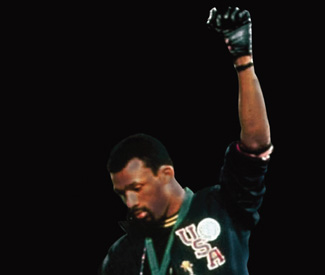
LIT On October 16, 1968, in Mexico City, American Olympic sprinters Tommie Smith and John Carlos electrified the world by accepting their medals with heads down and gloved fists thrust proudly in the air. Their defiance provided a fitting end for a year that began with Czechoslovakia’s Prague Spring and America’s military humiliation during the Tet Offensive in Vietnam, and saw the assassination of Dr. Martin Luther King Jr. and its explosive aftermath, the general strike in France, the riveting presence and influence of the Black Panther Party, mushrooming opposition to the draft, and rioting in Chicago during the Democratic Convention.

Like Mohammed Ali, who in 1967 went to prison rather than fight in Vietnam, Smith and Carlos wrote an important page in American history. Like Ali, they have remained true to the principles they embodied years ago. Now, 43 years down the road, it’s hard to find anyone to speak against what they did.

But at the time, precisely because their enemy was weakened by exposure and their supporters inspired, they faced a blistering backlash. They were banished from Olympic Village, and sent back to the United States. Their crime? Smith and Carlos were allegedly guilty of tarnishing the spirit of an Olympic games that were supposed to be above and beyond politics.

Author-columnist-cultural critic Dave Zirin, who with Carlos has just published “The John Carlos Story: The Sports Moment That Changed the World,” has more than a few things to say about the sanctity of sports and the way political context shapes athletes as well as the games they play. These days, a conversation with Zirin has a special quality: not only has he written a book that sheds new light on an important, long-ago event, the present moment is energized by political turmoil that brings to mind the 1960s.

“I was an absolute sports junkie in the ’90s, when I was in college,” Zirin told me in a recent interview. “I memorized stats, followed every sport, it was my oxygen. I didn’t follow politics, much less politics in sports, until something happened that stopped me cold: In 1996 [Denver Nuggets guard] Mahmoud Abdul Rauf made a decision not to stand during the National Anthem. He was asked whether he understood that the flag was a symbol of freedom and equality throughout the world, and he said it may be to some, but to others it’s a symbol of oppression and tyranny. This was before the spread of the Internet, and Rauf’s stand was only covered by the mainstream media. They crushed him.”

Zirin realized then that there was an aspect of sports history he hadn’t concerned himself with, “the place where social justice and sports intersect,” as he put it. It has shaped the work he’s done since.

Among many other things, Zirin writes a column, “Edge of Sports” for the Sports Illustrated Website, has a weekly radio show called “Edge of Sports Radio” on XM, and contributes regularly to The Nation and SLAM Magazine. Along with “The John Carlos Story,” he was written books including “What’s My Name, Fool? Sports and Resistance in the United States,” “Welcome to the Terrordome: The Pain, Politics, and Promise of Sports,” and “A People’s History of Sports in the United States.”

As Zirin and Carlos point out in the book, the futures of both runners were shaped by what they did in Mexico City. They struggled to find jobs, stability, and peace of mind. Still, Zirin writes “Unlike other 1960s iconography — Woodstock, Abbie Hoffman, Richard Nixon — the moment doesn’t feel musty. It still packs a wallop.”

It resonates because the injustices they protested are still rife in America, and because the arena in which they took their stand — sports — creates common ground for so many people.

“I don’t think there’s any place where the contradictions in American society are on such sharp display as in sports,” Zirin told me. “Think back to African American boxing champions Jack Johnson and Joe Louis. Neither made explicit political statements, but they had representative political power, representing power and pride in the context of racism and white supremacy. They weren’t just entertainers but in fact their presence, the inspiration they provided, was a threat to the established order of things.”

In sports today, there’s no doubt that athletes, in particular African American athletes, play a similar role. NBA hall of famer Charles Barkley once objected — perhaps with his tongue somewhat in his cheek — to the idea that he was a role model. Zirin laughed at the mention of this, saying, “Yeah, and the sky isn’t blue. You don’t chose to be a role model, you are one. It’s an objective thing. And if people are going to be role models, like it or not, then we all have to examine what they’re modeling. If you believe that the fact that a player can dunk makes him a great person, that says one thing. If having a sense of purpose in politics is important, then that says something very different.”

When Zirin and Carlos planned their book, both agreed that they weren’t interested in producing a sports memoir. “We didn’t want to say ‘look at me, genuflect at my athletic greatness.’ We wanted to say that not everyone can run at a world-class speed, but anyone can live a life dedicated to a sense of purpose.”

That approach runs head-on into a mainstream media that has made a point of emphasizing how “today’s pampered athletes,” as the media often put it, want nothing more than a fat pay check. There’s truth in this perspective — although it should be noted that both the NFL and NBA have experienced lockouts this year and that the same media outlets rarely describe the fabulously wealthy owners of professional franchises as pampered billionaires.

“I wrote an article,” he explained, called “‘NBA Players: Welcome to the 99%.’ Despite their money and privilege, they found themselves in a position where they were facing arrogant billionaires asking for a bailout because they made a lot of bad business decisions as NBA owners. It’s just like Wall Street bankers want American working people to cover all their bad bets. Will their proposed savings go back to fans? I don’t think so, they’ll just get a bigger slice of the pie.”

Besides, Zirin pointed out that there’s a lot more to the story that rarely reaches the public. Professional sports will publicly punish athletes who are caught crossing certain lines. But when it comes to speaking to the politics of injustice, the leagues try to deal with transgressions behind the scenes.

“There’s a ton of corporate and financial pressure on these athletes,” he says. “And these players talk to each other about guys like Craig Hodges [a guard on three Chicago Bulls championship teams], who in 1992 passed a note to Bush Sr. about Iraq War I when the Bulls visited the White House. He was drummed out of the league for that and these stories are passed down almost like scare stories. At the end of the day, we have to remember what Carlos and Smith did was in the context of global revolt and crisis. It was a symbol of the moment and a perfect merging of movements and moments. We can’t forget that.”

Although Zirin makes a point in his work to include athletes of all nationalities and sexual preferences, he has particular insights into the role African American athletes play in American culture.

“John Thompson says that Black athletes have the blessing of the burden of representation,” he noted. “It’s a burden because if one athlete does something, then it’s an issue for all Black athletes to deal with, for instance Michael Vick’s involvement with dog fighting. It’s not Peyton Manning’s problem that Chris Herron [a white one-time basketball standout from the mid-2000s] got on drugs. It works in a different way for Black athletes. The blessing part is the you’re part of a tradition, you stand on the shoulders of men and women like Jim Brown, Bill Russell, Wyomia Tyus, and Mohammed Ali, and you have an ownership of that tradition. It’s true that Steve Nash and all athletes are part of the tradition, but it runs more seamlessly through the African American community.”

These days, the sports world is talking about another scandal, this time the ugly situation at Penn State. Zirin discusses those problems in the context of a bankrupt culture, where the NCAA — the self-proclaimed moral arbiter of college sports — refuses to speak to hypocrisy that links all the problems in order to ensure its own survival.

Sooner or later, he said, the NCAA will either sink beneath its own corrupt weight, or athletes — who because of the professionalization of youth sports know each other in many cases from their early teens — band together and demand some compensation for the money that they generate. College presidents are the loudest complainers and the most important enablers.”

Whose park?

150

news@sfbg.com

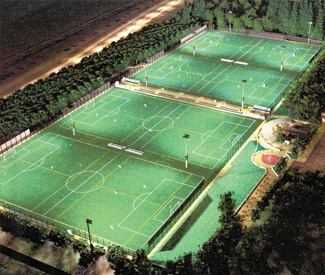
Golden Gate Park and Ocean Beach have long been destinations for locals and tourists to take in natural beauty within an urban setting, but a controversial plan to build a complex of artificial turf soccer fields at their intersection is drawing opposition from neighbors and environmentalists.

The project seems to belie the original intent of Golden Gate Park as a uniquely wild setting. The Master Plan for Golden Gate Park, drafted in 1995, emphasizes environmental stewardship and maintaining the park in a natural, multi-use way. Among its provisions are “major meadows and lawns should be adaptable to host a wide variety of activities, rather than designed for a specific use.”

But the Recreation and Park Department (RPD) and sports advocates are pushing a plan to install seven acres of synthetic turf fields, complete with 60-foot, 150,000-watt lighting that will shine until 10 p.m. year-round.

The project will have its first major public hearing before the Planning Commission on Dec. 1 at 5 p.m. in Room 400 at City Hall. Public comments on the project’s Draft Environmental Impact Report, which was released in October, will be accepted at the Planning Department until 5 p.m. on Dec. 12.

Critics of the plan, including the Ocean Edge Steering Committee, have been distributing educational materials and trying to energize people to oppose a project that the group says runs counter to the park’s purpose and which will harm wildlife and cause other negative impacts.

The fields are slated to be installed over the four existing run-down grass fields in the Western Edge of Golden Gate Park, which sits directly across from Ocean Beach and next to the Beach Chalet historical building and restaurant. The project is projected to cost up to $48 million, about $20 million of which comes from the Clean and Safe Neighborhood Parks bond measure approved by city voters in 2008.

Advocates for the synthetic fields — most notably the City Fields Foundation, the main proponent of converting grass to turf in city parks (see “Turf wars,” 10/13/09) — say that this project will only take up a fraction of the natural space in the park, and that turf has many benefits over natural parkland.

“You can put a grass field in, but then you have to limit public access,” said Patrick Hannan, communications director for the City Fields Foundation. “If you want to have grass, there’s only so much sports play that can happen.”

Hannan says that this project is a response to the high demand for usable athletic fields and the limited play provisions of grass fields and availability of usable fields also limits the number of adults and children able to play sports.

RPD spokesperson Connie Chan was not responsive to Guardian questions about the project’s consistency with the Master Plan, and on the main project, she referred to a statement on the RPD website: “We are proposing to renovate the dilapidated Beach Chalet Athletic Fields in the western end of Golden Gate Park with synthetic turf, field lights and other amenities because Beach Chalet is one of three primary ground sports fields in San Francisco but unfortunately, these fields are in abysmal condition, often closed, and lacking spectator seating.”

But activists say the RPD shouldn’t disregard its own planning documents. “It took a long time to draft the Master Plan,” said Shawna McGrew, an activist who worked at RPD for 30 years. “They have no legal obligation, but a moral obligation to uphold the Master Plan.”

The grass soccer fields have been run down due to lack of maintenance and a continuing gopher problem. But environmental advocates argue that installing the planned light fixtures and synthetic turf will interfere with the wildlife, particularly the nesting birds.

“It’s been referred to as the mothership landing,” said Nature Trip tour guide and bird watcher Eddie Bartley, discussing the impact of the proposed lighting fixtures.

Environmentalists are seeking a greener alternative to this project.

“We feel that there’s a compromise alternative that should really satisfy the concerns that everyone has,” said Katherine Howard of the Ocean Edge Steering Committee. She said her group’s goal is “to renovate the athletic fields, but to do it with real grass. They need a good drainage system, a state of the art irrigation system, gopher control barriers, and top notch grass.”

Howard has spent a significant amount of time approaching people at Golden Gate Park to inform them of the upcoming plans. She believes that not enough park users have been notified about the proposal to install the synthetic turf.

“I had no idea that they were going to do that,” native San Francisco resident Rick Rivero said in response to Howard’s description of the plans. “I played soccer in this field myself and I don’t want to see them changed.”

Rivero said that he hadn’t seen any flyers around the park mentioning plans to change the soccer fields.

RPD originally tried to do the project with conducting an EIR to study alternatives and environmental impacts, but groups like the Golden Gate Audubon Society and Ocean Edge objected. The resulting DEIR stated that, after a few alterations and formal recommendations, the project will have a “less than significant impact” on the biological resources of the area. But environmentalists are dissatisfied with the report.

Among their objections was the report labeling some trees as “tall shrubs” in order to allow for their removal. Studies cited in the DEIR state that water toxicity from the runoff of synthetic turf fields — which can contains plastic and other waste products — “decreased over time” and should have no effect on those using them.

But there have been conflicting studies of that issue, the subject of controversy through the country. Environmentalists noted that water used in natural fields filters down into the underground aquifer where it can be reused, whereas runoff from the turf will be need to be treated as wastewater, a fact given short shrift in the DEIR.

“In our opinion, the EIR is inadequate and incomplete,” Howard said. “And we will be submitting letters to that effect before Dec. 12th, as well as testifying to that on Dec. 1st.”

But the DEIR doesn’t wholly endorse the project. For example, it also states that the project’s impact on cultural resources, referring to the original intent of Golden Gate Park, will be “significant and unavoidable.”

Some parents and sports enthusiasts are disappointed with this backlash and argue that the turf fields will provide an important asset to the city.

“I’m 60, but a few decades ago I played soccer on the Beach Chalet Fields. They were in crappy condition [then] and they’re still in crappy condition,” said Tim Colen, a “soccer parent” we were referred to by Hannan. Colen is also executive director of the San Francisco Housing Action Coalition and someone who regularly testifies at City Hall in favor of large development projects.

“It surprises me that a small minority of people has been able to obstruct this project,” Colen said, noting that many parents support the project because the shortage of fields is forcing families out of the city and toward the readily available fields in the suburbs.

Community meetings and even mayoral forums have addressed the proposed Beach Chalet fields. As reported by the RichmondSF blog, mayoral candidate Joanna Rees showed up to a debate wearing her daughter’s soccer jersey and voiced opposition to the artificial turf. Board of Supervisors President David Chiu also reminisced about the joy of playing soccer on grass fields.

Other community meetings have been flooded with youth soccer players from San Francisco and beyond advocating the installation of the turf fields. But local environmentalists say Golden Gate Park was meant to be a refuge for all city residents and visitors.

“Golden Gate Park was created as a place for people to get away from the city,” Howard said. “The amount of contiguous park land is very important.”