San Francisco

Boss fight

1

joe@sfbg.com

GAMER Imagine Mario telling Nintendo to piss off.

Fed up, he gathers his fellow video game characters for a venting session: Princess Peach, Master Chief, Lara Croft, Nathan Drake, Sonic the Hedgehog, and other characters, waxing philosophic about more inclusive video games. Games where the damsel isn’t stashed in a castle, but included in the hero’s journey. Afterward, inspired, they go back to the digital world and make those games a reality.

The Lost Levels un-conference — the brainchild of indie game developers Harry Lee, Fernando Ramallo, Ian Snyder, and Robert Yang — is just like that. Gamers, mainstream developers, and developers-in-training sit in the grass of Yerba Buena Gardens to brainstorm ways to make video games more inclusive for women and other oft-ignored groups in the gaming industry. March 20, it marks its second year, though its location this year may change.

The renegade gamer gathering is held in the shadow of the bigger, better-known Game Developers Conference, a mainstream video game industry meetup at the Moscone Center. Thousands of game developers flock to the annual event, ready to hear ideas from the biggest names in the industry. But an oft-leveled critique of those big-time game developers is that, in America at least, they are often male, straight-identified, and white.

The differences between the two conferences are defined by who’s talking, and who’s listening. “Lost Levels is a place for those who don’t have access to GDC but still need a voice,” said Mattie Brice, a newer addition to the Lost Levels organization. GDC’s passes start at $195, but seeing all the panels will set you back a cool $1,495. That’s a daunting chunk of cash for the classic garage-start-up gaming developer, bootstrapping his or her way into the gaming industry. Lost Levels, by contrast, is free.

Fringe indie developers often push boundaries, making games about queer culture or including main characters from different ethnic backgrounds. But Lost Levels talks aren’t just limited to ideas on diversifying games. Gamers are invited to jump in with any idea for a presentation. Having one’s say about the future of video games is as easy as penning an idea on a bulletin board with a sticky note.

Last year the ideas ranged from outlandish to just the right amount of wacky — say, if the Madden series is getting stale, why not create a fusion football-dating simulation game?

Sometimes the talks were just about getting to know each other. “Whenever we got pizza as a kid, my brother and I would rush to eat it so we had this whole cardboard land,” said one scruffy-haired game designer at last year’s Lost Levels, speaking in a video on the Lost Levels website. “We’d take a sharpie and fill it in to make our own legend of Zelda map. We’d make our own weapons. I started programming at 14 and made games similar to that.”

A peek at 2014’s presentations ensures one thing: Talking about the future of games doesn’t have to be all that serious. “Sound as a Commodity: I rant about music and how sound is employed/how to employ sound in popular music because MUSIC, GAMES, IT’S ALL THE SAME IF YOU THINK ABOUT IT!” video game composer and sound designer Liz Ryerson writes. And this, from presenter George Buckenham: “I dig eSports and I don’t care who knows. I’ll talk about how rad they are in some capacity.”

Some discussions branch out beyond games, but all are welcome. Few subjects are taboo, and that’s the point, Brice says. “The best way to get people speaking about what they really find important is to just let them do it.”

The growing interest in Lost Levels, and the issues it and other alternative conferences (like GaymerX, a San Francisco convention aimed at LGBT gamers) raise, may be having an influence on GDC. The event tends to center around technical improvements, but recently made tip-toe advancements into realms of inclusivity. This year, Brice, a noted LGBT gaming advocate, will speak at GDC in a workshop entitled “How to Subversively Queer Your Work.”

GDC is making strides in including women as well. Anita Sarkeesian — famous in the gaming world for calling for better representation of women — is slated to receive an award for her “Tropes v. Women” YouTube series. But though the award is nice, mistreatment of women is still a large part of video game stories today. In the mainstream, at least, the tide is far from turning.

To that end, one indie designer is sitting out GDC this year: Anna Anthropy, designer of Dys4ia, The Hunt for the Gay Planet, and others. This year she’s focusing her energy on Lost Levels. “I’ve been invited to give several talks at GDC and I’ve turned them all down,” she says. “It’s stressful and corporate and exclusive.”

At Lost Levels this year she’ll touch on shifting queer games’ focus away from coming-out narratives. Though she’s careful to say she doesn’t speak for everyone, those in the queer community “play games not to re-experience their victimization, but to escape it,” she says.

Last year she tried to encourage GDC audiences to think more about their role in equality, reading from her poem “John Romero’s Wives,” named for the creator of the classic shooting games Doom and Quake. It read, in part, “Had to be mistaken for a booth babe. Had to be told to stop talking about it. Had to be the indie game developer who told my friend she could give him a blowjob. Had to hate other women because you were taught to. To call us “females” like we’re another species. Had to be John Romero’s wives.”

When we asked about the audience’s reaction, Anthropy told us many women came up afterwards, telling her they were affected by her reading. The men? Not so much, she said. *


Lost Levels will be held March 20, tentatively at Yerba Buena Gardens. Check out LostLevels.net for location updates.

Shooting straight

0

arts@sfbg.com

FILM The last time Elaine Stritch was in San Francisco was in 2003, at the Curran Theatre, for the Tony Award–winning Elaine Stritch: At Liberty. Then in her mid-70s, the legendary actress and singer appeared on a bare stage in her trademark suggestion of an outfit — black stockings and an oversized dress shirt — for a revealing, song-studded solo confessional about love, ambition, alcoholism, and the jumble of a career in a theatrical golden age. It was an irresistible look back at (and behind) a brilliant and rocky Broadway (as well as film and television) career that began in 1946, and continues.

Stritch advances and expands the conversation started in At Liberty with her latest appearance, onscreen in director and producer Chiemi Karasawa’s 80-minute portrait, Elaine Stritch: Shoot Me. Arguably still more fascinating and frank in her mid-80s, Stritch proves once again an undeniable presence — uncensored, irascible, charming, and witty — but it’s all now balanced with a more pronounced vulnerability, captured in disarmingly honest moments of reflection, struggle, and even crisis.

Made over the course of two years of intimate observation, the film chronicles Stritch as she prepares for a number of returns. One is to the stage, to sing Stephen Sondheim again, the composer with whom she is indelibly identified thanks, in no small part, to her original interpretation of Joanne and “The Ladies Who Lunch” in 1970’s Broadway smash Company. Rehearsing with longtime musical director, accompanist, and friend Rob Bowman (a stalwart presence here), Stritch, then on the cusp of her 87th birthday, becomes a study in perseverance and hard-won skill in the face of an aging body menaced by diabetes.

“It’s hard enough to remember Sondheim’s lyrics when you don’t have diabetes,” notes Stritch. “But everybody’s got a sack of rocks, as my husband [John Bay] used to say.”

En route to a gig in East Hampton, Stritch shows she’s not above playing up the senior citizen at times: When a siren hoots at her limo (illegally parked in the fire zone outside a Starbucks), Stritch, a large blended beverage in her hand, doesn’t miss a beat. “Oh, it’s the cops. I’ll limp,” she decides, successfully deflecting the local fuzz.

But the next morning, Bowman breaks the news that the gig has been canceled owing to the threat of a hurricane off the coast of Long Island. Still in bed and feeling less than 100 percent, the star is elated. A short time later, she spirals into a diabetes-induced breakdown, plagued by mental confusion and fear, eventually losing her capacity to speak coherently as an ambulance arrives to rush her to the hospital. It’s a harrowing scene, but its unabashed honesty is part of what makes the documentary more than the usual star bio.

At the same time, the film records another return for Stritch, as she makes the momentous decision to leave her Upper East Side home to relocate back to Michigan, where she grew up in the 1930s, the youngest of three daughters in a well-to-do Irish-Welsh family of devout Catholics headed by an executive at B.F. Goodrich. It had been some 65 years since the bold but wholly innocent young Stritch, fleeing the safe but stultifying confines of her childhood home, arrived to conquer the Big Apple, cutting her teeth in Erwin Piscator’s Drama Workshop at the New School alongside such classmates as Marlon Brando (Stritch offered up details of the steamy relationship there in At Liberty).

The years spent shooting the life of a living legend, an elderly yet very active one with a well-earned reputation for being difficult, could not have been a walk in the park. Shoot Me (whose playful title might be thought to run in two directions at once) makes a virtue of that at times, no doubt, exasperating bargain. Stritch says she had to think about it before accepting the project.

“I wasn’t crazy about the idea,” she admitted in a recent phone conversation while she was on a promotional swing through New York. “I was a little skeptical, and afraid of being bored. But I wasn’t bored for a minute.”

And the camera, there every step of the way, seems for its part thoroughly mesmerized and intrepid. Stritch, after all, is not above directing the show herself. “I think you should be watching me unpack the muffins,” she insists at one point, turning a desultory scene of domestic routine into a just slightly uncomfortable confrontation with a conciliatory cameraman. At other times, the camera is her confessor, as when, from a hospital bed, she relates her mixed emotions and convictions about meeting the inevitable end of life.

“Your tendency might be, if you didn’t know her, to disregard how vulnerable she is, and how deep her insecurities are,” says Hal Prince, whose storied accomplishments on Broadway include producing and directing Company. One of several impressive interviews of Stritch friends and colleagues, Prince here sounds a note that echoes throughout an untidy but deeply personal, touching but rousing documentary profile: “She’s complicated and she’s an eccentric. But you’ve got to deal with Elaine’s eccentricities because, ultimately, they’re worth it.” *


ELAINE STRITCH: SHOOT ME opens Fri/14 in Bay Area theaters.

East Bay grace

0

arts@sfbg.com

DANCE Though it’s gone mostly unnoticed by us San Francisco-dwelling dance watchers, a remarkable thing has been growing across the bay on the other side of the tunnel. On March 6, the Walnut Creek-based Diablo Ballet celebrated its 20th anniversary with a gala — without fancy gowns, but with an hour-long program that did what galas are supposed to do: look at the past and the here and now, and say thank-you to a lot of folks.

While it might have been gracious to have acknowledged the contributions of co-founder Lawrence Pech and brothers Nikolai and Viktor Kabaniaev — all of whom danced, choreographed, and contributed to running the company — Diablo Ballet is the product of that still-rare breed in American ballet, a woman artistic director.

When she set out to create Diablo Valley’s first professional ballet company, Lauren Jonas had a lot going for herself: a brand new, beautifully equipped theater in what is now called the Lesher Center for the Arts in Walnut Creek; generous private support by ballet-loving local entrepreneurs; and an audience willing to take its chances on a small, easily accessible company. I can’t remember how many times in those early years I heard people during intermission commenting on how happy they were “not to have to fight the tunnel.”

Above all, Jonas had taste, standards, and knowledge of the available repertoire. Locally trained at Marin Ballet, she had performed in national companies as well as Oakland Ballet under Ronn Guidi, in both 19th and 20th century classics. She also knew that the Bay Area, and other parts of the country, had plenty of professional ballet dancers who were eager to perform, and on whose talent and experience she could draw.

At the gala, the petite and charming Jonas was repeatedly praised for her commitment to community and her capacity for work. She must also have an iron determination to carry out her vision of professionally-danced professional choreography. It may not be easy to say “no” to her.

The auspicious beginnings, which included an orchestra, didn’t last. Money dried up because of the economy but also because foundations redirected their priorities. The first to go was the live music; eventually the Lesher facility became too expensive for a full season. There were times when Jonas went back on stage to perform because she couldn’t afford to hire another dancer.

That’s when Jonas’ backbone kicked in. She didn’t change her vision but adapted to the changed circumstances by shifting her performances to the Shadelands Arts Center, one of Walnut Creek’s neighborhood rec centers, where the company rehearsed. They attracted new audiences who could never have afforded the ticket prices in the downtown venue.

In some ways Shadelands seems an impossible place for ballet. With no theater lighting, a stage the size of what looks like a large table, and terrible sight lines — recently improved by installed risers — it was difficult to imagine ballet dancers whipping pirouettes and traveling jetés. But they did and they do. The opportunity to see these experienced artists close up, noticing the impetus behind a move or even the fatigue creeping up on them, makes up for much of what is lost in scale.

The gala, which included some history and many tributes, started with a simple but charming waltz by an octet of former dancers. It ended with “Variation and Finale” from Balanchine’s Who Cares? Rearranged for six dancers by Jonas, with a fine interpretation of Gershwin by Diablo music director Greg Sudmeier and his jazz trio (live music remains important to Jonas), the sextet got the spirit though not always the precision of the original. Robert Dekkers’ casual charm, however, didn’t keep him from delivering “Variation”‘s spitfire turns and beats with utmost confidence.

Dekkers, also Diablo’s choreographer in residence, premiered his lengthy and goofy cares you know not for Mayo Sugano and Diablo’s newest dancers, Tetyana Martyanova and Justin Vanweest.

Welcome contributions came from Derek Sakakura and Rosselyn Ramirez’s pas de deux in Eugene Loring’s Billy the Kid, a ballet that in 1938 was much condemned for including gestures drawn from life. Roy Bogas contributed the spiffy piano arrangement of Aaron Copland’s cowboy tune-flavored score.

Making good and practical use of available technology allowed filmed versions of parts of a ballet which then continued live on stage. Tina Kay Bohnstedt and David Fonnegra shone in a torrid pas de deux from Val Caniparoli’s Lady of the Camellia. The dancers in Kelly Teo’s Dancing Miles at first looked like sparks in the night but live, they filled the stage with jazzy energy. On film, Teo, who danced and choreographed for Diablo, declared his gratitude: “I left my profession fulfilled; I had accomplished what I had wanted to do.” Not a bad record for 20 years. *

www.diabloballet.org


SF bans water bottles

27

San Francisco continues to lead the way in the nation’s environmental policy, with the Board of Supervisors on March 4 voting unanimously to bar the city from buying plastic water bottles and to ban distribution of plastic water bottles smaller than 21 ounces on city property starting Oct. 1. The ban excludes city marathons and other sporting events.

"We all know with climate change, and the importance of combating climate change, San Francisco has been leading the way to fight for our environment," Board President David Chiu, who authored the legislation, said at the hearing. "That’s why I ask you to support this ordinance to reduce and discourage single-use, single-serving plastic water bottles in San Francisco."

Chiu held up a water bottle at the board meeting, a quarter of the way full with oil, to illustrate how much oil is used in the production and transport of plastic water bottles. He also reminded San Franciscans that the current fad of buying bottled water only started in the 1990s when the bottled water industry mounted a huge ad campaign that got Americans buying bottled water.

Somehow, Chiu noted, "for centuries, everybody managed to stay hydrated." (Francisco Alvarado)

Mass action against Keystone XL

Nine environmental activists were arrested in San Francisco for marching through the financial district and entering One Spear Tower on March 3, the building that houses local offices of the State Department, to express opposition to the proposed Keystone XL pipeline.

A day earlier, a mass protest against the oil pipeline was staged outside the White House in Washington, D.C. Roughly 200 protesters were arrested after using plastic zip ties to lock themselves to the White House fence.

Meanwhile, thousands more have made a vow — at least in the sense of clicking to add their name to a petition — to engage in peaceful civil disobedience if President Barack Obama grants ultimate approval for the oil infrastructure project, which would transport 830,000 barrels of crude oil from Canada to the Gulf Coast.

Nonprofit Credo Action has created an online petition urging people to get ready to respond with peaceful civil disobedience if the pipeline wins final approval. (Rebecca Bowe)

City weighs lawsuit over Airbnb

The San Francisco City Attorney’s Office is finally preparing to take action against the illegal short-term housing rentals facilitated by Airbnb, something we’ve been hearing that the Examiner also reported on March 6 ("SF landlords could face legal fight over rentals on Airbnb, other services"), an action that would address the company’s apparent stall tactics.

Despite a business model that violates a variety of San Francisco laws — most notably zoning, planning, and tenant regulations — and Airbnb’s flagrant flouting of a two-year-old city ruling that it should be collecting and paying the city’s transient occupancy tax (see "Into thin air," Aug. 6), the City has appeared unwilling or unable to enforce its laws or address these issues.

"We’re aware of multiple housing allegations, including some that community leaders have brought to us," City Attorney’s Office spokesperson Matt Dorsey told the Guardian, confirming that the office is considering taking legal action to enforce local laws governing short-term housing rentals but refusing to provide details.

Board of Supervisors President David Chiu took on the problem over a year ago, working with the company and its critics to develop compromise legislation that would legalize and tax the activities of Airbnb and its hosts, but the multi-layered legal and logistical challenges in doing so have so far proven too much for the otherwise effective legislator.

"My staff has held meetings with Planning staff and its enforcement team to discuss enforcement and related challenges. We’ve also been in touch with the City Attorney’s Office on these issues," Chiu told the Guardian, saying he and his staff have recently been focused on other tenants and secondary unit legislation, but they "plan to refocus on our shareable housing efforts soon." (Steven T. Jones)

Blaming pedestrians

ABC7 News Investigative Team’s new "investigative report" on pedestrian safety stirred controversy last week as street safety advocates called out the video for its insensitivity towards pedestrian deaths and lax attitude towards unsafe drivers.

Streetsblog SF and others in San Francisco said the report engaged in "victim blaming."

ABC7’s pedestrian safety coverage comes on the heels of a number of high-profile traffic collision deaths, including that of 6-year-old Sofia Liu, killed on New Year’s Eve. Since then, the Walk First program to create safer streets has garnered more attention, culminating in Mayor Ed Lee’s announcement today to partially fund safety improvements to the city’s most dangerous intersections, to the tune of $17 million — improvements that languished due to funding gaps since the program was announced in April.

But making all the needed improvements though would cost $240 million, according to city estimates, and that funding has yet to be identified. Suffice to say, the traffic enforcement debate still rages in San Francisco, with emphasis on the word ‘rage.’

"We’ve seen ‘blame the pedestrians’ from police and in the media," Leah Shahum, executive director of the San Francisco Bike Coalition, said at a pedestrian safety hearing in January. Police Chief Greg Suhr that night apologized for his officers’ lax enforcement of drivers, and focus on pedestrians, and pledged to change policies to focus on drivers going forward.

It’s too bad ABC 7’s I-Team didn’t get that memo.

"In San Francisco, simply stepping off the curb can be deadly," ABC reporter Dan Noyes narrates in their video report. The word ‘deadly’ is capped off with a Hollywood-style musical flourish, like a horror movie moments before the big scare.

"Pedestrians are making mistakes over and over again," Noyes narrates. The video cuts to pedestrian after pedestrian looking at cell phones, jaywalking, or otherwise engaging in unsafe behavior. It’s fair to say the piece, headlined "I-Team investigates what’s causing pedestrian deaths," places responsibility of pedestrian safety squarely on the shoulders of pedestrians. (Joe Fitzgerald Rodriguez)

High-speed challenges

The California High Speed rail project has been facing resistance that threatens to derail the project. Not only has public support for the $68 billion project wavered in recent years, now the project faces a legal battle that could delay the project before the first rail is laid.

On March 4, Sacramento County Superior Court Judge Michael Kenny ruled that a lawsuit brought on by King County can go to trial. The lawsuit raises questions about the legality of using 2008’s voter-approved Prop 1A funding, $9.95 billion worth of bonds, to upgrade and electrify Caltrain’s tracks and incorporate them into the high speed system.
Another concern was that the proposed high-speed system would not be able to pull through with its promise of a 2 hour 40 minute nonstop ride from downtown San Francisco to Los Angeles’ Union Station if the high speed system had to share tracks with Caltrain.

The lawsuit also threatens to leave San Francisco’s new $4.5 billion Transbay Terminal without its planned underground high speed rail station, which could be disastrous for that project as well.

None of this seems to faze Rod Diridon, executive director of the Mineta Transportation Institute based out of San Jose State University and former founding board member of the California High-Speed Rail Authority Board. He told the Guardian: "I think that [the project] will happen now. I think that our wonderful governor and our legislative leaders are going make it happen now…. If it was delayed it would only be a matter of time before it came back." (Francisco Alvarado)

Alerts: March 12 – 18, 2014

0

WEDNESDAY 12

San Francisco Neighborhoods on the Brink Bird and Beckett Books and Records, 653 Chenery, SF. www.birdbeckett.com. 7pm, free. A panel discussion on displacement, gentrification, rising rents, and the loss of affordable housing. Join us to discuss the dilemma facing longtime residents and renters of modest means — and the gutting and gentrification of San Francisco — as real-estate speculation and a quickly widening income gap drive rents to dizzying heights while the rental supply dwindles. Ellis Act evictions are buffeting many of our neighbors, and the lack of affordable housing affects us all.


THURSDAY 13


Screening: Terms and Conditions May Apply Unitarian Universalists Hall, 1924 Cedar, Berk. www.bfuu.org. 7pm, $5-10 donation, no one turned away for lack of funds. Have you ever read the “Terms and Conditions and Privacy Policies” connected to every website you visit, phone call you make, or app you use? Of course you haven’t. But those agreements allow corporations to do things with your personal information you could never even imagine. What are you really agreeing to when you click “I accept”? Find out in this disquieting exposé.


FRIDAY 14


Visual Activism Symposium Brava Theater Center, 2781 24th St., SF. www.sfmoma.com/events. 9am-7pm, free with pre-registration. Join us for a symposium exploring the relationship between visual culture and activist practices. Art can take the form of political and social activism, and activism often takes on specific, and sometimes surprising, visual forms. How is our broader visual culture shaped by activist practices that circulate in public space? Scholars, artists, and activists address these and related questions in a series of presentations, performances, workshops, and interactive projects.

SATURDAY 15  

International Day Against Police Brutality Arroyo Park, 7701 Krause, Oak. www.march15oak.noblogs.org. 12pm, free. March 15th has been designated as International Day Against Police Brutality since 1997, as an initiative by radical groups in Montréal and Sweden. Police brutality is nothing new to Oakland, and for the second year in a row we will observe the International Day Against Police Brutality with a demonstration beginning at Arroyo Park in east Oakland. A rally will start at noon, followed by a march starting at 1pm.

SUNDAY 16

Anonymous Internet Communication Niebyl Proctor Marxist Library, 6501 Telegraph, Oak. cuyleruyle@mac.com. 10:30am-12:30pm, free. It’s no secret that the NSA was and is secretly spying on people here at home and around the globe. The justification given for this activity is that it can prevent terrorism and crime. While we wait for Congress or the courts to do something, we can right now actively protect our individual privacy, using freely available technical tools and best practices. Keith Davis will discuss the motivations for Internet Anonymity and the different levels of privacy that can be obtained. He also will provide caveats and warnings associated with the use of privacy tools and practices.

Soda tax is social justice issue

129

Eric.L.Mar@sfgov.org, John.Avalos@sfgov.orgtom@tomammiano.com

OPINION

We are fighting for a soda tax because public health leaders have sounded the alarm that sugary drinks are a serious threat to our public health. Now is the time to get the word out about the latest facts that tell the story.

Our work on the issue began when community leaders and medical experts started educating us on the impact of sugary drinks. The resulting legislation that we crafted along with four other members of the Board of Supervisors will not only slow soda consumption, but it will fund the anti-hunger and physical activity programs we dearly need.

Most folks know soda is bad for you, but not how bad. Many are also unaware that Big Soda is specifically targeting communities of color and children. Our task is to spread the word about the health disparities this creates.

The lack of healthy food choices is an injustice that is hitting communities of color the hardest. Fully three-fourths of adult Latinos and African Americans in San Francisco are obese or overweight and one in three Americans will soon be diabetic, including one in two Latinos and African Americans.

The disparities are geographic as well. The highest rates of diabetes hospitalizations and emergency room visits are among residents of the Bayview, Tenderloin, SoMa, and Treasure Island. Close behind are the Excelsior and Visitacion Valley. These are also the neighborhoods that lack access to healthy food and are among those consuming the most soda.

We are already paying the high price of soda consumption. San Franciscans spend at the very least $50-60 million a year in health care costs and sick days due to obesity and diabetes attributable to sugary drinks. The fact that sugary drinks are the biggest single source of added sugar in our diets sets it apart from other unhealthy foods.

The revenue generated has tight controls and must be used to mitigate the harm Big Soda causes. Steered by an independent committee and targeted to communities suffering the most from health inequities, the tax will bolster funding for everything from school meals, healthy food retailer incentives, physical education, and other deserving programs.

Big Soda has hired high-priced lobbying firms and public relations folks who are employing a small army of young people, deploying them into the Bayview, the Mission, and Chinatown — those communities most impacted by diabetes and soda consumption. They’ve set up a front group — San Franciscans for an Affordable City — to capitalize on the anger in SF about the cost of housing and living.

But think about it: Have Big Soda companies helped us in our fight for affordable housing? Are they fighting for a living wage for communities of color in San Francisco? They have never cared about an affordable city. They care about protecting their profits, period.

We need affordable housing, healthy foods, and physical activity — issues we are working on every single day. On the other hand, our communities need affordable soda as much as we need cheap cigarettes and booze. It only makes us sick.

There are things our communities are doing to promote good health, like transforming corner stores into healthy retailers, building community gardens, and expanding physical and nutrition education. The soda tax as it is written now can provide these programs and dramatically improve our communities’ health.

This isn’t a ban but a reasonable first step to decrease soda consumption. This is a research-proven way of getting people to use less of an unhealthy product — it worked with cigarettes and it worked with alcohol. Finally, the tax will fund a range of great programs that will actually provide healthy choices for everyone.

It’s time we make the healthy choice the easy choice for low-income communities and all San Franciscans.

John Avalos represents District 11 (Outer Mission, Excelsior) and Eric Mar represents District 1 (the Richmond District) on the San Francisco Board of Supervisors, Tom Ammiano represents Assembly Dist. 17 (eastern San Francisco) in the California legislature.


Glimmers of sunshine

3

rebecca@sfbg.com

For 29 years, San Francisco Bay Area journalists have gathered in mid-March — around the birthday of founding father and free-press advocate James Madison — to recognize reporters, attorneys, citizens, and others who fight to shake or keep information free.

The act of standing up to defend the principle of freedom of information can be rather unglamorous, sometimes leading to grueling lawsuits. It’s grown even more complicated with the rise of the Internet, the decline of traditional newspapers, and the dawn of an Information Age that delivers instantaneous material that is at once more slippery and abundant than ever.

And yet, the digital realm has opened up a whole new battlefield in the fight for open access to relevant information the public needs to know. This year, the Northern California chapter of the Society of Professional Journalists’ Freedom of Information Committee took the rare step of granting a posthumous Public Service James Madison Award to Internet activist Aaron Swartz.

As a leader in the digital rights movement, Swartz, who died at the age of 26 by taking his own life, was on the forefront of a movement that fought to uphold open access to information in the face of a corporate power grab that threatened to result in online censorship.

The fight against SOPA (the Stop Online Piracy Act) and PIPA (the Protect Intellectual Property Act) in early 2012 marked just one of Swartz’s accomplishments as he fought for free and open access to information. Among his other contributions was RECAP, an online listing of court materials that allowed free access to documents held in the federal, paywall-protected court filing system called PACER.

To commemorate Swartz’s work, the Bay Guardian presents in this issue an illustrated history of his activism. While recipients of James Madison Awards have typically been individuals who took on government bureaucracies to wrest information out of the shadows and into the public eye, Swartz’s battle revolved around freeing information that is locked up by private interests, or protected by copyright.

“We need to take information, wherever it is stored, make our copies and share them with the world,” he wrote in a 2008 essay titled “Guerilla Open Access Manifesto.” “We need to take stuff that’s out of copyright and add it to the archive. We need to buy secret databases and put them on the Web. We need to download scientific journals and upload them to file sharing networks.”

But first, here are a few updates on the fight for open access to information in San Francisco and beyond.


NO SHINING EXAMPLE

In 1999, San Francisco voters enacted a law to strengthen citizens’ access to government records and public meetings. To ensure that the open-access law was properly upheld, it also created a local body called the Sunshine Ordinance Task Force.

At each meeting, San Franciscans frustrated by their inability to get the information they sought from city bureaucracies appear before the board to air their grievances, in the hopes that the decisions to withhold documents will be reversed. Typically, citizens lodge around 100 complaints per year, according to task force clerk Victor Young.

But the Sunshine Ordinance Task Force has not been going at full speed for some time now. There’s a backlog of 62 cases, in part because the body could not legally meet for five months in 2012 because it did not have a member who was physically disabled, in accordance with the law establishing criteria for who can serve. (The previous member to meet the criteria, Bruce Wolfe, was denied reappointment. In an op-ed published in political blog Fog City Journal, task force member Rick Knee links this and the Board of Supervisors’ general foot-dragging on Sunshine with a political skirmish dating back to 2011, when the task force found the Board of Supervisors to be in violation of the Sunshine Ordinance.)

There have been two vacant seats on the task force for around two years, as well as two holdover members whose terms have technically expired. Applicants have sought out those seats, but the Board of Supervisors Rules Committee hasn’t gotten around to appointing new members; the most recent appointment was made in October of 2012, according to Alisa Miller, Rules Committee clerk.

Come April 27, meanwhile, all of the current task force members’ terms will expire. Miller said she expects the Board of Supervisors to revisit nominations before the end of April. There are a grand total of 10 applications for all 11 seats. Given all of this, plus a lawsuit revolving around the city’s refusal disclose how the City Attorney’s Office advises agencies on Sunshine Ordinance interpretations, San Francisco is going through some dark days for open government.


NAVIGATING FOIA

Anyone who’s ever tried to request public documents from government officials under the Freedom of Information Act knows that it feels more like a bureaucratic nightmare than a federal right. But a new project from the Center for Investigative Reporting is hoping to streamline the entire process into a (relatively) painless procedure.

FOIA Machine (foiamachine.org) is a website to request public documents at the federal, state, or local level, and is described by its creators as the “TurboTax for government records.”

“We wanted to make the FOIA experience better for journalists,” said Shane Shifflett, a data reporter at The Huffington Post who helped build the tool. “We built up a prototype and applied for grants. Then we put it on Kickstarter and it went crazy. That gave us a lot of confidence to see it through to the end.”

On Kickstarter, FOIA Machine raised over $53,000 from more than 2,000 backers, more than triple its goal.

FOIA Machine allows registered users to prepare requests, search a database of contacts, track the status of a request, and work with a community of fellow users.

Shifflett considers the community aspect to be the site’s strongest feature. “It’s crowdsourcing, so as people create requests, they can add contacts into the database. Now there will be a history of who worked with who, and it makes the process of figuring out where to send requests so much simpler.”

The site is still in development, and users who try to register promptly receive an email asking them to “stay tuned” for information in the coming weeks and months. Shifflett said that the group hopes for FOIA Machine to be up and running by June.


LEAK US YOUR DOCUMENTS

From time to time, sources have told us at the Bay Guardian that they would love to share sensitive information for news articles, but fear they would be retaliated against or even terminated from employment if they were to do so.

We have found a way around that.

Sources who wish to retain their anonymity while sharing information they believe the public has a right to know now have the option of using an encrypted submission system to anonymously send documents to our news team.

Created by Bay Area technologists in partnership with the San Francisco Bay Guardian, BayLeaks uses the latest cryptography software to protect the identities of our sources. This is a secure, anonymous way for concerned citizens to communicate with journalists to release information.

Our system uses SecureDrop, a whistleblowing platform managed by the Freedom of the Press Foundation, and Tor, an online anonymity network that has gained the trust of Internet users around the world.

To learn more, visit sfbg.com/bayleaks-intro


MONEY IN POLITICS

It’s not really a secret that big money has a colossal influence on politics, but the groups and individuals that write those hefty checks to lawmakers often prefer to stay secret themselves. And while political donations aren’t illegal, most voters would like to know exactly who is funding a piece of legislation or a political campaign, and where that money is coming from.

Fortunately for us in California, we already have a resource to easily find that information.

“There’s a collective influence of money in our political system,” said Pamela Behrsin, spokesperson for MapLight, a nonpartisan research organization based in Berkeley that tracks the influence of money in politics. “Our founders said, ‘Look at all this money, and how this legislator voted on this bill. Do you think the money had any influence on how the legislator voted?'”

Through the website, users can also search by bill or proposition to find, for example, that big companies such as Philip Morris spent nearly $48 million to defeat Prop. 29, a proposed cigarette tax in California, on the June 2012 ballot. Supporters of the tax, such as the American Cancer Society and Lance Armstrong Foundation, could only muster a quarter of that amount.

“There’s a whole breadth of people wanting to understand the problem of money and politics,” Behrsin said. “This is one of the largest issues in our democracy right now. People are starting to stand up and say unless we get money out of our system, it’s going to be that much more difficult to fix.”

Lee must pay for his promises

19

EDITORIAL

Mayor Ed Lee has made a lot of promises to San Franciscans, but he has been unwilling to pay for them with money from the city or his wealthy backers, transforming these statements in hollow political platitudes — or, less charitably, calculated lies meant to mask the true state of the city.

Lee pledged to build 30,000 units of new housing — a third of it affordable to those with moderate incomes and below — by 2020. By that same year, Lee set the goal of increasing bicycling to 20 percent of all vehicle trips in the City. Lee also directed city departments to develop strategies for reducing pedestrian deaths by 50 percent by 2021. And so Muni’s aging fleet can keep up with population growth, Lee’s SF2030 Transportation Task Force said the transportation system needs a $10 billion capital investment over the next 15 years, a target Lee endorsed.

These were all admirable goals, and in each case, city agencies studied the problems and developed detailed strategies for getting there. And in each case, Mayor Lee chose to fund just small fractions of what the city would need to make his promises come true.

Actually, the housing problem is still being studied, but nobody thinks this goal will be met — as even the pro-development San Francisco Business Times said in a recent editorial — particularly given how the Mayor’s Office structured the business tax reform and Affordable Housing Fund ballot measures in 2012, with giveaways to developers and favored economic sectors, such as tech.

Lee’s WalkFirst program would need $240 million to meet his modest goals — far more to actually realize the VisionZero goal of eliminating all pedestrian deaths, which Lee said he supports — and the Mayor’s Office has only pledged $17 million in funding. The cycling goals would take more than $500 million, not the $30 million currently pledged. Even with approval of the two transportation ballot measure proposed for this fall, and those planned for future years, that only gets the city about a third of the way to meeting San Francisco’s future transportation needs.

Meanwhile, a downtown SF congestion pricing charge that has been studied using federal funds — which would reduce traffic and pedestrian deaths while raising $80 million annually — is being ignored by Lee, as is the once-promising idea of downtown transit assessment districts. Lee is refusing to seek the city’s share of the tremendous wealth now be generated in this city.

As a result, Lee is making promises that he knows he won’t deliver on. And last week, in the five-year budget projection his office is required to issue, we all saw the results of Lee’s economic policies: growing budget deficits for this booming city. Next year’s $67 million deficit is projected to balloon to $340 million by 2017-18. Mr. Mayor, “getting things done” requires more than just words, it requires the political courage to make your promises comes true.

They deported my mom

8

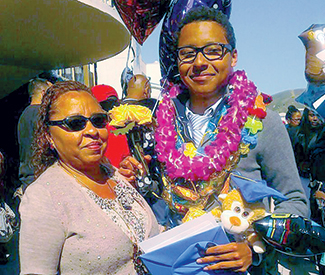
Eight months ago, I kissed my mother goodnight and walked down the hall to my bedroom. Eight months ago, I was a few weeks away from attending Seattle University. Eight months ago was the last time I saw my mom.

In the early morning, my sister barged into my room. Phone in hand and tears in her eyes, she said, “They got her again.” Sitting up in my bed, still half-asleep, it took me awhile to process what was going on. “Huh?” I replied. “Mom, she’s getting deported,” my sister sobbed. US Immigration and Customs Enforcement arrested her on the way to work. They had watched us until they knew my mom’s routine.

My sister left and I had a minute to think. From then on, I knew everything had changed. I wasn’t going to Seattle. How was I supposed to pay for it now? And my mom was getting deported. Again.

My mother came to the US in 1992. Her plan was to work for a few years and send money back to Mexico to support her parents. She also wanted to save money so she could return to Mexico and finish nursing school. But she met my father, a law school dropout who came to the US to work and save money for law school. Long story short, I was born and they decided to settle down here in the States. They knew that we had better opportunities in the US.


VULNERABLE TO SCAMS

Later, my parents decided that it was time to “become legal.” They sought the legal services of attorney Walter Pineda. He told my parents, and countless others, that if they had been in the country for longer than 10 years, had no criminal record, and had kids that were born in the US, he’d get them a green card in 12 months. Oh, and he wanted $10,000 per person. My parents couldn’t pay $20,000 at once for the both of them so they decided that my mom should be the first one to get a green card.

The thing is, Pineda wasn’t telling the truth. There was no such law that stated, “If you have been in the country for 10 years or longer, have no criminal record, and have kids who are US born, Uncle Sam will mail you a green card.” But Pineda took the money and filed an asylum claim for my mother. Since my mom wasn’t seeking asylum, the claim was denied. (It also didn’t help that Pineda never actually went to court, leaving that to his assistants). My mother was handed an order of deportation instead of a green card.

Pineda, a native San Franciscan and a graduate from San Francisco State University and the University of San Francisco, was later investigated by the State Bar of California and was accused by the bar of a “despicable and far-reaching pattern of misconduct.” He later resigned from the State Bar when he faced charges of legal malpractice in 41 cases he handled. Records indicate Pineda left the area, and our efforts to reach him for comment were unsuccessful.

After those legal avenues were shut down, our family ran. We moved from house to house. My parents lived in the shadows, like escaped felons. They got nervous each time they signed any paperwork for fear that it would alert ICE. We would gather around the TV every night and watch the news, hoping to hear that immigration reform was on its way. But all we ever saw was members of Congress shaking their heads and saying, “Not this year,” year after year.

I remember learning about what the plaque at the foot of the Statue of Liberty says, “Give me your tired, your huddled masses yearning to be free.” I thought about what a lie that was. My parents, and everyone like them, aren’t welcomed here. They’re “illegal aliens.” Me, and those like me, we’re “anchor babies.”

We moved some more. Years passed. We all forgot about the order of deportation. We bought a car, a dog, and a few years after that, we were thinking about buying a house. The American dream, my mom’s dream, was almost within her reach.


KNOCK ON THE DOOR

I was in the seventh grade; my sister was in third. I kissed my mom goodnight and went to sleep. At 3am, I heard a knock on the door and “police.” I opened it and there were two immigration agents. They were there to inform me that they were taking my mom and then left. 

As it turns out, they had been watching us for at least a few days because they knew that my mother leaves the house at 4:30am to go to her job as a sous-chef at a catering company. They knew my name.

A few months later, my mom was back. Yes, she returned illegally. But when your options are paying a guide $2,000 and walking a few hours or paying a lot more than $2,000 for a lawyer to file papers and then wait years with no guarantee that you’ll be let into the US, the choice for my mom was easy. Cross the border and come back to her kids.

More years passed, we moved some more. We forgot. Once again, ICE had been watching us. It knew where she worked. Her route. The license plate number on her car. Everything. Then, my mom was picked up on her way to her job at a fast food restaurant.

We called lawyers. “There’s nothing I can do,” was all they said. There was no hearing; no judge; no day in court; 24-hours later, my mom called me from a phone booth in Tijuana. That was eight months ago. My mother is still in Tijuana, unable to enter the US, legally or otherwise.

mom1

ILLEGAL PEOPLE

I will not deny that my mother has broken laws. I won’t deny the fact that the 11 million undocumented residents who are currently in the US have also broken laws.

But my mother, and others like her, were victims of predatory system. They were lured by a country that offers opportunities here and pursues policies that shut them down elsewhere. They turn to attorneys who, out of greed or spite, waste the time and money of many immigrants whose only intentions are to become “legal.” They live amid a citizenry that values the products of their cheap labor but denies their basic humanity.

Many others are victims of predatory employers, who have no second thoughts about forcing immigrants to work long hours in hazardous conditions, and even rape some employees, because they know that their worst nightmare is being deported, and separated from their loved one, rather than enduring the indignities of individual predators.

All of them are victims of a broken immigration system.

Many who face deportation, and who have been deported, were and are upstanding members of society. They have families, hopes, and dreams. Many, like my mother, have no criminal record, not even a speeding ticket to their names.

They pay taxes and support the Social Security system, knowing they will never be able to collect those retirement benefits or anything of the sort. Their only crime, my mother’s only crime, was that they, like so many millions before them, crossed an imaginary line to seek a better life.

Watchdogs in action

1

news@sfbg.com

The Society of Professional Journalists, Northern California, will honor the following James Madison Freedom of Information Award winners during a March 20 banquet. Details on their work and the dinner are available at www.spjnorcal.org.


VOICE FOR PRISONERS

Throughout his 29-year journalism career, Peter Sussman, a retired San Francisco Chronicle editor, advocated for greater media access to prisoners and fought to uphold the rights of inmate journalists. In the 1980s, federal prison officials cracked down on inmate Dannie “Red Hog” Martin for writing to Sussman to share what life was like behind bars.

The retaliation spurred an epic battle over free speech within prison walls, and Sussman responded by publishing Martin’s regular writings about prison life, and later co-authoring a book with him titled Committing Journalism: The Prison Writings of Red Hog.

In the mid-’90s, Sussman fought state prison officials’ restrictions on media interviews with prisoners. He also helped write and sponsor statewide legislation to overturn limits restricting media access to prisons. Sussman will receive the Norwin S. Yoffie Award for Career Achievement.


GUIDING ASPIRING JOURNALISTS

Beverly Kees Educator Award winner Rob Gunnison is a former instructor and administrator at UC Berkeley’s Graduate School of Journalism, where he arrived after spending 15 years covering government and politics in Sacramento for the San Francisco Chronicle.

As a longtime instructor of a course called “Reporting and Writing the News,” Gunnison has continued to educate hungry young journalists on how to seek public records and carry out investigative reporting projects.


EXPOSING ATROCITIES

Peter Buxton will be honored with the FOI Whistleblower/Source Award. In 1972, Buxton played a key role in alerting the press to the ongoing operation of the Tuskegee syphilis experiments, where African American sharecroppers were intentionally exposed to the disease, without treatment or their knowledge, so researchers could study its progression.

By the time the story was related to the press, 28 men had died of syphilis, and 100 others had died of related complications. That leak helped spur Congressional hearings on the practice beginning in 1973, ultimately spurring a complete overhaul of federal regulations. A class-action lawsuit was filed, resulting in a $10 million settlement.


EXPOSING BART’S SCHEME

Reporter Tom Vacar of KTVU pushed for records determining whether replacement drivers that BART was training to help break last year’s labor strike were qualified to safely operate the trains, eventually finding that they had been simply rubber-stamped by the California Public Utilities Commission.

Those findings proved gravely significant on Oct. 21 when two workers on the tracks were killed by a BART train operated at the time by an uncertified trainee, an accident still being investigated by the National Transportation Safety Board.


STANDING FOR SUNSHINE

California Sen. Leland Yee is once again being honored by SPJ Norcal for his work on sunshine issues, including last year criticizing Gov. Jerry Brown and other fellow Democrats who had sought to weaken the California Public Records Act, instead seeking to strengthen the ability of the courts to enforce the law.


FIGHTING THE CITY

Freelance journalist Richard Knee’s Distinguished Service Award caps a 12-year fight for open government in a city eager to stash its skeletons securely in closets.

Knee is a longtime member of the San Francisco’s Sunshine Ordinance Task Force, created in 1994 to safeguard the city’s Sunshine Ordinance, and he has fought to maintain its power and relevance.

Over the years, many city agencies have fought against the task force, from the City Attorney’s Office to a group of four supervisors who claimed the task force was wasting public money, a struggle that is still ongoing.


BADGES AND ACCOUNTABILITY

The Lake County News and its co-founders Elizabeth Larson and John Jensen will received a News Media Award for a protracted legal battle with local law enforcement for a simple journalistic right: interview access.

The scrappy local paper detailed allegations that Lake County Sheriff Frank Rivero and his deputies wrongfully detained suspects on trumped up charges, made threats, conducted warrantless home searches, and violated suspects’ civil rights.

Rivero’s office responded by blacklisting the paper from interviews, a fundamental building block of news coverage. The paper sued the Lake County Sheriff’s Department, eventually winning its battle to obtain the right to keep asking the sheriff the tough questions.


PROTECTING THEIR SOURCES

When Saratoga High School student Audrie Potts committed suicide in September 2012, her parents alleged she was pushed over the edge by cyber bullying over photos of Potts at a party. High school journalists Samuel Liu, Sabrina Chen, and Cristina Curcelli of The Saratoga Falcon scooped the sensational national media outlets that descended on the story, but they were subpoenaed by the Potts family to reveal their sources.

They refused, citing California’s shield law in a successful legal defense that strengthened the rights of student journalists. As Liu said, “We are not willing to destroy our journalistic integrity by giving up our confidential sources, we got this information on the condition of anonymity, from people that trusted us.”


BUYING FRIENDS AT CITY HALL

Bay Guardian News Editor Rebecca Bowe and Reporter Joe Fitzgerald Rodriguez are being honored with a Journalist Award for “Friends in the Shadows,” (10/8/13) our investigation of the shady ways that developers and other powerful players buy influence at City Hall.

“Their detailed and thorough account explored a trail of money through myriad city agencies and departments,” the awards committee wrote, noting how the paper “used public records, interviews and independent research to probe how developers, corporations and city contractors use indirect gifts to city agencies to buy influence.”


NEWS FROM INSIDE

For accomplishing “extraordinary journalism under extraordinary circumstances,” The San Quentin News is being honored with a News Media Award. It is California’s only inmate-produced newspaper, and one of the few in existence worldwide.

The San Quentin News publishes about 20 pages monthly, and has a press run of 11,500 for inmates, correctional officers, staff, and community members. It’s distributed to 17 other prisons throughout California.

Under the scrutiny of prison authorities, the inmate journalists and volunteers wound up covering a historic prison hunger strike, the overcrowding of the prison population, and the denial of compassionate release for a dying inmate, an octogenarian with a terminal illness.


EXPOSING TORTURERS

The Western Hemisphere Institute for Security Cooperation (WHINSEC), better known as the name it held prior to 2001, the School of the Americas, is a combat training school for Latin American soldiers and commanders, with many graduates going on to commit human rights atrocities.

School of the Americas Watch founder Judith Litesky, a former nun, and Theresa Cameranesi, filed a lawsuit in federal court in San Francisco seeking the list of those who had gone though courses that include counter insurgency techniques, sniper training, psychological warfare, military intelligence and interrogation tactics.

Last year, the pair won a significant victory when a federal judge in Oakland ruled that the government could not cite national security reasons in withholding the names. Although the case is ongoing, they are being honored with a Citizen Award.


FIGHTING CORPORATE SNOOPS

In 2008, journalists from The New York Times and BusinessWeek looked to Terry Gross of Gross Belsky Alonso for legal counsel in a case against Hewlett-Packard. In a staggering display of corporate snooping, the tech giant had illegally obtained private telephone records of the journalists, in an attempt to gain access to the identities of their sources.

Gross has also defended journalists against police in cases regarding media access for breaking-news events, and he’s helped to expand the rights of online journalists. This year, Gross will receive the FOI Legal Counsel Award.


BAD BRIDGE, GOOD JOURNALIST

Sacramento Bee Senior Investigative Reporter Charles Piller will be honored with a Journalist Award for exposing corrosion problems in the long delayed, cost-plagued eastern span of the San Francisco-Oakland Bay Bridge. His breaking story and subsequent follow-ups revealed Caltrans’ inadequate corrosion testing, as well as inadequate responses to bridge inspectors who for more than two years warned Caltrans of water leaks and corrosion — only to go unheeded.


SUNSHINE COLUMNIST

Editorial and Commentary Award winner Daniel Borenstein, who writes for the Bay Area News Group, issued a strong response to a legislative attack on California’s Public Records Act last year, ultimately helping to defeat proposed changes that would have gutted the law.

“Without the state Public Records Act, we would never know about the Oakley City Manager’s $366,500 taxpayer-funded mortgage scheme, the Washington Township hospital CEO’s $800,000-plus annual compensation or the retired San Ramon Valley fire chief’s $310,000 yearly pension,” Borenstein wrote in one of his columns. “We would be ignorant of broken bolts on the Bay Bridge, the cover-up of Moraga teachers sexually abusing students, a BART train operator who collected salary and benefits totaling $193,407, the former BART general manager who received $420,000 the year after she was fired or the Port of Oakland executives who spent $4,500 one night at a Texas strip club.”

Housing round-up: LGBT tenants, a singing protest, and a very sad mural

At today’s (Tue/11) Board of Supervisors meeting, Sup. David Campos is introducing legislation to encourage large-scale developers to protect the housing rights of the LGBT community.

Same-sex couples nationwide are more likely to experience discrimination in their search for senior housing, a study by the Washington, D.C. based Equal Rights Center found.

To investigate, testers posed as gay or straight couples with otherwise nearly identical credentials, then submitted inquiries on senior housing in 10 different states. They discovered that in 96 out of 200 tests, those posing as lesbian, gay or bisexual residents experienced at least one type of adverse, differential treatment.

Meanwhile, according to the National Center for Transgender Equality, one in five transgender U.S. residents has been refused a home or apartment, and more than one in ten has been evicted, because of their gender identity.

Federal law does not expressly prohibit discrimination based on sexual orientation or gender identity. California law does, as do laws in 19 other states. Given these gaps in legal protection, real-estate providers can adopt their own policies to prohibit LGBT discrimination.

Campos’ proposal would require large-scale developers who wish to build in San Francisco to prove their commitment to equal housing opportunities.

“We want to know whether a developer hoping to build in San Francisco is protecting LGBT housing rights when they own or manage housing in states where legal protections don’t exist,” Campos explained. “By collecting this information, we can highlight best practices and urge those who do not have these policies to do the right thing.”

Under the legislation, developers would indicate whether they have national policies prohibiting LGBT discrimination. The Human Rights Commission would compile those policies and present it annually to the Board of Supervisors.

Elsewhere on the housing front, POOR Magazine founder Lisa Gray-Garcia (aka “Tiny”) led a group of anti-eviction activists into City Hall this morning, where they broke into song to call attention to the eviction of a family from a public-housing unit in the Fillmore neighborhood. They linked the eviction with a broader trend of African American out-migration from San Francisco, and sang spirituals.

Gray-Garcia reported that the group, which she estimates at roughly 30 people, encountered resistance from the Sheriff’s deputies who provide security in City Hall. “They said we were an unlawful assembly because we were singing,” she said. So the protesters proceeded upstairs, whispering, to stand outside Mayor Ed Lee’s office. Then they broke into song again, she said.

“We’re talking about a family about to be evicted tomorrow, that’s how serious this is,” Gray-Garcia told us. She said she’d spoken to someone from the mayor’s office, Carl Nicita, who “to his credit, he listened to us and he said ‘I’m going to tell the mayor.’” (We’re working on finding out more about the eviction and how the city will respond.) 

As a final housing-related tidbit, head over to the Mission to check out the new Clarion Alley “Wall of Shame” mural, featuring a list of what the artists perceive to be the root forces of gentrification (Both Google buses and corporate giveaways to tech companies made the list).

Inscribed on some tombstones near the bottom: “So long San Francisco, As We Knew It. (Historic Counter-Culture & All.)”

On the flip side, the artists also included a list of solutions.

Bryan Augustus contributed to this report.

Wired measures tech bus trips in a day

34

The vaunted Google Bus pilot program is now in legal limbo as local activists appeal the deal to regulate the shiny behomoths, on environmental grounds. As we wait and see what the next step will be, one technology journalist decided to figure out for himself what the SFMTA says the pilot program aims to do: track the number of tech buses running around San Francisco.

Well, to be fair, Kevin Poulsen, investigations editor at Wired magazine, only tracked the buses flying by his home. But the process doesn’t seem too tough to replicate.

As he writes in his Wired post: 

“Last week, it occurred to me that I might start monitoring the local Wi-Fi environment to determine how often the Apple Bus really comes by. My wife guessed 10 times a day. I’d have said 20.”

So essentially, he used the Apple bus’ Wi-Fi, provided for their employees, to track movements of the bus. He didn’t make any bets on it, but if he had, it seems his wife would’ve lost. 

“After a week of reverse-wardriving, it appears the Apple Bus passes my house an average of 36 times a day, and is uncannily punctual, especially in the a.m., when the first bus reliably pops up on my Wi-Fi radar between 6:23:33 and 6:23:56 every morning.

The second bus passes four or five minutes later, the third 25-minutes after that, another at 6:58, give or take a minute. By 10 a.m. as many as 15 more Apple buses have passed. After that they become infrequent, and die out entirely a few minutes after 2:00 p.m., before they return in force at 5:00 p.m. — presumably taking Apple workers home. The last bus registers at about 10:15 at night.”

macadresses

The wifi trail shows how many times particular tech buses drove by this Wired journalist’s house.

Why care about tracking them in the first place? It’s about the impact of livability in the surrounding area, an idea that so far hasn’t been factored in to the $1 per stop, per day argument made by Mayor Ed Lee and the city.  Poulsen writes:

These buses are huge, intimidating, Greyhound-sized affairs, many of them double-deckers, that feel outsized on a relatively quiet street of single-family homes. I haven’t stockpiled much umbrage over them, but some of my neighbors who’ve lived here longer hate the buses. There’s something disconcerting about having your street turn into a major artery in the transportation infrastructure of a company 45 miles away, without so much as a mailer (“Hi! We’re Apple. We’ll be using your street for a while.”).

When the outrage over the $1 per stop, per day number spiked recently, a Google spokesperson said in a release, “San Francisco residents are rightly frustrated that we don’t pay more to use city bus stops. So we’ll continue to work with The City on these fees, and in the meantime will fund Muni passes for low-income students for the next two years.”

Until the SFMTA figures out ways to mitigate the impact of these buses, let’s hope more tech-inclined people track their impacts on the city. You can see the original Wired story here

Burning the Man? Well, not exactly, at least not yet

30

Last week’s announcement that Burning Man has become a non-profit organization got lots of uncritical coverage from the San Francisco Chronicle and other local news outlets, but the reality is the old owners are still firmly in control, as the Bay Guardian and the scrappy Burners.Me blog have been reporting.

It is true that The Burning Man Project, a nonprofit organization that founder Larry Harvey announced the creation of three years ago, is up and running and ostensibly in charge of “global cultivation of art and community,” as it put it in a March 3 blog announcement, whatever that really means.

But Black Rock City LLC continues to run the Burning Man event and control its vast revenue stream, even though it’s ostensibly been placed under the auspices and ownership of the new nonprofit, whose Board of Directors is still appointed to one-year terms by the old LLC board, which has permanent seats on the nonprofit board.

And any community accountability in that ownership arrangment is further undermined by the creation in 2010 of the ironically named Decommodification LLC, which owns the commodity that is Burning Man — its trademarks, brands, logos, etc. —  that the old LLC and the new nonprofit pays to license each year. It’s a similar setup to the old Paper Man LLC, a controversial arrangement that triggered internal lawsuits and set Burning Man down the path toward nonprofit control.

Kudos to the work of Burners.Me, which has continued critical coverage of an issue that I started covering while working on my book, The Tribes of Burning Man, but which I frankly lost the stomach to continue this watchdog role after concluding that most burners just don’t care who’s in charge or how much they make as long as the party doesn’t stop.  

Although the authority and community control of the new nonprofit may not be exactly as Harvey made it sound three years ago, his timeline is still holding fairly true: three years later, the LLC is now under the umbrella of a nonprofit, and three years from now, the LLC board members will vote on giving up control over the brands.

But Harvey is still voicing skeptisim about giving up control to the nonprofit, responding to critics of the latest move by writing, “The reason for this 3-year interval is that even we do not invest blind faith in the new non-profit’s workings, and we want to be perfectly sure that it can be relied upon, in the face of temptations that arise within any organization when dealing with power or money, to pursue the policies that we have practiced.”

How have Harvey and those around responded to these same temptations in recent years? Well, we don’t know, because they are refusing to say how much money they transferred to themselves in salaries and lump sum payments (which Harvey had frankly said three years ago they would be taking, and well in excess of the $20,000 cap that was created during an earlier controversy to limit their accumulation of equity in an event created by attendees) before placing the LLC under the nonprofit umbrella.

But Harvey did respond to critics by saying that the LLC’s finances will indeed to be opened up for public inspection for the first time later this year when the new nonprofit files its financial paperwork with the state.

“It has been asked if we intend to reveal the financial records of Black Rock City LLC. The answer is yes; that too will happen at about the same time as the Burning Man Project reveals its information—these two entities will then become a clean well-lighted suite of rooms thrown open for inspection,” Harvey wrote. “But I cannot guaranty [sic] that even this amount of disclosure will satisfy everyone. Even then, I suppose that some will look for skeletons in closets, or search for sliding walls that might conceal a dungeon.”

So I suppose that we’ll all just need to wait-and-see. And in the meantime, I’m still waiting for a call back from Marian Goodell, a Burning Man spokesperson and member of the LLC board, to address our questions, and I’ll update this post if I when I hear back.

UPDATE: Goodell confirmed our basic understanding of this transition, confirming that the transparency in the LLC’s finances and thepayouts its six board members received won’t be disclosed to the public. “There’s no need to go back, everything is going forward from January 2014,” she said in response to our question about fiscal transparency after telling us, “At the end of 2014, the financials for the 501(c)3 are revealed, and any attaching subsidiary finances.”

That means BRC LLC, but not Decommodification LLC, which is not a subsidiary to the nonprofit. Goodell said the decision hasn’t yet been made how much to pay in licensing fees, although the nonprofit has an exclusive licensing arrangement “and can set the amounts for others to use it,” such as the network on regional events that Burning Man has spawned.

As for the general concerns about who controls Burning Man, she said, “There’s never been any intention to give full control to the community.” But she said that she and the other five board members have been responsible stewards of the culture and “I’m personally very invested in the success of it. My duty is to see this into its next iteration when the founders aren’t necessary to be making the big decisions.”


Uber didn’t have the decency to offer personal condolences to Sofia Liu’s family

40

In the wake of a young girl’s death in a traffic collision New Year’s Eve, allegations of improper insurance coverage and safety practices swirled Uber into the center of controversy — but the company has yet to take a step back to offer personal condolences to the family of the girl who died that night. 

Christopher Dolan, the attorney for the family of Sofia Liu, told the Guardian at a City Hall hearing on rideshare companies that Uber has yet to offer condolences directly to the Liu family. 

The hearing on rideshares (known legally in California as Transportation Network Companies) at the Board of Supervisors Neighborhood Services and Safety Committee yesterday [Thu/6] centered on the insurance and business effects of Uber on taxi services. 

Sups. David Campos, Eric Mar, and Norman Yee grilled San Francisco Municipal Transportation Agency Taxi Director Christiane Hayashi and California Public Utilities Commission Director of Policy and Planning Marzia Zafar on questions sparked by Sofia Liu’s death.

Should Uber have provided insurance coverage for the driver, Syed Muzzafar, when he allegedly killed Sofia Liu and injured her family? Is it just an app, or is Uber a transportation provider like any other cab company? 

These are questions courts and regulatory bodies will decide over the course of the next year or so. But there’s one question that only Uber can answer: Why hasn’t it offered personal condolences to the family yet?

We sent Uber an email with a number of questions, and they answered every single one except for our question about offering condolences to the family. Dolan said that’s the same response they’ve given the Liu family — silence.

A video interview with Christopher Dolan, attorney for the Liu family.

“They said, ‘jeez our hearts go out to them but we’re not responsible,’” he told us. We asked him if Uber made a phone call to the Liu family, met with them in person, or offered condolences personally in any way. “Absolutely not. Basically their message is ‘it’s too bad,’ but its not their problem. They’ve done no outreach to the family.”

The family’s suffering was deep. In an interview with ABC7 news reporter Carolyn Tyler, Liu’s mother, Huan Kuang, said “I feel very sorry for her. I cannot save her life. The driver kill her.” 

Kuang and her son Anthony were injured in the collision as well..

Perhaps there are legal reasons preventing Uber from offering its condolences directly to the family, though this sounds unlikely as Uber did post a blog directly after the incident saying, “Our hearts go out to the family and victims of the tragic accident that occurred in downtown San Francisco on New Year’s Eve. We extend our deepest condolences.”

But were these condolences extended to the family, or just the Internet? After the death of your daughter, would a blog post really cut it? We’re not buying it. Uber CEO Travis Kalanick sat down for a video interview with the Wall Street Journal only six days after Sofia Liu’s death to talk about surge pricing. If he can take the time to sit down with the Wall Street Journal , he can take the time to personally offer his condolences to a family who lost its daughter in an accident that it alleges his company caused. It’s been two months since Liu died.

Legality of the whole business aside, it’s the human thing to do. 

ABC 7 videointerview with Sofia Liu’s mother.

Update: Four hours after Uber’s initial email reply to our inquiry for this story, and an hour after the story was posted, Uber spokesperson Andrew Noyes sent us this statement: “We have privately extended our personal condolences to the Liu family.” When asked how and when they were made, in order to verify his claim, he sent an email in reply declining to provide us that information. We again asked Noyes about how and when condolences were given, hoping to use the information to verify with the Liu family through their attorney. Uber again declined to provide information as to the time, date or method of offering their condolences. 

Three upcoming events on housing in San Francisco

There are a few upcoming opportunities to have your say in the ongoing dialogue about the San Francisco tenants’ struggle as long-term renters grapple with rising rents and the threat of displacement.

Amid the housing pressure, a thriving tenants’ rights movement has unfolded in the city to spur multiple legislative pushes for reform. These conversations (and the art exhibit to piece these issues together on a deeper level) are timely.

Wed/12: San Francisco Neighborhoods on the Brink: A Panel Discussion on Displacement, Gentrification, Rising Rents & the Loss of Affordable Housing

Hosted by San Francisco Poet Laureate Alejandro Murguia, this panel discussion will feature comments by District 11 Sup. John Avalos, Public Policy Director of the Chinatown Community Development Center Gen Fujioka, and SFUSD teacher and Ellis Act target Sarah Brant.

An announcement description says the discussion will focus on the “dilemma facing long-time residents and renters of modest means — and the gutting and gentrification of San Francisco — as real estate speculation and a quickly widening income gap drive rents to dizzying heights while the rental supply dwindles.”

Details here.

“There’s a difference between a neighborhood changing—which is natural and organic—versus the destruction of a neighborhood, its history and legacy, which is what is happening right now in the Mission District.” Alejandro Murguía

Wed/12: “Sólo Mujeres: HOME / inside out” – An interdisciplinary exhibit at the Mission Cultural Center for Latino Arts

Curated by Susana Aragón and Indira Urrutia, this exhibition features 24 women artists in exploring the symbolic space of home through a variety of mediums, including installation, painting, photography, sculpture, poetry, video and mixed media. Artists include Yolanda Lopez, Xuchi Eggleton, Ximena Sosa, Windsong, Susana Aragón, Sofía Elías, Tina Escaja, Tanya Marie Vlach, Rebeca García Gonzales, Solange Bonilla Leahy, Natalia Anciso, Melanie Lacy Kusters, Marta R, Zabaleta, Mariella Zevallos, Indira Urrutia, Gabriela Luz Sierra, Flor Khan, Fan Warren, Cristina Ibarra, Clara Cheeves, Carmen Lang, Camila Perez-Goddard, Anna Simson, Alejandra Rassvetaieff, Adriana Camarena.

From the announcement: “A home is a place that is close to our heart, it triggers self-reflection, thoughts about who someone is or used to be or who they might become. Each room or space is connected to memories, feelings, ideas, dreams, etc. As part of the exhibit, the gallery will be transformed into a house which rooms will be delimited by see through fabric to show the fragility of housing in The San Francisco’s Mission District.

It opens at 7pm with a live performance by María José Montijo and Diana Gameros. Details here.

Wed/19: Affordable housing from multiple perspectives

The Noe Valley Democratic Club is hosting what it calls “a distinguished and authoritative panel of experts” who will speak about affordable housing in the Bay Area. What’s interesting about this event is that it will bring together folks who are leading a citywide push at the grassroots level to strengthen tenants’ rights, as well as people from more developer-friendly entities such as SPUR (San Francisco Bay Area Planning and   Research Association) and the San Francisco Housing Action Committee.

The panelists will include:

Sarah Karlinsky, (panel moderator), Deputy Director of SPUR (San Francisco Bay Area Planning and   Research Association)

Douglas Shoemaker, President of Mercy Housing California, a non-profit dedicated to affordable      housing development, fundraising and services.

Teresa Yanga, Deputy Director of the Mayor’s Office of Housing

Tim Colen , Executive Director of San Francisco Housing Action Committee

Fernando Martí, Co-Director of the Council of Community Housing Organizations (CCHO)

Sara Shortt, Executive Director of the San Francisco Housing Rights Committee 

Details here.

One final tidbit, tangentially related at best. Salon has a great article, Gentrifying the dharma” How the 1 percent is hijacking mindfulness, which thoughtfully examines a trend that has led Buddhists to fear that their religion is turning into a designer drug for the elite.”

(A few weeks ago activists with Eviction Free San Francisco disrupted a Google panel about mindfulness, triggering a decidedly unenlightened onstage tug-of-war over a banner.)

Best quote is from the Dalai Lama, who sees things this way: “Capitalism only takes the money. Then, exploitation.”

“Are Alt Weeklies Over?” Hell no! We’re needed now more than ever.

31

The New York Times yesterday ran an insightful and widely circulated op-ed from a fellow alt-weekly editor, Baynard Woods of Baltimore City Paper, that emphasized the important role that a staff of full-time alt-weekly journalists play in urban life, a niche that neither big daily papers nor online-only outlets can replicate.

“An alt weekly has a staff of paid reporters and editors whose jobs are not only to know the city, but to love it, to hate it, and to be an integral part of it, cajoling, ridiculing, praising and skewering city officials, artists and entrepreneurs alike, while giving voices to the ‘city folk,’” Woods wrote after ruing the economic forces that have hobbled our profession and given rise to the article’s headline: “Are Alt Weeklies Over?”

As someone who has worked for four alt-weeklies in California after starting my career at daily newspapers, I can attest to the unique and valuable role that they played in each of those cities: San Luis Obispo, Monterey, Sacramento, and San Francisco. Eschewing the tired and unattainable goal of “objective journalism,” the alt-weeklies help provide a bottom-up framing of local issues and serve as a check on the dominant economic and political forces.

When I made the transition from dailies to alt-weeklies in 1995, I felt like a whole new world had been opened up for me, a feeling that I’ve heard expressed by many others in my business. Daily newspaper writers generally hew to the orthodoxy of their local Chamber of Commerce in economic coverage, while political news tends to split the difference between the two major political parties.

But in a dynamic world with major long-term problems that aren’t being addressed in a serious way — from global warming and environmental degradation to extreme wealth disparities and lack of investment in critical public infrastructure — sometimes the Chamber, the Democrats, and the Republicans are all wrong.

Saying so often falls to the alt-weekly writers and editors who can speak with a clear and true voice, and who can back up their perspective with years of diligent reporting to support it. When the Guardian says PG&E corrupts our political system, that’s not a statement of opinion, but a conclusion backed up by dozens of well-reported articles going back decades. In this instantaneous yet forgetful society we’re creating, that kind of institutional knowledge is invaluable.

That’s especially true when it comes to city life and the struggles we cover all day, every day, something that writers who strive for clicks from readers around the world can’t provide. Locally based reporters working local beats with adequate resources is essential to civic accountability.  

For example, it’s easy for us to see how the current displacement crisis will change San Francisco in unacceptable ways, and to see the echoes of previous political moments — the freeway revolts of the ‘60s, the anti-Manhattanization struggles of the ‘70s, resistance to trickle down economics in the ‘80s, warnings about the last dot-com economic cleansing in the ‘90s — in this current political moment. So we amplify the many voices crying out for reform and we’re willing to call our untrustworthy politicians and business leaders on their bullshit. We’re not afraid to call the liars “liars.”

“Alt weeklies can be harsh in their criticism, whether it’s aimed at a blowhard politician or an overrated artist. Some people say we’re too eager to charge people with selling out, with trafficking in an insular cultural elitism. But alt weeklies don’t simply delight in being mean; they are harsh because they care about the city and what goes on in it,” Woods wrote.

We at the Guardian love San Francisco, and we’re going to keep fighting for its soul — and the panopoly of inspired and inspiring people who feed that soul — with everything we’ve got, and neither the people who fund our paychecks nor those who populate our blogs are going to deter us from that mission.   

More than 86,000 say they’d risk arrest over oil pipeline

On Mon/3, nine environmental activists were arrested in San Francisco for marching through the financial district and entering One Spear Tower, the building that houses local offices of the State Department, to express opposition to the proposed Keystone XL pipeline.

A day earlier, a mass protest against the oil pipeline was staged outside the White House in Washington, D.C. Roughly 200 protesters were arrested after using plastic zip ties to lock themselves to the White House fence.

Meanwhile, thousands more have made a vow – at least in the sense of clicking to add their name to a petition – to engage in peaceful civil disobedience if President Barack Obama grants ultimate approval for the oil infrastructure project, which would transport 830,000 barrels of crude oil from Canada to the Gulf Coast.

Nonprofit Credo Action has created an online petition urging people to get ready to respond with peaceful civil disobedience if the pipeline wins final approval.

The Supplemental Environmental Impact Statement on the project was released by the State Department on Jan. 31, setting in motion a process that will likely conclude in early May, when Secretary of State John Kerry is to submit a formal recommendation to Obama regarding whether the pipeline is aligned with our “national interest.”

If Kerry recommends approval, Credo and a host of participating organizations including the San Francisco-based Rainforest Action Network and 350.org will ask everyone who has signed the petition to make good on their “pledge of resistance.” 

At last check, 86,442 had signed the pledge. (It’s unknown how many checked the box stating “I am not comfortable with the risk of being arrested, but would volunteer to support those able to do so.”)

Here’s the statement “signed” by the critical mass of digital activists:

“I pledge, if necessary, to join others in my community, and engage in acts of dignified, peaceful civil disobedience that could result in my arrest in order to send the message to President Obama and his administration that they must reject the Keystone XL pipeline.”

Message to techies: Identify with your community, not just your industry

75

I appreciated the opportunity to address a couple hundred Yelp community managers from around the world today at the company’s San Francisco headquarters, and to deliver a message that those in the tech industry need to hear: “Be a part of your community, not just your company and industry.”

That idea obviously has a special resonance here in San Francisco, where the tensions between well-paid techies and activists concerned about increasing evictions, gentrification, and displacement have reached a fevered pitch. But it was a message that several people came up to me after the panel to say they appreciated, one that their industry would do well to heed.

Workers of all kinds have more in common with one another than any of us do with our corporate overlords and richest 1 percent of society. The young people at Yelp and other tech companies should want their cities to remain interesting, affordable, and diverse places. Ultimately, we’re all in this together, and we need to remember that cities are communities first, not simply places from which to extract wealth.

As we report in our latest issue, there have been nascent efforts to bridge the gap between tech workers and the rest of us, and I truly hope that some new leaders rise up in the tech world — workers, not just bosses and investors using manipulative media strategies — to challenge corporate power and the self-interest of venture capitalists and other tech titans. After all, the greatest promise of tech tools have always been their empowering, informing, and democratizing potential, not just their crassly commercial aspects.  

That said, my comments today were a small part of the discussion, in which I was the print representative on a media panel that included television (the hilarious Liam Mayclem, host of KPIX-TV’s “ Eye on the Bay”), radio (Joel Riddell, host of AM910’s “Dining Around with Joe Riddell”), and online (SFist Editor Brock Keeling).

We offered tips and answered questions about how best to pitch story ideas and get media coverage for their company and clients — and I was happy to offer my time and advice to fellow members of my community.