San Francisco

SF’s culture of corruption

12

EDITORIAL The extent of the charges in the criminal complaint against Sen. Leland Yee, political consultant Keith Jackson, and others are shocking and sensational: international arms trafficking, drug dealing, money laundering, cavorting with organized crime figures, murder for hire. But the basic allegation that Yee and Jackson practiced a corrupt, transactional kind of politics wasn’t surprising to anyone who knew how they operated.

What’s worse, they were simply a more extreme — and now, thanks to FBI wiretaps and undercover agents, a better documented — example of the political corruption that is endemic to San Francisco and some other high-stakes American cities. The city of St. Francis gets sold out to the highest bidders everyday, by politicians who value wealthy constituents over the vast majority of us who are just trying to get by — and over the interests of city finances and governance.

Part of the problem is inherent in our money-driven political system, in which politicians are constantly hustling for cash from people who want things from them. Politicians deny they take actions with political contributions in mind, but well-heeled capital and labor interests don’t spend millions of dollars on contributions out of the goodness of their hearts. These are business transactions.

We wholeheartedly support the call Senate President Darrell Steinberg made for fundamental political reform during the March 28 vote to suspend Yee and two of his allegedly corrupt colleagues. These cases aren’t aberrations, they are indicative of how power get wielded when it’s based on wealth. That’s the reality that has gotten even uglier since the Citizens United decision equated money with political speech and upped the ante for would-be public servants.

But much of the problem is particular to San Francisco, where cozy relationships between politicians and corporate interests are often feted in plain view. Former Mayor Willie Brown — a lawyer and unregistered lobbyist who won’t reveal his huge corporate client list despite having an influential weekly column in the San Francisco Chronicle — helped install his longtime City Hall functionary Ed Lee into Room 200 to guard against anyone asking too much of the rich and powerful. Yee and Lee represented rival Chinatown economic factions, both wanting to use the power of the Mayor’s Office for their interests.

In his March 22 column, Brown once again repeated a joke he’s used before, that the “e” in email stands for “evidence,” which is really only funny in a sick political culture that celebrates slick rule-breakers. And it was from Brown that Lee learned it was acceptable to brazenly give tax breaks and regulatory passes to the tech companies that his top fundraiser, venture capitalist Ron Conway, are invested in.

Megadeveloper Lennar Urban used its wealth and political connections to take control of San Francisco’s biggest tracts of undeveloped and underdeveloped land, including Hunters and Candlestick points and Treasure Island, paying off community groups and hiring Jackson and other political henchmen to get the job done.

In fact, the FBI complaint says Jackson was working on behalf of that project when he approached accused Chinatown gangster Raymond “Shrimp Boy” Chow for support, leading to their alleged involvement in a string of wild criminal conspiracies. Meanwhile, Chow was getting public commendations from San Francisco-based politicians including Lee, Yee, Gavin Newsom, Dianne Feinstein, Fiona Ma, and even Tom Ammiano. Chow courted political legitimacy the same way politicians seek cash, and mainstream media outlets were happy to play along.

Throughout his political career, Yee has carried water for Pacific Gas & Electric, perhaps the most corrupting contributor to political campaigns in the city’s history. PG&E’s influence at City Hall had thankfully waned in recent years as a result of overreach and deadly criminal negligence, until Lee and his appointees last year killed CleanPowerSF (see “Challenge Mayor Lee and his lies,” 9/17/13) on a pretext so thin it could only be gift to PG&E.

In many ways, San Francisco hasn’t changed. It’s still the old Barbary Coast, ruled by capitalist thugs and corrupt politicians, only with glossy modern spin created by armies of well-paid political consultants. But we all deserve better.

Yee and Jackson should go to prison if there’s even a slice of truth to the allegations against them. And maybe they’ll cut deals and take other political figures down with them, giving us more of a peek behind the curtain of political power. But it’s up to all of us to break the close ties between economic and political power and begin to restore the democratic power of everyday people.

Will Airbnb pay its accumulated tax debt to SF?

42

So now that Airbnb has agreed to start collecting and paying the transient occupany tax in San Francisco sometime this summer — finally acknowledging that’s the only workable way to meet the tax obligation it shares with its hosts — that leaves open the question of whether this $10 billion corporation intends to pay the tax debt it has accumulated for years while trying to duck its responsibility to the city.

That’s at least several million dollars that the city could really use right now. As we’ve previously reported, Airbnb commissioned and publicized a study in late 2012 claiming its San Francisco hosts collected $12.7 million from Airbnb guest in fiscal year 2011-12, meaning they should have collected and remitted to the city $1.9 million.

In early 2012, the San Francisco Tax Collector’s Office held public hearings to clarify whether the TOT applies to the short-term rentals facilitated by Airbnb and similar companies, ruling in April 2012 that the TOT does apply to those stays and that it is a “joint and several liability” shared by the hosts and Airbnb, which conducts the transaction and takes a cut.

As we also later reported, despite heavily lobbying during the hearing and being acutely aware of the outcome and its resulting tax obligation, Airbnb simply refused to comply and tack the 15 percent surcharge onto its transactions, as similar companies such as Roomorama were doing.

So if Airbnb was really being the good corporate citizen that it’s now claiming to be, it would not only start charging the 15 percent fee and sharing that money with the city, it would also cut San Francisco a check for around $4 million, or whatever the tax would be on what this growing business has collected from its guests since April 2012.

That’s at the very minimum, giving the company the benefit of the doubt that there really might have been an honest difference in opinions on whether the clear language of the tax code really applied to its transactions. But if we really wanted to be sticklers about this, Airbnb would actually owe the city millions of dollars more than that, going all the way back to its founding in 2008.

“The April 2012 regulation did not change the tax.  It provided more information about the definition of room and the merchant of record in a transaction.  We have always expected for operators to collect and remit the applicable transient occupancy tax,” Greg Kato, the policy director for the San Francisco Tax Collector’s Office, tells the Guardian, later adding that short-term stays “have always been taxable,” even in apartments.

Airbnb continues to duck questions from the Guardian, including our latest on whether it intends to pay its back tax obligation, and the Chronicle didn’t raise the issue with Airbnb. But a statement that Airbnb’s David Hantman put out on the company’s website yesterday does offer some clues about its change of heart.

After announcing plans to collect and remit the TOT in Portland last week, Hantman said he held a question-and-answer session with its hosts in San Francisco “and announced that we’ll soon be collecting and remitting taxes on behalf of our hosts in San Francisco as well.”

Note the legalistic language that continues to avoid accepting that the company is also responsible for that tax debt, not just its hosts. But it appears the company finally realized it can’t just pass the buck to its hosts.

“We have repeatedly said that we believe our community in San Francisco should pay its fair share of taxes. We know from countless discussions with our hosts that they want to pay taxes, but some of these rules are arcane and difficult to follow. Some hosts have even tried to pay taxes in San Francisco and been turned away,” he wrote.

But that statement is a deceptive one, avoiding the fact that short-term stays are actually illegal in San Francisco, violating Administrative Code Section 41A, as well as a variety of planning and zone codes that prevent tourist hotels from being located in residential areas.

That’s why Airbnb hosts have had a hard time paying their taxes, as the Guardian has repeatedly reported, not because “these rules are arcane and difficult to follow.” It’s because Airbnb’s business model isn’t legal, something that Board of Supervisors President David Chiu has been trying to create legislation to address, although negotiations have now dragged on for more than a year.

“We want to help solve this problem. We’re still working on some operational details, but our goal is to launch this program for San Francisco hosts this summer,” Hantman wrote, making the company sound helpful and oh-so-public spirited.

Given that any decent coder could probably figure out how to add a 15 percent surcharge onto Airbnb’s San Francisco transactions in less than an hour, I’m a little skeptical about the “operational details” that will drag its tax compliance out for several more months. My guess is it is trying to retain some political leverage in negotiations over the Chiu legislation.   

“We are a growing company in a new economy. We are taking this action—and initiating our entire Shared City program—as we strive to help make cities stronger, safer, more financially stable. And we’re excited to continue this pilot program in San Francisco. This city is our home and we look forward to continuing to work with everyone here to make it an even better place to live, work and visit,” was how Hantman closed his post.

Hopefully that means San Francisco can expect a $4 million check from Airbnb any day now. 

Tapping back

0

culture@sfbg.com

THE WEEKNIGHTER Weekends are for amateurs. Weeknights are for pros. That’s why each week Broke-Ass Stuart (www.brokeassstuart.com) will be exploring a different San Francisco bar, bringing you stories about the places and people who make San Francisco one of the most phenomenal cities in the world. Who wants a drink?

Sometimes I wish I could become unstuck in time — you know, in a Vonnegutian sense — and pop back into my own body at different times of my life. I’d love to once again see and feel who I was when I first visited the Gold Cane (1569 Haight, SF. 415-626-1112), back when I was 21, back when I was new to San Francisco, back when San Francisco was, well, different than it is now. They say Virginia is for lovers. Back then San Francisco was for freaks and weirdos. And I felt like I was both.

If I could pop into my own body that night when I was first visiting the Gold Cane, it would be 2002 and I’d be 21. My bed at the time was an air mattress and I slept in a living room that I shared with my friend Mani in a two-bedroom flat at Haight and Central. My hair was three different colors, my pants hung to my ass, and I wore an absurdly long hemp belt that dangled past my knees.

Walking in that night, I saw a barroom split in half: the right side was where the bar was and the left was full of tables. Beer signs and Giants paraphernalia littered the walls, as did old photos and art. Some mean fucker was running the pool table in the back and drunk people were doing drunk people things. It was perfect, and is pretty much exactly the same way today.

That night I met a pretty blond girl whose name I’ll never remember. We flirted for awhile, and I got her number, and when I left I imaged myself and the pretty blonde girl having a sweet summer fling and her letting me sometimes use her Internet to check my email. The place I was staying didn’t have Internet, and in 2002 W-Fi didn’t exist. I never ended up seeing the pretty blonde girl again because the next week I met my first love on the 71 bus.

If I could become unstuck in time I’d pop back into myself on the twentysomething-ish time I visited the Gold Cane. It was my first SantaCon and I’d turned 29 the night before. I’d somehow managed to lose everyone in my group and met some new friends at The Page. We got some food at The Little Chihuahua and then meandered up to the Gold Cane because it felt like the right thing to do. Walking in that night I saw an Irishman with white hair behind the bar, a jukebox playing impeccable tunes, and drunk people doing drunk people things. It was perfect and is pretty much exactly the same way today.

That night I met a pretty brown-haired girl. We drank and talked and laughed and spilled shit all over our Santa costumes. San Francisco was still full of freak and weirdos and we were of that ilk. The pretty brown-haired girl and I hit it off, but I had a girlfriend so I smartly dipped before I did something stupid. I’m not gonna say that being drunk in the Gold Cane makes you do stupid things, but it certainly doesn’t stop you from doing them either.

I dream about time travel a lot, both throughout the centuries and throughout my own life. If I’m time traveling within the Gold Cane I can do both, considering the bar has been around since 1926. I know the Gold Cane has some really cool history but I’m always too drunk to find out what it is, so I just tell my own stories instead.

Stuart Schuffman aka Broke-Ass Stuart is a travel writer, poet, and TV host. You can find his online shenanigans at www.brokeassstuart.com


Theater Listings: April 2 – 8, 2014

0

Stage listings are compiled by Guardian staff. Performance times may change; call venues to confirm. Reviewers are Robert Avila, Rita Felciano, and Nicole Gluckstern. Submit items for the listings at listings@sfbg.com.

THEATER

OPENING

E-i-E-i-OY! In Bed with the Farmer’s Daughter NOHSpace, 2840 Mariposa, SF; www.vivienstraus.com. $20. Opens Fri/4, 8pm. Runs Fri-Sat, 8pm. Through May 10. Vivien Straus performs her autobiographical solo show.

Painting the Clouds With Sunshine Eureka Theatre, 215 Jackson, SF; www.42ndStMoon.org. $25-75. Previews Wed/2-Thu/3, 7pm. Opens Fri/4, 8pm. Runs Wed-Thu, 7pm; Fri, 8pm; Sat, 6pm (also April 12, 1pm); Sun, 3pm. Through April 20. 42nd Street Moon performs a world premiere, a first for the company: Greg MacKellan and Mark D. Kaufmann’s tribute to songs from 1930s movie musicals.

BAY AREA

The Hound of the Baskervilles Mountain View Center for the Performing Arts, 500 Castro, SF; www.theatreworks.org. $19-73. Previews Wed/2-Fri/4, 8pm. Opens Sat/5, 8pm. Runs Tue-Wed, 7:30pm; Thu-Sat, 8pm (also Sat, 2pm); Sun, 2 and 7pm. Through April 27. TheatreWorks performs Stephen Canny and John Nicholson’s comedic send-up of Sherlock Holmes.

The 25th Annual Putnam County Spelling Bee Julia Morgan Theater, 2640 College, Berk; www.berkeleyplayhouse.org. $18-60. Previews Sat/5, 1pm. Opens Sat/5, 6pm. Runs Fri, April 24, and May 1, 7pm; Sat, 1 and 6pm; Sun, noon and 5pm. Through May 4. Berkeley Playhouse performs the Tony-winning musical comedy.

Wittenberg Aurora Theatre, 2081 Addison, Berk; www.auroratheatre.org. $32-60. Previews Fri/4-Sat/5 and April 9, 8pm; Sun/6, 2pm; Tue/8, 7pm. Opens April 10, 8pm. Runs Tue, 7pm; Wed-Sat, 8pm; Sun, 2 and 7pm. Through May 4. Aurora Theatre Company performs David Davalos’ comedy about reason versus faith.

ONGOING

Bauer San Francisco Playhouse, 450 Post, SF; www.sfplayhouse.org. Tue-Thu, 7pm; Fri-Sat, 8pm (also Sat, 3pm); April 13, 2pm. Through April 19. San Francisco Playhouse presents the world premiere of Lauren Gunderson’s drama about artist Rudolf Bauer.

Every Five Minutes Magic Theatre, Fort Mason Center, Marina at Laguna, SF; www.magictheatre.org. $20-60. Previews Wed/2, 8pm. Opens Thu/3, 8pm. Runs Tue, 7pm; Fri-Sat, 8pm (also April 9, 2:30pm); Sun, 2:30pm (also Sun/6, 7pm). Through April 20. Magic Theatre presents the world premiere of Linda McLean’s drama about a man’s homecoming after years behind bars.

Feisty Old Jew Marsh San Francisco Main Stage, 1062 Valencia, SF; www.themarsh.org. $25-100. Sat, 8pm; Sun, 7pm. Extended through May 4. Charlie Varon performs his latest solo show, a fictional comedy about “a 20th century man living in a 21st century city.”

Foodies! The Musical Shelton Theater, 533 Sutter, SF; www.foodiesthemusical.com. $32-34. Fri-Sat, 8pm. Open-ended. AWAT Productions presents Morris Bobrow’s musical comedy revue all about food.

The Habit of Art Z Below Theatre, 470 Florida, SF; www.therhino.org. $15-25. Wed-Sat, 8pm; Sun, 3pm. Through April 13. Theatre Rhinoceros performs a “very British comedy” by History Boys author Alan Bennett.

Hundred Days Z Space, 450 Florida, SF; www.zspace.org. $10-100. Wed/2 and Sun/6, 7pm; Thu/3-Sat/5, 8pm. Married musical duo the Bengsons (Abigail and Shaun) provide the real-life inspiration and guiding rock ‘n’ roll heart for this uneven but at times genuinely rousing indie musical drama, a self-referential meta-theater piece relating the story of a young couple in 1940s America who fall madly in love only to discover one of them is terminally ill. As an exploration of love, mortality, and the nature of time, the story of Sarah and Will (doubled by the Bengsons and, in movement sequences and more dramatically detailed scenes, by chorus members Amy Lizardo and Reggie D. White) draws force from the potent musical performances and songwriting of composer-creators Abigail and Shaun Bengson (augmented here by the appealing acting-singing chorus and backup band that also feature El Beh, Melissa Kaitlyn Carter, Geneva Harrison, Kate Kilbane, Jo Lampert, Delane Mason, Joshua Pollock). Playwright Kate E. Ryan’s book, however, proves too straightforward, implausible, and sentimental to feel like an adequate vessel for the music’s exuberant, urgent emotion and lilting, longing introspection. Other trappings of director Anne Kauffman’s elaborate production (including an inspired set design by Kris Stone that echoes the raw industrial shell of the theater; and less-than-inspired choreography by the otherwise endlessly inventive Joe Goode) can add texture at times but also prove either neutral figures or distracting minuses in conveying what truth and heft there is in the material. Ultimately, this still evolving world premiere has a strong musical beat at its core, which has a palpable force of its own, even if it’s yet to settle into the right combination of story and staging. (Avila)

I Never Lie: The Pinocchio Project Phoenix Theatre, 414 Mason, SF; www.99stockproductions.org. $15. Fri-Sat and April 10, 8pm; Sun, 5pm. Through April 12. 99 Stock Productions performs Meredith Eden’s bold fairytale retelling.

Lottie’s Ghosts Brava Theater Center, 2781 24th St, SF; www.brava.org. $20. Thu/3-Sat/5, 8pm; Sun/6, 3pm. Dancer, storyteller, and Brava artist-in-residence Shakiri presents a new work based on her novel of the same name.

Lovebirds Marsh San Francisco Studio, 1062 Valencia, SF; www.themarsh.org. $15-50. Thu-Fri, 8pm; Sat, 8:30pm. Extended through April 12. Theater artist and comedian Marga Gomez presents the world premiere of her 10th solo show, described as “a rollicking tale of incurable romantics.”

Pearls Over Shanghai Hypnodrome Theatre, 575 10th St, SF; www.thrillpeddlers.com. $30-35. Thu-Sat, 8pm. Through May 31. Thrillpeddlers present the fifth anniversary revival production of its enormously popular take on the 1971 Cockettes musical.

The Scion Marsh San Francisco, 1062 Valencia, SF; www.themarsh.org. $15-60. Thu-Fri, 8pm; Sat, 5pm. Through April 18. In his latest solo show, Brian Copeland (Not a Genuine Black ManThe Waiting Period) explores an infamous crime in his hometown of San Leandro: the 2000 murder of three government meat inspectors by Stuart Alexander, owner of the Santos Linguisa Factory. The story is personal history for Copeland, at least indirectly, as the successful comedian and TV host recounts growing up nearby under the common stricture that “rules are rules,” despite evidence all around that equity, fairness, and justice are in fact deeply skewed by privilege. Developed with director David Ford, the multiple-character monologue (delivered with fitful humor on a bare-bones stage with supportive sound design by David Hines) contrasts Copeland’s own youthful experiences as a target of racial profiling with the way wealthy and white neighbor Stuart Alexander, a serial bully and thug, consistently evaded punishment and even police attention along his path to becoming the “Sausage King,” a mayoral candidate, and a multiple murderer (Alexander died in 2005 at San Quentin). The story takes some meandering turns in making its points, and not all of Copeland’s characterizations are equally compelling. The subject matter is timely enough, however, though ironically it is government that seems to set itself further than ever above the law as much as wealthy individuals or the bogus “legal persons” of the corporate world. The results of such concentrated power are indeed unhealthy, and literally so — Copeland’s grandmother (one of his more persuasive characterizations) harbors a deep distrust of processed food that is nothing if not prescient — but The Scion’s tale of two San Leandrans leaves one hungry for more complexity. (Avila)

She Rode Horses Like the Stock Exchange Thick House, 1695 18th St, SF; www.crowdedfire.org. $15-35. Wed-Sat, 8pm. Through April 12. Crowded Fire offers a fine West Coast premiere of a clever if less than satisfying satire of the nouveaux riche and pauvre by American playwright Amelia Roper, in which two married couples meet on the grass of their neighborhood park and unravel their tangled, starkly childlike relations and dreams. Amy (a sharp and spirited Zehra Berkman) is a smart and restless woman who knows what she wants and can get it too, but without the slightest idea of how to sit comfortably still and enjoy a sunnySunday morning. Her husband, Henry (a droll, unfussy, good-natured George Sellner), is clearly the antidote to the corporate jungle Amy works in, an agreeably boyish nurse and nurturer, who alleviates the stress of his own workweek in a children’s cancer ward with a scoop of strawberry-flavored ice cream on a cone. Soon they are sharing their modest picnic blanket with a bounding, slightly older couple, well-pampered housewife Sara (Marilee Talkington, alternately splendid and deflated in a beautifully modulated performance) and bank-owning breadwinner Max (an equally dynamic Kevin Clarke, outwardly suave yet reveling in Ubu-esque paroxysms of infantile yearning). Against a backdrop of post-pastoral suburban ease (succinctly evoked in scenic designer Maya Linke’s dangling mobiles, a lovely abstraction of dappled light and trees), we see the couples first commiserate then trade places, like pirate ships on the high seas of finance capitalism. Yet their viciousness has a gentleness around it too, like children playing pirates. In their jockeying, they seem both utterly willful and beyond their ken, while the triumphs and possibilities of a bygone innocence reassert themselves in unguarded moments like a lost Eden. If anything, the play hits its themes (including this sandbox metaphor) a little too forcefully even for satire, and its fleet 80 minutes get only so far in producing a sense of personal and systemic exhaustion as well as transcendence. The play’s agile humor and director M. Graham Smith’s strong and astute cast make the going a pleasure, however, even if we leave wanting a deeper excavation of that pristine lawn. (Avila)

Shit & Champagne Rebel, 1772 Market, SF; shitandchampagne.eventbrite.com. $25. Fri-Sat, 8pm. Open-ended. D’Arcy Drollinger is Champagne White, bodacious blond innocent with a wicked left hook in this cross-dressing ’70s-style white-sploitation flick, played out live on Rebel’s intimate but action-packed barroom stage. Written by Drollinger and co-directed with Laurie Bushman (with high-flying choreography by John Paolillo, Drollinger, and Matthew Martin), this high-octane camp send-up of a favored formula comes dependably stocked with stock characters and delightfully protracted by a convoluted plot (involving, among other things, a certain street drug that’s triggered an epidemic of poopy pants) — all of it played to the hilt by an excellent cast that includes Martin as Dixie Stampede, an evil corporate dominatrix at the head of some sinister front for world domination called Mal*Wart; Alex Brown as Detective Jack Hammer, rough-hewn cop on the case and ambivalent love interest; Rotimi Agbabiaka as Sergio, gay Puerto Rican impresario and confidante; Steven Lemay as Brandy, high-end calf model and Champagne’s (much) beloved roommate; and Nancy French as Rod, Champagne’s doomed fiancé. Sprawling often literally across two buxom acts, the show maintains admirable consistency: The energy never flags and the brow stays decidedly low. (Avila)

The Speakeasy Undisclosed location (ticket buyers receive a text with directions), SF; www.thespeakeasysf.com. $70 (gambling chips, $5-10 extra; after-hours admission, $10). Thu-Sat, 7:40, 7:50, and 8pm admittance times. Extended through May 24. Boxcar Theater’s most ambitious project to date is also one of the more involved and impressively orchestrated theatrical experiences on any Bay Area stage just now. An immersive time-tripping environmental work, The Speakeasy takes place in an “undisclosed location” (in fact, a wonderfully redesigned version of the company’s Hyde Street theater complex) amid a period-specific cocktail lounge, cabaret, and gambling den inhabited by dozens of Prohibition-era characters and scenarios that unfold around an audience ultimately invited to wander around at will. At one level, this is an invitation to pure dress-up social entertainment. But there are artistic aims here too. Intentionally designed (by co-director and creator Nick A. Olivero with co-director Peter Ruocco) as a fractured super-narrative — in which audiences perceive snatches of overheard stories rather than complete arcs, and can follow those of their own choosing — there’s a way the piece becomes specifically and ever more subtly about time itself. This is most pointedly demonstrated in the opening vignettes in the cocktail lounge, where even the ticking of Joe’s Clock Shop (the “cover” storefront for the illicit 1920s den inside) can be heard underscoring conversations (deeply ironic in historical hindsight) about war, loss, and regained hope for the future. For a San Francisco currently gripped by a kind of historical double-recurrence of the roaring Twenties and dire Thirties at once, The Speakeasy is not a bad place to sit and ponder the simulacra of our elusive moment. (Avila)

“Standing On Ceremony: The Gay Marriage Plays” New Conservatory Theatre Center, 25 Van Ness, SF; www.nctcsf.org. $25-45. Wed-Sat, 8pm; Sun, 2pm. Through April 27. New Conservatory Theatre Center performs short plays about marriage equality by Mo Gaffney, Neil LaBute, Wendy MacLeod, Paul Rudnick, and others.

Tipped & Tipsy Marsh Studio Theater, 1062 Valencia, SF; www.themarsh.org. $15-50. Sat/5, 5pm; Sun/6, 7pm. Last fall’s San Francisco Fringe Festival began on a high note with Jill Vice’s witty and deft solo, Tipped & Tipsy, and the Best of Fringe winner is now enjoying another round at solo theater outpost the Marsh. Without set or costume changes, Vice (who developed the piece with Dave Dennison and David Ford) brings the querulous regulars of a skid-row bar to life both vividly and with real quasi–Depression-Era charm. She’s a protean physical performer, seamlessly inhabiting the series of oddball outcasts lined up each day at Happy’s before bartender Candy — two names as loaded as the clientele. After some hilarious expert summarizing of the do’s and don’ts of bar culture, a story unfolds around a battered former boxer and his avuncular relationship with Candy, who tries to cut him off in light of his clearly deteriorating health. Her stance causes much consternation, and even fear, in his barfly associates, while provoking a dangerous showdown with the bar’s self-aggrandizing sleaze-ball owner, Rico. With a love of the underdog and strong writing and acting at its core, Tipsy breezes by, leaving a superlative buzz. (Avila)

Top Girls Gough Street Playhouse, 1620 Gough, SF; www.custommade.org. $15-35. Thu-Sat, 8pm; Sun, 7pm. Through April 13. Custom Made Theatre Company performs Caryl Churchill’s celebration of powerful women.

Twisted Fairy Tales Shelton Theater, 533 Sutter, SF; www.leftcoasttheatreco.org. $15-25. Thu/3-Sat/5, 8pm. Left Coast Theatre Co. performs the world premiere of seven one-act LGBT-themed plays based on classic children’s stories.

The Two Chairs Bindlestiff Studios, 185 Sixth St, SF; www.performersunderstress.com. $10-30. Thu-Sat, 8pm; Sun, 2pm. Through April 13. In this world premiere by Performers Under Stress of its cofounder Charles Pike’s play, two chairs, per title, come matched with two cameras projecting two angles on two characters — He (Vince Faso, alternating nights with Duane Lawrence) and She (Juliana Egley, alternating nights with Valerie Fachman) — who sit at right angles to one another in a series of terse, vaguely clinical encounters. Introduced and concluded each time with cheeky inter-titles (à la Beckett) and the sound of a buzzer (à la Beckett — pretty much everything here is à la Beckett), their interactions unfold as progressive variations on a theme, freighted with references to the Goldberg Variations and other pretentious class markers (belied somewhat by the characters’ less than wholly sophisticated demeanors). Each mysterious not to say unorthodox session also concludes with a limp slap and the exchange of an envelope, as a banal male heterosexual masochist fantasy is jokily and tediously pursued to the point of He’s final erasure. Directed by PUS’s Scott Baker, the production adds a generational variation too across the alternating casts. But at least with the younger cast (Faso and Egley), the exploration comes across as glib and lifeless, and Pike’s self-conscious regression to an old-school avant-garde style feels too ersatz to be persuasive. (Avila)

Venus in Fur Geary Theater, 415 Geary, SF; www.act-sf.org. $20-120. Wed-Sat and Tue, 8pm (also Sat, 2pm); Sun, 7pm. Through April 13. American Conservatory Theater performs a new production of David Ives’ 2012 Tony-nominated play.

The World of Paradox Garage, 715 Bryant, SF; www.paradoxmagic.com. $12-15. Mon/7, 8pm. Footloose presents David Facer in his solo show, a mix of magic and theater.

The World’s Funniest Bubble Show Marsh San Francisco, 1062 Valencia, SF; www.themarsh.org. $8-11. Sun, 11am. Extended through May 25. The popular, kid-friendly show by Louis Pearl (aka “The Amazing Bubble Man”) returns to the Marsh.

Wrestling Jerusalem Intersection for the Arts, 925 Mission, SF; www.theintersection.org. $20-30. Thu/3-Sat/5, 7:30pm; Sun/6, 2pm. Intersection for the Arts presents Aaron Davidman in his multicharacter solo performance piece about Israel and Palestine.

BAY AREA

Accidental Death of an Anarchist Berkeley Repertory Theatre, Roda Theatre, 2015 Addison, Berk; www.berkeleyrep.org. $29-99. Tue and Thu-Sat, 8pm (no show April 18; also Sat and April 17, 2pm); Sun, 2 and 7pm. Through April 20. Berkeley Rep presents comic actor Steven Epp in Dario Fo’s explosive political farce, directed by Christopher Bayes,

Arms and the Man Barn Theatre, 30 Sir Francis Drake, Ross; www.rossvalleyplayers.com. $13-26. Thu, 7:30pm; Fri-Sat, 8pm; Sun, 2pm. Through April 13. Ross Valley Players perform George Bernard Shaw’s romantic comedy.

Bread and Circuses La Val’s Subterranean, 1834 Euclid, Berk; www.impacttheatre.com. $20-25. Thu/3-Sat/5, 8pm; Sun/6, 7pm. Impact Theatre performs “a cavalcade of brutal and bloody new short plays” by various contemporary playwrights.

The Coast of Utopia Ashby Stage, 1901 Ashby, Berk; www.shotgunplayers.org. $20-35 (three-show marathon days, $100-125). Part One: Voyage runs through April 17; Part Two: Shipwreck runs through April 19; Part Three: Salvage runs through April 27. Three-play marathon, Sat/5 and April 26. Through April 27. Check website for showtime info. Shotgun Players performs Tom Stoppard’s epic The Coast of Utopia trilogy, with all three plays performed in repertory.

East 14th Marsh Berkeley, 2120 Allston, Berk; www.themarsh.org. $20-50. Fri, 8pm; Sat, 8:30pm. Through April 26. Don Reed’s hit autobiographical solo show returns to the Marsh Berkeley.

Fool For Love Pear Avenue Theatre, 1220 Pear, Mtn View; www.thepear.org. $10-35. Thu/3-Sat/5, 8pm; Sun/6, 2pm. Pear Avenue Theatre performs Sam Shepard’s iconic play, about a pair of former lovers who reunite at a lonely desert motel.

Geezer Marsh Berkeley, 2120 Allston, Berk; www.themarsh.org. $25-50. Thu, 8pm; Sat, 5pm. Through April 26. Geoff Hoyle moves his hit comedy about aging to the East Bay.

Johnny Guitar, the Musical Masquers Playhouse, 105 Park Place, Point Richmond; www.masquers.org. $22. Fri-Sat, 8pm; Sun, 2pm. Through April 26. Masquers Playhouse performs the off-Broadway hit based on the campy Joan Crawford Western.

Sleuth Center REPertory Company, 1601 Civic, Walnut Creek; www.centerrep.org. $33-54. Wed, 7:30pm; Thu-Sat, 8pm (also April 26, 2:30pm); Sun, 2:30pm. Through April 26. Center REPertory Company performs Anthony Shaffer’s classic, Tony-winning thriller.

Vampire Lesbians of Sodom and Sleeping Beauty or Coma Live Oaks Theater, 1301 Shattuck, Berk; www.viragotheatre.org. $28. Thu-Sat, 8pm; Sun, 2pm. Through April 19. Virago Theatre Company performs Charles Busch’s outrageous double bill.

PERFORMANCE/DANCE

“California Dreamin’, A Musical Celebration of our Golden State” Ebenezer Herchurch, 678 Portola, SF; www.sflgfb.org. Sun/6, 4pm. Free. The San Francisco Lesbian/Gay Freedom Band performs. Check website for info on Davis and Woodland concerts.

Caroline Lugo and Carolé Acuña’s Ballet Flamenco Peña Pachamama, 1630 Powell, SF; www.carolinalugo.com. Sun/6, April 12, 19, 30, May 4, 10-11, 17, and 25, 6:15pm. $15-19. Flamenco performance by the mother-daughter dance company, featuring live musicians.

“Conjuring Wonder” Prescott Hotel, 545 Post, SF; www.miraclemagic.com. Thu/3, 7pm. (Ongoing first Thursday of every month). $35. Dennis Kyriakos performs close-up magic to a small audience; advance ticket purchase recommended.

“Dance Discourse Project #18: Exploring Choreographic Thinking” CounterPULSE, 1310 Mission, SF; www.counterpulse.org. Thu/3, 7:30pm, Free. CounterPULSE and Dancers’ Group present a panel discussion exploring “choreographic thinking.” Participants include moderator Megan Nicely and choreographers Christian Burns and Christy Funsch, and dancer-scholar Rebecca Chaleff.

“Drone Magic: San Francisco Bagpipe Festival” Croatian American Cultural Center, 60 Onondaga, SF; www.croatianamericanweb.org. Sun/6, 2-6pm. $15 (children free). With bagpipe music from around the world.

“Dying While Black and Brown” ZACCHO Studio, 1777 Yosemite #330, SF; www.zaccho.org. Fri/4, 8pm; Sat/5, 2pm. Free. ZACCHO Dance Theatre presents two free performances of Joanna Haigood’s San Francisco Equal Justice Society-commissioned work investigating capital punishment and incarcerated people of color.

“Falsehoods & Fairytales” Exit Theater, 156 Eddy, SF; www.mindofkevin.com. Fri/4-Sat/5, 8pm. $20. Kevin Ferguson — “mind-screwer, thought-fiddler, and perception-twiddler” — performs his new magical stage show.

“The Flow Show” Dance Mission Theater, 3316 24th St, SF; www.theflowshow.org. Fri/4, 8pm. $20. “A cutting-edge showcase of object manipulation” with dance, circus acts, and more.

“Interlace” ODC Dance Commons, 351 Shotwell, SF; www.odctheater.org. Sat/5, 8pm; Sun/6, 4 and 7pm. $10-15. Teen dancers performs works by KT Nelson, Kimi Okada, and others in this 17th season of the ODC Dance Jam.

Morgan James Venetian Room, Fairmont San Francisco, 950 Mason, SF; www.bayareacabaret.org. Sun/6, 7:30pm. $48. The Broadway and jazz singer performs.

“The Life You’ll Never Have” Stage Werx Theatre, 446 Valencia, SF; www.foulplaysf.com. April 8-9, 7pm writing party; 8pm performance. $20. The audience crafts each evening’s soap opera-inspired play at this interactive, immersive performance by Exquisite Corpse Theatre.

“Magic at the Rex” Hotel Rex, 562 Sutter, SF; www.magicattherex.com. Sat, 8pm. Ongoing. $25. Magic and mystery with Adam Sachs and mentalist Sebastian Boswell III.

Margaret Jenkins Dance Company Yerba Buena Center for the Arts, 701 Mission, SF; www.ybca.org. Thu/3-Sat/5, 7:30pm; Sun/6, 3pm. $30-35. The company marks its 40th anniversary season with the West Coast premiere of Times Bones, plus a collaboration with Kolben Dance Company of Jerusalem, The Gate of Winds.

“Mi Corazón es tu Piñata” Stage Werx Theatre, 446 Valencia, SF; www.corazonpinata.com. Fri/4-Sat/5, 8pm. $16-20. Fully improvised telenovela (in English) based on audience suggestions.

“Mutiny Radio Comedy Showcase” Mutiny Radio, 2781 21st St, SF; www.mutinyradio.fm. Fri/4, 8pm. $10. Also Sat/5, 5pm, $10, Purple Onion at Kells, 530 Jackson, SF; www.mutinyradio.fm. Local comedians perform.

“Point Break Live!” DNA Lounge, 373 11th St, SF; www.dnalounge.com. Fri/4, 7:30 and 11pm. $25-50. Dude, Point Break Live! is like dropping into a monster wave, or holding up a bank, like, just a pure adrenaline rush, man. Ahem. Sorry, but I really can’t help but channel Keanu Reeves and his Johnny Utah character when thinking about the awesomely bad 1991 movie Point Break or its equally yummily cheesy stage adaptation. And if you do an even better Keanu impression than me — the trick is in the vacant stare and stoner drawl — then you can play his starring role amid a cast of solid actors, reading from cue cards from a hilarious production assistant in order to more closely approximate Keanu’s acting ability. This play is just so much fun, even better now at DNA Lounge than it was a couple years ago at CELLspace. But definitely buy the poncho pack and wear it, because the blood, spit, and surf spray really do make this a fully immersive experience. (Steven T. Jones)

“Schubertiade” Salle Pianos, 1632 C Market, SF; modernschubertiade.brownpapertickets.com. Fri/4, 8pm. $30. Kathryn Roszak’s Danse Lumière performs an updated version of an 1820s salon, with music, dance, and poetry.

“Strange Things” One Grove Street, SF; www.ftloose.org. Sat/5, 8pm. $20-30. Magician Christian Cagigal and mentalist Paul Draper perform together.

Terminator Too: Judgment Play DNA Lounge, 373 11th St, SF; www.dnalounge.com. Thu/3 and May 1, 9pm. $25-50. The creators of Point Break Live! take on James Cameron’s 1991 sci-fi classic, with an audience member picked on the night of the show to embody Schwarzenegger’s iconic role.

BAY AREA

Alvin Ailey American Dance Theater Zellerbach Hall, Bancroft at Telegraph, UC Berkeley, Berk; www.calperformances.org. Wed/2-Sun/6, 8pm. $30-92. The company performs new works by top choreographers, as well as company classics, as part of its annual Cal Performances residency.

“Feisty Old Jew” Osher Marin JCC, 200 N. San Pedro, San Rafael; www.marinjcc.org. Sun/6, 2pm. Free. Charlie Varon performs his latest solo, a fictional comedy about “a 20th century man living in a 21st century city.” Opening the show is Maxine Epstein’s 15-minute monologue, Pushin’ the Pushka.

“IMPACT” Odell Johnson Theater, Laney College, 900 Fallon, Oakl; www.destinyarts.org. Fri/4-Sat/5 and April 11-12, 7:30pm (also April 12, 2pm). $13-30. Destiny Arts Youth Performance Company celebrates the youth arts and violence prevention organization’s 25th anniversary with this world-premiere show, a mix of dance, theater, spoken word, rap, and song.

“MarshJam Improv Comedy Show” Marsh Berkeley, 2120 Allston, Berk; www.themarsh.org. Fri, 8pm. Ongoing. $10. Improv comedy with local legends and drop-in guests. *


 

Sweet, psyched-out, and dirty

2

esilvers@sfbg.com

LEFT OF THE DIAL Setting aside the darkly ear-wormy melodies, haunting vocals, and refreshingly crisp grunge-pop that goes into Everyone Is Dirty‘s sound, it’s singer Sivan Gur-Arieh’s violin — slicing sweetly above the chaos of a final chorus, adding a heightened sense of gothic romance to a bridge — that sets the Oakland art-rock quartet apart from the current fuzzy, grungey masses.

Good thing Gur-Arieh’s come to peace with the fact that she plays it.

“I’ve had a love-hate relationship with my violin since I was a kid,” says the singer, an Oakland native whose father taught her play when she was in elementary school. “I mean, growing up, you don’t always want to be staying home standing in front of a music stand, playing scales for two hours at a time. I’ve definitely put my violin under the bed and not played it…but it always came back out.

“I’m at a point where I realize it’s a tool, and it’s a tool I know how to use, and you don’t always get to choose that,” she says, earnestly, like someone speaking about a handicap. “Now, I’m just at, I play the violin. Whether it’s a nerdy instrument or not, I do it and it’s a part of me.”

It’s also a big part of the band’s charisma, an invitingness coming through music that technically should feel cold — sure, Gur-Arieh’s distinctive whisper-wail would be at home providing the soundtrack to an artsy vampire flick, but you also trust her, and the weirdness, in the same way you trust the Pixies‘ or Sonic Youth‘s weirdness; it doesn’t seem to be an affectation.

Then there’s a very ’90s sensibility about pop’s borders, reminiscent of SF’s own Imperial Teen, maybe Sleater-Kinney, and I want to say a more jagged Veruca Salt but maybe I’m just ridiculously excited that they’re reuniting so I’m hearing them everywhere? Regardless: Add in psyched-out guitar riffs from Christopher Daddio, a super warm, strong rhythm section courtesy of Tony Sales on drums and Tyler English on bass, and you start to understand why the four-piece, at just a year and a few months old, has earned serious devotees around the Bay Area as well as highly coveted free studio time at Different Fur via Converse’s Rubber Tracks pop-up — all before releasing a full-length record.

That’s in the works, Gur-Arieh assures me. This January marked both the band’s one-year anniversary (its first show as a four-piece rocked Cafe Du Nord, sigh) and another major milestone: They signed with Breakup Records, the husband-and-wife-run label, formerly out of Oakland (now out of Portland but with a heavy bias toward bands from their former hometown); the label will be producing EID’s first full-length at the end of May.

In the meantime, the band has been releasing teasers of what we can expect, like “California” — a full psych-rock sprint that gets undeniably reminiscent of the Dead Kennedys‘ “California Uber Alles” in its chorus, when the layers of sci-fi guitar drop out for Gur-Arieh to admonish “California, put your pants on/you’ve had too much to drink.” They just re-recorded that one for the full-length, at Daddio’s home studio, where they do most of their recording. “He’s an engineer, and he’s a perfectionist,” says the singer. “The fact that he’s able to make everything sound so good just using mic placement…it’s incredible to me.” On “Mama, No!!!” things take a turn for the Nirvana-esque, though the band keeps it dynamic by playing expertly with contrasts — the sing-song of Gur-Arieh’s voice with unrestrained drum crashes, the urgent peal of violin over fuzzed-out guitar.

She and Daddio, who met when Gur-Arieh was in film school in Chicago and New York (he did sound design for her thesis film), share primary songwriting duties; when the singer moved back to the Bay Area, they started seeking out the band’s rhythm section. Film still plays a big part in how the singer thinks about music, she says. “I make our videos for the most part,” she says. “They’re very connected to me. I’ve always been a musician, but I’ve also always been painting, writing poetry&ldots;film is kind of an extension of music, to me.”

Everyone Is Dirty will be sharing a bill on April 5 with a pair of similarly dramatic, cinematic, female-fronted bands: Rich Girls, the new(ish) gothy garage project from Luisa Black (formerly of The Blacks) opens, and Happy Fangs, whose contrasting male-female vocal dynamic, courtesy of Rebecca Bortman and Mike Cobra, has just been supplemented by the addition of Sacramento drummer Jess Gowrie. It’s the kind of lineup that has the potential to kick your ass, then wrap it up and hand it back to you with a sweet smile as an experimental art project. I mean this in an entirely positive way.

“I’ve been really into this violin player from Chicago named Leroy Jenkins lately,” says Gur-Arieh, when asked what she’s been listening to. “If you look him up on YouTube, his playing was so weird and messy and imperfect, and that’s super inspirational to me. That’s unique especially for violin players, because they tend to be so focused on perfection, on playing other peoples’ music perfectly, and he was an emotional player — not afraid to make the violin sound piercing,” she says, “and dirty.”

Happy Fangs w/ Everyone Is Dirty and Rich Girls
Sat/5, 8pm, $10
Bottom of the Hill
1233 17th St, SF
www.bottomofthehill.com


While we’re riding high on the female-fronted band kick, a few other kick-ass ladies to look out for this month:

Given the current classic funk-soul revival — see Sharon Jones‘ sold-out stint at the Fillmore last week — there’s just no good reason why Wicked Mercies hasn’t blown up yet. Fronted by three seriously talented female vocalists, with a brass section that culls from the best of the old-school San Francisco soul scene, the band – which bills itself as “working class talent” that brings “the sound of San Francisco street soul to the people” — has been a dance party-starting staple at funk-friendly venues like the Boom Boom Room for a few years now, so there’s little doubt that a room as small as Amnesia is going to get sweaty very quickly. Remember to drink water.

Wicked Mercies
With the Go Ahead
Sat/5, 9pm, $8-$10
Amnesia
853 Valencia, SF
www.amnesiathebar.com

Forming a band when you’re in middle school that actually goes on to critical praise and some commercial success before you’ve graduated from high school means a few things. For The She’s, which the Bay Guardian ever-so-aptly identified as a band On the Rise in 2013, one thing it means is giving interviews about your upcoming second EP that involves quotes like this one, from singer-guitarist Hannah Valente in a recent Bay Bridged interview: “It’s going to sound a lot different. On our first album, there are songs that we wrote in eighth grade.”

All good-natured (and, let’s be real, envious) ribbing aside, there’s no question that The She’s have pretty much won the hearts of any red-blooded San Franciscan with an affinity for summery dream-pop; they’re also entering a stage of band-life reserved for artists who achieve a certain level of success while so young that their age becomes part of the shtick. This next stage is when they’re going to have to prove that they’re talented songwriters and performers, period, as opposed to being really, really good for a band made up of high school kids. For the record, I think the former is true, but their sophomore EP, Dreamers, due out April 15, will have to do the talking. Catch ’em for free at Amoeba on April 12, or the official (all ages!) release show at the Rickshaw Stop.

The She’s
With TV Girl, Lemme Adams, and Cocktails
April 18, 9pm, $10-$12
Rickshaw Stop
155 Fell, SF
www.rickshawstop.com

All (really, all) are welcome

0

By Whitney Phaneuf

arts@sfbg.com

Mark Growden had a passion for jazz and classical music from a young age, growing up in the small northeast California mountain town of Westwood. So he set out to be a composer. He only learned to sing as an adult — out of necessity, when his instruments were stolen — and only then did his rich baritone vocals become a way to book gigs and get his music heard.

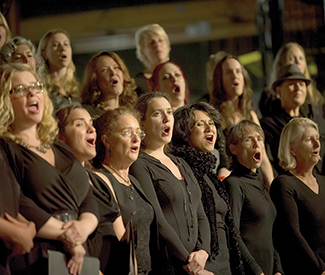
Now he’s teaching others to sing — often, amateurs who have never sung before — and writing original songs for them to perform. His Calling All Choir, now in its second season, is a 150-person choir made up of singers who, for the most part, have never taken the stage before in their lives.

Growden has always found inspiration in unexpected places. His take on American roots music blends his love of jazz with influences as varied as Appalachian folk, cabaret, and prison work songs from the old South. He started out composing for local dance companies, mainly on saxophone, before learning to play more folk-oriented instruments such as banjo and accordion. He’s spent the last 20-some years nomadically touring the country as a one-man band and in ensembles. In between shows, he’d stick around a city long enough to hold a singing workshop, which was as much about technique as it was about playful exercises that opened people up to music. Soon, Growden was known for both his songwriting and teaching abilities.

“The people in SF [in particular] kept coming back to the workshop,” said Growden, now an Oakland resident. “They asked ‘why do we have to stop for two months while you go on tour?’ I had it in my mind that I had to be on the road to make money.”

In September of last year, having just moved back to Oakland to settle down, Growden told his San Francisco workshop members, “Let’s try it.” He studied the community choir model, in which members pay dues to compensate the director, and started designing a program around his original compositions. He knew from the beginning that there would be no auditions; to reinforce its inclusive nature, he called it The Calling All Choir.

Growden spread the word online and through his previous workshop attendees, forming chapters in Sonoma and the East Bay, in addition to San Francisco. He set the dues on a sliding scale, ranging from $0 to $500 per person for the 18-week season. The inaugural season last year kicked off with about 40 members in each location. The three groups rehearsed separately — once a week for two hours a night — before coming together in January for dress rehearsals and final performances at The Sebastopol Center for the Arts and The Crucible in Oakland. The choir also performs at local hospitals and retirement homes.

First season member Gianna Smart had never heard Growden’s music before joining, but it ended up being part of the appeal.

“I imagined I’d find a Christmas choir in a church basement somewhere, and was okay with that, but when I met Mark and discovered that he wrote all of his own original compositions, I was really excited,” said Smart, who lives in Healdsburg. “The choir is a safe place to explore your own voice and be a part of a bigger sound. You don’t have to hit all the notes because you’re supported — someone always has your back.”

The second season is already five weeks under way, with 150 members. They’re set to perform four compositions by Growden in the coming weeks, plus a 1936 cantata by Ralph Vaughan Williams called “Dona nobis pacem.”

“It’s a classic round that the older generations know,” Growden said. “It’s important to keep those rounds alive in our culture.” So how do amateurs go from zero experience to singing in Latin? Growden said it usually comes down to practice: “There were people who couldn’t match pitch, but I kept having them come in early to work with them one-on-one or with a buddy,” he said. “People who I thought absolutely couldn’t sing, end up being able to sing.”

During a recent rehearsal, his patience seemed endless and his energy infectious. When the choir formed a circle grouped by vocal ranges — sopranos, altos, tenors, and basses — Growden sprinted from section to section, signaling with his arms and voice when and how to sing. He encouraged them “to lean” into their next notes, reminded them not to bury their heads in their black binders filled with sheet music, and even stopped them when they sounded flat. Sure, there were a few off-key, cringe-worthy moments.

But there was also something beautiful in those imperfections. “I don’t like to use the word spiritual – it’s way overused – but there is something sacred in people singing together. Even if they’re just drinking together,” Growden said later by phone.

Each rehearsal begins with vocal exercises, many of which Growden borrowed from theater, and usually some form of dancing to encourage people to use their entire body as an instrument. The rehearsals also end with a dance party, for which Growden lowers the lights and blasts everything from hip-hop to ABBA. For the rehearsal he let us sit in on, it happened to be James Brown.

The second season will culminate with a finale June 20, at a venue TBD, and the third season will begin in September 2014. The choir accepts members within the first three weeks of the season, though Growden said he makes exceptions for experienced singers who know how to read music.

“When you’re writing for amateurs, it’s harder. I’ve got to set them up for success,” he said. “But as a composer, I am really lucky. Vivaldi was a music teacher at an all-girls orphanage, Duke Ellington had his band…I mean, do you know how hard it is for composers to have their music made?”

For upcoming shows and more information: www.callingallchoir.org

Brawl opera

0

cheryl@sfbg.com

FILM There are action films. And then there’s The Raid 2. One need not have seen 2011’s The Raid: Redemption to appreciate this latest collaboration between Welsh director Gareth Evans and Indonesian actor, martial artist, and fight choreographer Iko Uwais — it’s recommended, of course, but the sequel stands alone on its own merits.

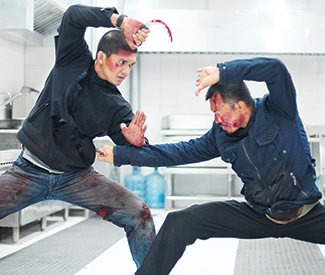
Overstuffed with gloriously brutal, cleverly staged fight scenes, The Raid 2 — sometimes written with the subtitle “Berendal,” which means “thugs” — picks up immediately after the events of the first film. Quick recap of part one: a special-forces team invades an apartment tower controlled by gangsters. Among the cops is idealistic Rama (Uwais). Seemingly bulletproof and fleet of fists and feet, Rama battles his way floor-by-floor, encountering machete-toting heavies and a wild-eyed maniac appropriately named Mad Dog (Yayan Ruhian), as well as his own older brother, who’s a high-up in the organized crime world. Rama also realizes he’s been unwittingly working for a corrupt police lieutenant, who’s got a personal beef with the bad guys. The Raid‘s gritty, unadorned approach (streamlined location and cast, gasp-inducing fights) resonated with thrill seeking audiences weary of CG overload.

“Before we’d screened the first movie anywhere, we watched it to do a tech check on it. After we finished, we thought, ‘Ok. We have … something,'” Evans recalled on a recent visit to San Francisco with Uwais. “But we just kept kind of focusing on, ‘There’s pixellation here, the picture’s not great there.’ We were looking at all the problems that you do when you’re deep into production on something. Then, when [the 2011 Toronto International Film Festival] happened, it was like, ‘Holy shit!’ We had no idea it was going to get received like that. And it kept growing! For us, it was this weird experience where something that we’d made within our own little creative vacuum was suddenly being accepted by people.”

A second Raid film was inevitable, especially since Evans — who became interested in Indonesian martial arts, or pencak silat, while working on 2007 doc The Mystic Art of Indonesia — already had its story in mind: Rama goes undercover in the underworld, a ploy that necessitates he do a prison stint to gain the trust of a local kingpin. Naturally, not much goes according to plan, and blood is shed along the way, as multiple power-crazed villains set their sinister plans into motion. Evans originally wanted to film it after making 2009’s Merantau, his first action film with Uwais, but it proved too costly for the then-unproven team.

“For two years, we were looking for financing, but were not able to get it. So we did the first Raid because it was lower budget. It was like a plan B,” Evans said. “After that, our investor was willing to help finance the second one. It bought us better equipment, more time to shoot, better sets. All of that stuff that we spent extra money on went up on the screen.”

With a fan base established by the first film, Evans — himself a lifelong action movie lover — knew expectations were high. Somehow, he’d have to top The Raid. “It couldn’t be The Raid 2, except now it’s a bigger building,” he joked. “So, what can we do differently? Expand the universe, and expand the characters. Explore different territory and be able to try different action beats: Car chase! Prison riot! And using weapons that we hadn’t introduced before, like the curved blades. It’s one of the weapons in silat. So it’s like, ‘Ok, this thing exists. Why haven’t we used it yet?’ We kind of hinted at it in Merantau — but we never really used it. Indonesian fans of that movie complained, but I was like, ‘Hold tight. We will use it.’ It’s such a violent, aggressive weapon that it wouldn’t have felt right in Merantau. But in The Raid 2, it felt right.”

Evans was also concerned that the “element of surprise” would be lost for audiences who had seen the first film. When asked to elaborate — because Uwais’ character is a mild-mannered nice guy who, surprise, is also an explosive killing machine? — he broke it down.

“[In the first film, audiences] got a taste for our choreography. We try to differentiate ourselves from other martial artists and filmmakers that do this type of stuff. Not in a way of like, ‘What we do is better.’ It’s more a case of, everyone packages their films differently,” he said. “We’re big fans of what Tony Jaa has done, and Sammo Hung, Donnie Yen, and Jackie Chan. But we have certain rules that we just don’t break. We never do a replay of anything when it comes to a stunt or an action sequence. It’s all one flow, and it never breaks rhythm — it keeps going until the thing is finished. In terms of slo-mo, we only ever use it to tell something dramatically within a fight sequence. We never use it to show off a movement. Which segues into, no acrobatics. Because as soon as you do that, you’ve got a stunt guy waiting to get hit. And that takes you out of the scene straightaway.”

Presenting the fight scenes as realistically benefits more than just the audience. “On TV in Indonesia, silat is represented in the most bullshit way possible: people jump into the sky and fly, and turn into jaguars, and shoot fireballs out of their eyes. I’m not exaggerating! When we first went to gather money for Merantau, we’d say, ‘We’re gonna make a silat film!’ and people would be like, ‘Aw, silat? That’s that stupid thing on TV,'” Evans recalled. “But I’d met Iko, and his gurus and teachers, and silat is such an integral part of their lives. [It was important to me that] if we made films about this martial art, we had to do it in a way that reclaims it from what had been done before. We wanted it to be real, and true to what they study.”

Though the actual fighting is realistic, the settings were carefully chosen for cinematic impact. Both of those ante-upping “action beats” Evans mentioned — the car chase, in which Uwais’ character batters his opponents inside of a moving vehicle, and the prison riot, which is muddy, bloody mayhem — are standouts.

“A lot of people responded to the idea of claustrophobia in the first one, because of all the enclosed spaces,” Evans said. “I wanted to find a way to still have these tight moments in the second one, even though the scope was much wider. Even within a car chase, we could dive right inside and have this super claustrophobic fight in the back seat.”

Uwais estimated that each fight scene required three or four months of practice — and even more for the car stunt. “Standing and fighting is very different than sitting and fighting,” he pointed out.

The collaborators, who have an easygoing rapport, have conflicting memories when it comes to filming the sloppy prison brawl — though they agree it was far and away the least fun scene to shoot. (Evans: “We shot that for eight days straight.” Uwais: “Eight days? It was 10 days.” Evans: “The guys were caked in mud all day.” Uwais: “From 6am to 5pm.” Evans: “More like, 4pm.” Uwais: “5pm!” Evans: “Ok, 5pm!”)

As The Raid 2 prepares to open wide, Evans is ramping up plans for the third film in the trilogy. “Whereas The Raid 2 starts like two hours after The Raid finishes, The Raid 3 starts three hours before The Raid 2 finishes,” he revealed. “So there’s a scene toward the end where a certain group makes a decision on something, and part three’s gonna follow the consequences of those actions. The Raid 3 is going to be way more streamlined than part two [which runs 148 minutes], and it’s going to be an homage to certain styles of cinema that I love that I really want to try and play with.”

And yes, there’s an American Raid remake in the works. When asked “Whyyyy?”, Evans was ready with an answer. “I’ve been a huge fan of Asian cinema ever since I was a kid, and I used to have that same feeling: ‘Oh my god, they can’t remake that!’ But in this case, nothing takes the original away. If anything, people who see the remake might get introduced to the original now, because they didn’t know it existed before.”

THE RAID 2 opened Fri/4 in Bay Area theaters.

Cinemagic

0

cheryl@sfbg.com

FILM It’s Crossroads time again — the annual San Francisco Cinematheque festival of experimental, avant-garde, abstract, and otherwise difficult-to-easily-categorize works carefully curated for adventurous, open-minded filmgoers.

In other words, if you’re counting down to the next Transformers flick, this may not be your jam. But there’s an eager Bay Area audience for the other end of the cinematic spectrum, as evidenced by the fact that Crossroads’ “Nathaniel Dorsky: Three Premieres” program, which is being presented twice at Yerba Buena Center for the Arts, is already sold out.

Fortunately, there are eight other programs, two of which focus on Ben Rivers and Ben Russell’s A Spell to Ward Off the Darkness, which makes its Bay Area premiere after receiving much buzz on the international festival circuit. Robert A.A. Lowe (also known as Lichens, he’s a solo musician who performs with local doom droners Om on occasion) plays the film’s central character, a nameless wanderer who drifts through its three segments in pursuit of some mysterious ideal. First, he’s a commune dweller — no context is given, but its residents are clearly international, with varying accents and languages, and the directors have said it’s set on an Estonian island.

It’s an idyllic place: leafy, creative, and harmonious, populated by a group that’s more back-to-the-land intellectual than hippie. There are newborn babies, towheaded children with painted faces, adults-only group saunas, and a geodesic dome. “This whole process is unpredictable. It’s important to keep in mind, the visions and ideas are just guidelines,” one man reflects; he’s referring to the group’s pursuit of what one woman calls “utopian architecture,” but he could also be giving viewing instructions for this film.

It’s useful advice, especially when Spell shifts settings. Lowe’s quiet observer is now a man roaming solo through the Finnish woods; the camera gazes into the landscape from afar as he climbs up and down trails, up and down through the frame. Occasionally, he stops by a small house, seemingly abandoned but still containing certain odd objects (needlepoint pictures, stacks of tabloids, floral curtains). Nature fascinates the camera — including, yes, multiple long shots of lichens — but so does Lowe, specifically his eyes, which are held in close-up after he’s shown dabbing white makeup on his face. Suddenly, we see the house engulfed in flames, there’s a cut to black, and then we hear the exact right music to show after an inferno: black metal, that most deliberately lo-fi and ear-shredding of heavy musical subgenres.

For metal fans, this sequence could prove the most controversial — there aren’t any Scandinavians in the mix, and one of the dudes is from Liturgy. (Like, do they even burn churches in Brooklyn, man?) But even music snobs will have a hard time resisting Spell‘s spell, or giving kudos for the film’s title treatment — a slightly more readable interpretation of the spidery font favored by extreme musicians, encasing words that echo the film’s surprisingly optimistic undercurrent.

Co-director Rivers appears in person at the film’s Fri/4 screening; Sat/5, he’ll give an artist’s talk, moderated by SF Cinematheque’s Steve Polta, at the Kadist Art Foundation, where the film will be exhibited as a “three-part spatialized architectural video installation.”

The rest of Crossroads is given over to shorts programs, assembled with characteristic creativity (Program 3 “is focused on abstract animation-graphic cinema, environmentalism, and crack pot exploration,” according to Polta), with co-producing credits given to Cinema Arts at the Exploratorium and the San Francisco Dance Film Festival on selected nights. There will also be a “live cinema” program (with live experimental music), and works by notable locals, including recent Guardian GOLDIE award winners Malic Amalya and Paul Clipson. *

CROSSROADS 2014

Thu/3-Sun/6, $5-10

Victoria Theatre

2961 16th St, SF

Kadist Art Foundation

3295 20th St, SF

www.sfcinematheque.org

Talk it through

0

arts@sfbg.com

DANCE

“She started right away on the collaborative process. I have this wonderful image of the Bryant Street studio. There was no real mirror, only one leaning against the wall. I remember Margy sitting with her back against it — I was afraid that it might fall on her — and her saying, ‘I have so many ideas in my head that I am afraid I can’t all get them out.’ What I really liked was that she also was interested in the ideas in my head, and she wasn’t going to impose her ideas, and this was going to be a conversation.” — Ginny Matthews, Margaret Jenkins Dance Company, 1974-1980

That’s how one of the country’s most remarkably individual companies was born. After moving back to her hometown in 1970 at a time when San Francisco was barely a dot on the map in terms of modern and postmodern dance, Margaret Jenkins has created over 75 works. Now 70, she has just renewed the lease on her spacious Margaret Jenkins Dance Lab studio on Eighth Street for another five years. CHIME, Jenkins’ mentorship program for professional dancers, is a wild success locally and in Los Angeles.

In 2006, she took her conversation global, collaborating with India’s Tansuree Shankar Dance Company on A Slipping Glance; in 2009, she created Other Suns with China’s Guangdong Modern Dance Company. And she is still at it, intrigued by questions that pop up in discussions with her again and again: “Wouldn’t be interesting if…”

As the light streams in through the studio’s floor-to-ceiling windows on this March afternoon, Jenkins is watching 15 dancers, seven of her own and eight from the Jerusalem-based Kolben Dance Company. They have just taken a break from rehearsing The Gate of Winds, which came about after Jenkins traveled to Jerusalem, a city she had always wanted to visit. “Having been raised in a progressive Jewish family, and as an atheist, I was curious what it would feel like putting my feet on the ground,” she observed.

She is aware that she and Kolben’s artistic director, Amir Kolben, have quite different approaches to the creative process. But working with his dancers in Jerusalem, she found them “fierce and wonderful movers.” Kolben, who had never worked with a collaborator before, was intrigued “more with the way we think than with how we create,” he explains.

Jenkins seems pleased with what she has just witnessed: two beautifully trained groups of performers who are stretching themselves emotionally and physically in exploring paths that they may not even know to have existed.

“Margy is very brave. She has an intellectual honesty about her that I really appreciated and [that she] communicated with me. I was doing solo work, and it was a very difficult time for me, and I learned to trust myself. [Being with the company] buoyed me up in so many different ways. Besides, it was nice to be on stage with others.” — Rinde Eckert, MJDC, 1987-1995

Still, Jenkins seems to have just a touch of melancholy about her when she looks forward and backward. Will she renew her lease again five years? “All too often, I ask myself whether there will be any money,” she sighs. “Every year, I start from absolute zero.”

Perhaps it was some of those thoughts that gave rise to the second piece on this 40th anniversary bill. For Times Bones, which premiered at the University of Maryland last September, Jenkins took a look at her past repertoire — at least the 68 pieces of which video exists — to see whether there were “untold stories” in them. She was struck by “how little contact the dancers had with each other. Now they partner each other. I have no idea why that’s the case.” This became another “wouldn’t it be interesting…” question. She had her present company learn fragments of pieces she had chosen, and then told the dancers to have their own conversations with them.

“I found her democratic process, her way of giving everyone voice in the process, to be infuriating and enlightening all at the same time. I hated the idea that she didn’t tell us what to do. It wasn’t enough to make movement that got you from here to there; it had to be thoroughly investigated. We were constantly throwing out anything that felt familiar or ‘already been done before.’ And the enlightening part was her willingness to let divergent types of material exist together. I still use this idea of colliding materials together, in an effort to surprise my original conception of things.” — Joe Goode, MJDC, 1980-1984 *

MARGARET JENKINS DANCE COMPANY

Thu/3-Sat/5, 7:30pm; Sun/6, 3pm, $30-35

Yerba Buena Center for the Arts

701 Mission, SF

www.ybca.org


Crime and politics

10

steve@sfbg.com

San Franciscans awoke March 26 to the surprising news that state Sen. Leland Yee (D-SF) had been arrested on federal corruption charges as part of early morning police raids targeting an organized crime syndicate based in Chinatown, along with reputed gangster Raymond “Shrimp Boy” Chow and two dozen others.

Yee had a reputation for sometimes trading votes for campaign contributions, a perception that had only gained strength in recent months as he launched his first statewide campaign, running to lead the Secretary of State’s Office, casting key votes for landlords and big industries that he refused to explain to local activists.

So in a year when two other Democratic Senators have also been stung by federal corruption and bribery probes, the televised image of Yee in handcuffs wasn’t beyond the realm of possibilities. It was surprising, but not shocking.

Yet by the mid-afternoon when the 137-page federal criminal complaint was unsealed and journalists started reading through what undercover FBI agents had discovered during their five-year criminal investigation, it read more like a sensational organized crime and espionage novel than a court document, a real page-turner that just got more wild and incredible as it went on.

timelineYeeWhat began with the FBI investigating a murder and leadership transition in the San Francisco branch of the ancient Chinese organized crime syndicate known as the Triad, led by an undercover FBI agent who had infiltrated the group, evolved into a widening investigation accusing Yee of arranging an illegal arms trafficking deal with a Muslim rebel group in the Philippines in exchange for $100,000 funneled into his campaign, on top of smaller favors that Yee allegedly did in exchange for envelopes with $10,000 in cash.


It was even worse for local political consultant Keith Jackson, a key Yee fundraiser who was also on contract with Lennar Urban for its Bayview-Hunters Point development projects, with the undercover FBI agents allegedly drawing Jackson into big cocaine deals, money laundering, bribery, and even a murder-for-hire plot. If the complaint is to be believed, Jackson seemed willing to do just about anything to enrich himself and raise money for Yee.

Meanwhile, the public image that Chow has been cultivating for himself since his 2003 release from federal prison — that of a reformed career gangster turned Chinatown civic leader, someone praised by local politicians for inspiring fellow ex-convicts to turn their lives around — was replaced the complaint’s description of a powerful “Dragonhead” overseeing a vast criminal enterprise involved in drugs, guns, prostitution, protection rackets, moving stolen booze and cigarettes, and money laundering.

“I think the whole city is in shock at the moment,” Board of Supervisors President David Chiu, who represents Chinatown and ran against Yee in the 2011 mayor’s race, told the Guardian that afternoon. “Today’s widespread law enforcement actions are incredibly disturbing. The detail and scale of the criminal activities are shocking.”

In the days that followed, Yee withdrew his candidacy for Secretary of State and was suspended by his colleagues in the California Senate. But where this wild tale of crime and corruption goes next — and who else gets implicated as these powerful and well-connected defendants look to cut deals to avoid the lengthy prison sentences they all face — is anyone’s guess.


THE CRIMINAL

Chow, 54, was raised a criminal, telling the History Channel’s “Gangland” that he stabbed someone in Hong Kong at the age of nine before moving to San Francisco in 1977 and getting involved in the Hop Sing Boys gang and Chinatown’s criminal underworld.

He survived the Golden Dragon Massacre, a shooting between rival Chinatown gangs that left five dead, but he was arrested in 1978 for a robbery and sent to prison for the first time, released in 1985. The next year, he was sent back to prison for attempted murder and more gang mayhem, released in 1989.

“I did time with Charles Manson, a good friend of mine. Kimball, a serial killer. I did time with a bunch of amazing people. Each person you talk to you learn something from. Ain’t no stupid people inside the prison, you can say that,” Chow told Gangland.

In 1991, a gangster named Peter Chong was sent from Hong Kong to San Francisco to extend the reach of the Wo Hop To Triad. He enlisted Chow as his right-hand man, and together they extended the reach of the Wo Hop To across the Western United States, trying to create an all encompassing gang named the Tien HaWui, “The Whole Earth Association.”

Chow was arrested again in 1995 on a variety of racketeering and other criminal charges and sentenced to 25 years in prison. But he later testified against Chong and got his sentence reduced, and he was released from federal prison in 2003.

After his release, Chow publicly claimed to go legit, working on book and movie deals about his life, as well as building connections in the political world. Chow posed for photos with then-Mayor Gavin Newsom and other local political figures.

But the latest criminal complaint said that even as Chow pretended to be moving on, he continued to make incriminating statements to the undercover agents “confirming his knowledge of and involvement in criminal activity.”


THE COMPLAINT

The criminal complaint alleges that “Chow is currently the Dragonhead, or leader, of the San Francisco-based Chee Kung Tong organization,” which it described as a criminal syndicate connected to Hung Mun, a criminal dynasty that began in 17th century China, “also referred to as a Chinese secret society and the Chinese Freemasons.”

It says Chow was sworn in as CKT head in August 2006, soon after the still-unsolved murder of CKT head Allen Leung. Chow’s swearing-in was reported in local Chinese media sources, so SFPD and FBI conducted surveillance there and launched an investigation.

The FBI says it began infiltrating CKT five years ago, including an undercover FBI agent dubbed UCE 4599, who in May 2010 was introduced to Chow, who “then introduced UCE 4599 to many of the target subjects.” UCE 4599 told Chow he was a member of La Cosa Nostra, the Italian mob.

In March 2012 he was inducted into CKT as a “Consultant,” the complaint alleges. It says that Jackson — a former San Francisco school board member and political consultant — had also be inducted into CKT as a “Consultant,” participating in various criminal conspiracies.

The gang members are accused of laundering money made from “illegal activities, specifically illegal gambling, bookmaking, sports betting, drugs, and outdoor marijuana grows.” They allegedly laundered $2.3 million between March 2011 and December 2013 for UCE 4599, with members collecting a 10 percent fee for doing so.

The complaint says Jackson “has a long-time relationship with Senator Yee,” and “has been involved in raising funds for” Yee’s run for mayor “and for Senator Yee’s current campaign in the California Secretary of State election.” And much of the complaint details deeds allegedly committed by Jackson and Yee.

In fact, the second person named in the complaint, right after Chow, is Yee, “aka California State Senator Leland Yee, aka Uncle Leland.”

As the complaint alleges, “Senator Yee and Keith Jackson were involved in a scheme to defraud the citizens of California of their rights to honest services, and Senator Yee, [Daly City resident Dr. Wilson] Lim, and Keith Jackson were involved in a conspiracy to traffic firearms.”


THE POLITICIAN

Yee and Jackson met UCE 4599 through Chow, and then Jackson allegedly solicited him to make donations to Yee’s 2011 San Francisco mayoral campaign “in excess of the $500 individual donation limit. UCE 4599 declined to make any donations to Senator Yee, but introduced Keith Jackson and Senator Yee to a purported business associate, UCE 4773, another undercover FBI agent,” who made a $5,000 donation to Yee’s mayoral campaign.

Yee had $70,000 in debt after that mayor’s race and worked with Jackson on ways to pay off that debt. “This included soliciting UCE 4773 for additional donations and in the course of doing so, Senator Yee and Keith Jackson agreed that Senator Yee would perform certain official acts in exchange for donations from UCE 4773.”

Yee allegedly agreed to “make a telephone call to a manager with the California Department of Public Health in support of a contract under consideration with UCE 4773’s purported client, and would provide an official letter of support for the client, in exchange for a $10,000 donation.”

Meanwhile, it says Jackson and Yee continued raising money for his Secretary of State race by soliciting donations from UCE 4599 and UCE 4180, another undercover agent. “They agreed that in exchange for donations from UCE 4599 and UCE 4180, Senator Yee would perform certain officials acts requested by UCE 4599 and UCE 4180.”

That included Yee issuing an “official state Senate proclamation honoring the CKT in exchange for a $6,800 campaign donation, the maximum individual donation allowed by law.” Yee allegedly did so, and it was presented by one of his staff members at the CKT anniversary celebration on March 29, 2013.

Yee and Jackson are also accused of introducing a donor to unidentified state legislators working on pending medical marijuana legislation, the donor being another undercover agent who claimed to be a medical marijuana businessman from Arizona looking to expand into California, “and in payment for that introduction, UCE 4180 delivered $11,000 cash to Senator Yee and Keith Jackson on June 22, 2013.”

In September, after making another introduction, Yee and Jackson allegedly received another $10,000 cash donation for their services. Then Jackson allegedly had an idea for getting even more money.

“Jackson told UCE 4599 that Senator Yee, had a contact who deals in arms trafficking.” Jackson then allegedly requested UCE 4599 make another donation “to facilitate a meeting with the arms dealer with the intent of UCE 4599 to purportedly purchase a large number of weapons to be imported through the Port of Newark, New Jersey.”

That deal for up to $2.5 million in weapons involved automatic weapon and shoulder-fired missiles, the complaint said, and “Senator Yee discussed certain details of the specific types of weapons UCE 4599 was interested in buying and importing.”

The complaint says that Yee expressed discomfort with how openly UCE 4180 discussed overt “pay to play” links between cash donations and official actions. “I’m just trying to run for Secretary of State. I hope I don’t get indicted,” Yee allegedly told two undercover FBI agents during a walk on June 20, 2013, urging them to be less explicit about connecting official favor with campaign donations.

“Despite complaining about UCE 4180’s tendency to speak frankly and tie payment to performance, and threatening to cut off contact with UCE 4180, Senator Yee and Keith Jackson continued to deal with UCE 4180 and never walked away from quid pro quo requests make by UCE 4180,” the complaint said. “In fact, Senator Yee provided the introductions sought by UCE 4180 and accepted cash payments which UCE 4180 expressly tied to the making of the introductions.”

Yee’s attorney, Paul DeMeester, told reporters they will contest the charges: “We will always in every case enter not guilty pleas, then the case takes on a life of its own.”


Joe Fitzgerald Rodriguez contributed to this report.


Bloodshed in Bernal Heights

34

rebecca@sfbg.com

On Friday morning, March 21, the day that Alejandro Nieto was shot and killed by San Francisco Police Department officers, he went to the gym with his friend Byron Pedroza. It was something they did often, Pedroza said; the two of them had signed up for gym memberships together. “He’d be like, ‘B, get up. Let’s go work out.'”

Nieto and Pedroza had met at El Toro nightclub, where Nieto worked as a security guard for nearly two years. The club, which attracts Latino clientele and hosts live performances on Mondays, has tight security: There are several guards equipped with Tasers.

“He was the type of person who’d help me a lot,” Pedroza said. “Thanks to him, I went to college,” enrolling at City College of San Francisco.

Nieto was a semester away from completing his degree in administration of justice. He was studying on scholarship, in pursuit of his goal to become a youth probation officer. Nieto drove a ’95 Chevy Caprice — an old police car, Pedroza said — and they fixed it up together.

Ramiro Del Rio, Nieto’s co-worker at El Toro, described him as punctual and considerate. He’d seen Nieto in stressful situations before, when dealing with drunk and rowdy bar patrons. “He was very calm,” Del Rio said of Nieto. “He would always want to talk to the person without using aggressive force.”

Nieto favored juice and soda instead of alcohol, he said, but after he started working out, “it was straight water.” Also, “He was Buddhist.”


HIS WORK TASER

Nieto had been scheduled to work that night, March 21. Instead, he was killed in Bernal Heights Park from multiple gunshot wounds inflicted by rounds fired by at least four officers. It’s unknown exactly how many bullet wounds Nieto sustained; friends said they believed at least 14 rounds had been fired.

As of March 31, the San Francisco Medical Examiner still had not released autopsy results. The officers involved had been placed on paid leave. Nieto’s community remained stunned by his sudden death, staging a march through the Mission the following weekend to protest what they viewed as an unjust use of deadly force.

According to a transcript from a 911 call placed minutes before the shooting, which Police Chief Greg Suhr read aloud during a March 25 public meeting at Leonard Flynn Elementary School held to discuss the incident, officers opened fire within three and a half minutes of arriving at Bernal Heights Park.

Police were responding to calls reporting a man “with a gun on his hip. A black handgun,” according to the call record, which Suhr read aloud. Police did not reveal the identity of the caller, but noted that the caller was not a police officer.

A neighbor who declined to be named told the Bay Guardian that shortly before the shooting, two men walking down the pedestrian pathway on the park’s north slope alerted a jogger of a man ahead with a gun on his hip. The jogger, who came within 50 feet of the man, reported noticing that he was “pacing back and forth” and “air boxing.”

The person who phoned 911 also initially reported seeing a man pacing back and forth. But minutes later, the anonymous caller reported to 911 dispatchers, “He is eating chips … but resting his hand on the gun.”

In reality, there was no gun — it was Nieto’s Taser, carried in a holster. Friends who spoke at a March 24 vigil said they believed Nieto had headed up there to eat a burrito while looking out at the city from the top of the hill, a place he often went to clear his head.

A sergeant from the Ingleside station and other police officers arrived at the scene minutes after receiving reports of a man with a gun, Suhr said at the public meeting. Police faced Nieto from a distance of about 75 feet, up a hill.

“When the officers asked him to show his hands, he drew the Taser from the holster,” Suhr said. Nieto then told police to show their hands, and pointed the Taser at the officers, Suhr told a large crowd in attendance. Due to the distance, the chief said, the officers did not see the yellow markings that would have alerted them that it was a Taser and not a gun.

“These particular Tasers, as soon as they’re drawn, they emit a dot, a red dot,” Suhr said. “When the officers saw the laser sight on them, tracking, they believed it to be a firearm, and they fired at Mr. Nieto.” Believing he had a gun, Suhr said, police “fired in defense of their own lives.” In a later interview, he confirmed that officers would not have used lethal force had they known Nieto possessed a Taser instead of a firearm.

Both Pedroza and Del Rio said Nieto had shown them his new Taser, and said it emits a red dot only when one pushes a button to turn it on. According to a Taser operating manual, the stun gun has a range of 15 feet.

Asked how many 911 calls were placed, Suhr said he did not have that information. When the Bay Guardian contacted the Department of Emergency Management to request audio from 911 calls, it was denied on the grounds that “it is part of an ongoing criminal investigation.”


COMMUNITY OUTRAGE

For several hours following Suhr’s explanation, friends and community members took turns at the microphone to vent outrage, frustration, and sadness over Nieto’s death. Many referenced an overarching trend of police violence directed against black and Latino youth.

Some voiced skepticism of the police account. Benjamin Bac Sierra — an English instructor at City College and friend of Nieto’s, who had once driven down Mission Street with him during a low rider parade, shouting “si se puede!” to cheering onlookers — told the Guardian, “In my heart, I do not believe that he pointed his Taser at the officers.”

At the gym, on the morning of the day Nieto died, Pedroza said, “I could tell he had a lot on his mind.” Nieto had told him it had to do with a woman he’d been seeing, a mother of three. “He was in love with her,” Pedroza said.

Yet Nieto’s relationship with Yajaira Barrera Estrada had created a conflict between him and Arthur Vega, Barrera Estrada’s three children’s father, whom Nieto had once been friends with. Public records list Vega as Barrera Estrada’s husband, and show the two living at separate addresses. It had culminated in a physical confrontation outside Barrera’s home several weeks earlier, during which Nieto allegedly stunned Vega with his Taser. Vega’s account, as described in a court filing requesting a temporary restraining order, suggests this was unprovoked; Pedroza said Nieto had believed Vega was going to harm him and might have a gun. Vega could not be reached for comment.

After that incident, Pedroza described Nieto as seeming worried and easily distracted. Pedroza believed that in the weeks leading up to the shooting, the conflict had caused Nieto to fear for his life.

Court records show that Barrera Estrada had also filed a request for a temporary restraining order against Nieto stemming from that incident, which was partially granted pending an April 11 hearing. When we reached Barrera Estrada by phone, she declined to discuss it, saying only: “Alex was an excellent person. I don’t know why the media is writing bad things about him. I don’t know why the police shot him. He was an excellent person with me.”

At the meeting, Suhr noted that Nieto was prohibited from owning a firearm due to a history of mental illness. Del Rio said he hadn’t seen evidence of this in Nieto’s behavior at the nightclub, where he spent five or six nights a week. “He never seemed crazy or mentally ill when he was working.” According to state records, Nieto obtained registration to work as a guard/patrolperson in June of 2007, which required completion of a 40-hour course.

As the crowd listened at the town hall meeting, Nieto’s father, Refugio, told Sup. David Campos that police had arrived at his home in the afternoon the day after the shooting, then questioned him about his son prior to revealing that he had been killed. Then police confiscated his car, Refugio Nieto told Campos, saying it was needed for an investigation. Then, according to Pedroza, police also went to Barrera Estrada’s residence, notified her of his death, and searched the premises.

Just before sunset on March 24, about 150 friends and community supporters gathered for a vigil in memory of Nieto. They lit candles, sang, burned incense, and conducted Buddhist chants in honor of his spiritual practice.

Sup. John Avalos said he’d known Nieto through Coleman Advocates for Children & Youth. “What we saw in Alejandro was that he had a really big heart,” Avalos said. He added, “Blood’s been shed, in this case, by people we’re supposed to trust. But … we have a lot of difficulty trusting our police, because from time to time, these things happen.”

Massage therapists hope for a happy ending

3

The California Massage Therapy Council, a statewide body that licenses massage practitioners, may expire at the end of this year unless extended by the California Legislature. Some anti-prostitution crusaders say reverting to local control will make it easier to shut down covert brothels, but the practitioners fear a return to the bad old days, when stigmas and stereotypes overcomplicated their lives.

On one side of the debate are the massage therapists, who say that the council protects them from unfair discrimination, replaces a patchwork of local ordinances, and provides a greater level of respectability to their profession. However, an array of city officials, police departments, and powerful groups such as the League of California Cities argue that the CAMTC makes it easier for illicit massage parlors to get away with prostitution and human trafficking.

“I receive complaints from neighbors all the time about certain establishments,” said Sup. Katy Tang about her supervisorial district in San Francisco’s Sunset District. “We can inspect, but we have no ability to enforce any of our regulations. If there are any penalties, we can’t enforce them.”

Tang’s frustration stems from Senate Bill 731, legislation that was signed into law in 2008. That bill created the CAMTC, a nonprofit organization that has the authority to certify massage practitioners and therapists in California. Prior to the creation of this body, each city and county enacted its own certification procedures, leading to a messy patchwork of rules all over the state.

Before the CAMTC, “there were 550 different kinds of regulations from city to city,” said Ahmos Netanel, CEO of the organization. “Within a radius of one mile, you can have a situation where different cities have their own standards. One city may require no training, and another right next door may require 1,000 hours.”

A massage provider working in California pre-2009 not only had to be savvy with the medley of laws, but also needed to purchase expensive licenses for each city he or she planned to practice in. The CAMTC creates a universal—though voluntary—system, where licensed practitioners can travel and work freely around the state.

The contentious part of the law comes from the protection that it offers to licensed practitioners. Any establishment that employs all CAMTC-certified massage providers is exempt from city ordinances that target massage businesses. Law enforcement agencies claim that these restrictions impede their ability to crack down on illegal parlors, but the massage therapists say that they are necessary to fight off discriminatory laws.

Some of these unfair regulations targeted entire establishments, such as zoning rules that forced all massage businesses into run-down or dangerous parts of town, with the assumption that they were brothels. Massage providers argued that this was neither fair nor safe for, say, a 75-year-old woman seeking out massage for arthritis, or a soon-to-be mom trying to obtain a pre-natal massage.

Other laws targeted the therapists themselves. Stacey DeGooyer, a certified massage therapist in the Bay Area, remembers times when practicing massage meant mandatory STD testing and reminders from police to not wear undergarments as exterior clothing.

“I remember thinking, ‘Wow, this is for my profession?'” DeGooyer said, decrying being subjected to “archaic prostitution laws.” Most massage providers aren’t looking to be on par with physicians, but they also don’t want to be on par with prostitutes.

Currently, San Francisco has its own certification program that is regulated by the Department of Public Health. To practice massage in the city, the provider must have a license from either the city or the CAMTC. However, only those who have the state CAMTC license can legally call themselves a “licensed massage” therapist or practitioner.

Tang has been one of the most outspoken critics of the CAMTC in San Francisco, urging the Legislature to let the body sunset at the end of the year.

“I wouldn’t say that I’m against [the CAMTC], but there are structural flaws in how it was designed,” Tang said. “It was created for good reasons, since there were so many jurisdictions and they wanted to standardize it and create a cohesive process. But there are jurisdictions like San Francisco where we have our own robust process.”

The number of massage establishments have surged since the adoption of the CAMTC, which critics use as evidence for a growing number of illicit parlors. But Netanel said his group’s worked to prevent prostitutes from getting licensed in the first place. Out of over 63,000 applicants, Netanel said, the group has never certified a single person who has been convicted of illicit activities. It also utilizes an online complaint form to report questionable behavior, and respond to all complaints within 24 hours.

“Even with those who criticize [the CAMTC], we share the same goals,” Netanel said. “We want a safe, healthy, and reliable certification process, so consumers can trust their therapists. Even more, we want to put an end to illegal massage parlors so they are no longer categorized with honest providers.” (Brian McMahon)

HOT MAIL

Last week’s Bay Guardian featured a cover story on homelessness in San Francisco (“San Francisco’s untouchables”), including communications between local residents and the city’s Homeless Outreach Team, which we obtained in a public records request. So we thought we’d share a few message from the more than 100 we received.

“I don’t know where to begin,” one resident wrote. “I feel between mad, disgusted, and frustrated. This homeless encampment keeps growing. … The city has put up wire fencing only to be cut through by the homeless. … It is within 100 yards of my $1.2M condo.”

Another said: “Something is deeply wrong with San Francisco policy. Cultivating the Bohemian San Francisco style is nice but … it is as if we were in a deteriorated undeveloped country. We live in downtown San Francisco, not in the favelas, which is what it feels like.”

Still another complainant wrote: “Bags distributors are installed in the parks in order to help dog lovers clean up after their dogs, which is completely normal, but nothing is done for all the human beings who stroll, do drugs, eat, sleep, urinate, defecate and so on, on the sidewalks.”

Sometimes these complaints result in HOT visits to homeless encampments. But the emails suggest that while the HOT does approach homeless folks to try and persuade them to access services or go to a shelter, the service workers don’t always have full services to direct them to if the homeless individuals agree to do so.

Psychiatric social worker Jason Albertson, who is part of the HOT, explained this dilemma in an email sent in mid-January. His email noted that the HOT had encountered some homeless people in the vicinity of Harriet Alley and Manolo Draves Park, in response to a neighbor’s urging.

They’re “primarily in transit, meaning that they camp in different places each night and are not regulars,” he explained. “So far, nobody has wanted to enter into shelter or discuss other access to treatment or services.” But even if they had, he said, there wouldn’t be too many options for moving forward with recovery.

“At this time, our case management support is limited with identified clients waiting,” he wrote. “So capacity for full service is limited.” (Rebecca Bowe)

WHITHER GOOGLE BUSES

As the Board of Supervisors prepared for an April 1 hearing to consider an environmental appeal of the San Francisco Municipal Transportation Agency’s program for regulating Google buses and other private shuttles to the Silicon Valley, which charges them one dollar per stop, both sides marshaled their troops.

The pro-business Bay Area Council released a poll of San Franciscans claiming that most of us love tech, we’re totally cool with the Google buses, and we care more about job creation than the cost of living. The group wrote: “Despite what it may look like from recent media coverage, a majority of voters have a positive opinion of the shuttle buses and support allowing buses to use Muni stops.”

SF.citi, an alliance of San Francisco tech companies, touted the poll as it sent out an email blast that reads like a call to arms: “Divisive shuttle opponents are now suing the City to challenge this pilot program before it has the chance to get off the ground. We need YOU to tell the Board of Supervisors in person that you want them reject this lawsuit and let the pilot program go forward.”

Progressive activists countered in a similar tone: “Please join us to support the appeal and to tell the city to hold Big Tech accountable for the actual impact they have on our communities and neighborhoods.”

The hearing was scheduled after Guardian press time, so check www.sfbg.com/politics to find out what happened. (Joe Fitzgerald Rodriguez)

Alerts: April 2 – 8, 2014

0

WEDNESDAY 2


Anti-eviction march

24th and Mission BART Station, SF. evictionfreesf.org. 11:30am, free. Eviction Free San Francisco will lead “a spirited lunchtime march and picket” to the Mission offices of Vanguard Properties, in response to an Ellis Act eviction that has been filed against longtime tenant Benito Santiago, a Duboce Triangle resident who was born and raised in San Francisco.

THURSDAY 3


Public meeting on tech shuttle plan

City Hall, 1 Dr Carlton B Goodlett, SF. 3pm, free. The San Francisco Board of Supervisors will vote on a controversial pilot program that will allow private shuttles, such as Google buses, to use Muni bus stops for a fee of $1 per stop per day. The program, approved by the San Francisco Metropolitan Transportation Agency in January, has been appealed on the grounds that it should undergo a full environmental review under the California Environmental Quality Act. The Board will vote on whether the appeal should move forward.


FRIDAY 4


IMPACT

Laney College, 900 Fallon, Oakl. www.destinyarts.org. 7:30pm, $20. This is the opening night of IMPACT, a full-length work featuring a cast of 42 talented youth ages 9 to 18 performing a combination of hip-hop, modern and aerial dance, theater, spoken word, rap and song. This group has chosen to take a stand around issues that have powerful impact on themselves, their communities and their world: Environmental destruction, unhealthy food and water, negative attitudes about their bodies, and violence of all kinds.


Talk: Robots and new media

Banatao Auditorium, Sutardja Dai Hall, UC Berkeley. 2594 Hearst, Berk. robotsandnewmedia.com. 9am-5pm, free. The Center for New Media at UC Berkeley will host this daylong symposium to explore “a new range of more social, personal, expressive, nurturing, and emotional robotic platforms and applications.” Featuring talks by philosopher Hubert Dreyfus of UC Berkeley, Mark Pauline of Survival Research Labs, UC Berkeley robotics professor Ken Goldberg and more.


SATURDAY 5


SF LGBT Center’s Annual Soiree

City View at Metreon, 135 4th St, SF. tinyurl.com/lgbtsoiree. 6:30-8pm VIP reception; party admission 8pm-midnight; $150 or $95 respectively. Come out in support of San Francisco’s Lesbian Gay Bisexual Transgender (LGBT) Community Center, which offers free services like career counseling, job fairs, social activities, mentorships, youth meals, daycare and a space for LGBT people to organize and secure equal rights. With a hosted bar, gourmet morsels, silent auction, music, dancing and live entertainment it promises to be a fancy affair.

SUNDAY 6

Ending Solitary Confinement Berkeley Fellowship of Unitarian Universalists’ Hall, 1924 Bonita, Berk. www.bfuu.org. 2pm, $5-10 suggested donation, no one turned away for lack of funds. Laura Magnani of the American Friends Service Committee will be speaking on Solitary Confinement in California prisons, and what we can do to work to abolish it or promote its more limited use. She will be joined by Marie Levin, sister of a prisoner who has organized and participated in prisoner hunger strikes in the past few years.

Appeal to the Giants

0


By John Farrell

OPINION We all love our 2010 and 2012 World Champion Giants and wish them all the best in 2014. But I also want to see the team do right by San Franciscans.

The Giants organization built its ballpark for over $350 million in 2000 and leased land from the Port. The 2012 property assessment was approximately $196.8 million, at least $200 million under value in my opinion, resulting in a property tax loss to the city of over $2.3 million annually.

Yet the Giants are appealing even this $196.8 million assessment, seeking to reduce the value to $140 million, an additional revenue loss to the city of over $650,000 annually.

When I worked in the San Francisco Assessor’s Office years ago, one of my assignments was to value the Giants ballpark. After construction was completed in 2000, a principle appraiser, a senior manager, and I met with Giants management in 2003 to finalize the ballpark value. I have worked with the Giants management numerous times in the past and they have always been professional, courteous, and fair.

Both parties agreed that a cost approach would be the preferred method of valuation and agreed on costs of around $350 million up to that point. The only difference in the final valuation being challenged was a marketing cost of $7 million in assessed value, reflecting $80,000 in tax revenue.

The Giants agreed to a middle ground to increase the assessment by $4 million. I advised the senior manager to accept this middle ground since it was reasonable and since the Giants already agreed to the approximate $350 million construction cost. It was a win-win for both the Giants and the city.

But this senior manager refused and would not budge on the $7 million assessed figure, reflecting a difference of only $35,000 in revenue. Giant’s management left the office very upset. I looked at the principle appraiser and he also couldn’t get over that we wouldn’t work with the Giants.

I had worked closely with this principal appraiser over the years and we always got the best and fairest value for the city. I left the office a year later and the Giants subsequently appealed and received a reduction of $200 million in assessed value and have been receiving a reduced assessment ever since.

When a taxpayer files an appeal for a reduction in property value under Proposition 8, it is generally due to a decrease in value as the result of a stagnant economy. I can understand the Giants asking for a reduction if their revenues were going down and justify it.

Without the ballpark, the Giants would not receive its revenues from the tickets, vendors, restaurants, advertising, cable TV, etc. Its revenues continue to grow, which is wonderful. But in my opinion and experience, the Giants should have never received such a reduction in assessment.

The proposed reduction to $140 million makes no sense. The land assessment alone is at least $40 million, from the capitalization of lease payments to the Port leaving the balance of $100 million for the improvements.

Naming rights were never assessed. Pacific Bell paid $45 million for naming rights in 2000, which was subsequently transferred to AT&T. What are these naming rights worth today? Keep in mind that the 49ers/York and Levi Strauss & Co recently entered into a naming rights agreement for a 20-year, $220 million deal at $11 million annually. Are you telling me the Giants naming rights are not worth at least half this amount when its contract with AT&T expires?

I appeal to the Giants owners and management to withdraw all their assessment appeals, which are insulting to the taxpayers of San Francisco, and continue to be the class act that they are. This appeal is from a fifth generation San Franciscan who has been a Giants fan since I can remember and had the privilege to see the two Willies, Juan, the Clarks, the Bonds and other Giants greats along the way.

John Farrell, MBA, Broker/Realtor®, former Assistant Assessor, Budget and Special Projects


Cap and frown

1

joe@sfbg.com

Just in time for baseball season, Giants hats may be allowed back into San Francisco public schools. A new Board of Education resolution may change the school district dress code to allow hats to be worn indoors in classrooms, a resolution that is also sparking conversations about cultural sensitivity.

The resolution, which the board will likely vote on April 8, would eliminate a San Francisco Unified School District no-hats policy, allowing schools to set their own dress codes individually as long as they’ve considered community input.

Some schools currently allow hats in schools in violation of district policy, but others have no-hat rules due to long standing conflation of hats with gang clothing, Board of Education Commissioner Matt Haney, who authored the resolution, told us.

“Our students should not be treated as a threat or a gang member because they wear hats,” Haney said. “If the message we send to them is that the way they dress in their communities is somehow a threat, we should not be sending that message as a school system.”

Hats seem like an unlikely starting point for a discussion about race and social justice, but Haney connects freedom of dress to the story of Trayvon Martin, whose tragic slaying many connected to negative assumptions due to wearing a hoodie, sparking a national “Million Hoodie Movement for Justice.”

Haney said allowing hats in classrooms is one step of many ensuring students know they’re accepted, and not viewed as a threat.

“When I went to a middle school to visit, they asked ‘why we can’t wear hats?’ I said it’s because people may think they’re in gangs,” Haney told the Guardian. “They looked at me like they had never heard anything so crazy or disrespectful in their lives.”

In a world where some people view those dressed in a simple hoodie as a reason to fear a teenager, the change in dress code rules could be seen as rebellious. But not everyone is a fan.

“I’m both ways on it,” Jackie Cohen, co-founder of the student tutoring program 100 Percent College Prep Institute, told the Guardian. “They should be able to express themselves as young people, but I don’t think they’re ready for the consequences that come with it.”

The institute offers many workshops to youth in the Bayview, but one offered last October taught kids to be what Cohen calls a “social chameleon.” The class taught code switching, when Cohen as how people change behavior based on social surroundings.

It’s a concept that youth of color in her neighborhood grapple with every day. Do they wear a hoodie to a job interview? A hat in the classroom? How much slang should be used in any given conversation? How does the media portray them?

boysmeet

Teenage (and younger) members of 100 Percent College Prep Institute learn about code switching from adult peers in a workshop held in October. Photo courtesy of Jackie Cohen.

San Franciscans were treated to a glaring moment of code-switching violation at last year’s NFC championship, when the 49ers were defeated by the Seattle Seahawks, whose cornerback Richard Sherman dissed 49ers player Michael Crabtree loudly in a TV interview, shouting, “Well, I’m the best corner in the game! When you try me with a sorry receiver like Crabtree, that’s the result you gonna get! Don’t you ever talk about me.”

The moment drew fire from football fans and commentators nationally; many called Sherman a thug due to his aggressive speech. In interviews later, Sherman equated the “thug” label with a racial epithet.

The message? Men of color have to act and dress within certain boundaries, and young persons especially can have trouble navigating those social boundaries, just or not. Young people of color’s clothing and speech styles can often be an impediment to breaching white-dominated power structures, Cohen said.

“If you put that resolution on the table, [Haney] should expand that to teach the other side,” she told us. “The code switching class should be part of that resolution.”

Haney, for his part, agrees that families should have a say in how their children dress at school.

“I think it’s a fair point,” he said. “The resolution doesn’t say schools must allow hats, it says it should be up to the school community and can be up to the school staff.”

But in a way, the resolution is pushing back against the need for code switching, and even mentions that the school district should recognize different forms of dress as a part of a community’s culture.

The resolution states: “A District-wide, positive, relationship-based culture is best supported by contemporary, culturally relevant Dress and Appearance standards with consistent application.”

And in San Francisco, as other big cities with pride in their sports team, saying hats are “culturally relevant dress” is an understatement.

Len Kori is a 26-year-old design major at California State University East Bay. But first and foremost, he is a San Francisco native, born and raised — he went to Thurgood Marshall High School, one of the schools affected by the resolution on hats.

He remembers the ban on hats well, which makes sense since Kori owns more than 200 of them, most bearing that unbeatable abbreviation: SF.

lenhat

Kori stands amidst some of his hat collection. Photo courtesy of Len Kori.

“You’d be surprised how deep the philosophy of collecting caps goes, as far as why people collect what they collect,” he told us. “My collection is solely based on who I am, and how important for me it is to acknowledge my roots,” Kori told the Guardian.

Hats defined his identity as a San Franciscan since he was a youngster, and as an adult he channeled his passions into designing hats himself.

One has the peninsula of the city dead center on the front of the cap, half the city aqua blue and the other half a gold dusky land mass. It reads “Bay Era,” a play off of the name of the popular New Era hats. Reflecting a love of city sports, some of his designs hearken back to San Francisco’s original baseball team, the Seals, sporting the original 1903 team colors of blue and white.

He’s happy to see the hat ban lifted because he feels “it’s important for kids to be able to express themselves.” Hats expressing city pride have long been a part of urban San Francisco culture, he said, but they are especially important now.

With so many displaced in the city’s housing crisis, there are too few of his former schoolmates around anymore. It makes the need to declare his love of San Francisco through hats especially poignant.

“It’s just really sad to see so many of my friends who have gone and left elsewhere,” Kori said. “I take pride in my city.”

April Fools Day in San Francisco: Acrobats block Google bus

“Everyone say, GMuni!”

Activist “Judith Hart,” clad in corporate attire and donning thick glasses without lenses, called into a microphone as she stood on the sidewalk next to a stationary Google bus. She was there as part of a tech bus blockade staged near 24th and Valencia streets this morning (Tue/1), around 9am.

“GMuni!” The crowd chanted.

“GMuni!” Hart repeated.

“GMuni!!!” Came the enthusiastic response.

Some acrobats stood in the street nearby, blocking the bus with dance-like motions. Occasionally leaning on the front of the bus for support, they lifted yoga balls high into the air while the Google shuttle remained parked with passengers aboard, awaiting departure.

The April Fools Day bus blockade – staged by Heart of the City, a group that has blocked corporate tech shuttles several times now – was more absurdist street theatre than protest.

The prank was to hand out “GMuni” bus passes to anyone wishing to board the Google bus. Hart posed as a Google executive launching a new program to provide free transit to all. But when one of the activists tried to climb aboard, waving the pass issued by the activists, the bus driver blocked him from entering, saying it was a private bus and nobody had informed him of this new program.

Eventually, a police officer arrived and asked activists to move to the sidewalk. They complied, but when the bus drove off, it had some signs affixed to the front that activists had placed there.

The street theatre protest was meant to draw attention to today’s scheduled Board of Supervisors vote to determine whether to approve an appeal of a Metropolitan Transportation Agency pilot program to allow private shuttles to stop in Muni bus zones for a fee of $1 per stop.

The Board is scheduled to vote at 3pm this afternoon. To have your say, go to San Francisco City Hall.

Airbnb finally agrees to pay its taxes in SF

42

Airbnb has apparently finally agreed to pay its taxes in San Francisco. The San Francisco Chronicle is reporting that the company, long called out by Guardian articles and editorials as a tax scofflaw blatantly defying a city ruling, will start collecting and remitting the 15 percent transient occupancy tax by this summer.

Airbnb CEO Brian Chesky announced last week that it would start doing so in New York City, Portland, Ore. and other cities that take part in its vaguely defined Shared City program. That prompted us to send Chesky and other Airbnb executives an email on March 27 asking, “I’m wondering why you’re willing to collect and remit taxes in Portland, but you’ve been unwilling to do so in San Francisco, the city where you’re headquartered and where the city ruled more than two years ago that you should be doing so?”

They never responded to that inquiry, which is part of the company tactic of stonewalling the Guardian on an issue that we were the first to report over a year ago when we discovered the company was simply refusing to pay a tax bill that our reporting found amounted to nearly $2 million annually in late 2012, and probably significantly more now.

The San Francisco Tax Collector’s Office ruled in April 2012 that Airbnb should be paying the TOT on the thousands of local stays that it facilitates, and that the company and its individual hosts were jointly liable for that tax obligation. But because Airbnb’s business model violates local laws against short-term rentals, it was difficult for individual hosts to get the license they needed to collect and pay the tax.

What prompted Airbnb’s sudden change of heart? Were they feeling the pressure? The Chronicle article doesn’t really make that clear, but we’ll let you know what we hear.

Feel free to borrow these arguments in the Google Bus CEQA appeal

19

Speaking of gun-running, how about that Google Bus?*

The $1/stop SFMTA deal to allow Google Buses to use city bus stops is being appealed to the Board of Supervisors, to be heard on tomorrow [Tues/1]. The $1/stop deal replaced the “handshake agreement” where the tech buses could do whatever they wanted while the SFMTA gazed vacantly into space, which is its forte.

The appeal is a technical invocation of the California Environmental Quality Act, aka CEQA, aka Chief CEQA, aka CEQABACCA. (Full disclosure: I am a consultant for SEIU Local 1021, one of the appellants, on something unrelated to this.) The appeal argues that in Mayor Ed Lee’s heroic pre-emptive capitulation to the $1/stop deal (for the price of a third of a cup of single-origin estate-grown coffee on Valencia!), the Planning Department should have analyzed potential environmental impacts of the Google Buses, and considered alternatives and mitigations. The relevant authorities probably did not want to know the results of a review because data-driven analysis is not outside-the-box disruptive thinking that makes Frisco the World Capital of Innovation.**

Notably, nothing in the deliberations of the MTA or CEQA asked if there should be a bus program at all. Determining whether something is good or bad for the City is apparently beyond the scope of government. I don’t understand it, but I’m not a lawyer. The big criticism of the buses is less the environmental one than the displacement and gentrification they cause. Round peg, meet square hole.

Fortunately, there are legitimate CEQA questions. The full Board of Supervisors will hear the appeal, and for the duration of public comment will transmogrify from a legislative body into a quasi-judicial body to decide the environmental claims. And the supervisors are totally qualified to rule on particulate levels caused by idling buses. Expect them to seek a compromise with science about how many people will get cancer because of the buses.

Since the appeal legally has to link any objections to the buses to environmental impacts, I have some suggestions of new CEQA arguments. The Supervisors should consider significant cumulative unmitigated impacts such as:

  • Influx of toxic concentrations of assholes into affected neighborhoods.
  • Pollution from all the new tinted window factories required to supply the buses.
  • Soaring rates of testicular cancer related to all the Google Bus-related cases of the medical condition known as “Hot Laptop Nuts.”
  • Property destruction during riots in the streets after the last taqueria closes and is replaced by an adorable farm-to-table small plates restaurant.
  • Urban blight and decay in Sunnyvale as tech people abandon Silicon Valley entirely, causing Sunnyvale to lose its coveted title “All-America City.”

I also have two elegant project alternatives to $1/stop: The buses cause displacement on their routes because people riding them make a lot of money. Clearly, the solution is to cut their pay. We just need a maximum wage for tech people. Any income over the maximum would go directly to fund public goods like schools, transit, and healthcare. The program could be called “Wealthy San Francisco.”

Alternatively, the City could use the buses as a positive tool, and move bus routes to areas that need and could support more economic development, like the Outer Sunset, Visitacion Valley, and Stockton.

Finally, I have a pilot program of my own to propose, in which we “accidentally” swap a Google Bus with an Immigration & Customs Enforcement Deportation Bus, delivering undocumented migrants to take charge of Silicon Valley and programmers to Northern Mexico. They can hackathon some apps for the Zetas Cartel.

Gentrification solved. Consensus built. You’re welcome, San Francisco.

*“Google Bus” becoming the generic term for tech colonist commuter shuttles must be an epic migraine for the beleaguered lawyers in the Google Intellectual Property Legal Department. Talk about brand dilution.

**Admittedly, innovation involving a short list of things. Amazing innovation at inventing technology to enhance our capacity to spend money and/or waste time. Innovative ways to house the houseless or feed the hungry—not so much.


Nato Green is a San Francisco-based standup comedian. His podcast is called The Nato Sessions and he can be seen with The Business every Wednesday at the Dark Room Theatre.