San Francisco

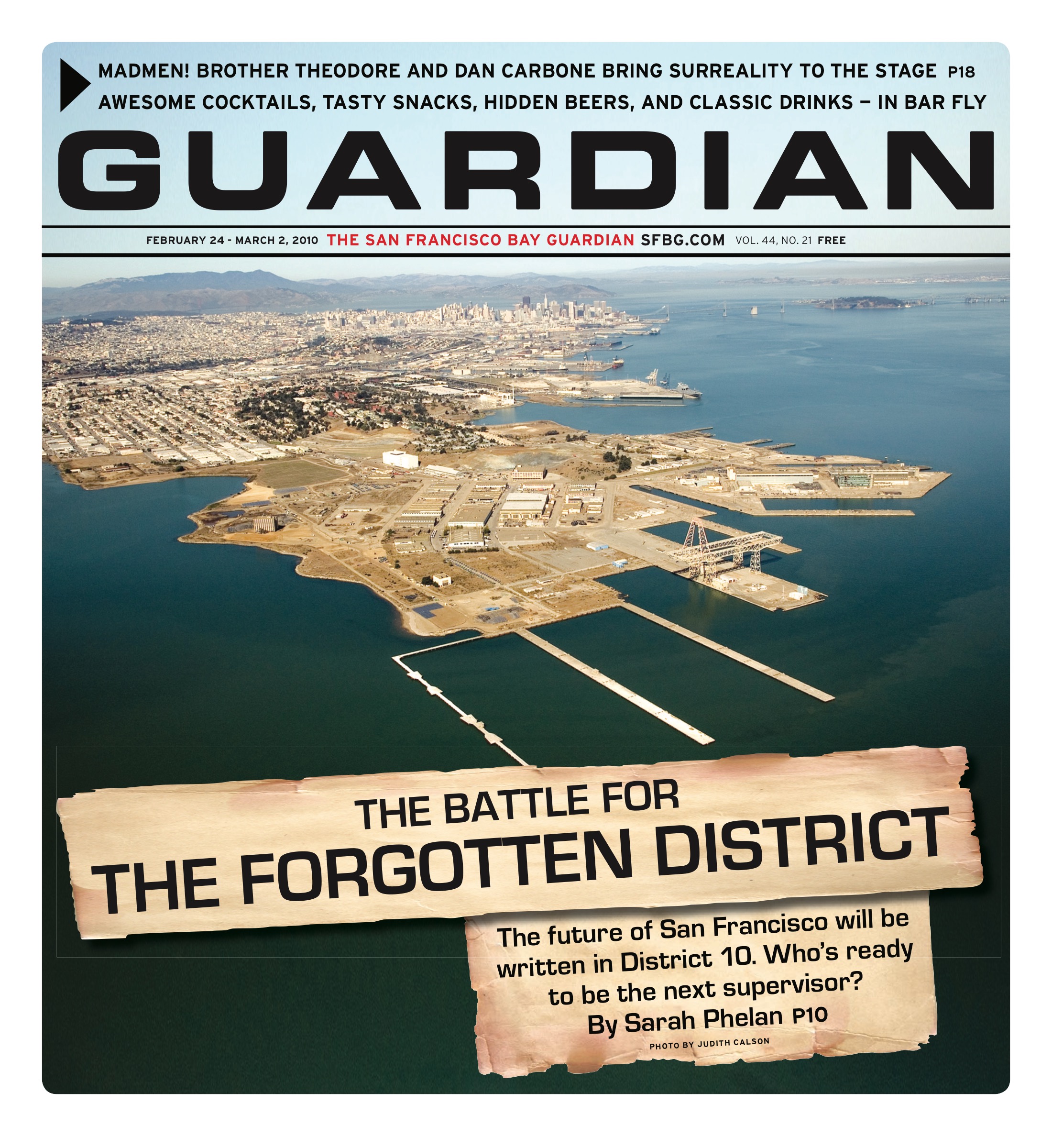
The battle for the forgotten district

24

sarah@sfbg.com

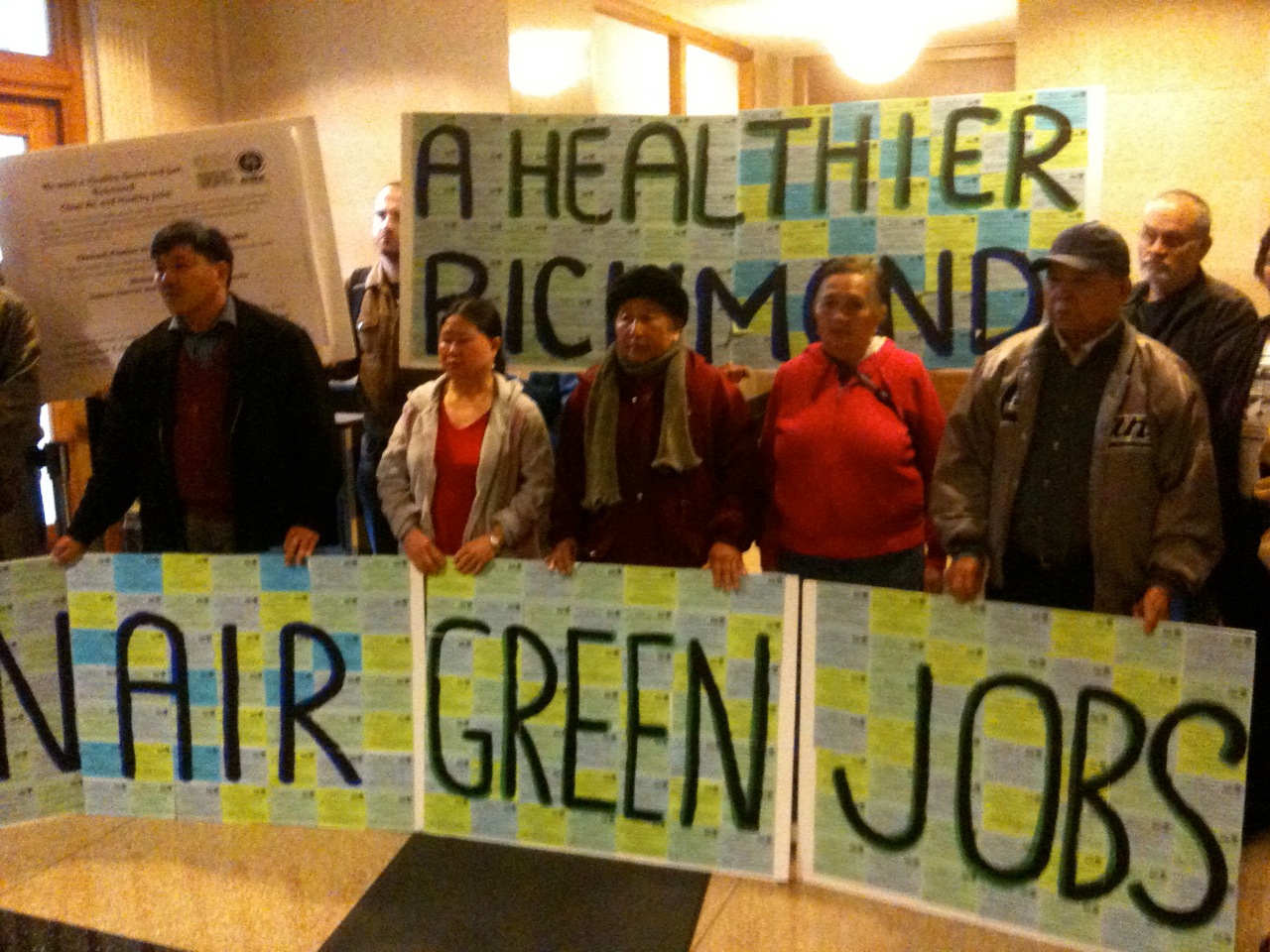
This November, when voters in District 10 — the largest, sunniest, and most diverse of the city’s 11 supervisorial districts — replace termed out Sup. Sophie Maxwell, they’ll be making a selection that could have pivotal implications for the entire city.

That’s because the next supervisor from southeast San Francisco inherits a district that is home to some of the city’s biggest environmental and public health challenges, as well as the most potential for development that will determine what kind of city San Francisco becomes.

District 10 is where you’ll find the most polluted and most underdeveloped lands in San Francisco, areas that could either be transformed into models of a sustainability or, in the words of Tony Kelly, the president of Potrero Boosters Neighborhood Association, “be turned into a toxic Foster City.”

District 10 is where the slaughterhouses, tanneries, and glue factories set up shop and used the bay as a dumping ground. It’s where the smokestacks of coal and oil fired power plants polluted the air. It’s where the Navy filled the Bay, built a shipyard at Hunters Point and loaded parts of the first atomic bomb onto the USS Indianapolis in 1945.

District 10 is where the bottom fell out of this industrial economy in 1974, when the Navy left, taking with it people’s jobs, pay, and hopes for a home of their own and a better future, particularly for what was then a predominantly African American population.

And District 10 is ground zero for plans that will triple the population and double the number of homes — homes that likely will only be “affordable” to Google executives and retirees from Marin, forever changing the face of San Francisco’s southeast sector. Critics fear that will accelerate what has been a steady exodus of black residents, replaced by megadeveloper Lennar’s vision for a new D10.

It’s against this dark history and difficult present that a wide open field of more than a dozen candidates are vying to replace Maxwell, who came to power in 2000 and has had a mixed voting record in her decade on the board. Sometimes, Maxwell was the eighth vote that let the progressive majority on the Board override Mayor Gavin Newsom’s veto and pass trailblazing legislation. Other times, she was the swing vote that allowed the moderate minority to carry Newsom’s water.

So, in addition to D10’s many internal challenges, this seat could determine the political balance of power on the Board of Supervisors, placing all the more importance on voters in this long-marginalized part of town.


DISTRICT OF DISCONTENT

Eric Smith, a biodiesel activist who has thrown his hat in the D10 ring, says that there is a lot of frustration in the air, and looking at the problems the district is facing, it’s hardly surprising that it has what nearly every candidate agrees is a fractured political culture.

“The Bayview, the Hunters Point Shipyard’s toxic Superfund site, the homicide rate, unemployment, poor public transportation, dwindling services and community resources have made D10 one of the city’s largest melting pots of discontent,” Smith said.

Smith’s words were spoken while the Elections Department was verifying signatures earlier this month on a second failed effort to qualify a petition to recall Maxwell.

Bayview resident and D10 candidate Marie Franklin didn’t support the attempt to recall Maxwell, but she understood it as “a frustration movement.”

“People are sinking in the sand, we’ve already lost so many of them, and they felt Sophie wasn’t doing anything for them,” said Franklin, who praised Maxwell for helping get Franklin’s apartment building complex renovated — a job that was completed 18 months ago, at a cost of $65 million, creating 500 local jobs.

“There are 654 units here, and they were uninhabitable,” Franklin said. “There was black mold, rain falling inside. We had people living worse than Haiti.”

Franklin, who said she is running because she “knows the history,” came here in 1978, when she and her son were living in a car after a fire left them homeless. She said the Bayview was a totally isolated area, barely part of mainstream San Francisco.

“There were no taxis, no services,” she recalled. “Nobody would come here, it was the stigmatized area where no one was accountable to provide services.”

The Bayview — which in some ways is the heart of D-!0 — wasn’t always a black community. But African Americans have been living here for 70 years, dealing with all the racism, denial of services, poverty, and pollution. And it bothers Franklin that 85 percent of the 10,500 homes that Lennar plans to develop won’t be affordable to the elderly, disabled, unemployed and low-income people who currently live in the Bayview.

“We need to preserve the diversity of the community and make sure their issues and information will flow to City Hall,” she said. “You must give the people a handle. If you don’t reach out, they’ll slip. That’s why folks out migrated.

Whoever succeeds Maxwell will be a central player in addressing some very big and dirty issues: the future of the Navy’s radiologically impacted shipyard at Hunters Point, Lennar’s massive redevelopment plan for the Shipyard and Candlestick Point, the polluting power plants, replacement of stinky digesters at the sewage plant, and the SF Hope public lousing rebuild.

There’s also the chance to address violence and crime. James Calloway, a candidate who has long worked in Bay Area schools, told us he believes that education and jobs are part of the keys to rejuvenating the district.

“Job opportunities are not as plentiful in the district,” Calloway said. “When I was a kid, you could walk down Third Street at 2 a.m. Now I wouldn’t walk down it at 9 p.m., and I know the area.”

Calloway is hopeful that the massive redevelopment plan, if done correctly, could start the district’s comeback. “Not a lot of black folks stay here when they have extensive education,” he said. “But it’s not only them. Many were displaced by redevelopment and had no way to go back.”


ELECTION UP FOR GRABS

The largest of the city’s 11 electoral districts, D10 is a huge triangular piece of land in the city’s southeast sector that was used as an industrial dumping zone for decades. Today, the district runs from the Giants stadium at AT&T Park to the 49ers stadium at Candlestick Point and encompasses Mission Bay, Potrero Hill, Dogpatch, India Basin, Portola, Little Hollywood, and Visitacion Valley. It’s also crossed by two freeways that isolate it from the rest of the city, and is home to a large number of crumbling housing projects that are in the process of being rebuilt.

Candidate Ed Donaldson grew up in the projects until he was 10 years old, when the Redevelopment Agency kicked his family out in the 1970s. “We landed on our feet, but others weren’t so lucky,” said Donaldson, who works as a housing counseling director at the San Francisco Housing Development Corporation.

“There is a sense that the Bayview and Visitacion Valley have not been included within the San Francisco family,” Donaldson said. “There is a sense of being forgotten.”

In 2007, Donaldson co-founded the Osiris Coalition to tackle the city’s dormant Certificate of Preference program, in which the Redevelopment Agency issued a document to displaced residents and businesses in the 1960s promising that they could return.

He also tried to rescue some 700 foreclosed properties and recycle them as affordable housing stock. And now he is trying to prevent the city from bulldozing seven SF Hope projects without guaranteeing residents that they have right to remain.

In 2007, Mayor Gavin Newsom and Maxwell convened an African American Outmigration Task Force that didn’t get a public hearing about its findings until August 2008. The timing angered some, who questioned why the report’s findings and implications for urban planning weren’t released before June 2008, when the residents of San Francisco voted for the Lennar-led Proposition G, a proposal to build 10,000 market rate homes at one of San Francisco’s last remaining black communities, which Newsom and Maxwell endorsed.

The taskforce didn’t publish its recommendations until the end of 2009, allegedly because of insider squabbling. Meanwhile, gentrification was going on actively, and many blamed Newsom, and by extension Maxwell, for failing to do anything with the group’s findings as D10 residents continued to suffer from high rates of asthma, cancer, unemployment and an ongoing black exodus.

It wasn’t always this way. In the 1940s, the district’s black population exploded when migrants from the south and World War II veterans came to work at the Hunters Point Naval Shipyard. Some moved to Alice Griffith Public Housing complex, or Double Rock, which was built as military housing in 1962. Others relocated to the Bayview when the Redevelopment Agency took over the Fillmore/Western Addition in the ’60s and ’70s as part of a controversial urban renewal effort.

But when the Navy abandoned the shipyard in 1974, unemployment hit the black community hard. Today, hundreds of the city’s lowest income residents live in Alice Griffith’s crumbling units and endure sewage backups, no heat, cloudy drinking water and leaking ceilings, as they wait for the projects to be rebuilt.

“Generations have been trapped in the silo of public housing and cannot get out, because of lack of opportunity and education, so when we legislate, we need to take that into consideration,” said candidate Malia Cohen, whose grandfather came from Texas to work at the shipyard where he met her grandmother, whose family came from New Orleans.

“My grandfather’s father was a longshoreman. He worked with the infamous Leroy King [a commissioner at the city’s Redevelopment Agency] and he has fantastically vivid stories of racism,” said Cohen, who works for the Federal Reserve Bank of San Francisco, previously served on the executive staff of Mayor Gavin Newsom, and has already raised over $18,000 in the D10 race and qualified for public matching funds.

“My family came here to work hard, they lived on Navy road in the projects, and then they bought a house here. My parents were born here, and we were all public schooled,” Cohen recalled as she took me on a tour of D10 that ended up in Visitacion Valley, an increasingly Chinese-American neighborhood that reflects a district-wide trend.

Census data show that by 2000, Asians were the largest racial group in the district (30 percent), followed by blacks (29 percent), whites (26 percent), and Latinos (19 percent). By 2003, according to the California Urban Issues project, the trend continued. Asians were the largest racial group (32 percent), followed by blacks (27 percent), whites (21 percent) and Latinos (17 percent) of the population.

This means that D10 candidates will have to garner support from more than one ethnic group to win. Over a dozen candidates have already filed papers in the race, but so far there is no clear front-runner.

Also frustrating the prognosticators is that fact that D10 has had the lowest voter turnout in the city, so the winner will also depend on who goes to the polls.

D10 candidate Geoffrea Morris, who is the grand daughter of longtime Bayview activist Charlie Walker, has been knocking on doors and participating in voter registration drives.

“We need new blood,” Morris said

Getting elected will be a complicated equation. Although Bayview’s population was 50 percent African American at the time of the 2000 census, it didn’t turn out the vote. In the 2006 election, only 14,000 of the district’s 37,000 registered voters went to the ballot, and 50 percent were from whiter, richer, and more Asian neighborhoods.

“It’s very important to the future of the city that the ethnicity diversity of the board be maintained and that the African American community have representation,” former Board President and current Democratic Party chair Aaron Peskin told the Guardian.

Maxwell recently told the Guardian that she’s not ready to endorse any D10 candidates yet. “I’m waiting for people to have a better understanding of what this community is, what the common thread running through it is, and how to use rank choice voting,” she told us.

The only candidate who currently holds elected office is BART director Lynette Sweet, who had her answers down pat when we reached her by phone, and even used wording that was eerily similar to Maxwell’s words.

“D10 is a pretty diverse district, but there is only one common thread: the need for economic development,” Sweet told me. “That’s true in Potrero Hill, Portola, Dog Patch and the Bayview. It’s the same mantra: a lot of small businesses need help, and the only way to help them is through economic development. In Potrero Hill it’s about land use. In the Bayview, it’s about the shipyard and better transportation and truancies.”


THE COMMON THREAD

District 10 is ground zero for the Lennar’s $2.2 billion plan to develop 10,500 market rate condos at the Shipyard and Candlestick Point. The plan will allegedly create thousands of jobs and new parks, deliver on an historic community benefits agreement that labor groups claim is so “lawyered up” that the developer can’t renege on its promises.

The package is framed as the one and only way to revitalize the southeast’s formerly vibrant economic engine. Indeed, any time anyone tries to slow down the process—to take time to thoroughly read the draft EIR and see if it adequately addresses the impacts of this massive urban reengineering project — a chorus of “no delays” starts up, either from residents of the housing projects desperate to see their homes rebuilt, or the labor contractors who hope to get jobs.

“It’s as if the city is playing checkers, while Lennar is playing three-dimensional chess,” Eric Smith observed.

Lennar has stated that it will contribute $711 million to finance this massive project. The remainder will be leveraged by Mello-Roos bonds, state taxes based on the use and size of a property and intended to raise money for needed services, and tax increment financing, which creates funding for projects by borrowing against future property tax revenues.

The conceptual plan won Maxwell’s backing but environmental groups are critical of the draft EIR.

During DEIR hearing, environmentalists questioned the wisdom and the cost of filling the Bay to build a bridge over Yosemite Slough, and building condos on Candlestick Point state recreation area, the only open major open space in the district.

But the city’s Planning Department also has 20,000-30,000 units of housing in its pipeline. This means that if all these plans get approved in the next decade, they’d account for 80 percent of residential development citywide. And D10’s population could triple, further skewing the district’s already shifting demographics.

In other words, D10 as we know it could become nothing more than a historic relic in a few years, and the next supervisor will play a key role in deciding whether that happens. SFHDC’s Ed Donaldson warns that any supervisor who does not understand the complexity of the city’s largest district can expect a similar recall backlash in future.

“There is no one homogenous voice in the community,” Donaldson said. “The grass-roots organizing that brought about the recall effort was a result of a changing political structure in the area, but is not yet on par with other districts in town. We still allow our politics to be controlled from downtown.”

Fellow candidate Eric Smith warns that the issues—and politics—are complex.

“People were emotional, angry, and desperate because they feel no one listens to them,” Smith said. “That’s part of the problem here; they would rather have a supervisor go down swinging for them, rather than watch one seemingly side with Lennar, PG&E and the mayor on issues contrary to their interests. That’s the terrible irony and one of the biggest problems in District 10. Folks are so mad, they’re willing to do whatever it takes to make them feel they have a voice in the outcome, even if it’s potentially worse.”

Smith cited the sequence of events that culminated last year in the Navy dissolving the community-based shipyard Restoration Advisory Board (RAB), which for years has reviewed technical documents and commented on the Navy’s clean-up proposals. But in December, the Navy made its official decision to disband the RAB, citing dysfunctional behavior and off-topic discussions that got in the way.

“Some of the same folks who were frustrated by the process, tried to send a signal to the Navy that they weren’t being heard and for all their well-intentioned efforts got the RAB dissolved,” Smith said. “I truly feel for them, it’s absolutely heartbreaking, but at times, they can be their own worst enemy.”

One of the looming issues about the shipyard is that the land has been polluted and needs to be cleaned. The shipyard contains radioactive debris from ships towed to the shipyard, after a 90-foot wave washed over them during an atomic test gone awry. The Navy burned 610,000 gallons of radioactively contaminated ship fuel at the shipyard, and workers showered on the shipyard, raising concerns that radioactive materials got into the drains and sewers. And questions have been raised about radiological tests on animals at the yard.


LEAKS AND FLOODS

It’s not just the shipyard that’s toxic. Even the buildings that were constructed to house workers 50 years ago are a serious mess.

Realtor Diane Wesley Smith, who grew up in public housing projects, took me on a walking tour of Alice Griffith last week to see conditions that tenants will likely have to endure until at least 2014, if the city sticks to its plan to relocate people into a new replacement unit in the same geographical area, if not the exact same site.

What we found was pretty messed up.

“The water sometimes comes out brown and feels like sand. It’s been like that for a year,” one resident said.

“The water is cloudy, the bath tub isn’t working and the sink keeps stopping up,” said another.

A woman named Silvia showed us how the water from the tap in her elderly mother’s kitchen flows out cloudy and then doesn’t settle properly, like foamy beer.

“The roof’s been leaking for years, the sewage backs up, but they just fixed the lights,” Silvia said. A neighbor named Linda was using her oven as a heater.

“The toilet backs up a lot, and my grandson’s been coughing a lot from asthma,” Linda said.

“Roaches is always a problem,” said a woman named Stormi, dressed in black sweats and a black T-shirt that read, “Can’t knock the hustle.”

“They’re trying,” said Stormi, a member of the Alice Griffith Residents Association, as a couple of Housing Authority trucks pulled up to do repairs.

“They promise that you will not have to leave your unit, but if they try to move us down to the waterfront, well, there’s a reason there’s no housing there, and it’s because the land will flood,” Stormi said.

“If we don’t end up at the table, we’ll end up on the menu,” Wesley Smith warned, as she stopped to chat with a group of young men, who were worried they would pushed out of the Alice Griffith rebuild through the criteria being established.

“Fred Blackwell, the executive director of the Redevelopment Agency, assures me that’s not the case, but Alice Griffith is a Housing Authority property, and empty promises have the potential to be great promises provided they are made in writing,” Wesley Smith said as we walked out of the projects and onto the road where a yellow and black sign announced “flooded” next to Candlestick Point park, where Lennar wants to build.

Malia Cohen expressed concern about Hope SF residents, as we drove through the Sunnydale housing project.

“We have to be diligent and mindful that people are not pushed out,” Cohen said, noting the sweeping views at Gleneagles golf course above Sunnydale, and the value of housing for a golf course community. “When public housing gets taken offline, we must work with Redevelopment and the Housing Authority to make sure no one is changing the rules halfway. We have to make sure the talks and walks line up. We need to be equal partners. We cannot be bulldozed by City Hall.”

Geoffrea Morris is a Calworks employee, at the Southeast Community College facility on Oakdale, which was built to mitigate the city’s expansion of the sewage plant in 1987. She cited concerns about the literacy levels of people who live in the 2200 public housing units that cluster D10. “A lot of people in Alice Griffith don’t even know the dates or when it’s going to be reconstructed,” Morris said. “Folks like to be told stuff like that, but the city gives you a stack of papers. Some will read them, but others rely on folks they think are trustworthy. They need stuff in layman’s terms written on one sheet of paper.”

Morris is a fan of the Internet who posted a community survey online, and made sure every housing project got some literature telling people to get informed. She worries about the digital divide in D10:

“A lot of folks don’t have computers and access to important information,” Morris said. “And let’s talk about the way ‘affordable’ is used to trick people.”

Michael Cohen, Newsom’s top economic adviser, recently stated in a memo that over the expected 15-20 year phased build out, Lennar’s Candlestick-Shipyard development would include, “up to 10,500 residential units, about 32 percent of which (3,345) will be offered at below market rates.”

“But 892 units of this ‘affordable category’ will be sold to folks earning $100,000,” Morris said. “So if you subtract 892 units from affordable unit category, you’re back to 25 percent affordable.”

Candidate Kristine Enea, an attorney and a former RAB member, chairs the India Basin Neighborhood Association, which administers a US EPA grant to hire experts to translate the Navy’s cleanup documents into plain English and comment on them She was frustrated by the Navy’s decision to dissolve the RAB.

“The lack of a forum does nothing to bolster the community’s trust in the cleanup or the redevelopment process,” Enea said.

Enea generally supports the Lennar project, but has concerns about whether it will adequately mitigate increased car traffic, or result in commercial development that benefits her neighborhood.

“India basin is a pocket of Hunters Point right along the shoreline,” Enea said. “Right now, we have no shops or restaurants, no ATM, no groceries, nothing beyond one liquor store and a few industrial businesses.

Potrero Boosters president Tony Kelly told us that District 10 residents can think for themselves. “D10 residents don’t need to rely on corporations to solve their problems,” he said.

“Folks in the eastern neighborhoods came up with a better revitalization plan than what the city proposed and community activists managed to close the power plant, after the city said it was impossible,” Kelly recalled.

And there’s no shortage of good ideas.

Kelly suggested that an urban agriculture center could immediately put low-skilled folks to work by erecting greenhouses on unused land. Smith said the industrial zone could be “incredible eco-park made from sustainable sources.

‘D 10 is the dumping ground for everything, including all the city’s waste,” he said. “We could be a shining example, not just for D 10, but the rest of the state.”

The D 10 candidate line up includes Calloway, Cohen, Donaldson, Smith, Enea: civil rights attorney Dewitt Lacy, Morris, Potrero View publisher Steve Moss; District 7 BART director Lynette Sweet, Wesley-Smith. Bill Barnes, who works for Sup. Michela Alioto-Pier, and Linda Richardson, who was appointed to the Human Rights Commission in 2007 by Mayor Newsom, have also expressed interest in the race.

In such a huge field, name identification will play a major role. Sweet is in office, but BART Board is not a high-profile job and won’t give her a huge advantage.

Cohen has a slight edge right now in that she’s raised $18,505, including $500 from former Newsom flak Peter Ragone, making her the first D. 10 candidate to qualify for campaign financing. The oldest of five girls, Cohen recalls how her mother got laid off from her city job as a school-based mental health worker and then rehired, as part of the city’s budget cuts.

“We felt that pinch and the frustrating games that are played out between the leadership and the rank and file,” she said.

Cohen who worked for Newsom in his first term as mayor, but has since left his administration , said she is uncomfortable at being framed as Newsom’s candidate.

“Because I’m not, but I am one of the few candidates who has seen how the mayor and the Board work—and don’t work—together,” she said.

Moss sees the city’s southeast as a “district in transition.” Over coffee at Farley’s in Potrero Hill, he told me that the southeastern neighborhoods could be “launching pads for environmentally sustainable growth.”

“The district’s been in a frozen period for 30 years, But despite the problems, people are deeply committed to and in love with their community.

“This district is the future of San Francisco and its social fabric—the diversity, income –and its problems are leftovers from the city’s industrial age.”


DISTRICT 10, BY THE NUMBERS

Total Acres: 5,650

Average household income: $85,000

Population: 73,000

Registered voters: 37,700

Average housing price: $335,000

Ethnicity (2003 figures): Asian 32%, African American, 27%, white 21%, Hispanic 17%

Development status of land: 18% residential, 38% is commercial, 38% undevelopable

All figures the latest available. Sources: SFGIS, Association of Bay Area Governments, U.S. Census, California Urban Issues Project. Ethnicity and income data is from 2003 and almost certainly has changed.
Trapped in the museum

0

VISUAL ART Have you heard? SFMOMA turned 75. There is a lot to take in across the museum’s related exhibits, from the “Anniversary Show” centerpiece to the small retrospectives devoted to specific artists that SFMOMA has fostered relationships with over the years. While everything is certainly worth a gander, below are some pieces worth more than your while.


SINGLES GOING STEADY

Next to Bruce Conner’s Ray Charles-and-found-footage shotgun wedding Three Screen Ray (2006), in the other media gallery, you’ll see a series of music-related or somehow “musical” single channel video works (cannily titled “The Singles Collection”). Media arts curator Rudolf Frieling has played DJ with the archive, going from Steina’s 1970-78 violin-powered video-drone to Cory Arcangel’s hilarious crotch-centric re-edit of footage of Simon and Garfunkel’s 1984 Central Park reunion concert.

The chart-topper, however, is undoubtedly Michael Bell-Smith’s dizzying 2005 piece, Chapters 1-12 of R. Kelly’s Trapped in the Closet Synced and Played Simultaneously. As explained by its title, the piece exploits the identical backing track used throughout Kelly’s magnum opus, introducing a new audio and video layer with each successive repeat of the bass hook until all 12 chapters are going at once. Bell-Smith’s condensation of Kelly’s soap opera reduces the series’ increasingly labyrinthine narrative to pure affect, in a sense exposing R&B’s McLuhanian truth that the medium is the message. As the visual field moves from palimpsest to whiteout, so too does the audiotrack transform, kecak-like, from discernable speech into a buzzing monsoon of indecipherable chatter, melisma runs, and huge swells of nonverbal emotionality. The idea and execution are so simple and brilliant as to come off as almost self-evident (alternately, I wonder if Kelly just didn’t plan it that way). Here’s hoping Bell-Smith will make a sequel with the other 10 chapters.


BAD BOYS AND BEESWAX

Recently, art critic Roberta Smith humorously posited the three career stages of artistic bad boys: “beginner (there’s still time to turn back), over the top, and over the hill.” I wonder where she would slot Matthew Barney. SFMOMA has had a long relationship with the SF-born artist: the museum put on Barney’s first non-gallery retrospective in 1991, followed by the co-acquisition with the Walker Center of the Arts of Cremaster 2 in 2000, and most recently, the massive Drawing Restraint retrospective in 2006. Certainly, there is something of the “beginner” in the 1991 installation Transexualis — part of a “Focus on Artists” exhibition that include sections on Diane Arbus, Gerhard Richter, Richard Serra, and others — with its petroleum jelly-cast decline bench set in a walk-in cooler. Like a teen bodybuilder, its aesthetic perfection is visually arresting, yet there is something about such over-development that is off-putting and faintly obnoxious. Such is the vanity of youth, perhaps?

Robert Gober’s beeswax torso in the adjacent gallery, made a year before Barney’s Crisco home gym, takes the opposite tack. Slumped on the floor like a throw pillow, Gober’s untitled Eva Hesse-like form simultaneously welcomes you with the upright repose of a postcoital lover (that happy trail that leads the eye up and down from a small cloud of chest hair is made of human follicles), only to then take on the cast of something long past its prime to be taken out with the trash. It is a body many of us have seen, or had, or have. It is a wingless Pyrrhic victory that still manages to fly miles above Barney’s Super Bowl half-time show deconstruction of masculinity. Who’s bad?

THE ANNIVERSARY SHOW

FOCUS ON ARTISTS

LONG PLAY: BRUCE CONNER AND THE SINGLES COLLECTION

Through May 23 (“Anniversary Show” through Jan. 16, 2011)

San Francisco Museum of Modern Art

151 Third St., SF

(415) 357-4000

www.sfmoma.org

The haunt of fear

0

MUSIC Something wicked this way comes when you put on a Shackleton track. Tinny hi-hats, shivering vocal snippets, and water drip snares skitter about like panicked rats as synths bellow like distant foghorns, announcing the approach of the bass.

Oh, that bass. Shackleton’s bass doesn’t drop, but rather lodges itself as a formidable presence within a track’s darting double-, sometimes triple-time rhythms; an iceberg whose total, intimidating mass is never truly perceptible beneath the black depths it floats on. Low end-heads and melancholics alike will get a chance to deep sea dive with the reclusive British producer when he hits Club Six’s Darkroom for his first San Francisco appearance on Sunday in support of last year’s Three EPs (Perlon).

Although he’s most frequently identified with the dubstep scene, Shackleton’s debut on Europe’s most prestigious house and techno label isn’t that surprising. Many of the releases on his now defunct Skull Disco imprint treated dubstep as a template to be toyed with and stretched. Tracks evoked vintage Muslimgauze and Chain Reaction’s hazy pulses as much as the latest white label played out by Mary Ann Hobbs. It was a crossover cemented in his 2006 track, the haunting "Blood On My Hands," which minimal techno expansionist Ricardo Villalobos remixed into a post 9/11 elegy that rivals William Basinski’s Disintegration Loops (2062) as one of the most powerful artistic response to that tragedy.

Four years on and a decade after the towers fell, Three EPs doesn’t offer much in the way of solace. The sampled chants of "He’s got the whole world in his hands" on "Asha in the Tabernacle" come off as a threat rather than a reassurance. The only thing certain is what’s waiting for us in the dark, what’s waiting for us in the end. It’s a sentiment echoed in the lyrics of the Bob Dylan song "Slow Train," summoned in name and spirit on Three EP ‘s most dirge-like track, "There’s A Slow Train": "Man’s ego is inflated, his laws are outdated, they don’t apply no more /You can’t rely no more to be standin’ around waitin’ />In the home of the brave, Jefferson turnin’ over in his grave /Fools glorifying themselves, trying to manipulate Satan /And there’s a slow, slow train comin’ up around the bend."

SHACKLETON

March 7, 9 p.m.

Club Six

60 Sixth St., SF

(415) 863-1221

www.clubsix1.com

Is Chevron lying about its crude plans?

1

By Adam Lesser

William Rostov, the Earthjustice lawyer who represents three Bay Area environmental groups, broke it down: “The question is: will it be heavier and will that result in more pollution?” He was speaking about crude oil refining at Chevron’s Richmond refinery as he addressed California’s First Appellate Court in San Francisco this morning. Heavier crude oil is usually less expensive for oil companies to purchase but generates more pollution during the refining process.

Environmentalists, labor unions, lawyers and Chevron representatives packed the courtroom to hear opposing counsel spar over the project’s environmental impact report, which was invalidated by a Contra Costa Superior Court judge last June. The ruling stopped the refinery expansion that Richmond has approved.

Chevron attorney Ronald Van Buskirk hammered the point that “the project didn’t propose a crude switch.” When pressed on why Chevron declined to disclose the data behind the conclusion that there would be no switch to heavier grade crude, Van Buskirk countered that the data constituted “trade secrets” that are protected under law.

Rostov argued that “refinery experts showed this project allows the use of heavier crude” and that Chevron “misled the public” in its EIR. A key component of the environmentalists’ argument rests on the 2007 Chevron annual report to the U.S. Securities and Exchange Commission, which specifies that “design and engineering for a project to increase the flexibility to process lower API-gravity crude oils at the company’s Richmond, California, refinery continued in 2007.” API gravity is a measure of how heavy or light petroleum is. Lower API gravity corresponds to a heavier crude oil. But Van Buskirk countered that the plaintiff’s evidence amounted to “one sentence in a 10K report.”

Justice Patricia Sepulveda questioned Van Buskirk about whether the $61 million Community Benefits Agreement that Chevron offered to contribute to the city of Richmond gave the city “bias to approve the project.” But Van Buskirk said, “It wasn’t a quid pro quo, if that’s what you’re suggesting,” before ultimately conceding that it was fair suggest to that the gift had played a role in the approval.

Judge Ignacio Ruvolo presided over Chevron’s appeal. At the end of oral arguments, he spoke to the efforts the court has taken to expedite the case, pressing attorneys on whether there was any chance of a settlement.

“The parties are still very far apart,” said Van Buskirk, and Rostov nodded the same. For the first time all morning, everyone was in agreement.

The court will rule within 90 days.

Rep Clock

0

Schedules are for Wed/24–Tues/2 except where noted. Director and year are given when available. Double features are marked with a •. All times are p.m. unless otherwise specified.

AUTOBODY FINE ART GALLERY 1517 Park, Alameda; www.autobodyfineart.com. $5. "Hunger," short zombie films by Bay Area filmmakers, Sat, 8.

ARTISTS’ TELEVISION ACCESS 992 Valencia, SF; www.atasite.org. $6-10. Zeitgeist Addendum: The Resource-Based Economy, Thurs, 7. "Noise Pop Film Festival:" Blood Into Wine (Page and Pomerenke), Fri, 7; Downtown Calling (Nicholson), Fri, 9; •Lou Barlow: Goodnight Unknown (Harding) and The Mountain Goats: Life of the World to Come (Johnson), Sat, 2; Woodstock: Now and Then (Kopple), Sat, 4; The Secret to a Happy Ending (Weissman), Sun, 2; All My Friends Are Funeral Singers (Rutili), Sun, 4:15. For info on these screenings, visit www.noisepop.com.

CAFÉ OF THE DEAD 3208 Grand, Oakl; (510) 931-7945. Free. "Independent Filmmakers Screening Nite," Wed, 6:30.

CASTRO 429 Castro, SF; (415) 621-6120, www.castrotheatre.com. $7.50-10. My Son, My Son, What Have Ye Done (Herzog, 2009), Wed-Thurs, 7, 9:15 (also Wed, 2:30, 4:45). •Fight Club (Fincher, 1999), Fri, 7, and Donnie Darko (Kelly, 2001), Fri, 9:40. Up (Docter, 2009), Sat, 2, 4:30, 7, 9:15. "German Gems:" Tender Parasites (Becker and Schwabe, 2009), Sun, noon; Miss Stinnes (von Moeller, 2009), Sun, 2; Being Mr. Kotschie (Baumgarten, 2009), Sun, 4:15; Vision (von Trotta, 2009), Sun, 7; The Bone Man (Murnberger, 2009), Sun, 9:15. Call for Mon-Tues program information.

CHRISTOPHER B. SMITH RAFAEL FILM CENTER 1118 Fourth St, San Rafael; (415) 454-1222, www.cafilm.org. $6.50-10. Broken Embraces (Almodóvar, 2009), call for dates and times. An Education (Scherfig, 2009), call for dates and times. Fish Tank (Arnold, 2009), call for dates and times. North Face (Stölzl, 2008), call for dates and times. "2010 Oscar Nominated Short Films," Wed-Thurs, call for times. "The Cinema of Jan Troell:" Everlasting Moments (2008), Sat, 7:15; The Emigrants (1971), Sat, 2 and March 6, 2; The New Land (1972), Sun, 2 and March 6, 7; "Dancing," "Reflexion 2001," and "Their Frozen Dream," Sun, 7; As White as Snow (2001), Mon and March 4, 7; Il Capitano (1991), Tues, 7.

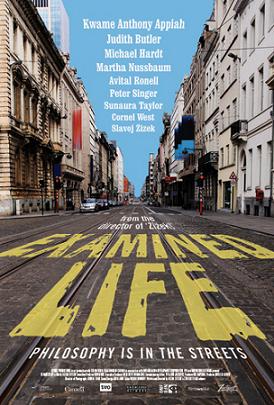
HERBST THEATRE 401 Van Ness, SF; (415) 392-4400. $20. Examined Life (Taylor, 2008), Thurs, 7:30.

HUMANIST HALL 390 27th St, Oakl; www.humanisthall.org. $5. •Shellmound and In the Light of Reverence, Wed, 7:30.

MECHANICS’ INSTITUTE 57 Post, SF; (415) 393-0100, rsvp@milibrary.org. $10. "CinemaLit Film Series: Reel Criminals — The Heist:" A Fish Called Wanda (Crichton, 1988), Fri, 6.

MEZZANINE 444 Jessie, SF; www.sffs.org. $15. "SF360 Film + Club," sneak preview of a film about Stephin Merritt of the Magnetic Fields, Sun, 8.

PACIFIC FILM ARCHIVE 2575 Bancroft, Berk; (510) 642-5249, www.bampfa.berkeley.edu. $5.50-9.50. "Film 50: History of Cinema:" Pursued (Walsh, 1947), Wed, 3. "African Film Festival:" In My Genes (Nyong’o, 2009), Wed, 7. "Before ‘Capraesque:’ Early Frank Capra:" The Younger Generation (1929), Thurs, 7; So This Is Love (1928), Fri, 7; The Bitter Tea of General Yen (1933), Fri, 8:30; It Happened One Night (1934), Sat, 6:30. "The Kids Are Alright: Post-Fifties Musicals and the Rise of Youth Culture:" Pink Floyd the Wall (Parker, 1982), Thurs, 8:35; True Stories (Byrne, 1986), Sat, 8:35; Fruit Fly (Mendoza, 2008), Sun, 5:30. "L@te: Friday Nights at BAM/PFA:" "Paul Clipson and Gregg Kowalsky; Keith Evans," Fri, 7:30. This event at the Berkeley Art Museum, 2626 Bancroft, Berk. "Celebrating Amateur Film:" "Sid’s Cinema: A Tribute to Amateur Filmmaker Sid Laverents (1963-85)," Sun, 3.

RED VIC 1727 Haight, SF; (415) 668-3994. $6-10. The Yes Men Fix the World (Ollman, Price, and Smith, 2009), Wed, 2, 7:15, 9:15. The Bad Lieutenant: Port of Call New Orleans (Herzog, 2009), Thurs-Sat, 7, 9:35 (also Sat, 2, 4:30. Small Change (Truffaut, 1976), Sun-Mon, 7:15, 9:30 (also Sun, 2, 4). The Beaches of Agnès (Varda, 2008), March 2-3, 7, 9:20 (also March 3, 2).

ROXIE 3117 and 3125 16th St, SF; (415) 863-1087, www.roxie.com. $5-9.75. "Noise Pop Film Festival:" Austin, TX: Live Music Capital of the World? (Christ), Wed, 7; P-Star Rising (Noble), Wed, 9:15. For info on these screenings, visit www.noisepop.com. Leonard Cohen: Live at the Isle of Wight 1970 (Lerner), Wed-Thurs, 6:40, 8, 9:30. Precious: Based on the Novel Push by Sapphire (Daniels, 2009), Thurs, 6:45. The Cove (Psihoyos, 2009), Thurs, 8:50. Call for Fri-Tues program information.

SAN FRANCISCO CINEMATHEQUE Yerba Buena Center for the Arts, 701 Mission, SF; www.sfcinema.org. $10. "Darkest Americana and Elsewhere: Films, Video, and Words of James Benning:" "James Benning: American Dreams," Fri, 7; "James Benning: Landscape Suicide," Fri, 8:15. "Australian Avant-Garde: A Historical Overview," Tues, 7:30. Presentation Theater, University of San Francisco, 2350 Turk, SF. Same price and contact info. "James Benning:" Ruhr (2009) with "Fire and Rain" (2009), Sat, 7:30. McBean Theater, Exploratorium, 3601 Lyon, SF. Same price and contact info. "James Benning: Milwaukee to Lincoln, Montana Lecture," Sun, 3.

SAN FRANCISCO PUBLIC LIBRARY Koret Auditorium, 100 Larkin, SF; www.sfpl.org. Free. "The Story of India:" Freedom (2007), Thurs, noon. Large-screen video presentation.

VICTORIA 2961 16th St, SF; www.downstreamthemovie.com. $12. Downstream (Bartesaghi, 2009), Fri-Sat, 8; Sun, 7.

VIZ CINEMA New People, 1746 Post, SF; www.newpeopleworld.com/films. $10-25. La Maison De Himiko (2005), through March 4, call for times. "Noise Pop Film Festival:" Blood Into Wine (Page and Pomerenke), Thurs, 7:30; The Heart is a Drum Machine (Pomerenke), Thurs, 9:30. For info on these screenings, visit www.noisepop.com.

YERBA BUENA CENTER FOR THE ARTS 701 Mission, SF; (415) 978-2787, www.ybca.org. $6-8. "Freaks, Punks, Skanks, and Cranks:" To My Great Chagrin: The Unbelievable Story of Brother Theodore (Sumerel, 2008), Thurs, 7:30; Gold (Levis, 1968), Sat, 7:30.

Music listings

0

Music listings are compiled by Paula Connelly and Cheryl Eddy. Since club life is unpredictable, it’s a good idea to call ahead to confirm bookings and hours. Prices are listed when provided to us. Submit items at listings@sfbg.com.

WEDNESDAY 24

ROCK/BLUES/HIP-HOP

Kasey Anderson, Matthew Ryan, Allen Stone, Andrew Belle Hotel Utah. 8pm, $8.

Foreign Born, Fresh and Onlys, Free Energy, Splinters Rickshaw Stop. 8pm, $14.

Ghost of a Saber Toothed Tiger, Cornelius, If By Yes, Hirotaka Shimizu Independent. 8pm, $20.

Pepi Ginsberg, Pepper Rabbit Hemlock Tavern. 9pm, $7.

Harlem, Sandwitches, Young Prisms Café du Nord. 8pm, $12.

Left Alone, Bum City Saints, Hounds and Harlots Thee Parkside. 8pm, $8.

Richard Thompson Band Great American Music Hall. 8pm, $28.

Rogue Wave, Princeton, Man/Miracle, Two Sheds Bottom of the Hill. 8pm, $15.

Sideshow Fiasco, Kajillion, Illness El Rio. 7pm, $5.

Sioux City Kid, Vandella, Landlords Red Devil Lounge. 8pm, $8.

FOLK/WORLD/COUNTRY

Michael Abraham Jazz Session, Gaucho Amnesia. 8pm, free.

Michael Rose with Dubtronic Kru Rockit Room. 9pm, $25.

DANCE CLUBS

Booty Call Q-Bar, 456 Castro; www.bootycallwednesdays.com. 9pm. Juanita Moore hosts this dance party, featuring DJ Robot Hustle.

Club Shutter Elbo Room. 10pm, $5. Goth with DJs Nako, Omar, and Justin.

Hands Down! Bar on Church. 9pm, free. With DJs Claksaarb, Mykill, and guests spinning indie, electro, house, and bangers.

Jam Wednesday Infusion Lounge. 10pm, free. DJ Slick Dee.

Mary-Go-Round LookOut, 3600 16th St., SF; (415) 431-0306. 10pm, $5. A weekly drag show with hosts Cookie Dough, Pollo Del Mar, and Suppositori Spelling.

RedWine Social Dalva. 9pm-2am, free. DJ TophOne and guests spin outernational funk and get drunk.

Respect Wednesdays End Up. 10pm, $5. Rotating DJs Daddy Rolo, Young Fyah, Irie Dole, I-Vier, Sake One, Serg, and more spinning reggae, dancehall, roots, lovers rock, and mash ups.

Synchronize Il Pirata, 2007 16th St.; (415) 626-2626. 10pm, free. Psychedelic dance music with DJs Helios, Gatto Matto, Psy Lotus, Intergalactoid, and guests.

Yoruba Dance Sessions Bacano! Som., 2925 16th St., SF; (415) 558-8521. 9pm, free. With resident DJ Carlos Mena and guests spinning afro-deep-global-soulful-broken-techhouse.

THURSDAY 25

ROCK/BLUES/HIP-HOP

Dan Black, Free Energy 330 Ritch. 9pm, $10-13.

Curtis Bumpy Coda. 9pm, $7.

Citay, Scout Niblett, Greg Ashley, Tape Deck Mountain Café du Nord. 8pm, $14.

*Cute Lepers, Clorox Girls, Primitivas, Boats! Thee Parkside. 9pm, $8.

Dodos, Magik*Magik Orchestra Palace of Fine Arts, 3301 Lyon, SF; www.ticketmaster.com. 8pm, $25.

Shane Dwight Biscuits and Blues. 8pm, $15.

Far, Stomacher, Picture Atlantic, Trophy Fire Bottom of the Hill. 8pm, $14.

Robert Grashaw Amnesia. 7pm, free.

Bill Kreutzmann with Oteil Burbridge and Scott Murawski Independent. 9pm, $25.

Moe. Fillmore. 8pm, $37.50.

Richard Thompson Band Great American Music Hall. 8pm, $28.

Slow Children, Wobbly and Preshish Moments, Maleficia, Alexandra Buschman Amnesia. 9pm, $5.

Space Monkey Gangstas, RU36, 5 Days Dirty, Release Slim’s. 8:30pm, $13.

*Toasters, Inciters, Monkey Red Devil Lounge. 8pm, $12.

*"Tribute to Johnny Cash" Knockout. 8pm, $10. With Glen Earl Brown Jr., B Stars, Royal Deuces, Big B and His Snake Oil Saviors, and more.

Zaimph, Vodka Soap, Bill Orcutt, Stellar OM Source Hemlock Tavern. 9pm, $7.

Zee Avi, Hot Toddies, Leslie and the Badgers Rickshaw Stop. 8pm, $14.

FOLK/WORLD/COUNTRY

Bluegrass and Old Time Jam Atlas Café. 8pm, free.

DANCE CLUBS

Afrolicious Elbo Room. 9:30pm, $5-6. DJs Pleasuremaker and Señor Oz spin Afrobeat, Tropicália, electro, samba, and funk.

Caribbean Connection Little Baobab, 3388 19th St; 643-3558. 10pm, $3. DJ Stevie B and guests spin reggae, soca, zouk, reggaetón, and more.

Drop the Pressure Underground SF. 6-10pm, free. Electro, house, and datafunk highlight this weekly happy hour.

Ejector DNA Lounge. 9pm, $10. Synthpop with Robot Bomb Shelter and DJs Chris Zachos, Dabecy, and Papa Tony.

Funky Rewind Skylark. 9pm, free. DJ Kung Fu Chris, MAKossa, and rotating guest DJs spin heavy funk breaks, early hip-hop, boogie, and classic Jamaican riddims.

Good Foot Yoruba Dance Sessions Bacano! Som., 2925 16th St., SF; (415) 558-8521. 9pm, free. A James Brown tribute with resident DJs Haylow, A-Ron, and Prince Aries spinning R&B, Hip hop, funk, and soul.

Gymnasium Matador, 10 6th St., SF; (415) 863-4629. 9pm, free. With DJ Violent Vickie and guests spinning electro, hip hop, and disco.

Heat Icon Ultra Lounge. 10pm, free. Hip-hop, R&B, reggae, and soul.

Kick It Bar on Church. 9pm. Hip-hop with DJ Jorge Terez.

Koko Puffs Koko Cocktails, 1060 Geary; 885-4788. 10pm, free. Dubby roots reggae and Jamaican funk from rotating DJs.

La Riots Manor West, 750 Harrison, SF; (415) 407-4565. 10pm, $10.

Mestiza Bollywood Café, 3376 19th St., SF; (415) 970-0362. 10pm, free. Showcasing progressive Latin and global beats with DJ Juan Data.

Peaches Skylark, 10pm, free. With an all female DJ line up featuring Deeandroid, Lady Fingaz, That Girl, and Umami spinning hip hop.

Popscene 330 Rich. 10pm, $10. Rotating DJs spinning indie, Britpop, electro, new wave, and post-punk.

Represent Icon Lounge. 10pm, $5. With Resident DJ Ren the Vinyl Archaeologist and guest.

Solid Club Six. 9pm, $5. With resident DJ Daddy Rolo and rotating DJs Mpenzi, Shortkut, Polo Mo’qz and Fuze spinning roots, reggae, and dancehall.

FRIDAY 26

ROCK/BLUES/HIP-HOP

Atlas Sound, Geographer, Magic Wands, Nice Nice Great American Music Hall. 8pm, $18.

Bikefight, Sopors, Overns, Bobby Joe Ebola Pissed Off Pete’s, 4456 Mission, SF; www.pissedoffpetes.com. 9pm, $5.

Blank Stares, Wild Yaks Hemlock Tavern. 9:30pm, $7.

Rick Estrin and the Night Cats Biscuits and Blues. 8 and 10pm, $20.

Expendables, Iration, Passafire, Pour Habit, Roots Down Below Fillmore. 9pm, $19.50.

Four Tet, Nathan Fake, Rainbow Arabia, NewVillager Independent. 8pm, $18.

Judgement Day, Scissors for Lefty, Ghost and the City, Glaciers Bottom of the Hill. 9pm, $12.

Limousines, Butterfly Bones, Battlehooch Slim’s. 8pm, $14.

*Mumlers, Growlers, Sonny and the Sunsets, Ferocious Few Café du Nord. 8pm, $14.

Notorious, Darkwave Red Devil Lounge. 8pm, $10-20. Benefit for victims of the earthquake in Haiti.

Sons of Doug, Crazy Famous, Scar Pin, West Of Hotel Utah. 9pm, $6.

Thrashers Broadway Studios. 8pm.

John Vanderslice, Nurses, Honeycomb, Conspiracy of Venus Swedish American Hall (upstairs from Café du Nord). 8pm, $15.

JAZZ/NEW MUSIC

Audium 9 1616 Bush, SF; (415) 771-1616. 8:30pm, $15.

David Benoit Yoshi’s San Francisco. 8pm, $28.

Black Market Jazz Orchestra Top of the Mark. 9pm, $10.

Bryan Girard Quartet Cliff House, 1090 Point Lobos, SF; (415) 386-3330. 7pm, free.

Eric Kurtzrock Trio Ana Mandara, Ghirardelli Square, 891 Beach, SF; (415) 771-6800. 8pm, free.

Jim Butler Quartet Savanna Jazz. 8pm, $8.

"Kronos: Music from 4 Fences" Z Space, 450 Florida, SF; www.kronosquartet.org. 8pm, $25.

Joshua Redman Grace Cathedral, 1100 California, SF; www.sfjazz.org. 8pm, $25-50.

FOLK/WORLD/COUNTRY

Dogman Joe, La Gente, Justin Ancheta Elbo Room. 10pm, $10.

Lucky Road Amnesia. 9pm, $5.

Pellejo Seco Cigar Bar and Grill, 850 Montgomery, SF; www.cigarbarandgrill.com. 9pm, $7.

Pickpocket Ensemble Red Poppy Art House. 8pm, $12-$15.

Rob Reich and Craig Ventresco Amnesia. 7pm, free.

Sila presents Sahara Coda. 10pm, $10.

DANCE CLUBS

Activate! Lookout, 3600 16th St; (415) 431-0306. 9pm, $3. Face your demigods and demons at this Red Bull-fueled party.

Bar on Church 9pm. Rotating DJs Zax, Zhaldee, and Nuxx.

Blow Up Rickshaw Stop. 10pm, $10-15. With guests All Leather and Dan Sena.

Bohemian Carnival DNA Lounge. 9pm, $20. With Vau de Vire Society, Gooferman, Gun and Doll Show, DJ Smoove, and more.

Exhale, Fridays Project One Gallery, 251 Rhode Island; (415) 465-2129. 5pm, $5. Happy hour with art, fine food, and music with Vin Sol, King Most, DJ Centipede, and Shane King.

Fat Stack Fridays Koko Cocktails, 1060 Geary, SF; (415) 885-4788. 10pm, free. With rotating DJs Romanowski, B-Love, Tomas, Toph One, and Vinnie Esparza.

Gay Asian Paradise Club Eight, 1151 Folsom, SF; www.eightsf.com. 9pm, $8. Featuring two dance floors playing dance and hip hop, smoking patio, and 2 for 1 drinks before 10pm.

Good Life Fridays Apartment 24, 440 Broadway, SF; (415) 989-3434. 10pm, $10. With DJ Brian spinning hip hop, mashups, and top 40.

Gymnasium Stud. 10pm, $5. With DJs Violent Vickie and guests spinning electro, disco, rap, and 90s dance and featuring performers, gymnastics, jump rope, drink specials, and more.

Hot Chocolate Milk. 9pm, $5. With DJs Big Fat Frog, Chardmo, DuseRock, and more spinning old and new school funk.

House of Voodoo Medici Lounge, 299 9th St, SF; (415) 501-9162. 9pm, $5. With DJs Voodoo and Purgatory spinning goth, industrial, deathrock, and glam.

Look Out Weekend Bambuddha Lounge. 4pm, free. Drink specials, food menu and resident DJs White Girl Lust, Swayzee, Philie Ocean, and more.

M4M Fridays Underground SF. 10pm-2am. Joshua J and Frankie Sharp host this man-tastic party.

Rockabilly Fridays Jay N Bee Club, 2736 20th St., SF; (415) 824-4190. 9pm, free. With DJs Rockin’ Raul, Oakie Oran, Sergio Iglesias, and Tanoa "Samoa Boy" spinning 50s and 60s Doo Wop, Rockabilly, Bop, Jive, and more.

Suite Jesus 111 Minna. 9pm, $20. Beats, dancehall, reggae and local art.

Teenage Dance Craze Party Knockout. 10pm, $3. Teen beat, twisters, and surf tunes with DJs Sergio Iglesias, Russell Quann, and dX the Funky Gran Paw.

SATURDAY 27

ROCK/BLUES/HIP-HOP

!!!, Maus Haus, Sugar and Gold, My First Earthquake Mezzanine. 8pm, $20.

A Band Called Pain, Punk Funk Mob, Sistas in the Pit Pissed Off Pete’s, 4456 Mission, SF; www.pissedoffpetes.com. 9pm, $5.

Black Prairie, Trainwreck Riders, Billy and Dolly Rickshaw Stop. 8pm, $14.

Bitter Mystics, Form of Transport El Rio. 7pm, free.

*Chain and the Gang, Strange Boys, Ty Segall, Nodzzz Elbo Room. 9pm, $10.

Children of the Damned, Hangar 18, Strangers in the Night Red Devil Lounge. 8pm, $10.

Shelby Cobra, Get Dead, Sore Thumbs, New York Ninja Thee Parkside. 9pm, $6.

*Dan the Automator presents Audio Alchemy Yoshi’s San Francisco. 10:30pm, $20. With DJ Qbert, DJ Shortkut, Jazz Mafia All-Stars, and Mars-1.

Dead Souls, Luv ‘n’ Rockets Knockout. 9pm, $8. Joy Division and Love and Rockets tribute bands.

Eyes Speak Treason, Annonimato, Hemorage Thee Parkside. 3pm, free.

*Mark Kozelek, Laura Gibson, Paula Frazer, Fences Great American Music Hall. 8pm, $30.

Memory Tapes, Loquat, Birds and Batteries, Letting Up Despite Great Faults Bottom of the Hill. 9pm, $12.

PEE, True Widow, Ovens, Grass Widow Café du Nord. 8pm, $14.

*Shannon and the Clams, Pharmacy, Rantouls, Bebe McPhereson Hemlock Tavern. 9:30pm, $7.

Soundtrack of Our Lives, Nico Vega, Music for Animals, Imaad Wasif Independent. 8pm, $16.

Super Adventure Club, Blammos, Felsen Hotel Utah. 9pm, $8.

Sweedish, Sean Tabor Band, Blue Natron Kimo’s. 9pm, $8. Benefit for the Red Cross’s relief efforts in Haiti.

Earl Thomas unplugged Biscuits and Blues. 8 and 10pm, $22.

Turbonegra, Grannies, Shootin’ Lucy, Sioux City Pete and the Beggars El Rio. 10pm, $7.

We Were Promised Jetpacks, Lonely Forest, Bear Hands, Tempo No Tempo Slim’s. 8pm, $16.

JAZZ/NEW MUSIC

Al Di Meola’s World Sinfonia Palace of Fine Arts Theatre, 3301 Lyon, SF; www.sfjazz.org. 8pm, $25-65.

Audium 9 1616 Bush, SF; (415) 771-1616. 8:30pm, $15.

David Benoit Yoshi’s San Francisco. 8pm, $28.

Eric Kurtzrock Trio Ana Mandara, Ghirardelli Square, 891 Beach, SF; (415) 771-6800. 8pm, free.

Jazz Mafia presents Remix: Live Coda. 10pm, $10.

Josh Jones Cigar Bar and Grill, 850 Montgomery, SF; www.cigarbarandgrill.com. 9pm, $7.

"Kronos: Music from 4 Fences" Z Space, 450 Florida, SF; www.kronosquartet.org. 8pm, $25.

Ricardo Scales Top of the Mark. 9pm, $15.

Marlena Teich and Pete Yellin Savanna Jazz. 8pm, $8.

FOLK/WORLD/COUNTRY

California Honeydrops Red Poppy Art House. 7:30pm and 9pm, $10-$15.

Karina Denike, Lauren Cameron Klein, Aaron Novik’s Thorny Brocky Amnesia. 6pm, $5. Part of the Songbird Festival.

Killabossa, Mihaly’s Shimmering Leaves, Peace of Mind Orchestra Amnesia. 9pm, $7.

Quinteto Latino Community Music Center, 544 Capp, SF; (415) 647-6015. 8pm, free.

DANCE CLUBS

Area Codes Etiquette Lounge, 1108 Market, SF; (415) 863-3929. 10pm, $10. Celebrating the birthplace of hop hop, New York, with DJs Blaqwest and White Mike.

Bar on Church 9pm. Rotating DJs Foxxee, Joseph Lee, Zhaldee, Mark Andrus, and Niuxx.

Barracuda 111 Minna. 9pm, $5-10. Eclectic 80s music with Djs Damon, Phillie Ocean, VeeJay Satva, and Javier, plus free 80s hair and make-up by professional stylists.

Bootie DNA Lounge. 9pm, $6-12. Mash-ups with Adrian, Mysterious D, and more.

Dead After Dark Knockout. 6-9pm, free. With DJ Touchy Feely.

Fog City Wrestling DNA Lounge. 1:30pm, $5. Live wrestling show.

Go Bang! Deco SF, 510 Larkin St; (415) 346-2025. 9pm, $5. Recreating the diversity and freedom of the 70’s/ 80’s disco nightlife with DJs Stanley Frank, Steve Fabus, Nicky B., Sergio and more.

HYP Club Eight, 1151 Folsom, SF; www.eightsf.com. 10pm, free. Gay and lesbian hip hop party, featuring DJs spinning the newest in the top 40s hip hop and hyphy.

M.A.N.D.Y. Paradise Lounge. 9pm, $12.

Reggae Gold Club Six. 9pm, $15. With DJs Daddy Rolo, Polo Mo’qz, Tesfa, Serg, and Fuze spinning reggae, dancehall, and remixes.

Social Club LookOut, 3600 16th St., SF; (415) 431-0306. 9pm. Shake your money maker with DJs Lee Decker and Luke Fry.

Spirit Fingers Sessions 330 Ritch. 9pm, free. With DJ Morse Code and live guest performances.

SUNDAY 28

ROCK/BLUES/HIP-HOP

*Cannabis Corpse, Stormcrow, Voetsek, Wasteoid, Sorrower Thee Parkside. 8:30pm, $8.

Crack Sparkle El Rio. 5pm, free.

Evan Dando, Milo Jones Café du Nord. 8pm, $16.

Dizzy Balloon, Hounds Below, Visqueen, Laarks Bottom of the Hill. 1pm, $12.

Heel Draggers Thee Parkside. 4pm, free.

Valerie Orth, Theresa Perez, London Street Red Devil Lounge. 8pm, $10. Benefit for Partners in Health’s efforts to aid victims of the earthquake in Haiti.

"School of Rock Alumni Present: Haitian Relief Benefit" Café du Nord. 1pm, $15.

Edward Sharpe and the Magnetic Zeros, Watson Twins, A B and the Sea, Northern Key Bimbo’s 365 Club. 7:30pm, $22.

Chantelle Tibbs, Emily Bonn, Sirens El Rio. 7pm, $5.

FOLK/WORLD/COUNTRY

Heather Klein’s Inextinguishable Trio Red Poppy Art House. 7pm, $12-$15.

Latin Jazz Youth Ensemble of SF, Sandy Cressman and Sombra y Luz, Ray Obiedo and Mamba Caribe, Bay Area Latin Jazz All-Stars Pier 23. 3pm, $25. Proceeds to benefit Sionfonds for Haiti.

Orchestra Nostalgico, Tango No. 9 Amnesia. 8pm, $8-$10.

DANCE CLUBS

DiscoFunk Mashups Cat Club. 10pm, free. House and 70’s music.

Dub Mission Elbo Room. 9pm, $6. Dub, roots, and classic dancehall with DJ Sep, Maneesh the Twister, and guest Antiserum.

45 Club Knockout. 10pm, free. The funky side of soul with DJs dX the Funky Grandpaw, Dirty Dishes, and English Steve.

Gloss Sundays Trigger, 2344 Market, SF; (415) 551-CLUB. 7pm. With DJ Hawthorne spinning house, funk, soul, retro, and disco.

Good Clean Fun LookOut, 3600 16th St., SF; (415) 431-0306. 3pm, $2. With drink specials, DJs and tasty food.

Honey Soundsystem Paradise Lounge. 8pm-2am. "Dance floor for dancers – sound system for lovers." Got that?

Jock! Lookout, 3600 16th; 431-0306. 3pm, $2. This high-energy party raises money for LGBT sports teams.

Kick It Bar on Church. 9pm. Hip-hop with DJ Zax.

Religion Bar on Church. 3pm. With DJ Nikita.

Stag AsiaSF. 6pm, $5. Gay bachelor parties are the target demo of this weekly erotic tea dance.

MONDAY 1

ROCK/BLUES/HIP-HOP

*Magnetic Fields, Mark Eitzel Herbst Theatre, 401 Van Ness, SF; www.ticketmaster.com. 8pm, $32.50.

DANCE CLUBS

Bacano! Som., 2925 16th St., SF; (415) 558-8521. 9pm, free. With resident DJs El Kool Kyle and Santero spinning Latin music.

Black Gold Koko Cocktails, 1060 Geary; 885-4788. 10pm-2am, free. Senator Soul spins Detroit soul, Motown, New Orleans R&B, and more — all on 45!

Death Guild DNA Lounge. 9:30pm, $3-5. Gothic, industrial, and synthpop with Decay, Joe Radio, and Melting Girl.

Dressed in Black Elbo Room. 10pm, $5. Music from the shadows with DJs Deathboy and Fact.50.

King of Beats Tunnel Top. 10pm. DJs J-Roca and Kool Karlo spinning reggae, electro, boogie, funk, 90’s hip hop, and more.

M.O.M. Madrone Art Bar. 6pm, free. With DJ Gordo Cabeza and guests playing all Motown every Monday.

Manic Mondays Bar on Church. 9pm. Drink 80-cent cosmos with Djs Mark Andrus and Dangerous Dan.

Monster Show Underground SF. 10pm, $5. Cookie Dough and DJ MC2 make Mondays worth dancing about, with a killer drag show at 11pm.

Network Mondays Azul Lounge, One Tillman Pl; www.inhousetalent.com. 9pm, $5. Hip-hop, R&B, and spoken word open mic, plus featured performers.

Spliff Sessions Tunnel Top. 10pm, free. DJs MAKossa, Kung Fu Chris, and C. Moore spin funk, soul, reggae, hip-hop, and psychedelia on vinyl.

TUESDAY 2

ROCK/BLUES/HIP-HOP

Fat Tuesday Band Biscuits and Blues. 8pm, $15.

Hold Up, Jhameel, Midnight Sun Bottom of the Hill. 9pm, $8.

Inner Ear Brigade, George Hurd Ensemble, William S. Braintree Elbo Room. 9pm, $6.

Lunar Sway, Selena Garcia, See Green Red Devil Lounge. 8pm, $7.

Taken By Trees, El Perro Del Mar Café du Nord. 9pm, $15.

Unko Atama, Started-Its, Custom Kicks Knockout. 9:30pm, free.

DANCE CLUBS

Alcoholocaust Presents Argus Lounge. 9pm, free. With DJs What’s His Fuck, Taypoleon, and Mackiveli.

Eclectic Company Skylark, 9pm, free. DJs Tones and Jaybee spin old school hip hop, bass, dub, glitch, and electro.

La Escuelita Pisco Lounge, 1817 Market, SF; (415) 874-9951. 7pm, free. DJ Juan Data spinning gay-friendly, Latino sing-alongs but no salsa or reggaeton.

Rock Out Karaoke! Amnesia. 7:30pm. With Glenny Kravitz.

Share the Love Trigger, 2344 Market, SF; (415) 551-CLUB. 5pm, free. With DJ Pam Hubbuck spinning house.

Womanizer Bar on Church. 9pm. With DJ Nuxx.

Economy vs. environment

0


By Adam Lesser

news@sfbg.com

GREEN CITY The Port of Oakland has long been a battleground that pits economic development against environmental justice, a dichotomy that has become all the more fraught with emotional baggage during the current recession.

For years, West Oakland residents, environmentalists, and public health officials have demanded that government officials do something about the long lines of old, idling diesel trucks that spew toxic emissions that have sickened the surrounding community (see “The polluting Port,” 3/24/09).

When the state finally mandated expensive retrofits of the oldest trucks at the start of this year, truckers and their allies reacted angrily to what they called a job-killing regulation. But rather than viewing such fights in isolation, a new Bay Area movement is seeking to broaden the debates within what it labels the “toxic triangle” extending from the Port of Oakland to San Francisco’s Bayview-Hunters Point to the city of Richmond.

Citing concern for how to effectively address the cumulative impact of pollution, community groups including the West Oakland Environmental Indicators Project and Asian Pacific Environmental Network are sponsoring the Toxic Triangle Hearings. The first hearing was held Feb. 13 in Oakland; the next two hearings will take place later this year in the other two triangle points.

At the first hearing, supporters introduced their cumulative impact pledge, a request that agencies ranging from the Environmental Protection Agency to the California Air Resources Board work together to define emission limits for an entire area and to collectively adopt reduction strategies. The ultimate goal is an environmental justice ordinance that would require any new project to receive an “EJ permit” before a proposed project was allowed to move forward.

The city of Cincinnati approved a similar system last June, but it was put on hold this month due to concerns about the cost of implementing it during these hard economic times. The delay in Cincinnati points to an emerging theme in the narrative from lawmakers and corporations. With high unemployment and huge government budget deficits, can we afford to further regulate pollution?

California Assembly Member Nancy Skinner, who represents Richmond, was on hand at the Toxic Triangle Hearings. Questions arose about the ongoing legal battle between community groups and Chevron, which wants to expand its Richmond refinery. The refinery is the largest in Northern California, with a capacity of 240,000 barrels of crude oil per day.

The retrofit is on hold after a court rejected the project’s EIR, asking Chevron to clarify whether the expanded refinery would process heavy crude oil, which generates more pollution. A Jan. 19 editorial in the Contra Costa Times made the pro-business argument, claiming that Chevron “is poised to shut down its Richmond refinery operations” and laying blame on environmentalists.

“All we know is that the Chevron people have talked of change — there’s been a shift,” Skinner said. “They’re looking at all their North American operations. That doesn’t mean we just roll over. But it means that we have to be aware of that when we sit at the table.”

But environmentalists question whether closing the Richmond refinery is a realistic threat from Chevron, or merely a negotiating tactic. “There is no credible scenario in which this refinery will close anytime soon for business reasons,” said Greg Karras, a senior scientist for Communities for a Better Environment. “The issue is whether Chevron can move to heavier oil and whether they have to disclose that. It has nothing to do with jobs.”

The Toxic Triangle Hearings highlight this perceived conflict between the economy and the environment. But Karras called the dichotomy a “false choice,” arguing that the greatest potential for job growth lies in innovation and green jobs, not a refinery expansion.

APEN’s State Organizing Director Mari Rose Taruc agreed: “We want people to have jobs and make it out of the recession. But we’re not going to trade our health and the ailing conditions of our community for something worse.”

Taruc sounded frustrated, similar to the tone Karras expressed when faced with the question of the economic impact of environmental regulation. For now, she said the rationale for delay is the recession, but “when the economy is good, there would be another excuse.”

Events listings

0

Events listings are compiled by Paula Connelly. Submit items for the listings at listings@sfbg.com.

WEDNESDAY 24

SF Noir Museum of African Diaspora, Marcus Books, The Atrium, and other Bay Area locations, for more information, visit www.sfnoir.org. Wed. – Sun., $10-$75. Celebrate Black History month at this year’s culinary arts focused SF Noir, featuring food wine and entertainment that highlight the best in Black cuisine.

"World without us" Herbst Theater, 401 Van Ness, SF; (415) 561-6582. 7:30pm, $10. Attend this Long Now Foundation’s Seminar About Long-Term Thinking, where journalist Alan Weisman will discuss his experience traveling the world to investigate what happens when humans stop occupying an area.

BAY AREA

Bike Repair Class Cycles of Change APC Bike Shop, 650 W. Ranger, Alameda; (510) 898-7830. 6:30pm, $80-$150 sliding scale for all four classes. Learn how to fix your bike at this four part basic bike maintenance training program run by a nonprofit community bike shop. Classes include bike anatomy, brakes, shifting, and wheels.

Working in the Shadows Revolution Books, 2425 Channing, Berk.; (510) 848-1196. 7pm, free. Hear Gabriel Thompson discuss his new book, Working in the Shadows: A year of doing the jobs (most) Americans won’t do, about a year spent working all over the United States alongside Latino immigrants.

THURSDAY 25

God, Seed San Francisco Center for the Book, 300 DeHaro, SF; (415) 565-0545. 7pm, free. Attend this reading and slide show presentation based on Bay Area artist Lorna Stevens and poet Rebecca Foust’s new collaborative book, that is a collection of poems and art about the environment.

Historic Wineries of California California Historical Society Museum, 678 Mission, SF; (415) 357-1848. 6pm, $25. Attend this wine tasting and history lesson all in one, with winemakers representing some of the oldest, family-owned California wineries telling tales of growing up on vineyards and offering tastings of their latest vintage.

Kamau Patton and Sara Kraft Yerba Buena Center for the Arts, Gallery 3, 701 Mission, SF; (415) 978-2787. 7pm, $7. Local visual artist Kamau Patton and performance artist Sarah Kraft come together to discuss commonalities within their artistic practice, presenting samples of sounds image and text to illustrate their discussion.

Love Your Body Now Center for Sex and Culture, 1519 Mission, SF; (415) 255-1155. 7:30pm, $10-$30 sliding scale. This interactive workshop allows participants to explore the roots of their own body issues, how it has affected them, and how to combat the barrage of media that focuses on perfection.

FRIDAY 26

Pacific Orchid Exposition Fort Mason Center, Bay at Franklin, SF; (415) 665-2468. Fri. and Sun 10am-5pm, Sat. 10am-6pm; $14. Check out over 150,000 unique orchids from around the world, with educational displays and demonstration. This year’s theme of "Carnaval" will highlight the diverse natural habitats of orchids.

BAY AREA

Seed Swap Ecology Center, 2530 San Pablo, Berk.; (510) 658-9178. 7pm, food and seeds to share or $10 donation. Hang out with fellow local gardeners at this pot luck, seed swap, and party. Bring food, seeds, or a garden related treasure to raffle and you can get in for free.

SATURDAY 27

Chinese New Year Treasure Hunt Hunt begins at Justin Herman Plaza, Market at Embarcadero, SF; (415) 564-9400. 4:30pm, $30-$40. Channel your inner stealthy Tiger at this treasure hunt and urban sleuthing game taking place on the streets of Chinatown, North Beach, and Telegraph Hill. Rain or shine.

Lunar New Year Festival Chinese Cultural Center, 3rd floor, 750 Kearny, SF; (415) 986-1822. Sat.-Sun. 11am-4pm, free. Usher in the year of the Tiger at this Spring Festival celebration featuring lion dancing, performances, activities, fortune telling, art, and more.

Magazine Day Booksmith, 1644 Haight, SF; (415) 863-8688. 1pm, $5. Break out your piles of unread magazines and share them with other magazine lovers as Booksmith turns itself into a giant magazine reading room for the day featuring discussions about magazine publishing, wine, snacks, and plenty of mags to take home from the communal piles.

Art to Empower Africa Space Gallery, 1141 Polk, SF; camfedfundraisersf.org. 7pm, free. Buy donated art from local artists at this auction where all of the proceeds will go to benefit Camfed, an organization that empowers girls in Africa by using a community-based, holistic approach to long-term education, small business training, and HIV prevention.

SUNDAY 28

Ayibobo! Glide Memorial Church, 330 Ellis, SF; (415) 626-7500. 1pm, free. Join San Francisco poet Laureates Lawrence Ferlinghetti, Jack Hirschman, and Janice Mirikitani at this poetry reading and benefit for Haiti. Donations will be given to Doctors Without Borders.

Benefit for the Boob Wild Side West, 424 Cortland, SF; breastcanceremergencyfund.org. 4pm, $5-$20 donation. The Sisters of Perpetual Indulgence are hosting this fundraiser for the Breast Cancer Emergency Fund featuring burlesque performances, drag kings, comedy, sex education, raffle prizes, and more.

TUESDAY 2

Bike Touring 101 San Francisco Bicycle Coalition, Suite 1550, 995 Market, SF; www.sfbike.org. 6:30pm, free. This workshop will go over the basics of bicycle touring, like what you need, what you don’t need, and best practices to keep you happy and healthy on the road. Bring your bicycle to find out if it’s suited for bike touring.

Fixing the Foundation

1


By Anna Widdowson

news@sfbg.com

The Foundation of City College of San Francisco is seeking to shield its financial dealings from public scrutiny under a new agreement that could limit the college district’s oversight of fundraising done in its name.

The agreement establishes the formal relationship between the foundation and the district, renewing a document that expired last June. But it became controversial when the district sought to make the foundation into an auxiliary organization, which would allow greater oversight by the district and the public, while the foundation sought greater autonomy and secrecy surrounding its fundraising operations.

The two sides have been in strained negotiations for months, but the freshly inked compromise agreement will likely be on the Feb. 25 Board of Trustees’ agenda as a discussion item so that public testimony can be taken and changes can be made before it’s formally considered for approval.

The backdrop of the dispute — and the reason it’s so contentious — is last year’s criminal indictment of former City College Chancellor Philip Day for a money-laundering scheme using foundation accounts. Last July, Day was charged with eight felonies for misappropriating more than $150,000 in college funds, including using the foundation to funnel public money into a political campaign and maintaining an unregulated slush fund. The trial is set to begin later this year.

But the foundation, which controls more than $19 million in scholarships and other assets for the district, says that corruption is precisely why it wants to back away from the college, which managed the foundation’s finances under the previous agreement that expired last June.

Peter Bagatelos, the foundation’s lawyer, said Day’s missteps have cast a shadow on the foundation that has impeded its ability to fundraise. He explained that many donors mistook the district’s actions for those of the foundation and were scared away from donating, which is why the foundation is seeking to be an independent body.

Yet a Guardian investigation (“On shaky ground,” 3/5/08) unearthed documents showing that the foundation helped Day launder $35,000 in public funds into a 2006 political campaign, although an internal audit couldn’t find evidence that foundation directors approved the transfer and, as Bagetelos told us at the time, “It was never done with their consent or knowledge or participation.”

Now the foundation is asserting that it cannot fundraise successfully if it is turned into an auxiliary organization, as some trustees are seeking, which would subject the foundation to public records, open meetings, and other sunshine laws that Bagatelos derided as “a lot of bureaucracy and entanglements.”

“They just want to go out and raise money to help the students,” Bagatelos said. As for why transparency hinders that cause, he said: “There are many donors who don’t want to be made public.”

“The foundation is not a public agency, it’s a private corporation,” he noted.

A rough draft of the agreement, which is still under review, lays out the steps the foundation will take to gain greater autonomy, including hiring and paying its own employees, and adopting a structure comparable to other nonprofit entities to make it more attractive to prospective donors.

But some college trustees, including President Milton Marks and Vice President John Rizzo, believe they should be given greater oversight over the foundation’s finances. “The district [and the foundation are] equally tarnished by the activity because they enabled [Day],” Rizzo said. “I just want to get enough sunshine in there that goes beyond what they have to report by law, so if a future chancellor does something like that, we’ll know about it.”

Bagatelos said the foundation will still be subject to monthly reviews and regular audits as outlined by the laws governing all nonprofit organizations, but the district may not have access to donor and fundraising information.

Hao Huntsman, president of the Academic Senate, which represents the college faculty, said this lack of transparency would hurt the ability of both entities to rebuild their reputations.

“The foundation raises money using the City College name. We have a lot of investment in that name and are very sensitive to how that name is being used and the kinds of places we are soliciting money from,” he said. “We don’t want to be taking money from firearm manufacturers and tobacco companies, for example.”

But Rizzo explained that the college has no control over where the foundation gets its donations. “They could collect money from PG&E or Chevron and give scholarships and the district would have no say,” he said.

This leaves the college wide open to efforts by corporations to make donations that direct the course of research at the college, a phenomenon that has blighted many a public school over the years. “We are concerned that there won’t be the same degree of knowing,” Huntsman said. “If the college doesn’t have a say in the control of that money, it could be used for something other than what it was intended for.”

As it stands, the foundation primarily raises money for scholarships. Rizzo would also like to see the foundation give the college from $3 million to $5 million annually to help cover operational costs and close the budget deficit. “It’s great to have scholarships, but if we don’t have classes the scholarship can’t mean much,” he said.

Rizzo and Huntsman also want the new agreement to require the foundation to turn over upwards of $3 million raised by faculty members independently of the foundation.

Rick Knee, a member of the San Francisco Sunshine Ordinance Task Force who has tried for years to bring City College under its oversight, said the potential agreement raises concerns about the foundation’s ability to wield unprecedented political clout.

“It might enable them to do some arm twisting,” Knee said. “If the foundation wants to make a clean break from the Day era, they should give the current Board of Trustees a chance to make their case and demonstrate that they’re not Phil Day.”

Peter Scheer, executive director of the First Amendment Coalition, said that an agreement in which there was both independence and transparency for the two parties would strike an appropriate balance.

“The irony here is that you have the college and the foundation saying the exact same thing,” he said. “The college is worried that unless they have control the foundation will threaten its integrity, and the foundation is saying that without autonomy the school will tarnish its name and make it harder for them to get donors. They are both right in light of what happened with Day.”

Lawyers on both sides agree that, as a nonprofit, the foundation has the right to control its own assets. But that doesn’t mean they should keep the district in the dark, say the trustees, who want the foundation to open its books to the district, if only to ensure a modicum of public accountability.

Rizzo, who was on the negotiating team, told us that the agreement currently maintains donor secrecy but allows for some financial oversight by the district, including monthly audit reports and notification of instances when district funds enter foundation accounts. “They’ll have to report some things to the Board of Trustees, then the district will make them public,” Rizzo said. “But they do not want to report donor names and that will be an item of discussion.” *

Steven T. Jones contributed to this report.

Stage listings

0

Stage listings are compiled by Molly Freedenberg. Performance times may change; call venues to confirm. Reviewers are Robert Avila, Rita Felciano, and Nicole Gluckstern. Submit items for the listings at listings@sfbg.com. For further information on how to submit items for the listings, see Picks. For the complete listings, go to www.sfbg.com.

THEATER

OPENING

Mirrors In Every Corner Intersection for the Arts, 446 Valencia; 626-2787, www.theintersection.org. Opens Thurs/25. Runs Thurs-Sun, 8pm. Through March 21. Intersection for the Arts, Campo Santo, and the Living Word Project present the world premiere of Chinaka Hodge’s provocative show exploring race and identity from new perspectives.

BAY AREA

Beebo Brinker Chronicles Brava Theater Center, 2781 24th St; 641-2822, www.brava.org. $20-$30. Opens Thurs/25. Runs Thurs-Sun and March 6, 8pm, through March 13. The regional premiere of Kate Moira Ryan and Linda S. Chapman’s play adapted from a series of pulp novels.

Concerning Strange Devices from the Distant West Roda Theatre, 2015 Addison, Berk; (510) 647-2949, berkeleyrep.org. $13.50-$27. Berkeley Rep presents a sexy and intriguing new show from Naomi Iizuka.


ONGOING

Animals Out of Paper SF Playhouse, 533 Sutter; 677-9596, www.sfplayhouse.org. $30-$40. Wed/24-Fri/26, 8pm; Sat/27, 3 and 8pm. SF Playhouse presents Rajiv Joseph’s quirky comedy.

Bay One Acts Festival Boxcar Theatre, 505 Natoma; 776-7427, www.threewisemonkeys.org. $12-$24. Dates and times vary. Through March 13. Three Wise Monkeys presents eleven short plays by Bay Area playwrights, including Cris Barth, Stuart Bousel, and Lauren Yee.

Beauty of the Father Phoenix Theatre, 414 Mason; (800) 838-3006, www.offbroadwaywest.org. $30. Thurs-Sat, 8pm. Through March 13. Off-Broadway West’s season opener offers the Bay Area a first look at the somewhat messy but ultimately rewarding 2006 drama by Cuban American Pulitzer Prize–winner Nilo Cruz ("Anna in the Tropics"). Set in contemporary Andalusia, in the south of Spain, it’s the story of an aging painter named Emiliano (Durand Garcia) whose best friend and near-constant companion is the ghost of Federico García Lorca (Michael Carlisi), poet and playwright long ago murdered by the fascists during the Spanish Civil War. Emiliano also lives with his mostly platonic sweetheart (Jeanette Sarmiento), whom he plans to marry after she divorces his other housemate, a young Moroccan immigrant named Karim (Chris Holland) who is tied to her for the green card but is also Emiliano’s sometime lover. When his long-estranged ex-wife back in the U.S. dies, he invites his grown daughter (Natasha Chacon) to come live with him, feeling the urge "to father her" again. She arrives for an indefinite stay instead, shedding the gloom of her mother’s death in the embrace of life under the Andalucian sun—and a smitten Karim in particular. There’s some piquancy to the unraveling of this romantic ménage, and real poetry in the language and perspective afforded through the magical realistic presence of Lorca, but despite Cruz’s muscular writing and ambitious thematic canvas, the drama flags at points and sometimes seems unsure of where it would take us or even the proper tone or color to employ. Nevertheless, artistic director Richard Harder helms a strong cast, which helps make the going worthwhile. (Avila)

Don’t Feel: The Death of Dahmer Mama Calizo’s Voice Factory, 1519 Mission; mcvf.org. $20. Thurs/25-Sat/27, 8pm.For most of us, Jeffrey Dahmer is a set-up and punch line in one, a byword for the macabre phenomenon of serial killing, as mundane as cereal eating (at least in pop culture terms). He’s the inhuman incarnate, hiding behind boyish white male normality. But what does it mean to us that he was also homosexual? That’s an animating question behind Evan Johnson’s "Don’t Feel: The Death of Dahmer," whose great power lies in its rigorous seriousness, the skill and depth it brings to its subject that makes it unexpectedly complicated, fascinating, terrible, tragic—an altogether human and social drama, centered on a terrifyingly isolated figure, but including many others from immediate family to those of us in the room listening to Dahmer’s shy, earnest, enraged postmortem testimony. The eerie, shadowy setting, perfectly augmented by Sean Malroy’s buzzingly jarring soundscape, has Dahmer still in his orange penitentiary garb, his forehead soaked with blood from the fatal blow received from a fellow inmate nicknamed Christ. The impressive result of writer-performer Johnson’s DIY residency at Mama Calizo’s Voice Factory, beautifully directed by Eric Wilcox, "Don’t Feel" humanizes its subject without recourse to crass sentiment or apology. And Johnson’s supple, multifaceted performance is passionately committed, deft and fearless. It’s a riveting communion with the dead, in several directions at once, and it will leave you troubled and moved. (Avila)

Eat, Pray, Laugh! Off-Market Theaters, 965 Mission; www.brownpapertickets.com. $20. Wed/24, 8pm. Off-Market Theaters presents stand up comic and solo artist Alicia Dattner in her award-winning solo show.

Eccentrics of San Francisco’s Barbary Coast: A Magical Escapade San Francisco Magic Parlor, Chancellor Hotel Union Square, 433 Powell; 1-800-838-3006. $30. Fri-Sat, 8pm. Ongoing. This show celebrates real-life characters from San Francisco’s colorful and notorious past.

Fabrik: The Legend of M. Rabinowitz Jewish Theatre, 470 Florida; 292-1233, www.tjt-sf.org. $20-$45. Thurs/25-Sat/27, 8pm; Sun/28, 2 and 7pm. The Jewish Theatre San Francisco presents a Wakka Wakka Productions presentation of this story of a Polish Jew who immigrated to Norway, told with hand-and-rod puppets, masks, and original music.

The Gilded Thick House, 1695 18th St. www.thegilded.com. $18-$30. Thurs, 7pm; Fri-Sat, 8pm; Sun, 2pm. Through March 7. The Curiouser Group presents a new musical by Reynaldi Lolong.

The Greatest Bubble Show on Earth Marsh, 1062 Valencia. (800) 838-3006, www.themarsh.org. $7-$50. Sun, 11am. Through April 3. The Amazing Bubble Man returns with his extraordinary family-friendly show.

Hearts on Fire Teatro ZinZanni, Pier 29; 438-2668, www.zinzanni.org. $117-$145. Wed-Sat, 6pm; Sun, 5pm. Through May 16. Teatro ZinZanni celebrates its 10th anniversary with this special presentation featuring Thelma Houston, El Vez, and Christine Deaver.

*Loveland The Marsh, 1074 Valencia; 826-5750, www.themarsh.org. $15-$50. Sat, 8:30pm; Sun, 7pm. Through April 11. Los Angeles–based writer-performer Ann Randolph returns to the Marsh with a new solo play partly developed during last year’s Marsh run of her memorable Squeeze Box. Randolph plays loner Frannie Potts, a rambunctious, cranky and libidinous individual of decidedly odd mien, who is flying back home to Ohio after the death of her beloved mother. The flight is occasion for Frannie’s own flights of memory, exotic behavior in the aisle, and unabashed advances toward the flight deck brought on by the seductively confident strains of the captain’s commentary. The singular personality and mother-daughter relationship that unfurls along the way is riotously demented and brilliantly humane. Not to be missed, Randolph is a rare caliber of solo performer whose gifts are brought generously front and center under Matt Roth’s reliable direction, while her writing is also something special—fully capable of combining the twisted and macabre, the hilariously absurd, and the genuinely heartbreaking in the exact same moment. Frannie Potts’s hysteria at 30,000 feet, as intimate as a middle seat in coach (and with all the interpersonal terror that implies), is a first-class ride. (Avila)

Mahalia Lorraine Hansberry Theatre, 450 Post; 474-8800, www.lhtsf.org. $18-$40. Thurs/25-Sat/27, 8pm; Sun/28, 4pm. Lorraine Hansberry Theatre presents the inaugural production of Tom Stolz’s gospel musical.

Oedipus el Rey Magic Theatre, Building D, Fort Mason Center; 441-8822, www.magictheatre.org. $20-$55. Days and times vary. Through March 14. Luis Alfaro transforms Sophocles’ ancient tale into an electrifying myth, directed by Loretta Greco.

Pearls Over Shanghai Hypnodrome, 575 Tenth St.; 1-800-838-3006, www.thrillpeddlers.com. $30-69. Sat, 8pm; Sun, 7pm. Through April 24. Thrillpeddlers presents this revival of the legendary Cockettes’ 1970 musical extravaganza.

*The Position Studio 250, 965 Mission; www.applyfortheposition.com. $20. Thurs/25-Sat/27, 8pm; Sun/28, 7pm. From the ready pen of local playwright William Bivins comes a witty dystopic thriller too good not to be (essentially) true: In the USA’s not-too-distant future, after "the Great Downturn," there’s 80% unemployment, the population lives by scavenging, despair is in the water and air, and there are no more dogs (those little four-legged ambassadors of hope). But there are still one or two job openings in the ultra-powerful, totemic, life-giving corporate universe of The Concern. A search narrows the candidates down to six (types played with palpable soul by Kate Jones, Asher Lyons, Gabi Patacsil, Eric Reid, Dan Williams, and Laura Zimmerman). They’re flown to an exclusive island, paradisial in its accommodations, totalitarian in its panoptic surveillance and haughty obscurantism. Greeted by icy hot Mrs. Radcliffe (Jessica Cortese) and her deliriously agreeable man-servant Baylian (a joyously loopy Even Winchester)—both nattily futuristic in coordinated turquoise outfits—the candidates learn there are no rules but two over the course of the evaluation, and no clue to what’s being evaluated. The contest begins and, in PianoFight’s high-spirited low-budget production, it makes no difference how familiar the themes or scenario. Adeptly suggesting classics new and hoary, from "Survivor" and "The Apprentice" to "The Most Dangerous Game," "The Position" never feels merely derivative, let alone dull or predictable. It’s inspired, rebellious lovemaking with our doom-clouded moment, engrossingly directed by PianoFight’s Christy Crowley. (Avila)

The Real Americans The Marsh, 1062 Valencia; 826-5750, www.themarsh.org. $15-$50. Thurs-Fri, 8pm; Sat, 5pm. Through April 18. The Marsh presents the world premiere of Dan Hoyle’s new solo show.

Suddenly Last Summer Actors Theatre, 855 Bush; 345-1287, www.actorstheatresf.org. $15-$35. Thurs-Sat, 8pm. Through March 27. Actors Theatre presents one of Tennessee Williams’ finest and most famous plays.

Tick, Tick&ldots;Boom! Eureka Theatre, 215 Jackson. (800) 838-3006, www.therhino.org. $15-$30. Wed/24-Sat/27, 8pm; Sun/28, 3pm. "Rent" creator Jonathan Larson’s small autobiographical musical theater piece receives a modestly scaled but enthusiastic, generally sound staging from Theatre Rhinoceros and director Christopher Herold. The play, set in 1990 and written as Larson was still struggling to make a name for himself, revolves around the protagonist’s (Scott Gessford) impending 30th birthday and the crisis of confidence it triggers, as girlfriend (Holly Nugent) drifts away and best friend (Brian Yates Sharber)—in a supreme wake-up call to the heretofore self-absorbed artist—gets diagnosed with AIDS. The music—despite some sour notes and body mic problems on opening night—comes across most forcefully, especially one or two devilishly clever songs, but the storyline is thin and hard to care too much about on its own (it’s real dramatic power coming from the knowledge we have of Larson’s poignant end a few years later, dying on the eve of "Rent"’s phenomenal take-off). (Avila)

What Just Happened? The Marsh, 1062 Valencia; (800) 838-3006, www.themarsh.org. $20-$50. Fri-Sat, 8pm. Through March 13. The Marsh presents Nina Wise’s improvisation-based sow about personal and political events which have transpired over the previous 24 hours.

What Mama Said About ‘Down There Our Little Theater, 287 Ellis; 820-3250, www.theatrebayarea.org. $15-$25. Thurs-Sun, 8pm. Through July 30. Writer/performer/activist Sia Amma presents this largely political, a bit clinical, inherently sexual, and utterly unforgettable performance piece.

Wicked Orpheum Theatre, 1182 Market; 512-7770, www.shnsf.com. $30-$99. Tues, 8pm; Wed, 2pm; Thurs-Fri, 8pm; Sat, 2 and 8pm; Sun, 2pm. Ongoing. Assuming you don’t mind the music, which is too TV-theme–sounding in general for me, or the rather gaudy décor, spectacle rules the stage as ever, supported by sharp performances from a winning cast. (Avila)


BAY AREA

An Anonymous Story by Anton Chekhov Berkeley City Club, 2315 Durant, Berk; (510) 558-1381, centralworks.org. $14-$25. Thurs-Sat, 8pm; Sun, 5pm. Central Works presents a new play adapted from the Checkhov novella.

Coming Home Thrust Stage, Berkeley Repertory Theatre, 2025 Addison; (510) 647-2917, www.berkeleyrep.org. Wed/24, 7pm; Thurs/25-Sat/27, 8pm; Sun/28, 2 and 7pm. $33-$71. The rags to riches fantasy of the small town girl who hits the big time after abandoning her hometown for the brighter lights of a big city is one of the most well-worn yet perennially beloved plotlines. Less popular are the tales of the girls who return to their hometowns years later still in rags, their big city dreams crumbled and spent. Such a tale is Athol Fugard’s Coming Home, a cautious sequel to Valley Song, which follows Veronica Jonkers (a versatile Roslyn Ruff) to her childhood home in the Karoo, her own small child in tow and little else. The tragedy of her ignominious return is further compounded by her secret knowledge that she is HIV-positive, and her young son’s future therefore precarious. The slow-moving yet tenacious script stretches over a period of four years, following both the progression of Veronica’s dread decline in health, and the flowering intellectual development of her son, Mannetjie (played by Kohle T. Bolton and Jaden Malik Wiggins), who keeps his "big words" in his deceased Oupa’s pumpkin seed tin. Almost superfluous appearances by the ghost of Oupa (Lou Ferguson) are made enjoyable by Ferguson’s quiet mastery of the role, and Thomas Silcott parlays great empathy and range in his performance as Veronica’s irrepressible childhood companion and circumstantial caretaker Alfred Witbooi. (Gluckstern)

*East 14th Laney College Theatre, 900 Fallon St, Oakl. www.east14thoak.eventbrite.com. $10-$50. Fri/26-Sat/27, 8:30pm. Also at the the Marsh Berkeley in March. Don Reed’s solo play, making its Oakland debut after an acclaimed New York run, is truly a welcome homecoming twice over. It returns the Bay Area native to the place of his vibrant, physically dynamic, consistently hilarious coming-of-age story, set in 1970s Oakland between two poles of East 14th Street’s African American neighborhood: one defined by his mother’s strict ass-whooping home, dominated by his uptight Jehovah’s Witness stepfather; the other by his biological father’s madcap but utterly non-judgmental party house. The latter—shared by two stepbrothers, one a player and the other flamboyantly gay, under a pimped-out, bighearted patriarch whose only rule is "be yourself"—becomes the teenage Reed’s refuge from a boyhood bereft of Christmas and filled with weekend door-to-door proselytizing. Still, much about the facts of life in the ghetto initially eludes the hormonal and naïve young Reed, including his own flamboyant, ever-flush father’s occupation: "I just thought he was really into hats." But dad—along with each of the characters Reed deftly incarnates in this very engaging, loving but never hokey tribute—has something to teach the talented kid whose excellence in speech and writing at school marked him out, correctly, as a future "somebody." (Avila)

The First Grade Aurora Theatre, 2081 Addison, Berk; (510) 843-4822, auroratheatre.org. $15-$55. Wed/24-Sat/27, 8pm; Sun/28, 2 and 7pm. Aurora Theatre Company presents the world premiere of Joel Drake Johnson’s new play.

*Learn to be Latina La Val’s Subterrnean, 1834 Euclid, Berk. impacttheatre.com. $10-$20. Thurs-Sat, 8pm. Impact Theatre continues its 14th season with the world premiere of Enrique Urueta’s play.


DANCE

"The Butterfly Lovers" Palace of Fine Arts Theatre; 392-4400, www.cityboxoffice.com. Wed, 7:30pm. $35-$70. Chinus Cultural Productions and China Arts and Entertainment Group present the U.S. premiere of China’s Romeo and Juliet, performed by the Beijing Dance Academy Youth Dance.

"Intercontinental Collaborations" CounterPULSE, 1310 Mission; (800) 838-3006, www.counterpusle.org. Thurs-Sun, 8pm. Check for ticket prices. This evening features the U.S. premiere of Claire Cunninghma’s award-winning solo and a preview excerpt of Jess Curtis/Gravity’s Dances for Non-Fictional Bodies.

"Olympus Rising" Dance Mission Theater, 3316 24th St. www.dancewright.com. Sun, 7pm. DanceWright Project appears in the Black Choreographers Festival to preview an excerpt from this sci-fi rock ballet.

"When Dreams are Interrupted" City Hall Rotunda. Wed, noon. Purple Moon Dance Project presents a special performance of this inspiring work about the forced removal of Japanese Americans in San Francisco.


BAY AREA

"Ecstatic Dance" Sweets Historic Ballroom, 1933 Broadway, Oakl; 505-1112, info.ecstaticdance@gmail.com. Sun, 9:30am; Wed, 7pm. Ongoing. Move however you feel inspired with this freeform journey of movement.

"here, look" Shawl-Anderson Dance Center, 2704 Alcatraz, Berk; (510) 654-5921, www.shawl-anderson.org. Fri-Sat, 8pm; Sun, 6pm. The Shawl-Anderson’s Dance Up Close/East Bay Series, ahdanco, presents an evening of new works by Abigail Hosein.

"Saints and Angels" Temescal Arts Center, 511 48th St, Oakl. www.danceelixir.org. Fri, 6:30 and 9pm. Dance Elixir presents an evening of beautiful, austere, athletic, and comic contemporary dance.


PERFORMANCE

"All Star Magic & More" SF Playhouse, Stage 2, 533 Sutter; 646-0776, www.comedyonthesquare.com. Sun, 7pm. Ongoing. Magician RJ Owens hosts the longest running magic show in San Francisco.

30th Anniversary Celebration of New Works African American Art and Culture complex, 762 Fulton; 292-1850, www.culturalodyssey.org/tickets. Thurs-Sat, 8pm; Sun, 3pm. Through March 14. $20. In celebration of Black History Month and National Women’s Month, Cultural Odyssey presents a festival featuring The Love Project, The Breach, and Dancing with the Clown of Love.

BATS Improv Theatre Bayfront Theater, Fort Mason Center, B350 Fort Mason; 474-6776, www.improv.org. Fri-Sat, 8pm. $17-$20. The Theatresports show format treats audiences to an entertaining and engaging night of theater and comedy presented as a competition.

Bijou Martuni’s, 4 Valencia; 241-0205, www.dragatmartunis.com. Sun, 7pm. $5. The eclectic live cabaret showcase features a night of love songs in honor of Valentine’s Day.

"Black History Month Blacktacular&ldots; Black!" StageWerx Theatre, 533 Sutter. Thurs-Fri, 8pm. $20-$50. W. Kamau Bell aims to finally figure out what the big deal is about BHM.

Don Carbone and Rick Shapiro Dark Room, 2263 Mission; 401-7987, darkroomsf.com. Sat. The Bay Area absurdist writer/performer shares an evening with the comic.

"La Cenerentola" Legion of Honor; 972-8930, www.pocketopera.org. Sat-Sun, 2pm. Also March 7 in Napa. $31-$37. Pocket Opera presents Rossini’s twist on Cinderella.

"The Cinderella Principle" Yerba Buena Center for the Arts, 701 Mission; 978-2787, www.ybca.org. Thurs-Sat, 8pm. $20-$35. Robert Moses’ Kin presents the world premiere of this show with Hush and Toward September.

"The Legendary Lions vs. the Fists of Fury" Southern Exposure, 3030 20th St; 963-2141, www.soex.org. Fri, 8pm. Free. Mike Lai presents a one-night performance that juxtaposes traditional and contemporary Chinese culture.

PianoFight Studio 250 at Off-Market, 965 Mission; www.painofight.com. Mon, 8pm. Through March 29. $20. The female-driven variety show Monday Night ForePlays returns with brand new sketches, dance numbers, and musical performances.

"Talk to Me" The Marsh, 1062 Valencia; (800) 838-3006, www.themarsh.org. Wed, 7:30pm. $10-$15. The Marsh presents a performance of Hernan Ximenez’ funny and riveting play.

"Unscripted: unscripted" Off-Market Theater, Studio 205, 965 Mission; 869-5384, www.un-scripted.com. Thurs-Sat, 8pm. Through March 13. The Un-Scripted Theater Company kicks off its eighth season with an improvised improv show.

"Six" Commonwealth Club, 595 Market. www.magictheatre.org. Mon, 6pm. Free. Magic Theatre presents the Martha Heasley Cox Virgin Play Series, this time featuring a piece by Zohar Tirosh-Polk.


BAY AREA

"Come Home" La Pena, 3105 Shattuck, Berk; (510) 849-2568, www.lapnea.org. Sat, 8pm. $15-$18. In celebration of Black History Month, La Pena Cultural Center presents Jovelyn Richards in her solo performance theater piece.

"Once Upon a Mattress" Julia Morgan Center for the Arts, 2640 College Ave, Berk; (510) 595-5514, www.ymtcberkeley.org. Feb 26, and 27, 7:30pm; Feb 21, 27, 2pm; Feb 28, 3pm. $10-$20. Young Musical Theater Company presents the Broadway classic.

Upright Citizens Brigade Pan Theater, 2135 Broadway, Oakl; www.pantheater.com. Fri, 8 and 9:10pm. Ongoing. $14-$18. Upright Citizens Brigade Touring Co. brings the NYC funny to Oakland with this improve comedy show with guest performing troupes.


COMEDY

Annie’s Social Club 917 Folsom, SF; www.sfstandup.com. Tues, 6:30pm, ongoing. Free. Comedy Speakeasy is a weekly stand-up comedy show with Jeff Cleary and Chad Lehrman.

"All Star Comedy and More with Tony Sparks" SF Playhouse, 533 Sutter; 646-0776, www.comedyonthesquare.com. Sun, 8:30pm. Ongoing. SF’s favorite comedy host brings a showcase of the Bay’s best stand-up comedy and variety.

"Big City Improv" Shelton Theater, 533 Sutter; (510) 595-5597, www.bigcityimprov.com. Fri, 10pm, ongoing. $15-$20. Big City Improv performs comedy in the style of "Whose Line Is It Anyway?"

Brainwash 1122 Folsom; 861-3663. Thurs, 7pm, ongoing. Free. Tony Sparks hosts San Francisco’s longest running comedy open mike.

Club Deluxe 1511 Haight; 552-6949, www.clubdeluxesf.com. Mon, 9pm, ongoing. Free. Various local favorites perform at this weekly show.

Clubhouse 414 Mason; www.clubhousecomedy.com. Prices vary. Scantily Clad Comedy Fri, 9pm. Stand-up Project’s Pro Workout Sat, 7pm. Naked Comedy Sat, 9pm. Frisco Improv Show and Jam Sun, 7pm. Ongoing.

Cobbs 915 Columbus; 928-4320.

"Comedy Master Series" Blue Macaw, 2565 Mission; www.comedymasterseries.com. Mon, 6pm. Ongoing. $20. The new improv comedy workshop includes training by Debi Durst, Michael Bossier, and John Elk.

"Danny Dechi and Friends" Rockit Room, 406 Clement; 387-6343. Tues, 8pm. Free. Danny Dechi hosts this weekly comedy showcase through October.

"Frisco Fred’s Comedy Hour" Chancellor Hotel in the Luques Restaurant, 433 Powell; 646-0776, www.comedyonthesquare.com. Sat, 7 and 8:30pm. Through March 27. $25. Frisco Fred presents this fun-filled hour of comedy, magic, crazy stunts and special guests.

"The Howard Stone Show – 100th Show Celebration" SF Playhouse, 533 Sutter; 646-0776, www.comedyonthesquare.com. Sun, 8:30pm. $20. The Playhouse presents an off-beat comedy talk show hosted by Howard Stone and featuring the Danny Detchi Orchestra.

"Improv Society" Shelton Theater, 533 Sutter; www.improvsociety.com. Sat, 10pm, ongoing, $15. Improv Society presents comic and musical theater.

Punch Line San Francisco 444 Battery; www.punchlinecomedyclub.com.

Purple Onion 140 Columbus; (800) 838-3006, www.purpleonionlive.com. Featuring Brent Weinbach and Will Franken Thurs.

Rrazz Room Hotel Nikko, 222 Mason; 781-0306, www.therrazzroom.com.

"Raw Stand-up Project SFCC, 414 Mason, Fifth Flr; www.sfcomedycollege.com. Sat, 7pm, ongoing. $12-15. SFCC presents its premier stand-up comedy troupe in a series of weekly showcases.

"SF State Comedy Night" Creative Arts Building, McKenna Theatre, San Francisco Stat University; 338-2467, creativearts.sfsu.edu. Sat, 7:30pm. $35-$70. Ronnie Schell brings comedy back to the campus for the 10th annual comedy night.


BAY AREA
"Comedy Off Broadway Oakland" Ms. Pearl’s Jam House, 1 Broadway, Oakl; (510) 452-1776, www.comedyoffbroadwayoakland.com. Thurs-Fri, 9pm. Ongoing. $8-$10. Comedians featured on Comedy Central, HBO, BET, and more perform every week.
"Sick Comedy" Berkeley Central Library, 2090 Kittredge, Berk; (510) 981-6100. Sun, 2pm. Free. See four professional comedians tell stories of the emotional and mental challenges brought on by illness.

SPOKEN WORD
"Black History Month Open Mic" Revolution Books, 2425 Channing Way, Berk; (510) 848-1196. Thurs, 7pm. Free. The theme is "What does liberation look like?" for tonight’s performance and discussion.
"Grateful Tuesday" Ireland’s 32, 3920 Geary; 386-6173, www.myspace.com/thegrasshoppersongs. Tues, 8pm. Ongoing. Grasshopper hosts this weekly open mic featuring folk, world, and country music.

Editor’s Notes

0

Tredmond@sfbg.com

Gavin Newsom never got any traction in the race for governor, in part because he completely alienated the progressive base in his hometown. And when you have unionized city employees holding protests outside your campaign fundraisers — and you’re in a Democratic primary in California — you’ve got serious problems.

And now, oddly enough, the progressives in San Francisco may be his biggest allies in the race for the second-place job of lieutenant governor.

There are some good reasons for that.

For starters, a lot of us thought that Newsom, whatever his positions on issues, wasn’t ready to run California — to deal with all of the massive problems the state faces and to take on the brutal politics of Sacramento. And I think his behavior during his brief gubernatorial campaign demonstrated that we were right.

But the Lite Guv job is a lot different. You don’t have to balance a state budget that’s $20 billion in the red; you don’t have to solve water problems. It’s a place where you can learn about state politics on the job, without really screwing things up.

And if his real goal is to run for U.S. Senate down the road, say, when Dianne Feinstein retires, he’ll be in a good place to launch that campaign.

But let’s face it. A lot of this is practical politics. With either Jerry Brown or Meg Whitman in the Governor’s Office, the state will continue to be screwed up and it will be even more important that cities take on their own economic destinies. And Newsom, as a bitter lame duck, simply can’t do that.

The progressive political community isn’t unanimous at all. But a lot of people are thinking that if Newsom’s ascension to Sacramento means that the district supervisors will have a chance to appoint a progressive mayor, it’s worth the trade-off.

No more silence on Prop. 16

0

EDITORIAL Pacific Gas and Electric Co. has found few allies in its effort to halt the spread of public power in California. The Sacramento Bee has come out strongly against PG&E’s initiative, Proposition 16 on the June ballot. Los Angeles Times columnists have denounced it. Six Democratic leaders in the California Senate have called for the company to withdraw the measure. Even the California Association of Realtors, hardly a radical environmental group, has come out strongly against the measure, in part because it’s so badly worded that it could halt residential and commercial development in large parts of the state.

But PG&E has already set aside $30 million to try to pass this thing — and since the cities and counties that would be hit hardest can’t use public money to defeat it, elected officials across the state need to be using every opportunity they have to speak out against it.

Prop. 16 is about the most anti-democratic measure you can imagine. It mandates that any local agency that wants to sell retail electricity to customers first get the approval of two-thirds of the local electorate. The two-thirds majority has been the cause of the debilitating budget gridlock in Sacramento, and it will almost certainly end efforts to expand public power or create community choice aggregation (CCA) co-ops in the state.

It actually states that no existing public power agency can add new customers or expand its delivery service without a two-thirds vote — which means, according to former California Energy Commissioner John Geesman, that no new residential or commercial development in the 48 California communities that have public power could be given electricity hook-ups.

It also, of course, eliminates the possibility of competition in the electricity business, making PG&E the only entity legally allowed to sell power in much of Northern California. That’s a radically anti-consumer position that most residents of the state would reject — if they understood it.

And there’s the problem. With PG&E spending $30 million (of our ratepayer money) promoting this, using misleading language and a campaign based on lies, and with very little money available for a counter-campaign, it’s going to be hard to get the message out.

That’s why every single elected official, candidate for office, and political group in the state that isn’t entirely bought off by PG&E needs to loudly oppose it, now.

And there’s still a lot of silence out there.

State Sen. Mark Leno and Assembly Member Tom Ammiano, to their credit, are not only opposing Prop. 16, they are helping lead the campaign against it. Sup. Ross Mirkarimi has helped build the coalition that’s running the No on 16 effort. The San Francisco Board of Supervisors has passed a resolution opposing the initiative. Sup. Bevan Dufty, who is running for mayor, is a public opponent. State Sen. Leland Yee’s office told us he opposes it (although he hasn’t made much of a big public issue of the measure). Same for City Attorney Dennis Herrera.

But where is Mayor Gavin Newsom? Where is District Attorney Kamala Harris, who is running for attorney general? Where’s Rep. Nancy Pelosi and Sens. Dianne Feinstein and Barbara Boxer? Where’s the City Hall press conference with the mayor and every other elected official in town denouncing Prop. 16 and urging San Franciscans to vote against it?

The silence is a disgrace, and amounts to a tacit endorsements of PG&E’s efforts.

And it’s happening at the same time that the supervisors are pushing against a tight deadline to get the city’s Community Choice Aggregation program up and running.

San Francisco is the only city in the United States with a federal mandate to sell public power, and the city is moving rapidly to set up a CCA system. This is a monumental threat to the city — and everyone either in office or seeking office needs to recognize that and speak out. Prop. 16 and CCA ought to be a factor in every local organization’s endorsements for Democratic County Central Committee and supervisor this year, and any candidate who can’t stand up to PG&E has no business seeking office in San Francisco.

Editorial: No more silence on PG&E’s statewide power grab

1

Every single elected official, candidate for office, and political group in the state that isn’t entirely bought off by PG&E needs to loudly oppose Prop. 16 – now

EDITORIAL Pacific Gas and Electric Co. has found few allies in its effort to halt the spread of public power in California. The Sacramento Bee has come out strongly against PG&E’s initiative, Proposition 16 on the June ballot. Los Angeles Times columnists have denounced it. Six Democratic leaders in the California Senate have called for the company to withdraw the measure. Even the California Association of Realtors, hardly a radical environmental group, has come out strongly against the measure, in part because it’s so badly worded that it could halt residential and commercial development in large parts of the state.

But PG&E has already set aside $30 million to try to pass this thing – and since the cities and counties that would be hit hardest can’t use public money to defeat it, elected officials across the state need to be using every opportunity they have to speak out against it.

Prop. 16 is about the most anti-democratic measure you can imagine. It mandates that any local agency that wants to sell retail electricity to customers first get the approval of two-thirds of the local electorate. The two-thirds majority has been the cause of the debilitating budget gridlock in Sacramento, and it will almost certainly end efforts to expand public power or create community choice aggregation (CCA) co-ops in the state.

It actually states that no existing public power agency can add new customers or expand its delivery service without a two-thirds vote — which means, according to former California Energy Commissioner John Geesman, that no new residential or commercial development in the 48 California communities that have public power could be given electricity hook-ups.

It also, of course, eliminates the possibility of competition in the electricity business, making PG&E the only entity legally allowed to sell power in much of Northern California. That’s a radically anti-consumer position that most residents of the state would reject – if they understood it.

And there’s the problem. With PG&E spending $30 million (of our ratepayer money) promoting this, using misleading language and a campaign based on lies, and with very little money available for a counter-campaign, it’s going to be hard to get the message out.

That’s why every single elected official, candidate for office, and political group in the state that isn’t entirely bought off by PG&E needs to loudly oppose it, now.

And there’s still a lot of silence out there.

State Sen. Mark Leno and Assembly Member Tom Ammiano, to their credit, are not only opposing Prop. 16, they are helping lead the campaign against it. Sup. Ross Mirkarimi has helped build the coalition that’s running the No on 16 effort. The San Francisco Board of Supervisors has passed a resolution opposing the initiative. Sup. Bevan Dufty, who is running for mayor, is a public opponent. State Sen. Leland Yee’s office told us he opposes it (although he hasn’t made much of a big public issue of the measure). Same for City Attorney Dennis Herrera.

But where is Mayor Gavin Newsom? Where is District Attorney Kamala Harris, who is running for attorney general? Where’s Rep. Nancy Pelosi and Sens. Dianne Feinstein and Barbara Boxer? Where’s the City Hall press conference with the mayor and every other elected official in town denouncing Prop. 16 and urging San Franciscans to vote against it?

The silence is a disgrace, and amounts to a tacit endorsements of PG&E’s efforts.

And it’s happening at the same time that the supervisors are pushing against a tight deadline to get the city’s Community Choice Aggregation program up and running.

San Francisco is the only city in the United States with a federal mandate to sell public power, and the city is moving rapidly to set up a CCA system. This is a monumental threat to the city – and everyone either in office or seeking office needs to recognize that and speak out. Prop. 16 and CCA ought to be a factor in every local organization’s endorsements for Democratic County Central Committee and supervisor this year, and any candidate who can’t stand up to PG&E has no business seeking office in San Francisco.

An open letter to the Transit Workers Union

18


By Gabriel Metcalf

OPINION Last week, the Transit Workers Union refused to accept a deal with San Francisco that would have modestly reduced major service cuts and eliminated another increase in discount fares at least for this year. The proposal would have involved two things: first, a one-time contribution by drivers to their own pension plans (worth $8.9 million for next year, almost precisely cancelled by the automatic raise of $8 million the drivers will receive next year); and second, a change in work rules that would have required drivers to actually work 40 hours in a week before earning overtime, which would have saved $3.8 million over the next 14 months.

Muni is facing a deficit of at least $17 million in the current fiscal year and around $55 million next year. Future years will be worse. Given these pressures, the TWU is getting ready to re-vote. I presume that, eventually, union members will accept the deal. But either way, given how utterly marginal this deal is for the riders, progressives need to begin a public conversation about what responsibility the union has for making Muni work better.

The problem is not that TWU salaries are too high. The problem is the work rules. These include: drivers not having to let their managers know how long they will be absent from work, making it impossible to set schedules; drivers earning overtime pay before actually working 40 hours a week; and perhaps most significantly, a set of rules that makes it virtually impossible to hire part time drivers. Currently, Muni is forced by the work rules to pay drivers at full hourly rates to sit around between the morning and afternoon peaks. That rule costs MTA about $11 million each year.

If the TWU is willing to give on just the overtime and part-time driver rules, MTA would save $12.4 million in next year’s budget — and this savings would grow in the future. Other work rule changes could save much, much more, while dramatically increasing service to riders.

Probably the underlying cause of Muni’s work rules is the fact that the TWU, unlike other bargaining units in the city, has its salary and benefits set by formula in the City Charter — which means that management has nothing to offer during labor negotiations. Friends of mine in the labor movement argue that TWU is just doing its job in trying to get a good deal for members. I would argue that TWU needs to do more than that, and needs to begin taking responsibility for building a transit system that works well and can grow over time.

Maybe this public sector union needs to take a page from the Swedish labor movement.

Early into the post World War II economic boom, the Swedish unions learned that, since they controlled the government and increasingly controlled the boards of directors of the corporations they had organized, they were essentially always going to get their major demands met. This forced a big shift in their culture, causing them to have to take responsibility not just for cutting a good deal for their members, but for ensuring the profitability of the companies. Labor could easily “win too much” and drive the companies out of business, thereby returning its members to unemployment. Once labor controlled the businesses, it had to come up with a proactive agenda for how to run them successfully.

Closer to home, we’ve seen the teachers union accept cuts and changes to their equivalent of work rules in order to prevent teacher layoffs. And we’ve seen the Service Employees International Union at the national level put immense resources into passing health care reform — something that will benefit all Americans, not just SEIU members.

Something similar needs to happen now at Muni.

Muni workers deserve a good wage. It’s a hard job under the best of circumstances. And as Muni tries to keep service on the streets without enough money for equipment and maintenance, workers on the front lines will bear the brunt of the bigger problems. But a lot of people resent the things the union has chosen to ask for in addition to a good wage.

Muni’s troubles are multifaceted. They involve bad management, bad street design, bad land use planning, and certainly insufficient funding. But work rules are undeniably part of the issue as well. It cannot be progressive for the TWU, in the middle of the worst financial crisis to hit our country since the Great Depression, to cling to the same work rules it has had in the past. Muni needs TWU to help it be successful.

Gabriel Metcalf is executive director of the San Francisco Planning and Urban Research Association (SPUR).

The attack on the SF left

20

If I were a political consultant hired by the San Francisco Chamber of Commerce and the big developers and the landlords and Mayor Newsom, and my job was to launch an effective attack on the progressive movement in the city and undermine progressive control of the Board of Supervisors, here’s what I’d do:


1. I’d attack district elections. See, every time the downtown folks have tried to run candidates in swing districts under the existing system, they’ve lost. That’s in part because the business types can’t seem to find decent candidates, and part because money doesn’t rule in districts, so progressives who can mobilize at the grassroots level have a better chance.


So when you can’t win the game you try to change the rules. You can’t do it too directly, because the polls show that people like having district supervisors, so I’d come up with a “hybrid” plan — say, seven districts and four at-large supervisors. Since anyone who runs at large in this city needs gobs of campaign cash, that would pretty much guarantee that four board members would be accountable to downtown. Then draw the districts to create two moderate-conservative seats, and the progressives have lost control.


I’d launch this by planting stories in the San Francisco Chronicle about a “growing movement” to change the way the supervisors are elected — even thought there is no real grassroots movement.


But that creates the appearance that’s needed to begin raising money and preparing for a ballot initiative. It’s not hard to get the Chron to bit on something like this; C.W. Nevius, the local columnist who lives in the East Bay suburbs, never liked district elections, so he’ll play along and the Chron’s corporate ownership, which is close to the Chamber folks, never liked the system either. You can expect an editorial from the Chronicle Feb. 28th calling for a partial repeal of district elections.


The argument won’t have anything to do with the fact that the Chron doesn’t like the policies this particular board has passed; it will be all about the need for a “citywide perspective.” Now, that’s just horseshit, since the district boards have done an immense amount of work on citywide issues (like mininum wage and health care) that the at-large boards would never do.


But “citywide perspective” is a term that’s been focus-group tested and sounds good.


2. I’d look for a nice wedge issue for the November elections — something that could be used against progressives in swing districts. When Newsom ran for mayor the first time, he used “care Not Cash” — a well-funded attack on homeless people.


And gee, guess what? There’s another nice anti-homeless measure that’s recently been floating around, and it comes from the media-savvy police chief, George Gascon. It’s called a “sit-lie” law — legislation that would criminize the act of sitting on the sidewalk. It’s got a lot of populist zing to is, particularly since Gascon is talking about the need to clean up Haight Street, where some ill-behaved young people have been bothering the merchants and shoppers.


A November ballot initiative on a sit-lie law would allow downtown to raise a lot of money — and attack people like Rafael Mandelman and Debra Walker, candidates for supervisor in districts where a simplistic attack on the homeless might play. 


3. I’d try to split the city’s labor movement and drive labor away from the progressives. The obvious tactic: Construction jobs. I’d get every construction trade union member to campaign in District 10 for a supervisor who will support Lennar Corp.’s redevelopment project, and I’d attack any supervisor or candidate who supports limits on, say, buildings that shadow the parks and call them anti-jobs.


4. I’d launch a quiet effort to raise a big chunk of money to push pro-downtown candidates for the Democratic County Central Committee. The DCCC used to be something of a political backwater, but under progressive control, it’s become a significant force in local elections. The DCCC controls the local Democratic Party endorsements and money — which can be a big factor in district supervisorial races.


Now: I have no evidence that any individual consultant has created any such plan — but it’s sure an interesting coincidence, isn’t it?


What I see right now is a coordinated, orchestrated attack on the left — and I’m getting a little nervous that our current leadership on the Board of Supervisors isn’t doing enough about it.


John Yoo’s torturous book tour

1

By Adrian Castaneda and Steven T. Jones

John Yoo – the infamous author of legal memos justifying torture for the Bush Administration and a controversial UC Berkeley law professor – continued his surreal book tour yesterday, stopping in San Francisco yesterday to appear on KQED’s forum.

And while host Michael Krasny did little to challenge Yoo’s tortured logic, including the ludicrous assertion that tactics like waterboarding are legal because they weren’t specifically outlawed by Congress, two callers who are lawyers correctly noted that the U.S. is bound by several treaties that bar torture, as well as inhumane or degrading treatment of prisoners, which the U.S. clearly engaged in based on Yoo’s legal advice that only pushing a prisoner to the brink of death or major organ failure constitutes impermissible torture.

One of those callers specifically asked Yoo why his memo to the White House – written in the wake of 9/11, which Yoo considers an “unprecedented” event that conveyed great new powers to the president – didn’t cite the U.S. constitutional provision that makes Congressional-approved treaties the “supreme law of the land,” comparable to any other laws Congress approves.

Yoo never answered that question, and Krasny quickly dropped the issue to quote an e-mail that was supportive of Yoo, the only such comment during the hour-long show. It’s a shame that Krasny was far easier on this locally infamous figure than the Daily Show’s Jon Stewart, whose interview with Yoo last month was far tougher and more revealing.

That’s particularly galling given that is was just last week that the Department of Justice issued its final report criticizing Yoo’s “flawed legal reasoning” even though it stopped short of finding professional misconduct that would warrant criminal sanctions or disbarment. That final report by David Margolis of the Justice Department overruled a preliminary report by the Office of Professional Standards that did find professional misconduct based on the fact that Yoo “knowingly provided incomplete and one-sided advice” to justify the Bush Administration’s desire to torture detainees that it dubbed “enemy combatants.”

Protesters with World Can’t Wait and other groups have been hounding Yoo on his tour to promote his new book, “Crisis and Command: A history of executive power from George Washington to George W. Bush,” calling him and Jay Bybee (another Bush Administration lawyer who approved torture and is now a judge on the Ninth Circuit Court of Appeals in San Francisco) to be tried for their role in facilitating war crimes.

“These are men covered with the blood of countless victims of unspeakably cruel torture, rendition, and imprisonment without any recourse to trial in hell hole dungeons across the planet,” reads a World Can’t Wait missive.

For his part, Yoo is unrepentant and dismissive of critics, repeatedly citing unnamed polls that he says indicate most Americans support the so-called “enhanced interrogation methods” and believe they have prevented terrorist attacks. “I don’t think the majority of the American people think we went too far,” Yoo told Stewart.

On Forum, Yoo criticized the Office of Professional Responsibility’s finding as “shoddy,” saying that the investigators did not take into account the pressure and national urgency of the months just after the 9/11 attacks. Yoo placed blame for the torture scandals not on the one-sided misinformation in his legal briefs but on the fact that Congress didn’t create specific laws to define torture technique after adopting international torture treaties into American law. Yoo also blamed Congress for its inability or unwillingness to reign in the President’s broad wartime powers. “Congress still has enormous authority over national security matters when it chooses to use them,” he said.

Congress also has the power to subpoena Yoo and hold public hearings on the latest Justice Department report, which critics say whitewashed what many consider to be blatantly illegal activities by Yoo and other Bush Administration officials – or to formally support the indictment of Yoo and others by a Spanish judge investigating U.S.-approved torture — if it chooses to do so.

Sunday parking in the Mission

15

I’m not surprised that merchants in the Mission want to retain free parking on Sundays. Times are tough for neighborhood businesses, and anything that would seem to discourage customers is frightening.


Of course, if the city doesn’t expand parking meter hours, it’s going to have to make even further cuts in Muni, which could impact the merchants even more.


But the thing that always kills me about this discussion is all the illegal parking that goes on every Sunday all over the Mission. The entire center of Valencia Street is a big parking lot — and nobody ever gets a ticket. That’s because the cops have an unwritten, uncodified, long-standing policy of letting people park in the middle of the street if they’re going to church.


If we’re going to turn the streets into parking lots, fine: Let’s allow people to park there and go to breakfast at a local restaurant, or go shopping at a local store, or go to yoga at a local studio. Ofrelse — much better, in my mind — let’s start charging the churchgoers for the right to clog up the streets. Then maybe we won’t have to extend meter hours.


Nothing against churchgoers, of course. But if they don’t want to pay for parking, they can ride the bus to services. It’s far more holy to take the bus, anyway.


Now, let’s see: Which San Francisco supervisor wants to take on THAT political nightmare?


Gung Hay Fat Choy!

0

If 2010 wasn’t enough new year for you, fret not — for Chinese New Year is upon us in all its glory. The holiday season (which actually started on Valentine’s Day) culminates this weekend with a firecracker explosion of Asian culture and showmanship. San Francisco does the new year big, bigger than any city outside of Asia, in fact. We suggest you get out your red clothes, mandarin oranges, and yusheng raw fish salad (all believed to bring good fortune for your next 365 days) and hit up some of the following events. This is one of those weekends that make our city great.

Miss Chinatown U.S.A. Coronation Ball

The story goes that after they fought in WWII, Chinese-American servicemen wanted some pin-up girls of their own, forming the Miss Chinatown pageant so they could watch lovely young ladies of SF strut their stuff — misogynist or proud of their ethnic community? Either way, last year’s winner, Miss Cindy Wu of Houston enjoyed dancing, volleyball, reading, and bowling. What new Renaissance woman will take home the crown this year? Drop the dough for the spendy tickets and you can find out for yourself, no-host bar and dinner spread included!

Fri/26 6 p.m., $120

San Francisco Hilton & Towers

333 O’Farrell, SF

(415) 982-3000

www.chineseparade.com


Southwest Airlines Chinese New Year Parade

Counted as one of the top parades in the world, the Southwest Airlines bash has become San Francisco’s top celebration of Asian culture, featuring Gum Lung, the famous SF dragon who dances hundreds of feet long, school dance and music groups, and wild feats of float-making. Snag your curb seating early for the illuminated magic — downtown gets packed.  

Sat/27 5:15 p.m., free (bleacher seats $30)

parade route (below) starts @ Market & 2nd St., SF

www.chineseparade.com


Spring Festival Celebration

One of our favorite parts of CNY when we were kids was receiving red envelopes full of chocolate coins for good fortune in the new year — and, if you had luck on your side you got some cash in there, too. Answer three riddles correctly at the Chinese Cultural Center’s fair and you’ll cash in with a crimson satchel of your own. Be sure and check out the celebration’s daily lion dance at noon, get your fortune told and try not to hurt yourself at the Chinese paper cutting demonstrations.

Sat/27 & Sun/28 11 a.m.-4 p.m., free

Chinese Cultural Center

750 Kearny, SF

(415) 986-1822

www.c-c-c.org


Chinatown community street fair

Sure, now it’s the first stop your out-of-towner relatives want to make when they come to visit, but Chinatown means much more than affordable back scratchers and vacuum-sealed squid snacks. The hood’s been a balm to Chinese-Americans since the 1850’s. Its where they weathered the storms of nativism, erecting their now-famous pagoda buildings to burnish their “foreigner” image. This weekend the streets come alive with vendors, a petting zoo, and exhibitions of acrobatics, martial arts, calligraphy and craft making.

Sat/27 10 a.m.- 4:30 p.m., Sun/28 9 a.m.- 5 p.m., free

middle of fair @ Grant & Pacific, SF

www.chineseparade.com

Hey Matier & Ross — PG&E is no security blanket

8

Today’s San Francisco Chronicle piece by Phillip Matier and Andrew Ross brought to mind a Pacific Gas & Electric Co.-sponsored Web site that was set up to undermine the city’s fledgling Community Choice Aggregation (CCA) program.

That’s because one of the key points in the story was that San Francisco’s CCA could result in higher customer bills. According to the Chronicle:

“A 2007 city controller’s report concluded that a typical residential utility bill under this type of plan could go up by 24 percent if only half the purchased energy is green. The cost would almost certainly go even higher if the city went totally green, the report said.”

This city controller’s report is referenced on the PG&E-funded Web site, too, and this supposed 24 percent increase was splashed prominently across colorful outsized postcards that the PG&E-sponsored “Common Sense Coalition” sent to businesses and residences throughout the city last December. However, San Francisco’s Local Agency Formation Commission (LAFCo), a city commission responsible for setting CCA in motion, maintains that the claim is misleading.

Why?

The controller’s was drafted in 2007, making it an outdated and unreliable source for an economic-impact projection at this time, according to LAFCo Senior Program Officer Jason Fried.

“PG&E is trying to confuse people now … because they know that in a month or two more, we’ll have a contract” with actual figures to go by, Fried told the Guardian. The city is still in negotiations with Power Choice LLC, the firm selected to handle power purchases, and so it has yet to determine a long-term pricing plan. Fried also pointed out that the 24-percent increase noted in the controller’s report only pertains to electricity generation charges, and not the entire customer bill.

While the report did caution against a potential increase in prices, it also made it clear that the figures were preliminary. Here’s an excerpt:

“San Francisco’s CCA process has not yet advanced to the stage where any definitive economic impact statement can be made. A detailed economic impact assessment will not be possible until the RFP process is complete, a structured long-term rate plan has been submitted, and an opt-out penalty has been set. [NOTE: As of February 2010, the RFP process is complete, but the other two steps haven’t been definitively nailed down yet.]

The proposed implementation of CCA could lead to greater competition in the City’s electricity markets, lower rates for consumers, and a greater reliance on local sources of renewable energy and conservation. Such an outcome would benefit the San Francisco economy and the global environment.”

Since this PG&E-sponsored propaganda campaign got underway, a figure unearthed from this three-year-old report is popping up everywhere, including in the Chronicle.

More importantly, the focus on a potential rate increase under CCA ignores an important question: Is the status quo any better?

Even if CCA did drive up prices, it seems that sticking with PG&E as the region’s sole electricity provider might not be any cheaper in the long run. For example, the following appeared a Feb. 19 article in the Wall Street Journal:

“In December, [PG&E] asked state regulators for permission to raise customer rates 19% or $1 billion in 2011, with additional rate hikes of about $550 million from 2012-13. … The outlook for the increases is unclear, as consumer advocates have vowed to fight them, citing PG&E’s already higher-than-average utility rates, California’s relatively high 12.4% unemployment rate and the state’s ailing economy.”

There are other factors to think about, too, like the dynamic environment we live in and how the cost of a finite energy resource will fluctuate in the long run. The Chronicle piece quotes Severin Borenstein, co-director of the Energy Institute at UC Berkeley’s Haas School of Business, as saying San Francisco’s CCA is “fraught with danger.” This statement seems to ignore what environmentalists have been saying for years, which is that the status quo itself is a treacherous path to go down.

A key difference between San Francisco’s CCA and PG&E’s energy mix is that CCA would rely more heavily on green energy sources, with a goal of offering 51 percent of its energy from renewable resources by 2017 with the plan to transition eventually to 100 percent renewable power. Meanwhile, PG&E is making snail-like progress toward a 33 percent renewable-energy standard by 2020 that is mandated by state law.

In the long run, many experts tell us that energy derived from fossil fuels will be more susceptible to price volatility than wind and solar — especially with added environmental pressures that scientists predict will result from climate change. A future characterized by less rainfall threatens to drive up energy prices, according to the Union of Concerned Scientists, because California gets about 20 percent of its electricity from hydropower, and could be forced to purchase from an outside provider in years of extreme drought. Hotter summers are also expected, which could lead to a higher demand for electricity when everyone is running air conditioners.

Energy analyst Laura Wisland of the California office of the Union of Concerned Scientists put it this way: “We can’t afford not to take advantage of the renewable-energy resources in our own backyard. We will save money, because we will become less dependent on fuels that have more volatile prices.

“We know that we have an exhaustible supply of fossil fuels,” Wisland added. “We know that we have an inexhaustible supply of wind and sun. In the long term, we see renewable energy as investing in … more price certainty and cleaner air — and that can benefit all Californians.”

Why taxes need to be on SF’s budget table

18

San Francisco missed an opportunity last fall. While communities around the Bay Area were approving new revenue plans, addressing devastating budget cuts in part by raising their own taxes, San Francisco’s mayor and supervisors were sitting on their hands, bewailing the fact that passing tax measures is tough.

But this year’s budget is even worse than last year’s, and the cuts are going to be even more brutal (particularly when you realize that the cuts will come on top of several years of previous cuts). And still, nobody at City Hall seems to be putting forward any plans to mount a campaign for new revenues in the fall.

It’s not that hard a sell, really. Brian Leubitz has an excellent report on Calitics about a new poll showing how people in California feel about pressing issues. Budget cuts are a serious concern; so is employment and the economy. Taxes don’t even rate.

In other words, even across California, where the population is far more conservative than it is in San Francisco, people worry more about budget cuts than about taxes.

If the supervisors and the mayor made even a half-serious effort to get the message out — you can raise these taxes or you can accept these cuts — I think more than half the voters (all you would need this November) would go for the new revenue, easy.

At this point in the budget cycle, this ought to be not only on the table but front and center. We should have half a dozen different revenue plans in the works; legislation should be floating around, the Budget and Finance Committee should be holding hearing, the Controller’s Office should be studying the impacts and issuing reports, and the supervisors should be preparing to include the potential revenue from a November ballot measure in their 2010-2011 budget calculations.

Why isn’t this happening? It’s almost March, and the mayor will be delivering a budget in less than three months, and at that point the supervisors will have a short few weeks to deal with devastating cuts. And it will be too late at that point to start the debate over new revenue sources.

This is the year, folks. Let’s get on the stick.  

SF Weekly mangles Mexican politics

1

The SF Weekly, in its continuing effort to make everything the progressives in San Francisco do look stupid, just stepped in a major turd. A piece by Matt Smith seeks to trash the supes for passing a resolution supporting Mexican electricity workers against an effort by the Mexican government to privatize the nation’s electricity system.

He notes:

However, the government of Mexico felt this one to be so egregious as to warrant fact-checking. As it happens there was no privatization. The government transferred Luz y Fuerza del Centro to a much larger power utility called the Comision Federal de Electricidad — which is, you guessed it, also government-run.

 His single source for that information? The (utterly unbiased, of course) Mexican consulate.

Well, John Ross, our Mexico City correspondent, who has lived there more more than 25 years, has written several books on Mexican politics and is nationally known an expert in the area, has written about this issue extensively. I just sent him Smith’s blog post, and here’s how he responded:

Consul general Carlos Felix Corona’s response to the Board of Supervisors resolution re Felipe Calderon’s efforts to break the mexican electricity workers union (SME) is disingenuous. The Luz y Fuerza Company was forced to buy electricity from the federal electicity commission (CFE) at an exorbitant price, with the costs then passed along to the consumer by presidential fiat. The CFE itself now buys a third of the electricity it generates from private corporations — in violation of the Mexican Constitutionl, which ascribes electricity generation as a state function, thus privatizing electricity generation in Mexico City and five other states in the center of the country. According to the SME, whose workers were forced out of the generating plants and which the Mexican Labor Commission has now stripped of its authority to represent the workers, Luz y Fuerza lines will now be sold off to W Communications, a Madrid-based transnational represented in Mexico by two ex-energy secretaries (Calderon himself is an ex energy secretary). W Communications is expected to install fiber optic cables on the old Luz y Fuerza lines. The Calderon administration will no doubt wait several months to seal this deal until the clamor about priviatization recedes. But the contracts have been signed, so don’t be fooled by the consul’s disingenuous response that Luz y Fuerza has not yet been privatized. Now that US unions and the SF Board of Supes have expressed their solidarity with the electricity workers, Felix Corona, a shill for calderon, seeks to bamboozle San Franciscans that all is honky dory South of the border and that protest marches that regularly turn out a quarter of a million Mexicans are just the work of a few malcontents  

So there’s another side to this story, Matt, and the consulate is hardly a trustworthy source.


Philosophy, get hip: “The Examined Life” comes to the Herbst

0

In new documentary The Examined Life, eight of the most famous minds in contemporary philosophy — Cornel West, Avital Ronell, Peter Singer, Kwame Anthony Appiah, Martha Nussbaum, Michael Hardt, Judith Butler, and Slavoj Zizek — seem almost unintimidating. Detached from the props of intellectual life and presented in public setting away from rapt crowds, miked podiums, and the protective custody of academia, these philosophers appear comfortingly average, for entire milliseconds. For instance, on a sunny afternoon, post-structuralist scholar Judith Butler could almost be any other leather-jacketed San Francisco Missionite with a cool haircut ambling down Clarion Alley, perhaps en route to Thrift Town for some more leather jackets. That is, until she begins to discuss, in a slow and deliberate manner with eyes fixed intently into the middle distance, the body’s morphologies as experienced by the subject. Cover blown.

Examined Life director Astra Taylor will be appearing — along with philosopher Judith Butler and activist-artist Sunaura Taylor (who appears with Butler during the segment filmed in Clarion Alley) — at a screening of her film at the Herbst Theater on Thu/25, at 7:30 PM. The three women will participate in a discussion and Q&A session following the screening.


In the last few years, Astra Taylor has become known for her documentaries about philosophy. Previously, she directed the film Zizek!. I hold Zizek! partly responsible for introducing American hipsters to the Slovenian Lacanian-Marxist with saliva glands as hyperactive as his intellect who so rapidly became for youngish creativeish urbanites a sort of Mitteleuropean Moses to Marx’s Abraham.

As a documentary filmmaker, Taylor is no neutral observer; she openly reveres her subjects. Though it has been criticized (A. O. Scott of the New York Times said the film was “too glamorized by its brainy stars to engage them critically”), Taylor’s reverence is fine by me. These eight philosophers are inspiring people who make it their business to think their way through some of life’s most difficult questions. Furthermore, I prefer to keep my philosophers on a pedestal, even when they’re rambling about jazz in the back of someone’s Volvo (ahem, Cornel West).

http://www.youtube.com/watch?v=1zwmum5_ofU

To be fair, Cornel West could talk about his favorite lunch foods and I would find it interesting. ‘Cerebrities’ opining about anything, literally anything, makes for entertainment. In this film, the entertainment value is heightened by some particularly bathetic physical settings. Taylor aims to represent her philosophers outside of the stereotypical realm of academe, and she attempts this by filming them in public places that are both neutral to the philosophers’ private lives and exist outside outside the structured environment of the workplace. In The Examined Life, Appiah is interviewed while waiting around at the Toronto airport. Hardt is filmed rowing a wooden boat, with some difficultly, on a lake in Central Park that is congested with loud, unseemly geese. And, not to be outdone, Zizek requested his segment be filmed at the dump.

But, funny public settings notwithstanding, there is a discernible soapbox in each section of The Examined Life, one all eight philosophers in the film are given time to use carte blanche. Each thinker is provided an open forum to deliver decontextualized soliloquies as if at an imaginary podium in front of some metaphysical audience, and the camera eyes this dotingly. Pretentious? Yes, but forgivably so. With their contributions to their disciplines, these eight thinkers have the right to believe they have important things to say. Watching them, I am inspired to think more critically and rigorously, perhaps from a contact high off the glaring epistemological glow.

In the middle of all this talking, the philosophers do experience occasional challenges in presenting their ideas in a way that make sense to listeners. This is to be expected; even if you limit the scope of the discussion, it is impossible to unpack an ‘examined life’ in the time it takes to watch a movie. I commend these philosophers for trying at all. I also commend them for managing to not be dull, even when in their labyrinthine monologues they’ve lost me completely.

For those interested, I encourage you to attend the screening at the Herbst Theater. If philosophy is the enormous pharmacy we raid to cure ourselves of an unexamined existence, and if an actual philosophy class would be akin to the smallpox vaccine, then The Examined Life is the equivalent a mild herbal supplement. While this film won’t heal anyone of a painfully unexamined existence, a dose of it has its benefits. Think of it as a gateway drug. A documentary may proffer only a minute, highly mediated glimpse into how a philosopher thinks, but it does have the power to ask an non-philosophizing audience to think more philosophically.

Herbst Theater
Thu/25, 7:30PM, $25
401 Van Ness, SF.
(415) 621-6600
www.cityboxoffice.com

Clean money campaign launches in SF

0

The campaign for Prop. 15, the California Fair Elections Act, kicks off in San Francisco this Sunday afternoon. It’s an appropriate city to launch this effort, given San Francisco’s leadership on electoral reform, from our pioneering ranked choice voting system to our low political contribution limits to the public financing available in the races for mayor and the Board of Supervisors.

As I discussed in an article this week’s paper, the measure would create a pilot public financing program in the 2014 and 2018 races for the Secretary of State, funded by a $350 annual fee on lobbyists and their employers. It was placed on the ballot by legislation pushed primarily by Bay Area legislators Loni Hancock, Mark Leno, and Tom Ammiano.

Those legislators, along with Sup. Ross Mirkarimi, campaign chair Trent Lange, and California Nurses Association president Deborah Burger, are scheduled to speak at the event, with takes place at 1 p.m. outside the Main Library, 100 Larkin Street.

Poll: Voters give $11 billion water bond thumbs down

3

By Rebecca Bowe

There is very weak support across political and geographic boundaries in California for a proposed $11 billion water bond that will go on the November ballot, according to the results of a poll released yesterday.

Just 34 percent of respondents said they would vote yes on the proposed $11 billion bond, while 55 percent said they would vote no. A more detailed breakdown revealed that 32 percent of likely voters indicated that they would definitely vote no, while only 12 percent said they would definitely vote yes.

“This bond is in deep trouble,” said Ben Tulchin of Tulchin Research, the firm that conducted the poll. “No bond has ever won statewide that started with a majority against it. It faces a real uphill battle.” Tulchin Research conducted the poll at the request of groups opposing the bond. The poll surveyed 600 likely voters across California, asking respondents to share their opinions after reading them the title and summary.

Tulchin, who has conducted polls for bonds and ballot initiatives throughout California, said support for proposals typically start at a high point and then decline as the election date nears. “In this case, the bond is starting at a low point,” he said. “In general, you want to see support around 60 percent” to win on a proposal, he said. “This is nothing near that.”

The proposed bond would include funding for a variety of water-infrastructure projects including new dams and reservoirs. Its primary backers include Gov. Arnold Schwarzenegger, who last year said he would reject any water bill that didn’t include a plan to fund new water-storage projects, and major agricultural interests who are concerned about secure water availability for irrigation purposes.

Mark Schlosberg, of San Francisco-based Food & Water Watch, opposes the bond.

“It’s the wrong bond, at the wrong time, and it does the wrong thing,” Schlosberg told the Guardian. He described it as a measure that could result in giveaways to corporate interests, such as developers of major desalination facilities. Some $1 billion of the bond is earmarked to go toward water recycling or desalination projects.

Schlosberg said he expects big agriculture and other backers to spend “tens of millions” in support of the proposed bond. But in the face of high unemployment and cuts to education, public safety and other services, “We can’t afford to spend $11 billion on this boondoggle,” he said.

Meanwhile, Congressional representatives have been airing concerns regarding water policy too. According to this post on Calitics, four members of the house recently sent a letter to Sen. Diane Feinstein blasting her plan to introduce legislation to speed pumping out of the Delta.