San Francisco

Spanjian out in D-8

12

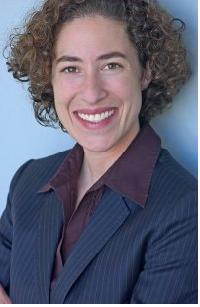
Laura Spanjian, a member of the Democratic County Central Committee and candidate for supervisor in District 8, is leaving town for a new job in Houston. That means she’s out of the hotly contested race to replace Sup. Bevan Dufty in the Castro.


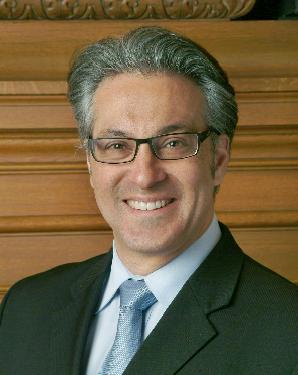
Spanjian was one of three leading candidates, and her withdrawal means that Rafael Mandelman and Scott Wiener are going to be slugging it out for the job. Rebecca Prozan, who also has Alice support, is also in the race, but I don’t see her coming in first.


In a press release sent out this morning, Spanjian said she’d taken a job as sustainability director for the city of Houston. “I am overjoyed to have the opportunity to work directly with Mayor Annise Parker and her staff and contribute to a cleaner environment which is, of course, not just a local issue,” Spanjian’s statement read.


Spanjian currently works for the San Francisco Public Utilities Commission, and will leave that job in April to move to Houston.


Before we get into the political calculus, let me stop for a moment and congratulate Laura, who’s a good person and will do a great job in Houston (although, Jesus — she’s going to have to live in Houston.)


Now then: With Spanjian out of the race, I think Mandelman is on track to come in first. That doesn’t mean he’s going to win an election decided by ranked-choice voting, but I think he comes in first.


“Clearly it’s a win for Rafael,” Jim Stearns, a political consultant who was working for Spanjian, told me today. “Laura was going to go after the more nonideological folks in the district, but she was also going to make a push with the progressives. And now Rafael has the solid progressive base in that district to himself.”


That base, though, isn’t enough alone to get Mandelman elected. It’s going to come down to the second and third votes. And Wiener and Prozan start off competing for a lot of the same voters, but in the end, Mandelman is going to have to get enough of the more centrist folks to at least put him second to finish in the money.


Mark Growden hits with a “Judas” kiss

0

It’s been eight years since Mark Growden, local bad boy of the accordion (and the bicycle handlebars), last recorded a studio album, and the weathering of not a few storms layers his lyrics with a weight typically reserved for bellowers of dust-bowl ballads and feverish Appalachia-born hymns. But though Growden — who’ll be performing Wed/11-Sun/14 at the Porto Franco Art Parlor — captures the sorrow and sincerity of a high lonesome crooner, his unique instrumental blend of Dixieland, Frontierland, and gypsy caravan band inhabits a genre all its own, especially on the new Saint Judas (Porto Franco).

Part chamber music, part High Noon, the atmospheric moan of songs such as “Coyote” and the first half of “The Gates/Take me to the Water,” tug low in the gut, while a touch of bitterly rollicking bar band via cabaret lane creeps into tunes such as the title track, “Take me to the Water,” and “Been in the Storm so Long”. Perhaps destined to be remembered as Growden’s finest drinking song, “Saint Judas” in particular distills the dark joviality of the sort of shambolic dive bar frequented by off-duty cab drivers, ex-junkies, and toothless pensioners, while toasting the “saint of the sinners” for taking the blame, “’cause somebody had to.”

But for an album so intimately acquainted with woe, the real connective thread throughout is not one of pain, but one of love. Hurt love hopeful love, dashed love, and eternal love, each facet of the ever-abiding emotion has its own moment to shine in the flickering glow of the Mark Growden ensemble’s warm strings, hot licks, and sizzling horns. There’s an ode to love the undertaker (“Undertaker”), love the temptress (“Delilah”), and love the hidden (“Inside Every Bird”). A melancholy, lounge-y cover of Leonard Cohen’s “I’m Your Man,” and the lonely dirge to a fallen companion “Coyote,” dissect heartbreak while the banjo-infused jam piece, “Everybody Holds a Piece of the Sun,” and the tenderly wistful rendition of “All the Pretty Little Horses,” remind of hope.

Growden’s music has never been the kind that compels the body without first engaging the mind, and Saint Judas is full of the kinds of compositional layers and technical surprises that keep music geeks happy while still providing enough oompah and oomph for the kinesthetic enjoyment of the masses. It’s a homegrown affair all the way through, released by Mission-based family label Porto Franco records, with cover art by local muralist Mona Caron, and championed by various luminaries of the San Francisco underground. And yet, meticulously designed and arranged, this album has obviously been crafted with a high trajectory in mind, and time will tell if this bid to escape the gilded cage of regionalism will take.

Mark Growden
Thu/11-Sun/14, 8pm, $20
Porto Franco Art Parlor
953 Valencia, SF.
www.portofrancoart.com
www.markgrowden.org

Mirkarimi’s a Democrat, Newsom’s a candidate

47

Supervisor Ross Mirkarimi has done what a lot of us have been expecting for months now: He left me a message tonight saying he’s changed his registration from Green to Democrat. I think that’s a recognition that the Green Party isn’t the functional political entity in San Francisco that it once could have been — and that the only way he’s going to get elected to higher office is as a Dem. He’s clearly looking at the mayor’s race, but I think he’s also looking at the state Legislature; if Mark Leno ran for mayor and won, and Assemblymember Tom Ammiano ran for Leno’s Senate seat and won, then the 13th Assembly District seat would be open. Besides, with term limits, Ammiano’s seat will open up pretty soon anyway. And it’s highly unlikely a Green could win that race right now.


So welcome to the party, Ross — now you get the fun of voting in the Democratic primaries, which are often the only real elections around here, and you can vote for Democratic County Central Committee (although I don’t think you can run; you have to be a Dem for 12 months to do that).


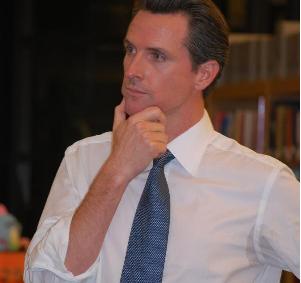
And Gavin Newsom pulled papers for. Lt. Gov.


It’s going to a wild year.


Newsom’s plan means service cuts

15

The San Francisco Controller’s Office says that Mayor Newsom’s plan to lay off 15,000 city employees then hire most of them back at a reduced workweek will save $110 million. The Examiner quotes the mayor:


“The 37½-hour idea was a way of equalizing,” Newsom said in an interview Tuesday. “I would have to go to every single labor union, open contracts that are closed and engage with those open contracts in collective bargaining for each and every local.
“Every labor union is in this together. We aren’t going to pick and choose. That being said, they are coming back Thursday with a set of alternatives, and I will keep an open mind.”


Actually, it’s not exactly equalizing — no police officers or firefighters will get what amounts to 6.25 percent pay cuts. But here’s the more important issue:


The mayor — and, to a great extent, the newspapers — present this as a simple way of saving money; sure, the workers take a little hit in their pay, but jobs are preserved. What nobody’s saying is that this will amount to more very significant service cuts.


Take 15,000 employees and cut 2.5 hours from each of their workweeks. That’s 37,500 hours of work a week, or the equivalent of 937 full-time jobs. So one of two things are going to happen: Either city employees are going to be working 40 hours for 37.5 hours pay — that is, taking a direct pay cut, which is what I think Newsom really wants — or the city’s going to lose the equivalent of 937 workers.


If you assume that it’s unfair to ask people to work 40 hours for 37.5 hours pay (and if you assume, as I do, that the unions won’t stand for that), we’re going to be talking about service cuts — work that doesn’t get done. And where will those cuts happen? Guess what — it’s the usual places.


Public health takes the biggest hit, with $35.5 million in “savings” (actually, cuts) over the next 14 months. Human Services gets $10 million cut, and Muni about $8 million.


That means longer lines and sicker people at SF General, and more broken buses with no mechanics to fix them, which means slower Muni service … you get the picture.


I’m not saying that we don’t need cuts, and you could argue that it’s more fair to cut everyone’s pay a little than to eliminate 937 jobs altogether. But let’s be honest about this — it’s not just “salary savings.” It’s service cuts. On top of last year’s service cuts, on top of the previous year’s service cuts … and it’s being done without any real overall plan for what services we need to provide and what takes priority.


And of course, it’s being done with no discussion at all of raising new revenue.  

SF Weekly owes us half its ad revenue

6


The San Francisco Superior Court ruled March 9th that SF Weekly must begin making payments on the Bay Guardian judgment by turning over half of the revenues it receives from advertising sales.


Commissioner Everett A. Hewlett, Jr., entered an Assignment Order that requires the SF Weekly and all of its advertisers to immediately begin remitting advertising revenues to the Bay Guardian. The Assignment Order also requires SF Weekly’s credit card processing company to remit 100% of the credit card payments directly to Bay Guardian rather than to SF Weekly.


The Assignment Order is effective immediately. Additionally, SF Weekly has until Wednesday to turn over to the Bay Guardian a list of all its advertisers and the amounts that they currently owe to SF Weekly.


At a hearing on February 11, attorneys for SF Weekly opposed the assignment by arguing that if the court were to enter the Bay Guardian’s proposed Assignment Order, it might cause the Bank of Montreal to declare a default on a $80 million loan balance that SF Weekly and its parent company have guaranteed. Bank of Montreal is the primary lender on a $120 million credit line available to the Village Voice chain. SF Weekly has repeatedly attempted to use the Bank of Montreal loan as a shield to defeat Bay Guardian, however, the Court has repeatedly rejected that argument.


“We consider this to be a very significant step towards the collection of our judgment,” said the Bay Guardian’s Bruce Brugmann. “The Village Voice folks first claimed that we would never collect anything, then they claimed that we would never collect more than a few thousand dollars, but the amount that we will now be collecting is certainly very significant.”


Since the Village Voice chain has refused to post an appellate bond which would guarantee payment if the judgment is upheld on appeal, the Bay Guardian has continued to actively pursue the collection of the amount due as permitted by law where no bond has been posted.  Extraordinary attempts by the Village Voice chain to avoid the judgment, including filing a  lawsuit in Delaware that sought to stop all California collection proceedings, have  been unsuccessful in blocking the Bay Guardian’s collection efforts.


In recent weeks, the Bay Guardian has succeeded in collection efforts that involved auctioning off two of the SF Weekly’s vans, seizing monthly income that the SF Weekly was receiving from its subtenants, and placing a lien on the approximately 14 newspapers owned by New Times Media LLC nationwide.  Additional collection proceedings will be heard by various courts during the next couple of months unless the judgment of more than $20 million is paid.


Hump Day headliner: Six reasons to revisit Thee Oh Sees

0

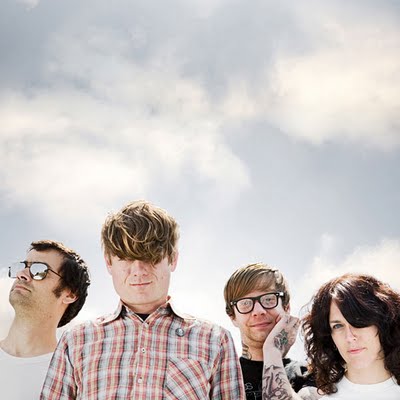
So maybe you’ve seen them before and maybe you haven’t. Thee Oh Sees — performing at El Rio tonight (Wed/10) with Ty Segall, The Fresh & Onlys, and The Baths — are no doubt a San Francisco garage-rock, lo-fi staple that demand you re-sample, swish, and spit for a full taste.

The sound is vintage rock and roll, psychedelic, and ratty. If you’re contemplating staying home on Wednesday night, find someone to give you a swift kiss in the ass and aim for El Rio. Did you really just ask why?

1.    Vocalist John Dwyer’s semi-psychotic lurching and mic swallowing always entertains.
2.    Hot rock chicks with sweat on their brow.
3.    Similar to an ideal one-night stand: Rough. Loud. Vicious. Dirty.
4.    There’s a chance Dwyer could bust out a flute.
5.    You’ll have a legit excuse to skip yoga (or work) in the morning.
6.    Cheap whisky and cheaper beer taste so much better mid-week.

Thee Oh Sees w/The Fresh & Onlys, Ty Segall, The Baths
Wed/10, 8pm, $7
El Rio
3158 Mission Street, SF
www.elriosf.com

Place of refuge?

0

LIT If you’ve been tracking the battle over San Francisco’s sanctuary ordinance, or you’re simply interested in the fight for immigration reform at the federal level, then check out Just Like Us: The True Story of Four Mexican Girls Coming of Age in America (Scribner, 400 pages, $27.99). Written by Helen Thorp, a journalist married to Denver mayor and Colorado gubernatorial candidate John Hickenlooper, Just Like Us is the true story of four young girls whom Thorp tracked for five years, starting with their senior year in high school.

“All had at least one parent who entered the country from Mexico without the right documentation,” Thorp says over the phone. “One was born here; one had a green card; and two didn’t have papers, so they were split down the middle on their legal status — through no fault of their own — but because of a situation they inherited.” This split led to differing experiences as all four girls came of age in the United States, even though all excelled in public high school.

“Two of them didn’t have the same opportunities, privileges, or even ways to pay for college as the two with papers had,” Thorp explains, noting that she changed the names of all four students to protect their identities. The main narrative of Thorp’s book sticks closely to the experiences of these four exemplary girls — including the political firestorm that broke out in Denver (and spread statewide) after an undocumented Denver resident committed a violent crime.

The echoes for San Francisco are obvious. The slaying in 2008 of three members of the Bologna family by the alleged killer Edwin Ramos, an immigrant who repeatedly passed through the city’s justice system as a juvenile, increased the heat in a political firestorm that had been crackling since the city passed its City of Refuge ordinance in 1989 and burst into flames in December 2007. That was when federal agents intercepted San Francisco probation officers at a Houston airport as they tried to repatriate Honduran teenagers by flying them home instead of reporting them for formal federal deportation.

In the Denver-based story Thorp recounts in Just Like Us, a young man who never had much schooling and was in Colorado without the necessary paperwork shot two police officers at a party, killing one. To add to the intrigue, the man was employed as a dishwasher at a restaurant owned in part by Thorp’s husband.

“It certainly was a heinous crime, since this young man shot two police officers in the back,” Thorp recalls. “Even the Mexican immigrant community was horrified, and no one rallied to his side. He was disrupting a baptismal party for a Mexican family in a popular social hall. He destroyed the celebration and he had a young daughter, who he essentially ended up abandoning, when he went to jail. He had lived in Los Angeles — that’s where he purchased the gun — and may have had gang ties. That, at least, was what was alleged at his sentencing. He shot the police officers because he felt one of them had insulted him and allegedly had mishandled him. His pride was wounded, but his response was so aggravated, there was no justification for it.”

As a result of this tragedy, which touched one of the high school students she was tracking, Thorp ended up becoming close to the widow of the police officer. “His family had an immigrant background, and he grew up in a Spanish-speaking family — though that was not reported in the media — and his widow’s mother was an immigrant from England who kept her green card and never became a citizen,” Thorp continues. “So the widow ended up having an incredibly nuanced point of view and would comment on what happened to her family with more grace and generosity than you would ever expect a human being to muster in those circumstances.”

Thorp feels that heated debates between advocates on opposing sides of the immigration equation is a result of what she calls “a collision of different beliefs.”

“We believe strongly that you are innocent until proven guilty, and we believe in the United States as a nation founded by immigrants. But we also believe in the value of law and order, so we don’t have a favorable view of illegal immigrants, and definitely not of illegal immigrants who commit crimes,” Thorp observes. She also noted that people tend to view juvenile immigrants in a kinder light: “They are morally in a different category than people who made the decision to come here without documents.”

But Thorp suggests that tackling immigration locally may be a losing proposition. “I understand why people want to tackle the subject at a local level since the federal government continues not to resolve the issue,” she says. “But you run into the fact that, peculiarly, this issue needs a federal solution even though we feel the impacts at the local level.” She believes the Obama administration needs to create reform that clarifies whether the feds are offering people a path to citizenship and that involves penalties for those who knowingly broke the law when they came here without papers,

“I understand that San Francisco is on the cutting edge of many things, but I can’t imagine that my husband, as mayor, would adopt a sanctuary policy in Denver,” she says. “And that’s because the concept of a sanctuary city in Colorado is only used by social conservatives with derision. The way ‘sanctuary city’ is used here signals a flagrant disrespect for law and order.”

That said, Thorp notes that the question of whether local police should become an arm of U.S. Immigration and Customs Enforcement (ICE) and an enforcer of federal immigration laws has been debated, and that people generally agree that this is not the job of the local police. “Local police department budgets are exhausted simply by doing the other tasks we’ve given them. If you add to that locking up nonviolent offenders [accused of being here illegally], it would break the bank.”

Snapshots

0

City of Life and Death (Lu Chuan, China, 2009) There have been a number of recent works about the "rape of Nanking," but perhaps none tackles the brutal nature of Nanjing’s fall with as much beauty as City of Life and Death. Shot in striking black and white, the film depicts the invasion of China’s capital by Japanese forces from a number of points of view, including that of a Japanese soldier. It can be difficult at times to become emotionally attached to characters within such a restless narrative, but the structure goes a long way toward keeping the proceedings balanced. The stunningly elaborate sets and cinematography alone are worth the price of admission, and it’s amazing that such detail was achieved with a budge of less than $12 million. But it is the unflinching catalog of the some 300,000 murders and rapes that took place between 1937 and 1938 in Nanjing that will remain with you long after watching. (Peter Galvin) Fri/12, 6:30 p.m., Sundance Kabuki; Sat/13, 8 p.m., PFA.

The Forbidden Door (Joko Anwar, Indonesia, 2009) This year’s midnight screening at SFIAAFF is The Forbidden Door, a surreal genre throwback from Indonesia. It’s hard to describe exactly what this film is about beyond basic character descriptions — it concerns Gambir, a sculptor of pregnant female figures and doormat for his friends and family. Less clear are matters like why Gambir inserts aborted babies into his sculptures, or the significance of his wife’s secret room in the basement. As inorganic as some of the plot points feel initially, the tangential nature of the film is leading somewhere. Joko Anwar has succeeded in shaking the loose and shaggy nature that plagued his 2007 breakthrough Dead Time, and The Forbidden Door is a sturdy showcase for the director’s ambition. His keen handle on the film’s eerie Jakartan atmosphere and his follow-though in the riveting, bloody climax should be enough to secure The Forbidden Door a place in cult cinema. Still, it’s ultimately apparent that the film’s standout moments are a sign that Anwar’s best work is yet to come. (Galvin) Fri/12, 11:59 p.m., Clay; March 19, 9:10 p.m., PFA; March 21, 7 p.m., Camera 12.

Aoki (Mike Cheng and Ben Wang, USA, 2009) This stirring, dynamic portrait of Black Panther Party founding member Richard Aoki makes use not only of historical footage from his rabble-rousing days, but also of blunt and hilarious speeches and interviews conducted during the last five years of his life (he died at last year at age 70). After being held in an internment camp during World War II, Aoki’s family returned to the Bay Area; soon, as he recalls, the teenage Aoki "got the reputation as the baddest Oriental to come out of West Oakland." He enlisted in the Army at 17, but became disenchanted with the military due to the Vietnam War. He was already well on his way toward becoming a radical when he befriended Huey Newton and Bobby Seale at Merritt College; post-Panthers, he remained an activist and charismatic community leader. Directors Mike Cheng and Ben Wang do an admirable job condensing such a full life into 90 educational, entertaining, and enlightening minutes. (Cheryl Eddy) Sat/13, 3:30 p.m., Viz; March 17, 9:30 p.m., Sundance Kabuki; March 20, 3 p.m., Camera 12.

A Moment in Time (Ruby Yang, USA, 2009) The decline of the filmgoing experience is one of the more depressing cinematic developments of the past decade. There was a time when going to the movies was a momentous event — and it is this era that A Moment in Time captures, from the unique perspective of the residents of San Francisco’s Chinatown. Accompanied by great period footage and rare film clips, the doc features interviews with a number of local figures who were raised in a Chinatown that at one time had as many as five movie theaters. What began as a source of pride in the 1930s soon proved to have far-reaching effects in shaping the identities of those who grew up in the neighborhood. It’s appropriate that A Moment in Time (directed by Ruby Yang, who won an Oscar for her 2006 short doc, The Blood of Yingzhou District) is showing at a festival, perhaps the last of the true film-going experiences. (Galvin) Sat/13, 7 p.m., Sundance Kabuki; Tues/16, 5 p.m., Sundance Kabuki.

The Oak Park Story (Valerie Soe, USA, 2010) The Oak Park Story is a nice piece of local interest, a document of the struggle by an Oakland apartment community to improve their living conditions. As a piece of film, Valerie Soe’s short film is a little rough around the edges, but it feels like such a deeply personal undertaking that it’s easy to get caught up in the lives of its deeply-bonded residents. At a scant 22 minutes, The Oak Park Story is the perfect length, and the gamut of emotions the filmmakers are able elicit in such a short amount of time is impressive. But should you find yourself interested in hearing more, just ask, since director Soe is expected to appear in person. The film screens with the feature-length Manilatown is in the Heart: Time Travels With Al Robles. (Galvin) Sun/14, 2 p.m., Sundance Kabuki; Mon/15, 7 p.m., Sundance Kabuki.
Lessons of the Blood (James T. Hong and Yin-Ju Chen, USA, 2010) The latest experimental work from sometimes San Francisco resident James T. Hong is his first feature-length documentary. It’s also his most accessible film to date, which is not to say that Hong’s unconventional style, bold opinions, and fascination with controversial subject matter have been dulled in the slightest. Codirected by Hong’s frequent collaborator (and wife) Yin-Ju Chen, Lessons of the Blood uses archival clips, old educational films, current interviews, and not a small amount of hidden-camera footage to explore the topic of revisionist history, specifically as it relates to Japanese cruelty in China circa World War II. Stark, artful visuals — plus a grim travelogue’s worth of shots taken at significant sites, including Japan’s Yasukuni Shrine, the northeastern Chinese city of Harbin (once occupied by the Japanese), and the Nanjing Massacre Memorial — contrast with a curious, furious tone. Lessons‘ lessons are harrowing, and unforgettable. (Eddy) Sun/14, 3 p.m., PFA; Tues/16, 7 p.m., Sundance Kabuki. *

The 28th San Francisco International Asian American Film Festival runs March 11–21 at the Castro, 429 Castro, SF; Sundance Kabuki, 1881 Post, SF; Viz Cinema, 1746 Post, SF; Clay, 2261 Fillmore, SF; Pacific Film Archive, 2575 Bancroft, Berk.; and Camera 12 Cinemas, 201 South Second St., San Jose. Tickets (most shows $12) available at www.asianamericanmedia.org.

Ghost ship

0

arts@sfbg.com

SF INTERNATIONAL ASIAN AMERICAN FILM FESTIVAL All that is solid melts not into air, but is milled into rebar in Jason Byrne’s mesmerizing, nearly hour-long short film, Scrap Vessel. The centerpiece of the San Francisco International Asian American Film Festival’s experimental shorts program, “Memory Vessels and Phantom Traces,” Scrap Vessel is Byrne’s documentation of the final voyage of the Hari Funafuti — formerly a Chinese coal freighter called Hupohai that was built in Norway in 1973 to make hauls around northern Europe — as it sails from Singapore to Bangladesh to be gutted and dismantled for scrap.

Byrne, along with fellow cameraman Theron Patterson, explore the soon-to-be-ghost ship from bottom to top. Their 16mm camera frequently transforms the mechanically mundane — pounding pistons, a flickering fluorescent light, the pleasant geometry of the ship’s gigantic, mastaba-like hold covers — into something formally beautiful, thanks in part to a palette of smudged greens, inky blues, and the occasional brilliant flash of chartreuse. However, their investigation is not solely aesthetic.

For, as often happens in suspense and horror films set at sea, the filmmakers, along with the Bangladeshi crew, discover that they are not entirely alone (one current crew member worries that the previous crew might have sabotaged the ship, resenting their vessel’s forced retirement to the ironworks). No such malfeasance manifests itself, but material traces of the ship’s Communist past-life keep surfacing. A bunch of 35mm photos of the captain and his men visiting a Buddhist shrine are discovered in the captain’s quarters, along with a cassette of easy listening tunes sung in Mandarin. The most dramatic find is 15 cases of 16mm Chinese films that were sitting in a still-locked room labeled “Rec/Film.”

Byrne touchingly weaves these remnants into the fabric of his film, showing us a slideshow of the vacation snaps, using the cassette to augment Albert Ortega’s original score of spooky ambient electronica, and suspending his narrative to interject a montage of the leftover mainland films (including scenes from what looks to be a campy, propagandistic romantic drama). It’s not much. But it’s enough of a hook to cause one to feel something close to sadness when the Hari Funafuti finally reaches its terminus and we witness its gradual destruction.

Byrne pans over several docked ships, rusting and already in the process of being dismantled for scrap, that resemble nothing so much as the rotting carcasses of beached whales. Even before the Hari Funafuti has docked, the scent of fresh blood seems to be on the water: pirates make a failed attempt to remove the propeller for its bronze and Bangladeshi naval officers come aboard to remove reusable communication equipment for their own fleet.

It might seem odd to speak of a commercial freighter in such elegiac terms. Better that it be melted down into materials used to build something new, rather than simply be left to rot on the sea floor or in a junkyard somewhere. And yet, if the Hari Funafuti‘s journey from Norse factory to the Yangtze to a rolling mill in Chittagong is, to some degree, the story of the shifting geographic centers (from Europe to China to South Asia) of industrial manufacturing under globalization, is that not all the more reason to attempt to preserve the human elements of that story?

Scrap Vessel answers, however modestly, in the affirmative. Byrne’s film becomes the true scrap vessel of its title, ensuring that the memory of those who have called his subject home at some point over its 32 years will continue on long after any material traces of the vessel have disappeared — even if only within the span of an independently produced, experimental documentary.

“MEMORY VESSELS AND PHANTOM TRACES” SHORTS PROGRAM

Mon/15, 6:45 p.m., Sundance Kabuki

March 17, 4:45 p.m., Viz

Informing the public

1

news@sfbg.com

Information is power. But too often, those with political power guard public documents and information from the journalists, activists, lawyers, and others who seek it on the people’s behalf. So every year, we at the Guardian honor those who fight for a freer and more open society by highlighting the annual winners of the James Madison Freedom of Information Awards, which are given by the Northern California chapter of the Society of Professional Journalists.

This year’s winners are:

Beverly Kees Educator Award

Rachele Kanigel

Rachele Kanigel, an associate professor of journalism and advisor to Golden Gate Xpress publications at San Francisco State University, has been highly involved in student press rights work on a national level. She wrote The Student Newspaper Survival Guide (Blackwell Publishing, 2006), a book designed to empower budding campus reporters. A champion of the free speech rights of her students, Kanigel has gone to bat on several occasions on behalf of student journalists whose work was challenged by interests that didn’t believe students should be afforded the same protections as professional reporters. Kanigel sees part of her job as educating the world about the importance of student journalists and standing up for their rights. “A lot of people won’t talk to student journalists, but they’re doing some really important work,” she said. “A lot of what we have to do is to assure the student journalists and tell the world outside that these are journalists.” The educator award is named in honor of Beverly Kees, who was the SPJ NorCal chapter president at the time of her death in 2004.

Norwin S. Yoffie Career Achievement Award

Mark Fricker

Mary Fricker is the kind of investigative reporter many of us would like to be.

She started out in the 1980s investigating complaints of irregularities at her local savings and loan when she was reporting for the old Russian River News community paper. Her dogged research and hard-hitting stories produced the first major investigation into the toxic problems of financial deregulation in S&Ls. Her work won numerous awards, including the Gerald Loeb Award given out by UCLA and the prestigious George Polk Award, and ultimately led to the book, Inside Job: The Looting of America’s Savings and Loan. The book won Best Book of the Year award from the Investigative Reporters and Editors association.

Fricker did business reporting and major investigative work for 20 years with the Santa Rosa Press Democrat. She retired and joined the Chauncey Bailey Project as a volunteer investigative reporter, researcher, Web site maestro, and general good spirit. Her work included several key investigations that determined that the Oakland Police Department was virtually alone in not taping interviews with suspects in investigations. Her stories changed that practice. She is a most worthy recipient of the Norwin S.<0x2009>Yoffie award, which honors the memory of the former publisher of the Marin Independent Journal, a founder of the SPJ/FOI committee, and a splendid warrior in the cause of Freedom of Information.

Professional Journalist

G.W. Schulz

G.W. Schulz was busy when we got him on the phone. “I’m sending out about eight or nine new freedom of information requests a day,” he said. “I fired off a few to the governor of Texas this morning.”

The relentless reporter is working on the Center for Investigative Reporting’s program exposing homeland security spending. It hasn’t been easy. Since the federal government began making big grants to local agencies for supposed antiterrorism and civil emergency equipment and programs, following the money has required unusual persistence. Homeland Security officials don’t even know where their grants are going, so Schulz has been forced to dig deeper.

“I think this is the biggest open government campaign I’ll ever do in my career,” he said. “We’re juggling dozens of requests, state by state. And it’s breathtaking what some people will ignore in their own public records laws.”

He’s found widespread abuse. “These agencies are getting all this expensive equipment and they don’t even maintain it or train their staff how to use it,” he said. CIR is not only doing its own stories, it’s working with local papers that don’t have the resources to do this kind of work. “Lots of great stories in the pipeline,” he said before signing off to get back to the battle. “I’m really excited.”

Legal Counsel

Ann Brick/ACLU

On the heels of a now-infamous Supreme Court ruling on so-called First Amendment rights for corporate political speech, SPJ is honoring an individual who has made a career devoted to protecting real, individual free speech rights for almost 20 years. Ann Brick, staff attorney for the Northern California chapter of the American Civil Liberties Union, has litigated in defense of privacy rights, free speech, government accountability, and student rights in cases ranging from book burning to Internet speech to illegal government wiretapping. “I can’t tell you how much of an honor it is to have worked with the ACLU,” she says, adding, “I can’t think of another award I’d rather get than this one — an award from journalists.” But the public’s gratitude goes to Brick, whose years of service are a shining example of speaking truth to power.

Computer Assisted Reporting

Phillip Reese

Phillip Reese of The Sacramento Bee is being honored for his unrelenting pursuit of public records and for producing interactive databases. Reese was the architect of the Bee‘s data center, providing readers readily accessible information about legislative voting records, neighborhood election results, state employee salaries, and other important information. At one point, the city of Sacramento demanded several thousand dollars in exchange for employee salary data. Reese gathered the city’s IT workers and a city attorney for a meeting, where he argued that organizing records in an analyzable format would insure the system wasn’t being abused, so they chose to provide the records for free. The online databases provide public access to records that are often disorganized and cryptic. “Sometimes these databases go well with a story, and sometimes they can stand on the Internet alone. People can view them in a way that is important to themselves,” Reese said.

Public Official

Leland Yee

State Sen. Leland Yee (D-San Francisco) has been an open government advocate since his days on the San Francisco Board of Supervisors, and one of his favorite targets is the administration of the University of California. He has fought to protect UC students from administrators who want to curtail their free-speech right and to get documents from university officials.

In 2008, he authored and passed SB 1696, which blocked the university from hiding audit information behind a private contractor. UCSF was refusing to release the information in an audit the school paid a private contractor to conduct. “I read about this in the newspaper and I was just scratching my head. How can public officials do this stuff?” Yee said. He had to overcome resistance from university officials and public agencies arguing that the state shouldn’t be sticking its nose into their business. “But it’s public money, and they’re public entities, and the people have a right to know where that money is going.”

Computer Assisted Reporting

Thomas Peele and Daniel Willis

This duo with the Bay Area News Group, which includes 15 daily and 14 community newspapers around the Bay Area, performed monumental multitasking when they decided to crunch the salaries of more than 194,000 public employees from 97 government agencies into a database. Honored with the Computer Assisted Reporting Award, the duo provided the public with a database that translated a gargantuan amount of records into understandable information. They had to submit dozens of California Public Records Act requests to access the records of salaries that account for more than $1.8 billion in taxpayer money. “It is important that the public know how its money is spent. This data base, built rather painstakingly one public records act request at a time by Danny Willis and myself as a public service, goes a long way in helping people follow the money,” Peele said.

Nonprofit

Californians Aware: The Center for Public Forum Rights

California’s sunshine laws, including the Brown Act open meeting law and California Public Records Act, aren’t bad. Unfortunately, they are routinely flouted by public officials, often making it necessary to go to court to enforce them. That’s why we need groups like CalAware, and individuals like its president, Rick McKee, and its counsel, longtime media attorney Terry Francke. Last year, while defending an Orange County school board member’s free speech rights and trying to restore a censored public meeting transcript, CalAware not only found itself losing the case on an anti-SLAPP (strategic lawsuit against public participation) motion, but being ordered to pay more than $80,000 in school district legal fees. “It’s never been easy, but that was going to be the end of private enforcement of the Brown Act,” Francke said. Luckily, Sen. Leland Yee intervened with legislation that prevents awarding attorney fees in such sunshine cases, leaving CalAware bruised but unbowed. “We’ve become active in court like never before.”

News Media

SF Public Press/McSweeney’s

Last year, when author Dave Eggers and his McSweeney’s magazine staff decided to put out a single newspaper issue (because “it’s a form we love,” Eggers told us), they filled San Francisco Panorama with the unusual mix of writers, topics, and graphics one might expect from a literary enterprise. But they wanted a hard-hitting investigation on the cover, so they turned to the nonprofit SF Public Press and reporters Robert Porterfield and Patricia Decker. Together, they worked full-time for four months to gather information on cost overruns on the Bay Bridge rebuild, fighting for public records and information from obscure agencies and an intransigent CalTrans. “We’re still dealing with this. I’ve been trying to secure documents for a follow-up and I keep getting the runaround,” said Decker, a new journalist with a master’s degree in engineering, a nice complement to Porterfield, an award-winning old pro. “He’s a great mentor, just such a fount of knowledge.”

Professional Journalist

Sean Webby

San Jose Mercury News reporter Sean Webby won for a series spotlighting the San Jose Police Department’s use of force and how difficult it is for the public or the press to track.

The department and the San Jose City Council refused to release use-of-force reports, so Webby obtained them through public court files. He zeroed in on incidents that involved “resisting arrest” charges, and even uncovered a cell phone video in which officers Tasered and battered suspects who did not appear to be resisting.

Webby has won numerous awards in the past, but says he is particularly proud of this one. “Freedom of information is basically our mission statement, our bible, our motto,” he said. “We feel like the less resistance the average person has to getting information, the better the system works.”

Webby said that despite causing some tension between his paper and the San Jose Police Department, the project was well worth it. “We are never going to back off the hard questions. It’s our job as a watchdog organization.”

Public Service

Rita Williams

KTVU’s Rita Williams is being honored for her tireless efforts to establish a media room in the San Francisco Federal Building that provides broadcasters the same access to interviews as print reporters.

Television and radio equipment was banned from the federal pressroom following 9/11, but Williams solicited support from television stations, security agencies, the courts, and the National Bar Association. After a six-year push, they were able to restore access.

Williams and her supporters converted a storage unit in the federal building into a full-blown media center, which was well-used during the Proposition 8 trial. “I only did two days of the trials, but every time I walked into the room, I would just be swarmed with camera folks saying thank you, thank you, thank you,” she said. “I’m getting close to retirement and I was in the first wave of women in broadcasting, and I’m proud that almost 40 years later, I can leave this legacy.”

Citizen

Melissa Nix

With her Betty Page looks, dogged sense of justice, and journalistic training, Melissa Nix became a charismatic and relentless force in the quest to find out how her ex-boyfriend Hugues de la Plaza really died in 2007. Nix began her efforts after the San Francisco medical examiner declared it was unable to determine how de la Plaza died and the San Francisco Police Department seemed to be leaning toward categorizing the case as a suicide. Using personal knowledge of de la Plaza and experience as a reporter with The Sacramento Bee, Nix got the French police involved, who ruled the death a homicide, and unearthed the existence of an independent medical examiner report that concluded that de la Plaza was murdered.

Editorial/Commentary

Daniel Borenstein

Contra Costa Times reporter Daniel Borenstein wasn’t out to deprive public worker retirees of yachting, country club golf, and rum-y cocktails at tropical resorts. The columnist was only trying to figure out how, for example, the chief of the Moraga-Orinda Fire District turned a $185,000 salary into a $241,000 annual pension. Borenstein’s effort to unearth and make public, in easily readable spreadsheets, the records of all Contra Costa County public employee pensioners led the Contra Costa Times to a court victory stipulating just that: all records would be released promptly on request without allowing retirees time to go to court to block access. The effects have been noticeable: “I get scores of e-mails most weeks in reaction to the columns I’m writing on pensions, [and] public officials are much more sensitive to the issue,” Borenstein says. It is a precedent that has carried into the Modesto Bee‘s similar pension-disclosure efforts in Stanislaus County.

Student Name Withheld After a photojournalism student at San Francisco State University snapped photographs at the scene of a fatal shooting in Bayview-Hunters Point, police skipped the usual process of using a subpoena to seek evidence, and went straight into his home with a search warrant to seize this student’s work. But with the help of his attorney, the student quashed the warrant, arguing California’s shield law prevents law enforcement from compelling journalists to disclose unpublished information. He won, and the case served to demonstrate that the shield law should apply to nontraditional journalists.

The student is being recognized because he resisted the warrant rather than caving into the demands of law enforcement. Invoking the shield law in such cases prevents reporters from being perceived as extensions of law enforcement by the communities they report on, enabling a free exchange of information. The student remained anonymous in the aftermath of the shooting because he feared for his life. Based on his ongoing concerns, NorCal SPJ and the Guardian have agreed to honor his wish to have his name withheld.

SOC it to ’em

1

sarah@sfbg.com

On the same evening the Police Commission shot down Chief George Gascón’s plan to arm his officers with Tasers, a Sunshine Ordinance Task Force (SOTF) committee reviewed a proposal to give itself a set of enforcement tools that, if approved, could help nail governmental agencies and officials that violate public information laws.

These proposals include the right to appoint outside counsel to enforce serious, willful violations of the voter-approved Sunshine Ordinance against respondents who fail to comply with SOTF orders, thereby allowing enforcement actions to be brought in civil court.

Despite the potential significance of these amendments to the cause of open government and the history of SOTF findings being blatantly ignored by Mayor Gavin Newsom and other officials who have refused to release public documents, only a small posse of regular sunshine advocates attended the March 4 meeting of SOTF’s Compliance and Amendments Committee.

This lack of public interest underscores how the inability to enforce its findings has undercut its power, and why its members believe the legal equivalent of a stun gun is needed if people are going to start taking the work of this Board of Supervisors appointed body seriously.

Erica Craven-Green, an attorney who has served on SOTF for six years, has seen a number of departments not take the body’s proceedings seriously.

“There are very few penalties for individuals and departments that choose not to comply with the ordinance,” Craven-Green observed. “We’ve had numerous instances where representatives from city departments and the offices of elected officials failed to show up at our hearings and explain how they did or did not comply with the ordinance.”

Angela Chan, staff attorney of the Asian Law Caucus, filed a complaint with SOTF in October 2009 after the Mayor’s Office refused to explain why it gave a confidential City Attorney’s Office memo about sanctuary city reforms to the San Francisco Chronicle but not her organization for two full weeks, despite her requests.

At a December 2009 SOTF hearing, Brian Purchia of the Mayor’s Office of Communications handed SOTF a note that read, “I had to leave to respond to the press,” shortly before Chan’s complaint was heard. As a result, the task force decided to continue the matter to January so someone from the Mayor’s Office could attend. Yet despite repeated requests, no mayoral representatives attended that or subsequent SOTF’s meetings about Chan’s complaint.

“It is deeply disappointing that the Mayor’s Office has not shown any respect for the Sunshine Ordinance Task Force, which works hard to try to improve government transparency and accountability for the residents of San Francisco,” Chan told the Guardian. “The mayor appears to be acting like a monarch rather than a democratically-elected official who is accountable and responsive to the people. Reform is needed to ensure all city officials comply with our Sunshine Ordinance and heed [SOTF’s] orders.”

And it’s not just members of the public who feel their time is being wasted. “I think it is very frustrating and, quite frankly, a waste, not only of the task force’s [time], but of city resources as well, to have a hearing on a matter that the city decides not to reply to and/or show up for,” said Craven-Green, who steps down from SOTF later this year.

SOTF is seeking to address this sense of powerlessness by renaming SOTF the Sunshine Ordinance Commission (SOC), giving it the ability to hire an attorney and propose fines, and requiring that departments post notices of sunshine violations on their Web sites. The amendments also expand the list of public officials required to keep working calendars and clarify access requirements for electronic records and systems.

Craven Green said changing the SOTF’s name is a “nonsubstantive” amendment, but that it “makes it sound more permanent.”

The key difference between SOTF and SOC is that, under the proposed amendments, SOC could, with a two-thirds vote, appoint outside counsel to enforce serious and willful violations of the ordinance by bringing action against them in civil court. Right now, only the Ethics Commission and District Attorney’s Office can enforce SOTF decisions, and neither has been willing to do so.

Retired attorney and sunshine advocate Allen Grossman recently won a $25,000 settlement to cover legal fees in a lawsuit he brought against the Ethics Commission and its executive director John St. Croix to force the city to provide him with previously withheld public records about why Ethics dismissed 14 sunshine cases SOFT had referred to it. The amendment would give SOC that same authority.

“Where we feel there hasn’t been sufficient action by the Ethics Commission or sufficient compliance on issues we think are very important for public access, we could instigate outside counsel to prosecute serious and willful violations,” Craven-Green said.

The amendments also lay out penalties for officials who willfully flout sunshine laws. Government officers and employees found to have committed official misconduct would be required to personally pay $500 to $5,000, while public agency violations would have that amount taken from their budgets.

SOC would recommend the level of these fines, and any fines that Ethics decided to impose would be placed in SOC’s litigation fund. “That should be enough for most departments to comply,” Craven-Green said.

Terry Francke, general counsel of Californians Aware, a Sacramento-based center for public forum rights, has been consulting with SOTF on the changes. He says the Achilles’ heel of the Sunshine Ordinance, which the board enacted in 1993 and voters amended in 1999 through Proposition G, has been what happens to a department or official who refuses to comply with what SOTF thinks is required.

Under the state’s Brown Act open meeting law and the California Public Records Act, correcting the unlawful withholding of public information requires a civil lawsuit. “You go into court, tell them this or that practice violates the Brown Act and ask the court to order a correction,” Francke said. “Or you go to court with a request for public records that you believe are being unlawfully withheld.”

But now SOTF is folding Francke’s recommendations to hire a litigator into the SOC amendment package, along with establishing a $50,000 annual litigation fund. The amendments would require voter approval and the willingness of four members of the Board of Supervisors to place them on the ballot.

Francke acknowledges that this litigation fund could sound odd, “but it’s a kick start that’s needed” to encourage compliance. “It’s not so much a net outflow of funds as a kind of transfer of funds from the operating fund of a particular agency that violated law to the litigation fund of the SO commission.”

Francke says Grossman’s lawsuit is a good example of a successful effort to take the city to court. “But the difference, under the proposed amendments, is that $25,000 payment would go into SOC’s litigation fund,” Francke said. “If the lawsuit by Mr. Grossman had been filed by SOC with its enforcement attorney, that would not have meant a net loss by the city, it would mean a net gain to the commission’s litigation fund.”

The problem now, Francke observes, is that Ethics dismisses most complaints on the grounds that it was not official misconduct or willful failure because employees or officials were acting on City Attorney’s Office advice.

“It’s less important that the occasional willful violation of the Sunshine laws gets punished personally than that the violation gets stopped,” Francke said. “And someone saying, ‘Harry/Judy, what you did there cost $25, 000’ is not a career morale builder.”

Craven-Green agrees that the problem to date has been that departments rely on the advice of the City Attorney’s Office, and SOTF often disagrees with its positions. “One of the reasons we referred these cases to Ethics was so it would take a neutral look,” she explained. “What’s been frustrating is that the Ethics Commission has not done that. It’s simply sided with the City Attorney’s Office.”

Last year, following a joint meeting between the Ethics Commission and SOFT to discuss difficulties those bodies have had with one another, Ethics’ St. Croix introduced changes in how the agency handles SOTF referrals, including defining when he may simply dismiss a referral and allow some documents from its investigations to be made public.

“We are really working to resolve these difficulties,” St. Croix told us. “The core of the conflict has been that when they refer complaints, we investigate. But from their point of view, they’ve done an investigation, and our response should be to assign penalties.”

Grossman is hopeful that SOTF’s proposed amendment package will resolve some problems. As he told us, “It substantially reduces Ethics’ ability to dismiss cases arbitrarily.”

Waste of paper

0

rebeccab@sfbg.com

Several weeks ago, Sup. Chris Daly e-mailed the San Francisco Ethics Commission to ask what seemed like a simple question. Daly is spearheading a June citywide ballot measure to ask voters to support the designation of the new Transbay Transit Center as the end point for the planned California High Speed Rail project, a response to the California High Speed Rail Authority’s move to explore alternative locations.

As an elected official, Daly knew there were certain individuals he might be barred from accepting money from for this effort. A San Francisco campaign finance law prohibits entities holding city contracts worth $50,000 or more from donating to political campaigns run by the elected officials who approve those contracts, a rule crafted to eliminate quid pro quo dealings that can corrupt the political process.

But when Daly tried to find out whose checks he shouldn’t be accepting, he didn’t receive a simple list of names in response. Instead he got a dense e-mail highlighting the complexity of this area of campaign finance law, offering no easy answers. For one, it wasn’t clear whether the law applied to his committee. Assuming it did, however, there was another hurdle.

“Determining which contributors are prohibited from contributing to your committee is a bit complex at the moment,” Oliver Luby, an Ethics Commission staffer, wrote in the e-mail, “because the contractor disclosures filed … are only in hard copy format.”

This vexing detail meant that obtaining a searchable list of banned contributors would require scanning hundreds of Ethics Commission forms filed on behalf of the Board of Supervisors, then manually entering potentially thousands of data rows into a spreadsheet, a project that could suck up significant time and resources.

The campaign contribution ban applies not only to major contractors, but the executive officers, subcontractors, and major shareholders of those contracting firms, so there could be a long list of individuals prohibited from making a political donation once a single contract is approved.

These restrictions theoretically create an excellent safeguard against corruption — but since it’s not recorded in electronic format, the filings amount to an almost useless sea of data. In fact, even the Ethics Commission, which is supposed to regulate violations of this ban and issue fines, isn’t able to routinely do so.

Luby pointed out the shortcoming of the system and an easy solution to Executive Director John St. Croix and Deputy Director Mabel Ng in an internal e-mail last December. “Private interests that can afford to manually create databases using the data … will have an advantage over other interests (perhaps even our own office) where the resources are not available to manually create such databases,” he wrote. “The obvious solution to this problem is e-filing.”

For example, if city agencies and political campaigns were required to submit their data in Excel spreadsheets or through an online system that automatically created spreadsheets, it would be easy to compare them to see who is violating the law.

When asked about this, St. Croix said the resources just don’t exist to upgrade the commission’s online capabilities. “We don’t have the resources to develop the software right now,” he told us. “So someday, yes. After we go through the next election season, and people see that they have a lot of difficulties in complying with this, then we may be able to build some support to make these changes.”

The e-mails were among hundreds of documents included in response to a Sunshine Ordinance public information request the Guardian submitted to the Ethics Commission in February. The assortment of documents relating to the contractor contribution ban revealed just how difficult it is for the average person to discern whether any entities striking deals with the city are at the same time trying to curry favor with the politicians who approve their contracts.

In 2006, a batch of reforms were approved to tighten restrictions on campaign contributions from major city contractors and require filing disclosure forms. Intended to point a floodlight on pay-to-play practices, the rules were championed by former Ethics Commissioner Joe Lynn, who died late last year.

Since it was established in 2006, however, the law has seen neither steady enforcement nor routine compliance from elected officials, documents show. The Mayor’s Office, for example, did not start filing the forms until April 2009, a month after critical media reports pointed out that few city departments were in compliance. While many more have started filing regularly, it appears that certain state agencies covered by the law — including the Treasure Island Development Authority (TIDA) — have not.

Nor does the Ethics Commission itself seem focused on ferreting out potential violators. “I am reluctant to ask my auditors or enforcement staff to review [contract disclosure] filings and compare them against campaign filings because the sheer amount of data will make the search wasteful and likely fruitless,” St. Croix wrote in a memo to his staff last October.

At the same time, attempts have been made to scale back the scope of the law, based on the argument that it is difficult to enforce. St. Croix’s memo recommended that the contribution ban not apply to contractors who deal with state agencies such as TIDA or the Redevelopment Agency, which are controlled by mayoral appointees and oversee development contracts worth millions of dollars. “Although city elective officers appoint some members of those bodies, city officials rarely have any involvement with those agencies’ contracts,” he argued.

Asked if these suggestions will be discussed formally anytime soon, St. Croix was doubtful. “Unfortunately, even though we think they’re necessary, it’s going to be a very difficult sell at the Board [of Supervisors],” he said. “Even though we think we’re fixing a problem, it looks like you’re rolling back reform, and that’s not popular.”

On the eve of an election season featuring hotly contested seats on the Board of Supervisors, the Democratic County Central Committee, and other high-profile local and statewide offices, the relatively arcane archive of the contractor disclosure forms stored away at the Ethics Commission might get more attention. Are major corporations that do business with the city scratching the backs of politicians who want to advance their political careers to keep the wheels greased for their own business ambitions?

Without a user-friendly, functional system for tracking contracts and comparing them against campaign contributions, it’s tough to say.

Our weekly picks

0

WEDNESDAY 10th

DANCE

Alvin Ailey American Dance Theater


Today, Alvin Ailey American Dance Theater is as much Judith Jamison’s company as it was Ailey’s. Having reluctantly taken on the company’s artistic directorship after Ailey’s death, Jamison has led the troupe for the last 20 years with remarkable perspicacity and skill. Jamison may not be a great choreographer, but she is a great company director and dance visionary. This anniversary season sports three Bay Area premieres. Borrowing the title from Jamison’s autobiography, Ronald K. Brown, something of a visionary himself, set his new Dancing Spirit in her honor. Company dancer-choreographer Matthew Rushing’s Uptown looks to the Harlem Renaissance for inspiration. Finally, Jamison contributes Among Us (Private Spaces: Public Places), a series of vignettes set to a jazz score by Eric Lewis. (Rita Felciano)

8 p.m. (through Sat/13), $36–$62

Zellerbach Hall

UC Berkeley campus, Berk.

(510) 642-9988

www.calperformances.org

THURSDAY 11th

VISUAL ART

Pepe Moreno


Exploring the life of one of the most iconic characters in the history of comic books, the new "Batman: Yesterday and Tomorrow" exhibit at the Cartoon Art Museum spotlights Bruce Wayne and his crime-fighting alter-ego, starting from his creation by artist Bob Kane and running through his many transformations over the years. Groundbreaking artist Pepe Moreno will be on hand tonight to discuss his revolutionary 1990 graphic novel Batman: Digital Justice, which was written and illustrated using computer hardware and software — one of the first such endeavors undertaken in the comics world. (Sean McCourt)

7 p.m., $5 donation requested

Cartoon Art Museum

655 Mission, SF

(415) 227-8666

www.cartoonart.org

EVENT

Thirsty Bear Beer Tasting


I’m hardly the first person to hop on the eat-everything-organic bandwagon. But when you live in San Francisco, it’s only a matter of time before you start shopping at farmers markets in hopes of finding the perfect toxin-free mango or avocado. Now you can add "organic beer connoisseur" to your list of titles by attending Thirsty Bear’s free organic beer tasting and workshop. You’ll learn all there is to know about sustainable brewing techniques, and get to sample some of the tastiest beers immediate area has to offer. (Elise-Marie Brown)

12-1:30 p.m., free

Green Zebra Environmental Action Center

50 Post, SF

(415) 346.2361

www.thegreenzebra.org

MUSIC

A Sunny Day in Glasgow


A Sunny Day in Glasgow wants you to rethink shoegaze. The Philadelphia trio layers their instruments in a manner that resembles a 21st-century Cocteau Twins, but their wall of sound is never as heavy, aiming instead for a sunny pop atmosphere you wouldn’t expect from the genre. Sometimes the accompanying vocals by Annie Fredrickson and Josh Meakim are maddeningly hard to make out beneath the waves of sound, but then they emerge clearly at just the right moment, like a breath of fresh air. Last year’s sophomore album Ashes Grammar (Mis Ojos Discos) was a sprawling mega-mix of moods, with songs bleeding into songs willy-nilly, and it’s safe to figure that their live show would reflect such a singular aural experience. If the critical reactions to Ashes Grammar are any indication, chances are good A Sunny Day in Glasgow won’t be performing in spaces as tiny as the Hemlock for long. (Peter Galvin)

With the Gold Medalists and Apopka Darkroom

9 p.m., $8

Hemlock Tavern

1131 Polk, SF

(415) 923-0923

www.hemlocktavern.com

EVENT/MUSIC

Free Party for Experience Hendrix Tour


Inspired by Jimi Hendrix’s significant contributions to the music world, his father formed Experience Hendrix, a series of tribute concerts. Debuting in 1995 at Seattle’s Bumbershoot Arts and Music Festival, the show has been on the road ever since. The tour comes to the Warfield tonight with a lineup that includes Band of Gypsys’ original bassist Billy Cox, along with Joe Satriani, Kenny Wayne Shephard, Eric Johnson, Susan Tedeschi, and Jonny Lang. Before the show, Hard Rock Café hosts a party with a raffle for tickets and transportation to the show. (Lilan Kane)

4 p.m., free

Hard Rock Café

Pier 39, SF

(415) 956-2013

www.hardrock.com/sanfrancisco

FRIDAY 12th

MUSIC

The Temper Trap


Although these guys were featured in (500) Days of Summer, don’t let that fool you into thinking they’re strictly light and whimsical. Just reminiscing on the first time I saw them gets me giddy inside. Drumsticks flew everywhere, and Dougy Madagi whaled uncontrollably in the mic as the crowd absorbed every drop of their soaring energy. Let’s just say these guys know how to put on a serious show. Now the Melbourne, Australia rockers are making their second trip here as headliners. (Brown)

9 p.m., $22.50

The Fillmore

1805 Geary, SF

(415) 346-6000

wwwvenation.com

COMEDY

Dave Attell


You wanna know why you’ve never seen television commercials for Jägermeister? Dave Attell knows a few good reasons. Attell is perhaps best known to mainstream audiences for his stint hosting Comedy Central’s Insomniac, a hilarious late-night, booze-fueled TV program where he explored what to do in various cities while on tour. This weekend the sometimes abrasive but always gut-bustingly funny comedian brings his high-proof standup to the city for the weekend, covering a variety of topics, including the aforementioned elixir and its propensity for instigating debauchery. (McCourt)

8 p.m. and 10:15 p.m. (also Sat/13) , $35.50

Cobb’s Comedy Club

915 Columbus, SF

(415) 928-4320

www.cobbscomedyclub.com

DANCE

ODC/Dance


How many modern dance companies do you know with two in-house choreographers? These ensembles usually swim an eclectic rep or feature the work of a single artist. ODC/Dance is very much the exception because of KT Nelson and Brenda Way, two dance-makers who couldn’t be more different in terms of style, artistic temperament, musicality, and sources of inspiration. Every season offers at least one new piece from each. This year, Way is working with composer/performer Pamela Z on Waving Not Drowning (A Guide to Elegance), a response to a 1963 manual on etiquette. Nelson turns to Mozart’s glorious Piano Concerto No. 20 in D minor for Labor of Love, in which she explores what she calls "committed adult love" — the stresses and joys experienced by couples in relationships. (Felciano)

March 12/ 7 p.m. (through March 28), $15–$45

Novellus Theater

Yerba Buena Center for the Arts

701 Mission, SF

(415) 978-ARTS

www.odcdance.org

SATURDAY 13th

COMEDY

Martin Lawrence


Damn, Gina! Even if he’s fallen off your radar after donning the "Eddie Murphy fat suit" in Big Momma’s House (2000), you have fond memories of Martin Lawrence from such early comedic ventures as the TV series Martin, the host of HBO’s Def Comedy Jam or the tabloid field-day "Running Down Ventura Boulevard Yelling at Cars." In 2010, Lawrence is taking a break from film and returning to his roots with a stand-up tour, where his manic delivery really has room to breathe. Though he often finds himself an easy target, there is no doubt Lawrence is a huge star and these tickets are going to sell out — so get to steppin’! (Galvin)

8 p.m. (also Sun/14), $42.75–$77.50

Paramount Theatre

2025 Broadway, Oakl.

(510) 465-6400

www.paramounttheatre.com

MUSIC

E.C. Scott


E.C. Scott works a crowd, inciting laughter and tears. Atlantic Records’ cofounder Jerry Wexler praised her as "one honest-to-God soul singer." She’s become a major staple in the blues circuit in the Bay Area and beyond. Scott grew up singing in St. John’s Missionary Baptist Church in Oakland and cites gospel as a major influence. She’s shared the stage with Lou Rawls, Ray Charles, Patti Labelle, and John Lee Hooker, and in 1994, signed a multirecord deal with Blind Pig Records that resulted in a Downbeat award and W.C. Handy nomination for Soul/Blues Female Artist of the Year. (Lilan Kane)

8 p.m., $20

401 Mason, SF.

(415) 292-2583

www.biscuitsandblues.com

MUSIC

Youth Brigade


Formed by brothers Adam, Mark, and Shawn Stern in 1980, Youth Brigade made its mark on the early California punk scene with empowering anthems like "Fight to Unite" and DIY action. The trio started the Better Youth Organization to promote shows and put out records for themselves and their friends’ bands. Thirty years later, the group still plays with raw, rebellious energy and spirit. The sprawling new box set Let Them Know: The Story of Youth Brigade and BYO Records chronicles their efforts. (McCourt)

9 p.m., $18

Slim’s

333 11th St., SF

(415) 255-0333

www.slims-sf.com

SUNDAY 14th

MUSIC

Scarlett Fever


Local fans of punk, rockabilly, hot rods, burlesque, and more join together today for a very special cause — the annual "Scarlett Fever" show, an all-day benefit for Scarlett James, teenage daughter of Rosa and Bob James, who suffers from Rett syndrome, a childhood neurodevelopmental disorder that leads to the loss of many motor skills. The annual event helps pay for her care and raises money for research into the disorder. Her father is a veteran musician (playing in Del Bombers) and each year has enlisted the help of some stellar talent. Today’s event includes Big Sandy and the Fly Rite Boys, Three Bad Jacks, Stigma 13, Ghost Town Hangmen, plus live burlesque — courtesy of Hubba Hubba Revue — and raffles, including one for a new custom motorcycle. (McCourt)

1 p.m., $15

DNA Lounge

375 11th St., SF

(415) 626-1409

www.dnalounge.com

TUESDAY 16th

FILM

Remembering Playland at the Beach


If you haven’t yet met Laffing Sal, it’s time for you to take a trip to (dreaded) Fisherman’s Wharf and the (free) Musée Mécanique. As every self-respecting San Franciscan knows, Sal once presided over the Funhouse at Playland at the Beach, an amusement park along Ocean Beach that had its heyday in the 1910s and ’20s (but didn’t close until 1972). The most famous film to feature Sal’s terrifying cackle is 1948’s The Lady From Shanghai — but no doubt you’ll get an earful in Tom Wyrsch’s brand-new doc, Remembering Playland at the Beach, which is stuffed with archival footage, photographs, and interviews. Appropriately, the film debuts at the Balboa, just blocks from the former site of Playland’s famous midway. (Cheryl Eddy)

7 and 9:15 p.m., $6.50–$9

Balboa Theatre

3630 Balboa, SF

(415) 221-3117

www.balboamovies.com

FILM

Palestine Cinema: A Shorts Program


The Red Vic has partnered with the Arab Film Festival for a tempting "second look" at a series of short works by a new and international generation of Palestinian filmmakers, originally screened as part of AFF 2009. Topping the lineup is Riyad Deis’ Swesh Swesh, set during the Arab Revolt in Palestine in 1936–39, as a farming family reluctantly harbors a revolutionary fugitive and finds its traditional beliefs challenged in the resulting exchange. The one-night-only program also includes Lesh Sabreen by Bay Area–trained Muayad Alayan (and shot by SF filmmaker Christian Bruno). It focuses on a young couple trapped, literally, between the wall of Israeli occupation and their families’ own conservative mores. (Robert Avila)

7:15 and 9:15 p.m., $6-9

Red Vic Movie House

1727 Haight, SF

(415) 668-3994

www.redvicmoviehouse.com

The Guardian listings deadline is two weeks prior to our Wednesday publication date. To submit an item for consideration, please include the title of the event, a brief description of the event, date and time, venue name, street address (listing cross streets only isn’t sufficient), city, telephone number readers can call for more information, telephone number for media, and admission costs. Send information to Listings, the Guardian Building, 135 Mississippi St., SF, CA 94107; fax to (415) 487-2506; or e-mail (paste press release into e-mail body — no text attachments, please) to listings@sfbg.com. We cannot guarantee the return of photos, but enclosing an SASE helps. Digital photos may be submitted in jpeg format; the image must be at least 240 dpi and four inches by six inches in size. We regret we cannot accept listings over the phone.

Film listings

0

Film listings are edited by Cheryl Eddy. Reviewers are Kimberly Chun, Michelle Devereaux, Max Goldberg, Dennis Harvey, Johnny Ray Huston, Erik Morse, Louis Peitzman, Lynn Rapoport, Ben Richardson, and Matt Sussman. The film intern is Peter Galvin. For rep house showtimes, see Rep Clock. For first-run showtimes, see Movie Guide.

SF INTERNATIONAL ASIAN AMERICAN FILM FESTIVAL

The 28th San Francisco International Asian American Film Festival runs March 11-21 at the Castro, 429 Castro, SF; Sundance Kabuki, 1881 Post, SF; Viz Cinema, 1746 Post, SF; Clay, 2261 Fillmore, SF; Pacific Film Archive, 2575 Bancroft, Berk; and Camera 12 Cinemas, 201 South Second St, San Jose. Tickets (most shows $12) available at www.asianamericanmedia.org. All times pm.

THURS/11

Castro Today’s Special 7.

FRI/12

Clay In the Manner of Cha Jung Hee 6:45. Raspberry Magic 9. The Forbidden Door 11:59.

Pacific Film Archive Independencia 7. The Message 8:40.

Sundance Kabuki Agrarian Utopia 3:45. Talentime 4:30. City of Life and Death 6:30. Fog 7. "Scene/Unseen" (shorts program) 9:15. "Sweet Dreams and Beautiful Nightmares" (shorts program) 9:30.

SAT/13

Clay China Sings! 1:30. "An Afternoon with Aasif Madvi" (on-stage interview) 4. Dear Lemon Lima 6:15. Prince of Tears 8:45.

Pacific Film Archive In the Matter of Cha Jung Hee 3:30. Like You Know it All 5:30. City of Life and Death 8.

Sundance Kabuki "3rd I South Asian International Shorts" (shorts program) noon. State of Aloha 1. A Village Called Versailles 2:15. Insiang 3:15. Ninoy Aquino and the Rise of People Power 4:30. God is D-ad 6. A Moment in Time 7. Agrarian Utopia 8:30. "Wandering, Wondering" (shorts program) 9:15.

Viz "Up Close and Personal with the Asian American Film Industry" (workshop) 1. Aoki 3:30. "Classic Filipino American Shorts" (shorts program) 6. Make Yourself at Home 8:30.

SUN/14

Castro The Housemaid noon. The Message 2:45. The People I’ve Slept With 6. Love Aaj Kal 9.

Clay What We Talk About When We… 1. Lt. Watanda and conversation with director Freida Lee Mock 3:15. Cooking with Stella 6. Like You Know It All 8:45.

Pacific Film Archive Lessons of the Blood 3. Dear Doctor 5:30. Prince of Darkness 8.

Sundance Kabuki "Blueprints for a Generation" (shorts program) 1. Manilatown is in the Heart 2. Wo Ai Ni Mommy 3:30. Independencia 4:30. Take Me Anywhere 6. Tehran Without Permission 6:30. Mundane History 8:15. Talentime 8:30.

Viz Hold the Sun 1:15. The Mountain Thief 6. Seven Intellectuals in a Bamboo Forest: Part 4 8:15.

MON/15

Sundance Kabuki Take Me Anywhere 4. Raspberry Magic 4:30. "Memory Vessels and Phantom Traces" (shorts program) 6:45. Manilatown is in the Heart 7. About Elly 9. Dear Lemon Lima 9:15.

Viz Fog 4:30. Hold the Sun 6:45. Seven Intellectuals in a Bamboo Forest: Part 5 9.

TUES/16

Pacific Film Archive Tehran Without Permission 7. The People I’ve Slept With 8:45.

Sundance Kabuki "Scene/Unseen" (shorts program) 4:15. A Moment in Time 5. State of Aloha 6:45. Lessons of the Blood 7. The Mountain Theif 9. Hana, Dul, Sed… 9:30.

Viz Make Yourself at Home 4:15. The Bonesetter’s Daughter (work-in-progress) 6:40. A Village Called Versailles 9.

OPENING

Ajami You may recognize the title of Yaron Shoni and Scandar Copti’s debut collaboration as one of five films nominated for a 2010 Academy Award in the Foreign Category. Though it didn’t bring home the grand prize, Ajami remains a complex and affecting story about desperation and its consequences in a religiously-mixed town in Israel. As we follow the lives of four of Ajami’s residents the narrative shifts perspective almost maddeningly, switching characters seemingly at the height of each story’s action. But once all of the stories fully intersect, the final product has the distinction of feeling both meticulously calculated and completely natural. I was most impressed to learn that Shani and Copti prepared their actors with improvised role-playing rather than scripts. By withholding what was going to happen in a scene before shooting, we are treated to looks of surprise and emotion on actor’s faces that never feel unnatural. Attaining such a level of realism may be Ajami‘s crowning achievement; it can’t have been easy to make a foreign world feel so familiar. (2:00) Embarcadero. (Galvin)

*The Art of the Steal How do you put a price on something that’s literally priceless? The Art of the Steal takes an absorbing look at the Barnes Collection, a privately-amassed array of Post-Impressionist paintings (including 181 Renoirs) worth billions — and the many people and corporate interests who schemed to control it. Founder Albert C. Barnes was an singular character who took pride in his outsider status; he housed his art in a specially-constructed gallery far from downtown Philadelphia’s museum scene, and he emphasized education and art appreciation first and foremost. But he had no heirs, and after his death in 1951, opportunists began circling his massive collection; the slippery political and legal dealings that have unfolded since then are nearly as jaw-dropping as Barnes’ prize paintings. Philly documentarian Don Argott has a doozy of a subject here, and his skillful, even suspenseful film does it justice. (1:41) Embarcadero, Shattuck, Smith Rafael. (Eddy)

*The Good Guy Romantic comedies often have very simple premises predicated on familiarity — you know why you go to see them, and they make sure to deliver. Much of the early goings of The Good Guy feel clichéd, but as it turns out, that’s kind of the point. Tommy (Scott Porter), a charming Wall Street investment banker, has been dating Beth (Alexis Bledel), and they’re taking things slow and sweet. When he loses one of his top sellers to another firm, Tommy decides to be a nice guy and give bumbling temp Daniel (Bryan Greenberg) a chance to shine; he also takes the time to teach him how to dress and pick up girls. But when Daniel decides to use his newfound skills on Beth &ldots; well, you see the triangle coming a mile away. How it all unfolds, however, proves far less obvious. In his writing-directing debut, Julio Depietro delivers what is very much a writer’s film, an experiment in form and expectation. Attempts to capture the culture of a Wall Street investment firm fare less well, but as a skewing of movie archetypes and presumptions, The Good Guy is surprisingly satisfying. It won’t change the rom-com game, but it’s something a little different in a genre that could use a kick in the pants. (1:31) Opera Plaza. (Galvin)

Green Zone Nope, it’s not a new Jason Bourne movie, but it is an action thriller directed by Paul Greengrass and starring Matt Damon. (1:55) California, Piedmont.

Our Family Wedding This multi-culti comedy boasts an all-star cast, including Forest Whitaker, America Ferrara, Regina King, Taye Diggs, and Carlos Mencia. (1:41) tk.

Remember Me Robert Pattinson attempts to prove his range beyond suckin’ blood. (2:08) tk.

She’s Out of My League Tale as old as time: beauty and the geek. (1:44) Oaks.

*Sweetgrass See "Wild Yonder." (1:41) Lumiere, Shattuck.

ONGOING

*"Academy Award-Nominated Short Films: Animated" Just because it’s animation doesn’t mean it’s just for kids. Like the live-action Oscar-nominated shorts, this year’s animated selections have got range, from the traditionally child-friendly to downright vulgar. Skewing heavily towards CG fare, the shorts vary from a Looney Tunes-style chase for an elderly woman’s soul (The Lady and the Reaper) to the Wallace and Gromit BBC special, A Matter of Loaf and Death. Most entertaining by far is Logorama, an action-packed tale set in a world populated by familiar trademarked logos. Any film that casts the Michelin man as a garbage-mouthed cop on the case of a renegade Ronald McDonald deserves to win all the awards in the universe. (1:35) Shattuck. (Galvin)

*"Academy Award-Nominated Short Films: Live Action" Aren’t you tired of wondering what all the fuss is about when the Academy awards their Oscar for Best Short? In an effort to give audiences a chance to play along, Shorts International is screening these less-seen works together. Though one or two of the five nominated films threaten to adhere to the Academy’s penchant for either heartbreaking or heartwarming, the majority are surprisingly oddball picks. Perhaps most odd of all is Denmark/U.S. submission The New Tenants. Feeling a tad forced but no less funny for it, Tenants draws on celebrities like Vincent D’Onofrio and comedian Kevin Corrigan to bring life to this surreal adaptation by Anders Thomas Jensen (2006’s After the Wedding). My pick would be Sweden’s gloriously goofy Instead of Abracadabra, which stars a stay-at-home slacker as he puts on a magic show for his father’s birthday. Obviously, some selections are going to be better than others, but hey, they’re shorts. If you don’t like one, just wait 10 minutes and you’ll find yourself somewhere completely different. (1:35) Shattuck. (Galvin)

Alice in Wonderland Tim Burton’s take on the classic children’s tale met my mediocre expectations exactly, given its months of pre-release hype (in the film world, fashion magazines, and even Sephora, for the love of brightly-colored eyeshadows). Most folks over a certain age will already know the story, and much of the dialogue, before the lights go down and the 3-D glasses go on; it’s up to Burton and his all-star cast (including numerous big-name actors providing voices for animated characters) to make the tale seem newly enthralling. The visuals are nearly as striking as the CG, with Helena Bonham Carter’s big-headed Red Queen a particularly marvelous human-computer creation. But Wonderland suffers from the style-over-substance dilemma that’s plagued Burton before; all that spooky-pretty whimsy can’t disguise the film’s fairly tepid script. Teenage Alice (Mia Wasikowska) displaying girl-power tendencies is a nice, if not surprising, touch, but Johnny Depp’s grating take on the Mad Hatter will please only those who were able to stomach his interpretation of Willy Wonka. (1:48) Castro, Empire, 1000 Van Ness, SF Center, Sundance Kabuki. (Eddy)

Avatar James Cameron’s Avatar takes place on planet Pandora, where human capitalists are prospecting for precious unobtainium, hampered only by the toxic atmosphere and a profusion of unfriendly wildlife, including the Na’vi, a nine-foot tall race of poorly disguised cliches. When Jake Sully (Sam Worthington), a paraplegic ex-marine, arrives on the planet, he is recruited into the "Avatar" program, which enables him to cybernetically link with a part-human, part-Na’vi body and go traipsing through Pandora’s psychedelic underbrush. Initially designed for botanical research, these avatars become the only means of diplomatic contact with the bright-blue natives, who live smack on top of all the bling. The special effects are revolutionary, but the story that ensues blends hollow "noble savage" dreck with events borrowed from Dances With Wolves (1990) and FernGully: The Last Rainforest (1992). When Sully falls in love with a Na’vi princess and undergoes a spirit journey so he can be inducted into the tribe and fight the evil miners, all I could think of was Kevin Bacon getting his belly sliced in The Air Up There (1994). (2:42) 1000 Van Ness, Sundance Kabuki. (Richardson)

The Blind Side When the New York Times Magazine published Michael Lewis’ article "The Ballad of Big Mike" — which he expanded into the 2006 book The Blind Side: Evolution of a Game — nobody could have predicated the cultural windfall it would spawn. Lewis told the incredible story of Michael Oher — a 6’4, 350-pound 16-year-old, who grew up functionally parentless, splitting time between friends’ couches and the streets of one of Memphis’ poorest neighborhoods. As a sophomore with a 0.4 GPA, Oher serendipitously hitched a ride with a friend’s father to a ritzy private school across town and embarked on an unbelievable journey that led him into a upper-class, white family; the Dean’s List at Ole Miss; and, finally, the NFL. The film itself effectively focuses on Oher’s indomitable spirit and big heart, and the fearless devotion of Leigh Anne Tuohy, the matriarch of the family who adopted him (masterfully played by Sandra Bullock). While the movie will delight and touch moviegoers, its greatest success is that it will likely spur its viewers on to read Lewis’ brilliant book. (2:06) Oaks. (Daniel Alvarez)

Brooklyn’s Finest "Really? I mean, really?" asked the moviegoer beside me as the final freeze-frame of Brooklyn’s Finest slapped our eyeballs. Yes, that’s the sound of letdown, despite the fact that Brooklyn’s Finest initially resembled a promisingly gritty juggling act in the mode of The Wire and Cop Land (1997), Taxi Driver (1976) and Training Day (2001). Bitter irony flows from the title — and from the lives, loves, bad habits, pressure-cooker stress, and unavoidable moral dilemmas of three would-be everyday cops, all occupying several different rungs on a food chain where right and wrong have an unpleasant way of switching sides. Eddie (Richard Gere) is the veteran officer just biding his time till he gets his pension, all while comforting himself with the meager sensuous attentions of hooker Chantel (Shannon Kane). Sal (Ethan Hawke) is the bad detective, stealing from the dealers to fund a dream home for his growing family with Angela (Lili Taylor). Tango (Don Cheadle) is the undercover detective who has cultivated friendships with dealers like Caz (Wesley Snipes) and sacrificed his marriage for a long-promised promotion from his lieutenant (Will Patton) and his superior (Ellen Barkin, in likely the most misogynist portrayal of a lady with a badge to date). You spend most of Brooklyn’s Finest waiting for these cops to collide in the most unfortunate, messiest way possible, but instead the denouement leaves will leave one wondering about unresolved threads and feeling vaguely unsatisfied. In any case, director Antoine Fuqua and company seem to pride themselves on their tough-minded if at times cartoonish take on law enforcement, with Hawke in particular turning in a memorably OTT and anguished performance. (2:13) 1000 Van Ness, Shattuck. (Chun)

Cop Out I think there was a plot to Cop Out — something involving a stolen baseball card and a drug ring and Jimmy (Bruce Willis) trying to pay for his daughter’s wedding. Frankly, it’s irrelevant. Kevin Smith’s take on the buddy cop genre, which partners Willis with Tracy Morgan, is more a string of dick jokes and toilet humor than anything else. Not that there’s anything wrong with that. Sometimes it’s nice to sit back and turn off your brain, as Morgan’s Paul describes his bowel movements or when hapless thief Dave (Seann William Scott) begins imitating everything our heroes say. At the same time, Cop Out is easily forgettable: Smith directed the film, but writing duties went to the Cullen Brothers of TV’s Las Vegas. All judgments about that series aside, the script lacks Smith’s trademark blend of heart and vulgarity. Even Mallrats (1995) had a beginning, a middle, and a satisfying end. Without Smith as auteur, Cop Out is worth a few laughs but destined for the bargain bin. (1:50) 1000 Van Ness. (Peitzman)

The Crazies Disease and anti-government paranoia dovetail in this competent yet overwhelmingly non-essential remake of one of George A. Romero’s second-tier spook shows. In a small Iowa hamlet overseen by a benevolent sheriff (Timothy Olyphant) and his pregnant wife (Radha Mitchell), who’s also the town doctor, a few odd incidents snowball into all-out chaos when a mysterious, unmarked plane crashes into the local water supply. Before long, the few residents who aren’t acting like homicidal maniacs are rounded up by an uber-aggressive military invasion. Though our heroes convey frantic panic as they try to figure out what the hell is going on, The Crazies never achieves full terror mode. It’s certainly watchable, and even enjoyable at times. But memorable? Not in the slightest. (1:41) 1000 Van Ness. (Eddy)

Crazy Heart "Oh, I love Jeff Bridges!" is the usual response when his name comes up every few years for Best Actor consideration, usually via some underdog movie no one saw, and the realization occurs that he’s never won an Oscar. The oversight is painful because it could be argued that no leading American actor has been more versatile, consistently good, and true to that elusive concept "artistic integrity" than Bridges over the last 40 years. It’s rumored Crazy Heart was slotted for cable or DVD premiere, then thrust into late-year theater release in hopes of attracting Best Actor momentum within a crowded field. Lucky for us, this performance shouldn’t be overlooked. Bridges plays "Bad" Blake, a veteran country star reduced to playing bars with local pickup bands. His slide from grace hasn’t been helped by lingering tastes for smoke and drink, let alone five defunct marriages. He meets Jean (Maggie Gyllenhaal), freelance journalist, fan, and single mother. They spark; though burnt by prior relationships, she’s reluctant to take seriously a famous drunk twice her age. Can Bad handle even this much responsibility? Meanwhile, he gets his "comeback" break in the semi-humiliating form of opening for Tommy Sweet (Colin Farrell) — a contemporary country superstar who was once Bad’s backup boy. Tommy offers a belated shot at commercial redemption; Jean offers redemption of the strictly personal kind. There’s nothing too surprising about the ways in which Crazy Heart both follows and finesses formula. You’ve seen this preordained road from wreckage to redemption before. But actor turned first-time director Scott Cooper’s screenplay honors the flies in the windshield inherited from Thomas Cobb’s novel — as does Bridges, needless to say. (1:51) Embarcadero, Empire, Piedmont, 1000 Van Ness, Shattuck, Sundance Kabuki. (Harvey)

*An Education The pursuit of knowledge — both carnal and cultural — are at the tender core of this end-of-innocence valentine by Danish filmmaker Lone Scherfig (who first made her well-tempered voice heard with her 2000 Dogme entry, Italian for Beginners), based on journalist Lynn Barber’s memoir. Screenwriter Nick Hornby breaks further with his Peter Pan protagonists with this adaptation: no man-boy mopers or misfits here. Rather, 16-year-old schoolgirl Jenny (Carey Mulligan) is a good girl and ace student. It’s 1961, and England is only starting to stir from its somber, all-too-sober post-war slumber. The carefully cloistered Jenny is on track for Oxford, though swinging London and its high-style freedoms beckon just around the corner. Ushering in those freedoms — a new, more class-free world disorder — is the charming David (Peter Sarsgaard), stopping to give Jenny and her cello a ride in the rain and soon proffering concerts and late-night suppers in the city. He’s a sweet-faced, feline outsider: cultured, Jewish, and given to playing fast and loose in the margins of society. David can see Jenny for the gem she is and appreciate her innocence with the knowing pleasure of a decadent playing all the angles. The stakes are believably high, thanks to An Education‘s careful attention to time and place and its gently glamored performances. Scherfig revels in the smart, easy-on-eye curb appeal of David and his friends while giving a nod to the college-educated empowerment Jenny risks by skipping class to jet to Paris. And Mulligan lends it all credence by letting all those seduced, abandoned, conflicted, rebellious feelings flicker unbridled across her face. (1:35) SF Center, Shattuck, Smith Rafael. (Chun)

Formosa Betrayed The turbulent modern history of Taiwan is certainly deserving of increased international attention, but writer-producer Will Tao’s strategy of structuring Formosa Betrayed as a political thriller is too often at odds with imparting facts and information. Set in the early 80s, the film thrusts viewers into an unraveling government conspiracy that has FBI agent Jake Kelly (James Van Der Beek) trailing the suspected murderers of a Chicago professor to Taipei. Initially, selling Dawson’s Creek alum Van Der Beek as an FBI agent seems a strange choice, but undoubtedly his name will fill seats, and Formosa Betrayed is shooting for maximum awareness. There are some scenes of real tension, but just when you are beginning to get wrapped up in the inherent drama of conspiracy and murder, the suspense is interrupted by a long-winded bout of soapboxing. Formosa Betrayed might enlighten some audiences about Taiwan’s controversial history, but it too often does so at the expense of its own watchability. You start to wonder why Tao didn’t just make a documentary. (1:43) SF Center. (Galvin)

*The Ghost Writer Roman Polanski’s never-ending legal woes have inspired endless debates on the interwebs and elsewhere; they also can’t help but add subtext to the 76-year-old’s new film, which is chock full o’ anti-American vibes anyway. It’s also a pretty nifty political thriller about a disgraced former British Prime Minister (Pierce Brosnan) who’s hanging out in his Martha’s Vineyard mansion with his whip-smart, bitter wife (Olivia Williams) and Joan Holloway-as-ice-queen assistant (Kim Cattrall), plus an eager young biographer (Ewan McGregor) recently hired to ghost-write his memoirs. But as the writer quickly discovers, the politician’s past contains the kinds of secrets that cause strange cars with tinted windows to appear in one’s rearview mirror when driving along deserted country roads. Polanski’s long been an expert when it comes to escalating tension onscreen; he’s also so good at adding offbeat moments that only seem tossed-off (as when the PM’s groundskeeper attempts to rake leaves amid relentless sea breezes) and making the utmost of his top-notch actors (Tom Wilkinson and Eli Wallach have small, memorable roles). Though I found The Ghost Writer‘s ZOMG! third-act revelation to be a bit corny, I still didn’t think it detracted from the finely crafted film that led up to it. (1:49) California, Embarcadero, Piedmont, Sundance Kabuki. (Eddy)

The Hurt Locker When the leader of a close-knit U.S. Army Explosive Ordnance Disposal squad is killed in action, his subordinates have barely recovered from the shock when they’re introduced to his replacement. In contrast to his predecessor, Sgt. James (Jeremy Renner) is no standard-procedure-following team player, but a cocky adrenaline junkie who puts himself and others at risk making gonzo gut-instinct decisions in the face of live bombs and insurgent gunfire. This is particularly galling to next-in-command Sanborn (Anthony Mackie). An apolitical war-in-Iraq movie that’s won considerable praise for accuracy so far from vets (scenarist Mark Boal was "embedded" with an EOD unit there for several 2004 weeks), Kathryn Bigelow’s film is arguably you-are-there purist to a fault. While we eventually get to know in the principals, The Hurt Locker is so dominated by its seven lengthy squad-mission setpieces that there’s almost no time or attention left for building character development or a narrative arc. The result is often viscerally intense, yet less impactful than it would have been if we were more emotionally invested. Assured as her technique remains, don’t expect familiar stylistic dazzle from action cult figure Bigelow (1987’s Near Dark, 1989’s Blue Steel, 1991’s Point Break) — this vidcam-era war movie very much hews to the favored current genre approach of pseudo-documentary grainy handheld shaky-cam imagery. (2:11) Opera Plaza, Shattuck. (Harvey)

*The Last Station Most of the buzz around The Last Station has focused on Helen Mirren, who takes the lead as the Countess Sofya, wife of Leo Tolstoy (Christopher Plummer). Mirren is indeed impressive — when is she not? — but there’s more to the film than Sofya’s Oscar-worthy outbursts. The Last Station follows Valentin Bulgakov (James McAvoy), hired as Tolstoy’s personal secretary at the end of the writer’s life. Valentin struggles to reconcile his faith in the anarchist Christian Tolstoyan movement with his sympathy for Sofya and his budding feelings for fellow Tolstoyan Masha (Kerry Condon). For the first hour, The Last Station is charming and very funny. Once Tolstoy and Sofya’s relationship reaches its most volatile, however, the tone shifts toward the serious — a trend that continues as Tolstoy falls ill. After all the lighthearted levity, it’s a bit jarring, but the solid script and accomplished cast pull The Last Station together. Paul Giamatti is especially good as Vladimir Chertkov, who battles against Sofya for control of Tolstoy’s will. You’ll never feel guiltier for putting off War and Peace. (1:52) Albany, Empire, Sundance Kabuki. (Peitzman)

*Leonard Cohen: Live at the Isle of Wight 1970 The dawn of the Me Decade saw the largest-ever music festival to that date —albeit one that was such a logistical, fiscal and hygenic disaster that it basically killed the development of similar events for years. This was the height of "music should be free" sentiments in the counterculture, with the result that many among the estimated six to eight hundred thousand attendees who overwhelmed this small U.K. island showed up without tickets, refused to pay, and protested in ways that included tearing down barrier walls and setting fires. It was a bummer, man. But after five days of starry acts often jeered by an antsy crowd — including everyone from Joni, Hendrix, Dylan, Sly Stone, the Who and the Doors to such odd bedfellows as Miles Davis, Tiny Tim, Voices of East Harlem, Supertramp, and Gilberto Gil — Canadian troubador Cohen appeared at 4 a.m. on a Monday to offer balm. Like director Murray Lerner’s 1995 Message to Love, about the festival as a whole, this footage has been shelved for decades, but it bounces right back from the dead — albeit soothingly. Cohen seems blissed out, pupils like black marbles, his between-song musings are as poetical as those fascinating lyrics, and his voice is suppler than the rasp it would soon become. Kris Kristofferson, Judy Collins, Joan Baez, and bandmate Bob Johnson offer reflections 40 years later. But the main attraction is obviously Cohen, who is magnetic even if an hour of (almost) nothing but ballads reveals how stylistically monotone his songwriting could be. (1:04) Roxie. (Harvey)

*The Most Dangerous Man in America: Daniel Ellsberg and the Pentagon Papers For many, Daniel Ellsberg is a hero — a savior of American First Amendment rights and one of the most outspoken opponents of the Vietnam war. But as this documentary (recently nominated for an Academy Award) shows, it’s never an an easy decision to take on the U.S. government. Ellsberg himself narrates the film and details his sleepless nights leading up to the leak of the Pentagon Papers — the top secret government study on the Vietnam war — to the public. Though there are few new developments in understanding the particulars of the war or the impact the release of the Papers had on ending the conflict, the film allows audiences to experience the famous case from Ellsberg’s point of view, adding a fresh and poignantly human element to the events; it’s a political documentary that plays more like a character drama. Whether you were there when it happened or new to the story, there is something to be appreciated from this tale of a man who fell out of love with his country and decided to do something about it. (1:34) Lumiere, Shattuck, Smith Rafael. (Galvin)

*North Face You’ll never think of outerwear the same way again — and in fact you might be reaching for your fleece and shivering through the more harrowing climbing scenes of this riveting historical adventure based on a true tale. Even those who consider themselves less than avid fans of outdoor survival drama will find their eyes frozen, if you will, on the screen when it comes to this retelling/re-envisioning of this story, legendary among mountaineers, of climbers, urged on by Nazi propaganda, to tackle the last "Alpine problem." At issue: the unclimbed north face of Switzerland’s Eiger, a highly dangerous and unpredictable zone aptly nicknamed "Murder Wall." Two working-class friends, Toni Kurz (Benno Fürmann of 2008’s Jerichow) and Andi Hinterstoisser (Florian Lukas) — here portrayed as climbing fiends driven to reach summits rather than fight for the Nazis — take the challenge. There to document their achievement, or certain death, is childhood friend and Kurz’s onetime sweetheart Luise (Johanna Wokalek, memorable in 2008’s The Baader Meinhof Complex), eager to make her name as a photojournalist while fending off the advances of an editor (Ulrich Tukur) seeking to craft a narrative that positions the contestants as model Aryans. But the climb — and the Eiger, looming like a mythical ogre — is the main attraction here. Filmmaker Philipp Stölzl brings home the sheer heart-pumping exhilaration and terror associated with the sport — and this specific, legendarily tragic climb — by shooting in the mountains with his actors and crew, and the result goes a way in redeeming an adventure long-tainted by its fascist associations. (2:01) Smith Rafael. (Chun)

*Percy Jackson and the Olympians: The Lightning Thief It would be easy to dismiss Percy Jackson and the Olympians: The Lightning Thief as an unabashed Harry Potter knock-off. Trio of kids with magic powers goes on a quest to save the world in a Chris Columbus adaptation of a popular young adult series — sound familiar? But The Lightning Thief is sharp, witty, and a far cry from Columbus’ joyless adaptation of Harry Potter and the Sorcerer’s Stone (2001). Logan Lerman stars as Percy Jackson, the illegitimate son of Poseidon and Catherine Keener. Once he learns his true identity at Camp Half-Blood, he sets off on a quest with his protector, a satyr named Grover, and potential love interest Annabeth, daughter of Athena. Along the way, they bump into gods and monsters from Greek mythology — with a twist. Think Percy using his iPhone to fight Medusa (Uma Thurman), or a land of the Lotus-Eaters disguised as a Lady Gaga-blasting casino. A worthy successor to Harry Potter? Too soon to say, but The Lightning Thief is at least a well-made diversion. (1:59) 1000 Van Ness. (Peitzman)

*Precious: Based on the Novel Push By Sapphire This gut-wrenching, little-engine-that-could of a film shows the struggles of Precious, an overweight, illiterate 16-year-old girl from Harlem. Newcomer Gabourey Sidibe is so believably vigilant that her performance alone could bring together the art-house viewers as well as take the Oscars by storm. But people need to actually go and experience this film. While Precious did win Sundance’s Grand Jury and Audience Award awards this year, there is a sad possibility that filmgoers will follow the current trend of "discussing" films that they’ve actually never seen. The daring casting choices of comedian Mo’Nique (as Precious’ all-too-realistically abusive mother) and Mariah Carey (brilliantly understated as an undaunted and dedicated social counselor) are attempts to attract a wider audience, but cynics can hurdle just about anything these days. What’s most significant about this Dancer in the Dark-esque chronicle is how Damien Paul’s screenplay and director Lee Daniels have taken their time to confront the most difficult moments in Precious’ story –- and if that sounds heavy-handed, so be it. Stop blahging for a moment and let this movie move you. (1:49) Roxie, Shattuck. (Jesse Hawthorne Ficks)

*Prodigal Sons Some of the best documentaries in recent years have been hijacked by their subject — or even by another subject the filmmaker wasn’t planning on. Prodigal Sons was supposed to be Kimberly Reed’s story about a high-school quarterback, basketball captain, class president, and valedictorian born to a family of Montana farmers, returning for a reunion 20 years later — albeit as a fully transitioned male-to-female transgender person attending with her female lover. That would have made for an interesting movie. What makes Sons a fascinating one is that Reed finds the camera focus stolen almost right away by a crisis in progress. Its name is Marc, adopted "problem child" of the McKerrow family (Kimberly changed her surname post-op). It’s not so much that Marc grabs the spotlight out of a jealous need for attention, though that may be a factor. It’s that he’s still trapped in a sibling relationship that for her ceased to exist — at least in its original form — decades ago. Running a gamut from harrowing to miraculous, the remarkable Prodigal Sons grows stranger than fiction when abandoned-at-birth Marc discovers something jaw-dropping about his ancestry. Suffice it to say, this results in a trip to Croatia and biological link to some of Hollywood’s starriest legends. If Kimberly’s story is about repression forcing a mentally healthy transformation, Marc wrests us away from that inspirational self-portrait. He renders Sons a challenging, head-on glimpse of mental illness with no easy answers in sight. (1:26) Lumiere, Shattuck. (Harvey)

*A Prophet Filmmaker Jacques Audiard has described his new film, A Prophet, as "the anti-Scarface." Yet much like Scarface (1983), A Prophet bottles the heady euphoria that chases the empowerment of the powerless and the rise of the long-shot loner on the margins. In its almost-Dickensian attention to detail, devotion to its own narrative complexity, and passion for cinematic poetry, A Prophet rises above the ordinary and, through the prism of genre, finds its own power. The supremely opportunistic, pragmatically Machiavellian intellectual and spiritual education of a felon is the chief concern of here. Played by Tahar Rahim with guileless, open-faced charisma, Malik is half-Arab and half-Corsican — and distrusted or despised by both camps in the pen. When he lands in jail for his six-year sentence, he’s 19, illiterate, friendless, and vulnerable. His deal with the devil — and means of survival — arrives with Reyeb (Hichem Yacoubi), temporarily locked up before his testifies against the mob. Corsican boss Cesar Luciani (Niels Arestrup) wants him dead, and Malik is tagged to penetrate Reyeb’s cell with a blade hidden in mouth. After Malik’s gory rebirth, it turns out that the teenager’s a seer in more ways than one. From his low-dog position, he can eyeball the connections linking the drugs entering the prison to those circulating outside, as well as the machinations intertwining the Arab and Corsican syndicates. It’s no shock that when Cesar finds his power eroding and arranges prison leaves for his multilingual crossover star that Malik serves not only his Corsican master, but also his own interests, and begins to build a drug empire rivaling his teacher’s. Throughout his pupil’s progress, Audiard demonstrates a way with Henri Cartier-Bresson’s decisive moment, and when Malik finally breaks with his Falstaffian patriarch, it makes your heart skip a beat in a move akin to the title of the director’s last film. This Eurozone/Obama-age prophet is all about the profit — but he’s imbued with grace, even while gaming for ill-gotten gain. (2:29) Embarcadero, Shattuck, Smith Rafael. (Chun)

Shutter Island Director Martin Scorsese and muse du jour Leonardo DiCaprio draw from oft-filmed novelist Dennis Lehane (2003’s Mystic River, 2007’s Gone Baby Gone) for this B-movie thriller that, sadly, offers few thrills. DiCaprio’s a 1950s U.S. marshal summoned to a misty island that houses a hospital for the criminally insane, overseen by a doctor (Ben Kingsley) who believes in humane, if experimental, therapy techniques. From the get-go we suspect something’s not right with the G-man’s own mind; as he investigates the case of a missing patient, he experiences frequent flashbacks to his World War II service (during which he helped liberate a concentration camp), and has recurring visions of his spooky dead wife (Michelle Williams). Whether or not you fall for Shutter Island‘s twisty game depends on the gullibility of your own mind. Despite high-quality performances and an effective, if overwrought, tone of certain doom, Shutter Island stumbles into a third act that exposes its inherently flawed and frustrating storytelling structure. If only David Lynch had directed Shutter Island — it could’ve been a classic of mindfuckery run amok. Instead, Scorsese’s psychological drama is sapped of any mystery whatsoever by its stubbornly literal conclusion. (2:18) California, 1000 Van Ness, Sundance Kabuki. (Eddy)

A Single Man In this adaptation of Christopher Isherwood’s 1964 novel, Colin Firth plays George, a middle-aged gay expat Brit and college professor in 1962 Los Angeles. Months after the accidental death of Jim (Matthew Goode), his lover for 16 years, George still feels worse than bereft; simply waking each morning is agony. So on this particular day he has decided to end it all, first going through a series of meticulous preparations and discreet leave-takings that include teaching one last class and having supper with the onetime paramour (Julianne Moore) turned best friend who’s still stuck on him. The main problem with fashion designer turned film director Tom Ford’s first feature is that he directs it like a fashion designer, fussing over surface style and irrelevant detail in a story whose tight focus on one hard, real-world thing — grief — cries for simplicity. Not pretentious overpackaging, which encompasses the way his camera slavers over the excessively pretty likes of Nicholas Hoult as a student and Jon Kortajarena as a hustler, as if they were models selling product rather than characters, or even actors. (In fact Kortajarena is a male supermodel; the shocker is that Hoult is not, though Hugh Grant’s erstwhile About a Boy co-star is so preening here you’d never guess.) Eventually Ford stops showing off so much, and A Single Man is effective to the precise degree it lets good work by Goode, Moore and especially the reliably excellent Firth unfold without too much of his terribly artistic interference. (1:39) Bridge, 1000 Van Ness, Shattuck. (Harvey)

Up in the Air After all the soldiers’ stories and the cannibalism canards of late, Up in the Air‘s focus on a corporate ax-man — an everyday everyman sniper in full-throttle downsizing mode — is more than timely; it’s downright eerie. But George Clooney does his best to inject likeable, if not quite soulful, humanity into Ryan Bingham, an all-pro mileage collector who prides himself in laying off employees en masse with as few tears, tantrums, and murder-suicide rages as possible. This terminator’s smooth ride from airport terminal to terminal is interrupted not only by a possible soul mate, fellow smoothie and corporate traveler Alex (Vera Farmiga), but a young tech-savvy upstart, Natalie (Anna Kendrick), who threatens to take the process to new reductionist lows (layoff via Web cam) and downsize Ryan along the way. With Up in the Air, director Jason Reitman, who oversaw Thank You for Smoking (2005) as well as Juno (2007), is threatening to become the bard of office parks, Casual Fridays, khaki-clad happy hours, and fly-over zones. But Up in the Air is no Death of a Salesman, and despite some memorable moments that capture the pain of downsizing and the flatness of real life, instances of snappily screwball dialogue, and some more than solid performances by all (and in particular, Kendrick), he never manages to quite sell us on the existence of Ryan’s soul. (1:49) Oaks, 1000 Van Ness, SF Center, Sundance Kabuki. (Chun)

Valentine’s Day Genre moviemaking loves it a gimmick — and nothing gets more greeting-card gimmicky or sell-by-date corny than the technique of linking holidays and those mandatory date nights out. You’re shocked that nobody thought of this chick flick notion sooner. Valentine’s Day is no My Bloody Valentine (1981, 2009) — it aspires to an older, more yupscale lady’s choice-crowd than the screaming teens that are ordinarily sought out by horror flicks. And its A-list-studded cast — including Oscar winners Julia Roberts, Jamie Foxx, and Kathy Bates as well as seemingly half of That ’70s Show‘s players — is a cut above TV tween starlets’ coming-out slasher slumber parties. It partly succeeds: bringing Valentine’s haters into the game as well as lovers is a smart ploy (although who believes that the chic-cheekbones-and-fulsome-lips crew of Jessica Biel and Jennifer Garner would be dateless on V-Day?), and the first half is obviously structured around the punchlines that punctuate each scene — a winning if contrived device. Juggling multiple storylines with such a whopping cast lends an It’s a Mad Mad Mad Mad World (1963) quality to the Jessica- and Taylor-heavy shenanigans. And some tales get a wee bit more weight than others (the charisma-laden scenes with Bradley Cooper and Roberts cry out for added screentime), creating a strangely lopsided effect that adds unwanted tedium to an affair that should be as here-today-gone-tomorrow as a Whitman’s Sampler. (1:57) 1000 Van Ness, Sundance Kabuki. (Chun)

*The White Ribbon In Michael Haneke’s The White Ribbon, his first German-language film in ten years, violence descends on a small northern German village mired in an atmosphere of feudalism and protestant repression. When, over the course of a year, a spate of unaccountable tragedies strikes almost every prominent figure as well as a powerless family of tenant farmers, the village becomes a crucible for aspersion and unease. Meanwhile, a gang of preternaturally calm village children, led by the eerily intense daughter of the authoritarian pastor, keep appearing coincidentally near the sites of the mysterious crimes, lending this Teutonic morality play an unsettling Children of the Corn undertone. Only the schoolteacher, perhaps by virtue of his outsider status, seems capable of discerning the truth, but his low rank on the social pecking order prevent his suspicions from being made public. A protracted examination on the nature of evil — and the troubling moral absolutism from which it stems. (2:24) Opera Plaza. (Nicole Gluckstern)

The Wolfman Remember 2000’s Hollow Man, an update of 1933’s The Invisible Man so over-the-top that it could only have been brought to you by a post-Starship Troopers (1997) Paul Verhoeven? Fear not, Lon Chaney, Jr. fanclub members — The Wolfman sticks fairly true to its 1941 predecessor, setting its tale of a reluctant lycanthrope in Victorian England, where there are plenty of gypsies, foggy moors, silver bullets, angry villagers, and the like. Benicia Del Toro plays Lawrence Talbot, who’s given an American childhood backstory to explain his out-of-place stateside accent (and a Mediterranean-looking mother to make up for the fact that he’s supposed to be the son of Anthony Hopkins). Soon after returning to his estranged father’s crumbling manor, Lawrence is chomped by a you-know-what. Next full moon, Lawrence realizes what he’s become; murderous rampages and much angst ensue. (He’s kind of like the Incredible Hulk, except much hairier). Director Joe Johnston (a tech whiz who worked on the original Star Wars movies, and helmed 2001’s Jurassic Park III), doesn’t offer much innovation on the werewolf legend (or any scares, for that matter). But the effects, including transformation scenes and claw-tastic gore, are predictably top-notch. (2:05) 1000 Van Ness, SF Center. (Eddy)

The Yellow Handkerchief The Yellow Handkerchief is one of those quiet, character-driven dramas that get mistaken for subtle classics. It’s not bad, just bland. In fact, there’s something pleasant about the way the film’s three unlikely friends forge a lasting bond, but the movie as a whole is never quite that cohesive. William Hurt stars as Brett Hanson, an ex-con with a dark past. (The Yellow Handkerchief tries to make this mysterious by way of vague flashbacks, but the audience gets there faster than the film does.) His inadvertent sidekicks are the troubled Martine (Kristen Stewart) and the awkward Gordy (Eddie Redmayne). The talented cast, rounded out by Maria Bello as the wife Brett left behind, does solid work with the material, but no one really stands out enough to elevate The Yellow Handkerchief to greatness. Redmayne is perhaps the most impressive, ditching his British accent to play a character so quirky, he’s almost Rain Man. But after taking a step back, the big picture is muddled. People are fascinating, but what does it all mean? (1:36) Shattuck, Sundance Kabuki. (Peitzman)

REP PICKS

*"Ben Russell: Let Each One Go Where He May" See "Wild Yonder." San Francisco Cinematheque.<\!s>

Events listings

0

Events listings are compiled by Paula Connelly. Submit items for the listings at listings@sfbg.com. For further information on how to submit items for the listings, see Picks.

WEDNESDAY

Women in Publishing Intersection for the Arts, 446 Valencia, SF; (415) 626-2787. 7pm, $5-15 sliding scale. Learn more about the history and current state of feminist publishing at this panel discussion with current and former publishers and editors from the Bay Area.

THURSDAY 11

Claim the Block Contemporary Jewish Museum, 736 Mission, SF; (415) 252-4655. 7pm, free. Attend this reading by young Bay Area writers from Mission High School, Hilltop High School, and the San Francisco Public Library as part of a WritersCorps museum reading series. Visit www.sfartscommission.org/WC for info on other readings.

Original Plumbing Books Inc., 2275 Market, SF; (415) 864-6777. 7:30pm, free. Celebrate the release of the second issue of Original Plumbing magazine, a trans male quarterly that gives trans men the opportunity to express themselves in words and images. Editors Amos Mac and Rocco Kayiatos will be present.

BAY AREA

Celebrate Copwatch Ashkenaz, 1317 San Pablo, Berk; (510) 548-0425. 7:30pm, $10-20 sliding scale. Celebrate the 20th anniversary of Copwatch, founded by three women in 1990 to monitor police actions, at this Women’s Day event featuring a live performance by Sisters in the Pit, special guests, poets, and speakers.

Paper Politics Pegasus Books Downtown, 2349 Shattuck, Berk.; (510) 649-1320. 7:30pm, free. Attend this book release for Paper Politics: Socially Engaged Printmaking Today with editor Josh Macphee and others discussing politically and socially engaged printmaking and a book that showcases print art that uses themes of social justice and global equality.

Thrillville Forbidden Island, 1304 Lincoln, Alameda; (510) 749-0332. 8pm, free. Watch Forbidden Planet (1956) on Forbidden Island’s indoor drive-in at this retro pop culture cabaret featuring prizes, futuristic cocktails, and a live performance by the Tomorrowmen.

FRIDAY 12

BAY AREA

"State of Public Education" Education Public Library, UC Berkeley, 2600 Tolman Hall, Berk.; stateofeducationsymposium.eventbrite.com, registration requested. 8:15am, free. Take part in this day-long symposium bringing together scholars and policy-makers in education from across California to discuss economic, political, and social issues related to public education today.

SATURDAY 13

Bay Area Anarchist Book Fair San Francisco County Fair Building, Golden Gate Park, Lincoln and 9th Ave., SF; (415) 431-8355. Sat. 10am-6pm, Sun. 11am-5pm; free. Featuring over 55 vendors and author events featuring San Francisco poet laureate Diane di Prima, John Zerzan, Tommi Avicolli Mecca, and many more.

Queericulum Mama Calizo’s Voice Factory, 1519 Mission, SF; www.playajoy.org/queericulum. 10am, $20. Attend this day-long educational , regenerative, homocentric retreat featuring homo-focused workshops, dinner theater cabaret, and a celebratory dance party with DJs Lord Kook, Samnation, and StudlyCaps. Dinner, refreshments, and raffle tickets available for purchase. Suggested attire is "fabulous comfortable pajamas."

St. Patrick’s Day Festival and Parade Festival at Civic Center Plaza, SF. 10am-5pm, free. Parade starts at 2nd St. at Market and proceeds to Civic Center Plaza, SF. 11am, free. Celebrate Irish history and culture with a full day of performances, live music, arts and crafts, food, drinks, and more. Everyone’s Irish on St. Patrick’s Day.

Writers with Drinks Make Out Room, 3225 22nd. St., SF; 7:30pm, $5-10 sliding scale. Enjoy a spoken word variety show that helps raise money for local causes featuring Mary Gaitskill, Jerry Stahl, Michael Shea, Dylan Landis, and Alli Warren.

BAY AREA

"Artist Residencies" Berkeley Art Center, 1275 Walnut, Berk.; (510) 644-6893. 4pm, $5-10 sliding scale. Learn about the different types of artist residencies and how to research, locate, and apply for them at this panel discussion led by artist and CCA lecturer Susan Martin.

Empowering Women of Color Conference MLK Jr Student Union, UC Berkeley, Bancroft at Telegraph, Berk.; ewocc.berkeley.edu. Sat. 9:30am-5:30pm, Sun. 9:30am-2:30pm; $25 one day, $45 both days. Honor the legacy of women of color in the U.S. at this conference titled, "Intergenerational Wisdom: Celebrating Our Past, Present, & Future," dedicated to issues affecting women at every stage of their lives with workshops, speakers, panels, performances, networking, and vendors of interest to all age groups.

SUNDAY 14

Pi Day Exploratorium, 3601 Lyon, SF; (415) EXP-LORE. 1pm, $15. Celebrate Pi, the never ending number, and Einstein’s birthday by creating Pi puns, taking part in activities, rituals, and Pi-related antics, and eating a slice of pie prepared by the museum staff.

Sex Furniture and Bedroom Olympics Good Vibrations Polk Street Gallery, 1620 Polk, SF; (415) 345-0400. 5:30pm, free. Let Dr. Carol Queen, PhD show you how to incorporate sex furniture into the bedroom including instructions on how to use "the Ramp" and "the Wedge" and a contest to win a new "Axis."

The Vegetarian Myth San Francisco Public Library, Main Branch, 100 Larkin, SF; (415) 557-4484. 12:30pm, free. Hear author Lierre Keith discuss her new book, The Vegetarian Myth: Food, Justice, and Sustainability, which examines the destructive history of agriculture, champions eating locally, and reveals the risk of a vegan diet.

MONDAY 15

BAY AREA

Re:Imagining Change Pegasus Books Downtown, 2349 Shattuck, Berk.; (510) 649-1320. 7:30pm, free. Hear author Patrick Reinsborough discuss his new book that provides resources, theories, hand-on tools, and case studies which outline practical methods for amplifying progressive causes in popular culture.

"We Need a Total Revolution" Pacific Film Archive Theater, 2575 Bancroft, Berk.; (510) 848-1196. 4pm, $10-$20. Hear Sunsara Taylor, writer and activist, make the case for why there is no biological, god-given, or man made reason why the oppression of women throughout the world has to remain this way and how we can change things through communist revolution.

TUESDAY 16

Persian New Year Persian Center, 2029 Durant, Berk.; (510) 548-5335. 6pm, free. Welcome spring by taking part in the Persian custom of jumping over a bonfire to welcome spring. Featuring Persian food, music, and dance.

Stage listings

0

Stage listings are compiled by Molly Freedenberg. Performance times may change; call venues to confirm. Reviewers are Robert Avila, Rita Felciano, and Nicole Gluckstern. Submit items for the listings at listings@sfbg.com. For further information on how to submit items for the listings, see Picks. For the complete listings, go to www.sfbg.com.

THEATER

OPENING

Death Play EXIT Theatre, 156 Eddy; 673-3847, www.theexit.org. $15-$20. Opens Thurs/11. Runs Thurs-Sat, 8pm. Through March 27. Thunderbird Theatre Company presents the third installment in the comedy series by Sang S. Kim.

…And Jesus Moonwalks the Mississippi Cutting Ball Theater, 277 Taylor; (800) 838-3006, cuttingball.com. $15-$30. Previews Fri/12-March 18. Opens March 19. Runs Thurs-Sat, 8pm; Sun, 5pm. Through April 11. Cutting Ball presents this deeply personal fantasy play inspired by the myth of Demeter and Persephone and directed by Amy Mueller.

KML Preaches to the Choir Jewish Theater, 470 Florida; www.killingmyblobster.com. $15-$20. Opens Thurs/11. Runs Thurs-Fri, 8pm; Sat, 7 and 10pm; Sun, 7pm. Through March 28. The award-winning sketch comedy group takes aim at the higher powers in this piece directed by Paco Romane.


ONGOING

Beauty of the Father Phoenix Theatre, 414 Mason; (800) 838-3006, www.offbroadwaywest.org. $30. Thurs/11-Sat/13, 8pm. Off-Broadway West’s season opener offers the Bay Area a first look at the somewhat messy but ultimately rewarding 2006 drama by Cuban American Pulitzer Prize–winner Nilo Cruz ("Anna in the Tropics"). (Avila)

Caddyshack: Live! Dark Room, 2263 Mission; 401-7987, www.brownpapertickets.com/event/99361. $20. Fri-Sat, 8pm. Through March 27. The Dark Room presents Jim Fourniadis’ live adaptation of the iconic movie.

*The Caucasian Chalk Circle A.C.T., 415 Geary; www.act-sf.org. $10-$82. Tues-Sat, 8pm; Wed/10, Sat/13, and Sun/14, 2pm. After bringing his acclaimed pared-down "Sweeney Todd" to ACT in 2007, director John Doyle returns with Bertolt Brecht’s inspired take on the biblical Judgment of Solomon, a story whose faith in the essential decency of people—especially those not completely corrupted by power over, and under, others—is here counterpart to a damning and rousing dissection of war, politics and the justice system/racket. (Avila)

Death Play EXIT Theatre, 156 Eddy; 289-6766, www.thunderbirdtheatre.com. $15-$20. Thurs-Sat, 8pm. Through March 27. Thunderbird Theatre Company presents the third installment in the critically acclaimed sketch comedy series "Serve By Expiration" by Sang S. Kim.

Desperate Affection Royce Gallery, 2901 Mariposa; www.expressinproductions.com. $28. Thurs-Sat, 8pm. Through April 10. Expression Productions presents a dark comedy by Bruce Graham.

Eat, Pray, Laugh! Off-Market Theaters, 965 Mission; www.brownpapertickets.com. $20. Wed, 8pm. Through March 31. Off-Market Theaters presents stand up comic and solo artist Alicia Dattner in her award-winning solo show.

*Loveland The Marsh, 1074 Valencia; 826-5750, www.themarsh.org. $15-$50. Sat, 8:30pm; Sun, 7pm. Through April 11. Los Angeles–based writer-performer Ann Randolph returns to the Marsh with a new solo play partly developed during last year’s Marsh run of her memorable Squeeze Box. Randolph plays loner Frannie Potts, a rambunctious, cranky and libidinous individual of decidedly odd mien, who is flying back home to Ohio after the death of her beloved mother. The flight is occasion for Frannie’s own flights of memory, exotic behavior in the aisle, and unabashed advances toward the flight deck brought on by the seductively confident strains of the captain’s commentary. The singular personality and mother-daughter relationship that unfurls along the way is riotously demented and brilliantly humane. (Avila)

*Mirrors In Every Corner Intersection for the Arts, 446 Valencia; 626-2787, www.theintersection.org. Thurs-Sun, 8pm. Through March 21. Try to ask someone who’s ever felt marked by the color (any color) of their skin if they believe in a post-racial society, and see what kind of a response you elicit. That there is no tidy answer to this potentially messy question is a conundrum well-illustrated by playwrite Chinaka Hodge’s hypothetical fable of a white-skinned baby born into an African-American family. Each member of the family has a different reaction to and relationship with the mysterious blonde-haired changeling Miranda, dubbed "Random". Her father, who dies when she is young, is reported to have hated her. Her oldest brother Watts (Daveed Diggs) claims to understand her best, but in trying to get her to unravel what it means to be "black" vs. "white", reveals himself to be as confused as anyone by the lack of a single definition. Her mother Willie—played tough and no-nonsense by Margo Hall (who also plays the teenaged Miranda)—loves her unconditionally, yet ultimately sacrifices her for the well-being of the greater family unit. Hodge’s first full-length play, Mirrors succeeds in strong performance, warm humor, and crackling, poetic dialogue, but fails to adequately resolve how it is that the otherwise uncompromising Willie lets the low card of an unfortunate accident trump her otherwise strong hand of "colorblind" maternal loyalty. With Dwight Huntsman and Traci Tolmaire. (Gluckstern)

Now and at the Hour EXIT Stage Left, 156 Eddy; 673-3847, www.theexit.org. $15-$25. Fri-Sat, 8pm. Through March 27. EXIT presents the subtly unnerving show by theatrical magician Christian Cagigal.

Oedipus el Rey Magic Theatre, Building D, Fort Mason Center; 441-8822, www.magictheatre.org. $20-$55. Days and times vary. Through Sun/14. Luis Alfaro transforms Sophocles’ ancient tale into an electrifying myth, directed by Loretta Greco.

Pearls Over Shanghai Hypnodrome, 575 Tenth St.; 1-800-838-3006, www.thrillpeddlers.com. $30-69. Sat, 8pm; Sun, 7pm. Through April 24. Thrillpeddlers presents this revival of the legendary Cockettes’ 1970 musical extravaganza.

The Real Americans The Marsh, 1062 Valencia; 826-5750, www.themarsh.org. $15-$50. Thurs-Fri, 8pm; Sat, 5pm. Through April 18. The Marsh presents the world premiere of Dan Hoyle’s new solo show.

Shopping! The Musical Shelton Theater, 533 Sutter; (800) 838-3006, www.brownpapertickets.com. $27-$29. Fri-Sat, 8pm. SF’s longest running original musical begins its fifth year at Shelton.

Something You Might Want Stagewerx Theatre, 533 Sutter; catchynametheatre.org. $16. Fri-Sat, 8pm; Sun, 3pm. Through March 28. CatchyNameTheatre presents this dark comedy written and directed by Jim Strope.

Suddenly Last Summer Actors Theatre, 855 Bush; 345-1287, www.actorstheatresf.org. $15-$35. Thurs-Sat, 8pm. Through March 27. Actors Theatre presents one of Tennessee Williams’ finest and most famous plays.

The Sugar Witch New Conservatory Theatre Center, 25 Van Ness; 861-4914, www.nctcsf.org.

Various days and times through April 4. NCTC presents the premiere of Nathan Sanders’ crime story.

What Just Happened? The Marsh, 1062 Valencia; (800) 838-3006, www.themarsh.org. $20-$50. Fri/12-Sat/13, 8pm. The Marsh presents Nina Wise’s improvisation-based sow about personal and political events which have transpired over the previous 24 hours.

What Mama Said About ‘Down There Our Little Theater, 287 Ellis; 820-3250, www.theatrebayarea.org. $15-$25. Thurs-Sun, 8pm. Through July 30. Writer/performer/activist Sia Amma presents this largely political, a bit clinical, inherently sexual, and utterly unforgettable performance piece.


BAY AREA

Beebo Brinker Chronicles Brava Theater Center, 2781 24th St; 641-2822, www.brava.org. $20-$30. Thurs/11-Sat/13, 8pm. The regional premiere of Kate Moira Ryan and Linda S. Chapman’s play adapted from a series of pulp novels.

Concerning Strange Devices from the Distant West Roda Theatre, 2015 Addison, Berk; (510) 647-2949, berkeleyrep.org. $13.50-$27. Days and times vary. Through April 11. Berkeley Rep presents a sexy and intriguing new show from Naomi Iizuka.

*East 14th Laney College Theatre, 900 Fallon St, Oakl. www.east14thoak.eventbrite.com. $10-$50. Fri-Sat, 8:30pm. Through March 28. Also at the the Marsh Berkeley in March. Don Reed’s solo play, making its Oakland debut after an acclaimed New York run, is truly a welcome homecoming twice over. (Avila)

Handless Central Stage, 5221 Central, Richmond; (800) 838-3006, www.raggedwing.org.$15-$30. Thurs-Sat, 8pm. Through March 27. Ragged Wing Ensemble presents Amy Sass’ re-invention of the folk-tale The Handless Maiden.

*Learn to be Latina La Val’s Subterranean, 1834 Euclid, Berk. impacttheatre.com. $10-$20. Thurs-Sat, 8pm. Through March 27. Impact Theatre continues its 14th season with the world premiere of Enrique Urueta’s play.

Singin’ in the Rain Julia Morgan Center for the Arts, 2640 College, Berk; (510) 665-5565, www.berkeleyplayhouse.org. Check Web for days, times, and prices. Through March 21. Berkeley Playhouse presents this classic musical.


PERFORMANCE

"All Star Magic & More" SF Playhouse, Stage 2, 533 Sutter; 646-0776, www.comedyonthesquare.com. Sun, 7pm. Ongoing. Magician RJ Owens hosts the longest running magic show in San Francisco.

30th Anniversary Celebration of New Works African American Art and Culture complex, 762 Fulton; 292-1850, www.culturalodyssey.org/tickets. Thurs-Sat, 8pm; Sun, 3pm. $20. In celebration of Black History Month and National Women’s Month, Cultural Odyssey presents a festival featuring The Love Project, The Breach, and Dancing with the Clown of Love.

BATS Improv Theatre Bayfront Theater, Fort Mason Center, B350 Fort Mason; 474-6776, www.improv.org. Fri-Sat, 8pm. $17-$20. The Theatresports show format treats audiences to an entertaining and engaging night of theater and comedy presented as a competition.

"Cabaret Showcase Showdown" Martuni’s, 4 Valencia; www.dragatmartunis.com. Sun, 7pm. Katya Ludmilla Smirnoff-Skyy and Mrs. Trauma Flintstone are proud to continue the individual contests.

The Capitol Steps Kanbar Hall, JCCSF, 3200 California; 292-1233, www.jccsf.org/arts. Sun, 4 and 7pm. $46-$50. The musical political satire troupe made up of former Congressional staffers, return with a new administration to poke fun at.

"Death as a Salesman" Jellyfish Gallery, 1286 Folsom; deathasasalesman.org. Fri-Sat, 8pm. Teahouse of Danger Productions present Douglass Truth’s one-woman musical.

"Performance Art in Front of an Audience Ought to be Entertaining" The Garage, 975 Howard; 975howard.com. Fri-Sat, 8pm. Resident Art Workshop presents Sean Fletcher and Isabel Reichert in a sordid art-world drama.

PianoFight Studio 250 at Off-Market, 965 Mission; www.pianofight.com. Mon, 8pm. Through March 29. $20. The female-driven variety show Monday Night ForePlays returns with brand new sketches, dance numbers, and musical performances.

"Rocky Horror Picture Show" Roxie, 3117 16th St; www.barelylegal.rhps.org. Sat, 11:30pm. Barely Legal presents the cult classic.

"Sex and the Bible: The Opera (Part I)" Community Music Center, 544 Capp; (707) 474-7273, www.goathall.org. Fri-Sat, 8pm; Sun, 7pm. $10-$15. San Francisco Cabaret Opera presents the world premiere of Mark Alburger’s 8-=minute work-in-progress.

"Slaughter City" Zellerbach Playhouse, UC Berkeley Campus, Berk; (510) 642-8827, tdps.berkeley.edu. Fri-Sat, 8pm; Sun, 2pm. $10-$15. Naomi Wallace’s labor play plays, ingeniously, on the great tropes of history and labor struggle but it also labors, a little too hard, in accomplishing it all. Its poetical realism provocatively mingles the gritty, visceral, blood-and-cartilage realities of labor, laboring bodies and labor history (in all its racial and gendered complexity) with a supernatural time-tripping duo—something like the dialectic personified—to sometimes powerful, and sometimes muddled effect. Nevertheless, the 1996 work—about a group of meatpacking workers organizing, fighting, and flirting among themselves, and the odd outsider who joins them—has never seemed more timely, and the production offered by UC Berkeley’s theater department, directed by Catherine Ming T’ien Duffly, sports expansive and powerful aural and visual landscapes (courtesy of composer–sound designer Chris Huston, scenic designer Eric E. Sinkonnen, lighting designer David K.H. Elliott and video designer Kwame Braun) and competent, sometimes truly compelling acting from its student cast. (Avila)

"Unscripted: unscripted" Off-Market Theater, Studio 205, 965 Mission; 869-5384, www.un-scripted.com. Thurs-Sat, 8pm. The Un-Scripted Theater Company kicks off its eighth season with an improvised improv show.

Virgin Play Series Locations vary. Mon, 6pm. Through March 29. Magic Theatre presents Martha Heasley Cox’s series of staged readings of works currently in development.


BAY AREA
"Eemax and Zurno’s Amazing Circus Humans" Kinetic Arts Center, 785 7th St, Oakl; (510) 444-4800, www.kineticartscenter.com. Sat, 7pm; Sun, 2pm. $10-$15. Circus Spire presents a circus show featuring theatre, puppets, contortionists, acrobatics, circus aerials, and clowns.
"Flamefuze" Art House Gallery and Cultural Center, 2905 Shattuck, Berk; (510) 472-3170. Sun, 3pm. $10. Take a neo-gypsy trip through time and space with traditional flamenco and fusion with Dani Torres and Amigos.

Music listings

0

Music listings are compiled by Paula Connelly and Cheryl Eddy. Since club life is unpredictable, it’s a good idea to call ahead to confirm bookings and hours. Prices are listed when provided to us. Submit items at listings@sfbg.com. For further information on how to submit items for the listings, see Picks.

WEDNESDAY 10

ROCK/BLUES/HIP-HOP

Chris "Kid" Anderson Biscuits and Blues. 8pm, $15.

Big Pink, A Place to Bury Strangers, IO Echo Great American Music Hall. 8pm, $17.

Black Rebel Motorcycle Club, Whigs, Cellar Doors Slim’s. 8pm, $30.

Basia Bulat, Shants, Christina Antipa Hotel Utah. 9pm, $12.

"Experience Hendrix Tribute Tour" Warfield. 8pm, $61.50-81.75. With Billy Cox, Joe Satriani, Sacred Steel with Robert Randolph, Jonny Lang, Eric Johnson, and more.

"Jimi Lives! A Record Release Party and Live Hendrix Tribute" Boom Boom Room. 9:30pm, $7. With Shelley Doty, Ronkat Spearman, James Nash, Jimmy Leslie, and more.

Musical Mutiny, Paulie Rhyme and Deedot, Do DAT, Rey Resurreccion, Craft, DJ Mad Hatter Elbo Room.

Pack AD, Complaints, Choke Thee Parkside. 8pm, $7.

Quasi, Explode Into Colors Independent. 8pm, $14.

Slow Club, Pleasure Kills, Saucy Jacks Rickshaw Stop. 8pm, $12.

So Cow, Bare Wires, Dreamdate Hemlock Tavern. 9pm, $7.

Laura Veirs and Hall of Flames, Old Believers, Cataldo Café du Nord. 9pm, $15.

Becky White and the Secret Mission, Damn Handsome and the Birthday Suits Bottom of the Hill. 9pm, $8.

DANCE CLUBS

Booty Call Q-Bar, 456 Castro; www.bootycallwednesdays.com. 9pm. Juanita Moore hosts this dance party, featuring DJ Robot Hustle.

Hands Down! Bar on Church. 9pm, free. With DJs Claksaarb, Mykill, and guests spinning indie, electro, house, and bangers.

Jam Wednesday Infusion Lounge. 10pm, free. DJ Slick Dee.

Mary-Go-Round Lookout, 3600 16th St., SF; (415) 431-0306. 10pm, $5. A weekly drag show with hosts Cookie Dough, Pollo Del Mar, and Suppositori Spelling.

RedWine Social Dalva. 9pm-2am, free. DJ TophOne and guests spin outernational funk and get drunk.

Respect Wednesdays End Up. 10pm, $5. Rotating DJs Daddy Rolo, Young Fyah, Irie Dole, I-Vier, Sake One, Serg, and more spinning reggae, dancehall, roots, lovers rock, and mash ups.

Synchronize Il Pirata, 2007 16th St.; (415) 626-2626. 10pm, free. Psychedelic dance music with DJs Helios, Gatto Matto, Psy Lotus, Intergalactoid, and guests.

Tenebrae Knockout. 10:30pm, $5. Dark, minimal, and electronic with DJs Omar, Josh, and Justin.

Yoruba Dance Sessions Bacano! Som., 2925 16th St., SF; (415) 558-8521. 9pm, free. With resident DJ Carlos Mena and guests spinning afro-deep-global-soulful-broken-techhouse.

THURSDAY 11

ROCK/BLUES/HIP-HOP

B and Not B, Mist and Mast, Thingers Café du Nord. 9pm, $10.

Blood and Sunshine, Gunslingers, Superfinos VTO Thee Parkside. 9pm, $6.

Brass Menazeri, Japonize Elephants Bottom of the Hill. 9:30pm, $12.

"Experience Hendrix Tribute Tour" Warfield. 8pm, $61.50-81.75. With Billy Cox, Joe Satriani, Sacred Steel with Robert Randolph, Jonny Lang, Eric Johnson, and more.

Grass Widow, Broken Water, Makeing Tents Knockout. 9:30pm, $7.

Mark Growden Porto Franco Art Parlor, 953 Valencia, SF; www.portofrancorecords.com. 8:30pm, $15-100.

Nathan James Biscuits and Blues. 8pm, $15.

Lovelikefire, Geographer, Altars Rickshaw Stop. 8pm, $12.

Manchester Orchestra, Features, Biffy Clyro, O’Brother Great American Music Hall. 7:30pm, $19.

Michael Monroe Paradise Lounge. 8pm, $15.

Elissa P, Beehive Spirit, Dot Punto Hotel Utah. 9pm, $6.

A Sunny Day in Glasgow, Gold Medalists, Apopka Darkroom Hemlock Tavern. 9pm, $8.

JAZZ/NEW MUSIC

Mo Rockin’ Coda. 9pm, $10.

South China, Myrmyr, EFFT Bluesix Acoustic Room, 3043 Fourth St, SF; www.myspace.com/bluesixcenter. 9pm.

FOLK/WORLD/COUNTRY

Ladysmith Black Mambazo Sherith Israel, 2266 California, SF; www.sfjazz.org. 7:30pm, $30-65.

DANCE CLUBS

A_Rival, Glomag, ComputeHer, x|k, Starpause, Crashfaster DNA Lounge. 9pm, $13.

Afrolicious Elbo Room. 9:30pm, $5-7. DJs Pleasuremaker and Señor Oz spin Afrobeat, Tropicália, electro, samba, and funk.

CakeMIX SF Wish, 1539 Folsom, SF. 10pm, free. DJ Carey Kopp spinning funk, soul, and hip hop.

Caribbean Connection Little Baobab, 3388 19th St; 643-3558. 10pm, $3. DJ Stevie B and guests spin reggae, soca, zouk, reggaetón, and more.

Drop the Pressure Underground SF. 6-10pm, free. Electro, house, and datafunk highlight this weekly happy hour.

Funky Rewind Skylark. 9pm, free. DJ Kung Fu Chris, MAKossa, and rotating guest DJs spin heavy funk breaks, early hip-hop, boogie, and classic Jamaican riddims.

Good Foot Yoruba Dance Sessions Bacano! Som., 2925 16th St., SF; (415) 558-8521. 9pm, free. A James Brown tribute with resident DJs Haylow, A-Ron, and Prince Aries spinning R&B, Hip hop, funk, and soul.

Gymnasium Matador, 10 6th St., SF; (415) 863-4629. 9pm, free. With DJ Violent Vickie and guests spinning electro, hip hop, and disco.

Heat Icon Ultra Lounge. 10pm, free. Hip-hop, R&B, reggae, and soul.

Kick It Bar on Church. 9pm. Hip-hop with DJ Jorge Terez.

Kissing Booth Make Out Room. 9pm, free. DJs Jory, Commodore 69, and more spinning indie dance, disco, 80’s, and electro.

Koko Puffs Koko Cocktails, 1060 Geary; 885-4788. 10pm, free. Dubby roots reggae and Jamaican funk from rotating DJs.

Motion Sickness Vertigo, 1160 Polk; (415) 674-1278. 10pm, free. Genre-bending dance party with DJs Sneaky P, Public Frenemy, and D_Ro Cyclist.

Peaches Skylark, 10pm, free. With an all female DJ line up featuring Deeandroid, Lady Fingaz, That Girl, and Umami spinning hip hop.

Represent Icon Lounge. 10pm, $5. With Resident DJ Ren the Vinyl Archaeologist and guest.

Solid Club Six. 9pm, $5. With resident DJ Daddy Rolo and rotating DJs Mpenzi, Shortkut, Polo Mo’qz and Fuze spinning roots, reggae, and dancehall.

FRIDAY 12

ROCK/BLUES/HIP-HOP

Alvon Biscuits and Blues. 8 and 10pm, $20.

Joe Bonamassa Palace of Fine Arts, 3301 Lyon, SF; www.cityboxoffice.com. 8pm, $39-69.

Vinicio Capossela Bimbo’s 365 Club. 9pm, $25.

Bart Davenport, Blue Skies for Blackhearts, Jessica Pratt, Nathan Moomaw Knockout. 9pm, 7.

Embers, Nux Vomica, Order of the Vulture, Vastrum Thee Parkside. 9:30pm, $7.

Matthew Good, Automatic Lovelatter Great American Music Hall. 9pm, $23.

Mark Growden Porto Franco Art Parlor, 953 Valencia, SF; www.portofrancorecords.com. 8:30pm, $15-100.

Gunslingers, Liquorball, Nothing People, Beaches Hemlock Tavern. 9:30pm, $7.

"Heavy Rotation" El Rio. 9pm, $5. Benefit for Lyon Martin Clinic with Terran Traumantics, Cor Leonis, Sybil Brand, and DJs Durt and Amber.

Malcontent, Attack Plan, Kid with Katana, John Enghauser, Distorted Harmony, Lunate Sigma, Audiophiles Slim’s. 7:30pm, $15.

Or the Whale, Stone Foxes, Maldives Independent. 9pm, $12.

"Phil’s 70th Birthday Bash featuring Further and Friends" Bill Graham Civic Auditorium, 99 Grove, SF; www.ticketmaster.com. 7:30pm, $41-125.

Skerdio featuring Skerik and Radioactive Coda. 10pm, $10.

Temper Trap, West Indian Girl Fillmore. 9pm, $22.50.

*Trainwreck Riders, Brothers Comatose, Kemo Sabe, Dead Westerns Café du Nord. 9pm, $12.

TV Mike and the Scarecrowes, Odawas, Donovan Quinn and the 13th Month, Dameon Lee Hotel Utah. 9pm, $8.

You Say Party! We Say Die!, Fake Your Own Death, Nylon Heart Attack Bottom of the Hill. 10pm, $10.

JAZZ/NEW MUSIC

Audium 9 1616 Bush, SF; (415) 771-1616. 8:30pm, $15.

Black Market Jazz Orchestra Top of the Mark. 9pm, $10.

Eric Kurtzrock Trio Ana Mandara, Ghirardelli Square, 891 Beach, SF; (415) 771-6800. 8pm, free.

NEA Jazz Masters All-Stars Yoshi’s San Francisco. 8 and 10pm, $20-30.

Dianne Reeves Herbst Theatre, 401 Van Ness, SF; www.sfjazz.org. 8pm, $35-80.

Reich/Fabricant/Kierbel Revolution Café, 3248 22nd St, SF; (415) 642-0474. 8:45pm, free.

FOLK/WORLD/COUNTRY

Conjunto Picante Cigar Bar and Grill, 850 Montgomery, SF; www.cigarbarandgrill.com. 9pm, $7.

Encuentamiento Red Poppy Art House. 8pm, $8-12.

DANCE CLUBS

Activate! Lookout, 3600 16th St; (415) 431-0306. 9pm, $3. Face your demigods and demons at this Red Bull-fueled party.

Bar on Church 9pm. Rotating DJs Zax, Zhaldee, and Nuxx.

Blow Up Rickshaw Stop. 10pm, $10. With rotating DJs.

Exhale, Fridays Project One Gallery, 251 Rhode Island; (415) 465-2129. 5pm, $5. Happy hour with art, fine food, and music with Vin Sol, King Most, DJ Centipede, and Shane King.

Fake Blood and Boy 8-Bit Mezzanine. 9pm, $15.

Fat Stack Fridays Koko Cocktails, 1060 Geary, SF; (415) 885-4788. 10pm, free. With rotating DJs Romanowski, B-Love, Tomas, Toph One, and Vinnie Esparza.

Fo’ Sho! Fridays Madrone. 10pm, $5. DJs Kung Fu Chris, Makossa, and Quickie Mart spin rare grooves, soul, funk, and hip-hop classics.

Gay Asian Paradise Club Eight, 1151 Folsom, SF; www.eightsf.com. 9pm, $8. Featuring two dance floors playing dance and hip hop, smoking patio, and 2 for 1 drinks before 10pm.

Good Life Fridays Apartment 24, 440 Broadway, SF; (415) 989-3434. 10pm, $10. With DJ Brian spinning hip hop, mashups, and top 40.

Gymnasium Stud. 10pm, $5. With DJs Violent Vickie and guests spinning electro, disco, rap, and 90s dance and featuring performers, gymnastics, jump rope, drink specials, and more.

Hot Chocolate Milk. 9pm, $5. With DJs Big Fat Frog, Chardmo, DuseRock, and more spinning old and new school funk.

Look Out Weekend Bambuddha Lounge. 4pm, free. Drink specials, food menu and resident DJs White Girl Lust, Swayzee, Philie Ocean, and more.

M4M Fridays Underground SF. 10pm-2am. Joshua J and Frankie Sharp host this man-tastic party.

Rockabilly Fridays Jay N Bee Club, 2736 20th St., SF; (415) 824-4190. 9pm, free. With DJs Rockin’ Raul, Oakie Oran, Sergio Iglesias, and Tanoa "Samoa Boy" spinning 50s and 60s Doo Wop, Rockabilly, Bop, Jive, and more.

Strictly Video 111 Minna. 9pm, $10. With VDJs Shortkut, Swift Rock, GoldenChyld, and Satva spinning rap, 80s, R&B, and Dancehall.

Treat Em Right Elbo Room. 10pm, $5. With DJs Vinnie Esparza, B. Cause, and guest Similak Chyld.

Von Gutenberg Fetish Ball DNA Lounge. 9pm, $35. Burlesque performance and DJ dance party.

SATURDAY 13

ROCK/BLUES/HIP-HOP

*Adolescents, Youth Brigade, Departed Slim’s. 9pm, $18.

Audrye Sessions, Dave Smallen, Poor Bailey Bottom of the Hill. 10pm, $12.

*Cromags, H2O, Alpha and Omega, Never Healed Thee Parkside. 9pm, $15.

Aram Danesh and the Superhuman Crew and Skerdio Coda. 10pm, $10.

Devil Said Maybe, Goldenhearts, Kelly McFarling Hotel Utah. 9pm, $10.

Future Blondes, Bangs of Hunger, Didimao Hemlock Tavern. 9:30pm, $6.

Mark Growden Porto Franco Art Parlor, 953 Valencia, SF; www.portofrancorecords.com. 8:30pm, $15-100.

New Found Glory, Saves the Day, hellogoodbye, Fireworks Regency Ballroom. 8pm, $24.

New Mastersounds, Trombone Shorty and Orleans Ave, Salvador Santana Band Fillmore. 9pm, $25.

Smokey Robinson Warfield. 9pm, $64-87.

EC Scott Biscuits and Blues. 8 and 10pm, $20.

*Titan Ups, Sonny and the Sunsets, Beaches, Kelley Stoltz Amnesia. 9pm, $8.

Triple Cobra, Free Moral Agents, Lilofee Café du Nord. 9:30pm, $12.

Verbal Abuse, Acephalix, Poison Control Thee Parkside. 3pm, free.

JAZZ/NEW MUSIC

Audium 9 1616 Bush, SF; (415) 771-1616. 8:30pm, $15.

Eric Kurtzrock Trio Ana Mandara, Ghirardelli Square, 891 Beach, SF; (415) 771-6800. 8pm, free.

Josh Jones Cigar Bar and Grill, 850 Montgomery, SF; www.cigarbarandgrill.com. 9pm, $7.

NEA Jazz Masters All-Stars Yoshi’s San Francisco. 8 and 10pm, $30.

Rudresh Mahanthappa’s Indo-Pak Coalition Swedish American Hall (upstairs from Café du Nord). 8pm, $25.

Ricardo Scales Top of the Mark. 9pm, $15.

Curt Yagi and the People Standing Behind Me Enrico’s, 504 Broadway, SF; http://enricossf.com/. 8pm, free.

FOLK/WORLD/COUNTRY

Juan Cuba Red Poppy Art House. 8pm, $12-15.

Culann’s Hounds, Colm O’Riain, Gas Men Great American Music Hall. 9pm, $25.

Sambada, La Colectiva, DJ Papa Chango Independent. 9pm, $15.

DANCE CLUBS

Bar on Church 9pm. Rotating DJs Foxxee, Joseph Lee, Zhaldee, Mark Andrus, and Niuxx.

Jahdan Blakkamore, Kush Arora, Lud Dub, DJ Theory Rock-It Room. 10pm, $5-10.

Bootie DNA Lounge. 9pm, $6-12. Mash-ups with Morgoth, Adrian and Mysterious D, Dada, and more.

Club 1994 111 Minna. 9pm, $10. Jeffrey Paradise, Richie Panic, and guest DJs Mei Lwun and Eli Glad celebrate the 1990s.

Cockblock Rickshaw Stop. 10pm, $7. The queer dance party celebrates its fourth anniversary with DJ Nuxx, singer Dev, and DJ Havoc.

*Dan the Automator presents Audio Alchemy Yoshi’s San Francisco. 10:30pm, $20. Featuring Emily Wells, Daniel Wu, Terence Yin, and Lateef the Truthspeaker.

Frolic Stud. 9pm, $3-7. DJs Dragn’Fly, NeonBunny, and Ikkuma spin at this celebration of anthropomorphic costume and dance. Animal outfits encouraged.

HYP Club Eight, 1151 Folsom, SF; www.eightsf.com. 10pm, free. Gay and lesbian hip-hop party.

Reggae Gold SF Endup. 10pm, $5. With DJs Daddy Rolo, Polo Mo’Quuz, and more spinning reggae, dancehall, and remixes all night.

Same Sex Salsa and Swing Magnet, 4122 18th St., SF; (415) 305-8242. 7pm, free.

Social Club LookOut, 3600 16th St., SF; (415) 431-0306. 9pm. Shake your money maker with DJs Lee Decker and Luke Fry.

Spirit Fingers Sessions 330 Ritch. 9pm, free. With DJ Morse Code and live guest performances.

Spotlight Siberia, 314 11th St., SF. 10pm. With DJs Slowpoke, Double Impact, and Moe1.

Tormenta Tropical Elbo Room. 10pm, $5-10. With Matias Aguayo, Disco Shawn, and Oro 11.

SUNDAY 14

ROCK/BLUES/HIP-HOP

*Cromags, H2O, Alpha and Omega, Wolves and Thieves Thee Parkside. 8pm, $15.

Del McCoury Band Great American Music Hall. 8pm, $26.

Litany for the Whale, Makai Hemlock Tavern. 9pm, $6.

Mark Growden Porto Franco Art Parlor, 953 Valencia, SF; www.portofrancorecords.com. 2 and 8:30pm, $15-100.

"Scarlett Fever" DNA Lounge. 1-9pm, $15. Benefit and awareness-raising for Rett Syndrome with Three Bad Jacks, Big Sandy and His Fly-Right Boys, Stigma 13, Factory Minds, and more.

Scrabbel, Surf City, Art Museum Rickshaw Stop. 8pm, $10.

JAZZ/NEW MUSIC

Terry Disley Washington Square Bar and Grill, 1707 Powell, SF; (415) 433-1188. 6pm, free.

Kay Kostopoulos All Gal Band Bliss Bar, 4026 24th St, SF; (415) 826-6200. 4:30pm, $10.

NEA Jazz Masters All-Stars Yoshi’s San Francisco. 5 and 7pm, $5-30.

Maceo Parker Palace of Fine Arts, 3301 Lyon, SF; www.sfjazz.org. 7pm, $25-65.

FOLK/WORLD/COUNTRY

"Salsa Sundays" El Rio. 4:15pm, $5.

Vandalla, Mission 3 Thee Parkside. 4pm, free.

Robin Yukiko Bazaar Café, 5927 California, SF; www.robinyukiko.com. 6pm, free.

DANCE CLUBS

DiscoFunk Mashups Cat Club. 10pm, free. House and 70’s music.

Dub Mission Elbo Room. 9pm, $6. Dub, roots, and classic dancehall with DJ Sep, J Boogie, and guest DJ Crazy Baldhead.

Fresh Ruby Skye. 6:30pm, $20-25. With DJ Kimberly S.

Gloss Sundays Trigger, 2344 Market, SF; (415) 551-CLUB. 7pm. With DJ Hawthorne spinning house, funk, soul, retro, and disco.

Honey Soundsystem Paradise Lounge. 8pm-2am. "Dance floor for dancers – sound system for lovers." Got that?

Kick It Bar on Church. 9pm. Hip-hop with DJ Zax.

Religion Bar on Church. 3pm. With DJ Nikita.

Stag AsiaSF. 6pm, $5. Gay bachelor parties are the target demo of this weekly erotic tea dance.

MONDAY 15

ROCK/BLUES/HIP-HOP

Balkan Beat Box Fillmore. 8pm, $22.50.

Efterklang, Tartufi, VIR Bottom of the Hill. 9:30pm, $12.

Get Hustle, Past Lives, Clipd Beaks, Bronze Elbo Room. 9pm, $8-10.

*Suidakra, Cormorant, Ashkira, DJ Rob Metal Thee Parkside. 8:30pm, $10.

DANCE CLUBS

Bacano! Som., 2925 16th St., SF; (415) 558-8521. 9pm, free. With resident DJs El Kool Kyle and Santero spinning Latin music.

Black Gold Koko Cocktails, 1060 Geary; 885-4788. 10pm-2am, free. Senator Soul spins Detroit soul, Motown, New Orleans R&B, and more — all on 45!

Death Guild DNA Lounge. 9pm, $5-10. Goth and industrial with Decay, Joe Radio, and Melting Girl.

M.O.M. Madrone Art Bar. 6pm, free. With DJ Gordo Cabeza and guests playing all Motown every Monday.

Manic Mondays Bar on Church. 9pm. Drink 80-cent cosmos with Djs Mark Andrus and Dangerous Dan.

Monster Show Underground SF. 10pm, $5. Cookie Dough and DJ MC2 make Mondays worth dancing about, with a killer drag show at 11pm.

Network Mondays Azul Lounge, One Tillman Pl; www.inhousetalent.com. 9pm, $5. Hip-hop, R&B, and spoken word open mic, plus featured performers.

TUESDAY 16

ROCK/BLUES/HIP-HOP

A Decent Animal, Glass Train, DJ Tascho Café du Nord. 8:30pm, $10.

Late Nite Drive, Full On Flyhead, The Release Bottom of the Hill. 9pm, $8.

Moonlight Orchestra featuring Micropixie, Star FK Radium Hotel Utah. 8pm, $6.

Mujahedin Bernstein Affair, Diminished Men Hemlock Tavern. 9pm, $6.

Silverhands, Wyatt Sweet El Rio. 8pm, free.

DANCE CLUBS

Alcoholocaust Presents Argus Lounge. 9pm, free. With DJ What’s His Fuck and DJ Tron.

Eclectic Company Skylark, 9pm, free. DJs Tones and Jaybee spin old school hip hop, bass, dub, glitch, and electro.

La Escuelita Pisco Lounge, 1817 Market, SF; (415) 874-9951. 7pm, free. DJ Juan Data spinning gay-friendly, Latino sing-alongs but no salsa or reggaeton.

Share the Love Trigger, 2344 Market, SF; (415) 551-CLUB. 5pm, free. With DJ Pam Hubbuck spinning house.

VNV Nation DNA Lounge. 9pm, $25. Part of Death Guild’s 17th anniversary celebration.

Womanizer Bar on Church. 9pm. With DJ Nuxx.

A very different approach to the sit-lie law

1

By Gabriel Haaland


OPINION Last week, Mayor Gavin Newsom introduced legislation that would make it illegal for anyone to sit or lie on the sidewalk in San Francisco’s commercial corridors. The move came after an intense media campaign by the San Francisco Chronicle, which once again created a “crisis” between young street people and other residents of the Haight, much as the paper did with immigrant youth.


The crisis? Youths are sitting on the sidewalk. As a long time resident of the Haight, the dynamics I see are far more complex than that. I understand that my neighbors feel overwhelmed and upset. They want options, want solutions, and, at first blush, it seems some want to get the youths off our streets. However, citing or jailing the kids will not make them go away or improve their relationships with the rest of the community.


The real frustrations my neighbors are voicing are not primarily about whether someone is sitting on the sidewalk, but over genuine concern about violence in our neighborhood. They are looking for safety and respect; however, this legislation does not create conditions for increased safety and respect.


Most experts recognize that the criminal justice system for youths has failed, and putting people in jail for a nonviolent crime doesn’t make a lot of sense. Most of the youths on San Francisco streets come from broken homes from around the country. Some of them, LGBTQ youths in particular, are forced out of their homes and come here because we are still a beacon of hope for those who are marginalized and discriminated against.


If the criminal justice system is failing these young people, how can we address that in a way that creates real, positive change for everyone involved?


I would like to suggest a different path, one that has been wildly successful working with young people. It’s based on restorative justice principles. Restorative justice refers to a growing number of practices around the world that set out to bring together those most affected by a crime or conflict in order to understand and address the harm that has been done. At their best, these practices also support changes in the conditions in which these actions or crimes are taking place, making them less likely to happen in the same way in the future.


One example of this is the Restorative Circle process, which I was introduced to by Dominic Barter, who began developing this process 15 years ago with others in the favelas of Rio de Janeiro, where drug gangs are the main employers and homicide is the most common cause of death for people under 25. The process has been used in pilot programs by the Brazilian Ministry of Justice for the last five years and shown to be very effective. And now Restorative Circle pilot programs are starting in other countries.


Restorative Circles bring together the three parties involved in crimes or other painful acts: those who committed the act, those most directly affected, and the community of those indirectly affected. After each party has a pre-circle meeting with a facilitator, they all come together using a dialogue process intended for each to speak and be heard about the impact the conflict is having on them and about what motivated them to choose the actions they took. With the new understanding established, all are invited to collaborate in devising specific actions, with doable timeframes, involving accessible resources, in an attempt to repair the harm done and restore the sense of dignity, security, and justice of all present, and the wider community.


In Brazil, people across the political spectrum acknowledge the success of Restorative Circles. I would ask people across the political spectrum in San Francisco to join me in creating a new paradigm of public safety in the Haight and across the city based on Restorative Circles, a model that will empower our communities and transform systemic problems into real solutions. *


Gabriel, a.k.a. Robert, Haaland is a 15-year resident of the Haight-Ashbury neighborhood and serves on the board of SF Pride at Work and the Democratic County Central Committee. This proposal was reviewed by Li Morales and by Becky Sutton, community outreach coordinator for Restorative Circles, North America. For more info, go to www.restorativecircles.org.


Some teeth for the sunshine law

1

EDITORIAL The San Francisco Sunshine Ordinance is a national model for open government, the first and strongest local sunshine law in the country. It was written to improve public access to government records and meetings, and to clear up some of the problems and loopholes in state law. On paper, it makes San Francisco a shining example of how concerned residents can come together and eliminate secrecy at City Hall.

But 17 years after its passage, it’s still not working. That’s because city officials routinely ignore the law — and the city attorney, the district attorney, and the Ethics Commission have utterly failed to enforce it.

Here’s how it works, in theory: A San Franciscan makes a request for records in the office of a public official. The official is supposed to make the documents available promptly — within 48 hours for immediate disclosure requests and within 10 working days for routine requests. If the records aren’t forthcoming, the resident can complain to the Sunshine Ordinance Task Force, which brings both sides in, holds a hearing, gets legal advice, and determines whether the complain is valid. If the task force finds that the official should have made the records available, the matter gets referred to the Ethics Commission, which can file charges of official misconduct.

Here’s how it happens in practice: Some officials, like Mayor Gavin Newsom, simply ignore sunshine requests, or delay responding well beyond the statutory limit, or refuse to release records on grounds that clearly violate the law. The task force holds a hearing, and nobody from the Mayor’s Office shows up. Then the task force finds in favor of the person seeking the records, sends the file to the Ethics Commission — and the whole thing dies.

Not once in the history of the ordinance has the Ethics Commission actually filed misconduct charges. Not once. Violating the Sunshine Ordinance is a crime, but D.A. Kamala Harris has never once prosecuted a miscreant. And public officials who disobey the law hide under the protection of advice from the city attorney — although that advice itself is secret.

The message to City Hall is clear: you can defy the sunshine law with impunity; nothing will ever happen.

The task force is offering a series of amendments to the law that would improve enforcement and give the measure some teeth. The supervisors ought to support those proposals — but the board ought to go even further.

The proposals would turn the task force into a commission, which is a fine idea. But more important, the new commission would have something extraordinary: a $50,000 litigation fund to pay for an outside lawyer — not the city attorney — to sue officials who flout the law. If those lawsuits succeed, the city would have to pay attorneys’ fees, which would replenish the fund. And the very threat of that could have a huge impact on the way City Hall responds to sunshine requests.

We support the plan — and since nobody else will enforce the law, we think the task force (or commission) needs the authority to do it. The body overseeing sunshine complaints should be able to force public officials to release records or open meetings; rulings from that body should have the force of law. That works well in Connecticut, where a state Freedom of Information Commission has the authority to order anyone, from the governor to a city council, to open up files. Government in that state hasn’t become unwieldy; officials secrets haven’t fallen into the hands of terrorists. But ordinary citizens who can’t afford a lawsuit have a forum to force reluctant public officials to do their business in public.

San Francisco should adopt that model, and the sooner the better.

Editor’s Notes

0

Tredmond@sfbg.com

The crowd protesting at San Francisco’s Civic Center March 4 had a different demographic than we’re used to. There were families, moms and dads with their kids. A lot of the people there don’t demonstrate and protest on a regular basis; they have jobs and families and can barely keep up with their day-to-day responsibilities. I know the drill.

But they were out in the streets because they’re furious at what’s happening to public education in California — and they should be. It’s criminal. The state is headed for the very bottom, and at this rate we’ll soon have the worst-funded public schools in America. And a gem of a state higher education system is on its way to becoming a set of overpriced, second-rate institutions.

And now everyone who stood up to be counted last week needs to take the next step and support the only solution that will actually work. It’s called raising taxes.

California’s more than $20 billion in the hole. There’s money going to waste, plenty of it. We could release every prisoner doing time on drug charges and save a few billion. But even that wouldn’t be enough to save the education system.

We all knew, or should have known, back in 1978, when Proposition 13 passed, that this day was coming. When you cut off the main source of revenue for schools — local property taxes — and rely on state funding, and the state Legislature can’t raise new revenue without a two-thirds vote, which means a handful of troglodyte Republicans can prevent it, this kind of crisis is inevitable.

So some intense, ongoing political action has to come out of the exciting and wonderful Day of Action. And if it’s going to make a difference, the action has to take place on three fronts.

1. We’ve got to get rid of the two-thirds majority requirement. There’s a ballot initiative circulating now that would do that.

2. We’ve got to amend Prop. 13. Assembly Member Tom Ammiano is pushing for a split-roll, to tax commercial property at a higher rate. That’s an excellent start.

3. We’ve got to push local government to raise taxes — right here at home — to help fund schools and public services. That means pushing Mayor Gavin Newsom, who loves to crow about education, to work with the supervisors on some major new revenue measures.

Either that or we let the politicians point fingers and blame each other. And the schools fall apart.

Guardian reporter’s inside story on arrested protesters

17

Story and photos by Jobert Poblete

I thought I was keeping a safe distance, observing Day of Action protesters as they went onto Interstate 880 to block traffic rather than participating, until a line of riot cops came barreling towards where I stood by the side of a freeway offramp. But my flight instinct took over, and I found myself running along northbound 880 with my notebook and pen still in my hands. What had been an impressive but otherwise peaceful protest was taking a surreal turn. But maybe I should start from the beginning.

As a recent UC Berkeley grad, I had been on campus many times in the last few months, invited by friends to support the occupations and protests that were fueling an extraordinary movement to defend public education. So I was excited to go out on March 4th to cover the Day of Action in the East Bay. This was a new experience for me. Like any good Berkeley grad, I’ve participated in my share of protests, but now I was a Bay Guardian news intern and this was the first time I was going out as a reporter.

There was a lot to be impressed with that day. In Berkeley, activists had succeeded in creating a broad coalition made up of graduate and undergraduate students, faculty, union members, lecturers, and campus workers and staff. These constituencies were well-represented Thursday morning.

Berkeley organizers were also working to expand their movement beyond the university. Callie Maidhof, a graduate student in anthropology, told me that March 4th is the “first attempt to organize beyond a single system, to organize across California, across the public education systems, and across the nation.”

On the four and a half mile march from Berkeley to downtown Oakland, there was plenty of evidence that they were succeeding. As the Berkeley contingent marched down Telegraph Ave., it was joined by middle school and high school students who brought their own concerns about teacher layoffs and program cuts.

At the rally in Oakland, I spoke to high school students who had walked out of their schools to participate. Sophomore Sienee Dakina from Oakland’s Envision Academy told me that her school lost three teachers because of budget cuts. “We feel like it’s not right,” Dakina said. “We’re losing our teachers.” Ninth graders Victoria Romero and Andrea Barba from Life Academy told me that they were protesting so that the school district would “not take our dreams away.”

When the rally ended, some people were headed to San Francisco to take part in the big rally at Civic Center. I knew that there would already be Guardian reporters there, so I decided to stay in Oakland for what was being billed as an after-protest dance party and “snake march.”

The dance party started around 4:30 with a couple hundred people taking Broadway accompanied by a mobile sound system, black flags, and large banners that declared “We Have Decided Not to Die” and “Occupy Everything.” For the first time that day, I saw riot cops in full force. I read these as signs that something dramatic was probably in store. The dance party wound its way through downtown Oakland, stopping in front of the UC Office of the President before heading towards West Oakland.

I was at the back of the march, talking to an Oakland teacher who was telling me about layoffs at his school, when the police started warning the crowd that they could face arrest. I fell behind and was playing catch-up as a group of around 150 people took to the freeway. I decided to stick by the offramp and watched as a bicyclist, who appeared to be riding on the freeway away from the march, got violently tackled by a fast-moving line of cops.

It was at this point that another line of cops started up the offramp and I fled up the freeway. An officer on a motorcycle yelled at me to continue and join the protesters or face arrest. I ran to catch up with the crowd, which was in chaos as the police approached. (I later learned that, in the chaos, a local high school student fell off the elevated highway and was taken to Highland Hospital with serious injuries.) I saw two kids – perhaps as young as 12 or 13 – trying to get away on skateboards. I was with a cluster of journalists as a line of cops and a blur of batons fell upon a group on the far side of the southbound lanes. We retreated to the dividing wall, me still clutching my pen and notebook, holding my hands in the air.

We were ordered to lay on the ground. My pen was still out so I continued taking notes. An officer noticed me and ordered me up. I explained that I was a reporter and offered to show him proof of my affiliation with the Guardian. “But you’re on a freeway,” he said. “You’re under arrest.” He did help me secure my notes and camera.

I was handcuffed and ordered to kneel on the side of the highway with the protesters, next to a friend from Berkeley, a graduate student at the journalism school. We knelt for hours waiting for the buses that would take us to Glenn Dyer jail in Oakland and Santa Rita jail in Dublin. A handful of stranded motorists cheered, presumably for the protesters, and in one of the lofts next to the freeway, a resident had posted a sign that said “FUCK U Protesters.”

I was sent to Santa Rita with around 100 of those arrested on the freeway. We were informed that we would be charged with misdemeanors and released, but it was clear that our numbers had overwhelmed the jail’s systems. Deputies told us that we would be in there for 10 hours. Ten hours turned into 20, most of that time spent in a cold concrete cell, seven feet long and seven feet wide, with 14 other inmates. There wasn’t room for all of us to lie down at the same time. The fluorescent lights were kept on all night, and I was disoriented, groggy.

The sheriff’s deputies joked about IEDs and half-heartedly threatened us with prison clichés. An agent with U.S. Immigration and Customs Enforcement visited my cell and questioned me and another person of color, asking us for our names and where we were born. My cell mates, worried about the possibility that an undocumented student had been arrested, discussed whether we should refuse to answer their questions. An inmate in a nearby cell hurled obscenities at the “protesters.” But most of the other inmates were merely curious. A few held up their fists in solidarity as they were led past our cell.

I shared cells with a diverse group of people, some I had known for years: a teacher’s aid, a Berkeley freshman computer science major, a veteran, an older man who called himself a communist, and a handful of community college students from Modesto. There were a number of other journalists: two stringers working for Democracy Now!, a reporter from the Daily Californian, and a friend who was covering the protest for Indybay.org. I had seen other journalists with big video rigs on the freeway, but one of the other arrestees told me that they had been allowed to leave.

We passed the time as best we could. The Berkeley computer science major taught us how to fold origami cranes. One of the other reporters gave an impromptu teach-in about some Bay Area residents imprisoned in Iran. We took advantage of the concrete cell’s unique acoustic properties by humming harmonies. A few cells over, the women agitated for food and we got bologna sandwiches and a strange powdered juice that tasted like the color yellow. Mostly, we tried to sleep, in fetal positions, sitting up, or curled around the toilet using our arms, shoes, and rolls of TP for pillows.

There were also discussions about the movement: how to make it broader, how best to organize and make decisions, and what should come next. It was clear to me that many of the people I was with did not know that they would end up on a freeway, but if there were any regrets, no one in my cell let that on. One man commented that the movement was getting bigger – earlier protests had resulted in dozens of arrests, but this one had 150 people taking a freeway. Another said that only the movement “intellectuals” were taking militant action. A community college student objected to that point. Earlier, he had joked about the $6 increase in his fees, but now he spoke bitterly and passionately about how he considered himself working class and not an intellectual. The budget cuts had made him feel that a quality education at a UC was getting further from his grasp.

I was not released until around 4 p.m. on Friday, charged with two misdemeanors – unlawful assembly and obstructing a public place – and ordered to appear in court April 5. Outside the jail, a small crowd of supporters had been gathered all day and it did not take long to find a familiar face and a ride back home.

A friend who had worked through the night to rally support and secure attorneys told me that a lot of students were upset about what had happened. They were critical about what they called a lack of planning and angry that protesters had been led into an action they did not fully understand and did not fully prepare for.

But the freeway action also showed how far the movement has come. Resistance to the budget cuts has spilled out of the universities and gotten bigger, broader, and, yes, perhaps more foolhardy. From my vantage point on that elevated highway, the movement has definitely upped the ante and more and more people are calling the bet.

Newsom’s silly trick

19

Gavin Newsom’s got a plan: He’s going to stop those damn district-elected progressives from appoining a new mayor even if it takes some wacky legal footwork. According to the Chron’s Matier and Ross:


For the past two weeks, Newsom’s political team has been combing the state Constitution to determine if the mayor, assuming he’s elected statewide, could legally push back his Jan. 3 swearing-in for the new job until after Jan. 8.


If he can, the job of naming his successor would go to the newly elected Board of Supervisors, which is sworn in Jan. 8, instead of the current lineup.


I don’t know where that team is looking in the state Constitution, but the language seems pretty clear to me. Article V, section 2, provides that the “Governor shall be elected every fourth year…and hold office from the Monday after January 1….” In 2011, that’s Jan. 3. It also says (article V, section 11) that “The Lieutenant Governor, Attorney General, Controller, Secretary of State, and Treasurer shall be elected at the same time and places and for the same term as the Governor.”


And since the mayor of San Francisco is, by Charter, a full-time job, Newsom can’t be both mayor and lt. governor. Which means, I think, that he’s got to start the new job Jan. 3, and the new Board of Supervisors doesn’t take office until a week later.


There’s another twist here: The City Charter discusses a “vacancy” in the office of mayor, and authorizes the Board of Supervisors to select someone to fill the remainder of a vacant term. If Newsom wins in November, it will be clear that a vacancy is looming — and there’s no reason why the supervisors can’t pass a motion right away designating the person who they intend to have fill that vacancy. In other words, this current board could select the next mayor even before Newsom officially resigns.


Now, it’s also true that the motion wouldn’t become effective until the mayor actually left office, and could be rescinded at any time up until that moment. But if the supervisors find six votes for a candidate, and designate that person as Newsom’s successor, it’s unlikely the board would decide to change its mind and rescind in just a few weeks.


And even if all that doesn’t fly, there’s a very good chance that progressives will still control the next board. Four progressive supes will carry over — Ross Mirkarimi, John Avalos, Eric Mar and David Campos. If progressive candidates win two of the three swing races — in districts 6, 8 and 10 — then the overall politics of the board won’t change dramatically.


So there’s actually a chance that a progressive mayor could take office next January. Whether Newsom likes it or not


“Original Plumbing” reading

0

San Francisco’s sexiest new magazine, Original Plumbing, will be hosting a reading at Books Inc. this Thursday for the official launch their much anticipated second issue. Considering the diversity, scope, and increasing visibility of FTM culture, it’s mind-boggling that Original Plumbing — “OP” — is the first magazine of its kind. Now that Original Plumbing is here, let’s ensure that it stays.

Though locally headquartered, OP isn’t limited to the scope of San Francisco. The magazine takes care to address topics, like last year’s Trans March in Paris, that are relevant to the international FTM community. Politically charged as it is, OP is also visually compelling on an aesthetic level that you don’t have to be gay to appreciate. Amos Mac’s explicit photography of FTM bodies are the perfect conceptual counterparts to OP‘s literal content. Throughout all of this, OP is full of fun and lighthearted, campy humor. Even the sex readers are made so aware of refuses to take itself too seriously. Judging from the manscaping-themed second issue (titled “Hair Issue”), beefcake is an integral aspect of OP‘s editorial philosophy.

Incapable as I am of resisting a burly seduction, the following sneak peak already has me impressed.

Among other things, OP‘s second issue will feature an interview with the ever-supportive Margaret Cho (“She’s enTRANsed!” screams the blurb), a spotlight on the 2009 Paris Trans March, and a piece on writer T. Cooper. As accompaniment to divinely hirsute “Ayden” (who combines two of my favorite things in one convenient package: myopia + a hair vest), a new crop of FTM eye candy will be introduced in issue two and I have been promised that they will be present at the event for you to admire.

Dirty Stories with Original Plumbing: A Reading
“Celebrate Issue #2 with Books Inc and the OP guys”
Thurs/11, 7:30pm (ends at 8:30pm)
www.originalplumbing.com

Live Shots: San Francisco Bombers vs. Red Devils, Kezar Pavilion, 03/06/10

1

Guardian photographer and writer Charles Russo sent over these pics of this Saturday’s roller derby match between the San Francisco Bombers and Brooklyn’s Red Devils.