San Francisco

Rep Clock

0

Schedules are for Wed/21–Tues/27 except where noted. Director and year are given when available. Double and triple features are marked with a •. All times are p.m. unless otherwise specified.

ARTISTS’ TELEVISION ACCESS 992 Valencia, SF; www.atasite.org. $8-10. "3rd I Presents: The Bard in Bollywood: Shakespeare Re-Invented," presentation with film clips by Gitanjali Shahani, Sat, 7.

BRIDGE 3010 Geary, SF; (415) 668-6384. $10. "Rocksploitation with Citizen Midnight:" Phantom of the Paradise (De Palma, 1974), Sat, midnight.

CASTRO 429 Castro, SF; (415) 621-6120, www.castrotheatre.com. $7.50-10. •Night of the Iguana (Huston, 1964), Wed, 2:30, 7, and Boom! (Losey, 1968), Wed, 4:50, 9:20. •A Streetcar Named Desire (Kazan, 1951), Thurs, 2:10, 7, The Fugitive Kind (Lumet, 1959), Thurs, 4:25, 9:25. •Ghostbusters (Reitman, 1984), and 1941 (Spielberg, 1979), Fri, 9:05. San Francisco Jewish Film Festival, Sat-Tues. See film listings.

CHRISTOPHER B. SMITH RAFAEL FILM CENTER 1118 Fourth St, San Rafael; (415) 454-1222, www.cafilm.org. $6.50-10.25. The Girl Who Played With Fire (Alfredson, 2009), call for dates and times. The Girl With the Dragon Tattoo (Oplev, 2009), call for dates and times. Joan Rivers: A Piece of Work (Stern and Sundberg, 2010), Wed-Thurs, call for times. The Sun Behind the Clouds (Sonam and Sarin, 2010), call for dates and times. Let It Rain (Jaoui, 2010), Wed-Thurs, call for times. Anton Chekhov’s The Duel (Koshashvili, 2010), July 23-29, call for times.

"FILM NIGHT IN THE PARK" This week: Creek Park, 451 Sir Francis Drake, San Anselmo; (415) 272-2756, www.filmnight.org. Donations accepted. The Blob (Yeaworth, 1958), Fri, 8; Harry Potter and the Half-Blood Prince (Yates, 2009), Sat, 8.

JACK LONDON SQUARE East lawn, Oakl; www.jacklondonsquare.com. Free. "Waterfront Flicks:" Star Trek (Abrams, 2009), Thurs, 7:30.

MECHANICS’ INSTITUTE 57 Post, SF; (415) 393-0100 (reservations required). $10. "CinemaLit: Musicals With a Message:" The Harmonists (Vilsmaier, 1997), Fri, 6.

PACIFIC FILM ARCHIVE 2575 Bancroft, Berk; (510) 642-5249, www.bampfa.berkeley.edu. $5.50-9.50. "Akira Kurosawa Centennial:" No Regrets for Our Youth (1946), Wed, 7; Yojimbo (1961), Sat, 6:30. "A Theater Near You:" Five Easy Pieces (Rafelson, 1970), Thurs, 7. "Criminal Minds: True Crime Cinema:" Cell 2455, Death Row (Sears, 1955), Fri, 7; I Want to Live! (Wise, 1958), Fri, 8:45. "Modernist Master: The Cinema of Francesco Rosi:" Illustrious Corpses (1976), Sat, 8:40; Christ Stopped at Eboli (1979), Sun, 7.

RED VIC 1727 Haight, SF; (415) 668-3994. $6-9. Freaks (Browning, 1932), Wed, 2, 7:15, 9:15. "TV Carnage," Thurs, 7:15, 9:30. The Good, The Bad, The Weird (Kim, 2008), Fri-Sat, 7, 9:40 (also Sat, 2, 4:30). Harold and Maude (Ashby, 1971), July 25-28, 7:15, 9:15 (also Sun, 2, 4; July 28, 2).

ROXIE 3117 and 3125 16th St, SF; (415) 863-1087, www.roxie.com. $5-11.50. "SF Indie Presents: Another Hole in the Head Film Festival," Wed-Thurs. See www.sfindie.com for schedule. Daddy Longlegs (Safdie and Safdie, 2009), Wed-Thurs, call for times. The Killer Inside Me (Winterbottom, 2010), Wed-Thurs, call for times.

SAN FRANCISCO PUBLIC LIBRARY Koret Auditorium, 100 Larkin, SF; www.sfpl.org. Free. "Wallace Stagner Environmental Films:" Fresh (Joanes, 2009), Thurs, 6.

"TEMESCAL STREET CINEMA" 49th St at Telegraph, Oakl; www.temescalstreetcinema.com. Free. Ready Set Bag! (da Silva and Jacobs, 2008), Thurs, 8. With free popcorn and live music.

VIZ CINEMA New People, 1746 Post, SF; www.sfindie.com $11.50. "Another Hole in the Head Film Festival," horror and grindhouse films, July 23-29.
YERBA BUENA CENTER FOR THE ARTS 701 Mission, SF; (415) 978-2787, www.ybca.org. $6-8. Behind the Burly Q (Zemeckis, 2010), Thurs-Sat, 7:30; Sun, 4 and 6. "Something From Nothing: Films on Design and Architecture:" "wow + flutter" (2009), Sun, 2.

Film listings

0

Film listings are edited by Cheryl Eddy. Reviewers are Kimberly Chun, Michelle Devereaux, Max Goldberg, Dennis Harvey, Johnny Ray Huston, Erik Morse, Louis Peitzman, Lynn Rapoport, Ben Richardson, and Matt Sussman. For rep house showtimes, see Rep Clock. For first-run showtimes, see Movie Guide.

SAN FRANCISCO JEWISH FILM FESTIVAL

The 30th San Francisco Jewish Film Festival runs July 14-Aug 9 at the Castro, 429 Castro, SF; Roda Theatre, 2025 Addison, Berk; CineArts@Palo Alto Square, 3000 El Camino Real Bldg Six, Palo Alto; and Christopher B. Smith Rafael Film Center, 118 Fourth St, San Rafael. Tickets (most shows $11) are available by calling (415) 256-TIXX or visiting www.sfjff.org. For schedule, see www.sfbg.com.

OPENING

Agora There’s a good movie somewhere in Agora, but finding it would require severe editing. It’s not that the film is too long, though it does drag in stretches. The problem is that there are too many stories being told: Hypatia of Alexandria, the central figure, only emerges as the focus well into the film. Meanwhile, there’s Davus (Max Minghella), the slave boy in love with her; Orestes (Oscar Isaac), the student who tries to win her affection; Synesius (Rupert Evans), the devout Christian. We jump from character to character and plot to plot — the conflict between the pagans and the Christians, the conflict between the Christians and the Jews, and Hypatia’s studies in astronomy. Agora is so scattered that by the time it reaches its tragic conclusion — only a spoiler if you haven’t already Googled Hypatia — there’s little room to breathe, let alone grieve. While Hypatia herself is a fascinating subject, Agora is weighed down by all the stories it’s intent on cramming in. (2:06) Clay, Shattuck. (Peitzman)

*Anton Chekhov’s The Duel Conformity vs. freedom, small-town whispers vs. the heavy hand of the law — Georgian director Dover Kosashvili successfully teases out some of the tensions in the Anton Chekhov novella, encapsulating the provincial pressures brought to bear on deviants and nonconformists during a steamy summer in a seaside resort town in the Caucasus. Dissolute civil servant and would-be intellectual Laevsky (Andrew Scott) is in the bind, as he gripes to the town doctor Samoylenko (Niall Buggy). Laevsky has everything he wants: he’s coaxed the creamy, married Nadya (Fiona Glascott) into living with him openly, yet now that her husband has died, he desires nothing more than to be free of her. In the meantime upstanding zoologist Von Koren (Tobias Menzies) simmers in the background, gaging Laevsky’s social mores and practically oozing contempt. Matters come to a head as Laevsky begs a loan from Samoylenko to escape his ripening paramour, who is also beginning to feel the gracious perimeters of the town closing in around her. From the buttons-and-bows millinery details to the oppressive dark wood furnishings, Kosashvili even-handedly builds a compelling Victorian-era mise en scene that seems to perfectly evoke the Chekhov’s milieu — it’s only when the title entanglement comes to pass that we finally see which side he’s on. (1:35) Sundance Kabuki. (Chun)

Breathless Celebrate the 50th anniversary of Godard’s New Wave classic by checking out this restored, newly struck print. (1:30) Embarcadero, Cerrito.

Farewell In Joyeux Noel (2005) director Christian Carion’s new drama, a KGB agent slips top-secret documents to a French businessman, hoping to bring about the end of the Cold War. Fun fact: Fred Ward plays Reagan. (1:53)

*Great Directors See "Close-Up." (1:26) Opera Plaza, Shattuck.

The Lottery Children from Harlem and the Bronx hope to get into a prestigious school in this doc about the education reform movement. (1:21) Roxie.

Ramona and Beezus Beverly Cleary’s squabbling sisters hit the big screen in this live-action comedy. (1:44)

Salt Angelina Jolie plays a CIA officer accused of being a Russian spy. (1:31) Marina.

ONGOING

Beetle Queen Conquers Tokyo (1:30) Sundance Kabuki.

*City Island (1:40) Elmwood, Four Star.

Cyrus (1:32) California, Empire, Piedmont, Sundance Kabuki.

Despicable Me (1:35) 1000 Van Ness, Presidio, SF Center.

*Exit Through the Gift Shop (1:27) Lumiere.

Get Him to the Greek (1:49) 1000 Van Ness, Shattuck.

*The Girl Who Played With Fire (2:09) Albany, Embarcadero, Piedmont, Smith Rafael.

*The Girl With the Dragon Tattoo (2:32) Four Star, Lumiere, Shattuck, Smith Rafael.

Grown Ups (1:42) 1000 Van Ness, Shattuck.

*I Am Love (2:00) Albany, Embarcadero, Sundance Kabuki.

Inception As my movie going companion pointed out, "Christopher Nolan must’ve shit a brick when he saw Shutter Island." In Nolan’s Inception, as in Shutter Island, Leonardo DiCaprio is a troubled soul trapped in a world of mind-fuckery, with a tragic-vengeful wife (here, Marion Cotillard) and even some long-lost kids looming in his thoughts at all times. But Inception, about a team of corporate spies who infiltrate dreams to steal information and implant ideas, owes just as much to The Matrix (1999), Eternal Sunshine of the Spotless Mind (2004), and probably a James Bond flick or two. Familiar though it may feel, at least Inception is based on a creative idea — how many movies, much less summer blockbusters, actually require viewer brain power? If its complex house-of-cards plot (dreams within dreams within dreams) can’t quite withstand nit-picking, its action sequences are confidently staged and expertly directed, including a standout sequence involving a zero-gravity fist fight and elevator ride. Though it’s hardly genius — and Leo-recycle aside — Inception is worth it, if you don’t mind your puzzle missing a few pieces. (2:30) Cerrito, Empire, Marina, 1000 Van Ness, Presidio, Sundance Kabuki. (Eddy)

*Joan Rivers: A Piece of Work (1:24) Embarcadero, Shattuck.

John Rabe (2:14) Four Star.

*The Kids Are All Right (1:47) Bridge, California, Piedmont, SF Center.

*Knight and Day (2:10) 1000 Van Ness.

The Last Airbender (1:34) 1000 Van Ness, SF Center.

*Let It Rain (1:39) Opera Plaza, Shattuck.

Micmacs (1:44) Opera Plaza.

Predators (1:51) 1000 Van Ness.

*Restrepo (1:33) Lumiere, Shattuck.

The Secret in Their Eyes (2:07) Opera Plaza, Red Vic, Shattuck.

The Sorcerer’s Apprentice (1:43) Elmwood, 1000 Van Ness, Presidio, SF Center.

South of the Border (1:18) Elmwood, Sundance Kabuki.

*Stonewall Uprising (1:22) Lumiere.

Touching Home (1:48) Smith Rafael.

*Toy Story 3 (1:49) Empire, 1000 Van Ness, Presidio, Sundance Kabuki.

The Twilight Saga: Eclipse (2:04) 1000 Van Ness, Shattuck, Sundance Kabuki.

*Winter’s Bone (1:40) Embarcadero, Shattuck, Sundance Kabuki.

On the Cheap listings

0

P>On the Cheap listings are compiled by Paula Connelly. Submit items for the listings at listings@sfbg.com.

THURSDAY 22

RitLab Contemporary Jewish Museum, 736 Mission, SF; (415) 655-7800. 6pm, $5. Roll up your sleeves and create art with your friends at this weekly installment of the Contemporary Jewish Museum’s D.I.Y. craft workshop focusing on personalized amulets that celebrate womanhood. Featuring snacks, drinks, creative guidance, and free materials.

BAY AREA

“A Roof Full of Wild Flowers” Bone Room, 1573 Solano, Berk.; (510)526-5252. 7pm, free. As part of the Bone Room Presents natural history lecture series, California Academy of Sciences Senior Curator and Botanist Frank Alameda will talk about the living, growing, 2.5 acre roof on the new California Academy of Sciences building. Alameda will discuss the construction of the roof and the part that it plays in the sustainability of the museum as a whole.

FRIDAY 23

Black Rock Roller Disco SOMArts, 934 Brannan, SF; (415) 863-1414. 8pm; $7 in disco or playa garb, $10 no costume, $5 skate rental. Skate to some old school funk and roller disco with the Black Rock Rollers and help raise funds to bring a roller disco rink to Burning Man 2010. Participants must be 21 and over and Black Rock Roller Disco is not responsible for alcohol related crashes.

BAY AREA

E.T.: The Extra-Terrestrial Paramount Theater, 2025 Broadway, Oakl.; (510) 465-6400. 8pm, $5. Enjoy a true vintage movie experience complete with period newsreels, cartoons, previews, live music from the Mighty Wurlitzer organ, and audience participation games at this screening of E.T. in the classic, art deco Paramount Theater.

Ransanble! Humanist Hall, 390 27th St., Oakl.; www.raratoulimen.com. Fri. 6pm-9:30pm, Sat. 11am-9pm, Sun. Noon-6pm; free-$20. Gather with dancers, musicians, community leaders, scholars, activists, dance and music educators, linguists, cultural and food enthusiasts and supporters of Haiti for this Haitian arts and culture festival featuring film screenings, dance workshops, Haitian cuisine, art, lectures, performances, Kreyol language classes and more.

SATURDAY 24

“The Bard in Bollywood” Artists’ Television Access, 992 Valencia, SF; www.thirdi.org. 7pm, $8-$10 sliding scale. Shakespearean scholar, Gitanjali Shahani, will explore the many adaptations, manifestations, and appropriations of Shakespeare in popular Hindi cinema using clips from Shakespeare Wallah, Maqbool, and Omkara to illustrate how Bollywood has re-imagined Shakespeare through the ages.

“Fly Trap Theater” Paxton Gate’s Curiosities For Kids, 766 Valencia, SF; (415)252-9990. 2pm, free. This kid-friendly presentation by staffers from the Conservatory of Flowers offers an up close look at carnivorous plants and how they attack and eat bugs. There will even be a fly trap dissection, so onlookers can see the plants’ trapping mechanisms, followed by bug and plant puppet crafts.

Redstone Labor and Culture Walk Meet at Redstone Building, 16th St. and Capp, SF; RSVP at (415) 841-1254. 1pm, free. Learn about the history behind the murals in the lobby of the Redstone Building, a building that was the headquarters of the 1934 General Strike, followed by a guided walk through the vibrant surrounding neighborhood highlighting the Mission’s art, ethnic history, and class struggle.

Urban Youth Arts Festival Precita Park, Folsom at Precita, SF; (415) 285-2287. 1pm-6pm, free. Over 2,000 square feet of portable wall space will be open for artists of all ages to express themselves with free paint, brushes, and aerosol paint cans to get things started. There will also be mural performances, live music, breakdancing, spoken word performances, and free refreshments.

SUNDAY 25

Prepare for the Playa Café Cocomo, 650 Indiana, SF; www.preparefortheplaya.com. Noon-7pm, free. Over 60 burner businesses and designers will be showcasing their playa specific products and services, including lights, faux fur, goggles, dust masks, costumes, sexy playa outfits, and more. There will also be a fashion show, how-to demonstrations for playa survival, virgin burner makeovers, and more.

Laborfest Book Fair and Poetry Reading Mission Cultural Center for Latino Arts, 2868 Mission, SF; www.laborfest.net. 9:30am-5pm, free. All day long, the Mission Cultural Center will feature multiple rooms where authors, activists, educators, and organizers will present labor themed panel discussions, book discussions, poetry readings, historical lectures, tabling, socializing, and more.

Symphony in the Park Dolores Park, Dolores at 18th St., SF; www.sfsymphony.org. 2pm, free.Pack a picnic basket and bring your friends and family for the San Francisco Symphony’s free concert in Dolores Park, including a special tribute to Mexico with conductor Alondra de la Parra to celebrate the bicentennial of the independence of Mexico.

Up Your Alley Dore Alley at Folsom, SF; www.folsomstreetfair.org/alley. 11am-6pm, $5 suggested donation. If you like bondage, animal role play, kink, leather straps, whips, paddles, latex outfits, suspension, and hardcore BDSM pastimes, than the Dore Alley street fair is for you! This smaller, more gay male-focused event features demonstrations, kinky vendors, and local DJs setting the mood.

BAY AREA

Last Sundays Fest Telegraph between Bancroft and Dwight, Berk.; www.lastsundaysfest.com. Noon-7pm, free. Enjoy a whole day jam packed with East Bay culture at this street festival featuring live indie pop and rock music, craft, food, and contemporary merchandise vendors, children’s exhibits, and more.

For Lit, Talks, and Benefits listings, visit the Pixel Vision blog at www.sfbg.com/pixel_vision.

Stage listings

0

Stage listings are compiled by Guardian staff. Performance times may change; call venues to confirm. Reviewers are Robert Avila, Rita Felciano, and Nicole Gluckstern. Submit items for the listings at listings@sfbg.com.

THEATER

OPENING

BAY AREA


Blithe Spirit Live Oak Thatre, 1301 Shattuck, Berk; (510) 649-5999, www.aeofberkeley.org. $12-15. Opens Fri/13, 8pm. Runs Fri-Sat, 8pm; also August 19, 8pm. Through August 21. Actors Ensemble of Berkeley presents the Noel Coward play, directed by Hector Correa.

ONGOING

Abigail: The Salem Witch Trials Temple SF, 540 Howard; www.templesf.com. $10. July 29, Aug 5, 12, 19, 26, 9pm. Through Aug 26. Buzz Productions, with Skycastle Music and Lunar Eclipse Records, presents an original rock opera based on the Salem witch trials.

Cat on a Hot Tin Roof Actors Theatre, 855 Bush; 345-1287, www.actorstheatresf.org. $26-38. Wed-Sat, 8pm. Through Sept. 4. Actors Theatre presents Tennessee Williams’ sultry, sweltering tale of a Mississippi family, directed by Keith Phillips.

Cindy Goldfield & Scrumbly Koldewyn in Cowardly Things New Conservatory Theatre Center, 25 Van Ness; 861-8972, www.nctsf.org. $20-28. Thurs-Sat, 8pm. Through July 31. Cindy Goldfield and Scrumbly Koldewyn in a tribute to Noel Coward.

Dead Certain Royce Gallery, 2901 Mariposa; (866) 811-4111. $12-28. Thurs-Sat, 8pm. Through August 14. Expression Productions presents a psychological thriller by Marcus Lloyd..

Gilligan’s Island: Live on Stage! The Garage, 975 Howard; (800) 838-3006, www.brownpapertickets.com. $15-20. Sun, 8pm. Through August 29. Moore Theatre and SAFEhouse for the Performing Arts brings the TV show to the stage, lovey.

How the Other Half Loves Phoenix Theatre, 414 Mason; (800) 838-3006, www.offbroadwaywest.org. $35, Thurs-Sat, 8pm. Through July 31. In Alan Ayckbourn’s 1971 comedy, a night of infidelity propels two colliding couples into menacing a third, a pair of innocents unwittingly drawn into the whole affair as alibis. The collisions are made all the more kinetic by the fact that Ayckbourn cheekily drops the two principal couples into overlapping living rooms, where they continually brush by each other in ironic obliviousness. At the outset of this droll two-act, Fiona Foster (a smart, cucumber-cool Sylvia Kratins) has just slept with Bob Phillips (a brilliantly sourpussed James Darbyshire), junior colleague of her husband Frank (Jeff Garrett, exuding the animated splendor of the full-on English twit), on the night of the couple’s wedding anniversary (pure coincidence for the forgetful, loveless Fiona). In loose coordination with lover Bob, Fiona explains her late night absence with reference to a pair of vague acquaintances, the Featherstones (Jocelyn Stringer and Adam D. Simpson). Bob does the same with Teresa (a spunky Corinne Proctor), his homebound wife and a new, deeply disgruntled young mother. Naturally, back-to-back dinner parties with said alibis ensue, much to the horror and chagrin of the adulterers. Off Broadway West Theatre Company’s production, smoothly helmed by Richard Harder, makes the most of the complex staging as both time and space collapse over intersecting dining tables. If the play is slow to catch fire, it reaches a nice sustained peak that proves worth the going. Shaky accents from Garrett and especially Simpson can distract at times, but Harder’s cast is generally solid and engaging, with particularly enjoyable work from Darbyshire and Proctor as the volatile younger Phillips with their crass bickering, canned erotic energy, and barely countenanced off-stage baby. (Avila)

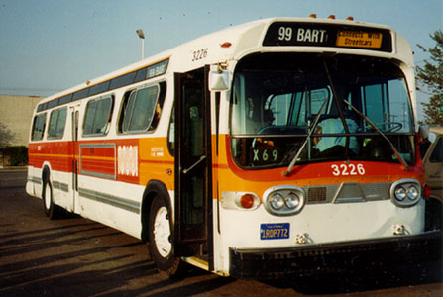
The 91 Owl African American Arts Cultural Complex, 762 Fulton; 574-8908, www.brownpapertickets.com. $10-25. Nightly, 8pm. Through Thurs/22. A production of Bernard Norris’s play about the life of a San Francisco bus stop.

Peter Pan Threesixty Theater, Ferry Park (on Embarcadero across from the Ferry Bldg); www.peterpantheshow.com. $30-125. Tues and Thurs, 7pm; Fri-Sat, 7:30pm (also Sat, 2pm); Wed, 2pm; Sun, 1 and 5pm. Through August 29. JM Barrie’s tale is performed in a specially-built 360-degree CGI theater.

Piaf: Love Conquers All Eureka Theatre, 215 Jackson; (800) 838-3006, www.brownpapertickets.com. $25-36. Tues-Fri, 8pm; Sat, 2 and 8pm. Through August 7. Tone Poet Productions brings a portrait of Edith Piaf to the stage.

*Posibilidad, or Death of the Worker Dolores Park and other sites; 285-1717, www.sfmt.org. Free. Sat-Sun, 2pm; also Sept 6, 2pm; Sept 17, 8pm. Througb Sept 17. It may have been just a coincidence, but it certainly seems auspicious that the San Francisco Mime Troupe, itself collectively run since the 1970’s, would preview their latest show Posibilidad on the United Nations International Day of Cooperatives. The show, which centers around the struggles of the last remaining workers in a hemp clothing factory (“Peaceweavers”), hones in on the ideological divide between business conducted as usual, and the impulse to create a different system. Taking a clip from the Ari Lewis/Naomi Klein documentary The Take, half of the play is set in Argentina, where textile-worker Sophia (Lisa Hori-Garcia) becomes involved in a factory takeover for the first time. Her past experiences help inform her new co-workers’ sitdown strike and takeover of their own factory after they are told it will close by their impossibly fey, new age boss Ernesto (Rotimi Agbabiaka). You don’t need professional co-op experience to find humor in the nascent collective’s endless rounds of meetings, wince at their struggles against capitalistic indoctrination, or cheer the rousing message of “Esta es Nuestra Lucha” passionately sung by Velina Brown, though in another welcome coincidence, the run of Posibilidad also coincides with the National Worker Cooperative conference being held in August, so if you get extra inspired, you can always try to join forces there. (Nicole Gluckstern)

What Mama Said About Down There Our Little Theater, 287 Ellis; 820-3250, www.theatrebayarea.org. $15-25. Thurs-Sun, 8pm. Through August 28. Writer-performer-activist Sia Amma presents this largely political, a bit clinical, inherently sexual, and utterly unforgettable performance piece.

*when i die, i will be dead Mama Calizo’s Voice Factory, 1519 Mission; (800) 838-3006, www.mcvf.org. $15-20. Thur-Sat, 8pm. Through Sat/24. This sparkling pair of new dance-theater pieces from director-choreographer Alicia Ohs unexpectedly marks the final production at the Mission Street haunt of Mama Calizo’s Voice Factory, which perforce closes its doors at the end of the month as a search for a new space continues. It’s hard to imagine a more feisty, clever and poignant way to mark the otherwise somber milestone than this final Mission Street edition of MCVF’s DIY residency (co-produced with Choyoh! Productions and THEOFFCENTER). The first piece, “New York, I Love You, I hate You . . . Now Dance!,” unfurls and unravels a dance audition in the Big Apple with insight and incisive humor—cuttingly performed by a bold, charismatic cast that includes Ay.Lin, Hana Erdman, Harold Burns, and Jose Navarrete. It amounts to a singular and low-key–sensational tribute that puts the “us” back in chorus. The companion piece, “Dokuen” (Japanese for “solo”), is another surprise, a fresh and charming meditation on creativity, communication, and communion that cycles through a series of dynamic encounters between choreographer, dancers, and domestic, all on a tightrope walk between the concrete and the ineffable. Its sublime moments of imperfect quiet and stillness say it all, since even here there’s so much going on—room yet to create and destroy. (Avila)

Young Frankenstein Golden Gate Theatre, 1 Taylor; 551-2000, www.shnsf.com. $30-99. Thurs-Sat, 8pm; Sun, 2pm; also Wed/21, 2 and 8pm. Through Sun/25. For all its outlandish showmanship, Mel Brooks’s other movie-turned-musical is not quite as grand a beast as The Producers. Still, the adventures of Victor Frankenstein’s reputation-conscious grandson, Frederick Frankenstein—played with exceeding charm and surgeon-like skill by major cut-up Roger Bart, originator of the role on Broadway—remains a monster of a show, in more ways than one. The rapid-fire repartee, for starters, is scarily deft, the comic timing among a first-rate cast all but flawless (even when milking a line shamelessly), the fancy footwork (choreographed by director Susan Stroman) pretty fancy, and the mise en scène holds some attractive surprises as well. At the same time, and despite the fecund humor revolving around questions of size and virility, the show’s actual two-and-a-half-hour length proves a bit wearying, especially as many of the best jokes (though by no means all) are the much-loved and universally much-repeated gags from the film. Moreover, Brooks’s songs, while very able, rarely rise to memorable and sometimes feel perfunctory or a bit busy. One of the glorious exceptions is the blind hermit scene (played brilliantly by Brad Oscar), which combines the hilariously plaintive song “Please Send Me Someone” with a lovingly faithful rendition of the original spoof for a sequence that literally smokes. (Avila)

BAY AREA

Auctioning the Ainsleys Lucie Stern Theatre, 1305 Middlefield, Palo Alto; (650) 463-1960, www.theatreworks.org. Tues-Wed, 7:30pm; Thurs-Fri, 8pm; Sat, 2 and 8pm; Sun, 2 and 7pm. Through August 8. TheatreWorks begins its 41st season with a world premiere of a play by Laura Schelhardt about a family putting their lives up for sale.

*East 14th: True Tales of a Reluctant Player Marsh Berkeley, 2120 Allston, Berk; www.themarsh.org. $20-50. Sat/24, July 31, 8pm; Sun/25, Aug 1, 7pm. Through August 1. Don Reed’s solo play, making its Oakland debut after an acclaimed New York run, is truly a welcome homecoming twice over. (Avila)

*Machiavelli’s The Prince Berkeley City Club, 2315 Durant, Berk; (510) 558-1381, www.centralworks.org. $14-25. Thurs-Sat, 8 p.m.; Sun, 5pm. Through August 22. Set in an intimate salon-space in the Berkeley City Club, this stage adaptation of one of the most famous documents on political power ever written gains a certain conversational quality. In fact, the script, penned by Gary Graves, is really just one long conversation—an imagined encounter between Nicolo Machiavelli and the man he dedicated his treatise to, Lorenzo de Medici II. Machiavelli (Mark Farrell) has been called by de Medici (Cole Alexander Smith)

to possibly regain favor in his court after a long banishment. With him he brings a notebook of his musings on gaining and retaining political power, which he bestows on Lorenzo for him to read. As the Duke of Florence, Smith plays his character with the measured dignity and watchful countenance of a career mobster. He protests the extremism of his former teacher’s philosophy of rule even as he is casually seduced by its implications. Farrell’s Machiavelli tries to play his position with calculated Mephistopheles cool. However, he cannot escape the obvious taint of his own failures, and eventually, for all his talk of power, he is revealed to be ultimately powerless, though his ideas remain with de Medici, long after he himself is let go. (Gluckstern)

The Taming of the Shrew Forest Meadows Amphitheatre, 1475 Grand, San Rafael; (415) 499-4488, www.marinshakespeare.org. $20-25. Fri-Sun, 8pm; also Sun, 4pm and 5pm. Through Sept. 26. Marin Theatre Company presents a swashbuckling version of the classic.


PERFORMANCE/DANCE

BATS Improv Theatre Bayfront Theater, Fort Mason Center, B350 Fort Mason; 474-6776, www.improv.org. Fri-Sat, 8pm. Through July 31. Bay Area Theatresports presents an evening of theater and comedy.

The Bowls Project: Secrets of the Apocalyptic Intimate Yerba Buena Center for the Arts, Sculpture Court, 701 Mission; 978-2787, www.ybca.org. Various times. Through August 22. Charming Hostess presents a series of performances in conjunction with an interactive sound sculpture.

Bridge Builders and Other Unconventional Women CounterPULSE, 1310 Mission; (800) 838-3006, www.counterpulse.org. Wed/21-Thurs/22, 7pm. $6-12. Flyaway Productions presents its Arts and Activism Apprenticeship performance by young women.

Litquake: Fool Brava Theater, 2781 24th St; 641-7657, www.litquake.org. Sat/24, 8pm. $22.50-25. Litquake presents a staged reading from the novel by Christopher Moore.

Liz Grant Variety Pack Comedy Show Purple Onion, 140 Columbus; 200-8781, www.brownpapertickets.com. Fri, 4:30pm. Through Sept 3. $10. A changing lineup of stand up comedy.

Porchlight 8th Anniversary Show Verdi Club, 2424 Mariposa; 861-9199, www.verdiclub.net. Porchlight celebrates a birthday with stories from Adam Savage, Arisa White, Anthony Bedard, Kari Kieman, Scott Kravitz, Jawad Ali, and others.

Stand-up Comedy Showcase Bazaar Cafe, 5927 California; 831-5620, www.dannydechi.com. Wed/21, 7pm. Free. A showcase hosted by Danny Dechi.

Tadtarin Dance Mission Theater, 3316 24th St; 273-4633, www.enricolabayen.com. Fri/23-Sat/24, 8pm; Sun/25, 7pm. $25. The world premiere of a dance piece performed by Labayen Dance/SF.

BAY AREA

Hamlet: Blood in the Brain Bruns Amphitheater, Orinda; (510) 548-9666, wwwcalshakes.org. Mon/26, 7:30pm. California Shakespeare Theatre presents a one-time performance by students of Oakland technical High School.

Love Boat Capers RODA Theatre, 2025 Addison, Berk; www.gilchun.com. Sat/24, pm; Sun/25, 2pm. A dance play based on the TV series!


Small biz should support Chiu tax plan

0

EDITORIAL It’s rare to see a fairly conservative city agency, created in part to make it harder for progressives to push measures that might affect business, come down in favor of a new business tax. But the San Francisco Office of Economic Analysis has concluded that the proposal by Board of Supervisors President David Chiu to change the local payroll tax and impose a new tax on commercial rents would actually help local businesses, particularly small businesses. The proposal presents a crucial opportunity for progressives to make the case that the Chamber of Commerce and big downtown corporations are not advancing the interests of small businesses — and local merchant groups need to pay attention.

Chiu has taken on a problem that has lingered in San Francisco for decades. The city’s business tax is terribly regressive: Only 10 percent of the companies in town even pay the payroll tax, in part because banks, insurance companies, and financial services firms are exempt under state law. That means the burden falls the heaviest on small and medium-sized companies — the ones that provide most of the net job growth in the city.

The new proposal would make the flat payroll tax more progressive and would exempt more small businesses. It would also raise $28 million more a year for the cash-strapped municipal coffers by taxing commercial rents of more than $60,000 a year.

The commercial rent levy would force the big outfits that now pay no city taxes whatsoever to take on at least some of the burden of financing San Francisco government. Smaller companies with modest leases, and small commercial landlords, wouldn’t pay the new tax at all.

Chiu originally had proposed an even broader tax, which would have raised more than $35 million. But after the Small Business Commission expressed concerns, he changed the measure, reducing the burden on small business even further. And at this point, Ted Egan, the city’s chief economist at the Office of Economic Analysis, reports that the tax would lead to greater job creation in the private sector (because of the reduction in the payroll tax) as well as greater job creation in the public sector (because of the additional revenue to the city).

It’s the kind of idea that ought to have broad-based support — progressives looking to fund crucial services see it as a way to bring in money, and small businesses ought to see it as a way to cut taxes and create jobs in the sector of the city that most needs economic stimulus.

Unfortunately, the response from small business leaders hasn’t been encouraging. The commission hasn’t taken a stand on the measure; on July 12th, the panel deadlocked 2-2, with one member absent and two slots still vacant (the mayor hasn’t filled them). That lets the big downtown players — the Chamber, the Building Owners and Managers Association, the Committee on JOBS, etc. — in a position to claim that the Chiu proposal is anti-business.

We’ve seen this pattern far to often. Small business groups allow big corporations, which have no interest in the real issues that impact local merchants, stick the little folks out front on political issues. We’ve seen it over the years with public power, commercial rent control, downtown development, and taxes — and it needs to stop.

The Small Business Commission, the Council of District Merchants, all the local community merchant groups, and anyone else who really cares about the interests of small business in San Francisco should support the Chiu measure. It’s a tax plan that’s good for small business. And if the advocates don’t realize that, they’re hurting themselves, the customers, and the city.

Repairing the initiative process – in CA and SF

6

OPINION I recently participated in a research trip to Switzerland to study the alpine nation’s system of direct democracy (initiative and referendum, or I&R). Its model offers fresh ideas about how to repair the dysfunctional initiative process in California and San Francisco.

In California, it takes approximately 750,000 signatures to put a constitutional amendment on the ballot — almost 3 percent of the statewide population — and about three-fifths that for a nonconstitutional statute. That’s an extremely high threshold, so in actual practice the only players able to qualify a ballot initiative are wealthy individuals or organizations that can pay an army of circulators about $3 per signature. It has been years since a statewide initiative has qualified through the work of volunteers.

Because of these dynamics, direct democracy in California has been captured by wealthy special interests. Proponents of Proposition 14, which was bankrolled by Gov. Arnold Schwarzenegger and big business, outspent opponents by 50:1 to pass a “top two” primary that is deform masked as reform. Even when Big Money’s measures lose — as PG&E’s Proposition 16 did — they force everyone else to play defense. Ironically, this dynamic is the opposite of that envisioned by California Gov. Hiram Johnson, who in 1911 created the initiative to allow the people to counter powerful special interests like railroad tycoons.

But in Switzerland, the political leaders have crafted an impressive practice that fosters a noisy collaboration between the people and their elected representatives. That nation has a proposal-counterproposal system. Once an initiative or referendum qualifies for the ballot, the government is given a chance either to pass that law itself or put a counterproposal on the ballot. Similarly, if the government passes a law, the people can put their own counterproposal on the ballot or try to overturn the law via a referendum.

This dynamic unleashes a process that is less polarizing and fosters a healthier debate. That in turn fosters more of an ongoing dialogue between the people and their elected representatives that, over time, forges a broader consensus on issues.

But a key reason this dynamic works is because the Swiss only require about 100,000 signatures for an initiative — a bit more than 1 percent of the population — and 50,000 for a referendum. The Swiss also allow a longer period of time for collecting those signatures, up to 18 months, compared to only five months in California. So non-wealthy interests can use the I&R process and signatures can be gathered with all-volunteer labor.

Gathering 1 percent is still a sizable undertaking; it would equal about 370,000 signatures in California for a constitutional amendment. But that’s low enough that serious efforts lacking deep pockets could still play in the game.

For example, look at the Jeff Adachi-led initiative over public pensions in San Francisco. Adachi has put his fingers on the pulse of an issue that needs addressing, but many progressives feel that the details in Adachi’s measure are too harsh and polarizing. But what if a counterproposal was put on the ballot, giving the public another choice? The subsequent multichoice campaign would be less polarizing and could help find the sweet spot of consensus.

The Swiss model isn’t perfect. Like California, when it comes to the actual I&R campaigns, Switzerland has inadequate campaign finance and transparency laws. With no public financing for underfunded campaigns, private money dominates and skews the public debate.

That’s why free media time should be provided for all significant viewpoints. And shared financing for all campaigns, pro and con, should be considered; all campaigns would be required to pay 15 percent of the amount they spend on their own campaign into a common fund that is distributed to the underfunded campaigns.

If I&R in California and San Francisco is designed correctly, it has the potential to reinvigorate this age-old invention of representative government. *

Steven Hill is author of the recently published Europe’s Promise: Why the European Way is the Best Hope in an Insecure Age.

The tax poll is seriously messed up

19

Chuck Nevius, who doesn’t seem to like any taxes, weighed in this morning on a poll paid for by the city’s Transportation Authority that, the way Nevius puts it, “[cast] doubt on whether it would be wise to put some tax issues on the ballot in November.” His analysis of the numbers:


[W]hen it comes to the hotel, parking, business and real estate transfer tax, the voters had four responses: no, no, no and hell no.


His ideological soulmate over at the Ex, Ken Garcia, had a similar report. “San Francisco,” he wrote, “is not in a tax-supporting mood.”


But that’s not how I read the poll at all.


You can see the actual document here. The first thing I’ll note is that 67 percent of the people who responded were over 40. That’s not a surprise; telephone polls skew older these days. (How many young people have land lines, which are the numbers primarily called by pollsters?) The second is that some of the questions are pretty close to incomprehensible. Imagine someone reading this to you over the phone and asking for a quick answer:


To provide loans to pay for seismic retrofits of certain multi-story wood structures at significant
risk of substantial damage and collapse during a major earthquake and funded by a qualified
governmental housing finance agency for permanent or long-term affordability, or single room
occupancy buildings owned by private parties, and pay related costs, shall the City and County
of San Francisco issue up to thirty nine million one hundred forty thousand dollars of general
obligation bonded indebtedness, subject to citizen oversight and regular audits?


But the most important thing is that the tax questions were more than misleading; they’re phrased in a way that almost begs for a No. Here’s the real-estate transfer tax question:


Shall the City and County of San Francisco increase the real property transfer tax on certain
properties by between $3.75 and $10.00 per $500.00 of value, depending on the overall
property value and exempting rent-restricted affordable housing units from the increased tax rate?


That sounds like the average person trying to buy or sell a house is going to get hit with more taxes. Actually, nobody’s proposing a tax on low-end sales. If you asked the real question — should people or businesses that sell property worth more than $5 million pay a slightly higher transfer tax — you’d get a very different answer.


Here’s another one:


Shall the City and County of San Francisco establish a progressive payroll expense tax rate
structure and impose a gross receipts tax on the rental of commercial real property?


My immediate response: What the hell does that mean? It sounds like higher taxes on payrolls and a new tax on rents. Sounds like it’s bad for small business. Actually, that’s an utterly inaccurate representation of the tax the Sup. David Chiu is proposing. How avbout an honest question: Should the city cut taxes on small businesses and make banks and insurance companies pay their fair share? I suspect that would poll a little higher.


You want a real snapshot of how a conservative, older groups of voters, the ones represented in this poll, feel about taxes? Check out question 13, which asks people if they agree or disagree with this statement:


It is crucial to have high quality streets, roads and public transit, even if it means raising taxes.


A full 71 percent said they agree.

I’m not arguing that it’s going to be easy to pass any tax proposals on the fall ballot. But if you put the question the right way, and explain that these revenue measures impact primarily the wealthier residents and businesses and that they money is needed for essential public services, I think most voters are going to say Yes.


Truckin’

0

le.chicken.farmer@gmail.com

CHEAP EATS Jo Jo Hoot is a kind of a guru of the Bay Area taco truck scene. Fifteen years ago, the first time I wrote about him, he was taking me on a taco truck tour of East Oakland. Now he lives in San Francisco in the Mission District, and I run into his bright-eyed and brilliant wife, Ha Ha Hoot, at the grocery store.

Ha Ha and me were in a band together for 10 minutes, so we have a lot to talk about. We talk about taco trucks. Also, of course: love. I’m pretty sure she was one of my friends who shed literal tears with me over my Germany story after I came back, but it might have been some taqueria’s carne asada having gone downhill that upset her.

Either way, of this I am certain: we were standing up.

But the recurringest theme of our chance neighborly meetings, all non-sequitage aside, has been a taco truck called El Gallo Giro in their neck of the Mission that, apparently, I needed to know about. They have the best carnitas within the city limits, it happens, and how lucky are Mr. and Mrs. Hoot? It’s just a block from their house, at Treat and 23rd streets. And they both — being graphically designfully inclined — work at home!

There’s a playground on that corner, and on my way to see them, finally, one lunchtime last week, a soccer ball came sailing over the fence and bouncing across the street right in front of me. Immediately, six or 20 little boys with 60 or 200 little fingers were latched onto the chain linkage, pudging through it (in some cases) and looking at me imploringly.

It was interesting to find myself, for a change, on the street side of this most basic of human interactions. They didn’t even have to say, "Little help?" I was off my bike and onto the ball.

For kicks I threw it back to them, only I threw it like a girl. Meaning: it barely even made it to the opposite sidewalk, let alone the fence, but, while their various groans were still caught in their little boy throats, I hitched my skirt, stopped traffic, crossed the street, caught the fourth bounce on the top of my left foot, flicked it up to my left knee, transferred to the right, popped it high off my head and behind my back, and no-look right-heeled it back over my head, and the fence — except it hit one of those damn power lines and plopped back down to the sidewalk.

They were like, "Little help?"

I just stood there. "Didn’t you see what I just did?"

"Ball," they said.

I picked it up and underhanded it over the fence to them, then, while play resumed, went around that intersection collecting my scattered sandals, shattered showmanpersonship, jewelry, bike, etc.

Jo Jo Hoot was happy to see me. We used to play in some bands together, for 15 or 20 minutes, so we have a lot to talk about too. Mostly taco trucks. Ha Ha and me and him walked back down the block to this one, El Gallo Giro, or, the round bad wine, and ordered our tacos and burritos. Which we ate in the little park there.

Where the kids were playing soccer. We sat on a small wall, side-by-side-by- side, with Jo Jo in the middle, and watched them fall down at the slightest little jostle, writhing on the ground in overdramatized and underbelievable agony, emulating their recent World Cup heroes. I didn’t see one single attempted bicycle kick.

The Gallo Giro truck, I’m just guessing, is associated with El Gallo Giro Taqueria in San Jose and various even southerner California locations such as L.A.

Their tacos are $1.25 apiece, $1.50 if you want carnitas, and let me just explain: you do. They’re the best, except for one other place in maybe South City or Daly City or Pacifica, I forget, according to Jo Jo Hoot.

Who is, as I said, the expert on the subject. He also told me where the best carne asada was, and the best al pastor, but I forgot and forgot those two already too — which, don’t worry, only makes life more interesting for you and me, or at least me.

Something about an owl, or gold, or something, on 24th Street? Anyone? Little help! *

EL GALLO GIRO TACO TRUCK

Treat and 23rd St., SF

Cash only

No alcohol

Small biz should support Chiu tax plan

2

A new proposal to make the flat payroll tax more progressive and exempt more small businesses

EDITORIAL It’s rare to see a fairly conservative city agency, created in part to make it harder for progressives to push measures that might affect business, come down in favor of a new business tax. But the San Francisco Office of Economic Analysis has concluded that the proposal by Board of Supervisors President David Chiu to change the local payroll tax and impose a new tax on commercial rents would actually help local businesses, particularly small businesses. The proposal presents a crucial opportunity for progressives to make the case that the Chamber of Commerce and big downtown corporations are not advancing the interests of small businesses — and local merchant groups need to pay attention.

Chiu has taken on a problem that has lingered in San Francisco for decades. The city’s business tax is terribly regressive: Only 10 percent of the companies in town even pay the payroll tax, in part because banks, insurance companies, and financial services firms are exempt under state law. That means the burden falls the heaviest on small and medium-sized companies — the ones that provide most of the net job growth in the city.

The new proposal would make the flat payroll tax more progressive and would exempt more small businesses. It would also raise $28 million more a year for the cash-strapped municipal coffers by taxing commercial rents of more than $60,000 a year.

The commercial rent levy would force the big outfits that now pay no city taxes whatsoever to take on at least some of the burden of financing San Francisco government. Smaller companies with modest leases, and small commercial landlords, wouldn’t pay the new tax at all.

Chiu originally had proposed an even broader tax, which would have raised more than $35 million. But after the Small Business Commission expressed concerns, he changed the measure, reducing the burden on small business even further. And at this point, Ted Egan, the city’s chief economist at the Office of Economic Analysis, reports that the tax would lead to greater job creation in the private sector (because of the reduction in the payroll tax) as well as greater job creation in the public sector (because of the additional revenue to the city).

It’s the kind of idea that ought to have broad-based support — progressives looking to fund crucial services see it as a way to bring in money, and small businesses ought to see it as a way to cut taxes and create jobs in the sector of the city that most needs economic stimulus.

Unfortunately, the response from small business leaders hasn’t been encouraging. The commission hasn’t taken a stand on the measure; on July 12th, the panel deadlocked 2-2, with one member absent and two slots still vacant (the mayor hasn’t filled them). That lets the big downtown players — the Chamber, the Building Owners and Managers Association, the Committee on JOBS, etc. — in a position to claim that the Chiu proposal is anti-business.

We’ve seen this pattern far too often. Small business groups allow big corporations, which have no interest in the real issues that impact local merchants, stick the little folks out front on political issues. We’ve seen it over the years with public power, commercial rent control, downtown development, and taxes — and it needs to stop.

The Small Business Commission, the Council of District Merchants, all the local community merchant groups, and anyone else who really cares about the interests of small business in San Francisco should support the Chiu measure. It’s a tax plan that’s good for small business. And if the advocates don’t realize that, they’re hurting themselves, the customers, and the city.

Adachi and the real politics of pension reform

71

While downtown-oriented politicos and out-of-touch corporate columnists tout the political potential of targeting public employee unions with pay reductions and pension plan take-aways – and say the Public Defender Jeff Adachi may be mayoral material for doing so – they forget that electoral success requires coalitions, particularly in savvy San Francisco.

Unlike his cheerleaders, Adachi seems to understand this, downplaying the personal political upside when he talked to the Guardian and other media outlets. Sure, he might just be sandbagging, as his boosters hope he is, but there’s good reason to believe that this move could hurt Adachi’s chances of becoming mayor more than it helps it.

Much has been written and said about how Adachi’s move alienated labor unions and much of the progressive movement. “They urged me not to do it,” Adachi told the Guardian in the final days of his successful signature-gathering effort for a measure that would save the city about $167 million per year by taking that amount out of employees’ paychecks.

It’s not that pension reform isn’t needed. Indeed, San Francisco voters just approved a measure in June to increase the pension contributions for all new city employees, and politicians ranging from Sups. John Avalos and David Campos on the left to Sup. Sean Elsbernd and Mayor Gavin Newsom on the right all agree that more needs to be done, pledging to work with unions on the issue. And given the surly mood of the electorate, Adachi’s measure will probably pass.

But that still doesn’t make him mayoral material. Unlike Newsom, whose Care Not Cash initiative to take money from poor people helped propel him into Room 200, Adachi doesn’t have a strong constituency behind him, unlike the full strength of downtown and the Willie Brown machine that Newsom had behind him.

Downtown will never get behind a mayoral campaign for Adachi, a heavily tattooed defender of criminals who has a strong independent streak, even if they like the fact that he’s socking it to the public employee unions, an effort they helped fund. And progressives will now have a hard time ever trusting Adachi to work with them, seeing him now as someone hostile to political process and coalition-building, much like Newsom.

And even Newsom has come out against Adachi and his proposal, even though he loves the pension reform issue and shares some stylistic similarities with Adachi, including a certain political petulance. “Mayor Newsom has been clear that effective, long-term pension reform will come by doing it with our public employee unions, in partnership, not to and against them, in contrast to the Adachi measure,” Newsom Press Secretary Tony Winnicker wrote to the Guardian this week. It was a laughingly hypocritical statement from a mayor who has repeatedly demonized unions and refused to work cooperatively with them, but it’s a true statement nonetheless.

Finally, while socking it to public employees may be in vogue right now, during this moment of real economic uncertainty and political myopia, this sort of divisive politics might come to be seen more as opportunistic than courageous. And it’s hard to see how the approach that Adachi has taken will somehow add up to an effective political coalition capable of stealing the Mayor’s Office from wily politicians like Mark Leno, Leland Yee, or Aaron Peskin.

Consider the fact that even the Police Officers Association – the most conservative, downtown-oriented employee union in San Francisco – also opposes the Adachi measure and other efforts to blame the city’s fiscal problems on employees, rather than the large financial institutions that don’t even pay any kind of business tax to the city.

So I leave you with the words of POA President Gary Delagnes, writing in the May issue of the POA Journal, sounding a bit like a Guardian editorial writer on this politically sensitive issue: “Even more problematic is the rapidly developing notion that public employee pensions serve as the root of all evil, and are almost solely to blame for all of our economic woes.

“Opportunistic Wall Street insiders, politicians, and robber baron CEOs have manipulated and pilfered our country’s financial well-being. They have unconscionably – if not also illegally – lined their deep pockets with the hard-earned savings and pensions of the middle class working man and woman. Accountants from coast to coast have coached multi-millionaires on the art of avoiding paying their true tax obligations. Millions of people were allowed to qualify for mortgage loans by greedy bankers and mortgage brokers that led to trillions of dollars in bailout money. The result is a public incensed about fat cats taking advantage of them. Now, the backlash has set up public pensions and the unions that negotiated them as the scapegoats for his anger.

“Those of use who long ago made the decision to forgo large salaries in exchange for a life of public service, are now being portrayed as greedy and self-centered, taking unwarranted pensions and benefits after 30 years of service as firefighters, police officers, teachers, and nurses. These are shameful accusations, and utterly without merit.”

We couldn’t have said it better ourselves, but unlike one of our editorials, this is the perspective of cops and other unions and progressive constituencies that will shape their actions in elections to come.

The martyrdom of Mooney and Billings

0

Dick Meister , former labor editor of the SF Chronicle and KQED-TV Newsroom, has covered labor and politics for a half-century. Contact him through his website, www.dickmeister.com, which includes more than 250 of his recent columns.

It was an unusually hot July day in San Francisco.   There was a parade on that day in 1916 – a “Preparedness Day” parade organized by local Republican businessmen. It was intended to drum up support for U.S. entry into World War I and embarrass Democratic President Woodrow Wilson, who was running for re-election on a platform that stressed,  “He kept us out of war!”

A lot of people supported neither the war nor the parade, however. The opponents particularly included the union organizers who were the radicals of that period – “reds” who were trying to establish the right of unionization in the face of often violent opposition from the business interests who controlled the city and who most assuredly supported the war.

Many thousands of spectators, as many as 100,000 by some accounts, lined the parade route down Market Street, cheering and enthusiastically waving American flags. At precisely 2:06, less than a half-hour after the parade of more than 25,000 marchers had begun, just as contingents from the Grand Army of the Republic and Sons of the American Revolution were passing the crowded corner of Steuart and Market  streets. . . Boom!

It was the thunderous blast of a bomb that had either been thrown into the crowd or planted there.  The horrific explosion killed 10 bystanders and seriously wounded 40 others.

Within a few hours, the authorities had their culprits. Not surprisingly, all of those arrested as suspects were union organizers. Among them were two men who were especially despised by the city’s virulently anti-labor business establishment — Tom Mooney, 34, a burly Irish-American organizer for the International Molders Union who was one of San Francisco’s most prominent labor activists, and his close friend, slim, short, boyish Warren Billings, a 23-year-old shoe factory worker.

Mooney and Billings were San Francisco’s “most notorious reds,” declared the SF Chamber of Commerce in one of its typically frenzied assessments of those who dared challenge the status quo in which workers were treated as mere chattel.

The others who were arrested were soon freed, but Mooney and Billings were put on trial and eventually found guilty. Mooney was sentenced to death by hanging, Billings to life imprisonment.

There’s absolutely no doubt Mooney and Billings were framed. Federal investigators, investigative newspaper reporters and others proved that beyond any doubt.  The city’s famously corrupt district attorney, Charles Frickert, was found to have suppressed evidence that proved the pair’s innocence, joining with corrupt policemen to fabricate evidence that supposedly proved their guilt, and failing to call witnesses who, as he knew, had solid evidence that they were not guilty. Frickert hired other witnesses and coached them to give perjured testimony implicating Mooney and Billings.

Eventually, every major witness confessed to lying to the juries at both the Mooney and Billings trials. Some of them claimed to have seen the men plant the bomb on the day of the explosion, although it turned out the supposed eye-witnesses hadn’t even been in the city at the time.

Some gave their perjured testimony in exchange for such favors as the parole of relatives who were serving prison sentences, others for the pay District Attorney Frickert offered them. All were after the $17,500 reward posted for evidence leading to the conviction of Mooney and Billings.

 The judge who presided over Mooney’s trial told California’s governor he had determined through personal investigation that “every single witness who testified against Mooney had lied.” Mooney’s lawyer declared them “the weirdest collection of God-damned liars” he’d ever seen.

 A federal fact-finding commission concluded that “there was never any scientific attempt made by either the police or the prosecution to discover the perpetrators of the crime. The investigation was in reality turned over to a private detective, who used his position to cause the arrest of the defendants.” 

Fremont Older, the crusading editor of the San Francisco Bulletin, concluded that the authorities “conspired to murder a man with the instruments that the people have provided for bringing about justice. There isn’t a scrap of testimony that wasn’t perjured.”

The cases quickly drew widespread national attention, right up to the White House. President Wilson argued against Mooney’s hanging on grounds that there wasn’t a shred of evidence to support his guilt.

It was obvious that the Chamber of Commerce’s so-called Law and Order Committee had played a major role in framing Mooney and Billings as part of the chamber’s drive to change San Francisco’s status as one of the country’s most heavily unionized cities. 

Mooney and Billings, of course, had been attempting to enhance that status, in part by helping wage major organizing drives among the city’s vital transit workers and the equally vital employees of the company that supplied the city’s gas and electricity. Which was a very good reason the utility company – Pacific Gas & Electric – hired the private detective cited by federal fact-finders to help District Attorney Frickert and the police fabricate evidence against Mooney and Billings.  Not incidentally, Frickert was backed financially by Pacific Gas & Electric in his election campaigns for district attorney.

 The convictions prompted protests across the United States and worldwide, much like those raised five years later in behalf of two other union radicals, Nicola Sacco and Bartolomeo Vinzetti, who were executed in Massachusetts for a murder they clearly did not commit.

The Mooney and Billings case was dubbed internationally as “America’s Dreyfus Case,” a comparison to the famous French case that also drew worldwide protests. The protests stemmed from the rigged conviction of Jewish French Army Captain Alfred Dreyfus in 1894 for allegedly attempting to turn over secret military documents to the German government. Although the “Dreyfus Affair,” as it was called, was based on another issue – anti-Semitism – it similarly involved the use of false evidence against an innocent man by powerful authorities.

 Protestors in the United States and abroad quickly formed a network of defense committees in behalf of Mooney and Billings, and mounted rallies and other noisy and highly visible public demonstrations. 

 Freeing the two men became labor’s cause célèbre. Unions everywhere voiced loud and frequent protests, as did all other segments of the left, ranging from liberal to Communist. Eventually, they helped force California authorities to reduce Mooney’s death sentence to life imprisonment, ironically on the basis of evidence that should have freed him.

 President Wilson’s request that Mooney be spared was probably the main reason his sentence was commutated, but the heavy pressures of the Mooney-Billings defense committees and the American Federation of Labor, which Wilson most certainly felt, also had much to do with it.
   
Mooney finally was freed in 1939, twenty-one years later. Culbert Olson, California’s first Democratic governor in 44 years, granted him a full and unconditional pardon. Mooney, said Gov. Olson, was “wholly innocent,” and his conviction  “wholly based on perjured testimony.” 

Mooney’s release sparked great celebration among his supporters, who had fought so long for his freedom. Thousands paraded up Market Street behind Mooney shortly after his release, the street cleared for them by police, past the site of the explosion 23 years earlier that had sent Mooney to prison.

The next day, Mooney joined a picket line of striking department store employees on Market Street and donated to their cause half of the $10 the state had given him on his release from San Quentin Prison. Mooney sent the other half to Newspaper Guild members who were waging a major strike in Chicago.

Tom Mooney hadn’t much time to enjoy his freedom. His health had been broken in prison and he soon was hospitalized with a serious stomach ailment. He remained in a hospital bed until his death at age 60, less than two years later.

Billings got his freedom a few months after Mooney left San Quentin. Gov. Olson commutated his life sentence to time served – 23 years for a crime that no one really believed he or Mooney had committed.  Finally, in 1961, Gov. Edmund G. Brown granted Billings a full pardon. But, as Billings complained, it was granted on grounds that he had been “rehabilitated” rather than because he was innocent.

After leaving prison, Billings married and settled down in San Mateo, working in  San Francisco as a watch repairman, a trade he had learned in prison, and later set up his own repair business at home.  Billings quickly resumed his labor activism, as a member of the Watchmakers Union executive board and delegate to the San Mateo Labor Council. He was active as well in the anti-Vietnam War movement and various other political, economic and social causes. 

I interviewed Billings just before his death in 1972 at age 79. I expected to encounter a bitter, angry old man. Yes, he was old, but his spritely manner belied that basic fact of his life, and he showed absolutely no bitterness over the great injustice that had been done him – none! He talked instead of injustices that were being done to others, and of joining in efforts to help overcome them.

“I don’t have anything against anybody about anything,” Billings told me. “The people who testified against me were after that reward, but it all went to the police who arrested me. I’ve never felt any bitterness, but the fact that the witnesses against me didn’t get any of the reward money should make them bitter.”

Warren K. Billings was a great inspiration to me and others who knew him, and to many who just knew of him. He was a man possessing a spirit that could not be broken by circumstances far more severe than most of us have ever had to endure.  A man who would not even raise his voice in anger or bitterness against the terrible injustice that was done him. A man who maintained his convictions through it all. A strong and courageous man, but kind and gentle, and possessed of an incredible measure of tolerance and understanding.

The Preparedness Day bombing has never been solved.

NOTE: For more on the Mooney-Billings case, See “Frame-up” by Curt Gentry, an extraordinary work of investigative journalism book covering all aspects
of the case.

Dick Meister , former labor editor of the SF Chronicle and KQED-TV Newsroom, has covered labor and politics for a half-century. Contact him through his website, www.dickmeister.com, which includes more than 250 of his recent columns.

Daly highlights a decade in his district

50

Over the last decade, Sup. Chris Daly has been both a stalwart leader of the progressive movement in San Francisco and a political lightning rod – both for his aggressive advocacy of controversial policies and his combative personal style. But as he prepares to leave office, Daly is trying to highlight the role his District 6 constituents have played in pushing progressive reforms, starting with an event this Saturday morning at Herbst Theater.

Entitled “10 Years of District 6,” the event will feature significant players and movements from the last decade, including dot.com era land use fights over tenant eviction and the use of live-work lofts and other tactics to circumvent city housing policies, including formation of the Mission Anti-Displacement Coalition; the struggle to save SRO units for the poor; the successful campaign to save rent-controlled units during the Trinity Plaza rebuild; efforts to squeeze funding for community improvements out of developers; campaigns for progressive budget priorities; and a look at what’s next by Daly himself.

“Over the last decade in San Francisco’s District 6, the more honest analysis is that our many victories– on the ballot, at City Hall and in the neighborhoods– have not been about Chris Daly,” he writes. “Rather, our success has grown from the strength of our grassroots community and a true partnership between those in the trenches and those of us they elevated into the halls of power.” The event runs from 10:30 am to noon. It should be an interesting discussion of the district’s past and future, led by a termed out supervisor who has yet to announce who he’s endorsing to succeed him among the crowded field of candidates running for that seat.

National Lawyers Guild pushes back against OPD

Shortly after filming a protester being arrested by police in riot gear near 12th street and Broadway in Oakland, the Guardian caught up with Dan Siegel, a legal observer for the National Lawyers Guild, who had also witnessed the incident. The protester, who is at this time unidentified, was featured on the cover of this week’s San Francisco Bay Guardian, squaring off with an officer in the police line shortly before being arrested.

Siegel described excessively forceful tactics employed by police officers that created more confrontation with protesters than was necessary in the hours of largely peaceful protests that gave way to shattering glass and trashcan fires when the sun went down. The unidentified protester was arrested at least an hour before police declared the assembly to be unlawful and ordered the crowd to disperse.

http://www.youtube.com/watch?v=FvMvi7mqdl8

The San Francisco Bay Area chapter of the National Lawyers Guild has publicly condemned police conduct at the scene of the July 8 protests that turned to riots, and the organization is considering legal action against the Oakland Police Department, according to a news release posted on the guild’s website yesterday.

Carlos Villarreal, executive director of the National Lawyers Guild SF Bay Area Chapter, told the Guardian that possible legal action against the OPD was in very early stages, but NLG attorneys have met with many of the people who were arrested or otherwise detained or hurt by law enforcement. Villarreal confirmed that NLG attorneys have met with the unidentified protester in the video.

“If someone is in the streets, and they’ve been ordered to disperse, the method to get them to disperse is not to hit them in the head or the back with batons,” Villarreal said. “Law enforcement potentially has a role to play if there are unlawful assemblies that become violent, but it shouldn’t be the kind of involvement that deters people from completely lawful protest and assembly, which I believe by and large was what was going on.”

SF’s sexy yoga cult of yore

0

Sometimes a great yoga class can be a relief. Like, that kind of relief. A pelvic floor loosening, an unwinding, a drowsily loving feeling that usually comes after a pleasurable close (naked) encounter with a certain sexy someone. But I little imagined that American yoga got its limber legs in an elite tantric love nest — that is, until I read Robert Love’s The Great Oom: The Improbable Birth of Yoga in America. The book tells the story of the revered and reviled Dr. Pierre Bernard, who actually started the debaucherous deep breathing in that Sodom of the early 20th century – the city by the Bay.

I called up Robert – Bob to his friends – to get the inside scoop. “It was the great cosmopolitan center of the west,” Love told me of SF’s appeal to the young yogi. “The east was physically coming to the west; the swamis from India would land on the west coast, if not directly in San Francisco. It was a welcoming city to new ideas.” Those new ideas would eventually land Dr. Bernard, aka “the omnipotent Oom,” on the wrong side of the law, and secure for yoga a safe berth in the, admittedly expansive at that time, corrupting-to-young-ladies category in the minds of most Americans.

So yeah, new ideas indeed. Bernard (nee: Perry Baker), came from a poor family in Iowa and had already been studying with Sylvais Hamati, a “Vedic philosopher,” for many years before his triumphant arrival in San Francisco. The city was holding it’s Golden Jubilee, which marked the 50th anniversary of the Gold Rush, when Bernard staged a performance of the “Kali mudra.” Basically, he put himself in a trance that allowed assistants to run needles through his face, lips, and tongue. And the crowd goes wild!

No, truly, they did. That kind of deep meditation had rarely been seen before in the U.S. — and certainly Bernard’s performance was the first time that such Hindu learning had been exhibited by a honky. Impressed, a lot of the young richies decided to throw their lots in with Bernard to learn his lady-pleasing feats. The “tantrics,” as they were called, moved into penthouse (for “a little more privacy and unobstructed views of the night sky,” those devils) apartments on Ellis, Golden Gate, Pine and Jones Streets, where they had, like, the best life ever, studying yoga sometimes and holding mysterious rites always, which may or may not have — but according to Love’s research, probably did — include casual sex with other tantrics.

Love, who is quick to point out that he’s not himself a philosophy scholar and but a casual practicioner of yoga, told me “hatha yoga has a Tantric underpinning philosophically, which is really — what’s the word — welcoming in terms of bodily function. Its not Victorian. Sexuality is part of life, part of the Tantric philosophy in that it has the potential to be sacred. There’s a strong connection between the yoga that we practice today and the Tantric philosophy in India. Its not unlikely that [sexual rites] would come into play.”

Sweet! I mean, immoral! The powers-that-be didn’t dig their youngster tripping quite that light fantastic, so they scooted Bernard off and away, as in they ran him out of town real good. He and his eventually alit in Manhattan, where they again commenced wooing the handsome, supple, and financially well endowed, and where they were to get into even bigger trouble for the supposed abduction and pillage of unsuspecting young ladies. Love’s research turns up an interesting mix of intense devotion to Hindu principles and signs of careerism and profiteering on the part of Bernard and his inner circle. Plus, they always wore really form-fitting outfits to yoga class. Those heathens!

I predict yoga yuppies love this book. Really, when was the last time their favorite exercise class was considered subversive? And where, oh where, are these yoga love cults nowadays? Enquiring minds… 

The topic fell to Love in a rather occult manner itself. He had just moved into a cottage in South Nyack, New York, when he found mystical symbols engraved into his new home’s bones. An Egyptian ankh over the front door, a brass bell with Kali, the goddess of time and change, reclining erected on a wall of the abode. It turns out, he was living down the road from Bernard’s old “country club,” the pastoral setting where the troupe had wound up after being ejected from their more cosmopolitan digs on either coast. 

The writer found himself entranced by the connection, although even yesterday he still couldn’t give me an unequivocal answer on whether Love was playing it straight when it came to principled yoga teaching. He answers the “genius or fraud” question of Bernard’s legacy (one, in fact, posed by the book’s final chapter title) with “a resounding yes. [Bernard] was an American go-getter with a spiritual bent who thought that there was nothing wrong with being successful and enjoying life. You can’t really call somebody a fraud if they were teaching and standing up for something for 15 years in front of the slings and arrows of society. I think he put his flag in the ground for yoga, and stood by it. That’s a dopey phrase, I’m sure you’ll clean it up.”

Which should resonate with all you downward facing dog deviants out there; persevere in your eccentricity long enough, gang, and it’s bound to rub off on someone. And sorry Mr. Love, I’m no good at cleaning.


The Great Oom: The Improbable Birth of Yoga in America

Viking Press. 402 pages. $27.95

Newsom’s one bright spot (and even it’s a bit dingy)

8

Covering Mayor Gavin Newsom’s devious exploits for this story last week, watching as the ever-ambitious Newsom sacrificed the city’s fiscal future on the altar of political expediency and his increasingly rigid anti-tax ideology, it seemed as if there was nothing remotely redeeming about this callow, self-serving man. But then he does this, appointing Cheryl Brinkman – a strong and respected advocate for promoting alternatives to the automobile – to the Municipal Transportation Agency Board of Directors.

I’m not saying this one act redeems Newsom, not even close. In fact, some have speculated that he’s trying to coopt a qualified progressive or burnish his green credentials, an echo of the responses to when he appointed San Francisco Bicycle Coalition director Leah Shahum to the MTA board a couple years ago, a tenure Newsom ended prematurely after they clashed over creating more car-free spaces. Or maybe he’s trying to head off support for a ballot measure being considered by the Board of Supervisors to split appointments to the MTA. Who knows with this guy?

Yet it’s also true that being open to democratizing the streets of San Francisco has been a bright spot in Newsom’s otherwise dismal record as mayor. And I think that’s because the cost of admission to this movement is so low. He’s embraced temporary car-free spaces, supported more bicycling, and moved forward other green initiatives – all of which have little to no cost involved and no real political downside. So it’s been easy for Newsom to strike green poses when he chooses, just as it was easy for him to make the supposedly “courageous” decision to legalize same-sex marriage, which involved no heavy lifting and greatly improved Newsom’s political prospects.

But we’re reaching a moment of truth for San Francisco, a point at which the easy answers are evaporating and the bill is coming due – just as Newsom prepares to leave San Francisco for Sacramento. After doubling Muni fares since he became mayor and reaching a level where they really can’t go up anymore without diminishing returns and serious political consequences, Newsom and his appointees have run out of easy options for maintaining Muni in an era of declining state and federal support.

Now, the choices aren’t as easy: charge motorists more for parking, permits, or driving in the most congested times or places; cut Muni service or raise rates more; find ever more ways to nickle-and-dime everyone with various fee increases; or find more general tax revenue, which Newsom has been steadfastly unwilling to do, even though the big banks and financial services companies that caused the Great Recession are exempt from city business taxes.

Brinkman, who tells us that the Mayor’s Office placed no conditions on the appointment, now has a tough job, as do all of this city’s elected and appointed officials. But this is the moment when they must have the courage to make the tough choices about what’s best for San Francisco, choices that Newsom has been unwilling to make.

Will the Thrill says good-bye (kinda) to movies — and hello to “Mermaid”

0

I received an email the other day with the terribly alarming subject line “FINAL. THRILLVILLES. EVER. No fooling.” Could Will “The Thrill” Viharo, a veteran host of cult movie nights around the Bay Area, be hanging up his fez and smoking jacket for good?

Well, not exactly. Fans already know he’s been scaling back his “Thrillville” events since the Parkway Theater closed and the Cerrito Theater changed ownership in 2009 (both East Bay venues, operated by Speakeasy Theaters, had hosted Viharo’s regularly-scheduled B-movie extravaganzas). Over the past year, Viharo’s taken his show — which includes his wife and assistant, Monica Tiki Goddess, and usually a pre-movie band or performing group — on the road, sprinkling a bit of sleaze, gore, trash, and monster mayhem on an assortment of Bay Area theaters.

Now, he explains in his (sorta) sign-off email, “I am giving up the Thrillville road show concept and sticking exclusively to my new home base at Forbidden Island in Alameda, where I’ll be hosting my mellower movie series ‘Forbidden Thrills’ one Monday a month, for as long as people show up. It’s a stripped down version of Thrillville — (mostly) public domain cult classics, cocktail specials, prizes, no cover, [and] free popcorn.” In other words, you can take the Thrill off the B-movie road, but you can’t take him out of the tiki bar. Or something.

Fear not, Viharo devotees: you have some excellent upcoming chances to support all he’s done for fans of obscure cult cinema over the years. First, he’s got two more movie-theater gigs in the works: “Thrillville’s Tribute to Bob Wilkins,” paying homage to the Creature Features legend with another legend, John Stanley, in person — that’s tonight at San Jose’s Camera 3 Cinema. The event also features a screening of The Creature Walks Among Us, the 1956 second sequel to The Creature From the Black Lagoon (1954).

Then next week, Viharo will show ’em how it’s done at the Another Hole in the Head Film Festival, presenting a Luchadore-sploitation double feature of 2007’s Mil Mascaras vs. The Aztec Mummy (did ever a more Thrillville-esque title exist?) and 2008’s Academy of Doom, both at San Francisco’s Roxie. Viharo dares to suggest that this event will be the last-ever appearance of the prize-giving Magic Tiki, so unless you’re a total square, or you happen to be Vincent Price in the Brady Bunch Hawaii episode, you should probably be there.

So with this phasing-out of larger-scale movie events, what’s next for the Thrill? Seems all this time he was programming movies, Viharo was also an author in disguise. His latest novel is entitled A Mermaid Drowns in the Midnight Lounge.

“When Speakeasy Theaters suddenly crashed and burned in mid-2009, my 12 year career as programmer-publicist suddenly ended as well, and my future, which I’d been taking for granted, was suddenly a big blank,” Viharo explains. “I kept my Thrillville show going as a road show, but I felt it too had run its course. For most of the general public, diehard fans aside, Thrillville in its ‘cult movie cabaret’ incarnation effectively died with Speakeasy, and I was determined to carve out a niche for myself unattached to that debacle. The show was no longer giving me any creative satisfaction and I never thought of myself as primarily a live entertainer, anyway.”

Being a writer was, it seems, a natural progression. “I’d seemingly shown every B movie ever made, except the one I really wanted to see: Mermaid is like the ultimate Thrillville movie as directed by David Lynch, but in literary form,” he says of his new book. “It is a sexy, stylized smorgasbord of hardcore exploitation elements — crime, horror, zombies, Elvis, and lots of gratuitous sex, which you don’t see enough of in cinema of any kind these days (though violence is not a taboo, which I find odd). Along with this you’ll find my characters musing on universal mysteries like loneliness, love, death and all that jazz as they’re swept away in this cross-dimensional whirlwind.”

As it turns out, Viharo began writing Mermaid soon after he started his Parkway gig (fun fact: Thrillville was originally called “The Midnight Lounge.”) He became so busy that he set Mermaid aside — but he always intended it to be a temporary break.

“Thrillville was a fun ride, but I’m happy to have returned to my original dream of being a novelist,” he says. “I feel like I was coasting on my lounge lizard laurels for too long, waiting for Christian Slater to finally make good on his perpetual optioning of my detective novel Love Stories Are Violent For Me, originally published by Wild Card Press back in 1996. It was time for me to get back to work.”

After giving it some thought, Viharo decided he’d release Mermaid himself. “As for why I decided to self-publish (via Lulu): I won’t mention names but I have several prominent author friends who privately expressed disgust and contempt for the current state of the publishing industry, which, in its desperation, is increasingly mid-listing or simply dropping established, professional novelists in search of that elusive mass-market commodity,” he explains. “I’ve always known my stuff would have “cult appeal” at best — more Harvey Pekar than Stephen King — so when I finished Mermaid, and suffered from the usual ‘post-novel depression,’ I thought to myself: why waste any more of my life and dreams awaiting mainstream acceptance and recognition, especially when I can’t relate to most popular media nowadays myself?”

Fortunately, as he points out, 21st century (if retro-leaning) hep cats have all the tools to get their work out to the public, the Man be damned.

“Unlike when I first began writing fiction over 30 years ago, I now have a platform and online resources that didn’t exist back then, enabling me to bypass corporate compromising or mainstream middlemen and take my stuff straight to the people,” he says. “Nobody but me really ‘gets’ my work, so who better than me to promote it, especially since PR has been my professional racket for the past dozen or so years? I am simply pooling my resources and re-channeling my promo skills into my literary ambitions. Mermaid is the first of many novels, past and future, I plan to roll out of ‘Thrillville Press’ in the months and years to come. I may not make a living at it, but the creative freedom and fulfillment it’s giving me already is priceless.”

Appropriately enough, Viharo’s having his book release party at Forbidden Island, in tandem with his Forbidden Thrills series. Even more appropriately, the double-feature deals in magical sea creatures: the Dennis Hopper-starring Night Tide (1961) and Mermaids of Tiburon (1962). Though the book itself may not be available by July 19, Viharo hopes to have copies of the book’s “soundtrack” (by Actual Rafiq) and, you know, just get people jazzed about his latest project. Mermaids? Zombies? Sex? Elvis? As Viharo himself likes to say, cheers!

“Thrillville’s Tribute to Bob Wilkins”
Wed/14, 8 p.m., $10
Camera 3 Cinema
288 S. Second St, San Jose
www.thrillville.net

A Mermaid Drowns in the Midnight Lounge release party
With screenings of Night Tide and Mermaids of Tiburon
Mon/19, 7:30 p.m., free
Forbidden Island Tiki Lounge
1304 Lincoln, Alameda
www.forbiddenislandalameda.com

Mil Mascaras vs. The Aztec Mummy and Academy of Doom
Thurs/22, 9 p.m., $15
Roxie, 3117 16th St, SF
www.sfindie.com

Hotel Fairness Initiative qualifies for fall ballot

10

By Brittany Baguio

The Department of Elections has announced that the Hotel Fairness Initiative was approved for the November ballot. Labor and community groups last week turned in 10,544 signatures, a little more than the required 7,168 signatures needed to put an initiative on the ballot. The Department of Elections did a sample of 500 signatures to check the validity and reported that 478 of the 500 signatures sampled were valid, resulting in a 95.6 percent accuracy rate.

The Hotel Fairness Initiative would increase revenue by imposing a 2 percent hotel tax on San Francisco hotel rooms temporarily for 4 years, with an average surcharge of $3 per hotel room per night, and close loopholes that let some visitors avoid paying the hotel tax. The hotel tax is currently 14 percent. According to the Controller’s Office, if the Hotel Fairness Initiative passes, it is expected to raise $25 million a year in revenue.

The hotel tax is one of five measures proposed to help close the budget deficit, which we discuss in more detail in this week’s paper. Mayor Gavin Newsom has also placed a measure of the ballot to also close the loopholes that lets airline employees and those who book hotels online avoid paying hotel taxes, as the Hotel Fairness Initiative would also do, but it includes a provision that would invalidate the hotel tax if his measure gets more votes.

Supporters of the Hotel Fairness Initiative claim that online booking companies and airline companies have been using corporate loopholes that have cost the city about $6 million per year. In total, online booking companies have escaped paying $70 million in hotel taxes through its loophole of taking the hotel tax out of a portion of the money the hotel receives, rather than the total amount the customer pays.

For example, Internet booking companies would charge customers $200 for a room and then pay the hotel $170. Internet booking companies argue that the hotel tax comes from a portion of $170, instead of $200. Similarly, airlines have avoided paying hotel taxes by renting blocks of rooms for its flight crews and claiming that airline companies are protected by the Permanent Resident Exclusion law. This law was originally intended to help the homeless and states that individuals who occupy a room for at least 30 days are tax exempted. However, airlines have been taking advantage of this law by moving different flight crews in and out of their hotel rooms rather than an individual person occupying the room for 30 consecutive days that is implied by the law.

Opponents of the Hotel Fairness Initiative, such as the San Francisco Chamber of Commerce and the Hotel Council, contend that the hotel tax would hurt tourism to San Francisco as well as cause job cuts. In a press release, Steve Falk, President & CEO of the San Francisco Chamber of Commerce said, “This misguided effort will discourage travel to San Francisco, hurt our city’s largest industry, and eliminate many of the union jobs the Labor Council seeks to protect. Raising city revenue at the expense of hotels and hospitality workers is not the answer to the city’s fiscal problems.”

A Hotel Council press release states that “the Hotel Fairness Initiative will lead to 7.3 jobs lost for every million dollars in revenue gained.” If this is true, about 182 jobs could be lost as a result of this initiative, offset by the city being able to save many public sector jobs and services with the revenue. The hotel industry already fluctuates in the number of positions available as a result of the market. According to California Labor Market Info’s latest data, the average amount of hotel jobs lost per month in 2009 was 143 jobs.

Although the Hotel Council and the Chamber of Commerce claim that the initiative would eliminate jobs, one of the biggest supporters of the hotel tax is UNITE HERE LOCAL 2, a union of hotel workers. UNITE HERE representative Ian Lewis emphasized that opponents of the issue are conveniently ignoring the lack of fairness in current hotel booking practices. “Hotel workers live in San Francisco,” Lewis told the Guardian, “We’re taxpayers like everyone else. We are in a severe budget crisis and everyone needs to carry their fair share.”

Community groups, retirees, and hospital workers all volunteered their time to collect signatures supporting the Hotel Fairness Initiative. Community groups such as UNITE HERE collected 1700 signatures, Keep the Arboretum Free collected 1000, and a collection of nonprofit groups collected more than 4000. With the efforts of these community groups, the coalition was able to collect an estimated 15,000 signatures.

Family health advocate for the Tenderloin Housing Clinic, Bobbi Lopez, said she found that those who signed the petition saw the hotel tax as a necessary step in closing the budget deficit, “They understood that the necessity of fighting the cuts, particularly the cuts to MUNI, to parks, and to hospitals,” Lopez told us, “I think that they were getting the idea that in desperate budget times, we need a temporary solution and long term solution and that’s exactly what the Hotel Fairness Initiative is.”

Community groups remain optimistic that this grass roots effort will pass. Brenda Barrows, a health care provider at San Francisco General Hospital, told the Guardian, “My hope is that in November it passes and the city’s financial situation gets better so that people who live in the city don’t have to suffer and also people who work for the city don’t have to suffer.”

Lopez told us she thinks that the initiative will pass if there is an ongoing effort on the issue. “We want to remind folks that this is just the beginning and now we have to embark on a long term campaign,” Lopez told us, “so it’s really about sustaining the energy that we had on June 1 when we kicked off and reminding folks that its going to necessitate all the same volunteers to work together and make it reality.”


Appetite: With Campo de Encanto, SF gets its own pisco

0

You might have heard? There’s a new pisco on the streets “for bartenders, by bartenders”: Encanto Pisco, created by Duggan McDonnell of Cantina, sommelier and spirits guru Walter Moore, and Peruvian master distiller Carlos Romero. Although an authentically Peruvian pisco (distilled — and already making waves — in Peru), it’s a homegrown San Francisco product, a labor of love from locals who know their spirits.

I had the privilege of tasting this acholado (blended) pisco before its release and now with the finished product, am delighted at how balanced it is: floral, with hints of citrus and white pepper. It stands up on its own, going down smoothly much as a brandy or eau-de-vie would, but also an ideal base for cocktails, with a large number of bars around town already stocking it. Alembic was the first to do so, it’s also at pisco havens La Mar Cebichería and Pisco Lounge, while Carlos Yturria showcased it with fig, sage and lemon at the inaugural Pickled, in Absinthe’s back room.

Campo de Encanto means ‘Field of Enchantment’, a romantic spirit evident in gorgeous, vintage-style bottling to the artisanal production of this grape brandy in the Ica Valley of Peru, combining three different grape varietals: Quebranta (76%), Torontel (6%), and Italia (18%). Encanto is sustainably harvested and distilled without preservatives, sugar or even a drop of water.

San Francisco has a rich history and love affair with pisco, inventing some of pisco’s greatest drinks like the Pisco Punch, so it seems fitting that we now have a pisco to call our own. And one of the finer, more approachable piscos at that.

You can purchase Encanto at stores like Cask or The Jug Shop

www.encantopisco.com

Our Weekly Picks: July 14-20, 2010

0

WEDNESDAY 14

MUSIC

Sean Bonnette

Sean Bonnette is the guitar player for Andrew Jackson Jihad, the band that proved punk rock sounds better unplugged. He’s been with the group since its inception in 2004, and along with his comrade-in-arms Ben Gallaty, has spent the last six years writing hilariously irreverent lyrics, cutting a swath through the country’s basements, parks, and concert halls, and slowly pushing folk-punk into the mainstream consciousness. Bonnette’s solo show promises to be a showcase of the loveliest, messiest, raggedy-ist tunes this side of Neutral Milk Hotel and a reminder that, 924 Gilman’s financial woes notwithstanding, DIY’s not dead. (Zach Ritter)

With Kepi Ghoulie and Gnarboots

9 p.m., $8

Bottom of the Hill

1233 17th St., SF

(414) 621-4455

www.bottomofthehill.com


MUSIC

Bardot A Go Go

In America, Bastille Day is the only day of the year where Francophiles, if they’re not storming a prison, can revel in their obsession en masse. With drink specials and a night of decadence that would make Louis XIV’s wife blush, the Rickshaw Stop offers its very own discotheque. If Austin Powers and Marie Antoinette put their wits together and threw a party, Bardot A Go Go would be it. With swinging ’60s pop — Serge Gainsbourg, France Gall, and the titular femme fatale, to name a few — and its very own go-go girls, this long-standing shindig stares hipsters in the face and dares to ask the unaskable: Parlez-vous francais? So put down your Balzac, put on a beret, and get the hell down to Fell. (Ryan Lattanzio)

8 p.m., $7

Rickshaw Stop

155 Fell, SF

(415) 861-2011

www.rickshawstop.com


THURSDAY 15

VISUAL ART

Japanese Art Kite Show

What could be better than a Matt Furie painting? Well, maybe a Matt Furie painting on a kite. Furie is one of 21 artists contributing sky-ready works to “Japanese Art Kite Show,” a group exhibition co-curated by Shoko Toma and Yukako Ezoe that brings together kites by 21 artists from Japan and the Bay Area. Bay Area residents from the Hamamatsu City prefecture in Japan have taken part in the Berkeley Kite Festival for the past five years, while Hamamatsu kites — created with washi and rice glue — date back at least 450 years. The kites here vary in size and utilize hemp for string. On Naoki Onodera’s kite, stars evoke another historical marker: the Kanrun Maru’s journey across the Pacific from Japan to the U.S. 150 years ago. (Johnny Ray Huston)

Through July 29

5:30 p.m., free

Chandler Fine Art and Framing

170 Minna, SF

(415) 546-1113

www.chandlersf.com


COMEDY

Zane Lamprey

Do you like to go out drinking? Me too! Oh, and so does Zane Lamprey, host of Three Sheets, a TV show that’s survived the move to three different channels as Lamprey travels the world exploring fine libations, drinking games, and hangover cures. With the future of the show uncertain — again — Zane has taken to the streets with the “Drinking Made Easy Comedy Tour,” a celebration of all things alcoholic. No one can fault you for not knowing about Three Sheets, it’s had a hell of a time staying on air. But show me a San Franciscan who doesn’t look happier with a drink in their hand, and I’ll show you a liar. (Peter Galvin)

8 p.m., $29.50

Fillmore

1805 Geary, SF

www.livenation.com


MUSIC

Mary Gauthier

The story of Mary Gauthier’s rise in the ranks of musicians — a career she chose at the ripe age of 35 after stints as a teenage runaway, substance abuser, philosophy major, café manager, and restaurant owner — is full of lucky breaks and an almost charmed trajectory. Yet her first year of life, spent in the charity wards of St. Vincent De Paul, was far removed from the good fortunes of her eventual transformation to masterfully frank folk lyricist and guileless performer. In The Foundling, her sixth album, Gauthier chronicles her own history from birth date to birthright, searching for answers and finding only more questions. Her Café Du Nord appearance, however, answers our question: When’s Mary Gauthier going to come back around? (Nicole Gluckstern)

With Peter Bradley Adams

8:30 p.m., $20

Café Du Nord

2174 Market, SF

(415) 861-5016

www.cafedunord.com


MUSIC

Sextreme Ball

It’s been 15 years since the Lords of Acid-My Life with the Thrill Kill Kult Sextacy Ball Tour stomped across the continent. But since sex, drugs, and mass murder have never really gone out of style, this summer’s reprise is far from feeling dated. Maybe it’s just the humidity, but there’s an almost palpable electric charge in the air — could it be the promise of a) tissue-throbbing, groin-grinding beats b) the cheerfully lewd lyrics of classics such as “Mr. Machoman” or creepier implications of “Sex on Wheels” or c) the prospect of catching latest Lords of Acid chanteuse Lacey Conner in a leather-clad catfight? I’m going with d) all of the above. (Gluckstern)

9 p.m., $23

DNA Lounge

375 11th St, SF

(415) 626-1409

www.dnalounge.com


FRIDAY 16

DANCE

Run for Your Life! and Gadung Kasturi

Run for Your Life! … it’s a dance company! and Gadung Kasturi Balinese Dance and Music are unlikely bedfellows, but trust Dudley Brooks — he knows how to make a match. After all, he is “sleeping” with both of them. Run for Your Life! is his long-running comedy-dance theater company; Gadung Kasturi is a classical Balinese dance company whose music Brooks has performed for more than 20 years. How he keeps the two identities apart is anybody’s guess. Stylization is what keeps him going. His comedy, often with puppets, is smart, hilarious, and musical. Included in this program are the LOL-worthy Les Sillyphides, Cirque du So Little, and Roaring ’20s, Mafioso-inspired The Soldier’s Tale. Gadung, with eight-year old Chandra Ayu Davies — who blew everyone away at this year’s Ethnic Dance Festival — offers the new Nyapuh Jagat. Watch for Brooks, he’ll be hammering away in the gamelan orchestra. (Rita Felciano)

Through Sat/17

8 p.m., $18

Dance Mission Theater

3316 24th St., SF

(415) 273-4633

www.brownpapertickets.com


MUSIC

Antibalas

Afrobeat keeps growing and mutating, revitalizing club music and giving indie rock a much-needed groove. Twelve years into since their summertime birth, Brooklyn’s Antibalas can be seen and heard as true veterans of the sound, with ties to two generations of the Kuti legacy. At the same time, afrobeat is the base from which the group — who worked with producer Tortoise’s John McEntire on 2007’s Security — reach deep into other genres. Antibalas plays out often enough to have seen the world and then some, and one of its most recent songs, “Rat Race,” suits the current socioeconomic moment. Prepare to dance. (Huston) With Sway Machinery

9 p.m., $23

Great American Music Hall

859 O’Farrell, SF

1-888-233-0449

www.gamhtickets.com


DANCE

Post: Ballet

Choreographer and dancer Robert Dekkers is making himself known in the dance world for seamlessly merging contemporary and classical movement styles. The name of his new SF-based contemporary ballet company, Post: Ballet, says it all. Much like his stylistic sensibility, the words Post: Ballet imply an affiliation with and departure from the conventions of classical ballet. The company’s inaugural performance, Concert One, features classically-trained, versatile ballet dancers in a series of innovative and thought-provoking works. Dekkers’ fierce choreography — along with live music by SF composers Daniel Berkman and Jacob Wolkenhauer, as well as the engaging music of Grizzly Bear, Steve Reich, and Department of Eagles (to name a few) — will keep those who ordinarily fall asleep at the ballet wide awake. (Katie Gaydos)

Through Sat/17

8 p.m., $25

Cowell Theater

Fort Mason Center

Marina at Laguna, SF

www.postballet.org


VISUAL ART

David Byrne and Dave Eggers

Former Talking Head David Byrne and McSweeney’s founder Dave Eggers are no strangers to other disciplines of art. Both have dabbled in screenwriting and visual art outside their respective fields of popular music and prose fiction. Now SF’s Electric Works is hosting simultaneous galleries by the two Renaissance men. Byrne’s exhibition shares the name “Arboretum” with his 2006 book of branching diagrams. Eggers’ “It Is Right To Draw Their Fur” treats more animate subjects — animals, to be exact. As it happens, Eggers studied art before switching to writing novels, so these grease pencil drawings are hardly the work of a naïf. Judging from their past works and unconventional worldviews, Byrne and Eggers ought to complement each other well. (Sam Stander)

Through Aug. 21

6 p.m., free

Electric Works

130 Eighth St., SF

(415) 626-5496

www.sfelectricworks.com

SATURDAY 17

FILM

Little Shop of Horrors

Midnight movies are alive and well in San Francisco, and the Landmark Theatres are active participants in the historic cult tradition. For the next month, the Bridge plays host to a “Rocksploitation”-themed midnight program, featuring local cinephile band Citizen Midnight playing pre-show music for a variety of rock-inspired flicks. This week the series features Frank Oz’s incredibly campy 1986 musical remake of Little Shop of Horrors starring Rick Moranis and Steve Martin. Check back in the coming weeks for Brian De Palma’s gothic rock opera Phantom of the Paradise (1974) and an uncut version of David Lynch’s 1990, Palme d’Or-winning, Elvis-fueled Wild at Heart. (Stander)

Midnight, $10

Bridge Theatre

3010 Geary, SF

(415) 668-6384

www.landmarkafterdark.com


FILM/MUSIC

Psycho with the San Francisco Symphony

The symphony’s probably the last thing you’d associate with a shower scene. (Although if we’re talking porn here, maybe you missed Wet ‘n Wagner or Rusty Tromboners 2: Spit Valves Under Spray Heads.) It’s definitely the last place you’d expect to hear the stabbing “EE! EE! EE! EE!” of the shower scene from Hitchcock’s Psycho (1960) to pop up — unless you’ve an ear for esoteric snatches of Webern. But Bernard Herrmann’s fiendishly clever orchestral score for this mother of all classic slashers is catnip for the adventurous San Francisco Symphony, which will be performing it in full as the 50-year-old flick unfurls above them in all its chocolate-syrup-spattered glory. Expect expert deployment of sinister ostinato and hair-curling counterpoint throughout. Don’t forget to invite Mom. (Marke B.)

8 p.m., $30–$70

Davies Symphony Hall

201 Van Ness, SF

(415) 864-6000

www.sfsymphony.org


SUNDAY 18

MUSIC

New Pornographers

Have you been craving propulsive choruses? Hunting for hummable harmonies? Longing for a variety of vocalists? Seek no further — Canada’s foremost power pop supergroup, the New Pornographers, is now touring on behalf of its fifth album, Together. Their continued togetherness is a bit unexpected, since members Neko Case and Dan Bejar (of Destroyer) have full-blown careers of their own. But the New Porn engine keeps chugging along, a full-fledged entity rather than a side project. The latest record is perhaps their most bombastic yet, but they haven’t sacrificed the diversity of lyrical voices that makes them consistently worthwhile. They’re supported at Oakland’s Fox Theater by local concern the Dodos as well as sometime-Yeah Yeah Yeahs member Imaad Wasif. (Stander)

With Dodos and Imaad Wasif

7:30 p.m., $27.50

Fox Theater

1807 Telegraph, Oakl.

www.thefoxoakland.com

The Guardian listings deadline is two weeks prior to our Wednesday publication date. To submit an item for consideration, please include the title of the event, a brief description of the event, date and time, venue name, street address (listing cross streets only isn’t sufficient), city, telephone number readers can call for more information, telephone number for media, and admission costs. Send information to Listings, the Guardian Building, 135 Mississippi St., SF, CA 94107; fax to (415) 487-2506; or e-mail (paste press release into e-mail body — no text attachments, please) to listings@sfbg.com. We cannot guarantee the return of photos, but enclosing an SASE helps. Digital photos may be submitted in jpeg format; the image must be at least 240 dpi and four inches by six inches in size. We regret we cannot accept listings over the phone.

Point of entry

0

MUSIC Blessed with the pipes and vocal chords of an angelic opera singer but willing and able to deliver the type of piercing wail that would shock a banshee, Rob Halford has long been considered one of the greatest rock vocalists of all time. Rightfully dubbed “the Metal God” by fans, he has been making his mark in music for nearly 40 years, from his iconic role as front man for the legendary Judas Priest, through his tenure with Fight in the 1990s, and some excellent solo ventures during the last decade.

Halford is embarking on a summer tour with his own eponymous band. It kicks off in a San Francisco club before joining the mammoth OzzFest, so local fans are in for a rare, intimate treat. “I think San Francisco is still a very important part of America as far as the music scene. And it’s a place that has a lot of great memories for me personally,” says Halford, speaking on the phone from his home in San Diego.

“I remember one of my first ever visits to the Bay Area, in the late ’70s, when [Judas] Priest came over to the States. The big climax of that was a surprise performance with Led Zeppelin. And then some years ago, the guys from Pansy Division took me around to some cool places they thought would be of some interest to me besides Fisherman’s Wharf,” he adds, laughing.

The set list for the tour promises to touch on all facets of Halford’s career, not just Judas Priest. “That isn’t what this is about for me. It’s about playing the Halford material and the Fight records,” he explains. “The music from them is still quite potent and show off what the Halford band is able to achieve, more than anything else.”

Soft-spoken and humble, Halford is still happy to discuss his old band’s accomplishments, including Judas Priest’s classic album British Steel, which received a deluxe 30th anniversary rerelease earlier this year. “Music is like a time machine in some aspects” Halford muses. “[The rerelease] just reinforces that a great song is able to last forever. If a song you wrote in 1980 can still touch people in 2010, then I think you’re doing your work well.”

Next month Halford’s own Metal God record label is releasing the concert DVD and CD Halford: Live In Anaheim, and he hopes to enter the studio later this year to record a new album with his current band before Judas Priest roars back into action in 2011. Obviously, the 58-year old rocker shows no signs of slowing down. Indeed, he says that he loves to keep busy and wouldn’t have it any other way.

“The great thing about music is that there’s no gold watch waiting in the wings,” he says. “You keep doing it for as long as you want, and I’m always grateful because I wouldn’t be able to set foot out of the house without knowing this tremendous and resilient fan base is going to be waiting.” 

ROB HALFORD

Sat/17, 9 p.m., $37–$40

Regency Ballroom

1290 Sutter, SF

(800) 745-3000

www.theregencyballroom.com

Gryp the surgeon

5

arts@sfbg.com

MUSIC The bass. The accents. A scary little man in a hooded jacket. On first introduction to Die Antwoord via the video for their breakthrough jam, “Enter the Ninja,” I was officially freaked out: intimidated by their honest anger, rank lyrics and ultrahip haircuts. It was early February of this year when the Ninja, Yo-Landi Vi$$er, and DJ Hi-Tek of South Africa entered my life, and only days after we met on the ‘interweb,’ I was officially obsessed.

Blowing up their videos to full-screen, I inhaled their stench, injected their music-laden virus, and swallowed mouthfuls of diseased, infectious theatrical genius for hours on end, letting all that is Die Antwoord swim to my brain, pump through my veins, and wallow in the depths of my stomach. I felt sick, happy, and addicted — and apparently, so did the rest of the world.

Die Antwoord blew up almost immediately after a couple quick posts from influential music tasters. Only six months into their new-found fame, these sick bastards have already played — and wooed — Coachella, signed with Interscope, and gained shows with MIA on their first official U.S. tour. Even gross celebrities like Fred Durst and Katy Perry have typed their praises. Their show at the Rickshaw Stop sold out in less than an hour.

They’re white trash with skills: super-slick production, extra-catchy hard core beats, and personas that should be employed by the traveling carnival. Images of sexpot Yo-Landi and her tween-like frame rotate between cracked-out fiend, a shy classmate I met in the fourth-grade, and a sexy, antiestablishment Swedish lesbian. It’s probably not OK that I find her at all attractive. The tiny-lady MC is totally cool being covered in rats, freely kisses the critters, and holds them upside down by their tails. I am quite jealous of her ability to rock wicked-short bangs.

Then there’s Ninja; a rail-thin, pasty man with a mouth as rotten as San Francisco’s Sixth Street. His collection of tattoos are horrible. My favorites include a large, erect penis; his non-gangster “very secret fairy forest”; and phrases like “If you don’t like funerals, don’t kick sand in a ninja’s face.” His prime video moment: a close-up of his seemingly giant balls aggressively keeping beat to a sick bass line, hidden only under the thin fabric of his “Dark Side of the Moon” boxers.

Die Antwoord’s third member, DJ Hi-Tek, is basically mute and/or hasn’t fully developed his character quite yet. Stay tuned.

So nasty. So raw. So are they real? The Web is stocked with videos of Max Normal TV, Ninja’s, a.k.a. Waddy Jones’, former project that included Yo-Landi Vi$$er as his assistant. They’re art punks and all their projects before now simply laid the groundwork for Die Antwoord.

People’s concern with the legitimacy of the group is out of style. Since when don’t we like people who take on alternate public personas? Would we really like them more if they were, as one Videogum writer put it, “actually borderline mentally retarded poor children from ghettos covered in generic Cheetos dust and meth crumbs?” No. Because either way they’re fokken intense, intoxicating, absurd, and pumping some serious Zef flow. (Says Ninja: “Zef = flavor, ultimate style, fokken cool, more than fokken cool. A zone. A level. And we’re on the highest level.”)

What any fan needs to figure out is how to translate the crazy-thick accent and constant use of Afrikaans slang. Yo-Landi finds it hilarious that fans attempt to sing along, unknowingly screaming absurdities that would make anyone blush. The song “Jou Ma se Poes in ‘n Fishpaste Jar” translates to “Your mother’s cunt in a fishpaste jar,” which, unsurprisingly, has a corresponding picture. Just don’t go around spouting off the lyrics in front of Grandma.

DIE ANTWOORD

With DJ Jeffrey Paradise

Fri/16, 8:30 p.m., sold out

Rickshaw Stop

155 Fell, SF

(415) 861-2011

www.rickshawstop.com

Group think

0

arts@sfbg.com

HAIRY EYEBALL “Calder to Warhol,” San Francisco Museum of Modern Art’s giant introductory survey of the Fisher collection, isn’t the only big summer show happening right now. With its wanted poster-style flyer design and a menacing title that could have come from a hardboiled paperback, “They Knew What They Wanted” is an exquisite corpse of a group show, pieced together and then strewn across town by four artists at four different galleries: Shannon Ebner at Altman Siegel, Robert Bechtle at John Berggruen, Katy Grannan at Fraenkel Gallery, and Jordan Kantor at Ratio 3.

Allusions to criminality aside, the artists/curators of “They Knew What They Wanted” would more likely be found on the forensics team than the wrong side of the law. All are steely observers whose art could broadly be said to share a focus on the dynamics of surveillance at work within postwar portrait and landscape photography, particularly photography that looked at what was booming outside of America’s urban centers. Although Grannan is the sole photographer in the group, Ebner’s temporary installations of handmade signage placed in public settings — which she then photographs in black and white — and Bechtle and Kantor’s photo-based oil paintings also fall under the sign of the photography.

It’s not surprising then that multiple pieces by each of the curators can be found across all four galleries, as well as certain names (Lee Friedlander, Miriam Böhm, Trevor Paglen, and Ed Ruscha in particular) whose work shares an aesthetic affinity with that of the curators. This form of cross-gallery display gives “They Knew What They Wanted” a cohesion that is often rare in group shows, while still not being so insular as to make it hard to differentiate each artist-curator’s own aesthetic sense.

Bechtle’s selections offer the least surprises, summoning the same post-1960s Western suburban milieu evoked by his photorealistic paintings of driveway-bound vintage cars. After a few rounds of viewing, though, Robert Adams’ vintage snaps of Colorado ‘burbs, Friedlander’s skewed takes on small town architecture, Isca Greenfield-Sanders’ aquatint etchings of backyard swimmers, and Tom McKinley’s oils of cool modernist interiors start to add up to the visual equivalent of tract housing.

Ebner and Kantor’s picks are more interior-minded than the mainly street-level and exterior scenes crowding John Berggruen. They also veer the furthest from each artist’s own work. For example, Sol LeWitt’s blink-and-you’ll-miss-it painted electrical wall plate at Altman Siegel is just a few Home Depot aisles away from Rachel Whiteread’s stainless steel castings of light switches over at Ratio 3. Back at Altman Siegel, Fletcher Benton’s 1983 bronze tennis racket, “Adjustable Racket for Short Heavy Hitters,” leans dejectedly in a corner, in wait for a yard sale that will never come. Grannan’s grab bag at Fraenkel is the most photo-heavy, and her selection ventures furthest — with mixed success — from the thematic territory staked out by Bechtle, Ebner, and Kantor.

In a way, Ebner, Bechtle, Grannan, and Kantor have beat SFMOMA to the punch. The museum is set to restage the landmark 1975 photography exhibit “New Topographics: Photographs of a Man-Altered Landscape” — which presented dispassionate documentation of parking lots, construction sites, and other forms of ex-urban development — at the end of the month. But for a sustained exploration of the meteor-like impact of “New Topographics” on the photography and painting that followed in its wake, one couldn’t ask for a better art historical crash-course than “They Knew What They Wanted.” *


THEY KNEW WHAT THEY WANTED

Through July 31, free

John Berggruen Gallery

228 Grant, SF

(415) 781-4629

www.berggruen.com

Through Aug. 7, free

Altman Siegel Gallery

49 Geary, SF

(415) 576-9300

www.altmansiegel.com

Through Aug. 13, free

Ratio 3

1447 Stevenson, SF

(415) 821-3371

www.ratio3.org

Through Aug. 21, free

Fraenkel Gallery

49 Geary, SF

(415) 981-2661

www.fraenkelgallery.com