San Francisco

Alerts

0

alert@sfbg.com

WEDNESDAY, AUG. 11

Anarchists Salon


Join this monthly discussion, sponsored by Bay Area anarchists, aimed at encouraging constructive dialogue and debate about strategies for social transformation. People from diverse anarchist perspectives are welcome to help brainstorm projects and organizing efforts. Proceeds benefit the Oakland 100.

7 p.m., $3–$5 suggested

Station 40

3030B 16th St., SF

www.myspace.com/station40

Bay Area Timebank

Learn how you can exchange services, save money, and build a stronger community using this new timebank website that allows you to earn one "time dollar" for every hour you spend doing something for another member. Time dollars can then be traded for something you need, like goods and services. Half the bar tips from this informal luncheon will be donated to the project.

9 p.m., free

Elixir

3200 16th St., SF

www.timebank.sfbace.org

THURSDAY, AUG. 12

"Problema 1070"


Poet and MC Yoshimar Reyes leads a night of creative expression by Bay Area performers, spoken word artists, poets, and artists "reflecting on an Arizona state of mind." The event is intended to heighten awareness and broaden perspective on recently enacted xenophobic laws as well as ongoing attacks on the Latino immigrant communities in Arizona, Utah, and California.

7 p.m., $7 suggested donation

Mission Cultural Center Theater

2868 Mission, SF

(415) 821-1155

Women of Color Theory


Join radical feminists for a discussion from the feminist anthology, This Bridge Called My Back. The event features excerpts from Racism in the Women’s Movement, including writers Judit Moschkovich, Rosario Morales, Audre Lorde, and Doris Davenport. A summer buffet will be available beforehand for $7.50.

7 p.m., free

New Valencia Hall

625 Larkin, SF

(415) 864-1278

SATURDAY, AUG. 14

Conspiracy Tour 2010


This nationwide tour aims to raise awareness for the political activists from Minneapolis who are facing felony charges under the Patriot Act for conspiracy to commit riot and criminal damage during the 2008 Republican National Convention. Featuring performances and presentations. Proceeds benefit the RNC 8 legal defense fund.

7 p.m., donations encouraged

Station 40

3030B 16th St., SF

www. conspiracytour.wordpress.com

Defend Social Security


Join the California Alliance for Retired Americans (CARA) and the San Francisco Central Labor Council to celebrate and defend Social Security, on it’s 75th anniversary. The protest aims to raise awareness for the negative impacts that cuts to Social Security programs will have on seniors, people with disabilities, kids, and low-income families.

11 a.m., free

New Federal Building Plaza

Mission at Seventh, SF

(415) 215-7575

Mail items for Alerts to the Guardian Building, 135 Mississippi St., SF, CA 94107; fax to (415) 437-3658; or e-mail alert@sfbg.com. Please include a contact telephone number. Items must be received at least one week prior to the publication date.

D. 10 candidates split on Lennar’s plan

3

One of the key questions at the Potrero Hill Democratic Club’s forum for D. 10 candidates revolved around Lennar’s Candlestick Point-Hunter’s Point Shipyard redevelopment plan.

The current Board of Supervisors recently approved Lennar’s plan by a 10-1 vote (D.6 Sup. Chris Daly dissented). Following that vote, Mayor Gavin Newsom rushed to sign twelve pieces of legislation that approve and enable what could shape up to be the largest redevelopment project in San Francisco´s history.

“Today is a historic day for San Francisco and a testament to so many who have worked for more than a decade to secure this critical engine for our City´s economic future,” Newsom said in a press statement, after he signed off on the Lennar deal. “I want to thank Sup. Sophie Maxwell for spearheading this effort throughout her entire tenure on the Board of Supervisors and our State and Federal representatives including Speaker Pelosi and Senator Feinstein as we take a giant leap forward towards our shared vision of jobs, housing, and hope for the Bayview-Hunters Point community.”

But with Maxwell termed out in January, the successful candidate in the D. 10 race stands to inherit a plan that has been approved, but apparently isn’t funded yet. And by my accounting, the majority of the candidates who spoke at the D. 10 forum expressed reservations with Lennar’s proposal, with only a few firmly against it, and only a few firmly in favor of it. But read their comments, decide for yourself–and keep tracking this fascinating race!

 
Asked how she would have voted on Lennar’s plan, Lynette Sweet, who voted to make Lennar the shipyard’s master developer when she was a member of the Redevelopment Commission in 1999, said she would have approved it.
“I voted for it then, and I would have voted for it now,” Sweet said. “And I want to be the person who shepherds it through in the next eight years.” But Sweet also sought to reduce the many ongoing questions about the plan–including housing affordability levels, local job creation, air quality impacts, and the  Navy’s related shipyard clean-up–to one simplistic issue: the bridge over Yosemite Slough.

“There’s been a lot of controversy over a bridge,” Sweet said. “But we don’t give up on people for a bridge. We just can’t.”

Eric Smith said he was supportive of the plan and the community benefits agreement, but he voiced criticism of the project’s environmental Impact report (EIR).
“The project’s EIR wasn’t perfect,” Smith noted. “And I wasn’t a huge fan of the bridge, but I’ve walked around Alice Griffith [a dilapidated public housing project in the Bayview] and when you see folks with moldy pipes, broken ceilings, and rats, it moves you. So, I’m supportive of it, and I’m supportive of the community benefits agreement [that the SF Labor Council negotiated with Lennar] and the jobs it can bring.”

Nyese Joshua said she would have voted against the plan, starting years ago.
“I would have voted to stop that project in 2006, when the dust issue was going on,” Joshua said. “And it’s a misnomer to claim the Board voted 10-1 for Lennar,” Joshua contined, as she pointed out that five progressive supervisors on the Board voted against the bridge and for air quality analysis, greater affordability and greater workforce protections. But ultimately, this progressive core was unable to pass those amendments, because Sups. Maxwell, Bevan Dufty, Sean Elsbernd, Carmen Chu, Michela Alioto-Pier and Board President David Chiu did not support them.
“That 10-1 vote is being called a pyrrhic victory,” Joshua added.


Kristine Enea indicated that she would have voted yes, but with reservations.
“I would have consistently voted yes to amendments, but there was no comprehensive transportation analysis,” Enea said.
Enea, who has served on the now disbanded Navy’s Hunter’s Point Shipyard Restoration Advisory Board, noted that she is “intimately familiar with the technical data,” surrounding the Navy’s shipyard clean-up plans.
“And I live a stone’s throw from the shipyard, and I believe we are safe,” Enea added.
“There is hope soon to be a restored public process on the Navy’s clean up,” Enea continued, referring to the Navy’s 2009 decision to dissolve the RAB.“But we need to be very vigilant that cleanup of Parcel E2.”

Malia Cohen said she would have supported Lennar’s plan,
“Lennar has dominated the lion’s share of our conversations,” Cohen said, noting that there are a bunch of redevelopment projects in the southeast. “So, we can’t be singular in our vision of what we want our community to look like. We can’t let Lennar dominate. But I’d have supported the project because I believe what Lennar represents is an extraordinary opportunity for us to pick ourselves up, organize and collectively voice what we’d like our community to look like. It’s imperative that Lennar’s plan moves forward, but it has to be environmentally sound.”

Steve Moss said he probably would have voted for the project’s EIR, but voiced concern about the lack of affordability within the project’s 10,500 units of housing.
“But nothing is more toxic than the shipyard than the conversation about the shipyard,” Moss added, noting that the Navy and US EPA have collectively committed to spend millions and millions on shipyard cleanup, but the community doesn’t trust the process.
“So, what went wrong with the conversation in a community that is clearly wounded?” Moss said. “We need to start having honest conversations. And we’re programming a lot of housing [within the Lennar development,] but not enough jobs.”

Stephen Weber said he would have voted for it.
“ I believe that we need it, that we can’t wait any longer,” Weber said. “But it goes back to oversight. It’s the responsibility of the city to make sure the developer and everyone connected to the development is held accountable and is made to follow through on procedures, and make sure affordable housing is mixed into the plan. It has to be a neighborhood built on diversity.”

Isaac Bowers said he’d have been in favor of sending the plan back to Redevelopment to be amended.
“This is a very difficult decision,” Bowers observed. “We all know that the area has suffered from many decades of neglect. But when I looked closely at the plan’s environmental impact report and the process, I didn’t think the range of alternatives for the bridge were sufficient. The demands for [greater oversight] of the shipyard clean-up were legitimate. The analysis of how many jobs in research and development was insufficient. There was no analysis of displacement. There were inadequate levels of truly affordable housing. We need to look at real jobs when we look at development. And the Redevelopment Agency has to be put back under the control of the Board. It can’t be allowed to put out fake projects that don’t benefit the community.”

Diane Wesley Smith suggested she’d have voted no when she pointed to Lennar’s “trail of broken promises.”
“And talk about collusion,” Wesley Smith said. “ I understand this was a done deal, five years ago.”

Geoffrea Morris said she would have voted no.
“There was a lot of money, a lot of power pushing the shipyard project,” Morris said.
“If this happened in any other community [in the city], it wouldn’t have happened,” Morris continued. And they wouldn’t have got rid of the [Navy’s community-based] restoration advisory board,” Morris added.”But ours is a poor community of minority people and a majority are African Americans.”

Chris Jackson said he would have voted yes, but with amendments.
“I would have supported the plan, but with amendments to ensure the full clean-up of the shipyard to residential standards, and to work towards on agreement on the bridge,” Jackson said.
 “We are a better city than just saying no,” Jackson continued, as he outlined ways to ensure that local workers get decent paying jobs, the community gets an expanded health clinic, the city includes a cooperative housing and land trust element to provide affordable housing, and the city is required to provide a supplemental environmental impact report.

Tony Kelly said he would have voted no–and noted that he was the only candidate to publicly testify against the certification of project’s EIR.
“I was the only candidate to testify against the environmental impact report and in support of the appeal [that three separate groups brought after the Redevelopment and Planning Commissions voted to certify the city’s EIR for Lennar’s plan],” Kelly said.
‘Michael Cohen, the Mayor of San Francisco,” Kelly half-jokingly continued, “has said the project is not going to be started to be built for at least 4 to 5 years. So, how can the city say, you must support the plan now, when it’s not going to happen for a long time?”

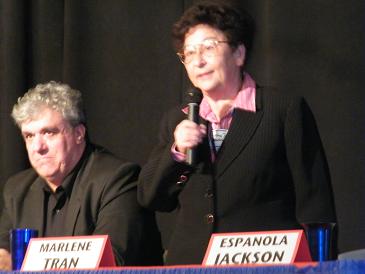
Marlene Tran said she can’t support the plan until the shipyard’s cleaned up.
Tran explained that initially, when Arc Ecology’s Saul Bloom gave the community a presentation about the plan, she was intrigued.
“It seemed to bring a lot of promises, but then Bloom presented ten of the deficiencies with the plan,” Tran said, referring to heavy metals and other toxins on the shipyard.
“I will make sure they will do the clean-up first,” Tran said. “If we go for it, and then construction workers and residents, get sick…well, there’s no way I can condone the project, until it’s absolutely clean. And what if the developer goes bankrupt?”

Espanola Jackson gave folks a history lesson
“When I learned that the shipyard was a Superfund site was not until 1990, because we was illiterate about environmental justice in a black community,” Jackson recalled. “I thought environmental justice was white kids chasing whales. But then I went to Monterey and learned about restoration advisory boards [RABs].”

Noting that the local community got its own RAB in 1994, Jackson recalled how former Mayor Willie Brown appointed Lynette Sweet to the Redevelopment Commission, before the Commission voted 4-3 in 1999 to select Lennar as master developer for the shipyard.
“Willie Brown brought in Lynette Sweet to be the swing vote to bring Lennar into the community,” Jackson said.

DeWitt Lacy said he wouldn’t have supported the plan, as it was, and given the Board’s limited ability to amend it under the city charter.
“I’d have supported the plan, if I’d had the power to amend the project’s environmental impact report and get it done right,” Lacy explained.
Lacy faulted the plan for carving up a state park, building a bridge over an environmentally sensitive slough, and not doing enough to ensure local jobs or guarantee benefits.
“Folks didn’t believe it was important for black folks to have state park land, but it’s important for our kids to have this,” Lacy said. “The state has spent $5 million to rehabilitate Yosemite Slough… And a ‘good faith’ agreement [around local hiring quotas] doesn’t get it for me. We have to have absolute certainties to make sure our people get the benefits.”


You can watch video of both the D. 10 forums, which were moderated by Keith Goldstein, here. And stay tuned for coverage of the endorsements and financing behind each candidates’ campaign. D. 10 is already shaping up to be one of the most fascinating and pivotal races in the fall.


Adachi’s pension reform and the D. 10 candidates

37

As pretty much everyone knows by now, Jeff Adachi collected enough signatures to place a charter amendment on the November ballot that would reform the city’s retirement and health benefits plan. His amendment has become such a hot political topic that the Potrero Hill Democractic Club asked the 15 candidates who spoke at the club’s  August 2 and 3 District 10 forums what they thought of Adachi’s “smart reform.”

By my understanding of what the candidates said, four seemed unsure what the Adachi amendment would do, or were open to the idea, while the other eleven were opposed. But read for yourself what the D. 10 candidates said and decide where they stand on this issue:

Kristine Enea: “Certainly something needs to be done. I did sign [Adachi’s] petition. Adjusting for new employees has an inherent fairness. The path we are on is not sustainable.”

Nyese Joshua: (After admitting that she didn’t know much about Adachi’s amendment), “In terms of bringing it to the ballot, I agree.”

Lynette Sweet: “What Jeff Adachi did was not a bad thing, but the way he went about it was.”

Stephen Weber: “I don’t believe it was done right way, but I like the idea. The labor leaders are willing to sit down and discuss the pension plan. They just want to discuss it with the Board that is sitting there now.”

Eric Smith. “I love Jeff Adachi. And initially it looked great. But Beyond Chron [for which Smith sometimes writes] has an interesting story: When I read it, it says the measure goes after people’s health benefits. That’s troubling. I can’t really get behind this. We need to do reform from the bottom up, not from the top down.”

Malia Cohen: “Adachi’s a great public defender, but he’s taken an approach that’s disrespectful of public policy. Instead, he’s created a policy. I’m not in favor of it, if it unfairly taxes those at the bottom.”

Steve Moss: “The labor unions are rightfully furious. Pensions need reform. Things are out of whack. But this could lead to folks losing healthcare because they have to pay more to cover their dependants.”

Geoffrea Morris: “He had a point. The unions are very powerful in the city, he didn’t want to go through the red tape. Something needs to be done to reform healthcare and pensions.”

Isaac Bowers: “I thoroughly reviewed the San Francisco civil grand jury’s ‘Pension Tsunami’ report. I don’t think his initiative is the right way to go. I fear copayments for healthcare will throw people back on the city.”

Tony Kelly: “Great guy, stupid idea.”

Espanola Jackson: “You should talk to Adachi. Don’t shoot him down.”

Chris Jackson: “The measure is popular, it’s polling in the 60 percent range. But Adachi never talked to the nurses and the workers who make $35,000. And then there is the fact that this in an attack on healthcare. So a large percentage of the ‘savings’ is what workers will have to contribute. It’s a move away from supporting working class individuals.”

DeWitt Lacy: “We need pension reform. But no one likes change rammed down their throats without any negotation with, or input from, the workers. It addresses an important issue, but it’s too divisive.”

Diane Wesley Smith: “It’s ridiculous. Some reform has to happen, but this isn’t it.”

Marlene Tran: “Jeff Adachi took a lot of risks in this pro-labor town. He claims a $170 million savings. I would support it, because everyone should pay into the pension fund.”

Chiu left out of Gascon’s Community Ambassadors loop

2

SFPD Chief George Gascon kicked off today’s press conference about a Community Ambassadors program on the Third Street corridor by saying that it’s a grassroots pilot.

“This is not a police program, it’s a community program,” Gascon said, as he introduced Adrienne Pon from the Mayor’s Office to speak about what is being framed as a trailblazing effort to address violence on public transit at a time when money is tight all around.

Board President David Chiu, Sups. Carmen Chu, Sophie Maxwell and Eric Mar, and Chinese Chamber of Commerce consultant Rose Pak were also in attendance and everyone was all smiles and put on an apparent show of solidarity for what appears to be a desperately needed program

But Chiu did not know that the press conference was happening, when I called him last night for details. I’d assumed that he would be in the loop as the Board President and the most visible of the city’s top Asian American political leaders. But as Chiu confirmed today, he only was briefed a few hours before it took place.

Asked what was going on, Chiu waxed diplomatic.
“As you know, I didn’t know about it yesterday when you called,” Chiu said. “So, when I heard about it, I called the Chief and he sent the information. I’m happy this is happening.”

Oddly, when I called the SFPD this morning to confirm that today’s press conference was happening, I was asked who had told me about it. By then, I also knew that D. 10 candidate Marlene Tran was going to be speaking at the press conference. And while it’s great that Tran is an advocate for public safety programs, it’s weird that a candidate on the November ballot was in Gascon’s press conference loop, when Board President Chiu was not.

“We are in a neighborhood with serious public safety concerns,” Chiu told reporters today. “The issues that come from one of our ethnic communities are of concern for us all.

“We are working with the Mayor’s Office and the Chief,” Chiu continued, noting that the Board has been working hard to restore funding for violence prevention programs and to ensure there is funding for a new program for translation services.

“A multi-ethnic program is the type of program we need to move the healing process forward,” Chiu said, thanking the SFPD and the District Attorney’s Office for working to help victims of violence get help and translation services.

Sup. Maxwell talked about how the Ambassadors Program will be good for seniors, young people and very very young people.
“We need to make sure we continue these kinds of programs,” Maxwell said.

Sup. Eric Mar thanked AT& T for providing cell phones to the 12 outreach workers who have been trained as Community Ambassadors.
And Pon of the Mayor’s Office promised that this would be the first of many efforts to address public safety concerns.
‘There is no place for violence in the community,” Pon said. “Any time anyone gets hurt, it rips a hole in the fabric of society. It’s not just the recent acts of physical violence and threats against some of our residents. No one should have to contend with being spit upon and name-calling and threats.”

Thanking Sharen Hewitt, Rose Pak and “the courageous community members who came forward,” Pon said the pilot program will last until mid-September and will focus on the Number 9-San Bruno bus and the T-Third line. Funding is coming from the city’s general fund and federal job stimulus funds.

“Unfortunately, those funds are going to end in September, so we’re looking for funding from the corporate community,” Pon said, referring to AT&T.

She described the Community Ambassadors program as a “non-law enforcement presence.”
“People can get along regardless of their cultural and linguistic differences,” Pon said.

AT& T California President Ken McNeely talked about his company’s “long and storied history”, noting that the first transcontinental call happened over 100 years ago and involved a call from San Francisco’s Chinatown to New York City.

“We’re in the business of really connecting people,” McNeely said.

Sup. Carmen Chu said the pilot program is the beginning of efforts to build community across ethnic lines.
“It starts to sends a message about what we want to accomplish,” Chu said.
“Crime is not something we want to see tolerated,” Chu continued.

On August 3, the Board considered legislation that Chu authored to implement higher penalties for crimes on and around Muni. Like the Community Ambassadors program, Chu’s legislation came in response to recent attacks on Asian Americans by African-American teens. In one case, a group beat a 57-year-old woman then pushed her onto the tracks. In another, an 83-year-old man died in the hospital after he was assaulted.

If passed, Chu’s legislation would increase the penalties for aggressive pursuit and loitering while carrying a concealed weapon to $1,000 if the crime occurred on or around MUNI (as opposed to $500 for the same crime committed elsewhere.) The Board also recommended that juveniles convicted of these crimes be given community service or in-home sentences instead of probation or juvenile hall.

Police Commission President Dr. Joe Marshall was also on hand today to voice his enthusiasm for the Community Ambassadors pilot.
“This is pretty cool,” Marshall said. “We got a model. I don’t know if any other cities are doing this, but they should be. I commend the ambassadors for being involved.”

And D. 10 candidate Marlene Tran said the program represented an opportunity to work “for peace and harmony.”
“This is an auspicious occasion,” Tran said, noting that there would be “double happiness” in the Asian American community over two community hubs, one in Viz Valley, the other in the Bayview.
“We encourage more collaboration amongst our community,” she said.

Rose Pak, consultant to the Chinese Chamber of Commerce, hinted that she would be squeezing more money out of AT&T.
“I knew we had a problem, and I knew who to go to,” Pak said, noting that she wasn’t not going to let AT&T “get away with pilot support.”
“I expect them to write a big check,” she said.

Pon told reporters that the Community Ambassadors speak a total of seven languages: English, Cantonese, Mandarin, Vietnamese, Spanish, Samoan and Hawaiian.

But when reporters asked how City Attorney Dennis Herrera’s newly announced gang injunction against two warring street gangs, the Down Below Gangsters and Towerside Gang, in Viz Valley, might be compromised by the Community Ambassadors program, Gascon stepped forward.
“If thoughtfully implemented, gang injunctions can be a powerful tool,” Gascon said, noting he believes the Community Ambassadors will be a model that “we’d like to take to other neighborhoods.”

But how can 12 people armed solely with AT&T cell phones and fluorescent yellow jackets tackle what seems primarily to be youth violence against Asians? And what will happen in six weeks when the pilot program’s funding dries up?
“For the past two weeks, and continuously until mid-September, they are going through training at the SFPD and the MTA,” Pon said, noting that some of this training involved cultural and linguistic competency training.

“We’re building a pilot,” Pon continued. “The phones are preprogrammed to speed dial the SFPD, and we recruited these 12 ambassadors from over a hundred candidates in the Jobs Now program’s census outreach team. So, they are used to working in public and are comfortable with working with individuals of diverse backgrounds and ethnicities.

Pon acknowledged that the pilot has a shoestring budget.
“We are seeking private and foundation funding, so I’ll be doing lots of grant writing,” Pon continued, noting that a permanent program would need “at least half a million dollar budget.”

Asked if the Mayor’s Office was kept in the loop about today’s event more than Chiu, Pon smiled.

“SFPD called the conference and we are all making sure that we are working together,” Pon said.

But AT&T’s Ken McNeely was happy to talk about his company’s efforts to provide cell phones for connecting with first responders.
“Public-private partnerships are critically important,” McNeely told the Guardian.
“We’ve made education one of our key pillars for giving back,” he said. “ For us all to do well, it’s going to take public private partnerships.”

Gascon rolls out program to address violence against Asians on Third Street

0

SFPD Chief George Gascon will roll out a pilot program today in an effort to address  violence against Asians seniors on public transit.

A press release notes that the SFPD in conjunction with AT&T and the Office of Civic Engagement & Immigrant Affairs, which is a division of the City Administrator’s Office, has developed the San Francisco Community Ambassadors program.

“This is a pilot program, designed to enhance community awareness and safety,” the release states. “The pilot program will consist of community safety teams assigned to public transit locations in Visitation Valley and Bayview to provide a safe, visible and supportive presence for residents. This program will consist of 12 ambassadors who are from various cultural backgrounds. Many of the ambassadors are bilingual as well.”

D. 10 candidate Marlene Tran, who speaks Cantonese, Mandarin, understands Vietnamese and has taught English as a Second Language for 37 years, told the Guardian she has been working on community safety issues for 20 years. Tran also said that she recently did a bilingual survey in light of a wave of violence against seniors on the Third St. corridor.

“I have daily contact with students and residents, so I have my finger on the pulse of the community as a whole,” Tran said. “It’s a battleground out there, but for a long time no one knew about it, because many of the victims are not English speaking.”

“We want to be an integrated community,” Tran continued, “and seniors should have the flexibility to move around, but many of them don’t dare go out after 4 p.m., unless they are escorted, so having this program is a step in the right direction. Some of these cases are never reported. We need to encourage residents to be more proactive.”

Details of how the program will be funded and how long it will last remain sketchy at this point. Sharen Hewitt, founder of the Community Leadership Academy and Emergency Response Project (CLEAR), told the Guardian that she pitched the concept of having monitors on the bus some months ago, during her last meeting with Board President David Chiu and Sup. Carmen Chu.

“I suggested we take money from Trent Rohrer’s Jobs Now program to pay for it,” Hewitt said. “I also suggested we go to developers in the Bayview and engage them in a constructive conversation about donating dollars to help with translation services.”

Gascon and 12 ambassador staff will be present to speak about the program at today’s press conference, which takes place at 2:45 p.m. at 2574 San Bruno Ave.


A good day for germaphobes

0

Good god, y’all! If you parents out there (yeah, I know this is San Francisco, but I’m house-sitting up in Bernal for the week, I know the childrens still exist) have successfully protected your family from the dangers of I dosing, you now have a new challenge on your hands: making sure your loved ones are harboring enough bacteria.

Such is the message of a one Larry Weiss, who has been contracted under the illustrious moniker of “chief technology officer” by a one manufacturer of naturalish hygiene products known in certain circles as Cleanwell, to make you even more aware of the microscopic dangers that lurk in every damp sponge. And the microscopic wonders in every bite of Dannon’s! There’s good bacteria as well, which his product helpfully allows to survive another day in your epidermis and eventually, gut. He’ll be presenting the findings of his doctoral search for the truth today, Thurs/5, at an organic children’s store in the Marina named Sprout. Sounds like it’ll make a bangin’ pre-funk for our Best of the Bay Rock Party tonight.

Some sneak preview tips gleaned from the Cleanwell site:

-Eating yogurt or probiotic products help you to get that belly bacteria back in balance after a round of the antibiotics. Listen up you chronic infection people!

-76% of all liquid soaps include Triclosan, a devil juice that disrupts endochrins and makes teenage girls get their periods disturbingly early. Guess what soap has no Triclosan!

-Viral YouTube videos do not actually cause a single virus, or more than one virus! On a related note, did you know there is some debate as to whether the word ‘virus’ has a correct pluralization?!

Cleanwell appears to have caught wind of the SFBG staff’s penchant for rolling around in pungent “Free” boxes we find on the sidewalk curb, because they generously sent us no less than five spray bottles of their original flavor all-natural hand sanitizer. A question that perhaps Cleanwell can answer: why aren’t we calling the first ingredient on your list “aloe” instead of the slightly more processed sounding “aloe barbadensis?” To me, this suggests you’re not throwing plants in a pot and stirring, which is how we hippie typically prefer our toiletries to be made. One of my counterparts suggested your formal language was due to the fact that Cleanwell ingredients are so natural, one must use their Latin names to describe them. 

Anyways, I got everybody to spritz their hands at the office, thereby putting off yet another pink eye epidemic. Thanks, Cleanwell!


Healthy Hygiene Tips from Dr. Larry Weiss

Thurs/5 6:30 p.m., free

Sprout

1828 Union, SF

(415) 359-9205

www.cleanwelltoday.com

www.sproutsanfrancisco.com


Gods of Distortion: The Interviews (Part Two)

1

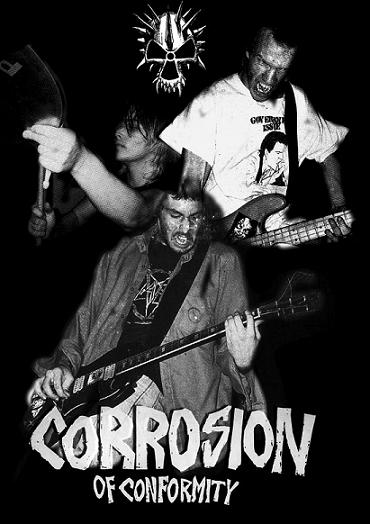
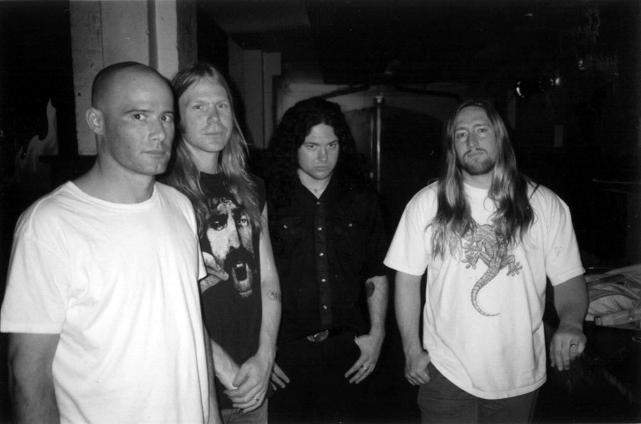
Check out Ben Richardson’s story on the Southern Lord Mini-Tour in this week’s Guardian. Here, he talks with Mike Dean, bassist and singer of Corrosion of Conformity.

San Francisco Bay Guardian: You guys are practicing in North Carolina now, in preparation for the tour?

Mike Dean: That’s right, yeah. It might be useful.

SFBG: How long has it been since you’ve played all these Animosity songs?

MD: Quite a while. Easily 23, 24 years, something like that. 23 years!

SFBG: How does that feel? Is it like putting on an old garment?

MD: Either I remember the stuff precisely, and it is like putting on an old garment – it feels just like yesterday, and I can play it – or there are parts of songs that I have no recollection of. It’s either completely natural or kind of strange.

SFBG: Can you point to any particular parts that seem unfamiliar?

MD: There’s a bridge-like part in the middle of the song “Holier,” that I completely forgot about!

SFBG: This must be due in part to the fact that your technique has changed a lot over the years. At this point you’re a veteran, a very well-schooled musician – not to say that you weren’t good to begin with…

MD: It’s funny that you should mention that. It’s an astute observation, because sometime around the time we did [1987’s] Technocracy, I started to play with my fingers more and more, and sort of leave the picking thing behind. Basically, it was like starting all over again, to some extent. Now, I can do all the things on Animosity and Technocracy with my fingers, as opposed to a pick, which I would just be dropping anyway.

SFBG: So you recorded Animosity playing with a pick, but now you can play all those parts with your fingers.

MD: Yeah, I guess I’m losing points for authenticity that way.

SFBG: Well, I’m a fan of the pick-less bass playing, in general, so I gotta support that approach.

MD: I am too, but I try to have a real open mind about it now. You’ll see videos, certain songs in which John Entwistle [of the Who] or John Paul Jones [of Led Zeppelin] use a pick to mix it up.

SFBG: Tell me a little bit about how you got involved with this Southern Lord Mini-Tour. How did it all come together?

MD: That’s an interesting story. I’ve done a little recording for a band that was on Southern Lord called Earthride. Maybe about five years ago. I kinda knew Greg [Anderson, owner of Southern Lord Records] from that business. Greg was kind of a hardcore fan when he was really young. I believe that Corrosion of Conformity stayed at his house in Seattle back in the day. I have a foggy recollection of that happening. It took me a while to sort of put that person together with the guy in SunnO)))) and Goatsnake, but eventually I made that connection. Dealing with him is pretty cool, and there are a lot of artists on his label that I admire, like Wino and Goatsnake, whom I thought were really good the first time I heard them – it’s hard to go wrong with basically the rhythm section from the California version of The Obsessed and the singer for Scream.

http://www.youtube.com/watch?v=Vk3rlgFrL3w&feature=related

SFBG: Did he reach out to you, or you to him?

MD: He reached out to us. He was looking to re-issue some old stuff, and that still hasn’t happened too much. We mentioned that we were gonna record a new release, and that may happen. So we just started talking to him about doing that, and he said “hey you wanna play some shows out here?” and we were like “oh yeah!” It kinda lit a fire under our ass to get some new songs down and go out and play ’em.

SFBG: This is the new release as a trio that I’m hearing rumors about, with the Animosity line-up?

MD: Yeah. The only tangible thing that’s done is a seven-inch vinyl, two versions of one song called “Your Tomorrow.” That should be available by the time we’re out playing on the West Coast. It was kind of a hurry-up production, though it sounds really good, and looks really good too.

SFBG: Are there any plans to do any new C.O.C. material with [singer-guitarist] Pepper [Keenan]?

MD: There are plans to do that. We have a multi-pronged general plan, to perhaps take this and do a full-length three-piece release, and get out there and play it some. That’ll be quite a story – it’s been a long time, and I think we have some new material that we’re excited about. I think at the point after we’ve done that, it’ll be a story to get the Deliverance line-up together. Before we got the three-piece together, we were supposed to go to Europe and play some festivals, we had some offers, but Pepper’s busy with his other group, Down, so his schedule’s a little jacked up. So almost as a joke, I said, “Well we should do a three-piece tour!” Everybody stopped and went “Uhhhh….maybe we should!”

SFBG: What had you been up to since C.O.C. went on hiatus, in 2006? You mentioned recording Earthride…

MD: Well, C.O.C. had been going without [drummer] Reed [Mullin], and in some point around 2004, we decided to make a record with Stanton Moore, from GalacticIn the Arms of God. That’s something I’m pretty proud of, something we did ourselves in Galactic’s now-demolished rehearsal space, which was flooded out of the warehouse district of New Orleans. We had a nice little tour with Clutch, in the UK. At that point, [C.O.C. guitarist] Woody [Weatherman] and I started a band that we tentatively called Righteous Fool, and he moved up to the mountains, to basically go into agriculture and have a kid — that kind of put a damper on our plans. Then I started getting in contact with Reed for the first time in quite a few years, and we started jamming together, and that became Righteous Fool, and through that combination of circumstances we have Righteous Fool opening up for the three-piece-C.O.C gigs we have lined up in a couple weeks. It’s a slightly greasier kind of feel.

SFBG: I was gonna ask, since there’s only one song up on the Righteous Fool MySpace, and it seems more in the uptempo vein, like the older C.O.C. stuff: what are your plans for the Righteous Fool sound? What side of your musical personality do you get to express in that project?

MD: Well…it’s kind of in its infancy. We’re a couple years into it, and some good songs have emerged, but it’s difficult to call where that’s gonna go. We have a pretty solid musical presence in the form of Jason Browning. I don’t really know what to say about that. There’re a lot of directions we could go. I think there’s going to be more of an emphasis on vocal harmonies, things like that. We have a couple fun things we do, with a Fleetwood Mac song, and a Skip James song.

SFBG: Well I think people are curious to see what’s going to happen with that, and excited to see the band live. You’ll be playing two sets in a pretty short duration on this tour. What do you think the audience reaction is going to be, going from a super-slow, enveloping Goatsnake set right into this pissed-off hardcore Animosity stuff.

MD: It’ll be interesting to see. There are a lot of people who perform that kind of music [doom metal, a la Goatsnake] at some point in their life, in their younger life, in their previous life, who might have been into the hardcore kind of thing, so there’s a lot of overlap there, in terms of the cast of characters who perform that kinda stuff well. At the time – it’s kind of humorous to think, now – some of the parts on Animosity that were slower, briefly dirge-like, somewhat Black Sabbath inspired – that was considered slow, and within a certain kind of close-minded scene, was actually controversial. It was a controversy that you would play a few measures of something slow or heavy rock-inspired.

I think we were credited with being on the forefront of that, but in a way, we were just imitating Black Flag, but taking our Black Sabbath influence a little more literally, and indulging some more regressive influences. We did something original with borrowed ideas. There are people that would say we were involved in the beginnings of that type of thing, y’know. I don’t think that would be too pompous to say. [Laughs] If it is, I just said it, so…

SFBG: You mentioned having respect for Wino earlier. Being in Saint Vitus in that SST scene, he encountered people who would really be pissed off that he would play slow, super-Sabbathy songs.

MD: That was a pretty crazy thing. I’d already been initiated to the music of the Obsessed by that time, and picked up an appreciation for it. And so to see that dude in Saint Vitus not playing a guitar! It was just absurd, but it kind of wound him up, and made him a more intense vocalist. He’s been playing some shows with Saint Vitus recently, and I’ve heard that that’s still the case. I haven’t witnessed any Saint Vitus in quite a few years.

SFBG: You should take the opportunity, if it arises. I’ve seen two shows in this resurrected Saint Vitus era and…

MD: There’s no Armando on drums…they have some other dude on drums…

SFBG: Yeah, they have a different drummer, but Wino and Dave [Chandler, guitarist] are still really potent.

MD: So Saint Vitus comes to Raleigh, NC in like 1986, and Wino stays at my house (it’s a house a lot of people live at) and here he is on this tour not playing guitar. He picks up an acoustic guitar and plays tunes in a couple funny different ways, and plays Robert Johnson songs verbatim, as they are on the one LP – Robert Johnson Complete Recordings – we were just like, “Oh, my God!”

SFBG: I’m curious as to how you got from playing hardcore with Sabbath interludes to playing that reinvented C.O.C. sound from the early nineties, which is much more directly Sabbath-influenced. But that transition corresponds with the time when you were out of the band…

MD: I think we were already looking in that direction. You go out there and you play hardcore music, and you’re on tour, and the quality of it – of some of the bands you see – isn’t that great, and you’re listening to music partially devoid of melody. You want to unwind, and listen to some older stuff, and you realize that the craftsmanship of the older stuff is a little more advanced, even though its time has come and gone. Whats the next logical thing if you’re listening to Sabbath, or the next logical regression, to try to take something new? Deep Purple! We were listening to a lot of that. It’s funny, because after I quit the band they ended up with a singer [Pepper Keenan] who’s obviously really Ian Gillian-inspired, and they hooked up with a producer who had really sound music theory ideas. That resulted in Blind.

I had kinda moved on. I met a nice girl and moved to San Francisco for half a year. I lived in Philadelphia and I was delivering things on my bike. I heard the Blind record, and I was like “Oh mah god, its really good!” That minute came and went, and around the end of 1993, they had a dispute coming up with new material, and they were looking for a bass player and a singer. They asked me, did I want to come and make a record, and I was like “Yeah, all right!”

SFBG: That’s been the thing doing research for this interview…I think the archetypal narrative for rock bands is that they have members in and out and it gets complicated, and there are a lot of hard feelings, whereas it seems like with C.O.C. there’ve been all these people in and out of the band, but it’s been very amicable. You left and came back; you’re playing in Righteous Fool with guys who had been in the band before…

MD: Well, you know, that’s not to say that there weren’t heated incidents involved in some of this revolving door activity. There might be some negativity that occasionally rears its head. But I think everybody tries to be an adult, and a compassionate person. I think Kyuss would be the band that had that more amicable situation. Drummers in and out, a couple bass players…

SFBG: I thought some guys from that band don’t even speak anymore…

MD: Well now, yeah, you’re right. The funny thing is that they were all supposed to be on Roadburn in Holland like the same day. Nick Oliveri playing his acoustic stuff. Mr. Garcia doing some Kyuss stuff…

SFBG: It seems like a lot of these differences are being put aside in the interest of these tours that are resurrecting bands – bands that have been broken up for awhile and are coming back to tour.

MD: There’s a big rash of that right now, and it’s one of things that actually kinda gives me pause about doing this, to some extent. The only thing I can do to allay my feelings of not wanting to be part of that is to attempt to offer something new. At this point, we have four or five new songs that we can perform. We’re doing this as part of readying ourselves to do something new. And I know people are excited about the old stuff, and its fun to play, fun to reinterpret, and we enjoy it, but it’s also about having something new. Because there are a lot of 40-, 45-year-old people who were in some moderately famous musical endeavor when they were 20, and they’re all coming out of the woodwork. There’s just a new market for it.

SFBG: Is it possible for you to expand on the drawbacks of these nostalgia tours? Not asking you to slag anyone off, obviously. Are there things that you could point to that give you the bad vibe with that trend?

MD: No, not really. I’m not going to point to anyone who’s substandard or insincere. At some point it just becomes a little redundant. I’m kind of an unlikely subject [for a retro-focused tour] because I’ve never been real big on the nostalgia factor. But here we are.

SFBG: It just seems like if it’s overdone, it can take away the spotlight from some of the cool new bands. But it cuts both ways, right, because if you have these nostalgia tours, you can have new bands as openers, and take advantage of the known quantity, the big name. If there’s a similarity in the music, then the fans of Saint Vitus, say, get exposed to up-and-coming bands in the same genre that the older cats who listen to Saint Vitus might not have heard of.

MD: Well Saint Vitus this doesn’t really even apply to…

SFBG: Well, yeah. You’re right…

MD: …regular time, the laws of time, don’t really apply to them. They started off working this old crazy freedom-rock ethos anyway. They started off being out of style, and they’re a special case.

SFBG: A bad example for me to cite. In general, do you think it’s a good time in musical history to be a metal band?

MD: It might be! One of these trips has a corporate sponsorship, so apparently someone believes that this can help with product placement and identity. That’s…pretty crazy.

SFBG: Do you follow any newer, up-and-coming music? I’ve been impressed in recent years by the resurgence of a lot of North Carolina-based bands that have been making names for themselves…

MD: You know, the funny thing is, Between the Buried and Me…we had no earthly idea that they were from Raleigh, North Carolina. I was just like “that band with the really badass drummer, and sort of exaggerated dynamics – they’re from Raleigh?! Really?!” I’m not actively following stuff like that, but I’ve heard of them, and I’ve heard them.

SFBG: How about Valient Thorr?

MD: Valient Thorr I’ve actually seen, and the funny thing is I do a lot of…I work a lot of events, I do rigging, and I used to do straight-up stagehand stuff, so I’ve moved Valient Thorr’s gear, at the Warped Tour. They were like, “No, no, you can’t move our gear, you’re Mike Dean!” And I was like, “Dude, the rent is due, every month, I will move it.” I like them, I like their crazy anti-war video from several years ago, with Mr. Brian Walsby. Have you seen that? Being on the Volcom label, no one ever sees their shit.

SFBG: It seems to me like Southern metal has experienced a crazy boom in the last five, 10 years or so. All these bands out of Georgia – Baroness, Mastodon, Kylesa, Black Tusk. You’re sort of in a unique position to speak to how well Southern rock can combine with heavy music.

MD: A lot of the bands that you just mentioned there are good, non-stereotypical versions of what you would call “Southern metal.” There are other acts that kind of exploit that in an uninteresting way. There’s a lot interesting musicianship in that stuff, which is pretty cool. I’m not a big flag-waver, but all those bands are pretty good. It’s kind of astounding how popular and successful Mastodon are.

SFBG: It’s crazy. I’ve seen them go from the club shows to the college amphitheaters. It’s crazy to see the change in the kind of people who you see at the show.

MD: I’ve never been to a Mastodon show. I’ve may have seen them open for somebody a long time ago, but I’ve never been to one of these big shows. I’d be curious to see.

SFBG: They’re total pros in one sense – the performance is really top notch. But the guitarist, Brent, is kind of a wild man, and I think they’re almost better when he’s three sheets to the wind, because it ups the intensity. If he’s getting angrier and angrier as the show goes on, his solos get more expressive…

MD: A whole album based on Moby Dick.

SFBG: Can’t argue with that, right?

MD: Those kids’ English teachers gotta be proud!

SFBG: One of the things I was struck by, listening to Animosity to prepare for this interview, was the strident political nature of a lot of the lyrics. Even though we live in very politically contentious times, there really hasn’t been the kind of musical reaction that existed under Reagan, when people were using music as a channel for their dissent. Do you have any insight, having written a seminal political hardcore album, about why that isn’t going on today?

MD: That’s an interesting observation. I don’t really know the answer to that. I don’t think there’s as much consensus, because of the disparate nature of media now, or the wider number of outlets. At that time, we had cable TV in its infancy, we had print media, we had three networks – I think that people would be more tuned in to the same media outlets at that point, and they would either accept it or reject it. I think there was more potential for mass consensus even in terms of dissent. Now it’s just so diffuse; people just look at things that reinforce their worldview. A lot of those worldviews don’t have anything to do with reacting to political situations, or reacting to wars that are going on. Also, I think expressing oneself through music didn’t result in any massive type of change. I don’t think its really an effective means of effecting any kind of change. It’s just blowing of steam…

SFBG: Well, Bono cured hunger in Africa. So, there’s that.

MD: I crewed for U2 on their 360 show as a local, working the spotlight, and the guy on the spotlight above me pissed himself in the spot chair – I got to watch the piss drip down.

SFBG: He couldn’t leave?

MD: Yeah, he couldn’t leave. I watched him drink some coffee beforehand, and I was wondering…

SFBG: You said it was the spotlight above you? That sounds like a bad situation…

MD: Fortunately, they were offset.

SFBG: Did you see a trickle of urine going by, a couple feet from you?

MD: I did. Yeah, I did.

SFBG: That’s brutal.

MD: They landed the truss, and the guy just left – he resigned on the spot.

THE SOUTHERN LORD WEST COAST MINI TOUR

Corrosion of Conformity, Goatsnake, Black Breath, Eagle Twin, Righteous Fool

Tue/10, 7 p.m., $25

DNA Lounge

375 11th St., SF

www.dnalounge.com

Gods of Distortion: The Interviews (Part One)

1

Check out Ben Richardson’s story on the Southern Lord Mini-Tour in this week’s Guardian. Here, he talks with Southern Lord founder and Goatsnake and SunnO))) guitarist Greg Anderson.

San Francisco Bay Guardian: So, first off, could you describe the planning of the Power of the Riff festival, and the Southern Lord Mini Tour that’s sort of spun off of that?

Greg Anderson: Well, last summer we did a Southern Lord event in Seattle with SunnO))), the other group that I play in. Basically it was two nights up there at this venue Neumo’s, and SunnO))) headlined each night, playing different sets each night. The support for both shows was Lord bands: we had Black Breath, Accused, Pelican, Earth, Trap Them. It was great! So the promoter of that venue – who put that on for us last year – called and asked if we wanted to do something similar this year – another Southern Lord event. So we were trying to put something together for that, and right around the same time, another good friend of mine told me that he’d been asked to put together something down here in Los Angeles, at the Echo and the Echoplex, and was I interested in getting involved in that. So with these things impending on the horizon, I thought I’d put together a decent line-up of Lord bands and make it happen.

Also, at the same time, I’d been talking with Mike Dean from C.O.C., who told me that they wanted to get out and play some shows with the three-piece line-up, the 80s Animosity line-up, and asked me if I was interested in working with them on that. So I thought I’d base it around them being the headliner and some of our bands on the bill as well. So that’s how it came together, and over the last couple months, I’ve been slowly putting together the pieces, getting other bands on board.

San Francisco just seemed like a natural choice, also, to do a show. San Francisco’s always been very supportive of Southern Lord and heavy music in general, so I thought “we’ve gotta do a show in San Francisco with this package – it’s gotta happen!”

SFBG: How long have you known Mike?

GA: He stayed at my house in 1986, when C.O.C. played in Seattle, actually, on the Animosity tour. It was an amazing show, and back then there were a lot of bands crashing on people’s floors. They still do, of course. I had a lot of bands stay at my house, and they were one of them. I met him then, but I didn’t reconnect with him as far as a working relationship goes until about 2003 – he was on the Probot record, as one of the vocalists on that, and I reconnected with him that way. A couple years later, he produced and recorded a record by this band on Southern Lord called Earthride.

It was kind of off and on. C.O.C.’s come to town, and I’ve talked to him and what-not. I have a lot of respect for his playing, over the years.

SFBG: Did the idea of playing the shows this summer precede the idea of releasing the seven-inch you guys are putting out, with the new track by that Animosity trio line-up?

GA: No, it all kinda came at the same time. I suggested it might be cool to have some new material, and he was really gung ho for doing that too, so we’re putting it together really for the shows that they’re playing – in time for the shows.

We thought it’d be cool. There are a lot of bands getting back together these days that rarely if ever have any new material, or really anything new. We had talked about that, and told me “hey, we’re actually playing a handful of new songs at these shows, so we’re really into writing new material.” So I said, “well, lets try to get something out there,” and that’s how the seven-inch happened.

SFBG: What’s your feeling on older, defunct, previously broken-up bands coming out of the woodwork? I saw an interesting comment of yours in another interview about the “Kyuss Syndrome,” in which a band isn’t a draw while they’re together, but if you give them some time, they build up this huge fanbase, whether or not they’re actually active and playing shows. What kind of ramifications do you see this trend having?

GA: First of all, I think it’s really great, actually. Some people kind of have a bitter attitude about it. They say “where were these people back in the day!” But the truth of the matter is that its really based around the internet, and the fact that information is so easily available, and cataloged and documented meticulously on the internet. You can find out a lot of stuff!

The other thing about the internet is that it’s like a trail, a path you can get on, on which you find one thing, and it leads to another thing, and it’s just a snowball effect. I think it’s just an amazing tool for discovery. It’s great, because there’s important music that’s been made, that before the internet, or without the internet, would have been much more difficult to learn about. Now, it’s easy, and I think people are getting turned on to all this stuff. The interest grows, and it makes it possible for these bands to come out and play to three to four times as many people as they did in their heyday.

It’s amazing! I’ve seen it in different genres. I saw At the Gates play in Los Angeles, and they sold out this huge place. I saw them in their first tour in the U.S., in the mid-nineties, and there were 50 people. It was the same thing with Saint Vitus. I saw them in the 80’s and it was a very select audience; very few people were there. Then, they come back, and they’re playing for three or four hundred people. I think it’s cool, I think it’s a real testament to the fact that this music is valid and incredible. It needs to be heard, and it needs to be given the respect that it’s due.

SFBG: Particularly in the case of At The Gates, there’s almost a sense of justice, in that a lot of people made a lot of money aping ATG when they weren’t around. Now they’re able to take advantage of a bunch of people who were introduced to the music through other bands that were playing an At the Gates style.

Do you think the proliferation of big summer metal festivals has had an effect on bands reforming? From what I can glean, that seemed to be an influence on Goatsnake getting back together, having this opportunity to play Roadburn, and you guys thinking “hey, why not?”

GA: I think there are two big factors: one – I won’t lie – the money is really attractive, especially when you get older, and you’ve got families, mortgages, etc. You can’t just crash on people’s couches – you’ve got responsibilities. When these festivals come along, or sponsorship from Scion or Converse comes along, it makes it so it can actually happen – the resources are there. And that’s something that wasn’t available – to my knowledge – in the 80s. These opportunities involving people with deep pockets who are willing to put it into underground music. It just didn’t exist. It definitely didn’t exist in the 80s and in the 90s, with the alternative music boom, stuff was available, but for underground metal and hardcore it wasn’t available.

Now, you’ve got these corporate sponsors who are putting together these insane events, and a lot of times – they’re free! Like the Power of the Riff fest that we’re putting on. We were able to get the funding to make it a free event. And at the request of the sponsor – they demanded that it be a free event – and we were like, “Wow! This is cool!” I think it’s an interesting time right now. There’s nothing like it. That wasn’t possible before. Like you’re saying with your question, it makes it so that these bands can get out there and do stuff. They have the resources to do that.

A lot of the bands I’ve seen are really kicking ass! I saw Saint Vitus a couple weeks ago, and it was mind-blowing – it was absolutely mind-blowing. They had it, man, they were killing. Eyehategod, same thing! These bands are charged! I saw Death Row play, which is like the original Pentagram – they were killer. It’s an interesting and cool time in music right now.

SFBG: Your bringing up Eyehategod and Death Row provides a good segue to my next question: does the doom metal genre have a particular affinity for a lot of interpollination between bands and musicians? For this kind of freewheeling collaboration, in which Goatsnake is tied into the Obsessed, and tied into SunnO))). I think of Eyehategod in the same way, with their connections to Down, and therefore C.O.C., and so forth. Do you think there’s something particular about doom-stoner metal that enables or inspires this kind of collaboration?

GA: I’ve never really thought about it before, to be honest with you. It’s just kind of a friendship or a brotherhood between the musicians, and kind of a desire to take things in different directions and do different things with it. You mentioned the Eyehategod thing, and that whole New Orleans scene is super, super-intertwined. Outlaw Order, Crowbar, Arson Anthem, and all these other bands that all share members. I think it’s really cool. Soilent Green. There’s tons of those bands, and I think it’s cool when bands can branch and do different side-projects. For me, as a fan, it’s interesting, and if you’re into the player or the players, and what they’re doing, it’s a real treat to have all these different outlets, rather than just doing one band, and one album a year.

I think it has to do with the punk rock roots that these people have and come from, and the DIY aesthetic of doing things on your own, and not really having to answer to a major label or someone telling you, “Well, you can’t do that, and you can only focus on this one band.” It’s kind of a shame, when you think about it. What if that spirit, and that mentality was happening with bands like Led Zeppelin and Sabbath? We’d have all these spin-offs and different projects that they were involved in, that were kind of pushing boundaries and doing different things. I think these [younger] people do what the hell they wanna do.

SFBG: Well you’re making my job easy, mentioning the punk rock ethos and the DIY ethos of these musicians, because my next question was about all the connections that exist between the 80s hardcore scene and the doom metal bands, and the doom bands that grow out of that scene and the musicians that play in hardcore bands and then do metal bands. I think I remember reading that you were a hardcore fan in your youth, and played in a more hardcore-oriented band. Do you have any insight into how those connections came to be? Stylistically, the types of music have some serious differences, and I know that at particular points in history, there was a lot of animosity between people who like their music fast and those who like it super-slow. Is there anything you can point to that speaks to the connection between those two worlds?

GA: I’m not sure I can explain or pinpoint why that’s a phenomenon, but you’re definitely right. What I was thinking when you were asking the question – I was thinking about Black Sabbath, because I think they’re one of those bands that everyone likes, and there are a couple hardcore bands like that too, like the Cro-Mags, and Bad Brains. Everyone can agree on those bands – at least a lot of people can.

I grew up in Seattle, and we didn’t get a chance to see a lot of outside, touring bands, because we were way up in the corner – we were sort of geographically isolated. There’s a lot of stuff that can happen because of that, and one result was the grunge explosion, where a strong local scene grew and was cultivated because there wasn’t a lot of outside influence. That also adds to how people got some of their open-mindedness. Grunge is a fusion of a bunch of different musical styles – punk included, metal included. What I thought was cool about Soundgarden, from the beginning, was that they sounded like a fusion of Zeppelin, Sabbath, and [Black] Flag. And the most important band in that scene growing up, at least for me, was the Melvins, who were the perfect combination of Black Sabbath and Black Flag. To have these prejudices against certain styles of music didn’t seem right to me, because there were all kinds of cool music happening around me. I know what you’re talking about – some of the punk rock attitude, and some of the metal attitude can be pretty narrow-minded at times. But at the time that I grew up in, the bands that I was heavily influenced by were available for me to see on a regular basis. That wasn’t the attitude, and it was obvious why it wasn’t the attitude.

I was turned onto metal first – Metallica, Motorhead, Raven, Slayer, Venom. Through those bands, and their attitude, and who they thanked on their records, and which T-shirts they wore, I got turned onto punk rock. And hardcore was a revelation because metal was played so fast and heavy, but then there were these hardcore bands that were playing even faster, like C.O.C. or D.R.I. The excitement involved in discovering new music has carried on throughout my entire life. And that was the start of it: being into metal, and then getting into hardcore.

SFBG: So the liner notes and sweaty T-shirts were like the internet of the 80s? Sticking with that theme of Seattle, and hardcore, and being psyched about discovering new music, can you talk to me about how you first came in contact with Black Breath, and the process of getting them on Southern Lord, and getting them on the tour this summer?

GA: It’s actually an interesting story! Over the last couple of years, especially playing with SunnO))), and working on this last record we were working on, I really turned away from, or wasn’t listening to much aggressive music. It was either experimental, or I was actually really into jazz music. It’s not like I was turning my back on heavy music, but my taste had just drifted a bit.

And then something snapped. I started listening to old hardcore records, like Jerry’s Kids, and Crucifix, which was sort of a reaction to where my mind was with the SunnO))) stuff. I wanted something that was the complete opposite of it. And so I was rediscovering stuff that I was listening to when I was younger, and I really got heavily into that. And I started searching about bands now that were happening, and I got turned onto His Hero is Gone, and a band called Cursed, and I was like “gosh, there’s actually some great music happening in the hardcore scene that I didn’t have any clue about!”

I got more into checking out the hardcore stuff that was happening over the last couple of years, and I got a record in the mail – a 12-inch, in the mail – by Black Breath. The font of their band logo was stolen from Celtic Frost, and they listed Poison Idea and Dismember as influences, and they were from Seattle, and I was like “Wow!” Because I actually get a lot of demo submissions, and most of it’s just CD-Rs, and honestly I just don’t have time to listen to ’em, but when we get a 12-inch we stop and think “that’s cool!”

SFBG: If I publish that information, you’re gonna get a lot more twelve-inches…

GA: [Laughs] If people are going to take the time to do that, it almost warrants me taking the time to listen to it. I think it’s a cool thing.

So I threw this record on, and I was totally blown away by the energy and intensity of it, and it so happened that this was close to a time that I was going back up to Seattle for Christmas. I ended up looking at the local paper to see what was going on around town, and they were playing one of the venues in Seattle. I went down to check it out, and their live show totally, totally blew me away. I hit ’em up after the show to see if they wanted to get a drink and talk about stuff, and it just kinda went from there.

SFBG: What was their reaction to that? It sounds sort of like the Miracle on 34th St. of metal…

GA: The funny thing is – and one of the things that really sold me on these guys – was that they were more impressed by the old hardcore band that I was in in Seattle – this band called Brotherhood, a hardcore band in the late 80’s. Being able to talk about that sold them on me. We bonded on a lot of different music. They’re really into the Swedish death metal of the 90s, which I’m really obsessed with as well.

Those guys actually turned me onto to a lot of other music as well. There’s this band that we just signed called Nails – they played a couple shows with Black Breath and I thought, “God, that’s great!”

SFBG: One last band-signing question. I noticed in another interview you did, you used a phrase “vigilantly heavy” to describe bands that you you appreciate. I can sort of figure out from context what you mean, but you applied it to Black Breath and I was hoping to get a more detailed description of how you’re using the word “vigilantly” in that way.

GA: I think it’s about being focused on what you’re doing. I notice a lot of intense focus from those guys on creating really amazing songs and riffs, especially. I’ve talked to them, and had in-depth conversations about that, and about how they write songs, and what they want. And they’re not just throwing the stuff together, and that’s pretty obvious. That’s one thing I’ve seen, with a lot of music these days. I won’t name any names, but there are more bands than ever, and more labels than ever – that’s kind of the curse of the internet, that there’s just too much music, too much information! It makes it more difficult to really find the good stuff. But I’m a seeker, man, and I enjoy that part of it, whether that’s going to a used record store and spending two hours flipping through all the used records, or really searching out music. When I find out about a band, I want to know everything about them – what other bands the members have been in, who’s influenced by them, who their influences were. That’s the same type of thing with Black Breath. They’re not just blowing stuff out there, and they’re really careful about what they do.

http://www.youtube.com/watch?v=HpOqsSV_S7c&feature=related

SFBG: To switch gears to a couple of Goatsnake questions to wrap up: do you remember the moment you first heard a Sunn amplifier?

GA: I do. I have two different recollections. One is Buzz Osbourne [of the Melvins], using the solid-state versions of the Sunn amps. I actually had no idea that Sunn had made a tube amp. I thought they were all about solid-state. In a lot of ways, to use a geek analogy, they were kind of the Peavey of the Northwest. They were based in central Oregon, in a town called Tualatin, and their whole thing, at least how I saw it, was that they were creating solid state amps and putting them out there at a reasonable price, for people who were getting into music. It was a good and cost-effective alternative to a Marshall, like a high-end model. Peavey was the same way – an inexpensive amplifier, usually solid-state, for people who were just learning to play guitar. Now, playing guitar is just so accepted and so huge that every company has a line of amps now that is targeted to this audience.

So this to me was what Sunn was about, and back in those days, you could go to any fucking pawn shop or any used store and get a Sunn head for really cheap! Especially pawn shops. That’s why bands like the Melvins picked up on them – because they were readily available.

The first time I heard the Model T, which is the amp I use in SunnO))), was actually in the mid-90’s. I was seeing this band in Olympia called Life, and the guitar player was this dude – actually a San Francisco dude, now – Tim Green, who went on to be in the [Fucking] Champs, and records bands now in San Francisco. And he played in this band that was amazing. Pretty Eyehategod-influenced. I went and saw him play in this basement, and he had this Sunn head, a tube amp, and I was like “what the hell is that!” It was super-loud, ripping, super-heavy, and immediately after I saw that, I searched one out – I had to have that amp. That was the beginning. I had never seen anyone play Sunn tube heads. I didn’t know they existed! And of course, after my search, I realized that they made a lot of them. But they stopped making them around the mid-70s, and that’s when they started making the solid-states, as a more reasonably-priced option.

SFBG: Do you remember the specific influences that were working on you around the time that Goatsnake was created?

GA: I moved to Los Angeles from Seattle in the mid-90s, and I had played in this band in Seattle called Engine Kid that was more – it was more about melody and dynamics, and we were really influenced by a lot of the stuff that was happening in Chicago, the Touch and Go style of bands like Shellac and Slint and Bastro and those kinda bands. But we were always into the heavy stuff too, and the Melvins, so there was that kinda influence.

When I moved to L.A., I had a chance to jam with the rhythm section from the Obsessed, because [Scott] Wino [Weinrich, singer-guitarist in the Obsessed] had just basically left town, and he was the leader of the band, and the band ended. They were just looking to do something new, and a friend of mine knew them and knew that I was looking to do something new too, so we put it together, under the guise of creating a heavy band, but with no guidelines.

At that point, I was listening to a ton of Eyehategod and a lot of Kyuss, and Slayer. Our common interests in that band – the bass player, drummer and I – were Pentagram, St. Vitus, and Trouble. That type of stuff. Basically, I started bringing them some music that I had written, and it was really heavy.

But we didn’t have a vocalist. And we thought, “how are we gonna do this?” We thought it would be too obvious to get a screamer, in the Eyehategod style. I really like that kind of music, but we wanted to go somewhere different, and to have some bit of melody in there. Pete Stahl was an old friend of all of ours, and we played him some of the demos, and he said “this is great, I think I could really do something with this.” It was a perfect combination, because the music’s really heavy, and I think you really expect someone to come screaming over it, but the vocals are really soulful, and really melodic. It was a really interesting contrast, and it set it apart from a lot of the other stuff coming out at that time.

SFBG: Was the harmonica Pete’s idea? That’s one of the things that put the music’s uniqueness over the top for me, is that it has this element that no other band takes advantage of.

GA: He’s a great harp player, too! When he first started doing it, I thought, “this reminds me of the first Sabbath record,” of “Wizard.” One thing I didn’t mention when you asked about the influences – at that point, I was overly super-obsessed with Sabbath. They’re my favorite band of all time, but at that time especially, I wanted to tap into something that had that sort of vibe. A lot of the music that was written for Goatsnake — all the time, but especially back then – was just sort of re-working Sabbath riffs. Turning them around, and playing them with much more distortion and tuned down a little bit more. Sabbath has always been, and always will be the most important inspiration for me. Also Sabbath, in my eyes, were basically just a heavy blues band. People ask me “Is Goatsnake stoner rock?” and I say, “No, it’s blues played slower, down-tuned and played a little heavier than you might have been used to hearing.”

SFBG: Can Goatsnake fans expect sort of a retrospective set? Is it gonna match up pretty closely with what you guys played at Roadburn?

GA: Yeah, it’s pretty much the same material that we’ve been working on. The big difference is that on Roadburn, we were playing with the original bass player for Goatsnake, Guy [Pinhas], who was in The Obsessed, and Acid King after that. But he lives in Europe, and he’s not able to come out for these other shows, so we’re going to be playing with Scott Reeder, who was in Kyuss, and who was actually in the Obsessed also – Guy took Scott’s place in the Obsessed. It’s amazing, because he’s actually played with Goatsnake before. He played on the last EP that we released, as well.

His playing is very different than Guy’s, and we’re going to attempt one song off the EP that we did with Scott. So we’re working on that, and he’s fitting in well with the other material. Actually, the last time Goatsnake played San Francisco was with Scott, in 2004. We played another Southern Lord showcase [at the Elbo Room].

SFBG: Is there a future plan for other Goatsnake shows down the road? I know you’re super-busy with your other band and, of course, your label, but I’m assuming that the people who read this interview will be dying to hear whether there’s a chance of a more extensive tour, or some new recordings.

GA: There definitely won’t be any extensive touring. Given all of our schedules, that’s just not possible. To be honest with you, I don’t think it’s an appropriate thing for this band to do. We’ve sort of made the decision, “We’re all having a good time, but let’s keep this special. Let’s do special events, and not beat it into the ground.” I think it’ll be every once in a while. We have actually already committed to doing one other show at the end of October, here in Los Angeles. Friends of ours and labelmates Pelican are doing their tenth anniversary show, and they asked us to play that show with them. That band Nails that I mentioned are going to open.

Other than that, we’ve gotten a lot of offers, and a lot of interesting ones, which have been really flattering. But we’re taking the mellow approach to it. Definitely not a “get in the van” kind of approach.

But I would love to make some more music with these guys. It’s just a matter of scheduling, and seeing what that’s about. That’s definitely something that I’m hoping for, but we’ll see. I don’t want to push anything. If it happens, it happens, and I’ll be stoked, but if it doesn’t, so be it.

THE SOUTHERN LORD WEST COAST MINI TOUR

Corrosion of Conformity, Goatsnake, Black Breath, Eagle Twin, Righteous Fool

7 p.m., $25

DNA Lounge

375 11th St., SF

www.dnalounge.com

The Photo Issue: Dean Dempsey

0

SFBG What’s it’s like stepping in front of your camera?
Dean Dempsey I don’t have any strong feelings about it, perhaps because I know there is so much post-production involved. I certainly behave as though I am being watched, or surveyed. A bit like what John Berger said, “Women watch themselves being looked at,” and although I’m not a biological woman that rings true for me, and perhaps for many artists who turn the camera onto themselves.There is a spectacle element involved.

SFBG How about the process of being a different person or character or being? What does it feel like — is it experimental, psychological, revelatory, any or all of the above?
DD Sometimes I surprise myself in how unexperimental it feels. I’ve never really been a fan of experiment, perhaps because I feel that it suggests a sort of aimlessness. I do, however, feel it is playful, and there certainly is a revelatory aspect to it. Psychologically, I’m constantly having to imagine the presence of characters that aren’t in fact there — especially for the multiple self-composites. I have to imagine eye-contact, gestures, and conversation. In the process, it doesn’t make any sense. I just look a bit nutty as I pose in various positions to invent relationships with characters who are not immediately present. In this respect, there again is the resurfacing of “phantom.”

SFBG Has it taken you in directions or resulted in visions you didn’t anticipate? I ask this because your series’ seem to inform each other, and in a manner that doesn’t seem predictable, even if the realized images are obviously very carefully composed.

DD The playful,psychological or phantom? Or all three?

SFBG All three. Let’s be expansive, for now.
DD The series “You, Me and the Other” has really informed the bulk of these new series’, “Fragmentations” and “Artifice.” At first I was interested in a more literal interpretation of otherness and spectacle. I wanted, and continue to want, to explore notions of belonging while questioning the ways in which ideas of normality are constructed.
But as I continued with those images, which were about the multiple and theatrical side of my work, I began to explore a little deeper why I was doing them — why I was so invested in the gaze. I’m not at all interested in making “identity art,” but I can’t deny the pivotal ways childhood has informed my practice. So from having a whole lot of myself within a single frame, there has been a complete implosion in “Fragmentations.” That erasure takes place not just to anatomically dismember my characters, but to emphasise what is left over. There is a sort of implosion in “Artifice” as well, as the characters embody something more subhuman and alienated, making it more difficult to encapsulate into specific meanings, in a way.

SFBG What kinds of reactions have you encountered to “Artifice,” and in turn to “Fragmentations”? To me, these series’ manage to be interrelated, though in a surface sense “Artifice” is quite brash and overtly performative and imaginative, while ‘Fragmentations’ is more elliptical.
DD They are very much interrelated. I’ve been working on both series’ at the same time for quite some time now. There are images in each body of work that I haven’t shown anybody because there are other images that have to come first. But yes, on the surface, there is a difference. Conceptually, they are both informed by personal biographical history and each series investigates methods of spectacle and exclusion. Although with a difference in general aesthetic, each series is about the pieces that complete us; the pieces of our body, our process, our gender – pieces of social fabric.

SFBG Biographical history is present in your work in a variety of forms or absences. How has your family responded to your photography, and in what ways might you feel a familial influence in making an image or a series?
DD It’s funny, because the only familial influence with my work is more through a variety of absences — the absence of a father, the absence of a visible Mexican identity, the absence of siblings, and so on. I met my father in 2005, just a few months before I was about to move to San Francisco to attend college. And just two years after that he was hit by a Union Pacific train, losing two limbs. So again, there is a return of absence (this time anatomical) that emerges in my photoworks. He’s been very cooperative in letting me take portraits of him, even at the site of the accident. I even showed him my reenactments of him and he asked, “I don’t remember you taking those of me, when was that?” A lifetime of transiency and drug use hasn’t made him the sharpest of knives, but it certainly has made him an interesting subject.
It was only yesterday I told my mother about it. It took over 3 years for me to process and even begin to find the language to articulate how I felt. It wasn’t so much a secret, I just didn’t know how to say it. The details of his accident continue to reveal themselves in my work, even if they are depersonalized, so I knew it was something I couldn’t avoid much longer. She hasn’t seen him in 20 years. I recorded the conversation, maybe I’ll use it for This American Life. It really is a good story.

SFBG In a different sense, just as there is absence “present” in your photography, there’s also a multiplicity of self. Does that come naturally in relation to your personality? I don’t mean this in an MPD sense, but rather do you feel a creative urge to perform and discover things through performance?
DD It must come naturally because that is in some ways a more difficult part of my process to locate. I have an idea and I know what I need, or don’t need, to materialize it. But as my various bodies of work develop and expand, I’ve become more aware of their shared concept as well as what sets them apart. It is a constant discovery. Performance is fundamental in my work, whether in the act or in the idea behind the image. My content addresses performance in relationship to the constructs of gender and race, and notions of (dis)belonging. Everybody is always performing, even when there isn’t an audience to see it. So in this way, the performer becomes its spectator. By digitally inserting myself multiple times, or even by dismembering the figures I emobody, I’m envisioning a completed project. I’m thinking of how I will see myself, or the people I perform. Not to reference Berger again, but I’m watching myself being looked at.

SFBG What drew you to photography, and what photographic works have had the strongest impact on you in life?
DD I think I was, at first, most allured by the deceptive nature of photography. The medium is often falsely attributed as being very honest and undiscerning, yet a photo (and the photographer) always omits something from the frame. They deem what is worthy enough to be documented, and they choose what is seen. And I won’t begin to mention how Photoshop and image editing software furthers this point.
A good image, or least one I personally find most engaging, is one that suggests a larger narrative but refuses to explain itself. I call them little “cinematic babies,” because these sorts of pictures act as a still, forcing us to image what is happening before and after that with which we can see. What good is a piece of art, or anything, without the implication of its audience? Without outside interest it folds. But these are all my personal opinions, I could care less about constituting what is universally “good,” I’ll leave that to the bigger-headed.
Regarding influences, it’s always a tough question for me. I tend to jump around a lot, but I’ve always enjoyed folks like Carrie Mae Weems, Andreas Gursky, and even sculptural and installation artists like Santiago Serra and Sarah Lucas.

SFBG Ah, and now we segue to the inevitable question — do you have any interest in making films?
DD Yes! It’s funny because I feel sometime these photoworks began as studies for films. Beyond the technical aspect of putting a film or video together, there is still a conceptual formula of sorts that is in the works. But working more with the moving image is definitely in my horizon, I’d say before the end of this year.

Hidden health care costs of Adachi’s pension reform measure

New information about the health care costs associated with a pension reform measure backed by Public Defender Jeff Adachi suggests that the highest cost burden would fall to parents at the lowest end of the pay scale.

An analysis of the Adachi measure estimates that city employees with two or more dependents could face monthly healthcare cost increases of $220 a month, which would bring their total monthly contributions to $448, $765, or $1,630, depending on the health care plan. Dental care would bring those costs up an additional $82 per month.


Rael & Letson, an actuary firm hired to calculate premium contributions, completed the analysis on behalf of the Public Employees Committee of the San Francisco Labor Council. The city has not done a formal analysis of employee contribution increases to date.

Rael & Letson’s report estimates that for employees with a single dependent, the monthly employee contribution would go up an additional $240 under Kaiser, $352 under Blue Shield, and $419 under the city plan — bringing the total monthly contributions to $249, $473, and $1,098, respectively. Dental benefits would bring each of those costs up another $50 per month. That’s compared with current contribution levels of $8.84, $120, and $679 for employees in that category.

The analysis found that if approved, the policy change would result in “a relatively modest monthly out-of-pocket increase for Kaiser participants without dependents, but a significant shift in … costs paid by employees enrolled in other plans … especially those with employee + 1 dependent coverage. These increases could make covering dependents unaffordable for lower income employees.”
According to StateHealthFacts.org, a website run by the Kaiser Family Foundation, the average employee contribution to a family health insurance premium in the state of California amounted to about $290 per month in 2009.

Whether or not these proposed increases are manageable depends of course on an employee’s salary, whether or not they have assistance from a spouse or family members, and other personal circumstances. In the case of a single mother with two or more children at the lower end of the pay scale, the spike in health care costs could force some very difficult choices.

Meanwhile, an analysis of the pension reform measure written by the director of San Francisco’s Health Service System (HSS) at the request of the city’s Department of Elections suggests that the measure could jeopardize an estimated $23 million in federal funding that is expected to be awarded annually for the next four years under the new federal healthcare reform bill. HSS administers healthcare benefits to city employees.

A new program created under federal healthcare reform — the Early Retiree Reinsurance Program (ERRP) — is designed to ease employers’ financial burden of healthcare costs for retirees not eligible for Medicare. ERRP funds can be used reimburse 80 percent of claims between $15,000 and $90,000 for each retiree over 55 who isn’t eligible for Medicare. In San Francisco, this new federal subsidy amounts to an estimated $23 million annually over the next four years, which would be deposited into the city’s HSS trust fund and used to lower premium requirements.

The HSS memo warns that since Adachi’s measure proposes increasing employee healthcare contributions, “This proposed Charter amendment will therefore eliminate this anticipated subsidy of premium contributions not only for the City and County but also for City College and the Unified School District who are also employers within the San Francisco Health Service System.”

The memo also points out that just $53 million out of the $83 million in savings that the Adachi measure is expected to generate will go into the city’s General Fund, because more than a third of employees work for non-General Fund supported departments.

“If this Charter amendment becomes law, the balance of the contributions required to fully fund the HSS benefits will ultimately have to shift to the employees,” according to the HSS memo. “This Charter amendment does not address the underlying factors that will continue to drive increases in the cost of providing healthcare benefits.”

The recession has brought a recent spate of finger pointing at public-sector workers, and some might consider sharp healthcare cost increases to be a worthwhile tradeoff when it comes to the anticipated savings. Yet the decision to take more money out of the pockets of working people comes with its own set of consequences, which might be felt most acutely at the individual level but will also have a ripple effect on a broader economic scale.

Gabriel Haaland, an organizer with SEIU Local 1021, told the Guardian he believes that Adachi’s measure has been misrepresented as a pension-reform measure and ought to be discussed in the context of health care. “It’s a wolf in sheep’s clothing,” he said. Haaland added that he thought the sharp contribution increases would lead to more people opting out of healthcare benefits altogether, which could in turn place more of a strain on the city’s public healthcare system.

We contacted Adachi for comments, and we’ll be sure to post his response if and when we receive it.

Judge rules that says same-sex marriage ban is unconstitutional

0

Judge Vaughn Walker’s ruling that California’s Prop. 8 is unconstitutional got Assemblymember Tom Ammiano, Mayor Gavin Newsom and City Attorney Dennis Herrera issuing praise-filled statements today. And Herrera’s statement included comments that reaffirmed the pivotal role that the City Attorney’s Office played in this landmark case.

“U.S. District Court Judge Vaughn Walker has issued a powerful, thoughtful, and well-reasoned decision,” Ammiano said. “In overturning Proposition 8, this court fulfilled its legacy as a champion for equality.  The court recognized that it is unconstitutional to put a minority’s rights up for a popular vote.  Today’s decision reaffirmed our U.S. Constitution’s promise of equality for all.”

Newsom, who stuck out his neck in 2004 when he decided to issue marriage licenses to same-sex couples, said Walker’s decision, “is a victory for the fundamental American idea enshrined in our Constitution that separate is not equal and that all people deserve equal rights and treatment under the law. It is a victory for the thousands of California couples, their families and friends whose lives and loving, committed relationships have once again been affirmed in the eyes of the law.

“As Judge Walker states in his ruling,” Newsom continued, “Proposition 8 fails to advance any rational basis in singling out gay men and lesbians for denial of a marriage license. Indeed, the evidence shows Proposition 8 does nothing more than enshrine in the California Constitution the notion that opposite-sex couples are superior to same-sex couples. Because California has no interest in discriminating against gay men and lesbians, and because Proposition 8 prevents California from fulfilling its constitutional obligation to provide marriages on an equal basis, the court concludes that Proposition 8 is unconstitutional.’

“In the words of Dr. King, ‘the arc of history is long, but it bends towards justice.’” Newsom commented. “Today in California, history took another great step for all Americans towards fully realizing the principals of equality and fairness on the long march to justice. I salute the team of Ted Olsen, David Boies and City Attorney Dennis Herrera for so clearly and eloquently presenting the case against Prop 8. We will look to their commitment and wisdom again as the fight for marriage equality moves through appeal and, one day, to the Supreme Court of the United States.”

Herrera, for his part, said the ruling, “strikes a resonant chord against discrimination that should not only withstand appeal, but change hearts and minds.”

“I’m extremely grateful to Judge Walker for a thorough and well reasoned decision that powerfully affirms the U.S. Constitution’s promise of equal protection,” Herrera said. He noted that today’s federal court decision relied on key arguments and evidence presented by his office about the adverse governmental consequences of Prop. 8, the 2008 ballot measure, which eliminated fundamental marriage rights for same-sex partners in California. 

Nearly a year ago, Walker granted Herrera’s motion to intervene in the case, which the American Foundation for Equal Rights orginally filed on behalf of two California couples. Today, Herrera noted that San Francisco was the first government in U.S. history to sue to strike down marriage laws that discriminate against same-sex partners.

“And the San Francisco City Attorney’s Office is the only party to have played a role in virtually every iteration of the legal battle for marriage equality in California,” Herrera continued, noting that his office entered the fight for equal marriage rights in defense of Newsom’s decision to issue marriage licenses to same-sex couples in 2004. 

“Later, the office sued to strike down the anti-same sex marriage exclusion in state courts, a legal endeavor that ultimately succeeded with the California Supreme Court’s landmark ruling in 2008,” Herrera continued.  “Later that year, after California voters narrowly passed Proposition 8, the City was among the co-plaintiffs to challenge the amendment in the California Supreme Court; that effort was unsuccessful.” 

But while today’s news is a hopeful sign, same-sex couples are urged not to rush to get a license from City Hall, at least not just yet: Shortly after issuing the ruling, Judge Walker issued a temporary stay, and an appeal is expected.

Viva La Vanguardia!

0

The folks behind San Francisco’s Cutting Ball Theater have a lot to celebrate after ten years, so they are. The tenth anniversary of the company recently voted Best Theater in SFBG’s Best of the Bay readers poll is being marked by a year’s worth of special programs, all culminating in a season-opening party they’re calling “10-10-10 Tempest!” on October 10. But first, this Sat/7, the theater founded by Rob Melrose and Paige Rogers continues to advance its experimental mission with a rare (and free!) program of staged excerpts from new work by Latino and Latina playwrights called “Vanguardia.”

This is the first time Cutting Ball has featured the work of living Latino playwrights (they promise it won’t be the last either) and the evening will feature some of the country’s most vital voices — meaning both alive and ass-kicking: Kristoffer Diaz (author of Pulitzer-finalist The Elaborate Entrance of Chad Deity), Marisela Treviño Orta, Octavio Solis, Caridad Svich, Enrique Urueta (of the recent Impact Theatre hit Learn to Be Latina), and Karen Zacarías.
Cutting Ball is matching the lineup with top-notch directing and acting talent too. Take, for example, fucking vigwan by Kristoffer Diaz, which will be helmed by Campo Santo cofounder Sean San José. The snarky warning on the company’s website only whets the appetite:

“There are a lot of horrible people in the world. fucking vigwan is a horrible play about some of those horrible people. Warning: play contains sex, drugs, police brutality, horrendously (and stupidly) foul language, necrophilia, neo-colonialism, and some approximation of true love. This play should probably not be seen by anyone.”

Capped by an after-party featuring a DJ and (por supuesto) tequila shots, Vanguardia promises to be a high-spirited celebration all around. You can read more about the lineup and other important details at http://cuttingball.com/10th-anniversary.

Sat/7, 8 p.m. (pre-show soiree at 6 p.m.), free (donations accepted)

Cutting Ball Theater

In residence at the Exit on Taylor, 277 Taylor, SF

http://cuttingball. com

The deal is done

1

Mayor Gavin Newsom was quick to frame the Board of Supervisors’ 10-1 vote for Lennar Corp.’s massive redevelopment proposal for Candlestick Point-Hunters Point Shipyard on July 27 as a sign that plans to revitalize the Bayview are about to begin.

“Now we can truly begin the work of transforming an environmental blight into a new center of thousands of permanent and construction jobs, green technology investment, affordable housing, and parks for our city,” Newsom claimed in a prepared statement after the board (with Sup. Chris Daly as the lone dissenter) approved Lennar’s 700-acre project.

The proposal calls for 10,500 residential units; 320 acres of parks, retail and entertainment facilities, green-tech office space; and a San Francisco 49ers stadium if the team decides not to move to Santa Clara.

But Kofi Bonner, who worked for Mayor Willie Brown before becoming Lennar’s top Bay Area executive in 2006, said the vote means he can start shopping the plan around. “Now we have to find some money to move forward with the project,” Bonner told the San Francisco Chronicle.

Given the stubbornness of the recession, Bonner’s revelation that Lennar has yet to find all the necessary investors means local workers and public housing residents could be waiting a long time for jobs and housing in Bayview. If and when the project finally breaks ground, it will involve building condos in the Bayview’s only major park.

These realities undermine the claims of Lennar, which used the mantra of “jobs, housing, and parks” in 2008 to sell Proposition G but made no mention of a bridge over environmentally sensitive Yosemite Slough or selling state parkland for condos.

Also disturbing, says Sierra Club local representative Arthur Feinstein, is the lack of any economic analysis to support Lennar’s claims that the bridge is needed.

Indeed, the only thing clear to longtime observers of the plan is that the much vaunted jobs won’t happen soon, most of the housing will be unaffordable to current Bayview residents, and Candlestick Point State Recreation Area, the only major open space in the Bayview, will be carved up so Lennar can build luxury condos on waterfront land.

These concerns have led the Sierra Club to threaten a lawsuit over issues on which Board President David Chiu was the swing vote in favor of the Lennar and Redevelopment Agency plan. Yet Chiu told the Guardian that the process got him thinking that it might be time to reform the redevelopment process.

“Now might be a good time to address concerns about the potential for inconsistency between Redevelopment and the city when it comes to land use and planning visions,” Chiu said. “And I have concerns about the tax increment financing process.” Tax increment financing allows the Redevelopment Agency to keep all property tax increases from the project, up to $4 billion, to use in redevelopment projects rather than into city coffers.

Chiu says the amendment he offered July 12, which narrows Lennar’s proposed bridge over Yosemite Slough by half, was based “on the belief that having a connection between jobs and housing is important. And I had understood that it would cost the developer an additional $100 million if the bridge was removed.”

But Feinstein counters that it’s hard to imagine that building a bridge over an environmentally sensitive slough will attract investors that support green technology. He is concerned that the development is expected to attract 24,465 new residents but that the Lennar plan fails to mitigate for transit-related impacts on air quality. “The Bayview already has the highest rates of asthma and cancer in the city,” Feinstein said.

Chiu says the supervisors can introduce separate legislation to address this concern. “It’s my understanding that an air quality analysis could be implemented by the board,” he said.

Although the board’s July 27 vote was a relief for termed-out Sup. Sophie Maxwell, its failure to support the no-bridge alternative, increased affordability standards, and an air quality analysis could result in expensive and time-consuming litigation, Feinstein warns.

And although Sups. Chris Daly, Ross Mirkarimi, David Campos, John Avalos, and Eric Mar supported all three of these amendments, they were ultimately thwarted by a redevelopment law that limits the city’s control of such projects.

During the meeting, Daly acknowledged that it would be impossible for Lennar to meet his 50 percent affordability amendment. But he noted that if the project becomes too expensive “there’s going to be a pretty new neighborhood with lots of white folks living in the Bayview.”

But after Michael Cohen, Newsom’s top economic advisor, said the project would not be financially viable with 50 percent affordability, Sups. Chiu, Maxwell, Bevan Dufty, Michela Alioto-Pier, Carmen Chu, and Sean Elsbernd voted against Daly’s amendment.

These same six supervisors voted against Mirkarimi’s proposal to eliminate plans for a bridge across Yosemite Slough, even though Cohen was unable to point to any economic analysis to support Lennar’s claims that the bridge is necessary.

Arc Ecology owner Saul Bloom, whose nonprofit did studies indicating that an alternative route wrapping around the slough is feasible, says Lennar’s plan illustrates the problem that San Francisco has with development. “Elected officials couldn’t do anything,” he said, except give the nod to a plan he describes as “developed by a mayoral administration and approved by that mayor’s political appointees [on the Redevelopment Agency board],” Bloom said.

“The message that the environmental community takes away from all this is that it doesn’t pay to play well,” Bloom continued. “No matter how much you spend to try and ensure that litigation is not the only way to obtain the desired outcome, ultimately the message that comes back from the city and the developer is ‘sue us!’ That brings out the worst political conduct, not the most appropriate.”

Feinstein wouldn’t confirm that a Sierra Club lawsuit is imminent, but predicted that if the coalition — which includes Golden Gate Audubon, the California Native Plant Society, and SF Tomorrow — goes to court, it’s likely to win. “If we do litigate, we’ll probably do it on a wide range of issues,” Feinstein said. “They approved a fatally flawed document, and they could provide no documented evidence of the need for a bridge — and admitted that publicly.”

Feinstein contends that Lennar’s plan has been a runaway project from the get-go. “The idea was to march it through before the mayor is gone with little regard for process. And despite all the much vaunted public meetings, little in the plan has changed,” he said.

Feinstein added that he was disappointed in Chiu’s stance on the bridge. “There were five supervisors in the Newsom camp, but as board President, Chiu had a responsibility to be more vigilant,” he said. “We told him what’s wrong with the bridge plan, but he didn’t share our view.”

“This is a rare opportunity,” Maxwell said before the board’s final vote. “It focuses public and private investment into an area that has lacked it in the past. It’s unmatched by any development project in San Francisco. This project is large and complicated, no doubt. But let us not be fearful of this project because of its scale, because how else can we transform a neglected landscape?”

But project opponents say everyone should fear a deal that required the board to ask Lennar’s approval to amend a plan that was pitched by the Newsom administration and approved by a bunch of mayoral appointees on the Redevelopment Commission with little chance for elected officials to make changes.

Mirkarimi said the problem with a process in which redevelopment law trumps municipal law is that it creates a shadow government in those few municipalities in California where the Board of Supervisors or City Council is not the same entity as the Redevelopment Commission.

“This is not the first time Redevelopment’s plans have trumped the concerns of local residents,” Mirkarimi said, referring to the agency’s botched handling of the Fillmore District in the 1960s, which led to massive displacement of African and Japanese Americans.

“I’ve been told, ‘Don’t worry, Ross, this is not going to happen, we’re not going to use eminent domain.’ Well, jeez, that’s a consolation, because even when we’ve exercised our legislative influence and given our blessing, [Redevelopment] unilaterally changed the plan after it left the board,” Mirkarimi said, referring to Lennar’s decision to replace rental units with for-sale condos when it first began work on the shipyard in 2006. “That suggests a condescending role in which the developer is able to go to the Redevelopment Commission and make a unilateral change.”

Mirkarimi’s concerns seemed justified after Cohen, Bonner, and Redevelopment Director Fred Blackwell huddled in a corner of City Hall during the board’s July 27 meeting to decide which of the supervisors’ slew of amendments they would accept. When Cohen returned with the amendments organized into three categories (acceptable as written, to be modified, and completely unacceptable), Mirkarimi’s no-bridge amendment had been sorted into the “unacceptable” pile.

“With regard to your insistence on the economic reasons [for the bridge], please point to which document says that,” Mirkarimi said, leafing in vain through the project materials.

Cohen mentioned “a lessening of attractiveness,” “a lower-density product,” and a reduction of revenue available through tax increment financing to pay for the bridge.

“Yes, but I’m still trying to look for the information and all I’m hearing is this pitch,” Mirkarimi said. “The economic study is absent. There are no supporting documents here. This is why I feel it’s justified for us to have a review of this.”

Cohen rambled on about “rigorous public discussion over a number of years” and claimed that a “huge amount of studies had been done.”

“But there is no economic study,” Mirkarimi repeated.

The board then voted 6-5 against Mirkarimi’s amendment after deputy City Attorney Charles Sullivan said that the only way to remove the bridge — since the project’s environmental impact report had rejected that option — would be to reject the entire plan. “I wish we had been able to eliminate the bridge,” Campos told the Guardian after the vote. “Part of the challenge we have is to reexamine how Redevelopment works and explore the potential for taking it over.”

Daly believes the bridge has nothing to do with connecting the neighborhood to the city. “The idea is to allow white people to get the fuck out of the neighborhood,” he said. “And it connects a different class of people to a new job without having to go through a low-income community of color. That’s why the bridge is needed.”

Mirkarimi said he was satisfied that he had dissected the arguments against the no-bridge alternative but fears that institutional memory is lacking on the current board. “A lot of my colleagues have not been involved in the debacle,” he said, referring to decades of problems with redevelopment in San Francisco. But Maxwell was all smiles. “I did my homework a long time ago — that’s why they couldn’t touch the core of the project,” she said. “They just added to and augmented it.”

Our Weekly Picks: August 4-10, 2010

0

WEDNESDAY 4

MUSIC

Blondie

Emerging from the early punk and new wave scenes of New York City in the mid-1970s, Blondie incorporated a variety of musical styles into its overall sound, helping to set itself apart from its contemporaries and creating a following that perseveres today. It’s hard to believe that firebrand singer Deborah Harry is now 65, but she, along with founding members Chris Stein and Clem Burke, continues to powerfully rollick through the band’s impressive back catalog of favorites such as “Call Me,” “Heart of Glass,” “Atomic,” and its cover of The Paragons’ “The Tide Is High.” With Gorvette (featuring Nikki Corvette alongside Amy Gore of the Gore Gore Girls). (Sean McCourt)

With Gorvette

8 p.m., $55

Fillmore

1805 Geary, SF

www.thefillmore.com


COMEDY

Tim Lee

There are many career paths available to someone with an advanced degree in biology, but standup comedy usually isn’t one of them. That explains the immediate appeal of Tim Lee, a PhD from UC Davis who’s made his name mining the rich comedic veins of fossil records and molecular geometry. This is actually way better than it sounds — think of the guy as your witty high school science teacher writ large. His use of PowerPoint slides makes him a kind of Demetri Martin for the un-stoned. But what ultimately sets Lee apart is his undeniably charming wonkiness. Sure, you’ve heard a million Larry King jokes, but have you heard one that manages to work in the Cambrian explosion? (Zach Ritter)

8 p.m., $20

Punch Line Comedy Club

444 Battery, SF

(415) 397-7573

www.punchlinecomedyclub.com


THURSDAY 5


DANCE/THEATER

CounterPULSE artists-in-residence

What is feminine? Answering such a broad and loaded question undoubtedly generates some anxiety. Not so for CounterPULSE’s summer artists-in-residence, Laura Arrington and Jesse Hewit. Merging dance and theater, these two emerging choreographers aren’t afraid to dive head-first into notions of sex, gender, and authenticity. Their shared showcase at CounterPULSE (a nonprofit community performance space) features Arrington’s latest piece, Hot Wings — which centers around four women in a cardboard castle — and Hewit’s newest creation, Tell Them That You Saw Me, a work with everything from lipstick and large tanks of water to sacred hymns and sex stories. (Katie Gaydos)

Thurs/5-Sat/7, 8 p.m.; Sun/8, 3 p.m., $15–$20

CounterPULSE

1310 Mission, SF

(415) 626-2060

http://counterpulse.org


THEATER

Sex Tapes for Seniors

If you have a comfortable relationship founded on bridging the generational gap, Sex Tapes For Seniors is a show you can see with your grandparents. They can relate to, or at least chuckle at, the plight of old folks clinging to their libidos before slipping into senility, and you can appreciate it because this is your future. Yet as Mario Cossa –– playwright, director, and choreographer –– fills your imagination, you might realize you don’t want to be sitting with grandma and grandpa after all. Upon retiring, a group of seniors starts making their own instructional sex tapes and thus, the locals get all verklempt. In the words of the late TV series Party Down, this musical is “seniorlicious!” (Lattanzio)

Through Aug. 22

Previews tonight, 8 p.m.

Runs Fri.–Sat., 8 p.m.; Sun, 2 p.m., $20–$40

Victoria Theater

2961 16th St, SF

(415) 863-7576

www.stfsproductions.com


EVENT

“Exploratorium After Dark: Nomadic Communities”

As thousands of Bay Area residents prepare for their annual pilgrimage to the Black Rock Desert for Burning Man, the monthly Exploratorium After Dark series takes on the topic of nomadic communities. “While true nomads are rare in industrialized countries, hybrids of whimsical and economically inventive itinerancies are evolving here in the Bay Area,” notes the program. Burning Man board member and chief city builder Harley Dubois will discuss the evolution of Black Rock City while attendees have the chance to nosh on one of the blue plate specials at the mobile Dust City Diner, a project developed by Burning Man artists that brings the ’40s-style diner experience to the most random spots. Exploratorium biologist Karen Kalumuck will also talk about nomads from the animal world and how they’ve come to live and thrive in the Bay Area, with interactive exhibits. (Steven T. Jones)

6–10 p.m., $15

Exploratorium

3601 Lyon, SF

(415) 561-0360

www.exploratorium.edu


FRIDAY 6


THEATER

The Norman Conquests

The Shotgun Players invade the Ashby Stage with British playwright Alan Ayckbourn’s The Norman Conquests, a triptych of farce, lunacy, and suburban malaise. The Conquests feature three freestanding yet complementary plays set in separate rooms of a house revolving around the same characters: Table Manners happens in the dining room, Living Together in the living room, and finally Round and Round the Garden in the … well, you get it. In 2009, a revival garnered one Tony and five nominations. A three-play package affords you many chances to catch each, but on Aug. 29 and Sept. 5, you can see them all in one marathon. (Lattanzio)

Through Sept. 5

Performance times vary, $20–$25 (three-play package, $50)

Ashby Stage

1901 Ashby, Berk.

(510) 841-6500

www.shotgunplayers.org


VISUAL ART

“Gangsters, Guns, and Floozies”

The cinematic microverse populated by shamuses and femmes fatales is fodder for plenty of critical writing as well as contemporary neo-noir film, but a gallery of visual art inspired by the form stands to capture the shadows from a different angle. Nicole Ferrara’s works depict harsh gray moments in time, with the titular floozies, guns, and gangsters as primary subjects. The immediacy of the faces on Ferrara’s characters is enough to convey the continued relevance of this decades-old aesthetic. Whether painted or caught on film, the desperate acts of desperate people are riveting and revealing. Ferrara also paints B-movie inspired art, apparently drawing inspiration from the alternate visual reality presented in such films. (Sam Stander)

Through Aug. 31

Reception 6 p.m., free

Hive Gallery

301 Jefferson, Oakl.

www.hivestudios.org/hive_gallery.html


VISUAL ART

“Por Skunkey”

Big Umbrella Studios is a cooperative gallery and a community of artists, and with them comes DIY-chic culture to the Divisadero Corridor. “Por Skunkey” brings together the artists-in-residence –– including the abstract, gestural paintings of Umbrella co-owner Chad Kipfer –– along with a few guests to pay tribute to Skunkey, also known as canine-in-residence, also known as Mama Skunk. And if you’d like some oil spill on the side of your oil painting, then under the Umbrella you’ll find artist responses to this summer’s BP disaster. Here’s hoping Skunkey herself shows up, so be nice and pet the pooch. When you’re good to Mama, Mama’s good to you. (Lattanzio)

Through Aug. 31

7 p.m., free

Big Umbrella Gallery

906 1/2 Divisadero, SF

(415) 359-9211

www.bigumbrellastudios.com


SATURDAY 7


MUSIC/PERFORMANCE

Slammin’ All-Body Band

Clap, snap, stomp, slap, step, tap. Try it and you’ll see it’s easy to make sound with your body. Making music though, proves far more difficult. Keith Terry — a trained percussionist and drummer for the original Jazz Tap Ensemble — has mastered what he terms body music. He’s been clapping and stomping his way through awe-inspiring kinetic soundtracks for more than 30 years. In 2008 he founded the International Body Music Festival out of his nonprofit Oakland arts organization, Crosspulse. This benefit show with Slammin’ All-Body Band — plus guest dancers and renowned hambone artist Derique McGee — highlights the artists before they head off to the Lincoln Center Out-of-Doors Festival. Proceeds help fund the group’s NYC debut. (Gaydos)

8 p.m., $25–$100

La Peña Cultural Center

3105 Shattuck, Berk.

(510) 849-2568

www.crosspulse.com


FILM/PERFORMANCE

“Night of 1,000 Showgirls

Can you believe it’s been 15 years since Showgirls was first released? The crowning achievement in a directing career that also included 1997’s Starship Troopers, 1992’s Basic Instinct, 1990’s Total Recall, and 1987’s RoboCop, Paul Verhoeven’s trashiest, most glorious film is, by extension, probably the trashiest, most glorious film of all time. Peaches Christ (now a filmmaker in her own right, thanks to alter ego Joshua Grannell’s All About Evil) hosts “Night of 1,000 Showgirls,” maybe the biggest tribute the tit-tastic classic has ever enjoyed. In addition to a Goddessthemed preshow, there’ll be a contest for Nomi Malone look-alikes — don’t forget the nails! And don’t eat all the chips … or the doggie chow. (Cheryl Eddy)

8 p.m., $18

Castro Theatre

429 Castro, SF

(415) 621-6120

www.peacheschrist.com


SUNDAY 8

DANCE

San Francisco Ballet

An afternoon at the ballet doesn’t come cheap. Rarely ever, free. But thanks to the annual performing series Stern Grove Festival, park-goers can see one of the nation’s top ballet companies, San Francisco Ballet, for a grand total of zero dollars. In its one and only Bay Area summer appearance, SFB performs Christopher Wheeldon’s romantic pas de deux, After the Rain; Mark Morris’ playful ensemble piece, Sandpaper Ballet; the classic pas de deux from act three of Petipa’s Don Quixote; and the neoclassical work Prism by SFB artistic director Helgi Tomasson. So skip out on Dolores Park for one Sunday this summer, trade in your tall can for a bottle of wine, and head to Stern Grove for a tutu-filled midsummer afternoon. (Gaydos)

2 p.m., free

Sigmund Stern Grove

19th Ave. and Sloat, SF

www.sterngrove.org


MONDAY 9


EVENT

“The Evolving Landscape of Local Journalism”

In the face of the ever more hectic state of print journalism, as exemplified by the recent strife at the San Francisco Chronicle and the disappearance of other local publications, new modes of reporting are cropping up to fill the need for engaged investigative coverage. Tonight at the Booksmith, Lisa Frazier from the recently opened Bay Citizen, SF Public Press’s Michael Stoll, and Mission Local’s Lydia Chavez discuss the future of local journalism as a significant alternative to our standard methods of news delivery and consumption. If these three aren’t enough San Francisco journalistic players for you, the panel discussion will be moderated by Christin Evans, co-owner of the Booksmith and a contributor to the Huffington Post. (Stander)

7:30 p.m., free

Booksmith

1644 Haight, SF

(415) 863-8688

www.booksmith.com


TUESDAY 10

MUSIC

Weird Al Yankovic

Must we seek to encapsulate Weird Al Yankovic in 130 words or less? Some would call this treason against the United States of Awesome. Yankovic has been marshaling the ludricrousness of pop culture music into parodies no less farcical since 1979 — and his campaign (surprise!) continues to this day. Certainly, “Eat It,” “I Love Rocky Road,” and “Amish Paradise” — the track that incurred the wrath of Coolio at the height of his celebrity powers — were classics seared into our souls like the brand on a cow’s behind. But rest assured of the future’s brightness by his recent offerings, like an ode to that modern day zeitgeist, “Craigslist.” (Caitlin Donohue)

8 p.m., $36-50

Warfield

982 Market, SF

1-800-745-3000

www.thewarfieldtheatre.com 

The Guardian listings deadline is two weeks prior to our Wednesday publication date. To submit an item for consideration, please include the title of the event, a brief description of the event, date and time, venue name, street address (listing cross streets only isn’t sufficient), city, telephone number readers can call for more information, telephone number for media, and admission costs. Send information to Listings, the Guardian Building, 135 Mississippi St., SF, CA 94107; fax to (415) 487-2506; or e-mail (paste press release into e-mail body — no text attachments, please) to listings@sfbg.com. We cannot guarantee the return of photos, but enclosing an SASE helps. Digital photos may be submitted in jpeg format; the image must be at least 240 dpi and four inches by six inches in size. We regret we cannot accept listings over the phone.

The kids aren’t alright

1

arts@sfbg.com

FILM The Kids Are Alright isn’t the only film this summer that subtly skewers the suburban upper-middle class by following a seemingly well-adjusted family as they’re thrown into crisis when a shadowy father figure attempts to enter their orbit. Only in the case of Todd Solondz’s Life During Wartime, instead of a sperm donor, Dad is a convicted child molester.

A quasi-sequel to 1998’s Happiness, Life picks up 10 years later to survey the still-damaged Jordan sisters. After discovering that her husband Allen (Michael Kenneth Williams) is still making sexually harassing phone calls, mousy Joy (squeaky-voiced British actress Shirley Henderson) flees to Florida, where her older sister Trish (Allison Janney) has attempted to start a new life for herself and her children. Oldest Billy (Chris Marquette) is now a bitter college student, and youngest son Timmy (Dylan Riley Snyder) still doesn’t know the horrible truth about his father Bill (Ciarán Hinds), who has just been released from prison. Third sister Helen (Ally Sheedy), has had success in Hollywood, but still feels victimized by her family.

Despite the entirely new cast, happiness remains just as elusive as before. Pleasure, when it can be found, is fleeting. Characters’ awkward conversations with each other inevitably sputter and stall, and even the best intentions are no measure against disaster. Solondz may be a scathing observer, but he is not above being sympathetic when its called for. Neither does he gloss over the serious questions — what are the limits of forgiveness? When is forgetting necessary? — Life grabbles with, something that was quite clear when I talked with the affable Solondz in his San Francisco hotel room.

SFBG Why did you decide to return to these characters?

Todd Solondz When I finished Happiness, I never imagined I would. But it just shows that my imagination wasn’t so fertile, because about 10 years later I wrote the first scene of Life During Wartime and I liked what I had written. Also, knowing that I could recast the movie freed me up to have fun and get at things I hadn’t gotten before in quite the same way.

SFBG Diverse casting is another hallmark of yours, and you always get such strong performances from your actors. Do you have specific people in mind once you’ve written the script?

TS I like to shake it up and try out different people. For this film, I knew I wanted Ally Sheedy but I wasn’t sure I was going to be able to get her. Almost everybody has read everything for my movies because I don’t have much in the way of rehearsal. Usually the audition is the rehearsal since we usually can’t afford anything more.

SFBG Your films elicit this queasy response. The audience’s laughter always seems nervous. How do you find a balance between humor and sadness?

TS It’s a moral challenge. As an audience member, you’re highly attuned to the laughter you like and the laughter you don’t like, and it becomes a moral decision — laughing or not laughing. My movies are comedies, but terribly sad comedies.

SFBG Life During Wartime interrogates the possibility of “forgiving and forgetting.” Yet you’re always careful not to condemn your characters too harshly, no matter how antisocial or appalling their behavior.

TS Yes, but you have to be careful. I have no sympathy for [Hinds’ character] Bill Maplewood or someone who could commit those crimes, but he is tragic since he also loved his son. People want to embrace humanity or love mankind, but those are abstractions so they don’t really mean anything. Rather, to what extent can you allow someone like Bill Maplewood into that embrace of humanity? To me pedophilia has no inherent interest. It’s how it serves as a metaphor for that which is most demonized, ostracized, and feared that interests me. I think in this country more people would rather have dinner with Osama bin Laden than with Bill Maplewood.

SFBG Can you divulge anything about the film you’re working on now?

TS The title is Dark Horse, and all I can say is that there is no child molestation, rape, or masturbation in it, so I know what’s left. But we’ll see how marketable it is.

LIFE DURING WARTIME opens Fri/6 in Bay Area theaters.

Eye fidelity

0

This year, the Guardian’s photo issue brings you something new, takes you out for a wild night on the town, and gets sexy in bed — not necessarily in that order.

The six photographers showcased in our annual collection of Bay Area visions include a trio of young artists with new visions of portraiture. Cover artist Dean Dempsey mixes realism and artifice to reimagine a personal history involving lost limbs. The photos of Amanda Lopez and Parker Tilghman are supercharged by a love of California and of queer life, respectively. The issue’s other three artists — Seza Bali, Sean Desmond, and Katherine Westerhout — reveal otherwise unseen (and in at least one case, tricky) beauty within the local landscape.


Seza Bali


Highway 1 Overlook (from “New Landscapes”), 2010, archival pigment print, 16″ x 54″

ABOUT THE PHOTO With this body of work, I combine traditional photography and digital technology to create images that speak of fabrication, illusion, and truth in photography. Questioning photography’s nature of representation, the images explore the ideas of real versus imaginary, scenic beauty, and the sublime. Oceans get stretched; land masses change orientation, disturbing the landscape’s passive quality. By expanding and collapsing space and changing the perception of the real, I create a new experience of a place. I am interested in this construction of impossible lands to speak of fantasy and to challenge the viewer’s beliefs about the existence of these places. By creating these idyllic and unconventional scenes, I search for the true meaning of landscape: a place mysterious and unknown to me.

CURRENT/UPCOMING SHOWS “Counterpoint 2010: Approximating Truth,” through Aug. 21. Togonon Gallery, 77 Geary, second floor, SF. Reception: Thurs/5, 5–7 p.m. (415) 398-5572, www.togonongallery.com. “Root Division’s Ninth Annual Art Auction,” Oct. 21. Root Division, 3175 17th St, SF. (415) 863-7668, www.rootdivision.org.

www.sezabali.com


Dean Dempsey


The Director (“Artifice” series)

Hand/gun (“Fragmentations” series), both 2010, transparency in light box, 36″ x 24″

ABOUT THE PHOTOS I’m showing from two bodies of work that share parallels in biographical history to examine personhood, normality, and social agency. In “Artifice,” I create an alienated, othered person as a way of discussing hybridity and gender in the context of the viewer’s gaze, exposing paraphernalia of process and production while simultaneously staging unreal and slightly grotesque figures. In “Fragmentations,” I anatomically deconstruct the body as discourse of origin and paternalism to retrace sights of trauma. Both series are ongoing, and I’m expanding on them in unison to construct a wider and interrelated narrative.

CURRENT SHOW “Counterpoint 2010: Approximating Truth,” through Aug. 21. Togonon Gallery, 77 Geary, 2nd floor, SF. Reception: Thurs/5, 5–7 p.m. Artists’ talk: Sat/7, 4 p.m. (415) 398-5572, www.togonongallery.com.

www.deandempsey.com


Parker Tilghman


Untitled (Red), 2009, c-print on glossy paper, 16″ x 20″

ART AND LIFE I believe in Gilbert and George. They refuse to distance their art from their daily lives and insist that everything they do is art. While I don’t quite take it to such an extravagant level, I do think it’s important to incorporate my work into everything I do. Otherwise, all is for naught. I utilize traditional, analog processes the wrong way to produce unexpected results. I am rather interested in exploiting and manipulating the dying aspects of the photographic medium in order to achieve surreal and dreamlike images. I spend hours in the darkroom experimenting with and fine-tuning processes that I stumble upon in my explorations. I often take inspiration from those around me. We are so fortunate in San Francisco to be surrounded by beautiful, creative people with a lot of energy to give. With their help, I want to build a new queer history.

SHOW “Spectrum Art Auction for Access Institute,” Oct. 17. Mezzanine, 444 Jessie, SF. (415) 861-5449, www.accessinst.org.

www.icaughtaglimpse.com


Amanda Lopez


Chandra, 2009, c-print on Fuji Crystal Archive, 20″ x 30″

ABOUT THE PHOTO This photo is part of a series I’m working on called “Cali LOVE.” The series is inspired by Dia de los Muertos, and is a collaborative project with makeup artist Jenni Tay and hairstylist Justina Downs. Chandra is a friend and agreed to let me take her picture as part of the project. Thus far, I have photographed 18 people. All of my subjects are friends or family members.  

UPCOMING SHOWS “El Tecolote: Imagining the Mission — Pasado, Present, Futuro,” Sat/7 through Aug. 29. Mission Cultural Center, 2868 Mission, SF. (415) 643-5001, www.missionculturalcenter.org.

www.amandalopezphoto.com, www.amandalopezphoto.blogspot.com


Katherine Westerhout


Wards VII, 2001-07, pigment on rag paper, 20.5″ x 25.5″ and 30″ x 40″

ART AND LIFE Closely related to the language of dreams, photography reveals reflections that inform my life. Within abandoned buildings, an echo punctuates human absence; carried on the light is a harbinger … These buildings are full of mystery and promise, and the longer one lingers the more embraced one feels by a presence, beyond the prosaic, in a sweeping realm, conjoined and familiar. I want others to feel a part of these places, to feel connected to the light within. True to the initial exposure, the photograph speaks directly. This photo is of Montgomery Ward’s former Western Distribution Center in East Oakland. It was taken during the site’s demolition in 2001.

CURRENT SHOWS “Wondrous Strange: A Cabinet of Twenty-first Century Curiosities,” through August 28th. San Francisco Museum of Modern Art Artists’ Gallery, Fort Mason Center, Bldg A, SF. (415) 441-4777, www.smoma.org; “Degrees of Separation: Contemporary Photography from the Permanent Collection,” through March 14, 2011. San Jose Museum of Art, 110 South Market, San Jose. (408) 271-6840, www.sjmusart.org.

www.katwest.com


Sean Desmond


Untitled (from “The Tenderloin Project”), 2009, 35mm Giclée print, 40″ x 60″

ABOUT THE PHOTO This image is from an ongoing artistic endeavor I’ve been working on in the Tenderloin since November 2008. Through photography, I’ve had the chance to interact with the community and its residents, seeking to capture a compelling and honest portrait focused on the art of living. A common thread I’ve heard from people living on the street is that, hardships aside, they enjoy the freedom that the streets afford them. Like birds, they have no roof or limiting boundaries. For me, the photo evokes this freedom and also the capabilities that we as humans all possess. The pigeons, like the human subject in the frame, are ascending and going forth. They embark into an unknown future, where perhaps optimism will conquer adversity. It’s all in tune with my project’s aim, displaying a sense of benevolence and hope through art in one of San Francisco’s most marginalized communities.

UPCOMING SHOW “The Tenderloin Project,” Aug. 14–Sept. 7. Butter Gallery, 2303 NW Second Ave., Miami. www.buttergallery.com, www.thetenderloinproject.com

The curve of the lens

0

arts@sfbg.com

PHOTO ISSUE It wasn’t until Julian ArtPorn (www.ArtPorn.com) was taping the back hem of my red and white polka dot dress up over the seat of my Nishiki road bike that I realized the Coppertone dog-girl duo of yore is, in fact, one of our most visible illustrative renditions of boudoir photography. Then, my derriere suitably exposed to his basement studio — the most revealing shot of our session — and he had arranged my hips just so, and coached me on the appropriate pin up “surprised” face, ArtPorn resumed with the flash bulbs.

“So cute!” he giggled sweetly. I vamped to his praise. A girl could get used to this.

And it would appear that many have. Boudoir photography, that classic art form old as photography itself, is a growing market, burgeoning alongside its onstage cousin, burlesque. Many wedding shutterbugs are now including a clothing-off (or clothing artfully draped over favorably lighted curves) session with the bride to value-add to their package promotions. It’s a version of risqué that newbie subjects can control completely: a good way to be bad, a cute way to be sexy?

Photo by Julian ArtPorn

But for the photographers I spoke with for this article, boudoir photography was more than a means to a paycheck. ArtPorn, who in his bohemian upbringing was “hitch-hiking alone and smoking pot at the age of five,” finds the preservation of his subjects’ sexuality a precious task. He shoots almost exclusively on a bright white background, gleeful captures of countless freaky people he’s photographed both on the Burning Man playa and his basement studio in Excelsior.

Julian’s into people’s natural sexiness — whether it takes the form of one of my “cute” booty-baring bike photos, or something rather kinkier. He’s shot ecosexual porn stars, randy leather couples, women hanging by ropes from the ceiling. Whatever gets you hot, dig? Sexuality is “one of the most magical things about anybody,” he tells me after our shoot. “It’s an amazing, powerful, and wonderful thing. The media doesn’t do a great job of representing that.”

Michelle Athanasiades, whom I meet sipping white wine in a Moroccan lounge next to Dollhouse Bettie, her Haight Street lingerie shop (www.dollhousebettie.com), would concur. “The standards that are set for beauty — they seem so unattainable in so many ways that the idea of giving yourself the freedom to express your own sexuality and beauty is a gift.” Athanasiades got into the boudoir photog game by necessity, shooting models in her retro silk and satin whispers back when her undie trade was conducted solely on the Internet.

Photo by Michelle Athanasiades

New to photography, she’s never shot outside her third floor Edwardian flat, decorated only with her romantic aesthetic and the “best diffuser ever,” San Francisco fog outside the windows. Customers began to come to her to look like her catalog of Mae Wests and Bettie Pages. “People are captivated by the elegance and sexuality of the pre-women’s liberation era,” Athanasiades tells me between sips. “There were women back then who embodied that pioneering spirit and also that sexuality.” Still a side gig to Dollhouse Bettie, her clients want photos for wedding/engagement presents, a fun thing to do with their girlfriends, or just to have ravishing, seductive photos of themselves.

As for the bike shoot — well sure, it was for the article, of course! But now that the vital background research is accessibly located in my computer hard drive, I click open the photos when I want a reminder of beauty. It was massively fun to pick out which frilly panties I wanted to sport, to bring my beloved bike along for the ride when he suggested I come up with a fun prop (even if it lacked the star quality, perhaps, of his other subjects’ interlocking nipple rings and patent leather corsets). And if I look particularly fetching, comfortable, happy in my skin — well gosh, you’re too kind! — we must consider it a reflection of the photographers themselves.

(A rhythmic series of) slaps on the back for the Body Music Festival artists

0

Slap a belly, claps them hands, shake your head side to side and buzz through your lips like a motorboat. It’s called body music, mon cheri – and since 2008 the Bay Area’s been the yearly gathering spot for all manner of the diverse artistes that call this noise home at the International Body Music Festival. This year, the festie’s moving down south to Sao Paolo, Brazil – but before it does, festival founder and primo tap dancer Keith Terry has organized a benefit show (Sat/7 La Peña Cultural Center) that features his group, Slammin, along with sometimes-clown and presently hambone performer Derique McGee. The show will fund Bay performers trips down south – and more presently, out to NYC where they will perform at the Lincoln Center (Thurs/12). We spoke with the mastermind behind this convergence of natural noisemakers over the phone, and found him to be more than happy to explain his unusual passion for playing with one’s self. Keith, what’s all this noise about?


Keith Terry on the ones and two-legs 


San Francisco Bay Guardian: Now then. Body music. I must admit, I wasn’t previously familiar with the art from. How’d you get turned on to it?

Keith Terry: I came to it 30 years ago – I’m a drummer, and I was in a rehearsal with tap dancers, and I had this thought that I could displace everything I was playing on my drums onto my body. And it became a career.


SFBG: Did you start out by researching the background of body music? It’s been around for quite some time, hasn’t it?

KT: I was really into tap dancers, people like Charles “Honi” Coles, Eddie Brown, Steve Condos. I’m really drawn to dance that has its own inherent soundtrack, or music that has a visual component. I’ve been fascinated by that for a long time. I was aware of hambone for a long time, that it grew out of slavery, of drums being taken away from slaves to suppress rebellion. There are a lot of traditional styles of body music. I’m a student of world music. But the style that I do is a contemporary style. 


SFBG: Tell me about it?

KT: I do solo and group shows, but for the festival my group is called Slammin’; 3 singers: beatboxer, and body music – eight in the ensemble. It’s very urban music: we draw from jazz, hip hop, R&B. There’s usually five of us, but for the Lincoln Center show we’re adding three additional body musicians, so this is the enhanced Slammin’.


SFBG: The Body Music Festival has been doing great the past few years in SF. Why are you moving the event to Sao Paolo?

KT: We’ve always had performers come to the festival from all over – we’ve had people from Indonesia, Turkey, Polynesia, France, Brazil, Spain. One thought I had in 2008 when I started the festival was that it would be great if the festival itself became international. I had asked Barbatuques, a group from Sao Paolo of 12 performers, I asked if they would host, and they accepted. Next year the full festival will be back in the Bay Area, then the next year in Istanbul. 


SFBG: Do audience members ever call foul on you and say that what you do is actually dance, not music?

KT: It’s hard to categorize and put it in a box. But people find it really accessible.


Body Music Festival Benefit Send-off Concert

Sat/7 8 p.m., $20-100

La Peña Cultural Center

3105 Shattuck, Berk.

(510) 849-2568

www.lapena.org

www.internationalbodymusicfestival.com


Schoolyard bully

6

news@sfbg.com

The San Francisco Unified District is facing scrutiny over its decision to move a charter high school into Horace Mann Middle School for the 2010-11 school year. Parents and teachers at Horace Mann and even members of the Board of Education were not informed of this decision until it was finalized last month, sparking questions about how this decision could have been made without communicating to all the parties involved.

This is the third time in recent years that the district has moved charter schools into public school facilities without notifying employees and parents before a decision is reached. In 2008, the district decided to relocate Excelsior Middle School to International Studies Academy High School, notifying parents of the move just months before the school year started. The charter school City Arts and Technology took over Excelsior’s site and was notified of the move a month before Excelsior parents.

In another case from 2008, district officials made a decision to co-locate Denman Middle School with Leadership High Charter School, again without informing the community of its decision until it was finalized. Now the charter school Metro Arts and Technology High School is moving from Burton High School in the Bayview District to Horace Mann in the Mission.

San Francisco Board of Education member Jill Wynns didn’t know about Metro’s move until parents brought up the issue at the June meeting. She said it’s hard to let the community know about impending decisions because balancing community involvement and trying to avoid “public hysteria” is a difficult task. “Our commitment is to involve the community, but they are not allowed to make the decisions,” Wynns told the Guardian. “We want them to know, but the decision is not up to them.”

Still, Horace Mann teachers said that the district’s habit of not notifying the community of its decisions isn’t fair, especially since Metro parents knew about the move months before they did. “The process is really disrespectful to the parents and it’s happening consistently to the disempowered,” a Horace Mann teacher who asked not to be named for fear of retribution, told us. “This is happening to schools with high amounts of people of color and low socioeconomic statuses.”

Envision Schools, the Oakland-based organization managing two charter schools in San Francisco, including Metro, wrote a letter to Superintendent Carlos Garcia on Oct. 15 requesting to move Metro to another facility, citing lack of natural light in its classrooms, lack of offices and spaces for administration, inadequate science labs, and lack of an identifiable school front entrance. Metro is protected under Proposition 39, a law voters approved in 2000 mandating that school districts must accommodate charter schools with facilities comparable to those used by other students.

Wynns said part of the problem is that Prop. 39 gives charter schools too much power. “The regulations are all biased in favor of the charter schools, and the charter schools rights are paramount,” Wynns told us. “We had Metro in a facility that, in my opinion, was more Prop. 39 compliant than the facility they will be going to now. And now we are going to crowd them in a middle school.”

Board members who criticize the deal say that the district didn’t follow district policy in this case. Wynns said that while some members of the board were under the impression that Metro was staying at Burton or that Horace Mann was only a consideration, district officials had already made the decision that Metro was moving to Horace Mann without notifying the board — a violation of board policy.

In an April 1 memo, the district finalized the offer for Horace Mann and then took the offer back and offered the Burton site in an April 30 memo. Metro lawyer Paul Minney responded in a May 11 memo, demanding co-location at Horace Mann and threatening legal action. The district responded by reinstating its initial offer of Horace Mann in a May 28 memo.

“Districts have a legal obligation to provide all charter schools with appropriate space to run a quality educational program. Consideration has to be given to determine if a designated school site is able to share facilities without having a significant impact on either school’s day to day operations,” district spokesperson Gentle Blythe told the Guardian. “In the case of Mann and Metro, the decision to co-locate was a matter of pending litigation and the ideal process was usurped by legal constraints.”

Board member Rachel Norton said that much of the miscommunication was the result of informal conversations between Envision Schools CEO Bob Lenz, Superintendent Garcia, and Horace Mann Principal Mark Sanchez about the impending move. In an e-mail dated March 11, Lenz contacted Garcia about their upcoming March 17 meeting and stated that Sanchez thought a partnership between Metro and Horace Mann would be “revolutionary.” According to board policy, negotiations are made between Director of Charter Schools Mary Richards and the head of the affected charter school. Although these informal conversations aren’t a violation of board policy, Norton said that these conversations created miscommunication.

Lenz wouldn’t comment on Norton’s remarks, but said, “It’s most important to look at how the district and Envision Schools could be good partners together. Rather than look back, we look forward to participating in a transparent process with the district going forward with the Prop. 39 process.”

According to Horace Mann teachers, Garcia and Sanchez claimed they were not aware that they had agreed to a final, binding offer, although correspondences suggested otherwise. E-mails dated March 30 included final offer copies of facilities for Metro to Garcia and Sanchez, who did not return our calls seeking comment by press time.

“I’m not quite sure who knew what, when,” Norton said. “I think it’s pretty clear that people were notified about the final offer that went out. Whether or not they saw that notification is another question. I’m certainly not accusing anyone of lying, but I think that there were just two levels of understanding because it wasn’t a clear process.”

“Its hard to believe that as previous president of the school board, Mark [Sanchez] did not know that this was a final offer,” a Horace Mann teacher said. “This has put a huge strain on the relationship with the staff and the principal.”

Despite tensions within Horace Mann staff, newly appointed Metro Principal Nick Kappelhof said he’s looking forward to the next school year. “I view this as an opportunity to partner in ways that’s not common in other co-locations,” Kappelhof told us. “Our philosophies are aligned and we’re excited to learn from them. I see it as a rich opportunity between staff and a great community.”

Metro has a one-year lease with Horace Mann and will occupy eight classrooms in the sixth-grade annex building and five rooms in the main building. Although many parents have fears about these middle school and high school students interacting, staff members at Horace Mann and Metro plan on organizing different bell schedules and designating separate areas for the two groups.

As the school year draws nearer, Horace Mann staff hopes for ways to get past this messy situation. “I hope Envision doesn’t feel the need to retaliate against the public school system, and that they think twice before they threaten a lawsuit because it’s easy and it’s the first thing they go to,” a Horace Mann teacher told us. “I hope there are lessons learned on both sides about how to do this successfully in the future. I think it can be a positive experience — co-location doesn’t have to be hard.”

But Wynns and Norton fear Metro will pressure the district to let the charter school remain at the site, whether or not students and parents there now think it’s a good fit. “I will be very surprised if their Prop. 39 request [for facilities following this school year] will not say Horace Mann — and I believe [it] will,” Wynns said of Metro.

“I want us to do everything in our power to protect ourselves against that happening [Metro extending its stay at Horace Mann],” Norton said. “I don’t know precisely what that would be, but I think we have to take steps to make it clear that the site is unavailable for them next year.”

With an uncertain future, Horace Mann will open its doors to Metro this month, becoming either another example of a growing partnership or another public facility fallen prey to charter school takeover, depending on one’s perspective.

The politics of unity and division

7

steve@sfbg.com

These are strange days for the San Francisco Democratic Party, which is seeking to overcome bitter divisions on the local level and come together around candidates for statewide office that include Mayor Gavin Newsom, whose fiscal conservatism and petulant political style are the main sources of that local division.

The tension has played out recently around the Board of Supervisors deliberations on the new city budget and November ballot measures and in dramas surrounding the newly elected Democratic County Central Committee, where the battles during its July 28 inaugural meeting previewed a more significant fight over local endorsements coming up Aug. 11.

Almost every elected official in San Francisco is a Democrat. Newsom, the Democratic nominee for lieutenant governor, has been the main obstacle to new taxes that progressives and labor leaders say are desperately needed to preserve public services, deal with massive projected deficits in the next two years, and quit balancing budgets on the backs of workers.

“We balanced the budget without raising taxes. I don’t believe in raising taxes. We don’t need to raise taxes,” Newsom said proudly at his July 29 budget signing ceremony, during which he also effusively praised the labor unions whose support he needs this fall: “Labor has been under attack in this state and country. They’ve become a convenient excuse for our lack of leadership in Sacramento and around the country.”

That hypocritical brand of politics has been frustrating to his fellow Democrats, particularly progressive supervisors and DCCC members. At the July 27 board meeting, Sup. Ross Mirkarimi and Board President David Chiu reluctantly dropped their pair of revenue measures that would have raised $50 million, bowing to opposition by Newsom and the business community.

The San Francisco Chamber of Commerce has become such a vehicle for antitax and antigovernment vitriol that the DCCC on July 29 approved a resolution calling for the organization — which hosted a speech by Republican National Chair Michael Steele in June — to renounce the platform of the Republican National Committee.

“The Chamber is not a knee-jerk right-wing organization,” Chamber President Steve Falk felt compelled to clarify in a July 28 letter to DCCC Chair Aaron Peskin, closing with, “Anything you can do to avoid painting the Chamber as a pawn of the GOP would be greatly appreciated — because it just isn’t true.”

Yet Rafael Mandelman, who sponsored the resolution and is a progressive supervisorial candidate in District 8, told us the Chamber’s fiscal policies are indistinguishable from those pushed by Republicans. “They’re the leading force pushing the Republican agenda in San Francisco,” Mandelman said, calling the stance short-sighted. “It’s not in the long-term interests of the business community for our public sector to fall apart.”

Chiu’s business tax reform measure is a good example of how conservative ideology seems to be trumping progressive policy, even among Democrats. Only 10 percent of businesses in the city pay any local business tax, and the measure would increase taxes on large corporations, lower them on small businesses, create private sector jobs, bring $25 million per year into the city, and expand the tax burden to 25 percent of businesses, including the large banks, insurance companies, and financial institutions that are now exempt. But even the Small Business Commission refused to support the plan, prompting Chiu to drop the proposal and tell his colleagues, “There is still not consensus about whether this should move forward.”

Sup. Chris Daly, the lone vote against the budget compromise with Newsom and the removal of revenue measures from the November ballot, noted at the July 27 board meeting how the business community has sabotaged city finances, citing its 2002 lawsuit challenging the gross receipt taxes, which the board settled on a controversial 8-3 vote. “This is a large part of our structural budget deficit,” Daly said.

But antitax sentiment has only gotten worse with the current recession and political dysfunction, causing Democrats like Newsom to parrot Republicans’ no-new-taxes mantra, much to the chagrin of progressives.

“A lot of this is being driven by statewide politics. [Newsom] needs to not have taxes go up but he also needs the support of the labor unions, so we get weird stuff happening in San Francisco,” Mandelman said.

The situation has also fed Newsom’s animus toward progressives, who have enjoyed more local electoral success than the mayor. Newsom responded in June to the progressive slate winning a majority on the DCCC by placing a measure on the November ballot that would ban local elected officeholders from serving on that body, which includes four progressive supervisors and three supervisorial candidates.

Nonetheless, Newsom then unexpectedly sought a seat on the DCCC, arguing that his lieutenant governor nomination entitled him to an ex officio seat (those held by state and federal elected Democrats) even though the DCCC’s legal counsel disagreed. While noting the hypocrisy of the request, Party Chair Aaron Peskin took the high road and proposed to change the bylaws to seat Newsom.

Some progressives privately groused about giving a seat to someone who, as DCCC member Carole Migden said at the meeting, was “picking a fight” with progressives by pushing a measure she called “disrespectful and unconstitutional.” But in practice, the episode seems to have hurt Newsom’s relations with progressives without really strengthening his political hand.

Newsom ally Scott Wiener — a DCCC member and District 8 supervisorial candidate (who told us he opposes the mayor’s DCCC ballot measure) — proposed to amend Peskin’s motion to change the bylaws in order to seat Newsom with language that would allow Newsom to continue serving even if he loses his race in November.

That amendment was defeated on a 17-13 vote that illustrated a clear dividing line between the progressive majority and the minority faction of moderates and ex officio members. Even with Newsom and District Attorney Kamala Harris (who was seated as the Democratic nominee for attorney general) being seated — and counting the one absent vote, Sen. Leland Yee, who is expected to sometimes vote with progressives and sometimes with moderates — progressives still hold the majority going into the process of endorsing local candidates and allocating party resources for the fall campaign.

“Presuming that 17 people of that 33-member body all agree on something, then the presence of Mayor Newsom doesn’t change anything,” Peskin said. He also noted that even if Newsom’s measure passed and the progressive supervisors were removed, “the irony is that the chair of the party [Peskin] would appoint their successors.”

Also ironic is the political reality that it is Newsom who most needs his party’s support right now, while it is progressives who are adopting the most conciliatory tone.

“We should all be working to turn out the vote and help Democrats win,” Peskin told us. “I implore our mayor and lieutenant gubernatorial candidate to work with us and get that done.”

Yet after Newsom gave a budget-signing speech that included the line, “At the end of the day, it comes down to leadership, stewardship, collaboration, partnership,” he told the Guardian that he has no intention of removing or explaining his DCCC ballot measure, saying only, “If the voters support it, then it would be the right thing to do.”

Chiu responded to the news by telling us, “I hope the mayor can move beyond the politics of personality and build a party vehicle that is about unity.”

Music listings

0

Music listings are compiled by Paula Connelly and Cheryl Eddy. Since club life is unpredictable, it’s a good idea to call ahead to confirm bookings and hours. Prices are listed when provided to us. Submit items at listings@sfbg.com.

WEDNESDAY 4

ROCK/BLUES/HIP-HOP

Apollo Sunshine, Big Light, Alexi and Botticellis Independent. 8pm, $14.

Elvin Bishop Biscuits and Blues. 8 and 10pm, $35.

*Blondie, Gorevette Fillmore. 8pm, $55.

D’espairsRay Slim’s. 8pm, $26.

Last Gun Shop, Justin Ancheta, Stephanie Barrak Hemlock Tavern. 8pm, $6.

Mondo Generator, Tweak Bird, It’s Casual Elbo Room. 9pm, $12.

Parties, Bye Bye Blackbird, Lotus Moons Hemlock Tavern. 9pm, $6.

*Personal and the Pizzas, Slippery Slopes, Spencey Dude and the Doodles Knockout. 9pm,

$5.

Penelope[s], Planet Booty, Dylan Trees Rickshaw Stop. 8pm, $12.

Samvega, Shimmies, Maera Bottom of the Hill. 9pm, $8.

DANCE CLUBS

Booty Call Q-Bar, 456 Castro, SF; www.bootycallwednesdays.com. 9pm. Juanita Moore hosts this dance party, featuring DJ Robot Hustle.

Hands Down! Bar on Church. 9pm, free. With DJs Claksaarb, Mykill, and guests spinning indie, electro, house, and bangers.

Infatuation Vessel, 85 Campton, SF; (415) 433-8585. 9:30pm, $10-$15. With DJs Digitalism, Sleazemore, and Jim-E Stack.

Jam Fresh Wednesdays Vessel, 85 Campton, SF; (415) 433-8585. 9:30pm, free. With DJs Slick D, Chris Clouse, Rich Era, Don Lynch, and more spinning top40, mashups, hip hop, and remixes.

Mary-Go-Round Lookout, 3600 16th St, SF; (415) 431-0306. 10pm, $5. A weekly drag show with hosts Cookie Dough, Pollo Del Mar, and Suppositori Spelling.

*Psychedelic Bicycle Ride Club Six. 5pm, $10-$20. A day-long art and music event featuring DJs Logic, Abstract Rude, Citizen Ten, Sleepyhead, Coop D Ville, and Kaptain Harris.

RedWine Social Dalva. 9pm-2am, free. DJ TophOne and guests spin outernational funk and get drunk.

Respect Wednesdays End Up. 10pm, $5. Rotating DJs Daddy Rolo, Young Fyah, Irie Dole, I-Vier, Sake One, Serg, and more spinning reggae, dancehall, roots, lovers rock, and mash ups.

Synchronize Il Pirata, 2007 16th St, SF; (415) 626-2626. 10pm, free. Psychedelic dance music with DJs Helios, Gatto Matto, Psy Lotus, Intergalactoid, and guests.

THURSDAY 5

ROCK/BLUES/HIP-HOP

*Best of the Bay Rock Party Mezzanine. 9pm, free. Celebrate the Bay Guardian and San Francisco values with performances by Chuck Prophet and the Mission Express, Stephanie Finch and the Company Men, Bitter Honeys, performances by the Freeze, and DJ Ome.

Heather Combs, Stewart Lewis, Chi McClean, Austin Wallacy Hotel Utah. 8pm, $8.

William Fitzsimmons, Rosi Golan Independent. 8pm, $18.

Steve Lucky and the Rhumba Bums Biscuits and Blues. 8 and 10pm, $15.

McRad, Hot Lunch, Vanishing Breed Thee Parkside. 9pm, $6.

My First Earthquake, Little Red Radio, Elissa P. Bottom of the Hill. 9pm, $8.

Shannon and the Clams, White Mystery, Glitter Wizard Hemlock Tavern. 9pm, $7.

Tremor, El Remolon, Chancha vis Circuito, El G, Ghosts on Tape, DJ Disco Shawn Rickshaw Stop. 9pm, $12.

FOLK/WORLD/COUNTRY

Saddlecats Atlas Café. 8pm, free.

Tremor, El Remolon, Chancha Via Circuito, El-G Rickshaw Stop. 9pm, $10.

DANCE CLUBS

Afrolicious Elbo Room. 9:30pm, $5-7. DJs Pleasuremaker and Señor Oz spin Afro-tropical, samba, and funk.

Caribbean Connection Little Baobab, 3388 19th St, SF; (415) 643-3558. 10pm, $3. DJ Stevie B and guests spin reggae, soca, zouk, reggaetón, and more.

Club Jammies Edinburgh Castle. 10pm, free. DJs EBERrad and White Mice spinning reggae, punk, dub, and post punk.

Drop the Pressure Underground SF. 6-10pm, free. Electro, house, and datafunk highlight this weekly happy hour.

Electric Feel Lookout, 3600 16th St, SF; (415) 431-0306. 9pm, $2. With DJs subOctave and Blondie K spinning indie music videos.

Fritemare The Showdown, 10 6th St., SF; www.fritemare.tumblr.com. 10pm, free. With DJs H.U.D., Epcot, and Comma spinning future bass and mutant dance.

Good Foot Som., 2925 16th St, SF; (415) 558-8521. 10pm, free. With DJs spinning R&B, Hip hop, classics, and soul.

Holy Thursday Underground SF. 10pm, $5. Bay Area electronic hip hop producers showcase their cutting edge styles monthly.

Koko Puffs Koko Cocktails, 1060 Geary, SF; (415) 885-4788. 10pm, free. Dubby roots reggae and Jamaican funk from rotating DJs.

Lacquer Beauty Bar. 10pm-2am, free. DJs Mario Muse and Miss Margo bring the electro.

Mestiza Bollywood Café, 3376 19th St, SF; (415) 970-0362. 10pm, free. Showcasing progressive Latin and global beats with DJ Juan Data.

Peaches Skylark, 10pm, free. Celebrate the one year anniversary of this all female hip hop DJ dance party featuring Deeandroid, Lady Fingaz, That Girl, Similak Chyld, and Umami spinning hip hop with MCs TOAST.

Popscene 330 Rich. 10pm, $10. Rotating DJs spinning indie, Britpop, electro, new wave, and post-punk.

Solid Thursdays Club Six. 9pm, free. With DJs Daddy Rolo and Tesfa spinning roots, reggae, dancehall, soca, and mashups.

Studio SF Triple Crown. 9pm, $5. Keeping the Disco vibe alive with authentic 70’s, 80’s, and current disco with DJs White Girl Lust, Ken Vulsion, and Sergio.

"Thunderdome: Burning Man Fundraiser" DNA Lounge. 8pm, $10-25. With DJs Decay, Melting Girl, and Mz Samantha, plus belly dance and burlesque performers, and more.

FRIDAY 6

ROCK/BLUES/HIP-HOP

Seth Augustus Revolution Café, 3248 22nd St., SF; (415) 642-0474. 8:45pm, free.

Chali2na Yoshi’s San Francisco. 10:30pm, $22.

Devotionals, Kacey Johansing Bottom of the Hill. 9pm, $10.

Impaled, Funerot, Population Reduction, Man Among Wolves, DJ Rob Metal Thee Parkside. 9pm, $10.

Todd Morgan and the Emblems Biscuits and Blues. 8 and 10pm, $20.

Orgone, Fitz and the Tantrums Independent. 9pm, $15.

"Party Corps Benefit for At the Crossroads" Rickshaw Stop. 8pm, $20. With Michipet with Joey Mousepad and Freddie Future, Raashan Ahmad, and Alma the Dreamer.

Phenomenauts, Struts, Bobby Joe Ebola and the Children Macnuggits Café du Nord. 9:30pm, $13.

"Phish After Party" Great American Music Hall. 9pm, $25. With Bill Kreutzmann, Papa Mali and Matt Hubbard with George Porter Jr., and Moonalice.

Annie Sajdera Art Tap, Yerba Buena Center for the Arts, 701 Mission, SF; (415) 978-2787, www.ybca.org. 6pm, free.

Scraping for Change, Solid State Logic, Roosevelt Radio, Five Minutes to Freedom Slim’s. 8pm, $16.

Zeros, Gorevette, Primitivas Elbo Room. 10pm, $14.

JAZZ/NEW MUSIC

Audium 9 1616 Bush, SF; (415) 771-1616. 8:30pm, $15.

Black Market Jazz Orchestra Top of the Mark. 9pm, $10.

Peter White Yoshi’s San Francisco. 8pm, $30.

FOLK/WORLD/COUNTRY

Camila Fillmore. 8pm, $47.50.

DANCE CLUBS

Afrobeat Lab Elbo Room. 10pm, $10. Featuring a live performance by ALBINO! with DJs Señor Oz and guests.

Braza! Som., 2925 16th St., SF; (415) 558-8521.10pm, $10.

Deeper 222 Hyde, 222 Hyde, SF; (415) 345-8222. 9pm, $10. With rotating DJs spinning dubstep and techno.

Dirty Rotten Dance Party Madrone Art Bar. 9pm, $5. With DJs Morale, Kap10 Harris, and Shane King spinning electro, bootybass, crunk, swampy breaks, hyphy, rap, and party classics.

Exhale, Fridays Project One Gallery, 251 Rhode Island, SF; (415) 465-2129. 5pm, $5. Happy hour with art, fine food, and music with Vin Sol, King Most, DJ Centipede, and Shane King.

Fat Stack Fridays Koko Cocktails, 1060 Geary, SF; (415) 885-4788. 10pm, free. With rotating DJs Romanowski, B-Love, Tomas, Toph One, and Vinnie Esparza.

Fubar Fridays Butter, 354 11th St., SF; (415) 863-5964. 6pm, $5. With DJs spinning retro mashup remixes.

Club Dragon Club Eight, 1151 Folsom, SF; www.eightsf.com. 9pm, $8. A gay Asian paradise. Featuring two dance floors playing dance and hip hop, smoking patio, and 2 for 1 drinks before 10pm.

Good Life Fridays Apartment 24, 440 Broadway, SF; (415) 989-3434. 10pm, $10. With DJ Brian spinning hip hop, mashups, and top 40.

Hot Chocolate Milk. 9pm, $5. With DJs Big Fat Frog, Chardmo, DuseRock, and more spinning old and new school funk.

Hubba Hubba Revue DNA Lounge. 9pm, $10-15. Burlesque with a fairy tale theme.

Matthew Dear, Nikola Baytala, Shoddy Lynn, Blu Farm Mighty. 10pm, $12.

Oldies Night Knockout. 9pm, $2-4. Doo wop, one-hit wonders, and soul with DJ Primo, Daniel, and Lost Cat.

Rockabilly Fridays Jay N Bee Club, 2736 20th St, SF; (415) 824-4190. 9pm, free. With DJs Rockin’ Raul, Oakie Oran, Sergio Iglesias, and Tanoa "Samoa Boy" spinning 50s and 60s Doo Wop, Rockabilly, Bop, Jive, and more.

Some Thing The Stud. 10pm, $7. VivvyAnne Forevermore, Glamamore, and DJ Down-E give you fierce drag shows and afterhours dancing.

SATURDAY 7

ROCK/BLUES/HIP-HOP

Clorox Girls, Complaints, Midnite Snaxxx Thee Parkside. 8pm, $10. Chiselers Car Show First Annual Blowout.

*Freestyle Fellowship Yoshi’s San Francisco. 10:30pm, $25.

*Hank IV, White Mystery, Nothing People, Uzi Rash El Rio. 9pm, $7.

Man in Space, Young the Giant, Finish Ticket, Fever Charm Bottom of the Hill. 8:30pm, $10.

Gino Matteo and Family Phunk Biscuits and Blues. 8 and 10pm, $20.

Phenomenauts, Classics of Love, Kepi Ghoulie Electric Café du Nord. 9:30pm, $13.

"Phish After Party" Great American Music Hall. 9pm, $25. With Bill Kreutzmann, Papa Mali and Matt Hubbard with George Porter Jr., and Big Chief Monk Bodreaux and Mardi Gras Indians.

Pop Rocks, Petty Theft Red Devil Lounge. 9pm, $10.

Rabbles, Reaction, Sweet Bones Hemlock Tavern. 9:30pm, $6.

*Ramshackle Romeos Thee Parkside. 4pm, free. Chiselers Car Show First Annual Blowout.

Social Studies, Maus Haus, 50 Watt Kid, Montra Rickshaw Stop. 8pm, $12.

"Soul Bingo" Stud. 9pm, $10-15. Soul food, bingo, and live music by Ferocious Few, North Fork, and Negative Trend, plus DJ Nature Boy.

*Thee Oh Sees, Yellow Fever, Bare Wires Independent. 9pm, $15.

We Are Scientists, Rewards Slim’s. 9pm, $18.

JAZZ/NEW MUSIC

Audium 9 1616 Bush, SF; (415) 771-1616. 8:30pm, $15.

Brian Charette Coda. 10pm, $5.

Eric Kurtzrock Trio Ana Mandara, Ghirardelli Square, 891 Beach, SF; (415) 771-6800. 8pm, free.

Michael Parsons Revolution Café, 3248 22nd St., SF; (415) 642-0474. 8:45pm, free.

Peter White Yoshi’s San Francisco. 8pm, $30.

FOLK/WORLD/COUNTRY

Small Gas Engine Plough and Stars. 9:30pm, $6-$10 sliding scale.

DANCE CLUBS

Bar on Church 9pm. Rotating DJs Foxxee, Joseph Lee, Zhaldee, Mark Andrus, and Nuxx.

*Debaser Knockout. 9pm, $5. Wear a flannel (and arrive by 11pm) and you’ll get in free to this alt-90s dance party with Jamie Jams and Emdee.

Everlasting Bass 330 Ritch. 10pm, $5-10. Bay Area Sistah Sound presents this party, with DJs Zita and Pam the Funkstress spinning hip-hop, soul, funk, reggae, dancehall, and club classics.

Fire Corner Koko Cocktails, 1060 Geary, SF; (415) 885-4788. 9:30pm, free. Rare and outrageous ska, rocksteady, and reggae vinyl with Revival Sound System and guests.

Foundation Som., 2925 16th St., SF; (415) 558-8521. 10pm.

Gemini Disco Underground SF. 10pm, $5. Disco with DJ Derrick Love and Nicky B. spinning deep disco.

HYP Club Eight, 1151 Folsom, SF; www.eightsf.com. 10pm, free. Gay and lesbian hip hop party, featuring DJs spinning the newest in the top 40s hip hop and hyphy.

Kontrol Endup. 10pm, $20. With resident DJs Alland Byallo, Craig Kuna, Sammy D, and Nikola Baytala spinning minimal techno and avant house.

Leisure Paradise Lounge. 10pm, $7. DJs Omar, Aaron, and Jet Set James spinning classic britpop, mod, 60s soul, and 90s indie.

New Wave City DNA Lounge. 9pm, $7-12. Skip and Shindog spin at this Siousxie and the Banshees tribute.

Rock City Butter, 354 11th St., SF; (415) 863-5964. 6pm, $5 after 10pm. With DJs spinning party rock.

Saturday Night Soul Party Elbo Room. 10pm, $10. DJs Lucky, Phengren Oswald, and Paul Paul spin 60s soul on 45s.

Souf Club Six. 9pm, $7. With DJs Jeanine Da Feen, Motive, and Bozak spinning southern crunk, bounce, hip hop, and reggaeton.

Soundscape Vortex Room, 1082 Howard, SF; www.myspace.com/thevortexroom. With DJs C3PLOS, Brighton Russ, and Nick Waterhouse spinning Soul jazz, boogaloo, hammond grooves, and more.

Spirit Fingers Sessions 330 Ritch. 9pm, free. With DJ Morse Code and live guest performances.

SUNDAY 8

ROCK/BLUES/HIP-HOP

Calm Palm Vapor, Change! Hemlock Tavern. 9pm, $6.

Zac Harman Biscuits and Blues. 8 and 10pm, $15.

Ludachris Slim’s. 9pm, $45.

McCabe and Mrs. Miller, True Margit, Family Crest Bottom of the Hill. 3pm, $8.

Jim Messina, Rob Laufter Café du Nord. 8pm, $25.

FOLK/WORLD/COUNTY

Rachel Efron, Robert Temple, Kelly Love Jones Yoshi’s San Francisco. 8pm, $7.

Songwriters Unplugged Yoshi’s San Francisco. 8pm, $7.

DANCE CLUBS

DiscoFunk Mashups Cat Club. 10pm, free. House and 70’s music.

Dub Mission Elbo Room. 9pm, $6. Dub, roots, and classic dancehall with DJs Sep, J Boogie, and guest DJ Jimmy Love.

Gloss Sundays Trigger, 2344 Market, SF; (415) 551-CLUB. 7pm. With DJ Hawthorne spinning house, funk, soul, retro, and disco.

Honey Soundsystem Paradise Lounge. 8pm-2am. "Dance floor for dancers – sound system for lovers." Got that?

Jock! Lookout, 3600 16th St, SF; (415) 431-0306. 3pm, $2. This high-energy party raises money for LGBT sports teams.

Kick It Bar on Church. 9pm. Hip-hop with DJ Zax.

Lowbrow Sunday Delirium. 1pm, free. DJ Roost Uno and guests spinning club hip hop, indie, and top 40s.

Religion Bar on Church. 3pm. With DJ Nikita.

Stag AsiaSF. 6pm, $5. Gay bachelor parties are the target demo of this weekly erotic tea dance.

Swing Out Sundays Rock-It Room. 7pm, free (dance lessons $15). DJ BeBop Burnie spins 20s through 50s swing, jive, and more.

MONDAY 9

ROCK/BLUES/HIP-HOP

Michael Burks Biscuits and Blues. 8 and 10pm, $20.

Frazey Ford, Bhi Bhiman Independent. 8pm, $17.

Don McGlashan, Rob Laufer Café du Nord. 8pm, $18.

Psalm One, Open Mike Eagle, Moe Green Elbo Room. 9pm, $8.

DANCE CLUBS

Black Gold Koko Cocktails, 1060 Geary, SF; (415) 885-4788. 10pm-2am, free. Senator Soul spins Detroit soul, Motown, New Orleans R&B, and more — all on 45!

Death Guild DNA Lounge. 9:30pm, $3-5. Gothic, industrial, and synthpop with Decay, Joe Radio, and Melting Girl.

Krazy Mondays Beauty Bar. 10pm, free. With DJs Ant-1, $ir-Tipp, Ruby Red I, Lo, and Gelo spinning hip hop.

M.O.M. Madrone Art Bar. 6pm, free. With DJ Gordo Cabeza and guests playing all Motown every Monday.

Manic Mondays Bar on Church. 9pm. Drink 80-cent cosmos with Djs Mark Andrus and Dangerous Dan.

Musik for Your Teeth Revolution Café, 3248 22nd St., SF; (415) 642-0474. 5pm, free. Soul cookin’ happy hour tunes with DJ Antonino Musco.

Network Mondays Azul Lounge, One Tillman Pl, SF; www.inhousetalent.com. 9pm, $5. Hip-hop, R&B, and spoken word open mic, plus featured performers.

Skylarking Skylark. 10pm, free. With resident DJs I & I Vibration, Beatnok, and Mr. Lucky and weekly guest DJs.

TUESDAY 10

ROCK/BLUES/HIP-HOP

Joan Armatrading, Jamie McLean Palace of Fine Arts, 3301 Lyon, SF; www.slimstickets.com. 7:30pm, $45-100.

Michael Burks Biscuits and Blues. 8 and 10pm, $20.

CCR Headcleaner, Puffy Areolas, Arms and Legs, Mike Donovan Hemlock Tavern. 9pm, $6.

*Corrosion of Conformity, Goatsnake, Black Breath, Eagle Twin, Righteous Fool DNA Lounge. 7pm, $25.

*Devildriver, Kataklysm, Skeletonwitch, Saviours Slim’s. 7:30pm, $23.

Teri Falini, Blair Hansen, Black Balloon Bottom of the Hill. 9pm, $10.

Hightower, Natur, Space Vacation Knockout. 9:30pm, free.

Codany Holiday Coda. 9pm, $7.

Kitten Elbo Room. 9pm, $7.

Lower Class Brats, Stagger and Fall, Kicker, Poison Control Thee Parkside. 8:30pm, $8.

Overnight Lows, Bad Assets Hemlock Tavern. 6pm, $5.

FOLK/WORLD/COUNTRY

Seu Jorge and Almaz Regency Ballroom. 8pm, $38.

DANCE CLUBS

Alcoholocaust Presents Argus Lounge. 9pm, free. With DJs Kate Waste and Trashed Tracy.

Eclectic Company Skylark, 9pm, free. DJs Tones and Jaybee spin old school hip hop, bass, dub, glitch, and electro.

Rock Out Karaoke! Amnesia. 7:30pm. With Glenny Kravitz.

Share the Love Trigger, 2344 Market, SF; (415) 551-CLUB. 5pm, free. With DJ Pam Hubbuck spinning house.

Womanizer Bar on Church. 9pm. With DJ Nuxx.

Rep Clock

0

Schedules are for Wed/4–Tues/10 except where noted. Director and year are given when available. Double and triple features are marked with a •. All times are p.m. unless otherwise specified.

ARTISTS’ TELEVISION ACCESS 992 Valencia, SF; www.atasite.org. $6. “ANSWER Coalition Film Festival:” Maquilapolis (2006), Sat, 7; 9 Star Hotel (2007), Sat, 8:30; Cuba: An African Odyssey: Part One, Congo and Guinea Bissou (2007), Sun, 5; Part Two, Angola (2007), Sun, 7:30.

BRIDGE 3010 Geary, SF; (415) 668-6384. $10. “Rocksploitation with Citizen Midnight:” American Pop (Bakshi, 1981), Sat, midnight.

CASTRO 429 Castro, SF; (415) 621-6120, www.castrotheatre.com. $7.50-10. “Dennis Hopper: Misfits and Outsiders:” •Easy Rider (Hopper, 1969), Wed, 2:40, 7, and Colors (Hopper, 1988), Wed, 4:35, 8:55; •Blue Velvet (Lynch, 1986), Thurs, 2:30, 7, and River’s Edge (Hunter, 1986), Thurs, 4:55, 9:20; •Rebel Without a Cause (Ray, 1955), Fri, 2:30, 7, and Hoosiers (Anspaugh, 1986), Fri, 4:40, 9:10; Giant (Stevens, 1956), Sun, 2, 7. “Peaches Christ Presents: A Night of 1,000 Showgirls:” Showgirls (Verhoeven, 1995), Sat, 8.

CHRISTOPHER B. SMITH RAFAEL FILM CENTER 1118 Fourth St, San Rafael; (415) 454-1222, www.cafilm.org. $6.50-10.25. Anton Chekhov’s The Duel (Koshashvili, 2010), call for dates and times. The Girl Who Played With Fire (Alfredson, 2009), call for dates and times. The Girl With the Dragon Tattoo (Oplev, 2009), call for dates and times. Joan Rivers: A Piece of Work (Stern and Sundberg, 2010), Wed-Thurs, call for times. Let It Rain (Jaoui, 2010), call for dates and times. “San Francisco Opera Grand Opera Cinema Series:” “Don Giovanni by Amadeus Mozart,” Thurs, 7. San Francisco Jewish Film Festival, Sat-Mon. See film listings.

“FILM NIGHT IN THE PARK” This week: Dolores Park, Dolores and 19th St, SF; (415) 272-2756, www.filmnight.org. Donations accepted. Ferris Bueller’s Day Off (Hughes, 1986), Sat, 8.

HUMANIST HALL 390 27th St, Oakl; www.humanisthall.org. $5. Woman in the Moon (Lang, 1929), Wed, 7:30.

MANDELA VILLAGE ARTS CENTER 1357 Fifth St, Oakl; www.brainwashm.com. $10. “16th Annual Brainwash Drive-In Bike-In Walk-In Movie Festival,” independent films from around the world, Sat and Aug 13-14, 9pm.

MECHANICS’ INSTITUTE 57 Post, SF; (415) 393-0100 (reservations required). $10. “CinemaLit: Musicals With a Message:” Hair (Forman, 1979), Fri, 6.

PACIFIC FILM ARCHIVE 2575 Bancroft, Berk; (510) 642-5249, www.bampfa.berkeley.edu. $5.50-9.50. “Akira Kurosawa Centennial:” The Idiot (1951), Wed, 7; High and Low (1963), Sat, 5:30. “A Theater Near You:” Hadewijch (Dumont, 2009), Thurs, 7; The River (Renoir, 1951), Sun, 7. “Criminal Minds: True Crime Cinema:” Compulsion (Fleischer, 1959), Fri, 7; Boxcar Bertha (Scorsese, 1972), Fri, 9:10. “Modernist Master: The Cinema of Francesco Rosi:” Lucky Luciano (1973), Sat, 8:10; Just Another War (1970), Sun, 5.

RED VIC 1727 Haight, SF; (415) 668-3994. $6-9. Dead Man (Jarmusch, 1996), Wed, 2, 7, 9:25. Calvin Marshall (Lundgren, 2010), Thurs, 7:15, 9:15. Exit Through the Gift Shop (Banksy, 2010), Fri-Mon, 7:15, 9:15 (also Sat-Sun, 2; Sun, 4). The Matter of Everything (Lappano, 2009), Tues, 7, 9:15.

ROXIE 3117 and 3125 16th St, SF; (415) 863-1087, www.roxie.com. $5-11.50. The Cremaster Cycle (Barney, 1995-2002) plus “De Lama Lamina” (Barney, 2004), Wed-Thurs. Check web site for schedule. “ATX Down and Dirty Film Tour:” Total Badass (Ray, 2010), with “CrashToons,” Wed, 7; Hell on Wheels (Ray, 2007), with “CrashToons,” Wed, 9:15.

On the Cheap listings

0

On the Cheap listings are compiled by Paula Connelly. Submit items for the listings at listings@sfbg.com.

WEDNESDAY 4

Psychedelic Bicycle Ride Club Six, 60 6th St., SF; (415) 863-1221. 5pm, $10-$20. Tune in to your cosmic consciousness at this art show starting at 5pm, featuring Stanley Mouse, Tripp Shealy, Chor Boogie, Erin Cadigan, and more followed by transcendent musical performances starting at 9pm by DJ Logic, Abstract Rude, Citizen Ten, DJ Coopdville, and more.

THURSDAY 5

Craft Lab Museum of Craft and Folk Art, 51 Yerba Buena Lane, SF; (415) 227-4888. 6pm, $5. Explore your inner book worm at this craft bar where artists Julie Schneider, Kelly Ball, Jen Hewett, and Maren Salomon will provide you with easy-to-learn bookmaking projects using found and recycled materials. The Loin SF will also be on hand to walk you through a silk-screening project or you can join in the Stitch ‘n Bitch area for some knitting and crocheting.

Sister Corita Silkscreen Workshop Levi’s Workshop, 580 Valencia, SF; www.workshops.levi.com. 3pm, free. Attend this workshop with artist Aaron Rose, where attendees are invited to create a silkscreen composition using the imagery of Sister Corita, an iconic California artist from the 1960’s and 70’s.

SATURDAY 7

Aloha Festival Presidio Parade Grounds, Lincoln at Anza, SF; www.pica-org.org. Sat.-Sun. 10am-5pm, free. Get a taste of Pacific Island culture and life at this two day festival featuring traditional and contemporary hula, slack key guitar, Tahitian dance, ukulele music, Hawaiian music, chanting, and more performances. There will also be arts and crafts vendors, island cuisine, educational exhibits and workshops, and more. This is an alcohol free event.

American Indian Market and Powwow Julian between 14th St. and 15th St., SF; www.friendshiphousesf.org. 10am-6pm, free. Celebrate the diversity and cultures represented in the American Indian community at his market and powwow featuring American Indian arts and crafts, powwow dancers, drum groups, educational booths, Indian tacos and refreshments, teepee storytelling sessions, carnival games for kids, and more.

Birding for Everyone Meet at the main gate, Strybing Arboretum, San Francisco Botanical Garden, 9th Ave. at Lincoln, SF; www.sfnature.org. 10am, $10. Take a leisurely naturalist-led walk through the micro-habitats of the San Francisco Botanical Garden in search of the California Quail and other birds that nest there.

Gem and Mineral Show San Francisco County Fair Building, Golden Gate Park, 9th Ave. at Lincoln, SF; (415) 564-4230. Sat. 10am-6pm, Sun. 10am-5pm; $7. Watch jade carving demonstrations, wire wrapping, chain maille weaving, bead stringing, and more demonstrations, exhibits of hand-crafted jewelry, gemstones, carvings, and more, and vendors selling gems, minerals, fossils, crystals, beads, jewelry, and more.

Robert Philipson Magnet, 4122 18th St., SF; (415) 581-1600. 7pm, free. Attend this poetry reading with author Robert Philipson, author of Very Good-Looking Seeks Same: Gay Profiles in Search of Love, featuring live jazz, wine, and snacks.

Progressive Film Festival ATA, 992 Valencia, SF; (415) 821-6545. Sat. 7pm, Sun. 5pm; $6 each screening. For two days, ATA will be showing films addressing the struggles of people from around the world. Showing Sat. at 7pm, Maquilapolis (City of Factories) documents the struggle of women workers in Tijuana, and at 8:30pm, 9 Star Hotel takes a look at Palestinian workers struggling for survival. Sun. to feature a two part movie, Cuba: An African Odyssey, documenting Cuba’s role in the African Liberation struggles of the 1960’s and 70’s.

Summer Gardening Fair San Francisco Botanical Garden, Golden Gate Park, 9th Ave. at Lincoln, SF; (415) 661-1316. Postpone your Saturday chores and go learn more about plants and gardening from representatives of local horticultural and conservation organizations. Join a local plant club, buy plants and plant products, or enjoy activities and demonstrations.

BAY AREA

Brainwash Movie Festival Mandela Village Arts Center, 1357 5th St., Oakl.; www.brainwashm.com. 9pm, $10. Attend the kickoff to this drive-on, bike-in, walk-in independent movie festival featuring the short With Anchovies…Without Mamma followed by Dynamite Swine. The festival to continue Fri/13 and Sat/14 with a full line up of indie films.

“Once Upon A Time, Happily Ever After…” All around Lake Merritt, pick up audio equipment at Rotary Nature Center, 553 Bellevue, Oakl.; www.onceuponatime-happilyeverafter.com. All day, through Nov. 14th; free. Take a self-guided audio tour designed by local artist Scott Oliver, local photographer Rachel Heath, and others that tells the intimate history of Lake Merritt and some of it’s most familiar and peculiar features.

SUNDAY 8

San Francisco Theater Festival Various locations, visit www.sftheaterfestival.org for more info. 11am-5pm, free. Get a taste of the Bay Area’s culturally and artistically-varied theater groups at this one-day festival showcasing 120 shows on 14 stages, including shows created specifically for kids. Participating theater groups to include Beach Blanket Babylon, Lamplighters Musical Theatre, The Big Lebowski…Over the Line!, Piano Fight, We Players, PlayGround, Ray of Light Theatre, and more.