Way back in 1986, Tom Hsieh Sr., an architect and one of the most conservative members of the Board of Supervisors, called his colleague Harry Britt — by all accounts the most liberal supervisor — and asked for a meeting. The way both men described it to me at the time, Britt was a little mystified; why would someone who was on the opposite end of the political spectrum want to be pals?
Well, it turned out that Hsieh had a message for his colleague. "Someday," Hsieh told Britt, "the gays and the Asians will be running this town, and we might as well get along."
It’s taken a while, but Hsieh (whose son is a moderate-to-conservative political consultant and activist) was prophetic. One of the little-noticed facts about this supervisorial election is that the majority of the members of the next Board of Supervisors will be either Asian or gay. And the odds are pretty good that the person in the Mayor’s Office in 2012 will be Asian (David Chiu, Leland Yee, Phil Ting) or gay (Tom Ammiano, David Campos, Mark Leno).
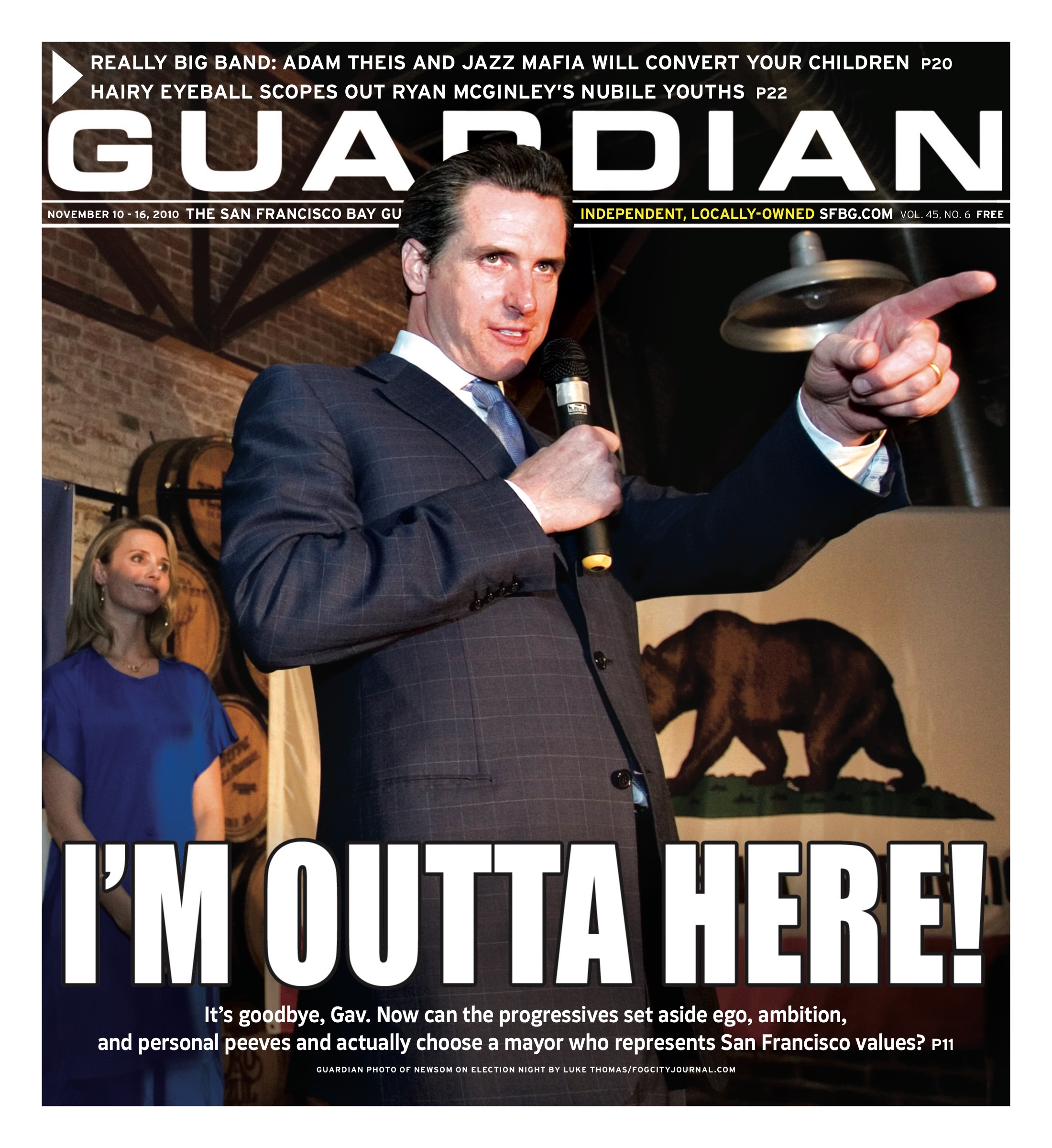
I mention that bit of interesting history as a sort of a prelude to the fascinating historic challenge facing progressives in San Francisco today. At a time when the rest of the country seems to be drifting (at least for the moment) to the right, San Francisco has a chance to go to the left. There hasn’t been a mayor the progressives supported in this town in at least 20 years (and that’s if you count Art Agnos, which is a bit of a stretch). With Gavin Newsom (will he be San Francisco’s last straight white mayor?) leaving early in his term, the supervisors could profoundly change the direction of the city.
And they could also duck, punt, or make a terrible mistake.
If the board wants to appoint someone who’s going to promote a progressive agenda, that person not only needs to be able to get six votes in January, but hold on to the seat until November — when the competition will be intense. And any progressive mayor will be vilified by the local daily papers, mocked by the national media, and held to an almost impossible standard by his or her constituents.
You wonder why anyone would want the job.
But taking on that insane challenge is also about history, and about proving that this city is (still) different. And the person in the job is going to need a whole lot of help and support. I have to believe that we’re up to it.
EDITORIAL There are plenty of good arguments among progressives about who would be the best person to replace Gavin Newsom as mayor and how the Board of Supervisors should make that decision. It’s a complicated situation: The next mayor will face a horrible budget deficit, all sorts of tough decisions — and then face the voters in 10 months. And if the board appoints a progressive, that person will face a hostile daily newspaper and several well-funded opponents in the fall.
But we know there are some very bad scenarios, some things the board and the potential mayor contenders shouldn’t do — because in the end, the process needs to be free of any sort of backroom taint.
Here are some basic ground rules for the next two months.
Newsom shouldn’t try to mess around with the selection of his successor. The mayor decided to run for state office with the full knowledge that he would leave behind a vacancy that the supervisors would fill. He has no business playing political and legal games to skew the results. For example, some say Newsom is considering delaying his swearing in, now set for Jan 3, 2011, for a week to prevent the current supervisors from voting on an interim mayor. That would be a bad faith, manipulative move. He made his choice; now he needs to get out of the way and let the City Charter process work.
The current board should have a fair shot at electing Newsom’s replacement. The day after Newsom takes office as lieutenant governor, the current board will meet for one last time — and by law, they should and will have a chance to find a candidate who can get six votes to serve out Newsom’s term. Any parliamentary moves that serve only to delay the vote and push the decision to the new board would be inappropriate.
The idea of a “caretaker” mayor is fraught with problems — and Willie Brown shouldn’t even be on the list. Newsom is pushing the idea of a true interim mayor, someone who won’t run for the job in November and will simply keep the lights on for 11 months. That means ignoring the city’s serious structural problems. A caretaker would have no authority and little ability change things. And the notion that’s being floated around of former mayor Willie Brown stepping in is disgraceful. Brown was a terrible mayor, and a rerun of that nightmare — even of only 11 months — is the last thing San Francisco needs.
Kamala Harris shouldn’t be a player in this game. If Harris, the current district attorney, is elected state attorney general, her job will be open too — and it’s easy to see how Newsom could use that as a plum to get his way. If Harris resigns before Newsom is sworn in, Newsom would get to appoint her replacement — and if that appointee is currently on the Board of Supervisors, Newsom would get to fill a seat on the board too. Harris needs to stay out of that unseemly sort of deal.
All the rules and procedures need to be made public, now. The legalities of this transition are tricky. Could the current board appoint an interim mayor now, knowing that a vacancy will occur, or must they wait until Newsom has actually resigns? Could Newsom delay his swearing in? The supervisors need to get legal advice on every possible scenario — and make it public. The last thing anyone needs in this confusion period is secrecy.
Plenty of people will be unhappy with whatever plays out. But if the process is bad, the result will be a mayor with no legitimacy.
Another preliminary run of ranked-choice ballots in the San Francisco supervisorial races this afternoon shows the same winners as Friday’s run: Malia Cohen, Scott Wiener, Jane Kim, and Mark Farrell.
Although it still won’t be final until the Elections Department finishes counting ballots over the next few days, in each case the winner widened his or her winning margin over the second place finisher as compared with Friday’s run, which could indicate these results will stick (barring legal challenge).
One change from Friday’s results was in District 10, where Lynette Sweet was eliminated before Marlene Tran in this run. And even though Tran’s votes broke 277-178 in Kelly’s favor, the previous round was so lopsided in Cohen’s favor that it put her within close reach of the 51.5 percent of the vote she ended up with. Of Sweet’s votes, 531 went to Cohen, 175 to Kelly, and 89 to Tran.
Cohen seemed to be a popular second-choice with many D10 votes, moving from fourth place (and just four votes from fifth place) up into the lead.
Okay, I read the gloating from Randy Shaw about Jane Kim defeating the “Democratic Party Machine,” which, as far as I can tell, seems to consist of the Democratic County Central Committee and the Bay Guardian. (As I’ve said before, if I were that powerful, things would change around this city ….)
It annoys me because machine politics were once a harsh reality in this town. But not these days.
Let’s look seriously at the supposed immense clout of the DCCC. Everyone from Shaw to The Chron’s C.W. Nevius has been freaking out over the ability of the local Democratic Party to control who gets elected to the Board of Supervisors. And while I think it’s a good idea to have prgoressives control the local party (this is, after all, San Francisco), even a cursory look at election results suggests that this vaunted machine isn’t really running much of anything.
In every contested race for supervisor — every single one — the candidate endorsed first by the DCCC appears headed for defeat. It’s not just D6; The DCCC endorsed DeWitt Lacy in D10, and he finished well out of the picture. The person leading that race today, Tony Kelly, wasn’t even in the DCCC’s top three. The panel backed Rafael Mandelman in D8; Scott Wiener won. The party gave its nod to Janet Reilly in D2, and if early RCV results hold, she’s in serious trouble.
Here’s the facts: With district elections, and a weak mayor, power is far too diffuse in San Francisco today for anyone to operate a political machine. District races this time around weren’t about the DCCC; they were about local campaigns organizing around local issues.
The DCCC helped Debra Walker somewhat in D6 , but it also hurt: In the end, Kim won with a campaign that painted Walker as an old-school machine party politician — and, interestingly enough, according to Paul Hogarth, she won by reaching out to the more conservative voters:
We focused on pitching her biography as a Stanford and Berkeley graduate, who is a civil rights attorney. And Jane Kim was the kind of young professional these voters could relate to.
If Randy Shaw was right, and a powerful Democratic party machine ran city politics, we wouldn’t all be scratching our heads and wondering who the hell the next mayor will be. I can tell you right now: Aaron Peskin, the titular head of this mighty machine, is pretty far out of the running. Sup. David Chiu, who has pretty much cut ties with Peskin and worked to elect Kim, is one of the top mayoral contenders. It’s also entirely possible that Mark Leno — who is by no means part of any Peskin operation — will wind up in Room 200.
Labor — supposedly part of this machine, too — can’t even agree half the time on its own endorsements — witness the United Healthcare Workers local splitting dramatically with its Local 1021 brothers and sisters in SEIU. UHW backed Wiener, Theresa Sparks and Steve Moss — all candidates opposed by Local 1021.
It’s an unsettled time in local politics, and I hope that the progressives who care about issues, not personalities and silly labels, can come together and choose a mayor who will support a progressive agenda. But that will be a close call, and no doubt will involve a temporary coalition that will fall apart as soon as the deal is done.
Because right now, nobody’s calling the shots in local politics. Just look at the facts on the ground.
The Oakland mayor’s race appears to be demonstrating the ability of political coalitions to use a ranked-choice voting strategy to topple an established frontrunner, overturning the conventional wisdom that the top finishers on election day will usually hold their leads through the tally of everyone else’s second and third place votes.
That anomaly is also on display in San Francisco, where it appears the top finishers in supervisorial districts 2 and 10 may lose to the second or even third-place finishers. A preliminary run of the ranked-choice voting (RCV, also known as instant-runoff voting) tally was run in SF on Friday, and elections officials will do another one this afternoon, although votes are still being tabulated and the final results won’t be known for several days.
“Ninety-five percent of the time, RCV doesn’t topple the top finisher,” political analyst Alex Clemens said at SPUR’s post-election wrap-up on Nov. 4, a point echoed by his co-presenter, political consultant David Latterman, based on their research of voting pattern in Australia and other countries that have used the system for some time.
They said the results only change when the candidates finish within a few percentage points of one another, as is the case in San Francisco. But in Oakland, mayoral candidate Don Perata finished almost 10 percent points in front of Jean Quan (34 percent to 24.6 percent), with Rebecca Kaplan close behind at 21.5 percent.
Yet Perata, a classic Democratic Party power broker who once served as president of the California Senate, is disliked and distrusted among the progressives and other grassroots voters who liked both Quan and Kaplan, who encouraged their supporters to rank the other candidate second. And that strategy appears to have paid off.
After 10 round of eliminating candidates and redistributing their votes – with Kaplan the last go, and her votes breaking 3-1 in Quan’s favor – the preliminary results show Quan winning with 51.1 percent of the vote to Perata’s 48.9 percent.
Wow, talk about the power of political coalition-building.
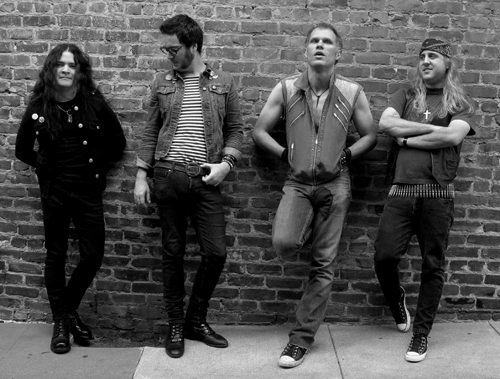
(For a review of Slough Feg’s latest, The Animal Spirits, go here. Read on for an interview with the band’s guitarist-singer, Mike Scalzi.)
San Francisco Bay Guardian: I noticed a clear theological theme running through the album. Was that – the Reformation – an area of historical interest to you? I’m interested in that choice, of a less exciting historical topic than maybe a more violent event…
Mike Scalzi: It’s not as metal, certainly. But in another way, Martin Luther was very metal, in that he was dedicated. Though he was Christian, in his dedication and his rebellion, he was metal. I was reading about all that stuff in an anthology of Western cultures. It was very general – I had to teach it. I’m a teacher. I started teaching Philosophy of Religion a year ago for the first time, and I’m not really that into teaching it, because its not my area of expertise, but I kinda had to.
[Writing music] helps me, actually. If I can write a song about it, it becomes more ingrained in my everyday thought. It becomes more second nature to say “oh, the 95 Theses!” It’s not just as a teaching aid, though. When it comes to Renaissance Christian theologians, he’s the most metal one. He’s out in the world. He’s out doing stuff, being a revolutionary. And a lot of his views are funny, a lot of the things he said were really funny and really extreme.
SFBG: Less metal for being ultimately successful, though. A lot of those so-called heretics were metal in the sense that they died for their principles, or were burnt at the stake or what have you.
MS: But he was the most badass one! Obviously, I don’t agree with him – he was a fundamentalist and all that, and he brought on fundamentalism in a way, I guess. But at least he said that trying to believe that the Bible is literal fact by reason alone is preposterous. That’s why he thought you had to exercise faith – because it’s preposterous. Everything in the Old Testament is preposterous, but you have to believe in it, purely to test your faith.
After seven records, you have to think of new things. I don’t want to repeat myself.
SFBG: What was the rubric for the lyrics that were included in the liner notes?
MS: Oh, those are the lyrics to “Trick the Vicar”
SFBG: Oh, so it’s just the one song?
MS: That was my decision. I’m sick of like…I’ve done that on every record and…
SFBG: People parse your lyrics?
MS: Oh, I don’t care about that. They come up with all sorts of weird interpretations, as if I really care that much. “Oh this means this and that means that. This is the deep meaning in this.” There’s no deep meaning in this shit! At least not that I know about! But at this point, trying to find things to say is a challenge.
With “Trick the Vicar,” I thought the lyrics to that would be important because it’s all one big pun. There’s obviously no deeper meaning, other than just being entertaining. It’s like something from a Benny Hill skit or something. So on the inside of the CD, I had all the puns – I came up with all those puns in the same month. They’re really silly, obviously.
SFBG: Well I did mean to confirm whether or not “boister” was a word.
MS: Good, good! No, its not. But when I say “There’s a boister that goes on in the cloister”…
SFBG: …from context it’s pretty clear.
MS: Yeah. It’s just a bunch of silliness, but it works for the song. I like silliness, and that’s one of the things that’s missing from a lot of metal: a good sense of humor. Metal used to have a sense of humor, in the 70s and 80s.
SFBG: That’s something that I was meaning to ask you about, if there’s a way to account for that sudden lack of humor. You have this form of music that has this potential to be taken seriously, but also the potential to be looked at with a sense of humor, or with an understanding of its many tongue-in-cheek aspects. It seems like a lot of its biggest fans, a lot of the people with the kind of familiarity with it that would enable them to see the humor, are the people least able to see it.
MS: Well, there are a lot of stupid people. You go to a metal show and you run into a lot of morons. Around here, you don’t have as many.
SFBG: I think it’s sort of like a dumbbell shaped-graph. On the one end, it attracts a lot of stupid people, but on the other end, it attracts a lot of people who are discerning and smart.
MS: I think, basically, they’re going to laugh at you one way or another. Being a metal guy, especially when you’re old, or older, or from the last generation of metal, they’re going to laugh at you. You make the choice of whether they’re going to laugh at you or with you. And I choose to laugh with them!
Also, metal, or indeed all rock and roll, is inherently funny. It is! People used to know that!
SFBG: Or inherently fun. That’s what a lot of people seem to lose sight of.
MS: Metal is inherently funny. No matter what! It’s funny. That’s one of the best things about it! It’s ridiculous, and it’s great because it’s ridiculous. People realized that way back. Black Sabbath, maybe not Led Zeppelin — they never had much of a sense of humor – Deep Purple, Judas Priest. The New Wave of British Heavy Metal. Early glam metal – Twisted Sister, Quiet Riot – they all had a sense of humor. Van Halen! Give me a break…that band was all humor until Sammy Hagar came, and it lost its sense of humor, and it started to suck.
The way that these things incorporated humor resembled vaudeville. That was David Lee Roth’s whole thing. Humor is part of entertainment. The most serious, heavy band, Black Sabbath, was also the most funny, because they realized – they were a British band with a British sense of humor.
SFBG: It’s interesting that you mention that. Do you think the trans-Atlantic shift had anything to do with that loss of humor?
MS: No, because Van Halen is the funniest. Maybe they’re not metal. Manowar! I don’t know if you want to open that can of worms. There’s a lot of evidence that they started out as a joke. They started out tongue-in-cheek and got serious as they went along. They know they’re funny; they may not want to acknowledge it, but they are.
SFBG: And the humor is bound up in the fact that everyone knows there is a joke, but no one will actually admit it. You can listen to it and pretend that you’re taking it seriously.
MS: It’s true of hardcore too. It used to be funny, now its all [imitates hardcore singing]. It’s lost its humor – some of it hasn’t, but most of it has. That’s one of my problems with a lot of the metal in this country, or in Germany too – people take it too seriously.
It’s the same thing with entertainment. I’m accused of being too traditionalist and narrow, but I’m bored by anything else. The way that entertainment used to be, in my opinion, was better. Period. It just used to be better. And now, it lacks.
I guess the question you’re asking is “why?” I don’t know why. I think it’s something about the world and the way people see entertainment. It has a much wider scope than it used to. People are much more involved in it as fans, and take it seriously as a statement, which is great, but maybe some of the actual enjoyment of it – from the performance standpoint and the artists’ standpoint – has been diminished by the fact that people hold it too close to their heart. The fragility of their egos and their identity are wrapped up in it in a way that causes problems.
SFBG: Like many discussions about the evolution and history of metal, I blame Nirvana. They taught people, or people took away from them this idea that if a band was trying to entertain you, that was somehow false.
MS: Well, that happened way before Nirvana, but that’s when it hit mainstream.
SFBG: There’s that line in Smells Like Teen Spirit: “Here we are now/Entertain us.”
MS: I don’t know if I have much to say about that. At the time, I didn’t like it. I heard their first album, before they were really popular, and I didn’t like it then. I was playing shows in San Francisco at the time, and I knew that I was not down with what was happening as a result of them. “Don’t try.” “Don’t give a shit.” “Nevermind.” “Be a loser.” I mean, sure, I thought that when I was a teenager. That’s the 14-year-old mentality: “everything sucks, so fuck it, man.” By the time you’re in your twenties you’ve grown out of that, you try to do something, unless you end up like Kurt Cobain, and you just fade off into negative, negative, everything sucks, and then die. [Sarcastically.] That’s great! That’s my hero! [Chuckles ruefully.] What the fuck is that?
SFBG: So, part and parcel of the conversation we’ve been having is the fact that you’re a very opinionated guy…
MS: So you’ve read my blog posts. There’s a new one today! I was just reading the comments.
SFBG: I did read them. I can only imagine what kind of comments you’re going to get on the most recent one. I was wondering if there’s something you can identify about metal that helps it attract opinionated people. Or, to reverse the chicken and the egg, if there’s something about being into metal that makes people opinionated?
MS: Well, I don’t think people get into metal for some other reason, and then get opinionated once they’re into metal. Unless you want to get into the fact that most metal is so bad now that you can get into it and say “oh god I’m so opinionated because there’s so much garbage out there. That’s true of a lot of kinds of music though.
It attracts opinionated people because it is extreme music. It attracts people who are into a certain kind of mentality. It happens from such an early age! I can’t analyze it. I got into metal, like a lot of people, when I was pretty young, and that was a long time ago! I don’t remember exactly. I don’t have immediate access to that feeling first being attracted to it. To me, its something that happened so far back that its like…
SFBG: …it’s like asking “why do you like mac ‘n’ cheese?”
MS: Exactly. And I have more access to what’s happened since then. But I don’t feel like I’m actively opinionated. People take things in, and they call them like they hear them. To me, things assault my sense, not the other way around. Nobody remembers being born into the world of music or food or anything and going “Hmm, I’m going to investigate this thing!” It’s more you hear something and you’re passed into this impression that you have. And some things, you get an impression and you go “Argh, that sucks! That really bothers me!” So my opinions, like those of most people who are opinionated, come from being stimulated by something in a positive or negative way. I would say I call it like I hear it.
I never thought of myself as opinionated until I moved here. People said that if I moved to San Francisco there would be all this great music. They said, “People out there are very enlightened.” And then I got here – 20 years ago – and I thought, “Everybody here’s not really that enlightened. There’s a lot of stupid bullshit going on out here.”
SFBG: Switching tacks completely, I’m curious about your master’s degree in philosophy. I read a little bit in another interview about what you teach, but I’m curious about what you focused on in your studies.
MS: I ended up studying Descartes for my thesis. I was interested in Descartes as a graduate student because his method was very simple and intuitive, and the whole point of it was a do-it-yourself type thing, rather than getting involved in this long academic tradition. Obviously, like anyone else, he comes from an academic tradition, but his point in Meditations [on First Philosophy] was to say “let’s erase everything that happened beforehand in philosophy and science and start on your own, with what you can know by yourself.”
I just found Descartes pretty easy to understand. I was able to maneuver in that ontology. I started taking seminars on Descartes, and I subsequently got interested in German idealism, like Kant and Schopenhauer, and like every metalhead, I was interested in Nietzsche.
In a master’s degree, you end up focusing on major guys because they have these comprehensive exams that test your knowledge of Plato, Descartes, Hume, etc. I stuck to a lot of that, because I knew I would have to take an exam on it.
SFBG: That Kantian or Cartesian originalist thinking – wiping the slate clean, starting with the Categorical Imperative, or something like that…
MS: …well, Kant is much more in the tradition, he’s not trying to wipe the slate clean. He’s just trying to be revolutionary.
SFBG: I’ll admit I’m only tenuously familiar with Kant, but I remember his ethics being founded on a sort “first principle” that ignores cultural baggage and so forth.
MS: Well, that’s what people say, but his point is to come up with something that is not dependent on circumstance in any way at all. Something that’s not empirical, that’s totally dependent on reason. Just like Descartes’ “I think, therefore I am,” in a way.
It’s something that you try to universalize by saying “what if everybody did this?” [Motions toward cookie on the table.] What if I were to steal this cookie? What if everybody did that? If it produces a contradiction – if its unreasonable for everybody to do something – you have to decide if it would be possible. Not if it would be right or wrong.
In order to establish a standard of right and wrong, you have to decide if it’s reasonable – could everyone do it. Suppose I don’t keep a promise – I say I’m going to show up here at 11, and I don’t. If I don’t do that, and I don’t keep my promise, what happens? It undermines the principle of the promise in the first place. If I don’t keep a promise, whatever, no big deal. What if nobody keeps promises. Could everybody do what I did? If no one keeps promises, there wouldn’t be promises in the first place.
SFBG: There’d be no point.
MS: You couldn’t make promises, because there’d be no such thing.
SFBG: Like if everyone stole, there would be no point in having property.
MS: If there were no property, you couldn’t steal. If there were no taking anybody’s word for anything, you couldn’t make a promise. It undermines its own possibility. It’s a contradiction that makes the act itself impossible. If its irrational to that extent, to the point where it makes the act itself a contradiction, then, according to Kant, its not morally permissible. That’s a little bit of a long answer.
SFBG: I’m going to attempt a sort of interviewer Triple Lutz here. Is Descartes’ idea of discarding what has come before, or Kant’s idea of ignoring circumstance to come up with principle…
MS: …Rational principle…
SFBG: …purely rational principle. Can that be applied to your creative process? In the sense that…
MS: No. [Laughs.] I wish I could say that it could. That’d be a brilliant piece of journalism. But as much as I’d love to be able to say that there’s some heavy metal calculus that I use in order to write by sheer principles of reason…no. At least, not for me. It’d be cool if there was some guy, some alchemist songwriter guy who was trying to find the principle of guitar or whatever.
SFBG: You could sort of take a stab at the categorical imperative of metal though, being like Maiden, Priest, and Sabbath, and not being affected by sort of the whims of circumstance.
MS: That’s the problem I’m encountering though. I don’t want to say that everything’s all based on the past. I don’t want to be a heavy metal anachronism. That’s what I’m getting in a lot of these responses to my Invisible Oranges articles. Again, to be philosophical about it, I get this confusion of cause and consequence. A lot of people say to me: “you don’t like death metal because you haven’t explored it.”
I try to keep the analysis somewhat objective, about why I don’t like the cookie monster vocals, the guitar sounds that are very brittle, and the drums that are triggered – clickety, clackety, clickety doesn’t sound “brutal.” It sounds like some bullshit to me.
People say, “You haven’t explored it enough. You haven’t heard the good stuff. You haven’t gone to the lengths that it takes to appreciate it.”
SFBG: If it’s good, it shouldn’t take any “lengths.”
MS: It’s confusing the cause with the consequence. It’s not that I don’t like extreme metal because I haven’t listened to enough of it. I haven’t listened to enough of it because I don’t like it. People think that I’ve come up with some sort of rigid heavy metal calculus and say “I like Priest, I like Maiden, I like Sabbath, Saint Vitus, whatever, some underground stuff too. These are the criteria of what I will listen to.”
It’s not like that! I grew up with the evolution of the whole thing, listening to it happen, and I heard things, and I said “I don’t like that! That’s crap! That sounds like someone who doesn’t care about what they’re doing.” It just sounds like shit to me, for whatever reason. And I heard more and more of it, and I chose not to investigate it.
SFBG: Getting back to philosophy just briefly, I saw in another interview that you described your music as having a Machiavellian aspect. I understand a Nietzschian aspect, but how does Machiavelli come into it?
MS: I was probably joking! I’m not sure. I was just being macho, talking about taking over the world. It’s a very vague characterization of Machiavelli, who I don’t really know shit about anyway.
SFBG: I was struck by the William Blake references in one of your old songs, “Tiger! Tiger!” Blake has always struck me as very metal.
MS: The reason that I put that stuff in there is not because of William Blake. It’s because of Alfred Bester, who quoted him.
SFBG: I noticed that you mentioned that author a lot in other interviews.
MS: A lot of sci-fi fans haven’t read him! This is insane to me. When people read The Stars My Destination – the original title of which was Tiger! Tiger! – they say “that’s the greatest fiction book I’ve ever read.” I was not a sci-fi or fantasy reader until I was 26, and someone got me that book. It was completely a fluke. I got it and I was like, “Ehh, I don’t really like science fiction books,” and then I finished it and said, “This is the best book I’ve ever read in my life.” Only on the basis of that did I get into science fiction.
SFBG: It’s tempting to ask you questions about Slough Feg’s distinctive sound, but seeing where my fellow interviewers have gone before, I was wary. It seems like we journalists want to get you to say “Oh, I choose to write songs with major chords because of this reason which is easy to print,” and your response is to say, “Look, this just my creative process; it’s how it sounds good to me.”
MS: Well, something that sounds good to me vocally sounds good because it’s catchy. If I remember it. I don’t always tape everything that I do. So, why do I remember it? That’s a whole question. Maybe I remember it because it sounds a little bit unique, maybe for some other reason.
SFBG: I think the music stands out to people, whether on record or live, because it makes melodic choices that almost seem like a deliberate subversion of the conventions of metal, like all those major chords. But I’m assuming that wasn’t a choice to subvert. That there wasn’t a point at which you were like, “Heavy metal is in minor keys – I’m going to do it a different way.”
MS: Well maybe there was! Again, it wasn’t a conscious choice. I don’t write Slough Feg songs according to music theory. I don’t say, “Now we’re going to do a song like this; now we’re going to do a song with these chords, or with this type of vocals.” If you do that, it ends up sounding overly stiff and deliberate.
But having said that, that’s not to say that there isn’t some kind of overall approach. When I do write stuff, what do I edit out? What do I keep? Stuff that reaches a certain criteria after the fact. Not when I come up with riffs, or vocals – that just happens. But what do I choose to keep? I don’t think about it consciously – it’s second nature to me now, so its hard to say – but basically, at one point, I wanted to write things that imitated Maiden, Sabbath, Thin Lizzy, Alice Cooper, Saint Vitus, Black Flag, and all that.
It became second nature to say “I want to pick up where Maiden left off,” but not to use major chords. The first “Irish-sounding” song I ever did was called “The Red Branch,” and I was sitting around in my living room, in a place I lived in years and years ago, I was sitting in my living room with an acoustic guitar, just joking around, singing to somebody as a joke, and I thought, “That’s a cool chord change!”
I keep a lot of things that other people would throw away, that they’d be scared to put on a record because it’s too silly-sounding. I say to myself “this is actually something that someone else wouldn’t do, and have the nerve to take seriously.” I think a lot of people are embarrassed to play Slough Feg-type songs. They were 20 years ago, at least. And now we’ve developed the sound to the point that it’s sort of obnoxious. People are like “what the hell man! This guy is willing to do this?!”
That’s what happened in San Francisco in the mid-nineties, playing this music. People would be like “God, you’re willing to get up onstage and play that? That sounds like nursery-rhyme music with metal instruments. It’s major. You’re singing like you’re in a 50s musical!”
Those are the kind of influences that I incorporate, maybe because it was something people weren’t willing to do, and so it sounded fresh to people.
SFBG: That sort of discomfort you describe is interesting, because you have this whole other offshoot of metal that’s built on discomfort. Black metal is based around saying “which chords can I play that will make people uncomfortable, that are the most dissonant.” You’ve come up with an incredibly unique way to do the same thing. You challenge people’s expectations, you make them uncomfortable, you take them out of their comfort zone, but instead of being really really heavy, or really fast, or really dissonant, or really down-tuned, you just have your own personal approach: to write chord changes that are, you know, silly.
MS: Or just really, really, traditional. Not that I intended that. But this is good, I think we hit the nail on the head in sense. When I started developing the sound, in the early nineties, a lot of it was a reaction. I didn’t write these looney tunes in 1989. I wrote them when I got here, and I started playing some shows, and I noticed that all the bands were drab, and all the bands played sort of one-dimensional speed metal. And I was totally nonplussed by it.
What I was writing was a reaction. I was saying “what can be done at this point?” Punk rock and speed metal and grindcore are just an extension of the same dirge – being obnoxious by being a dirge.
SFBG: And it’s an arms race, right? You can only go so fast. And then the next band that comes along has to go faster than that.
MS: And also it’s the attitude that’s so passe after a while. Spitting blood and whatever. I wanted touch on what people inevitably heard – kid’s music, or what your parents were playing – and pose the question: “are you willing to admit that this is enjoyable to you?” Slough Feg songs that do sound like they’re from a 50’s musical. Are you able to admit that this is catchy to you? That’s the punk rock maneuver, that I was able to think of it in those terms. And that’s what set us apart. But in a totally different way, in a way that goes back to like, “This is inherently enjoyable. Are you willing to partake in it, or are you too cool for it?”
SFBG: And it’s diametrically opposed to black metal. Black metal is “I will alienate you by doing something that is not enjoyable.” Your approach is “I will alienate you by doing something that is too enjoyable.”
MS: After the fact, that’s how we can analyze it. I think that’s a proper way to look at it. My songs do assault the listener, and people say “I can’t get it out of my head!” Because it’s written in very simple way – they’re really not that hard to write, but it’s a kind of songwriting that people aren’t willing to do.
Someone said to me in the 80’s, when I liked Venom a lot – they’re a very silly, vaudevillian form of Satanic metal – “Why do you like this? Anybody can do that. Anybody can play Venom songs.” And I said “yeah, that’s true. But nobody is willing to. That’s what makes it special.”
The Board of Supervisors plans to introduce a resolution at their Nov. 9 meeting denouncing the deportation of Shing Ma “Steve” Li, a 20-year-old DREAM Act student at City College of San Francisco, calling for Immigration and Customs Enforcement to grant him deferred action status, and urging Congress to pass the DREAM (Development, Relief and Education for Alien Minors) Act.
The move comes the same day San Francisco Unified School District Board President Jane Kim (leading in the as yet unresolved race to replace termed-out D6 Sup.Chris Daly) plans to introduce a similar resolution at the SFUSD Board meeting, and a week after City College Board Trustee Lawrence Wong introduced a resolution supporting Li, who has lived in California since 2002 and is studying to be a nurse , but is now in an immigration detention center in Arizona.
“It’s unreal how fast things change”, Li said in a statement made from Arizona, just seven weeks after ICE raided his home and arrested him.
Li, who is ethnically Chinese, was born in Peru as his parents fled political persecution in China. And ICE is allegedly preparing to deport him to Peru, which he left when he was 12. (Calls to ICE had not been returned as of blog post time, but I’ll update this blog, when I get a reply.)
“He knows no one in Peru,” said Li’s lawyer, Sin Yen Ling, senior staff attorney at the Asian Law Caucus, as she described how Li’s grandma returned to China, when his grandfather died.
Five years ago, the U.S. denied Li’s parents political asylum from China and issued a removal order. But Li says he was unaware of his immigration situation until his home was raided, and advocates and community members believe his case illustrates how the U.S.’s immigration system tears up families and targets contributing members of society.
Li’s Sept. 15 arrest occurred one week before Congress failed to vote on the DREAM Act, which would provide a pathway to legalization to undocumented students who’ve grown up in the US and atten two years of college or served two years of the military.
“It’s critical to pass the DREAM Act before the new Congressional session, but Steve literally cannot wait and is set for deportation any day now, that’s why we need our Senators’ leadership today,” Li’s attorney Sin Yen Ling told me, noting that so far their has been no response from Sen. Dianne Feinstein, and that advocates are planning to target Sen. Barbara Boxer, now that the election is over.
In their resolution, Board President David Chiu and Sups. Eric Mar, John Avalos, David Campos and Ross Mirkarimi note that the DREAM Act is “bipartisan legislation that addresses the situation faced by young people who were brought to the United States years ago as undocumented immigrant children, and who have since grown up here, stayed in school, and kept out of trouble.”
These five supervisors note that each year, 65,000 U.S.-raised students who qualify from the DREAM Act’s benefits graduate. They also note that Democratic Sen. Dick Durbin and Republican Sen. Richard Lugar asked Department of Homeland Security Secretary Janet Napolitano on April 21, 2010 to halt the deportation of immigrant students who could earn legal status under the DREAM Act, which has the support of the House and Senate leadership, all of the relevant committee chairs, the nation’s military leaders, and President Barack Obama.
“I will do whatever it takes to support efforts to pass this bill so I can sign it into law on behalf of students seeking a college education and those who wish to serve in our country’s uniform. It’s the right thing to do,” Obama told the Congressional Hispanic Caucus on September 15, 2010—the same day that Li was arrested in San Francisco.
Update: Since writing this blog, I got a call back from ICE’s Lori Haley, who said she was limited in how much information she could share, but sent me this statement concerning Li:
“Shing Ma Li was taken into custody by ICE Fugitive Operations team officers on September 15, 2010, based upon a final order of removal issued by an immigration judge in 2004. In 2005, the Board of Immigration Appeals (BIA) reviewed his case and upheld the immigration judge’s decision. Shing Ma Li currently remains in ICE custody while the agency seeks to make arrangements for his removal.”
Aboriginal Blacks United (ABU) President James Richards has asked UCSF Chancellor Susan Desmond-Hellmann to meet with the community before Nov. 15 about UCSF’s local hiring plan, or halt all work at its Mission Bay Hospital construction site.
Noting that ABU is still waiting for a call regarding a Nov. 2 letter that ABU hand delivered to the Chancellor’s office, requesting a meeting to discuss the lack of community jobs or even a community hiring policy at UCSF’s Mission Bay Hospital project, Richards is asking UCSF to “halt all work at the UCSF construction site until you sit down to sign a community hiring plan, one that guarantees local workers will perform half the work required to build the new Mission Bay Hospital.”
In his Nov. 2 letter to Desmond-Hellmann, Richards stated, “You are spending $1.7 billion on this construction right here in our backyard, but you and UCSF have no policy or plan in place to put San Francisco residents, especially those from neighboring committees such as Bayview-Hunters Point, to work on your project.”
‘Your staff’s excuse is that work has not yet started at the site and they are working on a plan,” Richards added. “This however is an untruth as there are people out there at the construction site as we speak and we have already seen your team’s haphazard attempts to hite a community worker only to fire them within a matter of days.”
“We represent men and women, black, brown, white and everything else, union workers from Bayview Hunters Point and the southeast sector, workers from our community, a community that no one gives a damn about,” Richards continued. “We believe that if the community doesn’t work, no one works and never again will we allow the lost opportunities before us pass us by as we struggle to survive and stay in the City.”
“Many hours have been wasted by many people in many meetings with various staff over the past year and a half, so now we come to meet with you,” Richards concluded.“We ask you to stop all work at the hospital immediately until you have a community hiring plan in place that has consensus approval from the community.”
Richard’s latest missive comes the same day that the Board’s land use and economic development committee is holding an informational hearing at 2 p.m. in Room 263 on San Francisco’s local hiring policy. And comes shortly after Barbara French, UCSF’s vice chancellor for university relations, told the Guardian that UCSF is working to evaluate hiring needs for phase of the project, talking to the unions, and intends to make its findings public in December.
“We have had a voluntary local hiring policy since 1993,” French told the Guardian, confirming that in the past 17 years, the university has reached a 12 percent local hire rate on average. “Sometimes it was 7 percent, sometimes it was 24 percent … Our [goal] is to reach a number that is beyond what we reached before but which is realistic.”
French also recently told community-based organizations that UCSF hadn’t signed a contract with the contractor at its Mission Bay hospital project, didn’t have the permits yet, and that the recent community celebrations didn’t mark the start of active construction at the site. French said general hiring at Mission Bay will begin in December. “We don’t get any city funds at this site, so our commitment is voluntary. But we feel very strongly that we have to reach out.”
To date, Sup. John Avalos, who has introduced legislation to impose phased-in fines on contractors that don’t achieve local hiring goals, has acknowledged that UC is not under San Francisco’s jurisdiction and can’t be compelled to do more local hiring.
“But we know that they are doing a critical amount of building and investing taxpayer dollars, and that this land use impacts the surrounding community,” Avalos told the Guardian. “So it makes sense that we have local hire legislation and access to serious end-use jobs at the hospital.”
Dick Meister is a San Francisco-based columnist who has covered political and labor issues for a half-century as a reporter, editor , author and commentator. Visit him at his website, www.dickmeister.com.
OK, the election is over and labor, Democrats and the other good guys came up a bit short. But what now? What next for the good guys?
Well, for starters, organized labor and its Democratic Party allies must be ready to block Republican plans to try to enact legislation that would cut taxes for the very wealthy, slash Medicare funding, and possibly even privatize Social Security. I know that may sound alarmist and far-fetched. But that’s what Republican leaders are actually talking about.
After all, the GOP’s anti-labor corporate allies spent nearly a billion dollars on the election and they damn well want their money’s worth. Larry Cohen, president of the communications workers union, thinks it’s getting like the way elections were 100 years ago when the big trusts and robber barons made sure their voices were the only ones heard during election campaigns.
Not yet, Larry. Not quite. Unions were able to make a lot of highly effective noise that helped elect some important pro-labor Democrats and defeat several Tea Party candidates and other anti-labor wackos who argued, as the AFL-CIO’s Mike Hall notes, “that government should do nothing to improve the economy or protect working families during the worst economic crisis since the Great Depression.”
Let’s me take a little closer look at how the election went for organized labor and its political friends in two of the country’s most important states politically, numbers one and two in population, California and Texas.
In California, as the AFL-CIO says, unions were a key factor propelling notably pro-labor Democrat Jerry Brown to the governorship and pro-labor Democrat Barbara Boxer to a third term in the Senate. Those victories were especially sweet, since the opponents of Governor-elect Brown and Senator Boxer were former business executives with tons of money, including their own, to spend on their campaigns.
Former eBay CEO Meg Whitman spent more than $141 million of her own money on her losing campaign against Jerry Brown for governor. And though Carly Fiorina, former Hewlett-Packard CEO, spent several million of her own money on her campaign, the total was nowhere near the obscene amount that Whitman pulled from her own pocket for her campaign.
Anyway, Meg Whitman lost, and good for Californians for making that happen. Labor couldn’t imagine a worse anti-labor governor than Meg Whitman, or more labor-friendly governor than Jerry Brown, a worse anti-labor senator than Carly Fiorini, or more labor-friendly senator than Barbara Boxer.
It was a bit different in most other states. As Executive Director Rose Ann DeMoro of the California Nurses Association notes, the election of Democratic, pro-labor candidates in California “provided a national alternative to the conservative, corporate-oriented economic program that won so many other races nationwide.”
DeMoro praised California’s voters “for seeing through the fool’s gold promises that the path to economic recovery and job creation is through corporate tax breaks and shifting more wealth and resources to those who need it the least.”
The news isn’t so good out of Texas, where, as Jim Lane of the People’s World says, “the second largest delegation to the U.S. House of Representatives, already heavily leaning to the right, tilted drastically further on November 2 – plus, many of the most popular Texas Democratic leaders were defeated.
The re-election of Gov. Rick Perry was more bad news for labor and its allies, given what the People’s World’s Lane notes as Perry’s “far-right, anti-worker vision.” Reporter Lane says “progressive Texans are not looking forward to extending the years of being shamed about their home state, as we have been since GW Bush took the national stage.”
But at least the Texas labor movement was able to run what Lane calls “a strong and largely independent political campaign.” Unions even dared to run “one of their own,” former national AFL-CIO official Linda Chavez-Thompson, for lieutenant governor. But, as Lane notes, “Like all other statewide Democratic candidates, Chavez-Thompson’s campaign was buried by big money.”
So, what next for Texas, California – the whole country?
What’s next should be in large part to carry out what AFL-CIO and Democratic Party leaders have been advocating for many years – rebuilding of our long crumbling infrastructure
President Obama has a plan that calls for rebuilding 150,000 miles of roads, laying and maintaining 4,000 miles of railway tracks, restoring 150 miles of airport runways and , in doing so, providing badly needed jobs for many of the country’s millions of unemployed workers.
That’s how labor and political leaders can – and must – begin to deliver on their election campaign promises to, above all, do what it takes to create “jobs, jobs, jobs.”
Dick Meister is a San Francisco-based columnist who has covered political and labor issues for a half-century as a reporter, editor , author and commentator. Visit him at his website, www.dickmeister.com.
A preliminary run of the ranked-choice ballots in San Francisco Board of Supervisors races shows D10 candidate Malia Cohen and D2 candidate Mark Farrell winning come-from-behind victories in those races while Jane Kim in D6 and Scott Wiener in D8 maintain their current leads to win their races. Yet with about 50,000 ballots citywide remaining to be counted, Election Department head John Arntz warned those results aren’t final.
“It’s going to change. Nothing is permanent, nothing is final. We have to go through every single ballot,” he told the Guardian.
Still, the results are interesting and could predict the final outcomes, which won’t be known for about another week. In the free-for-all that was the D10 race, Tony Kelly maintained his election night lead throughout 18 rounds of redistributing votes, with Kelly at 35.33 percent, Cohen at 33.44 percent, and Lynette Sweet at 31.23 percent. But on the next round, 429 of Sweet’s votes went to Cohen and 139 to Kelly, giving Cohen a 152-vote margin of victory: 51.4 percent to 48.6 percent.
In D2, the elections chart appears to show all four also-rans being eliminated at once (normally, the last place candidate is knocked out round by round) and that redistribution gives Farrell the edge over Reilly by just 97 votes, or having 50.3 percent of the vote. But given that there’s still lots of votes to count in high-turnout D2, that could change.
In D6, where there was a shootout between two progressives, Kim and Debra Walker, the two candidates appeared to hold their five-point margin of difference through nine rounds of elimination, until the downtown-backed candidate Theresa Sparks was eliminated in round 10, with 769 of her votes going to Kim and 572 to Walker, giving Kim a winning percentage of 54 percent to Walker’s 46 percent.
And in D8, the counting of ranked choice ballots shows election night winner Scott Wiener extending his seven-point election night lead to beat Rafael Mandelman with 55.65 percent of the vote.
Arntz said there are about 50,000 ballots remaining, maybe more once provisional ballots are tallied, and the department has been counting them at a rate of 15,000-18,000 per day. So ranked-choice tallies with all the ballot will probably occur by the end of next week, with the final canvassing and certification expected in about 20 days.
Guardian intern Nicole Dial contributed this report.
Nancy Pelosi has announced that she is running for House minority leader, citing the need to defend health care and Wall Street reforms and Social Security and Medicare. And my friend Donnie Fowler, a top national Democratic Party consultant, thinks that’s a very good thing, even if I have a few doubts.
“She is a fighter and can bring the majority back in 2012 and no one more progressive would beat her,” Fowler said as he shared the news of Pelosi’s announcement, responding to my skeptical initial reaction. He said that having Pelosi remain in a leadership position was the best hope for pushing San Francisco values in a tumultuous country that has moved the House far to the right.
The Bay Guardian and other leading San Francisco progressive voices have criticized Pelosi for allowing the wars in Iraq and Afghanistan to drag on, for not taking stronger stands on gay rights (from same-sex marriage to the military’s “don’t ask, don’t tell” policy), and for pushing flawed reforms of Wall Street and the health care system that left big corporations with too much power.
Fowler said Pelosi is “better in term of ideology and she’s a strong fighter,” but he conceded that she’s also a pragmatist, so she’ll often fight for outcomes that are not nearly as progressive as she would prefer, as she’s done recently. “She fights hard for what she can get today,” said Fowler, who has played leading roles in Democratic presidential and other campaigns and came in second in the race to chair the national party a few years ago. “Over the last two years, she has felt throttled by other parts of the Democratic Party and other leaders in Washington.”
But many of the moderate to conservative Democrats who have made Pelosi’s life so difficult were voted out of office on Tuesday, leaving a far more liberal caucus. “The biggest hit was to moderates and Blue Dogs, just because of where they live,” Fowler said, citing people such as Rep. Chet Edwards, who represented George W. Bush’s Crawford, Texas district, which now went Republican. “The caucus is going to be more liberal.”
Does that mean that Pelosi could sound a more full-throated defense of progressive values as minority leader? Yes, Fowler said, she could and should, but he’s still not sure whether she will. “The Democrats have got to say what they believe, they have to stand up for progressive values, and they have to be unashamed about it,” he said, noting that the centrist waffling was a factor in the party’s defeat this week, moreso than a genuine desire of the electorate to bring back the Republicans. “If you won’t stand up for yourself, people won’t believe that you’ll stand up for them.”
Right now, moderate Democrats are already starting to make the case that the party needs to be more economically conservative. Rep. Heath Shuler, a Blue Dog Democrat from North Carolina, has announced his intention to run for minority leader on a pro-business platform. It’s also possible progressives could mount a challenge from Pelosi’s left, such as Reps. Barbara Lee (who was the only vote against invading Afghanistan in 2001), Dennis Kucinich, or Raul Grijalva (the Arizona Democrat who co-chairs the Progressive Caucus with Rep. Lynn Woolsey).
Yet Fowler continues to believe that Pelosi is the best person to lead the party back through what’s expected to be a difficult couple years. But does it play into Republican hands to stick with their greatest foil, someone whose liberal politics and connection to a famously liberal city made her the focus in GOP attack ads?
Fowler dismissed that notion, saying that Republicans are going to demonize whoever leads the party. He said the Democrats could elect the most conservative good ole boy with a thick Southern accent “and they’ll still call him a liberal socialist.”
So then why not nominate an actual liberal socialist, someone who can bring a stronger critique of this country’s economic and political systems and set the country up for a more fundamental shift in 2012, someone like Lee, Kucinich, Grijalva, or Woolsey? To Fowler, that’s a bridge too far. Even with a more progressive caucus, he doesn’t think they could win, and he doesn’t think the party ought to move that far to the left anyway.
But what do you think, Guardian readers? Is this a time for Democrats to stay the course, or is this perhaps a moment for progressives to step up – unafraid of the Tea Party rhetoric – and start pushing everyone from President Obama on down to finally address inherent flaws in this country’s unsustainable economic and political systems?
Today’s post-election analysis session at the San Francisco Planning and Urban Research Association featured the usual room full of smart political minds from across the ideological spectrum – including those of hosts Alex Clemens and David Latterman – but nobody had any real insights into the big question on everyone’s minds: who will be the next mayor?
Everyone agrees that Gavin Newsom is headed to Sacramento in January, and state law calls for him to become lieutenant governor (and resign as mayor) on Jan. 3. At that point, Board President David Chiu becomes acting mayor, and the current Board of Supervisors is scheduled to meet Jan. 4 and could vote for a new interim mayor. The newly elected board takes office a week later and as its first order of business it will elect a new president, who becomes the new acting mayor, and if the old board can’t elect an interim, then the new one could elect an interim mayor, who would serve until after the mayoral election in November.
It’s tough enough for anyone to get to six votes, particularly considering supervisors can’t vote for themselves, but the deal-making could also involve the district attorney’s job. If Kamala Harris holds her slim current lead for attorney general, the new mayor would get to appoint her replacement. And if Rep. Nancy Pelosi decides to resign, that plum job would mix things up further. So everything is revolving around the vote for mayor right now.
“Everything comes back to this,” Latterman said, as he and Clemens basically had to shrug off questions about who has the inside track to be mayor. There are just too many variables involved, too many possible deals that could be cut, too many ambitious politicians in the mix, not to mention innumerable outsiders who could be tapped (hmmm…Mayor Jones, it does have a ring to it).
Latterman, a downtown consultant who helps update the Progressive Voter Index (created by SF State Professor Rich DeLeon), noted that the citywide results in the election once again showed that the overall city electorate is more moderate than progressive, particularly because the districts that have the strongest voter turnout (Districts 2, 4, and 8) are also some of the city’s most conservative.
As a result, he said, “The city is not voting for a far left mayor come November, so [progressives] will do whatever they can to get a mayor now.” Progressives are indeed hoping to get one of their own into Room 200 in January, and they hope that would allow whoever is chosen to win over enough voters to remain after November.
As a result, conservatives and most moderates will dig in, with many pushing the idea of a “caretaker mayor” so the playing field between left and right is still fairly even this fall.
“This is a World Series for political junkies,” Clemens said, who had the funniest way of casting the question: Normally, about 11 people run for mayor and the whole city picks one, he said, “but this is the opposite.” These 11 supervisors have the whole city to pick a mayor from, and at this point, it’s anyone’s guess who that will be.
Lots of votes still to count in San Francisco — as of this morning, the Department of Elections said there were about 80,000 absentee and provisional ballots in the hopper. But some have been counted yesterday and today, and we can draw some conclusions.
Typically election-day absentees break fairly close to the way election-day votes break, and Kamala Harris is citing that — and her campaign’s own analysis — to claim victory;
“Uncounted ballots will only bolster Kamala Harris’s lead, as they will reflect Harris’s strong Election Day advantage.”
In San Francisco, though, I’ve seen progressive measures that won on election day go down to defeat when the late votes, which were not as conservative as the early absentees but more conservative than election-day votes — were counted.
We now have the newest results from the DOE, and a little quick math gives us some interesting trends. In D2, Janet Reilly has (marginally) increased her lead over Mark Farrell. She’s gone from 6253 yesterday to 6512 today, a pickup of 259 votes. Farrell picked up only 223. So Reilly will probably still lead this race when all the votes are counted, but the RCV calculation will depend entirely on whether supporters of the third and fourth candidates, Abraham Simmons and Kat Anderson, were voting for Anyone But Reilly or were willing to put Reilly as a second choice.
In D6, Jane Kim picked up about 100 votes over Debra Walker, enough to make her the clear front-runner. Again, though: Do the more conservative Theresa Sparks votes go to Kim, whose supporters tried to portray Walker as part of a liberal machine and who touted her support for Prop. G, or do a sizable number go to Walker, another LGBT candidate?
D10? Not much has changed. Tony Kelly picked up 65 votes. Lynette Sweet picked up 80. Malia Cohen picked up 72. Steve Moss picked up 64. The rankings aren’t going to change much. But this will be the mother of all RCV elections — and we’ll know more tomorrow, when DOE does its first RCV pass.
The Marina Merchants Association & The San Francisco Bay Guardian Present SIP SNACK & SHOP ON CHESTNUT STREET
Thursday, December 2nd from 6-9PM
Start your holiday shopping this season in your neighborhood!
Ticket includes: Tastings from over 20 restaurants and more than 25 beverage sponsors! Raffles & discounts of 15% or more at all participating businesses. Live Entertainment!
Ticketed guests may pick up your wristbands, wine glass, and program guide at either of these locations on Dec. 2nd starting at 6PM: Eastside West – 3154 Fillmore Street (at Greenwich) Wells Fargo – 2197 Chestnut Street Kelly Keiser Splendid Interiors – 2381 Chestnut St.
*All proceeds benefit the Marina Merchants Association.
Participating Businesses The Animal Connection II | Arbonne International | Benefit | Bin 38 | Books Inc. | Circa | City Optix | Crunch Fitness | E’Angleo | Eastside West | eCosway | GAP | Heritage Row | Isa |J’s Galleria | Jack’s | Judy’s Café | Kara’s Cupcakes | Kelly Keiser Splendid Interiors | Marina & Kebab | Marine Layer | Mezes | Monkey on Chestnut | Pacific Catch | Paper Source | Patxi’s Chicago Pizza | The Plant | Pluto’s | Pottery Barn | Pure Beauty | Rabat | The Republic | Ristorante Parma | San Francisco Optics on Chestnut | SusieCakes | Toss Designs | Two Skirts | Wandering Vet | We Olive | Wells Fargo | Y&I Clothing Boutique
Sponsors Artesa | Bear Flag | Black Star | Blue Moon | Brugal Rum | Chateau Potelle | DeLoach | Don Pilar | FIJI Water | Haamonii | Honest Tea | Hope & Grace | Hotel Del Sol | Long Meadow Ranch | M Squared | Magners | Millesime Cellars | Pale Moon | Peroni | Pretzel Crisps | Red Bull | Rock Sake | Solerno | Spring Mountain Vineyard | St. Supery | Svedka | Tres Agaves | Trumer | Vivid Bliss | Y. Rousseau
Partners The Bachelors of San Francisco | Crawl SF | Marina Community Association | PinchIT | San Francisco Ballet | SF City Dish | Spinsters of San Francisco | Urbanis | Yelp
Entertainment The Clef Divers | The Lollipop Guild, a San Francisco Gay Men’s Chorus ensemble | Marina Middle School Band
Audyssey, an L.A.-based audio laboratory, must have a thing for San Francisco. First it marketed its iPhone docking station as the South of Market, and now it’s calibrating the music scene by launching a monthly music showcase at 111 Minna: “Multiple genres. Local talent. The Neighborhood.” With live performances by Maus Haus, My First Earthquake, Shortkut, Trackademicks, Ghosts On Tape, DLRN, and Electric Sunset, and DJs King Most, Prince Aries, and A-Ron, the lineup is enough to make you forget the whole synergistic marketing thing (it’s free, yo). That many diverse acts and the promise of local food carts to keep you fed? (Food not free.) Half the fun should be seeing if it all come together under one roof. (Ryan Prendiville) 9 p.m., free 111 Minna Gallery 111 Minna, SF (415) 974-1719 www.audyssey.com/theneighborhood
THURSDAY 4
COMEDY
Michael Ian Black
First gaining widespread fame for his work on Stella, The State, Viva Variety and other TV shows, comedian Michael Ian Black has honed his sarcastic commentary on pop culture to a fine, surgical-quality blade, quite literally stealing the show on every appearance he has made on VH1’s I Love The … series. For those who just can’t get enough of his wit and witticisms from the short, seconds-long snippets that make it on the air, here’s the chance to experience a full-on onslaught of hilarious, side-splitting observations from one of the best funnymen on the circuit today. (Sean McCourt) Thurs.–Sun., 8 p.m. (also Fri.–Sat., 10:15 p.m.), $22.50–$23.50. Cobb’s Comedy Club 915 Columbus, SF (415) 928-4320 www.cobbscomedyclub.com
MUSIC
Marnie Stern
Kill Rock Stars artist Marnie Stern brings her whirlwind brand of finger-tap guitar shredding to Oakland. With influences ranging from math-rock godfathers Don Cabellero to punk and classic-rock staples, Stern and her band create quite the interesting racket. Equally impressive as Stern herself is her drummer, Zach Hill (of Hella), who matches her yelping vocal style and hyperactive arena rock solos with a frenetic creativity all his own. Stern’s new self-titled album brings the “noise for the sake of noise” level down just a tad and offers a more melodic and direct approach to her songwriting. (Landon Moblad) 8 p.m., $12 New Parish 579 18th St., Oakl. www.thenewparish.com
FRIDAY 5
VISUAL ART
“I Live Here: SF”
It goes without saying that we live in a pretty diverse city, but since February 2009 photographer Julie Michelle has been capturing the people and stories that make SF great in her “I Live Here: SF” portrait series. The end result includes more than 170 images of SF residents, complete with their personal stories and accounts of their connection to this lovely, crazy, and exciting city of ours. Her subjects cut across races, classes, ages, and neighborhoods; you might just be surprised by the SF microcelebrities who pop up in them. I guarantee you’ll recognize someone photographed for the exhibit — or at least have seen one walking by you on the street. (Ben Hopfer) 6-9 p.m., free SOMArts 934 Brannan, SF (415) 552-1770 www.iliveheresf.com
DANCE
“Shared Space 4”
This is the fourth “Shared Space” season for Todd Eckert and Nol Simonse, two dancers who couldn’t be more different from each other. Yet as choreographers they find common ground. At least for this season, they are both diving into the past for their world premieres. The intricate meters of a medieval poetic form and the music of J.S. Bach inspired Eckert’s new Sinfonia. Continuing his interest in Greek mythology, Simonse is reaching even farther back. Demeter, the goddess of harvest and generosity, became the springboard for Greater Than. With Dancer for Hire, however, he hits a painful, up-to-date note: how to keep dancing in these parlous times. (Rita Felciano) Fri/5-Sat/6, 8 p.m.; Sun/7, 7 p.m., $20 Dance Mission Theater 3316 24th St., SF (415) 273-4633 www.sharedspacesf.org
MUSIC
Ray Manzarek and Roy Rogers
A recent project bringing together two luminaries of the 1960s and ’70s California rock ’n’ roll scene, the collaboration between legendary Doors keyboardist Ray Manzarek and blues guitarist par excellence Roy Rogers has produced an eclectic exploration of musical styles, including reimaginings of Doors classics, along with other blues and jazz tracks. Tonight’s show is being billed as “An Evening of Rock ’n’ Roll Tales and Music” since the duo promise to share stories about their long and fruitful careers between songs — fans won’t want to miss this rare opportunity to hear them straight from the still-rocking source. (McCourt) 8 and 10 p.m., $18–$25 Yoshi’s San Francisco 1330 Fillmore St., SF (415) 655-5600 www.yoshis.com
DANCE
AXIS Dance Company and inkBoat
Known for its mix of disabled and able-bodied dancers, AXIS Dance Company has joined forces with Shinichi Iova-Koga and his company inkBoat to create ODD, a piece inspired by the work of Norwegian painter Odd Nerdrum. With cellist Joan Jeanrenaud performing a live original composition, ODD delves into themes found in Nerdrum’s paintings, including loneliness, fear, sexuality, and degradation. Iova-Koga’s choreography is mesmerizing to say the least and exactly how he will fuse two companies, a musician, and an artist’s work into an evening show is the source of much anticipation. (Emmaly Wiederholt) Fri/5–Sat/6, 8 p.m., Sun/7, 3 p.m., $15–$18 ODC Theater 3153 17th St, SF Also Nov. 12–14, $10–$22 Malonga Theater 1428 Alice, Oakl. www.axisdance.org
SATURDAY 6
MUSIC
San Francisco Symphony Día de los Muertos family concert
One hundred years ago as the Mexican Revolution kicked into high gear, could Emiliano Zapatista or Pancho Villa have anticipated the havoc that has their country in a stranglehold today? We hear so much about the Mexican drug wars (and bankroll them on the weekend) that it’s easy to forget our southerly neighbor’s beauty and culture. This makes it a particularly salient year for the symphony’s annual celebration of Chicano heritage, underwritten by an homage to the centennial celebration of the Revolution. Papel picado, sugar skulls, and steaming cups of Mexican chocolate precede the musical program, which itself features kid-friendly works from accomplished Latino composers. (Caitlin Donohue) 2 p.m., $15–$68 Davies Symphony Hall 201 Van Ness, SF (415) 864-6000 www.sfsymphony.org
PERFORMANCE
Burning Libraries: Stories from the New Ellis Island Arts and Literacy in Children’s Education (ALICE) is a grassroots organization composed of artists from multiple genres committed to bringing arts education to economically disadvantaged schools. Born out of a project encouraging children to learn their oral histories is Burning Libraries: Stories from the New Ellis Island, a new piece by ALICE Presents, the professional performing arm of ALICE. Encapsulating 30 stories from people in minority and immigrant communities, this theatrical piece fuses dance, music, video, puppetry, and aerial arts to explore what it truly means to be American. (Wiederholt) Through Nov. 14 Thurs/4 and Fri.–Sat., 8 p.m.; Sun, 3 p.m., $15–$30 ZSpace at Theater Artaud 450 Florida, SF Also Dec. 3–-5, $15–$25 Laney College Theater 900 Fallon, Oakl. www.alicepresents.com
MONDAY 8
DANCE
WestWave Dance Festival
If you are counting live performances, this is program three of this year’s WestWave Dance Festival. If you like your dance on screen as well as on stage, this is program four, since officially Nov. 7’s “Dance on Film Nite” is program three. Enough bean counting. It’s good to see that Monday night dance has caught on. Audiences apparently appreciate not having to squeeze all their dance fixes into the weekend. Of course, it helps to program stuff people want to see; tonight’s event is a good mix of well-, fairly-well, and little-known choreographers: Lisa Townsend, Brittany Brown Ceres, Erika Tsimbrovsky, Robert Dekkers, and Andrew Skeels. (Felciano) 8 p.m., $25 Cowell Theater Fort Mason Center, Marina at Laguna, SF (415) 345-7575 www.westwavedancefestival.org
TUESDAY 9
MUSIC
The Pains of Being Pure at Heart
With a name like the Pains of Being Pure at Heart, you’d be justified in taking these guys for some sappy, Bright Eyes wannabes. Luckily, this isn’t the case. Based out of New York City (who isn’t these days?), the band makes lovely little indie-pop tunes that couple boy-girl harmonies with Jesus and Mary Chain-style distortion. Check out the absolutely infectious track “Young Adult Friction” from the 2009 self-titled album for a taste. (Moblad) With Weekend and Grave Babies 8 p.m., $15 Independent 628 Divisadero, SF (415) 771-1421 www.theindependentsf.com
MUSIC
Kurt Vile and the Violators and Soft Pack
If sneering “I hope I die before I get old” epitomized a generation, what’s the significance of Matt Lamkin singing “I know I’m gonna die before I see my prime” on Letterman? Rock ’n’ roll is now collecting Social Security and emerging acts are hoping for a YouTube apotheosis. Musical appreciation amounts to identifying a band’s influences and then immediately writing them off. With the driving beat of Lamkin’s L.A.-based Soft Pack or the writing-from-the-bottom-of-a-well style of Philadelphia’s Kurt Vile and the Violators, this would be a disservice. The sounds familiar, but moves forward, and as Vile reminds, “I’ve got a freeway mind, let go of my head.” (Prendiville) With Purling Hiss 8 p.m., $14 Rickshaw Stop 155 Fell, SF (415) 861-2011 www.rickshawstop.com
As soon as it became clear on election night that Prop. L had passed, I wondered if opponents would organize some sort of mass sit-down or sleep-in as a response. Today, it appears that some San Franciscans are orchestrating just that. I’ve been alerted via Facebook to two different sidewalk sits in response to the passage of Prop. L.
Sidewalk sitters plan to stage the first one outside the Westfield Shopping Center on Sunday, Nov. 7. Here’s an excerpt from the event description, written in such colorful language that it almost comes off as a parody: “We are going assert our right (and the right of the homeless and homeless veterans) to sit anywhere we damn well fucking please by having lunch on the aforementioned fucking sidewalk in front of Westfield shopping center… this Sunday @ 1:00. The purpose is to hang out, have lunch, be visible, embody TRUE San Francisco values, network with folks about the next steps in the anti-prop L fight and to have fun. Of course getting cited for sitting on the sidewalk is a totally glamorous possibility that we will opportunistically use to the most dramatic effect possible. This is lunch, but it’s also a protest.” It urges participants to bring food to share. The post also encourages people to bring their kids along.
The second event is planned for Monday, Nov. 8, outside San Francicsco City Hall, and its organizers are more succint:
“calling all san franciscans and all humanity to a solidarity sit-in against the passage of proposition L–the so-called Sit/Lie law. bring your ASSets to city hall on monday, nov. 8 at 12 noon. if you can’t make it to city hall, sit on the closest sidewalk.”
Not sure if “all humanity” will mobilize for the cause, but it should be interesting.
Meanwhile, the drivers behind the official No on L campaign seem to be focusing their efforts on a more, um, lawful plan of attack. “We’re taking L to court,” declares a message posted today on the No on L campaign page on Facebook. “But we’re still ironing out the fundamentals of strategy. Keep an eye out for an announcement in the coming week.”
San Francisco voters approved Prop. L, the ordinance that bans sitting and lying down on city sidewalks, with 53 percent of the vote.
Sipping an egg cream soda is an all-American, very New York pastime, but nowadays the nostalgic sodas are popping up in increasing numbers in our fair city. I rounded up a trifecta of perfect SF spots to get your cream on, but first a historical rundown.
Though the identity of the creator of the original egg cream is somewhat debated, many credit Louis Auster, a Brooklyn candy store owner in the late 1800s. In his well-researched tome on the history of soda fountains, Fix the Pumps, Art of the Drink‘s Darcy S. O’Neil says the New York egg cream evolved as a variation on the original milkshakes served at soda fountains in the late 19th century.
The classic recipe, which contains no egg whatsoever, traditionally consists of milk (or cream, for added richness), chocolate syrup, and soda water, making for a gently effervescent imbibement. It has a creamy, chocolate-y tinge, and a pleasurable hint of sour from the soda. The best creations have a foamy, seltzer “head” and are reminiscent of an ice cream soda sans ice cream. Some claim the original recipe included actual egg, which was replaced when they became expensive and harder to procure during World War II.
Speculations aside, I find egg creams a delightful reminder of my high school years on the East Coast, when I sipped at diners in Manhattan, Brooklyn, and Jersey. To this day, I can’t be in proximity of Katz Deli in the Lower East Side without ordering one to go.
The recent proliferation of egg creams in San Francisco is a welcome trend. Though I can never seem to track down the Egg Cream Cart, which was launched earlier this year by a mysterious “Madame Bubbles” (and serves egg creams and Jewish treats like rugelach), there are a few more easy-to-find places to wash down a soda, whether you go for the original Brooklyn recipe with chocolate syrup, New York style with vanilla, or even a San Francisco egg cream made with both chocolate and hazelnut syrups.
Grand Coffee
Months back, I wrote about the new Grand Coffee on Mission Street, a humble little counter-window service that pumped out expertly prepared Four Barrel coffee, creative jam sodas, layered iced coffees, and yes, egg creams. Owner Nabeel Silmi makes a Brooklyn egg cream ($2.75), for which he first drizzles the glass with Brooklyn-made Fox’s U-bet chocolate syrup, then douses it with milk and seltzer water, ultimately handing you a freshly frothy drink.
2663 Mission, SF
(415) 206-1238
Tony’s Coal-Fired Pizza & Slice House
The new take-out shop next to Tony’s Pizza Napoletana is just what North Beach needed: addictive Neapolitan and East Coast pizzas, ordered by the pie or the slice (cheese, pepperoni and daily specials). Eat in at one of the couple of tables in the joint or trot across the street to Washington Square Park with pizza or giant Italian beef sandwich in hand. The deal is sweetened with three egg cream options: New York, Brooklyn, and SF versions. The downside? They’re a whopping five dollars each. But the balance is right and kudos to Tony for offering all the classic egg creams.
1556 Stockton Street, SF
(415) 835-9888
Cowgirl Creamery’s Sidekick
Cowgirl Creamery‘s brand new Ferry Building cafe, Sidekick, is a take-out venue for all things cheese, from challah rolls filled with the stuff to a fresh mozzarella bar where you can choose which mozza type you’d like to heap over salad. Sidekick starts with a San Francisco egg cream (chocolate and hazelnut syrups for four dollars), then offers three non-traditional versions: raspberry, coffee cream, and caramel cream ($3.75). The SF soda enhances that light, chocolate-drenched froth with a whisper of nuttiness. Consider it egg cream with a California twist.
With four of the five Board of Supervisors races awaiting ranked-choice voting tallies, the San Francisco Department of Elections says it will run a preliminary ranked choice voting tally tomorrow (Friday) afternoon.
The department says there are still at least 52,000 ballots left to count (14,000 provisional ballots and 38,000 absentee ballots dropped off at the polls), plus an unknown number of absentee ballots still arriving by mail, so tomorrow won’t be the final word on who wins. But it will give a good idea where people’s second choices are going.
In District 10, just 90 votes separate leader Tony Kelly from runner-up Lynette Sweet, while Jane Kim has 470 votes more than Debra Walker in D6, and Janet Reilly is leading Mark Farrell by just 361 votes in D10. Looking slightly more settled is D8, where Scott Wiener leads Rafael Mandelman by 1,168 votes, particularly given the third place finisher is Rebecca Prozan. Like Wiener, she is a moderate former president of the Alice B. Toklas Democratic Club.
Election officials say they don’t have a breakdown of the outstanding votes by district.
As Mayor Gavin Newsom prepares to leave San Francisco for the Lieutenant Governor’s Office in Sacramento, he has burned enough bridges here that he’s not going to have much of a role in picking his successor. But he made a play today during the Giants World Series celebration at City Hall that just may resonate with local voters and elected officials alike.
“This town is going to need another mayor soon, and I have just three words: fear the beard,” Newsom said as he wrapped up his speech to a crowd of several hundred thousand fans, giving his cheeky endorsement to the Giants’ star closing pitcher, Brian Wilson.
But during his own speech, Wilson respectfully declined the opportunity. “I don’t think I’m up to that job, but I know someone who is: Where’s the machine?” Wilson told the crowd, appearing to give the nod to the next speaker, Giants star pitcher Tim Lincecum, who didn’t take himself out of the running.
“All I can say is thank you and go San Francisco!” Lincecum said.
So, what do you say, San Francisco? Are we ready for Mayor Lincecum?
Is this a joke? Maybe not, after all, while being interviewed before the festivities began, a jubilant Newsom said, “The politicians need to step out of the way and that’s when you can restore a sense of pride to the city.” And in your case, Mister Mayor, we at the Guardian couldn’t agree more. Have a great trip to Sacramento!
UPDATE: A friend has now clued me in to the possibility that Wilson wasn’t actually endorsing Lincecum, but his BDSM neighbor. Huh? Yeah, I’m not sure either, but check this out: http://www.youtube.com/watch?v=6ckloLGOgVo
You can draw — or not draw — all sorts of conclusions about the meaning of last night’s national election, but I can tell you what the state and local results mean: A season of political madness. As of the first week in January, San Francisco will have a new mayor and (probably) a new district attorney, and neither will be elected by the voters. And if some pundits are correct and Nancy Pelosi decides to retire rather than taking a seat on the back bench, then a once-in-a-lifetime change to take a safe seat in Congress will open up. And man, will the mad scramble be on.
Gavin Newsom will be sworn in as lt. governor the same day that Kamala Harris (if her lead in the polls holds) will be sworn in as attorney general. In theory, that means Board President David Chiu will become acting mayor — with the authority to appoint a new district attorney. That’s if Harris doesn’t step down a day early, allowing Newsom to appoint her replacement. Deals are being offered and tossed around already (and one of the interesting elements is that Chiu has always been interested in the D.A.’s job — which would open up not only the board presidency but his D3 seat.)
Then the current board members will have five days before their terms end to choose a new mayor by majority vote (except that no supervisor can vote form him or herself), and in the meantime, Chiu will be both acting mayor and board president. If the supes can’t make a decision, the new board — and we still don’t know who will be on that board — will get a chance to elect both a new board president (and acting mayor) and a new mayor.
And to make it more complicated, a number of the people being looked at for the mayor’s job — and some of the people who plan to run for mayor next November — would also be very interested in Pelosi’s seat.
This election isn’t over yet — but already, I promise you, the talks are on and everyone’s thinking about the deal.
It’s going to be crazy — and it also offers progressives a rare change to reshape city politics. No matter what happens with the D6 and D10 races, progressives will hold the board majority. If they can work together — thinking about the larger agenda, not just their personal egos — this could turn out very well indeed.
Bucking a national conservative, anti-government political trend, San Franciscans stayed with some fairly progressive politics on election night, rejecting a measure to demonize public employees (Prop. B), giving progressive John Rizzo far more votes than his City College of San Francisco board rivals, and taking far more liberal positions in state ballot measures and candidates than California voters, who were already far to the left of national voters. “We are really happy that Prop. B is going down because it was such a misguided measure. It was not well thought through,” San Francisco Labor Council President Tim Paulson told the Guardian at the party labor threw with the San Francisco Democratic Party at Great American Music Hall. “San Francisco voters are the smartest in America.” Paulson was also happy to see those voters approve Prop. N, taxing the transfer of properties worth more than $5 million, “because San Franciscans know that everyone has to pay their fair share.” Another labor priority, Prop. J, the temporary hotel tax increase, lost by a narrow margin after Mayor Gavin Newsom and his downtown allies opposed it, and the online travel company spent millions of dollars to bury Prop. K – a Newsom-created rival measure that would have closed a loophole that lets the company avoid paying the hotel tax. Rizzo said he was happy to far outpoll Lawrence Wong and Anita Grier as the three incumbents ran uncontested for their City College board seats, which should put him in a leadership position in the troubled district. “There is a tradition at City College that the highest vote getter gets the presidency, so I’m pretty happy,” Rizzo told us on election night. There were some conservative victories in San Francisco, including approval of Prop. L, which criminalizes sitting or lying on sidewalks, and Prop. G, which will reduce Muni operator wages and change work rules after getting the approval of about 63 percent of voters. “Ultimately, downtown did well,” progressive political consultant Jim Stearns said, noting how aggressive spending by downtown business and real estate interests ended a string of progressive victories in the last several election cycles, including the likely election of Scott Wiener in D8 and the strong challenge in D2 by Mark Farrell to perceived frontrunner Janet Reilly, who had progressive endorsements. Stearns said national polls have shown that people are more afraid of big government than big corporations, whereas progressives tend to hold the opposite view. “That national atmosphere definitely had an impact on even races locally,” Stearns said. But in San Francisco, the progressives retain a strong position in the political debates to come.
I guess sit-lie supporters don’t party that late. I arrived at Hobson’s Choice, the Haight Street election party central for Civil Sidewalks at 11:30 p.m. only to find the triumphant contingent long gone. “Oh yeah, the last couple guys just left,” the bartender tells me. “There was a ton of people here.”
Not heading home any time soon, however, was Scott Free, who was sitting on a chair strumming a guitar down the block from Hobson’s contemplating the downfall of Prop. 19. Free’s been living “outdoors” for the past two years and has lived in the Haight for eight. He’s pretty sure the passage of Prop L is just a sign of a change that’s been long coming in the neighborhood. “Yeah, sit-lie will change things — but then, I didn’t think they’d be giving smoking tickets in Golden Gate Park. I came to San Francisco from Santa Clara County for the music and the tolerance.”
Hard to believe that voters in SF just passed a measure that will effectively ban Free and friends’ joyful noise.
Their buddy is prone on the sidewalk besides him — drinking away the night that made homelessness illegal and made sure pot remained the same? “He’s real upset about it all,” Free tells me “he’s a big time sitter and liar.”
San Francisco Democrats milled about the Great American Music Hall, where a screen displaying election results was the centerpiece of the room. D6 candidate Debra Walker was thanking campaign volunteers and hugging supporters when we caught up with her.
But with Jane Kim ahead in the race, the celebration was somewhat subdued in her corner of the room.
Still, Walker was hopeful. “Now I think it’s going to be about the distribution of second choice votes,” she told us. “It’s going to be a nailbiter. In fact, I’m pretty confident about it. I’m really hopeful that we’ll gain the votes we need.”
Stage listings are compiled by Guardian staff. Performance times may change; call venues to confirm. Reviewers are Robert Avila, Rita Felciano, and Nicole Gluckstern. Submit items for the listings at listings@sfbg.com. For further information on how to submit items for the listings, see Picks. For complete listings, see www.sfbg.com.
THEATER
OPENING
Comedy Ballet Exit Stage Left, 156 Eddy; (800) 838-3006, www.brownpapetickets.com. $10-20. Previews Thurs/4, 8pm. Opens Fri/5, 8pm. Runs Thurs-Sat, 8pm. Through Nov 20. Dark Porch Theatre presents a genre-bending production written and directed by Martin Schwartz.
It’s All the Rage The Marsh, 1062 Valencia; (800) 838-3006, www.brownpapertickets.com. $20-50. Opens Sat/6, 8:30pm. Runs Sat, 8:30pm; Sun, 7pm. Through Dec 5. The Marsh presents a new solo show by Marilyn Pittman.
Murder for Two: A Killer Musical Eureka Theatre, 215 jackson; 252-8207, www.42ndstmoon.org. Previews Wed/3, 7pm; Thurs/4-Fri/5, 8pm. Opens Sat/6, 6pm. Runs Wed, 7pm; Thurs-Fri, 8pm, Sat, 6pm, Sun, 3pm. Through Nov 21. 42nd Street Moon presents a mix of Agatah Christie and musical comedy, by kellen Blair and Joe Kinosian.
A Perfect Ganesh New Conservatory Theatre Center, 25 Van Ness; 861-8972, www.nctcsf.org. $22-40. Previews Fri/5-Sat/6, 8pm; Nov 10-Nov 12, 8pm. Opens Nov 13, 8pm. Runs Wed-Sat, 8pm; Sun, 2pm. Through Dec 19. New Conservatory Theatre Center presents the Terrence McNally play, directed by Arturo Catricala.
The Tempest Exit on Taylor, 277 Taylor; (800) 838-3006, www.cuttingball.com. $15-20. Previews Fri/5-Sat/6, 8pm; Sun/7, 5pm. Opens Nov 11, 8pm. Runs Thurs-Sat, 8pm; Sun, 5pm (no show Nov 25). Cutting Ball Theater opens its 11th season with a three-person chamber version of the Shakespeare classic.
BAY AREA
Burning Libraries: Stories From the New Ellis Island Laney College Theater, 900 Fallon, Oakl; (800) 838-3006, www.brownpapertickets.com. $15-25. Previews Thurs/4-Fri/5. Opens Sat/6, 8pm. Runs Wed-Sat, 8pm, Sun, 3pm (also Sun/7, 7pm). Through Nov 14. Alice presents an evening-length theatrical performance spectacle, directed and co-written by Helen Stoltzfus.
Cinderella, Enchanted Julia Morgan Center for the Arts, 2640 College, Berk;; (510) 665-5565, www.berkeleyplayhouse.org. $15-33. Previews Sat/6, 2pm. Opens Sat/6, 7pm. Call for run times. Through Dec 5. Frenchie Davis is plays the Fairy Godmother in this production of the Rogers and Hammerstein musical.
CTRL-ALT-DELETE Pear Avenue Theatre, 1220 Pear, Mountain View; (650) 254-1148, www.thepear.org. $15-30. Previews Thurs/4, 8pm. Opens Fri/5, 8pm. Runs Thurs-Sat, 8pm; Sun, 2pm. Through Nov 21. Pear Avenute Theatre presents the comedy by Anthony Clarvoe.
The Play About the Naked Guy La Val’s Subterranean, 1834 Euclid, Berk; (800) 838-3006, www.brownpapertickets.com. $10-20. Previews Thurs/4-Fri/5, 8pm. Opens Sat/6, 8pm. Runs Thurs-Sat, 8pm (no show Nov 25). Through Dec 11. Impact Theatre presents an off-Broadway hit, written by David Bell and directed by Evren Odcikin.
ONGOING
Christian Cagigal’s Obscura: A Magic Show EXIT Cafe, 156 Eddy; (800) 838-3006, www.brownpapertickets.com. $15-25. Thurs-Sat, 8pm. Through Dec 18. Magician Christian Cagigal presents a mix of magic, fairy tales, and dark fables.
Dracula’s School for Vampires Young Performers Theatre, Fort Mason Center, Bldg C, Third Floor, Room 300; 346-5550, www.ypt.org. $7-10. Sat, 1 pm; Sun, 1 and 3:30pm. Through Nov 14. Young Performers Theatre presents a Dracula comedy by Dr. Leonard Wolf.
Equus Boxcar Theatre Playhouse, 505 Natoma; 776-1747, www.boxcartheatre.org. $10-25. Wed-Sat, 8pm. Through Nov 20. Boxcar Theatre kicks off its fifth season with Peter Shaffer’s drama, directed by Erin Gilley.
Failure to Communicate The Garage, 975 Howard; (800) 838-3006, www.brownpapertickets.com. Call for prices. Fri-Sat 8pm; Sun, 2pm. Through Nov 14. One part Torey Hayden, and one part Dr. Pangloss, Veronica Gray (Jaimielee Roberts) is an artist in need of a job, and so takes the position of teaching assistant in a classroom for severely troubled children. At first it seems like a good fit for her — she’s unfazed by the student’s scare tactics and drawn to their talents, in particular the artistic streak displayed by the autistic Loomis (Geoff Bangs). But eventually the extreme stress of her responsibilities starts to effect her equilibrium, and the rest of the play becomes a sort of elegiac apology for her eventual request to be transferred, and the havoc it plays on the emotions of her students. A first foray into playwriting for Performers Under Stress company member Valerie Fachman, Failure to Communicate feels very much like a work in progress. Its strengths – compelling material, quirky characters, and an insider’s perspective on an overloaded educational system – are soon overwhelmed by its weak points: too many veiled references to various abuses without follow-up, too much random violence without consequences, too many lengthy transitions and choppy scenes which neither drive the skeletal plot nor flesh out the occasionally hilarious yet often frustratingly two-dimensional characters. As a concept, Failure is intriguing but I’m hoping there will be a version 2.0 in the future, with a tighter focus and more comprehensive character development. (Gluckstern)
Glory Days Boxcar Studios, 125 Hyde; www.jericaproductions.com. $30. Fri-Sat, 8pm; Sun, 2pm. Through Nov 7. Jerica Prodcutions and the Royal Underground Theatre company present Nick Blaemire’s and James Gardiner’s one-act musical.
Habibi Intersection for the Arts, 446 Valencia; 626-2787, www.theintersection.org. $15-25. Thurs-Sun, 8pm. Through Sun/7. Intersection for the Arts and Campo Santo present the world premiere of a play by Sharif Abu-Hamdeh.
*Hamlet Alcatraz Island; 547-0189, www.weplayers.org. By donation. Sat-Sun, times vary. Through Nov 21. Outside of an actual castle, it would hard to say what could serve as a more appropriate stand-in for Kronborg castle of Helsingør—also known as Elsinore—than the isolated fortress of Alcatraz Island, where WE Players are presenting Hamlet in all its tragic majesty. As audience members tramp along
stony paths and through prison corridors from one scene to the next, the brooding tension the site alone creates is palpable, and the very walls impart a sense of character, as opposed to window-dressing. Deftly leaping around rubble and rock, a hardy troupe of thespians and musicians execute the three-hour
production with neat precision, guiding the audience to parts of the island and prison edifice that aren’t usually part of the standard Alcatraz tour package. Incorporating movement, mime, live music, and carefully-engineered use of space, the Players turn Alcatraz into Denmark, as their physical bodies meld into Alcatraz. Casting actress Andrus Nichols as the discontent prince of Denmark is an incongruity that works, her passions’ sharp as her swordplay, the close-knit family unit of Laertes, Ophelia, and Polonius are emphatically human (Benjamin Stowe, Misti Boettiger, Jack Halton), and Scott D. Phillips plays the
appropriately militaristic and ego-driven Claudius with a cold steel edge. (Gluckstern)
Hedda Gabler Phoenix Theatre, suite 601, 414 Mason; (800) 838-3006, www.offbroadwaywest.org. $35. Thurs-Sat, 8pm. Through Nov 13. The action unfolds in the parlor of the newly married Tesmans, young mediocre academic George (Adam Simpson) and town beauty Hedda, née Gabler (a crisp, tightly wound and nicely understated Cecilia Palmtag), a woman of exceptional intelligence, ambition and pride—to call her fiery wouldn’t be bad either, especially since she’s so fond of shooting off her late father’s pistols. Frustrated by her paltry new life, Hedda seeks news of an old flame, Eilert Lovborg (Paul Baird), via the admiring and vaguely lecherous Judge Brack (Peter Abraham) and a timid acquaintance from school days, Thea (Joceyln Stringer). The semi-wild but brilliant Lovborg has published a new book that imperils George’s chances for a professorship. Less interested in securing George’s career than controlling Lovborg’s destiny, Hedda soon manipulates events around her with bold determination and tragic consequences. Passionate, violent and psychologically complex, Henrik Ibsen’s titular heroine is at turns sympathetic and disturbing, an independent soul trapped in and warped by a society that allows her too little scope—a modern predicament that has inspired many modern and postmodern adaptations. Off Broadway West’s straight-ahead production of the late-19th-century drama, helmed by artistic director Richard Harder, remains faithful to the period setting. This includes Bert van Aalsburg’s respectable scenic design and Sylvia Kratins impressive costumes, as well as the old if fine translation by William Archer, who first introduced Ibsen to the English-speaking world. Unfortunately, the quaint diction is not handled with equal grace across an uneven cast. Palmtag’s solid, at times admirable performance in the lead, however, goes a good way toward grounding an otherwise patchy production. (Avila)
Law and Order: San Francisco Unit: The Musical! EXIT Theater, 156 Eddy; (800) 838-3006, www.brownpapertickets.com. $10. Mon, 8pm. Through Nov 15. Funny But Mean comedy troupe extends its newest show at a new venue.
Mary Stuart The Ashby Stage, 1901 Ashby, Berk; (510) 841-6500, www.shotgunplayers.org. $15-30. Thurs-Sat, 8pm; Sun, 5pm. (also Wed/3; 7pm). Through Sun/7. Shotgun Players presents Friedrich Schiller’s historical drama, directed by Mark Jackson.
*Pearls Over Shanghai Thrillpeddlers’ Hypnodrome, 575 10th St; (8008) 838-3006, www.brownpapertickets.com. $30-69. Sat, 8pm. Through Dec 19. Thrillpeddlers’ acclaimed production of the Cockettes musical continues its successful run.
*The Real Americans The Marsh MainStage, 1062 Valencia; (800) 838-3006; www.themarsh.org. $20-50. Wed-Fri, 8pm; Sun, 5pm. Through Nov 6. The fifth extension of Dan Hoyle’s acclaimed show, directed by Charlie Varon.
*Reluctant Brava Theater Center, 2781 24th St; 641-7657, www.brava.org. $10-25. Thurs, 8pm; Fri-Sat, 10pm. Through Nov 13. Joel Israel joins the likes of Eric Bogosian, Joe Frank, and Jack Nicholson (in The King of Marvin Gardens) in making the radio booth one of the more intimate yet far-reaching of metaphors—a hermetic recess of lonely, fervid minds that ranges over the collective unconscious by air, with the power to infiltrate the most vulnerable, unguarded corners of an unsuspecting populace. Shrewdly directed by Meiyin Wang, the New York playwright-performer’s cool, slyly seductive piece of theatrical psychopathology, Reluctant, makes an impressive West Coast debut in Brava’s appropriately intimate upstairs studio. There, on Sophia Alberts-Willis’s choice radio-studio set, and under Simone Hamilton’s moody lighting, the audience slips effortlessly into the hushed, anxious trance of Israel’s intoxicating noir storyteller. Nattily dressed in jacket and tie, and cooing deftly crafted prose over eerie nocturnal underscoring by sound designer Mark Valadez, the storyteller unfurls a performative “audio” spectacle at the borderline between imagination and deed—and maybe personality too. This guy is not to be trusted, especially opposite the woman he interviews (Brava’s artistic director Raelle Myrick-Hodges on opening night but played, in serial fashion, by a different actress each time). No, like any devil in your ear, you don’t want to trust him, but you don’t want to tune him out either. (Avila)
Shocktoberfest!! 2010: Kiss of Blood Hypnodrome Theatre, 575 10th; (800) 838-3006, www.brownpapertickets.com. $25-35. Thurs-Fri, 8pm. Through Nov 19. Thrillpeddlers’ seasonal slice of eyeball is comprised of three playlets variously splattered with platelets, all directed by Russell Blackwood and bridged by a rousing burst of bawdy song from the full cast. Rob Keefe’s Lips of the Damned (after La Veuve by Eugene Heros and Leon Abric) takes place in a rat-infested museum of atrocities just before the fumigating starts, as an adulterous couple—comprised of a kinky married lady (a vivacious Kara Emry) and a naïve hunk from the loading dock (Daniel Bakken)—get their kicks around the guillotine display, and their comeuppance from the jilted proprietor (Flynn DeMarco). Keefe’s delightfully off-the-wall if also somewhat off-kilter Empress of Colma posits three druggy queens in grandma’s basement, where they practice and primp for their chance at drag greatness, and where newly crowned Crystal (a gloriously beaming Blackwood) lords it over resentful and suspicious first-runner-up Patty Himst (Eric Tyson Wertz) and obliviously cheerful, non-sequiturial Sunny (Birdie-Bob Watt). When fag hag Marcie (Emry) arrives with a little sodium pentothal snatched from dental school, the truth will out every tiny closeted secret, and at least one big hairy one. Kiss of Blood, the 1929 Grand Guignol classic, wraps things up with botched brain surgery and a nicely mysterious tale of a haunted and agonized man (Wertz) desperate to have Paris’s preeminent surgeon (DeMarco) cut off the seemingly normal finger driving him into paroxysms of pain and panic. Well-acted in the preposterously melodramatic style of the gory genre, the play (among one or two other things) comes off in a most satisfying fashion. (Avila)
Sunset Limited SF Playhouse, 533 Sutter; 677-9596, www.sfplayhouse.org. $40-50. Tues-Wed, 7pm; Thurs-Fri, 8pm; Sat, 3 and 8pm. Through Nov 6. This 2006 play by Cormac McCarthy exhibits some of the best and worst of the celebrated author, but significantly more of the latter. It sets an aging white academic and failed suicide (Charles Dean) in a room with his rescuer and would-be savior, a poor black social worker (Carl Lumbly), who has just snatched him from a railway platform ahead of a tête-à-tête with a train called the Sunset Limited. Both characters remain nameless, emphasizing the abstract pseudo-Socratic dimensions attendant on the dialogue-driven realism here (staged with a knowing wink in director Bill English’s scenic design, a partially walled wood-framed shack with see-through slits between the thin horizontal planking). The black man is a born-again Christian and ex-con convinced Jesus has just given him a major assignment. His dogmatic certainty is matched by the white man’s nihilism and despair. “I believe in the primacy of the intellect,” the miserable prof tells his host, who’s locked the door on his self-destructive guest in an effort to buy time to change his mind. Leaving aside the historically clichéd, problematic and baggage-heavy dynamic of a poor black American devoted to the welfare of a rich white one, neither man moves from his respective position one inch (at least until perhaps and partially at the very end), which constrains the dramatic development. Moreover, both sides argue feebly, mainly by gainsaying whatever it is the other one says, making this not a great intellectual debate either. SF Playhouse’s production sets two fine actors at this heavy-handed twofer, but little can be done to redeem so static and arid an exercise. (Avila)
Susie Butler Sings the Sarah Vaughan Songbook Exit Theater Cafe, 156 Eddy; (510) 860-0997, www.brownpapertickets.com. $15-20. Sat, 8:30pm. Through Nov 20. Local actress and singer Susie Butler takes on the Sassy songbook.
The Unexpected Man EXIT Theatre, 156 Eddy; (800) 838-3006, www.brownpapertickets.com. $18-25. Fri-Sat, 8pm; Sun, 3pm. Through Nov 14. Spare Stage revives Yasmina Reza’s ironic comedy, starring Ken Ruta.
*West Side Story Orpheum Theatre, 1192 Market; www.orpheum-theater.com. $88-378. Check for dates and times. Through Nov 28. Opening night of the touring Broadway revival coincided with game two of the World Series, and giddy Giants fans were loath to put away their smart phones until the final plea from the house managers. But then the curtain rose on perhaps the finest and most moving display of athleticism, professionalism, and grace to be found outside of AT&T Park. The 1957 musical, which updated Romeo and Juliet with a cross-cultural romance between Tony (Kyle Harris) and Maria (Ali Ewoldt) amid immigrant gangland New York, came instantly alive with all its storied potency—revved up for new millennium audiences with less reserved violence and the addition of a smattering of real Spanish throughout. David Saint’s excellent cast—including standout Michelle Aravena as Anita—and a nicely dynamic orchestra under conductor John O’Neill do satisfying justice to the jagged, jazzy modernism of Leonard Bernstein’s score, Stephen Sondheim’s soaring lyrics, Arthur Laurents’ smart book, and Jerome Robbins’ mesmerizing choreography (here re-created by Joey McKneely). At intermission, the house manager graciously announced the final winning score from the ballpark, and everyone cheered. It was a win-win situation. (Avila)
BAY AREA
Becoming Britney Center REPertory Company, Knight Stage 3 Theatre, 1601 Civic Drive, Walnut Creek; (925) 943-SHOW, www.centerREP.org. $25. Thurs-Sat, 8:15pm; Sun, 2:15pm. Through Nov 14. Center REPertory Company presents an original musical about a naïve pop star, written by Molly Bell and Daya Curley.
Dracula Center REPertory Company, 1601 Civic, Walnut Creek; (925) 943-SHOW, www.centerrep.org. $36-42. Wed, 7:30pm; Thurs-Sat, 8pm; Sun, 2:30pm (also Nov 20, 8pm). Through Nov 20. Eugene Brancoveanu stars as the Count in a production directed by Michael Butler.
*East 14th: True Tales of a Reluctant Player Marsh Berkeley, 2120 Allston, Berk; www.themarsh.org. $20-50. Dates and times vary. Through Nov 21. Don Reed’s solo play, making its Oakland debut after an acclaimed New York run, is truly a welcome homecoming twice over. (Avila)
*The Great Game: Afghanistan Roda Theatre, 201 Addison, Berk; (510) 647-2949, www.berkeleyrep.org. $17-73. Call for times. Through Nov 7. Berkeley Rep presents the West Coast premiere of a three-part show about Afghanistan.
*Loveland The Marsh Berkeley, 2120 Allston Way; (800) 838-3006, www.brownpapertickets.com. $20-50. Fri, 7pm; Sat, 5pm. Through Nov 13. Ann Randolph’s acclaimed one-woman comic show about grief returns for its sixth sold-out extension.
Palomino Aurora Theatre, 2081 Addison, Berk; (510) 843-4822, www.auroratheatre.org. $10-55. Wed-Sat, 8pm; Sun, 2 and 7pm; Tues, 7pm. Through Dec 5. David Cale brings his new solo play about a gigolo to Aurora Theatre for its Bay Area premiere.
Pirates of Penzance Novato Theatre Company Playhouse, 484 Ignacio, Novato; 883-4498, www.novatotheatercompany.org. $12-22. Thurs-Sat, 8pm; Sun, 3pm. Through Nov 21. Novato Theatre Company revives the popular Gilbert and Sullivan swashbuckling tale.
Winter’s Tale Live Oak Theatre, 1301 Shattuck, Berk; (510) 649-5999, www.aeofberkeley.org. $12-15. Fri-Sat, 8pm (also Sun/7, and Nov 14, 2pm; Nov 18, 8pm). Through Nov 20. Actor’s Ensemble of Berkeley presents the rarely-performed Shakespeare play.