San Francisco

Local efforts to help Japan

Several prominent international charities are accepting donations for Japan’s earthquake relief efforts, but many local organizations have stepped up to the plate too. Here’s a roundup of Bay Area organizations we’ve found that have set up relief funds or are hosting benefits to help Japan in the aftermath of the devastating earthquake and tsunami.

Ebisu, one of San Francisco’s oldest Japanese restaurants, will donate some of its profits toward earthquake relief.

The Japanese Cultural and Community Center of Northern California has set up an earthquake relief fund.

The Japantown Merchants Association is accepting donations for earthquake relief at all area Union Bank locations, under the reference Japan Earthquake Relief Fund.

There is a benefit planned for April 13 for Japanese relief efforts featuring DJ Kentaro at Public Works in San Francisco, with all proceeds going to Global Givings Japan Earthquake and Tsunami relief fund.

The Japan Exchange & Teaching Program Alumni Association of Northern California (JETPAA) has set up a relief fund.

San Francisco-based Give2Asia has set up a Japan Earthquake & Tsunami fund.

Did we miss something? Please let us know.

A meeting of Mayor Lee and Bloomberg’s minds

0

Mayor Ed Lee described New York Mayor Michael Bloomberg as “a model of mine” as the two men exchanged gifts in the Mayor’s Office, and reporters unsuccessfully tried to figure out which of the two men is taller.

Bloomberg gave Lee a box of golf balls, Lee gave Bloomberg a trolley bell, organic hot dogs, a lifetime membership to the San Francisco Museum of Modern Art, and the two men had a meeting of the minds when it came to the need for big cities to reduce greenhouse gas emissions.

Lee prefaced his gift giving by saying he intended to make Bloomberg an honorary citizen of San Francisco.

“Does that mean I’ll have to pay taxes?” Bloomberg quipped.
“If they go up, you’ll be the first to know,” Lee replied.

Bloomberg said it was “fun to talk” with Mayor Lee about energy conservation and environmental activism. “Things like the environment are things mayors have to deal with every day,” Bloomberg said, noting that cities account for 70 percent of the world’s greenhouse gas emissions.”

Bloomberg praised San Francisco for approving an ordinance that requires owners of non-residential buildings to make public how much energy each building consumes each year. The legislation is meant to improve energy efficiency in existing buildings, reduce greenhouse gas emissions, lower energy costs and create green jobs. It also requires commercial buildings over 10,000 square feet to conduct energy-efficiency audits every five years.

“Each can profit from each other’s experiences,” Bloomberg said, noting that because NYC has a more carbon efficient mass transit than most U.S. cities, its buildings are responsible for creating 80 percent of NYC’s emissions. 

Asked about a lawsuit that his transportation commissioner Janette Sadik-Khan reportedly triggered by installing a bike lane along the boundary of an affluent Brooklyn neighborhood, Bloomberg flashed a smile that didn’t suggest he thinks Sadik-Khan is now a PR liability for his administration.

“Change is difficult,” Bloomberg replied, acknowledging that there are “battles between those who drive cars and ride bikes.”

“Mass transit is the solution for every big city,” he continued. “And the bicycle is one of the answers, but they can be dangerous. Roads are not just for motor vehicles. They are also for bikes and pedestrians. The key is pedestrian safety.”

“Our transportation commissioner is very innovative,” Bloomberg continued, referring back to the reportedly embattled Sadik-Khan. “She therefore does come under criticism, but I should be the one taking the heat, not her!”

“Closing Times Square was one of the most successful things we’ve done,” he added, referring to another initiative that Sadik-Khan championed, in addition to installing bike lanes on crowded streets and proposing to shut part of NYC’s 34th Street to cars.

Asked for his impressions of San Francisco’s homeless problem, Bloomberg pointed out that he had just traveled straight from the airport to City Hall by BART, and therefore didn’t have a deep grasp of the issue locally. “I don’t know the specifics,” he said.

But he was happy to outline how New York set “a very aggressive goal” of reducing its homeless population that it then failed to meet it, in part because the economy tanked. “The numbers are down about 13 percent each year,” he said, noting that he hasn’t seen the 2010 statistics.  “But only a small number sleep on the streets,” he continued, noting that folks in NYC, “have to work to qualify for rental assistance.”

Asked to give Lee some mayoral advice, Bloomberg said, “The public wants elected officials who are genuine, who are doing things for what they think are the right reasons.

Asked to give Lee specific advice on how to stay out of trouble as the city’s top official, Bloomberg joked that Lee should move to New York until the end of the year, when his term as interim mayor expires. “But then he’d get into trouble for doing that,” he said. And then he and his coterie of security guards and photographers were out of the press conference and into the elevators, faster than a cabbie trying to beat a red light on a sweltering night in the Big Apple.

The craziest local tsunami video you’re likely to see

2

So that duffel bag you packed at five this morning when your aunt from Maryland woke you up heaving with the news from Japan ended up staying in your vestibule. Man, does San Francisco love a good tsunami warning – so much so that we drop everything and head to the beach to watch for chance of impending watery doom! But things did get a little crazy around the Santa Cruz marina, and lucky for us rubber neckers video artist Allen David was there to catch the mast slammery (what’s up with the piano trill at 1:16, AD?):

Sorry ’bout your boat man

5 Things: March 11, 2011

0

>>SHE WANTS TO BE WHERE THE PEOPLE ARE For years Ariel Soto has been documenting her fashion finds found while hitting the streets of San Francisco on sfbg.com. She’s finally compiled her satorial spreads into a book, and will be giving sneak peaks of it to the lucky trendoids that find their way to her photo show at Density tomorrow, from 7-9 p.m. We’ll be in attendance to see if our off-shoulder velour onesie made it into her best-of pics – and of course, to check for Herald and Biko.

>>LEND A HAND Now that your East Coast relatives have been assured you’re not washed out to sea floating on nothing but your bedroom door and trusty, humanized volleyball, you can turn your thoughts to the next item of business re: the Japanese tsunami disaster. That being how to help the earthquake and ensuing waves’ survivors. Here’s a good place to get started.

>>WITHOUT APPS WE’D BE RUNNING AROUND NAKED The proliferation of completely uneccesary apps – well to be calling it a problem would be giving excess technology too much creedence, so let’s just saying it’s fucking irritating. But seriously, this one is growing on us: swackett, which has taken the head scratching out of our daily what-do-I-wear conundrum.

Seesaw: sleek and stain-resistant

>>LARGE COFFEE WITH ROOM FOR CHILDREN We’re tickled pink by some of the new cafes opening up around town (including Tell Tale Preserve Co.‘s pop-up pastry-and-coffee-stop in Big Daddy’s Antiques, Tell Tale Trunk Show). But then, we’re old enough to walk into any patisserie in town and no one’s gonna groan and roll their eyes. Not so for those under the age of eight! And so it for youngster’s rights that we welcome the arrival of Seesaw, a stark Hayes Valley joint recently opened by a child psychologist that incorporates an airy, engaging play space into the cafe’s floor plan. Parents (and those that don’t mind youngsters dashing about during laptop time) can order a tasty sandwich and a cuppa from the joint’s impressive tea menu and chill while their youngster attends one of Seesaw’s convivial “brunches,” which focus on developing social awareness, grace, and friendship-building skills.

>>SHAKE IT, DWIGHT This Yello song from 1980 has been following us around to a bunch of different clubs lately — from alternative hip-hop, to minimal techno, to soulful house, to new school vogue. Could it be the dance music version of “The Office,” embodying a weird nostalgia for a faceless manufacturing and processing sector in a recession and outsource culture that’s all but decimated it? Maybe, but it’s still a jam.

Business groups defend unsolicited Yellow Pages distribution

20

A smorgasbord of groups including the SF Chamber of Commerce, the International Brotherhood of Electrical Workers, and LGBT publishers announced their opposition to the proposed ordinance to stop distributing the print Yellow Pages to everyone who doesn’t specifically request not to receive them.

A press release by the Yellow Pages Association claims that the coalition is “concerned that the move would put hundreds of San Francisco residents out of work, limit small businesses’ marketing, and hurt the city’s fragile economic future.”

However, many of the small businesses the Guardian spoke with in its previous article on the subject repeatedly said the same thing— that the print edition no longer serves as a helpful advertising source.

It basically becomes a battle of opt-out v. opt-in. The YPA and the groups that announced their opposition choose the opt-out system because the Yellow Pages can go on printing and wasting as usual, without consumers doing much about it. The opt-in system eliminates the waste problem while allowing groups, perhaps the ones mentioned above the option to advertise and market in that medium.

The release also cited concerns such as limiting the distribution of directories to “target demographics” (i.e. minorities), the cost on the publishers for those who decide to have home deliveries, and the potential court battle over constitutionality, as the YPA may argue that the print edition is protected under the First Amendment.

One has to wonder how distributing costs will be more if the opt-in option is passed, with ultimately less phone books piling up on in apartment foyers and overflowing recycling bins. Phone books, it appears, that neither consumers, nor businesses, are using.

If the print Yellow Pages is as effective as the YPA wants the public to believe then having an opt-in system shouldn’t be a problem for it, as a lot of businesses and consumers will choose to opt-in and be happy with advertising and utilizing the phone book to those who actually get something out of it, and the opt-in system will also benefit those who are looking to never receive an unsolicited phone book again.


Census no surprise to outmigration taskforce

37

 “San Francisco is losing its black population faster than any other large city in the United States — and the trend is unlikely to stop unless the city takes immediate action.” That’s what the Guardian wrote in August 2008, when we covered a draft report that the Mayor’s African American out-migration task force produced.

But despite the taskforce’s dire warnings, the Mayor’s Office didn’t hold a press conference when the final report was published in 2009. Instead, it was quietly posted on the Redevelopment Agency’s Website, where you can still find it today tucked into the bottom lefthand corner.

And despite the report’s numerous recommendations, taskforce members say that little funding had been made available to turn their ideas into realities.
So, it comes as no surprise that San Francisco’s black population continues to shrink while that of Asian Americans and Latinos make big gains.
According to newly released 2010 Census figures, San Francisco’s total population grew by 3.7 percent to 805,235 in the past decade, the Asian and Latino populations each swelled by 11 percent, the white population shrank by 12.5 percent—and the black population shrank by 22.6 percent.

This means, San Francisco now has 337,451 white residents (42 percent of total population), 265,700 Asian residents (33 percent of population), 121,774 Latinos (15.1 percent of the population), and 46,781 blacks (5.8 percent of population).
In 2009, the out-migration task force, which used 2005 US Census and state demographic data, placed the city’s African American population at 1/16 of San Francisco’s total population, compared to its two largest minorities, Asians and Hispanics, which made up 1/3 and 1/8, respectively.

“We saw that the African American population has declined by 40.8 percent since 1990, and as a share of the population decreased from 10.9 percent in 1990 to 6.5 percent in 2005,” the AAOMTF’s 2009 report states.

(As it happens 6.5 percent of the population in 2005 translated into 46,779 black residents. So, while the black population appears to have grown by two people, when viewed as a share of the city’s entire population in 2010, it can be seen to have shrunk by 22.6 percent, reflecting a flight to the East Bay and other states.)

“That’s not enough people to fill Candlestick Park,” Fred Blackwell, executive director of the San Francisco Redevelopment Agency, stated in 2008, during a presentation about the taskforce’s draft report. He cited a lack of affordable housing and educational and economic opportunity, severe environmental injustice, an epidemic of violence, and lack of cultural and social pride, as the reasons blacks were leaving.

But sadly not much has changed, including the frustration of local black leaders.
“We could paper the walls of this building with reports that have been made on this issue,” task force chair Aileen Hernandez said in 2008, pointing to similar studies that were done in 1995 and 1972, while fellow task force member Barbara Cohen said the draft recommendations “should have long ago been called the final recommendations.”

Reached by phone today, AAOMTF task force member Sharen Hewitt recalled how she and London Breed called for the creation of the taskforce, only to see many crucial recommendations ignored.
“We called for the creation of the taskforce in face of an imminent threat to the sustained presence of African Americans in San Francisco, especially low-income residents,” Hewitt said. “The taskforce’s draft report did not capture 80 percent of the discussion.”
Hewitt says a key flaw was the absence of a “real plan to address the fate of  African Americans who live in subsidized low-income housing.”

Fellow AAOMTF task force member Regina Davis, director of the San Francisco Housing Development Corporation, agrees that a lack of action didn’t help.
“Today’s numbers could have looked different based on actions,” Davis said.
She hopes that today’s increasingly dire financial system will be a call to action.
“Especially with the threat of the elimination of redevelopment agencies, because a lot of the housing for low-income folks is jeopardized in ways we haven’t experienced for three decades,” she said. “People are understanding that this is a market they haven’t seen before.”

Davis remains optimistic that the 2010 Census figures will galvanize folks.
“I’ve been mystified why people haven’t protested the war more,” she mused. “Maybe they will now that dollars they have taken for granted aren’t on the table. And maybe they’ll start to realize that tax cuts cost money. I don’t know where folks get the notion that tax cuts are free.”

Other AAOMTF members say the whole taskforce process was very discouraging for those who worked so diligently to find solutions.

”After all that intense work, we were all left with no notable action taken, (At least no action that I am aware of),” wrote AAOMTF member Larry Saxxon in an email. “At the least, the report should have been released to the general public for their review and feedback. It left me questioning the motives for the process from a political point of view.”

Saxxon said that because of feeling a great deal of dissatisfaction with the AAOMTF’s Education Committee’s findings, he and fellow taskforce member Barbara Cohen wrote a minority report on the needs for greater educational services for the African American community.

In their report, Cohen and Saxxon noted that there was a need to increase awareness and advocacy for African American students who are classified as special needs students.

And in his email, Saxxon noted that as an African American and an active advocate for the African immigrant community, he strongly suggested that AAOMTF include the presence of the African immigrant community in the final report as this was the only known incoming source of Blacks arriving in San Francisco. 

“From the statistical data that we had access to, we know that the African immigrant comprises, at a minimum, of 10 percent of the overall African American presence in San Francisco. This 10 percent is only counting those that are documented.  When we view the ratio of undocumented African immigrants… that number increases considerably! Sadly, that fact never manifested in the final report.”

“This is an issue that is very dear to my heart, as I too feel like an endangered species as an African American man and father trying to survive, and indeed thrive, in San Francisco,” he said. “The prospects seem to get dimmer as the months and years go by.”

Saxxon was pleased Mayor Ed Lee “did at least acknowledge the nature of
the problem and also by his alluding to the fact that some concerted action
needs to be taken.”

And it’s true that Lee has signaled a commitment to the African American community through his support for Sup. John Avalos’ local hire legislation, which kicks in March 25. (The AAOMTF identified jobs, as well as housing, education, economic development, cultural and social life, and public safety and quality of life as key policies and practices that can “help stem the outflow and even entire more African-Americans to make a home and establish roots in San Francisco, while making them feel like an integral part of the City’s stability and vibrancy.”)

But will Lee take other significant steps to stem the outflow in his ten remaining months in office (assuming he doesn’t throw his hat into the ring of the mayoral race, after all?) And will the plight of the city’s African American community even become an issue in the 2011 mayoral race?

An agenda as clear as 1, 2, 3

16

Downtown hates democracy. Entities like the San Francisco Chamber of Commerce and San Francisco Chronicle prefer elections with well-financed frontrunners willing to do their bidding. They don’t like messy democratic exercises like this year’s mayoral elections, in which the crowded field of solid, evenly matched candidates will be looking for support from progressives as part of their ranked-choice voting strategies and any of several candidates could win.

That’s why the Chamber/Chronicle are hyperventilating about the ranked-choice voting system, which resulted in a candidate from outside the acceptable establishment becoming mayor of Oakland, a result they fear might also happen here. The latest attacks come in a pair of misleading stories in today’s Chronicle, based on a loaded Chamber poll.

The main story ran front page above the fold, the big headline calling the seven-year-old voting system “a mystery” because the poll found many voters didn’t know precise details about how votes are tabulated. And even though the poll found “voters evenly split on whether they prefer the current system or a runoff,” according to the story, columnist CW Nevius writes that the poll shows voters “would prefer a two-candidate runoff.”

No, Chuck, you and your fearful downtown cronies prefer elections like that: costly, low-turnout elections in which the better financed and more conservative candidate wins every time. But most people are content with the current system, and they have a strong record of knowing how to use it and how it basically works, which why the paper reluctantly admits at the end of the story that voters preferred this system more than 2-1 in a 2009 poll.

Even without knowing how the Chamber asked the question (we’re still waiting for a response to our request to review the poll questions and data) in the current poll, and even in a newspaper with a consistent record of wanting to repeal this voting system along with other progressive reform like district election and public financing, as many respondents to this obviously leading poll said they preferred this system as did those who don’t like it.

But you better believe that the Chronicle/Chamber are going to do everything they can to scare and confuse voters into losing confidence in ranked-choice voting. Spotting these thinly veiled Chronicle/Chamber crusades is as easy as 1, 2, 3.

UPDATE: The Chamber did forward us its poll questions, including this one: “As far as you know, in an election that uses ranked choice voting, if your first choice, second choice and third choice candidates are all eliminated when the votes are tallied, what happens …. (ROTATE) is your vote counted or is your vote not counted … (READ LAST) or are you unsure?”

The results: 55 percent unsure, 29 percent “your vote is counted,” 15 percent “your vote is not counted.” And this confusing question is the basis for the Chron’s conclusion that “a majority of voters don’t know how the system works.” Actually, voters seem to understand just fine that they get three choices, that they ranks them in order of preference, and that there is a system for reassigning their votes as their top choices are eliminated. In this question, one might argue that the voters whose top three candidates were eliminated had their votes counted three times. Or you could say it wasn’t counted. It’s basically a philosophical question that was clearly intended to confuse respondents, and it worked. But they only way that would justify the screamer headline and high play for this story is if the Chron/Chamber was pushing an agenda.

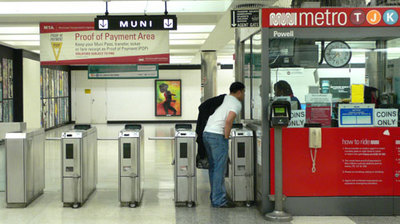
Don’t miss the free MUNI youth bus pass!

4

If you do down to the BART station at 16th and Mission today (Thursday) from 3-5 p.m., you’ll see banners that read ‘Get Your Free Fast Pass.” The PR blitz is the work of the MORE Public Transit Coalition, which is conducting a series of community bus pass clinics in the Mission, the Bayview and Chinatown in the coming weeks to help low-income families apply for free MUNI youth passes. 

Last week, at the urging of the MORE Public Transit Now Coalition and Sup. David Campos, the MTA Board approved the Youth Lifeline Program, which will provide 12,000 low-income youth with free MUNI bus passes in April, May and June.

But to access the free bus pass program, low-income families need to fill out an application and return it to the MTA Office. As a result, community organizers are setting up the bus pass clinics to inform low-income parents and students about the program and to help them to apply.

“We fought hard to get these free bus passes,” Gloria Esteva of POWER (People Organized to Win Employment Rights) said in a press release. “Now we want to make sure that children get these passes in their hands and don’t have to worry having bus fare in order to make it school each day.”

More than 20,000 transit dependant students in San Francisco rely on public transit to travel to and from school daily. But last year, the price of the Youth Fast Pass doubled from $10 to $20.

“We take the bus everywhere we go,” Un Un Che from the Chinese Progressive Association. Said. “My family depends on MUNI to get to school, to work, to the doctor.  Buses are not a luxury; they are a necessity.”

A similar clinic will be held in the Bayview on Monday March 14 at the Mandela Plaza at the corner of 3rd Street and Palou. A second clinic will be held in the Mission on Thursday March 17 and a second in the Bayview on Monday March 21. Future clinics are planned for Chinatown, though dates are not yet available. But applications will be available at all locations in English, Spanish, and Chinese, and assistance will be provided in all three languages.
 Organizers note that while the program is a positive step, the 12,000 passes still fall short of meeting the need for affordable public transportation in San Francisco.
 
“We know that next year the city plans to continue to cut yellow school buses,” POWER organizer Beatriz Herrera said.  “We need a permanent program that will ensure that our children can travel safely around the city, get to school each day, and meet their basic transit needs.”

Is David Crane just another Kochhead?

24

This week the Chronicle majorly attacked State Sen. Leland Yee, claiming Yee tried “to distort the words” of billionaire investment banker and UC Regent David Crane on collective bargaining.

The Chron’s attack came on the heels of Yee’s attempt to block Crane’s UC Regents confirmation. And Yee’s attempt to block Crane came in response to an op-ed Crane wrote for the Chron titled “Should public employees have collective bargaining rights?”

In its counter-counter attack editorial this week, the Chronicle accused Yee of falsely claiming that Crane had “called for an end to collective bargaining rights for California teachers, nurses, firefighters, university employees and other public sector worker.”

“What the former adviser to Gov.Arnold Schwarzenegger did was present a history of collective bargaining in California and explain how a 1977 law had changed the balance of power by giving public employees power over their compensation and benefits,” the Chronicle stated. “Crane did assert that extending collective bargaining to employees who already have civil service protections ‘serves to reduce benefits for citizens and to raise costs for taxpayers. Anyone who would argue with that fact has not been paying attention to what is happening with state and local budgets lately.”

The Chronicle finished by praising Crane, who is currently a lecturer on Public Policy at Stanford University and is reportedly working with former Fed Chairman Paul Volcker to form a task force to examine current state budget practices. Crane, the Chron asserted, has “long been widely respected as a teller of inconvenient truths about the rising costs of public-employee pensions and benefits. He should not be silenced – or misquoted by opportunistic politicians. The Senate should vote to confirm him as regent.”

Now, when Schwarzenegger appointed Crane as a UC Regent in December 2010 as one of his last acts as Governor, the Sacramento Bee described Crane as Schwarzenegger’s “chief public employee pension critic.” But here in San Francisco, the Chron didn’t bother to flesh out Crane’s history of employment, campaign contributions, prior statements on collective bargaining, and financial investments.

Maybe it was because these public records reveal Crane to be less a dyed-in-the-wool Democrat and more of a Bushocrat, an ultra-rich investor who supported G.W. Bush through two elections, and repeatedly frames the collective bargaining rights of government employees as an obstacle standing in the way of pension reform and budget balancing.

Campaign finance records show that in March 1999, when Democrats were trying to hang onto the White House in the wake of Clinton’s sex scandals, Crane gave $1,000 to Bush. And in June 2003, just three months after Bush invaded Iraq on a false pretext, Crane saw fit to give Bush another $2,000.

The good news? Crane didn’t support Sarah Palin and John McCain in 2008. But he did donate $7,200 to Republican Tom Campbell’s unsuccessful 2010 bid for US Sen. Barbara Boxer’s seat. And here in San Francisco, Crane was one of several billionaires who wrote big fat checks last fall in support of Measure B, which sought to curb the pension and health benefits of city workers, most of whom will make a fraction in their lifetime of what Crane rakes in each year from his widely diversified financial portfolio.

Crane’s 2009 statement of economic interest shows he has over $1 million invested in Farallon Capital Partners, one of the world’s largest hedge funds, many of whose investors include top university endowments.

Crane also has over $1 million invested in Acacia Partners, over $1 million in Bislett Partners, over $1 million in Kensico Partners, over $1 million in Semper Vic Partners, over $1 million in Berkshire Hathaway, whose CEO is Warren Buffet, over $1 million in the HCP Absolute Return Fund, whose Board includes Warren Hellman, and up to $1 million in Hall Capital Management, whose Board includes Hellman and Gap heir John Fisher. Crane also owns several million dollars stake in real estate investments, and has sizeable stock in Wells Fargo, Chesapeake Energy, Microsoft, Google, Pangloss Oil, Whole Foods Market, M&T Bank Corp., IBM, American Express, WalMart and Exxon.

And he gets income from Acacia Partners and Babcock & Brown, where he was a former partner from 1979 to 2003. While at Babcock, Crane reportedly brokered a controversial jet-lease deal between Arnold Schwarzenegger and Singapore Airlines that allowed Schwarzenegger to defer taxes on millions of dollars. And in 2004, Crane went to work for then Republican Gov. Schwarzenegger as special advisor for Jobs and Economic Growth. The Terminator returned the favor by appointing Crane to the California Commission in Economic Development and the California High Speed Rail Authority. But Crane was rejected in Senate confirmation proceedings for a position on the board of California State Teachers Retirement System.

Now, clearly it’s not a crime to be a billionaire, even though the way some folks make their billions is criminal. But you have to wonder if UC really needs another ultra-rich Regent on its Board. You also have to wonder why the wealthy Crane sought reimbursements of $2,812 from UC in 2009, if he cares about saving the state money.

And Crane has made plenty of statements about collective bargaining rights and pension reform in recent months that seem to frame government employees as the bogey men, not just in California, but across the entire nation.

Take his April 2010 comments to the Los Angeles Times: “State legislators are afraid even to utter the words ‘pension reform’ for fear of alienating what has become — since passage of the Dills Act in 1978, which endowed state public employees with collective bargaining rights on top of their civil service protections — the single most politically influential constituency in our state: government employees,” Crane said.

Or what he said in August 2010 to the Fox Business Network: “Even if you took care of every one of these spiked above the iceberg level pensions in California, you would not take care of the pension problem in California, which is true of virtually every state in the country, at least those where, you know, government employees have collective bargaining rights,” Crane said

In December 2010, he told the L.A. Times that the year 1978, ”wasn’t notable just because of Proposition 13. That was also the year public employees gained a power Franklin D. Roosevelt had warned against: collective bargaining rights.”

“California hasn’t been the same since,” Crane continued. “Public workers have gained at the expense of private workers as government spending was redirected from infrastructure and education to higher salaries, pensions and other benefits.”

And in his Feb. 27 Chronicle op-ed, Crane claimed that, “The battle in Wisconsin is not over collective bargaining rights generally but rather the appropriateness of those rights in the public sector ”

“Collective bargaining is a good thing when it’s needed to equalize power, but when public employees already have that equality because of civil service protections, collective bargaining in the public sector serves to reduce benefits for citizens and to raise costs for taxpayers,” Crane continued. “Citizens and taxpayers should consider this as they watch events unfold in Madison.”

As of today, letters are circulating in Sacramento opposing Crane’s confirmation. And Sen. Ted W. Lieu (D-Torrance), Chair of the Labor and Industrial Relations Committee in Sacramento, has already signaled his opposition.

“I cannot support someone for the powerful post of UC Regent who continues to perpetuate the myth that collective bargaining caused our state economic crisis and has a fundamental misunderstanding of how our state budget operates,” Lieu said in a statement. He noted that in the Chron op-ed Crane claimed that because of collective bargaining, “general fund spending on higher education, parks and environmental protection was flat or lower.” 
“As a matter of historical fact, that is false,” Lieu countered. “ Our general fund spending generally declined because of a national economic recession.  The recession was not caused by collective bargaining or public sector unions, but by private sector, out of control Wall Street firms at the time.”

“The specific reason our general fund spending sharply declined was because the person Mr. Crane advised, former Gov. Arnold Schwarzenegger, reduced the Vehicle License Fee and replaced it with . . . nothing,” Lieu continued. “As a result, the state general fund lost over $5 to $6 billion in revenues per year for every year Mr. Schwarzenegger was in office.  The VLF reduction has resulted in a total loss of over $30 billion to the state, an amount in excess of the current California budgetary shortfall.  How conveniently Mr. Crane forgot to mention that critical fact when it doesn’t suit his ideological assault on public sector unions.”

“Now that Mr. Crane senses his confirmation may be in jeopardy, he attempts to marginalize his own Op-Ed by releasing a new statement saying he really didn’t mean to attack all public sector unions, just those who happen to have statutory civil service protections,” Lieu added. “For those in Ivory Towers that distinction may have some academic meaning, but for everyone else in the real world that is a distinction without a difference. Civil Service protections do not prevent employees from being terminated or laid off, they provide standards for government to follow when firing or disciplining employees. Such protections do not guarantee appropriate wages or benefits, nor address a plethora of other issues, such as workforce safety issues.”
 
“Mr. Crane’s Op-Ed also discusses political spending by public sector unions, “Lieu concluded. “In his world view, political spending by the California Teachers Association is inappropriate, but the massive political spending by the Koch Brothers would presumably be acceptable. I cannot, and will not, support someone for the post of UC Regent who blames public sector employees, such as teachers, for somehow being responsible for our economic crisis or the resulting decline in general fund spending.  We need UC Regents who are interested in solving problems, not those who twist historical facts to suit an ideological agenda.”

So, as I wait for Crane to return my call, I’ll leave you with something reporter Peter Byrne, who authored the award-winning investigative series ‘Investor’s Club” How the Regents of the University of California spin public funds into private profit,” said to me yesterday when I asked him about the wisdom of putting investment bankers on the UC Regents Board. “Putting investment bankers in front of a plate of $63 billion is like putting a pound of hamburger in front of a bunch of feral cats. They are going to eat it. It’s in their nature.”

So, would confirming Crane be like adding another feral cat to the mix? Is he just another Kochhead? Or is he just maligned and misunderstood, as the Chron vehemently implies?

More than 80 percent of Americans want to tax the rich

9

Senator Bernie Sanders (I-VT) is calling for an emergency surtax on millionaires as a way to combat the deficit. Which, of course, is a great idea. His colleague Chuck Schumer (D-NY) is on the same page. And the polls show that most of the country agrees with the concept; in fact, a Wall Street Journal/NBC News poll says that a staggering 81 percent of Americans think it’s basically a good idea to increase taxes on incomes of more than $1 million a year.


I imagine that the population of San Francisco is somewhat more liberal on the issue of taxes than the nation as a whole, which leads me to believe that a very substantial percentage of the city’s residents (including some of the very rich ones) was support increased local taxes that would require the wealthy to pay more to preserve city services.


There are, I’m sure, plenty of creative ways to do that. But it doesn’t seem to be at the top of the budget discussion at City Hall.


I realize that it would require a two-thirds vote in November for any tax hikes — unless the supervisors declared a financial emergency. And it certainly seems as if we’re in a state of emergency — and if the governor can’t find a couple of Republicans to vote for his budget package, it’s going to get much worse, very quickly.


If we can’t do that, and we have to wait a year and do it next fall, we still ought to be starting now — and the supervisors ought to be telling every community that’s facing cuts that there won’t be any more reductions without at least a plan for new revenue.


Stories for big kids: Tales hit the stage with Paul Flores, the Living Word Project, Campo Santo, and Word for Word

0

Stories aren’t just for youngsters who read The Very Hungry Caterpillar before bed or tell scary tales around a campfire. The big kids need stories too, and lucky for San Francisco, the city boasts dynamic performers enacting mature and human stories on stage. Feeding complex chronicles to the souls of grown up audience members, Paul Flores, Living Word Project, Campo Santo and Word for Word do their parts to prove stories for big kids rule.

In You’re Gonna Cry, a one-man show about the effects of Mission District gentrification performed in February at Dance Mission Theater, Flores embodied about a dozen neighborhood characters. Ranging from a Latino bohemian, a pink-haired DJ, and an elderly dumpster-diving immigrant, to a salsa-dancing old timer, a drug dealer, and a well-meaning business man, the personalities illuminated his story from diverse perspectives.

With versions of each character walking the streets in real life, You’re Gonna Cry‘s tales resonated. “The project is not meant to be consumed passively, but to move people to respond and take action,” Flores wrote in the program notes, revealing his intention to employ art for social change. The call to action: empathy, respect, and support for one’s neighbors, and acknowledgment of the cultural nuances in the Mission District. For Flores, hip-hop theater and storytelling helped to put a human face on the issue. 

A Def Poet, playwright, novelist, and spoken-word artist, Flores continues to make a huge impact on teens as a co-founder of Youth Speaks, which implements programs connecting poetry, spoken word, youth development, and civic engagement. The resident theater company of Youth Speaks, the Living Word Project extends the reach of  personal narratives, emphasizing spoken storytelling to communicate important social issues and current movements. Living Word Project Artistic Director Marc Bamuthi Joseph, also a former Def Poet, works closely with a select group of writers and performers, whose ages span from 19 to 25, for the productions.

Trailer for the Living Word Project’s ‘Word Becomes Flesh’:

Excerpts from the Living Word Project’s Word Becomes Flesh appeared in December of last year at YBCA’s Left Coast Leaning festival, co-curated by Joseph. There, committed performers enacted letters to an unborn son, with electrifying physicality and rapid-fire wordplay. The work presented a counter-narrative to the narrow frame of current commercial hip-hop, breaking stereotypes. Through performance, the group focused on the oral transfer of a story, directly confessing personal thoughts and emotions to make connections. Watch for them with Campo Santo at Intersection for the Arts this November in Tree City Legends, written by Dennis Kim of Denizen Kane and directed by Joseph.

Campo Santo, the resident theater company at Intersection for the Arts led by Sean San Jose, plays a major role in theatrical storytelling, linking writers to the stage. “Campo Santo is Spanish for sacred ground,” the group’s artist statement declares. “Like the roots of our name, we are taking the sacred form of storytelling and using it as a tool to bond community through socially relevant plays.”

In May, Campo Santo performs for the first time in Intersection for the Arts’ new home at the San Francisco Chronicle Building, presenting Nobody Move, based on the book by Denis Johnson. Adapted by San Jose, the performance offers a noir psychic picture of the United States from an outsider’s seat. In September, Campo Santo continues its work with Pulitzer Prize-winning author Junot Diaz when it presents The Pura Principle, created from Diaz’s recent short stories and original writings. Also expect storytelling to be part of this year’s Bay Area Now Triennial at Yerba Buena Center for the Arts, where San Jose is one of several curators for performances during the final months of 2011.

Another group breathing life into short stories is the Word for Word Performing Arts Company, operating at Z Space. Founded by Susan Harloe and JoAnne Winter, Word for Word is known for staging performances of classic and contemporary fiction, enabling the company to tell literary stories with theatricality. Word for Word’s last show was extended due to its popularity and positive critical reception. This week, The Islanders opens at Z Space, telling about the bonds of friendship – as two women reunite for a trip to Ireland — by bestselling author Andrew Sean Greer, directed by Sheila Balter. 

While some degree of storytelling already exists in most narrative theater work, the outward expression of a story onstage shifts the performances of Flores, the Living Word Project, Campo Santo, and Word for Word into distinct territory. By combining narrative and literature with powerful theatricality, these San Francisco performers make clear that stories are for people of all ages.

THE ISLANDERS
Wed./9-Fri./11, 8 p.m.; Sat./12, 3 and 7 p.m.; $15-$40
Z Space
450 Florida, SF
www.zspace.org

Hot sexy events: March 9-15

0

Hole-y moley, it’s time to say sayonara to Chaps, compadres – again. After assuming the name of the classic leather bar that called the DNA Lounge’s address home in the ’80s, Chaps II (as the 1225 Folsom location is formerly called) is switching identities to Kok Bar SF. Is the new moniker a sly wink to the once-was Kokpit bar of San Francisco gone by? Or have we perhaps been spending too much time at the new GLBT History Museum? Regardless, Saturday the 19th will be Chaps last night open before it metamorphs into Kok, which will reopen April 1 at 9 p.m. for cruising good times. 

Luck OH! the Irish

Alameda County Leather Corps event on Sunday notwithstanding, I’m a bit disappointed in the dearth of St. Patty’s themed sex events this year. C’mon, Mission Control, where was your call for leprechaun-themed codpieces and pots-of-gold augmented cleavage? Missed opportunites. Luckily, a brave band of gingers have taken up the call for Irish fun times — check out Powerhouse’s Patty’s themed “party for the dirty gentleman,” where you are cordially invited to kiss someone’s Blarney stones. 

Weds/9 10 p.m.-2 a.m., $3

Powerhouse

1347 Folsom, SF

(415) 552-8689

Facebook: Luck OH! the Irish


Bawdy Storytelling: Jackpot!

Dixie De La Tour’s monthly story-on-stage series has gathered up fetish photographer Charles Gatewood, musician Catie Magee, videogame developer Agent Orange, and others to recount their tales of getting what they thought they really wanted – from a meeting with their fave porn star to a women’s-only sex party – and the resulting epiphany/chagrin/orgasm.

Weds/9 8 p.m., $10

The Blue Macaw

2565 Mission, SF

www.bawdystorytelling.com


Radical Polyamory

It’s one thing to figger out that what your love life is missing is a trip to the polyamory buffet. But it’s an entirely separate challenge to move confidently with that choice through the vanilla, monogamy-normalized world. This workshop with sex activist Julianne Carroll focuses on just that, blithely hopping about from the best ways to approach relationship agreements, confronting jealousy, emotional safety, to changing the world. 

Weds/9 6-8 p.m., $20-25

Good Vibrations

1620 Polk, SF

(415) 345-0500

www.goodvibes.com 


The Art of 8 Limbs

Leave your bag of tools at home this time, kinky community. Disciple, local expert in kinky grappling and cell popping, will be teaching this class in utilizing one’s own body as an implement in body impact play and striking. And just to make sure you’re not inflicting pain on unsuspecting parties, part of the night will be devoted to stretching exercises you can perform before you put the techniques into play.

Thurs/17 8-10 p.m., $20

SF Citadel

1277 Mission, SF

(415) 626-2746

www.sfcitadel.org 


Strap-ons and Smut

Add to your repetoire as a lover with this dual-mission educational evening. Rain DeGrey (she’s everywhere this week – check out Sun/13 for more of her) will be wielding her strap-on for the good of your sex life, and erotic writing educator Jenn Cross explores the art of the slutty love letter. The event at Mission Control is part of Femina Poten’s program there while the art-sex gallery remains physical location-less. 

Thurs/10 7-9 p.m., $15

Mission Control 

www.missioncontrolsf.org


Von Gutenberg Fetish Ball

Calling all latexuals: Von Gutenberg, purveyor of fine electric pink latex cigarette girl costumes and webmaster of all things tight and shiny is holding its extravaganza dress-up weekend, featuring three days of costumed craziness, taped nipples, and pumping beats to writhe to.

Thurs/10-Sat/12, $95 for weekend pass

Various venues, SF

www.vongutenbergblog.com


Give up the Bootie! Anal Play 101

No need to shy from the ass – here’s a class that take you through the paces of rimming, enemas, butt plugs, prostate massage, and more. Rain DeGrey, BDSM educator, rigger, and fetish model, takes you through the paces of one of her favorite pastimes. 

Sun/13 2-5 p.m., $20-40

The Looking Glass Dungeon

Jack London Square, Oakl.

www.myspace.com/thelookingglassdungeon

mail@thelookingglassarts.com 


Live review: Elephant 6 Holiday Surprise tour

0

I caught up with the The Elephant 6 Holiday Surprise tour as it made its stop at the Independent in San Francisco on Sat./5, and it was nothing short of magical. A dozen or so core members of the Elephant 6 Collective rotated instruments and played each others’ songs. It was like a slice of Athens, Georgia performing on a holodeck-cum-stage for a bewildered SF audience that didn’t know what to expect.

Singing saw virtuoso Julian Koster (Neutral Milk Hotel, Music Tapes) looked like he was dressed for a slumber party, and some may say he stole the show with almost sickeningly adorable storytelling and mechanized organ-playing contraptions. But there were many high points. The Athens folks’ cover of Elf Power’s cover of the Tall Dwarfs’ “Nothing Is Going to Happen” and John Fernandes’ (Olivia Tremor Control) tricked-out viola solo blew my mind, and perhaps my favorite moment was when angel-voiced Scott Spillane (Neutral Milk Hotel, the Gerbils) and his famously epic neck beard led the group in a caroling of the Gerbils’ “Lucky Girl” which sounded better than the original. 

There were games, and crowd participation, with one winner getting to choose a song for the group to play. He opted for something by Mazzy Star. I would have chosen something more out of character, like “Juicy” by the Notorious B.I.G., but then again, I wasn’t playing. Maybe next year — fingers crossed. These folks know how to entertain, and they managed to make a two-hour performance seem short, leaving me wanting more.

…And gaming for all

0

GAMER For a second there, the mighty PR machine seemed poised to devour the Game Developers Conference. The communal, feel-good GDC was built on sharing ideas, and in recent years the modest think tank had grown exponentially, as established game developers and publicity houses descended on downtown San Francisco with glossy preview events and headline-stealing announcements that previewed things to come at the summer E3 expo. However, this year the most talked-about events weren’t the off-site previews, but the conference-organized developer sessions, a phenomenon that marked a return to the sentiments that inspired the conference in the first place.

Big-name developers like Peter Molyneux, head of Lionhead games and lead developer of Fable; Cliff Bleszinski, design director of Epic games and spokesman for the Gears of War franchise; The Sims creator Will Wright; Doom honcho John Romero; and outspoken French impresario David Cage were just a few of the draws in the “classroom” area of Moscone Center. While these industry giants lectured about their experiences in the industry and gave postmortems on their classic games, the notion was that they were speaking directly to a generation of developers who might one day become successors — or even competitors.

Inspirational stories were the highlight of the conference, but a handful of games were happy to share the spotlight. And one game set out to draw maximum attention to its upcoming release by staging a controversial rally in Yerba Buena Gardens and releasing hundreds of red balloons over the downtown area. With its near-future shooter Homefront releasing in just a week, publisher THQ embarked on the biggest media push so far this year. In addition to the balloons and the rally (themed like an anti-North Korea rally, complete with posters of Kim Jong Il, a diagonal line through his face and the words “Game Over North Korea”), THQ shuffled press into a themed event with barbed wire, smoke machines, and stony-faced Korean soldiers. With publicity like that, it’s almost beside the point how the game plays, but let’s say it’s largely familiar.

Other attempts to stay relevant came in the form of Uncharted 3, whose developers showed the previously-seen “burning chateau level,” this time showcasing the game’s 3-D feature and an additional story-driven animatic that promises the game will be as blockbuster an experience as its predecessors. Battlefield 3 held an impressive “reveal event,” though the game had been partially revealed weeks earlier in Game Informer magazine. The game has wonderfully realistic animations, but the event itself was designed to draw attention to its Battlefield Play4free online shooter, which offers free FPS gameplay if you don’t mind a microtransaction or two.

With most of the game previews having been seen before, it was nice to see a few publishers making their debuts at the conference, such as The Darkness II, which proved that interactive storytelling has a place, even in a post-Heavy Rain marketplace. With musician Mike Patton returning for vocal duties, the sequel mixes gunplay with gruesome “quad-wielding” tentacle murder and an original, hand painted graphics style. Also making a gameplay debut was Batman: Arkham City, which looks to improve on Arkham Asylum‘s successes in nearly every category and with an attention to detail sure to please gamers and comic aficionados alike.

The conference buzzed with goodwill for the industry shift toward indie and mobile gaming, a revolution that meant a much larger contingent of attendees were likely to already identify as genuine developers. In the conference keynote, Nintendo president Satoru Iwata explicitly noted the shift, in the midst of a surprisingly defensive presentation that attempted to downplay the success of casual game developers and situate Nintendo’s place in the past and present of social gaming. If there’s one thing to take away from the keynote, and the 2011 conference as a whole, it’s the industry shift from conglomerate to individual. Nintendo’s threatened stance, and Microsoft’s noticeable absence, indicates a move toward dividing the industry just as gaming stands to enjoy unprecedented appeal in the form of casual gaming. In a world where anyone with a good idea can make a successful game, we might be looking at a return to the exciting, anything-goes Wild West atmosphere that marked gaming’s birth in the 1970s and ’80s. For an industry that could use a few paradigms shifted, it’s the best news yet.

The dead fish plan

0

By Patrick Porgans

news@sfbg.com

The recently formed Delta Stewardship Council, charged with protecting the San Francisco-San Joaquin Delta Estuary, released a draft report in February with more bad news about the possible fate of aquatic species.

A number of the fish, which have been the focus of national attention, are already listed as threatened or endangered under the provision of the Endangered Species Act.

This preliminary finding comes after more than $10 billion has been expended over the course of a decade by federal and state officials — who have insisted that their plans would not only restore estuary fisheries but would double the populations of endangered species such as salmon.

But CALFED — the joint federal/state effort — failed to restore fish populations, and now the state says some species may never recover. So it’s hard to have a lot of confidence in the new agency.

The draft report was released by DSC’s executive officer, Joe Grindstaff, former director of CALFED’s Bay-Delta program. At one point, in 2007, Grindstaff acknowledged: “Fundamentally, the system we designed didn’t work.”

That’s an understatement. Tens of millions of fish have been killed by government-operated projects pumping and exporting water from the delta. More than 50 million fish were considered “salvaged” — saved from the pumps — but millions of them also wound up dead. And there are tens of millions, perhaps hundreds of millions, more that are unaccounted for.

Ironically, this unfathomable loss occurred while officials were engaged in several failed fish-doubling plans that spanned decades, cost the public billions of dollars in borrowed money, and contributed the California’s deficit-ridden budget crisis.

And now there’s a new plan, crafted by the same people who bungled the last one. It’s projected to cost as much as $80 billion and take another 90 years to complete.

According to the draft plan, “the funding needed … is large. Capital expenditures required for the delta in the next 10 to 15 years could range from $12 billion to $24 billion, with a high estimate of $80 billion. The annual operating costs of the … council are unknown.”

We’ve been here before. Critics argued from the inception of CALFED that it was doomed to fail because, like the new council, it was composed of many of the same agencies that caused the estuary to become imperiled. And it has, in fact, failed. When I called to find out its status, Eric Alvarez, a spokesperson for the new delta council, responded that CALFED “no longer exists in the conventional sense. It does not have a staff or a location.”

The first draft report of the new council provides some key preliminary findings, all of which ignore the essence of the problem.

First, it states that “California’s total water supply is oversubscribed. California regularly uses more water annually than is provided by nature.” It’s true that California’s water resources are oversubscribed — but that’s the result of the government’s failure to prudently appropriate the water we have.

Next it says, “California’s water supply is increasingly volatile” — a fact that has been made worse by mismanagement.

“Even with substantial ecosystem restoration efforts, some native species may not survive,” it adds, noting that “there is no comprehensive state or regional emergency response plan for the delta.” It doesn’t mention that state officials have had 50 years to come up with such a plan, and have consistently failed.

“Even with substantial restoration efforts, some native species may not survive,” the plan states. “Expert opinion suggests that some stressors are beyond our control and the system may have already changed so much that some species are living on the edge…. In addition, habitat conditions for some species may get worse before they improve.”

That’s an astonishing admission coming, in effect, from the same government agencies that once promised they would double fish populations by the year 2002.

The fact is that anadromous fish and other pelagic species populations, which depend on the delta estuary, have reached alarming all-time lows.

How did the salmonid and other endangered species reach what may be the point of no return? It’s simple — the delta pumps that send water south to irrigate arid land, as approved by CALFED, are by their very nature fish- killers.

According to data from the California Department of Fish and Game (DFG), from 1984 through 2006 an estimated 22 million fish were killed at the State Water Project’s Delta pumping facilities alone. That works out to an annual average of nearly 1 million fish killed as a result of SWP’s water exports from the delta.

And that’s just one pump. The federal Central Valley Project, which also sucks up delta water, provides estimates of federally-listed Chinook salmon and steelhead loss, as well as estimates for salvage rates of delta smelt, Sacramento splittail, and longfin smelt.

Data obtained from government sources indicate that from the period of 1980 through 2002, 54 million fish were salvaged from the SWP Skinner Fish Facility and the federal project’s Tracy Fish Facility. That averages out to 2.4 million salvaged fish, or five per minute, 365 days per year.

What happens to the salvaged fish? Nobody knows for sure. The DFG recently disclosed that it has never conducted a quantitative analysis or study on the topic.

The numbers would not be good. The salvaged fish are placed in tanker trucks and transported from the pumping facilities and dumped back into designated locations in the delta, where eagerly awaiting predators have a daily feeding frenzy. According to a U.S. Fish and Wildlife 2008 report, “salvaged” Delta smelt, which in some years ranged as high as 5 million, are typically written off as dead.

Ironically, in all that time the responsible officials have yet to be held legally accountable for even one dead fish.

Editor’s Notes

1

Tredmond@sfbg.com

Back in the early 1990s, when the city was hurting for money even more than usual, Sue Hestor, the environmental lawyer who is always full of good ideas, called me up and suggested that the city start charging banks a fee for every storefront ATM. "They have turned the public sidewalks into their bank lobbies," she said. ATMs can lead to congestion and are magnets for crime; why shouldn’t the banks (which made a lot of money replacing human tellers with machines and costly private space with public property) help pay for some of those impacts? After all, banks escaped most local business taxes.

I ran that one up the old flagpole, and got nowhere. Back then, the city attorney was Louise Renne, who wasn’t known for aggressive approaches to revenue generation; she immediately told me it wasn’t legal. Back then, at least nine of the 11 supervisors were guaranteed to vote against anything that would offend big business.

A few years later, Tom Ammiano, who had become the only supervisor serious about brining in new money for San Francisco, suggested that the city put a tiny tax on transactions at the Pacific Stock Exchange. A similar tax in New York City had brought in millions. The exchange quickly marched up to Sacramento and got the state to outlaw the idea.

Down in Los Angeles, they’re trying to put a severance tax on oil production. Great idea. Too bad (not really) we have no oil wells here.

Lots of good ideas. It’s time for some more.

Things in San Francisco are really, really dire, and the district-elected supervisors are far more open to progressive approaches to the budget crisis. And if you’re willing to stipulate — as I am — that San Francisco has a revenue problem as much as a spending problem, and that the rich and big businesses are radically undertaxed, then its time for a comprehensive look at the ways this city might bring in some more money.

There are some nice concepts floating around. David Chiu, the Board of Supervisors president, is talking about reforming the city’s business tax. Sup. John Avalos tried to put a nickel-a-drink impact fee on alcohol wholesalers. Sup. David Campos thinks downtown should help pay for Muni service. I still like the notion of a city income tax.

But what we need is a long list of options — a complete guide to how a charter city and county in California in 2011 is legally allowed to raise money.

Dennis Herrera, the city attorney, is a smart guy; he’s figured out all kinds of ways to use his office to go after polluters, scam artists, and crooks. I suspect that with a bit of a nudge, he could help develop a few dozen legally sound ways to tax the wealthy individuals and institutions. That ought to be priority one for the Budget Committee.

I’m not sure what would work best, and nobody else is either. But we ought to have all the options.

Waste not

0

sarah@sfbg.com

The San Francisco Board of Supervisors has delayed consideration of a city waste disposal contract while officials investigate a broad range of questions ranging from logistical considerations to whether to break up Recology’s current garbage collection monopoly.

Is it feasible to move the city’s entire infrastructure for waste and recycling to the Port of San Francisco? Would it be more sustainable to barge or rail the city’s trash directly from the port rather than drive it across the Bay Bridge to Oakland every day? Considering that recyclables get shipped from Oakland to Asia anyway, why not send them by barge rather than truck? Or is that idea just an empty gesture since recycles, mostly paper products, consitute only 10 percent of the waste stream?

Some of these questions are being studied as part of a survey the San Francisco Local Agency Formation Commission (LAFCO) is trying to complete by April, others as part of a longer-term investigation by the Department of Environment (DoE). At LAFCO’s Feb. 28 meeting, commissioners requested a survey of how other jurisdictions in the Bay Area procure trash collection, hauling, and disposal contracts.

Although the studies differ in scope and duration, both were triggered by a Feb. 3 Budget and Legislative Analyst (BLA) report that revealed that the annual cost to ratepayers of San Francisco’s waste system is $206 million. Yet only the $11 million landfill contract is being put out to competitive bid (see “Garbage Curveball,” 02/08/11).

The BLA report revealed that a 1932 ordinance intended to address territorial disputes around trash collection and transportation in San Francisco ultimately gave Recology (formerly NorCal Waste) a monopoly on all post-collection recycling, consolidation, composting, long-distance transport to landfills, and waste disposal contracts. The report triggered a political firestorm by recommending that the city replace existing trash collection and disposal laws with legislation that would require competitive bidding on all waste contracts and that rates for residential and commercial trash collection become subject to Board of Supervisors approval.

Faced with these recommendations, the Board of Supervisors Budget and Finance Committee asked Feb. 9 for a two-month delay on DoE’s proposal to award Recology a 10-year contract to dispose of San Francisco’s municipal solid waste at Recology’s Ostrom Road landfill Yuba County when its contract at Waste Management’s Altamont landfill expires.

DoE officials predict the WM contract will expire in 2015. But company representatives estimate the contract will last much longer, based on reduced volumes that San Francisco has been trucking to Altamont.

Sup. John Avalos, a LAFCO commissioner, requested that the LAFCO study include a map to give folks “a visual” of landfill locations throughout the greater Bay Area. “And there’s been an interesting discussion about the use of barging,” Avalos said, pointing to the flotilla of barges involved in building the Bay Bridge, which could be repurposed when that jobs ends. “A new maritime use could help the port raise revenue and reinvigorate other maritime uses on its property.”

At that point in the hearing, Sup. Ross Mirkarimi, the vice chairman of LAFCO, floated his “alternative barge plan,” under which only recyclables would get sent across the Bay to Oakland. Noting that he has met with Port Director Monique Moyer and Office of Economic and Workforce Development staff, Mirkarimi said that “the port is not equipped to deal with solid waste. But it is equipped to deal with recyclables, so this is something we should pursue.”

But Sup. David Campos, the chairman of LAFCO, clarified that the survey should still include a study of barging all trash. “Barging is complicated, but this is about providing basic information,” he said.

Records show the port reached out to DoE in 2009 with a letter that identified rail (but not barging) as an environmentally sustainable mode for moving waste from the city to its next landfill site.

In a June 23, 2009 letter to the DoE, Moyer and David Gavrich, president and CEO of the SF Bay Railroad (SFBR), stated that “rail directly from the port can not only minimize environmental impacts, it can provide an anchor of rail business for the port and a key economic development engine for the Bayview-Hunters Point community and the city as a whole.”

Recology’s trucks currently collect and haul about half the city’s waste to its recycling center, which sits on port-owned land at Pier 96. After the recyclables are offloaded for processing, the trucks haul the rest of the garbage through the Bayview and back onto the freeway to Brisbane, where it is loaded onto bigger trucks that haul the trash over the Bay Bridge each night to WM’s Altamont landfill near Livermore.

“It would seem most efficient to not double- or triple-handle the waste but to put it directly onto rail at the port instead,” Moyer and Gavrich wrote in 2009. “Collection vehicles could then go directly back out onto their routes, reducing time, fuel, emissions, and traffic impacts.”

The pair noted that SFBR and its affiliate Waste Solutions Group have used rail to haul more than 2 million tons of waste directly from the port in the past 15 years, using gondolas and 12-foot high municipal solid waste (MSW) containers on flat cars. They included an aerial photo showing Recology’s central recycling facility at Pier 96 and the extensive rail infrastructure and barge options that surround the facility.

But DoE never got back to them, Gavrich recalled last week as he fired up a SFBR locomotive and rode the rail tracks that crisscross the 20-acre port-owned facility that lies between SFBR’s outfit, Recology’s Pier 96 recycling facility, and the bay that is currently home to idle barges and rail cars that sit rusting a stone’s throw from the economically depressed Bayview.

“All that’s needed is two to four acres for an excellent transfer station,” Gavrich said. “Barge and rail access could not be better. It’s just waiting to be developed.”

In February, DoE officials told the Budget & Finance Committee that they had looked into and rejected barging as an option. But it turns out they did not conduct an official study. “There hasn’t been a study to date,” DoE’s Assmann said March 7, when the Guardian requested DoE’s barging report. “We had a discussion about it, but no formal policy.”

Assmann noted that DoE asked waste management companies that bid on the city’s landfill disposal contract to include a barging option. “But nobody did,” Assmann said, referring to Recology and Waste Management, the two finalists in the city’s landfill disposal contract bid process.

Assmann said DoE is currently doing a long-term study into three transportation and facilities options for waste using port facilities: the first option would involve moving the entire infrastructure for waste and recycling to the port. The second would be to use the port as a transfer facility for garbage, and truck, barge, or rail haul garbage from the port. The third would involve barging recyclables only from Pier 96.

Assmann notes that the majority of infrastructure for the city’s waste system is at Recology’s Tunnel Road facility on the San Francisco-Brisbane border, a situation he claims would make it impossible to design, permit, finance, and build new facilities at the port before 2015.

But Barry Skolnick, WM’s vice president for Bay Area operations, told the Guardian that 2016 is a more realistic estimate of the landfill expiration date. “At the current disposal rate, we do not believe San Francisco will exhaust its disposal volumes under the existing Altamont landfill contract until 2016 at the earliest,” Skolnick said. “There is plenty of time for the Board of Supervisors and LAFCO to explore best practices and options for its collection, recycling, composting, transferring, and residual waste disposal services.”

Skolnick noted that WM discussed extending the Altamont contract at the Budget & Finance Committee hearing and the LAFCO hearing, and is proposing to extend the city’s current contract by several years.

“We are preparing a proposed three-year extension of the disposal agreement for San Francisco’s review this week,” Skolnick said. “The extension would involve a price increase for disposal but less than the disposal rate offered under the proposed Recology rail haul to Ostrom Road in Yuba County. The three-year extension would provide disposal at the Altamont until 2019 or 2020.”

But Assmann noted that Recology, which currently pays the port $1 million a year to lease Pier 96, wants to expand its Brisbane facility on Recology-owned land. “We have offered to analyze [the Brisbane expansion] option,” Assmann said, estimating that a new transfer facility would cost $40 to $60 million, while a new integrated facility would cost $200 to $450 million.

“If the infrastructure moved to the port, that would have big positive implications for the port,” Assmann said, acknowledging that the port would lose money if Recology relocates entirely to Brisbane. Plus, Brisbane might demand fees from a new facility, he noted. “But consolidation would save ratepayers money in the long run because the operation would become more efficient.”

Unlike the LAFCO study, DoE won’t have its report ready by April, when the city needs to decide on the landfill contract.

“Our proposal is to look at the bigger picture,” Assmann said. “If the board approves Recology’s landfill contract, we’ll still go ahead and do it. The board can always delay its landfill decision. But this looks at infrastructure the landfill agreement won’t impact.”

DoE recommends working with Recology to implement a pilot program to barge recyclables from Pier 96 to the Port of Oakland as it studies long term infrastructure options including locating infrastructure at the port, Assmann said. DoE also recommends that the proposed plan to award Recology the landfill contract and facilitation agreement remain the same “since our analysis shows (and the port concurs) that all options for utilizing the port for any kind of landfill transportation would require a permitting process that would last a minimum of five years and a total timeline of at least seven to nine years.”

So far, the landfill contract has not come before the full board because of delays and continuations at the Budget & Finance Committee. As Judson True, legislative aide to Board President David Chiu, recently observed, the process over the last few months has raised more questions than answers, including unexpected angles such as how the port can be better utilized and the implications of the 1932 refuse collection and disposal ordinance. “We need to get these answers before we can move forward,” True said. “We all have a lot of work to do before we can figure out what’s best for the city and pick a path.”

But Gavrich hopes history doesn’t repeat itself and that Chiu shows some leadership on the garbage contract hornet’s nest. “There are so many compelling reasons and benefits for the city — but that hasn’t stopped the city from doing the wrong thing in the past,” Gavrich said. Gavrich pointed to 2007, when all members of the board except Sup. Chris Daly voted to give the sewage sludge contract to Recology even though its bid was $3 million higher than the competitor, S&S Trucking.

A Dec. 14 2007 San Francisco Chronicle article by Robert Selna quoted Mirkarimi as saying that a key reason for awarding the contract to Recology was that it was a union company. “That’s the elephant in the room,” Mirkarimi said, framing the board’s decision to go with Recology as being about “the devil we know.” Selna recently left the Chronicle to work as Mirkarimi’s legislative aide.

Mirkarimi’s recent suggestion that LAFCO explore barging recyclables as a pilot program has Gavrich worried. “Saying let’s explore simply barging recyclables makes no sense. It’s a fraction of what makes barge/rail haul economically viable.” Gavrich said. “It would put a greater burden on the ratepayer than the economic and environmentally inefficient system they have in place at Pier 96. The port should get the deal. It would be a cash cow.”


The fight for KUSF

8

By Irwin Swirnoff

OPINION For almost 34 years, KUSF (90.3 FM), has provided unique and varied local programming that truly is the audio representation of the qualities that make San Francisco such a special place. A place where diversity is honored and given a voice. A place where art, culture, and music are given a platform to tell stories, evoke emotions, and unite a wide range of people.

With shows in more than a dozen languages and every imaginable musical genre, era, and region represented on its airwaves, KUSF stood as one of the most respected college and noncommercial radio stations in the country.

Beyond its wide scope of music programming, KUSF provided crucial cultural and public service programming that served so many communities and cultures in our city that are all too often marginalized. Chinese Star Radio was the only radio program in Cantonese for the large and vibrant Chinese community in San Francisco. Disability and Senior News Report provided in-depth reporting on pressing issues facing these often overlooked and neglected parts of our community.

On Jan. 18, at 10 a.m., all those voices, all those communities, and all those services were silenced and squashed. In a secret deal behind the back of the community, the University of San Francisco sold KUSF’s transmitter to the University of Southern California in a deal that also involves the large media conglomerate Entercom.

It went down like a hostile corporate takeover. The DJ on air wasn’t allowed to sign off. Armed security entered the station as every lock in the studio was being changed. As stewards of a scarce public resource, USF has an obligation to the community. It’s time for the university to take a step back from this deal and allow for a mutually beneficial solution that will keep community radio alive in San Francisco.

It’s become clear that USF had no idea what an irreplaceable public resource it was killing when it entered this sneaky deal that would afford USC with its sixth territorial radio station as it aims to create a monopoly on the left side of the dial and extend its fundraising capacities deep into the Bay Area.

It’s obvious that this is a bad deal for the city of San Francisco. The San Francisco Board of Supervisors, the San Francisco Democratic Party, and the USF Faculty Association have passed resolutions condemning the deal. Outspoken support has come from a wide range of city and state leaders, including state Sen. Leland Yee.

No one is arguing USF’s right to liquidate an asset. All we are asking is that the community be involved in this decision and be given the first opportunity to purchase the transmitter.

This is not a done deal. Our petition to deny the transfer has been filed at the Federal Communications Commission. Serious questions about the legality of this deal are being addressed, and the next several weeks and months will allow us time for negotiations to help save community radio in San Francisco.

This is not about a format change. It’s about a community being robbed of its voice. We are committed to this fight and need everyone in San Francisco to join us in saving this crucial community asset. Now is the time to speak truth to power.

Guardian contributor Irwin Swirnoff has been the musical director at KUSF. 

For safety’s sake

6

rebeccab@sfbg.com

A federal investigative hearing on the deadly Sept. 9, 2010 San Bruno explosion triggered by the rupture of a high-pressure Pacific Gas & Electric Co. pipeline was all about getting answers — but it has also sparked new questions.

For instance, why didn’t the San Bruno Fire Department have maps of the 30-inch gas line running beneath the neighborhood where the blast destroyed 37 homes and killed eight people? Why did PG&E’s records list that section of pipe as seamless when the federal investigation revealed that it actually consisted of shorter pieces of pipe, called pups, welded together? Why has PG&E been unable to produce records of close to 30 percent of its pipeline infrastructure, proving that the lines are in decent shape? And does the paperwork it has produced contain reliable information?

These shortcomings speak to a broader issue gaining attention as more fatal pipeline ruptures grab headlines. On a national scale, at least 59 percent of onshore gas transmission pipelines were installed before 1970, according to a report issued by the U.S. Department of Transportation’s Office of Pipeline Safety, making most of the infrastructure a minimum of four decades old.

Pipelines everywhere are getting older, and in some cases, weaker. Yet there tends to be a lack of awareness about the risks associated with the subsurface transport of hazardous materials, and as the San Bruno disaster demonstrated, there is often a lack of communication between utilities, local governments, and property owners about minimizing the risks.

These gaps are especially apparent in the process of approving new development projects. Tried-and-true systems are in place for indicating to contractors where they should and shouldn’t dig to avoid making direct contact with underground infrastructure, but that information seldom takes into account what condition a pipeline is in. The general assumption is that the pipeline operator (in this case, PG&E) is keeping up with maintenance, and that it’s safe to dig. Yet with the gaping questions surrounding PG&E’s infrastructure in the wake of the San Bruno blast, there’s a new level of uncertainty.

Pipeline safety isn’t just a problem for utilities and pipeline regulators to worry about, according to a report issued by Pipelines and Informed Planning Alliance (PIPA), an initiative led by the U.S. Department of Transportation’s Pipeline and Hazardous Materials Safety Administration (PHMSA), which brought together more than 100 experts in the field. It should also be on local governments’ radar when they’re making decisions about land use. Yet in San Francisco, this level of awareness seems to be absent.

According to PIPA, “Changes in land use and new developments near transmission pipelines can create risks to communities and to the pipelines.” The hefty report contains an exhaustive set of best practices for planning near pipelines, many specifically targeting local governments. Priority No. 1 for local planning departments should be to “obtain mapping data for all transmission pipelines within their areas of jurisdiction … and show these pipelines on maps used for development planning.” The report also suggests taking special precautions in areas spanning 660 feet on either side of a gas-transmission pipeline; creating systems of communication so information can be readily shared between local governments, utilities, and landowners; and identifying emergency contacts who can halt dangerous excavation activities in case something goes wrong.

The Guardian sent e-mail queries to the Planning Department and Department of Building Inspection (DBI) to find out if the city was adhering to any of the practices recommended by PIPA as the best ways to ensure safe planning near pipelines. Reached by phone, a spokesperson from Planning told the Guardian, “DBI is where you need to call.”

But DBI spokesperson Bill Strawn said, “Those questions you were asking really don’t fall into the Department of Building Inspection’s jurisdiction.”

Strawn added that the issue of underground infrastructure is not really taken into account when building permits are issued. “We don’t go to the [Public Utilities Commission] or [Department of Public Works] or PG&E” for that kind of information, Strawn said. “That would be the responsibility of the property owner, and the plans they submit to us don’t include that kind of utility information.”

PG&E is scrambling to meet a March 15 deadline imposed by the California Public Utilities Commission to turn over records proving its lines are intact. Until it can prove the integrity of its system either on paper or through costly, high-pressure water testing, the condition of some lines is unknown. PG&E did not return calls for comment.

In San Francisco, a densely populated urban hub on an earthquake-prone peninsula where major development projects are being permitted all the time, these issues are particularly pressing. Charley Marsteller, former chair of San Francisco Common Cause, certainly thinks so.

Last December, Marsteller penned a letter to a well-respected geotechnical engineer, raising a question about pipeline safety in light of California Pacific Medical Center’s plans to construct a massive hospital at its Cathedral Hill site on Franklin Street. According to a map of underground gas lines published by the Guardian (See “PG&E’s Secret Pipeline Map,” 9/21/10) using several sources of data, a PG&E gas main appears to run beneath Franklin.

Marsteller was worried about whether excavation for CPMC — or other projects requiring excavation, or even simple contractor digging — could cause vibrations that could affect that pipe.

“As CPMC digs its 100-foot hole, and due to the massive construction vibrations, is there not a risk that the PG&E gas pipeline is at risk of rupture?” he wanted to know.

The engineer, who preferred not to have his name published, responded in an informal letter that “it is indeed possible that soil movement generated by excavation and/or foundation construction could rupture a deteriorated gas main.” He added that while he wasn’t familiar with the details of CPMC’s or other excavation projects on Franklin Street, he did know that the area in question “consists of relatively weak soil” underlain at depth by a geologic feature called the Franciscan Formation, made of sandstone and fine-grained, sedimentary rock.

Yet no one seems to be giving this question any kind of professional attention or study. Eerily, Marsteller seems to be the only person in San Francisco who’s asking what happens if a major excavation project is permitted nearby a corroded pipeline — and he says he hasn’t received much of a response from the “rather blistering memos” he’s fired off to planning commissioners and members of the Board of Supervisors to ask about it. “I’m very concerned that we’re not suspending contractor digging proximate to a pipeline,” Marsteller said, until PG&E can offer proof that the lines nearby excavation projects are in good shape. Whether these issues will ever be considered as part of the local planning process, Marsteller predicted: “The answer is, no one ever thinks about this.”

Excavation damage accounts for nearly one-quarter of pipeline “incidents” nationwide, according to the federal Office of Pipeline Safety report. Yet safeguards are in place to prevent these things from happening.

When the Guardian initially phoned the Planning Department to ask about digging near pipelines, the phone call was returned by the Department of Public Works. Anytime a street excavation project is planned, DPW’s Gloria Chan explained, a notice of intent is issued 120 days beforehand to PG&E, AT&T, the Public Utilities Commission, and any other stakeholders that might have something running underground. Projects are then designed to integrate existing lines. “Sometimes the information we get may be 40 years old,” Chan said. Through a mandated process called USA Service Alert, people go out to physically mark where the underground infrastructure begins and ends on the project site before a contractor starts breaking ground.

That same process occurs with private development projects, explained Alan Kropp, a geotechnical engineer with the firm Alan Kropp & Associates. Kropp said it’s left up to a private contractor to work out the technical details for digging, which are governed by a set of regulations. “If you’re one foot away or three feet away, most pipes don’t care,” Kropp said, but he acknowledged that if a pipe is deteriorated, there could be instances where digging a normally safe distance away could still pose a problem.

“Almost all the time, the system works well,” Kropp said. As for the condition of the pipe, Kropp said, that information generally doesn’t guide project decisions. “It’s really up to the owner of the pipeline,” he said. “They would be the ones in control of that information.”

Beadeviled

1

CHEAP EATS Dear Earl Butter,

As it turns out, the whole purpose of Mardi Gras is to catch beads. There are also little plastic cups and stuff, but what I want is a football. I want to make a leaping spinning catch, like a halftime Frisbee dog, bring it on home, lay it at Coach’s feet, and pant.

Do you think she will pat me on the head?

Do you think she will let me play in the season opener (this weekend!) even though I’ve missed every single practice since training camp?

I don’t know.

She texted me yesterday to ask how my lesbianism was coming along. I said, We’re at a parade, recording the crowd and the sounds of feet, and taking pictures of the childerns. I said I was trying real hard to catch a football for her, but so far … beads.

She expressed her disbelief (which I share) that I was ever even thinking of France over Mardi Gras. Then she texted again and said, for clarification, "Boobies!!!!!"

I paraphrase. There might have only been four exclamation marks. The point is, Earl, that when people think of Mardi Gras, they think of tits. Well, I am here to tell you — you, Earl, of all people, because I know you are more interested in subtlety and nuance than most of my two lesbian friends — that this is about so much more than that.

For example: ass.

I’m kidding. I’ve been to four parades already and I’ve seen about as much skin as I would have seen if I went to church. Admittedly, I haven’t been hanging out in the French Canadian Quarter, let alone on Bourbon Street, which is what everyone associates with Mardi Gras, not to mention New Orleans. But that’s like thinking of San Francisco as Fisherman’s Wharf.

Which would be what? Ridiculous. Yes. So my own personal, privately-held, and highly journalistic insider’s impression of Mardi Gras so far is that it’s a family affair, featuring marching bands of pimply teenagers and cute-ass kids punctuated by horses, trucks, and tractor-pulled floats from which ridiculously attired adults shower the citizenry and streets of New Orleans with insanely cheap and even more insanely coveted toys and trinkets. You can imagine my joy!

Boobs be damned, Earl, I am catching Coach a football or my name ain’t whatever my name is.

Dear Li’l Sister,

That is great. Me and Diane went to Katana-Ya in downtown San Francisco after seeing the greatest western movie of all time. Diane called my tongue unsavory, which you would think would put me in a funk, but, I don’t know, I just blew it off somehow.

Which is kind of what happens in this western we seen. This guy kind of gets his tongue blew off. It’s an odd way to start an afternoon when you are going to write about food. But it is not too odd.

We both got ramen. Big bowls of delicious noodle soup with prizes, like pot stickers. Hers was vegetable with soba noodles ($11) and mine was the katanaya, which had fried chicken and pork and pot stickers (get to the pot stickers early or they get a little chewy) and corn and fried potatoes and seaweed and scallion and barbecued pork and boiled egg. That is a lot of prizes ($12.90).

We talked of how we were both going to find us mates. Her plan was, I forget. And my plan was to get a garage space in my building and then get a car and a motorcycle. I believe it is the parking inconvenience that has hindered me all these years.

We also had edamame.

And Diane had a lollipop, seeing that there was a bowl of them on the counter and they were free. That is supposed to be a good sign.

Yers,

Earl

Katana-Ya

Daily: 11:30 a.m.–1 a.m.

430 Geary, SF

(415)771-1280

MC/V

Beer and wine