San Francisco

Dick Meister: Mucho car!

1

By Dick Meister

Dick Meister is a San Francisco-based former sports car driver.

It’s gone forever, my beloved Triumph Spitfire, that classic, marvelous looking British sports car that never ran anywhere near as well as it looked. Pearl white it was, with black trim. Pretty. But noisy, roaring sports-car-like down streets and highways to disturb my neighbors and who knows how many others.

For more than 30 years my 1979-model British beauty served me, going everywhere I wanted it to go, drawing approving glances and remarks from pedestrians and other drivers. It was, as one Spanish-speaking admirer exclaimed, “mucho car!”

The Spitfire also gave me the chance to spend lots of time with John, an extremely able, pleasant and sympathetic mechanic. Not to mention the tow truck drivers I often called on to get the car to John’s place of business for fixing,

It also won me the acquaintance of Anthony, the attendant in the garage of the radio station where I regularly recorded commentaries. Whenever I drove in, his eyes lit up. And on those frequent occasions when the Spitfire was being cared for by John, and I arrived in my wife’s humble Toyota sedan, Anthony was clearly disappointed and concerned. He sincerely wanted to know right away whether something bad had happened to “the little car?”

But the Spitfire and I have both become too old to remain together – though the car’s looks don’t reveal its advanced age. My wife Gerry and I were reminded of that recently by two teenage boys who were walking by on the street adjacent to where we had just parked and were sitting with the car’s vinyl top pulled back.

“What,” one boy loudly asked, “is that funny old couple doing in that slick-ass car?”

So now we have parted for good. The memories, however, remain.

It seems not everyone is familiar with Triumph Spitfires, which don’t have brand name labels affixed to their bodies like most other cars. The rarity of the unlabeled Spitfires became frighteningly evident soon after we began our long relationship. My wife Gerry and I were purring along, a mild summer breeze flowing gently around us, brilliant sky above, and not a highway patrolman in sight. Sixty, seventy . . .

Suddenly, a car roared up behind us and then pulled alongside. The driver waved and shouted. What was he saying? “Flat? Flat? “

My God, and we were going close to 80! Gerry didn’t panic. She never does. But me, well . . . “Look! Look! Which tire! Find it! Watch out! Hang on!”

The car next to us slowed as we slowed, and the driver repeated his message. Only now I could see that he was smiling – and hear that he was not saying “flat” at all. The word was “Fiat” as in, “Is that a Fiat, or what?”

And there were those kids staring intently from the rear of cars in front of us on freeways, demanding to know what they were looking at. It wasn’t easy to concentrate on the road with two, three, maybe four kids mugging and waving and pointing as we rolled full tilt down the road.

Coming upon suspicious characters hovering about the car in darkened parking lots and alongside the curb on dark city streets was exciting, too. They always said things like, “Just trying to figure what make car you got here, mister.” But life in the big city being what it is, I was never sure about that.

Yet it was quite nice to be approached in garages and parking lots by young women anxious to learn the identity of “that great looking car.”

Some people didn’t even bother asking the question. One day, for instance, there was a couple crossing the street in front of us, eyeing my magnificent unlabeled machine.

“What?” asked the man, smirking most knowledgably. “A Fiat, of course.” Imagine. My unlabeled British gem being taken again for an Italian.

Then there was the time after I came out of a building in which I had been transacting some important business, quite aware the time had expired on the parking meter. A meter maid in no–nonsense navy blue was slowly circling my unlabeled Spitfire, peering quizzically at the front, side and rear.

“Ah,” said I. “Just in time.”

“No,” said she. “Ticket’s written up. Just looking to see what make to put on it.”

“Oh, ho. And what happens if I don’t tell you?”

“Nothing. I’ll just write it up, ‘Make unknown.’ Actually, you know, it doesn’t really matter to me what it is.”

The final insult to the Spitfire came on its very last day in my possession. It was in one of its frequent non-operating moods, so I yet one more time called AAA for a tow. Out came a truck in four hours – four hours! – a truck equipped to carry, not a beautiful sports car, but a mere motorcycle. The dispatcher had assumed that my Triumph Spitfire was – you guessed it – a Triumph-brand motorcycle.

I tried to drive the car out of the garage and onto the flatbed tow truck’s ramp. Click! Click! Click! Over and over I turned the key and pumped the gas pedal, expecting the usual roar. But the car refused to start. I could only conclude that my beloved Spitfire didn’t want to leave me after all our years together. Finally, the reluctant car was pushed up and onto the truck.

What a humiliating way to go for the Spitfire. For me, too. At least I was able to send the car off to a very good home – John the mechanic’s garage, where it will be on display with a half-dozen other bright, shiny, aged and I assume happy classic British sports cars.

I’ll miss the excitement and feeling of adventure that came with driving what I freely to concede was a highly undependable auto. Despite the fondness I now feel for the departed car, I can’t quite forget the feelings of genuine panic it too often caused me. Too many times, I’d be driving along happily, when, suddenly, the engine would fail me. “Sputter! Sputter! Sputter!” I panicked as I searched desperately for a safe place to park my temperamental machine.

The greatest adventure was my last. I was driving up a very steep San Francisco hill, cars moving in a steady stream in both directions. Then, suddenly, no brakes! Down I plunged, backwards, at ever-accelerating speed, until, finally, I smashed into a neighbor’s parked car. I had no other choice.

I also had no choice but to spend lots to get the brakes replaced. I was used to that, however. I calculate that over the 32 years of our life together, I spent more than $14,000 on repairs for the car that I bought new for $6200.

It’s taken lots of very hard thinking, but I’m finally reconciled to losing what has been my attractive daily companion for three decades. That’s all there is to it.

It’s gone. Gone!

Dick Meister is a San Francisco-based former sports car driver.

Localized Appreesh: The Spyrals

0

Localized Appreesh is our weekly thank-you column to the musicians that make the Bay. Each week a band/music-maker with a show, album release, or general good news is highlighted and spotlit. To be considered, contact emilysavage@sfbg.com.

You remember using spirographs as a child — drawing endless, satisfying colorful curves with your extensive color pencil collection? You could probably bust that out again and give the Spyral’s Sunflower Microphone seven-inch single (released today, a precursor to the upcoming 2012 album) a spin. The wave-like reverb of garage guitar meets a lower 13th Floor Elevators-y howl here, a surfy psychedelic dream. Check out Side A on the Spyrals’ Bandcamp page.

Also, give a listen to the San Francisco psych-pop trio’s output from earlier this year Clouds, equally mind rolling, equally appropriate for an afternoon spent lazily spinning creative circles. And then, even further back, there’s the entrancing song “Soul,” from 2009, and its captivating video, laced with surf and war imagery (see the vid below).

To celebrate the release of Sunflower Microphone this week, the Spyrals play Hemlock Tavern on Thursday.

Year and location of origin:
2009, San Francisco
Band name origin: Time being a never ending spiral. We’re trying to capture a time, good or bad, and share it with the people.
Band motto: It’s gotta groove.
Description of sound in 10 words or less: Best shit you heard in a long while.
Instrumentation: Guitar, vox, bass, drums
Most recent release: Single comes out November 15. Album out early 2012.
Best part about life as a Bay Area band: There’s no shortage of people doing interesting stuff.
Worst part about life as a Bay Area band: There’s no shortage of people doing crap.
First record/cassette tape/or CD ever purchased: Digital Underground Sex Packets.
Most recent record/cassette tape/CD/or Mp3 purchased/borrowed from the Web: Downloaded the Gories I Know You Be Houserockin the other day.
Favorite local eatery and dish: That’s a tough one. Probably Los Compadres. It’s a family owned Taqueria in South City, near where we rehearse. Damn good carnitas.

The Spyrals
With Michael Beach, Hypatia Lake
Thurs/17, 9 p.m.,$6
Hemlock Tavern
1131 Polk, SF
(415) 923-0923
www.hemlocktavern.com

Vintage Spyrals video:
http://www.youtube.com/watch?v=QNXvaKymGz0

One percent assault the waterfront

106

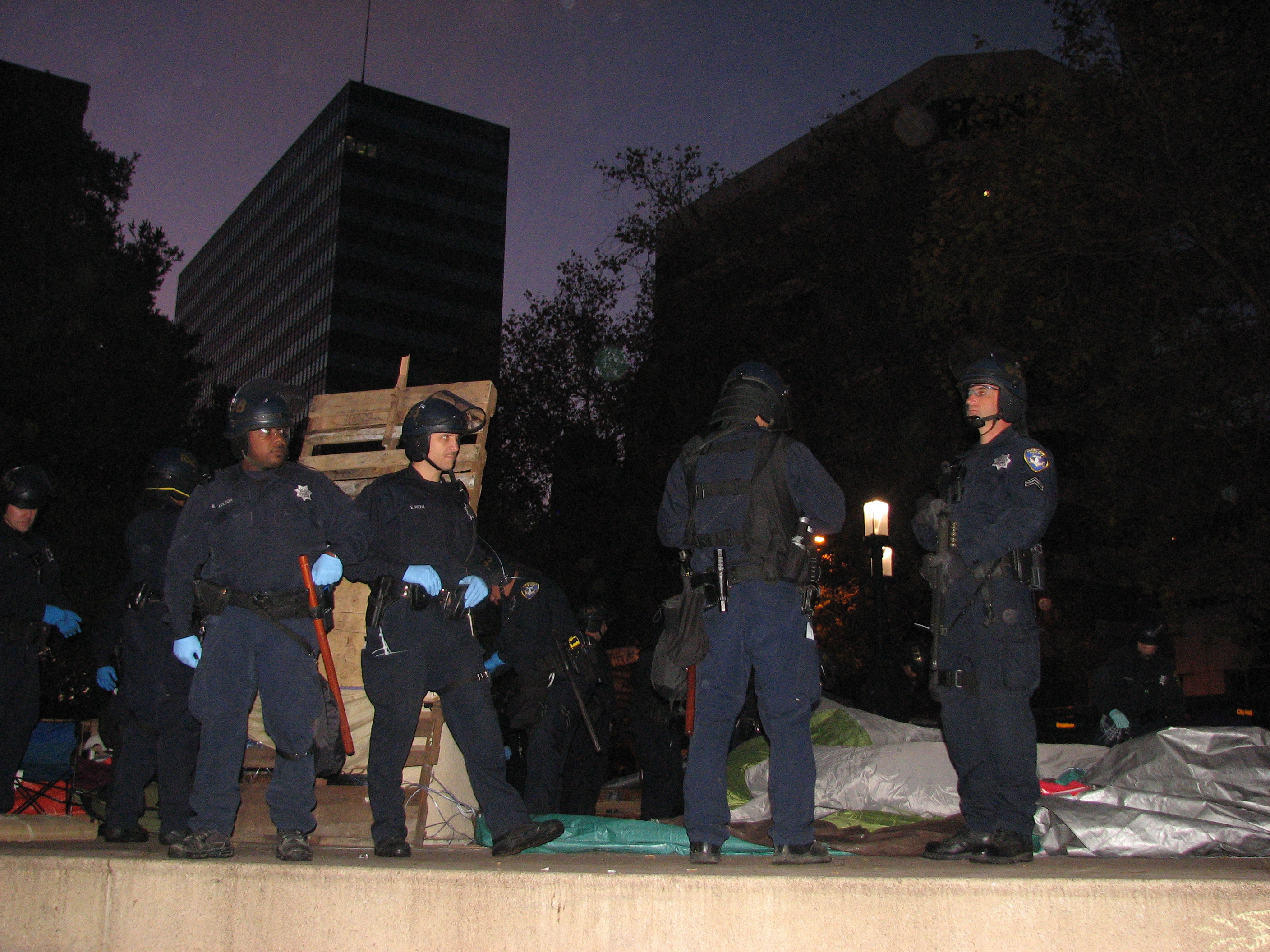
While the 99 percent are fighting to hold onto a crowded encampment at Justin Herman Plaza, two new condo projects are moving along in San Francisco that would give the one percent specatular views from their mulitmillion-dollar homes on the waterfront.

And as much as OccupySF has been a challenge for Mayor Ed Lee, his administration’s response to giving choice parcels to some of the wealthiest people in the country will test his housing policy and his political independence.

The Port Commission is holding preliminary meetings on the 8 Washington project, which is about as direct a conflict with the city’s General Plan and housing needs as anyone could ever imagine. The developer wants to build 165 of the most expensive condos in the city’s history, aimed entirely at the very, very rich. Many will no doubt be used as pieds a terre for people who will live in San Francisco only a few weeks of the year. The project will do nothing to address the desperate need for affordable housing and housing for the middle class.

Rose Pak, the Chinatown business consultant who was central to Lee’s campaign, told me a few months ago that she supports the project. Marcia Smolens, one of the city’s top lobbyists, is working on it. There will be big money and clout pushing this — even though there is no rational reason why San Francisco should ever approve it.

And while BeyondChron claims that gentrifcation and overdevelopment isn’t so much of a problem these days because “financing … development is more difficult than ever,” the developers don’t seem to have noticed. A Nov. 11 story in the San Francisco Business Times (you can only get a few paragraphs if you don’t subscribe) explains that “developers are starting to plan new projects again after more than three years of inactivity” –and one of the biggest is a 284-foot, 160 unit residental highrise at 75 Howard Street. There’s a parking garage now on the site, which would be demolished to build condos that one expert told the BizTimes would sell for 1,000 a square foot.

You got that? A 1,000 square-foot one-bedroom unit would go for $1 million.

So we have two major waterfront projects — both of them high-end luxury condos, both of which would have just lovely views of the OccupySF encampment — moving forward while the barricades go up and the mayor decides when to evict the protesters. A classic battle for the soul of the city. Who’s side will Ed Lee be on?

The Hangover: Nov. 10-12

0

**The sunny, indie rock jams of Ridgewood, NJ’s Real Estate cured my rainy day blues on Friday night at Slim’s. San Francisco’s unshaven, flannel-clad urban lumberjacks showed up en masse to seek shelter from the rain and soak up some seriously good vibes. The five-piece kicked off with “Suburban Beverage” from its 2009 self-titled debut. Inviting us to mellow out, leader Martin Courtney repeated the song’s only words, “Budweiser, Sprite, do you feel alright?” Fans responded with blissful head-nodding. See full story here. (Frances Capell)

**I shall refrain from naming this unnamed SF bar for reasons that will soon become clear. On Friday night I took a group of females out for a night of drinking, dancing, and old school friendly conversations. At the bar where we eventually landed, the DJs were spinning what amounted to Bar Mitzvah music. No, not Hebraic, religious, Cantorial chants, I’m talking about the Celebrate Good Times after-party repeated hits, the ones we’ve all just heard too many times, at the aforementioned life changing parties, and in commercials for cheap burgers or pull-up diapers, at the dentist’s office (my dentist keeps the mood perky). The meandering blob of drinkers seemed confused — but willing, determined — to dance to this godforsaken sound. I, however, could not muster enough enthusiasm. (old-stick-in-the-mud, Emily Savage)

**It wouldn’t (quite) be fair to fault the party for the muscle-bound tank top clones posing sullenly about the edges of the dancefloor and truth be told, the beats coming from Stallion Saturdays at Rebel more than made up for all the unyielding musculature in the club. Seattle’s DJ Nark had appeared for the evening, sporting fetching neckwear and spinning even more fetching, not-corny-at-all jams from disco greats to more current, creepy-good modern bangers. By the end of the night the place was packed, just packed with hairless wonders, swaying slightly to the tune of their sugar-free Red Bull-vodkas. (Caitlin Donohue)

**The cooperative music project known as BOBBY may never be conventionally popular. Founded by Tom Greenberg as a multimedia project at Vermont’s Bennington College, BOBBY’s avante-garde psych-folk tunes are favored by the nerdiest of music geeks. That said, my fondness for BOBBY’s strange, multi-layered debut album was enough to send me across town in dismal weather to catch its brief opening set at Bottom of the Hill on Saturday night. It was an uncharacteristically mature crowd for the venue, peppered with the occasional young art hippie. Four members of the sometimes septet were present, all of whom sported bizarre blonde wigs. The band opened with the cinematic “We Saw,” and continued on to “Sore Spores,” the catchy standout track from its debut. Weird samples and synths were paired with guitar, drums, and crazy vocal harmonies. BOBBY finished with an untitled, totally epic track and left the stage long before I was ready to say goodbye. (Frances Capell) 

**Guitarists strummed intricately, singers rang out piercingly in throaty voices, everyone clapped complicated rhythms, and brightly costumed dancers stomped, shouted, and whirled until they could no more at San Francisco Theatre Flamenco‘s thrilling “45 Años de Arte Flamenco” celebration at the Marines Memorial Theater on Saturday. Although guest dancer Manuel Gutierrez couldn’t be there due to visa issues (this is happening to a lot of performers lately!), the fantastic Juan Siddi took over with jaw-dropping, toreador-jacketed moves. Company artistic director Carola Zertuche fascinated with her regal bearing and sprightly footwork, while a chromatic bulerías dance by Cristina Hall (accompanied in the beginning by Alex Conde playing the strings of his piano) was eerily contemporary and deeply engaging. Singers Kina Mendez and Jose Cortes mesmerized with entwined cries and intimations of extreme longing. Olé! (Marke B.)

**Toward the end of a tight, danceable set at the Great American Music Hall on Saturday night – a performance that was, by the way, dedicated to Occupy Oakland – Austra’s glorious vocalist Katie Stelmanis told the crowd this show was the best of the tour. My mind went black and the thought flashed: I bet she says that to all the cities. I felt a pang of jealousy. Though the operatic electro-new wave act is based in Canada, I wanted her – and the rest of the band – to love San Francisco most of all, to blow us sugary, synth-soaked kisses for eternity. The night started with such a snag, a quartet of sorrowful hipsters pretending to see a friend “Oh Sarah! I think she’s up there all alone” and bully their way into a hot and packedthistight crowd, but when crystal-throated Stelmanis fluttered out in a flowy cape-dress, looking like a peroxide cult leader, flanked on either side by two back-up singers in gold-lined black tunics, it was hard to stay pissy long. Song three: the emblematic stunner “Lose It.” (Emily Savage) 

**The stage lights go dark and the rainbow of panels on the front start to glow as Holy Ghost! takes the stage at Slim’s, launching into “Static on the Wire,” from its 2010 EP of the same name. Although Holy Ghost! is just two guys, Nick Millhiser and Alex Frankel, they’ve enlisted a number of other musicians (including the drummer who played earlier with Jessica 6) to bolster the live show, just as James Murphy did for the live LCD Soundsystem performances. Frankel, sporting the second leather jacket of the night, is on vocal duties, while Millhiser is stationed on guitar behind a pair of floor toms. The bands takes moves into familiar territory with “It’s Not Over,” not just because it’s one of their more recognizable songs, but because it has what I can only assume to be a deliberate lyrical reference to New Order’s “Bizarre Love Triangle.” (Ryan Prendiville)


Lessons from 2011 for 2012

4

With the release of precinct results for the 2011 election, we are able to actually see, for the first time, what San Francisco voters did, as opposed to hearing what various nabobs said they did.  There are a couple of key conclusions about the vote that should guide any left-liberal thinking of the key 2012 Supervisor races.

The first thing San Francisco voters did- about 40,000 of them-  was stay home.  Turnout – about 40% – was the lowest for a mayor’s race in 40 years. Moreover, counter to several “expert” narratives, turnout in neighborhoods with large numbers of Chinese voters — Chinatown, the Richmond, the Sunset, and Vis Valley — was lower (average 33%) than in neighborhoods with few Chinese voters — Diamond Heights, Noe Valley, the Castro and West of Twin Peaks — where turnout averaged 40%.

There seems to be four reasons for this curious outcome. A couple of them have lessons for us for the 2012 election that we ignore at our peril.
First, in a City that is clearly center-left, voters were presented with nine center-right candidates, seven of whom were declared by the Chronicle at one time or another to be “serious.” Only John Avalos was a clear center-left choice. This was shown in the huge number undecideds that appeared in poll after poll. Undecided voters are often unhappy at the lack of choice being offered by the field and simply don’t vote.

Second, professional campaign management of the supposedly serious candidates was terrible and actually counter-productive to their candidates’ best interests. The pros actually seemed to have suppressed turnout in key neighborhoods. Ace Smith and Bill Barnes, working for for Ed Lee, spent most of their time trying to distance their candidate from his base and key supporters, made rookie fund-raising mistakes time and again and gave their counterparts in the Yee and Herrera campaigns ample ammunition for a  series of negative ads and mailers.  John Whitehurst and Mark Mosher, working for Herrera, and Jim Sterns, working for Yee, took the opportunity and went negative on the least threatening figure in San Francisco politics in recent memory. 

As we all know negative campaigns generally suppress turnout — and that seems to be the case in this election. Avalos, who after September had no professional management, stayed positive and gained votes by doing so.

Third, organized labor, for the first time in living memory, did not endorse the winning candidate for mayor. Indeed, its official candidate, Yee, came in FIFTH. It’s as if labor decided to concentrate only on its issue — pension reform — and devote no energy, people or money to the myors race. Without labor’ support,effective GOTV in left-liberal neighborhoods is all the more difficult and was clearly beyond the ability of the Avalos campaign to carry by itself.

Labor knew who it wanted to vote on pension reform and narrowly focused only on those voters. That it still has the ability to do electoral politics can be seen in the fact that more total votes were cast on  Proposition C (186,336) — labor’s pension- reform measure –than were cast for all candidates in the mayors race (179,888).

Finally, there were 160 fewer polling places this election than last year, and to make matters worse the Department of  Elections mailed 115,000 voter handbooks with the wrong polling place address causing them to send postcards with the corrections. While this in no way was responsible for the 40,000 fewer votes cast, it was probably worth several hundreds of missed votes.

The lessons for next year? We need good candidates who actually align with political sensibility of the voters. This will be especially true in District Five after Mayor Lee appoints some center-right clone in the most left-liberal district in the city, and equally true in District Three with David Chiu, who has certainly turned to the right since his election. 

Supervisor David Campos in District 9 will be fine in this regard as will Supervisor Eric Mar in District 1 — where he will face a real fight.
Avalos’ showing in the mayors race should do him well in District 11 and offers a real chance for him to be board president in 2013.
Community-based left-liberals and labor must come together closer than in this election and perhaps closer than at any time since the Great depression. Labor’s support for the Occupy movement is a good indication that fruitful common ground can be found. We need each other more than ever in 2012.

We need to work to get good lines for the new districts and have a grand meeting of the minds on how we address the absentee voter issue.  Both labor and the Mirkarimi campaign did absentees well enough to win.  We need to apply their lessons to the Supervisors races.

Dare to struggle, dare to win.

Calvin Welch is a housing activist who has been watching San Francisco elections for more than 40 years.


Live Shots: Real Estate and Big Troubles at Slim’s

0

The sunny, indie rock jams of Ridgewood, NJ’s Real Estate cured my rainy day blues on Friday night at Slim’s. San Francisco’s unshaven, flannel-clad urban lumberjacks showed up en masse to seek shelter from the rain and soak up some seriously good vibes. The five-piece kicked off with “Suburban Beverage” from its 2009 self-titled debut. Inviting us to mellow out, leader Martin Courtney repeated the song’s only words, “Budweiser, Sprite, do you feel alright?” Fans responded with blissful head-nodding.

Courtney looked effortlessly hip in his thrift store button-up and thick-rimmed glasses. With his ball cap, t-shirt, and scruffy beard, bassist Alex Bleeker resembled someone’s dad jamming out on a Saturday afternoon. Bleeker praised San Francisco as his favorite city before the band jumped into “Easy,” the opening track from its sophomore effort, Days (Domino). As Courtney recited lyrics involving dreams, running through fields, and free love, guitarist Matt Mondanile warmed the venue with his clean guitar riffs.

The band’s lengthy set consisted of new songs from Days interspersed with selections from its debut. Considering the consistent sound of Real Estate’s albums, I was surprised to see Courtney and Bleeker trading lead vocal duties. A highlight of the evening was “It’s Real,” which had fans singing along to its catchy chorus of Ohs. Another success was the laid back, exceptionally chill “Out Of Tune.”

Real Estate also covered a couple songs by fellow New Jersey bands, the first of which was Felt’s “Sunlight Bathed The Golden Glow.” The jangly pop track was perfectly suited to the group’s summery backyard sound. After closing with “All the Same,” the band returned to the stage to cover the Feelies’ “Higher Ground.” Though I suspect few of them were familiar with the original, the audience totally loved it.

Real Estate finished out its encore with some favorites and left with the promise to meet fans at the Attic for a drink. Cloaked in the warmth of Real Estate’s positive vibes, I ventured back into the dark and blustery San Francisco night.

Opener: I had high hopes for another act from Ridgewood, Big Troubles. Though the band looked cute enough to take to the prom, its opening set fell a little flat. After getting hooked on its recent album Romantic Comedy (Slumberland), I was looking for a more intense, dynamic version of the songs I’d come to love. What I got was the equivalent of listening to the CD in my bedroom. With such a clear shoe-gaze influence, however, I suppose a highly animated performance would be a betrayal of the band’s roots.


All photos by Wolfgangg Photography.

Second chances at the Cadillac Hotel

3

Never let it be said that the Cadillac Hotel’s lobby is a stranger to people in need of a do-over in life. Muhammed Ali sparred in the gym that once stood here, Jerry Garcia slept upstairs, but nowadays the historic Tenderloin hotel is home to poor, single adults. On Friday afternoon, a collection of residents, neighbors, and opera were assembled for a tale of redemption, fall from grace, redemption, fall from grace. 

No, not a biblical sermon – try a performance of Porgy and Bess.

“If you didn’t start out right you can hit reset. That’s what we believe in. Everything we’re giving to you right now, you’re giving right back to us.” San Francisco Recovery Theatre director Geoffery Grier stood in front of the Cadillac’s pride and joy – an 1884 Steinway grand piano, donated in the name of Western Addition neighborhood activist Patricia Walkup. 

The show was part of a series that was inaugurated in 2007 to utilize the Steinway and bring art into the classically beautiful lobby of the Cadillac, where SRO residents shuffle about past crystal chandeliers, fake spiral topiaries, and a massive fireplace. The hotel’s founder, Leroy Looper, passed away two months ago. His wife Katherine is pushing on with the concert series, and next month will host former member of the Supremes Susave Green in the space.

Of course, it wasn’t the whole Gershwin opera (four hours!) What Grier emceed was a one-hour rendition of Porgy and Bess‘ most well-known songs: “Summertime,” “Ain’t Necessarily So,” “A Red Haired Woman.” The performers vamped their way through multiple characters – at one point Eric Ward (who changed from a red dress shirt-vest combo to a blue dress shirt-vest combo halfway through the show) took the stage two songs in a row, a different role for both. The multiracial cast may have stumbled through Gershwin’s heavy-handed use of ebonics, sure — but there was no denying that the motivation behind the performance was heartfelt.

The whole thing was cheer-worthy really. By the time the cast (minus a regal, leonine woman bedecked in pearls that sang a R&B-afied version of “Summertime”) was performing a sing-a-long rendition of “O Lawd, I’m On My Way,” I was already feeling separation anxiety. 

Of course, as Grier reminded us, the end of the show just means we can do it all over again. 

Next month’s Cadillac performance will mark an extra-special milestone: the piano’s turning 127 years old. There will be birthday cake.


Susave Green feat. the Jeffery Chin Trio

Dec. 2 12:30-1:30 p.m., free

Cadillac Hotel

(415) 673-7223

www.cadillachotel.org

Dick Meister: Strange bedfellows: Labor’s Tim Paulson and the Chamber’s Steve Falk

5

By Dick Meister

Dick Meister, former labor editor of the SF Chronicle and KQED-TV Newsroom and a former city editor of the Oakland Tribune, has covered labor and politics for a half-century as a reporter, editor, author and commentator. Contact him through his website, dickmeister.com, which includes more than 300 of his columns.

It’s hard to imagine organized labor and the thoroughly anti-labor Chamber of Commerce on the same side, especially in a city like San Francisco with a major union presence.

It’s especially hard to imagine it at a time when unions everywhere are joining with Occupy Wall Streeters to demand justice from anti-labor business and corporate leaders like those who control the Chamber.

But consider what Tim Paulson, executive director of SF’s Labor Council, and President Steve Falk of the SF Chamber of Commerce had to say in a joint statement about the results of Tuesday’s election.

They were downright overjoyed about the passage of Proposition C, which will raise the amounts city employees must pay toward their less-than lucrative pensions and limit future cost-of-living raises. That’s a way to avoid raising business taxes to maintain city services in these recessionary times.

Perhaps most distressing, the passage of Prop C shifted control of the City Health Service System from the employees who are covered by the system to City Hall appointees who won’t have to demonstrate any particular experience in health care matters.

At least Paulson and Falk said they were pleased with the defeat of Public Defender Jeff Adachi’s outrageous Prop D – even though it would have changed the city pension system in almost exactly the same ways as Prop C.

In any case, the difference between C and D was not necessarily their content, but how they got on to the ballot.

Why, exclaimed Paulson in a separate, self-congratulatory statement, the results “sent new shock waves across San Francisco and America as workers demonstrated that collaborative democracy is the best way to set public policy.”

Collaborative democracy? By that I guess Tim was referring to the joining together of labor leaders and public employee unions and Chamber of Commerce members in a coalition with city officials, non-profit social agencies and community groups to put Prop C on the ballot.

The collaborators didn’t even include representatives of the retired employees whose health care would be seriously affected and who were quite active in helping elect labor-friendly candidates.

Paulson, a generally ineffective leader who always seems to be seeking approval of the City establishment, singled out billionaire Warren Hellman for being one of the principal collaborators.

Paulson boasted that every city employee union joined in what he actually described as “a real San Francisco way of doing things.” Hardly. If there really were such a thing, it would be a far cry from the “collaborative” approach that involved labor giving in to the wishes of its anti-labor corporate and business opponents.

Paulson and Falk claimed the approach will be “a model for the rest of the country.” Thankfully for the rest of the country, that seems highly unlikely given the widespread demands for actual reform triggered by the Occupy Wall Street protests.

Negotiations between labor and management eventually reach agreements that both can live with, albeit often uncomfortably. But no agreement can be reached, or should be reached, when one party – the Chamber of Commerce in this case – is not seeking real compromise with an enemy – namely unions – that it would like to put out of business, or at least seriously weaken. Unions, of course, have the same feelings about union foes like the Chamber.

Tim Paulson actually declared the election results “a great victory during difficult times.”

Dick Meister, former labor editor of the SF Chronicle and KQED-TV Newsroom and a former city editor of the Oakland Tribune, has covered labor and politics for a half-century as a reporter, editor, author and commentator. Contact him through his website, dickmeister.com, which includes more than 300 of his columns.


Is SF moving to the right?

92

The Bay Citizen/New York Times thinks so. The headline on the story — “more conservative is the new normal” — says it all. Matt Smith (formerly of our price-fizing rival SF Weekly) and Gerry Shih say the Nov. 8 election signals a turn to the right for this famously liberal city:

But Tuesday’s election signaled a palpable shift: In addition to Lee, a pro-business moderate, voters overwhelmingly picked George Gascón, the law-and-order former police chief — and former Republican — as district attorney.

“To whoever thinks San Francisco is loopy and left-wing, this election basically said, ‘No, it’s really not,’” said David Latterman, associate director of the Leo T. McCarthy Center for Public Service and the Common Good at the University of San Francisco. “We just elected an ex-Republican, pro-death penalty district attorney by a landslide. Just ponder that.”

Well: It’s interesting that they call Lee a “pro-business moderate,” which is probably accurate but differs from how Lee’s more progressive supporters see the new mayor. But while they talk about Gascon, they conveniently leave out the fact that San Francisco has elected the first solid progressive to a citywide office in a long, long time. Ross Mirkarimi — a former Green Party member and without a doubt one of the most left-leaning supervisors — won a tight, contested race for sheriff running honestly as a progressive. I think you have to go back to 1987, when Art Agnos ran for mayor as the candidate of the left, to find another example of a progressive champion winning all across town.

The interesting element of all of this — and something I think Smith and Shih got absolutely right — is that the demographic makeup of the city is changing, and has been for a while:

“From a political perspective, the tech companies are employing young workers who often prefer to live in San Francisco, even if they commute to Silicon Valley, said Wade Randlett, a Bay Area technology executive and top fund-raiser for President Obama.”

Wade Randlett is not my favorite person in local politics, but the point he makes is valid — and it’s not happening by accident. Virtually all of the new housing that’s been built in San Francisco in the past decade has been aimed at wealthy people, a lot of them young tech types who commute from the city to Silicon Valley. The other people moving into new housing are empty-nest retirees from places like Marin County. If you walk through the new condo buildings in Soma, the residents are mostly white, with a few Asians; there are almost no African Americans, very few families and essentially zero working-class people.

For years, downtown groups (including Randlett’s former employer, SFSOS) have pushed for this kind of housing, and some of them have been very open about their goal: By bringing in more rich people and tech workers, you can change the politics of the city. Housing activist Calvin Welch puts it succinctly: Who lives here, votes here.

That’s the reason why land use and housing are so critically important in this town. If poor and working-class people are pushed out to make way for a more upscale set of residents, then progressives who talk about taxing the wealthy to provide services for the poor will have a harder time getting elected.

It’s not a conspiracy; it’s an open, stated policy goal of the people who spent vast sums of money electing Ed Lee.


AIDS vigil returns at Occupy SF

3

A coalition has come together to bring a striking new component to OccupySF: a rebirth of the ARC/AIDS Vigil. The vigil created an encampment similar to OccupySF’s at UN Plaza in the 1980s and remained there for ten years, protesting the federal government’s refusal to put resources into research and support for people with HIV/AIDS. Some who were involved in the vigil are currently part of the OccupySF encampment as individuals. Now, many hope to make that relationship more direct and active.


Brian Basinger, a longtime activist in several capacities including work with the AIDS Housing Alliance, is one of those involved in this effort. Says Basinger, “We are resurrecting the ARC/AIDS Vigil at 11/11/11 at 11:11 am. We are going to provide housing counseling, bring needle exchange, providing HIV testing, distributing organic vegetarian brown bag lunches, holding a speak-out, and presenting our demands to mayor Ed Lee to cure homelessness for people with HIV/AIDS, LGBT youth and transgender San Franciscans.”

All of this will take place tomorrow from 11am-2pm at Justin Herman Plaza, the site of Occupy SF’s encampment. Or, says Basinger, “Ethel Merman Plaza, as we like to call it.”

Those interested in the speak-out should be sure to get there by 11:11, as that will likely be first on the agenda. The food distribution is planned for the end of the kick-off event.

The group will provide services to the OccupySF encampment and anyone who comes through it. “We’re looking to create a safe space for homeless LGBT youth to gather…queer homelessness is invisible. We experience homelessness differently than the non-gay world.”

Like the ARC/AIDS Vigil of the 1980s and the Occupy Movement today, this event has the potential to be ongoing. Said Basinger plainly, “We won’t leave until we get our demands are met.”

Basinger warns: “It’s going to rain. But we want to highlight that people with fullblown AIDS and cancer are out in the goddamn rain everyday because the mayor has failed. ‘Ed Lee gets it done’- he’s not ‘getting it done’ for people with AIDS.” Basinger added that San Francisco “has the highest rate of homelessness for people with AIDS in the country.”

The group is putting out a call for “Rain gear to keep us warm- tarps and umbrellas.” Added Basinger, “Umbrella, ella, ella. Also, we put out a call for Rhianna. Rhianna, if you’re listening, come tomorrow.”

And with the impossible to predict explosion of the Occupy Movement- hey, anything could happen.


Mirkarimi victory seems assured

49

The San Francisco Elections Department counted more than 25,000 ballots today and just posted new ranked choice voting tallies that continue to indicate Ross Mirkarimi has been elected sheriff, widening his margin of victory from yesterday’s count. Mayor Ed Lee and District Attorney George Gascon saw their margins shrink slightly, but they are also the clear winners.

With only about 7,000 provisional ballots still be counted, it’s unlikely that these results will change. Lee’s share of first place votes dipped by about a half percentage point to 31 percent, while second place John Avalos, third Dennis Herrera, fourth David Chiu, and fifth place Leland Yee each gained a bit of ground.

It took 12 rounds of reallocating votes, one more than yesterday’s tally, but the latest count shows Lee winning with 60 percent of the vote to Avalos’s 40 percent.

In the sheriff’s race, the only variable after yesterday’s count was whether Paul Miyamota might be eliminated before Chris Cunnie – raising the question of whether Mirkarimi would get a big enough chunk of Miyamoto’s votes to put him over to top. But with Mirkarimi gaining ground in first place votes to 38 percent, and with 1,117 votes separating Cunnie and Miyamoto in the second round, it would be almost impossible for the winner to change.

In the DA’s race, Gascon dropped and David Onek rose by about a half percentage point, but with more of Sharmin Bock’s votes going to Gascon, he wins in the third round with 63 percent of the vote.

The (theater)-sporting life: BATS Improv turns 25!

0

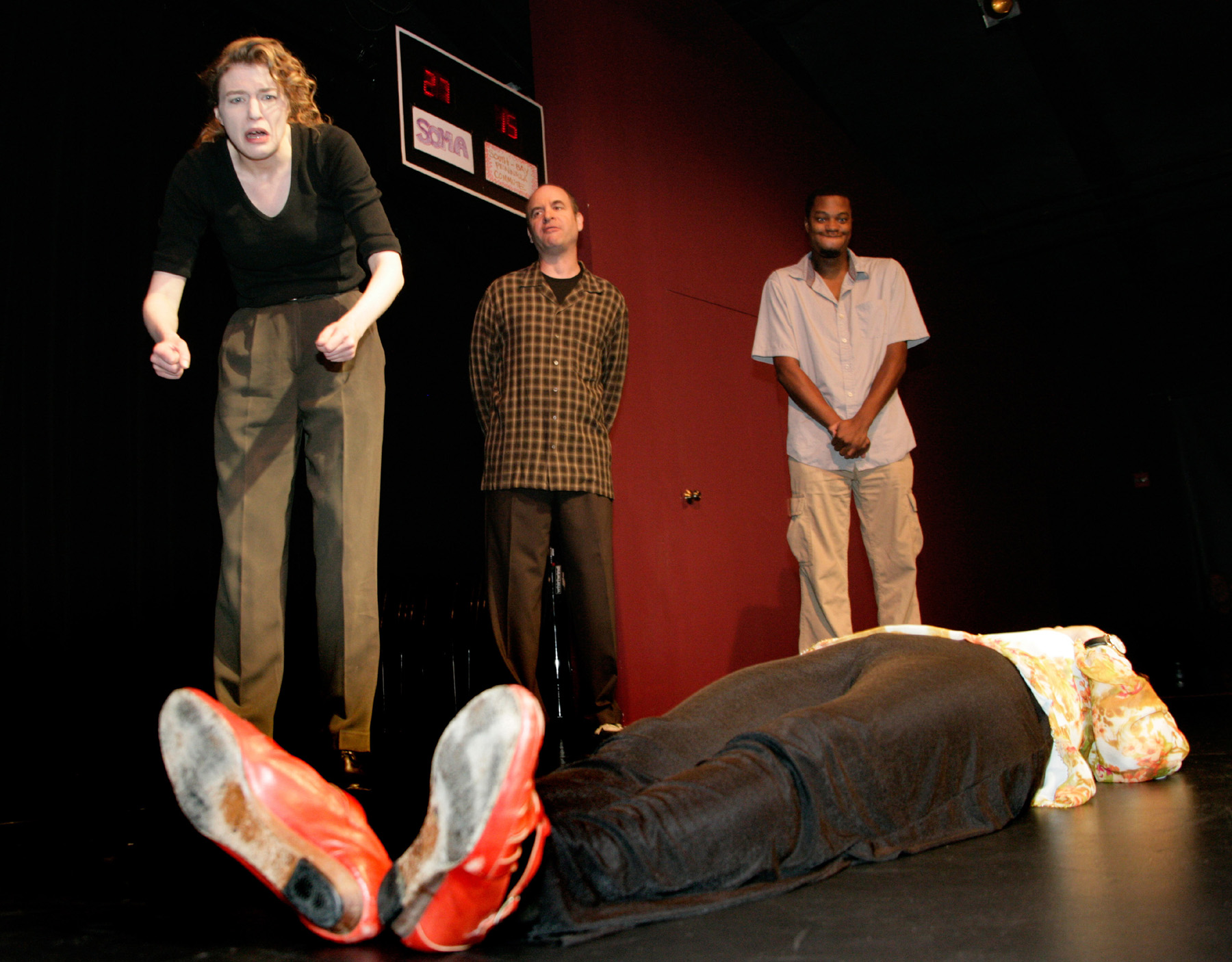
It was 1986, the year of Top Gun, Dallas, “Hands Across America,” and “Papa Don’t Preach.” In San Francisco, a comedy troupe called Fratelli Bologna joined forces with Seattle Theatresports’ Rebecca Stockley, and the rest was history. Bay Area Theatresports, now known as BATS Improv, marks its 25th anniversary this year with a special show Sat/12 — a one-off celebration smack-dab in the company’s already-packed calendar of weekly shows. How does an arts organization stay so energetic after 25 years? Could a certain flair for improv have something to do with it? I spoke with BATS artistic director Kasey Klemm to get the scoop.

San Francisco Bay Guardian: What’s your history with the company?

Kasey Klemm: I started taking classes at BATS when I was 17, back in 1997. I’ve been with the organization ever since. I just became artistic director in April of this year. I’m just at the beginning of my three-year term.

SFBG: Is that an elected position?

KK: It’s an open job position, so anyone in the main stage company is allowed to apply for it. People put together their artistic vision for where they want to develop and see the company grow, and move toward, as well as some organizational stuff. How they kind of functionally see the company working with each other, and developing as artists as well, so that we’re not just staying stagnant and doing the same stuff, and we keep challenging each other. And also, a proposed six-month calendar.

SFBG: How do you think BATS has managed to stick around for 25 years?

KK: This organization has got a tremendous amount of heart behind it, and it really is the people that make it [that way]. We were just looking at some old photos that we had blown up for our lobby for the 25th anniversary display, and we have this company photo from, I think it was 1989. And it was about nine people who were with us in ’89, still with us today. Phenomenal actors, and not people who are staying here because they have no other choice, but because the work that we do is so rewarding, both for the audience and personally as an artist. It’s really a thrill to literally go do something new every night. It’s exciting and the craft of it keeps you coming back for more.

I also think it’s because we’re an organization that really values stories, and stories that are driven by relationships and truth, versus trying to make something funny happen. That keeps people connected and interested much more than trying to be funny, or if this were a group where people were trying to outshine each other. But there’s a real passion for telling truthful, connected stories. And what happens is, because it’s being improvised, the result is often much more hilarious than anything that could have been written.

SFBG: So does BATS identify as a comedy group, or more just as a theater troupe?

KK: We self-identify more as a theater group. In some of our marketing, we started using the term “comedy theater,” but the word theater is really important and central to what we do, because it’s not about doing sketches or telling jokes. It’s about creating theater that an audience can connect with and can be moved by, whether it’s moved to uproarious laughter, or tears sometimes. We’re after that sincere stuff, the sincere human experiences that are traditionally at the roots of theater.

SFBG: Do you think having strong improv skills has helped the company beyond just performing onstage?

KK: Absolutely. There’s a culture of yes, and being inclusive, so it’s an organization where everybody’s voice gets to be heard. We’re really good at communicating with each other, because you need to be. And we honor that kind of direct and honest communication with each other. Everybody knows that everybody else is here for the same reason: because we love doing theater-based improvisation. We’re a group that all has the same goal: we’re all artistically in pursuit of a very special kind of theater that we think only gets created through making it up on the spot.

With that, you get to know each other very well. Our main stage company is 19 people right now, some of whom have been around for the whole 25, some who are as new as having joined us last year. But because of the way we work onstage, we’re very connected to each other.

SFBG: Why do you think Bay Area audiences love improv so much?

KK: Well, it’s not boring! There’s a lot of theater out there that for whatever reason, doesn’t connect with every audience. An experimental new play might not be any good. But if we’re in the middle of something, we’ve got the ability to go, “Hey, this is not very good. Let’s change it up, let’s start again.” And everybody can laugh with the release of that kind of tension or pressure, so you don’t have to sit through stuff that’s not working.

As an audience member, when you’re watching the improv happen onstage, you’re much more engaged than in a scripted play, because you know the actors are creating it on the spot, so there’s a part of you that’s always creating these shadow stories: “Oh, I bet those two characters are going to end up romantically linked together.” So they’re creating the story with us. And it’s a much more engaging type of theater than one that’s just being told to the audience.

I think that’s why you get those moments where 200 people laugh at the same time, because we’ve just put our finger on something that everybody was thinking, whether it was conscious or subconscious. We tap into this kind of group experience with it, and there’s this explosion of laughter that happens from just hitting some sort of primal truth that exists in that moment, in that theater, with these particular actors onstage, and these particular audience in the house.

SFBG: What’s the backstory on the 25th anniversary show this weekend?

KK: This weekend we’re celebrating the 25th anniversary of the first Theatresports show in San Francisco. So 25 years ago there was a group of local actors that was kind of housed by a group called Fratelli Bologna, who brought their friend down from Seattle, Rebecca Stockley, who’s now with us here at BATS. And she started teaching some workshops on the Theatresports format, which is creating theater with this kind of imaginary hook of it being a competition that draws people forward in their seats the same kind of way that a sporting event would, and gives the actors a lot of opportunities to create a lot of different types of theater in one night.

For a scene where there wasn’t much improvisation happening, there were mostly scripted actors, to be able to work in film noir, and Tennessee Williams, and play a silly game all on the same night created this kind of magic that everyone got really inspired by. So 25 years ago on November 10, 1986, they did the first public performance of Theatresports in San Francisco, and there was such a great response from the audience and from the players that those players went, “There’s something here. We want to keep doing this!” So that group went on and formed Bay Area Theatresports, which is now known as BATS Improv.

On Saturday night, we’re going to have a Theatresports match that’s going to be hosted by one of our founding members, and it’s going to feature two teams of improvisers that are a mix of some of our most veteran players, and some of our newest players, and they’re going to do about a 70-minute Theatresports match, and after that we’re going to hold a champagne and dessert reception with the cast and audience. We’re going to have people there from our history who’ve been important to us, longtime fans, etc. So it’s going to be a big community celebration.

SFBG: What else is coming up for BATS Improv?

KK: More great theater! We’re doing Theatresports on Friday nights through the end of the year. On Saturday nights in November we’re doing a format called “Family Drama,” which is an improvised three-act play, done very much in the classical stage play format. It’s a single set that the audience helps endow at the beginning of the show; each actor only plays one character, there are no cuts or time jumps. It’s a very straight-ahead, relationship-driven, three-act play.

In December, we’re bringing back a show called “Very Merry Murder Mystery!,” which is a British whodunnit with the hook being that not even the improvisers know who committed the murder. It’s a very strongly character-driven piece that feels very much like a big, silly Agatha Christie play. It’s a really fun show filled with a bunch of surprises.

“BATS Improv 25th Anniversary”
Sat/12, 8 p.m., $30
Bayfront Theater
Fort Mason Center, Marina at Laguna, SF
(415) 474-6776
www.improv.org

San Francisco’s political spectrum: a primer

120

During yesterday’s post-election wrap-up at the San Francisco Planning and Urban Research Association, political consultant and analyst David Latterman cited the ideological breakdown of San Francisco voters: 19 percent are progressive, 36 percent are liberal, 39 percent are “moderate,” and 6 percent are conservative. I cited those figures in a post I wrote yesterday on the latest election results, and some people responded by asking me to explain those terms, so let me take a crack at that because I think it’s important to understanding the city’s political dynamics.

I even discussed the matter with Latterman – who self-identifies as moderate, whereas I and the Guardian have a progressive worldview. “That’s a fantastic question and I don’t think any of us can give suitable answers,” Latterman said. “These aren’t hard lines. It’s like: I don’t know how to define pornography, but I know it when I see it.” Nonetheless, we agreed on the basic outlines and borders between the labels, even though we might frame them and value them a little differently.

In San Francisco, there is general agreement on most social issues among the moderates, liberals, and progressives, although we may disagree on political tactics. We all basically support gay rights, reproductive freedom, the value of diversity, environmentalism, and freedom of expression. That’s why most people consider San Francisco to be a famously liberal city, because of our tolerance on social issues, which only that 6 percent who are conservatives don’t share.

Yet San Francisco is still a deeply divided city on economic issues, including land use and the role of government. This is where most of the political conflicts and divisions occur, and it is here where our political spectrum is as wide as anywhere – perhaps even wider given the extreme wealth and poverty here, as well as the long history of political activism and the setting of national political trends. And it is in this realm that our labels come from.

A “moderate” in San Francisco – which is a real misnomer despite its widespread usage – is a fiscal conservative: anti-tax, anti-regulation, an almost religious faith in the free market, and a resentment of the poor (particularly the homeless and the jobless) and those who advocate for them. They want bare minimal government and see the role of government as primarily to facilitate economic activity in the private sector and to provide the basic infrastructure that the private sector needs to operate efficiently. They even believe social services should be provided by the private sector, such as nonprofits, rather than by government. On economic issues, they’re almost indistinguishable from conservatives, with whom they disagree on social issues.

On the other end of the spectrum are the progressives, who don’t trust capitalists and large corporations and believe they need to be heavily regulated and taxed to provide for the common good. We believe in progressive taxation and a redistribution of wealth, particularly from the richest 1 percent, and that government has an important role to play in leveling the economic playing field and playing referee. Progressives generally believe this country has been drifting to the right for at least the last 31 years and that this is a dangerous trend that needs to be addressed with fundamental, systemic reforms. And at this point, we’re willing to adopt radical strategies for triggering that change, such as Occupy Wall Street or other forms of civil disobedience.

The liberals of San Francisco are somewhere in the middle. They’re Democrats (or DTS) who don’t believe in radical change or anything that might disrupt the existing order, preferring incremental reforms over long period of time. They accept the legitimacy of the two-party political system and an economic system governed by Wall Street and powerful corporations, and they believe we need to do what we can within that framework. They use neoliberal economic policies like business tax cuts and incentives to encourage private sector job creation and housing development, and they accept a shrinking public sector, which they expect to operate more like the private sector, and a waning labor movement.

The reactions to the OccupySF movement is an interesting illustration of the dividing lines. Moderates have voiced tepid support for the movement’s critique of the growing gap between rich and poor, but they’re appalled at the tactic of occupation, believing curfew and anti-camping laws are more important. Progressives have been the most enthusiastic supporters of a movement that echoes their core values and physically challenges the status quo. Liberals basically support the movement, but they’ve been very uneasy with the tactic of occupation and have been vacillating on how to deal with it.

Latterman and the moderates – as well as many liberals – see ideology as a dirty word, and he was happy that in this election “it was the least ideological race we’ve seen in a long time.” Mayor Ed Lee and Board President David Chiu – both of whom hover in the liberal to moderate range, depending on the issue – also treat the notion of ideology with disdain, claiming to support practical, pragmatic, or common sense solutions to problems.

But progressives see ideology as the essence of politics. They understand the world in terms of class struggle, and believe that the very rich have been aggressively exploiting the people and the planet for too long, and that the only real way to make progress is to fight them and win. They believe in the Occupy paradigm that the 1 percent – the greedy rich who have corrupted our political and economic systems – are actively hostile to the interests of the 99 percent. We know that’s an unsustainable system and we’re hopeful that this is the moment when progress – the core of our belief system, that it’s possible to devise better economic and political systems than the ones we’ve inherited – could finally be attainable if we continue to organize and challenge the system.

That’s my general analysis of San Francisco’s political dynamics. What’s yours?

Lee, Mirkarimi, and Gascon win first ranked choice tally

67

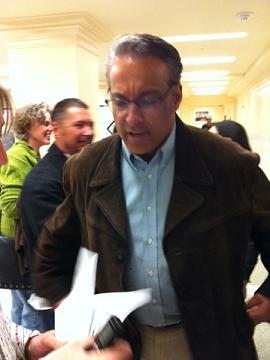
San Francisco’s first run of ranked choice voting tallies for yesterday’s election shows Ed Lee winning the mayor’s race (with progressive favorite John Avalos in second), George Gascon remaining district attorney, and Ross Mirkarimi becoming the new sheriff in town.
“Progressive victory, citywide, that’s huge,” Sup. David Campos told Mirkarimi this afternoon outside the Elections Department, where a scrum of journalists and politicos gathered to get the results. It would indeed be a rare citywide victory for progressives, which analyst David Latterman says constitute about 19 percent of the electorate, compared to 39 percent who identify as moderate and 36 percent who call themselves liberals.   
About 7,500 provisional and 24,000-25,000 absentee ballots remain to be counted over the next few days, said Elections Chief John Arntz, telling reporters, “I’m not saying these are the final results by any stretch.” But there is good reason to believe these winners will stick.
In the sheriff’s race, where Mirkarimi faced off against three candidates with long law enforcement backgrounds, David Wong was the first to be eliminated, and the lion’s share of his 9,487 votes went to fellow Sheriff’s Deputy Paul Miyamoto rather than Chris Cunnie, the former head of the San Francisco Police Officers Association, knocking Cunnie out of the race.
Of Wong’ votes, 3,828 went to Miyamoto, 2,637 were exhausted (meaning Wong voters had no second choice), 1,682 went to Mirkarimi, and just 1,325 went to Cunnie, who had been in second place. That gave Mirkarimi almost 40 percent of the vote, compared with 30.7 percent for Miyamoto and 29.8 percent for Cunnie.
On the next round, Cunnie’s 42,877 votes were redistributed as follows: 16,820 to Miyamoto, 14,675 exhausted, and 11,322 to Mirkarimi, giving him 53 percent of the vote. “I’m optimistic, but I’m not declaring victory,” Mirkarimi told reporters. He said that he hopeful that he’ll get the chance to continue the 30-year progressive legacy of retiring Sheriff Michael Hennessey, who endorsed Mirkarimi.
The only real variable in the sheriff’s race is how Cunnie’s second place votes break in the event that incoming ballots change who gets eliminated after Wong, but Mirkarimi said he was happy with how well progressive campaigns did in this election.  
“I want to say how proud I am of the Avalos campaign. It did a good job at getting people out who have felt disenfranchised,” Mirkarimi added.
Indeed, Avalos surprised much of the political establishment by finishing strongly in second place with 18.3 percent of the vote compared to Lee’s 31.5 percent and Dennis Herrera’s 11.3 percent. In the first ranked choice run, it took 11 rounds of eliminations for Lee to break the 50 percent threshold of victory. And when he did, he jumped all the way to 61 percent, mostly because voters who chose Herrera as their third choice exhausted their ballots.
When Herrera was eliminated in Round 10, 18,276 of his 29,717 votes were exhausted, and of the balance, 6,683 went to Avalos and 4,705 went to Lee, where they had been at 28 percent and 49 percent respectively. Avalos then finished second with 39 percent of the vote.
Other notable rounds in the mayoral runoff were when fourth place finisher David Chiu was eliminated and his nearly 20,000 votes broke most heavily in favor of Ed Lee and being exhausted, reinforcing the idea that he draws his support mostly from moderates and is no longer part of the progressive movement that helped elect him to the Board of Supervisors.
Avalos got just 2,376 of Chiu’s second place votes, compared to 5,894 for Lee and 3,832 for Herrera. By contrast, when Leland Yee was eliminated a round earlier, his votes were redistributed fairly evenly among Lee, Chiu, Herrera, and Avalos. Part of the reason that Avalos never gained ground on Lee was that the mayor got more second place votes than his progressive challenger on every elimination between Round 3 and the final round.
In the DA’s race, Gascon’s 42 percent total of first place votes is an insurmountable lead, particularly given that he also did well on the second place votes, showing that attacks on his secrecy and police connections didn’t do much to hurt him. When third place finisher Sharmin Bock was eliminated in the third round, Gascon got 13,301 of her votes, compared with 10,430 for David Onek, and 11,840 exhausted.
The Elections Department will run new totals every day at 4 pm

SF International Animation Film Festival

0

The SF International Animation Festival celebrates the region’s preeminence as a hub for one of the most creative forms in cinema. This year’s festival presents an enticing mix of the latest anime, family-friendly fare, documentaries, wonderfully unclassifiable shorts from around the world and a fabulous Opening Night party.

The festival includes Cannes entry and award-winning Tatsumi by Eric Khoo and the Bay Area-produced Annecy competitor Glitch in the Grid, as well as the long-awaited feature-length film by Keita Kurosaka, Midori-ko, and several shorts, including the always popular Best of Annecy compilation.

For a complete roster of films and screenings, visit this link.

Thursday November 10th-Sunday, November 13th @ San Francisco Film Society | New People Cinema

Live Shots: The Guardian’s 45th Anniversary Happy Hour

4

On Thursday November 3rd the Guardian family descended upon Buck Tavern to toast 45 years of “Printing the News and Raising Hell.” The cadre included current and former staffers, as well as SF politicos and friends of the Guardian from over the years. While Chris Daly and his staff kept busy slinging stiff drinks and setting out yummy snacks, the Guardian family was aglow in celebrating four and half decades of representing San Francisco values. Hip Hip Hooray! 

[Photos by Ariel Soto-Suver] 

Guardian editorial: End the death penalty in 2012

0

It’s time to end the death penalty in California. And November, 2012, may be the best chance.

A coalition led by the ACLU is launching a campaign for a ballot initiative to end executions in this state. All the pieces are in place: an outmoded, dysfunctional system that a growing number of law-enforcement veterans say is a waste of time an money. An emerging majority of California voters who no longer support the death penalty. And what’s shaping up to be a well-funded, well-organized campaign aiming for a vote in a presidential election year, when turnout will be relatively high.

The moral and human case against the death penalty is obvious — giving the state the power to kill people is wrong. The implementation of the system is, to say the least, arbitrary and capricious: Poor people and people of color are way more likely to face capital punishment than white people who have money. Many, if not most, of the people on death row have serious mental health issues, organic brain damage or were victims of abuse. No other civilized country in the developed world still allows executions.

But there’s also hard, cold, financial evidence that the current system isn’t working, evidence that appeals to conservatives. Simply put, the death penalty is a phenomenal waste of money. Since 1978, a recent Los Angeles Times study showed, California has spent $4 billion to execute a grand total of 13 people. That’s $308 million per killing.

It costs $184 million more a year to keep 714 people on death row than it would cost if they were serving life without parole. It costs millions more to prosecute and defend capital cases (a relatively low-cost death penalty prosecution still costs $1 million more than a high-priced LWOP case) and the state spends more than $300,000 per inmate for publicly subsidized defense.

Most of the death row inmates have no appeals lawyers; the cost of appeals is so high, and the work so difficult, that few private lawyers will take those cases, and the wait for a publicly funded attorney is more than 15 years. Victims get little closure from executions, since the process (properly, and by law) takes so long and is so drawn out. In fact, the most common cause of death on death row is old age.

Then there’s the fact that the drugs used in California executions are no longer made in the United States — and imported drugs may not meet U.S. quality standards. So the lethal-injection protocol now in place — which is, by itself, cruel and unusual punishment — may not survive legal challenges.

So it’s time. Local governments in San Francisco and the East Bay should endorse the effort and help promote the ballot measure. The coalition needs money and volunteers for signature gathering. Go to safecalifornia. org and sign up.

Ed Lee’s absentee coup

27

The most remarkable number in the election results was clear before a single election-day ballot was counted. The absentee ballots were released around 8:30 p.m., and they were stunning: Ed Lee has 26,621 votes. The nearest competitor, John Avalos, was at 7,080.

That’s right — Lee was almost 20,000 votes ahead before election day. And that turned out to be the margin of victory — Avalos actually got more votes than Lee from the people who voted Nov. 8.

The reason Lee is likely to be the next mayor is because — through a combination of traditonal hard work on identifying supporters and getting them to vote by mail and quite possibly some degree of illegal conduct — he had 26,000 votes in the bag long before the polls opened.

He was, of course, helped by the independent expenditure committees and by the fact that he had a natural base in Chinatown (and people on the ground there to get that base to vote). But none of the other campaigns managed to come close to that level of organizing. It’s something progressives have to keep in mind — elections in San Francisco are no longer won and lost on election day.

Ed Lee, Leland Yee and the progressive vote

50

A couple of months ago, I got into an argument with Enrique Pearce, who runs Left Coast Communications, the firm that set up Run Ed Run and ran one of the independent expenditure committes for Ed Lee. I told him that his firm was misnamed, that Lee was not a “left” candidate; he told me that Lee was the best bet for progressives because he was the “only candidate who could stop Leland Yee.”

Now: We can all argue forever about Yee’s progressive credentials (I’ve done that in detail here). But if Pearce was telling the truth, he was wrong, so wrong, and the numbers show it. Leland Yee came in fourth. Lee didn’t prevent Yee from becoming mayor; he prevented John Avalos or Dennis Herrera from becoming mayor. Very different story, Mr. Pearce.

Willie Brown and his rich friends were all ecstatic at his party at the Palace Hotel, and why not? They’re back in the game, back in charge at City Hall. And if Brown — who, by the way, engineered this whole thing in one of the most brilliant political moves in San Francisco history — is that happy, there’s a reason for it. The wealthy and powerful interests in San Francisco think Lee is going to do what they want. That’s why they’re celebrating his election.

I’m not trying to be a downer here — it’s still possible that the ranked-choice voting system will put Avalos in first. But it’s not at all likely. The only way that could happen: If the “anybody but Ed” vote was so strong on election day that virtually all of the second-place votes from Bevan Dufty, Jeff Adachi, Yee, David Chiu and Dennis Herrera went to Avalos. Possible, but don’t be on it.

The reality is we’re probably facing four years of Mayor Ed Lee, and I hope he proves me wrong and shows that he’s willing to stand up to the people who put him in power. Possible, but don’t be on it.

Maximum Consumption: the Turntable Kitchen interview

0

I’d venture a guess that no one in this town knows the frosting tipped appeal of hand-mixing music and food more than the couple behind Turntable Kitchen. What started one year ago as a simple (yet highly aesthetically pleasing) website mashing up recipes and records, has grown into a celebrated multi-headed creative output machine, with food+music news, event sponsoring, giveaways, and the newly added physical pairings boxes – on top of the drool-inducing/stunning posts.

Last week I caught up with the duo to find out, among other queries, what ingredient you simply must have on hand – and the records every collection should include:

San Francisco Bay Guardian: For people who have never heard of Turntable Kitchen, can you give a brief rundown on how the concept came together?
Matthew Hickey: Turntable Kitchen is a website combining food and music. We do that by pairing recipes Kasey creates in the kitchen with some of my favorite albums. I try to find albums that share the same characteristics as her recipes, pairing them together the way a sommelier would pair wine with food. The idea to start the site was Kasey’s, but we were pairing food and music in our own foggy Inner Sunset apartment long before we launched the site. I’ve always been obsessive about music and Kasey loves to cook. Part of our evening ritual involved her explaining the recipe we were going to make and me then hitting my record collection to find an album to compliment our meal.
SFBG: What is it about food and music that goes so well together?
MH: For us, a good meal is about more than just consuming food. It is about creating an experience that pleases all of your senses. We believe that the soundtrack to that meal is a hugely important element of that experience. In fact, a recent study published in the British Journal of Psychology demonstrated that when people consume wine while listening to music they perceived the wine to share the same characteristics as the music. The result is something that Kasey and I instinctively felt to be true whether drinking wine or enjoying a good meal.
SFBG: How did you come up with the Pairings Box idea?
MH: We liked the idea of sending goodies to our readers in the mail, but we weren’t sure what form that would take. Whatever we did, we wanted it to stay true to the theme of our site. Speaking to the music specific elements: they just made sense for me. I love vinyl records and have an ever-growing record collection. With the ease of digital distribution, though, some of my favorite new music isn’t yet available on vinyl. So the singles we release feature music that I wanted for my collection, but which didn’t already exist on vinyl. I’ve been making mixtapes for my friends for as long as I can remember, so the digital mixtape we include gives me yet another opportunity to share music I love with our supporters.
Kasey Fleisher: I have always thought that a big barrier to cooking for many people is having a pantry. A lot of times, a recipe calls for a lot of expensive and/or hard to find ingredients and when you don’t cook often, it’s hard to think, “why not give this a try?” The concept of giving people three recipes and one to two premium dried ingredients gives them that nudge to experiment (and a reason to invite a few friends over to share the experience.). As for the sustainability of the Pairings Box, we think there’s still room to expand, but no matter what, we want to keep it limited. So far, we’ve sold out of every month’s box.
SFBG: What’s in the November pairings box and when does it go out? Is it sold out yet?
MH: The November Pairings Box had a harvest theme. We featured three new, original recipes; a hand-numbered, limited-edition (250 copies) 7″ vinyl single featuring Evenings (a.k.a. Virginia-based Nathan Broaddus); an exclusive digital mixtape; and our premium ingredient for the month was a French Grey Sea Salt and French Lavender blend.And, yes, we’re all sold out.
SFBG: December pairings box orders can start coming in Nov. 15, correct?
MH: Yes, we’ll start accepting new subscriptions for the December Pairings Box on November 15. We have a sign-up form on the site where you can enter your email and we’ll drop you an email to notify you of when we’re ready to start taking payments.
KF: We’ll have additional boxes available for the holidays.
SFBG: On the site, what have been the most popular pairing(s) so far?
KF: Some of the most (recent) popular pairings have been our Multi-Grain Pumpkin Donuts, paired with St. Vincent and Creamy White Grits with Chanterelle Mushrooms paired with Iron & Wine.
SFBG: What are your own personal favorite pairing(s)?
MH: One of my recent favorite pairings has been Kasey’s Fig, Mint and Honey Galette, paired with Brazilian artist Jorge Ben.
KF: One of my favorite pairings was our Wild Mushroom and Crescenza Pizza, paired with Revolving Birds. Matt loves mushrooms and pizza, and we’re both really into good
cheese…I could totally see myself cozied up on rainy day making this pizza and listening to Revolving Birds…what could be better?
SFBG: What’s the most important ingredient to keep in your cupboard?
KF: That is a tough question! But I’d probably have to say salt.
SFBG: What’s the most important album to keep in your record collection?
MH: That is a tough one. If you are going to listen to it by yourself then you’d want your favorite album – whatever that may be. If you want versatile music that sounds great and
can be played on any occasion, I highly recommend owning a few Motown records. I don’t think I’ve ever met anyone – young or old – who hates The Four Tops, The Jackson 5, The Supremes, Al Green, etc.
SFBG: You both have day jobs, correct? How feasible is it for you to cook together every night?
MH: Yes, we both have day jobs that can be relatively time consuming. Nonetheless, I’d say we normally find time to cook together at least five days a week or more. No matter how tough my day was at work, when I come home and start a record, open a bottle of wine and start cooking in the kitchen with Kasey, I feel great.
KF: I agree…Even though I like my day job, there’s nothing more that I love than making something with my hands after sitting in front of a computer. It’s a nice break until I
have to get back on the computer to work and/or blog/edit pictures, etc.
SFBG: On an off cooking night, what’s your favorite restaurant in the Bay Area?
MH: I have many favorite restaurants, but a few favorites are: Koo, NOPA, and Aziza.
KF: I would add Outerlands, Delfina Pizzeria, Lavash, and Contigo to this list.
SFBG: What are your future goals for Turntable Kitchen?
KF: Our goal is to continue producing great content, expand the food and music experiences that we’re offering offline, and grow our audience organically. In our opinion, food and music are some of the best things in life, and we think we’re making the two more fun and accessible to a broader range of people.