

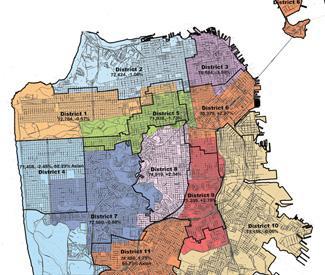
There’s only about a month left before the Redistricting Task Force starts to finalize a new map for supervisorial districts in San Francisco. You can look at the draft map the task force is working on here. The Guardian held a forum on the topic Jan 26 and that’s lead to an alternative community map, which is here. The group that worked on the draft community map is continuing to meet, and I’d love to hear more feedback on it. You can email comments to map@sfbg.com or just post them as comments here.
San Francisco
Breathe Owl Breathe’s newest project is a dark, DIY children’s book
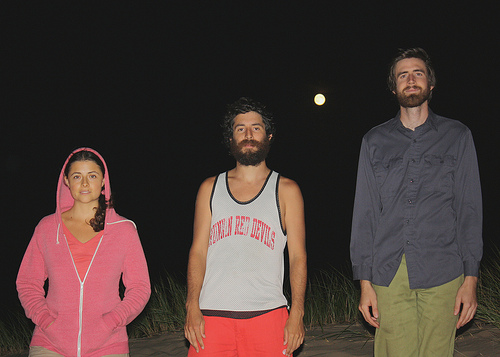
Breathe Owl Breathe, the ethereal, off-folk-band from the Lower Peninsula of Michigan, is on tour promoting its recent project, The Listeners/These Train Tracks — a children’s book with accompanying two-song record. Fans familiar with the band will not be surprised to hear it made a book for kids, or that the two stories are surreal and odd. The Listeners is about a mole and an ostrich – one blind, the other only technically a bird – that find each other in the darkness and form a band.
Fans will also not be surprised to find those darkly emotional sub-currents throughout — this whole project fits in perfectly with the persona of the band. Breathe Owl Breathe made its 2010 album Magic Central while holed up in a cabin in Michigan for the winter, and you can feel it. The album has an I’m-snowed-in-and-going-stir-crazy vibe.
And its live performances are just as interesting and weird, and for a folk band, conceptual — it’s borderline performance art (choreographed hand motions for their song “Swimming,” performed in animal masks). The band’s tour make a stop in San Francisco this Monday, Feb. 6 at Bottom of the Hill.
In a 2008 interview, Micah Middaugh, the band’s front person, likened Breathe Owl Breathe’s music itself to swimming. In a recent phone interview from Michigan, Trevor Hobbs, the percussionist, said their sound evolved to be more like adventuring: like “when you are stepping out to go cross-country skiing but you do not really know where you are going to go.”
This sort of childlike whimsy, a promotion of living and strangeness, is the hallmark of the band’s style, but it always seems to be cut with something dark, sometimes lyrics or melodies, sometimes images that populate its music videos. “Own Stunts” includes quick cuts of Andréa Moreno-Beals, cellist and singer for the band, outside in a nighttime snow being pulled into the shadows by the spindly branches of a tree.
http://www.youtube.com/watch?v=YTEkELB7mFk
The Listeners/These Train Tracks is both fanciful and eerie. It is also hand produced — Middaugh, the band’s singer and songwriter, over a three year period, wrote the stories that double as lyrics for the songs, drew the images, and carved them into wood blocks. The whole book is letterpressed and it’s made in Michigan, like Magic Central and everything else about this band.
While the book should pique the interests of the craft-focused, D.I.Y. artist, or anyone that likes kids books or indie-folk, it’s not targeted for any specific audience— it’s child-like, but the band is only performing at adult venues. “There are subtle tones of navigating through the world with people you love,” Hobbs said.
And expect Monday’s show to be high energy as the band is “inspired by artists that like to captivate the room,” Hobbs said. Middaugh introduced “Lion’s Jaw” at a festival in August by telling the crowd “so you are moving through life, and little do you know, you are being carried by a large lion.” He then asked everyone to feel the loose skin on the back of their necks where the lion picks them up. But “do not be afraid in the lion’s jaw,” he told the crowd.
Breathe Owl Breathe
With Laura Gibson, Morgan Manifacier
Mon/6, 9 p.m., $12
Bottom of the Hill
1233 17th St., SF
www.bottomofthehill.com
Hello, Carol!
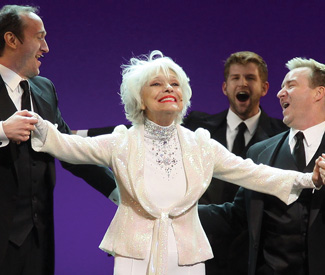
FILM It is close to impossible not to love Carol Channing; those who would protest otherwise are simply heartless. The only adequate response to her is unconditional surrender, as if standing before an oncoming cyclone filled with puppies.
With her saucer eyes topped with false lashes that could give Bette Davis’ a run for her money and a mouth that seems as if it could swallow the world, Channing is a living incarnation of a Muppet (to watch her duet with Miss Piggy just seems natural, somehow). And yet, despite her cartoonish physicality and exaggerated appearance, there is nothing false or put-on about Channing.
When I hear that voice — dripping with whiskey, smoke, and honey, begging to be imitated — the effect is instant happiness. Everything just feels right. As Roland Barthes writes in his essay “The Grain of the Voice,” I then must face the task of articulating “the impossible account of an individual thrill I constantly experience in listening to singing.”
Dori Bernstein’s sweet if worshipful documentary Carol Channing: Larger Than Life necessarily fails at that task, even as it proves the now 91-year-old Broadway legend more than lives up to the second half of the film’s title.
Now slightly stooped, her hair in a choppy gray bob, which she occasionally pulls into a Peggy Moffitt-esque topknot, and her lips a smear of Malibu pink, Channing is still ever the professional, hilariously impersonating a Russian theater troupe one moment and chatting with young dancers in Times Square the next.
The life Channing recounts is an abbreviated and selective version of the one detailed in her 2002 memoir Just Lucky I Guess: her childhood in San Francisco spent being the class clown and worshiping Ethel Waters; her first big Broadway break playing Lorelei Lee in Gentlemen Prefer Blondes; and her career-cementing role as Dolly Levi in Hello, Dolly! And many of the memoir’s same supporting characters, such as frequent TV variety show co-star Loni Anderson and Dolly composer Jerry Herman, also make appearances here.
What Bernstein’s documentary offers is the rare chance to witness the palpable impact Channing has made on others. In personal interactions, she gives her attention equally and wholly to anyone who seeks it (including the camera). Those who have worked with her — particularly the many gay chorus members interviewed here — speak of her as a mother rather than a diva.
The film’s most touching footage is of Channing with her late husband Harry Kullijian, who passed away last year. The two were childhood sweethearts who some 70 years later tied the knot (in Channing’s fourth go at marriage), and seeing them joke together and read aloud poetry passages they shared as love-struck teens is the very definition of adorable.
Curiously, Kullijian’s passing is not mentioned in the film, even as a postscript. You get the sense more generally that Bernstein tried to stay clear of reopening any old wounds with her subject. The awful tempestuousness of Channing’s second marriage to her publicist and manager Charles Lowe is referenced by others but not Channing, who speaks only in passing of the toll life on the road took on her relationship with her son from her first marriage.
Additionally, despite her fame, Channing has always had to share the larger cultural spotlight with Marilyn Monroe and Barbra Streisand, powerhouses in their own right who became associated with the roles she originally made famous on stage (Channing would have her Hollywood comeuppance in 1967 when she was nominated for a Best Supporting Actress Oscar for 1967’s Thoroughly Modern Millie). Larger Than Life attempts to provide a corrective to this, but its motivations for doing so are as transparent as they are understandable. This film is a mash note to Channing as much as it is a gift to her fans, who, rest assured, didn’t need any more reason to love her. *
CAROL CHANNING: LARGER THAN LIFE opens Fri/3 in Bay Area theaters.
The Performant: Strangers in a strange land
Dan Carbone and Kitka resculpt old terrain
From the dark corner of the stage throbs the low rhythm of a skin-clad, Celtic-style drum and the strum of acoustic guitar, while in the light a man clad in a white dress shirt sways in hypnotic time, eyes shut tight, arms flung wide. “Sleeping, sleeping,” he croons softly, “I’m only sleeping.” Still swaying, he begins to tell the tale from the beginning, about a little baby boy whose “brain is knitting itself in an unusual way.”
You’d be forgiven for thinking in this first moment that the man is speaking of his own infancy, after all, brains don’t come knit much more unusually than that of East Bay-based avant-gardian Dan Carbone. But the infant’s name is not Dan’s, and though his brief and tragic backstory reverberates through much of the rest of the play, the infant soon yields the spotlight to his younger brother, the creator of the piece, “Father Panic,” which made its stage debut at the Garage on Friday.
Although “Father Panic,” is indubitably Carbone’s most autobiographical work, a fretful monologue about a precocious childhood both hideously warped yet strangely innocent, familiarly eccentric, flourishes abound throughout. Puppets, poltergeists, twisted songs that expose the tortured inner monologues of the characters to the surface, a live video installation curated by Philip Bonner (a.k.a. Bulk Foodveyor) of childhood detritus and memory bank fodder.
Catherine Debon takes a turn as television-land language teacher, who translates self-loathing lyrics such as “maybe we can hate ourselves together,” into mellifluous French. And instrumentation is handily provided by swampabilly guitarist Andrew Goldfarb, who comprises, with Carbone, the performative music duo The Wounded Stag. But the unacknowledged star of the show is probably Carbone’s mother, who gradually takes over the piece, a raw bundle of outré obsessions and an embattled nature, the very embodiment of a stranger in a strange land — like a Raëlian without a cause, or an aquatic African frog in a solitary tank.
***
The mountains of Serbia, and a vocal tradition almost unknown this side of the “pond,” lie thousands of miles away from the basements of Connecticut. But an intriguing collaboration between Kitka, Oakland’s premiere ensemble of acapella Eastern European music and Svetlana Spajic, a renowned Serbain folk singer, brought that faraway land to stirring life during a two-part concert staged over the weekend at CounterPULSE.
After a video of venerable vocalist Jandrija Baljak teaching his technique to Spajic’s homeland ensemble, the concert began in earnest when Spajic took the stage. Dressed in Sunday best attire suggesting a peasant en route to Ellis Island circa 1914, Spajic’s passionate ululations did little to dispel the sensation of being transported backwards through time and space. Joined in the second half by Kitka, the remaining songs were characterized by an almost medieval lack of vibrato and elongated interludes of dissonant voice-bending harmonies. Even when comprehension of the lyrics was impossible, the music tapped into a complexity of almost primal emotion—though some slyly inserted San Francisco-centric lines did bring us briefly back to home before we were whisked once more into the territory of the unfamiliar by our fearless musical guides.
America’s cup: What does Larry get?
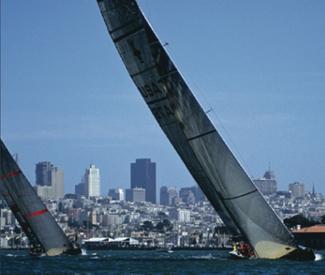
The development agreement for the America’s Cup comes out next week, although the project is already under way. But there’s some concern that the number of visitors (and thus the revenue to the city) might not be as high as projected.
The project EIR is more conservative about the possible number of visitors than city officials had been at first, and now the Bay Citizen reports that “doubts are growing about the number of spectators who will actually come to the city this year and next.” Apparently the prelims in San Diego have been a bit of a bust — and there aren’t as many teams signing up for the challenge.
So here’s the question: If the city winds up taking in less money than expected, does Larry Ellison take a bath, too?
Of course, it’s not that simple: Ellison’s getting a lot from the city, but it’s not based on any revenue the city will get from the cup; it’s based on the investment he’s putting into the port. He’s getting a sweet deal from San Francisco — way too sweet in my mind. The guy’s the sixth-richest person in the world; he doesn’t need all the goodies the city’s handing over, and I’m not sure I want the arrogant, aggressive CEO of Oracle determining the future of a large part of the San Francisco waterfront. But in theory, since he’s renovating property that’s falling apart, he gets something in return.
And, as Jane Sullivan, the spokesperson for the America’s Cup project at City Hall, points out, the fewer the visitors, the lower the city’s costs.
She also told me that “we don’t think the number of competitors will affect the number of visitors,” which is probably true — people will come for the spectacle, and Oracle will hype it beyond imagination, and nobody knows who any of these other teams are anyway. (The one team that might have gotten some press, aside from Oracle, wasn’t allowed to put in an application.)
But here’s the thing: This entire project, and the motivation to give Larry Ellison a bunch of really valuable city property, was the economic impact the cup is supposed to have on the city. The Mayor’s Office has been throwing around numbers like $1.4 billion in economic impact — that’s new jobs, full hotel rooms, packed restaurants, spillover employment benefits — and, of course, more tax revenue to the city coffers.
What it we give away the store to the Oracle pirates and we wind up getting a lot less money than we were hoping for? Nothing against the Cup; I love boats, and I love a big party (although I try to make sure that when the party’s over, I’m not completely broke). But it seems to me that the city’s the only one taking the risk on the downside. Larry gets everything he wants no matter how this all turns out.
We won’t know all the details until we see the agreement, but am I the only one worried about this?
But doubts are growing about the number of spectators who will actually come to the city this year and next to watch the races of experimental catamarans. Preliminary races held on 45-foot vessels in San Diego and elsewhere are failing to attract expected crowds or sponsors.
Source: The Bay Citizen (http://s.tt/15upW)
Transfer of power
yael@sfbg.com
Feb. 1 marks the first day that San Francisco and other California cities no longer have redevelopment as a tool for building affordable housing or dealing with urban blight, but questions remain about how the power and functions of the San Francisco Redevelopment Agency (SFRA) will now be used.
On Dec. 29, the California Supreme Court upheld the validity of Assembly Bill 26, which dissolved all redevelopment agencies throughout the state and redirected the property tax revenue they accumulated to prevent deep cuts to public schools.
Redevelopment agencies, established in California in 1948, were charged with revitalizing “blighted” areas of cities. There were 400 such agencies throughout California, funded by incremental increases in property taxes within a redevelopment zone. Agencies could borrow against that revenue source to subsidize development projects.
AB 26 mandated that all cities dissolve their redevelopment agencies by Feb. 1 and transfer assets to successor agencies meant to “expeditiously wind down the affairs of the dissolved redevelopment agencies,” according the bill’s text.
A resolution passed by the Board of Supervisors on Jan. 24 authorized the transfer of SFRA affordable housing assets to the Mayor’s Office of Housing (MOH) and its non-housing assets to the city’s Department of Administrative Services. It also created a board to oversee the implementation of the SFRA’s ongoing projects.
Now, San Francisco is faced with the task of continuing to fund affordable housing projects and other development without the SFRA, and the board’s resolution laid out some of the terms for how the city will do that, although much remains to be determined.
Mayor Ed Lee appointed all members of the oversight board, which includes Planning Director John Rahaim; MOH Director Olson Lee; Nadia Sesay, director of the Mayor’s Office of Public Finance; and Bob Muscat, director of International Federation of Professional and Technical Engineers, Local 21.
In recent weeks, some groups have raised concerns that these appointees are not representative of the communities impacted by the ongoing redevelopment projects that they will be entrusted with overseeing, and that too much power is concentrated in the Mayor’s Office.
“One of our biggest concerns is that the oversight body could be made much more accountable and democratic,” said Jeron Browne of People Organized to Win Employment Rights (POWER)-Bayview. Much of Bayview-Hunters Point is no longer under the authority of the Planning Commission or any regular zoning laws since it was declared a redevelopment project site in 2000.
Sup. Malia Cohen, who represents the area, added an amendment to the board’s resolution that would impose term limits on oversight board positions. “I understand that there are a number of concerns that have been raised about the composition of the board. However, given the short time frame and the technical nature of the board and its obligations, I’m very comfortable with these appointees that they will be able to make decisions necessary to make the projects move forward. Additionally, with the inclusion of staggering terms we will be able to ensure that there is ample opportunity to include representation from affected communities,” Cohen said at the meeting.
The board also passed an amendment to “clarify that the land use controls granted by the oversight board are consistent with previous land use authority granted by the Board of Supervisors and the redevelopment commission,” as a response to concerns that the oversight board will have too much power over land use in project areas.
Tiffany Bohee, interim director of the SFRA, said that the court’s ruling was the “least desirable possible outcome.” Bohee said the SFRA has spent recent weeks analyzing all enforceable obligations outlined by the ruling to make sure that the transition complies with the law and is as fair as possible to SFRA employees.
The positions that these 101 workers filled at the SFRA will no longer exist as of Feb. 1, and layoffs are underway. However, most will remain employed throughout a transition period that ends March 31, and Bohee said that many will find work in city agencies that will be charged with continuing the work of the SFRA, such as MOH and the Planning Department.
MOH was historically responsible for allocating federal housing grants to city agencies. In past decades, federal budget cuts have severely limited the grants to build affordable housing. Now, although MOH has some power over city housing policy and allocation of funds to build housing, many of those responsibilities had been transferred to the Planning Department — or, until recently, the Redevelopment Agency.
The Planning Department is governed by the Planning Commission with four mayor-appointed members and three members appointed by the Board of Supervisors. The Planning Department implements planning standards and signs off on structural changes to the city, ranging from homeowner requests to alter houses to developer requests to build high-rises.
In many ways, the Redevelopment Agency was redundant, shadowing work done by the Planning Department. When an area was designated an SFRA project area, the planning code and zoning restrictions no longer applied, and developers working in partnership with the city had the power to define new land-use regulations.
Many critics of the SFRA said that private developers were able to use this lack of regulation to take advantage of the significant amount of money reserved for the agency. Deepening this concern was the fact that the Redevelopment Commission, which oversaw the SFRA, was composed entirely of mayoral appointees, which some felt were less accountable to the public interest than the Planning Commission.
Some feel that the oversight board, composed entirely of mayoral appointees, will repeat the same lack of accountability to neighborhoods.
“The city is setting up a planning commission for the 1 percent. And the Planning Commission that we have is the for the 99 percent,” said Tom Radulovich, executive director of Livable City, which works on land use issues. He said that with the dissolution of the SFRA, the city has an opportunity to facilitate the construction of affordable housing in a more democratic fashion. His organization expressed concerns to the Board of Supervisors, cautioning that the Oversight Board should not have undue power over land-use in development project areas and that the new structure in city government for facilitating development projects should be created with the input of communities. The Board of Supervisors made clear Jan. 24 that the Oversight Board and its appointees are a temporary measure to comply with AB26 by the Feb. 1 deadline. As Sup. Christina Olague said, “I just want to assure the public that this isn’t the end-all, be-all of this discussion, that it will be ongoing, and we welcome any of your concerns at any time.”
After the tear gas clears

yael@sfbg.com
After a chaotic day of marches and confrontations between police and protesters Jan 28, I was arrested along with about 400 others who were trapped by police in front of the downtown Oakland YMCA. Seven of us were journalists.
The goal of the march was to take over an abandoned building — an the vacant Kaiser Convention Center, a city-owned building that’s been closed since 2005, was a prime target.
I have not yet been able to retrieve my property, including my recorder and notebook, which is being held by the Oakland Police Department. What follows is a pieced-together account and a perspective on what the events of Jan. 28.
I spend 20 hours behind bars, and missed the later parts of the action. But I was able to observe what happened in jail and make some sense of what happened.
Occupy people are constantly debating tactics and goals, and for many, the idea of occupying a vacant building made sense. When Occupy Oakland had a camp in Frank Ogawa Plaza, also known as Oscar Grant Plaza, and commonly shortened to OGP, it created a strong community. That community bridged divides between the homeless and the housed, between students and labor organizers, and between Oakland residents of different races, genders and levels of ability in an unprecedented fashion.
The camp had a kitchen that fed hundreds of people everyday and a network of shared tents and blankets which welcomed in hundreds who otherwise would have slept on the streets, often feeling isolated from other residents of their city and made to feel inferior.
The camp was repeatedly raided, Occupiers were tear gassed and shot with rubber bullets, and when OGP was cleared out, the community no longer had a home. And the police started that violence.
That was the practical reason for wanting to occupy a vacant building: to have a social center for Occupy Oakland.
Of course, there are other reasons. There’s the question that many squatters and homeless advocacy groups have been making for decades: why let buildings lie vacant while people freeze on the street?
Remember: The building that Occupy wanted to occupy is public property, and right now nobody is using if for anything.
In one exchange in jail, a guard asked a protester why the activists thought they had the right to take over a vacant building. “I mean, it’s not yours,” he insisted. The protester replied that many vacant buildings are government-owned and therefore public.
“So it’s the government’s,” the cop said.
“But I pay taxes,” the protester responded.
“Me too!” replied the cop. “It’s mine!”
“It’s both of ours,” smiled the protester. “It’s all of ours.”
That’s what made the convention center action such a clear and easy political decision.
A lot of people in Occupy would go further, saying that at a time of a severe housing crisis, it’s perfectly legitimate to take over privately owned buildings that are sitting there vacant. It’s part of the central argument of Occupy — that corporations and the rich unfairly own and continue to acquire much more wealth than the majority of people. For many people, owning a vacant building and doing nothing with it, while hundreds freeze on the streets, is a crime itself.
UP AGAINST THE COPS
Then there’s the question of the police — and violence.
The word “nonviolent” has a specific meaning in the history of political movements. Martin Luther King Jr. defined it in his essay “The Meaning of Non-Violence”: “If you are hit you must not hit back; you must rise to the heights of being able to accept blows without retaliating … But it also means that you are constantly moving to the point where you refuse to hate your enemy. You are constantly moving to the point where you love your enemy.”
It’s a philosophy but also, in political terms, a tactic.
Many of the people who make up Occupy Oakland get their start as activists organizing against police brutality in a city that has longstanding problems with violent and undisciplined officers.
Police Chief Howard Jordan said in a press release that “It became clear that the objective of this crowd was not to peacefully assemble and march, but to seek opportunity to further criminal acts, confront police, and repeatedly attempt to illegally occupy buildings.”
It was certainly clear that the intent of the crowd was to illegally occupy a building. And any honest assessment of Occupy Oakland would have to acknowledge that some members are not wedded to King-style nonviolent civil disobedience. (Neither, by the way, were a lot of the protest movements of the 1960s.) Many protesters wore masks and bandanas to disguise their identities and protect them from tear gas and pepper spray, and the march was led by protesters with makeshift shields, which suggests that they expected to be attacked. You could certainly argue that what those people were doing wasn’t confrontation; it was self-defense.
Frankly, it made sense to be prepared: In other Occupy Oakland actions, police have attacked with batons, tear gas, pepper spray, flash-bang grenades, and smoke bombs. And for quite a few Oakland residents, the police have always been seen as an outside force that can’t be trusted.
In fact, violence did break out. Many, including myself, have eyes still stinging from tear gas. I saw several wounds caused by rubber bullets shot at protesters. I spoke individually to at least a dozen people — one of them a pregnant woman — who were struck with police batons.
And protesters did not remain peaceful while this violence was being used against them.
Some picked up tear gas canisters and threw them back towards police; that much I saw. I also saw protesters throw empty plastic bottles at police.
According to the police, they also threw metal pipes, rocks and bricks. According to the protesters, they threw mainly empty plastic bottles and fruit at police. But as protesters often say of the police, “They’re the ones who showed up with the guns.” If the cops didn’t want violence, why unleash such an arsenal of weapons?
People got hurt, protesters and police alike. Several bystanders who had nothing to do with the situation were swept up in the mass arrest.
The city of Oakland, already in dire financial straits, likely spent hundreds of thousands of dollars reacting to the protests. Police claim that they were unable to sufficiently respond to violent crimes over the weekend, including five murders, because they were overwhelmed with Occupy troublemakers.
Of course, city officials were the ones who decided to arrest 400 people — with all the expense that involves.
There are, at this point, no reports of serious injuries to any police officers. However, at least a dozen protesters had welts on their faces or bodies from being beaten by clubs or shot with rubber bullets. One woman was shot in both arms with rubber bullet; one man was shot in the face with rubber bullets while holding a video camera to document the events. Several protesters were shoved to the ground and received wounds on their faces while being arrested. Police raised their rubber-bullet rifles to the faces of protesters throughout the day, threatening attacks. A rubber bullet to the face can cause brain damage and blindness.
DID IT HAVE TO HAPPEN?
How could this have been prevented?
Police say that “while peaceful forms of expression and free speech rights will be facilitated, acts of violence, trespassing, property destruction and overnight lodging will not be tolerated.” But 40 people were arrested during an ongoing Occupy Oakland vigil in the first weeks of January for having “illegal property” at OGP in what many saw as clearly a peaceful expression of First Amendment rights.
On KGO radio Jan. 29, Chief Jordan said that he has allowed Occupy Oakland to protest without a permit and would continue to do so, but those early January raids were ostensibly due to permit violations — violations of the terms of a permit that Occupy Oakland did in fact have.
There’s no question: The police response to Occupy Oakland over the past few months has caused some people in the movement to get more radical.
Many Occupy Oakland-affiliated medics condemned those who threw objects at police, saying that they provoked a backlash that caused more injuries. Many Oakland residents who might be in line with the socio-economic critique presented by the Occupy movement feel endangered and confused by marches that result in the massive use of police weapons in broad daylight. A lot of people would rather protest in a lot of ways that less resemble urban warfare.
On the other hand, there are also ways that Oakland officials could have prevented the consequences of weapons deployed and 400 arrested Jan. 28. They could, for example, have allowed protesters to occupy the vacant building.
When protesters seized a building Jan. 20 in San Francisco, police first attempted to prevent them. They lined up in front of the targeted building. They deployed pepper spray and struck several protesters with batons. When they were unsuccessful, and protesters entered the building from the back, they opted to block the surrounding streets and wait until the time seemed right to enter the situation and make arrests. Police spokesperson Carlos Manfredi told me that the cops were not going to rush into the situation and were trying to prevent injury and violence.
The Kaiser Convention Center has been vacant for years. The city of Oakland recently made plans to sell it to its Redevelopment Agency, but that plan fell into legal limbo when Gov. Jerry Brown signed AB26, a bill that dissolved all California redevelopment agencies.
At this point, nobody at Oakland City Hall has any plans whatsoever for the big, empty structure.
Why not allow Occupy to use the convention center? It’s not downtown, where Mayor Quan says businesses have been adversely affected by Occupy Oakland’s presence. It would give the movement a chance to stop focusing on trying to occupy spaces and start focusing on benefiting the community with food, shelter, and community programs that they provided when they had a camp. It would give the building tenants who could be held responsible for maintaining it. It might even help get Occupy Oakland and the Oakland Police Department out of the cycle of violence that they have been spiraling into for months.
Each time arrests occur, each time violence occurs, both sides blame the other. Both sides are correct that they were provoked. Both sides are correct that something that they think is worth defending was violated — for the cops, it’s the law. For the protesters, it’s the right of the people to assemble.
In fact, many Oakland residents have experienced violence at the hands of the Oakland Police Department for years before Occupy began. There was already a mass movement formed around the murder of Oscar Grant, and thousands of people fed up with police murders of unarmed, often black, suspects.
In recent decades, other radical groups, notably the Black Panthers, insisted that their community lacked basic needs because the city of Oakland refused to prioritize them. The Black Panther free breakfast program served food in a strikingly similar way to Occupy Oakland. Black Panthers were also notorious for carrying guns to defend themselves against police violence.
Occupy Oakland protesters (unlike Tea Party members) certainly don’t carry guns. But, more and more, they cry “fuck the pigs” as much as any Panther.
For much of the Occupy movement’s 99 percent, unjust actions by banks, corporations, and the government officials that they have often bought and paid for are the worst problems facing the United States today. For others, particularly the poor and people of color, these problems are magnified and exacerbated by the fact that they feel the threat of police harassment every day. For years, they’ve understood that police disproportionately do not investigate or solve crimes that happen to them and their families.
THE RADICALS AND THE BROADER MOVEMENT
The Oakland General Assembly Jan. 29 was the biggest it’s been in weeks. While there were still over 300 people in jail, 300 more came out to get involved with the meeting. That happened at the same time that many who felt that inexcusable violence and property destruction occurred Jan. 28 and concluded they could no longer have anything to do with Occupy Oakland.
It’s a challenge for the movement nationally, too: How do you accept and encourage the people whose legitimate anger at economic injustice and police abuse turns them toward more radical responses — and at the same time make room for a people who want nothing to do with the black bloc Fs, vandalism, and confrontation with the police?
There are tactical issues with the way the building occupation was planned. Many who were completely in line with the concept felt unsafe and uncomfortable with the secretive nature of the organizers who planned it. The location of the building targeted for occupation was kept secret for practical reasons; police could easily prevent a successful takeover. Supporters must often be led to the locations of planned takeovers without knowing where the action is and how they’ll get there. But how do you reconcile this with the transparency required when organizers are leading more than 1,000 people who want to use tactics they feel comfortable with and make their own choices?
Occupy Oakland is asking the people to imagine a world where property rights wouldn’t prevent them from doing all the good that they could do with a building like the Kaiser Convention Center. They must also ask themselves to imagine a world in which goals like a building occupation can be achieved in a way that everyone involved is able to consent to their involvement.
These debates continue to occur at Occupy Oakland. Some will leave the movement, some will join. Some will take the ideas and try to manifest them in new and different ways. Participants in Occupy Oakland desperately want basic needs of food and shelter met for their community members, and for the system that governs the city to do so in a way that allows people to thrive when it comes to health, education, and opportunities for creativity and growth. They think that they have the beginnings of a community and a process that can achieve those visions, better than the city government ever has, and they care more about achieving it than respecting the property rights of the owners of abandoned buildings.
Have you heard the good news?

arts@sfbg.com
FILM Today, seeing high-profile evangelical Christians reveal themselves to be charlatans or hypocrites is old news. Even the spectacle of homophobic mega church prig Ted Haggard, outed as a fan of male hustlers and crystal meth, resurfacing on Celebrity Wife Swap induced a few shudders but no real surprise. The plunge from public sanctimoniousness to scandal and newly angled self-promotion is by now too familiar to shock.
A few decades ago, however, the face of American evangelism was inclusive, straight-arrow centrist Billy Graham. Elmer Gantry-like tent revival shows seemed a thing of the past, or at least one whose few remaining practitioners traveled well off the mainstream radar. So there was considerable exoticism to Marjoe, a 1972 documentary that plays the Vortex Room next Thursday as part of a religion-themed February schedule.
Its subject was a 28-year-old Pentecostal preacher — titular name a combination of "Mary" and "Joseph" — who’d been "The World’s Youngest Evangelist," pushed onto the stage of a lucrative salvation circuit from the age of four. By his own estimation, his parents-managers-slave drivers made $3 million or so off his precocious act as God’s littlest huckster, none of which he ever saw. Some years after running away as a teen, he’d gotten his secular head together, but reluctantly re-entered the revival biz — working it half the year in order to fund the other six months as a California flower child.
As ample archival footage shows in Howard Smith and Sarah Kernochan’s portrait, Marjoe Gortner was indeed the real thing, at least in terms of having a natural gift for mimicry, rhythmic "testifying," crowd control, and snake-charming dollars from wallets. But he’d never been a believer, and in adulthood was uncomfortable providing religious experiences to people who innocently assumed he shared in them. His restless showman’s energy needed to be channeled in another direction — rock or movie stardom, perhaps — so Marjoe the Movie was intended to chronicle, expose, and bury one career while hopefully launching a new one.
It worked, to an extent. Marjoe got a lot of attention, winning the Best Documentary Feature Oscar. The New York Times called its subject "Evangelism’s answer to Mick Jagger" (whom Gortner admitted stealing moves from). With the youth-oriented Jesus Movement then at its peak, some church leaders were not happy at an instance of Christian hoaxdom getting such wide exposure. Though what’s striking about the film now is not just how charismatic (in the non-divine sense) its protagonist remains, but how sincere he is: Marjoe doesn’t judge, condescend to, or snark at his nightly congregations, whose members he can make faint dead in holy rapture with a laying-on of hands. He knows they’re having an authentic experience, but also that "I don’t have any ‘power.’ Hundreds of people were healed at my crusades, but I know damn well it was nothing I was doing. Sometimes I feel like I should do repentance to the audience." So Marjoe was the record of his quitting.
It was just the start, however, of a wider public’s acquaintance with Marjoe Gortner. He made one album on a major label called Bad, But Not Evil. (Are the Black Lips aware of this?) Hunky in a slightly goofy way, he soon started guesting — usually as some kind of seductive wacko — in TV series like Kojak, The A-Team, and Fantasy Island.
He became a familiar face on the big screen, too, peaking early in commercial terms with a memorable role as a psychotic supermarket employee and National Guardsman who spends all of 1974 disaster epic Earthquake trying to force himself on a ‘fro-haired Victoria Principal. He definitely had ability and magnetism, but also the ill luck to appear in some of next decade-plus’ worst movies: joining William Shatner and Robert Reed as suburban nice guys on vacation with unexpectedly warped neighbor Andy Griffith (!) in Pray for the Wildcats (1974); imperiled by giant rats in The Food of the Gods (1976); in Viva Knievel! (1977), ’nuff said; Star Wars rip-off Starcrash (1978); horror idiocy Mausoleum (1983); women-in-prison jewel Hellhole (1985); and Rambo-meets-T&A travesty Jungle Warriors (1984) — replacing Dennis Hopper in that one after the latter was found wandering naked and senseless on location. Arguably only Linda Blair made more enjoyably awful movies in a particularly rich period for them.
Gortner had produced a 1979 version of the stage play When You Comin’ Back, Red Ryder? as a serious vehicle for himself — in which he was duly impressive, albeit as yet another psychotic — but that flopped. Around the same time he also started filming an autobiographical drama, only to reportedly abscond with the film cans when that never-finished project’s money ran out. By 1990 (and American Ninja 3: Blood Hunt), a respectable acting career was clearly not going to happen, and the one he had held little remaining appeal. Gortner spent the next couple decades producing charity sports events. He’s since retired, and shows no sign of any further desire for the public eye. He presumably prefers not being remembered at all to being remembered as a novelty.
Marjoe‘s co-feature is an obscurity I’d love to see an exposé documentary about: San Francisco-set The Second Coming of Suzanne (1974), a muddled parable about a megalomaniacal hippie film director (Jared Martin) obsessed with the titular chick (future Clint Eastwood consort Sondra Locke) he casts and, naturally, crucifies as star of his unfathomable film-within-the-film.
Suzanne itself is one of the most flabbergastingly pretentious movies ever made, the first and last screen opus of writer-director Michael Barry, son to second-tier Hollywood and Broadway leading man Gene Barry. Featuring a pre-fame Richard Dreyfuss and a pre-Decline of Western Civilization Penelope Spheeris in support roles, it’s such a timepiece — for better and far worse than you can begin to imagine. It should be required viewing for people who worship 70s cinema, as illustration of how easily all that era’s best intentions could go to hell in a hand basket. To wit, "Second Coming" kicks off this week with an inimitable pair: Soul Hustler, a.k.a. The Day the Lord Got Busted (1973), and 1972’s J.C., in which Jesus joins an LSD-crazed biker gang.
"THE SECOND COMING OF THE VORTEX ROOM"
Through Feb. 23
Thurs., 9 p.m., $7 donation
Vortex Room
1082 Howard, SF
Facebook: The Vortex Room
Lookin’ good

culture@sfbg.com
BODY If your New Year’s resolution is flagging, here are some budget boosts to kickstart your makeover (or de-stress) ambitions. Never give up! Deals are for February: call ahead for more details or restrictions information.
FITNESS
Sivananda Yoga Vedanta Center 1200 Arguello, SF. (415) 681-2731, www.sfyoga.com Find your center at this Inner Sunset nonprofit that’s run by world peace-inspired volunteers. Get your first class for free, and 50 percent off the 10-class ($95-115) or monthly unlimited pass ($110). Individual classes are $10-15 each.
Planet Granite 924 Mason, SF. (415) 692-3434, www.planetgranite.com An indoor climbing gym and yoga studio in the Presidio that boasts of the best views in the Bay Area. A belay lesson for $34 comes with free gear rental and one-day pass.
START Fitness 1625 Bush, SF. (415) 225-5715, www.STARTfitness.com These Pacific Heights bootcamp workout programs are designed by an army fitness trainer. START claims to be the oldest program of its kind in the country. Four-week bootcamp $199, from regular price of $290.
Bianchi Fitness 566 Dolores, SF. (415) 218-7045, www.bianchifitness.com Year-round outdoor fitness training in the Castro that takes advantage of the Bay Area’s natural beauty, offering group and individual classes. Take as many classes as you want during a two-week period for $75.
Body Mechanix Fitness Cooperative 219 Brannan, SF. (877) 658-4757, www.body-mechanix.com An independently-owned fitness cooperative in SoMa offering innovative training programs. $49 for a $120 certificate.
ODC School and Rhythm and Motion Dance Program 351 Shotwell, SF. (415) 863-9830, www.odcschool.org This Mission District mainstay offers classes in all styles of dance, from ballet to hip hop, at every level of ability, from amateur to professional. $14 per dance class, $7 for seniors and teens.
Chestnut Pilates 1877 Chestnut, SF. (415) 673-3280, www.chestnutpilates.com Run by dancer Cathie Caraker, this Cow Hollow studio guides students to toned abs and inner peace through a better understanding of the body. $60 for $80 certificate.
Primal Health and Training 1074 Folsom, SF. (510) 432-9648, www.primalhealthsf.com At his SoMa studio, Khalid Kohgadai teaches how to overcome inertia and unwanted weight gain through the methods that worked for him. $50 for two sessions.
Caitlin Weeks Nutrition and Personal Training 2435 Polk, Suite 8, SF. (415) 624-5121, www.grassfedgirl.com In Russian Hill, Weeks teaches methods for battling obesity gathered from her personal experience of dropping 80 pounds and keeping it off. $75 for a $100 certificate.
Yoga Garden 286 Divisadero, SF. (415) 552-9644, www.yogagardensf.com This tucked-away studio is committed to teaching safe, accessible classes in Iyengar, Asthanga, Vinyasa, Hatha and pre-natal yoga in the Lower Haight. Get a four-week introductory membership for $65. First timers score an hour-long massage for $49. Get a class-a-day membership plus monthly massage for $120/month.
Jamz Trainings 292 4th Street, Oakl. (415) 857-5269, www.jamztraining.com In Oakland, James Robinson customizes personal programs specializing in weight loss, athletic performance, motivation, and strengthening. $50 for $75 certificate.
Bridges Rock Gym 5635 San Diego, El Cerrito. (510) 525-5635, www.bridgesrockgym.com This El Cerrito gym offers indoor “bouldering,” relatively short climbs full of obstacle arrangements designed to test problem-solving skills. $25 for a three-visit pass and climbing gear.
BEAUTY
The Barber Lounge 854 Folsom, SF. (415) 934-0411, www.barberlounge.com This 2012 industrial warehouse approximation of an old-fashioned barbershop caters to men and women in sunny, art-bedecked loft space. $15 brow-shapings, Mon.-Fri. 4 p.m.-8 p.m. Book a cut and color and receive $20 off a facial or massage of at least 60 minutes.
John Francis Spa Martin De Porres Medical Building, 4200 18th St., Suite 101, SF. (415) 861-3000, www.johnfrancisspa.com The staff at this Castro spa offers holistic massage, waxing and skin care, plus mineral makeup, and tension relief foot treatments. Glycolic peels are reduced from $75 to $35 when combined with a facial. Registered clients receive 20 percent off on facials on their birthdays. $20 off when combining facial and massage on the same day.
Shear Bliss Salon 275 Gough, SF. (415) 255-8761, www.shearblisssalon.com These Aveda-trained stylists use eco-friendly styling techniques and products. The salon focuses on straight perms, coloring, extensions, and curly hair. New clients receive $20 off hair coloring.
San Francisco Community Acupuncture 220 Valencia, SF. (415)675-8973, www.missionsfca.com Affordable acupuncture is offered here in a comfortable, calm group setting. Pay $25-50 per treatment, sliding scale. Yelp users can receive a $40 gift certificate for $25.
Love Your Face SF 1075 Pacific, Suite A, SF. (415)529-2368, www.loveyourfacesf.com Curious about semi-permanent eyelash curling or eyelash-eyebrow tinting and ditching the daily regimen? LYF is the place to check out. Also: Ayuvedic ear treatments for wax removal and nourishment of the ear canal and drum. Refer a friend for $5 off your next service. Purchase five services and get one free. Yelp users get $50 worth of treatments for $35.
Earth Body 534 Laguna, SF. (415) 552-7200, www.earthbody.net This organic skin care spa takes a holistic, sustainable approach that draws on ancient traditions of healing. First time clients receive $15 off any treatment Mon.-Fri. Add a supplemental foot therapy, facial massage, or heated neck therapy to your session for free.
Chez Sylva 1310 8th Ave., SF. (415) 242-1100, www.chezsylva.com Salon offers waxing, threading, and a number of signature facials, but is best known for electrolysis and permanent hair removal. New clients receive a 10 percent discount on first treatment. Mention its website and receive an additional 5 percent discount.
Flourish Skin and Wax 1905 Union, SF. (415) 370-6559, www.flourishskinandwax.com Cheerful pastel walls and mellow music here eases the usual pain of waxing. Perfectionist waxers can satisfy even the most sensitive skin types. Book a Flourish facial and receive a complimentary cleanser; book a Brazilian wax and receive a complimentary brow wax.
Rincon Chiropractic Massage and Acupuncture 101 Howard, Suite D, SF. (415) 896-2225, www.rinconchiro.com Rincon focuses on the relationship between the structure and function of your spine. It provides a wide range of services, like rehabilitation therapies, mother-to-be, and stress-relieving massages. $25 off for students who bring in a valid student ID. Yelp users can get a $90 specialty massage for $50.
Tiptoes Nail Spa 300 De Haro, Suite 336, SF. (415) 626-9637, www.tiptoesnailspa.com This swanky Potrero Hill spot uses vegan and DBP, touelene and formaldehyde-free nail polish as well as botanical-based, petrochemical-free products. Go for a relaxing ambiance, cool chairs, and free Red Vines. Early bird special: mani-pedis for $35 before 3 p.m.
Curl Up and Dye Beauty Salon 350 Alabama, SF. (415) 861-2515, www.curlupanddyesf.net Ally likes big hair and monster movies. Jerry likes cheeseburgers and tight fades. Both have trained with Vidal Sassoon, Bumble and bumble, and Kevin Murphy. Both have devoted clients who come back time and time again for bold cuts and sexy styles. Receive $20 off a cut or color with either stylist.
Castro plaza bill passes, 6-5
The Board of Supervisors has passed a watered-down version of Supervisor Scott Wiener’s legislation to prevent camping and sleeping in Harvey Milk and Jane Warner plazas, with Supervisor David Chiu casting the swing vote.
The bill passed 6-5 after an amendment by Chiu that stripped the bill of a provision which would keep shopping carts and other “large wheeled conveyances” from entering either plaza. But initial reactions among opposition activists has been mixed.
“I think it’s fair to say that Supervisor Chiu gave an elegant compromise with his amendment… It’s very polarizing legislation within the LGBT community,” said long-time LGBT activist Gabriel Haaland. Haaland, who added that he would not have voted in favor of the legislation, said many were concerned about the impact it might have on homeless LGBT youth.
Likewise, Bob Offer-Westort, an activist with the Coalition on Homelessness (CoH) who was arrested Friday night after pitching a tent in Jane Warner Plaza, expressed his satisfaction with today‘s decision, saying the supervisors removed the most controversial aspects of the legislation while applying the Parks Code, which imposes less onerous obligations on those subject to citations.
However he tempered this by saying, “it’s still still onerous and bad policy to use the criminal justice system to address homelessness. …I am very glad that supervisors who were concerned about the targeting of homeless youth took a moral stand today.”
Tommi Mecca, an activist with the San Francisco Housing Rights Committee, was training new activists and had not been able to watch the board vote,, but said that he was disappointed that the legislation passed at all.
“My initial reaction is that it’s sad we have to have regulations at all. Especially in Harvey Milk Plaza. Harvey Milk Plaza is a symbol for the LGBT community… it was just a fun, free place,” Mecca said.
“I don’t think it should be illegal to sleep in a public place. If there’s an earthquake, people think it’s fine to sleep on the street. But being homeless is a crisis too. Public space should be public… The reality was that we did not have a sixth vote to kill it.”
Silver Swans

When is the cover better than the original? When the original is by newbie/vitriolic web backlash victim Lana Del Rey, and the cover is a sensual send-up by seasoned San Francisco duo Silver Swans (silverswans.bandcamp.com). The local act split open the pop song — “Video Games” — slowed it down, and filled it with chilly synth floating below breathy vocals.
But we’re not here to debate Del Rey’s musical ability; we’re here to keep a glossy superhero eye on Silver Swans. Formed by Las Vegas-born vocalist Ann Yu and Jamaica-bred effects wizard-DJ Jon Waters in 2007, the band has delivered a lovely catalogue — most recently 2010’s Secrets EP and the upcoming LP Forever (Feb.7) — of heart-wrenching synth pop and shoulder-dancing, Manchester-evoking icy club rock. It’s high time they get their international due.
Description of sound: Someone else said it best: “tropical synths and stuttering 808s” wrapped in ambivalent romance and bittersweet longing.
Like most about the Bay Area music scene: The Bay Area music scene is both sophisticated yet charming. So many amazing bands come out of SF, yet you can still create your own place here and find people who appreciate what you do. In that sense, it’s still fresh here. The scene isn’t jaded and over-saturated, there’s charm and new inspiration everywhere.
What piece of music means the most to you and why: This is a hard one, so many songs have come into my life and forever changed me, the first mixtape I got had a song on it called “So Said Kay” by The Field Mice and I think I could have listened to that song on repeat for days reading into every lyric and just taking in the voice. It made me sad too, and just made me feel exactly what I wanted to feel at the time. It was one of the first songs to inspire me to write and also tap into that unknown territory where you don’t care about how unique or difficult a part is write, you just let yourself get carried away in the moment of the song itself and let it almost write itself.
Favorite local eatery and dish: El Metate Mexican Veggie burrito, the vegetables are roasted and always fresh. Everything there is delicious and on the cheap, right down to their alfajore cookies, I fully endorse the entire menu.
Who would you most like to tour with: Karin Dreijer Andersson — Jon and I are both admirers of everything she does. She is a true artist, and I get lost in her songs always.
Black Cobra
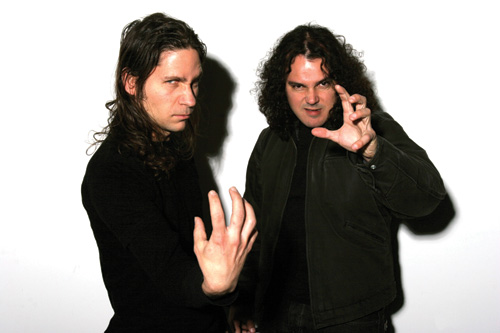
Last year was epic for Black Cobra (www.blackcobra.net); the duo toured with a reunited Kyuss Lives, closed out the night at Yerba Buena’s awesome art-meets-metal live show, and released Invernal. The album, full of pummeling hardcore, saw vinyl release last month on Southern Lord, thus kicking of another doomy year for the act that got together way back in 2004 when drummer Rafa Martinez (formerly of Acid King and Gammera) was living in LA and ex-Cavity guitarist Jason Landrian was in NYC.
Black Cobra essentially began by snail mail, each sending brutal bits of song across the country. Moving to San Francisco in 2007, the band evolution was complete. While Black Cobra on record sounds undeniably good, the band is at its very best when live, with polyrhythms, Martinez beating the shit out of the drums, and Landrian’s gravity-defying backbends. The next show will be a charmer, Valentine’s Day at the New Parish (8 p.m., $10–$13. 579 18th St., Oakl. www.thenewparish.com), the best way to confess to the dark lords, “Nothing Says I Love You Like Doom” (which happens to be the event’s title). Hopefully it’ll be touring with Black Sabbath by the end of this year.
Description of sound: Jason Landrian: Like an avalanche of barbed wire and rabid sharks.
Rafa Martinez: sounds like drinking the blood of your enemy.
What do you like most about the Bay Area music scene: JL: The size and variety. It’s not too big, but not too small and there is not just one type of band.
RM: Awesome bands, diverse crowds, cool clubs.
What piece of music means the most to you and why: JL: Master of Puppets by Metallica. This was a massive staple of my youth and a huge influence on my playing when I was first learning guitar.
RM: Der Ring des Nibelungen by Wagner. It was the soundtrack of my childhood.
Favorite local eatery and dish: JL: Cathead’s Barbecue. Cornmeal crusted tofu is killer!
RM: The Submarine Shop on West Portal. Italiano center sub with a Coke.
Who would you most like to tour with: JL: Black Sabbath
RM: Rush
Our Weekly Picks: February 1-7
WEDNESDAY 1
Kapowski
Oakland-based indie pop quartet Kapowski is celebrating the release of its debut album, Boy Detective, with a party at Rickshaw Stop. With influences including George Gershwin, the Velvet Underground, and David Bowie, it’s no wonder Kapowski’s sound seems very much its own unique creation — sort of a dreamy, eerie, dissonant electric piano-driven march. While Thursday marks the release of the band’s debut album, Kapowski’s vibe has been slow cooking since front man and group visionary Jesse Rimler began collaborating with bassist Jon Gondo during middle school. (Mia Sullivan)
With Mwahaha and Bells
8 p.m., $10
Rickshaw Stop
155 Fell, SF
(415) 861-2011
THURSDAY 2
Mostly British Film Festival
February is traditionally an uber-boring month for cinemaniacs — but fret not, local film fans: you need not resort to queuing up at the megaplex to weep at Channing Tatum’s romantic troubles. Not only is IndieFest looming (opening night is Feb. 9), but the Mostly British Film Festival — co-presented by the San Francisco Neighborhood Theater Foundation and the California Film Institute — kicks off tonight, with 28 new and vintage films from the U.K. (duh), Ireland, Australia, and South Africa. Highlights include Ken Loach’s latest, political thriller Route Irish; a complete screening of Michael Apted’s “Up” documentary series; and swinging London time capsule Performance (1970). (Cheryl Eddy)
Through Feb. 9, $12.50
Vogue Theatre
3290 Sacramento, SF
Christopher B. Smith Rafael Film Center
1118 Fourth St., San Rafael
moe.
There’s nothing quite like seeing a jam show. They tend to involve hours of emphatic lyric shouting, sensual hip swinging, and persistent head nodding. The air smells more like pot than oxygen, lulling you into a stupor that causes you to forget you’ve been expressively swaying to the same song for thirty minutes. While lesser known than Phish and its omnipotent predecessor, the Grateful Dead, moe. has developed a similarly fanatical fan base by producing fun, danceable jams, perfecting the art of improvisation, and consistently engaging audiences at live venues. moe.’s been at it since 1989 and shows no signs of subsiding into irrelevance. Not to be missed. (Sullivan)
Thurs/2-Fri/3, 9 p.m., $30
Independent
628 Divisadero, SF
(415) 771-1421
“Elegy”
A beatific child, arms outstretched, rides a polar bear through a snowy landscape. A baby rhinoceros ascends through a pink cloudscape, glowing halo floating above its wrinkly gray ears. A brown-robed Saint Francis gazes upon a bleeding fawn — but, wait a second, what’s that falling space junk in the background? And how’d that toy robot get in there? Menlo Park native David Michael Smith’s drawings and paintings “hearken back in style to elegant Renaissance Madonnas and saints, while simultaneously borrowing images from contemporary pop culture,” according to Dana DeKalb’s essay in the catalogue for “Elegy,” his new solo exhibition. The drawings and paintings, many situated in elaborate frames constructed by the artist, have an effect that’s as calming as it is unsettling. (Eddy)
Through March 17
Reception tonight, 5:30 p.m.-7:30 p.m., free
Scott Richards Contemporary Art
251 Post, Ste. 425, SF
(415) 788-5588
Dengue Fever
During a trip to Cambodia in the 1990s, Zac Holtzman became enamored with ’60s Cambodian pop and set out to create a sound that integrated the genre’s powerful female vocals with the psychedelic surf sound of the American ’60s. Enter Dengue Fever — a six-piece rock band whose Cambodian female vocalist, Chhom Nimol, sings in Khmer and English (sometimes in the same song, often wearing something sparkly), while Holtzman puts down a dazed, surf riff reminiscent of “Wipe Out” with his double-necked guitar chapei. Dengue Fever is set to shake the Great American Music Hall on Thursday and Slim’s Friday, to the delight of Bay Area indie pop fusion enthusiasts. (Sullivan)
With Secret Chiefs 3
8:30 p.m., $20–<\d>$44.95
Great American Music Hall
859 O’Farrell, SF
(415) 885-0750
FRIDAY 3
“WTF with Marc Maron”
Part comedy discussion and part no holds barred interview program, Marc Maron’s WTF podcast has emerged as can’t miss listening for anyone curious about the thought processes of modern comedians and performers. The stripped-down feel and anything goes attitude of the show has led to some incredibly personal moments — Todd Glass coming out on a recent episode immediately comes to mind — that are respectfully ushered along by Maron’s neurotic but attentive and no bullshit personality. In a special live taping of the show, he’ll be chatting with a handful of eclectic guests that includes political satirist Will Durst, Arden Myrin (Chelsea Lately), and original Saturday Night Live cast member, Laraine Newman. (Landon Moblad)
10:30 p.m., $25
Cobb’s Comedy Club
915 Columbus, SF
(415) 928-4320
SATURDAY 4
“Between Me and the Other World”
Dissecting wounds in under-reported aspects of American history has allowed Joanna Haigood to create some of the Bay Area’s most remarkable dance theater works. So there is every reason to look forward to her newest endeavor, “Between Me and the Other World,” which examines W.E.B. Du Bois’ concept of “double-consciousness,” as analyzed in his The Souls of Black Folk. Using the “veil” as a metaphor, Du Bois eloquently explained the fractured state of being imposed on people who are not allowed to be themselves. Written in 1903, his observations have stood the test of time. For “Between” Haigood, in addition to her own dancers, has enlisted first-rate collaborators in Antony Brown for the music and David Slzasa for the design. This is a work in progress showing and includes a post-performance discussion. (Rita Felciano)
2 p.m., free
ODC Theater
3153 17th St., SF
(415) 822-6744
Bob Odenkirk with The Birthday Boys in “Seven-Man Sweater”
Bob Odenkirk (Mr. Show) joins up-and-coming Upright Citizens Brigade troupe The Birthday Boys for two Saturday night performances of “Seven-Man Sweater.” Gaining steam over the past couple years with videos for Funny or Die and writing jobs for the MTV Movie Awards, The Birthday Boys create comedy that successfully blends smart satire and pop culture send-ups. The Los Angeles-based troupe’s style should mesh well with Odenkirk — a legend of the sketch form — in this sure to be hilarious mix of live performance and video shorts. (Moblad)
8 p.m. and 10:30 p.m., $20
Eureka Theatre
215 Jackson, SF
(415) 788-7469
Exodus
In the 1980s, thrash reaffirmed the faster-is-better trajectory of heavy metal that was already developing in the mechanistic speed and rhythm of acts like Judas Priest, replacing the big, rounded tones and psychedelic aftertaste of the ’70s with piston-like riffs and angular dual-guitar leads. Thrash, the supremely-aggro next step in this sequence, exists today as something of a brief and punctual link in the great, forbidding chain of heavy metal, but one whose dogged endurance (see: Slayer) guarantees it a permanent appeal. The show brings together fellow Bay Area thrash legends Possessed, Heathen and Forbidden in a memorial for Paul Baloff, the late vocalist of Exodus, who died 10 years ago. (Tony Papnikolas)
With Mad at Sam, Angerhead, Mudface, Hysteria, Hell Fire, and the Venting Machine
6 p.m., $30
Oakland Metro
630 Third St., Oakl.
(510) 763-1146
SUNDAY 5
“Apocalypse Cakes Reading + Eating”
The world is ending soon. Why not eat as much dessert as possible before the inevitable? And why not get into the end-times spirit by whipping up one of Shannon O’Malley’s concoctions from Apocalypse Cakes: Recipes for the End? O’Malley’s book (an offshoot of her tasty and notorious blog) has all the recipes you’ll need to celebrate doomsday, as long as you have a sense of humor: Black Deforestation Cake, Impending Meteorite Rock Candy Cake, Whore of Babylon Fruit Tart, Shifting Poles Pineapple Upside-Down Cake, and, yes, 2012 Mayan Chocolate Cupcakes. Swing by Omnivore Books for a reading and tasting — the countdown is on, so calories totally don’t count. Right? (Eddy)
3 p.m., free
Omnivore Books
3885a Cesar Chavez, SF
MONDAY 6
Thee Silver Mt Zion
You know how the creation of epic classical music appears to be on the edge of madness, at least, the way it’s depicted in Amadeus (1984)? All ferocious scribblings, and sore hands from tearing furiously into instruments with the passion of a particular set of notes pumping through the veins for hours, days, months. Bloody hands arise, ‘I’ve got it!’ This is how I picture Thee Silver Mt. Zion working. A modern, Canadian, post-punk version of that. Perhaps it’s because of the frequent title reworkings that suggests hyper attention to detail: A Silver Mt. Zion, The Silver Mt. Zion Memorial Orchestra & Tra-La-La Band, Thee Silver Mt. Zion Memorial Orchestra and Tra-La-La Band with Choir and Thee Silver Mountain Reveries. As part of the Godspeed You! Black Emperor collective, the Montreal-based band gained notoriety for its likewise stunning arrangements, droning movements, improvisational jazz style, and punk ethos. With name changes, lineup shifts, and sound tweaks over the past decade, it’s a wonder they’ve yet to collapse. (Emily Savage)
With Matina Roberts
Great American Music Hall
859 O’Farrell, SF
(415) 885-0750
TUESDAY 7
Leni Stern and the Masters of African Percussion
When German-born guitarist Leni Stern traveled to Mali in 2005, she met master musician Bassekou Kouyate, and became entranced with the local percussion instruments and style — later releasing albums such as 2007’s Africa and 2010’s Sa Belle Belle Ba, incorporating the West African sound. A lifelong musician (she won Gibson’s Female Jazz Guitarist of the Year award for five consecutive years) and traveler, she was inspired, to the say the least. At Yoshi’s, she’ll play guitar, n’goni ba, and jeli n’goni, alongside Kofo on talking drum, Alioune Faye on djembe, and Mamadou on bass and additional percussion. (Savage)
8pm, $16.
Yoshi’s
1330 Fillmore, SF
(415) 655-5600
The Guardian listings deadline is two weeks prior to our Wednesday publication date. To submit an item for consideration, please include the title of the event, a brief description of the event, date and time, venue name, street address (listing cross streets only isn’t sufficient), city, telephone number readers can call for more information, telephone number for media, and admission costs. Send information to Listings, the Guardian Building, 135 Mississippi St., SF, CA 94107; fax to (415) 487-2506; or e-mail (paste press release into e-mail body — no text attachments, please) to listings@sfbg.com. Digital photos may be submitted in jpeg format; the image must be at least 240 dpi and four inches by six inches in size. We regret we cannot accept listings over the phone.
Terry Malts
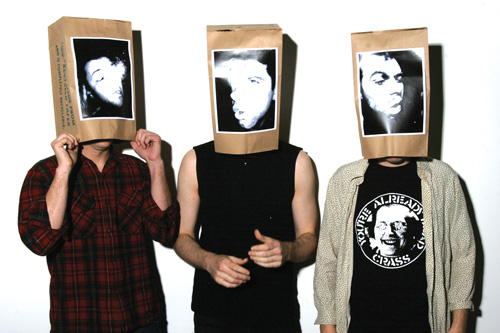
Terry Malts (www.facebook.com/terrymalts) had me at “Your love makes me nauseous,” a line from its upcoming release. The Guardian covered the band before, but this year something has shifted. The previously secretive act (the trio still posed for us with bags over their heads, though I can assure you, all three have faces) is stepping one pinkie toe out into the public sphere; at least, it’s finally releasing its debut LP, Killing Time, Feb. 21 on Slumberland Records. (There also will be a split seven-inch in a few months on Loglady Records with LA’s Dead Angle.)
Described perfectly to-the-bone as chainsaw pop, Killing Time is gloriously melodic slop packed with noisy punk riffs, classic SST evoking lyrics, and the all-important yet now often forgotten samples peppered throughout; there’s one from Suburbia (1984) — “don’t I even get a goodbye this time?” — and another that’s just a faded/manipulated Beach Boys strain. Fans of Crass and Flipper, Nathan Sweatt, Corey Cunningham, and Phil Benson have all spent time in other local acts. On Dec. 16, 2009, at a Slobber show at Pissed Off Pete’s, the trio came up with the name Terry Malts and thus a new project. It should be noted that Terry Malts were the only band that offered me a beer at the shoot — Budweiser, natch.
http://www.youtube.com/watch?v=y4ebVtNKriA
Description of sound: Black Tambourine Flag.
What do you like most about the Bay Area music scene: Tell you what we don’t like instead. The Bay Area music scene seems to get defined by a handful of bands that have been deemed “The Sound Of San Francisco” and it’s very limited in scope. Not everything is garage rock here.
What piece of music means the most to you and why: The Buzzcocks’ “Singles Going Steady” is a good meeting point for all three us.
Favorite local eatery and dish: The #6 at Turtle Tower, best for hangovers.
Who would you most like to tour with: A reunited Henry’s Dress (c’mon HARTMAN).
Stage Listings
Stage listings are compiled by Guardian staff. Performance times may change; call venues to confirm. Reviewers are Robert Avila, Rita Felciano, and Nicole Gluckstern. Submit items for the listings at listings@sfbg.com. For further information on how to submit items for the listings, see Picks.
THEATER
OPENING
Glengarry Glen Ross Actors Theatre of San Francisco, 855 Bush, SF; (415) 345-1287, www.brownpapertickets.com. $26-40. Opens Fri/3, 8pm. Runs Fri-Sat, 8pm. Through March 24. David Mamet’s cutthroat comedy, courtesy of the Actors Theatre of San Francisco.
Higher Theater at Children’s Creativity Museum, 221 Howard, SF; (415) 749-2228, www.act-sf.org. $10-65. Previews Wed/1-Fri/3, 8pm; Sat/4, 2pm. Opens Sun/5, 7pm. Runs Tues-Sat, 8pm (Tues/7, show at 7pm; also Wed, Sat-Sun, 2pm; no matinee Feb 8). Through Feb 19. American Conservatory Theatre presents Carey Perloff’s smart and sexy world premiere.
Vigilance Phoenix Theatre, 414 Mason, SF; (415) 335-6087, secondwind.8m.com. $20-25. Opens Fri/3, 8pm. Runs Thurs-Sat, 8pm; Sun, 2pm. Through Feb 25. Second Wind performs Bay Area playwright Ian Walker’s thriller.
The Waiting Period MainStage, Marsh San Francisco, 1062 Valencia, SF; (415) 282-3055, www.themarsh.org. $15-50. Previews Thurs/2, 8pm. Opens Fri/3, 8pm. Runs Fri, 8pm; Sat, 5pm. Through March 24. Brian Copeland returns with a new solo show about his struggles with depression.
BAY AREA
Counter Attack! Ashby Stage, 1901 Ashby, Berk; (510) 444-4755, ext. 114, www.stagebridge.org. $18-25. Opens Wed/3, 7:30pm. Runs Wed-Thurs, 7:30pm; Fri-Sat, 8pm (also Sat, 2pm); Sun, 2pm. Through March 4. Stagebridge presents the world premiere of Joan Holden’s waitress-centric play.
A Steady Rain Marin Theatre Company, 397 Miller, SF; (415) 388-5208, www.marintheatre.org. $34-55. Previews Thurs/2-Sat/4, 8pm; Sun/5, 7pm. Opens Tues/7, 8pm. Runs Tues and Thurs-Sat, 8pm (also Feb 11 and 25, 2pm; Feb 16, 1pm); Wed, 7:30pm; Sun, 2 and 7pm. Through Feb 26. Marin Theatre Company performs Keith Huff’s neo-noir drama.
ONGOING
Cabaret Young Performers Theatre, Fort Mason Center, Bldc C, Room 300, Marina at Laguna, SF; (415) 381-1638, cabaretsf.wordpress.com. $25-45. Thurs-Sat, 8pm; Sun, 7pm. Through Feb 19. Shakespeare at Stinson and Independent Cabaret Productions perform the Kander and Ebb classic in an intimate setting.
Food Stories: Pleasure is Pleasure Z Space, Theater Artaud, 450 Florida, SF; www.brownpapertickets.com. $20-55. Wed/1-Thurs/2, 7pm; Fri/3-Sat/4, 8pm; Sun/5, 2pm. Word for Word serves up two short stories with a gastronomical theme — T.C. Boyle’s Sorry Fugu and Alice McDermott’s Enough — fleshed out in W4W’s trademark verbatim style by a versatile six-person ensemble under direction of John Fisher. First course, by Boyle, is a nicely acted but fairly drab comic soufflé that tastes pretty familiar. Its setting is a restaurant turned upside down by the ambition of its portly, middle-aged, married chef (Soren Oliver), obsessed with winning over the big paper’s notoriously dismissive and all-powerful food critic (Molly Benson), who turns out to be a secretly insecure bombshell with a perennial dinner companion nicknamed The Palate (Gendell Hernandez). Fisher’s cast comes together well after a few hiccups, and the staging, while sometimes erratic, includes some inspired moments. But the story as a whole has little more to it than the food-as-sex seduction we see coming early on, and consequently lacks any real suspense. More satisfying all around is McDermott’s Enough, a salty, well acted, and fluidly staged condensation of a single lifetime — bracketed by scenes of eager tonguing of ice cream dregs. In this family history of a sweetly sybaritic but otherwise ordinary American woman (played variously by Delia MacDougall and Patricia Silver) food and sex are intertwined again but hardly, as the author stresses, in a metaphorical sense: “Pleasure is pleasure,” after all, and life is good to the last drop. (Avila)
*Humor Abuse American Conservatory Theater, 415 Geary, SF; (415) 749-2228, www.act-sf.org. $10-85. Wed/1-Sat/4, 8pm (also Wed/1 and Sat/4, 2pm); Sun/5, 2pm. “This is a show about clowning,” Lorenzo Pisoni advises his audience at the outset of his graceful solo performance, “and I’m the straight man.” It’s a funny line, actually — funny because it’s true, and not true. In the deft routines that follow, as well as in the snapshots cast on the atmospherically dingy curtain hung center stage, the career of this Pickle Family Circus brat (already alone in the spotlight by age two) never veers far from the shadow of his father. That fact remains central to the winning comedy and wistful reflection in Humor Abuse. Reared in the commotion and commitment of the famed San Francisco circus founded by his parents Larry Pisoni and Peggy Snider, Lorenzo had a childhood both enviable and unusually challenging. The fact that he shares his name with both a grandfather and his dad’s famous clown persona is instructive. His trials and his triumphs are further conflated — along with his father’s —in such elegant catastrophes as falling down a long flight of stairs. And in his good-humored and honest reflections, the existential poignancy at the heart of such artful buffoonery begins to rise to the surface. The spoken narrative feels a little pinched or abbreviated, in truth, but there are no shortcuts to the skill or wider perspective inculcated by the charming Pisoni and (under direction of co-creator Erica Schmidt) set enthralling in motion. (Avila)
*Little Brother Gough Street Playhouse, 1620 Gough, SF; www.custommade.org. $25-32. Thurs-Sat, 8pm; Sun, 7pm. Through Feb 25. Custom Made Theatre Co. performs Josh Costello’s adaptation of Cory Doctorow’s San Francisco-set thriller.
Not Getting Any Younger Marsh San Francisco, Studio Theater, 1062 Valencia, SF; (415) 826-5750, www.themarsh.org. $15-50. Fri, 8pm; Sat, 5 and 8:30pm. Extended through Feb 25. Marga Gomez is back at the Marsh, a couple of too-brief decades after inaugurating the theater’s new stage with her first solo show — an apt setting, in other words, for the writer-performer’s latest monologue, a reflection on the inevitable process of aging for a Latina lesbian comedian and artist who still hangs at Starbucks and can’t be trusted with the details of her own Wikipedia entry. If the thought of someone as perennially irreverent, insouciant, and appealingly immature as Gomez makes you depressed, the show is, strangely enough, the best antidote. (Avila)
Olivia’s Kitchen Exit Theatre, 156 Eddy, SF; www.generationtheatre.com. $20-40. Fri-Sat, 8pm; Sun, 3pm. Through Feb 19. GenerationTheatre offers this “remix” of Shakespeare’s Twelfth Night.
“SF Sketchfest” Various venues, SF; www.sfsketchfest.com. $10-75. Wed/1-Sat/4. The 11th San Francisco Comedy Festival invades 15 venues in 17 days with local and celebrity-packed (and local-celebrity-packed) performances, film events, improv shows, and more.
Vice Palace: The Last Cockettes Musical Thrillpeddlers’ Hypnodrome, 575 10th St, SF; (415) 377-4202, www.thrillpeddlers.com. $30-35. Fri-Sat, 8pm. Through March 3. Thrillpeddlers revives the Cockettes’ 1972 musical extravaganza.
Waiting for Godot Royce Gallery, 2901 Mariposa, SF; (415) 336-3522, www.tidestheatre.org. $20-38. Thurs-Sat, 8pm. Through Feb 18. The fuchsia papier-mâché tree and swirling grey-on-white floor pattern (courtesy of scenic designer Richard Colman) lend a psychedelic accent to the famously barren landscape inhabited by Vladimir (Keith Burkland) and Estragon (Jack Halton) in this production of the Samuel Beckett play by newcomers Tides Theatre. Director (and Tides’ producing artistic director) Jennifer Welch layers the avant-garde classic with some audio accents as well (although Jon Bernson’s minimalist industrial soundscape is a bit low in the mix to be very effective). More compelling is the gentle, sad humor and couched intelligence captured expertly by Halton in the circular but deliberate rhythms of his hapless tramp. Burkland as pal Vladimir exudes a palpable presence as well, though lacks the same focus. Timing is all in vaudeville — the parallel universe from whence these tangible modernist archetypes hail — as well as in a play whose plot goes intentionally nowhere, or rather loops back on itself in an implied dance with eternity. The halting aspect to Tides’ staging gets compounded with the arrival of brash whip-cracker Pozzo (a suitably stentorian but inconsistent Duane Lawrence) and his pitiful slave Lucky (a haunted, generally sharp Renzo Ampuero, made up to look like a goth doll à la some Tim Burton movie). That said, the best moments here broadcast the brooding beauty of the play, with its purposely vague but readily familiar world of viciousness, servility, trauma, want, fear, grudging compassion, and the daring, fragile humor that can look it all squarely in the eye. (Avila)
BAY AREA
Arms and the Man Lesher Center for the Arts, Margaret Lesher Theater, 1601 Civic, Walnut Creek; (925) 943-7469, www.centerrep.org. $38-43. Wed, 7:30pm; Thurs-Sat, 8pm; Sun, 2:30pm. Through Feb 25. Center REPertory Company presents George Bernard Shaw’s classic romantic comedy.
Body Awareness Aurora Theatre, 2081 Addison, Berk; (510) 843-4822, www.auroratheatre.org. $34-55. Previews Wed/1, 8pm. Opens Thurs/2, 8pm. Runs Tues, 7pm; Wed-Sat, 8pm; Sun, 2 and 7pm. Through March 4. Aurora Theatre performs Annie Baker’s comedy.
Ghost Light Berkeley Repertory Theatre, Thrust Stage, 2025 Addison, Berk; (510) 647-2949, www.berkeleyrep.org. $14.50-73. Tues, Thurs-Sat, 8pm (also Sat and Feb 16, 2pm); Wed and Sun, 7pm (also Sun, 2pm). Through Feb 19. Berkeley Rep performs Tony Taccone’s world-premiere play about George Moscone’s assassination, directed by the late San Francisco mayor’s son, Jonathan Moscone.
*The Kipling Hotel: True Misadventures of the Electric Pink ’80s New venue: Marsh Berkeley, 2120 Allston, Berk; (415) 282-3055, www.themarsh.org. $20-50. Sat, 8:30pm; Sun, 7pm. Through Feb 12. This new autobiographical solo show by Don Reed, writer-performer of the fine and long-running East 14th, is another slice of the artist’s journey from 1970s Oakland ghetto to comedy-circuit respectability — here via a partial debate-scholarship to UCLA. The titular Los Angeles residency hotel was where Reed lived and worked for a time in the 1980s while attending university. It’s also a rich mine of memory and material for this physically protean and charismatic comic actor, who sails through two acts of often hilarious, sometimes touching vignettes loosely structured around his time on the hotel’s young wait staff, which catered to the needs of elderly patrons who might need conversation as much as breakfast. On opening night, the episodic narrative seemed to pass through several endings before settling on one whose tidy moral was delivered with too heavy a hand, but if the piece runs a little long, it’s only the last 20 minutes that noticeably meanders. And even with some awkward bumps along the way, it’s never a dull thing watching Reed work. (Avila)
The Pitmen Painters TheatreWorks at Mountain View Center for the Arts, 500 Castro, SF; (650) 463-1960, www.theatreworks.org. $19-69. Tues-Wed, 7:30pm; Thurs-Sat, 8pm (also Sat, 2pm); Sun, 2 and 7pm. Through Feb 12. TheatreWorks performs a new comedy from the author of Billy Elliot about a group of British miners who become art world sensations.
The World’s Funniest Bubble Show Marsh Berkeley, TheaterStage, 2120 Allston, Berk; (415) 826-5750, www.themarsh.org. $8-50. Extended run: Feb 12, 19, 26, March 11, and 18, 11am. Louis “The Amazing Bubble Man” Pearl returns with this kid-friendly, bubble-tastic comedy.
PERFORMANCE/DANCE
“Cabaret of Love” Stage Werx, 446 Valencia, SF; www.brownpapertickets.com. Mon, 7 and 9pm. $15. Picklewater Clown Cabaret performs in celebration of Valentine’s Day.
Company C Contemporary Ballet Yerba Buena Center for the Arts, 701 Mission, SF; (415) 978-2787. Feb 17, 8pm; Feb 18, 6:30pm (gala benefit); and Feb 19, 3pm. $23-175. The company opens its 10th anniversary season.
“Elect to Laugh” Studio Theater, Marsh San Francisco, 1062 Valencia, SF; (415) 282-3055, www.themarsh.org. Tues, 8pm. Ongoing through Nov 6. $15-50. Will Durst and friends perform in this weekly political humor show that focuses on the upcoming presidential election.
“The Eric Show” Milk Bar, 1840 Haight, SF; www.milksf.com. Tues, 8pm (ongoing). $5. Local comedians perform with host Eric Barry.
“Fortunate Daughter” Stage Werx, 446 Valencia, SF; www.brownpapertickets.com. Sun/5, March 4, April 1, May 6, 7pm. $20. Thao P. Nguyen performs her solo show about being caught between her family and her friends in the queer community.
“The Mandrake” Hastings Studio Theater, 77 Geary, SF; (415) 749-2228, www.act-sf.org. Wed/1-Sat/4 and Feb 8-11, 7:30pm. $15. American Conervatory Theater’s MFA class of 2013 performs Machiavelli’s 16th century satire of Italian society.
“The News” Somarts Cultural Center, 934 Brannan, SF; www.somarts.org. Tues/7, 7:30pm. $5. This new monthly queer performance series highlights new and experimental works and works in progress. “Precious Drop: African and Afro-Fusion Dance, Music, and Theater” CounterPULSE, 1310 Mission, SF; 1-800-350-8850, www.counterpulse.org. Fri/3-Sat/4, 8pm. $20. Mohamed Lamine Bangoura with Jaara Dance and Drum and Bu Falle African Drum and Dance present a work-in-progress about the global importance of water. BAY AREA “Cordelia, Mein Kind” TheaterStage at Marsh Berkeley, 2120 Allston, Berk; (415) 282-3055, www.themarsh.org. Thurs/2-Fri/3, 8pm; Sat/4, 5pm; Sun/5, 3pm. $15-50. The Marsh Berkeley collaborates with the Magnes Collection of Jewish Art and Life to present this multimedia Australian import by Deborah Leiser-Moore. “The Second Sin Again…” Black Repertory Group Theater, 3201 Adeline, Berk; www.punanytickets.com. Sat/4, 7pm. $25. Punany Poets perform a mix of erotic poetry, dance, comedy, and theater.
Two clean energy tracks for SF
OPINION CleanPowerSF, San Francisco’s green electricity alternative to Pacific Gas and Electric Co., is set to launch this year. The program is following two parallel paths — one to build renewable energy in San Francisco and create thousands of local jobs, the other to purchase clean power from remote sources from Shell Energy.
While both tracks bring advantages, this bifurcated approach could end up serving only 30 percent of city residents. Fortunately, the city can easily improve the launch of CleanPowerSF by merging the two tracks.
Enacted by the Board of Supervisors and Mayor Gavin Newsom in 2004 and in 2007, CleanPowerSF is not a public-power program like Santa Clara’s Silicon Valley Power or Alameda Municipal Power. CleanPowerSF is a public-private partnership, much like the successful Marin Clean Energy, which can buy power in bulk from outside companies — and also generate its own renewable energy. PG&E still owns the transmission grid and will deliver electricity to customers, who then have the option of choosing between CleanPowerSF and PG&E.
The San Francisco Public Utilities Commission has embarked on a detailed analysis of PG&E electricity data to find out how much electricity is used in different parts of the city at different times of the day and how much it costs. That will pinpoint exactly where in San Francisco renewable energy should be built for the highest efficiency and lowest costs to ratepayers.
While this analysis is being conducted, the SFPUC plans to initiate the second track, offering ratepayers 100% renewable electricity purchased from Shell Energy North America. That will get CleanPowerSF up and running quickly — but would cost ratepayers between $6.70 and $54.50 more a month more than PG&E. As a result, the SFPUC estimates that as many as 70% of ratepayers could leave CleanPowerSF and go back to PG&E.
The SF PUC plans to offer CleanPowerSF to two-thirds of San Francisco customers — 230,000 residences — with as many as 155,000 opting out. Once these people opt out, they won’t be customers of the cheaper, locally produced, job-creating, green energy that will come later.
By comparison, only 20 percent of Marin Clean Energy customers opted out at initial rollout. That’s because Marin Clean Energy offers a 27 percent renewable energy option in addition to a higher-cost 100 percent green option. The “light-green” option is cheaper because it mixes in lower-cost, non-renewable electricity.
The PUC could keep more San Franciscans in CleanPowerSF by integrating the local generation and data analysis and purchasing tracks. First, it could include a cheaper light-green option like Marin’s. To determine what mix of renewable and non-renewable electricity would be cost-competitive with PG&E, the PUC would use the results from the first track, the analysis of electricity usage data, expected this spring. The Board of Supervisors could make these changes when it takes up the Shell contract this month or next.
In the past few months, CleanPowerSF has made much progress thanks to San Francisco Supervisor David Campos and Ed Harrington, general manager of the San Francisco Public Utilities Commission. The addition of a cost-competitive light-green option would enable CleanPowerSF to better compete with PG&E and keep more San Franciscans in the program — for the long term. That would significantly increase the number of new local jobs created and have a greater effect in fighting global climate change. It worked in Marin, and it can work in San Francisco as well..
John Rizzo is former chair of the Sierra Club Bay Area Chapter and current president of the San Francisco Community College Board
Future Twin
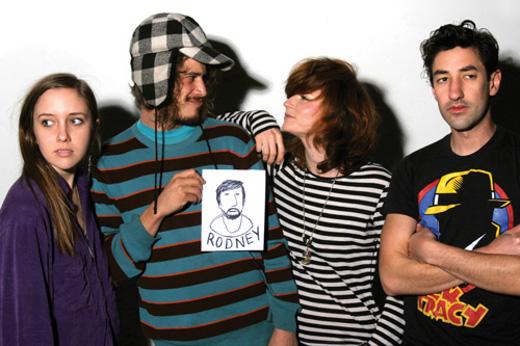
The two females in Future Twin (www.futuretwin.com) — Jean Yaste and Stephanie Rose — met one another in a moped gang called the Lockits, another member of the band was in a moped crew called Treats of the Loin; I’m not sure if you can concoct a greater back-story than that but I’d be hard-pressed to find one. And the San Francisco fivesome, which formed in December 2010 originally as a trio, makes the equivalent of moped rock on its debut EP cassette, Situation (which is also available for download, for those without a tape player). Released Jan. 31, Situation revs up with roaring guitar, and incorporates field recordings of gunshots and small engines such as lawnmowers and of course, mopeds, but veers from blunt roughness, instead leaning towards powerful girl group-style vocals and multi-part harmonies.
While the first release is a small one, the Mission-based band has chops, brains, and a clear bond. Though perhaps not tight enough to get all its members to a photoshoot — while the drummer Antonio “Tones” Roman-Alcala with strep throat made it, another Future Twin simply texted, “yo, just didn’t feel like going.” No matter, Future Twin celebrates the release of Situation at the Hemlock this Thu/2 (9 p.m., $6. 1131 Polk, SF. www.hemlocktavern.com).
Description of sound: Psychedelic farmageddon grandma rock.
What do you like most about the Bay Area music scene: The things we liked most was the Clarion Alley block party until the damn breeders built their precious condos next door and started their war on fun. These people need to be taken out and the “scene” will heal itself.
What piece of music means the most to you and why: Rap News Occupy 2012. Why? No reason.
Favorite local eatery and dish: Secret Spot has delicious bagels, fresh squeezed juice, and homegrown greens.
Who would you most like to tour with: Bill Murray (as a zombie) and Kool Keith (as himself).
The parking war
EDITORIAL When you talk about changing parking rules in San Francisco, you’re setting off the political equivalent of shooting war. Nobody wants more parking tickets, nobody wants more expensive parking meters, nobody wants to pay for parking that’s been free for years — and the Municipal Transportation Agency has, by most accounts, done a pretty poor job of selling its new parking management program.
That’s too bad, because the MTA proposals aren’t all bad. In fact, the agency is doing exactly the right thing by looking at a long-term citywide plan for altering the way people pay for and use on-street parking. If the bureaucrats at a city department that isn’t used to San Francisco’s often slow community-oriented planning process can shift their outreach efforts into a different gear, there’s no reason they can’t come up with a plan that most neighborhood residents and small businesses will support.
The MTA’s SFPark program uses high-tech meters that accept credit cards and change prices at different points of the day to maximize turnover on the streets. That’s actually good for local businesses — the less time people spend circling the block looking for a parking space, the more likely they are to stop and shop. Limiting the number of cars cruising for a space improves traffic flow. And parking for an hour or two at a meter is still much cheaper than parking in a garage.
But when the MTA announced that it was expanding SFPark into the Northeast Mission, Dogpatch, Potrero Hill and Mission Bay, the neighborhoods rebelled. Some of that was just anger over the prospect of meters being installed on streets that don’t have them. Some of it comes from the changing land use in areas that are increasingly both residential and commercial. Some of it comes from the intense development pressure in those areas.
But a lot of it was a legitimate response to a perception that the MTA was trying to ram the changes through without making a serious effort to work with the community. It’s not surprising — the MTA has been somewhat isolated from the politics of land use and planning in the city. So the staff isn’t used to the fact that San Francisco is a process-oriented place where a wide range of constituent groups want input before anything happens where they live or work.
The neighborhoods need to understand reality, too: The era of free parking in San Francisco is coming to an end. That’s a good thing — the city as a matter of policy should discourage the use of cars, and charging drivers for parking (and using that money to improve Muni) is an obvious solution. And the proposals aren’t that onerous: Paying 25 cents an hour for all-day parking where you work is hardly a terrible financing burden. (And let’s face it — the neighborhood parking stickers are way, way too cheap.)
But much of the southeast is badly served by transit and there are vehicle-intensive production, distribution and repair uses, and MTA needs to understand that. The agency has wisely delayed the program — and after its shown it can work with the neighborhoods, this sort of bold initiative will be possible.
Seventeen Evergreen
Seventeen Evergreen (www.seventeenevergreen.com) occasionally sounds like evil video game music to me. The San Francisco band consists of Caleb Pate and Nephi Evans, both writers-producers who sing and play drums, synths, and Asiatic stringed instruments among other contraptions. Though it has roots in garage, the duo mostly sticks to experimental psych-pop, and sometimes incorporates aggressive dance beats that lend to gaming — you can almost picture shattered gold rings falling through the sky in a winning ding-ding-ding during moments in the forthcoming Steady On, Scientist! LP (March 27, Lucky Number). The next show is Feb. 25 with Atlas Sound at Bimbo’s as part of Noise Pop (8 p.m., $20. 1025 Columbus, SF. www.bimbos365club.com).
The album standout is “Polarity Song,” with its catchy, repetitive hook and provocative lyrics. The song also was featured on the Psyentist EP, released last December and subsequently, there was a music video. While the EP and video by Terri Timely, which played up a rainbow of yarn spun thrift store monsters, were released last year to local acclaim, the full-length will be out in 2012, making it the perfect year for the band to reach its deserved position beside fellow danceable indie giants. After watching Seventeen Evergreen live last year, the phrase “embrace the polarity of life” was bumping about my brain for weeks. Undoubtedly, this will happen to you too.
Description of sound: Somewhere between zenith snowflake pop and psychedelic cave techno.
What do you like most about the Bay Area music scene: The Asian influence on the avant garde, the room for innovation, and the many different scenes which may or may not always celebrate the out-and-out sonic weirdness that this city has produced over the years.
What piece of music means the most to you and why: No one piece could ever answer this one so far, but last year Cass McCombs’ “County Line” was a favorite. “Golden Lady” by Stevie Wonder and nearly anything by Moondog come to mind as perennials.
Favorite local eatery and dish: So many options here but let’s nominate the Chilaquiles at the farmer’s market in the Ferry Building or a number of places in the Mission for the same.
Who would you most like to tour with: ELO.
Win FREE TICKETS to see A Steady Rain at the Marin Theater!

This West Coast Premiere features Denny and Joey, two of Chicago’s less-than-finest. In this uncompromising crime drama, two beat cops confess to the misdeeds and mistakes that have tipped their lives into violent chaos.
Written by a writer/producer of AMC’s Mad Men, A Steady Rain received a star-studded New York run featuring Hugh Jackman and Daniel Craig, and TIME Magazine named it one of the “Top 10 plays of 2009.”
See this award-winning Broadway smash hit in its first production in San Francisco! A Steady Rain will have you holding your breath with its in-your-face storytelling. Recommended for mature audiences.
“A gritty, rich, thick, poetic and entirely gripping noir tale.” – Chicago Tribune
For a chance to see it for FREE on Saturday, February 4, like the Guardian on Facebook (if you haven’t already) and write “I want to go to the Marin Theater” on our wall. A winner will be chosen at random on Thursday, February 2. To purchase tickets, follow this link or call (415) 388-5208.
February 2-26, Eight performances weekly @ Marin Theater Company, 397 Miller Ave., Mill Valley
MTC Behind the Scenes: A STEADY RAIN Interviews from Marin Theatre Company on Vimeo.
Guardian editorial: The parking war
EDITORIAL When you talk about changing parking rules in San Francisco, you’re setting off the political equivalent of shooting war. Nobody wants more parking tickets, nobody wants more expensive parking meters, nobody wants to pay for parking that’s been free for years — and the Municipal Transportation Agency has, by most accounts, done a pretty poor job of selling its new parking management program.
That’s too bad, because the MTA proposals aren’t all bad. In fact, the agency is doing exactly the right thing by looking at a long-term citywide plan for altering the way people pay for and use on-street parking. If the bureaucrats at a city department that isn’t used to San Francisco’s often slow community-oriented planning process can shift their outreach efforts into a different gear, there’s no reason they can’t come up with a plan that most neighborhood residents and small businesses will support.
The MTA’s SFPark program uses high-tech meters that accept credit cards and change prices at different points of the day to maximize turnover on the streets. That’s actually good for local businesses — the less time people spend circling the block looking for a parking space, the more likely they are to stop and shop. Limiting the number of cars cruising for a space improves traffic flow. And parking for an hour or two at a meter is still much cheaper than parking in a garage.
But when the MTA announced that it was expanding SFPark into the Northeast Mission, Dogpatch, Potrero Hill and Mission Bay, the neighborhoods rebelled. Some of that was just anger over the prospect of meters being installed on streets that don’t have them. Some of it comes from the changing land use in areas that are increasingly both residential and commercial. Some of it comes from the intense development pressure in those areas.
But a lot of it was a legitimate response to a perception that the MTA was trying to ram the changes through without making a serious effort to work with the community. It’s not surprising — the MTA has been somewhat isolated from the politics of land use and planning in the city. So the staff isn’t used to the fact that San Francisco is a process-oriented place where a wide range of constituent groups want input before anything happens where they live or work.
The neighborhoods also need to understand reality: The era of free parking in San Francisco is coming to an end. That’s a good thing — the city as a matter of policy should discourage the use of cars, and charging drivers for parking (and using that money to improve Muni) is an obvious solution. And the proposals aren’t that onerous: Paying 25 cents an hour for all-day parking where you work is hardly a terrible financing burden. (And let’s face it — the neighborhood parking stickers are way, way too cheap.)
But much of the southeast is badly served by transit and there are vehicle-intensive production, distribution and repair uses, and MTA needs to understand that. The agency has wisely delayed the program — and after its shown it can work with the neighborhoods, this sort of bold initiative will be possible.
Arrest raises doubts about Wiener’s loitering ban
Bob Offer-Westor, Human Rights Organizer for the Coalition on Homelessness (CoH), was arrested and issued a citation for loitering within half an hour of setting up his tent in Jane Warner Plaza on Friday evening. He demonstrated how the recent push to enact new anti-camping regulations – which the Board of Supervisors is considering this afternoon – will only seek to criminalize behavior already outlawed under s627(e) of the California Penal Code.
Following the incident, CoH claimed in a press release that the reliance by the San Francisco Police Department on PC 647(e) to arrest and cite Offer-Westor for loitering settles the debate by showing that legislation already exists to deal with the problem. But the author of the new regulations, Sup. Scott Wiener, remains unconvinced.
When contacted by the Guardian, Wiener reiterated his view that the claim that his proposal would duplicate existing law is “misinformation” and that existing laws referred to by the CoH either do not specifically relate to the two plazas or are so general as to be inapplicable.
This includes PC 647(e), the provision under which Offer-Westor was arrested, which states that: “Every person who lodges in any building, structure, vehicle, or place, whether public or private, without the permission of the owner or person entitled to the possession or in control of it is guilty of disorderly conduct, a misdemeanor.”
When asked to respond to news of the arrest, Wiener’s position was unshaken and he said that it was not surprising that the police relied on 647(e) as it is the only provision that may apply to camping in the plazas, but that its use by the officers proved nothing.
“Section 647(e) is vague and non-specific. One can argue that it does apply to camping in the plaza and someone could also argue that it does not apply. My legislation would clarify and make it explicit,” Wiener told us. “I would run the bet that if the ticket was taken to court that it would be found to be too vague and would not apply…Police should not have to rely on vague provisions.”
Offer-Westort would like to call Wiener’s bluff. He has sent Wiener – who is an attorney – a copy of his citation and asked the supervisor to act as legal counsel, but has so far received no response, adding that he objects to Wiener’s continuing use of the word “misinformation”.
“It’s amazing to me that he can continue to call this ‘misinformation’ after we have proven it in the real world,” Offer-Westort said.
Earlier this month, more than 20 prominent LGBT activists, including eight former presidents of the Harvey Milk Club, signed a letter outlining their opposition to Wiener’s regulations, saying that the legislation raises the spectre of infamous sit/lie laws which targeted the hippies of the 1970’s but were instead used to drive gay men out of the Castro.