San Francisco

Two calls to investigate SF restaurant surcharges as consumer fraud

49

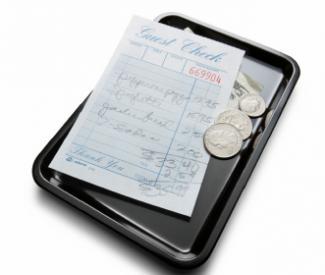
The surcharges that many San Francisco restaurants charge their customers – ostensibly to help cover their employee health care obligations, although in practice it has often just padded their profits – should be investigated by the District Attorney’s Office as consumer fraud, according to Sup. David Campos and San Francisco’s Civil Grand Jury, which recently issued a scathing report scrutinizing the practice.

Campos raised the issue during Tuesday’s Board of Supervisors meeting, calling for a criminal investigation and City Hall hearing. He even questioned whether businesses that have been so hostile to city’s Health Care Security Ordinance – the landmark 2008 measure that created the Health San Francisco universal care program and required businesses to help pay for their employees’ health coverage – should benefit from the tax cuts it would receive under a business tax reform ballot measure the board also considered that day.

“In the restaurant industry, we have an issue that remains unresolved,” Campos said during the business tax debate, after earlier in the meeting calling for the DA “to begin an investigation for fraud against the people of San Francisco by businesses that use this surcharge.”

DA’s Office spokesperson Stephanie Ong Stillman confirmed that the office is looking at the issue: “The Grand Jury report was just released and we are in the process of evaluating the results.”

Mayor Ed Lee last year vetoed legislation by Campos that would have banned the practice and prevented businesses from simply pocketing money from Employer Health Reimbursement Accounts they create to comply with the mandate (federal law bars the city from dictating how businesses cover employee health care) at the end of each year. Lee later signed a watered down version sponsored by Board President David Chiu requiring employers to keep the money in the fund for two years, to let their employees know about the fund on a quarterly basis, and to dedicate surcharge revenue to employee health care.

Rob Black, executive director of Golden Gate Restaurant Association – which unsuccessfully sued the city over the employer mandate and appealed the case all the way to the US Supreme Court – criticized Campos and the Grand Jury, saying they were relying on data from last year and that the situation has improved since Chiu’s legislation went into effect (Chiu told us data collection from his legislation will allow the city to better assess what’s happening).

“Supervisor Campos know this information is based on data that was prior to the new ordinance,” Black told us, acknowledging that many restaurants profited from the surcharges “but that was before the law was changed.” Campos responded by saying the grand jury concluded that the Chiu legislation didn’t go far enough the prevent the abuses, which are tough to detect because they are based on self reporting by the businesses.

The Grand Jury looked at 38 restaurants, of which 25 used the surcharges and 22 use the reimbursement accounts rather than either health insurance or Healthy San Francisco, which health care experts uniformly say are better options for employees. It analyzed data submitted to the city by these 22 restaurants with a total of 1,562 employees, finding that of the more than $2 million earmarked for the health reimbursement funds, just $123,612 was paid to employees and $1.9 million was kept by the employers.

Black said the quarterly noticing requirement in the Chiu legislation is already helping with the low reimbursement rate: “My hope is, and my belief is, we’re going to see significant…improvements in utilization rates in people taking advantage of their benefits, and that’s great.”

The grand jury also looked specifically at the health care surcharges collected by 18 restaurants with almost $64 million in gross revenue. Despite collecting almost $2.2 million in the surcharges it placed on customers bills, they reimbursed their employees for $1.16 million medical expenses and kept the more than $1 million that remained as profits.

Black criticized the grand jury for selectively picking the restaurants in its study and for targetting private sector businesses rather than the public agencies it traditionally investigates. “They’re outside of what the government charter calls for,” he said.

But Mark Busse, the chair of the Grand Jury Health Committee that led the study, told the Guardian that while it’s unusual to look at the private sector, there was a legitimate public policy interest here and its work was approved and overseen by Presiding Judge Katherine Feinstein (who happens to be the daughter of US Sen. Dianne Feinstein, San Francisco’s former mayor).

He also denies hand-picking the restaurants, saying he asked jurors to simply keep the receipts from all restaurants they frequented. While that may not be representative of all restaurants, he said it was a large enough sample to draw some conclusions and that he was more surprised than anyone at their findings.

“I thought our results would be totally different. I didn’t think they would be that abusive, I really didn’t. I thought we would find we have some outstanding restaurants and entrepreneurs,” Busse said, adding that he was alarmed by their actual findings. “It turned our stomachs. It makes us sick. It is not a level playing field. There are legitimate businesses that accept the spirit of the law and are taking care of their employees, but a lot of them aren’t.”

Given that these employees handle the food of city residents, he said that they should get the health care to which they’re entitled. As Busse told us, “The intention of the jury was to make sure the workers are getting health care and the customers aren’t getting deceived.”

7/27 Update: We heard back from the Mayor’s Office, whose Chief Deputy Communications Director Francis Tsang wrote: “Mayor Lee is a strong supporter of the Healthcare Security Ordinance. The Civil Grand Jury surveyed only 38 restaurants and its report restates facts we already know – some businesses add a surcharge and in the past, it was not well regulated.  Working with Supervisors, Mayor Lee strengthened practices effective January 2, 2012 to ensure employees could make better use of the program.  We will know the results in 2013, when we collect and report on 2012 data informed by the new regulations.”

15th annual United Nations Association Film Festiva

0

The United Nations Association Film Festival was originally conceived to celebrate the 50th anniversary of the signing of the Universal Declaration of Human Rights. The 15th annual UNAFF will be held from October 18-28, 2012 in Palo Alto, Stanford University, East Palo Alto and San Francisco. The theme for this year is Human Dignity.

UNAFF celebrates the power of films dealing with human rights, environmental themes, women’s issues, population, homelessness, racism, children, health, universal education, war and peace. In the past fifteen years, UNAFF has attracted a broad audience from the San Francisco Bay Area with regards to ethnicity—many finding the screenings to be a rare chance to see the state of human rights and culture in their own native countries. UNAFF promotes education, awareness and social change through images, dialogue and action. 

October 18-28 @ Palo Alto, East Palo Alto, San Francisco and Stanford University

For more information click here.

Localized Appreesh: Rin Tin Tiger

0

Localized Appreesh is our weekly thank-you column to the musicians that make the Bay. To be considered, contact emilysavage@sfbg.com.

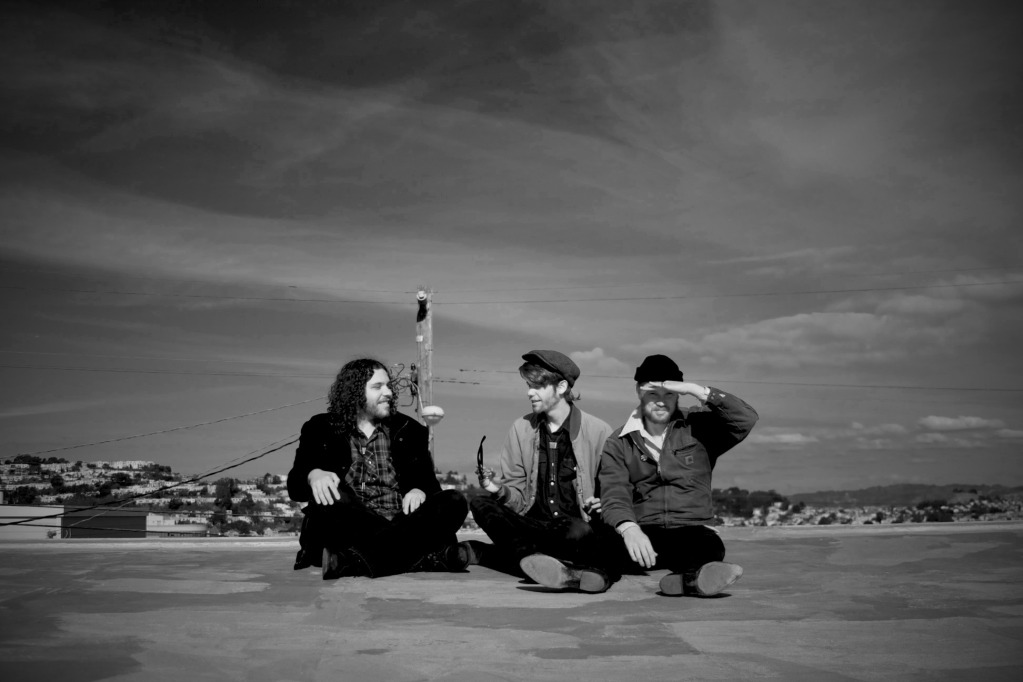
San Francisco’s Rin Tin Tiger does it raw. The alt-folk trio just wrapped up recording an organic (no vocal editing here) live album at Tiny Telephone Studios.

The resulting record, Toxic Pocketbook, roars like the soul of a wild cat trapped in a faithful pup’s skin. It scoots along with twangy riffs infused with a rough rock’n’roll edge, and “a good thump” (as the band describes it below), with untouched – and gleefully twangy – vocals pumping up the natural energy. 

In celebration of their respective new releases, the band co-headlines the Great American Music Hall this week with fellow locals Tumbleweed Wanderers. First, Rin Tin Tiger swipes its striped paw across Localized Appreesh’s ruddy cheek.

http://www.youtube.com/watch?v=JpIg0x_w808

Year and location of origin: 2011 – San Francisco, Calif.

Band name origin: Kevin wanted to call the band Rin Tin Tin after the dog but the name was already taken.  As a joke Andrew said Rin Tin Tiger.  We brushed it off and then had nightmares about it for eternity.  Thus, RTT was born.

Band motto: Murk as much as possible.

Description of sound in 10 words or less: High energy, lyric heavy alt folk with a good thump.

Instrumentation: Acoustic guitar, electric bass, drums, harmonica, cries, calls & hollers.

Most recent release: Toxic Pocketbook (2012)

Best part about life as a Bay Area band: Being able to busk the streets of SF as well as play all of the amazing venues in the city and the ability to play different markets like the Oakland or San Jose within a 45 minute drive.

Worst part about life as a Bay Area band: Cost of living/Rent.

First album ever purchased: Kevin: N’Sync, Home for Christmas; Sean: Weird Al Bad Hair Day; Andrew: Michael Jackson, Black Or White.

Most recent album purchased/downloaded: Kevin: I’ve been revisiting Underoath, The Changing of Times; Sean: the amazing new releases from local bands Picture Atlantic, Tumbleweed Wanderers, Owl Paws, Loquat and Dogcatcher!; Andrew: Fleetwood Mac, Rumors.

Favorite local eatery and dish: Indian Pizza at Zantes and The Classic cheeseburger at Burgermeister.

Rin Tin Tiger and Tumbleweed Wanderers
With Ghost and the City
Thu/26, 8pm, $15
Great American Music Hall
859 O’Farrell, SF
(415) 885-0750
www.slimspresents.com

8 cultural happenings this week in the big, best, beautiful Bay

0

It is inevitable after reading today’s Best of the Bay 2012 issue that your heart will be swole with pride for our beautiful Bay Area By the Bay. Seize the moment! There are a plethora of arts and culture happenings this week that are perfect examples of — as our managing editor Marke B. put it in his intro to BOB — “the sheer gorgeousness, thriving alternative culture, and promise of freedom and acceptance that are unique to our shores.” Cheers!

CELLspace open critical studio

Turns out, artists aren’t always their best critic. That’s why CELLspace’s open critical studio is such a great opportunity for creatives. Come discuss your art, discover the work of others, and — hopefully — take away a dose of constructive criticism that every creator needs from time to time. 

Wed/25, 7-10pm, free

CELLspace

2050 Bryant, SF 

www.cellspace.org

Cobb’s Comedy Club Showcase

Though it’s one of the city’s premier comedy clubs, Cobb’s isn’t stupid enough to forget the little guys. This Wednesday, check out the club’s up-and-comer showcase, where you can see some of the Bay’s funniest fledglings before they hit it big and really start taking your money. 

Wed/25, 8pm, $12.50

Cobb’s Comedy Club

915 Columbus, SF

www.cobbscomedyclub.com 

SF International Poetry Festival

The San Francisco International Poetry Festival brings you tons of excuses to brood in a vaguely-Italian coffee house while penning lines into your journal. The series of readings from poets of international acclaim — from Iraq to Italy, Sweden to Malta — kicks off this Thursday. Set ever-so aptly in Jack Kerouac Alley, hosts Jack Hirschman, Lawrence Ferlinghetti, and city librarian Luis Herrera will introduce the festival’s lineup of poets with the accompaniment of a modern concert from Neeli Cherkovski, Matt Gonzales, and Jonathan Richman. 

Thu/26, 7-9:00pm, free.

Kerouac Alley, SF

www.sfipf.com

The Wizard of Oz movie night with the San Francisco Symphony

Join the San Francisco Symphony for a unique screening of America’s favorite kids-movie-that’s-not-actually-a-kids-movie. Beyond the fantastical plot line of The Wizard of Oz, the film’s striking visual elements and majestic music and score are part of what has made it the timeless classic it is today. Bridge the gap between silly and sophistication this Thursday by dressing up in your favorite Oz costume, watching the movie, and listening to the SF Symphony perform the score live.

Fri/27, 7:30pm, $12.50-$70

Davies Symphony Hall

201 Van Ness, SF

www.sfsymphony.org

“Re: Told” closing night 

If you missed this month’s run of Root Division’s modern story-telling art exhibit, you still have a chance to catch this glamorous culmination, closing reception, and publication release. Taking a page from Ernest Hemingway, “Re: Told” reframes cultural narratives in order to create a contemporary storytelling experience, yielding an accessible look into some very intimate realities.

Fri/27, 6-9pm, $1-$20

Root Division

3175 17th St., SF

www.rootdivision.com 

Naoya Hatakeyama: Nature Stories 

Prominent Japanese nature photographer Naoya Hatakeyama shows us the dualistic relationship between man and nature in this large-scale photography exhibit illustrating man’s attempt to control nature and, in the wake of the Tohuku earthquake and tsunami. The austere power of nature over humans’ best attempts to rein it in figures prominently in “Natural Stories,” which possesses an ironically calm visual approach to such a powerful concept. 

Through Nov. 4

Opening reception: Sat/29, 10am-5:45pm, $18 (adult general) 

SFMoMA

151 Third St., SF

www.sfmoma.org 

Ohlone basket welcoming ceremony 

The native Californian basket collection at the Oakland Museum of Art would, from a novice’s eye, seem to be complete. Yet due to the Ohlone tribe’s tradition of burning their possessions after death, the tribe’s baskets are scarcely represented among the collection’s 2,500 pieces. To remedy this dearth, the museum commissioned Ohlone artist and scholar Linda Yamane to create a basket. After a two-year documented process, we have an opportunity to welcome the 20,000-stitch, several thousand feathers, and 1,200-bead that make up the Ohlone basket into the museum’s collection with a day of festivity, including story-telling, dance, and song. 

Sat/28, 1-3pm, $12 general. 

Oakland Museum of California

1000 Oak, Oakl. 

www.museumca.org

The Coming Century of War Against Your Computer

Hey you, the one with the oversized headphones and approximately windows to burn open on your laptop, listen up. As part of its specialization in the speculative — that is, fantasy, horror, and science fiction — Borderlands Books presents Corey Doctorow and his book The Coming Century of War Against Your Computer. Copyright laws, net neutrality, and SOPA may be much more serious indicators of the technology takeover than we thought, so let this be your opportunity to decide whether you’re going to let technology-driven measures govern your life.  

Tue/31, 7:30pm, $10

Borderlands Cafe

870 Valencia, SF

www.borderlands-books.com 


Best of the Bay 2012: BEST ESOTERIC GUIDEBOOK

0

City Notes: San Francisco will never counsel you to try the chowder bowl at Fisherman’s Wharf. Nor will it prove useful in finding the best way to walk between Chinatown and the Ferry Building. It won’t give you directions at all, for that matter. The artful wood-bound guidebook, put together by a team of Wesleyan alumni headed by Jesse Coburn, is comprised of quiet shots and histories behind 25 little-known sites in San Francisco, such as the Columbarium, Molinari-Mana Park, Mount Davidson, and the Swedenborgian Church. City Notes doesn’t spill the address beans, making it the perfect treasure hunt for the urban explorer-wanderer. The book’s covers are hand-bound to the velvety sheets within; its producers had so much fun making the finely crafted object, in fact, that they plan on putting together similar guides for other cities around the world.

www.terrywarnerpress.com

The Peripheral Canal emerges from the dead like Dracula

8

The Chron has pretty much signed off on the inevitability of a giant set of tunnels moving water from the Sacramento River to the San Joaquin River, screwing up even futher the ecosystem of the San Francisco Bay and Delta:

The water world has already separated into three camps: the water contractors, the federal government, the governor and the state Department of Water Resources, which support the “conveyance” as a necessary part (but only one element) of providing future water supplies;

the environmental community, which does not speak with a single voice but, conceding that the $14 billion facility probably is inevitable, is focusing on how it might be operated.

The last group, the delta residents and the Northern California congressional delegation, is opposed, seeing a loss of water and productive farmland and little tangible benefit in return.

But let’s remember: When this came up in 1982, it was voted down statewide, with something like 80 percent of Northern California saying “no.” And it wasn’t just the pumps and the Big Suck — it was the whole concept of shifting more water to unsustainable agriculture in the desert. That point hasn’t changed at all. Until we get a handle on why the state allows farmers to grow rice and tomatoes in the US version of Africa’s Serenghetti, I don’t see why we’re spending a whole lot of money to make things worse.


Best of the Bay 2012: BEST YOU BETTA WORK

0

Voguing — that drop-dead fabulous and seriously competitive gay African American dance-battle art form — has recently come back into the spotlight, with a new generation of club kids and art queens taking to the floor to chop, mop, drop, drag, gag, and get “cunty.” San Francisco, of course, has put its own spin on the high-attitude, limb-flinging style that originated in the ’70s in underground ballrooms on the East Coast, transforming the dance into a way to get in shape. You may not have come from the streets, but you’re going to leave Vogue and Tone with amazing thighs, honey. The wiggy workout class — Tuesdays, 7-8:30pm, at Dance Mission Theater and Thursdays, 8:30-9:45pm, at ODC Commons — is led by kicky, spinny showman Sir JoQ, a.k.a. Jocquese Whitfield. The dance has also hit the club circuit, leaping on a recent trend of retro-style dance-floor workout sessions, so be on the lookout and don’t throw shade. If all you know of vogue is that old Madonna track, it’s time to get in-shape and up-to-date.

www.dancemission.com

Best of the Bay 2012: BEST TECHNO OUR WAY

1

In response to the onslaught of mass-produced, sugar-rush electronic sounds ruling the pop charts these days, many finer San Francisco dance floors have returned to a more underground aesthetic. This renaissance of sophisticated techno plugs into a global movement — unabashedly intelligent, yet still madly danceable. And while many fantastic local party promoters have emerged, the As You Like It crew has been on a massive tear like no other. In just two years, they have risen from a nomadic underground existence to pack larger legal venues with dozens of parties that feature uncompromising local and international talent, yet never lose that singular, slightly extra-legal vibe and attention to detail. Some of the most exciting names in dance music have passed through the Bay Area thanks to As You Like It’s dedication, helping to make our party scene an essential destination for dance fanatics. To fittingly repurpose one of the crew’s favorite adjectives: quality.

www.ayli-sf.com

Hardly Strictly hints

0

Hardly Strictly Bluegrass released its first of four teaser medleys today, take a listen and start tallying the acts. Everyone loves a guessing game, right? 

At press time, HSB commenters have pointed out snippets of Emmylou Harris and Steve Earle, the Mekons and the Head and the Heart. Take a listen.

The event, always free, takes place Oct. 5, 6, and 7 in Golden Gate Park, San Francisco.


Best of the Bay 2012: BEST USE OF CLASSIC FILM FOOTAGE IN A RAP MUSIC VIDEO

0

Car chases don’t get much better than the scenes of Steve McQueen speeding through San Francisco in Bullitt (1968). Given the driving, heart-pounding beat and casual-cool flow of San Jose rapper Antwon’s “Helicopter” music video — the track’s off the Fantasy Beds mixtape — it made perfect cinematic sense for director Brandon Tauszik to match the song with quick vintage clips of the classic flick. The resulting three-minute video dips between those intense McQueen thousand-yard stares as cars lunge over notoriously steep hills in a washed out Technicolor haze, spliced with modern next-big-thing Bay Area hip-hop producers (Antwon, MondreMAN, and Squadda B of Main Attrakionz) and their undeniably attractive pals, wandering their neighborhoods, chilling on porches, and pouring spicy Sriracha over hearty breakfasts. “Fuck ’em all/that’s my new motto” Antwon raps as the beat steadies and scenes flash by — a thrilling compliment to the classic footage, given the film’s original jazz score.

www.brandontauszik.com

Best of the Bay 2012: BEST YOUNG ADULT HIP-HOP MISCHIEF

1

It is no small feat to write about suburban kids loving hip-hop without coming across as condescending or a-historic, but somehow a free-styling Minnesota-bred woman managed it. San Francisco-based author Laura Goode triumphed with Sister Mischief (Candlewick, $16.99, 367pp), a young adult novel about a gang of outsider girl friends who take on the powers of conformity at their whitebread, fundamentalist-controlled high school by forming a queer-straight hip-hop alliance (and performing their feminist lyrics for unwitting audiences). The book is hardly preachy, but does include teenage conversations about race, cultural co-optation, and sexuality — along with a scene that pretty well teaches you how to smoke weed — and is flush with curiosity, radicalism, and outright guffaws.

www.lauragoode.com

Best of the Bay 2012: BEST OPEN SOURCE UTOPIA

0

“We’re giving tax breaks to companies that allow people to meet in a virtual space,” Erick Lyle told the Guardian prior to the opening night of Streetopia, a multidisciplinary, utopian community art festival that he, Kal Spelletich, and Chris Johanson curated. “But this event will really show the vibrancy that is right here.” In the battle to keep the second tech bubble from edging everyone else out of the city, Streetopia was proactive, asking its participants not for dire predictions, but to share images of what their utopian SF would look like. For more than a month, there were classes on civilian investigative reporting taught by working journalists, dance performances in the street, shared meals in the Tenderloin National Forest, art in empty storefronts, and much more — proof positive that a San Francisco which doesn’t require stock options of its inhabitants is still very much thinkable and alive.

www.streetopiasf.com

Best of the Bay 2012: BEST HEAVY METAL STITCH WIZARD

0

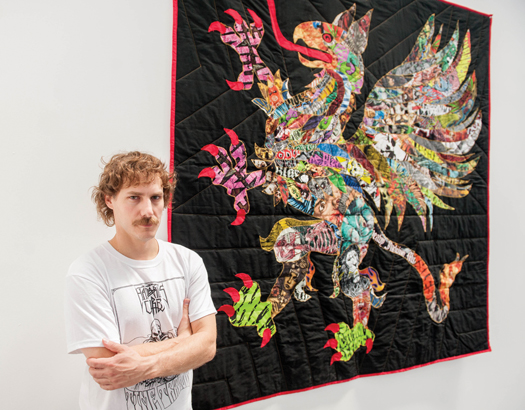
He’s the mustachioed maniac who wields a sewing machine and an endless array of heavy metal T-shirts, creating quilts depicting claw-bearing beasties, horned skulls, and other images that wouldn’t be out of place on an Iron Maiden stage backdrop. Ben Venom (née Baumgartner), whose MFA from the San Francisco Art Institute definitely didn’t include quilting, is self-taught when it comes to pieces like his massive quilt, “See You On the Other Side,” featured in Yerba Buena Center for the Arts’ prestigious Bay Area Now 6 exhibition. He also presented work in You Should Be Living, a display of metal-inspired pieces at the Wolverhampton Art Gallery in Birmingham, England (homeland of Black Sabbath, Led Zeppelin, Judas Priest, and Napalm Death). Venom has even whipped up a baby quilt for an infant who’ll grow up with a unique appreciation of Metallica and the Scorpions.

www.benvenom.com

Best of the Bay 2012: Local Heroes

9

2012 Local Heroes

Alex Tom and Shaw San Liu

Alex Tom and Shaw San Liu — the executive director and lead organizer for the Chinese Progressive Association, which celebrates its 40th anniversary on Aug. 4 — have laid the groundwork for a progressive resurgence in San Francisco by organizing Chinese immigrants and actively building close and mutually supportive relationships with working-class allies throughout the city.

The two have been involved in just about every recent effort to counter the pro-corporate neoliberalism that has come to dominate City Hall these days. They have seized space with Occupy San Francisco and they have supported labor unions and helped to create the Progressive Workers Alliance. They have fought foreclosures and pushed for affordable housing reforms, and they have protected vulnerable immigrant workers from wage theft by unscrupulous employers.

“Shaw San and Alex are incredibly talented organizers and movement builders who are managing to do the nearly impossible,” said N’Tanya Lee, who worked closely with the pair as the director of Coleman Advocates for Children and Youth. “They have built an authentic base of working-class Chinese immigrants who are interested in fighting for change in their community, and are creating a grassroots organization at the forefront of building multi-racial alliances to combat the divide-and-conquer strategies that are confronting us.”

Liu, who joined CPA six years ago, said she’s always inspired to see the old photographs on the walls of CPA’s office, and to read the history of CPA’s organizing and advocacy on behalf of working people. She said the organization has always understood the need to forge alliances with labor unions and other progressive interests.

“The organization itself has been, since its inception, playing a critical role in bridging the needs of Chinese interests with other communities,” Liu said. “I’ve always seen my role as bridge building.”

Today — with stagnant real wages, a deteriorating social safety net, and growing power by corporations that enjoy unprecedented political clout thanks to Citizens United and other court rulings — the need to organize people across cultural lines is more important than ever, even if that begins by addressing the individual needs of each community.

“Always at our core, it’s about empowering our folks to be able to voice their own struggles and visions,” Liu said.

Working to build that capacity within the Chinese immigrant community is hard and important work, Liu said, but it’s equally important to connect with the struggles of working class people from other communities, uniting to effectively counter the political dominance of employers and property owners.

Lui framed the struggle as: “How do we build unity and not have that be lip service?”

Tom and Liu have demonstrated that they know how to do just that, despite the diversity of sometimes-conflicting interests on the left and in a working class squeezed by recession and feelings of economic uncertainty.

“The issue that will unify people is good jobs that are accessible to everyone,” Liu said.

Yet she also said that working class organizing is needed to counter the simplistic “jobs” rhetoric coming from City Hall, which politicians are using to advocate for tax cuts to big corporations.

“More and more, it exposes itself as a total lie,” Liu said of the argument that the city should be facilitating private sector job creation with business tax cuts. “So much points to the fact that the US economic system doesn’t benefit everyone … When we talk about jobs, we talk about what kinds of jobs we want and for whom.”


2012 Local Heroes

Stardust and Ross Rhodes

Ross Rhodes and Stardust, like all of the people involved in Occupy Bernal, are neighbors. But until Stardust helped found the group — a local take on Occupy focused on stopping unjust foreclosures and evictions — they didn’t know each other.

Now they do, and if it wasn’t for Occupy Bernal, Rhodes is sure he would no longer have the house that his parents bought in 1964.

A former college football star, Rhodes injured his knees and back playing. He lives on disability payments, volunteering at the 100 Percent College Prep Club, and bringing home-cooked meals to seniors in his area. He also coached kids in the Junior 49ers program until it became too hard on his injuries.

Stardust, an ESL teacher and oboe player in the Bay Area Rainbow Symphony and the SF Lesbian/Gay Freedom Band, has been working for LGBT rights, women’s rights, and online civil rights for years. When Occupy took off, he gravitated toward the neighborhood fights against foreclosures.

Like people all over the US, Rhodes and his wife were fooled several years ago by a pick-a-payment loan plan. At the time, World Savings was peddling the deals through neighborhoods, promising potential borrowers that they could send their kids to college, buy a car, take vacations — and modify their loans after a year.

But when Rhodes started to apply for loan modifications, he was denied. He kept receiving letters asking for more information, often the same information he had already given — a common story that led to part of the Homeowners Bill of Rights that will guarantee a single point of contact from the bank. He was stumped when he was told he needed more income — the bank said it wouldn’t accept payments that were more than 30 percent of a borrower’s income, and Rhodes was getting a fixed disability check.

He found another income source as a homecare provider, but after all the time that the bank wouldn’t accept his payments, Rhodes was marked as someone who wasn’t making payments, and was tracked for foreclosure.

Meanwhile, Occupy Bernal was working on more than 100 similar cases in its neighborhood. The organizers hadn’t quite convinced Mayor Ed Lee to help at that point, but Rep. Pelosi’s staffers were on their side, getting banks to prioritize the cases of those working with Occupy Bernal. They worked with other community groups like Alliance of Californians for Community Empowerment (ACCE) to do physical occupations of homes. But for those who had received a notice of default and a notice of sale — two steps in the foreclosure process that precede the auction of a property — Stardust was there with another tactic.

He spearheaded Occupy the Auctions. He shows up at City Hall at 1:30 every day and tries to disrupt foreclosure auctions. He’s been there continuously since April 27, 2012, and has stopped dozens of home sales. When fighting the eviction of a neighbor, he is sometimes backed by more than 100 people. But many days it’s just Stardust.

Now, Rhodes is in a loan modification process. Rather than conflicting and confusing machine-generated paper work, he gets regular calls about the status of his modification from a point person in Wells Fargo’s executive complaint office. He testified in Sacramento in favor of the Homeowners Bill of Rights, which passed July 2. He’s also become an Occupy Bernal organizer on top of his other volunteer pursuits.

Stardust battles mega-banks and the city’s wealthiest in his work. But he says the biggest challenge is helping people to get over the shame they feel when they realize they are facing foreclosure. “It’s not their fault,” he says. “It’s the system.”

Friends of Ethics

In the summer of 2011, at the behest of the Ethics Commission, the Board of Supervisors put on the ballot a measure that would have loosened some of the rules for campaign consultant reporting, and would have allowed further changes in the city’s landmark ethics laws without a vote of the people. It had unanimous support on the board — and frankly, technical changes in campaign laws are not the kind of sexy stuff that gets the public angry.

But a small group, led in part by five former ethics commissioners, took on the task of defeating the measure. The activists also took on the challenge of defeating Prop. E, which would have allowed the supervisors to amend future measures passed by the voters.

Despite being outspent by tens of thousands of dollars, Friends of Ethics — a small grassroots operation — prevailed. Both measures were defeated (32 percent to 67 percent in the case of Prop. E, the worst loss of all the local measures on the ballot).

The group is great at forming coalitions: in the case of the No on E and F campaign, Friends of Ethics reached out to some 30 organizations that formally joined in opposing the measures after hearing presentations.

The members of FOE are a fractious group of organizers and shit-disturbers who don’t always get along or agree on other issues. But they’ve come together to do something nobody else does: make protecting and expanding political reform laws a front-line priority.

And the battle goes on. Not long after the November 2011 election, Supervisor Scott Wiener introduced legislation that would have led to less disclosure of political contributions before an election, and would have made it easier to conceal who was making contributions and paying for campaign mailers. The Wiener bill would weaken campaign contribution limit, giving the wealthiest donors greater power in elections.

When the amendments were heard at a well-attended Rules Committee in June (with plenty of public comment from Friends of Ethics), the supervisors sent the amendments back to the Ethics Commission to be rewritten.

The next step for the Friends of Ethics is to work with interested supervisors to push for changes to the city’s campaign laws that will actually benefit the public, such as increased transparency in election contributions and expanded campaign restrictions for those receiving contracts and other benefits from the city.

In an era defined by the US Supreme Court’s Citizens United case and a nationwide assault on fair elections, it’s critical work.

Friends of Ethics can be reached at sfethicsfriend@gmail.com

2012 Local Heroes

The Occupy movement

When Adbusters magazine called for people to show up on September 17, 2011, in New York City to protest the way Wall Street was holding the country hostage, no one could have predicted what would emerge.

It was the start of a movement, and San Francisco heeded the call. About 100 people gathered in the city’s Financial District. They started camping. And the effort exploded.

In the first few weeks, camps sprung up across the country. In Chicago and Los Angeles, in Bethel, Alaska and Tuscaloosa, Alabama, people were drawn together. But, unlike most protests, they stayed together. Night after night.

Along the way, a certain prevailing narrative from outside observers never quite got it right. First the camps were dismissed as nothing but bratty college students and hippies. Then they were called dirty and filled with homeless people. (Occupy challenged the whole idea of a monolithic homeless population. Once they had a home in the Occupy tent cities, homeless people were just — shocker — people.)

By December, when most of the campers had been kicked out, the narrative shifted. Occupy was resting, hibernating, many declared. Some snickered at the fair-weather activists who would only come out in the sunshine.

But in the Bay Area, at least, that hibernation story was simply false. On December 12, Occupy Oakland brought out thousands for its second port shutdown, in solidarity with port workers. On January 20, downtown banks were forced to close for the day and people in the streets celebrated Occupy San Francisco’s shutdown of the financial district. A week later, 400 were arrested when thousands tried to turn a vacant Oakland building into a community center. This was no hibernation.

Actions in some way inspired or fueled by Occupy have continued into the spring and summer. On March 1, Occupy, with a focus on student debt and accessible education, formed the 99 Mile March. Dozens marched from the Bay Area to Sacramento to join thousands of students and supporters in calling for an end to cuts to education; hundreds then occupied the Capitol building. On April 22, Occupy, with a focus on food justice, formed the Gill Tract Occupy the Farm action. Hundreds took a UC Berkeley-stewarded tract of land slated for a baseball diamond and a Whole Foods and planted it, turning it into a farm with rows of crops, a kids space, and a permaculture garden. On June 15, Occupy formed the Lakeview sit-in and Peoples School for Public Education, which taught day camp to children and refused to leave a beloved Oakland elementary school, one of five slated for closure.

Police eventually won the many-months battle with most Occupy groups in the Bay Area. The camps are mostly gone, though a tenacious group keeps its 24-hour protest in front of the Federal Reserve.

But because of Occupy — and its accompanying burst in resistance, creativity, and the belief that we really can, and must, come together to do something — dozens of Bay Area residents remain in homes that were facing foreclosure. Hundreds of people who felt forgotten and abandoned have found community. Thousands have been inspired to start their own projects and work with others.

When Adbusters called Occupy Wall Street to action, it was under the banner of “democracy not corporatocracy.” That ain’t an easy project. But it has already made the world a better and more hopeful place. 

Best of the Bay 2012: BEST CLAWS FOR CELEBRATION

0

BEST CLAWS FOR CELEBRATION

It is ridiculous that we are about to register a wee bit of complaint regarding the Bay’s incredible surplus of native seafood — we could happily live on Tomales Bay oysters, Dungeness crab, and all those other tasty species one finds stewing in our hot pots of cioppino. And yet … we do miss a nice fresh lobster to go with our bubbly on special occasions, or some genuine surf to pair with our turf when we’re feeling old-school romantic-fancy. That’s when we head to our secret Maine-line to East Coast crustacean bliss, New England Lobster Company in South San Francisco, which offers not just succulent, flown-in pinchers both live and frozen, but steamers, scallops, mussels, clams, and many other treasures of the briny deep. And hey, what do you know, you can score some good ol’ Dungeness here, too. Don’t miss the super-delish lobster rolls from the lunchtime food truck in the parking lot, either. (Motto: “We’re on a roll!” LOL.) Time to get cracking.

170 Mitchell Ave., (650) 873-9000, www.newenglandlobster.net

Best of the Bay 2012: BEST MARMALADY

0

BEST MARMALADY

Who wouldn’t want all the colorful bounty of the Bay Area served up on a nice piece of toast (preferably sourdough, in our case)? Meyer lemon, Santa Rosa plum, pear, apple, mild pepper, lime, nectarine, grape … these fruits (plus pineapple, kiwi, rose petal, lavender, and blueberry) are gathered from backyards and garden plots by the ever-foraging Aunt Kitty, a.k.a. Kitty Myers of San Francisco’s Sunset District, and transformed into the most spectacular jellies imaginable. The secret is not simply organic; it also lies in the unique combination of two or three parts fruit to one part sugar, allowing a lush effulgence of natural flavor. Besides delicious marmalades packaged in distinctive little Mason jars and sold in local cafes and grocery stores, Kitty’s homegrown company, Aunt Kitty’s Kreations, also supplies apple and mango chutney, piccalilli and cranberry-orange relish, and even fudge. According to legend, many of Aunt Kitty’s products were actually developed in her church’s basement — maybe that’s where the wholesome flavor comes from?

www.auntkittyskreations.com

Best of the Bay 2012: BEST OLD SCHOOL PANINI

0

BEST OLD SCHOOL PANINI

There are places in North Beach that are parodies of themselves: fake replicas of what someone from North Dakota might think a San Francisco Italian restaurant would look like. Too often, the meals these pretenders serve are a tepid farce. Not so with the grilled mozzarella and tomato panini from Mario’s Bohemian Cigar Store Cafe. The sandwich’s authenticity mirrors that of the small, sometimes crowded restaurant and local hangout itself, which hasn’t changed much in the three decades we’ve been going there. The menu is limited, but the food is excellent, featuring fresh ingredients simply prepared. Take the panini in question: eaten alongside a glass of red or Campari on the rocks, it makes a perfect SF lunch. A nice reminder that everything old and cool hasn’t been priced out of town.

566 Columbus, SF. (415) 362-0536

Best of the Bay 2012: BEST BREW-NOS AIRES

0

BEST BREW-NOS AIRES

If you’re looking for the perfect brew to pop into your Dolores Park-prepped picnic basket, look no further than the new-ish Ceveceria de Mateveza, where Mateveza’s signature ales, lagers, and IPAs brewed with that stimulating Argentinean beverage yerba mate await in a park-side brewpub location. There are ready-to-go bottles for the sunshine-inclined, but also perfect blends of stimulating mate and smooth-tasting hops on tap if you prefer to snag a pint — plus one of the joint’s sweet or savory emapanadas — and hang indoors. Just don’t let the décor fool you; the picturesque shelves of Buenos Aires paraphernalia belie the fact that real porteños would never befoul their beloved tea with beer. Thanks goodness we’re in San Francisco, where alternative couplings are a point of pride.

3801 18th St., SF. (415) 273-9295, www.ceveceriasf.com

Best of the Bay 2012: BEST BUSHELS OF BUDS

0

Ever rolled your eyes at the endless articles on flower arranging found in home magazines — as if you had the money or the time? Then you might be due for a visit to the San Francisco Flower Mart. The SoMa gem sells cut flowers of every description at wholesale prices, making it the perfect playground for those looking to get plenty of practice, per-penny, poking stems into vases. And if your Martha Stewart moment doesn’t seem imminent, there are plenty of other fixin’s — giant glass balls, decorative podiums, fish tanks, driftwood, grosgrain ribbons, flamingo-themed party supplies — to rifle through. It’s the perfect place to while away your lunch break: it smells great, and it even has a perky little cafe to caffeinate your midday visit.

640 Brannan, SF. (415) 392-7944, www.sfflmart.com

Best of the Bay 2012: BEST SUPERFRIENDS

0

BEST SUPERFRIENDS

The “It Gets Better” campaign may get all a lot of press when it comes to encouraging queer teens to hang in there in the face of bullying and fear, and not succumb to depression. But there’s an amazing organization that, for the past 14 years, has been working to empower teens to make it better right now. (It even recently launched the Make It Better Project to directly involve teens in making schools safer for LGBTQ peers.) The Gay Straight Alliance Network started in San Francisco and has grown into a hugely popular global entity, uniting queer and questioning teens and straight allies in the fight against homophobia through classroom interaction and school activities. Last year’s Northern California GSA youth conference trained hundreds of young activists to help teachers comply with California’s new FAIR Education act, which requires schools to include factual information about gay people in existing social studies lessons. These brave kids don’t want to wait to move toward acceptance.

www.gsanetwork.org

Best of the Bay 2012: BEST PLACE TO FLIP OUT

0

BEST PLACE TO FLIP OUT

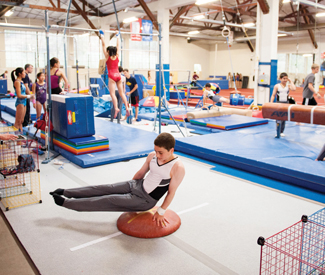
It sits, waiting for the next young bendy soul: a vast, matted wonderland of balance beams, pommel horses, uneven bars, and gargantuan trampolines ready to be bounced upon and jackknifed off of. American Gymnastics Club has been molding San Francisco’s Kylie Ross hopefuls into competitors for decades. Though simple somersault class is available for preschoolers, those with thighs of steel and grace to boot can sign up for the competitive program, where they can vie for college athletic scholarships and test their nerves at state championships. Visit its Judah location — an institution — or the newer Bayshore facility. Both offer ample classes for the little one, or, if you wanna hit the mat as well, tykes from 18 months to three years can bring in the ‘rents for parent participation-friendly classes.

2520 Judah, SF. (415) 731-1400; 390 Bayshore, SF. (415) 920-1704, www.americangymnasticsclub.com

Best of the Bay 2012: BEST MUSHROOMING POPULARITY

0

BEST MUSHROOMING POPULARITY

Enough tripping over yourself at music festivals — the best kind of festive fungi has to be that which is found at the ever-growing SF Mycological Society’s Fungus Fair. Each December, Bay Area mycophiles meet up for a weekend (usually in Berkeley’s Lawrence Hall of Science) to enjoy lectures, vendors selling mushroom-dyed sweaters, and entire rooms full of specimens hand-picked by members of the Society. Attendees can also take advantage of copious class offerings: ever wondered, for instance, about the best way to serve a black chanterelle? Take the mushroom cooking class. Best of all, you can find out what SFMS gets up to during the rest of the year: San Francisco is home to the country’s longest-running mycology programs (at SF State), and the Society hosts beginners’ foraging hikes all throughout the year for the budding, mushroom-loving spore.

www.mssf.org

Best of the Bay 2012: BEST TM4M TRAINING

0

BEST TM4M TRAINING

Blood is rushing to your first chakra, you’re incredibly horny, and you’re desperate to get off. But the complexities of your body have you feeling a bit insecure about where to go to have that full-body, no-commitment release you’re craving. No fear! San Francisco is a city saturated in sex, and Eros — a safe-sex-on-premises site — hosts casual sexual forays between all kinds of men, regardless of what they have going on below the belt. Eros’ Transmen for Men (TM4M) is a unique program held every second Thursday developed to foster a dialogue between transmen and cis-men on how to have hot and steamy casual encounters with each other. There’s more: Eros is open seven days a week, and is always committed to celebrating the queer masculine spectrum.

2051 Market, SF. (415) 255-3921, www.erossf.com

Best of the Bay 2012: BEST INDOOR PERCH FOR INFINITE INSPIRATION

0

BEST INDOOR PERCH FOR INFINITE INSPIRATION

Killer panoramas aren’t hard to find in San Francisco. But what if you want a bird’s eye view of beauty that’s unfettered by cold winds and within an arm’s reach from a good read? The Potrero Hill branch of the San Francisco Public Library is a modern two-story building awash in natural light. Its best spot is the row of squishy armchairs aligned inches from a wall of windows facing out over the northwestern horizon, with a clear view of the landmarks galore splayed beyond Potrero’s rooftops. Claim one of these chairs and you’ll be rewarded with an expansive landscape that’s at once geographical and intellectual, giving the contemplative bookworm both a superior vista of the peninsula and a clean, well-lighted place from which to explore the literary world.

1616 20th St., SF. (415) 355-2822, www.sfpl.org