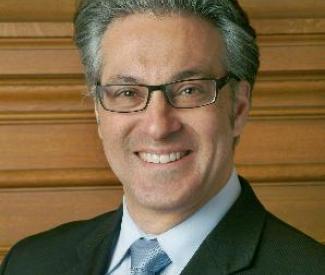
Ross Mirkarimi

Brown says Lee shouldn’t have taken Mirkarimi’s pay away

53

As Mayor Ed Lee continues to duck questions about why he suspended Sheriff Ross Mirkarimi without pay or due process, even former Mayor Willie Brown – who helped elevate Lee into Room 200 – is second-guessing the decision and its legality.

In his Willie’s World column in Sunday’s San Francisco Chronicle, entitled “Ross Mirkarimi needs cash in struggle to keep his job,” Brown wrote, “And on the salary point, I agree with Mirkarimi: He should not be suspended without pay. He should continue to get paid unless and until he ultimately is found guilty of misconduct by the Board of Supervisors.”

The issue isn’t just one of fairness or of Lee trying to coerce Mirkarimi into resigning to avoid city hearings that will determine whether grabbing his wife’s arm during a New Year’s Eve conflict constitutes official misconduct, as Lee charges. It’s also a specific legal issue, particularly to lawyers like Brown.

Mirkarimi’s attorney, David Waggoner, said it’s not surprising to see Brown publicly undercutting the mayor on this issue. “He’s simply stating what the applicable law is on the subject,” Waggoner told us. In this case, it was the Supreme Court, hearing the case Skelly v. State Personnel Board in 1975, that said an executive can’t just unilaterally take away someone’s livelihood.

“If you’re going to fire public employees, you have to give them notice, you have to let them respond, you need to observe due process,” Waggoner said.

That’s one of three causes of action that Superior Court Judge Harold Kahn will consider in a hearing set for April 18 at 9:30 am, where Mirkarimi is asking the courts to reinstate him and restore his salary pending hearings before the Ethics Commission and Board of Supervisors that could take months.

Given the pressure being applied by anti-domestic violence groups and many mainstream media voices, Lee may have felt like he had to remove Mirkarimi and that he could just blame supervisors or the process if it didn’t work. But if the courts find Lee acted illegally while attempting to put supervisors in such an untenable position, it could be a serious blow to Lee’s reputation and governing authority.

UPDATE 5 PM: I also placed a call on the issue to former Mayor Art Agnos, who just back to me and he agreed that Lee acted in a way that was unfair and probably illegal. “I think it’s heavy-handed,” said Agnos, who has been supporting Mirkarimi through the ordeal.

Agnos noted that former Sheriff Richard Hongisto served several days in jail for contempt of court for refusing to carry out the evictions of International Hotel tenants, and he never had his pay docked or faced official misconduct charges. “And here, we see the sheriff being charged with something that occurred before he even took office, and it’s a low-grade misdemeanor that he accepted a plea deal on.”

According to Agnos, Mirkarimi told him that during his brief conversation with the mayor, he offered to tell his side of the story and have Lee talk to his wife, Eliana Lopez, as well, but the mayor wasn’t interested. “When you’re the mayor, you like to hear both sides before making a decision,” Agnos said. “But Lee wasn’t interested.”

Mirkarimi case: Eliana Lopez friend and defender Myrna Melgar responds to critics

107

My opinion piece regarding the plight of my friend Eliana Lopez and San Francisco’s approach to handling domestic violence in her case has generated a lot of discussion since it was printed last week. I have heard from a lot of folks who tell me that it has challenged their assumptions about the particular situation but also about the unintended outcomes of handling all domestic violence through the criminal justice system. It has also generated quite a bit of defensiveness from some anti-domestic violence advocates, who have suggested that questioning their methods is an attack on their goals – it is not, and people who dedicate themselves to helping victims of domestic violence have my very highest respect and admiration.

So allow me elaborate that a little further on that point:

No one is advocating for the return to the bad old days when we looked away from the abuse of women. I am pointing out that for many, having the police automatically open a criminal investigation, regardless of the nature of the problem, which is then followed by prosecution, is a strong deterrent to seeking help.  Defining progress by rates of conviction while we know that more than half of domestic abuse incidents go unreported suggests that something in our approach is not working. 

Domestic violence seldom begins with a murder. It usually begins with the putdowns, the sarcasm, the psychological and emotional abuse, and then, often, to escalating levels of physical abuse. Of course, not every guy who makes sarcastic remarks will eventually hit his girlfriend. Instead of opening a criminal case when the first call comes in from an affected party or a well-meaning neighbor, how about we create a support system within mental health and family support that has a trained health professionals who can answer questions and guide a path to rehabilitation?  

San Francisco has led the way in showing the country how an integrated, public health-oriented healthcare system, community rooted and accessible to all, ought to be run.  We have the technology already to share data among health care professionals that can be immediately transferred to criminal justice professionals when needed.  A system that has only one gear — criminal prosecution — that treats women as children, robs them of their voice and their rights, and renders them incapable of making their own decisions at the slightest evidence or even accusation of abuse is a system that needs to evolve.  We can do better. We need to stop domestic violence while at the same time working towards equal rights and the empowerment of all women individually and as a whole. Those two things must never be mutually exclusive goals.

Despite the strong reactions my opinion has generated in the past week among people who defend the current system, no one has addressed the problem that the zero-tolerance criminalization approach has created in communities where there is fear of the police. It seems that everyone wants to talk about Eliana Lopez, mostly as an appendage of Ross Mirkarimi, but the many women facing this issue remain seemingly invisible in this conversation, their fears and issues unaddressed.  I have heard from immigrants’ rights advocates that they have been voicing these concerns for years, and have gotten nowhere within the domestic violence community. We can do better.

In her essay on March 29 in the Huffington Post, Andrea Shorter of the Commission on the Status of Women explains that the current system for dealing with domestic violence came about as the implementation of 84 recommendations by a group of advocates in response to the gruesome 2000 murder of an Asian immigrant woman at the hands of her boyfriend. In the past 12 years, great progress has been made in reducing domestic violence related homicide rates, both in San Francisco and across the country.

But 12 years is a long time, and a critical look at the system that we have created is needed. It’s important to note that immigrant women are still overrepresented in the domestic-violence homicide statistics in San Francisco. We can do better. We need a system that is both capable of responding quickly and decisively to cases where women’s security or lives are at stake, but of also handling the far more numerous and ambiguous cases in which domestic troubles have not reached that point, but in which families need help to make sure that they do not.

Finally, I feel I must address a couple of the specific accusations that have been made that are just not true. I have never worked for Ross Mirkarimi. I didn’t even contribute to his campaign. (It is, after all, possible for a woman to have an opinion independent of a man’s agenda). I care about my friend Eliana, and the issue of domestic violence. My interest was in addressing what I saw as an thoughtless reaction both by our government and much of our media, which produced results that were needlessly cruel and counter-productive to the people directly involved, and that also, ironically given the supposed purpose of the whole exercise, sent a bad message on how to respond to domestic violence.

Of Monsters, Men, and Me

3

Editor’s Note: California is transferring many prison inmates to jails in their counties of origin, a process known as Realignment that will impact the San Francisco Sheriff’s Department. Mayor Ed Lee removed the elected head of that department last week, and the process for determining whether Lee acted appropriately could take months. With that context in mind, we present this inside look at Realignment by Eugene Alexander Day, a third strike inmate at Soledad Prison who will be writing occasional articles about prison life for the Guardian.

A perfect storm is brewing. An unparalleled crisis in corrections is exacerbated by an even worse economy. As a reform-minded inmate buried under a life sentence, it feels like hope is on the horizon. Judicial oversight is the cornerstone.

Due to a murderous and unconstitutional medical department, the Supreme Court implemented a population cap on the California Department of Corrections and Rehabilitation (CDCR). December marked the first of four benchmarks. By mid-2013, the prison population must be brought down by 33,000 inmates.

In response, the Legislature passed Prison Realignment (AB 109), which started in October. Once the dust of Realignment settles, state facilities will become the sole domain of real criminals. Serious and violent offenders, called “strikers,” must serve 80 to 85 percent of their sentences. The rest of us are serving life sentences for third strikes, murders, or other violent crimes.

Under Realignment, the counties will maintain custody of those eligible for day-for-day time credits, called “half-timers,” which includes parole violators. For years, experts have been calling for such a shift. Stemming the flow of parole violators and nonviolent, non-serious, and non-sexual offenders, called the three “nons,” is the first real attempt by the state to do the right thing.

By ignoring the evidence for so long, austerity measures and public safety are extremely difficult to reconcile due to judicial oversight. In 2007, Gov. Schwarzenegger convened an expert panel that crafted a road map of rehabilitative recommendations to address overcrowding. The state’s other expert panel, the socially irresponsible Legislature, instead chose to double-down on a bad bet.

Under the banner of building more prisons, underscored by sending inmates out-of-state, some of Schwarzenegger’s panel’s rehabilitative recommendations were codified as unfunded mandates. When the economy took a dive in 2008, the state lawyered up – and got its ass kicked in court.

It took some of the sting off my life sentence when the Supreme Court smashed the CDCR in 2011. Systemic mismanagement corrupted a generation of salvageable prisoners. As someone who lives, breathes, and sleeps the politics of justice, the Legislature didn’t simply kick the can down the road – it pushed the state closer to the precipice. State leaders have set a poor example. By failing to follow the evidence in 2007, all 58 counties had Realignment shoved down their throats in 2011.

This lens through which I see the world is depicted as “synchronized drowning” by Attorney General Kamala Harris. For the last 13 years, I’ve struggled to keep my wits in this sea of despair. Deviants need structured treatment, not more of the same. Shifting the responsibility of tens of thousands of offenders away from CDCR is an idea of brilliant simplicity.

Local law enforcement, prosecutors, and the courts are better suited to solve local problems. These offenders are members of your community. The next time the task force stomps through the ghetto snatching up people of color, they must think about how to house all of these people of imperfection. Good. Most need help, not a jackboot.

To continually be considered part of this particular problem is unacceptable. In her book Monster Factory, Sunny Schwartz opined that everyone from civilians to officers to prisoners “were collaborators in a system that accepted and invested in failure.” No one is exempt. Everyone is to blame. Lives are at stake.

Both Schwartz and Harris describe jails and prisons as crime colleges. I feel like I received tenure in the worst-performing school district in the nation. Untreated criminogenic factors give serious offenders the artistic license to develop unholy subsocietal norms. We sow the seeds of recidivism when low-risk offenders are subjected to our gangbanger, dope-fiend bullshit. Parole violators and the three “nons” are low-hanging fruit: easy to treat and even easier to corrupt.

The counties might hate Realignment, but I hate the fact it took so long. Marking a happy day in this collaborator’s miserable life, a whole class of offenders have been diverted away from the Monster Factory. Excellent. Realignment is not some hug-a-thug program. It’s basic math. So used to being treated like shit, I will die before I advocate for mollycoddling prisoners. Using offenders as earmarks to maintain an unsustainable status quo is a feeling worse than death. Fix the problem.

My dreams are skewed. In my way of thinking, prisons should become factories that turn monsters into advocates for social justice. Offenders need to learn the difference between pro-social and antisocial behavior, not how to shove dope up their asses or participate in a riot.

Another perspective on the Mirkarimi case

34

We have an interesting opinon piece in this week’s paper by a close friend of Eliana Lopez, the wife of Sheriff Ross Mirkarimi. It gives a very different perspective on the situation than we’ve seen in the media so far. You can read it here.

Sorting through scandal

22

news@sfbg.com

>>Read the Guardian Op-Ed by Eliana Lopez’s friend Myrna Melgar here.

On March 20, Mayor Ed Lee announced his decision to suspend and seek the removal of Sheriff Ross Mirkarimi, taking the city into complex and uncharted legal and political territory. He did so with little explanation in a statement lasting two minutes. Then he went and hid.

Over the past week, the mayor has refused to expound on the reasoning behind his decision, won’t answer questions from reporters, and has held no public events where he might face the news media.

But he’s set off the political equivalent of a nuclear bomb, forcing the supervisors to take on a no-win situation in an election year and leaving the City Attorney’s Office, the Ethics Commission, and Mirkarimi’s lawyers scrambling to figure out how this will all play out.

At issue is whether Mirkarimi’s guilty plea to a misdemeanor false imprisonment charge — and his actions since the New Year’s Eve conflict with his wife, Eliana Lopez, that led to the three domestic violence charges that he originally faced — warrant his immediate removal from office without pay pending hearings that could take months. Mirkarimi, the mayor alleges, violated official misconduct standards written into the City Charter with little discussion in 1995, broad language that has yet to be interpreted by a court.

Mirkarimi and his new attorney, David Waggoner, responded March 27 by filing a court petition challenging that language — “conduct that falls below the standard of decency, good faith and right action impliedly required of all public officers” — as unconstitutionally vague and arguing Lee abused his mayoral discretion in suspending Mirkarimi and violated his due process rights by taking away his livelihood without a hearing. They are asking the court to order Mirkarimi’s reinstatement, or at least the restoration of his salary, until the long city process determines his fate.

“It makes it more difficult for the sheriff to fight these charges when he’s suspended without pay,” Waggoner told us.

To those who have been calling for Mirkarimi’s removal for the last few months, the case seems simple: Mirkarimi grabbed Lopez’s arm with enough force to leave a bruise, police and prosecutors got a video the neighbor made of the wife tearfully telling the story, and Mirkarimi tried to quell the controversy by calling it a “private matter” — infuriating anti-domestic-violence advocates who have spent decades trying to explain that DV is a crime, not a family issue. The sheriff ended up pleading guilty to a related charge.

That, many say, is plenty of reason to remove him from office: How can a top law-enforcement official do his job when he’s been convicted of a crime for which advocates say there should be zero tolerance? How can a man who runs the jails have any credibility when he’s pled guilty to false imprisonment?

“He has chosen not to resign and now I must act,” Lee said at a press conference he held shortly after the 24-hour deadline he gave Mirkarimi to resign or be removed.

But like everything in this politically fractured and passionate city, it’s a lot more complicated.

WHAT REALLY HAPPENED

Lopez and her attorneys have consistently maintained that Mirkarimi was not abusive, that the video was created solely in case their deteriorating marriage devolved into a child custody battle, and that it was not an accurate description of what happened that day, suggesting the former Venezuelan soap opera star was telling a particular kind of story.

The Guardian and the San Francisco Chronicle (“Mirkarimi’s argument with wife detailed,” March 25) have pieced together some of what happened. Sources say the couple argued in the car on the way to lunch at Delfina Pizzeria about whether Lopez would take their nearly three-year-old son, who was sitting in the backseat, with her to Venezuela.

The couple had been having marital problems and Mirkarimi, worried that she might not return or that their son could be kidnapped for ransom, got angry. As the argument escalated, Mirkarimi decided to take the family home. On the way, Mirkarimi told her that he had spoken to a lawyer and learned that she needed written permission from him to take their son out of the country and that he wouldn’t do so.

That made Lopez angry and she got out of the car and tried to unfasten their son to leave when Mirkarimi grabbed her right arm, leaving a bruise that was clear in the videotape but which wasn’t visible a week later when she wore a sleeveless dress to Mirkarimi’s swearing in ceremony for sheriff.

That’s the couple’s version of events, anyway. There are no witnesses who can verify or dispute it.

Lee never called Lopez or her attorney to hear this story before deciding to remove him from office. But in the official charges he filed against Mirkarimi, Lee alleges “acts of verbal and physical abuse against his wife” and that he “restrained Ms. Lopez and violated her personal liberty,” plus unproven allegations that he was never charged with, including encouraging neighbors to destroy evidence, and of hurting morale in the Sheriff’s Department (based on a newspaper quote from a political opponent).

You don’t have to defend Mirkarimi’s conduct or belittle the serious crime of domestic violence — in fact, you don’t have to believe anything the sheriff or his wife have said — to ask a few basic questions. Is this extraordinary executive power warranted in this case? What harm would come from waiting for a recall election, the usual method of removing elected officials after a scandal? Why did Lee give Mirkarimi 24 hours to resign and did he offer anything as incentive (sources tell us he offered another city job)? Will he release the City Attorney’s Office advice memo, and if not, why?

The Guardian submitted those and many other questions to Mayoral Press Secretary Christine Falvey, who said she would answer them by March 23, but then sent us this message at the end of that day before going on vacation: “After looking at your questions, it seems Mayor Lee addressed much of this in his comments on Tuesday. After Sheriff Mirkarimi pleaded guilty to a crime of false imprisonment, Mayor Lee made a thorough review of the facts, reviewed his duties under the Charter and gave the Sheriff an opportunity to resign. When that did not happen, he moved to suspend the Sheriff.”

Very few progressives have stood up publicly and taken Mirkarimi’s side. One of them is Debra Walker, a longtime activist and city commissioner.

“This is about McCarthyism at this point, and not domestic violence,” Walker told us. “Instead of helping [Lopez], they have succeeded in breaking this family apart. It’s just bullying. It was always aimed at Ross stepping down and removing him as sheriff.”

THE LEGAL MESS

So what happens next? It is, to say the least, unclear.

The last time a public official was charged with misconduct was in the 1970s, when Joe Mazzola, an official with the Plumbers Union, was removed from the Airport Commission because he refused to order striking plumbers back to work. The state Court of Appeal later overturned that decision, ruling that “official misconduct” had to be narrowly construed to be conduct directly related to the performance of official duties (a case Waggoner relies on in his petition).

But the City Charter has changed since then, and now allows removal for the vague charge of “conduct that falls below the standard of decency and good faith and right action impliedly required by all public officers.” That phrase gives extraordinary power to the mayor — and, given some of the conduct we’ve seen at City Hall over the years, could have been used to remove a long list of city officials.

The Charter states that Mirkarimi, as the accused, will get a hearing before the Ethics Commission, and that he can be represented by counsel. It’s silent on the question of what form that hearing will take, what the rules of evidence will be, what witnesses will be allowed, and what rights the defendant will have.

Four of the five Ethics Commission members are practicing attorneys, and before they can call a hearing, they’ll have to hold a meeting to discuss the rules.

In the case of former Sup. Ed Jew, who was accused of falsifying his address, Ethics was prepared to take only written testimony (Jew resigned before any hearing, partially to deal with more serious federal charges of shaking down constituents for bribes). But that’s not a hard and fast rule — this time, the panel could decide to allow both sides to present witnesses.

If the commission decides to allow evidence, someone will have to rule on what evidence can be presented and what can’t. Will that be the commission chair, Benjamin Hur, or the commission as a whole?

The answer is: Nobody knows for sure. Hur told us he couldn’t comment on anything related to the case; the City Attorney’s Office won’t comment, either, since the office is representing both the mayor (on the prosecution side) and the supervisors and the Ethics Commission, and the board and the commission haven’t made any decisions on rules yet.

Then it gets even trickier. The Board of Supervisors has to vote on whether to remove the sheriff, and it takes nine votes to do that. So if three supervisors vote no, Mirkarimi is automatically back in office.

There are no rules in the Charter for how the board will proceed; in theory, the supervisors could simply accept the recommendation of the Ethics Commission and vote without any further hearings. They could rely on the record of the Ethics proceedings — or they could hold the equivalent of a second trial, with their own witnesses and procedures.

To add another layer of confusion, Mirkarimi, as sheriff, is classified under state law as a peace officer — and the Peace Officers’ Bill of Rights sets entirely different standards for administrative and disciplinary hearings. Among other things, Mirkarimi could assert the right to have the Ethics Commission hearing closed to the public and the records sealed.

State law also mandates that a peace officer facing suspension without pay has the right to a hearing and adjudication within 90 days. That’s not in the City Charter; under the Charter, the city can wait as long as it wants to decide the issue.

Nobody knows for sure whether the Peace Officers Bill of Rights trumps the City Charter.

It’s clear that Mirkarimi, like anyone accused of a crime or facing an administrative hearing, has the right to due process — but not necessarily the same rights as he would have in a court proceeding. It’s also clear that the supervisors will be sitting in a quasi-judicial role — and thus can’t take into account anything that isn’t part of the official record of the case.

They probably can’t, for example, hold a public hearing on the issue — and judges in a case are theoretically supposed to ignore the hundreds of calls and emails that are now flooding in to the board offices on all sides.

The political implications are equally complex. Lee would have been in a dangerous situation if he declined to file charges — if Mirkarimi ever did anything else this disturbing, some would say it was Lee’s fault for leaving him in office.

It’s a safe bet that none of the supervisors are happy about having to vote on Mirkarimi’s job, but it’s particularly tough for the progressives. Anyone on the left who votes against removal will be subject to a barrage of attack ads — and since the balance of power on the board will be decided in November, when David Chiu, John Avalos, Eric Mar, David Campos, and Christina Olague, all more or less part of the progressive bloc, will all be up for re-election, the pressure on them will be immense.

That, in and of itself, ought to be reason for the sheriff to step down, some progressives say: Is preserving Mirkarimi in the Sheriff’s Office worth potentially destroying the progressive majority on the board? It’s a good question — and one that Lee’s advisors were well aware of, too.


Guardian Op-Ed: Domestic violence, a Latina feminist perspective

272

By Myrna Melgar

Myrna Melgar is a Latina survivor of childhood domestic violence, a feminist, and the mother of three girls. She is a former legislative aide to Sup. Eric Mar.

Eliana Lopez is my friend. I have asked for her permission to put into words, in English, some observations, thoughts and insights reached during our many conversations these past few weeks about her experience with San Francisco’s response to the allegation of domestic violence by her husband, Sheriff Ross Mirkarimi. We hope this will lead to a teachable moment for law enforcement and anti-domestic-violence advocates about cultural sensitivity — and will lead to honest discussions about the meaning of empowerment of women.

We hope that Eliana’s experience, and our shared perspective, will prompt some analysis among feminists, advocates, and the progressive community in general about the impact of the criminalization of low-level, first offenses of domestic violence on this one immigrant woman — and the implications for all immigrant women and other women of color.

Eliana Lopez came to San Francisco from Venezuela with hope in her head and love in her heart. She decided to leave behind her beautiful city of Caracas, a successful career as an actress, and her family and friends, following the dream of creating a family and a life with a man she had fallen in love with but barely knew, Ross Mirkarimi.

Well-educated, progressive, charismatic, and artistic, she made friends easily. She and Ross seemed like a great match. Both were committed environmentalists, articulate and successful. They had a son, Theo. As they settled into domestic life, however, problems began to surface. The notoriously workaholic politician did not find his family role an easy fit. A bachelor into his late forties, Ross had trouble with the quiet demands of playing a puzzle on the floor with his toddler or having an agenda-less breakfast with his wife. Ross would not make time for Eliana’s request for marriage counseling, blaming the demands of job and campaign.

On December 31, figuring that the election campaign was over and Ross would have a little breathing room, Eliana broached the subject of traveling to Venezuela with Theo. Ross’s emotional reaction to her request led to the argument that has now been repeatedly documented in the press — and for which he was eventually charged.

According to Eliana, the context of what happened between them on December 31 actually started much earlier. Ross grew up as the only son of a single teenage mother of Russian Jewish descent and an absent Iranian immigrant father. Pressured by the opposition of her family to her relationship with an Iranian Muslim, Ross’s mother divorced his father by the time he was five. Ross was raised on a small, nearly all-white island in New England, with no connection to his father. When he had the opportunity, Ross traveled to Chicago, where his father had remarried and built a new family with two sons. Ross’s father turned him away. In Eliana’s analysis, Ross’s greatest fear is that his painful story with his father will be replayed again with Theo.

Eliana’s version of what happened next has never wavered. She went to her neighbor Ivory Madison, as opposed to anyone else, because she thought Ivory was a lawyer and could advise her if her troubles with her husband resulted in divorce. Documenting Ross’s reaction to her request to take Theo abroad would be ammunition — targeting his greatest fear. Making the video was Madison’s idea, and Eliana agreed to it, thinking that it would be useful to her if a custody dispute ensued. But in Eliana’s mind, the video was her property, her story.

Eliana insisted that Ivory did not have her permission to share the video or the story with anyone, that she was not in any danger, and that she was working on her marriage with Ross. Unbeknownst to Eliana, by the time Ivory called the police, she had already shared the story with Phil Bronstein, then the editor at large of Hearst Newspapers, the publisher of the San Francisco Chronicle.

Let’s stop for a moment to consider the question of the empowerment of women. The disempowerment of Eliana began on a very small level when her husband grabbed her by the arm during an argument. It was exponentially magnified by the neighbor in whom she confided, who decided that Eliana’s strongly held desire to handle her problems with her husband herself was inconsequential. The disempowerment of Eliana was then magnified again and again, by the police, the press, the district attorney, and finally even anti-domestic-violence advocates.

How did it come to be that a system that was intended to empower women has evolved into a system that disempowers them so completely?

Unquestionably, there are women in deeply abusive relationships who need assistance getting out, who may not be able to initiate an escape on their own. Eliana’s relationship with Ross did not even come close to that standard. Yet in the eyes of Ivory Madison, Phil Bronstein, District Attorney George Gascon, and even the Director of La Casa de las Madres, once her husband had grabbed her arm, Eliana was simply no longer competent and her wishes were irrelevant.

In other words, an action done by a man, over which a woman has no control whatsoever, renders the woman incompetent and irrelevant, and empowers a long list of people — most of whom are male — to make decisions on this woman’s behalf, against her consistent and fervently expressed wishes. No one in the entire chain of people who made decisions on Eliana’s behalf offered her any help — besides prosecuting her husband.

Eliana was only consulted by the district attorney in the context of seeking her cooperation in relation to the criminal charges against her husband. Eliana never gave her input or assessment in the situation, was never consulted about the plea agreement.

Now the disempowerment of Eliana has taken an even more sinister twist. In an opinion piece published in the Chronicle, Ivory Madison’s husband, Abraham Mertens, charged Eliana with intimidation for allegedly pressuring his wife and himself to destroy the video that Ivory conceived and recorded of Eliana’s moment of distress. The same day, Mayor Ed Lee announced that he was suspending Ross as sheriff, and the charges, as written up by the City Attorney, included the Mertens accusation. This had the effect of silencing and disempowering Eliana — but this time, she is being threatened with criminal prosecution. The victim has somehow become the criminal.

Mertens, the mayor, the D.A., the city attorney, and the newspaper editor are all men. All men acting on behalf of a very educated and articulate woman who has repeatedly, passionately, asked them to give her her voice back. And for that they are threatening to criminally prosecute her.

Kathy Black, the director of La Casa de las Madres, called Eliana twice. At the same time, Black and other domestic violence advocates were calling on Ross to step down, raising money to put up billboards, and mobilizing for the anti-Ross campaign, trying him in the press. Seeing all this, Eliana never trusted Black’s motives and never took the call. Had Eliana thought assistance would be available her and to Ross without a threat to her family and livelihood, this all would have been a very different story.

During Ross’s initial preliminary hearing, Eliana Lopez famously told judge Susan Breall “this idea that I am this poor little immigrant is insulting, it’s a little racist.” And yet, what middle class, successful, educated Eliana was exposed to is exactly what we as a city have forced victims of domestic violence to face by our emphasis on criminal prosecution.

In San Francisco, we concentrate on saving victims from domestic violence situations. Our efforts in communities of color, immigrant communities, and teens is geared to make sure that victims get away from their abusers.

It’s inarguable that women in dangerous situations need to be provided options to get out. But concentrating on these alone — rather than on the array of options that are needed in less severe cases — is the equivalent of treating disease at the emergency room. In fact, this approach undermines prevention efforts because it puts women in the position of choosing between seeking help through counseling and therapy to modify the behavior of their partners — or exposing them to criminal prosecution. It has the unfortunate outcome of disempowering women, particularly low-income immigrant women and women of color, whose economic realities, position in society, and relationship to law enforcement both real and perceived is very different than for white middle-class women.

It’s not hard to see that, for immigrant women and women of color, exposure to law enforcement is perceived as dangerous. Many immigrants fear law enforcement based on their experiences with repressive regimes in their own countries. In the past couple of years, the mandatory referral to federal immigration authorities has created panic and fear of police in immigrant communities across America. Immigrant women, already on the edge economically, face the real threat of the loss of their partner’s income if the partner is accused of a crime and the boss finds out. Many black women understandably doubt the criminal justice system’s capacity to treat black men charged with any crime.

So here is the challenge to domestic violence advocates and progressive folks who care about women: A more progressive approach to Eliana and Ross’s particular situation, and to domestic violence in general, would be to work on emphasizing early, non-law enforcement intervention and the prevention of violence against women in addition to the necessary work of extricating women from dangerous situations.

Professor Laureen Snider at Queens University in Ontario has argued that criminalization is a flawed strategy for dealing with violence against women. Snider argues that feminists and progressives have misidentified social control with police/governmental control. In other words, we are substituting one oppressor for another — and glossing over the fact that in the judicial system, poor people of color fare worse than white middle-class people. We have punted on the hard work education, and of shaping and reshaping men’s definitions of masculinity and violence, of the social acceptance of the subjugation of women, of violence against children. We have chosen to define success in the fight against domestic violence by women saved from horrible situations and incarceration rates for their abusers — rather than doing the difficult work of community and individual change necessary to prevent violence from happening in the first place.

Putting up billboards in Spanish telling women that domestic violence is never a private matter might make people feel like they are doing something useful, but it will do nothing to help Eliana, and it will do very little to prevent domestic violence against women in the Spanish-speaking community.

My own experience with the community’s response to domestic violence was very different from Eliana’s. My father was physically abusive. The most violent period of my life was during high school in the 1980’s, shortly after we had immigrated to the United States from war-torn El Salvador. Our economic realities and shaky legal situation placed a level of stress on our family that made violence an almost daily occurrence.

I ran away from home, and eventually got connected with the services offered through the Redwood City YMCA. We entered family counseling, and the intervention was successful — my father was able to stop his violent behavior and our family survived. Had the police intervened, my father would have likely been charged, very possibly deported, and the whole family would have been sent back to El Salvador — back to the civil war.

In the case of my family, in which violence was a severe, everyday occurrence, there was a successful intervention. In Eliana’s case, which was limited to her husband too forcefully grabbing her arm, the family was destroyed and it will take years before the victim and her child will be able to (maybe) put their lives back together.

I challenge the progressive community and anti-violence advocates to reexamine this criminalization-heavy approach and its impact on my friend Eliana’s family, but also to examine how it affects all victims of domestic violence in San Francisco, particularly women in immigrant communities and women of color who rightfully have a distrustful relationship with law enforcement. Although it might make some feel better, all of this energy and effort spent demanding Ross Mirkarimi’s resignation only serves to reinforce the dominant model of criminalization — to make an example out of him. It won’t help Eliana, and it won’t help people suffering from violence in their intimate relationships.

Myrna Melgar is Latina survivor of childhood domestic violence, a feminist, and a mother of three girls. She is a former legislative aide to Sup. Eric Mar.


Mirkarimi files court petition challenging his suspension

31

Suspended Sheriff Ross Mirkarimi and his new attorney, David Waggoner, today turned to the courts for help, alleging in a petition that Mayor Ed Lee abused his discretion in suspending Mirkarimi without pay, deprived him of due process rights, and relied on untested language in the City Charter that they say is unconstitutionally vague.

They are asking the court to reinstatement Mirkarimi pending official misconduct hearings that would take months, or to at least allow his family to continue to receive his $199,000 salary. “It makes it more difficult for the sheriff to fight these charges when he’s suspended without pay or due process,” Waggoner told us, adding that he expects a hearing to be scheduled in two to three weeks.

Mayor Lee brought official misconduct charges against Mirkarimi a week ago and since then has refused to answer questions about the issues his action raises (which we explore in this week’s Guardian). Among those issues is whether Mirkarimi’s plea to a misdemeanor count of false imprisonment, involving a conflict with his wife, relates to his official duties and rises to the level of official misconduct.

The city’s last official misconduct proceedings, brought in the 1970s against Airport Commissioner Joe Mazzola, was overturned by the state Court of Appeal, which found that Mazzola’s actions (refusing to order striking plumbers in his union back to work) weren’t related to his official duties. Waggoner relies on that ruling in arguing Lee abused his discretion.

“The official misconduct must occur while the official is in office and be directly related to that office,” the brief contends, noting that the alleged domestic violence incident occurred before Mirkarimi was sworn in a sheriff.

In suspending Mirkarimi, Lee relies on new official misconduct language since the Mazzola incident, during the last charter overhaul in 1995, when catch-all language was added banning, “conduct that falls below the standard of decency, good faith and right action impliedly required of all public officers.”

Waggoner says that is unconstitutionally vague and he is seeking to have the court invalidate it. “Ultimately, it’s a legal issue at this point,” Waggoner told us. “Is what the mayor accused Ross Mirkarimi of official misconduct or not?”

Impertinent question: Will Mayor Lee take on the Bank of America for unethical behavior?

16

Mayor Ed Lee moved with lightning speed to suspend Sheriff Ross Mirkarimi without pay on misconduct charges and unethical behavior  in a spousal abuse case and continue the costly, distracting, divisive  media and City Hall circus.

Meanwhile, the Bank of America, an institution called “Too Crooked to Fail” by Rolling Stone,  is responsible for 10 per cent of all foreclosures in San Francisco and the city keeps its lucrative multi-million dollar short term investment portfolio in the B of A.  Matt Taibbi, the Rolling Stone investigative reporter on the story, said in a lengthy interview  on the Democracy Now radio program Thursday morning that bailouts and fraud are the secrets to the B of A success. The B of A, he said,  has defrauded “everyone from investors and insurers to homeowners and the unemployed.”  He said “most people think of the mortgage crisis as some airy abstraction–you know, bankers ripping off bankers. That’s not what it is.  It’s bankers stealing from old ladies and retirees.”

Impertinent question: So will Lee apply his new found standard of ethics to the Bank of America? See the Democracy Now clip on the Taibbi interview for specifics on B of A behavior:

http://www.democracynow.org/2012/3/22/too_crooked_to_fail_matt_taibbi

Lee’s charges against Mirkarimi leave questions unaddressed

159

UPDATED BELOW WITH “RESPONSE” FROM LEE’S OFFICE: Sheriff Ross Mirkarimi was formally suspended today and served with “Written Charges of Official Misconduct” that for the first time outline why Mayor Ed Lee believes Mirkarimi should be removed from office, although they leave unaddressed many questions that Lee has been so far been avoiding answering.

The eight-page legal document prepared for Lee by the City Attorney’s Office briefly lays out the process (a hearing before the Ethics Commission, its recommendation, then action by the Board of Supervisors within 30 days thereafter) and the definition of official misconduct, focusing on this phrase: “conduct that falls below the standard of decency, good faith and right action impliedly required of all public officers.”

That vague language is fairly new and has never been considered or interpreted by any court, and the city acknowledges there are at least “two reasonable interpretations” of its meaning: “This phrase could be either (a) an example of misconduct that, by definition, relates to the duties of all public officers, or (b) an independent, alternative category of official misconduct that does not require a connection to an officer’s official.”

Lee’s attorneys argue that they don’t think a direct connection to an official’s duties is required, but they acknowledge that’s how it could be interpreted, so they try to make that connection as well, often by relying on evidence and testimony that hasn’t been vetted by the courts or by making connections likely to be challenged by Mirkarimi’s new attorney, David Waggoner.

The document recounts the “Wrongful Conduct by Sheriff Mirkarimi,” starting with his “acts of verbal and physical abuse against his wife, Eliana Lopez” on New Year’s Eve, continuing through the criminal charges filed against him on Jan. 13 with a focus on allegations that he dissuaded witnesses and “encouraged them to destroy evidence” and with his March 19 sentencing for false imprisonment, concluding the section with a reference to the newspaper quote from Don Wilson, president of the San Francisco Deputy Sheriff’s Association, that the plea had hurt morale in the department.

The DSA actively opposed Mirkarimi’s election, just as it did his predecessor and mentor, Michael Hennessey, in every contested election in the legendary progressive sheriff’s 32-year career, so it seems a little strange to rely on such a self-serving assessment. But that isn’t the only point that raises questions and potential challenges, particularly as they try to argue that Mirkarimi’s actions related to his official duties.

Part of Mirkarimi’s sentence included one day in jail, for which the judge said his booking qualified, meaning that he never actually was inside a cell. But Lee’s attorneys argue without explanation that, “Sheriff Mirkarimi’s one-day sentence to county jail undermines his ability to receive inmates and to supervise the County jails.” It certainly didn’t seem to for former Sheriff Dick Hongisto, who was jailed for several days after being held in contempt of court for refusing to carry out the International Hotel evictions, but who never faced sanctions from the mayor.

The first and seemingly strongest connection it makes between his actions and official duties listed was, “Sheriff Mirkarimi misused his office, and the status and authority it carries, for personal advantage when he stated to Ms. Lopez that he could win custody of their child because he was very powerful,” a charge taken from the videotaped testimony that Lopez gave to his neighbor Ivory Madison.

Lopez’s attorneys have noted that she made the video to paint Mirkarimi as abusive in case there was a custody battle, as she says on tape, and that she was seeking confidential legal help from Madison and never intended for it to be released. But her and Mirkarimi’s attempts to retrieve it are labeled in the charges as efforts to “encourage the destruction of evidence regarding criminal activity,” which they argue also relates to his duties as a law enforcement officer. This issue is likely to be a matter of serious debate during the Ethics Commission hearing.

Finally, the document argues that because the Sheriff’s Department can enforce protective orders in domestic violence cases and funds programs for domestic violence perpetrators – and because it sometimes interacts with the Adult Probation Department, given Mirkarimi’s three-year probation – that the charges directly relate to his official duties.

Clearly, these are complicated issues that raise a variety of questions, which is why it was disconcerting yesterday when Lee announced the charges to a room packed with journalists and refused to take any of our questions. City Attorney Dennis Herrera didn’t speak at all, simply standing behind Lee looking stone-faced and perhaps a bit uncomfortable.

Earlier today, I sent Lee and his Office of Communications a list of questions that I think he has a public obligation to address given the drastic action that he’s just taken against an elected official. I haven’t received a reply yet, but I’m including my comments here for you to consider as well:


I was disappointed that Mayor Lee took no questions during yesterday’s press conference, because I had several that I’m hoping you can address for a long story we’re writing on the Mirkarimi affair for our next issue. I’m hoping to get answers by the end of the workday on Friday.
– Will Mayor Lee release the memo he received from the City Attorney’s Office on Ross Mirkarimi and whether his crime rises to the level of official misconduct? [Note to reader: That advice memo is different than the charges I discuss above.] It is solely under Lee’s authority to waive attorney-client privilege and release the memo, as even Willie Brown urged him to do in his Chronicle column on Sunday. And if he won’t release it, can he explain why?
– Lee told reporters last week that he would explain why Mirkarimi’s action rise to the level of official misconduct if concluded they did, but Lee didn’t offer that explanation yesterday. Why does Lee believe actions that Mirkarimi took before assuming office, which were unconnected to his official duties, warrant his removal from office? Is Lee basing his decision primarily on the crime Mirkarimi committed on New Year’s Eve or his actions and statements since then? What specific actions or statements by Mirkarimi does the mayor believe rise to official misconduct?
– Why didn’t Lee consult with Eliana Lopez or her attorney before making this decision? None of the purported evidence in this case has been scrutinized by the courts as to its veracity or completeness (that would have happened at the trial). The only two people who know for sure what happened that night are Ross and Eliana, so why hasn’t Lee asked either of them what happened?
– Why did Lee set a 24-hour deadline for Mirkarimi to resign or be removed? Did Lee offer Mirkarimi anything in exchange for his resignation, such as another city job?
– Who did the mayor consult with about whether Mirkarimi should be removed before making this decision? Were any members of the DSA or SFPOA consulted? How about Rose Pak or other members of the business community? How about Michael Hennessey? Did he seek input and advice from John St. Croix or anyone from the Ethics Commission?
– It’s my understanding that the mayor wasn’t required to remove Mirkarimi from office without pay pending his official misconduct hearings, that Mirkarimi could have either remained in the job or been suspended with pay. Why did Lee feel a need to place this additional financial pressure on Mirkarimi to abandon the office that voters elected him to? Is he concerned about the impact of his decision on Eliana Lopez and Theo?
– Mayor Lee has prided himself on being someone focused on “getting things done” without creating unnecessary political distractions. So why does he want to drag out this distracting political drama for another few months? Why does he believe that it’s a good use of the city’s time and resources to be a forum for airing details of a sordid conflict that has proven to be a divisive issue? Is he worried about exposing the city to liability in a civil lawsuit if his charges against Mirkarimi are later found to be without merit?
– Does Lee intend for Vicki Hennessy to be the permanent replacement for Mirkarimi if the official misconduct charges are upheld? Will he take into account the will of the voters in electing Mirkarimi, someone who had pledged to uphold and continue the legacy of progressive leadership of the Sheriff’s Department as embodied by the long career of Michael Hennessey? Given that the DSA consistently opposed Hennessey at election time, and that in this election voters rejected the DSA’s choices, why is Lee substituting his own judgment and political preferences for those of San Francisco’s voters? Why did Lee feel a need to take preemptive action against Mirkarimi rather than simply allowing voters to launch a recall campaign, which is the typical remedy for removing politicians who have gone through some kind of public scandal?

UPDATE 3/26: Mayoral Press Secretary Christine Falvey told the Guardian that we would have answers to these questions by Friday, but then sent the following message as a response late Friday afternoon: “Steve, After looking at your questions, it seems Mayor Lee addressed much of this in his comments on Tuesday. After Sheriff Mirkarimi pleaded guilty to a crime of false imprisonment, Mayor Lee made a thorough review of the facts, reviewed his duties under the Charter and gave the Sheriff an opportunity to resign. When that did not happen, he moved to suspend the Sheriff. For any information regarding what is in the charges, I will refer you to the City Attorney’s office and their website that has all of the public documents posted.”

For the record, Lee has not addressed these questions nor made any public statements on whether he will release the advice memo (as even Willie Brown publicly urged him to do) or explained why he’s keeping that document secret. And we haven’t even had the opportunity to ask the mayor these questions directly because he hasn’t held any public events since announcing his decision to remove Mirkarimi.

Mayor Lee ousts Sheriff Mirkarimi

96

San Francisco Mayor Ed Lee temporarily removed Sheriff Ross Mirkarimi from office today over a domestic violence case, dragging this long and sordid saga into the summer as city officials prepare a rare official misconduct hearing.

The brief announcement came just minutes after a 24-hour deadline Lee had set for Mirkarimi to resign or be removed. Lee took no questions from the huge crowd of journalists that had packed into his office and offered scant explanations about why he believes the process is warranted and how it will affect the city.

Standing behind Lee were City Attorney Dennis Herrera, with whom Lee had consulted on the decision, and Vicki Hennessy, a retired chief deputy from the Sheriff’s Department who Lee named interim sheriff. Shortly before the announcement, Mirkarimi told reporters he had no intention of resigning.

“He has chosen not to resign and now I must act,” Lee told reporters, emphasizing that “I do so with an understanding of the seriousness and gravity of the situation.”

Lee made no statements about how Mirkarimi’s guilty plea to a misdemeanor false imprisonment charge – reduced down from the three more serious charges he originally faced – rose to the level of official misconduct or why it warrants his removal, other than making general statements about ethics.

“We must always be held to the highest ethical and legal standards,” Lee said, adding that Mirkarimi had failed to do so. “I’m doing what’s in the best interests of the people of San Francisco.”

Time may tell whether that last statement is true, and whether the Ethics Commission and nine members of the Board of Supervisors agree and are willing remove a public official from office in San Francisco for just the third time in the last century.

Threats from mayor and neighbor in evolving Mirkarimi saga

43

In Old West and pulp fiction stories, it’s usually the sheriff who tells a criminal that he has 24 hours to get out of town or else. But in the latest twist in an increasingly ugly San Francisco drama, that’s what Mayor Ed Lee reportedly told Sheriff Ross Mirkarimi yesterday afternoon, setting up a 5 pm showdown by which Lee told Mirkarimi to resign or face removal from office.

That’s just one of a few rapidly unfolding developments surrounding domestic violence allegations against Mirkarimi, who pleaded guilty to a reduced charge of false imprisonment and is now facing Lee’s threat of bringing official misconduct charges against him.

With the criminal case ending yesterday, Mirkarimi’s wife, Eliana Lopez, and her attorney Paula Canny called a press conference for noon today to finally tell the story of what happened on New Year’s Eve, when the couple fought and Lopez was left with a bruise on her arm, the next day telling neighbor Ivory Madison that Mirkarimi had inflicted it.

But Canny arrived without Lopez, telling the large pack of journalists that they were no longer free to talk because of a cease-and-desist letter and civil lawsuit threatened by Madison and her lawyer husband, Abraham Mertens, who wrote an op-ed in today’s Chronicle calling for Mirkarimi’s removal and accusing Mirkarimi, Lopez, and their lawyers of trying to “discredit, dissuade and harm my wife.”

“Events have risen so that Eliana Lopez is no longer willing to come speak,” Canny said, noting that she has had to get her own lawyer to defend against the accusations and legal threats from Mertens and Madison. 

[added from here at 3:30 pm] Canny repeated a previous claim that Lopez knew Madison had attended law school and was seeking legal help from her, making the videotape confidential under attorney-client privilege, a claim Mirkarimi’s judge rejected. “My client sought legal advice from someone she thought reasonably to be an attorney,” Canny said today, noting that only Lopez can lift the veil of confidentiality in such cases.  

Although Lopez didn’t cooperate with the prosecution of her husband, maintaining that she was not a victim of domestic violence, Canny reiterated that Lopez was willing to testify in court as to what really happened that night but that she wanted immunity from prosecution first. “She has always said she would testify under immunity, but the District Attorney’s Office refused to offer it,” Canny said today. 

Given that Mirkarimi faced a child endangerment charge because their two-year-old son, Theo, was present during the altercation, it’s conceivable that Lopez could also be charged with a crime. Sources close to Mirkarimi and Lopez told the Guardian that Lopez was prepared to say today that Mirkarimi was restraining rather than attacking her, something she was willing to discuss with reporters before these latest legal threats.

Canny noted that the media circus and threats made on the couple’s livelihood have been the most damaging part of a saga that she called “an amazing, horrible experience” and  “oppressive and unfair,” noting the irony of a prosecution that purported to be about helping victims of domestic violence.

“Has any of this helped Eliana Lopez? Has any of this helped Theo?” Canny said. “This is not about helping her.”

She said that neither Lee nor anyone from the Mayor’s Office have tried to contact Lopez. “If the mayor wants to call me, I’d say he’s not trying to make the world a better place,” Canny said.

Canny also had this message for Lee: “To the mayor, please respect the electoral process,” adding that Lopez also strongly wants Mirkarimi to remain in office and that “Eliana Lopez is not afraid of Ross. Eliana Lopez loves Ross…If people care about them at all, let Ross do his job.”

Canny also took issue with La Casa de las Madres and other domestic violence advocates that have pressured Lee to oust Mirkarimi and sought to capitalize on the case, even circulating Lopez’s name and image. “That’s not how crime victims are to be taken care of,” Canny said. 

Many political and legal observers say they’re surprised by Lee’s apparent decision to suspend Mirkarimi and bring official misconduct charges, saying it will be a complicated, distracting, and divisive process that is unlikely to result in Mirkarimi’s removal. They say the charges so clearly don’t rise to the level of official misconduct that even the Ethics Commission, where the hearing is held, may reject them. If Ethics recommends Mirkarimi’s removal, it was take nine of the 11 members of the Board of Supervisors to remove him.

Then again, these observers speculate that Lee may simply want to use the hearings to air the evidence and discredit Mirkarimi so that he’d be easy pickings for a recall campaign that could be launched this summer — in the process, potentially gaining a campaign issue to use against progressive supervisors facing reelection this fall. The Chronicle reported yesterday that the case has generated a bonanza of donations to La Casa de las Madres, which is planning to do Spanish-language billboards in the Mission District, where Sup. David Campos is now running for reelection.

Lee has not offered many substantial comments on why he may believe official misconduct charges are warranted, but he’s expected to do so as soon as this afternoon when he announces his decision on the Mirkarimi matter.


Mirkarimi sentenced, absent drama

59

The drama that hordes of reporters were waiting for didn’t happen. District Attorney George Gascon’s threat to “bring up” at Sheriff Ross Mirkarimi’s sentencing the notion that Mirkarimi didn’t really think he was guilty vanished. Mirkarimi sat in front of Judge James Collins, who years ago helped a sitting judge duck a domestic violence charge, and agreed to the terms of his sentence (three years probation, mandatory attendance at a 52-week DV counseling program and some modest fines). Deputy District Attorney Elizabeth Aguilar-Tarchi said she had nothing to add; neither did Mirkarimi’s lawyer, Lidia Stiglich. And that was that — as far as the courtroom went.

Outside, Mirkarimi faced the expected scrum of cameras and microphones, and read a prepared statement that sounded as if the district attorney had insisted on it. “I deeply and humbly apologize for my behavior,” he said. “There are no excuses and I accept full responsibility.” He said he had started counseling “to remedy my arrogance and anger issues” and apologized for saying earlier that the incident was “a private family matter.”

And he gave no signs of being ready to step down, saying he would “work so much harder to regain your trust … to be a better public servant.”

An hour or so later, Gascon faced the same press crew and announced that he had treated this case “just like any other domestic violence incident.” He denied that there was any political motivation; in fact, he denied it twice. He never made exactly clear why he had decided not to intervene after all at the sentencing hearing, except to say that Mirkarimi’s statements after receiving his sentence were satisfactory (see above).

He said he’s a “strong believer in redemption and restorative justice” and said this deal would “offer [Mirkarimi] an opportunity to redeem himself.”

Which, of course, led to the question of the day: Did Gascon think Mirkarimi could, or should, hold onto his job? Phil Matier from the Chron asked it directly, and Gascon refused to answer, saying “it’s not my place” to say. I tried again a few minutes later, asking if, given Gascon’s belief in redemption, there was any possibility that the sheriff could sufficiently redeem himself to remain in his elected position. Again: “It’s not my place to say.”

It was, however, what everyone was talking about. Matier and Ross reported that Mayor Ed Lee was huddling with lawyers to try to figure out whether he has legal grounds to begin the process of removing Mirkarimi from office. It’s tricky, and has only happened twice in the last 100 years, once in the 1930s, when a public defender was involved in a murder-for-hire case, and again in the 1970s, when an airport commissioner who was also a union official was charged with favoring union workers.

One obstacle, according to Matier and Ross: The D.A.’s Office won’t give Lee the video that was at the heart of this case. Gascon confirmed that, saying the video was considered internal work product and wouldn’t be released to anyone.

The law on removing a sitting elected official in San Francisco is murky and confusing, with little precedent. Does a guilty plea to false imprisonment of his wife equal “official misconduct?” Can an incident that took place before Mirkarimi became sheriff count as misconduct in the office he assumed later?Would the supervisors hold a public trial? What rules of evidence would apply?

The politics are murky, too: If Lee files charges, he’ll be tossing the matter to the Board of Supervisors in an election year, which the supes will hate and it will be a blow to the concept of civility that the mayor tries so hard to promote. If he doesn’t, then in the unilkely event that Mirkarimi does anything else bad, critics will blame the mayor for not acting.

So this isn’t over yet.

Meanwhile, the award for the most inappropropriate question at the Gascon news conference goes to the San Jose Mercury news reporter who, after much discussion about whether Mirkarimi could carry a weapon again and when the stay-away order would be lifted, asked (I kid you not):

“Which should he get back first — his gun or his wife?”


Opinion: SF needs police domestic violence policy

33

EDITORS NOTE: This story includes a correction. The original version misstated the disposition of Judge McBride’s charges.


Everything I’ve written on the Mirkarimi case has attracted sizable volumes of comments (see here). Our suggestion that the mayor tread cautiously before seeking his official removal is bound to create controversy, too. Some advocates for victims of domestic violence are satisfied with the outcome of the case, and some are not. Former Sheriff Mike Hennessey told the Chron that Mirkarimi should stay in office:

“My opinion is that he should remain in the job and be given a chance to show what he can do with the office. I think he’s being punished accordingly by the justice system,” said Hennessey, who has been lauded by victims’ advocacy groups over the years for domestic violence services and programs that began under his watch. While admitting guilt to the crime of false imprisonment is serious, he added, it should not automatically disqualify Mirkarimi from holding office. “During my time as sheriff, I hired many people with criminal records who have done outstanding jobs for the department,” Hennessey said. “Oftentimes, you have to look at the whole issue of rehabilitation and redemption.”

If Mirkarimi remains in office, he won’t be the only public official in the law-enforcement business who was charged with domestic violence and pled to a lesser offense but kept his job. In 1999, Superior Court Judge James McBride was charged with slamming his wife’s hand into a door during an argument; represented by Jim Collins, who is also now on the bench, McBride got diversion on a witness intimidation charge (diversion, which leads to dismissal of all charges, is not normally available in DV cases) and stayed on the bench the entire time.

The chair of San Francisco NOW thinks none of that is OK — she thinks the city needs to adopt a zero-tolerance policy for law-enforcement officers who are convicted of a broadly defined set of domestic violence offenses (and Sheriff Mirkarimi, she argues, would fall under those guidelines). I’m posting the opinion piece she sent me below to keep the discussion going.

By Mona Lisa Wallace
chair, San Francisco National Organization for Women (NOW)
vice president, California National Organization for Women.

When the new sheriff in town, Ross Mirkarimi, pled guilty Monday to misdemeanor false imprisonment (in exchange for prosecutors dropping three other charges), it begged a bigger question: Should Mirkarimi keep his office? Mayor Ed Lee has turned to the to the City Charter asking whether there are grounds for dismissal. San Francisco NOW proposes a simpler solution: the San Francisco Sheriff’s Office and Police Department should immediately adopt a model policy on police domestic violence.

The International Association of Chiefs of Police put forth a model policy for domestic violence by police officers in 2003. The policy “recognizes that the profession of law enforcement is not immune from members committing domestic violence against their intimate partners.” The policy defines domestic violence, emphasizes victim safety and prescribes zero tolerance for domestic violence by police officers.

Once adopted, this policy provides very clear definitions of domestic violence and policies for addressing domestic violence committed by police officers. Although Mirkarimi’s plea avoided the domestic violence charges, the videos and photos of the sheriff’s wife’s bruised arm after the December 31st incident confirm physical restraint, which under the model policy is defined as domestic violence. Police officers found guilty of committing domestic violence must be terminated.

San Francisco NOW believes we need to hold ourselves to the highest standards in preventing domestic violence, which affects one in four women in their lifetimes. The number of victims grows exponentially because children who experience the abuse are also traumatized.

Actions have consequences. Rush Limbaugh verbally abused a woman and he lost sponsors. Mirkarimi committed what the model policy defines as domestic violence, so he should lose his job and his pension. That’s what zero tolerance means.  It should not matter that he has friends in high places. It should not matter that he needs the sheriff’s salary and pension. 

People who uphold the law against domestic violence need to be beyond reproach. Mirkarimi is not.

SFNOW is disturbed by the national resurgence of a “war on women” apparent in the current presidential primary elections and congressional hearings working to roll back women’s rights through legislation. We have joined “Unite Against the War on Women,” a movement now 20,000 strong who will march on every state capitol on April 28th to say enough is enough. Join us at: uniteCalifornia@gmail.com 

We sincerely hope that San Francisco rises to take a strong position opposing the war on women. The city’s sheriff’s and police departments should immediately adopt the model policy on domestic violence by police officers, and quickly apply the zero tolerance standards to our top law enforcement officers.

Mayor Lee discusses removing Mirkarimi from office

24

Mayor Ed Lee today seemed to take a step back from his quote in today’s San Francisco Chronicle that his “gut feeling” was that Sheriff Ross Mirkarimi’s guilty plea to a misdemeanor false imprisonment charge represents a conflict with Mirkarimi’s official duties that could warrant his removal from office.

Speaking to reporters after an appearance before the Board of Supervisors, Lee said he hasn’t made up his mind whether to charge Mirkarimi with official misconduct – which would ultimately require at least nine of 11 supervisors to vote for removal over what was alleged to be an incident of domestic violence – but that Lee said he would probably make that decision next week.

“My gut reaction wasn’t that,” Lee said when asked about his newspaper quote, explaining that he was simply surprised when the new charge replaced the three that Mirkarimi had initially been charged with: domestic violence, dissuading a witness, and child endangerment, all misdemeanors. 

“In the surprise of the legal settlement of the case, I’m required to take a look at this charge that wasn’t talked about before and determine whether those charges and the factual allegations behind those charges are measured up to the standard I have to deal with, which is official misconduct. And I have to allow myself enough time to do that with our City Attorney’s advice to make sure I’m on good legal footing. I was just surprised because it wasn’t one of the original charges,” Lee said, noting he had been doing research on the previous charges.

“Because it’s a new charge and one that was accepted by the courts as well, I have to make a thorough study of that, which is something I wasn’t prepared to do,” he said.

When asked whether the term “false imprisonment” (a broad legal charge that can mean different things depending on the context) affects his approach, Lee responded, “The word false imprisonment is obviously connected to a sheriff who does make a determination about imprisonment in general. But we’re going through the elements of what false imprisonment are and what the factual basis is and then, again, reapplying that to the standards of official misconduct.”

As for the timeline of his decision, Lee said, “I think it’s appropriate to wait until after the sentencing,” which is set for Monday, “so probably sometime next week.” Later, he said, “I am cognizant of the public distraction this case has made to the office, so I’m doing the best I can to comply with at least my own time frame.”

We asked Lee why he thought the charges – which resulted from an incident on New Year’s Eve in which Mirkarimi’s wife allegedly told a neighbor that he grabbed her and left a bruise on her arm – might rise to the level of official misconduct, particularly considering he hadn’t been sworn into office yet.

Lee replied, “That’ll be part of the assessment because I don’t think there’s an automatic thing here. He was elected and this was post election, so it doesn’t matter when he was sworn in and I think he was expected to be sworn in, so we have to take into consideration all of those elements.”

Why Mirkarimi pled guilty

103

Sheriff Ross Mirkarimi didn’t want to cop a plea. He knew the damage it  would cause to his political career and he was prepared to fight the charges. But when it became clear that he was losing every single motion around the admissibility of evidence, even when he and his attorney, Lidia Stiglich, were convinced they were right on the merits — and when it was clear from juror surveys that virtually everyone in town had read the salacious press accounts and it was impossible to find a neutral jury, he decided he had no choice.

That’s what people close to the sheriff told me shortly after Mirkarimi unexpectedly agreed to plead guilty to misdemeanor false imprisonment. It may seem an odd plea for a sheriff, but it was a way to get rid of the more serious charges. A domestic violence conviction would seriously interfere with Mirkarimi’s job — among other things, nobody with a DV rap can possess a gun — not that the sheriff of San Francisco needs to carry a gun, but in the law-enforcement world, domestic violence is (properly) taken very seriously.

The calls for the sheriff to resign have already started. An informal sfgate poll on the subject is already posted.

I talked to Mirkarimi shortly after he appeared in court, and he told me he has no plans to step down. “I wanted to resolve this matter and move forward with the important work of the department. And I terribly miss my family and I want to be re-united.”

That’s going to be tough — someone will probably try to mount a recall effort and every single detail that has come out so far in the news media will be repeated if and when he runs for re-election in three years. In politics, that’s a long time away — but these kinds of charges never disappear.

People close to the sheriff told me that that Mirkarimi was concerned that he couldn’t find a jury that hadn’t already convicted him in their minds. “The questionnaires were very clear,” one ally said. “Nearly everyone had read the newspapers and already had some kind of a negative opinion.”

Among other things, his friends said, Mirkarimi was concerned that  a former girlfriend, Christina Marie Flores, would be allowed to testify against him — despite what his team considered serious questions about her credibility.

Flores used to be my next-door neighbor and I’ve always been friendly with her. I was on her TV show once. But the news media accounts have essentially ignored a detail that was in one of Mirkarimi’s defense motions:  After they broke up, Flores sent Mirkarimi a hate poem in which she not-terribly subtly threatened to damage his political career.

I’m not going to quote all of the emails cited in the brief (breakup+email=bad news); suffice to say that until December, 2008, Flores was clearly in love with Mirkarimi and sending him passionate notes asking him to reconsider what was obviously a move by Mirkarimi to end the relationship. (And yeah, there were nude pictures that Mirkarimi was supposed to “enjoy when you miss me.” Gak.)

On Jan 2, 2009, the brief states, “having understood that the relationship with Mirkarimi was over, Flores sent Mirkarimi a lengthy hate poem. In startling contrast to her prior e-mails to Mirkarimi, Flores now called Mirkarami `the worst type of waste of air’ and said that there ‘are smarter and more handsome men BY FAR.’

“Flores ended the poem with the following:

So as 2009 rolls in and you roll out
I remember what my life was all about
Surrounded by so many of my friends
I am rich and happy with how my story ends

Except one thing.

I have never had the distinct pleasure
Of meeting such an idiot of such great measure
That freely let me know of things
That could unwind plans of what his political future brings

Yes, I do know those, some of whom you hate.
Who could have a say in your fate
And long friendships with some that you despise
That after the fact have opened my eyes.

What to do with the ball in my court …
Let us see what happens.”

Don’t know who “some of whom you hate” means, but Mirkarimi has had a contentious relationship the San Francisco Police Department. Flores is the daughter of a police officer and the ex-wife of another officer, who happens to be a domestic violence inspector.

Three years after that poem was written, when she heard about the DV allegations against Mirkarimi, she filed a police report alleging similar behavior. She also talked to two newspapers, the Chronicle and SF Weekly.

In her statement to the district attorney’s office, the brief states, “Flores conceded that she wanted to go public for personal reasons: ‘He said that that woman from Venuzuela (Lopez) knew about our relationship and it didn’t matter to her … which I think is a lie. And that’s probably why I’m here because I don’t think she knew.’”

Doesn’t mean that anything she claims about Mirkarimi was untrue. A woman who is mad at her ex-boyfriend for whatever still has every right to complain about domestic violence, even later; if she was physically abused, then what happened at other points in the relationship doesn’t change anything.
But it’s interesting that the daily papers, which reported freely on the prosecution’s side of this story, haven’t mentioned the equally fascinating (and tawdry) allegations in the defense brief.

It’s the kind of thing that, Mirkarimi’s allies say, made it hard to find a fair jury.

Judges these days go out of their way not to exclude evidence in DV cases, and the fact that this was such a high-profile political case made that even more dramatic. Ruling that the videotape of Mirkarimi’s wife crying and showing a bruise and the testimony of an ex-girlfriend who said he abused her inadmissible would most likely have forced the district attorney to drop the charges. Very few judges would want to take that risk.

So now Mirkarimi has to deal with the fallout, and it raises the question: Can the progressive community accept and once again support a sheriff who has all of this baggage? Is there anything Mirkarimi can do to convince his allies and the voters that either (a) the charges were overblown or (b) he’s learned from this, is going into counseling, is a changed person, and can seek political redemption?

The city forgave Gavin Newsom when he had sex with his close friend’s wife (after he allegedly went into treatment for alcohol abuse) and forgave Willie Brown when he impregnated a campaign fundraiser (because nobody cares about that sort of thing these days), but domestic violence is a very different deal. As it should be.

Any yet, some people are clearly willing to give him a chance. Alix Rosenthal, a longtime leader on women’s issues who supported Mirkarimi for sheriff, told me that she doesn’t think he should step down.

“I think this whole thing has been blown way out of proportion,” she said.

Mirkarimi, she noted, needs to publicly go into counseling with his wife (which he can’t do until the stay-away order is lifted — seriously, right now he can’t even go to counseling with his wife) and he needs to make it clear that he’s addressing anger-management issues. But she thinks he can still play a role in the progressive community.

There will be other progressives who disagree, and Mirkarimi will have to win them over. And all the while, the supporters of Chris Cunnie, the former Police Officers Association president who lost to Mirkarimi in the fall, aren’t going to let this go away quietly.

UPDATE: The Chron is already calling on Mayor Ed Lee to “investigate” the sheriff for misconduct. Investigate? As if there’s anything that hasn’t already become public? The real message is that the Chron wants Lee to try to get rid of Mirkarimi. And so it begins.

Olague explains her support for RCV repeal measure

52

  Sup. Christina Olague has drawn ire from progressive circles over her pivotal co-sponsorship of a proposed charter amendment that aims to eliminate Ranked Choice Voting in all citywide races. It takes six members of the Board of Supervisors to place the repeal measure on the November ballot and she is the sixth co-sponsor.

Olague has long ties to the progressive community and was appointed by Mayor Ed Lee to the District 5 seat, one of the city’s most progressive, in January after Ross Mirkarimi was elected Sheriff. This week, she joined Sean Elsbernd, Carmen Chu, Scott Wiener, and Malia Cohen – all considered moderate/conservative supervisors – in supporting Sup. Mark Farrell’s proposal to replace RCV with runoff elections for the mayor’s race and other citywide offices.

“To me, this isn’t a progressive or moderate issue. This is a democratic one here in San Francisco,” Farrell said during Tuesday’s Board of Supervisors meeting, where he introduced the measure, which will have a hearing next month. “Ranked Choice Voting has continued to confuse and disenfranchise voters here for over a decade and, in my opinion, it’s time to restore our voting system to the one person, one vote rule.”

Farrell’s sentiments mirror a similar line trumpeted by the San Francisco Chamber of Commerce, a supporter of runoff elections and longtime opponent of RCV. A recent poll commissioned by the Chamber, which claims 58 percent of respondents prefer runoff elections, has been discounted as biased and based on misleading statements. Farrell, who was elected to the District 2 seat in November using RCV, said he would have prefers to eliminate RCV altogether in San Francisco but said, “This is a significant step in the right direction.” A proposed ballot measure by Farrell and Elsbernd to eliminate RCV was rejected by the Board of Supervisors last month.

Steven Hill, who helped crafted the city’s voter-approved RCV system, criticized the move to repeal it: “Critics of RCV have long maintained that voters are confused and even disenfranchised and yet they have offered no credible evidence to support these claims. In fact, the evidence shows just the opposite, that voters understand what they have to do with RCV, which is to rank their ballots, 1, 2, 3, and they are using their ranked ballots effectively.”

In an interview conducted as she was departing the Westbay Community Center on Thursday, Olague initially rebuffed our request to discuss her support for Farrell’s amendment (just as she had an earlier request by the Guardian), but she ultimately relented.

Here’s what she had to say:

Olague: “What it is is that it begins a conversation.  There was talk of eliminating RCV altogether, which I certainly don’t support.  There was talk from a lot of different corners, not just moderate circles, but progressive circles as well, that maybe we need to examine it and see how has it or has it not really been – has it really helped us reach our goals in the way that we had originally intended that it would.”

SFBG: What were those goals?

Olague: “I think it was to try to make sure that more progressives were elected… and make it easier for people who had lesser means to prevail… So I think maybe it is time to reflect on that a little bit.”

SFBG: What parts of RCV don’t you like or don’t support?

Olague: “Well, I think it’s just time to have a conversation about it.  I’m not even sure that I’m against it, per se. When I signed on to it, I believed it was looking at keeping some of the citywide races, where there are fewer numbers of candidates engaged, to reverting back to a runoff, and keeping the races where we have a diversity of candidates and numerous candidates, which are the district races, as they are – which is ranked choice voting.”

“Now there’s some people who say what we need to do is, well, maybe revisit that and maybe just, rather than have it apply to all citywide races, maybe it should just apply to the mayor’s race.”

“So I think there needs to be a conversation and there needs to be a reflection on its effectiveness.  I think that’s what [Sup. John] Avalos and even [Sup. David] Campos were thinking that there needs to be more education – and I do think there needs to be more education as it relates to RCV.”

SFBG: Voters don’t seem to be confused about filling out an RCV ballot, but maybe there’s confusion about how votes are tallied and candidates are eliminated.  It would appear that there’s a myth being spread that voters are confused about filling in a RCV ballot, but that doesn’t appear to be the case…

Olague: “Do you know that?  I think when you talk to people out there on either side of spectrum, politically, I think there’s still a lot of – I don’t think that people have necessarily concluded that this is the most effective way of achieving certain goals.  But, you know, I think it starts a conversation and it may end up that the voters decide, you know, let’s just leave it the way it is, we’re happy with it.”

SFBG: And how would you feel if RCV is completely eliminated?

Olague: “Well it’s not going to be eliminated because there’s nothing in the charter amendment asking that RCV be eliminated.  What I was concerned about was that there was a push to eliminate it altogether, which I don’t support.  What this does, I figured I’ll meet them halfway because I can’t support a complete repeal of RCV and currently the way this charter amendment is drafted, what is does is it keeps RCV in the District elections.  That stays the same, and the citywide elections would be reverting back to a runoff, so it goes to a more citywide for a runoff, ranked choice voting for District [elections]. There is an argument to be made for why that should be the case.”

SFBG: Wouldn’t this eliminate a diversity of candidates if there were a repeal of RCV in citywide races?

Olague: “So let’s have the debate and people may decide, you know, if it’s not a good idea. People may decide they want to push to amend the charter amendment as it is before us.  Some people are thinking it should just apply to the mayor’s race and not other citywide races like public defender and others. So maybe there’ll be amendments to the charter amendment before it even hits the ballot.”

SFBG: Why do you think some people are up in arms over your support on this?

Olague: “I guess, you know, I mean – I just think that everyone is going to sit around and wait for something, right?  They’re, sort of, laying in wait, right? So it’s just what it is, you know – it’s like people are going to agree with me sometimes, they’re not going to agree with me other times.  There are some things that I am doing that is progressive, there are some things people will perceive as not being progressive.”

SFBG: Did you come to this decision by yourself, or was there any influence or pressure from others to vote the way you did on this?

Olague: “No.  I just think it’s funny because it’s like I don’t really succumb to pressure.  I’m willing to start the conversation at some kind of a compromise.  To me, this is as close to a compromise as we’re going to get and then it can start the conversation. So I think the conversation will start and people can assume all kinds of things, and they will.”

SFBG: So you voted in good conscience?  You didn’t have any doubts about your vote?

Olague: “I vote in good conscience, but sometimes you have to go with a compromise.  It’s not completely what you want and it might not be completely what you don’t want, but the alternative might be something that is completely unacceptable, which could be the complete elimination of RCV.”


A version of this story also appears on Fog City Journal, which is run by Luke Thomas.

The mortage crimes

5

EDITORIAL The mortgage crisis in San Francisco isn’t just devastating to homeowners and to the southeast neighborhoods where foreclosures are most common — it’s clear evidence that lenders and their affiliates are and have been acting illegally. This city ought to be taking the lead on pressing civil and criminal charges against the mortgage outfits.

City Assessor Phil Ting commissioned a report in February that showed that nearly every one of 382 foreclosures actions in the city between January 2009 and October 2011 had at least some irregularities. In more than 80 percent of the cases, the report identified direct violations of law.

It’s a stunning revelation: In nearly 100 percent of the cases studied, the mortgage companies did something wrong. Homeowners were not notified that they were in default. Properties were seized and sold by companies that didn’t have the proper title to them. Documents were backdated or signed by an entity that didn’t have the authority to sign. In some cases, it wasn’t clear who actually owned the mortgage, because the corporation that filed for foreclosure had never property taken title to the loan.

The report comes as Occupy protesters in San Francisco are moving aggressively to target banks that are tossing people out of their homes and at a time when county sheriffs in other parts of the country are refusing to execute foreclosure orders.

There may not be much San Francisco Sheriff Ross Mirkarimi can do — mortgage foreclosures in California can be done with almost no oversight and by the time the sheriff is called in there’s nothing left but an eviction. But the report makes clear that there were both violations of business regulations and crimes, in some cases felony crimes — and the San Francisco city attorney and district attorney should be moving as quickly as possible to take legal action.

Both City Attorney Dennis Herrera and District Attorney George Gascon have asked for more material from Ting’s office, although neither has announced a formal investigation. But every day that this goes on, more people lose their homes and more crimes are committed — and both offices should move as quickly as possible to take action.

There’s nothing in the federal settlement over fraudulent mortgage activity that prevents local officials from taking this sort of action. There’s nothing preventing Herrera from seeking an injunction against further foreclosures or preventing Gascon from indicting the lenders and their executives.

Meanwhile, Ting told us that he’s asking Attorney General Kamala Harris to investigate, because the pattern of violations almost certainly goes beyond San Francisco.

State Sen. Mark DeSaulnier has introduced a bill that would mandate transparency in foreclosures, so at least homeowners would know who to contact to seek a modification. That’s a good start. But holding these sleazy operators accountable would send a message that San Francisco isn’t going to let this sort of behavior continue.

Save our homes

9

yael@sfbg.com


This story has been edited


Bay Area activists, fueled in part by the Occupy movement, have recently taken stands against police brutality, for the rights of the homeless, against the corporate power of banks, and much more. But, arguably, nowhere has the movement been more successful than in the fight against foreclosures and evictions.


With the support of Alliance of Californians for Community Empowerment (ACCE) and the Bayview Foreclosure Fighters, several Bayview residents whose homes had already been sold continue to occupy them, and in some cases sales have been rescinded. Occupy Bernal has used civil disobedience to postpone six housing auctions, keeping their neighbors in their homes that much longer. They secured a meeting with Diana Stauffer, Wells Fargo Home Mortgage senior vice president, and David Campos, District 9 supervisor, to delay foreclosure proceedings.


But the activists are pushing for a full moratorium on foreclosures and evictions in San Francisco. Such a moratorium is not without precedent. In recent years, sheriffs have stopped evictions and foreclosures in Wayne Country, Michigan; Cook County, Illinois; Butler County, Ohio; and Philadelphia County, Pennsylvania.


When Cook County Sheriff John Dart imposed his moratorium in 2010, he said, “I can’t possibly be expected to evict people from their homes when the banks themselves can’t say for sure everything was done properly. I need some kind of assurance that we aren’t evicting families based on fraudulent behavior by the banks.”


San Francisco seems ripe for a similar stance, as Assessor-Recorder Phil Ting recently released a report revealing widespread lawbreaking in foreclosure proceedings. The report found that 84 percent of foreclosures in San Francisco over the last three years involved faulty paperwork, some of it amounting to fraud.


Representatives from the District Attorney’s and the City Attorney’s offices told the Guardian that they are concerned about the report. These bodies may be starting the process of further investigating findings. Last week, Sheriff Ross Mirkarimi, whose office carries out the county’s evictions, said he has begun an initiative to collect and analyze the city’s foreclosure data.


But Mirkarimi’s hands may be tied. As he told Ann Garrison of KPFA radio Feb. 25, “I don’t have the latitude or discretion, much as I would like, because there would need to be a change in state law that empowers municipal sheriffs to be able to use that discretion.”


Occupy Bernal formed just a couple months ago, but it has emerged as a powerful advocate for homeowners facing foreclosure. The neighborhood-based branch of the Occupy movement chose to focus specifically on preventing the evictions of Bernal Heights residents, where over 100 homes face foreclosure.


They kept the pressure up Feb. 25, when a group of supporters convened at 1090 Chestnut Street, the residence of John Stumpf, the CEO of Wells Fargo. That bank owns the majority of mortgages on Bernal homes facing foreclosure.


The protest wasn’t meant to block the street and no one tried to enter the building where Stumpf owns three of the 14 floors. But police decided that the group of about 150 warranted blocking off the entire block to traffic, to the annoyance of many neighbors.


“You collected $43.7 billion in taxpayer money and have since made record profits at the expense of low-income communities, while repeatedly breaking your legal and moral obligations as a creditor. You have failed to comply with loan modification requirements under your own lending agreements,” said a blown-up “foreclosure notice” outside Stumpf’s home.


In the spirited street theater scene, activists dressed as an auctioneer and a larger-than-life John Stumpf played out a fake auction of Stumpf’s property.


Dexter Cato, a father of four whose wife was recently killed in a car crash in the midst of months-long loan modification proceedings, faces foreclosure from his Bayview home of 40 years.


“Stumpf, we want a new address for you,” said Archbishop Franzo King of the Western Additions’ John Coltrane church, “850 Bryant Street!”


The crowd then proceeded to chant this address: the San Francisco Hall of Jusice and County Jail.


“We understand that some of our customers are going through difficult times during this economic recovery,” said Jim Foley, president of Wells Fargo’s Greater Bay Area region, in a press release responding to the Feb. 25 protest. The company plans to hold “Home Preservation Workshops” in Richmond March 7 and 8 to help homeowners facing foreclosure.


Public officials may be a long way from locking up CEOs for foreclosure fraud, but some have taken notice of complaints against the banks. On Feb. 2, the Berkeley City Council voted not to extend its contract with Wells Fargo to manage $300 million in city assets, citing its foreclosures on city residents.


On a national level, activists have been successful in persuading people to transfer their money to local banks and credit unions in recent months. Javelin Strategy and Research came out with statistics that 5.6 million Americans have switched bank service providers in the past 90 days, three times the normal transfer rate. Bank Transfer Day in early October was specifically cited as the trigger by 610,000 of those people.


The recent $25 billion settlement between the five largest banks and attorneys general in California and other states over mortgage fraud made big headlines, but activists note that it allocates a measly $2,000 to some people who have lost their homes to foreclosure. Occupy Bernal’s Buck Bagot said people need more protection from powerful banks. “Banks suckered people into this stuff, and they have made billions,” Bagot said. “We’re not saying people shouldn’t have to pay off the money they borrowed, but it took two to tango.”

Guardian editorial: SF should go after mortgage criminals

16

EDITORIAL The mortgage crisis in San Francisco isn’t just devastating to homeowners and to the southeast neighborhoods where foreclosures are most common — it’s clear evidence that lenders and their affiliates are and have been acting illegally. This city ought to be taking the lead on pressing civil and criminal charges against the mortgage outfits.

City Assessor Phil Ting commissioned a report in February that showed that nearly every one of 382 foreclosures actions in the city between January 2009 and October 2011 had at least some irregularities. In more than 80 percent of the cases, the report identified direct violations of law.

It’s a stunning revelation: In nearly 100 percent of the cases studied, the mortgage companies did something wrong. Homeowners were not notified that they were in default. Properties were seized and sold by companies that didn’t have the proper title to them. Documents were backdated or signed by an entity that didn’t have the authority to sign. In some cases, it wasn’t clear who actually owned the mortgage, because the corporation that filed for foreclosure had never property taken title to the loan.

The report comes as Occupy protesters in San Francisco are moving aggressively to target banks that are tossing people out of their homes and at a time when county sheriffs in other parts of the country are refusing to execute foreclosure orders.

There may not be much San Francisco Sheriff Ross Mirkarimi can do — mortgage foreclosures in California can be done with almost no oversight and by the time the sheriff is called in there’s nothing left but an eviction. But the report makes clear that there were both violations of business regulations and crimes, in some cases felony crimes — and the San Francisco city attorney and district attorney should be moving as quickly as possible to take legal action.

Both City Attorney Dennis Herrera and District Attorney George Gascon have asked for more material from Ting’s office, although neither has announced a formal investigation. But every day that this goes on, more people lose their homes and more crimes are committed — and both offices should move as quickly as possible to take action.

There’s nothing in the federal settlement over fraudulent mortgage activity that prevents local officials from taking this sort of action. There’s nothing preventing Herrera from seeking an injunction against further foreclosures or preventing Gascon from indicting the lenders and their executives.

Meanwhile, Ting told us that he’s asking Attorney General Kamala Harris to investigate, because the pattern of violations almost certainly goes beyond San Francisco.

State Sen. Mark DeSaulnier has introduced a bill that would mandate transparency in foreclosures, so at least homeowners would know who to contact to seek a modification. That’s a good start. But holding these sleazy operators accountable would send a message that San Francisco isn’t going to let this sort of behavior continue.

Video admitted in Mirkarimi trial

90

A videotape and related statements that the prosecution said was critical to the domestic violence case against Sheriff Ross Mirkarimi will be admitted at a trial set to begin Feb. 28, Judge Garrett Wong has ruled.

The ruling allows prosecutors to show the roughly 50-second video in which Mirkarimi’s wife, Eliana Lopez, tearfully recounts the incident of New Years’s Eve, 2011 and shows a bruise on her arm.

“Without this evidence we have no legal recourse to completely move forward with this case,” prosecutor Elizabeth Aguilar-Tarchi told the judge, reflecting what observers have been saying for weeks: The case against the sheriff could hinge on how the trial judge interprets a complex part of the state’s Evidence Code.

At issue is whether a statement that would normally be excluded as hearsay can be allowed in court as a “spontaneous or excited utterance” — a statement made after a crime when a victim or witness hasn’t had time to reflect on the events or plan to fabricate or alter the story of what happened.

In this case, the video was made a day after the alleged violence, and Mirkarimi’s lawyer, Lidia Stiglich, argued that it was carefully scripted and staged for reasons that had little to do with Mirkarimi’s specific behavior the day before.

In fact, she said, Lopez and Ivory Madison, a neighbor who made the video, discussed how the information would only be used if Mirkarimi and Lopez divorced or had a custody fight over the couple’s two-year-old son, Theo.

Lopez was hardly still excited or emotional over the incident, Stiglich said: “There is evidence that Ms. Lopez went shopping, made phone calls, including two calls to Ms. Madison, and texted [Madison’s] husband.”

The video, Stiglich argued, “was the antithesis of a spontaneous statement” — it was made after Lopez had a day to calm down and was made specifically for evidence in a child-custody case, the attorney noted.

But Aguliar-Tarchi insisted that Lopez was sufficiently emotional that the time frame wasn’t the central issue — and Judge Wong agreed. “Time is a factor to consider, but not determinative,” he said from the bench. “What is crucial is the mental state of the speaker.”

The ruling complicates Mirkarimi’s defense: Photos released by the District Attorney’s Office from the video show a clearly upset Lopez showing the camera a bruise on her upper arm and saying that this wasn’t the first such incident.

If Wong hadn’t accepted the video, it’s likely that the District Attorney’s Office would have to drop the charges, since Lopez has refused to testify and the rest of the case is so thin and circumstantial that it would be hard to present it to a jury. “This is the focal point and crux of our case,” Aguilar-Tarchi said.

Now Mirkarimi will have to come up with a more compelling narrative as to why the story that his wife described to a camera wasn’t an accurate reflection of the facts. 

The ruling could certainly be grounds for appeal — based on the courtroom discussion, the video falls very close to the line in what can and can’t be admitted, and while the judge has broad discretion on these issues, criminal defendants have challenged such rulings in higher courts numerous times. But the jury — and the news media, and thus the public — will now be allowed to see what is by any definition a very damaging video that will hurt Mirkarimi’s political career, whatever the outcome of the trial.


Motion could cripple case against Mirkarimi if granted

162

(UPDATE 2/27: The judge today denied the defense motion to suppress this video. More details here.) The domestic violence case against Sheriff Ross Mirkarimi could be dealt a crippling blow if the judge approves yesterday’s defense motion to bar videotaped testimony that his wife, Eliana Lopez, gave to their neighbor, Ivory Madison. But even if Mirkarimi beats the criminal rap, his political future could still depend on finally offering a detailed explanation of exactly what happened during that New Year’s Eve incident.

Yesterday’s motions were the subject of a cover story in today’s San Francisco Examiner, but they were strangely buried on page C2 in the San Francisco Chronicle, which also chose not to provide details of the motion, which makes a fairly compelling case for barring the videotape that is the only evidence that Lopez may have had a bruise on her arm, allegedly inflicted by Mirkarimi.

The motion argues that the videotape is inadmissible hearsay evidence that doesn’t meet the legal standard of an immediate reaction to a crime. Not only was it recorded the next day, but both Lopez and Madison say on the tape that it was intended to be used only if Lopez left Mirkarimi and sought sole custody of their two-year-old son, Theo.

“The videotape itself was the product of a reflective and deliberate decision to create evidence for purposes of a custody proceeding,” Mirkarimi attorney Lidia Stiglich argued in her motion, citing caselaw that makes such considered actions inadmissible. As the Examiner noted, the motion suggested Lopez might have ulterior motives in such an instance, making it possible that she misrepresented to Madison what had happened. Lopez denies that Mirkarimi abused her and is not cooperating with the prosecution.

Madison is quoted in the motion as saying the video was being made in case there was ever a child custody case and that “I really don’t know” what happened that night, but she believed it wasn’t an isolated incident, allegedly telling police, “she definitely didn’t describe it as ‘he grabbed my arm one time and left this mark.’”

Stiglich told the Guardian that barring the videotape from admission would be huge: “It’s a significant piece of evidence.” Some legal observers have even said the entire case against Mirkarimi could crumble if that evidence is barred, and that the ruling on its admissibility could really go either way depending on which judge gets assigned to the case tomorrow.

“We are not suprised nor concerned with the motion filed by Mr. Mirkarimi’s attorney and we will continue to handle legal issues in the courtroom and not in the media,” District Attorney’s Office spokesperson Omid Talai told us. He wouldn’t characterize how important that evidence is to the case, but he did say, “Every case is filed based on the totality of evidence.”

Yet Stiglich said much of the case rests of that videotaped evidence, which she believes presents a distorted view of what happened. “These statements are essential to their case, and there are issues with that type of testimony,” Stiglich told us.

Yet if Mirkarimi beats the criminal rap by suppressing that evidence, it’s unlikely to help him in the court of public opinion. Neither Mirkarimi nor Lopez have provided a full explanation or alternative narrative of what happened that night, how the alleged injury occurred, or other crucial details, and Stiglich said she doesn’t think now is the time for that kind of tell-all.

“I don’t think anyone should be making factual statements outside the courtroom at this point,” Stigich told us, confirming that she has advised against Mirkarimi making those kind of public statements, although she said he has been anxious to do so.

Motions in the case could be heard as soon as tomorrow, but Stiglich said she doesn’t expect opening statements in the case to take place under the week after next. She estimates witness testimony in the case will take about a week.

Then, after it’s all over and the jury renders a verdict, we’ll all see how much Mirkarimi’s team discloses about what actually happened that night and with earlier instances where Mirkarimi allegedly got physical with Lopez and a previous girlfriend, Christina Flores, who prosecutors also hope to put on the witness stand.

And if there are still questions to be answered, then we can all push Mirkarimi for a fuller accounting, render our own judgments, and determine where we think the truth lies and what that says about the public officials involved in this case.

Mirkarimi’s not going anywhere

107

Sheriff Ross Mirkarimi may be guilty of domestic violence, and if he is — as I’ve said repeatedly — it’s a serious crime and he should be held accountable. It will be very hard for him to remain in office with a DV conviction, even if it’s just a misdemeanor.


But right now, the charges are just that — charges. In the eyes of the law, he’s innocent until proven guilty. So I don’t see how Mayor Ed Lee can suspend him.


Lee’s under a lot of pressure, and under the City Charter, he has the sole authority to suspend an office holder for “official misconduct,” which is defined as “wrongful behavior by a public officer in relation to the duties of his or her office.” If there’s a suspension, the Ethics Commission and the Board of Supervisors would both have to vote to remove Mirkarimi permanently.


But here’s the thing: Lee has no evidence of official misconduct — not unless the district attorney decides to turn over to the mayor all of the files in the criminal case, at which point Ethics and the supes would be holding mini trials of their own on evidence that hasn’t been adjudicated in court (and a court may rule some of it inadmissable).


That doesn’t seem likely (and it would be very odd for the D.A. to join the mayor in what would amount to a second prosecution).


And all of this would be going on at a time when the actual criminal trial is only four weeks away.


The courts have interpreted “official misconduct” fairly narrowly. If Mirkarimi is convicted, then the city attorney can get into the argument over whether domestic violence has any “relation to the duties” of the Sheriff’s Office, and since he’s a law-enforcement officer, that might not be too hard to argue. Certainly the charge of influencing a witness would be subject to that interpretation. So after a conviction, Lee would be in a position to think seriously about suspension — if Mirkarmi didn’t step down on his own.


But right now, there’s no conviction. In terms of the court system (that would have to get involved) Mirkarimi isn’t guilty of anything yet.


Mirkarimi could decide to take a leave of absence, although he doesn’t seem inclined to do that. But whatever the merits of the case, and whatever the political arguments about whether the sheriff can do his job in the middle of this media circus, I — admittedly as a nonlawyer — can’t see how Lee could possibly invoke the suspension provisions of the Charter.


Maybe I’m missing something. 

More on the Mirkarimi case

172

I wrote up the Jan. 19 hearing on the domestic violence charges against Sheriff Ross Mirkarimi, but a few more points are worth thinking about as the embattled sheriff prepares for another court hearing Jan. 23.


For one, the stay-away order that Judge Susan Breall issued doesn’t allow Mirkarimi to have any contact with his two-year-old son for the next 45 days. That seems not only harsh but bad for the kid, who doesn’t understand why he can’t see his daddy and is, not surpisingly, confused and upset. There are no winners in this case (except the folks who would just as soon see Mirkarimi gone and replaced with a more traditional law-enforcement sheriff), but the biggest loser, the one I feel worst about, is the kid. If the judge was really worried about Mirkarimi being a danger to his son (which, frankly, seems like a huge stretch), then she could have authorized supervised visitation. That’s not at all unusual in these kinds of cases, and would at least give the child a chance to have contact and a relationship with his father during the period when all of this is being sorted out in adult court.


There’s not a lot of talk about the inherent conflicts of interest in this case, issues that come about from a sheriff who was once an investigator in the District Attorney’s Office facing criminal charges filed by that same office, which is now run by a former police chief who the sheriff clashed with repeatedly when he was a supervisor. I don’t know the law on this or how it could possibly play out, but there’s an interesting article about it all here.


It’s odd that the conflict piece ran in a publication that makes its living bashing local progressives, but everything about the media in this case is odd (except that fact that it’s become an international zoo). The one writer who has talked seriously about Mirkarimi’s right to be treated as innocent until proven guilty — and the only major voice in the media urging him not to step down — is the Chron’s conservative columnist Debra Saunders


Another interesting media tidbit: I don’t know Mirkarimi will enough to have any insight into his behavior in romantic relationships, but one person who really does — his longtime former girlfriend, journalist Evelyn Nieves — has been quoted only once in the bottom of a New York Times/Bay Citizen story, to wit:


“I was shocked when I read about it,” Evelyn Nieves, a journalist and a past partner of Mr. Mirkarimi’s, said in an e-mail. “Ross and I were together for the better part of a decade — eight years or so — and never once did he even come close to being physical during an argument.”


“It’s just not his way,” Ms. Nieves added. “He was way more prone to proposing that disagreements be talked out. He could talk and talk.”


Again: Doesn’t mean he’s not guilty. Doesn’t mean he hasn’t changed. Just interesting that only one publication has even tried to contact and get a quote from Nieves.


I’m not a lawyer, of course, but it seems to me that the defining moment in this case will not be the trial but the pre-trial hearing in which Mirkarimi’s lawyer tries to get a judge to rule that the videotape of Eliana Lopez talking about her injury and her fear of her husband can’t be used in court. Bob Egelko has an excellent piece here; he points out that if the video isn’t admissible as evidence, the case will collapse. If a judge rules (and the legal arguments seem to support it) that the prosecution can’t introduce the video or show it to the jury, then I suspect the district attorney will have to drop the charges; if Lopez refuses to testify against her husband, there’s nothing else to go on.


But this is a domestic violence case, and judges (no surprise) are political, and how many members of the local bench really want to be the one who ended such a high-profile case (and in effect, let the suspect walk) on what the media will call “a technicality?”


Plenty of drama at the Mirkarimi hearing

69

I’m glad I got to the courtroom early; by the time Judge Susan Breall called the case of People v. Ross Mirkarimi, there wasn’t a single seat available, and Her Honor wasn’t allowing standing room.

What followed was a quick “not guilty” plea to three misdemeanor charges – and then a session that lasted more than two hours, with a long interruption, as the prosecution and defense argued over whether Mirkarimi was such a threat to his wife and two-year-old son that he should be forced to stay away from them and avoid any form of contact until after what is expected to be an early March trial.

In the process, Mirkarimi’s wife, Eliana Lopez, made a passionate plea against the restraining order and Deputy District Attorney Elizabeth Aguilar-Tarchi introduced new evidence to support her claims that the newly elected Sheriff is not only guilty of domestic violence but too dangerous to allow into his own home.

In the end, Breall – who once worked as a prosecutor in domestic violence cases – issued the order forbidding the sheriff from any contact with his wife and child, and told Mirkarimi and his attorney, Robert Waggener, to return to court Jan. 23 to set a trial date.

Breall angered Lopez – and some courtroom observers – by saying she was concerned that the 36-year-old Venezuelan soap opera star was new to the country and lacked fluency in English and a family support system. Waggener noted that the length of time Lopez had lived in the United States and her language skills weren’t part of the evidence in the case and had nothing to do with the need for a protective order. He later told me that it was unusual for a judge to mention or consider that sort of information in a restraining order.

In fact, Breall noted that she had learned about Lopez’ background from reading the newspapers, leading Waggener to insist that the judge stick to the facts before her and not rely on news accounts that the attorney said were inaccurate.

At times, the proceedings turned bizarre: After Lopez had been identified by her full name and discussed at some length, her attorney noted that the last name and address of a domestic violence victim should not be in the public record. Breall agreed, and from then on referred to her only as “Eliana L.”

A little late for that, of course: The local news media have put her picture and full name on the front pages and the airwaves repeatedly in the past week.

Early in the proceedings, Breall asked if Lopez had seen a victim advocate in the District Attorney’s Office, noting that such a visit was part of standard procedure in these kinds of cases. Shortly afterward, Lopez left the courtroom; we later learned she had walked down the hall to the D.A.’s Office and met with the advocate.

Waggener asked repeatedly during the afternoon that statements from Lopez be taken in a closed courtroom, citing her privacy rights. Breall declined, and refused to put any documents under court seal.

After delaying the case for roughly an hour while Lopez had her meeting and Waggener read over the documents that had already been published in local newspapers but had only that day been provided to him, the judge came back and heard arguments on the stay-away order – and we learned more about the evidence that the D.A. will be presenting in the case.

Waggener noted that after reading the documents he had received, he saw nothing that would justify barring Mirkarimi from seeing his family. Aguilar-Tarchi started to discuss what the now-famous videotape that neighbor Ivory Madison made of Lopez showing a bruise and discussing a confrontation with her husband, but Lopez’s lawyer interrupted with an interesting new claim: She said that when Lopez had met with Madison, who is a lawyer, she believed that everything she said would be protected by attorney-client privilege and thus shouldn’t be admitted as evidence.

That will no doubt come up later – but for now, Breall wasn’t interested.

Then Lopez took the stand.

Speaking in English – relatively fluent English – she first chided the judge for the comments about her language skills and her residency in the U.S. “This idea that I’m a poor little immigrant is insulting,” she said. “It’s a little racist.”

She said that, rather than being adrift without a support system, she was someone who had been living on her own for 16 years, had her own career and her own apartment in Venezuela (one larger and nicer than her home in San Francisco). She said she’s spent time in Los Angeles and New York and had traveled in Mexico, London, Tibet, Europe and all over Latin America.

“I don’t need the support of my (extended) family,” she said. “I support my family.”

She also said that the press coverage, while unfair, was nothing she couldn’t handle: “I’ve been working in TV for 15 years,” she noted. “Check out the press in Venezuela. This is nothing.”

Then she got into her point: She saw no need for a protective order, didn’t fear her husband and found the whole idea abhorrent. “The violence against me is that I don’t have my family together,” she said. “This country is trying to pull my family apart, and that is the real violence.”

Aguilar-Tarchi wasn’t done, though. After Lopez finished, she repeated some of the allegations in the video, but then described text messages that Lopez had allegedly sent to Madison. “She told a neighbor that she was afraid,” the prosecutor said. “She asked if she could change the locks on the door. She asked if she would have to go to the police or if the police would come to her.”
The text messages also stated, Aguilar-Tarchi said, that Mirkarimi was scared and didn’t want the story to come out and that he had taken Lopez and their son, Theo, on a vacation to Monterey in an effort to prove that everything was fine. “My little Theo is so confused,” one of the messages allegedly said.

Waggener argued that the case wasn’t yet on trial and that much of the evidence was hearsay. And, he said, “in terms of what this court sees all the time, broken bones etc., this is on the low end.” He explained that the couple had been together from the day of the incident – New Year’s Eve – until the day the original protective order was issued, “with no complaints or evidence of violence.” He called the description of the videotape (which hasn’t been shown in court) “highly distorted.”

Breall said some nice (if somewhat condescending) things about Lopez, who she called “charming,” but wasn’t swayed. “I am going to treat this case like any other case,” she said, issuing the order that would keep Mirkarimi away from his wife and child until the end of the trial. Waggener later said he would come back to Breall to seek a modification in that order next week. Breall said the trial would start no later than March 5.

(In an interesting side note, the prosecution demanded that Mirkarimi give up the three guns in his possession. I never knew he kept guns in his house. At any rate, they’ve already been turned over to the authorities.)

I walked out thinking: This is just awful. There’s really nothing positive you can say about it.

I’ve known Ross Mirkarimi for years; I’ve never seen any hint of violence in his behavior. Of course, I’m not that close to him, and I don’t know anything about his marriage. Still, somebody who has been part of the progressive community for a long time has been accused of something really terrible, and it has a lot of us shaking our heads and, frankly, wondering what to think. You want to stand by a friend who’s in trouble (and lord knows, I have plenty of friends who’ve been arrested and charged with all manner of crimes, and some of them were guilty as sin, and they’re still my friends).

But I’ve also helped a close friend through episodes of domestic violence, and I can tell you it isn’t a minor deal, or a private family affair (as Mirkarimi foolishly and inappropriately stated). It’s a serious crime, and for many years, the cops and the courts didn’t treat it that way. And because it used to be really hard for women to get stay-away orders (and in some areas, it still is), women have been badly hurt and sometimes killed.

It’s only because progressive political leaders (the same progressives my blog trolls love trash at the slightest provocation) demanded changes in the law that the rules now allow for prosecution even if the alleged victim doesn’t cooperate. It’s only because of progressive reforms that a case like this is even in court.

And I agree with those reforms. As I’ve said before, there’s no excuse for intentionally injuring anyone – and there’s less than no excuse for injuring your spouse. If that’s what Mirkarimi did, he should be held accountable. It doesn’t matter what side of the political divide he’s on. If he’s guilty of domestic violence, I’m not going to make excuses for him.

More than a misdemeanor charge is on the line. All Mirkarimi has done professionally is progressive politics and law-enforcement, and by most accounts, neither one has much room for someone who has a DV rap. (Although I have to say – there are an awful lot of cops who have DV allegations against them and are still on duty.)

If Mirkarimi weren’t the elected sheriff, this case might well have been handled a lot differently. He could have accepted a misdemeanor plea, taken DV courses, gone into therapy, tried to put his marriage back together. That’s pretty standard in first-offense cases. But to do that would be to admit something he can’t easily admit to and remain in office.

So Mirkarimi knows his only real chance is to win a “not guilty” verdict and then try to rebuild his reputation. Given the stakes, I can’t imagine that he would so much as raise his voice half an octave against Lopez over the next few weeks; one more allegation it would be the end of everything. But Breall must be worried (as any modern judge would be in any prominent DV case) that if she refused to issue the restraining order and something bad did happen, her ass would be very much on the line. So she did the obvious thing.

And the media circus continues.

The only possible bright side (and I always look for a bright side) is that a lot of people who weren’t talking about domestic violence are now discussing it, on the front pages. They’re talking about how a lot of women are trapped by batterers, how they’re afraid to testify and can’t (or don’t want to) leave, how all of us, particularly the police and the courts, are responsible for protecting victims who can’t find a way to escape. And that’s a whole lot of women.

All of that said, we have to remember that Mirkarimi is still innocent until proven guilty. The mayor has no business removing him from office at this point; he hasn’t been convicted of anything. It’s only a few weeks until his trial (Mirkarimi has made it clear he wants this over as quickly as possible, so by law he has to face a jury within 45 days). After that, if he’s guilty, the mayor and the supervisors can worry about whether to vacate the Sheriff’s Office – unless Mirkarimi makes that decision himself.