Queer

Life’s a gas

0

marke@sfbg.com

SUPER EGO OK, first of all, there is now the first all-night whipped cream supply delivery service in the world right here in SF — the evocatively named Hippie Gap. “We do NOT condone ANY MISS use [sic] of our products!!!” says the About. “Whip-it! Original N2O” it then goes on, before linking to the Wikipedia entry for nitrous oxide. 10pm-10am, y’all. The best parts of rave may have been the stroboscopic aneurysms (and the bisexual Smart Drinks vendors): when the nitrous tank arrived the carnival truly began. But I’ll really sit up if someone bikes a gasmask greased with Vick’s VapoRub to my stoop. Screw your Backstreet Boys crap, that’s when the ’90s really will be back.

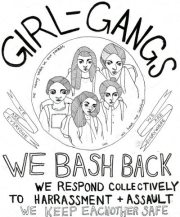
Also, right now there is a gang of kick-ass, stiletto-heeled Estonian girls in Miami getting vulnerable rich businessmen drunk at “Russian-style” bars and tricking them into buy extravagantly tacky things like Dom Perignon and boatloads of caviar. They are known as the B-Girls and they grifted one poor slob out of $48,000. They are kind of my girl-gang heroes? Well, right after Pussy Riot, Foxfire, Steel Magnolias, the Mi Vida Loca cholas, and the Sisterhood of the Transgender Pants.


MAYA JANE COLES

http://www.youtube.com/watch?v=ShMAgi_d77w

Young Brit phenom has been on an unstoppable tear the past few years, and while the hype has cooled somewhat, the skills have stayed white hot. Jazz-eared, soulful tech-house and killer bass augmentation swing wonderfully wide across a variety of moods, and always hit the spot. With local favorites Moniker and Brian Bejarano.

Thu/8, 9pm, $20. Monarch, 101 Sixth St., SF. www.monarchsf.com


STARKEY

Ethereal Philly street bass hero bangs the floor out with his futuristic swoops and sticky-starlight arpeggios — get a preview of new album Orbits, dropping in December, at new beats ‘n bass party Sway. Soulful fellow bass-face Kastle, of San Francisco and awfully good looking, dubs it up to open.

Thu/8, 9pm, $10–$15. 330 Ritch, SF. starkeyandkastle.eventbrite.com


ASC

A sweet night of thoughtful techno that doesn’t shy away from rippling drum and bass ecstasy from this grown-up veteran of the UK hardcore scene. Local smarties Ghosts on Tape, Bells and Whistles, and Mossmoss jumpstart the sophisticated, super-danceable aural vibes at the monthly As You Like It party.

Fri/9, 10pm-late, $10–$20. Beatbox, 314 11th St., SF. www.ayli-sf.com


MOUNT KIMBIE

A lineup to make cerebral bassheads’ hearts go boom. Transcendent UK duo Mount Kimbie aren’t afraid to take you off the rails and down a winding trail with their live sets. Gorgeous Floridian tech-dubber XXYYXX also appears, with SF electronic dreamer Giraffage (“Feels” is one of my fave 2012 tracks), D33J, Dials, and the Lights Down Low nutters.

Fri/9, 10pm-3am, $17–$20. 103 Harriet, SF. www.1015.com


RAREBITS

One of the cutest little secrets of nightlife music nerds has been this wildly eclectic night of, well, rare bits of sonic loveliness and genius off-kilter projections, put on by three cute bearish guys and tucked away in gay bar Truck. For this anniversary free-for-all, they’ve invited 16 DJs (including residents Chicken, Bearno Kardashian, and Bobby Please) to spin 20-minute sets of yummy, weird stuff. Plus there’ll be pop-up food from Two Tarts and a Stove. Delish.

Fri/9, 6pm-2am, free. Truck, 1900 Folsom, SF. rarebits.tumblr.com


ALL NIGHT LONG

If you’ve just moved here from another planet, or know a friend who really needs to catch up, witnessing classic DJ Garth take the decks for a fabuloso marathon five-and-a-half hour set in the Public Works loft — well, that’s the perfect crash course in 20 years of San Francisco dance music.

His titillatingly wicked blend of psychedelic rock, cosmic disco, acid house, and pagan grooves will have you howling at the moon right quickly, friend.

Sat/10, 10pm-3:30am, $7. Public Works, 161 Erie, SF. www.publicsf.com


NON-STOP BHANGRA DIWALI CELEBRATION

Meanwhile, downstairs at Public Works, one of my favorite monthly parties celebrates the Indian festival of lights, Diwali, with a bhangra-riffic blowout, with the dholrythms dancers, live dhol drummers, and DJs Jimmy Love, rav-E, Santero, and Harvi Bhachu. It all kicks off with a seriously great bhangra flashmob and procession at 16th Street and Valencia at 9pm. Bring a light and let it shine!

Sat/10, 9pm-3am, $10–$15. Public Works, 161 Erie, SF. www.publicsf.com


‘Cloud Atlas’ and more new movies, plus one new-old movie (‘Wake in Fright’)

3

A couple of potential Oscar contenders open this week: The Sessions, which could earn a nomination for John Hawkes’ portrayal of a paralyzed man seeking to (finally) lose his virginity; and Cloud Atlas, an sprawling, interesting-yet-flawed epic from Tom Tykwer, Lana Wachowski, and Andy Wachowski that might win some technical notices, though probably won’t earn any acting nods (however, the Many Faces of Tom Hanks could sneak in there). Short reviews of both films below.

In this week’s Guardian, read up on unsettling 1971 Australian film Wake in Fright, finally hitting US theaters this week, and the San Francisco Film Society’s “French Cinema Now” series, including a film starring Jane Fonda as an American expat in France (speaking flawless French, and looking pretty flawless, too).

Other new movies this week: Gerard Butler battles big (Bay Area!) waves in Chasing Mavericks; a teen (Nickolodean starlet Victoria Justice) chases her rascally little brother from one end of Halloween night to the other in Fun Size; a king (Korean dreamboat Byung-hun Lee) hires a lookalike actor to body-double him in Korean hit Masquerade; and people … uh, run shrieking from spooky stuff in video-game sequel Silent Hill: Revelation 3D.

Cloud Atlas Cramming the six busy storylines of David Mitchell’s wildly ambitious novel into just three hours — the average reader might have thought at least 12 would be required — this impressive adaptation directed (in separate parts) by Tom Twyker (1998’s Run Lola Run) and Matrix siblings Lana and Andy Wachowski has a whole lot of narrative to get through, stretching around the globe and over centuries. In the mid 19th century, Jim Sturgess’ sickly American notory endures a long sea voyage as reluctant protector of a runaway-slave stowaway from the Chatham Islands (David Gyasi). In 1931 Belgium, a talented but criminally minded British musician (Ben Whishaw) wheedles his way into the household of a famous but long-inactive composer (Jim Broadbent). A chance encounter sets 1970s San Francisco journalist Luisa (Halle Berry) on the path of a massive cover-up conspiracy, swiftly putting her life in danger. Circa now, a reprobate London publisher’s (Broadbent) huge windfall turns into bad luck that gets even worse when he seeks help from his brother (Hugh Grant). In the not-so-distant future, a disposable “fabricant” server to the “consumer” classes (Doona Bae) finds herself plucked from her cog-like life for a rebellious higher purpose. Finally, in an indeterminately distant future after “the Fall,” an island tribesman (Tom Hanks) forms a highly ambivalent relationship toward a visitor (Berry) from a more advanced but dying civilization. Mitchell’s book was divided into huge novella-sized blocks, with each thread split in two; the film wastes very little time establishing its individual stories before beginning to rapidly intercut between them. That may result in a sense of information (and eventually action) overload, particularly for non-readers, even as it clarifies the connective tissues running throughout. Compression robs some episodes of the cumulative impact they had on the page; the starry multicasting (which in addition to the above mentioned finds many uses for Hugo Weaving, Keith David, James D’Arcy, and Susan Sarandon) can be a distraction; and there’s too much uplift forced on the six tales’ summation. Simply put, not everything here works; like the very different Watchmen, this is a rather brilliant “impossible adaptation” screenplay (by the directors) than nonetheless can’t help but be a bit too much. But so much does work — in alternating currents of satire, melodrama, pulp thriller, dystopian sci-fi, adventure, and so on — that Cloud Atlas must be forgiven for being imperfect. If it were perfect, it couldn’t possibly sprawl as imaginatively and challengingly as it does, and as mainstream movies very seldom do. (2:52) (Dennis Harvey)

http://www.youtube.com/watch?v=1zu8lX8BA2w

Nobody Walks In Ry Russo-Young’s LA-set film, from a screenplay co-written with Lena Dunham, an alluring young woman named Martine (Olivia Thirlby) is welcomed into the Silver Lake home of psychotherapist Julie (Rosemarie DeWitt) and sound engineer Peter (John Krasinski), who has agreed to help Martine with the soundtrack for her film, destined for a gallery installation back in New York. While Martine’s film constructs a fiction around the fevered activities of the insect world, Russo-Young’s drifts quietly through the lives of its human household, offering glimpses of the romantic preoccupations of a teenage daughter (India Ennenga) and Julie’s interactions with one of her patients (Justin Kirk), and revealing a series of relationships hovering tensely on the border of unsanctioned behavior. The uncomfortable centerpiece is the intimacy that develops between Peter and Martine; tracking their progress through the family’s sprawling home as the two collect sounds for her project, the camera zooms in toward the sources, making the spaces the pair inhabit seem ominously small. Their eventual collision is unsurprising, but Peter hardly comes across as a besieged, frustrated family man. He tells Martine that “marriage is complicated,” but against the warm, appealing backdrop of his and Julie’s home life, it sounds like a pretty flimsy excuse for kissing a pretty, proximal 23-year-old. As for Martine, she seems not to need any rationale. But even factoring out the callousness of youth (or at least the genre of youth presented here), the film offhandedly suggests that the tipping point away from domestic happiness is depressingly easy to reach. (1:22) (Lynn Rapoport)

http://www.youtube.com/watch?v=Ywxrqt7so9s

Pusher A pusher has been pushed to the limit — this time around in a charm-free, deal-driven London. This remake of the Nicolas Winding Refn’s 1996 Danish hit was given the seal of approval by the Drive (2011) auteur, who took a role here as an executive producer, with Luis Prieto in the director’s seat. Prieto does his best to keep the pressure on at all moments, as small-time heroin dealer Frank (Richard Coyle, resembling Dominic West in urban-hustler safari mode) undergoes the worst week of his life. He appears to have a tidy little existence with goofy, floppy-haired cohort Tony (Bronson Webb) by his side and delicately beautiful stripper Flo (Agyness Deyn) providing sexual healing and safe harbor for his dough. He has just hooked up drug mule Danaka (Daisy Lewis) to bring back a batch from Amsterdam when acquaintance Marlon (Neil Maskell) hits him up for a large order. Frank goes to his supplier Milo (Zlatko Buric, reprising his role in the original), an avuncular sort who pushes baklava in space sprinkled with wedding-cake-like gowns. Frank already owe him money and can’t cover the heroin’s cost, but this is a business built on trust, as fragile as it is, and Milo likes him, so he goes along, provided Frank returns the money immediately. Those tenuous ties of understanding are tested when cops bust Frank and Marlon and the former must dump the dope in a park pond. He refuses to give up his connections to the cops but finds that the loyalty of others is being tested when it comes to threats, cash, and even love. Prieto is a more self-consciously lyrical moviemaker than Refn, choosing to a vaguely Trainspotting-style cocktail of lite surrealism and slightly cheesy low-budg effects like vapor-trail headlights to replicate the highs and lows of Frank’s joyless clubland hustle. Still, he makes us feel Frank’s stress, amid the fatalistic undertow of the narrative, and his sense of betrayal when Pusher’s players turn, despite a smalltime pusher’s workman efforts to shore up against the odds. (1:29) (Kimberly Chun)

http://www.youtube.com/watch?v=0Qc2fwGNLv4

Question One Question One goes behind the scenes of the 2009 campaign concerning the referendum which reversed legislature granting same-sex couples the right to marry in Maine. The film investigates both sides of the story, including marriage dreams of queer families and confessions of regret from the appointed leader for the Yes on One Campaign, Marc Mutty. Though listening to preachers and activists devalue love between two men or two women might make you cringe, the inclusion of these moments creates an emotionally tense experience that will remind you how important it is to bounce back from defeat. It shows that the next step will have to be more than just rallying voters, it will require a change in ideology — an understanding that gays who wish to marry deserve equal rights, not religious salvation. As Darlene Huntress, the director of field operations for the No on One Campaign says, “I want to sit down and break bread with these people. I want to sit down and say get to know me — open your mind up enough to get to know me.” (1:53) (Molly Champlin)

http://www.youtube.com/watch?v=Fy2y7UIpgP4

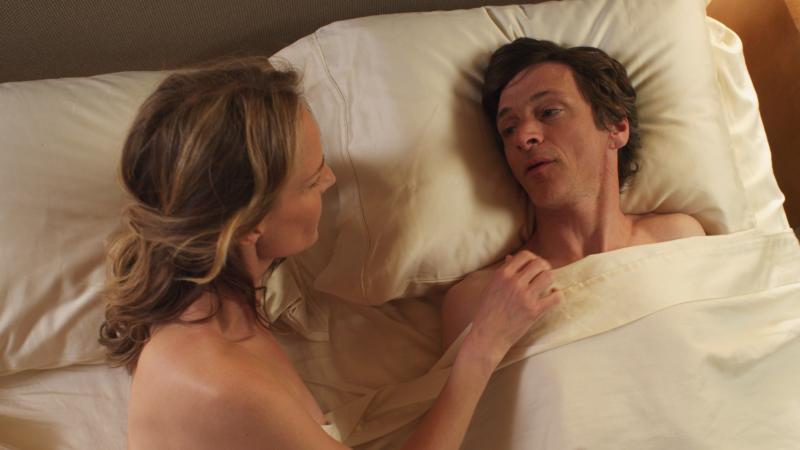
The Sessions Polio has long since paralyzed the body of Berkeley poet Mark O’Brien (John Hawkes) from the neck down. Of course his mind is free to roam — but it often roams south of the personal equator, where he hasn’t had the same opportunities as able-bodied people. Thus he enlists the services of Cheryl (Helen Hunt), a professional sex surrogate, to lose his virginity at last. Based on the real-life figures’ experiences, this drama by Australian polio survivor Ben Lewin was a big hit at Sundance this year (then titled The Surrogate), and it’s not hard to see why: this is one of those rare inspirational feel-good stories that doesn’t pander and earns its tears with honest emotional toil. Hawkes is always arresting, but Hunt hasn’t been this good in a long time, and William H. Macy is pure pleasure as a sympathetic priest put in numerous awkward positions with the Lord by Mark’s very down-to-earth questions and confessions. (1:35) (Dennis Harvey)

Win tickets to The Quickies presented by Good Vibrations

0

Check out Good Vibrations’ Erotic Short Film Competition at the haunted Castro Theatre with Peaches Christ and Dr. Carol Queen!

Your favorite adult toy store presents the hottest films of all flavors from around the world all in seven minutes or less. Funny, romantic, hardcore, straight, gay, lesbian, queer, or kinky, these international films go far beyond mainstream porn in a hilarious and stimulating presentation MC’d by your hosts Peaches Christ and Dr. Carol Queen.  Lube up for laughs at the pre-party in the Castro Theatre mezzanine featuring cocktails, nibbles, sexy prizes, live music and bawdy burlesque, followed by the screening where the audience chooses who gets $1,500 and glory! Spooky, sexy costumes encouraged!

Get more info here. Purchase tickets here. To win a pair of tickets, email your full name to sfbgpromos@sfbg.com with “quickies” in the subject. Winners will be chosen by 5pm on Wed/24.

Friday, October 26 at 7pm 8pm (7pm doors) @ Castro Theatre, 429 Castro, SF | $10

Music Listings

0

Since club life is unpredictable, it’s a good idea to call ahead or check the venue’s website to confirm bookings and hours. Prices are listed when provided to us. Visit www.sfbg.com/venue-guide for venue information. Submit items for the listings at listings@sfbg.com. For further information on how to submit items for the listings, see Picks.

WEDNESDAY 24

ROCK/BLUES/HIP-HOP

Action Jackson, Megaflame Elbo Room. 9pm, $9.

Anadel, Sunrunners El Rio. 9pm, $8.

Cabin Project, Buster Blue, Goat and Feather Hotel Utah. 8pm.

Collie Buddz, New Kingston, Holdup, Los Rakas Fillmore. 8pm, $25.

Crime and the City Solution, Cairo Gang Slim’s. 7:30pm, $28.

Hunter Valentine, Queen Caveat, Echo Twins Cafe Du Nord. 8pm, $8-$10.

Jeff vs Todd Johnny Foley’s Dueling Pianos. 9:30pm.

Jukebox the Ghost, Now, Now Rickshaw Stop. 7:30pm, $12.

Keith Crossan Blues Showcase with Curtis Lawson Biscuits and Blues. 8pm, $15.

Lord Huran, Night Moves Independent. 8pm, $14.

Lost in the Trees, Midtown Dickens, Dana Buoy Bottom of the Hill. 8pm, $12.

Nathan and Rachel Johnny Foley’s. 9pm, free.

Rita Ora, Iggy Azalea, Havana Brown Regency Ballroom. 8pm, $30.

Perfume Genius Swedish American Hall. 7:30pm, $15.

Rasputina, Faun Fables Great American Music Hall. 8pm, $16.

White Arrows, Young Digerati, Trails and Ways, Miles the DJ Brick and Mortar Music Hall. 9pm, $10.53-$13.

White Manna, Midday Veil Hemlock Tavern. 8:30pm, $7.

JAZZ/NEW MUSIC

Cat’s Corner with Nathan Dias Savanna Jazz. 9pm, $10.

Dink Dink Dink, Gaucho, Eric Garland’s Jazz Session Amnesia. 7pm, free.

Shirley Jones Rrazz Room. 8pm, $40-$45.

Natalie Macmaster Yoshi’s SF. 8pm, $30; 10pm, $25.

Ricardo Scales Top of the Mark, 999 California, SF; www.topofthemark.com. 6:30pm, $5.

FOLK/WORLD/COUNTRY

Sofia Talvik Cafe Royale, 800 Post, SF; www.caferoyale-sf.com. 8:30pm, free.

DANCE CLUBS

Booty Call Q-Bar, 456 Castro, SF; www.bootycallwednesdays.com. 9pm. Juanita MORE! and Joshua J host this dance party.

Coo-Yah! Slate Bar, 2925 16th St, SF; www.slate-sf.com. 10pm, free. With Vinyl Ambassador, DJ Silverback, DJs Green B and Daneekah.

Full-Step! Tunnel Top. 10pm, free. Hip-hop, reggae, soul, and funk with DJs Kung Fu Chris and Bizzi Wonda.

Hardcore Humpday Happy Hour RKRL, 52 Sixth St, SF; (415) 658-5506. 6pm, $3.

Obey the Kitty: Justin Milla Vessel, 85 Campton Place, SF; www.vesselsf.com. 10pm. $5.

THURSDAY 25

ROCK/BLUES/HIP-HOP.

Apogee Sound Club, Bobby Joe Ebola and the Children McNuggits, Love Songs Hemlock Tavern. 8:30pm, $6.

Brother Ali, Blank Tape Beloved, Homeboy Sandman Fillmore. 8pm, $20.

Brother Pacific, Cool Ghouls, Troubadour Dali El Rio. 8pm, $6.

Chum Boom Boom Room. 8pm, $10.

Conspiracy of Beards, Beauty Operators String Band, Condorosa Brick and Mortar Music Hall. 9pm, $7-$10.

Crazy Squeeze, Re-Volts Thee Parkside. 9pm, $7.

Dig, French Cassettes, We Shared Milk, Wild Kindness Cafe Du Nord. 9pm, $10.

Hip Hatchet, Brendan Thomas, Brooke D, Alexis Stevens Amnesia. 9pm, $7-$10.

John Lawton Trio Johnny Foley’s. 9pm, free.

Light Asylum, popscene DJs Rickshaw Stop. 10pm, $13-$15.

Rolando Morales Biscuits and Blues. 8 and 10pm, $15.

Peelander-Z, Electric Eel Shock, Electric Sister Bottom of the Hill. 9pm, $10.

Public Image, Ltd. Regency Ballroom. 8:30pm, $42.

Leon Russell Yoshi’s SF. 8pm, $35.

Staff Benda Bilili Slim’s. 8pm, $16-$18.

Todd vs Jeff Johnny Foley’s Dueling Pianos. 9:30pm.

Z-Man, BPos, DJ Troubleman John Colins, 138 Minna, SF; www.johncolins.com. 9pm, $5 after 10pm.

JAZZ/NEW MUSIC

“John Cage Centennial Celebration” Yerba Buena Center for the Arts, 701 Mission, SF; www.ybca.org. 8pm, $10-$30. “Constructions” for percussion ensemble.

Michael McIntosh Rite Spot Cafe. 9pm, free.

Shirley Jones Rrazz Room. 8pm, $40-$45.

Stompy Jones Top of the Mark, 999 California, SF; www.topofthemark.com. 7:30pm, $10.

FOLK/WORLD/COUNTRY

Twang! Honky Tonk Fiddler’s Green, 1330 Columbus, SF; www.twanghonkytonk.com. 5pm. Live country music.

DANCE CLUBS

Afrolicious Elbo Room. 9:30pm, $5-$7. With DJ-hosts Pleasuremaker and Senor Oz.

All 80s Thursday Cat Club. 9pm, $6 (free before 9:30pm). The best of ’80s mainstream and underground.

Tropicana Madrone Art Bar. 9pm, free. Salsa, cumbia, reggaeton, and more with DJs Don Bustamante, Apocolypto, Sr. Saen, Santero, and Mr. E.

FRIDAY 26

ROCK/BLUES/HIP-HOP

Converge, Torche, Nails, Kvelertak Slim’s. 8pm, $16-$18.

Further Seems Forever, Chris Conley Bottom of the Hill. 9:30pm, $26.

Goodnight, Texas, Elliot Randall and the Deadmen, Jesse Thomas Cafe Du Nord. 9pm, $10-$12.

Lights, Arkells Great American Music Hall. 8pm, $20.

Lila Rose, Birdseye, Emily Moldy, BELI3VER Brick and Mortar Music Hall. 9pm, $12-$15.

Jason Marion, Todd, Jeff Johnny Foley’s Dueling Pianos. 9pm.

Mitchel and Manley, Head Boggle, Bad Bad, Abyss of Fathomless Light Bluxome Point, 63 Bluxome, SF; www.bluxomepoint.com. 9pm, $5.

Night of the Living Crreature Thee Parkside. 9pm, free.

Pickwick, Fox and Woman, Black Cobra Vipers Rickshaw Stop. 9pm, $13-$15.

Slough Feg, Skelator, Midnight Chaser Hemlock Tavern. 9:30pm, $10.

Toadies, Helmet, UME Independent. 9pm, $25.

Top Secret Band Johnny Foley’s. 9pm, free.

Von Goat, Dispirit, Atriach, Altar de Fey Elbo Room. 9pm, $10.

Glenn Walters and the Hoodoo Rhythm Devils Biscuits and Blues. 8Pm, $20.

Wooster Boom Boom Room. 8pm, $10.

JAZZ/NEW MUSIC

Audium 1616 Bush, SF; www.audium.org. 8:30pm, $20. Theater of sound-sculptured space.

Black Jazz Orchestra Top of the Mark, 999 California, SF; www.topofthemark.com. 9pm, $10.

Shirley Jones Rrazz Room. 8pm, $40-$45.

Allison Lovejoy Rite Spot Cafe. 9pm, free.

Wooden Fish Ensemble San Francisco Public Library, Main Branch, 100 Larkin, SF; (415) 557-4400. 3pm, free.

FOLK/WORLD/COUNTRY

Baxtolo Drom Amnesia. 9pm, $7-$10.

DANCE CLUBS

Fedorable Queer Dance Party El Rio. 9pm, free.

Flashback Fridays Mezzanine. 9pm, $30. Halloween 1980s party with Wonder Bread 5, and DJs Omar, Damon Boyle, and Billy Vidal.

Joe Lookout, 3600 16th St.,SF; www.lookoutsf.com. 9pm. Eight rotating DJs.

David Jones Vessel, 85 Campton Place, SF; www.vesselsf.com. 10pm. $20-$30.

Paris to Dakar Little Baobab, 3388 19th St, SF; (415) 643-3558. 10pm, $5. Afro and world music with rotating DJs including Stepwise, Steve, Claude, Santero, and Elembe.

Trannyshack: Halloween DNA Lounge. 9:30pm, $15. With Heklina, Peaches Christ, Exhibit Q, Elijah Minnelli, Raya Light, and more.

SATURDAY 27

ROCK/BLUES/HIP-HOP

Asteroids Galaxy Tour Fillmore. 9pm, $20.

Bay Area Heat Johnny Foley’s. 9pm, free.

Nicki Bluhm and the Gramblers, Brothers Comatose Independent. 9pm, $17.

Clamhawk Manorm My Parade Thee Parkside. 3pm, free.

Cult of Youth Hemlock Tavern. 8:30pm, $10.

Fast Times Maggie McGarry’s, 1353 Grant, SF; (415) 339-9020. 10pm, free.

Forrest Day, Ghost and the City, DJ Brother Grimm Rickshaw Stop. 9pm, $10-$12.

Foreverland’s Thriller Halloween Ball Bimbo’s. 9pm, $22.

Wolfgang Gartner, Pierce Fulton and Popeska Regency Ballroom. 9pm, $32-$38.

Here We Go Magic Preservation Hall West at the Chapel, 777 Valencia, SF; www.ticketfly.com. 9pm, $18.

Live Evil Riptide Tavern. 9pm, free.

Mister Loveless, Transfer, Hustle and Drone Thee Parkside. 9pm, $8.

Rod Piazza and the Mighty Flyers Biscuits and Blues. 8 and 10pm, $22.

Red Fang, Black Tusk, Lord Dying Slim’s. 9pm, $15.

Rin Tin Tiger, Doe Eye, Steelwells, Wes Lesley and His Deadly Medley Bottom of the Hill. 9pm, $10.

Todd, Jason Marion, Jeff Johnny Foley’s Dueling Pianos. 9pm.

JAZZ/NEW MUSIC

Audium 1616 Bush, SF; www.audium.org. 8:30pm, $20. Theater of sound-sculptured space.

Shirley Jones Rrazz Room. 8pm, $40-$45.

Mr. Lucky and the Cocktail Party Rite Spot Cafe. 9pm, free.

“Not in Our Name: Dia de los Muertos Concert” Brava Theatre, 2781 24 St., SF; www.brava.org. 8pm, $35. With John Santos Sextet.

FOLK/WORLD/COUNTRY

Jascha Hoffman sings Caetano Veloso Red Poppy Art House. 8pm, $10.

Will Magid’s World Wide Dance Party: Ethiopique Extravaganza! Cafe Du Nord. 9pm, $15.

Temple Bhajan Band Integral Yoga Institute, 770 Dolores, SF; (415) 821-1117. 6-8pm, $15.

DANCE CLUBS

Blow Up Halloween Special Vessel, 85 Campton Place, SF; www.vesselsf.com. 10pm. $5.

Club 1994 Halloween Bash Vessel, 85 Campton, SF; www.club1994.com. 10pm, $18.

Devil Made Me Do It: Drag, Devils, Dancing El Rio.10pm, $10; $5 with costume.

Halloween Boooootie DNA Lounge. 9pm. $30. A Plus D, Dada, Smash-Up Derby, with a midnight costume contest.

Mango El Rio. 3-8:30pm, $8-$10.

Paris to Dakar Little Baobab, 3388 19th St, SF; (415) 643-3558. 10pm, $5. Afro and world music with rotating DJs. With DJ Ness.

120 Minutes Elbo Room. 10pm.

Temptation vs Fringe Cat Club. 9:30pm, $5-$8. With DJs Blonde K, subOctave, and more.

Vinyl Boom Boom Room. 8pm, $15. With Sonnyboy, DJ K-os.

SUNDAY 28

ROCK/BLUES/HIP-HOP

Casy and Brian, Future Twin, Deep Teens Thee Parkside. 8pm, $7.

Earth, Fontanelle, Stebmo Great American Music Hall. 8pm, $16.

Godwaffle Noise Pancakes: Medicine Cabinet, Lycanthropic Legions of Noise, Arachnid Archade Lab, 2948 16 St, SF; www.thelab.org. noon, $5-$10.

“Golden Gate Blues Society Presents: IBC Challenge Final” Biscuits and Blues. 5pm, $20.

Harold Ray Dead in Concert, Gregors, Outlaw Hemlock Tavern. 6pm, $6.

Indubious Rockit Room. 9pm, $10.

John Lawton Trio Johnny Foley’s. 9pm, free.

SLIG Hotel Utah. 8pm, $6.

Timeflies Presents: One Night Tour, DJ Ev Slim’s. 8pm, $16-$18.

Mary Wilson Venetian Room at the Fairmont, 950 Mason, SF; www.bayareacabaret.org. 7pm, $40-$75.

JAZZ/NEW MUSIC

Lua Hadar and Francofonia Bliss Bar, 4026 24th St, SF; www.blissbarsf.com. 4:30pm, $10.

“John Cage Centennial Celebration” Yerba Buena Center for the Arts, 701 Mission, SF; www.ybca.org. 8pm. “Musicircus,” 40 Cage works.

Shirley Jones Rrazz Room. 5pm, $40-$45.

FOLK/WORLD/COUNTRY

Heel Draggers, West Nile Ramblers Amnesia. 8pm, $5-$10.

Brian Stevens Brainwash Cafe. 7pm, free.

“Twang Sunday” Thee Parkside. 4pm, free. With Bar Fight, Tough Brothers.

DANCE CLUBS

Dub Mission Elbo Room. 9pm, $6. With DJ Sep, Vinnie Esparza, and J. Boogie.

Jock Lookout, 3600 16th St, SF; www.lookoutsf.com. 3pm, $2.

MONDAY 29

ROCK/BLUES/HIP-HOP

Balmorhea, Young Moon Bottom of the Hill. 9:30pm, $10.

Cadence Weapon Brick and Mortar Music Hall. 9:30pm, $8-$10.

Damir Johnny Foley’s. 9pm, free.

Daughter, Choir of Young Believers Independent. 8pm, $12.

Jenni and the Jerks, Wicked Mercies, Whoa Nellies Elbo Room. 9pm, $8; $5 in costume.

One F, NVS, Mean Faces El Rio. 7pm, $5; $3 with costume.

“SFRMA.org performs Pink Floyd’s ‘Dark Side of the Moon’ and Portishead’s ‘Dummy'” Great American Music Hall. 8pm, $15.

JAZZ/NEW MUSIC

Mike Burns Rite Spot Cafe. 8:30pm, free.

FOLK/WORLD/COUNTRY

Front Country Amnesia. 8pm.

TUESDAY 30

ROCK/BLUES/HIP-HOP

All Time Low, Summer Set, Downtown Fiction, Hit the Lights Fillmore. 7pm, $25.

Sophie Barker Yoshi’s SF. 8pm, $14.

Disclosure, DJ Dials, Sleazemore Independent. 9pm, $20.

Dysrhythmia, Dog Shredder, Burmese, Dimesland Elbo Room. 9pm, $10.

Fat Tuesday Band Biscuits and Blues. 8 and 10pm, $15.

Hannah Georgas Cafe Du Nord. 7:30pm, $12.

New Spell, Treehouse Orchestra, St. Tropez Bottom of the Hill. 9pm, $10.

Other Lives, Indians Great American Music Hall. 8pm, $16.

Stan Erhart Band Johnny Foley’s. 9pm, free.

Sweat Lodge, No Bone, Standard Poodle Knockout. 9:30pm, $6.

Tiger High, Some Days, Flytraps Hemlock Tavern. 8:30pm, $7.

Wave Commission, Redwood Wires, Phone Sex Operators El Rio. 7pm, $3.

FOLK/WORLD/COUNTRY

Toshio Hirano Rite Spot Cafe. 9pm, free.

Sofia Talvik, Arcadio Amnesia. 9:30pm, $7.

Film Listings

0

Film listings are edited by Cheryl Eddy. Reviewers are Kimberly Chun, Dennis Harvey, Lynn Rapoport, and Sara Vizcarrondo. For rep house showtimes, see Rep Clock.

Opening

Chasing Mavericks The Bay Area’s big-wave spot hits the big screen, with Gerard Butler and Jonny Weston as real-life surfers Rick “Frosty” Hesson and Jay Moriarity. (1:45)

Cloud Atlas Cramming the six busy storylines of David Mitchell’s wildly ambitious novel into just three hours — the average reader might have thought at least 12 would be required — this impressive adaptation directed (in separate parts) by Tom Twyker (1998’s Run Lola Run) and Matrix siblings Lana and Andy Wachowski has a whole lot of narrative to get through, stretching around the globe and over centuries. In the mid 19th century, Jim Sturgess’ sickly American notory endures a long sea voyage as reluctant protector of a runaway-slave stowaway from the Chatham Islands (David Gyasi). In 1931 Belgium, a talented but criminally minded British musician (Ben Whishaw) wheedles his way into the household of a famous but long-inactive composer (Jim Broadbent). A chance encounter sets 1970s San Francisco journalist Luisa (Halle Berry) on the path of a massive cover-up conspiracy, swiftly putting her life in danger. Circa now, a reprobate London publisher’s (Broadbent) huge windfall turns into bad luck that gets even worse when he seeks help from his brother (Hugh Grant). In the not-so-distant future, a disposable “fabricant” server to the “consumer” classes (Doona Bae) finds herself plucked from her cog-like life for a rebellious higher purpose. Finally, in an indeterminately distant future after “the Fall,” an island tribesman (Tom Hanks) forms a highly ambivalent relationship toward a visitor (Berry) from a more advanced but dying civilization. Mitchell’s book was divided into huge novella-sized blocks, with each thread split in two; the film wastes very little time establishing its individual stories before beginning to rapidly intercut between them. That may result in a sense of information (and eventually action) overload, particularly for non-readers, even as it clarifies the connective tissues running throughout. Compression robs some episodes of the cumulative impact they had on the page; the starry multicasting (which in addition to the above mentioned finds many uses for Hugo Weaving, Keith David, James D’Arcy, and Susan Sarandon) can be a distraction; and there’s too much uplift forced on the six tales’ summation. Simply put, not everything here works; like the very different Watchmen, this is a rather brilliant “impossible adaptation” screenplay (by the directors) than nonetheless can’t help but be a bit too much. But so much does work — in alternating currents of satire, melodrama, pulp thriller, dystopian sci-fi, adventure, and so on — that Cloud Atlas must be forgiven for being imperfect. If it were perfect, it couldn’t possibly sprawl as imaginatively and challengingly as it does, and as mainstream movies very seldom do. (2:52) Balboa, California, Presidio. (Harvey)

Fun Size When a teen (Victoria Justice) is forced to baby-sit her brother the night of the social event of the Halloween season, PG-13 chaos ensues. (1:45) Shattuck.

Masquerade A king hires an actor from the local village (both portrayed by Korean megastar Byung-hun Lee) to be his body double in this historical drama. (2:11) Metreon.

Nobody Walks In Ry Russo-Young’s LA-set film, from a screenplay co-written with Lena Dunham, an alluring young woman named Martine (Olivia Thirlby) is welcomed into the Silver Lake home of psychotherapist Julie (Rosemarie DeWitt) and sound engineer Peter (John Krasinski), who has agreed to help Martine with the soundtrack for her film, destined for a gallery installation back in New York. While Martine’s film constructs a fiction around the fevered activities of the insect world, Russo-Young’s drifts quietly through the lives of its human household, offering glimpses of the romantic preoccupations of a teenage daughter (India Ennenga) and Julie’s interactions with one of her patients (Justin Kirk), and revealing a series of relationships hovering tensely on the border of unsanctioned behavior. The uncomfortable centerpiece is the intimacy that develops between Peter and Martine; tracking their progress through the family’s sprawling home as the two collect sounds for her project, the camera zooms in toward the sources, making the spaces the pair inhabit seem ominously small. Their eventual collision is unsurprising, but Peter hardly comes across as a besieged, frustrated family man. He tells Martine that “marriage is complicated,” but against the warm, appealing backdrop of his and Julie’s home life, it sounds like a pretty flimsy excuse for kissing a pretty, proximal 23-year-old. As for Martine, she seems not to need any rationale. But even factoring out the callousness of youth (or at least the genre of youth presented here), the film offhandedly suggests that the tipping point away from domestic happiness is depressingly easy to reach. (1:22) Bridge, Shattuck. (Rapoport)

Pusher A pusher has been pushed to the limit—this time around in a charm-free, deal-driven London. This remake of the Nicolas Winding Refn’s 1996 hit was given the seal of approval by the Drive (2011) auteur, who took a role here as an executive producer, with Luis Prieto in the director’s seat. Prieto does his best to keep the pressure on at all moments, as small-time heroin dealer Frank (Richard Coyle, resembling Dominic West in urban-hustler safari mode) undergoes the worst week of his life. He appears to have a tidy little existence with goofy, floppy-haired cohort Tony (Bronson Webb) by his side and delicately beautiful stripper Flo (Agyness Deyn) providing sexual healing and safe harbor for his dough. He has just hooked up drug mule Danaka (Daisy Lewis) to bring back a batch from Amsterdam when acquaintance Marlon (Neil Maskell) hits him up for a large order. Frank goes to his supplier Milo (Zlatko Buric, reprising his role in the original), an avuncular sort who pushes baklava in space sprinkled with wedding-cake-like gowns. Frank already owe him money and can’t cover the heroin’s cost, but this is a business built on trust, as fragile as it is, and Milo likes him, so he goes along, provided Frank returns the money immediately. Those tenuous ties of understanding are tested when cops bust Frank and Marlon and the former must dump the dope in a park pond. He refuses to give up his connections to the cops but finds that the loyalty of others is being tested when it comes to threats, cash, and even love. Prieto is a more self-consciously lyrical moviemaker than Refn, choosing to a vaguely Trainspotting-style cocktail of lite surrealism and slightly cheesy low-budg effects like vapor-trail headlights to replicate the highs and lows of Frank’s joyless clubland hustle. Still, he makes us feel Frank’s stress, amid the fatalistic undertow of the narrative, and his sense of betrayal when Pusher’s players turn, despite a smalltime pusher’s workman efforts to shore up against the odds. (1:29) Presidio. (Chun)

Question One Question One goes behind the scenes of the 2009 campaign concerning the referendum which reversed legislature granting same-sex couples the right to marry in Maine. The film investigates both sides of the story, including marriage dreams of queer families and confessions of regret from the appointed leader for the Yes on One Campaign, Marc Mutty. Though listening to preachers and activists devalue love between two men or two women might make you cringe, the inclusion of these moments creates an emotionally tense experience that will remind you how important it is to bounce back from defeat. It shows that the next step will have to be more than just rallying voters, it will require a change in ideology — an understanding that gays who wish to marry deserve equal rights, not religious salvation. As Darlene Huntress, the director of field operations for the No on One Campaign says, “I want to sit down and break bread with these people. I want to sit down and say get to know me — open your mind up enough to get to know me.” (1:53) Vogue. (Molly Champlin)

The Sessions Polio has long since paralyzed the body of Berkeley poet Mark O’Brien (John Hawkes) from the neck down. Of course his mind is free to roam — but it often roams south of the personal equator, where he hasn’t had the same opportunities as able-bodied people. Thus he enlists the services of Cheryl (Helen Hunt), a professional sex surrogate, to lose his virginity at last. Based on the real-life figures’ experiences, this drama by Australian polio survivor Ben Lewin was a big hit at Sundance this year (then titled The Surrogate), and it’s not hard to see why: this is one of those rare inspirational feel-good stories that doesn’t pander and earns its tears with honest emotional toil. Hawkes is always arresting, but Hunt hasn’t been this good in a long time, and William H. Macy is pure pleasure as a sympathetic priest put in numerous awkward positions with the Lord by Mark’s very down-to-earth questions and confessions. (1:35) Embarcadero. (Harvey)

Silent Hill: Revelation 3D Game of Thrones reunion! Sean Bean and Kit Harington both star in this video game adaptation, which may be its only bragging point. (1:34)

Wake in Fright See “Points Of No Return.” (1:54) Opera Plaza, Shattuck. 

Ongoing

Alex Cross (1:41) 1000 Van Ness, SF Center, Shattuck.

Argo If you didn’t know the particulars of the 1979 Iranian Revolution, you won’t be an expert after Argo, but the film does a good job of capturing America’s fearful reaction to the events that followed it — particularly the hostage crisis at the US embassy in Tehran. Argo zeroes in on the fate of six embassy staffers who managed to escape the building and flee to the home of the sympathetic Canadian ambassador (Victor Garber). Back in Washington, short-tempered CIA agents (including a top-notch Bryan Cranston) cast about for ways to rescue them. Enter Tony Mendez (Ben Affleck, who also directs), exfil specialist and father to a youngster wrapped up in the era’s sci-fi craze. While watching 1973’s Battle for the Planet of the Apes, Tony comes up with what Cranston’s character calls “the best bad idea we have:” the CIA will fund a phony Canadian movie production (corny, intergalactic, and titled Argo) and pretend the six are part of the crew, visiting Iran for a few days on a location shoot. Tony will sneak in, deliver the necessary fake-ID documents, and escort them out. Neither his superiors, nor the six in hiding, have much faith in the idea. (“Is this the part where we say, ‘It’s so crazy it just might work?'” someone asks, beating the cliché to the punch.) Argo never lets you forget that lives are at stake; every painstakingly forged form, every bluff past a checkpoint official increases the anxiety (to the point of being laid on a bit thick by the end). But though Affleck builds the needed suspense with gusto, Argo comes alive in its Hollywood scenes. As the show-biz veterans who mull over Tony’s plan with a mix of Tinseltown cynicism and patiotic duty, John Goodman and Alan Arkin practically burst with in-joke brio. I could have watched an entire movie just about those two. (2:00) Four Star, Marina, 1000 Van Ness, SF Center, Sundance Kabuki. (Eddy)

Beasts of the Southern Wild Six months after winning the Grand Jury Prize at Sundance (and a Cannes Camera d’Or), Beasts of the Southern Wild proves capable of enduring a second or third viewing with its originality and strangeness fully intact. Magical realism is a primarily literary device that isn’t attempted very often in U.S. cinema, and succeeds very rarely. But this intersection between Faulkner and fairy tale, a fable about — improbably — Hurricane Katrina, is mysterious and unruly and enchanting. Benh Zeitlin’s film is wildly cinematic from the outset, as voiceover narration from six-year-old Hushpuppy (Quvenzhané Wallis) offers simple commentary on her rather fantastical life. She abides in the Bathtub, an imaginary chunk of bayou country south of New Orleans whose residents live closer to nature, amid the detritus of civilization. Seemingly everything is some alchemical combination of scrap heap, flesh, and soil. But not all is well: when “the storm” floods the land, the holdouts are forced at federal gunpoint to evacuate. With its elements of magic, mythological exodus, and evolutionary biology, Beasts goes way out on a conceptual limb; you could argue it achieves many (if not more) of the same goals Terrence Malick’s 2011 The Tree of Life did at a fraction of that film’s cost and length. (1:31) Shattuck. (Harvey)

Bel Borba Aqui “The People’s Picasso” and “Brazil’s Pied Piper of Street Art” are both apt descriptions of veteran artist Bel Borba, who has spent decades bringing color and imagination to the streets of Salvador — his seaside hometown, and a place already graced with the nickname “Brazil’s Capital of Happiness.” It’s not a stretch to imagine that Borba’s commitment to public art (a giant Christmas tree made of plastic Coke bottles, a rhinoceros sculpture crafted from old boat planks, hundreds of large-scale mosaics, even a painted airplane) has done its share to lift spirits. Bel Borba Aqui isn’t the sort of doc to delve into its mustachioed subject’s history or personal life (despite a few angry cell phone conversations randomly captured along the way); instead, it’s much like Borba himself — freewheeling and spontaneous, and most alive when it’s showing art being created. Great soundtrack, too. (1:34) Roxie. (Eddy)

The Dark Knight Rises Early reviews that called out The Dark Knight Rises’ flaws were greeted with the kind of vicious rage that only anonymous internet commentators can dish out. And maybe this is yet another critic-proof movie, albeit not one based on a best-selling YA book series. Of course, it is based on a comic book, though Christopher Nolan’s sophisticated filmmaking and Christian Bale’s tortured lead performance tend to make that easy to forget. In this third and “final” installment in Nolan’s trilogy, Bruce Wayne has gone into seclusion, skulking around his mansion and bemoaning his broken body and shattered reputation. He’s lured back into the Batcave after a series of unfortunate events, during which The Dark Knight Rises takes some jabs at contemporary class warfare (with problematic mixed results), introduces a villain with pecs of steel and an at-times distractingly muffled voice (Tom Hardy), and unveils a potentially dangerous device that produces sustainable energy (paging Tony Stark). Make no mistake: this is an exciting, appropriately moody conclusion to a superior superhero series, with some nice turns by supporting players Gary Oldman and Joseph Gordon-Levitt. But in trying to cram in so many characters and plot threads and themes (so many prisons in this thing, literal and figural), The Dark Knight Rises is ultimately done in by its sprawl. Without a focal point — like Heath Ledger’s menacing, iconic Joker in 2008’s The Dark Knight — the stakes aren’t as high, and the end result feels more like a superior summer blockbuster than one for the ages. (2:44) Metreon. (Eddy)

Diana Vreeland: The Eye Has to Travel The life of legendary fashion editor Diana Vreeland is colorfully recounted in Diana Vreeland: The Eye Has to Travel, a doc directed by her granddaughter-in-law, Lisa Immordino Vreeland. The family connection meant seemingly unlimited access to material featuring the unconventionally glamorous (and highly quotable) Vreeland herself, plus the striking images that remain from her work at Harper’s Bazaar, Vogue, and the Costume Institute of the Metropolitan Museum of Art. “Narrated” from interview transcripts by an actor approximating the late Vreeland’s husky, posh tones, the film allows for some criticism (her employees often trembled at the sight of her; her sons felt neglected; her grasp of historical accuracy while working at the museum was sometimes lacking) among the praise, which is lavish and delivered by A-listers like Anjelica Huston, who remembers “She had a taste for the extraordinary and the extreme,” and Manolo Blahnik, who squeals, “She had the vision!” (1:26) Embarcadero. (Eddy)

End of Watch Buddy cop movies tend to go one of two ways: the action-comedy route (see: the Rush Hour series) or the action-drama route. End of Watch is firmly in the latter camp, despite some witty shit-talking between partners Taylor (a chrome-domed Jake Gyllenhaal) and Zavala (Michael Peña from 2004’s Crash) as they patrol the mean streets of Los Angeles. Writer-director David Ayer, who wrote 2001’s Training Day, aims for authenticity by piecing together much of (but, incongruously, not all of) the story through dashboard cameras, surveillance footage, and Officer Taylor’s own ever-present camera, which he claims to be carrying for a school project, though we never once see him attending classes or mentioning school otherwise. Gyllenhaal and Peña have an appealing rapport, but End of Watch’s adrenaline-seeking plot stretches credulity at times, with the duo stumbling across the same group of gangsters multiple times in a city of three million people. Natalie Martinez and Anna Kendrick do what they can in underwritten cop-wife roles, but End of Watch is ultimately too familiar (but not lawsuit-material familiar) to leave any lasting impression. Case in point: in the year 2012, do we really need yet another love scene set to Mazzy Star’s “Fade Into You”? (1:49) 1000 Van Ness, SF Center. (Eddy)

Fat Kid Rules the World It really does suck to be Troy (Jacob Wysocki from 2011’s Terri). An XXL-sized high schooler, he’s invisible to his peers, derided by his little brother (Dylan Arnold), and has lived in general domestic misery since the death of his beloved mother under the heavy-handed rule of his well-meaning but humorless ex-military dad (Billy Campbell). His only friends are online gamers, his only girlfriends the imaginary kind. But all that begins to change when chance throws him across the path of notorious local hellraiser Marcus (Matt O’Leary), who’s been expelled from school, has left the band he fronts, and is equal parts rebel hero to druggy, lyin’ mess. But he randomly decrees Troy is cool, and his new drummer. Even if he’s just being used, Troy’s world is headed for some big changes. Actor Matthew Lillard’s feature directorial debut, based on K.L. Going’s graphic novel, is familiar stuff in outline but a delight in execution, as it trades the usual teen-comedy crudities (a few gratuitous joke fantasy sequences aside) for something more heartfelt and restrained, while still funny. O’Leary from last year’s overlooked Natural Selection is flamboyantly terrific, while on the opposite end of the acting scale Campbell makes repressed emotion count for a lot — he has one wordless moment at a hospital that just might bring you to the tears his character refuses to spill. (1:38) Metreon, Smith Rafael. (Harvey)

Frankenweenie Tim Burton’s feature-length Frankenweenie expands his 1984 short of the same name (canned by Disney back in the day for being too scary), and is the first black and white film to receive the 3D IMAX treatment. A stop-motion homage to every monster movie Burton ever loved, Frankenweenie is also a revival of the Frankenstein story cute-ified for kids; it takes the showy elements of Mary Shelley’s novel and morphs them to fit Burton’s hyperbolic aesthetic. Elementary-school science wiz Victor takes his disinterred dog from bull terrier to gentle abomination (when the thirsty Sparky drinks, he shoots water out of the seams holding his body parts together). Victor’s competitor in the school science fair, Edgar E. Gore, finds out about Sparky and ropes in classmates to scrape up their dead pets from the town’s eerily utilized pet cemetery and harness the town’s lightning surplus. The film’s answer to Boris Karloff (lisp intact) resurrects a mummified hamster, while a surrogate for Japanese Godzilla maker Ishiro Honda, revives his pet turtle Shelley (get it?) into Gamera. As these experiments aren’t borne of love, they don’t go as well at Victor’s. If you love Burton, Frankenweenie feels like the at-last presentation of a story he’s been dying to tell for years. If you don’t love him, you might wonder why it took him so long to get it out. When Victor’s science teacher leaves the school, he tells Victor an experiment conducted without love is different from one conducted with it: love, he implies, is a variable. If that’s the variable that separates 2003’s Big Fish (heartbreaking) from 2010’s Alice In Wonderland (atrocious), it’s a large one indeed. The love was there for 29 minutes in 1984, but I can’t say it endures when stretched to 87 minutes 22 years later. (1:27) Balboa, Metreon, 1000 Van Ness. (Vizcarrondo)

Here Comes the Boom The makers of September’s Won’t Back Down might quibble with this statement, but the rest of us can probably agree that nothing (with the possible exception of Trapper Keepers) says “back to school” like competitive steel-cage mixed martial arts — particularly if the proceeds from the matches go toward saving extracurriculars at a down-at-the-heels public high school. Kevin James plays Scott Voss, a 42-year-old biology teacher at the aforementioned school, whose lack of vocational enthusiasm is manifested by poor attendance and classroom observations about how none of what the students are learning matters. He’s jolted from this criminally subpar performance of his academic duties, however, when budget cuts threaten the school’s arts programs, including the job of an earnest and enthusiastic music teacher (Henry Winkler) whose dedication Scott lazily admires. It seems less than inevitable that this state of affairs would lead to Scott’s donning his college wrestling singlet and trundling into the ring to get pummeled and mauled for cash, but it seems to work better than a bake sale. Less effective and equally unconvincing are Scott’s whiplash arc from bad apple to teacher-of-the-year; a percolating romance between him and the school nurse, played by Salma Hayek; and the script’s tortuous parade of rousing statements celebrating the power of the human spirit, seemingly cribbed from a page-a-day calendar of inspirational quotes. (1:45) 1000 Van Ness, SF Center. (Rapoport)

Hotel Transylvania (1:32) Metreon, 1000 Van Ness, Shattuck.

The House I Live In Much like he did in 2005’s Why We Fight, filmmaker Eugene Jarecki identifies a Big Issue (in that film, the Iraq War) and strips it down, tracing all of the history leading up to the current crisis point. Here, he takes on America’s “war on drugs,” which I put quotes around not just because it was a phrase spoken by Nixon and Reagan, but also because — as The House I Live In ruthlessly exposes — it’s been a failure, a sham, since its origins in the late 1960s. Framing his investigation with the personal story of his family’s housekeeper — whose dedication to the Jarecki family meant that she was absent when her own son turned to drugs — and enfolding a diverse array of interviews (a sympathetic prison guard, addicts and their families, The Wire’s David Simon) and locations (New York City, Sioux City), Jarecki has created an eye-opening film. Particularly well-explained are segments on how drug laws correlate directly to race and class, and how the prison-industrial complex has played a part in making sure those laws remain as strict as possible. (1:48) Shattuck, Sundance Kabuki. (Eddy)

Looper It’s 2044 and, thanks to a lengthy bout of exposition by our protagonist, Joe (Joseph Gordon-Levitt), here’s what we know: Time travel, an invention 30 years away, will be used by criminals to transport their soon-to-be homicide victims backward, where a class of gunmen called loopers, Joe among them, are employed to “do the necessaries.” More deftly revealed in Brick writer-director Rian Johnson’s new film is the joylessness of the world in which Joe amorally makes his way, where gangsters from the future control the present (under the supervision of Jeff Daniels), their hit men live large but badly (Joe is addicted to some eyeball-administered narcotic), and the remainder of the urban populace suffers below-subsistence-level poverty. The latest downside for guys like Joe is that a new crime boss has begun sending back a steady stream of aging loopers for termination, or “closing the loop”; soon enough, Joe is staring down a gun barrel at himself plus 30 years. Being played by Bruce Willis, old Joe is not one to peaceably abide by a death warrant, and young Joe must set off in search of himself so that—with the help of a woman named Sara (Emily Blunt) and her creepy-cute son Cid (Pierce Gagnon)—he can blow his own (future) head off. Having seen the evocatively horrific fate of another escaped looper, we can’t totally blame him. Parsing the daft mechanics of time travel as envisioned here is rough going, but the film’s brisk pacing and talented cast distract, and as one Joe tersely explains to another, if they start talking about it, “we’re gonna be here all day making diagrams with straws” —in other words, some loops just weren’t meant to be closed. (1:58) 1000 Van Ness, Piedmont, SF Center, Sundance Kabuki. (Rapoport)

The Master Paul Thomas Anderson’s much-hyped likely Best Picture contender lives up: it’s easily the best film of 2012 so far. Philip Seymour Hoffman stars as Lancaster Dodd, the L. Ron Hubbard-ish head of a Scientology-esque movement. “The Cause” attracts Freddie Quell (Joaquin Phoenix, in a welcome return from the faux-deep end), less for its pseudo-religious psychobabble and bizarre personal-growth exercises, and more because it supplies the aimless, alcoholic veteran — a drifter in every sense of the word — with a sense of community he yearns for, yet resists submitting to. As with There Will Be Blood (2007), Anderson focuses on the tension between the two main characters: an older, established figure and his upstart challenger. But there’s less cut-and-dried antagonism here; while their relationship is complex, and it does lead to dark, troubled places, there are also moments of levity and weird hilarity — which might have something to do with Freddie’s paint-thinner moonshine. (2:17) Albany, 1000 Van Ness, Sundance Kabuki. (Eddy)

Middle of Nowhere All the reasons why movie publicist turned filmmaker Ava DuVernay scored the best director award at the Sundance Film Festival are up here on the screen. Taking on the emotionally charged yet rarely attempted challenge of picturing the life of the loved one left behind by the incarcerated, DuVernay furthers the cause of telling African American stories — she founded AaFFRM (African-American Film Festival Releasing Movement) and made her directorial debut with 2008 LA hip-hop doc This Is The Life — with Middle of Nowhere. Medical student Ruby (the compelling Emayatzy Corinealdi) appears to have a bright future ahead of her, when her husband Derek (Omari Hardwick) makes some bad choices and is tossed into maximum security prison for eight long years. She swears she’ll wait for him, putting her dreams aside, making the long bus ride out to visit him regularly, and settling for any nursing shift she can. How will she scrape the money together to pay the lawyer for Derek’s parole hearing, cope with the grinding disapproval of her mother (Lorraine Toussaint), support the increasingly hardened and altered Derek, and most importantly, discover a new path for herself? All are handled with rare empathy and compassion by DuVernay, who is rewarded for her care by her cast’s powerful performances. Our reward might be found amid the everyday poetry of Ruby’s life, while she wraps her hair for bed, watches Ali: Fear Eats the Soul (1974), and fantasizes about love in a life interrupted. (1:41) Shattuck. (Chun)

Paranormal Activity 4 (1:21) Metreon, 1000 Van Ness, Presidio.

The Perks of Being a Wallflower Move over, Diary of a Wimpy Kid series — there’s a new shrinking-violet social outcast in town. These days, life might not suck quite so hard for 90-pound weaklings in every age category, what with so many films and TV shows exposing, and sometimes even celebrating, the many miseries of childhood and adolescence for all to see. In this case, Perks author Stephen Chbosky takes on the directorial duties — both a good and bad thing, much like the teen years. Smart, shy Charlie is starting high school with a host of issues: he’s painfully awkward and very alone in the brutal throng, his only friend just committed suicide, and his only simpatico family member was killed in a car accident. Charlie’s English teacher Mr. Andersen (Paul Rudd) appears to be his only connection, until the freshman strikes up a conversation with feline, charismatic, shop-class jester Patrick (Ezra Miller) and his magnetic, music- and fun-loving stepsister Sam (Emma Watson). Who needs the popular kids? The witty duo head up their gang of coolly uncool outcasts their own, the Wallflowers (not to be confused with the deeply uncool Jakob Dylan combo), and with them, Charlie appears to have found his tribe. Only a few small secrets put a damper on matters: Patrick happens to be gay and involved with football player Brad (Johnny Simmons), who’s saddled with a violently conservative father, and Charlie is in love with the already-hooked-up Sam and is frightened that his fragile equilibrium will be destroyed when his new besties graduate and slip out of his life. Displaying empathy and a devotion to emotional truth, Chbosky takes good care of his characters, preserving the complexity and ungainly quirks of their not-so-cartoonish suburbia, though his limitations as a director come to the fore in the murkiness and choppily handled climax that reveals how damaged Charlie truly is. (1:43) Balboa, California, Embarcadero, Piedmont, Presidio, Sundance Kabuki. (Chun)

Pitch Perfect As an all-female college a cappella group known as the Barden Bellas launches into Ace of Base’s “The Sign” during the prologue of Pitch Perfect, you can hear the Glee-meets-Bring It On elevator pitch. Which is fine, since Bring It On-meets-anything is clearly worth a shot. In this attempt, Anna Kendrick stars as withdrawn and disaffected college freshman Beca, who dreams of producing music in L.A. but is begrudgingly getting a free ride at Barden University via her comp lit professor father. Clearly his goal is not making sure she receives a liberal arts education, as Barden’s academic jungle extends to the edges of the campus’s competitive a cappella scene, and the closest thing to an intellectual challenge occurs during a “riff-off” between a cappella gangs at the bottom of a mysteriously drained swimming pool. When Beca reluctantly joins the Bellas, she finds herself caring enough about the group’s fate to push for an Ace of Base moratorium and radical steps like performing mashups. Much as 2000’s Bring It On coined terms like “cheerocracy” and “having cheer-sex,” Pitch Perfect gives us the infinitely applicable prefix “a ca-” and descriptives like “getting Treble-boned,” a reference to forbidden sexual relations with the Bellas’ cocky rivals, the Treblemakers. The gags get funnier, dirtier, and weirder, arguably reaching their climax in projectile-vomit snow angels, with Elizabeth Banks and John Michael Higgins as grin-panning competition commentators offering a string of loopily inappropriate observations. (1:52) Metreon, 1000 Van Ness. (Rapoport)

Samsara Samsara is the latest sumptuous, wordless offering from director Ron Fricke, who helped develop this style of dialogue- and context-free travelogue with Koyaanisqatsi (1982) and Baraka (1992). Spanning five years and shooting on 70mm film to capture glimmers of life in 25 countries on five continents, Samsara, which spins off the Sanskrit word for the “ever-turning wheel of life,” is nothing if not good-looking, aspiring to be a kind of visual symphony boosted by music by the Dead Can Dance’s Lisa Gerrard and composers Michael Stearns and Marcello De Francisci. Images of natural beauty, baptisms, and an African woman and her babe give way to the madness of modern civilization — from jam-packed subways to the horrors of mechanized factory farming to a bizarre montage of go-go dancers, sex dolls, trash, toxic discarded technology, guns, and at least one gun-shaped coffin. After such dread, the opening and closing scenes of Buddhist spirituality seem almost like afterthoughts. The unmistakable overriding message is: humanity, you dazzle in all your glorious and inglorious dimensions — even at your most inhumane. Sullying this hand wringing, selective meditation is Fricke’s reliance on easy stereotypes: the predictable connections the filmmaker makes between Africa and an innocent, earthy naturalism, and Asia and a vaguely threatening, mechanistic efficiency, come off as facile and naive, while his sonic overlay of robot sounds over, for instance, an Asian woman blinking her eyes comes off as simply offensive. At such points, Fricke’s global leap-frogging begins to eclipse the beauty of his images and foregrounds his own biases. (1:39) Opera Plaza, Shattuck. (Chun)

Searching for Sugar Man The tale of the lost, and increasingly found, artist known as Rodriguez seems to have it all: the mystery and drama of myth, beginning with the singer-songwriter’s stunning 1970 debut, Cold Fact, a neglected folk rock-psychedelic masterwork. (The record never sold in the states, but somehow became a beloved, canonical LP in South Africa.) The story goes on to parse the cold, hard facts of vanished hopes and unpaid royalties, all too familiar in pop tragedies. In Searching for Sugar Man, Swedish documentarian Malik Bendjelloul lays out the ballad of Rodriguez as a rock’n’roll detective story, with two South African music lovers in hot pursuit of the elusive musician — long-rumored to have died onstage by either self-immolation or gunshot, and whose music spoke to a generation of white activists struggling to overturn apartheid. By the time Rodriguez himself enters the narrative, the film has taken on a fairy-tale trajectory; the end result speaks volumes about the power and longevity of great songwriting. (1:25) Opera Plaza, Shattuck. (Chun)

Seven Psychopaths Those nostalgic for 1990s-style chatty assassins will find much to love in the broadly sketched Seven Psychopaths. Director-writer Martin McDonough already dipped a pen into Tarantino’s blood-splattered ink well with his 2008 debut feature, In Bruges, and Seven Psychopaths reads as larkier and more off-the-cuff, as the award-winning Irish playwright continues to try to find his own discomfiting, teasing balance between goofy Grand Guignol yuks and meta-minded storytelling. Structured, sort of, with the certified lucidity of a thrill killer, Seven Psychopaths opens on Boardwalk Empire heavies Michael Pitt and Michael Stuhlbarg bantering about the terrors of getting shot in the eyeball, while waiting to “kill a chick.” The talky twosome don’t seem capable of harming a fat hen, in the face of the Jack of Spades serial killer, who happens to be Psychopath No. One and a serial destroyer of hired guns. The key to the rest of the psychopathic gang is locked in the noggin of screenwriter Marty (Colin Farrell), who’s grappling with a major block and attempting the seeming impossible task of creating a peace-loving, Buddhist killer. Looking on are his girlfriend Kaya (Abbie Cornish) and actor best friend Billy (Sam Rockwell), who has a lucrative side gig as a dog kidnapper — and reward snatcher — with the dapper Hans (Christopher Walken). A teensy bit too enthusiastic about Marty’s screenplay, Billy displays a talent for stumbling over psychos, reeling in Zachariah (Tom Waits) and, on his doggie-grabbing adventures, Shih Tzu-loving gangster Charlie (Woody Harrelson). Unrest assured, leitmotifs from McDonough plays — like a preoccupation with fiction-making (The Pillowman) and the coupling of pet-loving sentimentality and primal violence (The Lieutenant of Inishmore) — crop up in Seven Psychopaths, though in rougher, less refined form, and sprinkled with a nervous, bromantic anxiety that barely skirts homophobia. Best to bask in the cute, dumb pleasures of a saucer-eyed lap dog and the considerably more mental joys of this cast, headed up by dear dog hunter Walken, who can still stir terror with just a withering gaze and a voice that can peel the finish off a watch. (1:45) Marina, Metreon, 1000 Van Ness, Piedmont, Sundance Kabuki. (Chun)

Simon and the Oaks Despite being gripping or heartwarming at times, Simon and the Oaks, based on the novel by Marianne Fredricksson, fails to cohere, serving as another reminder of the perennial dilemma of converting literature to film. It tells the story of Simon (Bill Skarsgard — son of Stellan, younger brother of Alexander), a boy coming of age in World War II Sweden. He befriends Isak, son of a Jewish bookkeeper who fled Nazi Germany, and their families become close when Isak’s father nurtures Simon’s love of books and Isak begins to heal his emotional scars by diving into carpentry work with Simon’s father. The moments of true human compassion between the two families begin to falter as the story jumps around to follow Simon’s search for love and identity. More missteps: Simon’s discovery of classical music is conveyed via a series of “artsy” montages, and his brief affair with a fiery Auschwitz victim — problematic, to say the least. (2:02) Albany, Clay. (Molly Champlin)

Sinister True-crime author Ellison Oswalt (Ethan Hawke) hasn’t had a successful book in a decade. So he uproots wife (Juliet Rylance) and kids (Michael Hall D’Addario, Clare Foley) for yet another research project, not telling them that they’re actually moving into the recent scene of a ghastly unsolved murder in which an entire family — save one still-missing child — was hanged from a backyard tree. He finds a box in the attic that somehow escaped police attention, its contents being several reels of Super 8 home movies stretching back decades — all of families similarly wiped out in one cruel act. Smelling best-sellerdom, Ellison keeps this evidence of a serial slayer to himself. It’s disturbing when his son re-commences sleepwalking night terrors. It’s really disturbing when dad begins to spy a demonic looking figure lurking in the background of the films. It’s really, really disturbing when the projector starts turning itself on, in the middle of the night, in his locked office. A considerable bounce-back from his bloated 2008 Day the Earth Stood Still remake, Scott Derrickson’s film takes the opposite tact — it’s very small in both physical scope and narrative focus, almost never leaving the Oswalt’s modest house in fact. He takes the time to let pure creepiness build rather than feeling the need to goose our nads with a false scare or goresplat every five minutes. As a result, Sinister is definitely one of the year’s better horrors, even if (perhaps inevitably) the denouement can’t fully meet the expectations raised by that very long, unsettling buildup. (1:50) Metreon, 1000 Van Ness. (Harvey)

Smashed A heartbreaking lead performance from Mary Elizabeth Winstead drives this tale of a marriage tested when one partner decides to get sober. And it’s time: after an epic night of boozing, first-grade teacher Kate (Winstead) pukes in front of her class, then lies and says she’s pregnant, not anticipating the pushy delight of the school’s principal (Megan Mullally). Plus, Kate’s gotten into the habit of waking up in strange, unsafe places, not really remembering how she stumbled there in the first place. Husband Charlie (Breaking Bad’s Aaron Paul) sees no reason to give up partying; he’s a music blogger whose “office” is the home his wealthy parents bought for the couple, and his problem isn’t quite as unmanageable as hers (at least, we never see him peeing in a convenience store). After Kate joins AA, she realizes she’ll have to face her problems rather than drinking them away — a potentially clichéd character arc that’s handled without flashy hysterics by director and co-writer (with Susan Burke) James Ponsoldt, and conveyed with grace and pain by Winstead —an actor probably best-known for playing Ramona Flowers in 2010’s Scott Pilgrim vs. the World, but just now revealing the scope of her talent. (1:25) Opera Plaza, Shattuck. (Eddy)

Tai Chi Zero A little boy dubbed “the Freak” for the curious, horn-like growth on his forehead grows up to be Lu Chan (Jaydan Yuan), who becomes a near-supernatural martial arts machine when the horn is punched, panic-button style. But activating the “Three Blossoms of the Crown,” as it’s called, takes a toll on the boy’s health, so he’s sent to the isolated Chen Village to learn their signature moves, though he’s repeatedly told “Chen-style kung fu is not taught to outsiders!” Stephen Fung’s lighthearted direction (characters are introduced with bios about the actors who play them, even the split-second cameos: “Andrew Lau, director of the Infernal Affairs trilogy”), affinity for steampunk and whimsy, engagement of Sammo Hung as action director, and embracing of the absurd (the film’s most-repeated line: “What the hell?”) all bring interest to this otherwise pretty predictable kung-fu tale, with its old-ways-versus-Western-ways conflict and misfit hero. Still, there’s something to be said for batshit insanity. (Be warned, though: Tai Chi Zero is the first in a series, which means one thing: it ends on a cliffhanger. Argh.) (1:34) Metreon. (Eddy)

Taken 2 Surprise hit Taken (2008) was a soap opera produced by French action master Luc Besson and designed for export. The divorced-dad-saves-daughter-from-sex-slavery plot may have nagged at some universal parenting anxieties, but it was a Movie of the Week melodrama made on a major movie budget. Taken 2 begins immediately after the last, with sweet teen Kim (Maggie Grace) talking about normalizing after she was drugged and bought for booty. Papa Neeson sees Kim’s mom (Famke Janssen) losing her grip on husband number two and invites them both to holiday in Istanbul following one of his high-stakes security gigs. When the assistant with the money slinks him a fat envelope, Neeson chuckles at his haul. This is the point when women in the audience choose which Neeson they’re watching: the understated super-provider or the warrior-dad whose sense of duty can meet no match. For family men, this is the breeziest bit of vicarious living available; Neeson’s character is a tireless daddy duelist, a man as diligent as he is organized. (This is guy who screams “Victory loves preparation!”) As head-splitting, disorienting, and generally exhausting as the action direction is, Neeson saves his ex-wife and the show in a stream of unclear shootouts. Taken 2 is best suited for the small screen, but whatever the size, no one can stop an international slave trade (or wolves, or Batman) like 21st century Liam. Swoon. (1:31) Metreon, 1000 Van Ness, Sundance Kabuki. (Vizcarrondo)

The Waiting Room Twenty-four hours in the uneasy limbo of an ER waiting room sounds like a grueling, maddening experience, and that’s certainly a theme in this day-in-the-life film. But local documentarian Peter Nicks has crafted an absorbing portrait of emergency public health care, as experienced by patients and their families at Oakland’s Highland Hospital and as practiced by the staff there. Other themes: no insurance, no primary care physician, and an emergency room being used as a medical facility of first, last, and only resort. Nicks has found a rich array of subjects to tell this complicated story: An anxious, unemployed father sits at his little girl’s bedside. Staffers stare at a computer screen, tracking a flood of admissions and the scarce commodity of available beds. A doctor contemplates the ethics of discharging a homeless addict for the sake of freeing up one of them. And a humorous, ultra-competent triage nurse fields an endless queue of arrivals with humanity and steady nerves. (1:21) Shattuck, Sundance Kabuki. (Rapoport) 


On the Cheap Listings

0

Submit items for the listings at listings@sfbg.com. For further information on how to submit items for the listings, see Picks.

WEDNESDAY 24

"A Passion for Waiting: Messianism, History, and the Jews" International House Auditorium, UC Berkeley, 2299 Piedmont, Berk. (510) 643-7413, www.grad.berkeley.edu/lectures. 4:10pm, free. Literary editor of The New Republic and author of Nuclear War Nuclear Peace, Against Identity, and Kaddish Leon Wieseltier will be delivering this lecture as part of the UC Berkeley Graduate School lecture series.

Sister Spit anthology release party City Lights, 261 Columbus, SF. (415) 362-8193, www.citylights.com. 7pm, free. Join author Michelle Tea at the City Lights bookstore in what promises to be an uproarious night celebrating the best of feminist, queer-centric writing. Occupying center stage at this event will be the debut of the anthology Sister Spit: Writing, Rants, and Reminiscence from the Road, a collection of poetry and narratives from Tea’s beloved spoken word tours.

Altered Barbies 50 Shotwell, SF. (415) 240-2202, www.alteredbarbie.com. Through Nov.18. Opening reception: 1-8pm, free. This year’s installment of the vaunted altered Barbies will be politically-themed (as is appropriate.) Babs for president? This exhibition invites participants to project their thoughts on cultural and social issues through the medium of unrealistically-proportioned plastic women, in an effort to facilitate community-building discourse.

FRIDAY 26

Vintage Poster Fair Conference Center Building A, Fort Mason Center, SF. (800) 856-8069, www.posterfair.com. Fri/26, 5-9pm; Sat/27, 10am-7pm; Sun/28, 10am-6pm, free–$15. The International Vintage Poster Fair makes a return to San Francisco this year, and taking center stage will be "Seven Deadly Sins," exhibit showcasing vintage posters from as far back as the 1890s.

"From Here" UGallery, 3367 20th St., SF. (415) 742-8417, www.ugallery.com. Through Dec/28. Opening reception: 6-9pm, free. A manifestation of the Bay Area’s rich diversity through art. Come witness Mexican artist Pablo Solares’s portraits of his fellow countrymen, Korean artist Michael Van farmland depictions, and the conceptual imagery of Lana Williams.

SATURDAY 27

Chinatown history presentation SFPL, 100 Larkin, SF. (415) 557-4277, www.sfpl.org. 11am-12:30pm, free. History buffs take careful note here. Acclaimed architect and Chinese American studies professor Philip Choy will be giving a talk about his newest book San Francisco Chinatown: A Guide to its History, which details the long and remarkable history of the city’s Chinatown.

CODAME Adore Space, 135 Dore, SF. www.codame.com. 8pm, free. It’s an art and tech mashup y’all! Started in 2010 by Bruno Fonzi CODAME seeks to combine the city’s passion for art and tech together in a multi-dimensional environment in the mediums of time and space. Complementing this art-tech amalgamation will be an indie gaming tournament, fire dancing, and, to go along with the holiday spirit, a Halloween costume contest.

Moon Goddess Exhibit Modern Eden, 403 Francisco, SF. (415) 956-3303, www.moderneden.com. Through Nov.11. Opening reception: 6-10pm, free. Come one, come all to worship the moon goddess in all her glory and supernatural mystique. This international exhibit showcases numerous artistic interpretations of what such a lunar deity would look like. And in case you were wondering, the next full moon will be on the 29th. Plan your visit accordingly.

Bay Area Science Fair Various times and locations. www.bayareascience.org. Through Nov.3. Eight days of scientific splendor and pageantry mark this mega-fest of scientific thinking. Learn about how science plays a crucial role in our everyday lives at a star party, a zombie edition of Cal Academy’s weekly Nightlife event, even a special Discovery Days at AT&T Park and Sonoma County Fairgrounds. There’s so much jam-packed into the affair that by its end, you’ll be qualified to apply to any of Cal or Stanford’s Ph.D science programs. (No guarantees.)

SUNDAY 28

Nerd Nite The Stork Club, 2330 Telegraph, Oakl. (510) 444-6174, www.nerdnite.com. 7pm, $8. Nerd alert! Nerd Nite will be making its way across the Bay to Oakland where it will be launching its first event in Oakland. Talks on the such as nerd favorites as Darwinian evolution and nanocrystals will be given to satisfy your geeky thirst.

TUESDAY 30

"Race and Religion at the Golden Gate" Pacific School of Religion Chapel, 1798 Scenic, Berk. (510) 849-8222, www.psr.edu. 6:30pm, free. An event tailored for the liberals major in all of us, acclaimed professors such as Hatem Bazian, Rudy Busto, Zayn Kassam, and more will be tackling the intricate intersection of race and religion with in the context of the Bay Area at this panel discussion.

A new feminism for San Francisco

34

OPINION Accountability is one of the hardest things that we have to do. Being accountable stretches us to our very limits as human beings. Blame and deflection is a function of shame, and more often than not, when we make a mistake, it’s more common to point the finger at someone else than it is to acknowledge our mistake and work towards a different practice. The story time and time again is how it never happened — and then when the water gets too hot, there’s generally a soft acknowledgment that something did happen, but by then, the damage is done and trust is broken.

As feminists working in the progressive community for social justice, we are calling for a new type of accountability — one that’s not about demonization or polarization, but instead consists of checking ourselves, checking each other, supporting each other when we are brave, and having the courage and integrity to acknowledge our mistakes and work towards making whole what has been damaged.

Progressives need to take a look at ourselves and come together so that we can advance our vision for San Francisco. We aim to build a progressive movement in San Francisco that is rooted in compassion and love, that acknowledges our contradictions and works to create bridges across class, race, and gender that are so often the typical pitfalls that keep us from accomplishing what we really want and need. Checking ourselves is an act of love for ourselves and for our communities.

The last few weeks in San Francisco have not just been about men behaving badly; it’s also been about women treating each other badly. White feminists in San Francisco came together to “save” Eliana Lopez, an immigrant woman of color, but never actually included her in the conversation — and then treated her like she had Stockholm syndrome. Women who supported Sheriff Ross Mirkarimi were suddenly not feminists anymore. Survivors of domestic violence who supported Mirkarimi and supported redemption were shunned by a large portion of the domestic violence community.

We recognize that there are important reasons why domestic violence law allows charges to brought without the consent of the survivor; however, in this case, these laws were misused. How demoralizing to see a largely white, second-wave feminist advocate community come together around a woman they failed to include in the conversation about what she felt was best for herself and her family. Are we still in the 1950s?

The attempt to remove Mirkarimi from office was a political attack. It does a disservice to the cause of domestic violence to use it as a political tool to unseat a politician. At the same time, it was also regrettable that many progressives supporting the sheriff did not take the domestic violence charges against him seriously enough — both in the initial outcry that surrounded the charges and by being disrespectful towards the domestic violence advocates who testified at City Hall.

On the other hand, following close on the heels of the Mirkarimi situation, District 5 candidate Julian Davis was accused of a troubling history of inappropriate and nonconsensual groping by more than one woman. We have to take into account that there is an unacceptable cultural reality that people are likely to believe accusations against men of color by white women that are untrue, but that is not what has happened with the accusations brought forward about Davis.

In this scenario many in the progressive community knew about this history and were complicit in silencing any real conversation about it. It was only when Davis started intimidating one of the women that brought accusations against him with threats of legal action that a real conversation opened up.

Our goal is not to rehash Davis’s past behavior; everyone deserves redemption. However, it would make it easier for those of us who want to work with him going forward if he could take responsibility for his past instead seeking to silence his accusers.

Many have stood up to support the woman who came forward, but sadly others have not. For women and feminists in our movement it was exceedingly demoralizing to watch people who call themselves progressives attack a woman who came forward or dismiss her allegations because of political allegiances. One blog even went so far as to try and discredit her by alleging that she had been in a pornography film, as if somehow this would cast doubt on her allegations.

We seek a kind of feminism that supports and empowers women to make informed choices about their lives, not the type that falls into the same pattern of erasing the voices of women of color and immigrant women. We are calling for a cutting-edge feminist movement that includes men in our strategy of ending violence against women, and a feminist movement that walks away from this tired dualism between “victims and perpetrators,” when we all know that these so-called perpetrators are often victims of violence themselves.

We are calling for restorative justice that bridges the divides of class and race and gender and makes us stronger to achieve the lives that we want and need. We seek a feminist movement that sees housing and economic justice and racial justice and gender justice as all part of the same movement.

The truth of the matter is that in our progressive movement here in San Francisco, there is still a prominence of straight white men who continue to believe that they are the sole arbitrators of what is or is not progressive in this city, who go after women of color in leadership with a ferocity that they do not for our progressive male counterparts, and who continue to excuse problematic behavior in ways that undermine us all.

So much has happened so quickly that it has been hard to orient ourselves and keep fighting for our rights and our communities. After the election, we call for a public conversation around what it means to be a third- or even fourth-wave feminist progressive that we can build our work around — where men are feminist and women of color leaders can actually get some support from the progressive left. Gabriel Haaland is a queer, transgender Labor feminist and domestic violence survivor. Jane Martin and Alicia Garza are queer, feminist community organizers in San Francisco’s working-class communities of color

SF Stories: Mattilda Sycamore Bernstein

1

San Francisco was where I first learned to gasp and grasp at the possibilities of radical queer self-invention and communal care. This was 1992. I was 19: childhood meant suffocation, college was pointless shit. All around me, people were dying of AIDS and drug addiction and suicide, but finally I was finding other queer incest survivors, whores, vegans, runaways, anarchists, dropouts, drug addicts, sluts, activists and freaks trying not to disappear. We were scarred and broken and brutalized but determined to create something else, something we could live with, something we could call home or healing or even just help, I need help here, can you help?

Of course, we were not the first wave of queer migration to San Francisco in search of ways to cope and hope, visions of lust and love not bounded by convention, brazen challenges to the violence of status quo normalcy. But learning how to dream is always a difficult process. It’s what we needed one another for.

And yet, there is a certain kind of smugness in queer San Francisco, this sense that we have arrived, that we’ve done our work, that we’ve created something beyond the twin traps of gay assimilation and straight normalcy. The problem is that often a sophisticated rhetoric camouflages the same tired patterns of abuse and neglect, and this hurts more when it comes from those you believe in, right? I know that it has hurt me more.
Let me tell you about the friend who will always be there, no matter what. We met when I was 19: we held one another and broke apart walls. We tried to share everything about our lives, and then when we ran out of things to disclose we dug deeper. This relationship lasted for 16 years, but I lost it all when I told this friend he was the most important person in my life. I told him I felt confident about the longevity of our relationship, about our intimacy and our trust, but I never felt secure because of the five-year period when he lied about everything due to a disastrous alcoholism, a five-year period he kept telling me he’d gotten past. It’s true that he wasn’t drinking anymore. When I told him I still didn’t feel secure, I thought he would ask me what he could do, but instead he became enraged, and our relationship was over.

This is just one example of the gap between rhetoric and reality; there are too many. When I arrived in San Francisco in 1992, the city sheltered outsider queer cultures unimaginable in most places. Twenty years of gentrification, homogenization, and assimilation later, and yes, these cultures still exist in some form, even if they have been decimated in both density and imagination. Perhaps what’s changed the most for me is that now I need to live elsewhere in order to dream.

Mattilda Bernstein Sycamore (mattildabernsteinsycamore.com) is most recently the editor of Why Are Faggots So Afraid of Faggots?: Flaming Challenges to Masculinity, Objectification, and the Desire to Conform. Mattilda’s next book, The End of San Francisco, will be out in April 2013 from City Lights—it might break your heart.

Music Listings

0

Since club life is unpredictable, it’s a good idea to call ahead or check the venue’s website to confirm bookings and hours. Prices are listed when provided to us. Visit www.sfbg.com/venue-guide for venue information. Submit items for the listings at listings@sfbg.com. For further information on how to submit items for the listings, see Picks.

WEDNESDAY 17

ROCK/BLUES/HIP-HOP

Bob Dylan Bill Graham Civic Auditorium, 99 Grove, SF; www.apeconconcerts.com. 7:30pm, $59.50-$125.50.

First Aid Kit, Dylan LeBlance Fillmore. 8pm, $22.50.

Scott Holt Biscuits and Blues. 8 and 10pm, $15.

Lee Huff vs JC Rockit Johnny Foley’s. 9:30pm.

Imperative Reaction, Everything goes Cold, Ludovico Technique, Witch Was Right DNA Lounge. 9pm, $18.

Sonny Landreth, Danny Click Great American Music Hall. 8pm, $22.

Sarah McQuaid Biscuits and Blues. 8:30pm, $10.

Minus Gravity, Headlines, James Cavern Brick and Mortar Music Hall. 9:30pm, $10-$12.

Moral Crux, Deadones, Antizocial Hemlock Tavern. 8:30pm, $8.

Rocket Queens, Beer Drinkers and Hell Raisers Elbo Room. 9pm, $8.

Terry Savastano Johnny Foley’s. 9pm, free.

Seatraffic, Real Numbers, American Professionals Bottom of the Hill. 9pm, $8.

Soul Train Revival Boom Boom Room. 8pm, $5.

JAZZ/NEW MUSIC

Cat’s Corner with Nathan Dias Savanna Jazz. 9pm, $10.

Orlando Cela Frankenart Mall, 515 Balboa, SF; www.orlandocela.com. 8pm, $10.

Dink Dink Dink, Gaucho, Eric Garland’s Jazz Session Amnesia. 7pm, free.

Frisky Frolics Rite Spote Cafe. 9pm, free.

Ricardo Scales Top of the Mark, 999 California, SF; www.topofthemark.com. 6:30pm, $5.

FOLK/WORLD/COUNTRY

Radney Foster, Misisipi Mike Cafe Du Nord. 8pm, $15.

DANCE CLUBS

Booty Call Q-Bar, 456 Castro, SF; www.bootycallwednesdays.com. 9pm. Juanita MORE! and Joshua J host this dance party.

Coo-Yah! Slate Bar, 2925 16th St, SF; www.slate-sf.com. 10pm, free. With Vinyl Ambassador, DJ Silverback, DJs Green B and Daneekah.

Hardcore Humpday Happy Hour RKRL, 52 Sixth St, SF; (415) 658-5506. 6pm, $3.

Mercedez Munro, and Ginger Snap.

Obey the Kitty: Justin Milla Vessel, 85 Campton Place, SF; www.vesselsanfrancisco.com. 10pm, $5.

THURSDAY 18

ROCK/BLUES/HIP-HOP.

Adam Ant, Brothers of Brazil Regency Ballroom. 8pm, $32.

Emily Bonn and the Vivants, Howell Devine, Stephanie Nilles Amnesia. 9pm, $7-$10.

Chris Cohen, Ashley Eriksson, Coconut Hemlock Tavern. 8:30pm, $10.

Bob Dylan Bill Graham Civic Auditorium, 99 Grove, SF; www.apeconconcerts.com. 7:30pm, $59.50-$125.50.

Freelance Whales, Geographer Mezzanine. 9pm, $20.

Generators, Sore Thumbs, Shell Corporation, Bastards of Young Thee Parkside. 9pm, $8.

Jon Gonzalez 50 Mason Social House, SF; www.50masonsocialhouse.com. 7pm.

Iron Lung, Process, Effluxus, Hunting Party Knockout. 10pm, $8.

Jane’s Addiction, Thenewno2 Warfield. 8pm, $52.50-$62.50.

John Lawton Trio Johnny Foley’s. 9pm, free.

Mansfield Aviator, Butterfly Knives, Capkins El Rio. 8pm, $5.

Meters Experience, Dredgetown Brick and Mortar Music Hall. 9pm, $15-$20.

Minibosses, Crashfast, Gnarboots Bottom of the Hill. 9pm, $10.

Poi Dog Pondering Great American Music Hall. 8pm, $21.

Rudy Columbini Band Biscuits and Blues. 8 and 10pm, $15.

Soft Pack, Crocodiles, Heavy Hawaii Slim’s. 9pm, $16.

Tift Merrit, Amy Cook Cafe Du Nord. 8pm, $16-$18.

Rags Tuttle vs Lee Huff Johnny Foley’s. 9:30pm.

Van She, popscene DJs Rickshaw Stop. 10pm, $13-$15.

JAZZ/NEW MUSIC

Cheryl Bentyne Rrazz Room. 8pm, $35.

Science Fiction Jazz 50 Mason Social House, SF; www.50masonsocialhouse.com. 10pm.

Stompy Jones Top of the Mark, 999 California, SF; www.topofthemark.com. 7:30pm, $10.

FOLK/WORLD/COUNTRY

Emily Anne Rite Spot Cafe. 9pm, free.

Twang! Honky Tonk Fiddler’s Green, 1330 Columbus, SF; www.twanghonkytonk.com. 5pm. Live country music.

DANCE CLUBS

Afrolicious Elbo Room. 9:30pm, $5-$7. With DJ-host Pleasuremaker.

All 80s Thursday Cat Club. 9pm, $6 (free before 9:30pm). The best of 80s mainstream and underground.

Base: Sasha Vessel, 85 Campton Place, SF; www.vesselsanfrancisco.com. 10pm, $5-$10.

Hubba Hubba Revue: Asylum DNA Lounge. 9pm, $12-$15.

Tropicana Madrone Art Bar. 9pm, free. Salsa, cumbia, reggaeton, and more with DJs Don Bustamante, Apocolypto, Sr. Saen, Santero, and Mr. E.

FRIDAY 19

ROCK/BLUES/HIP-HOP

Bleached Palms, Radishes Bender’s, 806 S. Van Ness, SF; www.bendersbar.com. 9pm, $5.

Bombay Bicycle Club, Vacationer Fillmore. 9pm, $22.50.

Coo Coo Birds, Electric Shepherd, Electric Magpie Thee Parkside. 9pm, $7.

Aaron Freeman Independent. 9pm, $25.

Lee Huff, Rome Balestrieri, Nathan Temby Johnny Foley’s. 9pm.

John Brown’s Body, Kyle Hollingsworth Band Great American Music Hall. 9pm, $20.

Kids on a Crime Spree, GRMLN, Manatee Hemlock Tavern. 9:30pm, $8.

Jason Lytle, Sea of Bees Swedish American Hall. 8pm, $18-$20.

Meters Experience, Tracorum, Swoop Unit Brick and Mortar Music Hall. 9pm, $15-$20.

Mixers Johnny Foley’s. 9pm, free.

Mustache Harbor, Sean Tabor Bimbo’s. 9pm, $22.

Night Hikes, Correspondence School, Houses of Light Amnesia. 7pm.

Bill Ortiz Biscuits and Blues. 8 and 10pm, $22.

Beth Orton, Sam Amidon Regency Ballroom. 8pm, $30.

Stolen Babies, Fuxedos, Darling Freakhead Bottom of the Hill. 9pm, $12.

Tiger Army, Goddamn Gallows, Death March Slim’s. 8:30pm, $23.

Whigs, Record Company, Fake Your Own Death Rickshaw Stop. 9pm, $12-$15.

JAZZ/NEW MUSIC

Audium 1616 Bush, SF; www.audium.org. 8:30pm, $20. Theater of sound-sculptured space.

Black Jazz Orchestra Top of the Mark, 999 California, SF; www.topofthemark.com. 9Pm, $10.

Harold Melvin’s Blue Notes Rrazz Room. 8pm, $30-$37.50.

FOLK/WORLD/COUNTRY

Bluegrass Bonanza Plough and Stars. 9:30pm, $6-$10. With Roseman Creek.

Kaweh Monroe, 473 Broadway, SF; www.kaweh.com. 9:30pm, $15. Flamenco rumba salsa.

Lee Vilensky Trio Rite Spot Cafe. 9pm, free.

DANCE CLUBS

Albino! Fela Kuti Birthday Celebration Show Elbo Room. 9pm, $10.

DJ What’s His Fuck Riptide Tavern. 9pm.

Fedorable Queer Dance Party El Rio. 9pm, free.

Joe Lookout, 3600 16th St.,SF; www.lookoutsf.com. 9pm. Eight rotating DJs.

Odyssey with Neon Leon Public Works. 10pm, $10.

Old School JAMZ El Rio. 9pm. Fruit Stand DJs spinning old school funk, hip-hop, and R&B.

Paris to Dakar Little Baobab, 3388 19th St, SF; (415) 643-3558. 10pm, $5. Afro and world music with rotating DJs.

Peaches (DJ set) 103 Harriet, SF; www.1015.com. 9pm.

Rage By the Pound DNA Lounge. 9pm, $25. With Funtcase, High Rankin, Schoolboy, Nerd Rage.

Toolroom Knights: Paul Thomas, David Gregory Vessel, 85 Campton Place, SF; www.vesselsanfrancisco.com. 10Pm, $20-$30.

SATURDAY 20

ROCK/BLUES/HIP-HOP

Bassnectar, Ghostland Observatory, Gramatik, Gladkill Bill Graham Civic Auditorium, 99 Grove, SF; www.apeconconcerts.com. 8pm, $40.

Rome Balestrieri, Nathan Temby, Lee Huff Johnny Foley’s. 9pm.

Yasiin Bey (formerly known as Mos Def) Regency Ballroom. 9pm, $38.

Bottle Kids, Loose Cuts 50 Mason Social House, SF; www.50masonsocialhouse.com. 7pm.

Cheap Time, Unnatural Helpers, Warm Soda, Krells Hemlock Tavern. 9pm, $10.

Zach Deputy Boom Boom Room. 8pm, $15.

Willis Earl Beal, Terese Taylor, Sean Smith Bottom of the Hill. 9pm, $10.

Foreign Exchange Mezzanine. 9pm.

GoKart Mozart Biscuits and Blues. 8:30 and 10:15pm, $10.

Jorma Kaukonen Swedish American Hall. 7 and 10pm, $32-$35.

Love Songs, Bar Feeders, Cyclops Bender’s, 800 S. Van Ness, SF; www.bendersbar.com. 10pm, $5.

Oak Creek Band Hotel Utah. 9pm, $8.

Pre Legendary, Chingadero Thee Parkside. 3pm, free.

Skin Divers Johnny Foley’s. 9pm, free.

Lavay Smith Biscuits and Blues. 8 and 10pm, $20.

Stars, Diamond Rings, California Wives Fillmore. 8pm, $29.50.

Rodger Stella, Bren’t Lewiis Ensemble, Jencks Hemlock Tavern. 5pm, $6.

Tea Leaf Green, Mahgeetah Independent. 9pm, $20.

Tiger Army, Suedehead, God Module Slim’s. 8:30pm, $23.

Nick Waterhouse, Allah-Las Bimbo’s. 9pm, $18.

Michael Ward with Dogs and Fishes Riptide Tavern. 9:30pm, free.

Wax Idols, Wymond Miles, Evil Eyes Brick and Mortar Music Hall. 8pm, $7-$10.

JAZZ/NEW MUSIC

Audium 1616 Bush, SF; www.audium.org. 8:30pm, $20. Theater of sound-sculptured space.

Harold Melvin’s Blue Notes Rrazz Room. 7 and 9:30pm, $30-$37.50.

"UP: San Francisco Street Festival and Exposition" 5M, Fifth and Mission, SF; sf.urbanprototyping.org. With Mark Fell, Aaron David Ross, Afrikan Sciences, Brian Hock, Loric, and more.

FOLK/WORLD/COUNTRY

Go Van Gogh Revolution Cafe, 3248 22nd St, SF; (415) 642-0474. 9pm, free.

Tony Ybarra Red Poppy Art House. 7:30pm.

DANCE CLUBS

Bootie SF: More Cowbell DNA Lounge. 9pm, $15.

Dancing Ghosts Hot Spot, 1414 Market St., SF; www.dancingghosts.com, 9:30 pm, $5, free before 10. DJs Xander and Le Perv host this darkwave dance party.

"DSF Clothing Co. and Art Gallery Anniversary" Public Works. 9pm, free with RSVP. With Motown on Monday DJs, Nickodemus, Afrolicious.

Fringe Madrone Art Bar. 9pm, $5. Indie music video dance party with DJ Blondie K and subOctave.

Masquerotica Concourse Exhibition Center, 636 Eighth St, SF; masquerotica2012.eventbrite. 8:30pm. With Stanton Warriors, Ron Kat’s Katdelic, Action Jackson, Hubba Hubba Revue, and more.

Nickodemus and Afrolicious Public Works Loft. 10pm, $5.

OK Hole Amnesia. 9pm.

Paris to Dakar Little Baobab, 3388 19th St, SF; (415) 643-3558. 10pm, $5. Afro and world music with rotating DJs.

Radio Franco Bissap, 3372 19th St, SF; (415) 826 9287. 6 pm. Rock, Chanson Francaise, Blues. Senegalese food and live music.

Saturday Night Soul Party Elbo Room. 10pm, $5-$10. With DJs Lucky, Paul Paul, Phengren Oswald.

Smiths Party Slate Bar, 2925 16th St, SF; www.slate-sf.com. 10pm, $5. Sounds of the Smiths, Morrissey, the Cure, and New Order.

Wild Nights Kok BarSF, 1225 Folsom, SF; www.kokbarsf.com. 9pm, $3. With DJ Frank Wild.

SUNDAY 21

ROCK/BLUES/HIP-HOP

Babmu Station, Inna Vision Independent. 9pm, $18.

Craig Horton Biscuits and Blues. 7 and 9pm, $15.

Tony Lucca, Justin Hopkins Cafe Du Nord. 8:30pm, $15.

Macklemore and Ryan Lewis, Dee-1 Fillmore. 8pm, $25.

Mako Sica, Brandon Nickel, Jeff Zittrain Band Hemlock Tavern. 6pm, $6.

Terry Savastano Johnny Foley’s. 9pm, free.

Socionic Rockit Room. 8pm, $8.

Allen Stone, Yuna, Tingsek Great American Music Hall. 8pm, $17.50.

Mike Stud Slim’s. 8:30pm, $13-$16.

Taking Back Sunday, Man Overboard Regency Ballroom. 7:30pm, $27.

JAZZ/NEW MUSIC

Kaki King Yoshi’s SF. 7pm, $20; 9pm, $15.

Harold Melvin’s Blue Notes Rrazz Room. 7pm, $30-$37.50.

Rob Reich Trio Bliss Bar, 4026 24 St, SF; .www.blissbarsf.com. 4:30pm, $10.

FOLK/WORLD/COUNTRY

Hillbilly Swing, B Stars Amnesia. 9pm, $7.

Sofia Talvik Hotel Utah. 8pm, $8.

DANCE CLUBS

Daytime Realness El Rio. 3pm, $8-$10. With Heklina, Stanley Frank, and DJ Carnita.

Dub Mission Elbo Room. 9pm, $6 after 9:30pm. With DJs Sep, Ludichris, Silver Back.

Jock Lookout, 3600 16th St, SF; www.lookoutsf.com. 3pm, $2.

MONDAY 22

ROCK/BLUES/HIP-HOP

Damir Johnny Foley’s. 9pm, free.

Shiny Toy Guns, MNDR, Of Verona Rickshaw Stop. 8pm, $17.

Allen Stone, Yuna, Tingsek Great American Music Hall. 8pm, $17.50.

Ultraista, Astronauts, etc. Independent. 8pm, $18.

JAZZ/NEW MUSIC

Bossa Nova Tunnel Top, 601 Bush, SF; (415) 722-6620. 8-11:30pm, free. Live acoustic Bossa Nova.

Gregg Marx Rrazz Room. 8pm.

Philippe Petit, Xambuca Cafe Du Nord. 8pm, $16.

Reuben Rye Rite Spot Cafe. 8:30pm, free.

DANCE CLUBS

Death Guild DNA Lounge. 9:30pm, $3-5. Gothic, industrial, and synthpop with Joe Radio, Decay, and Melting Girl.

Crazy Mondays Beauty Bar, 2299 Mission, SF; www.thebeautybar.com. 10pm, free. Hip-hop and other stuff.

M.O.M. Madrone Art Bar. 6pm, free. DJs Timoteo Gigante, Gordo Cabeza, and Chris Phlek playing all Motown every Monday.

Soul Cafe John Colins Lounge, 138 Minna, SF; www.johncolins.com. 9pm. R&B, Hip-Hop, Neosoul, reggae, dancehall, and more with DJ Jerry Ross.

Vibes’N’Stuff El Amigo Bar, 3355 Mission, SF; (415) 852-0092. 10pm, free. Conscious jazz and hip-hop with DJs Luce Lucy, Vinnie Esparza, and more.

TUESDAY 23

ROCK/BLUES/HIP-HOP

Bitch Magnet, Life Coach, Gold Medalists, Imperils Rickshaw Stop. 7:30pm, $15.

Calexico, Dodos Fillmore. 8pm, $25.

Tim Cohen, Jessica Pratt, Dylan Shearer Amnesia. 9:15pm.

Dan Deacon, Height with Friends, Chester Endersby Gwazda, Alan Resnick Great American Music Hall. 8pm, $16.

Nick Halstead Cafe Du Nord. 8pm, $16.

Moonbell, Golden Awesome, Indian Summer Knockout. 9:30pm.

Mt Hammer, Ash Thursday, Manzanita Falls El Rio. 7pm, $5.

Room of Voices, Broun Fellinis Elbo Room. 9pm, $10.

Rusted Root Independent. 8pm, $25.

Stan Erhart Band Johnny Foley’s. 9pm, free.

Qumran Orphics, Bill Orcutt, Marissa Anderson Hemlock Tavern. 8:30pm, $6.

SF Stories: Michelle Tea

0

46TH ANNIVERSARY SPECIAL When I was about 21, living with my parents outside Boston, I started making zines. I sent my first one, Bitch Queen, to Maximum Rock ‘n’ Roll, and it wound up getting reviewed in MRR‘s Queer Zine Explosion issue. I hadn’t even known there was a queer zine explosion happening, but my little P.O. box was soon stuffed with zines from zinesters wanting to trade issues, and with enough dollar bills that I could cross the street to the mall and get lunch. It was the first experience I had of being given something for my writing, and, more importantly, finding community with other writers.

Later that year my relationship fizzled and I found myself unexpectedly moving to San Francisco. It felt like I had stepped right into the zines I’d been devouring — not only because the punk-queer scene really embodied the content and aesthetics I’d become obsessed with — torn, cut ‘n’ paste, glue-sticked and Sharpied, riffing on radical feminism, dirty queer sex, anti-racist, anti-sizest and more — but because the people from the actual zines were slamming up against me at the queer clubs I was dancing at!

There was Lynn Breedlove, whose daredevil fucking-shit-up bike messenger adventure story I’d read in Chainsaw. There was Youme, the sweetly, long-haired girl who inked the pervy, graphic novel-zine Get What You Want. There’s Larry Bob from Holy Titclamps, and Matt Wobensmith from Outpunk! I think that woman with the spiral-shaved head in the front row of the poetry reading at the Bearded Lady is Kathy Acker, from the Angry Woman book. Yeah — it is. And I swear I saw those heavily tattooed, psychotically pierced girls over there in a DIY photo spread in some grainy, Xeroxed number.

An obsessive fan my whole life, it took me an awe-filled moment to understand that I had become obsessed with a scene I could actually participate in. Showing up to dance at Junk at The Stud and getting taken home by the girl on the cover of the latest modern-primitive zine was just something that happened when you were living in the center of everything interesting, San Francisco in the 1990s. No more longing for Warhol’s Factory, the heyday of the Mud Club, front row at CBGBs, a room at the Chelsea, London in the 70s, the East Village in the 80s or whatever cultural moment I was upset at time itself for causing me to miss. I had the tremendous feeling of being part of something larger than myself, righteous with activism and wild with sex and art.

I pierced one nipple at Fakir Musafar (wait, the guy from the ReSearch Book???)’s piercing school, where you only had to pay for the jewelry, the piercing, done by a student, was free. Even so, I could only afford a single ring, so I only pierced one nipple, and the ring fell out anyway, while having sex with someone I don’t remember anymore. The San Francisco queer-punk scene in the 90s was adamant in its invitation that anyone could participate. It didn’t matter what you looked like, you were invited to fuck yourself up a little and whammo, you are getting massively laid. Broke? Write about it, steal copies from Kinko’s –look, you’re a publishing magnate! Got a bad attitude? Awesome, you are now mayor of dyketown, go punch someone. Every bit of antisocial behavior punished elsewhere was here politicized and celebrated in the ongoing experiment of how far could everything be pushed. And at it’s heart, the culture was a literary one, with zines its many bibles, its textbooks, its canon.

Michelle Tea is the author of many books, including the 90s classic Valencia and the forthcoming A Mermaid in Chelsea Creek (McSweeney’s). She is the editor of Sister Spit Books, an imprint of City Lights, and the Executive Director of RADAR Productions, which hosts a Polka Dot Cocktail Party with queer studies scholar and curator Jonathan Katz, at a private home, on October 28th. The link: http://www.brownpapertickets.com/event/282115


Pre-lloween

0

marke@sfbg.com

SUPER EGO “We wanted to put together something that truly reflects San Francisco on its most popular holiday,” DJ Syd Gris of Opulent temple tells me over the phone. “A titillating, intoxicating kaleidoscope of San Francisco flavor with soulful, sexy music. And zombie strippers.”

He’s talking about the massive Masquerotica (Sat/20, 8:30pm-3am $55–$125, creative costume expected. San Francisco Concourse Exhibition Center, 635 8th St., SF. www.maquerotica.com ), a perfect kick-off to the insane Halloween season, which pretty much does include frisky input from most of the more risquee club scenes SF’s got going — Kink.com, Anon Salon, Mission Control, Vau de Vire, Hubba Hubba Revue, Bondage-A-Go-Go, Asian Diva Girls, Club Exotica … and then for kicks, Trannyshack. Hey, different strokes! Please have sex with Trannyshack if you want.

There also promises to be some intriguing tunes, from electro-house headliners Stanton Warriors and 15-piece funk band Action Jackson right on through to the early R&B Hard French DJs and hard-driving Mr. Gris himself. (We’ll also probably be hearing from a lot from gay rapper Cazwell’s alabaster abs as well. Squee squee!) http://www.youtube.com/watch?v=hyO9D3t0jVM

“The demise of the Exotic Erotic Ball here a few years ago provided an opportunity to put the focus back on local talent while still keeping the sexy vibe. We’d like to think that we’re sanding off some of the rougher edges of what the Erotic Exotic and the Castro became, so that people feel more comfortable being themselves. Or getting out of themselves. Whatever the case may be.”

Although there’s no hardcore sex allowed at Masquerotica (no fear, there’ll be plenty of makeout areas), why do San Franciscans weave so much hanky-panky into our pagan revels? Or did I just answer my own question?

“Halloween is partly about being able to express yourself in ways that don’t involve judgement, and so a lot of subcultural communities found acceptance during the holiday,” Gris said. “We want to honor that. We’re a big tent, and we want to fill it with all the people and things that turn us on in the Bay Area.”


MOVE D

I have a scary-powerful crush on this wizard of wide-ranging techno, whose epic sets with live bells and whistles are painterly in their soundscape effects and irresistible in their atmospheres. You can dance to them, too. With DJs Conor, Jonah Sharp, and Mike B.

Thu/18, 9pm-3am, $12–$15. Public Works, 161 Erie, SF. www.publicsf.com


REAGENZ

Oh hey, did I mention that the amazing Move D was in town from Berlin? Why not take advantage of that, and his fruitful collaboration with local hero Jonah Sharp, and present them both in their ambitious ambient live-entity form, Reagenz. Tech heads like me are already wetting their drawers for this installment of the Realtime live techno party, also featuring Moniker, Polk & Hyde, and Its Own Infinite Flower.

Fri/19, 9pm, $12–$15. 222 Hyde, SF. www.222hyde.com


ODYSSEY

One of the city’s most beloved underground parties emerges to celebrate its anniversary, with SF legend DJ Neon Leon at the helm. Expect tons of warm house tunes and love up the wazoo (plus some nifty projections, too!) With DJs Steve Fabus, Robin Simmons, Jason Kendig, Robert Jeffrey, and Viv Baron.

Fri/19, 10pm-4am, $10. Public Works, 161 Erie, SF. www.public.com


HALLOWEEN! THE BALLAD OF MICHELE MYERS

What do you get when you mashup all your favorite teenage slasher flicks with The Facts of Life? Grindr! Kidding. You get this horrifically hilarious musical brought to us by one of SF’s most twisted drag queens, Raya Light. As glamour-ghoul Michele Myers, she’s gonna tear you apart to a disco beat. And you’ll be singing right along.

Fri/19-Wed/31, 8pm and 10pm, $20. CounterPulse, 1310 Mission, SF. michelemyers2012.eventbrite.com


DEATH BECOMES HER

You know you live for that campfest movie — wherein Goldie Hawn eats Meryl Streep while Bruce Willis drives away with Freeway the Dog? Something like that, but also the Fountain of Youth and Isabella Rossellini in something really strappy. Anyway, Peaches Christ is giving the 1992 flick, which introduced many of us toddlers to the wonders of CGI, the inimitable uproarious Castro Theatre treatment. Heklina of Trannyshack joins her for a wild live pre-show, with Lady Bear, L. Ron Hubby, and the city’s drag-erati.

Sat/20, 8pm, $20–$25. Castro Theatre, 429 Castro, SF. www.peacheschrist.com

World homeless day protest targets Castro landlord

54

In a protest marking World Homeless Day, the squatter group Homes Not Jails briefly occupied a vacant building on Castro St. tonight. Twenty were arrested.

This is the third year that the group has staged a building occupation to draw attention to buildings that lie vacant while people live on the streets.This year’s demonstration began in Dolores Park, where a group of about 50 held a rally and concert. 

The group then marched up 18th street, chanting “house keys not handcuffs” and “housing is a human right.” 

When the protest arrived at the building, on the 500 block of Castro St., activists opened the building and entered it. From the roof, protesters dropped a banner reading “Gentrification equals assimilation.”

One man who entered the building had seen the march on 18th st. and joined along the way. “I don’t believe there should be this many abandoned houses,” said the man, who identified only as Scott. “I don’t mind being homeless, though,” he added. “I like sleeping under the stars.”

Police lined up across the street and closed Castro between 18th and 19th to traffic. After about 40 minutes, they charged the building. Those on the sidewalk were pushed aside, and those inside the building were arrested. According to SFPD spokesperson Michael Andraychak, there were 20 arrests.

After more than two hours, the police reopened the street.

During that time, Andraychak said, “Several people had run into an annex in the rear. Several had gone downstairs and broke into an adjoining restaurant.” Arrestees were also being searched and processed in the building.

The city’s most recent “Homeless Point-in-Time Count and Survey” finds that there were 6,455 homeless individuals and families living in San Francisco; Homes Not Jails estimates 11,000 homeless individuals. 

In either case, as members of the group often point out, the amount of vacant housing in the city is more than enough to shelter the whole homeless population. The 2011 census finds that San Francisco has 378,261 total housing units, and 9.4 percent, or about 35,000, are vacant.  

Homes Not Jails formed in 1992 to connect these homeless people to these vacant buildings. According to one organizer, the group is “made up of squatters who live in vacant places.”

He said that today’s largely symbolic housing occupation has a purpose. “It’s the experience people have when they come into a vacant, liberated space. There’s no other feeling like that. It’s transformative.”

Last year, the group targeted the Cathedral Hill Hotel , the site of a new hospital project still riled in controversy. They also less conspicuously occupied several other nearby buildings, include the Charlie Hotel. Some of these buildings are still active squats. 

Across the street, a large crowd gathered, watching the action. 

Some neighbors supported the protest. “I think it’s fantastic,” said Jesse Oliver Sanford, who lives two doors down from the building.

Sanford said the building’s long vacancy frustrated him, and the space should instead be used for something beneficial. “You could put a nonprofit soup kitchen there,” said Sanford. “I don’t understand why we’re not providing more services for queer youth. This building is twice the size of LYRIC and just a block away.”

“If the queer history here means anything, we need to have a place with a political base. That means low income and mixed income,” Sanford continued. Instead, he said, low income people are being squeezed out of the neighorhood.  “If you lose your lease, you lose all you have” he said, mentioning that a neighbor of his had recently had his rent increased by $1,000 per month.

The building that protesters occupied, comprised of a ground floor storefront and second floor apartments, has been vacant for more than five years.

The building’s owner, Les Natali, owns several other properties in the Castro. The neighboring Patio Café, the restaurant that protesters allegedly entered, has been vacant for more than ten years. Natali also owns Toad Hall as well as Badlands, where he has come under fire for racist business practices. Natali used to own the Pendulum, “the Castro’s only African American gay bar,” before he closed it, sparking community outrage.

The buiding protesters occupied “used to be the Bakery Café,” remembered a neighbor who didn’t wish to be identified. “It was a great place to hang out and a major employer of young people. It would be great if it was a functioning business or some community benefit, and rent controlled housing on top.”

“This is at least getting a lot close to those real issues,” he said of the protest.

UPDATE: All 20 arrested are being held on charges of burglary, conspiracy and vandalism. Most have bails set at $325,000.

Parsley, sage, rosemary, and timewarp

0

marke@sfbg.com

CULTURE For any of you (guilty!) who have a kneejerk gag-reflex reaction upon hearing the words “Renaissance Faire,” but can’t quite pinpoint the source of your disdain, author Rachel Lee Rubin breaks it down for you three ways: fear of men in tights, fear of voluptuous women squeezed into revealing outfits, and fear of being engulfed by nerd culture. That third category of Renaiphobia includes my own personal terror, being approached by a merry fool and loudly addressed in “castle talk,” that peculiar grammatical melange which embodieth the thithermost in Faire-y frippery. (I would also add another fear: that of hepatitis A, which my husband’s high school friend contracted from a woefully undercooked giant turkey leg.)

“Part of Renaissance Faire culture is inextricably intertwined with this adjacent culture of Renaissance Faire haters,” Rubin told me over the phone from her office in Cambridge, Mass. “I spent so much time among the trolls on Internet message boards, it really hurt my feelings!”

The fascinating, forthcoming Well-Met: Renaissance Faires and the American Counterculture (NYU Press, release date November 19), a study of the phenomenon and its political and cultural echoes by Rubin — a professor of American Studies at the University of Massachusetts, Boston — just might temper any Renaissance indigestion. Its deep and compelling tale of the Faire’s reach, much of it emanating from a specifically Californian aesthetic of soft-golden attitudes and ecstatic liberal expression, certainly had me revisiting some of my own preconceptions, even yearning to be part of the revelry. Somebody polish me a codpiece!

Next year will mark the 50th anniversary of the Faire. (This year’s monthlong Northern California Renaissance Faire in Hollister winds down Sat/13-Sun/14). Amazingly, Well-Met is the first comprehensive historical and anthropological study of the festival, although an official 50th jubilee commemorative album is set to be published next year (www.rpf50book.com).

The Faire’s tale begins with a young Laurel Canyon teacher’s quest to teach her charges at the local community center the history of theater, including the Italian Renaissance form of commedia dell’arte, the rowdy, harlequin-speckled, lute-sountracked populist traveling-theater tradition, a mixed-up version of which the Faire would soon become most identified with. But Phyllis Patterson’s idea of putting on a community festival, dubbed the Renaissance Pleasure Faire, soon became a flashpoint for several cultural and political currents of the time, not least the blacklisting of Hollywood professionals by the House Un-American Activities Committee (with all that out-of-work talent, the first Ren Faire served as both a showbiz bonanza and a backlash to Communist witch hunts); a turning away from mass-produced goods and the harmful effects of global commercialism (with an emphasis on handmade crafts and local community); and the incubation stage of the hippie, including the Faire’s soft-focus, wild-and-free English pastoral style of clothing, soon found donned by top pop minstrels, from the Byrds and the Monkees to the Beatles and the Isley Brothers.

“Even now, the spectre of the long-haired hippie looms in many older conservative minds. And he — it is always a he — belongs to the aesthetic of the Renaissance Faire, guitar in one hand, flower in the other,” Rubin told me.

Also involved in the Faire’s history was the reinvention of theater — the New Vaudeville, including such bigtimers as Firesign Theater, the Flying Karamazov Brothers, Pickle Family Circus, and Bill Irwin — plus the explosion of public community radio (LA’s KPFK and our own KPFA owe much of their golden years to the Faire), and a revisionist historical movement in education. Rubin traces the New Left political movement’s break with the Old Left to the Faire’s liberating effect. But mostly the Faire operated as America’s freak magnet, the most visible manifestation of the counterculture emerging from the conformist 1950s — and a safe space for outsiders of all types.

“Again and again, people told me how the Faire made them feel safe,” Rubin said. “Vietnam veterans told me it was only at Faire that they felt welcome back in the country. There was a huge gay and lesbian presence from the beginning, and the bawdiness encouraged there attracted different sexual expressions. Class difference, too, could be left behind. The costuming echoed that of the masquerade, where a certain amount of anonymity — a shedding of the self at the gates, which is a very important ritual at the Faire — opened up new possibilities.

“The central paradox of the Faire is that it allows you to be more yourself while being someone else.”

Another paradox is the overwhelming anachronism of the Faire — starting with those emblematic turkey legs and continuing through the revealing custom-made chain mail “wench wear” that’s lately become all the rage among female Faire regulars (“playtrons” in castle talk). Somehow, reimagining the historical past makes the Faire more authentic.

“The inspiration to write this book actually came when I took an English friend to one of the fairs,” Rubin said with a laugh. “He was horrified: ‘what have you done to my country’s history?’ And yes, it’s called the Renaissance Faire, but it’s really the idealization of probably 10 years of the whole historical period, in England, and only very select parts of that. But the central notion of the festival is play — even a play on the meaning of ‘renaissance’ itself. It’s almost like steampunk’s relationship with the Victorian era. Except that steampunk starts with one historical period and imagines the future, whereas the Renaissance Faire imagines the past.”

And of course the one constant of every historical endeavor is change. The Faire is now a national institution with a broader appeal than ever. After functioning as an artistic haven in the 1960s and a working class escape in the late ’70s and ’80s (the titillating “freakfest” alternative to Six Flags’ “redneck Disneyland”), it’s lately settled into the role of suburban theme party and gamer-nerd paradise. But that’s changing as well.

“The video game role-players are still there, but the faire doesn’t seem to resonate as much with the current tech crowd, which may be more attracted to material gain than fantasy escapism,” Rubin said. And many regular playtrons are dismayed at what they see as the Disneyfication of the Faire. “Even as a suburban and working class phenomenon, the Faire always functioned as an alternative narrative to everyday life. But now we’re seeing more ‘handmade crafts’ manufactured in China and attempts to corporatize the Faire on larger levels. There has always been an argument about authenticity among playtrons, but now there are more contemporary forces affecting the Faire.”

Yet the original spirit of transformation and togetherness persists. For Well-Met, Rubin visited dozens of Faires across the country, not only documenting several intriguing regional differences but also talking to dedicated playtrons about their personal experiences at the Faire. What emerges is a candid family portrait, full of self-aware whimsy, goofy charm, and awkward situations. (Rubin speaks with playtrons of color about the faire’s often ethnically challenged demographics and writes about the widening of the Faire’s aesthetics to include Islamic World elements, in acknowledgment of the actual Renaissance’s roots.)

Also persistent: the wilder, bawdy side, especially on the last day of many Faires, when parents are warned and much of the self-censorship vanishes, like mead from a sterling goblet gripped by hairy Hobbit knuckles. Profane insults and hilariously vulgarish displays fill the fairgrounds. Will that be the case on Sun/14 at the NorCal Ren Faire? Squeeze yourself into corset and tights and come findeth out.

NORTHERN CALIFORNIA RENAISSANCE FAIRE

Sat/13- Sun/14, $25–$35 (Kids under 12 free), 10am-6pm

Casa de Fruita

10031 Pacheco Pass Hwy, Hollister

www.norcalrenfaire.com

Our Weekly Picks: October 10-16

0

WEDNESDAY 10

Happy Hour at 251 Post

Stumbling on 251 Post Street feels a lot like clicking on a square in Minesweeper that opens up an awesome chunk of mine-free space. The entrance is nudged between a designer sunglass shop and high-end French clothing store, but it leads to six floors full of innovate artwork. Granted, the art might be in the same price range as the surrounding stores, but hey, admission is a lot cheaper than a museum. The happy hour will feature artist talks at four of the six galleries, including the Bay Area painter Brett Amory, whose simple but beautiful paintings are evocative of my lonelier dream visions. His work, focused on figures and buildings he encounters in Oakland and San Francisco, reduces everything down to the essence, creating empty spaces where buildings and figures seem to recede and appear before your eyes. (Molly Champlin)

5pm, free

251 Post Street Art Galleries, SF

(415) 291-8000

www.artgalleryweek.com


Dinosaur Jr.

We don’t need to tell you that Dinosaur Jr was one of the most influential alternative rock bands of the 1990s or that these dudes can really shred. We’ll just let their 28-year career attest to that. What we will tell you is that their new album is not to be overlooked or underestimated. These Dinosaurs have aged well. I Bet on Sky, their 10th full-length, is a loudmouthed snarl of a record. It features all the best quirks of Dinosaur Jr’s extensive catalogue: frightening amounts of fuzz, weirdly engaging hooks, and deep dark lyrics in J Mascis’ disengaged nasal yowls. Don’t forget to bring earplugs. (Haley Zaremba)

8pm, $32.50

Fillmore

1805 Geary, SF

(415) 346-3000

www.thefillmore.com


FRIDAY 12

Lenora Lee Dance

The history of Chinese Americans in the Bay Area is not exactly a closed book. Over the years many artists — including dancers — have opened a few of its pages, but I can’t think of any choreographer who has taken an approach as simultaneously intimate and large scale as Lenora Lee. In her work, the personal and the political intertwine inextricably. As part of her fifth anniversary celebration she, and some very fine visual, musical and text collaborators, are presenting a triptych that is still in the making. “Passages: For Lee Ping To” is the most personal — based on Lee’s grandmother’s story; “Reflections” looks at conflicting ideas of maleness; and “The Escape”, a work on immigrant women. (Rita Felciano)

Fri/12-Sat/13, 8pm, $15–$25

Sun/14, 3:30pm

Dance Mission Theater

3316, 24th St., SF

www.dancemission.com


The Raveonettes

The collaboration of Sune Rose Wagner and Sharin Foo feels like 1950s and ’60s rock’n’roll overlaid with electric noise and coupled with darker, more introspective lyrics. Their sound recalls grunge and captures a shoegazy moodiness that’s both mysterious and lyrical. The Danish duo has been making music together as the Raveonettes since 2001, has developed a cult following along the way, and has been credited with spawning somewhat of an American indie rock renaissance. Wagner relates Observator, the group’s recently released sixth album, to “a heavenly dream that you slowly realize is actually taking place in hell.” (Mia Sullivan)

With Melody’s Echo Chamber

9pm, $25

Bimbo’s

1025 Columbus, SF?

(415) 474-0365

www.bimbos365club.com


Morbid Angel

Time was that Morbid Angel could do no wrong. Tampa was bursting with bands in the later Reagan years, but few combined brutality with complexity as well as guitarist Trey Azagthoth, drummer Pete Sandoval, and bassist-vocalist David Vincent. With the release of 2011’s Illud Divinum Insanus, however, that time officially ended. Industrial and electronic textures alienated fans, leaving them uncertain about the band’s new direction. Thankfully, having missed the Illud… sessions while recovering from back surgery, Sandoval is now back in the fold, which bodes well for a return to death metal roots on the band’s current tour. (Ben Richardson)

With Dark Funeral, Grave

9pm, $31

Slim’s

333 11th St., SF

(415)-255-0333

www.slimspresents.com


SATURDAY 13

Life is Living Festival

Even in the season of street fair, Marc Bamuthi Joseph’s Life is Living Festival stands out. The overarching theme for the fests — they take place in ‘hoods across the country, from Houston’s Emancipation Park to Chicago’s South Side to the Bronx — is bringing green to the black community, uniting the sustainability movement with a hip-hop sensibility. The fest overflows with hip-happenings: Oakland’s first youth poet laureate Stephanie Yun will take the stage, there’ll be a street art contest, a show by a local team of dunk artists, vegan Filipino food, free breakfast (a park tradition started by the Black Panthers), youth science exhibition, dancing, hip-hop cipher — oh, and Talib Kweli will DJ. The fest prides itself on being an uber-positive, multi-generational show of strength. You won’t go home frowning. (Caitlin Donohue)

10am-6pm, free Defremery Park 1651 Adeline, Oakl. www.lifeisliving.org


Alternative Press Expo

Besides, of course, the sweetly self-conscious parade of Optimus Prime, Misty from Pokemon, and Clockwork Android costumes, my favorite part of the dearly-departed Wonder Con was the sociology nerd comics panels. “Women in Comics,” “Social Justice in Comics,” the list goes on. Graphic novels present the perfect, neurosis-friendly media in which to delve into alternative culture, which is why the Alternative Press Expo will make you forget all those Hollywood blockbuster star panels. Go this year to delve into the best scribblers of alt culture, like the Hernandez brothers of Love and Rockets Latino punk fame, a queer cartoonist panel moderated by Glamazonia’s Justin Hall, and the chance to connect with a gajillion like-minded indie comic freaks. (Donohue)

11am-7pm; also Sun/14, 11am-6pm; $10 one day, $15 two day pass Concourse Exhibition Center 635 Eighth St., SF www.comic-con.org/ape


Yerba Buena Night

Art allies in the Yerba Buena district are rallying together for another installment of Yerba Buena Night. The neighborhood will be full of people getting their musing-spectator on during the gallery walk, rocking out at the three main performance stages, and chatting with class at the champagne reception hosted by Visual Aid. Be sure to stop by 111 Minna to see surreal graffiti and pen artist Lennie Mace, who operates in both America and Japan, as well as some of Mike Shine’s paintings and props from Outside Lands (minus the live carny folk, unfortunately). Or visit Wendi Norris Gallery for beautifully bright but often gruesome narrative paintings by artist Howie Tsui: think pop-surrealist Mark Ryden with a Chinese influence. (Champlin)

3pm, free

Yerba Buena District

701 Mission

(415) 541-0312

www.yerbabuena.org


MONDAY 15

David Byrne and St. Vincent

Old and young, man and woman, beauty and beast (albeit a hip beast with now slick, silver hair), David Byrne and St. Vincent make quite the unlikely pair. Despite, or maybe in light of these differences, their respective talents fit together like puzzle pieces in their joyously poppy and horn-laden collaboration, Love This Giant. The album, released in September, rings in like a call to action and touches on issues of wealth, prescribed and individual culture, love, and forgiveness. Aside from the fact that everyone loves a rock show backed with an eight-piece brass band, this is set to be a memorable night.(Champlin)

8pm, $63.50–$129

Orpheum Theater

1192 Market, SF

(888) 746-1799

www.shnsf.com


The Sheepdogs

If you’re itching for some classic rock nostalgia but aren’t in the mood for the full-on experience (i.e. Dark Star Orchestra), check out The Sheepdogs. This Canadian quartet looks like they were pulled straight out of the ’70s and has been sonically influenced by rock icons like The Grateful Dead, Credence Clearwater Revival, and Steely Dan. These guys released a self-titled, debut album with Atlantic Records last month. (They released their first three albums independently.) The Sheepdogs thrive on three-part harmonies, produce extremely catchy tracks, and have been rumored to put on fun, blissful shows. (Sullivan)

With Black Box Revelation

7:30pm, $15

Rickshaw Stop

155 Fell, SF

(415) 861-2011

www.rickshawstop.com


TUESDAY 16

Nik Bärtsch’s Ronin

Not quite nu-jazz, math-rock, or classical minimalism, Nik Bärtsch’s Ronin attacks Reichian time signatures with the borderline robotic technical skill of a group of Juilliard grads, the undeniable groove of an airtight funk band, and the Steely Dan-worthy production values inherent to ECM, the venerable European jazz label to which they’re signed. Bärtsch’s piano playing is remarkably dynamic, flowing between resonant, open tones and muffled, percussive hammering, while generously layered drums, agile bass-plucking, and exotic woodwinds (contrabass clarinet, anyone?) create a dark, steely backdrop. Considering the Swiss ensemble’s masterful ability to anchor soulful acoustic instrumentation with a relentlessly electronic pulse, Nik Bärtsch’s Ronin is as compelling, and unmissable, as any live ensemble currently working. (Taylor Kaplan)

8pm, $20

Yoshi’s Oakland

510 Embarcadero West, Oakl.

(510) 238-9200

www.yoshis.com/oakland


Vampyr with live score by Steven Severin

Get your Halloween on a little early this year with Steven Severin, founding member and bassist of Siouxie and the Banshees, who comes to haunt the city tonight with two special live performances of his new score to the classic 1932 horror film Vampyr. The third installment in Severin’s ongoing film accompaniment series “Music For Silents,” the darkly moody synthesizer score perfectly matches the surreal scenes on the silver screen, working in conjunction with the somewhat unorthodox style of filmmaker Carl Theodor Dreyer, who continued to use elements of the silent era, including dialogue title cards, even though the film was made at the advent of the talkies. (Sean McCourt)

7 and 9:30pm, $15

Roxie Theater

3117 16th St., SF

www.roxie.com


The Guardian listings deadline is two weeks prior to our Wednesday publication date. To submit an item for consideration, please include the title of the event, a brief description of the event, date and time, venue name, street address (listing cross streets only isn’t sufficient), city, telephone number readers can call for more information, telephone number for media, and admission costs. Send information to Listings, the Guardian, 225 Bush, 17th Flr., SF, CA 94105; or e-mail (paste press release into e-mail body — no attachments, please) to listings@sfbg.com. Digital photos may be submitted in jpeg format; the image must be at least 240 dpi and four inches by six inches in size. We regret we cannot accept listings over the phone.

Best bets for indie comic inspiration at APE

0

We cried wet, hot, nerdy tears when Wonder Con moved south to Anaheim this year — but then wiped them away with the hem of our Bat Girl and Wonder Woman-printed flouncy skirt when we remembered that the Alternative Press Expo (APE) was, as ever, on its way to the Concourse Exhibition Center.

The alt-comic gathering descends with a swish of self-published zinery Sat/13 and Sun/14, and with it, passels of adorable, print-oriented babes who read. (We hear our favorite drag illustrator, the UK’s Rosa Middleton, is even around on the town, check her, and her glitterized versions of reality out.) With no furthur ado, here is a list of highlights to look out for among the speakers and on the expo floor. 

Queer cartoonist panel

One of our favorite parts of APE — besides the chance to hobnob with the best and brightest DIY, indie comic book fans — is the surplus of panels the explore the expansion of the comic universe. This year, with the closet shattering of the Green Lantern fresh in our minds, we’re excited to see what this starry panel of queer comic artists have to share. Have a seat and listen to moderator Justin Hall (of Glamazonia fame), Tara Madison Avery, Tony Breed, Dylan Edwards, Steve MacIsaac, and Leia Weathington reflect on four decades of out and proud panels.

Sat/13, 2:45pm

Watercoloring comics demo

Feel free to learn more than just watercolor techniques from San Francisco artiste Jamaica Dyer. In 2008, Weird Fishes, her graphic novel about bunny boys and a young woman who sees ducks who talk became a Internet hit, garnering a deal with a publishing house that helped give it a life outside of computer screens (that means they printed it.) Today, she’ll be showing off her brush skills, surely an inspiration to draw things just the way you like them.

Sat/13, 3pm

Comic Creator Connection

This is where the magic happens. Do you have a fab idea for a magic carpet tale through the ruined car factories of Detroit? Perhaps a super-sleuth sloth who looks for danger in the depths of the rainforest? Maybe you just want to draw the crap out of one of the above? APE provides this space specifically so that indie comic makers can find each other, in the hopes of spawning future collabs and extending the genre into the future. RSVP to assure yourself of a spot.

Sat/13, 4-6pm; Sun/14, 3-5pm

http://www.youtube.com/watch?v=CLZDIUt6-d4

The Hernandez brothers

Few siblings have created a world as vast, complex, and racy as Jaime, Gilbert, and Mario Hernandez of Love and Rockets fame. The three’s graphic novel saga of Latino punks, queers, and troubled souls will discuss what it’s like to play God with your two brothers, and, probably, what it takes to work together for over 30 years without brandishing a sharp Bic at the others’ throats.

Sat/13, 5:45

“Bay Area Comics: Past, Present, and Future”

But enough about you, let’s talk about us. At this gathering of Bay comic greats (Thien Pham, illustrator of Sumo, Gene Luen Yang’s fab Level Up, and other amazing odes to the Asian American experience; Andrew Farago, curator of the Cartoon Art Museum; and Jason Shiga, who penned Empire State, an epic ode to cross-country geekery), our terrific comic legacy will be discussed — and harebrained ideas put forth about where exactly we are headed in the new millenium.

Sun/14, 4:45pm

Alternative Press Expo

Sat/13, 11am-7pm; Sun/14, 11am-6pm, $10 one day pass/$15 two day pass

Concourse Exhibition Center

635 Eighth St., SF

www.comic-con.org/ape

Party Radar: Kafana Balkan, Maurice Fulton, Never Knows, Body and Soul, Glamamore and more

0

I finally made it to Tradition, the new bar from the Bourbon and Branch guys that mashes up classic bar types — English pub, dive bar, Mad Men cocktail hour, classic drawing room, tiki lounge, etc. — in a gorgeous Tenderloin (oh, sorry, er “Union Square”) space with awesome vintage liquor ads plastered on the walls and really cuuute staff.

Well, not quite mashes up: there are no great drunk Irish-whiskey brawlers breaking through the walls of a girl-drink-drunk gaggle of video-bar gays to form some kind of mutant queer neon St. Patrick’s Day Parade. Or, you know, the Catholic Church. (Laugh track.)

But there are some great-sounding “blends” — liquor aged in barrels cured with various wines and coffees. I’d like to go back and drink my way through them. last night, however, Hunky Beau opted for a winning sazerac, I tried a yummy “surfer on acid” (various rums ‘n things, including housemade coconut marmalade), and we both reveled in the attentions of the fine bartenders. The labor-intensive cocktails are somewhat deservedly priced around $10, so save Tradition for something special, but it’s totally worth it.

And now we dance. Click on the names of the fun events below to view the FB invites, if applicable.


>> GLAMAMORE’S BIRTHDAY

Mr. David, aka Glamamore, is, in my opinion, SF’s best drag performer (and couturier, too). Often with little by way of prop, his trademark cigarette angled toward his pouted, dark-painted lips, his regal forehead topped by a tangle of wig, silent movie eyes ablaze, he draws you hypnotically into the worlds of the classic showtunes and diva numbers he knows and loves so well. It’s truly a mystical transformation, no reality required. His weekly Friday club Some Thing is essential: three drag shows featuring more than a dozen queens will pay him tribute, plus late-night dancing with DJ Josh Cheon.

Fri/5, 10pm-late, $8. The Stud, 399 Ninth St., SF. www.studsf.com


>> MAURICE FULTON

When it comes down to gorgeous and multi-faceted talent, it’s very hard to beat this Sheffield house (and occasional arty techno) producer. As a DJ, he’s most respected for glittering, balanced beat constructions that don’t stint on great soul classics and otherworldly vibes. (I absolutely adored what he did with British-Zanzibari singer Mim Suleiman in 2010 and the remix above is one of my favorites.) Oh, and did we mention he had a hand in Crystal Waters’ “Gypsy Woman”? Oh yes he did.

Fri/5, 10pm, $10-$20. 222 Hyde, SF.


>> KAFANA BALKAN

One of the city’s absolute best parties — a Romany romp through the great styles of the Balkans, complete with whooping brass, big drums, and lots of stomping and twirling. It only comes around once every two months or so, so don’t miss it. especially since the Brass Menazeri ensemble, Jill Parker & The Foxglove Sweethearts, and Kafana mastermind DJ Zeljko (where does he find all this great music?) are gonna be there.

Sat/6, 9pm-2am, $13. Rickshaw Stop, 155 fell, SF. www.rickshawstop.com


>> NEVER KNOWS

Dark and delicious local lord of sensual technoise and Untitled & After label head (“wants to be the 4AD of techno), Never Knows will help is step into the future — live — at the wonderfully advenuturous monthly Haceteria party. Should be a neat trip into razor-edged, goth-tinged, liquid moods, plus propulsive rhythms. With DJs Nihar, Tristes Tropiques, Jason P., and SMAC.

Sat/6, 9pm-3am, free before 10:30, $5 after. Deco Lounge, 510 Larkin, SF.


>> BODY AND SOUL

I’ve waxed rapturous about actually legendary NYC party Body and Soul several times before — for me, it’s what helped saved Clubland from some mighty phony times in the late 90s and early 2000s. Many people I know on the West Coast would save up to fly in just for the weekly bash, which boasted one of the most eclectic crowds I’ve seen outside of early rave-times (and sadly ended regular installments a few years back in favor of yearly reunions) . There were also incredible tunes, of course, from mind-blowing Carribean singalongs to 15-minute deep-house rave-ups, diva croons to electro gems. Afro-Latin jams were always on the menu and, considering one fo the DJs was incredibly influential producer Francois K (along with Danny Krivit and Joe Clausell), a ton of disco rareties as well. Come to Mighty and see what the fuss is about.

Sat/6, 10pm-5am, $20-$30. Mighty, 119 Utah, www.mighty119.com


>>CMAC SFDJ SHOWCASE

Underground star-studded fundraiser time! The California Music and Culture Association fights for our right to party in many ways — not it is actually throwing a party, at Mighty, with DJs Syd Gris, Sleazemore, Maneesh the Twister, Ryury, and many more. It’ll be a blast.

Mon/8, 8pm-1am, $5 CMAC members /$10 non members /Free entrance with $25 purchase of CMAC membership. Mighty, 119 Utah, SF. www.cmacsf.org


Feminist vigilante gangs to march on Oakland Friday

58

Oakland’s last feminist vigilante gangs march was a demonstration promoting offensive feminism in response to rape, assault, and murder of “women, queers, gender rebels and allies.” It was also a birthday party.

“The first march basically came about because it was my 30th birthday,” said Lauren, one of the organizers of that march and a second feminist vigilante gangs march, which will take place in Oakland on Friday.

“I had been talking a big game about feminist vigilante gangs and calling attention to the need for people to form affinities for a long time. When I was asked what I wanted for my 30th birthday I said, I want a feminist vigilante gangs march, as a joke. But people were into it.”

Last time, a group, equipped with and radical queer and feminist literature, banners, and glitter, marched from the “fake neighborhood” of uptown Oakland to downtown Oakland, Lauren said, ending with a dance party in “Oscar Grant Plaza,” Occupy Oakland’s longtime home base outside City Hall.

Along the way, organizers “stopped at some places to talk about things have had happened there,” said Lauren. “For instance, the place where Brandy Martell was killed.”

Brandy Martell was transgender woman who was shot April 29. Her murder remains unsolved. Martell’s is a “a high-profile case of transgender bashing. She died, and so we know about. But these types of things happen everyday on the streets in Oakland,” said Lauren.

The next feminist vigilante gangs march begins Friday at 7pm from 19th and Telegraph. It will also stop at the spot where Martell was killed, as well as other spots where queer bashing, rape and assault have taken place.

Lauren says the march is a few things. It’s a call-out “encouraging women, queers, gender outlaws in the Bay Area to start thinking offensively about the abuse that we’re on the receiving end of.”

It’s also “a way for us to practice discipline in the streets. Because we live in a culture that’s so abusive towards women, queers, gender variant people, its really hard for us to form affinities.”

The group plans for a tightly organized march. A security team and a league of bike scouts to protect the march have already begun training, and before the march begins a generalized security training is planned. Anyone who arrived alone will be given the chance to hook up with a marching buddy. Street medics and “emotional medics” from the Occupy Oakland safer spaces working group– “people who have some training to interact with people who are experiencing PTSD or who are experiencing emotions that are making it difficult for them to participate”– will be on hand.

“We have a bloc that is set up for people with limited mobility, that’s wheelchair users, cane users, people using walkers,” Lauren said.

Community self-defense

Organizers of the march hope that its spirit and practice of community building and self-defense can extend to the everyday lives of participants.

One way is by connecting demonstrators “with the resources to begin things like self-defense training, especially in a feminist and collective environment,” Lauren said. Groups like the Offensive Feminist Project, the Suigetsukan Dojo, and Girl Army.

“Something that we should be creating in marginalized communities is community self-defense. That’s something that the Black Panthers worked on. It’s not a new concept, in Oakland we have a lot of history with that,” said Lauren.

Community self-defense, of course, is supposed to be unnecessary; crime prevention and retribution is supposed to be relegated to the police and the criminal justice system. But Lauren said that these institutions are not working.

“I don’t believe that the criminal justice system is just, or serving anyone. And I think that’s a perspective shared by the people who are organizing the march, and probably by most of the people who will attend it,” she said. “I say this as someone who’s watched the police interrogate a rape victim and– interrogate is the correct word. There’s no justice in the criminal justice system for victims of rape and assault. So we want to talk about extra-legal methods of dealing with these issues.”

Extra-legal means of dealing with violence, she says, is “what feminist vigilante gangs is all about.”

After the march, organizers plan to continue this conversation at “a series of plenaries and salons in the East Bay” where participants will discuss questions like “What does feminist vigilantism look like?” Lauren said.

“As these conversations continue we will be spending a lot of time focusing on issues like race, and things like the history in the United States of falsely accusing men of color of assaulting white women so that they can be imprisoned or abused or killed,” Lauren said.

The group also has an open call for entries for a feminist vigilante gangs zine, for those who want to continue the discussion on paper. “People have been writing about bashing back. The Bash Back book Queer Ultraviolence just came out this year,” she noted.

Still, many people have not been exposed to the ideas and practices behind the feminist vigilante gangs march. On Friday, a lot of people will be– the march will coincide with Art Murmur, and downtown Oakland’s streets will already be crowded. A contingent from GLITUR, aka the Grand Legion of Incendiary and Tenacious Unicorn Revolutionaries, is coming down from Seattle. This march might get big.

But never fear, Lauren assured: “We should have enough glitter bandanas for everyone who comes.”

Much ado about nudity

69

There was no public outcry when Pedro Villamore, a 44-year-old homeless gay man, was found dead in a doorway in the 500 block of Castro Street last December, a couple of weeks before Christmas and across the street from the holiday tree that the Merchants of Upper Market and Castro puts up every year to welcome big spenders into the neighborhood.

MUMC, which in years past opposed three homeless queer youth shelters and a free meals program at a local gay church, did not decry the fact that a member of our community died on the street — and where were the city’s homeless outreach teams? Nor did any of the residents of the neighborhood express any concern that others who have a problem with methamphetamine, the area’s drug of choice, might meet a similar fate — and shouldn’t the community be doing something about it?

Of course, if he had been one of the nudists who hang out naked in the Castro these days Villamore would’ve found himself on the front-page of Bay Area Reporter, the city’s gay weekly, while he was still alive. Not to mention the target of diatribes from the SF Chronicle’s chronically right-wing columnist C.W. Nevius.  

Sadly enough, a neighborhood that once stood for sexual and personal freedom has succumbed to anti-nudism hysteria, even to the point of echoing Anita Bryant’s old rallying cry, “Save the children!”

Hysteria it is, of epic proportions. Some Castro residents and MUMC merchants actually persuaded their elected official, Supervisor Scott Wiener, to introduce anti-nudism legislation because a few naked men prance around the hood au natural, even sometimes sporting (horrors!) cock rings on their dicks. In a neighborhood where there’s no dearth of cock rings or any other sex toy, not to mention every variety of gay porn imaginable, and where guys walk around bars in underwear, residents don’t want public nudity. Huh? The neighborhood’s historic live-and-let-live attitude has obviously gone the way of Halloween and being able to walk into Pink Saturday without being scanned by a metal detector.

Has gay marriage and the freedom to “be all that you can be” in the military afflicted residents of the Castro with assimilation fever? What’s next — fundraising parties for Mitt Romney or a Castro chapter of the Moral Majority?

In a community that, according to a recent Williams Institute study, is rampant with poverty and suffers a serious lack of full-time employment for transgender people (75%, according to a report from this paper and the Transgender Law Center), not to mention a major drug and alcohol problem that makes gay men easy targets for muggings as they leave the bars at night, you’d think that public nudity would the last thing on anyone’s mind.  

People with AIDS continue to be pushed out of apartments in the Castro so that landlords and realtors can make tons of dough and LGBT seniors are forced to live with little economic or social support, regular cuts to services and benefits, and discrimination and isolation in nursing care facilities.

Yet from the volume of letters in the BAR and the number of calls Wiener says he’s received, you’d think that public nudity is the biggest problem in the world.

Pedro Villamore might disagree with that.

Tommi Avicolli Mecca has been a queer activist for the past 42 years, and a Castro resident for 20. He is editor of Smash the Church, Smash the State: the early years of gay liberation (City Lights).

‘Fire’ insight: talking with David Wojnarowicz biographer Cynthia Carr

9

The following interview took place with Cynthia Carr, author of Fire in the Belly: The Life and Times of David Wojnarowicz (Bloomsbury USA, 624 pp., $35), on an early fall afternoon at the old Odessa Restaurant on Avenue A in the Lower East Side, New York City — one of the few places left where you can still pretend you’re in the LES of Wojnarowicz’s day. Carr will be at the San Francisco Art Institute Wed/3 to discuss her book. Read Erick Lyle’s review of the book here.

San Francisco Bay Guardian Your book is the first real biography of David Wojnarowicz. Up until now, the best book on him I thought was that Semiotext(e) book, David Wojnarowicz: A Definitive History of Five or Six Years on the Lower East Side. Your book has a lot of that same feel, the layers and layers of neighborhood detail. But, of course, your book has the advantage of having all of David’s thoughts and perspective on the same events because you have his journals and his correspondence. How were you able to access all of that material?

Cynthia Carr All of his papers are at Fales Library at NYU — all of his journals and the letters he kept. And I did get letters from quite a few other people, like his boyfriend in Paris, Jean-Pierre. At the beginning of the relationship, David wrote to JP at least every other day and later at least once a week.

When I went to Paris I took a scanner with me and back home I printed them out. The stack was like four inches thick! It was filled with information about what he was doing or working on every day. While the journals from those times are mostly about him going to the piers for sex, which he didn’t tell his boyfriend too much about! [Laughs.] The letters, though, are all about where he was living or where he was working, or … really, most of the time, he was looking for work… I was very fortunate to get that.

SFBG How long have you been working on this?

CC Five years. I started in ’07.

SFBG One of the things I think is really great about the book is how you break down the reporter objectivity and place yourself into the narrative. And I think it works because it’s really a story in a way that only you could tell, because it has the rich detail that could only come from an observer who was really here in this place the whole time. What led you to take this on? What was your inspiration to tell the story of David or of the neighborhood through him?

CC Well, David’s last boyfriend, Tom Rauffenbart, actually mentioned to me that he would really like there to be a book about David and that he thought I should be the person to write it. I had written another book and when that came out in 2006, I wasn’t at the [Village] Voice anymore. I was freelancing, which is rough, as you know. And Tom had mentioned this to me, and I thought maybe I should give it a try, writing a book about David.

I wasn’t sure of all the details of David’s life, but I thought it seemed like a compelling life story. Over the years, too, people had questioned “the mythology,” — I mean, people didn’t believe his childhood stories, so I thought maybe there was a mystery there I could figure out. It was a period of time when I had lived in the same neighborhood as David and this would give me a chance to write about the East Village arts scene, the AIDS crisis, and the culture wars of the 80s all in one book, because he was a central player in all of those things.

SFBG In the end of the book, David approaches you and starts to tell you things about his life before he dies. Do you feel like in some way he knew you were a reporter and he was choosing you to do this book?

CC That might be a little too mystical to get credence, but he did open up to me and reach out. He started calling me to come over a lot. He also chose Amy Scholder who will be on stage with me in San Francisco. She was an editor at City Lights and he got to know her and chose her to edit his journals.

SFBG Those last couple years of his life — even though we know how it ends, that part of the book is so full of suspense Because it was amazing to see someone be so driven to do everything they wanted to die before they died and to actually almost do it all! It was really amazing to see how much art he was able to make across so many different media in such a short time.

CC David had tremendous inner strength and very solid will power that got him through all of this stuff. For the last year or really eight or nine months of his life he actually wasn’t really able to work, but he always talked about it. He always wanted to. I describe him as workaholic who had trouble holding a job. He worked constantly.

There was a trip he went on with Tom and their friend, Anita, near the end of his life that I describe in the book. One day, they find David just lying contentedly in a hammock and Tom says, “Look! He’s not working!” Because David was always working. Like, if he was walking with you on the beach, he’d also the whole time be picking up twigs or shells or driftwood that he thought he could use in a piece. It was like that.

SFBG So obviously you were already pretty far along with this when the latest controversy with David’s art happened at the “Hide/Seek” show at the Smithsonian. What were you thinking when that happened?

CC In a way, I liked that it happened because it drew attention to David and a lot of people didn’t know who he was, so I thought it would be helpful for the book. But in another way, it was shocking that he would get back into the news in this absurd way, which was for about 11 seconds of a film that he didn’t even finish that was completely misinterpreted by everybody. I mean, even the art world people who defended David by saying that the film was about AIDS didn’t have it right.

SFBG It was such a weird déjà vu … I first encountered Wojnarowicz as a teen during the era of that culture war controversy. There was his work, the Piss Christ, Karen Finley, Mapplethorpe, of course. That’s when I first heard about a lot of cool art! But I couldn’t believe it was happening all over again. Like, “Are we still HERE?” Not really, I guess, but they are. It’s really incredible.

CC It shows that David still has the power to be a lightning rod.

SFBG Why do you think that is?

CC David was very blunt in both his imagery and his feelings about things. He didn’t pull any punches. He used powerful symbols that are hard to explain as sound bites, so it’s easy for the Right to pick them up and take them out of context.

SFBG Personally, I’ve always felt like David’s writing is more timeless than his art. Some of the art is so linked to the time and place of the AIDS/culture war era that it sometimes seems dated to me, whereas the writing is this beautiful, timeless narrative of the outlaw in America, the outsider. But it was interesting that those artworks from that time and place are still so triggering, so perhaps they are timeless after all.

CC There are certain themes of his that really live on. His work is in major museums, of course.

SFBG You’re doing this panel tomorrow at the Brooklyn Book Festival. What is it? “The Creative City”?

CC Yeah, I think it’s about the 70s and 80s in NYC…

SFBG Here’s the notice: “The Creative City: The 70’s, 80’s, AND BEYOND”! [Laughs] Beyond? That must be like a blank, white space on the map…

CC Right! [Laughs]

SFBG In the past couple years there has been so much nostalgia for the NYC of the 70s and 80s in books and films. It’s coming from all sides. What do you think accounts for all of the interest in this lost time and place?

CC Well, the city has changed so much and the culture has changed so much. I think people look back to the freedom of that era when there was so much more uncolonized space, even in Manhattan, and it was cheaper to live here so people could just come here and try things. There was room to experiment. You didn’t have to make a lot of money immediately. You could just, say, go to a vacant lot between Avenue B and C and put on a performance with a cast of 30 or 40 people and no one would bother you. I saw many things like that then but there’s no way that could happen today. It’s starting to feel like everything has a stricture on it.

Not everybody looks back with longing for those days, of course. And when I look back with longing, I try to remember how dangerous it was then, because it really was very dangerous here. There was more crime, more rats, more garbage…

SFBG The price of freedom!

CC [Laughs] Right! But it starts to look like this golden age of Bohemia because there’s nothing like it now. Everyone’s so spread out. Williamsburg is completely gentrified. There are artists living all over the city from Red Hook, Brooklyn, all the way up to the Bronx. Also, people are starting out in MFA programs and artists are going to graduate school, so it’s a different way of coming up in the art world. David was so uneducated. I was thinking tomorrow on the panel I would read something about the piers. Not just the sex piers but the two art piers where David sometimes painted and took photos. There you had people making this art in this abandoned space with a total freedom and also working with the knowledge that it was not going to last, that it would be destroyed. David loved that part of it.

SFBG That’s one of the most poignant things about the book. David really identified with this idea that the Empire was falling, that the civilization was in ruins. Like the painting he titled, Some Day All of This Will Be Picturesque Ruins. But then it turned out that it was really just his own civilization or community that would soon crumble and disappear. And now a generation later, the inhabitants of this new Lower East Side are walking around on top of this lost civilization that has disappeared without a trace and is buried just under their feet. Could anyone at that time have imagined that the neighborhood would turn into what we have here today?

CC Oh, I think not. It was clear from as early as 1990 that the neighborhood was undergoing changes. The galleries had to leave because the rents were going up. I lived between Avenue A and B and I heard about someone buying an apartment for $250,000 on my block! I couldn’t believe it. But now you have luxury hotels up in the LES and every old parking lot has a high-priced condo on it. But when you’re younger, I guess, you don’t really think about what things will turn into.

SFBG Do you still live in the neighborhood?

CC Yes, I do. I can’t afford to move! I have a rent-stabilized apartment and have been there since the 70s. When I moved in there was only one bodega between Houston and 14th street on Avenue A – that and the Pyramid Club. Before that I lived between Avenues C and D, and people wouldn’t come over to visit me.

SFBG Where do you think your book fits into this flow of books full of nostalgia for that era, then? To me it’s almost a corrective to the nostalgia, since it’s not romantic at all. It shows the struggle and loss that happened from there to here.

CC I don’t know that those other books really went into what happened in the AIDS crisis. The AIDS epidemic is a shadow that was behind the East Village arts scene the entire time right from the beginning and no one knew it. I found news stories about people coming down with Kaposi’s Syndrome as early as the late 1970s. It was starting to spread then and no one knew it. And the people that died from AIDS were the biggest risk takers, the people who were most creative… the people who had the biggest impact on the arts scene. Losing all those people changed the world for the worse.

SFBG So, the building where David lived his last few years and where he died was his late best friend, Peter Hujar’s loft. Am I right that Hujar’s loft is now that multi- screen movie theater on Second Avenue at 12th?

CC Yeah.

SFBG Have you been to see movies there?

CC Oh yeah! It’s really weird! I haven’t seen a movie there in a few years, but I do think about, about David dying right upstairs. I’ve been told that the loft is now an office space. The first time I went to the theater part of the building was for Charles Ludlum’s memorial service. It was still being converted then from an old Yiddish theater into the cinema multiplex. It’s been a couple years, and I can’t remember what I saw there last, but, sure, I’ve gone to see films there.

SFBG Where was David’s room in the building? It’s such a strange layout for a theater.

CC Well, he was up on the Third floor. There are windows shaped like Old West tombstones that face 12th street and that was where his kitchen table was, where he sat and worked. Recently, I was thinking that out of all of us who were there taking care of David in those last months, none of us took a picture of the place. I wish now I could remember what all the piles of stuff were, because David was just such a pack rat. There were piles not just of art projects and supplies, but piles of paper, The NY Post — he liked using the tabloids in his collage pieces…

SFBG That Nan Goldin photo in the book is so great. What is he sitting with here? Like are those giant sperm?

CC Yeah, they are sperm — homemade props from his In the Shadow Of Forward Motion performance. And there is his baby elephant skeleton. And some movie posters he must have brought back from Mexico…

SFBG Well, let’s talk about David and San Francisco. For such a noted queer artist and activist, he seems to have surprisingly limited connection with San Francisco. But he did make it to the city a couple of notable times, right?

CC One of his early goals in life was to go to City Lights Books and he actually took a bus all the way across the USA just to go there.

SFBG Well, he’s not the only one. That’s so great!

CC And when he took this early hitchhiking and rail-riding trip in 1976, he went to SF and stayed there at the YMCA in the Tenderloin for awhile. He liked San Francisco.

SFBG Did he also appear at the SF Arts Institute?

CC I believe he performed In the Shadow Of Forward Motion there. But he also did a reading for Close To The Knives in SF at the bookstore, A Different Light. That was the only reading he did for that book tour. His first idea was to drive across the country and do readings here and there, but he just wasn’t feeling well enough. So he decided he would only do one reading and it would be in San Francisco. That same day, he joined in a march about AIDS awareness in SF.

SFBG What do you think is next for you?

CC It might be time for me to move my work out of the East Village. My first book was a collection of my Village Voice articles and now there’s this book, so maybe I’ve told all of my story here. I got so exhausted with this. I really worked every single day except Christmas Day, working around the clock, and I got really depleted. So I’m recovering from all of that work.

SFBG Well, that work really paid off! This book is very special. Is there anything you want to add to this?

CC Well, one thing I’ve noticed is that reviewers tend not to talk about the love stories in the book. The importance of Peter Hujar and Jean Pierre to David. And Tom Rauffenbart. And maybe it’s natural that people focus on the art and the AIDS crisis. But the love stories are to me really important.

SFBG I got that from the book. His life was so improvised. He never reached a place of safety or security where he had the luxury of saying, “OK, here’s what I’m going to do next.” It was like he was reacting all of the time to whatever came up. He had difficulty trusting in the future or in relationships with other people. I think all of that is common with people who have abuse histories and I think you got that across.

CC Yes, he always reacted to stuff. Like he found an obscene drawing on the street where someone had scrawled “Fuck you, faggot fucker!”. So he used it in a painting and based a whole work around the drawing and called it Fuck You Faggot Fucker! He was always responding. The things that troubled him became the subject of his work. That is what inspired him.

David Wojnarowicz: Cynthia Carr and Amy Scholder in Conversation
Wed/3, 7:30pm, free
Lecture Hall
San Francisco Art Institute
800 Chestnut, SF
www.sfai.edu/event/CynthiaCarr

Downtown development

1

LIT/VISUAL ARTS The term “Mission School” was coined in these pages by Glen Helfand in 2002 to describe a loose-knit group of artists based around the Mission District who were then just beginning to break through into international art world success. These artists — including Barry McGee, Margaret Kilgallen, Chris Johanson, Alicia McCarthy, Rigo 23 and others — made use of found materials and shared an informal aesthetic that was influenced as much by the low rent streets of the city around them as a relaxed, collective Bay Area vibe.

A decade later, it seems safe to say that the Mission School was probably the last major art movement of its kind in this country, and itself the end of an era. For over three decades, significant art and music breakthroughs in this country were linked to specific urban neighborhoods (hip-hop to the South Bronx; Warhol’s Factory to downtown Manhattan, riot grrrl to Olympia, Wash.; grunge to Seattle; Fort Thunder in Providence, RI, etc.) Today, with the rise of the importance of MFA programs as a means to enter the art world, and the lack of locality fostered by the internet, the era of geographic specificity as arts incubator has perhaps passed us for good.

Two new books take us back to those freer, more experimental days at the inception of the SoHo and East Village arts scenes of New York in the 1970s and 80s. 112 Greene Street: The Early Years (1970-1974) (Radius Books, 192 pp., $50) is a brief, but invigorating oral history from the early years of what we now know as SoHo. This just-released catalog to last year’s exhibition at Zwirner Gallery in Chelsea brings to life the sense of discovery and improvisation of the nascent neighborhood scene that centered around the legendary pioneering alternative arts space and its north star, the late Gordon Matta-Clark.

In October 1970, when Jeffrey Lew and Matta-Clark opened 112 Greene Street in the storefront of a “rundown former rag picking factory,” the area south of Houston Street was a wasteland of abandoned former textile factories known as Hell’s Hundred Acres. The space, with its lack of heat, and its raw walls, uneven floors, and poor artificial lighting resembled the city then falling apart all around it. The ruins of the city not only influenced the work; sometimes they literally became work.

Alan Saret remembers walking near Canal Street with Matta-Clark one night when a cornice simply fell off a building right in front of them. Saret found some other cornices on the ground nearby and paid the crew of a passing city garbage truck to haul them back to 112 Greene where they became part of a sculpture piece he called Cornices.

Far from the uptown galleries where Manhattan art world power then was consolidated, 112 Greene’s isolation and state of decay fostered a certain kind of “anything goes” artistic freedom and collaborative spirit. For the first opening at 112 Greene, Matta-Clark jackhammered a hole in the basement floor and filled the area with dirt, where he planted a cherry tree that he kept alive all winter with grow lamps. For a later exhibition, George Trakas wanted to do a two-story sculpture, so he simply cut a hole in the floor so his piece could rise up out of the basement into the main floor. The only rule seemed to be that work had to be created on site and could not be made for sale.

Perhaps predictably, with this last rule, the space could barely keep its doors open. Yet, there is a timeless lesson here for those running arts spaces today: the downfall of 112 Greene came ironically only after it finally achieved financial stability. When Lew landed a big NEA grant in 1973, pure art experimentation and spontaneity gradually gave way to formal scheduling and programming guidelines from the funders in DC, who demanded more and more say in the operation of the space. “The excitement that anything could happen waned as paperwork and schedules were enforced,” remembers Lew. The core group of artists slowly drifted away from 112 Greene, just as the original SoHo, too, was beginning to change all around them into the high-end shopping district it is today.

The SoHo model has become a cynical real estate gentrification strategy, as developers create prefab arts — and shopping — neighborhoods in empty warehouse districts across the country from Miami to Portland, Ore. to Brooklyn. But if, say, Bushwick’s art scene feels less like a real place than the shores of a desert island where hundreds of young artists have been randomly washed up by the storms of the global economy, 112 Greene Street reminds us that the first art neighborhoods were formed organically around genuine community. In 1971, Matta-Clark and artist Carol Goodden started an artist-run collective restaurant in SoHo called Food. By all accounts, Food was not some relational aesthetic stunt; it was a well loved and sincere attempt to provide cheap meals, a gathering place, and jobs to artists in the scene.

112 Greene Street ends before Matta-Clark’s untimely death from pancreatic cancer at age 35 in 1978, and before the artist would famously take the work he developed in the ruins of 112 Greene out into the ruins of the city with a practice he dubbed “Anarchitecture.” He took the city as his canvas, transforming raw space by sawing dramatic cuts in the floors and facades of abandoned buildings in the South Bronx and industrial parts of New Jersey. But the charm and dreamy freedom of the era 112 Greene Street depicts comes through in Matta-Clark’s film, Day’s End. In it, Matta-Clark works calmly with a blowtorch, cutting holes in the steel ceiling of an abandoned city pier on the Hudson River (with no apparent fear of getting caught) as the space slowly fills with radiant light.

A decade later, another artist who would die too young, David Wojnarowicz, would also find a wide-open playground in the rotting piers along the river. Wojnarowicz would spend hours at the piers, writing about what he saw there, having sex with strangers, and drawing murals or writing poetry on the crumbling walls. Wojnarowicz delighted in the ruins and saw the piers as a sign that America’s empire was fading away before his eyes. That today we know it was actually only Wojnarowicz’s world that was about to disappear is just one of the many poignant aspects of Cynthia Carr’s beautiful new book, Fire in the Belly: The Life and Times of David Wojnarowicz (Bloomsbury USA, 624 pp., $35), the first comprehensive biography to date of the artist, writer, and activist who died of AIDS at the age of 39 in 1992.

On the run from an abusive father, Wojnarowicz started sleeping with older men for money while living on the streets in his teens. Drawn to other criminals and outlaws, his first published writings were based on interviews he did with street hustlers, travelers, and homeless people he met in skid row waterfront diners and on hitchhiking trips. In the works of Jean Genet, he found a literary moral universe that helped him make sense of his own worldview. One of his earliest surviving works, a collage entitled St. Genet, depicts the French writer wearing a halo in the foreground while in the background, Jesus is tying off to shoot up. While Wojnarowicz would continue to use such blunt religious imagery in his work, the collage resonates in other ways. Carr reports that it was Kathy Acker who first called Wojnarowicz “a saint” when she appeared with him at his final public reading in 1991. The identification of Wojnarowicz’s life and work with the tragic loss of so many daring, outlaw artists to AIDS is so complete that Wojnarowicz has become a patron saint to young queer and activist artists today, his life story surrounded by an aura of myth.

Carr, a former arts reporter for the Village Voice, carefully picks apart myth from fact: Wojnarowicz didn’t actually start selling his body for money at age nine as he often claimed and he also wasn’t a founding member of ACT UP as many people suppose (though he did participate in some ACT UP protests). Yet, the complex and more human Wojnarowicz that Carr leaves us with is no less inspiring a figure — a self-taught artist whose lifelong struggle to make meaningful art out of his own experience, sexuality, and ultimate diagnosis with an incurable disease would almost by chance place him front and center in the story of the AIDS crisis and the great culture wars of the late 1980s and early ’90s.

Carr, a resident of the East Village now for four decades, became friends with Wojnarowicz late in his life, and she refreshingly breaks journalistic “objectivity” to insert her own eyewitness perspective into the narrative at many key junctures. One senses Fire in the Belly is so good precisely because it is a story only Carr could personally tell. Built on years of observation, Fire in the Belly has the ambitious scope and rich detail of a novel, and, more than a biography, is the story of a fabled East Village scene now irrevocably lost.

Wojnarowicz arrived in a gritty East Village where whole blocks had been abandoned to heroin dealers and bricked up tenements. A nihilistic neighborhood arts scene embraced the decay of the streets as an aesthetic, and galleries like Civilian Warfare Studios presented a giddy cocktail of downtown punk and queer culture mixed with the freshly born graffiti and hip-hop scenes of the South Bronx. Carr relates now-famous events like Gracie Mansion’s “Loo Division” show (mounted in the bathroom of her E. Ninth Street walkup), Keith Haring painting on the snow on the street in front of his show at Fun Gallery, and the exploits of the Wrecking Crew — a team including Wojnarowicz and other artists who would binge on acid and stay awake for days, filling galleries with creepy and crazed collaborative installations.

The artists’ isolation would not protect them from the art world for long. Soon, limos were disgorging passengers at openings on the heroin and rat-filled terra incognita east of First Avenue. East Village stalwarts like Jean-Michel Basquiat and Haring became rich and internationally famous, and even Wojnarowicz became a fairly established up-and-coming art star. The rags-to-riches story of the East Village scene might be the same kind of innocent tale of lost Bohemia as that of 112 Greene, were it not for the AIDS crisis shadowing it the whole time. Carr skillfully juxtaposes the narrative of openings and parties with chronological news reports of the then-unknown new disease. Carr describes a party on Fire Island in July 1981: writer Cookie Mueller read a story from the New York Times out loud to the room about a strange, new “gay cancer”. Photographer Nan Goldin, who was present, remembers today, “We all just kind of laughed.”

Carr’s tale picks up suspense after Wojnarowicz himself is diagnosed with AIDS. Over a breathtaking two-year period, Wojanrowicz embarks on an urgent mission to complete every single art project he’d ever hoped to accomplish in the time left to him in life. In the process he almost reluctantly becomes the fiery AIDS activist we remember today. While working on his career retrospective, he also battles the harassment of his landlord who is determined to evict Wojnarowicz and convert his loft in the gentrifying East Village into a cinema multiplex. He struggles to complete his memoir, even as his work becomes the focus of battles over government funding of art. Soon, Republicans denounce the dying man’s work as obscene and anti-Christian on the floors of Congress, and Wojnarowicz becomes a target of conservative Mississippi preacher Reverand Donald Wildmon’s public attacks. Wojnarowicz absorbed these attacks and the era’s stunning homophobia and turned them into what became the most powerful work of his career, the myth of his own life.

Carr’s book stands along with recent work like Sarah Schulman’s Gentrification of The Mind as a corrective to the uncritical nostalgia for the lost New York City of the 1970s and 80s that seems to have flowed like a river from Patti Smith’s 2009 memoir, Just Kids. These works unromantically detail what has been lost and then lovingly describe exactly how painfully it was all lost. Yet, perhaps all is not lost. While arts neighborhoods like the ones described in 112 Greene Street and Fire in the Belly seem like a thing of the past, the towering myths left behind by figures like Matta-Clark and Wojanrowicz still bring young artists against all odds to the rehabbed neighborhoods of San Francisco and New York today. Everytime Sara Thustra serves a meal at an opening at Adobe Books on 16th Street or Homonomixxx shuts down a Wells Fargo bank, we walk, if just for a short time, the streets of our old familiar city.

David Wojnarowicz: Cynthia Carr and Amy Scholder in Conversation
Wed/3, 7:30pm, free
Lecture Hall
San Francisco Art Institute
800 Chestnut, SF
www.sfai.edu/event/CynthiaCarr