Pride

Head of the (dance) class

0

DANCE Complaining about the quality of public schools is about as ubiquitous as whining about MUNI. Admittedly, the quality of the former has a bigger impact on our future than having to wait for the N another 10 minutes. The good news is that the San Francisco Unified School District is not nearly as bad as its reputation; talk to some parents who have kids in it. While its art components are woefully underfunded, at least they exist. The yearly “Young at Art” exhibit at the de Young Museum (through Sun/20) has a selection from this year’s crop.

Dance programs, however, would probably not exist without outside funding. Zaccho Dance Theatre, for instance, has had but the minutest support from SFUSD for a program it has run for elementary school children in the Bayview neighborhood since 1990. On May 9, 125 kids packed Z Space with a rockingly exuberant and intelligent program in front of cheering, shouting, and stomping parents and friends. It was quite a show.

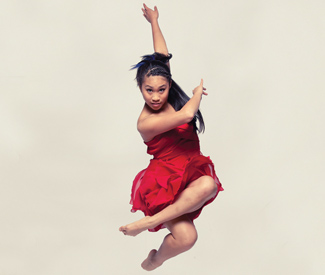
However, San Francisco does have one first-rate arts education program that is the envy of school districts with much better reputations: the Ruth Asawa School of the Arts, which this year celebrates its 30th anniversary. Its dance department is so good that students from around the Bay Area request inter-city transfers to attend. “I have one student who comes all the way from Vacaville,” says its director, Elvia Marta.

These dancers — 40 of them — will show their moxie this week at the Palace of Fine Arts with a concert of student and faculty choreography. Also included is a piece from alumnus Zack Benitez, who worked in Hollywood with Paula Abdul and is now coaching a musical, Adam and Eve, in Paris. (In French, of course.) At a rehearsal at ODC Commons, the students looked young, raw, and fierce. You could see these were dancers on their way, knowing where they want to be in a few years and having an inkling of how to get there. They were disciplined, focused, and attentive to the suggestions that Marta and Brittany Ceres Brown, who teaches choreography, gave them. In that way they are already professionals.

Getting into this public-school dance program is not easy. The application process is rigorous — questionnaires, grades, recommendations, essays, statements of commitment, auditions with small pieces of solo choreography — and sounds suspiciously like a rehearsal for college. Plus, according to the department’s website, students need “a basic ballet foundation.”

“Ballet focuses on alignment,” Marta explains. “It gives you an understanding of how the body and its skeletal and anatomical systems function.” But she also says that over the years she has had “kids who come from modern dance with a really good understanding of the body.” One way or another, this is not a program for beginners.

It also means that in all probability, the students come from families who have been willing and able to pay for ballet lessons in private studios or ballet-company schools. Criticism about “elitism” has wafted around RASOTA almost since the beginning. Marta is not deterred: “I let people talk. I don’t think it’s elitist. I think kids need something to be passionate about. It keeps them focused and on the straight and narrow. These [students] work very hard, taking academics in the morning and dance in the afternoon.”

Marta, born in Panama, grew up doing salsa. “Everybody knew how to do it. We didn’t have any training,” she says. At Balboa High School, dance teacher Yvonne McClung, who later became the first head of the RASOTA’s Dance Department, suggested Marta and her twin sister should take dance classes. At first, she didn’t know what a dance class was. She has since learned.

This year, all ten graduating dancers are off to colleges — many of which have distinguished dance departments. One of them, Marta says, was accepted at Juilliard. “It’s the second year,” she says with almost motherly pride. Juilliard is the country’s toughest dance program to get into. 

“RUTH ASAWA SAN FRANCISCO SCHOOL OF THE ARTS 30TH YEAR ANNIVERSARY DANCE CONCERT”

Fri/18-Sat/19, 8pm, $18-$28

Palace of Fine Arts

3301 Lyon, SF

www.sfsota.org

2012 Summer Fairs and Festivals

0


Through May 20

San Francisco International Arts Festival Various venues. (415) 399-9554,www.sfiaf.org. Check website for prices and times. Celebrate the arts, both local and international, at this multimedia extravaganza.


May 19

Asian Heritage Street Celebration Larkin and McAllister, SF. www.asianfairsf.com. 11am-6pm, free. Featuring a Muay Thai kickboxing ring, DJs, and the latest in Asian pop culture, as well as great festival food.

Uncorked! San Francisco Wine Festival Ghirardelli Square, 900 North Point, SF. (415) 775-5500,www.ghirardellisq.com. 1-6pm, $50 for tastings; proceeds benefit Save the Bay. A bit of Napa in the city, with tastings, cooking demonstrations, and a wine 101 class for the philistines among us.

May 19-20

Maker Faire San Mateo Event Center, San Mateo, www.makerfaire.com. $8–$40. Make Magazine’s annual showcase of all things DIY is a tribute to human craftiness. This is where the making minds meet.

Castroville Artichoke Festival Castroville. (831) 633-2465 www.artichoke-festival.com. 10am-5pm, $10. Pay homage to the only vegetable with a heart. This fest does just that, with music, parades, and camping.


May 20

Bay to Breakers Begins at the Embarcadero, ends at Ocean Beach, SF, www.zazzlebaytobreakers.com 7am-noon, free to watch, $57 to participate. This wacky San Francisco tradition is officially the largest footrace in the world, with a costume contest that awards $1,000 for first place. Just remember, Port-A-Potties are your friends.


May 21

Freestone Fermentation Festival Salmon Creek School, 1935 Bohemian Hwy, Sonoma. (707) 479-3557, www.freestonefermentationfestival.com. Noon-5pm, $12. Answer all the questions you were afraid to ask about kombucha, kefir, sauerkraut, yogurt, and beer. This funky fest is awash in hands-on demonstrations, tastings, and exhibits.


May 26-27

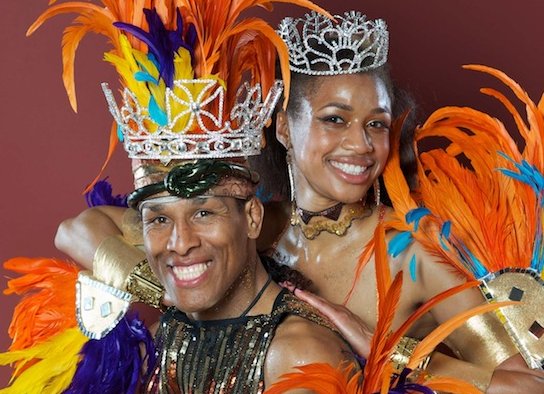
San Francisco Carnaval Harrison and 23rd St., SF. www.sfcarnaval.org. 10am-6pm, free. Parade on May 27, 9:30am, starting from 24th St. and Bryant. The theme of this year’s showcase of Latin and Caribbean culture is “Spanning Borders: Bridging Cultures.” Fans of sequins, rejoice.


June 2-3

Union Street Eco-Urban Festival Union Street between Gough and Steiner, SF. (800) 310-6563, www.unionstreetfestival.com. 10am-6pm, free. See arts and crafts created with recycled and sustainable materials and eco-friendly exhibits, along with two stages of live entertainment and bistro-style cafes.


June 9-17

San Mateo County Fair San Mateo County Fairgrounds, 2495 S. Delaware, San Mateo, www.sanmateocountyfair.com. 11am-10pm, $6–$30. Competitive exhibits from farmers, foodies, and even technological developers, deep-fried snacks, games — but most important, there will be pig races.


June 8-10

Queer Women of Color Film Festival Yerba Buena Center for the Arts, 701 Mission, SF. (415) 752-0868,www.qwocmap.org. Times vary, free. Three days of screenings from up-and-coming filmmakers with unique stories to tell.


June 10

Haight Ashbury Street Fair Haight between Stanyan and Ashbury, SF, www.haightashburystreetfair.org. 11am-5:30pm, free. Celebrating the cultural history and diversity of one of San Francisco’s most internationally celebrated neighborhoods, the annual street fair features arts and crafts, food booths, three musical stages, and a children’s zone.

June 10-12

Harmony Festival, Sonoma County Fairgrounds, 1350 Bennett Valley, Santa Rosa, www.harmonyfestival.com. One of the Bay Area’s best camping music festivals and a celebration of progressive lifestyle, with its usual strong and eclectic lineup of talent.


June 16-17

North Beach Festival, Washington Square Park, SF. (415) 989-2220, www.northbeachchamber.com. free. This year will feature more than 150 art, crafts, and gourmet food booths, three stages, Italian street painting, beverage gardens and the blessing of the animals.

Marin Art Festival, Marin Civic Center, 3501 Civic Center Drive, San Rafael. (415) 388-0151, www.marinartfestival.com. 10am-6pm, $10, kids under 14 free. Over 250 fine artists in the spectacular Marin Civic Center, designed by Frank Lloyd Wright. Enjoy the Great Marin Oyster Feast while you’re there.


June 22-24

Sierra Nevada World Music Festival, Mendocino County Fairgrounds Booneville. (916) 777-5550, www.snwmf.com. $160. A reggae music Mecca, with Jimmy Cliff, Luciano, and Israel Vibration (among others) spreading a message of peace, love, and understanding.


June 23-24

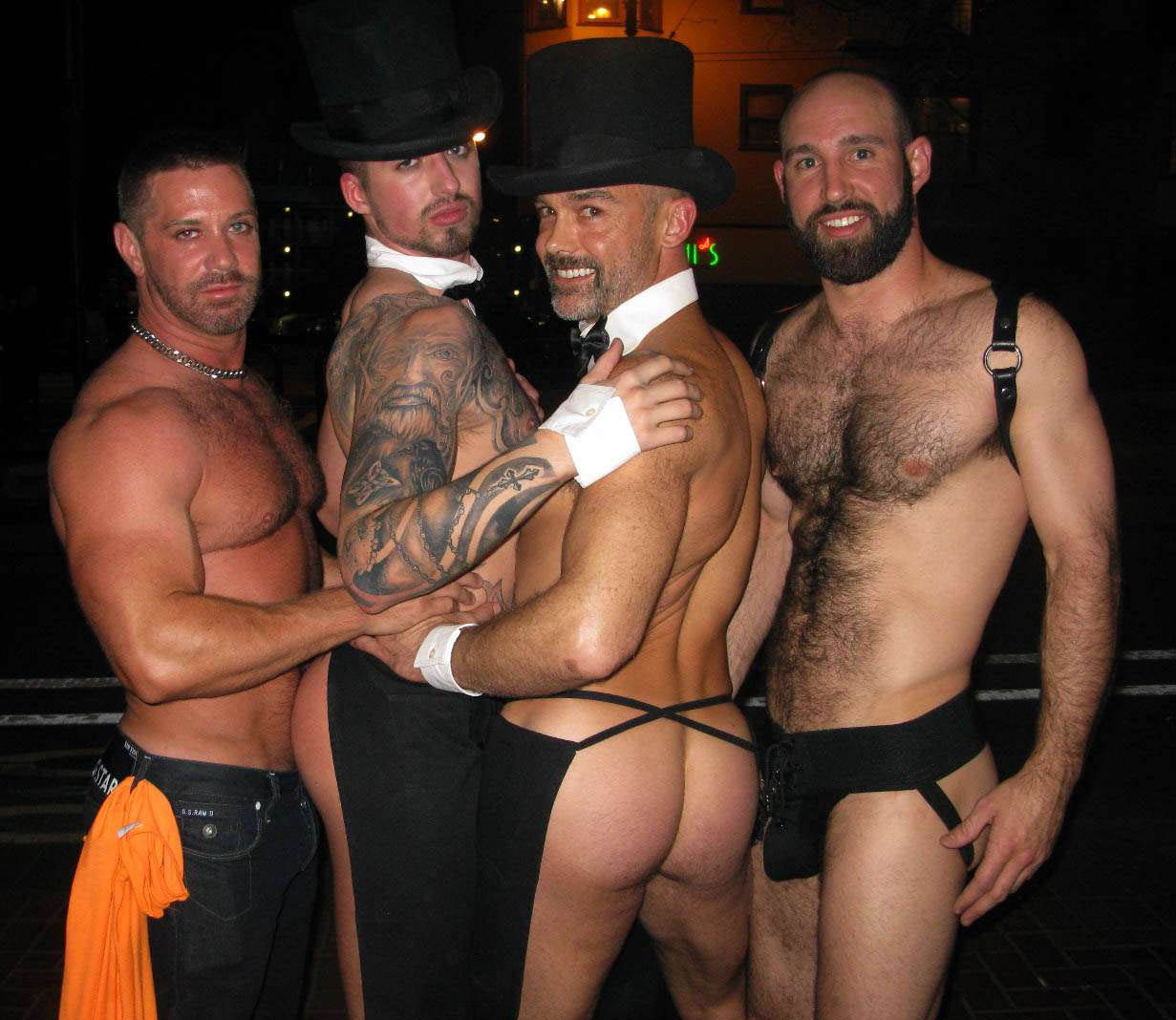
Gay Pride Weekend Civic Center Plaza, SF; Parade starts at Market and Beale. (415) 864-FREE, www.sfpride.org. Parade starts at 10:30am, free. Everyone in San Francisco waits all year for this fierce celebration of diversity, love, and being fabulous.

Summer SAILstice, Encinal Yacht Club, 1251 Pacific Marina, Alameda. 415-412-6961, www.summersailstice.com. 8am-8pm, free. A global holiday celebrating sailing on the weekend closest to the summer solstice, these are the longest sailing days of the year. Celebrate it in the Bay Area with boat building, sailboat rides, sailing seminars and music.


June 24-August 26

Stern Grove Festival, Stern Grove, 19th Ave. and Sloat, SF. (415) 252-6252,www.sterngrove.org, free. This will be the 75th season of this admission-free music, dance, and theater performance series.

July 4

4th of July on the Waterfront, Pier 39, Beach and Embarcadero, SF.www.pier39.com 12pm-9pm, free. Fireworks and festivities, live music — in other words fun for the whole, red-white-and-blue family.

July 5-8

High Sierra Music Festival, Plumas-Sierra Fairgrounds, Lee and Mill Creek, Quincy. www.highsierramusic.com. Gates open 8am on the 5th, $185 for a four-day pass. Set in the pristine mountain town of Quincy, this year’s fest features Ben Harper, Built To Spill, Papodosio, and more.


July 7

Oakland A’s Beer Festival and BBQ Championship, (510) 563-2336, oakland.athletics.mlb.com. 7pm, game tickets $12–$200. A baseball-themed celebration of all that makes a good tailgate party: grilled meat and fermented hops.


July 7-8

Fillmore Street Jazz Festival, Fillmore between Jackson and Eddy, SF. (800) 310-6563, www.fillmorejazzfestival.com.10am-6pm, free. The largest free jazz festival on the Left Coast, this celebration tends to draw enormous crowds to listen to innovative Latin and fusion performers on multiple stages.

July 19-29

Midsummer Mozart Festival, Herbst Theater, 401 Van Ness, SF (also other venues in the Bay Area). (415) 627-9141,www.midsummermozart.org. $50. A Bay Area institution since 1974, this remains the only music festival in North America dedicated exclusively to Mozart.


July 21-22

Renegade Craft Fair, Fort Mason Center, Buchanan and Marina, SF. (415) 561-4323, www.renegadecraft.com. Free. Twee handmade dandies of all kinds will be for sale at this DIY and indie-crafting hullabaloo. Like Etsy in the flesh!


July 21-22

Connoisseur’s Marketplace, Santa Cruz and El Camino Real, Menlo Park. Free. This huge outdoor event expects to see 65,000 people, who will come for the art, live food demos, an antique car show, and booths of every kind.

July 23-August 28

The San Francisco Shakespeare Festival, Various locations, SF. (415) 558-0888, www.sfshakes.org. Free. Shakespeare takes over San Francisco’s public parks in this annual highbrow event. Grab your gang and pack a picnic for fine, cultured fun.

July 27-29

Gilroy Garlic Festival, Christmas Hill Park, Miller and Uvas, Gilroy. (408) 842-1625,www.gilroygarlicfestival.com. $17 per day, children under six free. Known as the “Ultimate Summer Food Fair,” this tasty celebration of the potent bulb lasts all weekend.


July 28-29

27th Annual Berkeley Kite Festival & West Coast Kite Championship, Cesar E. Chavez Park at the Berkeley Marina, Berk. (510) 235-5483, www.highlinekites.com. 10am-5pm, free. Fancy, elaborate kite-flying for grown-ups takes center stage at this celebration of aerial grace. Free kite-making and a candy drop for the kiddies, too.

July 29

Up Your Alley Fair, Dore between Howard and Folsom, SF. (415) 777-3247,www.folsomstreetfair.org., 11am-6pm, free with suggested donation of $7. A leather and fetish fair with vendors, dancing, and thousands of people decked out in their kinkiest regalia, this is the local’s version of the fall’s Folsom Street Fair mega-event.


July 30-August 5

SF Chefs Food and Wine Festival, Union Square, SF. (415) 781-5348, www.sfchefsfoodwine.com. Various times and prices. Taste buds have ADD too. Let them spiral deliciously out of control during this culinary fair representing over 200 restaurants, bars, distilleries, and breweries.


August 4-5

Aloha Festival, San Mateo Event Center, 1346 Saratoga, San Mateo. (415) 281-0221, www.pica-org.org. 10am-5pm, free. You may not be going to Hawaii this summer, but this two-day festival of crafts, island cuisine, Polynesian dance workshops, and music performances might just do the trick.

Art and Soul Oakland, Frank Ogawa Plaza, 14th and Broadway, Oakl. www.artandsouloakland.com. $10 adv.; $15 at door. Sample delectable treats, joyfully scream through a carnival ride, get a purple unicorn painted on your forehead — all while rocking out to live jazz, R&B, acoustic, and gospel performances.

Nihonmachi Street Fair, Post between Laguna and Fillmore, SF. www.nihonmachistreetfair.org. 10am-6pm, free. Community outreach infuses every aspect of this Japantown tradition — meaning those perfect garlic fries, handmade earrings, and live performances you enjoy will also be benefitting a number of great nonprofit organizations.


August 5

Jerry Day 2012, Jerry Garcia Amphitheater, 40 John F. Shelley, SF. (415) 272-2012, www.jerryday.org. 11am, free; donate to reserve seats. Founded in 2002 when a dilapidated playground in the Excelsior was being transformed to what is now Jerry Garcia Amphitheater, Jerry Day continues as an art and music event brimming with local San Franciscan roots.


August 10-12

Outside Lands Music Festival Golden Gate Park, SF. www.sfoutsidelands.com. $225 regular 3-day ticket. Musical demi-gods like Stevie Wonder and Neil Young are headlining this year, and the rest of the jaw-dropping lineup makes us wish it were 2035 already so we can clone ourselves and be at opposite sides of the park at once.


August 11

Festa Coloniale Italiana, Stockton between Union and Filbert, SF. (415) 440-0800, www.sfiacfesta.com. 11am-6pm, free. When the moon hits your eye, like a big pizza pie, that’s amore. When you dance down North Beach, visiting every food truck you encounter, you’re in love.


August 18

Russian River Beer Revival and BBQ Cookoff, Stumptown Brewery, 15045 River, Guerneville. (707) 869-0705, www.stumptown.com. Noon-6pm, $55. You can’t really go wrong attending a festival with a name like this one. Entry fee includes live music, beer, cider, BBQ tastings, and your resurrection.

San Francisco Street Food Festival, Folsom from 20th to 26th St.; 25th St. from Treat to Shotwell, SF. (415) 824-2729, www.sfstreetfoodfest.com. 11am-7pm, free. You may think there is nothing quite as good your own mother’s cooking, but the vendors at La Cocina’s food fair are up for the challenge.


August 25

The Farm Series: Late Summer Harvest, Oak Hill Farm, 15101 California 12, Glen Ellen. (415) 568-2710, www.18reasons.org. 9am-5pm, $50. Head to Sonoma with Bi-Rite’s head farmer and produce buyer to check out Family Farm and Oak Hill Farm. Lunch is included in the ticket price and carpool drivers will be reimbursed for gas.


August 25-26

Bodega Seafood Art and Wine Festival, 16855 Bodega, Bodega. (707) 824-8717, www.winecountryfestivals.com. $12 advance, $15 at gate. The seaweed is usually greener on somebody else’s lake — but not this weekend. Have your crab cake and eat it too during this crustaceous celebration of food, wine, beer, and art.


September 8-9

Ghirardelli Chocolate Festival, Ghiradelli Square, 900 North Point, SF. (800) 877-9338, www.ghiradelli.com. Noon-5pm, $20. It’s finally time to put your at-home ice cream noshing skills to the test. For two-days only, chocolate lovers unite to celebrate all that is good in life — and by that we mean eating contests, chef demonstrations, and local dessert samplings.


September 9

EcoFair Marin 2012, Marin County Fairgrounds and Lagoon Park, Civic Center, San Rafael. (415) 499-6800, www.ecofairmarin.org. 10am-6pm, $5. This sustainability event brings together speaker presentations, exhibitions by energy reducing and conserving business leaders, and tasty raw and vegan food vendors, as a community effort to help bring about a healthier planet.


September 14-16

Ceramics Annual of America: Exhibition and Art Fair, Festival Hall, Fort Mason, Buchanan at Marina, SF. (877) 459-9222, www.ceramicsannual.org. $10. Contemporary ceramics from Korea, China, Mexico, Australia, and Italy, as well as top American artists’ works, will be showcased in this one-of-a-kind art show. Tours and discussions regarding the clay medium will be provided as a way to foster knowledge regarding the clay medium.


September 16

Comedy Day, Sharon Meadow, Golden Gate Park, SF. (415) 820-1570, www.comedyday.com. Noon-5pm, free. There are two secret cures for depression: sunlight and laughter. Comedy Day brings the two antidotes together for a cheery day of priceless (literally, it’s free) entertainment.


September 21-23

Eat Real Festival, Jack London Square, Oakl. (510) 250-7811, www.eatrealfest.com. Free. Processed foods really do have a bunch of weird named ingredients that trigger horrific thoughts in one’s imagination. At Eat Real, suspicion is taken out of the eating experience, as everything is handmade, fresh, and local — so you can just eat.


September 22

Superhero Street Fair, Islais Creek Promenade, Caesar Chavez at Indiana, SF. www.superherosf.com. 2pm-midnight, $10-20 suggested donation. Fantasy and reality merge through live music performances, a climbing wall, sideshows, interactive games, and a cobblestone walkway of art. The festival hopes to set the World Record for the largest number of superheroes in one location — or at least put Nick Fury to shame.


September 23

Folsom Street Fair, Folsom between Seventh and 12th Streets, SF. (415) 777-3247, www.folsomstreetfair.com. 11am-6pm, free. Time to get out that spiked collar and latex gloves once again. Don’t forget your nipple clamps or the vibrating magic wand, either! Might as well bring out the leather whip and chains too — not that you’ve been anticipating this huge fetish extravaganza all year or anything.


September 29-30

Polk Street Blues Festival, Polk between Jackson and California, SF. (800) 310-6563, www.polkstreetbluesfestival.com. 10am-6pm, free. The blues festival will feature two stages, a marketplace of crafts and food booths, and enough saxophones and harmonicas to get you rollin’ and tumblin’.


September 30

Petaluma’s Fall Antique Faire, Fourth Street and Kentucky from B Street to Washington, Petaluma. (707) 762-9348, www.petalumadowntown.com. 8am-4pm, free. Watch as downtown Petaluma transforms in to an antique marketplace of estate jewelry, furniture, art, and collectables from over 180 dealers.


October 4-14

Mill Valley Film Festival, California Film Institute, 1001 Lootens, San Rafael. (415) 383-5256, www.mvff.com. $13.50 per screening. The 11-day festival presents international features, documentaries, shorts, and children’s films, as well as workshops and seminars dedicated to the art of film-making.


October 5-7

Hardly Strictly Bluegrass, Golden Gate Park, John F. Kennedy at Marx Meadow, SF. www.strictlybluegrass.com. Free. Warren Hellman has left us in February, but the bluegrass music festival he gifted to San Francisco goes on in memory of its esteemed founder.


October 6

Steampunk Oktoberfest Ball, Masonic Lodge of San Mateo, 100 North Ellsworth, San Mateo. (650) 348-9725, www.peers.org/steampunk.html. 8pm, $15 adv.; $20 at door. Steampunk is a combination of modern technology and Victorian fashion tastes. Think steam-powered airships and breathable corsets. Nineteenth century waltzes, mazurkas, and polkas set the soundtrack to this year’s revelry of costumes, dancing, and anachronistic inventions.


October 7

Castro Street Fair, Castro at Market, SF. (415) 841-1824, www.castrostreetfair.org. 11am-6pm, donations collected at entry. Founded by Harvey Milk in 1974, this community street festival joins hundreds of craft vendors, various stages of live entertainment, and an impressive array of outfits and wigs as a celebration of the Castro’s ever-growing diversity.


October 13-14

Treasure Island Music Festival, Treasure Island, SF. www.treasureislandfestival.com. $69.50 for single day tickets; $125 for regular 2-day tickets. For those who are normally discouraged by large music festivals because of the usual mobs of people, this is the event for you. The festival always sports a great bill of performers, all of which you can enjoy while having a relaxing a picnic on the grass, watching the sunset fall over the Golden Gate Bridge. The lineup will be revealed later this summer.


October 15

Noe Valley Harvest Festival, 24th St. between Church and Sanchez, SF. (415) 519-0093, www.noevalleyharvestfestival.com. 10am-5pm, free. Fall into autumn’s welcoming leaves — there will be circus performers, dog costume contests, jack-o-lantern decorating booths, and a pumpkin patch to make you forget all about your fleeting summer crush.


October 26-28

International Vintage Poster Fair, Fort Mason Center, SF. (800) 856-8069, www.posterfair.com. $15. This is the only show in the world that offers over 15,000 original vintage posters. Throw out your duplicate copy, and run here now.

Open Walls Baltimore: What the murals said, how the streets responded

1

Most of you will know the neighborhood I was walking that early evening in from The Wire. In fact, the school where season four was shot was a few blocks away. That TV show is an eternal point of reference for Baltimore’s Greenmount West neighborhood, which Open Walls, the town’s first street art festival which I was in the hood to cover, was hoping to combat. The festival, going since March, will conclude with a closing party on May 25.

“Hey! I have a question for you!” Sometimes when you’re walking through half-vacant blocks at dusk you don’t turn around when people yell at you from across the street (you know white people), but this time the Argentines and I turned. A woman was walking towards us and pointing up at Jetsonorama’s massive, half-finished wheatpaste of a man’s face hovering in the dark above our heads.

>>RELATED READ: CAITLIN DONOHUE’S INTERVIEW WITH GAIA, THE 23-YEAR OLD STREET ARTIST-ORGANIZER OF OPEN WALLS

“What are you guys doing with that wall? Is that Mr. Tony?”

It should be noted that I have little to nothing to do with Open Walls, though I managed to secure a spot sleeping on a half-inflated mattress in 23-year street artist and festival organizer Gaia‘s cavernous live-work space for a week to watch the haphazard business of trucking half-cans of paint and open containers of paste across town in various station wagons by underpaid, incredibily dedicated staff and volunteers.

But even though – alongside season four’s Primary School No. 42 – hundreds of young artists lived in a massive ex-cork factory just a few blocks from where we had our exchange, it struck me the woman that evening saw us (some white and Latino scruffy-types) as a big enough anomaly on her block that she knew we had to be associated with the steet art festival.  

“You know Mr. Tony?” I asked. “Yeah,” she replied, with something that sounded like worry in her voice. “Why is he up on the wall?” “You’ll have to ask the artist,” I said. “Do you like it?” “Oh yeah, it’s really nice,” she told us, walking away, back into the night.

Around the corner in an alleyway, I’d seen Jetsonorama’s mirror-image pasting on either side of the narrow corrdor; a black kid on his bike. It seemed like he was reflecting the neighborhood back at itself, in stark contrast with the neon triangles and backwards wording of Baltimore artist Josh Van Horn’ previously-completed building-sized piece or even Argentine Jaz‘s corner park, which he’d lined with regal, painterly drawings of big cats. 

So that night, back at Gaia’s paint-covered live-work circus, Jetsonorama and I found a quiet place to talk about street art. Of course, I set my Android up wrong and none of the video footage of our epic, enlightening interview recorded, so I’ll steal his quotes from an epic and enlightening blog post he later wrote on his trip to Bmore. 

Jetsonorama, a.k.a. 50-something family physician Chip Thomas, lives on a northeastern Arizona Navajo reservation. He initially came for a four-year engagement to pay back his medical school loans, but, he tells me, “I loved the land, loved the people. So I decided to stay on.” His street art career began in 2009 on a trip to Brazil where he was struck by the sense of community that had arisen among the street artists he met there. 

And so upon his return to the rez, he began printing and posting images from photos he’d taken of people and animals there in the community. Jetsonorama saw them as an expression of the hip-hop culture he’d grown up in, love letters to the beleagured reservation he adored. He called the series Big. His next project was the Painted Desert Project, started with a friend. The work started earning props from those omnipresent street art blogs, and Jetsonorama began an online correspondence with Gaia, another artist who does “site-specific” (often a code word for “something the neighborhood will like”) wheatpastes.

The decision of what to paint is a defining aspect of street artists. Many of the artists at Open Walls like Rome’s Sten and Lex, Argentina’s Jaz, and Capetown’s Freddy Sam, create works that follow a specific artistic canon — like gallery painters, their inspiration can be culled from all over. Others, like Gaia, Jetsonorama, Chris Stain — even the New York artist LNY who dropped through Baltimore for a night to put up his wheatpaste of a boy astride a halo-ed horse — will often choose themes that reflect the geographic location of their work. This approach can often lead to a sense that a piece was created for neighborhood residents, avoiding the fate of pieces like Swoon’s Open Walls wheatpaste of an ancient woman (an Aborigine elder she met in Australia, though that fact was apparent in the finished piece.) The neighborhood, it was said around among the street artists, didn’t really get that piece, found it “creepy.”

Freddy Sam comments on his wall’s reception in Baltimore

To date, Jetsonorama is the only African American artist that is part of the Open Walls, which made his exchanges with neighborhood residents particularly meaningful. 

Indeed, they shaped his time in Baltimore. When Jetsonorama’s first attempt at pasting up Mr. Tony — a neighborhood legend, by the way, known for raising pigeons and wearing quarters in the stretched holes in his earlobes, which Tony will tell you is his change for the payphone — failed on an unprepped wall, he tried again. As he and street artist-festival organizer Nanook worked into the wee hours of the morning on the first draft, the block turned out to support them, telling them how much they liked the piece. So when the wheatpaste refused to stick to the wall, Jetsonorama extended his eight-day trip, eventually staying for two weeks and turning out a second version of Tony and a few other pieces. 

Open Walls Baltimore was all about balancing art and neighborhood – an apt reflection of the city’s plan for those blocks, given that Greenmount West and adjoining Charles North are both parts of the planned Station North arts district. In addition to the half-vacant blocks, Greenmount West is marked by old factories that have been filled with hundreds of working artists. Artists plus low-income renters: an age-old recipe for gentrification.

Those involved with Open Walls are well aware that their project may be a harbinger of higher rents in the neighborhood. “There’s a latent fear of this being one aspect of a changing neighborhood,” festival organizer and 23-year old wheatpaste artist Gaia told me when I interviewed him in his live-work studio space, the chaotic center of Open Walls. 

“Not all developers are totally evil, despite what people may say,” says Ben Stone, executive director of Station North, the area’s arts advocacy organization that is playing a large role in the implementation of Open Walls. Our interview took place at a sidewalk cafe in front of Cafe Bohemian on Charles Street, the bustling center of the North Charles neighborhood that was once the commercial center of the city in addition to being its geographic hub (the bus and train station is a few blocks away.) Stone told me that neighborhood associations envision a future for the area that includes the same number of low income units – but no more. That means that all the infill of those abandoned buildings can be more expensive housing, even “30-story buildings,” Stone says.

Stone tells me that the aim behind Open Walls is to attract real estate developers to the area so more of the empty properties can be turned into housing and other businesses. It also looks to make visible the art scene that is going on in Greenmount West behind the doors like those of the famous Copy Cat, an ex-factory megalith of artist housing. Doing murals out on the street inspires conversation between the street artists and the other residents of Greenmount West. 

Jetsonorama certainly found that to be true. He tells me a handful of stories of neighbors taking pride in the fact that a black man was participating in an endeavor that was seen as being controlled by forces outside the neighborhood. He recounts an exchange that happened while putting up a piece for Open Walls in the Station Village area. A woman stopped at a light, rolled down her car window, and yelled at him the following: 

“That’s nice! I like that. Thank you for sharing your art with us. Be sure to put your name on it when you’re done because if you don’t, the white man will come along and say he did it.”  

A fair deal for the city’s nurses

12

For San Francisco’s public-sector registered nurses, this year’s Nurse’s Week was a paradox. On May 10, nurses from throughout the city gathered in the cafeteria of San Francisco General Hospital to celebrate Florence Nightingale’s birthday by bestowing gratitude and appreciation on nurses selected by their colleagues. Martha Hawthorne, long-time Castro-Mission Health Center public health nurse, was one of those honored. 

Upon acceptance of the award, Martha said that city nurses would be most appropriately honored by getting a fair contract. The next day a smaller gathering of nurses, including Martha, was back across the bargaining table from city negotiators who have proposed  significant financial and working condition concessions. Decreased compensation threatens the future of nursing in the public sector by impairing recruitment and retention of highly-skilled registered nurses. Working conditions concessions are even more broadly harmful and unacceptable; it is both risky for the nurses and increases the likelihood of adverse outcomes for those we care for.

San Francisco DPH nurses care for the city, quite literally, and with great pride. We are also proud of San Francisco’s historically progressive record on public health. Immigrant pregnant mothers are not interrogated by immigration authorities before giving birth. Public health nurses don’t require insurance company pre-authorized visits before teaching self-care to elderly residents of downtown SROs. The quality of care given by Jail Health nurses is no less than that given to someone living in a nice house by the city’s home health nurses of Health-at-Home. Laguna Honda, one of the last municipal long-term care centers, has a beautiful new campus and San Francisco General Hospital is being noisily rebuilt thanks to voter-approved bond measures. But nice buildings and well-conceived health programs don’t care for the ill and injured, nurses do.

Nurses are professionally pragmatic; we don’t offer false hope. Patient advocacy requires great patience. This is especially true in the public sector, where the population we serve is likely to suffer from intractable extreme poverty and social marginalization. The poor don’t require less health care than wealthy individuals, in fact they require more. It’s not always pretty, but we know that if we are given the human resources to do so we will continue to deliver excellent patient care.

The complexity and intensity of patient care seems to be rising far faster than inflation. Aside from the issues of fairness and quality care, nurses simply don’t have enough hours in the day to do the repair our over-burdened fractured health system requires. Activist nurses are needed to save lives by preserving and expanding health care access. While universal single-payer health-care is elusive nationally, California nurses are optimistic we can do better here. Women’s health is under attack nationally by fanatics who would deny cancer screening and care for rape survivors.

Nurse’s Week is over and we have a lot to do, let’s start with a fair deal for DPH nurses. It’s not to much to ask for and we will all benefit.

Sasha Cuttler, RN, is a San Francisco public health nurse.

Our Weekly Picks: May 9-15, 2012

0

WEDNESDAY 9

Lotus Plaza

Lotus Plaza soaks innocent, introspective lyrics in bright, ambient noise. Its sound is somewhat of an Animal Collective meets Real Estate phenomenon, as repetition, staccato, washed out haze, and subtle, ’60s-inspired surfy guitar riffs predominate. Lotus Plaza — the solo project of Deerhunter’s guitarist Lockett Pundt — released its sophomore LP, Spooky Action at a Distance, early last month. You’ll get lost in this album’s consuming drone and echoing vocals, which focus on escape, living with yourself, and the future. Pundt has cited influences ranging from Stereolab to My Bloody Valentine to Gary Numan, so listen up! (Mia Sullivan)

With Wymond Miles, Mirror Mode

7:30pm, $12

Rickshaw Stop

155 Fell, SF

(415) 861-2011

www.rickshawstop.com


THURSDAY 10

“Plantosaurus Rex: Prehistoric Plants at the Conservatory of Flowers”

If you thought exotic nature sightings in Golden Gate Park were limited to bison, swans, and the occasional coyote, it’s time to put on your Jeff Goldblum sunglasses and stroll over to the Conservatory of Flowers. Not only does “Plantosaurus Rex,” which opens today, host life-sized model dinosaurs — including a baby Stegosaurus chillin’ in the foliage, and a toothy Tyrannosaurus poking its head through the Conservatory roof — it also features an evolutionary journey through prehistoric plant life, some of which might look familiar (if oddly-proportioned): huge ferns, giant seed pods, etc. Good fun for pint-sized budding paleontologists and full-grown botany nerds alike. (Cheryl Eddy)

Through Oct. 21

Tue-Sun, 10am-4pm, free–$7

Conservatory of Flowers

100 John F. Kennedy, Golden Gate Park, SF

www.conservatoryofflowers.org


“Barbary Coast and Beyond”

You hear “Gold Rush” and a stream of shimmering images pan across your mind’s eye; you hear “Barbary Coast” and the raucous calls of drunken sailors and ladies of the night fill your mental ear. But what of the actual music of this period, when Caruso was carousing the City by the Bay and tinny saloon pianos were banging out civic-pride singalongs like “California, Here I Come” and “Hello, Frisco, Hello”? The SF Symphony is hopping into the sepia-toned wayback machine to bring to life the astonishingly fertile local musical milieu of the period from the Gold Rush to the Panama-Pacific Exhibition, full of tunes brought to SF by famous old-time performers like Ole Bull and Luisa Tetrazzini. The journey is narrated by beloved Beach Blanket Babylon emeritus Val Diamond. (Marke B.)

Also Fri/11 and Sat/12. 8pm, $35–$140

Davies Symphony Hall

201 Van Ness, SF

(415) 864-6000

www.sfsymphony.org


Dead Milkmen

With its humorous and unorthodox take on punk rock back when hardcore was the norm, The Dead Milkmen set itself apart in the scene when it first formed in Philadelphia in 1983, gradually earning a following with fan-favorite tunes such as “Bitchin’ Camaro,” “The Thing That Only Eats Hippies,” and what would become its biggest mainstream success, “Punk Rock Girl.” After a 13-year break up and the passing of original bassist Dave Schulthise, the band reunited in 2008, and released The King In Yellow last year, bringing back its joyously clever songs and sound for fans to dance around and sing-along with like the old days. (Sean McCourt)

With Terry Malts

9pm, $23

Slim’s

333 11th St., SF

(415) 255-0333

www.slimspresents.com


FRIDAY 11

“The Last Drive-In Presents: 16mm Movie Night”

Benefiting Lost Weekend’s Cinecave, this event was set up by a couple of former rep house projectionists, screening so-bad-they’re-good (to mock) 16mm movies complete with classic trailers and snack bar reels to recreate the drive-in experience. (Without, I guess, the car and the crappy metal speakers to hang on the window.) The UK sci-fi double for the night includes The Crawling Eye (1958), which has been described as a surprisingly good picture…until the appearance of the remarkably bad feature creature, and the illogically titled, They Came from Beyond Space (1967). (Ryan Prendiville)

7pm, $5–$10 suggested donation Alley Cat Books 3036 24th St., SF (415) 824-1761

Facebook: AlleyCatBooks


Black Moth Super Rainbow

The mysterious TOBACCO flings heavy, analog-laden funk tracks that spark parties and haunt listeners in their dreams. But the progenitor of modern psychedelic-pop brings sunniness (slightly) as the lead of Black Moth Super Rainbow. Compared to TOBACCO’s dark and stormy skies, BMSR is a tehnicolor-saturated spring day. Listeners float in fuzzy synths, retro distortions, and vocoded TOBACCO vocals, while a current of punchy beats carries them along. TOBACCO scrapped a BMSR album slated for release in 2011, but fans should be excited that a new album is in the works. (Kevin Lee)

With Lumerians, Gramatik, Flako, Zackey Force Funk, Mophone, Annalove, DJ Dials, DJ Sodapop

10pm, $20

103 Harriet, SF

(415) 932-0955

www.1015.com


Savoy

This Boulder, Colo.-based “electro dubstep rock” trio remixes hits from the likes of Chromeo, Dire Straights, and the Beastie Boys with synthesizers and a drum kit. The result is a palpable wall of bass-heavy, dance-your-ass-off-worthy electronic sound. DJs Ben Eberdt and Gray Smith and drummer Mike Kelly have been going at it since their undergrad days at the University of Colorado. Savoy’s influences range from French house music to Phish, and the group has made inroads in the festival scene this year. (It played SXSW and is on the bill for Wakarusa.) Expect a dizzying light show, a high-energy dance party, and ecstasy in all of its forms. (Sullivan)

With Redeye, Robot.Mafia, Cutterz

9pm $16

Great American Music Hall

859 O’Farrell, SF

(415) 885-0750

www.slimspresents.com


SATURDAY 12

Cyro Baptista

Cyro Baptista’s collaboration list reads like a very compelling who’s who in the music industry — Herbie Hancock, Yo-Yo Ma, Serge Gainsbourg, Paul Simon, and John Zorn are among the greats who have worked with the Brazilian composer and percussionist. Born and raised in São Paulo, Baptista floats between jazz and world music. His eye-catching Beat the Donkey project was a multicultural percussion and dance show, featuring Baptista banging on some PVC pipe and buckets. New project Banquet of the Spirits, featuring bassist Shani Blumenkrantz and fingerstyle guitarist Tim Sparks, explores some of Zorn’s previous work dedicated to the Jewish Diaspora, with twists of Brazilian and Middle Eastern styles. (Lee)

With Tim Sparks and Shanir Blumenkrantz

8pm, $25

Swedish American Hall

2174 Market, SF

(415) 861-5016

www.sfjazz.org


Eskmo

Local producer Brendan Angelides creates electronica that somehow manages to sound both tightly produced and expansive at the same time. The easy but fair comparison is to Ninja Tune labelmate Amon Tobin, and the two have collaborated under the guise Eskamon on Angelides’ own Ancestor record label. Many electronic listeners will know Angelides through his alias Eskmo and his multi-layered post-hip hop on 2010’s Eskmo EP, but new work under the moniker Welder is just as provocative. On last fall’s Florescence, classical strings and pianos intertwined with Angelides’ intricate beat production, like a symphony embarking on a mellow jazz jam session. (Lee)

With Love & Light, DJ Dials, U9Lift

9pm, $15

Mezzanine

444 Jessie, SF

(415) 625-8880

www.mezzaninesf.com


SUNDAY 13

How Weird Street Faire

How do you know the summer festival season has truly sprung? Follow the breakdancing purple fuzzy dude through the rabbithole of deepest SoMa, choose the third key (probably) and enter a musical and artistic wonderland where the spirit number is 13 — not the unlucky 13, the brilliantly Bizarro 13 signifying 13 writhing blocks of neon freakiness and 13 stages pumping ravey local sounds. This is also the thirteenth How Weird Faire (on May 13!), celebrating 13 moons with the costume theme “Time,” which may or may not have something to do with galactic tones or Mayan glyphs, but definitely with “good times” in general. Jam out to the likes of the Sunset, Forward, Pink Mammoth, and tons of other DJ crews, peruse many Vendors from Beyond the Cosmic Edge, and revel in our delightful homegrown insanity. (Marke B.)

Noon-8pm, $10 donation requested

Howard and Second Street, SF

www.howweird.org


MONDAY 14

Herman Dune

Fans of Jonathan Richman, David Berman, Stephin Merritt, or anyone else who expertly blurs the line between twee earnestness and winking sarcasm will find plenty to love about Herman Dune. Recently boiled down to its core as a two-piece, the Parisian group is touring in support of 2011’s Strange Moosic, its latest batch of quirky anti-folk and bouncy indie-pop. Nearly every song in the band’s now impressively deep catalogue contains at least one endearing or sly lyrical gem courtesy of lead singer David-Ivar Herman Dune’s charming vocal delivery. Check out single “Tell Me Something I Don’t Know” and its Jon Hamm-starring music video to get a sense of the feel-good world the duo creates. (Landon Moblad)

With the Sam Chase, DJ Britt Govea

8pm, $14

Independent

628 Divisadero, SF

(415) 771-1421

www.theindependentsf.com


TUESDAY 15

“Celebrating 35 Years of Star Wars Comic Books: An Evening with Howard Chaykin and Steve Leialoha”

A long time ago, in a galaxy far, far away… more specifically 1977 New York, representatives from LucasFilm contacted Marvel Comics about creating an adaptation of their upcoming sci-fi flick Star Wars, which of course, went on to be one of the most successful film franchises of all time, but also a beloved and long-running comic title. Artists Howard Chaykin and Steve Leialoha, who worked on those early issues, will be on hand tonight for a 35th anniversary celebration of all things Sith and Jedi in the comic realm, along with a discussion and presentation about their work hosted by comedians Michael Capozzola and Joe Klocek. (McCourt)

7-9pm, $7

Cartoon Art Museum

655 Mission, SF

(415) CAR-TOON

www.cartoonart.org


Ana Tijoux

When the title track from Chilean rapper Ana Tijoux’s 1977 played over a montage of perpetual fuckup Jesse Pinkman riding shotgun with Mike the Cleaner on the latest season of AMC’s Breaking Bad, it was the type of moment that TiVo was made for, or maybe just sent viewers to their phones, trying to figure out who was responsible for that particularly cinematic song. Tijoux — who was born in France during Pinochet’s reign — has an infectiously cool flow and a conscious, no bullshit attitude that comes across in any language. Both political and personal Tijoux now returns with the album La Bala featuring “Shock,” a response to the recent student movements in Chile. (Prendiville)

With Los Rakas, Raw G

8pm, $15

Independent

628 Divisadero, SF

(415) 771-1421

www.theindependentsf.com


The Guardian listings deadline is two weeks prior to our Wednesday publication date. To submit an item for consideration, please include the title of the event, a brief description of the event, date and time, venue name, street address (listing cross streets only isn’t sufficient), city, telephone number readers can call for more information, telephone number for media, and admission costs. Send information to Listings, the Guardian Building, 135 Mississippi St., SF, CA 94107; fax to (415) 487-2506; or e-mail (paste press release into e-mail body — no text attachments, please) to listings@sfbg.com. Digital photos may be submitted in jpeg format; the image must be at least 240 dpi and four inches by six inches in size. We regret we cannot accept listings over the phone.

Lively crowd takes over Financial District

7

Click here for more breaking May Day action coverage

About 1,000 people gathered in the Financial District for a May Day convergence, blocking traffic at the intersection of Market and Montgomery and painting a huge yellow sun on the street with the caption “Rise up 99% Levántese!”

The lively crowd listened to music and speeches and participated in street theater.

Police were on hand in a line in front(415) 517-5910 of the Wells Fargo bank but as of the time of this post, there were no arrests.

In sharp contrast to the violence in the Mission, the actions have been peaceful.

The first march left 24th and Mission at around 10:15. Focused on immigrant rights — long a central tenet of May Day in the US — the event was planned by a large coalition including Mujeres Unides de Activas, HAVOC, SF Pride at Work, Young Workers United, and others.

The upbeat crowd of several hundred made its way to 16th and Mission, where police stood by as protesters took over the intersection for street theater.
A giant puppet representing the Earth held center stage. One player represented a banker; another tried to buy a house, but wound up homeless. When the victim of financial-sector greed sat down on the street, a “police officer” arrived to make a sit-lie arrest.

Tiffany Altamirano, with Young Workers United, told us, “My husband is undocumented. People are here whose brothers sisters and parents have been deported.”

The crowd took the intersection for about 40 minutes.

By mid-day the action had moved downtown, to the Westfield Mall, where a banner was dropped inside and pickets stood outside, showing solidarity with the SEIU Local 87 janitors who are in a dispute with building management.

Soon nearly 1000 converged on Market and Montgomery. Activists with The International Forum on Globalization giving away hundreds of books and pamphlets with critiques on global capitalism. A massive cutout of Goldman Sachs CEO Lloyd Blankfein stood in the middle of Montgomery, looking evil, with a message decrying corporate power.

Almost two dozen SFPD cops stood guard, with six police vans waiting nearby to haul away protesters. But the authorities seemed to be just letting the party happen with no orders to disperse.

Steven T. Jones contributed to this report.

7 vegan and gluten-free indulgences

0

True, at first glance a vegan and gluten-free lifestyle sounds like a joke from Portlandia‘s Allergy Pride Parade. Wave those flags high, besmirched friends. But here’s a non-snarky thought: for some people, it’s just life. They have actual allergies to gluten and/or dairy.

Or, there are those who simply eat delectable vegan meals for personal reasons and have best friends, family, or partners with high risks of Celiac disease. Either way, any way, whatever way, with all the delicious, forward-thinking offerings in the Bay Area, it ain’t so bad. In fact, it’s really, really good. Don’t hate, just taste. 

QUESADILLAS DE CALABAZA AT GRACIAS MADRE

This quesadilla is the antitheses of the greasy pocket you’re used to. It’s a folded upright pillow, weighted lightly in the base with mouth-watering folds of whipped butternut squash and carmelized onions. While the presentation — which reimagines the quesadilla with a classic samosa shape — is worth it alone, the dish comes slathered in Gracias Madre’s signature spicy cashew cheese and a nutty pumpkin seed salsa. It defies logic, and sets gentle fire to the tongue.

2211 Mission, SF (415) 683-1346, www.gracias-madre.com

FRESH SPINACH LEAVES APPETIZER AT ANGKOR BOREI

When you listen close enough, people in bars are having conversations about food all over San Francisco. Angkor Borei Cambodian Cuisine is a word of mouth restaurant, passed from vegan to vegan, bar patron to bar patron. While there are other yummy choices here (try the pumpkin curry with tofu, served in half a pumpkin piece), perhaps the most surprising, most exemplary idea of what you can do without wheat and dairy is the deceptively simple vegetarian fresh spinach leaves app. It’s a circle of little glass bowls, each with one ingredient: ginger cubes, peanuts, coconut, lime wedges, and the titular fresh spinach leaves. Scoop up a leaf, pile on the accoutrement with tiny spoons then spread the dipping sauce atop; the combined pop of zesty flavor is a delicious experiment.

3471 Mission, SF (415) 550-8417, www.cambodiankitchen.com

VEGAN CHARCUTERIE AT GATHER

It’s an elegant, inspired dish, there’s no debate. Loved by both vegans and omnivores alike. It won Best of the Bay in 2010, made Food & Wine’s 10 Best Dishes of 2010, and earned countless, breathless reviews on local and visiting vegan blogs. But it also should be noted that the vegan charcuterie at Gather — a sturdy board dotted with the most imaginative vegan offerings imaginable, from smoky watermelon to unrecognizable trios of mushrooms — is also gluten-free (save for the hunk of unnecessary Acme bread on the side). Dip your fork tenderly into the offerings, for each is a piece of tasty art.

2200 Oxford, Berk. (510) 809-0400, www.gatherrestaurant.com

PISTACHIO AND CORNMEAL-CRUSTED TEMPEH QUINOA AT THE PLANT CAFE

This tempeh provides a mouthful of dancing flavors. The large pistachio and cornmeal-crusted triangles meet rich, fluffy quinoa covered in a spicy cucumber sauce. Pow. The zing. The Plant is another spot that has many delicious vegan options, and some wheat-free choices, but this is one of few meals that encompass both. Make sure to check the menu — true to its cause, the Plant’s dishes are seasonal, though the crusted tempeh itself seems to be a frequent option (previous incarnations have come dressed up with pumpkin seeds and served over coconut mashed yams).

Pier 3, Ste 103, SF (415) 984-1973, www.theplantcafe.com

GREEN PAPAYA SALAD AT HERBIVORE

Let’s get to the most salient question: yes, this salad is big enough to fill you up on its own. Its tangy shreds cover the whole plate and rises in a crunchy mound in the center. Next, let’s discuss the unfairness of most green papaya salad itself: yes, the Thai custom is to make dish with dried shrimp, and we’re not trying to change tradition here, however, it’s a shame such a tantalizing dish isn’t more often served vegan, when it’s just one ingredient that offends. Herbivore’s version has crispy shreds of tomato, green beans, red cabbage, carrots, onions, tofu, peanut, and mint, all with a spot-on ginger-tamarind dressing. No shrimp needed.

531 Divisadero, SF (415) 885-7133, www.herbivorerestaurant.com

FRIED OKRA AT SOULEY VEGAN

Just thinking about these tiny fried balls of perfection makes me long for a warm afternoon perched on the outdoor benches next door at Beer Revolution, chomping okra and scarfing vegan mashed potatoes. Everything at Souley Vegan is rich and delicious. But there’s something about that spicy fried okra that makes the meal super-special. Twist the lemon slice offered atop, pop one in, then share among friends on the benches. Or keep them all to yourself. No one will judge you.

301 Broadway, Oakl. (510) 922-1615, www.souleyvegan.com

SAHA SAMPLER AT SAHA

Saha has the goods: creamy hummus, smokey baba ganoush perfection, fire-roasted eggplant and tomato spread, and a colorful mix of Mediterranean olives. All of these come in one dish, naturally, the Saha sampler. The cherry on the sampler is the offering of gluten-free pita wedges, every bit as hearty as the kind with wheat, and just as perfect for scooping all that good Middle East-inspired spread.

1075 Sutter, SF (415) 345-9547, www.sahasf.com

The America’s Cup meltdown

24

The America’s Cup Event Authority — the operation that Oracle CEO Larry Ellison set up to run the business side of his personal yacht race — is melting down, laying off half its staff and scrambling around for new leadership as projected revenues continue to slide and the ultimate size and impact of the event remains in question.

The once-glorious event that was going to be almost as big as the Super Bowl and the World Cup is now shrinking, and the billions of dollars that were going to come in are looking more and more dubious. Doesn’t mean it won’t happen; the races will go on, because Ellison’s pride is involved, but attendance may be lower than expected.

And the net gain to the city could be limited. A new report by Budget Analyst Harvey Rose (pdf) notes that if the America’s Cup Organizing Committee doesn’t raise the $32 million that it’s supposed to dredge up, then the city could wind up losing $11 million on the deal.

Here’s the problem with that scenario: Mark Buell, the head fundraiser for the ACOC, has to go to rich people and ask them for money. But the really rich person behind this event, Mr. Ellison, hasn’t chipped in a penny to that fund — and now it appears that money raised by sponsorships will go to pay Ellison back for the money’s he’s spent on his racing team.

Poor Mark. He has to ask people for money to subsidize the sixth richest person on the planet. And if he can’t pull it off, the city ends up with the tab.

Good luck with that.

Spring fairs and festivals

1

culture@sfbg.com

MARCH

SF Flower and Garden Show, San Mateo Event Center, 495 S. Delaware, San Mateo. (415) 684-7278, www.sfgardenshow.com. March 21-25, 10am-6pm, $15–$65, free for 16 and under. This year’s theme is “Gardens for a Green Earth,” and features a display garden demonstrating conservation practices and green design. Plant yourself here for thriving leafy greens, food, and fun in the sun.

The Art of Aging Gracefully Resource Fair, Jewish Community Center of San Francisco, 3200 California, SF. (415) 292-1200, www.jccsf.org. March 22, 9:30am-2:45pm, free. Treat yourself kindly with presentations by UCSF Medical Center professionals on healthy living, sample classes, health screenings, massages, giveaways and raffles.

California’s Artisan Cheese Festival, Sheraton Sonoma County, 745 Sherwood, Petaluma. (707) 283-2888, www.artisancheesefestival.com. March 23-25, $20–$135. Finally, a weekend given over to the celebration of cultures: semi-soft, blue, goat, and cave-aged. More than a dozen award-winning cheesemakers will provide hors d’oeuvres and educational seminars.

15th Annual Rhone Rangers Grand Tasting, Fort Mason Festival Pavilion, Buchanan and Marina, SF. (800) 467-0163, www.rhonerangers.org. March 24-25, $45–$185. The largest American Rhone wine event in the country, with over 2,000 attendees tasting 500 of the best Rhones from its 100 US member wineries.

Whiskies of the World Expo, Hornblower Yacht, Pier 3, SF. (408) 225-0446, www.whiskiesoftheworld.com. March 31, 6pm-9pm, $120–$150. The expo attracts over 1400 guests intent on sampling spirits on a yacht and meeting important personages from this fine whiskey world of ours.

Bay Area Anarchist Book Fair, SF County Fair Building’s Hall of Flowers, Golden Gate Park, SF. (415) 431-8355, bayareaanarchistbookfair.wordpress.com. March 31-April 1, free. This political book fair brings together radical booksellers, distributors, independent presses, and political groups from around the world.

Monterey Jazz Festival’s Next Generation Festival Monterey Conference Center, One Portola Plaza, Monterey. (831) 373-3366, www.montereyjazzfestival.org. March 30-April 1, free. 1200 student-musicians from schools located everywhere from California to Japan compete for the chance to perform at the big-daddy Monterey Jazz Festival. Free to the public, come to cheer on the 47 California ensembles who will be playing, or pick an away team favorite.

APRIL

Argentine Tango Festival, San Francisco Airport Marriot Hotel, 1800 Old Bayshore Highway, Burlingame. www.argentinetangousa.com. April 5-8, $157–$357. Grip that rose tightly with your molars — it’s time to take the chance to dance in one of 28 workshops, with a live tango orchestra, and tango DJs. The USA Tango championship is also taking place here.

Salsa Festival, The Westin Market Street, 50 Third St., SF. (415) 974-6400. www.sfsalsafestival.com. April 5-7, $75–$125. Three nights of world-class performances, dancing, competition and workshops with top salsa instructors.

Union Street Spring Celebration and Easter Parade, Union between Gough and Fillmore, SF. (800) 310-6563, April 8, 10am-5pm, parade at 2pm, free. www.sresproductions.com/union_street_easter. A family festival with kids rides and games, a petting zoo, and music.

45th Annual Northern California Cherry Blossom Festival, Japan Center, Post and Buchanan, SF. (415) 567-4573, www.sfjapantown.org. April 14-15 and 21-22, parade April 22, free. Spotlighting the rich heritage and traditional customs of California’s Japanese-Americans. Costumed performers, taiko drums, martial arts, and koto music bring the East out West.

Bay One Acts Festival, Boxcar Theatre, 505 Natoma, SF. www.bayoneacts.org. April 22 — May 12, 2012, $25–$45 at the door or online. Showcasing the best of SF indie theater, with new works by Bay Area playwrights.

Earth Day, Civic Center Plaza, SF. (415) 571-9895, www.earthdaysf.org. April 22, free. A landmark day for the “Greenest City in North America,” featuring an eco-village, organic chef demos, a holistic health zone, and live music.

Wedding and Celebration Show, Parc 55 Wyndham, 55 Cyril Magnin, SF. (925) 594-2969, www.bayareaweddingfairs.com. April 28, 10:00am-5:00pm. Exhibitors in a “Boutique Mall” display every style of product and service a bride may need to help plan his or her wedding.

San Francisco International Beer Festival, Fort Mason Center, Festival Pavilion, SF. www.sfbeerfest.com. April 28, 7pm-10pm, $65. The price of admission gets you a bottomless taster mug for hundreds of craft beers, which you can pair with a side of food from local restaurants.

Pacific Coast Dream Machines Show, Half Moon Bay Airport, 9850 Cabrillo Highway North, Half Moon Bay. www.miramarevents.com/dreammachines. April 28-29, 9am-4pm, $20 for adults, kids under 10 free. The annual celebration of mechanical ingenuity, an outdoor museum featuring 2,000 driving, flying and working machines from the past 200 years.

May:

San Francisco International Arts Festival Various venues. (415) 399-9554, www.sfiaf.org. May 2-20, prices vary. Celebrate the arts, both local and international, at this multimedia extravaganza.

Cinco de Mayo Festival, Dolores Park, Dolores and 19th St, SF. www.sfcincodemayo.com. May 5, 10am-6pm, free. Enjoy live performances by San Francisco Bay Area artists, including mariachis, dancers, salsa ensembles, food and crafts booths. Big party.

A La Carte and Art, Castro St. between Church and Evelyn, Mountain View. May 5-6, 10am-6pm, free. With vendors selling handmade crafts, micro-brewed beers, fresh foods, a farmers market, and even a fun zone for kids, there’s little you won’t find at this all-in-one fun fair.

Young at Art Festival, De Young Museum, 50 Hagiwara Tea Garden Drive, SF. (415) 695-2441. www.youngatartsf.com. May 12-20, regular museum hours, $11. An eight-day celebration of student creativity in visual, literary, media, and performing arts.

Asian Heritage Street Celebration Larkin and McAllister, SF. www.asianfairsf.com. May 19, 11am-6pm, free. Featuring a Muay Thai kickboxing ring, DJs, and the latest in Asian pop culture, as well as great festival food.

Uncorked! San Francisco Wine Festival, Ghirardelli Square, 900 North Point, SF. (415) 775-5500, www.ghirardellisq.com. May 19, 1pm-6pm, $50 for tastings; proceeds benefit Save the Bay. A bit of Napa in the city, with tastings, cooking demonstrations, and a wine 101 class for the philistines among us.

Maker Fair, San Mateo Event Center, San Mateo. www.makerfaire.com. May 19-20, $8–$40. Make Magazine’s annual showcase of all things DIY is a tribute to human craftiness. This is where the making minds meet.

Castroville Artichoke Festival, Castroville. (831) 633-2465 www.artichoke-festival.com. May 19-20, 10am-5pm, $10. Pay homage to the only vegetable with a heart. This fest does just that, with music, parades, and camping.

Bay to Breakers, Begins at the Embarcadero, ends at Ocean Beach, SF. www.zazzlebaytobreakers.com. May 20, 7am-noon, free to watch, $57 to participate. This wacky San Francisco tradition is officially the largest footrace in the world, with a costume contest that awards $1,000 for first place. Just remember, Port-A-Potties are your friends.

Freestone Fermentation Festival Salmon Creek School, 1935 Bohemian Hwy, Sonoma. (707) 479-3557, www.freestonefermentationfestival.com. May 21, Noon-5pm, $12. Answer all the questions you were afraid to ask about kombucha, kefir, sauerkraut, yogurt, and beer. This funky fest is awash in hands-on demonstrations, tastings, and exhibits.

San Francisco Carnaval Harrison and 23rd St., SF. www.sfcarnaval.org. May 26-27, 10am-6pm, free. Parade on May 27, 9:30pm, starting from 24th St. and Bryant. The theme of this year’s showcase of Latin and Caribbean culture is “Spanning Borders: Bridging Cultures”. Fans of sequins, rejoice.

June:

Union Street Eco-Urban Festival Union Street between Gough and Steiner, SF. (800) 310-6563, www.unionstreetfestival.com. June 2-3, 10am-6pm, free. See arts and crafts created with recycled and sustainable materials and eco-friendly exhibits, along with two stages of live entertainment and bistro-style cafes.

Haight Ashbury Street Fair, Haight between Stanyan and Ashbury, SF. www.haightashburystreetfair.org. June Date TBD, 11am-5:30pm, free. Celebrating the cultural history and diversity of one of San Francisco’s most internationally celebrated neighborhoods, the annual street fair features arts and crafts, food booths, three musical stages, and a children’s zone.

San Mateo County Fair, San Mateo County Fairgrounds, 2495 S. Delaware, San Mateo. www.sanmateocountyfair.com. June 9-17, 11am-10pm, $6–$30. Competitive exhibits from farmers, foodies, and even technological developers, deep-fried snacks, games — but most importantly, there will be pig races.

Queer Women of Color Film Festival Yerba Buena Center for the Arts, 701 Mission, SF. (415) 752-0868, www.qwocmap.org. June 8-10 times vary, free. Three days of screenings from up-and-coming filmmakers with unique stories to tell.

Harmony Festival, Sonoma County Fairgrounds, 1350 Bennett Valley, Santa Rosa. www.harmonyfestival.com. Date TBA. One of the Bay Area’s best camping music festivals and a celebration of progressive lifestyle, with its usual strong and eclectic lineup of talent.

North Beach Festival, Washington Square Park, SF. (415) 989-2220, www.northbeachchamber.com. June 16-17, free. This year will feature over 150 art, crafts, and gourmet food booths, three stages, Italian street painting, beverage gardens and the blessing of the animals.

Marin Art Festival, Marin Civic Center, 3501 Civic Center Drive, San Rafael. (415) 388-0151, www.marinartfestival.com. June 16-17, 10am-6pm, $10, kids under 14 free. Over 250 fine artists in the spectacular Marin Civic Center, designed by Frank Lloyd Wright. Enjoy the Great Marin Oyster Feast while you’re there.

Sierra Nevada World Music Festival, Mendocino County Fairgrounds Booneville. (916) 777-5550, www.snwmf.com. June 22-24, $160. A reggae music Mecca, with Jimmy Cliff, Luciano, and Israel Vibration (among others) spreading a message of peace, love, and understanding.

Gay Pride Weekend Civic Center Plaza, SF; Parade starts at Market and Beale. (415) 864-FREE, www.sfpride.org. June 23-24, Parade starts at 10:30am, free. Everyone in San Francisco waits all year for this fierce celebration of diversity, love, and being fabulous.

Summer SAILstice, Encinal Yacht Club, 1251 Pacific Marina, Alameda. 415-412-6961, www.summersailstice.com. June 23-24, 8am-8pm, free. A global holiday celebrating sailing on the weekend closest to the summer solstice, these are the longest sailing days of the year. Celebrate it in the Bay Area with boat building, sailboat rides, sailing seminars and music.

Stern Grove Festival, Stern Grove, 19th Ave. and Sloat, SF. (415) 252-6252, www.sterngrove.org. June 24-August 26, free. This will be the 75th season of this admission-free music, dance, and theater performance series.

July:

4th of July on the Waterfront, Pier 39, Beach and Embarcadero, SF. www.pier39.com 12pm-9pm, free. Fireworks and festivities, live music — in other words fun for the whole, red-white-and-blue family.

High Sierra Music Festival, Plumas-Sierra Fairgrounds, Lee and Mill Creek, Quincy. www.highsierramusic.com. July 5-8, gates open 8am on the 5th, $185 for a four-day pass. Set in the pristine mountain town of Quincy, this year’s fest features Ben Harper, Built To Spill, Papodosio, and more.

Oakland A’s Beer Festival and BBQ Championship, (510) 563-2336, www.oakland.athletics.mlb.com. July 7, 7pm, game tickets $12–$200. A baseball-themed celebration of all that makes a good tailgate party: grilled meat and fermented hops.

Fillmore Street Jazz Festival, Fillmore between Jackson and Eddy, SF. (800) 310-6563, www.fillmorejazzfestival.com. July 7-8, 10am-6pm, free. The largest free jazz festival on the Left Coast, this celebration tends to draw enormous crowds to listen to innovative Latin and fusion performers on multiple stages.

Midsummer Mozart Festival, Herbst Theater, 401 Van Ness, SF (also other venues in the Bay Area). (415) 627-9141, www.midsummermozart.org. July 19-29, $50. A Bay Area institution since 1974, this remains the only music festival in North America dedicated exclusively to Mozart.

Renegade Craft Fair, Fort Mason Center, Buchanan and Marina, SF. (415) 561-4323, www.renegadecraft.com. July 21-22, free. Twee handmade dandies of all kinds will be for sale at this DIY and indie-crafting Mecca. Like Etsy in the flesh!

Connoisseur’s Marketplace, Santa Cruz and El Camino Real, Menlo Park. July 21-22, free. This huge outdoor event expects to see 65,000 people, who will come for the art, live food demos, an antique car show, and booths of every kind.

The San Francisco Shakespeare Festival, locations TBA, SF. (415) 558-0888, www.sfshakes.org. July 23-August 28, free. Shakespeare takes over San Francisco’s public parks in this annual highbrow event. Grab your gang and pack a picnic for fine, cultured fun.

Gilroy Garlic Festival, Christmas Hill Park, Miller and Uvas, Gilroy. (408) 842-1625, www.gilroygarlicfestival.com. July 27-29, $17 per day, children under six free. Known as the “Ultimate Summer Food Fair,” this tasty celebration of the potent bulb lasts all weekend.

27th Annual Berkeley Kite Festival & West Coast Kite Championship, Cesar E. Chavez Park at the Berkeley Marina, Berk. (510) 235-5483, www.highlinekites.com July 28-29, 10am-5pm, free. Fancy, elaborate kite-flying for grown-ups takes center stage at this celebration of aerial grace. Free kite-making and a candy drop for the kiddies, too.

Up Your Alley Fair, Dore between Howard and Folsom, SF. (415) 777-3247, www.folsomstreetfair.org. July 29, 11am-6pm, free with suggested donation of $7. A leather and fetish fair with vendors, dancing, and thousands of people decked out in their kinkiest regalia, this is the local’s version of the fall’s Folsom Street Fair mega-event.

Freeing the information

0

news@sfbg.com

The Society of Professional Journalists, Northern California chapter, will honor champions of the First Amendment at the 27th annual James Madison Awards Banquet on Thursday, March 15, at the City Club of San Francisco.

William Bennett Turner, who has spent his career defending the First Amendment and civil rights, as well as 25 years teaching new generations of journalists and attorneys, is to receive this year’s Norwin Yoffie Award for Career Achievement from the Society of Professional Journalists, Northern California Chapter.

Turner heads a list of a dozen recipients of the James Madison Awards that SPJ NorCal presents annually to champions of the First Amendment and freedom of information.

In his legendary career, Turner has argued three cases before the U.S. Supreme Court, two on First Amendment rights, published more than 40 law review articles and taught First Amendment law at the University of California, Berkeley, for 25 years. He was instrumental in overhauling conditions in the Texas prison system and in 2011 he published the critically-acclaimed book, Figures of Speech: First Amendment Heroes and Villains.

The Yoffie award is named for one of the founders of SPJ NorCal’s Freedom of Information Committee, who as an editor and publisher of the then-family-owned Marin Independent-Journal was a vigorous advocate for transparency and accountability in the public-services sector. Other honorees are:

– Roger Woo, a teacher at Tokay High School in Lodi, California, has forged a strong reputation for quality teaching over decades of instruction. He has seen the work of his students recognized hundreds of times for stories, photos and layout. And in the words of a former student, now a newspaper publisher, Woo taught ethics, pride, and professionalism. Woo will be honored with the Beverly Kees Educator Award, named for a late, former SPJ NorCal president who was an educator and nationally recognized journalist.

– Attorney Cindy Cohn, legal director of the Electronic Frontier Foundation, will receive the Legal Counsel award for her litigation and oversight of countless significant First Amendment and open government cases. She is currently challenging the National Security Agency for alleged spying on the communications of Americans.

– Erin Siegal is being honored in the Author category for her investigation of human rights abuses in Guatemala’s adoption industry, as well as the U.S. government’s role, in which children have been stolen, sold, and offered as orphans to well-intentioned Western parents. Her book, Finding Fernanda, has received wide acclaim.

– The Hercules Patch, the local news site operated by America Online, receives the News Media award for its dogged tracking of the questionable financial management practices in the East Bay city of Hercules. Patch produced more than 13 investigative stories and 100 daily stories, and created 20 databases to follow the money.

– The San Francisco Chronicle, also will be honored in the News Media category for keeping a spotlight on the aftermath of the deadly PG&E natural gas line explosion and fire in San Bruno. The Chronicle’s persistence on the story kept readers abreast of the political fallout, the bureaucratic failings, and reform measures meant to prevent another such disaster.

– Tim Redmond, executive editor of The San Francisco Bay Guardian, receives the Professional Journalist award for his investigation of state agencies’ legally questionable acquisitions of a drug used for lethal injections that is no longer produced in the United States.

– Patrick Monette-Shaw, this year’s Advocacy award recipient, spent nearly two years following a crooked money trail to expose mishandling of millions of dollars at San Francisco’s Laguna Honda Hospital. The scandal he reported in the Westside Observer and his examiner.com articles led to an investigation of the city controller’s Whistleblower program.

– Susie Cagle, a cartoonist and journalist, has earned this year’s Cartoonist Award for her dedicated reporting on Occupy Oakland and for portraying the confrontation through her art. Additionally, she stood up for the rights of all journalists after being arrested at an Occupy Oakland rally that turned violent.

– Citireport.com, produced by Larry Bush, gets the accolade in the Community Media category for shining a bright light not only on San Francisco government but also on the city’s Byzantine political world. Bush, as editor and publisher, has spent nearly 30 years fighting to keep city government publicly accountable.

– Allen Grossman is the recipient of this year’s Citizen award for his efforts over the past several years to advance open government at San Francisco City Hall, whether by prodding the city’s Sunshine Ordinance Task Force to hold agencies and public officials accountable or by prying loose disclosable records that Ethics Commission staff aides wanted to withhold.

– The Bay Citizen, which put campaign finance data to good use, is to receive the Computer-Assisted Reporting award for its detailed political database on the San Francisco mayor’s race in 2011. The Bay Citizen made it easy to track contributions of every stripe. In addition, The Bay Citizen’s use of police records and public input has produced a highly interactive chart of bicycle accidents, letting riders pinpoint the most dangerous routes in the city.

The James Madison Freedom of Information Awards is named for the creative force behind the First Amendment and honors local journalists, organizations, public officials, and private citizens who have fought for public access to government meetings and records and promoted the public’s right to know and freedom of expression. Award winners are selected by SPJ NorCal’s Freedom of Information Committee.

JAMES MADISON AWARDS BANQUET

Thu/15 reception at 5:30 p.m., dinner and awards ceremony at 6:30 p.m., $50 SPJ members and students/$70 general admission

City Club of San Francisco

155 Sansome, SF

www.spjnorcal.org

Green Film Fest shorts: Blood in the Mobile

0

San Francisco is, famously, home to film festivals that wanna make a difference. The Transgender Film Festival, the Anti-Corporate Film Festival, the Bicycle Film Festival — the list and cameras roll on. There’s a reason for all these cinematic communes. The power of a film festival to make people sit down and hang out with open eyes and enough snacks to keep them in one place is formidable. It’s prime time to absorb information — or just catch that activist flame that the whipping winds of a presidential election year can threaten to extinguish. 

This week, the second annual Green Film Festival hits the big screen starting today, from Thu/1-Wed/7, taking over the must-see-if-you-haven’t-yet SF Film Society Cinema in the basement of Japantown’s New People mall. So thrilled were we by its enviro-conscious, better world-making fervor (and its capable, enjoyable program of films) that we will be running brief reviews of its offerings for the next four — business, c’mon now — days. Here’s the first of these, a Sun/4 screening that explains the connection between conflict and Africa and your cell phone. Blood in the Mobile‘s screening will be followed by a panel discussion on how consumer products can be made more sustainably, and built to last. 

Blood in the Mobile

Social consciousness rises to a whole new level in Danish director Frank Poulsen’s film about the minerals used in mobile phones. Poulsen goes deep into the mines of the Democratic Republic of the Congo in a first-person investigation that implicates the viewer along its dark and frightening course. The film manages to be both extremely informative, as well as thrilling in a way that is usually curtailed to the domain of Hollywood action films. Gorgeous camera work accentuates the intimacy of Poulson’s revealing interviews. One example: the Congo colonel who shows off his collection of combat uniforms with a childlike pride. Poulsen and his camera get to know his subjects in a three-dimensional way, capturing many real spontaneous moments of connection. The viewer comes away shocked by both how cell phones are made, and by how other people must live in order for such things to continue to be made. A beautiful, intense, and emotionally draining film, Blood in the Mobile literally takes you to hell and back. The inside of those mines are pitch-dark, and crammed with sweating bodies; children as young as 12 hammer away so that we can all text our friends.

Sun/4 3 p.m., $12. SF Film Society Cinema, 1746 Post, SF. www.sfgreenfilmfest.org

Nathaniel Blumberg: Open to change

0

By Wilbur Wood

 (Wilbur Wood was a student of Nathaniel Blumberg in the early 1960s at the University of Montana in Missoula. And he was the leader  of a contingent of Blumberg students that turned up in San Francisco, many dispatched by the  Dean to work on the Guardian during the highly active and newsworthy 1960s.   Wilbur was a poet and a reporter,  with a master’s degree in creative wiriting at San Francisco State, so he fit in well at the Guardian. He had edited his campus paper,  so I made him city editor. He covered the 1967 mayor’s race and operated as if he were directed by Blumberg himself.  Wilbur followed Joe Alioto around, from place to place, and found that Alioto was changing his story depending on the audience.  Wilbur, as a Blumberg mentee, was not shocked. He nailed Alioto and  wrote one of the most amusing and  illuminating stories of the campaign. but it did not deter Alioto from becoming mayor. Wilbur ‘s big triumph as city editor was his work in positioning and editing an investigative story exposing how the members of the  local  San Francisco draft boards were anonymous, establishment types who worked in secrecy at secret meetings to draft a disproportionate number of minorities.  The expose  appeared in Deccember, 1967, in  the red hot middle of the Vietnam War. It was a bombshell, the first such story ever done in the nation, and led to extensive litigation on behalf of draftees in federal court, pioneering reforms in the draft, and inspired a national New York Times investigation.  It was written by Eugene Hunn, the husband of Nancy Engelbach Hunn from Kalispell, Montana, and a classmate of Wilbur’s and a student of Blumberg at the Montana School of Journalism.

(Alas, Wilbur  went back to Montana, as all Montana people seemed to do, and is now a poet, reporter, and philosopher living in his hometown of Roundup, Montana with his wife Elizabeth. She worked as an ad representative at the Guardian. Elizabeth and Wilbur run a a writing, editing, and consulting business called Stone House Productions. The stonehouse was built by Wilbur’s grandfather and is where the two live, work, and play.   Others in this Guardian era also went back to Montana:  Printer Bowler, Troy Holter, Larry Cripe, Nancy Engelbach Hunn, Karen King, Bruce DeRosier, Doug Giebel et al, a talented group of journalists, writers, and political activists bristling with Montana populism. The Blumberg/Montana contributions were enormously valuable in our early days when we had lots of ideas and ambitions but slender resources.   Why they left San Francisco to go back to Montana is still a mystery to me.)

I’m late for class, jogging, short-cutting across a mowed lawn in front of the School of Journalism. A window squeaks open and the unmistakable voice of the Dean, Nathan Blumberg, roars out a second story window: “BARBARIAN!”

Astonished, I plop down on the ground, speechless, chagrined, then leap up and disappear into class. It is the early 1960s. The Dean is, at that time, a man who believes that people should walk on the sidewalks, not upon the carefully tended lawns, at the University of Montana. He sees a reason for rules, even as he openly questions many of them

A scant six or seven years later, this same man is gliding over those same lawns, sailing Frisbees into the sky, chasing the return throws from students, the occasional faculty colleague, and former students back for a visit.

“When did Nathan start calling himself Nathaniel?” asks Bruce Brugmann, editor and publisher of the San Francisco Bay Guardian. We’re talking on the phone on the day of Nathaniel Blumberg’s death, February 14, 2012. Valentine’s Day. It is fifty-four days before his 90th birthday, on April 8. (April 8, Blumberg was delighted to learn, is Buddha’s birthday.)

“The name change happened in the 1970s or early ‘80s,” I tell Brugmann. Bruce, back in 1953, at the University of Nebraska, was a student of Nathan Blumberg. “We called him by his last name,” Brugmann said, “outside class. We never used his first name.”

Nor did we in the early ‘60s, I reply. He was The Dean, Dean Blumberg — until Printer Bowler (one of his students) began calling him “Coach.” Things were starting to loosen up by then.

“Blumberg is who inspired me,” Brugmann says. “He was highly critical of the mainstream press–and this was back in the ‘50s. He pointed out their faults in class. He advised me to go someplace – he mentioned San Francisco — and start an independent weekly newspaper. When I could do that, I did.”

But why change his name from Nathan? Both Brugmann and I know people who, through the years, met Blumberg and later named their sons Nathan. “It’s about affirming his full identity,” I say to Bruce. “He decided to accept his name as it appears on his birth certificate: Nathaniel Bernard Blumberg.”

NBB arrives at middle age in the 1960s — a man of high principles, acute intelligence, possessing an inquiring mind along with great reservoirs and pride and stubbornness, his career a success. He arrives at middle age but does not come to a stop. He opens up. Opens his heart to an expanding circle of friends. His property on Flathead Lake becomes a destination. Music, talk, good food and drink flow in the clearing under the tall trees.

Not long ago Nathaniel brought up an argument he and I engaged in, more than 40 years ago, driving up the Big Sur Coast on our way back to San Francisco. We’d made a day trip to San Simeon, and toured the hilltop castle of the newspaper magnate William Randolph Hearst. Our argument was about Vietnam and the Civil Rights Movement. Blumberg thought the two issues were different, and that linking one with the other would damage the prospects for each cause, anti-war and anti-segregation. “You said the two were connected,” Blumberg reminded me, adding that about a year later, Martin Luther King, Jr., made that connection in public, in a speech at the Riverside Church in New York City. Nathaniel wanted to tell me that I had been right.

A veteran of World War II, NBB wrote the story of his weaponry unit going up against highly trained Nazi soldiers in the Battle of the Bulge. He honored that moment in history, but he approved of the next generation’s aversion and resistance to the war it had been handed: Vietnam. Although he was part of what Tom Brokaw called “the greatest generation,” Nathaniel rejected that label. He preferred the Sixties Generation, he told me, more than once, because “you did not accept the word of the government as truth.” Nor did we accept, he said, the word of the big corporations.

Nathaniel supported anyone trying to create a world based on love.

Les Gapay, a forrmer Blumberg student, writes a Blumberg remembrance and Blumberg writes his own obituary.

http://www.sfbg.com/bruce/2012/02/28/nathaniel-blumberg-everyone-needs-mentor


Image Comic Expo showcases new stars and the old guard

1

Comic cons serve a variety of functions. They can be press junkets, costume parties, swap meets, social retreats, even museums. Comics writer Warren Ellis has a habit of referring to San Diego’s huge Comic Con as “nerd prom,” which perfectly captures the glow of excitement for mass socialization in funny costumes. By contrast, this year’s Image Comic Expo was more like a nerd Sadie Hawkins dance – a deliberate reversal of the standard hierarchy, where creator-owned books are championed over the widely beloved DC and Marvel franchises that sometimes seem to oversaturate the comics market. It was also a little less garish and hectic than some larger cons, but the sense of community and pride was still richly evident.

The event coincided with two historic peculiarities – the twentieth anniversary of Berkeley-based Image Comics and the migration of San Francisco’s WonderCon to Anaheim this year. And, fittingly, there was no shortage of Image worship over the con’s three days. In the center of the convention floor like a hub was the main Image vendor, which sold books, distributed tickets to panels and workshops, and hosted signings, all in the shadow of a massive edifice with Image book covers on one side and images from Robert Kirkman’s Skybound imprint on the other.

Local vendors were well-represented on the con floor, with Berkeley’s Fantastic Comics (shout-out to my hometown comic book guys and gals) and Escapist Comic Bookstore, and San Francisco’s Two Cats Comic Book Store, among others. The “artist alley” was rife with independent artists and creators selling their wares and producing sketches, while several Image creators, including Jonathan Hickman (Red Wing), Nick Spencer (Morning Glories), and the MAN OF ACTION gents, got their own booths around the con.

As for the sort of crowd the Image Expo attracted, based entirely on my casual observations, there was a notable diversity of age, gender, and ethnicity. There were strikingly few cosplayers, though I spotted one full-blown Aang from Avatar: The Last Airbender, a group of ladies in anime-inspired dress (I made out one Sailor suit), and two young’uns dressed as Batgirl (or a female Batman) and Captain America. Among con guests, the Skybound booth featured an Atom Eve cosplayer, and the comedians of Dipstick Swagger sported a variety of disguises including their own mascot, Luchacat.

By virtue of the con’s Image-centric organization, the panels which ran through Saturday and Sunday were occasionally redundant, with guests like Kirkman, Joe Casey, and Brian K. Vaughan each appearing in multiple places. But breaking announcements and a sense of fan enthusiasm for these beloved creators’ upcoming work kept it all going. Among the exciting announcements at Friday night’s keynote speech by Image publisher Eric Stephenson: the long-awaited sequel to Howard Chaykin’s Black Kiss, a third volume of Phonogram from Gillen/McKelvie, a collaboration between Grant Morrison and Darick Robertson called Happy, and several other new titles.

The most enjoyable panels were the ones that featured folks with a less-established fanbase, who were in a position to introduce new readers to their ideas. The inaugural Saturday panel, moderated by G4’s Blair Butler, focused on the forthcoming Kickstarter-funded collection Womanthology, a showcase for comics by female creators. The panel featured Trina Robbins, Mariah Huehner, Nicole Sixx, Fiona Staples, and Bonnie Burton, all of who contributed in various capacities. The audience, though smallish, was enthusiastic about both the cause and the content, and discussions of such exasperating issues as the “brokeback pose” (slightly NSFW tumblr here) drew applause and thoughtful questions.

Also engrossing was Sunday’s “Image Introduces…” panel, with a slate of recently recognized creators whose series are still in their early issues, including Joe Keatinge (Glory, Hell Yeah), S. Steven Struble and Sina Grace (Li’l Depressed Boy), Daniel Corey (Moriarty), Jim Zub (Skullkickers), Brandon Seifert (Witch Doctor), and Kurtis J. Wiebe (Peter Panzerfaust). It was a joy to see their pride in their creations and their genuine pleasure at getting to share their work with potential new fans.

But let us not forget the old guard: at the “Twenty Years of Independence” panel, the founders of Image told their story and the audience got a chance to witness controversial icons like Todd McFarlane and Rob Liefeld; the “Stories and Scripts: Writing Comics” panel featured Image’s hottest properties, including Jonathan Hickman, Ed Brubaker, Nick Spencer, John Layman, Joe Casey, Steven T. Seagle, and Brian K. Vaughan, who basically all teased each other and had a grand old time.

Since it was an Image-minded convention, creators came first, which is always refreshing, especially for less iconic newcomers with a lot to offer, but the apotheosis of one publisher might wear thin if the convention continues in subsequent years. With a bit of expansion, though, an East Bay comics event might differ enough from WonderCon to hold an audience.

All photos by Taryn Erhardt


Film Listings

0

Film listings are edited by Cheryl Eddy. Reviewers are Kimberly Chun, Max Goldberg, Dennis Harvey, Lynn Rapoport, and Matt Sussman. For rep house showtimes, see Rep Clock. Due to the Presidents’ Day holiday, theater information was incomplete at presstime.

INDIEFEST

The 14th San Francisco Independent Film Festival runs through Thurs/23 at the Roxie Theater, 3117 16th St, SF. For tickets (most films $11) and schedule info, visit www.sfindie.com.

OPENING

Act of Valor Action movie starring real-life, active-duty Navy SEALs. (1:45)

*Bullhead Michael R. Roskam’s Belgian import scored an unexpected Best Foreign Language Film Oscar nomination this year. Unexpected, because it’s daring, disturbing, and a lot of other things that Foreign Language Film nominees usually are not (heartwarming, yes — gasp-inducing, no). The five-second description of this film, which is about a cattle farmer who injects both his livestock and his own body with illegal hormones, doesn’t do it justice. Who knew there was such a thing, for instance, as a “hormone mafia underworld”? While some of Bullhead‘s nuances, which occasionally pivot on culture-clash moments specific to its Belgium setting, will inevitably be lost on American viewers, the most important parts of the movie come through loud and clear, and you won’t soon forget them. (2:04) (Eddy)

*Dizzy Heights: Silent Cinema and Life in the Air The film medium’s first, sound free decades coincided with a sense of hurtling modernization throughout first-world society like nothing before or since — centuries of history had scarcely prepared for the sudden reality of such concepts as “world war” or “skyscraper.” Aviation in particular was such a fascinating wonder its potential seemed limitless, though commercial air travel was as yet many years and dollars from the average citizen’s reach. Curated by Patrick Ellis, this Pacific Film Archive series brings together some of the era’s most fanciful depictions of progress and peril in the skies. It includes 1918’s goofy, ambitious Danish A Trip to Mars, whose intrepid (if in-fighting) Earthlings land to promptly horrify the Red Planet of Peace’s entire vegetarian populace by shooting fowl and throwing a grenade. The influence of Isadora Duncan weighs heavily on the ensuing lessons learned, as wreath-bearing, toga clad peaceniks (“Come with me and look at the dance of chastity”) exhort our heroes to return home and preach pacifism — a very timely message, then. The 1929 British “disaster flick” High Treason more realistically depicts a very Jazz Age near future pushed away from the Charleston towards more catastrophic military conflict by unscrupulous war profiteers. Julien Duvivier, a director at the beginning of a long, sometimes pedestrian career in the French cinematic mainstream, was young and feckless when he made 1927’s Mystery of the Eiffel Tower, a long, antic conspiracy thriller that directly inspired the Tintin comics. This long weekend of rarities also includes a program of shorts encompassing animation from Disney and McKay, trick photography and Mack Sennett slapstick. Pacific Film Archive. (Harvey)

Gone A woman (Amanda Seyfried) who escaped a serial killer fears he has retaliated by kidnapping her sister. (1:34)

*In Darkness See “The War at Home.” (2:25)

*Khodorkovsky Russia today is a so-called “managed democracy.” Flawed a system as democracy is, though, it’s something you either live in or don’t — put a qualifier on the term, and it becomes something else. This particular something else is a nation where a popular, populist leader like Vladimir Putin can maintain an economically successful (at least for many) status quo and his own power by squelching any political opposition via decidedly un-democratic means. One of the most conspicuous such cases in recent years has been the imprisonment of Mikhail Khodorkovsky, former owner of oil company Yukos and the most fabulously wealthy “oligarch” to emerge from Russia’s post-Soviet move toward capitalist privatization. Though initially considered as corrupt as any in that privileged class, he realized after a fashion that transparency actually encouraged investment, becoming a noted respecter of oft-abused minority shareholder rights and a sort of poster child for ethical business practice. This transition coincided with increased friction between him and Putin, who had given Khodorkovsky and others like him relatively free rein so long as they “stayed out of politics.” On the day before the latter was arrested in 2003 — returning against all advice from an overseas trip where he’d been expected to become another wealthy “political emigrant” — he continued to align himself with the reformist anti-Putin opposition by telling a TV host “As long as our country isn’t fully a civil society, no one is safe from the people with handcuffs.” Conviction on questionable charges, Stalinesque detention in remote Siberia, and still-ongoing excuses for sentence elongation have ensued. The subject of Cyril Tuschi’s documentary (finally interviewed directly at the end) is certainly not innocent of arrogance, incaution, and possibly more prosecutable crimes; but he has also clearly chosen the hardest path against an intractable, grudge-keeping foe on moral principal. How many billionaires would even consider losing their freedom, comfort, and wealth for such an abstract? Khodorkovsky the movie has its character flaws, too — but you can forgive a filmmaker some of those when he’s working on a subject, and from a perspective, that has gotten more than a couple fellow journalists “mysteriously” poisoned to death. (1:51) (Harvey)

*Roadie Michael Cuesta’s first film as both director and writer (again co-authoring with brother Gerald) since 2001’s startling debut feature L.I.E. is also his best work since then. After nearly a quarter-century spent schlepping equipment for Blue Oyster Cult — the arty metal band (“Don’t Fear the Reaper,” i.e. “more cowbell!”) that was already sliding from the spotlight when he signed on — Jimmy Testergross (Ron Eldard) is fired, the reasons unknown to us. With nowhere else to go, he lands on the doorstep of his childhood home in Queens, where he hasn’t been seen in at least 20 years. Mom (Lois Smith) is going senile, though somehow her disapproval comes through with perfect clarity (and hasn’t changed in all that time). Seeking a liquid solace at a bar, our hero instead runs into Randy (Bobby Cannavale), who bullied him mercilessly way back when — and is now married to “Jimmy Testicle’s” still-hot former girlfriend Nikki (Jill Hennessey), who has rock-star aspirations of her own. Taking place over less than 24 hours’ span, Roadie is a very small character study, but a well-observed one. “Developmentally stunted by rock ‘n’ roll,” as one character puts it (when it emerges 40-something Jimmy has never learned to make coffee for himself), its protagonist is the kind of likable boy-man loser usually found in Fountains of Wayne songs, an aging lifelong air guitarist pining over good old days that probably weren’t even that good. His nostalgia is as touchingly hapless as his dubious future. (1:35) SF Film Society Cinema. (Harvey)

*Straight Outta Hunters Point 2 See “Back to the Point.” (1:20) Roxie.

Tyler Perry’s Good Deeds Director Tyler Perry puts aside the Madea drag to star as a man torn between Gabrielle Union and Thandie Newton. (1:51)

Wanderlust Paul Rudd and Jennifer Aniston star in this David Wain-directed, Judd Apatow-produced comedy about a New York City couple who move to a commune. (1:38)

ONGOING

*The Artist With the charisma-oozing agility of Douglas Fairbanks swashbuckling his way past opponents and the supreme confidence of Rudolph Valentino leaning, mid-swoon, into a maiden, French director-writer Michel Hazanavicius hits a sweet spot, or beauty mark of sorts, with his radiant new film The Artist. In a feat worthy of Fairbanks or Errol Flynn, Hazanavicius juggles a marvelously layered love story between a man and a woman, tensions between the silents and the talkies, and a movie buff’s appreciation of the power of film — embodied in particular by early Hollywood’s union of European artistry and American commerce. Dashing silent film star George Valentin (Jean Dujardin, who channels Fairbanks, Flynn, and William Powell — and won this year’s Cannes best actor prize) is at the height of his career, adorable Jack Russell by his side, until the talkies threaten to relegate him to yesterday’s news. The talent nurtured in the thick of the studio system yearns for real power, telling the newspapers, “I’m not a puppet anymore — I’m an artist,” and finances and directs his own melodrama, while his youthful protégé Peppy Miller (Bérénice Béjo) becomes a yakky flapper age’s new It Girl. Both a crowd-pleasing entertainment and a loving précis on early film history, The Artist never checks its brains at the door, remaining self-aware of its own conceit and its forebears, yet unashamed to touch the audience, without an ounce of cynicism. (1:40) (Chun)

*Chico and Rita This Spain-U.K. production is at heart a very old-fashioned musical romance lent novelty by its packaging as a feature cartoon. Chico (voiced by Eman Xor Oña) is a struggling pianist-composer in pre-Castro Havana who’s instantly smitten by the sight and sound of Rita (Limara Meneses, with Idania Valdés providing vocals), a chanteuse similarly ripe for a big break. Their stormy relationship eventually sprawls, along with their careers, to Manhattan, Hollywood, Paris, Las Vegas, and Havana again, spanning decades as well as a few large bodies of water. This perpetually hot, cold, hot, cold love story isn’t very complicated or interesting — it’s pretty much “Boy meets girl, generic complications ensue” — nor is the film’s simple graphics style (reminiscent of 1970s Ralph Bakshi, minus the sleaze) all that arresting, despite the established visual expertise of Fernando Trueba’s two co directors Javier Mariscal and Tono Errando. When a dream sequence briefly pays specific homage to the modernist animation of the ’50s-early ’60s, Chico and Rita delights the eye as it should throughout. Still, it’s pleasant enough to the eye, and considerably more than that to the ear — there’s new music in a retro mode from Bebo Valdes, and plenty of the genuine period article from Monk, Mingus, Dizzy Gillespie, Chano Pozo and more. If you’ve ever jones’d for a jazzbo’s adult Hanna Barbera feature (complete with full-frontal cartoon nudity — female only, of course), your dream has come true. (1:34) Smith Rafael. (Harvey)

*The Descendants Like all of Alexander Payne’s films save 1996 debut Citizen Ruth, The Descendants is an adaptation, this time from Kaui Hart Hemmings’ excellent 2007 novel. Matt King (George Clooney) is a Honolulu lawyer burdened by various things, mostly a) being a haole (i.e. white) person nonetheless descended from Hawaiian royalty, rich in real estate most natives figure his kind stole from them; and b) being father to two children by a wife who’s been in a coma since a boating accident three weeks ago. Already having a hard time transitioning from workaholic to hands-on dad, Matt soon finds out this new role is permanent, like it or not — spouse Elizabeth (Patricia Hastie, just briefly seen animate) will not wake up. The Descendants covers the few days in which Matt has to share this news with Elizabeth’s loved ones, mostly notably Shailene Woodley and Amara Miller as disparately rebellious teen and 10-year-old daughters. Plus there’s the unpleasant discovery that the glam, sporty, demanding wife he’d increasingly seemed “not enough” for had indeed been looking elsewhere. When has George Clooney suggested insecurity enough to play a man afraid he’s too small in character for a larger-than-life spouse? But dressed here in oversized shorts and Hawaiian shirts, the usually suave performer looks shrunken and paunchy; his hooded eyes convey the stung joke’s-on-me viewpoint of someone who figures acknowledging depression would be an undeserved indulgence. Payne’s film can’t translate all the book’s rueful hilarity, fit in much marital backstory, or quite get across the evolving weirdness of Miller’s Scottie — though the young actors are all fine — but the film’s reined-in observations of odd yet relatable adult and family lives are all the more satisfying for lack of grandiose ambition. (1:55) (Harvey)

The Help It’s tough to stitch ‘n’ bitch ‘n’ moan in the face of such heart-felt female bonding, even after you brush away the tears away and wonder why the so-called help’s stories needed to be cobbled with those of the creamy-skinned daughters of privilege that employed them. The Help purports to be the tale of the 1960s African American maids hired by a bourgie segment of Southern womanhood — resourceful hard-workers like Aibileen (Viola Davis) and Minny (Octavia Spencer) raise their employers’ daughters, filling them with pride and strength if they do their job well, while missing out on their own kids’ childhood. Then those daughters turn around and hurt their caretakers, often treating them little better than the slaves their families once owned. Hinging on a self-hatred that devalues the nurturing, housekeeping skills that were considered women’s birthright, this unending ugly, heartbreaking story of the everyday injustices spells separate-and-unequal bathrooms for the family and their help when it comes to certain sniping queen bees like Hilly (Bryce Dallas Howard). But the times they are a-changing, and the help get an assist from ugly duckling of a writer Skeeter (Emma Stone, playing against type, sort of, with fizzy hair), who risks social ostracism to get the housekeepers’ experiences down on paper, amid the Junior League gossip girls and the seismic shifts coming in the civil rights-era South. Based on the best-seller by Kathryn Stockett, The Help hitches the fortunes of two forces together — the African American women who are trying to survive and find respect, and the white women who have to define themselves as more than dependent breeders — under the banner of a feel-good weepie, though not without its guilty shadings, from the way the pale-faced ladies already have a jump, in so many ways, on their African American sisters to the Keane-eyed meekness of Davis’ Aibileen to The Help‘s most memorable performances, which are also tellingly throwback (Howard’s stinging hornet of a Southern belle and Jessica Chastain’s white-trash bimbo-with-a-heart-of-gold). (2:17) (Chun)

Hugo Hugo turns on an obviously genius conceit: Martin Scorsese, working with 3D, CGI, and a host of other gimmicky effects, creates a children’s fable that ultimately concerns one of early film’s pioneering special-effects fantasists. That enthusiasm for moviemaking magic, transferred across more than a century of film history, was catching, judging from Scorsese’s fizzy, exhilarating, almost-nauseating vault through an oh-so-faux Parisian train station and his carefully layered vortex of picture planes as Hugo Cabret (Asa Butterfield), an intrepid engineering genius of an urchin, scrambles across catwalk above a buzzing station and a hotheaded station inspector (Sacha Baron Cohen). Despite the special effects fireworks going off all around him, Hugo has it rough: after the passing of his beloved father (Jude Law), he has been stuck with an nasty drunk of a caretaker uncle (Ray Winstone), who leaves his duties of clock upkeep at a Paris train station to his charge. Hugo must steal croissants to survive and mechanical toy parts to work on the elaborate, enigmatic automaton he was repairing with his father, until he’s caught by the fierce toy seller (Ben Kingsley) with a mysterious lousy mood and a cute, bright ward, Isabelle (Chloe Grace Moretz). Although the surprisingly dark-ish Hugo gives Scorsese a chance to dabble a new technological toolbox — and the chance to wax pedantically, if passionately, about the importance of film archival studies — the effort never quite despite transcends its self-conscious dazzle, lagging pacing, diffuse narrative, and simplistic screenplay by John Logan, based on Brian Selznick’s book. Even the actorly heavy lifting provided by assets like Kingsley and Moretz and the backloaded love for the fantastic proponents at the dawn of filmmaking fail to help matters. Scorsese attempts to steal a little of the latters’ zeal, but one can only imagine what those wizards would do with motion-capture animation or a blockbuster-sized server farm. (2:07) (Chun)

The Iron Lady Curiously like Clint Eastwood’s 2011 J. Edgar, this biopic from director Phyllida Lloyd and scenarist Abi Morgan takes on a political life of length, breadth and controversy — yet it mostly skims over the politics in favor of a generally admiring take on a famous narrow-minded megalomaniac’s “gumption” as an underdog who drove herself to the top. Looking back on her career from a senile old age spent in the illusory company of dead spouse Denis (Jim Broadbent), Meryl Streep’s ex-British Prime Minister Margaret Thatcher steamrolls past hurdles of class and gender while ironically re-enforcing the fustiest Tory values. She’s essentially a spluttering Lord in skirts, absolutist in her belief that money and power rule because they ought to, and any protesting rabble don’t represent the “real England.” That’s a mindset that might well have been explored more fruitfully via less flatly literal-minded portraiture, though Lloyd does make a few late, lame efforts at sub-Ken Russell hallucinatory style. Likely to satisfy no one — anywhere on the ideological scale — seriously interested in the motivations and consequences of a major political life, this skin-deep Lady will mostly appeal to those who just want to see another bravura impersonation added to La Streep’s gallery. Yes, it’s a technically impressive performance, but unlikely to be remembered as one of her more depthed ones, let alone among her better vehicles. (1:45) (Harvey)

Margaret Lisa Cohen (Anna Paquin) is an Upper West Side teen living with her successful actress mother (J. Smith-Cameron, wife to writer-director Kenneth Lonergan) — dad (Lonergan) lives in Santa Monica with his new spouse — and going through normal teenage stuff. Her propensity for drama, however, is kicked into high gear when she witnesses (and inadvertently causes) the traffic death of a stranger. Initially fibbing a bit to protect both herself and the bus driver (Mark Ruffalo) involved, she later has second thoughts, increasingly pursuing a path toward “justice” that variably affects others including the dead woman’s friend (Jeannie Berlin), mom’s new suitor (Jean Reno), teachers at Lisa’s private school Matt Damon and Matthew Broderick), etc. Lonergan is a fine playwright and uneven sometime scenarist who made a terrific screen directorial debut with 2000’s You Can Count On Me (which also featured Ruffalo, Broderick and Smith-Cameron). He appears to have intended Margaret as a pulse-taking of privileged Manhattanites’ comingled rage, panic, confusion, and guilt after 9-11. But if that’s the case, then this convoluted story provides a garbled metaphor at best. It might best be taken as a messy, intermittently potent study of how someone might become the kind of person who’ll spend the rest of their lives barging into other people’s affairs, creating a mess, assuming the moral high ground in a stubborn attempt to “fix” it, then making everything worse while denying any personal responsibility. Certainly that’s the person Lisa appears to be turning into, though it’s unclear whether Lonergan intends her to be seen that way. Indeed, despite some sharply written confrontations and good performances, it’s unclear what Lonergan intended here at all — and since he’s been famously fiddling with Margaret‘s (still-problematic) editing since late 2005, one might guess he never really figured that out himself. (2:30) SF Film Society Cinema. (Harvey)

My Week With Marilyn Statuette-clutching odds are high for Michelle Williams, as her impersonation of a famous dead celebrity is “well-rounded” in the sense that we get to see her drunk, disorderly, depressed, and so forth. Her Marilyn Monroe is a conscientious performance. But when the movie isn’t rolling in the expected pathos, it’s having other characters point out how instinctive and “magical” Monroe is onscreen — and Williams doesn’t have that in her. Who could? Williams is remarkable playing figures so ordinary you might look right through them on the street, in Wendy and Lucy (2008), Blue Valentine (2010), etc. But as Monroe, all she can do is play the little-lost girl behind the sizzle. Without the sizzle. Which is, admittedly, exactly what My Week — based on a dubious true story — asks of her. It is true that in 1956 the Hollywood icon traveled to England to co-star with director Sir Laurence Olivier (Kenneth Branagh) in a fluff romance, The Prince and the Showgirl; and that she drove him crazy with her tardiness, mood swings, and crises. It’s debatable whether she really got so chummy with young production gofer Colin Clark, our wistful guide down memory lane. He’s played with simpering wide-eyed adoration by Eddie Redmayne, and his suitably same-aged secondary romantic interest (Emma Watson) is even duller. This conceit could have made for a sly semi-factual comedy of egos, neurosis, and miscommunication. But in a rare big-screen foray, U.K. TV staples director Simon Curtis and scenarist Adrian Hodges play it all with formulaic earnestness — Marilyn is the wounded angel who turns a starstruck boy into a brokenhearted but wiser man as the inevitable atrocious score orders our eyes to mist over. (1:36) (Harvey)

The Vow A rear-ender on a snowy Chicago night tests the nuptial declarations of a recently and blissfully married couple, recording studio owner Leo (Channing Tatum) and accomplished sculptor Paige (Rachel McAdams). When the latter wakes up from a medically induced coma, she has no memory of her husband, their friends, their life together, or anything else from the important developmental stage in which she dropped out of law school, became estranged from her regressively WASP-y family, stopped frosting her hair and wearing sweater sets, and broke off her engagement to preppy power-douchebag Jeremy (Scott Speedman). Watching Paige malign her own wardrobe and “weird” hair and rediscover the healing powers of a high-end shopping spree is disturbing; she reenters her old life nearly seamlessly, and the warm spark of her attraction to Leo, which we witness in a series of gooey flashbacks, feels utterly extinguished. And, despite the slurry monotone of Tatum’s line delivery, one can empathize with a sense of loss that’s not mortal but feels like a kind of death — as when Paige gazes at Leo with an expression blending perplexity, anxiety, irritation, and noninvestment. But The Vow wants to pluck on our heartstrings and inspire a glowing, love-story-for-the-ages sort of mood, and the film struggles to make good on the latter promise. Its vague evocations of romantic destiny mostly spark a sense of inevitability, and Leo’s endeavors to walk his wife through retakes of scenes from their courtship are a little more creepy and a little less Notebook-y than you might imagine. (1:44) (Rapoport)

W.E. Madonna’s first directorial feature, 2008’s Filth and Wisdom, was so atrocious, and the early word on this second effort so vitriolic, that there’s a temptation to give W.E. too much credit simply for not being a disgrace. Co-written by Madge and Alek Keshishian, it’s about two women in gilded cages. One is Wallis Simpson (the impressive Andrea Riseborough), a married American socialite who scandalized the world by divorcing her husband and running about with Edward, Prince of Wales (James D’Arcy), who had to abdicate the English throne in order to marry her in 1936. The other is fictive Wally Winthrop (Abbie Cornish), a childless Manhattan socialite in the late 1990s who’s neglected by her probably-unfaithful husband (Richard Coyle). Over-eagerly intertwined despite their trite-at-best overlaps (the main one being Wally’s obsession with Wallis), these two strands hold attention for a while. But eventually they grow turgid. We’re presumably meant to be carried away by their True Love, but the film doesn’t succeed in making Wallis and Edward seem more than two petulant, shallow snobs who were fortunate to find each other, but didn’t necessarily make one another better or more interesting people. (It also alternately denies and glosses over the couple’s fascist-friendly politics, which became an embarrassment as England fought Germany in World War II.) Meanwhile, Wally is a mopey blank too easily belittled by her spouse, and too handily rescued by a Prince Charming, or rather “Russian intellectual slumming as a security guard” (Oscar Isaac) working at Sotheby’s during an auction of the late royal couple’s estate. As is so often the case with Madonna, she seems to be saying something here, but precisely what is murky and probably not worth sussing out. Likewise, the attention to showy surface aesthetics — in particular Arianne Phillips’ justifiably Oscar-nominated costumes — is fastidious, revealing, and to an extent satisfying in itself. Somewhat ambitious and in several ways quite well crafted, the handsomely appointed W.E. isn’t bad (surely it wouldn’t have attracted such hostility if directed by anyone else), but the flaws that finally suffocate it reach right down to its conceptual gist. There is, however, one lovely moment toward the end: Riseborough’s Wallis, a well-preserved septuagenarian, dancing an incongruous yet supremely self-assured twist on request for her bedridden husband. (1:59) (Harvey)

Alerts

0

WEDNESDAY, FEB. 22


Police graft

This event, part of the Shaping SF Public Talk series, will focus on the 1937 Atherton Report that blew the lid off San Francisco police corruption in that era. Speakers Hank Chapot and Chris Agee will address their research, on the report and on SF policing and crime in the 1950s, respectively.

7:30pm, free

CounterPULSE

1310 Mission, SF

www.counterpulse.org/?tribe_events=shaping-sf-public-talk-police-graft-in-san-francisco/

THURSDAY, FEB. 23

Eviction community forum

A panel discussion and chance to access resources for those affected by and interested in the epidemic of foreclosures and evictions in our neighborhoods. Hear from community organizers, foreclosure lawyers, and affected homeowners and tenants. This is organized by Occupy Bernal and will feature Spanish translation and childcare.

7pm, free

Bernal Heights Community Center

515 Cortland, SF

415-821-7617


Garden for the environment

Enjoy live music, food from Haight Street Market, a raffle, and a celebration of urban permaculture at the fundraiser. The Haight Ashbury Neighborhood Center celebrates the achievements of Garden for the Environment, a group that maintains a one-acre garden in the Sunset demonstrating the educational, environmental and food-security possibilities of permaculture.

6pm, $5

111 Minna, SF

www.hanc-sf.org/urban-farming-fundraiser-and-party.html

FRIDAY, FEB. 24


History of porn

Join author Sam Benjamin and golden age porn star Richard Pacheco for a lively presentation chronicling how porn emerged in its present form by looking back over past decades. The presentation will use non-explicit clips but promises to be funny and informative. Benjamin is the author of American Gangbang: A Love Story.

8pm, $10-30 suggested donation

Center for Sex and Culture

1349 Mission, SF

www.sexandculture.org/

SATURDAY, FEB. 25

Foreclose on Wells Fargo CEO

A demonstration, complete with street theater and education, as activists attempt to foreclose on and evict Wells Fargo CEO John Stumpf. According to Occupy Bernal, this fun community event will feature “street theater to foreclose, auction home, and evict the CEO, music, Pride at Work dance mob, and special surprise bidders.”

1pm, free

1090 Chestnut, SF

www.occupybernal.org/wordpress


Deep Green Resistance

Have you ever felt that to continue to live on the planet, people must actively dismantle industrial systems which are destroying the earth, perhaps by any means necessary? If so, you should hear author Aric McBay speak about his book Deep Green Resistance: Strategy to Save the Planet. In the book, also by Derrick Jensen and Lierre Keith, the authors discuss the philosophies, tactics and implications of this brand of radical environmental activism.

7:30pm, free

Unite HERE Local 2

209 Golden Gate, SF

www.occupysf.org/calendar-2/

Justin Vivian Bond talks Occupy Wall Street, the power of language, and the politics behind the music

1

When Justin Vivian Bond was a little kid, v (more about that unique pronoun below) confidently wore Iced Watermelon lipstick to school and, inspired by feminist movements of the time, brandished a sign reading “Kids Lib!” Adults told the young Mx. Bond that these things were wrong, but v knew how right they felt, and represents for queer pride and radical poltics to this day. The writer, singer and activist is best known for v’s role as Kiki DuRane in Kiki and Herb, a drag cabaret show with partner Kenny Mellman. The show started in San Francisco and made it to Broadway, and was nominated for a 2007 Tony award. V’s memoir Tango: My Childhood, Backwards and in High Heels was released this year (wherein Bond tells the lipstick story and a lot more about growing up gender-free). Bond is still touring and will be back in San Francisco Feb. 23, performing from v’s new album, Dendrophile. I talked with v about the upcoming concert, v’s recent performance at Occupy Wall Street, and how music can bring people together.

SFBG What can people expect at your upcoming concert?

JVB I’m going to be performing songs from Dendrophile. I did my release concert when I was in the Bay Area in the spring. So some songs from that, some others songs, and some monologues about contemporary political observations. Also– 20 years ago I married a local performer by the name of Leigh Crow, aka Elvis Herselvis, and she and her band the Whoa Nellies are going to be opening. So it’s going to be an anniversary celebration.

SFBG You performed at Occupy Wall Street. What was that like?

JVB It was really awesome. I performed for the Trans-form the Occupation rally Nov. 13. It was a lot of trans activists talking about trans issues and establishing a presence of trans people within the revolution. It was so inspiring, empowering and exciting for me to perform my song on the Peoples’ Mic. The song, New Economy, is about the current obsession with whether people have enough and who has it. It was such a great experience.

Of course, the next day the police came in and closed Zuccoti park down. In my show I joked that once the queers and the trans people started making their presence known the police they realized they’d better shut it down. They were probably having flash backs to the ACT UP and Queer Nation days!

SFBG Do you think there has been a good presence of queer and trans issues in the Occupy movement?

JVB There certainly was that day. We didn’t get to see how that manifested within the community at the park. But I do feel that there are a lot of queer and trans people involved in raising awareness about social and economic disparities within our culture, so I think that its an inevitability that the subjects are going to be part of the Occupy conversation. Because trans people are constantly being oppressed and harassed.

SFBG How do you think music can help bring that kind of political awareness?

JVB I think that music is a way of bringing people together, especially people that may not realize how much they have in common, or may not have an excuse to be in the same space. If there’s an artist who starts voicing thoughts, ideas, and political sentiments, that’s one person making a statement, and people all of a sudden find themselves in a room with like-minded people. Community is formed. That community can become a larger voice, and that’s a powerful way of affecting the culture. Historically, music and artists have been a rallying potent for great and powerful change.

SFBG What’s your most powerful political song?

JVB Probably New Economy, this song that I did at occupy Wall Street . There’s also my cover of 22nd Century, which was written by Exuma, whose a Bahamian voodoo priest and spiritual revolutionary writer. That one really seems to get people going.


SFBG What inspired New Economy?

JVB I wrote it when the stock market was collapsing and everybody was freaking out. People were losing their 401k plans or health insurance. As an artist, I’ve never had those things. So seeing people freaking about something I’m so used to dealing with was kind of comforting. It was like, we are all going to be on a similar level for a while and try to figure out how to solve peoples problems. The song is about our commonality. The final line is “take what you need and give a little back,” because I believe there is enough out there for everybody.

SFBG
You’ve been involved with Radical Faeries, a group that celebrates queer sexuality, connection with the earth, and community. Have you been involved recently, and what does it mean to you?
 

JVB I haven’t been to a Faerie Gathering since the fall, but yes, I’m still involved. Its about community, and its about finding alternative economies, and ways of sharing and supporting each other on a very human, person-to-person level. That’s as opposed to having your reality dictated by the mass media and corporations.

SFBG Last year, you announced your official pronoun: V. You also use the honorific Mx. The move raised awareness for genderqueer and non-gender-conforming people, and also created backlash. It’s been a year now—how are you feeling about your pronoun decision?

JVB It’s been really great for me. Of course there’s frustration with people who somehow feel like they know me or my trip better than I do. But in general its been really liberating. And on a social level, I’ve met a lot of wonderful people who are going through similar experiences, that are not interested in being part of a fundamentalist or gender-fascist paradigm. So it’s nice to meet other people who feel this same way, and amazing to find out how many of those people there are out there.

SFBG
I know some writers don’t like using gender-neutral pronouns (some commonly-used pronouns that don’t signify a particular gender include ze and they.) But as a writer who has used the incorrect pronoun for somebody in the past, then edited the piece, I feel– it’s not that hard to respect how people identify!

JVB
I’ve been shocked to find out how heavily invested some writers are are in what they’re used to. For people that make their living using words, I’m almost shocked at how inflexible they can be. As for me, I love language and the power of it. The conversation that the pronoun provokes has been a great conversation to have with so many people. There have been times when people have done that same thing with me, then they fix it online and apologize, so that’s a nice thing.

SFBG Well thank you, and we’re excited for your concert.

JVB It’s going to be really fine show. It’s going to be a celebration, and I’m looking forward to it.

NATHANIEL BLUMBERG, 1922-2012

3

Nathan Blumberg, a great journalist who insisted on meeting deadlines, wrote his own obituary so that he would not miss his final deadline,  on Valentine’s Day, in 2012, when he died of complications from a stroke in Kalispell, Montana. Below is his obit,and his final byline, updated and corrected by Wilbur Wood, his former student and former city editor of the Guardian in the late 1960s.  Wood said that  Nathaniel wrote his own obit to insure that it would be complete and accurate. Nathaniel’s critique of mainstream journalism, and his  vision of independent journalism, were a major influence in the founding of the Guardian and the alternative press.

Nathaniel Blumberg was a World War II combat veteran, Rhodes Scholar, investigative reporter, national press critic, novelist, visiting professor and lecturer at major universities, dean and professor during his 35-year tenure at the University of Montana, and a man devoted to Montana for the last 55 years of his life.

He died February 14, 2012, at the age of 89 in Kalispell, Montana, where he had been hospitalized since a stroke February 8 in his home near Big Fork.     

Born April 8, 1922, in Denver, Colorado, Nathaniel Bernard Blumberg was the eighth and last child of Dr. Abraham Moses and Jeanette Blumberg. His father was a country doctor in Siebert, Colorado, for many years and had moved to Denver with his family to serve as superintendent of a tuberculosis sanitarium.

Nathaniel grew up in the west side of Denver with his four brothers and three sisters in a vibrant home filled with newspapers, magazines, books, music and long discussions of current events at the dinner table. He was graduated from East Denver High School after covering the city’s high school sports for the Rocky Mountain News while a senior.

His education at the University of Colorado was interrupted by the attack on Pearl Harbor and in August, 1942, he enlisted in the Army. After basic training, he was sent to the Army Specialized Training Program in Logan, Utah, and then to Camp Bowie in Texas. He was assigned to the forward observation team of Battery C of the newly formed 666th Field Artillery Battalion, a 155mm howitzer non-divisional unit trained to change mission on short notice. The Triple Sixes entered the war during one of the coldest winters of the century in Belgium against elite German SS troops in the Battle of the Bulge, the largest land battle in the history of the United States Army. The battalion then drove across the Roer river and the Rhine, through the heart of Germany and into occupation in Austria. He earned three battle stars and a Bronze Star in combat. 

Shortly after VE Day in 1945, he published the first history of a unit in World War II, “Charlie of 666,” which he had begun writing when the battalion was formed in 1944. With his poker winnings and combat pay, he published the 32-page booklet in a German print shop and distributed it to members of his battery to send home.

After the war he returned to the University of Colorado, was named editor of the student newspaper and received a bachelor of arts in journalism and a master of arts in history. He was awarded a Rhodes Scholarship for two years of study at Oxford University, where he earned a doctorate in modern history under the tutelage of the internationally known and controversial historian, A.J.P. Taylor. He was a starting guard for Oxford in the first Oxford-Cambridge basketball game ever played in 1949.

Nathaniel was an assistant professor of journalism at the University of Nebraska from 1950 to 1955, when in 1954 the University of Nebraska Press published his “One-Party Press?,” the first significant study of press performance in a presidential election. He went to Michigan State University for a year as an associate professor and in 1956 at the age of 34 he was brought to the Universty of Montana by President Carl McFarland to become dean and professor of the School of Journalism. He served under four presidents and two interim presidents during his 12 years as dean.

He established the annual Dean Stone Night in 1957 to honor the founder and first dean of the School of Journalism, to present awards to outstanding students and to bring a prominent journalist to lecture on the campus, a tradition still followed.

He formed the Department of Radio-Television in 1957 and brought in Phil Hess to put KUFM on air Jan. 31, 1965, six years before National Public Radio was begun in 1971. He has been called on air “the grandfather of Montana Public Radio, a public service of the University of Montana.”

With Mel Ruder of the Hungry Horse News, president of the Montana Newspaper Association, Nathaniel installed the Montana Newspaper Hall of Fame in the School of Journalism in 1958.

Also in 1958, he founded the Montana Journalism Review, the first journalism review in the United States, three years before the Columbia Journalism Review. It is still going.

Shortly after the inauguration of President Kennedy in 1961, the U.S. State Department asked him to serve as an “American Specialist” in Thailand for the summer. Three years later, under President Johnson, he again served in the same capacity for the summer in Trinidad, Guyana, Surinam and Jamaica.

He was elected vice president of the American Association of Schools and Departments of Journalism in 1962, declining to run for president because it meant he would be sponsoring a national journalism competition he and his faculty regarded as unethical. He was elected national chairman of the accreditation committee of the American Council on Education for Journalism in 1967 and national president of Kappa Tau Alpha, the society honoring scholarship in journalism, in 1969.

He was a member of the Rhodes Scholarship state selection committee from 1956 to 1987, including seven years as state secretary. He served six times on the western seven-state Rhodes regional selection committee.

Nathaniel was a staff writer for the Denver Post, associate editor of the Lincoln (Neb.) Star and assistant city editor of the Washington Post. He accepted invitations to serve as a visiting professor at Pennsylvania State University for fall quarter of 1964, Northwestern University’s Medill School of Journalism for the 1966-67 year and the Graduate School of Journalism at the University of California at Berkeley in 1970.

He married Lynne Stout in 1946 and they had three daughters, Janet Leslie, Jenifer Lyn and Josephine Laura. They divorced in 1970 but remained a close family. Their children and grandchildren gathered in Missoula on many occasions and spent long summers on the east shore of Flathead Lake.

Starting a new life in 1970, Nathan took the full name of Nathaniel on his birth certificate. In 1973, he married Barbara Farquhar, a college English professor and a widely published poet, who came to Missoula with her daughter, Nina. Barbara introduced him to Newfoundland dogs and they shared their 34 years together with seven Newfies (and a wolf with a touch of dog in her from the Helena hills). They enjoyed traveling together to beaches and fishing villages in the Canary Islands, Morocco, Spain, Portugal, Nova Scotia, and frequently to Florida, Mexico, Costa Rica, Orcas Island and the central Oregon coast. They balanced these adventures with quiet periods of writing in the cabin they designed and helped build near Big Fork.

In 1980 he established WoodFIREAshes Press to publish books which he hoped to write, edit and design without commercial publishers, editors or agents. He crafted “The Afternoon of March 30, A Contemporary Historical Novel” in l984, which centered on facts never reported by mainstream newspapers or on television about the attempted assassination of President Reagan by John W. Hinckley Jr. It received many warm reviews except for the Missoulian reviewer who didn’t care for the book although he termed the chapter on Hinckley’s trial “riveting.” Bud Guthrie wrote that he had “written a pretty bad novel but a forceful and persuasive book.” Doris Lessing, years before she was awarded the Nobel Prize for Literature, wrote Nathaniel, “I have read ‘The Afternoon of March 30’ with fascination. I really could not put it down, once I had started. If you ever come to London – and why should you, if you live in Montana, which I understand from friends of mine is one of the special places – then do let me know.”    
 
Nathaniel rarely spoke of his part in World War II until 19 survivors of his artillery battery gathered for a reunion in 1992 and urged him to write the uncensored story of their time at war. He returned to Belgium and Germany three times, including a three-day meeting with 32 German veterans of the Ardennes battle. In 2000 he published “Charlie of 666, a Memoir of World War II,” which included his 1945 history and his recollections on the war 55 years later. It was nominated for the 2002 Distinguished Book Award of the Society of Military History.

From 1991 to 1999 he published 20 issues of the “Treasure State Review, A Montana Periodical of Journalism and Justice.” Many of his graduates contributed to the 12-page newsletter. It served as his commentary on that decade of Montana history.

He wrote many articles for magazines, but he was most proud of his coverage of the “March on the Pentagon” in 1967 and his long essay, “Chicago and the Press,” based on his time on the streets and in the parks covering the protesters during the chaotic week of the 1968 Democratic National Convention. He was co-editor with Warren Brier of “A Century of Montana Journalism” and editor of the two-volume “Mansfield Lectures in International Relations.”

He was a demanding teacher with high standards who encouraged his students to live up to the highest principles of the journalism profession, to treat their native language with accuracy and affection, to always be skeptical but never cynical, and to remember that “sacred cows make the best hamburgers.” He was teacher, friend and counselor to hundreds of his students and took great pride in their professional success, their contributions to journalism in Montana and the nation, and their strong sense of public service in their chosen careers. They have written an extraordinary number of books. Scores of his graduates became lifelong friends.

Nathaniel was outspoken and had strong opinions. When he was honored by the Montana Newspaper Association along with Mel Ruder of the Hungry Horse News and Hal Stearns of the Harlowtown Times as the first three Master Editor/Publishers in 1991, he told a cheering audience of weekly journalists that “I am just as proud of the kind of people who don’t like me as I am of the kind of people who love me.” At the 25th anniversary of the Montana Constitutional Convention in Helena in 1997, his critique of the Montana daily press drew the longest standing ovation of the meeting.

His beloved Barbara Ann died of a stroke on the Autumnal Equinox, Sept. 21, 2007, a few days before her 73rd birthday. He also lost his youngest daughter, Josephine Loewen, in a tragic accident on Jan. 7, 2001, at the age of 46.

Survivors include his daughters, Janet Leslie Blumberg of Bothell, Wash., Jenifer Blumberg of Charlo, and stepdaughter Nina Gutierrez and husband Miguel of Ciudad Colon, Costa Rica; grandchildren Caleb Knedlik and wife Janine of Philadelphia, Pa., Asher Loeb of San Francisco, Ariel Diaz and husband Victor of Phoenix, Aram Loeb of Dayton, Ohio, Laramie and Kiam Loewen of Missoula, Adam Loewen of Portland, and Helen, Valerie and Sofia Gutierrez of Ciudad Colon, Costa Rica; numerous nieces and nephews and his first wife, Lynne Blumberg in Missoula.

He spent his last years in his cabin working on a book, including a chapter on “My 30 Years With John W. Hinckley, Jr.” in which he named Neil and Sharon Bush as co-conspirators in the attempt to assassinate President Reagan.

He requested no formal services and that his ashes be scattered with those of Barbara among the trees around their home near Big Fork.

Film Listings

0

Film listings are edited by Cheryl Eddy. Reviewers are Kimberly Chun, Max Goldberg, Dennis Harvey, Lynn Rapoport, and Matt Sussman. For rep house showtimes, see Rep Clock.

INDIEFEST

The 14th San Francisco Independent Film Festival runs through Feb 23 at the Roxie Theater, 3117 16th St, SF. For tickets (most films $11) and schedule info, visit www.sfindie.com.

OPENING

*Chico and Rita This Spain-U.K. production is at heart a very old-fashioned musical romance lent novelty by its packaging as a feature cartoon. Chico (voiced by Eman Xor Oña) is a struggling pianist-composer in pre-Castro Havana who’s instantly smitten by the sight and sound of Rita (Limara Meneses, with Idania Valdés providing vocals), a chanteuse similarly ripe for a big break. Their stormy relationship eventually sprawls, along with their careers, to Manhattan, Hollywood, Paris, Las Vegas, and Havana again, spanning decades as well as a few large bodies of water. This perpetually hot, cold, hot, cold love story isn’t very complicated or interesting — it’s pretty much "Boy meets girl, generic complications ensue" — nor is the film’s simple graphics style (reminiscent of 1970s Ralph Bakshi, minus the sleaze) all that arresting, despite the established visual expertise of Fernando Trueba’s two co directors Javier Mariscal and Tono Errando. When a dream sequence briefly pays specific homage to the modernist animation of the ’50s-early ’60s, Chico and Rita delights the eye as it should throughout. Still, it’s pleasant enough to the eye, and considerably more than that to the ear — there’s new music in a retro mode from Bebo Valdes, and plenty of the genuine period article from Monk, Mingus, Dizzy Gillespie, Chano Pozo and more. If you’ve ever jones’d for a jazzbo’s adult Hanna Barbera feature (complete with full-frontal cartoon nudity — female only, of course), your dream has come true. (1:34) Embarcadero, Shattuck, Smith Rafael. (Harvey)

Ghost Rider: Spirit of Vengeance Nicolas Cage returns as the flaming-skull’d, motorcycle-riding anti-hero. This time in 3D! (1:36) Shattuck.

*Granito: How to Nail a Dictator Granito: How to Nail a Dictator is acclaimed documentarian Pamela Yates’ follow-up to her 1983 doc about the Guatemalan civil war, When the Mountains Tremble. "How does each of us weave our responsibilities into the fabric of history?" Yates wonders in her introspective voice-over. When a human-rights lawyer working to charge Guatemalan military leaders with genocide asks Yates for her Mountains outtakes, the filmmaker scours her archives, digging for evidence and eventually becoming deeply involved in the case. Granito is a legal thriller, but it’s also a personal journey, for Yates and, most potently, survivors still traumatized by Guatemala’s years of repression and violence. San Francisco lawyer Almudena Bernabeu, featured in the film as the lead lawyer in the 2006 genocide case when it was presented to the Spanish National Court, will be in attendance at this screening. (1:43) Balboa. (Eddy)

Love Billed as "the ultimate romantic comedy," this import — starring Shu Qi and a host of other Chinese and Taiwanese megastars — proves Valentine’s Day isn’t merely a stateside obsession. (2:07) Metreon.

Margaret Lisa Cohen (Anna Paquin) is an Upper West Side teen living with her successful actress mother (J. Smith-Cameron, wife to writer-director Kenneth Lonergan) — dad (Lonergan) lives in Santa Monica with his new spouse — and going through normal teenage stuff. Her propensity for drama, however, is kicked into high gear when she witnesses (and inadvertently causes) the traffic death of a stranger. Initially fibbing a bit to protect both herself and the bus driver (Mark Ruffalo) involved, she later has second thoughts, increasingly pursuing a path toward "justice" that variably affects others including the dead woman’s friend (Jeannie Berlin), mom’s new suitor (Jean Reno), teachers at Lisa’s private school Matt Damon and Matthew Broderick), etc. Lonergan is a fine playwright and uneven sometime scenarist who made a terrific screen directorial debut with 2000’s You Can Count On Me (which also featured Ruffalo, Broderick and Smith-Cameron). He appears to have intended Margaret as a pulse-taking of privileged Manhattanites’ comingled rage, panic, confusion, and guilt after 9-11. But if that’s the case, then this convoluted story provides a garbled metaphor at best. It might best be taken as a messy, intermittently potent study of how someone might become the kind of person who’ll spend the rest of their lives barging into other people’s affairs, creating a mess, assuming the moral high ground in a stubborn attempt to "fix" it, then making everything worse while denying any personal responsibility. Certainly that’s the person Lisa appears to be turning into, though it’s unclear whether Lonergan intends her to be seen that way. Indeed, despite some sharply written confrontations and good performances, it’s unclear what Lonergan intended here at all — and since he’s been famously fiddling with Margaret‘s (still-problematic) editing since late 2005, one might guess he never really figured that out himself. (2:30) SF Film Society Cinema. (Harvey)

Rampart Fans of Dexter and certain dark knight will empathize with this final holdout for rogue law enforcement, LAPD-style, in the waning days of the last century. And Woody Harrelson makes it easy for everyone else to summon a little sympathy for this devil in a blue uniform: he slips so completely behind the sun- and booze-burnt face of David "Date Rape" Brown, an LAPD cop who ridicules young female cops with the same scary, bullying certainty that he applies to interrogations with bad guys. The picture is complicated, however, by the constellation of women that Date Rape has sheltered himself with. Always cruising for other lonely hearts like lawyer Linda (Robin Wright), he still lives with the two sisters he once married (Cynthia Nixon, Anne Heche) and their daughters, including the rebellious Helen (Brie Larson), who seems to see her father for who he is — a flawed, flailing anti-hero suffering from severe testosterone poisoning and given to acting out. Harrelson does an Oscar-worthy job of humanizing that everyday monster, as director Oren Moverman (2009’s The Messenger), who cowrote the screenplay with James Ellroy, takes his time to blur out any residual judgement with bokeh-ish points of light while Brown — a flip, legit side of Travis Bickle — just keeps driving, unable to see his way out of the darkness. (1:48) Embarcadero. (Chun)

*The Secret World of Arrietty It’s been far too long between 2008’s Ponyo, the last offering from Studio Ghibli, and this feature-length adaptation of Mary Norton’s children’s classic, The Borrowers, but sheer beauty of the studio’s hand-drawn animation and the effortless wonder of its tale more than make up for the wait. This U.S. release, under the very apropos auspices of Walt Disney Pictures, comes with an American voice cast (in contrast with the U.K. version), and the transition appears to be seamless — though, of course, the background is subtly emblazoned with kanji, details like the dinnertime chopsticks, and the speech rhythms, down to the "sou ka" affirmative that peppers all Japanese dialogue. Here in this down-low, hybridized realm, the fearless, four-inches-tall Arrietty (voiced by Bridgit Mendler) has grown up imaginative yet lonely, believing her petite family is the last of their kind: they’re Borrowers, a race of tiny people who live beneath the floorboards of full-sized human’s dwellings and take what they need to survive. Despite the worries of her mother Homily (Amy Poehler), Arrietty begins to embark on borrowing expeditions with her father Pod (Will Arnett) — there are crimps in her plans, however: their house’s new resident, a sickly boy named Shawn (David Henrie), catches a glimpse of Arrietty in the garden, and caretaker Hara (Carol Burnett) has a bit of an ulterior motive when it comes to rooting out the wee folk. Arrietty might not be for everyone — some kids might churn in their seats with ADD-style impatience at this graceful, gentle throwback to a pre-digital animation age — but in the care of first-time director Hiromasa Yonebayashi and Ghibli mastermind Hayao Miyazaki, who wrote co-wrote the screenplay, Arrietty will transfix other youngsters (and animation fans of all ages) with the glorious detail of its natural world, all beautifully amplified and suffused with everyday magic when viewed through the eyes of a pocket-sized adventurer. (1:35) California, Presidio. (Chun)

Thin Ice One of Greg Kinnear’s specialties is the lovable loser — the guy who’s clearly an absolute scoundrel, but you can’t outright hate him, because you sense that he used to be a decent fellow once upon a time. In Thin Ice, his insurance-agent character, Mickey, is very much in this vein: visibly weary, yet still handsome; not entirely soulless, but also not above exploiting an old man for financial gain. In some ways, Thin Ice recalls last year’s Win Win in its suggestion that crime is an increasingly tempting path out of sagging middle-class desperation. One suspects that Thin Ice director and co-writer Jill Sprecher also wouldn’t mind comparisons to 1996’s Fargo, another quirky noir set in the snowy Midwest. But Thin Ice is no Fargo, or even as good as Win Win, despite showy supporting turns by Alan Arkin, Bob Balaban, and Billy Crudup. Its undoing is an abrupt final act that thinks it’s far more clever than it actually is. (1:54) Shattuck. (Eddy)

This Means War McG (both Charlie’s Angels movies, 2009’s Terminator Salvation) stretches our understanding of the term "romantic comedy" in this tale of two grounded CIA agents (Chris Pine and Tom Hardy) who use their downtime to compete for the love of a perky, workaholic consumer-products tester (Reese Witherspoon). Broadening the usage of "comedy" are scenes in which best bros and partners FDR (Pine) and Tuck (Hardy) spend large portions of their agency’s budget on covert surveillance ops targeting the joint object of their affection, Lauren (Witherspoon). Expanding our notions of the romantic impulse, This Means War jettisons chocolate, roses, final-act sprints through airports, and other such trite gestures in favor of B&E, micro-camera installations, and wiretapping — the PATRIOT Act–style violation of privacy as feverish expression of amour. Without letting slip any spoilers about the eventual lucky winner of the competition, let it simply be said that at no point is the prize afforded the opportunity to comment on the two men’s überstalkery style of courtship, though the movie has to end rather abruptly to accomplish that feat. But hey, in the afterglow of Valentine’s Day, who’s feeling nitpicky? And besides, the real relationship at stake in this unabashedly bromantic film is the love that dare not speak its name, existing as it does between two secret agents. Chelsea Handler supplies the raunch and, as Lauren’s closest (only?) friend, manages to drag her through the dirt a few times. Being played by Witherspoon, however, she climbs out looking like she’s been sprayed down and scrubbed with one of her focus-grouped all-purpose cleansers. (2:00) Presidio. (Rapoport)

*The Viral Factor Dreamy Taiwanese megastar Jay Chou — last seen playing second banana (as if) to Seth Rogen in 2011’s The Green Hornet — reclaims center stage in Hong Kong director Dante Lam’s latest blockbuster action flick. Chou plays Jon, a supercop tasked with protecting a scientist in possession of a new and deadly smallpox strain, highly sought-after by villains who lust after its possibilities as a chemical weapon. Unbeknownst to Jon, his long-lost older brother, Yeung (dreamy HK megastar Nicholas Tse) is up to his neck on the wrong side of the law; when clean-cut bro meets hipster-mullet-and-tattoo’d bro, screeching car chases and epic fist- and gunfights soon melt away in favor of begrudging family bonding. That doesn’t mean all of the other bad guys (corrupt cops, Jon’s evil ex-partner, an arms dealer, etc.) go soft, of course — The Viral Factor very seldom stops for a breath during its chockablock two hours, what with all the bullets, grenades, and rocket launchers busting up half the globe (Kuala Lumpur gets the worst of it). The fact that Jon has one of those only-in-the-movies ticking-clock head injuries (two weeks to live! Better make it count!) ups The Viral Factor‘s already sky-high stakes; big-name salaries aside, it’s pretty clear most of the film’s $200 million budget went into special effects of the go-boom variety. Can’t argue with that. After a brief SF run a few weeks back, the film returns as a double-feature with Donnie Yen, Louis Koo, Sandra Ng, Kelly Chen, and Raymond Wong ensemble rom-com All’s Well, Ends Well 2012. (2:00) Four Star. (Eddy)

ONGOING

Albert Nobbs The titular character in Rodrigo Garcia’s film is a butler of ideal bone-stiff propriety and subservience in a Dublin hotel whose well-to-do clients expect no less from the hired help. Even his fellow workers know almost nothing about middle aged Albert, and he’s so dully harmless they don’t even notice that lack. Yet Albert has a big secret: he is a she, played by Glenn Close, having decided this cross dressing disguise was the only way out of a Victorian pauper’s life many years ago. Chance crosses Albert’s path with housepainter Hubert (Janet McTeer), who turns out to be harboring precisely the same secret, albeit more merrily — "he" has even found happy domesticity with an understanding wife. Albert dreams of finding the same with a comely young housemaid (Mia Wasikowska), though she’s already lost her silly head over a loutish but handsome handyman (Aaron Johnson) much closer to her age. This period piece is more interesting in concept rather than in execution, as the characters stay all too true to mostly one-dimensional types, and the story of minor intrigues and muffled tragedies springs very few surprises. It’s an honorable but not especially rewarding affair that clearly exists mostly as a setting for Close’s impeccable performance — and she knows it, having written the screenplay and produced; she’s also played this part on stage before. Yet even that accomplishment has an airless feel; you never forget you’re watching an actor "transform," and for all his luckless pathos, Albert is actually a pretty tedious fellow. (1:53) Opera Plaza, Shattuck. (Harvey)

*The Artist With the charisma-oozing agility of Douglas Fairbanks swashbuckling his way past opponents and the supreme confidence of Rudolph Valentino leaning, mid-swoon, into a maiden, French director-writer Michel Hazanavicius hits a sweet spot, or beauty mark of sorts, with his radiant new film The Artist. In a feat worthy of Fairbanks or Errol Flynn, Hazanavicius juggles a marvelously layered love story between a man and a woman, tensions between the silents and the talkies, and a movie buff’s appreciation of the power of film — embodied in particular by early Hollywood’s union of European artistry and American commerce. Dashing silent film star George Valentin (Jean Dujardin, who channels Fairbanks, Flynn, and William Powell — and won this year’s Cannes best actor prize) is at the height of his career, adorable Jack Russell by his side, until the talkies threaten to relegate him to yesterday’s news. The talent nurtured in the thick of the studio system yearns for real power, telling the newspapers, "I’m not a puppet anymore — I’m an artist," and finances and directs his own melodrama, while his youthful protégé Peppy Miller (Bérénice Béjo) becomes a yakky flapper age’s new It Girl. Both a crowd-pleasing entertainment and a loving précis on early film history, The Artist never checks its brains at the door, remaining self-aware of its own conceit and its forebears, yet unashamed to touch the audience, without an ounce of cynicism. (1:40) California, Embarcadero, Marina, 1000 Van Ness, Piedmont, Sundance Kabuki. (Chun)

Big Miracle Three gray whales trapped beneath the Beaufort Sea ice near the tiny town of Barrow, Alaska become an international cause célèbre through the uneasily combined efforts of an Anchorage reporter (John Krasinski), a Greenpeace activist (Drew Barrymore), a group of chainsaw-toting Inupiaq fishermen, a Greenpeace-hating oilman (Ted Danson), a Reagan-administration aide (Vinessa Shaw), a U.S. Army colonel (Dermot Mulroney), a pair of Minnesotan entrepreneurs (James LeGros and Rob Riggle) with a homemade deicing machine, and the crew of a Soviet icebreaking ship. The magical pixie dust of Hollywood has been sprinkled liberally over events that did indeed take place in 1988, but the media frenzy that blossoms out of one little local newscast is entirely believable. Everyone loves a good whale story, and this one is a tearjerker — though the kind that parents can bring their kids to without worrying overly much about subsequent weeks of deep-sea-set nightmares and having to explain terms like "critically endangered Western North Pacific gray whale" if they don’t want to. The film makes clear that the weak-on-the-environment Reagan administration and Danson’s oilman stand to gain some powerfully good PR from this feat, with potentially devastating ecological results down the line, and Barrymore’s character gets to recite a quick litany of impending oceanic catastrophes. But this kind of talk is characterized as less useful than a nice, quick, visceral pull on the heartstrings, and while offering us the pleasurable sight of whales breaching in open water, the film avoids panning out too much farther, which may be why the miracle looks so big. (2:03) 1000 Van Ness. (Rapoport)

Carnage Nancy (Kate Winslet) and Alan (Christoph Waltz) have arrived in the apartment of Penelope (Jodie Foster) and Michael (John C. Reilly) to discuss proper follow-up to a playground incident in which one of their children went ballistic on another. But this grownup discussion about conduct between children quickly degenerates into a four-way living room sandbox melee, as the couples reveal snobbish disdain toward one another’s presumed values and the cracks in each marriage are duly bared. Roman Polanski’s unnecessary screen translation of Yasmina Reza’s play remains awkwardly rooted to the stage, where its contrivances would have seemed less obvious, or at least apt for the medium. There’s some fun to be had watching these actors play variously self-involved, accusatory Manhattanites who enact a very lite Who’s Afraid of Virginia Woolf? amid way too much single-malt Scotch ingestion. But the text gets crudely farcical after a while, and its critiques of the characters’ shallow materialism, bad parenting, knee-jerk liberal empathy, privileged class indifference, etc. would resonate more if those faults weren’t so cartoonishly drawn. In the end, Carnage‘s high-profile talent obliterates rather than illuminates the material — it’s like aiming a bazooka at a napkin. (1:20) Opera Plaza. (Harvey)

*Chronicle A misfit (Dane DeHaan) with an abusive father and an ever-present video camera, his affable cousin (Matt Garretty), and a popular jock (Michael B. Jordan) discover a strange, glowing object in the woods; before long, the boys realize they are newly telekinetic. At first, it’s all a lark, pulling pranks and — in the movie’s most exhilarating scene — learning to fly, but the fun ends when the one with the anger problem (guess which) starts abusing the ol’ with-great-power-comes-great-responsibilities creed. Chronicle is a pleasant surprise in a time when it’s better not to expect much from films aimed at teens; it grounds the superhero story in a (mostly) believable high-school setting, gently intellectualizes the boys’ dilemma ("hubris" is discussed), and also understands how satisfying it is to see superpowers used in the service of pure silliness — like, say, pretending you just happen to be really, really, really, good at magic tricks. First-time feature director Josh Trank and screenwriter Max "son of John" Landis also find creative ways, some more successful than others, to work with the film’s "self-shot" structure. The technique (curse you, Blair Witch) is long past feeling innovative, but Chronicle amply justifies its use in telling its story. (1:23) 1000 Van Ness. (Eddy)

*Coriolanus For his film directing debut, Ralph Fiennes has chosen some pretty strong material: a military drama that is among Shakespeare’s least popular works, not that adapting the Bard to the screen has ever been easy. (Look how many times Kenneth Branagh, an even more fabled Shakespearean Brit on stage than Ralph, has managed to fumble that task.) The titular war hero, raised to glory in battle and little else, is undone by political backstabbers and his own contempt for the "common people" when appointed to a governmental role requiring some diplomatic finesse. This turn of events puts him right back in the role he was born for: that of ruthless, furious avenger, no matter that now he aims to conquer the Rome he’d hitherto pledged to defend. The setting of a modern city in crisis (threadbare protesting masses vs. oppressive police state) works just fine, Elizabethan language and all, as does Fiennes’ choice of a gritty contemporary action feel (using cinematographer Barry Ackroyd of 2006’s United 93 and 2008’s The Hurt Locker). He’s got a strong supporting cast — particularly Vanessa Redgrave as Coriolanus’ hawkish mother Volumnia — and an excellent lead in one Ralph Fiennes, who here becomes so warped by bloodthirst he seems to mutate into Lord Voldemort before our eyes, without need of any prosthetics. His crazy eyes under a razored bald pate are a special effect quite alarmingly inhuman enough. (2:03) Embarcadero. (Harvey)

A Dangerous Method Cool and chatty (unsurprisingly, given its subject matter and the fact that it’s based on a play and a novel), David Cronenberg’s latest begins in 1904 Zurich as a shrieking patient (Keira Knightley) is escorted into the care of psychiatrist Carl Jung (Michael Fassbender). Dr. Jung, an admirer of Sigmund Freud, tests the "talking cure" on the woman, who turns out to be the fiercely intelligent and conveniently beautiful Sabina Spielrein. An attraction, both intellectual and sexual, soon develops, no matter that Jung is Sabina’s doctor, or that he happens to be married to a prim wife whose family wealth keeps him in boats and lake houses. Meanwhile, Jung and Freud (an excellent Viggo Mortensen) begin corresponding, eventually meeting and forming a friendship that’s tested first when Sabina comes between them, and later when Jung expresses a growing interest in fringe pursuits like parapsychology. The scenes between Freud and Jung are A Dangerous Method‘s most intriguing — save those brief few involving Vincent Cassel as a doctor-turned-patient who advises Jung to "never repress anything" — but the film is mostly concerned with Jung’s various Sabina-related dramas. Pity that this is a tightly-wound Fassbender’s least dynamic performance of the year, and that Knightley, way over the top in Sabina’s hysterical scenes, telegraphs "casting mistake" from the get-go. (1:39) Lumiere. (Eddy)

*The Descendants Like all of Alexander Payne’s films save 1996 debut Citizen Ruth, The Descendants is an adaptation, this time from Kaui Hart Hemmings’ excellent 2007 novel. Matt King (George Clooney) is a Honolulu lawyer burdened by various things, mostly a) being a haole (i.e. white) person nonetheless descended from Hawaiian royalty, rich in real estate most natives figure his kind stole from them; and b) being father to two children by a wife who’s been in a coma since a boating accident three weeks ago. Already having a hard time transitioning from workaholic to hands-on dad, Matt soon finds out this new role is permanent, like it or not — spouse Elizabeth (Patricia Hastie, just briefly seen animate) will not wake up. The Descendants covers the few days in which Matt has to share this news with Elizabeth’s loved ones, mostly notably Shailene Woodley and Amara Miller as disparately rebellious teen and 10-year-old daughters. Plus there’s the unpleasant discovery that the glam, sporty, demanding wife he’d increasingly seemed "not enough" for had indeed been looking elsewhere. When has George Clooney suggested insecurity enough to play a man afraid he’s too small in character for a larger-than-life spouse? But dressed here in oversized shorts and Hawaiian shirts, the usually suave performer looks shrunken and paunchy; his hooded eyes convey the stung joke’s-on-me viewpoint of someone who figures acknowledging depression would be an undeserved indulgence. Payne’s film can’t translate all the book’s rueful hilarity, fit in much marital backstory, or quite get across the evolving weirdness of Miller’s Scottie — though the young actors are all fine — but the film’s reined-in observations of odd yet relatable adult and family lives are all the more satisfying for lack of grandiose ambition. (1:55) California, Piedmont, Presidio, SF Center, Sundance Kabuki. (Harvey)

*The Girl With the Dragon Tattoo The meeting of Stieg Larsson’s first "Millennium" book and David Fincher promised fireworks, as he’s a director who can be equally vivid and exacting with just the elements key to the series: procedural detail, obsession, violence, tweaked genre conventions, mind games, haunted protagonists, and expansive story arcs. But perhaps because this possible franchise launch had to be rushed into production to ride the Larsson wave, what should have been a terrific matchup turns out to be just a good one — superior in some stylistic departments (notably Trent Reznor and Atticus Ross’ pulsing score), but overall neither an improvement nor a disappointment in comparison to the uninspired but effective 2009 Swedish film version. Daniel Craig plays Mikael Blomkvist, the muckraking Stockholm journalist whose public disgrace after a failed expose of a suspect corporate tycoon makes him the perfect candidate for an unexpected assignment: staying sequestered in the wealthy, warring Vanger clan’s island home to secretly investigate a teenage girl’s disappearance and presumed murder 40 years ago. His testy helpmate is the singular Lisbeth Salander (Rooney Mara), antisocial hacker, researcher, and ex-mental patient par excellence. Nearly three hours long, the compressed, slightly altered (get over it) storyline nonetheless feels rushed at times; Fincher manages the rare feat of making mostly internet research exciting in filmic terms, yet oddly the book’s more shocking episodes of sex and/or mayhem don’t have the memorable impact one might expect from him. The leads are fine, as is the big support cast of recognizable faces (Christopher Plummer, Stellan Skarsgård, Robin Wright, etc.) But the knockout suspense, atmosphere, and urgency one hoped for isn’t present in this intelligent, not entirely satisfying treatment. On the other hand, maybe those who’ve already read the books and seen the prior films have already had so much exposure to this material that a revelatory experience is no longer possible. (2:38) Sundance Kabuki. (Harvey)

The Grey Suicidally depressed after losing his spouse, Ottway (Liam Neeson) has to get pro-active about living in a hurry when his plane crashes en route to a oil company site in remotest Alaska. One of a handful of survivors, Ottway is the only one with an idea of the survival skills needed to survive in this subzero wilderness, including knowledge of wolf behavior — which is fortunate, given that the (rapidly dwindling) group of eight men has landed smack in the middle of a pack’s den. Less fortunate is that these hairy, humongous predators are pretty fearless about attacking perceived intruders on their chosen terrain. Director and co-writer Joe Carnahan (2010’s The A-Team, 2006’s Smokin’ Aces) labors to give this thriller some depth via quiet character-based scenes for Neeson and the other actors (including Frank Grillo, Dallas Roberts and Dermot Mulroney) in addition to the expected bloodshed. The intended gravitas doesn’t quite take, leaving The Grey and its imposing widescreen scenery (actually British Columbia) in a competent but unmemorable middle ground between serious, primal, life-or-death drama and a monster movie in wolf’s clothing. (1:57) 1000 Van Ness, SF Center. (Harvey)

*Haywire Female empowerment gets its kung-fu-grip thighs around the beet-red throat of all the old action-heroes. Despite a deflated second half — and director Steven Soderbergh’s determinedly cool-headed yet ultimately exciting-quelling approach to Bourne-free action scenes — Haywire is fully capable of seizing and demanding everyone’s attention, particularly that of the feminists in the darkened theater who have given up looking for an action star that might best Angelina Jolie’s Lara Croft. Former pro mixed martial arts fighter Gina Carano, who plays it as studiedly intense and charismatic as crossover grapplers Lee, Norris, and Seagal before her, is that woman, with convincingly formidable neck and shoulder muscles to distract from her curves. Her Mallory Kane is one of the few women in Haywire‘s pared-down, stylized mise-en-scene — the lone female in a world of men out to get her, starting with the opening diner scene of a watchful Mallory confronted by a man (Channing Tatum) playing at being her boyfriend, fed up with her shit, and preparing to pack her into the car — a scenario that doubtless many rebel girls can relate to until it explodes into an ultraviolent, floor-thrashing fight scene. Turns out Mallory is an ex-Marine and Blackwater-style mercenary, ready to get out of the firm and out of a relationship with her boss, Kenneth (Ewan McGregor), when she learns, the bruising way, that she’s been set up. The diner scene sets the tone for rest of Haywire, an otherwise straightforward (albeit flashback-loaded) feminist whodunit of sorts, limned with subtextual currents of sexualized violence and unfolding over a series of encounters with men who could be suitors — or killers. (1:45) 1000 Van Ness, Shattuck. (Chun)

The Help It’s tough to stitch ‘n’ bitch ‘n’ moan in the face of such heart-felt female bonding, even after you brush away the tears away and wonder why the so-called help’s stories needed to be cobbled with those of the creamy-skinned daughters of privilege that employed them. The Help purports to be the tale of the 1960s African American maids hired by a bourgie segment of Southern womanhood — resourceful hard-workers like Aibileen (Viola Davis) and Minny (Octavia Spencer) raise their employers’ daughters, filling them with pride and strength if they do their job well, while missing out on their own kids’ childhood. Then those daughters turn around and hurt their caretakers, often treating them little better than the slaves their families once owned. Hinging on a self-hatred that devalues the nurturing, housekeeping skills that were considered women’s birthright, this unending ugly, heartbreaking story of the everyday injustices spells separate-and-unequal bathrooms for the family and their help when it comes to certain sniping queen bees like Hilly (Bryce Dallas Howard). But the times they are a-changing, and the help get an assist from ugly duckling of a writer Skeeter (Emma Stone, playing against type, sort of, with fizzy hair), who risks social ostracism to get the housekeepers’ experiences down on paper, amid the Junior League gossip girls and the seismic shifts coming in the civil rights-era South. Based on the best-seller by Kathryn Stockett, The Help hitches the fortunes of two forces together — the African American women who are trying to survive and find respect, and the white women who have to define themselves as more than dependent breeders — under the banner of a feel-good weepie, though not without its guilty shadings, from the way the pale-faced ladies already have a jump, in so many ways, on their African American sisters to the Keane-eyed meekness of Davis’ Aibileen to The Help‘s most memorable performances, which are also tellingly throwback (Howard’s stinging hornet of a Southern belle and Jessica Chastain’s white-trash bimbo-with-a-heart-of-gold). (2:17) Opera Plaza. (Chun)

Hugo Hugo turns on an obviously genius conceit: Martin Scorsese, working with 3D, CGI, and a host of other gimmicky effects, creates a children’s fable that ultimately concerns one of early film’s pioneering special-effects fantasists. That enthusiasm for moviemaking magic, transferred across more than a century of film history, was catching, judging from Scorsese’s fizzy, exhilarating, almost-nauseating vault through an oh-so-faux Parisian train station and his carefully layered vortex of picture planes as Hugo Cabret (Asa Butterfield), an intrepid engineering genius of an urchin, scrambles across catwalk above a buzzing station and a hotheaded station inspector (Sacha Baron Cohen). Despite the special effects fireworks going off all around him, Hugo has it rough: after the passing of his beloved father (Jude Law), he has been stuck with an nasty drunk of a caretaker uncle (Ray Winstone), who leaves his duties of clock upkeep at a Paris train station to his charge. Hugo must steal croissants to survive and mechanical toy parts to work on the elaborate, enigmatic automaton he was repairing with his father, until he’s caught by the fierce toy seller (Ben Kingsley) with a mysterious lousy mood and a cute, bright ward, Isabelle (Chloe Grace Moretz). Although the surprisingly dark-ish Hugo gives Scorsese a chance to dabble a new technological toolbox — and the chance to wax pedantically, if passionately, about the importance of film archival studies — the effort never quite despite transcends its self-conscious dazzle, lagging pacing, diffuse narrative, and simplistic screenplay by John Logan, based on Brian Selznick’s book. Even the actorly heavy lifting provided by assets like Kingsley and Moretz and the backloaded love for the fantastic proponents at the dawn of filmmaking fail to help matters. Scorsese attempts to steal a little of the latters’ zeal, but one can only imagine what those wizards would do with motion-capture animation or a blockbuster-sized server farm. (2:07) Four Star, Shattuck. (Chun)

*I Am Bruce Lee Not to be confused with Bruce Lee: A Warrior’s Journey (2000), this Spike TV co-production is nonetheless a similarly praise-filled portrait of the groundbreaking, charismatic action star. Warrior’s Journey‘s main coup was revealing long-thought-lost footage from 1978’s The Game of Death, one of only five feature films starring Lee (two of which were posthumous, including 1973 smash Enter the Dragon). I Am Bruce Lee tilts more toward exploring Lee’s lasting legacy — an extended debate over whether or not he invented what we now call "mixed martial arts" definitely plays to the doc’s Spike TV interests — but also contains the expected biography, with an emphasis on Lee’s unique approaches to martial arts and philosophy, as well as input from suspects usual (Lee’s widow and daughter, top Lee student Dan Inosanto, etc.), understandable (boxer Manny Pacquiao, martial arts champ Cung Lee), and fanboy (Mickey Rourke, Ed O’Neill). Screening in a very limited run, I Am Bruce Lee is a flashy, entertaining primer for beginning students of Lee (lesson one: he was basically the coolest guy who ever lived); longtime fans may not learn anything new, but will no doubt find much to enjoy anyway. (1:34) Four Star. (Eddy)

The Iron Lady Curiously like Clint Eastwood’s 2011 J. Edgar, this biopic from director Phyllida Lloyd and scenarist Abi Morgan takes on a political life of length, breadth and controversy — yet it mostly skims over the politics in favor of a generally admiring take on a famous narrow-minded megalomaniac’s "gumption" as an underdog who drove herself to the top. Looking back on her career from a senile old age spent in the illusory company of dead spouse Denis (Jim Broadbent), Meryl Streep’s ex-British Prime Minister Margaret Thatcher steamrolls past hurdles of class and gender while ironically re-enforcing the fustiest Tory values. She’s essentially a spluttering Lord in skirts, absolutist in her belief that money and power rule because they ought to, and any protesting rabble don’t represent the "real England." That’s a mindset that might well have been explored more fruitfully via less flatly literal-minded portraiture, though Lloyd does make a few late, lame efforts at sub-Ken Russell hallucinatory style. Likely to satisfy no one — anywhere on the ideological scale — seriously interested in the motivations and consequences of a major political life, this skin-deep Lady will mostly appeal to those who just want to see another bravura impersonation added to La Streep’s gallery. Yes, it’s a technically impressive performance, but unlikely to be remembered as one of her more depthed ones, let alone among her better vehicles. (1:45) Albany, Sundance Kabuki. (Harvey)

Journey 2: The Mysterious Island (1:34) 1000 Van Ness.

Man on a Ledge Sam Worthington plays escaped convict Nick Cassidy, a former cop wrongly accused of stealing a very big diamond from a ruthless real estate mogul (Ed Harris) against the backdrop of 2008’s financial disasters. Having cleared the penitentiary walls, many a man might have headed for the nearest border, but Nick’s fervent desire to prove his innocence leads him to climb out the window of a 21st-floor Manhattan hotel room and spend most of the rest of the movie pacing a tiny strip of concrete and chatting with hung over NYPD crisis negotiator Lydia Mercer (Elizabeth Banks), who’s also nursing some PTSD after a suicide negotiation gone bad. After a while, the establishing shots panning up 21 floors or across the city grid to Nick’s exterior perch begin to feel extraneous — we know there’s a man on a ledge; it says so on our ticket stub. More involving is the balancing act Nick performs while he’s up there — keeping the eyes of the city glued on him while guiding the suspensefully amateur efforts of his brother (Jamie Bell) and his brother’s girlfriend (Genesis Rodriguez) to pull off an unidentified caper in a nearby high-rise. Ed Burns, Anthony Mackie, and Kyra Sedgwick costar. (1:42) 1000 Van Ness. (Rapoport)

Midnight in Paris Owen Wilson plays Gil, a self-confessed "Hollywood hack" visiting the City of Light with his conservative future in-laws and crassly materialistic fiancée Inez (Rachel McAdams). A romantic obviously at odds with their selfish pragmatism (somehow he hasn’t realized that yet), he’s in love with Paris and particularly its fabled artistic past. Walking back to his hotel alone one night, he’s beckoned into an antique vehicle and finds himself transported to the 1920s, at every turn meeting the Fitzgeralds, Gertrude Stein (Kathy Bates), Dali (Adrien Brody), etc. He also meets Adriana (Marion Cotillard), a woman alluring enough to be fought over by Hemingway (Corey Stoll) and Picasso (Marcial di Fonzo Bo) — though she fancies aspiring literary novelist Gil. Woody Allen’s latest is a pleasant trifle, no more, no less. Its toying with a form of magical escapism from the dreary present recalls The Purple Rose of Cairo (1985), albeit without that film’s greater structural ingeniousness and considerable heart. None of the actors are at their best, though Cotillard is indeed beguiling and Wilson dithers charmingly as usual. Still — it’s pleasant. (1:34) Opera Plaza. (Harvey)

Mission Impossible: Ghost Protocol No world landmark (the Kremlin, the Burj Khalifia) is too iconic and/or freaking tall for uber-adrenalized Impossible Missions Force agent Ethan Hunt (Tom Cruise) and his team (Jeremy Renner, Paula Patton, Simon "Comic Relief" Pegg) to infiltrate, climb, assume false identities in, use as a home base for unleashing futuristic spy technology that seems almost plausible (with the help of lots of iPads), race a BMW through, etc. One kind of gets the sense that Cruise and company sat down with a piece of paper and were like, "What stunts haven’t we done before, and how many of them can I do with my shirt off?" Celebrated animation director Brad Bird (2004’s The Incredibles) is right at home with Ghost Protocol as his first live-action effort — the film’s plot (set in the present day, it involves a positively vintage blend of Russians and nukes) and even its unmemorable villain take a back seat to Cruise’s secret-agent shenanigans, most of which take the form of a crazy plan that must be altered at the last minute, resulting in an even crazier plan, which must be implemented despite the sudden appearance of yet another ludicrously daunting obstacle, like, say, a howling sandstorm. For maximum big dumb fun, make sure you catch the IMAX version. A warning, though: any time the movie screeches to a halt to explore emotions or attempt characterization … zzz. (2:13) 1000 Van Ness. (Eddy)

My Week With Marilyn Statuette-clutching odds are high for Michelle Williams, as her impersonation of a famous dead celebrity is "well-rounded" in the sense that we get to see her drunk, disorderly, depressed, and so forth. Her Marilyn Monroe is a conscientious performance. But when the movie isn’t rolling in the expected pathos, it’s having other characters point out how instinctive and "magical" Monroe is onscreen — and Williams doesn’t have that in her. Who could? Williams is remarkable playing figures so ordinary you might look right through them on the street, in Wendy and Lucy (2008), Blue Valentine (2010), etc. But as Monroe, all she can do is play the little-lost girl behind the sizzle. Without the sizzle. Which is, admittedly, exactly what My Week — based on a dubious true story — asks of her. It is true that in 1956 the Hollywood icon traveled to England to co-star with director Sir Laurence Olivier (Kenneth Branagh) in a fluff romance, The Prince and the Showgirl; and that she drove him crazy with her tardiness, mood swings, and crises. It’s debatable whether she really got so chummy with young production gofer Colin Clark, our wistful guide down memory lane. He’s played with simpering wide-eyed adoration by Eddie Redmayne, and his suitably same-aged secondary romantic interest (Emma Watson) is even duller. This conceit could have made for a sly semi-factual comedy of egos, neurosis, and miscommunication. But in a rare big-screen foray, U.K. TV staples director Simon Curtis and scenarist Adrian Hodges play it all with formulaic earnestness — Marilyn is the wounded angel who turns a starstruck boy into a brokenhearted but wiser man as the inevitable atrocious score orders our eyes to mist over. (1:36) Clay, Shattuck. (Harvey)

Norwegian Wood Haruki Murakami’s global best-seller — a melancholic, late-1960s love story — hits the big screen thanks to Tran Anh Hung (1993’s The Scent of the Green Papaya). Kenichi Matsuyama (2011’s Gantz, 2005’s Linda Linda Linda) and Rinko Kikuchi (2006’s Babel) play Watanabe and Naoko, a young couple who reconnect in Tokyo after the suicide of his best friend, who was also her childhood sweetheart. There’s love between them, but Naoko is mentally fragile; she flees town suddenly after they sleep together for the first time. Meanwhile, Watanabe meets the vivacious Midori (Kiko Mizuhara) — who is also already involved, though not quite so deeply as he — and they spark, though he’s devoted to Naoko, and visits her at the rural hospital where she’s (sort of) working through her emotional issues. Tran is an elegant filmmaker, and Radiohead’s Jonny Greenwood contributes an appropriately moody score. But amid all the breathless encounters, the uber-emo Norwegian Wood drags a bit at over two hours, and the film never quite crystallizes what it was about Murakami’s book that inspired such international rapture. (2:13) Sundance Kabuki. (Eddy)

Once Upon a Time in Anatolia Turkish director Nuri Bilge Ceylan’s deconstructed Turkish police procedural offers little action but plenty of atmosphere. The search for a corpse by a group of men — a prosecutor, a commissar, a doctor, and their two main suspects— through the desolate, wind-scoured hills of rural Anatolia, is in fact something of a Hitchcockian MacGuffin. Ceylan’s real investigation is philosophical, zeroing in on the way in which each of these men constructs his own truth out of the re-telling and mis-telling of past events. And the drudgery of this protracted investigation, much of it depicted in real-time, provides plenty of opportunities for all of the players to tell their stories or to simply ruminate, often bitterly, about their own lives. There is palpable loneliness that courses through all the chatter, formally mirrored by Ceylan’s penchant long-takes of isolated figures swallowed by the countryside or the darkness of night. But despite the endless landscape that surrounds them, there is no exit for these small men. (2:37) SF Film Society Cinema. (Sussman)

*Pariah A teenage girl stands stock-still in a dark nightclub, gazing with desire and fear at the half-naked female dancers on the stage. Later, riding home on the bus, she slowly removes the layers of butch that held her together in the club, stripping down to some version of the person her parents need to see when she walks in the door. Nearly wordlessly, the opening scenes of Dee Rees’s Pariah poignantly depict the embattled internal life of Alike (Adepero Oduye), a 17-year-old African American girl living in Brooklyn with her family and struggling both to be seen as she is and to determine what that might look like. The battles are being waged externally, too, between Alike’s adoring father (Charles Parnell), living in willful ignorance, and angry, rigid mother (Kim Wayans), desperately enforcing a feminine dress code and steering Alike away from openly butch friend Laura (Pernell Walker). Rees’ script beautifully conveys a household of landmines and chasms, which widen as husband and wife and daughter struggle and fail to communicate, asking the wrong questions, fearfully skirting the truth about Alike’s sexuality and her parents’ crumbling marriage. And the world outside proves full of romantic pitfalls and the tensions of longtime friendship and peer pressure. The poems in which the talented Alike takes solace and makes her way toward a more truthful existence are beautiful, but at a certain point the lyricism overtakes the film, forcing an ending that is tidy but less than satisfying. (1:26) Lumiere. (Rapoport)

*Pina Watching Pina Bausch’s choreography on film should not have been as absorbing and deeply affecting of an experience as it was. Dance on film tends to disappoint — the camera flattens the body and distorts perspective, and you either see too many or not enough details. However, improved 3D technology gave Wim Wenders (1999’s Buena Vista Social Club; 1987’s Wings of Desire) the additional tools he needed to accomplish what he and fellow German Bausch had talked about for 20 years: collaborating on a documentary about her work. Instead of making a film about the rebel dance maker, Wenders made it for Bausch, who died in June 2009, two days before the start of filming. Pina is an eloquent tribute to a tiny, soft-spoken, mousy-looking artist who turned the conventions of theatrical dance upside down. She was a great artist and true innovator. Wenders’ biggest accomplishment in this beautifully paced and edited document is its ability to elucidate Bausch’s work in a way that words probably cannot. While it’s good to see dance’s physicality and its multi dimensionality on screen, it’s even better that the camera goes inside the dances to touch tiny details and essential qualities in the performers’ every gesture. No proscenium theater can offer that kind of intimacy. Appropriately, intimacy (the eternal desire for it) and loneliness (an existential state of being) were the two contradictory forces that Bausch kept exploring over and over. And by taking fragments of the dances into the environment — both natural and artificial — of Wuppertal, Germany, Wenders places them inside the emotional lives of ordinary people, subjects of all of Bausch’s work. (1:43) Shattuck, Sundance Kabuki. (Rita Felciano)

Safe House Frankly, Denzel Washington watchers are starved for another movie in which he’s playing the smartest guy in the room. Despite being hampered by a determinedly murky opening, Safe House should mostly satisfy. Washington’s Tobin Frost is well-used to dwelling into a grayed-out borderland of black ops and flipped alliances — a onetime CIA star, he now trades secrets while perpetually on the run. Fleeing from killers of indeterminate origin, Tobin collides headlong with eager young agent Matt (Ryan Reynolds), who’s stuck maintaining a safe house in Cape Town, South Africa. Tasked with holding onto Tobin’s high-level player by his boss (Brendan Gleeson) and his boss’s boss (Sam Shepard), Matt is determined to prove himself, retain and by extension protect Tobin (even when the ex-superspy is throttling him from behind amid a full-speed car chase), and resist the magnetic pull of those many hazardous gray zones. Surrounded by an array of actorly heavies, including Vera Farmiga, who collectively ratchet up and invest this possibly not-very-interesting narrative — "Bourne" there; done that — with heart-pumping intensity, Washington is magnetic and utterly convincing as the jaded mouse-then-cat-then-mouse toying with and playing off Reynolds go-getter innocent. Safe House‘s narrative doesn’t quite fill in the gaps in Tobin Frost’s whys and wherefores, and the occasional ludicrous breakthroughs aren’t always convincing, but the film’s overall, familiar effect should fly, even when it’s playing it safe (or overly upstanding, especially when it comes to one crucial, climactic scrap of dialogue from "bad guy" Washington, which rings extremely politically incorrect and tone-deaf). (2:00) 1000 Van Ness, Presidio, SF Center. (Chun)

*A Separation Iran’s first movie to win Berlin’s Golden Bear (as well as all its acting awards), this domestic drama reflecting a larger socio-political backdrop is subtly well-crafted on all levels, but most of all demonstrates the unbeatable virtue of having an intricately balanced, reality-grounded screenplay — director Asghar Farhadi’s own — as bedrock. A sort of confrontational impartiality is introduced immediately, as our protagonists Nader (Peyman Moadi) and Simin (Leila Hatami) face the camera — or rather the court magistrate — to plead their separate cases in her filing for divorce, which he opposes. We gradually learn that their 14-year wedlock isn’t really irreparable, the feelings between them not entirely hostile. The roadblock is that Simin has finally gotten permission to move abroad, a chance she thinks she must seize for the sake of their daughter, Termeh (Sarina Farhadi). But Nader doesn’t want to leave the country, and is not about to let his only child go without him. Farhadi worked in theater before moving into films a decade ago. His close attention to character and performance (developed over several weeks’ pre-production rehearsal) has the acuity sported by contemporary playwrights like Kenneth Lonergan and Theresa Rebeck, fitted to a distinctly cinematic urgency of pace and image. There are moments that risk pushing plot mechanizations too far, by A Separation pulls off something very intricate with deceptive simplicity, offering a sort of integrated Rashomon (1950) in which every participant’s viewpoint as the wronged party is right — yet in conflict with every other. (2:03) Albany, Embarcadero. (Harvey)

*Shame It’s been a big 2011 for Michael Fassbender, with Jane Eyre, X-Men: First Class, Shame, and A Dangerous Method raising his profile from art-house standout to legit movie star (of the "movie stars who can also act" variety). Shame may only reach one-zillionth of X-Men‘s audience due to its NC-17 rating, but this re-teaming with Hunger (2008) director Steve McQueen is Fassbender’s highest achievement to date. He plays Brandon, a New Yorker whose life is tightly calibrated to enable a raging sex addiction within an otherwise sterile existence, including an undefined corporate job and a spartan (yet expensive-looking) apartment. When brash, needy, messy younger sister Cissy (Carey Mulligan, speaking of actors having banner years) shows up, yakking her life all over his, chaos results. Shame is a movie that unfolds in subtle details and oversized actions, with artful direction despite its oft-salacious content. If scattered moments seem forced (loopy Cissy’s sudden transformation, for one scene, into a classy jazz singer), the emotions — particularly the titular one — never feel less than real and raw. (1:39) Lumiere. (Eddy)

Star Wars: Episode 1: The Phantom Menace 3D (2:16) 1000 Van Ness, SF Center, Sundance Kabuki.

*Tinker Tailor Soldier Spy Tomas Alfredson (2008’s Let the Right One In) directs from Bridget O’Connor and Peter Straughan’s sterling adaptation of John le Carré’s classic spy vs. spy tale, with Gary Oldman making the role of George Smiley (famously embodied by Alec Guinness in the 1979 miniseries) completely his own. Your complete attention is demanded, and deserved, by this tale of a Cold War-era, recently retired MI6 agent (Oldman) pressed back into service at "the Circus" to ferret out a Soviet mole. Building off Oldman’s masterful, understated performance, Alfredson layers intrigue and an attention to weird details (a fly buzzing around a car, the sound of toast being scraped with butter) that heighten the film’s deceptively beige 1970s palette. With espionage-movie trappings galore (safe houses, code machines), a returned-to flashback to a surreal office Christmas party, and bang-on supporting performances by John Hurt, Mark Strong, Colin Firth, Toby Jones, and the suddenly ubiquitous Benedict Cumberbatch, Tinker Tailor epitomizes rule one of filmmaking: show me, don’t tell me. A movie that assumes its audience isn’t completely brain-dead is cause for celebration and multiple viewings — not to mention a place among the year’s best. (2:07) Piedmont, Shattuck, Sundance Kabuki. (Eddy)

"2011 Oscar-Nominated Short Films, Live Action and Animated" Lumiere, Opera Plaza, Shattuck, Smith Rafael.

The Vow A rear-ender on a snowy Chicago night tests the nuptial declarations of a recently and blissfully married couple, recording studio owner Leo (Channing Tatum) and accomplished sculptor Paige (Rachel McAdams). When the latter wakes up from a medically induced coma, she has no memory of her husband, their friends, their life together, or anything else from the important developmental stage in which she dropped out of law school, became estranged from her regressively WASP-y family, stopped frosting her hair and wearing sweater sets, and broke off her engagement to preppy power-douchebag Jeremy (Scott Speedman). Watching Paige malign her own wardrobe and "weird" hair and rediscover the healing powers of a high-end shopping spree is disturbing; she reenters her old life nearly seamlessly, and the warm spark of her attraction to Leo, which we witness in a series of gooey flashbacks, feels utterly extinguished. And, despite the slurry monotone of Tatum’s line delivery, one can empathize with a sense of loss that’s not mortal but feels like a kind of death — as when Paige gazes at Leo with an expression blending perplexity, anxiety, irritation, and noninvestment. But The Vow wants to pluck on our heartstrings and inspire a glowing, love-story-for-the-ages sort of mood, and the film struggles to make good on the latter promise. Its vague evocations of romantic destiny mostly spark a sense of inevitability, and Leo’s endeavors to walk his wife through retakes of scenes from their courtship are a little more creepy and a little less Notebook-y than you might imagine. (1:44) Marina, 1000 Van Ness, SF Center. (Rapoport)

W.E. Madonna’s first directorial feature, 2008’s Filth and Wisdom, was so atrocious, and the early word on this second effort so vitriolic, that there’s a temptation to give W.E. too much credit simply for not being a disgrace. Co-written by Madge and Alek Keshishian, it’s about two women in gilded cages. One is Wallis Simpson (the impressive Andrea Riseborough), a married American socialite who scandalized the world by divorcing her husband and running about with Edward, Prince of Wales (James D’Arcy), who had to abdicate the English throne in order to marry her in 1936. The other is fictive Wally Winthrop (Abbie Cornish), a childless Manhattan socialite in the late 1990s who’s neglected by her probably-unfaithful husband (Richard Coyle). Over-eagerly intertwined despite their trite-at-best overlaps (the main one being Wally’s obsession with Wallis), these two strands hold attention for a while. But eventually they grow turgid. We’re presumably meant to be carried away by their True Love, but the film doesn’t succeed in making Wallis and Edward seem more than two petulant, shallow snobs who were fortunate to find each other, but didn’t necessarily make one another better or more interesting people. (It also alternately denies and glosses over the couple’s fascist-friendly politics, which became an embarrassment as England fought Germany in World War II.) Meanwhile, Wally is a mopey blank too easily belittled by her spouse, and too handily rescued by a Prince Charming, or rather "Russian intellectual slumming as a security guard" (Oscar Isaac) working at Sotheby’s during an auction of the late royal couple’s estate. As is so often the case with Madonna, she seems to be saying something here, but precisely what is murky and probably not worth sussing
out. Likewise, the attention to showy surface aesthetics — in particular Arianne Phillips’ justifiably Oscar-nominated costumes — is fastidious, revealing, and to an extent satisfying in itself. Somewhat ambitious and in several ways quite well crafted, the handsomely appointed W.E. isn’t bad (surely it wouldn’t have attracted such hostility if directed by anyone else), but the flaws that finally suffocate it reach right down to its conceptual gist. There is, however, one lovely moment toward the end: Riseborough’s Wallis, a well-preserved septuagenarian, dancing an incongruous yet supremely self-assured twist on request for her bedridden husband. (1:59) Bridge. (Harvey)

The Woman in Black Daniel Radcliffe (a.k.a. Harry Potter) plays a grieving young widower in an old-fashioned ghost story, set in the era of spirit hands and other visitations from beyond the veil. But while Victorian séances were generally aimed at the dearly departed, the titular visitant (Liz White), who haunts the isolated estate of Eel Marsh House and its environs, is a vindictive, mean-spirited creature, avenging the long-ago loss of her child by wreaking havoc and heartbreak among the families of the nearby village, among them a local landowner (Ciarán Hinds) and his wife (Janet McTeer). Radcliffe’s character, a lawyer named Arthur Kipps, has been tasked with settling the affairs of the mansion’s recently deceased owner, an assignment that requires sifting through mounds of dusty, crumpled ephemera in one of the creakiest, squeakiest buildings ever constructed. Set at the end of a narrow spit of land that disappears into the surrounding wetlands when the tide is high, Eel Marsh House is a charming place to be marooned after dark. But no amount of horrified screams from the audience will keep Kipps from his duties, though it’s hard to make much headway amid the unrelenting creepiness. Nearly every moment brings a fresh inexplicable thumping noise from an upper floor; a new room full of dead-eyed dolls that Kipps has no business wandering into; another freakishly screaming face next to his as he gazes out the window. The house is a richly textured set piece; the horror is of the sort that makes you jump and then laugh, both at the filmmakers, for springing the same tricks on you over and over, and at yourself, for falling prey to them every time. (1:36) 1000 Van Ness, Shattuck. (Rapoport)


Loveless?

2

SUPER EGO The last time I tried to make out with a cute boy who wasn’t my husband, he actually said, “OK, I’m going to stand over there now. But you’re a great dancer.” Smooth save, Cornelius J. McRejector. I mean, if I had any pride left to be wounded do you think I’d be standing here wearing pink Baby Phat bedazzled cutoff jeans, a sequined visor that reads “Party Bottom,” possum-brown Keds, and some totally offensive, insensitively appropriated Native American item, possibly a dreamcatcher nose ring? I don’t need you! I’m busy re-embracing irony.

Anyway, that whole tackiness is over, and the point is this: dancing. If it seems there are more wild Valentine’s themed parties than ever this year (check out our roundup in this issue), there are also, well, more parties in general, including choice ones such as below. Just like Lana del Ray’s top lip, there’s always enough nightlife to go around. So don’t let some piddly fear of rejection lock you in the closet with zombie Mitt Romney. Be the great dancer you are.


LIGHT ASYLUM

Wide-ranging party players Marco de la Vega, Gary Riviera, and Brian Furstman have launched the new Future Perfect weekly at Monarch with the intent to obliterate whatever few genre boundaries remain in dance music — no central feel, “just good, forward thinking, contemporary” music, de la Vega told me. That’s a tough trick: without a definable flavor for a crowd to hold onto, you need to sustain a wholly unique energy (drink specials help!) or rely on big guest names to draw people back. Future Perfect seems to be succeeding at both strategies. The party’s already hosted Cold Cave, Jokers of the Scene, and Nguzunguzu; the latest big name is beguilingly dark live duo Light Asylum, anchored by singer Shannon Funchess’ throaty vocals. Considering Light Asylum’s justifiable reputation as one of the most riveting live acts around, this party’s energy will keep building.

Thu/9, 9 p.m., $10–$15. Monarch, 101 Sixth St., SF. www.monarchsf.com


BACK2BACK SEVENTH ANNIVERSARY

SF’s cosmic jam legends Jeno and Garth brought down club Mighty’s roof when they played at their original party Wicked’s 20th anniversary last year. Now they’re celebrating the lucky seventh of the party that sees them both on decks at the same time, finishing each others’ musical sentences. Poetry for your feet, child, and not to be missed for anyone interested in DJ sets that color outside the lines. (I’m so excited, I’m mixing my metaphors.)

Fri/10, 8 p.m.-4 a.m., free before 11 p.m., $7 after. Mighty, 119 Utah, SF. www.mighty119.com


NON STOP BHANGRA

Rad dance sounds from India seemed in danger of fading from the SF club scene recently. The lively Bollyhood Cafe in the Mission closed. (The space was taken over by expanding Senegalese restaurant-nightclub Bissap Baobab, so all is not lost worldwise). Forward-thinking global bass collective Surya Dub had faded from local DJ decks, although member Kush Arora continued to release ass-kicking riddim tracks at a furious pace. And when I heard long-running monthly dance extravaganza Non Stop Bhangra was looking for a new home I totally got a Punjab sad. Luckily, Non Stop has now landed on second Saturdays at Public Works — last month’s launch included the return of the Surya Dub crew, even. Whirl away with the expert Dholrhythms dance crew to DJ Jimmy Love’s bhangra bangers and a truly diverse Bay Area crowd, now going afterhours. This month, DJ Rekha of NYCs raucous Basement Bhangra guests. (Check out my interview with her — full of some amazing tunes — here.)

Sat/11 and second Saturdays, 9 p.m.-3 a.m., $10 advance, $15. Public Works, 161 Erie, SF. www.nonstopbhangra.com

OPEL 10-YEAR ANNIVERSARY, PART ONE

A part of our nightlife so huge, its decade celebration had to be split in two. Opel usually blows up the underground with tech house and drum and bass glory — founding member Syd Gris is responsible for the massive Lovevolution festival. But this above-board extravaganza at Mezzanine boasts Opel stalwart DJs Meat Katie, Dylan Rhymes, Syd, and Melyss downstairs, and a “looking back” room upstairs with longtime spinners Kramer, Ethan Miller, Dutch, and Spesh.

Sat/11, 9 p.m.-4 a.m., $20 advance. Mezzanine, 444 Jessie, SF. www.mezzaninesf.com


DROOG

Some tasty undergroundish events have been popping up at 46 Minna lately — raising a few eyebrows, since 46 Minna is otherwise known to the mainstream bottle-service crowd as Harlot. A recent chat with one of my favorite DJs, Adnan Sharif of the Forward SF house collective, cleared up the mystery: the Harlot peeps want to draw a more adventurous crowd to their lovely space on non-weekend days. Rebranding’s fine with me, especially if it brings a four-hour set by Droog, the LA trio of expert house deconstructionists who fill their funky mindtrips with all kinds of electronic Easter eggs. This is the launch of Forward SF’s weekly Forward Sundays Sessions (with a fresh fruit buffet!). Adnan himself is opening up.

Sun/12, $10–$20, 6 p.m.-midnight. 46 Minna, SF. www.forwardsf.com

Occupy is back — with horns and glitter

8

yael@sfbg.com

On Jan. 20, hundreds of activists converged on the Financial District in a day that showed a reinvigorated and energized Occupy movement.

The day of action was deemed “Occupy Wall Street West.” Despite pouring rain, the numbers swelled to 1,200 by early evening.

Critics have said that the Occupy movement is disorganized and lacks a clear message. Some have decried its supposed lack of unity. Others have even declared it dead.

But the broad coalition of community organizations that came together to send a message focused on the abuses of housing rights by corporations and the 1 percent sent a clear message:

The movement is very much alive.


A FULL SCHEDULE

Protesters packed the day with an impressive line-up of marches, pickets, flash mobs, blockades, and everything in between.

The action began at 6:30 a.m., when dozens chained and locked themselves together, blocking every entrance to Wells Fargo’s West Coast headquarters at 420 Montgomery Street. The bank didn’t open for business that morning.

Another group of protesters did the same thing at the Bank of America Building around the corner. A dozen blockaded one of the bank’s entrances from 8:30 a.m. to 6 p.m., preventing its opening. A group organized by Act Now to Stop War and End Racism (ANSWER) closed down the Bank of America branch at Powell and Market for several hours.

The Bank of America branch at Market and Main was also closed when activists turned it into “the Food Bank of America.” Several chained themselves for the door, while others set up a table serving donated food to hundreds of people.

Meanwhile, activists with the SF Housing Rights Coalition and Tenants Union occupied the offices of Fortress Investments, a hedge fund that has overseen the destruction of thousands of rent controlled apartments at Parkmerced. Direct actions also took place at the offices of Bechtel, Goldman Sachs, and Citicorp.

Hundreds picketed the Grand Hyatt at Union Square in solidarity with UNITE HERE Local 2 hotel workers.

A group of about 600 left from Justin Herman Plaza at noon and marched to offices of Fannie Mae, Wells Fargo, and the Immigration and Customs Enforcement Agency (ICE) in a protest meant to draw attention to housing and immigrant-rights issues.

“It’s not just a corporate problem. The government has been complicit in these abuses as well,” said Diana Masaca, one of the protest’s organizers.

More than 100 activists from People Organized to Win Employment Rights (POWER) and the Progressive Workers Alliance “occupied Muni,” riding Muni buses on Market Street with signs and chants demanding free transit for youth in San Francisco.

Another 200 participated in an “Occupy the Courts” action at the Ninth Circuit Court of Appeals, in protest of the Citizens United Supreme Court decision and corporate personhood.


GLITTER AND BRASS

Exhausted, soaked protesters managed to keep a festive spirit throughout the day, with colorful costumes, loud music, and glitter — lots of glitter.

The Horizontal Alliance of Very Organized Queers (HAVOQ) and Pride at Work brought the sparkly stuff, along with streamers and brightly colored umbrellas, to several different actions. Many painted protest slogans onto their umbrellas, proclaiming such sentiments as “I’ll show you trickle down” and “Not gay as in happy, queer as in fuck capitalism.”

According to protester Beja Alisheva, “HAVOQ is about bringing fabulosity to the movement with glitter, queerness, and pride. All day we’ve been showing solidarity between a lot of different types of oppression.”

There was also the Occupy Oakland party bus — a decked-out former AC transit bus — and carnival, a roving party that shut down intersections and bank entrances in its path while providing passengers a temporary respite from rain.

The Brass Liberation Orchestra, a radical marching band that has been energizing Bay Area protests for a decade, showed up in full force with trumpets, drums, trombones, and a weathered sousaphone.

The Interfaith Allies of Occupy also used horns to declare their message. About 30 participated in a mobile service, sounding traditional rams’ horns and declaring the need to “lift up human need and bring down corporate greed.”

Said Rabbi David J. Cooper of Kehela Community Synagogue in Oakland: “Leviticus 19 says, do not stand idly by in the face of your neighbor’s suffering. Well, we’re all neighbors here. Ninety-nine percent of us are suffering in some way, economically or spiritually. And maybe that number is 100 percent.”


FOCUS ON HOUSING

A coalition called Occupy SF Housing called for and organized the day of action, but the messages ranged from environmental to anti-war to immigrant rights.

Many groups did focus in on housing-related issues — and a takeover of a vacant hotel building stressed the urgency and need to house homeless San Francisco residents.

Housing protests included an anti wage-theft occupation led by the Filipino Community Center and the National Alliance for Filipino Concerns at the offices of CitiApartments, an action at the offices of Fortress Investments to demand a halt to predatory equity, and an “Occupy the Auction” demonstration in which protesters with Occupy Bernal stopped the day’s housing auction (at which foreclosed homes are sold) at City Hall.

“A lot of the displacement in this city is happening because of banks and because of things that are out of peoples’ control,” said Amitai Heller, a counselor with the San Francisco Tenants Union. “People will live in a rent controlled apartment for 20 years thinking that they have their retirement planned. A lot of the critiques of the movement are, if you couldn’t afford it you should move. But these people moved here knowing they could afford it because of our rent controls.”


LIBERATE THE COMMONS

Most of the early protests drew a few hundred people. But when the 5 p.m. convergence time rolled around, many people got off work and joined the march. A rally at Justin Herman Plaza brought about 600; by the time the march joined up with others at Bank of America on Montgomery and California, the numbers had doubled.

The evening’s demonstration, deemed “liberate the commons,” was also more radical than other tactics throughout the day; organizers hoped to break into and hold a vacant building, the 600-unit former Cathedral Hill Hotel at 1101 Van Ness.

When protesters arrived at the site, police were waiting for them. Wearing riot gear and reinforced by barricades, the cops successfully blocked the Geary entrance to the former hotel.

The darkness, rain, and uncertainty created a chaotic environment as protesters decided how to proceed. Some attempted to remove barricades; others chanted anti-police slogans.

Soon, cries of “Medic! We need a medic!” pierced the air. A dozen or so protesters had been pepper sprayed.

Police Information Officer Carlos Manfredi later claimed that the pepper spray was in response to “rocks, bottles and bricks” thrown by protesters. He also claimed that one officer was struck in the chest by a brick, and another “may have broken his hand.”

But I witnessed the entire incident, and I can say that no rocks, bottles or bricks were thrown at police.

When protesters opted to march down Van Ness, apparently towards City hall, several broke windows at a Bentley dealership at 999 Van Ness.

The march then turned around and headed back up Franklin, ending at the former hotel’s back entrance. There, it became clear that some protesters had successfully entered the building; they unfurled a banner from the roof reading “liberate the commons.”

Soon, many other protesters streamed into the building. They held it, with no police interference, for several hours.

Around 9:30, police entered the building and arrested three protesters for trespassing. About 15 others remained in the building, but left voluntarily by midnight.

This building has been a target of protest campaigns in San Francisco since it was purchased by California Pacific Medical Center, which closed the hotel in 2009. There are plans underway for a hospital to open at the site in 2015.

The project has been met with opposition from unions such as SEIU United Healthcare Workers West and UNITE HERE Local 2. The California Nurses Association (CNA) has also come out against the hospital proposal. In fact, it was the target of a CNA protest earlier in the day Jan. 20, when protesters created a “human billboard” reading “CPMC for the 1 percent.”

At a Jan.18 press conference, CNA member Pilar Schiavo said that at the former Cathedral Hill Hotel site, “A huge hospital is being planned with is being likened by Sutter to a five-star hotel. At the same time, Sutter is gutting St. Lukes Hospital, which is essential to providing healthcare for residents in the Mission, the Excelsior and Bayview- Hunter’s Point.”

Homes Not Jails, a group that finds housing for the homeless, often without regard to property rights, was crucial to planning the “Liberate the Commons’ protest. The group insists that the 30,000 vacant housing units in San Francisco should be used to shelter the city’s homeless, which they estimate at 10,000.


RAINY REBIRTH

Wet and cold conditions were not what Occupy SF Housing Coalition organizers had in mind they spent weeks planning Occupy Wall Street West, which was billed as the reemergence of the Occupy Movement in San Francisco for 2012.

Yet for many, the day was still a success.

“The rain’s a downer. But I think it speaks to the power of the movement, the fact that all these people are still out getting soaked,” said Heller on Jan. 20.

Perhaps hundreds of “fair-whether activists” did forgo the day’s events to stay out of the cold. If that’s the case, then occupy protesters with big plans for the spring should be pleased.

At this rate, it seems that Occupy will survive the winter- and emerge with renewed energy in 2012.


This article has been to corrected. We originally reported that a demonstration at the offices of Citi Apartments was led by the Chinese Progressive Association (CPA). In fact, it was led by the Filipino Community Center and the National Alliance for Filipino Concerns, and supported by a number of organizations including the Progressive Workers Alliance, of which CPA is a member organization. We regret the error.

Dick Meister: Walter Johnson did what needed to be done

4

BY Dick Meister

Dick Meister, former labor editor of the SF Chronicle and KQED-TV, has covered labor and politics for more than a half-century, Contact him through his website, www.dickmeister.com, which includes more than 350 of his columns,

Walter Johnson was everything a labor leader should be – a dedicated, unflinching, champion of working people and their unions. But more than that, Walter was also an unyielding advocate of all those  inside and outside the labor movement who wanted – and badly needed – a decent living , or who were in any way oppressed.

Johnson, who died in San Francisco of a heart attack on Jan. 12 at age 87, devoted his life to that noble – yes, noble – task as head of the Department Store and Retail Clerks unions in San Francisco. He also later headed the SF Labor Council for nearly 20 years, from 1985 until his retirement in 2004.

 Walter was a genuine humanitarian, a kind, thoughtful man who very much liked and sincerely wanted to help people, who freely acknowledged the contributions of others who joined him in his efforts for social, political and economic justice, who seemed always ready and eager to do what needed to be done.

He was a man of great good humor, an outgoing man who seemed to get along with just about everybody, even some of his toughest adversaries. I know, I know. That surely does sound like pure hyperbole. But, believe me, it’s not, as many others who knew Walter Johnson could tell you.

Listen to Art Pulaski, who heads the California State AFL-CIO. He declared that Johnson “was a big and fearless advocate for everyone and anyone who was wronged, mistreated, put down, left out, pushed aside or just down on their luck.  He was fearless because he always followed his faith, his values and his heart.”

Despite the seriousness of his undertakings and his militancy, Johnson was no grim advocate. Whatever the situation, there was always lots of good-natured teasing, and jibes to be traded with friends. And jokes, always jokes – always! Corny, make-you-groan jokes usually, but effective at lessening the tensions that invariably came with the struggles he helped lead.

One look at Johnson’s face made clear his Scandinavian background, a mixture of Norwegian and Swedish. But you wouldn’t necessarily recognize him as a labor leader. He didn’t fit the stereotype. He almost invariably dressed in coat and tie and otherwise looked more like the public image of a business leader, more like management than labor.

Many union leaders spend most of their time in their offices, but Walter was out on the picket lines, or marching or otherwise demonstrating in support of the demands of his union and others, as well as those of other organizations also demanding justice. He was arrested several times for joining in sit-ins and other demonstrations that the authorities wanted to halt. And Johnson kept that up, despite his retirement.

I met Walter thanks to my job as the Chronicle’s labor editor. That was in the early 1960s, a few years after he had arrived in San Francisco from his native North Dakota to work as a Sears appliance salesman.

Dave Selvin, the labor historian and former public information officer for the Labor Council, had told me I should be sure to check out “a young guy” who’d just been elected president of the Department Store Employees. Walter Johnson, of course.

Selvin predicted good things for Johnson, and he was right.

Under Johnson’s leadership, San Francisco store clerks, department store employees and others won labor contacts at least as rewarding as the contracts as those who held similar jobs elsewhere.

Johnson was a key leader in winning strong, virtually unprecedented support for labor from City Hall and the Board of Supervisors – especially from Mayor Joseph Alioto.

Union representatives were appointed to many city commissions, major job creating construction projects were approved, and Alioto stepped in to mediate settlements of major strikes. Picketing strikers could be pretty certain police wouldn’t interfere. New businesses unfriendly to labor found it difficult to get the necessary city permits. Thanks to Johnson and other leaders, labor had gained considerable political clout to go with its considerable economic clout.

Johnson didn’t fear clashing with the AFL-CIO and its other affiliated unions as long as he felt he was right. He was one of the few labor leaders to speak out against the Vietnam War, which was wholeheartedly supported by the AFL-CIO’s national leadership and most of its affiliates.

Johnson was a leader in the growing global union movement that aims to create a powerful international labor federation that would bring the world’s unions close together to deal with “global capitalism” and thus improve the often deplorable conditions of many workers in many countries.

Closer to home, Johnson was one of the first labor leaders to give unconditional support to the LGBT movement. He was an important supporter of proposals to create a gay organization within the labor movement, despite the homophobic nature of most unions at that time. Johnson played a key role in the founding of the LGBT group that became Pride at Work in 2004.

Nancy Wohlforth, the current president of Pride at Work and now an AFL-CIO Executive Council member, had approached Johnson with the idea of such a group in 1979 and was shocked when he readily agreed it was a great idea. Wohlforth was so thankful for his help she dubbed him “an honorary lesbian.”

“Walter was thrilled,” Wohlforth said.

She later was the new business manager of a San Francisco secretarial union that was on strike against a union group that employed its members. Wohlforth noted that Johnson could very easily have avoided being involved, but “he dove right in.”

“He walked the picket line on rainy days and led a toy drive for the strikers during the Christmas holiday. He was, as always, so concerned that workers would know that they were supported at that difficult time.

“Working people’s struggles were always on his mind. I’m sure he dreamed of them every night – and he constantly was coming up with ways to make people’s lives better. He truly was my hero and he will be missed so much by all who were fortunate enough to know him.”

Amen to that.

Dick Meister, former labor editor of the SF Chronicle and KQED-TV, has covered labor and politics for more than a half-century, Contact him through his website, www.dickmeister.com, which includes more than 350 of his columns,