Politics

Are you experienced?

THEATER José Sarria is many things: performer, activist, trailblazer, legend, Latino, diva, tenor … So just how many José Sarrias are there? In the latest meta-theatrical reclamation-and-floorshow from playwright-director John Fisher (Medea: The Musical, Combat; Ishi: The Last of the Yahi) you’ll meet several but get no strict count. That’s part of the point and much of the charm in SexRev: The José Sarria Experience, a production of Theatre Rhinoceros, currently ensconced in residency at queer performance incubator Mama Calizo’s Voice Factory.

First, there’s the Sarria of memory, in the mind of our ingenuous, ebullient narrator (Donald Currie), a gay man in middle age reminiscing about his precocious sexual awakening via “the Nightingale of Montgomery Street” in a certain storied postwar/Beat-era bar known as the Black Cat Café. At one point in this fourth-wall–smashing show, staged in the round as the invitingly sleazy Black Cat itself, audience members are invited to share their own first-hand impressions of the pioneering San Francisco drag performer and gay rights activist.

Then there are the Sarrias we meet on stage, played to the hilt by Tom Orr and Michael Vega. Each actor is responsible for an aspect of the Sarria “experience,” but in the insouciant critical consciousness of Fisher’s play, that doesn’t necessarily mean it will go unchallenged. “But José Sarria was brown!” shouts a “heckler” at Orr. “You’re not brown.” The contradiction and ensuing kerfuffle provide Fisher and the audience one way into the continuing political relevance and volatility of his subject matter, of course, and some productive laughs come out of it too. Add to this the real possibility of the “real” José Sarria showing up in the audience one night, and you get a sense of the tangled politics of art, and art of politics.

Frenetically staged, often very funny, endlessly self-referential, and indeed — as one character doesn’t hesitate to complain — a bit long, “SexRev” moves fitfully back and forth across the last several decades of San Francisco queer life and politics. But as a history lesson, a widening of horizons, and a spur to political vigilance on behalf of freedom for everyone, it’s a hell of a lively night out.

Our 2010 Small Business Awards

culture@sfbg.com

The mallification of America continues apace, with faceless conglomerates training new generations of shoppers to look for the cheapest deals at bland big box outlets, regardless of what “cheap” might actually mean in terms of pollution, transportation, labor, and the local economy. (For starters, out of every $100 dollars spent at a big box, only $43 remains in the local economy, compared to $68 if you buy local.) But in San Francisco at least, the little guys keep on swinging, maintaining unique shops and service companies with a vibrant local feel and contributing to the patchwork of optimism, individuality, and community effort that make the city great. Each year, we honor several of them for sticking to their guns and pursuing their visions.


WOMEN IN BUSINESS AWARD

DEENA DAVENPORT, GLAMA-RAMA SALON

“The higher the hair, the closer to God,” a wise Southern drag queen once said. Here in San Francisco, one of our own heavenly salons, Glama-Rama, is about to get a whole lot more divine, expanding from its homey kitsch digs in SoMa to a new 2500 square foot space on Valencia Corridor, creating 16 new jobs. The driving force behind that expansion is owner Deena Davenport, who combined her hairdressing talent, natural business acumen, and deep connection to the local arts scene into a formula for sheer success when she opened Glama-Rama 11 years ago.

“My dream was not to have a business, but a community space,” Davenport told me. “I wanted a place for all my gifted friends to express themselves. Not just our excellent stylists, but artists, designers, musicians, event producers — we all came together to make this happen. I think that’s the key to our success. We work with all kinds of styles and we don’t price ourselves out of the nonprofit sector. That allows a great mix of clientele, and an element of comfort for everyone.”

Davenport, a creative blur, plans to kickstart a Valencia Corridor merchants association once she gets settled in, and dreams of a future in politics. (She currently hosts a show on Pirate Cat Radio and appears onstage in local productions.) “I’m fortunate to have always had great friends and great landlords — and to be in a business the Internet can’t compete with,” she says.

“By the way, the new space will be two shades of cream with gold accents,” Davenport adds, ever the stylish professional. “We’re taking off our Doc Martens and putting on some heels.” (Marke B.)

GLAMA-RAMA

304 Valencia, SF

415-861-4526

www.glamarama.com


GOLDEN SURVIVOR AWARD

CAFÉ DU NORD

It’s no secret that nightlife in San Francisco has taken a big hit lately. A combination of economic woes and persistent crackdowns by the Department of Alcoholic Beverage Control and local police, a.k.a. the War on Fun, has taken its toll — even on 100-year-old live-venue mainstays like Café Du Nord.

“It’s been tough for us and for everyone out there,” says Guy Carson, who took over the space with Kerry LaBelle in 2003. “They don’t call it ‘hard times’ for nothing. But we love what we do, and we know how to run a quality business. I’ve been promoting live shows since I was nine years old, so you know it’s what I love. You have to be willing to weather the storms.”

The intimate basement space retains its speakeasy vibe and velvet-curtained, cabaret-like setting, while playing host to mighty big names and burgeoning local upstarts. As a “venue with a menu” that serves food and puts on all ages and 18+ shows, Café Du Nord has been specifically targeted by the city and ABC for what Carson calls “differing interpretations of the law.” He looks forward to the upcoming launch of the new California Music and Culture Association, which will bring together several local venues and nightlife activists to fight the tide of local nightlife repression. “When we all work together, we can return the city’s nightlife to its former glory,” Carson says. (Marke B.)

CAFÉ DU NORD

3174 Market, SF

(415) 861-5016

www.cafedunord.com


GOOD NEIGHBOR AWARD

OPPORTUNITY FUND

Eric Weaver put his first nonprofit loan package together in 1995. His small startup, called Opportunity Fund, helped brothers who wanted to expand their pet shop borrow $17,000 for aquariums and fish. The deal worked out well; the pet store prospered, the money got repaid, and Opportunity Fund was on its way to becoming one of the most successful microlending outfits in California.

Weaver, a Stanford MBA and the fund’s CEO, now oversees a staff of 35 that makes loans to small businesses, most of them minority owned, that might have trouble getting financing from a traditional bank. And the nonprofit continues to grow by helping entrepreneurs in the Bay Area get the financing they need to create jobs and build community businesses. “We just made our 1,000th loan,” he told me. “We’re on target to make 200 loans this year, more than ever.”

Unlike most banks, Opportunity Fund sees its clients almost as partners. The staff takes time to help borrowers work up a successful business plan and learn how to manage their finances. “We do one-on-one business counseling with almost all of our clients,” Weaver said.

The group also helps finance affordable housing developments and offers individual development accounts (IDAs)— special savings accounts that come with financial training and grants — for everything from education to home purchases to putting aside the cash it now takes to become a U.S. citizen.

A recent study showed that Opportunity Fund has created or retained 1,200 in the Bay Area. “With a median loan size of $7,000, and a focus on making loans to people who have historically been underserved by banks, Opportunity Fund has been a particularly valuable resource for women, minority, and low-income entrepreneurs,” Weaver noted. He added that 73 percent of Opportunity Fund borrowers are members of an ethnic minority, and 90 percent of borrowers have incomes at or below 80 percent of area median income.

Imagine a traditional bank making a statement like that. (Tim Redmond)

OPPORTUNITY FUND

785 Market Street, Suite 1700, SF

408-297-0204

opportuityfund.org


CHAIN ALTERNATIVE AWARD

NORTHERN CALIFORNIA INDEPENDENT BOOKSELLERS ASSOCIATION

Independent booksellers are a wonder. Up against giant chains like Wal-Mart, facing technological changes like Kindle and online behemoths like Amazon.com (which doesn’t even have to pay state sales taxes), it’s hard to believe they can even survive. Yet they do — in fact, the Northern California Independent Booksellers Association keeps growing.

“The mainstream press wants to write about bookstores closing,” Calvin Crosby, NCIBA’s vice president, told me. “But actually, stores are opening. We have two new members this year.”

The booksellers group keeps the small, community-based stores in the public eye, with promotions, events like the annual NCIBA awards (see page 28) and political lobbying (NCIBA is a big supporter of a bill by Assembly Member Nancy Skinner, D-Berkeley, that would force Amazon to pay sales tax).

One of the group’s biggest tasks is education — reminding the public that local bookstores serve a critical function. “I was at a book-signing recently with a major author, and a bunch of people showed up with books they bought on Amazon and they wanted to trade them for signed copies,” Crosby, who is community relations director at Books Inc., recalled. “I had to explain to all of them that Amazon doesn’t pay taxes and hurts the locals.”

And with 300 bookseller members, NCIBA is helping preserve the notion that buying a book from someone who actually cares about books is an idea whose time will never pass. (Redmond)

NCIBA

1007 General Kennedy, SF.

415-561-7686

www.nciba.com


SMALL BUSINESS ADVOCATE AWARD

KEITH GOLDSTEIN

“Money spent in a small business — far, far more of it stays here in the neighborhood than with a chain store,” says Keith Goldstein, president of the Potrero Hill Association of Merchants and Businesses. A Potrero Hill resident since 1974, and owner of Everest Waterproofing and Restoration, Inc., Goldstein has spent the last six years with the merchant’s association promoting a sense of community in the inclined blocks of Potrero.

He’s overseen the growth of the Potrero Hill Festival from what he calls “a small affair” to a yearly event that’s “great for residents and businesses,” and also serves on the Eastern Neighborhood Advisory Committee, where he works on issues, like new transit plans, that affect local businesses.

Somehow he has found the time to start SEEDS (www.nepalseeds.org), a group that provides infrastructure and health support to underserved Tibetan villages, and is involved in Food Runners (www.foodrunners.org), an organization that links homeless shelters to food sources.

The superlative community member incorporates the ‘buy local’ mentality into every aspect of his life, even placing the administration of the health care plan for his 50 employees into the hands of a fellow Potrero Hill Merchant’s Association member. “It’s all richly rewarding,” Goldstein says of his hands-on role in his neighborhood’s economic viability. “I like to walk around the hill and be able to chat with my neighbors about quality of life issues.” (Caitlin Donohue)

KEITH GOLDSTEIN

Potrero Hill Association of Merchants and Businesses

1459 18th St., SF.

(415) 341-8949

www.potrerohill.biz


EMPLOYEE-OWNED BUSINESS AWARD

RED VIC MOVIE HOUSE

“Once it got going, it was like a perpetual-motion machine. And I have to say, I think it was the collective nature of the thing that’s kept the Red Vic going this long,” says Jack Rix, long time worker and cofounder of the Red Vic Movie House, which celebrates its 30th anniversary this year.

The Red Vic’s employees put a lot into the neighborhood theater’s showings of unique and classic flicks. Each worker-owner does a little of everything, from sweeping the lobby floor to washing dishes. “We’re all utility players here, this is very much a labor of love,” Rix says. Launched in 1980 by community organizers, the theater’s focus has not only been on providing great movies but doing it sustainably, installing solar paneling on the roof and eschewing paper products. “Back then I don’t think the phrase ‘green’ existed,” Rix recalls. “We were trying to be ‘green’ and we didn’t even know it!”

The Red Vic’s workers aren’t the only ones with a certain affection for the theater’s bench seating, environmentally friendly ceramic coffee mugs, and wooden popcorn bowls. Rix says some Upper Haight residents will wait for blockbusters to make their way out of “corporate” movie cinemas to the Red Vic’s second-run screen. “We’re very much a community theater,” he says proudly. (Donohue)

RED VIC MOVIE HOUSE

1727 Haight, SF

(415) 668-3994

www.redvicmoviehouse.com


CHAIN ALTERNATIVE AWARD

OTHER AVENUES

Nestled in a part of the city best known for its tiny pastel homes and bracing sea breezes, Ocean Beach’s Other Avenues is everything you could desire in a neighborhood grocery store: Warm atmosphere, vast swaths of bulk food bins, and a well-edited health food selection, including vitamins, medicines, and cheery shelves of produce. Plus health insurance for all its knowledgeable employees.

Trader who? No need for big box stores near Other Avenues, which has earned a loyal clientele in the 36 years since it first opened its doors. “Since we’re a co-op, I like to think of us as a giant organism,” says Other Avenues worker Ryan Bieber. “Occasionally we lose parts and regrow them. A lot of customers have been coming here for 10, 20 years.” Their loyalty might be in response to Other Avenues’ commitment to keeping its beachside clientele healthy and well. “The aim is to make sure that people have access to things like this,” says Bieber.

Asked what he thinks would happen if one of the chain grocery behemoths encroaches on the shop’s territory, Bieber is unconcerned. “I think people will come here regardless. [We] have been doing this forever and we take pretty good care of ourselves. I think our customers really respond to that. We wouldn’t want a world where there was only Whole Foods — that’d be too boring!” (Donohue)

OTHER AVENUES

3930 Judah, SF

(415) 661-7475

www.otheravenues.coop


ARTHUR JACKSON DIVERSITY IN SMALL BUSINESS AWARD

RAYMOND OW-YANG

Raymond Ow-Yang tends to downplay the impact he’s had on the North Beach-Chinatown artistic landscape. The owner of New Sun Hong Kong restaurant, Ow-Yang put up the funds to have the iconic Jazz Mural painted on the Columbus and Broadway walls of his Chinese restaurant. The artist Bill Weber approached him in 1988 — securing an approximately $70,000 aesthetic gift to the community that Ow-Yang has never sought public recognition for.

“Back then you’re young, you have no brain. I thought, this is nice — it’s something you do because you feel like it,” Ow-Yang recalls dismissively.

“Nice”is an understatement. The mural, which depicts famous San Francisco figures and scenes, has become one of the neighborhood’s visual joys, stopping tourists in their photo-snapping tracks. The gift reflects Ow-Yang’s commitment to the streets he grew up on

He immigrated to Chinatown from Canton in 1962, at age 13. A lifelong entrepreneur, Ow-Yang owned a photo studio, a floral shop, and a restaurant in Oakland’s Chinatown (the original Sun Hong Kong) before opening at 606 Broadway in 1989. The restaurant is open until 3 a.m. every day — a timetable residents can appreciate for more reasons than just Ow-Yang’s post-bar won ton soup. “Before, people were afraid to walk through this area,” says the businessman. “Now there’s a lot more foot traffic — the city even put up traffic lights. With the bright lights [from New Sun Hong Kong], it’s a lot safer in this area.” (Donohue)

RAYMOND OW-YANG

New Sun Hong Kong

606 Broadway, SF

(415) 956-3338


Interview: Author Paul Loeb and Soul of a Citizen

0

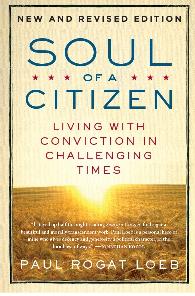
Paul Loeb, author, speaker, thinker and the man behind the surprising best-seller Soul of a Citizen stopped by the Guardian April 30 to chat about the new edition of his book — and about the state of community activism, the Obama administration, and the way people become engaged in politics. You can listen to the interview after the jump.


Paul Loeb by SFBG

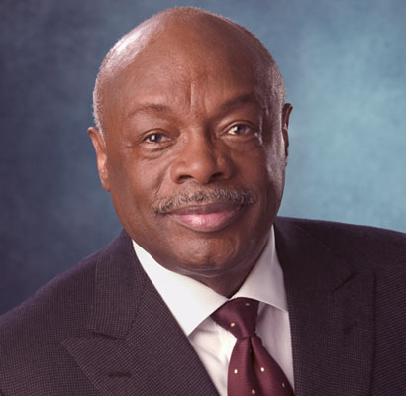
The problem with Willie Brown Jr. Boulevard

3

Ok, Eve Batey has a fun item on SF Appeal: Even the Chronicle, which pays Brown to write his deeply conflicted newspaper column, doesn’t want to see Third Street renamed for the former mayor. That’s probably because Hearst Corp., which owns property on Third Street, doesn’t want to spend the money to change all of its letterhead, documents, mailing address etc. to reflect a street name change. We saw a lot of the same complaints when Army Street was changed to honor Cesar Chavez; some local businesses got mad because of the (modest) costs involved.


I’ve got a much bigger problem with the name change.


You name a street after someone who deserves a major civic honor. Naming a street in the Mission after Cesar Chavez makes a strong, positive statement about San Francisco’s values. So what would Willie Brown Jr. Boulevard celebrate?


One of the most corrupt mayors in San Francisco history, a guy who sold out the city to developers, stood by and allowed the greatest displacement of low-income San Franciscans in modern history, presided over the economic cleansing of San Francisco, and now flaks for PG&E, the pharmaceutical industry, and who knows what other private clients (despite writing about politics in his column, he hasn’t disclosed the list of which political interest groups are paying his sizable legal fees).


Brown’s a fun guy, and I always read his column, and when he did a radio show, he often had me on as a guest, and we joked about the old days, and I have to admit, he’s the life of the party. But let’s not forget the history here; his record in politics stinks.


Besides, he’s still alive — and although he’s smart enough that he’s never been caught doing anything illegal, you never know what trouble he could get into, and how badly he could embarrass the city, in the years to come.

CounterPULSE’s three day maypole

1

It’s a big weekend for celebration. May 1st is International Worker’s Day, it’s the day when winter has finally left the Northern Hemisphere building, and marks the dawn dances of the pagan Beltane. All in all, it’s an apt time for rejoicing in the people and places what that make our world beautiful.

And given that we’re in the Bay, one of the Earth’s great cradles of populist art, there may be no better place to do that than CounterPULSE, the community art performance space that is celebrating 20 years (five in their current location) of helping cool artist do what they do. CounterPULSE has been sponsoring classes, performances, and residencies for some of our most progressive and exciting artists over the past decades — and they’re making it easy for you to throw some dough their way with three days of diverse, exciting programming that could really only happen here in San Francisco
“We’ve planned the weekend with three events that show the three sides of CounterPULSE,” says PULSE Executive Director, Jessica Robinson Love. In her ten years with the group, Love has seen it through a relocation from it’s old haunts of 848 Community Space to it’s current perch on Mission Street, as well as a tenfold increase in budget.

Simply put, here’s the schedule: Friday = politics, Saturday = art as experience, Sunday = movement. But screw putting it simply — it’s all so much fun that you should hear about each night in detail:

Friday: “This night is going to be about really big issues, but it will be a really fun show,” says Robinson Love of CounterPULSE’s political agitprop cabaret night, which highlights the center’s focus on free speech. The San Francisco Mime Troupe will be performing, along with W. Kamau Bell, famous for racially charged comedic performances, and porn star Annie Sprinkle. 

Saturday: “We’re calling it the Happening — we modeled Saturday on the Andy Warhol events at the Factory. It’ll be a sequence of surprises,” says Robinson Love. Wandering attendees will bumble about from room to room — a trapeze artist here, crocheting there, Fauxnique over yonder, maybe even bumping into Philip Huang to hear a rant about Jesus Christ and Pink Floyd keeping Jews and homosexuals off the moon

Sunday: Dance party! “It’s all our favorite dance companies from the Bay area,” Robinson Love tells me. Tapping their feet to the beat will be many of the groups that CounterPULSE has provided a warm nest to over the years, who are now flapping their wings mightly around the city. Among those that will be represented; ODC Dance, Axis, and the Joe Goode Performance Group.

May Day @ CounterPULSE
Fri/30 – Sun/2 8 p.m., $25-200
CounterPULSE
1310 Mission, SF
(415) 626-2060
www.counterpulse.org

The invaluable legacy of Willard Wirtz

2

Dick Meister, formerly labor editor of the SF Chronicle and KQED-TV Newsroom, has covered labor and politics for a half –century.

Never has there been a greater champion of U.S. workers than former Secretary of Labor Willard Wirtz, who died on April 24 at 98. Certainly in more than a half-century of covering labor, I’ve never met anyone more dedicated – or more effective – in winning and preserving vital protections for working people.

That was the lifelong task of Wirtz, who served as secretary under presidents Kennedy and Johnson from 1962 to 1969, a brilliant, charming Harvard Law School graduate who spent his life helping ordinary Americans, especially the poor.

Much can be said of Wirtz’ long and distinguished career in government and academia, and his work in government and private practice as a mediator and arbitrator who helped prevent or settle many strikes and resolve many other serious labor-management disputes.

Wirtz expanded the Labor Department’s job-training and education programs that were developed especially for the underemployed and undereducated and at-risk youth, increased unemployment assistance for those who lost jobs to foreign trade, created literacy programs for workers and sharply and publicly chastised construction unions for their bias against African-American workers.

Wirtz was also a leader in the passage of laws that prohibit discrimination against women and older workers in pay and otherwise. And he was one of the first to call for laws protecting workers with disabilities from discrimination.

Wirtz clearly was what current Labor Secretary Hilda Solis calls “President Johnson’s general in the war on poverty.”

Wirtz himself said of his time as secretary that “If there was a central unifying theme . . . It was in the insistence that wage earners – and those seeking that status – are people, human beings for whom ‘work,’ but not just ‘labor’ . . . constitutes one of the potential ultimate satisfactions.”

I particularly remember a trip Wirtz made to California in 1965 in response to grower requests for creation of an “emergency program” that would in effect restore the highly exploitative Bracero Program that for more than two decades had enabled growers to hire underpaid, overworked and generally mistreated poverty-stricken Mexicans.

The Braceros had to silently accept the rotten conditions or be sent back to Mexico to be replaced by other poverty-stricken Braceros. And domestic workers had to uncomplainingly accept the conditions or be replaced by Braceros – if they were even hired, Growers much preferred the necessarily compliant Mexicans.

Wirtz did his utmost to enlighten the general public about the abysmal conditions of those who harvest most of our fruits and vegetables. He took a whirlwind tour of California’s lush farmlands with a planeload of reporters in a battered DC3, popping up unannounced at farms to ask embarrassing questions and point to conditions that most newspaper readers and television viewers associated only with the dim past recorded by John Steinbeck in “The Grapes of Wrath.” Growers tried to limit his agenda to farms where they had hastily and improved conditions for a token number of workers. But Wirtz would not be denied.

By closely examining the true conditions of Mexican and domestic workers alike, Wirtz was hoping to show the rest of the country the need for major reforms that would promise decent pay and working conditions and deny growers their request for Mexican workers under an “emergency program.”

On the ground, he sped with a busload of reporters over dusty roads from one huge square patch of green and brown to another. We had a hard time keeping up with Wirtz, Neither his good humor nor his seemingly inexhaustible energy lessened as he put probing questions to men and women working in the fields.

At one stop in Southern California, for instance, he strode briskly down one long dirt row after another, a pipe gripped tightly in his teeth, shoes covered with dust, to greet workers as they stooped painfully, grasping the short-handled hoes used to weed and otherwise prepare the strawberry, sugar beet and lettuce crops for harvest.

“Wirtz is my name, good to see you” was a typical icebreaker – first voiced at 5:30 a.m. – only five hours after Wirtz had gone to bed.

At another stop, he walked away shuddering from the communal lavatory in the center of a circle of a ramshackle two- and three- room buildings overrun with barefoot children.

He greeted me, his face twisted in disgust.

“Did you see it?” he asked. “God!”

At yet another stop, Wirtz stood in the center of a field, surrounded by workers, looking out over tall rows of asparagus that covered the land in all directions.

“Where,” he asked the grower, “are the toilets?” The grower, genuinely incredulous that the question would even be asked, explained that “there are none.”

Elsewhere, Wirtz paid a surprise visit to a farm labor camp at breakfast time, finding conditions that “make me ashamed anything of this kind exists in this country. Looking at the food, I wonder how anyone can eat it!”

Wirtz returned from California determined to greatly limit, if not halt, the flow of Mexican workers that growers hired in lieu of improving conditions to attract domestic workers.

As Wirtz and others predicted, curtailing grower use of Mexican workers forced growers to improve conditions in order to attract more domestic workers. The improvements were generally short-lived, however, as growers turned to the masses of undocumented Mexicans for workers.

Yet thanks in large part to Willard Wirtz, the country had seen clearly the great need to improve the conditions of some of our most necessary but most exploited workers. That helped lay the groundwork for Cesar Chavez and the United Farm Workers and others who are continuing the struggle today for decent farm labor conditions.

That’s but a small part of the invaluable legacy of Willard Wirtz, who helped guarantee decent conditions to millions of working people in a wide variety of fields.

What’s not generally known is Wirtz’ role in desegregating the Labor Department staff.  As former Labor Department Director of Information John Leslie notes, at the time that Wirtz became Labor Secretary in 1962, the only African Americans on the staff were messengers and drivers. Leslie recalls that “Bill decided to send a message by starting in the deep South . . .We went to Atlanta and called all the regional directors together . . . and immediately drew agitated opposition.

“Every excuse not to hire blacks in professional positions was given – history, local custom, no qualified Blacks, employee relations ” and more, including an assertion that “our female staff won’t go to the bathroom with Blacks “… Bill quietly answered, ‘Then they will be mighty uncomfortable by the end of the day.'”

Despite the objections of his regional directors, Wirtz prevailed. The Labor Department staffs were integrated, in the South and elsewhere.

We shouldn’t forget, either, Wirtz’ courageous stand against the Vietnam War, including the bombing of North Vietnam ordered by his boss, President Lyndon Johnson. That drew a demand from Johnson in 1968 that Wirtz resign. But two days later, Johnson relented, fearing that Wirtz’ resignation would embarrass him and hurt Hubert Humphrey, the Democratic presidential nominee. Wirtz stayed on, but didn’t mute his opposition to the war.

EVERY CRANNY AND CROOK

Among his other considerable talents, former Secretary of Labor Willard Wirtz was one of the country’s foremost collectors of malaprops. His collection, naturally, was studded with gems from Washington, that font of bureaucratese and other language butchery.

Wirtz, for instance, told of a Labor Department official who insisted that “it’s just a matter of whose ox is being goosed.” And there was:

A newspaperman who ‘d “been keeping my ear to the grindstone.”

A bureaucrat who was certain that “we’ve got to do something to get a toe hold in the public eye.”

A politician who demanded that “we hitch up our trousers and throw down the gauntlets.”

A corporate official who wanted to know “if you’ve got any plans underfoot.”

 Another official who warned that “if this keeps up, we’ll all go down the drain in a steamroller,” One official was concerned that “we’re being sold down the drain.”

But not to worry, said an optimistic official, “We can get this country out of the eight ball.”

“It may not work,” said a high union official, “but let’s take a flying gambit at it.” An Agriculture Department official insisted that “we have to deal with the whole gambit of this affair.”

And that wasn’t the half of it. Consider these gems, also uttered by labor and management leaders and, of course, bureaucrats:

“That kind of business gets my dandruff up.”

“When I smell a rat, I nip it in the bud.”

“That idea doesn’t have a Chinaman’s chance in hell.”

“Let’s don’t go off the deep end of the reservation.”

“If we try this we’re likely to have a bear by the horns.”

“Somebody’s going to think there’s dirty work behind the crossroads.”

“Let’s grasp this nettle by the horns.”

“Somebody’s likely to rear up on his back.”

Wirtz himself was no slouch at malaprops. For example, there was his, “We’ve got to be careful about getting too many cooks in the soup.”

But few men, the secretary included, are likely to top the explanation of an unsuccessful candidate for the Maryland Legislature that Wirtz recalled.

“I think I deserved to win,” he told a gathering of his supporters after his defeat. “I went to every cranny and crook in this district.”

Dick Meister, formerly labor editor of the SF Chronicle and KQED-TV Newsroom, has covered labor and politics for a half-century. Contact him through his website, www.dickmeister.com, which includes more than 250 of his recent columns.

Reading the tea leaves in the Arizona Governor race

6

A newly released survey of the AZ governor’s race at Public Policy Polling shows a tight race, with Attorney General Terry Goddard, a Democrat, leading all the GOP candidates, including current Arizona governor Jan Brewer, who just signed the state’s racist immigration bill, and Sheriff Joe Arpaio, who has been treating undocumented Mexicans like animals for years.


 “The remainder of the race could hinge on the popularity of the controversial new immigration law which Brewer signed, Goddard opposes, and Arpaio, naturally, has lauded,” said Dean Debnam, President of Public Policy Polling. “Brewer and Arpaio could both beat Goddard if they rally illegal immigration opponents.”

According to Public Policy Polling’s analysis, Brewer’s handling of the immigration bill gave her a much needed boost among Republicans in her quest to snatch the GOP gubernatorial nomination from Arpaio and other Republican candidates. But Democrats and Latinos are now flocking to Goddard in droves, as calls for a nationwide boycott of Arizona grow.

ENDORSEMENTS: Judicial races

2

SUPERIOR COURT JUDGE, SEAT 6


LINDA COLFAX


It’s rare to see an open seat on the Superior Court; judges typically retire midterm and allow the governor to appoint their replacement. And with a Republican governor, the more progressive Democrats have had a hard time getting even close to judicial appointments. Four highly qualified candidates are seeking this seat, and all of them make good cases for election.


Since judicial candidates can’t take stands on most political issues or indicate how they might rule on cases, it’s hard to get a sense of where the candidates stand. But they can talk about their backgrounds and experience — and about how the local courts are run. For example, the Superior Court is managed on a day-to-day basis by a presiding judge, elected by the sitting judges on the San Francisco bench. But those elections are secret; nobody except the judges know who the candidates were; who voted for which one; or what the final tally was. Court administration is done in closed meetings. Most of what happens in the courts is public — but there’s no presumption of cameras in the courtrooms to give the public access to the justice system.


Our choices for judge reflect our interest in a diverse judiciary, judges who have both professional and personal experience that will shape fair decisions — and jurists who believe in open government, including open courts.


Our choice for Seat 6 is Linda Colfax, a deputy public defender with a background in community service (she’s been an ACLU board member) and progressive politics. Like all four candidates, she has impressive legal credentials and trial experience. She also strongly supports sunshine in the courts and told us she would allow the press and public into judges’ meetings when appropriate, supports cameras in the courtrooms (except for cases where a witness or crime victim has to be protected), and efforts to make the courts work more efficiently.


Robert Retana, who grew up in East Los Angeles, has worked in both civil and criminal law, as a prosecutor and a civil litigator. He also has extensive community service with La Raza Centro Legal and the Lawyer’s Committee for Civil Rights. He was awfully vague on cameras in the courtroom and didn’t seem well-informed on open-government issues, but he’s certainly qualified for the job.


Rod Mcleod, a former San Francisco School Board member, told us he won’t raise any money for this race since he thinks judges shouldn’t be captive to special interests. That’s noble, but it also makes it unlikely he’ll be a factor in the end.


Harry Dorfman, a career prosecutor with the District Attorney’s Office, has extensive trial experience but was the least willing of all the candidates we interviewed to expand public access to the courts.


Colfax has the endorsements of Assembly Member Tom Ammiano, Sen. Mark Leno, and Sups. David Campos, John Avalos, and Eric Mar, among others. She would also diversify the bench in a significant way, not just because she’s a lesbian but because she spent her career in the Public Defender’s Office. And since Democratic and Republican governors alike tend not to appoint public defenders to the bench, that background and perspective is rare. Vote for Colfax.


SUPERIOR COURT JUDGE, SEAT 15


MICHAEL NAVA


Another rarity here: a contested race where challengers are taking on a sitting judge. Richard Ulmer, the incumbent, was a Republican living in Hillsborough when Gov. Schwarzenegger appointed him to the bench last year; he quickly changed his registration to independent and took up residence in Park Merced. But two gay men, Michael Nava and Daniel Dean, saw him as potentially vulnerable and, noting the lack of LGBT appointments coming out of the current administration, filed to challenge Ulmer.


Ulmer’s a smart and appealing person with an impressive legal resume, and we see no scandal that would mandate his removal from office. But we also recognize that this is an elected office, and that it’s perfectly acceptable for candidates who think they would better serve the public and the bench to run against an incumbent. In this case, we’re endorsing Michael Nava.


Nava, the grandson of Mexican immigrants, makes the case that judicial appointments can be just as political as elections: out of some 500 judicial appointments, Schwarzenegger has named perhaps five openly LGBT candidates. Nava also would bring a different perspective to the courts. His career has been in the public sector and he currently works as a staff attorney drafting decisions for Superior Court Justice Carlos Moreno. More than anyone else running for judge this year, Nava is an advocate of openness in the judiciary. He told us the courts are the third branch of government and should be held to most of the same sunshine standards at the executive and legislature.


Daniel Dean also makes a compelling case and has extensive courtroom experience as a litigator and judge pro tem. His accessibility and sense of humor would serve him well on the bench, and we hope he continues to seek a judicial slot. But in this race, we’re endorsing Nava.

ENDORSEMENTS: National and state races

15

Editor’s note: the file below contains a correction, updated May 5 2010. 


National races


U.S. SENATE, DEMOCRAT


BARBARA BOXER


The Republican Party is targeting this race as one of its top national priorities, and if the GOP can dislodge a three-term senator from California, it will be a major blow for the party (and agenda) of President Obama. The pundits are happily talking about how much danger Barbara Boxer faces, how the country’s mood is swinging against big-government liberals.


But it’s always a mistake to count out Boxer. In 1982, as a Marin County supervisor with little name recognition in San Francisco, she trounced then-SF Sup. Louise Renne for an open Congressional seat. Ten years later, she beat the odds and won a hotly contested primary and tough general election to move into the Senate. She’s a fierce campaigner, and with no primary opposition, will have a united party behind her.


Boxer is one of the most progressive members of the not-terribly progressive U.S. Senate. She’s been one of the strongest, most consistent supporters of reproductive rights in Washington and a friend of labor (with 100 percent ratings from the AFL-CIO and National Education Association). We’ve had our disagreements: Boxer supported No Child Left Behind, wrote the law allowing airline pilots to carry guns in the cockpit, and was weak on same-sex marriage when San Francisco sought to legalize it (although she’s come around). But she was an early and stalwart foe of the war in Iraq, split with her own party to oppose a crackdown on illegal immigration, and is leading the way on accountability for Wall Street. She richly deserves reelection, and we’re happy to endorse her.


CONGRESS, 6TH DISTRICT, DEMOCRAT


LYNN WOOLSEY


It’s odd that the representative from Marin and Sonoma counties is more progressive by far than her colleague to the south, San Francisco’s Nancy Pelosi. But over the years, Lynn Woolsey has been one of the strongest opponents of the war, a voice against bailouts for the big Wall Street banks, and a foe of cuts in the social safety net. We’re proud to endorse her for another term.


CONGRESS, 7TH DISTRICT, DEMOCRAT


GEORGE MILLER


George Miller has been representing this East Bay district since 1974, and is now the chair of the Education and Labor Committee and a powerhouse in Congress. He’s too prone to compromise (with George W. Bush on education policy) but is taking the right line on California water (while Sen. Dianne Feinstein is on the wrong side). We’ll endorse him for another term.


CONGRESS, 8TH DISTRICT, DEMOCRAT


NANCY PELOSI


We’ve never been terribly pleased with San Francisco’s most prominent Congressional representative. Nancy Pelosi was the author of the bill that created the first privatized national park at the Presidio, setting a horrible standard that parks ought to be about making money. She was weak on opposing the war, ducked same-sex marriage, and has used her clout locally for all the wrong candidates and issues. But we have to give her credit for resurrecting and pushing through the health care bill (bad as it was — and it’s pretty bad — it’s better than doing nothing). And, at a time when the Republicans are trying to derail the Obama presidency, she’s become a pretty effective partner for the president.


Her fate as speaker (and her future in this seat) probably depends on how the Democrats fare in the midterm Congressional elections this fall. But if she and the party survive in decent shape, she needs to take the opportunity to undo the damage she did at the Presidio.


CONGRESS, 9TH DISTRICT, DEMOCRAT


BARBARA LEE


Barbara Lee, who represents Berkeley and Oakland, is co-chair of the Progressive Caucus in the House, one of the most consistent liberal votes in Congress, and a hero to the antiwar movement. In 2001, she was the only member of either house to oppose the Bush administration’s Use of Force resolution following the 9/11 attacks, and she’s never let up on her opposition to foolish military entanglements. We’re glad she’s doing what Nancy Pelosi won’t — represent the progressive politics of her district in Washington.


CONGRESS, 13TH DISTRICT, DEMOCRAT


PETE STARK


Most politicians mellow and get more moderate as they age; Stark is the opposite. He announced a couple of years ago that he’s an atheist (the only one in Congress), opposed the Iraq war early, called one of his colleagues a whore for the insurance industry, and insulted President Bush and refused to apologize, saying: “I may have dishonored the commander-in-chief, but I think he’s done pretty well to dishonor himself without any help from me.” He served as chair of the House Ways and Means Committee for exactly one day — March 3 — before the Democratic membership overruled Speaker Pelosi and chucked him out on the grounds that he was too inflammatory. The 78-year-old may not be in office much longer, but he’s good on all the major issues. He’s also fearless. If he wants another term, he deserves one.


State races


GOVERNOR, DEMOCRAT


EDMUND G. BROWN


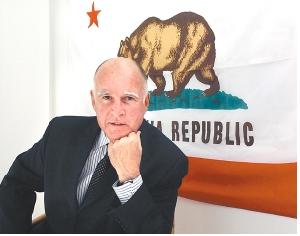
Jerry Brown? Which Jerry Brown? The small-is-beautiful environmentalist from the 1970s who opposed Pacific Gas and Electric Co.’s Diablo Canyon nuke and created the California Conservation Corps, the Office of Appropriate Technology, and the Farm Labor Relations Board (all while running a huge budget surplus in Sacramento)? The angry populist who lashed out at corporate power on a KPFA radio talk show and ran against Bill Clinton for president? The pro-development mayor of Oakland who sided with the cops on crime issues and opened a military academy? Or the tough-on-crime attorney general who refuses to even talk about tax increases to solve the state’s gargantuan budget problems?


We don’t know. That’s the problem with Brown — you never know what he’ll do or say next. For now, he’s been a terribly disappointing candidate, running to the right, rambling on about preserving Proposition 13, making awful statements about immigration and sanctuary laws, and even sounding soft on environmental issues. He’s started to hit his stride lately, though, attacking likely GOP contender Meg Whitman over her ties to Wall Street and we’re seeing a few flashes of the populist Brown. But he’s got to step it up if he wants to win — and he’s got to get serious about taxes and show some budget leadership, if he wants to make a difference as governor.


LIEUTENANT GOVERNOR, DEMOCRAT


JANICE HAHN


Not an easy choice, by any means.


Mayor Gavin Newsom jumped into this race only after it became clear that he wouldn’t get elected governor. He sees it as a temporary perch, someplace to park his political ambitions until a better office opens up. He’s got the money, the statewide name recognition, and the endorsement of some of the state’s major power players, including both U.S. Senators and House Speaker Nancy Pelosi. He’s also been a terrible mayor of San Francisco — and some progressives (like Sup. Chris Daly) argue, persuasively, that the best way to get a better person in Room 200 is to ship Newsom off to an office in Sacramento where he can’t do much harm and let the supervisors pick the next mayor.


But it’s hard to endorse Newsom for any higher office. He’s ducked on public power, allowing PG&E to come very close to blocking the city’s community choice aggregation program (See editorial, page 5). His policies have promoted deporting kids and breaking up families. He’s taken an approach to the city budget — no new revenue, just cuts — that’s similar to what the Republican governor has done. He didn’t even bother to come down and talk to us about this race. There’s really no good argument for supporting the advancement of his political career.


Then there’s Janice Hahn. She’s a Los Angeles City Council member, the daughter of a former county supervisor, and the sister of a former mayor. She got in this race way before Newsom, and her nightmare campaign consultant, Garry South, acts as if she has some divine right to be the only Democrat running.


Hahn in not overly impressive as a candidate. When we met her, she seemed confused about some issues and scrambled to duck others. She told us she’s not sure she’s in favor of legalizing pot, but she isn’t sure why she’s not sure since she has no arguments against it. She won’t take a position on a new peripheral canal, although she can’t defend building one and says that protecting San Francisco Bay has to be a priority. She won’t rule out offshore oil drilling, although she said she has yet to see a proposal she can support. Her main economic development proposal was to bring more film industry work to California, even if that means cutting taxes for the studios or locating the shoots on Indian land where there are fewer regulations.


On the other hand, she told us she wants to get rid of the two-thirds threshold in the state Legislature for passing a budget or raising taxes. She supports reinstating the car tax at pre-Gov. Arnold Schwarzenegger levels. She supports a split-roll measure to reform Prop. 13. She wants to see an oil-severance tax to fund education. She’s one of the few statewide candidates who openly advocates higher taxes on the wealthy as part of the solution to the budget crisis.


We are under no illusions that Hahn will be able to use the weak office of lieutenant governor to move on any of these issues, and we’re not at all sure she’s ready to take over the top spot. But on the issues, she’s clearly better than Newsom, so she gets our endorsements.


SECRETARY OF STATE, DEMOCRAT


DEBRA BOWEN


Debra Bowen is the only Democrat running, a sign that pretty much everyone in the party thinks she’s doing a fine job as Secretary of State. She’s run a clean office and we see no reason to replace her.


CONTROLLER, DEMOCRAT


JOHN CHIANG


Like Bowen, John Chiang has no opposition in the primary, and he’s been a perfectly adequate controller. In fact, when Gov. Schwarzenegger tried two years ago to cut the pay of thousands of state employees to the minimum wage level, Chiang defied him and refused to change the paychecks — a move that forced the governor to back down. We just wish he’d play a more visible role in talking about the need for more tax revenue to balance the state’s books.


TREASURER, DEMOCRAT


BILL LOCKYER


Bill Lockyer keeps bouncing around Sacramento, waiting, perhaps, for his chance to be governor. He was attorney general. Now he’s treasurer seeking a second term, which he will almost certainly win. He’s done some good things, including trying to use state bonds to promote alternative energy, and has spoken out forcefully about the governor’s efforts to defer deficit problems through dubious borrowing. He hasn’t, however, come out in favor of higher taxes for the rich or a change in Prop. 13.


ATTORNEY GENERAL, DEMOCRAT


KAMALA HARRIS


There are really only two serious candidates in this race, Kamala Harris, the San Francisco district attorney, and Rocky Delgadillo, the former Los Angeles city attorney. Harris has a comfortable lead, with Delgadillo in second and the others far behind.


Delgadillo is on his second try for this office. He ran against Jerry Brown four years ago and got nowhere. And in the meantime, he’s come under fire for, among other things, using city employees to run personal errands for him (picking up his dry-cleaning, babysitting his kids) and driving his car without insurance. On a more significant level, he made his reputation with gang injunctions that smacked of ethnic profiling and infuriated Latino and civil liberties groups. It’s amazing he’s still a factor in this race; he can’t possibly win the general election with all his baggage.


Harris has a lot going for her. She was among the first California elected officials to endorse Barack Obama for president, and remains close to the administration. She’s a smart, articulate prosecutor and could be one of the few women atop the Democratic ticket this year. We were never comfortable with her ties to Willie Brown, but he’s no longer a factor in state or local politics. These days, she’s more closely allied with the likes of State Sen. Mark Leno.


That said, we have some serious problems with Harris. She’s been up in Sacramento pushing Republican-style tough-on-crime bills (like a measure that would bar registered sex offenders from ever using social networking sites on the Internet) and forcing sane Democrats like Assembly Member and Public Safety Committee Chair Tom Ammiano to try to tone down or kill them (and then take the political heat). If she didn’t know about the problems in the SFPD crime lab, she should have, and should have made a bigger fuss, earlier.


But Harris has kept her principled position against the death penalty, even when it meant taking immense flak from the cops for refusing to seek capital punishment for the killer of a San Francisco police officer. She’s clearly the best choice for the Democrats.


INSURANCE COMMISSIONER, DEMOCRAT


DAVE JONES


Two credible progressives are vying to run for this powerful and important position regulating the massive — and massively corrupt — California insurance industry. Dave Jones and Hector De La Torre are both in the state Assembly, with Jones representing Sacramento and De La Torre hailing from Los Angeles. Both have a record opposing insurance industry initiatives; both are outspoken foes of Prop. 17; and either would do a fine job as insurance commissioner. But Jones has more experience on consumer issues and health care reform, and we prefer his background as a Legal Aid lawyer to De La Torre’s history as a Southern California Edison executive. So we’ll give Jones the nod.


BOARD OF EQUALIZATION, DISTRICT 1, DEMOCRAT


BETTY T. YEE


Betty Yee has taken over a job that’s been a stronghold of progressive tax policy since the days of the late Bill Bennett. She’s done well in the position, supporting progressive financial measures and even coming down, as a top tax official, in favor of legalizing (and taxing) marijuana. We’re happy to endorse her for another term.


SUPERINTENDENT OF PUBLIC INSTRUCTION


TOM TORLAKSON


Two prominent Democratic legislators are running for this nonpartisan post, state Sen. Gloria Romero of Los Angeles and Assembly Member Tom Torlakson of Martinez. It’s a pretty clear choice: Romero is a big supporter of charter schools who thinks parents should be able to move their kids out of one school district and into another (allowing wealthier white parents, for example, to abandon Los Angeles or San Francisco for the suburban districts). She’s been supported in the past by Don and Doris Fisher, who put a chunk of their GAP Inc. fortune into school privatization efforts. Torlakson wants more accountability for charters, opposes the Romero district-option bill, and has the support of every major teachers union in the state. Vote for Torlakson.


STATE SENATE, DISTRICT 8, DEMOCRAT


LELAND YEE


Sen. Leland Yee can be infuriating. Two years ago, he was hell-bent on selling the Cow Palace as surplus state property and allowing private developers to take it over. In the recent budget crisis, he pissed off his Democratic colleagues by refusing to vote for cuts that everyone else knew were inevitable (while never making a strong stand in favor of, say, repealing Prop. 13 or raising other taxes). But he’s always been good on open-government issues and has made headlines lately for busting California State University, Stanislaus over a secret contract to bring Sarah Palin in for a fundraiser — and has raised the larger point that public universities shouldn’t hide their finances behind private foundations.


Yee will have no serious opposition for reelection, and his campaign for a second term in Sacramento is really the start of the Leland Yee for Mayor effort. With reservations over the Cow Palace deal and a few other issues, we’ll endorse him for reelection.


 Correction update: Yee’s office informs us that the senator suports an oil-severance tax and a tax on high-income earners and “believes that Prop. 13 should be reformed,” although he hasn’t taken a position on Assemblymember Tom Ammiano’s reform bill. 


STATE ASSEMBLY, DISTRICT 12, DEMOCRAT


FIONA MA


Fiona Ma’s a mixed bag (at best). She doesn’t like Pacific Gas and Electric Co. and supports public power, but comes up with strange bills that make no sense, like a 2009 measure to limit rent control in trailer parks. Why does Ma, who has no trailer parks in her district, care? Maybe because the landlords who control the mobile home facilities gave her some campaign cash. She faces no opposition, and we’re not thrilled with her record, but we’ll reluctantly back her for another term.


STATE ASSEMBLY, DISTRICT 13, DEMOCRAT


TOM AMMIANO


When the history of progressive politics in modern San Francisco is written, Tom Ammiano will be a central figure. His long-shot 1999 mayoral campaign against Willie Brown brought the left to life in town, and his leadership helped bring back district elections and put a progressive Board of Supervisors in place in 2000. As a supervisor, he authored the city’s landmark health care bill (which Newsom constantly tries to take credit for) and the rainy day fund (which saved the public schools from debilitating cuts). He uses his local influence to promote the right causes, issues, and candidates.


And he’s turned out to be an excellent member of the state Assembly. He forced BART to take seriously civilian oversight of the transit police force. He put the battle to reform Prop. 13 with a split-role measure back on the state agenda. And his efforts to legalize and tax marijuana are close to making California the first state to toss the insane pot laws. As chair of the Public Safety Committee, he routinely defies the police lobbies and the right-wing Republicans and defuses truly awful legislation. We’re glad Ammiano’s still fighting in the good fight, and we’re pleased to endorse him for another term.


STATE ASSEMBLY, DISTRICT 14, DEMOCRAT


NANCY SKINNER


Nancy Skinner has taken on one of the toughest, and for small businesses, most important, battles in Sacramento. She wants to make out-of-state companies that sell products to Californians collect and remit sales tax. If you buy a book at your local bookstore, you have to pay sales tax; if you buy it from Amazon, it’s tax-free. That not only hurts the state, which loses hundreds of millions of dollars in tax revenue, it’s a competitive disadvantage to local shops. Skinner’s a good progressive vote and an ally for Ammiano on the Public Safety Committee. We’re happy to endorse her for another term.


STATE ASSEMBLY, DISTRICT 16, DEMOCRAT


SANDRE SWANSON


Sandre Swanson represents the district where BART police killed Oscar Grant, but he wasn’t the one out front pushing for more civilian accountability; that was left to SF’s Ammiano. And while Swanson was generally supportive of Ammiano’s bill, he was hardly a leader in the campaign to pass it. This is too bad, because Swanson’s almost always a progressive vote and has been good on issues like whistleblower protection (a Swanson bill that passed this year protects local government workers who want to report problems confidentially). We’ll endorse him for another term, but he needs to get tougher on the BART police.

Stage listings

0

Stage listings are compiled by Guardian staff. Performance times may change; call venues to confirm. Reviewers are Robert Avila, Rita Felciano, and Nicole Gluckstern. Submit items for the listings at listings@sfbg.com.

THEATER

OPENING

Echo’s Reach Brava Theater Center, 2781 24th St; 665-2275, www.citycircus.org. $14-35. Opens Fri/30, 8pm. Runs Fri-Sat, 8pm (also Sat, 4pm); Sun, 4pm. Through May 30. City Circus premieres an urban fairytale by Tim Barsky.

Geezer Marsh MainStage, 1062 Valencia; 1-800-838-3006, www.themarsh.org. $20-50. Opens Sat/1, 8:30pm. Runs Fri, 8pm; Sat, 8:30pm; Sun, 7pm (May 9 show at 8pm). Through May 23. Geoff Hoyle presents a workshop performance of his new solo show about aging.

Hot Greeks Hypnodrome Theatre, 575 Tenth St; 1-800-838-3006, www.thrillpeddlers.com. $30-69. Opens Sun/2, 7pm. Runs Thurs, 8pm; Sun, 7pm. Through June 27. Thrillpeddlers work their revival magic on the Cockettes’ 1972 musical extravaganza.

BAY AREA

Terroristka Berkeley City Club, 2315 Durant, Berk; (415) 891-7235, www.brownpapertickets.com. $12-20. Previews Fri/30-Sat/1, 8pm. Opens Sun/2, 5pm. Runs Thurs-Sat, 8pm; Sun, 5pm. Through May 16. Threshold: Theatre on the Verge performs Rebecca Bella’s drama, based on the true story of a Chechen woman trained as a suicide bomber.

The World’s Funniest Bubble Show Marsh Berkeley, 2120 Allston Wy, Berk; (415) 826-5750, www.themarsh.org. $10-50. Opens Sun/2, 11am. Runs Sun, 11am. Through June 27. The Amazing Bubble Man, a.k.a. Louis Pearl, performs his family-friendly show.

ONGOING

An Accident Magic Theatre, Bldg D, Fort Mason Center, Marina at Laguna; 441-8822, www.magictheatre.org. $25-55. Wed-Sat, 8pm (also Sat, 2:30pm); Sun, 2:30pm; Tues, 7pm. Through May 9. Magic Theatre closes their season with Lydia Stryk’s world premiere drama.

Andy Warhol: Good For the Jews? Jewish Theatre, 470 Florida; 292-1233, www.tjt-sf.org. $15-45. Thurs-Sat, 8pm; Sun, 2 and 7pm. Through May 16. Renowned monologist Josh Kornbluth is ready to admit his niche is a narrow one: he talks about himself, and more than that, he talks about his relationship to his beloved late father, the larger-than-life old-guard communist of Kornbluth’s breakthrough Red Diaper Baby. So it will not be surprising that in his current (and still evolving) work, created with director David Dower, the performer-playwright’s attempt to "enter" Warhol’s controversial ten portraits of famous 20th-century Jews (neatly illuminated at the back of the stage) stirs up memories of his father, along with a close family friend — an erudite bachelor and closeted homosexual who impressed the boyhood Josh with bedtime stories culled from his dissertation. The scenes in which Kornbluth recreates these childhood memories are among the show’s most effective, although throughout the narrative Kornbluth, never more confident in his capacities, remains a knowing charmer. But the story’s central conceit, concerning his ambivalence over presenting a showing of "Warhol’s Jews" at San Francisco’s Contemporary Jewish Museum, feels somehow artificial. It’s almost a stylized rendition of the secular-Jewish moral quandary and neurotic obsession driving Kornbluth works of the past — or in other words, all surface, not unlike the work of another shock-haired artist, but less meaningfully so. (Avila)

The Diary of Anne Frank Next Stage, 1620 Gough; 1-800-838-3006, www.custommade.org. $10-28. Thurs/29-Sat/1, 8pm. Custom Made performs Wendy Kesselman’s modern take on the classic.

"DIVAfest" Exit Theatre, 156 Eddy; 673-3847, www.theexit.org. Check website for dates and times. Through Sat/1. Small town girls, they’re all so tragically alike: dreaming eternally of escape, whether by land or luck or love. For stranded sisters Finn and Sarah in The Wind and Rain (part of DIVAfest), the seasons slide slowly past, like the river that powers the dead-end mill-town they bide their time in, waiting for an elusive something to change their lives. Acerbic tomboy Finn (Brynna Jourdan) leads the action and their relationship — pushing her timid sister Sarah (Jeanna Bean Veatch) to swim in the river, all the while admonishing her to remember there "is no such thing as a river." Meanwhile a mysterious fiddler (Rebecca Jackson) moves quietly about her isolated office on the periphery of the stage, occasionally underscoring the unfolding story with a mournful pull of her bow across strings. The plot is thin, and slightly scripted, but the delicately structured buildup to the presumptive murder is gently compelling. As summer fades into fall and winter into spring, so does Sarah’s budding romance with Finn’s ex (the nameless Miller’s son of the ballad on which the play is based) blossom quite literally in an explosion of petals sprinkled across the stage, followed closely by the predetermined dose of sororicidal rage and a stirring musical dénouement. (Gluckstern)
Eat, Pray, Laugh! Off-Market Theaters, 965 Mission; www.brownpapertickets.com. $20. Wed, 8pm. Through May 26. Off-Market Theaters presents stand up comic and solo artist Alicia Dattner in her award-winning solo show.

*Master Class New Conservatory Theatre Center, 25 Van Ness; 861-8972, www.nctcsf.org. $22-40. Wed/28-Sat/1, 8pm; Sun/2, 2pm. Terrence McNally’s lovingly clever and thoroughly engaging portrait-play about opera icon Maria Callas takes the inspired notion of post-career Callas (Michaela Greeley) teaching a Julliard master class of eager young singers, while naturally finding herself unable to resist dominating the stage once more. Through a set of arias performed to piano accompaniment (by Kenneth Helman) by a cast of actor-singers (Alyssa Stone, Holly Nugent, Gustavo Hernández), Callas’s unselfconsciously curt and even brutal interactions with the students finally evoke for this deeply proud yet insecure woman both past theatrical glories and backstage heartaches. The play receives an impressive, all-around satisfying production at New Conservatory Theatre under Arturo Catricala’s astute direction. Of course, even with decent to excellent work on and off stage by the entire production team — including a stately mood-setting scenic design by Kuo-Hao Lo — it would no doubt amount to little without a formidable lead actor to fill Callas’s elegant but slightly over-the-top shoes. Here a marvelously imposing yet charming Greeley delivers the part as if she were born to play it, and all goes swimmingly as a result. (Avila)

"A Night of Funny Firsts" Shotwell Studios, 3252A 19th St; www.brownpapertickets.com. $10-15. Fri/30-Sat/1, 8pm. A sharp and consistently amusing trio of short plays makes up this Footloose-sponsored "night of funny firsts," which actually leads off with a welcome return: the encore run of Cynthia Brinkman’s Evolution of a Kiss, a clever and charming trans-autobiographical solo flight that builds on the writer-performer’s incarnation of three first-kisses across three generations of Latina women, beginning with her Mexican grandmother’s 1934 snog and ending with her own wayward gropings in the late-80s. Brinkman is a competent, confident and charismatic talent who lets nothing, including the fourth wall, stand between her and a good story. She also proves an able director in the second part of the evening, given over to two expert comedic sketches by playwright Wayne Rawley — Controlling Interest and Happiness Is Like a Beautiful, Bright, Shiny Red Apple — both pretty brilliantly manifested by actors Nick Dickson, Matt Gunnison, Maria Leigh, Tavis Kammet, Jason Pienkowski and Holly Silk. (Avila)

Pearls Over Shanghai Hypnodrome, 575 Tenth St.; 1-800-838-3006, www.thrillpeddlers.com. $30-69. Fri-Sat, 8pm, through June 26; starting July 10, runs Sat, 8pm and Sun, 7pm. Extended through August 1. Thrillpeddlers presents this revival of the legendary Cockettes’ 1970 musical extravaganza.

Peter Pan Threesixty Theater, Ferry Park (on Embarcadero across from the Ferry Bldg); www.peterpantheshow.com. $30-125. Previews Wed/28 and May 5, 2pm; Thurs/29, 7pm; Fri/30-Sat/1, 7:30pm (also Sat/1, 2pm); Sun/2, 1 and 5pm. Opens May 8, 7:30pm. Runs Tues and Thurs, 7pm; Fri-Sat, 7:30pm (also Sat, 2pm); Wed, 2pm; Sun, 1 and 5pm. Through August 29. JM Barrie’s tale is performed in a specially-built 360-degree CGI theater.

The Real Americans The Marsh, 1062 Valencia; 826-5750, www.themarsh.org. $18-50. Wed-Thurs and May 28, 8pm; Sat, 5pm; Sun, 3pm. Through May 30. The Marsh presents the world premiere of Dan Hoyle’s new solo show.

Sandy Hackett’s Rat Pack Show Marines’ Memorial Theater, 609 Sutter; 771-6900. $30-89. Thurs-Sat, 8pm (also Sat, 2pm); Sun, 2pm. Through May 23. From somewhere before the Beatles and after Broadway "Beatlemania" comes this big band cigarettes-and-high-ball nightclub act, recreating the storied Vegas stage shenanigans of iconic actor-crooners Frank Sinatra (David DeCosta), Dean Martin (Tony Basile), and Sammy Davis Jr. (Doug Starks), and sidekick comedian Joey Bishop (Sandy Hackett). The excuse, if one were needed, is that god (voiced in mealy nasal slang by Buddy Hackett, appropriately enough) has deemed a Rat Pack encore of supreme importance to the continued unfurling of his inscrutable plan, and thus unto us a floorshow is given. The band is all-pro and the songs sound great — DeCosta’s singing as Sinatra is uncanny, but all do very presentable renditions of signature songs and standards. Meanwhile, a lot of mincing about the stage and the drink cart meets with more mixed success, and I don’t just mean scotch and soda. The Rat Pack is pre-PC, of course, but the off-color humor, while no doubt historically sound, can be dully moronic — and the time-warp didn’t prevent someone in opening night’s audience from laying into Hackett’s opening monologue for a glib reference to suicide. Though talk about killing: thanks to the heckler, the actor — son to Buddy and the show’s co-producer (alongside chanteuse Lisa Dawn Miller, who sings a cameo as Frank’s "One Love") — got more life out of that joke over the rest of the evening than any other bit. (Avila)

SexRev: The José Sarria Experience Mama Calizo’s Voice Factory, 1519 Mission; 1-800-838-3006, www.therhino.org. $10-25. Wed/28-Sat/1, 8pm; Sun/2, 2pm. Theatre Rhinoceros presents John Fisher’s musical celebration of America’s first queer activist.

Shopping! The Musical Shelton Theater, 533 Sutter; 1-800-838-3006, www.brownpapertickets.com. $27-29. Fri-Sat, 8pm. Ongoing. The musical is now in its fifth year at Shelton Theater.

Tartuffe Studio 205 at Off-Market Theater, 965 Mission; 377-5882, http://generationtheatre.com. $20-25. Fri-Sat, 8pm; Sun, 3pm. Through May 16. Generation Theatre performs a new English translation of Molière’s classic, in Alexandrine verse.

Tell It Slant Southside Theater, Fort Mason Center, Bldg D, Marina at Laguna; www.tixbayarea.com. $20-40. Fri-Sun, 8pm (also Sun, 2pm; no 8pm show May 16). Through May 16. BootStrap Foundation presents Sharmon J. Hilfinger and Joan McMillen’s musical about Emily Dickinson.

"Wanton Darkness: Two Plays By Harold Pinter and Conor McPherson" Phoenix Theatre, 414 Mason; 335-6087. $24-28. Thurs-Sat, 8pm; Sun, 2pm. Through May 8. Second Wind and Project 9 Productions co-present a double-bill of twisted and mysterious little-big plays under the umbrella title, "Wanton Darkness." The evening begins with Harold Pinter’s Ashes to Ashes, a pas de deux between a fortysomething couple, Rebecca (Lisa-Marie Newton) and Devlin (Lol Levy), wherein Devlin closely questions Rebecca about a certain sadomasochistic relationship and accompanying dreams, in vaguely menacing tones. The scenic design (by Fred Sharkey) suggests a psychiatrist’s office as much as "a New York penthouse apartment," which speaks to the ambiguity in the dialogue but also to the slightly heavy-handed approach taken here by the actors under Ian Walker’s direction. The touch is far more apt overall in the second play, St. Nicholas, also directed by Walker. An early effort by Irish playwright Conor McPherson (Shining City; The Seafarer), the play unfolds as a two-part monologue by a cynical drink-sodden theater critic (tell it, brother) who follows a spiral of self-loathing right down into the company of a set of fetching young vampires. With something like the quality of a gothic-styled AA testimonial, it proves a somewhat roving but intriguing yarn, nicely delivered by the capable Fred Sharkey. (Avila)

What Mama Said About Down There Our Little Theater, 287 Ellis; 820-3250, www.theatrebayarea.org. $15-25. Thurs-Sun, 8pm. Through July 30. Writer-performer-activist Sia Amma presents this largely political, a bit clinical, inherently sexual, and utterly unforgettable performance piece.

BAY AREA

*East 14th: True Tales of a Reluctant Player Marsh Berkeley, 2120 Allston, Berk; www.themarsh.org. $20-35. Fri, 9pm; Sat, 8pm. Through May 8. Don Reed’s solo play, making its Oakland debut after an acclaimed New York run, is truly a welcome homecoming twice over. (Avila)

Equivocation Marin Theatre Company, 397 Miller, Mill Valley; (415) 388-5208, www.marintheatre.org. $34-54. Wed/28, 7:30pm; Thurs/29 and Sat/1, 8pm (also Sat/1, 2pm); Sun/2, 2 and 7pm. Marin Theatre Company presents playwright Bill Cain’s award-winning hit, a sparksy drama that steeps itself in the history of Shakespeare’s life, labors and times to, among other things, draw pointed references to a barbaric period of fear, witch-hunting and state-sponsored torture ("Politics is religion for people who think they’re god," as one character has it). As staged by artistic director Jasson Minadakis, the play is nervously kinetic and pitched rather high by a cast of first-rate actors delivering surprisingly lackluster performances. The fact is Cain also bites off quite a bit in Equivocation, including "Shagspeare"’s (Charles Shaw Robinson) fraught relationship with his morosely clever daughter (Anna Bullard), neglected twin of the beloved son he lost — which is perhaps why some of it seems only half chewed by the end. The play — set in designer J.B. Wilson’s metallic two-tiered semi-circle representing the storied Globe Theatre, where the Bard wrote and occasionally acted alongside his fellow King’s Men as co-proprietor — has also a wearying tendency to spell its morals in block letters. Some genuine insight into the plays and their meaning then and now lifts interest in the fictionalized action, which otherwise skirts by on mild amusement, somewhat strained dialogue and familiar post-9/11 indignation. (Avila)

Girlfriend Berkeley Repertory Theatre, Thrust Stage, 2025 Addison, Berk; (510) 647-2949, www.berkeleyrep.org. $27-71. Wed, 7pm; Thurs-Sat and Tues, 2pm (also Sat, 2pm); Sun, 2 and 7pm. Through May 9. If you like Matthew Sweet’s songs you’ll probably like the spirited renditions in this new boy-meets-boy musical, which borrows its title from Sweet’s famous 1991 album. The songs, backed by a solid band in a recessed fake-wood-paneled den at the back of the stage, underscore the fraught but exhilarating emotional bond between two Nebraska teens at the end of their high school careers and the cusp of an anxious, ambiguous independence. The performances and chemistry generated by actors Ryder Bach and Jason Hite under Les Waters’ sharp direction are marvelous, delivering perfectly the inherent honesty and feeling in Todd Almond’s book, while Joe Goode’s beautifully understated choreography adds a fresh, youthful insouciance to the staging. But the story is a small one, not just a small town story, and its short, predictable arc makes for a slackness not altogether compensated for by the evocative tension between the lovers. (Avila)

John Gabriel Borkman Aurora Theatre, 2081 Addison, Berk; (510) 843-4822, www.auroratheatre.org. $34-55. Tues and Sun, 7pm (also Sun, 2pm); Wed-Sat, 8pm. Through May 9. A former bank manager (James Carpenter) who did time for illegally speculating with customer accounts to the ruin of all now paces like a lone wolf (in the operative metaphor) in his upstairs study, planning a return to respectability, as his estranged wife (Karen Grassle) occupies the rooms below along with a testy housekeeper (Lizzie Calogero), where her sister (Karen Lewis) competes for the love and loyalty of the patriarch’s grown son (Aaron Wilton), who contrary to the designs of all his elders is determined to marry a charming widow (Pamela Gaye Walker) and "live," as he is compelled to reiterate. Ibsen’s play has an enduring topicality that is hard to miss of course, but Aurora’s production, directed by veteran hand Barbara Oliver, also inadvertently suggests why this leaden, slightly ridiculous work is so rarely produced, despite some solid acting, especially from an imposing yet slyly comical Carpenter in the title role. (Avila)

Oliver! Julia Morgan Center for the Arts, 2640 College, Berk; www.berkeleyplayhouse.org. $24-33. Fri, 7:30pm; Sat, 2 and 7pm; Sun, 1 and 6pm. Through May 16. Berkeley Playhouse performs the Dickens-based musical.

To Kill a Mockingbird Mountain View Center for the Performing Arts, 500 Castro, Mtn View; (650) 463-1960, www.theatreworks.org. $27-62. Tues-Wed, 7:30pm; Thurs-Sat, 8pm (also Sat, 2pm); Sun, 2 and 7pm. Through May 9. TheatreWorks performs Christopher Sergel’s adaptation of Harper Lee’s literary masterpiece.

PERFORMANCE/DANCE

"Bombshell Betty’s Burlesque Bailout" Glas Kat, 520 Fourth St; 495-6620. Wed, 8pm, $10. Burlesque, dance, comedy, and more to raise money for Bay Area performers hit hard by the economic crisis.

"City Solo" Off-Market Theaters, 965 Mission; www.brownpapertickets.com. Sun, 7pm. Through May 23. $15. This showcase features works by Monica Bhatnagar, Susan Ito, Kathy Jetnil-Kijiner, Sarah Weidman, and Nicole Maxali.

"Columbia Chasing" Garage, 975 Howard, SF; 518-1517. May 4-5, 8pm, $10-20. Dance Ceres performs a work-in-progress.

"Men Think They Are Smarter Than Grass" Project Artaud Theater, 450 Florida; 267-7687. Fri-Sat and May 6, 8pm; Sun, 5pm. Through May 9. $20-25. Deborah Slater Dance Theaer performs a world premiere.

"Queerification" Mama Calizo’s Voice Factory, 1519 Mission; www.therhino.org. Sun, 3. Donations accepted. Theatre Rhinoceros and Grooviness Productions present this afternoon of "playlets and musings in progress" by Mercilee Jenkins and Jerry Metzker.

"Toe to Toe: The Grand Slam" Herbst Pavilion, Fort Mason Center, Marina at Laguna; www.slimstickets.com. Thurs, 6:30pm. $25-125. Dancers from ODC/Dance and student athletes from UC Berkeley engage in a series of physical challenges to raise money for ODC Dance Commons and Cal Athletics.

Music listings

0

Music listings are compiled by Paula Connelly and Cheryl Eddy. Since club life is unpredictable, it’s a good idea to call ahead to confirm bookings and hours. Prices are listed when provided to us. Submit items at listings@sfbg.com.

WEDNESDAY 28

ROCK/BLUES/HIP-HOP

*Aesop, Venture Capitalists, New Humans Bottom of the Hill. 9pm, $10.

Fix My Head, This Runs on Blood, Useless Children, Gain to Lose Sub-Mission, 2183 Mission, SF; www.sf-submission.com. 9pm, $6.

*"Full Pink Moon Party" Rickshaw Stop. 8pm, $10. With Sonya Cotton, Honeycomb, Jascha vs. Jascha, and Kris Gruen.

Japanther, Reaction, Dirty Marquee, Street Eaters Hemlock Tavern. 9pm, $8.

Pomegranate, Fall Risk, Control-R Hotel Utah. 8:30pm, $6.

Chad Price, Michael Dean Damron, Micah Schabnel, Piss Pissdofferson Thee Parkside. 8:30pm, $5.

Stymie and the Pimp Jones Luv Orchestra, Funk Revival Orchestra Café du Nord. 9pm, $10.

Volker Strifler Band Biscuits and Blues. 8pm, $15.

FOLK/WORLD/COUNTRY

Anoushka Shankar Palace of Fine Arts Theater, 3301 Lyon, SF; (415) 563-6504. 8pm, $25-$65.

DANCE CLUBS

Booty Call Q-Bar, 456 Castro, SF; www.bootycallwednesdays.com. 9pm. Juanita Moore hosts this dance party, featuring DJ Robot Hustle.

Club Shutter Elbo Room. 10pm, $5. Goth with DJs Omar, Nako, and Justin.

Hands Down! Bar on Church. 9pm, free. With DJs Claksaarb, Mykill, and guests spinning indie, electro, house, and bangers.

Machine Sloane, 1525 Mission, SF; (415) 621-7007. 10pm, free. Warm beats for happy feet with DJs Sergio, Conor, and André Lucero.

Mary-Go-Round Lookout, 3600 16th St, SF; (415) 431-0306. 10pm, $5. A weekly drag show with hosts Cookie Dough, Pollo Del Mar, and Suppositori Spelling.

RedWine Social Dalva. 9pm-2am, free. DJ TophOne and guests spin outernational funk and get drunk.

Respect Wednesdays End Up. 10pm, $5. Rotating DJs Daddy Rolo, Young Fyah, Irie Dole, I-Vier, Sake One, Serg, and more spinning reggae, dancehall, roots, lovers rock, and mash ups.

Synchronize Il Pirata, 2007 16th St, SF; (415) 626-2626. 10pm, free. Psychedelic dance music with DJs Helios, Gatto Matto, Psy Lotus, Intergalactoid, and guests.

Telephoned Harlot, 46 Minna, SF; www.harlotsf.com. 7pm. Mash-ups with DJ Sammy Bananas and singer Maggie Horn.

Yoruba Dance Sessions Bacano! Som., 2925 16th St, SF; (415) 558-8521. 9pm, free. With resident DJ Carlos Mena and guests spinning afro-deep-global-soulful-broken-techhouse.

THURSDAY 29

ROCK/BLUES/HIP-HOP

Aquaserge, Casper and the Cookies, Grand Lake Rickshaw Stop. 8pm, $10.

Arcadio, Guns for San Sebastian, Charles Gonzalez Café du Nord. 9pm, $10.

C-Mon and Kypski, Frequency, Sweet Snacks, DJ Mancub Independent. 9pm, $12.

A Day to Remember, August Burns Red, Silverstein, Enter Shikari, Go Radio Regency Ballroom. 6:45pm, $23.

Dunes El Rio. 8pm, $5.

Shane Dwight Biscuits and Blues. 8pm, $20.

Flood, Hashishian, Days of High Adventure Knockout. 10pm, $6.

49 Special, Big Nasty, TV Mike and the Scarecrowes Hotel Utah. 9pm, $7.

Emily McLean, Quinn DeVeaux, Street Sirens Red Devil Lounge. 8pm, $8.

Murs, Sick Jacken Fillmore. 8pm, $20.

Photo Atlas, Moog, Smile Radio Thee Parkside. 9pm, $8.

Spill Canvas, Tyler Hilton, AM Taxi, New Politics Slim’s. 7:30pm, $16.

Sugar and Gold, Nite Jewel, Baron Von Luxxury, DJ Loose Shus Bottom of the Hill. 9pm, $10.

Sugar Butt Tiger, Bare Wires, Girl Band, MC Meathook and the Vital Organs, SF Rockstar Paradise Lounge. 9pm, $7. Proceeds benefit the Haight-Ashbury Street Fair.

Emily Jane White, Helene Renault, Chloe Makes Music Hemlock Tavern. 9pm, $7.

FOLK/WORLD/COUNTRY

Bluegrass and old-time jam Atlas Café. 8pm, free.

Jordan Carp Bollyhood Café. 8pm, free.

Jon Rubin with Cal Keaoola Bliss Bar, 4026 24th St., SF; (415) 826-6200. 8pm, free.

DANCE CLUBS

Afrolicious Elbo Room. 9:30pm, $8-10. DJs Pleasuremaker and Señor Oz mark their night’s third anniversary with a live performance by Aphrodesia.

Caribbean Connection Little Baobab, 3388 19th St, SF; (415) 643-3558. 10pm, $3. DJ Stevie B and guests spin reggae, soca, zouk, reggaetón, and more.

Drop the Pressure Underground SF. 6-10pm, free. Electro, house, and datafunk highlight this weekly happy hour.

Good Foot Yoruba Dance Sessions Bacano! Som., 2925 16th St, SF; (415) 558-8521. 9pm, free. A James Brown tribute with resident DJs Haylow, A-Ron, and Prince Aries spinning R&B, Hip hop, funk, and soul.

Koko Puffs Koko Cocktails, 1060 Geary, SF; (415) 885-4788. 10pm, free. Dubby roots reggae and Jamaican funk from rotating DJs.

Mestiza Bollywood Café, 3376 19th St, SF; (415) 970-0362. 10pm, free. Showcasing progressive Latin and global beats with DJ Juan Data.

Peaches Skylark, 10pm, free. With an all female DJ line up featuring Deeandroid, Lady Fingaz, That Girl, and Umami spinning hip hop.

Popscene 330 Rich. 10pm, $10. Rotating DJs spinning indie, Britpop, electro, new wave, and post-punk.

FRIDAY 30

ROCK/BLUES/HIP-HOP

Aunt Kizzy’z Boyz Biscuits and Blues. 8 and 10pm, $20.

David Baron, Dan Vickrey, Blackstone Heist, American Studies Hotel Utah. 9pm, $10.

Clipd Beaks, Sightings, Bill Orcutt Hemlock Tavern. 9pm, $7.

Flexx Bronco, My Revolver, Bourbon Saints, Electric Sister Thee Parkside. 9pm, $6.

JFP, Cnote, Mack Misstress El Rio. 10pm, $5.

Kapakahi, Dogman Joe, Stranger Café du Nord. 9:30pm, $12.

Lemonade, Solid Gold, Active Child, DJ Aaron Axelsen Rickshaw Stop. 9pm, $10.

Lord T. and Eloise, Tenderloins, Hottub DJ Set Independent. 9pm, $14.

Ponys, Disappears, Spencey Dude and the Doodles Bottom of the Hill. 10pm, $12.

Rogue Wave, Man/Miracle Fillmore. 9pm, $19.50.

Joe Rut Great American Music Hall. 9pm, $14. With comedian Will Franken.

Shpongle, ADHK, Hallucinogen LIVE Regency Ballroom. 9pm, $30.

Shayna Steele Coda. 10pm, $10.

JAZZ/NEW MUSIC

Audium 9 1616 Bush, SF; (415) 771-1616. 8:30pm, $15.

Black Market Jazz Orchestra Top of the Mark. 9pm, $10.

Chano Dominguez Flamenco Jazz Quartet featuring Tomasito Palace of Fine Arts Theare, 3301 Lyon, SF; www.sfjazz.org. 8pm, $25-60.

Dan Zemelmen Quartet with Kenny Washington Red Poppy Art House. 8pm, $12-15.

Eric Kurtzrock Trio Ana Mandara, Ghirardelli Square, 891 Beach, SF; (415) 771-6800. 8pm, free.

Fred Frith and Theresa Wong Meridian Gallery, 535 Powell, SF; www.meridiangallery.org. 8pm, $10.

Kenny Lattimore Yoshi’s San Francisco. 8 and 10pm, $38.

"A Night at Birdland" Deco Lounge, 510 Larkin, SF; (415) 346-2025. 9pm. With the MegaFlame Blue Band.

FOLK/WORLD/COUNTRY

Eek-a-mouse Rock-it Room. 10pm, $22. With the Holdup and DJ Mr. E.

Lava, Mestizo, Carmen Milagro Slim’s. 8pm, $16.

Melees Socha Café, 3235 Mission, SF; (415) 643-6848. 8:30pm, free.

Stairwell Sisters Revolution Café, 3248 22nd St, SF; (415) 642-0474. 8:45pm, free.

DANCE CLUBS

Activate! Lookout, 3600 16th St, SF; (415) 431-0306. 9pm, $3. Face your demigods and demons at this Red Bull-fueled party.

Afrolicious Elbo Room. 9:30pm, $8-10. DJs Pleasuremaker and Señor Oz mark their night’s third anniversary with Chico Mann and guest DJ Similak Chyld.

Area Codes Element Lounge. 10pm, $10. With DJs Platurn, Doc Fu, and White Mike spinning Bay Area hip hop.

Blow Up Rickshaw Stop. 10pm, $10. With rotating DJs.

Exhale, Fridays Project One Gallery, 251 Rhode Island, SF; (415) 465-2129. 5pm, $5. Happy hour with art, fine food, and music with Vin Sol, King Most, DJ Centipede, and Shane King.

Fat Stack Fridays Koko Cocktails, 1060 Geary, SF; (415) 885-4788. 10pm, free. With rotating DJs Romanowski, B-Love, Tomas, Toph One, and Vinnie Esparza.

Gay Asian Paradise Club Eight, 1151 Folsom, SF; www.eightsf.com. 9pm, $8. Featuring two dance floors playing dance and hip hop, smoking patio, and 2 for 1 drinks before 10pm.

Good Life Fridays Apartment 24, 440 Broadway, SF; (415) 989-3434. 10pm, $10. With DJ Brian spinning hip hop, mashups, and top 40.

Hot Chocolate Milk. 9pm, $5. With DJs Big Fat Frog, Chardmo, DuseRock, and more spinning old and new school funk.

Look Out Weekend Bambuddha Lounge. 4pm, free. Drink specials, food menu and resident DJs White Girl Lust, Swayzee, Philie Ocean, and more.

M4M Fridays Underground SF. 10pm-2am. Joshua J and Frankie Sharp host this man-tastic party.

Meat Vs. Death Guild DNA Lounge. 8:30pm, $4-8. Industrial, gothic, EBM, and more with Decay, BaconMonkey, Joe Radio, and Melting Girl.

Quantic Mighty. 10pm, $12. With Disco Shawn and DJ Sake 1.

Rockabilly Fridays Jay N Bee Club, 2736 20th St, SF; (415) 824-4190. 9pm, free. With DJs Rockin’ Raul, Oakie Oran, Sergio Iglesias, and Tanoa "Samoa Boy" spinning 50s and 60s Doo Wop, Rockabilly, Bop, Jive, and more.

Suite Jesus 111 Minna. 9pm, $20. Beats, dancehall, reggae and local art.

Teenage Dance Craze Party Knockout. 10pm, $3. With DJ Sergio Iglesias, Russell Quann, and dX the Funky Gran Paw.

SATURDAY 1

ROCK/BLUES/HIP-HOP

*AC/Dshe, Total B.S., Honeydust Slim’s. 9pm, $14.

Antlers, Phantogram Independent. 9pm, $14.

Mike Beck and the Bohemian Saints Riptide. 9pm, free.

Broken Social Scene Fillmore. 9pm, $25.

Grand National, Bonafide, General Jones Hotel Utah. 9pm, $8.

JC Smith Band Biscuits and Blues. 8 and 10pm, $16.

*Laudanum, Worm Ouroboros, Dispirit Hemlock Tavern. 9:30pm, $7.

Maus Haus, Rafter, White Cloud Bottom of the Hill. 10pm, $10.

Outernational Thee Parkside. 9pm, $10.

Plushgun, Music for Animals, Fake Your Own Death, Marissa Guzman Rickshaw Stop. 8pm, $15.

Warren Teagarden, Collisionville, Charmless Kimo’s. 9pm, $7.

JAZZ/NEW MUSIC

Audium 9 1616 Bush, SF; (415) 771-1616. 8:30pm, $15.

Eric Kurtzrock Trio Ana Mandara, Ghirardelli Square, 891 Beach, SF; (415) 771-6800. 8pm, free.

Hypnotic Brass Ensemble Palace of Fine Arts Theatre, 3301 Lyon, SF; www.sfjazz.org. 3 and 8pm, $5-25.

Kenny Lattimore Yoshi’s San Francisco. 8 and 10pm, $38.

Marlena Teich Quintet Savanna Jazz. 8pm.

Sanctuary Trio featuring Peter Apfelbaum and guests Coda. 10pm, $10.

Ricardo Scales Top of the Mark. 9pm, $15.

FOLK/WORLD/COUNTRY

Boyd and Wain Socha Café, 3235 Mission, SF; (415) 643-6848. 8:30pm, free.

Evangenitals El Rio. 11:30pm, $7.

Gold Live Rockit Room. 9pm, $15. With Ce’Cile, Daddy Rolo, Empress I-Lexis, Danneekah.

Sour Mash Hug Band, Four Inch Pony, Janay Rose Mercury Café, 201 Octavia, SF; (415) 252-7855. 7pm, $5.

Red Hot Chachkas Red Poppy Art House. 8pm, $15.

Brazil Vox Revolution Café, 3248 22nd St, SF; (415) 642-0474. 8:45pm, free.

DANCE CLUBS

Bar on Church 9pm. Rotating DJs Foxxee, Joseph Lee, Zhaldee, Mark Andrus, and Niuxx.

Dead After Dark Knockout. 6-9pm, free. With DJ Touchy Feely.

Debaser Knockout. 9pm, $5. Alt-rock hits from the 90s with DJ Jamie Jams and Emdee of Club Neon.

Everlasting Bass 330 Ritch. 10pm, $5-10. Bay Area Sistah Sound presents this party, with DJs Zita and Pam the Funkstress spinning hip-hop, soul, funk, reggae, dancehall, and club classics.

Fire Corner Koko Cocktails, 1060 Geary, SF; (415) 885-4788. 9:30pm, free. Rare and outrageous ska, rocksteady, and reggae vinyl with Revival Sound System and guests.

Foundation Som., 2925 16th St., SF; (415) 558-8521. 10pm.

Gemini Disco Underground SF. 10pm, $5. Disco with DJ Derrick Love and Nicky B. spinning deep disco.

HYP Club Eight, 1151 Folsom, SF; www.eightsf.com. 10pm, free. Gay and lesbian hip hop party, featuring DJs spinning the newest in the top 40s hip hop and hyphy.

Kontrol Endup. 10pm, $20. With resident DJs Alland Byallo, Craig Kuna, Sammy D, and Nikola Baytala spinning minimal techno and avant house.

Leisure Paradise Lounge. 10pm, $7. DJs Omar, Aaron, and Jet Set James spinning classic britpop, mod, 60s soul, and 90s indie.

New Wave City DNA Lounge. 9pm, $7-12. Erasure tribute with Skip and Shindog and Andy T.

Rebel Girl Rickshaw Stop. 10pm, $5. "Electroindierockhiphop" and 80s dance party for dykes, bois, femmes, and queers with DJ China G and guests.

Saturday Night Soul Party Elbo Room. 10pm, $10. Sixties soul with DJs Lucky, Phengren Oswald, and Paul Paul.

So Special Club Six. 9pm, $5. DJ Dans One and guests spinning dancehall, reggae, classics, and remixes.

Social Club Lookout, 3600 16th St, SF; (415) 431-0306. 9pm. Shake your money maker with DJs Lee Decker and Luke Fry.

Soundscape Vortex Room, 1082 Howard, SF; www.myspace.com/thevortexroom. With DJs C3PLOS, Brighton Russ, and Nick Waterhouse spinning Soul jazz, boogaloo, hammond grooves, and more.

Spirit Fingers Sessions 330 Ritch. 9pm, free. With DJ Morse Code and live guest performances.

SUNDAY 2

ROCK/BLUES/HIP-HOP

Eluvium, Benoit Pioulard Café du Nord. 8pm, $12.

Nymph, Three Leafs, Woom Hemlock Tavern. 9pm, $6.

Shootin’ Lucy, Neutralboy, Steel Tigers of Death, Gunner Kimo’s. 5:30pm, $6.

JAZZ/NEW MUSIC

Kenny Lattimore Yoshi’s San Francisco. 5pm, $5-38.

Raul Midon Palace of Fine Arts Theatre, 3301 Lyon, SF; www.sfjazz.org. 7pm, $25-55.

Ray Obiedo and the Urban Latin Jazz Project Coda. 8pm, $10.

*Kronos Quartet Herbst Theatre, 401 Van Ness, SF; www.performances.org. 11am, $8-15.

Rent Romus and the Emergency String Ensemble, Noertker’s Moxie Chamber Ensemble Musicians Union Hall, 116 Ninth, SF; www.noertker.com. 7:30pm, $10.

FOLK/WORLD/COUNTRY

Damon and the Heathens, Graves Brothers Deluxe, Doc Holler Amnesia. 8:30pm, $7.

"Wanderlust at the Fillmore" Fillmore. 8pm, $25. With Rupa and the April Fishes, MC Yogi, and DJ Dragonfly.

DANCE CLUBS

Afterglow Nickies, 466 Haight, SF; (415) 255-0300. An evening of mellow electronics with resident DJs Matt Wilder, Mike Perry, Greg Bird, and guests.

Call In Sick Skylark. 9pm, free. DJs Animal and I Will spin danceable hip-hop.

DiscoFunk Mashups Cat Club. 10pm, free. House and 70’s music.

Dub Mission Elbo Room. 9pm, $6. Dub, roots, and classic dancehall with Vinnie Esparza and guest Spliff Skankin’.

FlashDance SF Glas Kat, 520 4th St., SF; www.flashdancesf.com. 6pm, $25.

Gloss Sundays Trigger, 2344 Market, SF; (415) 551-CLUB. 7pm. With DJ Hawthorne spinning house, funk, soul, retro, and disco.

Honey Soundsystem Paradise Lounge. 8pm-2am. "Dance floor for dancers – sound system for lovers." Got that?

Jock! Lookout, 3600 16th St, SF; (415) 431-0306. 3pm, $2. This high-energy party raises money for LGBT sports teams.

Kick It Bar on Church. 9pm. Hip-hop with DJ Zax.

Lowbrow Sunday Delirium. 1pm, free. DJ Roost Uno and guests spinning club hip hop, indie, and top 40s.

Religion Bar on Church. 3pm. With DJ Nikita.

Stag AsiaSF. 6pm, $5. Gay bachelor parties are the target demo of this weekly erotic tea dance.

MONDAY 3

ROCK/BLUES/HIP-HOP

"Felonious Presents Live City Revue" Coda. 9pm, $7.

Futurecop, Keith Masters Elbo Room. 9pm, $7.

Green River Ordinance, Matt Hires, Angel Taylor Café du Nord. 8pm, $12.

Garrison Starr, Joey Ryan, Cate Le Bon Bottom of the Hill. 9pm, $10.

FOLK/WORLD/COUNTRY

AaronandJane Rockit Room. 8pm, free.

DANCE CLUBS

Bacano! Som., 2925 16th St, SF; (415) 558-8521. 9pm, free. With resident DJs El Kool Kyle and Santero spinning Latin music.

Black Gold Koko Cocktails, 1060 Geary, SF; (415) 885-4788. 10pm-2am, free. Senator Soul spins Detroit soul, Motown, New Orleans R&B, and more — all on 45!

Death Guild DNA Lounge. 9:30pm, $3-5. Gothic, industrial, and synthpop with Decay, Joe Radio, and Melting Girl.

M.O.M. Madrone Art Bar. 6pm, free. With DJ Gordo Cabeza and guests playing all Motown every Monday.

Manic Mondays Bar on Church. 9pm. Drink 80-cent cosmos with Djs Mark Andrus and Dangerous Dan.

Monster Show Underground SF. 10pm, $5. Cookie Dough and DJ MC2 make Mondays worth dancing about, with a killer drag show at 11pm.

Network Mondays Azul Lounge, One Tillman Pl, SF; www.inhousetalent.com. 9pm, $5. Hip-hop, R&B, and spoken word open mic, plus featured performers.

Skylarking Skylark. 10pm, free. With resident DJs I & I Vibration, Beatnok, and Mr. Lucky and weekly guest Djs.

TUESDAY 4

ROCK/BLUES/HIP-HOP

Heartless Bastards, Hacienda, Amy Cook Independent. 8pm, $18.

*Lupe Fiasco, B.o.B. Warfield. 8pm, $40.

MC Frontalot, Brandon Patton, Edible Norris Café du Nord. 8pm, $12.

Mantles, Dimmer, Weekend Rickshaw Stop. 8pm, $10.

Mudface, Great American Beast, Motogruv Elbo Room. 9pm, $6.

Needtobreathe, Stephen Kellogg and the Sixers, Seabird Great American Music Hall. 8pm, $19.
Rangers, Jon Porras, Radiant Husk, Centipede Eest Hemlock Tavern. 9pm, $6.
Title Tracks, New Trust, Bye Bye Blackbirds Bottom of the Hill. 9pm, $10.
Zweng, Frisky Disco, Parachute Musical, Winter Sounds Thee Parkside. 8pm, $6.
DANCE CLUBS
Alcoholocaust Presents Argus Lounge. 9pm, free. With DJs What’s His Fuck, Taypoleon, and Mackiveli.
Eclectic Company Skylark, 9pm, free. DJs Tones and Jaybee spin old school hip hop, bass, dub, glitch, and electro.
La Escuelita Pisco Lounge, 1817 Market, SF; (415) 874-9951. 7pm, free. DJ Juan Data spinning gay-friendly, Latino sing-alongs but no salsa or reggaeton.
Mixology Aunt Charlie’s Lounge, 133 Turk, SF; (415) 441-2922. 10pm, $2. DJ Frantik mixes with the science and art of music all night.
Rock Out Karaoke! Amnesia. 7:30pm. With Glenny Kravitz.
Share the Love Trigger, 2344 Market, SF; (415) 551-CLUB. 5pm, free. With DJ Pam Hubbuck spinning house.
Womanizer Bar on Church. 9pm. With DJ Nuxx.


Herrera to San Francisco: boycott Arizona

25

I almost visited Arizona once.
I was in Nevada, visiting the Hoover Dam which crosses the border between Nevada and Arizona and took a photo next to the Arizona state sign.

But I didn’t cross the line. I already suspected that Arizona was groundzero for wingnuts, thanks to the decision of Arizona U.S. senator, Republican John McCain, to choose then Alaska governor Sarah Palin as his running mate in the 2008 presidential election.


At least, Democrat Janet Napolitano was still governor of Arizona at the time, and so was able to veto similar attempts to pass racist immigration laws in the state of


But now Republican Jan Brewer, a former Maricopa County supervisor, is governor of Arizona and has signed Arizona’s SB  1070, I think I’ll follow San Francisco city Attorney Dennis Herrera’s advice and implement a sweeping boycott of all things Arizona.


Citing San Francisco’s “moral leadership against such past injustices as South African apartheid, the exploitation of migrant farm workers, the economic oppression of Catholics in Northern Ireland, and discrimination against the LGBT community,” Herrera offered the services of his office’s contracts, government litigation and investigations teams to work closely with city departments and commissions to identify applicable contracts and to aggressively pursue termination wherever legally tenable.


“Arizona’s controversial new law makes it a state-level crime for someone to be in the country illegally, and even criminalizes the failure to carry immigration documents at all times by lawful foreign residents,” Herrera’s April 26 press release observed. “It additionally imposes a requirement for police officers to question those they suspect may be in the United States illegally. Civil libertarians have sharply criticized the law for being an open invitation for harassment and discrimination against all Latinos, regardless of their citizenship. It has also been rebuked by the nation’s law enforcement community, with the president of the Major Cities Chiefs Association, San Jose Police Chief Robert Davis, reiterating his organization’s 2006 policy statement that requiring local police to enforce immigration laws “would likely negatively effect and undermine the level of trust and cooperation between local police and immigrant communities.”


“Arizona has charted an ominous legal course that puts extremist politics before public safety, and betrays our most deeply-held American values,” said Herrera, who is the son of an immigrant from Latin America. “Just as it did two decades ago when it refused to observe Martin Luther King Jr. Day, Arizona has again chosen to isolate itself from the rest of the nation. Our most appropriate response is to assure that their isolation is tangible rather than merely symbolic. San Francisco should lead the way in adopting and aggressively pursuing a sweeping boycott of Arizona and Arizona-based businesses until this unjust law is repealed or invalidated. My office is fully committed to work with San Francisco city departments and commissions to identify all applicable contracts, and to pursue termination wherever possible.  And my office stands ready to assist in any legal challenges in whatever way it can.”


Meanwhile, Napolitano, who is serving as Obama’s Department of Homeland Security Secretary, joined Obama in calling Arizona’s new immigration law “misguided.”


Appearing on ABC News, Napolitano said of the bill: “That one is a misguided law. It’s not a good law enforcement law. It’s not a good law in any number of reasons.”
She also warned that Arizona’s law could get other states trying to pass similar legislation, which could create a patchwork of immigration rules, instead of an an overall federal immigration system.


“This affects everybody, and I actually view it now as a security issue,” Napolitano said. “We need to know who’s in the country. And we need to know, for those who are in the country illegally, there needs to be a period under which they are given the opportunity to register so we get their biometrics, we get their criminal history and we know who they are. They pay a fine. They learn English. They get right with the law.”


Here on the streets of San Francisco, immigrant advocates are asking folks to march on May Day in solidarity with the immigrant communities of Arizona.


“In 2006, the immigrant community took to the streets in huge numbers,” a press release from the May 1st coalition stated. “Millions of undocumented working people and their families sought a pathway to legalization and to a life without fear of work-place raids or middle-of-the night deportations that tear families apart. In 2010, conditions have only worsened as hate crimes have increased exponentially; intolerance has been legitimized by the rhetoric of the Tea Party; and governments (like Arizona) have instituted harsh policing and employment practices that terrorize our communities. The federal government has failed to solve the crisis of undocumented workers in this country. In San Francisco, thousands of workers face losing their jobs because of a flawed employment verification process. Our children are deported without due process and now we must fear the codification of racial bigotry in Arizona.  State and federal governments have ineffectively solved the budget crisis on the backs of the lowest paid workers.  We march in solidarity with Arizona’s immigrants; immigrants everywhere; and the hard-working people of San Francisco who’ve unfairly endured the burden of this economic crisis.


The May 1st Coalition invites the community to join them for an April 28 poster-making party at 10 a.m, City College Mission Campus at 1125 Valencia Street in preparation for a May Day march at which Olga Miranda, President of SEIU Local 87, Jane Kim, SFUSD school board president, and Pablo Rodriguez, city college faculty, will speak.


My favorite comment on this unfunny situation comes from Daily Kos contributing editor and Las Vegas resident Jed Lewison.


“What do you call a bunch of people who not only don’t see anything wrong with Arizona’s new hate law, but blame federal inaction on immigration reform for “forcing” Arizona to enact the law while simultaneously trying to block federal immigration reform legislation?” Lewison asks. “You call them conservatives.”


A fitting memorial to labor’s dead and injured

0

Dick Meister, formerly labor editor of the SF Chronicle and KQED-TV Newsroom, has covered labor and politics for a half-century.

We’re coming up on another Workers Memorial Day April 28 – a day when organized labor and its allies honor the millions of men and women who’ve needlessly suffered and died because of workplace hazards and to demand that the government act to lessen the hazards.

It’s certain that unless federal authorities do act to expand and adequately enforce the neglected job safety laws, the number of victims will remain at a terrible and unnecessarily high level.

Every year, more than 6,000 Americans are killed on the job. More than 6 million are injured, at least half of them seriously. Another 60,000 die from their injuries or from cancer, lung and heart ailments and other occupational diseases caused by exposure to toxic substances.

 Think of that: An average of at least 16 workers killed and nearly 5,500 badly hurt on each and every day, plus 135 or more dying daily from job-related illness. The financial toll also is high: More than $3 billion in health care expenses and other costs to employers and workers, such as lost wages and production.

Trying to reduce workplace dangers, always a difficult task, became even more difficult when the Bush administration took office in 2000 and began eight years of what the United Auto Workers accurately cited as  “a harsh, vindictive attack on health and safety standards.”

Under President Bush, important new health and safety regulations proposed by experts were brushed aside by the Labor Department. Job-site inspections were all but abandoned and employers were asked merely to certify that they had voluntarily complied with the existing regulations.  Fines for violations were rare, in any case, as were criminal charges against employers whose willful violations led to injury, illness or death.

There was, in short, very little enforcement of the job safety laws, and absolutely no progress in reducing workplace dangers or the ever-mounting number of work-related injuries and fatalities.

But under President Obama, there’s genuine hope for change. As Obama’s Secretary of Labor, Hilda Solis, made clear at her swearing-in: “There’s a new sheriff in town.”

Solis has shifted from reliance on voluntary compliance to stricter enforcement, hiring hundreds of new investigators and enforcers for the Labor Department’s Occupational Safety and Health and Mine Safety Administrations. Most of them are longtime advocates for working people, some of them from organized labor. They’re holding jobs held during the Bush years by employer advocates whose main concern was shielding employers from the costs of making work safer.

Solis’ team has moved to enforce new rules to better protect some of the most endangered workers, including mine workers and crane operators. She’s also stressing the need to help the millions who suffer chronic pain in the neck, back, shoulders, arms or wrists and other suffering resulting from the endlessly repetitive movements and often heavy lifting required in many jobs today.

Those so-called ergonomic injuries are the most common  – and most neglected – of the  serious injuries suffered by U.S. workers.

Solis has put a task force to work designing a much tougher enforcement program for serious or repeat offenders, who will face mandatory job-site inspections. What’s more, she and Obama have named one of the country’s most distinguished safety experts, David Michaels of Georgetown University, to head the Occupational Safety and Health Administration (OSHA).

Michaels’ main goal is to get employers and workers and their unions to jointly develop programs that would include safety training for workers as part of an effort to meet what Michaels and other safety experts see as a great need to change  OSHA’s  direction and philosophy.

Michaels and Solis have gotten important help from congressional Democrats who introduced legislation to strengthen the safety laws, in part by increasing  penalties imposed on violators. Penalties now are so minimal that many employers simply ignore the law and consider the fines, if any, a routine cost of doing business.

The measures also call for more strongly protecting workers who report safety violations by their employers, extending the laws’ coverage to farmworkers, local and state government employees and other groups not currently covered, and otherwise strengthening workers’ job safety rights.

It’s certain, at any rate, that labor, Obama, Solis and their supporters will indeed wage the major battle for true job safety that they’ve promised and have, in fact,  already started. There could be no more fitting a memorial to the millions who’ve been needlessly maimed or killed while working to sustain themselves and their families.

Dick Meister, formerly labor editor of the SF Chronicle and KQED-TV Newsroom, has covered labor and politics for a half-century. Contact him through his website, www.dickmeister.com, which includes more than 350 of his  recent columns.

PBS’s Frontline edits out single payer

1

Documentary misrepresented advocates as supporters of a public option
4/23/10

Silencing supporters of single-payer, or Medicare for All, is a media staple, but PBS’s Frontline found a new way to do that on the April 13 special Obama’s Deal–by selectively editing an interview with a single-payer advocate and footage of single-payer protesters to make them appear to be activists for a public option instead.

The public option proposal would have offered a government-run health insurance program to some individuals as an alternative to mandatory private health insurance. Not only is this not the same thing as Medicare for All, it’s an idea many single-payer advocates actually opposed, arguing that it would leave the insurance industry intact as dominant players in the healthcare business (PNHP.org, 7/20/09).

In the report, Frontline explained that insurance industry lobbyists pushed a bill in the Senate Finance Committee chaired by Sen. Max Baucus (D.-Montana) “that would include the mandate to buy insurance and kill the public option.” That “didn’t sit well with the president’s liberal supporters,” the Frontline narrator told viewers. After a clip from public-option supporter Howard Dean, a full minute and a half focused on protests: “The left counterattacked in May…. Liberal outrage arrived in Baucus’ own hearing room as healthcare activists, one after another, shouted him down.” Several of these protesters are seen in action, with a clip of an interview with Margaret Flowers of Physicians for a National Health Program (PNHP) saying that these were members of her group shut out of the hearings.

Now, Flowers and PNHP are leading single-payer advocates–but you’d never learn that from watching the Frontline program, which never mentions the single-payer concept. Instead, viewers were left to assume that Flowers and the protesters were public-option proponents, since that was the only progressive proposal that had been discussed. As Flowers explained (Consortium News, 4/15/10):

When the host, Mr. [Michael] Kirk, interviewed me for Obama’s Deal, we spoke extensively of the single-payer movement and my arrest with other single-payer advocates in the Senate Finance Committee last May. However, our action in Senate Finance was then misidentified as “those on the left” who led a “counterattack” because of “liberal outrage” at being excluded.

Viewers saw more footage of protesters being handcuffed and led away, with an unidentified voiceover from Amy Goodman of Democracy Now! describing the arrests, and finally a voice was heard saying: “This option cannot be part of the discussion at a Senate hearing? Now, I think that’s wrong.”

The audience could only conclude that “this option” referred to the public option, but this conclusion would be incorrect; this voice was actually MSNBC host Ed Schultz, a single-payer supporter, and a fuller version of his quote (5/7/09) would have made it clear that he was complaining about single-payer being excluded from the hearing:

Now, let me explain single-payer for just a minute. The money comes from one source, the government. Now, you and I pay taxes, OK. The government pays the bill. It’s that simple. Patients are not caught in the middle between doctors and insurance companies, no game-playing here. There’s no middleman. You know? There’s no decision-makers between you and your doctor. It’s a clean deal.

So what Chairman Baucus has decided, this option cannot be part of the discussion at a Senate hearing? Now, I think that’s wrong. I don’t think it’s fair.

Frontline’s editors responded to Flowers’ complaints, saying that they “understand the frustration of Dr. Flowers and others in what she calls the ‘single-payer movement,'” but that “it’s the work of journalism to report widely on a topic, then find the sharpest focus for the reporting, unfortunately leaving out much strong material along the way to shaping the clearest communication possible in the time or space allowed.”

The statement also argued that

the section that included Dr. Flowers was focused on the power of the insurance lobby and showed how activists like Dr. Flowers were excluded from the debate over the bill. The protesters themselves said they were protesting the fact that they had been excluded from the debate, so we believe we presented the protests in the proper context.

But in Frontline’s presentation, “activists like Dr. Flowers”–that is, single-payer advocates–didn’t even exist. Having itself excluded their perspective from the debate–and even misrepresented them as supporters of a position that many of them actually oppose–there’s some irony in Frontline claiming to have put this exclusion in the “proper context.”

This is not the first time that Frontline has decided that a conversation about healthcare reform should exclude single-payer (FAIR Action Alert, 4/7/09). The March 31, 2009, Frontline special Sick Around America avoided discussions of national healthcare plans. This omission led Frontline correspondent T.R. Reid–who had hosted a previous Frontline special (4/15/08) that examined various public healthcare models–to withdraw from the project.
When Frontline pushed single-payer out of the debate last year, PBS ombud Michael Getler (4/10/09) weighed in on the side of critics, calling it a “missed opportunity.” Getler today (4/23/10) published a column about the latest Frontline omissions, once again finding that ignoring a popular policy like single-payer is problematic:

It seems to me that to ignore something that was out there and popular with millions of people and thousands of healthcare professionals, but not really on the table, was a mistake. Although obviously tight on time, the producers should have found 30 seconds to take this into account, because many Americans support it, yet the deal makers never mention it, nor is the politics of discarding it addressed.

We’re thankful that Getler has once again taken this view and encouraged a more inclusive discussion of healthcare on PBS. However, his criticism misses the critical journalistic fact that single-payer advocates were not only marginalized by Frontline–they were misrepresented.

ACTION:
Tell Frontline that their recent program Obama’s Deal should have accurately explained the views of single-payer advocates.

CONTACT:
Frontline
frontline@pbs.org

You may also want to write to PBS ombud Michael Getler (ombudsman@pbs.org).

    
TAKE ACTION!

ACTION:

Tell Frontline that their recent program Obama’s Deal should have accurately explained the views of single-payer advocates.

CONTACT:
Frontline
frontline@pbs.org

John Ross: Time travelling down the Mississippi

1

 Editors note: John Ross is wandering the country on a book tour, sharing his observations of Obamalandia, 2010. You can read his previous dispatches here and here  

I. Role models


When I finally made Chicago, they were all waiting for me down there two blocks south of the end of the Blue Line, through the wrought-iron gates of Forest Home Cemetery, past the ostentatious mausoleums of fabulous gypsies and clustered around the heroic monument to the Haymarket Martyrs: Red Emma, looking a little dingy these days; Elizabeth Gurley Flynn, the Rebel Girl; William Z. Foster, the CPUSA’s most rigid ideologue and the leaders of its black sector Henry Winston and William Patterson; the anarchist femme fatal Voltairine de Cleyres; hobo-ologist Ben Reitman; and, of course my personal role model, Lucy Parsons, who outlived her Albert (hung by the State for the Haymarket frame-up) by 50 years, traveling this poisoned landscape from sea to stinking sea speechifying to the masses and hawking her incendiary pamphlets to make ends meet. A single wilted rose adorned the soft granite pillow that bears her name and dates.


Scattered amidst the tombstones of the 70-plus anarchists and communists, radicals and rabble-rousers that Irving Abrams and the Pioneer Aid Society planted here are the DNAs of Joe Hill and Big Bill Haywood and Eddie Balchowsky, the one-winged barrelhouse piano player who gave up his arm to Franco’s fascists in the Spanish Civil War. Irving himself has a box seat at the foot of the Haymarket marker, now a National Historical Landmark managed by the government that these brave souls in residence once sought to overthrow.

Emma Goldman and her condescending epitaph (“a people must rise up to liberty”) was unquestionably Irving’s greatest steal, having won the bidding war for her cadaver after she croaked up in Toronto, to bring her home to the country from which she had been deported decades before for counseling young men not to sign up for the First Imperialist War. But despite the old-time luminaries in repose, I had journeyed down to Forest Home to visit with a recent implant, Franklin Rosemont, the anarchist writer and majordomo of Charles Kerr, the oldest radical publishing house in the U.S., now being sustained by his widow Penelope.  

“Surrealism Forever!” reads Franklin’s slab, in keeping with the celebratory tone of this section of the old boneyard. Franklin, who passed abruptly last year, is buried within the arc of the Haymarket monument.  The Cottons, Clara and Warren (not known to be subversives), keep him company.    

I doubt that our current president, whose adopted city Chicago is, has ever communed with these noble spirits, but it would be an educational experience if ever he should make his way down to Forest Home. Enveloped by deal-making devotees of Chicago’s backroom Democratic Party politics like Rahm Emmanuel, Valerie Jarrett, and Education Secretary Arne Duncan (now neck-deep in a hometown scandal for A-listing the scions of the influential in Chicago’s elite public schools), the examples set by Lucy Parsons and Emma Goldman might have stiffened Obama’s shaky backbone and taught him to stand up for the principles he has abandoned as the CEO of the planet’s longest-running criminal conspiracy.

Michael James rules the venerable Heartland Café in Rogers Park in the extreme northwest of this windy metropolis, a schmooze and booze venue for the left side of the local Democratic Party machine for the past three decades.  Both Obama and Bill Ayers have crossed its threshold occasionally at the same time, and Michael, the facilitator of “Rising Up Angry,” a militant Uptown youth group at the tail end of the turbulent ’60s, is now the chairperson of the local Demo ward committee. Although he will never concede that Baracko has squandered the faith that millions invested in him, I sense growing disappointment with Hope Man’s wishy-washy performance 15 months into his tainted term in office.  

As always, I bunked with the James Gang — Paige, the kids, and the estimable Che, a Labrador with a most dignified demeanor — and plunged into Chicago’s stimulating cultural mix. Also in residence: the foot-stomping Irish fiddler Paddy Jones, just in from Tralee — three years ago, Mike dragged Paddy and I off to the Korean baths where the local political class conspires. We sat buck naked in the sauna and Paddy insisted I regale him with the cautionary tale of El Che (the revolutionary martyr not the mutt).  

This time around, Michael escorted me to the late Nelson Algren’s birthday party in a church close by this quintessential Chicago scribbler’s beloved Division Street neighborhood, during which mash notes from his lover Simone de Beuvoir were read, lending credence to Frankie Lyman’s pointed inquiry “Why Do Fools Fall In Love?”

Yet another highpoint of my weeklong pilgrimage to the Hog Butcher of the World were a pair of meetings in Pilsen, an industrial enclave where the U.S. Communist Party first convened hard by Blue Island Avenue back in 1919 and now the most pertinent barrio in Mexico’s second U.S. city. More than a hundred Latino activists showed up to hear me rant and rave about the prospects for a new Mexican revolution and plot this year’s May 1st march in a city where immigrant workers first took to the streets 124 years ago to demand redress for crimes inflicted upon the working class by the bosses of industry and commerce. Four years ago, a half million immigrant workers marched here to demand recognition of their rights and despite the broken promises encapsulated in the Schumer-Graham proposed Immigration “Reform” bill, Chicago’s Mexican community is warming up for another red-hot May Day.  

II.  Resurrection

I followed the contours of the mighty Mississippi from Chicago to St. Louis through rich bottomland that is now the domain of Archer Daniels Midland. St. Louis is an urban hub that features wide, well-kept lawns and bushels of dirty money — Monsanto, Boeing, Peabody Energy, and Talx, which counsels greedy congloms on unemployment compensation, are all headquartered here.  

Yet, despite the capitalist connivance, the city has its own sui generis radical history. The 1877 railroad strike spread from the east to St. Louis and set the style for labor strife in the west, and the anarchist Flores Magon brothers published “Regeneracion,” the bible of the 100 year-old Mexican revolution, here before they were run out of town in the teens of the past century.

My days in St. Louis were well spent. I preached an Easter Sunday sermon at the Mid Rivers Ethical Society, sharing my vision of resurrection and insurrection in the aforementioned Forest Home boneyard, and offered up my palaver at a Black Green Party forum in a soul food parlor off Delmar, spreading the news of the Mexican government’s execrable persecution of  electrical workers pushed out of their workplaces last October at bayonet point by the military and police in a scheme to privatize electricity generation south of the border.  

I walked the St Louis Walk of Fame, stepping over the stars of the likes of William Burroughs, Chuck Berry, Walker Evans, and Fontella Bass, all of whom had to leave town to achieve a modicum of notoriety. I even encountered my very first St. Louie Cardinal, a crimson-hued bird perched in a sapling, spring zephyrs ruffling its crest, from which the Anheuser Busch dynasty drew the logo for the local nine in this beisbol-intoxicated town (they were previously dubbed the “Perfectos” after a popular cigar.)

III. Black & Brown

Further down river, the scrublands of Mississippi spread into the horizon beneath the cramped commuter flight in from Memphis. I had not touched down in the state since Freedom Summer 1964, when I arrived on the very day that the bodies of three civil rights workers (Michael Schwerner, Andrew Goodman, and James Chaney) were unearthed beneath a dam in Philadelphia, Miss.  

Although Black and White speak more cordially to each other these days and there are few black bodies swinging from the poplar trees, Mississippi God Damn (dixit Nina Simone) is still moldering down below. I could feel the heat at my hotel just off the Millsaps College campus in Jackson, where a statewide PTA meeting was in progress. In the conference rooms, black parents squared off against white school administrators over curriculums and the unequal quality of education. This is a commemoration year for black activism, the 40th anniversary of the killings at Jackson (and Kent) State and the 50th for SNCC — and old grievances burn long and deep.

The old civil rights movement achieved only token parity in this the poorest state in the union. Now a new civil rights movement is focusing on the flood of Mexican and Latino workers who poured into Mississippi in the wake of Katrina, and brown people are today’s niggers down at the bottom of the food chain.

Only 34,000 “Hispanics” were officially counted in the 2000 state census but Bill Chandler, a veteran of the Texas farm workers union and spokes for the Mississippi Immigrant Rights Alliance (MIRA), thinks that three times as many undocumented workers, lured to the state by casino construction, were overlooked back then. In 2010, Chandler calculates that the immigrant numbers have swelled to 200,000, nearly 10% of the state population, and taken together with close to a 40% Afro-American share, Mississippi now verges on becoming a majority People of Color entity. A similar equation is at work throughout the Deep South with Alabama and South Carolina and Georgia also hanging in the balance. Such changing demographics help to explain the vitriol the Teabaggers and White Citizen Council types shower upon the newcomers.

Back in August 2008, Immigration Control and Enforcement broke its own despicable workplace raid record by imprisoning (in Jena La., the site of other racist outrages) and deporting 595 Mexican and Latino workers who had been employed by Howard Industries down in Laurel. Chandler thinks the pogram was accomplished with the complicity of the company which was intent on cheating workers out of their wages. MIRA eventually won checks for most of those detained and deported.

An even more outrageous incidence of lingering Mississippi bigotry was the treatment of Cirila Balthazar Cruz, a mono-lingual Chatino indigena from Oaxaca who was picked up by police as she stumbled along the highway shoulder trying to get to a local hospital to give birth. Her baby daughter Ruby was subsequently stolen from her by child welfare authorities who deemed her an unfit mother because she couldn’t speak English and given to a well-appointed childless white couple. As might be anticipated, such blatant racism struck a tender nerve south of the border and a year later, Ruby was returned to her birth mother.  

Justice in Mississippi, as in much of Obamalandia, remains elusive but every once in a while the push of the people from down below captures such small prizes.

On their East Coast swing, John Ross & “El Monstruo” will visit Washington/Baltimore (Red Emma’s April 19th/ University of Maryland – Baltimore on the 20th/ Institute for Policy Studies the 21st); New York (NYU the 22nd/ Sixth Street Community Center the 23rd/Bluestockings the 25th); and Boston (Harvard Coop the 27th/David Rockefeller Center for Latin American Studies the 28th/Mass Global Action the 29th/IPS-Jamaica Plains the 30th/ topped of by a May 1st rally on the Boston Commons between Noon & Two.) All events are all free.


Stage listings

0

Stage listings are compiled by Guardian staff. Performance times may change; call venues to confirm. Reviewers are Robert Avila, Rita Felciano, and Nicole Gluckstern. Submit items for the listings at listings@sfbg.com.

THEATER

OPENING

Peter Pan Threesixty Theater, Ferry Park (on Embarcadero across from the Ferry Bldg); www.peterpantheshow.com. $30-125. Previews Tues/27 and April 29, 7pm; April 30-May 1, 7:30pm (also May 1, 2pm); April 28 and May 5, 2pm; May 2, 1 and 5pm. Opens May 8, 7:30pm. Runs Tues and Thurs, 7pm; Fri-Sat, 7:30pm (also Sat, 2pm); Wed, 2pm; Sun, 1 and 5pm. Through August 29. JM Barrie’s tale is performed in a specially-built 360-degree CGI theater.

Tartuffe Studio 205 at Off-Market Theater, 965 Mission; 377-5882, http://generationtheatre.com. $20-25. Opens Fri/23, 8pm. Runs Fri-Sat, 8pm; Sun, 3pm. Through May 16. Generation Theatre performs a new English translation of Molière’s classic, in Alexandrine verse.

BAY AREA

Oliver! Julia Morgan Center for the Arts, 2640 College, Berk; www.berkeleyplayhouse.org. $24-33. Opens Sat/24, 7pm. Runs Fri, 7:30pm; Sat, 2 and 7pm; Sun, 1 and 6pm. Through May 16. Berkeley Playhouse performs the Dickens-based musical.

ONGOING

An Accident Magic Theatre, Bldg D, Fort Mason Center, Marina at Laguna; 441-8822, www.magictheatre.org. $25-55. Opens Wed/21, 8pm. Runs Wed-Sat, 8pm (also Sat, 2:30pm); Sun, 2:30pm; Tues, 7pm. Through May 9. Magic Theatre closes their season with Lydia Stryk’s world premiere drama.

*…And Jesus Moonwalks the Mississippi Cutting Ball Theater, 277 Taylor; 1-800-838-3006, www.cuttingball.com. $15-30. Thurs/22-Sat/24, 8pm; Sun/25, 5pm. In this inspired poetical-historical counter-narrative from Bay Area playwright Marcus Gardley, Greek mythology, African American folklore, personal family history, and Christian theology are all drawn irresistibly along in a great sweep of wild and incisive humor, passion, pathos and rousing gospel music as buoyant and wide as the Mississippi — or rather Miss Sippi (the impressive Nicole C. Julien), personification of the mighty and flighty river. The Cutting Ball-Playwrights Foundation coproduction, lovingly directed by Amy Mueller, sports exquisite design touches from Cutting Ball regulars like Michael Locher, whose gorgeous plank-wood set serves as the ideal platform for a work both magnificently simple and eloquently evocative. (Avila)

Andy Warhol: Good For the Jews? Jewish Theatre, 470 Florida; 292-1233, www.tjt-sf.org. $15-45. Thurs-Sat, 8pm; Sun, 2 and 7pm. Through May 16. Renowned monologist Josh Kornbluth is ready to admit his niche is a narrow one: he talks about himself, and more than that, he talks about his relationship to his beloved late father, the larger-than-life old-guard communist of Kornbluth’s breakthrough Red Diaper Baby. So it will not be surprising that in his current (and still evolving) work, created with director David Dower, the performer-playwright’s attempt to "enter" Warhol’s controversial ten portraits of famous 20th-century Jews (neatly illuminated at the back of the stage) stirs up memories of his father, along with a close family friend — an erudite bachelor and closeted homosexual who impressed the boyhood Josh with bedtime stories culled from his dissertation. The scenes in which Kornbluth recreates these childhood memories are among the show’s most effective, although throughout the narrative Kornbluth, never more confident in his capacities, remains a knowing charmer. But the story’s central conceit, concerning his ambivalence over presenting a showing of "Warhol’s Jews" at San Francisco’s Contemporary Jewish Museum, feels somehow artificial. It’s almost a stylized rendition of the secular-Jewish moral quandary and neurotic obsession driving Kornbluth works of the past — or in other words, all surface, not unlike the work of another shock-haired artist, but less meaningfully so. (Avila)

The Diary of Anne Frank Next Stage, 1620 Gough; 1-800-838-3006, www.custommade.org. $10-28. Thurs-Sat, 8pm; Sun, 7pm. Through May 1. Custom Made performs Wendy Kesselman’s modern take on the classic.

"DIVAfest" Exit Theatre, 156 Eddy; 673-3847, www.theexit.org. Check website for dates and times. Through May 1. The ninth annual festival features plays and performances by women artists.

Eat, Pray, Laugh! Off-Market Theaters, 965 Mission; www.brownpapertickets.com. $20. Wed, 8pm. Through April 28. Off-Market Theaters presents stand up comic and solo artist Alicia Dattner in her award-winning solo show.

Frau Bachfeifengesicht’s Spectacle of Perfection Stage Werx Theatre, 533 Sutter; 1-800-838-3006, www.circusfinelli.com. $15-20. Fri/23-Sun/25, 8pm. San Francisco’s all-women clown troupe, Circus Finelli, performs their comedy show inspired by European circus acts and American vaudeville.

*Loveland The Marsh, 1074 Valencia; 826-5750, www.themarsh.org. $15-50. Sat/24, 8:30pm; Sun/25, 7pm. Starting May 8, runs Sat, 5pm and Sun, 2pm at the Marsh Berkeley, 2120 Allston, Berk. Through June 13. Los Angeles–based writer-performer Ann Randolph returns to the Marsh with a new solo play partly developed during last year’s Marsh run of her memorable Squeeze Box. Randolph plays loner Frannie Potts, a rambunctious, cranky, and libidinous individual of decidedly odd mien, who is flying back home to Ohio after the death of her beloved mother. The flight is occasion for Frannie’s own flights of memory, exotic behavior in the aisle, and unabashed advances toward the flight deck brought on by the seductively confident strains of the captain’s commentary. The singular personality and mother-daughter relationship that unfurls along the way is riotously demented and brilliantly humane. (Avila)

Macho Bravado Thick House, 1695 18th St; http://machobravado.eventbee.com. $15-25. Thurs/22-Sat/24, 8pm. Asian American Theater Company performs Alex Park’s drama about a Korean-American soldier dealing with life on the home front after fighting in the Middle East.

*Master Class New Conservatory Theatre Center, 25 Van Ness; 861-8972, www.nctcsf.org. $22-40. Wed-Sat, 8pm; Sun, 2pm. Through May 2. Terrence McNally’s lovingly clever and thoroughly engaging portrait-play about opera icon Maria Callas takes the inspired notion of post-career Callas (Michaela Greeley) teaching a Julliard master class of eager young singers, while naturally finding herself unable to resist dominating the stage once more. Through a set of arias performed to piano accompaniment (by Kenneth Helman) by a cast of actor-singers (Alyssa Stone, Holly Nugent, Gustavo Hernández), Callas’s unselfconsciously curt and even brutal interactions with the students finally evoke for this deeply proud yet insecure woman both past theatrical glories and backstage heartaches. The play receives an impressive, all-around satisfying production at New Conservatory Theatre under Arturo Catricala’s astute direction. Of course, even with decent to excellent work on and off stage by the entire production team — including a stately mood-setting scenic design by Kuo-Hao Lo — it would no doubt amount to little without a formidable lead actor to fill Callas’s elegant but slightly over-the-top shoes. Here a marvelously imposing yet charming Greeley delivers the part as if she were born to play it, and all goes swimmingly as a result. (Avila)

Pearls Over Shanghai Hypnodrome, 575 Tenth St.; 1-800-838-3006, www.thrillpeddlers.com. $30-69. Fri-Sat, 8pm; starting July 10, runs Sat, 8pm and Sun, 7pm. Extended through August 1. Thrillpeddlers presents this revival of the legendary Cockettes’ 1970 musical extravaganza.

The Real Americans The Marsh, 1062 Valencia; 826-5750, www.themarsh.org. $18-50. Wed-Thurs and May 28, 8pm; Sat, 5pm; Sun, 3pm. Through May 30. The Marsh presents the world premiere of Dan Hoyle’s new solo show.

SexRev: The José Sarria Experience Mama Calizo’s Voice Factory, 1519 Mission; 1-800-838-3006, www.therhino.org. $10-25. Previews Wed/21-Fri/23, 8pm. Opens Sat/24, 8pm. Runs Wed-Sat, 8pm; Sun, 2pm. Through May 2. Theatre Rhinoceros presents John Fisher’s musical celebration of America’s first queer activist.

Shopping! The Musical Shelton Theater, 533 Sutter; 1-800-838-3006, www.brownpapertickets.com. $27-29. Fri-Sat, 8pm. Ongoing. The musical is now in its fifth year at Shelton Theater.

Tell It Slant Southside Theater, Fort Mason Center, Bldg D, Marina at Laguna; www.tixbayarea.com. $20-40. Fri-Sun, 8pm (also Sun, 2pm; no 8pm show May 16). Through May 16. BootStrap Foundation presents Sharmon J. Hilfinger and Joan McMillen’s musical about Emily Dickinson.

"Wanton Darkness: Two Plays By Harold Pinter and Conor McPherson" Phoenix Theatre, 414 Mason; 335-6087. $24-28. Thurs-Sat, 8pm; Sun, 2pm. Through May 8. 2nd Wind Productions performs Ashes to Ashes and St. Nicholas in repertory.

What Mama Said About Down There Our Little Theater, 287 Ellis; 820-3250, www.theatrebayarea.org. $15-25. Thurs-Sun, 8pm. Through July 30. Writer-performer-activist Sia Amma presents this largely political, a bit clinical, inherently sexual, and utterly unforgettable performance piece.

BAY AREA

*East 14th: True Tales of a Reluctant Player Marsh Berkeley, 2120 Allston, Berk; www.themarsh.org. $20-35. Sun/25, 2pm; April 30 and May 7, 9pm; May 1 and 8, 8pm. Through May 8. Don Reed’s solo play, making its Oakland debut after an acclaimed New York run, is truly a welcome homecoming twice over. (Avila)

Equivocation Marin Theatre Company, 397 Miller, Mill Valley; (415) 388-5208, www.marintheatre.org. $34-54. Tues and Thurs-Sat, 8pm (also Sat/24 and May 1, 2pm; no show April 30); Wed, 7:30pm; Sun, 2 and 7pm. Through May 2. Marin Theatre Company presents playwright Bill Cain’s award-winning hit, a sparksy drama that steeps itself in the history of Shakespeare’s life, labors and times to, among other things, draw pointed references to a barbaric period of fear, witch-hunting and state-sponsored torture ("Politics is religion for people who think they’re god," as one character has it). As staged by artistic director Jasson Minadakis, the play is nervously kinetic and pitched rather high by a cast of first-rate actors delivering surprisingly lackluster performances. The fact is Cain also bites off quite a bit in Equivocation, including "Shagspeare"’s (Charles Shaw Robinson) fraught relationship with his morosely clever daughter (Anna Bullard), neglected twin of the beloved son he lost — which is perhaps why some of it seems only half chewed by the end. The play — set in designer J.B. Wilson’s metallic two-tiered semi-circle representing the storied Globe Theatre, where the Bard wrote and occasionally acted alongside his fellow King’s Men as co-proprietor — has also a wearying tendency to spell its morals in block letters. Some genuine insight into the plays and their meaning then and now lifts interest in the fictionalized action, which otherwise skirts by on mild amusement, somewhat strained dialogue and familiar post-9/11 indignation. (Avila)

Girlfriend Berkeley Repertory Theatre, Thrust Stage, 2025 Addison, Berk; (510) 647-2949, www.berkeleyrep.org. $27-71. Wed, 7pm; Thurs-Sat and Tues, 2pm (also Sat, 2pm); Sun, 2 and 7pm. Through May 9. If you like Matthew Sweet’s songs you’ll probably like the spirited renditions in this new boy-meets-boy musical, which borrows its title from Sweet’s famous 1991 album. The songs, backed by a solid band in a recessed fake-wood-paneled den at the back of the stage, underscore the fraught but exhilarating emotional bond between two Nebraska teens at the end of their high school careers and the cusp of an anxious, ambiguous independence. The performances and chemistry generated by actors Ryder Bach and Jason Hite under Les Waters’ sharp direction are marvelous, delivering perfectly the inherent honesty and feeling in Todd Almond’s book, while Joe Goode’s beautifully understated choreography adds a fresh, youthful insouciance to the staging. But the story is a small one, not just a small town story, and its short, predictable arc makes for a slackness not altogether compensated for by the evocative tension between the lovers. (Avila)

A History of Human Stupidity LaVal’s Subterranean Theatre, 1834 Euclid, Berk; (510) 499-0356, www.randt.org. $16-20. Thurs/22-Sat/24, 8pm; Sun/25, 7pm. Rough and Tumble presents a new play about an old subject, human folly. Actually, Andy Bayiates’ play — which under Cliff Mayotte’s direction takes the form of an out-to-the-audience physicalized history lesson before a blackboard wall — is less than comprehensive, leaping from a Dawn-of-Man slugfest to a familiar recounting of Western imperial history under an evolving definition of stupidity — initially, "a good idea gone bad." Performed unevenly by a five-member female cast, the wordier humor leans toward the quirky or goofy, while the slapstick lacks much of a punch, despite a fair amount of punching. In the end, the insights and irreverence are too pedestrian to sustain even those theoretically receptive to a wacky lecture on familiar themes. (Avila)

John Gabriel Borkman Aurora Theatre, 2081 Addison, Berk; (510) 843-4822, www.auroratheatre.org. $34-55. Tues and Sun, 7pm (also Sun, 2pm); Wed-Sat, 8pm. Through May 9. A former bank manager (James Carpenter) who did time for illegally speculating with customer accounts to the ruin of all now paces like a lone wolf (in the operative metaphor) in his upstairs study, planning a return to respectability, as his estranged wife (Karen Grassle) occupies the rooms below along with a testy housekeeper (Lizzie Calogero), where her sister (Karen Lewis) competes for the love and loyalty of the patriarch’s grown son (Aaron Wilton), who contrary to the designs of all his elders is determined to marry a charming widow (Pamela Gaye Walker) and "live," as he is compelled to reiterate. Ibsen’s play has an enduring topicality that is hard to miss of course, but Aurora’s production, directed by veteran hand Barbara Oliver, also inadvertently suggests why this leaden, slightly ridiculous work is so rarely produced, despite some solid acting, especially from an imposing yet slyly comical Carpenter in the title role. (Avila)

The Lysistrata Project Regent House, 2836 Regent, Berk; www.crowdedfire.org. $10-15. Thurs/22-Fri/23, 8pm. Crowded Fire presents Elana McKernan’s Aristophanes-inspired tale as part of its Matchbox Production development program for new works.

*A Seagull in the Hamptons Ashby Stage, 1901 Ashby, Berk; www.shotgunplayers.org. $15-30. Wed/21, 7pm; Thurs/22-Sat/24, 8pm; Sun/25, 5pm. Emily Mann’s free adaptation of Chekhov’s Seagull captures the essence of his early "comedy" — very much a human comedy, brimming with pain, turmoil and tragedy in equal measure with laughter, love and folly — and yet manages to be completely of its own (our own) time and place, so effortlessly as to seem a little miraculous. It helps, naturally, that director Reid Davis has assembled a very solid and enjoyable ensemble cast for this wonderfully tailored Shotgun Players production. (Avila)

To Kill a Mockingbird Mountain View Center for the Performing Arts, 500 Castro, Mtn View; (650) 463-1960, www.theatreworks.org. $27-62. Tues-Wed, 7:30pm; Thurs-Sat, 8pm (also Sat, 2pm); Sun, 2 and 7pm. Through May 9. TheatreWorks performs Christopher Sergel’s adaptation of Harper Lee’s literary masterpiece.

PERFORMANCE/DANCE

Alonzo King LINES Ballet Novellus Theater, Yerba Buena Center for the Arts, 700 Howard; 978-2787, www.linesballet.org. Wed-Thurs, 7pm; Fri-Sat, 8pm; Sun, 5pm. The company performs its 2010 spring season.

"Bay Area National Dance Week" Various locations; www.bayareadw.org. April 23-May 2. Over 400 free events, including performances and classes, hightlight this 12th annual celebration of dance.

"The Cat’s Pajamas" Make-Out Room, 2335 22nd St; www.makeoutroom.com. Mon, 8pm, $5. Cabaret show featuring a variety of acts under the theme "ModMambo."

"CubaCaribe Festival of Dance and Music" Dance Mission Theater, 3316 24th St; www.cubacaribe.org. Fri-Sat, 8pm; Sun, 7pm; Sun/25, 3pm. Through May 2. $12-22. The sixth annual fest showcases Cuban and Caribbean performers from the U.S. and abroad.

"Diaspora Tales #2: 1969" CounterPULSE, 1310 Mission; www.brownpapertickets.com. Fri-Sat, 8pm. $15. Asian Improv Arts, Asian Pacific Islander Cultural Center, and Oakland Asian Cultural Center collaborate on this interdisciplinary work.

"Evolution of a Kiss" Shotwell Studios, 3252-A 19th St; www.brownpapertickets.com. Fri-Sat, 8pm. Through May 1. $10-15. Cynthia Brinkman performs her solo show based on real-life accounts of first kisses.

"Kindergarde: Avant-Garde Poems, Plays, Stories, and Songs for Children" California College of Arts, 1111 Eighth St; www.sptraffic.org. Sun, 5:30pm, $5. Small Press Traffic presents this eclectic performance.

"Performance Art in Front of an Audience Ought to Be Entertaining" Marsh Studio Theater, 1062 Valencia; www.themarsh.org. Wed, 7:30pm. $10-20. Phillipe Coquet and Carla Pauli perform Sean Fletcher and Isabel Reichert’s drama set amid the 1980s avant garde art scene.

"La Semilla Caminante/The Traveling Seed" Intersection for the Arts, 446 Valencia; 626-2787. Fri-Sun, 8pm. $5-15. Intersection and Campo Santo present a new multimedia performance work by Celia Herrera Rodriguez, Cherrie Moraga, and Alleluia Panis.

"Springboard V" Meridian Gallery, 535 Powell; www.brownpapertickets.com. Fri-Sat, 8pm; Sun, 7pm. $10-25. Jump! Theater presents this staged reading of excerpts from plays by local writers.

Cheating U.S. workers

0

The drive to strengthen workers’ rights is one of the most important ever undertaken by an American administration

Hundreds of thousands of workers are being cheated by U.S. employers who blatantly violate the laws that are supposed to guarantee workers decent wages, hours and working conditions.

That’s been going on for a long time, but rarely as extensively as it was during the administration of George W. Bush. Thankfully, Bush is gone. And thankfully, President Obama and his outstanding Secretary of Labor, Hilda Solis, have this month launched a major campaign to try to overcome the very serious damage of the past.

Even the name of the campaign itself is very un-Bush-like. “We Can Help,” it’s called. Bush, of course, never so much as offered help to badly exploited workers. But he did, of course, offer plenty of help to their law-breaking employers.

So, just what are Obama, Solis and their allies in the labor movement and elsewhere up to? They’re taking some very big steps to encourage workers to report employer violations of the wage and hour laws – especially low-wage workers, who are the most exploited. And they’re trying to respond as quickly as possible to the workers’ complaints.

Undocumented immigrants, who are perhaps the most exploited of all workers, are being encouraged to make complaints and are promised they won’t be punished for their illegal status. As the Labor Department explains, all workers deserve decent treatment, whatever their legal status.

Solis’ Labor Department has made the campaign a top priority. The department has already hired more than 250 new investigators, increasing the number by more than one-third. Even with a lesser number, the department recovered more than $170 million in back pay for more than 200,000 workers since Obama took office.

The key element of the campaign is to make sure that workers understand their rights under the laws and report any violations of those rights.

Certainly there’s no doubt that there are plenty of violations to report. For instance, a recent survey of workers in Los Angeles, New York and Chicago found thousands of rampant abuses of low-wage workers, many of them undocumented immigrants. They worked in stores, in factories and offices, at construction sites, in janitorial and food service jobs, in  warehouses, in  private homes  and elsewhere.

More than one-fourth of the workers had been paid less than the legal minimum wage, often by more than $1 an hour less. That amounted to an average of more than $50 week in underpayments on wages that averaged not much more than $300 a week to begin with.

Many of the workers had been denied overtime pay or had their pay illegally docked for the cost of tools or transportation. Some were forced work without pay before and after their regular work shifts. Slavery is the word for that – being forced to work without pay.

Although the Labor Department is relying primarily on workers themselves to report on employers’ labor law violations, the department is also getting help from the AFL-CIO, its affiliated unions and other worker advocacy groups.

They are distributing posters, fact sheets and booklets spelling out the wage and hour laws and how to report violations, arranging meetings between workers and Labor Department staffers, holding forums at union halls, and other steps.

The department also has begun a publicity campaign in English and Spanish that includes TV ads featuring prominent Latinos, such as Dolores Huerta, co-founder of the United Farm Workers union, and prominent Puerto Rican actor Jimmy Smits.

Win or lose, the drive to greatly strengthen workers’ rights is one of the most important ever undertaken by an American administration. And I strongly suspect it will come in a winner.

Dick Meister, formerly labor editor of the SF Chronicle and KQED-TV Newsroom, has covered labor and politics for a half-century. Contact him through his website, www.dickmeister.com, which includes more than 250 of his recent columns.


Jerry Brown rambles about Prop. 13

9

Jerry Brown’s speech at the state Democratic convention was apparently well received, and his gimmicky call for a three-way debate got him a lot of good press. But if you want to see Brown’s essential problem — his inability to articulate a real vision for the future of the state, and his utter cluelessness on tax issues — check out this somewhat alarming video that Sweet Melissa captured at a NARAL event April 11. His answer to a Prop. 13 question was rambling, incoherent, and completely off point. Not good news.


I mean, Meg Whitman has already poured $60 million of her own money into the race, and now she’s getting ready to put in more. Why? Because despite spending more cash than the gross national product of some small countries, all she’s been able to do is pull even with Brown at about 42 percent. Nobody in California who has any access to media can have missed Whitman’s blitz; she’s got her name recognition up, and everyone knows what her message is. But so far, a majority of the state isn’t buying it.


So Brown has a chance here. He can tag Whtman as a friend of Goldman Sachs, as an example of everything that’s wrong with American politics and finance, as another Schwarzenegger (whose ratings are in the toilet) and as someone who doesn’t offer any credible solutions to the state’s problems.


But first Brown needs to offer some credible solutions himself. And he’s not doing it. 

Newsom didn’t win in Los Angeles

5

I usually go to the California state Democratic Conventions, but I missed this one, so I’ve had to rely on news coverage to find out what happened — and it’s been pretty slim pickins. To read the Chron’s politics blog, you’d think the whole thing was silliness and parties, although Carla Marinucci got a fun comment from party Chair John Burton, who thinks the only thing that will drive the youth vote in November is pot.


But the news for people following the fate Gavin Newsom is that our mayor didn’t get the party’s endorsement for lieutenant governor. Matier and Ross spin it as a sorta, kinda victory:


Mayor Gavin Newsom didn’t get the state Democratic Party endorsement in his race for lieutenant governor, but he got the next best thing: keeping rival L.A. City Councilwoman Janice Hahn from getting it.


And technically, that’s true — Hahn ran hard for the endorsement, and really needed a boost, since she’s far behind in name recognition and money. But it was hardly a resounding win for the front-runner.


Newsom got 52 percent of the vote, short of the 60 percent needed for an endorsement. His campaign says, correctly, that he whupped Hahn, who got 42 percent.


But what’s remarkable is that Newsom had the support of all the party bigwigs — Nancy Pelosi, Dianne Feinstein, Burton — the folks who can usually pull strings and make sure that their candidate gets the nod. The truth is, Hahn never had a chance here; there was absolutely no way the L.A. council member was going to get enough votes to win the endorsement. Her only real play was to block Newsom — and she pulled it off.


So I wouldn’t call this a win for Newsom; I’d say it’s a sign that the grassroots Democrats are not entirely sold on the San Francisco mayor.

The dawn of Earth Day

2

tredmond@sfbg.com

GREEN ISSUE The heavens welcomed Earth Day to America. All over the country, April 22, 1970 dawned clear and sunny; mild weather made it even easier to bring people into the streets. The Capitol Mall was packed, and so many members of Congress were making speeches and appearing at events that both houses adjourned for the day.

Mayors, governors, aldermen, village trustees, elementary school kids, Boy Scout troops, labor unions, college radicals, and even business groups participated. In fact, the only organization in the nation that actively opposed Earth Day was the Daughters of the American Revolution, which warned ominously that "subversive elements plan to make American children live in an environment that is good for them."

By nightfall, more than 20 million people had participated in the First National Environmental Teach-In, as the event was formally known. It established the environmental movement in the United States and helped spur the passage of numerous laws and the creation of hundreds of activist groups.

It was, by almost all accounts, a phenomenal success, an event that dwarfed the largest single-day civil rights and antiwar demonstrations of the era — and the person who ran it, 25-year-old Denis Hayes, wasn’t happy.

His concern with the nascent movement back then says a lot about where environmentalism is 40 years later.

Gaylord Nelson, a mild-mannered U.S. senator from Wisconsin, came up with the idea of Earth Day on a flight from Santa Barbara to Oakland. Nelson was the kind of guy who doesn’t get elected to the Senate these days — a polite, friendly small-town guy who was anything but a firebrand.

A balding, 52-year-old World War II veteran who survived Okinawa, Nelson was a Democrat and generally a liberal vote, but he got along fine with the die-hard conservatives. He kept a fairly low profile, and did a lot of his work behind the scenes.

But long before it was popular, Nelson was an ardent environmentalist — and he was always looking for ways to bring the future of the planet into the popular consciousness.

In August 1969, Nelson was on a West Coast speaking tour — and one of his mandatory stops was the small coastal city that seven months earlier had become ground zero for the environmental movement. Indeed, a lot of historians say that Earth Day 1970 was the coming out party for modern environmentalism — but the spark that made it possible, the event that turned observers into activists, took place Jan. 28, 1969 in Santa Barbara.

About 3:30 on a Tuesday afternoon, a photographer from the Santa Barbara News Press got the word that something had gone wrong on one of the Union Oil drilling platforms in the channel just offshore. The platforms were fairly new — the federal government had sold drilling rights in the area in February 1968 for $603 million, and Union was in the process of drilling its fourth offshore well. The company had convinced the U.S. Geological Survey to relax the safety rules for underwater rigs, saying there was no threat of a spill.

But shortly after the drill bit struck oil 3,478 feet beneath the surface, the rig hit a snag — and when the workers got the equipment free, oil began exploding out. Within two weeks, more than 3 million gallons of California crude was on the surface of the Pacific Ocean, and a lot of it had washed ashore, fouling the pristine beaches of Santa Barbara and fueling an angry popular backlash nationwide.

Nelson received an overwhelming reception at his Santa Barbara talk — and horrified as he was by the spill, he was glad that an environmental concern was suddenly big news. But, as he told me in an interview years ago, he still wasn’t sure what the next steps ought to be — until, bored on an hour-long flight to his next speech in Berkeley, he picked up a copy of Ramparts magazine.

The radical left publication, once described as having "a bomb in every issue," wasn’t Nelson’s typical reading material. But this particular issue was devoted to a new trend on college campuses — day-long "teach-ins" on the Vietnam War.

Huh, Nelson thought. A teach-in. That’s an intriguing idea.

Hayes was a student in the prestigious joint program in law and public policy at Harvard. He’d been something of a campus activist, protesting against the war, but hadn’t paid much attention to environmental issues. He needed a public-interest job of some sort for a class project, though, so when he read a newspaper article about the senator who was planning a national environmental teach-in, he called and offered to organize the effort in Boston. Nelson invited him to Washington, was impressed by his Harvard education and enthusiasm, and hired him to run the whole show.

The senator was very clear from the start: the National Environmental Teach-In would not be a radical Vietnam-style protest. The event would be nonpartisan, polite, and entirely legal. Hayes and his staffers chafed a bit at the rules (and the two Senate staffers Nelson placed in the Earth Day office to keep an eye on things), and they ultimately set up a separate nonprofit called the Environmental Action Foundation to take more aggressive stands on issues.

Meanwhile, Hayes did the job he was hired to do — and did it well. Everywhere he turned, from small towns to big corporations, people wanted to plug in, to be a part of the first Earth Day. Many wanted to do nice, noncontroversial projects: In Knoxville, Tenn., students decided to scour rivers and streams for trash to see if they could each clean up the five pounds of garbage the average American threw away each day. In dozens of communities, people organized tree-plantings. In New York, Mayor John Lindsay led a parade down Fifth Avenue.

A few of the actions were more dramatic. A few protesters smashed a car to bits, and in Boston, 200 people carried coffins into Logan International Airport in a symbolic "die-in" against airport expansion. In Omaha, Neb., so many college students walked around in gas masks that the stores ran out. But it was, Hayes realized, an awful lot of talk and not a lot of action. The participants were also overwhelmingly white and middle-class.

Hayes wasn’t the only one feeling that way. In New York, author Kurt Vonnegut, speaking from a platform decorated with a giant paper sunflower, added a note of cynicism.

"Here we are again, the peaceful demonstrators," he said, "mostly young and mostly white. Good luck to us, for I don’t know what sporting event the president [Richard Nixon] may be watching at the moment. He should help us make a fit place for human beings to live. Will he do it? No. So the war will go on. Meanwhile, we go up and down Fifth Avenue, picking up trash."

Hayes finally broke with the politics of his mentor early on Earth Day morning when it was too late to fire him. The next day, the National Environmental Teach-In office would close and the organization would shut down. From that moment on, he could say what he liked and not worry who he offended.

"I suspect," he told a crowd gathered at the Capitol Mall, "that the politicians and businessmen who are jumping on the environmental bandwagon don’t have the slightest idea what they are getting into. They are talking about filters on smokestacks while we are challenging corporate irresponsibility. They are bursting with pride about plans for totally inadequate municipal sewage plants. We are challenging the ethics of a society that, with only 6 percent of the world’s population, accounts for more than half the world’s annual consumption of raw materials.

"We are building a movement," he continued, "a movement with a broad base, a movement that transcends traditional political boundaries. It is a movement that values people more than technology and political ideologies, people more than profit.

"It will be a difficult fight. Earth Day is the beginning."

I first met Hayes in 1990, near the office in Palo Alto where he was planning the 20th anniversary of Earth Day. He’d continued his environmental work inside and outside government, at one point running the National Energy Laboratory under President Jimmy Carter. Earth Day 20 was shaping up as a gigantic event, one that would ultimately involve 200 million people around the globe. Earth Day was becoming the largest secular holiday on the planet.

Hayes was excited about the event, which he was running this time without the moderating influence of a U.S. senator. And he was aiming for a much more activist message — in fact, at that point, he was pretty clear that the U.S. environmental movement was running out of time.

"Twenty years ago, Earth Day was a protest movement," he told a crowd of more than 300,000 in Washington, D.C. "We no longer have time to protest. The most important problems facing our generation will be won or lost in the next 10 years. We cannot protest our losses. We have to win."

And now another 20 years have passed — and by many accounts, we are not winning. Climate change continues, and even accelerates; an attempt at a global accord just failed; and Congress can’t even pass a mild, watered-down bill to limit carbon emissions.

And Hayes, now president of the Bullitt Foundation, a sustainability organization in Seattle, thinks the movement has a serious problem. "Earth Day has succeeded in being the ultimate big tent," he told me by phone recently. "To some rather great extent, is had some measure of success."

But he noted that "in American politics these days, it’s not the breadth of support, it’s the intensity that matters. Environmentalists tend to be broadly progressive people who care about war and the economy and health care. They aren’t single-issue voters. And somehow, the political intensity is missing."

Hayes isn’t advocating that environmentalists forget about everything else and ignore all the other issues — or that the movement lose its broad-based appeal — but he said it’s time to bring political leaders and policies under much, much sharper scrutiny and to "stop accepting a voting record of 80 percent."

It’s hard today to be bipartisan, and compromise is unacceptable, Hayes told me. "I was probably right [in 1990]," he said. "If what you’re aspiring to do is stop the greenhouse gases before they do significant damage to the environment, it’s too late." At this point, he said, it’s all about keeping the damage from turning into a widespread ecological disaster.

"I would like to see Earth Day 50 be a celebration," he said. "I would like to see by then a real price on carbon, nuclear power not proliferating, and a profound, stable investment in cost-effective, distributed renewable energy." But for that to happen, "we need to have a very intense core of environmental voters who realize that these threats to life on the planet are more important than a lot of other things."

Tim Redmond is the author, with Marc Mowrey, of Not In Our Back Yard: The People and Events that Shaped America’s Modern Environmental Movement (William Morrow, 1993) which can still be found in the remainder bins of a few used book stores.