Politics

The song of Ghetto Girl

0

OPINION Editor’s note: POOR Magazine, one of my favorite publications, holds an annual benefit on Valentine’s Day featuring a “Battle of ALL the Sexes” poetry slam. This year’s event, hosted by Alexandra Byerly, had a mixed-martial arts theme and was held in an eight-foot cage built by artist Will Steel in the Submission Gallery in the Mission District. Judges were La Mesha Irizarry, Devorah Major and Laure McElroy. I agreed to publish the first- place winner, which follows. Find the second and third place winners on sfbg.com on the Politics blog. (Tim Redmond)

By Jewnbug

(this Battle came from the battle: Educated Ghetto Gurl vs. The Society)

Educated ghetto gurrl

born in a place

conditioned for death

raised on government cheese

parents targeted to be dope feens

houseless n hungry

society wants me to be ignorant

but ain’t no dummy

got wize to tha mizeducation

of yo surveillance

projects

public skools

prizions

U.S. military enlistings

never assimilating or listening

stay thug life

resisting

rising to tha top

singing ghetto supastar!

Consciousness

cultivated underground

can’t afford yo brand name labels

making my fashion talk of tha town

rebel with a cause

speaking out against

yo policies, protocalls, laws

prohibited my native tongue

pigeon

slang

Ebonics

U ain’t my god

n I ain’t yo son

speaking too loud too fast

causing lyrical whiplash

I smash on u

U thinking u more dignified

cuz I rock a shoelace fo a belt on sum jeans

please!

U put me down

then capitalize on my swagger

like, “that’s hella ghetto”

I don’t play tho

no diplomatic tactful rage

straight up in yo face

u label me

trouble maker

that’s code for

truth teller

fo real for real

no faker

I know tru essence of success

despite the mess

of yo civilized vest

my interest to do more then survive

manifest

came when I held my head high

with no shame

yea I’m from the ghetto

n I’m doing big thangs

educated ghetto gurrl

she was kung fu fighting

she was always writing

educated ghetto gurrl

puttin’ whole society on trial

n bringing them to their knees

Our Weekly Picks: March 16-22

0

WEDNESDAY 16

EVENT

“Nerd Nite SF No. 10: Visualization of Science, Undersea Internet, and the Art of Videogames”

Get your geek on! Nerd Nite, a relaxed celebration of the cerebral, features science-centric presentations that will increase your already genius-level IQ, you MENSA member, you. Take your first sip of alcohol and listen to lectures like The Coolest A/V Club in the Universe: Science Visualization at the California Academy of Sciences” by Jon Britton, senior systems engineer and production engineering manager of electronics engineering and science visualization (that’s a mouthful) at the academy; “20,000 Leagues Under the TCP: The Undersea Internet” by Chris Woodfield, senior network engineer for Yahoo!; and “Sorry, but Videogames Are Art” by acclaimed technology journalist Alex Handy. (Jen Verzosa)

8 p.m., $8

Rickshaw Stop

155 Fell, SF

(415) 861-2011

www.sf.nerdnite.com


MUSIC

“(Pre) St. Paddy’s Day Punk Bash XI”

Tradition dictates that the St. Paddy’s Day Punk Bash is held on, well, March 17. But this year, there was a Steve Ignorant-playing-Crass-songs show (don’t call it a reunion!) scheduled for March 17, so veteran local promoter Scott Alcoholocaust — noting the potential conflict of mohawked interests — scooted his Paddy party to the day prior. Alas, Crass ran into visa troubles and had to reschedule its gig for later this spring. So get your punk fix tonight; tomorrow, you can stay home and recover (suggested activity: watching all the Leprechaun movies) while the amateurs crowd the pubs. The bill includes SF’s own tongue-in-cheek rockers Crosstops and “all-zombie” Dead Boys tribute act UNdead Boys. Magically delicious! (Cheryl Eddy)

With Ruleta Rusa, Face the Rail, and Street Justice

8 p.m., $8

Elbo Room

647 Valencia, SF

(415) 552-7788

www.elbo.com


THURSDAY 17

EVENT

“How Wine Became Modern Featuring Pop-Up Magazine”

If you prefer wine to green beer on St. Patrick’s Day, head to SFMOMA for a wine-infused installment of their Now Playing series, featuring Pop-Up Magazine in a new, between-issues format, “Sidebar.” Unlike normal magazines with a shelf life, each issue of Pop-Up takes the form of a live performance presented to an audience in real time. This issue discusses wine culture, science, history, politics, and humor in conjunction with the museum’s current exhibition, “How Wine Became Modern.” The evening includes a screening of Brian De Palma’s Dionysus in 69 (1970) and a rooftop bacchanal-themed event by Meatpaper magazine. Bonus: admission is half-price after 6 p.m. Thursday nights. (Julie Potter)

6 p.m., $9

San Francisco Museum of Modern Art

151 Third St., SF

(415) 357-4000

www.sfmoma.org


FRIDAY 18

DANCE

Dance Anywhere

A few years ago dancer-choreographer Beth Fein asked herself: “What if the world paused to dance?” It certainly couldn’t hurt. In the Bronx, hip-hop helped reduce violence. More recently, all of Cairo danced on Tahrir Square. Fein elicited enough of a response that people around the globe will gather for one big communal dance. You can “dance anywhere” on your own or join kindred spirits. In San Francisco, find Alyce Finwall (Geary and Grant streets), the Foundry (Civic Center BART), Kara Davis and Agora Project (Lincoln Park), or Project Trust (Togonon Gallery). In Oakland see Carolyn Lei-Lanilau (Bosko Picture and Framing store), Destiny Arts Center (at home), and Eric Kupers’ Dandelion Dance Theater (Frank Ogawa Plaza). For additional Bay Area participants consult the website. (Rita Felciano)

Noon, free

Various Bay Area locations

(415) 706-7644

www.danceanywhere.org


DANCE

Nederlands Dans Theater

The elite dance creatures of Nederlands Dans Theater visit Berkeley to perform Whereabouts Unknown, the work of former artistic director Jiri Kylián, and Silent Screen, a collaboration by resident choreographers Paul Lightfoot and Sol León set to the music of Philip Glass. Known for its gorgeously trained artists, the company pairs the work of NDT’s longtime leader alongside choreography by the company’s next generation of dance makers, giving audiences an idea of this fine group’s trajectory. In addition, artistic director Jim Vincent (previously stateside directing Hubbard Street Dance Chicago) offers a free public lobby talk with Cal Performances’ Kathryn Roszak Sat/19 at 5 p.m. (Potter)

Fri/18–Sat/19, 8 p.m., $34–$72

Zellerbach Hall

Bancroft at Telegraph, Berk.

(510) 642-9988

www.calperfs.berkeley.edu


MUSIC

Devo

With nearly 15 years between releases leading up to 2010’s Something for Everybody, it’s probably an understatement to say that Devo has slowed down considerably since its heyday throughout the 1970s and ’00s. Regardless, the band is still synonymous with the idiosyncratic new wave and synth-punk it helped create those many years ago. Ringleader Mark Mothersbaugh has rekindled the group’s flare for sci-fi kitsch, surreal humor, and of course, the costumes, in recent appearances and the group seems rejuvenated with touring drummer Josh Freese (Vandals, A Perfect Circle) on board. With talks of a possible Devo Broadway musical in the works, it seems the group possibly has a few more tricks up its oddball sleeve. (Landon Moblad)

With the Octopus Project

9 p.m., $37.50–$99.50

Warfield

982 Market, SF

(415) 345-0900

www.thewarfieldtheatre.com


DANCE

RAWdance

RAWdance, also known as Ryan T. Smith and Wendy Rein, may be best known for their Concept Series, in which popcorn and new dance packs them in. (It is also a place where a local critic was once hit by a flying ice cream bar.) The work shown is usually “in progress.” An ODC Theater Residency has now enabled the two artists to finish one of their tentative excursions. The full-evening Hiding in the Space Between — live dance and LED projections — takes on the complications, discoveries, and shifting priorities that an exploding range of technology imposes on us. Human beings have always been social creatures, but what kind of animals are we turning into? (Felciano)

Fri/18–Sun/20, 8 p.m., $15–$18

ODC Theater

3153 17th St., SF

(415) 863-9834

www.odctheater.org


SATURDAY 19

MUSIC

Greg Ginn and the Royal We

Full disclosure: I have only the vaguest impression of what the erstwhile Black Flag guitarist’s latest project actually sounds like (short answer: weird and stony), and my preliminary Internet sleuthing suggests that nobody else seems to know too much, either. What’s certain, however, is that any band with Greg Ginn at the helm will make for an interesting experience — consider the countless stories in circulation about people who walked into a Taylor Texas Corrugators show hoping to hear “Police Story,” only to be held hostage by a nightmarish jam band for over an hour. Here’s hoping Ginn’s latest project lives up to the jarring strangeness of its immediate predecessors. (Tony Papanikolas)

With Big Scenic Nowhere and Glitter Wizard

9 p.m., $8

Thee Parkside

1600 17th St., SF

(415) 252-1330

www.theeparkside.com


PERFORMANCE

“Jay and Silent Bob Get Old”

Since their first appearance in Kevin Smith’s 1994 film Clerks, the characters of Jay and Silent Bob have gone on to achieve cult status — ever though Smith’s alter ego doesn’t speak much and his overly-verbose partner, portrayed by Jason Mewes, is a foul-mouthed, obnoxious punk. Smith and Mewes have revived the hilarious duo once again; brandishing the tagline “Every saga has a middle age,” they’ve started taping a live podcast, “Jay and Silent Bob Get Old,” riffing on just about everything funny thing you could imagine. When the show comes to the city tonight, just imagine you’re standing in front of that old Quick Stop in Jersey and let the raunchy tirades roll. (Sean McCourt)

9 p.m., $59.50

Warfield

982 Market, SF

(415) 345-0900

www.thewarfieldtheatre.com


SUNDAY 20

MUSIC

Carlton Melton

Welcome to Spaceship Earth. Please enjoy its dynamic equilibrium, finite resources, and infallible interdependency. Heavy shit? Maybe. But engineer and visionary Buckminster Fuller had reality dialed, helping popularize these concepts and designing the eco-before-“eco” geodesic dome. Time travel 40 years to today, where the five members of Carlton Melton have pioneered “dome rock” from the acoustic womb of their spherical abode on the Mendocino coast. No rehearsals, studios, or second takes; all dome-inspired improvisation, experimentation, and Floydian trippiness. Bucky would be proud. And beyond reverberations from dome sweet dome, how could you flake on a stony Sunday afternoon BBQ with Acid King? (Kat Renz)

With Acid King and Qumram Orphics

2 p.m., $8

Bottom of the Hill

1233 17th St., SF

(415) 621-4455

www.bottomofthehill.com


MONDAY 21

MUSIC

Destroyer

Dan Bejar is never quite what he seems. He’s a pivotal member of indie talent union the New Pornographers, but the nine albums he’s released as Destroyer stands to eclipse that collective effort. The name may invoke metal, but that’s the one popular genre that Bejar seems to borrow from the least. Kaputt in particular, the latest and best Destroyer album since 2001’s Streethawk: A Seduction, finds Bejar in territory that’s undeniably smooth. Smooth jazz smooth, but adding musical nuance and lyrical mystery in a way that hasn’t been so successful since the ’80s (or arguably, ever). If the eight-piece orchestra on this tour aims to destroy anything, it’s expectations. (Prendiville)

With the War on Drugs, Devon Williams, and DJ Britt Govea

8 p.m., $16

Great American Music Hall

859 O’Farrell, SF

(415) 885-0750

www.gamh.com

The Guardian listings deadline is two weeks prior to our Wednesday publication date. To submit an item for consideration, please include the title of the event, a brief description of the event, date and time, venue name, street address (listing cross streets only isn’t sufficient), city, telephone number readers can call for more information, telephone number for media, and admission costs. Send information to Listings, the Guardian Building, 135 Mississippi St., SF, CA 94107; fax to (415) 487-2506; or e-mail (paste press release into e-mail body — no text attachments, please) to listings@sfbg.com. Digital photos may be submitted in jpeg format; the image must be at least 240 dpi and four inches by six inches in size. We regret we cannot accept listings over the phone.

The madness of nuclear power

0

By Norman Solomon

Norman Solomon is president of the Institute for Public Accuracy and a senior fellow at RootsAction. His books include “Killing Our Own: The Disaster of America’s Experience with Atomic Radiation” (1982), co-authored with Harvey Wasserman.

Like every other president since the 1940s, Barack Obama has promoted nuclear power. Now, with reactors melting down in Japan, the official stance is more disconnected from reality than ever.

Political elites are still clinging to the oxymoron of “safe nuclear power.” It’s up to us — people around the world — to peacefully and insistently shut those plants down.

There is no more techno-advanced country in the world than Japan. Nuclear power is not safe there, and it is not safe anywhere.
As the New York Times reported on Monday, “most of the nuclear plants in the United States share some or all of the risk factors that played a role at Fukushima Daiichi: locations on tsunami-prone coastlines or near earthquake faults, aging plants and backup electrical systems that rely on diesel generators and batteries that could fail in extreme circumstances.”

Nuclear power — from uranium mining to fuel fabrication to reactor operations to nuclear waste that will remain deadly for hundreds of thousands of years — is, in fact, a moral crime against future generations.

But syrupy rhetoric has always marinated the nuclear age. From the outset — even as radioactive ashes were still hot in Hiroshima and Nagasaki — top officials in Washington touted atomic energy as redemptive. The split atom, we were to believe, could be an elevating marvel.

President Dwight Eisenhower pledged “to help solve the fearful atomic dilemma” by showing that “the miraculous inventiveness of man shall not be dedicated to his death, but consecrated to his life.”

Even after the Three Mile Island accident in 1979 and the Chernobyl disaster in 1986 — and now this catastrophe in Japan — the corporate theologians of nuclear faith have continued to bless their own divine projects.

Thirty years ago, when I coordinated the National Citizens Hearings for Radiation Victims on the edge of Capitol Hill, we heard grim testimony from nuclear scientists, workers, downwinders and many others whose lives had been forever ravaged by the split atom. Routine in the process was tag-team deception from government agencies and nuclear-invested companies.

By 1980, generations had already suffered a vast array of terrible consequences — including cancer, leukemia and genetic injuries — from a nuclear fuel cycle shared by the “peaceful” and military atom. Today, we know a lot more about the abrupt and slow-moving horrors of the nuclear industry.

And we keep learning, by the minute, as nuclear catastrophe goes exponential in Japan. But government leaders don’t seem to be learning much of anything.

On Sunday, even while nuclear-power reactors were melting down, the White House issued this statement: “The president believes that meeting our energy needs means relying on a diverse set of energy sources that includes renewables like wind and solar, natural gas, clean coal and nuclear power. Information is still coming in about the events unfolding in Japan, but the administration is committed to learning from them and ensuring that nuclear energy is produced safely and responsibly here in the U.S.”

Yet another reflexive nuclear salute.

When this year’s State of the Union address proclaimed a goal of “clean energy sources” for 80 percent of U.S. electricity by 2035, Obama added: “Some folks want wind and solar. Others want nuclear, clean coal and natural gas. To meet this goal, we will need them all — and I urge Democrats and Republicans to work together to make it happen.”

Bipartisan for nuclear power? You betcha. On Sunday morning TV shows, Republican Sen. Mitch McConnell voiced support for nuclear power, while Democratic Sen. Chuck Schumer offered this convoluted ode to atomic flackery: “We are going to have to see what happens here — obviously still things are happening — but the bottom line is we do have to free ourselves of independence from foreign oil in the other half of the globe. Libya showed that. Prices are up, our economy is being hurt by it, or could be hurt by it. So I’m still willing to look at nuclear. As I’ve always said it has to be done safely and carefully.”

Such behavior might just seem absurd or pathetic — if the consequences weren’t so grave.

Nuclear power madness is so entrenched that mainline pundits and top elected officials rarely murmur dissent. Acquiescence is equated with prudent sagacity.

In early 2010, President Obama announced federal loan guarantees — totaling more than $8 billion — to revive the construction of nuclear power plants in this country, where 110 nuclear-power reactors are already in operation.

“Investing in nuclear energy remains a necessary step,” he said. “What I hope is that, with this announcement, we’re underscoring both our seriousness in meeting the energy challenge and our willingness to look at this challenge, not as a partisan issue, but as a matter that’s far more important than politics because the choices we make will affect not just the next generation but many generations to come.”

Promising to push for bigger loan guarantees to build more nuclear power plants, the president said: “This is only the beginning.”

_______________________________________

Norman Solomon is president of the Institute for Public Accuracy and a senior fellow at RootsAction. His books include “Killing Our Own: The Disaster of America’s Experience with Atomic Radiation” (1982), co-authored with Harvey Wasserman.

Nuclear meltdown: It could happen here

67

The death toll from the earthquake and tsunami in Japan is horrible, and it’s going to get worse. In fact, it could get a whole lot worse, if one of the nuclear power plants now on the edge of disaster actually melts down or cracks open. Either way, a huge amount of radioactive material could be dispersed in an densely populated area. It’s a nightmare that a lot of us have been worried about for years.


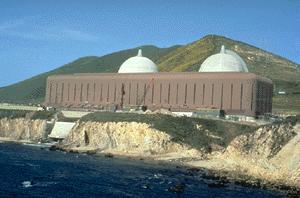
I got my start in politics in California organizing against the construction of Pacific Gas and Electric Co.’s Diablo Canyon nuke. It was a long, sometimes brilliant, sometimes frustrating struggle. We tried to warn people about rate hikes (which happened) and about the lack of a solution for the nuclear waste (still a problem) and the immense cost ($7 billion, about 200 times as much as projected) and the potential for accidents. But the argument that I always found most compelling, even with people who sorta, kinda supported nuclear power, was this:


Diablo Canyon is built on an active earthquake fault.


In fact, it’s built on a fault similar to the one that just shook Japan. The Hosgri is what’s called a “thrust fault,” meaning that the tectonic plates slide over each other. (The San Andreas, near San Francisco, is a slip fault, meaning the plates slide next to each other.) And the plant is perched on the edge of the Ocean.


PG&E has always insisted that the plant is built to withstand the greatest likely earthquake (about a 7.7 Richter). I don’t trust the company, but let’s say that’s true.


It’s also true that the Japanese plants (unlike, say, Chernobyl) were built to the highest standards. Japan was about as well prepared for this sort of disaster as a rich, industrized country could be. Japanese engineers are as good as any in the world, and the plants were well monitored and inspected. It’s just that the experts never predicted that a quake this large, and flooding this severe, could possibly happen.


Ths thing about major industrial accidents (and I learned this years ago researching the TMI near-meltdown for a book I was writing) is that they happen not because of one bad event but because of several unpredictable events happening at once. TMI was a series of errors. The plants in Japan are in trouble because the quake knocked out power (predictable) then the tsunami knocked out the backup generators (not as predictable) and the intense flooding also fried the emergency batteries. Three systems, all reliable, all redundant — and they all failed at once.


Oddly enough, the greatest danger to a nuke (other than a terrorist attack) is a loss of electric power. If there’s no power, you can’t pump cooling water into the core — and things get nasty really fast. The overheated core produces hydrogen gas, which can explode; that makes the mess even worse. If it gets bad enough, the 4,000-degree fuel rods melt right through the concrete and steel containment facility — and you have a catastrophic release of some of the world’s most toxic material.


Could a larger-than-predicted quake on the Hosgri Fault — combined with, perhaps, some human error of the sort PG&E is famous for, combined with bad weather and high seas — put Diablo in the same precarious situation as the Japanese plants? Of course it could. Is there any human way to put a nuclear plant on an active earthquake fault and make sure there’s zero potential for disaster? Of course not.


Now: You can argue that other forms of energy generation are also dangerous (coal miners die; natural gas facilities pollute the water etc., though I’ve never heard of a death from solar panels). But these things have to be discussed in terms of the disaster potential — and the potential of a massive radiation release on the California Coast, close enough to both San Francisco and Los Angeles to cause horrendous loss of life, makes almost any odds unacceptable.

Dick Meister: Teachers Need Strong Unions

5

Like many people, I’m sure, Washington Post writer Matt Miller is confused about, “where to come down on the question of who should ‘win”” in the struggle of public employees against attempts to strip them of collective bargaining rights and otherwise weaken them.

I know which side I’m on – the public employees and their unions.  But though highly sympathetic to the public employees cause, Matt Miller is not against the employees and their unions losing some of their powers and benefits – with one major exception: Teachers.

Again, I make no exceptions. I think we should rally around the cause of all public employees. But though Miller doesn’t necessarily agree, he does make a strong argument for making special efforts in behalf of teachers. For “the  future of the country depends on the public-sector workers known as teachers.”

I guess I should make a full disclosure here:  I was formerly a member of the AFL-CIO’s American Federation of Teachers and my wife Gerry is a current member. So I’m probably prejudiced. And should be.

Anyway, Miller makes a very strong case for paying close attention to the needs and demands of teachers. As he says, “We’ll never attract the kind of talented young people we need to the teaching profession unless it pays more than it does today.”  With starting teachers pay averaging  $39,000 a year nationally and rising to a maximum of merely  $67,000, it’s no surprise to Miller that “we  draw teachers from the bottom two-thirds of the college class. For schools in poor neighborhoods, teachers come largely from the bottom third.”

Adds Miller: ” We’re the only leading nation that thinks it can stay a leading nation with a ‘strategy’ of recruiting mediocre students and praying that they’ll prove to be excellent teachers.”

Miller may not be an outright supporter of teacher unions, but he does point out that the highest performing school systems in the world all have strong teacher unions. He means the systems in countries such as Finland, Singapore and South Korea, where school administrators work closely with unions to continually improve their schools’ performances.

Stanford University’s Linda Darling-Hammond, a leading expert on the subject, says the highest performing countries have educational systems that are built around attracting, rigorously training and retraining top talent for teaching. The stress is on supporting good teachers – not on getting bad teachers out. That’s partly because there just aren’t that many bad teachers in those countries.

I agree with Matt Miller that what’s clearly needed is a national strategy to make teaching the career of choice for talented young people. Wisconsin’s math scores, for instance, put its students not only behind Korea, Finland and Taiwan, but behind Slovenia, Estonia and Lithuania. But, hey, they still outpace students in Latvia and Bulgaria . . . though barely.

As Miller notes, the only people who can change that, the only ones who can provide decent educations to Wisconsin’s children, are public employees , teachers  – teachers, furthermore, who must be given a strong voice, a unionized voice in setting their pay, benefits and working conditions.

Teachers need the firm right to collective bargaining no less than Wisconsin’s other public employees, no less than the public employees of every other state.


Dick Meister, former editor of the SF Chronicle and KQED-TV Newsroom, has covered labor and politics for a half-century. Contact him through his website, www.dickmeister.com, which includes more than 250 of his columns.

Not for sale: An insider’s look at the battle to save KUSF

0

MUSIC/CULTURE Normally, Irwin Swirnoff’s demeanor is upbeat, and I’d consider him to be one of the friendliest people I know. But from the expression on his face, I thought someone had died. Even before walking into the room, I felt there was a weird vibe. “What’s wrong?” I asked.

“We just got sold and were taken off the air,” he replied.

Immediately and instinctively, without even really processing his words, I fired back, “Well, what are we gonna do about it?” Within minutes we worked ourselves into a frenzy, sending e-mails, texts, tweets, and phone calls to let everyone know that the nonprofit station where we volunteered, KUSF, had unfairly been ripped from us without any fair warning.

That morning, Jan. 18, was a blur of bad news. My parents were staying with me, and I had the day off. I needed a brief escape and turned to my volunteer work. It doesn’t really feel like work. I consider it more of a hobby, but calling it that would be selling it short. It’s like you can’t even have a hobby anymore without someone taking it away, selling it for $3.75 million and making it corporate. That’s exactly what the University of San Francisco did by attempting to sell out KUSF and the community in a veiled deal involving Entercom, America’s fifth-largest radio conglomerate; the University of Southern California; and Classical Public Radio Network (CPRN). We now know some of the details and overall shady manner in which these events transpired.

When I step back to think about our battle to save KUSF, one thing I find interesting is the current micro- and macro- momentum of power-to-the-people movements and how they can become contagious. It’s been said that tragedy brings communities together in astounding ways. Maybe the attempt to dismantle KUSF was the wake-up call some of us needed to pay attention to the behind-the-scenes politics of how, in radio, conglomerates are swallowing the little guys. This isn’t the first time this has happened — and it won’t be the last. But so many people were moved, inspired, and outraged enough to incite action, myself included. Maybe this is what we needed to get organized.

There was something really satisfying, in an old-school way, about a large group of people coming together to chant, clap, and scream “Shame!” in unison and really mean it. That’s how it went down Jan. 19 during the ill-conceived Q&A-style meeting staged by USF and its president, Father Stephen A. Privett. There was real energy in the air that night; it was sad, inspiring, and exciting all at once. It felt like I was going to a rumble, and I even dressed for the occasion, donning my leather biker jacket. When I got to the scene of the rally, I wasn’t disappointed by what I saw: sheer numbers, picket signs, “Save KUSF” hats and T-shirts, all materializing within hours. Most important, we had supporters willing to get vocal, with the passion to stand up and fight those who had wronged us.

At the end of February, the very community that USF and Privett sold out had raised more than $15,000, which is partly going to legal fees for what could be a precedent-setting denial of the station’s sale by the FCC. I think a lot of us were high on adrenaline in those first days after the station’s sale, especially because of the way it happened. Our cause has since garnered support from San Francisco’s Board of Supervisors. The majority of our supervisors seem to understand what the station meant to the community. You can’t just sell 33 years of independent radio, culture, and rock ‘n’ roll history. It never should have been for sale.

Radio radio!

5

arts@sfbg.com

Do you remember rock ‘n’ roll radio, as the Ramones once quizzed us, ever so long ago? If not that “Video Killed the Radio Star”-era iteration, a leather-clad punky nostalgia for Murray the K and Alan Freed, then do you remember college rock when it became the name of a musical genre in the early 1990s?

I’m trying to make out its faint strains now: a sound nominally dubbed rock, but as wildly eclectic and widely roaming as the winds blowing me over the Bay Bridge on this blustery, rain-streaked afternoon. I’m not imagining it. New, shaken-and-stirred PJ Harvey nudging family-band throwback the Cowsills. Nawlins jazzbos Kid Ory and Jimmy Noone rubbing sonic elbows with winsome Tim Hart and Maddy Prior. Brit electropoppers Fenech-Soler bursting beside Chilean melody-makers Lhasa. The ancient Popul Vuh tangling with the bright-eyed art-rock I Was a King. It’s an average playlist for KALX 90.7 FM, the last-standing free-form sound in San Francisco proper — though it hails from across the bay in Berkeley.

But what about SF’s own, KUSF? A former college radio DJ and assistant music director at the University of Hawaii’s KTUH and the University of Iowa’s KRUI, I’m one of those souls who’s searching for it far too late, even though I benefited from my time in college radio, garnering a major-league musical education simply flipping through the dog-eared LPs and listening to other jocks’ shows. Like so many music fans, I got lost — searching for the signal and repelled by commercial radio’s predictable computerized playlists, cheesy commercials, and blowhard DJs — and found NPR.

Today, I’m testing the signals within — the health of music on SF terra firma radio — by driving around the city, cruising City Hall, bumping through SoMa, and dodging bikes in the Mission. KALX’s signal is strong on the noncommercial side of the dial, alongside the lover’s rock streaming from long-standing KPOO 89.5 and the Strokes-y bounce bounding from San Jose modern rock upstart KSJO 92.3, whose tagline promises, “This is the alternative.” But KSJO’s distinct lack of a DJ voice and seamless emphasis on monochromatic Killers-and-Kings-of-Chemical-Romance tracks quickly bores, slotting it below its rival, Live 105.

Dang. I wind my way up Market to Twin Peaks. Waves of white noise begin to invade a Tim Hardin track. KALX’s signal fades as the billowing, smoky-looking fog rolls majestically down upscale Forest Hill to the middle-class Sunset. But I can hear it — with occasional static — on 19th Avenue, and later, in the Presidio and Richmond.

Throughout, KUSF’s old frequency, 90.3, comes through loud and clear — though now with the sound of KDFC’s light-classical and its penchant for swelling, feel-good woodwinds. The music is so innocuous that to rag on it feels as petty and mean as kicking a docile pup. But I get my share of instrumental wallpaper while fuming on corporate phone trees. It’s infuriating to realize that it supplanted KUSF, the last bastion of free-form radio in SF proper. Where is the free-form rock radio? This is the city that successfully birthed the format in the 1970s, with the freewheeling, bohemia-bred KSAN, and continued the upstart tradition with pirate stations such as SF Liberation Radio. Doesn’t San Francisco deserve its own WFMU or KCRW?


FEWER INDEPENDENTS, MORE CONSOLIDATION

Online radio — including forces like Emeryville’s Pandora and San Diego’s Slacker Radio — provides one alternative. This is true for listeners who use the TiVo-like Radio Shark tuner-recorder to rig their car (still the primo place to tune in) to listen to online stations all over the country. The just-launched cloud-based DVR Dar.fm also widens the online option.

Nevertheless, online access isn’t a substitute for free radio air waves. “We get the wrong impression that everyone is wired, and everyone’s online, and no one listens to terrestrial radio,” says radio activist and KFJC DJ Jennifer Waits. “Why then are these companies buying stations for millions of dollars?”

Waits and KALX general manager Sandra Wasson both point to the consolidation that’s overtaken commercial radio since deregulation with the Telecommunications Act of 1996 — a trend that has now crept onto the noncommercial end of the dial.

As competition for limited bandwidth accelerates (in San Francisco, this situation is compounded by a hilly topography with limited low-power station coverage) and classical radio stations like KDFC are pushed off the commercial frequencies, universities are being approached by radio brokers. One such entity, Public Radio Capital, was part of the secretive $3.75 million deal to sell KUSF’s transmitter and frequency. Similar moves are occurring throughout the U.S., according to Waits. She cites the case of KTXT, the college radio station at Texas Tech, as akin to KUSF’s situation, while noting Rice and Vanderbilt universities are also exploring station sales.

“The noncommercial band is following in the footsteps of the commercial band in the way of consolidation,” Wasson says, from her paper-crammed but spartan office at KALX, after a tour of the station’s 90,000-strong record library. Wire, Ringo Death Starr, and Mountain emanate from the on-air DJ booth, as students prep the day’s newscast and a volunteer readies a public-affairs show. “Buying and selling noncommercial radio seems to me very much like what used to happen and still does in commercial radio: one company owns a lot stations in a lot of different markets and does different kinds of programming in different markets. Deregulation changed it so that 10-watt stations weren’t protected anymore. There were impacts on commercial and noncommercial sides.”

Lack of foresight leads cash-strapped schools to leap for the quick payout. “Once a school sells a station, it’s unlikely it will be able to buy one back,” says Waits. “Licenses don’t come up for sale and there are limited frequencies. They have an amazing resource and they’re making a decision that isn’t thought-through.”


DREAMING IN STEREO

There are still people willing to put imagination — and money — behind their radio dreams. But free-form has come to sound risky after the rise of KSAN and FM radio and the subsequent streamlining and mainstreaming of the format.

Author and journalist Ben Fong-Torres, who once oversaw a KUSF show devoted to KSAN jocks, cites the LGBT-friendly, dance-music-focused KNGY 92.7 as a recent example of investors willing to try out a “restricted” format. “They were a good solid city station that sounded quite loose,” he explains. “But even there they weren’t able to sell much advertising because they were limited to the demographic in San Francisco and they couldn’t make enough to pay their debts.”

Nonetheless, Fong-Torres continues to be approached by radio lovers eager to start a great music station. “I’ve told them what I’m telling you,” he says. “It’s really difficult to acquire a stick in these parts, to grab whatever best signals there are.” This is especially true with USC/KDFC rumored to be on a quest for frequencies south of SF.

“There are some dreamers out there who think about it,” muses Fong-Torres. “A single person who’s willing to bankroll a station just out of the goodness of his or her heart and let people spread good music — someone like Paul Allen, who did KEXP in Seattle.”


THE FIGHT TO SAVE KUSF

The University of San Francisco has touted the sale of KUSF’s frequency and the station’s proposed shift to online radio as a teaching opportunity. But the real lesson may be a reminder of the value of the city’s assets — and how easily they can be taken away. “We’re learning how unbelievably sacred bandwidth is on the FM dial,” says Irwin Swirnoff, who was a musical director at the station.

Swirnoff and the Save KUSF campaign hope USF will give the community an opportunity to buy the university’s transmitter, much as Southern Vermont College’s WBTN 1370 AM was purchased by a local nonprofit.

For Swirnoff and many others, listener-generated playlists can’t substitute for the human touch. “DJs get to tell a story through music,” he explains. “They’re able to reach a range of emotions and [speak to] the factors that are in the city at that moment, its nature and politics. Through music, they can create a moving dialogue and story.”

Swirnoff also points to the DJ’s personally selective role during a time of corporate media saturation and tremendous musical production. “In the digital age, the amount of music out in the world can be totally overwhelming,” he says. “A good station can take in all those releases and give you the best garage rock, the best Persian dance music, everything. One DJ can be a curator of 100 years of music and can find a way to bring the listener to a unique place.”

Local music and voices aren’t getting heard on computer-programmed, voice-tracked commercial stations despite inroads of satellite radio into local news. In a world where marketing seems to reign supreme, is there a stronger SF radio brand than the almost 50-year-old KUSF when it comes to sponsoring shows and breaking new bands for the discriminating SF music fan? “People in the San Francisco music community who are in bands and are club owners know college radio is still a vital piece in promoting bands and clubs,” says Waits. “There are small shows that are only getting promotion over college radio.”

“It was a great year for San Francisco music, and we [KUSF] got to blast it the most,” Swirnoff continued. “It’s really sad that right now you can’t turn on terrestrial radio and hear Grass Widow, Sic Alps, or Thee Oh Sees, when it’s some of the best music being made in the city right now.”


PIRATE CAT-ASTROPHE — AND THE DRIVE TO KEEP RADIO ALIVE

Aside from KUSF, the only place where you could hear, for instance, minimal Scandinavian electronics and sweater funk regularly on the radio was Pirate Cat. The pirate station was the latest in a long, unruly queue, from Radio Libre to KPBJ, that — as rhapsodized about in Sue Carpenter’s 2004 memoir, 40 Watts From Nowhere: A Journey into Pirate Radio — have taken to the air with low-power FM transmitters.

After being shut down by the FCC and fined $10,000 in 2009, Pirate Cat is in limbo, further adrift thanks to a dispute about who owns the station. Daniel “Monkey” Roberts’ sale of Pirate Cat Café in the Mission left loyal volunteers wondering who should even receive their $30-a-month contributions. Roberts shut down the Pirate Cat site and stream on Feb. 20. Since then, some Pirate Cat volunteers have been attempting to launch their own online stream under the moniker PCR Collective Radio.

“We would definitely start our own station,” says Aaron Lazenby, Pirate Cat’s skweee DJ and a Radio Free Santa Cruz vet. “The question now is how to resolve the use of Pirate Cat so we don’t lose momentum and lose our community. We all love it too much to let it fizzle out like that.”

Some people are even willing to take the ride into DIY low-power terrestrial radio. I stumbled over the Bay Area’s latest on a wet, windy Oakland evening at Clarke Commons’ craftsman-y abode. The door was flung open and a colorful, quilt-covered fort/listening station greeted me in the living room. In the dining space, a “magical handcrafted closet studio station” provided ground zero for the micro-micro K-Okay Radio — essentially a computer sporting cute kitchen-style curtains and playing digitized sounds.

A brown, blue, and russet petal-shingled installation looked down on K-Okay’s guests as they took their turn at the mic. And if you were in a several-block radius of the neat-as-a-pin house-under-construction and tuned your boombox to 88.1 FM, you could have caught some indescribably strange sounds and yarns concerning home and migration. I drove away warmed by the friendly mumble of sound art.

Who would have imagined radio as an art installation? Yet it’s just another positive use for a medium that has functioned in myriad helpful ways, whether as a life link for Haitians after the 2010 earthquake or (as on a recent Radio Valencia show) a rock gossip line concerning the Bruise Cruise Fest. As Waits puts it, radio is “about allowing yourself to be taken on a musical journey rather than doing the driving yourself online.” Today it sounds like we need the drive to keep that spirit alive.

The future of the San Francisco left

72

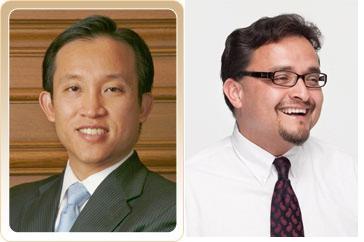
That, at least, was the title of the Milk Club forum March 1. Quite a panel, too: Sups. Avalos, Campos, Chiu, Kim and Mar. Tim Paulson from the Labor Council. Former Milk Club Prez Jef Sheehy. Tiny from Poor Magazine. And me.


I told the assembled that it was worth reminding ourselves how far we’ve come — when I started in this business, in 1982, Dianne Feinstein was mayor, there was exactly one reliable progressive on the Board of Supervisors (Harry Britt) and it was impossible for grassroots types without big gobs of money to get elected to high office. I’ve lived through Feinstein, Agnos, Jordan and Brown, all (until the end of the Brown Era) with at-large boards. It was awful trying to get anything good done; all we could do was fight to prevent the truly horrible from happening. Under Brown, as Sheehy noted, San Francisco politics was locked down, tight; the machine ruled, the Democratic Party was not a force for progressive issues and only a few exceptional leaders, like Tom Ammiano, kept the spirit alive.


Today, the very fact that five supervisors showed up at a Milk Club event to talk about progressive politics shows how district elections has transformed the city and how far we’ve come.


That said, we’ve still failed to make much progress on the most important issue of the day — the gap between the rich and the poor, the fact that this city has great povery and great wealth and the utterly unsustainable economic and tax system that has made us the most socially unequal society in the industrialized world.


Sheehy talked about the schools (both he and are are parents of kids in the public schools). Good schools, he said, are one of the most important socialequalizers; with a good education, poor kids have a chance. But while our local billionaires enjoy nice tax breaks, we’re starving the schools.


Kim talked abou the need for summer school and longer school years (I would add longer school days). These are things San Francisco can do — if we’re willing. “We’re talking about taxes,” Sheehy said, and he’s right.


In the past five years, I think we’ve cut about a billion dollars out of the General Fund, labor has given back more than $300 million — and we’ve raised $90 million in new taxes. Not good enough, not even close.


Yes, the bad economy is to blame for our fiscal problems, but so is the fact that we have a tax structure that systematically underfunds the public sector. (And yes, my conservative friends, cops shouldn’t retire with $250,000 a year pensions. Got it.)


Tiny made a strong statement about the essential problem facing the city when she asked, “who isn’t here?” She didn’t just mean that there were too many white people in the room (althought that was true); she meant that there were were too many working-class and poor people who can no longer live in San Francisco.


Sheehy was even more blunt: “In five years,” he said, looking out at the room, “none of us are going to be here.”
And my essential message to the crowd (and the elected officials on the panel) was: We don’t have to accept that. These are problmes we can address, right here in San Francisco. If we want to, we can shift the burden of paying the costs of society at least a little bit off the backs of the poor and middle class and onto the rich.


Nobody directly disagreed with me. In fact, Chiu announced that “income inequality is something all of us care about.”
How agressively he and others try to turn that concern into legislation will tell us something.


Two other interesting moments:


1. Every single person on the panel talked about how important Tom Ammiano was to the modern progressive movement. One by one, every panelists described the 1999 Ammiano for Mayor campaign as a defining moment in their lives and in the emergence of today’s progressive politics. Good to see the guy get the recognition he so richly deserves.


2. Campos, who was sitting next to Chiu, made a point of saying that there’s no longer a progressive majority on the board, and he pointed to the committee assignments that gave conservatives control of some key panels. Chiu responded: “At the end of the day, we have a progressive majority on the board that will serve as a backstop” to anything bad that comes out of committees.


It was curious; it sounded almost as if Chiu was disappointed in his own assignments. Why would you need a “backstop” if the committees were good in the first place?


So I called him the next day and asked him about it. First he said he thought the commitees were balanced and it was all going to be fine. But when I asked him directly — why not appoint progressive majorities on the key committees? — he responded:


“I wish the board presidency vote hadn’t turned out the way it did.”


In other words: If the progressives had all voted for Chiu, he wouldn’t have appointed conservatives to key posts of power. Instead, some progressives voted for Avalos, and Chiu won with the votes of Carmen Chu, Scott Wiener, Sean Elsbernd and Mark Farrell (along with Kim and Mar). The payback, the deal, the whatever you want to call it, means that bad decisions will be made at Land Use and Rules and maybe in the Budget Committee, and Chiu as much as admitted that the progressive majority will have to go to unusual lengths to undo them.


I know how politics works; I know you have to dance with the ones that brung you and all that. But it would be nice if every now and then someone would do something just because it was the right thing to do, and to hell with the political consequences.


I suppose that’s too much to ask.


Choose or lose

0

arts@sfbg.com

FILM With its plentitude of female political stars, the Tea Party finds U.S. feminism at an interesting if inevitable developmental stage — wherein people who never would have gotten this far without liberationists’ path-clearing reject progressivism altogether. They no longer identify with a historically oppressed viewpoint, but rather from an angry, gender-neutral stance of entitlement allegedly stolen by cunning have-nots and slippery liberals.

They’ve never felt enough second-class citizenry to see gender as “the” issue. Yet right-wingers’ international panic button, “Islamic fundamentalists,” are also all about family values. Christian nations dominated world politics for so long it’s understandably hard for Westerners to grasp, let alone accept, that a different age-old faith looks set to control that discourse in our immediate future. (Buddhism, where are you? Oh yeah: busy ignoring all this.)

And the driving forces aren’t assimilationist, like those presumably nice folks whose mosque peacefully shares my Lower Polk neighborhood with a famous tranny nightclub and fire house. Rather, they are the pissed-off rank citizens, recruited by more privileged leaders to relatable activity outrage toward a deep disapproval of perceived Western moral decay. Just like Sarah Palin!

Does she see women’s issues as a significant concern? Most unlikely. She’s never been constrained by her family — more likely, as copious public exposure suggests, she’s been Santa-whipping its cadre of very stupid reindeer toward some destination, even if off a cliff (hello, Bristol, hello).

Palin would doubtless be horrified at the injustices dramatized in potent German drama When We Leave. It’s about Umay (Sibel Kekilli from 2004’s Head-On), who leaves a seriously abusive Istanbul husband with their young son Cem, seeking shelter from her Turkish family in Berlin. Initially welcoming, they grow hostile once the shame of her spousal abandonment ripples endlessly outward.

To keep Cem from being kidnapped and taken “home,” she eventually moves into a safe house. She gets a job, potential new boyfriend (the endearing Florian Lukas from 2008’s North Face), new apartment. But the pull of family is inexorable, and no location-shifting games are ultimately able to protect her.

Feo Aladag’s feature writing-directing debut goes out on a narrative limb with an improbable risk Umay takes at the two-thirds point. It strains credulity, but does heighten dramatic tension. It’s no spoiler to reveal that When We Leave‘s first moments reveal it deals with that near-unbridgeable cultural gap known as honor killings. Still, it might spoil something to say Aladag subsequently licks, seals, and otherwise pushes her emotional envelope to an excessively manipulated degree — D.W. Griffith himself might cry melodrama’s corn level exceeded.

Nonetheless, the real-world realities are more than real enough. Twenty years ago the 1991 Sally Field vehicle (imagine a world in which such things existed!) Not Without My Daughter struck many as suspect and kinda racist for dramatizing a real-life American woman’s attempt to flee her husband’s Iran with their child. Now When We Leave comes as no surprise.

Today, notions of the roles and rights of women in a just society differ painfully around the world, “developed” and otherwise. A basic tenet of U.N., E.U., and other bodies’ diplomatic interventions is that women be given equal rights — or at least legal freedom from domestic violence, rape, underage marriage, and other abuse. After so many decades of progress, it now seems the driving planetary political tide no longer pushes that-a-way.

When We Leave is a flawed drama that nonetheless underlines an increasing, confusing divide between ideological extremists “East” and “West.” How can we be on the brink of global chaos when both most-agitative sides basically agree women should be barefoot and pregnant? Excepting the exceptional women now in political power — too many are often silent, whether due to compromise or sheer denial.

WHEN WE LEAVE opens Fri/4 in Bay Area theaters.

Burn this culture

0

caitlin@sfbg.com

LIT “I didn’t want to write a love letter to Burning Man.” Those words may come as a surprise out of the mouth of Guardian City Editor Steven T. Jones, who has been covering the freaky desert art festival and its year-round scene for nearly seven years in these very pages. They’re also surprising given that news of the book has already spread across the country by the vast Burning Man network: listserves, counterculture word-of-mouth, and through an important nod by the festival itself, which included a mention of Jones’ in-depth exploration of 2004-10 burner culture, The Tribes of Burning Man (Consortium of Collective Consciousness, 312 pages, $17.95) in its Jack Rabbit Speaks newsletter, which lands in 70,000 inboxes across the country.

Although Jones critiques many aspects of playa life, the book seems to be resonating with people immersed in the DIY, creativity a-go-go, Black Rock City milieu. “Man,” a burner friend told me on a recent trip to Washington, D.C. “You just don’t see books about Burning Man around these parts!” Which is kind of the point — Jones wanted to highlight a culture he says is vastly underreported yet culturally significant (and have a good time in the process). The book may be the most researched history of the festival to date, and romps through some of the biggest parties and most innovative art experiments on the playa in first person. “I was lucky to be reporting on this event at this time,” Jones says. “It was really epic stuff.”

Love the burn? Find yourself in the book’s pages — and at Jones’ series of readings all over town, he’ll be holding to celebrate its release. Hate everything it stands for? Read it and you’ll never have to go. I sat down with Jones at the newly remodeled Zeitgeist last week to learn more about the Man.

SFBG Why did you write this book?

Steven T. Jones Burning Man has been largely misunderstood and marginalized. Even those who know something about the event assume that its moment has past, that it’s “gone corporate” or otherwise lost its essential energy and appeal. Those who aren’t familiar think of it as just a festival. But it still absolutely floors newcomers, giving them what many describe as a chance to rediscover some more authentic sense of self in this strange and challenging new world. In recent years, this culture has expanded outward all over the world, a development that has begun to be even more important than the event itself to many people. It’s spawned vast social networks of creative, engaged people pursuing really interesting projects, and I’m honored to be able to tell their stories.

SFBG What initially drew you to write about Burning Man? You’re the Guardian city editor and most of your pieces are about politics.

SJ I think it’s hard to separate political culture from the counterculture. This book is probably more about San Francisco than it is about Black Rock City. Burning Man is the most significant culture to come out of San Francisco in years, especially considering its longevity and reach. I mean, some of our progressive political views have spread, but there are groups of burners in every major American city.

SFBG Who are the burners?

SJ There’s a census taken every year, so we know exact demographics on this one. There’s a wide age range and a wide cultural range in terms of ethnicities and geographic regions, and a range of how people live. There are the super-conservatives …

SFBG Really?

SJ Yeah, there are plenty of libertarians there. That’s how it was founded — the gun nuts and the freaks. Then the hippies discovered it. There’s the old hippie-punk divide at Burning Man that we see play out in San Francisco politics all the time over the last 40 years.

SFBG Throughout much of the book, you’re struggling with Burning Man’s political significance. In 2008 you even took a break in the middle of the festival to attend the Democratic National Convention and Barack Obama’s nomination. What was your final conclusion — is Burning Man important, politically speaking?

SJ It’s a good question. I wanted it to be. Larry Harvey wanted it to be, given what was going on with the rest of the country at the time. Ultimately, it just is what it is. I think it’s at least as relevant as the Tea Party — it’s got a better thought-out ethos and value system, but it doesn’t get as much press. It is a city, and the example the city offers is very relevant to the rest of the country.

SFBG Let’s say I’ve never gone to Burning Man and I’m never going to go. What does this book have for me?

SJ Burners are my main target audience, but it was important to me to make this book interesting and accessible to those who don’t go to Burning Man. I firmly ground this book in an intriguing sociopolitical moment in 2004, when the country really lost its mind. Bush was being reelected president and things were about to turn really ugly with the Iraq War and Hurricane Katrina, events that would further divide an already fractured country. I don’t think it’s an accident that the country hit its nadir just as Burning Man hit its zenith. People were desperate for authenticity, creativity, and a life-affirming way to spend their time. The most innovative and impactful cultural developments often happen on the margins, so to ignore Burning Man is to be incurious about what is animating the counterculture in San Francisco and other cities — people who will help lead this country back from this cultural desert we’re in, if that is ever going to happen.

SFBG Are you going to continue to write about burner culture as extensively as you’ve been doing?

SJ No, I think I’ll back off on it. I’ve got a few ideas for the next project — I’m fascinated by bike culture. I think it’d be fascinating to explore the international bike movement in the fashion of this book.

STEVEN T. JONES READS FROM TRIBES OF BURNING MAN

“Burning Man and the Art of Urbanism”

Tues/8 6 p.m., free for SPUR members, $20 for nonmembers

SPUR

654 Mission, SF

(415) 781-8726

www.spur.org

“Tribes of Burning Man Reading and Powwow”

Fri/11 7:30-10 p.m., $5–$20

Westerfield House

1198 Fulton, SF

Facebook: Tribes of Burning Man Reading and Powwow

Stage Listings

0

THEATER

OPENING

Beauty and the Beast Young Performers Theatre, Fort Mason Theatre, Bldg C; 346-5550, www.ypt.org. $7-10. opens Sat/5, 1pm. Runs Sat, 1pm; Sun 1 and 3:30pm. Young Performers Theatre presents the classic fairy tale.

Geezer Marsh, 1062 Valencia; (800) 838-3006, www.themarsh.org. $20-50. Previews Thurs, 8pm; Sat, 5pm; Sun, 3pm (through March 27). Opens March 31, 8pm. Runs Thurs, 8pm; Sat, 5pm; Sun, 3pm. Through May 1. The Marsh presents a new solo show about aging and mortality by Geoff Hoyle.

James Bond: Lady Killer Dark Room Theater, 2263 Mission; 732-9592, www.brownpapertickets.com. $20. Opens Fri/4, 8pm. Runs Fri-Sat, 8pm. Through March 26. Dark Room Theater presents an all-new James Bond adventure.

Regrets Only New Conservatory Theatre Center, 25 Van Ness; 861-8972, www.nctcsf.org. $24-40. Previews Wed/2-Fri/4, 8pm. Opens Sat/5, 8pm. Runs Wed-Sat, 8pm; Sun, 2pm. Through April 3. New Conservatory Threatre presents a play by Paul Rudnick, directed by Andrew Nance.

Tenth Annual Bay One-Acts Festival Boxcar Theatre, 505 Natoma; 891-7235, www.bayoneacts.org. $20-32. Opens Wed/6, 8pm. Runs Wed-Fri, 8pm; Sat, 3 and 8pm; Sun, 3pm. Through March 26. Three Wise Monkeys Theatre Company presents the tenth incarnation of the curated festival.

BAY AREA

Free Range Thinking Marsh Berkeley, TheaterStage, 2120 Allston, Berk; 1-800-838-3006, www.themarsh.org. $15-50. Previews Fri, 8pm; Sat, 5pm (through March 12). Opens March 18, 8pm. Runs Fri, 8pm; Sat, 5pm. Through April 9. The Marsh Berkeley presents a new comedic solo show by Robert Dubac.

ONGOING

Devil/Fish Brava Theater, 2781 24th St; www.criquenoveau.com. $26. Thurs/3-Sat/5, 7pm; Sun/6, 6pm. Cirque Noveau presents a contemporary circus that riffs off of the Faust legend.

*Farragut North NOHSpace, 2840 Mariposa; www.opentabproductions.com. $25. Thurs/3-Sat/5, 8pm. Former Howard Dean speechwriter Beau Willimon’s formulaic but solidly crafted 2008 play about backroom politics and the seamy side of what’s euphemistically called the American democratic process seems like it’d make a good George Clooney movie. George Clooney thought so too. He’s making it now under the title The Ides of March. You can see it sooner and without all those goddamn movie stars in this low-budget, high-octane staging by OpenTab Productions (Fishing). Stephen (Ben Euphrat) is a 25-year-old wiz of a press secretary for a “maverick” governor heading into a major primary battle on the road to the White House. But an unexpected phone call leads “idealistic” power-lover Stephen into temptation, even as it reveals the real dynamics of the electoral system he thought he’d mastered. A battle for career survival ensues with his former boss (Alex Plant), in which loyalty is a password and decency the first sandbag to drop. Opening night had one or two timing issues and some actors lost in shadow, but director Dave Sikula builds the action well and gets strong performances from an uneven but generally winning cast. Particularly nice work comes from a convincingly unraveling Euphant, a coolly compassionate Carla Pauli (as precocious intern–turned–unwitting pawn), and the formidable Nathan Tucker as Stephen’s slickly conniving counterpart and Mephistopheles of the moment.

40 Pounds in 12 Weeks: A Love Story The Marsh, 1062 Valencia; 1-800-838-3006, www.themarsh.org. $15-35. Fri, 8pm; Sat, 8:30pm. Through March 26. A one-woman show about eating and weight loss, by Pidge Meade.

*Loveland Marsh, 1062 Valencia; 1-800-838-3006, www.themarsh.org. $20-50. Fri, 8pm; Sat, 8:30pm. Through March 26. Ann Randolph’s one-woman show extends its run.

Out of Sight Marsh, 1062 Valencia; 1-800-838-3006, www.themarsh.org. $15-50. Thurs and Sat, 8pm; Sun, 3pm. Through March 27. Sara Felder’s one-woman show extends its run.

Party of 2 – The New Mating Musical Shelton Theater, 533 Sutter; 1-800-838-3006, www.partyof2themusical.com. $27-29. Sun, 3pm. Open-ended. A musical about relationships by Shopping! The Musical author Morris Bobrow.

*Pearls Over Shanghai Thrillpeddlers’ Hypnodrome, 575 Tenth St; 1-800-838-3006, www.brownpapertickets.com. $30-69. Sat, 8pm. Through April 9. Thrillpeddlers’ acclaimed production of the Cockettes musical continues its successful run.

Sex and Death: A Night with Harold Pinter Phoenix Theatre, ste 601, 414 Mason; 1-800-838-3006, www.offbraodwaywest.org. $35. Thurs-Sat, 8pm. Through March 26. Off Broadway West Theatre Company presents two Pinter one-acts: The Dumb Waiter and The Lover.

What We’re Up Against Magic Theatre, Fort Mason Center, bldg D; 441-8822, www.magictheatre.org. Wed/2-Fri/4, 8pm; Sat/5, 2:30 and 8pm; Sun/6, 2:30pm. Following the popularity of Theresa Rebeck’s Mauritius in 2009, Magic Theatre brings the New York playwright back for the world premiere of a decidedly flimsy comedy about sexual discrimination at a busy architecture firm. Eliza (Sarah Nealis) is the bright and brash new employee who finds herself shut out by an old boys network. Sodden boss Stu (Warren David Keith) resents her heartily for her competence and ambition, while ass-kissing power-jockey Weber (James Wagner) uses the leverage for all its worth. Gender solidarity with sole (but soulless) sister Janice (Pamela Gaye Walker) doesn’t get Eliza very far either. One guy at the firm, Ben (Rod Gnapp), alone knows better (among what amounts to an unbelievably inept staff). Eliza, meanwhile, crafts a form of revenge from her well-guarded solution to the otherwise stymieing “duct problem” in the plans for a new mall, a major account hitting the skids. Ben’s obsession with ducts is something of a key joke here, which ends up being characteristic of a play that stretches its not-very-new conceits thinly over two acts. The glass ceiling, ducts and all, is a bit too transparent in this bloodless production (helmed by artistic director Loretta Greco), leaving precious little to wonder or worry about. (Avila)

William Blake Sings the Blues Actors Theatre of SF, 855 Bush; 345-1287, www.brownpapertickets.com. $26-38. Wed-Sat, 8pm. Through Sat/5. Actors Theatre of San Francisco presents the world premiere of a play by Keith Philips.

BAY AREA

Collapse Aurora Theatre, 2081 Addison, Berk; (510) 843-4822, www.auroratheatre.org. $34-55. Wed/2-Sat/5, 8pm; Sun/6, 2 and 7pm. Aurora Theatre presents a comedy by Allison Moore.

Death of a Salesman Pear Avenue Theatre, Mtn View; (650) 254-1148, www.thepear.org. $15-30. Thurs-Sat, 8pm; Sun, 2pm. Through March 20. Pear Avenue Theatre presents the Arthur Miller classic.

A Man’s Home…an Ode to Kafka’s Castle Berkeley City Club, 2315 Durant; (510) 558-1381, www.centralworks.org. $14-25. Thurs-Sat, 8pm; Sun 5pm (also Sat/5 and March 12, 5pm). Through March 13. Central Works

Romeo and Juliet La Val’s Subterranean, 1834 Euclid, Berk; www.impacttheatre.com. $10-20. Thurs-Sat, 8pm. Through March 26. Impact Theatre presents a Russian mafia interpreation of the tragic romantic classic.

Ruined Berkeley Repertory Theatre, Roda Theatre, 2015 Addison, Berk; (510) 647-2949, www.berkeleyrep.org. $29-73. Call for dates and times. Through April 10. Berkeley Rep presents Lynn Nottage’s Pulitzer-winning play about the lives of women in Africa.

World’s Funniest Bubble Show The Marsh Berkeley, 2120 Allston Way, Berk; 1-800-838-3006, www.themarsh.org. $8-11. Sun, 11am. Through April 3. The Amazing Bubble Man extends the bubble-making celebration.

PERFORMANCE/DANCE

Comedy Brains The Cabaret at the Marsh Berkeley, 2120 Allston Way, Berk; 1-800-838-3006, www.themarsh.org. Sat/5, 8:30pm. $15-35. Scott Capurro and Piano Fight’s ForePlays are this week’s lineup.

Devotion ODC Theater, 3153 17th St; 863-9834, www.odctheater.org. Fri/4-Sun/6, 8pm. $15-18. Sarah Michelson and Richard Maxwell present a new dance work.

Halau o Keikiali’i City Hall; 920-9181, www.dancersgroup.org. Fri/4, noon. Free. The first installment in a monthly lunchtime dance series.

Hope Mohr Dance Z Space at Theater Artaud, 450 Florida; 1-800-838-3006, www.hopemohr.org. Thurs/3-Sat/5, 8pm; Sun/6, 2pm. The company presents its fourth home season with the world premiere of The Unsayable.

Miss Toolbox Pageant Club 93, 93 Ninth St; www.club93sf.com. Thurs/3, 11pm. Free. Witness performers of all genders and sexualities utilizing their style, talent, beauty, and star wattage.

Qcomedy Showcase Martuni’s, 4 Valencia; www.Qcomedy.com. Mon/7, 8pm. $5-16. Performers include Kat Evasco, Dana Cory, Cookie Dough, Maggie Dolan, and Nick Leonard.

Stephen Petronio Company Novellus Theater, Yerba Buena Center for the Arts, 701 Mission; 392-6449, www.sfperformances.org. Thurs/4-Fri/5, 8pm. $30-50. SF Performances presents Stephen Petronio Dance Company’s 25th anniversary work, I Drink the Air Before Me.

BAY AREA

Bale Folklorico Da Bahia Zellerbach Hall, UC Berkeley campus, Berk; (510) 642-9988, www.calperformances.org. Sun/6, 7pm; Mon/7, 11am. $5-52. The Brazilian troupe of dancers, musicians, and singers performs Sacred Heritage.

Body of Knowledge Western Sky Studio, Eighth St. and Dwight, Berk; www.bodyresearch.org. Thurs/4-Fri/5, 8pm. $12-20. Karl Frost/Body rearch presents a new work and a happening.

Marga’s Funny Mondays Cabaret at Marsh Berkeley, 2120 Allston; 1-800-838-3006, www.themarsh.org. Mon/28, 8pm. $10. Marga Gomez hosts a Monday night comedy series.

Merce Cunningham Dance Company Zellerbach hall, UC Berkeley campus, Berk; (510) 642-9988, www.calperformances.org. Thurs/3-Sat/5, 8pm. The legendary company makes its final Bay Area appearance.

Stage listings are compiled by Guardian staff. Performance times may change; call venues to confirm. Reviewers are Robert Avila, Rita Felciano, and Nicole Gluckstern. Submit items for the listings at listings@sfbg.com. For further information on how to submit items for the listings, see Picks. For complete listings, see www.sfbg.com.


Back to the streets

2

Coronel knew an old man in Granada who said

(who often said):

“I wish I were a foreigner, so that I

Could go home

— Zero Hour, Ernesto Cardenal

I first came into contact with the work of poet Roberto Vargas a couple of years ago, when I saw his face, projected several stories tall, on a wall just off Valencia Street.

I was riding my bike to the Day of the Dead procession when I came across filmmaker Veronica Majano screening historical footage of the old Mission District on the wall of Dog Eared Books. The footage of Vargas was from a movie called Back to the Streets, and it showed a Latino hippie fest in Precita Park circa-1970. Long-haired Chicanos smoked weed and danced and played bongos on the grass while Vargas read from a stage. On today’s Valencia Street, Vargas was a ghost returned from a long-lost Mission, now standing twenty feet tall on the bookstore’s wall, reading a powerful poem that angrily denounced the SFPD for the mysterious death of a Mission Latino youth in police custody.

The film of Vargas was a beautiful snapshot of Latino youth culture in the neighborhood before gang violence and gentrification, like a Mission High School yearbook scene from an exhilarating era of Latino self-determination. In 1970, the Free Los Siete movement was feeding the community at a free breakfast program out of St. Peter’s Church on Alabama Street and had started free clinics and legal aid programs in the Mission. In the years to follow, the neighborhood would see the founding of the Mission Cultural Center and Galeria de la Raza and the inception of many of the neighborhood’s now world-famous mural projects.

Looking at the groovy scene in the park, it was hard to imagine that just a few short years later, Vargas and other kids from the Mission would be fighting alongside the Sandinistas in the jungles and mountains of Nicaragua. Yet the utopian promise of the era’s poetry, art, and youth culture in many ways culminated in the guerrilla war in which Vargas and other poets from San Francisco would fight and ultimately — in 1979 — help defeat the forces of Nicaraguan dictator Anastasio Somoza.

On Feb. 24, the day of his 70th birthday, Roberto Vargas makes a rare return to San Francisco to perform in a poetry event at the Mission Cultural Center in honor of that Nicaraguan solidarity movement of the 1970s. A video will be shown of footage from that struggle — classic scenes of Vargas and others taking over the Nicaraguan consulate in San Francisco; of the famed nightly candlelight vigils at 24th and Mission BART Plaza in support of the Sandinistas — and Vargas will be reunited on stage to read with old poet friends like Lawrence Ferlinghetti, Diane di Prima, Alejandro Murguía, and Vargas’ old compañero from San Francisco State University’s Third World Liberation Front, actor Danny Glover. The event is not open to the public. Invitations have been given out and the small MCC theater’s 150 seats have already been filled. Yet the event provides an opportunity to publicly honor Roberto Vargas’ contributions to the Mission, and to reflect on the hopes and dreams of Mission past.


POETRY AND REVOLUTIONARY VISION

Poetry was a part of Vargas’ world from the beginning. Vargas was born in Nicaragua, but came to the United States when he was a small child. In his 1980 collection of poems Nicaragua Te Canto Besos, Balas, y Sueños, he writes of “living in an offbeat alley called Natoma Street (where I always imagined a lost Mayan city existed beneath the factories).” By the late 1950s, Vargas may have been the first Mission District Latino Beat poet. “I graduated from Mission High School in 1958 and used to hang out in North Beach, going around to see all the poets,” he says. “I met Allen Ginsberg when I was just a 19-year-old kid running around in North Beach. Diane di Prima, Bob Kaufman, Ted Berrigan — all the major poets knew me when I was in my teens.”

After a stint in the U.S. Marine Corps and an attempt at a boxing career that ended with a detached retina (an injury that also helped him avoid the Vietnam-era draft), Vargas went to SF State, where he was heavily active in the student strike of 1968-69. Students walked out of campus and battled riot police while standing on picket lines for five months to demand an ethnic studies program at the university.

In the spirit of the times, Vargas and other poets — including a young Mission Chicano named Alejandro Murguía — joined the Pocho-Che Collective to publish poetry by local Latino poets. The poets went to cut sugar cane in the Venceremos Brigade in Cuba. They put out small poetry chapbooks in the Mission, full of poems that linked Che Guevara’s call for Third World revolution with the experience of the Chicano barrios of the United States in a new vision tropical. In the era after the SF State strike, the city started funding community arts projects in the ghettos. Like all classic zines, the first copies of Pocho-Che were scammed, in this case late at night at Vargas’ new job in the Mission’s Neighborhood Arts Program. In the years to come, the group would eventually publish hardbound books by Vargas, Nina Serrano, and others.

Today, Murguía is a professor in the ethnic studies program at SF State that the strikers fought to originate. He is the author of the American Book Award-winning short story collection This War Called Love (2002) and the memoir The Medicine of Memory (2002). He remembers, “The poetry scene was incipient, very young, and the readings weren’t always very formal. Sometimes they were at community events or protest rallies. But we had contact with Latin America. We knew people who had been in Chile, like Dr. Fernando Alegría.”

Alegría was a poet who had been the cultural attaché to the U.S. under Allende in Washington. Vargas recalls, “Alegría had myself and some other young poets come to Chile and spend a month or two studying with [Pablo] Neruda. But, of course, our plans were canceled by the coup in Chile.”

Murguia remembers the September 1973 coup in Chile that overthrew the popularly elected Socialist democracy of Salvador Allende caused the young poets to organize rare formal readings at Glide Memorial Church in protest. “We had several big ones there,” he says. “There was a broad range of poets — Michael McClure, Fernando Alegría, Jack Hirschman, Bob Kaufman, Janice Mirikitami all read. There was a line going down the block to get in.”

In addition to their mentor, Alegría, Vargas, and Murguía also knew one of their heroes, the Nicaraguan Marxist poet and priest, Ernesto Cardenal. Cardenal lived under the Somoza dictatorship in a sort-of internal exile in a religious artist commune called Solentiname. Vargas wanted to bring Cardenal to read in the United States, but Somoza would not allow the poet, who was critical of the Nicaraguan dictator, to travel outside the country. Vargas went to his old pal Ginsberg for help.

“Because Allen knew me when I was a kid, he helped me with my organizing for Nicaragua,” says Vargas. “Allen was part of PEN, and in 1973 or ’74 he went to the State Department with other writers to put pressure on [Anastasio] Somoza. Eventually Somoza relented and we brought Cardenal to New York for a reading.”

The poetry of Cardenal was a north star to the young Mission poets. Cardenal’s epic 1957-60 masterwork Zero Hour is perhaps the literary foundation of revolution in Nicaragua. Influenced formally by Ezra Pound, Zero Hour weaves a sprawling history of Somozan oppression and U.S. intervention in Nicaragua together with lyrical imagery of Nicaragua’s natural beauty and wildlife. The poem creates a poignant sense that Nicaraguans, unable to enjoy and own these natural riches, had under Somoza become exiles within their own country.

Of particular interest to the young Mission poets, though, was Cardenal’s Homage to the American Indians (1969), a book-length meditation on the glory of Mayan and North American native civilizations. “For us, the work of Cardenal was very important,” says Murguía. “Homage to the American Indians is a continental vision of Native Americans — everything from the San Blas Indians of Panama to the Indians of Omaha to the Indians of Mexico City and Peru.”

In Homage, Cardenal evokes a lost Indian Utopia “so democratic that archaeologists know nothing about their rulers,” where “their pyramids were built with no forced labor, the peak of their civilization did not lead to an empire, and the word wall does not exist in their language.” He writes:

But how to write anew the hieroglyph,

How to paint the jaguar anew,

How to overthrow the tyrants?

How to build our tropical acropolis anew

Cardenal’s poems of this lost glorious past were to Vargas more pointedly a vision of a Latin American utopia that can also be regained in the future. In Cardenal’s work, says Vargas, “There is a longing for the simplicity of that civilization — the creativity, the innocence, the tribalism. Can we get it back after all the dictatorships, after all that capitalism has done? Cardenal showed us what we were, what we had, what we lost.”

Under Cardenal’s influence, the Mission poets turned seeing lost Mayan cities beneath the city’s factories into a literary movement. By 1975, members of Pocho-Che had started a magazine called El Tin Tan with Murguia as editor and Vargas as contributor. El Tin Tan presented a sweeping utopian vision of a borderless invisible Latino republic united culturally and politically under the sign of the palm tree. The poets situated the capital of this world right here in the Mission District.

“To tropicalize the Mission — to see it as a tropical pueblo — was a political act of defiance and self-determination,” says Murguía. “We were saying that we put this particular neighborhood — our pueblo, in a way — not in a context of North American history but in the context of Latin American history. The history of the eastern U.S. doesn’t affect California until 1848 when the first illegal immigrants came to California — not from the South, but from the East.

El Tin Tan,” Murguía continues, “was probably the first magazine that was intercontinental in scope, a combination of politics and literature and art and different trends from the Mission to Mexico City to Argentina and everywhere in between.” He proudly recalls that it ran the first North American essays on Salvadoran poetry, and translated and printed a short story by Nelson Marra, a writer imprisoned by the Uruguayan dictatorship.

Yet for all its international perspective, El Tin Tan remained firmly rooted in the Mission. Columns by Nuyorican poet Victor Hernández Cruz and news of the assassination of Salvadoran guerrilla poet Roque Dalton ran side by side with the first comics by future Galeria de la Raza founder Rene Yáñez, all folded between wildly colorful cover art by neighborhood favorites like the famed Chicano artist Rupert Garcia and the muralist Mike Rios.

“The magazines were colorful — tropical — on the outside, but very political on the inside,” says Murguía. “That was a metaphor for our own work.”

By this time, Vargas had become an Associate Director at the SF Arts Commission. From within City Hall, he started to pump city arts money into the Mission, helping to fund projects like Mike Rios’ mural of the people holding BART on their backs at 24th and Mission BART Plaza and the Balmy Alley Mural Project — art that can still be seen in public today.

Once, Vargas commissioned a Chuy Campesano mural for the Bank of America building at 22nd and Mission. “I read a poem called “Boa” and had the crowd dancing and chanting, Es la Boa, Es la Boa,” says Vargas. “We were trying to say, ‘You made your millions off our farmers, but now you are on our turf in the Mission here in occupied Mexico. So we’ll put hieroglyphics on the walls of your bank like we used to do!’ Someone from the bank tried to take the mic from me and cops came and escorted us out.”

Vargas’s story of the mural’s dedication ceremony captures the bravado of the era. “It was a beautiful time, all of us young and thinking we were going to change the world. We wanted to change the world through culture.”

The poets organized the community to demand a neighborhood’s arts center, too. In 1977, the dream was realized when the City, with pressure from Vargas from within City Hall in the Arts Commission, purchased an old, five-floor furniture store at 24th and Mission to be made into the Mission Cultural Center. Murguia became the center’s first director.

The Mission utopia was becoming a reality for Vargas. In Nicaragua Te Canto, he wrote:

We used to drive

Our lowered down Plymouths and Chevys

On top of the breast of a mountain to

Make love and drink wine… Never

Knowing what was going to happen after

Mission High School

The Mission is now an expression of real culture, a many-faceted being … both plus and minus with the soul of a human rainbow…My people watching slides of Sandino and Nica history … White children wearing guarachas and afros trippin’ down the streets to party. Young Salvadoran poets discussing the assassination of Roque Dalton … The Mission is now an implosion/explosion of human color, of walls being painted by muralistas. There is a collective feeling of compassion for each other Nicas Blacks Chicanos Chilenos Oppressed Indios. The sense of collective survival, histories full of Somozas, Wounded Knees written on the walls.

In Zero Hour, Cardenal wrote of Nicaragua’s trees and birds and lakes, and their call to revolution, as seen from its mountains:

What’s that light way off there? Is it a star?

Its Sandino’s light shining in the black mountain


Vargas, the excited Mission kid, echoed in his work:


Tonight I am sitting on a mountain called Bernal Hill

Tonight I see the flames of America Latina spreading from here …


STRUGGLE AND VICTORY — AND STRUGGLE

Perhaps inevitably, the Latin American Utopia Vargas and company created in poetry would seem so tantalizingly close to actualization that they would be forced to pick up the gun and fight for its existence.

When the enormous earthquake of 1972 left Nicaragua’s capital, Managua, in ruins, Nicaraguan refugees flocked to SF’s Mission District. Soon, San Francisco was home to more Nicaraguans than any place on Earth outside of Nicaragua. The family of Anastasio Somoza had controlled Nicaragua with brutal repression for generations. Somoza’s embezzling of relief funds for earthquake victims led to increased revolutionary activity against his rule. Taking their name from Augusto Sandino, a Nicaraguan revolutionary who led resistance against U.S. occupation of Nicaragua in the 1930s, La Frente Sandinista de Liberacion Nacional (FSLN) — or the Sandinistas, as they were popularly known — began guerrilla activities in late 1974 by taking government officials and Somoza relatives hostage in a raid on the house of the minister of agriculture. They received a $2 million ransom and had their communiqué printed in the national newspaper. Thus was born the Sandinista revolution.

In the Mission, Vargas, Murguía, and others were in touch with La Frente, and began organizing Sandinista solidarity rallies to coordinate with La Frente’s actions in Nicaragua. Out of offices in the Mission Cultural Center, along with El Tin Tan, the poets published a newspaper called La Gaceta about the situation in Nicaragua. The paper had a circulation of 5000 copies and was available for free all over the district. The sight of pro-Sandinista rallies at 24th and BART Plaza became so common that the plaza was popularly nicknamed Plaza Sandino.

Vargas organized takeovers of the Nicaraguan consulate in San Francisco and traveled the US, speaking about Nicaragua. Yet, soon, this kind of support didn’t seem like enough. In Cardenal’s poetry, victory was inevitable. Cardenal had written that Indian time was circular, that “history became prophecy,” and that therefore the “empire will always fall.” He had also written, “The hero is reborn when he dies. And the green grass is reborn from the ashes.” In poetry, Vargas and Murguia found inspiration to go to war.

In 1976 and 1977, Mission District residents, in solidarity with the FSLN, began quietly leaving San Francisco to join up with La Frente and pick up the gun in the Sandinista Revolution. Among them were Roberto Vargas and Alejandro Murguía.

“It was very romantic,” says Murguía. “If you grew up in the time after Che’s death, when you had Che’s figure calling for “1,2,3, many Vietnams” and a lot of different armed struggles going on all over Latin America, then it would seem logical, I think, if you were kind of young and crazy, that you would want to participate in some of these situations besides just doing solidarity work or organizing rallies. Also, the coup in Chile crushed our generation’s hope for electoral change in Latin America.”

Today, Murguía tries to situate the poets’ embrace of armed struggle within the spirit of those long ago times, but one senses that Vargas would not hesitate to join a guerrilla war tomorrow morning. When I ask him how the young poets made the leap from verse to bullets, he is incredulous at the question.

“We had to fight! There was no other way!” Vargas says. “We had the historical perspective and as a people we were worthless if we let that situation stand. We had our own books out. But are we really revolutionary poets if we just sit back and collect our laurels?”

Murguía compares the Sandinista war with the Spanish Civil War, when there were many international brigades in which writers had been involved. He suggests the poets went to war because they were poets. “If you knew the situation intimately in Nicaragua and you were reading Cardenal’s poems,” he says, “it was easy to see the connection between poets and political necessity.”

Vargas began organizing small, tight-knit cadres for battle in Nicaragua, recruiting his Sandinista guerrillas right off of the streets of the Mission. “I was secretive and I found them one by one,” he explains. “We were very clandestine and very compartmentalized. We never had more than a dozen people in our committee at once.”

Men who were menial laborers in San Francisco would one day be among the most respected heroes of the Nicaraguan Revolution. “When I recruited Chombo [Walter Ferretti], he was a cook at the Hyatt Regency,” says Vargas. “Later, Chombo would become a head of national security in Nicaragua. Another recruit was a former pilot, so I went to talk to him where he pumped gas at 21st and South Van Ness. That was Commandante Raúl Venerio. After the triumph of 1979, he would become the Chief of the Nicaraguan Air Force.”

When in San Francisco, Venerio later served as the editor of La Gaceta. In Nicaragua, the former gas station attendant became a real hero. “They got an airplane and attacked the National Palace,” says Vargas, laughing. “They hit it and split, and got away — real Mission boys!”

Before heading off to join La Frente, Vargas’ recruits would undergo a regimen of training and political education, an informal boot camp largely hidden in plain sight in the Bay Area.

“It was primitive,” remembers Murguía. “We didn’t really have someone with a military background to train us. We got just guns at pawn shops on Mission Street and practiced shooting at the firing range in Sharp Park down in Pacifica. We worked out with a friend who was a black belt in karate.”

Murguía says the most difficult part of training was the daily pre-dawn run of five laps around Bernal Hill. “We would run up the hill counter-clockwise — because that way is more difficult,” he says, “and we would wear these combat boots we bought at Leed’s Shoes on Mission.”

Besides being a part of physical conditioning, the run was a litmus test of the recruits’ commitment. “Doing activity like that is almost impossible if you’re not really psychologically into it,” says Murguía. “Try running five times around Bernal Hill! You start wondering after your third lap, ‘Goddamn! Why am I doing this?‘ Especially when no one is forcing you to do it!”

When I ask if the daily jog of 10 or 12 Latino men in combat boots on the hill at sunrise did not attract any, uh, attention, Murguía shrugs. “There were less people on the hill in those days,” he says. He recalls that the Mission cadres trained in complete anonymity: “We got money to rent planes and we took turns learning to fly the planes around the Bay Area. Nobody suspected anything because nobody knew anything about Nicaragua then.”

When I try to imagine a phalanx of Sandinistas at dawn on today’s Bernal Hill, surrounded by a crowd of early morning dog walkers, I can’t help but laugh. But the cadre’s training was deadly serious, and Murguía says its value was far more than psychological. “What I discovered when I went to the Southern Front was that our San Francisco cadres were some of the most advanced in the war,” he explains. “We understood the political situation and the tactic of insurrection and we had a minimum of physical conditioning. But some of these other cats, man! They literally just walked in off the street!”

For a time, Murguía remained the director of the Mission Cultural Center, while making regular trips to fight in Nicaragua. In 1977, Vargas resigned from the Arts Commission and went to battle for six or seven months. He and Murguía would spend the next couple of years rotating back and forth from the war front in Nicaragua to their solidarity work in the Mission. Murguía describes his entry into Nicaragua, his stay in various guerrilla safe houses in Costa Rica, and his experiences in the war in his 1991 American Book Award-winning fictionalized memoir, Southern Front.

Though Murguía says the actual military war on the ground was largely a stalemate between the Sandinistas and the Somozas’ National Guard, the Sandinistas were at last able to triumph through international pressure, strategic military victories, and a general strike. Somoza fled in July of 1979, and the Sandinistas entered Managua victorious on July 19 of the same year. Cardenal’s poem “Lights” describes the city as seen from a plane that brought the elder poet into a Managua free from the Somoza family’s rule for the first time in 43 years. In Managua, street graffiti declared, El triunfo de la revolución el triunfo de la poesía.

Vargas and Murguía, however, did not enter Managua with the victorious army. The Southern Front did not go to Managua, and Vargas had recently been sent back to the U.S., to coordinate a simultaneous take over of the Nicaraguan consulates in major U.S. cities from coast to coast to coincide with the victory in Managua.

Vargas’ work for Nicaragua did not end with victory. The Mission High kid now found himself serving in the new revolutionary government as cultural attaché to the United States. “I was jailed in the takeover of the DC consulate,” Vargas says, laughing, “but then I came back several months later to serve there!”

The voluble poet grows uncharacteristically silent when I ask him what it felt like to actually win the war.

“To win?,” he asks, pronouncing the word as if he was hearing it for the very first time. “Well … it’s like taking off a huge load, man. Like taking mountains off your back.” He is silent for a bit and then adds, “But what do you win? You win the right to continue the struggle.”

“To win was to reach the objective of getting rid of the Somoza family once and for all,” Vargas says. “But it was not really a win/lose situation.” Indeed, the Sandinistas inherited a country in ruins and in debt, with an estimated 50,000 war dead, and 600,000 homeless. Nicaragua’s left-wing powers would become an obsession for the Reagan Administration, who for the next ten years offered heavy financial assistance and training to the Contras, a coalition of pro-Somoza and anti-Sandinista guerrillas who fought to overthrow the revolutionary government. The U.S. strangled Nicaragua’s economy with a trade embargo like it employed against Cuba. In reality, for the Sandinistas, the war literally never ended.

“Somoza bombed everything in Nicaragua before he left the country. Reagan was spending — what? — $100 million a year annually against us at that time?” says Vargas. “They spent so much for a decade to destroy our little country.”

Nonetheless, poetry remained in the forefront of the Nicaraguan revolution. Cardenal was named Ministry of Culture, and he instituted poetry workshops across Nicaragua as part of a highly successful literacy campaign that raised literacy from just 12 percent to over 50 percent in the first 6 months of the revolutionary government. Soon, poetry was being written and taught in the tiniest villages and in the fields.

“We tried,” Vargas says bluntly. “We were doing very important land reform, incredible stuff for the economy. But it was dangerous to be a good example. We had the potential, but we had to hold off this enormous power [of the U.S.] for decades. Ultimately, we had to step back so they would not destroy Nicaragua.”

In 1990, Nicaraguan voters, weary of war and economic misery, chose to elect FSLN President Daniel Ortega’s U.S.-backed opponent, Violetta Chamorro, in the presidential election. “We lost the elections,” says Vargas. “But we had to allow them to demonstrate that we were not like Cuba or other revolutions. We lost beautiful young men and women to get that liberty.”

I ask Vargas to consider the successes and failures of the Nicaraguan revolution. He pauses and then seemingly changes the subject, excitedly telling me of the time he brought Ginsberg to meet the Sandinista soldiers. “Ginsberg was fascinated by the Sandinistas,” says Vargas. “And he wanted to see what he had been supporting on my behalf all these years. So I took him to the fighting along the Honduras border in 1984, during the Contra war.”

When Ginsberg went to the war zone, he brought not a rifle but a concertina. “I took him to meet these young soldiers in a trench. They see Allen with the concertina and they were like, ‘Who the hell is this guy?’ I told them he was a very famous poet. At once, they all started taking bits of paper out of their pockets that they had written poems on and started reading them to Allen. So there we are, with these soldiers in the trench with their rifles reading poetry, and Allen just wailing away on this concertina!”

I think of the strange road from Cardenal’s vision of lost Mayan cities to Vargas’ dreams of a Bernal Hill utopia to Ginsberg listening to soldiers’ poetry in a Nicaraguan trench, and I see that Vargas has answered my question with his own, the question asked by revolutionary poetry.


LOST CITIES, AND NEW ONES

The lost moment with Ginsberg in the trenches is like a missing chapter out of Roberto Bolaño’s Savage Detectives. Indeed Vargas’ story in many ways embodies that of Bolaño’s exile poet generation, of which he wrote, “They dreamed of a Latin American paradise and died in a Latin American hell.” Except for one crucial difference: Vargas is very much alive and still fighting.

Today, Vargas still puts in a tireless 50-hour work week as a labor organizer for the American Federation of Teachers in San Antonio, TX. During our conversation, he excitedly tells me of an action he is organizing for next month, a march of teachers on the Texas capital to protest budget cuts to education. “I camp out in the teacher’s lounge and talk to them when they are on break,” he says. “I signed up 50 new members last week!”

As he nears 70, the poet shows no signs of slowing down. “I can’t afford to!” he says. “My youngest son is only 17. When I get finished putting him through college, then maybe I can take a break.”

But work seems like more than necessity to Vargas; political struggle is the central theme of his life’s work. “Work, work, work, Erick,” he tells me. “That is what we have to do. I could go back and forth about what went wrong in Nicaragua, but there is more work to do and I have to stay positive. It is all part of the process.”

When Vargas comes back to the Mission Cultural Center this week, he will literally return, full circle, to a building he helped build. “We had no money to hire laborers, so we’d be there with our kids every weekend, building the place,” he remembers.

One of those kids was Vargas’ son, Mission poet Ariel Vargas, who will read in public with his father for the first time this week. “Cardenal baptized him when Ernesto came to bless the new Mission Cultural Center in 1977,” Vargas says. “He had offered to baptize any children who also might be there. In the end, there was a line of families around the block on 24th Street who had brought their children for Ernesto Cardenal to baptize. Ariel had already been there every weekend on his hands and knees sanding those huge gymnasium-like floors with us. The Mission Cultural Center is still there and that is our monument.” As he discusses the Mission, Vargas forgets the problems of the Nicaraguan revolution and begins talking nonstop again at last. He comes back to the stories that started our conversation. “You know, I lived at 110 Mullen on Bernal Hill,” he says, his excitement gathering. “Mike Rios was my neighbor. Rene Yáñez lived on the block. So it was all happening right there! Carlos Santana lived down the block at around 180 Mullen or something. We used to hear him and his band jamming all the time. The Arts Commission had a stage truck and I’d take it out to Precita Park and put the stage down for Carlos to play on.” I think of Cardenal’s vision of the repeating cycle of time, the promise that the empire will always fall and the hero will always be reborn. Much in the Mission has changed. But Vargas, the old poet, still looks out from Bernal Hill today and sees lost cities beneath the surface.




Stage Listings

0

THEATER

ONGOING

The Dog and Pony Show The Marsh, 1062 Valencia; 826-5750, www.themarsh.org. $15-35. Thurs, 8pm; Sat, 8:30pm; Sun, 7pm. Through Sun/27. No horses in this show, actually, and no people either, just dogs. That’s the claim anyway. But while she manages to largely steer clear of ponies, in her new solo show, Michigan-based performance artist and NEA Four alum Holly Hughes ultimately segues not so subtly from her lifelong obsession with dogs to the life lessons we might glean from them. Treats along the way can take the form of amusing personal observations about Dorothy and Toto’s misadventure in the Wizard of Oz, a clip of the Obamas wagging the White House dog on Barbara Walters, or Hughes and her partner of 16 years at home in cozy domesticity—just two women, nine animals, and one sectional sofa. Her own family’s love for animals developed in the absence of much love for anyone else, Hughes tells us. Fortunately her monologue, directed by Dan Hurlin, resists being a bummer thanks to Hughes’ indomitable good nature. It’s her very cute and talented Norfolk terrier who steals the show, however, via a video segment at a Michigan dog competition. Maybe that’s as it should be in this unabashed bow to the bowwow. (Avila)

*Farragut North NOHSpace, 2840 Mariposa. www.opentabproductions.com. $25. Thurs-Sat, 8pm. Through March 5. Former Howard Dean speechwriter Beau Willimon’s formulaic but solidly crafted 2008 play about backroom politics and the seamy side of what’s euphemistically called the American democratic process seems like it’d make a good George Clooney movie. George Clooney thought so too. He’s making it now under the title The Ides of March. You can see it sooner and without all those goddamn movie stars in this low-budget, high-octane staging by OpenTab Productions (Fishing). Stephen (Ben Euphrat) is a 25-year-old wiz of a press secretary for a “maverick” governor heading into a major primary battle on the road to the White House. But an unexpected phone call leads “idealistic” power-lover Stephen into temptation, even as it reveals the real dynamics of the electoral system he thought he’d mastered. A battle for career survival ensues with his former boss (Alex Plant), in which loyalty is a password and decency the first sandbag to drop. Opening night had one or two timing issues and some actors lost in shadow, but director Dave Sikula builds the action well and gets strong performances from an uneven but generally winning cast. Particularly nice work comes from a convincingly unraveling Euphant, a coolly compassionate Carla Pauli (as precocious intern–turned–unwitting pawn), and the formidable Nathan Tucker as Stephen’s slickly conniving counterpart and Mephistopheles of the moment.

*The Last Night of the Barbary Coast SOMArts,934 Brannan; (800) 838-3006, www.brownpapertickets.com. $20. Thurs-Fri, 8pm; Sat, 5 and 9pm. Through Sat/26. A fresh theatrical breeze blows in from the rank and churlish alleyways of Gold Rush San Francisco’s notorious red light district in writer/director Jessa Brie Berkner and Idora Park Theatre Company’s beautifully detailed musical tale. Set on and around a gorgeous rotating roulette-wheel stage (crafted by Simon Cheffins and Jack Ruszel, and hauntingly illuminated by lighting designer Zoltan DeWitt), Last Night of the Barbary Coast tells the story of a young Midwestern woman (Tristan Cunningham) who joins a traveling troupe of vaudevillians, searching for an unknown freedom in the chaotic landscape of the Old West as a performer and prostitute. A set of 49er archetypes (smartly outfitted by costumer Lucid Dawn) overflow the ample SOMArts stage with the all the flouncing brawn, sashaying bodices and boozy bluster of a saloon floorshow, alongside live musical accompaniment from vocalist-instrumentalist Freddi Price’s lush and moody nine-piece Alchemical Orchestra. Told in snatches of dialogue, song and pantomime (smooth choreography by Ena Dallas), Berkner weaves an inspired narrative from personal family legend and characters derived from the tarot deck’s Major Arcana. The result is a dynamically staged, alternately somber and spirited exploration of the precarious freedom possible in life and art. (Avila)

Party of 2 – The New Mating Musical Shelton Theater, 533 Sutter; (800) 838-3006, www.partyof2themusical.com. $27-29. Sun, 3pm. Open-ended. A musical about relationships by Shopping! The Musical author Morris Bobrow.

*Pearls Over Shanghai Thrillpeddlers’ Hypnodrome, 575 Tenth St; 1-800-838-3006, www.brownpapertickets.com. $30-69. Sat, 8pm. Through April 9. Thrillpeddlers’ acclaimed production of the Cockettes musical continues its successful run.

Treefall New Conservatory Theatre Center, 25 Van Ness; 861-8972, www.nctsf.org. $24-40. Call for dates and times. Through Sun/27. New Conservatory Theatre Center presents a tale of erotic attraction by Henry Murray.

What We’re Up Against Magic Theatre, Fort Mason Center, bldg D; 441-8822, www.magictheatre.org. Wed-Fri, 8pm; Sat, 2:30 and 8pm; Sun, 2:30pm; Tues, 7pm. Through March 6. Following the popularity of Theresa Rebeck’s Mauritius in 2009, Magic Theatre brings the New York playwright back for the world premiere of a decidedly flimsy comedy about sexual discrimination at a busy architecture firm. Eliza (Sarah Nealis) is the bright and brash new employee who finds herself shut out by an old boys network. Sodden boss Stu (Warren David Keith) resents her heartily for her competence and ambition, while ass-kissing power-jockey Weber (James Wagner) uses the leverage for all its worth. Gender solidarity with sole (but soulless) sister Janice (Pamela Gaye Walker) doesn’t get Eliza very far either. One guy at the firm, Ben (Rod Gnapp), alone knows better (among what amounts to an unbelievably inept staff). Eliza, meanwhile, crafts a form of revenge from her well-guarded solution to the otherwise stymieing “duct problem” in the plans for a new mall, a major account hitting the skids. Ben’s obsession with ducts is something of a key joke here, which ends up being characteristic of a play that stretches its not-very-new conceits thinly over two acts. The glass ceiling, ducts and all, is a bit too transparent in this bloodless production (helmed by artistic director Loretta Greco), leaving precious little to wonder or worry about. (Avila)


BAY AREA

The Agony and the Ecstasy of Steve Jobs Berkeley Rep, Thrust Stage, 2025 Addison, Berk; (510) 647-2949, www.berkeleyrep.org. $14.50-73. Call for dates and times. Through Sun/27. In his latest monologue (playing in repertory with another, The Last Cargo Cult), Mike Daisey explores the deeper implications of his own, and our, obsession with technology through a parallel look at the career of Apple’s megalomaniacal founder, and Daisey’s own reconnaissance trip to Apple’s manufacturing center in southern China. The story is well-crafted, Daisey’s delivery dependably expert—even if his humor occasionally strays into the more obvious, belabored humor of the office water-cooler wag—and the real-world vision of hell he paints in a behemoth suicide-ridden factory called Foxconn (apt if understated name there) all too salient. But the story gives us back as revelation what we already know, surely, about the horrifying labor system behind our various electronic gizmos and much else besides. It’s a kind of liberal conceit to play along with the indignation and head back out into the world fully willing to do battle against corporate capital, or at least sign an online petition. As a performer, meanwhile, Daisey has not budged from the formula he originally borrowed from Spalding Gray but made it even more his own. Indeed, to call his approach “indebted” to Gray is like saying the black market iPhone knock-offs he describes are merely an homage to Apple’s product. Beside his professed love for the latest high tech wizardry comes this uncanny attachment to the utterly low-tech, analog-monologue style of the late master.

Collapse Aurora Theatre, 2081 Addison, Berk; (510) 843-4822, www.auroratheatre.org. $34-55. Wed-Sat, 8pm; Sun, 2 and 7pm; Tues, 7pm. Through March 6. Aurora Theatre presents a comedy by Allison Moore.

Seagull Wed, 7:30pm, Thurs-Sat, 8pm; Sun, 7pm; Tues, 8pm. Through Sun/27. Marin Theatre Company presents a new translation of Chekhov’s great play from former Oregon Shakespeare Festival artistic director Libby Appel. The translation feels crisp and lucid, but artistic director Jasson Minadakis’s production remains fairly unmoving despite some effective moments among a skilled cast, including the dependably charismatic Howard Swain (as the doctor). The surprising lack of connection or spark between the principal characters—especially the jaded writer (Craig Marker) and the infatuated, soon-to-be-ruined Masha (an otherwise vivacious Liz Sklar)—results in a dutiful production without that pent-up Chekhovian atmosphere that should envelop and follow you for hours if not days to come. (Avila)

World’s Funniest Bubble Show The Marsh Berkeley, 2120 Allston Way, Berk; (800) 838-3006, www.themarsh.org. $8-11. Sun, 11am. Through April 3. The Amazing Bubble Man extends the bubble-making celebration.

PERFORMANCE/DANCE

BAY AREA

Marga’s Funny Mondays The Cabaret at The Marsh Berkeley, 2120 Allston; (800) 838-3006, www.themarsh.org. Mon/28, 8pm. $10. Marga Gomez hosts a Monday night comedy series.


Stage listings are compiled by Guardian staff. Performance times may change; call venues to confirm. Reviewers are Robert Avila, Rita Felciano, and Nicole Gluckstern. Submit items for the listings at listings@sfbg.com. For further information on how to submit items for the listings, see Picks. For complete listings, see www.sfbg.com.


Dick Meister: Shades of the Thirties

4

Dick Meister, formerly labor editor of the SF Chronicle and KQED-TV Newsroom, has covered labor, politics and other matters for a half-century.

By now, there’s can be no doubting it: What’s happening in Wisconsin is one
of the most important labor developments in decades. It’s of major
importance to unions and their members, of major importance to working
people generally ­ of major importance to us all.

In  many ways, it’s the 1930s again. Just as then, workers and their
political allies and other  supporters are demonstrating, picketing,
marching, striking and otherwise forcefully demanding the basic civil right
of collective bargaining ­ the unfettered right for workers’ representatives
to negotiate with employers on setting their wages, hours and working
conditions.

Eventually, workers and their millions of supporters won the 1930s struggle.
Congress, acting closely with President Franklin D. Roosevelt, granted the
legal right of collective bargaining to most workers. Farm workers,
domestics and a few other groups were excluded from the law, but all others
finally had that vital right.

The 1930s struggle arose primarily because of the economic pressures of the
Great Depression that led to massive protests, just as today’s struggle can
be traced to the pressures of the Great Recession that also have led to
massive protests.

There are key differences between then and now, however. In the thirties,
the struggle was to win union rights for workers in the face of strong
opposition from large financial interests, powerful conservative politicians
and other anti-labor forces. Today, the struggle is to keep union rights
from being taken away from workers by today’s anti-union forces. Their main
targets are public employees and the pensions and other benefits they won in
past bargaining with their government employers.

The governments’ aim, of course, is to use the savings from that to make up
for budget shortfalls resulting from the recession and, in many cases, from
poor government management.

But there’s another important reason: Public employees have become the
vanguard of the labor movement. Their numbers and the percentage of them
belonging to unions have been growing steadily, while the number and
percentage of unionized workers in private employment have been shrinking.
That’s caused anti-union forces to shift their major efforts into attempting
to curb the escalating spread of unionization among public employees.

Which explains what’s happening in Wisconsin, where Republican Gov. Scott
Walker has moved to all but eliminate the bargaining rights of most state
employees.
Walker is pushing bills through the GOP-controlled Legislature that would
bar state employees from bargaining on anything except their pay, and limit
any pay increases to the level of Consumer Price Index increases.

Employees would have no say in determining  their benefits or working
conditions, although most would have to increase their contributions to
pension and health care funds by up to 50 percent. What’s more, their
contracts would have to be re-negotiated yearly, and union dues could no
longer be deducted from employee paychecks.  It’s hard to imagine a union
surviving under such restraints.

The pay and benefits of Wisconsin state workers may be too high, or too low,
depending on who’s measuring. But that could be addressed through
negotiations between Gov. Walker and union representatives. But like some
petty dictator, Walker insists, “I don’t have anything to negotiate.”

Peaceful negotiations are how it’s done in civil societies, but that’s not
the style of union-busting Walker and his cohorts.  And if anyone doesn’t
like Walker’s approach, look out! He’s alerted the National Guard to be
armed and ready should Wisconsin state workers strike, disrupt state
services or otherwise rise in protest.

Shades, again, of the 1930s. In fact, the last time the Guard was called out
to quell a labor dispute in Wisconsin was during a United Auto Workers
strike in 1934.

Workers eventually won that and many other struggles of the thirties, thanks
to their courage and fierce determination and the broad public support they
inspired. And that’s precisely what it will take to overcome today’s
anti-worker onslaught by Walker and others like him.

The good news ­ and it’s very good news ­ is that such help is here and
growing fast. Crowds of as many as 70,000 labor supporters have been
gathering daily outside the Wisconsin State Capital in Madison to demand
that Walker and his fellow reactionaries return to the 21st century.

But give Walker this: Like the anti-labor politicians of the 1930s, he has
aroused public outrage that has brought important new strength and
solidarity to the cause of working people and their unions nationwide.

Certainly they’ll need all the strength they can muster, with major efforts
similar to Walker’s in Wisconsin underway in at least 17 other states.  In
more than a dozen. , Republican anger over labor’s strong support for
Democrats in last year’s elections have led directly to measures curbing
union political activities.

President Obama is correct. There is indeed a nationwide “assault on
unions.” But as the assaults increase, so will the public outrage that’s
winning unions the broad support they so badly need ­ and so richly deserve.

Dick Meister is a San Francisco-based columnist who has covered labor and
politics for a half-century as a reporter, editor, author and commentator.
Contact him through his website, www.dickmeister.com

Warren Hellman: The rich are undertaxed

31

I couldn’t reach financier Warren Hellman before I wrote my column in this week’s paper talking about the employee pension discussions. But he called me yesterday (Feb. 16) after he’d seen it, and I expected he’d give me some shit.


Wrong.


In fact, Hellman had only one problem with my analysis: “Your article is didn’t go far enough.” Turns out he thinks I was a bit too easy on the billionaires.


“When you compare upper-echelon tax rates [in America] to any developed country in the world,” Hellman said, “the rich pay very low taxes here. You’re article is exactly correct — the wealthy are undertaxed.” He told me that he’s stopped trying to amass more personal wealth (“it’s all going into a foundation”) because he realizes that he couldn’t possibly spend all the money he has “and all that happens if you leave it all to the next generation is that you spoil your kids.” 


Quite a statement coming from one of the city’s richest and most influential business leaders.


Of course, putting all the money in a foundation isn’t the only answer.   The only way to address the wealth gap, and the decline in social, education and infrastructure spending, to for the government to get more involved — and that means collecting more tax money from the people who can afford to pay it. Hellman told me that he’s not about to accept a reduction in his lifestyle — but we both agreed that he doesn’t have to. He could pay a lot more in taxes and still be really, really rich.


So we talked about my proposal, which goes like this:


I’ve got a suggestion for the pension reform negotiators. Why not talk a little about parity.


 Yes, pensions have to be fixed; let’s start at the top. Maybe nobody should have a pension of more than $100,000 a year; certainly, a former police chief shouldn’t get $250,000 a year for life. Maybe the highest-paid city employees should have to pay more into the pension system to protect the pensions of the people who make less. I could easily support progressive pension reform that would save the city money.


 I just think tax reform should also be part of the equation.


 Hellman wants $300 million in pension savings? Good — how about pairing it with $300 million in new taxes on the wealthy? How about big business and rich people give up something this time around, instead of all of the cuts falling on public employees and poor San Franciscans?


And Hellman, to his credit, didn’t disagree with the concept. His problem he said, was with the politics. “Taxes are the third rail of politics,” he said. “I’ve gotten my head handed to me three times now when I’ve supported tax increases.” 


But I still think there’s a way to move forward here. The city employee unions agree to some sort of pension reform, which starts with a pension cap and higher payments from higher earners (not with what amounts to a pay cut for lower-wage employees who have already taken pay cuts in the past few years). Then Hellman, Mayor Ed Lee and Sup. Sean Elsbernd agree to support a progressive tax measure that would bring in badly needed revenue for public services and education.


It’s possible that the tax measure would have to wait until Nov. 2012, when it would only require a 50 percent vote. Maybe both measures go on that ballot. And Hellman, Elsbernd and Lee use their clout with downtown to push the Chamber of Commerce and the Commitee on JOBS to at least stay neutral and cut off any big-money campaign against the tax measure. Then they all agree to help raise money and campaign to pass it. And labor agrees to work for both measures.


Hellman said he feared that “one would kill the other” and both measures might fail. But I believe the people of San Francisco are willing to support new taxes — progressive new taxes — if they don’t think the money’s going to waste. And pairing pension refrom with new taxes sends a strong message: We’re all sharing the pain. Particularly if Hellman, Elsbernd and Lee can sell the tax package part of the deal to the business community.


It’s worth a try. Because otherwise, we’re going to have another Prop. B battle, both sides are going to spend a ton of money, and nobody’s going to walk away happy.


“It’s worth thinking about,” Hellman told me. I hope so.

Stage Listings

0

THEATER

ONGOING

Clue Boxcar Playhouse, 505 Natoma; 776-1747, www.boxcartheatre.org. $15-35. Wed-Fri, 8pm; Sat, 7 and 10pm. Through Sat/19. A play based on a film based on a board game is just the kind of tangled genealogy much goodtime theater is made of these days. So there’s nothing too new about Boxcar’s stage adaptation of the manic 1985 comedy derived from a once popular Parker Bros. diversion. In fact, it’s at least the second stage adaptation of same to be offered in San Francisco. (Impossible Productions remounted its version at the Dark Room just last year.) Nevertheless, led by adapter-director Nick A. Olivero, Boxcar’s production pursues its vision like a mad yen, with a loving fidelity and self-referential glee that are not so much inspired as just plain zealous (although Olivero’s scenic design does reach new heights: a TV-toned board-game set that the audience peers down on from six-feet-high balconies ringing the stage). Performances are dutiful and solid for the most part, with especially nice work from Brian Martin (as the butler) and J. Conrad Frank (as Mrs. Peacock). Although there’s something vaguely and not unpleasantly hypnotic about it all, groups of cult-film line-gleaners may be the best audience for this one. (Avila)

*Farragut North NOHSpace, 2840 Mariposa. www.opentabproductions.com. $25. Thurs-Sat, 8pm. Through March 5. Former Howard Dean speechwriter Beau Willimon’s formulaic but solidly crafted 2008 play about backroom politics and the seamy side of what’s euphemistically called the American democratic process seems like it’d make a good George Clooney movie. George Clooney thought so too. He’s making it now under the title The Ides of March. You can see it sooner and without all those goddamn movie stars in this low-budget, high-octane staging by OpenTab Productions (Fishing). Stephen (Ben Euphrat) is a 25-year-old wiz of a press secretary for a “maverick” governor heading into a major primary battle on the road to the White House. But an unexpected phone call leads “idealistic” power-lover Stephen into temptation, even as it reveals the real dynamics of the electoral system he thought he’d mastered. A battle for career survival ensues with his former boss (Alex Plant), in which loyalty is a password and decency the first sandbag to drop. Opening night had one or two timing issues and some actors lost in shadow, but director Dave Sikula builds the action well and gets strong performances from an uneven but generally winning cast. Particularly nice work comes from a convincingly unraveling Euphant, a coolly compassionate Carla Pauli (as precocious intern–turned–unwitting pawn), and the formidable Nathan Tucker as Stephen’s slickly conniving counterpart and Mephistopheles of the moment.

Next to Normal Curran Theatre, 445 Geary; (888) SHN-1799, www.shnsf.com. $30-99. Call for dates and times. Through Sun/20. Diana Goodman (Alice Ripley) is a woman too restlessly witty and big-souled to sit easy in the suburban home she shares with her husband (Asa Somers), 16-year-old daughter (Emma Hunton), and 18-year-old son (Curt Hansen). What’s worse, the 18-year-old died as a baby about 17 years ago, and has not been taking the news lying down. A mother’s grief winds through this sometimes clever, mostly sappy, and ultimately tedious Broadway rock musical about a bipolar woman and the impact of her illness on her family. Director Michael Greif’s (Rent) kinetic staging takes place across a three-level industrial-box set that houses musicians in its outer corners as well as the stereotypical family dwelling in its center. The set’s outer façade (moving panels featuring giant eyes and mouth) meanwhile suggests the whole thing as a model of the mind we’re witnessing come apart. The 2008 musical by Brian Yorkey (book and lyrics) and Tom Kitt (music) won a Pulitzer for its supposedly bold depiction of mental illness. But despite reasonable scoffing at the paternalistic, pharmacologically fueled regime of mainstream treatment (embodied by Jeremy Kushnier’s various doctors), neither Tony-winner Ripley’s jagged performance nor Yorkey’s book transcends a stultifying and finally grating set of narrative clichés, which the driving, mostly generic-sounding score only makes more obvious. A Woman Under the Influence this isn’t. (Avila)

Party of 2 – The New Mating Musical Shelton Theater, 533 Sutter; (800) 838-3006, www.partyof2themusical.com. $27-29. Sun, 3pm. Open-ended. A musical about relationships by Shopping! The Musical author Morris Bobrow.

*Pearls Over Shanghai Thrillpeddlers’ Hypnodrome, 575 Tenth St; 1-800-838-3006, www.brownpapertickets.com. $30-69. Sat, 8pm. Through April 9. Thrillpeddlers’ acclaimed production of the Cockettes musical continues its successful run.

Spalding Gray: Stories Left to Tell Gough Street Playhouse, 1620 Gough; (510) 207-5774, www.custommade.org. $10-25. Thurs-Sat, 8pm. Through Sat/19. Originally conceived as a one-off benefit show by Gray’s widow, Kathleen Russo and director Lucy Sexton, Spalding Gray: Stories Left to Tell intersperses segments of some of Gray’s most famous works—Swimming to Cambodia, Gray’s Anatomy, Monster in a Box—with excerpts from his journals, the stories left to tell. The original concept to have five actors representing five aspects of Gray’s words—adventure, career, family, journals, and love—seems to have been crafted with the specific purpose of allowing several people the opportunity to “speak for” Spalding, without actually performing “as” Spalding, appropriate enough for a celebratory memorial, but hard to accept as a capital-P play. It’s a conundrum that Custom Made Theatre cannot solve. Half the cast convey by their tone and manner the casual ease of campfire story-tellers, while the other half take a more performative approach to their recitations, particularly a smooth Patrick Barresi as “Career” and the likable Richard Wenzel as “Love.” The stories themselves are often hilarious, including Gray’s turns as a “Bowery Bum,” a jailbird in Nevada, and a sweat lodge initiate, while the stories that are not side-splittingly funny are poignant, painful, and even unflinchingly sentimental, especially in regards to his young sons. But as a work of theatre, they underwhelmed. (Gluckstern)

Treefall New Conservatory Theatre Center, 25 Van Ness; 861-8972, www.nctsf.org. $24-40. Call for dates and times. Through Feb 27. New Conservatory Theatre Center presents a tale of erotic attraction by Henry Murray.

What We’re Up Against Magic Theatre, Fort Mason Center, bldg D; 441-8822, www.magictheatre.org. Wed-Fri, 8pm; Sat, 2:30 and 8pm; Sun, 2:30pm; Tues, 7pm. Through March 6. Following the popularity of Theresa Rebeck’s Mauritius in 2009, Magic Theatre brings the New York playwright back for the world premiere of a decidedly flimsy comedy about sexual discrimination at a busy architecture firm. Eliza (Sarah Nealis) is the bright and brash new employee who finds herself shut out by an old boys network. Sodden boss Stu (Warren David Keith) resents her heartily for her competence and ambition, while ass-kissing power-jockey Weber (James Wagner) uses the leverage for all its worth. Gender solidarity with sole (but soulless) sister Janice (Pamela Gaye Walker) doesn’t get Eliza very far either. One guy at the firm, Ben (Rod Gnapp), alone knows better (among what amounts to an unbelievably inept staff). Eliza, meanwhile, crafts a form of revenge from her well-guarded solution to the otherwise stymieing “duct problem” in the plans for a new mall, a major account hitting the skids. Ben’s obsession with ducts is something of a key joke here, which ends up being characteristic of a play that stretches its not-very-new conceits thinly over two acts. The glass ceiling, ducts and all, is a bit too transparent in this bloodless production (helmed by artistic director Loretta Greco), leaving precious little to wonder or worry about. (Avila)


BAY AREA

The Agony and the Ecstasy of Steve Jobs Berkeley Rep, Thrust Stage, 2025 Addison, Berk; (510) 647-2949, www.berkeleyrep.org. $14.50-73. Call for dates and times. Through Feb 27. In his latest monologue (playing in repertory with another, The Last Cargo Cult), Mike Daisey explores the deeper implications of his own, and our, obsession with technology through a parallel look at the career of Apple’s megalomaniacal founder, and Daisey’s own reconnaissance trip to Apple’s manufacturing center in southern China. The story is well-crafted, Daisey’s delivery dependably expert—even if his humor occasionally strays into the more obvious, belabored humor of the office water-cooler wag—and the real-world vision of hell he paints in a behemoth suicide-ridden factory called Foxconn (apt if understated name there) all too salient. But the story gives us back as revelation what we already know, surely, about the horrifying labor system behind our various electronic gizmos and much else besides. It’s a kind of liberal conceit to play along with the indignation and head back out into the world fully willing to do battle against corporate capital, or at least sign an online petition. As a performer, meanwhile, Daisey has not budged from the formula he originally borrowed from Spalding Gray but made it even more his own. Indeed, to call his approach “indebted” to Gray is like saying the black market iPhone knock-offs he describes are merely an homage to Apple’s product. Beside his professed love for the latest high tech wizardry comes this uncanny attachment to the utterly low-tech, analog-monologue style of the late master.

Collapse Aurora Theatre, 2081 Addison, Berk; (510) 843-4822, www.auroratheatre.org. $34-55. Wed-Sat, 8pm; Sun, 2 and 7pm; Tues, 7pm (also Feb 19, 2pm). Through March 6. Aurora Theatre presents a comedy by Allison Moore.

Grapes of Wrath Marion E. Green Black Box Theater, 531 19th, Oakl; www.theatrefirst.com. $10-30. Thurs-Sat, 8pm; Sun, 2pm. Through Sun/20. TheatreFIRST presents Frank Galati’s stage adaptation of the John Steinbeck novel.

Heartbreak House Live Oak Theatre, 1301 Shattuck, Berk; (510) 649-0999, www.berkeleyrep.org. $12-15. Fri-Sat, 8pm (also Thurs/17, 8pm). Through Sat/19. Actors Ensemble of Berkeley presents the George Bernard Shaw comedy set just before World War I.

The Last Cargo Cult Berkeley Repertory Theatre, Thrust Stage, 2025 Addison, Berk; (510) 647-2949, www.berkeleyrep.org. $14.50-73. Call for dates and times. Through Sun/20. As fans of J. Maarten Troost have learned, life on an island “paradise” is far less idyllic than the imagination yearns to believe. So it’s hardly surprising that Mike Daisey’s monologue The Last Cargo Cult begins with a white-knuckle ride in a prop plane piloted by a man with a milky eye. Daisey’s destination, the Pacific island of Tanna, is the location of one of the world’s last so-called “cargo cults”, and their big celebration “John Frum Day” is approaching. Daisey’s intention to hang out at the festivities smacks a little of entitled voyeurism, but the parallel he manages to draw between the complexities of a religion dedicated to a mythical cargo of “awesome shit”, and our own dedication to the acquisition of same, is a striking one. From our almost blind faith in the value of basically valueless currency, to our even blinder faith that indenturing ourselves by debt will enrich us, the foundations of our own “cargo cult” are revealed smartly by Daisey to be just as precarious as if built at the base of a volcano as in Tanna. Still, I found the most revealing thing about the evening to be the moment when the couple next to me took off with a $100 bill they’d acquired free-of-charge at the door, to which I can’t help but ask them: “Did you get your money’s worth?” (Gluckstern)

Not a Genuine Black Man The Marsh Berkeley, TheaterStage, 2120 Allston, Berk; 826-5750, www.themarsh.org. $20-50. Fri, 8pm. Through Fri/18. Brian Copeland brings back his long-running solo show.

Seagull Wed, 7:30pm, Thurs-Sat, 8pm; Sun, 7pm; Tues, 8pm. Through Feb 27. Marin Theatre Company presents a new translation of Chekhov’s great play from former Oregon Shakespeare Festival artistic director Libby Appel. The translation feels crisp and lucid, but artistic director Jasson Minadakis’s production remains fairly unmoving despite some effective moments among a skilled cast, including the dependably charismatic Howard Swain (as the doctor). The surprising lack of connection or spark between the principal characters—especially the jaded writer (Craig Marker) and the infatuated, soon-to-be-ruined Masha (an otherwise vivacious Liz Sklar)—results in a dutiful production without that pent-up Chekhovian atmosphere that should envelop and follow you for hours if not days to come. (Avila)

Strange Travel Suggestions The Marsh Berkeley, Cabaret, 2120 Allston Way, Berk; (800) 838-3006, www.themarsh.org. $15-35. Thurs-Fri, 8pm; Sat, 5pm. Through Sat/19. Jeff Greenwald stars in a one-man show about the vagaries of wanderlust.

World’s Funniest Bubble Show The Marsh Berkeley, 2120 Allston Way, Berk; (800) 838-3006, www.themarsh.org. $8-11. Sun, 11am. Through April 3. The Amazing Bubble Man extends the bubble-making celebration.

PERFORMANCE/DANCE

BAY AREA

Marga’s Funny Mondays The Cabaret at The Marsh Berkeley, 2120 Allston; (800) 838-3006, www.themarsh.org. Mon/14, 8pm. $10. Marga Gomez hosts a Monday night comedy series.


Stage listings are compiled by Guardian staff. Performance times may change; call venues to confirm. Reviewers are Robert Avila, Rita Felciano, and Nicole Gluckstern. Submit items for the listings at listings@sfbg.com. For further information on how to submit items for the listings, see Picks. For complete listings, see www.sfbg.com.


Dick Meister: Scapegoating Public Empoyees

7

Dick Meister, formerly labor editor of the SF Chronicle and KQED-TV Newsroom, has covered labor, politics and other matters for a half-century.

Let’s pause for a moment to recognize some of our most important, yet most maligned workers. They are teachers and librarians. Police officers and firefighters. Bus drivers, doctors and nurses. Judges, lawyers, gardeners. They’re laborers and other maintenance and construction workers, and many others who provide us vital services.

They are public employees. There are millions of them, who every day do the essential work that keeps our country going.

It is they who keep our streets and highways, our parks and playgrounds safe and clean, who collect our trash. It is they who help educate our children, who provide emergency health care, who convey us to our jobs and back home after our day’s work, who sometimes risk their very lives to protect us from harm.

Yet despite all that – and more – public employees have come under heavy bipartisan attack by politicians who find them easy targets to blame for the budget shortfalls that have beset government at all levels.  Labor costs, after all, make up the bulk of government spending everywhere.

There’s no way around that basic fact. So if we want all those vital services public employees provide – and we do – that’s the price we must pay, and should be happy to pay. Certainly no group of workers has done more for us, none who are more important to our welfare, none more deserving of their wages.

Yet we seriously shortchange many of those workers. And some people, including political leaders who obviously know better, ludicrously cite public employees as a major cause of the economic recession that just won’t go away.

The blame, of course, clearly rests elsewhere. The culprits, as the Portside Labor website noted, include “the super-rich who will continue to enjoy immensely lucrative tax breaks enacted during the Bush administration,” and the Defense Department officials who want “a budget blowing $78 billion over the next year to fund the endless wars in Iraq and Afghanistan and maintain a military machine that spends more than all its rivals combined.”

No, it’s not obscenely wealthy tax-dodging greedheads or the war-happy folks at the so-called Defense Department who’ve caused  record budget deficits. Oh, no. It’s that “greedy public employee who pulls in an outrageous $19,000-a-year pension.” You know, one of those public employees Gov. Mitch Daniels of Indiana actually characterized as members of  “a new privileged class.”

Public employee unions are striking back at such foolishness. For instance, the American Federation of State, County and Municipal Employees is waging a nationwide “Stop the Lies” campaign. Union President Gerald McEntee has been arguing that “hundreds of thousands of public employees, just like private sector employees, have been laid off, and taken pay and benefit cuts – even as Wall Street executives lined their pockets with taxpayer money and took home huge bonuses.”

The union’s retirees, meanwhile, are getting rich on pensions of, indeed, $19,000 a year.

There’s this, too: Government workers generally get less in pay and benefits than workers holding similar jobs in the private sector. As Portside Labor and others have pointed out, public sector workers don’t seem to resent the fact that their pay lags behind pay in private employment, “because most choose public service for other reasons than pay.” That’s obvious, and another reason to quit scapegoating the under-compensated workers who are among our most valuable.

The latest and perhaps best defense of the scapegoated public employees has come from President Harold Schaltberger of International Alliance of Firefighters .

Schaltberger notes the attacks on public employees are “like a tsunami rolling across the country.” He says the attacks have never been greater, more serious or as vicious.”  As he says, “Wall Street’s recklessness, not public employee pensions, caused our nation’s financial collapse. Scapegoating workers won’t solve anything.”

In a full-page newspaper ad, Schaltberger noted that “Firefighters and paramedics are dedicated to the lives of our neighbors. Whether it’s a natural disaster, terrorist attack or another tragedy, we answer the call. We understand that many Americans are hurting because of the recession, but we will not apologize for putting our lives on the line, the dangerous work we do, or the pensions we’ve earned.”

Part of the reason for the strong attacks on public employee unions is that they have become the vanguard of the labor movement. They’ve been growing as unions in private employment have declined. Union membership overall dropped by about 600,000 last year, lowering the percentage of union members in private and public employment combined from just above12 percent to slightly below that figure.  The percentage of public employees belonging to unions also shrunk slightly, but still stood at about 36 percent.

So, more than one-third of the country’s public employees now belong to unions, but only about 7 percent of workers in private employment are unionized.  Which explains why the country’s anti-union forces are concentrating so heavily on public employees, and seeking to enlist broad public support for their anti-unionism by blaming public employees for our serious economic troubles.

Dick Meister, former labor editor of the SF Chronicle and KQED-TV Newsroom, has covered labor and politics for a half-century. Contact him through his website, www.dickmeister.com, which includes more than 250 of his columns.

SFBG Radio: Cheetah Chrome’s new book

10

Today we take another break from hard-core politics while Johnny gets back into his history in hard-core punk and talks with the legendary Cheetah Chrome, who has a new book out. Listen after the jump.

CheetahChrome by endorsements2010

San Franciscans show solidarity with Egyptians

0

“Yesterday we were all Tunisian. Today we are all Egyptian. Tomorrow we will all be Free,” read one sign on at last weekend’s protest in solidarity with the wave of uprisings across the Arab world, an event drew thousands of people into the streets of San Francisco.

The crowd was diverse, from a variety of cultures and age groups. Sabreen Abdelnahmen is an 11-year-old Egyptian American who said she is “very proud there are people of many cultures and many religions fighting for the same thing.”

The events in the Middle East reverberate in San Francisco as well as many major cities, with everyone watching Egypt teeter toward democracy. To understand more about the events in Egypt, we spoke with local activist Yasmeen Daifallah, who helped organize the solidarity events and has connections in Egypt, where she attended Cairo University for six years. She is an activist, a political science doctoral student at UC Berkeley, and a singer in the Arabic music ensemble, ASWAT.

SFBG: Why protest in San Francisco?

YD: Two things were important to us. The first was to express solidarity… when [images of protests here] are transmitted to Tahrir Square [the central square where thousands of Egyptians have been remaining against government orders for two weeks]… it is definitely very uplifting. The second is to spread awareness in San Francisco…and in the U.S, to express a message to the American public and the American government. There should be respect for the people’s rights of self-determination and a cutting back on a strict consideration of self or national interest.

SFBG: Tell us about Tahrir Square, which has been at the heart of the protests, and who is leading the protests.

YD: I am amazed at the intensity of the steadfastness because many protestors are struggling to make a living. They all strike you as struggling to make a living and would not do anything to jeopardize making a living and these same people come out and say ‘we are staying here, we don’t care about bread, we care about dignity, we are not moving from here until [President Mubarak’s] regime falls.’

One of the most interesting things about this protest—there is no particular organization or person or even a group of organizations leading. Actually, the organizations are trying to piggy bag on the people and the momentum that is created by the public. For the leaderless nature that is has, it is remarkably organized.

SFBG: Why did the people rise up? Tell me a little about Egypt under Mubarak.

YD: The economic condition was abysmal and this is because when Mubarak came to power, the country started structural adjustment policies, which gave way to mass privatization. These have particularly intensified in the past 5-10 years. What this has translated into is massive unemployment and having to do several jobs in order to survive. On the day-to-day basis life under Mubarak is a life of economic hardship and social immobility.

When we start talking about the middle class, about politics and the political concerns probably [what is important] are fraudulent elections, rigging elections after people have actually voted but also preventing people from opposition movements from entering the ballot box to begin with. So this a very flagrant political repression. It takes place across the board. The second thing is the repression of the right to freedom of expression, whether in writing and the detention of journalists or in demonstrating. There is a law preventing the right to assemble. Then there is the bureaucracy and inefficiency, which all citizens suffer from on a daily basis. Their energies are exhausted in… getting their daily life going whether on the economic level, the bureaucratic level, or just the transportation level.

SFBG: You were just in Egypt and left 10 days before protests erupted. Do you wish you were there still? How does you feel as an Egyptian at this moment?

YD: Yes, very much so. I wish I were there—we all have a sense that there is something historic happening. We never had this number of people protesting against the regime and putting out demands that are this vocal and this radical. I wish I was more a part of this moment, I am just part of this moment from afar. I feel proud to be an Egyptian, which is a feeling you don’t get often, unfortunately.

On the one hand it feels bad because I wanted to be there to actually be a part of it. On the other hand, I have been convincing myself that there is a role that maybe I was destined to play being out here instead of out there.

SFBG: What do you think about the fears and concerns that democratic elections will lead to the rise of an Islamic government in Egypt?

YD: The question itself is unacceptable in the sense that fear and Islamic government put together should not be an issue. The issue is that people should have the right to determine who they want to govern them and whoever comes out of this is a legitimate leader.

The second thing is, you can easily see…this uprising is not an Islamic uprising—there is no foundation for this concern. The Islamic opposition, which has been among the most powerful if not the most powerful opposition movement will play a role and has to play, rightly, because they have been [part of the opposition]. There is no reason for concern, whether we look at it from the perspective that this is not an Islamic uprising or from the perspective that the nature of the Islamic opposition in Egypt is moderate in the sense that it is not militant and not violent and buys into a lot of democratic rhetoric and human rights rhetoric that is around.

SFBG: The other concerns have been around the lack of stability.

YD: This is not such a bad thing. The state of affairs in this point in time in the region is stability with no justice which in turn is bound to create instability and we have seen the instability of the intifada, we have the instabilities with the war on Gaza. Whatever we think of as stability in the Middle East is a fake and frail notion of stability. One would hope that if a new regime comes in Egypt that is more democratic that it would try to address some of the injustices that have been taking place so far regarding the Middle East peace process, but even this is not a guarantee.

At this point what one should focus on is who are the people at Tahrir, what are they demanding, and how can the international community help them get what they demand because this is not a violent uprising. This is not even an organized uprising. This is not a single actor uprising. It’s a crosscutting uprising and it is legitimate, which calls for respect and support and solidarity and anything less than that is betrayal.

SFBG: Where can people get the best information on what is happening in Egypt?

YD: Al Jazeera-English has been doing a good job at covering the events. It has definitely been the prime source of information to the extent that there is a huge campaign now demanding that Al Jazeera be available through satellite and cable providers in the United States. [For now,] you go online and click on live broadcast.

SFBG: Daifallah incorporates music into her politics through the Arabic musical ensemble ASWAT. Here’s a clip of their performance on Saturday:

http://www.youtube.com/watch?v=6fjZ0XjaJU8&feature=player_embedded


Dirty business

24

rebeccab@sfbg.com

The owner of a certified minority-owned business in San Francisco is suing the city, charging that his telecommunications company went belly up after city officials falsely accused him of participating in a fraudulent kickback scheme within the city’s Department of Building Inspection (DBI).

The case and depositions of high-ranking officials offer a rare window into the inner workings of city government at a time when corruption was rife within DBI and regulations governing city contracting were considerably less strict. They also provide a glimpse at how city business was sometimes conducted under the administration of Mayor Willie Brown, a powerful figure who has resurfaced recently in San Francisco politics.

In addition, the case alleges inappropriate behavior by current Mayor Ed Lee when he was the city’s purchasing director. One of the depositions includes allegations that Lee, at Brown’s direction, approved a city contractor who was utterly unqualified and was later accused of being part of a criminal scam.

The plaintiff in the lawsuit — James Brady, CEO of Cobra Solutions — closed up shop years ago and moved to Sacramento with his wife and business partner, Debra. But he’s been locked in an ongoing legal battle against powerful forces in City Hall since 2003, when he claims the city stopped issuing payments to his company, terminated its contract, and declined to award it a new contract on suspicions of bribery.

“They want to make us look like we’re Bonnie and Clyde,” Brady told the Guardian. “We’ve never done a thing.”

Nancy Fineman, an attorney with the firm Cotchett, Pitre & McCarthy, which is representing the city in the case, said the corruption allegations against Cobra still stand and she emphasized, “The city attorney was not involved in doing anything wrong.”

In a complaint filed Jan. 7, attorney G. Whitney Leigh — law partner of former Board of Supervisors President Matt Gonzalez — alleges that a host of city officials are responsible for precipitating Brady’s financial ruin.

According to Leigh’s version of events, Cobra was dragged into an overzealous campaign to hold someone accountable after a contractor the city alleged was corrupt vanished, leaving a number of subcontractors unpaid and the city “with egg on its face.”

Leigh subpoenaed Ed Harrington, former city controller and current head of the San Francisco Public Utilities Commission; Deputy City Controller Monique Zmuda; former officials from the Office of Contract Administration, and others to testify out of court during discovery. Leigh describes the case as “a Shakespearean tragedy combined with a cartoon combined with a soap opera.”

For City Attorney Dennis Herrera, it might be more like a zombie flick. The city attorney is gaining momentum in his campaign for mayor and has taken an early lead in fundraising against his opponents. The Cobra Solutions saga might be one that he — and other top city officials — would rather forget.


CONFLICTS AND CRACKDOWNS

Appeals in the case have reached all the way to the California Supreme Court, which ruled that Herrera had a conflict of interest that should have disqualified his office from suing Cobra. Beginning in September 2000, before he was elected city attorney, Herrera provided legal representation to Cobra while working with a private firm called Kelly, Gill, Sherburne & Herrera.

Due to the disqualification, Herrera could not discuss specifics in the case. But he did offer us a general comment. “I’ve made it very clear that me and my office are going to have zero tolerance for corruption and individuals who would violate the public trust,” he said. “This case, I think, represents that philosophy.”

When Herrera was campaigning for city attorney in the November 2001 race, he ran on a platform of cracking down on fraud and corruption. The DBI case began as a triumphant delivery of that campaign promise.

In 2003, following a yearlong investigation by a Public Integrity Task Force that Herrera had convened, a corrupt DBI official named Marcus Armstrong got busted by the feds. He’d allegedly falsified the qualifications on his resume and set up shell companies to funnel money out of city coffers for his own personal gain. He pleaded guilty to corruption charges brought by the U.S. Attorney, and spent time in prison for cheating the city out of about $500,000.

Herrera brought a civil suit against Armstrong and a DBI contractor, Government Computer Sales, Inc. (GCSI), which allegedly partnered with Armstrong in a kickback scheme. Questions surrounded GCSI from the start. It only gained certification as a city contractor after being rejected multiple times by city staff as unqualified. Deborah Vincent-James, who directed the city’s Committee on Information Technology (COIT) at the time and has since died, testified in a 2008 deposition that GCSI was “fraudulent” and got the contract only because of ties to Mayor Brown.

Herrera hit a stumbling block when he amended the complaint to name Cobra Solutions and its management company, TeleCon Ltd., as another city contractor in on Armstrong’s kickback scheme. (Debra Brady was president of TeleCon, which predated Cobra. Although the Bradys insist the two entities were separate, Herrera named TeleCon in the suit as an alter ego of Cobra.)

Cobra struck back, claiming the City Attorney’s Office wasn’t entitled to file suit against the company because Herrera’s old firm had represented Brady. Herrera told us the whole thing came about “because of the 18 minutes that I billed to work for Cobra.”

Herrera’s office initially denied any conflict of interest. “Immediately upon discovery of Cobra’s role, the office screened Herrera off from further involvement in the investigation and all matters related to it in accordance with a stringent ethical screening policy Herrera established when he took office,” according to a statement issued by the City Attorney’s Office.

But the Supreme Court disagreed in a 2006 ruling. “The possibility that the City Attorney’s former client might be prosecuted for civil fraud by the City Attorney’s office may test public faith in the integrity of the judicial system,” the ruling stated, “raising the specter of perceptions that the former client will be treated more leniently because of its connections, or more harshly because of leaked confidences.”


COBRA’S CASH

The city’s lawsuit alleged that Cobra paid Armstrong about $240,000 in bribes in exchange for $2.4 million worth of business with DBI from April 1999 through 2000. The allegation was based on checks Cobra sent to Monarch Enterprises, which the city said was an Armstrong front. The investigation found that GCSI paid Armstrong about 10 percent of the contract amount in a similar fashion.

“Armstrong used these and all other funds received from Cobra for his personal benefit and gain,” the suit claimed. The complaint also charges, “Cobra … knew that Monarch enterprises was wholly owned and controlled by Armstrong, and that any payment made by Cobra was in fact a payment to Armstrong.”

But Cobra’s suit claims an FBI investigation into Cobra’s involvement found no wrongdoing. Additionally, “We turned all of our records over to the U.S. Attorney,” Leigh noted, and that didn’t lead to a criminal prosecution.

Brady calls the corruption allegation “a big lie,” and says his company’s name has been wrongfully sullied. He says Armstrong led him to believe Monarch Enterprises was an Internet company performing training, support, and computer security upgrades as a subcontractor. The bills came in, and Cobra believed it was responsible for paying for the service, Brady said. “We mailed the checks, and never thought about it.”

Before the trouble started, Cobra Solutions was in a growth phase, having gone from four employees to 35 in just a few years. James and Debra Brady moved from Colorado to San Francisco in the late 1980s with nothing. James Brady worked as a manager in several SROs, became a member of the Tenderloin Merchant’s Association and helped establish a credit union serving low-income residents.

The couple established TeleCon Ltd. and started out as city subcontractors providing voicemail services. At first, they had very limited resources. “Prior to being able to afford an office, Debra frequently used the telephones in the women’s lounge at Nordstrom to conduct business,” according to her bio.

Cobra was established after Vincent-James urged the Bradys to submit a bid for an upcoming contract. The city had opened up a Request for Proposals (RFP) for vendors who wanted to be admitted to the Computer Store, an entity created to speed up municipal orders for technical services.

Before then, it could take six months for the city to purchase so much as a desktop computer. A Human Rights Commission vetting process, designed to ensure that city contractors adhered to environmental and social justice criteria, caused long delays. Then-City Purchaser Ed Lee created the Computer Store to solve this logistical challenge. Vendors who applied for membership were vetted in the RFP (minority-owned businesses were given preference), admitted as certified contractors, and granted preference by city departments in need of IT services.

Cobra’s first departmental contract through the Computer Store was a $1.3 million agreement to provide technical services for DBI, working with Armstrong. Things got off to a rough start.

“We could never find the guy, he would never be at work, and when we did see him, he was complaining,” Brady recounted. According to Cobra’s complaint, “it ran into a series of disputes with DBI and Armstrong over the scope of work and particular payment issues,” and Cobra was eventually awarded a settlement reflecting services it provided after Armstrong changed the scope of the work.

Brady says he sought city help in dealing with Armstrong. According to Cobra’s complaint, he appealed for assistance to COIT, which oversaw the Computer Store. Cobra’s relationship with Armstrong soon soured, and the DBI deal dissolved.

According to the description of Vincent-James, “The relationship between James Brady … and Marcus got worse … Marcus got another company involved because James Brady would not do what Marcus wanted to do.”

The other company was GCSI.


NEW PHASE

Things got better for the Bradys before they got worse. Cobra became one of the city’s largest technology services providers, netting $14.5 million in contracts with various city agencies by 2003. They relocated to a nicer, more spacious office in the Financial District.

A partnership with IBM granted them access to higher credit limits than ever. The couple had a home custom-built in El Sobrante. When GCSI vanished without a trace, Vincent-James called on Cobra to hire some of the GCSI subcontractors who had gotten burned in the process, according to a deposition from former city purchaser Judith Blackwell.

By 2003, the Public Integrity Task Force’s DBI investigation was in full swing, but Brady didn’t know it. He says he started experiencing problems getting paid, yet couldn’t get an explanation from city agencies.

According to Cobra’s complaint, “The city intentionally frustrated payments to Cobra and TeleCon because investigators hastily and incorrectly concluded that the companies had conspired with Armstrong in a GCSI-type scheme to defraud the city.”

Fineman, the city’s attorney, said she strongly disagrees with “the idea that we just stopped and left them in the lurch,” emphasizing that there had been a whole separate legal proceeding arising out of the fact that “Cobra was not paying its subcontractors,” in violation of its contract.

The city defended its decision to delay Cobra’s payments by pointing to the GCSI scandal, which had left city agencies high and dry. “By the time the City discovered GCSI’s fraud and stopped making payments to GCSI, GCSI had already received millions of dollars in city payments that were not then passed on to the subcontractors,” a letter from the City Attorney’s Office to Brady’s attorneys explained. “Once the city started investigating the payments to GCSI that Marcus Armstrong authorized, GCSI’s assets, officers and staff disappeared. … The city has an obligation to its taxpayers to prevent the GCSI scenario from unfolding with regard to Cobra / TeleCon.”

Brady insists that because Cobra couldn’t get paid, it couldn’t pay its subcontractors, or its creditors, either — and the financial holdup triggered a cascade of losses. “I’ve got IBM, Booz Allen Hamilton, and American Express breathing down on me like a dragon,” he said. “Everybody wants to get paid. We owed folks after we couldn’t collect our receivables.”

The bills were piling up. “We were sinking fast,” said Debra Brady, “so we sold our house in El Sobrante.”

Brady said he was stunned to learn that Cobra had been named in Herrera’s suit.

“I have 37 employees, and I had to go in and tell them. I was all choked up and the phone was ringing, and it was my attorney on the line telling me that the FBI was coming. I could not believe that after everything we had achieved in the last three years, my former attorney was filing a lawsuit against me.”


CLEARING THEIR NAMES

After filing the complaint against Cobra, the City Attorney’s Office called on the company to submit to an audit — but Cobra refused on the basis that Herrera’s firm had represented it in the past. “The City Attorney’s assumption of the role of auditor seems calculated to exacerbate and expand the existing conflict of interest,” Cobra attorney Ethan Balogh wrote in an April 2003 letter. “This problem could easily be solved by allowing an agency other than the City Attorney to conduct the audit.”

In a lengthy back-and-forth, Herrera’s office responded: “You have never explained why your client, having been caught sending over $240,000 in cash to a San Francisco IT manager who authorized over $2.4 million in payments to Cobra/TeleCon during the period of time which he received those payments, has elected not to immediately … open its books and records to the city. Instead … you have raised a host of constantly-shifting objections and arguments as to why the city’s demand was inappropriate.”

Cobra’s lawsuit charges that the City Attorney’s Office never informed the Controller’s Office that Cobra would have allowed an audit by another party. At the same time, it charges, city attorneys weren’t allowing Cobra to communicate with the controller directly, due to the legal dispute.

“The question of who would do the audit and whether or not the City Attorney was doing the audit was not something that I was aware of or certainly had not agreed to,” Deputy City Controller Monique Zmuda said during her deposition.

Meanwhile, Cobra had received the highest Human Rights Commission score of any bidder for a renewal on the Computer Store contract, an HRC document shows. Brady received a letter stating that his company would be awarded a new Computer Store contract — but shortly after, he got a second letter reversing that award.

Judith Blackwell, who oversaw city purchasing under Brown’s administration, explained why during her deposition with Leigh. After Cobra’s bid evaluation, Blackwell testified, her office moved to award the contract — but the controller intervened, saying Cobra shouldn’t be awarded a new contract because of the Armstrong scandal. Blackwell wasn’t willing to throw Cobra out, however.

“I learned from watching politics that I cannot afford to bend the rules,” Blackwell testified. “If I step outside the precise boundaries in any way, or if any African American administrator does, they are probably not going to be interpreted in the same way as if anyone else did it. Based on the … procurement code, there is no way that I could, as the purchasing director, just throw them out.”

Blackwell testified that Zmuda requested that she sign paperwork denying Cobra the contract, and Blackwell received a warning when she refused. “She told me that I needed to remember that when [Mayor Brown] was gone that they, the Controller’s Office, and [Chief of Staff Steve Kawa] — I knew that is what she was implying — were in charge,” Blackwell said. Once Mayor Gavin Newsom replaced Brown, Blackwell was let go. She now lives in New York City.

Blackwell testified that losing her job came as a surprise, since she’d worked on Newsom’s campaign and expected to keep her position. “I had asked him something about why it happened and he said … he knew nothing about it and people were acting without, you know, basically not at his direction,” Blackwell testified. “I said, well, Mayor Newsom, you are in charge. And his response was, oh, I wish that were so.” 


ED LEE APPROVED UNQUALIFIED CONTRACTOR ACCUSED OF CORRUPTION

GCSI — a company accused of defrauding the city after improperly being given a city contract by Ed Lee, allegedly at the urging of then-Mayor Willie Brown — is long gone.

“I don’t think they’re around,” Nancy Fineman, an attorney representing the city, told the Guardian. “We’ve just been focused on Cobra and TeleCon.”

The story of how GCSI came to be a city contractor may be the most fascinating part of this case, one that could have repercussions today, even though it happened in the late-1990s.

Like Cobra Solutions, GCSI was a contractor with the city’s Computer Store — gaining admission after being repeatedly rejected by city staff, according to a 2008 deposition with former COIT director Deborah Vincent-James, who has died.

Vincent-James testified that GCSI didn’t meet the minimum qualifications and recounted how, during an interview with city officials about the bid, a member of the City Attorney’s Office noticed a wire peeking out from the suit of a GCSI representative who had been surreptitiously taping the meeting.

“San Francisco was not aware of GCSI’s wrongful conduct, financial problems, or legal difficulties at the time it hired GCSI to work on the DBI projects,” a city lawsuit claimed. Nor had the city realized that, “GCSI’s president and owner had been arrested and imprisoned by a federal judge for contempt of court and for disbursing funds in an effort to avoid …efforts to collect its loan.”

GCSI principal Robert Fowler resided in both Washington, D.C., and California, was believed to be a citizen of Sweden, and was also the director and owner of a bank located on the Caribbean island of St. Vincent, according to Herrera’s complaint.

“From day one, I knew that they were not qualified,” Vincent-James’ deposition transcript reads. She went on to say that the official city process for evaluating contractors was “totally bypassed.” Nonetheless, “We had to admit them to the Computer Store.”

“Who told you, you had to admit them to the Computer Store?” attorney Whitney Leigh asked.

“The director of purchasing,” states Vincent-James’ deposition transcript. “Ed Lee.”

She went on to testify that Lee had been acting under the direction of Mayor Brown. According to her deposition, “[Lee] was directed by the Mayor’s Office and told to do an evaluation process. They evaluated them. They were put in the store.” She also testified, “Principals of GCSI hired an attorney who had been in the State Legislature with Mayor Brown and … GCSI had felt that because we were asking intrusive questions during the oral interview, such as ‘Why do you have that wire hanging out of your coat?’ … They felt that biased the committee toward … not hiring them.”

Neither Brown nor Mayor Lee’s office responded to requests for comment.

GCSI is still a codefendant in the complaint, but the principals of the defunct company seem to be off the hook. A 2008 story from the Anchorage Daily News noted that Fowler had emerged as the head of a natural gas company in Alaska. The Bradys, meanwhile, are getting ready for another court date in March. “We keep going to court,” Debra Brady said. “I’m kind of like, when is the end coming?”

Dick Meister: Black Porters Led the Way

0

Dick Meister, formerly labor editor of the SF Chronicle and KQED-TV Newsroom, has covered labor, politics and other matters for a half-century.


February is Black History Month, a good time to honor the Brotherhood of Sleeping Car Porters, one of the most important yet too often overlooked leaders in the long struggle for racial equality.

The union, the first to be founded by African Americans, was involved deeply in political as well as economic activity. It joined with the NAACP to serve as the major political vehicle of African Americans from the late 1930s through the 1950s.

Together, the two organizations led the drives in those years against racial discrimination in employment, housing, education and other areas, and in doing so, laid the groundwork for the civil rights movement of the 1960s.

The need for a porters’ union was painfully obvious. Porters commonly worked 12 or more hours a day on the Pullman Company’s sleeping car coaches for less than $100 a month. And out of that, they had to pay for their meals, uniforms, even the polish they used to shine passengers’ shoes. They got no fringe benefits, although they could ride the trains for half-fare on their days off – providing they were among the very few with the time and money to do so. And providing they didn’t ride a Pullman coach.

In order to meet their basic living expenses, porters had to draw on the equally meager earnings of their wives, who were almost invariably employed as domestics.
 
It was a marginal and humiliating experience for porters. They were rightly proud of their work, a pride that showed in their smiling, dignified bearing. But porters knew that no matter how well they performed, they would never be promoted to higher-paying conductors’ jobs. Those jobs were reserved for white men.

Porters knew most of all that their white passengers and white employers controlled everything. It was they alone who decided what the porters must do and what they’d get for doing it.

When a passenger pulled the bell cord, porters were to answer swiftly and cheerfully. Just do what the passengers asked – or demanded. Shine their shoes, fetch them drinks, make their beds, empty their cuspidors. And more. No questions, no complaints, no protests. No rights. Nothing better epitomized the vast distance between black and white in American society.

Hundreds of porters who challenged the status quo by daring to engage in union activity or other concerted action were fired. But finally, the administration of President Franklin D. Roosevelt granted workers, black and white, the legal right to unionize. And finally, in 1937, the Brotherhood of Sleeping Car Porters won a union contract from Pullman.

The contract was signed exactly 12 years after union president and founder A. Philip Randolph had called the union’s first organizing meeting in New York City. It was a long arduous struggle, but it brought the porters out of poverty. It won them pay at least equal to that of unionized workers in many other fields , a standard workweek, and full range of fringe benefits. Most important, porters won the right to continue to bargain collectively with Pullman on those and other vital matters.

Union President Randolph and Vice President C.L. Dellums, who succeeded Randolph in 1968, led the drive that pressured President Roosevelt into several important actions against discrimination, including the creation of a Fair Employment Practices Commission in housing as well as employment. FDR agreed to set up the commission – a model for several state commissions – and take other anti-discrimination steps only after Randolph and Dellums threatened to lead a march on Washington by more than 100,000 black workers  and others who were demanding federal action against discrimination.

Dellums and Randolph struggled as hard against discrimination inside the labor movement, particularly against the practice of unions setting up segregated locals, one for white members, one for black members.

Randolph, elected in 1957 as the AFL-CIO’s first African-American vice president, long was known as the civil rights conscience of the labor movement, often prodding federation President George Meany and other conservative AFL-CIO leaders to take stands against racial discrimination.

The sleeping car coaches that once were the height of travel luxury have long since disappeared, and there are very few sleeping car porters in this era of less-than-luxurious train travel. The Brotherhood of Sleeping Car Porters is gone, too. But before the union disappeared, it had reached goals as important as any ever sought by an American union – or by any other organization anywhere.

Dick Meister, former labor editor of the SF Chronicle and KQED-TV Newsroom, has covered labor and politics for a half-century. Contact him through his website, www.dickmeister.com, which includes more than 250 of his columns.