Police

Southend Grill ‘N’ Bar

2

paulr@sfbg.com

DINE If “i” comes before “e” except after “c,” then “bar” comes before “grill” … well, I would have said always, but recently I came across an exception to this rule. This would be Southend Grill ‘n’ Bar, which opened toward the end of March in a Valencia Street space long occupied by Café Arguello.

The flipping of these two words from their familiar, not to say ossified, positions is more than just a bit of wordplay or a flouting of some alphabetical-order rule. When “bar” comes before “grill,” the subtle implication is that drinking is the first order of business and that food, while not exactly an afterthought, is supplemental. Eating while drunk can mean that standards loosen as to what one is eating (and, for that matter, drinking). Putting “grill” first, on the other hand, advises us that a place isn’t serving food just to help move the booze — that while the feel might seem little different from a standard B&G, the emphases have shifted.

Southend doesn’t look much changed from Café Arguello. The long, high-ceilinged box of a dining room (which sits right at the corner of Valencia and 26th streets) still has a slightly formal, slightly hushed tone; the walls have been repainted, but they’re still hung with artwork, including an impressive piece by Rafe Mischel, and candles still flicker in the evening air.

And the bar still stands, in a far inward corner of the dining room, where perhaps it serves as a kind of magnet. At dinner one night we bore stoic witness as three raucous female police officers whooped their way through the dining room to the bar, where they whooped some more before departing (with yet more whoops) in the direction of Mission Pie.

The food is very different from the Spanish cuisine of Café Arguello days, of course. Southend’s kitchen takes its cues from around the world — though not from Spain. There is a certain amount of bar food, including firmly crispy onion rings ($4), a dish I dislike as a rule, but not here, and potato skins ($7) baked with cheese and bacon and served with sour cream. If there is a food more redolent of 1980s happy hours at boîtes in the suburban Midwest, I can’t think what it would be. These were slightly underseasoned but plush to the tooth and very satisfying. Also a bit underseasoned was a bowl of (meatless) pinto-bean chili ($5), although a skin of melted cheese and a strong cumin charge made up most of the deficit; I just had to add a sprinkle or two from the tabletop salt shaker to bring the chili into trim.

Little flaws permeate the cooking, but without seriously diminishing its pleasures. The ground beef in the Thai lettuce wraps ($7) was a tick or two past well-done, but it remained tasty and quite spicy. And because the lettuce leaves were fresh and moist (as if just sprayed by one of those sprinklers you see in supermarket produce sections), the meat’s lack of moisture wasn’t fatal.

We were told that spinach ravioli ($10) was dressed with what our server described as a “creamy” pesto sauce. (You can also get the ravioli with alfredo sauce.) The pesto might indeed have been creamy when made, but when tossed with the ravioli it turned soupy. Still, the dish remained flavorful. And we did find real creaminess, along with the dulcet breath of tarragon, in a side of cole slaw ($4). The crispness of the cabbage shreds (a mix of red and green) suggested that it had been made just recently.

Bigger appetites will be drawn toward the chicken milanese ($12), a full (not half) boned breast of chicken, breaded and sautéed until crisp and golden, then served on a bed of wilted arugula. Chicken is often quietly dissed as characterless, but, as this dish proves, it can sometimes stand on its own without high-powered sauces and rubs.

A salmon filet ($14) didn’t get the breading, but otherwise it was similar, with wilted spinach substituted for the arugula and a nice pool of spicy aioli as a further enhancement. Our only squawk here was that we’d ordered the salmon burger. Our server did acknowledge the mistake and took responsibility for it; she also said she would charge us only for the burger but only knocked 20 percent off the filet instead. The multiple stories irked me more than the few dollars, but it is probably a sign of how tight things remain that those few dollars matter.

Consolation: an ice-cream sandwich ($5.50) made with oatmeal-raisin cookies. We whooped, discreetly. *

SOUTHEND GRILL ‘N’ BAR

Dinner: Mon.–Thurs., 5–10:30 p.m.;

Fri.–Sat., 5–11 p.m.; Sun., 5–9:30 p.m.

1499 Valencia, SF

(415) 648-8623

www.southendsf.com

Beer and wine

MC/V

Not as noisy as you might expect

Wheelchair accessible


Editor’s Notes

1

Tredmond@sfbg.com

San Francisco has a lot of streets. Take a look at an aerial picture, or just look at the land-use statistics. More of this city is devoted to paved roads — pathways used largely and designed primarily for private automobiles — than any other single use. Parks, for example, don’t even come close.

That’s partially a matter of urban density. In more suburban-type cities like Berkeley or Portland or Seattle, the lots are bigger, yards are bigger, houses are bigger, and there’s more space between the strips of pavement.

But that density gives us a choice other cities don’t have. Maybe we don’t really need that much pavement.

I know it’s kind of a crazy thought, but imagine what some San Francisco neighborhoods would look like if we closed down, let’s say, one out of every four streets. I don’t mean open that land up for development, either — leave it as a passageway, a thoroughfare — but not for cars. Tear up the concrete, plant grass, make pathways for walking and biking … make the streets places where people can gather, kids can play, stores can enjoy the kind of traffic that only comes with a pedestrian mall, and restaurants can have outdoor seating in what would amount to a strip of mixed-use urban parkland.

Closing streets to cars creates plenty of problems, but I don’t think they’re insurmountable. Seniors and disabled people might have trouble with eliminating bus routes and parking in front of their houses, and that’s a legit concern. (Of course, the number of pedestrian seniors and disabled people killed or maimed by cars might go down too.) So maybe some streets could be turned into one-lane strips, and only people with disabled placards could use them. And ambulances and police and fire vehicles can already drive on car-free pathways in parks. And Muni could run a fleet of electric golf carts to ferry people with mobility issues up and down the grassy lanes.

Those of us who have cars would give up a certain amount of convenience; people without cars would get more of the benefits. That might discourage car use, which is good.

But even for drivers, I wonder. Would I be willing to give up the relative ease of parking near my house in exchange for letting my kids just open the front door of the house and run out and play in a safe, vehicle-free park that used to be a street? Would you?

The world is changing; the days of car culture driven by cheap oil are almost over. More and more people are going to be living in cities (that particular demographic trend is one of the most consistent in modern history). When we talk about the Streets of San Francisco, let’s stop for a moment and ask: does it all have to be about cars?

Muni reform that might actually work

0

EDITORIAL The 2007 ballot measure that was supposed to give Muni more political independence and more money has failed to provide either. It’s time to say that Proposition A, which we supported, hasn’t worked — in significant part because the administration of Mayor Gavin Newsom hasn’t allowed it to work. It’s time for a new reform effort, one that looks at Muni’s governance structure, funding, and the way it spends money.

There are several proposals in the works. Sup. David Campos has asked for a management audit of the Municipal Transportation Agency, which runs Muni, and that’s likely to show some shoddy oversight practices and hugely wasteful overtime spending. Sup. Sean Elsbernd wants to change the way Muni workers get paid, and Sups. Ross Mirkarimi and David Chiu are talking about changing the way the MTA board is appointed. There are merits to all the reform plans, but in the end, none of them will work if they don’t address the fundamental fact that Muni doesn’t have enough money to provide the level of transit service San Francisco needs.

The basic outlines of what a progressive Muni reform measure would look like are pretty obvious. It ought to include three basic principles: work-rule and overtime reform; a change in the way other departments, particularly the police, charge Muni for work orders — and a sizable new source of revenue.

The work orders are, in many ways, the easiest issue. Last year, the San Francisco Police Department charged Muni more than $12 million in work orders. For what? Well, for doing what the Police Department gets paid to do anyway: patrolling Muni garages, putting cops on the buses, and dealing with Muni-related traffic issues. And a lot of that $12 million is police overtime.

The labor and revenue issues are trickier — mostly because they’re being addressed separately. Elsbernd, for example, wants to Muni workers to engage in the same collective bargaining that other city unions do, which makes a certain amount of sense. But he’s wrong to make it appear that the union and the workers are the major source of Muni’s financial problems — and that approach won’t get far. The bus drivers and mechanics didn’t make millions on large commercial developments that put a huge strain on the transit system — and the developers who profit from having bus service for the occupants of their buildings have never paid their fair share. Nor is it the fault of the union that car traffic downtown clogs the streets and makes it hard for buses to run on time.

We agree that the transit union needs to come to the table and talk, seriously, about work-rule changes. Every other city union, particularly SEIU Local 1021, whose members are among the lowest-paid workers in the city, has given something up to help the city’s budget problems.

But any attempt to change Muni’s labor contract needs to be paired with a serious new revenue program aimed at putting the transit system on a stronger financial footing — and traffic management plans that give buses an advantage over cars. The city can add a modest fee on car owners now, and if a Democratic governor wins in November, it’s likely that state Sen. Mark Leno’s bill to allow a local car tax will become law. That’s part of the solution, as is expanded parking meter hours. (And someone needs to talk about charging churchgoers for parking in the middle of the streets on Sundays.) But Muni also needs a regular stream of income from fees on developers.

And a seven-member MTA appointed entirely by the mayor does nothing for political independence; at the very least, the supervisors should get three of the appointments.

The city badly needs Muni reform — and the elements are all in place. But it can’t be a piecemeal approach.

Muni reform that might actually work

7

EDITORIAL The 2007 ballot measure that was supposed to give Muni more political independence and more money has failed to provide either. It’s time to say that Proposition A, which we supported, hasn’t worked — in significant part because the administration of Mayor Gavin Newsom hasn’t allowed it to work. It’s time for a new reform effort, one that looks at Muni’s governance structure, funding, and the way it spends money.

There are several proposals in the works. Sup. David Campos has asked for a management audit of the Municipal Transportation Agency, which runs Muni, and that’s likely to show some shoddy oversight practices and hugely wasteful overtime spending. Sup. Sean Elsbernd wants to change the way Muni workers get paid, and Sups. Ross Mirkarimi and David Chiu are talking about changing the way the MTA board is appointed. There are merits to all the reform plans, but in the end, none of them will work if they don’t address the fundamental fact that Muni doesn’t have enough money to provide the level of transit service San Francisco needs.

The basic outlines of what a progressive Muni reform measure would look like are pretty obvious. It ought to include three basic principles: work-rule and overtime reform; a change in the way other departments, particularly the police, charge Muni for work orders — and a sizable new source of revenue.

The work orders are, in many ways, the easiest issue. Last year, the San Francisco Police Department charged Muni more than $12 million in work orders. For what? Well, for doing what the Police Department gets paid to do anyway: patrolling Muni garages, putting cops on the buses, and dealing with Muni-related traffic issues. And a lot of that $12 million is police overtime.

The labor and revenue issues are trickier — mostly because they’re being addressed separately. Elsbernd, for example, wants to Muni workers to engage in the same collective bargaining that other city unions do, which makes a certain amount of sense. But he’s wrong to make it appear that the union and the workers are the major source of Muni’s financial problems — and that approach won’t get far. The bus drivers and mechanics didn’t make millions on large commercial developments that put a huge strain on the transit system — and the developers who profit from having bus service for the occupants of their buildings have never paid their fair share. Nor is it the fault of the union that car traffic downtown clogs the streets and makes it hard for buses to run on time.

We agree that the transit union needs to come to the table and talk, seriously, about work-rule changes. Every other city union, particularly SEIU Local 1021, whose members are among the lowest-paid workers in the city, has given something up to help the city’s budget problems.

But any attempt to change Muni’s labor contract needs to be paired with a serious new revenue program aimed at putting the transit system on a stronger financial footing — and traffic management plans that give buses an advantage over cars. The city can add a modest fee on car owners now, and if a Democratic governor wins in November, it’s likely that state Sen. Mark Leno’s bill to allow a local car tax will become law. That’s part of the solution, as is expanded parking meter hours. (And someone needs to talk about charging churchgoers for parking in the middle of the streets on Sundays.) But Muni also needs a regular stream of income from fees on developers.

And a seven-member MTA appointed entirely by the mayor does nothing for political independence; at the very least, the supervisors should get three of the appointments.

The city badly needs Muni reform — and the elements are all in place. But it can’t be a piecemeal approach.

Sit-lie proponents criticize their allies

37

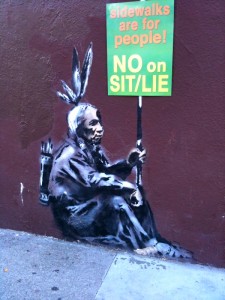
It’s really amusing to read the recriminations and second-guessing from the most vociferous proponents of criminalizing sitting or lying on San Francisco sidewalks after yesterday’s Public Safety Committee hearing on the matter. And the funniest part is their failure to understand that this punitive, overreaching law just isn’t needed to deal with aspects of street life that scare them most, as the police reluctantly testified.

Chronicle columnist C.W. Nevius and Haight Street resident Arthur Evans have been the two most vocal promoters of the sit-lie ordinance, and both sounded similar criticisms of the Police Department and the Mayor’s Office (as well as progressives, their usual target), Nevius in the paper and Evans on the Guardian’s Politics blog (last comment on this item). They call on the so-called “moderates” step up their games or be defeated.

But they miss the point, and falsely believe that “common sense” is on their side. Certainly police officers have the ability to deal with rowdy groups of vagrants who are blocking the sidewalks and intimidating people. They do it all the time, and simply walking a beat usually prevents such behavior. To argue that tough police officers are powerless to deal with thugs defies common sense. And Assistant Chief Kevin Cashman even testified that police don’t need an official citizen complaint to deal with people who are blocking the sidewalk, debunking a fallacy that is oft-cited by Evans and others.

But the efforts by Evans and the Chamber of Commerce to rebrand the sit-lie ordinance as the Civil Sidewalks Law – and to threaten to use it as a wedge issue on the November ballot – reveals their true intentions. The bottom line is they don’t like the more unruly aspects of urban life, and they believe that they can legislate “civility” and have the cops enforce it.

That’s a scary notion, and it’s part of larger campaign to, as Nevius writes, “demonstrate to the far-left supervisors that they were seriously out of step with the residents of the city.” Nevius, who is not a resident of this city, wants San Francisco to be a bit more like his hometown of Walnut Creek. But San Franciscans shouldn’t fall prey to their divisive fear-mongering, and supervisors like Sup. David Chiu – who has publicly toyed with the idea of compromising on sit-lie with some kind of restorative justice program – should heed the message of this hearing and resist creating an unnecessary new law that the community opposes.

Unfortunately, that didn’t happen yesterday as the committee voted to continue the matter for two weeks. And you better believe that next time, the Evan-Nevius crowd will come back strong, with more fearful anecdotes than ever. But the opposition campaign to sit-lie has been strong, creative, and effective — the true voice of San Francisco — and it seems up to the fight.

SF nightclubs fight back with new organization

8

In the ongoing War on Fun in San Francisco, a new combatant officially entered the battlefield last night with the launch of the California Music And Culture Association (which strangely goes by the acronym CMAC rather than CMCA). It aims to be a political advocacy organization and to provide members with services such as neighbor relations advice, group insurance, and discounted legal services.

“We’re here to celebrate a new era of nightlife and entertainment in San Francisco,” CMAC President Sean Manchester, owner of Mighty and Wish, told a crowd at Mezzanine that included club owners, lawyers, promoters, performers, and politicians ranging from supervisorial candidates Scott Wiener from D8 to Debra Walker in D6. California Sen. Mark Leno also sent a formal resolution of support for CMAC.

A video prepared for the event included an even wider array of local figures extolling the importance of nightlife to San Francisco, including SF Convention & Visitors Bureau chief Joe D’Alessandro and San Francisco Planning and Urban Research Association (SPUR) director Gabriel Metcalf, who said, “I think it’s great that the nightlife industry is getting organized.”

That organization was prompted by threats and harassment from the San Francisco Police Department, the California Department of Alcoholic Beverage Control, neighbors of some clubs, and Mayor Gavin Newsom and others who have been on a campaign to demonize the industry and its regulation by the Entertainment Commission.

It’s a trend that the Guardian has been writing about for years, and one that I’ll be discussing this Tuesday as part of a panel assembled by SPUR that includes representatives from the SFPD and Entertainment Commission, as well as Sup. Bevan Dufty, who spearheaded the cancellation of Halloween in the Castro.

Secrecy and criminality in the SFPD

15

Today’s Chronicle unveils more problems at the scandal-plagued San Francisco Police Department, as well as the District Attorney’s Office, raising new questions about their commitment to public accountability and protecting civil liberties at a time when the SFPD is seeking more authority and asking for the public’s trust.

At issue are police officers with criminal histories and disciplinary records serious enough to warrant disclosure to the criminal defendants that they testify against in court, which the story indicates is more than 80 officers. Such disclosures have been a standard requirement for almost 40 years, but neither police nor prosecutors in San Francisco have been making them, a revelation that could overturn hundreds of felony convictions because of this official misconduct, the Chron reports.

That bombshell comes in the wake the SFPD’s crime lab scandal, in which lab technician Deborah Madden – herself a court witness with a criminal history that should have been disclosed to defense attorneys – is suspected of regularly stealing from the seized narcotics that she tested.

The SFPD and its undercover party-busting cop Larry Bertrand are also accused of harassing nightclub owners and patrons, busting private parties using excessive force and warrantless raids, and illegally seizing computers and other personal items – all while publicly seeking to discredit the Entertainment Commission and seize its power to shut down nightlife in the city, as well as seeking greater authority to roust and threaten vagrants by proposing a law to ban sitting or lying on city sidewalks.

SFPD officials have repeatedly claimed the agency can be trusted not to abuse these new authorities, but the latest revelations about criminal cops highlights how difficult it is for the public or the press to keep tabs on the agency.

The Guardian today sent the SFPD a Sunshine Ordinance request for the names and violations of the officers in question, but if the past is a predicator, it’s likely to be denied with the claim that such records are exempt under the Peace Officers Bill of Rights, a state law with strict privacy protections for cops.

Even defense attorneys who have well-established rights to examine an arresting officer’s criminal and disciplinary histories through what’s known at Pitchess motions are routinely stonewalled by the SFPD, say defense attorneys. For example, attorneys for Arash Ghandan, an alleged victim of Bertrand’s brutality and retaliation, are now having a hard time getting information on the officer’s history. “We are in a battle for Bertrand’s personnel file,” Ghanadan’s attorney, Steve Sommers, told the Guardian. “The city of San Francisco just does not hand over documents without a fight.”

In 2006, former SDPD attorney Reno Rapagnani and his wife, former SFPD Sgt. Leanna Dawydiak, raised the issue of SFPD secrecy, its pattern of routinely shielding problem officers from discipline and public scrutiny, and retaliating against whistleblowers – and were then subjected to a witch hunt that forced them out of the department.

More recently, SFPD and its powerful Police Officers Association succeeded in watering down an early warning system for violence-prone officers, removing a number of triggers – such as resisting arrest and assault on a police officer charges that often accompany cases of abusive police conduct – that had been recommended by a police practices expert and which are currently used in San Jose and other cities. 

Meanwhile, District Attorney Kamala Harris, a candidate for California Attorney General, is also being criticized for the latest scandal. Under the Penal Code, she bears the responsibility for ensuring that her prosecutors are doing background checks on all witnesses and sharing that information with defense attorneys.

“Ultimately, the district attorney has to answer for this. It is the prosecution’s duty to check the criminal backgrounds of officers called to testify. That never happened, and as a result, people have been denied fair trials,” Public Defender Jeff Adachi said in a press conference on the issue this morning.

The tough-on-crime era of the 1990s — when politicians, police, and prosecutors did all they could to create new laws and enforcement powers – is over, and we have a severely overcrowded prison system to show for its short-sightedness. But that mentality continues to guide the SFPD.

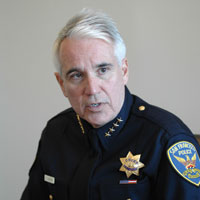
Since the arrival of Police Chief George Gascon from Arizona last August, SFPD has undertaken a series of crackdowns, including hundreds of drug arrests in the Tenderloin, raids on marijuana-growing operations in the Sunset and parties in SoMa, citing Dolores Park-goers for drinking, and, on Friday, giving at least two Critical Mass bicyclists tickets for amplified music. He’s also said he wants more power to discipline problem officers, but he has yet to show that’s anything more than just talk.

Perhaps now it’s time for the pendulum to swing back in favor of restoring damaged civil rights and raising our expectations of the agencies that have such power over our daily lives and freedom. The SFPD should adequately police itself before it looks for new ways to police the rest of us.   

All the young Turks

1

arts@sfbg.com

HAIRY EYEBALL Welcome to Hairy Eyeball, a bimonthly rundown of visual art. We don’t aim to be comprehensive, just opinionated. First Thursday is tomorrow, so enough with the introductions. On with the shows.

CCA is unleashing a new batch of Fine Arts MFA students into the wild Thursday night. With 66 artists total, this year’s MFA show (which runs at the San Francisco campus through May 15) is one of the largest in recent memory. The cream from CCA tends to rise to the top pretty quickly, so here are some names worth looking out for in white cubes, near and far, in the future.

Llewelynn Fletcher’s interactive sculptures aren’t aiming to take a particular pulse, but will probably slow yours down. For Please Lie Down, she has created several enclosures of lead, ceramic, wood, and felt that completely cover the head, forcing you, per the piece’s title, to lie down on the floor (thankfully, she’s also constructed camping-style palettes for comfort). The mini-meditation huts, evocative of beehives as well as certain medieval torture implements, have the additional effect of transforming the wearer into something of a sculpture.

Maggie Haas’ mixed-media pieces could easily be mistaken for installations-in-progress. But her arrangements and treatment of construction site detritus — sawhorses, wooden slats — cannily gut minimalism, This Old House-style, by preferring to hang out in the workshop with Donald Judd et al., turning the means of production into the piece itself. Endless Escape in particular performs a neat rope trick that yokes Robert Smithson and Yayoi Kusama with the ease of an Eagle Scout.

Hilary Wiedemann’s installations, which frequently combine sculptures and projection, are far more elusive — and unsettling. In Untitled, a plaster cast of what looks to be a bullet hole-riddled surface (glass, perhaps?) leans against the wall; on the floor, laminated sheet glass has been contorted to resemble discarded tissue. Both components record the violence of the transformational processes that have brought them to their current states. It’s not comfortable viewing — as if you’ve stumbled on a crime scene before the police tape has gone up.

Someone put Doron Fishman in touch with a textiles manufacturer, stat. His gorgeous ink-on-paper works, all black tendrils of liquid smoke, let it bleed. They’re begging to be transferred to chiffon. The witchy Mulleavy sisters, of Rodarte fame, would be smart to look him up.

Well worth the trek to the other side of Potrero Hill is Ping Pong Gallery, which is currently showing Gwenael Rattke’s dark, hypnogogic collages (through May 14). The collection’s title, “Oktogon,” refers to a street intersection in Budapest and also to the Ottoman-style “Kiraly” baths built during the Turkish occupation in the 16th century. These layers of history, architecture, exposed flesh, and power are not wholly self-evident in the psychedelic grandeur of Rattke’s straight-razor wizardry — which recalls, among many associations, the graphic punch of Tadanori Yokoo and Keiichi Tanami’s 1960s poster designs, the homo-plagiarism of Jess’ massive Narkissos (1978/91), and the profondo rosso beloved by Dario Argento. Rather, they form the deep structures to these mandala-like works in which Op-Art geometrics collide with Art Nouveau scrollwork and leather daddies are refracted into Busby Berkeley chorines. The corner in which 14 of these pieces have been hung draws you in, like some black hole. Proceed with caution, and awe.

Also closing toward the end of the month (May 22 to be exact) is Beverly Rayner’s “Accretion” at Braunstein/Quay, an elongated housecoat covered in the day-to-day paper ephemera — greeting cards, bills, receipts, inspirational quotes, correspondences — that one accumulates over the course of a lifetime. “Go paperless” is one takeaway. That such a load is too much to bear — psychically as much as environmentally — is another. *

CCA GRADUATE THESIS EVENTS

Through May 14, free

California College of the Arts

1111 Eighth St., SF

(415) 703-9500

www,cca.edu

GWENAEL RATTKE: OKTOGON

Through May 14, free

Ping Pong Gallery

1240 22nd St., SF

(415) 550-7483

www.pingponggallery.com

BEVERLY RAYNER: ACCRETION

Through May 22, free

Braunstein/Quay Gallery

430 Clementina, SF

(415) 278-9850

www.bquayartgallery.com

Our 2010 Small Business Awards

culture@sfbg.com

The mallification of America continues apace, with faceless conglomerates training new generations of shoppers to look for the cheapest deals at bland big box outlets, regardless of what “cheap” might actually mean in terms of pollution, transportation, labor, and the local economy. (For starters, out of every $100 dollars spent at a big box, only $43 remains in the local economy, compared to $68 if you buy local.) But in San Francisco at least, the little guys keep on swinging, maintaining unique shops and service companies with a vibrant local feel and contributing to the patchwork of optimism, individuality, and community effort that make the city great. Each year, we honor several of them for sticking to their guns and pursuing their visions.


WOMEN IN BUSINESS AWARD

DEENA DAVENPORT, GLAMA-RAMA SALON

“The higher the hair, the closer to God,” a wise Southern drag queen once said. Here in San Francisco, one of our own heavenly salons, Glama-Rama, is about to get a whole lot more divine, expanding from its homey kitsch digs in SoMa to a new 2500 square foot space on Valencia Corridor, creating 16 new jobs. The driving force behind that expansion is owner Deena Davenport, who combined her hairdressing talent, natural business acumen, and deep connection to the local arts scene into a formula for sheer success when she opened Glama-Rama 11 years ago.

“My dream was not to have a business, but a community space,” Davenport told me. “I wanted a place for all my gifted friends to express themselves. Not just our excellent stylists, but artists, designers, musicians, event producers — we all came together to make this happen. I think that’s the key to our success. We work with all kinds of styles and we don’t price ourselves out of the nonprofit sector. That allows a great mix of clientele, and an element of comfort for everyone.”

Davenport, a creative blur, plans to kickstart a Valencia Corridor merchants association once she gets settled in, and dreams of a future in politics. (She currently hosts a show on Pirate Cat Radio and appears onstage in local productions.) “I’m fortunate to have always had great friends and great landlords — and to be in a business the Internet can’t compete with,” she says.

“By the way, the new space will be two shades of cream with gold accents,” Davenport adds, ever the stylish professional. “We’re taking off our Doc Martens and putting on some heels.” (Marke B.)

GLAMA-RAMA

304 Valencia, SF

415-861-4526

www.glamarama.com


GOLDEN SURVIVOR AWARD

CAFÉ DU NORD

It’s no secret that nightlife in San Francisco has taken a big hit lately. A combination of economic woes and persistent crackdowns by the Department of Alcoholic Beverage Control and local police, a.k.a. the War on Fun, has taken its toll — even on 100-year-old live-venue mainstays like Café Du Nord.

“It’s been tough for us and for everyone out there,” says Guy Carson, who took over the space with Kerry LaBelle in 2003. “They don’t call it ‘hard times’ for nothing. But we love what we do, and we know how to run a quality business. I’ve been promoting live shows since I was nine years old, so you know it’s what I love. You have to be willing to weather the storms.”

The intimate basement space retains its speakeasy vibe and velvet-curtained, cabaret-like setting, while playing host to mighty big names and burgeoning local upstarts. As a “venue with a menu” that serves food and puts on all ages and 18+ shows, Café Du Nord has been specifically targeted by the city and ABC for what Carson calls “differing interpretations of the law.” He looks forward to the upcoming launch of the new California Music and Culture Association, which will bring together several local venues and nightlife activists to fight the tide of local nightlife repression. “When we all work together, we can return the city’s nightlife to its former glory,” Carson says. (Marke B.)

CAFÉ DU NORD

3174 Market, SF

(415) 861-5016

www.cafedunord.com


GOOD NEIGHBOR AWARD

OPPORTUNITY FUND

Eric Weaver put his first nonprofit loan package together in 1995. His small startup, called Opportunity Fund, helped brothers who wanted to expand their pet shop borrow $17,000 for aquariums and fish. The deal worked out well; the pet store prospered, the money got repaid, and Opportunity Fund was on its way to becoming one of the most successful microlending outfits in California.

Weaver, a Stanford MBA and the fund’s CEO, now oversees a staff of 35 that makes loans to small businesses, most of them minority owned, that might have trouble getting financing from a traditional bank. And the nonprofit continues to grow by helping entrepreneurs in the Bay Area get the financing they need to create jobs and build community businesses. “We just made our 1,000th loan,” he told me. “We’re on target to make 200 loans this year, more than ever.”

Unlike most banks, Opportunity Fund sees its clients almost as partners. The staff takes time to help borrowers work up a successful business plan and learn how to manage their finances. “We do one-on-one business counseling with almost all of our clients,” Weaver said.

The group also helps finance affordable housing developments and offers individual development accounts (IDAs)— special savings accounts that come with financial training and grants — for everything from education to home purchases to putting aside the cash it now takes to become a U.S. citizen.

A recent study showed that Opportunity Fund has created or retained 1,200 in the Bay Area. “With a median loan size of $7,000, and a focus on making loans to people who have historically been underserved by banks, Opportunity Fund has been a particularly valuable resource for women, minority, and low-income entrepreneurs,” Weaver noted. He added that 73 percent of Opportunity Fund borrowers are members of an ethnic minority, and 90 percent of borrowers have incomes at or below 80 percent of area median income.

Imagine a traditional bank making a statement like that. (Tim Redmond)

OPPORTUNITY FUND

785 Market Street, Suite 1700, SF

408-297-0204

opportuityfund.org


CHAIN ALTERNATIVE AWARD

NORTHERN CALIFORNIA INDEPENDENT BOOKSELLERS ASSOCIATION

Independent booksellers are a wonder. Up against giant chains like Wal-Mart, facing technological changes like Kindle and online behemoths like Amazon.com (which doesn’t even have to pay state sales taxes), it’s hard to believe they can even survive. Yet they do — in fact, the Northern California Independent Booksellers Association keeps growing.

“The mainstream press wants to write about bookstores closing,” Calvin Crosby, NCIBA’s vice president, told me. “But actually, stores are opening. We have two new members this year.”

The booksellers group keeps the small, community-based stores in the public eye, with promotions, events like the annual NCIBA awards (see page 28) and political lobbying (NCIBA is a big supporter of a bill by Assembly Member Nancy Skinner, D-Berkeley, that would force Amazon to pay sales tax).

One of the group’s biggest tasks is education — reminding the public that local bookstores serve a critical function. “I was at a book-signing recently with a major author, and a bunch of people showed up with books they bought on Amazon and they wanted to trade them for signed copies,” Crosby, who is community relations director at Books Inc., recalled. “I had to explain to all of them that Amazon doesn’t pay taxes and hurts the locals.”

And with 300 bookseller members, NCIBA is helping preserve the notion that buying a book from someone who actually cares about books is an idea whose time will never pass. (Redmond)

NCIBA

1007 General Kennedy, SF.

415-561-7686

www.nciba.com


SMALL BUSINESS ADVOCATE AWARD

KEITH GOLDSTEIN

“Money spent in a small business — far, far more of it stays here in the neighborhood than with a chain store,” says Keith Goldstein, president of the Potrero Hill Association of Merchants and Businesses. A Potrero Hill resident since 1974, and owner of Everest Waterproofing and Restoration, Inc., Goldstein has spent the last six years with the merchant’s association promoting a sense of community in the inclined blocks of Potrero.

He’s overseen the growth of the Potrero Hill Festival from what he calls “a small affair” to a yearly event that’s “great for residents and businesses,” and also serves on the Eastern Neighborhood Advisory Committee, where he works on issues, like new transit plans, that affect local businesses.

Somehow he has found the time to start SEEDS (www.nepalseeds.org), a group that provides infrastructure and health support to underserved Tibetan villages, and is involved in Food Runners (www.foodrunners.org), an organization that links homeless shelters to food sources.

The superlative community member incorporates the ‘buy local’ mentality into every aspect of his life, even placing the administration of the health care plan for his 50 employees into the hands of a fellow Potrero Hill Merchant’s Association member. “It’s all richly rewarding,” Goldstein says of his hands-on role in his neighborhood’s economic viability. “I like to walk around the hill and be able to chat with my neighbors about quality of life issues.” (Caitlin Donohue)

KEITH GOLDSTEIN

Potrero Hill Association of Merchants and Businesses

1459 18th St., SF.

(415) 341-8949

www.potrerohill.biz


EMPLOYEE-OWNED BUSINESS AWARD

RED VIC MOVIE HOUSE

“Once it got going, it was like a perpetual-motion machine. And I have to say, I think it was the collective nature of the thing that’s kept the Red Vic going this long,” says Jack Rix, long time worker and cofounder of the Red Vic Movie House, which celebrates its 30th anniversary this year.

The Red Vic’s employees put a lot into the neighborhood theater’s showings of unique and classic flicks. Each worker-owner does a little of everything, from sweeping the lobby floor to washing dishes. “We’re all utility players here, this is very much a labor of love,” Rix says. Launched in 1980 by community organizers, the theater’s focus has not only been on providing great movies but doing it sustainably, installing solar paneling on the roof and eschewing paper products. “Back then I don’t think the phrase ‘green’ existed,” Rix recalls. “We were trying to be ‘green’ and we didn’t even know it!”

The Red Vic’s workers aren’t the only ones with a certain affection for the theater’s bench seating, environmentally friendly ceramic coffee mugs, and wooden popcorn bowls. Rix says some Upper Haight residents will wait for blockbusters to make their way out of “corporate” movie cinemas to the Red Vic’s second-run screen. “We’re very much a community theater,” he says proudly. (Donohue)

RED VIC MOVIE HOUSE

1727 Haight, SF

(415) 668-3994

www.redvicmoviehouse.com


CHAIN ALTERNATIVE AWARD

OTHER AVENUES

Nestled in a part of the city best known for its tiny pastel homes and bracing sea breezes, Ocean Beach’s Other Avenues is everything you could desire in a neighborhood grocery store: Warm atmosphere, vast swaths of bulk food bins, and a well-edited health food selection, including vitamins, medicines, and cheery shelves of produce. Plus health insurance for all its knowledgeable employees.

Trader who? No need for big box stores near Other Avenues, which has earned a loyal clientele in the 36 years since it first opened its doors. “Since we’re a co-op, I like to think of us as a giant organism,” says Other Avenues worker Ryan Bieber. “Occasionally we lose parts and regrow them. A lot of customers have been coming here for 10, 20 years.” Their loyalty might be in response to Other Avenues’ commitment to keeping its beachside clientele healthy and well. “The aim is to make sure that people have access to things like this,” says Bieber.

Asked what he thinks would happen if one of the chain grocery behemoths encroaches on the shop’s territory, Bieber is unconcerned. “I think people will come here regardless. [We] have been doing this forever and we take pretty good care of ourselves. I think our customers really respond to that. We wouldn’t want a world where there was only Whole Foods — that’d be too boring!” (Donohue)

OTHER AVENUES

3930 Judah, SF

(415) 661-7475

www.otheravenues.coop


ARTHUR JACKSON DIVERSITY IN SMALL BUSINESS AWARD

RAYMOND OW-YANG

Raymond Ow-Yang tends to downplay the impact he’s had on the North Beach-Chinatown artistic landscape. The owner of New Sun Hong Kong restaurant, Ow-Yang put up the funds to have the iconic Jazz Mural painted on the Columbus and Broadway walls of his Chinese restaurant. The artist Bill Weber approached him in 1988 — securing an approximately $70,000 aesthetic gift to the community that Ow-Yang has never sought public recognition for.

“Back then you’re young, you have no brain. I thought, this is nice — it’s something you do because you feel like it,” Ow-Yang recalls dismissively.

“Nice”is an understatement. The mural, which depicts famous San Francisco figures and scenes, has become one of the neighborhood’s visual joys, stopping tourists in their photo-snapping tracks. The gift reflects Ow-Yang’s commitment to the streets he grew up on

He immigrated to Chinatown from Canton in 1962, at age 13. A lifelong entrepreneur, Ow-Yang owned a photo studio, a floral shop, and a restaurant in Oakland’s Chinatown (the original Sun Hong Kong) before opening at 606 Broadway in 1989. The restaurant is open until 3 a.m. every day — a timetable residents can appreciate for more reasons than just Ow-Yang’s post-bar won ton soup. “Before, people were afraid to walk through this area,” says the businessman. “Now there’s a lot more foot traffic — the city even put up traffic lights. With the bright lights [from New Sun Hong Kong], it’s a lot safer in this area.” (Donohue)

RAYMOND OW-YANG

New Sun Hong Kong

606 Broadway, SF

(415) 956-3338


The voice of fun

0

steve@sfbg.com

In the midst of a crackdown on San Francisco nightlife, club operators, promoters, entertainers, and supporters of a vibrant urban scene have formed a new lobbying group that seeks to offer a united voice in favor of fun.

The California Music And Culture Association (CMAC), a nonprofit advocacy and education group, launches its first chapter in San Francisco this week.

Discussions about the need to organize have been going on for years among the owners of local nightclubs such as Bottom of the Hill, Mighty, DNA Lounge, and Café Du Nord. They were initially triggered by arbitrary enforcement actions by the California Alcoholic Beverage Control (ABC) and persistent noise complaints by a handful of NIMBY neighbors (see “Death of fun,” 5/24/06 and “Death of fun, the sequel,” 4/24/07).

But in recent months, conflicts between the culture-creators and enforcement agencies have come to head, driven by an aggressive crackdown on parties and clubs led by ABC agent Michelle Ott and San Francisco cop Larry Bertrand (see “The new war on fun,” March 23) and efforts by Mayor Gavin Newsom and other officials to blame youth violence on the entertainment industry.

“This is certainly as bad as it’s ever been,” said Guy Carson, owner of Café Du Nord and a CMAC board member who has run San Francisco nightclubs for 26 years. “We needed an organization that can speak for us.”

So dozens of nightlife advocates have pooled their resources to create CMAC. The organization is supported by membership dues and aims to follow a model similar to the San Francisco Bicycle Coalition, which has more than 11,000 members and has been effective at advocating for their interests.

What’s at stake, Carson said, is San Francisco’s reputation as a vibrant, world-class city that nurtures its artists and welcomes those who come into town for parties and events.

“Do we want to look like Walnut Creek?” Carson asked rhetorically. “I came here because I like a vibrant arts scene, and that requires an infrastructure. It doesn’t happen in a void.”

He said City Hall and the enforcement agencies have lost sight of the important role nightlife plays in creating the city’s culture, and how aggressive enforcement efforts can push club owners — many who are “struggling to survive,” Carson said — over the edge.

“There is a void in the political and public perception of nightlife,” said Frieda Edgette, an employee of the politically connected firm Barbary Coast Consulting, which helped launch CMAC. Edgette added that the group’s goal is “to empower and provide a voice for a constituency that hasn’t had a voice.”

Beyond advocating for the interests of members at city and state levels, CMAC will serve as an information clearinghouse on best practices for maintaining good neighborhood relations and research into the importance of the industry to the economy.

“I’m not sure club owners do all they can to foster good relationship with their neighbors,” said Tim Benetti, owner of Bottom of the Hill, a former deputy city attorney, and current CMAC board member. “So we can play a big role in educating our members.”

Yet he said that a far bigger problem has been the polarization between the nightlife community and entities that try to demonize and scapegoat it for problems ranging from noise to drugs to violence. “There is an antagonism that has developed between nightclubs and enforcement agencies, and we want to end that antagonism,” Benetti said. “Right now, there’s no dialogue.”

Or as Edgette said, “We want to bring all the parties to the table to have a holistic discussion about nightlife.”

So far, efforts to open up that dialogue have gone nowhere. Attorney Mark Webb, who represents some of the victims of harassment and brutality by Bertrand and Ott, publicly called on Newsom to mediate the dispute in March. But he was rebuffed, so last month he filed a racketeering case against the city, arguing that police shakedowns of legal activities amount to a criminal enterprise.

“I was quite disappointed at the reaction to this case,” Webb said. “It’s fallen on deaf ears in terms of trying to get Newsom or others in power to deal with it. Now it’s just in the pile of lawsuits.”

Last week the City Attorney’s Office had the case bumped up to federal court, and Webb said he has subpoenaed police records and sought depositions from Bertrand and his supervisors. Another lawsuit, brought by promoter Arash Ghanadan after he was arrested and, he charges, brutalized by Bertrand in retaliation for filing an earlier complaint, is also being contested by the city.

“We are in a battle for Bertrand’s personnel file,” said Ghanadan’s attorney, Steve Sommers, who is also seeking to depose Police Chief George Gascón about the matter.

State Sen. Mark Leno has helped to mediate the disputes and has been in touch with ABC chief Steve Hardy. “I think we’re going to see some improvement,” Leno said. “I don’t know how aware he was of the activities at the local level.”

Those activities include citing nightclubs for not serving enough food, repeatedly harassing customers at certain disfavored clubs, pursuing noise complaints on behalf of particularly sensitive neighbors, and announcing a crackdown on bars serving infused liquors.

Leno welcomed the creation of CMAC and said that it will be an important voice for a vital and under-appreciated industry, both in San Francisco and in Sacramento, where Leno unsuccessfully pushed legislation to extend the operating hours of nightclubs a few years ago.

“I applaud this effort,” Leno said of CMAC. “There is great wisdom to advocating for this on a statewide basis.” 

CMAC LAUNCH PARTY

With DJs J Boogie, Motion Potion, and more

Thu/May 6

7–11 p.m., $10

Mezzanine

444 Jessie, SF

Welcome to Elm Street: The Remake

0

I’ll say this about the remake of A Nightmare on Elm Street: it could have been worse. Yes, it’s pointless and unimaginative and producer Michael Bay should still be ashamed, but I didn’t hate every minute of it. I can’t say the same for Rob Zombie’s dreadful take on Halloween (2007) or the unholy mess that is 2009’s Friday the 13th.

Don’t get me wrong, A Nightmare on Elm Street is not good. It’s not terrible, if only because it has a few decent scares — all of which are, of course, shamelessly lifted from the original. (Tina’s death is still Tina’s death, even if her name is Kris and she’s played by Katie Cassidy.) It’s clear that this remake — like all of the other recent horror rehashings — was designed to bring new fans to the series. And how do you appeal to kids today? Lots of jump scares, apparently.

And here’s where I have to admit something: I was more startled watching the 2010 A Nightmare on Elm Street than I ever was watching the original. Jump scares are effective, because they are loud and jarring and — in this case — constant. So is the new Nightmare scary? Sure. I wasn’t exactly on the edge of my seat: it would be more accurate to say I was slumped down in my seat with my fingers in my ears. But yes, I jumped. A lot. Does that mean the remake is somehow more successful than the original? Please. I may have been freaked watching that movie on the big screen, but it’s never going to, you know, give me nightmares. In contrast, the original haunted my childhood to the extent that I had to make a pact with my subconscious never to dream about Freddy Krueger. (This is entirely true and adorable.)

Jump scares are cheap and they’re easy to avoid. When you’ve seen them once, they’re ruined forever. Good horror may employ a jump scare or two, but it doesn’t rely on them. In the 2010 Nightmare, they are relentless. I will concede that there one or two memorable visuals: Kris being tossed around in the air and dragged onto the ceiling, Nancy seeing her dead friend taunt her from a body bag, Freddy’s glove emerging from the bathtub. But wait, we’ve seen these already. Yep, they’re nearly shot-for-shot “borrowed” from the 1984 original. Lazy. Oh, and the classic shot of Freddy emerging from the wall above Nancy? Ruined by half-assed CGI. When will they learn?

The cast is passable. I’ve always liked Kyle Gallner and Thomas Dekker, and Katie Cassidy somehow didn’t turn me off forever with her role on (the remade) Melrose Place. (Actually, she was one of the few good things about that show.) Rooney Mara takes on Nancy, and she’s fine but forgettable. All of these talented young actors have the misfortune of appearing in a film that doesn’t let them do much of anything. Maybe the next Johnny Depp is among the bunch, but no one gives anything resembling a breakout performance.

And where to begin with Jackie Earle Haley’s Freddy? Haley was doomed from the moment he was cast, just by virtue of not being Robert Englund. It’s one of the major problems with this remake. No one cares who’s under Jason’s hockey mask or wielding Michael Myers’ knife. But Freddy Krueger is Freddy Krueger — accept no imitations. If the film wanted to completely recreate the character, then why use the familiar striped sweater and fedora? It only makes Haley’s status as not-Robert-Englund more noticeable. This Freddy is more brutal, to be sure, but he’s also far less fun. The nightmares he creates are means to an end, lacking any sense of irony or humor. He only speaks one pun (I know, right?), and it’s lifted shamelessly from part five. Wisecracking is essential to Freddy’s persona. Just imagine if Jason or Michael suddenly got chatty: it would be equally jarring and, well, stupid.

But, much as it pains me to admit this, Englund’s Freddy isn’t scary anymore. The franchise fell apart with sequels that were too campy to be taken seriously. Even Freddy vs. Jason (2003), which ups the gore, is mostly just silly. To which I say, so what? I’d rather have another preposterous sequel that’s messy and fun than a soulless adaptation. Or hey, no more sequels at all. Let’s make some good new horror — brutal, sharp, original. The French have been doing it for years. But I digress.

Here’s the part where I tell you to look away if you care about getting spoiled, because I’m about to give away the ending. Normally, I wouldn’t, but a) I don’t give a crap, and b) so many of this movie’s problems are located in its final act.

Let’s start with the big reveal that’s obvious after the first five minutes: the victims in the 2010 A Nightmare on Elm Street were abused by Fred Krueger as children. That’s right, he wasn’t a child killer in this version — he messed around with them instead. Now don’t get me wrong, that’s still really fucked, but it also destroys any semblance of logic the original had. (‘80s horror: not big on making sense.) In the 1984 movie, the parents had to kill Freddy before he killed more of their own. The legal system had let them down, and they were forced to take matters into their own hands. The parents here, however, never even bothered reporting Krueger to the police — they just chased and torched him. Maybe this is supposed to be commentary on our desensitization to violence or the threat of mob rule, but it’s a huge and improbable leap. Anyone who’s seen Last House on the Left — the 1972 original, damn it — knows that parents only kill psychos as revenge for murder. Eye for an eye, duh.

But more importantly, all this child molestation nonsense is icky. It’s uncomfortable for the wrong reasons. There’s a whole bit with Nancy and Quentin (Gallner) deciding that they made it all up. You know, like kids do. I’m sorry, but implying that kids aren’t to be trusted when it comes to reporting the bad touch is tacky — even if, eventually, they realize Krueger really was a creep. That scene is equally awkward, with Nancy looking through a series of dirty Polaroids taken of her at age five. The audience squirms for all the wrong reasons. This kind of shock factor is manipulative and, honestly, more distracting than anything else.

And then there’s the ending, which is similar to the original’s except somehow more nonsensical. My main issue with it? Quentin, Nancy’s would-be boyfriend, lives. This is the problem in most ‘80s horror updates. The originals almost always have one survivor, the so-called Final Girl. (Just read Carol Clover’s Men, Women, and Chain Saws, if you haven’t already.) But new horror can’t seem to do this, as though the idea of one teenage girl outlasting a movie monster is too much to believe. Instead, the boyfriend has to come to the rescue, as in the aforementioned Friday the 13th remake. How can there ever be another “scream queen” a la Jamie Lee Curtis if we keep sheltering our final girls? The slasher movie doesn’t need a hunky male hero (or Gallner, who is more cute than hunky) to protect its female lead. Perhaps, as Cheryl suggested while we were talking about this, it’s just easier for a modern male audience to identify with a dude than — God forbid — a girl. To which I say, man up and take it like a woman.

Look, I’m obviously very attached to the Nightmare on Elm Street series. I’ve spent the past week rewatching and reviewing the films to the extent that I’m (almost) burned out. And this review-turned-rant is fast approaching 1300 words. So, yes, I’m passionate and any remake was bound to disappoint me on some level. The new Nightmare may not be the worst ever, but it’s still a misguided mistake. And if I have to sit here and blather on so that New Line (a.k.a. “The House that Freddy Built,” now a part of Warner Bros.) doesn’t make another sequel — because they care — then so be it.

If you’ve read all the way through — not just this epic post, but also the ones preceding it — then many thanks. I hope Cheryl and I were able to help you remember or discover horror’s greatest series.

For now: good night, folks. Sweet dreams.

http://www.youtube.com/watch?v=B-tSvrkKx2Y

The Daily Blurgh: Drop that cornhole, Bieber!

0

Curiosities, quirks, oddites, and items from around the Bay and beyond

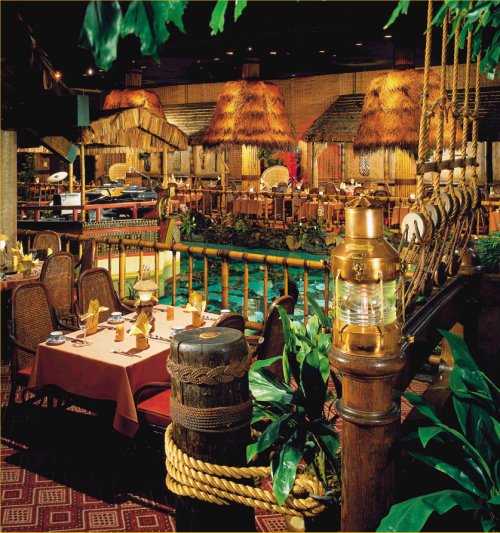
Is the Tonga Room saved? A City Planning Commission report may indicate yes. The report concludes that San Francisco’s finest (imperiled) tiki bar is covered in enough irreplaceable tchotkes and gewgaws to make it a “historical resource.” That might not stop those same tchotkes and gewgaws from being removed, “for public information and education, and/or reuse in an alternate off-site location.” But what about the indoor rainstorm over the lagoon?!?!

*****
Discuss: Michael Bauer notes of his top 10 list of the best breakfasts in San Francisco that many of the restaurants that made the cut “include a woman’s name.” (Also: Boogaloo’s? Really?)

*****

Heil Bieber!

******

Conscientious objection is not an option: “During his tenure as Archbishop of San Francisco, Cardinal William Levada chose not to inform police about a priest who admitted molesting an adolescent boy, an AP story reports. Cardinal Levada is now prefect of the Congregation for the Doctrine of the Faith, which handles disciplinary cases involving sexual abuse by priests.”

*****

Today in unicorns: Unicorn corn holders, ‘Cornz II Men, and a unicorn’s cornhole (SFW).


*****

“[Gary] Gilmore, the notorious spree-killer, uttered the words “Let’s do it” just before a firing squad executed him in Utah in 1977. Years later, the phrase became the inspiration for Nike’s “Just Do It” campaign.”

******

The ever-awesome Ubuweb has uploaded some of the animated films of local artist Kota Ezawa. Here is his rendition of the delivery of the verdict in the O.J. Simpson trial.


ENDORSEMENTS: San Francisco ballot measures

0

 PROPOSITION A

SCHOOL FACILITIES SPECIAL TAX

YES

This measure would extend a 1990 parcel tax that expires in 2010 by another 20 years, keeping it at its current rate ($32 a year for single family homes and commercial enterprises, $16 a year per dwelling unit for mixed use buildings). The tax brings in $7 million a year for San Francisco school facilities and would finance seismic upgrades, structural strengthening and related improvements of its facilities, and child care centers. Vote yes.


PROPOSITION B

EARTHQUAKE SAFETY AND EMERGENCY RESPONSE BONDS

YES

It’s hard to argue against a $430 million bond act to upgrade police, fire, and water facilities to prevent a catastrophic collapse of the city’s most basic public safety infrastructure in the event of an inevitable earthquake. Hard — but not impossible: Sup. Chris Daly, the lone vote against Prop. B, points out that the bond money would be used to upgrade police stations but that the old County Jail at 850 Bryant St. wouldn’t get any help. Prisoners, it seems (even those who are awaiting trial and have been convicted of nothing) aren’t worth protecting. And the Fire Department has been very hazy about where it’s going to spend the cash. So we’ve got some concerns here — but on balance, we’re endorsing Yes on B.


PROPOSITION C

FILM COMMISSION

YES

By some accounts, this measure was put together in retaliation for Mayor Gavin Newsom’s November 2009 demand that Film Commission executive director Stefanie Coyote resign — shortly after her husband, actor Peter Coyote, supported Attorney General Jerry Brown over Newsom for governor. But Bill Barnes, who works as a legislative aide for Newsom ally Sup. Michela Alioto-Pier, the author of Prop. C, says Alioto-Pier was working on this measure even before Coyote got ousted.

Either way, it’s a positive step. Prop. C would streamline a convoluted permitting process for shooting films in San Francisco — a process that can involve multiple departments — and would create a one-stop shop. It would also split the power to appoint the film commissioners between the mayor and the board (6-5, respectively), and require that all 11 commissioners have specific qualifications or experience. Vote yes.


PROPOSITION D

RETIREMENT BENEFITS

YES

Prop. D is a compromise. Sup. Sean Elsbernd wanted to reform the city’s pension system by mandating higher employee contributions and an end to what’s known as “spiking” — giving some employees a big raise just before they retire. Under current law, that worker would get a pension based on the inflated salary.

Elsbernd wanted to change the calculation and base pensions on an average of the final three years of salary an employee earned. Labor countered that some lower-paid workers only reach their top pay at the end of their careers. The final deal would base pensions on a two-year average. Prop. D would also require future employees to contribute and extra 2 percent to their pensions and require the city to set aside some money every year for the pension and retiree health care systems. In the end, progressive Sups. David Campos and Eric Mar signed on, and the city employee unions aren’t opposed. Vote yes.


PROPOSITION E

BUDGET LINE ITEM FOR POLICE SECURITY

YES

Prop. E would make one simple tweak to the reporting requirements for San Francisco’s annual city budget: a line-item on how much is spent on security for city officials and visiting dignitaries. As things stand, the amount the police department spends to protect people like, oh, say Mayor Gavin Newsom while he is crisscrossing the state campaigning for (lieutenant) governor is kept secret. That’s information the public has a right to know. Vote yes.


PROPOSITION F

RENTERS’ FINANCIAL HARDSHIP APPLICATIONS

YES

Prop. F would allow a tenant facing a rent increase to file a petition with the Rent Board claiming financial hardship. If the tenant was unemployed, or had his or her wages cut by 20 percent or more, or didn’t get a cost of living increase in government benefits and was paying at least 33 percent of his or her income as rent, the rent hike would be delayed for 60 days pending a hearing. If the renter can establish hardship, the landlord would have to hold off on the increase until the tenant’s employment or benefit situation improved. Few San Francisco landlords would be hurt by the delay in what are typically modest rent hikes — but a lot of tenants could avoid eviction. Vote yes.


PROPOSITION G

TRANSBAY TRANSIT CENTER

YES

Prop. G, a policy statement, became a moot point earlier this year, but it’s still good for San Franciscans to affirm the city’s support for bringing high-speed rail service downtown. The California High-Speed Rail Project is moving to create bullet train service from SF to downtown Los Angeles using bond money approved by voters in 2008. Even though that bond measure named the Transbay Terminal as the northern terminus of the first phase, some officials raised doubts about whether the downtown location was the best choice. That rail service was integral to plans for the transit center, which is currently being rebuilt, so the Board of Supervisors placed this measure on the ballot to support that choice. Earlier this month, the California High-Speed Rail Authority considered other alternatives and voted to stay with the Transbay Terminal. That’s the right way to go; vote yes.

ENDORSEMENTS: National and state races

15

Editor’s note: the file below contains a correction, updated May 5 2010. 


National races


U.S. SENATE, DEMOCRAT


BARBARA BOXER


The Republican Party is targeting this race as one of its top national priorities, and if the GOP can dislodge a three-term senator from California, it will be a major blow for the party (and agenda) of President Obama. The pundits are happily talking about how much danger Barbara Boxer faces, how the country’s mood is swinging against big-government liberals.


But it’s always a mistake to count out Boxer. In 1982, as a Marin County supervisor with little name recognition in San Francisco, she trounced then-SF Sup. Louise Renne for an open Congressional seat. Ten years later, she beat the odds and won a hotly contested primary and tough general election to move into the Senate. She’s a fierce campaigner, and with no primary opposition, will have a united party behind her.


Boxer is one of the most progressive members of the not-terribly progressive U.S. Senate. She’s been one of the strongest, most consistent supporters of reproductive rights in Washington and a friend of labor (with 100 percent ratings from the AFL-CIO and National Education Association). We’ve had our disagreements: Boxer supported No Child Left Behind, wrote the law allowing airline pilots to carry guns in the cockpit, and was weak on same-sex marriage when San Francisco sought to legalize it (although she’s come around). But she was an early and stalwart foe of the war in Iraq, split with her own party to oppose a crackdown on illegal immigration, and is leading the way on accountability for Wall Street. She richly deserves reelection, and we’re happy to endorse her.


CONGRESS, 6TH DISTRICT, DEMOCRAT


LYNN WOOLSEY


It’s odd that the representative from Marin and Sonoma counties is more progressive by far than her colleague to the south, San Francisco’s Nancy Pelosi. But over the years, Lynn Woolsey has been one of the strongest opponents of the war, a voice against bailouts for the big Wall Street banks, and a foe of cuts in the social safety net. We’re proud to endorse her for another term.


CONGRESS, 7TH DISTRICT, DEMOCRAT


GEORGE MILLER


George Miller has been representing this East Bay district since 1974, and is now the chair of the Education and Labor Committee and a powerhouse in Congress. He’s too prone to compromise (with George W. Bush on education policy) but is taking the right line on California water (while Sen. Dianne Feinstein is on the wrong side). We’ll endorse him for another term.


CONGRESS, 8TH DISTRICT, DEMOCRAT


NANCY PELOSI


We’ve never been terribly pleased with San Francisco’s most prominent Congressional representative. Nancy Pelosi was the author of the bill that created the first privatized national park at the Presidio, setting a horrible standard that parks ought to be about making money. She was weak on opposing the war, ducked same-sex marriage, and has used her clout locally for all the wrong candidates and issues. But we have to give her credit for resurrecting and pushing through the health care bill (bad as it was — and it’s pretty bad — it’s better than doing nothing). And, at a time when the Republicans are trying to derail the Obama presidency, she’s become a pretty effective partner for the president.


Her fate as speaker (and her future in this seat) probably depends on how the Democrats fare in the midterm Congressional elections this fall. But if she and the party survive in decent shape, she needs to take the opportunity to undo the damage she did at the Presidio.


CONGRESS, 9TH DISTRICT, DEMOCRAT


BARBARA LEE


Barbara Lee, who represents Berkeley and Oakland, is co-chair of the Progressive Caucus in the House, one of the most consistent liberal votes in Congress, and a hero to the antiwar movement. In 2001, she was the only member of either house to oppose the Bush administration’s Use of Force resolution following the 9/11 attacks, and she’s never let up on her opposition to foolish military entanglements. We’re glad she’s doing what Nancy Pelosi won’t — represent the progressive politics of her district in Washington.


CONGRESS, 13TH DISTRICT, DEMOCRAT


PETE STARK


Most politicians mellow and get more moderate as they age; Stark is the opposite. He announced a couple of years ago that he’s an atheist (the only one in Congress), opposed the Iraq war early, called one of his colleagues a whore for the insurance industry, and insulted President Bush and refused to apologize, saying: “I may have dishonored the commander-in-chief, but I think he’s done pretty well to dishonor himself without any help from me.” He served as chair of the House Ways and Means Committee for exactly one day — March 3 — before the Democratic membership overruled Speaker Pelosi and chucked him out on the grounds that he was too inflammatory. The 78-year-old may not be in office much longer, but he’s good on all the major issues. He’s also fearless. If he wants another term, he deserves one.


State races


GOVERNOR, DEMOCRAT


EDMUND G. BROWN


Jerry Brown? Which Jerry Brown? The small-is-beautiful environmentalist from the 1970s who opposed Pacific Gas and Electric Co.’s Diablo Canyon nuke and created the California Conservation Corps, the Office of Appropriate Technology, and the Farm Labor Relations Board (all while running a huge budget surplus in Sacramento)? The angry populist who lashed out at corporate power on a KPFA radio talk show and ran against Bill Clinton for president? The pro-development mayor of Oakland who sided with the cops on crime issues and opened a military academy? Or the tough-on-crime attorney general who refuses to even talk about tax increases to solve the state’s gargantuan budget problems?


We don’t know. That’s the problem with Brown — you never know what he’ll do or say next. For now, he’s been a terribly disappointing candidate, running to the right, rambling on about preserving Proposition 13, making awful statements about immigration and sanctuary laws, and even sounding soft on environmental issues. He’s started to hit his stride lately, though, attacking likely GOP contender Meg Whitman over her ties to Wall Street and we’re seeing a few flashes of the populist Brown. But he’s got to step it up if he wants to win — and he’s got to get serious about taxes and show some budget leadership, if he wants to make a difference as governor.


LIEUTENANT GOVERNOR, DEMOCRAT


JANICE HAHN


Not an easy choice, by any means.


Mayor Gavin Newsom jumped into this race only after it became clear that he wouldn’t get elected governor. He sees it as a temporary perch, someplace to park his political ambitions until a better office opens up. He’s got the money, the statewide name recognition, and the endorsement of some of the state’s major power players, including both U.S. Senators and House Speaker Nancy Pelosi. He’s also been a terrible mayor of San Francisco — and some progressives (like Sup. Chris Daly) argue, persuasively, that the best way to get a better person in Room 200 is to ship Newsom off to an office in Sacramento where he can’t do much harm and let the supervisors pick the next mayor.


But it’s hard to endorse Newsom for any higher office. He’s ducked on public power, allowing PG&E to come very close to blocking the city’s community choice aggregation program (See editorial, page 5). His policies have promoted deporting kids and breaking up families. He’s taken an approach to the city budget — no new revenue, just cuts — that’s similar to what the Republican governor has done. He didn’t even bother to come down and talk to us about this race. There’s really no good argument for supporting the advancement of his political career.


Then there’s Janice Hahn. She’s a Los Angeles City Council member, the daughter of a former county supervisor, and the sister of a former mayor. She got in this race way before Newsom, and her nightmare campaign consultant, Garry South, acts as if she has some divine right to be the only Democrat running.


Hahn in not overly impressive as a candidate. When we met her, she seemed confused about some issues and scrambled to duck others. She told us she’s not sure she’s in favor of legalizing pot, but she isn’t sure why she’s not sure since she has no arguments against it. She won’t take a position on a new peripheral canal, although she can’t defend building one and says that protecting San Francisco Bay has to be a priority. She won’t rule out offshore oil drilling, although she said she has yet to see a proposal she can support. Her main economic development proposal was to bring more film industry work to California, even if that means cutting taxes for the studios or locating the shoots on Indian land where there are fewer regulations.


On the other hand, she told us she wants to get rid of the two-thirds threshold in the state Legislature for passing a budget or raising taxes. She supports reinstating the car tax at pre-Gov. Arnold Schwarzenegger levels. She supports a split-roll measure to reform Prop. 13. She wants to see an oil-severance tax to fund education. She’s one of the few statewide candidates who openly advocates higher taxes on the wealthy as part of the solution to the budget crisis.


We are under no illusions that Hahn will be able to use the weak office of lieutenant governor to move on any of these issues, and we’re not at all sure she’s ready to take over the top spot. But on the issues, she’s clearly better than Newsom, so she gets our endorsements.


SECRETARY OF STATE, DEMOCRAT


DEBRA BOWEN


Debra Bowen is the only Democrat running, a sign that pretty much everyone in the party thinks she’s doing a fine job as Secretary of State. She’s run a clean office and we see no reason to replace her.


CONTROLLER, DEMOCRAT


JOHN CHIANG


Like Bowen, John Chiang has no opposition in the primary, and he’s been a perfectly adequate controller. In fact, when Gov. Schwarzenegger tried two years ago to cut the pay of thousands of state employees to the minimum wage level, Chiang defied him and refused to change the paychecks — a move that forced the governor to back down. We just wish he’d play a more visible role in talking about the need for more tax revenue to balance the state’s books.


TREASURER, DEMOCRAT


BILL LOCKYER


Bill Lockyer keeps bouncing around Sacramento, waiting, perhaps, for his chance to be governor. He was attorney general. Now he’s treasurer seeking a second term, which he will almost certainly win. He’s done some good things, including trying to use state bonds to promote alternative energy, and has spoken out forcefully about the governor’s efforts to defer deficit problems through dubious borrowing. He hasn’t, however, come out in favor of higher taxes for the rich or a change in Prop. 13.


ATTORNEY GENERAL, DEMOCRAT


KAMALA HARRIS


There are really only two serious candidates in this race, Kamala Harris, the San Francisco district attorney, and Rocky Delgadillo, the former Los Angeles city attorney. Harris has a comfortable lead, with Delgadillo in second and the others far behind.


Delgadillo is on his second try for this office. He ran against Jerry Brown four years ago and got nowhere. And in the meantime, he’s come under fire for, among other things, using city employees to run personal errands for him (picking up his dry-cleaning, babysitting his kids) and driving his car without insurance. On a more significant level, he made his reputation with gang injunctions that smacked of ethnic profiling and infuriated Latino and civil liberties groups. It’s amazing he’s still a factor in this race; he can’t possibly win the general election with all his baggage.


Harris has a lot going for her. She was among the first California elected officials to endorse Barack Obama for president, and remains close to the administration. She’s a smart, articulate prosecutor and could be one of the few women atop the Democratic ticket this year. We were never comfortable with her ties to Willie Brown, but he’s no longer a factor in state or local politics. These days, she’s more closely allied with the likes of State Sen. Mark Leno.


That said, we have some serious problems with Harris. She’s been up in Sacramento pushing Republican-style tough-on-crime bills (like a measure that would bar registered sex offenders from ever using social networking sites on the Internet) and forcing sane Democrats like Assembly Member and Public Safety Committee Chair Tom Ammiano to try to tone down or kill them (and then take the political heat). If she didn’t know about the problems in the SFPD crime lab, she should have, and should have made a bigger fuss, earlier.


But Harris has kept her principled position against the death penalty, even when it meant taking immense flak from the cops for refusing to seek capital punishment for the killer of a San Francisco police officer. She’s clearly the best choice for the Democrats.


INSURANCE COMMISSIONER, DEMOCRAT


DAVE JONES


Two credible progressives are vying to run for this powerful and important position regulating the massive — and massively corrupt — California insurance industry. Dave Jones and Hector De La Torre are both in the state Assembly, with Jones representing Sacramento and De La Torre hailing from Los Angeles. Both have a record opposing insurance industry initiatives; both are outspoken foes of Prop. 17; and either would do a fine job as insurance commissioner. But Jones has more experience on consumer issues and health care reform, and we prefer his background as a Legal Aid lawyer to De La Torre’s history as a Southern California Edison executive. So we’ll give Jones the nod.


BOARD OF EQUALIZATION, DISTRICT 1, DEMOCRAT


BETTY T. YEE


Betty Yee has taken over a job that’s been a stronghold of progressive tax policy since the days of the late Bill Bennett. She’s done well in the position, supporting progressive financial measures and even coming down, as a top tax official, in favor of legalizing (and taxing) marijuana. We’re happy to endorse her for another term.


SUPERINTENDENT OF PUBLIC INSTRUCTION


TOM TORLAKSON


Two prominent Democratic legislators are running for this nonpartisan post, state Sen. Gloria Romero of Los Angeles and Assembly Member Tom Torlakson of Martinez. It’s a pretty clear choice: Romero is a big supporter of charter schools who thinks parents should be able to move their kids out of one school district and into another (allowing wealthier white parents, for example, to abandon Los Angeles or San Francisco for the suburban districts). She’s been supported in the past by Don and Doris Fisher, who put a chunk of their GAP Inc. fortune into school privatization efforts. Torlakson wants more accountability for charters, opposes the Romero district-option bill, and has the support of every major teachers union in the state. Vote for Torlakson.


STATE SENATE, DISTRICT 8, DEMOCRAT


LELAND YEE


Sen. Leland Yee can be infuriating. Two years ago, he was hell-bent on selling the Cow Palace as surplus state property and allowing private developers to take it over. In the recent budget crisis, he pissed off his Democratic colleagues by refusing to vote for cuts that everyone else knew were inevitable (while never making a strong stand in favor of, say, repealing Prop. 13 or raising other taxes). But he’s always been good on open-government issues and has made headlines lately for busting California State University, Stanislaus over a secret contract to bring Sarah Palin in for a fundraiser — and has raised the larger point that public universities shouldn’t hide their finances behind private foundations.


Yee will have no serious opposition for reelection, and his campaign for a second term in Sacramento is really the start of the Leland Yee for Mayor effort. With reservations over the Cow Palace deal and a few other issues, we’ll endorse him for reelection.


 Correction update: Yee’s office informs us that the senator suports an oil-severance tax and a tax on high-income earners and “believes that Prop. 13 should be reformed,” although he hasn’t taken a position on Assemblymember Tom Ammiano’s reform bill. 


STATE ASSEMBLY, DISTRICT 12, DEMOCRAT


FIONA MA


Fiona Ma’s a mixed bag (at best). She doesn’t like Pacific Gas and Electric Co. and supports public power, but comes up with strange bills that make no sense, like a 2009 measure to limit rent control in trailer parks. Why does Ma, who has no trailer parks in her district, care? Maybe because the landlords who control the mobile home facilities gave her some campaign cash. She faces no opposition, and we’re not thrilled with her record, but we’ll reluctantly back her for another term.


STATE ASSEMBLY, DISTRICT 13, DEMOCRAT


TOM AMMIANO


When the history of progressive politics in modern San Francisco is written, Tom Ammiano will be a central figure. His long-shot 1999 mayoral campaign against Willie Brown brought the left to life in town, and his leadership helped bring back district elections and put a progressive Board of Supervisors in place in 2000. As a supervisor, he authored the city’s landmark health care bill (which Newsom constantly tries to take credit for) and the rainy day fund (which saved the public schools from debilitating cuts). He uses his local influence to promote the right causes, issues, and candidates.


And he’s turned out to be an excellent member of the state Assembly. He forced BART to take seriously civilian oversight of the transit police force. He put the battle to reform Prop. 13 with a split-role measure back on the state agenda. And his efforts to legalize and tax marijuana are close to making California the first state to toss the insane pot laws. As chair of the Public Safety Committee, he routinely defies the police lobbies and the right-wing Republicans and defuses truly awful legislation. We’re glad Ammiano’s still fighting in the good fight, and we’re pleased to endorse him for another term.


STATE ASSEMBLY, DISTRICT 14, DEMOCRAT


NANCY SKINNER


Nancy Skinner has taken on one of the toughest, and for small businesses, most important, battles in Sacramento. She wants to make out-of-state companies that sell products to Californians collect and remit sales tax. If you buy a book at your local bookstore, you have to pay sales tax; if you buy it from Amazon, it’s tax-free. That not only hurts the state, which loses hundreds of millions of dollars in tax revenue, it’s a competitive disadvantage to local shops. Skinner’s a good progressive vote and an ally for Ammiano on the Public Safety Committee. We’re happy to endorse her for another term.


STATE ASSEMBLY, DISTRICT 16, DEMOCRAT


SANDRE SWANSON


Sandre Swanson represents the district where BART police killed Oscar Grant, but he wasn’t the one out front pushing for more civilian accountability; that was left to SF’s Ammiano. And while Swanson was generally supportive of Ammiano’s bill, he was hardly a leader in the campaign to pass it. This is too bad, because Swanson’s almost always a progressive vote and has been good on issues like whistleblower protection (a Swanson bill that passed this year protects local government workers who want to report problems confidentially). We’ll endorse him for another term, but he needs to get tougher on the BART police.

Regime genie

0

arts@sfbg.com

FILM While his unauthorized appearance in Team America: World Police (2004) was surely disillusioning, Kim Jong-il is known to be a foreign film fanatic as well as someone with a keen interest in his own country’s popular media. Popular meaning propagandic, and vice versa — distinctions being useless in North Korea’s case. Inappropriate TV and radio signals are jammed; Internet access is scant; lively arts expressions are strictly “official.” Worldwide, only Eritrea rates lower for freedom of the press.

But why complain when a government-supervised communications realm allows the flourishing of such refined entertainment as Let’s Trim Our Hair In Accordance With the Socialist Lifestyle? Thanks to which broadcast series we know that shorter hair is not only more stylish, patriotic, and hygienic, but improves intelligence — because long locks drain the brain of needed nutrients. (Thus explaining the intellectual reputations of hippies and metalheads.)

The “Dear Leader” has also overseen numerous big-screen productions with alluring titles like A Faithful Servant, A Single Mind, Brigade’s Political Commissar and Let’s Go to Mt. Kumgang. In a 50-page pamphlet titled “Great Man and Cinema: Anecdotes,” he spills all about this fabulous showbiz sideline. Well, perhaps not all: one doubts, for instance, that he comes clean about the 1978 kidnapping of leading South Korean director Shin Sang-ok, who after an attitude-improving prison stint was compelled to make 1985’s nationalistic Godzilla-slash-Golem monster saga Pulgasari.

Other Cinema’s “Mayday Parade(e)” program offers a full dose of propagandic kitsch from the Democratic People’s Republic and beyond. Its centerpiece is The Juche Idea, an hour-long exploration of today’s united-front wonderland. There are excerpts from colossal choreographed Pyongyang patriotic displays, lugubrious dramas, poems (“O bureaucratic capitalism!/ Wet slug to be suffocated in eggshells and beer”) and other materials illustrating the regime’s titular essential ideology. Offering outside perspective is the lengthy interview with a South Korean film student who’s expatriated to an artists’ agricultural collective here after unimpressed stopovers in the U.S. and Japan.

You can stop dialing that local Tea Party hotline right now. The Juche Idea is not quite what it appears to be — though so nearly so it’s ingenious. The final section in an ultra deadpan mockumentary trilogy by plain old American Jim Finn, it mixes actual archival and faked footage to satirize revolutionary snowblindness so subtly you might well be fooled. Following his prior efforts’ send-ups of Peruvian Shining Path militants and a nonexistent East German space program, he again shoots and scores.

The most hilariously ersatz segments are those providing lessons in English as both a Socialist and Capitalist language. Speaking their dialogue with genius stiltedness is Oleg Mavromatti as a Russian visitor no doubt impressed to learn that as far as agricultural and other advancements are concerned, “The manure we’re spreading is just the beginning.”

Moving farther eastward, the ATA program offers fun from another People’s Republic. Great Advancement of Chairman Mao Tse-tung’s Thought (1966), better known hereabouts as Mao’s Little Red Video, is a half-hour newsreel/pep rally focusing mostly on China’s first atomic and nuclear bomb tests. These are triumphant, natch; but more important is the fact that the people themselves are “a spiritual atomic bomb” who will inevitably blow decadent capitalist aggressors to smithereens by their sheer purity of rhetoric.

Early arrivals will be greeted by the turntablings of DJ Onanism and partial screening of Situationist prankster René Viénet’s 1977 Peking Duck Soup, or One More Effort, Chinamen, If You Want to Be Revolutionaries! This cheeky collage uses official imagery in service of an illustrated lecture enumerating all the lies, backstabbings, and massacres throughout Mao’s “visionary” rule. Any regime without humor is bound to generate a lot of the unintentional kind, but Viénet can’t help adding his own particular brand of aesthetic snark. Particularly felicitous are the uses of Serge Gainsbourg’s “Je t’aime … moi non plus” and the Singing Dogs’ “Jingle Bells.”

OTHER CINEMA

Sat/1, 8:30 p.m., $6

Artists’ Television Access

992 Valencia, SF

www.othercinema.com

Burning the Man

14

steve@sfbg.com

Paul Addis is like the Man he burned: a symbol onto which people project their views of Burning Man, the San Francisco-born event that has become the most enduring countercultural phenomenon of this era. This summer, with the building of Black Rock City in the Nevada desert, marks the 25th annual event.

When Addis illegally torched Burning Man’s eponymous central icon during the Monday night lunar eclipse in 2007, he was either injecting much-needed chaos back into the calcified event; indulging in a dangerous, destructive, and delusional ego trip; or he was simply crazy, depending on the perspective of current and former burners who are still quite animated in their opinions about Addis and his act in online forums.

But Addis is also just a man, one who paid a heavy price to make his statement. After pleading guilty to a destruction of property charge in Nevada court, which became a felony after Burning Man leaders testified to more than $30,000 in damages from having to rebuild the icon, Addis served nearly two years in prison.

Addis was released late last year and recently returned to San Francisco, where this performance artist will debut his new solo show, “Dystopian Veneer,” at The Dark Room on April 30 (a second show is set for May 7). While Addis insists he didn’t seek the notoriety that came from getting caught, it’s clear he relishes this outlaw role, which follows naturally from his last stage incarnation as gun-loving journalist Hunter S. Thompson.

In a nearly three-hour interview with the Guardian, Addis described that fateful night and its implications, as well as why he turned on an event he once loved.


BURNING MAN GROWS UP

Addis first attended Burning Man in 1996, the last year in which anarchy and danger truly reigned, when a tragic death and serious injuries caused Burning Man organizers to impose a civic structure and rules, such as bans on firearms and high-speed driving, on future events.

Addis said he immediately became “a true believer,” seeing Burning Man as both a revolutionary experiment in free expression and political empowerment, and as a “wild, risk-taking thing for pure visceral power.” He came from what he called the “San Francisco arts underground” and had a libertarian’s love for guns, drugs, and explosives, but a progressive’s opposition to war and consumer culture.

“When you go to Burning Man, everyone has that feeling at a certain point in time. It is the most incredible thing you’ve been at. You do see the possibilities laid out in front of you,” Addis told me.

Addis poured himself into the event, but became frustrated with the rules and restrictions after three years and stopped going to Burning Man, although he remained in its orbit and closely followed it.

“There are some people who go to Burning Man who have extraordinary ideas and they are extraordinary people. They embody the type of concern and substantial action that I found so wonderfully possible in those early years. And to those people, thank you for what you do. But they are a minority,” Addis said.

Addis shared the anarchist mindset of John Law, who led Burning Man to the Black Rock Desert then left the event in frustration with its growing scale and popularity and never returned after 1996.

“Paul Addis’ early burning of the corporate logo of the Burning Man event last year was the single most pure act of ‘radical self expression’ to occur at this massive hipster tail-gate party in over a decade,” Law wrote on a Laughing Squid blog post after Addis’ sentencing hearing in 2008, one of 185 spirited comments on both sides of the debate.

Among this growing group of Burning Man haters and malcontents, which included self-imposed exiles like Law and provocateur attendees like Chicken John (see “State of the Art,” 12/20/04), there was always talk about burning the Man early as the ultimate strike against how ordered the event had become.

“Everyone knew it needed to be done for lots of reasons,” Addis said of his arson attack. So he returned to Burning Man in 2007 with the sole purpose of torching the Man in order to “bring back that level of unpredictable excitement, that verve, that ‘what’s going to happen next?’ feeling, because it had gotten orchestrated and scripted.”


TORCHING THE ICON

Addis can be very grandiose and self-important, prone to presenting himself in heroic terms or as the innocent victim of other people’s conspiracies, such as the police in Seattle and San Francisco who arrested him for possession of weapons and fireworks in separate instances within weeks of his arrest at Burning Man. But when it came to burning the Man, Addis was purposeful.

“Obviously a gesture like burning down Burning Man is very dangerous and very provocative. From my perspective, the No. 1 concern was safety. No one could get hurt unless it was me,” Addis said. Critics of the arson attack often note how dangerous it was, pointing out that there were a dozen or so people under the Man when it caught fire. But Addis said that he was on site for at least 30 minutes beforehand, encouraging people to move back with mixed results, shirtless and wearing the red, black, and white face paint that would later make for such an iconic mug shot.

As a full lunar eclipse overhead darkened the playa and set the stage for his act, Addis waited for his cue: someone, whom Addis won’t identify, was going to cut the lights that illuminated the Burning Man and give him at least 15 minutes to do his deed in darkness.

“I didn’t do this alone,” Addis said. “The lights were cut by someone else… The lights were cut to camouflage my ascent.”

Unfortunately for Addis, the operation didn’t go as smoothly as he hoped. He miscalcuated the tension in a guide-wire he planned to climb and the difficulty in using the zip-ties that attached a tent flap to it as steps, slowly pulling himself up the wire “hand over hand.”

Once he reached the platform at the bottom of one leg, “I reached for this bottle of homemade napalm that I made for an igniter and it’s gone,” dropped during his ascent. And his backup plan of using burlap and lighter fluid took a long time when he couldn’t get his Bic lighter to work under the 15 mph wind.

Then the lights came back on. “And now I know I’m exposed. Because the whole thing was not to get famous for doing this. It was to get away and have it be a mystery. That was the goal,” Addis said.

But then Addis got the fire going and it quickly spread up the Man’s leg, and Addis used nylon safety cables to slide down the guide-wire like a zip-line. “I landed perfectly right in front of two Black Rock Rangers who watched me come down,” Addis said. “And I turned to them and said, ‘Your man is on fire.'<0x2009>”

Addis said he was “furious” to see about nine people still under the burning structure, blaming the rangers and yelling at the people to clear the area before declaring, “This is radical free speech at Burning Man” and taking off running. Addis said he stopped at the Steam Punk Treehouse art exhibit, hoping to get lost in the crowd, but headlights converged on his location. He ran again, with a ranger close behind, and was finally caught, arrested, and taken to Pershing County Jail.


AFTERMATH

The arson attack made international news, and there were enough Addis’ supporters out there to convey the message that this was a political statement against the leadership of event founder Larry Harvey and Black Rock City LLC.

But those who run the event didn’t buy into Addis’ narrative. Instead, they ordered new materials to have the Man rebuilt and burned on schedule. And when it came time to testify at his sentencing hearing a year later, they sent LLC board member Will Roger and a tally for replacement costs that greatly exceeded the $5,000 level that bumped the charges up to a felony.

“They didn’t have to do this,” Addis said. “Instead, they decided to deliberately take action they knew would send me to prison.”

Burning Man spokesperson Marian Goodell wouldn’t discuss the charge. “It doesn’t do us or him any good to open that wound again.”

But an internal memo written by Executive Project Manager Ray Allen shortly after the hearing argued that they were required to respond honestly to requests for information from prosecutors and to do otherwise would have required perjury on behalf of an adversary.

“Part of putting on the Burning Man event means maintaining good relations with Pershing County so that we can continue to have the Burning Man event on BLM land within that county. Good relations means cooperating with criminal prosecutions,” Allen wrote to Burning Man employees.

Many of those employees remain profoundly offended by Addis and his act, mostly for the extra work it caused and the principle of such a selfish gesture. “The basic ethos out there is build your own stuff, burn your own stuff,” said Andy Moore, a.k.a. Bruiser, an employee since 2001 who helps build the city. “How would you have felt if he went to your house and burned it down because he didn’t like you?”

Yet as viscerally angry as Moore can still get when speaking of Addis, he also agreed that two years is a long prison term for this. “It seems a bit over the top. After all, it was a structure made of wood that was meant to burn.”

But Addis said that he has let go of the bitterness he felt toward Burning Man and is looking forward to being back on stage, something that he said was his main focus in prison. “It’s a brand new life, and I’ve got all this potential,” Addis said. “And I want to make the most out of it.”

Daggle’s “avoid Arizona option” is awesome

3

Daggle is sporting an “avoid Arizona option” in an awesome parody of Google Maps.


“Headed cross-country and worried about a new law that might get you stopped by the police in Arizona because you look like an illegal immigrant?” writes Daggle creator Danny Sullivan. “Not to fear! Google has now added an “Avoid Arizona” option for those generating directions.”


As Sullivan points out, this option isn’t real, but sadly Arizona SB 1070 is a real law.


Newsom’s opponent Hahn calls for LA boycott of Arizona

The Arizona legislation that has sparked fury nationwide and even prompted City Attorney Dennis Herrera to call for a boycott of all things Arizona has also served to highlight a difference in opinion between Mayor Gavin Newsom and his opponent in the Lieutenant Governor’s race, Los Angeles City Councilwoman Janice Hahn.

In a Chronicle story today, Newsom took a murky stance on the Arizona boycott idea:

“Newsom argued that a total boycott of Arizona businesses could bring the city a wide range of problems that haven’t even been considered. ‘The notion of boycotting a state and every business that does business in the state is an extraordinarily complicated matter,’ he warned.”

To Hahn, the matter isn’t so complicated. According to a press release we received from her campaign:

“In response to newly-enacted legislation in Arizona which will require immigrants to carry documents about their immigration status at all times, and will allow police officers to question residents about their immigration status, today, Councilwoman Janice Hahn will introduce a resolution calling on the City of Los Angeles to boycott the State of Arizona. The resolution will call for Los Angeles, and all of its departments, to end any and all contracts with Arizona-based companies and to stop doing business with the state.”

Rep Clock

0

Schedules are for Wed/28–Tues/4 except where noted. Director and year are given when available. Double features are marked with a •. All times are p.m. unless otherwise specified.

ARTISTS’ TELEVISION ACCESS 992 Valencia, SF; www.atasite.org. $6-8. “Anxiety and Apple Seeds:” B (Cardenas, 2010), Fri, 8. Hosted by the film’s star, comedian Mary Van Note. “Other Cinema:” The Juche Idea (Finn, 2008), Sat, 8:30.

BALBOA 3630 Balboa, SF; www.balboamovies.com. $10. Wild at Heart (Lynch, 1990), Wed, 7. Presented by City Lights Bookstore and featuring readings by Barry Gifford, Robert Mailer Anderson, Eddie Muller, and more.

BERKELEY FELLOWSHIP OF UNITARIAN UNIVERSALISTS Fellowship Hall, 1924 Cedar, Berk; www.bfuu.org. Donations accepted. “Palestine: Occupied Lives, Non-Violence, and Steadfastness:” Bil’in My Love (Carmeli-Pollack, 2006), Fri, 7.

CAFÉ OF THE DEAD 3208 Grand, Oakl; (510) 931-7945. Free. “Independent Filmmakers Screening Nite,” Wed, 6:30.

CASTRO 429 Castro, SF; (415) 621-6120, www.castrotheatre.com. $7.50-10. “Kubrick:” •Lolita (1962), Wed, 2:15, 8, and Eyes Wide Shut (1999), Wed, 5; •2001: A Space Odyssey (1968), Thurs, 2:30, 8, and A.I. Artificial Intelligence (Spielberg, 2001), Thurs, 5:05. San Francisco International Film Festival, Fri-Tues. See film listings.

CHRISTOPHER B. SMITH RAFAEL FILM CENTER 1118 Fourth St, San Rafael; (415) 454-1222, www.cafilm.org. $6.50-10. Exit Through the Gift Shop (Banksy, 2010), call for dates and times. The Girl With the Dragon Tattoo (Oplev, 2009), call for dates and times. The Greatest (Feste, 2009), call for dates and times. Vincere (Bellocchio, 2009), call for dates and times. “Red Riding Trilogy:” Red Riding 1980 (Marsh, 2009), Wed, 6:30; Red Riding 1983 (Tucker, 2009), Thurs, 6:30. Touching Home (Miller and Miller, 2009), April 30-May 6, call for times.

CITY COLLEGE OF SAN FRANCISCO Ocean Campus, 50 Phelan, Cloud Hall, Rm 246, SF; (415) 239-3580. Free. City of Borders (Suh, 2009), Wed, 7. HUMANIST HALL 390 27th St, Oakl; www.humanisthall.org. $5. A Story From the Deep North (Browne, 2008), Wed, 7:30. JACK LONDON SQUARE PAVILION THEATER 98 Broadway, Oakl; www.oakuff.org. Free. “Oakland Underground Film Festival: Major Music:” Sonic Youth: Sleeping Nights Awake (Project Moonshine, 2006), Fri, 8; Kurt Cobain: About a Son (Schnack, 2006), Fri, 9:30. MECHANICS’ INSTITUTE 57 Post, SF; (415) 393-0100, rsvp@milibrary.org. $10. “CinemaLit Film Series: Day and Noir:” Act of Violence (Zinneman, 1948), Fri, 6. PACIFIC FILM ARCHIVE 2575 Bancroft, Berk; (510) 642-5249, www.bampfa.berkeley.edu. $5.50-9.50. San Francisco International Film Festival, April 23-May 6. See film listings. PIEDMONT 4186 Piedmont, Oakl; (510) 464-5980. $5-8. “Cult Classics Attack 5:” Indiana Jones and the Temple of Doom (Spielberg, 1984), Fri-Sat, midnight; Sun, 10am. PIEDMONT VETERANS’ MEMORIAL BUILDING 401 Highland, Piedmont; www.works-exercise.com. $25-75. I Know a Woman Like That (Madsen, 2009), Thurs, 7. Benefit for the Works Cooperative dance and exercise studio with special guests including Rita Moreno and Maxine Hong Kingston. Advance tickets only. RED VIC 1727 Haight, SF; (415) 668-3994. $6-10. Police, Adjective (Porumboiu, 2009), Wed-Thurs, 7, 9:20 (also Wed, 2). The Wolfman (Johnston, 2010), Fri-Sat, 7:15, 9:25 (also Sat, 2, 4:15). The White Ribbon (Haneke, 2009), Sun-Mon, 5, 8 (also Sun, 2). Food, Inc. (Kenner, 2008), Tues, 5:30. Special benefit for Pie Ranch includes a reception, presentation about Pie Ranch, and movie screening. Tickets are $25; advance purchase at www.pieranch.org. ROXIE 3117 and 3125 16th St, SF; (415) 863-1087, www.roxie.com. $5-9.75. Birdemic: Shock and Terror (Nguyen, 2008), Fri-Sat, 11. SAN FRANCISCO MUSEUM OF CRAFT AND FOLK ART 51 Yerba Buena Lane, SF; www.mocfa.org. $40. Bamako Chic (Gosling and Downs, work in progress), Thurs, 7. Benefit screening with live Malian food and music. SAN FRANCISCO PUBLIC LIBRARY Koret Auditorium, 100 Larkin, SF; www.sfpl.org. Free. “Canines on Camera:” Best in Show (Guest, 2001), Thurs, noon. SOUTHERN EXPOSURE 3030 20th St, SF; www.soex.org. $10. “How-To Homestead Hootenanny,” homesteading movie shorts, food tastings, and live music and dancing, Thurs, 7. STONESTOWN TWIN 501 Buckingham, SF; (415) 221-8182. $7.50-10.25. The Harimaya Bridge (Woolfolk, 2009), Wed-Thurs, call for times.

Herrera to San Francisco: boycott Arizona

25

I almost visited Arizona once.
I was in Nevada, visiting the Hoover Dam which crosses the border between Nevada and Arizona and took a photo next to the Arizona state sign.

But I didn’t cross the line. I already suspected that Arizona was groundzero for wingnuts, thanks to the decision of Arizona U.S. senator, Republican John McCain, to choose then Alaska governor Sarah Palin as his running mate in the 2008 presidential election.


At least, Democrat Janet Napolitano was still governor of Arizona at the time, and so was able to veto similar attempts to pass racist immigration laws in the state of


But now Republican Jan Brewer, a former Maricopa County supervisor, is governor of Arizona and has signed Arizona’s SB  1070, I think I’ll follow San Francisco city Attorney Dennis Herrera’s advice and implement a sweeping boycott of all things Arizona.


Citing San Francisco’s “moral leadership against such past injustices as South African apartheid, the exploitation of migrant farm workers, the economic oppression of Catholics in Northern Ireland, and discrimination against the LGBT community,” Herrera offered the services of his office’s contracts, government litigation and investigations teams to work closely with city departments and commissions to identify applicable contracts and to aggressively pursue termination wherever legally tenable.


“Arizona’s controversial new law makes it a state-level crime for someone to be in the country illegally, and even criminalizes the failure to carry immigration documents at all times by lawful foreign residents,” Herrera’s April 26 press release observed. “It additionally imposes a requirement for police officers to question those they suspect may be in the United States illegally. Civil libertarians have sharply criticized the law for being an open invitation for harassment and discrimination against all Latinos, regardless of their citizenship. It has also been rebuked by the nation’s law enforcement community, with the president of the Major Cities Chiefs Association, San Jose Police Chief Robert Davis, reiterating his organization’s 2006 policy statement that requiring local police to enforce immigration laws “would likely negatively effect and undermine the level of trust and cooperation between local police and immigrant communities.”


“Arizona has charted an ominous legal course that puts extremist politics before public safety, and betrays our most deeply-held American values,” said Herrera, who is the son of an immigrant from Latin America. “Just as it did two decades ago when it refused to observe Martin Luther King Jr. Day, Arizona has again chosen to isolate itself from the rest of the nation. Our most appropriate response is to assure that their isolation is tangible rather than merely symbolic. San Francisco should lead the way in adopting and aggressively pursuing a sweeping boycott of Arizona and Arizona-based businesses until this unjust law is repealed or invalidated. My office is fully committed to work with San Francisco city departments and commissions to identify all applicable contracts, and to pursue termination wherever possible.  And my office stands ready to assist in any legal challenges in whatever way it can.”


Meanwhile, Napolitano, who is serving as Obama’s Department of Homeland Security Secretary, joined Obama in calling Arizona’s new immigration law “misguided.”


Appearing on ABC News, Napolitano said of the bill: “That one is a misguided law. It’s not a good law enforcement law. It’s not a good law in any number of reasons.”
She also warned that Arizona’s law could get other states trying to pass similar legislation, which could create a patchwork of immigration rules, instead of an an overall federal immigration system.


“This affects everybody, and I actually view it now as a security issue,” Napolitano said. “We need to know who’s in the country. And we need to know, for those who are in the country illegally, there needs to be a period under which they are given the opportunity to register so we get their biometrics, we get their criminal history and we know who they are. They pay a fine. They learn English. They get right with the law.”


Here on the streets of San Francisco, immigrant advocates are asking folks to march on May Day in solidarity with the immigrant communities of Arizona.


“In 2006, the immigrant community took to the streets in huge numbers,” a press release from the May 1st coalition stated. “Millions of undocumented working people and their families sought a pathway to legalization and to a life without fear of work-place raids or middle-of-the night deportations that tear families apart. In 2010, conditions have only worsened as hate crimes have increased exponentially; intolerance has been legitimized by the rhetoric of the Tea Party; and governments (like Arizona) have instituted harsh policing and employment practices that terrorize our communities. The federal government has failed to solve the crisis of undocumented workers in this country. In San Francisco, thousands of workers face losing their jobs because of a flawed employment verification process. Our children are deported without due process and now we must fear the codification of racial bigotry in Arizona.  State and federal governments have ineffectively solved the budget crisis on the backs of the lowest paid workers.  We march in solidarity with Arizona’s immigrants; immigrants everywhere; and the hard-working people of San Francisco who’ve unfairly endured the burden of this economic crisis.


The May 1st Coalition invites the community to join them for an April 28 poster-making party at 10 a.m, City College Mission Campus at 1125 Valencia Street in preparation for a May Day march at which Olga Miranda, President of SEIU Local 87, Jane Kim, SFUSD school board president, and Pablo Rodriguez, city college faculty, will speak.


My favorite comment on this unfunny situation comes from Daily Kos contributing editor and Las Vegas resident Jed Lewison.


“What do you call a bunch of people who not only don’t see anything wrong with Arizona’s new hate law, but blame federal inaction on immigration reform for “forcing” Arizona to enact the law while simultaneously trying to block federal immigration reform legislation?” Lewison asks. “You call them conservatives.”


Nevius makes the case for a progressive DCCC

27

Chronicle columnist C.W. Nevius made an excellent argument for supporting the Guardian’s slate of progressive candidates for the Democratic County Central Committee in Saturday’s paper, even though he was trying to do just the opposite. But I suppose that perspective is everything.

Our perspective at the Guardian is one of great pride in San Francisco and its left-of-center values. Nevius looks at San Francisco from his home in Walnut Creek and sees a scary place where people question authority figures and don’t simply trust developers, big corporations, and the Chamber of Commerce to act in the public interest.

“The next two months will see a battle for the political soul of the city. It will pit the progressives against the moderates in a face-off that will have huge implications in the November elections and, perhaps, the election of the next mayor. The key is control of an obscure but incredibly influential organization called the Democratic County Central Committee,” Nevius writes, and he’s right about that.

But he’s wrong when he assumes most San Franciscans agree with him and others who want to make the city more like the sterile suburbs that they prefer. Nevius values “safe streets,” which is his code for giving police more power through the proposed sit-lie ordinance and other unpopular crackdowns, despite the fact that he sat in the back row and watched the DCCC voted overwhelmingly against sit-lie after nobody presented a credible case for it.

Nevius is so utterly blind to the fact that most San Franciscans want adequate mitigation and community benefits from development projects that he recently ranted and raved about the defeat of the 555 Washington project, even though it was unanimously rejected by the Board of Supervisors for inadequately addressing these requirements.

The “moderate values” that Nevius champions are actually quite extreme: give downtown and developers everything they want, never question the behavior of cops or the Fire Department’s budget, keep cutting taxes until city government becomes incapable of providing services or regulating the private sector, ignore the cultural value of nightclubs and artists, and deport all the undocumented immigrants.

This is the Democratic Party that Nevius and his allies like Sup. Michela Alioto-Pier and supervisorial candidate Scott Wiener (a conservative attorney who would be the best friend that the suburban cowboy cops could ever have on the board) want to promote, and it looks more like the Republican Party than a political party with San Francisco values.

But they aren’t honest about that intention, instead trying to fool people into believing that progressives are the extremists. “But when Mrs. Jones receives her Democratic voter guide in the mail…she’s thinking of the party of Barack Obama, not the party of Aaron Peskin and (Supervisor) Chris Daly,” Wiener said.

But in the Democratic presidential primary election, it was Daly and Peskin who were the strongest early supporters of Barack Obama, while Wiener backed John Edwards and Alioto-Pier, Mayor Gavin Newsom, and the rest of the “moderate” party stalwarts supported Hillary Clinton. That’s not a huge deal, but it’s a sign of how the so-called moderates are willing to distort political reality.

So Nevius is right. This is an important election and it is about the soul of the city. Do you support scared suburban twits who disingenuously try to hide behind the “moderate” label in order to seem more reasonable, or do you support progressive candidates who have integrity and won’t moderate their values in order to appease the cops or the capitalists?

If it’s the latter, support the Guardian’s slate (which is substantially similar to the slates approved by the Harvey Milk LGBT Democratic Club, the San Francisco Tenants Union, the Sierra Club’s SF Bay Chapter, and other progressive groups).

And if you want that slate to have some money to mail out a Guardian slate card, come to a fundraiser this Thursday evening at CELLspace, 2050 Bryant, featuring the candidates and some great exemplars of the culture they support, including amazing singer/songwriter Valerie Orth, the zany dance troupe Fou Fou Ha, and DJs Smoove and Kramer, who regularly rock the best clubs and community-based parties in town.

And by “town,” I mean San Francisco, not Walnut Creek.