Police

OccupySF awaits police raid after rejecting city ultimatum

5

A police raid that could wipe out OccupySF, one of the country’s largest remaining Occupy camps, now seems imminent after the protest group rejected the city’s ultimatum to either voluntarily move to school district property at 1950 Mission Street or face forced eviction.

OccupySF received a written document laying out the terms of this potential agreement yesterday. After a long day of discussion, including a General Assembly meeting last night, OccupySF is refusing to sign the agreement, largely because of concerns about autonomy, as well as visibility and livability at the new site.

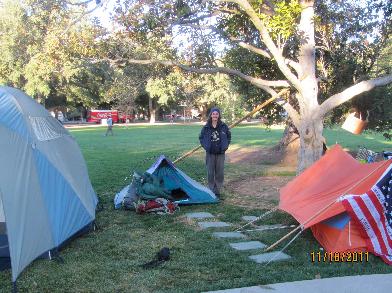
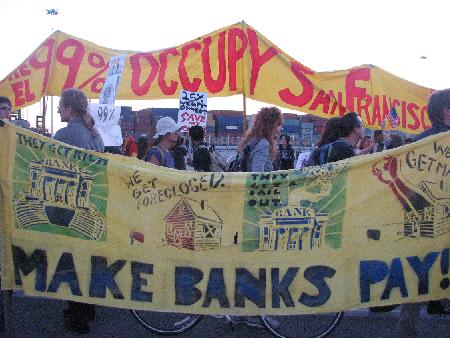
This marks the end of almost a week of talks with the city during which no raids were threatened on the camp. Now that OccupySF has rejected the ultimatum, police are expected to enter the camp and attempt to clear it out tonight or tomorrow night. That could destroy the longest continuous large Occupy encampment in the country. Protesters have been sleeping in public spaces in the Financial District under the name OccupySF since Sept. 17, enduring two previous police raids that only increased support for the group.

After last night’s General Assembly, a working group is meeting to form a defense plan in case of a raid, and it’s still unclear how the standoff will unfold.

The rejection of the offer comes after days of debate at the camp, including a session that took place after the city made clear the exact terms of their proposed contract yesterday afternoon. Around 3:30 p.m., OccupySF liaisons to the city handed out photocopies of a document entitled “Facility License Agreement: 1950 Mission Street.”

If signed, the agreement would have allowed the group to use the former school site until May 31, 2012. There were 17 expectations listed, including no animals or pets, no minors, “no sound/noise greater than 45dBA between 10:00pm and 7:00am,” “no panhandling or loitering,” and “no stoves, flammable liquids, wood storage or gases, open flames allowed on the site.”

What the city called an “agreement” and an “offer,” protesters saw as an ultimatum and, for some, a “veiled threat.” Katt Hobin, one of OccupySF’s key organizers, told the group, “We are operating under violent coercion. They are threatening violence if we don’t evacuate this space.”

Under the agreement, the city would have been the tenants, renting the space from the school board for $2500 per month. The space is a lot surrounded by a 15-foot chain link fence and has several portable buildings. Protesters would have had access to toilets, electricity, and indoor space at the site.

At the current camp at Justin Herman Plaza, which they renamed Bradley Manning Plaza, protesters debated how accepting the agreement would affect their branch of the Occupy movement in terms of autonomy, ability to expand and grow, inclusivity, and long-term viability.

Around 4 pm, hundreds paced camp, talking to each other about how to move forward. Some were interested in the possibility of a deal with the city but felt they could not accept the terms, especially prohibitions on minors and animals.

There seemed to be an understanding that the police would attempt to clear out the current camp in the coming days. Yet many seemed assured that the OccupySF network would stick together even after such a raid. One organizer invoked George Washington, saying, “He knew his army didn’t have to win battles, they just had to stick together. They would lose and they would retreat to a new place, but everyone would know that revolutionary army is still out there.”

Others saw the group’s place in revolutionary history differently. One protester reflected, “I think this is history being made right now. We can take the space and do so much with it. There are inside spaces for the sick and the elderly.”

Dozens of protesters had made up their minds to take the space. They waited with their belongings on the Steuart St and Don Chee Way corner of the plaza. “Jerry the Medic” Selness, who had been acting as OccupySF liaison to the city and speaking with Director of Public Works Mohammed Nuru, had relayed the message that DPW trucks would be coming to pick up those who wanted to move to the new site that afternoon.

One protester said that he and about 30 others had signed a symbolic petition stating that they wanted to accept the space. “We don’t need to sign it as OccupySF,” he said. “We’re Occupy Mission.”

Some had been waiting since the early morning. Around 5 pm, Selness got a call that no trucks would be coming that day because the city was awaiting the General Assembly’s response to its offer. About 100 people convened for the daily General Assembly at 6 pm. Around 9 pm, it was clear that OccupySF would not be signing the agreement as it stood.

The assembly did not object to any individuals or autonomous groups who might want to sign the document. They planned to write a response letter detailing their reasons for the rejection, the text of which will be discussed in a General Assembly tonight (Wed/30) at 6 pm.

Many came and went during the General Assembly, including dozens of people who were coming through OccupySF for the first time. Many organizers and supporters who had been there since the beginning but who not attended for days or weeks came back to discuss this issue, which many believed was important “for Occupy movements across the country.” Representatives from Occupy San Rafael, Occupy Santa Rosa, Occupy Berkeley, Occupy Oakland, Occupy USF, and Occupy Gainesville, FL spoke up, expressing solidarity, requesting support, and giving advice.

One homeless woman who had been living in the camp but had never spoken in GA expressed the opinion that to move would be to get out of the public eye and to concede to the city’s attempts to contain the movement, a much-expressed sentiment at the meeting. She cried, “You can’t move and live limited with their rules and regulations. You’re an eyesore, that’s why they want you to move. It’s political.”

Another woman agreed, declaring, “They can’t tell us how to protest or where to protest.”

Others cautioned against accepting the offer for different reasons. One man who spoke up at GA said that he was a teacher at Civic Center Secondary, formerly Phoenix Continuation School, the previous tenants of the offered space. He warned that the school had moved because of instability and health issues surrounding the flow of Mission Creek underground. Another worker familiar with the area recounted a tale of power-washing the sidewalk on the proposed site only to be confronted with “thousands of rats who poured up from the streets”; an OccupySF member who had surveyed the site earlier that day confirmed that the buildings had several holes in the walls, seeming to indicate a rat infestation.

One of the attendees, a young child, expressed the opinion that “we should stay strong and stay here,” amplified by the Peoples Mic. She also helped keep the meeting’s energy high and going in the right direction, showing aggressive “downward twinkle fingers” that signal disagreement at the proposed prohibition of minors on the site, and yelling “there are children present!” when adults used curse words in their impassioned statements.

Many agreed with Diamond Dave Whitaker, local celebrity in the poetry and radical communities and OccupySF organizer, when he stated: “OccupySF is citywide. We’re an autonomous entity as part of a worldwide network. We’re going to see a number of autonomous occupations arising.”

Whitaker mentioned a planned Occupy USF action to take place Dec. 1, as well as the small contingent that is currently “occupying” outside of Wells Fargo at 1 California Street, across from the former occupation site at 101 Market Street. That site is still blocked off by police barricades.

Occupy LA issued a similar rejection letter November 23, which might form the basis of OccupySF’s letter (Link: http://losangelesga.net/2011/11/assembly-authored-city-response/ ). That camp was raided and disbanded last night.

OccupySF plans to put out a formal response to the proposal and explanation of their decisions tonight.

Film Listings

0

Film listings are edited by Cheryl Eddy. Reviewers are Kimberly Chun, Max Goldberg, Dennis Harvey, Lynn Rapoport, and Matt Sussman. For rep house showtimes, see Rep Clock.

OPENING

Answers to Nothing The first scene is of Dane Cook getting a blow job. If you don’t run screaming from the room after that, you’ll be mildly rewarded by this ensemble drama tracing the lives of several Los Angeles residents trapped in various states of quiet desperation. At least director and co-writer Matthew Leutwyler (2010’s The River Why) has the sense to cast Cook (2007’s Good Luck Chuck) as a character you’re supposed to hate; he’s a therapist who’s cheating on his trying-to-get-pregnant wife (Elizabeth Mitchell) with a hipster singer (Aja Volkman) inexplicably hung up on a married dude who treats her like an afterthought. Barbara Hershey has a few understated scenes as Cook’s lonely mother; Julie Benz plays his sister-in-law, a no-nonsense detective investigating the disappearance of a young girl. Probably the most unexpected plot thread — in a film that remains more or less identical to all others cast in the Crash (2004) mode — follows a guilt-ridden woman (Miranda Bailey) determined to help her paralyzed brother complete a marathon. These characters could’ve been the whole movie, no blow job required. (2:03) (Eddy)

*The Artist See “Silence Is Golden.” (1:40) Embarcadero.

*”Christmas in Acidland” Psychedelic it may not be, but the Roxie’s two days of Yuletide weirdness curated by Johnny Legend offers plenty of seasonal nostalgia heavily seasoned by kitsch. The two titular programs compile Xmas-themed errata including animation shorts, musical interludes (Liberace, Ricky Nelson, a tranquilized-looking Rosemary Clooney, a bizarrely maudlin song from none other than Joan Rivers, a “Little Drummer Boy” duet from the mutually nonplussed Bing Crosby and David Bowie), Bob Hope cracking wise on Elvis and gay cowboys, Howdy Doody visiting Santa’s workshop, and greetings from the Reagans — Ron, Nancy, and future turncoat Patty. A “Christmas Noir” program features dramatic miniatures including Dragnet forced at gunpoint to be heartwarming, and Harpo Marx’s only dramatic role as a deaf-mute mime who witnesses a mob hit while performing in a department store window display. Last but far from least there’s the 1959 Mexican family spectacular Santa Claus, which in its English-language version played for years at U.S. kiddie matinees and on TV. One could make the case for a certain lysergic tenor to this wacko color fantasy that starts with a ballet for leaping devils in hell and seldom reduces the insanity level thereafter. Old St. Nick here has competition from one of Satan’s horned, red-jumpsuited minions in determining the naughtiness or niceness of several Mexico City children. (Though there are also “It’s a Small World”-style production numbers representing Xmas spirit in other cultures, including “the Orient” and “even Russia.”) The film’s equal-opportunity jumble of mythologies also has room for Vulcan, Merlin, and a “magic parasol.” A fairly elaborate production for Mexican exploitation king René Cardona (1969’s Night of the Bloody Apes), it’s warped the holiday realities of many a child over the last 50-plus years, and remains an uncontrolled substance of dubiously wholesome oddity still. Roxie. (Harvey) 2Eames: The Architect and the Painter Mad Men would boast considerably fewer sublime lines without the design impact of postwar masters Charles and Ray Eames. Touching on only the edges of the wide net cast by the couple and the talented designers at their Venice, Calif., studio, Eames attempts to sum up the genius behind the mid-century modern objets that brought a sophisticated new breed of beauty and glamour to an American middle class. Narrated by James Franco and chock-full of interviews with everyone from grandson Eames Demetrios to director Paul Schrader, this debut feature documentary by Jason Cohn opens on the then-married would-be architect Charles and sidetracked painter Ray meeting and swooning at the Cranbook Academy of Art in Michigan, all while working with Eero Saarinen on a prize-winning molded-wood chair for a MOMA competition. Their personal and design lives would remain intertwined forever more — through their landmark furniture designs (who doesn’t drool for that iconic Eames lounge and ottoman, one of many pieces still in production today); their whimsical, curious, and at-times-brilliant films; their exuberant propaganda for the US government and assorted corporations; and even those Mad Men-like indiscretions by the handsome Charles (Cohn drops one bombshell of an interview with a girlfriend). Throughout, in a way that faintly reflects the industrial design work at Apple today, the Eameses made selling out look good — even fun. One only wishes Cohn, who seems to get lost in the output, delved further into the specific furniture designs and films themselves (only 1968’s Powers of Ten is given adequate play), but perhaps that’s all fated to be sketched out for a sequel on the powers of two. (1:24) Balboa, Smith Rafael. (Chun)

House of Boys Amsterdam, 1984: a hot young thing named Frank (Layke Anderson) stumbles out of a rainstorm and into the House of Boys, an only-in-the-movies establishment with a cabaret stage downstairs and a boarding house of sorts for taut-torso’d dancers upstairs. At its helm are Cher … er, Madame (Udo Kier, dazzling in drag), who tut-tuts and dispenses world-weary advice, and earthy mother figure Emma (Eleanor David). As Frank finds himself onstage and off — he’s run away from a middle-class home with a father who insists he remove the “I Heart Boys” bumper sticker from his car — he falls in love with go-go star Jake (Benn Northover). But by the film’s third act, House of Boys’ dance-club melodrama has given way to a far less glitter-infused look at the frightening early days of the AIDS epidemic, with Stephen Fry playing a kindly doctor who snarls when he sees Ronald Reagan on TV. Director and co-writer Jean-Claude Schlim’s film shifts wildly in tone, dips its toes in narrative cheese, and contains lines like “You didn’t have sex — you made love” and “Don’t dream your life, live your dreams!”, but it’s vividly atmospheric throughout, and unexpectedly heartfelt at the finish. Star Udo Kier appears in person at Fri/2 screenings. (1:53) Roxie. (Eddy)

*The Man Nobody Knew: In Search of My Father, CIA Spymaster William Colby A man who dove straight from college into intelligence work — joining the CIA after World War II, and working against communism in Italy (successfully) and Vietnam (not so much) — William Colby became head of the CIA amid the organization’s most tumultuous years; he was called before an angry Congress multiple times in the mid-1970s to answer questions about the agency’s top-secret “Family Jewels” documents, among other cover-ups. This documentary, made by his son, Carl, combines archival footage with contemporary insights from politicians (Donald Rumsfeld, James Schlesinger) and journalists (Bob Woodward, Seymour Hersh), as well as Colby’s first wife (and Carl’s mother) Barbara Heinzen. The Man Nobody Knew is an apt title; in the beginning, at least, William Colby was perfectly suited for covert work — able to square his Roman Catholic beliefs with the shifty moral ground that comes with, say, allegedly ordering assassinations. But he was so closed-off in other aspects that his own son remembers him as a total enigma. Colby’s mysterious death, officially due to a boating accident, adds one more unknowable layer to the film, which intriguingly frames a controversial segment of American history through a very personal lens. (1:44) Lumiere, Shattuck. (Eddy)

*Seducing Charlie Barker Veteran local theater director Amy Glazer’s second feature is, like her first, adapted from a play she’d already done on stage — this one by Theresa Rebeck, retitled from its less descriptive original The Scene. Charlie (Stephen Turner Barker) is an actor whose career might have already peaked; tired of his sloth while she slaves in a TV casting gig she hates, wife of 14 years Stella (Daphne Zuniga) insists he hit up a long-ago pal turned sleazy but successful producer for a job. At the party he’s forced to attend for that purpose, however, Charlie gets sidelined — from his task, his art, his marriage — by Clea (Heather Gordon), a new arrival in Manhattan who has a hard body, bottomless ambition, no inhibitions, and no scruples. She’s a monster who might leave him picked clean as carrion in a vulture cage by the time they’re done. The narrative is a little over-crammed and a little underballasted to be fully credible. But Rebeck writes knockout dialogue for the numerous scorched earth confrontations here, and Glazer’s actors do a terrific job fleshing out characters that might read a bit schematic on the page. The results are imperfect but pack considerable juicy dramatic punch. (1:29) Opera Plaza, Smith Rafael. (Harvey)

*Shame It’s been a big 2011 for Michael Fassbender, with Jane Eyre, X-Men: First Class, Shame, and the upcoming A Dangerous Method raising his profile from art-house standout to legit movie star (of the “movie stars who can also act” variety). Shame may only reach one-zillionth of X-Men‘s audience due to its NC-17 rating, but this re-teaming with Hunger (2008) director Steve McQueen is Fassbender’s highest achievement to date. He plays Brandon, a New Yorker whose life is tightly calibrated to enable a raging sex addiction within an otherwise sterile existence, including an undefined corporate job and a spartan (yet expensive-looking) apartment. When brash, needy, messy younger sister Cissy (Carey Mulligan, speaking of actors having banner years) shows up, yakking her life all over his, chaos results. Shame is a movie that unfolds in subtle details and oversized actions, with artful direction despite its oft-salacious content. If scattered moments seem forced (loopy Cissy’s sudden transformation, for one scene, into a classy jazz singer), the emotions — particularly the titular one — never feel less than real and raw. (1:39) Embarcadero. (Eddy)

ONGOING

Anonymous Hark, what bosom through yonder bodice heaves? If you like your Shakespearean capers OTT and chock-full of fleshy drama, political intrigue, and groundling sensation, then Anonymous will enthrall (and if the lurid storyline doesn’t hold, the acting should). Writer John Orloff spins his story off one popular theory of Shakespeare authorship — that Edward de Vere, the 17th Earl of Oxford, was the true pen behind the works attributed to William Shakespeare of Stratford-upon-Avon. Our modern-day narrator (Derek Jacobi) foregrounds the fictitious nature of the proceedings, pulling back the curtain on Ben Jonson (Sebastian Armesto) staging his unruly comedies for the mob, much to the amusement of a mysterious aging dandy of a visitor: the Earl of Oxford (Rhys Ifans). Hungry for the glory that has always slipped through his pretty fingers, the Earl yearns to have his works staged for audiences beyond those in court, where Queen Elizabeth I (Vanessa Redgrave as the elder regent, daughter Joely Richardson as the lusty young royal) dotes on them, and out of the reach of his puritan father-in-law Robert Cecil (David Thewlis), Elizabeth’s close advisor, and he devises a plan for Jonson to stage them under his own name. But much more is triggered by the productions, uncovering secret trysts, hunchback stratagems, and more royal bastards than you can shake a scepter at. Director Roland Emmerich invests the production with the requisite high drama — and camp — to match the material, as well as pleasing layers of grime and toxic-looking Elizabethan makeup for both the ladies and the dudes who look like ladies (the crowd-surfing, however, strikes the off-key grunge-era note). And if the inherent elitism of the tale — could only a nobleman have written those remarkable plays and sonnets? — offends, fortunately the cast members are more than mere players. Ifans invests his decadent Earl with the jaded gaze and smudgy guyliner of a fading rock star, and Redgrave plays her Elizabeth like a deranged, gulled grotesque. (2:10) Four Star. (Chun)

Arthur Christmas (1:37) 1000 Van Ness, Presidio, Shattuck.

*The Descendants Like all of Alexander Payne’s films save 1996 debut Citizen Ruth, The Descendants is an adaptation, this time from Kaui Hart Hemmings’ excellent 2007 novel. Matt King (George Clooney) is a Honolulu lawyer burdened by various things, mostly a) being a haole (i.e. white) person nonetheless descended from Hawaiian royalty, rich in real estate most natives figure his kind stole from them; and b) being father to two children by a wife who’s been in a coma since a boating accident three weeks ago. Already having a hard time transitioning from workaholic to hands-on dad, Matt soon finds out this new role is permanent, like it or not — spouse Elizabeth (Patricia Hastie, just briefly seen animate) will not wake up. The Descendants covers the few days in which Matt has to share this news with Elizabeth’s loved ones, mostly notably Shailene Woodley and Amara Miller as disparately rebellious teen and 10-year-old daughters. Plus there’s the unpleasant discovery that the glam, sporty, demanding wife he’d increasingly seemed “not enough” for had indeed been looking elsewhere. When has George Clooney suggested insecurity enough to play a man afraid he’s too small in character for a larger-than-life spouse? But dressed here in oversized shorts and Hawaiian shirts, the usually suave performer looks shrunken and paunchy; his hooded eyes convey the stung joke’s-on-me viewpoint of someone who figures acknowledging depression would be an undeserved indulgence. Payne’s film can’t translate all the book’s rueful hilarity, fit in much marital backstory, or quite get across the evolving weirdness of Miller’s Scottie — though the young actors are all fine — but the film’s reined-in observations of odd yet relatable adult and family lives are all the more satisfying for lack of grandiose ambition. (1:55) California, 1000 Van Ness, Piedmont, SF Center, Sundance Kabuki. (Harvey)

*Drive Such a lovely way to Drive, drunk on the sensual depths of a lush, saturated jewel tone palette and a dreamlike, almost luxurious pacing that gives off the steamy hothouse pop romanticism of ’80s-era Michael Mann and David Lynch — with the bracing, impactful flecks of threat and ultraviolence that might accompany a car chase, a moody noir, or both, as filtered through a first-wave music video. Drive comes dressed in the klassic komforts — from the Steve McQueen-esque stances and perfectly cut jackets of Ryan Gosling as the Driver Who Shall Remain Nameless to the foreboding lingering in the shadows and the wittily static, statuesque strippers that decorate the background. Gosling’s Driver is in line with Mann’s other upstanding working men who hew to an old-school moral code and are excellent at what they do, regardless of what side of the law they’re working: he likes to keep it clear and simple — his services as a wheelman boil down to five minutes, in and out — but matters get messy when he falls for sweet-faced neighbor Irene (Carey Mulligan), who lives down the hall with her small son, and her ex-con husband (Oscar Isaac) is dragged back into the game. Populated by pungent side players like Albert Brooks, Bryan Cranston, Ron Perlman, and Christina Hendricks, and scattered with readily embeddable moments like a life-changing elevator kiss that goes bloodily wrong-right, Drive turns into a real coming-out affair for both Danish director Nicolas Winding Refn (2008’s Bronson), who rises above any crisis of influence or confluence of genre to pick up the po-mo baton that Lynch left behind, and 2011’s MVP Ryan Gosling, who gets to flex his leading-man muscles in a truly cinematic role, an anti-hero and under-the-hood psychopath looking for the real hero within. (1:40) Lumiere. (Chun)

Happy Feet Two (1:40) 1000 Van Ness.

Le Havre Aki Kaurismäki’s second French-language film (following 1992’s La Vie de Boheme) offers commentary on modern immigration issues wrapped in the gauze of a feel good fairy tale and cozy French provincialism a la Marcel Pagnol. Worried about the health of his hospitalized wife (Kaurismäki regular Kati Outinen), veteran layabout and sometime shoe shiner Marcel (Andre Wilms) gets some welcome distraction in coming to the aid of Idrissa (Blondin Miguel), a young African illegally trying to make way to his mother in London while eluding the gendarmes. Marcel’s whole neighborhood of port-town busybodies and industrious émigrés eventually join in the cause, turning Le Havre into a sort of old-folks caper comedy with an incongruously sunny take on a rising European multiculturalism in which there are no real racist xenophobes, just grumps deserving comeuppance. Incongruous because Kaurismäki is, of course, the king of sardonically funny Finnish miserabilism — and while it’s charmed many on the festival circuit, this combination of his usual poker-faced style and feel-good storytelling formula may strike others as an oil-and-water mismatch. (1:43) Opera Plaza. (Harvey)

Hugo Hugo turns on an obviously genius conceit: Martin Scorsese, working with 3D, CGI, and a host of other gimmicky effects, creates a children’s fable that ultimately concerns one of early film’s pioneering special-effects fantasists. That enthusiasm for moviemaking magic, transferred across more than a century of film history, was catching, judging from Scorsese’s fizzy, exhilarating, almost-nauseating vault through an oh-so-faux Parisian train station and his carefully layered vortex of picture planes as Hugo Cabret (Asa Butterfield), an intrepid engineering genius of an urchin, scrambles across catwalk above a buzzing station and a hotheaded station inspector (Sacha Baron Cohen). Despite the special effects fireworks going off all around him, Hugo has it rough: after the passing of his beloved father (Jude Law), he has been stuck with an nasty drunk of a caretaker uncle (Ray Winstone), who leaves his duties of clock upkeep at a Paris train station to his charge. Hugo must steal croissants to survive and mechanical toy parts to work on the elaborate, enigmatic automaton he was repairing with his father, until he’s caught by the fierce toy seller (Ben Kingsley) with a mysterious lousy mood and a cute, bright ward, Isabelle (Chloe Grace Moretz). Although the surprisingly dark-ish Hugo gives Scorsese a chance to dabble a new technological toolbox — and the chance to wax pedantically, if passionately, about the importance of film archival studies — the effort never quite despite transcends its self-conscious dazzle, lagging pacing, diffuse narrative, and simplistic screenplay by John Logan, based on Brian Selznick’s book. Even the actorly heavy lifting provided by assets like Kingsley and Moretz and the backloaded love for the fantastic proponents at the dawn of filmmaking fail to help matters. Scorsese attempts to steal a little of the latters’ zeal, but one can only imagine what those wizards would do with motion-capture animation or a blockbuster-sized server farm. (2:07) 1000 Van Ness, Shattuck, Sundance Kabuki. (Chun)

Immortals Arrow time (comin’ at ya, in 3D), blood lust, fascinating fascinators, and endless seemingly-CGI-chiseled chests mark this rework of the Theseus myth. Tarsem Singh flattens out the original tale of crazy-busy hero who founded Athens yet seems determined to outdo the Lord of the Rings series with his striking art direction (so chic that at times you feel like you’re in a perfume ad rather than King Hyperion’s torture chamber). As you might expect from the man who made the dreamy, horse-slicing Cell (2000), Immortals is all sensation rather than sense. The proto-superhero here is a peasant (Henry Cavill), trained in secret by Zeus (John Hurt and Luke Evans) and toting a titanic chip on his shoulder when he runs into the power-mad Cretan King Hyperion (Mickey Rourke, struggling to gnash the sleek scenery beneath fleshy bulk and Red Lobster headgear). Hyperion aims to obtain the Epirus Bow — a bit like a magical, preindustrial rocket launcher — to free the Titans, set off a war between the gods, and destroy humanity (contrary to mythology, Hyperion is not a Titan — just another heavyweight grudge holder). To capture the bow, he must find the virgin oracle Phaedra (Freida Pinto), massacring his way through Theseus’ village and setting his worst weapon, the Beast, a.k.a. the Minotaur, on the hero. Saving graces amid the gory bluster, which still pays clear tribute to 1963’s Jason and the Argonauts, is the vein-bulging passion that Singh invests in the ordinarily perfunctory kill scenes, the avant-garde headdresses and costumes by Eiko Ishioka, and the occasional edits that turn on visual rhymes, such as the moment when the intricate mask of a felled minion melts into a seagoing vessel, which are liable to make the audience gasp, or laugh, out loud. (1:50) 1000 Van Ness. (Chun)

In Time Justin Timberlake moves from romantic comedy to social commentary to play Will Salas, a young man from the ghetto living one day at a time. Many 12-steppers may make this claim, but Salas literally is, because in his world, time actually is money and people pay, say, four minutes for a cup of coffee, a couple hours for a bus ride home from work, and years to travel into a time zone where people don’t run from place to place to stay ahead of death. In writer-director Andrew Niccol’s latest piece of speculative cinema, humans are born with a digitized timepiece installed in their forearm and a default sell-by date of 25 years, with one to grow on — though most end up selling theirs off fairly quickly while struggling to pay rent and put food on the table. Time zones have replaced area codes in defining social stature and signaling material wealth, alongside those pesky devices that give the phrase “internal clock” an ominous literality. Niccol also wrote and directed Gattaca (1997) and wrote The Truman Show (1998), two other films in which technological advances have facilitated a merciless, menacing brand of social engineering. In all three, what is most alarming is the through line between a dystopian society and our own, and what is most hopeful is the embattled protagonist’s promises that we don’t have to go down that road. Amanda Seyfried proves convincible as a bored heiress to eons, her father (Vincent Kartheiser) less amenable to Robin Hood-style time banditry. (1:55) Four Star, Shattuck. (Rapoport)

*Into the Abyss: A Tale of Death, a Tale of Life How remarkable is it that, some 50-plus features along, filmmaker Werner Herzog would become the closest thing to a cinema’s conscience? This time the abyss is much closer to home than the Amazon rainforest or the Kuwaiti oil fields — it lies in the heart of Rick Perry country. What begins as an examination of capital punishment, introduced with an interview with Reverend Richard Lopez, who has accompanied Texas death row inmates to their end, becomes a seeming labyrinth of human tragedy. Coming into focus is the execution of Michael Perry, convicted as a teenager of the murder of a Conroe, Tex., woman, her son, and his friend — all for sake of a red Camaro. Herzog obtains an insightful interview with the inmate, just days before his execution, as well as his cohort Jason Burkett, police, an executioner, and the victims’ family members, in this haunting examination of crime, punishment, and a small town in Texas where so many appear to have gone wrong. So wrong that one might see Into the Abyss as more related to 1977’s Stroszek and its critical albeit compassionate take on American life, than Herzog’s last tone poem about the mysterious artists of 2010’s Cave of Forgotten Dreams (and it’s also obviously directly connected to next year’s TV documentary, Death Row). The layered tragedies and the strata of destroyed lives stays with you, as do the documentary’s difficult questions, Herzog’s gentle humanity as an interviewer, and the fascinating characters that don’t quite fit into a more traditional narrative — the Conroe bystander once stabbed with a screwdriver who learned to read in prison, and the dreamy woman impregnated by a killer whose entire doomed family appears to be incarcerated. (1:46) Opera Plaza, Shattuck. (Chun)

J. Edgar The usual polished, sober understatement of Clint Eastwood’s directing style and the highlights-compiling CliffsNotes nature of Dustin Lance Black’s screenplay turn out to be interestingly wrong choices for this biopic about one of the last American century’s most divisive figures. Interesting in that they’re perhaps among the very few who would now dare viewing the late, longtime FBI chief with so much admiration tempered by awareness of his faults — rather than the other way around. After all, Hoover (played by Leonardo DiCaprio) strengthened his bureau in ways that, yes, often protected citizens and state, but at what cost? The D.C. native eventually took to frequently “bending” the law, witch-hunting dubious national enemies (he thought the Civil Rights movement our worst threat since the bomb-planting Bolshevik anarchists of half a century earlier), blackmailing personal ones, weakening individual rights against surveillance, hoarding power (he resented the White House’s superior authority), lying publicly, and doing just about anything to heighten his own fame. A movie that internalized and communicated his rising paranoid megalomania (ironically Hoover died during the presidency of Nixon, his equal in that regard) might have stood some chance of making us understand this contradiction-riddled cipher. But J. Edgar is doggedly neutral, almost colorless (literally so, in near-monochrome visual presentation), its weird appreciation of the subject’s perfectionism and stick-to-it-iveness shutting out almost any penetrating insight. (Plus there’s Eastwood’s own by-now-de rigueur soundtrack of quasi-jazz noodling to make what is vivid here seem more dull and polite.) The love that dare not speak its name — or, evidently, risk more than a rare peck on the cheek — between Hoover and right-hand-man/life companion Clyde Tolson (Armie Hammer, very good if poorly served by his old-age makeup) becomes both the most compelling and borderline-silly thing here, fueled by a nervous discretion that seems equal parts Black’s interest and Eastwood’s discomfort. While you might think the directors polar opposites in many ways, the movie J. Edgar ultimately recalls most is Oliver Stone’s 1995 Nixon: both ambitiously, rather sympathetically grapple with still-warm dead gorgons and lose, filmmaker and lead performance alike laboring admirably to intelligent yet curiously stilted effect. (2:17) Marina, 1000 Van Ness, SF Center, Shattuck, Sundance Kabuki. (Harvey)

*Like Crazy Jacob (Anton Yelchin) and Anna (Felicity Jones) meet near the end of college; after a magical date, they’re ferociously hooked on each other. Trouble is, she’s in Los Angeles on a soon-to-expire student visa — and when she impulsively overstays, then jets home to London for a visit months later, her re-entry to America is stopped cold at LAX. (True love’s no match for homeland security.) An on-and-off long-distance romance ensues, and becomes increasingly strained, even as their respective careers (he makes furniture, she’s a magazine staffer) flourish. Director and co-writer Drake Doremus (2010’s Douchebag) achieves a rare midpoint between gritty mumblecore and shiny Hollywood romance; the characters feel very real and the script ably captures the frustration that settles in when idealized fantasies give way to the messy workings of everyday life. There are some contrivances here — Anna’s love-token gift from Jacob, a bracelet engraved “Patience,” breaks when she’s with another guy — but for the most part, Like Crazy offers an honest portrait of heartbreak. (1:29) California, Piedmont, SF Center, Sundance Kabuki. (Eddy)

*Margin Call Think of Margin Call as a Mamet-like, fictitious insider jab at the financial crisis, a novelistic rejoinder to Oscar-winning doc Inside Job (2010). First-time feature director and writer J.C. Chandor shows a deft hand with complex, writerly material, creating a darting dance of smart dialogue and well-etched characters as he sidesteps the hazards of overtheatricality, a.k.a. the crushing, overbearing proscenium. The film opens on a familiar Great Recession scene: lay-off day at an investment bank, marked by HR functionaries calling workers one by one into fishbowl conference rooms. The first victim is the most critical — Eric Dale (Stanley Tucci), a risk-management staffer who has stumbled on an investment miscalculation that could potentially trigger a Wall Street collapse. On his way out, he passes a drive with his findings to one of his young protégés, Peter (Zachary Quinto), setting off a flash storm over the next 24 hours that will entangle his boss Sam (Kevin Spacey), who’s agonizing over his dying dog while putting up a go-big-or-go-home front; cynical trading manager Will (Paul Bettany); and the firm’s intimidating head (Jeremy Irons), who gets to utter the lines, “Explain to me as you would to a child. Or a Golden Retriever.” Such top-notch players get to really flex their skills here, equipped with Chandor’s spot-on script, which manages to convey the big issues, infuse the numbers with drama and the money managers with humanity, and never talk down to the audience. (1:45) Presidio, Sundance Kabuki. (Chun)

*Melancholia Lars von Trier is a filmmaker so fond of courting controversy it’s like he does it in spite of himself — his rambling comments about Hitler (“I’m a Nazi”) were enough to get him banned from the Cannes Film Festival earlier this year, where Melancholia had its debut (and star Kirsten Dunst won Best Actress). Oops. Maybe after the (here’s that word again) controversy that accompanied 2009’s Antichrist, von Trier felt like he needed a shocking context for his more mellow latest. Pity that, for Melancholia is one of his strongest, most thoughtful works to date. Split into two parts, the film follows first the opulent, disastrous, never-ending wedding reception of Justine (Dunst) and Michael (Alexander Skarsgard), held at a lavish estate owned by John (Kiefer Sutherland), the tweedy husband of Justine’s sister, Claire (Charlotte Gainsbourg). Amid the turmoil of arguments (John Hurt and Charlotte Rampling as Justine and Claire’s divorced parents), pushy guests (Stellan Skarsgard as Justine’s boss), livid wedding planner (Udo Kier, amazing), and hurt feelings (Michael is the least-wanted groom since Kris Humphries), it’s clear that something is wrong with Justine beyond just marital jitters. The film’s second half begins an unspecified amount of time later, as Claire talks her severely depressed, near-catatonic sister into moving into John’s mansion. As Justine mopes, it’s revealed that a small planet, Melancholia — glimpsed in Melancholia‘s Wagner-scored opening overture — is set to pass perilously close to Earth. John, an amateur astronomer, is thrilled; Claire, fearful for her young son’s future and goaded into high anxiety by internet doomsayers, is convinced the planets will collide, no matter what John says. Since Justine (apparently von Trier’s stand-in for himself) is convinced that the world’s an irredeemably evil place, she takes the news with a shrug. Von Trier’s vision of the apocalypse is somber and surprisingly poetic; Dunst and Gainsbourg do outstanding work as polar-opposite sisters whose very different reactions to impending disaster are equally extreme. (2:15) Albany, Bridge. (Eddy)

Midnight in Paris Owen Wilson plays Gil, a self-confessed “Hollywood hack” visiting the City of Light with his conservative future in-laws and crassly materialistic fiancée Inez (Rachel McAdams). A romantic obviously at odds with their selfish pragmatism (somehow he hasn’t realized that yet), he’s in love with Paris and particularly its fabled artistic past. Walking back to his hotel alone one night, he’s beckoned into an antique vehicle and finds himself transported to the 1920s, at every turn meeting the Fitzgeralds, Gertrude Stein (Kathy Bates), Dali (Adrien Brody), etc. He also meets Adriana (Marion Cotillard), a woman alluring enough to be fought over by Hemingway (Corey Stoll) and Picasso (Marcial di Fonzo Bo) — though she fancies aspiring literary novelist Gil. Woody Allen’s latest is a pleasant trifle, no more, no less. Its toying with a form of magical escapism from the dreary present recalls The Purple Rose of Cairo (1985), albeit without that film’s greater structural ingeniousness and considerable heart. None of the actors are at their best, though Cotillard is indeed beguiling and Wilson dithers charmingly as usual. Still — it’s pleasant. (1:34) Opera Plaza, Shattuck. (Harvey)

The Muppets Of course The Muppets is a movie appropriate for small fry, with a furry cast (supplemented by human co-stars Jason Segel and Amy Adams) cracking wise and conveying broad themes about the importance of friendship, self-confidence, and keeping dreams alive despite sabotage attempts by sleazy oil tycoons (Chris Cooper, comically evil in the grand Muppet-villain tradition). But the true target seems to be adults who grew up watching The Muppet Show and the earliest Muppet movies (1999’s Muppets from Space doesn’t count); the “getting the gang back together” sequence takes up much of the film’s first half, followed by a familiar rendition of “let’s put on a show” in the second. Interwoven are constant reminders of how the Muppets’ brand of humor — including Fozzie Bear’s corny stand-up bits — is a comforting throwback to simpler times, even with a barrage of celeb cameos and contemporary gags (chickens clucking a Cee-Lo Green tune — I think you can guess which one). Co-writer Segal pays appropriate homage to the late Jim Henson’s merry creations, but it remains to be seen if The Muppets will usher in a new generation of fans, or simply serve as nostalgia fodder for grown-ups like, uh, me, who may or may not totally still own a copy of Miss Piggy’s Guide to Life. (1:38) Balboa, 1000 Van Ness, Presidio. (Eddy)

My Week With Marilyn Statuette-clutching odds are high for Michelle Williams, as her impersonation of a famous dead celebrity is “well-rounded” in the sense that we get to see her drunk, disorderly, depressed, and so forth. Her Marilyn Monroe is a conscientious performance. But when the movie isn’t rolling in the expected pathos, it’s having other characters point out how instinctive and “magical” Monroe is onscreen — and Williams doesn’t have that in her. Who could? Williams is remarkable playing figures so ordinary you might look right through them on the street, in Wendy and Lucy (2008), Blue Valentine (2010), etc. But as Monroe, all she can do is play the little-lost girl behind the sizzle. Without the sizzle. Which is, admittedly, exactly what My Week — based on a dubious true story — asks of her. It is true that in 1956 the Hollywood icon traveled to England to co-star with director Sir Laurence Olivier (Kenneth Branagh) in a fluff romance, The Prince and the Showgirl; and that she drove him crazy with her tardiness, mood swings, and crises. It’s debatable whether she really got so chummy with young production gofer Colin Clark, our wistful guide down memory lane. He’s played with simpering wide-eyed adoration by Eddie Redmayne, and his suitably same-aged secondary romantic interest (Emma Watson) is even duller. This conceit could have made for a sly semi-factual comedy of egos, neurosis, and miscommunication. But in a rare big-screen foray, U.K. TV staples director Simon Curtis and scenarist Adrian Hodges play it all with formulaic earnestness — Marilyn is the wounded angel who turns a starstruck boy into a brokenhearted but wiser man as the inevitable atrocious score orders our eyes to mist over. (1:36) Albany, Clay, 1000 Van Ness, Piedmont. (Harvey)

Puss in Boots (1:45) 1000 Van Ness, Presidio.

*Sigur Rós: Inni This ain’t your mom’s 3D IMAX arena-rocker exercise. The follow-up to 2007’s Heima, which set out to contextualize Sigur Rós in its native Iceland, Inni opens with a torrent of light and shadow that resolves into the image of frontperson Jónsi Birgisson on bowed guitar, a bright splinter on a stage otherwise drenched in black. The screen explodes with bleached-out light as Birgisson hits the high note, drummer Orri Pall Dyrason bashes his cymbal, and the combo picks up a symphonic head of noise. The still somewhat-mysterious ensemble that burst fully formed onto the international music scene along with the new millennium is seen here through the prism of live performance, worth catching on a big screen (Inní was also released this month on DVD along with a live double-CD). Director Vincent Morisset infuses the often-not-so-interesting genre of concert film with all the drama and unique strategies appropriate to a group that has charted its own indelible path from the start. Sigur Rós’ music may connect to that of Mogwai and other post-rock outfits, but those groups can only hope to score the moving-image counterpart that the Icelandic band finds here, its own variant of Inní‘s smoky, reflective black and white imagery, flickering in time to the beat, fading in and out of focus, and favoring off-center compositions. Undercutting the serious beauty onstage are clips of Sigur Rós’s slightly surreal reality of life on tour and snippets of archival footage from its first decade of life. (1:14) Roxie. (Chun)

The Skin I Live In I’d like to think that Pedro Almodóvar is too far along in his frequently-celebrated career to be having a midlife crisis, but all the classic signs are on display in his flashy, disjointed new thriller. Still mourning the death of his burn victim wife and removed from his psychologically disturbed daughter, brilliant-but-ethically compromised plastic surgeon Robert (played with smoldering creepiness by former Almodóvar heartthrob Antonio Banderas) throws himself into developing a new injury-resistant form of prosthetic skin, testing it on his mysterious live-in guinea pig, Vera (the gorgeous Elena Anaya, whose every curve is on view thanks to an après-ski-ready body suit). Eventually, all hell breaks loose, as does Vera, whose back story, as we find out, owes equally to 1960’s Eyes Without a Face and perhaps one of the Saw films. And that’s not even the half of it — to fully recount every sharp turn, digression and MacGuffin thrown at us would take the entirety of this review. That’s not news for Almodóvar, though. Much like Rainer Werner Fassbinder before him, Almodóvar’s métier is melodrama, as refracted through a gay cinephile’s recuperative affections. His strength as a filmmaker is to keep us emotionally tethered to the story he’s telling, amidst all the allusions, sex changes and plot twists torn straight from a telenovela. The real shame of The Skin I Live In is that so much happens that you don’t actually have time to care much about any of it. Although its many surfaces are beautiful to behold (thanks largely to cinematographer José Luis Alcaine), The Skin I Live In ultimately lacks a key muscle: a heart. (1:57) Lumiere, Shattuck. (Sussman)

*Sutro’s: The Palace at Land’s End Filmmaker Tom Wyrsch (2008’s Watch Horror Films, Keep America Strong and 2009’s Remembering Playland) explores the unique and fascinating history behind San Francisco’s Sutro Baths in his latest project, an enjoyable documentary that covers the stories behind Adolph Sutro, the construction of his swimming pools, and the amazingly diverse, and somewhat strange collection of other attractions that entertained generations of locals that came to Land’s End for amusement. Told through interviews with local historians and residents, the narrative is illustrated with a host of rarely-seen historic photographs, archival film footage, contemporary video, and images of old documents, advertisements and newspapers. The film should appeal not only to older viewers who fondly remember going to Sutro’s as children, and sadly recall it burning down in 1966, but also younger audiences who have wandered through the ruins below the Cliff House and wondered what once stood there. (1:24) Balboa. (Sean McCourt)

*The Swell Season In 2008, musicians Glen Hansard (1991’s The Commitments, Irish band the Frames) and Markéta Irglová won an Oscar for the original song “Falling Slowly” from the folk rock musical Once, in which they star as a Dublin street busker and a young Czech immigrant who spend a week writing and recording songs that document their falling in love. The film boosted them into the public eye at hyperspeed, and they began to tour extensively, performing under the name the Swell Season. For three years following Once‘s debut, filmmakers Nick August-Perna, Chris Dapkins, and Carlo Mirabella-Davis followed the pair, who had become romantically involved, as they struggled to negotiate sudden fame, life on the road, and the stresses of time and change on their relationship. The beautifully filmed black-and-white documentary that resulted is a quiet affair whose visual intimacies and personal revelations are balanced by soft, muted monochromes that preserve some necessary degree of distance for Hansard and Irglová. Troubling issues are engaged in conversational tones, and the rest of the tale is told onstage amid Hansard’s gorgeous emotional storms and Irglová’s more spare but equally lovely compositions. The honesty is sometimes uncomfortable to witness, as two people accustomed to baring their souls in their songs agree to face the camera for a little while longer. (1:31) SFFS New People Cinema. (Rapoport)

*Tomboy In her second feature, French filmmaker Céline Sciamma (2007’s Water Lilies) depicts the brave and possibly perilous gender experimentations of a 10-year-old girl. Laure (Zoé Héran) moves with her family to a new town, falls in with the neighborhood gang during the summer vacation, and takes the stranger-comes-to-town opportunity to adopt a new, male persona, Mikael, a leap of faith we see her consider for a moment before jumping, eyes open. Watching Mikael quietly observe and then pick up the rough mannerisms and posturing of his new peers, while negotiating a shy romance with Lisa (Jeanne Disson), the sole female member of the gang, is to shift from amazement to amusement to anxiety and back again. As the children play games in the woods and roughhouse on a raft in the water and use a round of Truth or Dare to inspect their relationships to one another, all far from the eyes of the adults on the film’s periphery, Mikael takes greater and greater risks to inhabit an identity that he is constructing as he goes, and that is doomed to be demolished sooner, via accidental discovery, or later, when fall comes and the children march off to school together. All of this is superbly handled by Sciamma, who gently guides her largely nonprofessional young cast through the material without forcing them into a single precocious situation or speech. The result is a sweet, delicate story with a steady undercurrent of dread, as we wait for summer’s end and hope for the best and imagine the worst. (1:22) Opera Plaza, Shattuck. (Rapoport)

Tower Heist The mildest of mysteries drift around the edges of Tower Heist — like, how plausible is Ben Stiller as the blue-collar manager of a tony uptown NYC residence? How is that Eddie Murphy’s face has grown smoother and more seamless with age? And how much heavy lifting goes into an audience member’s suspension of disbelief concerning a certain key theft, dangling umpteen floors above Thanksgiving parade, in the finale? Yet those questions might not to deter those eager to escape into this determinedly undemanding, faintly entertaining Robin Hood-style comedy-thriller. Josh Kovacs (Stiller) is the wildly competent manager of an upscale residence — toadying smoothly and making life run perfectly for his entitled employers — till Bernie Madoff-like penthouse dweller Arthur Shaw (Alan Alda) is arrested for big-time financial fraud, catching the pension fund of Josh’s staffers in his vortex. After a showy standoff gets the upstanding Josh fired, he assembles a crew of ex-employees Enrique (Michael Peña) and Charlie (Casey Affleck), maid Odessa (Gabourey Sidibe), and foreclosed former resident Mr. Fitzhugh (Matthew Broderick), as well as childhood friend, neighbor, and thief Slide (Murphy). Murphy gets to slink effortlessly through supposed comeback role — is he vital here? Not really. Nevertheless, a few twists and a good-hearted feel for the working-class 99 percent who got screwed by the financial sector make this likely the most likable movie Brett Ratner has made since 2006’s X-Men: The Last Stand — provided you can get over those dangles over the yawning gaps in logic. (1:45) 1000 Van Ness, Shattuck. (Chun)

Twilight Saga: Breaking Dawn — Part One Some may have found Robert Pattinson’s stalker-suitor Edward Cullen sufficiently creepy (fits of overprotective rage, flirtatious comments about his new girlfriend’s lip-smackingly narcotic blood) in 2008’s first installment of the Twilight franchise. And nothing much in 2009’s New Moon (suicide attempt) or 2010’s Eclipse (jealous fits, poor communication) strongly suggested he was LTR material, to say nothing of marriage for all eternity. But Twilight 3.5 is where things in the land of near-constant cloud cover and perpetually shirtless adolescent werewolves go seriously off the rails — starting with the post-graduation teen nuptials of bloodsucker Edward and his tasty-smelling human bride, Bella Swan (Kristen Stewart), and ramping up considerably when it turns out that Edward’s undead sperm are, inexplicably, still viable for baby-making. One of the film’s only sensible lines is uttered at the wedding by high school frenemy Jessica (Anna Kendrick), who snidely wonders whether Bella is starting to show. Of course not, in this Mormon-made tale, directed by Bill Condon (1998’s Gods and Monsters, 2004’s Kinsey). And while Bella’s dad, Charlie (Billy Burke), seems slightly more disgruntled than usual, no one other than lovesick werewolf Jacob Black (Taylor Lautner) seems to question the wisdom of this shotgun-free leap from high school to honeymoon. The latter, however, after a few awkward allusions to rough sex, is soon over, and Bella does indeed start showing. Suffice it to say, it’s not one of those pregnancies that make your skin glow and your hair more lustrous. What follows is like a PSA warning against vampire-bleeder cohabitation, and one wonders if even the staunchest members of Team Edward will flinch, or adjust their stance of dewy-eyed appreciation. (1:57) Marina, 1000 Van Ness, SF Center, Sundance Kabuki. (Rapoport)

Young Goethe in Love You might be suspect North Face (2008) director Philipp Stölzl’s take on Germany’s most renowned writer is biting off of 1998’s Shakespeare in Love, but the filmmaker manages to rise above facile comparisons to deliver his own unique stab at re-creating the life and love of the 23-year-old polymath, long before he became an influential poet and cultural force. Stölzl and co-writers Christoph Müller and Alexander Dydyna spin off the autobiographical nature of what some consider the world’s first best-seller, 1774’s The Sorrows of Young Werther, though there were few sorrows at first for the young Johann Wolfgang von Goethe (Alexander Fehling) — a perpetually raging, playful party animal rather than the brooding forerunner of romanticism. Unable to move forward in his law studies and believed a wretched failure by his father (Henry Hübchen), Goethe is exiled to a job in a small-town court, beneath the thumb of the fiercely bourgeois court councilor Kestner (Moritz Bleibtreu). Embodying the charms of provincial life: Lotte Buff (Miriam Stein), the bright-eyed, artistic eldest daughter of a struggling widower. Naturally Goethe and Lotte end up caught in each other’s orbits, although rivals for affection and attention lie around each corner, as does a certain inevitable sense of despair. Charismatic lead actors and attention to period details — as well as an infectious joie de vivre — are certain to animate fans of historical romance. (1:42) Opera Plaza, Shattuck. (Chun)


 

The problem of the UC police

0

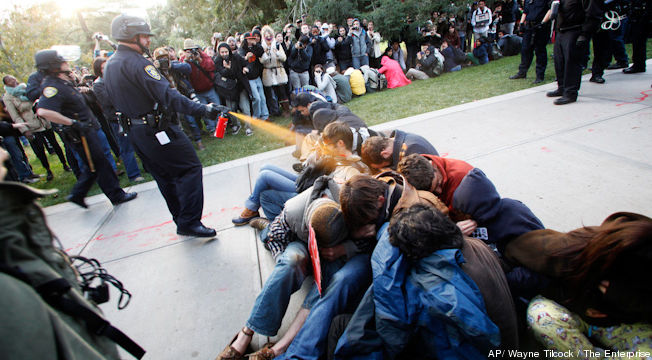
EDITORIAL Twenty years from now, when people look back on the Occupy movement, one of the indelible images will be the video of the University of California police officer casually dousing a group of peaceful, seated students in Davis with pepper spray. It’s a video that’s been seen millions of times around the world. It reflects a serious problem not just with one officer but with the way officials at all levels have responded to the protests — and with the way institutional police forces operate in this state.

In the video, a group of students involved in the OccupyUC movement are seated on the ground with arms linked. Lt. John Pike walks up and down the row, indiscriminately shooting the orange spray — which causes severe pain and breathing problems — over the students, who make no move to resist. It’s horrifying and stunning, the sort of thing that you wouldn’t believe unless you saw it yourself.

The Davis chancellor, Linda Katehi, has been reeling from the incident and is facing calls for her resignation. Pike and the chief of the U.C. Davis police have been put on administrative leave pending an investigation.

But now Assemblymember Tom Ammiano of San Francisco wants to go a step further — he wants to hold hearings in Sacramento not just on this incident but on how police agencies across the state have dealt with mostly nonviolent protesters. He’s absolutely right — and his hearings should also raise a critical question: Why does the University of California need its own armed police force?

The problems with the police at Davis mirror problems with the behavior of the UC Berkeley police — which mirror problems with the BART police. And all of them stem from a central problem: These little police fiefdoms have poor supervision, poor training and limited civilian oversight.

The chancellor of UC Davis doesn’t know anything about running a police department; she’s an electrical engineer and an academic. If she resigns, she’ll be replaced by another academician who knows nothing about law enforcement. And if the UC police misbehave, where do people go to complain? There’s no independent auditor, no office of citizen complaints.

If the Oakland police ran rampant — and they have been known to do exactly that — at least the elected mayor can be held accountable. Same for any city that has a municipal force. But when campus and transit security operations turn into armed paramilitary agencies, it’s a recipe for trouble.

At the very least, the UC police — like the BART police — need an independent oversight agency to handle complaints. But it might be time to discuss whether campuses can best be protected with unarmed security guards supported by local municipal police. The University of California will never take that step on its own, so the state Legislature needs to evaluate whether lawmakers should force the issue.

Guardian editorial: The problem of U.C. police

7

GUARDIAN EDITORIAL Twenty years from now, when people look back on the Occupy movement, one of the indelible images will be the video of the University of California police officer casually dousing a group of peaceful, seated students in Davis with pepper spray. It’s a video that’s been seen millions of times around the world. It reflects a serious problem not just with one officer but with the way officials at all levels have responded to the protests — and with the way institutional police forces operate in this state.

In the video, a group of students involved in the OccupyUC movement are seated on the ground with arms linked. Lt. John Pike walks up and down the row, indiscriminately shooting the orange spray — which causes severe pain and breathing problems — over the students, who make no move to resist. It’s horrifying and stunning, the sort of thing that you wouldn’t believe unless you saw it yourself.

The Davis chancellor, Linda Katehi, has been reeling from the incident and is facing calls for her resignation. Pike and the chief of the U.C. Davis police have been put on administrative leave pending an investigation.

But now Assemblymember Tom Ammiano of San Francisco told us he  wants to go a step further — he  he plans  to hold hearings in Sacramento not just on this incident but on how police agencies across the state have dealt with mostly nonviolent protesters. He’s absolutely right — and his hearings should also raise a critical question: Why does the University of California need its own armed police force?

The problems with the police at Davis mirror problems with the behavior of the U.C. Berkeley police — which mirror problems with the BART police. And all of them stem from a central problem: These little police fiefdoms have poor supervision, poor training,  and limited civilian oversight.

The chancellor of U.C. Davis doesn’t know anything about running a police department; she’s an electrical engineer and an academic. If she resigns, she’ll be replaced by another academician who knows nothing about law enforcement. And if the U.C. police misbehave, where do people go to complain? There’s no independent auditor, no office of citizen complaints.

If the Oakland police ran rampant — and they have been known to do exactly that — at least the elected mayor can be held accountable. Same for any city that has a municipal force. But when campus and transit security operations turn into armed paramilitary agencies, it’s a recipe for trouble.

At the very least, the U.C. police — like the BART police — need an independent oversight agency to handle complaints. But it might be time to discuss whether campuses can best be protected with unarmed security guards supported by local municipal police. The University of California will never take that step on its own, so the state Legislature needs to evaluate whether lawmakers should force the issue.

Postscript: STOP SHOOTING STUDENTS:  The real problem for U.C. Davis’s Kotehi and other U.C. chancellors was illustrated by  this classic J’Accuse open letter by Nathan Brown,  U.C/Davis.assistant professor in the Department of English.

Occupy standoffs continue as poll finds public support for the movement

11

As OccupyOakland moves to reoccupy Frank Ogawa/Oscar Grant Plaza today and the burgeoning OccupySF encampment braces for another long-threatened raid by police, a new Field Poll finds that about half of registered California voters identify with the Occupy movement and support its goals, which include taxing the rich and limiting the ability of large corporations to corrupt the political and economic systems.

As the San Francisco Chronicle reports, 46 percent of respondants said they identified with the Occupy movement and 58 percent agree with the cause that prompted it, compared with 32 percent who say they disagree with it. Unsurprisingly, those on the left were more likely to support Occupy while those on the right were more likely to oppose it. A previous Field Poll at the height of the right-wing Tea Party movement found it had only about half as much support as Occupy now enjoys.

Still, as it enters its third month and winter descends on the encampments, Occupy faces myriad challenges. In San Francisco, the mainstream media — particularly curdmugeonly Chronicle columnist CW Nevius — has regularly highlighted conflicts and other conditions in the camps and pushed Mayor Ed Lee to follow-through on his threats to clear the tents from Justin Herman/Bradley Manning Plaza. Rumors abound that a raid could come on Wednesday night, when SFPD beefs up its staffing for training exercises.

In Oakland, the site of some of the most violent police crackdowns on Occupy encampments, OccupyOakland members are right now (noon, Tues/29) marching back into their former home and pledging to set up a 24/7 protest in defiance of city officials. While they seem to be stopping short of a full-blown occupation and tent city, they claim to be setting up a model for the next phase of the Occupy movement.

The group’s press release follows:


FOR IMMEDIATE RELEASE:

Contact:

Phil Horne, Esq., Occupy Oakland Vigil Committee

415-874-9800; occupylaw@riseup.net

www.occupyoakland.org

OCCUPY OAKLAND— RE-OCCUPYING OSCAR GRANT a.k.a. FRANK OGAWA PLAZA

On Tuesday, November 29, 2011 at noon, Occupy Oakland activists will retake Frank Ogawa a.k.a. Oscar Grant Plaza in downtown Oakland with a 24-hour, 7 day-a-week vigil.  Occupiers hope to create a model for a new wave of “Occupation” protest throughout the United States. With the vigil, Occupiers will continue asserting rights guaranteed by the United States Constitution to assemble, speak, and petition government for redress of grievances.  The vigil is not the product of a bargain with Mayor Quan, nor is it negotiated with law enforcement–permission from the city is not required to exercise these constitutionally guaranteed rights.

The structures in the plaza will be symbolic and part of the vigil protest. A teepee will remind the public of the former Occupy camp and historic struggles of the Sioux Indians on the Plains of the U.S.; homeless workers in Hoovervilles during the Great Depression; the “Bonus March” to Washington D.C. by unpaid and unemployed veterans in 1932; Resurrection City following the assassination of Martin Luther King; the AIDS vigil of 1980s San Francisco; and the redwood occupations of Judi Bari and Running Wolf.

Occupy Oakland continues its occupation because residents of Oakland and across the US are still fighting for food, shelter, medical care, school, childcare, and other necessities.  The 1% enjoy 40% of U.S. wealth and 50% ownership of Wall Street stocks and bonds.  The bottom 80% split 7% of the former and just 5% of the latter.  The average 35-year-old in the 99% has a net worth less than $3,000.00.  Occupiers ask the public to consider, “How long does it take an unemployed member of the 99% to go through $3,000.00 and become homeless.” In Oakland, the unemployment rate is nearly double that of the national average. These are issues of crucial relevance to our city.

Occupy Oakland’s vigil declares, “If the 1% won’t share voluntarily through a sense of morality and concern for the well-being of all, then through protest and direct action, we will force change!  Occupy the Plaza!  De-colonize the 99%!”

Occupy Oakland will have sign-up sheets starting Tuesday at 11 am. at the Plaza, but sign up is not a prerequisite for participation in the vigil. Supporters are encouraged to come out day or night to participate.  The Plaza is fully accessible to the differently-abled.

About OccupyOakland:

Occupy Oakland is an emerging social movement without leaders or spokespeople. It is one of 1,570 occupations currently occurring around the world in solidarity with Occupy Wall St. For more information about the other occupations, see: http://www.occupytogether.org/

An up-to-date calendar announcing Oakland actions, and more information can be found at:

http://www.occupyoakland.org/


What’s Jerry Brown afraid of?

5

I have to wonder — as I often do, I’m afraid — just what exactly Gov. Jerry Brown is thinking. He was out of town — at an undisclosed location — when the UC Davis pepper spray incident happened, and he issued no statement. Now he’s back, presumably in his office, and he still hasn’t said anything.

The folks at CalBuzz have a good suggestion for the statement he could have made:

The use of pepper spray and night sticks against peacefully protesting students at UC Davis represents exactly the wrong message our great universities should be sending to our young people.

Instead of supporting and encouraging students who have become productively and non-violently engaged in the important issues of the day, university authorities unleashed overwhelming military force against them.

It is not enough for University of California officials to call for a review of policies and procedures. Those responsible for this outrageous assault on human rights must be held fully accountable, Students and parents must be reassured that the University of California and all higher education institutions in this state respect and applaud young people who reject apathy and embrace personal involvement in what ails society.

I could go further: There’s video of a police officer breaking the law, and he should have been arrested and charged with assault. Not saying he should go to jail or anything, but when there’s clear evidence of a crime, typically the perp is arrested and the courts sort it out later.

But what is going through Jerry’s mind? Does he condone this shit? (I’ve known him a long time, and I can’t imagine he does.) Is he so far out in space that he doesn’t realize how bad it looks for him to stay silent?

Is he worried that the cops won’t like him if he says something critical? Because a lot of other people are mad that he’s said nothing at all.

This isn’t an isolated local incident that he can kick down to the city or county authorities. The University of California is a state agency, and its cops are state employees, who more or less indirectly work for the governor.

Jerry: Silence is consent. Quit ducking.

Protesters target UC to demand openness, accountability, and the restoration of cuts

2

UPDATED BELOW — Protesters with ReFund California and other groups are gathering today (Mon/28) at UCSF-Mission Bay and three other UC campuses to protest a teleconference of the UC Board of Regents, which will discuss state funding levels and tuition increases, as well as recent incidents of police violence against nonviolent student protesters.

ReFund California, a coalition of student and labor groups, is angry with the UC’s decision to abruptly cancel the Nov. 16-17 Regents meeting at UCSF, citing public safety concerns surrounding a meeting that the group had been planning a convergence on for months – as well as a hastily called meeting on the day after Thanksgiving.

The group has created a pledge that it wants the Regents to agree to, which includes calling for higher taxes on the rich, a restoration of cuts to the public university systems, removal of commercial land from Prop. 13 property tax caps, and a fee on Wall Street financial transactions.

ReFund California is also dismissive of independent investigations the UC has initiated to look at aggressive police repression of students protests, including police at UC Berkeley using batons and mass arrests to dismantle an OccupyCal tent city and police at UC Davis dousing passive protesters with pepper spray. Video of both incidents went viral and have helped galvanize the overlapping Occupy and student movements.

“No amount of new ‘police protocols’ will prevent violence against students and workers, as long California’s corporate and financial elite along with their representatives among the Regents and administrators of the UC rely on police to address the concerns of students and workers,” the ReFund California Coalition wrote in the letter to the UC.

Today’s action at UCSF – centered around the meeting site at 1675 Owens Street, where a Guardian reporter is on the scene and will offer her report later today – joins similar protests at UC Davis, UCLA, and UC Merced, the four sites where the Regents will gather.

Meanwhile, ReFund and other groups are also angry that the CSU Board of Trustees went ahead with its Nov. 16 meeting behind closed doors, clearing out student protesters and the public before they approved a 9 percent tuition hike, an action that Lt. Gov. Gavin Newsom (a member of that body) denounced.

“While I understand the CSU leadership’s concerns regarding public safety, the spirit of open deliberations has been marred,” Newsom wrote in a Nov. 18 letter to Chancellor Charles Reed, calling for the matter to be re-voted at the Dec. 5 meeting to “allow the full board to hold an open debate, with full public comment and members of the media present.”

In related news, many students and faculty at UC Davis are on strike today to protest the pepper-spraying incident. And tomorrow (Tues/29) at noon, members of OccupyOakland say they plan to retake Frank Ogawa Plaza (which they renamed Oscar Grant Plaza) and set up another 24/7 encampment.

UPDATE NOON: Guardian reporter Christine Deakers says there is a heavy police presence at the UCSF meeting, where only 50 members of the public are allowed inside and most of those seats have been claimed by ReFund California members. When the Regents decided to limit the time for public testimony, the group held a General Assembly in the meeting, drowning out the Regents and causing the meeting to adjourn until 1:30 pm. You can follow her tweets here or here.

UPDATE 1:50 PM: The UC Board of Regents did not reconvene, instead cancelling the rest of the meeting without taking action. The San Francisco Chronicle quotes Newsom as saying he supports the demands of ReFund but that he’s not willing to sign its pledge.

Film Listings

0

Film listings are edited by Cheryl Eddy. Reviewers are Kimberly Chun, Max Goldberg, Dennis Harvey, Lynn Rapoport, and Matt Sussman. For rep house showtimes, see Rep Clock.

OPENING

Arthur Christmas Santa’s son (voiced by James McAvoy, who heads up an all-star, mostly-British cast) steps up to solve a North Pole crisis in this 3D animated tale. (1:37) Presidio, Shattuck.

Hugo Martin Scorsese directs this fanciful 3D tale of an orphan secretly living in a train station. (2:07) Shattuck, Sundance Kabuki.

The Muppets Of course The Muppets is a movie appropriate for small fry, with a furry cast (supplemented by human co-stars Jason Segel and Amy Adams) cracking wise and conveying broad themes about the importance of friendship, self-confidence, and keeping dreams alive despite sabotage attempts by sleazy oil tycoons (Chris Cooper, comically evil in the grand Muppet-villain tradition). But the true target seems to be adults who grew up watching The Muppet Show and the earliest Muppet movies (1999’s Muppets from Space doesn’t count); the “getting the gang back together” sequence takes up much of the film’s first half, followed by a familiar rendition of “let’s put on a show” in the second. Interwoven are constant reminders of how the Muppets’ brand of humor — including Fozzie Bear’s corny stand-up bits — is a comforting throwback to simpler times, even with a barrage of celeb cameos and contemporary gags (chickens clucking a Cee-Lo Green tune — I think you can guess which one). Co-writer Segal pays appropriate homage to the late Jim Henson’s merry creations, but it remains to be seen if The Muppets will usher in a new generation of fans, or simply serve as nostalgia fodder for grown-ups like, uh, me, who may or may not totally still own a copy of Miss Piggy’s Guide to Life. (1:38) Presidio. (Eddy)

My Week With Marilyn See “No Bombshell.” (1:36) Albany, Clay, Piedmont.

*Sigur Rós: Inni This ain’t your mom’s 3D IMAX arena-rocker exercise. The follow-up to 2007’s Heima, which set out to contextualize Sigur Rós in its native Iceland, Inni opens with a torrent of light and shadow that resolves into the image of frontperson Jónsi Birgisson on bowed guitar, a bright splinter on a stage otherwise drenched in black. The screen explodes with bleached-out light as Birgisson hits the high note, drummer Orri Pall Dyrason bashes his cymbal, and the combo picks up a symphonic head of noise. The still somewhat-mysterious ensemble that burst fully formed onto the international music scene along with the new millennium is seen here through the prism of live performance, worth catching on a big screen (Inní was also released this month on DVD along with a live double-CD). Director Vincent Morisset infuses the often-not-so-interesting genre of concert film with all the drama and unique strategies appropriate to a group that has charted its own indelible path from the start. Sigur Rós’ music may connect to that of Mogwai and other post-rock outfits, but those groups can only hope to score the moving-image counterpart that the Icelandic band finds here, its own variant of Inní‘s smoky, reflective black and white imagery, flickering in time to the beat, fading in and out of focus, and favoring off-center compositions. Undercutting the serious beauty onstage are clips of Sigur Rós’s slightly surreal reality of life on tour and snippets of archival footage from its first decade of life. (1:14) Roxie. (Chun)

*The Swell Season In 2008, musicians Glen Hansard (1991’s The Commitments, Irish band the Frames) and Markéta Irglová won an Oscar for the original song “Falling Slowly” from the folk rock musical Once, in which they star as a Dublin street busker and a young Czech immigrant who spend a week writing and recording songs that document their falling in love. The film boosted them into the public eye at hyperspeed, and they began to tour extensively, performing under the name the Swell Season. For three years following Once‘s debut, filmmakers Nick August-Perna, Chris Dapkins, and Carlo Mirabella-Davis followed the pair, who had become romantically involved, as they struggled to negotiate sudden fame, life on the road, and the stresses of time and change on their relationship. The beautifully filmed black-and-white documentary that resulted is a quiet affair whose visual intimacies and personal revelations are balanced by soft, muted monochromes that preserve some necessary degree of distance for Hansard and Irglová. Troubling issues are engaged in conversational tones, and the rest of the tale is told onstage amid Hansard’s gorgeous emotional storms and Irglová’s more spare but equally lovely compositions. The honesty is sometimes uncomfortable to witness, as two people accustomed to baring their souls in their songs agree to face the camera for a little while longer. (1:31) SFFS New People Cinema. (Rapoport)

*Tomboy In her second feature, French filmmaker Céline Sciamma (2007’s Water Lilies) depicts the brave and possibly perilous gender experimentations of a 10-year-old girl. Laure (Zoé Héran) moves with her family to a new town, falls in with the neighborhood gang during the summer vacation, and takes the stranger-comes-to-town opportunity to adopt a new, male persona, Mikael, a leap of faith we see her consider for a moment before jumping, eyes open. Watching Mikael quietly observe and then pick up the rough mannerisms and posturing of his new peers, while negotiating a shy romance with Lisa (Jeanne Disson), the sole female member of the gang, is to shift from amazement to amusement to anxiety and back again. As the children play games in the woods and roughhouse on a raft in the water and use a round of Truth or Dare to inspect their relationships to one another, all far from the eyes of the adults on the film’s periphery, Mikael takes greater and greater risks to inhabit an identity that he is constructing as he goes, and that is doomed to be demolished sooner, via accidental discovery, or later, when fall comes and the children march off to school together. All of this is superbly handled by Sciamma, who gently guides her largely nonprofessional young cast through the material without forcing them into a single precocious situation or speech. The result is a sweet, delicate story with a steady undercurrent of dread, as we wait for summer’s end and hope for the best and imagine the worst. (1:22) Embarcadero. (Rapoport)

ONGOING

*El Bulli: Cooking in Progress Oh to be a fly on the wall of El Bulli — back in 2008 and 2009, when director Gereon Wetzel turned his lens on the Spanish landmark, it was considered the best restaurant in the world. This elegantly wrought documentary, covering a year at the culinary destination (now closed), allows you to do just that. Wetzel opens on chef-owner Ferran Adrià shutting down his remarkable eatery for the winter and then drifting in and out of his staff’s Barcelona lab as they develop dishes for the forthcoming season. Head chef Oriol Castro and other trusted staffers treat ingredients with the detached methodicalness of scientists — a champignon mushroom, say, might be liquefied from its fried, raw, sous-vide-cooked states — and the mindful intuition of artists, taking notes on both MacBooks and paper, accompanied by drawings and much photo-snapping. Fortunately the respectful Wetzel doesn’t shy away from depicting the humdrum mechanics of running a restaurant, as Adrià is perpetually interrupted by his phone, must wrangle with fishmongers reluctant to disclose “secret” seasonal schedules, and slowly goes through the process of creating an oil cocktail and conceptualizing a ravioli whose pasta disappears when it hits the tongue, tasting everything as he goes. Energized by an alternately snappy and meditative percussive score, this look into the most influential avant-garde restaurant in the world is a lot like the concluding photographs of the many menu items we glimpse at their inception — a memorable, sublimely rendered document that leaves you hungry for more. (1:48) Opera Plaza. (Chun)

*The Descendants Like all of Alexander Payne’s films save 1996 debut Citizen Ruth, The Descendants is an adaptation, this time from Kaui Hart Hemmings’ excellent 2007 novel. Matt King (George Clooney) is a Honolulu lawyer burdened by various things, mostly a) being a haole (i.e. white) person nonetheless descended from Hawaiian royalty, rich in real estate most natives figure his kind stole from them; and b) being father to two children by a wife who’s been in a coma since a boating accident three weeks ago. Already having a hard time transitioning from workaholic to hands-on dad, Matt soon finds out this new role is permanent, like it or not — spouse Elizabeth (Patricia Hastie, just briefly seen animate) will not wake up. The Descendants covers the few days in which Matt has to share this news with Elizabeth’s loved ones, mostly notably Shailene Woodley and Amara Miller as disparately rebellious teen and 10-year-old daughters. Plus there’s the unpleasant discovery that the glam, sporty, demanding wife he’d increasingly seemed “not enough” for had indeed been looking elsewhere. When has George Clooney suggested insecurity enough to play a man afraid he’s too small in character for a larger-than-life spouse? But dressed here in oversized shorts and Hawaiian shirts, the usually suave performer looks shrunken and paunchy; his hooded eyes convey the stung joke’s-on-me viewpoint of someone who figures acknowledging depression would be an undeserved indulgence. Payne’s film can’t translate all the book’s rueful hilarity, fit in much marital backstory, or quite get across the evolving weirdness of Miller’s Scottie — though the young actors are all fine — but the film’s reined-in observations of odd yet relatable adult and family lives are all the more satisfying for lack of grandiose ambition. (1:55) California, Piedmont, SF Center, Sundance Kabuki. (Harvey)

Dragonslayer Dragonslayer tags along with Josh “Skreech” Sandoval, a Fullerton, Calif. skater celebrated for shredding pools and living a vagabond’s life. First-time director Tristan Patterson fronts with the kind of side-winding portraiture that prizes sensory impressions instead of back-story, but whittle away Dragonslayer‘s loose ends and you end up with an unremarkable lost generation romance, a Bonnie and Clyde with lower stakes. The film meets Skreech at 23: he’s turned his back on sponsorship gigs and a romance that produced a son (no trace of the mother here). In an arbitrarily defined chapter structure, Skreech investigates freshly abandoned pools, squats in a friend’s backyard, shows off his medical marijuana license, and cracks tallboys in Southern California’s magic light. He’s stunned by a pretty girl’s red lipstick and fades into a relationship with her (it takes a while before the movie treats her as anything more than scenery). He takes a few earnest stabs at fatherhood and rehearses his principles of no principles to the soundtrack’s well-stocked bangs. There are a few genuinely poignant moments — Skreech’s taking a call from his estranged mother in a bus full of punks — but in general Dragonslayer is too caught up in its own glossy reverie to register emergent emotions. Patterson’s tendency to use editing as dramatic shorthand is evident in an early sequence of Skreech muffing a skate contest abroad: repeated shots of Skreech wiping out are cut with the eventual winner’s triumphs and then back to our hero’s defeated expression. Arranged in the foregone style of reality television, the actual event is given no room to breathe. (1:14) Roxie. (Goldberg)

*Drive Such a lovely way to Drive, drunk on the sensual depths of a lush, saturated jewel tone palette and a dreamlike, almost luxurious pacing that gives off the steamy hothouse pop romanticism of ’80s-era Michael Mann and David Lynch — with the bracing, impactful flecks of threat and ultraviolence that might accompany a car chase, a moody noir, or both, as filtered through a first-wave music video. Drive comes dressed in the klassic komforts — from the Steve McQueen-esque stances and perfectly cut jackets of Ryan Gosling as the Driver Who Shall Remain Nameless to the foreboding lingering in the shadows and the wittily static, statuesque strippers that decorate the background. Gosling’s Driver is in line with Mann’s other upstanding working men who hew to an old-school moral code and are excellent at what they do, regardless of what side of the law they’re working: he likes to keep it clear and simple — his services as a wheelman boil down to five minutes, in and out — but matters get messy when he falls for sweet-faced neighbor Irene (Carey Mulligan), who lives down the hall with her small son, and her ex-con husband (Oscar Isaac) is dragged back into the game. Populated by pungent side players like Albert Brooks, Bryan Cranston, Ron Perlman, and Christina Hendricks, and scattered with readily embeddable moments like a life-changing elevator kiss that goes bloodily wrong-right, Drive turns into a real coming-out affair for both Danish director Nicolas Winding Refn (2008’s Bronson), who rises above any crisis of influence or confluence of genre to pick up the po-mo baton that Lynch left behind, and 2011’s MVP Ryan Gosling, who gets to flex his leading-man muscles in a truly cinematic role, an anti-hero and under-the-hood psychopath looking for the real hero within. (1:40) Lumiere. (Chun)

Happy Feet Two (1:40) Four Star, 1000 Van Ness, Presidio.

Le Havre Aki Kaurismäki’s second French-language film (following 1992’s La Vie de Boheme) offers commentary on modern immigration issues wrapped in the gauze of a feel good fairy tale and cozy French provincialism a la Marcel Pagnol. Worried about the health of his hospitalized wife (Kaurismäki regular Kati Outinen), veteran layabout and sometime shoe shiner Marcel (Andre Wilms) gets some welcome distraction in coming to the aid of Idrissa (Blondin Miguel), a young African illegally trying to make way to his mother in London while eluding the gendarmes. Marcel’s whole neighborhood of port-town busybodies and industrious émigrés eventually join in the cause, turning Le Havre into a sort of old-folks caper comedy with an incongruously sunny take on a rising European multiculturalism in which there are no real racist xenophobes, just grumps deserving comeuppance. Incongruous because Kaurismäki is, of course, the king of sardonically funny Finnish miserabilism — and while it’s charmed many on the festival circuit, this combination of his usual poker-faced style and feel-good storytelling formula may strike others as an oil-and-water mismatch. (1:43) Bridge. (Harvey)

Immortals Arrow time (comin’ at ya, in 3D), blood lust, fascinating fascinators, and endless seemingly-CGI-chiseled chests mark this rework of the Theseus myth. Tarsem Singh flattens out the original tale of crazy-busy hero who founded Athens yet seems determined to outdo the Lord of the Rings series with his striking art direction (so chic that at times you feel like you’re in a perfume ad rather than King Hyperion’s torture chamber). As you might expect from the man who made the dreamy, horse-slicing Cell (2000), Immortals is all sensation rather than sense. The proto-superhero here is a peasant (Henry Cavill), trained in secret by Zeus (John Hurt and Luke Evans) and toting a titanic chip on his shoulder when he runs into the power-mad Cretan King Hyperion (Mickey Rourke, struggling to gnash the sleek scenery beneath fleshy bulk and Red Lobster headgear). Hyperion aims to obtain the Epirus Bow — a bit like a magical, preindustrial rocket launcher — to free the Titans, set off a war between the gods, and destroy humanity (contrary to mythology, Hyperion is not a Titan — just another heavyweight grudge holder). To capture the bow, he must find the virgin oracle Phaedra (Freida Pinto), massacring his way through Theseus’ village and setting his worst weapon, the Beast, a.k.a. the Minotaur, on the hero. Saving graces amid the gory bluster, which still pays clear tribute to 1963’s Jason and the Argonauts, is the vein-bulging passion that Singh invests in the ordinarily perfunctory kill scenes, the avant-garde headdresses and costumes by Eiko Ishioka, and the occasional edits that turn on visual rhymes, such as the moment when the intricate mask of a felled minion melts into a seagoing vessel, which are liable to make the audience gasp, or laugh, out loud. (1:50) 1000 Van Ness. (Chun)

In Time Justin Timberlake moves from romantic comedy to social commentary to play Will Salas, a young man from the ghetto living one day at a time. Many 12-steppers may make this claim, but Salas literally is, because in his world, time actually is money and people pay, say, four minutes for a cup of coffee, a couple hours for a bus ride home from work, and years to travel into a time zone where people don’t run from place to place to stay ahead of death. In writer-director Andrew Niccol’s latest piece of speculative cinema, humans are born with a digitized timepiece installed in their forearm and a default sell-by date of 25 years, with one to grow on — though most end up selling theirs off fairly quickly while struggling to pay rent and put food on the table. Time zones have replaced area codes in defining social stature and signaling material wealth, alongside those pesky devices that give the phrase “internal clock” an ominous literality. Niccol also wrote and directed Gattaca (1997) and wrote The Truman Show (1998), two other films in which technological advances have facilitated a merciless, menacing brand of social engineering. In all three, what is most alarming is the through line between a dystopian society and our own, and what is most hopeful is the embattled protagonist’s promises that we don’t have to go down that road. Amanda Seyfried proves convincible as a bored heiress to eons, her father (Vincent Kartheiser) less amenable to Robin Hood-style time banditry. (1:55) 1000 Van Ness, Shattuck. (Rapoport)

*Into the Abyss: A Tale of Death, a Tale of Life How remarkable is it that, some 50-plus features along, filmmaker Werner Herzog would become the closest thing to a cinema’s conscience? This time the abyss is much closer to home than the Amazon rainforest or the Kuwaiti oil fields — it lies in the heart of Rick Perry country. What begins as an examination of capital punishment, introduced with an interview with Reverend Richard Lopez, who has accompanied Texas death row inmates to their end, becomes a seeming labyrinth of human tragedy. Coming into focus is the execution of Michael Perry, convicted as a teenager of the murder of a Conroe, Tex., woman, her son, and his friend — all for sake of a red Camaro. Herzog obtains an insightful interview with the inmate, just days before his execution, as well as his cohort Jason Burkett, police, an executioner, and the victims’ family members, in this haunting examination of crime, punishment, and a small town in Texas where so many appear to have gone wrong. So wrong that one might see Into the Abyss as more related to 1977’s Stroszek and its critical albeit compassionate take on American life, than Herzog’s last tone poem about the mysterious artists of 2010’s Cave of Forgotten Dreams (and it’s also obviously directly connected to next year’s TV documentary, Death Row). The layered tragedies and the strata of destroyed lives stays with you, as do the documentary’s difficult questions, Herzog’s gentle humanity as an interviewer, and the fascinating characters that don’t quite fit into a more traditional narrative — the Conroe bystander once stabbed with a screwdriver who learned to read in prison, and the dreamy woman impregnated by a killer whose entire doomed family appears to be incarcerated. (1:46) Embarcadero, Shattuck. (Chun)
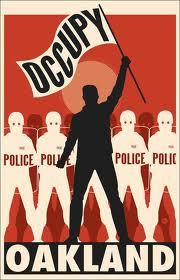
J. Edgar The usual polished, sober understatement of Clint Eastwood’s directing style and the highlights-compiling CliffsNotes nature of Dustin Lance Black’s screenplay turn out to be interestingly wrong choices for this biopic about one of the last American century’s most divisive figures. Interesting in that they’re perhaps among the very few who would now dare viewing the late, longtime FBI chief with so much admiration tempered by awareness of his faults — rather than the other way around. After all, Hoover (played by Leonardo DiCaprio) strengthened his bureau in ways that, yes, often protected citizens and state, but at what cost? The D.C. native eventually took to frequently “bending” the law, witch-hunting dubious national enemies (he thought the Civil Rights movement our worst threat since the bomb-planting Bolshevik anarchists of half a century earlier), blackmailing personal ones, weakening individual rights against surveillance, hoarding power (he resented the White House’s superior authority), lying publicly, and doing just about anything to heighten his own fame. A movie that internalized and communicated his rising paranoid megalomania (ironically Hoover died during the presidency of Nixon, his equal in that regard) might have stood some chance of making us understand this contradiction-riddled cipher. But J. Edgar is doggedly neutral, almost colorless (literally so, in near-monochrome visual presentation), its weird appreciation of the subject’s perfectionism and stick-to-it-iveness shutting out almost any penetrating insight. (Plus there’s Eastwood’s own by-now-de rigueur soundtrack of quasi-jazz noodling to make what is vivid here seem more dull and polite.) The love that dare not speak its name — or, evidently, risk more than a rare peck on the cheek — between Hoover and right-hand-man/life companion Clyde Tolson (Armie Hammer, very good if poorly served by his old-age makeup) becomes both the most compelling and borderline-silly thing here, fueled by a nervous discretion that seems equal parts Black’s interest and Eastwood’s discomfort. While you might think the directors polar opposites in many ways, the movie J. Edgar ultimately recalls most is Oliver Stone’s 1995 Nixon: both ambitiously, rather sympathetically grapple with still-warm dead gorgons and lose, filmmaker and lead performance alike laboring admirably to intelligent yet curiously stilted effect. (2:17) Four Star, Marina, 1000 Van Ness, SF Center, Shattuck, Sundance Kabuki. (Harvey)

Jack and Jill (1:39) 1000 Van Ness, Shattuck.

*Like Crazy Jacob (Anton Yelchin) and Anna (Felicity Jones) meet near the end of college; after a magical date, they’re ferociously hooked on each other. Trouble is, she’s in Los Angeles on a soon-to-expire student visa — and when she impulsively overstays, then jets home to London for a visit months later, her re-entry to America is stopped cold at LAX. (True love’s no match for homeland security.) An on-and-off long-distance romance ensues, and becomes increasingly strained, even as their respective careers (he makes furniture, she’s a magazine staffer) flourish. Director and co-writer Drake Doremus (2010’s Douchebag) achieves a rare midpoint between gritty mumblecore and shiny Hollywood romance; the characters feel very real and the script ably captures the frustration that settles in when idealized fantasies give way to the messy workings of everyday life. There are some contrivances here — Anna’s love-token gift from Jacob, a bracelet engraved “Patience,” breaks when she’s with another guy — but for the most part, Like Crazy offers an honest portrait of heartbreak. (1:29) California, Piedmont, SF Center, Sundance Kabuki. (Eddy)

*Love Crime Early this year came the announcement that Brian De Palma was hot to do an English remake of Alain Corneau’s Love Crime. The results, should they come to fruition, may well prove a landmark in the annals of lurid guilty-pleasure trash. But with the original Love Crime finally making it to local theaters, it’s an opportune moment to be appalled in advance about what sleazy things could potentially be done to this neat, dry, fully clothed model of a modern Hitchcockian thriller. No doubt in France Love Crime looks pretty mainstream. But here its soon-to be-despoiled virtues of narrative intricacy and restraint are upscale pleasures. Ludivine Sagnier plays assistant to high-powered corporate executive Christine (Kristin Scott Thomas). The boss enjoys molding protégée Isabelle to her own image, making them a double team of carefully planned guile unafraid to use sex appeal as a business strategy. But Isabelle is expected to know her place — even when that place robs her of credit for her own ideas — and when she stages a small rebellion, Christine’s revenge is cruelly out of scale, a high-heeled boot brought down to squash an ant. Halfway through an act of vengeance occurs that is shocking and satisfying, even if it leaves the remainder of Corneau and Nathalie Carter’s clever screenplay deprived of the very thing that had made it such a sardonic delight so far. Though it’s no masterpiece, Love Crime closes the book on his Corneau’s career Corneau (he died at age 67 last August) not with a bang but with a crisp, satisfying snap. (1:46) Lumiere. (Harvey)

*Margin Call Think of Margin Call as a Mamet-like, fictitious insider jab at the financial crisis, a novelistic rejoinder to Oscar-winning doc Inside Job (2010). First-time feature director and writer J.C. Chandor shows a deft hand with complex, writerly material, creating a darting dance of smart dialogue and well-etched characters as he sidesteps the hazards of overtheatricality, a.k.a. the crushing, overbearing proscenium. The film opens on a familiar Great Recession scene: lay-off day at an investment bank, marked by HR functionaries calling workers one by one into fishbowl conference rooms. The first victim is the most critical — Eric Dale (Stanley Tucci), a risk-management staffer who has stumbled on an investment miscalculation that could potentially trigger a Wall Street collapse. On his way out, he passes a drive with his findings to one of his young protégés, Peter (Zachary Quinto), setting off a flash storm over the next 24 hours that will entangle his boss Sam (Kevin Spacey), who’s agonizing over his dying dog while putting up a go-big-or-go-home front; cynical trading manager Will (Paul Bettany); and the firm’s intimidating head (Jeremy Irons), who gets to utter the lines, “Explain to me as you would to a child. Or a Golden Retriever.” Such top-notch players get to really flex their skills here, equipped with Chandor’s spot-on script, which manages to convey the big issues, infuse the numbers with drama and the money managers with humanity, and never talk down to the audience. (1:45) Presidio, Sundance Kabuki. (Chun)

*Martha Marcy May Marlene If Winter’s Bone star Jennifer Lawrence was the breakout ingénue of 2010, look for Martha Marcy May Marlene‘s Elizabeth Olsen to take the 2011 title. Both films are backwoodsy and harrowing and offer juicy roles for their leading starlets — not to mention a pair of sinister supporting roles for the great John Harkes. Here, he’s a Manson-y figure who retains disturbing control over Olsen’s character even after the multi-monikered girl flees his back-to-the-land cult. Writer-director Sean Durkin goes for unflashy realism and mounds on the dread as the hollow-eyed Martha attempts to resume normal life, to the initial delight of her estranged, guilt-ridden older sister (Sarah Paulson). Soon, however, it becomes clear that Things Are Not Ok. You’d be forgiven for pooh-poohing Olsen from the get-go; lavish Sundance buzz and the fact that she’s Mary-Kate and Ashley’s sis have already landed her mountains of pre-release publicity. But her performance is unforgettable, and absolutely fearless. (1:41) Lumiere. (Eddy)

*Melancholia Lars von Trier is a filmmaker so fond of courting controversy it’s like he does it in spite of himself — his rambling comments about Hitler (“I’m a Nazi”) were enough to get him banned from the Cannes Film Festival earlier this year, where Melancholia had its debut (and star Kirsten Dunst won Best Actress). Oops. Maybe after the (here’s that word again) controversy that accompanied 2009’s Antichrist, von Trier felt like he needed a shocking context for his more mellow latest. Pity that, for Melancholia is one of his strongest, most thoughtful works to date. Split into two parts, the film follows first the opulent, disastrous, never-ending wedding reception of Justine (Dunst) and Michael (Alexander Skarsgard), held at a lavish estate owned by John (Kiefer Sutherland), the tweedy husband of Justine’s sister, Claire (Charlotte Gainsbourg). Amid the turmoil of arguments (John Hurt and Charlotte Rampling as Justine and Claire’s divorced parents), pushy guests (Stellan Skarsgard as Justine’s boss), livid wedding planner (Udo Kier, amazing), and hurt feelings (Michael is the least-wanted groom since Kris Humphries), it’s clear that something is wrong with Justine beyond just marital jitters. The film’s second half begins an unspecified amount of time later, as Claire talks her severely depressed, near-catatonic sister into moving into John’s mansion. As Justine mopes, it’s revealed that a small planet, Melancholia — glimpsed in Melancholia‘s Wagner-scored opening overture — is set to pass perilously close to Earth. John, an amateur astronomer, is thrilled; Claire, fearful for her young son’s future and goaded into high anxiety by internet doomsayers, is convinced the planets will collide, no matter what John says. Since Justine (apparently von Trier’s stand-in for himself) is convinced that the world’s an irredeemably evil place, she takes the news with a shrug. Von Trier’s vision of the apocalypse is somber and surprisingly poetic; Dunst and Gainsbourg do outstanding work as polar-opposite sisters whose very different reactions to impending disaster are equally extreme. (2:15) Albany, Embarcadero, Smith Rafael. (Eddy)

Midnight in Paris Owen Wilson plays Gil, a self-confessed “Hollywood hack” visiting the City of Light with his conservative future in-laws and crassly materialistic fiancée Inez (Rachel McAdams). A romantic obviously at odds with their selfish pragmatism (somehow he hasn’t realized that yet), he’s in love with Paris and particularly its fabled artistic past. Walking back to his hotel alone one night, he’s beckoned into an antique vehicle and finds himself transported to the 1920s, at every turn meeting the Fitzgeralds, Gertrude Stein (Kathy Bates), Dali (Adrien Brody), etc. He also meets Adriana (Marion Cotillard), a woman alluring enough to be fought over by Hemingway (Corey Stoll) and Picasso (Marcial di Fonzo Bo) — though she fancies aspiring literary novelist Gil. Woody Allen’s latest is a pleasant trifle, no more, no less. Its toying with a form of magical escapism from the dreary present recalls The Purple Rose of Cairo (1985), albeit without that film’s greater structural ingeniousness and considerable heart. None of the actors are at their best, though Cotillard is indeed beguiling and Wilson dithers charmingly as usual. Still — it’s pleasant. (1:34) Opera Plaza, Shattuck. (Harvey)

The Other F Word The 1980s U.S. hardcore punk scene was one refreshing bastion of opposition in the Reagan era of militaristic, monetary, and quasi-“family values” conformism. It was a fairly harmless outlet (if also a factory) for all that excess testosterone. Boys will be boys, etc. Sooner or later they’d have to grow the fuck up. Right? Well, punk became punk-pop, embraced by the musical product divisions of multinational corporations everywhere, and while the chords didn’t change much, the lyrics stopped being angry about political-economic injustice — now they were about dubious injustices like girl problems. How (let alone why) do you grow up when label execs and fans want you to stay the guy who causes shoulder dislocations worldwide? Illustrating one gun-to-head route toward responsible adulthood is Andrea Nevins’ The Other F Word, a fun if superficial new documentary in which the missing unmentionable is (gasp) fatherhood. Punks become dads! Like whoa! Break out the swear jar! Much of this is cute. But the notion that getting older and more sedate is any more revelatory in a 45-year-old man from a 20-year-old band than it is for the rest of us seems questionable. Our principal guide is very likeable Pennywise leader Jim Lindberg, seen getting less and less happy with his road-to-family-time ratio. Some other interviewees here look like parental recipes for future therapy; a deeper documentary might have probed that. But F Word seldom gets past the surface “shock” appeal of heavily tattooed, aging bad boys changing nappies and joining the PTA. It’s still stuck in a testosterone zone most of its subjects have at least learned to compartmentalize. (1:38) Lumiere, Shattuck. (Harvey)

Puss in Boots (1:45) 1000 Van Ness.

The Skin I Live In I’d like to think that Pedro Almodóvar is too far along in his frequently-celebrated career to be having a midlife crisis, but all the classic signs are on display in his flashy, disjointed new thriller. Still mourning the death of his burn victim wife and removed from his psychologically disturbed daughter, brilliant-but-ethically compromised plastic surgeon Robert (played with smoldering creepiness by former Almodóvar heartthrob Antonio Banderas) throws himself into developing a new injury-resistant form of prosthetic skin, testing it on his mysterious live-in guinea pig, Vera (the gorgeous Elena Anaya, whose every curve is on view thanks to an après-ski-ready body suit). Eventually, all hell breaks loose, as does Vera, whose back story, as we find out, owes equally to 1960’s Eyes Without a Face and perhaps one of the Saw films. And that’s not even the half of it — to fully recount every sharp turn, digression and MacGuffin thrown at us would take the entirety of this review. That’s not news for Almodóvar, though. Much like Rainer Werner Fassbinder before him, Almodóvar’s métier is melodrama, as refracted through a gay cinephile’s recuperative affections. His strength as a filmmaker is to keep us emotionally tethered to the story he’s telling, amidst all the allusions, sex changes and plot twists torn straight from a telenovela. The real shame of The Skin I Live In is that so much happens that you don’t actually have time to care much about any of it. Although its many surfaces are beautiful to behold (thanks largely to cinematographer José Luis Alcaine), The Skin I Live In ultimately lacks a key muscle: a heart. (1:57) Embarcadero, Shattuck. (Sussman)

Steve Jobs: The Lost Interview Is this a quickie cash-in following the tidal wave of appreciation following the death of Steve Jobs? Interviewer Robert Cringely made Triumph of the Nerds, a PBS miniseries about the birth of the personal computer industry, in 1995, and much of this lengthy talk with Jobs (his former employer) didn’t ultimately make the cut, although the Apple co-founder’s critique of Microsoft as lacking taste went down in history. The master tapes of this discussion were thought to be lost until the series editor unearthed an unedited copy of the entire interview in his London garage. This rush production isn’t quite unedited (at points Cringely steps in to contextualize) — and it was done more than 15 years ago, before Jobs sold NeXT to Apple and returned to the firm to shake the firmament with the iPod, iPhone, and iPad — but the interview and the answers Cringely fields are nevertheless fascinating, from the potentially silly question “are you a hippie or a nerd?” (“If I had to pick one of those two, I’m clearly a hippie,” Jobs responds with a sly look in his eye, “and all the people I worked with were clearly in that category, too”) to Jobs’ prophesies about the impact of the Web to musings like “I think everybody in this country should learn to program a computer, learn a computer language, because it teaches you how to think.” (1:00) Opera Plaza. (Chun)

Tower Heist The mildest of mysteries drift around the edges of Tower Heist — like, how plausible is Ben Stiller as the blue-collar manager of a tony uptown NYC residence? How is that Eddie Murphy’s face has grown smoother and more seamless with age? And how much heavy lifting goes into an audience member’s suspension of disbelief concerning a certain key theft, dangling umpteen floors above Thanksgiving parade, in the finale? Yet those questions might not to deter those eager to escape into this determinedly undemanding, faintly entertaining Robin Hood-style comedy-thriller. Josh Kovacs (Stiller) is the wildly competent manager of an upscale residence — toadying smoothly and making life run perfectly for his entitled employers — till Bernie Madoff-like penthouse dweller Arthur Shaw (Alan Alda) is arrested for big-time financial fraud, catching the pension fund of Josh’s staffers in his vortex. After a showy standoff gets the upstanding Josh fired, he assembles a crew of ex-employees Enrique (Michael Peña) and Charlie (Casey Affleck), maid Odessa (Gabourey Sidibe), and foreclosed former resident Mr. Fitzhugh (Matthew Broderick), as well as childhood friend, neighbor, and thief Slide (Murphy). Murphy gets to slink effortlessly through supposed comeback role — is he vital here? Not really. Nevertheless, a few twists and a good-hearted feel for the working-class 99 percent who got screwed by the financial sector make this likely the most likable movie Brett Ratner has made since 2006’s X-Men: The Last Stand — provided you can get over those dangles over the yawning gaps in logic. (1:45) 1000 Van Ness, Shattuck. (Chun)

Twilight Saga: Breaking Dawn — Part One Some may have found Robert Pattinson’s stalker-suitor Edward Cullen sufficiently creepy (fits of overprotective rage, flirtatious comments about his new girlfriend’s lip-smackingly narcotic blood) in 2008’s first installment of the Twilight franchise. And nothing much in 2009’s New Moon (suicide attempt) or 2010’s Eclipse (jealous fits, poor communication) strongly suggested he was LTR material, to say nothing of marriage for all eternity. But Twilight 3.5 is where things in the land of near-constant cloud cover and perpetually shirtless adolescent werewolves go seriously off the rails — starting with the post-graduation teen nuptials of bloodsucker Edward and his tasty-smelling human bride, Bella Swan (Kristen Stewart), and ramping up considerably when it turns out that Edward’s undead sperm are, inexplicably, still viable for baby-making. One of the film’s only sensible lines is uttered at the wedding by high school frenemy Jessica (Anna Kendrick), who snidely wonders whether Bella is starting to show. Of course not, in this Mormon-made tale, directed by Bill Condon (1998’s Gods and Monsters, 2004’s Kinsey). And while Bella’s dad, Charlie (Billy Burke), seems slightly more disgruntled than usual, no one other than lovesick werewolf Jacob Black (Taylor Lautner) seems to question the wisdom of this shotgun-free leap from high school to honeymoon. The latter, however, after a few awkward allusions to rough sex, is soon over, and Bella does indeed start showing. Suffice it to say, it’s not one of those pregnancies that make your skin glow and your hair more lustrous. What follows is like a PSA warning against vampire-bleeder cohabitation, and one wonders if even the staunchest members of Team Edward will flinch, or adjust their stance of dewy-eyed appreciation. (1:57) Marina, 1000 Van Ness, SF Center, Sundance Kabuki. (Rapoport)

A Very Harold and Kumar 3D Christmas Delivery of a mystery package to the crash pad Kumar (Kal Penn) no longer shares with now-married, successfully yuppiefied Harold (John Cho) forces the former to visit the latter in suburbia after a couple years’ bromantic lapse. Unfortunately Kumar’s unreconstructed stonerdom once again wreaks havoc with Harold’s well-laid plans, necessitating another serpentine quest, this time aimed toward an all-important replacement Xmas tree but continually waylaid by random stuff. Which this time includes pot (of course), an unidentified hallucinogen, ecstasy, a baby accidentally dosed on all the aforementioned, claymation, Ukrainian mobsters, several penises in peril, a “Wafflebot,” and a Radio City Music Hall-type stage holiday musical extravaganza starring who else but Neil Patrick Harris. Only in it for ten minutes or so, NPH manages to make his iffy material seem golden. But despite all CGI wrapping and self-aware 3D gratuitousness, this third Harold and Kumar adventure is by far the weakest. While the prior installments were hit/miss but anarchic, occasionally subversive, and always good-natured, Christmas substitutes actual race jokes for jokes about racism, amongst numerous errors on the side of simple crassness. There are some laughs, but you know creators Jon Hurwitz and Hayden Schlossberg are losing interest when the majority of their gags would work as well for Adam Sandler. Cho and Penn remain very likeable; this time, however, their movie isn’t. (1:30) 1000 Van Ness. (Harvey)

The Woman on the Sixth Floor There is a particular strain of populist European comedy in which stuffy northerners are loosened up by liberating exposure to those sensual, passionate, loud, all-embracing simple folk from the sunny south. The line between multicultural inclusion and condescension is a thin one these movies not infrequently cross. Set in 1960, Philippe Le Guay’s film has a bourgeoisie Paris couple hiring a new maid in the person of attractive young Maria (Natalia Verbeke). She joins a large group of Spanish women toiling for snobbish French gentry in the same building. Her presence has a leavening effect on investment counselor employer Jean-Louis (Fabrice Luchini), to the point where he actually troubles to improve the poorly housed maids’ lot. (Hitherto no one has cared that their shared toilet is broken.) But he also takes an inappropriate and (initially) unwanted romantic interest in this woman, lending a creepy edge to what’s intended as a feel-good romp. (For the record, Verbeke is about a quarter-century younger than Luchini — a difference one can’t imagine the film would ignore so completely if the genders were reversed.) Le Guay’s screenplay trades in easy stereotypes — the Spanish “help” are all big-hearted lovers of life, the Gallic upper-crusters (including Sandrine Kiberlain as J-L’s shallow, insecure wife) emotionally constipated, xenophobic boors — predictable conflicts and pat resolutions. As formulaic crowd-pleasers go, it could be worse. But don’t be fooled — if this were in English, there’d be no fawning mainstream reviews. In fact, it has been in English, more or less. And that ugly moment in cinematic history was called Spanglish (2004). (1:44) Opera Plaza, Shattuck. (Harvey)

*The Woodmans Francesca Woodman jumped off a building in 1981 when she was 22, despondent over the fact that her photographs hadn’t found a niche in New York’s competitive art world. She was no stranger to competition — she’d grown up with a parents who placed art-making above all other obligations. Fast-forward to the 21st century, and Francesca remains the most-acclaimed Woodman; her haunting black-and-white photos, often featuring the artist’s nude figure, have proven hugely influential in the realms of both fine art and fashion. She was, as the San Francisco Museum of Modern Art website says (an exhibit of her work opens Nov. 5), “ahead of her time.” Scott Willis’ documentary features extensive interviews with her parents, George and Betty, and to a lesser extent Francesca’s brother, Charles (also an artist); the film is both Woodman bio and incisive exploration of the family’s complex dynamics. Most fascinating is Charles, who remarks of his daughter’s posthumous success, “It’s frustrating when tragedy overshadows work.” But after her death, he took up photography, making images that resemble those Francesca left behind. (1:22) Roxie. (Eddy)

Young Goethe in Love You might be suspect North Face (2008) director Philipp Stölzl’s take on Germany’s most renowned writer is biting off of 1998’s Shakespeare in Love, but the filmmaker manages to rise above facile comparisons to deliver his own unique stab at re-creating the life and love of the 23-year-old polymath, long before he became an influential poet and cultural force. Stölzl and co-writers Christoph Müller and Alexander Dydyna spin off the autobiographical nature of what some consider the world’s first best-seller, 1774’s The Sorrows of Young Werther, though there were few sorrows at first for the young Johann Wolfgang von Goethe (Alexander Fehling) — a perpetually raging, playful party animal rather than the brooding forerunner of romanticism. Unable to move forward in his law studies and believed a wretched failure by his father (Henry Hübchen), Goethe is exiled to a job in a small-town court, beneath the thumb of the fiercely bourgeois court councilor Kestner (Moritz Bleibtreu). Embodying the charms of provincial life: Lotte Buff (Miriam Stein), the bright-eyed, artistic eldest daughter of a struggling widower. Naturally Goethe and Lotte end up caught in each other’s orbits, although rivals for affection and attention lie around each corner, as does a certain inevitable sense of despair. Charismatic lead actors and attention to period details — as well as an infectious joie de vivre — are certain to animate fans of historical romance. (1:42) Embarcadero, Shattuck. (Chun) 


The faces and voices of Occupy

33

Who are the 99 percent — and what are they saying? It’s not what you read in the daily papers

To read some of the accounts in the daily papers in San Francisco, and hear some of the national critics, you’d think the people in the local Occupy movement were mostly filthy, drunk, violent social outcasts just looking for a place to party. Or that they’re mad-eyed anarchists who can’t wait to break windows and throw bottles at the police. Or that they’re a confused and leaderless band that can’t figure out what it wants.

When you actually go and spend time at Occupy SF and Occupy Cal and Occupy Oakland, as our reporters have done, you get a very different picture.

The Occupy movement is diverse, complex and powerful. It’s full of people with different backgrounds and perspectives. And they all agree that economic injustice and inequality are at the root of the major problems facing the United States today.

Here are some of those people, the faces and the voices of Occupy — and a celebration of the lives they’re living and the work they’re doing.


The student

Jessica Martin reflects on the First Amendment

Guardian photo by Rebecca Bowe

Jessica Martin stood and held her sign high on the steps of Sproul Hall, at the University of California at Berkeley, while a jubilant crowd of students jammed to classic dance party tunes and set up tents. They were invigorated by a general assembly that had attracted thousands following a Nov. 15 student strike and Day of Action called as part of the Occupy movement. (Their tents were cleared in a police raid two days later, yet students responded with flair, suspending tents high in the air with balloons.)

Martin’s sign proclaimed, “Remember the First Amendment,” and she’d written the text of the Constitutional right to free speech on the other side.

“My mother stood on the steps [of the Lincoln Memorial] in D.C. with Martin Luther King as part of the ‘I Have a Dream’ speech,” said the graduating senior, who’s majoring in Japanese and Linguistics. “And now I stand on the steps of Sproul Hall,” — the birthplace of Berkeley’s Free Speech Movement — “in front of the Martin Luther King Student Union, to defend my First Amendment rights.”

She expressed solidarity with students who were brutalized by police Nov. 9 following their first attempt to establish an occupation.

“Part of what [police] are here to serve and protect is the First Amendment,” Martin said. But on that day, “They met the First Amendment with violence.” (Rebecca Bowe)


The artist

Ernest Doty responds to police brutality

Guardian photo by Rebecca Bowe

In Oakland, a young veteran named Scott Olsen suffered a fractured skull and brain injuries after being hit with a police projectile at an Oct. 25 Occupy Oakland protest. Ernest Doty was one of several who ran to Olsen’s aid and carried him to safety.

“Immediately after I saw Scott go down … I knew I had to get him, and get him out of there,” Doty recounted. “I whistled at another guy, and we both ran in. The cops were shooting at us with rubber bullets.” As they ran up, he said, a flash grenade blew up next to Olsen’s face, just inches from his head injury.

Doty, 32, recently moved to the Bay Area from Albuquerque, New Mexico. An artist who also does spoken word performances, he’s camped overnight at Occupy Oakland and has incorporated words and images from the Occupy movement into his artwork and poetry.

He’s also been personally impacted by tragedies arising from police interactions: Both his stepbrother and his cousin — a veteran who suffered from post-traumatic stress disorder — were shot and killed by police in New Mexico.

Occupy Oakland “has managed to create a community out of chaos,” Doty said. “I think that this movement is going to continue to grow. It’s the 1960s all over again, but it’s broader. It’s going to be a long road. I think encampments, marches, and protests are going to continue into the next year.”(Bowe)

Ernest Doty’s next art show is Dec. 2 from 7 to 11 p.m. at Sticks + Stones Gallery, 815 Broadway, in Oakland.


The peacekeeper

Nate Paluga deals with camp conflict

Guardian photo by Mirissa Neff

Does this man look like he’s an occupier? Depends on your perception of the movement. He’s not homeless — he’s a bike mechanic who lives in Nob Hill and whose girlfriend only tentatively accepts that he’s camping in Justin Herman Plaza. He is young, blunt, and possesses the intense gaze of an activist, belied by a snug red-white-and-blue biker’s cap with “USA” emblazoned on the underbelly of its brim.

Paluga, a self-proclaimed philosopher, has grabbed upon the concepts of “fairness and equality” as the core values of Occupy. “This movement means something different to different people, but I haven’t found anyone that disagrees with those being some core values,” he said as he showed off the bike he uses to move as much as 100 pounds of food and equipment for the camp.

His core values are his guidelines in his other role at Occupy SF: peacekeeper. Paluga said he and others often intervene in the disagreements that can arise in a group-run housing situation populated by diverse socioeconomic and cultural backgrounds.

He said that with aggressive individuals it’s important to reinforce why they’re all there. “They’re coming from places where there wasn’t a lot of equality and justice and they’re bringing that with them. You gotta step in and tell them it’s gonna be okay.” (Caitlin Donohue)


The nester

Two Horses’ permanent protest

Guardian photo by Mirissa Neff

Two Horses might have the most welcoming tent at Occupy SF. Brightly stocked flowerboxes and a welcome mat are outside; inside, the one-time property manager and current homeless man has arranged an air mattress, carpet, and princess accommodations for his 12-year-old blind white cat Luna. There’s even a four-foot tall kitty tower.

The agile feline moves toward the sound of his hand tapping on the floor. “I like the idea of a 24-hour protest,” said Two Horses. He came to the camp a few weeks ago and was impressed by the quality and availability of food available in the encampment’s kitchen, where he said donations come from all over (“it comes from the 99 percent”) at all hours of the day and night.

“I knew I had to do something, so I started volunteering.” He now works the late shift, a core kitchen staffer.

When Michael Moore came by the plaza, Two Horses was impressed. “It wasn’t so much what he said but how he came shuffling up with no entourage, no security, no assistant with a clipboard.” He would, however, like to see more communication between Occupy camps, maybe a livestream video screen to see other cities.

He seems quite at home in his surroundings. “My goal is to look as permanent as I can,” he said, the corners of his mouth turning up crookedly, happily. (Donohue)


The healers

Med tent volunteers from the nurses’ union do it for the patients

Guardian photo by Mirissa Neff

Melissa Thompson has a kid who’s looking at college options; she hopes her family can figure out a way to afford education in a state where public university tuition continues to rise.

But that’s not the only reason she’s at Occupy SF. On a cloudy Friday morning, Thompson sat outside the encampment’s med tent, where she tended to cuts, changed the dressing on wounds, and provided socks, blankets, and tools for basic hygiene. It’s her trade — she’s a nurse, one of the many California Nurses Association members sick of cuts to the country’s public and private health options who were eager to lend their services to the movement.

She’s also one of the determined crew that enlivens Occupy Walnut Creek. What’s it like out there? “It’s been good,” she assured us, brightly. “We’re on the corner, by the Bank of America? We’ve had great reactions at Walnut Creek.”

Thompson said she got involved because “I love being a nurse, number one.” Corporate greed, she said, has led to cuts in her patients’ insurance, leaving them to make tough decisions between feeding their family and filling the prescription for their post-dialysis medications.

She said he hopes the politicians are listening to Occupy. “I don’t understand what the problem is. They need to open up their eyes and see how they’ve damaged us.” (Donohue)


The fabulous

Li Morales and Molly Goldberg talk about Queer Occupy

Queers have long been resisting the ravages of the one percent on the 99 percent. Resistance has looked like coming together on our own, on our own terms, with our own names, genders, and chosen families. Like the (decolonize) occupations in San Francisco, Oakland, around the country and world, our resistance is made out of a stubborn imagination, and can be messy. We are a menagerie of magnificent beasts, with all of our struggles and limitations firmly at the center of the fabulous and fucked-up world we make for ourselves.

In HAVOQ/ SF Pride at Work, we imagine queerness not as a What, an identity whose boundaries we seek to police, a platform from which to put forth our One Demand. Rather, we imagine it as a How: a way of being with one another. We call it Fabulosity. And Fabulosity means drawing on queer histories of re-imagining family as a way of expanding circles of care and responsibility. Fabulosity is to affirm the self-determination of every queer to do queer just exactly how they do. It affirms that under the banner of the 99 percent, we are all uniquely impacted by the ravages of the 1 percent and we come with a diversity of strategies and tactics to resist and survive.

In the gray areas lives our emerging autonomy and interdependence — an autonomy not contingent on capitalism’s insistence on utility. We are not useful. We are not legible. And in that lack of utility and that illegibility, we are not controllable. Because we do not have one demand, but rather a cornucopia of desire. We’re making our fabulous fucked-up world for ourselves, with each other. We always have. (Morales and Goldberg)

Li Morales and Molly Goldberg are members of SF Pride at Work/HAVOQ, a San Francisco-based collective of queers organizing for social and economic justice.


The mechanic

reZz keeps Occupy’s tires filled

Photo by David Martinez

On a Sunday afternoon at Occupy SF, Bike Kitchen volunteer reZz exported the education-oriented bike shop’s mission — and its tools — to Justin Herman Plaza. There he stood, fixing alignment on the wheels of passers-by and occupiers — for free. “Occupy Bike Shop,” as he and other volunteers have come to call the service, has been tinkering out in the plaza two to three times a week.

“It’s been lovely,” he said later in a phone interview with the Guardian. “I’ve purposefully been in a place where it’s open to people in the encampment and people who are passing by. People who stop want to see the occupation in it’s most positive light.” reZz wouldn’t consider camping out at Occupy, but that’s not to say that he doesn’t truck with the movement’s message that public space can — and should — be repurposed.

An avid biker himself, he thinks public bike repair is a great re-envisioning tactic. And fixing poor people’s bikes sends its own message. “This year’s junk is an invented need,” he said. “We’re falling into debt because we think we need a new car every year. Part of the idea of fixing people’s bikes and showing them how to do it brings us away from the artificial scarcity whereby the robber barons and capitalists insist we have to struggle against each other instead of working with each other.” (Donohue)


The medic

Miran Istina has cancer — and helps others

Guardian photo by Yael Chanoff

It had grown dark, and the OccupySF camp was restless as many signs pointed to a raid that night at 101 Market Street. But 18-year-old Miran Istina sat calmly on the sidewalk, medical supplies spread over her lap. “As a medic for OccupySF,” said Istina, “It’s my job to have a well-supplied, well-organized medical kit.”

The tall, wide-eyed teenager, who spends some of the time in a wheelchair, is not just a medic at camp. She has done police liaison and media work as well. And she has a remarkable story.

When she was 14, Istina was diagnosed with chronic myelogenous leukemia. Her family had purchased her health insurance only three months before, and the cancer was in stage two, indicating that she had been sick for at least one year. So the company denied her treatment, which would include a bone-marrow transplant, radiation therapy and chemotherapy, on the basis of a pre-existing condition.

Her family bought a van, left Sisters, Oregon, and started searching for somebody who would treat her. They traveled around the country three years, desperate for the life-saving treatment but unable to pay for it.

Just after her 17th birthday, Istina left her parents in New York and began hitchhiking back to Oregon. “That was my way of saying, I’m done looking for treatment. I’m going to do what makes my heart happy.”

After a little over a year of traveling and exploring her interests, Istina made her way to San Francisco. She was sleeping in Buena Vista Park when she “heard some protesters walking by, going ‘occupy San Francisco! Occupy San Francisco. I figured they were a bunch of radicals and that a street kid like me really wouldn’t be welcome.'”

A few nights later, she did go check it out, looking for a safe place to sleep. “They explained to me what it’s about, and why we’re here, and my story directly sat inside of that.”

She has been living and organizing with OccupySF ever since. She got involved with the medic team after spending a night in the hospital for kidney failure, then being treated for nine days, free, in the camp’s medical tent. “They realized I had a lot of skill as a medic, and gave me a kit.”

In the midst of recent media attacks on the OccupySF community, Istina is defensive: “Every community has its assholes. Every community has that pit that no one goes into because it’s just yucky. For some people in San Francisco it’s the Haight, for the the Haightians- you know, the Haight people- it’s the financial district. For other people it’ll be somewhere else. But I love the community here. “I’ve been hurt by a lot of people in my life,” said Istina. “But I think I can make that right by holding to this pure-hearted motto of universal and unconditional love, for everyone. No exceptions.” (Yael Chanoff)

Anonymous targets cop group that coordinated calls on Occupy

9

The hacker group Anonymous has targeted the Police Executive Research Forum (PERF), taking down the website and publicly releasing home phone numbers, addresses, emails, and other personal information of directors and staff.

PERF became an activist target after media outlets, including the Guardian, highlighted the nonprofit think tank’s role in coordinating conference calls with mayors of major metropolitan cities about how to deal with Occupy encampments. Weeks after the conference calls were convened, a series of police raids targeted encampments in major U.S. cities such as New York, Oakland, and Portland.

On Nov. 19, Anonymous Operations tweeted, “A private NGO called #PERF is helping to train & coordinate #Occupy raids nationally … PERF, Expect us!”

The attack occurred the next day, and PERF staff and directors’ personal information was posted online. A screen shot tweeted by Anonymous showed an error message which read: PoliceForum.org seems to be down. 🙁

Reddit posted a hacker conversation about the action. Apparently, not everyone was impressed.

The executive director of PERF is Sherwin B. Chuck Wexler, a member of the Advisory Council for the U.S. Department of Homeland Security. PERF board members include an assortment of police chiefs known for their track records of using heavy-handed tactics against protesters of the anti-globalization movement and mass demonstrations organized around Republican party national conventions. According to a bio for Wexler, “PERF’s research has a direct impact on policy and practice in policing around the world.”

PERF’s website is back up now. Before the attack occurred, the organization responded to the recent media attention with a public statement. “Over the last few days, the Police Executive Research Forum has been the subject of several false articles and blog postings alleging that we have been coordinating police crackdowns on Occupy protests,” the message reads. “This is not true. PERF conducted two conference calls for the sole purpose of allowing police chiefs to compare notes about their experiences with ‘Occupy’ protests.”

Anonymous is famous for releasing YouTube videos about its actions. Here’s the one C@b!nCr3w, the anonymous hackers taking credit for the attack, created about the PERF stunt. (“Don’t dox and drive” refers to “doxing,” hacker slang for releasing individuals’ personal data.)

J’Accuse: An open letter from a UC-Davis professor

17

I

Madeline Perez, our correspondent on the scene at the University of California-Davis, reports that Nathan Brown, an untenured  assistant professor in the Department of English, has written an eloquent  open letter to Chancellor Linda P.B. Katehi  demanding her  immediate resignation. She emailed his letter to the Guardian. Perez  says it has  further electrified the campus and given an emotional rationale to the Occupy Davis movement and unified the students in calling for Katehi’s resignation. As a result of his letter, Brown has become an instant campus hero and given his department new distinction. He was interviewed Monday morning  on Amy Goodman’s “Democracy Now” show on KPFA Pacifica radio  and then on Monday night  MSNBC cable television shows. 

Brown in his interviews emphasized the point in his letter that “the fact is, the administration of UC campuses systematically uses police brutality to terrorize students and faculty, to crush political dissent on our campuses and to suppress free speech and peaceful assembly. Many people know this.  Many more people are learning it very quickly.”

Brown opens his letter by saying that he is a junior faculty member “who has taken an active role in supporting the student movement to defend public education on our campus and throughout the UC system. In a word, I am the sort of young faculty member, like many of my colleagues, this campus needs. I am an asset to the University of California at Davis. You are not.”

He concludes: “I call  for your resignation because you are unfit to do your job. You are unfit to ensure the safety of students at UC Davis. In fact: you are the primary threat to the safety of students at UC Davis. As such, I call upon you to resign immediately.”

Open Letter to Chancellor Linda P.B. Katehi
Linda P.B. Katehi,

I am a junior faculty member at UC Davis. I am an Assistant Professor in the Department of English, and I teach in the Program in Critical Theory and in Science & Technology Studies. I have a strong record of research, teaching, and service. I am currently a Board Member of the Davis Faculty Association. I have also taken an active role in supporting the student movement to defend public education on our campus and throughout the UC system. In a word: I am the sort of young faculty member, like many of my colleagues, this campus needs. I am an asset to the University of California at Davis.

You are not.

I write to you and to my colleagues for three reasons:

1) to express my outrage at the police brutality which occurred against students engaged in peaceful protest on the UC Davis campus today

2) to hold you accountable for this police brutality

3) to demand your immediate resignation

Today you ordered police onto our campus to clear student protesters from the quad. These were protesters who participated in a rally speaking out against tuition increases and police brutality on UC campuses on Tuesday—a rally that I organized, and which was endorsed by the Davis Faculty Association. These students attended that rally in response to a call for solidarity from students and faculty who were bludgeoned with batons, hospitalized, and arrested at UC Berkeley last week. In the highest tradition of non-violent civil disobedience, those protesters had linked arms and held their ground in defense of tents they set up beside Sproul Hall. In a gesture of solidarity with those students and faculty, and in solidarity with the national Occupy movement, students at UC Davis set up tents on the main quad. When you ordered police outfitted with riot helmets, brandishing batons and teargas guns to remove their tents today, those students sat down on the ground in a circle and linked arms to protect them.

What happened next?

Without any provocation whatsoever, other than the bodies of these students sitting where they were on the ground, with their arms linked, police pepper-sprayed students. Students remained on the ground, now writhing in pain, with their arms linked.

What happened next?

Police used batons to try to push the students apart. Those they could separate, they arrested, kneeling on their bodies and pushing their heads into the ground. Those they could not separate, they pepper-sprayed directly in the face, holding these students as they did so. When students covered their eyes with their clothing, police forced open their mouths and pepper-sprayed down their throats. Several of these students were hospitalized. Others are seriously injured. One of them, forty-five minutes after being pepper-sprayed down his throat, was still coughing up blood.

This is what happened. You are responsible for it.

You are responsible for it because this is what happens when UC Chancellors order police onto our campuses to disperse peaceful protesters through the use of force: students get hurt. Faculty get hurt. One of the most inspiring things (inspiring for those of us who care about students who assert their rights to free speech and peaceful assembly) about the demonstration in Berkeley on November 9 is that UC Berkeley faculty stood together with students, their arms linked together. Associate Professor of English Celeste Langan was grabbed by her hair, thrown on the ground, and arrested. Associate Professor Geoffrey O’Brien was injured by baton blows. Professor Robert Hass, former Poet Laureate of the United States, National Book Award and Pulitzer Prize winner, was also struck with a baton. These faculty stood together with students in solidarity, and they too were beaten and arrested by the police. In writing this letter, I stand together with those faculty and with the students they supported.

One week after this happened at UC Berkeley, you ordered police to clear tents from the quad at UC Davis. When students responded in the same way—linking arms and holding their ground—police also responded in the same way: with violent force. The fact is: the administration of UC campuses systematically uses police brutality to terrorize students and faculty, to crush political dissent on our campuses, and to suppress free speech and peaceful assembly. Many people know this. Many more people are learning it very quickly.

You are responsible for the police violence directed against students on the UC Davis quad on November 18, 2011. As I said, I am writing to hold you responsible and to demand your immediate resignation on these grounds.

On Wednesday November 16, you issued a letter by email to the campus community. In this letter, you discussed a hate crime which occurred at UC Davis on Sunday November 13. In this letter, you express concern about the safety of our students. You write, “it is particularly disturbing that such an act of intolerance should occur at a time when the campus community is working to create a safe and inviting space for all our students.” You write, “while these are turbulent economic times, as a campus community, we must all be committed to a safe, welcoming environment that advances our efforts to diversity and excellence at UC Davis.”

I will leave it to my colleagues and every reader of this letter to decide what poses a greater threat to “a safe and inviting space for all our students” or “a safe, welcoming environment” at UC Davis: 1) Setting up tents on the quad in solidarity with faculty and students brutalized by police at UC Berkeley? or 2) Sending in riot police to disperse students with batons, pepper-spray, and tear-gas guns, while those students sit peacefully on the ground with their arms linked? Is this what you have in mind when you refer to creating “a safe and inviting space?” Is this what you have in mind when you express commitment to “a safe, welcoming environment?”

I am writing to tell you in no uncertain terms that there must be space for protest on our campus. There must be space for political dissent on our campus. There must be space for civil disobedience on our campus. There must be space for students to assert their right to decide on the form of their protest, their dissent, and their civil disobedience—including the simple act of setting up tents in solidarity with other students who have done so. There must be space for protest and dissent, especially, when the object of protest and dissent is police brutality itself. You may not order police to forcefully disperse student protesters peacefully protesting police brutality. You may not do so. It is not an option available to you as the Chancellor of a UC campus. That is why I am calling for your immediate resignation.

Your words express concern for the safety of our students. Your actions express no concern whatsoever for the safety of our students. I deduce from this discrepancy that you are not, in fact, concerned about the safety of our students. Your actions directly threaten the safety of our students. And I want you to know that this is clear. It is clear to anyone who reads your campus emails concerning our “Principles of Community” and who also takes the time to inform themselves about your actions. You should bear in mind that when you send emails to the UC Davis community, you address a body of faculty and students who are well trained to see through rhetoric that evinces care for students while implicitly threatening them. I see through your rhetoric very clearly. You also write to a campus community that knows how to speak truth to power. That is what I am doing.

I call for your resignation because you are unfit to do your job. You are unfit to ensure the safety of students at UC Davis. In fact: you are the primary threat to the safety of students at UC Davis. As such, I call upon you to resign immediately.

Sincerely,

Nathan Brown
Assistant Professor
Department of English
Program in Critical Theory
University of California at Davis

The dramatic video: UC-Davis Chancellor Linda P. B. Katehi and her walk in shame

45


My granddaughter Madeline, a senior at the University of California-Davis, has been camping out with the Occupy movement at Davis.  And so I have been watching the demonstrations with outrage and awe.  Outrage at the pepper-spraying campus cops and the cowering Davis president Linda P.B. Katehi in her bunker. And with awe and admiration for the inspired and inspiring reaction of the Davis students. Let me summarize.

On Friday afternoon, the campus police moved to take down the tents of peaceful occupation on the campus.  Several protestors sat down on the sidewalk, linked arms, and refused to stand as the cops ordered. As bystanders chanted, “Don’t shoot the students, don’t shoot the students,”  the New York Times reported on Monday that “an officer shakes a pepper spray canister and walks before a line of seated protesters, spraying them. The protesters’ faces and clothes are quickly covered in the orange-tinted spray.

“Some protesters are heard screaming and crying as they are arrested. One bystander is heard shouting; “These are children! These are children!” The Times reported that 11 protesters were treated at the scene after being sprayed, and two of them were sent to the hospital.  Ten proresters were arrested on misdemeanor charges of unlawful assembly and failure to disperse and were later released, according to the Times.

Katehi at first came forth with the usual UC robotic response: support the cops, to hell with the students. She then scheduled a press conference without notifying the students or giving them a chance to respond. However, the word leaked out and the students began gathering outside the building where the press conference was held.

You can read the account here.

According to the person recording the video, Lee Fang, Katehi had scheduled a 4pm press conference that was set to last an hour. During the press conference, protesters gathered outside the building and demanded to be heard, at which point Katehi refused to leave for several hours. Students eventually created a large pathway through which Katehi could leave and chanted “We are peaceful” until the Chancellor agreed to walk out to her car.

As you can see, the protesters’ silence is absolutely deafening. Having been a part of a supposedly “silent” march at Occupy Wall Street earlier this year, I was amazed at how unified the Occupy Davis protesters were. Also, right before Katehi gets into her car (at about the 1:36 mark), you can hear someone ask, “Did you feel at all trapped inside, Chancellor?” which is a direct reference to the justification the UC Davis police claimed for using pepper-spray during the protests. Phenomenal job, UC Davis protesters.

Here’s the video:


I have walked around the Davis campus and found what is happening there is happening on many other UC campuses: there is a vigorous building program at odds with all the talk of limited budgets and increased fees. I can see the massive UCSF/Mission Bay program from my office window on Mississippi Street at the bottom of Potrero Hill.  The buildings keep going up, the workmen keep working, the jolly press releases keep emerging, and the funds seem to gush forth without interruption.  Yet  the students and their families are screwed with ever escalating tuition and ever escalating debt–and all with little prospect for jobs after graduation. And California’s once world famous educational system is floundering in ignominy?  Can anyone in the UC administration cite a case where a campus building program has been stopped or seriously scaled back during this student and economic crisis? Thank God for students who know how to demonstratre peaceably and creatively.  Thank God for students who know how to force their chancellor to walk in shame before the world.


Alameda County sheriff is shocked

115

Sarah Jane Holcombe, a graduate student in public health at UC Berkeley (and a neighbor of mine), was disturbed to see Alameda County deputy sheriffs using unnecessary force against peaceful student demonstrators. She’s not alone — a lot of people on campus have been upset about police conduct during the demonstrations. But Holcombe did more than grumble — she wrote to Alameda County Sheriff Gregory Ahern to complain. And she got back a remarkable message that says a lot about what the elected sheriff thinks about the protesters.

Here’s Holcombe’s letter:

Dear Mr Gregory Ahern,

I find myself just stunned and appalled at the behavior of your police in Sproul Plaza, and as a Berkeley student, have lost respect and confidence in the Alameda County Police Force.

Who are these Officers?  Where were they trained?

Perhaps more to the point is, why are you authorizing such blatantly violent and anti-democratic behavior?  This shows such bad judgement that I wonder why you are the head of the Alameda County Police Force.

Finally, what are you doing to address the gross problems and violations evident in Alameda County Police Officers’ behavior?

My confidence and trust in you and your force is now very low.

I look forward to your response.

Ahern’s letter back, sent within two hours:

I am shocked too.  I am shocked educated individuals who violate laws do not expect to be arrested. I am shocked that people who speak of peace in our society attempt to do harm to law enforcement personnel. I am shocked that some protesters throw rocks, cement, bottles and paint at law enforcement. I am shocked that protesters throw urine and feces at police officers.

I am shocked at the vulgar language used at my staff.

I am shocked that people like you make judgements about law enforcement without knowing all the facts and without asking questions prior to making judgements and assigning guilt on those prior to any investigation.

When the protesters follow the laws of our society and our lawful commands we have no issues.  Many of the protesters speak to us and provide us with their legal intentions to march and we assist them.

Let me tell you something…..my staff has done nothing wrong. They have assisted this community in allowing their free speech and right to assemble. We have provided protection to thousands of individuals and allowed them to practice their rights while some of those same individuals insult us. We have provided traffic blocks so people could march safely. We have protected buildings and provided escorts to frightened citizens in the area of the protest. We have escorted special need individuals and eldery from areas of the protest. We have assisted handicapped people to safety.

In each use of force that my staff has used has been in direct response to direct actions of individuals. We have not and do not and will not just use indiscriminate force. Each use of force is documented, reviewed and subject to further review of command staff. Indiscriminate force is not tolerated. Do not judge my people from news reports or YouTube videos.

I beg you to come to our training.  I will provide you full access, I will answer any of your questions.  I will prove we do our job correctly and according to national standards.  Let me know when you can show up at our training.

It was signed Gregory Ahern. I called his press spokesman and he confirmed that this was Ahern’s message and represents his position.

Actually, Sheriff, I didn’t see many reports of protesters at Cal doing anything to harm police officers. And to simply say “my staff has done nothing wrong” without listing to an evaluating any complaints that might be filed seems, well, a rush to judgment.

And honestly, were there “frightened citizens” at Berkeley who needed to be escorted from buildings? Was beating up a poet appropriate use of force?

Sheriff Ahern has made his decision. Already.


Pepper spray backlash continues to burn

5

Not only has Lt. John Pike, the police officer who liberally doused nonviolent college students with pepper spray in an incendiary show of excessive police force Nov. 18, become a meme — he’s also generated a raging controversy that has top officials at the University of California Davis in the crosshairs. The incident, which has triggered widespread outrage since videos of it went viral on YouTube, occurred after police responded to student protesters attempting to create an Occupy Davis encampment.

Sen. Leland Yee issued a letter to UC president Mark Yudof Nov. 21, calling for an independent investigation into the pepper spray incident rather than a task force handpicked by UC Davis Chancellor Linda Katehi. The Davis chancellor, who has come under intense pressure since the incident as students call for her resignation, previously announced that she would create a committee to look into the matter and report back after 30 days.

“She gave 30 days to report back,” noted Adam Keigwin, Yee’s chief of staff. “It takes about 30 seconds to realize there’s been wrongdoing.”

In the letter, Yee expressed concern that “it is important that we do not leave the fox to guard the henhouse.” A press statement issued by his office was more direct, noting that Yee “called Katehi’s task force a sham.”

Yudof said Sunday that he would convene all 10 UC campus Chancellors to ensure proper law enforcement reactions in future protests.

Watch this clip to the end, and you’ll witness an incredible moment following the pepper spray incident, when UC Davis students banned together and chanted at police, “You can go!” After a few moments, the police appeared to listen to them, and retreated.

http://www.youtube.com/watch?v=WO4406KJQMc&feature=share
Video by YouTube user waxpancake

Some 5,000 students gathered at the UC Davis quad this afternoon to protest the now-infamous show of police brutality. Katehi waited in line to speak and then apologized to the students.

According to Yee’s press release, “Katehi’s salary is $400,000, reflecting a 27 percent hike from her predecessor. Her compensation package also includes a house provided by UC, $9,000 per year in automobile allowance, relocation expenses now and upon exiting the position, a promised faculty position after leaving the Chancellor’s office, a low-interest home loan after serving as Chancellor, and a generous pension and health care package, among other benefits.”

Sen. Leland Yee is urging all UC and CSU students and employees who are retaliated against or face disciplinary action as a result of their peaceful protest to contact his offices in San Francisco (415-577-7857) or San Mateo (650-340-8840).


Police raid part of OccupySF

0

Police dismantled the OccupySF protest and campsite in front of the Federal Reserve building early Sunday morning.


Around 1 a.m., police massed on Market Street between Main and Spear. They drove up to the Federal Reserve protest site, which consisted of a kitchen, small library and information table, and about a dozen tents. The 30 or so tents that had been pitched there for weeks were gone, voluntarily taken down by protesters around 12:40 p.m. Saturday, when police threatened to arrest and confiscate the belongings of anyone who continued to camp on at the 101 Market Street location.


Apparently considering that afternoon’s actions and previous notices concerning vacating 101 Market Street fair warning, police did not warn campers this morning before beginning to arrest. Six people who were sleeping in tents report having been awoken and put under arrest within a matter of minutes. Several had no time to put on socks or shoes before being dragged out of their tents.


All six were cited and released in a matter of hours, and arrived back at camp by 2:50am.


One man who had a small radio had heard a warning that police were present from camp security patrol about one minute before the police arrived. He says he had time to “spring out of bed” and exit his tent before police arrived and “Told me, ‘You need to leave now or get arrested.’ By the time I started to shake my head no they had already started putting the ziptie on me.”


Department of Public Works employees put tents and materials in DPW trucks police barricaded and blocked all of Market Street, including sidewalks, between Steuart and Main Streets.


Shortly after 1:00, OccupySF put out calls for support. Many heeded the call and arrived around 1:40 to the site. By this time, only the sidewalk was barricaded, and protesters continued to chant and argue with the about 120 police in partial riot gear who lined the sidewalk. A few tried aggressively to shake or take down metal police barricades and were stopped by other protesters and met with chants of “non-violent protest!”


For the next few hours, protesters slowly left 101 Market and congregated back at Justin Herman Plaza, discussing strategy and trying to understand what had happened. The raid was over in a matter of minutes and very few protesters had witnessed it.


The 101 Market Street site had been used by the protest movement since September 29, when it was established as the main camp site. The encampment had since expanded, and as of yesterday 101 Market Street was serving as the group’s “protest central,” distinct from the main camp at Justin Herman Plaza.


As of 8:00 this morning, about 15 police officers were still stationed, warming themselves by heating lamps that have been placed behind the barricades in front of the Federal Reserve. Barricades surround empty space on the sidewalk on Market Street from Main to Steuart Street.


Occupy Oakland’s short-lived new camp (VIDEO)

0

Police raided Occupy Oakland’s new encampment at Fox Square Park at 19th and Telegraph streets early Nov. 20. Some 30 tents had been set up at the park, which protesters entered Saturday evening after tearing down a chain-link fence surrounding the perimeter.

The camp was created following a Saturday afternoon march meant to highlight cuts to education which passed through the downtown Oakland banking district and stopped Lakeside Elementary School, one of five Oakland public schools that are slated for closure at the end of the school year due to budget cuts.

Occupy Oakland has called for general assembly at Frank Ogawa Plaza (renamed Oscar Grant Plaza by protesters) on Nov. 20 at 6 p.m. to talk about next steps.

Although Occupy Oakland’s home was short-lived, the Guardian was on hand to capture the moment when the fence came down and occupiers rushed in.

Earlier in the afternoon, an Oakland school teacher sounded off against the budget cuts.

Videos by Shawn Gaynor

Occupy Oakland reestablishing camp at 19th and Telegraph

0

By Shawn Gaynor and Rebecca Bowe

Following a rally and march from downtown Oakland’s Frank Ogawa Plaza that may have been more than 2,000 strong, activists with Occupy Oakland tore down a fence that had been erected around Fox Square Park at 19th and Telegraph, the site organizers had announced would be the home of their new encampment, and began setting up tents.

The fence was in place when activists reached the park, and a line of police were positioned nearby. However, activists managed to tear down the fence, and police moved away from the park but were still standing by.

As of 5:45 p.m. Nov. 19, there were more than a dozen tents set up. Music was playing and occupiers were holding a dance party in the park. Shouts of “we need more tents!” could be heard.

The former site of the Occupy Oakland encampment — Frank Ogawa Plaza, which was renamed Oscar Grant Plaza by occupiers — has been muddied by sprinklers that are spraying water on the bare ground in frequent intervals. Police removed the encampment in a pre-dawn raid Nov. 14.

Speaking at a 2 p.m. rally, International Longshore and Warehouse Union (ILWU) Local 21 president Dan Coffman said, “The hedge fund managers and the bankers have been getting away with robbery. Where are the Justice Department indictments? The recession will only worsen unless we fight.”

ILWU Local 21 is engaged in a struggle against international grain exporter EGT in Longview, Washington. Occupy Oakland voted Nov. 18 to call for a port shutdown along the entire West Coast on Dec. 12.

According to the proposal that was passed unanimously by the Occupy Oakland general assembly last night, “The EGT is an international grain exporter led by Bunge LTD, a company constituted of 1% bankers whose practices have ruined the lives of the working class all over the world, from Argentina to the West Coast of the US. During the November 2nd General Strike, tens of thousands shutdown the Port Of Oakland as a warning shot to EGT to stop its attacks on Longview. Since the EGT has disregarded this message, and continues to attack the Longshoremen at Longview, we will now shut down ports along the entire West Coast.”

In terms of the still relatively young and action-packed life of the Occupy movement, Dec. 12 is ages from now. For today, Nov. 19, the question will be whether the activists can hold their ground at the new encampment.


Labor ready to fight Occupy eviction

5

Tim Paulson, director of the San Francisco Labor Council, just told me that he’s got as many as 500 union members on alert to stand with the OccupySF encampment if the city attempts to evict the protesters. The Labor Council has put together a communications system to let members who have volunteered to help know when a showdown with the police is coming, and the volunteers are ready to spend as much as 24 hours at Justin Herman Plaza, and if necessary, in jail.

“We mobilized for last night, but nothing happened,” he said. “We’re in a state of constant vigilance.”

Paulson noted that the San Francisco encampment “is the symbol of the Occupy Movement.”

The solidarity of San Francisco labor will make it considerably more difficult for Mayor Ed Lee to send in the police and break up the camp. The idea that he would be ordering the arrests not only of several hundred Occupy protesters but a large contingent of local labor leaders and union members has to be giving him second (and third, and fourth) thoughts.

And whatever the outcome, the connenctions between labor and Occupy are critical to building and sustaining a national movement to demand economic justice. It’s great to see the SF Labor Council in the heart of the fight.

OccupySF is worth the investment

30

Thirteen labor and community leaders wrote to Mayor Ed Lee Nov. 17 asking him not to evict the OccupySF protesters. The message of the hand-delivered letter: It’s worth the time and effort the city will have to make to allow the encampment to remain. It was signed by Conny Ford, OPEIU Local 3, Bob Offer-Westord, Coalition on Homelessness, Pilar Sciavo, California Nurses Association, Elizabeth Alexander, SEIU 1021, Rev. Carol Been, Clergy and Laity United for Economic Justice, Steve Williams, POWER, Gabriel Haaland, SEIU 1021, Tim Paulson, San Francisco Labor Council, Kate Huge, La Raza Centro Legal, Gordon Mar, Jobs with Justice, Forrest Schmidt, ANSWER, Shaw-San Liu, Chinese Progressive Association, and Mike Casey, UNITED-HERE Local 2.

Here’s the full letter:

Dear Mr. Mayor:

Occasionally a movement takes hold of the imagination of a people, resulting in major social and economic shifts in public policy. Thirty to forty years ago, such a movement driven by a coalition of the religious right and corporate America and spearheaded by the National Chamber of Commerce and the National Association of Manufacturers, changed the course of our nation for the worse.

With the election of Ronald Reagan and scores of corporate-backed politicians since then, our nation has seen a reversal of the progressive gains made in the decades immediately preceding 1980, from the New Deal to the War on Poverty.

In yesterday’s meeting, you and several city department heads questioned whether it is “worth the investment” to meet and work with the SF Occupy movement to address certain health and safety issues. We think it is.

The national Occupy Wall Street movement has brought dramatic focus to the disproportionate concentration of wealth and power held by the top 1% of America.  They have drawn broad attention to the devastation wrought by Wall Street upon communities throughout the country:  home foreclosures, record unemployment, attacks on immigrants, union busting, school closures, social service cutbacks, etc.

Over the years, in our own city, a number of legendary movements and causes have led to meaningful and lasting progressive change. The 1934 General Strike and the I-Hotel are but two examples. These and other struggles such as the Civil Rights movement are iconic not based on whether they resulted in victory or defeat, but because these struggles inspired and trained a new generation of organizers and activists committed to economic and social change.

Whether the Occupy movement is helping usher in yet another shift remains to be seen. But of this we are certain: the City of San Francisco working with Occupy SF to support their vision and work is “worth the investment.”

Provocative police actions in Oakland resulted in unnecessary injuries and threatened the very safety of the community they’ve sworn to protect.

We appeal that you not shut down the occupation of Justin Herman Plaza and continue to meet, daily if necessary, in order to work through the issues connected with Occupy SF.

Period Piece: A fight we won

0

As steadfast Occupiers confront growing police and official opposition comparisons to historical protest movements are cropping up. 

San Francisco, of course, has been home to more than a few spirited speeches, many of which have resulted in real protest-driven change. Local protests here have long been loci of larger nationwide movements. One cool example: the freeway revolt movement, a national pushback against the autofication of cities in the 1960s and ’70s which reached its peak in San Francisco in the fight against the Western Freeway.

Many of the 1955 organizers who battled the freeway that would have connected 101’s march up Octavia Boulevard all the way to the Golden Gate Bridge hadn’t protested anything before. They included pastors and churchgoers, housewives, concerned parents, World War II veterans, middle-class San Franciscans working and living in the path of a projected freeway.

The proposed Western Freeway would have included a major interchange around 7th and Irving Streets before heading into Golden Gate Park. Image courtesy San Francisco Public Library

The last addition to a city-wide highway plan, the double-decker Western Freeway would have snaked through West Portal, the Sunset District, and the Richmond (with, of course, a little jog through Golden Gate Park, devouring the Rose Garden and the Hall of Flowers). Three huge arteries would have tangled and clogged where Irving and Seventh Streets now intersect in a tree-lined corner. 

Obviously, the protesters who assembled to challenge the Board of Supervisors at Lincoln High School in December of 1955 weren’t just speaking out against the views and noise that were to accompany the proposed concrete ribbon. They were challenging the disruption of a settled post-war life, the bisection of their parishes by eight lanes of concrete, the impossibility of getting their kids to previously accessible neighborhood schools. Thousands of homes were to be demolished, and businesses to be relocated. 

“The turnout was enormous, and the angry crowd unanimous in opposing the freeway plan. The politicians were stunned,” writes Frank Dunnigan in a recollection of the 1955 meeting.

The struggle against the freeway lasted four years and was replicated, again and again, and with growing momentum by neighborhood groups across the entire city. Resolution 45-59, which passed in 1959, squashed plans for the Western Highway as well similar nasty proposals. It was the direct result of efforts by ordinary people with full-time jobs, families, and livelihoods that threatened by the powers that were. And they won.


Occupy Wall Street, two months later

1

Today marks the two-month anniversary of the beginning of the Occupy Wall Street movement, which started when protesters began setting up tents in New York City Sept. 17. And following a police raid of Zucotti Park, renamed Liberty Square by activists, occupiers in the Big Apple are marching through the streets of Manhattan en masse right now, following an afternoon of demonstrations intended to shut down Wall Street that resulted in 175 arrests and numerous instances of police brutality. You can watch the livestream here. It’s an exciting, chaotic, and historic scene.

Meanwhile, here in the Bay Area, expectations are high that a police raid of the Occupy San Francisco encampment is imminent. Two events have been planned for tonight, according to a text update: a 7 p.m. mass nonviolent action training for responding to a raid, and 10 p.m. rally and dance party at Justin Herman Plaza.