Photography

The Performant: Herrre’s Johnny!

0

Entering The Room

Harley-Davidson. Twinkies. Michael Jackson. Some things are so uniquely American they practically ooze stars and stripes, no matter how far across the borders they stray.

Another all-American tradition – right up there with Miller-in-a-can and Wheel of Fortune – has got to be Bad Movie Night: the deliberate screening of movies so awful they make the viewer scream tears of laughter, or sit in horrified silence, too traumatized by dubious production values or script incoherence to muster the strength to tear their eyes away.

The compulsion to celebrate these cinematic misfits holds a singular place in our national consciousness. They even feed our civic pride: what may be California’s best-loved cult flick of the decade The Room is set right here in San Francisco, with plenty of slo-motion shots of the Golden Gate Bridge to prove it

“I’ve seen this movie 25 times now,” confessed Red Vic employee-owner Sam Sharkey during his introduction, a slightly desperate gleam in his eye. As the opening credits rolled over some stock-style footage of the sun sparkling on the bay, the Palace of Fine Arts, and the California Street cable car, the oddience immediately set phasers to “heckle”. When the credit for director of photography, Todd Barron, flashed on the screen they shouted as one “Fuck you, Todd!” When the door to a non-descript, upscale apartment swings open and “Johnny” (Tommy Wiseau) walked into his living room, the theater erupted into an ecstatic cheer.

“Hi babe,” he responded as if on cue, though of course he was really speaking to his co-star Juliette Danielle, cast in the unenviable role of Tommy’s whiny girlfriend, Lisa.

None of the characters are particularly sympathetic, which perversely is part of what makes the flick such a guilty pleasure. It’s simply impossible to feel bad for these jerks, even if they are trapped in a movie world they didn’t create. Besides Tommy, who appears perpetually zonked on airplane glue and speaks with an outrageous accent of indeterminable origin, and Lisa, who appears to be about 30 years younger and only living with him because, as her acerbic mother (Carolyn Minnott) points out, she can’t support herself, there’s his best friend Mark (Greg Sistero), a preternaturally handsome youth who allows Lisa to seduce him, Denny (Philip Haldiman), a socially-inept teenager who manages to almost get shot in a nefarious drug deal gone awry, and random friends who drop by to have sex on Tommy’s Ikea-issue living room sofa.

For aficionados of cult films such as The Rocky Horror Picture Show and events such as Midnight Mass with Peaches Christ, a screening of The Room will seem familiar. Scripted cat-calls, impromptu sound effects, the tossing of footballs and, more importantly, spoons don’t deviate overmuch from the generally accepted cult movie experience.

But for San Franciscans, The Room provides more than just an outlet for poking fun at a film, it’s a way for us to poke fun at ourselves. Though filmed mostly in LA, the random shots of the Golden Gate Bridge, the Marina, and Alcatraz conspire to remind the viewer that the movie is partly a love letter, albeit sloppily written, to San Francisco. A city which embraces even its most incongruous misfits.

“If a lot of people loved each other,” Tommy as Johnny perseveres, despite all evidence to the contrary, “the world would be a better place to live.” We are all Tommy Wiseau now.


The Room screens monthly at The Red Vic Movie House


5 Things: May 5, 2011

0

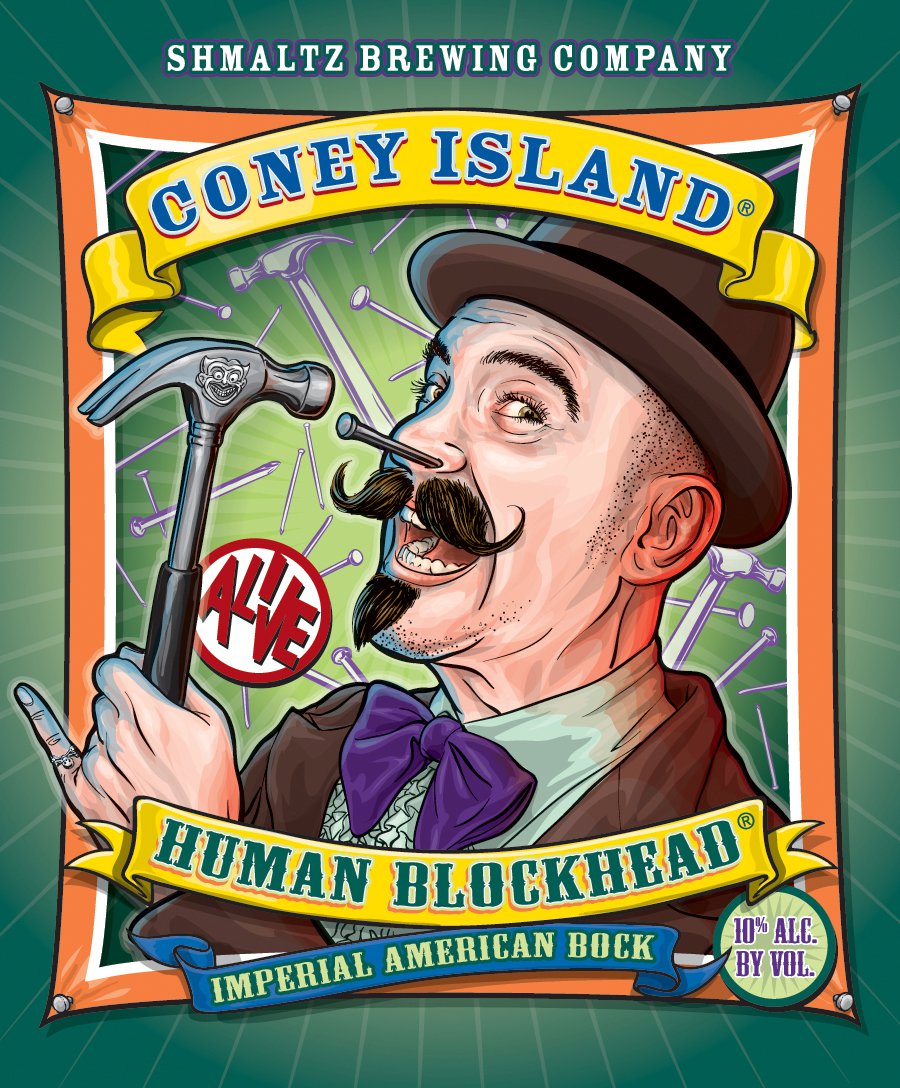
>>FINELY BREWED PROSE Though his boozy empire is no longer based in the Bay Area of his youth, we still have a soft spot in our hardened alcoholic hearts (or is that livers) for Jeremy Cowan. The founder of Shmaltz Brewing, Cowan has brought corny Jewish wit into the world of craft beers — see the label for his nut brown Messiah Bold: “the beer you’ve been waiting for” — and done so at a time when we all still considered Sam Adams a microbrew. He’s written a memoir about his rise to beer lord, which he’ll be back in the Bay promoting this week. Check out his signing at Omnivore Books on Sat/7, and tell him l’chaim for us.

>>A WEDNESDAY KNIGHT Sharon Funchess contributed vocals to a standout track on Teengirl Fantasy’s album 7AM, but her main musical project is Light Asylum, with Bruno Coviello. “Knights and Week Ends,” one of four songs on the recent tour EP In Tension, exemplifies the duo’s melding of powerfully dramatic ’80s diva vocalization and cold metallic beats. The Brooklyn-based Funchess and Coviello have an album due next year on Mexican Summer, and they return to SF for a show this month.

Light Asylum, “Dark Allies”:

>>PREPARE TO STOP The clusterfuck of a new-bike-lane-meets-intersection that is Fell and Scott streets is being revamped in an effort to un-fuck and un-cluster the mess. The center of-the-street bike lane—a recent addition to assist cyclists turning left from Route 47 on Scott to Route 30 on Fell—has proved perilous to pedestrians crossing east and west due to hordes of cyclists who don’t stop for them, and to drivers turning left from Fell onto Scott who have had to swerve to avoid oncoming cyclists in their lane. This week the city installed two more signals, which have yet to be turned on but will likely be dedicated left-turn lights for bikes and cars. Now, if the city can only do something about doofuses turning right onto Fell -– right into three lanes of oncoming traffic…like maybe a “No right turn” sign?

Signs of a messy pedestrian, cyclist, and driver intersection.

Signs of a pedestrian, cyclist, and driver intersection.

>>CINCO DE DRINKO? On the hunt for the best deal on a bucket of Pacifico bottles, we ran across Colorlines’ timely reflection on the de-politification of Cinco de Mayo. Kinda crazy how all immigrant commmunity celebrations become occasions for the country to get shit-faced (see: St. Patrick’s Day).

 >>REINSTALLATION Bliss Dance, a 40-foot sculpture of a dancing nude woman, was one of the best art projects at Burning Man last year. And this week, artist Marco Cochrane and his talented and hard-working crew have been installing the piece on Treasure Island, where she’ll be dancing for city residents until at least October. The build, sponsored in part by the Black Rock Arts Foundation, should be finished by the weekend. An opening reception is set for May 26.

Bliss Dance giving the hand on the playa in 2010. Photo by DJ Guacamole/Guacarazzi Photography


This place

0

arts@sfbg.com

LIT Begun in part as a series of maps accompanying public lectures, Rebecca Solnit’s Infinite City: A San Francisco Atlas (University of California Press, 167 pages, $24.95) is a remarkable act of gathering, one that presents myriad versions and visions of San Francisco and its surrounding areas that can inform a reader’s experience.

Infinite City was recently selected by the Northern California Independent Booksellers as one of its 2011 winners. Duality is a fundamental aspect of the book’s breadth and depth and sense of sharply critical appreciation — structurally, Solnit pairs distinct maps with corresponding chapter-length essays. In keeping with that characteristic, and also with the book’s group spirit (though admittedly on a much smaller and less intensive scale), I asked different Guardian contributors to share appraisals of one, or in most cases two, of the 22 sections. The result provides just a hint of what can be found within Infinite City. (Johnny Ray Huston)

MAP 3. “Cinema City: Muybridge Inventing Movies, Hitchcock Making Vertigo

The map for this chapter tracks the San Francisco life of Eadweard (sic) Muybridge, alongside landmarks from Alfred Hitchcock’s Bay Area masterpiece Vertigo. In “The Eyes of the Gods,” Solnit, who won the National Book Critics Circle award for her 2003 Muybridge bio River of Shadows, writes of the 19th century artist’s breakthrough high-speed photography, “It was as though the ice of frozen photographic time had broken free into a river of images.”

Many such rivers flowed all over this fair city when Vertigo premiered at the Stage Door Theatre at 420 Mason St. on May 9, 1958. Alas, only 10 of the more than 60 single-screen venues extant that year, all demarcated on Shizue Seigel’s fine map, are still functioning. Solnit rightly describes the shift to watching films on various digital delivery mechanisms as leaving contemporary culture with a “curious imagistic poverty.” As she concisely describes watching Milk and Once Upon a Time in the West on the Castro Theatre’s giant screen, we’re reminded that there is no comparison between enjoying cinema in such a grand setting and staring at a laptop. The great 20th century memoirist and observer Quentin Crisp wrote, “We ought to visit a cinema as we would go to a church. Those of us who wait for films to be made available for television are as deeply suspicious as lost souls who claim to be religious but who boast that they never go to church.”

That applies to you too, Netflix subscribers! The Roxie, Castro, Red Vic, Clay, and a small number of other houses of worship are still in business, so what are you waiting for? (Ben Terrall)

MAP 4. “Right Wing of the Dove: The Bay Area as Conservative/Military Brain Trust”

In “The Sinews of War are Boundless Money and the Brains of War Are in the Bay Area,” Solnit argues that antiwar, green, and left Bay Area hotspots are well known and don’t need to be charted again — unlike military contractors and assorted other forces of reaction in the region.

Solnit notes that many military bases that used to operate in the Bay Area are closed, “but the research, development, and profiteering continue as a dense tangle of civilian and military work, technological innovation, economic muscle, and political maneuvering for both economic and ideological purposes.”

Among the hard-right compounds providing counterevidence for that demonstration chestnut “the people united will never be defeated”: Lawrence Livermore National Labs (birthplace of Star Wars — the Reagan era money pit, not the George Lucas movie); Lockheed Martin, world’s largest “defense” contractor; the Hoover Institution, Stanford’s reactionary think tank; and Northrop Grumman, missile component designer. It’s useful to have so many of them in one place, if queasy-making.

On the lower left of the map sits Sandow Birk’s beautifully warped code of arms, which features the Cicero quote (Nervi belli pecunia infinita) that Solnit cites in her chapter title, under a half eagle/half dove, a rifle-toting soldier, and a scythe-clutching skeleton. It should be on the door of every U.S. military recruiting center. (Terrall)

MAP 6. “Monarchs and Queens: Butterfly Habits and Queer Public Spaces”

“How thoroughly the lexical landscape of gay history is invested with [a] paradigm of emergence,” notes poet Aaron Shurin in “Full Spectrum,” the chapter accompanying Infinite City‘s sixth map. Like one of the dazzlingly-named butterfly species rendered by Mona Caron on the map, Shurin flits gracefully between memoir and historiography as he tracks San Francisco’s ongoing evolution as a locus for queer emergence.

From North Beach to Polk Gulch, from Folsom to Castro, LGBT folk — be they American painted ladies, Satyr angel wings, or Mission blues — have continually migrated to and within the city to shed their cocoons and show their true colors. Local faux-queen Fauxnique traced this metamorphosis at the 2003 Miss Trannyshack Pageant when she climatically emerged as a regal butterfly to Elton John’s “Someone Saved My Life Tonight” (apropos to Shurin’s royalty motif, she won the crown). So too did the late Age of Aquarius painter Chuck Arnett, who often nestled butterfly imagery into his portraits of SoMa’s leather demimonde, and whose murals once adorned some of the many now-extinct bars also denoted by Ben Pease’s cartography. Only more than half a dozen of these “wildlife sanctuaries,” in Shurin’s parlance, have survived, with the Eagle Tavern’s announced closure marking another loss of habitat. Queers, though, are if anything adaptive, and my hope is that the future fluttering tribes of San Francisco will keep alighting on new ground to unfurl their wings. (Matt Sussman)

MAP 7. “Poison/Palate: The Bay Area in Your Body”

“Food is part of the Bay Area you hear about nowadays, exquisite upscale food at famous restaurants and gourmet markets. But it’s so boring we couldn’t stay focused on it in this map.” These refreshing, if rarely uttered words come two-thirds of the way through the chapter that accompanies the “Poison/Palate” map, Rebecca Solnit’s “What Doesn’t Kill You Makes You Gourmet.”

The phony Tuscany of Napa and the once-orchard-filled, now-EPA-Superfund-site-speckled Silicon Valley are wisely singled out for derision, a convenient duality in both geography and culture and the perfect framework on which to hang a critique of the local culinary community’s smug, myopic self-indulgence, by raising the not-so-elite-specters in Bay Area food history (the It’s It, the Popsicle, the Hangtown Fry, the Rice-a-Roni), and reintroducing the politics of food into the conversation, in the form of the chemical tonnage used to produce wine grapes, food giveaways at community gardens, Diet for a Small Planet, and Black Panther breakfast programs for school-kids. The sprawling topic is almost given too short a shrift, threatening to leap its mutant-mermaid-bedecked map.

Better is the 18th chapter, “How to Get From Ethiopia to Ocean Beach.” Solnit begins by loosely charting the ingredients that go into your cuppa joe: the water from Hetch Hetchy, the milk from West Marin, the coffee that courses through the port of Oakland, and, impishly, the leavings that flow toward the Southeast Water Pollution Control Plant. All that’s missing from the equation is the sugar that I need to make the darkest, brandy-and-cherry-tinged brew palatable. SF’s cafe culture is also deservedly lionized — though some might want to hurl china due to the exclusions on the accompanying map: why, for instance, call out Blue Danube Coffee House and not the grungier, more Chinese-populated Java Source? (Kimberly Chun)

MAP 8. “Shipyards and Sounds: The Black Bay Area since World War II”

Though author Joshua Jelly-Schapiro opens this chapter, subtitled “High Tide, Low Ebb,” with an eloquent invocation of Otis Redding’s “(Sittin’ on) The Dock of the Bay” — penned in Sausalito, by the way — it was the slight mention of Lowell Fulson’s “San Francisco Blues” that most resonated with me. “Ohh, San Francisco,” the lyric goes, “Please make room for me.” The facts presented in “Shipyards and Sounds” record The City’s answer as a genteel and progressive “No nigger.”

Beginning at the start of WWII, when Southern blacks migrated to the Bay Area to build ships in Hunters Point, Jelly-Schapiro points out that the main areas of wartime shipbuilding (Richmond, Hunters Point, Marin City) are “places that today remain centers of black population and of black poverty.” Indicating, to me, that little has changed since the 1940s in some significant ways. Don’t get mad at me, I didn’t say it. Jelly-Schapiro did.

Jelly-Schapiro also shows how terms like “redevelopment” displaced black Fillmore District residents to housing projects they’d been banned from during the war and land-grab euphemisms like “urban renewal” decimated black neighborhoods such as West Oakland. Electoral laws mandating that the SF Board of Supervisors be elected by citywide contests and not by district allowed a city that desegregated its schools and transit system in the 1860s to remain progressive and very, very white.

Jelly-Schapiro’s conclusion contains a critique of Bay Area celebrations when “Negro president” Barack Obama was elected in 2008. What he won’t say is covered in Shizue Seigel’s map. A sidebar shows the dwindling soul of a city, while the headers cover the founding of the Black Panthers and Sylvester’s solo debut at Bimbo’s. (D. Scot Miller)

MAP 9. “Fillmore: Promenading the Boulevard of Gone”

After the damned disheartening facts presented in the previous chapter, it’s both merciful and hopeful that “Little Pieces of Many Wars” — though just as rage-inducing — establishes some kind of equilibrium.

Gent Sturgeon’s incredible Rorschach-inspired artwork opens a thoroughly-researched piece on Fillmore Street and its many incarnations. Mary Ellen Pleasant’s abolitionist work and her eucalyptus trees — which still stand on the corners of Bush and Octavia streets — are a starting point for a leisurely stroll with Solnit, who runs the voodoo down, “The war between the states left its traces here,” she says, “as did the Second World War, and the war on poverty, the war on drugs, the stale and ancient war of racism, and the various forms of freelance violence.”

She remembers San Francisco as an abolitionist headquarters, and Fillmore Street as the first place Allen Ginsberg read “Howl.” Recalling the Fillmore’s rich heritage of jazz, poetry, and art, Solnit takes it even further, adding, “The wealthy sometimes claim to bring civilization to rough neighborhoods, but the Upper Fillmore neighborhood that was so culturally rich when it was the property of poor people in the 1950s is smoothed over in significance now.”

The tragedy of Japanese internment, and the cross-cultural exchange that was demolished by it and redevelopment loom like white sheets over the city to this day. But Solnit closes with an optimistic sense of resurgence, even though Nickie’s has gone Irish.

Ben Pease’s cartography shows the cross-currents of culture of yesterday’s Fillmore Street, but not much else. That’s not a complaint, really. (Miller)

 MAP 13. “The Mission: North of Home, South of Safe”

Two 2009 shootings on 24th Street pop out, in blood red, on the map accompanying Adriana Camarena’s “The Geography of the Unseen,” in much the same way that the spate of shooting deaths the previous year marked my brief time spent living in the Mission. In ’08, I lived in a Victorian flat at Treat and 23rd, distinguished by the fact that it was a favorite hang for the teenaged homies — its steps were slightly tucked back off the street, ideal when it came to hiding out, smoking dope, and snacking out — until my landlords installed a fence, ostensibly to keep the steps free of spit.

We were on the same block as an appliance-loaded junkyard; the last stop of an ancient Mission industrial railroad; and the Parque Niños Unidos, with its swampy, grassy corner, so often cordoned off to keep the tots from wading in the mud, its circling ice cream carts and its de facto refreshment stand, El Gallo Giro taco truck; and the community garden, where the feral kittens tumbled and hid and fresh produce was given away free every Sunday afternoon.

The Parque likely was the last thing 18-year-old poet Jorge Hurtado saw when he was shot and killed on our corner at 1 a.m. that year. I remember waking up that night to what sounded like a cannon boom, only the first of a slew that sweltering, ominous summer — Mark Guardado, president of the SF chapter of the Hells Angels, was killed a little over a week later, down Treat, in front of Dirty Thieves. The tension was thick and gooey in the air — who was next? The beauty of Shizue Seigel’s Mission map lies in how intimate it is, how it’s threaded around the shaggy-dog snatches of yarns Camarena catches among the day laborers waiting at Cesar Chavez and Bayshore, from the long litany of splintered families, time spent in the refuge of gangs at 24th and Shotwell, and then, in Frank Pena’s case, lives cut sadly short farther up 24th at Potrero. The included stories, rarely straying beyond the tellers’ voices and the facts they choose to reveal, stay with you — even if her sources’ internal lives remain, as the chapter’s subtitle goes, “the Geography of the Unseen.” (Chun)


NORTHERN CALIFORNIA INDEPENDENT BOOKSELLERS 2011 BOOK OF THE YEAR AWARDS


FICTION


Gold Boy, Emerald Girl, stories, Yiyun Li (Random House, 240 pages, $25)

Nonfiction

Packing for Mars: The Curious Science of Life in the Void, Mary Roach (W.W. Norton and Company, 336 pages, $15.95)

Honorable Mention: Autobiography of Mark Twain, Vol. 1, (University of California, 760 pages, $34.95)


POETRY

Come On All You Ghosts, Matthew Zapruder (Copper Canyon, 96 pages, $16)

Food Writing

My Calabria: Rustic Family Cooking from Italy’s Undiscovered South, Rosetta Costantino, Janet Fletcher, and Shelley Lindgren (W.W. Norton and Company, 416 pages, $35)

Children’s Picture Book

The Quiet Book, Deborah Underwood and Renata Liwska (Houghton Mifflin Books for Children, 32 pages, $12.95)

Honorable mention: Zero, Kathryn Otoshi (KO Kids, 32 pages, $17.95)


TEEN LIT

The Sky is Everywhere, Jandy Nelson (Dial, 288 pages, $17.99)

Honorable mention: The Mockingbirds, Daisy Whitney (Little, Brown Books for Young Readers, 352 pages, $16.99)


REGIONAL TITLE

Infinite City: A San Francisco Atlas, Rebecca Solnit (University of California, 167 pages, $24.95)

Honorable mention: A State of Change: Forgotten Landscapes of California, Laura Cunningham (Heyday, 352 pages, $50)


 

Hey Nikki! Sixx heads to SF to sign his new book, “This Is Gonna Hurt”

0

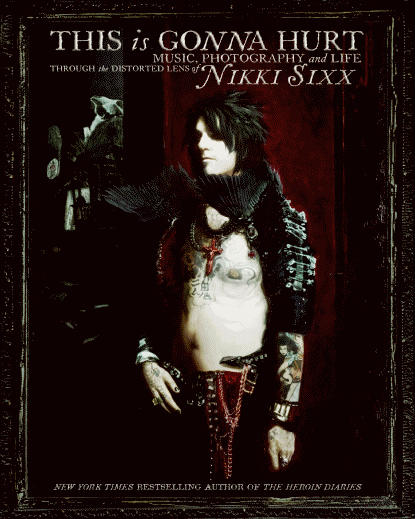
Known not only for his fiery stage presence and key songwriting contributions as bassist for Mötley Crüe, Nikki Sixx gained a notorious reputation for his off-stage antics as well, particularly his legendary appetite for drugs and debauchery. Sober now for several years, Sixx detailed many of these early escapades and horrors in his 2007 book The Heroin Diaries.

He returns — just in time before a major summer tour featuring Mötley Crüe, Poison, and the New York Dolls, which hits San Francisco June 15 — with the follow up, This Is Gonna Hurt: Music, Photography and Life Through The Distorted Lens of Nikki Sixx (William Morrow), a look at his post-addiction life that finds him a successful author, radio host, and of course, still rocking the stage as a member of the Crüe and Sixx: A.M.

The new book, which Sixx signs tonight (Thurs/14) at Book Passage in the Ferry Building, is a strikingly designed collection of attention grabbing and thought-provoking photos and essays, a body of work that covers a wide variety of subjects. When he came up with his first draft of the project, Sixx says that it wound up being 500 pages long — his passions for the book and subjects inspiring a flurry of writing that he eventually streamlined into the 200 page tome that was released earlier this week.

“I had this body of work from the last ten years as a photographer, and once I started talking about photography, it was really like peeling an onion; I started looking at a lot of social issues, a lot of issues of my own, where I came from, where I’m at and where I’m going,” says Sixx.

“It took a lot of trimming down and finding that thread — when I write I kind of just do this stream of consciousness writing, I’m really influenced by Beat Generation writers. I can really get lost in words, and sometimes that’s hard for a reader to follow, so it really took an editor to help me figure out the best way to deliver the message.”

That main message, which Sixx touches on throughout the book, is that he hopes to show people a different way of looking at life, that where mainstream society sees freaks and deformities, he sees through to the inner beauty.

Some of the images he captured while travelling the world on tour with Mötley Crüe; there are pictures of the band included, but the collection mainly focuses on his adventures offstage: exploring brothels in Germany, drug-infested alleys in Vancouver, gothic churches in St. Petersburg, Russia. Several images featured in the book were shot in his private photography studio, with models running the gamut from women who could be called obese to men with a variety of birth defects to a double amputee.

“For me, it’s all about seeing something and going for it, I wanted to push myself to the next level as a photographer,” says Sixx, who says that after working with the models, he often felt that they were the type of person that he — and others — should aspire to be.

In one passage of the book, he relates a story of visiting San Francisco a few years ago; while walking down by the waterfront and piers, he was approached by a large, African American homeless man, who said, “Hey Tattoo Man…you have any money?”

Sixx replied, “I’ll do you a favor if you do me one…don’t judge me by the color of my skin, ok?”

The man apologized, Sixx smiled and told him “It’s ok, happens all the time.”

The man’s response: “Yeah, me too.”

“That fit with what the overall message of This Is Gonna Hurt is all about, it really is in a nutshell what we do to each other as people, and this man who has been judged is whole life is judging another man. And I’m guilty of it too, it’s something I have to work on,” says Sixx.

With several book signings in the near future, the release of the book’s companion CD from Sixx: A.M., the summer Mötley Crüe tour, his radio show and new clothing line, Sixx certainly has his plate full; he admits to being a workaholic in the book, but it clearly brings him satisfaction and inspiration.

“I’m just so excited to get out there and see what kind of reaction that it raises in people,” says Sixx, who hopes that the book will inspire his fans to do something creative and fulfilling in their own lives. “Music will always be there, along with other creative outlets, whether its clothing design, or photography, or writing. For me, creativity is something anybody can do at any age — not have, do. Some people say, ‘Well I’m not a creative person’ — that’s not true. If you want to be creative you can be, you can pick up a guitar or a pen or whatever, and it’s sort of like being a magician — you just make stuff appear, it can come out of thin air. It’s amazing.”

Thurs/14
6 p.m., purchase of book ($29.99) is required for admission.
Book Passage
1 Ferry Building, SF
(415) 835-1020
www.bookpassage.com

Flannelalia

0

marke@sfbg.com

PLAID OBSESSION We live in a post-Etsy world, people, and the latest homemade, zero-kilometer focus is on small-batch clothing production. As usual, the Bay Area is taking a lead here, weaving its green intentions and entrepreneurial zeal into its free-spirited fashion sense and a strong garment manufacturing legacy — and producing stylish duds with enough professional veneer to take to the runway or just out for a beer.

The three sharp dudes from Pladra (www.pladra.com) — Scott Ellison, Ian Ernzer, and Jeff Ladra — add another Bay tradition to the mix: classically avid sportiness. “As passionate outdoorsmen, we have never found a flannel that we could wear both in the field and to the bar after getting blood on it,” they say, and so they set about combining their love of surfing, fly-fishing, camping, hunting, skateboarding, and nature photography with flawless design skills and vintage beauty. (It doesn’t hurt that a good plaid flannel is the one item that still unites many of our current style tribes.)

I admit I’m a flannel freak, and Pladra’s three current lines, including an awesome one for women, had me wiping drool off my keyboard. But I wanted a glimpse into the new local-production trend, too, and the Pladra boys happily provided, answering my questions over e-mail.

SFBG Pladra is all about plaid flannel — how’d you come to focus on that? Will you be expanding? 

PLADRA I think it’s safe to say we’ve all had a few go-to flannels throughout our lives. You know, the one you camp in, then come home and go straight to a bar or concert in, then wear to work the next day — each stain is a story and a memory. In terms of our growth, we’d love to let everything grow at its own pace, although we definitely have some ideas. For now, we’re keeping production small and tight. We wanted to start with plaid flannel shirts because they’re timeless and represent an iconic outdoor style we feel really connects to life in the Bay Area. It’s funny that people peg flannels as a trend, but even the gold miners wore flannel. Jeff grew up here, and his grandparents spent their whole lives building and racing motorcycles. He still has photos of them wearing flannels.

SFBG Right now you’re foregoing retail outlets and selling direct from your website. I’m assuming that’s to keep costs down, yes? Has this been a problem in regard to getting your product in front of people?

PLADRA That’s true, we’re selling direct through our website to maintain the lowest price possible. Our goal is not to turn a profit, but to make the best garment possible at the most reasonable price — and our price range is $89–$109. Truth be told, this is what it costs to have a quality, American-made, custom shirt. We’ve found that people who initially scoff at our prices backpedal when they find out what goes into making something in the USA. Americans are so accustomed to paying for cheap garments that are imported mostly from Asia. We’re not condemning that, the truth is that a lot of production out of Asia has great quality. But at a certain point, we need to step back and consider the ramifications that one of the USA’s largest imports is apparel. Many U.S. cities used be the home to some of the best and biggest fabric mills in the world. Now what? All the mills are overseas. Very few companies can afford to use fabric milled in the USA. Even denim companies have to use reclaimed fabric.

The direct selling approach certainly makes it difficult to reach a wide range of people off the bat. But we do want to offer reasonable pricing to our customers. We want to focus on the brand integrity and we don’t want to dilute our product and blast it everywhere right away. We are taking a slow and careful approach in our growth.

SFBG What were the specific challenges of designing and producing everything in San Francisco? 

PLADRA It was really important to us to keep things local and support local businesses. But limiting our geographic range also meant limiting our accessibility to materials that would maintain our desired quality while not forcing our prices to skyrocket. That meant we had to challenge ourselves to search harder for vendors that could deliver great materials and finishing — and we ended up partnering with some incredible ones who went above and beyond to support our vision.

SFBG Pladra isn’t just all about hunting and designing. What are some of your favorite shops and bars in SF? 

PLADRA Shopping-wise, we really like Union Made in the Castro. Our friends at Park Life in the Inner Richmond and the General Store in the Outer Sunset offer amazing home-produced goods. And the Aqua and Mollusk surf shops have always been amazing at supporting their communities. As for going out, we could happily spend the rest of our lives drinking our way through the menus at Toronado and Alembic. And we just scored one of our favorite clubs, 111 Minna, to host our official launch party. See you there? *

PLADRA LAUNCH PARTY Tues/26, 5 p.m.–9 p.m., free. 111 Minna, SF. www.111minnagallery.com


Our Weekly Picks: April 13-19, 2011

0

THURSDAY

APRIL 14

MUSIC


Two Door Cinema Club

Featured as a “You Oughta Know” artist on VH1, Northern Ireland’s Two Door Cinema Club is an indie electropop trio comprised of Alex Trimble (lead vocals/guitar), Sam Halliday (vocals/guitar), and Kevin Baird (bass/vocals). (What of the drummer, you ask? Sometimes human, sometimes a computer.) The band’s Tourist History recently picked up the 2010 Choice Music Prize for Irish album of the year, suggesting its making good on the promise shown by opening for indie rock greats like Foals, Phoenix, and Delphic. If you’re one of the working schmucks who can’t take the time off for Coachella, catch Two Door Cinema Club before it goes to Indio. (Jen Verzosa)

With Globes and Work Drugs

8 p.m., $20

Fillmore

1850 Geary, SF

(415) 346-6000

www.livenation.com

EVENT


“Charles Phoenix Retro Slide Show”

Oddball Americana guru Charles Phoenix has explored and celebrated the best in kitschy, cool, kooky artifacts and history for many years now, having written several books on mid-20th century deep-fried pop culture, fashion, lifestyles, and more. The author of tomes such as Southern California In The ’50s and Americana The Beautiful brings his hilarious slide show and talk to the city, set to roast the imagery found in some of the thousands of vintage Kodachrome slides has collected at flea markets over the years. Be sure to keep an eye out for some familiar places and things — Phoenix has promised to include a bevy of vintage San Francisco slides for this entertaining ode to the odd and unique. (Sean McCourt)

8 p.m., $25

Roxie Theater

3117 16th St., SF

(415) 863-1087

www.roxie.com

PERFORMANCE


Our Daily Bread

Carb load on this: in a collaboration between Amara Tabor-Smith’s Deep Waters Dance Theater, director Ellen Sebastian Chang, and visual artist Lauren Elder, Our Daily Bread delves into the folklore and stories surrounding food traditions. The socially conscious hybrid theater experience draws from a family gumbo tradition, examining how industrialized agriculture, fast food culture, and our global food crisis affect current food practices. In addition, CounterPulse resident artist Tabor-Smith also considers who is missing from the sustainable food movement. With red beans and rice on the mind, expect to fill your plate with individual food legacies and questions regarding your own relationship to food. You are what you eat. (Julie Potter)

Thurs/14–Sun/17, 8 p.m., $18–$22

CounterPulse

1310 Mission, SF

(415) 626-2060

www.counterpulse.org

EVENT


Nikki Sixx

Known not only for his fiery stage presence and key songwriting contributions as bassist for Mötley Crüe, Nikki Sixx also gained a notorious reputation for his off-stage antics, particularly his legendary appetite for drugs and debauchery. Sober now for several years, Sixx detailed many of these early escapades and horrors in his 2007 book The Heroin Diaries. He returns — just before a major summer tour, which includes a June stop in SF — with the follow-up, This Is Gonna Hurt: Music, Photography, and Life through the Distorted Lens of Nikki Sixx, a look at his post-addiction life that finds him a successful author, radio host, and of course, still rocking the stage with the Crüe. (McCourt)

6 p.m., $29.99 (includes book)

Book Passage

One Ferry Building, SF

(415) 835-1020

www.bookpassage.com

FRIDAY

APRIL 15

DANCE


Alonzo King’s Lines Ballet

The longer I watch Alonzo King’s Lines Ballet, the more this choreographer manages to surprise me. What intrigues is not so much his language — intricate, idiosyncratic, and demanding — or even the way he uses it on his dancers. But there is a vision, a philosophy behind his work, that we get glimpses of in every new piece. That’s what good dance is supposed to do. King also goes out of his way to find collaborators who can envelop his choreography in the mantle of new contexts. Of course, it helps that these other-than-dance contributions, in particular, are often spectacular on their own. But to get Mickey Hart, who actually is philosophically pretty close to King, create a score for Lines Ballet is a coup even for a choreographer with a growing international reputation. Architect Christopher Haas, who worked on the de Young Museum, created the set. (Rita Felciano)

Through April 24

Fri.–Sat., 8 p.m.; April 20–21, 7:30 p.m.;

April 24, 5 p.m., $25–$65

Yerba Buena Center for the Arts

Novellus Theater

700 Howard, SF

(415) 978-2787

www.linesballet.org

MUSIC


The Residents

Hang on to your eyeballs, San Francisco’s most enigmatic art-rock collective the Residents will storm the stage at Bimbo’s in support of its for-no-particular-reason, ghost-story themed “Traveling Light” tour. The calculatedly anonymous group (currently a trio), as well known for its elaborately costumed stage personae and mixed-media presentations as for its deconstructed lyrics and dystopian musical baditude, is fast approaching its fourth decade. But don’t expect a set stuffed merely with humdrum nostalgia. Actually, don’t expecting any particular thing, because defying expectations is what the Residents do best. Word is the group will be recording the proceedings in three (possibly four ) dimensions, so wearing your very best top hat to the show might not be a bad idea. (Nicole Gluckstern)

Fri/15–Sat/16, 9 p.m., $30

Bimbo’s

1025 Columbus, SF

(415) 474-0365

www.bimbos365club.com

PERFORMANCE


Zaccho Dance Theatre

With a title — The Monkey and the Devil — taken from racial slurs, Joanna Haigood’s dance theater performance installation, performed by Zaccho Dance Theatre, addresses lingering contemporary racism, rooted in the lasting effects of America’s slave trade. Even in the age of Obama, the performance acknowledges how Americans grapple with the residue of slavery and reunite a split house. Surrounded by two massive, rotating set pieces designed by visual artist Charles Trapolin, audience members are free to navigate the continuously running performance installation in the Yerba Buena Center for the Arts Forum. A post-performance discussion follows Friday’s installment. Don’t miss this immersive, compelling work. (Potter)

Fri/15, 8–10 p.m.;

Sat/16-Sun/17, 12-2 p.m. and 3–5 p.m., free

Yerba Buena Center for the Arts Forum

701 Mission, SF

(415) 978-5210

www.ybca.org

SATURDAY

APRIL 16

EVENT


“How-to Homestead: 11 in 11 Tour”

You can go on tour without ever leaving your city. That’s the idealistic message of How-to Homestead’s “11 in 11 Tour,” a yearlong barnstorming series with dates planned for each of San Francisco’s districts. Spearheaded by Melinda Stone, a University of San Francisco professor equally knowledgeable in matters of celluloid and soil, How-to Homestead’s homebrew of entertainment and education draws on alternative cinema, practical workshops, and live music to create a distinctly flavorful commons. The fourth “11 in 11” program takes place at the historic Bayview Opera House and features a “Chickens in the City” workshop and contra dance call, in addition to the usual potluck dinner and film treats. With spring in the air, it should be an especially lively installment. (Max Goldberg)

4–10:30 p.m., $5 suggested donation

Bayview Opera House

4705 Third St., SF

www.howtohomestead.org

DANCE


ODC Dance Jam

At first the ODC Dance Jam consisted of half a dozen cute kids showing their prowess on an ODC/Dance opening night. Today ODC’s youth program is much too big for such capers, and the tables have been turned. This year the professional company will make an appearance — with Brenda Way’s John Somebody — at ODC Dance Jam’s own concert, “Make the Road by Walking.” Taking classes five times in addition to rehearsing, the 14-member troupe, ages 13-18, may not call itself pre-professional, but its dancers surely are on the way. KT Nelson, Kimi Okada, Bliss Kohlmeyer-Dowman, Greg Dawson, and Kim Epifano, about as professional a group as any, created choreography for them. (Felciano)

Sat/16, 8 p.m.; Sun/17, 4 and 7 p.m., $12

ODC Dance Commons

351 Shotwell, SF

(415) 863-9830

www.brownpapertickets.com/event/166923

SUNDAY

APRIL 17

MUSIC


Foxtails Brigade

(((folkYeah!))) and Antenna Farm Records host a release party in honor of San Francisco duo Foxtails Brigade’s full-length debut, The Bread and the Bait. On its surface, The Bread and the Bait is as delicate as lace — the album art depicts a ladylike tea party in progress. But look closer (why are two of the women blindfolded? And why is one clutching a knife?) and listen closely: there’s an underlying darkness cloaked in those ethereal vocals set against simple cello and violin melodies. Join in the celebration with musical performances by ‘Tails and Rachel Fannan of Sleepy Sun, plus comedy by Brent Weinbach and Moeshe Kasher, and a fashion show featuring designs by Verriers and Sako, Lecon de Vetement, and Zoe Hong. (Verzosa)

With Rachel Fannan

8 p.m., $15

Swedish American Music Hall

2174 Market, SF

(415) 861-5016

www.swedishamericanhall.com MUSIC


Wire

On a recent trip to New York City, I won tickets to watch Wire from the “Band Bench” on Late Night with Jimmy Fallon. Arriving at 30 Rock, I found a few other awkward music nerds who refused to take off their jackets looking forward to the performance. In a bit of TV magic, they filled out the 30 or so “hardcore fans” with tourists eager for a glimpse of Fallon guest Keanu Reeves. It could just be the standard practice, but it’s also typical of the U.K. band’s U.S. reception, remaining relatively unknown despite being perpetual critical darlings and inspiring alternative rock bands throughout a career spanning from the release of 1977’s influential punk album, Pink Flag, to their most recent, Red Barked Tree. (Ryan Prendiville) With Lumerians and DJ Callum McGowan

8 p.m., $21

Slim’s

333 11th St., SF

(415) 255-0333

www.slims-sf.com 

The Guardian listings deadline is two weeks prior to our Wednesday publication date. To submit an item for consideration, please include the title of the event, a brief description of the event, date and time, venue name, street address (listing cross streets only isn’t sufficient), city, telephone number readers can call for more information, telephone number for media, and admission costs. Send information to Listings, the Guardian Building, 135 Mississippi St., SF, CA 94107; fax to (415) 487-2506; or e-mail (paste press release into e-mail body — no text attachments, please) to listings@sfbg.com. Digital photos may be submitted in jpeg format; the image must be at least 240 dpi and four inches by six inches in size. We regret we cannot accept listings over the phone.

Is Burning Man going communal or selling out?

60

“Man on the move,” the headline I gave to my current Guardian article and an extended personal blog post on the announcement that Burning Man will next month form a nonprofit group to eventually run the event, raises a number of interesting issues that are likely to be vigorously debated within this huge, active burner community in the coming months and years.

How should Burning Man be governed? What is the event worth – if it can even be quantified – and who created and should benefit from that value? Are Black Rock City LLC board members being selfless stewards of the culture in giving up control or are they being greedy control freaks in holding on for six more years and expecting a big payoff in the end? Or, like much about this dynamic culture, is the truth somewhere in the middle?

Event founder Larry Harvey’s big announcement last week, made during a speech that was unusual for its insights into the thoughts and internal dynamics of the BRC board, stressed how to value an event whose central ethos opposes such commodification.

“I thought it was time the owners stepped out from behind the veil of secrecy,” Harvey told me during a follow-up interview this week. He repeatedly emphasizes the benevolence of a corporate board voluntarily giving up control over its assets and revenue stream. “What we’re doing, as far as normal capitalism, is aberrant…What we’re doing is giving up a lot of money.”

But the way that Harvey is trying to frame this issue seems antithetical to how most burners see the event and culture that they’ve spent decades helping to create, from using the term “owners” to describe the six board members to suggesting Burning Man has any relation to “normal capitalism,” even to the claim that there’s “a lot of money” to give up, and that they might be more entitled to that money than the thousands of burners who have contributed their sweat equity to the event.

“We have people who have 10,000 volunteer hours at Burning Man,” says Chicken John Rinaldi, a longtime burner and critic of how Harvey and the board have run the event, believing that they have always overstated their importance considering Black Rock City is built each year almost entirely by its participants. “This event throw itself.”

Yet Harvey and the other board members, such as Michael Mikel and Marian Goodell, insist that the board plays an important role in shepherding the event and the culture that has grown up around it, which is why they plan on waiting three years to turn control of the event over to the new nonprofit, the Burning Man Project, and another three years after that until they liquidate their ownership of the name and associated trademarks and are paid for their value.

“We want it to get on its feet and be able to raise money on its own,” Harvey said of the nonprofit. The board is also creating a committee called the Philosophical Center “to ensure the cultural continuity as we pour Burning Man into a new vessel.” Mikel said he insisted on that because “for me, it’s not about the art. It’s really about the culture.”

The nonprofit board will be comprised of the six LLC board members and at least seven more members that those six members will select, and Harvey said they are doing interviews now, including talking to many longtime burners who were represented at last week’s summit of Burning Man regional leaders from around the world. Chicken said it was offensive that Harvey would tell this gathering that it would take six years before they’d have full control over Burning Man.

“What they’re saying is it’s going to take years to pass the torch over, and they’re saying this to a room full of people who have been involved in Burning Man for decades,” Chicken said. He was particularly critical of Harvey’s statement that the board discussed coming up with a value for Burning Man and dividing that by six. “Once that comes out of someone’s mouth, the bets are off.”

Chicken’s conclusion: “They’ve turned Burning Man into a commodity. They’re selling the event.”

Burning Man doesn’t have much by way of assets now, and its roughly $12 million annual revenue stream from selling tickets goes almost entirely to staging the annual event and supporting the year-round operations of the organization.

But once the nonprofit forms up and starts taking tax-exempt donations and finding other ways of diversifying its revenue stream for the three years before the current board members cash out, Chicken predicts the board members will walk away with about $1 million each. “But I’m not going to let them get away with it,” pledged Chicken, who has already starting agitating and rabble-rousing in online forums, just as he did in 2004 when he launched the rebellion that became known as Borg2.

Harvey has confirmed the board members will walk away with well more than the $20,000 that they’re currently entitled to if they resign, “but we’ll have to work for a living,” he said. Mikel told me, “It’s never been about the money, for me it was there was no succession plan. I really want Burning Man to continue beyond my involvement with it.”

Yet they also said that the bitter divisions on the board have evaporated since the new plan was developed. “Now that we can all see the future,” Mikel said, “we’re getting along wonderfully.”

But Chicken says he’s determined not to let these six board members, who have been getting the highest salaries for the last six years anyway “simply for ordering the PortaPotties,” profit from an event he helped created that has always been been about communal effort and decommidified relationships.

“Burning Man should be a labor of love,” he said. “I think Burning Man should exist outside of commerce.”

Guardian City Editor Steven T. Jones is the author of The Tribes of Burning Man: How an Experimental City in the Desert is Shaping the New American Counterculture.

Photos of Larry Harvey from April 1 speech by

Ana Grillo Photography and Multimedia Productions

On the Cheap Listings

0

On the Cheap listings are compiled by Jackie Andrews. Submit items for the listings at listings@sfbg.com. For further information on how to submit items for the listings, see Picks.

WEDNESDAY 6

Fantomas by the Bay City Lights Books, 261 Columbus, SF; (415) 362-8193 , www.citylightsf.com. 7pm, free. Help kick off a four day celebration of Pierre Souvestre and Marcel Allain’s literary pulp arch-villain, Fantomas, with a reception and absinthe-tasting featuring readings, lectures, film screenings, art exhibitions, and performances by Robin Walz, Daniel Handler, Mel Gordon, Howard Rodman, Jill Tracy, and more.

Japan relief fundraiser Project One Gallery & Lounge, 251 Rhode Island, SF; (415) 938-7173, www.p1sf.com. 7pm-2am, $10. Join forces with the American Red Cross to raise money for those who have been affected by the earthquake and tsunami in Japan with DJs, drinks, and dancing. All proceeds from the bar – including tips! – as well as the door price will go directly to the cause. While you’re here, check out the gallery’s current exhibition, “Warhol Reimagined: The New Factory”.

THURSDAY 7

Iconic gay paper celebrates 40th anniversary GLBT History Museum, 4127 18th St., SF; (415) 621-1107, www.glbthistory.org. 7pm, $5. Tonight, the Bay Area Reporter, the country’s oldest continuously published newspaper, celebrates its 40th anniversary and will launch their first ever Best of the Gays reader’s poll with an awards ceremony – be sure to vote online beforehand. Plus, a new special exhibit chronicling B.A.R.’s struggle to secure justice and equality for the entire gay-munity.

FRIDAY 8

West Portal Avenue sidewalk sale West Portal between Ulloa and 15th St., SF; www.pacificfinearts.com. 10am-5pm, free. Today, the West Portal neighborhood — bustling with quaint stores, restaurants, and coffeehouses — will line it’s main thoroughfare with an arts and crafts exhibition. Come admire the work of over 60 artists, including Mendy Marks and Locke Heemstra. Expect to find everything from jewelry and photography to handcrafted leather bags, sheepskin slippers, and more.

Community Wellness Fair Glide Memorial Church, 330 Ellis, SF; www.glide.org. 10am-2pm, free. While the rest of the country debates health care reform, we in San Francisco enjoy plenty of health care options for the under-insured. Today, everyone can celebrate health and wellness as Glide Health Services launches their new Wellness Center – which will build upon their holistic healthcare approach by adding nutrition and cooking classes, stress reduction services, and even relationship help. There will be games, prizes, healthy vendors, and free health screenings for the whole family.

SATURDAY 9

Cesar Chavez Day celebration Dolores Park, Dolores and 19th St., SF; www.cesarchavezday.org. 10am-6pm, free. Celebrate the legacy of Caesar Chavez, the American farm worker and activist who helped found the National Farm Workers Association, at this day-long celebration featuring a parade and street fair. Assemble at Dolores park at 10 am and march toward the 24th Street fair where festival booths, speakers, and other entertainment await.

Obscura Day festivities Peralta Hacienda Historical Park, 2465 34th Ave., Oakl.; www.peraltahacienda.org. 2:30-5:30pm, free. Peek behind the scenes at Peralta Hacienda on Obscura Day, an international day of expeditions, back-room tours, and hidden treasures in cities and towns around the world. Here, step back in time and experience a Victorian farmhouse by candlelight while enjoying tamales in the kitchen. Or, if you’re brave enough, try to catch a glimpse of the ghost of Maria Peralta!

SUNDAY 10

Sunday Streets Great Highway, SF; www.sundaystreetssf.com. 11am-4pm, free. The second “Streets” of the season will begin at the SF Zoo and follow the Great Highway down to Golden Gate Park and continue down JFK Drive, ending at Sloat. Bring your roller skates, unicycle, skateboard, or just a plain pair of walking shoes and enjoy the activities and vendors that line the nearly six miles of car-free roads.

MONDAY 11

“How to coexist with coyotes” San Francisco Public Library Sunset Branch, 1305 18th Ave., SF.; (415) 355-2808, www.sfpl.org. 7-8:30pm, free. Coyotes are making a comeback here in San Francisco, and the resident expert on the topic, filmmaker Melissa Peabody, will show and discuss her film San Francisco: Still Wild at Heart and tell you how our new furry friends add richness and surprise to our already kooky town.

TUESDAY 12

Lit & Lunch with Yiyun Li Minna Street gallery, 111 Minna, SF.; www.catranslation.org. 12:30-1:30pm, free. Fans of Yiyun Lee the novelist may not be aware of her lesser known translations of the works of the late Chinese writer Shen Congwen. Tonight, Li will discuss Congwen’s modernist style and how he challenged the political sensors in China.


SXSW Music Diary wrapup

0

MUSIC South by Southwest was completely overwhelming, and my feet are killing me. It’s hard to avoid the constant feeling of missing out on something, because you always are. But once you get over that fact, it’s possible to have a really good time. Here’s a highlight reel from my first time at the Austin festival.

Wed/16 Made it to Dallas on the early-early flight from SFO and found the gate for Austin, a hipster ghetto in DFW’s sea of middle Americans. The first musician sighting was Toro y Moi, then it was off to the live music capital of the world. Post-credentialing, we attempted to catch Raphael Saadiq at the much-hyped Fader Fort party … but the line stretched for hours. The first of many scrapped plans. We then stumbled across the Palm Door, where Anamanguchi was playing irresistible Nintendo-core power pop. Later that eve I saw the sweet Icelandic troubadour stylings of Olof Arnalds and caught an amazing version of “Benny and the Jets” by piano gods Marco Benevento.

Thurs/17 Biked straight to a loft party featuring Brasileira MC Zuzuka Poderosa, who was spitting out Funk Carioca lyrics on top of beats by DJ Disco Tits. Tried to go to the NPR showcase, which was done, then tried to see Big Freedia, the “Queen Diva” of Bounce … all I got was a taste from the sidelines. Ran into SF local Meklit Hadero as she and her band tried to find the venue where they were showcasing. Saw Boston’s David Wax Museum at the Paste party and crossed paths with J Mascis on my way out. Caught the tail end of Meklit’s show at Marco Werman’s “All Music Is World Music” showcase, then Abigail Washburn’s stellar bluegrass set. Rode clear across town in the hopes of catching Devotchka at Lustre Pearl, but the line nixed that plan. Came back for the Atlantic Records showcase hoping to check out Lupe Fiasco, but B.O.B was playing in his place. Decided to forgo Janelle Monáe’s show (she’d been subbed in for Cee-Lo) so I could get off my feet.

Fri/18 Ran into Red and Green of Peelander-Z, the outrageously festooned Japanese punk band, who sweetly obliged a snapshot (they’ll be playing DNA Lounge on April 7th with Anamanaguchi). Got dished up a tasty burger at the Alternative Apparel Lounge as my cohort Matt Reamer was summoned to take pics of Linda Perry. We shared our table with Shane Lawlor of Electric Touch, who chatted about his band’s road from getting signed to playing the big festival circuit this year. Checked out James Blake at the Other Music/Dig For Fire lawn party. It was kind of like listening to all the sexy backing elements of a Sade song, without Sade. I loved Tune-Yards’ pygmy-esque vocal layering and percussive fervor. Her last song got everyone to their feet with a Fela Kuti vibe. And !!! brought the crazy dance party. I finally felt like I’d arrived at SXSW.

Later that eve, the Shabazz Palaces set was weighed down by sound issues. Ran into the ladies of HOTTUB as I went to see Toronto’s Keys N Krates, who killed it: two DJs and a drummer juxtaposing amazing sampling and turntablism with live percussion. Cubic Zirconia’s electro funk set at the Fool’s Gold showcase was also great. Singer Tiombe Lockhart held court. The closer was seeing Chief Boima during the Dutty Arts Collective showcase.

Sat/19 Last day in Austin. The hot daytime ticket was the MOG.com party at Mohawk. That meant getting there early and committing the entire afternoon … but the payoff was catching headliners TV on the Radio and Big Boi with just a few hundred other folks. Austin’s Okkervil River was playing the outdoor stage when I got there, and then Brooklyn’s Twin Shadow was playing inside. Even though they’re on the ’80s synth-pop bandwagon, they managed to keep things fresh. TV on the Radio’s SXSW shows officially put an end to their two-year hiatus and previewed their highly anticipated upcoming album Nine Types of Light. Next up on the outdoor stage was Big Boi. Songs from his recent release had some traction, but whenever an OutKast jam dropped, the crowd lost their shit. A funny moment: when he invited a sea of hipster girls to the stage to shake it with his ATL crew.

That eve, the rumor mill about surprise shows was alive and well. Kanye, Jay-Z, and Justin Timberlake were breathlessly being mentioned around town. The conundrum became one of whether to chase those dragons or stick with a confirmed showcase.

After briefly checking out the Red Bull Freestyle DJ contest, I decided on the confirmed showcase approach. The globetrotting Nat Geo showcase at Habana Bar was stellar. I walked in as Khaira Arby, the legendary queen of Malian desert rock, was rocking the house. Up next was Brooklyn’s Sway Machinery, then Aussie roots-reggae group Blue King Brown. Things really got packed for the closing act of Austin’s own Grupo Fantasma. The recent Grammy-winning group marched the crowd through the paces of their super tight cumbia, salsa, and funk grooves while experimenting with heavier psych rock influences. I enthusiastically made it through about half their set until my feet cried uncle. I made my way through the sloppy Sixth Street madness, dodging teenage lotharios and puddles of sick on the way to my bike, and then home.

A PHOTOGRAPHER’S ADVICE FOR SXSW FIRST-TIMERS

You have to let go. You will not see half the acts you want to, but there is always a good band within a few hundred yards — so be where you are and enjoy it. Discover some new music.

Live music photography is best when there’s a mosh pit. It’s much easier to move through a swirl than a dense crowd. I’m not the type to post up 30 minutes before the band starts — but I am the type to push up once they’re on. Sorry, short people.

Wear comfortable shoes.

There is a lot of free booze — but not as much as I thought. (Matt Reamer)

Read all of Mirissa and Matt’s coverage of the fest here

Motion pictures

0

arts@sfbg.com

DANCE Dance and the camera have a long-lasting love/hate relationship. Films that honor the art, such as 1948’s The Red Shoes or 1951’s An American in Paris with its extraordinary dream sequence, are rare. Although dancers like that their performances acquire an afterlife, they also hate giving up three-dimensionality for two-dimensional space. Nor are they fond of editing practices that alter continuity, control a viewer’s focus, and favor smiles over feet. Nonetheless, a recently discovered snippet of film that showed Diaghilev’s Ballets Russes in a blurry clip of Les Sylphides, apparently the only extant film of the legendary company, sent dance historians into a tizzy.

Now in its second annual incarnation, the San Francisco Dance Film Festival concerns itself with more contemporary dance films. The advent of inexpensive, lightweight cameras has made possible a new genre, “screendance,” which features choreography designed for the camera. Los Angeles and New York City have long had had festivals honoring these creations. Now the Bay Area, after previously unsuccessful attempts by presenters like Cynthia Pepper and Charlotte Shoemaker, is getting its own look at what’s floating out there. “We received 110 submissions from 25 countries,” producer Greta Schoenberg says of this year’s selection process.

Schoenberg has assembled a program in which shorts are bookended by longer films such as Victoria Marks’ ground-breaking 1993 Outside In and the San Francisco premiere of Finite and Infinite by RJ Muna, who is best known for his spectacularly airborne dance photography. Historian/critic Joanna Harris will also show rare films of Bay Area dance pioneers and work by avant-garde filmmaker Maya Deren.

In the Bay Area, a small but growing group of dancers is intrigued by the specific requirements of dancing for the camera. Among them are Private Freeman, Nol Simonse, and Maria Kotchekova, who in 2009 won the solo gold medal on the TV show Superstars of Dance. Schoenberg cast her film noir Nightingale, which receives its world premiere at the sold-out opening night gala, with local dancers. Freeman is one of them.

“I like the idea that film can focus a viewer as long as it wants,” Freeman says. “I also like that you have a 360-degree sense of space. You are working with different concepts of continuity and detail. At the same time, when you have several takes, you need to remember how exactly you had positioned your leg.”

Brevity, with most works typically lasting between three and 10 minutes, characterizes most “screendances” Even the experienced Mitchell Rose, who recently moved to the Bay Area to teach Dance on Camera at Mills College, stuck to this YouTube-friendly time frame when making his wondrous Modern Daydreams: Part One (2001).

The 18 selections in this year’s San Francisco Dance Film Festival stick to the norms. Marta Renzi’s Texas Plate (2007), a romance to music by singer-songwriter Patti Scialfa, is two minutes. A journey onto a wooded mountain, Stronger (2010), by the U.K.’s Wilkie Branson, takes four minutes. Dutch director Carmen Rozestraten’s trip into a Catalan woman’s dream world in After the Water the Clouds (2009) requires nine.

Neither Schoenberg nor documentary and experimental filmmaker Ben Pierce — a former San Francisco Ballet principal dancer who showed work in last year’s festival — can explain the logic behind the short format. Perhaps, they suggest, it’s what audiences want to see, and what festivals like theirs prefer to program. The time frames of YouTube, where a lot of these works end up, is a definite reason. Lack of financing for bigger projects may be another. It’s also possible that the creators of these collaborative ventures haven’t developed the necessary technical chops to master longer works yet.

One festival juror intrigued by the buzz around dance on screen is ODC associate director and choreographer KT Nelson. She finds herself fascinated by the idea of honing in very closely to the body (“Let’s say to the crook of an elbow”) or to create a work in a completely different setting (“Water, for instance”). She hasn’t jumped in yet — but there’s always next year.

SAN FRANCISCO DANCE FILM FESTIVAL

Thurs/24 through Sun/27, $10–$25 ($75–$125 for workshops)

See website for venues

www.sfdancefilmfest.org

The unseen enemy

0

Trevor Paglen’s photography has always been about making the unseen visible. His luminous chromogenic prints unsettlingly reveal that the machinery of war and surveillance controlled by the military-industrial complex is more often than not hiding from plain sight; one need only have the right high-powered lens to gaze back.

One of the ironies of Paglen’s work, owing largely to the great distances from which he must photograph his purposefully obscured subjects, is how minuscule and non-particular they appear within the photographs themselves (this is also why Paglen’s work, in particular, suffers in reproduction). Test sites are twinkling oases amid vast surrounds of rock and sand, orbiting satellites are often no more than streaks of light, and unmanned planes are but black flecks against large expanses of sky. The human element is absent or left implied.

“Unhuman,” the title of Paglen’s second solo show at Altman Siegel, is thus quite appropriate, calling to mind the unmanned and auto-piloted craft that he repeatedly shoots while also drawing attention to the reality that much of this technology will continue to exist and perhaps, one might speculate, even continue to operate long after we have vanished. The recent work in “Unhuman” zeros in on both concerns.

Take the black and white photograph, Dead Military Satellite (DMSP 5D-F11) Near the Disk of the Moon, in which the titular forgotten object, lighted only by a half-veiled moon, is barely visible amid the surrounding darkness of space. The shot could easily be mistaken for a matte painting from Alien, and its seeming impossible vantage point makes Paglen’s dogged tracking of the dead satellite somehow all the more poignant.

Other photographs are less subtle. In the diptych Artifacts, a black and white photograph of the famous Anasazi cliff dwellings in Arizona’s Canyon de Chelly National Park hangs next to one that captures the glowing traces of spacecraft perpetually orbiting thousands of kilometers above the equator. Although the score-marked cliff face in the first photo forms a nice formal counterpoint to the hatch-markings of time-lapsed stars in the second, the pairing (perhaps a nod to Kubrick’s bone-satellite?) offers too heavy-handed and easy a comparison.

But Paglen doesn’t need to spell things out so directly. The show’s most stunning pieces are a series of lush skyscapes in which reaper and predator drones hover mote-like amid large, gaseous swathes of color seemingly lifted straight from a Rothko or Turner. The abstract beauty of these images is held in tension by the near-unseen menace that their titles call attention to. It’s a tension exacerbated by the limits of Paglen’s own machine-enhanced vision, such as when he photographs a similar type of dronecraft in a blurry, enlarged “close-up” two miles from the Indian Springs, Nev., site where it sits parked.


TENDERLOIN SATORI

For her debut at Silverman, local Deva Graf looks to both midcentury Minimalist sculpture as well as her ongoing studies at the Mount Baldy Zen Center in California’s ski country. The pairing isn’t so unlikely, and the two installations Graf has created on either side of the small space evoke both the simple shapes and natural materials of de Maria and Smithson sculptures as well as those of objects used in Zen practice.

To the right is Mother’s Vigil, an arrangement of three small stone sculptures of Buddhist deities surrounded by lighted candles (around 40 are used for the piece each day) set into earthenware bowls filled with sand. In Bindu, on the opposite side, a lighted pyramid-shaped candle on stone pedestal sits below an eye-level framed piece of paper with a black India ink square at its center. An arc, also done in India ink, is traced on the wall above both painting and candle.

The features and iconography of each installation overtly solicit the viewer’s contemplation and concentration. Alas, that’s a tall order when floor-to-ceiling windows are the only thing between you and heavily-trafficked Sutter Street.

TREVOR PAGLEN: UNHUMAN

Through April 2

Altman Siegel Gallery

49 Geary, Fourth Floor, SF

(415) 576-9300

www.altmansiegel.com

DEVA GRAF: GOOD MORNING

Through March 12

Silverman Gallery

804 Sutter, SF

(415) 255-9508

www.silverman-gallery.com


Not forgotten

0

arts@sfbg.com

HAIRY EYEBALL Around 500 people a day pass through the long corridor that bisects San Francisco City Hall’s lower level: supervisors dashing to the café for a quick lunch; tour groups of elementary school children; aides making a post office run; the occasional member of a wedding party looking for the bathroom.

It is also one of the last places where you’d expect to find a politically vital art installation, which is what makes San Francisco Art Commission gallery director Meg Shiffler’s decision to hang its current exhibit, “Afghanistan in 4 Frames,” in such a public and heavily-trafficked area so gutsy. Though the SFAC regularly puts on three to four art shows a year in the City Hall space, none in recent memory have resonated so powerfully with the dynamics of the venue itself.

The “4 Frames” exhibit presents a ground-level (no pun intended) portrait of the country through the lenses of four photojournalists who, over the past five years, have embedded themselves with various military forces and units stationed there. Though each photographer varies in style and background, their work — presented as photo-essays — shares a focus on the day-to-day, intersecting lives of civilians and soldiers off the battlefield.

James Lee, a U.S. Marine Corps veteran and current San Francisco State University graduate student whose move to photography from writing was a recent one, captures in crisp color the downtime faced by young Afghan National Security Force soldiers stationed near the Pakistan border.

In contrast to the all-male environment Lee documents, Lynsey Addario’s series “Women at War” focuses on the experience of female U.S. troops and their engagement with female civilians. The Pulitzer Prize-winning photographer has a knack for taking a picture at the moment her subjects are at their most unguarded, whether sharing a laugh with each other or shaving their legs in the barracks.

Addario’s photos are pointedly hung on a wall across from Bay Area photographer Eros Hoagland’s slightly more testosterone-driven series, “Siege Perilous.” The high contrast black and white photos depicting British military forces in the Korengal Valley and Helmand Province practically crackle with tension.

Another veteran photographer, Teru Kuwayama, is the only one who works with actual film, and his grainy, black and white Holga and Leica portraits of rural clans and armed mercenaries feel as if they are from another era. Kuwayama’s most timely work on Afghanistan actually resides offsite and online: his Web reporting initiative, Basetrack, links deployed Marines with life at home through images and video created by embedded journalists (although just last week military brass asked the embeds to leave).

Afghanistan made front pages again last summer after WikiLeaks uncovered 90,000 pages of classified materials chronicling a five-year window in the U.S. military’s long slog there. But “4 Frames” reminds those who encounter it — as well as those who seek it out — that regardless of the headlines, there will always be an ongoing, human side to what has been so often dubbed “the forgotten war.” And forgetting is not a luxury we can afford.


THE ATROCITY EXHIBITION

Although a vastly different beast from “Afghanistan in Four Frames,” SFMOMA’s current juggernaut of a thematic survey “Exposed: Voyeurism, Surveillance and the Camera Since 1870” offers a pointed study in contrast, demonstrating how not to curate a photography show with clarity of vision or regard to what could be called an ethics of representation.

As proclaimed by its title, “Exposed,” which was organized by SFMOMA and the Tate Modern in London, where it originally premiered, attempts to track — across various eras, technologies, and milieu — what the introductory wall text calls the “voyeuristic impulse” in modern and contemporary photography: “an eagerness to see a subject commonly considered taboo.”

With such an open-ended criteria, the curators have essentially given themselves carte blanche to include everything from early 20th-century “detective cameras,” Walker Evans’ portraits of unknowing New York City subway passengers, Ron Galella’s paparazzi snaps of Jackie O., Nick Ut’s iconic image of a crying Kim Phuc in Vietnam (as well as his 2007 picture of a crying Paris Hilton), Robert Mapplethorpe’s BDSM pictures, surreptitious documentation of the liberation of Nazi concentration camps, and Trevor Paglen’s near-abstract renderings of distant military sites.

The 200 or so pieces are arranged in thematically-grouped galleries (“Celebrity and the Public Gaze,” “Witnessing Violence”) that wind through half of the museum’s fifth floor. By the time you’ve made it through the lengthy, final “Surveillance” section of the show, “Exposed” feels more like a photography catalog that become the genesis for an exhibit, and not the other way around.

Such tidy categorization has the negative effect of creating closed systems rather than allowing different pieces to speak to each other. For example, two harrowing, anonymously-attributed lynching photos belong next to one of the most moving selections in “Exposed,” Oliver Lutz’s Lynching of Leo Frank, which hangs in another gallery. At the same time, the very proximity of death images and paparazzi shots cheapens both.

When presenting highly-charged, difficult images, many of which document humankind at its most brutal and unsavory, the context they are displayed in becomes as crucial as the images themselves. “Exposed,” which feels like the result of several unseemly Google image searches rather than a decade of curatorial sweat, disappoints in this regard.

Atrocity. Murder. Fame. Kinky sex. It’s all here! The question no one seemed to ask is: does it need to be? “Exposed” is simply too much. *

AFGHANISTAN IN 4 FRAMES

Through May 13, free

City Hall

1 Dr Carlton B. Goodlett Place (ground floor), SF

(415) 554-6080

www.sfartscommission.org/gallery

EXPOSED: VOYEURISM, SURVEILLANCE, AND THE CAMERA SINCE 1870

Through April 17; free–<\d>$18

San Francisco Museum of Modern Art

151 Third St., SF

(415) 357-4000

www.sfmoma.org


Playing chicken

27

news@sfbg.com

The Heart of the City farmers market in U.N. Plaza may not exude the bourgeois foodie reputation of the Ferry Plaza farmers market. It doesn’t sell micro-roasted coffee or artisan cheeses, and its fountain may sometimes double as a public shower, but it does offer one product that no other San Francisco farmers market does: fresh, live poultry.

Raymond Young has sold live chickens here for two decades, showing up at dawn to set up shop and peddle his poultry to an eager throng of customers, mostly Chinese, who happily take home upwards of 600 birds per day.

But a group of animal rights activists is saying that the poultry stand is inhumane, violates health codes, and that Young’s employees have infringed on their civil rights as protestors. Since April 2010, members of LGBT Compassion have been showing up in the wee hours of the morning next to Young’s stand with banners, brochures, and signs promulgating the alleged cruelty of his business and seeking to block the sale of live birds. In January, protesters upped the ante when they slapped Young and the HOC market with a lawsuit alleging continuous abuse and negligence by those who supervise the market.

“For me, it was as simple as seeing the animal cruelty,” said Andrew Zollman, 43, the founder and organizer of LGBT Compassion. “The cages are dilapidated and cramped, there are feces everywhere, and the chickens are shoved in plastic bags, two at a time, while they scream in fear or pain. It was like walking down the street and seeing a dog beaten — and it’s really frustrating to see it happen here in San Francisco.”

Zollman and fellow protester Alex Felsinger, 25, filed the lawsuit with San Francisco attorney Matt Gonzalez after months of attempts to get city officials to intervene.

The allegations have Young and market management squawking, saying that the activists are opposing a practice that is both legal and routine. They claim the protesters are overly sensitive to the treatment of the chickens simply because they can see it, and decry their tactics as an attack on a small business and cultural traditions since almost all of his customers are Asian.

“These people just don’t seem to like other people’s culture of selling live chicken,” Young said. “”I think that what I do is right. I abide by all the health codes and animal care codes. I try to do everything I can to satisfy everyone. These protesters think they can override the law because they don’t like what they see.”


THE PATH TO COURT

Zollman and Felsinger have been encouraging the city to investigate Young’s stall, regularly sending videos and photos taken at Young’s stall to the Department of Public Health and Animal Care and Control. But their quest to protect the chickens has been complicated by the lack of city oversight and an inability to enforce animal cruelty laws due to provisions exempting poultry.

The clash between the vociferous vegans and the poultry purveyors reached its pinnacle in late December 2010, when Felsinger claimed he was punched in the side of the head, wrapped up in a tarp, and had the memory card from his camera stolen by one of Young’s employees. As painful as the altercation was, Felsinger’s scuffle has helped him garner support.

Felsinger doesn’t have footage of the December attack, but he and Zollman have documented several instances of alleged verbal and physical abuse by Young’s employees, including anti gay statements from Young’s daughter, which was the subject of a complaint to the Human Rights Commission.

“There is a long list of things being done to us over the past year,” Felsinger said. “I never expected them to take such a violent act against me. It’s not how I wanted to go about it. But it might have the end result we’re looking for.”

Christine Adams, manager of the HOC market since it first opened in 1981, has consistently defended Young and called the lawsuit “completely outrageous.”

“This is a market, and if they (Young’s crew) were illegal, they would have been booted,” she said. “I have done nothing wrong; Raymond has done nothing wrong. I’m not worried at all about the lawsuit.”

Adams said that while she had not been personally affected by the protesting in the past, she did not approve of Zollman and Felsinger’s actions and attributed a decline in live poultry sales to their presence.

“Their sales have gone down considerably,” Adams said. “They used to sell more than 1,000 birds a day and now it’s more like 600 or 700. I think it’s definitely because of the protesters. People don’t like to be followed through a market and have a camera shoved in their face just because they bought a live chicken.”


GATHERING EVIDENCE

Almost every market day, Zollman and Felsinger would show up to protest and take video and still photography of Young’s stall. They have posted numerous videos and photos to their group’s website (lgbtcompassion.org) — the same ones they say they send to DPH and ACC — documenting the conditions at Young’s stall.

The DPH makes routine inspections twice per year to the market. In November, Zollman, Young, and Adams held a meeting with principal environmental health inspector Lisa O’Malley to address issues of sanitation, handling, and guidelines for bringing live animals near food. The department says the vendor is operating within guidelines.

“There were some problems in the past, but they’ve been fixed,” O’Malley told us, naming a few instances of inadequate removal of chicken feces from the area and improper hand-washing as past problems. She said the challenge was maintaining the guidelines, the most difficult of which is making sure people do not walk through the market after purchasing their birds. Health codes prohibit animals from being within 20 feet of food. The primary concern is contamination from fecal matter, which could cause illnesses such as Salmonella poisoning.

O’Malley walks by the market regularly because of its proximity to her office and says all operations seem compliant. At the same time, official enforcement and inspection is limited to the Public Health Department’s semi-annual visits. This means the only people watching over the operations of the stall and customers are the security guards, who don’t start working until two and half hours after the market opens, long after prime time for buying live chickens.


CULTURE CLASH

Young stands by his actions and said he is not guilty of any wrongdoing. The activists criticize him for practices such as cutting off the tips of the chickens’ beaks, but Young said he only does this to prevent fighting injuries sustained when they are caged for transport and sale, a common practice for any chicken farmer.

In their pamphlets and the lawsuit, the activists claim that the poultry is a “collection of ‘spent’ live chickens (those who are no longer productive egg layers) from large Central Valley farms,” according to the suit. But Young contests that characterization and the activists can’t produce credible evidence of the birds’ age or origins.

“They don’t know how old my birds are. They don’t know how I care for them,” Young said, refusing to tell us how old the chickens are. “They just assume. What’s the difference between Safeway chicken and my chicken? They were all alive at one time, but you see mine.”

Young has three farms listed on his permit — in Modesto, Sacramento, and Manteca — that he runs with the help of his children and a few employees. Adams has visited his Modesto facility and reported that the chickens are free-range, seem to be in good health, and are treated no differently than they would be at any other farm. She also supported the accusation that the protests undermine cultural norms.

“How can it not be cultural? All their customers are Asian!” she said. “And why is it only the chicken man they harass? There is a guy who sells quail and pheasants and they aren’t bothering him.”

Zollman, Felsinger, and Gonzalez call that cultural criticism a diversionary tactic. “I don’t even want to dignify culture and race as an issue in this,” Zollman said. “I understand that people want to buy live chickens. Animal cruelty issues aside, this isn’t a live animal market like they have in most of Asia.”

Young and Adams stressed that Zollman could not possibly know about operations on the farm, and that his suggestion that the operation is extremely profitable is absurd. “Do you know how hard it is to work on a farm?” asked Young, a single father of three. “You don’t make any money except to put food on the table or send your kids to school. And now I have to pay for a lawyer.”


ARE CHICKENS ANIMALS?

Although the activists oppose factory farms and live animals for sale for human consumption in general, they have focused their attention on the HOC market because it is permitted by the city.

Gonzalez said the lawsuit aims to address three different issues. The first is violating his client’s free speech rights by Young and HOC market. The second seeks to compel the city to better identify and enforce alleged health code violations. The third and trickiest aspect deals with animal cruelty laws, which the activists hope will force more humane treatment of the birds.

Penal Code 597 outlines animal cruelty provisions, defining the word “animal” as “frogs, turtles, and birds sold for human consumption, with the exception of poultry.” That law was adopted in the early 1900s. Elsewhere the code defines animals as “every dumb creature.” But in 2000, the Fourth District California Court of Appeals analyzed the section and deemed that the definition should include birds.

But Gonzalez and ACC say city officials have allowed the poultry exemption to stick. “[The law] refers to live animals and makes a specific exemption for poultry,” Rebecca Katz, director of the Department of Animal Care and Control, told us. “I would venture to guess that poultry lobby was very strong at that time.”

The ACC, prompted by the protests, inspected Young’s facilities and cited him for 700 different violations, according to the lawsuit. Katz mentioned a few instances in which they observed chickens suffering to the point where they had to be euthanized. But most of the citations were for inadequate water supply or holding birds improperly.

“A lot of people eat animals for food, and that’s what it is,” Katz said. “I’m not a vegetarian, but the way they are being kept is not the way we would recommend they be cared for. Do we think there is some cruelty? Probably. But there is nothing we can do at this time until the law changes.”

Like his predecessors, newly appointed District Attorney George Gascón seems to believe that chickens are not protected by state law, regardless of perceived cruel treatment.

“To date, our position has been that there is a clear exception under the law for live poultry being sold for human consumption,” said Gascón spokesperson Erica Derryck. “As much as it appears that the treatment of these animals is inhumane, there is nothing we can do to prosecute these allegations under the current laws in California.”

Gonzalez disagrees, and his office referenced similar cases in the state in which poultry was protected from cruelty. “Frankly, it’s kind of embarrassing that they are taking the position they are taking,” Gonzalez told us. “They are trying to avoid a topic that would compel them to do what they need to do. Many in the Asian community and Mexican community see this as an attack on their cultural traditions, and that’s not the issue. We see it as a straight matter of misinterpretation.”


DAILY OPERATIONS

On a recent visit to the market, the stall appeared clean and the chickens were out of view. The stall features prominent signage in English and in Chinese languages of the ban on bringing live animals into the market, with additional signs throughout the plaza, but customers routinely step directly into the market after buying their chickens.

“This is not easy,” security guard Diana Ybarra said while trying to point a man carrying a bag with two chickens in the right direction. “Nobody wants to listen — most of them don’t speak English. Everyone wants to take a shortcut right back through the market.”

Ybarra and her coworker, Washington (who chose to be identified only by his last name), said that their entire day is consumed trying to get customers to abide by this rule. Prior to the November meeting, no signage was posted and customers just “walked all over the place as if it didn’t matter at all,” Ybarra said.

“Chinese New Year was bad,” Washington added.

The guards see enforcing the rule as an unnecessary waste of time that takes their focus off tasks such as preventing theft. Both said shoving birds in sacks was “messed up,” but they were also quick to criticize the protestors.

“Why are they bothering this man? This is a family business and people have to make money,” Washington said. “Those protestors came in and fucked everything up, if you ask me.”

Young said he resents getting caught up in this controversy. “We are so loyal to this city and to this market,” he said. “We have put up with drug dealers and crime just so we can serve the people. Maybe these protesters think differently.”

For now the activists are more focused on the lawsuit than remaining vigilant in their protests, hoping it will accomplish their goal.

“I wasn’t always so adamant about getting rid of them, it was having people notice something that is animal cruelty,” Felsinger said. “It had been good in some ways to have people exposed to this cruelty in San Francisco because it gave us a platform to speak on animal rights. These are egregious offenses and it’s hard to ignore when it is right in your back yard.”

Every little star

0

HAIRY EYEBALL In 1979, the UC Berkeley Art Museum and Pacific Film Archive received a generous and somewhat unusual gift from the sister of the late German-born, pioneering American sculptor Eva Hesse: an assortment of small experimental works, made by Hesse herself, in materials such as latex, cloth, wax, fiberglass, wire mesh, and masking tape. What made these objects so unusual was their very indeterminacy. Should they be thought of as proper Hesse pieces? Were they studies for the large-scale sculptures that came to define Hesse’s output throughout the 1960s, or standalone technical experiments with different materials and processes? Alternately, were they intended to simply be as is — Hesse had given away similar objects as gifts and kept others arranged throughout her studio.

Hesse, who tragically died of a brain tumor in May 1970 at 34, left little to no indication. “Eva Hesse: Studiowork,” the stunner of an exhibit currently up at the Berkeley Art Museum, is then a homecoming of sorts for many of the pieces on display. Originally curated by Hesse scholar Briony Fer and Barry Rosen of the Hesse Estate for Edinburgh’s Fruit Market Gallery in 2009, this testament to the benefits of gutsy scholarship and cross-institutional support boldly embraces the precariousness of Hesse’s curious objects head-on and encourages us to see them on their own terms.

Entering the gallery space, you immediately encounter a group of previously unseen paper works arranged out in the open on a low plinth, like scattered autumn leaves. The forms vary in thicknesses and degrees of curvature: a worked shape of adhesive-enforced cheesecloth resembles a sunken pumpkin; a crinkled piece of tissue thin papier-mâché a bowl or shard of skull. The slightest breeze could send it flying. Hesse purposefully used fragile or impermanent substances — much to the bane of conservators — as a way to imbue her sculpture with a self-sustaining mutability, a means to continue the processes her initial crafting set into motion. In this sense, time is also one of her materials, as evinced by the caved-in latex bricks and box-like containers that have oxidized over the decades to a rich mahogany color.

The delicacy of the paper works is offset by the three large vitrines in the adjacent room each filled with a variety of objects that alternately read as: replicas of exotic coral or dried chili peppers; dirty jokes; rudimentary toy prototypes; or, more directly, obstinate lumps, variously crafted from latex, wax, painted wood and rubber tubing. The soft, round, protuberant forms of our bodies are evoked everywhere, and yet to call a fold of latex “vaginal” or a coil of tubing “intestinal” somehow feels inadequate to conveying the uncanny physicality of these pieces. It’s as if someone had made you a model of your own hand to hold.

“There is no wishing away the fact that it is hard to know what to make of these things because they are intractable in some way,” cautions Fer at the start of her warm and deeply perceptive catalog essay. Rather than function as a limitation, this interpretive resistance posed by the studio works invites us to un-see them as sculpture and to view Hesse’s careful making and undoing of material as posing a perhaps unnameable but immanently enriching possibility.


DOWN ON THE STREET

My first glimpse of Katy Grannan’s street photography was a startling color photo included in Fraenkel Gallery’s 30th anniversary show “Furthermore.” The picture was of an elderly woman wrapped in a mink stole, her face obscured by windswept gray hair as she walked down a sun-bleached street. When viewing it next to the other portraits in “Boulevard,” Grannan’s third solo show at Fraenkel, I realized it wasn’t so much the woman’s “odd” outward appearance that attracted the photographer, but the sense of purposefulness conveyed in her frozen stride.

It would be quite easy to dismiss the pictures in “Boulevard” on the grounds that Grannan is a latter-day Diane Arbus, inherently exploiting her “singular” subjects in the act of photographing them. Many appear to be regular denizens of the street — the homeless, addicts, hustlers — or are folks whose self-presentation defies established norms: an aging Marilyn Monroe impersonator, a trans woman with a 100-yard stare, an extremely hirsute biker-type.

Such a charge is unfair, and I suspect, likely the work of our own unease at looking at people who we would normally turn away from, or perhaps stare at furtively, if encountered on the street. Grannan, though, seems to want to give them their moment without overextending the encounter. Hence, a photograph. She doesn’t pose her subjects and none look directly at the camera. It’s as if, as with the fur-wrapped crone, she stopped them midstride, got her shot, and they went on their way. She respects their anonymity as well (each photo is titled after the city, Los Angeles or San Francisco, where it was taken). The discomfort in looking at Grannan’s work — she extends her gaze in The Believers, a related solo film installation at 1453 Valencia — partly comes from how technically accomplished and flawless it is: she shoots midday to capture her subject’s every wrinkle, blemish, and faded tattoo.

It feels off and disingenuous to call Grannan’s work “beautiful,” but it’s hard not to look and keep looking at the people in her neighborhood, some of whom are our neighbors as well.

EVA HESSE: STUDIOWORK

Through April 10, $5

Berkeley Art Museum

2626 Bancroft Way, Berk.

www.bampfa.berkeley.edu

KATY GRANNAN: BOULEVARD

Through Feb. 19, free

Fraenkel Galley

49 Geary, SF

www.fraenkelgallery.com

arts@sfbg.com

Getting free

3

rebeccab@sfbg.com

Shane Bauer and Josh Fattal have been held captive in Evin Prison in Tehran for more than 540 days, and their friends and supporters in the Bay Area have been mounting an extraordinary campaign pushing for their release.

On July 31, 2009, Bauer and Fattal were hiking with Sarah Shourd, who is Bauer’s fiancée, through green mountains in Iraqi Kurdistan. The three UC Berkeley graduates had traveled from Damascus for a recreational visit. They were wandering nearby Ahmed Awa, a popular tourist destination where hundreds of people had flocked to camp, to visit a waterfall and enjoy the peace and quiet of the mountains.

They say they didn’t realize how close they were to Iran, which has no diplomatic ties to the United States.

Shourd told the Guardian she’s not sure whether they accidentally traversed the Iranian border, because it was unmarked. “We had no intention of being anywhere near Iran,” she said. “And if we were, we’re very sorry.”

Iranian officials surrounded them, speaking in Farsi, which they couldn’t understand. They were arrested on suspicion of spying and taken into custody. Before being taken to prison, one phoned a friend, Shon MeckFessel — who had been traveling with them but opted not to go on the hike because he wasn’t feeling well — to alert him that something had gone wrong. That would be the last communication any of them would have with close friends or family members for months.

Shourd was finally released on bail Sept. 14, 2010 on humanitarian grounds after spending 410 days in solitary confinement. She was reunited with family and friends — but Bauer and Fattal have remained in detainment ever since.

Since returning to the United States, Shourd has thrown her energy into advocating for their release — and she’s not alone. “Everyone in the family has been working tirelessly for all 18 months,” she said, “which is far, far longer than we ever imagined in our worst nightmares.”


FIGHTING FOR FREEDOM

While Shourd was still in prison, her mother, Nora, gave up her home and job to move in with Bauer’s mother, Cindy Hickey, and work for their release full-time. Fattal’s older brother, Alex, suspended his graduate studies at Harvard to dedicate himself to the campaign. His mother, Laura Fattal, stopped working to devote herself to the campaign.

“That’s just family alone,” Shourd noted. “If you start to look to how many people have contributed to our campaign and how many ways, it just blows your mind.” Soon after her release, Shourd put out a call for people to hang banners proclaiming the innocence of Bauer and Fattal and calling for their release. In response, nearly 60 banners were unfurled in 25 different countries.

Shourd has made countless media appearances since her release, and even put out an MP3 of a song she composed while in solitary confinement, which can be downloaded as a way to support the Free the Hikers campaign. Their story has drawn the interest of prominent figures. On Jan. 19, Noam Chomsky released a video offering to testify on their behalf if a trial is held, saying Bauer and Fattal “have dedicated themselves to advocating for social and environmental justice in Africa and elsewhere, and they truly embody the spirit of humanitarianism.”

Others who have publicly defended the trio include President Barack Obama, who issued a statement in July saying none of the hikers ever worked for the U.S. government, addressing Iranian accusations that they were there to commit espionage. United Nations Secretary General Ban Ki-Moon and the Archbishop Desmond Tutu have called for their release. A documentary has been produced about their plight, and a second one is in the works.

In San Francisco, artists and musicians have responded in droves to a call for support. An art auction that will benefit the campaign is planned for Jan. 29, featuring the work of more than 80 artists, plus live musical performances. As a nod toward Bauer’s work in photojournalism, the event will emphasize photography, and notables such as Mimi Chakrova, Taj Forer, Roberto Bear Guerra, Ken Light, the LUCEO Photo Collective, Susan Meiselas, Lianne Milton, Mark Murrmann, Alec Soth, and others have donated work. Among the artists who donated pieces are Marianne Bland, Mark Brecke, Teresa Camozzi, Andreina Davila, Eric Drooker, and former Board of Supervisors President Matt Gonzalez.

In early February, a music benefit will be held at the Bottom of the Hill to benefit the campaign. Titled “They Sing These Songs In Prison,” the event will feature performances of The Nightwatchman — that’s Tom Morello of Rage Against the Machine — plus Jolie Holland, accordionist Jason Webley, and Ryan Harvey & Lia Rose.

“The funding is to support the campaign to free Shane and Josh, and it goes to a wide array of needs that we have, like translation into Farsi, travel for media, and meeting with some various embassies and governments that are involved in advocating for Shane and Josh’s release,” Shourd explained. “Also, some of the money will probably go toward legal fees, and website fees, and materials for the campaign from flyers to business cards to t-shirts.”


WHO ARE THE HIKERS?

The campaign to advocate for their release has been tagged Free the Hikers, but the identities of the three young people (Bauer and Fattal are both 28, Shourd is 32) go much deeper than that. They’re social-justice advocates, antiwar activists, writers, environmentalists, travelers, and creative thinkers with deep ties to the Bay Area.

Shourd, who lives in Oakland, was teaching English to Iraqi refugees when she was in Syria, as well as practicing some journalism. Fattal, who taught at Aprovecho — an education center in Oregon focused on sustainability and permaculture — had been traveling to India, South Africa, and other places through the International Honors Program to lead workshops on health and sustainable technology before visiting his friends in Syria.

“Josh is an environmentalist, he’s a teacher, he’s an incredible, incredible, generous and selfless man,” Shourd said. “As soon as you meet him, you feel what an extraordinary and unique human being he is. I was friends with him for years before he came to visit us in Damascus, and he decided to travel with us to Northern Iraq to Iraqi Kurdistan to learn about Kurdish culture, to see another diverse aspect of the Middle East.”

Bauer wrote for publications such as The Nation, Mother Jones, and the Christian Science Monitor. A photojournalist who has won multiple awards and had his work published internationally, Bauer has documented everything from tenant conditions in San Francisco SROs to conflict-ridden regions in Africa and the Middle East. Bauer also wrote an article for the Guardian about an Oakland residence that is famous among East Bay anarchists (See “Hellarity burns,” May 27, 2008).

“Shane has an incredible passion for pursuing truth and complicating our ideas about other parts of the world, about conflicts around the world and at home,” Shourd noted. She added that many of his stories serve to highlight “some of the very specific ways that the U.S. presence in Iraq has taken a toll on innocent people.”

Before their ill-fated excursion, Shourd said she’d heard from multiple westerners and her Arabic tutor that Iraqi Kurdistan was a safe and enjoyable place to visit. “It’s often referred to as ‘the other Iraq’ because it’s a semiautonomous region designated as a no-fly zone by the U.S. government,” she explained. “It’s actually a part of the Middle East that has a very positive fingerprint from the U.S. government because they helped protect the Kurdish people from Saddam Hussein. So Northern Iraq is not a dangerous place for Americans or westerners to go, and no American has ever been killed in Northern Iraq, which is just phenomenal after a decade of war and occupation.”

She said Bauer, Fattal, and MeckFessel were all enthusiastic about the trip, and after researching it online, the four felt they had enough information to travel there. “We ordered a special Lonely Planet guide of Northern Iraq, and a friend of ours who went a month before we did borrowed it and lost it, so we didn’t have the Lonely Planet guide,” she noted. “But we still felt we had enough information about it to travel there and really believed we had nothing to fear.”


SOLITARY

Shourd credits her fiancé and her friend with helping her through “every minute of prison,” even though she was alone in her cell for 23 hours a day. At first she wasn’t allowed to see them at all, but after some time had passed, guards allowed her to visit with them in an outdoor courtyard for 30 minutes a day. Later, that brief time together was increased to an hour.

“There’s no way I could have maintained hope and maintained my own sanity and the strength that it took to get through every day of isolation and depravity and uncertainty and fear,” she said. “The emotional strength that that took, and the discipline that it took, really Shane and Josh and I all created together in the little time that we had, through the unconditional support and love we had for each other.”

Since they didn’t speak Farsi and the guards spoke very little English, it was difficult to communicate basic needs, and Shourd described the experience as being surrounded by hostility.

“Whenever I just started to slip away mentally, Shane and Josh would bring me back, and the knowledge that they were going to be there for me was the only thing that got me through 410 days of solitary confinement,” she said. The three thought up activities to give themselves something to look forward to, like marking time with small courtyard celebrations and special food they saved to share together or discussing topics in an organized format. “We had almost like a curriculum that we followed of study, and sort of intellectual exploration,” she explained.

They were only allowed to have pens for one month — that was the easiest month, Shourd said. But the rest of the time, even though they weren’t permitted to write things down, they were allowed to read. “Books were our lifeline. We read the same books in concert, we took turns reading books and passed them back and forth when we saw each other in the courtyard. And we would memorize dates and memorize poetry and recite poetry to each other and test each other on dates,” Shourd said.

“Josh would give me math problems to do in my head because he knew I was trying to get better with algebra. We had a dictionary that we passed back and forth, and we would make stories from words in the dictionary and tell each other these really intricate fantastical stories that we came up with. Anything to keep your mind busy.”

Beginning in her second month in prison, Shourd also passed the time by composing songs. A month went by before she was able to share the first one with Bauer and Fattal, but when she did finally sing it for them, they learned the words and sang it with her. “When we were together in the outdoor courtyard, they would just tell me to sing louder,” Shourd said. “I know they’re singing those songs now.”

The intellectual drills, storytelling, math problems, and singing weren’t merely a remedy for boredom. “You have to really keep your mind strong and busy so that you don’t get sort of swallowed up by the abyss of fear and loneliness that encroaches on you day by day in that kind of situation,” she said.


LOOKING AHEAD

Despite the time, energy, and effort spent on the campaign to free all three, no one can say for sure just when Bauer and Fattal will finally be reunited with family and friends. In November, Iranian authorities said that a trial previously scheduled for that month had been postponed, but the Free the Hikers campaign is calling for them to be released without a trial.

“They don’t deserve to be there one minute longer than I was, and they never deserved to be there in the first place,” Shourd said. “They should be shown the same kind of humanitarianism that they have put into action in their lives, through their work.”

Amnesty International is among many of the groups that have called for the Iranian government to release the two young men. “One year after their arrest, the Iranian authorities’ failure to charge them with illegal entry into Iran or more serious charges, such as espionage, has fueled speculation that the Iranian authorities are holding them as a bargaining chip,” notes a statement released July 2010 by Amnesty International, an international human rights organization.

Meanwhile, Shourd has been contemplating what her experience would have been like if the U.S. and Iran actually maintained diplomatic ties, and she published an opinion piece on CNN International calling for greater communication between the governments.

“I think it’s their responsibility to their people to do that, and I think it’s a tragedy that there’s been 30 years of practically no relationship between Iran and the U.S.,” Shourd said. “It’s a tragedy for countless Iranian Americans in this country who have a hard time visiting their relatives in Iran, sending them money, even just getting information about them or visiting their homeland.”

She began her opinion piece by recounting the time that a prison guard brought her freshly picked roses, an uncommon gesture of kindness during her incarceration. “In the worst of circumstances, the most extraordinary acts of human kindness emerge,” she told the Guardian. “They were rare. The vast majority of my experience was empty and desolate. But the times that the guards were kind to me … will stay with me for the rest of my life.” *

ART AUCTION TO FREE ALL THREE

Saturday, Jan. 29, 7 p.m.

SomArts Cultural Center

934 Brannan, SF

Musical performances by The Ferocious Few, Devon McClive and Sons, Grant Hazard and Lorin Station

www.artforssj.tumblr.com/#about

THEY SING THESE SONGS IN PRISON

Featuring The Nighwatchman, Jolie Holland, Jason Webley, Ryan Harvey & Lia Rose

Thursday, Feb. 10, 8:30 p.m., $12–$18

Bottom of the Hill

1233 17 St., SF

www.bottomofthehill.com

To learn more, visit www.freethehikers.org, www.freeourfriends.eu

Here, kitty kitty

0

VINTAGE SEXY CINEMA “Ooh-la-la!” For decades this nonsense phrase personified “Continental” knowingness of a nature heavily suggestive to Yanks and yoinks raised under the buzz-kill shadow of a nation founded by Puritans. Just what did it mean? Oral knowledge unbeknownst to Oral Roberts? Sneaky-Pete glimpses of furry minx? Houses of ill repute and burgundy upholstery? Whatever: for long decades, Americans figured Old Europe knew sensual pleasures we were too nouveau to grasp, let alone grapple with.

Hollywood evinced salacious interest in exotic European sirens from early days — seminal silent vamp Theda Bara was credited with all kinds of exotic origin, though her actual city of birth was not-so-decadent Cincinnati. Soulful exported sensuality spanned subsequent decades from Garbo and Dietrich to “heady” Hedy Lamarr and driven-snow Scandinavian (till she got pregnant and left her husband for Rossellini) Ingrid Bergman.

These celluloid goddesses were afforded regal glamour and mystique, as if the Atlantic crossing kept foreign emotions remote. But after World War II, something happened. For one thing, Silvana Mangano exposed substantial melons in the florid post-neorealist melodrama of 1949’s agricultural potboiler Bitter Rice. She ignited a craze for voluptuous Euro-babes that lasted at least two decades, until censorship’s downfall rendered merely-hinted nudity as chaste as Mary Poppins.

Those glory days of international starlet innuendo are commemorated in “Love Kittens,” a new First Run Features DVD box comprising four vintage features of maximum retro spiciness. Two-star Agnès Laurent, which the sage L.A. Times then proclaimed had “a better figure than Mademoiselle Bardot!” Form-fitting duds notwithstanding, she now seems as merely cute as squeaky-clean contemporary Sandra Dee. Her first exported sensation was 1957’s The Nude Set, a.k.a. Mademoiselle Striptease, in which she’s a provincial student pressed to impress her fiancé by practicing the ecdysiast art form in a Parisian basement jazz club. Fear not: this delicious dunce is soon ushered safe back to bourgeois complacency by her stalwart if questionably faithful betrothed.

That same year, she guest-starred in Les Collegiennes, released in the U.S. as The Twilight Girls. The real star is Chanel model and Life magazine cover girl Marie-Hélène Arnaud, playing a newly arrived teacher at a girls academy. One of her charges is Catherine Deneuve — a barely recognizable 13-year-old making her screen debut in scenes restored from their originally cut U.S. release. Laurent is the high-born adolescent whose arrival at the school triggers scandalous entanglements.

Defined by another girl’s line “Please stop crying … whatever it is you’re thinking of now!” this melodramatic curio is like 1969’s The Prime of Miss Jean Brodie meets 1931’s Mädchen in Uniform meets you-name-it. (Lesbian sentiments are signaled by theremin noodling. Why? Because they’re weird!) Yet it’s largely a smart, sophisticated, just-sporadically-lurid tale that might’ve been better appreciated had it not been billed as “sexy, secretive, seductive” exploitation. It probably didn’t help that scenes crudely inserted after principal photography added two dormitory dwellers much inclined to shed bras and bounce a lot.

Laurent’s vogue was brief — she retired from the screen a half-century ago, dying just last year at age 74 — in contrast to “Teutonic temptress” Elke Sommer, who still occasionally acts in one of her purported seven language fluencies. She had planned, in fact, on becoming a diplomatic translator when modeling called instead. Winning a pageant on vacation in Italy, she got discovered by neorealist pioneer Vittorio De Sica and was soon hopping around the continent as the latest blonde bombshell dropped in Bardot’s wake. By 1963 she’d hit Hollywood, prettying up increasingly dismal mainstream dreck like Boy, Did I Get a Wrong Number! (1966) and Deadlier Than the Male (1967).

But first she impersonated a Frenchwoman in her two “Love Kittens” opuses, both directed by semi-forgotten Gallic sexploitation expert Max Pecas. She was just 21 — though already very worldly, not to mention curvy — in 1961’s Daniella by Night, playing a model whose work travel sinks her in a Roman potboiler of espionage, blackmail, and murder. (This intrigue’s gist is summed up by one character’s great line: “Apparently, everyone’s jealous of everyone else.”) Our heroine’s virtue is mortally endangered in several circumstances that threaten to separate her from clothing. It would take too long here to explain the pretzel logic by which Danielle must strip before a nightclub audience, then exit with horny American sailors, in order to escape assassination.

In Pecas’ 1963 Sommer vehicle Sweet Ecstasy — one should note certain territories saw it as Sweet Violence — she’s a crass seductress willing to play free-trade merchandise amid a yachtload of quasi-beatnik spoiled rich kids. Eventually she’s redeemed by caring enough to discourage a boy from participating in the craziest variation ever on a chicken contest, involving blindfolded leaps from construction-site cranes.

The difference between these European “sex” flicks and those coming just a few years later is remarkable. There’s so much plot, so many name actors (at least ones familiar to arthouse audiences at the time), and so much production gloss floating the tame exploitation elements, with their ludicrous excuses for toplessness. When heavily painted Sommer was steaming up screens as still import-only Eurobabe (“Nudest Elke Sommer is filmdom’s friskiest frisk!” Playboy exhaled), her movies weren’t exactly classy, but they weren’t Z-grade trash, either.

Her Pecas films remain treasure troves for Francopop enthusiasts: the first was co-scored by Charles Anzavour, the second featured songs by Johnny Halladay. By 1968 — still well before hardcore’s advent — collapsing censorship standards meant racy stuff could predominate, with only a slender g-string of narrative coverage required. Sommer might have been cheesecake — but she was too famous to give it up that freely.

Appetite: 2010, the year in absinthe

0

Read up, absinthe seekers… whether you’re intrigued by the (false) claims of hallucinogenic effects or an aficionado taken in by the culture surrounding the green fairy, a little reading will take you deeper. This year has produced three new absinthe books furthering knowledge of an artful drink best enjoyed with leisure and attention.

Absinthe Cocktails
by Kate Simon
This pretty little tome is an elegant black and grey with hints of green. Kate Simon is editor-at-large for the ultimate drink magazine, Imbibe. Her drink knowledge is used to educate on what absinthe is and isn’t in Absinthe Cocktails‘ brief primer section. A handy buying guide recommends fine absinthes made in the US (Viuex Carre, Leopold Bros.) and Switzerland (the incredible Duplais), France (Vieux Pontarlier) and Spain (Obsello). The majority of the book is cocktail recipes, from classics like the absinthe frappe (which I crave on a hot day in New Orleans), to “The New Guard”, a section on modern classics from a number of the world’s best bartenders (including some of our own like The Alembic’s Daniel Hyatt and Brian MacGregor formerly of Jardiniere). Photos are lush, the romantic look making it an ideal coffee table book.

A Taste for Absinthe by R. Winston Guthrie with James F. Thompson

I wrote about this book upon its October release, my top pick of the three and another coffee table looker. With lovely photography by Liza Gershman, it offers a wide range of cocktail recipes, more in-depth history, lore and cultural references. A Taste for Absinthe is also a welcome primer on the green fairy but goes deeper with details on the culture that grew around it: poster art, spoons, glasses, fountains, even film references. The book is broken down into five recipe sections: classics, fruit and citrus, whiskey and gin, liqueurs and bitters, and modern classics compiled from some of our country’s best bartenders, again including many SF locals. This one is a necessary addition to the library of any absinthe geek.

The Little Green Book of Absinthe by Paul Owens and Paul Nathan
Minus photos, The Little Green Book of Absinthe is a simpler, straightforward recipe reference book. In its initial pages lie interesting details on absinthe’s history, including early formulas, louching tips, and background on key brands. But for me the lack comes in the recipes which make up a majority of the book. Their chosen mixologist, Dave Herlong, is from a Vegas hotspot, apparent in the common inclusion of nasty ingredients like Red Bull, Blue Curacao, sweet and sour mix, or Apple Schnapps. These ingredients appeal to the masses and general American sweet tooth, but a drink aficionado or basically anyone who has developed a taste for authentic flavors versus unnaturally processed, will find less to appeal here. A handful of intriguing recipes are present, including bubbly cocktails under “Decadent Concoctions.” There’s worthwhile material in the factual sections of this book but I could not recommend as a recipe reference.

–Subscribe to Virgina’s twice monthly newsletter, The Perfect Spot

What the Dickens

5

caitlin@sfbg.com

DAYS OF YORE For some, the holidays mean a frenzied stagger through the mall or a return to the cocoon of familial love. Others simply curl into a fetal position and try to block out consumerism’s bland canned tinkle of bells.

But for many in the Bay Area, the holidays mean donning some crinoline, a corset, or a snappy cravat and traipsing about a maze of freshly built village streets — engaging perfect strangers with a faux Victorian British accent. Such is life at the Great Dickens Christmas Fair, a nine-day event celebrating its 32nd year of “‘Appy Christmas, guv’nuh!”

In a foul, holiday-incurred blackness of a hangover, I was learning about the intricacies of epochal mass delusion in the Dickens family parlor — a party of cucumber sandwiches and polite conversation in a cozy corner of the Cow Palace, where the fair is set. Kevin Patterson, a beaming dandy of a man, greeted me with a blast of British cheer, although we quickly settled back into Californian when my somewhat reduced energy level and clumsy manhandling of a porcelain teacup became apparent.

Patterson’s parents started the fair, inspired by the sartorial glee of the Renaissance Pleasure Faire. “It was a natural shift from Queen Elizabeth and Shakespeare to Queen Victoria and Charles Dickens,” he tells me. Three generations of his family are now involved in its production, including his children and wife, Leslie. He says a fair of this kind exists nowhere else, not even in merry olde England.

I’m trying to figure out what makes a person want to be a part of such an involved pantomime. The three acres of Dickensian playground are host to more than 800 performers. There are the can-can girls flashing their bloomers at Mad Sal’s dockside alehouse, Father Christmas, homeless drunks, even the queen herself, who promenades past us to the loud delight of the waitstaff inside the family parlor.

The cast also includes a shriveled Scrooge (who is flown over from England specifically to play the role), dogs, and small children. Here and there dart 10-year-old boys delivering telegrams. Everyone is speaking in some approximation of Victorian dialect, and most seem reluctant to break through their shamming — we run into a belligerent William Sykes, apparently prior to being deported to Australia on charges of manslaughter, in one of the fair’s five (!) bars at one point and are nearly put off our spiced mead by his growlings.

It’s all about the season, Patterson explains. He tells me that the Victorian era, the birthplace of the Industrial Revolution, was when many of the traditions we celebrate today came about. “It was a simpler time.”

Perhaps, but not if you base your impressions of, say, the costume guidelines for the hundreds of cheery participants (easily seen on the fair’s website), or the dialect instructions, or the weekly e-mail missives that gently remind players that cell phones were not a feature of 1800s England and are not to be brandished, even if it is to take a photo of the live corset models or — gasp! — Dickens himself. “Authenticity is important. Most people in our cast care so much about doing it right,” says Patterson.

The rules of conduct are so expansive that classes are offered at a nearby high school in the weeks leading up to the fair for those hoping to brush up on their speech, improvisation skills (all the better to create the “environmental theater” effect Patterson IS looking for) as well as how to make your own clothing. Most people in those days had to, you know.

But the casual visitor to the Great Dickens Christmas Fair need not adhere to all these strictures, though I did feel très gauche in my jeans and hooded sweatshirt. We spent most of our time in the “unsavory” parts of town where custom dictates glottal stops for words with double t’s, and “anyfink” instead of “anything.” You find the filthiest drunks thereabouts, not to mention the boozy pub songs of Mad Sal’s, and a boudoir photography booth to show off your new spendy corsetry from Hayes Valley’s Dark Garden.

Not to mention an absinthe bar (pouring some local brews), hair-braiding salons, an explorer’s club, steampunk wonder shows, tarot readers, meat pies, crafts galore — and the happenstance magic of coming across a bunch of Dickensians spontaneously acting out some scene of yore-ness, not because they’re being watched by a gawking family but because they really, really like playing out life in Victorian England.

In one such scene, two women were strumming mandolins on the floor, their tiny ankle boots peeking out from voluminous skirts. Around them a perfectly period audience looked on from chairs set against the walls. Even in my slightly dehydrated, deflated state, I could enjoy their dedication to this homey weirdness.

“It’s our family holiday. We look forward to celebrating it every year,” twinkles Patterson, as I bid adieu to the posh environs of the family parlor. Charles Dickens himself sees me out onto the fake street outside, thanking me for attending his fair.

GREAT DICKENS CHRISTMAS FAIR

Sat/4–Sun/5, Dec.11–12, Dec.18–19;

11 a.m.–7 p.m., $12–$25

Cow Palace

2600 Geneva, SF

1-800-510-1558

www.dickensfair.com


Tick tock

0

arts@sfbg.com

HAIRY EYEBALL In a characteristically poetic passage within 1980’s Camera Lucida, Roland Barthes describes early cameras, given their cabinet-like appearance and precise mechanical innards, as “clocks for seeing.” I couldn’t shake the phrase while taking in Will Rogan’s “Stay Home,” an ambiguous smile of a solo show composed of photographs and three-dimensional photographic collages at Altman Siegel.

Taking the measure of time is very much on Rogan’s mind, as it was on Barthes’ some 40 years ago. A photograph is but an imperfect means of forestalling time’s onward march: it offers the present a momentary record of an instant long gone. So too has photography, at least in the nondigital form that Barthes was writing about, become an index of a past medium, and in our current age of Photoshop, an object for nostalgic longing (see the Hipstamatic iPhone app).

Rogan skirts this sand trap even though his practice deliberately engages with 1970s printed matter and evokes a range of photographers from that decade and later, most notably Lee Friedlander and Daido Moriyama’s social landscapes, and to a lesser extent, Sherrie Levine’s appropriations. The three small sculptural collages of cropped images affixed to painted wood pieces with beeswax even look as if they are from another time. Indeed, it’s easy to get distracted by Rogan’s mode of address (“hey guys, here are some cool books I found at a yard sale, and look what I came upon while walking to the corner store”), by his work’s muted cleverness and calculated arrangement of happenstance, that it can be easy to overlook the substance of what he’s saying.

Viewing the Past As it Happens takes its title from a passage in a picture book on astronomy that is itself the subject of the photograph. The book lies open; a picture of a galaxy on the right page. A description on the adjacent page details that what we are looking at, that what astronomers gaze at through their telescopes night after night, is in fact millions of years old. Of course, this also functions as a gloss (as does the photograph’s title) on the act of taking a picture: in that moment when we look into the viewfinder, our fingers poised to capture what we see before us, we are in a sense seeing what will become the past.

Two other photographs of educational books, The Elusive Nature of Time and Man Versus Clock: The Unequal Struggle, drive the point home that the photographer’s relationship to time is a Sisyphean one, even as the lifted bathos of their titles sends up the self-seriousness inherent to such postulating. Rogan seems to say, “Don’t freak out, too much,” while simultaneously holding up evidence to the contrary. The detritus that catches Rogan’s eye in other pictures — reflective glass shards, a gutter-lodged beer can, a taped-together window, an abandoned sneaker — are corollaries to the amazing sign on the paper shredding business captured in Shredder that reads, “DOCUMENT DESTRUCTION — While You Watch,” in light of which “document” starts to read more as a verb than a noun.

With Busts, a series of six magazine pages (covers perhaps?) that have been altered so that only the ghostly white silhouettes of unknown seated subjects remain, Rogan moves from documenting destruction to participating in it. It’s hard to tell whether or not the outlines are formed from erasing a prior image or painting over unrelated text, some of which is visible underneath the white. Regardless, the message is still clear: time is on no one’s side.


THAT JOKE ISN’T FUNNY ANYMORE

Time will certainly not be on the side of Hugh Brown, who demonstrates in his solo show “Allegedly” at Robert Koch that no amount of skilled workmanship or flawless execution can make up for a paucity of ideas. Indeed, he has but one, and truly, it is more a gimmick than a concept: to remake iconic works of art in his own image.

And how does the artist picture himself? As a chainsaw-wielding bad boy, cutting through the canon and art world pretensions with the power phallus of choice for exploitation filmmakers and ice sculptors. Brown’s smash and grab tour through art history includes Diane Arbus (here, the child clenched in rage holds a toy saw instead of a grenade), John Baldessari, Henri Matisse, Barbara Kruger (“I saw therefore I am”), and Roy Lichtenstein, among many others.

Granted, Brown’s art is well made and it exhibits a careful attention to the material details of the work it parodies. A “Bruce Nauman” is actually done in neon (surprise, it’s a chainsaw). Each work is also credited to the original artist, a parenthetical “allegedly” following their name, as if the dubiousness of what we we’re looking at weren’t apparent already.

Appropriation is by no means a new game, and many of the artists hijacked by Brown made poaching and quotation central to their own practices. But the art in “Allegedly” lacks any real critical force. It says nothing about the works being pillaged and everything about Brown’s estimation of himself. The show is apiece with those postcards that put sunglasses on the Mona Lisa or banana hammocks on Michelangelo’s David.

How Brown has managed to convince gallerists otherwise is a mystery that “Allegedly” leaves unsolved. *

WILL ROGAN: STAY HOME

Through No. 6

Altman Siegel Gallery S/F

49 Geary, Fourth floor, SF

(415) 576-9300

www.altmansiegel.com

HUGH BROWN: ALLEGEDLY

Through Oct. 30

Robert Koch Gallery

49 Geary, SF

(415) 421-0122

www.kochgallery.com


On the cheap listings

0

On the Cheap listings are compiled by Paula Connelly. Submit items for the listings at listings@sfbg.com.

WEDNESDAY 13

“How to Cook Like a Scientist” Bazaar Café, 5927 California, SF; (415) 831-5620. 7pm, free. Meet Jeff Potter, author of Cooking for Geeks, who combines cooking with Mythbusters to create a food-as-science, cooking experience for those who like to know how things work.

THURSDAY 14

Sparring with Beatnik Ghosts Beat Museum, 540 Broadway, SF; (415) 399-9626. 7pm, free. This ongoing multimedia poetry series returns to the Beat Museum with host Daniel Yaryan and featuring readings by David Meltzer, San Francisco Poet & Beat Icon, Ellyn Maybe & Her Band, Steve Arntson, Jerry Ferraz, Martin Hickle, Richard Loranger, Whitman McGowan, Ginger Murray, Julie Rogers, Margery Snyder, and Chris Vannoy.

FRIDAY 15

Mark I. Chester Benefit Mark I. Chester Studio, 1229 Folsom, SF; (415) 621-6294. 7pm; free, donations encouraged. Celebrate Mark I. Chester’s 60th birthday while helping to raise funds for a new book. View Chester’s current exhibit, “Doing Time on Folsom St: a 30 year retrospective of fine art gay radical sex photography” and enjoy readings and performances by Carol Queen, Tom Orr, Seth Eisen and Jesse Hewitt and more. Sponsored by the Center for Sex and Culture.

“Writing Our Word, Speaking Our Minds, Telling Out Stories” San Francisco Main Library, Latino/Hispanic Community Meeting Room, 100 Larkin, SF; (415) 557-4400. 6pm, free. Featuring readings by and about lesbians with disabilities with Elana Dykewomon, Barbara Ruth, Teya Schaffer, Dominika Bednarska, and the Mothertongue Feminist Theater Collective.

SATURDAY 16

“The Classics” 1:AM Gallery, 1000 Howard, SF; (415) 861-5089. 5:30pm, free. Attend the closing reception for this exhibit, curated by Nate1, that brings together original vintage work from the artists that put San Francisco on the graffiti map and defined Bay Area graffiti style. Guest speaker Spie will give an informative tour of the exhibit on Bay Area graffiti.

Halloween Bazaar Modern Eden Gallery, 403 Francisco, SF; (415) 420-2898. 7pm, free. End your day of touring open studios in North Beach, as part of SF Open Studios’ weekend two, at this spooky-themed trunk show featuring wares by local artists JuJu by Sarah, Marya Zoya Taxidermy Courture, Blackbird Bazaar, Squid Rose designs, and more plus pumpkin carving and painting, music, drinks, and treats. Costumes encouraged.

Potrero Hill Festival 20th street between Missouri and Wisconsin, SF; www.potrerofestival.com. 11am-4pm, free. Soak up the best of Potrero Hill at this street fair with a view featuring local merchants and residents selling their wares, arts, and crafts, two stages with live music, food from Potrero Hill restaurateurs, information booths, and kids activities including a bouncy house, petting zoo, pony rides, and performances.

Taste of Fillmore Fillmore between Post and Jackson, SF; www.tasteoffillmore.com. 1pm-6pm; free admission, $20 for wrist band. Buy a wrist band and enjoy food and wine tastings at boutiques and restaurants, or just walk around and check out some live jazz, walk through home décor scenes installed on the sidewalks, watch cooking demonstrations, fashion shows, and more.

Trolley Dances Meet at the Harvey Milk Center for Recreational Arts at Duboce Park, Scott at Duboce, SF; www.epiphanydance.org. 11am-2:45pm, tours leave every 45 min.; free with MUNI fare. Get out of the theater and into the streets with traveling performances by Epiphany Productions SDT, Joe Goode Performance Group, Sara Shelton Mann, and more as they take you from Duboce Park to the SF Botanical Garden in Golden Gate Park for several unique performance locations.

“The Wild Kitchen” Omnivore Books on Food, 3885a Cesar Chavez, SF; (415) 282-4712. 3pm, free. Hear authors Connie Green and Sara P. Scott discuss their book, The Wild Kitchen: Seasonal Foraged Foods and Recipes, and the increasing popularity of wild delicacies. Green sells her gathered goods across the country to Napa Valley’s finest chefs, so before you buy that expensive meal, consider the free buffet that is California.

Writers with Drinks Make Out Room, 3225 22nd St., SF; (415) 647-2888. 7:30pm, $5-$10 sliding scale. This installment of the monthly spoken word variety show features Marcia Clark, Ken Scholes, Jamie Freveletti, Stephen O’Connor, Kirya Traber and Daniel Allen Cox. Proceeds to benefit the Center for Sex and Culture.

Yerba Buena Fair Yerba Buena Gardens, Mission between 3rd and 4th St., SF; (415) 644-0728. 11am-3pm, free. Celebrate the Yerba Buena neighborhood at the fair featuring live music, dancing, acrobats, neighborhood food vendors, street food vendors, art and history walks, prizes and giveaways, kids activities, and more.

SUNDAY 17

Capsule Hayes Valley Park, Octavia at Hayes, SF; www.capsulesf.com. 11am-6pm, free. Enjoy this fashion design open air market and community party where you can browse locally made clothing, upcycled jewelry and accessories, steampunk-inspired wear, graphic tees, kids clothes, and designer housewares while listening to live music by members of the Jazz Mafia, Brent Bishop and the Part Poopers, and more.

Fiesta on the Hill Cortland between Bocana and Folsom, SF; (415) 206-2140. 10am-6pm, free. Join your friends and neighbors for the 22nd annual Fiesta to benefit the Bernal Heights Neighborhood center, an organization that works to maintain the ethnic, cultural, and economic diversity of Bernal Heights. This alcohol free family event to feature a petting zoo, pony rides, a pumpkin patch, non-profit booths, live music, food vendors and more.


Valley highs

0

arts@sfbg.com

FILM This year’s Mill Valley Film Festival, the 33rd — we’ll refrain from crucifying it — brings the usual assortment of visiting celebrities starting their Oscar thumpage early at an event with a rep for anticipating next February’s Academy winners. Some have local roots (Annette Bening, Sam Rockwell, James Franco), some don’t (Alejandro González Iñárritu, Edward Norton, Julian Schnabel).

All will be happy, or at least willing, to discuss their creative process from the Rafael or Sequoia stages. But insight into the artistic mind is also available in several lower-profile programs about Bay Area innovators in various media, most made by Bay Area filmmakers.

Tom Ropelewski’s Child of Giants: My Journey With Maynard Dixon and Dorothea Lange is both an appreciation of brilliance — the late, briefly married titans of 20th century Western painting and photography — and a measurement of how difficult it can be to live with. Like many true mavericks, Dixon and Lange drew little distinction between their artistic and personal lives, operating by rules of their own devising that others had to either obey or get the hell out of the way.

Not given much choice in the matter were their two sons, interviewed here. Overshadowed and occasionally neglected by parents (biological and step-) whose notions of progressive upbringing could be dictatorial and harshly critical, one played the passive-obedience card, while the other rebelled to the point of youthful homelessness. Still, they’re forgiving — as a granddaughter puts it, “I can’t pass judgment because I’m not a genius.”

There are no next-generation tattlers in the happier creative vistas of Elizabeth Federici and Laura Harrison’s Space, Land and Time: Underground Adventures with Ant Farm and Emiko Omori’s Ed Hardy: Tattoo the World. The first chronicles the architectural, performance, and media-manipulation of the 1970s SF trickster collective most famously responsible for Amarillo, Texas, automotive cemetery Cadillac Ranch, which one admirer calls “the greatest human undertaking since the Tower of Babel — which failed, and [this] prevailed.” SoCal custom car fanatic and surfer-turned-SF- counterculture-celeb Hardy provides an endearingly modest guide through a career that, perhaps more than any other, revolutionized and popularized U.S. body art.

Among Bay Area narrative features, Scared New World (2005) director Chris Brown’s new Fanny, Annie and Danny hews back to the train-wreck parenting theme. Its three disparately damaged adult siblings seem tragicomedically bad enough company until we meet the monster who made them. Mother Edie (Colette Keen) presides over their climactic Christmas dinner like a lion tamer snapping bullwhip over yelping puppies. Seldom have sing-along carols sounded so hateful.

Ranging farther afield, MVFF 2010 likewise offers a chance to be first on your block to see this year’s Oscar bait (The King’s Speech, 127 Hours) and A-list festival favorites (Blue Valentine, Tiny Furniture). But since those will be coming round soon enough to regular theaters, you’d be better off sampling some of the many features unlikely to be seen again hereabouts.

Several happen to be beautifully photographed foreign titles sharing a certain religious-allegorical dimension. Based on a Gabriel García Márquez story, Hilda Hidalgo’s Costa Rican-Colombian Of Love and Other Demons finds a teenage, early colonialist-era noble dragged to a nunnery, where her rabies symptoms are taken for demonic possession — and where she awakens a priest’s well-buried sensual side. Vardis Marinakis’ Greek Black Field finds a 17th century novice fleeing her convent with a wounded military deserter; in the forest primeval, their own sensual awakening hits a surprising major hurdle. Adán Aliaga’s gorgeous black and white Estigmas follows a burly gentle giant whose picaresque adventures are cursed and redeemed by bleeding stigmata that mysteriously appear on his hands one day.

Special events include an Oct. 8 concert celebrating what would have been John Lennon’s 70th birthday; on Oct. 16 Tim Rutili’s eccentric supernatural whimsy All My Friends Are Funeral Singers, with live accompaniment by his band Califone. Then there’s the Oct. 12 revival of 30-year-old The Empire Strikes Back, the best Star Wars movie. (I might also call it the only really good one, but dare not risk the wrath of fanboys.) Who’s to say a certain Marin resident, employer, and longtime MVFF supporter won’t drop by for the occasion? You never know. 

MILL VALLEY FILM FESTIVAL

Oct 7–17, most shows $12.50

Various venues in Mill Valley, Corte Madera, and San Rafael

1-877-874-6833

www.mvff.com

Appetite: The green fairy transforms

0

Absinthe is on the move from its initial novelty phase once finally legalized in the US in 2007 into an era where appreciators of fine drink are gaining greater education and refinement on the subject. No, it is not a hallucinogen (more on that in a minute), and no, it’s not the artificially sweetened and colored liqueurs flooding the market (but labeled as absinthe). When made as it has been historically, it’s a natural, herbal spirit with a rich culture surrounding it. 

We owe increasing knowledge to artisan producers of absinthe near and far. Some are local guys, like Lance Winters of St. George Spirits, the first producer in the US when the ban was lifted, or more recently, Davorin Kuchan of Old World Spirits, producing green (verte) and bleue (white) absinthes. Then there’s absinthe historians and experts like Peter Schaf and John Troia of Tempus Fugit Spirits who import some of the best absinthes from France and Switzerland, such as Duplais’ brilliant verte and blanche (white) versions. Schaf also created Vieux Pontarlier, a classic-style absinthe made in Pontarlier, France, from local wormwood, long considered the finest grown in the world (where most wormwood was sourced over 100 years ago). Schaf, Winters and Ted Breaux of Lucid, formed a recent panel during SF Cocktail Week, a two hour session (and tasting) on the green fairy (read about it here).

Another source for absinthe education is books, the latest being A Taste for Absinthe, by R. Winston Guthrie with James F. Thompson. Though predominantly a cocktail recipe source, this elegant new book, with photography by Liza Gershman, offers an encompassing summary of the history and culture surrounding absinthe, from its poster art, to the spoons, glasses, fountains and accouterments used to serve it. It’s an artful drink requiring leisure and attention, not a hallucinogen, a myth still falsely promoted around the world (thujone is the fragrant chemical found in wormwood and other plants, such as sage, believed to be a neurotoxoin in extremely high doses – governments have strict regulations on the levels of thujone allowed in the making of absinthe so it is not remotely dangerous yet qualifies as actual absinthe). Kudos for film anecdotes throughout the book on movies where absinthe is imbibed, classic films I grew up watching that are rare to run across now like Lust for Life and Madame X. 

On the recipe side, the book is broken down into five sections: classics, fruit and citrus, whiskey and gin, liqueurs and bitters, and modern classics. The recipes are compiled from some of our country’s best bartenders, including many SF locals. While straightforward classics like Death in the Afternoon (absinthe and champagne) and a bright Brunelle (lemon, absinthe, citrus) are all here, there are also modern takes such as Neyah White’s Green Goddess: absinthe, Square One cucumber vodka, simple syrup, lime fresh basil and thyme. There’s even dessert-like recipes… try an Absinthe & Old Lace: gin, absinthe, creme de menthe, cream, egg white and chocolate mole bitters. 

A Taste for Absinthe is clearly well-researched, with many of the sources above tapped to bring together a comprehensive book worthy of a place on the shelves of absinthe aficionados as well as novices. This Monday at Book Passage (6pm) is a book release event with the author, photographer, and an all-star line-up of bartenders at neighboring Slanted Door serving four cocktails from the book: 

The event is free… well, purchased drinks and the book are on your own dime, but that’s a small price to pay for a little education.
 

Monday, 10/4 – 6pm

 Book Passage

1 Ferry Building # 42


www.atasteforabsinthe.com