Oil

Fo sho

0

THEATER Leave it to a small and scrappy low-to-no-budget theater company to revive, at just the right time, Dario Fo’s We Won’t Pay! We Won’t Pay! Fo, Italy’s esteemed latter-day commedia dell’arte rabble-rouser — the first clown (who really is a clown) to win a Nobel Prize — crafted this gem in inspired response to another period of social-economic bullshit, the tumultuous mid-1970s, when Italy was suffering the brunt of the “stagflation” resulting from an oil-triggered worldwide downturn. Fo’s 1974 farce draws on the real-life price rebellions and grocery-store riots carried out by Italy’s (financially) desperate housewives for a very funny and pointed tale of revolutionary high jinx in the domestic sphere. And Eastenders’ production, confidently helmed by artistic director Susan E. Evans, does it full justice. But the company doesn’t stop there: the second half of the evening is devoted to one of two series of new shorts plays (running in repertory) that take the Fo piece and run with it, in varying contemporary directions.

We Won’t Pay! takes up the bulk of the evening and remains the highlight, however, especially in Ron Jenkins’ lively translation, delivered shrewdly by a strong cast with palpable personality and fine comic instincts. Its homey scenario connects the personal and political effortlessly, as a bright working-class housewife named Antonia (a deft and utterly charming Beatrice Basso) tries to hide from her morally upstanding husband, Giovanni (a drolly pompous yet amiable Craig Dickerson), the groceries stolen in an exhilarating impromptu rebellion at the local market. Upright citizens and the coercive unjust hierarchies they protect are, of course, turned right on their head in the process. Even the policeman who shows up at the door (one of several supporting roles essayed with skill and aplomb by Matt Weimer) has had about enough of the whole system. By the end, an agitprop spirit takes over as Giovanni spouts what by now seems the most commonsensical thing — rebellion — as curtain and forth wall come down.

Often cleaving a little too closely to the original material, the playlets that follow in the second act can have the feel of an exercise rather than a fully wrought play of whatever length. But there are some small surprises to be found along the way. Actor Jeff Thompson strikes just the right pitch of whimsy and incipient political consciousness as he digests what has just gone before from the perspective of an incidental stage property, namely A Frozen Rabbit Head, in Gene Mocsy’s playful monologue of the same name. And playwright Isaiah Dufort’s A Statement shifts the opening scene between Antonia (Tristan Cunningham) and neighbor Margherita (Katarina Fabic) just enough to give it a distinctly Bay Area edge, nicely realized by the actors under Amy K. Kilgard’s direction. Less satisfying are the next two in the series, Jeff Thompson’s The Report, which strains after meaning and humor in a beat cop’s political awakening, and Scott Munson’s Safeway Encounter, which begins promisingly but soon gets off-kilter, charging headlong down broadly absurd aisles of no return. In the end, it’s a mixed bag, rabbit heads and all, but nourishing just the same.

FO/FAUX!

Wed/17-Sat/20, 8 p.m.; Sun/21, 2 p.m., $20

Eureka Theatre

215 Jackson, SF

(510) 568-4118

www.eastenders.org


The incredibly filthy truth

0

arts@sfbg.com

MUSIC Since Xiu Xiu’s Fabulous Muscles came out six years ago, the indie press circuit has settled in to give the group a long run of 4-or-5-star, 7.5-to-10-point, and good-to-very-good ratings. It’s the 2000s’ equivalent of 1970s major label benign neglect, which allowed nominally successful artists to go weird in plain sight.

Xiu Xiu has never not been weird, but it’s a deep and personally honest weirdness that, while acknowledged, is rarely unpacked. Critically, it simply has room to exist, but listening to fans, it seems like this band could save your life. Though they are clearly pop — something band leader Jamie Stewart insists on — dusting off the surface reveals a network of underground reference points that actually have the power to shock the middle class.

If those terms — underground, middle class — seem old-fashioned, that’s because they have the potential to describe life as it’s lived, something Xiu Xiu is clearly going for. These terms might be misapplied to indie rock, but Xiu Xiu’s decadence is a moral one beneath the veneer of self-indulgence. Bright red stickers on Xiu Xiu jewel cases contain descriptions of the charitable organizations that the band contributes part of the profits to, not critical plaudits.

Though Xiu Xiu’s personnel fluctuates, Stewart works best with a female counterpoint. Romantic partner Angela Seo has stepped up as muse and collaborator on the band’s latest record, Dear God, I Hate Myself (Kill Rock Stars). Inside, reference points speak not just to Stewart’s personal obsessions — and Xiu Xiu is nothing if not an intensely personal project — but also reveal what’s really at stake in songs that can seem comically self-loathing and also authentically therapeutic.

As with previous releases, everything that happens on Dear God, I Hate Myself can be unpacked from its poppiest song. To my ears, that’s "Chocolate Makes You Happy." It has many of the elements that make up the Xiu Xiu profile: there’s an outsize chorus, a combination of sturdy electronic beats and destabilizing live percussion, and lyrics that are simultaneously moving and outrageous. Seven albums in, Stewart’s breathy voice is still pushing lyrics like "Chocolate makes you happy/As you deign to sing along/When you thrust your fingers down your throat/And wash away what’s wrong," then pivoting seconds later to deliver something like "out of your mind with whoreishness, incredibly young, incredibly filthy."

Musically, Stewart is sticking with the influences he named years ago: Henry Cowell’s dissonant tone clusters and bisexuality, the Cure’s bedroom catharsis and ill-managed longing, the guilelessness of video game music. Equally important, though, are writers like Dennis Cooper and Peter Sotos, gay writers often categorized as "transgressive" for their fiction’s (though Sotos’ writing takes the form of metareportage of pedophilic crime) interest in distinguishing between fantasy and reality. The impulse seems like a moral one; it’s how they draw that line that gets attention. Sotos is certainly the more underground of the two — press photos of an earlier lineup had Xiu Xiu’s faces partially obscured by books, including Sotos’ 2000 Index — and his way of presenting the intolerable has a few less narrative safe-words than Cooper’s.

The reason Xiu Xiu exists, as Stewart has written on the band’s blog, is to be "blunt about awful shit" — awful shit that Stewart or his loved ones have experienced. The personal register distinguishes it from Sotos’ newsprint-stained writings, but both have a narrative technique easily mistaken for no technique, a kind of narrative edge-play. What makes the band so compelling and relevant and seemingly ill-understood is that they take the plunge into being ridiculous, outrageous, and over-the-top — labeling them "confessional" is selling them seriously short. Lyrics and music put the listener close to soiled underwear and civilian corpses, atrocities that take place in the family den or in Fallujah.

Talking openly and achingly about things painfully hidden acknowledges the manipulation and artifice of pop music and, in doing so, puts more faith in its power. Xiu Xiu inspires testimonials because their music creates a place for collective grief. As a result, their music’s catharsis is a personal and political one. And though not every listener has a need for it, in doing what it does naturally, the band takes indie rock snake oil and turns it into chocolate.

XIU XIU

With tUnE-YaRdS and Noveller

Sat/20, 10 p.m., $12

Bottom of the Hill

1233 17th St., SF

(415) 621-4455

www.bottomofthehill.com

Ecuador natives push Chevron for settlement

4

By Nima Maghame

The Rainforest Action Network, a non-profit organization that protests the pollution and destruction of natural habitats around the world, recently gathered on a bio-diesel bus named Priscilla with Ecuadorian tribal representative Emergildo Criollo and drove to new Chevron CEO John Watson’s home in Lafayette to deliver a petition demanding the company pay for the clean up of Chevron-owned Texaco’s contamination of the Ecuadorian Amazon rain forest.

“Because of contamination in the river, I have lost two sons and my wife is very ill. I have been in this battle for over 10 years,” said Criollo, who has come to the Bay Area on behalf of the Cohan and Siona people of Amazonian Ecuador as well as the organizations Secoya Indigenous Nations and Frente de Defensa de la Amazonia. They are among the local groups battling Chevron in an Ecuador court, seeking compensation and cleanup money.  

The petition, which has been signed by more than 350,000 people from all over the world, never reached the hands of Watson. The CEO was not home when the activists arrived. The Ecuadorian did have a scheduled closed meeting with Chevron executives at the company’s headquarters in San Ramon later that day. He was accompanied by a demonstration outside the corporation’s office, where a dozen RAN members listed off names of petition signers.

“We here at Chevron, believe that this is a great first step towards an ongoing dialogue between Chevron and Ecuador,” said Gary Fisher, Chevron’s Manager of Public Policy, to RAN activists after the closed meeting with Criollo. 

Criollo lived his entire life in a remote village in Ecuador where he saw Texaco – which was later purchased by Chevron — come and go, leaving oil pollution everywhere. Consumer activists reports show that an estimated 30,000 people have suffered from contamination in Ecuador, just one country out of many who have reported illnesses and mutations caused by the reported 18 billion gallons of toxic waste dumped in the region.

“[Chevron/Texaco] chose to use pumping technology that was not as advanced as the drilling technology they use in the states, which pumps excess crude back into the ground, to save two to three dollars a barrel…There is free standing oil in this pristine rainforest. It’s hot and it just boils in the sun. You can touch it, you can smell it,” said Anderson.

Chevron executives claim that the pollution is the fault of the oil company in charge of extraction now, nationally owned PetroEcuador. They also state they have funded up to $40 million in clean up efforts, a claim that RAN believes to be false. The petition calls for the oil company to fund clean up operations in the region and is estimated to cost them more than $16 billion.

“We believe we are very far away from any resolve from this company,” said Criollo.


Take off your clothes! World Naked Bike Ride, spring edition

0

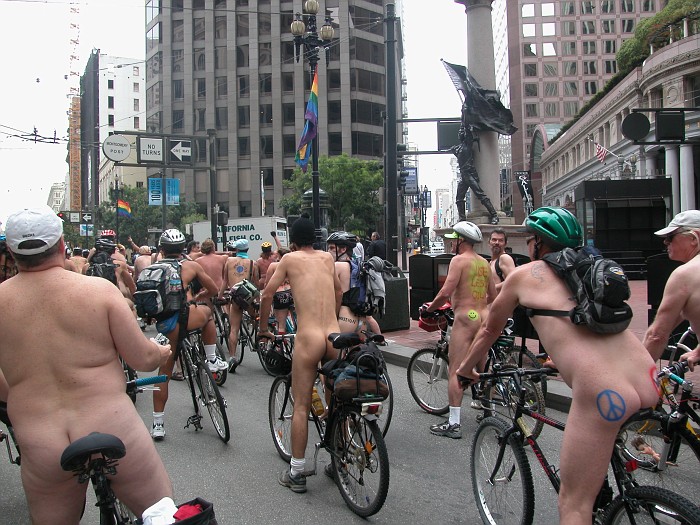
Strap on your helmet and strip down to your skin— it’s time to ride bikes in the buff. San Francisco regularly participates in the ‘Northern Hemisphere’ World Naked Bike Ride each summer, but Saturday (3/13) marks the city’s first inclusion in the Southern Hemisphere’s jaunt. Spring or summer, the ride aims to expose the dangers bicyclists and pedestrians face in a car-dominated culture and to protest against “indecent exposure to vehicle emissions.”  

Bay Area bicyclists will join pedaling nudes in Sydney, Cape Town, Lima, and other Southern parts of the globe this weekend, flashing their junk on two wheels for a “critical mass with a lenient dress code.” The crowd will cruise from Justin Herman Plaza to Golden Gate Park, stopping at City Hall for a photo shoot. Because this is the virgin spring fling, the group may be small, but definitely not shy.

Interested in joining but feeling a little insecure about disrobing? Here a few tit-bits of advice from bare-skinned veteran, George Davis.

1. Wear sunscreen— sunburned genitalia isn’t sexy or fun.
2. Wear a bike helmet; decorate it and the rest of your exposed self.
3. Think of your unclothed body as freedom from speed-slowing textiles.
4. Revel in the thumbs up from police and bask in the rock star status you’ll receive while cruising through Fisherman’s Wharf.
5. You are “natural gas powered”— to hell with oil dependency.

And a few more sensitive items to consider:

1. Shoes are good. Pedals are rough on bare toes.
2. Smile! People may photograph you. Be proud and confident. Slouching is never flattering.
3. If you’re hesitant about putting your pussy on the seat or getting your long schlong caught in the chain, wear some cute undies.
4. Children are allowed— non-sexualized nudity is not harmful to young eyes.
5. Worried you’re not ‘hot enough’ to bare all? Damn Gina, everyone looks good when they’re riding green.

Southern Hemisphere Naked Bike Ride
Sat/13, Noon
Meet at Justin Herman Plaza, just North of the huge fountain with all the cubic shapes
(Market and Steuart)
www.SFBikeRide.org


Flirty gay Saudi fake cop goes viral, may be killed

3

It may be a death wish, but you can’t stop the queen. Via Towleroad, this video of a 27-year-old guy having a bit of fun blew up in Saudi Arabia, and the participants have been arrested and charged with “homosexuality,” “general security,” and impersonating a cop. Homosexuality is still considered a capital offense in Saudi Arabia. But, you know, we really need the oil. Great hair flip at 1:45.

Cooled and pickled

1

le.chicken.farmer@gmail.com

CHEAP EATS  

Dear Earl Butter,

I think I know what the essential-oil-wielding hippies meant when they talked to me about personal growth and evolution. For example, I now believe in marriage. State-sanctified, and with as much paperwork as possible. I know it’s still only a 50-50 proposition, but at least it might weed out complete posers and the temporarily sane.

Stormy weather. The sea is choppy. We made it about halfway to the shipwreck then had to turn back, on account of motion sickness. That was a couple days ago and it’s been blowing ever since.

This morning I woke up in a state of disrepair and utter existential itchiness. Sitting on my air mattress, I leaned back against the bare wall, looked around the bare room in the empty guest house I occupy, and listened to the wind. I scratched my many insect bites and various rashes and wondered what I’ve wondered since I got here: how much will it cost me to change my return flight to tomorrow?

Instead of going over to the main house to wake up Jean-Gene and borrow his cell phone, I got out of bed and put my clothes in the refrigerator. I’m not sure how I knew this would help, but it did! Refolding my shirts and skirts, I felt finally soothed by the knowledge that thenceforth when I looked in the fridge I would be deciding what to wear. On the door, where ketchup goes, I put my socks, bras, and panties, and my bikini went nicely into the butter drawer.

When I finally went to get my brother it wasn’t to plan my escape, but to report that all my clothes were in the refrigerator.

“Right on,” he said.

I spent the rest of the morning in an artistic frenzy that was way more healing than arnica. I dragged our blow-up kayak into the dining room, turned its little yellow seats to face each other, set a cooler in the middle, and put a flower in an empty spinach can on top.

My three dildos I hung where wine glasses would go, upside down over the bar, and in lieu of liquor I staged all my lotions and sunscreens, some work gloves of Jean-Gene’s, a dust mask, and rolls of toilet paper and duct tape. Don’t tell Phenomenon, but I prayed all day a prospective buyer would drop in.

Thank you for finding a way to get a message to me here on this Web-forsaken island. The bottle washed up at sunset, and the words in it were just what I needed to hear. Food!

Indeed, since you’ve already given up, and I really ought to, I’m thinking we should probably get married. In church. Joel’s younger than us, right? He can be our kid. Between me and you, I think that boy could use some fucked-up parenting for a change, and I know I’d kill for a crack at eventual grandmotherhood. Think about it. It would make great copy, and anyway we might all be living in the same building.

Dearest Lady, Dearest-Dearest Lady,

Hello, I love Mr. Pickles! First, let me say — how could you not? Second, let me say they are great! And third, I love sandwiches! It’s hard to decide at Mr. Pickles because everything looks and sounds great. Joel got the Tony Soprano, which is salami and ham and mortadella and provolone cheese and Italian dressing ($6.99), and I got the Bear, which is hot roast beef and BBQ sauce and melted cheddar cheese ($6.99), and Joel paid. Imagine, way back when, Joel could have picked a different friend, and they could be enjoying Mr. Pickles on this guy’s yacht instead of Joel having to pay all the time.

— Sigh — nothing can get me out of the funk I just put myself in.

Except Mr. Pickles!

And Mr. Pickles himself stands outside the place like a pickle bandito with a mustache made out of hair. Imagine a pickle like that in the jar! A mustache made of hair! In his holster, mustard and mayo! I once had a goal to have more sandwiches in my life, but you know how things work out. Mr. Pickles makes you want to yell Mr. Pickles a bunch of times. I bet kids love to yell Mr. Pickles. I do too. Mr. Pickles! Mr. Pickles! Try it. Mr. Pickles! Hoorah!

MR. PICKLES SANDWICH SHOP

Mon.–Fri. 9 a.m.– 6 p.m.;

Sat.-Sun. 10 a.m.– 5 p.m.

3380 20th St., No. 103, SF

(415) 826-0143

Cash only

No alcohol


Oil company profits vs. education

4

I like Darrell Steinberg’s idea: The people protesting cuts in education should sign on to the oil-severance tax bill, and then force the Republicans to decide whether they want to protect the oil companies or fund public education.


Not that the crazy no-new-taxes folks will come around and do the right thing, but the issue will be pretty clear; it’s not, as Gloria Romero argues, a Sophie’s Choice:


We don’t want to cut education. The thing you have to ask is, are you willing to yank the dentures out of the mouths of the elderly? Am I willing to take away that wheelchair?”


It’s oil company profits against the future of the state. Let’s let Meg Whitman run for governor on that platform.


Laura Veirs gets excited for summer

0

Classic finger-picking and Laura Veirs’ girly vocals characterize the feather-light songs she’s written about sweet summer days on her seventh album, July Flame. The songs explore desire and happiness in stripped-down folk form, caressing questionable emotions with scents of firewood smoke, extended sunshine, and humid mid-summer evenings – all named after a variety of peach Veirs spied at her local farmer’s market. After 10 years in the music business, touring is nothing new to the Portland artist, but the trip supporting this album is different for two reasons: first, this album is being called her best; and second, Veirs is eight months pregnant. I caught Veirs on the phone on a Sunday afternoon, when she was taking a break at her parents’ place in Colorado, to chat about the album and the experience of touring while expecting.

“I’ve been really tired,” she says, noting she’s made lots of time for rest and good food. “And I can’t lift the amps.” Also, her huge baby bump pushes her guitar out at an awkward angle. Otherwise, though, the mom-to-be says touring prego hasn’t been much trouble. As for the album, she offered a few thoughts, compiled below in list form:

  • Veirs listened to The Beatles, The Shins, and lots of country-blues while writing July Flame.
  • Veirs isn’t a fan of writing expeditions, but she does like to “go out into the world and be awake.”
  • Her favorite place to visit: The Gorge for seagazing and Forest Park for an inner-city woodsy retreat
  • She and the band are currently covering Fleetwood Mac’s “Never Goin’ Back Again.”
  • July Flame is being called her best work and she agrees. “It’s taken me a long time to feel comfortable singing,” she says, “but I think there’s finally an underlying relaxed quality to my voice.”
  • The album often references smoke and flame, and nighttime creatures like bats and moths that fly around in the night pollinating.
  • Although summer is the overarching theme, the album’s mood isn’t all smiles. “It can be melancholy any time of year,” she says. “This album features a variety of emotions, not all just happy.”
  • Veirs wrote songs for July Flame on a variety of instruments, including a baritone guitar, banjo, and piano. She says, “It’s like changing colors or mediums as an artist, or switching to watercolors instead of oil paints.”

Laura Veirs w/Halls of Flames

Wed/10, 9pm

$15

Café du Nord

2174 Market, SF

www.cafedunord.com

Bill Bennett, the only public official in California to take on PG&E

0

William Morgan Bennett, 1918-2010

On the front page of the Guardian of Oct. 19, 1988, we ran a big picture of Bill Bennett with a caption that read: “Bill Bennett, the only public official in California to take on PG&E.”

The reason we featured Bennett was because the California Public Utilities Commission was poised to make yet another multi-billion giveaway to the Pacific Gas & Electric Company.

This time the CPUC would force the public to pay $3.4 billion worth of PG&E’s mistakes  at its Diable Canyon nuclear power plant and not one public official in San Francisco, home of the PG&E/Raker Act scandal, and not one from any other public agency or public institution was on hand to monitor the CPUC hearings and testify about the horrible impacts the Diablo rate hike will have on the public.

The lone, honorable exception was Bill Bennett. Our editorial noted, “The only public official in California who has taken on the case is Bill Bennett, a member of the State Board of Equalization and a former member of the CPUC, a determined old warrior who fought Diablo from the start and continues to do so today, on his own, against the odds and at considerable personal cost.”

To drive the point home about Bennett’s couirageous stand, we continued, “Those who ignored the case–for example, the supervisors, mayor and city attorney of San Francisco, the board of directors of BART, the regents of the University of California and their counterparts in every other public agency and institution that pays or represents people who pay PG&E bills–ought to be ashamed. The citizens of every city, county and district ought to look at their representatives and ask: Where were you when PG&E walked away with all the marbles.”

 The press in Northern California was ignoring the story, despite the colorful,  forceful and newsworthy campaign that Bennett was waging. He said he had called the  Chronicle and Examiner reporters to try to interest them in the story, but “it was useless so I gave up.”  Guardian Reporter Jim Balderston did the story and quoted Bennett  as saying, among other things, “This commission (the CPUC) must think long and hard of the welfare of the ratepayers and the shareholders of PG&E.” With no Bill Bennett on the CPUC, PG&E once again quietly walked away with billions in ratepayer money.

William Morgan Bennett, the public attorney  who for more than five decades fought the corporate goliaths from taking all the marbles, died Feb.9th at his home in Kentfield after a short illness. He was 91. An overflow crowd paid tribute  to his extraordinary life and career at services held on Feb. 12th at St. Patrick’s Church in Larkspur

When his daughter Joan phoned me about Bennett’s death, I realized once again how much the Guardian and the consumer and the rate-payer would miss Bennett. We are in the middle of PG&E’s biggest monopoly scam ever –Prop l6 and PG&E’s initiative to kill public power and community choice aggregation (CCA)– and Bennett is alas missing in action, for one of the first times in his life. Today, there are other public officials out there fighting PG&E, but there is nobody who can  take on PG&E and its allies as effectively as Bennett.

Our 1988 story had a sidebar with the head, “Bennett vs. PG&E: The 30 years war.” The sidebar recounted an incident characteristic of Bennett and the way he gave new meaning to the term public service.  In 1959 the El Paso/Pacific Northwest natural gas pipeline merger was all but approved by the CPUC, except for an appeal from Bennett as CPUC general counsel.  Before Bennett could file the appeal, he got a phone call from Gregory Harrison, a partner in the politically powerful law firm of Brobeck, Phleger and Harrison. Harrison asked Bennett if he was going to file. Bennett said yes and Harrison responded, “I told them you would say that.”

Harrison told Bennett he would be removed from the case if he filed the appeal. Bennett told Harrison he was going to call a press conference. Harrison responded. “I told them you would say that,” and hung up. Shortly thereafter, Bennett got a call from Gov. Brown, who asked him if he was going to file the appeal. Bennett said yes and Brown refused to discuss the matter further.

Twenty minutes later, Bennett got a telegram from Brown that stated, “You no longer represent me or the State of California in USA v El Paso.” This infuriated Bennett and fueled his relentless 14-year crusade to compel El Paso to divest itself of Pacific Northwest. because of its price-fixing and monopolistic implications for California. In 1969, appearing as a private citizen, he successfully argued the final U.S. Supreme Court appeal in the case, the last oral argument heard by the Earl Warren court.

The Washington Monthly caught the drama and precedent of Bennett’s appearance in its November 1971 issue. “His last appearance before the court in 1969
needs to have been witnessed. Standing alone against an array of the best legal talent that could be provided by El Paso, the states of California and Utah, lawyers for other gas companies and the U.S. government, represented personally by Solicitor General Erwin Griswold, Bennett attacked as the lone surviving avenging angel of the original antitrust action. Finger in the air, voice crying out in toners of retribution, he spoke brilliantly and forcefully without notes for an hour…In the process, Bennett impressed at least one justice privately, and many more observers, as one of the most brilliant and effective lawyers to have gotten to his feet to present oral arguments to the court during the last 14 years.”

 As the final footnote in this legal saga, Bennett  stopped El Paso’s efforts in Congress to pass legislation to void the breakup of El Paso. The result: the largest refund for California ratepayers in the history of regulation to date.  The decision set a  national precedent in antitrust law.

Bennett was born Feb. 20, 1918 in San Francisco to Lt. William M. Bennett of the San Francisco Police Department and Eva Curran of Amador. He attended Most Holy Redeemer Elementary School, St. Ignatius High School, the University of San Francisco and the Hastings College of Law. At the outbreak of World War II, he suspended his law studies and joined the U.S. Army Air Corps.

He was a B-17 pilot in the North African, Mediterranean and European theater of operations, l5th Air Force, 483rd Bombardment Group, 815th Squadron, stationed in North Africa and then in Foggia, Italy. The 483rd flew a total of 215 combat missions during 14 months of combat duty and Bennett was in the middle of it all. “Wherever there were major oil refineries, aircraft and parts factories, tank works, railroad terminals and marshaling yards, supply dumps, bridges and communication networks, he saw action,” Jane Bennett said.  He flew 35 missions and encountered severe flak and fighter attacks at some of the most heavily defended targets in Europe:  Linz’ Herman Goering Tank Works; Berlin’s Daimler-Benz Tank Works; Innsbruck; Vienna; Regensburg; Blechhhammer; Schweinfurt; Salzburg; Landshut; Moosbierbaum, and Ruhland where ME 262 German jets attacked his squadron.

The Tuskegee Airmen, the famous black squadron, escorted Bennett’s missions. “Their base was right next to my father’s,” Joan Bennett said. “They were separated on the ground but equal in the air. That is, they were  equal targets for the Germans.” Bennett often visited some of the fighters across the runway that segregated the blacks.   George McGovern,  the bomber pilot who later became a presidential candidate in l972, was stationed at a nearby base.  He flew B-24s.

Bennett flew some of the first shuttle missions into Russia.  As the bomber squadrons flew deeper into Germany, the planes did not have fuel or were too shot up  to return to their base in Italy. So the squadrons continued on to Poltova,  Russia, to get refueled  and repaired, and  then either flew back  immediately back to their base or stayed over night and flew back the next day.  The missions were kept secret during the war  but later became known as the “Poltova missions.”

 Of the original 646 crew members sent to Italy in March 1944, 38 per cent were killed or missing in action. His bomb group received numerous battle awards, including two outstanding unit presidential citations. Bennett was highly decorated and won three Oak Leaf Clusters, four Bronze Stars and the Distinguished Flying Cross. He was awarded the DFC  for his courage and skill in miraculously bringing his plane back from a mission over Worgi, Austria, in February, 1945.  Bennett’s plane was hit by heavy enemy fire and the two right engines were shot out. He told his crew to bail out but they refused because they counted on Bennett to pull  them through.  Bennett did, safely piloting his crippled plane over the Alps. When the plane limped back to its base in Italy, there was nothing left inside, because the crew had ditched everything to lighten the load.


Col. Paul L. Barton, Bennett’s commanding officer, pins the Distinguished Flying Cross on Bennett in a ceremony on May 12, l945, at the air base on the Sterparone farm in Foggia, Italy.  Gen. Twining, head of the l5th Air Force who ended up as Chief of Staff of the USAF after the war,  attended the ceremony.  “There was no Tom Hanks, Brad Pitt, Tom Cruise WWII move glamor,”  Bennett’s daughter Jane told me.  “The base itself was primitive: steel mats for runways.  Ankle deep mud in the winter along with snow, ice and rain. Open latrines, no toilet paper, tent-living with one crew per tent. No mess halls. One canteen of water per day, etc.”  She said the Bennetts visited the farm in l982.  “The runways were vineyards,” she recalled. “The briefing hall for the men still stands. The interior of white plaster is still lined with drawings of pinup girls. The young girl who lived on the farm during the war is now the owner of the family land. She was very gracious.  She invited us in for coffee.”

 After the war, Bennett finished  law school at the University of San Francisco and then embarked upon a remarkable career of public service. Until I started working on his obituary,  I knew nothing about Bennett’s distinguished war record as a bomber pilot.   But it is clear to me that, having followed Bennett through the years, that  his combat experience under artillery fire and with flak coming at him from all directions served him well in public life.  He spent most of his public career  as a tough, smart and  aggressive attorney who relished  taking on the big cases and the big corporate behemoths who were screwing the public on illegal mergers or monopoly rate increases. To him, this was just combat in a different theater of operations. Sometimes as a public attorney, sometimes acting as an individual citizen, he handled precedent-setting cases  in antitrust, regulatory and criminal law and argued six times before the U.S. Supreme Court. He earned the nickname “the legal Houdini” but I always thought of him as “Fighting Bill” Bennett.

 As a deputy attorney general, he successfully prosecuted public corruption trials in 1954-55 against the State Board of Equalization in San Diego and put l3 public officials in jail. From 1957-59, he handled the celebrated case of Caryl Chessman, known as “the redlight bandit.” After his argument before the U.S. Supreme Court, the court clerk quietly handed him a note from Associate Justice Felix Frankfurter. He wrote, “There is no reason why I should not tell you how admirably you represented the state in this important case.” The clerk told Bennett he should save the note because it was only the second such note that Frankfurter had ever written.

From 1957-58, Bennett represented the state before the CPUC and won many cases against utilities that resulted in hundreds of millions of dollars in ratepayer rebates. Gov. Brown appointed him chief counsel of the PUC in 1958.

In 1960 Bennett was invited to join Sen. John F. Kennedy’s campaign as an advance man canvassing a territory from Chicago to New York.  He became friends with JFK and was considered part of Kennedy’s “Irish mafia.” Kennedy asked him to head the Federal Power Commission but he rejected it to remain with his family.

Bill Bennett and then presidential candidate John F. Kennedy  are pictured in 1960 as they got off the campaign plane at O’Hare field in Chicago.  Bennett was an advance man for JFK and helped stage several rallies in Chicago. Then JFK and Bennett headed east to Hamtramck, Michigan, and finished up at the garment center in New York.  JFK asked Bennett to be head of the Federal Power Commission but Bennett turned the appointment down to remain in California with his family.

In 1962, after Brown appointed Bennett to the CPUC, he promptly took on PG&E with gusto.  With the support of the Sierra Club, Bennett filed the lone dissenting opinion against the CPUC’s approval of a nuclear power plant upwind of San Francisco at Bodega Bay. The  Bodega fight was started in the living room of Prof. Joe Neilands, a UC-Berkeley biochemistry professor and stoked along by the Neilands/CharlieSmith/David Pesonen gang, with help from the Chronicle and its executive editor Scott Newhall and environmental writer Harold Gilliam.  The battle caught on and became a national story and focal point for the emerging anti-nuclear movement. PG&E was forced by public opinion to withdrew its application and skedall down  to Diablo Canyon. And so did Bennett.
Bennett was later visited by the chairman of PG&E, Robert Gerdes. told Bennett, “We don’t mind you dissenting, but do you realize the Russians are trying to stop us from building atomic plants.”

During his CPUC tenure, Bennett led the commission to regularly reduce electricity and gas rates in response to rate cases before the commission. In 1968, then Gov. Ronald Reagan refused to reappoint Bennett to the commission and sent Bennett a letter apologizing for not being able to reappoint him. Reagan did not explain the reason. Before Reagan could kick him off the CPUC,  Bennett  had saved the consumers hundreds of millions of dollars. Ever after Bennett, the CPUC has operated on a supine  basis with PG&E and other utilities and has handed down rate increases and goodies to them on a virtual assembly line basis.  

I first met Bennett in 1967 in his CPUC office overlooking the Civic Center  in the  state building. Lee Fremstad, then the San Francisco correndent for the Sacramento Bee, took me in and introduced me. I had rarely seen a public official like Bennett. He knew about the Guardian and me, had some juicy story ideas for me, and a batch more for Fremstad. Fremstad bantered back and forth with Bennett, noting a couple of ideas but rejecting others as too much even for the Bee and its longtime public power posture.  Bennett was open, expansive,  full of Irish humor,  a populist Democrat full of opinions I liked, jutting the Bennett jaw to make a point, and the kind of guy  who might be good for a lively  three martini lunch.

I thought he would have made a wonderful newspaper columnist or editorial writer, if he could find a newspaper that would publish his  tough consumer-oriented opinions that so  agitated the PG&Es and Hearsts  of the region.  We always enjoyed  Bennett at the Guardian, endorsed and supported him and used him as a friendly source and inspiration.all through the years. 

When Bennett left the CPUC, Neilands and Smith held an appeciation dinner for him in Berkeley that brought together the Bodega Bay/public power warriors of the era.   This was a watershed moment for the Guardian and me.  My wife Jean and I went, met Bennett and Neilands et al and got initiated. We also met Peter Petrakis, a fan of Bennett’s, and a graduate student of Neilands. Neilands did our pioneering expose of the PG&E/Raker Act  scandal in l969.   Petrakis joined the Guardian and  followed up Neilands’ work with a series of investigative storiies that revived the scandal and  the public power movement in San Francisco.  Bennett, as I realized, was a catalyst.  

Bennett’s next move to stay in public service was to run for the State Board of Equalization and Franchise Tax Board. He won his first campaign in l970 even though his opponent outspent him $450,000 to $4,000, all his own money. He was relected to five more terms, despite refusing to accept campaign contributions, and continued to fight the good fight against the special interests in Sacramento and beyond. He was also a professor of law at Hastings while on the board.

Bill Bennett with his wife Jane in 1943 at the primary cadet school in King City, Calif. They were married 67 years.

Bennett is survived by his wife of 67 years, Jane, and sons William (wife Gwendolyn) of Lafayette, James (Paula) of Kentfield, Michael (Roxanne) of Manhattan, Kansas, and daughter Joan of Kentfield and grandsons Jimmy, Will, Jack, and Brendan of Kentfield.

The Bennett family obituary  sums up their patriarch: “Despite his friendships with president and esteemed jurists, his out-going nature was such that he was a friend to all. He was a populist democrat, consumer rights advocate, and a veritable David against the corporate world’s Goliaths, in the vein of his mentor and ultimately friend, Earl Warren. Even with such achievements, his most important and cherished career was as a father and family man. Upon retirement, he embarked upon his most rewarding and enjoyable career: a devoted, loving, entertaining husband, father, and grandfather. For them and through them, he will live forever ‘in his way.'” 

For me, I will stick with our cutline under Bennett’s picture on our l988 front page: “Bill Bennett, the only public official in California to take on PG&E.”


The Bennett family photo was taken in May,  2009, at the Napa airport. A B-l7 was touring the country and Bennett wanted to see it. Jane Bennett said he actually went through the plane. “It was not easy. The access was a skinny, steep, metal ladder to the cockpit. I don’t know how he got up it. He refused a ride in the plane. As he said, ‘If I cannot fly it, what’s the point.'”

Bin 38

1

paulr@sfbg.com

DINE If we agree that the Marina District is a sort of Castro District for heterosexuals — the het ghetto, or hetto — it should follow that food in the neighborhood’s restaurants is something of an afterthought. Restaurant food in the Castro has long been a swamp of mediocrity (though there are signs of improvement), and restaurants in the Marina have likewise tended to be more about convenience, speed, and affordability — like refueling race cars — than an experience in their own right.

At a glance, Bin 38 would seem to conform to this pattern. The restaurant and wine-beer bar occupies a narrow storefront space on a run of Scott Street between Lombard and Chestnut streets already chockablock with eating places pitched to the young. From outside it looks like a typical box, but once you’re inside the door, you find a dodge-and-weave of rectangles: an entryway with host or hostess, a bar with a nest of intimate tables opposite, a passageway, another dining room rich in alcoves, yet another passageway, and a garden. There is a snug, cave-like quality to the layout — it reminded me of a lost beloved, Rendezvous du Monde, which back in the 1990s occupied a similarly burrow-like abode on Bush Street in which splendid food was served.

I could say that Bin 38’s food is as good as Rendezvous du Monde’s. That’s saying something, and it is as good, but what is most immediately notable about the dishes emerging from head chef Matt Brimer’s kitchen is how gorgeously everything is composed and plated. The designs aren’t so fussy that you feel like a Visigoth trashing the treasures of Rome when you start eating them, but they are striking in their combinations of shape, color, and texture. I hesitate to describe food as art, but I hesitate a little less here.

Color is perhaps the most arresting aspect of food that has yet to be eaten, and winter, the bleakest season, offers surprising possibilities to the color-minded chef. Beets, for instance, of gold, ruby, and rose. Bin 38’s roasted-beet salad (part of a $29, three-course prix-fixe) looked like the contents of a jewel box: an array of richly gleaming disks, arranged on mache with dabs of mild, creamy French feta, and scatterings of equally jewel-like pomegranate seeds. The whole thing is dressed with a citronette, basically a vinaigrette made with lemon juice instead of vinegar. The finishing touch was the platter itself, a long narrow rectangle such as might be used for presenting a sushi roll.

Just as colorful was a wide, shallow bowl of hand-cut tagiolini (also a prix-fixe item), ribbons of pasta a little wider than fettucine, tossed with a colorful mélange of spinach, tomato, baby carrot, turnip, and chunks of braised pork, with flavor amendment provided by olio nuovo and square flaps of Parmesan cheese. What was most remarkable about the sauce was the way in which the various ingredients kept their individual identities while managing, at the same time, to become part of a greater whole.

If I mark down the winter salad — again, prix-fixe — a bit, it’s mainly because the color scheme wasn’t quite as intense: Belgian endive (white with hints of green), fennel shreds (white with even fewer hints of green), sprigs of watercress (green but small), sections of blood and mandarin orange (gorgeous), and pink peppercorns (too small to add much visually). The arrangement was appealing, though, with the leaves of endive neatly lined up along the platter like canoes tied up in the marina of a summer camp. Dressing: cherry vinaigrette.

Bin 38 enters the burger derby with the BIN burger ($13), a well-seasoned disk of ground beef enhanced with smoked gouda and mayonnaise, served on an English muffin and presented with a heap of sliced cornichons. You have to order fries separately, which isn’t the worst thing. You might want a small bowl of spiced nuts ($3) instead — better for you — though they’re at least as sweet as spicy. Or you might want neither, if you opened with wild Gulf prawns ($12), served sizzling on a fajitas-like cast-iron platter with chile arbol oil, very spicy, and garlic, and levain slices for mopping up.

Desserts are also arty. A toasted almond panna cotta arrives as little hemispheres that resemble white-chocolate truffles, topped with chunks of strudel, interspersed with blood-orange segments, and bathed with a reduced hibiscus tea that looks as if it leaked out of a joint of beef. Chocolate pudding cake is distinguished mainly by the pat of brown-butter gelato on the side, tasting rather caramely. Hetto heaven!

BIN 38

Dinner: Mon.–Thurs., 5:30–10:30 p.m.;

Fri.–Sat., 5:30–11 p.m.; Sun., 5:30–9 p.m.

3232 Scott, SF

(415) 567-3838

www.bin38.com

Beer and wine

AE/DS/MC/V

Wheelchair accessible

The battle for the forgotten district

24

sarah@sfbg.com

This November, when voters in District 10 — the largest, sunniest, and most diverse of the city’s 11 supervisorial districts — replace termed out Sup. Sophie Maxwell, they’ll be making a selection that could have pivotal implications for the entire city.

That’s because the next supervisor from southeast San Francisco inherits a district that is home to some of the city’s biggest environmental and public health challenges, as well as the most potential for development that will determine what kind of city San Francisco becomes.

District 10 is where you’ll find the most polluted and most underdeveloped lands in San Francisco, areas that could either be transformed into models of a sustainability or, in the words of Tony Kelly, the president of Potrero Boosters Neighborhood Association, “be turned into a toxic Foster City.”

District 10 is where the slaughterhouses, tanneries, and glue factories set up shop and used the bay as a dumping ground. It’s where the smokestacks of coal and oil fired power plants polluted the air. It’s where the Navy filled the Bay, built a shipyard at Hunters Point and loaded parts of the first atomic bomb onto the USS Indianapolis in 1945.

District 10 is where the bottom fell out of this industrial economy in 1974, when the Navy left, taking with it people’s jobs, pay, and hopes for a home of their own and a better future, particularly for what was then a predominantly African American population.

And District 10 is ground zero for plans that will triple the population and double the number of homes — homes that likely will only be “affordable” to Google executives and retirees from Marin, forever changing the face of San Francisco’s southeast sector. Critics fear that will accelerate what has been a steady exodus of black residents, replaced by megadeveloper Lennar’s vision for a new D10.

It’s against this dark history and difficult present that a wide open field of more than a dozen candidates are vying to replace Maxwell, who came to power in 2000 and has had a mixed voting record in her decade on the board. Sometimes, Maxwell was the eighth vote that let the progressive majority on the Board override Mayor Gavin Newsom’s veto and pass trailblazing legislation. Other times, she was the swing vote that allowed the moderate minority to carry Newsom’s water.

So, in addition to D10’s many internal challenges, this seat could determine the political balance of power on the Board of Supervisors, placing all the more importance on voters in this long-marginalized part of town.


DISTRICT OF DISCONTENT

Eric Smith, a biodiesel activist who has thrown his hat in the D10 ring, says that there is a lot of frustration in the air, and looking at the problems the district is facing, it’s hardly surprising that it has what nearly every candidate agrees is a fractured political culture.

“The Bayview, the Hunters Point Shipyard’s toxic Superfund site, the homicide rate, unemployment, poor public transportation, dwindling services and community resources have made D10 one of the city’s largest melting pots of discontent,” Smith said.

Smith’s words were spoken while the Elections Department was verifying signatures earlier this month on a second failed effort to qualify a petition to recall Maxwell.

Bayview resident and D10 candidate Marie Franklin didn’t support the attempt to recall Maxwell, but she understood it as “a frustration movement.”

“People are sinking in the sand, we’ve already lost so many of them, and they felt Sophie wasn’t doing anything for them,” said Franklin, who praised Maxwell for helping get Franklin’s apartment building complex renovated — a job that was completed 18 months ago, at a cost of $65 million, creating 500 local jobs.

“There are 654 units here, and they were uninhabitable,” Franklin said. “There was black mold, rain falling inside. We had people living worse than Haiti.”

Franklin, who said she is running because she “knows the history,” came here in 1978, when she and her son were living in a car after a fire left them homeless. She said the Bayview was a totally isolated area, barely part of mainstream San Francisco.

“There were no taxis, no services,” she recalled. “Nobody would come here, it was the stigmatized area where no one was accountable to provide services.”

The Bayview — which in some ways is the heart of D-!0 — wasn’t always a black community. But African Americans have been living here for 70 years, dealing with all the racism, denial of services, poverty, and pollution. And it bothers Franklin that 85 percent of the 10,500 homes that Lennar plans to develop won’t be affordable to the elderly, disabled, unemployed and low-income people who currently live in the Bayview.

“We need to preserve the diversity of the community and make sure their issues and information will flow to City Hall,” she said. “You must give the people a handle. If you don’t reach out, they’ll slip. That’s why folks out migrated.

Whoever succeeds Maxwell will be a central player in addressing some very big and dirty issues: the future of the Navy’s radiologically impacted shipyard at Hunters Point, Lennar’s massive redevelopment plan for the Shipyard and Candlestick Point, the polluting power plants, replacement of stinky digesters at the sewage plant, and the SF Hope public lousing rebuild.

There’s also the chance to address violence and crime. James Calloway, a candidate who has long worked in Bay Area schools, told us he believes that education and jobs are part of the keys to rejuvenating the district.

“Job opportunities are not as plentiful in the district,” Calloway said. “When I was a kid, you could walk down Third Street at 2 a.m. Now I wouldn’t walk down it at 9 p.m., and I know the area.”

Calloway is hopeful that the massive redevelopment plan, if done correctly, could start the district’s comeback. “Not a lot of black folks stay here when they have extensive education,” he said. “But it’s not only them. Many were displaced by redevelopment and had no way to go back.”


ELECTION UP FOR GRABS

The largest of the city’s 11 electoral districts, D10 is a huge triangular piece of land in the city’s southeast sector that was used as an industrial dumping zone for decades. Today, the district runs from the Giants stadium at AT&T Park to the 49ers stadium at Candlestick Point and encompasses Mission Bay, Potrero Hill, Dogpatch, India Basin, Portola, Little Hollywood, and Visitacion Valley. It’s also crossed by two freeways that isolate it from the rest of the city, and is home to a large number of crumbling housing projects that are in the process of being rebuilt.

Candidate Ed Donaldson grew up in the projects until he was 10 years old, when the Redevelopment Agency kicked his family out in the 1970s. “We landed on our feet, but others weren’t so lucky,” said Donaldson, who works as a housing counseling director at the San Francisco Housing Development Corporation.

“There is a sense that the Bayview and Visitacion Valley have not been included within the San Francisco family,” Donaldson said. “There is a sense of being forgotten.”

In 2007, Donaldson co-founded the Osiris Coalition to tackle the city’s dormant Certificate of Preference program, in which the Redevelopment Agency issued a document to displaced residents and businesses in the 1960s promising that they could return.

He also tried to rescue some 700 foreclosed properties and recycle them as affordable housing stock. And now he is trying to prevent the city from bulldozing seven SF Hope projects without guaranteeing residents that they have right to remain.

In 2007, Mayor Gavin Newsom and Maxwell convened an African American Outmigration Task Force that didn’t get a public hearing about its findings until August 2008. The timing angered some, who questioned why the report’s findings and implications for urban planning weren’t released before June 2008, when the residents of San Francisco voted for the Lennar-led Proposition G, a proposal to build 10,000 market rate homes at one of San Francisco’s last remaining black communities, which Newsom and Maxwell endorsed.

The taskforce didn’t publish its recommendations until the end of 2009, allegedly because of insider squabbling. Meanwhile, gentrification was going on actively, and many blamed Newsom, and by extension Maxwell, for failing to do anything with the group’s findings as D10 residents continued to suffer from high rates of asthma, cancer, unemployment and an ongoing black exodus.

It wasn’t always this way. In the 1940s, the district’s black population exploded when migrants from the south and World War II veterans came to work at the Hunters Point Naval Shipyard. Some moved to Alice Griffith Public Housing complex, or Double Rock, which was built as military housing in 1962. Others relocated to the Bayview when the Redevelopment Agency took over the Fillmore/Western Addition in the ’60s and ’70s as part of a controversial urban renewal effort.

But when the Navy abandoned the shipyard in 1974, unemployment hit the black community hard. Today, hundreds of the city’s lowest income residents live in Alice Griffith’s crumbling units and endure sewage backups, no heat, cloudy drinking water and leaking ceilings, as they wait for the projects to be rebuilt.

“Generations have been trapped in the silo of public housing and cannot get out, because of lack of opportunity and education, so when we legislate, we need to take that into consideration,” said candidate Malia Cohen, whose grandfather came from Texas to work at the shipyard where he met her grandmother, whose family came from New Orleans.

“My grandfather’s father was a longshoreman. He worked with the infamous Leroy King [a commissioner at the city’s Redevelopment Agency] and he has fantastically vivid stories of racism,” said Cohen, who works for the Federal Reserve Bank of San Francisco, previously served on the executive staff of Mayor Gavin Newsom, and has already raised over $18,000 in the D10 race and qualified for public matching funds.

“My family came here to work hard, they lived on Navy road in the projects, and then they bought a house here. My parents were born here, and we were all public schooled,” Cohen recalled as she took me on a tour of D10 that ended up in Visitacion Valley, an increasingly Chinese-American neighborhood that reflects a district-wide trend.

Census data show that by 2000, Asians were the largest racial group in the district (30 percent), followed by blacks (29 percent), whites (26 percent), and Latinos (19 percent). By 2003, according to the California Urban Issues project, the trend continued. Asians were the largest racial group (32 percent), followed by blacks (27 percent), whites (21 percent) and Latinos (17 percent) of the population.

This means that D10 candidates will have to garner support from more than one ethnic group to win. Over a dozen candidates have already filed papers in the race, but so far there is no clear front-runner.

Also frustrating the prognosticators is that fact that D10 has had the lowest voter turnout in the city, so the winner will also depend on who goes to the polls.

D10 candidate Geoffrea Morris, who is the grand daughter of longtime Bayview activist Charlie Walker, has been knocking on doors and participating in voter registration drives.

“We need new blood,” Morris said

Getting elected will be a complicated equation. Although Bayview’s population was 50 percent African American at the time of the 2000 census, it didn’t turn out the vote. In the 2006 election, only 14,000 of the district’s 37,000 registered voters went to the ballot, and 50 percent were from whiter, richer, and more Asian neighborhoods.

“It’s very important to the future of the city that the ethnicity diversity of the board be maintained and that the African American community have representation,” former Board President and current Democratic Party chair Aaron Peskin told the Guardian.

Maxwell recently told the Guardian that she’s not ready to endorse any D10 candidates yet. “I’m waiting for people to have a better understanding of what this community is, what the common thread running through it is, and how to use rank choice voting,” she told us.

The only candidate who currently holds elected office is BART director Lynette Sweet, who had her answers down pat when we reached her by phone, and even used wording that was eerily similar to Maxwell’s words.

“D10 is a pretty diverse district, but there is only one common thread: the need for economic development,” Sweet told me. “That’s true in Potrero Hill, Portola, Dog Patch and the Bayview. It’s the same mantra: a lot of small businesses need help, and the only way to help them is through economic development. In Potrero Hill it’s about land use. In the Bayview, it’s about the shipyard and better transportation and truancies.”


THE COMMON THREAD

District 10 is ground zero for the Lennar’s $2.2 billion plan to develop 10,500 market rate condos at the Shipyard and Candlestick Point. The plan will allegedly create thousands of jobs and new parks, deliver on an historic community benefits agreement that labor groups claim is so “lawyered up” that the developer can’t renege on its promises.

The package is framed as the one and only way to revitalize the southeast’s formerly vibrant economic engine. Indeed, any time anyone tries to slow down the process—to take time to thoroughly read the draft EIR and see if it adequately addresses the impacts of this massive urban reengineering project — a chorus of “no delays” starts up, either from residents of the housing projects desperate to see their homes rebuilt, or the labor contractors who hope to get jobs.

“It’s as if the city is playing checkers, while Lennar is playing three-dimensional chess,” Eric Smith observed.

Lennar has stated that it will contribute $711 million to finance this massive project. The remainder will be leveraged by Mello-Roos bonds, state taxes based on the use and size of a property and intended to raise money for needed services, and tax increment financing, which creates funding for projects by borrowing against future property tax revenues.

The conceptual plan won Maxwell’s backing but environmental groups are critical of the draft EIR.

During DEIR hearing, environmentalists questioned the wisdom and the cost of filling the Bay to build a bridge over Yosemite Slough, and building condos on Candlestick Point state recreation area, the only open major open space in the district.

But the city’s Planning Department also has 20,000-30,000 units of housing in its pipeline. This means that if all these plans get approved in the next decade, they’d account for 80 percent of residential development citywide. And D10’s population could triple, further skewing the district’s already shifting demographics.

In other words, D10 as we know it could become nothing more than a historic relic in a few years, and the next supervisor will play a key role in deciding whether that happens. SFHDC’s Ed Donaldson warns that any supervisor who does not understand the complexity of the city’s largest district can expect a similar recall backlash in future.

“There is no one homogenous voice in the community,” Donaldson said. “The grass-roots organizing that brought about the recall effort was a result of a changing political structure in the area, but is not yet on par with other districts in town. We still allow our politics to be controlled from downtown.”

Fellow candidate Eric Smith warns that the issues—and politics—are complex.

“People were emotional, angry, and desperate because they feel no one listens to them,” Smith said. “That’s part of the problem here; they would rather have a supervisor go down swinging for them, rather than watch one seemingly side with Lennar, PG&E and the mayor on issues contrary to their interests. That’s the terrible irony and one of the biggest problems in District 10. Folks are so mad, they’re willing to do whatever it takes to make them feel they have a voice in the outcome, even if it’s potentially worse.”

Smith cited the sequence of events that culminated last year in the Navy dissolving the community-based shipyard Restoration Advisory Board (RAB), which for years has reviewed technical documents and commented on the Navy’s clean-up proposals. But in December, the Navy made its official decision to disband the RAB, citing dysfunctional behavior and off-topic discussions that got in the way.

“Some of the same folks who were frustrated by the process, tried to send a signal to the Navy that they weren’t being heard and for all their well-intentioned efforts got the RAB dissolved,” Smith said. “I truly feel for them, it’s absolutely heartbreaking, but at times, they can be their own worst enemy.”

One of the looming issues about the shipyard is that the land has been polluted and needs to be cleaned. The shipyard contains radioactive debris from ships towed to the shipyard, after a 90-foot wave washed over them during an atomic test gone awry. The Navy burned 610,000 gallons of radioactively contaminated ship fuel at the shipyard, and workers showered on the shipyard, raising concerns that radioactive materials got into the drains and sewers. And questions have been raised about radiological tests on animals at the yard.


LEAKS AND FLOODS

It’s not just the shipyard that’s toxic. Even the buildings that were constructed to house workers 50 years ago are a serious mess.

Realtor Diane Wesley Smith, who grew up in public housing projects, took me on a walking tour of Alice Griffith last week to see conditions that tenants will likely have to endure until at least 2014, if the city sticks to its plan to relocate people into a new replacement unit in the same geographical area, if not the exact same site.

What we found was pretty messed up.

“The water sometimes comes out brown and feels like sand. It’s been like that for a year,” one resident said.

“The water is cloudy, the bath tub isn’t working and the sink keeps stopping up,” said another.

A woman named Silvia showed us how the water from the tap in her elderly mother’s kitchen flows out cloudy and then doesn’t settle properly, like foamy beer.

“The roof’s been leaking for years, the sewage backs up, but they just fixed the lights,” Silvia said. A neighbor named Linda was using her oven as a heater.

“The toilet backs up a lot, and my grandson’s been coughing a lot from asthma,” Linda said.

“Roaches is always a problem,” said a woman named Stormi, dressed in black sweats and a black T-shirt that read, “Can’t knock the hustle.”

“They’re trying,” said Stormi, a member of the Alice Griffith Residents Association, as a couple of Housing Authority trucks pulled up to do repairs.

“They promise that you will not have to leave your unit, but if they try to move us down to the waterfront, well, there’s a reason there’s no housing there, and it’s because the land will flood,” Stormi said.

“If we don’t end up at the table, we’ll end up on the menu,” Wesley Smith warned, as she stopped to chat with a group of young men, who were worried they would pushed out of the Alice Griffith rebuild through the criteria being established.

“Fred Blackwell, the executive director of the Redevelopment Agency, assures me that’s not the case, but Alice Griffith is a Housing Authority property, and empty promises have the potential to be great promises provided they are made in writing,” Wesley Smith said as we walked out of the projects and onto the road where a yellow and black sign announced “flooded” next to Candlestick Point park, where Lennar wants to build.

Malia Cohen expressed concern about Hope SF residents, as we drove through the Sunnydale housing project.

“We have to be diligent and mindful that people are not pushed out,” Cohen said, noting the sweeping views at Gleneagles golf course above Sunnydale, and the value of housing for a golf course community. “When public housing gets taken offline, we must work with Redevelopment and the Housing Authority to make sure no one is changing the rules halfway. We have to make sure the talks and walks line up. We need to be equal partners. We cannot be bulldozed by City Hall.”

Geoffrea Morris is a Calworks employee, at the Southeast Community College facility on Oakdale, which was built to mitigate the city’s expansion of the sewage plant in 1987. She cited concerns about the literacy levels of people who live in the 2200 public housing units that cluster D10. “A lot of people in Alice Griffith don’t even know the dates or when it’s going to be reconstructed,” Morris said. “Folks like to be told stuff like that, but the city gives you a stack of papers. Some will read them, but others rely on folks they think are trustworthy. They need stuff in layman’s terms written on one sheet of paper.”

Morris is a fan of the Internet who posted a community survey online, and made sure every housing project got some literature telling people to get informed. She worries about the digital divide in D10:

“A lot of folks don’t have computers and access to important information,” Morris said. “And let’s talk about the way ‘affordable’ is used to trick people.”

Michael Cohen, Newsom’s top economic adviser, recently stated in a memo that over the expected 15-20 year phased build out, Lennar’s Candlestick-Shipyard development would include, “up to 10,500 residential units, about 32 percent of which (3,345) will be offered at below market rates.”

“But 892 units of this ‘affordable category’ will be sold to folks earning $100,000,” Morris said. “So if you subtract 892 units from affordable unit category, you’re back to 25 percent affordable.”

Candidate Kristine Enea, an attorney and a former RAB member, chairs the India Basin Neighborhood Association, which administers a US EPA grant to hire experts to translate the Navy’s cleanup documents into plain English and comment on them She was frustrated by the Navy’s decision to dissolve the RAB.

“The lack of a forum does nothing to bolster the community’s trust in the cleanup or the redevelopment process,” Enea said.

Enea generally supports the Lennar project, but has concerns about whether it will adequately mitigate increased car traffic, or result in commercial development that benefits her neighborhood.

“India basin is a pocket of Hunters Point right along the shoreline,” Enea said. “Right now, we have no shops or restaurants, no ATM, no groceries, nothing beyond one liquor store and a few industrial businesses.

Potrero Boosters president Tony Kelly told us that District 10 residents can think for themselves. “D10 residents don’t need to rely on corporations to solve their problems,” he said.

“Folks in the eastern neighborhoods came up with a better revitalization plan than what the city proposed and community activists managed to close the power plant, after the city said it was impossible,” Kelly recalled.

And there’s no shortage of good ideas.

Kelly suggested that an urban agriculture center could immediately put low-skilled folks to work by erecting greenhouses on unused land. Smith said the industrial zone could be “incredible eco-park made from sustainable sources.

‘D 10 is the dumping ground for everything, including all the city’s waste,” he said. “We could be a shining example, not just for D 10, but the rest of the state.”

The D 10 candidate line up includes Calloway, Cohen, Donaldson, Smith, Enea: civil rights attorney Dewitt Lacy, Morris, Potrero View publisher Steve Moss; District 7 BART director Lynette Sweet, Wesley-Smith. Bill Barnes, who works for Sup. Michela Alioto-Pier, and Linda Richardson, who was appointed to the Human Rights Commission in 2007 by Mayor Newsom, have also expressed interest in the race.

In such a huge field, name identification will play a major role. Sweet is in office, but BART Board is not a high-profile job and won’t give her a huge advantage.

Cohen has a slight edge right now in that she’s raised $18,505, including $500 from former Newsom flak Peter Ragone, making her the first D. 10 candidate to qualify for campaign financing. The oldest of five girls, Cohen recalls how her mother got laid off from her city job as a school-based mental health worker and then rehired, as part of the city’s budget cuts.

“We felt that pinch and the frustrating games that are played out between the leadership and the rank and file,” she said.

Cohen who worked for Newsom in his first term as mayor, but has since left his administration , said she is uncomfortable at being framed as Newsom’s candidate.

“Because I’m not, but I am one of the few candidates who has seen how the mayor and the Board work—and don’t work—together,” she said.

Moss sees the city’s southeast as a “district in transition.” Over coffee at Farley’s in Potrero Hill, he told me that the southeastern neighborhoods could be “launching pads for environmentally sustainable growth.”

“The district’s been in a frozen period for 30 years, But despite the problems, people are deeply committed to and in love with their community.

“This district is the future of San Francisco and its social fabric—the diversity, income –and its problems are leftovers from the city’s industrial age.”


DISTRICT 10, BY THE NUMBERS

Total Acres: 5,650

Average household income: $85,000

Population: 73,000

Registered voters: 37,700

Average housing price: $335,000

Ethnicity (2003 figures): Asian 32%, African American, 27%, white 21%, Hispanic 17%

Development status of land: 18% residential, 38% is commercial, 38% undevelopable

All figures the latest available. Sources: SFGIS, Association of Bay Area Governments, U.S. Census, California Urban Issues Project. Ethnicity and income data is from 2003 and almost certainly has changed.

Sing, spelunker, sing

0

arts@sfbg.com

SONIC REDUCER How many degrees of separation can be charted between the soulful, indie-folk natural men of the Cave Singers and the cut, tanned, laundered, and pugnacious bruisers and thugettes of Jersey Shore? Way fewer than you, or Snooki, would think.

“I’m all about it. It runs in my veins,” says Cave Singer Pete Quirk from downtown Seattle, taking a lunch break from his toils as a bike messenger and struggling to be heard above the din of jackhammers and a seemingly invisible, stalking squeeze-box player. He grew up on the shore, albeit on a more rustic stretch, which fostered mischievous fun like pool-hopping rather than cop car riding. “I’ve only seen the commercials, and I was so frightened by it. I got a glimpse of a guy punching a girl — so horrific.” Still, he adds, “Things seem a little less dramatic when you’re a kid. It wouldn’t be on TV if it wasn’t overblown.”

Of course, who knows what sort of reality show would focus on the Cave Singers, though the group’s origins could read like the stuff of potentially high drama considering songwriters Derek Fudesco, ex of Pretty Girls Make Graves and Murder City Devils, and Quirk, once of Hint Hint, share the same house — best friend-style, not Surreal Life-style. (Drummer Marty Lund, formerly of Cobra High, bunks elsewhere.) “People would fall in love with us, you know,” speculates Quirk, 34, gamely. “We’re just three lovable guys cruising around the country. It’s like that movie 3 Men and a Baby — just no baby. Music is the baby.” Quirk would like to be the Tom Selleck of that bunch. “But I’d probably Steve Guttenberg. But Guttenberg is cool because he’s down to earth.”

That’s an asset for these beach-, cave-, and nature-loving nu-folkies, who dive deeply into a breast-beating, witchy breed of acoustic rock on their brighter, more upbeat second long-player, Welcome Joy (Matador, 2009). A fleet of frisky, Feelies-like rhythm guitars drone with infectious optimism on “I Don’t Mind,” transmogrifying into kick-off-your-shoes pop bliss for “W” and the plucky, clickety-clack climax of “Hen of the Woods,” before taking it down a few gleaming notches for a bongo-laced, incantatory “Shrine.” The arc of Welcome Joy‘s tracks is crucial, miming the passage of a fiery orb across a midyear sky.

Why such joy? “We all went to therapy together like Metallica, y’know,” quips Quirk. But really, folks, Quirk qualifies, “we always sit around, and Derek will play a guitar line, and we’ll just be jamming, and it will bring up a cinematic image, and we’ll go with that. A lot of the songs at the time seemed joyful, for whatever reason. It seemed like there was a lot of beach imagery, or just youthful things we remembered doing in the past.”

It’s all organic down in the Fudesco and Quirk basement, where they practice and demo, decorate and sing freely, as Quirk puts it. There’s safety in that man cave — and in this band, apparently. “We’re best friends and housemates,” Quirk offers, amid the city clamor and chatter of kids with petitions. “We’re each other’s second wives or something — we help each other when we’re down. It’s like a Rotary Club down there.”

THE CAVE SINGERS

With the Dutchess and the Duke and the Moondoggies

March 9, 8 p.m., $12–$14

Independent

628 Divisadero, SF

www.theindependentsf.com


JOHNNY CASH TRIBUTE

Speedy’s Wig City cashes in with the seventh annual event showcasing Glen Earl Brown Jr., the B Stars, the Royal Deuces, Big B and His Snake Oil Saviors, the Mystery Men, Whiskey Pills Fiasco, and Misisipi Mike and the Country Squires. Thurs/25, 8 p.m., $10. Knockout, 3223 Mission, SF. www.theknockoutsf.com


ZAIMPH AND STELLAR OM SOURCE

Double Leopards diva Marcia Bassett serves up metal-flake No Fun noise candy alongside electronic dreamweaver Christelle Gualdi. With Vodka Soap and Bill Orcutt. Thurs/25, 9 p.m., $7. Hemlock Tavern, 1131 Polk, SF. www.hemlocktavern.com


TAKEN BY TREES

“Sweet Child O’ Mine,” Steinbeck, and South Asian exotica are a few of the touchstones for ex-Concretes vocalist Victoria Bergsman. With El Perro Del Mar. Tues/2, 9 p.m., $15. Café Du Nord, 2170 Market, SF. www.cafedunord.com

Is Chevron lying about its crude plans?

1

By Adam Lesser

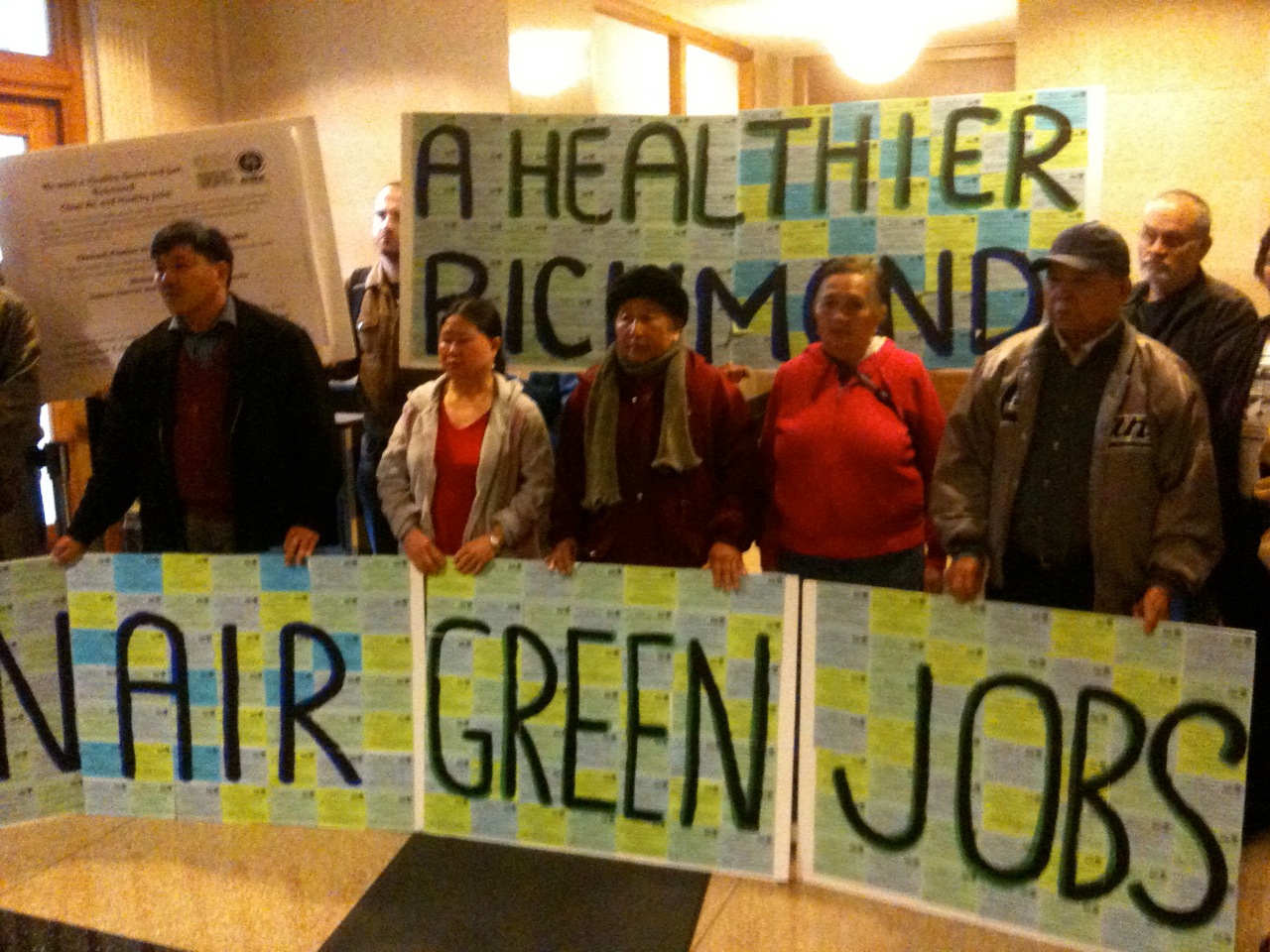
William Rostov, the Earthjustice lawyer who represents three Bay Area environmental groups, broke it down: “The question is: will it be heavier and will that result in more pollution?” He was speaking about crude oil refining at Chevron’s Richmond refinery as he addressed California’s First Appellate Court in San Francisco this morning. Heavier crude oil is usually less expensive for oil companies to purchase but generates more pollution during the refining process.

Environmentalists, labor unions, lawyers and Chevron representatives packed the courtroom to hear opposing counsel spar over the project’s environmental impact report, which was invalidated by a Contra Costa Superior Court judge last June. The ruling stopped the refinery expansion that Richmond has approved.

Chevron attorney Ronald Van Buskirk hammered the point that “the project didn’t propose a crude switch.” When pressed on why Chevron declined to disclose the data behind the conclusion that there would be no switch to heavier grade crude, Van Buskirk countered that the data constituted “trade secrets” that are protected under law.

Rostov argued that “refinery experts showed this project allows the use of heavier crude” and that Chevron “misled the public” in its EIR. A key component of the environmentalists’ argument rests on the 2007 Chevron annual report to the U.S. Securities and Exchange Commission, which specifies that “design and engineering for a project to increase the flexibility to process lower API-gravity crude oils at the company’s Richmond, California, refinery continued in 2007.” API gravity is a measure of how heavy or light petroleum is. Lower API gravity corresponds to a heavier crude oil. But Van Buskirk countered that the plaintiff’s evidence amounted to “one sentence in a 10K report.”

Justice Patricia Sepulveda questioned Van Buskirk about whether the $61 million Community Benefits Agreement that Chevron offered to contribute to the city of Richmond gave the city “bias to approve the project.” But Van Buskirk said, “It wasn’t a quid pro quo, if that’s what you’re suggesting,” before ultimately conceding that it was fair suggest to that the gift had played a role in the approval.

Judge Ignacio Ruvolo presided over Chevron’s appeal. At the end of oral arguments, he spoke to the efforts the court has taken to expedite the case, pressing attorneys on whether there was any chance of a settlement.

“The parties are still very far apart,” said Van Buskirk, and Rostov nodded the same. For the first time all morning, everyone was in agreement.

The court will rule within 90 days.

Music listings

0

Music listings are compiled by Paula Connelly and Cheryl Eddy. Since club life is unpredictable, it’s a good idea to call ahead to confirm bookings and hours. Prices are listed when provided to us. Submit items at listings@sfbg.com.

WEDNESDAY 24

ROCK/BLUES/HIP-HOP

Kasey Anderson, Matthew Ryan, Allen Stone, Andrew Belle Hotel Utah. 8pm, $8.

Foreign Born, Fresh and Onlys, Free Energy, Splinters Rickshaw Stop. 8pm, $14.

Ghost of a Saber Toothed Tiger, Cornelius, If By Yes, Hirotaka Shimizu Independent. 8pm, $20.

Pepi Ginsberg, Pepper Rabbit Hemlock Tavern. 9pm, $7.

Harlem, Sandwitches, Young Prisms Café du Nord. 8pm, $12.

Left Alone, Bum City Saints, Hounds and Harlots Thee Parkside. 8pm, $8.

Richard Thompson Band Great American Music Hall. 8pm, $28.

Rogue Wave, Princeton, Man/Miracle, Two Sheds Bottom of the Hill. 8pm, $15.

Sideshow Fiasco, Kajillion, Illness El Rio. 7pm, $5.

Sioux City Kid, Vandella, Landlords Red Devil Lounge. 8pm, $8.

FOLK/WORLD/COUNTRY

Michael Abraham Jazz Session, Gaucho Amnesia. 8pm, free.

Michael Rose with Dubtronic Kru Rockit Room. 9pm, $25.

DANCE CLUBS

Booty Call Q-Bar, 456 Castro; www.bootycallwednesdays.com. 9pm. Juanita Moore hosts this dance party, featuring DJ Robot Hustle.

Club Shutter Elbo Room. 10pm, $5. Goth with DJs Nako, Omar, and Justin.

Hands Down! Bar on Church. 9pm, free. With DJs Claksaarb, Mykill, and guests spinning indie, electro, house, and bangers.

Jam Wednesday Infusion Lounge. 10pm, free. DJ Slick Dee.

Mary-Go-Round LookOut, 3600 16th St., SF; (415) 431-0306. 10pm, $5. A weekly drag show with hosts Cookie Dough, Pollo Del Mar, and Suppositori Spelling.

RedWine Social Dalva. 9pm-2am, free. DJ TophOne and guests spin outernational funk and get drunk.

Respect Wednesdays End Up. 10pm, $5. Rotating DJs Daddy Rolo, Young Fyah, Irie Dole, I-Vier, Sake One, Serg, and more spinning reggae, dancehall, roots, lovers rock, and mash ups.

Synchronize Il Pirata, 2007 16th St.; (415) 626-2626. 10pm, free. Psychedelic dance music with DJs Helios, Gatto Matto, Psy Lotus, Intergalactoid, and guests.

Yoruba Dance Sessions Bacano! Som., 2925 16th St., SF; (415) 558-8521. 9pm, free. With resident DJ Carlos Mena and guests spinning afro-deep-global-soulful-broken-techhouse.

THURSDAY 25

ROCK/BLUES/HIP-HOP

Dan Black, Free Energy 330 Ritch. 9pm, $10-13.

Curtis Bumpy Coda. 9pm, $7.

Citay, Scout Niblett, Greg Ashley, Tape Deck Mountain Café du Nord. 8pm, $14.

*Cute Lepers, Clorox Girls, Primitivas, Boats! Thee Parkside. 9pm, $8.

Dodos, Magik*Magik Orchestra Palace of Fine Arts, 3301 Lyon, SF; www.ticketmaster.com. 8pm, $25.

Shane Dwight Biscuits and Blues. 8pm, $15.

Far, Stomacher, Picture Atlantic, Trophy Fire Bottom of the Hill. 8pm, $14.

Robert Grashaw Amnesia. 7pm, free.

Bill Kreutzmann with Oteil Burbridge and Scott Murawski Independent. 9pm, $25.

Moe. Fillmore. 8pm, $37.50.

Richard Thompson Band Great American Music Hall. 8pm, $28.

Slow Children, Wobbly and Preshish Moments, Maleficia, Alexandra Buschman Amnesia. 9pm, $5.

Space Monkey Gangstas, RU36, 5 Days Dirty, Release Slim’s. 8:30pm, $13.

*Toasters, Inciters, Monkey Red Devil Lounge. 8pm, $12.

*"Tribute to Johnny Cash" Knockout. 8pm, $10. With Glen Earl Brown Jr., B Stars, Royal Deuces, Big B and His Snake Oil Saviors, and more.

Zaimph, Vodka Soap, Bill Orcutt, Stellar OM Source Hemlock Tavern. 9pm, $7.

Zee Avi, Hot Toddies, Leslie and the Badgers Rickshaw Stop. 8pm, $14.

FOLK/WORLD/COUNTRY

Bluegrass and Old Time Jam Atlas Café. 8pm, free.

DANCE CLUBS

Afrolicious Elbo Room. 9:30pm, $5-6. DJs Pleasuremaker and Señor Oz spin Afrobeat, Tropicália, electro, samba, and funk.

Caribbean Connection Little Baobab, 3388 19th St; 643-3558. 10pm, $3. DJ Stevie B and guests spin reggae, soca, zouk, reggaetón, and more.

Drop the Pressure Underground SF. 6-10pm, free. Electro, house, and datafunk highlight this weekly happy hour.

Ejector DNA Lounge. 9pm, $10. Synthpop with Robot Bomb Shelter and DJs Chris Zachos, Dabecy, and Papa Tony.

Funky Rewind Skylark. 9pm, free. DJ Kung Fu Chris, MAKossa, and rotating guest DJs spin heavy funk breaks, early hip-hop, boogie, and classic Jamaican riddims.

Good Foot Yoruba Dance Sessions Bacano! Som., 2925 16th St., SF; (415) 558-8521. 9pm, free. A James Brown tribute with resident DJs Haylow, A-Ron, and Prince Aries spinning R&B, Hip hop, funk, and soul.

Gymnasium Matador, 10 6th St., SF; (415) 863-4629. 9pm, free. With DJ Violent Vickie and guests spinning electro, hip hop, and disco.

Heat Icon Ultra Lounge. 10pm, free. Hip-hop, R&B, reggae, and soul.

Kick It Bar on Church. 9pm. Hip-hop with DJ Jorge Terez.

Koko Puffs Koko Cocktails, 1060 Geary; 885-4788. 10pm, free. Dubby roots reggae and Jamaican funk from rotating DJs.

La Riots Manor West, 750 Harrison, SF; (415) 407-4565. 10pm, $10.

Mestiza Bollywood Café, 3376 19th St., SF; (415) 970-0362. 10pm, free. Showcasing progressive Latin and global beats with DJ Juan Data.

Peaches Skylark, 10pm, free. With an all female DJ line up featuring Deeandroid, Lady Fingaz, That Girl, and Umami spinning hip hop.

Popscene 330 Rich. 10pm, $10. Rotating DJs spinning indie, Britpop, electro, new wave, and post-punk.

Represent Icon Lounge. 10pm, $5. With Resident DJ Ren the Vinyl Archaeologist and guest.

Solid Club Six. 9pm, $5. With resident DJ Daddy Rolo and rotating DJs Mpenzi, Shortkut, Polo Mo’qz and Fuze spinning roots, reggae, and dancehall.

FRIDAY 26

ROCK/BLUES/HIP-HOP

Atlas Sound, Geographer, Magic Wands, Nice Nice Great American Music Hall. 8pm, $18.

Bikefight, Sopors, Overns, Bobby Joe Ebola Pissed Off Pete’s, 4456 Mission, SF; www.pissedoffpetes.com. 9pm, $5.

Blank Stares, Wild Yaks Hemlock Tavern. 9:30pm, $7.

Rick Estrin and the Night Cats Biscuits and Blues. 8 and 10pm, $20.

Expendables, Iration, Passafire, Pour Habit, Roots Down Below Fillmore. 9pm, $19.50.

Four Tet, Nathan Fake, Rainbow Arabia, NewVillager Independent. 8pm, $18.

Judgement Day, Scissors for Lefty, Ghost and the City, Glaciers Bottom of the Hill. 9pm, $12.

Limousines, Butterfly Bones, Battlehooch Slim’s. 8pm, $14.

*Mumlers, Growlers, Sonny and the Sunsets, Ferocious Few Café du Nord. 8pm, $14.

Notorious, Darkwave Red Devil Lounge. 8pm, $10-20. Benefit for victims of the earthquake in Haiti.

Sons of Doug, Crazy Famous, Scar Pin, West Of Hotel Utah. 9pm, $6.

Thrashers Broadway Studios. 8pm.

John Vanderslice, Nurses, Honeycomb, Conspiracy of Venus Swedish American Hall (upstairs from Café du Nord). 8pm, $15.

JAZZ/NEW MUSIC

Audium 9 1616 Bush, SF; (415) 771-1616. 8:30pm, $15.

David Benoit Yoshi’s San Francisco. 8pm, $28.

Black Market Jazz Orchestra Top of the Mark. 9pm, $10.

Bryan Girard Quartet Cliff House, 1090 Point Lobos, SF; (415) 386-3330. 7pm, free.

Eric Kurtzrock Trio Ana Mandara, Ghirardelli Square, 891 Beach, SF; (415) 771-6800. 8pm, free.

Jim Butler Quartet Savanna Jazz. 8pm, $8.

"Kronos: Music from 4 Fences" Z Space, 450 Florida, SF; www.kronosquartet.org. 8pm, $25.

Joshua Redman Grace Cathedral, 1100 California, SF; www.sfjazz.org. 8pm, $25-50.

FOLK/WORLD/COUNTRY

Dogman Joe, La Gente, Justin Ancheta Elbo Room. 10pm, $10.

Lucky Road Amnesia. 9pm, $5.

Pellejo Seco Cigar Bar and Grill, 850 Montgomery, SF; www.cigarbarandgrill.com. 9pm, $7.

Pickpocket Ensemble Red Poppy Art House. 8pm, $12-$15.

Rob Reich and Craig Ventresco Amnesia. 7pm, free.

Sila presents Sahara Coda. 10pm, $10.

DANCE CLUBS

Activate! Lookout, 3600 16th St; (415) 431-0306. 9pm, $3. Face your demigods and demons at this Red Bull-fueled party.

Bar on Church 9pm. Rotating DJs Zax, Zhaldee, and Nuxx.

Blow Up Rickshaw Stop. 10pm, $10-15. With guests All Leather and Dan Sena.

Bohemian Carnival DNA Lounge. 9pm, $20. With Vau de Vire Society, Gooferman, Gun and Doll Show, DJ Smoove, and more.

Exhale, Fridays Project One Gallery, 251 Rhode Island; (415) 465-2129. 5pm, $5. Happy hour with art, fine food, and music with Vin Sol, King Most, DJ Centipede, and Shane King.

Fat Stack Fridays Koko Cocktails, 1060 Geary, SF; (415) 885-4788. 10pm, free. With rotating DJs Romanowski, B-Love, Tomas, Toph One, and Vinnie Esparza.

Gay Asian Paradise Club Eight, 1151 Folsom, SF; www.eightsf.com. 9pm, $8. Featuring two dance floors playing dance and hip hop, smoking patio, and 2 for 1 drinks before 10pm.

Good Life Fridays Apartment 24, 440 Broadway, SF; (415) 989-3434. 10pm, $10. With DJ Brian spinning hip hop, mashups, and top 40.

Gymnasium Stud. 10pm, $5. With DJs Violent Vickie and guests spinning electro, disco, rap, and 90s dance and featuring performers, gymnastics, jump rope, drink specials, and more.

Hot Chocolate Milk. 9pm, $5. With DJs Big Fat Frog, Chardmo, DuseRock, and more spinning old and new school funk.

House of Voodoo Medici Lounge, 299 9th St, SF; (415) 501-9162. 9pm, $5. With DJs Voodoo and Purgatory spinning goth, industrial, deathrock, and glam.

Look Out Weekend Bambuddha Lounge. 4pm, free. Drink specials, food menu and resident DJs White Girl Lust, Swayzee, Philie Ocean, and more.

M4M Fridays Underground SF. 10pm-2am. Joshua J and Frankie Sharp host this man-tastic party.

Rockabilly Fridays Jay N Bee Club, 2736 20th St., SF; (415) 824-4190. 9pm, free. With DJs Rockin’ Raul, Oakie Oran, Sergio Iglesias, and Tanoa "Samoa Boy" spinning 50s and 60s Doo Wop, Rockabilly, Bop, Jive, and more.

Suite Jesus 111 Minna. 9pm, $20. Beats, dancehall, reggae and local art.

Teenage Dance Craze Party Knockout. 10pm, $3. Teen beat, twisters, and surf tunes with DJs Sergio Iglesias, Russell Quann, and dX the Funky Gran Paw.

SATURDAY 27

ROCK/BLUES/HIP-HOP

!!!, Maus Haus, Sugar and Gold, My First Earthquake Mezzanine. 8pm, $20.

A Band Called Pain, Punk Funk Mob, Sistas in the Pit Pissed Off Pete’s, 4456 Mission, SF; www.pissedoffpetes.com. 9pm, $5.

Black Prairie, Trainwreck Riders, Billy and Dolly Rickshaw Stop. 8pm, $14.

Bitter Mystics, Form of Transport El Rio. 7pm, free.

*Chain and the Gang, Strange Boys, Ty Segall, Nodzzz Elbo Room. 9pm, $10.

Children of the Damned, Hangar 18, Strangers in the Night Red Devil Lounge. 8pm, $10.

Shelby Cobra, Get Dead, Sore Thumbs, New York Ninja Thee Parkside. 9pm, $6.

*Dan the Automator presents Audio Alchemy Yoshi’s San Francisco. 10:30pm, $20. With DJ Qbert, DJ Shortkut, Jazz Mafia All-Stars, and Mars-1.

Dead Souls, Luv ‘n’ Rockets Knockout. 9pm, $8. Joy Division and Love and Rockets tribute bands.

Eyes Speak Treason, Annonimato, Hemorage Thee Parkside. 3pm, free.

*Mark Kozelek, Laura Gibson, Paula Frazer, Fences Great American Music Hall. 8pm, $30.

Memory Tapes, Loquat, Birds and Batteries, Letting Up Despite Great Faults Bottom of the Hill. 9pm, $12.

PEE, True Widow, Ovens, Grass Widow Café du Nord. 8pm, $14.

*Shannon and the Clams, Pharmacy, Rantouls, Bebe McPhereson Hemlock Tavern. 9:30pm, $7.

Soundtrack of Our Lives, Nico Vega, Music for Animals, Imaad Wasif Independent. 8pm, $16.

Super Adventure Club, Blammos, Felsen Hotel Utah. 9pm, $8.

Sweedish, Sean Tabor Band, Blue Natron Kimo’s. 9pm, $8. Benefit for the Red Cross’s relief efforts in Haiti.

Earl Thomas unplugged Biscuits and Blues. 8 and 10pm, $22.

Turbonegra, Grannies, Shootin’ Lucy, Sioux City Pete and the Beggars El Rio. 10pm, $7.

We Were Promised Jetpacks, Lonely Forest, Bear Hands, Tempo No Tempo Slim’s. 8pm, $16.

JAZZ/NEW MUSIC

Al Di Meola’s World Sinfonia Palace of Fine Arts Theatre, 3301 Lyon, SF; www.sfjazz.org. 8pm, $25-65.

Audium 9 1616 Bush, SF; (415) 771-1616. 8:30pm, $15.

David Benoit Yoshi’s San Francisco. 8pm, $28.

Eric Kurtzrock Trio Ana Mandara, Ghirardelli Square, 891 Beach, SF; (415) 771-6800. 8pm, free.

Jazz Mafia presents Remix: Live Coda. 10pm, $10.

Josh Jones Cigar Bar and Grill, 850 Montgomery, SF; www.cigarbarandgrill.com. 9pm, $7.

"Kronos: Music from 4 Fences" Z Space, 450 Florida, SF; www.kronosquartet.org. 8pm, $25.

Ricardo Scales Top of the Mark. 9pm, $15.

Marlena Teich and Pete Yellin Savanna Jazz. 8pm, $8.

FOLK/WORLD/COUNTRY

California Honeydrops Red Poppy Art House. 7:30pm and 9pm, $10-$15.

Karina Denike, Lauren Cameron Klein, Aaron Novik’s Thorny Brocky Amnesia. 6pm, $5. Part of the Songbird Festival.

Killabossa, Mihaly’s Shimmering Leaves, Peace of Mind Orchestra Amnesia. 9pm, $7.

Quinteto Latino Community Music Center, 544 Capp, SF; (415) 647-6015. 8pm, free.

DANCE CLUBS

Area Codes Etiquette Lounge, 1108 Market, SF; (415) 863-3929. 10pm, $10. Celebrating the birthplace of hop hop, New York, with DJs Blaqwest and White Mike.

Bar on Church 9pm. Rotating DJs Foxxee, Joseph Lee, Zhaldee, Mark Andrus, and Niuxx.

Barracuda 111 Minna. 9pm, $5-10. Eclectic 80s music with Djs Damon, Phillie Ocean, VeeJay Satva, and Javier, plus free 80s hair and make-up by professional stylists.

Bootie DNA Lounge. 9pm, $6-12. Mash-ups with Adrian, Mysterious D, and more.

Dead After Dark Knockout. 6-9pm, free. With DJ Touchy Feely.

Fog City Wrestling DNA Lounge. 1:30pm, $5. Live wrestling show.

Go Bang! Deco SF, 510 Larkin St; (415) 346-2025. 9pm, $5. Recreating the diversity and freedom of the 70’s/ 80’s disco nightlife with DJs Stanley Frank, Steve Fabus, Nicky B., Sergio and more.

HYP Club Eight, 1151 Folsom, SF; www.eightsf.com. 10pm, free. Gay and lesbian hip hop party, featuring DJs spinning the newest in the top 40s hip hop and hyphy.

M.A.N.D.Y. Paradise Lounge. 9pm, $12.

Reggae Gold Club Six. 9pm, $15. With DJs Daddy Rolo, Polo Mo’qz, Tesfa, Serg, and Fuze spinning reggae, dancehall, and remixes.

Social Club LookOut, 3600 16th St., SF; (415) 431-0306. 9pm. Shake your money maker with DJs Lee Decker and Luke Fry.

Spirit Fingers Sessions 330 Ritch. 9pm, free. With DJ Morse Code and live guest performances.

SUNDAY 28

ROCK/BLUES/HIP-HOP

*Cannabis Corpse, Stormcrow, Voetsek, Wasteoid, Sorrower Thee Parkside. 8:30pm, $8.

Crack Sparkle El Rio. 5pm, free.

Evan Dando, Milo Jones Café du Nord. 8pm, $16.

Dizzy Balloon, Hounds Below, Visqueen, Laarks Bottom of the Hill. 1pm, $12.

Heel Draggers Thee Parkside. 4pm, free.

Valerie Orth, Theresa Perez, London Street Red Devil Lounge. 8pm, $10. Benefit for Partners in Health’s efforts to aid victims of the earthquake in Haiti.

"School of Rock Alumni Present: Haitian Relief Benefit" Café du Nord. 1pm, $15.

Edward Sharpe and the Magnetic Zeros, Watson Twins, A B and the Sea, Northern Key Bimbo’s 365 Club. 7:30pm, $22.

Chantelle Tibbs, Emily Bonn, Sirens El Rio. 7pm, $5.

FOLK/WORLD/COUNTRY

Heather Klein’s Inextinguishable Trio Red Poppy Art House. 7pm, $12-$15.

Latin Jazz Youth Ensemble of SF, Sandy Cressman and Sombra y Luz, Ray Obiedo and Mamba Caribe, Bay Area Latin Jazz All-Stars Pier 23. 3pm, $25. Proceeds to benefit Sionfonds for Haiti.

Orchestra Nostalgico, Tango No. 9 Amnesia. 8pm, $8-$10.

DANCE CLUBS

DiscoFunk Mashups Cat Club. 10pm, free. House and 70’s music.

Dub Mission Elbo Room. 9pm, $6. Dub, roots, and classic dancehall with DJ Sep, Maneesh the Twister, and guest Antiserum.

45 Club Knockout. 10pm, free. The funky side of soul with DJs dX the Funky Grandpaw, Dirty Dishes, and English Steve.

Gloss Sundays Trigger, 2344 Market, SF; (415) 551-CLUB. 7pm. With DJ Hawthorne spinning house, funk, soul, retro, and disco.

Good Clean Fun LookOut, 3600 16th St., SF; (415) 431-0306. 3pm, $2. With drink specials, DJs and tasty food.

Honey Soundsystem Paradise Lounge. 8pm-2am. "Dance floor for dancers – sound system for lovers." Got that?

Jock! Lookout, 3600 16th; 431-0306. 3pm, $2. This high-energy party raises money for LGBT sports teams.

Kick It Bar on Church. 9pm. Hip-hop with DJ Zax.

Religion Bar on Church. 3pm. With DJ Nikita.

Stag AsiaSF. 6pm, $5. Gay bachelor parties are the target demo of this weekly erotic tea dance.

MONDAY 1

ROCK/BLUES/HIP-HOP

*Magnetic Fields, Mark Eitzel Herbst Theatre, 401 Van Ness, SF; www.ticketmaster.com. 8pm, $32.50.

DANCE CLUBS

Bacano! Som., 2925 16th St., SF; (415) 558-8521. 9pm, free. With resident DJs El Kool Kyle and Santero spinning Latin music.

Black Gold Koko Cocktails, 1060 Geary; 885-4788. 10pm-2am, free. Senator Soul spins Detroit soul, Motown, New Orleans R&B, and more — all on 45!

Death Guild DNA Lounge. 9:30pm, $3-5. Gothic, industrial, and synthpop with Decay, Joe Radio, and Melting Girl.

Dressed in Black Elbo Room. 10pm, $5. Music from the shadows with DJs Deathboy and Fact.50.

King of Beats Tunnel Top. 10pm. DJs J-Roca and Kool Karlo spinning reggae, electro, boogie, funk, 90’s hip hop, and more.

M.O.M. Madrone Art Bar. 6pm, free. With DJ Gordo Cabeza and guests playing all Motown every Monday.

Manic Mondays Bar on Church. 9pm. Drink 80-cent cosmos with Djs Mark Andrus and Dangerous Dan.

Monster Show Underground SF. 10pm, $5. Cookie Dough and DJ MC2 make Mondays worth dancing about, with a killer drag show at 11pm.

Network Mondays Azul Lounge, One Tillman Pl; www.inhousetalent.com. 9pm, $5. Hip-hop, R&B, and spoken word open mic, plus featured performers.

Spliff Sessions Tunnel Top. 10pm, free. DJs MAKossa, Kung Fu Chris, and C. Moore spin funk, soul, reggae, hip-hop, and psychedelia on vinyl.

TUESDAY 2

ROCK/BLUES/HIP-HOP

Fat Tuesday Band Biscuits and Blues. 8pm, $15.

Hold Up, Jhameel, Midnight Sun Bottom of the Hill. 9pm, $8.

Inner Ear Brigade, George Hurd Ensemble, William S. Braintree Elbo Room. 9pm, $6.

Lunar Sway, Selena Garcia, See Green Red Devil Lounge. 8pm, $7.

Taken By Trees, El Perro Del Mar Café du Nord. 9pm, $15.

Unko Atama, Started-Its, Custom Kicks Knockout. 9:30pm, free.

DANCE CLUBS

Alcoholocaust Presents Argus Lounge. 9pm, free. With DJs What’s His Fuck, Taypoleon, and Mackiveli.

Eclectic Company Skylark, 9pm, free. DJs Tones and Jaybee spin old school hip hop, bass, dub, glitch, and electro.

La Escuelita Pisco Lounge, 1817 Market, SF; (415) 874-9951. 7pm, free. DJ Juan Data spinning gay-friendly, Latino sing-alongs but no salsa or reggaeton.

Rock Out Karaoke! Amnesia. 7:30pm. With Glenny Kravitz.

Share the Love Trigger, 2344 Market, SF; (415) 551-CLUB. 5pm, free. With DJ Pam Hubbuck spinning house.

Womanizer Bar on Church. 9pm. With DJ Nuxx.

Economy vs. environment

0


By Adam Lesser

news@sfbg.com

GREEN CITY The Port of Oakland has long been a battleground that pits economic development against environmental justice, a dichotomy that has become all the more fraught with emotional baggage during the current recession.

For years, West Oakland residents, environmentalists, and public health officials have demanded that government officials do something about the long lines of old, idling diesel trucks that spew toxic emissions that have sickened the surrounding community (see “The polluting Port,” 3/24/09).

When the state finally mandated expensive retrofits of the oldest trucks at the start of this year, truckers and their allies reacted angrily to what they called a job-killing regulation. But rather than viewing such fights in isolation, a new Bay Area movement is seeking to broaden the debates within what it labels the “toxic triangle” extending from the Port of Oakland to San Francisco’s Bayview-Hunters Point to the city of Richmond.

Citing concern for how to effectively address the cumulative impact of pollution, community groups including the West Oakland Environmental Indicators Project and Asian Pacific Environmental Network are sponsoring the Toxic Triangle Hearings. The first hearing was held Feb. 13 in Oakland; the next two hearings will take place later this year in the other two triangle points.

At the first hearing, supporters introduced their cumulative impact pledge, a request that agencies ranging from the Environmental Protection Agency to the California Air Resources Board work together to define emission limits for an entire area and to collectively adopt reduction strategies. The ultimate goal is an environmental justice ordinance that would require any new project to receive an “EJ permit” before a proposed project was allowed to move forward.

The city of Cincinnati approved a similar system last June, but it was put on hold this month due to concerns about the cost of implementing it during these hard economic times. The delay in Cincinnati points to an emerging theme in the narrative from lawmakers and corporations. With high unemployment and huge government budget deficits, can we afford to further regulate pollution?

California Assembly Member Nancy Skinner, who represents Richmond, was on hand at the Toxic Triangle Hearings. Questions arose about the ongoing legal battle between community groups and Chevron, which wants to expand its Richmond refinery. The refinery is the largest in Northern California, with a capacity of 240,000 barrels of crude oil per day.

The retrofit is on hold after a court rejected the project’s EIR, asking Chevron to clarify whether the expanded refinery would process heavy crude oil, which generates more pollution. A Jan. 19 editorial in the Contra Costa Times made the pro-business argument, claiming that Chevron “is poised to shut down its Richmond refinery operations” and laying blame on environmentalists.

“All we know is that the Chevron people have talked of change — there’s been a shift,” Skinner said. “They’re looking at all their North American operations. That doesn’t mean we just roll over. But it means that we have to be aware of that when we sit at the table.”

But environmentalists question whether closing the Richmond refinery is a realistic threat from Chevron, or merely a negotiating tactic. “There is no credible scenario in which this refinery will close anytime soon for business reasons,” said Greg Karras, a senior scientist for Communities for a Better Environment. “The issue is whether Chevron can move to heavier oil and whether they have to disclose that. It has nothing to do with jobs.”

The Toxic Triangle Hearings highlight this perceived conflict between the economy and the environment. But Karras called the dichotomy a “false choice,” arguing that the greatest potential for job growth lies in innovation and green jobs, not a refinery expansion.

APEN’s State Organizing Director Mari Rose Taruc agreed: “We want people to have jobs and make it out of the recession. But we’re not going to trade our health and the ailing conditions of our community for something worse.”

Taruc sounded frustrated, similar to the tone Karras expressed when faced with the question of the economic impact of environmental regulation. For now, she said the rationale for delay is the recession, but “when the economy is good, there would be another excuse.”

All about Amazon Eve

16

culture@sfbg.com

SEX Leg, leg, and more leg — the 6-foot, 8-inch model Amazon Eve is one tall glass of water who’s become the drink of choice for an entire population of men. Thirsting for a romp with the busty blonde, Amazon fetish lovers beg Eve to throw them around, hold them like a baby, and dominate their puny bodies. There’s no sex and no nudity, just some good ol’ fashioned rough-housing with a giant, hot chick.

“I pick up guys for a living — it’s the oddest job in the world. And I love it,” she says.

Originally from Oakland and currently in the midst of a worldwide tour packed with interviews, photo shoots, and client visits that leave her exhausted, bruised, and totally stoked, the imposing Eve met me at the San Francisco Museum of Modern Art for a quick tour of the gallery — and an explanation of what it means to be an Amazon woman.

I immediately spotted her at a table in the back of the museum’s cafe. Her elongated arm reached out and to my surprise, offered one of those dainty-lady, totally limp handshakes. All that talk about warriors and power must be reserved for impressing dudes. But then she stood up, immediately grabbing the attention of patrons and towering over my 5’6″ frame. She pointed at her feet. “I finally got a pair of Uggs! I could never find my size until I went to Australia,” she gushes, beaming. People, this Amazon wears a size 14.

We cruised through SFMOMA’s extensive “75 Years of Looking Forward” anniversary exhibit, her shoulders nearly grazing the tops of several large sculptures, and eventually found a bench in a room full of 1950s typewriters to sit on and talk. A strange place for a chat with this kind of working girl, but Eve paid no mind and busted out the November 2009 issue of Australia’s Zoo Weekly. In a feat of obvious yet still striking incongruity, she’s featured on the cover next to a 5-foot, 1-inch model. With huge perky breasts, flat abs, and those neverending limbs, Eve looks like an oversized Playboy cardboard cutout any Midwestern man would love to have in his garage.

“I’m owning the fact that I’m no longer an ugly duckling,” she said, flipping her long hair over her broad shoulders.

amazon eve

Amazon, with art. Photo by Amber Schadewald

After majoring in theater in college, Eve worked as a paralegal, but the position drained her creativity and added the pounds. Looking for a way out, she started an ambitious workout regime, telling herself, “Supermodel or bust!” Quickly, however, she grasped that she would never achieve runway-thin frailty. “I can never be small and I can never be weak,” she said.

So she became a personal trainer. At the gym, she was introduced to a woman working as a pro domme. She tried it herself, “But I quickly realized that I didn’t want to wear that skimpy leather costume. I don’t like floggers, whips, and cuffs. So I started taking martial arts and wrestling classes and finding my own fetish niche.”

Now, 80 percent of Eve’s sessions are spent lifting and carrying her male clients, or performing a series of height comparisons. The other 20 percent are played out with wrestling, boxing, and physical domination. Typically her clients are “small” guys (less than 5-feet, 8 inches) who are educated, professional, and located all over the world. They often pay for her to fly to them. When she walks into the room, they bow. “Amazon women like me are rare, and the guys who like us are plentiful. It’s like a built-in celebrity.”

Most often her sessions revolve around a theme, from the naughty schoolgirl to the cowgirl who knows how to hogtie. She’s held a powerful oil executive in her arms while he muttered “Mommy, mommy!” She’s wrestled with her legs tied together with a paralyzed Danish man. And her next hurdle: wrestling a 465-pound professional wrestler in Dallas. “I need to start training immediately,” she said. “He wants me to perform a very particular scissor move, so it’s my job to figure out how to get my legs around him.”

At $400 per hour, it seems crazy that guys would spend such a large amount of cash without the promise of a “big finish.” But Eve reminds me that fetishes aren’t necessarily sexual: “Fetish is about a heightened sense of awareness and sexual stimuli, not necessarily sexual acts themselves.”

Our tour of the museum is cut short so Eve can make it to a session with a new client. She pulled me in for a hug, my face pressed directly into her soft breasts. I immediately understand why little guys like Eve.

And off to work she goes — extra-large schoolgirl outfit in her purse.

Tuba

0

A score or so years ago, the corner of 22nd and Guerrero streets was one of the gastronomic hotspots of the city. (A score, as we will all recall from our civics class parsings of Lincoln’s Gettysburg Address, is 20 years.) On one corner stood, from 1989, Arnold Tordjman’s eclectic and imaginative Flying Saucer, replete with neon flying saucers in the windows, while across the street was Robert Reynolds’ Le Trou, which from the early 1980s offered a monthly rotation of regional French cooking. By the early 1990s, a glam trattoria called Mangiafuoco completed the triad.

But these sorts of convergences, like all magic, tend not to last too long. A city’s tectonic plates shift. Both Flying Saucer and Mangiafuoco vanished shortly after the turn of the millennium, becoming (respectively) Tao Café, a handsome Vietnamese restaurant, and (after some throat-clearing) La Provence, a handsome Provençal restaurant. These successors are good restaurants, but they are not as compelling as the restaurants they replaced.

Nowhere is this shift more apparent than in the Le Trou space. The first successor was the Moa Room, which served New Zealander food. Then came the dot-com edition of NeO, with its white walls, white tables, white everything — it was like being inside the sperm scene from Woody Allen’s movie Everything You Always Wanted to Know About Sex. All-white was evidently a bit much, for NeO was soon reinvented along Day Glo-Cubist lines before vanishing altogether. It was briefly succeeded by a good Indian restaurant whose owner ended up moving to Dallas, but not before painting the walls red, and those red walls constitute part of the inheritance of what is now a Turkish enterprise called Tuba.

Tuba opened early in the new year and is already packing them in. In a flaccid economy, it’s good to see any small business thriving, but Tuba, like its many predecessors, isn’t laid out to accommodate a crush of patrons. There is no host’s station or waiting area at the front; instead the door opens to rows of tables on either side and a clear if narrow path to the bar at the rear, where the staff congregates. On a crowded night, you might make it all the way back there before bumping into the host.

Why the big crowds? Part of the reason must be that the neighborhood, once edgy, is now well-to-do, and the array of restaurants (there’s also a nice sushi spot just a few doors down) draws strollers who scan posted menus. If this place doesn’t appeal, walk a few steps to that one or — in the extreme — cross the street. Tuba’s prices are also gentle; even the menu’s highest peaks scarcely rise to the mid-teens.

Then there’s the draw of the Turkish food itself. It’s Mediterranean, and eastern Mediterranean, with obvious affinities for the neighboring cuisines of Greece, Lebanon, and the Arab Middle East. It suggests simplicity, honesty, healthfulness; there is plenty of yogurt, lamb, and eggplant. At the same time, it has its own character and distinctive dishes.

The signature Turkish specialty in America might be sigara boregi ($7), cigar-like phyllo flutes filled with feta cheese and some spinach and deep-fried to a delicate, flaky crispness. When fresh, as at Tuba, their texture is wonderful; the cylinders are like edible (and still slightly molten) gold. But I found the feta’s assertiveness and saltiness to be near the border of acceptability, even as softened by the spinach. They’re also incredibly rich, which is a factor you have to weigh in relation to the fabulous round loaves of warm, focaccia-like bread you’re brought at the outset and might have trouble resisting. (The bread, unlike focaccia, contains no oil, our server told me. But it’s just as pillowy.)

White bean salads are common throughout the Mediterranean. Tuba’s is called piyaz ($6), and is heartily spiked with garlic, lemon, and parsley. Then there is the baked eggplant casserole musakka ($13) — layers of eggplant and potato dressed with cheese, a spicy tomato sauce, and béchamel sauce. Many of us probably think of this as a Greek dish while tending to forget that Greece was the subject of a hostile takeover by Turkey for several centuries.

Among the most appealing of the larger courses is beyti ($14), a flatbread rolled into a cylinder around a filling of spiced ground beef and lamb, sliced into disks and plated with yogurt and spicy tomato sauce. It’s very shareable, so don’t be shocked if others at your table score their fair share.

TUBA

Dinner: Sun.-Thurs., 5–10 p.m.; Fri.-Sat., 5-11 p.m.

1007 Guerrero, SF

(415) 826-8822

Alcohol pending

AE/MC/V

Noisy

Wheelchair accessible

Gavin watch: The Lt. Gov. rumors

14

The rumors that Newsom is going to announce imminently that he’s running for Lt. Governor turned out to be a bit premature.

But I am still hearing from very solid sources that he’s seriously considering jumping into the race — and while the San Francisco left didn’t back his run for governor, this would be a very different campaign. The Lt. Gov. isn’t really in charge of anything, but has a certain amount of power, not just from the platform and the ability to issue press statements (one of Newsom’s favorite hobbies), but because that person gets a seat on the state Lands Commission (offshore oil drilling) and the U.C. Regents (education cuts). Newsom would most likely be fine on both issues.

And the truth is, we all know Newsom doesn’t really want to be a wine clerk.

And lieutenant governors are often well positioned to move on to higher offices it worked for John Kerry, for example (and for Gray Davis, if you call that working). I think Newsom would love to position himself to run for U.S. Senate when Dianne Feinstein, who will be 79 when her current term expires in 2012, decides to retire.

And, of course, from the perspective of progressives infuriated with what he’s done as mayor, it would get him out of town a year early, and let this district-elected board appoint a new chief executive.

That’s got all sorts of talk started, with the typical Chronicle-style “Oh My God Aaron Peskin could be mayor” stuff (and let’s be serious — Peskin would be a way better mayor than the current occupant of Room 200) to serious discussion about how this will affect the 2011 mayor’s race.

If any of the current contenders could round up six votes, it would be a major boost; that person could then run as an incumbent.

I don’t think this board would ever choose state Sen. Leland Yee, who is positioning himself for the run. City Attorney Dennis Herrera? Maybe — but given how pissed some of the progressives are about the Sanctuary Ordiance, it would be a stretch.

Sfist is running a poll, and right now it looks like the readers like Ross Mirkarimi but think Peskin or David Chiu is a more likely winner.

And trust me, even the thought of Gavin leading town has that scramble already heating up.


Join the Orchid and Hound fan club

0

I hate to be objectifying, but journalistic integrity be damned- Orchid and Hound are damn good looking. The queer pop duo, comprised of satyr-esque John Constantine and the coyly shaggy Lawrence Alarcon, were also charming and beautifully turned out when I met them for drinks the other night- and, of course, they are brilliant onstage. Their upcoming show at The Blue Macaw (Thur/11) promises to look a lot like what would happen if High School Musical came out of the closet, hired a better stylist and started partying. So you’re going to have to excuse me if the following article starts to sound like Tiger Beat at times. I’m a little smitten, so shoot me.

This is what you will see at an Orchid and Hound show. Lawrence Alarcon will bang out lovely up and down tunes on his piano, while John Constantine provides jazzy vocals that ease over here to a sound reminiscent of Broadway, then smooth down there to recall a smoky lounge somewhere in Vegas. They’ve dubbed it “queer pop”- a highly listenable, intimate little cabaret. “We like to think of ‘queer’ as ‘different,’ like melodrama,” says Constantine of their sound.

But you’re not going to hear the typical “where ya from” one liners and “waitress, get me another drink” admonitions at O & H shows- you know, the typical lounge standards. “I suck at banter,” says Constantine. “He rambles,” offers Alarcon. Perhaps it’s for the best- the pared down nature of Orchid and Hound makes it a little easier to focus on, you know, the music. “It’s just a show where you shut up and listen,” Constantine says (“ideally,” adds Alcarcon).

The sound the two put out is lighthearted, the piano rhythms and Constantine’s voice bouncy, even. But their lyrics are expressions of a life as a pretty 23 year old in the Castro- a life can prove more complicated upon closer inspection. “I find inspiration in the dialogues I have with the people around me,” says Alarcon, who penned one song for O & H born of a conversation he had with his boyfriend about nothing less than the end of the world. “We were talking about the Mayan prophecies for 2012, but my boyfriend’s a scientist. He was more concerned about 2013, when the oil crisis is set to hit.” Alarcon turns to Constantine, pondering the difference between their songwriting styles, finally hitting on the pith of the issue. “John’s more angsty, more metaphorical.” Ooo… angsty!

“I like to sing about the human condition,” says Constantine, picking up Alaron’s musings. One of John’s songs, ‘Sabotage,’ is a catchy dirge that hinges on a theme familiar to most dashing rock stars; self destruction. “[‘Sabotage’] is about that daily battle you have with the destructive side of yourself, that you live with but must control,” says Constantine, toying earnestly with the stem of his cocktail. To date, their audience favorite is “The Drinking Song”, a depraved little interactive ditty whose success amuses Alarcon. “Who knew our most disturbing song would turn out to be our most popular?” 

“Who knew our most disturbing song would turn out to be our most popular?” Photo by Erik Anderson

So back to our bar date (because that’s what I’m calling it, so there!) The two have a knack for finishing each other’s sentences, and where Lawrence can be artistically reticent, John is more than happy to tell me about the origin of O&H. Herein lies the duo’s sychronicity; they’ve known each other “since forever,” growing up best friends at an arts high school in Los Angeles. John and Lawrence even dated each other for three years, during which they moved up to SF into a shared apartment- where they live to this day, despite having subsequently broken up, moved on… and formed a band. When asked how this is earthly possible, they smile sweetly at each other as though nothing could have been easier. “It was rough, but we’re much more productive now- minus the sex,” says Constantine. “We would have killed each other if we’d kept dating.”

Though the two first collaborated on musical compositions for an installation artist in LA, John and Lawrence only just formed their current act last year. They can still tell you how many live shows they’ve had; a sprightly “twelve!”- blurted out in unison, of course. “We don’t fuck up that much though,” says Constantine with a winning smile. “The one time we noticeably fucked up, someone told me ‘it was cute when you fucked up,’ so I guess that’s good.” 

So what does 2010 hold for these darlings, who are still unsigned to a label as of press time? Well, besides the trail of broken hearts and rehearsal hours they’re working on a studio album and recently announced their gig at this year’s South by Southwest festival. And then? Says Constantine “We’ve planted a lot of seeds, we just have to water them all.” Somebody hand these boys a hose- the world hearts Orchid and Hound.


Orchid and Hound w/ Audrey Ryan & Il Gato

Thur/11 8 p.m., $5

The Blue Macaw

2565 Mission, SF

(415) 920-0577

www.thebluemacawsf.com

To S.I.R. With Love

0

By Elise-Marie Brown

S.I.R.’s Noa at work. All photos by Elise-Marie Brown

I’ve been to a fair number of art openings, and many consist of a DJ mixing music as people sip drinks and converse about why they like a particular piece of work. Now, don’t get me wrong: art events are a cheap and easy way to meet people, support local talent, and occasionally score some free booze. But sometimes you need more of an incentive to go out.

By Elise-Marie Brown

noa2.jpg
S.I.R.’s Noa at work. All photos by Elise-Marie Brown

I’ve been to a fair number of art openings, and many consist of a DJ mixing music as people sip drinks and converse about why they like a particular piece of work. Now, don’t get me wrong: art events are a cheap and easy way to meet people, support local talent, and occasionally score some free booze. But sometimes you need more of an incentive to go out.

Enter S.I.R. (Surreality in Reality), a Japanese art crew residing in the San Francisco Bay area that aims to bridge cultures through different mediums and live art performances. “Four Elements Vol. 3土 –Earth-” is their latest exhibition, the third installment of an elements of nature series (past exhibits incorporated water and fire).

pineapple.jpg
The Pineapple, The Pineapple Stool and the Soil Girls, by Koji Nagao

The smell of smoke and sounds of laughter floated around Space Gallery‘s front entrance on opening night. Once I entered the small building, it was replaced by ’90s hip-hop and the aroma of Red Stripe beer. The walls showcased photos printed on seed paper, oil and watercolor paintings, silk-screened graphic art, and sculptures. 

One piece that caught my attention was a wooden box with 10 handcrafted dolls placed on top, titled The Pineapple, The Pineapple Stool and the Soil Girls, by Koji Nagao. When I first glanced at it I assumed the box was used as a prop for the dolls. But after observing for a minute, I noticed a little hole to the left where I could peek through and see what was inside: a bright light with moving images, and to my surprise, a stop-motion video that incorporated the same dolls.

yusai.jpg
zaion.jpg
Yusai and Zaion of S.I.R.

After checking out the first floor, I moved upstairs, where the music and conversation was louder. Yusai, a man in a baseball cap and red flannel shirt, spun records, as Zaion synthesized music on his laptop.

noa.jpg
Noa’s art takes form

At the top of the narrow stairway a tall man by the name of Noa faced a large wall covered in brown paper. Wearing paint-stained jeans and a white T-shirt, he walked across the floor in his bare feet, leaned down to the ground, and dipped a thick brush in a can of black paint. With a look of deep concentration he painted large swirls on the paper. After a few minutes the shapes of an elephant, rhinoceros, fox, and tiger began to take form from the previously indecipherable elegant images. Look closely — S.I.R. has something unique to offer the art world.


Trash Lit: Things are weird around ‘Mariposa’

0

Editor’s note: Guardian Executive Editor Tim Redmond has a bad 30-year addiction to mystery/crime/thriller books. He’s decided that he may as well put this terrible habit to productive use by writing about these sometimes awful, sometimes entertaining and — on rare occasion — significant works of mass-market literature. Read his last installment here

mariposa.jpg

Mariposa
By Greg Bear
(Vanguard Press, 340 pages, $25.95)

By Tim Redmond

Good science fiction has a moral, of sorts. Frank Herbert wrote about the scary power of a charismatic leader. Robert Heinlein gave us the fun of free love and the lie of religion. William Gibson outlined the weird dangers of a digital society. My favorite sci-fi movie ever, RoboCop (1987), was all about the perils of privatizing public services.

Mariposa is part science fiction and part action thriller, and the mix works. I liked this book a lot – it’s got creepy tech advances — digital storage devices that dissolve in your blood; tattoos that allow you to exchange information by skin-to-skin contact; monitoring chips that follow your every move; roller bots; a new drug that makes you a near-legendary fighter and totally fucks up your brain – as well as a message that’s eerily relevant.

Mariposa‘s opening is bizarre. The first chapter seduces you in a way that reminds me of Neuromancer. It’s the second decade of the 21st century. Oil prices have collapsed, destabilizing much of the Middle East. The United States is $30 trillion in debt and the president has had to accept IMF-style international receivership. “And it’s all our fault,” one character notes. “We do hate paying taxes, and we do love our government services.”

And the news media? “The dwindling national press – those journalists who still worked for networks or newspapers or the five prime news sites and could afford to travel rather than just sit in front of a screen and suck coffee and pontificate on what others saw and wrote – was as worn out and discouraged as the rest of the nation.”

Most of Texas is no longer under effective federal control. The FBI is in the process of being dismantled.The real, emerging power in the nation, and perhaps soon the world, is the head of a giant private security company that got rich off military contracts. In fact, he’s trying to prove how powerful he is by orchestrating the death sentence of a 15-year-old kid who has the misfortune to be the son of a federal agent.

Into this nightmare step a handful of still-loyal FBI operatives working directly for the dying president, who has been shot with a bullet laced with deadly engineered proteins. They’re trying to rescue a deep cover agent planted in the Talos Corporation — someone who is trying to sneak the explosive data in the company’s files out of a tightly controlled compound. They’re also out to save the 15-year-old’s life before the Texas corrections system, which pretty much reports to Talos, gets to stick him with a lethal injection.

Syntobe proteins that turn Coca Cola syrup into bombs. Desert car chase with hellfire missiles in drone planes. Robot snakes retrieving blood laced with digital downloads. Slightly lame FBI sex. Wicked drug-addled martial arts fighting. A hero who fights off powerful sedatives to take out six guys with a pole ax. I have to say: This one goes down as one of the best action books of the last year.

Building the movement

2

Frustrated by deep cuts to education spending and quality, momentum is building across California in support of the “Strike and Day of Action to Defend Public Education” on March 4.

Students, laborers, and faculty throughout the University of California system are trying to expand on last semester’s organizing efforts by strengthening ties to groups from all tiers of the public education system. But questions linger about the best way to proceed and what exactly the event should look like.

“I think that the regents and [UC President Mark] Yudof are very fearful of what would happen if the students and workers united. They could be unstoppable,” said Bob Samuels, president of the University Council-American Federation of Teachers (UC-AFT).

That collaboration is exactly what many grassroots organizers are hoping to achieve, although their central message is not limited to participants in the UC system alone. They argue that fee increases and cutbacks at the universities are symptomatic of a greater problem, namely the denigration of free and low-cost public education.

“This emerged as a movement of students and workers at the university level. What we’re doing now is going beyond the UCs,” said Blanca Misse, a graduate student and member of the Student Worker Action Team (SWAT).

By reaching out to members of preschool, K-12 public school, community college, and California State University communities, organizers hope to turn March 4 into a rallying moment for the entire public education system in the state. Organizers also want to ensure that the UC system isn’t funded at the expense of other institutions of public learning.

“We need to be fighting for money and political power,” Misse added. “The committees need to mobilize all of the fighting sectors and show them our strength.”

At the Jan. 17 meeting of the Berkeley March 4 organizing committee, one of many ad hoc groups set up across the state, a gathering of about 35 union members, graduate students, community activists, and undergraduates discussed what the day should look like locally. They also reported back on their attempts at organizing the local community, including garnering union support and reaching out to high school students.

Javier Garay noted that at a meeting of the Oakland Education Association, a union of public school workers, “89 percent of the nearly 800 attendees voted in solidarity with the March 4 Day of Action, possibly including a strike.”

Yet the most heated discussions centered on how to unite the interests and power of the university population behind the broader fight for public education funding.

During the meeting, Tanya Smith, president of the local chapter of the University Professional and Technical Employees union (UPTE), stressed the importance of “not being an ivory tower” by extending activism “beyond Berkeley’s campus and reaching out to the political center in Oakland.”

Student activist Nick Palmquist, a fourth-year development studies student at UC Berkeley, admitted that the “tuition issue” is a big motivating factor for college students. At the same time, he noted, “Students have a lot of potential to see the bigger picture. We’re trying to expand the consciousness of the movement.”

That movement stretches back to the beginning of the school year, when students realized that Yudof and the Board of Regents were planning on making up for the $814 million budget cut from 2008-09 and the additional $637 million cut in 2009-10 with layoffs, furloughs, and a possible fee hike.

On Sept. 24, 2009, groups organized strikes and walkouts across the University of California system, including an estimated 5,000-person protest in the legendary Sproul Plaza at UC Berkeley.

Exactly one month later, several hundred people gathered on the Berkeley campus for the Mobilizing Conference to Save Public Education. According to the invitation, the purpose of the conference was “to democratically decide on a statewide action plan capable of winning this struggle, which will define the future of public education in this state, particularly for the working-class and communities of color.”

After an intense day of discussion, the body voted to establish March 4 as a “statewide strike and day of action.” Though it remains unclear how the different interests would come together (the call left demands and tactics open for debate), the message was clear: to save public education, diverse groups need to stand together cohesively.

Tensions escalated dramatically in November when the regents approved a 32 percent fee increase. At UCLA, where the regents held the meeting, an estimated 2,000 students gathered in demonstration and protest.

UC Berkeley student Isaac Miller told the Guardian, “I think we left there feeling like even though the fee increase went through, this is a long-term fight. It was really empowering to connect to students from all over the UC community.”

Meanwhile, a three-day protest at UC Berkeley culminated in a day-long occupation of Wheeler Hall on Nov. 20. As the protesters outside multiplied in support of the occupiers, they expressed solidarity with their causes as well as anger at the fee hike.

Callie Maidhof, a graduate student and spokesperson for the occupiers, said at the time, “One of the reasons behind this particular action is that students realized that not only is the state an unreliable partner, so is the administration. The only thing students can do at this point is reach out to each other.”

Maidhof was referring to a frequently repeated refrain from the regents and Yudof: “The state is an unreliable partner.” They argue that their hands are tied by the budget shortfall and the UC system has to figure out ways to sustain itself apart from increasingly erratic state funding. “The message is if the state fixes the budget, all our problems will be over,” said Mike Rotkin, mayor of Santa Cruz and a former lecturer at UC Santa Cruz.

So when a Jan. 21 San Francisco Chronicle article (“Regents to Back UC Students’ Protest at Capitol”) reported that the regents and Yudof agreed to stand alongside the students in Sacramento on the March 4 Day of Action, many were shocked and angered. “This is a complete turn-around for them,” Palmquist said. “They were never in support of our efforts. But now they feel threatened and they also feel like they can capitalize on them.”

In an open-letter response, several unions wrote back: “This is a cynical publicity stunt, and we do not buy it.”

Victor Sanchez, president of the UC Students Association (UCSA), said the article misrepresented what Yudof and the Regents said. “The regents and Yudof agreed to participate with students on a separate March 1 day of activism, not March 4,” he said. Calls and e-mail to Yudof’s office to confirm were unreturned at press time.

Sanchez explained that the March 1 activities are the culmination of UCSA’s annual Student Lobbying Conference, which takes place in Sacramento from Feb. 28–March 1. Its actions focus primarily on lobbying the Legislature. That approach is more in tune with the administration’s message that the problem lies in Sacramento.

UCSA’s demands include increasing funding for higher education by $1 billion, creating alternative sources of revenue through comprehensive prison reform, preserving the California grant program, and passing Assembly Bill 656.

Sponsored by Assembly Majority Leader Alberto Torrico (D-Fremont), AB 656 would place a severance tax on oil companies and divert revenues toward higher education. “It is strategic for us to focus resources in Sacramento, because that’s where the negotiations are happening,” Sanchez said. “But we also understand that we’re fighting a two-front war and need to hold both the Legislature and the administration responsible.

“At the end of the day, it is our event and our day of action,” he continued. “We made it clear we aren’t going to change our demands. We stand in solidarity with the March 4 organizers. We’re all advocating a common goal, and folks are going to apply complementary pressure. Our end goal is prioritizing education, and we need to move forward with that collective mentality.”

If all this seems confusing, that’s because it is. The groups that have formed in reaction to cuts to public education are numerous, amorphous, and have slightly different agendas. Some subscribe to the position that the fault and solution primarily rests in Sacramento, while others argue that the administration and appointed, rather than elected, regents are to blame. Most agree with Sanchez that both are part of the problem.

As community organizers build toward March 4, it is clear that the day will be significant. The real question is, if students can maintain their momentum and their newfound network with other sectors of public education, what will happen on March 5 and beyond?

Muni’s driving people off the bus

0

By Tim Redmond

If I owned a bicycle shop in San Francisco, I’d be putting a big poster in my window right now saying something like:

$840 a year to ride Muni? Save your cash — buy a bike!

Seriously — you can get a decent new bicycle for $350, a good used one for half of that. Which means if you switch from riding Muni to riding your bike, you pay for your new ride in about six months. And after that, you save $70 a month (the proposed new price for a fast pass that lets you ride express buses).

And If I owned a parking lot on the edge of downtown, I’d be sticking fliers on utility poles near Muni bus stops saying:


$70 a month for a Fast Pass? Why wait for the bus? We have monthly parking at that price!

Which pretty much sums up the problem with Muni’s plans to continue raising fares.

At a certain point — and if we’re not there yet, we’re getting damn close — the alternatives to Muni become more cost-effective, and people stop riding the bus. Fewer riders means less fare revenue, which means the deficit gets worse, and the downward death spiral of our public transit system continues.

You can’t keep raising the price of a product or service forever without losing customers — unless you have a near-total monopoly, like oil cartels and Microsoft. And while Muni is the only bus game in town, it’s not the only way to get around a 49-square mile city. Bicycling has costs — you have to buy a bike, you have to exert energy to ride it, you might get wet in the rain, and the hills are a bitch. Cars have costs, too — but if, like many San Franciscans, you already own a car, then the cost of driving it to work depends largely on the cost of parking. Even walking has a cost — particularly time, since walking is a slow way to get to work.

But when the service provided by Muni declines (the buses are dirtier and come less frequently) and the price goes up, then the relative cost of the alternatives declines, too.

I’m a big fan of Muni; I think our system is still way better than anything you’ll find in most California cities. But when you can park downtown for about the same as it costs to buy a fast pass, something’s very wrong.

If the Newsom Administration is serious about saving Muni, the mayor has to look at the competition. I’m all for people buying bicycles — it’s healthy, and so is walking, and the locally owned independent bike shops in the city need the business. But nobody wants more drivers downtown — and the obvious solution is to raise the price of parking. Not just meters; raise the tax on parking lots. Impose a surtax on monthly parking. Put that money in to Muni — and keep the fares down.