Oil

Two East Bay rallies for clean energy

As a nuclear emergency continues to unfold in Japan, Bay Area grassroots organizations are trying to drum up support for incorporating clean energy into long-range local planning.

Communities for a Better Environment (CBE), the Asian Pacific Environmental Network, and other grassroots organizations have declared March 17 a “Green Day of Action,” and they’ll mark it with a rally before the City of Richmond’s Planning Commission meeting to call for a meaningful plan for reducing citywide greenhouse gas emissions.

Richmond’s Chevron oil refinery is one of the worst emitters of greenhouse gases statewide. The Richmond Planning Commission will hear public comment on a Draft Environmental Impact Report for the city’s General Plan, which includes a strategy to curb greenhouse gas emissions in coming years. Yet CBE’s Jessica Guadalupe Tovar noted that the city’s plan for a greener future doesn’t account for how it will limit industrial pollution.

According to a graph produced by CBE, industrial sources make up around 88 percent of the total annual greenhouse gas emissions generated in Richmond. The Chevron refinery is responsible for roughly 4.5 million tons of greenhouse gas emissions, out of a citywide total of just under 7 million tons. 

“They can’t ignore the elephant in the room,” Tovar said.

“Richmond is already plagued with preventable illnesses and diseases and residents cannot afford for the General Plan to overlook these serious environmental health hazards,” said Richmond resident Tiana Drisker, a member of CBE.

Meanwhile, on March 18, another rally for clean energy is planned outside Oakland City Hall from 4:30 to 6:30 p.m. Activists from Movement Generation are planning an anti-nuclear rally “to call on PG&E to not extend its nuclear energy production from its Diablo Canyon reactor, and on Oakland to ramp up clean energy alternatives.”

The rally will follow a day-long conference organized by Bay Localize and the Local Clean Energy Alliance to highlight Bay Area clean-energy efforts.

“This nuclear devastation in Japan must never happen in California, or anywhere else,” said Al Weinrub, conference coordinator. “Energy conservation and renewables are the safest forms of energy by far.”

Cult fiction

0

arts@sfbg.com


LIT I read a lot of thrillers. Mysteries, murder, international intrigue, weird pulp crime … I’ve been addicted since I was in high school and discovered John D. McDonald, Alistair McLean, and Trevanian. These days, I live by James Patterson, Michael Connolly, Robert B. Parker, Janet Evanovich, Lee Child, and John Lescroart.


And I just found the best new thriller writer, and the best new character, to come along since Mr. Child invented Jack Reacher. The writer’s name is Taylor Stevens, her character is Vanessa Michael Munroe, and the first book of what I hope will be a continuing series is called The Informationist (Crown, 307 pages, $23).


Buy it. It’s amazing. And when Stevens is as big as Patterson, you can say you helped discover her.


V. M. Munroe is an awesome protagonist. She ran away from her missionary parents as a teen to sign on with one of Africa’s most notorious gunrunners, and now she deals in information — secrets somebody wants but almost nobody can find.


The book’s set in Central Africa, where Munroe has been hired to find the kidnapped daughter of a Texas oil billionaire.


By the way: she’s skinny, slight, and a total fucking badass who rides a Ducati and effortlessly beats the shit out of the poor losers who try to accost her at a gas station. She speaks 22 languages. She’s the first trans thriller lead, too, a person who slips effortlessly from female to male. Of course, she’s got personal demons, and part of the back story is her battle to silence them. By the end of the second chapter, I had written this in my notes: “I love Vanessa already. Nobody else like her on the literary scene. Nobody.”


The plot is tight, the characters come alive, the sex is fun and intense sometimes but not overdone. The scene at the end involving a sniper, a knife fight, and a stunning decapitation (tell you more and I’ll ruin a gut-wrenching chapter) as good as anything I’ve read in years.


Unlike a lot of thriller authors, Stevens can write. Check it out:


The details of the case ran through her head, and with them came the memories. It was another life, another world, untamed and vast, where stretches of two-lane tarmac ran vein-like through sub-Saharan emptiness, and buses — old, rusting, belching black smoke — pumped the blood of humanity along the way.


And this from a woman who has a sixth-grade education.


Seriously. One of the most amazing things about Stevens is that she grew up in a cult in Central Africa, wasn’t allowed to go beyond basic education, and wasn’t allowed to read books.


I caught up with her in February; here are some excerpts from our talk.


SFBG Tell me a little about your background and how you came to write this book.


Taylor Stevens I was born into and raised in the Children of God, an apocalyptic religious cult. That’s the only world I knew. It was very secluded; all our interactions with what went on outside the community were accompanied by an adult cult member. We didn’t have access to TV; books were almost nonexistent; we didn’t listen to the radio. My entire world was framed within the context of the cult.


SFBG When did you get out?


TS I didn’t get out until I was in my late 20s. I was quite afraid to leave, not of what the cult would do to me, but of what God would do to me. My ex husband — then my husband — and I took a long time to plan how to get out because we didn’t want to end up like some other cult members who had left with no education, no money, no career, on the streets. We had a baby at the time. The group didn’t believe in education. The standard acceptance was sixth-grade education.


SFBG So where did you learn to write?


TS It’s a big mystery, huh? Like my main character, I guess, I absorb languages — at least I absorbed English. I had to teach myself.


The ultimate inspiration came from reading Robert Ludlum, one of the first authors I read, and it was quite by accident. After we made it to the United States, we were so broke, we were living — a family of four — on $13 an hour. I would buy books at garage sales because it was so cheap, then I would sell them again and use the money to buy more books. The first book I read was The Holcroft Covenant. It was so much beyond anything I’d seen before in reading, so I started reading Ludlum voraciously. I found The Bourne Identity and started reading it, and when I was reading The Bourne Ultimatum I was amazed by these places and people. I said to myself, “I wish I could write about all these exotic settings.” And then I thought, “Wait a minute, I’ve lived in places far more exotic than this.”


I’ve always wanted to write, but the cult would never let me write. I got in horrible trouble growing up and trying to write.


SFBG So did you just sit down and start working on The Informationist?


TS That was the first thing I wrote. I had dabbled when I was 15, but I had all my stuff taken and burned. I figured that if I’m going to write, I’d


better learn something about writing. So I bought a couple of used books on writing fiction and I learned from those.


SFBG In this genre of thriller fiction, there aren’t a lot of female protagonists. Was that something you were thinking about?


TS No, because I had no idea. I didn’t know what was out there at all. Even to this day, I’m not very widely read. I’ve read maybe 250 books. I just wrote what made sense to me.


SFBG One of the interesting things about Vanessa is that she has something of a trans element to her. Sometimes she’s Vanessa and sometimes she’s Michael. How did you come up with that?


TS When I first started writing this book, it didn’t have any plot. I just wanted to use Africa as my setting. Jason Bourne was my ideal because I wanted a character who was tormented — not the ideal good guy or good girl, because life doesn’t work like that. Right while I was reading the Ludlum books, I saw the Tomb Raider movies, back to back, and what I loved about Lara Croft was that, while she was a bit of a caricature, she was very sexual, very feminine on every level. I didn’t want my character to lose her femininity in her badassery.


As far as playing the role of a male, in my experience in having lived in some of these countries, it’s completely implausible that you would have a woman be able to go in there and root around and get what she needed. It wouldn’t happen. So the only way she could do it is if she could pull herself off as a man.


SFBG I’m not going to give away too much of the plot, but the subplot of her coming from of a background where she was living at 14 with a gunrunner, there is a certain parallel with you.


TS Her life and my life are not at all similar. But to understand her pain and the frustrations she went through — there’s no way to create that without living with it. I did draw on the sense of emotions my friends and I grew up with. We didn’t have a happy childhood, so it wasn’t difficult to conjure that emotional torment, because it’s very real.


SFBG They’re going to make a movie out of this book, and I’m thinking if they stay true to the scene at the end with the decapitation, you’re going to have a hard time getting even an R rating. I read a lot of thrillers, and I’ve rarely seen such a graphically brutal thing. It’s brilliant, and it’s gut-wrenching. Where did that come from?


TS It just made sense. This person already straddles a fine line between brilliance and insanity. And for her to lose the only one person who loves her for what she was, in such an arbitrary manner, there was no other way she could respond.


SFBG I hope there’s a sequel.


TS It’s already written. And I use my background in a more direct way — and there’s a third book I’m working on now. And if I’m given an opportunity, I hope there will be much more of Michael Munroe.

Rep Clock

0

Schedules are for Wed/16–Tues/22 except where noted. Director and year are given when available. Double and triple features are marked with a •. All times are p.m. unless otherwise specified.

ARTISTS’ TELEVISION ACCESS 992 Valencia, SF; www.atasite.org. $6. “OpenScreening,” Thurs, 8. for participation info, contact ataopenscreening@atasite.org. To Dream of Falling Upwards (Alli, 2011), Fri, 8. “Other Cinema,” films about the military-industrial complex by Andrew Wilson, Javier Arbona, and more, Sat, 8:30.

BERKELEY FELLOWSHIP OF UNITARIAN UNIVERSALISTS 1924 Cedar, Berk; www.bfuu.org. $5-10. COINTELPRO 101, Tues, 7. With a discussion led by Claude Marks of the Freedom Archives.

CASTRO 429 Castro, SF; (415) 621-6120, www.castrotheatre.com. $7.50-10. All About Eve (Mankiewicz, 1950), Wed, 2:30, 5:10, 8. •The Seventh Seal (Bergman, 1957), Thurs, 3:15, 7, and Beauty and the Beast (Cocteau, 1946), Thurs, 5:05, 8:55. Battleship Potemkin (Eisenstein, 1925), Fri-Sun, 7:30, 9:30 (also Sat-Sun, 2, 4, 5:45).

CHRISTOPHER B. SMITH RAFAEL FILM CENTER 1118 Fourth St, San Rafael; (415) 454-1222, www.cafilm.org. $6.50-15. Garbo the Spy (Roch, 2010), call for dates and times. Certified Copy (Kiarostami, 2010), March 18-24, call for times. Phil Ochs: There But For Fortune (Bowser, 2010) March 18-24, call for times.

DAVID BROWER CENTER 2150 Allston, Berk; www.browercenter.org. $10. “EarthDance Short Attention Span Environmental Film Festival,” short films about nature, culture, and the environment, Thurs, 7 and 9.

HUMANIST HALL 390 27th St, Oakl; www.humanisthall.org. $5. A Crude Awakening: The Oil Crush (Gelpe and McCormack, 2006), Wed, 7:30.

MECHANICS’ INSTITUTE 57 Post, SF; (415) 393-0100, rsvp@milibrary.org. $10. “CinemaLit Film Series: Heros and Misfits: The Films of Stephen Frears:” The Snapper (1993), Fri, 6.

PACIFIC FILM ARCHIVE 2575 Bancroft, Berk; (510) 642-5249, www.bampfa.berkeley.edu. $5.50-9.50. “Film 50: History of Cinema:” Ugetsu (Mizoguchi, 1953), Wed, 3:10. “San Francisco International Asian American Film Festival,” Wed-Sat. See Film Listings for complete schedule and ticket information. “Under the Skin: The Films of Claire Denis:” No Fear, No Die (1990), Sun, 3. “Radical Light: Alternative Film and Video in the San Francisco Bay Area:” “Experimental Animation,” Sun, 5.

RED VIC 1727 Haight, SF; (415) 668-3994; www.redvicmoviehouse.com. $6-10. Dazed and Confused (Linklater, 1993), Wed, 2, 7:15, 9:25. “2011 Academy Award-Nominated Short Films, Live-Action and Animated,” Thurs-Sat, 9:30 (also Sat, 4:15). The Illusionist (Chomet, 2010), Sun-Mon, 7:15, 9:15 (also Sun, 2). “The Ski Channel Presents:” The Story, Sun, 5. Rushmore (Anderson, 1998), March 22-23, 7:15, 9:15 (also March 23, 2).

ROXIE 3117 and 3125 16th St, SF; (415) 863-1087, www.roxie.com. $10. William S. Burroughs: A Man Within (Leyser, 2010), Wed-Thurs, 7, 9:10. You Won’t Miss Me (Russo-Young, 2009), March 18-24, 7, 8:50 (also Sat-Sun, 3:15, 5:10).

VORTEX ROOM 1082 Howard, SF; www.myspace.com/thevortexroom. $5 donation. “Thursday Film Cult:” •The Ambushers (1967), Thurs, 9, and Salt and Pepper (1968), Thurs, 11.

WOMEN’S BUILDING Audre Lord Room, 3543 18th St, SF; sheviros@gmail.com (RSVP requested). Free. My Mom the General (Rosenfield), Thurs, 8:30. YERBA BUENA CENTER FOR THE ARTS 701 Mission, SF; (415) 978-2787, www.ybca.org. $6-8. “Volume 14: Middle East,” nine videos focusing on the Middle East compiled by ASPECT: The Chronicle of New Media Art, Jan 13-March 27 (gallery hours Thurs-Sat, noon-8; Sun, noon-6). “Human Rights Watch Film Festival:” Enemies of the People (Lemkin and Sambath, 2009), Thurs, 7:30. “Iran Beyond Censorship:” Offside (Panahi, 2008) with “The Accordion” (Panahi, 2010), Sun, 2.

Alerts

0

WEDNESDAY 16

Anarchist salon and potluck

Get together with other anticapitalist and establishment-challenging folk at this month’s anarchist salon, a monthly gathering and conversation followed by a potluck social. This month’s focus is on radical mental health and wellness.

7–-9:30 p.m., $2–$5 suggested donation

Station 40

3030B 16th St., SF


Screening plus potluck

Enjoy a special screening of A Crude Awakening: The Oil Crash, an alarming documentary about the pervasiveness of crude oil in our everyday lives — from the products we buy to the food we eat.

7:30–9:30 p.m., $5 suggested donation

Humanist Hall

390 27th St., Berk.

www.humanisthall.org


THURSDAY 17

International media conference opener

The UC Berkeley two-day conference “Crossing Boundaries” looks at new media and the shape of international news in this age of Internet and cell phone reporting. Speakers include Alan McClain of WikiLeaks, Joaquin Alvarado of American Public Media, and many more. Conference continues on March 18. Check the website for schedule.

9 a.m.–7 p.m., $150–$250

Sutardja Hall

UC Campus, Berk.

www.crossongboundaries2011.org


FRIDAY 18

Amnesty International conference opener

Celebrate 50 years of high-impact activism by Amnesty International with an all-weekend event featuring an array of notable guests including Joan Baez, Steve Earle, Christy Turlington Burns, Jahi, and many more — and that’s just day one. Conference continues March 19 and 20. Check the website for schedule.

8 a.m.–5 p.m., $40–$125

Fairmont Hotel

950 Mason, SF

(202) 509-8194

www.amnestyusa.org


SATURDAY 19

Girls rock!

Join Bay Area Girls Rock Camp, a nonprofit dedicated to empowering girls through music, and its after-school program participants for a rockin’ recital spotlighting the culmination of 10 weeks’ worth of hard work. Fifty-five gals in 12 bands showcase their original songs written at the camp. Enter the drawing for an extra $5 for a chance to win sweet new ax — a cherry red Gretsch Electromatic guitar. Proceeds go to ensure that the after school program continues to rock on.

1–3 p.m., $10 suggested donation

Malonga Casquelourd Center for the Arts

1428 Alice, Oakl.

www.bayareagirlsrockcamp.org


Antiwar demonstration

Protest the war in Iraq on the eighth anniversary of the occupation. Gather at the U.N. Plaza with your signs and radical spirit, then march to two boycotted hotels and demand an end to the “war” on working people.

Noon– 4 p.m., free

UN Plaza

Seventh and Market, SF

www.answersf.org

Facebook: National Day of Action Against the Wars


MONDAY 21

World Water Day

Wise up, get down, and take action — learn more about local and global water issues with live music, live painting, dance performances, spoken word, and more. Proceeds benefit water projects in the Bay Area and Kenya.

6:30–9:30 p.m., $10–$15

The New Parish

579 18th St., Oakl.

www.baylaurelproductions.com

Mail items for Alerts to the Guardian Building, 135 Mississippi St., SF, CA 94107; fax to (415) 437-3658; or e-mail alert@sfbg.com. Please include a contact telephone number. Items must be received at least one week prior to the publication date.

The madness of nuclear power

0

By Norman Solomon

Norman Solomon is president of the Institute for Public Accuracy and a senior fellow at RootsAction. His books include “Killing Our Own: The Disaster of America’s Experience with Atomic Radiation” (1982), co-authored with Harvey Wasserman.

Like every other president since the 1940s, Barack Obama has promoted nuclear power. Now, with reactors melting down in Japan, the official stance is more disconnected from reality than ever.

Political elites are still clinging to the oxymoron of “safe nuclear power.” It’s up to us — people around the world — to peacefully and insistently shut those plants down.

There is no more techno-advanced country in the world than Japan. Nuclear power is not safe there, and it is not safe anywhere.
As the New York Times reported on Monday, “most of the nuclear plants in the United States share some or all of the risk factors that played a role at Fukushima Daiichi: locations on tsunami-prone coastlines or near earthquake faults, aging plants and backup electrical systems that rely on diesel generators and batteries that could fail in extreme circumstances.”

Nuclear power — from uranium mining to fuel fabrication to reactor operations to nuclear waste that will remain deadly for hundreds of thousands of years — is, in fact, a moral crime against future generations.

But syrupy rhetoric has always marinated the nuclear age. From the outset — even as radioactive ashes were still hot in Hiroshima and Nagasaki — top officials in Washington touted atomic energy as redemptive. The split atom, we were to believe, could be an elevating marvel.

President Dwight Eisenhower pledged “to help solve the fearful atomic dilemma” by showing that “the miraculous inventiveness of man shall not be dedicated to his death, but consecrated to his life.”

Even after the Three Mile Island accident in 1979 and the Chernobyl disaster in 1986 — and now this catastrophe in Japan — the corporate theologians of nuclear faith have continued to bless their own divine projects.

Thirty years ago, when I coordinated the National Citizens Hearings for Radiation Victims on the edge of Capitol Hill, we heard grim testimony from nuclear scientists, workers, downwinders and many others whose lives had been forever ravaged by the split atom. Routine in the process was tag-team deception from government agencies and nuclear-invested companies.

By 1980, generations had already suffered a vast array of terrible consequences — including cancer, leukemia and genetic injuries — from a nuclear fuel cycle shared by the “peaceful” and military atom. Today, we know a lot more about the abrupt and slow-moving horrors of the nuclear industry.

And we keep learning, by the minute, as nuclear catastrophe goes exponential in Japan. But government leaders don’t seem to be learning much of anything.

On Sunday, even while nuclear-power reactors were melting down, the White House issued this statement: “The president believes that meeting our energy needs means relying on a diverse set of energy sources that includes renewables like wind and solar, natural gas, clean coal and nuclear power. Information is still coming in about the events unfolding in Japan, but the administration is committed to learning from them and ensuring that nuclear energy is produced safely and responsibly here in the U.S.”

Yet another reflexive nuclear salute.

When this year’s State of the Union address proclaimed a goal of “clean energy sources” for 80 percent of U.S. electricity by 2035, Obama added: “Some folks want wind and solar. Others want nuclear, clean coal and natural gas. To meet this goal, we will need them all — and I urge Democrats and Republicans to work together to make it happen.”

Bipartisan for nuclear power? You betcha. On Sunday morning TV shows, Republican Sen. Mitch McConnell voiced support for nuclear power, while Democratic Sen. Chuck Schumer offered this convoluted ode to atomic flackery: “We are going to have to see what happens here — obviously still things are happening — but the bottom line is we do have to free ourselves of independence from foreign oil in the other half of the globe. Libya showed that. Prices are up, our economy is being hurt by it, or could be hurt by it. So I’m still willing to look at nuclear. As I’ve always said it has to be done safely and carefully.”

Such behavior might just seem absurd or pathetic — if the consequences weren’t so grave.

Nuclear power madness is so entrenched that mainline pundits and top elected officials rarely murmur dissent. Acquiescence is equated with prudent sagacity.

In early 2010, President Obama announced federal loan guarantees — totaling more than $8 billion — to revive the construction of nuclear power plants in this country, where 110 nuclear-power reactors are already in operation.

“Investing in nuclear energy remains a necessary step,” he said. “What I hope is that, with this announcement, we’re underscoring both our seriousness in meeting the energy challenge and our willingness to look at this challenge, not as a partisan issue, but as a matter that’s far more important than politics because the choices we make will affect not just the next generation but many generations to come.”

Promising to push for bigger loan guarantees to build more nuclear power plants, the president said: “This is only the beginning.”

_______________________________________

Norman Solomon is president of the Institute for Public Accuracy and a senior fellow at RootsAction. His books include “Killing Our Own: The Disaster of America’s Experience with Atomic Radiation” (1982), co-authored with Harvey Wasserman.

Is David Crane just another Kochhead?

24

This week the Chronicle majorly attacked State Sen. Leland Yee, claiming Yee tried “to distort the words” of billionaire investment banker and UC Regent David Crane on collective bargaining.

The Chron’s attack came on the heels of Yee’s attempt to block Crane’s UC Regents confirmation. And Yee’s attempt to block Crane came in response to an op-ed Crane wrote for the Chron titled “Should public employees have collective bargaining rights?”

In its counter-counter attack editorial this week, the Chronicle accused Yee of falsely claiming that Crane had “called for an end to collective bargaining rights for California teachers, nurses, firefighters, university employees and other public sector worker.”

“What the former adviser to Gov.Arnold Schwarzenegger did was present a history of collective bargaining in California and explain how a 1977 law had changed the balance of power by giving public employees power over their compensation and benefits,” the Chronicle stated. “Crane did assert that extending collective bargaining to employees who already have civil service protections ‘serves to reduce benefits for citizens and to raise costs for taxpayers. Anyone who would argue with that fact has not been paying attention to what is happening with state and local budgets lately.”

The Chronicle finished by praising Crane, who is currently a lecturer on Public Policy at Stanford University and is reportedly working with former Fed Chairman Paul Volcker to form a task force to examine current state budget practices. Crane, the Chron asserted, has “long been widely respected as a teller of inconvenient truths about the rising costs of public-employee pensions and benefits. He should not be silenced – or misquoted by opportunistic politicians. The Senate should vote to confirm him as regent.”

Now, when Schwarzenegger appointed Crane as a UC Regent in December 2010 as one of his last acts as Governor, the Sacramento Bee described Crane as Schwarzenegger’s “chief public employee pension critic.” But here in San Francisco, the Chron didn’t bother to flesh out Crane’s history of employment, campaign contributions, prior statements on collective bargaining, and financial investments.

Maybe it was because these public records reveal Crane to be less a dyed-in-the-wool Democrat and more of a Bushocrat, an ultra-rich investor who supported G.W. Bush through two elections, and repeatedly frames the collective bargaining rights of government employees as an obstacle standing in the way of pension reform and budget balancing.

Campaign finance records show that in March 1999, when Democrats were trying to hang onto the White House in the wake of Clinton’s sex scandals, Crane gave $1,000 to Bush. And in June 2003, just three months after Bush invaded Iraq on a false pretext, Crane saw fit to give Bush another $2,000.

The good news? Crane didn’t support Sarah Palin and John McCain in 2008. But he did donate $7,200 to Republican Tom Campbell’s unsuccessful 2010 bid for US Sen. Barbara Boxer’s seat. And here in San Francisco, Crane was one of several billionaires who wrote big fat checks last fall in support of Measure B, which sought to curb the pension and health benefits of city workers, most of whom will make a fraction in their lifetime of what Crane rakes in each year from his widely diversified financial portfolio.

Crane’s 2009 statement of economic interest shows he has over $1 million invested in Farallon Capital Partners, one of the world’s largest hedge funds, many of whose investors include top university endowments.

Crane also has over $1 million invested in Acacia Partners, over $1 million in Bislett Partners, over $1 million in Kensico Partners, over $1 million in Semper Vic Partners, over $1 million in Berkshire Hathaway, whose CEO is Warren Buffet, over $1 million in the HCP Absolute Return Fund, whose Board includes Warren Hellman, and up to $1 million in Hall Capital Management, whose Board includes Hellman and Gap heir John Fisher. Crane also owns several million dollars stake in real estate investments, and has sizeable stock in Wells Fargo, Chesapeake Energy, Microsoft, Google, Pangloss Oil, Whole Foods Market, M&T Bank Corp., IBM, American Express, WalMart and Exxon.

And he gets income from Acacia Partners and Babcock & Brown, where he was a former partner from 1979 to 2003. While at Babcock, Crane reportedly brokered a controversial jet-lease deal between Arnold Schwarzenegger and Singapore Airlines that allowed Schwarzenegger to defer taxes on millions of dollars. And in 2004, Crane went to work for then Republican Gov. Schwarzenegger as special advisor for Jobs and Economic Growth. The Terminator returned the favor by appointing Crane to the California Commission in Economic Development and the California High Speed Rail Authority. But Crane was rejected in Senate confirmation proceedings for a position on the board of California State Teachers Retirement System.

Now, clearly it’s not a crime to be a billionaire, even though the way some folks make their billions is criminal. But you have to wonder if UC really needs another ultra-rich Regent on its Board. You also have to wonder why the wealthy Crane sought reimbursements of $2,812 from UC in 2009, if he cares about saving the state money.

And Crane has made plenty of statements about collective bargaining rights and pension reform in recent months that seem to frame government employees as the bogey men, not just in California, but across the entire nation.

Take his April 2010 comments to the Los Angeles Times: “State legislators are afraid even to utter the words ‘pension reform’ for fear of alienating what has become — since passage of the Dills Act in 1978, which endowed state public employees with collective bargaining rights on top of their civil service protections — the single most politically influential constituency in our state: government employees,” Crane said.

Or what he said in August 2010 to the Fox Business Network: “Even if you took care of every one of these spiked above the iceberg level pensions in California, you would not take care of the pension problem in California, which is true of virtually every state in the country, at least those where, you know, government employees have collective bargaining rights,” Crane said

In December 2010, he told the L.A. Times that the year 1978, ”wasn’t notable just because of Proposition 13. That was also the year public employees gained a power Franklin D. Roosevelt had warned against: collective bargaining rights.”

“California hasn’t been the same since,” Crane continued. “Public workers have gained at the expense of private workers as government spending was redirected from infrastructure and education to higher salaries, pensions and other benefits.”

And in his Feb. 27 Chronicle op-ed, Crane claimed that, “The battle in Wisconsin is not over collective bargaining rights generally but rather the appropriateness of those rights in the public sector ”

“Collective bargaining is a good thing when it’s needed to equalize power, but when public employees already have that equality because of civil service protections, collective bargaining in the public sector serves to reduce benefits for citizens and to raise costs for taxpayers,” Crane continued. “Citizens and taxpayers should consider this as they watch events unfold in Madison.”

As of today, letters are circulating in Sacramento opposing Crane’s confirmation. And Sen. Ted W. Lieu (D-Torrance), Chair of the Labor and Industrial Relations Committee in Sacramento, has already signaled his opposition.

“I cannot support someone for the powerful post of UC Regent who continues to perpetuate the myth that collective bargaining caused our state economic crisis and has a fundamental misunderstanding of how our state budget operates,” Lieu said in a statement. He noted that in the Chron op-ed Crane claimed that because of collective bargaining, “general fund spending on higher education, parks and environmental protection was flat or lower.” 
“As a matter of historical fact, that is false,” Lieu countered. “ Our general fund spending generally declined because of a national economic recession.  The recession was not caused by collective bargaining or public sector unions, but by private sector, out of control Wall Street firms at the time.”

“The specific reason our general fund spending sharply declined was because the person Mr. Crane advised, former Gov. Arnold Schwarzenegger, reduced the Vehicle License Fee and replaced it with . . . nothing,” Lieu continued. “As a result, the state general fund lost over $5 to $6 billion in revenues per year for every year Mr. Schwarzenegger was in office.  The VLF reduction has resulted in a total loss of over $30 billion to the state, an amount in excess of the current California budgetary shortfall.  How conveniently Mr. Crane forgot to mention that critical fact when it doesn’t suit his ideological assault on public sector unions.”

“Now that Mr. Crane senses his confirmation may be in jeopardy, he attempts to marginalize his own Op-Ed by releasing a new statement saying he really didn’t mean to attack all public sector unions, just those who happen to have statutory civil service protections,” Lieu added. “For those in Ivory Towers that distinction may have some academic meaning, but for everyone else in the real world that is a distinction without a difference. Civil Service protections do not prevent employees from being terminated or laid off, they provide standards for government to follow when firing or disciplining employees. Such protections do not guarantee appropriate wages or benefits, nor address a plethora of other issues, such as workforce safety issues.”
 
“Mr. Crane’s Op-Ed also discusses political spending by public sector unions, “Lieu concluded. “In his world view, political spending by the California Teachers Association is inappropriate, but the massive political spending by the Koch Brothers would presumably be acceptable. I cannot, and will not, support someone for the post of UC Regent who blames public sector employees, such as teachers, for somehow being responsible for our economic crisis or the resulting decline in general fund spending.  We need UC Regents who are interested in solving problems, not those who twist historical facts to suit an ideological agenda.”

So, as I wait for Crane to return my call, I’ll leave you with something reporter Peter Byrne, who authored the award-winning investigative series ‘Investor’s Club” How the Regents of the University of California spin public funds into private profit,” said to me yesterday when I asked him about the wisdom of putting investment bankers on the UC Regents Board. “Putting investment bankers in front of a plate of $63 billion is like putting a pound of hamburger in front of a bunch of feral cats. They are going to eat it. It’s in their nature.”

So, would confirming Crane be like adding another feral cat to the mix? Is he just another Kochhead? Or is he just maligned and misunderstood, as the Chron vehemently implies?


Editor’s Notes

1

Tredmond@sfbg.com

Back in the early 1990s, when the city was hurting for money even more than usual, Sue Hestor, the environmental lawyer who is always full of good ideas, called me up and suggested that the city start charging banks a fee for every storefront ATM. "They have turned the public sidewalks into their bank lobbies," she said. ATMs can lead to congestion and are magnets for crime; why shouldn’t the banks (which made a lot of money replacing human tellers with machines and costly private space with public property) help pay for some of those impacts? After all, banks escaped most local business taxes.

I ran that one up the old flagpole, and got nowhere. Back then, the city attorney was Louise Renne, who wasn’t known for aggressive approaches to revenue generation; she immediately told me it wasn’t legal. Back then, at least nine of the 11 supervisors were guaranteed to vote against anything that would offend big business.

A few years later, Tom Ammiano, who had become the only supervisor serious about brining in new money for San Francisco, suggested that the city put a tiny tax on transactions at the Pacific Stock Exchange. A similar tax in New York City had brought in millions. The exchange quickly marched up to Sacramento and got the state to outlaw the idea.

Down in Los Angeles, they’re trying to put a severance tax on oil production. Great idea. Too bad (not really) we have no oil wells here.

Lots of good ideas. It’s time for some more.

Things in San Francisco are really, really dire, and the district-elected supervisors are far more open to progressive approaches to the budget crisis. And if you’re willing to stipulate — as I am — that San Francisco has a revenue problem as much as a spending problem, and that the rich and big businesses are radically undertaxed, then its time for a comprehensive look at the ways this city might bring in some more money.

There are some nice concepts floating around. David Chiu, the Board of Supervisors president, is talking about reforming the city’s business tax. Sup. John Avalos tried to put a nickel-a-drink impact fee on alcohol wholesalers. Sup. David Campos thinks downtown should help pay for Muni service. I still like the notion of a city income tax.

But what we need is a long list of options — a complete guide to how a charter city and county in California in 2011 is legally allowed to raise money.

Dennis Herrera, the city attorney, is a smart guy; he’s figured out all kinds of ways to use his office to go after polluters, scam artists, and crooks. I suspect that with a bit of a nudge, he could help develop a few dozen legally sound ways to tax the wealthy individuals and institutions. That ought to be priority one for the Budget Committee.

I’m not sure what would work best, and nobody else is either. But we ought to have all the options.

Malasadas: Today at Goat Hill pizza

1

Phil Andrade, proprietor of Goat Hill Pizza on Potrero Hill, popped up this morning at the monthly meeting of the Potrero Hill Merchants Association with a special  treat for the august assembly: a plate of wondrous malasadas. He is offering the malasadas as a Goat Hill special at two for $l all day today (Tuesday, March 8) or until the supply runs out.  I had two this morning, hot and smothered with powdered sugar and Phil’s Portuguese blarney. They were wonderful and I am heading back for more.

When I arrived at Goat Hill, Phil was in his white chef’s outfit,  breaking eggs and ladling them into a big bowl as a crucial first step.He explained the marsalada came from a recipe of his mother, who waa Portugese and  came from the province that originated theconfection. The marsalada  was produced on the Tuesday before Lent, which is why the day is called Fat Tuesday.  After Tuesday and a fill of marsaladas, the idea was to fast during Lent, Phil said.

My recommendation: let’s lobby Phil to make the marsalada on a regular basis all the year round.  And thus contribute to the real “taste of Potrero Hill.”

Goat Hill Pizza, 300 Connecticut St, halfway up Potrero Hill. 

Phil sent along this info from Wikipedia:

A malasada (or malassada) is a Portuguese confection. They were first made by inhabitants of Madeira Island. Malasadas are made of egg-sized balls of yeast dough that are deep-fried in oil and coated with granulated sugar. A popular variation is where they are hand dropped into the oil and people have to guess what they look like. Traditional malasadas contain neither holes nor fillings, but some varieties of malasadas are filled with flavored cream or other fillings. Traditionally the reason for making malasadas has been to use up all the lard and sugar in the house, luxuries forbidden from consumption during Lent. Malasadas are eaten especially on Mardi Gras – the day before Ash Wednesday.

In Madeira they eat Malasadas mainly on Terça-feira Gorda (Fat Tuesday in English) which is also the last day of the Carnival of Madeira, the reason for making malasadas was to use up all the lard and sugar in the house, in preparation for Lent (much in the same way the tradition of Pancake Day in the UK originated on Shrove Tuesday), Malasadas are sold along side the Carnival of Madeira today. This tradition was taken to Hawaii, where Shrove Tuesday is known as Malasada Day, which dates back to the days of the sugar plantations of the 19th century, the resident Catholic Portuguese (mostly from Madeira and the Azores) workers used up butter and sugar prior to Lent by making large batches of malasadas.

Keep David Crane away from your government

24

Sen. Leland Yee continues to strongly push his case against confirming San Francisco venture capitalist David Crane to the UC Board of Regents, finding allies among labor unions and Sen. Ted Lieu (D-Torrance), chair of the Senate Labor Committee, but failing so far to win over legislative leaders that Yee has alienated himself from with his quixotic budget stands of recent years.

It’s a sign of just how bad things have gotten for public employee unions that Crane, a last minute appointment by former Gov. Arnold Schwarznegger, wasn’t immediately rejected by Legislature after writing an op-ed siding with right-wing attacks on public employees in Wisconsin and calling for an end to public employee union’s collective bargaining rights in California.

After all, Crane – while he considers himself a Democrat – is little more than a right-wing shill wielding misleading data to justify his thinly veiled contempt for the public sector. He didn’t return my call about the latest controversy, but I did interview him a few years ago as he and Arnold tried to torpedo the California high-speed rail project before voters could approve it.

I didn’t expect much from a corporate Democrat who was working for a Republican governor, but I was still fairly astounded by his arrogant condemnation of public officials and agencies and his indignation at being challenged in his basic belief in the infallibility of capitalists. Simply put, the guy was a world-class jerk (an opinion that’s widely shared) who has no business working for government agencies because his only interest in them seems to be to weaken or destroy them.

George W. Bush loved to put guys like this in charge of government agencies, which is why Halliburton fleeced taxpayers, FEMA utterly failed New Orleans after Hurricane Katrina, oil companies ran dangerously amuck, and on and on. But in California under Gov. Jerry Brown and a big Democratic majority in the Legislature, someone like David Crane should have the door to government quickly slammed in his face if there’s any integrity left to the political system.

UPDATE: Crane just returned my call, but he did little to forthrightly answer my questions, instead referring me to his interview with KGO’s Ronn Owens last week. When I asked whether he thinks it’s fair that his critics are calling him hostile to the public sector, he told me to read his op-ed. And when I said that I did and the he seemed to be siding with the Republican governor of Wisconsin, he said disdainfully, “That’s an interesting interpretation.”

That seemed to be the clear intention of his piece, to tell readers that they’re simply wrong in seeing Wisconsin (and then Ohio, and other states that might eventually include California) as a right-wing attack on public employee unions, which is itself part of a long-running attack on the public sector by conservative capitalists like Crane. As Crane wrote in his first sentence, “The battle in Wisconsin is not over collective bargaining rights generally but rather the appropriateness of those rights in the public sector.”

Sure, this former attorney tries to couch his narrow, convoluted argument in legalisms and distorted history lessons, but the message seems clear, even if he acts as people just aren’t smart enough to understand his wise point (one that he didn’t use the opportunity of our interview to clarify). And when I noted that he has a history of anti-government animus, including trying to derail the high-speed rail project, he said indignantly, “I’m responsible for that thing making the ballot.”

By which he probably means that after trying and failing to delay the vote, he led the effort to require more detailed financial analysis of the project’s fiscal challenges, which he helped execute — and which had nothing to do with voters approving a measure that the Legislature had placed on the ballot years earlier, only to go along with Arnold’s efforts to delay it twice.

Or maybe I’m wrong and this self-described libertarian really just wants to make government stronger and more efficient. What do you think?

In Wisconsin, it’s all about jobs–249,865 of them

1


By Jess Brownell

(Jess Brownell is a freelance writer in Milwaukee who keeps a sharp eye on job-creating events in Madison, Wisconsin.)

  According to our new Governor, Scott Walker, his budget – which includes big tax breaks for the private sector and strips public employees and teachers of their collective bargaining rights – will engender a business climate that will soon produce 250,000 new jobs in Wisconsin.  Right now the outcome remains uncertain.  The battle is on, and after the battle the war will continue.   Yet who can argue with the need for jobs?  And what state couldn’t use 250,000 new ones?  So in the interest of fairness, let us put aside our differences for a moment and peer into this rosy future . . .

(The Governor of Wisconsin and an aide are showing a prospective factory site to a manufacturer who is considering moving his production facility to Wisconsin.)

WisGov:  I’m sure you’ll like it here.  We are all very proud of our natural beauty.  Why, not far from here Frank Lloyd Wright built his dazzling Taliesin.  With no help from the state, I might add.  And with my new budget and laws governing bargaining and employment we’re attracting attention all over the world.  You could lose out on this prime location if you don’t move quickly.

Mfr:  Very nice, the beauty and the Frank-What’s-His-Name and all that, but what about the nitty-gritty?  What about taxes?

WisGov:  No taxes.

Mfr:  No taxes?

WisGov:  None at all.  We’ve eliminated all taxes on business.  I would point out that even Alabama and Mississippi still collect some taxes, or try to.   We’ve given that up. So there you go.  Moving to Wisconsin just makes economic sense.

Mfr:  It’s very tempting, I must admit.  Could you tell me a little about the public school system?

WisGov:  Don’t have one.

Mfr:  No public schools?

WisGov:  Nope.  We used to have them, but after I gave the teachers the ass-kicking they had coming our damn test scores kept going down.  So we closed the public schools and now we give every kid a voucher for a private school instead.

Mfr:  And the test scores are better? 

WisGov:  That’s the beauty part.  There’s no requirement for testing private school students.  We are totally off the hook on education.  Saves a ton of money.

Aide:  We’re pretty sure that a lot of those kids can read and write.

WisGov:  And do simple sums.

Mfr:  Well, our jobs aren’t terribly demanding in that way.  But it could cause some problems in assembling a competent work force.

WsGov:  We’ve got that covered, too.  Our new laws say that you don’t have to pay any employee until you are completely satisfied with his or her performance.  It’s part of what we call the Wisconsin Idea.

Mfr:  Wow.  How long does that provision last?

WisGov:  There’s no time limit.  (Laughs.)  Wink, wink, nudge, nudge.

Mfr:  Got ya.  I have to hand it to you folks in state government here.  You really do have your people on the run.  Talk about desperation!

WisGov:  I said I was going to create a business-friendly climate, and with the help of the good Lord and a Republican majority, that’s what I’ve done.

Mfr:  You’ve convinced me.  I’m moving the business to Wisconsin.  Uh, you wouldn’t throw in a sign, would you?

WisGov:  You bet we would.  Neon, if you want.  I can see it now, right out on the highway.  The H. Allen Smith Putty Knife Factory.

Mfr:  Big letters?

WisGov:  As big as you want.  By the way, how many jobs are we talking about?

Mfr:  Oh, 25, maybe 30.

Aide:  That’s really great.  (To WisGov, looking at his clipboard.)  Only 249, 865 to go.  Or 249,870, as the case may be.  (To Mfr.)  That’s counting the 105 new state workers we hired to run the Business Development Department, of course.

Mfr:  (Glancing up at the sky.)  What was that?

WisGov:  That?  Just a snowflake.

Mfr.  You have snow?

Wisgov:  It’s Wisconsin.  You have to expect a little snow in the winter.

Mfr:  There wasn’t anything in your brochure about snow.  Or winter.

WisGov:  We didn’t really think it was necessary.

Mfr:  I’m not moving anyplace that’s got winter.

WisGov:  You don’t have to live here, for God’s sake.

Mfr:  Yeah, but what if I have to come here in the wintertime for a meeting or something.  I could get snowed in.  I could slip and fall on the ice and hurt myself.

WisGov:  We’ve got snowplows.  We’ve got salt.

Mfr:  That’s just it.  I don’t want anything to do with any place that needs snowplows and salt.

WisGov:  Look, we’re burning coal and oil as fast as we can.  We buy it at a discount from the Koch brothers.  At least they assured me over the phone it was a discount.  But climate change doesn’t happen overnight, you know.

Mfr:  But you do expect a winter this year?

WisGov:  Yes.

Mfr:  And next year?

Wisgov:  Probably.

Mfr:  Sorry, but that’s a deal-breaker for me.  I’m outa here.  (Shivers, puts up his collar and hurriedly departs.)

Aide:  Well, I guess we’re back to 249, 895.

WisGov:  Goddamn wimp.

Aide:  Don’t take it so hard, Governor.  We’ve got that delegation coming in from Fiji tomorrow.  They’re sure to love it here.

Okay, the above is admittedly fanciful.  Given its current poisonous political climate, not even a putty knife manufacturer would consider moving to Wisconsin.   Also, I know the reference to H. Allen Smith is pretty obscure.  Anyone who recalls H. Allen Smith reveals a lot about both his age and his taste in literature, but I always thought that his Life in a Putty Knife Factory was one of the great American book titles.  I never thought that as a concept it would be preferable to life in Wisconsin, though.


SFBG Radio: North Africa, oil, and cotton

2

Today Johnny talks to economist Johnny Venom about the situation in North Africa and explains how there’s a surplus of oil right now in the United States, how the real price hike is going to be cotton — and how the revolutionary fervor is going to play out over the next few weeks. Listen after the jump.

sfbgradio2/28/2011 by endorsements2010

Health class, without the STD slideshow

0

caitlin@sfbg.com

RENEW For a brief moment, we here at the Guardian are taking a break from listing the best places to host more damage to your liver to give some soapbox time to a health care professional. Meet Dr. Julie Chen, who has a private practice in San Jose that specializes in integrative medicine, an approach combining conventional Western health knowledge with holistic care options. That’s right, just like Tron‘s Kevin Flynn, Chen is able to operate in multiple dimensions when it comes to your physical well-being. We asked her some big-kid questions about health and her innovative brand of medicine that you should probably know the answers to.

SFBG What’s the most commonly held misconception about integrative medicine?

Julie Chen The fine line between “alternative” and “conventional” medicine is frequently erased and redrawn. For example, fish oil used to be “alternative.” So was vitamin D supplementation. But now we have Lovaza and vitamin D prescription versions that insurance companies will pay for.

Integrative medicine is frequently seen as “alternative medicine,” but — especially if the physician is fellowship-trained and board-certified — it is heavily evidence-based, just like “conventional” medicine. We utilize clinical research as a basis for treatment plans that integrate aspects of conventional and complementary medicine like supplements and herbs, energy medicine, manual therapy, acupuncture, and hypnotherapy. It’s not about one or the other, it’s about utilizing all appropriate modalities available out there to achieve optimal health outcome.

SFBG You’re an expert on stress-reducing mind-body exercises, so let’s get practical here. Recommend one for people sitting on Muni or at a computer.

JC Breath work is relatively unobtrusive and inconspicuous, as is meditation or self-hypnosis. You may even try abridged versions of progressive muscle relaxation: tightening shoulder and upper back muscles, then relaxing; tightening hands and arms, then relaxing; tightening gluteal muscles, then relaxing; tightening leg and feet muscles, then relaxing.

For people who say they can’t sit still long enough to do meditation or self-hypnosis, this exercise may be an option — it offers something active to focus on.

SFBG Eating healthy is hard. What are some ways people eat wrong?

JC Patients frequently think they have to make all the right changes all at once with their diet, and then feel defeated when they can’t sustain them. I’m a big fan of setting smaller, more attainable goals, and using positive reinforcement that helps you to move onto the next.

I’m also a big fan of mixing foods if you’re not ready for a complete change. For people who don’t like brown rice, mix brown and white or use less white rice and mix it with vegetables. That way you can increase complexity of the food you are eat and decrease simple carbohydrate intake with food that is still palatable. Many patients also think that as long as they eat vegetables at one main meal, that’s enough for the day. But our bodies function better if we can provide those phytonutrients and flavonoids all day long. That means that we should incorporate healthy foods like whole grains and vegetables into every meal.

SFBG We live in an age of health info oversaturation. With all the conflicting theories out there, how can we tell if we’re living healthily or not?

JC This is a great question. First, it’s important to educate ourselves about what’s considered “healthy.” At the end of the day, we physicians do not go home with you. Your readers should know that they are the most important member in their health care team, and that they should utilize their doctors as informational tools. Second, our bodies usually will tell us if we are living as healthy as we can. If you feel chronically fatigued, or have insomnia, or a “foggy” mind, there are probably steps you can take to improve your overall health by evaluating and maximizing aspects of your lifestyle, nutritional intake, or health status.

SFBG What should someone do if the advice they are getting from their HMO differs from or conflicts with what is prescribed by their holistic health care provider?

JC In this situation, it would be beneficial for the physician to speak with the holistic health care provider. The extent of training among holistic care providers can be vastly different — it can range from those who have taken weekend courses or are self-taught versus those who are board-certified or fellowship-trained. By increasing communication between physicians and holistic practitioners, it provides an additional level of protection for the patient in case the holistic provider is suggesting something medically dangerous. On the other hand, if the treatment plan from the holistic provider is medically appropriate, then it provides an opportunity for the physician to learn more about holistic care and how it can augment conventional care.

SFBG Are there real health benefits to going vegetarian?

JC There are tremendous benefits to a vegetarian or vegan diet. Plant-based diets tend to be much more anti-inflammatory and thus are more beneficial. The trick is to make sure that the diet is high in plant-based proteins, minerals, vitamins, and phytonutrients, and not processed or fried fatty foods. If the vegetarian or vegan diet is composed of things like steamed vegetables, legumes, and whole grains, it has tremendous health benefits like improving cholesterol levels, insulin sensitivity, and decreasing inflammation.

SFBG Are there positive health benefits of living in a big city?

JC San Francisco is one of the healthiest cities in America — access to healthy, organic, and diverse foods allows us to eat well throughout the year. Another tremendous benefit of living in San Francisco is the easy access to hiking, biking, and other forms of outdoor exercise. Even for those who aren’t interested in outdoor activities, the simple act of getting around the city allows us to get in regular exercise thanks to the hilly streets.

Appetite: Lovely visit, with vino

0

Long Meadow Ranch Winery does it all in Wine Country: grass-fed beef, heirloom fruits and vegetables, eggs from their chickens, lush olive oils, and, of course, wines. Seeking to grow everything used in their restaurant and winery, they continue to push boundaries, currently exploring a dairy and cheese-making.


I’ve written a few times about Farmstead, Long Meadow’s restaurant, helmed by delightful, hilarious Chef Sheamus Feeley, including it in my top new openings of 2010. A return press visit included a jeep ride over dirt lanes on Mayacamas Mountains through vineyards and olive tree groves to tour the Long Meadow winery, caves, and olive oil press.

We finished with a three-course lunch at Logan-Ives House, a restored Gothic revival farmhouse built in 1874 that houses their wine and olive oil tasting room. Feeley’s heartwarming-yet-gourmet cooking showcases his Southern roots. We tried many LMR wines, the 2007 Cabernet Sauvignon ($42) being their most popular, though I preferred a crisp 2009 Sauvignon Blanc ($18) and lush E.J. Church Cabernet ($85).

Though a pricey $150, the experience I had is available to any visitor, along with more affordable tastings and tours. And you can always visit Farmstead for top-notch grass-fed burgers on your next jaunt up to Napa.

–Subscribe to Virgina’s twice monthly newsletter, The Perfect Spot: http://theperfectspotsf.com

Grub

4

paulr@sfbg.com

DINE When cultural historians of the future gather to argue the question of when and where Valencia Street finally jumped the shark, they might find themselves concentrating on the changes that came to a single block, between 18th and 19th streets, early in the presidency of Barack Obama. They might, in particular, find themselves considering a place called Grub, which sounds like a greasy joint of some kind where people eat with their fingers but is in reality a gorgeously designed restaurant that flows from a plate-glass façade through a nouveau-mod dining room to a glowing blue bar that looks like something from Star Wars, or Las Vegas.

It’s the sort of place you wouldn’t have found on Valencia as recently as five years ago, and it suggests, to me — along with the nearby The Summit, with its matching plate-glass façade — that a basic shift in sensibility is occurring. Like the Ferry Plaza farmers market, Valencia Street and its establishments now get mentioned in the travel section of The New York Times, and this kind of publicity means tourists, coming as if to some exotic game preserve. Tourists fundamentally change the nature of whatever it is they’re coming to experience, almost as in a chemical reaction.

None of this is to imply that Grub itself is an unworthy restaurant. It is highly worthy, with a value-intensive menu that includes authentic grub like burgers and mac ‘n’cheese, as well as such highfalutin treats like osso buco. (Is it just me, or has osso buco suddenly become trendy?)

Both the burgers and mac ‘n’ cheese are offered in “bar” (ie, design your own) mode. Your burger choices include beef, buffalo, vegetarian, ahi tuna, and portobello mushroom. The ahi burger ($12) consists of five ounces of seared filet. You can add cheeses and condiments to your heart’s content, but given the priciness and quasi-delicacy status of ahi, we thought it decadent to slather it with pickled red onions and bacon. Our suave server (a godlet who might have just stepped from the set of one of those Twilight movies) recommended the wasabi aioli, which did indeed bring a moistening intensity, though the sandwich remained a little frail, pale, and delicate, like a child who needs to get outside more.

Plunging into the mac ‘n’ cheese bar, by contrast, is like going to a gym where everyone is insanely worked out. All the variations (base price $9) include white and sharp cheddar cheeses and a gratin of grana padano breadcrumbs — more than enough flavor thrust to reach escape velocity. But you can tart up your crock with everything from truffle oil to grilled steak ($1 per extra ingredient) and some savories in between. Truffle oil is, for me, one of the world’s most overrated (and overpriced) food items — with lobster (a favorite of the godlet) not far behind — and I thought it more or less got lost amid the meatiness of the mushrooms and bite of the cheese. The steak stood up better, adding a hint of smokiness and enough weight to make the dish a meal unto itself.

But the menu offers other meals unto themselves, too, with a bit more polish. Grilled tiger prawns ($15) were arranged atop a butternut squash risotto heavily leavened with Parmesan cheese, whose tang balanced what otherwise might have become a cloying sweetness. A filet of Pacific snapper ($16) was “crusted” — “smeared” would have been more accurate — with what seemed like crab-cake batter and seated on a pad of celery-root puree with a pool of carrot-butter-white wine sauce and watercress salad. And the osso buco ($17) arrived in autumnal, rather grave guise atop mashed potatoes with a burgundy-charged sauce and fried shoestring carrots. The meat was fork-tender, and as someone who’s been making osso buco for years (from the same Patty Wells recipe), I can tell you this isn’t a given, even with long simmering. As for mashed potatoes instead of the more traditional risotto: eh. The potatoes did have a dense, mousseline-like velvetiness, which led me to suspect the involvement of tons of butter. But then, at higher-end sort of greasy spoon, you would expect a higher grade of grease, and butter is the grease of the gods, or at least godlets.

GRUB

Dinner: nightly, 6 p.m.–12:30 a.m.

Brunch: Sat.–Sun., 10 a.m.–2:30 p.m.

758 Valencia, SF

(415) 431-GRUB (4782)

www.grubsf.com

Beer and wine

AE/MC/V

Noisy

Wheelchair accessible


“Flex” keeps marine scientists guessing

3

I received a call last Friday from Nicole Catalano of Pacific Environment, an environmental nonprofit focusing on marine conservation. An endangered gray whale was headed for California, she told me, and I could follow its movements online. “We expect it to be in California either now, or any day now,” Catalano said.

“Flex,” as researchers have named him, is one of an estimated 120 western Pacific gray whales. The highly endangered species has fared much worse than the related eastern gray whale, which has an estimated population of around 20,000.

The whale was tagged last October as part of a research project geared toward offering the mammoth creatures better safeguards against extinction. “They were going to tag many of them,” Catalano explained, but so far, Flex is the only whale researchers have succeeded in making contact with.

The Marine Mammal Institute at Oregon State University has created a website, updated weekly, to track Flex’s transoceanic journey. So far, he’s gone from Russia, to the Bering Sea, to the Gulf of Alaska, to the coast of Oregon, to the coast of California.

Researchers have been suprised by his progress, and don’t know what to expect next. “Flex’s route may or may not be typical of what western gray whales do — there could be three or four other whales from the western population making this same trip, or Flex could take an entirely different route next year,” said Bruce Mate, director of the Marine Mammal Institute.

The international environmental community’s interest in western Pacific gray whales stems in part from monitoring offshore oil and gas drilling near Russia, Catalano noted. Seismic testing for offshore development is known to impact marine mammals, and some of this activity is occurring nearby the whales’ feeding areas. In 2006, the Western Pacific Gray Whale Advisory Panel was convened by scientists to provide independent recommendations on how oil and gas companies can minimize risks to rare creatures.

Obama’s going to screw California

6

The giant cuts proposed by the Obama Administration (and worse ones suggested by the GOP) will hurt the economic recovery, hurt the poor, hurt the nation’s future — and hurt California. Let’s remember, as Brian Leubitz notes at Calitics, we live in a net donor state — for every dollar Californians send to Washington, the state gets 80 cents back. And now the president wants to make cuts that will further mess up the state budget — and since Gov. Jerry Brown is sending a lot of Sacramento’s work back to the counties, the shit will keep rolling downhill.


It’s true that Obama is also talking about tax hikes, but that’s going to be hard to get through the House. And even if he gets his higher taxes on oil and gas producers and high-income individuals, he still wants to cut spending — that is, non-military spending.


So over the next few months, as Washington politicians try to out-cut each other and talk about “living within our means” (except for wars that nobody wants to pay for but we keep fighting anyway), look for the budget crisis in Sacramento and San Francisco to get worse.


One ray of hope: If Jerry Brown is willing to back up his “local-government-does-it-better” campaign by giving local government the right to raise taxes abit more easily, then he’ll support Sen. Mark Leno’s bill to allow counties to raise the Vehicle License Fee. That might even come close to saving SF what Washington and Sacramento take away.

Editor’s Notes

0

tredmond@sfbg.com

I had fun with the state budget the other day. The Sacramento Bee has a pretty good online simulation that lets you pick programs to cut and revenues to raise to see if you can get rid of a $26.4 billion deficit, and I gave it a shot. It took me exactly seven minutes to turn the red ink into a $2.1 billion surplus.

See, it’s not that hard. Extend the 2009 tax increases, as Gov. Jerry Brown has suggested. Force multistate corporations to pay taxes based on sales in California. Increase the corporate income tax rate to the same level as the personal income tax rate. Eliminate the Prop. 13 loophole for nonresidential property. Pass an oil severance tax. A few more mouse clicks and bingo: I’ve got $28 billion, without cutting much of anything. (Well, I cut prison spending.)

The lesson you get from playing, of course, is that cuts alone will never do the job; there’s not enough left to cut.

When I finished, I called the office of Asemblymember Connie Conway (R-Tulare). She chairs the Republican Caucus gave the formal GOP response to Brown’s State of the State speech and insisted that new taxes were not acceptable.

Her press spokesperson, Sabrina Lockhart, was very friendly and nice. I told her about the Bee game and asked: If you don’t like Brown’s taxes, what specifically should the state cut?

Lockhart’s response: “Our focus has been on creating jobs to bring in new revenue.”

Okay, I’m for that, too, but let’s be real. Even if 1 million new jobs materialized tomorrow, that wouldn’t bring in enough money this year to balance the budget. Brown’s proposing $12 billion in cuts. If that’s not enough, what else do the Republicans think should go?

Lockhart: “The Republicans are engaged in the subcommittee process and will be reviewing the governor’s proposals.”

But your boss said no taxes, I told her. There are really only two options; taxes or more cuts, right? Am I missing something here?

Lockhart hemmed and hawed for a moment. “That’s why we think job creation has to be a part of this,” she finally said.

Well, I do, too, but it’s just not that simple. If the Republicans don’t want taxes, why won’t they tell us what they want to cut instead? Seriously, what Brown is offering is brutal, bloody — what else would the GOP members put on the chopping block?

Answer: They have no proposals. Nothing at all. Just no new taxes. If I were Jerry Brown, I’d be drinking heavily.

Speed Reading: Edie Fake’s Gaylord Phoenix

0

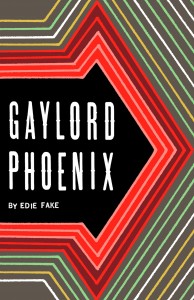
The moment I saw Edie Fake‘s book Gaylord Phoenix (Secret Acres, 256 pages, $17.95) on a table at a local shop was a lifesaver. Not much contemporary art or stuff actually reaches me — and jolts me — at the mysterious and elusive spot(s) where my imagination and spirit reside, and the drawings and stories of Fake do exactly that. I have some issues of Gaylord Phoenix from when it was in serial form, and Fake’s comic Rico McTaco, but I had no idea a lavish color book of Gaylord Phoenix existed, and the discovery was about as close to finding a treasure as I’ve had in recent daily life.

Over the last few weeks I’ve looked at Gaylord Phoenix a lot in bed, on the verge of sleep and dreams, and occasionally while in transit from one place to another. Both experiences, if not ideal, seem right for entering the book’s universe. It is the kind of epic journey in which a reader — not to mention the characters — can get lost. Gaylord Phoenix is a love and lust story. It’s a quest through terrain that is strange yet also familiar, especially if you have access to your queerness or inner experience. It is funny, it is disturbing, it is gorgeous, it is mesmerizing.

Gaylord Phoenix the character has a projector for a nose; webbed hands which can morph into other shapes; a hairy chest, arms, and legs; and (most of the time) tubular genitals that can penetrate and be penetrated, fill or envelop. There is a slightly woeful or stricken quality to Gaylord’s personality, as rendered via facial features and half-capsule head. Yet hexes, spells, “crystal bloodlust,” orgiastic oceans of tears, experimental examination rites, and periods of bereft solitude are not enough to stop Gaylord Phoenix from searching for pleasure and communion with the surrounding world.

That world — a world of many worlds — is one of the things that makes Gaylord Phoenix special. Fake’s hand-rendered cubes, pyramids, hexagons, Bridget Riley-like black-and-white vortexes (referred to in the ultra-spare, brilliant dialogue), wizard cone hats, mazes, temples, wood grains and vines, crocodile skins, fish scales, clouds and cave formations, and plumage accumulate detail and color over the course of the book. What might have been interpreted as technical improvement within Gaylord Phoenix‘s serial manifestations as a comic is revealed in the book to be material for a dramatic and visionary climax and denoument.

In the realm of comics and graphic novels, Gaylord Phoenix could be seen as a fantastic inverse of the sexual horror in Dash Shaw‘s BodyWorld. It arrives at a time when various musicians and visual artists are also tapping into mystic and occult energy, though its singularity of vision reminds me of Jack Smith and Kenneth Anger channeled from archival celluloid strip to contemporary line drawings on the printed page. Ultimately, there is nothing like it.

A few years ago, Fake lived in SF, and attended one of the Guardian’s Goldies celebrations with Amanda Kirkhuff, whose pencil drawings and oil paintings of female pop icons and news figures transmit an equally pure power. They aren’t here now, they’re each moving onward in their own ways, but this city was lucky to play host to them for a while, and it would be great to see them again. 

Pizza Nostra

0

paulr@sfbg.com

DINE Nice — I speak of the French city, not the human quality, of which I must be one of life’s least accomplished practitioners — isn’t quite Italian, but it isn’t quite not, either. Like Alsace in the north — another locus of French pizza — it has been the subject of international contention for centuries. Maybe pizza helps settle nerves frayed by all this struggle, but whether it does or not, pizza served with a distinctly French flair (and often a pitcher of local rosé) is what you’ll find at the many outdoor cafes in the heart of Nice, just a few blocks from the beaches of the Cote d’Azur.

It’s what you’ll find, too, at Pizza Nostra, our own little slice of Nice — complete with outdoor tables! — at the north foot of Potrero Hill. The neighborhood will never be mistaken for the Cote d’Azur, and of course the weather here is considerably fouler, but there is something sublime about pizza — really a whole Italian menu, with many interesting small courses, salads, soups, and starters — served with Gallic style.

The restaurant opened some years ago, as Couleur Cafe, in a small shopping center with a parking lot and buildings of a shed-like, provisional quality, like a PX on Guam. It then became Pizza Nostra, changing hands last year from Jocelyn Bulow to Winona Matsuda. She hasn’t changed much, and maybe that’s because there isn’t much in need of change. Despite the faux-suburban setting, the interior has wonderful candlelit atmospherics under a high ceiling that melts into shadow. The service is impeccable. And the food travels well beyond the country of pizza; you could do quite nicely here without pizza at all. But the pizzas are lovely, and if you were stuck with just that, you’d be happy too.

But I do question the wisdom of bringing basket after basket of complimentary focaccia to people who are in all likelihood waiting for pizza. White flour in our diet is like atmospheric radiation left over from those 1950s tests in the South Pacific: insidious, omnipresent, unnoticed. I think this every time I go by Tartine Bakery and see people queuing like Soviet-era Muscovites. As Michael Pollan noted in his polemic In Defense of Food, white flour is so devoid of nutrition that even bugs don’t want it.

Having said that, I note that Pizza Nostra’s focaccia is addictive, with a pillow-like softness and bewitching olive-oil breath. If you can restrain yourself from gobbling it down straight, you will find it’s useful for dunking and sopping applications. We found its spear shape ideal for sticking into a bowl of mushroom-eggplant soup ($6) that was possibly the most gratifying use of eggplant I’ve ever come across. Its subtle, bitter bite was like a sheen around the earthy weight of the fungi.

The focaccia was also useful in wiping up the savory oil left on the plate after we’d demolished the halved brussels sprouts ($5), pan-roasted with fat chunks of pancetta. I would have let the sprouts cook through and caramelize a little more, but they were tender and flavorful nonetheless.

Sicilian-style tuna salad ($12) seemed like a close relative of salade niçoise, except without anchovies. But there was a wealth of halved pear tomatoes, pitted nicoise olives, and cannellini beans nested in a jumble of arugula and frisée, with the tuna arranged in a berm that partly enclosed the greens.

The pizzas are thin-crust, made (according to the menu) in the style of Recco, a town in the northern Italian region of Liguria, not far from Nice. The array of toppings is mostly conventional, although the kitchen does throw together various specials, including a pie ($16) topped with hot Italian sausage, red and yellow bell peppers, mushrooms, a red-onion confit, and broccoli florets — all of which runs against the basic article of American faith that more is better. Sometimes more isn’t better. Broccoli doesn’t translate well to pizza, and we found the red-onion jam to be jarringly sweet.

But — on the subject of sweets — the olive-oil cake ($6), a cupcake-like disk, was dense and moist. It could have stood without assistance from the large pat of limoncello gelato on the side, although the gelato was a nice touch.

PIZZA NOSTRA

Dinner: nightly, 5:30–10 p.m.

Lunch: Mon.–Fri., 11:30 a.m.–2:30 p.m.

Brunch: Sat.–Sun., noon–3 p.m.

300 De Haro, SF

(415) 558-9493

www.pizzanostrasf.com

Beer and wine

AE/DC/MC/V

Not too noisy

Wheelchair acccesible


Delicious love

0

V-DAY What if this year Valentine’s paired romance with a visit to one of SF’s best new restaurants? Here are new additions to the local dining scene in 2010 that will please food lovers (and who isn’t, in this city?) while offering a range of price points in love-worthy settings.


FOR AMOROUS EXPERIMENTALISTS: COMMONWEALTH

Anthony Myint and chef Jason Fox are reinventing fine dining. Your edgy foodie date will be impressed. Myint was a mastermind behind Mission Street Food and Mission Chinese Food. Here at Commonwealth with Chef Fox, he delves into deliciously experimental creations with a fresh, unpretentious approach. And shockingly, no dish costs more than $16. Dine on goat cooked in hay while sipping a liquid nitrogen aperitif, finish with porcini thyme churros with huckleberry jam. You may be packed in tight in the spare, modern space, but you’ll both leave glowing from stimulating flavors and presentation.

2224 Mission, SF. (415) 355-1500, www.commonwealthsf.com


FOR OLD WORLD ROMANTICS: COMSTOCK SALOON

The Barbary Coast comes alive in this bar-restaurant gem that feels like a timeless classic … and isn’t too taxing on the wallet. From Victorian wallpaper to restored dark woods, the spirit and history of the space entice. Filling up on rich beef shank and bone marrow potpie or bites like whiskey-cured gravlax on rye toast is happy respite on chilly nights. Pair with a perfect Martinez cocktail or a barkeep’s whimsy (bartender’s creation based on your preferences), and see if your date doesn’t cozy up with you next to that wood-burning stove. Comstock exemplifies the best of what a modern-day saloon with Old World sensibilities can be.

155 Columbus, SF. (415) 617-0071, www.comstocksaloon.com


FOR LOVING LOCAVORES: GATHER

Gather is the best thing to come along in Berkeley in ages, and ideal for your local or locavore-y date. It reads typical Bay Area yet goes further: local, sustainable, organic everything, including spirits, wine, and beer. A rounded room with open kitchen is holistically casual and urban. All the raves you’ve heard about the vegan “charcuterie” are true. Marvel at the artistic, affordable array of five different vegetable presentations on a wood slab, like roasted baby beets with fennel, dill, blood orange, horseradish almond puree, and pistachio. Executive chef Sean Baker and team do meat right, too, whether sausage/pork belly/chile pizza or house-cured ham topped with crescenza cheese. Gather displays an ethos and presentation one can only dream of becoming a standard everywhere.

2200 Oxford, Berk. (510) 809-0400, www.gatherrestaurant.com


FOR BEEF-LOVING BEAUS: THE SYCAMORE

Skip the Valentine’s Day’s hoopla and take your sweetie out for a night that will make you feel like kids again — to the Sycamore, which offers a delicious “famous” roast beef sandwich. A glorified Arby’s staple on grocery store-reminiscent sesame buns with BBQ sauce and mayo, the sandwich salutes the native Bostonian owners’ roots. But the roast beef sandwich isn’t the only item that shines at this humble Mission eatery, which doubles as a cozy beer and wine bar. Pork belly-stuffed donut holes in Maker’s Mark bourbon glaze are pretty near orgasmic. A slab of pan-fried Provolone cheese is enlivened by chimichurri sauce and roasted garlic bulb. I applaud its all-day hours and prices under $9.

2140 Mission, SF. (415) 252 7704, www.thesycamoresf.com


FOR PURIST PARAMOURS: HEIRLOOM CAFÉ

The menu (less than 10 starters and entrees) is so simple I almost got bored reading it. But each dish served in this Victorian-yet-modern dining room was so well executed that my skepticism vanished. More than a little Chez Panisse in its ethos, Heirloom will delight that special someone with a purist take on food, with ultra fresh, pristine ingredients, impeccably prepared. Savor a mountain of heirloom tomatoes piled over toasted bread with pickled fennel, cucumbers, and feta, or a flaky bacon onion tart loaded with caramelized onions. Heirloom’s added strength is owner Matt Straus’ thoughtfully chosen wine lists covering wines from Lebanon to Spain.

2500 Folsom, SF. (415) 821-2500, www.heirloom-sf.com


FOR SENTIMENTAL GOURMANDS: SONS & DAUGHTERS

Like Commonwealth, Sons and Daughters is another opening where young, visionary chefs create fine molecular fare at reasonable prices ($48 for four-course prix fixe, à la carte from $9-$24). But this space particularly lends itself to romance: intimate, black and white, with shimmering chandeliers and youthful, European edge. Dishes are inventive and ambitious, like the highly acclaimed eucalyptus herb salad of delicate curds and whey over quinoa, or the seared foie gras accompanied by a glass of tart yogurt and Concord grape granita. It’s a place to hold hands and gaze into each other’s eyes while never neglecting your taste buds.

708 Bush St., SF. (415) 391-8311, www.sonsanddaughterssf.com


FOR NEW YORKER HEARTS: UNA PIZZA NAPOLETANA

Yes, this one’s casual, and you’ll have to wait outside in line. But if your sweetie has New York roots, she will thank you. Pizzaiolo Anthony Mangieri closed his beloved New York City institution, Una Pizza, and moved west. As in NYC, Una Pizza is a one-man show with Mangieri single-handedly crafting each pie (which partly explains the no take-out policy and long waits; popularity accounts for the rest). All this may make it hard to frequent Una Pizza, but if you make the commitment, you will be rewarded with doughy heaven. With only five vegetarian pies, I dream of the Filetti: cherry tomatoes soaking in buffalo mozzarella, accented by garlic, extra-virgin olive oil, basil, and sea salt. On the plus side: all that waiting in line for a hand-made pie will give you and your sweetie pie plenty of time to talk.

210 11th St., SF. (415) 861-3444, www.unapizza.com/sf


FOR AMORE ITALIANO: BARBACCO

True, Barbacco can get obnoxiously noisy and crowded. But it’s a good alternative to its parent restaurant, Perbacco, offering the same outstanding quality at a great value ($3-$14 per dish). For a bustling Italian enoteca-style date, this is the place. Heartwarming food and a thoughtful wine list make it an ideal urban trattoria and a comfortably affordable night out. Order a glass of Lambrusco, the fried brussels sprouts, and raisin and pine nut-accented pork meatballs in a tomato sugo, then marvel at the minimalist bill.

220 California, SF. (415) 955-1919, www.barbaccosf.com


FOR YOUR SWEETIE PIE: BAKER AND BANKER

With dark brown walls and booths, the space exudes a warm elegance. Husband and wife team Jeff Banker and Lori Baker get it right from start to finish with his dishes (vadouvan curry cauliflower soup, brioche-stuffed quail in a bourbon-maple glaze) and her memorable desserts (XXX triple dark chocolate layer cake, pumpkin cobbler with candied pumpkin seed ice cream). Extra points if you buy him a box of pastries to go for the next morning from Baker and Banker bakery next door.

1701 Octavia, SF. (415) 351-2500, www.bakerandbanker.com

Our Weekly Picks: February 9-15

0

WEDNESDAY 9

MUSIC

Turisas

I recently heard Turisas described as “Disney metal.” So before you run screaming in the other direction, hear me out when I claim that it was actually a compliment. Spearheaded by singer-founder Mathias “Warlord” Nygard, the band plays folk metal so lushly orchestrated that it sounds like a movie score, full of trumpet swells and epic organs. Onstage, it features an accordionist and a violinist; the latter is responsible for all the soloing that would traditionally be done on guitar. Turisas’ 2007 release The Varangian Way is an engrossing concept album whose eight tracks follow a group of Scandinavian travelers as they make their way across Russia by river and end up in Constantinople. New platter Stand Up and Fight is due Feb. 23, but you can get a sneak preview at the show. (Ben Richardson)

With Cradle of Filth, Nachtmystium, Daniel Lioneye

8 p.m., $27

Regency Ballroom

1300 Van Ness, SF

1-800-745-3000

www.theregencyballroom.com


DANCE

Eonnagata

Eonnagata comes with pretty impressive credentials, and promises to be unique. The work is a collaboration between maverick ballerina Sylvie Guillem, who has made waves ever since she dared to quit the Paris Opera Ballet to freelance; multi-whiz Canadian director Robert Lepage, whose Ex Machina company has redefined theater for the last 20 years; and dancer-choreographer Russell Maliphant, who mixes ballet with yoga and everything in between. The trio created and performs in a work that examines the in-between state of male-female sexual identity. Inspired by an 18th century French noble, spy, and diplomat who fluidly switched genders throughout his career, Eonnataga also acknowledges a debt to the onnagatas, the refined male actors in Kabuki who spent their careers playing female characters. (Rita Felciano)

Wed/9–Thurs/10, 8 p.m., $36–$72

Zellerbach Hall

Bancroft at Telegraph,

UC Berkeley, Berk.

(510) 642-9988

www.calperformances.org


EVENT

“How to Write A Dynamic Online Dating Profile”

You’ve been on blind dates. You’ve tried speed dating. You’ve even have had your mother set you up. But you still can’t find love? Turn to cyberspace. (Don’t be embarrassed. According to those Match.com ads, one out of five relationships now begin online.) Take it from Carol Renee, a self-proclaimed “logophile,” English teacher, and aspiring novelist who found the love of her life using the handle “Fearlessly Compassionate.” She’ll hold your hand during the daunting tasks of coming up with a tantalizing user name, writing an attention-grabbing headline, and composing a succinct and yet true-to-life bio in this “how-to” class. (Jen Verzosa)

6:15 p.m., free

San Francisco Public Main Library

Latino/Hispanic Community Room B

100 Larkin, SF

www.sfpl.org


THURSDAY 10

MUSIC

Ensiferum

The Finnish metallers in Ensiferum span many styles, taking the best of everything they encompass. From folk metal, they learned the power of haunting, infectious melody and atmospheric texture. From thrash, they got the exultation and catharsis of breakneck tempos and relentless picking. And from power metal, they got the gleeful, empowering satisfaction that comes from singing about dudes with swords. The recent infatuation with Pagan stylings among American metalheads has brought the band stateside numerous times now, and Ensiferum never disappoints. Having donned their warrior garb, the five Finns who make up the band don’t leave the stage until everyone and everything is vanquished. (Richardson)

With Finntroll, Rotten Sound, Barren Earth

7:30 p.m., $25

DNA Lounge

375 11th St., SF

415-626-2532

www.dnalounge.com


EVENT

“Lusty Trusty Ball SF”

Not on the guest list for the annual Manus-Salzman Valentine’s Day Ball? No matter. Your photo won’t be gracing the pages of the Nob Hill Gazette or SF Luxe this time next week, but as least you don’t have to worry about breaking out the black tie. At the less-costly-but-no-less-classy Lusty Trusty Ball, in exchange for forgoing the ice sculptures, posh catered nosh, and a live gingerbread boy to nibble candy off of (he was holdin’ it down for Hasbro’s Candy Land in keeping with last year’s Manus-Salzman theme, “The Game of Love”) you’ll enjoy DJs, VJs, and live groups galore. Plus, with punk rock cabaret from the Can-Cannibals, Circus Finelli’s all-female antics, and Red Hots Burlesque, you can have a hot night without the haut monde. (Emily Appelbaum)

8:30 p.m., $10–$20

Submission

2183 Mission, SF

(415) 425-6137

www.sf-submission.com


EVENT

“Oilpocalypse Now”

Last April’s Gulf Coast-ravaging oil spill may have slipped from the headlines, but the region is still struggling to recover. “Oilpocalypse Now” takes aim at the corporations that cause (and cover up) environmental disasters — indeed, the event is subtitled “Time for a 28th Amendment for the Separation of Corporation and State” — featuring a talk by Dr. Riki Ott, a community activist and marine biologist. Ott will present the documentary Black Wave: The Legacy of the Exxon Valdez (remember that one? Big Oil hopes you don’t!) Other speakers include Lisa Gautier, who helped organize the “hair boom” effort to soak up Gulf Coast oil; former Guardian columnist Summer Burkes, who witnessed the Louisiana devastation first-hand, and more. Proceeds benefit the Gulf Coast Fund, Ultimate Civics, and the Coastal Heritage Society of Louisiana. (Cheryl Eddy)

7 p.m., $10–$20

Grand Lake Theater

3200 Grand Lake, Oakl.

(510) 452-3556

www.summerburkes.wordpress.com

http://communitycurrency.org/node/63


FRIDAY 11

DANCE

“Black Choreographers Festival: Here and Now”

For the next three weekends the “Black Choreographers Festival: Here and Now” throws the spotlight on the Bay Area’s African American voices. Now in its seventh year, the festival brings together professionals from a rainbow of perspectives on dance. If this were an ideal world, these choreographers would have their own companies and regular seasons. Some do — Raissa Simpson, Deborah Vaughan, Paco Gomes — but the festival offers all an opportunity to make themselves heard in the context of their colleagues. The Oakland lineup is different from the San Francisco one; the third weekend focuses on up-and-coming new talent. And as always, the youth ensembles at the family matinee will be a special high-energy treat. (Felciano)

Fri/11–Sat/12, 8 p.m.;

Sun/13, 4 p.m., $10–$20

Laney College

900 Fallon, Oakl.

Feb. 17–19, 8pm; Feb. 20, 7 p.m.

ODC Theater

3153 17th St., SF

Feb. 25–26, 8 p.m.; Feb. 27, 7 p.m.

Dance Mission Theater

3316 24th St., SF

1-888-819-9106

www.bcfhereandnow.com


PERFORMANCE

You’re Gonna Cry

Where better than 24th Street to watch a solo show about the real lives of Mission District residents at the height of gentrification? Touching on everyone from the techies and bohemians to the Latino locals and immigrants, HBO Def Poet and Youth Speaks cofounder Paul S. Flores performs his theatrical work about the human cost of gentrification in the neighborhood. In addition to masterful storytelling, get ready for a gangster puppet show and digital murals, illuminating the changes brought by the dot-com boom and bust, real estate bubble, immigration, and forced evictions. The Mission is loaded with characters and Flores’s dynamic fusion of urban culture and spoken word brings them all to life. (Julie Potter)

Fri/11–Sat/12, 8 p.m., $15

Dance Mission Theater

3316 24th St., SF

(415) 273-4633

www.dancemission.com


EVENT

California International Antiquarian Book Fair

Ever wonder what ephemera left by our generation will be pored over in a millennium or two? Parking slips, band posters, books like Lady Isabella’s Scandalous Marriage and 1001 Deductions and Tax Breaks, 2011? Whatever the items, they’ll surely be found at the 1000th annual California International Antiquarian Book Fair. The festival, now only in its 44th year, tempts bibliophiles with a menagerie of historical snippets and antique selections. The perusables include musical prints and manuscripts, rare codices, antique children’s literature, fine bindings, maps, trade books, miscellaneous historical scraps, and — vocabulary word — “incunabula,” which are books, pamphlets, or broadsheets printed (not handwritten) in Europe before 1501. A trove of timeworn tomes? Simply splendid! (Appelbaum)

Fri/11, 3–8 p.m.; Sat/12, 11 a.m.–7 p.m.;

Sun/13. 11 a.m.–5 p.m., $10–$15

Concourse Exhibition Center

635 Eighth St., SF

(415) 551-5190

www.labookfair.com


SATURDAY 12

DANCE

Company C Contemporary Ballet

With a sampling of contemporary ballet from choreographers active across North America and Europe, Company C’s mixed-bill winter program includes a premiere set to the music of Elvis Costello by Artistic Director Charles Anderson in collaboration with Benjamin Bowman (both formerly of the New York City Ballet), and another by Maurice Causey, a former principal of William Forsythe’s Ballet Frankfurt. Also appearing from the diverse repertory of this vibrant company is Tovernon, a solo work by David Anderson, the father of Charles Anderson, and Daniel Ezralow’s Pulse, during which dancers take running starts to slide across stage wearing socks. (Potter)

Sat/12, 8 p.m.; Sun/13, 2 p.m., $18–$40

Yerba Buena Center for the Arts

701 Mission, SF

(415) 978-2787

www.companycballet.org


EVENT

“Woo At The Zoo”

Want to make things a bit more “wild” this year for Valentine’s Day? Then head on over to the San Francisco Zoo for “Woo At The Zoo,” the annual event that’s become a favorite activity for amorous humans looking to learn a bit more about our animal pals’ own mating habits and sexual behaviors. Make plans soon with your sweetheart for this special multimedia event that also includes a romantic brunch or dinner, along with drinks. Admit it — you’re already humming the words to the Bloodhound Gang’s “Discovery Channel” song, aren’t you? “You and me baby we ain’t nothing but mammals, so let’s do it like they do on the Discovery Channel!” (Sean McCourt)

Sat/12-Sun/13, 6 p.m.;

Also Sun/13, 11 a.m., $65–$75

San Francisco Zoo

One Zoo Road, SF

(415) 753-7080, ext. 7236

www.sfzoo.org


SUNDAY 13

MUSIC

High on Fire

How rad would it be to have an all-chick High on Fire tribute band called Pie on Fire? Though, yeah, that could go either way — hot cherry deliciousness or the evil feeling that makes your girlfriend chug sour pints of cranberry juice. And pulling off (literally) the shreddiness of Riffchild caliber is probably not gonna happen in this lifetime. In any case, join the real trio for a special one-off hometown show before they head out to tour New Zealand and beyond. An honorable way to ring in the annual holiday of love and lust, no? (Kat Renz)

8 p.m., $18

Slim’s

333 11th St., SF

(415) 255-0333

www.slims-sf.com


The Guardian listings deadline is two weeks prior to our Wednesday publication date. To submit an item for consideration, please include the title of the event, a brief description of the event, date and time, venue name, street address (listing cross streets only isn’t sufficient), city, telephone number readers can call for more information, telephone number for media, and admission costs. Send information to Listings, the Guardian Building, 135 Mississippi St., SF, CA 94107; fax to (415) 487-2506; or e-mail (paste press release into e-mail body — no text attachments, please) to listings@sfbg.com. Digital photos may be submitted in jpeg format; the image must be at least 240 dpi and four inches by six inches in size. We regret we cannot accept listings over the phone.