obama

“The Monkey and the Devil”

0

PREVIEW Sometimes history has a peculiar way of bringing us full circle. Charles Trapolin’s family owned slaves on their plantation in South Carolina. Joanna Haigood’s family were slaves in the vicinity. The commonality and difference between those two families led to The Monkey and the Devil, a collaboration between Trapolin, the former ODC dancer turned visual artist, and dancer/choreographer Haigood. Taking its title from racial slurs, the world premiere examines a festering wound in the social fabric that has not healed nearly as well as many of us would like to pretend. Haigood started the piece long before Barack Obama’s candidacy but, she points out, it certainly has acquired an unexpected urgency. "Racism," she says, "hurts everybody. It’s a social ill that we need to address and realize that it is connected to economy and class." Formally, the piece is an installation, continuing Haigood’s long-time interest in working with picture frames. It’s a visual motif that works well with Trapolin’s idea to create a house split in two. On the set, two couples — one white, one black — take turns assuming roles. Audiences are invited to stay as long as they like during this four-hour performance. Though she’ll have a collection box, the show is free because Haigood really wants all of us to come see it.

THE MONKEY AND THE DEVIL Fri/28 and Sat/29, 1–5 p.m. Free. Zaccho Dance Studio, 777 Yosemite, studio 330, SF. (415) 822-7644, www.zaccho.org

Editor’s Notes

0

› tredmond@sfbg.com

The San Francisco Chronicle has suddenly discovered that the middle class is leaving San Francisco.

Staff writer James Temple broke the news on the front page of the Sunday, June 23 paper with a lead sentence that boggles the mind in its insight and news value: "The number of low- and middle-income residents in San Francisco is shrinking as the wealthy population swells, a trend most experts attribute to the city’s exorbitant housing costs."

I don’t want to downplay the importance of this story. It could have (and should have) been written a decade ago, when Willie Brown was mayor and city planning policy, combined with the dot-com boom, started San Francisco on the path toward becoming the first fully gentrified big city in America. And I’m always frustrated when a daily newspaper reports after the fact on something that could have been prevented, or at least slowed, back when the story first became a story.

But the news is still news today, and the fact that the Chronicle has facts and figures and demographers denouncing and community leaders deploring means the problem will be getting some additional attention this fall. That matters, because this November, the future of San Francisco will again be on the line.

And that could be a very good thing.

Calvin Welch, who has been fighting for a progressive city longer than many of today’s activists have been alive, remembers the summer 1972 state ballot: "You had George McGovern. You had the Coastal Commission [Act]. You had the farmworkers [labor law]. You had marijuana [decriminalization]. And you had every constituency on the left coming out to vote for them all. And they all won."

This fall in San Francisco we will have perhaps an even greater perfect storm: a proposed rebuild of SF General Hospital, which is a huge priority for organized labor. A housing justice measure that sets aside money for affordable housing (and could help address the single biggest issue in the city, something even the Chronicle now puts on page 1). A green energy and public power measure (which would shift energy policy toward renewables and bring in millions of dollars). Two new revenue measures that tax the wealthy. Six seats on the Board of Supervisors, including three swing districts that will determine whether the progressive majority that has controlled the board since 2000 will remain intact. And all of that will happen in the context of the Obama campaign and a massive statewide mobilization to protect same-sex marriage.

We are a fractious crew, the San Francisco left, but if we can come together this fall, share resources, and run some sort of large coalition campaign for progressive values, this could be an election for the ages.

Pride 2008 events

0

› culture@sfbg.com

ONGOING

Frameline Film Festival Various locations; see Web site for dates and times, www.frameline.org. The humongous citywide queer flick fest is still in full eye-popping effect.

Golden Girls Mama Calizo’s Voice Factory, 1519 Mission, SF; (415) 690-9410, www.voicefactorysf.org. 7 and 9pm, $20. Through Sat/28. Revisit all the "gay" episodes of this classic and tragic sitcom, as performed with panache and pratfalls by gender clowns Heklina, Pollo Del Mar, Cookie Dough, and Matthew Martin.

National Queer Arts Festival Various locations; see Web site for details, www.queerculturalcenter.org. Experience scandalously good spoken word, cabaret, art installations, and so much more as this powerhouse monthlong celebration of queer revelations continues.

THURSDAY 26

PERFORMANCES AND EVENTS

Marriage Is Not Enough: Radical Queers Take Back the Movement New Valencia Hall, 625 Larkin, SF; (415) 864-1278. 7pm, $7 donation. Spread-eagled with one foot in the past and the other in the future, Radical Women host a forum to honor the efforts of drag queens and queers of color in 1969’s Stonewall rebellion and to discuss the docile nature of LGBT leadership in the face of poor and working-class queer issues today.

"Our Message Is Music" First Unitarian Church and Center, 1187 Franklin, SF; (415) 865-2787, www.sfgmc.org. 8pm, $15-$35. The world’s first openly LGBT music ensemble will kick off Pride Week with a range of music from Broadway to light classical. Includes performances by the Lesbian/Gay Chorus of San Francisco, San Francisco Gay Men’s Chorus, and the San Francisco Lesbian/Gay Freedom Band.

Pansy Division Eagle Tavern, 398 12th St., SF; (415) 626-0880, www.pansydivision.com. 9pm, $7. Homoerockit band Pansy Division plays a live set with the handsome help of Glen Meadmore and Winsome Griffles following a screening of the film Pansy Division: Life in a Gay Rock Band.

CLUBS AND PARTIES

Body Rock Vertigo, 1160 Polk, SF; (415) 674-1278. 10pm, free. Incredibly energetic tranny-about-town Monistat hosts a bangin’ electro night for queers and friends featuring San Francisco’s favorite crazy DJ Richie Panic. Expect wet panties.

Cockblock SF Pride Party Minna, 111 Minna, SF; www.cockblocksf.com. 9pm-2am, $5. DJs Nuxx and Zax spin homolicious tunes and put the haters on notice: no cock-blockin’ at this sweaty soiree.

Crib Gay Pride Party Crib, 715 Harrison, SF; (415) 749-2228, www.thecribsf.com. 9:30pm-3am, $10. The hopefully soothing Ms. Monistat (again!) and the irritating — in a fun way — Bobby Trendy set it off at this homolicious megaparty popular among the 18+ set, complete with a Naked Truth body-art fashion show and a T-shirt toss, in case you lose the one you came with in the melee.

The Cruise Pride Party Lexington Club, 3464 19th St, SF; (415) 863-2052, www.lexingtonclub.com. 9pm-2am, free. Hey, dyke sailor! Hike up your naughty nauticals and wade into this ship of dreams (yes, it’s a theme party) with DJs Rapid Fire and Melissa at the lovely lesbian Lex. Land, ho.

The Tubesteak Connection Aunt Charlie’s, 133 Turk, SF; (415) 441-2922, www.auntcharlieslounge.com. A warm and bubbly tribute to early Italo house, wonderfully obscure disco tunes, and outfits Grace Jones would die for. With DJ Bus Station John.

FRIDAY 27

PERFORMANCES AND EVENTS

Same-Sex Salsa and Latin Ballroom Dance Festival and Competition Magnet, 4122 18th St., SF; (415) 581-1600. www.queerballroom.com. 7pm-12am, free. With $100 awarded to the winner of this fancy-footwork competition, the stakes for this event’s salsa-hot dancing surpass the single bills slipping into thong strings this week.

San Francisco Trans March Dolores Park, Dolores and 18th Sts; (415) 447-2774, www.transmarch.org. 3pm stage, 7pm march; free. Join the transgender community of San Francisco and beyond for a day of live performances, speeches, and not-so-military marching.

CLUBS AND PARTIES

Bibi: We Exist and We Thrive Pork Store Café, 3122 16th St., SF; (415) 626-5523, www.myspace.com/BibiSF. 9pm, $20. The Middle Eastern and North African LGBT community hosts a charitable happy hookah party to native tunes spun by DJs Masood, Josh Cheon, and more.

Bustin’ Out III Trans March Afterparty El Rio, 3158 Mission, SF; 282-3325. 9pm-2am, $5-$50, sliding scale. Strut your stuff at the Transgender Pride March’s official afterparty, featuring sets from DJs Durt, Lil Manila, and giveaways from Good Vibes, AK Press, and more. Proceeds benefit the Trans/Gender Variant in Prison Committee.

Charlie Horse: No Pride No Shame The Cinch, 1723 Polk, SF; (415) 776-4162, www.myspace.com/charliehorsecinch. 10pm, free. Drag disaster Anna Conda presents a bonkers night of rock ‘n’ roll trash drag numbers, plus Juanita Fajita’s iffy "gay food cart" and Portland, Ore.’s Gender Fluids performance troupe.

Cream DNA Lounge, 375 11th St., SF; (415) 626-1409, www.creamsf.com. Two levels of sexy girl energy and a catwalk to scratch your lipstick claws on, plus a Latin lounge with hip-grinding tunes from DJs Carlitos and Chili D.

GIRLPRIDE Faith, 715 Harrison, SF; (415) 647-8258. 8pm-4am, $20. About 2,500 women are expected to join host DJ Page Hodel to celebrate this year’s Pride Weekend, and that’s a whole lotta love.

Hot Pants Cat Club, 1190 Folsom, SF; (415) 703-8964, www.myspace.com/hotpantsclub. 10pm, $5. DJ Chelsea Starr and many others make this alternaqueer dance party a major destination for hot persons of all genders and little trousers.

Mr. Mighty, 119 Utah, SF; (415) 762-0151, wwww.mighty119.com. 10pm-6am, $20. Darling promoters Big Booty, FSLD, Beatboxevents, and Big Top join forces to produce the party premiere of Pride week with DJ Kidd Sysko and Lord Kook spinning alternative techno sounds, and a special deep and dirty set from soulful house god David Harness.

Sweet Beast Transfer, 198 Church, SF; www.myspace.com/beastparty. 10pm-2am, $10. Reanimate your fetish for leather and fur by dressing up as fiercely feral fauna for the petting-zoo of a party. This week, after all, is mating season.

Tranny Fierce Supperclub, 657 Harrison, SF; (415) 348-0900, www.supperclub.com. 8pm dinner, 10pm afterparty. $85 dinner, $15-$25 afterparty. Total ferosh! Project Runway winner Christian Siriano hosts a four-course meal of trash-talking and looking fierce. The afterparty serves up drag nasty from Holy MsGrail, Cassandra Cass, and more.

Uniform and Leather Ball Hotel Whitcomb, 1231 Market, SF; (415) 777-0333, www.frantix.net. 8pm-midnight, $25 & $40. The men’s men of San Francisco’s Mr. Leather Committee want you to dress to the fetish nines for this huge gathering, featuring men, music, and more shiny boots than you can lick all year. Yes, sirs!

SATURDAY 28

PERFORMANCES AND EVENTS

Dykes on Bikes Fundraiser Eagle Tavern, 398 12th St., SF; (415) 626-0880, www.dykesonbikes.org. Noon. Dykes on Bikes can’t drink and drive: they need your help. A pint for you means a gallon of gas for them. Stop by before heading to the march.

LGBT Pride Celebration Civic Center, Carlton B. Goodlett Place and McCallister, SF; (415) 864-3733, www.sfpride.org. Noon-6pm, free. Celebrate LGBT pride at this free outdoor event featuring DJs, speakers, and live music. This is the first half of the weekend-long celebration sponsored by SF Pride. Also Sun/29.

Pink Triangle Installation Twin Peaks Vista, Twin Peaks Blvd parking area, SF; (415) 247-1100, ext 142, www.thepinktriangle.com. 7-11am, free. Bring a hammer and your work boots and help install the giant pink triangle atop Twin Peaks for everyone to see this Pride Weekend. Stay for the commemoration ceremony at 10:30am to hear Mayor Gavin Newsom and Assemblymember Mark Leno speak.

Pride Brunch Hotel Whitcomb, 1231 Market, SF; (415) 777-0333, www.positiveresource.org. 11am-2pm, $75-$100. Raise a mimosa toast to this year’s Pride Parade grand marshals with many of the community’s leading activists.

Same-Sex Country, Swing, and Standard Ballroom Dance Festival and Competition Hotel Whitcomb, 1231 Market, SF; (415) 626-8000, www.queerballroom.com. 6:30-8pm, free. The Queer Jitterbugs get reeling at this one-of-a-kind contest that’ll shine your spurs and get you swingin’ out of your seat.

San Francisco Dyke March Dolores Park, Dolores and 18th Sts, SF; www.dykemarch.org. 7pm, free. Featuring music from the Trykes, Papa Dino, Las Krudas, and more, plus a whole lot of wacky sapphic high jinks.

CLUBS AND PARTIES

Bearracuda Pride Deco, 510 Larkin, SF; (415) 346-2025, www.bearracuda.com/pride. 9pm-3am, $8 before 10pm, $10 after. Hot hairy homos generate serious body static on the dance floor at this big bear get-down.

Bootie Presents The Monster Show DNA Lounge, 375 11th St, SF; (415) 626-1409, www.bootiesf.com. The city’s giant mashup club hosts a drag queen bootleg mix extravaganza, as Cookie Dough and her wild Monster Show crash the Bootie stage.

Colossus 1015 Folsom, SF; (415) 431-1200, www.guspresents.com. 10pm-8am, $40. The beats of mainstream club favorite DJ Manny Lehman throb through the largest and longest, uh &ldots; dance party of Pride week.

Deaf Lesbian Festival Dyke Ball San Francisco LGBT Center, Rainbow Room, 1800 Market, SF; (415) 865-5555, www.dcara.org. 8pm, 440. Feel the music, close your eyes, and dance to the rhythm of your smokin’ partner at the Deaf Lesbian Festival’s first ever Dyke Ball.

Devotion EndUp, 401 Sixth St, SF; (415) 357-0827, www.theendup.com. 9pm, $15. This storied dance party is back with "A Classic Pride." DJs Ruben Mancias and Pete Avila spin all-classic soulful and stripped-down house anthems for a sweaty roomful of those who were there back when.

Dyke March After Affair Minna, 111 Minna, SF; www.diamonddaggers.com. 8pm-11pm, $12-$20 sliding scale. An early-ending party featuring drag queens, burlesque stars, and belly dancers ensures that beauty sleep comes to the next day’s easy riders whose love of bikes and beer rivals that of any Hell’s Angel or fratboy. Or, stick around for Minna’s ’80s night, Barracuda.

Manquake The Gangway, 841 Larkin, SF; (415) 776-6828. 10pm, $5. Disco rareties and bathhouse classics in a perfectly cruisy old-school dive environment with DJ Bus Station John.

PlayBoyz Club Eight, 1151 Folsom, SF; www.clubrimshot.com. 10pm-3am, $10. The stars of legalized gay marriage, Obama’s candidacy, Pride week, and Black Music Month all align for this hip-hop heavy celebration.

Queen Pier 27, SF; www.energy927fm.com. 8pm, $45. Energy 92.7 FM brings back the dynamism of the old-school San Francisco clubs for this Pride dance-off. Chris Cox and Chris Willis headline. Wear your best tear-away sweats and get ready to get down, Party Boy style.

Rebel Girl Rickshaw Stop, 155 Fell, SF; wwww.rebelgirlsf.com. 9pm-2am, $12. Rebel Girl brings the noise for this one with go-go dancers, Vixen Creations giveaways, drink specials, and, you know, rebel girls.

SUNDAY 29

PERFORMANCES AND EVENTS

LGBT Pride Celebration Civic Center, Carlton B. Goodlett Place and McCallister, SF; (415) 864-3733, www.sfpride.org. Noon-7pm, free. The celebration hits full stride, with musical performances and more.

LGBT Pride Parade Market at Davis to Market and Eighth Sts, SF; (415) 864-3733, www.sfpride.org. 10:30am-noon, free. With 200-plus dykes on bikes in the lead, this 38th annual parade, with an expected draw of 500,000, is the highlight of the Pride Weekend in the city that defines LGBT culture.

True Colors Tour Greek Theatre, UC Berkeley Campus, Hearst and Gayley Streets, Berk; (510) 809-0100, www.apeconcerts.com. 5pm, $42.50-$125 Cyndi Lauper, The B-52s, Wanda Sykes, The Puppini Sisters, and queer-eyed host Carson Kressley bring it on for human rights and limp wrists.

CLUBS AND PARTIES

Big Top The Transfer, 198 Church, SF; (415) 861-7499, www.myspace.com/joshuajcook. A circus-themed hot mess, with DJs Ladymeat, Saratonin, and Chelsea Starr, plus Heklina’s "best butt munch" contest. Will she find the third ring?

Dykes on Bikes Afterparty Lexington Club, 3464 19th St, SF; (415) 863-2052, www.lexingtonclub.com. 1pm, free. How do they find time to ride with all these parties?

Juanita More! Gay Pride ’08 Bambuddha Lounge, 601 Eddy, SF; (415) 864-3733, www.juanitamore.com. 3pm, $30. Juanita More! hosts this benefit for the Harvey Milk City Hall Memorial, with DJs Robot Hustle and James Glass, and performances by fancy-pants Harlem Shake Burlesque and the Diamond Daggers. Fill ‘er up, baby!

Starbox Harry Denton’s, 450 Powell, SF; (415) 395-8595, www.harrydenton.com. 6pm-midnight, $7 High atop the Sir Francisc Drake Hotel, the swank Harry Denton’s presents DJ Page Hodel’s patented brand of diverse and soulful bacchanalia.

Sundance Saloon Country Pride Hotel Whitcomb, 1231 Market, SF; (415) 626-8000, www.sundancesaloon.org. 6pm-11pm, $5. Hot hot bear husbands on the hoof, line-dancing for the pickin’ at this overalls-and-snakeskin-boots roundup.

Unity Temple, 540 Howard, SF; www.templesf.com. Legendary kiki-hurrah club Fag Fridays rises again with a sure-to-be-smokin’ DJ set from the one and only Frankie Knuckles, the goddess’s gift to deep house freaks and friends.


Obama contingent can’t campaign at Pride

0

obamalgbt.jpg

By Mara Math

An official contingent of Barack Obama supporters will be marching in the Pride Parade next weekend — but they’ve been told not to wear campaign buttons or t-shirts and not to carry campaign signs.

An internal email from Rebecca Prozan, a member of Obama’s national LGBT leadership committee, went out June 15th asking participants in the Obama contingent at this year’s parade to “refrain from wearing campaign-related materials in the march . . . to make sure the parade does not lose funds as a result of our participation.”

That surprised a lot of activists: The parade has always had its share of political campaigns. And some worried that the Obama camp, which has so far refused to support same-sex marriage, wanted to keep its distance from the community.

But the decision actually came from the Pride Foundation, which runs the parade. Pride argues that allowing direct promotion of one particular candidate would interfere with the group’s tax-exempt status and would violate the conditions of a $77,000 annual grant from Grants for the Arts, which administers the city’s hotel tax funds. And because of the group’s tax-exempt status,

In fact, Brendan Behan, Pride’s community mobilization specialist, told us that “Obama contingent participants can wear T-shirts of Obama as a senator from Illinois, but not as a presidential candidate.”
As a nonprofit education group with a 501 c tax exemption, Pride can spend a tiny fraction of its budget on lobbying or campaigning. The city’s rules also prohibit allowing unequal access to any one party or lobbying group.

It’s hard to make the unequal-access point stick, since queer supporters of John McCain could also march in the parade. But Pride Executive Director Lindsey Jones put it this way: “They have equal access to not campaign.”
Jones, who has been at the helm for five years, told us she didn’t recall any active campaigning at the parade. “We only have four years of notes in our records,” she said. “Maybe it’s happened in the past, but we’re all fallible.”

Sup. Tom Ammiano told us that the rules have been in place for years, but people have always found ways around them. “The first time I ran for School Board, we’d made a big school bus and they told us we couldn’t use it because I was a candidate,” he said. “So we made a big fuss and in the end the put us last in the parade.”
In other years, he said, “supporters of a candidate can just march along on the sidewalk. And sometimes they slip in and join you, and it’s not a big deal.”

Attorney Randy Shaw, founder of the nonprofit Tenderloin Housing Clinic, told us he thinks Pride’s stance is misinterpretation of the law: “Clearly, no public funds can go toward sponsoring a political activity. But funds are sponsoring security, bathrooms, publicity, insurance etc.— participants are not being “subsidized.”
In fact, he said, “event organizers have no ability to enforce such a restriction, so it clearly is not covered by city restrictions on the use of public funds.”

Jones disagrees: “When the Obama campaign questioned our guidelines, it was the first time we’d had a significant challenge to those guidelines, so I had people doing research, and the City Attorney affirmed our interpretation.”
“There’s a difference between having a standard guideline that we inform people about, and it’s another whether we follow it,” Jones was quick to add. “It’s not an expectation of Grants for the Arts that we have an entire enforcement squad.”

Prozan has a similar view. “If someone shows up to march in an Obama ’08 shirt,” she told us, “I’m not going to tell them to take it off unless they’re sweating.”

“To me it’s an issue of freedom of speech, what some people would call a Constitutional issue,” says activist Tommi Avicolli Mecca, an original member of Gay Liberation and a queer activist for almost four decades. “This is really discouraging coming from a community that in the past has itself been the victim of attempts to restrict its freedom of speech. Is $77,000 worth selling out for?”

To the question of whether the gain is worth the strain, Jones responds, “It’s the responsibility of the community to make the changes they want to see.” The Parade is 38 years old, she notes, and began as a gathering of 200 people; today, thanks to community demand, it has 20 stages and more than three-quarters of a million attendees.
The Parade has only had Grants for the Arts funding for 10 years. “If we come to feel that we need to forego that $77,000–that’s how Pride changes. Every conversation we have, including this interview, changes Pride.”

She urged those interested to “Pick up the phone and call me.”

You can also email her at info@sfpride.org

The funk this time

0

With gas prices topping four dollars in the United States this summer, Americans are educating themselves on where their fuel comes from. Often it’s from places like Nigeria’s Niger Delta, where multinational petroleum giants face armed resistance from local groups that see foreign oil developments as resource exploitation. So why are groups like Movement for the Emancipation of the Niger Delta (MEND) fighting the Nigerian government, Chevron, and Shell?

As John Ghazvinian points out in Untapped: The Scramble for Africa’s Oil (Harcourt, 2007), "In Nigeria, 80 percent of oil and gas revenue accrues to just 1 percent of the population…. Virtually everybody in the Delta scrambles to get by in shantytowns built of driftwood and corrugated zinc, watching children die of preventable diseases, while their corrupt leaders whiz past behind the tinted windows of air-conditioned BMWs."

Against this backdrop rises 25-year-old Seun Kuti, whose potent self-titled debut for Disorient Records directly addresses Nigeria’s issues. Seun is the youngest son of Fela Anikulapo Kuti, who before his death in 1997 popularized the funk-influenced West African Afrobeat sound worldwide throughout the 1970s and ’80s. Backed by his father’s 20-piece Egypt 80 orchestra, Seun invokes his dad’s fiery political rhetoric on protest songs like "Na Oil" and "African Problem" that lyrically excoriate foreign and domestic oppressors. In keeping with his father’s work, Seun’s backing music is as engaging as his commentary.

Seun Kuti is carrying Fela’s music to a new generation. But unlike his older half-brother Femi, whose recordings incorporate hip-hop and dance motifs, Seun revives Afrobeat’s original big-band blueprint and injects it with a fresh urgency. He’s helped by Fela’s longtime bandleader Baba Ani, along with Adedimeji Fagbemi (a.k.a. Showboy) on saxophone, Ajayi Adebiya on drums, and a dozen or so other Egypt 80 veterans who’ve been playing regularly for nearly three decades at the family’s Kalakuti compound.

The group stretches out on eight-minute songs like "Don’t Give That Shit to Me," where dueling guitars trade jabs, a full brass section swells mightily, and Seun Kuti adds vocal diatribes. Kuti’s sax flourishes lead the charge on that track, one of the album’s most spacious, jazz-improv-driven numbers. Similarly, blazing trumpets and speedy percussion-laden polyrhythms transform "Mosquito"<0x2009>‘s serious anti-malaria message into a rebel-dance anthem.

Kuti closes his first full-length with the punchy, mid-tempo "African Problem," which is replete with street traffic samples and the band leader’s passionate, rapid-fire lyrics. "Make you help me ask them sisters / Why no get houses to stay / Salute my brothers when they fight / Fight for the future of Africa," he sings in a militant call-and-response with the horn section. And like the campaign waged by one of Kuti’s American supporters (Barack Obama, who helped Egypt 80 get visas for a benefit show in Chicago), Kuti’s album resonates as an authentic political expression where expression and message are aligned.

SEUN KUTI AND EGYPT 80

With Sila and the Afrofunk Experience

Sun/22, 2 p.m., free

Stern Grove

Sloat and 19th Ave., SF

www.sterngrove.org

Dufty to run for mayor?

0

dufty_sm-thumb.jpg
Stephen Seewer, the LGBT chair of the Commonwealth Club, called to tip me off to a big story that the media missed: Sup. Bevan Dufty announced on Monday at the Commonwealth Club that he’s running for mayor of San Francisco! Political watchers have long known this was a possibility, but how did we miss such an important announcement?
So I spoke with Dufty, who told me that he is indeed thinking about it, but far from making it official: “I don’t feel like it was a formal announcement.”
Dufty said Seewer caught him off-guard at the event with a question about whether he plans to run for mayor. Dufty says he answered by talking about the ambitious agenda he intends to pursue over the next two years and, as he tells it to us, he then told the audience, “Hopefully, I’ll look like a strong candidate for mayor.”
OK, maybe that’s not quite an official declaration, but it’s no secret that Dufty has his eye on the job. Others who seems to be setting themselves up for a run and have made similar statements of interest include Sup. Ross Mirkarimi, City Attorney Dennis Herrera, Assessor-Recorder Phil Ting, Sup. Aaron Peskin, and District Attorney Kamala Harris (provided she doesn’t get tapped by President Barack Obama to be attorney general). And I wouldn’t be surprised if Senator Carole Migden takes a step back after losing reelection, licks her wounds, and returns to the fray as a mayoral candidate.

The public power initiative: let’s roll

0

By Bruce B. Brugmann

Coming home after almost two weeks in Sweden with the annual World Association of Newspapers (WAN) assembly and study tour, I was struck once again how nothing seems to change in San Francisco when it comes to the PG&E/Raker Act scandal.

PG&E was still firmly in control of the city’s energy policy in the mayor’s office. Mayor Gavin “The Green Knight” Newsom had capitulated spectacularly to PG&E and had reversed his policy of supporting a plan by his PUC that would have given the city control over some local power generation at the Mirant power plant (the peaker proposal.) The mayor had met secretly with PG&E executives and stiffed representatives from the Potrero Hill neighborhood and the environmental, environmental justice, public power, and community choice aggregation (CCA) movements.

The Hearst-owned Chronicle continued its long corporate tradition of blacking out the real story of the accelerating PG&E/Raker Act scandal. The utility was beautifully executing its divide and conquer strategy it has honed ever since the days that John Muir and the Sierra Club fought in vain to stop the damming of Hetch Hetchy Valley in Yosemite National Park for the city’s public water and power supply. (In that battle at that time, the Guardian would have stood with Muir.)

Amanda Witherell laid out the latest sorry episode in her story in Wednesday’s Guardian. Her lead: “Green City Mayor Gavin Newsom finally outlined what he calls a ‘more promising way forward than the current proposal’ of building two publicly owned power plants in San Francisco. The way forward: retrofit three existing diesel turbines at the Mirant Potrero Power Plant, while simultaneously shutting down Mirant’s most polluting smokestack, Unit 2.”

Our editorial laid out the political context: “The politics of the deal are complicated, but the driving force is clear: PG&E didn’t want the city moving even a small step toward public power, and as usual, the big utility is getting its way…PG&E has been trying for months to derail the peakers–not, of course, out of any concern for the environment, but because the city would own the power plants. At first Newsom stuck by his SPUC but when seven PG&E lobbyists came into his office and gave him the facts of life (see ‘PG&E offers Newsom a blank check‘), he backed down.

“And now, after meeting with the CEOs of PG&E and Mirant, Newsom is pushing the worst possible alternative: he wants to retrofit the Mirant plant and let the private company operate its own peakers. Same fossil fuel plants in the Bayview. Same type of air pollution. And the facility would be owned by a private company.”

Repeating for emphasis: When PG&E spits, City Hall swims. When PG&E spits, the mayor swims.

And so PG&E and Newsom have set the stage for the next phase in this great battle to kick PG&E out of City Hall, enforce the federal Raker Act mandating public power for San Francisco, and bring our own cheap, clean Hetch Hetchy public power to the residents and businesses of San Francisco.

The next stage is the emerging new public power initiative that Supervisors Ross Mirkarimi and Aaron Peskin are working on, with a wide swath of neighborhood and public power forces, aimed for the November ballot as a charter amendment.

This would be the third go at taking on PG&E head-on on the November ballot. This time it has a good chance of succeeding since PG&E and Newsom have gone out of their way to make the case for public power in 96 point Tempo Bold for all to see and savor. The measure will also be helped by massive turnout with Obama, seven supervisorial races, a clutch of solid progressive measures, and a smart, aggressive Obama like grassroots organizing campaign.

Let’s roll. B3, who wonders when he will no longer see the fumes from the Mirant plant from his office window at 135 Mississippi Street at the bottom of Potrero Hill

Click here to read this week’s article, Newsom’s power play.

Click here for this week’s editorial, A vote for public power in November.

Election as prologue

0

› steve@sfbg.com

San Francisco politics shifted June 3 as successful new coalitions altered the electoral landscape heading into the high-stakes fall contests, when seven of the 11 seats on the Board of Supervisors are up for grabs.
Progressives had a good election night even as lefty shot-caller Sup. Chris Daly suffered a pair of bitter defeats. And Mayor Gavin Newsom scored a rare ballot box victory when the southeast development measure Proposition G passed by a wide margin, although voters repudiated Newsom’s meddling with the San Francisco Public Utilities Commission by approving Prop. E.

But the big story wasn’t these two lame duck politicians, who have served as the two poles of local politics for the past few years. It was Mark Leno, who handed Sen. Carole Migden her first electoral defeat in 25 years by bringing together progressives and moderates and waging an engaged, effective ground campaign. In the process, he may have offered a portent of things to come.

The election night speech Leno gave just before midnight — much like his entire campaign — didn’t break along neat ideological lines. There were solidly progressive stands, like battling the religious right’s homophobia, pledging to pursue single-payer health care, and blasting Pacific Gas & Electric Co. for funding sleazy attack pieces against him, reaffirming his commitment to public power.

But he also thanked Newsom and other moderate supporters and heaped praise on his political consulting firm, BMWL, which has run some of downtown’s nastiest campaigns. "It was clean, it was smart, and it was effective," Leno said of his campaign.

The Migden campaign, which had the support of Daly and many prominent local progressives, often looked dirty by comparison, marred by past campaign finance violations that resulted in Migden getting slapped with the biggest fine in state history and by Daly’s unethical misuse of the Guardian logo on a mailer that made it appear as if we had endorsed Migden.

Old alliances seemed to crumble around this election, leaving open questions about how coalitions will form going into an important November election that’s expected to have a crowded ballot and huge turnout.

UNITY AND DIVISION


There are things that unite almost all San Franciscans, like support for public schools. In this election that support came in the form of Prop. A — a measure that will increase teacher salaries through a parcel tax of about $200 per property owner — which garnered almost 70 percent of the vote.

"These numbers show that people believe in public education. They believe in what we’re doing," school superintendent Carlos Garcia told a jubilant election night crowd inside the Great American Music Hall.

Also uniting the city’s Democrats was the news that Barack Obama sewed up the party’s presidential nomination June 3, ending a primary battle with Hillary Clinton that had created a political fissure here and in cities across the country.

"The winds of change are blowing tonight. Let me congratulate Barack Obama on his victory," Leno said on election night, triggering a chant of "Yes we can" from the crowd at the Upper Market bar/restaurant Lime.

Local Clinton supporters were already switching candidates on election night, even before Clinton dropped her campaign and announced her support for Obama four days later.

"As a strong Hillary person, I’m so excited to be working for Obama these next five months," DCCC District 13 member Laura Spanjian, who won reelection by placing fourth out of 12 slots, said on election night. "It’s my number one goal this fall."

Leno also sounded conciliatory themes. In his election night speech, Leno acknowledged the rift he created in the progressive and LGBT communities by challenging Migden: "I know that you upset the applecart when you challenge a sitting senator."

But he vowed to repair that damage, starting by leading the fight against the fall ballot measure that would ban same-sex marriage and overturn the recent California Supreme Court decision that legalized it. He told the crowd, "I invite you to join together to defeat the religious right."

A day later we asked Leno about whether his victory represented a new political center in San Francisco and he professed a desire to avoid the old political divisions: "Let’s focus on our commonalities rather than differences," he said, "because there is real strength in a big-tent coalition."

But this election was more about divisions than unity, splits whose repercussions will ripple into November in unknown ways. Shortly before the election, Daly publicly blasted "Big Labor" after the San Francisco Labor Council cut a deal with Lennar Corporation, agreeing to support Prop. G in exchange for the promise of more affordable housing and community benefits.

On election night, Newsom couldn’t resist gloating over besting Daly, whose affordable housing measure Prop. F lost big. "I couldn’t be more proud that the voters of San Francisco supported a principled proposal over the political proposal of a politician," Newsom told us on election night, adding, "Today was a validation of community investment and involvement over political games."

While Daly and some of his progressive allies have long warned that Leno is too close to Newsom to be trusted, one of the first points in Leno’s speech was the celebrate the passage of Prop. E, which gives the Board of Supervisors more power to reject the mayor’s appointees to the San Francisco Public Utilities Commission. "As an early supporter I was happy to see that," Leno said.

Susan Leal, the former SFPUC director who was ousted by Newsom earlier this year, said she felt some vindication from the vote on Prop. E, but mostly she was happy that people saw through the false campaign portrayals (which demonized the Board of Supervisors and erroneously said the measure gave it control over the SFPUC.)

"This is one of the few PUCs where people are appointed and doing the mayor’s bidding is the only qualification," Leal told us on election night.
Sup. Tom Ammiano, who will be headed to the Assembly next year, agreed: "It shows the beauty contest with the mayor is over and people are willing to hold him accountable."

ANALYZING THE RESULTS


On the day after the election, during a postmortem at the downtown office of the San Francisco Planning and Urban Research Association, political consultants Jim Stearns and David Latterman sized up the results.

Latterman called the Prop. E victory "the one surprise in the race." The No on E campaign sought to demonize the Board of Supervisors, a strategy that clearly didn’t work. Firing Leal, a lesbian, helped spur the city’s two major LGBT groups — the Harvey Milk and Alice B. Toklas Democratic clubs — to endorse the measure, which could have been a factor when combined with the high LGBT turnout.

"This may have ridden the coattails of the Leno-Migden race," Stearns said.

In that race, Stearns and Latterman agreed that Leno ran a good campaign and Migden didn’t, something that was as big a factor in the outcome as anything.
"Migden did too little too late. The numbers speak for themselves. Leno ran a really good race," Latterman said, noting how Leno beat Migden by a large margin in San Francisco and came within a few thousand votes of beating Joe Nation on his home turf of Marin County.

"It was a big deal for Leno to get so close to Nation in Marin," Stearns said.

Leno told us the polling his campaign did late last year and early this year showed he had a strong advantage in San Francisco, "so with that, I invested a lot of time and energy in Marin County."

Stearns attributed the big Prop. G win to its large base of influential supporters: "The coalition-building was what put this over the top." Daly chalked it up to the $4 million that Lennar spent, saying it had bought the election. But Stearns, who was a consultant for the campaign, didn’t agree: "I don’t think money alone ever wins or loses campaigns."

Yet he said the lack of money and an organized No on G/Yes on F campaign did make it difficult to stop the Lennar juggernaut. "You need to have enough money to get your message out," Stearns said, noting that "Nobody knew that the Sierra Club opposed [Prop. G]."

In the one contested judge’s race on the ballot, Gerardo Sandoval finished in a virtual dead heat with incumbent Judge Thomas Mellon. The two will face off again in a November runoff election because a third candidate, Mary Mallen, captured about 13 percent of the vote.

"How angry is Sandoval with Mallen now?" Latterman asked at the SPUR event. "If that 13 percent wasn’t there, Sandoval wins."

Both Latterman and Stearns agreed that this election was Sandoval’s best shot at unseating a sitting judge. "He’s going to face a tougher test in November," Stearns said.

The other big news was the lopsided defeat of Prop. 98, which would have abolished rent control and limits on condo conversions in addition to its main stated aim of restricting the use of eminent domain by local governments.

"It just lost bad," Latterman said of Prop. 98, the second extreme property rights measure to go down in recent years. "It just needs to go away now…. This was a resounding, ‘Just go away now, please.’<0x2009>"

LOOKING FORWARD


Aside from the Leno victory, this election was most significant in setting up future political battles. And progressives won a big advantage for the battles to come by picking up seats on the city’s two Democratic County Central Committees, a successful offensive engineered largely by Daly and Peskin, who were both elected to the eastside DCCC District 13.

"On the DCCC level, we took back the Democratic Party," said Robert Haaland, a progressive who was reelected to the DCCC District 13.

"The fight now is over the chair. The chair decides where the resources go and sets the priorities, so you can really do a lot," Haaland told us.

Many of the fall supervisorial contests feature races between two or three bona fide progressives, so those candidates are going to need to find issues or alliances that will broaden their bases.

In District 9, for example, the candidates include housing activist Eric Quezada (who lost his DCCC race), school board president Mark Sanchez, and Police Commission member David Campos — all solid progressives, all Latino, and all with good bases of support.

Campos finished first in his DCCC District 13 race just ahead of Peskin. Speaking on election night at the GAMH, Campos attributed his strong showing to walking lots of precincts and meeting voters, particularly in the Mission, an effort that will help him in the fall.

"A lot of Latino voters are really eager to be more involved [in politics]," Campos said. "Speaking the language and being an immigrant really connects with them."

Campos thinks public safety will be a big issue on voters’ minds this fall, an issue where he has strength and one that progressives have finally seized. "Until Ross Mirkarimi came along, progressives really weren’t talking about it," Campos said.

So, does Campos’ strong DCCC showing make him the front runner? When I asked that question during the SPUR event, Latterman said he didn’t think so. He noted that Sanchez has always had strong finishes on his school board races, citywide contests that includes the Portola area in District 9 but not in DCCC District 13. In fact, Latterman predicted lots of acrimony and close contests this November.

"If you like the anger of Leno vs. Migden, we’ll have more in the fall," Latterman said of the competitive supervisorial races.

Leno hasn’t been terribly active in local contests since heading to Sacramento, and he told us that his focus this fall will be on state ballot fights and the presidential race. He hasn’t made endorsements in many supervisorial races yet, but his two so far are both of progressives: Ross Mirkarimi in District 5, and David Chiu in District 3. And as he makes more supervisorial endorsements in the coming months, Leno told us, "I will be fighting for progressive voices."

Sarah Phelan contributed to this story.

The bicyclist vs. the oil industry’s best friend

0

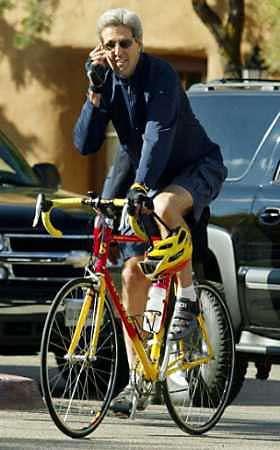
As I prepare to attend next week’s International Towards Carfree Cities Conference in Portland (from which I’ll be doing daily posts on this blog) — traveling up by train with a big group of bicyclists and alternative transportation activists from San Francisco — the newsgroups and carfree living websites have been abuzz over this simple image:
biking Obama.jpg
Why go gaga over a presidential candidate on a bike? After all, John Kerry rode one and President Bush reportedly takes regular mountain bike rides. The difference for those who promote bicycling as a viable urban transportation option is that Obama rode in a big city, in street clothes, on an inexpensive bike, and was even hauling something (probably his daughter, although that isn’t clear). And he chose to spend his downtime cycling through Chicago with his family shortly after saying this in Portland: “If we are going to solve our energy problems we’ve got to think long term. It’s time for us to be serious about investing in alternative energy. It’s time for us to get serious about raising fuel efficiency standards on cars. It’s time that the entire country learn from what’s happening right here in Portland with mass transit and bicycle lanes and funding alternative means of transportation.”
Contrast that with today’s news that Senate Republicans have blocked legislation that would have taxed the obscene profits now been reaped by the five big largest American oil companies, which took in a staggering $36 billion in just the first three months of this year. Just imagine how many bike lanes and transit improvements could be funded with the proposed 25 percent tax on unreasonably high profit levels? Or by getting out of Iraq, with its price tag of more than $250 million per day?
Forget the detailed analysis of their economic plans; the differing visions of these two men couldn’t be more clear. We either keep cooking the planet, fighting the world, and begging the rich for crumbs and spare change, or we try something different.

A fall revenue measure

0

EDITORIAL If you think the June ballot was busy, wait until November. San Francisco will be electing six district supervisors. The mayor and organized labor are going to be pushing the mother of all bond acts, roughly $1 billion to rebuild San Francisco General Hospital. There’s likely to be a public power charter amendment mandating that the city mount a real effort to take over the electric grid. There will probably be a major affordable-housing initiative that includes a set-aside for low-income housing and perhaps some affordable-housing bond money. It’s shaping up as an election that will change the city’s direction for years to come — but there’s still a crucial piece missing.

There’s no money.

Public power will, of course, generate vast amounts of new revenue, but not immediately: the process of setting up the system and fighting Pacific Gas and Electric Co. in court could drag out for several years. That, of course, is all the more reason to get started — if the city had done this years ago, we wouldn’t have a budget crisis today.

But in the meantime, right now, San Francisco needs cash — and there needs to be a November ballot measure that brings in new revenue to pay for more affordable housing and to save the services Mayor Gavin Newsom is cutting.

It’s tough to pass new taxes in California. Most of the time, state law mandates a two-thirds majority vote by the people to enact any new form of taxation. But it’s a bit easier when the supervisors are up for election; on those ballots, the threshold is only 50 percent. And with at least four tightly contested supervisorial races bringing out voters, labor bringing out the troops for the General Hospital bond, and the Democratic Party pushing to get voters out for Barack Obama, the turnout should be excellent.

So if there’s ever a good time to try to pass a tax measure, November 2008 ought to fit the bill.


All sorts of tax proposals have floated around City Hall in recent years and some of them — for example, a higher real-estate transfer tax — were defeated at the ballot. Some groups will oppose any tax proposal, and it’s hard to find constituencies that want to work hard for higher taxes.

So the key to crafting a revenue measure is to ensure that it’s as progressive as possible, and that it takes into account the concerns of those small businesses and homeowners who aren’t rich and can’t afford huge new levies. We see two good options:

1. A city income tax. This hasn’t been seriously discussed since the 1980s, but it ought to be. California law bars cities from collecting traditional income taxes — that is, San Francisco can’t tax the incomes of everyone who lives here. But in 1978 the state Supreme Court ruled that cities can tax income earned from employment in the city. The upside is that a San Francisco employment income tax would hit commuters, a huge group who use city services and don’t pay for them. The downside is that people who live here but work, say, in Silicon Valley would escape the tax.

But overall, income taxes are the fairest method of collecting revenue, and a city tax could be set to hit hardest on the wealthiest. The city could exempt, say, the first $50,000 of earned income, levy a modest (say, 1 percent) tax on the next $50,000, then increase the marginal percentage so that people with enormous salaries pay as much as 2 or 3 percent.

The beauty of this: most of the people who paid the top-end income tax would simply write it off their federal income taxes — meaning this would be a direct shift of cash from Washington DC to San Francisco. And it would come primarily from people who have already received a huge tax windfall from the Bush administration.

Yes, some people would cheat. Some businesses would try to claim their employees all really worked out of a satellite office in another city. But New York City has a municipal income tax. So does Philadelphia. They manage to deal with the cheaters. The supervisors at least ought to consider the idea.

2. A new business tax. Almost everyone agrees that San Francisco’s business taxes are unfair. The city places a flat tax on businesses — a small merchant pays the same percentage as a giant corporation — and some partnerships, like law firms, get away with paying no city taxes at all. The best way to fix that may be to create a single, progressive business tax (probably on gross receipts), with no loopholes, that exempts the first $100,000 or so and actually lowers the levy on small businesses while significantly raising it on big ones. Most small businesses would get an actual tax cut while the big guys would pick up the tab.

Together, a tax package like this could bring in the $250 million a year or so the city needs — and some of the money could go to cutting, say, Muni fares or reducing the sales tax so working-class San Franciscans would pay less.

Almost everyone at City Hall knows the current tax system is unfair, regressive, and inadequate. We’ve been calling for the supervisors to do something about it for years now. November 2008 seems like an excellent time.

Leno celebrates tough win

0

Lime on Market Street near Castro was crowded with Mark Leno supporters when the candidate took the microphone just before midnight. He had already taken the concession calls from Carole Migden and Joe Nation and was primed to celebrate his victory over an incumbent senator, whom Leno supporter Bevan Dufty had just taken a couple subtle digs at as he introduced Leno, suggesting that Migden didn’t listen to her constituents or play by the rules.
Leno then gave a speech that demonstrated the unique package of issues, enemies and allies that he has turned into a winning coalition. “Tom Ammiano, it’s gonna be a helluva lot of fun serving with you,” Leno said of the man who will succeed him with his endorsement. “I just heard Prop. E passed,” Leno continued, referencing the measure that will submit the mayor’s SFPUC appointments to Board of Supervisors approval. “As an early supporter, I was happy to see that.” That stand was already a hopeful sign of his independence from Mayor Gavin Newsom and PG&E, but then he really went after the company, which had funded a hit piece mailer by a group calling itself Californians to Protect Children, trotting out some old sleaze about Leno being soft on pedophiles because he resisted right wing efforts to capitalize on crime fears.
“When you attack one gay man like this, you attack all gay men,” Leno said. “All gay men should be outraged with PG&E tonight.” He thanked Dennis Kelly of United Educators of San Francisco for giving his campaign early credibility. Then Leno returned to the LGBT community, promising to heal the rift his challenge of Migden opened by leading the fight against the fall ballot measure that would ban same sex marriage. “I invite you to join together to defeat the religious right,” Leno said.
He then thanked a long list of leaders who endorsed him, from Mayor Gavin Newsom and House Speaker Nancy Pelosi to District Attorney Kamala Harris and former SFPUC director Susan Leal to members of the late night entertainment community, which rallied for Leno with signs on nightclubs all over town. And then he thanked his campaign consultants, the downtown darlings BMWL, affectionately naming a list of people from there and saying of the campaign they created: “It was clean, it was smart, it was effective.”
And Leno’s final name check was to the presidential candidate he supports, who also had a good night: “The winds of change are blowing tonight. Let me congratulate Barack Obama on his victory.”

It’s over — Obama wins

0

The Associated Press is reporting that Barack Obama has secured enough delegates to win the Democratic Party nomination for president, even before today voting in South Dakota and Montana. On to the White House.

Scraper success

0

› a&eletters@sfbg.com

"This is what happens when Bay Area gas goes to 4 bucks!! We cant even afford to rap about cars..lol [sic]."

So reads one YouTube viewer comment for "Scraper Bike," a music video by local rap group the Trunk Boiz. Rather uncharacteristically for hip-hop, the clip includes a crew of hoodie-wearing, dreadlock-shaking young guys pedaling through the Oakland streets on their tricked-out bicycles. With zero support from radio, "Scraper Bike" became an underground hit last year, making alternative transporation cool for Escalade-obsessed East Bay youth.

"My scraper bike go hard, I don’t need no car," intones Trunk Boi B-Janky in the chorus of a song that’s so catchy it’s viral. Through Web word-of-mouth alone, "Scraper Bike" became one of the 20 most-watched YouTube videos of 2007. In March of 2008, the video was nominated for a YouTube Award, putting the Trunk Boiz in such illustrious company as Obama Girl.

With 2.5 million views and counting, "Scraper Bike" spurred a local trend now gone global, with folks from as far away as Turkey and Bavaria petitioning the Trunk Boiz to come pimp their rides. Yet scraper bikes are pure East Oakland, an homage to their four-wheel counterparts: long a fixture of East Bay car culture, "scrapers" are hoopty rides — usually ’80s-era Buicks or Oldsmobiles — made ghetto-fabulous with candy paint, huge rims, tinted windows, and booming speakers in the trunk.

Trunk Boi Baby Champ, inventor of the scraper bike, recalls his initital inspiration. "At that time I was real young and didn’t have no license or nothing," he says. "So I just wanted to take the pieces of the car and put it on a bike and mold it and shape it like that. I just took it and ran with it." In transutf8g the scraper aesthetic, not only does Champ outfit the bikes with neon colors and decorative spokes, he even wires up stereos to the handlebars and loads speakers on the rear. "That’s one of our promotional schemes," B-Janky informs me during a group interview at their West Oakland studio. "We ride around on scraper bikes eight deep, with speakers slappin’ our music."

Hustlers and entrepreneurs, the Trunk Boiz bring a whole new meaning to the Bay-slang term "out the trunk." The phrase refers to the marketing strategy immortalized by Too $hort, who early in his career famously sold music out of his car. Yet when the Trunk Boiz slang CDs "out the trunk," that trunk is less likely part of a Cutlass Supreme than a double-axle three-wheel cruiser — essentially, a tricycle on the back of which is a wooden cart painted in Oakland A’s colors with the words "That Go!"

A rather endearing sense of juvenalia surrounds the Trunk Boiz mystique. After all, their average age is about 19. As one might expect of a group of more-or-less teenage boys, songs tend to focus on adolescent preoccupations such as partying, looking fly, and getting girls. But unlike blunt rappers like Lil’ Weezy — who endlessly employs stale metaphors to describe their male members — the Trunk Boiz make sex romps sound clever. In the track "Cupcake No Fillin’," MCs Filthy Fam and NB drop double entendres, extending the concept of "cupcaking" — Oakland slang for flirting — into a confectionary ode to casual, no-strings-attached hookups (i.e., with "no feeling").

It may not be a message mothers want their daughters to hear, but the kids love it. The video for "Cupcake No Fillin’" has nearly 100,000 YouTube views, and helped expand the group’s female fanbase by casting the rappers in a loverboy light.

Given the group’s penchant for high-energy antics, the Trunk Boiz were happy to ride the hyphy train while it lasted. They even got scraper bikes into videos for the Federation’s "18 Dummy" and Kafani’s "Fast (Like NASCAR)." None other than Too $hort called Champ the day of the Kafani shoot, urging the scraper bike crew to roll through and bring some local flavor. They continue to glean game from the legendary rapper through their involvement with East Oakland nonprofit Youth UpRising, where Too $hort volunteers.

Inspired by such mentors, the Trunk Boiz have become more civic minded than one might expect of a group that raps about going "SSI" ("Socially Stupid Insane") — a track off their sophomore album, due out this summer. Not only are they involved with Youth UpRising and Silence the Violence but also with the "Ban the Box" reentry-reform efforts in Oakland as well as Bikes for Life, an antiviolence campaign launching July 13 with a ride around Lake Merritt. In August, they’ll attend the National Hip-Hop Political Convention in Las Vegas, where they’ll roll down the Strip on their scraper bikes.

Fortunately, when it comes to homegrown innovation, what happens in Oakland doesn’t always stay in Oakland. *

For more on Bikes for Life, call (510) 238-8080, ext. 310.

www.scraperbikes.net

On Memorial Day, see “The Visitor”

0

By Bruce B. Brugmann

On Memorial Day, see the movie now playing called “The Visitor.” We saw it at the Empire theater yesterday and it broke our hearts. It’s an honest poignant indictment of callous Bush detention and deportation policies of illegal immigrants that have largely gone unnoticed in the mainstream media.

A young Syrian “visitor” seeking political asylum is grabbed on the New York subway by the INS, slammed into an anonymous detention building in Queens with 300 or so other “visitors,” treated harshly, kept virtually incommunicado from his mother, partner, and an economics professor who gets pulled into the story and is trying vainly to help. Then the young man is jerked out of the building and sent summarily back to Syria to face probable political persecution. Bang, just like that. All done in INS bureaucratic secrecy, without due process or even the semblance of fairness or justice or sunshine.

Is this what our good service men and women are fighting for?

On Memorial Day, read the dispatch sent to me from Carolyn Schmidt, a free lance writer in Cedar Rapids, Iowa. She writes:

“The NYTimes story is the first piece I’ve seen on the big raid–the nation’s largest, according to reporters– on illegal immigrants at a Postville, IA kosher meat packing plant on Monday, May 12. (The May 24 NYT story was written by Julia Preston and headlined “270 Illegal Immigrants Sent to Prison in Federal Push.”

“St. Bridget’s Catholic Church opened its doors to the family and friends left behind when the INS (now called the ICE) swept into the plant, loaded people on buses, and transported them to the National Cattle Congress grounds in Waterloo.

“Our Cedar Rapids Gazette and the Des Moines Register have had stories about it all this past week and a half, but it is finally making it out to the national media.
The packing plant was abusing many of the workers–not even allowing them to take bathroom breaks, working 14-hour days, and paying them below minimum wage. So far the plant hasn’t been charged with anything, but charges MAY be coming. The Register story indicates that the company’s New York plant has been charged repeatedly.

“The people who are immediately prosecuted, of course, are the workers recruited to come up here and given false documents that they are now being prosecuted for having. Iowa is not the state you think of when the immigration issues are raised, but a similar raid was carried out in Marshalltown in January 2006. The Bush administration has found an easy way to make a statement, evidently. The attorneys representing the immigrants and the judges given this timetable by the feds all seem to be doing the best that they can.

“But running these people through hearings in groups of 10 and 20 does not seem like justice, in spite of what the attorneys say about their clients understanding the charges and being treated fairly. This is the biggest raid and the shortest time to accomplish it in U.S. history. The real culprit is the packing plant that recruited these workers to come here illegally, then abused them and underpaid them because the company knew they couldn’t complain to anyone in authority. So far the company has not been charged with anything. That is the travesty.”

Is this what our brave service men and women are fighting for?

Iowa made history by doing the right thing, voting Obama, and giving him the momentum that has carried him to near victory in the presidential primary. And now the ultimate irony is that the Bush administration, in this critical moment in the campaign, is making the case even stronger for Obama in the state where it all began.

It’s time for a change in Washington. ASAP. Support Obama. And support the GI bill, opposed by Bush and McCain with maddening duplicity and wrongheadedness. This is the bill that would show that this country on this Memorial Day and thereafter really remembers our fighting men and women throughout the years and really supports the troops fighting this Godawful war without end in Iraq for Bush and McCain.

Bruce B. Brugmann, a proud cold war veteran who ended up in l959-60 as a specialist 5th class, writing for Stars and Stripes in Yongdongpo, Korea

Editor’s Notes

0

› tredmond@sfbg.com

When the ruling on same-sex marriage came down, I was in upstate New York, hanging out with my brother, who runs a small construction outfit in a working-class town. His employees are the people Democratic leaders worry about; a generation ago they were called "Reagan Democrats." They make extremely un-PC jokes and insult each other with terms that would make most San Franciscans cringe.

And you know what? They couldn’t possibly care less about same-sex marriage.

"The people in my crew have families to feed and payments to make on their houses," my brother told me. "They don’t care who marries who. It’s the most ridiculous issue in the world." (My brother, who got married on his lunch hour wearing overalls covered with concrete dust, also told me years ago that "marriage is like a horse with a broken leg; you can shoot it, but that doesn’t fix the leg." You get the picture).

Yes, there are gay couples living in his little community. The framers and roofers treat them like everyone else. The construction workers are not remotely disturbed about queers being threats to their traditional values or marriages. And they’re all voting for Obama because they’re sick of the war, sick of the recession, sick of the cost of health insurance, sick of the politics in Washington DC, and ready for something totally different.

I thought about all of that when I came back and read the San Francisco Chronicle stories repeating the old argument that same-sex marriage could be the bane of the Democrats in November. It’s the same thing Rep. Nancy Pelosi says about all kinds of social and economic issues: we can’t go too fast. We might piss off some swing voters.

Sure, you might do that. And I’m not a pollster, and my focus group, as it were, is fairly narrow here. But I don’t think I’m wrong when I say that among rapidly growing numbers of Americans, gay marriage is becoming pretty insignificant as a wedge issue. I used to say that in 20 years, people would look back at this era and wonder what the foes of marriage equality were thinking. Now I suspect we’ll only have to wait 10 years, maybe less, before this is totally accepted in the mainstream of American society.

When somebody like Mayor Gavin Newsom takes the lead on a civil rights issue like this, I think it’s pretty crass to question his motives. But you can’t dispute the outcome: Newsom may have been acting out of pure principle or out of political calculation. But in the end, his career is now tightly tied to an issue that is part of the future. He will never have to say he was sorry about this, and all of the weak and trembling little Democrats who are wringing their hands will all look like idiots one day. One day very soon.

If Newsom wants to be governor, this can only help him — but it won’t be enough. My brother’s point is that the country is in a deep recession, the economy is a disaster, economic inequality is ruining the American Dream, and social issues aren’t going to carry the day. A politician who won’t tax the rich to improve the lot of the poor and the middle class, who won’t offer comprehensive economic solutions, who has nothing to say to people who make their living building houses when the housing market is in free fall … that politician’s going nowhere. *

Democrats can’t wait

0

Green Party presidential candidate Cynthia McKinney gave a stirring speech in New York City on Friday that serves as an important reminder of the simmering populist cauldron that the Democratic Party has neglected at its peril. Much of the country blames Democrats almost as much as Republicans for this country’s fall from grace, marked most prominently by the Iraq War, empowerment of corporations over individuals, and short-sightly hawkish approach to everything from foreign relations to illegal drugs.

I publicly criticized Matt Gonzalez for joining Ralph Nader’s presidential campaign and for offering barbed critique of Barack Obama (comments even our crosstown rival found newsworthy.) And I still believe that Obama can’t be perfectly progressive in his Senate votes or searing in his critique of this country’s direction and still be elected president in the current media and political climate of the country.

Yet I agree with most of what Gonzalez and Nader say, and with the stances being taken by the new standard-bearer of their old party, McKinney. None can win, and they may do more harm than good this year, but their political critiques are right, and they represent a significant segment of this country that isn’t going away. In fact, it may just get stronger and more belligerent once the significant challenges this country faces become President Obama’s problem.

So Democrats, from Pelosi and Obama on down, had better think about how they’re going to address the points that McKinney — the former Democratic member of Congress — makes in the following speech, which I include below in its entirety. Because the people won’t be be patient much longer, particularly if things continue getting worse under a Democratic president who isn’t willing to challenge this country to finally live up to its rhetoric.

Here comes the public power initiative!

0

By Bruce B. Brugmann (Scroll down to see the historic Mirkarimi/Peskin/City Attorney resolution)

Today, at the Board of Supervisors meeting, Sups. Ross Mirkarimi and Aaron Peskin introduced
a Charter Amendment mandating that the city’s Public Utilities Commission create a plan to establish a retail power agency in San Francisco and start the process of kicking PG&E out of City Hall and the rest of the city.

The amendment, as our editorial in Wednesday’s Guardian outlines, would “provide the badly needed kick start to get city officials to act on San Francisco’s historic mandate for a municipal electricity system.”

The move is prompted by the battle over whether the city should replace the ruinous Mirant private power plant with city-owned power plants called peakers at the foot of Potrero Hill. PG&E has quietly orchestrated a major political and public relations onslaught to kill the peakers because they would be what PG&E fears most: city-owned public power.

In fact, as Tim Redmond’s blog discloses, PG&E even marched seven lobbyists (yes, seven) into the office of would-be-green Mayor Gavin Newsom, who once personally backed the plan and whose Public Utilities Commission backs the plan. PG&E jacked Newsom around and muscled him into asking for a delay in today’s scheduled power plant vote to give PG&E more time to kill the peakers.

The rationale: some sort of vague and ridiculous idea of retrofitting the Mirant plant and keeping the PG&E uber alles status quo.

IF PG&E ultimately loses the peaker vote (and it will be close), PG&E will most likely run a referendum on the November ballot against this dread move to peaker public power. So the Mirkarimi and Peskin move is aimed at putting a counter initiative on the November ballot and breathing new life into the historic battle to enforce the federal Raker Act (which mandated San Francisco have a public power system) and bringing our own cheap Hetch Hetchy public power to the people of San Francisco. (See Guardian stories and editorials since l969.) The initiative would be timed to take advantage of the expected heavy turnout of Obama forces for the presidential election and for the election of supervisors.

The legislative digest sums up the amendment in a paragraph of City Hall legalese:

The amendment is to “address the need to change electricity production, delivery, and use to ensure environmentally sustainable and affordable electric supplies for residents, businesses, and city departments and to require the Public Utiliies Commmission to comprehensively study and determine the most effective means of providing clean, sustainable, reliable, and reasonably-priced electric service to San Francisco residents, businesses, and city departments.”

The amendment was written and signed by Deputy City Attorney Theresa Mueller and approved as to form by City Attorney Dennis Herrera. It was introduced by the president of the board (Peskin) and a powerful supervisor who is obviously running for board president and mayor (Mirkarimi). These references are important: when the public power movement was reinvigorated in the late l990s, it faced a massive lineup of PG&E stalwarts inside City Hall: City Attorney Louise Rennie, Mayor Willie Brown, the PUC executive director and PUC commission, and all the supervisors with the notable exception of Sup. Tom Ammiano.

Mikarimi led the two famous initiative campaigns as campaign manager in 2000 and 2001, which PG&E defeated with muscle, mutli milliions, and staunch daily paper support. Now, Mirkarimi is inside City Hall in a starring role leading the charge for community choice aggregation (CCA) and now a public power initiative. And the whole thing scares the hell out of PG&E.as never before.
.
Hurray! The battle is on!

P.S. PG&E marches in: You can see how PG&E works by seeing who was at the critical May 5 meeting in the mayor’s office. No public power people, nobody from the Sierra Club, and no environmental justice activists who are also opposing the peakers (but for understandable environmental reasons.) But standing tall at the secret meeting were seven PG&E lobbyists, led by Travis Kiyota, and such PG&E friendly folks as PUC Commissioner Dick Sklar (remember him?), Sup. Michela Alioto-Pier, and a representative from the National Resources Defense Council (NRDC).

PG&E and NRDC arranged to have a timely letter on NRDC letterhead, dated May 12 , come to the supervisors from Robert Kennedy Jr., with ccs to Newsom, President Michael Peevey of the California Public Utilities Commission, and Gov. Arnold Schwarzenegger. The letter was of course released to the press and the public on the eve of the vote. PG&E, NRDC, and Kennedy had at least one line right: “Where San Francisco ultimately decides to invest its precious energy dollars is a choice that will send a message to cities around the country.”

The tipoff: nowhere do the PG&E supporters, including the Chronicle editorialists who suddenly took a down-with-the-peakers stand yesterday, nor the Examiner, with a wimpy story today on Newsom’s sudden change of plans, mention those dread three letters that divulge the secret agent at work (PG&E) nor that dread phrase that tells what the secret agent is really up to (killing public power.) C’mon, folks, this isn’t that hard to figure out. Is there some law somewhere that says the local media can’t cover what PG&E is doing to perpetuate the PG&E/Raker Act scandal and once again kill public power? (See “The Shame of Hearst” in previous Guardian and blog items.)

On guard. The pubic power forces are once again moving up to the front lines, muskets at the ready. B3 (who sees the fumes from the Mirant plant every minute of every day from my Potrero Hill office window)

Click here to read Mirkarimi and Peskin’s recent Charter Amendment.

Click here to read Redmond’s recent blog, PG&E offers Newsom a blank check

Click here for this week’s PG&E editorial.

The feds raid San Francisco

0

EDITORIAL On May 2, the day after thousands demonstrated for immigrant rights — exactly one month after Mayor Gavin Newsom and Sup. Tom Ammiano stood in front of the cameras and announced a new initiative to promote the city’s sanctuary policy for undocumented residents — federal agents swept into the city and arrested workers at El Balazo restaurant as part of an immigration enforcement raid.

It was bitterly ironic: much of the excitement of the large May Day rallies in San Francisco came from the diversity of the crowds and the connections among labor, antiwar activists, and immigrant-rights groups. The raid reflects the ongoing disaster that is US immigration policy under President George W. Bush — arresting and deporting restaurant workers tears up families and communities, is a colossal waste of money, does nothing about the economic issues driving immigration, and damages the San Francisco and California economies. But it’s tough to get leading Democrats to take a strong stand on the issue: both Sens. Hillary Clinton and Barack Obama have ducked tough immigration questions during the presidential campaign.

And while San Francisco’s Rep. Nancy Pelosi, the Speaker of the House, was against the fence and called it a "terrible idea," she hasn’t said a word in public about last week’s immigration raid in her home city. Neither has Sen. Dianne Feinstein or Sen. Barbara Boxer.

There’s only so much San Francisco can do to block the Immigration and Customs Enforcement raids. The local sanctuary law bars city officials from in any way assisting ICE in apprehending undocumented immigrants, and Newsom and the Police Commission should direct Police Chief Heather Fong to investigate and ensure that there were no San Francisco law enforcement resources used, directly or indirectly, in the raid.

But local activists can do a lot to stop this insanity, using the sorts of political alliances we were encouraged to see forming at the May Day events. For starters, the antiwar, labor, and immigrant rights groups should call on Pelosi, Feinstein, and Boxer to denounce the raids and demand that ICE stop terrorizing California workers.

Editor’s Notes

0

› tredmond@sfbg.com

Early in January 1992, with Bill Clinton poised to win the crucial New Hampshire primary, a woman named Gennifer Flowers came forward with a sordid tale of a 12-year affair with the young Arkansas governor.

Pundits proclaimed that the allegation by Flowers, a former TV reporter who later posed nude for Penthouse, would sink the Clinton campaign. Instead, Bill and Hillary appeared on 60 Minutes right after the Jan. 26 Super Bowl and, in a stunning performance, the candidate diffused the damage and went on to win the primary and the White House.

Years later, a political operative I know offered a bizarre story: Clinton’s senior advisors not only knew that Flowers would go public; they were happy she did it.

See, back then, my source said, polling showed that Bill Clinton was popular among women and educated liberals. His only problem was with the so-called working class white-ethnic men, the blue-collar guys who were Democrats but voted for Ronald Reagan. Those voters thought Clinton was weak, and that his wife was pushing him around.

The Flowers affair was bound to come out eventually, the operative told me. So the strategists figured that sooner was better. Of course, the morality voters and the sanctity-of-marriage crew would be aghast, but they weren’t going to vote for Clinton anyway. The blue-collar guys wouldn’t be offended at all; in fact, some would think a guy who had a Penthouse centerfold on the side wasn’t such a chump after all. And the women had nowhere else to go.

So why not control the release, let Bill and Hillary deal with it, put it behind them, and defuse its potential as an October surprise?

If that account is true, the strategy worked brilliantly.

I thought about Flowers when I saw the video of the Reverend Jeremiah Wright speaking to the National Press Club.

The news media and a lot of Obama supporters say Wright, after talking about the oppression of African Americans, derailed the campaign of the only African American ever to get close to the presidency.

But let me offer a strange but plausible thesis here: what if the Obama campaign not only knew what Wright was going to do, but quietly approved of it?

Think about it: Obama is about two whiskers from being the most powerful person on Earth. If he really wanted Wright to shut up, he could have made a few calls, and I suspect the guy would be cloistered behind closed doors for months. But no: the fiery minister went and attacked America and insulted Obama in a way sure to make huge headlines.

The result: Obama gets to denounce and distance himself from a guy who was going to be a problem in the fall. The damage was done early enough that it will be old news by October. Obama will still win North Carolina, be close in Indiana — and Clinton simply won’t have the numbers to win the nomination.

Maybe I’m wrong. Maybe the story I was told all those years ago was a total fabrication. Maybe Gennifer Flowers and Rev. Wright acted alone. But I’ve watched enough presidential campaigns to know it’s entirely possible they didn’t.

Merc circ up despite newsroom bloodbath

0

How is it possible that one of the only major daily newspapers in the United States to show an increase in circulation over the last six months is the closest to up and dying? The San Jose Mercury News added 4,000 weekday copies over the last half-year, according to their most recent figures.

merc2.jpg

The Merc, once the prestigious gem of the Knight-Ridder chain of newspapers, has undergone heartbreakingly massive staff cutbacks and turnovers of top editors over the last two years. One editor even tragically took his own life. Knight-Ridder was one of the few chains in the United States that aggressively challenged the White House on the war, something they didn’t get proper credit for until much later when Bill Moyers made his triumphant return to public television.

Besides the Merc, everybody’s down in circulation by several percentage points these days: the LA Times, the Chronicle, the Sacto Bee, the Orange County Register. And we all know why, of course. People don’t want to pay for paper anymore. So how could a paper product like the Merc, which is losing all of its talent and enduring the infamous operations consolidations of parent company MediaNews that predictably lead to more boring and error-laden copy, actually be raising the number of people who read the deadwood version at home?

Their circ is up by a seemingly small 1.7 percent, but when you consider the most attention the Merc has gotten lately came from a series of depressing photos portraying the Merc newsroom as a graveyard, this seems like a pretty big deal for the Silicone Valley daily. We couldn’t actually find a good explanation for why their circ is up … anywhere. Folks linked to the news but no one explained the turnaround. We weren’t able to reach anyone in the Merc‘s circ department right away either. They may have blitzed the city with subscription deals, but that seems unlikely if MediaNews CEO Dean “Obama Bin Laden” Singleton, like everyone else, is gravitating toward the Web, even if the Web formula he’s come up with for all of his newspaper holdings frankly looks like crap. I mean really, Dean. The MediaNews sites aren’t nice to navigate or look at. Moyers and Singleton videos after the jump.

Frank Chu Speaks, Or, McCain Embezzled My Money

0

By Justin Juul

So I ran into this really interesting guy at the One Year Anniversary of The Mission Indie Mart at 12 Galaxies the other day…

chu1a.jpg

SFBG: Hey, aren’t you the guy who hangs out on the corner of Market and Sixth with the sign? I pass you everyday on my way to work. What’s your name?
Frank Chu: Yeah, I protest down there. My name is Frank Chu and I was published by the San Jose Mercury news with Dan Greene and also with Tom Brokaw on NBC Nightly News. I was also filmed by some populations of The 12 Galaxies. They are guilty with Bush and Cheney, which gives you a sense of the millions of populations I’m dealing with.

SFBG: Nice! So do you hang out here at The 12 Galaxies a lot?
Chu: Yes. I was a TV Star and a movie star, so they named the nightclub after me. They call it 12 Galaxies and they give me complimentary drinks and free admission to events. So I didn’t have to pay when I met Mark Hamill from Star Wars. I also met Nancy Pelosi, John Kerry, and Dennis Kucinich. I told them about my campaign.

SFBG: What’s your campaign about?
Chu: Well, it’s about rocket societies, flying saucers, and space vacations.

SFBG: I don’t get it. How does that all tie in together?
Chu: It’s about the 12 Galaxies that are friends with the White House who are guilty of attempts of murdering the other thousand galaxies.

SFBG: Oh, I see. Your campaign is about aliens and stuff then. I always thought you were one of those God people.

Chu: Well, the 12 Galaxies are advanced populations. They are more advanced than humans and they are friends with The Bush and The Clinton.

SFBG: Are they friends with Barack Obama too?

Why did Rev. Wright do this?

0

By Bruce B. Brugmann

Bob Herbert, the Afro-American op ed columnist for the New York Times, had the most sensible answer I’ve seen in his Monday (April 29) column.

He waded right in with his lead:

“The Rev. Jeremiah Wright went to Washington on Monday not to praise Barack Obama, but to bury him.

“Smiling, cracking corny jokes, mugging it up for the big time news media,–this reverend is never going away. He’s found himself a national platform, and he’s loving it.”

Then: “So there he was lecturing an audience at the National Press Club about everything from the black slave experience to the differences in sentencing for possession of crack and powdered cocaine.

“All but swooning over the wonderfulness of himself, the reverend acts like he is the first person to come with the idea that blacks too often get the short end of the stick in America, that the malignant influences of slavery and the long dark night of racial discrimination are still being felt today, that in many ways this is a profoundly inequitable society.”

Herbert then gets to the question. “This is hardly new ground. The question that cries out for an answer from Mr. Wright is why–if he is passionately committed to liberating and empowering blacks–does he seem so insistent
on wrecking the campaign of the only Afican-American ever to have had a legitimate shot at the presidency.”

Herbert says that “my guess is that Mr. Wright felt he’d been thrown under a bus by an ungrateful congregant
who had benefited mightily from his association with the church and who should have rallied to the former pastor’s defense. What we’re witnessing now is Rev. Wright’s “I’ll show you!” tour.”

Obama rightly and firmly rejected Wright and his attacks. Now he should change the subject, get back to the real campaign and the real issues, and let his Afro-American and white surrogates carry on the dialog if necessary. Wright will be a killer swift boat issue only if Obama and his campaign allow it to become one.

I think he should take Clinton on in a Lincoln and Douglas style debate. I think he would win, given his oratorical skills, and it would help change the subject. But most important, Obama needs to reenergize his campaign
by injecting a strong populist appeal to his campaign theme of unifying and transformation. He needs to present the case that he has the grit and the intellect to beat the Republicans on foreclosures, the economy, the war, Iran, universal health care, the rising inequality in American life, and everything else that our despised president and his sucking up successor represents. He must offer leadership and offer real solutions and programs with passion and stick to the issues that really matter to the growing tide of Americans who are desperately angry and frustrated with Bush. That is the best way for Obama to deal with Wright and the Wright attacks to come. B3

Click here to read today’s Bob Herbert column, The Pastor Casts a Shadow.

The nightmare pastors

0

I’m sorry to see Barack Obama’s campaign in so much trouble over the latest comments of Rev. Wright, but you have to admit: This is a great argument for the separation of church and state.

Religious figures say all kinds of strange things — and frankly, while I (obviously) don’t agree with Wright that AIDS is a government plot, it’s pretty well established that the Reagan administration’s failure to respond to the epidemic in the crucial early years was, if not a government plot to kill anyone, certainly a government plot not to save the lives of gay men.

But here’s the question: Why so much media attention on Obama’s religious albatross — and so little on John McCain’s? McCain, lest we forget, is pals with Paston John Hagee, who believes, among other things, that the Catholic Church is a “great whore,” that “all Muslims have a mandate to kill Christians and Jews,” that God wants us to bomb Iran — and that God damns the United States because of gays, Catholics and Muslims.

Me, I’d rather have a guy who rails against the U.S. for racism and imperialism than a guy who says God hates gays. But then, I don’t go to church.

Clinton needs to drop out

0

Finally, the mainstream media is starting to do the math. As the Examiner reports today, Clinton would have to win something like 80 percent of the delegates after North Carolina and Indiana to go to the convention ahead of Barack Obama. It’s over — and all that Bill and Hillary are doing is damaging the Democratic Party’s prospects in November by trashing the almost certain nominee.

This is nothing new to the blogosphere — Paul Hogarth explained it nicely way back in March.

I’m not among the Hillary bashers who just can’t stand her; I think she’d be a fine president. But she has adopted her husband’s win-at-all-costs, scorched-earth attitude and I’m starting to think that she would rather see John McCain in the White House than Barack Obama. Because that’s where her behavior is leading. She needs to drop out.