obama

SFBG Radio: Johnny’s had it with Obama

5

The economy’s not getting any better, we still have 50,000 troops in Iraq, and the Democrats are in serious trouble this fall — because they refuse to act like Democrats. That’s why Johnny’s had it with Barack Obama (though Tim says the Dems are still better than the alternative ….) Listen to the ranting and raving after the jump.


sfbgradio932010 by endorsements2010

Portraits of Jason

2

arts@sfbg.com

HAIRY EYEBALL “The black queen is not interested in sympathy,” intones the artist Tim Roseborough dryly in Portrait of Jason II: Rebirth of the B*tch , his “sequel” to Shirley Clarke’s 1967 film Portrait of Jason. It’s one of many verbal snaps issued by Roseborough’s piece, a séance with and tribute to its titular subject currently on view at the tiny Scenius Gallery.

The Jason is question is Jason Holliday, who, for close to 100 minutes, gives Clarke’s near-static 16mm camera the performance of a lifetime. In an uninterrupted stream of speech filmed mostly in medium close-up, Holliday holds forth on the life experiences, aspirations, and observations he’s picked up as an African American, a gay man, an ex hustler, and a showbiz dreamer.

As the culled remains of the 12-hour shoot roll on and Clarke loads in new reel after new reel, Holliday’s finger poppin’ sassy front gradually gives way to flashes of deep-rooted pain and vodka-fueled rage, culminating in a tear-streaked finale that qualifies as one of the most unsettling moments in American documentary film.

Dressed in Jason drag — Coke bottle glasses, a natty white shirt, and dark blazer — and speaking in Holliday’s jivey cadence, Roseborough resurrects Clarke’s subject as a ghost from the past commenting on current events (Obama is discussed) and a cultural climate worlds away from the pre-Stonewall moment of Portrait.

Things get more interesting when Roseborough uses his performance of Jason to dive into how race and gender are affectively coded in Clarke’s film. The above quote is spoken in the midst of a disquisition on representations of “the queeny black man” as either an object of (presumably white) pity — here he brings up Paris is Burning — or exotic fascination (RuPaul), who is invariably collapsed with the figure of the drag queen.

Although it bears the look of its source material, Roseborough’s piece fundamentally differs from Clarke’s film in its presentation. Shot on single-channel video, Roseborough’s movie is shown on DVD. At my viewing session, I was given a remote allowing me to skip around between chapters, effectively taking in as much or as little of his Jason as I would like. Of course, when watching the original Portrait, you can up and leave the theater at any time (many viewers have in the two screenings I’ve attended), but its grueling duration and unrelenting pace are also what gives Jason’s performance, and Clarke’s film, their urgency.

Roseborough’s Jason might be more effective if unleashed across YouTube instead of confined to the by-appointment-only limitations of Scenius’ white cube (although, even former reigning queen Kalup Linzy has moved on and up to episodes of General Hospital). I’m glad the bitch is back, but I’d like to have a clearer sense of the stakes behind Roseborough’s new portrait.


FREE TO FALL

There are scads more shows opening just around the corner that space limits me from including in last week’s fall arts preview. That said, here are a few more current and upcoming exhibits worth seeking out in the coming weeks:

Composed of hundreds of miniature landscapes inspired by Western landscape painting, Sean McFarland’s refracted view of California’s blues, browns, greens, and golds turns Adobe Books’ back room into an exploded postcard shop.

At the Contemporary Jewish Museum, the cleverly titled “Black Sabbath” examines how black artists used Jewish music as way to define African American identity, history, and politics. The Idelsohn Society of Musical Preservation, which curated CJM’s recent “Jews on Vinyl” exhibit, has uncovered all sorts of hidden-in-plain-sight encounters between black and Jewish musical cultures, from Cab Calloway doing Yiddish jive to Johnny Mathis singing the Aramaic prayer “Kol Nidre.”

Radiohead fans know Stanley Donwood as the go-to cover artist and frequent artistic collaborator for the British rock group’s albums from The Bends onward. “Over Normal,” Donwood’s first stateside solo exhibit, features many of the painter’s colorful “word map” canvases, whose wavy, grid-like structures (based on the street layouts of major world cities) are filled in with politically resonant and controversially juxtaposed words (see the cover for 2003’s Hail to the Thief). 

TIM ROSEBOROUGH: PORTRAIT OF JASON II: REBIRTH OF THE B*TCH

Through Sept. 10

Scenius

3150 18th St., Suite 104, SF

(415) 420-2509

www.scenius.com

SEAN MCFARLAND: UNTITLED LANDSCAPES (CALIFORNIA)

Through Sept. 19

Adobe Books Backroom Gallery

3166 16th St, SF

(415) 864-3936

www.adobebooksbackroomgallery.blogspot.com

BLACK SABBATH: THE SECRET MUSICAL HISTORY OF BLACK-JEWISH RELATIONS

Through March 1, 2011

Contemporary Jewish Museum

736 Mission, SF

(415) 655-7800

www.thecjm.org

STANLEY DONWOOD: OVER NORMAL

Fifty24SF

Thurs/2 through Oct. 27

218 Fillmore, SF

(415) 861-1960

www.fifty24sf.com


Hands off social security!

2

Dick Meister, former labor editor of the SF Chronicle and KQED-TV Newsroom, has covered labor and politics for a half-century. Contact him through his website, www.dickmeister.com, which includes more than 250 of his recent columns.

Republican leaders in Congress would have us believe that most Americans support cutting Social Security and Medicare payments as a way to cut the federal budget deficit. But don’t you believe it.

As the AFL-CIO and other labor sources have discovered, that’s at best a figment of the Republican imagination. Or, as is most likely, it’s a bald-faced political lie.

The proof came in a poll marking the 75th anniversary of Social Security this year. It was conducted by a prominent research organization, Greenberg Quilan Rosner, and commissioned by the nation’s leading public employee unions, the Service Employees International and American Federation of State, County and Municipal Employees, joined by MoveOn.org and the Campaign for America’s Future.

The poll was in response to Republican House leader John Boehner’s call for reducing the federal budget deficit by raising the Social Security retirement age to 70, while continuing President Bush’s massive tax breaks for multi-billion-dollar corporations and wealthy individuals.

Boehner, that is, wants to lower the Republicans’ rich friends’ taxes at the expense of Americans who must rely on Social Security payments, averaging less than $14,000 a year, to meet their basic living expenses.

It would make much more sense, of course, to reduce the deficit by increasing taxes on the wealthy at least to the level they were before Bush’s tax cuts, rather than do it by raising the retirement age and making other financial cutbacks that hurt low and middle income Americans.

So, what did the poll show?

Most Democrats and independents responding wanted to end the Bush tax cuts that, if not repealed, will increase the deficit by an estimated $3.1 trillion over the next decade and reduce government revenue by more than $650 billion. That obviously would greatly curtail Social Security and other government programs for poor and middle class Americans.

It shouldn’t surprise anyone that most of the Republicans polled did not want to repeal the tax cuts and thus help government provide more services to those who need them, often badly need them.

Nevertheless, nearly 70 percent of the probable voters polled, whatever their political party, opposed cutting Social Security and Medicare to reduce the deficit.
What’s more, two-thirds of the Republicans also opposed raising the retirement age, despite their general dislike of the Social Security system. Raising the retirement age from 67 to 70 obviously would greatly curtail Social Security and other government programs designed to help poor and middle class Americans. But that apparently didn’t disturb many of the Republicans polled. Most of them did not want to repeal the tax cuts under any circumstance.

The AFL-CIO concluded – and quite accurately, I think – that “those conservative politicians who want to use concern about deficits as an opening to go after Social Security or Medicare risk a backlash” from voters.

The poll made clear that relatively few people are buying the Republican claims that Social Security and Medicare outlays are a major cause of the continuing federal budget deficit. Too many people have too much sense to believe that.

But what did sensible voters see as the main causes of the deficit?

Nearly half of those polled blamed the costs of the wars in Iraq and Afghanistan.
About a third blamed the bailouts of big banks and the auto industry.

Nearly a third blamed lobbyists and special interests for getting unnecessary spending put into the budget.

Almost as many placed the major blame on President Obama’s economic recovery or stimulus plan.

About one-fourth blamed the Bush tax cuts.  A relative few blamed the economic recession that reduced tax revenue and required costly government support for the unemployed. A relatively few others blamed the deficit on the cost of Medicare prescription drug benefits.

What it boils down to is this, as the AFL-CIO’s James Parks said in a bit of public advice to GOP Congressman Boehner:  “The public doesn’t like your plan to cut their Social Security so your rich friends can get another tax break.”

Anyone doubting the popularity and importance of Social Security need only consider a recent AARP survey that showed  “exceedingly high” support for the program.

” Clearly,” said AARP researcher Colette Thayer, ” most Americans rely on Social Security and expect it to be a source of income in their retirement. In fact, it is the most commonly cited source of retirement income.”

    Whatever their ages, whether over 30 or under, the poll – just as others like taken on the program’s anniversary dates five, 15 and 25 years ago – shows that Social Security is one of the government’s most important programs in that it provides essential retirement income to millions of Americans who would otherwise have little or no income.

The Campaign for America’s Future and MoveOn.org, will be jointly campaigning for candidates in the coming midterm elections who’ll pledge to block cuts in Social Security and Medicare and otherwise back the organizations’ liberal agendas. The unions that helped them sponsor the poll will also be waging major campaigns, as will other AFL-CIO affiliates.

They’re backing the kind of political candidates we should all back – and as strongly as we can. Our social security depends on it.

Dick Meister, former labor editor of the SF Chronicle and KQED-TV Newsroom, has covered labor and politics for a half-century. Contact him through his website, www.dickmeister.com, which includes more than 250 of his recent columns.

Endorsement interviews: Margaret Brodkin

7

Editors note: The Guardian is interviewing candidates for the fall elections, and to give everyone the broadest possible understanding of the issues and our endorsement process, we’re posting the sound files of all the interviews on the politics blog. Our endorsements will be coming out Oct. 6th.

Margaret Brodkin’s spent her entire adult life as an advocate for children, youth and families. She been a nonprofit director (she ran Coleman Advocates for 24 years), a department manager (running the Department of Children, Youth and Families until Gavin Newsom fired her for refusing to go along with his budget plans) and was the author of the legislation that created the Children’s Fund. She has a wealth of knowledge about the school district and is full of ideas about what a 21st century education would look like.

Brodkin talks about big-picture issues — experiential learning, the problems with the Obama Administration’s education policies — and basic local issues (the need for a central kitchen to make healthy school lunches).

You can hear our interview with her here:

mbrodkin by endorsements2010

Girlschool 2010

17

arts@sfbg.com

FALL ARTS/MUSIC When I last looked at the state of all-female bands in 2006, Sleater-Kinney, Destiny’s Child, and Le Tigre had hung up their guitars, mics, and samplers. Since then, the Bay Area has produced a motherlode of female-dominated rock outfits — including Grass Widow, the Splinters, Brilliant Colors, the Twinks, the Sandwitches, the Sarees, the Glassines, and Shannon and the Clams — while frontperson Dee Dee (née Kristin Gundred) of the Dum Dum Girls has moved back to SF, where she grew up.

Is there a girl band revolution on the horizon? Mainstream charts don’t reflect a change, despite the rising national profiles of the Dum Dum Girls, Vivian Girls, Frankie Rose and the Outs, and the all-female band backing Beyonce during her last tour. Yet since 2007, waves of all-female bands have been breaking locally — outfits often informed by girl groups, as well as garage rock and generations of punk. Jess Scott of Brilliant Colors told me she recently broached this subject with riot grrrl vet Layla Gibbon, editor of Maximum Rocknroll: “I think people are writing about the music itself, which is exciting. I’m always for new music, and I’m doubly for girls in music.”

But just because girl bands are becoming more of a norm doesn’t mean that sexism has evaporated, much like the election of Barack Obama hasn’t dispelled racism. “When we go on tour in the South or Midwest or anywhere else, you realize how different it is,” says Lillian Maring of Grass Widow. “You’re loading into the venue and hearing, ‘Where’s the band?’ ‘Heh-heh, it’s us — we’re the band.’ ‘You’re traveling by yourselves?'” She looks flabbergasted. “Are you fucking kidding me?”

Intriguingly, the very idea of foregrounding gender, above music, chafes against some musicians. “There’s definitely a history of women being objectified in all kinds of visual culture,” says Grass Widow’s Hannah Lew. “We’re thoughtful people who work hard at writing songs and are trying to challenge that whole system of objectification, so it would kind of be an oxymoron if we were to capitalize on the idea of being a girl group. Our gender is an element of what we do, but the first thing is our thoughts and our music.”

Still, others see gender as an inextricable part of writing music, often collaboratively, about their own experiences. “I think it’s a powerful thing to be a troupe of women together writing music,” says the Splinters’ Lauren Stern. “The lyrics are totally different, and there are certain things that a woman writer conveys differently.” Her bandmate Caroline Partamian believes the popularity of all-female combos like the Vivian Girls may be “subconsciously giving girl bands more power to keep writing songs and keep playing shows.”

The Girlschool class of 2010, would probably agree that a new paradigm is in order. Scott, for instance, confesses she’d rather align herself with politically like-minded labels like Make a Mess than simply other all-female bands that “want the same old things tons of guy bands have wanted.” The same old won’t get you a passing grade.


MEAT THE BAND: GRASS WIDOW

The dilemma of so many women’s bands — to be on the CD or LP cover, or not to be — is beside the point when it comes to SF’s Grass Widow, hunkering down over burgers and shakes in the belly of a former meatpacking building at 16th and Mission streets, in a onetime-meat locker-now-practice space jammed with drum kits, amps, and gear.

“I think it’s annoying to try and sensationalize girl groups, but at the same token maybe it’s cool because it might normalize, a bit, the idea of gender,” says bassist-vocalist Hannah Lew. “But it’s definitely the thing we don’t like to talk about first. I almost don’t want to use our image in anything. People are automatically, ‘They’re hot! Omigod, that one is hot!'”

The cover of Grass Widow’s second, newly released album, Past Time (Kill Rock Stars), appears to sidestep the issue, until you look closely and notice Lew, guitarist-vocalist Raven Mahon, and drummer-vocalist Lillian Maring poking their heads out a car window in the background. “We’re very blurry, but we could be really hot!” Lew jokes. “We probably are really hot!”

Some consider Grass Widow hot for altogether different reasons: the band is often brought up by other all-female local bands as a favorite, and Past Time stands to find a place beside such influential groups as the Raincoats for its blend of sweetness and dissonance, spare instrumentation and sing-out confidence, and interwoven vocals. In some ways, Grass Widow sounds as if it’s starting from scratch in a post-punk universe and going forward from there, violating rockist convention.

Are they, as their name might suggest, mourning an indie rock that might or might not be dead? Well, when Lew, Mahon, and Maring started playing together in 2007 under the moniker Shit Storm (“It was a self-fulfilling prophecy, like the facial tattoo of band names!” says Lew), they probably couldn’t predict how sadly apropos Grass Widow — a centuries-old phrase referring to a woman whose husband is away at sea or war or on duty — would become. Last year, among other events, Lew’s father, noted SF Rabbi Alan Lew, passed away. “We took a six-month break during this intense grieving period, and it was strange to come out of it and think, we’re in a band called Grass Widow,” Lew says now. “And we were grass widows to each other! Then playing again, it felt right to be in a band like that — it took on this other meaning.”

In a similar way, the group regularly works together to transform their experiences, thoughts, and dreams through allegory into song lyrics — and for its release party, it plans to incorporate a string section and a 35-lady choir. “We’re not a girl group mourning the loss of our boyfriends and waiting for them to return,” muses Mahon. “It’s more like we’re working together to create and we’re functioning just fine that way.”

BRIGHT STARS: BRILLIANT COLORS

“We’re associated with a lot of bands that came along a few years later, but when I started writing songs three or four years ago, it was a wasteland,” says Jess Scott, Brilliant Colors’ vocalist, guitarist, and songwriter. “It was really hard to find people who wanted to play pop, not hardcore. It seems like a given now, but it was hard to find people who were into Aislers Set.”

Scott’s tenacity and focus comes through — loud, clear, and as vivid as the brightest hues in your paint set, and the most resonant melodies of Aislers Set — on Brilliant Colors’ 2009 debut, Introducing (Slumberland). Her breathy vocals and rhythm guitar — a crisp combination of post-punk spunk and drone — bound off drummer Diane Anastacio’s frisky, skipping beats and bassist Michelle Hill’s simple, straight-to-the-gut bass lines like the most natural thing in the world, recalling punk classics by early Buzzcocks and Wire as well as later successors Delta 5 and LiliPUT and riot grrrl-era kin Heavens to Betsy and Huggy Bear.

Scott has been writing songs since she was 15, which, full disclosure, was around the time I first met her, the daughter of two moms, one of whom I worked with. At the time, her sound was softer, more melodic, and at times weirder than the punk outfits that frequented 924 Gilman Street Project, her pals’ preferred hangout. Nevertheless, Brilliant Colors has gone on to somehow fuse Gilman’s political-punk commitment with Scott’s obsession with perfecting pop songcraft.

“We get offers to do cheesy things and we don’t do it. We’re extremely liberal punk kids, y’know,” explains Scott, who sees all of her band’s numbers as love songs, with a few intriguing angles: “Motherland,” say, is “an overtly feminist song about solidarity between women,” while “Absolutely Anything” concerns vaginal imagery in art.

Call Brilliant Colors’ inspired tunes a true reflection of its music-obsessed maker: Scott studied political science and economics as an undergraduate at Mills College, and arts journalism as a fellow at University of Southern California, and she regularly writes for Maximum Rocknroll. She also runs a cassette label, Tape It to the Limit.

“You could say we’re conscious of who we play with and where we play and what we say,” says. That means saying “no way” to playing at chain clothing stores such as Top Shop, though she humbly adds, “I don’t want to seem ungrateful or rude about it, but we want to stick to shows that are all ages and cheap.”

Snackable: The Sandwitches

Give naivete a good, hard twist and you get something close to the rock ‘n’ roll-primitive originality of the Sandwitches. Little wonder that two of the winsome ‘Witches, vocalist-guitarists Grace Cooper and Heidi Alexander, were once backup vocalists for the Fresh and Onlys — the Sandwitches’ music rings out with the ear-cleansing clarity of smart girls who understand the importance of preserving the best, raw parts of their innocence, even amid the pleasures and perils of age, wisdom, snarking hipsters, and intimidating record collections.

One of the SF trio’s recent tunes, “Beatle Screams,” embodies that fresh, crunchy, approach: its lo-fi echo; lumbering, click-clack drums; and sad carnival-organ sounds are topped off with the comic pathos of girlish, ghoulish shrieks from the depths of groupie hell.

Live, the Sandwitches come across as offhand, upbeat, and surprisingly passionate, playing music that harks to lonely teardrops, mom ‘n’ pop low-watt radio stations, the Everlys and Gene Pitney, with a twinge of country and a dose of dissonance. The trio’s recordings have a nuanced view of love and lust. They assume the perspective of infatuated naifs on “Idiot Savant,” and warble “Fire … I fill the room, I fill the womb,” on “Fire” from the 2009 debut album, How to Make Ambient Sad Cake (Turn Up). Produced by the Fresh and Onlys’ Wymond Miles, the new Sandwitches EP, Duck, Duck, Goose! (Empty Cellar/Secret Seven) plunges even deeper into the shadows, tackling “Baby Mine,” Fresh and Onlys’ honcho Tim Cohen’s “Rock of Gibraltar,” and other eerie lullabies with confidence and tangible vision.

The Sandwitches materialized two years ago when Alexander and drummer Roxy Brodeur began playing together. “She said she really liked the way I drummed and we should play music sometime,” recalls Brodeur, who has also drummed in Brilliant Colors and Pillars of Silence. Alexander had also been playing with Cooper, and it seemed only natural for the three to join forces.

Brodeur was adept at following along: “I play to the vocals a lot, and it depends on the song because Grace and Heidi write in pretty different styles — with Grace it’s lighter and jazzier and with Heidi it’s a little heavier and thumpy.”

GRASS WIDOW

Sept. 10, 7 p.m., all ages

Cyclone Warehouse

Illinois and Cesar Chavez, SF

www.myspace.com/grasswidowmusic

POSITIVELY TEMESCAL: THE SPLINTERS

What do Canadian tuxes, temporary tats, TLC, and touring by pickup truck have in common? They’re all pleasures, guilty or not, for the Splinters. The soon-to-be-bicoastal Bay Area all-girl combo is all about fun and friendship, gauging the laughter levels as guitarist Caroline Partamian and vocalist-tambourine player Lauren Stern sip PBRs by the hideaway fireplace in the back of Oakland’s Avenue Bar. Some other choice subjects: seedy green rooms, messy Texas shows, honey-dripping Southern accents, and bandmates that make their own thongs.

“Sometimes being girls has gotten us out of trouble,” says Stern, chuckling. Like that time at an Austin house party when the Splinters got grossed out by the bathroom and decided to go pee next to their truck instead. “We had baby wipes,” Partamian explains. “And we had the truck doors open.”

“So we’re all squatting in a row, and this guy walks out with his dog and his friend,” continues Stern, “and he’s like, ‘You guys are peeing in front of our house!'” Girlish oohing and aahing over his pooch saved the day, and the aggrieved dog walker ended up replacing the truck’s brake pads at a drastic discount.

Likewise, positivity and camaraderie infuse the Splinters’ all-fun debut, Kick (Double Negative), though “Sea Salt Skin” injects melancholy into the garage-rocking shenanigans and “Oranges” levels its gaze at girl-on-girl violence with a withering Black Sabbath-style riff. “Cool” and “Dark Shades” flip the dance-party ethos on its side, playfully critiquing the hip crowd like wiseacre modern-day Shangri-Las. No surprise, then, that these women were friends and fellow students at UC Berkeley before they started playing together in late 2007, inspired by Partamian’s four-track birthday gift. The first show was an Obama house-party fundraiser. “It was $5 for a 40 and a corn dog,” Stern remembers.

The ensemble has turned out to be much more than an end-of-school lark. A New York City move is next for Stern and Partamian — the latter will be starting the museum studies graduate program at NYU. But the Splinters will stay together, in part for four female superfans who sing along to all the Splinters’ songs, and for a Bristol, U.K. father and son who have bonded over their affection for the group.

“I don’t know, we just love playing music together,” says Partamian.

“It’s so much fun,” Stern adds. “Almost in an addictive way.”


YOUNG AND FUN: THE TWINKS

Whether you see the term as sweet talk or a slam, the Twinks’ name couldn’t be more appropriate. After all, as drummer Erica Eller says with a laugh, “We’re cute and we like boys!”

True to form, they’re young — the foursome’s first show took place last month — and fun. The Twinks are all-girl, rather than a band of adorable and hairless young gay men. Their sugar-sweet, hip-shaking rockin’ pop unabashedly finds inspiration in the first wave of girl groups — vessels of femininity and Tin Pan Alley aspiration such as the Crystals, the Shirelles, the Dixie Cups, and the Shangri-Las. But in the Twinks’ case, girls, not the producers, are calling the shots. Tunes like “Let’s Go” and “There He Was” are tracked by the group on a portable recorder and overdubbed with Garage Band. It’s a rough but effective setup, capturing keyboardist and primary songwriter Kelly Gabaldon, guitarist Melissa Wolfe, and bassist Rita Sapunor as they take turns on lead vocals and harmonize with abandon.

The band came to life amid an explosion of creativity, when Gabaldon, who also plays in the all-girl Glassines with Eller, wrote a slew of songs last winter. “All of a sudden I had a burst of inspiration,” Gabaldon marvels. “I’d email them a new song every day.” The numbers seemed less suited to the “moodier, singer-songwriter” Glassines, so Gabaldon got her friend Wolfe and finally Sapunor into the act.

Says Gabaldon: “I started listening to a lot more oldies music than I had been before.”

“We also went to a bunch of shows in the past year,” adds Eller as the group sits around the kitchen table at her Mission District warehouse space. “Shannon and the Clams, Hunx and His Punx, a lot of local bands, for sure.”

“I got influenced by Girls,” interjects Gabaldon.

Eller: “All these concerts going on — Nobunny — “

“We went to a lot of shows in the past year!” says Gabaldon. “It was like, ‘We want to do that!'<0x2009>”

Now the Twinks are just trying to play out as much as they can and record their songs. They work ties and other menswear delights into their stage getups, and drink shots of Chartreuse before each show. “I think we all have similar ambitions,” says Sapunor, “but there’s a sense of lightness and playfulness and fun, so it doesn’t seem like work. I think that’s how female culture plays into the overall experience for us, and hopefully for audience members, too.”

BRILLIANT COLORS

With Milk Music and White Boss

Sept. 9, 9 p.m., $7

Hemlock Tavern

1131 Polk, SF

(415) 923-0923

www.hemlocktavern.com

GRASS WIDOW

Sept. 10, 7 p.m., all ages

Cyclone Warehouse Illinois and Cesar Chavez, SF www.myspace.com/grasswidowmusic

Historic election for labor

0

Labor and Democratic Party leaders are concerned – and rightly so – that labor’s rank-and-file may not turn out in November to support labor-friendly Democrats in the massive numbers that played a major role in the election of President Obama and Democratic congressional majorities in 2008.

AFL-CIO officials are hoping to turn the anger and frustration that so many working people feel into votes, financial support and campaigning in behalf of pro-labor Democrats.  But the officials worry about an “enthusiasm gap” among unionists and their supporters stemming from the relatively slow pace of the progressive economic and political changes that they had very much expected from Obama and the congressional Democrats.

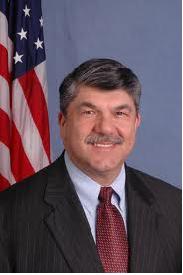
Many unionists are frustrated as usual by the lack of a viable progressive alternative to the Democratic Party. But they’d best beware, as AFL-CIO President Richard Trumka says, of the serious consequences of   being less than enthusiastic supporters of Democratic candidates in November’s elections.

“The Republican Party of NO doesn’t want our vote,” says Trumka. “All they want is for us to stay home. They want us to feel hopeless and disgusted so they can come back by default.”

 Trumka acknowledges that many union members, and many of their supporters and other progressives, are frustrated with the slow pace of economic change, the continuing high unemployment rate, continuing wars and other serious, unsettled problems.

But Trumka points out that in just a year and a half, Obama has had to dig out of a huge economic hole and “face extremist opposition on every point.” Yet, Trumka notes, “We’ve halted taxpayer bailouts … no longer are losing 700,000 jobs a month but are gaining a few… And by the end of this year we will have created or saved 3 1/2 million jobs and have fulfilled the dream of every president since Harry Truman and started to move down the road to health care for all. “

Organized labor has particularly good reason to be pleased with the performance of Obama and the congressional Democrats – particularly good reason to once again deploy millions of campaign dollars and millions of campaign workers in their behalf as labor did in the 2008 elections.

The Labor Department and National Labor Relations Board, virtually tools of the anti-labor right wing under President Bush, are under Obama returning to their job of enforcing the laws that guarantee workers the right to unionize without employer interference.

 And federal agencies are once again strictly enforcing the minimum wage and hour laws and other vital pro-worker laws that had been seriously neglected under Bush’s distinctly anti-labor administration. What’s more, the Occupational Safety and Health Administration is actually attempting to clamp down on the widespread violation of the job safety laws that has led to the needless deaths and serious injury of millions of American workers.

“We know you are angry,” Trumka told a recent gathering of labor leaders, “but we have made progress. No one said this was going to be easy. Ask African Americans how long they have fought and continue to fight. If they had given up after a year and a half they would still be in chains.”

 November’s election, says Richard Trumka, is  “the most crucial election in 75 years.” It will in any case be of unusually high importance to America’s working people and their unions and of exceptional importance to the rest of us as well.

Dick Meister, former labor editor of the SF Chronicle and KQED-TV Newsroom, has covered labor and politics for a half-century. Contact him through his website, www. dickmeister.com, which includes more than 250 of his recent columns.

Obama’s God

18

This country has become seriously weird. Now the president’s press secretary has to tell us all that his boss is a Christian, god dammit, and he “prays every day.”

Of course, Muslims pray every day, too, three times a day I think. But somehow, the Obama administration — which has a few actual problems to worry about — is concerned that some people might be confused about the president’s religion.

The pollsters never call me (imagine that) or I would have said they were missing a question. How many people don’t give a single hairy shit about the president’s belief in God? How many would prefer he stop praying and get moving on putting people back to work?

Why I support gun control

51

I admit I don’t know the details, but it hardly matters: An Oakland kid just died because he was playing with a handgun.


My nephew, who has a couple of rifles and loves to go the the range and shoot at targets, calls me every now and then to tell me that “my president” — you know, Obama — wants to take away his guns. I tell him Obama doesn’t want his guns, and I don’t, either. And I’m a carnivore, so I can’t even say I’m against hunting.


But I am against easy access to handguns, which really have no purpose except to kill other people. And since all the angry libertarians are going to slam me and talk about self-defense, let me remind you: The odds that your gun will kill you or someone you love are much greater than the odds that you’ll ever actually use it for effective self-defense. One less handgun in Oakland might mean one more kid alive today.


High time

34

steve@sfbg.com

DRUGS With polls showing that California voters are probably poised to approve Proposition 19 in November and finally fully legalize marijuana, this should be a historic moment for jubilant celebration among those who have long argued for an end to the government’s costly war on the state’s biggest cash crop. But instead, many longtime cannabis advocates — particularly those in the medical marijuana business — are voicing only cautious optimism mixed with fear of an uncertain future.

Part of the problem is that things have been going really well for the medical marijuana movement in the Bay Area, particularly since President Barack Obama took office and had the Justice Department stop raiding growing operations in states that legalized cannabis for medical uses, as California did through Proposition 215 in 1996.

In San Francisco, for example, more than two dozen clubs form a well-run, regulated, taxed, and legitimate sector of the business community that has been thriving even through the recession (see “Marijuana goes mainstream,” Jan. 27). The latest addition to that community, San Francisco Patient and Resource Center (SPARC), opened for business on Mission Street on Aug. 13, an architecturally beautiful center that sets a new standard for quality control and customer service.

“This is the culmination of a 10-year dream. We’re going to have a real community center for patients with a great variety of services,” longtime cannabis advocate Michael Aldrich, who cofounded SPARC along with Erich Pearson, told us at the club, which includes certified laboratory testing of all its cannabis and free services through Quan Yin Healing Arts Center and other providers.

Yet cash-strapped government agencies have been hastily seeking more taxes and permitting fees from the booming industry, particularly since the ballot qualification of Prop. 19, an initiative that was written and initially financed by Oaksterdam University founder Richard Lee that would let counties legalize and regulate even recreational uses of marijuana.

Oakland, Berkeley, Richmond, and other California cities have placed measures on the November ballot to tax marijuana sales, and the Oakland City Council last month approved a controversial plan to permit large-scale cannabis-growing operations on industrial land (see “Growing pains,” July 20).

In an increasingly competitive industry, many small growers fear they’ll be put out of business and patient rights will suffer once Prop. 19 passes and counties are free to set varying regulatory and tax systems, concerns that have been aired publicly by advocates ranging from Prop. 15 author Dennis Peron to Kevin Reed, founder of the Green Cross medical marijuana delivery service.

“It’s tearing the medical marijuana movement apart,” Reed told the Guardian. “It’s a little scary that we’re going to go down an uncertain road that may well scare the hell out of mainstream America.” Indeed, U.S. Attorney General Eric Holder — who ended the raids on medical marijuana growers — has said the feds may reengage with California if voters legalize recreational weed.

Yet Lee said people shouldn’t get distracted from the measure’s core goal: “The most important thing is to stop the insanity of prohibition.” He expects the same jurisdictions that set up workable systems to deal with medical marijuana to also take the lead in setting rules for other uses of marijuana.

“It will be just like medical marijuana was after [Prop.] 215, when a few cities were doing it, like San Francisco, Oakland, and Berkeley,” Lee told us. “And for cities just coming to grips with medical marijuana, it will be clean-up language that clarifies how they can regulate and tax it.”

Indeed, the tax revenue — estimated to be around $2 billion for the state annually, according to the California Legislative Analyst’s Office — has been the main selling point for the Yes on 19 campaign (whose website is www.taxcannabis.org) and Assembly Member Tom Ammiano, who authored bills to legalize marijuana and has current legislation to set up a state regulatory framework if Prop. 19 passes.

“It makes it more seductive,” Ammiano said of revenue potential from legalized marijuana. “I’ve been working with Betty Yee [who chairs the California Board of Equalization, the state’s main taxing authority] on a template and structure for taxing it.”

Reed and others say they fear taxes at the state and local levels will drive up the price of marijuana, as governments have done with tobacco and alcohol, and hinder access by low-income patients. But Ammiano scoffed at that concern: “Even with the tax structure on booze, there was no diminishing of access to booze.”

Pearson said he believes Prop. 19 will actually help the medical marijuana industry. “Anything that takes the next step toward legalizing recreational use only helps medical cannabis,” he said. Pearson moved to California to grow medical marijuana more than 10 years ago, at a time when the federal government was aggressively trying to crush the nascent industry.

“When you’re packing up and running from the DEA all the time, you’re not thinking about the quality of the medicine. You’re trying to stay out of jail,” Pearson said. “Now, we can be transparent, which is huge.”

Like most dispensaries, SPARC is run as a nonprofit cooperative where most of the growing is done by member-patients. Speaking from his office, with its clear glass walls in SPARC’s back room, Pearson said the Obama election ushered in a new openness in the industry.

“Everything is on the books now, whereas before nothing was on the books because it would be evidence if we got busted … We are allowed to have banks accounts; we’re allowed to use accountants; I can write checks; we can talk to government officials,” Pearson said. “It helps with the public and governments, where they see the transparency, to normalize things.”

He also said Prop. 19 will only further that normalizing of the industry, which ultimately helps patients and growers of medical marijuana. SPARC, for example, gives free marijuana to 40 low-income patients and offers cheap specials for others (opening day, it was an eighth of Big Buddha Cheese for $28) because others are willing to pay $55 for a stinky eighth of OG Kush.

“Our objective here is to bring the cost of cannabis down. We can subsidize the medicine for people who can’t afford it with sales to people who can,” Pearson said, noting that dynamic will get extended further if the legal marketplace is expanded by Prop. 19.

While Pearson strongly supports the measure, he does have some minor concerns about it. “The biggest concern is if local governments muddy the line between medical and nonmedical,” Pearson said, noting that he plans to remain exclusively in medical marijuana and develop better strains, including those with greater CBD content, which doesn’t get users high but helps with neuromuscular diseases and other disorders.

Reed also said he’s concerned that patients who now grow their own and sell their excess to the clubs to support themselves will be hurt if big commercial interests enter the industry. Yet for all his concerns, Reed said he plans to reluctantly vote for Prop. 19 (which he doesn’t believe will pass).

“They’ll get my vote because not having enough yes votes will send the wrong message to law enforcement and politicians [that Californians don’t support legalizing marijuana],” Reed said, noting that would rather see marijuana uniformly legalized nationwide, or at least statewide.

Attorney David Owen, who works with SPARC, said the momentum is now there for the federal government to revisit its approach to marijuana. But in the meantime, he said Prop. 19 has come along at a good time, given the need for more revenue and more legal clarity following the federal stand-down.

And even if the measure isn’t perfect, he said those who have devoted their lives to legalizing marijuana will still vote for it: “A lot of these folks, intellectually and emotionally, will have a hard time voting against Prop. 19.”

New approach for the new U.S. attorney

0

EDITORIAL Joseph Russoniello, the U.S. attorney who terrorized immigrants, city employees, and medical marijuana growers, is finally out of office, replaced Aug. 13 by an Obama nominee screened by Sen. Barbara Boxer. Melinda Haag is the second female U.S. attorney in California history and the first since the 1920s. She’s taking over an office that pushed all the wrong priorities and served as an outpost of Bush administration values in Democratic Northern California, and she needs to turn that around, quickly and visibly.

President Obama has made it clear that he doesn’t want his Justice Department wasting valuable resources busting people who grow, sell, and use pot for medicine. And while the president has been slow and far too cautious on immigration reform, he has resisted the nativist movement and harsh attacks on undocumented immigrants. But a U.S. attorney has a tremendous amount of discretion on law enforcement priorities, and Haag could easily slide along, refusing to break with the policies of her predecessor.

That would be a serious mistake, one that would reflect poorly not only on the Obama administration but on Boxer, who under the traditions of Senatorial courtesy played a central role in choosing Haag.

The new U.S. attorney should:

Disband the grand jury that’s been investigating whether city employees violated federal law by failing to turn suspected illegal immigrants over to immigration authorities. The grand jury started sending subpoenas to city agencies two years ago and raised the specter that some local juvenile justice workers might face charges. The move set off policy changes by Mayor Gavin Newsom that have led to more than 100 young people being torn from their families and sent to federal immigration detention centers.

The grand jury operates at the U.S. attorney’s discretion, and while its activities are secret, Haag could and should announce that the investigation is closed and no charges are pending.

Inform City Attorney Dennis Herrera that no city employee will face federal criminal charges for complying with the city’s Sanctuary Ordinance. The threat of criminal charges has given Newsom cover for refusing to implement a sanctuary law that the supervisors passed over his veto. The law, sponsored by Sup. David Campos, directs city workers not to turn juveniles over to Immigration Control and Enforcement until they’ve been convicted of a felony. Herrera asked Russoniello for assurance that city employees could implement the law without fear of federal indictment, and the Republican appointee refused. Haag should give Herrera, and all city employees, written assurance that she won’t press charges over the sanctuary policy.

Stop the pot busts — and don’t try to undermine Prop. 19. Even after U.S. Attorney General Eric Holder made clear that he isn’t interested in harassing medical cannabis operations, local growers and outlets remain fearful of federal prosecution. And if the state’s voters legalize pot this fall, as appears likely, the weed will still be illegal under federal law. Haag needs to let the FBI and Drug Enforcement Administration know that she’s not going to take any cases involving legitimate medical marijuana operations — and that she won’t use her office to undermine state law if Prop. 19 passes.

Of course, if the U.S. attorney’s office stops wasting time and money cracking down on pot growers and immigrants, the lawyers who work under Haag may have time to do some more relevant and worthwhile law enforcement. They could, for example, start looking into enforcing a federal law called the Raker Act, which requires San Francisco to operate a public power system.

The Crisis Down Under

3

Joseph E. Stiglitz is University Professor at Columbia University and a Nobel laureate in Economics.

CANBERRA – The Great Recession of 2008 reached the farthest corners of the earth. Here in Australia, they refer to it as the GFC – the global financial crisis.

Kevin Rudd, who was prime minister when the crisis struck, put in place one of the best-designed Keynesian stimulus packages of any country in the world. He realized that it was important to act early, with money that would be spent quickly, but that there was a risk that the crisis would not be over soon. So the first part of the stimulus was cash grants, followed by investments, which would take longer to put into place.

Rudd’s stimulus worked: Australia had the shortest and shallowest of recessions of the advanced industrial countries. But, ironically, attention has focused on the fact that some of the investment money was not spent as well as it might have been, and on the fiscal deficit that the downturn and the government’s response created.

Of course, we should strive to ensure that money is spent as productively as possible, but humans, and human institutions, are fallible, and there are costs to ensuring that money is well spent. To put it in economics jargon, efficiency requires equating the marginal cost associated with allocation (both in acquiring information about the relative benefits of different projects and in monitoring investments) with the marginal benefits. In a nutshell: it is wasteful to spend too much money preventing waste. 

While the focus for the moment is on public-sector waste, that waste pales in comparison to the waste of resources resulting from a malfunctioning private financial sector, which in America already amounts to trillions of dollars. Likewise, the waste from not fully utilizing society’s resources – the inevitable consequence of not having had such a quick and strong stimulus – exceeds that of the public sector by an order of magnitude.

For an American, there is a certain amusement in Australian worries about the deficit and debt: their deficit as a percentage of GDP is less than half that of the US; their gross national debt is less than a third.

Deficit fetishism never makes sense – the national debt is only one side of a country’s balance sheet. Cutting back on high-return investments (like education, infrastructure, and technology) just to reduce the deficit is truly foolish, but especially so in the case of a country like Australia, whose debt is so low. Indeed, if one is concerned with a country’s long-run debt, as one should be, such deficit fetishism is particularly silly, since the higher growth resulting from these public investments will generate more tax revenues.

There is another irony: some of the same Australians who have criticized the deficits have also criticized proposals to increase taxes on mines. Australia is lucky to have a rich endowment of natural resources, including iron ore. These resources are part of the country’s patrimony. They belong to all the people. Yet in all countries, mining companies try to get these resources for free – or for as little as possible.

Of course, mining companies need to get a fair return on their investments. But the iron-ore companies have gotten a windfall gain as iron-ore prices have soared (nearly doubling since 2007). The increased profits are not a result of their mining prowess, but of China’s huge demand for steel.

There is no reason that mining companies should reap this reward for themselves. They should share the bonanza of higher prices with Australia’s citizens, and an appropriately designed mining tax is one way of ensuring that outcome.

This money should be set aside in a special fund, to be used for investment. The country will inevitably become poorer as it depletes its natural resources, unless the value of its human and physical capital increases.

Another issue playing out down under is global warming. If not a climate-change denier, the previous Australian government led by John Howard joined President George W. Bush in being a climate-change free rider: others would have to take responsibility for ensuring the planet’s survival.

This was especially strange, given that Australia has been one of the big beneficiaries of the Montreal convention, which banned ozone-destroying gases. Holes in the ozone layer exposed Australians to cancer-causing radiation. The international community banded together, banned the substances, and the holes are now closing. Nevertheless, the Howard government, like the Bush administration, was willing to expose the entire planet to the risks of global warming, which threaten the very existence of many island states.

Rudd campaigned on a promise to reverse that stance, but the failure of the climate-change talks in Copenhagen last December, when President Barack Obama refused to make the kind of commitment on behalf of the United States that was required, left Rudd’s government in an awkward position. The failure of US leadership has global consequences.

Citizens should consider the legacy they leave to their children, part of which is the financial debts they will pass down. But another part of our legacy is environmental. It is two-faced to claim to care about the future and then fail to ensure that the country is adequately compensated for the depletion of its resources, or ignore the degradation of the environment. It is even worse to leave our children without adequate infrastructure and the other public investments needed to be competitive in the twenty-first century.

Every country faces these issues. Sometimes, one can see them with greater clarity by observing how others are confronting them. How Australians vote in their coming election may be a harbinger of things to come. Let’s hope – for their sake and for the world’s – that they see through the rhetorical flourishes and personal foibles to the larger issues at stake.

Joseph E. Stiglitz is University Professor at Columbia University and a Nobel laureate in Economics. His latest book, Freefall: Free Markets and the Sinking of the Global Economy, is now available in French, German, Japanese, and Spanish.

Copyright: Project Syndicate, 2010.
www.project-syndicate.org

FAIR: WikiLeaks and the U.S. Press

0

Media resistance to exposure of government secrets

The website WikiLeaks posted tens of thousands of classified intelligence documents relating to the Afghanistan War on Sunday, July 25. Spanning the years 2004-09, the documents had been shared in advance with reporters from the New York Times, the British Guardian and the German Der Spiegel, all of which produced long pieces offering their interpretations of the documents.

In corporate U.S. media, the documents produced several narratives. For some, the WikiLeaks revelations were either not all that important, or certainly not as important as the leak of the Vietnam War-era Pentagon Papers. As a Washington Post story put it (7/27/10), “Unlike the Pentagon Papers, these documents–although they are closer to a real-time assessment and although they land in the superheated Internet era–do not reveal any strategy on the part of the government to mislead the public about the mission and its chances for success.” The New York Times (7/26/10) noted that

overall, the documents do not contradict official accounts of the war. But in some cases the documents show that the American military made misleading public statements–attributing the downing of a helicopter to conventional weapons instead of heat-seeking missiles, or giving Afghans credit for missions carried out by Special Operations commandos.

Such comments reflect a somewhat puzzling standard for what qualifies as official deception. But the overriding message of some prominent outlets was that there was little to glean from the disclosures. The July 27 Washington Post provided a remarkable case study. One news story, headlined “WikiLeaks Disclosures Unlikely to Change Course of Afghanistan War,” presented the leaks as good news for the war effort, asserting that the “release could compel President Obama to explain more forcefully the war’s importance,” and conveying White House claims that “the classified accounts bolstered Obama’s decision in December to pour more troops and money into a war effort that had not received sufficient attention or resources from the Bush administration.”

Another Post story, headlined “WikiLeaks Documents Cause Little Concern Over Public Perception of War,” suggested that the White House and Congress were trying to turn the leaks into “an affirmation of the president’s decision to shift strategy and boost troop levels in the nearly nine-year-long war.” The same could be said for the Washington Post, which also editorialized that the WikiLeaks release “hardly merits the hype offered by the website’s founder.”

One area of obvious concern were documents that described attacks on civilians by U.S. and NATO forces. The WikiLeaks files brought this issue back into the media spotlight, but it’s worth considering how different papers treated the issue. One of the Guardian‘s July 26 stories began with this lead:

A huge cache of secret U.S. military files today provides a devastating portrait of the failing war in Afghanistan, revealing how coalition forces have killed hundreds of civilians in unreported incidents, Taliban attacks have soared and NATO commanders fear neighboring Pakistan and Iran are fueling the insurgency.

While the British paper led with civilian deaths, the New York TimesJuly 26 story reported that the archive of classified documents “offers an unvarnished, ground-level picture of the war in Afghanistan that is in many respects more grim than the official portrayal.” The article’s second paragraph describes it as a “daily diary of an American-led force often starved for resources and attention as it struggled against an insurgency that grew larger, better coordinated and more deadly each year.” Ten paragraphs into the piece there is a reference to commando missions that “claim notable successes, but have sometimes gone wrong, killing civilians and stoking Afghan resentment.” But the documents’ numerous accounts of civilians killed by U.S. or allied forces got little attention in the Times‘ write-up, a choice justified that executive editor Bill Keller (NYTimes.com, 7/25/10) attempted to justify by saying that “all of the major episodes of civilian deaths described in the War Logs had been previously reported in the Times.”

The possibility that the leaked documents might lead to more discussion of civilian casualties was frequently raised as a concern in U.S. media. The Washington Post editorial tried to minimize the documents’ revelations on this issue: “The British newspaper in turn highlights what it says are 144 reported incidents in which Afghan civilians were killed or wounded by coalition forces. But the 195 deaths it counts in those episodes, though regrettable, do not constitute a shocking total for a four-year period.” That point of view was echoed on CBS Evening News by correspondent Lara Logan:

Well, the issue of civilian casualties is a major one. And the U.S. has taken a lot of criticism because of this. However, what’s interesting to note is that according to the documents, 195 Afghan civilians have been killed. But also according to the documents, 2,000 Afghan civilians have been killed by the Taliban, which is more than 10 times the number said to be killed by U.S. and NATO forces. And very little is being made of that. If the coverage would indicate that it’s more of an issue for the U.S. to kill Afghan civilians than it is for the Taliban to do so.

The suggestion that this tally of 195 Afghan civilian deaths is comprehensive is absurd on its face, given that the WikiLeaks documents are in no way at all a comprehensive account of any aspect of the war. As the Guardian noted, that number “is likely to be an underestimate as many disputed incidents are omitted from the daily snapshots reported by troops on the ground and then collated, sometimes erratically, by military intelligence analysts.” Estimates of civilian casualties vary, but several thousand noncombatant Afghans were killed by U.S. and coalition forces during these years of the war. As for Logan’s point about who bears more responsibility for civilian killings, there have been various attempts to make such determinations. In 2008, for instance, U.N. monitors counted over 2,000 civilian casualties; when responsibility could be determined, 41 percent of the deaths were attributed to U.S./NATO forces.

On the same broadcast in which Logan offered her critique, CBS reporter Chip Reid stressed that civilian deaths would remain a potent issue for the White House. Reid feared that the Obama administration

may be underestimating the problems here because, yes, people were aware and certainly the president was aware of the problem with civilian casualties, but if we’re now going to be bombarded for days on end with a long series of specific examples, that’s going to make it more difficult for both the Afghan people and the American people to support this war.

It is difficult to imagine that corporate media would be “bombarding” anyone “for days on end” with stories of dead Afghan civilians. Liberal Washington Post columnist Eugene Robinson (7/27/10), for instance, downplayed the importance of WikiLeaks‘ information about civilian deaths:

We already knew that U.S. and other coalition forces were inflicting civilian casualties that had the effect of enraging local villagers and often driving them into the enemy camp. The documents merely reveal episodes that were previously unpublicized–an October 2008 incident in which French troops opened fire on a bus near Kabul and wounded eight children, for example, and a tragedy two months later when a U.S. squad riddled another bus with gunfire, killing four passengers and wounding 11 others.

Old news, in other words–albeit news about which we were unaware.

Post columnist Anne Applebaum struck a different note (7/29/10), congratulating the media for already thoroughly documenting the sorts of events described in the WikiLeaks documents: “If you don’t know by now that the ISI helped create the Taliban, or that civilian casualties are generally a problem for NATO, or that special forces units are hunting for Al-Qaeda fighters, all that means is that you don’t read the mainstream media. Which means that you don’t really want to know.” (It’s true that regular readers of outlets like the Post may be under the impression that Afghan civilian deaths are more of a problem for NATO than they are for Afghan civilians–FAIR Blog, 5/7/09.)

In the new issue of Time magazine (dated 8/9/10), managing editor Rick Stengel notes that WikiLeaks “has already ratcheted up the debate about the war,” and that Time is trying “to contribute to that debate.” They do so with a cover photo of a disfigured Afghan woman with the headline “What Happens If We Leave Afghanistan.” The clear implication is that the Taliban will commit similar atrocities without the presence of U.S. forces. It is difficult to imagine the magazine proposing the opposite: a headline like “What Happens If We Stay in Afghanistan,” accompanied by a photo of the corpse of an Afghan child killed in an airstrike or a house raid.

Stengel argues, “We do not run this story or show this image either in support of the U.S. war effort or in opposition to it,” adding: “What you see in these pictures and our story is something that you cannot find in those 91,000 documents: a combination of emotional truth and insight into the way life is lived in that difficult land and the consequences of the important decisions that lie ahead.”

The idea that the way to respond to the WikiLeaks documents is to highlight atrocities committed by the Taliban is precisely what CBS correspondent Lara Logan called for. And it’s also more propaganda than it is journalism.

FAIR, the national media watch group, has been offering well-documented criticism of media bias and censorship since 1986. We work to invigorate the First Amendment by advocating for greater diversity in the press and by scrutinizing media practices that marginalize public interest, minority and dissenting viewpoints. As an anti-censorship organization, we expose neglected news stories and defend working journalists when they are muzzled. As a progressive group, FAIR believes that structural reform is ultimately needed to break up the dominant media conglomerates, establish independent public broadcasting and promote strong non-profit sources of information.

Quezada says don’t let “perfect” stand in way of immigration reform

9

The SF Bay Area Coalition for Immigration Reform is organizing a rally, Wednesday July 28 at 4 p.m., at the new federal building in San Francisco, at 90 7th Street at Mission to ask Speaker of the House Nancy Pelosi to help fix the nation’s broken immigration system.

The rally occurs hours before Arizona’s harsh new law, SB 1070, is set to go into effect. Members of the local clergy will be on hand to bless local immigrant families that are facing deportation. The protest kicks off an action-packed 24 hours, with activities planned in San Francisco, Oakland, and beyond.

“Arizona’s unworkable law threatens both our safety and our ideals. And it’s a symptom of a tragically broken immigration system at the national level,” said Eric Quezada of Dolores Street Community Services in a press release that notes that thanks to federal inaction on reform, “1,100 deportations happen every day.”

“Wednesday’s rally is not a protest of Speaker Pelosi, but we want to make sure she hears from her constituents who are suffering as a result of this broken system,” Quezada said. “And we’re calling on her to exercise leadership so we can work towards real solutions that reflect our values of fairness and community.”
 
With confirmed speakers including Board President David Chiu, I asked Quezada, who heads Dolores Street Community Services, how ICE’s new Secure Communities, or SecureComm, program is impacting deportation rates locally and what he hopes will happen on the immigration front this year.

“There has definitely been an increase,” Quezada said, referring to a recent SecureComm audit that was presented to the San Francisco Police Commission a month after the federal-state-local database hook-up got switched on, linking previously separate records.
“Part of our ask with this action is that Pelosi take a more active role,” Quezada continued, noting that Congressmember Zoe Lofgren has done much of the research.

Arizona’s SB 1070 is set to go into effect on Thursday, July 29. But it faces seven lawsuits, including a challenge from the US Department of Justice (DOJ). Several of the suits call for an injunction against the law. A federal judge in Phoenix heard arguments last week, but has not released any decision to date.

“We welcome the lawsuit that DOJ put in,” Quezada said. “At the same time, the Obama administration is rolling out SecureComm across the nation and we still have 287(g) programs in place. So, if the Arizona law gets implemented, it will be a really tragic day in U.S. history.”

To fix the current immigration system, rally organizers are advocating measures that would halt dangerous police-ICE collaboration programs, and would serve as a first step toward comprehensive reform. These include the DREAM Act, which offers a pathway to legal status for immigrant students, and a just and humane immigration reform that brings immigrant community members out of the shadows.

Quezada feels that Obama currently appears to be resisting bringing administrative relief forward, but he’s not exactly sure why the President is holding his cards back, or when he plans to lay them out on the table.
“But we know that pressure is building on a couple of fronts, prior to the November elections,” Quezada added. “Folks are going to see a lot of immigrant rights groups calling on members to register to vote. And we are going to support those who support us, oppose those who oppose us, and those sitting on the fence will get nothing. That’s a message that a lot of swing Democrats need to hear.”

With the 2012 presidential election approaching (in terms of campaigning and fund raising), Quezada observes that the Latino vote played a significant role in electing Obama in 2008.
“So, every day that there is no movement on this front in D.C., Obama loses strong support from the immigrant community. But we also know that pressure from the right sometimes holds more sway than ours.”

Quezada says the immigrant community is frustrated because it’s almost two years since Obama got elected, in part because of his promise to bring millions of undocumented immigrants out of the shadows. But to date, the Obama administration has not created a mechanism to even allow people to start getting in line to legalize their status.

‘There is no line to wait in,” Quezada said. “All these folks would be willing to wait in line, but there isn’t one for these 11 million people. We need legislative fixes.”

Quezada acknowledges that many Republicans will try to stop or amend any such fixes in unacceptable ways.

“We are worried that if the Dream Act goes ahead as a stand-alone bill, the right will try and put harsh enforcement measures into the bill,” Quezada said. “So, we have to ask, are we willing to live with that, if it helps 11 million people? How about, if it only helps 2 million? These are the questions the Hispanic Caucus is conflicted about. But what if we end up with amendments that would really hurt and the bill only helps 2 million people?”

With immigrant advocates arguing that comprehensive immigration reform would translate into $1.5 trillion in cumulative U.S. gross domestic product, the fireworks over the Arizona law and similar efforts in other states, aren’t about to stop soon.

But Quezada warns folks against insisting on an ideologically pure approach if they want to win this particular war.

‘If our position is open borders and legalization for everyone, then it won’t be obtainable, and we’d be leaving a lot of people in the lurch,” Quezada said We need 270 votes in the Senate and Congress, and we want relief for our people. We can no longer count on our sanctuary city to protect us. And the second we stop paying attention to this issue, they’ll eliminate some other piece of [existing protections and services for immigrants]. A lot of groups don’t want to engage in legislation that isn’t perfect. But only from a unified front will anything get done.”

With that aim in mind, Quezada says that immigrant advocates must work with evangelical churches and Republicans who are willing to support a reform package.
“Evangelical churches may sound like an unlikely ally, but we have to work with them, it’s the responsible thing to do. And we need to win and gain some Republican support, at least enough votes to get to the 60-vote threshold.”


                                                                              .
 

Safety first!

0

Dick Meister, former labor editor of the SF Chronicle and KQED-TV Newsroom, has covered labor and politics for a half-century. Contact him through his website, www.dickmeister.com, which includes more than 250 of his recent columns.

The number of serious on-the-job accidents this year have yet again made very clear the urgent need for expanded and tightened government safety regulation. The toll on workers has been high, as President Cecil Roberts of the United Mine Workers union told the House Education and Labor Committee in mid-July.

Roberts noted the explosion at a mine in West Virginia that killed 29 coal miners, a blast at a refinery in Washington State that killed seven workers, the BP oil rig blast in the Gulf of Mexico that killed 11, an explosion that killed six workers at an Energy Systems facility in Connecticut.

Those were but a very small sampling of the on-the-job accidents that kill nearly 6,000 U.S. workers every year. More than two million other American workers are seriously injured yearly. And another 50,000 or more die yearly from cancer, lung and heart ailments and other occupational diseases caused by exposure to toxic substances.

The Mine Workers’ Roberts came before the House committee to urge passage of a bill, the Miner Safety and Health Act, that focuses on mine safety but also includes provisions that would strengthen safety protections in all other workplaces.

Joe Main, who heads the federal Mine Safety and Health Agency, said the bill would do nothing less than “change the culture of safety in the mining industry, and put the health and safety of miners first.”  That indeed would be a major shift in focus, a very much needed and most welcome shift.

It’s sad but true that the safety of miners has often been a secondary consideration of many mine owners and government regulators. Greater profit and productivity – not safety – has been the overriding concern, and far too many workers have suffered because of that.

Too many have been maimed, too many killed for lack of proper protections, some required by law but ignored, some not required at all, however essential they are.

The Mine Safety and Health Agency’s Main says the proposed law would give his agency the tools to make employers live up to their legal and moral obligation. And if they don’t meet their obligation, the agency would be empowered to step in to see that they do so.

As the AFL-CIO’s general counsel, Lynn Rinehart, told the House committee, the federal job safety laws – now 40 years old – are way out-of-date. They have never been significantly strengthened, Rinehart noted, and their penalties are slight compared to those imposed for violations of other labor laws.

What’s more, Rinehart said, the law gives workers little protection from employer retaliation against those who raise safety concerns. Current law, he added, “simply does not provide a sufficient deterrent against employers who would cut corners on safety and put workers in harm’s way.”

Among the bill’s most important provisions is one that would guarantee workers the right to refuse to work in unsafe conditions. That right is guaranteed in mineworker union contracts, and for good reason: Non-union miners have long complained that they fear employer retaliation if they speak out about mine safety problems.

The bill would give the mine safety agency authority to close a mine if there’s a continuing threat to workers safety, and would subject mine owners to increased civil and criminal penalties for safety violations.

The AFL-CIO’s Rinehart noted that the median penalty for having working conditions that cause a fatality was a mere $5,000 in 2009. The penalties generally have been mere slaps on the wrist.

One of the most important parts of the proposed safety law would extend coverage of the Occupational Safety and Health Act  – OSHA – to the millions of local and state government employees who are not covered by the law.

Sponsors of the proposed law face formidable opposition – the National Association of Manufacturers, U.S. Chamber of Commerce and nearly two dozen other industry groups whose members aren’t eager to spend money on safer workplaces.

The Bush administration was openly on the side of those groups. Safety laws were only lightly enforced – if enforced at all – by the Bush appointees who ran the federal safety agencies. Peg Seminario, the AFL-CIO’s safety and health director, figures it will take years to reverse and undo the “many bad policies and practices that were put into place” under Bush.

It will indeed be a long time before the government can provide the full protection from on-the-job hazards that will continue to needlessly harm millions of American workers. But the proposed new safety law, and the worker-friendly Obama administration, give us a fighting chance to finally do what must be done if we are to have truly safe workplaces.

Dick Meister, former labor editor of the SF Chronicle and KQED-TV Newsroom, has covered labor and politics for a half-century. Contact him through his website, www.dickmeister.com, which includes more than 250 of his recent columns.

What radio stations did the armed nut-case listen to?

6

The Rush Limbaughs and Sean Hannitys  and Glenn Becks of the world are quick to point at Muslim religious leaders and schools and say they’re inciting violence against the United States. But you have to wonder: What incited Byron Williams to decide that he could start a revolution by killing ACLU and Tides Foundation workers? I don’t know anything about his background or psychology, but given all the increasingly violent hate speech directed at Obama, the progressive movement and the American left, is it fair to at least ask:


What radio shows was this guy listening to? What TV stations did he watch? His mom said he was upset by TV news stories about the “left wing agenda.” Did the ultra-right-wing rhetoric drive him to what would have been an act of domestic terrorism?


Sean? Rush? Glenn?

Growing pains

1

steve@sfbg.com

The medical marijuana movement was born and raised in the Bay Area, and now the city of Oakland is poised to take the next big step forward by being the first city to explicitly allow and permit several massive cannabis cultivation facilities on industrial land, making millions of dollars in taxes in the process.

It’s the latest move in a growing trend toward Bay Area cities figuring out how to regulate and tax a booming industry that could really explode if California voters approve Proposition 19 in November, which would legalize even recreational uses of marijuana and give local jurisdictions more authority to control it.

Pot growing has long been the murkiest realm within an increasingly legitimate and professional medical marijuana industry (see “Marijuana goes mainstream,” 1/27/10). While Oakland, Berkeley, and San Francisco all have well-defined and regulated systems governing the 30 licensed cannabis dispensaries in those three cities, most of their growers are underground operations with no official oversight.

Public officials on both sides of the bay — who almost universally voice their support for the medical marijuana industry — say there can be problems associated with unregulated grows. Jerry-rigged wiring can pose a fire danger, and valuable crops can be targeted by criminals. Growers can be raided by police even when they have valid paperwork. And cash-strapped city governments aren’t able to tax or regulate an industry that has kept on booming throughout the Great Recession.

“There is no system to regulate production,” Oakland City Council member Rebecca Kaplan, who has authored cultivation regulations, along with co-sponsor Council member Larry Reid. Although the city may lack resources to enforce new requirements on growers, Kaplan believes growers will sign up voluntarily: “Every time we’ve created a permitting system, people have sought to use it. They want to be above board.”

The measure would permit growing facilities of more than 100,000 square feet, charging them each a $5,000 permit fee and $211,000 “regulatory fee,” as well as a gross receipts tax to be determined. The Oakland City Council approved the measure July 20 after Kaplan agreed to have staff also create a permit system for smaller growers, with both regulatory systems slated to take effect Jan. 1, 2011.  Kaplan has also proposed a November ballot measure to increase the current gross receipts tax on cannabis-related businesses from 1.8 percent now to up to as high as 11.2 percent, which the council is set to consider July 22.

Kaplan’s cultivation proposal initially generated a backlash from some small growers and Harborside Health Center, Oakland’s largest dispensary, because of its focus on creating mega-facilities that could monopolize the market and hurt the small growers who have been at the heart of the medical marijuana movement.

“All we’re asking for is a level playing field and a fair opportunity to compete with these factories,” attorney James Anthony, who represents Harborside and its network of growers, told the Guardian. “As medical cannabis comes into the light, it’s still capitalism out here in the world.”

Oakland developer and business person Jeff Wilcox, who is new to the marijuana industry, has been aggressively pushing to create a massive cannabis growing and manufacturing facility on his 7.4-acre warehouse complex near the Oakland Coliseum, covering 172,000 square feet over four buildings.

On May 21, Wilcox and his company, AgraMed, released a report showing how the facility could produce about 21,100 pounds of high-grade marijuana per year, generating about $60 million in gross sales and more than $2 million a year in taxes for Oakland, assuming a 3 percent tax rate (or about $3.5 million if the rate is set at 5 percent). The report was based partly on information gathered from independent local growers.

“By closing the loop and regulating the entire industry, we can ensure the healthy production and use of cannabis, and ensure its legitimate standing in our society. We’re working with public health and public safety agencies to make sure we do this right,” Wilcox, who did not return Guardian calls for comment, said in his press release.

Anthony said he was wary of Oakland politicians handing so much market power to one person: “It’s not for the government to pick the winners and losers through a regulatory scheme.” But he does agree that growers are overdue for regulation. “It’s time for cultivation to come into the light.”

State law requires growers to be part of the collective that uses or distributes the product, and the facility proposed by Wilcox would contract with many collectives, a model that hasn’t been tested in the courts yet. In fact, Council member Nancy Nadel has expressed concern that what she called “a structurally flawed proposal” could be on shaky legal ground (City Attorney John Russo, who has endorsed Prop. 19, did not return our calls with questions about the Oakland measure’s legality. His office also has not issued an opinion because it conflicts with federal law).

“Though state law allows for the operation of medical marijuana cooperatives by primary caregivers and patients, it does not legitimize large-scale growing operations. Just in the past few months, the DEA has raided two medical cannabis testing labs in Colorado. We need to retain a level of good sense and discretion,” Nadel wrote in a July 13 memo to her council colleagues, urging them to hold off on approving the measure until after voters decide Prop. 19 in November.

Yet Kaplan told us that even though the council moved the legislation forward, staff would continue to work through its myriad regulatory details and no permits will be issued until January. She also agreed that “it’s really important for Prop. 19 to pass,” giving Oakland more explicit authority to regulate the industry.

Oaksterdam University founder Richard Lee, who bankrolled the campaign to place Prop. 19 on the ballot, supports Kaplan’s regulations (although he told us he would like to see a greater focus on small cultivators) and called regulation of growers “a historic next step” that further legitimizes the industry.

“I think this will help Prop. 19 pass and help Oakland be ready when it does,” Lee said, voicing support for Wilcox and other business people who seek to join this movement. “We need everyone we can get on our side.”

Most polls show that Californians are split fairly evenly on Prop. 19. Even so, several California cities are already making preparations to use the new taxation and regulation authority that the measure would bestow.

Lee said Sacramento, Oakland, Stockton, Long Beach, San Jose, and Berkeley all have been working on cannabis regulatory schemes for voters to approve. For example, on July 13, the Berkeley City Council placed a measure on the November ballot proposing a gross receipts tax of 2.5 percent on medical marijuana and a 10 percent tax on recreational pot, as well as a system for permitting up to 10 medical marijuana growing operations.

“State law is really a mess at the moment and there are a number of things happening now that violate state law,” Lee told us. “That’s why Prop. 19 is going to be a cleanup law to deal with a lot of the stuff that’s going on now.”

Kaplan, who has been working on her ordinance for almost a year and got help from students in UC Berkeley’s Goldman School of Public Policy, agreed that the current legal requirements for growing medical marijuana are unclear: “There isn’t a right way [to permit cultivation facilities] under state law. The law isn’t clear.”

Attorney David Owen, who has researched medical marijuana laws for the new SPARC dispensary in San Francisco and for local growers, echoed the point. “The short answer is that we know so little about the boundaries of state law.”

Prop. 215, the 1996 measure that legalized medical marijuana, was broadly written and then codified largely by Senate Bill 420, portions of which were later struck down by the courts. But enforcement of marijuana laws has primarily been done by the federal government, which backed off after President Barack Obama took office, leaving state and local officials to regulate a fast-growing industry using standards that the courts have yet to clarify.

“We don’t have appellate court decisions to interpret a lot of key terms in state law,” Owen said. “We don’t really know what state law says.”

For example, Owen said the widely used term “dispensary” doesn’t even appear in state law. Local jurisdictions often define how much pot a patient can grow. For example, Oakland allows groups of three patients to grow up to 72 plants in 96 square feet. But most of those standards haven’t been held up by the courts. And even though state law says growers must be part of the same collective as their patients, Owen said, “In theory, you could have a collective with 37 million members.”

Although Owen said a large scale doesn’t necessarily make a marijuana operation illegal, he said permitting a 170,000 square foot facility is bound to draw attention from the feds: “I guarantee the DEA will be at their doorstep the day they open.”

Council member Nadel said Oakland could be liable then as well, noting that it would be permitting a facility that would meet about 60 percent of the entire Bay Area’s demand for 35,000 pounds of pot per year. “Thus, to prevent diversion to illegal markets and collective members outside of the cultivation collective (which would violate state law), the city must act responsibly and set a limit on the total size of cultivation allowed in Oakland. While the memo from the Council members discusses the alternative method [permitting a smaller capacity], it does not recognize the problems with projecting sales to dispensaries outside the Bay Area,” Nadel wrote.

Kaplan said the ordinance is a starting point that can be further refined by staff. But she emphasized the need to regulate the industry, warning of risks to Oakland residents. Her measure’s staff report attributes at least seven house fires, eight robberies, seven burglaries, and two homicides to unregulated growing operations in 2008 and 2009. Kaplan also said she worries about the possibility of “another Oakland Hills fire.”

Yet Kaplan, who is running for mayor, also told us the taxes are important in a city that was recently forced to fire 80 police officers. “Given Oakland’s budget crisis,” she said, “the revenue for the city is no small thing.”

Quick Lit: July 21-July 27

0

Literary readings, book tours, and talks this week

Classic SF Noir, Cooking from the Farmer’s Market, sustaible design in the California Academy of Sciences, holistic tips for the  mind and home, Richard Walter, Yogiraj, and more.

Wednesday, July 21 

Cooking From the Farmer’s Market
Jodi Liano presents her book that helps home chefs identify, select, and prepare over 100 types of fruits and vegetables fresh from the market.
7 p.m., free
Books Inc. Berkeley
1760 4th St., Berk.
(510) 525-7777

Deep Medicine
Surgeon and holistic healer Dr. William Stewart explains how to tap into the mind’s power to heal the body.
7 p.m., free
Books Inc. Laurel Village
3515 California, SF
(415) 221-3666


Share This!

Deanna Zandt discusses the importance of social media as tools for change.
7:30 p.m., free
Books Inc. Marina
2251 Chestnut, SF
(415) 931-3633

Trust
Australian journalist and author Kate Veitch discusses her new novel about one woman’s journey to define what it means to her to be a “good woman,” balancing being a daughter, sister, wife, and mother.
7:30 p.m., free
The Booksmith
1644 Haight, SF
(415) 863-8688

Thursday, July 22

“A Roof Full of Wild Flowers”
As part of the Bone Room Presents natural history lecture series, California Academy of Sciences Senior Curator and Botanist Frank Alameda will talk about the living, growing, 2.5 acre roof on the new California Academy of Sciences building. Alameda will discuss the construction of the roof and the part that it plays in the sustainability of the museum as a whole.
7 p.m., free
Bone Room
1573 Solano, Berk.
(510)526-5252

“Down with Stereotypes”
Alison Owings will read from her two books, Hey, Waitress! The USA from the Other Side of the Tray and the forthcoming Indian Voices / Listening to Native Americans, and discuss how the tales of Beulah Compton, a waitress union leader in Seattle in the 1940’s and 1950’s, and Tom Phillips (Kiowa), a powwow emcee and drug counselor at the Friendship House American Indian Healing Center, have in common.
7 p.m., free
Modern Times Bookstore
888 Valencia, SF
www.mtbs.com

Essentials of Screenwriting
Veteran screenwriter and legendary professor at UCLA’s film school, Richard Walter will read from his new book filled with his tricks of the trade that have led to many award-winning films.
7 p.m., free
Borders
400 Post, SF
(415) 399-1633

Feng Shui Your Mind
Holistic healers Jill Lebeau and Maureen Raytis share their strategies for decluttering and destressing your life.
7 p.m., free
Books Inc. Berkeley
1760 4th St., Berk.
(510) 525-7777

San Francisco Noir 2 vs. Los Angeles Noir 2
Hear from the editors of the lastest installments in the Noir series, San Francisco Nior 2 and Los Angeles Noir 2: the Classics. Featuring San Francisco Noir 2 editor Peter Maravelis, contributor Eddie Muller, and special guest Cara Black and Los Angeles Noir 2 editor Denise Hamilton.
7 p.m., free
Cantina
580 Sutter, SF
www.akashicbooks.com

The Thousand Autumns of Jocob de Zoet
David Mitchell brings us a new novel, set in coastal Japan in 1799, that follows a Dutch accountant that loses himself in a world of Japanese intrigue and danger.
7:30 p.m., free
The Booksmith
1644 Haight, SF
(415) 863-8688

Saturday, July 24

“The Bard in Bollywood”
Shakespearean scholar, Gitanjali Shahani, will explore the many adaptations, manifestations, and appropriations of Shakespeare in popular Hindi cinema using clips from Shakespeare Wallah, Maqbool, and Omkara to illustrate how Bollywood has re-imagined Shakespeare through the ages.
7 p.m., $8-$10 sliding scale
Artists’ Television Access
992 Valencia, SF
www.thirdi.org

 
“Fly Trap Theater”
This kid-friendly presentation by staffers from the Conservatory of Flowers offers an up close look at carnivorous plants and how they attack and eat bugs. There will even be a fly trap dissection, so onlookers can see the plants’ trapping mechanisms, followed by bug and plant puppet crafts.
2 p.m., free
Paxton Gate’s Curiosities For Kids
766 Valencia, SF
(415)252-9990

Himalayan Kriya Master Yogiraj SatGurunath Siddhanath
Attend this gathering where Yogiraj will discuss life from an enlightened viewpoint and share his mission of Earth peace through self peace.
7 p.m., $20 suggested donation
St. Gregory of Nyssa Episcopal Church
500 DeHaro, SF
1-866-YOGI-RAJ


Redstone Labor and Culture Walk

Learn about the history behind the murals in the lobby of the Redstone Building, a building that was the headquarters of the 1934 General Strike, followed by a guided walk through the vibrant surrounding neighborhood highlighting the Mission’s art, ethnic history, and class struggle.
1 p.m., free
Meet at Redstone Building
16th St. and Capp, SF
RSVP at (415) 841-1254

Sunday, July 25

Barak Obama and the Jim Crow Media
Author Ishmael Reed will read and discuss his new book, Barak Obama and the Jim Crow Media: The Return of the Nigger Breakers, about how Obama’s opponents use modern reincarnations of the ugly demons of slavery-era tactics to “break” black people.
2 p.m., free
Koret Auditorium
San Francisco Main Library
100 Larkin, SF
(415) 557-4400

Laborfest Book Fair and Poetry Reading
All day long, the Mission Cultural Center will feature multiple rooms where authors, activists, educators, and organizers will present labor themed panel discussions, book discussions, poetry readings, historical lectures, tabling, socializing, and more.
9:30am-5pm, free
Mission Cultural Center for Latino Arts
2868 Mission, SF
www.laborfest.net

Tuesday, July 27

Death is Not an Option
Suzanne Riveca’s new collection about girls and women in a world where sexuality and self-delusion collide.
7 p.m., free
Books Inc. Berkeley
1760 4th St., Berk.
(510) 525-7777

Found in Translation Book Group
Once a month, Scott Esposito of the Center for the Art of Translation and the Quarterly Conversation hand-selects fiction from around the world for a spirited discussion. Learn about the classic novel by Honoré de Balzac, Eugénie Grandet, and his epic 100- book series Comedie humaine which provides an immense panorama of post-Napoleon France.
7 p.m., free
The Booksmith
1644 Haight, SF
(415) 863-8688

“Jesse Schell: Visions of Gamepocalypse”
Hear game designer and CEO of Schell Games Jesse Schell discuss the social, cognitive, and technological trends in computer game design and use.
7:30 p.m., $10
Novellus Theater
YBCA
701 Mission, SF
(415) 978-2787

Congress is acting stupidly

1

Dick Meister, former labor editor of the SF Chronicle and KQED-TV Newsroom, has covered labor and politics for a half-century. Contact him through his website, www.dickmeister.com, which includes more than 250 of his recent columns.

AFL-CIO President Rich Trumka has it right. It’s not the heat in Washington, D.C., that’s bothering him and many other advocates of working people. It’s the stupidity – the economic stupidity of Congress refusing to give financial aid to states that badly need help in order t o save the jobs of some 300,000 teachers, nurses, firefighters, police and other public service workers who are facing layoffs because of budget deficits.

The possible remedy is at hand – a pending $100 billion jobs bill.  Most of the money would go to states for quickly creating or saving up to one million jobs in public and private employment, restoring government services that have been cut, and averting other planned cuts, mostly in education, public safety and job training.

Republican opposition has kept the jobs bill from passage. The GOP also opposes a companion bill that deals with another bit of economic stupidity in Washington – the stupidity of Congress’ refusal to extend the unemployment insurance benefits of the 1.4 million Americans who will run out of benefits by the end of July, and the 325,000 who already have run out of benefits.

By year’s end, more than eight million workers will have exhausted their benefits. Their regular benefits, averaging $300 a week, ran out after 26 weeks and have not been extended as they usually have been during periods of heavy unemployment. The House voted for extension, and President Obama urged extension. But the Senate has refused to act.

The AFL-CIO’s Trumka calls the situation tragic, as well he should. He notes that almost 15 million Americans are currently unemployed, a number that’s been growing by about 250,000 workers per week.

So, 15 million people who need jobs – many who desperately need jobs – are unable to find them. About one million have been jobless for more than a year.

Overall, the jobless make up about 10 percent of the workforce. They’ve been out of work an average of 35 weeks. Another 11 million Americans are underemployed, including temporary and part-time workers and others who are underutilized and underpaid.

Nearly half of all the jobless have been out of work for more than six months.  As Trumka says, “Families are stretched to the limit and state budgets are under incredible strain, putting hundreds of thousands more jobs in danger. Yet the Republicans in Congress repeatedly have blocked efforts to take action, create jobs and rebuild our battered economy.” Although it’s mainly Republicans who’ve opposed extension of benefits, some conservative Democrats have also opposed extension.

Trumka, noting that many politicians, including every member of the House, will be on the ballot in the coming mid-term elections, urges union members to demand that the office seekers take concrete action to “rebuild our economy and create jobs now.” If they don’t take action, Trumka warns, “they may not be elected officials anymore.”

New York Times’ columnist Paul Krugman blames Congress’ failure to provide relief to the jobless on “a coalition of the heartless, the clueless and the confused.”

Krugman defines the heartless as “Republicans who have made the cynical calculation that blocking anything President Obama tries to do – especially anything that  might ease the country’s economic problems – improves their chances in the midterm elections.

And the clueless? Try Sharron Angle, the Republican candidate for senator from Nevada. She’s repeatedly claimed that the unemployed are deliberately choosing to stay jobless so they can keep collecting the benefits of a few hundred dollars a week.

The confused include politicians and others who apparently are too confused to understand the obvious – that the unemployed need money, and will quickly spend whatever they get in the way of extended benefits, thus boosting consumer spending, helping create jobs quickly and otherwise expanding the economy.

Except to the heartless, clueless and confused, saving money at the expense of the unemployed by denying them benefits is, as Paul Krugman says, “cruel as well as misguided.”

Dick Meister, former labor editor of the SF Chronicle and KQED-TV Newsroom, has covered labor and politics for a half-century. Contact him through his website, www.dickmeister.com, which includes more than 250 of his recent columns.

Powder keg

5

news@sfbg.com

Ask any pollster, political consultant, or academic who studies the American electorate about the mood of the voters this year and you’ll get the same one-word answer: Angry.

Everyone’s pissed — the liberals, the conservatives, the moderates, the people who don’t even know where they fit in. It’s an unsettled time and, potentially, very bad news for a progressive agenda that seeks to address issues ranging from poverty and war to the long-term health of the public and the planet.

The Democrats, who swept into power with an enormously popular president just 18 months ago, may lose control of Congress. The tea partiers have driven the Republicans so far to the right that some candidates for Senate are openly talking about eliminating Social Security. The unemployment rate — the single most important factor in the politics of the economy — remains high and doesn’t show any signs of improving.

And the progressive left seems frustrated and demoralized, particularly in California. The Golden State, which once led the nation in innovation and enlightened social policy, now seems to be leading the politically dysfunctional race to the bottom.

The nation could be headed for a dangerous era, rife with the potential for right-wing demagoguery and other nasty political schisms. The state of the economy could easily fuel a more powerful movement to shrink the scope of government and a continuing backlash against the public sector — and the financial backers of the antitax and antiregulation movement are drooling at the prospect.

But there’s also a chance for progressives to seize a populist narrative and shift the discussion away from traditional disagreements and toward those areas, particularly the destructive influence on government by powerful corporations, where the grassroots right and grassroots left might actually agree.

The anger that voters feel toward a government that isn’t meeting their needs is starting to find other outlets. People are as mad about the abuses of big business — the Wall Street meltdown, the bailouts, the BP oil spill, the political manipulation — as they are about the failures of Congress and the president. If you ask Americans of every political stripe who they least trust — big government or big business — even conservatives aren’t so sure anymore.

For 30 years, the central narrative of American politics has revolved around the size and effectiveness of government. Now there’s a chance to shift that entire debate in American politics toward the largely unchecked power of corporations. It is, populist writer Jim Hightower told us, “an enormous opportunity handed to us by the bastards.”

But so far, none of the Democratic leaders in California are taking advantage of it to start dispelling damaging myths and crafting political narratives that might begin to create some popular consensus around how to deal with society’s most pressing problems.


THE PEOPLE WANT TAXES

There have been many polls gauging voter anger, but one of the most comprehensive and interesting recent ones was “Californians and Their Government,” a collaborative study by the Public Policy Institute of California and the James Irvine Foundation that was released in May.

It shows that Californians are mad about the state’s fiscal problems, disgusted with their political leaders, divided by ideology, and deeply conflicted over the best way forward. An astounding 77 percent of respondents say California is headed in the wrong direction and 81 percent say the state budget situation is a “a big problem.”

But the anti-incumbent message isn’t necessarily an anti-government message. Most Californians are willing to put more of their cash into public-sector programs, even during this deep recession. When asked to name the most important issues facing the state, 53 percent mentioned jobs and the economy . The state budget, deficit, and taxes only got the top billing of 15 percent.

And contrary to the conventional wisdom espoused by moderate politicians and political consultants, most voters say they are willing to pay higher taxes to save vital services. “Californians tell us they continue to place a high value on education and want education to be protected from cuts. And they’re willing to commit their money to help fund that,” PPIC director Mark Baldassare told the Guardian.

The survey found that 69 percent of respondents say they would pay higher taxes to protect K-12 education from future cuts, while 54 percent each say they would pay higher taxes to prevent cuts to higher education and to health and human services programs. In other words, voters seem to recognize where we’ve cut too deeply — and where we haven’t cut enough: only 18 percent of respondents would be willing to pay higher taxes to prevent cuts to prisons and corrections.

Baldassare said the June primary results also showed that people are willing to pay more in taxes for the services they value. “Around the state, there was a lot of evidence that people responded favorably to requests by their local governments for money, particularly for schools,” he said.

Both the California Legislature and Gov. Arnold Schwarzenegger are held in very low esteem with voters, according to the PPIC study, and Schwarzenegger’s 23 percent rating is the lowest in the poll’s history.

Barbara O’Connor, political communications professor who heads the Institute for the Study of Politics and the Media at Sacramento State University, told us that voter unhappiness with elected leaders is no surprise. Right now, most people are afraid that their basic needs won’t be met over the long run.

“The common narrative is fear, and fear channels into anger,” O’Conner said.

And that fear is being tapped into strongly this year by the Republican candidates, who are trying to scare voters into embracing their promises to gut government and keep taxes as low as possible.

“If there’s any lesson to be learned from Meg and Carly’s early ads, it’s fear-mongering, fear-mongering all the time — and that doesn’t create a very positive narrative,” O’Connor said of gubernatorial candidate Meg Whitman and U.S. Senate candidate Carly Fiorina.

O’Connor noted that Barack Obama’s campaign had great success in using a positive, hopeful message and said she believes the right leader can also do so in California. “I talked to Jerry [Brown]’s people about it and said you can’t just run a negative campaign because that’s what Meg is doing.”

Despite the tenor of the times, O’Connor said she’s feeling hopeful about hope. She also believes Californians would respond well to a leader like Obama who tried to give them that hope — if only someone like Brown can pick up that mantle. “I think the environment is right for a positive message. But the question is: do we have people capable of delivering it?”

She said the no-new-taxes, dismantle-government rhetoric has started to wear thin with voters. “The real fiscal conservatives are badly outnumbered in Californian,” O’Connor said. As for the corporate sales jobs, O’Connor said voters have really started to wise up. “They aren’t going to be scammed.”

The results of the June primary election showed that voters across the spectrum were also disturbed by big special-interest money. Proposition 16, backed by $46 million from Pacific Gas and Electric Co., went down to defeat — even in counties that tend to vote Republican.

And this fall, with two rich former CEOs spending their personal wealth to win two of California’s top elected offices and energy companies pushing a measure to roll back California’s efforts to combat global warming, there could be great opportunity in a narrative targeting those at the top of our economic system.


THE TOP AND THE BOTTOM

Some observers say that whatever their shared feelings about corporate scams, conservatives and liberals in the state are just too far apart, and that there’s little hope for any substantive agreement. “People are becoming more polarized,” said consultant David Latterman, who often works for downtown candidates and interests. “I think we’re beyond compromise.”

Allen Hoffenblum, a Los Angeles-based Republican strategist, agreed. “The voter are all mad, but they’re mad at different things. I just don’t see where they come together.”

But Hightower, who has spent a lifetime in politics as a journalist, elected official, author, and commentator, has a different analysis.

“As I’ve rambled through life,” he wrote in a recent essay, “I’ve observed that the true political spectrum in our society does not range from right to left, but from top to bottom. This is how America’s economic and political systems really shake out, with each of us located somewhere up or down that spectrum, mostly down.

“Right to left is political theory; top to bottom is the reality we actually experience in our lives every day — and the vast majority of Americans know that they’re not even within shouting distance of the moneyed powers that rule from the top of both systems, whether those elites call themselves conservatives or liberals.”

In an interview, he told us he sees a lot of hope in the fractured and potentially explosive political ethos. “There’s all this anger,” he said. “People don’t know what to do. And I think the one focus that makes sense is the arrogance and abuse of corporate executives.”

In fact, Hightower pointed out, the teabaggers didn’t start out as part of the Republican machinery. “Wall Street and the bailouts sparked the tea bag explosion,” he said. It wasn’t until big right-wing outfits like the Koch brothers, who own oil and timber interests and fund conservative think tanks, started quietly funding tea party rallies that the anti-corporate, anti-imperial edge came off that particular populist uprising.

“At first, the teabaggers didn’t even know where the money was coming from,” Hightower said. “You can’t be mad at the teabaggers; we should have been out there organizing them first.”

There’s plenty of evidence that anger at big business is growing rapidly — and rivals the distrust of big government that has defined so much of American politics in the past 30 years. The bailouts were “the first time in a long time that people have been slapped in the face by collusion between big business and its Washington puppets,” Hightower noted.

Then there’s the Supreme Court decision in Citizens United v. Federal Elections Commission. In January, a sharply divided court ruled 5-4 that corporations had the right to spend unlimited amounts of money supporting or opposing political candidates. Progressives were, of course, outraged — but conservatives were, too.

Polls show that more than 80 percent of Democrats think the decision should be overturned. So do 76 percent of Republicans. “This is a winner for our side,” Hightower noted. “But our side’s not doing anything about it.”

Sure, President Obama denounced the ruling in his State of the Union speech and promised reform. But the bill the Democrats have offered in response does nothing to stop the flow of money; it would only increase disclosure requirements. And in response to furor from the National Rifle Association, it’s been amended and is now so full of holes that it doesn’t do much of anything.

Political consultants advising Whitman are clearly looking for ways to direct the voter unhappiness into a demand for lower taxes and smaller budgets. She’s already vowed to fire 40,000 state workers, and her most recent campaign ad attacks Brown for expanding public programs and raising the state deficit.

So far Brown hasn’t challenged that narrative — and some Democrats say he shouldn’t. It would be safer, they say, for Brown to get out front and demand his own cuts in Sacramento. “Going after public-sector pensions is a winner,” one Democratic campaign consultant, who asked not to be named, told us. “If Whitman beats Brown on those issues, she wins.”

But that approach is never going to be effective for Democrats. If the argument is over who can better cut government spending, the GOP candidates will always win. The better approach is to see if progressives can’t shift the debate — and the anger — toward the private sector.

As Hightower put it: “You can yell yourself red-faced at Congress critters you don’t like and demand a government so small that it’d fit in the backroom of Billy Bob’s Bait Shop and Sushi Stand, but you won’t be touching the corporate and financial powers behind the throne.”

That’s where the discussion has to start. And there’s no better place than California.

The Golden State is a great example of what happens when the tax- cutters win. In 1978, the liberals in Sacramento, operating with a huge state budget surplus, couldn’t figure out how to derail the populist anger of property tax hikes. So Proposition 13, the beginning of the great tax revolt, passed overwhelmingly. Over the next decade, more antitax initiatives went before the voters, and all were approved.

Now the state is heading toward fiscal disaster. The schools are among the worst-funded in the nation. The world-famous University of California system is on the brink of collapse. Community colleges are turning away students. The credit rating on California bonds have fallen so far that it’s hard for the state to borrow money. And there’s still a huge budget gap.

The tax-cut mentality that led to the so-called Reagan revolution started in California; a political movement that shifts the blame for many of the state’s problems away from government and onto big business ought to be able to start here as well. And it’s potentially a movement that could bring together people who normally find themselves on opposite sides of the fence.

A case in point: the measure the oil companies have put on the November ballot to repeal the state’s greenhouse gas limits. The corporations backing the initiative, led by Valero, argue that California’s attempts to slow climate change will cost jobs. That’s a line we’ve heard for decades. Every tax cut, every move toward deregulation, is defended as helping spur job growth.

But the past four presidents have done nothing but cut taxes and reduce regulations — and the result is facing Americans on the streets every day. There is also growing evidence that even Republican voters don’t believe everything big businesses tell them anymore. And they’re starting to grasp that sometimes deregulation leads to outcomes like larcenous CEOs and unstoppable oil leaks.

So the potential for a successful progressive populist movement is out there. But it’s not going to happen by spontaneous combustion.


SF SHOWS THE WAY

On the national level, one of the factors creating this gloomy electorate is the failure of President Obama to keep the coalition that elected him active and engaged. The intense partisanship in Washinton has turned off many independent Obama voters, while his progressive supporters have been disappointed by issues ranging from his escalation in Afghanistan to tepid reforms on health care and Wall Street.

“One of the narratives now is where are the Obama voters and will they participate?” Jim Stearns, a San Francisco political consultant who works mostly on progressive campaigns, told us. “They still love Obama but they’re not moved by him anymore.”

Perhaps more important, they have lost the sense of hope that he once instilled. The Republican Party’s descent into right-wing extremism and the strong anticorporate narratives that have emerged in the last year — from BP’s oil spill to PG&E’s political manipulation to Goldman Sachs’ self-dealing to the prospect of unrestricted corporate campaign propaganda unleashed by the Citizens United ruling — have created the possibility that the negative narratives by the left may crowd out the positive ones.

“Meg Whitman is someone you can hate. She’s the rich Republican CEO trying to buy her way into office,” Stearns said. “But it’s a depressing message.”

But Stearns said there is another, most hopeful political narrative that is emerging in San Francisco, one that might eventually grow into a model that could be used at the state and federal levels. “We’re lucky in San Francisco. Progressive voters are engaged.”

He noted that San Francisco’s voter turnout was higher than expected in the June primary, and far higher than the record low state number, even though there really weren’t any exciting propositions or closely contested races on the local ballot — except for the Democratic County Central Committee, where progressives maintained their newfound control. And it’s because of the organizing and coalition-building that the left has done.

“What you’ve seen over the last few years is a coalition of labor, neighborhood groups, environmentalists, and the progressives now operating through the Democratic Party. That’s a great coalition with a lot for people to trust,” Stearns said.

Meanwhile, downtown has all but collapsed as a unified political force. “They don’t really have a political infrastructure,” Stearns said of downtown. “Normally it would be the mayor who gets everyone in line and working together.”

Even Latterman, the downtown-oriented consultant, agrees that the business community is no longer setting San Francisco’s agenda because it’s become fractured and unable to push a consistent political narrative: “There’s certainly been a lack of coordination.”

He also agrees that progressives have become more organized and effective. “Clearly, the Democratic Party of San Francisco has become a conduit for progressive politics and politicians, but not issues,” Latterman said. “What a lot of people get wrong in the city is the difference between politics and policy.”

Part of the reason is economic. With scarce resources, a high threshold for approving new revenue sources, and a fiscally conservative mayor unwilling to talk taxes, it’s been difficult to move a progressive agenda for San Francisco. And in Sacramento, it’s barely part of the discussions.

“The people of California have been held hostage by a handful of Republicans who are making us cut everything we care about,” while in San Francisco “Newsom is taking an entirely Republican approach to the budget,” Stearns said.

Looking toward the fall races, Stearns said the progressive coalition and majority on the Board of Supervisors will be tested on issues such as Muni reform, and the question will be whether fiscal conservatives like Sup. Sean Elsbernd can blame Muni’s problems on drivers, or whether progressives can create and sell a broader package that includes new revenue and governance reforms.

“The drivers are going to get their guarantee taken out of the charter, that’s going to happen. But people know that isn’t all that’s wrong with Muni,” Stearns said.

But to craft a more comprehensive solution, he said the progressives are going to need to use their growing coalition to connect the dots for voters. “We need to run a citywide campaign around a whole constellation of issues,” Stearns said, citing Muni, schools, taxes, resistance to mean-spirited measures like sit-lie, and the larger issues raised by the Brown and Barbara Boxer campaigns. “We need to figure out a way to put all that in the same coalition and run one campaign around it. And we can do that because progressives retained control of the DCCC.”


THE STRUGGLE AHEAD

Although they’ve made great strides, San Francisco progressives are still struggling with a mayor who sees the solution to every budget crisis as cuts — and with a growing number of efforts to blame public employees for the city’s fiscal problems. Even Jeff Adachi, the public defender once considered a standard-bearer for progressive causes, is pushing a ballot measure that would require city workers to pay more for their pensions.

Gabriel Haaland, who works with Service Employees International Union Local 1021, made the right point in the pension debate. “Big financial institutions crashed the stock market,” he said recently, “and now they want to blame city workers.”

In a blog post on the political website Calitics, Robert Cruickshank put it clearly: “The notion that ‘everyone needs to give back’ just doesn’t make sense given our economic distress. We’ve already given back too much. We gave back our wages. We gave back our ability to afford health care and housing and transportation. We gave back the robust public- sector services that created widespread prosperity in the 1950s and 1960s. We gave back affordable, quality education. And too many of us have given back our future.

“No, it’s time for someone else to give back. It’s time for the wealthiest Californians and the large corporations to give back. For 30 years now they have benefited from economic policy designed to take money and benefits from the rest of us and give it to those who already have wealth and power.”

That’s a message that ought to appeal to anyone who’s hurting from this recession. It ought to cross red and blue lines. It ought to be the mantra of a new progressive populism that can channel voter anger toward the proper target: the big corporations that created the problems that are making us all miserable.

If Jerry Brown could adopt that narrative, he could change the state of California — and the state of the nation.


Alerts

0

alert@sfbg.com

WEDNESDAY, JUNE 30

Green Corps benefit


Support Green Corps’ mission to train organizers and provide field support for critical environmental campaigns and celebrate the new crop of graduating environmental activists at this reception featuring a speech from environmental journalist Mark Hertsgaard and performance by the California Honeydrops.

6 p.m., $50

Temple Nightclub

540 Howard, SF

(415) 622-0033 ext. 313

Our Land, Our Rights


Hear presentations and updates from Hinewirangi Kohu, Faith Gemmill, and other indigenous women working for the health of the environment and future generations across the world as they report back from the International Women’s Symposium on Reproductive Health and Environmental Toxins.

7 p.m.; free, donations accepted

Eastside Arts Alliance

2277 International, Oakl.

(415) 641-4482

www.treatycouncil.org

Peace Corps information


Learn about how to become a Peace Corps volunteer in one of 76 countries as volunteer and recruiter. Jennifer Clowers shares her experiences volunteering in Guinea and Niger and outlines volunteer opportunities beginning this year and in 2011.

6 p.m., free

San Francisco Library Main Branch

Mary Louise Strong Conference Room

100 Larkin, SF

(510) 452-8442

THURSDAY, JULY 1

Socialism 2010


Attend this four-day conference with new and veteran activists looking for an alternative to capitalism that can bring us out of our current economic crisis and our wars of occupation abroad. Speakers will discuss issues such as "What is the Real Marxist Tradition?," "Race in the Obama Era," capitalism, climate change, abortion, women’s liberation, and more.

Thurs. 7 p.m., Fri.–Sat. 9:30 a.m.–7p.m.,

Sun. 9:30 a.m.–2 p.m.; $15-$90

Oakland Marriott

1001 Broadway, Oakl.

(773) 583-7884

www.socialismconference.org

SATURDAY, JULY 3

Food Justice Farmers Market


Attend this farmers market highlighting small farmers of color and social entrepreneurship with organic, pesticide-free local fruits and vegetables, local bakers, crafts, live music, art, and free cooking demos. Each week offers a community workshop on topics ranging from tenants’ rights to urban agriculture.

9 a.m.–2 p.m., free

Arlington Farmers Market

Arlington Medical Center parking lot

5715 Market, Oakl.
www.phatbeetsproduce.org

SUNDAY, JULY 4

Revolutionary talk


Meet fellow revolutionaries and discuss strategies for putting a national campaign for revolution on the map at this anti Fourth of July BBQ and picnic. Bring a dish to share.

1 p.m.–6 p.m., $5-$25 suggested donation

Carmen Flores Park

1637 Fruitvale, Oakl.

(510) 848-1196

Frederick Douglass Day


Attend this alternative Fourth of July celebration honoring the great American abolitionist, women’s suffragist, editor, orator, author, statesman, minister, and reformer. Performances includes readings from Douglass’ speeches and John Brown’s Truth, a musically improvised opera, the Frederick Douglass Youth Ensemble, Vukani Mawethu, and more.

7pm, $15.

Humanist Hall

390 27th St., Oakl.

(510) 835-5348
Mail items for Alerts to the Guardian Building, 135 Mississippi St., SF, CA 94107; fax to (415) 437-3658; or e-mail alert@sfbg.com. Please include a contact telephone number. Items must be received at least one week prior to the publication date.

Supreme Court rejects Healthy SF challenge

1

The U.S. Supreme Court has decided not to consider a challenge to the Healthy San Francisco program that provides low-cost health coverage to city residents, partially funded by employers who refuse to provide health insurance for their employees, a mandate that prompted a lawsuit from the Golden Gate Restaurant Association.

The decision was a big victory for low-wage workers in the city, as well as California Assembly member Tom Ammiano, who was the driving force behind the program as a member of the Board of Supervisors, taking abuse from the business community for almost a year and holding firm on the need for employers to take responsibility for their employees. Without that mandate, Ammiano successfully argued, businesses that didn’t offer health benefits would enjoy a competitive advantage and their employees’ health care costs would often end up be paid by city taxpayers.

“Today’s Supreme Court decision is an affirmation of San Francisco’s landmark efforts to provide affordable health care to the uninsured. With over 50,000 people receiving health care services and prescription drugs, Healthy San Francisco is a national model for what can be accomplished when the public and private sector work in partnership towards a common goal”, Ammiano said in a prepared statement.

Mayor Gavin Newsom was eventually persuaded to support the mandate and he worked with Ammiano in crafting the final program, which he has since trumpeted as his own while campaigning for governor and then lieutenant governor, for which he won the Democratic nomination.

“The Supreme Court’s rejection of the challenge to Healthy San Francisco is a victory for the 53,000 San Franciscans who have healthcare today through our groundbreaking universal healthcare program. Healthy San Francisco is a model for healthcare reform that works. The High Court’s decision today ensures we can continue providing health care coverage to thousands who would otherwise go without care,” Newsom said in a prepared statement.

Newsom is a former restauranteur and GGRA member, but he did little to dissuade the group from bringing the lawsuit or in urging them to drop it. Many restaurants in San Francisco have taken to adding surcharges on customers’ bills, explicitly citing the increased cost of offering health insurance. But no restaurants that I know of include explicit surcharges for the membership dues they pay to GGRA or the extra contributions some restaurants made to continue pushing this lawsuit after the Ninth Circuit Court of Appeals ruled in the city’s favor.

City Attorney Dennis Herrera, who personally lobbied the Obama Administration to change the federal government stance on whether employer mandates violate federal law, also released a statement thanking the relevant players and singling out businesses that opposed the GGRA lawsuit: “I applaud Assemblymember Tom Ammiano and Mayor Gavin Newsom for their leadership in crafting this policy.  We should be very thankful to the Ninth Circuit Court of Appeals, too, whose thorough decision powerfully affirmed our arguments that Healthy San Francisco’s spending provisions were reasonable, fair and legal.  I would finally express my gratitude to all those from the business community who voiced their support for this program — especially Zazie and Medjool Restaurants, and Nibbi Construction, which filed amicus briefs on our behalf.”

Raise Your Vote

1

Organizing for America , the successor organization to Obama for America, has aunched a new website called Raise Your Vote, which they hope will be the centerpiece of a huge voter registration effort. And more.
“RaiseYourVote.com isn’t just a voter registration site,” OFA stated. “It serves as a powerful clearinghouse for voter information across the country — armed with pretty much everything you need to know to cast your ballot. It even automatically personalizes to the user’s location — so when you visit the site, you’ll see voter information for your state.”
“But the power of a site like this depends on how many voters see it,” OFA concludes.

No kidding. So, stop whining about how Obama hasn’t done enough, and start registering to vote. Because you can bet Alaskan Barbie and the crackpot Tea Partiers will be out in full force this fall.

Anti-war groups disappointed with Obama’s speech

3

By Kristen Peters

Bay Area-based anti-war organizations were disappointed that President Barack Obama reaffirmed his support for war in Afghanistan while ousting the commanding general there, saying the doomed and dangerous military intervention is a bigger problem than the generals involved in executing it.

General Stanley McChrystal was today relieved from his post by the president for exhibiting an openly contemptuous view of the Obama administration and other civilian leaders in a recent interview with Rolling Stone magazine, replacing him with General David Petraeus, pending approval from Congress.

“There is a change in personnel, but not a change in policy,” President Obama said during his announcement in the Rose Garden.

That was precisely what the anti-war crowd didn’t want to hear.

“Although there is a personnel change, there is no change in the occupation of Afghanistan,” Nancy Mancias of Code Pink told the Guardian. “The troops are still present. Local groups need to remain focused on bringing our troops home, halt funding and stop the continued occupation overflowing into Pakistan.”

Instead of finding red flags in McChrystal’s insubordinate comments or the RS article’s quotes from disgruntled soldiers and dubious diplomats, Obama simply used the occasion to mix up the staff hierarchy running a war that few think is going well.

“It has proven an incredible waste of resources,” Richard Becker, regional director of the Act Now to Stop War and End Racism (ANSWER) Coalition, told the Guardian. “No one can pretend that anything resembling progress has been made. In fact, it’s just the opposite.”

More deaths have occurred over the last 10 months than have taken place in the last five years of combat. In addition to the staggering number of casualties accompanying the war, it also boasts a hefty price tag. According to organizational leaders, expenditure on the war has just exceeded the $1 trillion mark with no end in sight.

“The war — which will soon enter its tenth year – has meant a complete disaster for the people of our nation, a continuation of disasters for U.S. policy, and has inflicted disaster on the people of Afghanistan,” Becker said.

From great man to great screw-up: behind the McChrystal uproar

0

Norman Solomon is executive director of the Institute for Public Accuracy. His books include “War Made Easy: How Presidents and Pundits Keep Spinning Us to Death.”

When the wheels are coming off, it doesn’t do much good to change the driver.

Whatever the name of the commanding general in Afghanistan, the U.S. war effort will continue its carnage and futility.

Between the lines, some news accounts are implying as much. Hours before Gen. Stanley McChrystal’s meeting with President Obama on Wednesday, the New York Times reported that “the firestorm was fueled by increasing doubts — even in the military — that Afghanistan can be won and by crumbling public support for the nine-year war as American casualties rise.”

It now does McChrystal little good that news media have trumpeted everything from his Spartan personal habits (scarcely eats or sleeps) to his physical stamina (runs a lot) to his steel-trap alloy of military smarts and scholarship (reads history). Any individual is expendable.

For months, the McChrystal star had been slipping. A few days before the Rolling Stone piece caused a sudden plunge from war-making grace, Time Magazine’s conventional-wisdom weathervane Joe Klein was notably down on McChrystal’s results: “Six months after Barack Obama announced his new Afghan strategy in a speech at West Point, the policy seems stymied.”

Now, words like “stymied” and “stalemate” are often applied to the Afghanistan war. But that hardly means the U.S. military is anywhere near withdrawal.

Walter Cronkite used the word “stalemate” in his famous February 1968 declaration to CBS viewers that the Vietnam War couldn’t be won. “We have been too often disappointed by the optimism of the American leaders both in Vietnam and Washington to have faith any longer in the silver linings they find in the darkest clouds,” he said. And: “It seems now more certain than ever that the bloody experience of Vietnam is to end in a stalemate.”

Yet the U.S. war on Vietnam continued for another five years, inflicting more unspeakable horrors on a vast scale.

Like thousands of other U.S. activists, I’ve been warning against escalation of the Afghanistan war for a long time. Opposition has grown, but today the situation isn’t much different than what I described in an article on December 9, 2008: “Bedrock faith in the Pentagon’s massive capacity for inflicting violence is implicit in the nostrums from anointed foreign-policy experts. The echo chamber is echoing: the Afghanistan war is worth the cost that others will pay.”

The latest events reflect unwritten rules for top military commanders: Escalating a terrible war is fine. Just don’t say anything mean about your boss.

But the most profound aspects of Rolling Stone’s article “The Runaway General” have little to do with the general. The takeaway is — or should be — that the U.S. war in Afghanistan is an insoluble disaster, while the military rationales that propel it are insatiable. “Instead of beginning to withdraw troops next year, as Obama promised, the military hopes to ramp up its counterinsurgency campaign even further,” the article points out. And “counterinsurgency has succeeded only in creating a never-ending demand for the primary product supplied by the military: perpetual war.”

There was something plaintive and grimly pathetic about the last words of the New York Times editorial that arrived on desks just hours before the general’s White House meeting with the commander in chief: “Whatever President Obama decides to do about General McChrystal, he needs to get hold of his Afghanistan policy right now.”

Like their counterparts at media outlets across the United States, members of the Times editorial board are clinging to the counterinsurgency dream.

But none of such pro-war handwringing makes as much sense as a simple red-white-and-blue bumper sticker that says: “These colors don’t run . . . the world.”

Fierce controversy has focused on terminating a runaway general. But the crying need is to terminate a runaway war.

_________________________________________

Norman Solomon is executive director of the Institute for Public Accuracy. His books include “War Made Easy: How Presidents and Pundits Keep Spinning Us to Death.”