Oakland

Rep Clock

0

Schedules are for Wed/21–Tues/27 except where noted. Director and year are given when available. Double features are marked with a •. All times are p.m. unless otherwise specified.

ARTISTS’ TELEVISION ACCESS 992 Valencia, SF; www.atasite.org. $6-8. Crime Wave (Paisz, 1986), Fri, 8. Films by Kerry Laitala with music by Eats Tapes, Sat, 8:30.

CAFÉ OF THE DEAD 3208 Grand, Oakl; (510) 931-7945. Free. "Independent Filmmakers Screening Nite," Wed, 6:30.

CASTRO 429 Castro, SF; (415) 621-6120, www.castrotheatre.com. $7.50-10. The Lady from Shanghai (Welles, 1948), Wed, 7:30. Presented by Turner Classic Movies with Peter Bogdanovich and Jan Wahl introducing the film; sign up for free tickets at www.tcm.com/roadtohollywood. San Francisco International Film Festival, Thurs. See film listings. "Kubrick:" •Full Metal Jacket (1987), Fri, 7, and The Shining (1980), Fri, 9:15; •A Clockwork Orange (1971), Sat, 2:15, 8:30, and Barry Lyndon (1975), Sat, 5; •Spartacus (1960), Sun, 1:15, 7, and Paths of Glory (1957), Sun, 5:10; •The Killing (1956), Tues, 1:30, 5:10, 8:55, and Dr. Strangelove (1964), Tues, 3:15, 7.

CHRISTOPHER B. SMITH RAFAEL FILM CENTER 1118 Fourth St, San Rafael; (415) 454-1222, www.cafilm.org. $6.50-10. Exit Through the Gift Shop (Banksy, 2010), call for dates and times. The Girl With the Dragon Tattoo (Oplev, 2009), call for dates and times. The Greatest (Feste, 2009), call for dates and times. Vincere (Bellocchio, 2009), call for dates and times. May I Be Frank, Thurs, 6:30. Benefit for Beyond Hunger; tickets are $20-40. "Red Riding Trilogy:" Red Riding 1974 (Jarrold, 2009), Fri and Tues, 6:30; Sat, 2; Red Riding 1980 (Marsh, 2009), Sat and April 28, 6:30; Sun, 2; Red Riding 1983 (Tucker, 2009), Sun-Mon and April 29, 6:30.

FOUR STAR 2200 Clement, SF; www.lntsf.com. $7-9. Sleeping and Waking, Fri-Tues, check website for times.

HUMANIST HALL 390 27th St, Oakl; www.humanisthall.org. $5. A Sea Change (Ettinger, 2009), Wed, 7:30.

JACK LONDON SQUARE PAVILION THEATER 98 Broadway, Oakl; www.oakuff.org. Free. "Oakland Underground Film Festival: Leading Local Talent:" Everyday Black Man (Madden, 2009), Fri, 7:30; A Life Taken (Banville, 2009) with "A Day Late in Oakland" (Stauffer, 2008), Fri, 9:30.

MECHANICS’ INSTITUTE 57 Post, SF; (415) 393-0100, rsvp@milibrary.org. $10. "CinemaLit Film Series: Day and Noir:" Side Street (Mann, 1950), Fri, 6.

MUSEUM OF THE AFRICAN DIASPORA 685 Mission, SF; (415) 358-7200, www.moadsf.org. $5-10. Sabar: Life is a Dance (Nwoffiah, 2009), Fri, 5 and 7:30; Sat, 4 and 7.

PACIFIC FILM ARCHIVE 2575 Bancroft, Berk; (510) 642-5249, www.bampfa.berkeley.edu. $5.50-9.50. "Film 50: The History of Cinema:" The Beaches of Agnès (Varda, 2009), Wed, 3. "Dotted Lines: Women Filmmakers Connect the Past and the Present:" DDR/DDR (Siegel, 2008), Wed, 7:30. San Francisco International Film Festival, April 23-May 6. See film listings.

PIEDMONT 4186 Piedmont, Oakl; (510) 464-5980. $5-8. "Cult Classics Attack 5:" Coffy (Hill, 1973), Fri-Sat, midnight.

RED VIC 1727 Haight, SF; (415) 668-3994. $6-10. "Invisible Children Film Festival," films about Uganda, Wed, 7. "Celestial Navigations: The Short Films of Al Jarnow," Thurs, 7:15, 9:30. Labyrinth (Henson, 1986), Fri-Sun, 7:15, 9:25 (also Sat-Sun, 2, 4:15). Youth in Revolt (Arteta, 2009), Mon-Tues, 7:15, 9:15.

ROXIE 3117 and 3125 16th St, SF; (415) 863-1087, www.roxie.com. $5-9.75. Breath Made Visible (Gerber, 2009), Wed-Thurs, 8:30. It Came from Kuchar (Kroot, 2009), Wed-Thurs, 7, 9. The Most Dangerous Man in America: Daniel Ellsberg and the Pentagon Papers (Ehrlich and Goldsmith, 2009), Wed-Thurs, 6:30. Call for Fri-Tues shows and times.

SAN FRANCISCO PUBLIC LIBRARY Koret Auditorium, 100 Larkin, SF; www.sfpl.org. Free. "Canines on Camera:" Year of the Dog (White, 2007), Thurs, noon.

STONESTOWN TWIN 501 Buckingham, SF; (415) 221-8182. $7.50-10.25. The Harimaya Bridge (Woolfolk, 2009), April 23-29, call for times.

VIZ CINEMA New People, 1746 Post, SF; www.newpeopleworld.com/films. $8-10. Gravity’s Clowns (Mori, 2009), Wed-Thurs, call for times.

YERBA BUENA CENTER FOR THE ARTS 701 Mission, SF; (415) 978-2787, www.ybca.org. $6-8. "The Word and the Image: Films by Marguerite Duras:" Nathalie Granger (1972), Thurs, 7:30. "Renée Green: Endless Dreams and Time-Based Streams:" The Last Angel of History (Akomfrah), Sat, 2.

Stage listings

0

Stage listings are compiled by Guardian staff. Performance times may change; call venues to confirm. Reviewers are Robert Avila, Rita Felciano, and Nicole Gluckstern. Submit items for the listings at listings@sfbg.com.

THEATER

OPENING

Peter Pan Threesixty Theater, Ferry Park (on Embarcadero across from the Ferry Bldg); www.peterpantheshow.com. $30-125. Previews Tues/27 and April 29, 7pm; April 30-May 1, 7:30pm (also May 1, 2pm); April 28 and May 5, 2pm; May 2, 1 and 5pm. Opens May 8, 7:30pm. Runs Tues and Thurs, 7pm; Fri-Sat, 7:30pm (also Sat, 2pm); Wed, 2pm; Sun, 1 and 5pm. Through August 29. JM Barrie’s tale is performed in a specially-built 360-degree CGI theater.

Tartuffe Studio 205 at Off-Market Theater, 965 Mission; 377-5882, http://generationtheatre.com. $20-25. Opens Fri/23, 8pm. Runs Fri-Sat, 8pm; Sun, 3pm. Through May 16. Generation Theatre performs a new English translation of Molière’s classic, in Alexandrine verse.

BAY AREA

Oliver! Julia Morgan Center for the Arts, 2640 College, Berk; www.berkeleyplayhouse.org. $24-33. Opens Sat/24, 7pm. Runs Fri, 7:30pm; Sat, 2 and 7pm; Sun, 1 and 6pm. Through May 16. Berkeley Playhouse performs the Dickens-based musical.

ONGOING

An Accident Magic Theatre, Bldg D, Fort Mason Center, Marina at Laguna; 441-8822, www.magictheatre.org. $25-55. Opens Wed/21, 8pm. Runs Wed-Sat, 8pm (also Sat, 2:30pm); Sun, 2:30pm; Tues, 7pm. Through May 9. Magic Theatre closes their season with Lydia Stryk’s world premiere drama.

*…And Jesus Moonwalks the Mississippi Cutting Ball Theater, 277 Taylor; 1-800-838-3006, www.cuttingball.com. $15-30. Thurs/22-Sat/24, 8pm; Sun/25, 5pm. In this inspired poetical-historical counter-narrative from Bay Area playwright Marcus Gardley, Greek mythology, African American folklore, personal family history, and Christian theology are all drawn irresistibly along in a great sweep of wild and incisive humor, passion, pathos and rousing gospel music as buoyant and wide as the Mississippi — or rather Miss Sippi (the impressive Nicole C. Julien), personification of the mighty and flighty river. The Cutting Ball-Playwrights Foundation coproduction, lovingly directed by Amy Mueller, sports exquisite design touches from Cutting Ball regulars like Michael Locher, whose gorgeous plank-wood set serves as the ideal platform for a work both magnificently simple and eloquently evocative. (Avila)

Andy Warhol: Good For the Jews? Jewish Theatre, 470 Florida; 292-1233, www.tjt-sf.org. $15-45. Thurs-Sat, 8pm; Sun, 2 and 7pm. Through May 16. Renowned monologist Josh Kornbluth is ready to admit his niche is a narrow one: he talks about himself, and more than that, he talks about his relationship to his beloved late father, the larger-than-life old-guard communist of Kornbluth’s breakthrough Red Diaper Baby. So it will not be surprising that in his current (and still evolving) work, created with director David Dower, the performer-playwright’s attempt to "enter" Warhol’s controversial ten portraits of famous 20th-century Jews (neatly illuminated at the back of the stage) stirs up memories of his father, along with a close family friend — an erudite bachelor and closeted homosexual who impressed the boyhood Josh with bedtime stories culled from his dissertation. The scenes in which Kornbluth recreates these childhood memories are among the show’s most effective, although throughout the narrative Kornbluth, never more confident in his capacities, remains a knowing charmer. But the story’s central conceit, concerning his ambivalence over presenting a showing of "Warhol’s Jews" at San Francisco’s Contemporary Jewish Museum, feels somehow artificial. It’s almost a stylized rendition of the secular-Jewish moral quandary and neurotic obsession driving Kornbluth works of the past — or in other words, all surface, not unlike the work of another shock-haired artist, but less meaningfully so. (Avila)

The Diary of Anne Frank Next Stage, 1620 Gough; 1-800-838-3006, www.custommade.org. $10-28. Thurs-Sat, 8pm; Sun, 7pm. Through May 1. Custom Made performs Wendy Kesselman’s modern take on the classic.

"DIVAfest" Exit Theatre, 156 Eddy; 673-3847, www.theexit.org. Check website for dates and times. Through May 1. The ninth annual festival features plays and performances by women artists.

Eat, Pray, Laugh! Off-Market Theaters, 965 Mission; www.brownpapertickets.com. $20. Wed, 8pm. Through April 28. Off-Market Theaters presents stand up comic and solo artist Alicia Dattner in her award-winning solo show.

Frau Bachfeifengesicht’s Spectacle of Perfection Stage Werx Theatre, 533 Sutter; 1-800-838-3006, www.circusfinelli.com. $15-20. Fri/23-Sun/25, 8pm. San Francisco’s all-women clown troupe, Circus Finelli, performs their comedy show inspired by European circus acts and American vaudeville.

*Loveland The Marsh, 1074 Valencia; 826-5750, www.themarsh.org. $15-50. Sat/24, 8:30pm; Sun/25, 7pm. Starting May 8, runs Sat, 5pm and Sun, 2pm at the Marsh Berkeley, 2120 Allston, Berk. Through June 13. Los Angeles–based writer-performer Ann Randolph returns to the Marsh with a new solo play partly developed during last year’s Marsh run of her memorable Squeeze Box. Randolph plays loner Frannie Potts, a rambunctious, cranky, and libidinous individual of decidedly odd mien, who is flying back home to Ohio after the death of her beloved mother. The flight is occasion for Frannie’s own flights of memory, exotic behavior in the aisle, and unabashed advances toward the flight deck brought on by the seductively confident strains of the captain’s commentary. The singular personality and mother-daughter relationship that unfurls along the way is riotously demented and brilliantly humane. (Avila)

Macho Bravado Thick House, 1695 18th St; http://machobravado.eventbee.com. $15-25. Thurs/22-Sat/24, 8pm. Asian American Theater Company performs Alex Park’s drama about a Korean-American soldier dealing with life on the home front after fighting in the Middle East.

*Master Class New Conservatory Theatre Center, 25 Van Ness; 861-8972, www.nctcsf.org. $22-40. Wed-Sat, 8pm; Sun, 2pm. Through May 2. Terrence McNally’s lovingly clever and thoroughly engaging portrait-play about opera icon Maria Callas takes the inspired notion of post-career Callas (Michaela Greeley) teaching a Julliard master class of eager young singers, while naturally finding herself unable to resist dominating the stage once more. Through a set of arias performed to piano accompaniment (by Kenneth Helman) by a cast of actor-singers (Alyssa Stone, Holly Nugent, Gustavo Hernández), Callas’s unselfconsciously curt and even brutal interactions with the students finally evoke for this deeply proud yet insecure woman both past theatrical glories and backstage heartaches. The play receives an impressive, all-around satisfying production at New Conservatory Theatre under Arturo Catricala’s astute direction. Of course, even with decent to excellent work on and off stage by the entire production team — including a stately mood-setting scenic design by Kuo-Hao Lo — it would no doubt amount to little without a formidable lead actor to fill Callas’s elegant but slightly over-the-top shoes. Here a marvelously imposing yet charming Greeley delivers the part as if she were born to play it, and all goes swimmingly as a result. (Avila)

Pearls Over Shanghai Hypnodrome, 575 Tenth St.; 1-800-838-3006, www.thrillpeddlers.com. $30-69. Fri-Sat, 8pm; starting July 10, runs Sat, 8pm and Sun, 7pm. Extended through August 1. Thrillpeddlers presents this revival of the legendary Cockettes’ 1970 musical extravaganza.

The Real Americans The Marsh, 1062 Valencia; 826-5750, www.themarsh.org. $18-50. Wed-Thurs and May 28, 8pm; Sat, 5pm; Sun, 3pm. Through May 30. The Marsh presents the world premiere of Dan Hoyle’s new solo show.

SexRev: The José Sarria Experience Mama Calizo’s Voice Factory, 1519 Mission; 1-800-838-3006, www.therhino.org. $10-25. Previews Wed/21-Fri/23, 8pm. Opens Sat/24, 8pm. Runs Wed-Sat, 8pm; Sun, 2pm. Through May 2. Theatre Rhinoceros presents John Fisher’s musical celebration of America’s first queer activist.

Shopping! The Musical Shelton Theater, 533 Sutter; 1-800-838-3006, www.brownpapertickets.com. $27-29. Fri-Sat, 8pm. Ongoing. The musical is now in its fifth year at Shelton Theater.

Tell It Slant Southside Theater, Fort Mason Center, Bldg D, Marina at Laguna; www.tixbayarea.com. $20-40. Fri-Sun, 8pm (also Sun, 2pm; no 8pm show May 16). Through May 16. BootStrap Foundation presents Sharmon J. Hilfinger and Joan McMillen’s musical about Emily Dickinson.

"Wanton Darkness: Two Plays By Harold Pinter and Conor McPherson" Phoenix Theatre, 414 Mason; 335-6087. $24-28. Thurs-Sat, 8pm; Sun, 2pm. Through May 8. 2nd Wind Productions performs Ashes to Ashes and St. Nicholas in repertory.

What Mama Said About Down There Our Little Theater, 287 Ellis; 820-3250, www.theatrebayarea.org. $15-25. Thurs-Sun, 8pm. Through July 30. Writer-performer-activist Sia Amma presents this largely political, a bit clinical, inherently sexual, and utterly unforgettable performance piece.

BAY AREA

*East 14th: True Tales of a Reluctant Player Marsh Berkeley, 2120 Allston, Berk; www.themarsh.org. $20-35. Sun/25, 2pm; April 30 and May 7, 9pm; May 1 and 8, 8pm. Through May 8. Don Reed’s solo play, making its Oakland debut after an acclaimed New York run, is truly a welcome homecoming twice over. (Avila)

Equivocation Marin Theatre Company, 397 Miller, Mill Valley; (415) 388-5208, www.marintheatre.org. $34-54. Tues and Thurs-Sat, 8pm (also Sat/24 and May 1, 2pm; no show April 30); Wed, 7:30pm; Sun, 2 and 7pm. Through May 2. Marin Theatre Company presents playwright Bill Cain’s award-winning hit, a sparksy drama that steeps itself in the history of Shakespeare’s life, labors and times to, among other things, draw pointed references to a barbaric period of fear, witch-hunting and state-sponsored torture ("Politics is religion for people who think they’re god," as one character has it). As staged by artistic director Jasson Minadakis, the play is nervously kinetic and pitched rather high by a cast of first-rate actors delivering surprisingly lackluster performances. The fact is Cain also bites off quite a bit in Equivocation, including "Shagspeare"’s (Charles Shaw Robinson) fraught relationship with his morosely clever daughter (Anna Bullard), neglected twin of the beloved son he lost — which is perhaps why some of it seems only half chewed by the end. The play — set in designer J.B. Wilson’s metallic two-tiered semi-circle representing the storied Globe Theatre, where the Bard wrote and occasionally acted alongside his fellow King’s Men as co-proprietor — has also a wearying tendency to spell its morals in block letters. Some genuine insight into the plays and their meaning then and now lifts interest in the fictionalized action, which otherwise skirts by on mild amusement, somewhat strained dialogue and familiar post-9/11 indignation. (Avila)

Girlfriend Berkeley Repertory Theatre, Thrust Stage, 2025 Addison, Berk; (510) 647-2949, www.berkeleyrep.org. $27-71. Wed, 7pm; Thurs-Sat and Tues, 2pm (also Sat, 2pm); Sun, 2 and 7pm. Through May 9. If you like Matthew Sweet’s songs you’ll probably like the spirited renditions in this new boy-meets-boy musical, which borrows its title from Sweet’s famous 1991 album. The songs, backed by a solid band in a recessed fake-wood-paneled den at the back of the stage, underscore the fraught but exhilarating emotional bond between two Nebraska teens at the end of their high school careers and the cusp of an anxious, ambiguous independence. The performances and chemistry generated by actors Ryder Bach and Jason Hite under Les Waters’ sharp direction are marvelous, delivering perfectly the inherent honesty and feeling in Todd Almond’s book, while Joe Goode’s beautifully understated choreography adds a fresh, youthful insouciance to the staging. But the story is a small one, not just a small town story, and its short, predictable arc makes for a slackness not altogether compensated for by the evocative tension between the lovers. (Avila)

A History of Human Stupidity LaVal’s Subterranean Theatre, 1834 Euclid, Berk; (510) 499-0356, www.randt.org. $16-20. Thurs/22-Sat/24, 8pm; Sun/25, 7pm. Rough and Tumble presents a new play about an old subject, human folly. Actually, Andy Bayiates’ play — which under Cliff Mayotte’s direction takes the form of an out-to-the-audience physicalized history lesson before a blackboard wall — is less than comprehensive, leaping from a Dawn-of-Man slugfest to a familiar recounting of Western imperial history under an evolving definition of stupidity — initially, "a good idea gone bad." Performed unevenly by a five-member female cast, the wordier humor leans toward the quirky or goofy, while the slapstick lacks much of a punch, despite a fair amount of punching. In the end, the insights and irreverence are too pedestrian to sustain even those theoretically receptive to a wacky lecture on familiar themes. (Avila)

John Gabriel Borkman Aurora Theatre, 2081 Addison, Berk; (510) 843-4822, www.auroratheatre.org. $34-55. Tues and Sun, 7pm (also Sun, 2pm); Wed-Sat, 8pm. Through May 9. A former bank manager (James Carpenter) who did time for illegally speculating with customer accounts to the ruin of all now paces like a lone wolf (in the operative metaphor) in his upstairs study, planning a return to respectability, as his estranged wife (Karen Grassle) occupies the rooms below along with a testy housekeeper (Lizzie Calogero), where her sister (Karen Lewis) competes for the love and loyalty of the patriarch’s grown son (Aaron Wilton), who contrary to the designs of all his elders is determined to marry a charming widow (Pamela Gaye Walker) and "live," as he is compelled to reiterate. Ibsen’s play has an enduring topicality that is hard to miss of course, but Aurora’s production, directed by veteran hand Barbara Oliver, also inadvertently suggests why this leaden, slightly ridiculous work is so rarely produced, despite some solid acting, especially from an imposing yet slyly comical Carpenter in the title role. (Avila)

The Lysistrata Project Regent House, 2836 Regent, Berk; www.crowdedfire.org. $10-15. Thurs/22-Fri/23, 8pm. Crowded Fire presents Elana McKernan’s Aristophanes-inspired tale as part of its Matchbox Production development program for new works.

*A Seagull in the Hamptons Ashby Stage, 1901 Ashby, Berk; www.shotgunplayers.org. $15-30. Wed/21, 7pm; Thurs/22-Sat/24, 8pm; Sun/25, 5pm. Emily Mann’s free adaptation of Chekhov’s Seagull captures the essence of his early "comedy" — very much a human comedy, brimming with pain, turmoil and tragedy in equal measure with laughter, love and folly — and yet manages to be completely of its own (our own) time and place, so effortlessly as to seem a little miraculous. It helps, naturally, that director Reid Davis has assembled a very solid and enjoyable ensemble cast for this wonderfully tailored Shotgun Players production. (Avila)

To Kill a Mockingbird Mountain View Center for the Performing Arts, 500 Castro, Mtn View; (650) 463-1960, www.theatreworks.org. $27-62. Tues-Wed, 7:30pm; Thurs-Sat, 8pm (also Sat, 2pm); Sun, 2 and 7pm. Through May 9. TheatreWorks performs Christopher Sergel’s adaptation of Harper Lee’s literary masterpiece.

PERFORMANCE/DANCE

Alonzo King LINES Ballet Novellus Theater, Yerba Buena Center for the Arts, 700 Howard; 978-2787, www.linesballet.org. Wed-Thurs, 7pm; Fri-Sat, 8pm; Sun, 5pm. The company performs its 2010 spring season.

"Bay Area National Dance Week" Various locations; www.bayareadw.org. April 23-May 2. Over 400 free events, including performances and classes, hightlight this 12th annual celebration of dance.

"The Cat’s Pajamas" Make-Out Room, 2335 22nd St; www.makeoutroom.com. Mon, 8pm, $5. Cabaret show featuring a variety of acts under the theme "ModMambo."

"CubaCaribe Festival of Dance and Music" Dance Mission Theater, 3316 24th St; www.cubacaribe.org. Fri-Sat, 8pm; Sun, 7pm; Sun/25, 3pm. Through May 2. $12-22. The sixth annual fest showcases Cuban and Caribbean performers from the U.S. and abroad.

"Diaspora Tales #2: 1969" CounterPULSE, 1310 Mission; www.brownpapertickets.com. Fri-Sat, 8pm. $15. Asian Improv Arts, Asian Pacific Islander Cultural Center, and Oakland Asian Cultural Center collaborate on this interdisciplinary work.

"Evolution of a Kiss" Shotwell Studios, 3252-A 19th St; www.brownpapertickets.com. Fri-Sat, 8pm. Through May 1. $10-15. Cynthia Brinkman performs her solo show based on real-life accounts of first kisses.

"Kindergarde: Avant-Garde Poems, Plays, Stories, and Songs for Children" California College of Arts, 1111 Eighth St; www.sptraffic.org. Sun, 5:30pm, $5. Small Press Traffic presents this eclectic performance.

"Performance Art in Front of an Audience Ought to Be Entertaining" Marsh Studio Theater, 1062 Valencia; www.themarsh.org. Wed, 7:30pm. $10-20. Phillipe Coquet and Carla Pauli perform Sean Fletcher and Isabel Reichert’s drama set amid the 1980s avant garde art scene.

"La Semilla Caminante/The Traveling Seed" Intersection for the Arts, 446 Valencia; 626-2787. Fri-Sun, 8pm. $5-15. Intersection and Campo Santo present a new multimedia performance work by Celia Herrera Rodriguez, Cherrie Moraga, and Alleluia Panis.

"Springboard V" Meridian Gallery, 535 Powell; www.brownpapertickets.com. Fri-Sat, 8pm; Sun, 7pm. $10-25. Jump! Theater presents this staged reading of excerpts from plays by local writers.

Alerts

0

alert@sfbg.com

THURSDAY, APRIL 22

Oakland Teacher Strike


Demand improved learning conditions for students and for re-prioritizing next year’s Oakland Unified School District budget at this protest against a top-heavy administration, increase in private contracts, and continued layoffs of teachers and support staff.

6 a.m. picket at your local Oakland public school, free

Noon rally at Frank Ogawa Plaza

14th St. at Broadway, Oakl.

Oaklandcoalition@gmail.com

Stop the Gang Injunction


Protest the proposed gang injunctions in North Oakland as a vehicle for racial profiling and criminalizing the day-to-day activities of youth of color. Demand that the city invest these resources in addressing root causes of violence and finding solutions toward building affordable communities for everyone. Protest scheduled to coincide with the preliminary hearing for the injunction.

Noon, free

Superior Court of California, Alameda County

1221 Oak, Dept. 20, Oakl.

Stoptheinjunction.wordpress.com

SATURDAY, APRIL 24

Million Meals for Haiti


Thousands of volunteers are needed to help pack and ship 1 million meals in less than 24 hours to feed earthquake survivors in Haiti. The Salvation Army plans to distribute 1 million meals per week in Haiti for the next six to nine months and has issued a call for help.

8 a.m., free

Cow Palace

2600 Geneva, Daly City

(415) 553-3568

www.sfsalvationarmy.org

Sidewalks Are For People!


Celebrate San Francisco’s public space, vibrant and diverse culture, and tradition of tolerance and compassion by doing what you love on any city sidewalk. Barbecue! Make art! Play chess! Read! Knit! Do yoga! Converse! Stand idly! This follow-up to last month’s event is in protest of the proposed Sit/Lie Ordinance that will make it illegal to sit or lie on sidewalks in San Francisco.

All day, free

A sidewalk near you, SF

Visit www.standagainstsitlie.org to find out about scheduled events

MONDAY, APRIL 26

Environmental Emergency Conference


Attend this conference organized by Revolution Books in response to the failure of the Copenhagen climate talks to initiate any significant measures to address our climate change crisis. The speakers bring a wide range of political perspectives, experience, and expertise in sounding the alarm for action.

7 p.m., free

UC Berkeley

Stanley Hall Auditorium

Mining Circle, off Gayley road, Berk.

www.ucbemergencyenviroconf.org

TUESDAY, APRIL 27

Hold Big Banks Accountable


Join the march to Wells Fargo’s annual shareholders meeting and protest the mass evictions of California families by big banks that are guilty of predatory lending, refusing to make necessary loan modifications to save neighborhoods, and continuing to reap record profits after being bailed out by taxpayers.

Noon march, free

Meet at Justin Herman Plaza, Embarcadero at Market, SF

1 p.m. rally, free

Merchants Exchange Building, 465 California, SF

(415) 864-3980

Mail items for Alerts to the Guardian Building, 135 Mississippi St., SF, CA 94107; fax to (415) 255-8762; or e-mail alert@sfbg.com. Please include a contact telephone number. Items must be received at least one week prior to the publication date.

Record Store Day spins right round this Saturday

0

Digital music files are the Snuggie of the music industry; so comfy, so easy, but it’s fleece is cheap and one dimensional. Vinyl is a thick quilt, a layered labor of love Grandma crafted just for you– a product that brings about a whole new quality of life when you’re wrapped beneath it. Strange analogy, but if you’re unfamiliar with the loveliness and depth of vinyl’s sound possibilities, Record Store Day– this Sat/17 at locations across the Bay– is your day to give ’em a spin.

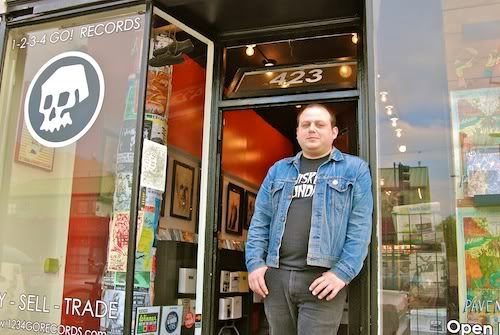
1234 GO!

Steve Stevenson, owner of Oakland’s 1-2-3-4 Go! Records understands why people chuck and trade their physical albums for digital– to simplify their lives and clear out some clutter. He says he did the same thing two years ago when he opened the store. 

“I ended up selling almost all of my records– it’s basically how the store started. And now I don’t have many…” he says, pauses, and looks around at the loaded shelves in his shop. “Or I guess I have more than I’ve ever had.” Exactly. Stevenson didn’t cut his collection– his passion for records blew up, the physical stacks of beats and sounds have become his livelihood. 

1234 GO!

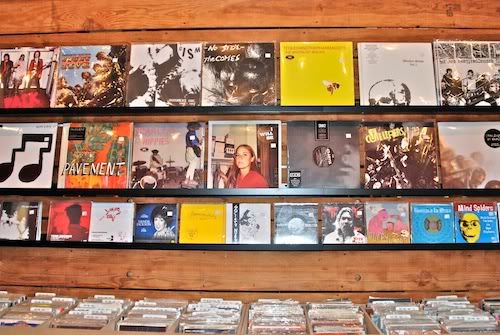
Maybe you’re not into building a gigantic vinyl collection over the weekend, but a short celebratory stack for the holiday can make for a healthy collection. And what’s great about visiting a small, boutique shop like Stevenson’s, is what it’s lacking– no over abundance of records to sift and flip for hours on end.

“My shop is small, but it’s packed with almost all exclusively good things,” he smiles. “We have good turnover on everything in here. And customers often tell me it’s nice to come in here for a half-hour and leave with something. It’s not a six-hour process of digging to get to one album you care about.”

So what are some things Stevenson is currently caring about? He would love to share. 

1234 GO!

The self-titled debut of Vermont’s grunge-pop trio Happy Birthday [Sub Pop, 2010] is by far this record shop’s pride and joy right now. Stevenson claims it’s the best collection of music he’s heard in the past two years and while he has yet to confirm totals with the label, he’s pretty he has sold more copies than any store around. 

“It’s only been out a month and I’ve sold 35 copies. I tend to push it on people. It’s just so good.”

1234 GO!

1234 GO!

He’s also pretty proud of Seattle’s Cute Lepers‘ sophomore release, Smart Accessories, [1-2-3-4 GO! Records, 2009] put out on Stevenson’s very own label. Why he gleams and grins so big when it comes to this particular record? It glows in the dark! Trippy! 

“Perfect for dark listening,” he says. 

1234 GO!

Besides music, 1-2-3-4 GO! also showcases the work of local artists each month. Currently it’s Danny Neece’s totally awesome paintings that pair oh so perfectly with the store’s colors. Get introduced to new music, new people and new art: everybody wins. 

While these goodies and other rotating gems are available every day at local music shops, the grandiose appeal of Record Store Day is the limited edition, exclusive releases both labels, artists and shops put out each year in celebration of the under-appreciated music hubs. From in-store performances to mix tapes and snacks (maybe?), put down your iPod this Saturday and let a physical person give you an earful of inspiration. 

Check out www.RecordStoreDay.com to see the major list of nationwide events. 

Or browse this list of participating stores in the Bay Area: 

San Francisco:

Amoeba Music
Aquarius Records
Creative Music Emporium
Force of Habit Records
Medium Rare Music
Streetlight Records
The Music Store

East Bay:

Amoeba Music (Berkeley)
Down Home Music Fourth Street (Berkeley)
Rasputin Music (Berkeley)
Down Home Music (El Cerrito)
Mod Lang (El Cerrito)
1-2-3-4 Go! Records (Oakland)

North Bay:

Back Door Disc (Cotati)
Watts Music (Novato)
Vinyl Planet (Petaluma)
Bedrock Music & Video (San Rafael)
Red Devil Records (San Rafael)
Last Record Store (Santa Rosa)

San Jose:

Space Cat
Streetlight Records

Josh Wolf in the eye of the storm (again)

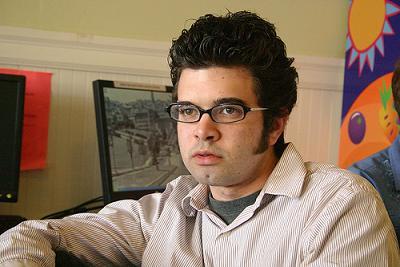
Josh Wolf has landed in hot water again — this time in connection with his reporting from inside the student occupation at Wheeler Hall on the University of California Berkeley campus to protest budget cuts.

The blogger and videographer was jailed in 2006 after resisting a subpoena to testify before a Federal grand jury because he had taken footage at a 2005 San Francisco protest against the G8 summit. His case was widely reported on, in part because he set a record for jail time served — 226 days — for refusing to give up newsgathering materials. Police believed Wolf possessed footage that could be used to press charges for vandalism of a police car and an assault on an officer. He didn’t.

Now the 27-year-old filmmaker, a student at the Graduate School of Journalism at UC Berkeley, faces a possible seven-month suspension in the wake of a student occupation of Wheeler Hall last November 20. Wolf was one of two reporters whose footage from inside Wheeler Hall was included in a Democracy Now! broadcast about the occupation — but he was the only UC Berkeley student who has said he was there documenting the event as a member of the press.

Wolf says he wore a police-issued press badge around his neck during the Wheeler Hall occupation. Press passes can serve to flag journalists as being in a separate category from civilians in situations involving law enforcement, but displaying one does not always provide a reporter immunity from arrest. The video he shot was integrated into a report produced with independent journalist Brandon Jourdan, who was also inside the building. Wolf and Jourdan were both arrested — but their footage was widely viewed on Democracy Now!, a national alternative news outlet.

In an “informal resolution” issued April 9, UC Berkeley’s Center for Student Conduct found that Wolf “participated in a disturbance of the peace,” charging him with multiple violations of the student conduct code. Wolf’s role as a journalist is not discussed in the list of charges, making it seem as if he’s being lumped in with the student protesters, despite being there as a reporter.

But the fact that he wears another hat as a journalist clearly hasn’t escaped the campus enforcers of the student conduct code. As part of the disciplinary measure, Wolf was also directed to write a 10-page essay reflecting on a list of questions, including: “How do you consider and reconcile the roles of being a student and being a journalist? At what points does either role become more important to you and why? What are your limits as a journalist? Where and how do you draw lines for yourself in terms of things you will or will not do to pursue professional goals?”

Wolf is being given the option of writing the paper and taking the seven-month suspension (a plea bargain of sorts), or moving on to a formal adjudication process that would entail going before a five-member hearing panel, like a court trial. His plan is to try and get an extension for the informal resolution process as a means of getting the charges dropped altogether.

Berkeley Associate Dean of Students Christina Gonzales, whose office oversees the Center of Student Conduct, was unable to discuss Wolf’s particular case because of a federal law prohibiting public disclosure on such matters. Nonetheless, she offered some general comments. “In the big picture, whenever you’re dealing with conduct, you do take into consideration circumstances,” Gonzales said. “If some one reported, ‘I have special credentials’ or whatever, then [the Center for Student Conduct] will go back as part of their research on any of the cases and try to find out as much information they can to determine if that was a known fact, whatever it is that the student’s telling us.” She stressed that the informal resolution was only a first step in the disciplinary process, and that no formal decision has been made at this point in time.

 “There’s always information that comes from others that’s taken into consideration with the whole picture,” Gonzales added.

Wolf says that when he asked Laura Bennett, Assistant Director at the Center for Student Conduct, whether it would impact the outcome of his case if he submitted a letter from Jourdan confirming that he was there as a reporter, he didn’t get a straightforward response. “Her response was, well, that kind of a letter would simply lead me to have more questions, such as, ‘how did you get into the building, who did what, what happened inside the building,’ a whole bunch of stuff that I’m not inclined to help with for any number of reasons,” Wolf said. “Some of this was given on a privileged basis. … And admittedly it’s like, wait, I went down this rabbit hole before, with the grand jury, and I’m not about to deviate from that path.”

Jourdan, who has contributed to the Huffington Post, Reuters, and the New York Times, among other outlets, told the Guardian that he wrote a letter supporting Wolf in this case. “To the best of his ability, he was there to capture a moment in history,” Jourdan said. Wolf is holding off on submitting the letter for now.

“I think what’s happening in the UC system is there’s a sort of crackdown,” added Jourdan, who faces his own charges after reporting on a March 4 demonstration against budget cuts to education that broke onto a West Oakland freeway. “When journalists are charged with criminal offenses … it’s impeding the work. The information is not free flowing. It’s imperative that journalists be given access to cover something … that in time will be seen as an historic movement.”

Pick up next week’s issue or visit us online for a more detailed report.

Can’t stay away

0

arts@sfbg.com

MUSIC “What can you do at the age of 44 that’s relevant?” a philosophical Too Short asks over brunch at the Buttercup in Oakland. “It can’t be good; it’s gotta be critic-proof.”

Seldom can you trace an entire artistic milieu back to one person, yet with Bay Area rap, you can. And his name is Too Short, a.k.a. Todd Shaw. In 1980, when the 14-year-old Short moved from L.A. to Oakland, rap was still considered a New York City phenomenon, but this didn’t stop him from making tapes to sell on the bus and the block. Between 1983 and 1986, he cut three discs on local label 75 Girls before forming his own Dangerous Music, whose first album, Short’s Born to Mack (1987), was soon re-released by Jive Records.

But after 14 albums on Jive — three gold, five platinum, one double platinum — Short Dog has gone independent. His label, once named Short Records, then Up All Nite, has been rechristened Dangerous Music, which released his Internet-only pre-album, Still Blowin’, on April 7. The most exciting news is that he’s returned from Atlanta to make music in the Bay, as well as his native L.A.

“What brought me back West was just the love, period,” he says. “People love me other places, but the West Coast love is unconditional. Not only in the Bay. It’s the same in L.A.

“Even in Atlanta,” he continues, “a lot of what I wrote was Oakland music. Oakland gives me the inspiration to write songs.”

Beyond the Bay, Too Short is as seminal a figure as Ice-T, bringing two major innovations to rap: profanity and pimpin’. These days, when half an MC’s verse gets muted on the radio due to graphic content, it’s hard to imagine rap without dirty lyrics, but it was a teenage Short who opened this Pandora’s box, with hardcore classics like “Blow Job Betty.”

“It’s not about pimps so much as having game,” Too Short says, yet the dirty rhymes inevitably meshed with Oakland’s cult of the pimp, whose ur-text is the locally-shot blaxploitation film, The Mack (1973). His much-imitated signature word, “biatch,” once caused controversy, though America fell in love with it after Dave Chappelle’s Rick James skit. As Short raps on the hit title track of his 16th album, Blow the Whistle (Jive 2006), “He got it from me.” Having discovered and recorded with Lil Jon even makes Short a pivotal figure in crunk.


JIVE JIVE

Unlike Ice-T or other contemporaries, Short remains a viable hitmaker. Blow the Whistle reached No. 14 on Billboard (No. 7 on the rap chart) and spawned a second hit, “Keep Bouncin’,” featuring Snoop Dogg and will.i.am, who produced it. Yet Jive refused to promote it, or even make a video, despite Snoop and will’s offer to work on it for free — one symptom of a deteriorating relationship between artist and label, which changed focus in the late 1990s to concentrate on teen pop like Britney Spears. Despite its lack of support, Short says that Jive “wouldn’t bow out gracefully,” instead holding him up for months with talk of a major retrospective with four new tracks that never materialized.

“When it’s near the end of the contract,” he says. “No matter how much they made off you, they don’t want to settle it in a humane way. It was clear their only intent was, ‘You must leave here not famous.'<0x2009>”

“I’m a realist,” he says about Jive pursuing more lucrative pop while abandoning a flagship artist who made the label millions. “It leaves a bad taste in your mouth. But there are no regrets. There wouldn’t be the legendary rapper Too Short if I didn’t get in my early years at Jive.” Eventually Short turned in a new album, Get Off the Stage (2007) — which, without promotion by Short or Jive, still hit No. 21 on the rap chart — in exchange for freedom.


INDEPENDENCE DAY

Unlike E-40, who left Jive for Reprise, Short Dog opted to go independent. “I could have got a major label deal two weeks after I left Jive,” Short says. “But I’m not going to get 100,000 first-week scans, and that’d be it.”

Both statements are probably true; he’s high-profile and relevant enough to get signed. Yet given the state of the industry and the youth-bias of major label rap, he’s unlikely to go platinum. But platinum’s a scarce commodity nowadays. And much like the nearly 40-year-old Snoop, Short still reliably makes hits and sells records. And he doesn’t intend to stop.

“I was smart enough to realize when the support wasn’t there, I could support myself,” he states matter-of-factly, without a trace of bravado.

Still Blowin’, Short says, “is just an appetizer for the upcoming menu,” his full-blown 2011 disc whose title is “so fly” he won’t unveil it yet. “I can’t just throw another album out there in this market. I need to warm it up, and this Internet album’s to feel out which direction I want to go in.” One direction is mixing in songs with a little more food for thought, even flirting with the idea of falling in love on the standout “Playa Card.”

“This is all premeditated,” he says. “I’m talking lots of shit, but I pick subjects where I can give a little more depth.”

“My last and final goal in hip-hop is to shatter that age-limit myth,” he continues. “It’s totally against everything this hip-hop industry is about. I’ll be 45 in 2011, and I guarantee you, I’ll drop an album and it’ll be the shit.

“I see it like I’m a jazz or a blues musician,” he continues. “I should be a rapper when I can’t even get off the stool, just sit there, nod my head, and do the show. I should be in a Vegas show with showgirls and shit. I’m going to rap till the words don’t come out.”

Hugs and kisses

0

le.chicken.farmer@gmail.com

CHEAP EATS We left space for The Attack at our table. She wasn’t dead or anything, just at work. Some people are dead. And some are only faking it. Still others of course are in line at Walgreens, or otherwise alive and well and just generally off doing something. So they can’t have breakfast with you at Rico’s Diner, damn!

My mind is boggled and my knees are buckled and rug-burned, but apparently I have a little prettiness left, according to an old-school pimpishly attired dude in a cape and fedora, downtown Oakland.

"You are beautiful ladies," he said to me and Pod, in passing. "You keep that up now!"

You keep that up now. Keep it up. Keep up the beauty.

Pod has a curling-iron burn on one of her cheeks.

When we saw the guy again he smiled even bigger, pumped his fist instead of tipping the fedora, and said pretty much the same things: "Beautiful" and "you keep that up now." I was wearing jeans and a T-shirt, a few flakes of last night’s mascara, and chicken-fried steak flavored lip gloss.

You keep that up now.

Beauty is hard to define. Like wet soap, life, and a live fish, beauty — once defined — is also hard to hold on to. It requires concentration. Sometimes you need a coach. Sometimes you need a lover, and sometimes your lover sucks, strains, and presses the beauty right out of you and then you need coaches and cheerleaders again to get it back.

Thank you, pimpishly attired fedora-tipping and fist-pumping dude. Thank you Pod. Thank you The Attack. And thank you Rico’s, for supplying the chicken-fried steak flavored lip gloss.

And, oh, so many other kinds of hot sauce. It gave Pod and me the idea to have a "hot sauce tasting" instead of a "wine tasting" party. And this gives me the idea to have a "lip gloss tasting" party after that.

Which reminds me of a rainy day in La Rochelle, a beautiful port town on the west coast of France where, as a recent romantic refugee, I participated materially in this January’s humidity levels.

I was with my chicken farming comrade on her one day off, shopping for All Things Brown, when we saw a tall, cute man standing in a crowded square with a small sign saying, in English, "Free Hugs." And he didn’t seem to be collecting money or selling anything. And he didn’t look like he smelled bad. And I have never been more in need of hugs so I walked right up to him and hugged him. If nothing else, this gave my chicken farmer’s daughter, who is 11, something to giggle about for the rest of this year. Plus I got to learn my first French phrase, Lâchez moi, or "Let go of me."

Now I don’t need hugs anymore. I need kisses, and to learn how to say ne lâchez pas de moi, s’il vous plaît in English.

"Mmm," says the dreamy dreamboat of my dreams, "What’s that hot sauce you’re wearing?"

El Yucateca. Extra extra hot. Which goes very good with chicken-fried steak and gravy, by the way. Not that Rico’s needs the boost. It was one of my favorite chicken frieds that I can remember. And the over-easies were good, and the omelet I had the first time I went there was great.

I love this place. It’s simple, delicious, and cheap. They do standard American breakfast stuff, plus burgers (which I haven’t tried yet), and veggie and vegan things (which I never will). And it feels like you’re eating on a train, I think because the kitchen’s in the middle of the room, and you have to place your order at a counter there. Plus all the windows. Although, I have to admit that the corner of 15th and Franklin streets does tend to stay a little still.

One of the most beautiful things I ever saw: my curling-iron burnt pal Pod — who is a dot artist, after all — carefully dispensing drops of I-forget-which hot sauce around the breakfast sandwich on her plate. I don’t know exactly what she was going for, but it was a Goldsworthy worthy masterpiece.

You keep that up, now, Pod.

RICO’S DINER

Mon.–Sat.: 10 a.m.–2:30 p.m.

400 15th St., Oakl.

(510) 444-8424

Cash only

Beer

Drowned out

0

rebeccab@sfbg.com

GREEN ISSUE The tiny, rigid-hull inflatable boats that researchers at Scripps Institution of Oceanography use for whale tagging are a mere fraction of the size of the blue whales they are deployed to search for. But Scripps PhD candidate Megan McKenna says there’s no reason to worry about the mammoth creatures — which can weigh as many tons as 27 elephants put together — bumping up against the boat when she reaches overboard with a pole to tag them.

“They’re just pretty mellow, I guess,” McKenna says. “There’s no flailing or anything. Some barely even notice that we’re there.” For two summers, she’s ventured out in pursuit of the endangered whales, popping short-term monitoring tags on them to learn how they behave when massive cargo shipping vessels motor past.

It’s an important question for a couple of reasons. Government funding was provided for the Scripps study after two blue whales were struck and killed by commercial shipping vessels in 2007, tragedies magnified by the fact that the marine mammals are still struggling for survival. If even two die in such collisions every few years, the entire species could be imperiled, McKenna says.

At the same time, a less-understood phenomenon has marine scientists worried that the deep-blue giants’ survival is being undermined by a subtler problem, that Jackie Dragon of San Francisco-based Pacific Environment likens to “death by a thousand cuts.” Noise generated by whirring ship propellers registers at the same frequency as the low tones whales use to communicate and forage for food, and researchers are concerned that the constant interruption is affecting their ability to engage in basic survival behavior.

Put together with an array of concerns including chemical pollution, marine debris, over-fishing, and ocean acidification, noise pollution is just coming onto the sonar of local marine sanctuary councils and federal environmental agencies, and proposed solutions are only in the fledgling stages.

Pacific Environment is one of several environmental organizations advocating for shipping vessels to travel at slower speeds, a quieter practice that also reduces the chances of hitting a whale. Despite growing evidence that noise pollution and ship strikes pose big problems for the planet’s largest mammals, it’s likely to be an uphill battle in an growing global industry where time is money, and on-time delivery is paramount.

Endangered whales favor the Gulf of the Farallones and Cordell Bank sanctuaries, not far from San Francisco, so Pacific Environment has chartered a catamaran to take ecologically-minded whale watchers out to what Dragon dubs the “Yosemites of the sea.” Using hydrophones, they capture the deep, rumbling whale calls. They also pick up noise generated by commercial ships, whose designated lanes cut directly through the protected areas.

Under just the right ocean conditions, the low, eerie mating call of a male blue whale off the coast of California can be heard by a female off the coast of Hawaii. “That just has to do with the physics of sound in the ocean,” McKenna explains. “They’re vocal animals. You can think of sound in the ocean as our vision. Sound travels so much better in water than light does, so it’s really an acoustic environment that they’re living in.”

McKenna is working with whale researchers John Calambokidis of the Cascadia Research Collective and John Hildebrand of Scripps Institution. While they’ve observed that some whales linger at the surface longer than usual after a ship has passed, leaving them vulnerable to a strike, there are no conclusive results as of yet.

To explain the noise impacts, Dragon uses an analogy of trying to communicate in a crowded bar where it’s difficult to hear. “In the ocean, sound is king,” she says. “This chronic, noisy, foggy environment … has a masking effect. It might mean whales will not be able to navigate correctly, or may not be able to communicate with mates or offspring.”

The Gulf of the Farallones National Marine Sanctuary supports a rare concentration of blue whales, partly because the water is rich in nutrients, biodiversity, and tiny, shrimp-like creatures called krill. Blue whales and endangered humpbacks forage there from April through November, the colossal blues consuming an astounding 4 tons of krill each day.

At an April 8 joint meeting between the Gulf of the Farallones and Cordell Bank marine sanctuary advisory councils, the groups discussed creating a working group — bringing together stakeholders from the U.S. Coast Guard, shipping industries, and others — to establish a set of recommendations for how to regulate noise pollution in the sanctuaries.

“The purpose is to better understand the issue from the standpoint of the sanctuary,” explains Lance Morgan, who chairs the Cordell Bank council. “Ideally, we’d produce a report that says, here’s what we think the issues are.”

Yet Morgan acknowledges that it won’t be easy to get the federal government to impose new sanctuary regulations since there are still so many outstanding questions. “We’re learning a lot about the acoustic environment,” he says. One concern is whether whales are actually able to perceive the sound of the giant shipping vessels, he notes, since the environment has become so noisy. If they can’t hear the ships, they’re at a much higher risk of collision. “We certainly know we can drown out whale calls in certain situations,” he says, “but what does that mean in the long term?”

There are around 14,000 blue whales left across the entire watery globe, according to the most optimistic estimates, just a sliver of the estimated 300,000 that lived before they were nearly harpooned to extinction during a ruthless whaling era. Scientists are encouraged that their numbers have climbed since the mid-1960s when they were listed as endangered.

Yet even with this mild success story as a backdrop, there is growing concern about potential long-term effects of underwater industrial noise. Navy sonar, military air guns, and blasts from seismic surveys all contribute to the problem at varying frequencies. The collective din of ocean noise has doubled every decade since the 1950s, and the shipping business is only expected to grow.

Maersk, the world’s largest shipping company, runs weekly container ships from Hong Kong to ports in Oakland and Long Beach, a journey lasting more than two weeks. Getting the goods there on time is “the most important thing to our customers,” says Lee Kindberg, the company’s environment director.

The container ships arrive crammed full of everything from electronics — which require special climate-controlled containers — to clothing, bath products, household items, and pharmaceuticals. Perishable items are transported in refrigerators, consuming a third more energy and powered by auxiliary engines. Up to 8,000 containers can be packed onto a single ship, and the average vessel size has expanded around 20 percent in the past five years. More than 90 percent of the world’s traded goods are transported by water, with shipments on container vessels increasingly rapidly.

If ever there was an icon for globalization, and all that the buy-local and sustainability movements rail against, it would be a diesel-powered container ship transporting heavily packaged stuff halfway across the globe.

“Clearly it’s not a good thing if we hit a whale,” Kindberg says. Undersea noise pollution “is certainly an issue that we’ve been made aware of. But there doesn’t seem to be any real clarity as to what the impacts are,” she notes. Maersk would support certain speed reductions to protect the whales, Kindberg says, but “if you slow down in one place, you need to speed up someplace else, and that can take more fuel.”

Regulations in certain waters off the eastern seaboard already require ships to move at slower speeds to minimize harm, and Kindberg says Maersk has voluntarily opted to operate at slower speeds to reduce greenhouse gas emissions (it saves on fuel costs too). But when going along at 10 knots (around 11 m.p.h.), the speed environmental organizations say is safest for marine mammals, it’s harder to maneuver the ship, Kindberg says. Sailing around the marine sanctuaries is not an option in California, she adds, since ships have to pass through them to get to the ports.

Other efforts to solve the shipping-noise problem focus on ship design. “We’re building larger and larger ships, and they’re getting noisier and noisier,” says marine ecologist Leila Hatch of the National Oceanic and Atmospheric Administration (NOAA), who studies the effects of underwater sound on marine mammals.

The International Maritime Organization accepted a plan in 2008 to form a working group and to pin down guidelines for making commercial ships quieter, according to Hatch. Although the guidelines aren’t enforceable and are unlikely to be implemented any time soon, she sees it as an opportunity for a win-win scenario. If new ships featured a design with more efficient propulsion, they could be quieter, cheaper to operate, and more energy-efficient — which would also improve the air-quality problems associated with giant commercial ships.

The California Air Resources Board, meanwhile, initiated an effort last year for a program to get commercial vessels to slow down near the coastline, a bid to reduce emissions of smog-causing chemicals and the greenhouse gas carbon dioxide. Not much is happening on that front to date, but such a program could have the positive side effect of quieting underwater noise.

Hatch has been trying to quantify the decline in hearing ranges for marine mammals as the seas grow increasingly crowded with larger, noisier ships. “Much of the space they used to have is taken up by shipping noise. What is that likely to mean in terms of their ability to communicate effectively and find food?” she asks.

To find answers, she’s engaged in a research project at the Stellwagen Bank National Marine Sanctuary off the coast of Massachusetts that blends GPS ship-tracking data with profiles from sound-monitoring devices planted on the sea floor. Results suggest that whales’ communication ranges have diminished by 80 percent in some places.

There are few easy answers, however, since scientists are still trying to piece it all together. One certainty is that “we’re changing the environment they’re trying to live in,” notes McKenna, who says she now finds herself wondering if she’ll end up purchasing something that’s packed onto a massive containership when she spies one out on the horizon. “To what degree is it impacting them?”

She can’t say exactly, and that’s part of the problem, because the global shipping industry wants to see some concrete facts before the battleship can be turned. In the meantime, Kindberg says the captains helming Maersk line are just trying to avoid hitting the whales.

In the company of bees

0

Sarah@sfbg.com

GREEN ISSUE On a rainy afternoon in April, I’m standing on an abandoned military base on Alameda Island counting bees on a wild rosemary bush. In the three minutes I’ve been standing here, I’ve spotted five large, furry bumblebees, flitting from flower to flower, performing the function that keeps the whole ecosystem buzzing.

But the honeybees I often see here are absent. I’m not surprised. As I learned from Bernd Heinrich’s Bumblebee Economics (Harvard University Press, 1979) bumblebees are tundra-adapted insects that are better able to forage at low temperatures than sun-loving Italian honeybees.

I’ve been obsessed with bees for years. My sister says it began when I got stung on the bum as a toddler. My daughter says it started the day we rescued a swarm of half-drowned honeybees that had gotten stranded in high winds on a beach in Santa Cruz. All I know is that my bee obsession really bloomed when we lived on a lavender farm on the north coast of California and I found bumblebees asleep on the lavender, at night.

A beekeeper on the farm explained that, unlike honeybees, bumblebees don’t form permanent colonies. Instead, they nest in empty mouse holes and form small social groups that die out each fall. The bees sleeping on the flowers were probably male, he added; they tend to be lazier, while the females do most of the work.

He told me that only the young pregnant bumblebee queens hibernate in the fall, emerging alone the next spring to start new colonies. There are more than 4,000 species of native bees in North America. Some are the size of ants; others are territorial and drive other bees off the flowers they guard. Most are solitary, nonaggressive loners, and some aren’t that busy at all.

Curious, I bought a book about beekeeping from a clerk who told me his father once kept bees in Oakland. “Urban honey is the best,” he said, explaining that urban gardens often contain unusual and diverse collections of plants. “City bees have far more exotic choices of nectar.”

Fast-forward to the present and it seems that the general public also has taken a much more active interest in bees, particularly since 2006 when colony collapse disorder decimated honeybee populations, triggering warnings of a coming agricultural crisis and potential devastation to the ecosystem.

Scientists estimate that bees pollinate nearly three-fourths of the world’s flowering plants. These plants provide food and shelter for many species of animals. A 2008 survey by the U.S. Department of Agriculture shows that 36 percent of the 2.4 million hives in the U.S. have been lost to colony collapse disorder, which translates into billions of honeybees.

Some species of bumblebees also are vanishing. Robbin Thorp, professor emeritus of entomology at UC Davis, blames their disappearance on commercially reared bumblebees that are imported to pollinate hothouse tomatoes and then escape into the wild, where they leave pathogens on flowers (see “Buzz Kill,” 01/27/10).

But amid such big news, I’m still keeping a diary of notes on bees and focusing on my own backyard on Alameda Island, wondering how I can attract more bees. Xerces Society for Invertebrate Conservation heeded Thorp’s thesis and petitioned to stop the cross-country movement of bumblebees, but the Portland, Ore.,-based group has also produced handy pocket guides to help people like me identify bumblebees in the field.

So far I haven’t spotted the missing Western bumblebee, Bombus occidentalis. But I did see a bumblebee queen spiraling through a Potrero Hill garden on a mild day in early January. Reached by phone, Heinrich, professor emeritus of the biology department of the University of Vermont, told me that the queen would retreat into her underground hole when the weather got cold and wet again, which it soon did.

When he was writing Bumblebee Economics, which explores biological energy costs and payoffs using bumblebees as the model, Heinrich studied Bombus terricola, the yellow-banded bumble bee that was plentiful around Maine bogs in the 1970s.

“I could see dozens all at once. But since then, for years I didn’t see any at all, and since then I’ve only seen a few,” Heinrich said “Nobody figured out what happened.”

Gordon Frankie, professor and research entomologist at UC Berkeley, told me he’s happy to see the increased interest in urban bees. “People have begun to recognize that bees have a major role to play in agriculture,” Frankie said, as he and Rollin Coville, who has a doctorate in entomology from UC Berkeley and a passion for photographing insects, showed me around the experimental urban bee garden they created in 2003 at the edge of a field in downtown Berkeley.

“Bees love blues, purples, pinks, and yellows,” Frankie said, explaining that bees can see ultraviolet hues but not red flowers as we observe bees busily foraging on a blue lilac bush.

He also said bees love hanging out in open meadows where the sun shines and where they can see the flowers. “In the forest is no damn good if you’re a bee,” he said.

In July 2009, Frankie, Coville, and Thorp published an article in California Agriculture that outlined the results of bee surveys in gardens in Berkeley, La Canada Flintridge, Sacramento, San Luis Obispo, Santa Barbara, Santa Cruz, and Ukiah.

“Evidence is mounting that pollinators of crop and wild land plants are declining worldwide,” they wrote. “Results indicate that many types of residential gardens provide floral and nesting resources for the reproduction and survival of bees, especially a diversity of native bees. Habitat gardening for bees — using targeted ornamental plants — can predictably increase bee diversity and abundance and provide clear pollinator benefits.”

Frankie and Coville also helped produce a 2010 native bee calendar that features Coville’s photographs of bumble, squash, mason, carpenter, leafcutter, mining, wool carder, cuckoo, and ultragreen sweat bees, plus tips on how to attract these pin-ups by planting a variety of bee-friendly plants, avoiding pesticides, and refraining from over-mulching.

Researchers have observed almost 50 species of native bees at UC Berkeley’s bee garden, out of 85 species recorded citywide. UC Berkeley’s urban bee gardens’ Web site, (www.nature.Berkeley.edu/urbanbeegardens) notes that bees have preferences for gardens as well as flowers.

“Gardens with 10 or more species of attractive plants attracted the largest number of bees,” the Web site states, cautioning people against hanging around plants too long. “If an observer spends too long in one place hovering over the same patch of flowers, the bees will gradually begin to move on to other flowers where they won’t be bothered. To facilitate counts, it is sometimes a good idea to create little paths through the garden so that all patches are accessible to the observer.”

Here in California, high real estate prices have led to the increased paving over of bee habitat. And bees have come under additional stress in the wake of a 2006 E. coli outbreak that sickened more than 200 individuals and resulted in at least three deaths on the Central Coast. Growers have since been pressured to eliminate hedgerows, wetlands, habitat, and wildlife around farms.

But as a February 2010 Nature Conservancy report on food safety and ecological health notes, “certain on-farm food safety requirements may do little to protect human health and might in fact damage the natural resources on which agriculture and all life depend.”

These concerns have a direct, if hidden, impact on Bay Area residents, whose food supply comes almost exclusively from outside urban limits. Take San Francisco, where crop production consists of $1 million worth of orchids, flower cuttings, and sprouts on two acres of land, according to a 2008 Department of Public Health report.

Missing from that equation is the honey that local bees produced. As San Francisco beekeeper Robert MacKimmie recently noted, mites hit his hives hard in 2009. “And the summer and fall were pretty brutal since we were in the third year of drought,” MacKimmie said.

He hopes El Nino-related rains will be good for this year’s bees: more water means more flowers for bees, which rely on nectar and pollen to sustain themselves and their developing brood.

MacKimmie doesn’t have a garden and uses other people’s yards to keep his bees. “The honey serves as rent,” he said, noting that he only places two hives in each yard to disperse the bees in more equitably and sustainably. He points to the work of Gretchen LeBuhn, a San Francisco State University professor who started the Great Sunflower Project in 2008, as a fairly easy way to gather information about bee populations.

Reached by e-mail, LeBuhn said her project has more than 80,000 people signed up to plant sunflowers this year. “Participants create habitat by planting sunflowers and then contribute data to our project by taking 15 minutes to count the number of bees visiting their sunflower,” she wrote.

“The Great Sunflower Project empowers people from preschoolers to scientists to do something about this global crisis by identifying at risk pollinator communities,” LeBuhn said. “By volunteering to collect data as a group, these citizen scientists provided huge leverage on a minimal investment in science and created the first detailed international survey of pollinator health and its implications for food production.

“Getting this kind of critical scientific data at thousands of locations using traditional scientific methods would cost so much money that it is untenable,” she added.

LeBuhn encourages people to submit their bee count data at www.greatsunflower.org, which recommends growing bee balm, cosmos, rosemary, tickseed, purple coneflowers, and sunflowers. Unfortunately her data shows that “at least 20 percent of the gardens are getting very poor pollinator service.”

The public is encouraged to visit the UC Berkeley bee garden in May when public tours begin. But you might want to brush up on your Latin, the language experts speak when they hang out with the bees.

Coville saw a mason bee land on a lavender-flowered sage and said, “I think I just saw an Osmia on a Salvia mellifera!”

Frankie smiled at me and said, “It’s bee talk.”

The dawn of Earth Day

2

tredmond@sfbg.com

GREEN ISSUE The heavens welcomed Earth Day to America. All over the country, April 22, 1970 dawned clear and sunny; mild weather made it even easier to bring people into the streets. The Capitol Mall was packed, and so many members of Congress were making speeches and appearing at events that both houses adjourned for the day.

Mayors, governors, aldermen, village trustees, elementary school kids, Boy Scout troops, labor unions, college radicals, and even business groups participated. In fact, the only organization in the nation that actively opposed Earth Day was the Daughters of the American Revolution, which warned ominously that "subversive elements plan to make American children live in an environment that is good for them."

By nightfall, more than 20 million people had participated in the First National Environmental Teach-In, as the event was formally known. It established the environmental movement in the United States and helped spur the passage of numerous laws and the creation of hundreds of activist groups.

It was, by almost all accounts, a phenomenal success, an event that dwarfed the largest single-day civil rights and antiwar demonstrations of the era — and the person who ran it, 25-year-old Denis Hayes, wasn’t happy.

His concern with the nascent movement back then says a lot about where environmentalism is 40 years later.

Gaylord Nelson, a mild-mannered U.S. senator from Wisconsin, came up with the idea of Earth Day on a flight from Santa Barbara to Oakland. Nelson was the kind of guy who doesn’t get elected to the Senate these days — a polite, friendly small-town guy who was anything but a firebrand.

A balding, 52-year-old World War II veteran who survived Okinawa, Nelson was a Democrat and generally a liberal vote, but he got along fine with the die-hard conservatives. He kept a fairly low profile, and did a lot of his work behind the scenes.

But long before it was popular, Nelson was an ardent environmentalist — and he was always looking for ways to bring the future of the planet into the popular consciousness.

In August 1969, Nelson was on a West Coast speaking tour — and one of his mandatory stops was the small coastal city that seven months earlier had become ground zero for the environmental movement. Indeed, a lot of historians say that Earth Day 1970 was the coming out party for modern environmentalism — but the spark that made it possible, the event that turned observers into activists, took place Jan. 28, 1969 in Santa Barbara.

About 3:30 on a Tuesday afternoon, a photographer from the Santa Barbara News Press got the word that something had gone wrong on one of the Union Oil drilling platforms in the channel just offshore. The platforms were fairly new — the federal government had sold drilling rights in the area in February 1968 for $603 million, and Union was in the process of drilling its fourth offshore well. The company had convinced the U.S. Geological Survey to relax the safety rules for underwater rigs, saying there was no threat of a spill.

But shortly after the drill bit struck oil 3,478 feet beneath the surface, the rig hit a snag — and when the workers got the equipment free, oil began exploding out. Within two weeks, more than 3 million gallons of California crude was on the surface of the Pacific Ocean, and a lot of it had washed ashore, fouling the pristine beaches of Santa Barbara and fueling an angry popular backlash nationwide.

Nelson received an overwhelming reception at his Santa Barbara talk — and horrified as he was by the spill, he was glad that an environmental concern was suddenly big news. But, as he told me in an interview years ago, he still wasn’t sure what the next steps ought to be — until, bored on an hour-long flight to his next speech in Berkeley, he picked up a copy of Ramparts magazine.

The radical left publication, once described as having "a bomb in every issue," wasn’t Nelson’s typical reading material. But this particular issue was devoted to a new trend on college campuses — day-long "teach-ins" on the Vietnam War.

Huh, Nelson thought. A teach-in. That’s an intriguing idea.

Hayes was a student in the prestigious joint program in law and public policy at Harvard. He’d been something of a campus activist, protesting against the war, but hadn’t paid much attention to environmental issues. He needed a public-interest job of some sort for a class project, though, so when he read a newspaper article about the senator who was planning a national environmental teach-in, he called and offered to organize the effort in Boston. Nelson invited him to Washington, was impressed by his Harvard education and enthusiasm, and hired him to run the whole show.

The senator was very clear from the start: the National Environmental Teach-In would not be a radical Vietnam-style protest. The event would be nonpartisan, polite, and entirely legal. Hayes and his staffers chafed a bit at the rules (and the two Senate staffers Nelson placed in the Earth Day office to keep an eye on things), and they ultimately set up a separate nonprofit called the Environmental Action Foundation to take more aggressive stands on issues.

Meanwhile, Hayes did the job he was hired to do — and did it well. Everywhere he turned, from small towns to big corporations, people wanted to plug in, to be a part of the first Earth Day. Many wanted to do nice, noncontroversial projects: In Knoxville, Tenn., students decided to scour rivers and streams for trash to see if they could each clean up the five pounds of garbage the average American threw away each day. In dozens of communities, people organized tree-plantings. In New York, Mayor John Lindsay led a parade down Fifth Avenue.

A few of the actions were more dramatic. A few protesters smashed a car to bits, and in Boston, 200 people carried coffins into Logan International Airport in a symbolic "die-in" against airport expansion. In Omaha, Neb., so many college students walked around in gas masks that the stores ran out. But it was, Hayes realized, an awful lot of talk and not a lot of action. The participants were also overwhelmingly white and middle-class.

Hayes wasn’t the only one feeling that way. In New York, author Kurt Vonnegut, speaking from a platform decorated with a giant paper sunflower, added a note of cynicism.

"Here we are again, the peaceful demonstrators," he said, "mostly young and mostly white. Good luck to us, for I don’t know what sporting event the president [Richard Nixon] may be watching at the moment. He should help us make a fit place for human beings to live. Will he do it? No. So the war will go on. Meanwhile, we go up and down Fifth Avenue, picking up trash."

Hayes finally broke with the politics of his mentor early on Earth Day morning when it was too late to fire him. The next day, the National Environmental Teach-In office would close and the organization would shut down. From that moment on, he could say what he liked and not worry who he offended.

"I suspect," he told a crowd gathered at the Capitol Mall, "that the politicians and businessmen who are jumping on the environmental bandwagon don’t have the slightest idea what they are getting into. They are talking about filters on smokestacks while we are challenging corporate irresponsibility. They are bursting with pride about plans for totally inadequate municipal sewage plants. We are challenging the ethics of a society that, with only 6 percent of the world’s population, accounts for more than half the world’s annual consumption of raw materials.

"We are building a movement," he continued, "a movement with a broad base, a movement that transcends traditional political boundaries. It is a movement that values people more than technology and political ideologies, people more than profit.

"It will be a difficult fight. Earth Day is the beginning."

I first met Hayes in 1990, near the office in Palo Alto where he was planning the 20th anniversary of Earth Day. He’d continued his environmental work inside and outside government, at one point running the National Energy Laboratory under President Jimmy Carter. Earth Day 20 was shaping up as a gigantic event, one that would ultimately involve 200 million people around the globe. Earth Day was becoming the largest secular holiday on the planet.

Hayes was excited about the event, which he was running this time without the moderating influence of a U.S. senator. And he was aiming for a much more activist message — in fact, at that point, he was pretty clear that the U.S. environmental movement was running out of time.

"Twenty years ago, Earth Day was a protest movement," he told a crowd of more than 300,000 in Washington, D.C. "We no longer have time to protest. The most important problems facing our generation will be won or lost in the next 10 years. We cannot protest our losses. We have to win."

And now another 20 years have passed — and by many accounts, we are not winning. Climate change continues, and even accelerates; an attempt at a global accord just failed; and Congress can’t even pass a mild, watered-down bill to limit carbon emissions.

And Hayes, now president of the Bullitt Foundation, a sustainability organization in Seattle, thinks the movement has a serious problem. "Earth Day has succeeded in being the ultimate big tent," he told me by phone recently. "To some rather great extent, is had some measure of success."

But he noted that "in American politics these days, it’s not the breadth of support, it’s the intensity that matters. Environmentalists tend to be broadly progressive people who care about war and the economy and health care. They aren’t single-issue voters. And somehow, the political intensity is missing."

Hayes isn’t advocating that environmentalists forget about everything else and ignore all the other issues — or that the movement lose its broad-based appeal — but he said it’s time to bring political leaders and policies under much, much sharper scrutiny and to "stop accepting a voting record of 80 percent."

It’s hard today to be bipartisan, and compromise is unacceptable, Hayes told me. "I was probably right [in 1990]," he said. "If what you’re aspiring to do is stop the greenhouse gases before they do significant damage to the environment, it’s too late." At this point, he said, it’s all about keeping the damage from turning into a widespread ecological disaster.

"I would like to see Earth Day 50 be a celebration," he said. "I would like to see by then a real price on carbon, nuclear power not proliferating, and a profound, stable investment in cost-effective, distributed renewable energy." But for that to happen, "we need to have a very intense core of environmental voters who realize that these threats to life on the planet are more important than a lot of other things."

Tim Redmond is the author, with Marc Mowrey, of Not In Our Back Yard: The People and Events that Shaped America’s Modern Environmental Movement (William Morrow, 1993) which can still be found in the remainder bins of a few used book stores.

Stage listings

0

Stage listings are compiled by Guardian staff. Performance times may change; call venues to confirm. Reviewers are Robert Avila, Rita Felciano, and Nicole Gluckstern. Submit items for the listings at listings@sfbg.com.

THEATER

OPENING

An Accident Magic Theatre, Bldg D, Fort Mason Center, Marina at Laguna; 441-8822, www.magictheatre.org. $25-55. Previews Thurs/15-Sat/17, 8pm; Sun/18, 2:30pm; Tues/20, 7pm. Opens April 21, 8pm. Runs Wed-Sat, 8pm (also Sat, 2:30pm); Sun, 2:30pm; Tues, 7pm. Through May 9. Magic Theatre closes their season with Lydia Stryk’s world premiere drama.

SexRev: The José Sarria Experience Mama Calizo’s Voice Factory, 1519 Mission; 1-800-838-3006, www.therhino.org. $10-25. Previews Wed/14-Fri/16 and April 21-23, 8pm; Sun/18, 7pm. Opens April 24, 8pm. Runs Wed-Sat, 8pm; Sun, 2pm. Through May 2. Theatre Rhinoceros presents John Fisher’s musical celebration of America’s first queer activist.

Tell It Slant Southside Theater, Fort Mason Center, Bldg D, Marina at Laguna; www.tixbayarea.com. $20-40. Opens Sat/17, 8pm. Runs Fri-Sun, 8pm (also Sun, 2pm; no 8pm show May 16). Through May 16. BootStrap Foundation presents Sharmon J. Hilfinger and Joan McMillen’s musical about Emily Dickinson.

"Wanton Darkness: Two Plays By Harold Pinter and Conor McPherson" Phoenix Theatre, 414 Mason; 335-6087. $24-28. Opens Fri/16, 8pm. Runs Thurs-Sat, 8pm; Sun, 2pm. Through May 8. 2nd Wind Productions performs Ashes to Ashes and St. Nicholas in repertory.

ONGOING

*…And Jesus Moonwalks the Mississippi Cutting Ball Theater, 277 Taylor; 1-800-838-3006, www.cuttingball.com. $15-30. Thurs-Sat, 8pm; Sun, 5pm. Through April 25. In this inspired poetical-historical counter-narrative from Bay Area playwright Marcus Gardley, Greek mythology, African American folklore, personal family history, and Christian theology are all drawn irresistibly along in a great sweep of wild and incisive humor, passion, pathos and rousing gospel music as buoyant and wide as the Mississippi — or rather Miss Sippi (the impressive Nicole C. Julien), personification of the mighty and flighty river. The Cutting Ball-Playwrights Foundation coproduction, lovingly directed by Amy Mueller, sports exquisite design touches from Cutting Ball regulars like Michael Locher, whose gorgeous plank-wood set serves as the ideal platform for a work both magnificently simple and eloquently evocative. (Avila)

Andy Warhol: Good For the Jews? Jewish Theatre, 470 Florida; 292-1233, www.tjt-sf.org. $15-45. Thurs-Sat, 8pm; Sun, 2 and 7pm. Through May 16. Josh Kornbluth performs his new comedic show.

Baby: A Musical Off-Market Theatres, 965 Mission; 1-800-838-3006, www.roltheatre.com. $20-32. Thurs/15-Sat/17, 8pm; Sun/18, 2pm. Ray of Light Theatre performs a comedy about pregnancy.

*Den of Thieves SF Playhouse, 533 Sutter; 677-9596, www.sfplayhouse.org. $40. Wed/14-Sat/17, 8pm (also Sat/17, 3pm). Stephen Adly Guirgis has been good to SF Playhouse. The company already scored big with two of the New Yorker’s gritty, dark and sharply funny plays, Our Lady of 121st Street and Jesus Hopped the ‘A’ Train. Director Susi Damilano continues the streak with SF Playhouse’s latest, the less heavy but very funny Den of Thieves, about an unlikely foursome of inept bandits caught trying to heist a Mafioso’s safe under a discotheque in Queens — a simple tale that gives plenty of scope to Guirgis’s muscular way with dialogue and the clash of characters. It’s a meaty comedy, and the exceptional cast sells the conceit so beautifully they make it a crime to miss. (Avila)

The Diary of Anne Frank Next Stage, 1620 Gough; 1-800-838-3006, www.custommade.org. $10-28. Thurs-Sat, 8pm; Sun, 7pm. Through May 1. Custom Made performs Wendy Kesselman’s modern take on the classic.

"DIVAfest" Exit Theatre, 156 Eddy; 673-3847, www.theexit.org. Check website for dates and times. Through May 1. The ninth annual festival features plays and performances by women artists.

Eat, Pray, Laugh! Off-Market Theaters, 965 Mission; www.brownpapertickets.com. $20. Wed, 8pm. Through April 28. Off-Market Theaters presents stand up comic and solo artist Alicia Dattner in her award-winning solo show.

Frau Bachfeifengesicht’s Spectacle of Perfection Stage Werx Theatre, 533 Sutter; 1-800-838-3006, www.circusfinelli.com. $15-20. Fri-Sun, 8pm. Through April 25. San Francisco’s all-women clown troupe, Circus Finelli, performs their comedy show inspired by European circus acts and American vaudeville.

Lady, Be Good! Eureka Theatre, 215 Jackson; 255-8207, www.42ndstmoon.org. $8-44. Wed/14, 7pm; Thurs/15-Fri/16, 8pm; Sat/17, 6pm; Sun/18, 3pm. 42nd Street Moon presents George and Ira Gershwin’s madcap tale of a brother-sister vaudeville team in the 1920s.

*Loveland The Marsh, 1074 Valencia; 826-5750, www.themarsh.org. $15-50. Sat, 8:30pm; Sun, 7pm. Through April 25. Starting May 8, runs Sat, 5pm and Sun, 2pm at the Marsh Berkeley, 2120 Allston, Berk. Through June 13. Los Angeles–based writer-performer Ann Randolph returns to the Marsh with a new solo play partly developed during last year’s Marsh run of her memorable Squeeze Box. Randolph plays loner Frannie Potts, a rambunctious, cranky, and libidinous individual of decidedly odd mien, who is flying back home to Ohio after the death of her beloved mother. The flight is occasion for Frannie’s own flights of memory, exotic behavior in the aisle, and unabashed advances toward the flight deck brought on by the seductively confident strains of the captain’s commentary. The singular personality and mother-daughter relationship that unfurls along the way is riotously demented and brilliantly humane. (Avila)

Macho Bravado Thick House, 1695 18th St; http://machobravado.eventbee.com. $15-25. Thurs-Sat, 8pm; Sun, 5pm. Through April 24. Asian American Theater Company performs Alex Park’s drama about a Korean-American soldier dealing with life on the home front after fighting in the Middle East.

*Master Class New Conservatory Theatre Center, 25 Van Ness; 861-8972, www.nctcsf.org. $22-40. Wed-Sat, 8pm; Sun, 2pm. Through May 2. Terrence McNally’s lovingly clever and thoroughly engaging portrait-play about opera icon Maria Callas takes the inspired notion of post-career Callas (Michaela Greeley) teaching a Julliard master class of eager young singers, while naturally finding herself unable to resist dominating the stage once more. Through a set of arias performed to piano accompaniment (by Kenneth Helman) by a cast of actor-singers (Alyssa Stone, Holly Nugent, Gustavo Hernández), Callas’s unselfconsciously curt and even brutal interactions with the students finally evoke for this deeply proud yet insecure woman both past theatrical glories and backstage heartaches. The play receives an impressive, all-around satisfying production at New Conservatory Theatre under Arturo Catricala’s astute direction. Of course, even with decent to excellent work on and off stage by the entire production team — including a stately mood-setting scenic design by Kuo-Hao Lo — it would no doubt amount to little without a formidable lead actor to fill Callas’s elegant but slightly over-the-top shoes. Here a marvelously imposing yet charming Greeley delivers the part as if she were born to play it, and all goes swimmingly as a result. (Avila)

Othello African American Art and Culture Complex, 762 Fulton; 1-800-838-3006, www.african-americanshakes.org. $20-30. Wed/14-Thurs/15, 10am (school matinees); Sat/17, 8pm; Sun/18, 3pm. African-American Shakespeare Company closes its 15th season with this adaptation of Shakespeare’s play, set during a modern-day military tribunal in Iraq.

Pearls Over Shanghai Hypnodrome, 575 Tenth St.; 1-800-838-3006, www.thrillpeddlers.com. $30-69. Fri-Sat, 8pm; starting July 10, runs Sat, 8pm and Sun, 7pm. Extended through August 1. Thrillpeddlers presents this revival of the legendary Cockettes’ 1970 musical extravaganza.

The Real Americans The Marsh, 1062 Valencia; 826-5750, www.themarsh.org. $18-50. Wed-Fri, 8pm (Fri/16, show at 9pm; starting April 24, no Fri shows except May 28, 8pm); Sat, 5pm; Sun, 3pm. Through May 30. The Marsh presents the world premiere of Dan Hoyle’s new solo show.

*Scalpel! Brava Theater Center, 2781 24th St; 647-2822, www.brava.org. $20-35. Wed/14-Sat/17, 8pm. Only a face full of Botox will prevent you beaming at Scalpel!, the best time you’ll ever have at the surgeon’s, a political fundraiser, or Bergdorf Goodman. A must-see evening of arch escapism from multitalented writer-director D’Arcy Drollinger (Above and Beyond the Valley of the Ultra Showgirls, etc.), it’s the kind of balls out, chin tucked musical camp-comedy Off-Broadway legends are made of. After her husband leaves her for a younger woman, New York socialite Jacquelyn Tilton (a graceful, fabulous Cindy Goldfield) succumbs to peer pressure and goes under the knife of eternal youth, wielded by leading plastic surgeon Dr. Bulgari (Drollinger, subbing expertly for Mike Finn). But the Svengali Bulgari has more than liposuction on his mind, surreptitiously drawing Jac into a plot to take over the world, from ugly people. In addition to the post-op infectiousness of the badass score — backed by a band perched atop either side of a massive split-level set — wonderfully low-tech special effects and a dream cast combine to bring Jac’s sordid nightmares, and more than one walking-talking daymare, memorably to life. The wowing supporting work includes razor sharp Arturo Galster, as (Manchurian) candidate for California senate Pepper Van Allen; Leanne Borghesi as Jacquelyn’s loyal, indomitable Puerto Rican maid; and the comically incandescent Sarah Moore as poop-raking TV reporter Kitty Kelly Brown. (Avila)

Shopping! The Musical Shelton Theater, 533 Sutter; 1-800-838-3006, www.brownpapertickets.com. $27-29. Fri-Sat, 8pm. Ongoing. The musical is now in its fifth year at Shelton Theater.

Vigil American Conservatory Theater, 415 Geary, SF; 749-2228, www.act-sf.org. $10-82. Wed/14-Sat/17, 8pm (also Wed/14 and Sat/17, 2pm); Sun/18, 2pm. Olympia Dukakis and Marco Barricelli star in Morris Panych’s comedy about a self-involved bachelor and his dying aunt.

What Mama Said About Down There Our Little Theater, 287 Ellis; 820-3250, www.theatrebayarea.org. $15-25. Thurs-Sun, 8pm. Through July 30. Writer-performer-activist Sia Amma presents this largely political, a bit clinical, inherently sexual, and utterly unforgettable performance piece.

BAY AREA

*East 14th: True Tales of a Reluctant Player Marsh Berkeley, 2120 Allston, Berk; www.themarsh.org. $20-35. Fri/16, April 30, and May 7, 9pm; May 1 and 8, 8pm; Sun/18 and April 25, 2pm. Through May 8. Don Reed’s solo play, making its Oakland debut after an acclaimed New York run, is truly a welcome homecoming twice over. (Avila)

Equivocation Marin Theatre Company, 397 Miller, Mill Valley; (415) 388-5208, www.marintheatre.org. $34-54. Tues and Thurs-Sat, 8pm (also Sat/17 and April 24, and May 1, 2pm; no show April 30); Wed, 7:30pm; Sun, 2 and 7pm. Through May 2. Marin Theatre Company presents playwright Bill Cain’s award-winning hit, a sparksy drama that steeps itself in the history of Shakespeare’s life, labors and times to, among other things, draw pointed references to a barbaric period of fear, witch-hunting and state-sponsored torture ("Politics is religion for people who think they’re god," as one character has it). As staged by artistic director Jasson Minadakis, the play is nervously kinetic and pitched rather high by a cast of first-rate actors delivering surprisingly lackluster performances. The fact is Cain also bites off quite a bit in Equivocation, including "Shagspeare"’s (Charles Shaw Robinson) fraught relationship with his morosely clever daughter (Anna Bullard), neglected twin of the beloved son he lost — which is perhaps why some of it seems only half chewed by the end. The play — set in designer J.B. Wilson’s metallic two-tiered semi-circle representing the storied Globe Theatre, where the Bard wrote and occasionally acted alongside his fellow King’s Men as co-proprietor — has also a wearying tendency to spell its morals in block letters. Some genuine insight into the plays and their meaning then and now lifts interest in the fictionalized action, which otherwise skirts by on mild amusement, somewhat strained dialogue and familiar post-9/11 indignation. (Avila)

Girlfriend Berkeley Repertory Theatre, Thrust Stage, 2025 Addison, Berk; (510) 647-2949, www.berkeleyrep.org. $27-71. Opens Wed/14, 8pm. Runs Wed, 7pm; Thurs-Sat and Tues, 2pm (also Sat, 2pm); Sun, 2 and 7pm. Through May 9. Berkeley Rep presents a new musical written around Matthew Sweet’s love songs.

A History of Human Stupidity LaVal’s Subterranean Theatre, 1834 Euclid, Berk; (510) 499-0356, www.randt.org. $16-20. Thurs-Sat, 8pm; Sun, 7pm. Through April 25. Rough and Tumble performs Andy Bayiates’ intellectual vaudeville, an examination of stupidity.

John Gabriel Borkman Aurora Theatre, 2081 Addison, Berk; (510) 843-4822, www.auroratheatre.org. $34-55. Tues and Sun, 7pm (also Sun, 2pm); Wed-Sat, 8pm. Through May 9. Aurora Theatre Company performs Henrik Ibsen’s pointed indictment of capitalism.

The Lysistrata Project Regent House, 2836 Regent, Berk; www.crowdedfire.org. $10-15. Thurs-Sat, 8pm. Through April 23. Crowded Fire presents Elana McKernan’s Aristophanes-inspired tale as part of its Matchbox Production development program for new works.

*A Seagull in the Hamptons Ashby Stage, 1901 Ashby, Berk; www.shotgunplayers.org. $15-30. Wed, 7pm; Thurs-Sat, 8pm; Sun, 5pm. Through April 25. Emily Mann’s free adaptation of Chekhov’s Seagull captures the essence of his early "comedy" — very much a human comedy, brimming with pain, turmoil and tragedy in equal measure with laughter, love and folly — and yet manages to be completely of its own (our own) time and place, so effortlessly as to seem a little miraculous. It helps, naturally, that director Reid Davis has assembled a very solid and enjoyable ensemble cast for this wonderfully tailored Shotgun Players production. (Avila)

To Kill a Mockingbird Mountain View Center for the Performing Arts, 500 Castro, Mtn View; (650) 463-1960, www.theatreworks.org. $27-62. Tues-Wed, 7:30pm; Thurs-Sat, 8pm (also Sat, 2pm); Sun, 2 and 7pm. Through May 9. TheatreWorks performs Christopher Sergel’s adaptation of Harper Lee’s literary masterpiece.

PERFORMANCE/DANCE

Alonzo King LINES Ballet Novellus Theater, Yerba Buena Center for the Arts, 700 Howard; 978-2787, www.linesballet.org. Fri-Sat, 8pm; Sun, 5pm; April 21-22, 7pm. Through April 25. The company performs its 2010 spring season.

"Bawdy Storytelling" Blue Macaw, 2565 Mission; www.thebluemacawsf.com. Wed, 8pm, $10. Off-color stories by "lascivious luminaries."

"CubaCaribe Festival of Dance and Music" Dance Mission Theater, 3316 24th St; www.cubacaribe.org. Fri-Sat, 8pm; Sun, 7pm; April 25, 3pm. Through May 2. $12-22. The sixth annual fest showcases Cuban and Caribbean performers from the U.S. and abroad.

"Erotic Friction" Center for Sex and Culture, 1519 Mission; 255-1155. Sat, 8pm, $5-25. With performance artist Frank Moore.

"Hello, Folly Revue 2" Amnesia, 853 Valencia; www.amnesiathebar.com. Tues, 8pm, $5. Cabaret-style variety show with host Ginger Murray, contortionist Tara Quinn, the Cheese Puffs dance troupe, and more.

"Holy Sh*t!" Punchline Comedy Club, 444 Battery; www.punchlinecomedyclub.com. Wed, 8pm. $15. Sammy Wegent hosts this comedy night, with Lynn Ruth Miller, Mary Van Note, and Drennon Davis.

*"Love, Humilitation, and Karaoke" Stage Werx, 533 Sutter; http://stagewerx.org. Thurs, 7pm, $20. Writer and solo performer Enzo Lombard looks, by his own admission, a little like Tony Soprano, which amounts to something of a delightful incongruity given the spectrum of characters and eccentric stretch of cultural ground he covers in this smart and witty, no-frills autobiographical show. Even while adeptly embodying a stage full of distinct characters, Lombard, a gay married forty-something with a legitimately colorful past, is ever comfortable in his own skin, exuding a confident, quick-witted, and personable demeanor as he hops from one side of the country to the other in search of, what else, love — tugged at all the while by a messy and troubling relationship with his mother, a karaoke impresario, as it happens. That makes the punctuation of various vignettes by Lombard’s own karaoke stylings more than standard camp and something of a birthright. His renditions of Air Supply, and other seemingly questionable choices, in fact nimbly walk a tightrope line between camp and genuine interpretation. The small stage and the show’s humble properties, meanwhile, give Love, Humiliation, and Karaoke a fringe-fest feel, fresh and intimate, while director W. Kamau Bell ensures the pace is lively, the transitions neat, and the focus sharp. (Avila)

"Porchlight All Stars" San Francisco Main Library, 100 Larkin; 626-7500. Fri, 10pm. $50. Benefit performance for Friends of the San Francisco Public Library, with urban legend tales from Wilkes Bashford, Frank Portman, Kelly Beardlsey, and more.

"The Self Rose" Climate Theater, 285 Ninth St; www.brownpapertickets.com. Wed, 8pm. $10. Ally Johnson performs her solo show.

Shadow Circus Vaudeville Theater Climate Theater, 285 Ninth St; www.shadowcircus.com. Fri-Sat, 8pm, $15. Puppet pop-culture parodies and more.

Sicilian puppet theater Cowell Theater, Fort Mason Center, Marina at Laguna; 345-7575. Thurs, 7pm. $20. The historic company Associazone Figli di Cuticchio performs.


Youth Speaks’ young poets roar

2

“Poetry’s made a big difference in my life. It’s allowed me to express myself in ways that I never would have been able to,” says Erica McMath Sheppard, 17, one the winners of Sat/3’s Youth Speaks Teen Poetry Slam at the Warfield Theater.

Her victory was the culmination of many years of hard work. Erica started participating in the Youth Speaks program when she was 13, and competing in the yearly slam competition at 14 years old. On Saturday, before a sold out crowd at the Warfield, she spoke with a light borne of a difficult adolescence, one spent in the cold bureaucracy of Child Protective Services, but through which she has nonetheless thrived academically.

“You look at America in the 21st century, who is the voice? What does it look like?” Youth Speaks executive director James Kass founded the non-profit in 1996 to provide public school kids with access to arts education in a state where such programs are rapidly being downsized into nonexistence. He says that, although professional artists have emerged from Youth Speaks’ programs, what the YS assemblies, after school workshops, and guest speakers really want to accomplish is the development of teens’ creativity, and by extension, their ability to think critically about the problems of the day. “Some kids go into teaching, go into non profit work,” he says. “This is about developing leaders.”

It’s a mission that resonates. One need only consider last Saturday’s event at the Warfield. Rows of cheering fans, hanging on their every word — would that this rapt attention were always present when youth spoke.

“It was an exciting experience,” says McMath-Sheppard, whose two poems focused on eating issues and the fallacies of Child Protective Services, whose care has shuffled her from homes in Potrero Hill, to the Tenderloin, to the Mission — where she is legally required to move from the day she turns 18. “It was so inspiring to share that love from the stage, and get the hugs and kind words afterwards. It was amazing.”

McMath will join Youth Speaks winners Bryant Phan (Oakland, age 17), Hadeel Ramadan, (San Bruno, 19), Jasmine Williams (Daly City, 19), Dominic Nicholas (Oakland, 18), and Natasha Huey (Berkeley, 19) in representing the Bay area at the Brave New Voices Festival in Los Angeles on July 23rd.


“I don’t really title my poems,” says McMath. “I know a lot of poets do, I just don’t label them like that.” Below, her untitled slam winning case against Child Protective Services.

Yesterday I had a meeting with my social worker

Katie said, “Children and family services will only house you until you’re 18 if you have your high school diploma or GED.”

She asked when I turn 18. I said, “June 18 th.”

I asked when I had to leave. She said “June 18th”

On my 18 th birthday I could be homeless

the only exception to this rule is if I were to decide to drop out of high school, but if I was gonna drop out, it would’ve been in 9 th grade—not 65 days before I graduate.

I just found out I will be booted from my house

Happy birthday Ericka get the fuck out

Correction—Happy birthday number 35876-b

We need you to get your shit and leave immediately

and I was angry

and I am scared

because it’s hard to recognize your own potential when know one else wants to let the fire inside of you burn

she told me if I was to get pregnant additional services would be offered

I asked if this was her suggestion

She replied, “No, but I did want you to have this information though…”

On my 18 th birthday, I could be homeless

You do not become an adult because you turn 18

you just get to buy a pack of cigarettes to deal with this shit

Why cant CPS understand that I am still a child

Or I was never allowed to be

Because I was always too busy

working

paying bills

Being active at my little sister’s back to school night

And now finding a place to stay

This is the reason that three percent of foster youth go to college and only one of that three percent graduates

My last roommate was a prostitute

And as much as I wanted to giver her a speech about how precious her body was

I couldn’t

Because she was in the same position I am in now

She was a number

and I am number 35876-b

I am not as strong as I make myself out to be

I don’t learn how to magically do shit when I turn 18

I am disorganized

have time management issues

have a hard time code switching when I need to

I need help and this system refuses to help me

And you could believe that I can help my damn self ‘cause I been helping my dam self my entire life

But why doesn’t Katie acknowledge how important it is for me to go to college (slowly)

At 18 my number turns into what’s called inactive dependency

Emancipation

Lincoln freed the slaves

Katie is freeing me

This system was set up for

People

excuse me

numbers like me live off of welfare checks,

And taste crack instead of their degree

and lay on there black and make babies

Then we can be the black Brady bunch and live on food stamps

Or purposely go to jail after all it is three hots and a cot

How do u expect us to fly with broken wings

Numbers like me are notorious for failing

Because I am black

A women

Disabled

Broke/lower class

don’t live with her mother and doesn’t know her father

And in this shady as child protective services system

But no protecting will be offered when I turn 18

I don’t want to be 35876-b

I just want Katie and the whole protective services system to notice me

Katie did you know that I will be the 1 st generation in my family to get my degree

Katie did you know that I go to two different schools one at day another by night just to guarantee that I will graduate on time

did you know that I am a poet

Katie did you know that I am a person

that my name is Erica Sheppard McMath not 35876-b

Katie I wish you where here to hear this but you don’t get paid on Saturdays (pause)

and please excuse my unpleasant attitude but on behalf of every other foster youth I need to tell you that abandonment is not a joyful feeling

I understand that to you this is just a 9-5

but for me this is my life that is being put on the line

we are in this system because we were abandon

once again I am being abandon

and I will be ok because I’ve always done what I have needed to do therefore I will survive Katie

but no thanks to you

Tricia Taborn, a great San Francisco spirit, died today

21

I was saddened to hear that my former associate of many years, Tricia Taborn, died today (April 7) of cancer at Kaiser Hospital in Oakland.

She was four days shy of her 62nd birthday.

She entered the hospital on Saturday (April 3).  Her mother Neomi flew out from Dallas,  Texas,  to be with her the last few days. Her sister Ginny, her  two brothers Kenneth and Michael  and her husband Gerald Baron  were with her when she died. 

Tricia worked for me as assistant to the publisher from July of 1993 to April of 2000.

I always marveled  at how she  could jump into things and make them work.  Her friends and family say that she has been doing that throughout her life.  When she came to the Guardian, she had no newspaper or journalism experience, yet she quickly  fit in and

became a valuable employee able to handle most any administrative job that came along.  She kept me organized and she organized an endless series of events at the Guardian that included five annual awards contests and ceremonies (poetry, photography, cartoons, short stories, film treatments) that she structured to reflect the rich cultural diversity and artistic talent in San Francisco.

She also put on major events and dinners for the Northern California chapter of the Society of Professional Journalists and the California Freedom of Information Coalition during its early days.  She loved being a hostess and she did so with flair, a rollicking laugh, flamboyant hats and an ability to make the event important and distinctive and  to see that everyone was welcome and having fun. She served for several years as a director and treasurer of SPJ.

Victoria McDonnell, a friend that Tricia talked with almost every day on the phone, agreed that Tricia liked to jump into things.

“I know she joined her high school year book committee in Florida soon after arriving at the school.  In San Francisco, she did this at Major Ponds (a jazz club where she worked as a bartender in the late 1970s and early 1980s), the Bay Guardian, the Industry Standard (the late dot.com magazine),  OneWorld Health, and lastly selling real estate.

“Tricia was the first employee for One World Health,  It started out at (founder) Victoria Hale’s house and grew to be a world-wide multimillion dollar non profit pharmaceutical company.  The first ever non-profit pharmaceutical company in fact. Tricia thrived on ‘start ups.'”

Victoria Hale said that Tricia was “an amazing woman  who accomplished much, despite the obstacles, with humor and passion, while caring for others.  She had an especially good relationship with the Indian physicians who worked on leishmaniasis.  She demonstrated much courage and trust by becoming the first employee of OneWorld Health, while still on the first floor of our house.”

Tricia lived in Florida, Utah, Atlanta, Dallas, and other places because her father Raymond Taborn was an aeronautical engineer and moved about because of his work. She bought a house in Berkeley in 2004 with her husband Gerald Baron. 

For the last two years of her life, Tricia lived her dream: getting her independence by selling real estate and having fun doing it. She worked in the Berkeley office of Coldwell Banker, specializing in low price housing that many real estate people avoided. She was recently recognized as the top sales person in her office.  Her main hobby, according to her friends, was shopping and she was well known at Nordstroms, Macys and Ross department stores, as well as thrift shops and farmer’s markets.

Tricia was diagnosed in November with metastatic colon cancer. Over the last two months she rallied and was able to spend time and phone calls talking to her friends and “wrapping up her relationships in a positive and meaningful way,” as Victoria Hale put it.

Invariably, her friends reported that Tricia remained upbeat until she went into the hospital for the last time.

She leaves her mother Neomi Taborn of Dallas, a sister Ginny of Dallas, two brothers, Kenneth of Arlington, Texas, and Michael of Phoenix, Arizona, her husband Gerald Baron,  and Tommy, her beloved cat.  Services are pending and will be reported on this blog when they are set.


Appetite: 3 delectable pastrami sandwiches

2

Who says you can’t get a proper pastrami sandwich in the Bay Area? Granted, that’s one of the things I miss most from days growing up in Jersey when my Dad would take us to the city for pastrami at Carnegie Deli. You have to hunt here but there are a few gems, besides classic Miller’s East Coast Deli. P.S. I’m wishing Orson would bring back its unparalleled pastrami and kraut pizza.


Morty’s Deli
Long a sandwich favorite of mine, the Tenderloin’s Morty’s keeps it real, East Coast style, with an array of sandwiches so good, it was no surprise when word eventually got out and the days of a quiet lunch here (I remember them) were long past. Though it’s not open weekends, it’s a worthy lunch destination (or regular stop for the Civic Center set), especially for their rockin’ Reuben ($7.50), with pastrami, of course, sauerkraut, melting, oozy Swiss cheese, and Russian dressing on rye. They even have a Soy Rueben ($6.75) if you can’t do meat. It’s not an unrealistically huge sandwich, and it’s as comforting as it gets.
Mon-Thu, 8am-8pm; Fri 8am-6pm
280 Golden Gate, SF
(415) 567-3354
www.mortysdeli.com

Buttercup Grill
Buttercup Grill takes a non-descript, 70’s-looking diner in downtown Oakland and infuses it with home-cooked love, especially in decadent (and cheap – under $4 for most hefty slices) peanut butter pie or signature upside down apple pie… recipes of owner, Debbie Shahvar. As far as pastrami sandwiches go, they make a traditional version loaded with fragrant meat and the light crisp of toasted rye bread. Accompanying sides of coleslaw and potato salad make it one nostalgic East Coast meal.
229 Broadway, Oakl.
(510) 444-2976
www.buttercupgrillandbar.com

The Kitchen Table’s kosher delight. Photo by Virginia Miller.

The Kitchen Table
I have some serious service and pricing issues with Mountain View’s The Kitchen Table (see my Perfect Spot write-up). That being said, maybe you should order one to go next time you’re down in the South Bay. The kosher, upscale restaurant does a pastrami ($12 plus $1-$6 for add-ons like sauerkraut or Fresno chilis) unlike the other two I listed. The meat is shaved paper-thin and you’re about ready to balk at price vs. size. This is no authentic East Coast pastrami. But as the folds of meat melt in your mouth within house-made sourdough rye bread, you start to rethink the classic sandwich. Who knew pastrami could taste so light, even airy, yet blissfully meaty?
142 Castro Street, Mountain View
650-390-9388
www.thekitchentablerestaurant.com

Visit Virginia’s site: www.theperfectspotsf.com

Hot sex events: April 7-13

0


Dear Good Vibrations,

Please stop putting on such awesome classes, you’re making me look like I don’t have anything else to write about for sex events.

Thanks,

Caitlin

Just kidding, Good Vibes! But honestly, a quick shout out to our local legendary sex toy company. This place was started in 1977 by sex educator Joani Blank, and since then has made lovers of all kinds of sexual persuasions very, very happy with it’s high quality toys, classes and videos. But you already knew that. Onto this week’s sex events! Not coincidentally, they feature three Good Vibes lessons for very bad girls and boys. But it would appear the rest of the Bay has caught the fever for some bedroom education as well… 


Prostate Play and Pleasure

Dr. Charles Glickman knows what it takes to make your little prostate guy happy. In this free hour long class, he’ll run down the toys, tips, and techniques to shed some love on you or your partner’s gland of love.

Wed/7 6:30-7:30 p.m., free

Good Vibrations

2504 San Pablo, Berkeley

(510) 841-0171

www.goodvibes.com


The Sexuality of Pregnancy and Birth

The store continues it’s non stop sex ed blockbusting with this class, which takes away the confusion and uncertainty regarding pregnancy and sexual activity. Sexual pleasure as a labor enhancer? Which positions will show love for that belly of joy? Carrie Flemming, birth advocate/artist/health worker shows the way.

Wed/7 8 p.m.-10 p.m., $25-30

Good Vibrations

603 Valencia 

www.goodvibes.com


Freedom Dreams

Don’t miss the kick off party for Safetyfest, Community United Against Violence’s educational workshop series on avoiding domestic violence in queer/trans relationships. The party will feature queer performance group Mango with Chili, bangin’ DJs, a kissing booth, and of course, lots of learnin’ on how to keep your honey and yourself safe.

Thur/8 7-10 p.m., $5-20 sliding scale

Bench and Bar

510 17th St., Oakland

 www.cuav.org


Booze, Broads and Hotrods

For all those into the smoothness of curves, the rev of the engine, the smell of hot grease… the 12th annual car show/jive dance party/burlesque showcase, Booze, Broad and Hotrods. Get you out to Milbrae for cheap hotel rooms at the Clarion, a pre 1965 classic car show, and front row seats for La Cholita, the infamous burlesqueteer who will be performing throughout the evening.

Sat/10 3 p.m. – 1:30 a.m., $18-20

Clarion Hotel

401 East Milbrae, Millbrae


Secret Desires: Playing with Erotic Edges

On how to bring what you’ve always thought would remain a fantasy in your head to the fore of your lovemaking. Cleo DuBois shows the way to “deeply authentic sex.” And perhaps a little more honesty in the bedroom, to boot.

Tues/13 8-10 p.m., $25-30

Good Vibrations

1620 Polk, SF

www.goodvibes.com


Girl Sex 101

Allison Moon wants to teach you the same lessons on licking, grinding, and girl on girl sexual communication that she dispenses at Burning Man’s Camp Beaverton for Wayward Girls. Won’t you let her?

Tues/13 7-9 p.m.

Center for Sex and Culture

1519 Mission, SF

(310) 694-4895 

www.sexandculture.org


School of Shimmy: Burlesque 101

I’m unclear on whether it’s B.Y.O.P. (Bring Your Own Pasty), but regardless, you should get your shakable ass down to El Rio for Red Hot Burlesque’s crash course on that classiest form of clothes shucking. Important: will there be $1 Pabsts?

Tues/13 7-9 p.m., $30 (reservations recommended)

El Rio 

3158 Mission, SF

(201) 615-9245 

www.redhotsburlesque.com


Access denied

3

rebeccab@sfbg.com

If tuition goes up to $40 per course unit at the community college where Dielly Diaz is working toward her associate of arts degree, she’s not sure she’ll be able to afford it. But Diaz isn’t just worried about her own shot at an education. She also wonders what’s in store for her 19-year-old daughter, a student at Laney Community College in Oakland. For parents scrambling in the face of the economic downturn even as their kids prepare for the future, she said, “it’s like we’re getting hit both ways.”

Diaz, who is 39 and originally from Venezuela, says she decided to enter Berkeley City College’s adult education program to earn her degree because the recession threw her into a precarious position, shaking the stability of her job as a mortgage loan officer. When she started just a year ago, tuition was $20 per course unit. It has since gone up to $26, and now the California Legislative Analyst’s Office is recommending ratcheting it up to $40.

Even as students are being asked to shell out more, California’s community colleges are reeling from the impacts of budget cuts: faculty layoffs, swelling class sizes, fewer available courses, and reductions in student services. For students hoping to transfer to other public institutions in the California State University (CSU) or University of California (UC) systems — or even for those seeking to develop a skill set that can garner a living wage — maneuvering the shredded educational framework can be frustrating. This past year, roughly 250,000 students statewide were denied access to community colleges due to a lack of course availability, according to education advocacy group Against Cuts.

“When you see all that, it’s like OK, I feel like I really need to do something,” Diaz said. “It’s not like we can just sit and wait, letting the cuts happen. I think we can really get organized.”

Between school, work, and being a mom, Diaz started pitching in on community outreach for Against Cuts, a grassroots effort that took shape last fall in the wake of devastating education cutbacks. It was one of hundreds of organizations that collectively launched mass demonstrations decrying funding slashes to education on March 4. The newly energized education movement plans to propel another mass rally to descend on Sacramento in the fall, Diaz noted, in the meantime focusing on awareness-raising efforts like an April 17 teach-in at Berkeley City College.

California’s community colleges are unique among the state’s higher education institutions in that they represent a gateway for nontraditional students to get a foothold for career advancement or a fresh start for people trying to improve their lives. They also offer an affordable option to complete lower-division coursework before transferring, a path that’s starting to become a bottleneck since courses needed to meet transfer requirements have been affected by cuts.

Yet even as fees climb and class sizes balloon, more people are opting to go the community college route, and demand for enrollment is only expected to increase. Some are college-age students whose families have been priced out of other institutions.

“We’re having this flood of people from the CSUs and UCs now trying to do their freshmen and sophomore year with us and then transfer,” notes Berkeley City College faculty member Joan Berezin. Others are individuals who can’t find work in an economic climate marked by 12.5 percent unemployment. “When we get hog-tied and cut and restricted, we close off possibilities to everyone,” Berezin says. “People who’ve just lost their jobs, people whose parents have lost their jobs, they’re all coming to us.”

Of the nearly 3 million students attending community college statewide, women and people of color are in the majority, and 80 percent work while attending school. It’s still a relative bargain for education, but fees are keeping pace with the rising costs of housing, transportation, childcare, and food.

“I have students who are homeless, who are living in their cars,” Berezin notes. “So we can say, oh, $40 a unit, that’s not a big deal. But if you’re taking 12 units and you have no income — and you don’t qualify for financial aid ’cause you don’t have an address … that’s a huge amount of money.”

Financial aid is available, but with narrow eligibility requirements — and even some of that funding may be headed for sacrifice on the budgetary chopping block. Gov. Arnold Schwarzenegger’s budget for the 2010-11 fiscal year proposes suspending new awards for the Competitive Cal Grant Program, for a savings of $45.5 million. About 70 percent of Cal Grant award recipients attend community colleges.

“This award is dispersed according to income and GPA,” explained Theresa Tena, director of fiscal policy at the Community College League of California. “Many of our students have a high GPA and a low income.” Some 22,500 students receiving this financial help would be affected by the proposal — and Tena says more than 150,000 eligible students already compete for the award packages.

Research increasingly shows that students from working-class families are being priced out of college — even community college — and that it’s harder to pay their own way without taking on serious amounts of debt. A California Postsecondary Education Commission (CPEC) report found that in 1975, a community college student would have earned well over the amount needed for a year of school, including housing and other expenses, by working a summer job in retail. Today that same student would only be able to scrape together about two-thirds of the needed amount — and that’s assuming every single penny was saved.

“In the old days, going to community college was a break-even proposition,” notes Adrian Griffin, assistant director of research and policy development for the CPEC. “With stagnating wages at the low end of the job market, it doesn’t work this way anymore.”

The blow to community colleges caused by a loss in state revenue and consequential budget cuts mirrors the damage done to the entire public education system. While the recession has triggered especially hard times, this low point follows a long-term trend of diminishing state funding for education. In 1965, the state general fund provided $15 for every $1 paid in fees by UC or CSU students, according to the CPEC. By 2009–10, that state contribution had declined to $1.40 for every dollar paid in fees. “We’ve gone from a taxpayer-supported system to a semi-privatized system,” Griffin observed.

This point hasn’t been lost on the education advocates at Against Cuts, who are pushing for reform in tax policy as a solution for restoring public education in California. An information packet created by the group highlights a nearly 50 percent decline in the share of corporate income paid in taxes since 1981, even as corporate profits have shot up.

“There is no reason for education to be cut in California, the world’s eighth-largest economy,” Diaz said. “We can’t just continue to accept and accept and accept. Having a population that does not have access to education is dangerous.”

Stage listings

0

Stage listings are compiled by Guardian staff. Performance times may change; call venues to confirm. Reviewers are Robert Avila, Rita Felciano, and Nicole Gluckstern. Submit items for the listings at listings@sfbg.com.

THEATER

OPENING

"DIVAfest" Exit Theatre, 156 Eddy; 673-3847, www.theexit.org. Opens April 8, check website for dates and times. Through May 1. The ninth annual festival features plays and performances by women artists.

BAY AREA

Girlfriend Berkeley Repertory Theatre, Thrust Stage, 2025 Addison, Berk; (510) 647-2949, www.berkeleyrep.org. $27-71. Previews Fri/9-Sat/10 and Tues/13, 8pm; Sun/11, 7pm. Opens April 14, 8pm. Runs Wed, 7pm; Thurs-Sat and Tues, 2pm (also Sat, 2pm); Sun, 2 and 7pm. Through May 9. Berkeley Rep presents a new musical written around Matthew Sweet’s love songs.

A History of Human Stupidity LaVal’s Subterranean Theatre, 1834 Euclid, Berk; (510) 499-0356, www.randt.org. $16-20. Previews Thurs/8, 7:30pm. Opens Fri/9, 8pm. Runs Thurs-Sat, 8pm; Sun, 7pm. Through April 25. Rough and Tumble performs Andy Bayiates’ intellectual vaudeville, an examination of stupidity.

The Lysistrata Project Regent House, 2836 Regent, Berk; www.crowdedfire.org. $10-15. Opens Thurs/8, 8pm. Runs Thurs-Sat, 8pm. Through April 23. Crowded Fire presents Elana McKernan’s Aristophanes-inspired tale as part of its Matchbox Production development program for new works.

To Kill a Mockingbird Mountain View Center for the Performing Arts, 500 Castro, Mtn View; (650) 463-1960, www.theatreworks.org. $27-62. Previews Wed/7-Fri/9, 8pm. Opens Sat/10, 8pm. Runs Tues-Wed, 7:30pm; Thurs-Sat, 8pm (also Sat, 2pm); Sun, 2 and 7pm. Through May 9. TheatreWorks performs Christopher Sergel’s adaptation of Harper Lee’s literary masterpiece.

ONGOING

*…And Jesus Moonwalks the Mississippi Cutting Ball Theater, 277 Taylor; 1-800-838-3006, www.cuttingball.com. $15-30. Thurs-Sat, 8pm; Sun, 5pm. Through April 25. In this inspired poetical-historical counter-narrative from Bay Area playwright Marcus Gardley, Greek mythology, African American folklore, personal family history, and Christian theology are all drawn irresistibly along in a great sweep of wild and incisive humor, passion, pathos and rousing gospel music as buoyant and wide as the Mississippi — or rather Miss Sippi (the impressive Nicole C. Julien), personification of the mighty and flighty river. The Cutting Ball-Playwrights Foundation coproduction, lovingly directed by Amy Mueller, sports exquisite design touches from Cutting Ball regulars like Michael Locher, whose gorgeous plank-wood set serves as the ideal platform for a work both magnificently simple and eloquently evocative. (Avila)

Baby: A Musical Off-Market Theatres, 965 Mission; 1-800-838-3006, www.roltheatre.com. $20-32. Thurs-Sat, 8pm; Sun, 2pm. Through April 18. Ray of Light Theatre performs a comedy about pregnancy.

*Den of Thieves SF Playhouse, 533 Sutter; 677-9596, www.sfplayhouse.org. $40. Tues, 7pm; Wed-Sat, 8pm (also Sat, 3pm). Through April 17. Stephen Adly Guirgis has been good to SF Playhouse. The company already scored big with two of the New Yorker’s gritty, dark and sharply funny plays, Our Lady of 121st Street and Jesus Hopped the ‘A’ Train. Director Susi Damilano continues the streak with SF Playhouse’s latest, the less heavy but very funny Den of Thieves, about an unlikely foursome of inept bandits caught trying to heist a Mafioso’s safe under a discotheque in Queens — a simple tale that gives plenty of scope to Guirgis’s muscular way with dialogue and the clash of characters. It’s a meaty comedy, and the exceptional cast sells the conceit so beautifully they make it a crime to miss. (Avila)

Desperate Affection Royce Gallery, 2901 Mariposa; www.expressionproductions.com. $28. Thurs/8-Sat/10, 8pm. Expression Productions presents a dark comedy by Bruce Graham.

The Diary of Anne Frank Next Stage, 1620 Gough; 1-800-838-3006, www.custommade.org. $10-28. Thurs-Sat, 8pm; Sun, 7pm. Through May 1. Custom Made performs Wendy Kesselman’s modern take on the classic.

Eat, Pray, Laugh! Off-Market Theaters, 965 Mission; www.brownpapertickets.com. $20. Wed, 8pm. Through April 28. Off-Market Theaters presents stand up comic and solo artist Alicia Dattner in her award-winning solo show.

An Enemy of the People Eureka Valley Recreation Center Auditorium, 100 Collingwood; http://sffct.wordpress.com. Free. Fri/9-Sat/10, 7:30pm; Sun/11, 3pm. San Francisco Free Civic Theatre performs Henrik Ibsen’s drama.

Frau Bachfeifengesicht’s Spectacle of Perfection Stage Werx Theatre, 533 Sutter; 1-800-838-3006, www.circusfinelli.com. $15-20. Fri-Sun, 8pm. Through April 25. San Francisco’s all-women clown troupe, Circus Finelli, performs their comedy show inspired by European circus acts and American vaudeville.

Lady, Be Good! Eureka Theatre, 215 Jackson; 255-8207, www.42ndstmoon.org. $8-44. Wed, 7pm; Thurs-Fri, 8pm; Sat, 6pm (also Sat/10, 1pm); Sun, 3pm. Through April 18. 42nd Street Moon presents George and Ira Gershwin’s madcap tale of a brother-sister vaudeville team in the 1920s.

*Legs and All Climate Theater, 285 Ninth St; 346-1411. $15-20. Thurs/8-Sat/10, 8pm (also Sat/10, 3pm). After last year’s SF Fringe run and fresh from a roundly lauded New York appearance, San Francisco–based physical comedienne Summer Shapiro brings her cheeky-fresh show back to the Climate Theater. Since last appearing in workshop form at the Climate, a solo piece has bloomed into a pas de deux between Shapiro and Brooklyn-based performer and co-creator Peter Musante (Blue Man Group, New York), becoming a sassy and shrewd physical-comic deconstruction of romance by two hapless, winsome characters — an eat-drink-man-woman-pie sort of thing. The show’s series of short vignettes hits all the right notes in its playful skewering of love’s half-bemused pleasures and general panic. I wept copiously at the precision here, but most people will likely laugh and reach out for their loved ones, or at least warmly squeeze the knee of the patron seated next to them. Deft physical comedy to an eclectic and bouncy soundscape (from Musante and Jeremy Shapiro, and including an original score by local composer-musician Brandi Brandes) substitute quite nicely for the usual he-she dialogue, though there’s a brief, absurdist version of that too. Just shy of an hour in length, psycho-romantic Legs offers a swift all-ages kick in the funny groin. (Avila)

*Loveland The Marsh, 1074 Valencia; 826-5750, www.themarsh.org. $15-50. Sat, 8:30pm; Sun, 7pm. Through April 25. Starting May 8, runs Sat, 5pm and Sun, 2pm at the Marsh Berkeley, 2120 Allston, Berk. Through June 13. Los Angeles–based writer-performer Ann Randolph returns to the Marsh with a new solo play partly developed during last year’s Marsh run of her memorable Squeeze Box. Randolph plays loner Frannie Potts, a rambunctious, cranky, and libidinous individual of decidedly odd mien, who is flying back home to Ohio after the death of her beloved mother. The flight is occasion for Frannie’s own flights of memory, exotic behavior in the aisle, and unabashed advances toward the flight deck brought on by the seductively confident strains of the captain’s commentary. The singular personality and mother-daughter relationship that unfurls along the way is riotously demented and brilliantly humane. (Avila)

Macho Bravado Thick House, 1695 18th St; http://machobravado.eventbee.com. $15-25. Thurs-Sat, 8pm; Sun, 5pm. Through April 24. Asian American Theater Company performs Alex Park’s drama about a Korean-American soldier dealing with life on the home front after fighting in the Middle East.

Othello African American Art and Culture Complex, 762 Fulton; 1-800-838-3006, www.african-americanshakes.org. $20-30. Wed-Thurs, 10am (school matinees); Sat, 8pm; Sun, 3pm. Through April 18. African-American Shakespeare Company closes its 15th season with this adaptation of Shakespeare’s play, set during a modern-day military tribunal in Iraq.

Pearls Over Shanghai Hypnodrome, 575 Tenth St.; 1-800-838-3006, www.thrillpeddlers.com. $30-69. Fri-Sat, 8pm; starting July 10, runs Sat, 8pm and Sun, 7pm. Extended through August 1. Thrillpeddlers presents this revival of the legendary Cockettes’ 1970 musical extravaganza.

The Real Americans The Marsh, 1062 Valencia; 826-5750, www.themarsh.org. $18-50. Wed-Fri, 8pm (April 16, show at 9pm; starting April 24, no Fri shows except May 28, 8pm); Sat, 5pm; Sun, 3pm. Through May 30. The Marsh presents the world premiere of Dan Hoyle’s new solo show.

Scalpel! Brava Theater Center, 2781 24th St; 647-2822, www.brava.org. $20-35. Thurs-Sat and April 14, 8pm; Sun/11, 3pm. Through April 17. Writer-director D’arcy Drollinger’s world premiere is a comedic rock thriller that satirizes the pursuit of plastic-surgery perfection.

Shopping! The Musical Shelton Theater, 533 Sutter; 1-800-838-3006, www.brownpapertickets.com. $27-29. Fri-Sat, 8pm. Ongoing. The musical is now in its fifth year at Shelton Theater.

Suddenly Last Summer Actors Theatre, 855 Bush; 345-1287, www.actorstheatresf.org. $15-35. Thurs/8-Sat/10, 8pm. Actors Theatre presents one of Tennessee Williams’ finest and most famous plays.

Vigil American Conservatory Theater, 415 Geary, SF; 749-2228, www.act-sf.org. $10-82. Tues-Sat, 8pm (also Wed and Sat, 2pm); Sun, 2pm (also Sun/11, 7pm). Through April 18. Olympia Dukakis and Marco Barricelli star in Morris Panych’s comedy about a self-involved bachelor and his dying aunt.

What Mama Said About Down There Our Little Theater, 287 Ellis; 820-3250, www.theatrebayarea.org. $15-25. Thurs-Sun, 8pm. Through July 30. Writer-performer-activist Sia Amma presents this largely political, a bit clinical, inherently sexual, and utterly unforgettable performance piece.

BAY AREA

*Concerning Strange Devices from the Distant West Roda Theatre, 2015 Addison, Berk; (510) 647-2949, berkeleyrep.org. $13.50-27. Wed/7 and Sun/11, 7pm (also Sun/11, 2pm); Thurs/8-Sat/10, 8pm (also Thurs/8 and Sat/10, 2pm). Using the medium of photography as its unifying thread, Naomi Iizuka’s Strange Devices ties together two moments in time — the 19th century and the present — as a collector of rare Meiji-era photographs (Bruce McKenzie) comes to modern Yokohama to make a buy, eager to believe in the constructed reality their images represent. But as the tantalizing fragments of a mystery of birthright unfold within an elaborate web of forgery, fraud, and blackmail, so does the realization that, even posed, the truth of a photograph lies within the moment of time it captures, even when misinterpreted by the viewer. (Gluckstern)
*East 14th: True Tales of a Reluctant Player Marsh Berkeley, 2120 Allston, Berk; www.themarsh.org. $20-35. Fri/9, April 16, 30, and May 7, 9pm; Sat/10, May 1, and May 8, 8pm; April 18 and 25, 2pm. Through May 8. Don Reed’s solo play, making its Oakland debut after an acclaimed New York run, is truly a welcome homecoming twice over. (Avila)

Equivocation Marin Theatre Company, 397 Miller, Mill Valley; (415) 388-5208, www.marintheatre.org. $34-54. Tues and Thurs-Sat, 8pm (also April 17 and 24, 2pm); Wed, 7:30pm; Sun, 2 and 7pm. Through April 25. Marin Theatre Company performs Bill Cain’s drama, set behind the scenes during Shakespeare’s time at the Globe Theatre.

John Gabriel Borkman Aurora Theatre, 2081 Addison, Berk; (510) 843-4822, www.auroratheatre.org. $34-55. Opens Thurs/8, 8pm. Runs Tues and Sun, 7pm (also Sun, 2pm); Wed-Sat, 8pm. Through May 9. Aurora Theatre Company performs Henrik Ibsen’s pointed indictment of capitalism.

*A Seagull in the Hamptons Ashby Stage, 1901 Ashby, Berk; www.shotgunplayers.org. $15-30. Wed, 7pm; Thurs-Sat, 8pm; Sun, 5pm. Through April 25. Emily Mann’s free adaptation of Chekhov’s Seagull captures the essence of his early "comedy" — very much a human comedy, brimming with pain, turmoil and tragedy in equal measure with laughter, love and folly — and yet manages to be completely of its own (our own) time and place, so effortlessly as to seem a little miraculous. It helps, naturally, that director Reid Davis has assembled a very solid and enjoyable ensemble cast for this wonderfully tailored Shotgun Players production. (Avila)

PERFORMANCE/DANCE

"Bijou" Martuni’s, Four Valencia; www.dragatmartunis.com. Sun, 7pm. $5. Cabaret showcase with Alyssa Stone and others.

"Catwalk 2010" Somarts, 934 Brannan; www.brownpapertickets.com. Sat, 7pm. $35. Tita Aida hosts this search for the next transgender supermodel.

Mario Cantone Castro, 429 Castro; 392-4400, www.cityboxoffice.com. Sat, 8pm, $27.50-49.50. The Broadway and Sex in the City star performs.

"The Dance Hour" CounterPULSE, 1310 Mission; www.brownpapertickets.com. Thurs-Sat, 8pm, $20. Stephen Pelton Dance Theater performs new works and audience favorites.

"A Funny Night for Comedy" Actors Theatre of San Francisco, 855 Bush; www.brownpapertickets.com. Sun, 7pm. $10. Marga Gomez headlines, with Morgan, Ronn Vigh, Tom Smith, and Katie Compa.

"Gotta Dance" Novellus Theatre, Yerba Buena Center for the Arts, 700 Howard; (510) 526-8474. Sat, 8pm; Sun, 2pm. $12-20. Gil Chun presents this eclectic program of tap, hula, jazz, and ethnic dances.

"Hysteresis" Dance Mission Theater, 3316 24th St; 287-0192, www.double-vision.biz. Fri-Sun, 8pm, $15. Double Vision presents this evening-length dance work with choreography by Pauline Jennings.

"Kung Pao Kosher Comedy presents Comedy Returns to El Rio!" El Rio, 3158 Mission; www.brownpapertickets.com. Mon, 8pm. $7-20. Lisa Geduldig presents and performs at this comedy show, also featuring Maureen Langan, Dhaya Lakshminarayanan, Bob McIntyre, and Erin Souza.

"ODC Theater presents SCUBA" ODC Dance Commons Studio B, 351 Shotwell; 863-9834, www.odctheater.org. Sat-Sun, 8pm. $18. This dance series includes new work by Megan Mazarick, Locust, and the Foundry.

"Previously Secret Information" StageWerx Theatre, 533 Sutter; www.brownpapertickets.com. Wed/7, 8pm; May 16 and June 13, 7pm. $10. Joe Klocek hosts this storytelling series.

Slomski Brothers with Red Hots Burlesque El Rio, 3158 Mission; www.elriosf.com. Fri, 7:30pm. $5-10. Vaudeville and burlesque performers.

"Snob Theater" Dark Room, 2263 Mission; www.darkroomsf.com. Thurs, 8pm, $10. Music and comedy with Mary Van Note, Natasha Muse, Emily Heller, and more.

"Three Stories" Mission Dolores School Auditorium, 3320 16th St; sixteenthstreetplayers@yahoo.com. Fri, 7:30; Sat-Sun, 3pm. Through April 18. Free. 16th Street Players perform one-act plays by Anton Chekhov, Susan Glaspell, and Jean Giraudous.

"Ungrateful Daughter: One Black Girl’s Story of Being Adoped Into a White Family … That Aren’t Celebrities" StageWerx Theatre, 533 Sutter; www.brownpapertickets.com. Thurs/8 and April 22, 8pm. $15-25. Lisa Marie Rollins performs her solo show.

Game Theory: San Francisco ShEvil Dead vs. Oakland Outlaws, 4/3/10

6

Caitlin Donohue isn’t a sports writer. But she sure likes to win. Check out the last installment of “Game Theory” here. Oh, and give us a shout if you’ve got a big game coming up in the Bay.


I expected a lot from my first roller derby. Clotheslining, fishnets, snarling. Beer. I had high hopes. And I found all that — and believe me, I found it good, you don’t get $3 Pyramid Ales at just any sporting event. But I also stumbled unwittingly into a world of highly unorthodox female empowerment, a world where ladies have serious thigh muscles and sweat blithely through their heavy makeup. It’s a place that reclaims sports for the XX chromosones of today. And I liked it.


Clearly, the closer a sporting arena’s vibe is to that of the Thunderdome, the better your spectator experience. At Fort Mason Center’s Herbst Pavilion, where the ShEvil Dead was set to take on the Oakland Outlaws (both teams in the Bay Area Derby Girls’ League), there was little room for the genteel derby onlooker — if such a thing does indeed exist. 


The chaos and din of the standing room only bleachers and the rows upon rows of fans sitting on the concrete floor went far to blur the lines between the audience and the women tearing circles around the pink tape demarcated oval track in the middle of the Pavilion. The energy was super hyped, channeled completely towards the female gladiators on the floor. Handmade signs were held up lauding individual players, and cheap tamales and booze vendors (Maker’s Mark is a sponsor) confirmed that derby lacks much of the pretense, and ego that mar other sporting events. The arena had completely sold out and the crowd of 1,600 set a new record for league attendance.


A ShEvil Dead skater beats the drum for the derby bout against the Oakland Outlaws to start


The bout began with some enthusiastic theatrics from both sides– glory laps taken by each ShEvil Dead team member as her name was announced by a commentator that was barely audible over the reverberating boos and cheers from the crowd. Derby games only come every once in awhile — the next match for the Outlaws isn’t until May — so every one counts. Particularly this one. 


“Last year, we lost a coach and a lot of players,” says Dead captain/coach Windigo Jones, whose online player bio explains she grew up in Northern Ontario, “chasing ever larger prey through the northern boreal forests.” This bout was an opportunity for the squad (which had been down to “eight or nine players, when a normal team has something like 22,” according to Jones) to show the world how far they’d come. 


It’s all a touching story for Jane Hammer, captain/coach of the Outlaws — but not touching enough that she wanted the other team to win. “We were a little nervous for this one,” Hammer tells me.


The ShEvil Dead do indeed make the game interesting. Watching the game from the safety of the sidelines, I didn’t see as much, oh I don’t know, animosity as I had expected in the player-on-player collisions, but there’s no doubt that these women are playing to win. Each play, or “jam” is a long, grinding affair where the elected “jammer” must slip through the pack of players from both teams, lapping everyone to get points before she is inevitably shoved careening from the marked track.


Oh yeah, we’re jammin’. I wanna jam it with you


There’s a lot of hip throwing, and grunting — sights and sounds that fit into what I expected of a derby bout. But there was also an unexpected element. These ladies were elite athletes. Skating quick circles around a track barely larger than a basketball court is no joke — and they were doing it while being buffeted and beaten by a bevy of butch beauties (sorry, I got catch up). They had the healthy stink of women un self consciously immersed in sport, despite their boy shorts and red lipstick.


The climax comes in a pivotal play towards the end of the second period. Hammer, jamming for the Outlaws, goes to the penalty box, and the Dead’s jammer, Knock Knock, gets knock-knocked off her feet, hard. So hard, in fact, that the starred spandex helmet panty that marks her as the jammer flies off her head. 


The jammer hat is what officially defines the jammer in the derby rule book. Whoever has that stretchy diaper on their head is the motor behind their team’s game. And without a designated jammer, your team is totally ass backwards . But just a week ago the Dead had practiced plays involving passing that jammer panty, and veteran Mexican Jumping Mean recalled the lesson instantly during the bout. She  swooped in for the star, replacing it on her own helmet, and racked up some vital points for the Dead before the Outlaws had time to react.


 “Only a real veteran would have thought to do that,” says her captain/coach Windigo Jones. “I was so proud of her.” The Outlaws ended up winning the bout, but only barely. “It came down to the last jam,” says Hammer.


Later on, I chatted with both coach/captains about the match, and what derby has meant to them. “This is a kind of empowerment you just can’t find anywhere else,” says three year veteran Hammer. She started skating while growing up in Las Vegas, where “you hung out at the rink, because that was the thing to do.” She quickly got into the scene upon her arrival in the Bay Area. 


Nowadays, she’s a legend. “Oh, everyone knows who Miss Jane is!” says aspiring roller derb-ette exclaims as she guides me to the locker rooms at half time. 


Half time in a close game brings a chance for the Outlaws to rehydrate, refocus, and reamp for battle


The league’s set up seems to encourage a culture of respect and camaraderie between players of all levels. It takes a shape similar to that of Manchester United; teams like the Outlaws and ShEvil Dead compete against each other in the regular season, but often have league wide practices together and combine their best players to represent them on the Bay Area Derby All Stars. That’s the travel team which rolls hard for the Bay against Women’s Flat Track Derby Association squads from all over the nation. The All Stars, of which Jones and Hammer are both members, are currently ranked 20th in the country, down from a standing in the top ten not too long ago. “We have a lot of work to do,” admits Hammer.


“The crowd we had Saturday was totally unexpected for me. It’s amazing how much this league has grown over the past few years,” says Jones, who entered the league around the same time as Hammer. It was a time when, Jones says “the league would take on pretty much anyone who was willing to learn the skills — they were pretty desperate for players.” 


That’s not the case anymore. Hammer hesitantly attributes the soaring popularity of derby in part to movies like last year’s Whip It, whose sexy depiction of the sport might have contributed to the sell out crowd at Saturday’s bout (the attendance of 1,600 was a league record). Still, the movie seemed to “Hollywood” the derby scene a little. “Underage skaters? That’s not really what we’re about,” Hammer tells me. This fledgling sport has a lot to deal with when it comes to how it will be represented in mainstream consciousness.


But there’s no doubt that more and more ladies will be getting their kicks in heavy eyeliner and elbow pads. BAD has announced that it’s putting its new West Oakland practice space to use this summer with a rec league, designed not only for retired league veterans but also “girls who might not have the most advanced skate skills. We’re going to have an introductory course to teach people the basic rules,” says Hammer. 


Like all the derby stars I talked to, the coach of the Outlaws was invested in the contributions that rookies make to her league’s future. The rec league seems like a great opportunity to evangelicize the uplift (and rock hard leg muscles) that come from a life in the derby. Just get your game face on, ladies. Hammer’s insistent that the rec league be no “walk in yoga class.” “We’re going to evaluate people’s skills like the system we use for who makes the [competitive] league. We have to add everybody onto our [practice space’s] insurance, so we’ve got to have some discretion when it comes to who plays. It’s a safety thing.”


Bay Area Derby Girls’ next league game:


Oakland Outlaws vs. TBA


May 1 doors @ 6:30 p.m., game @ 8:30 p.m., $10-12


Herbst Pavilion


Fort Mason Center, SF


www.bayareaderbygirls.com


Not minor: Man/Miracle

0

One of the nicer surprises this year has to be The Shape of Things (Third Culture), the debut recording by busy Oakland-by-way-of-Santa Cruz foursome Man/Miracle. No, you don’t get Cruz-ish untrammeled psychedelia of Sleepy Sun nor the noise blues of Comets on Fire nor the spooked folk of Emily Jane White here. Instead you are bestowed with indie that has taken its vitamins and bounces merrily between commercial modern rock and feisty experimentation with remarkable urgency, recalling, at moments, the Talking Heads, at others, Clap Your Hands Say Yeah, and at still others, Wolf Parade. Produced and recorded by kindred Oaklander and onetime Beulah player Eli Crews, The Shape of Things finds its pulse somewhere between the rousing, handclap-sprinkled singalong “Pushing and Shoving” — previously released as a single — and the jittery, almost Afropop-tinged “Back of the Card,” which seems to ascend on a tide of rhythm guitars and Animal Collective-esque backing vocals. It won’t take a miracle to see this super-energized combo shaping a big ole following soon.

Man/Miracle play with Rogue Wave April 30, 9 p.m., at the Fillmore, 1805 Geary, SF. $19.50.  (415) 346-6000, www.livenation.com

No Bra makes topless creepy

0

Exposed breasts usually make my heart beat a little faster in a good, sexy sort of way. But when Susanne Oberbeck, front-woman of post- No Wave- techno band, No Bra, takes off her top, letting her frizzy red hair dangle past her puss and slightly cover her chest, my heart beats faster in a nervous sort of way.

It’s not that the lady is bad looking, it’s the music that inspires and therefore accompanies her shirt removal– industrial, tortured, plunky notes that sulk behind a low, groaning voice. No Bra’s music takes you straight out of your warm desk chair and places you in a dark alley… at 3 a.m…in East Oakland.

No Bra started up in 2003, after Oberbeck moved from her hometown in Germany, to London and then to New York. Her vocals come delivered in a deadpan spoken-word style over cracked-out, murky percussion, electric guitar strums and other combinations of mildew-covered sounds. The old-style German folk slowly churns below Oberbeck, playing the soundtrack to what could be a really rad horror movie from the ’30s. The lyrics about syphilis and anal-sex come off like secrets whispered by elderly, possibly senile men. Oberbeck has called her tracks “romantic.” 

Oberbeck’s intentions for singing minus brasserie seem aimed at disbanding gender norms and besides taking things off, she also puts on a fake mustache every once and awhile. (I’m guessing all of this reflects on her childhood in Germany, where Oberbeck has said she was mistaken for a boy until she was into her late teens). 

Even though No Bra totally creeps me out, I do think there’s something really wonderful and provoking about the music– Oberbeck’s physical nakedness pairs well with the exposed and disturbing musical content. I find its aloofness oddly compelling. 

The latest No Bra single, “Minger/New Hero“, came out in February, with remixes by TV Baby and These New Puritans. Unfortunately, her and her eerie tit show are not touring to San Francisco any time soon…


Zion I is home and grown

1

Marriage, jobs, cars— ten years can be a stretch for a lot of things in our world, but the hip-hop created by Zion I is still fresh after a decade, the signs of wear and tear only showing on the albums themselves. Producer AmpLive and emcee Zumbi make up the Bay Area duo—playing Thurs/1 at the Rickshaw Stop and Fri/2 at the Independent— who have just returned from a 35-city tour around the country. Zumbi says they’re officially “ready to vibe with the hometown crowd.”

“The tour was great, but I need to get my life and routine back together,” Zumbi said over the phone while prepping for his regular show on Oakland’s Youth Radio. Sharing the bill with Cali-raggae stars Rebelution and Soja, the laid-back hippy crowd proved to be quite different than the fans Zion I usually sees when they share the stage with other hip-hop artists. 


“A lot less ego and a lot more energy,” he said, noting that the tour consistently had an average of one to three thousand people in the audience. “Usually on a tour, it fluctuates. Some nights are big and others just have 50 people. The consistency brought out a lot of energy. Every night was so exciting— never a drag.”


His favorite stop on the tour was definitely New Orleans. The massive amounts of reconstruction throughout the city reminded him a lot of where he calls home— West Oakland. 


“The old Victorian houses, next to the new condos and all the construction. New Orleans was like my neighborhood three times over. It was nuts.”


Zion I


Back on his home turf, Zion I is the same cat you met back in the late ‘90s: prominently loaded with thick, luscious beats from AmpLive’s unpredictable bag of tricks and smooth, conscious lyrics from the mouth of Zumbi. Funk, soul, D&B, and space vibes remain as they have throughout Zion I’s career, but their sixth and most recent release, The Takeover (Gold Dust Media, 2009), really hits home by honing in on these qualities. Sharp hooks, anchored melodies and beats that bump make this album congruent with Kanye-style hits. 


“We switched up our process and did lots of revisions on this album. We’d change up one song like two, three or four times. I’d write three or four raps for each beat,” he said, which is quite a contrast to the previously process: Amp would make the beat, Zumbi would write the rhyme and they’d record. 


Such a drastic change in work ethic doesn’t just come out of nowhere. 


“Well, we’ve been in this for ten years…” he starts out. “And Amp just got married and had baby. And we both just bought houses.” The truth comes out: they’ve grown up. And so has their music. “We’re ready to take on more responsibilities. This is where we are. We are grown men with something to say.”


Zumbi considers each song like a journal entry, a story in each song that reflects where these two men have been, what they’ve seen and the thoughts the journey has inspired. 


And he wraps it up in one perfect statement: “One of the most beautiful things in life is to watch an artist evolve.”


Zion I


Thurs/April 1

Rickshaw Stop 

155 Fell St, SF

9pm, $18/20

www.rickshawstop.com


Fri/April 2

Independent

628 Divisadero Street, SF

9pm, $18/20

www.theindependentsf.com


Hump Day headliner: The White Mice

0

The screaming, banging, clanging, and screeching I can handle for a couple minutes, but the big, bloody, rodent costumes? No way. Pretty sure I’m a masklophobe, meaning I’m already totally creeped out by people dressed up in oversized, animal and mascot costumes, even if they’re smiling and semi-cute. The grindcore metal-heads, The White Mice—playing Wed/31 at 21 Grand— take it to an all-new low with their chosen stage attire, beyond the crypt and into a the most terrifying science lab possible. 

Three guys in three red-stained lab coats, the Rhode Island Mice hide their faces behind papier-mâché mouse masks on stage, experimenting with their abrasive, totally rude, nasty metal sounds. 

Categorize them as you will, their brand of metal is industrial and distorted, a batch of chemically treated sounds concocted by the hand of a mad scientist. The guitars rip and rage with machismo. The vocals growl. The pounding bass and steadfast drums claw your organs from the inside out— sound appealing?


whtmice0310


The strangest part about The Mice is their “cheesy” sense of humor. Their song titles are often mice-related, like “Gouda and Evil” and “Cheesus Saves.” Funny and scary— these guys would be hot on the dating market. 


The show is being put on by Club Sandwich, an East Bay collective who organizes events for local, and touring, under-the-radar musicians. The show is all-ages, meaning you could tote along your whiney little brother and really scare the shit out of him, Donnie Darko style. 


The White Mice w/Lesbian and Nuclear Death Wish

Wed/31, 8pm, $6

21 Grand 

416 25th St., Oakland

www.21grand.org


Trash talk

3

Sarah@sfbg.com

The battle to win San Francisco’s lucrative garbage disposal contract turned nasty as city officials tentatively recommended it go to Recology (formerly Norcal Waste Systems), causing its main competitor, Oakland-based Waste Management, to claim the selection process was flawed and bad for the environment.

Recology is proposing to dispose of San Francisco’s nonrecyclable trash at its Ostrom Road landfill in Yuba County, which is double the distance of the city’s current dump. The contract, worth hundreds of millions of dollars, would run until 2025.

For the past three decades, the city has trucked its trash 62 miles to the Altamont landfill near Livermore, under an agreement that relied on the services of the Sanitary Fill Company (now Recology’s SF Recycling and Disposal) and Oakland Scavenger Company (now Waste Management of Alameda County).

That agreement allowed up to 15 million tons of San Francisco’s municipal solid waste to be handled at Altamont or 65 years of disposal, whichever came first. As of Dec. 31, 2007, approximately 11.9 million tons of the capacity had been used, leaving a balance of 3.1 million tons, which the city estimates will be used up by 2015.

Currently Recology collects San Francisco’s curbside trash, hauls it to Pier 96, which is owned by the Port of San Francisco, then sends nonrecyclables to the Altamont landfill operated by Waste Management.

After SF’s Department of the Environment issued a request for qualifications in 2007, Waste Management, Recology, and Republic Services were selected as finalists. The city then sent the three companies a request for proposals, asking for formal bids as well as details of how they would minimize and mitigate impacts to the environment, climate, and host communities, among other criteria.

Republic was dropped after a representative failed to show at a mandatory meeting, and Recology was selected during a July 2009 review by a committee composed of DOE deputy director David Assmann, city administrator Ed Lee and Oakland’s environmental manager Susan Kattchee.

The score sheet suggests that the decision came down to price, which was 25 percent of the total points and made the difference between Recology’s 85 points and Waste Management’s 80 in the average scores of the three reviewers. But the scores revealed wide disparities between Kattchee’s and Lee’s scores, suggesting some subjectivity in the process.

For instance, Kattchee and Lee awarded Recology 15 and 23 points, respectively, for its “approach and adherence to overarching considerations.” Kattchee awarded 13 points to Recology’s “ability to accommodate City’s waste stream,” while Lee gave it 24 points. And Kattchee awarded Waste Management 13 points and Lee gave it 20 for its proposed rates.

When the selections and scores were unveiled in November, Waste Management filed a protest letter; Yuba County citizens coalition YUGAG (Yuba Group against Garbage) threatened to sue; and Matt Tuchow, president of the city’s Commission on Environment, scheduled a hearing to clarify how the city’s proposals was structured, how it scored competing proposals, and why it tentatively awarded Recology the contract.

Emotions ran high during the March 23 hearing, which did little to clarify why Recology was selected. Assmann said that much of the material that supports the city’s selection can’t be made public until the bids are unsealed, which won’t happen until the city completes negotiations with Recology and the proposal heads to the Board of Supervisors for approval.

YUGAG attorney Brigit Barnes said Recology’s proposal could negatively affect air quality in Alameda, Contra Costa, Solano, Yolo, Sacramento, and Yuba counties, and does not attain maximum possible reductions of greenhouse gas emissions. Barnes pointed to a study commissioned by Waste Management showing the company’s biomethane-fueled trucks emit 68 percent fewer greenhouse gases than Recology’s proposed combination of trucks and trains.

Barnes further warned that Recology’s proposal might violate what she called “environmental justice strictures,” noting that “Yuba County has one of the lowest per capita incomes and one of the highest dependent populations in the state.”

She also claimed that awarding the contract to Recology would create a monopoly over the city’s waste stream and could expose the city to litigation. “Every aspect of garbage collection and waste treatment will be handled by Norcal’s companies,” Barnes stated, referring to antitrust laws against such monopolies.

Deputy City Attorney Tom Owen subsequently confirmed that the two main companies that handle San Francisco’s waste are Recology subsidiaries. “But it’s an open system,” Owen told the Guardian. “Recology would be the licensed collectors and would have the contract for disposal of the city’s trash.”

Irene Creps, a retired schoolteacher who lives in San Francisco and Yuba County, suggested at the hearing that the city should better compare the environmental characteristics of Ostrom Road and the Altamont landfill before awarding the contract. She said the Ostrom Road landfill poses groundwater concerns since it lies in a high water table next to a slough and upstream from a cemetery.

“It’s good agricultural land, especially along the creeks, red dirt that is wonderful for growing rice because it holds water,” Creps said of Recology’s site. “I’d hate to see that much garbage dumped on the eastern edge of Sacramento Valley.”

Livermore City Council member Jeff Williams said the Altamont landfill has the space to continue to dispose of San Francisco’s waste and he warned that Livermore will lose millions of dollars in mitigation fees it uses to preserve open space.

“Waste Management has done a spectacular job of managing the landfill and they have a best-in-their-class methane control system,” Williams said, noting that the company runs its power plants on electricity and its trucks on liquid methane derived from the dump.

Williams pointed out that the Altamont landfill is in a dry hilly range that lies out of sight, behind the windmills on the 1,000-foot high Altamont Pass. “It’s many miles from our grapevines, in an area used for cattle grazing because it’s not particularly fertile land,” Williams said. “We are filling valleys, not building mountains.”

Waste Management attorney John Lynn Smith told the commission that the city’s RFP process was flawed because it didn’t request a detailed analysis of transportation to the landfill sites or fully take into account greenhouse gas emissions, posing the question: “So, did you really get the best contract?”

David Gavrich, who runs San Francisco Bay Railroad and Waste Solutions Group, testified that he helped negotiate the city’s contract 35 years ago, saving taxpayers hundreds of millions of dollars, and that the city needs to be smarter about this contract.

Gavrich and port director Monique Moyer wrote to the Department of the Environment in June 2009, stating their belief that shipping trash by rail directly from the port “can not only minimize environmental impacts, but can also provide an anchor of rail business from the port, and a key economic engine for the local Bayview-Hunters Point community, and the city as a whole.” But Gavrich said DOE never replied, even though green rail from San Francisco creates local jobs and further reduces emissions.

“Let the hearings begin so people get more than one minute to speak on a billion-dollar contract,” Gavrich said, citing the time limit imposed on speakers at the commission hearing.

Wheatland resident Dr. Richard A. Paskowitz blamed former Mayor Willie Brown’s close connection to Recology mogul Michael Sangiacomo for the company’s success in pushing through a state-approved 1988 extension of its Ostrom Road Landfill while assuring Yuba County residents that the site would only be used as a local landfill.

“The issue is that Yuba County is becoming the repository of garbage from Northern California,” Paskowitz said, claiming that the site already accepts trash from Nevada.

Members of the commission told Assmann that they wanted an update on the transportation issue, but they appeared to believe the process was fair. “One guy got the better score,” Commissioner Paul Pelosi Jr. said. “The fact that they may or may not have permits or the best location, that’s for the Board of Supervisors to take up.”

Recology spokesperson Adam Alberti told the Guardian that its bid was predominantly about handling the waste stream. “Everybody’s bid included transportation, so you include the cost of getting the trash there. But primarily we were looking at the cost of handing the city’s waste,” Alberti said. “Recology’s Ostrom Road facility has more than enough capacity to hold not only San Francisco’s, but also the surrounding region’s, waste.”

Alberti said Recology is still pursuing a permit for a rail spur to get the waste from Union Pacific’s line, which ends some 100 yards from Ostrom Road site. Still, he said the company is confident it will be awarded, calling this step “a pro forma application with Yuba County.” Alberti also noted that it’s normal for host communities to object to landfills but that Yuba County stands to gain $1.6 million from the deal in annual mitigation fees.

Assmann told the Guardian the selection process took into account issues raised at the hearing. “The important thing in a landfill is to make sure there is no seepage, no matter how much rainfall there is, “Assmann said. “And there are still two hurdles Recology needs to clear: a successful negotiation, and the approval of the board.”

Building better buses

3

By Adam Lesser

news@sfbg.com

GREEN CITY To hear Jaimie Levin talk is to understand that his cause is larger than just promoting alternative fuels for public transportation. “We either pay the tax ourselves or we pay the tax of sending money to the Middle East,” he said as we walked through the noisy AC Transit bus yard in East Oakland. “There’s a human cost of lives lost in a foreign war.”

AC Transit uses 6.5 million gallons of diesel per year. As the agency’s director of alternative fuels policy, it’s Levin’s job to lower that number. He has experimented with biodiesel and gas-electric hybrid buses. But the passion that consumes him these days is hydrogen. He has spent the last 10 years testing and deploying three hydrogen fuel cell buses for AC Transit, and he’s ready for more.

The first of 12 new hydrogen fuel cell buses begin arriving from Belgium at the end of April, doubling the number of fuel cell buses operating in the United States. They will run on multiple lines, including the 57, 18, and the NL transbay route, which runs between San Francisco and Oakland.

Levin promotes a mix of energy sources, but he argues that hydrogen is the best way to go, even if there’s a big near-term problem: the price of a hydrogen fuel cell bus. The new buses cost $2.5 million each compared to a standard diesel bus, which runs $400,000. Levin describes the buses as research vehicles and works with the National Renewable Energy Laboratory to monitor their performance.

“It’s not cheap. We understand that. These are still hand-made. We’re talking about making less than 20 vehicles,” he says. Levin is hopeful that if orders for hydrogen fuel cell buses could reach even 200, the cost of the fuel cells would come down by 45 percent. Levin has secured 16 different grants from federal, state, and regional agencies, ranging from the Federal Transportation Administration to the California Air Resources Board, to cover the $57 million program. The use of outside funds has been critical at a time when AC Transit is cutting service to deal with its budget shortfall.

The cost of the hydrogen fuel itself has caused some to ask if it’s a viable alternative to gasoline. A kilogram of hydrogen, which is equivalent to a gallon of gas in terms of energy content, typically costs $7-$8. But hydrogen fuel cells are twice as energy efficient as internal combustion engines.

AC Transit currently gets its hydrogen fuel from its own production facility that it built with Chevron, which is regularly criticized by environmental and human rights groups for everything from pollution to obscene profits to support for despotic regimes. “Chevron Hydrogen” billboards plaster the bus yard, and the logos are yellow and baby blue, a noticeable difference compared to the traditional blue and red Chevron insignia. There’s an ecofriendly, sunny quality to the branding.

But come September, Chevron will exit its collaboration with AC Transit, which will begin purchasing its hydrogen from a Linde plant in Southern California. Part of the reason is that the Chevron-designed system does not have the capacity to produce hydrogen for 12 buses. Industry watchers note that oil companies have scaled back initial forays into hydrogen, perhaps not wanting to facilitate the transition from fossil fuels.

“The big issue is the infrastructure side. What’s cooling it off right now is how far the oil companies have backed off,” said Tim Lipman, codirector of the UC Berkeley Transportation Sustainability Research Center. “If you’re an oil company, you’ve got to figure you’re going to lose money for a while — and you’re making tons of money in your existing business. It’s not broken right now. They don’t see an advantage of being the first to market. We’re not running out of oil.”

Maybe not yet, but between the global warming impacts of oil and the increased cost of extracting oil after the most readily available supplies peak, there is a pressing need to develop alternatives to fossil fuels.

“The oil companies were getting all sorts of pressure to get off oil and carbon so they go out looking for an alternative that looks good and takes the longest to implement. Hydrogen is perfect,” said David Redstone, editor of Hydrogen and Fuel Cell Investor, who has covered hydrogen for more than 10 years.

After studying hydrogen for so many years, Redstone has become skeptical about its real potential. “I was a believer when I started,” he told us. “I learned a lot. I knew a lot less when I started. I knew a lot less about the engineering and cost issues involved.”

For example, fuel cells require platinum, which acts as a catalyst to help burn hydrogen fuel. There is ongoing research to reduce the amount of platinum needed in a fuel cell, and exploratory work with less expensive catalysts like nickel. But for now and in the foreseeable future, hydrogen is still a very expensive technology. “They’ve been demonstrating these fuel cell buses for 20 years. It’s like the mentality at the companies involved is that it’s perfectly normal to be a demonstration technology forever,” added Redstone.

He believes that the realistic solutions to the overuse of fossil fuels lie in a mix of behavioral changes and economic incentives, not technological silver bullets. Stop suburban sprawl, get people to live closer to work, and start taxing carbon. Or in Redstone’s simpler terms, you’ve got to put an end to “assholes commuting 75 miles to work in a Hummer.”

The International Panel on Climate Change estimates that surface temperatures will rise 2 degrees to 11.5 degrees Farenheit in the 21st century. Greenhouse gas emissions are a major contributor to global warming.

The promise of hydrogen fuel is that its only emission is water. The major criticism of the move toward battery electric plug-in vehicles has been that the power to charge batteries comes from a power grid that is frequently a heavy greenhouse gas emitter. Half of the electricity generation in the U.S. comes from coal, the dirtiest of the fossil fuels.

But the hitch with hydrogen fuel is how to make it. You can’t drill for hydrogen, you have to create it in a process that requires energy. The predominant source for hydrogen fuel is natural gas, which emits less carbon than gasoline but is still a fossil fuel.

The holy grail of alternative energy is an efficient method for making hydrogen fuel from water instead of natural gas. The problem has been the significant amount of energy required to electrolyze water, to split apart H2O to make hydrogen fuel.

Levin believes he has the beginning of an answer. Before the end of 2010, AC Transit will complete its installation of a solar-powered proton electrolyzer in Emeryville. Solar panels will be built atop the roof of the hydrogen fueling station and the solar energy trapped will power the electrolyzer, in turn producing hydrogen fuel from water, hopefully about 60 kilograms per day, enough to power two buses. Levin received $6.4 million from the American Recovery and Reinvestment Act for the project. The remaining 10 hydrogen fuel cell buses will rely on hydrogen fuel made from natural gas.

As important as the production of hydrogen fuel are the pump stations to deliver it. Gov. Arnold Schwarzenegger’s promised “hydrogen highway” hasn’t happened. The initial plans called for 50 to 100 stations by the end of 2010, and a station every 50 miles, but there are now just 21 stations clustered in urban areas. And with oil companies withdrawing their support and government agencies hurting for resources, the hydrogen highway remains as far off as ever.

“I see the power of corporations growing and the power of politicians actually waning,” Lipman said. “Who is really going to benefit the most? It’s society and consumers, but they’re not going to lobby for it.”

When it comes to lobbying, few can outgun the power of the Western States Petroleum Association. WSPA is consistently among the top few lobbyists in California, spending $10.5 million to influence the Legislature in 2007-08. Even with the push for alternative energy options, it’s oil that really governs the debate. Relatively inexpensive and easily storable, oil is still king even as gasoline prices hover at $80 a barrel.

“We will never run out of oil, but the question is, can we afford it?” said WSPA spokesperson Tupper Hull. Rising oil prices have helped proponents of alternative energy because the cost spread between gasoline and other energy options has narrowed. But they worry that momentum will be lost if the recession lingers and oil drops in price.

Proponents of the “peak oil” theory say we are approaching a point at which global oil production will start declining, necessitating a rapid and potentially painful transition to new fuels. But identifying the peak is difficult, complicated by events such as the 2007 discovery of more than 5 billion barrels of oil off the coast of Brazil. The oil field was found under 7,060 feet of water, 10,000 feet of sand, and another 6,600 feet of salt. What the oil industry is ultimately worried about is whether we will hit a point where extracting oil gets so expensive that the cost of oil starts to cripple the global economy. Drilling four miles under the sea isn’t cheap.

In an e-mail exchange about Chevron’s AC transit hydrogen fueling station, Chevron spokesperson Brent Tippen wrote, “Hydrogen has potential as a transportation fuel in the long term, but significant technical and economic obstacles prevent it from being a widespread commercial fuel option right now.”

Levin is cautiously optimistic that it could be the gas companies like Linde and Praxair, and not the oil companies, that carry the hydrogen torch forward.

After a brief ride in a hydrogen fuel cell bus, Levin noted how quiet they are. At one point, he bought Tibetan bells and had them welded to the bus so it would be audible as it moved, but there wasn’t enough vibration to make them ring.

Therein lies Levin’s dream: a quiet, nonemitting vehicle for public transportation. And maybe even someday an entire society running on a clean, renewable, domestic fuel source. But for now he’ll start with what he’s got: a $2.5 million bus that emits water from the tailpipe and doesn’t make any noise.