Oakland

Drawing a line in the toxic triangle

5

rebeccab@sfbg.com

GREEN ISSUE California is often viewed as being among the brightest shades of green. The Golden State’s landmark climate-change legislation has proven magnetic for green-tech startups, while Northern California is defined in part by its longstanding love affair with natural foods and solar power. San Francisco boasts a well-used network of bike routes, a ban on plastic bags, mandated composting of kitchen scraps, and a host of urban agriculture projects.

While much of the Bay Area’s environmental reputation is well-deserved, things look different from poor neighborhoods where homes are clustered beside hulking industrial facilities and public health suffers. For years, grassroots organizations working in Richmond, Oakland, and Bayview-Hunters Point have sought to improve air quality and promote environmental justice in neighborhoods plagued by higher-than-average rates of respiratory disease, cancer, and other preventable illnesses.

The Rev. Daniel Buford of Oakland’s Allen Temple Baptist Church told the Guardian that he began talking about the polluted areas of Richmond, Oakland, and San Francisco as a “toxic triangle” two decades ago. It was an analogy, he explained, that plays off the mysterious deaths that the Bermuda Triangle is famous for. Yet the label also served a purpose — to unite three communities of color that were fighting separate yet similar battles against health hazards associated with their surroundings.

“There were a lot of things that weren’t in place with public consciousness that are in place now,” Buford said.

Today, he isn’t the only one uttering the catch phrase. A host of community organizations banded together as the Toxic Triangle Coalition last year to organize three forums on environmental justice in the three cities. Advocates cast the neighborhood-specific problems as three parts of a regionwide phenomenon, highlighting how pollution from shipping, crude oil processing, freeway transportation, abandoned manufacturing sites, hazardous waste handlers, and other industrial facilities disproportionately affect communities of color, where poverty and unemployment rates are already high.

Buford views the Toxic Triangle Coalition as a strategy to mount pressure for stronger enforcement of environmental laws in disproportionately affected areas. “We live in the whole Bay Area — we don’t live in one little part of the Bay Area,” he noted. “Our coalition strongly urges our state representatives in each of the counties to call for a hearing at the state level.”


OIL WARS

In Richmond, California’s top greenhouse-gas emitter looms as an expansive backdrop of the city, a tangled network of smokestacks and machinery near a hillside cluster of large, cylindrical oil storage containers. Chevron Corporation’s Richmond Refinery was built more than a century ago. A few years ago, the oil company began making noise about how it was in need of an upgrade.

Weaving through a blue-collar residential area of Richmond in her sedan, Jessica Guadalupe Tovar recounted how Communities for a Better Environment (CBE), the nonprofit she works for, revealed that Chevron hadn’t told the whole story when it was petitioning for a permit to expand the refinery. The oil company’s long-term goals, CBE learned from a financial report, included gaining capability to process thicker crude that tends to be sourced from places like Canada’s Alberta tar sands.

“We call it dirty crude,” she said. “But it’s really dirtier crude.”

Converting thicker crude to fuel requires higher temperatures and pressures — and that translates to higher greenhouse-gas emissions and a heightened risk of flaring and fires.

The refinery expansion could have meant an air-quality situation going from bad to worse. Public health problems such as asthma and cancer have spurred campaigns led by the West County Toxics Coalition, CBE, and other environmental justice groups. Tovar explained how CBE orchestrated an air-monitoring program in 2006, collecting samples from 40 homes in Richmond and 10 in Bolinas as a point of comparison.

While trace amounts of chemicals from household cleaners were present in both, samples from the Richmond residences also contained the same toxic compounds that spew from Chevron’s refinery. “We found pollution known to come from the oil refinery settling inside people’s homes,” Tovar explained. “Once it’s trapped in your home, it starts to accumulate.”

Chevron won its expansion permit by a slim margin in 2008 with a city council dominated by officials who had reputations for being friendly to the oil giant. Yet environmental organizations filed suit, saying the environmental impact report (EIR) approval was based on was illegal because it failed to analyze the company’s likely plans for heavier crude processing. A Contra Costa County judge ruled in favor of the environmentalists, halting the expansion project in 2009. Chevron appealed, but the decision was upheld in 2010.

Stopping the expansion was a substantial victory, but environmental justice advocates remain wary of Chevron — particularly after the company attempted to blame job losses on the green coalition that filed suit. “Chevron pit workers against us,” Tovar noted. “And also started saying, ‘This is why environmental laws are bad for the economy.'”


GLOBAL TRADE, LOCAL FUMES

Each day, the Port of Oakland fills with trucks waiting to load up on goods shipped in from around the globe on massive cargo vessels. It’s a local symbol of a globalized economy. But for the West Oakland neighborhoods surrounding the port, the daily gathering of diesel rigs means an unhealthy infusion of particulate matter into the air.

A report issued by the East Bay Alliance for a Sustainable Economy (EBASE), the Pacific Institute, and the Coalition for Clean and Safe Ports found that West Oakland residents are exposed to particulate matter concentrations nearly three times higher than the regional average. Health studies have shown that asthma rates in West Oakland are five times higher than that of people living in the Oakland hills, and cancer risks are threefold compared to other Bay Area cities. For the truck drivers, the risk of cancer is significantly higher than average.

A state air-quality law that went into effect in early 2010 banned pre-1994, heavily polluting diesel trucks from the port, thanks in part to years of environmental campaigning that has publicized public-health impacts associated with the diesel pollution. Yet the new regulation brought an unintended consequence: for truck drivers who must purchase their own gas and pay for their own upgrades, the new rule was ruinous. A survey by the Public Welfare Foundation found that since the new environmental regulation went into effect, 25 percent of Oakland truck drivers had declared bankruptcy, been evicted, or faced foreclosure.

Retrofitting the trucks with new air filters is a five-figure prospect, while the cost of a new truck can clear $100,000. “At the end of the day … a lot of them will only take home about $25,000 a year,” explained EBASE spokesperson Nikki Bas. “It’s an immigrant workforce who are living in poverty.”

So the Coalition for Clean and Safe Ports, which pushed for tougher air-quality regulations, is now pressuring for a reform of the trucking industry to place the cost of clean upgrades onto powerful trucking companies instead of low-wage drivers. The coalition’s campaign has sought to link the needs of the drivers and the surrounding community, organizing rallies with blue-green signs bearing the motto “Good Jobs & Clean Air” to call for a change to the truckers’ employment classification from independent contractors to employees, which would shift the cost of compliance onto employers instead of drivers.

West Oakland isn’t the only East Bay area inflicted by excessive levels of diesel particulate matter from trucks entering the Port of Oakland. The fumes also affect East Oakland neighborhoods bisected by the big rigs’ primary thoroughfares. In addition to truck traffic and freeways, East Oakland is also the site of numerous hazardous-waste handlers and abandoned industrial sites.

Nehanda Imara, an organizer with CBE who also helped put together the Toxic Triangle Coalition forums, described how her organization recruited volunteers to count the number of trucks passing through a heavily traveled East Oakland strip as a way to quantify the source of particulate matter pollution. They reached a tally of around 11,700 over the course of 10 days.

Some progress has been made to limit the exposure of diesel pollution for East Oakland residents. The city is working on a comprehensive plan to assess trucking routes, and a campaign to limit truck idling is helping to limit unnecessary tailpipe emissions.

Yet youth hospitalizations for asthma in East Oakland are 150 percent to 200 percent higher than Alameda County taken as a whole, and an air-monitoring project in that area revealed high levels of particulate matter exceeding state and federal standards.

“That’s also an environmental injustice,” Imara said. “When the laws are there, but not being enforced.”


TOXIC SOUP

In San Francisco’s Bayview-Hunters Point neighborhood, environmental justice groups have spotlighted the toxic stew associated with the naval shipyard and other pollution sources for years. A 2004 report produced jointly by Greenaction for Health and Environmental Justice, the Bayview-Hunters Point Mothers Environmental Justice Committee, and the Huntersview Tenants Association outlined a “toxic inventory” of the area. The inventory depicts a more complicated web of toxic sources than the asbestos dust and naval shipyard cleanup that have been focal points of news coverage surrounding Lennar Corp.’s massive redevelopment plans for that neighborhood.

“Over half of the land in San Francisco that is zoned for industrial use is in Bayview-Hunters Point,” this report noted. “The neighborhood is home to one federal Superfund site, the Hunters Point Naval Shipyard … a sewage treatment plant that handles 80 percent of the city’s solid wastes, 100 brownfield sites [a brownfield is an abandoned, idled, or underused commercial facility where expansion or redevelopment is limited because of environmental contamination], 187 leaking underground fuel tanks, and more than 124 hazardous waste handlers regulated by the U.S. Environmental Protection Agency.”

The shipyard, meanwhile, has been the central focus of controversy surrounding plans to clean up and redevelop the area. People Organized to Win Employment Rights (POWER) and Greenaction are currently challenging the EIR for Lennar’s massive redevelopment plan for the neighborhood, charging that the study is inadequate because a cleanup effort on the part of the U.S. Navy has yet to determine the level of toxicity that will need to be addressed, so the assessment is based on incomplete information. Asthma is commonplace in the Bayview, and health surveys have shown that the rates of cervical and breast cancer are twice as high as other places in the Bay Area.

“Our environmental issues are massive still, and it’s not just Bayview- Hunters Point,” notes Marie Harrison, a long-time organizer for Greenaction and a Bayview resident.

Harrison recalled the many times she’d gotten out of bed in the middle of the night to drive a friend’s or neighbor’s asthmatic child to the hospital. “That story has repeated itself tenfold in Richmond and in Oakland,” she added. Nor is the problem simply limited to those Bay Area cities, she said, noting that communities of color throughout the Environmental Protection Agency’s Region 9 face similar issues.

As awareness about the scope of the problem has increased over the years, she said, “We start to say, my God, this triangle has to become a circle.”
 

Green days

0

news@sfbg.com

1892: The Sierra Club is established by John Muir and a group of professors from UC Berkeley and Stanford in San Francisco. In its first conservation campaign, the club leads efforts to defeat a proposed reduction in the boundaries of Yosemite National Park.

1902: After two years of intense lobbying and fundraising, the Sempervirens Club, the first land conservation organization on the west coast, is successful in establishing Big Basin Redwoods State Park — the first park established in California under the new state park system.

1910: The first municipally owned and operated street car service commences in San Francisco.

1918: Save the Redwoods League is established in San Francisco. A leader in proactive land conservation, SRL would go on to assist in the purchase of nearly 190,000 acres to protect redwoods and help develop more than 60 redwood parks and reserves that old these ancient trees in California.

1934: The East Bay Regional Park is established as the first regional park district in the nation. This radical Depression-era idea would much set the tone as the Bay Area land conservation vision expanded.

1934: The Marin Conservation League is founded by wealthy Republican women. Three years later, at the league’s behest, the Marin County Board of Supervisors adopts the first county zoning ordinance in the state in 1937. Over the next 10 years, the league helps create State Parks at Stinson Beach, Tomales Bay, Samuel P. Taylor, Angel Island, and expand Mt Tamalpais State Park.

1956: San Francisco activists, led in party by Sue Bierman, launch a campaign to stop a freeway that would have run through Golden Gate Park. It marks the first time city residents successfully block a freeway project and launches the urban environmental movement in America.

1958: Citizens for Regional Recreation and Parks is founded. It becomes People for Open Space in 1969 and morphs in 1987 into the Greenbelt Alliance. Their efforts lead to the creation of the Mid-Peninsula Open Space District in 1972 and Suisun Marsh in 1974.

1960: Sierra Club Executive Director David Brower launches a brand new organizing and educational concept, the exhibit format “coffee table” book series, with This Is the American Earth, featuring photos by Ansel Adams and Nancy Newhalland. These elegant coffee-table books introduced the Sierra Club to a wide audience. Fifty thousand copies are sold in the first four years, and by 1960 sales exceed $10 million. The environmental coffee table book emerged as part of a campaign to persuade Congress to enact the Wilderness Bill, legislation that would guarantee the permanence of the nation’s wild places.

1961: Save San Francisco Bay Association is founded by Sylvia McLaughlin, Kay Kerr and Ester Gulick to end unregulated filling of San Francisco Bay and to open up the Bay shoreline to public access.

1961: Pacific Gas and Electric Co. announces plans to build a nuclear power plant at Bodega Bay. Rancher Rose Gaffney, UC Berkeley professor Joe Neilands and others mount what will become the first citizen movement in the country to stop a nuclear plant. The Bodega Bay campaign marks the birth of the antinuclear movement.

1965: Responding to Bay Area citizens’ demands for protection of the bay’s natural environment, the California state legislature passes the McAteer-Petris Act, which establishes the San Francisco Bay Conservation and Development Commission (BCDC) and charges it with preparing a plan for the long-term use and protection of the Bay and with regulating development in and around it.

1965: Fred Rohe opens New Age Natural Foods on Stanyan Street in San Francisco. He goes on to open the first natural foods restaurant in 1967, Good Karma Cafe on Valencia Street. Rohe would go on to open the first natural foods distribution company in Northern California, New Age Distributing in San Jose in 1970 and found Organic Merchants (OM), the first natural foods retailer trade group.

1967: The Human Be-in is held Jan. 14 in Golden Gate Park (as a prelude to the Summer of Love) with as a major theme higher consciousness, ecological awareness, personal empowerment, cultural and political decentralization.

1967: Alan Chadwick comes to UC Santa Cruz and establishes the Student Garden Project and training program, which would train hundreds of today’s organic farmers.

1968: The Whole Earth Catalogue, published by the Point Foundation and edited by Stewart Brand out of Gate 5 Road in Sausalito is introduced, providing tools, philosophy, and reviews to the growing back-to-the-land movement, helping promote ecological living and culture alternative sustainable culture decades before those words became mainstream.

1969: Brower, after losing his job at the Sierra Club in part because of his opposition to the Diablo Canyon nuclear power plant, founds Friends of the Earth, the cutting edge activist group that would eventually have affiliates in 77 nations around the globe and become the world’s largest grassroots environmental network.

1970: Peninsula resident Neil Young writes and sings the lyrics “Look at Mother Nature on the Run in the 1970s.”

1970: Berkeley Ecology Center opens.

1971: Sierra Club Legal Defense Fund is established, marking the beginning of an explosion in environmental law.

1971: Alice Waters opens Chez Panisse, serving up California Cuisine and altering the Bay Area diet helping to create a market for local fresh organic fruits and vegetables. 1971: Berkeley resident Francis Moore Lappé publishes her best-selling book Diet for a Small Planet. Two million copies are sold and as the first book to expose the enormous waste built into U.S. grain-fed meat production, for her a symbol of a global food system creating hunger out of plenty; her effort alters millions of diets.

1971: San Francisco dressmaker Alvin Duskin launches a campaign to limit high-rise office development in San Francisco, creating new allies and a new coalition for urban environmentalism.

1972: The Trust for Public Land, a national, nonprofit land conservation organization that conserves land for people to enjoy as parks, gardens, historic sites, and rural lands, is founded by Huey Johnson, Doug Ferguson and Marty Rosen in San Francisco. TPL would go on to protect 2.8 million acres of land and is key in getting land trusts started in Napa, Sonoma, Marin, Big Sur, and around the state.

1972: The Don Edwards San Francisco Bay National Wildlife Refuge, first urban wildlife refuge in the United States, is established, encompassing 30,000 acres of open bay, salt pond, salt marsh, mudflat, upland and vernal pool habitats located in South Bay.

1972: The Save Our Shores campaign, developed in part by Bay Area residents, results in a state initiative, the Coastal Act of 1972, which is passed by the voters and establishes the first comprehensive coastal watershed policy in the nation.

1974: Berkeley Ecology Center starts the first curbside recycling approach in California, one of first such programs in the nation.

1974: The Farallones Institute in Berkeley begins building the first urban demonstration of an ecological living center with the Integral Urban House, a converted Victorian using solar and wind technologies, a composting toilet, extensive gardens, and energy and resource conservation features. It serves as an early model for the emerging Appropriate Technology Movement.

1975: Berkeley resident Ernest Callenbach self publishes Ecotopia after a round of rejections from New York publishers; it ultimately sells more than a million copies and becomes an environmental classic.

1975: San Francisco’s first community gardens are established at Fort Mason and elsewhere.

1975: The Marine Mammal Center, a nonprofit veterinary research hospital and educational center dedicated to the rescue and rehabilitation of ill and injured marine mammals, primarily elephant seals, harbor seals, and California sea lions, is established in the Marin Headlands.

1978: Raymond Dasmann and Peter Berg coin the term Bioregionalism in the publication of Reinhabiting a Separate Country, published by Berg’s Planet Drum Foundation in San Francisco. It represents a fresh, comprehensive way of defining and understanding the places where we live, and of living there sustainably and respectfully through ecological design.

1979 Greens Restaurant opens at Fort Mason in San Francisco and quickly establishes itself as a pioneer in promoting vegetarian cuisine in the United States.

1980: The Marin Agricultural Land Trust is established by Wetland Biologist Phyllis Faber and diary farmer Ellen Straus.

1980: Berkeley resident Richard Register coins the term “depave” — to undo the act of paving, to remove pavement so as to restore land to a more natural state. Depaving begins to spread to create many inner city urban gardening projects.

1981-82: Register and other activists, bring about the first urban day lighting of a creek in Berkeley’s Strawberry Creek Park where a 200-foot section of the creek is removed from a culvert beneath an empty lot and transformed into the centerpiece of a park.

1982: Earth First, a radical environmental group founded by Dave Foreman and Mike Roselle, sponsors the first demonstration against Burger King in San Francisco for using beef grown on land hacked out of rain forests. The demonstrations spread, turn in to a boycott, and after sales drop 12 percent, Burger King cancels $35 million worth of beef contracts in Central America and announces it will stop importing rainforest beef.

1983: Local residents Randy Hayes and Toby Mcleod release the documentary film The Four Corners, A National Sacrifice Area? , which conveys the cultural and ecological impacts of coal strip-mining, uranium mining, and oil shale development in Utah, Colorado, New Mexico, and Arizona — homeland of the Hopi and Navajo. The film wins an Academy Award and illustrates serious environmental justice issues 10 years before that term is coined.

1985: The Rainforest Action Network, established in San Francisco, emerges from the Burger King action.

1986: Fifteen years after Duskin’s first anti-high-rise initiative efforts, San Francisco finally passes Prop. M, the nation’s most important sustainable growth law.

1988: Register invents a stencil to be used next to street storm drains that says “don’t dump — drains to bay.” The wastewater pollution mitigation education concept spreads around the region and nation and then becomes an international volunteer effort to lessen pollution in urban runoff, which generally flows untreated into creeks and saltwater.

1989: Carl Anthony, Karl Linn, and Brower establish the Urban Habitat Program in San Francisco, one of the first environmental justice organizations in the country.

1989: Laurie Mott of the National Resource Defense Council’s SF office rattles the apple industry by engineering a suspension of the use of the pesticide Alar by the Environmental Protection Agency. A national debate ensues.

1992: Berkeley writer Theodore Roszak coins both the term and field of ecopsychology in his book The Voice of the Earth. The movement he helps found asks if the planetary and the personal are pointing the way forward to some new basis for a sustainable economic and emotional life.

1992: The first Critical Mass bike ride (initially called a “Commute Clot”) is held in San Francisco. Similar rides, typically held on the last Friday of every month, began to take place in more than in over 300 cities around the world.

1993: The U.S. Green Building Council is founded by David Gottfriend in Oakland. The council becomes the most important environmental trade organization in the world. In 1998, the council develops the LEED (Leadership in Energy and Environmental Design) Green Building Rating System, which provides a suite of standards for environmentally sustainable construction and design.

1995: The Edible Schoolyard is established by Chez Panisse Foundation at Martin Luther King Jr. Middle School in Berkeley. It serves as a model for similar programs in New Orleans and Brooklyn, and inspires garden programs at other schools across the country.

1999: The Green Resource Center starts as a joint project of the City of Berkeley, the Northern California Chapter of Architects, Designers and Planners for Social Responsibility (ADPSR), and the Sustainable Business Alliance.

2000: Wendy Kallins, working with the Marin Bicycle Coalition, begins a Safe Route to Schools program in Marin to encourage students to walk or bicycle to school. The program is so successful that Congress allocates more than $600 million for similar efforts across the country.

2001: The first Green Festival is held in San Francisco.

2001: Berkeley becomes first city in nation with curbside recycling trucks powered by recycled vegetable oil, thanks to a campaign by the Berkeley Ecology Center.

2002: San Francisco adopts a greenhouse gas reduction initiative that aims to reduce the city’s greenhouse gas emissions to 20 percent below 1990 levels by 2012.

2003: Bay Area Build It Green is formed by a number of local and regionally focused public agencies, building industry professionals, manufactures, and suppliers. Its activities are focused on increasing the supply of green homes, raising consumer awareness about the benefits of building green, and providing Bay Area consumers and residential building industry professionals a trusted source of information.

2005: San Francisco passes the Precautionary Principle Purchasing Ordinance, which requires the city to weigh the environmental and health costs of its $600 million in annual purchases — for everything from cleaning

supplies to computers.

2006: Bay Localize is launched in the East Bay with the aim to work to build a cooperative, inclusive movement toward regional self-reliance and increase community livability and local resilience for all while decreasing fossil fuel use.

2007: In an effort to meet the challenges of global warming, carbon pollution and job creation, East Bay activist Van Jones declares that the nation is going to have to weatherize millions of homes and install millions of solar panels. His best-selling book, The Green Collar Economy, stimulates a national movement and a new organization, Green For All.

2007: San Francisco begins collecting fats, oils and grease from residential and commercial kitchens, for free, to recycle into biofuel for the city’s municipal vehicles, the largest biofuel-powered municipal fleet in the United States.

2008: San Francisco becomes the first U.S. city to establish green building standards.

2010: The Green Building Opportunity Index names San Francisco and Oakland the top two cities in the nation for green buildings.

2010: San Francisco becomes home to the Sunset Reservoir Solar Project, the largest solar-powered municipal installation in California.


WonderCon diaries: Chris Cosentino is… Wolverine’s new buddy!

0

I had seen chef Chris Cosentino (of Bay Area offal ground zero Incanto, also a The Next Iron Chef contestant and host of the Food Network’s Chef Vs. City) in person for the first time a few weeks ago – he’d just made an incredible multi-course meal for a bunch of beer journalists at Anchor Brewery and was racing around, saying hi to people and describing his thought process on the various beer-food pairings. My tablemates, friends of Cosentino, told me he had a comic coming out at WonderCon, or something. So I gave him a shout – hey, dope local angle on the convention, since I knew I was going anyway.

Maybe I should have known when I saw the massive poster of Cosentino in the Ferry Building at the stand of his other business, Boccolone Tasty Salted Pig Parts (signed by the man himself, “pork is the new vegetable,”), a few days later that this was going to be no mere small press comic release.  

Perhaps a nice interview about his project for some pre-event coverage? — I inquired of the king of offal. “You have to speak with Marvel first before anything can be written sorry it’s their protocol,” he replied. Marvel! At which point I embarked on the epic voyage that is reporting on Marvel Comics, much of which involves intriguing email exchanges with C.B. Cebulski, senior V.P. of “creator and content development.” Marvel, like most of the major comic labels, luxuriates in a cycle of suspense and sneak peeks. So are Cebulski’s emails: vague, then bombshell! Damn, they’re good at what they do. 

Which is to say, the convention approached and I still had no idea what the hell Chris Cosentino had to do with WonderCon, or Marvel at all for that matter. I dug out of C.B. that he was indeed, going to be the special guest at Marvel’s “Welcome to the X-Men” panel, so that at least I would be present for when the bomb was detonated. Still, Chris — are you going to be an X-Man? “No I’m not an X-Man,” is all his email in return said. So what the hell — ? Suspense!

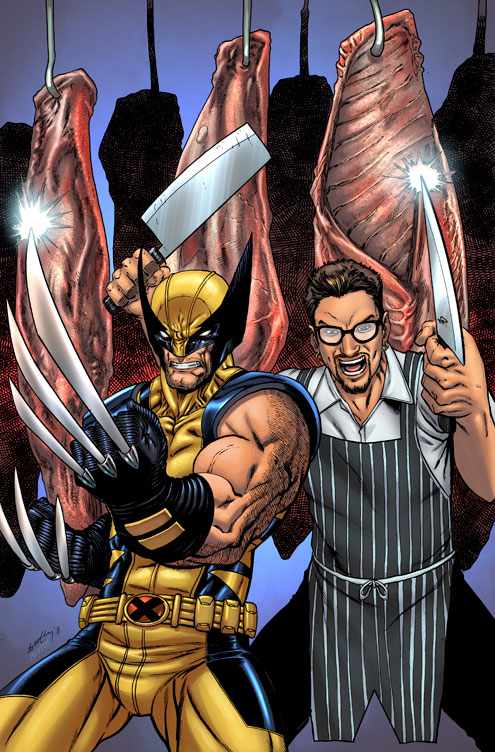
On Friday Cebulski sent me the artwork of the upcoming Cosentino Marvel appearance, which was probably a big deal that I should have tweeted about immediately: Wolverine and the chef in a meat locker poised for battle, Wolverine with his metal alloy adamantium claws, Cosentino brandishing a pair of shiny butcher knives. Best friends! 

I was hooked. Thusly, I ferreted out said Marvel presentation on Saturday, the first WonderCon event I attended and the only time I would attend a major label event this weekend, I think. I saw Cebulski and Cosentino enter, was briefly and glancingly greeted by the two, watched Cebulski assume a spot at the panel table, Cosentino grab a seat towards the back of the conference room with a friend, and then the panel began discussing upcoming X-Men releases to a rapt audience, who cheered when individual series (there are many within the X-Men universe, of course): suspense, sneak peek!

“I can’t say a lot about what’s involved — but there are lots of giant robots involved,” said a much-loved Marvel artist on the panel. And on: “something drastic will be happening in the X-Men universe — I don’t think I can say much more about it.” Suspense, sneak peek! 

And then, the artwork I’d been sent earlier flashed on screen, with Cosentino’s figure replaced with a black shape with a question mark in the middle. And then, Cosentino! I think it’ll be bigger news on Chowhound, judging from the lukewarm  WonderCon entusiasm levels expressed upon his introduction. He arose from his seat towards the back of the room and assumed a spot at the panel table.  

“It’ll be very food centric, very San Francisco-located,” Cosentino announces of his impending dance with the X-Men universe. “We’re gonna have fun with this one.”

“I grew up being infatuated with Wolverine. As a little kid, I used to sit there and stare at my hands,” he says, the best line of the panel: the audience chuckles, remembering their own metal alloy adamantium dreams. Cebulski, panel moderating, asks what Wolverine’s favorite restaurant is. 

“He has so many food loves,” Cosentino replies, unwilling to pigeonhole his childhood hero. “Japan, Germany.” Which is to say: read the comic book! You can, it comes out in June exclusively in digital form. I for one, will be stoked to see where Cosentino takes Wolverine on whatever shredding and stabbing mayhem ensues – North Beach for cioppino? Nobu’s late night meaty buffet? 

Anyway, the audience members that surfaced for the post-panel Q&A was less intrigued with these culinary concerns. The closest ask came from a young man from the South Bay. When, he wondered, will the X-Men be spending some time on the peninsula? He sees them in San Francisco, Oakland, and Marin all the time, so he’d like to know. “I want to see X-Men on my street!”

“You want to see X-Men destroy your house and your street,” a panelist says, by way of very inconclusive response, albeit one that incites much enthusiasm from the questioner and the rest of the audience. Seeing one’s house destroyed by ones heroes being the ultimate honorific here in this crowd of Marvel enthusiasts, save becoming a character oneself. 

Anyways, now our chefs are cartoon characters. What’s next, the anime version of the Tamale Lady? Alice Waters vs. Godzilla? 

More WonderCon tidings are on their way, later this week. Ziggy Marley will be involved. How’s that for a tease, Marvel?

Roller derby: the San Francisco treat

4

Drizzly March was a slow time for San Fran sports fans — the last Super Bowl Sunday pig-in-a-blanket put to bed a month before, the NBA trade deadline past and playoffs a distant dream; and today’s April 1 major league baseball opening games an agonizing countdown away. Short of swimming through the dreary rains to San Jose’s Shark Tank, what’s a rowdy, rooting beer-guzzler to do?

Heading to Golden Gate Park to cheer on some equally rowdy rollers might not be the first thought that comes to mind, but it’s exactly what thousands of die-hard derby-goers did on March 19, when the storied San Francisco Bay Bombers elbowed past the Brooklyn Red Devils in the American Roller Skating Derby league’s world championship game.

Some may not consider a wet night in a packed Kezar Pavilion to be a legit answer to the pro-sports dry spell. But the Bay Area-based ARSD league is serious about its professional status, taking pride in everything from the team uniforms to the traditional banked track – a far cry, if you please, from the fishnets and flat floors of newer leagues

Bombers’ general manager Jim Fitzpatrick, who skated for the team from 1977 to 1987, has now delivered his third straight league title since rejoining as GM in 2007 (the ARSD doesn’t hold its championship game every year). For his efforts, he’s received three straight general manager of the year awards. But for him, the real thrill is keeping banked track derby – and its SF history – alive. 

“As a little kid growing up in San Francisco roller derby was huge,” Fitzpatrick said. “Everyone watched the Bombers on TV, everyone knew them. I dreamed about playing for them in Kezar. Now, I want to honor the tradition of the old derby.”

The venerable “old derby” is rooted in19th century roller marathons that lasted for days, sometimes caused deaths, and, on the whole, managed to acquire a reputation as less-than-legitimate. The sport was popularized as a Depression-era divertissement by Chicagoan Leo Seltzer, who in 1935 built a banked track and took it on the road, dubbing it the Transcontinental Roller Derby. At each stop, skaters would circle the wooden ring as many as 57,000 times, simulating a days-long journey from New York to California, with lit-up placeholders marking teams’ make-believe progress across a billboard-sized map of the U.S.. 

Derby historians credit crowds’ hunger for blood (not that 57,000 laps would be tedious otherwise, Nascar notwithstanding) with the spectacle’s increasing focus on physical contact and frightening pile-ups. The endurance element gave way to a derby more similar to that of today, where a “jammer” on each team gains points by bumping, jumping and jostling past opposing teams’ “blockers.” 

In 1949, Seltzer created the National Roller Derby League to showcase the scintillating sport, which was poised to become a television sensation. Echoing his earlier pilgrim’s progress, he packed up the whole shebang and moved it first to Los Angeles and then to the Bay, where the 1954 formation of the San Francisco Bay Bombers created a lasting sports legacy with some of the game’s most enduring stars. (Bomber Joanie Weston was even reputed to be the era’s highest-paid female athlete.) 

The iconic Bombers were the epitome of the banked track derby that aficionados like Fitzpatrick remember watching on their family room TV sets as youths. Dozens of games a year were taped in Kezar Pavilion, adjacent to then-home of both the Oakland Raiders and the San Francisco 49ers. From there, KTVU broadcast Bombers’ games to hundreds of cities nationwide, making roller derby the Rice-a-Roni of sports, synonymous with San Francisco. 

Seltzer eventually transferred ownership to his son, Jerry, who would later recall the glory of San Francisco’s skating days, when Kezar regularly sold out. And just for an added taste of legitimacy: the Bombers shared locker rooms with their NFL stadium-mates. 

“There were no dressing rooms in Kezar Stadium,” the younger Seltzer wrote in a blog he kept, “so when the 49ers played a home game they used the tacky dressing rooms in the Pavilion. Sometimes there was virtually no overlap between the time the players left and our teams arrived, to really scummy and wet dressing rooms.” 

Fitzpatrick affirmed that the dressing rooms still exist today, though Kezar Stadium has been knocked down and rebuilt. Under the parking lot, connected to a tunnel that once funneled the teams out to a roaring crowd, the rooms are a kind of shrine to days-gone-by – days when the 49ers and the Raiders would lace up roller skates and join the Bombers on the banked track, sometimes indulging in a bit of competitive action off the football field.

“Of course,” Fitzpatrick said, “That was before the NFL took off and salaries skyrocketed.  Once that happened, the guys couldn’t afford to be fooling around.”

Though their fun ended, there was still plenty of thrill left on the banked track. The ‘60s marked the height of television popularity for the Bombers who, across the nation, were considered the team to beat.

Seltzer’s league folded in 1973, a disaster attributed to everything from the rising cost of fuel to the diversification of televised sports and events. Since then, leagues have appeared, disappeared, fractured and gone defunct, the sport’s popularity waxing and waning, the focus shifting between skill and sensation. 

“Other games and jams have come along,” Fitzpatrick explained, applying the term “silly stuff,” to a whole array of roller sports, from L.A.-based Roller Games to CBS’ over the top show Roller Jam. Fitzpatrick even alluded to “midgets on skates” – and while that might be happening somewhere out there, it doesn’t take tiny rollers to get folks to think of derby as sports entertainment: the WWE on wheels, with sexpot women in the starring roles. 

Mixed-gender for-profit leagues like the Bombers’ league ARSD leave off the false eyelashes, but fans still debate whether the scores – and punches – are fake.

According Fitzpatrick, the Bombers’ aggression is all real.

“It’s a competitive sport,” he said, “based on contact and maneuverability. It’s like when someone cuts you off on the road – like road rage, tempers flare.”

Fitzpatrick’s sincerity never falters, and it’s clear he’s proud of his skaters when he describes how player coach Richard Brown scored the last point of the 43-40 game despite sweltering heat, or when he hails rookie Crista Chua as the female standout who learned under fire and performed under pressure, despite the championship being only her second real game.

And for their part, the players are just as serious. Chua said she trains hard for the team, staying in shape with running, weights, extra skating practices, and yoga sessions to stay flexible. 

Despite the sensationalism, Fitzpatrick’s goal is to keep roller derby on track – and so far, his efforts have resulting in a sterling record. Will it ever be as good as lacing up the ol’ skates for a game of his own? According to Fitzpatrick, it’s even better.

“To see something completely disappear, and then to be able to carry on – I’m that much more grateful,” he said.

As for the future: “I want to keep on the path, looking ahead to great skating and great ability. There’s always going to be showmanship in every sport, but I want to honor the athleticism.”


Hot diggity, old school dog training

6

Under the towering eucalyptus trees of Temescal Creek Park, a sturdy wood-planked fence frames a curve in the pavement. Every day, joggers and dog-walkers shuffle alongside, crossing the border of North Oakland and Emeryville. But the ones who turn their heads at just the right moment catch a scene flickering through the slits between boards – as if from an old-fashioned zoetrope – that transports them to another world entirely.

Here, there the dogs and people form a different scene: smoke roils from the chimney of a squat plastered building with ornate round windows. A rooster crows. A bark echoes. A man proportioned like Popeye’s archnemesis Bluto stumbles around kicking a barrel. Suddenly, a streak of muscle and fur launches toward the figure and sinks its teeth into his calf, shaking him from head to toe.

This is St. Roch’s, named for the Christian patron of pestilential illness, the falsely imprisoned, and dog trainers. The real Rocco was born in Montpellier, contracted plague in Rome, retreated to a sylvan cave where a dog licked his wounds and brought him bread, and finally died in a French prison in 1327. But the man who lives here, Francis Metcalf, is alive and well and has a 65-pound Belgian Malinois attached to the leg of his padded Bluto suit.

Metcalf, along with his wife, Norma, created Friends of the Family – a dog club modeled after traditional French and Belgian dog training guilds. They fashioned St. Roch’s as their headquarters, built from one part antique canine memorabilia, one part Westminster-Dog-Show-style paraphernalia, and three parts European pub.

“In the United States, dog trainers follow a doctor’s office model,” Metcalf says. St. Roch’s – which includes gardens, dog runs, an agility course, a chicken coop, sculptures, and a small fountain – is his remedy the problem-focused and service-based approach.

“I wanted to created a community center, a resource hub,” Metcalf says of the property. “In France, there are no professional dog trainers. It’s just part of the culture.”

Indeed, France is where Metcalf learned many of his tricks. He is steeped in the art of French and Belgian ring sport, or mondioring, which grew from training techniques of the 19th century – a time when dogs were still widely used for work and protection. Mondioring tests a dog’s obedience and agility. At the highest level, it involves protection and attack drills, where handlers teach dogs to guard, bite, and release on verbal command.

Though Metcalf is a pioneering competitor and has won several international titles, he believes in the value of mondioring as a foundation for a broader relationship with dogs  – one that seamlessly blends work, sport, and simply good company. 

After working with French ring-sport greats like Dan Maison (a ‘68er who told him “Americans know nothing. They think dog training is like Vietman), Metcalf dreamt of emulating European clubs he says grew “organically.” Where playgrounds for children and women cooking dinner accompany the “young bucks running around with the dogs,” Metcalf explains, competition and expertise yield to a sense of camaraderie.

“With dog sports in America, it’s intense and hard and you have to be completely dedicated.  I wanted to change that – to take care of myself and other people, and the dogs, too.” And for that, Metcalf says he needed to build himself “a temple, a castle.”

Castle Roch

Some of St. Roch’s guests are less than polite about the building’s fine furnishings.  Logan, a 155-pound giant Alaskan malamute, can’t stop slobbering on the bearskin rug. But that’s all right with Metcalf, because he and Logan’s owners, Angie and Maggie Kim, are schooling him for the AKC’s Canine Good Citizen test, and – luckily – drooling is allowed.

In a private training session, Metcalf runs Logan through a battery of exercises, from rolling over to wearing a muzzle to staying put while his owners disappear.  Most of the exercises involve repetitive drills followed by treats doled out from the hotdog holster Metcalf keeps buckled around his waist.

Metcalf is serious, but that doesn’t mean his methods have to be. He alternates balancing a muzzle on Logan’s snout with offering him a big red Dubé juggling ball –with which Metcalf has some skills of his own. Logan is learning to balance the ball at the same time as the muzzle, which associates muzzling (an activity that can cause dogs the feeling of extreme helplessness) with a fun game – and provides his owners an opportunity to show him off.

Whether it’s training dogs for the Alameda police department’s K-9 unit or teaching a blind Akita to play the piano, Metcalf believes training and tricks are all part-and-parcel of a dog’s public relations strategy. For some dogs, PR management is a necessity (“It’s because he’s so big, and we’re so small,” says petite Maggie Kim), but it can enrich any animal relationship.

“People would never believe what their dogs are capable of,” Metcalf says. “But it’s worth finding out.”

Love bites

Clients like Bill Smoot agree.  He and his shepherd-mix, Athena, have been training in mondioring with Metcalf for nearly a year, though Smoot doesn’t intend to ever compete. 

“She’s just really smart,” he says of Athena, “so we thought we should educate her. It was either this or ballet lessons.”  

Metcalf, dressed in the $1,500 silk and linen costume d’attaque that bulks him up to super hero-sized proportions, plays the part of the decoy – the “bad guy” whom dogs are trained to attack. On Smoot’s command, Athena lunges at Metcalf, growling as Metcalf goads her on.   

Though the display is a fearsome one, Metcalf points out that, to Athena, it’s all in good fun.

“Decoying is all about losing to the dog, making the dog feel confident. When you’re playing the decoy, you’re like a walking tennis ball. Protection work taps into the core of who a dog is as a creature. I’m interested in honoring that,” Metcalf says. 

He adds that “ring sport is called ring sport for the same reason you refer to a circus ring: it’s a place to show your skills.”

To that end, Metcalf plays his part well. With muttonchops, rosy cheeks, and a handlebar mustache, he’s the very image of a clown. Barrels, chairs, extra people and even pet chickens become all the props he needs to put dogs through their paces. He says his impromptu style is guided by a sense of the animals need in each moment and – more importantly – a love for what he does.

Metcalf is in the process of opening St. Roch’s to more easily foster that love and understanding in others. By creating additional classes and group sessions in everything from mondioring to circus arts, he hopes to make his pad a place where anyone, from amateurs to professionals, can have a (preferably Belgian) beer and see the dogs.

“The root of the word ‘amateur,’” he notes, “isn’t based on money or status. It’s based on love.”

For Metcalf, training is not just about good behavior. Whether it’s a dog, a chicken, or a fish (and Francis has trained them all), the goal is to reawaken people’s ability to dream, and to imagine what animals may be capable of.

For more information, please visit the Metcalfs’ dog-training website


Chauncey Bailey Project reports

0

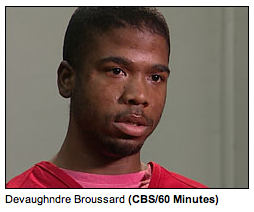
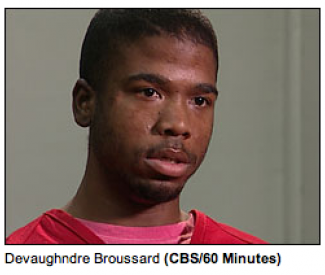
Following the murder of Oakland journalist Chauncey Bailey in 2007, allegedly to prevent him from exposing the financial dealings of Your Black Muslim Bakery, the Guardian joined with other Bay Area media outlets in an award-winning investigative project known as the Chauncey Bailey Project. The murder trial of two men accused of ordering the killing by admitted shooter Devaughndre Broussard began March 21, and we’ve been running coverage from the project on the SFBG Politics blog. Here are some excerpts, written by Thomas Peele, an investigative reporter with the project who works at the Contra Costa Times (with reporter Josh Richman contributing to some reports).


BROUSSARD BURST INTO LAUGHTER DESCRIBING 2007 SLAYING — MARCH 28

Devaughndre Broussard burst into laughter before jurors as he described how he shot and killed the relative of the man who had killed Yusuf Bey IV’s brother.

Broussard described how the man, Odell Roberson, started to run when he saw Broussard come at him with a shotgun in summer 2007.

“I said, ‘Stop or I’m going to fire!’ ” Broussard said, before bursting into laughter, then turning his head and stifling his laughs into his arm.

He said he fired eight to 10 assault rifle rounds into Roberson’s chest. “I think I shot him face forward,” Broussard testified. “He hit the ground. I think he fell backward.”

Broussard is on the witness stand for the second day in the triple-murder trial of Your Black Muslim Bakery leader Yusuf Bey IV and bakery member Antoine Mackey. Broussard said he killed Roberson and a second man, journalist Chauncey Bailey, at Bey IV’s order. Mackey is charged with helping in both those killings and with the murder of a third man, Michael Wills. Bey IV and Mackey, both 25, have pleaded not guilty.

Broussard is the prosecution’s star witness in the case. He has pleaded guilty to killing Roberson and Bailey and will receive a 25-year sentence in exchange for his testimony.


CONFESSED GUNMAN BROUSSARD TAKES THE STAND — MARCH 24

Broussard first entered Judge Thomas Reardon’s crowded courtroom at 11:39 a.m. wearing shackles and a red jail jumpsuit. He passed in front of the defense table where Bey IV and codefendant Antoine Mackey sat staring at him intently; he didn’t meet their eyes. Bey IV wore a tan suit and a bow tie — the symbol of the Black Muslim movement that Broussard said he joined in 2006.

During afternoon testimony, Broussard described participating in a 2006 shooting of an unoccupied car with other members of Your Black Muslim Bakery. Prosecutor Melissa Krum contends that shooting illustrates the bakery’s command structure: Bey IV issued orders to others to commit crimes on his behalf.

Broussard described being in a room at the bakery when Bey IV’s half-brother, Yusuf Bey V, came to him, gave him a pistol-grip shotgun, and told him Bey IV wanted a car shot to bits. The car belonged to a man with whom the Bey brothers had a dispute.

“I fired it until it was empty five or six times,” Broussard said of the shotgun. He would later use it, Broussard told a grand jury in 2009, to kill Bailey, also on Bey IV’s order.


LOADED SHOTGUNS TAKEN FROM BAKERY COMPOUND, OFFICER SAYS — MARCH 23

A police officer is testifying in the murder trial of journalist Chauncey Bailey that he seized two loaded, sawed-off shotguns from the bedrooms of key players in the case.

One, a 12-gauge Remington, was under a bed in defendant Antoine Mackey’s bedroom, Officer Bruce Christensen of the Oakland Police Department, told jurors.

The other, a 12-gauge Mossberg, was found outside a bedroom window. Bailey’s confessed killer, Devaughndre Broussard, told a grand jury that was the Bailey murder weapon. It was loaded with five rounds, Christensen said.


MURAL FOR SLAIN JOURNALIST UNVEILED AT HIS ALMA MATER — FEB. 26

As a teenager with a stutter, Bailey spent a lot of time in the library at Hayward High School immersing himself in books so he wouldn’t have to talk to people.

The stutter went away, but Bailey’s love of the written word did not. He spent nearly 40 years in journalism before being gunned down as he walked to his job as editor of the Oakland Post on Aug. 2, 2007. 

Compiled by Guardian staff. View more at www.chaunceybaileyproject.org

Take back the knit

0

caitlin@sfbg.com

STREETWISE The dinosaur outside my library makes my day. Someone knit a little green bike rack cozy with floppy yellow spikes, right next to the rack that now has a custom-sized, rainbow-colored, beaded sweater. Indeed, the whole neighborhood has been knit-tagged — the stretch of Divisadero between Post and California streets has nary a rack that hasn’t been dressed against the spring chills.

The woman who answered the phone at Atelier Yarns, the knitting store down the block on Divisadero, didn’t know who had done the pieces, which is not to say they’d gone unnoticed. “They’re really good,” she said. “I wish I knew who had done them.”

Digging further, I fell into the deep abyss of Internet craft blogs and found that the Western Addition isn’t the only place where knit is joining the textures of the concrete jungle. Across the world, “yarn bombing” groups have sprung up. Last year, a group altered the Oakland-Berkeley border’s controversial “Here There” statues, knitting a colorful cozy over the T in “There” that renders the words equal, symbolically erasing the hierarchical positioning of the two bergs. There have been knitted seat covers on Philly’s Blue line subway and a knitted tank cover in shades of Pepto-Bismol pink in Copenhagen — not to mention jauntily decorated stop signs, trees, and railings the world over.

Magda Sayeg, a.k.a. PolyCotn, is generally regarded as the mother of this peaceful barrage. So I called her to find out why she — and now the rest of the world — yarn bombs.

It all started seven years ago with a knit cover for the doorknob of her Houston art studio. “It was about me making my door-handle pretty,” she remembers. Then she knitted a cover for a stop sign, which attracted lots of attention. “People would get out of the car, take pictures, scratch their head.”

She did more pieces. She formed a yarn bomb collective called “Knitta Please.” Since then, Sayeg has knitted everything from a riotously rainbow cover on a Mexico City bus to a powder pink coat for a single stone on the Wall of China.

Sayeg’s work makes knitting, once a private activity, part of the public domain. “You’re taking something so traditional and homey and placing it in an environment — graffiti art, it’s so male-dominated.”

Which is not to say that she doesn’t locate yarn bombing inside the tradition of street art. “I identify with the street artists more than the knitters,” Sayeg says, remembering the first time she saw the moaning cartoon faces of a gallery show by seminal SF street artist Barry McGee. “That really rocked my perception of what street art was. You could say [the yarn bombing] story started there.”

Like “traditional” street artists, Sayeg uses her creations to make her mark on her physical surroundings. She loves tagging the redundant bits of the urban landscape, like street posts whose signs have been removed and rendered useless. “It’s a visual pollution that we just accept. There’s no reason why we shouldn’t cover up something that’s not needed.” She pointed to the 3-D video game sprites of Space Invader and moss graffiti artists like Edina Tokodi as others who “are putting the can down” in the street art world.

But Sayeg also likes how yarn bombing questions the assumptions of what knitting is, which brings us to the question of the genre’s feminist interpretation. Though there are certainly male yarn bombers, you can’t deny that this kind of functional art, and craft in general, has historically been thought of as “women’s work” — and has had its worth denigrated and minimized as such. With yarn bombing, “there’s something there that might make people uncomfortable. An edge to something that never seems edgy. Like we’re supposed to be making sweaters and socks,” Sayeg says.

That stereotype has been turned on its head by craft activism, a form of protest that has its modern day roots in the 1980s and ’90s peace demonstrations at Greenham Common Royal Air Force base in England, where the U.S. military installed cruise missiles in 1981. Women gathered around the cyclone fencing at the base, stuffing its grid with knitted objects and hoisting handmade signs that read “Women’s Struggle Won The Vote, Now Let’s Use It For Disarmament.”

More recently, as Kirsty Robertson recounts in an essay in Extra/Ordinary (Duke University Press, 306 p., $24.95), the Revolutionary Knitting Circle held a “knit-in” at the 2002 G-8 summit in Alberta, Canada. Betsy Greer — who has a day job as an anti-sweatshop activist and also wrote an essay in Extra/Ordinary — coined the term “craftivism” to describe efforts similar to her own antiwar cross-stitch art. In Greer’s words, craftivism is “about using what you can to express your feelings outward in a visual manner without yelling or placard-waving. It was about channeling that anger in a productive and even loving way.”

Which is not to say that all urban crafters — as I’ve come to think of the men and women reclaiming textile and other forms of craft in a modern setting — are explicitly political. I was reminded of Sayeg’s desire to subvert the masculine face of street art when I visited the SoMa studio of Amy Ahlstrom, a San Francisco textile artist who is taking images from the walls of cities and translating them into painstakingly crafted quilts.

Ahlstrom, who has made her own clothes since her Molly Ringwald childhood, started quilting as an art student in 1991. She had a successful career in comic art and returned to stitching in 2005. “To me, this is a very natural thing,” she says, surrounded by her eye-popping creations hanging on stark white walls. “This was the most unique way I could speak to the world.”

Living in the Mission, Ahlstrom found the neighborhood’s murals, street signs, and tags an integral part of her city life. She began photographing them and was struck by an urge to alter their context. “I saw this tag and thought, ‘Wouldn’t that be funny in gingham?’ “

Like a textile DJ, she cut and sewed patterns made from the digital images she had captured into textured Dupioni silk. Now she’s working on a series of pieces dedicated to the visual cues of specific neighborhoods. Her SoMa quilt contains depictions of furniture leaping from public art installation “Defenestration”‘s decrepit Sixth Street building, Jeremy Novy’s ubiquitous stenciled koi, and the neon signs of Holy Cow and Brainwash. She’s not the only artist to harness the power of the quilt — Ben Venom is another SF quilter who creates heavy metal motifs from old band shirts (his “Listen to Heavy Metal While You Sleep!” skull-cross design is a Guardian staff favorite).

Ahlstrom brings the street to textile and the yarn bombers bring their textiles to the street, but they all work to the same end. Though Ahlstrom’s pieces will sell for hundreds of dollars and hang like the gallery pieces that they are, she creates them with the intention of breaking down the art world stipulation that craft cannot be art.

She cites the Gee’s Bend quilts as one inspiration for her work. Gee’s Bend is a small Alabama River community whose women inhabitants came together to have their quilts exhibited by the Houston Museum of Fine Arts in 2002, to great critical acclaim. In contrast to previous exhibitions, the quilts were not divorced from their functional use — museum literature placed the stories of Gee’s Bend quilters front and center in an attempt to highlight how the beauty of their geometric patterns was accentuated, not diminished, by their status as household objects.

So what did the gentle crafter of my beloved dinosaur have in mind when she or he looped that clover green around the bike rack? You’d have to ask the knitter — but at the very least, they’ve made their presence known.

Stuck on my craw

0

le.chicken.farmer@gmail.com

CHEAP EATS Finally! Business as usual, here at Cheap Eats. But before I start talking about sports, there’s a little more I want to say about the poop in Coach’s garage.

It came with a few sheets of toilet paper on top. And when her landlord found it he said, “Hey, was there a dog running around in the garage?” I stayed in the house while Coach went out to see for herself. She was pretty sure that dogs didn’t use toilet paper, she said.

Then they both cleaned it up, and Coach started down that long, rocky road to forgetfulness. You know, at first I was on her side, but now it’s one week later and she keeps bringing it up. So I guess that means I’ll keep writing about it.

Blame Papa for not letting us talk about football last night, over sushi.

We lost 32-6. Speaking of shit. Maybe that had something to do with why Papa, our Center, didn’t want to talk about it. Actually, 32-6 was less than we expected to lose by. This would have been the first time in sports history that a 32-6 loss went down as a “moral victory” — except for one minor problem: they only had six players, and we had 14.

Athleticism is a wonderful thing to watch, even when you are covered in mud with cleat marks in your cheek. I’m not saying that’s what happened. We play on turf, so I was covered in little black turf balls with cleat marks in my cheek.

You know how they say that winning isn’t everything? Well, neither is losing. Traditionally.

We might change that, but in the meantime the troops remain optimistic and cheerful. My favorite moment was watching our quarterback chasing down yet another interceptor, late in the game, while laughing her head off.

She’s a rugby player. We may be the most bad-assedly bad team in the league, if not sports. We have a couple field hockey players, two to three soccer players, a basketball star, and maybe a little softball experience. But only two of us have ever played American football outside of bed and/or high school gym class.

We will have our day. It just might not be in my own personal lifetime.

After the trouncing, I made the mistake of going to Rockin’ Crawfish on Lake Merritt with the de la Cooter fambly. As if I didn’t already know what it means. To miss New Orleans.

While I was there — down South, that is — I kept sending pictures to Crawdad de la Cooter’s mister, Mr. Crawdad de la Cooter, of all the wonderful things I was eating, which included of course fried oyster po’ boys with bacon and cheese, and even more of course, crawfish etouffe, crawfish pie, and crawfish.

First he kind of begged me for mercy. Then he gave up on mercy and wrote me about a place they found in Oakland with “passable boiled crawfish.” When he brought it up again, upon my reentry, I thought he was trying to be helpful. I should have known he was plotting his revenge.

Passable? Maybe, if you haven’t been anywhere near Louisiana for at least four years. Mere days after feasting on Kjean’s with Cherry, B.B., and Hedgehog … forget about it.

I love Cajun. I love Asian. I love fusion. Authenticity means nothing to me. Berkeley has better Chicago pizza than Chicago, and the best pizza I ever ate was in Germany. I’d pit Just For You’s po’ boys against any I had in New Orleans.

Rockin’ Crawfish … just … doesn’t. Like Red, here in the city, it’s like they’re trying too hard. They crash the garlic over your head and blast you with hot sauce. And I love both those things but don’t associate either one with great crawfish.

The ones I was making love to last couple months, they don’t give you five choices. They come one way, with a subtle, more blended and complex zing to them.

It ain’t fair, I know. I should have waited four years. Anyway, I’m here. Sigh. My new favorite restaurant?

ROCKIN’ CRAWFISH

Mon.–Fri. 2–11 p.m.; Sat.–Sun. 1–11 p.m.

211 Foothill, Oakl.

(510) 251-1657

MC/V

Beer and wine

Chauncey Bailey killer struggles with testimony

1

Report from The Chauncey Bailey Project, of which the Guardian is a member:

By Thomas Peele and Josh Richman

OAKLAND — Devaughndre Broussard, the admitted killer of Oakland Post Editor Chauncey Bailey, struggled through testimony Thursday morning against former Your Black Muslim Bakery leader Yusuf Bey IV, the man he says ordered him to commit two murders.

Broussard entered Judge Thomas Reardon’s courtroom at 11:39 a.m. wearing shackles and a red jail jumpsuit. He passed in front of the defense table where Bey IV and co-defendant Antoine Mackey sat staring at him intently; he didn’t meet their eyes. Bey IV wore a tan suit and a bow tie — the symbol of the Black Muslim movement that Broussard said he himself joined in 2006.

Within minutes, Broussard was asking for questions to be repeated, and seemed to find it difficult to formulate answers. Bey IV court-appointed lawyer, Gene Peretti, made numerous objections in the first few minutes.

Reardon frequently jumped in, trying to clarify and simplify Krum’s questions about how Broussard came to join the bakery.

Broussard said Richard Lewis, a close family friend who was in a San Francisco jail with him, had also spent time with Bey IV when Bey IV was awaiting bail in a vehicular assault case. Broussard was due to be discharged the next day and Lewis asked him his plans.

“Probably going back and hanging out in the streets,” Broussard said he replied. Lewis, though, offered Broussard an alternative: joining the ranks of so-called soldiers working for Bey IV at his bakery in Oakland.

Lewis said Bey IV needed “people he could depend on,” Broussard told a jury of seven women and five men.

When Krum next asked him “what agenda (Bey IV) had,” Broussard said, “I am not understanding.”

The attorney who negotiated Broussard’s plea bargain two years ago, LeRue Grim, watched from the front row.

“That’s just him,” Grim said outside of court about Broussard’s labored answers. “He’s a little bit meticulous.”

Grim said Broussard told his family to stay away from court on Thursday because he feared for their safety.

“He thought they might be in danger,” Grim said of Broussard’s stepfather and half sister, who had wanted to attend.

Speaking in the courthouse lobby during Thursday’s lunch recess, Peretti said he had no idea why Broussard would believe his family would have anything to fear.

“I don’t think he’s going to be found credible,” he said, noting Broussard has to deliver compelling testimony to keep up his part of a plea deal that will keep him from a life sentence. “There is no prosecution case without Broussard … and he’s told many, many versions of what happened.”

“He is a liar, that’s my opinion — he is an admitted liar,” Peretti added.

The lawyer said his client, Bey IV, is “more than disappointed, he’s outraged” at Broussard’s plea deal and testimony. He also said Bey IV “never wanted to be CEO of the bakery.” He reluctantly took the job following his elder brother’s murder and lacked the business experience and maturity to make it work, Peretti said.

As for the bow tie Bey IV wore Thursday, Peretti said, “There’s no significance to that — it was the one tie that matched his suit.”

Earlier Thursday morning, jurors flinched — and some looked away — when shown an autopsy photo of Bailey’s face, blasted away by pellets from a 12-gauge shotgun.

Krum displayed the photo on a large screen as the forensic pathologist who performed Bailey’s autopsy, Dr. Thomas Rogers, described the wound. One juror, a bald man in glasses, grimaced noticeably.

The photo showed what Rogers described as an eight-inch wound of his “face bones, brain, skull, teeth.” Bey IV and Mackey glanced at it and then looked away.

Krum asked Rogers the condition of Bailey’s left eye. “It was basically destroyed,” Rogers replied.

Lawyers for Bey IV and Mackey asked Rogers no questions.


Dinner with the Clams

1

arts@sfbg.com

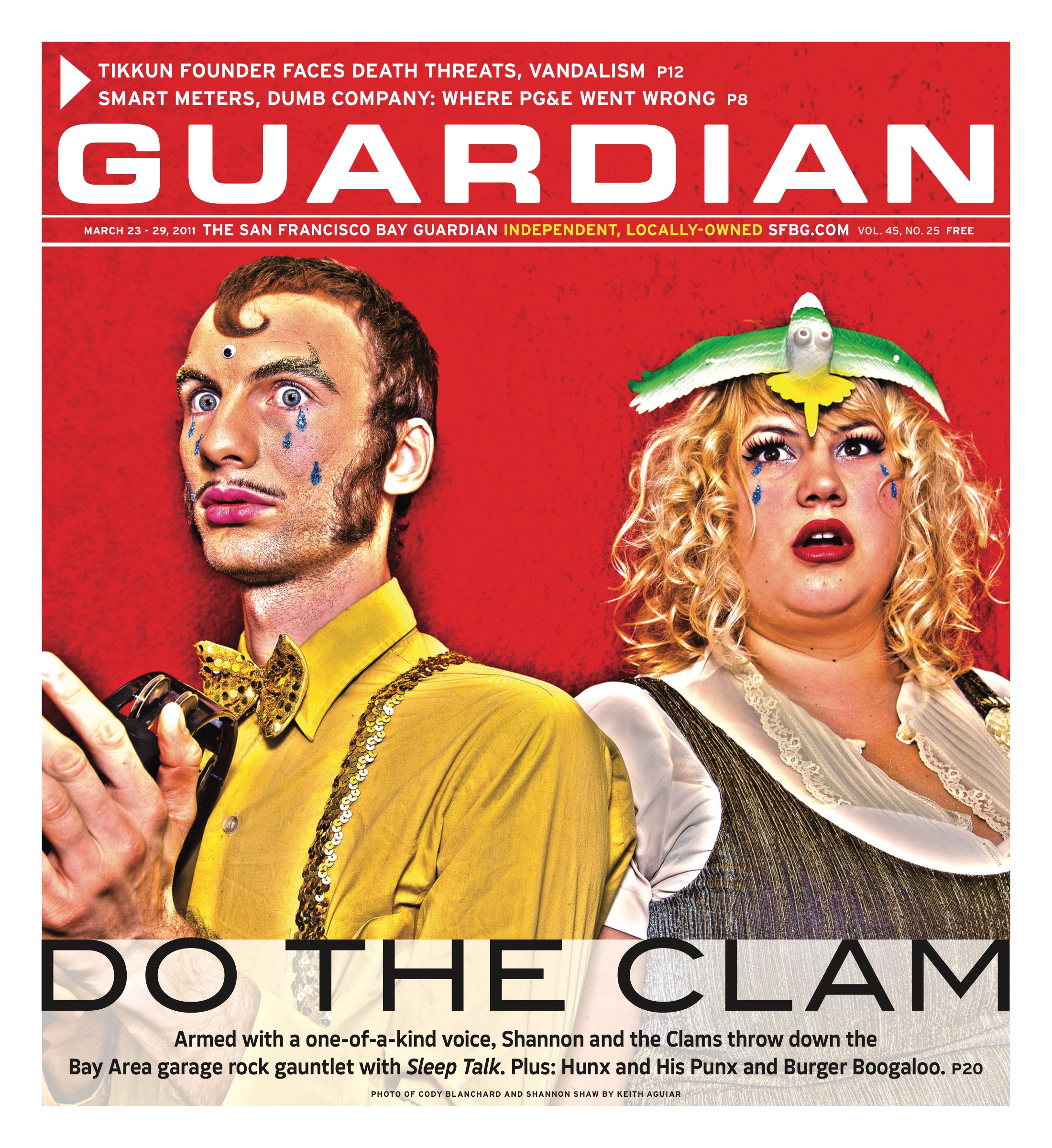
MUSIC “This is where the heartbeat is. Does that sound cocky?” Shannon Shaw, bold-voiced singer and bassist from Oakland’s Shannon and the Clams, is cautious how she answers my question. She’s in a booth, finishing up her fries at Grubstake, just off of Polk Street. The eatery is my suggestion for a pre-performance chat about the band’s new album, Sleep Talk (1-2-3-4 Go! Records), slated for release April 5.

Amid the bustling dinner-time sounds of the restaurant, Cody Blanchard, the guitarist, eats something vegetarian, while Ian Amberson, the group’s drummer, opts for the more traditional caldo verde soup. In a few hours Shannon and the Clams is playing a show at the nearby Hemlock Tavern, along with openers Guantanamo Baywatch — a Portland, Ore., band they admire — and Uzi Rash.

The heartbeat Shaw refers to is the Bay Area and its seemingly tight-knit music scene. I’d asked if the group’s members if they thought their success could have been achieved anywhere, or if it’s something particular to their Oakland stomping grounds.

“The Bay Area is defined by its history of fun punk — stuff like the Mummies, the Trashwomen, and the Bobbyteens,” Cody says, in acknowledgment of our locale’s rich garage rock history. But as much as they’re influenced by the “weird and wild people” they consider like-minded allies, and the strange beauty of Oakland’s abandoned neighborhoods, Shannon and the Clams’ inspiration also comes from a place in the past, no less strange, sort of dark, yet innocent. Their music is the sound of teenage despair.


NOT QUITE QUEERCORE

I first encountered Shannon and the Clams live at Oakland’s Stork Club in early 2009. I’d seen their ridiculous name around before, but didn’t know what to expect. They’d been categorized as everything from queercore to surf punk to the downright nauseating term retro-billy. “I think the people feel a kinship with us,” Cody says, discussing the group’s fan base. “People become really comfortable letting their freak flag fly.”

Still, Cody doesn’t think some of the labels assigned to the band were the best fit. “I’d rather musical genres have more to do with sounds instead of politics, gender, and sexuality,” he explains, while acknowledging that it isn’t how things often work.

On that night two years ago, Shannon and the Clams turned out a solid performance that incorporated oldies elements such as late-1950s, early-1960s vocal styles and instrumental sounds. The group even covered Del Shannon’s “Runaway,” which was the moment of confirmation for me. I knew I was hooked and wanted more.

The group’s version of “Runaway” is a keeper, but Shannon and the Clams isn’t just recycling rock ‘n’ roll hits from a repressive American era when feelings were bottled up, not talked about. The group’s songs and sound possess an individual spirit and personality that ranges from playful to feral, calm (a clam anagram) to cuckoo. Both shine through on Sleep Talk, the follow-up to 2009’s I Wanna Go Home, also on 1-2-3-4 Go! Records. The new collection of songs was written and recorded in three weeks.

The Bay Area’s most recent wave of psych and garage bands draws from the acid-soaked late-1960s, with results that often come out drone-y, druggy, and dreamlike. But the Clams obviously take note of the less-altered dawn of that same decade, before psilocybin and its closely associated synthetic cousin became the remedy reaction of youth and counterculture. Melodramatic songs of angst and lost love were common.

Shannon, a self-described square-but-morbid kid, admits to loving Roy Orbison’s “Crying.” “Any teenager death ballad, I was all over,” she says. A tragic mood is conjured on Sleep Talk‘s “Half Rat,” where the incessantly repetitive lyric longs for a soul mate’s return. It’s almost like when a loved one dies and you dream about them being alive, only to be disappointed when you wake up to the heartbreaking reality that nothing will ever bring them back. It’s no wonder that without a release other than singing, so many of the voices from the past were compelled to do some amazing things.


THAT VOICE

Raspy and powerful, Shannon’s voice has become a signature trademark. She shreds words, wails, and lets loose with an extended growl on “Done With You.” Her vocal delivery is raw, real, and out of control — one of a kind. Her vocals are one reason that it’s misleading to tag Shannon and the Clams as simply retro — it’s hard to imagine a June Cleaver-type belting out songs in this fashion, though maybe someone like Wanda Jackson would be up for the task.

“I think it’s out-of-body,” Shannon, says when asked about singing. “I just sometimes feel kind of possessed on stage, or like I’m excreting odd toxins or something.” She notes that other dynamic vocalists like Tina Turner, James Brown, and Irma Thomas bring a similarly unique intensity to live performance.

Wanda Jackson is a queen of rock ‘n’ roll, but it was another Jackson who inspired Shannon to get up on stage sing in public for the first time, at a karaoke bar during her “lowest of lows.” She performed a ballad famously delivered by a little boy who, sadly, was adult ahead of his time. “I didn’t sing publicly at all till I started playing [music] around three years ago, and I just knew I really needed to sing “Ben” [by Michael Jackson], and I needed to sing it right away,” she explains. “I didn’t care about being self-conscious.” After being accepted by her “grizzled karaoke comrades,” she found the strength and confidence to perform her own songs.

Cody, the Clams’ co-songwriter, is also no slouch behind the mic. On Sleep Talk‘s “Old Man Winter,” he sounds brilliant doing his rockabilly best, exaggerating the whooping, keening sounds Buddy Holly could make with his voice. He’s pretty keen on the originality of vocalists Hasil Adkins, Joey Ramone, and Marc Bolan, preferring sound over lyrical content.

“Amazing singing is something that feels to the singer like a compulsion or a nervous tick, as if that singer can’t do anything to keep themselves from crying out,” he says. “They must do it or they’ll go nuts, and they just invent these bizarre sounds.”


WE JUST WANNA BE WEIRD

On the subject of songwriting, Cody uses vivid imagery to describe a T-Rex- that “kidnaps” him and takes him away to a “glittery, horny, spaced-out fantasy world.” I guess Clam nation can’t all be doom and gloom. Indeed, a typical Shannon and the Clams show finds the band in colorful costume, making inventive use of capes, fast-food outfits, and other assorted disguises. This past Halloween they even dressed as Devo for a night of cover songs.

Shannon and the Clams’ affinity for cartoons, jingles, and campy commercialism is apparent. On Sleep Talk‘s cover art, photographed by Keith Aguiar, Shannon and Cody are buried in what looks like a landfill of stuffed animal nostalgia and familiar characters. The imagery is indicative of their bubblegum side and love of Jim Henson’s Muppets. Cody points out that the people behind those Muppet tunes were pretty solid songwriters. On “The Cult Song,” listeners might even detect a vocal tribute to the Cookie Monster, if not Keith Moon circa “Boris the Spider.”

The name Joe Meek pops up more than once in conversation. “I love how Meek’s records sound, so inventive and strange,” Cody says, regarding the innovative Space Race-era producer behind “Telstar,” an instrumental No. 1 hit by the Tornados. “And he seemed totally nuts.”

Shannon and the Clams haven’t yet rocketed to the moon, but a trip to South by Southwest and a tour with Hunx and His Punx are part of their immediate travel plans. I ask what comes after that. “I feel like something [currently] brewing in Oakland is much weirder caveman-type music,” Shannon says, in anticipation of the scene’s next wave of creativity. “Can we just be weirdo, other rock ‘n’ roll?”

Cody is convinced that the dedication of the Bay Area music scene is unique and undying. “I can’t think of any other cities that are so enthusiastic about [music],” he says. “It just keeps coming. Waves of all kinds come and go.” If you think Shannon and the Clams are riding the wave for teenage kicks and landing in tragic territory, you’re partly right — and it’s working. Right now, with Sleep Talk, you’ve got a second dose.

Our weekly Picks: March 23-29, 2011

0

THURSDAY 24

MUSIC

Music For Animals

The catchy tunes of the self-proclaimed “cult” Music For Animals — San Francisco quartet Nick Bray (guitar), Jay Martinovich (vocals), Eli Meyskens (bass guitar), and Ryan Malley (drums) — evoke 1980s classic pop rock while simultaneously embodying the twee music of the here-and-now. While comparisons have been drawn to other electropop acts like the Killers and Kaiser Chiefs, Music for Animals’ neon-retro fans have embraced the band as its own indie rock entity. Its high-energy shows can include wacky antics, making for a perfect opportunity to bust a move. Join the cult! (Jen Verzosa)

With Foreign Resort and Matinees

9 p.m., $8

Hemlock Tavern

1131 Polk, SF

www.hemlocktavern.com


FILM

Disposable Film Festival

Hollywood churns out a huge number of what you might call disposable films (Drive Angry 3D: use once and destroy). San Francisco’s Disposable Film Festival applies the adjective instead to the technology used to create each of its entries: readily available and often handheld devices like cell phones, point-and-shoot cameras, webcams, and so on. Celebrate the all-access-ness of 21st century filmmaking by checking out tonight’s always-popular competitive shorts program; weekend events include an industry panel entitled “How to Become A Disposable De Palma,” a spotlight on filmmaker Christopher McManus, a concert and workshop with YouTube music-video darlings Pomplamoose, and more. (Cheryl Eddy)

Through Sun/27

Competitive shorts night tonight, 8 p.m., $12

Castro Theatre

429 Castro, SF

www.disposablefilmfest.com


EVENT

Neil Strauss

I’m not sure what I like most about Neil Strauss. A six-time New York Times best-selling author and contributing editor at Rolling Stone, he coauthored memoirs with Jenna Jameson and Mötley Crüe. He lived with Dave Navarro for a year and went undercover in the “seduction community” to write about pick-up artists. He was in Beck’s gloriously goofy “Sexx Laws” video. His new book of celebrity chatter, Everyone Loves You When You’re Dead: Journeys Into Fame and Madness, features pop culture personalities from Britney Spears to Stephen Colbert. But his 227 “moments of truth” aren’t in-depth, traditional Q&A pieces. Instead, Strauss wove together the most intriguing few minutes of each interview. Huh? How? Ask him yourself. (Kat Renz)

7:30 p.m., free

Booksmith

1644 Haight, SF

(415) 863-8688

www.booksmith.com


MUSIC

Phantom Kicks

Taking after the Grizzly Bear-meets-Radiohead, now-disbanded Raised By Robots, the San Francisco-based trio of Tanner Pikop (guitar-vocals-keyboard), Phil Pristia (guitar-vocals), and Mike Rieger (drums) — better known as Phantom Kicks — is experimental, ethereal post-punk born of white space à la the xx. Even without an album, Phantom Kicks’ eerie electro pop has garnered notoriety throughout the Bay Area after gigs at numerous local venues and festivals, sharing the bill with other local indie greats like My First Earthquake, the Dont’s, Skeletal System, and Sunbeam Rd. And its days as a live-only entity are soon to end: Phantom Kicks’ debut EP, Tectonics, is due in April. (Verzosa)

With Adventure and Exray’s

8 p.m., $6

Milk Bar

1840 Haight, SF

www.milksf.com


FILM

San Francisco Dance Film Festival

Now in its second year, the San Francisco Dance Film Festival, presented by Motion Pictures and the Ninth Street Independent Film Center, features three evenings of screenings as well as workshops on shooting and editing dance footage. In addition to selections of work by local and international dance filmmakers, Friday night’s lineup includes the San Francisco premiere of NY Export: Opus Jazz, a reimagining of Jerome Robbins’ 1958 “ballet in sneakers” danced by members of the New York City Ballet. This is the first return of Robbins’ choreography to the streets of New York City since the 1961 movie version of West Side Story. (Julie Potter)

Through Sat/26

6:30, 8, and 9:15 p.m., $10

Ninth Street Independent Film Center

145 Ninth St., SF

(415) 625-6100

www.sfdancefilmfest.org


FRIDAY 25

PERFORMANCE

Free: Voices from Beyond the Curbside

Destiny Arts Center in Oakland has been around so long — it was founded in 1988 — that you tend to take it for granted. Better stop doing that, especially in this climate of shrinking resources for socially-engaged arts programs. Destiny provides a safe place, activities, and role models during after school, weekend, and summer programs. Students ages three to 18 learn martial arts, dance (modern, hip-hop, and aerial), theater, self-defense, and conflict resolution. All these elements come into play one more time during this year’s Destiny Youth Company’s big-time production at Laney College. Created by the students with the guidance of adult artist-teachers, Free explores concepts of personal and social freedom (and the lack thereof). The program also features documentary filmmaker David Collier’s video of the process that made Free possible. (Rita Felciano)

Through April 3

Fri.–Sat., 7:30 p.m. (also April 2–3, 2 p.m.), $6–$25

Laney College

900 Fallon, Oakl.

1-800-838-3006

www.brownpapertickets.com


ROCK

Vastum

Vastum, from the Latin vastus: immense. Empty. Wasted. It’s easy to feel that way bumbling home from a dime-a-dozen metal show — depthless, bored, and boozed. But the three times I’ve seen Vastum, I almost pissed myself with joy: my fingers can form horns again, my head bangs rather than bobbles, my tired faith is revived. With members from two stalwart San Francisco bands, Saros and Acephalix, the five-piece delivers precision death metal with a little punk, classically fast and aggressive with none of the cheesiness often befalling the genre. The venue’s a gem, too: an all-ages Oakland warehouse run by an old-school artist and a gargantuan raptor. (Renz)

With Embers, Atriarch, and Headless Lizzy and Her Icebox Pussy

9 p.m., $6

First Church of the Buzzard

2601 Adeline, Oakland

Facebook: Vastum


MUSIC

Wye Oak

Rock duos tend to strive toward sounding greater than their parts. Wye Oak, composed of Baltimore-based musicians Jenn Wasner and Andy Stack, are no exception. Rather than pure bombast, the two play into the contradiction of expectations on almost every track. Wasner’s guitar and lyricism are the initial focus, typically heavily folk-influenced backed by true multi-instrumentalist Stack, who plays drums and keyboard at the same time. As the melodic verses build into the explosive choruses, so do the 1990s alternative rock influences, recalling Yo La Tengo, Sonic Youth, and My Bloody Valentine. It’s an attention-grabbing effect and in a smaller venue should be impossible to ignore. (Ryan Prendiville)

With Callers and Sands

10 p.m., $12

Bottom of the Hill

1233 17th St., SF

(415) 621-4455

www.bottomofthehill.com


SATURDAY 26

DANCE

“Pilot 58: Fight or Flight”

It may not take a village to produce a dance concert, but a collective of choreographers sure makes the process more creative and exciting. Or at least that’s the lesson gleaned from the participants in Pilot, ODC’s self-producing incubator that selects six dance artists to work together on a shared bill. Known as a springboard for emerging choreographers, Pilot showcases new and under-the-radar dance from fresh choreographic voices: Raisa Punkki, Byb Chanel Bibene, Bianca Cabrera, Katharine Hawthorne, Ashley Johnson, and Erica Jeffrey. Arriving at choreography through notably different experiences, the evening brings a host of ideas to the table, from moving light sources to little dance cartoons. (Potter)

Sat/26–Sun/27, 8 p.m. (also Sun/27, 4 p.m.), $12

ODC Studio B

351 Shotwell, SF

(415) 863-6606

www.odcdance.org


SUNDAY 27

MUSIC

Rotting Christ

Though not as famed as other loci of Lucifer, Greece has a long and distinguished black metal history. Delightfully named Rotting Christ was founded in 1987 by brothers Sakis and Themis Tolis, who have been plying their blast-beaten trade ever since, much to the dismay of born-again Christian headbanger Dave Mustaine of Megadeth, who refused to play at a Greek music festival once he learned that Rotting Christ was on the bill. The hellbound Hellenic quartet is joined on its current tour by cult favorites Melechesh, a “Mesopotamian” metal band — composed of Israeli expatriates based in Amsterdam — whose distinctive sound combines razor-wire riffing with idiosyncratic Middle Eastern harmonies and rhythms. On a more somber note, this show will be the last promoted by Shawn “Whore for Satan” Phillips, whose retirement will be a deeply-felt loss for metal, both in San Francisco and elsewhere. (Ben Richardson)

With Melechesh, Hate, Abigail Williams, and Lecherous Nocturne

7:30 p.m., $25

DNA Lounge

375 11th St., SF

(415) 626-1409

www.dnalounge.com


MONDAY 28

MUSIC

Röyksopp

Fame can go in divergent ways. For Norwegian electronic duo Röyksopp, the breakthrough was “Remind Me,” a catchy 2002 cut featuring vocals from Kings of Convenience’s Erlend Øye. In the U.K. it picked up Best Video at the Europe Music Awards that year. In the U.S., however, a version of the song is associated with a Geico commercial featuring a caveman. Look past that though, as the pair of musicians have otherwise proven themselves as standouts on the electronic scene, releasing ethereal downtempo compositions. Live, their performances are more amped up and free-ranging, involving unexpected covers like Queens of the Stone Age’s “Go With The Flow.” (Prendiville)

With Jon Hopkins

8 p.m., $30

Regency Ballroom

1300 Van Ness, SF

1-800-745-3000

www.theregencyballroom.com


TUESDAY 29

DANCE

Alvin Ailey American Dance Theater

Under the directorship of Judith Jamison, Alvin Ailey American Dance Theater became the country’s most popular dance troupe, with an impressive infrastructure and a $3 million budget. Now it will be up to Robert Battle, its new artistic director, to build a repertoire that matches the troupe’s organizational achievements. His appointment was something of a surprise; he never danced with Ailey and, at 37. he is young to assume that kind of responsibility. (Jamison was 43). Programs A and C on this year’s Zellerbach schedule each feature one of his choreographies. Whatever he does in terms of programming, he is not likely to offer fewer glimpses of Revelations, the company’s bread and butter. But how about presenting it with live music? The Bay Area has some excellent gospel choirs. (Felciano)

March 29–April 2, 8 p.m. (also April 2, 2 p.m.);

April 3, 3 p.m., $34–$62

8 p.m., $34–$62

Zellerbach Hall

Bancroft at Telegraph, Berk.

(510) 642-9988

www.calperformances.org 

The Guardian listings deadline is two weeks prior to our Wednesday publication date. To submit an item for consideration, please include the title of the event, a brief description of the event, date and time, venue name, street address (listing cross streets only isn’t sufficient), city, telephone number readers can call for more information, telephone number for media, and admission costs. Send information to Listings, the Guardian Building, 135 Mississippi St., SF, CA 94107; fax to (415) 487-2506; or e-mail (paste press release into e-mail body — no text attachments, please) to listings@sfbg.com. Digital photos may be submitted in jpeg format; the image must be at least 240 dpi and four inches by six inches in size. We regret we cannot accept listings over the phone.

SxSW Music Diary: Day 3

0

As we walked through downtown Austin we ran into Red and Green of Peelander-Z, the outrageously festooned Japanese punk band. They sweetly obliged a snapshot and then continued on their way. Just found out that they’ll be touring with Anamanaguchi, the frenzied “Nintendo-core” band I saw on day 1. Make sure to check them out at DNA Lounge on April 7th.

Was dished up a tasty burger at the Alternative Apparel lounge as Matt got summoned to take pics of Linda Perry. We shared our table with Shane Lawlor of Electric Touch (an adorable brit rocker who looked to be straight out of central casting) and chatted about his band’s road from getting signed to playing the big festival circuit this year.

After that it was a walk in the sun to the Other Music and Dig For Fire lawn party. We made it in time to check out James Blake. It was way too packed to even catch a glimpse of him but it felt great listening from a shady spot on the grass. I agreed with Dan that the sound was like listening to all the sexy backing elements of a Sade song, without Sade.

Tune-Yards was incredible. I loved Merrill Garbus’s pygmy-esque vocal layering and percussive fervor. Her last song brought everyone to their feet with a Fela Kuti vibe. And !!! brought the crazy dance party. The party was on a gently sloped hilltop, the crowd was manageable, and there was free ice cream courtesy of the Ice Cream Man. It finally felt like I’d arrived at the festival.

Later that eve I caught a bit of the Shabazz Palaces set which was weighed down by sound issues. Ran into the ladies of HOTTUB as I went to see Toronto’s Keys N Krates who killed it. Two djs and a drummer juxtaposing amazing sampling and turntablism with live percussion. Unreal.

Cubic Zirconia‘s electro funk set at the Fool’s Gold showcase was also great. Singer Tiombe Lockhart held court. One girl in the audience made the mistake of jumping up on stage to show her enthusiasm… but Lockhart wasn’t having it. She quickly initimidated the girl into backing down and gave a speech about respecting her stage. The girl was mortified but Lockhart was right, it wasn’t cool.

The closer was seeing Chief Boima during the Dutty Arts Collective showcase. Oakland’s Los Rakas stopped by for a shout out and Chief Boima played their new single.

Be sure to check SFBG Contributing Photog Matt Reamer‘s slideshow from his Day 3 adventures.


Two East Bay rallies for clean energy

As a nuclear emergency continues to unfold in Japan, Bay Area grassroots organizations are trying to drum up support for incorporating clean energy into long-range local planning.

Communities for a Better Environment (CBE), the Asian Pacific Environmental Network, and other grassroots organizations have declared March 17 a “Green Day of Action,” and they’ll mark it with a rally before the City of Richmond’s Planning Commission meeting to call for a meaningful plan for reducing citywide greenhouse gas emissions.

Richmond’s Chevron oil refinery is one of the worst emitters of greenhouse gases statewide. The Richmond Planning Commission will hear public comment on a Draft Environmental Impact Report for the city’s General Plan, which includes a strategy to curb greenhouse gas emissions in coming years. Yet CBE’s Jessica Guadalupe Tovar noted that the city’s plan for a greener future doesn’t account for how it will limit industrial pollution.

According to a graph produced by CBE, industrial sources make up around 88 percent of the total annual greenhouse gas emissions generated in Richmond. The Chevron refinery is responsible for roughly 4.5 million tons of greenhouse gas emissions, out of a citywide total of just under 7 million tons. 

“They can’t ignore the elephant in the room,” Tovar said.

“Richmond is already plagued with preventable illnesses and diseases and residents cannot afford for the General Plan to overlook these serious environmental health hazards,” said Richmond resident Tiana Drisker, a member of CBE.

Meanwhile, on March 18, another rally for clean energy is planned outside Oakland City Hall from 4:30 to 6:30 p.m. Activists from Movement Generation are planning an anti-nuclear rally “to call on PG&E to not extend its nuclear energy production from its Diablo Canyon reactor, and on Oakland to ramp up clean energy alternatives.”

The rally will follow a day-long conference organized by Bay Localize and the Local Clean Energy Alliance to highlight Bay Area clean-energy efforts.

“This nuclear devastation in Japan must never happen in California, or anywhere else,” said Al Weinrub, conference coordinator. “Energy conservation and renewables are the safest forms of energy by far.”

Thornfield calling! Director and star discuss the new “Jane Eyre”

0

It’s not exactly the oldest story in the book, but with an 1847 publication date and dozens of adaptations, Jane Eyre has been done before. That presented director Cary Fukunaga, an Oakland native, with a unique challenge — making his 2011 film version of Jane Eyre (out Fri/18) different from what had been done in the past. But after his last movie, 2009’s critically acclaimed Sin Nombre, it was a project he was eager to take on.

“[Jane Eyre] was a story I knew as a kid,” he said in a recent roundtable interview. “The ’44 version Bob Stevens directed was one of my favorites. After spending six years on my last film, I really wanted to do something different in terms of scenery and style and location and even time period.”

But despite Jane Eyre’s status as 19th Century Gothic romance, Fukunaga felt it worked for a modern audience. Mia Wasikowska, who stars in the titular role, was inclined to agree.

“It kind of doesn’t need reinterpreting,” she reflected. “The popularity, as a character and a story, it hasn’t died down — it’s continued to grow, and people continue to connect to her story. If you took away all the costumes and the setting, at the heart of it is a story about a young girl trying to find love and a family, and that’s so, so much a part of what happens every day here.”

For Fukunaga, it was important to adhere closely to the novel, whose tone he believed had often been muddled in film adaptations. His Jane Eyre is consistently dark, with elements of mystery and suspense that remain even for those who know the story well.

“I wasn’t trying to make it more gothic than the novel,” he explained. “It was more that other adaptations had stayed more in the period drama sort of realm, and whenever you had elements of the story that seemed gothic or suspenseful, they seemed tonally out of the film you were watching.”

Fukunaga also split the story up in a non-linear fashion, a more modern conceit that adds to Jane Eyre’s tension and helps speed the classic romance along. With flashbacks throughout, the film reveals itself over time while engaging its viewers in a complex mystery.

“The structure was a way to turn the story into a modern tale,” Fukunaga said. “Typically these days you want to lure an audience into a story with just bits of information. Especially with our attention spans the way they are now, you don’t want to … start with just a chronological tale.”

Of course, it helps that Jane is such a timeless, relatable character. She’s more assertive than some of her literary counterparts, making independent choices that were uncommon among her contemporary women. Wasikowska fell in love with Jane when she was reading the novel for the first time, to the extent that she asked her agent to look for any upcoming Jane Eyre projects before Fukunaga’s adaptation was announced.

“What I love about her is that she has such a strong sense of self and a strong sense of who she is and what’s right and what’s wrong by her,” Wasikowska offered. “She’s not going to compromise herself for somebody else, and that’s the best thing. She’s going to make sure that before she commits herself to somebody, she’s a fulfilled individual and that she’s done everything she could to be that.”

While Fukunaga and Wasikowska reflected positively on the filming experience, it had its share of ups and downs. The tight schedule forced a lot of work in a short period of time. Meanwhile, Wasikowska had to contend with a different kind of tightness, squeezing into a corset for period realism.

“Painful. Awful. Everyone says corsets are hell, and I understand that, but until you’re really in there, it’s like a whole other thing,” she said. “They’re really helpful physically for the character. You really get a sense of the repression and the restriction.”

Fukunaga elaborated. “It basically takes your guts and squeezes them in half, and some of the guts go down and some of the guts go up,” he explained. “It’s really unhealthy.”

But the pain was worthwhile — Wasikowska’s portrayal of Jane Eyre is certain to be celebrated. Fukunaga’s interpretation as a whole is one of the story’s best cinematic adaptations. Perhaps some of the success comes from the deep understanding the director and actor had for the original novel.

When Fukunaga was asked about his interest in Jane Eyre, he rejected the common perception and offered his own analysis instead.

“For me, it’s not the bodice-ripping,” he said. “It’s more, I think, probably this kid’s journey and the person she became … Love can be all-consuming, and too often people compromise what they are in order to achieve it. And it’s the rare individual who can not do that.”

Jane Eyre opens Fri/18 in Bay Area theaters.

Our Weekly Picks: March 16-22

0

WEDNESDAY 16

EVENT

“Nerd Nite SF No. 10: Visualization of Science, Undersea Internet, and the Art of Videogames”

Get your geek on! Nerd Nite, a relaxed celebration of the cerebral, features science-centric presentations that will increase your already genius-level IQ, you MENSA member, you. Take your first sip of alcohol and listen to lectures like The Coolest A/V Club in the Universe: Science Visualization at the California Academy of Sciences” by Jon Britton, senior systems engineer and production engineering manager of electronics engineering and science visualization (that’s a mouthful) at the academy; “20,000 Leagues Under the TCP: The Undersea Internet” by Chris Woodfield, senior network engineer for Yahoo!; and “Sorry, but Videogames Are Art” by acclaimed technology journalist Alex Handy. (Jen Verzosa)

8 p.m., $8

Rickshaw Stop

155 Fell, SF

(415) 861-2011

www.sf.nerdnite.com


MUSIC

“(Pre) St. Paddy’s Day Punk Bash XI”

Tradition dictates that the St. Paddy’s Day Punk Bash is held on, well, March 17. But this year, there was a Steve Ignorant-playing-Crass-songs show (don’t call it a reunion!) scheduled for March 17, so veteran local promoter Scott Alcoholocaust — noting the potential conflict of mohawked interests — scooted his Paddy party to the day prior. Alas, Crass ran into visa troubles and had to reschedule its gig for later this spring. So get your punk fix tonight; tomorrow, you can stay home and recover (suggested activity: watching all the Leprechaun movies) while the amateurs crowd the pubs. The bill includes SF’s own tongue-in-cheek rockers Crosstops and “all-zombie” Dead Boys tribute act UNdead Boys. Magically delicious! (Cheryl Eddy)

With Ruleta Rusa, Face the Rail, and Street Justice

8 p.m., $8

Elbo Room

647 Valencia, SF

(415) 552-7788

www.elbo.com


THURSDAY 17

EVENT

“How Wine Became Modern Featuring Pop-Up Magazine”

If you prefer wine to green beer on St. Patrick’s Day, head to SFMOMA for a wine-infused installment of their Now Playing series, featuring Pop-Up Magazine in a new, between-issues format, “Sidebar.” Unlike normal magazines with a shelf life, each issue of Pop-Up takes the form of a live performance presented to an audience in real time. This issue discusses wine culture, science, history, politics, and humor in conjunction with the museum’s current exhibition, “How Wine Became Modern.” The evening includes a screening of Brian De Palma’s Dionysus in 69 (1970) and a rooftop bacchanal-themed event by Meatpaper magazine. Bonus: admission is half-price after 6 p.m. Thursday nights. (Julie Potter)

6 p.m., $9

San Francisco Museum of Modern Art

151 Third St., SF

(415) 357-4000

www.sfmoma.org


FRIDAY 18

DANCE

Dance Anywhere

A few years ago dancer-choreographer Beth Fein asked herself: “What if the world paused to dance?” It certainly couldn’t hurt. In the Bronx, hip-hop helped reduce violence. More recently, all of Cairo danced on Tahrir Square. Fein elicited enough of a response that people around the globe will gather for one big communal dance. You can “dance anywhere” on your own or join kindred spirits. In San Francisco, find Alyce Finwall (Geary and Grant streets), the Foundry (Civic Center BART), Kara Davis and Agora Project (Lincoln Park), or Project Trust (Togonon Gallery). In Oakland see Carolyn Lei-Lanilau (Bosko Picture and Framing store), Destiny Arts Center (at home), and Eric Kupers’ Dandelion Dance Theater (Frank Ogawa Plaza). For additional Bay Area participants consult the website. (Rita Felciano)

Noon, free

Various Bay Area locations

(415) 706-7644

www.danceanywhere.org


DANCE

Nederlands Dans Theater

The elite dance creatures of Nederlands Dans Theater visit Berkeley to perform Whereabouts Unknown, the work of former artistic director Jiri Kylián, and Silent Screen, a collaboration by resident choreographers Paul Lightfoot and Sol León set to the music of Philip Glass. Known for its gorgeously trained artists, the company pairs the work of NDT’s longtime leader alongside choreography by the company’s next generation of dance makers, giving audiences an idea of this fine group’s trajectory. In addition, artistic director Jim Vincent (previously stateside directing Hubbard Street Dance Chicago) offers a free public lobby talk with Cal Performances’ Kathryn Roszak Sat/19 at 5 p.m. (Potter)

Fri/18–Sat/19, 8 p.m., $34–$72

Zellerbach Hall

Bancroft at Telegraph, Berk.

(510) 642-9988

www.calperfs.berkeley.edu


MUSIC

Devo

With nearly 15 years between releases leading up to 2010’s Something for Everybody, it’s probably an understatement to say that Devo has slowed down considerably since its heyday throughout the 1970s and ’00s. Regardless, the band is still synonymous with the idiosyncratic new wave and synth-punk it helped create those many years ago. Ringleader Mark Mothersbaugh has rekindled the group’s flare for sci-fi kitsch, surreal humor, and of course, the costumes, in recent appearances and the group seems rejuvenated with touring drummer Josh Freese (Vandals, A Perfect Circle) on board. With talks of a possible Devo Broadway musical in the works, it seems the group possibly has a few more tricks up its oddball sleeve. (Landon Moblad)

With the Octopus Project

9 p.m., $37.50–$99.50

Warfield

982 Market, SF

(415) 345-0900

www.thewarfieldtheatre.com


DANCE

RAWdance

RAWdance, also known as Ryan T. Smith and Wendy Rein, may be best known for their Concept Series, in which popcorn and new dance packs them in. (It is also a place where a local critic was once hit by a flying ice cream bar.) The work shown is usually “in progress.” An ODC Theater Residency has now enabled the two artists to finish one of their tentative excursions. The full-evening Hiding in the Space Between — live dance and LED projections — takes on the complications, discoveries, and shifting priorities that an exploding range of technology imposes on us. Human beings have always been social creatures, but what kind of animals are we turning into? (Felciano)

Fri/18–Sun/20, 8 p.m., $15–$18

ODC Theater

3153 17th St., SF

(415) 863-9834

www.odctheater.org


SATURDAY 19

MUSIC

Greg Ginn and the Royal We

Full disclosure: I have only the vaguest impression of what the erstwhile Black Flag guitarist’s latest project actually sounds like (short answer: weird and stony), and my preliminary Internet sleuthing suggests that nobody else seems to know too much, either. What’s certain, however, is that any band with Greg Ginn at the helm will make for an interesting experience — consider the countless stories in circulation about people who walked into a Taylor Texas Corrugators show hoping to hear “Police Story,” only to be held hostage by a nightmarish jam band for over an hour. Here’s hoping Ginn’s latest project lives up to the jarring strangeness of its immediate predecessors. (Tony Papanikolas)

With Big Scenic Nowhere and Glitter Wizard

9 p.m., $8

Thee Parkside

1600 17th St., SF

(415) 252-1330

www.theeparkside.com


PERFORMANCE

“Jay and Silent Bob Get Old”

Since their first appearance in Kevin Smith’s 1994 film Clerks, the characters of Jay and Silent Bob have gone on to achieve cult status — ever though Smith’s alter ego doesn’t speak much and his overly-verbose partner, portrayed by Jason Mewes, is a foul-mouthed, obnoxious punk. Smith and Mewes have revived the hilarious duo once again; brandishing the tagline “Every saga has a middle age,” they’ve started taping a live podcast, “Jay and Silent Bob Get Old,” riffing on just about everything funny thing you could imagine. When the show comes to the city tonight, just imagine you’re standing in front of that old Quick Stop in Jersey and let the raunchy tirades roll. (Sean McCourt)

9 p.m., $59.50

Warfield

982 Market, SF

(415) 345-0900

www.thewarfieldtheatre.com


SUNDAY 20

MUSIC

Carlton Melton

Welcome to Spaceship Earth. Please enjoy its dynamic equilibrium, finite resources, and infallible interdependency. Heavy shit? Maybe. But engineer and visionary Buckminster Fuller had reality dialed, helping popularize these concepts and designing the eco-before-“eco” geodesic dome. Time travel 40 years to today, where the five members of Carlton Melton have pioneered “dome rock” from the acoustic womb of their spherical abode on the Mendocino coast. No rehearsals, studios, or second takes; all dome-inspired improvisation, experimentation, and Floydian trippiness. Bucky would be proud. And beyond reverberations from dome sweet dome, how could you flake on a stony Sunday afternoon BBQ with Acid King? (Kat Renz)

With Acid King and Qumram Orphics

2 p.m., $8

Bottom of the Hill

1233 17th St., SF

(415) 621-4455

www.bottomofthehill.com


MONDAY 21

MUSIC

Destroyer

Dan Bejar is never quite what he seems. He’s a pivotal member of indie talent union the New Pornographers, but the nine albums he’s released as Destroyer stands to eclipse that collective effort. The name may invoke metal, but that’s the one popular genre that Bejar seems to borrow from the least. Kaputt in particular, the latest and best Destroyer album since 2001’s Streethawk: A Seduction, finds Bejar in territory that’s undeniably smooth. Smooth jazz smooth, but adding musical nuance and lyrical mystery in a way that hasn’t been so successful since the ’80s (or arguably, ever). If the eight-piece orchestra on this tour aims to destroy anything, it’s expectations. (Prendiville)

With the War on Drugs, Devon Williams, and DJ Britt Govea

8 p.m., $16

Great American Music Hall

859 O’Farrell, SF

(415) 885-0750

www.gamh.com

The Guardian listings deadline is two weeks prior to our Wednesday publication date. To submit an item for consideration, please include the title of the event, a brief description of the event, date and time, venue name, street address (listing cross streets only isn’t sufficient), city, telephone number readers can call for more information, telephone number for media, and admission costs. Send information to Listings, the Guardian Building, 135 Mississippi St., SF, CA 94107; fax to (415) 487-2506; or e-mail (paste press release into e-mail body — no text attachments, please) to listings@sfbg.com. Digital photos may be submitted in jpeg format; the image must be at least 240 dpi and four inches by six inches in size. We regret we cannot accept listings over the phone.

Appetite: 2 intriguing new food memoirs

0

Just released in early March, here are two new reads I’d recommend not only for foodies but for fans of the absorbing, well-crafted memoir.

>>Life, On the Line by Grant Achatz & Nick Kokonas: When Alinea’s chef genius Grant Achatz writes a memoir, it’s destined to get buzz among foodies. When this visionary chef was diagnosed with stage four tongue cancer, threatened to lose his tongue and taste buds (something devastating to anyone, much less a celebrated chef), it was news well beyond the food world.

Achatz’s first memoir, written with his business partner, Nick Kokonas, is much more than a cancer survival story. It is also more than a chef memoir. Appropriately titled, Life, On the Line, it may not be the most literary of food memoirs, but it is gripping. I couldn’t stop reading of Achatz’s humble Michigan roots, his rise as a chef under Charlie Trotter and Thomas Keller, and particularly the incessant drive that led him to opening his own, widely acclaimed restaurant just as he entered his thirtieth decade.

Life, On the Line is raw, honest, with a straightforwardness that is refreshing. A bittersweet tone underlies this impressive success story. I love Alinea as much as most who’ve had the privilege of eating there, and this book certainly acquaints me in a real, unsentimental way with the minds behind it.

I’m already plotting how I can get to Chicago after his unparalleled concepts of Aviary and Next open…

>>Blood, Bones & Butter by Gabrielle Hamilton: Who knew chef of NY’s beloved Prune, in the East Village, was first and foremost a writer? Early word on the street was that her book was, as Anthony Bourdain himself said, “the best memoir by a chef ever.”

I find the hype a bit high, but do think cooks and food lovers will find much to savor in Blood, Bones and Butter. Though I found it not as compelling as Achatz’s Life, On the Line, Hamilton shines in her mastery of the English language, making it a more pleasurable read.  From idyllic, dreamy parties her parents threw at her rural Pennsylvania childhood home, to the devastation of their divorce that led Hamilton to support herself in restaurant jobs from teen years on, her choice of words creates vivid pictures of each era of her life.

Amidst dish-washing and butchery, she describes her move back to school at “the Harvard of the Midwest” (University of Michigan), where she gets an MFA in fiction writing. It’s an intriguing journey from writing to unexpectedly running her own restaurant. You can’t help but feel writing is her first calling.

As she describes the lamb roasts of her youth, you clearly envision it, and acutely wish you were there: “… the lambs on their spits were hoisted off the pit onto the shoulders of men, like in a funeral procession, and set down on the makeshift plywood-on-sawhorse tables to be carved. Then the sun started to set and we lit the paper bag luminaria, which burned soft glowing amber, punctuating the meadow and the night, and the lamb was crisp-skinned and sticky from slow roasting, and the root beer was frigid and it caught, like an emotion, in the back of my throat.”

** Catch Gabrielle this week in SF at Camino in Oakland (3/11), Omnivore Books (3/12).

–Subscribe to Virgina’s twice monthly newsletter, The Perfect Spot


An agenda as clear as 1, 2, 3

16

Downtown hates democracy. Entities like the San Francisco Chamber of Commerce and San Francisco Chronicle prefer elections with well-financed frontrunners willing to do their bidding. They don’t like messy democratic exercises like this year’s mayoral elections, in which the crowded field of solid, evenly matched candidates will be looking for support from progressives as part of their ranked-choice voting strategies and any of several candidates could win.

That’s why the Chamber/Chronicle are hyperventilating about the ranked-choice voting system, which resulted in a candidate from outside the acceptable establishment becoming mayor of Oakland, a result they fear might also happen here. The latest attacks come in a pair of misleading stories in today’s Chronicle, based on a loaded Chamber poll.

The main story ran front page above the fold, the big headline calling the seven-year-old voting system “a mystery” because the poll found many voters didn’t know precise details about how votes are tabulated. And even though the poll found “voters evenly split on whether they prefer the current system or a runoff,” according to the story, columnist CW Nevius writes that the poll shows voters “would prefer a two-candidate runoff.”

No, Chuck, you and your fearful downtown cronies prefer elections like that: costly, low-turnout elections in which the better financed and more conservative candidate wins every time. But most people are content with the current system, and they have a strong record of knowing how to use it and how it basically works, which why the paper reluctantly admits at the end of the story that voters preferred this system more than 2-1 in a 2009 poll.

Even without knowing how the Chamber asked the question (we’re still waiting for a response to our request to review the poll questions and data) in the current poll, and even in a newspaper with a consistent record of wanting to repeal this voting system along with other progressive reform like district election and public financing, as many respondents to this obviously leading poll said they preferred this system as did those who don’t like it.

But you better believe that the Chronicle/Chamber are going to do everything they can to scare and confuse voters into losing confidence in ranked-choice voting. Spotting these thinly veiled Chronicle/Chamber crusades is as easy as 1, 2, 3.

UPDATE: The Chamber did forward us its poll questions, including this one: “As far as you know, in an election that uses ranked choice voting, if your first choice, second choice and third choice candidates are all eliminated when the votes are tallied, what happens …. (ROTATE) is your vote counted or is your vote not counted … (READ LAST) or are you unsure?”

The results: 55 percent unsure, 29 percent “your vote is counted,” 15 percent “your vote is not counted.” And this confusing question is the basis for the Chron’s conclusion that “a majority of voters don’t know how the system works.” Actually, voters seem to understand just fine that they get three choices, that they ranks them in order of preference, and that there is a system for reassigning their votes as their top choices are eliminated. In this question, one might argue that the voters whose top three candidates were eliminated had their votes counted three times. Or you could say it wasn’t counted. It’s basically a philosophical question that was clearly intended to confuse respondents, and it worked. But they only way that would justify the screamer headline and high play for this story is if the Chron/Chamber was pushing an agenda.

Waste not

0

sarah@sfbg.com

The San Francisco Board of Supervisors has delayed consideration of a city waste disposal contract while officials investigate a broad range of questions ranging from logistical considerations to whether to break up Recology’s current garbage collection monopoly.

Is it feasible to move the city’s entire infrastructure for waste and recycling to the Port of San Francisco? Would it be more sustainable to barge or rail the city’s trash directly from the port rather than drive it across the Bay Bridge to Oakland every day? Considering that recyclables get shipped from Oakland to Asia anyway, why not send them by barge rather than truck? Or is that idea just an empty gesture since recycles, mostly paper products, consitute only 10 percent of the waste stream?

Some of these questions are being studied as part of a survey the San Francisco Local Agency Formation Commission (LAFCO) is trying to complete by April, others as part of a longer-term investigation by the Department of Environment (DoE). At LAFCO’s Feb. 28 meeting, commissioners requested a survey of how other jurisdictions in the Bay Area procure trash collection, hauling, and disposal contracts.

Although the studies differ in scope and duration, both were triggered by a Feb. 3 Budget and Legislative Analyst (BLA) report that revealed that the annual cost to ratepayers of San Francisco’s waste system is $206 million. Yet only the $11 million landfill contract is being put out to competitive bid (see “Garbage Curveball,” 02/08/11).

The BLA report revealed that a 1932 ordinance intended to address territorial disputes around trash collection and transportation in San Francisco ultimately gave Recology (formerly NorCal Waste) a monopoly on all post-collection recycling, consolidation, composting, long-distance transport to landfills, and waste disposal contracts. The report triggered a political firestorm by recommending that the city replace existing trash collection and disposal laws with legislation that would require competitive bidding on all waste contracts and that rates for residential and commercial trash collection become subject to Board of Supervisors approval.

Faced with these recommendations, the Board of Supervisors Budget and Finance Committee asked Feb. 9 for a two-month delay on DoE’s proposal to award Recology a 10-year contract to dispose of San Francisco’s municipal solid waste at Recology’s Ostrom Road landfill Yuba County when its contract at Waste Management’s Altamont landfill expires.

DoE officials predict the WM contract will expire in 2015. But company representatives estimate the contract will last much longer, based on reduced volumes that San Francisco has been trucking to Altamont.

Sup. John Avalos, a LAFCO commissioner, requested that the LAFCO study include a map to give folks “a visual” of landfill locations throughout the greater Bay Area. “And there’s been an interesting discussion about the use of barging,” Avalos said, pointing to the flotilla of barges involved in building the Bay Bridge, which could be repurposed when that jobs ends. “A new maritime use could help the port raise revenue and reinvigorate other maritime uses on its property.”

At that point in the hearing, Sup. Ross Mirkarimi, the vice chairman of LAFCO, floated his “alternative barge plan,” under which only recyclables would get sent across the Bay to Oakland. Noting that he has met with Port Director Monique Moyer and Office of Economic and Workforce Development staff, Mirkarimi said that “the port is not equipped to deal with solid waste. But it is equipped to deal with recyclables, so this is something we should pursue.”

But Sup. David Campos, the chairman of LAFCO, clarified that the survey should still include a study of barging all trash. “Barging is complicated, but this is about providing basic information,” he said.

Records show the port reached out to DoE in 2009 with a letter that identified rail (but not barging) as an environmentally sustainable mode for moving waste from the city to its next landfill site.

In a June 23, 2009 letter to the DoE, Moyer and David Gavrich, president and CEO of the SF Bay Railroad (SFBR), stated that “rail directly from the port can not only minimize environmental impacts, it can provide an anchor of rail business for the port and a key economic development engine for the Bayview-Hunters Point community and the city as a whole.”

Recology’s trucks currently collect and haul about half the city’s waste to its recycling center, which sits on port-owned land at Pier 96. After the recyclables are offloaded for processing, the trucks haul the rest of the garbage through the Bayview and back onto the freeway to Brisbane, where it is loaded onto bigger trucks that haul the trash over the Bay Bridge each night to WM’s Altamont landfill near Livermore.

“It would seem most efficient to not double- or triple-handle the waste but to put it directly onto rail at the port instead,” Moyer and Gavrich wrote in 2009. “Collection vehicles could then go directly back out onto their routes, reducing time, fuel, emissions, and traffic impacts.”

The pair noted that SFBR and its affiliate Waste Solutions Group have used rail to haul more than 2 million tons of waste directly from the port in the past 15 years, using gondolas and 12-foot high municipal solid waste (MSW) containers on flat cars. They included an aerial photo showing Recology’s central recycling facility at Pier 96 and the extensive rail infrastructure and barge options that surround the facility.

But DoE never got back to them, Gavrich recalled last week as he fired up a SFBR locomotive and rode the rail tracks that crisscross the 20-acre port-owned facility that lies between SFBR’s outfit, Recology’s Pier 96 recycling facility, and the bay that is currently home to idle barges and rail cars that sit rusting a stone’s throw from the economically depressed Bayview.

“All that’s needed is two to four acres for an excellent transfer station,” Gavrich said. “Barge and rail access could not be better. It’s just waiting to be developed.”

In February, DoE officials told the Budget & Finance Committee that they had looked into and rejected barging as an option. But it turns out they did not conduct an official study. “There hasn’t been a study to date,” DoE’s Assmann said March 7, when the Guardian requested DoE’s barging report. “We had a discussion about it, but no formal policy.”

Assmann noted that DoE asked waste management companies that bid on the city’s landfill disposal contract to include a barging option. “But nobody did,” Assmann said, referring to Recology and Waste Management, the two finalists in the city’s landfill disposal contract bid process.

Assmann said DoE is currently doing a long-term study into three transportation and facilities options for waste using port facilities: the first option would involve moving the entire infrastructure for waste and recycling to the port. The second would be to use the port as a transfer facility for garbage, and truck, barge, or rail haul garbage from the port. The third would involve barging recyclables only from Pier 96.

Assmann notes that the majority of infrastructure for the city’s waste system is at Recology’s Tunnel Road facility on the San Francisco-Brisbane border, a situation he claims would make it impossible to design, permit, finance, and build new facilities at the port before 2015.

But Barry Skolnick, WM’s vice president for Bay Area operations, told the Guardian that 2016 is a more realistic estimate of the landfill expiration date. “At the current disposal rate, we do not believe San Francisco will exhaust its disposal volumes under the existing Altamont landfill contract until 2016 at the earliest,” Skolnick said. “There is plenty of time for the Board of Supervisors and LAFCO to explore best practices and options for its collection, recycling, composting, transferring, and residual waste disposal services.”

Skolnick noted that WM discussed extending the Altamont contract at the Budget & Finance Committee hearing and the LAFCO hearing, and is proposing to extend the city’s current contract by several years.

“We are preparing a proposed three-year extension of the disposal agreement for San Francisco’s review this week,” Skolnick said. “The extension would involve a price increase for disposal but less than the disposal rate offered under the proposed Recology rail haul to Ostrom Road in Yuba County. The three-year extension would provide disposal at the Altamont until 2019 or 2020.”

But Assmann noted that Recology, which currently pays the port $1 million a year to lease Pier 96, wants to expand its Brisbane facility on Recology-owned land. “We have offered to analyze [the Brisbane expansion] option,” Assmann said, estimating that a new transfer facility would cost $40 to $60 million, while a new integrated facility would cost $200 to $450 million.

“If the infrastructure moved to the port, that would have big positive implications for the port,” Assmann said, acknowledging that the port would lose money if Recology relocates entirely to Brisbane. Plus, Brisbane might demand fees from a new facility, he noted. “But consolidation would save ratepayers money in the long run because the operation would become more efficient.”

Unlike the LAFCO study, DoE won’t have its report ready by April, when the city needs to decide on the landfill contract.

“Our proposal is to look at the bigger picture,” Assmann said. “If the board approves Recology’s landfill contract, we’ll still go ahead and do it. The board can always delay its landfill decision. But this looks at infrastructure the landfill agreement won’t impact.”

DoE recommends working with Recology to implement a pilot program to barge recyclables from Pier 96 to the Port of Oakland as it studies long term infrastructure options including locating infrastructure at the port, Assmann said. DoE also recommends that the proposed plan to award Recology the landfill contract and facilitation agreement remain the same “since our analysis shows (and the port concurs) that all options for utilizing the port for any kind of landfill transportation would require a permitting process that would last a minimum of five years and a total timeline of at least seven to nine years.”

So far, the landfill contract has not come before the full board because of delays and continuations at the Budget & Finance Committee. As Judson True, legislative aide to Board President David Chiu, recently observed, the process over the last few months has raised more questions than answers, including unexpected angles such as how the port can be better utilized and the implications of the 1932 refuse collection and disposal ordinance. “We need to get these answers before we can move forward,” True said. “We all have a lot of work to do before we can figure out what’s best for the city and pick a path.”

But Gavrich hopes history doesn’t repeat itself and that Chiu shows some leadership on the garbage contract hornet’s nest. “There are so many compelling reasons and benefits for the city — but that hasn’t stopped the city from doing the wrong thing in the past,” Gavrich said. Gavrich pointed to 2007, when all members of the board except Sup. Chris Daly voted to give the sewage sludge contract to Recology even though its bid was $3 million higher than the competitor, S&S Trucking.

A Dec. 14 2007 San Francisco Chronicle article by Robert Selna quoted Mirkarimi as saying that a key reason for awarding the contract to Recology was that it was a union company. “That’s the elephant in the room,” Mirkarimi said, framing the board’s decision to go with Recology as being about “the devil we know.” Selna recently left the Chronicle to work as Mirkarimi’s legislative aide.

Mirkarimi’s recent suggestion that LAFCO explore barging recyclables as a pilot program has Gavrich worried. “Saying let’s explore simply barging recyclables makes no sense. It’s a fraction of what makes barge/rail haul economically viable.” Gavrich said. “It would put a greater burden on the ratepayer than the economic and environmentally inefficient system they have in place at Pier 96. The port should get the deal. It would be a cash cow.”