Oakland

I get by with the help of my local DIY classes

0

What would the ultimate DIY day look like? There’s heaps of classes you can take in the Bay Area to make yourself more handy and sustainability-minded. Here’s a hypothetical 24 hours using the skills you can cull from those courses — scroll to the end of the article for details on where you can take each class concerned.

It’s Saturday! Wake up to the smell of coffee you roasted yourself (“Home Coffee Roasting”). Pour in your homemade almond milk for a nutty kick. (“Everyday Nut Milks and Cheeses”) For breakfast, you’re having toast with the jam you preserved (“Basics of Food Preservation and Jam-Making”) and fresh honey from your backyard beehive. (“Backyard Beekeeping”) Say hello to the chicken peeping outside, and thank your favorite hen as you enjoy that plate of scrambled eggs. (“Intro to Backyard Chickens”)

Mosey out to your freshly-landscaped garden, picking your way past the brand-new bank of sprightly succulents. (“Strategies in Urban Permaculture”) Admire your new water-saving irrigation system — she’s a real looker. (“Greywater, Rainwater Catchment, Earthworks”)

Time to primp for your day. Wash your body with the soap you made from scratch (“Cold Process Soap Making”) and afterwards, spritz yourself with handcrafted perfume. (“Making Natural Perfumes”) Head to your closet and pick out the fresh new frock you sewed (“Patternmaking and Design”), adorning yourself with those homemade earrings and pendant. (“Stitch DIY Class: Jewelry Making”)

After running a few errands around town, return to your garden to enjoy a cup of seasonal tea. It’s perfectly steeped — no need for artificial sweeteners. (“Tea and Food Pairing”) For lunch, you’re thinking crab ravioli with tomato cream sauce. (“Using Your Noodle”) Sprinkle fresh herbs gathered from your garden onto your plate for that extra kick. (“Starting an Herb Garden”)

Your out-of-town friends have been eating out every day of their trip, so you invite them over for a home-cooked meal. You remember hearing one of them saying that he craved sushi — sounds like the perfect night for nigiri and maki. (“We Be Sushi Workshop”) The handsome wooden table you built last weekend (“Wood and Metal”) makes the perfect centerpiece over which to catch up on each other’s lives.

The evening is going smoothly. Until, that is, one of your guests bumps into a burning candle on her way to the bathroom. The fire spreads quickly, but what do you know, those skills you copped from San Francisco’s firefighters save the day. (“Disaster Preparedness Training”)

Singe avoided, you and your friends get in the car to head to a mutual friend’s art show. Snap — the car sputters out! But you dodge an evening of tow trucks and mechanics’ waiting rooms. That auto repair class (“Essentials of Auto Maintenance”) taught you everything you need to save the day. Again.

You drift off to a deep sleep wrapped in a warm nest of your favorite knitted blankets. (“Knitting 101”) Sweet dreams, most capable person ever. 

“Home Coffee Roasting” May 3, 6pm-9pm, $30–$60. Modern Coffee, 411 13th St., Oakl. (510) 927-3252, www.iuhoakland.com

“Everyday Nut Milks and Cheeses” May 2, 6pm-8:30pm, $40-65. Instructor’s private home in Oakland, www.rawbayarea.com

“Basics of food preservation and jam-making” Fri/20, 6:30pm-8pm, $10. Pot and Pantry, 593 Guerrero, SF. (415) 206-1134, www.potandpantry.com

“Backyard beekeeping” Tue/24, 6pm-9pm, $35. Sticky Art Lab, 1682 University, Berk. (510) 655-5509, www.biofueloasis.com

“Intro to Backyard Chickens” Sun/15, 2pm, $35. Mill Valley Chickens, 106 Lomita, Mill Valley. (415) 389-8216, www.millvalleychickens.com

“Strategies in Urban Permaculture” Sun/15, noon-5pm, $25. Hayes Valley Farm, 450 Laguna, SF. (415) 753-7645, www.hayesvalleyfarm.com

“Greywater, Rainwater Catchment, Earthworks” basics of home irrigation Sun/29, 10am-1pm, $15. EcoHouse, 1305 Hopkins, Berk. (510) 548-2220, www.ecologycenter.org

“Cold Process Soap Making” Fri/20, 6pm-9pm, $65. Nova Studio, 24 West Richmond, Point Richmond. (510) 234-5700, www.thenovastudio.com

“Making Natural Perfumes” May 6, 10 am-5 p.m., $125. Nova Studio, 24 West Richmond, Point Richmond. (510) 234-5700, www.thenovastudio.com

“Patternmaking and Design” Four weekly classes, $175. Apparel Arts, 2325 Third St. Suite No. 406, SF. (415) 436-9738, www.apparel-arts.com

“Stitch DIY Class: Jewelry Making” Sat/14, 2:30pm-3:30pm, free. Indie Industries Castro Store, 2352 Market, SF. (415) 861-1150, 5titch.eventbrite.com

“Tea and Food Pairing” Tue/17, 7pm-8:30pm, $85. Tea Time Room, 542 Ramona, Palo Alto. (650) 328-2877, www.tea-time.com

“Using Your Noodle” 5/1, 6:30pm-9:30pm, $45-60. Marina Middle School,104A, 3500 Fillmore, SF. (415) 749-3495, www.ccsf.edu/continEd

“Starting an Herb Garden” May 5, 10:30am, $39. Common Ground Organic Garden Supply and Education Center, 559 College, Palo Alto. (650) 493-6072, www.commongroundinpaloalto.org

“We Be Sushi Workshop” Sat/14 and Sat/21, 10am-1pm, $65-80. We Be Sushi, 538 Valencia, SF. (415) 565-0749, www.ccsf.edu/continEd

“Wood and Metal” April 23 through July 2, Mon. 6pm-9pm, 10 sessions for $520. The Crucible, 1260 Seventh St., Oakl. (510) 444-0919, www.thecrucible.org

“Disaster preparedness training” Tues/17, 6:30pm-9:30pm, free. Valencia Gardens Community Room, 390 Valencia, SF. (415) 970-2024, www.sf-fire.org

“Essentials of Auto Maintenance” Sat/14, 11am, $60. Metric Motors, 1480 Howard, SF. (415) 295-4486, www.thedistilledman.com

“Knitting 101” Weekly instruction hours Mon. and Wed., 7 p.m.-9pm; Sat., 8:30am-10:30am, $66. Imagiknit, 3897 18th St., SF. (415) 621-6642, www.imagiknit.com


Justice for Trayvon organizers react to Zimmerman murder charges

3

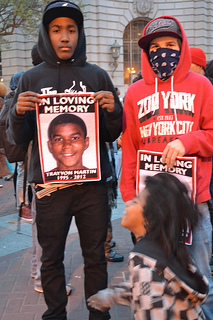
The Bay Area joined cities across the country in holding protests and rallies demanding justice for Trayvon Martin, a 17-year-old shot and killed by 28-year-old George Zimmerman in Sanford, Florida Feb. 26. 700 wore hoodies and marched downtown March 21. An “emergency scream-out” held March 26 outside of the Hall of Justice and jail at 850 Bryant called for justice for Martin as well as victims of police violence such as Ramarley Graham, an unarmed 18-year old Bronx man who was killed in his home by police. A “hoodies and hijabs” march last week in Oakland commemorated Martin’s death alongside the death of Shaima Al-Awadi, a 32-year old mother of five who was killed in a potential hate crime in her El Cajon home last month.

Speakers at these protests expressed outrage that Zimmerman had not been charged with any crime.

Now he has. On April 11, Zimmerman was charged with murder in the second degree.

I asked local activists- is this justice?

“I’m not jumping up for joy that this murderer has finally been arrested. I hope we can question what took so long,” said Tiny Gray-Garcia, creator of POOR magazine, who helped organize the scream-out.

She compared the case to that of Oscar Grant and his killer, Johannes Mehserle. After protest erupted demanding that Mehserle be charged with Grant’s killing, he became the first police officer in the history of California to be charged with murder. He was convicted of involuntary manslaughter and served eleven months in prison. 

“In the same way that Mehserle was finally charged, will Zimmerman eventually get a slap on the wrist?” asked Gray-Garcia. 

The March 26 scream-out was “not only for our young brother Trayvon. It was for Oscar Grant, Ramarley Graham, it was for Idress Stelley, Aiyana Jones, all the victims of police terror,” said Gray-Garcia

Unlike Graham, Stelley, and Jones, Martin was not killed by a police officer. But Gray-Garcia believes that his death can be atttibuted to “police culture.”

“Trayvon was murdered by a volunteer vigilante,” said Gray-Garcia of the neighborhood watch captain who had aspirations of becoming a police officer. “He was part of a violent police culture.”

If police and prison culture is a problem, is Zimmerman’s arrest- by police- justice?

In the media storm that followed the incident, some writers, such as this one at the Crunk Feminist Collective, have grappled with the question.

“How can I demand a criminal conviction for Zimmerman when I am opposed to prisons?” asks the Crunk Feminist Collective writer. “How do I reconcile these things?  I’m not sure yet.  But what I do know is that this really is not about the prison, but about a prison state that targets black and brown bodies in problematic ways.  It’s about a system of policing and surveillance, in which some bodies are always under the eye of the state.”

Isaac Ontiveros of the Oakland-based Critical Resistance, a group whose “vision is the creation of genuinely safe, healthy communities that respond to harm without relying on prisons and punishment,” has also struggled with this issue.

“That’s a challenging question for everybody,” said Ontiveros. “Part of it is, how can we start to dislodge the logic of neighborhood watches? You look at neighborhood watch associations and who are they watching, what do they mean by neighborhood, and who is considered suspicious?”

After Martin’s death, protests across the country were unrelenting calling for Zimmerman’s arrest. Days before the arrest and charge were made, a group of students who had marched 40 miles to Sanford from Daytona Beach “occupied” the Sanford police station, condemning how the case had been handled and demanding the termination of Sanford police Chief Bill Lee Jr. Police had declined to press charges against Zimmerman, saying that he had acted in self-defense.

On March 23, almost a month after the Feb. 26 shooting, Florida governor Rick Scott appointed special prosecutor Angela Corey to investigate the case. Zimmerman was charged with murder and taken into custody April 11.

“We do not prosecute by public pressure or petition. We prosecute based on facts and the laws of Florida,” said Corey at the time.

“She contends that neither petitions or media pressure influenced her decision, when we know too well that without it, nothing would have happened to Zimmerman,” said Mesha Irizarry, another scream-out organizer. Irizarry’s son, Idriss Stelley, was killed by police in 2001. 

The incident has put a national spotlight on racism in the United States. In Sanford, the NAACP held a town hall meeting for African American residents to air their frustrations with profiling in their own lives; hundreds attended

“If you’re black and you’re shot, particularly by someone who’s not black, that it is not viewed as seriously,” Sanford City Manager Norton Bonaparte told Reuters.

He added: “that’s why some feel that Mr. Zimmerman was allowed to just go on his way while Mr. Martin went to a morgue. And certainly if it was reversed, and Zimmerman had been black, he would have been detained and arrested.”

The same sentiment was expressed by protesters in San Francisco March 21. The speakers that day were family members of black teens who had been killed and whose murders had, they said, not been thoroughly investigated.

“Personal justice would be to open up all these other cases,” said Gray-Garcia.

Heading East: Artists in flux

28

San Francisco isn’t an easy place to live for artists and others who choose to fill their souls at the expense of their bank accounts, particularly with the comparatively cheap and sunny East Bay so close. And with more of these creative types being lured eastward, Oakland and its surroundings are getting ever more hip and attractive — just as San Francisco is being gentrified by dot-com workaholics.

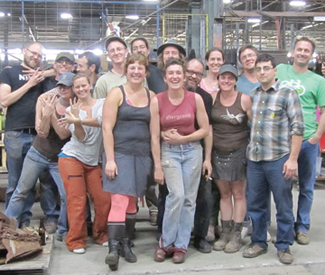
It’s a trend I’ve been noticing in recent years, one that I saw embodied during regular trips to make Burning Man art with the Flux Foundation (see “Burners in Flux,” 8/31/10) and hundreds of others who work out of the massive American Steel warehouse.

At least once a week, I would take BART to the West Oakland station and cycle up Mandela Parkway, a beautiful and inviting boulevard, riding in the wide bike lane past evocative public art projects in weather that was always warmer than my neighborhood in San Francisco.

Since then, I’ve watched waves of my Flux friends moving from San Francisco to the East Bay, pushed by the high cost of living and pulled by the allure of a better and more sustainable lifestyle, a migration of some of the most interesting and creative people I know, some of the very people that have made San Francisco so cool.

“I love San Francisco, but it’s just not an affordable place anymore,” said Jessica Hobbs, one of the Flux founders who last year moved with two other women from the crew into what they call the Flux Meow House in a neighborhood near the intersection of Oakland, Berkeley, and Emeryville.

Hobbs has long worked in the East Bay and “I’ve never been one of those who has that bridge-phobia” — that resistance to cross over into other cities for social gatherings — “but the most interesting culture of San Francisco is starting to move to the East Bay.”

In the last 10 years, workspaces for burners and other creative types have proliferated in the East Bay — including the Shipyard, the Crucible, NIMBY Warehouse, Xian, Warehouse 416, and American Steel — while the number in San Francisco has stayed static or even shrunk. That’s partly a result of SF’s dwindling number of light industrial spaces, but Hobbs said the influx of artists in the East Bay supported and populated these new workspaces and fed the trend.

“They were making space for that to happen, so we came over here,” Hobbs said. “There’s more willingness to experiment over here.”

There have been code-compliance conflicts between these boundary-pushing art spaces and civic officials, including Berkeley’s threats to shut down the Shipyard and Oakland’s issues with NIMBY, but Hobbs said both were resolved in ways that legitimized the spaces. And then events such as Art Murmur, a monthly art walk in downtown Oakland, put these artists and their creations on proud display.

“Oakland and the East Bay have been very welcoming,” Hobbs said. “They want us.”

As we all talked on April 5, Karen Cusolito was throwing a party celebrating the third anniversary of American Steel, a massive workspace she formed for hundreds of artists and a gathering space for her extended community. Cusolito had working in the East Bay since 2005, commuting from Hunters Point before finally moving to Oakland in 2010.

“I moved here with such great trepidation because I thought I’d be bored,” she said. “But I’ve found a more vibrant community than I could have imagined, along with an unexpected sense of calm.”

Reflecting on the third anniversary of American Steel, Cusolito said, “On one hand, I’m astonished that it’s been three years. On the other hand, I’m surprised that this hasn’t always existed,” she said. “I have an amazing community here. I’m very blessed.”

Hobbs’ roommate, Rebecca Frisch, lost her apartment in Hayes Valley last year and decided to seek some specific things that she felt her soul seeking. “I wanted more light and space and a garden. I had a long wish list and nearly all of it came true,” she said. “I cast my net as far north as Petaluma and even Sebastapol. It’s really about a home and setting that felt good and suited my wish list.”

The space they found was spacious and airy, almost suburban but in a neighborhood that is lively and being steadily populated with other groups of their friends who have also been moving from San Francisco, gathered into three nearby homes.

“It was a great space with this huge yard. It’s got sun all day long, fruit trees everywhere, and we now have an art fireplace. You don’t find that in San Francisco,” Hobbs said.

As much as Hobbs and Frisch have been pleased with East Bay living, they each felt finally pressured to leave San Francisco, which makes them wonder what the future holds for the city.

“It’s made me sad because it’s apparent there’s no room for quirky, creative individuals. It’s only for the super rich,” Frisch said. “I feel horrible for families and people with fewer options that I have. I wondered if I would mourn the city I loved, and it’s been just the opposite. I really love it here.”

There have been a few challenges and tradeoffs to living in the East Bay, Hobbs said, including a lack of late-night food offerings and after hours clubs. “With anything, there will be a balance between positives and convenience,” she said.

Not everyone from Flux is flowing east — that balance tips in different ways for different people at different times. Monica Barney recently moved to San Francisco from Oakland and she’s enjoying the more dense urban living.

“I got sick of living in the East Bay,” she said. “I didn’t like that you have to drive everywhere. It changes the tone of the neighborhood when you can get around without a car.”

Yet for most of the couple hundred artsy people in the Flux Foundation’s orbit, the East Bay is drawing more and more people. Jonny Poynton moved to West Oakland three years ago after living in San Francisco for nine. He appreciates the sense of community he’s found in Oakland, and he doesn’t feel like he’s given up much to attain it.

“One of the things I like about West Oakland is how close it is to the city,” he said.

Flux’s latest transplant is Jason DeCook, who works in the building trades and moved from San Francisco to just down the street from Poynton on April 7.

“I moved because of the usual reasons that most have, larger space for the same rent, but also the sunshine and proximity. I’ve been hella reluctant to do this for the past few years but thought about it a couple of times. Now the issue has been forced with all the art this year,” DeCook said.

In addition to working on art at American Steel, DeCook says he’s excited to have a yard and storage areas to work on his own projects.

“I’m a blue collar, hands-on kind of guy and it’s easy for me to feel connected to a lot of the people that live around me or are beginning to visit the area. It’s exciting to be in a place that has been ignored for so long by money, because a group of us can come up with a project or I can on my own and get to doing it with little red tape and it will be appreciated by the neighbors for making the place a little bit better,” DeCook said.

In many ways, he thinks that West Oakland and other East Bay pockets are on a similar trajectory as many of San Francisco’s coolest neighborhoods decades ago, many of which are now getting too expensive for the artists to live.

“Earlier today I was considering how, in the past, like the early ’60s when so many artists and musicians were drawn to the Haight and other places, they did so because it was cheap and close to opportunity,” he said. “I think West Oakland is seeing that happen to it. It is a furnace of creativity, and I am helping however I can to stoke that.

Alerts

0

FRIDAY 13

Born N Raised in Frisco Eric Quesada Center for Culture and Politics, 518 Valencia, SF, 6:30pm, free www.tinyurl.com/poormagevent. A celebration of the end of the People Skool/Escuela de la Gente Winter 2012 session’s course, entitled Born N Raised in Frisco. This class concerned the “stories, poetry, music and media of people who have undergone the trauma of eviction, removal, gentriFUKation, displacement and/or forced migration out of San Francisco due to poverty, redlining, and/or re-devil-opment” and is part of the Uncle Al Robles Living Library project. People Skool, presented by POOR Magazine, lets the voices of San Francisco be heard, and this graduation party will continue the mission of POOR Magazine- to provide “poor people-led/indigenous people-led, grassroots, arts familia creating media, education and art on poverty, racism, disability, indigenous resistance and im/migraiton locally and globally.” 

SATURDAY 14

Just Cause Direct Action Training Lake Merritt United Methodist Church, 1330 Lakeshore, Oakland, 9am-6pm, free. Register at www.tinyurl.com/99springoakland. Around the country, a huge coalition of organizations moveon.org, Green For All, Code Pink, Jobs With Justice, UNITE HERE, and dozens of others have joined forces to present the 99% Spring action training. Their goal is true train 100,000 people in non-violent direct action and this is the week. In the Bay Area, a community-wide training will be led by Causa Justa / Just Cause, Mujeres Unidas y Activas (MUA), the School of Unity and Liberation (SOUL), and the Ruckus Society. The first part of the day will be a lesson on the current political economy, the second part a training in nonviolent direct action “open to people who are organizing with local organizations, Occupy groups, or who want to get involved in actions this Spring.” Smaller trainings in San Francisco will also take place at Million Fishes gallery and the UNITE HERE Local 2 headquarters.

Occupy Oakland Patriarchy BBQ and Speakout Rainbow Park, 5800 International Blvd, 1-5pm, free, www.tinyurl.com./OOpatriarchy. Occupy Oakland continues its weekly Saturday barbecues, meant to engage those who have been occupying with other Oakland residents, share free food, and build community. Last week, they commemorated the anniversary of the death of Black Panther Party icon Lil Bobby Hutton with a celebration of black power; this week, the theme is a speak-out on issues ranging from cuts to schools and services to low wages to racist policing. As organizers say, “the cycle of violence that currently exists attacks poor people, people of color, and women, and is specifically designed to keep us weak so we will passively accept our place in society.”

SUNDAY 15

Youth Theater Project Mission Cultural Center for Latino Arts, 2868 Mission, SF, 4/14 7pm and 4/15 2pm, free, www.tinyurl.com/youththeaterproject. The San Francisco Mime Troupe presents theater written by and about youth in San Francisco. The play comes after an eight-week workshop, and according to the Mime Troupe “The Project promotes artistic expression, discipline, and cross-cultural understanding as creative alternatives to drugs, gangs, prejudice, hostility and violence.” 

Different galaxies of hip-hop at Paid Dues

0

Under the sweltering San Bernardino sun this past Saturday, more than 40 artists came together to pay homage to hip-hop at the Paid Dues Festival.

Odd Future grilled raw meat on stage, intermittently lighting the bloody slab with a cucumber–sized blunt. Tyler the Creator sputtered out dribbles of water in between his lines — casually yet methodically, right as the camera appeared — making one wonder if there really is a synchronized reasoning behind the madness. Moments later, he leaped off the stage and sailed deep in to the moshing crowd, which accepted the Goblin with elation.  


On the other side of the festival — which felt like a completely different galaxy — Brother Ali captured the roots of spoken word hip-hop, performing a refreshingly simple set on an empty stage with just his DJ spinning behind him. Contrasting this profoundly tranquil execution was the whirlwind energy of Three 6 Mafia, which jumped from one side of the stage to the other, arms swaggering, voice booming, and collars popping.

Hip-hop has gone through many cycles since its origins as a social and political outlet for underrepresented minorities, and the sheer diversity of the performers at Paid Dues Festival showed just how broad the genre has become.

During a Guardian interview, Los Rakas member Raka Dun explained that he views the creation of subgenres within hip-hop as a “progressive evolution,” comparing Drake’s “R&B hip-hop” to Odd Future’s “punk rap” as merely a stylistic difference. Raka Rich, the second member of the Panamanian duo, added “that hip-hop has always been about expressing yourself, so you can’t tell someone that their music is or isn’t hip-hop.” 

DJ Paul of Three 6 Mafia agreed that the growth of hip-hop is a positive development, yet admitted that the genre has lost some of its vigor. He holds politics responsible, stating that “hip-hop used to be harder back in the day, but the government wanted the world to be in peace, so they made the music be more in peace.”

Thes One of People Under the Stairs says corporations are at fault for taking critical substance out of mainstream hip-hop, as “music is a lot more marketable when you don’t have to cosign a message.” Double K (also of People Under the Stairs) feels that young people do not have the same insightful experience listening to music anymore. “In school, we were taught the same lesson on Martin Luther King Jr. year after year, but it was from hip-hop that we learned about people like Marcus Garvey and H. Rap Brown,” he added.

The role of women — specifically the rise of female MCs — is significantly influential in how the current road of hip-hop is being paved. Nicki Minaj, although nowhere in the Nos Event Center’s vicinity, was a looming presence throughout the night. The general consensus over the self-proclaimed Black Barbie was that she has undeniable talent, but there were contrasting opinions on how extensively her sex appeal influenced her success.

The members of Hieroglyphics said they feel the issue of sex in music should not be marginalized to a gender issue, as “the industry as a whole is exploiting sex to promote music.” The crew contemplated over whether you have to be as visually appealing as Minaj for people to appreciate your talents — finding it ironic that a lot of artists are actually unwilling to give her credit for her lyricism because of her overt sexuality.

There was a collective nostalgia over non-pink-wigged women rappers the artists grew up listening to — such as Queen Latifah and Ice Cream Tee — who rapped wearing just a hoodie and baggy jeans.  As essential as it is to have prominent women that the female audience can identify with, artists questioned if current women MCs were truly communicating a positive message to young girls.

Luckyiam of Living Legends gave a final word of advice for all burgeoning artists bedroom producers, regardless of gender:

“When I lived in East Oakland, I thought there was a glass ceiling there. Now, with the Web, there’s no reason you can’t get your content out there. But don’t just be Tumblr famous. Go out to the streets or in the clubs, and pay your dues. And stop rapping over your vocals and wear some looser fitting jeans.”

Stage Listings

0

Stage listings are compiled by Guardian staff. Performance times may change; call venues to confirm. Reviewers are Robert Avila, Rita Felciano, and Nicole Gluckstern. Submit items for the listings at listings@sfbg.com. For further information on how to submit items for the listings, see Picks.

THEATER

OPENING

Act One, Scene Two Phoenix Arts Association Theatre, 414 Mason, Ste 601, SF; www.un-scripted.com. $10-20. Previews Thu/12-Sat/14, 8pm. Opens April 19, 8pm. Runs Thu-Sat, 8pm. Through May 12. Un-Scripted Theater Company performs the beginning of a new, unfinished play by a local author — and creates an ending on the spot once the script runs out.

It Is What It Is and The Watchtower Exit Theater, 156 Eddy, SF; www.myadultland.com. $20. Opens Fri/13, 8pm. Runs Sat/14, April 19-21, and 27-28, 8pm; Sun/15 and April 29, 3pm. Through April 29. Short plays by Diane Karagienakos and Christopher Barranti, presented on the same stage with a brief intermission.

Thunder Above, Deeps Below Bindlestiff Studio, 185 Sixth St, SF; www.brownpapertickets.com. $20-25. Opens Thu/12, 8pm. Runs Thu-Sat, 8pm. Through May 5. Bindlestiff presents A. Rey Pamatmat’s dramatic comedy about three homeless young adults.

BAY AREA

John Brown’s Truth La Peña Cultural Center, 3105 Shattuck, Berk; www.brownpapertickets.com. $10-15. Opens Sun/15, 7:30pm. Runs Sun, 7:30pm. Through April 29. The story of abolitionist John Brown comes to life via William Crossman’s script-libretto, plus dance, spoken word, and a variety of improvised music styles.

ONGOING

*The Aliens SF Playhouse, 533 Sutter, SF; (415) 677-9596, www.sfplayhouse.org. $20-70. Tue-Thu, 7pm; Fri-Sat, 8pm; Sun, 3pm. Through May 5. On the heels of Aurora Theatre’s production of Body Awareness, SF Playhouse introduces local audiences to another of contemporary American playwright Annie Baker’s acclaimed plays, in a finely tailored West Coast premiere directed by Lila Neugebauer. The Aliens unfolds in the days just around July 4, at slacker pace, in the backyard of a Vermont café (lovingly realized to palpable perfection by scenic designer Bill English), daily haunt of scruffy, post-Beat dropouts and sometime band mates Jasper (a secretly brooding but determined Peter O’Connor) and KJ (a charmingly ingenuous yet mischievous Haynes Thigpen). New employee and high school student Evan (a winningly eager and reticent Brian Miskell) is at first desperate to get the interlopers out of the "staff only" backyard but is just lonely enough to be seduced into friendship and wary idolatry by the older males. What unfolds is a small, sweet and unexpected tale of connection and influence, amid today’s alienated dream-sucking American landscape — same as it ever was, if you ask Charles Bukowski or Henry Miller, both points of reference to Jasper and KJ, who borrow Bukowski’s poem The Aliens for one of their many band names. An appropriate name for the alienated, sure, but part of the charm of these characters is just how easy they are to recognize, or how much we can recognize ourselves in them. Delusions of grandeur reside in every coffee house across this wistful, restless land. It’s not just Jasper and KJ who may be going nowhere. A final gesture to the young and awkward but clearly capable Evan suggests, a little ambiguously to be sure, that there’s promise out there yet for some. But more than that: the transaction makes clear by then that there are no fuck-ups, really; not among people with generous and open hearts — never mind how fucked up the country at large. (Avila)

Any Given Day Magic Theatre, Fort Mason Center, Marina at Laguna, SF; www.magictheatre.org. $20-60. Opens Wed/11, 8pm. Runs Wed-Sat, 8pm (also April 21, 2:30pm); Sun, 2:30pm; Tue, 7pm. Through April 22. Magic Theatre performs Linda McLean’s Glasgow-set play about modern, urban life.

*The Caretaker Curran Theater, 445 Geary, SF; www.shnsf.com. $25-175. Tue-Sat, 8pm (also Wed and Sat, 2pm); Sun, 2pm. Through April 22. Harold Pinter’s 1960 drama gets its first major revival since the death of the playwright in 2008 in this touring English production featuring Jonathan Pryce in the ambiguous title role. Set in a worn and cluttered attic apartment amid a triangular power play between its seemingly nonchalant tenant, Aston (the excellently vacant, vaguely creepy Alan Cox), an older homeless man he’s just rescued named Davies (a shifty, richly detailed Pryce), and the tenant’s younger brother and landlord Mick (a tightly coiled yet comically skittish Alex Hassell). The story is minimal, the tensions and pivoting interpersonal dynamics all. The spookier aspects of the play are toned down, meanwhile, though not necessarily to bad effect. While the opening scenes are played with somewhat unexpected levity, director Christopher Morahan ensures a subtle shift midway through into a more threatening and serious tone that is perhaps all the more palpable for being less foreseen — as Davies, egged on by the hyper Mick’s persuasive vision of remaking the dumpy room into an elegant penthouse, makes an ill-considered play for dominance over his seemingly gentle but inscrutable host. (Avila)

*Fool For Love Boxcar Studios, 125A Hyde, SF; www.boxcartheatre.org. $25. Wed/11-Sat/14, 8pm. Another installment of Boxcar Theatre’s epic Sam Shepard repertory project, Fool for Love inaugurates their newest performance space within their Hyde Street Studios location. A depressingly realistic reproduction of a claustrophobic motel room, the tiny jewel-box theatre provides no refuge for the actors, and certainly not for the audience, each trapped beneath the pitiless gaze of the other. And if that too-close-for-comfort intimacy doesn’t get to you, the intentionally difficult subject matter — a "typical" Shepardian foray into alcohol-fueled ranting, violence, incest, and casual cruelty — probably will. Shepard’s strength in monologue shows itself off to meaty effect from May’s (Lauren Doucette) melancholy description of her mother’s love affair with the Old Man (Jeff Garrett) to Eddie’s (Brian Trybom) candid admittance to May’s timid suitor Martin (Geoffrey Nolan) that he and May are not cousins at all but half-siblings who have "fooled around" with each other. In addition to the reliably strong performances from each of the actors, Fool features a notably clever bit of staging involving the Old Man who appears not as a specter wandering the periphery of the stage, but as a recurring figure on the black-and-white television, interrupting the flow of cheesy Westerns with his garrulous trailer park wisdom and an omnipresent Styrofoam cup filled, one suspects, with something stronger than just coffee. (Gluckstern)

*Glengarry Glen Ross Actors Theatre of San Francisco, 855 Bush, SF; (415) 345-1287, www.brownpapertickets.com. $26-40. Wed-Sat, 8pm. Extended through April 28. Actors Theatre of San Francisco and director Keith Phillips offer a sharp, spirited production of the 1984 play by David Mamet in which four real estate agents (Mark Bird, Sean Hallinan, John Krause, and Christian Phillips) jockey and scheme for advantage in their Chicago office in a landscape of insecurity and fierce competition symbolized by the selective doling out of the best leads by manager and company man John (Frank Willey). Clients (like the gullible young husband played by Randy Blair), meanwhile, are just witless marks for the machinations of the predatory salesman, no more meaningfully human than the "muppets" targeted by Greg Smith’s Goldman Sachs. If the scenic design is a little shabby, the strong cast makes that hardly an impediment to a story that feels especially timely in its sharply etched, not to say angry portrait of the ruthless and corrosive business mentality to which egos, livelihoods, and lives — not to mention the culture at large — are enthralled. (Avila)

Goodfellas Live Dark Room Theater, 2263 Mission, SF; www.darkroomsf.com. $20. Fri-Sat, 8pm. Through April 26. The Dark Room offers a comedic take on Scorsese’s gangsters.

*Hot Greeks Hypnodrome Theatre, 575 10th St, SF; www.brownpapertickets.com. $30-35. Thu-Sat, 8pm. Through May 5. Cheap thrills don’t come much cheaper or more thrilling than at a Thrillpeddlers musical extravaganza, and their newly remounted run of Hot Greeks affords all the glitter-dusted eye-candy and labyrinthian plot points we’ve come to expect from their gleefully exhibitionist ranks. Structured as loosely as possible on Aristophanes’ Lysistrata, Greeks appropriately enough follows the trials and tribulations of a college sorority tired of "losing" their boyfriends to the big football match every year (Athens U vs. Sparta Tech). Pledging to withhold sex from the men unless they call off the game results in frustration for all, only partially alleviated by the discovery that sexual needs can be satisfied by "playing the other team," as it were. But like other Cockettes’ revivals presented by the Thrillpeddlers, the momentum of the show is carried forward not by the rather thinly-sketched narrative, but by the group song-and-dance numbers, extravagant costuming (and lack thereof), ribald wordplay, and overt gender-fuckery. In addition to many TP regulars, including a hot trio of Greek columns topped with "capital" headdresses who serve as the obligatory chorus (Steven Satyricon, Ste Fishell, Bobby Singer), exciting new additions to the Hypnodrome stage include a bewigged Rik Lopes as stalwart sister Lysistrata, angelically-voiced Maggie Tenenbaum as the not-so-angelic Sodoma, and multi-faceted cabaret talent Tom Orr as heartthrob hunk Pendulum Pulaski. (Gluckstern)

It’s All the Rage Studio Theater, Marsh San Francisco, 1062 Valencia, SF; (415) 282-3055, www.themarsh.org. $15-50. Thu/12, 8pm; Sat/14, 8:30pm, Sun/15, 7pm. Longtime comedian and radio host Marilyn Pittman’s solo play wrestles with the legacy of her parents’ violent deaths in a 1997 murder-suicide initiated by her father. It’s disturbing material that Pittman, a stout middle-aged woman with a gregarious and bounding personality, approaches indirectly via a good deal of humor — including recounting the first time she did her growing-up-lesbian bit before her mother in a DC comedy club. But the pain and confusion trailing her for 13 years is never far behind, whether in accounts of her own battle with anger (and the broken relationships it has left in its wake) or in ominous memories of her too complacent mother or her charming but domineering father, whose controlling behavior extended to casually announcing murderous dreams while policing the boundaries of his marriage against family interference. A fine mimic, Pittman deploys a Southern lilt in playing each parent, on a stage decorated with a hint of their Southwestern furnishings and a framed set of parental photographs. In not exactly knowing where to lay blame for, or find meaning in, such a horrifying act, the play itself mimics in subtler form the emotional tumult left behind. There’s a too brief but eerie scene in which her veteran father makes reference to a murder among fellow soldiers en route to war, but while PTSD is mentioned (including as an unwanted patrimony), the 60-minute narrative crafted by Pittman and director David Ford wisely eschews any pat explanation. If transitions are occasionally awkward and the pace a bit loose, the play leaves one with an uncomfortable sense of the darker aspects of love, mingled with vague concentric histories of trauma and dislocation in a weird, sad tale of destruction and staying power. Note: review from the show’s 2009 run at the Marsh San Francisco. (Avila)

*A Lie of the Mind Boxcar Playhouse, 505 Natoma, SF; www.boxcartheatre.org. $25. Wed/11-Sat/14, 8pm. Sam Shepard’s three-act drama is streaked with humor, horror and heartbreak, all of it arising from the most mundane but also extraordinary of things, love and family. That’s Shepard territory, of course, as surely as is the rowdy backwater of the American West where much of the play unfolds. But seeing the exceptionally sharp and powerful production currently up at Boxcar Theatre under direction of Susannah Martin — in the midst of Boxcar’s mostly terrific four-play Shepard fest that includes his better known Pulitzer-winner, Buried Child (1979) — suggests 1985’s Lie may cut deeper than most. It begins in the immediate aftermath of a vicious episode of domestic abuse, from which the married couple of Beth (Megan Trout) and Jake (Joe Estlack) flies apart and back into the ambivalent arms of their mutually dysfunctional families (played wonderfully by Carolyn Doyle, Marissa Keltie, Tim Redmond, Katja Rivera, Josh Schell, and Don Wood). Trout’s brain-damaged Beth is a wrenching figure, not merely for her confusion and vulnerability but more so for the certainty and determination that make their way from her heart through the prison bars of her hampered mind. As Jake, Estlack is doing some of his finest work, convincingly incarnating a veritable beast whose roaring, roiling emotions sound the loneliest and most desolate of souls within. Martin’s intelligent staging — aided by Steve Decker’s beautifully spare wood-plank set, Lucas Krech’s moody lighting, and a choice, eerie sound design by Teddy Hulsker — adds tangible weight and texture to the play’s radiant dialogue and engrossing characters, realized by one of the finest ensemble casts all year. (Avila)

Maple and Vine American Conservatory Theater, 415 Geary, SF; (415) 749-2228, www.act-sf.org. $10-95. Tue-Sat, 8pm (also Wed and Sat, 2pm); Sun, 2pm (Sun/15, show at 7pm). Through April 22. ACT performs the West Coast premiere of Jordan Harrison’s play about a 21st century couple drawn into a community of people who live as if it’s the 1950s.

The Real Americans Marsh Studio Theater, 1062 Valencia, SF; (415) 282-3055, www.themarsh.org. $25-50. Fri/13, 8pm; Sat/14, 5pm. Dan Hoyle revives his hit solo show about small-town America.

Waiting for Godot New venue: SF Playhouse Stage Two, 533 Sutter, SF; (415) 336-3522, www.tidestheatre.org. $20-32. Thu/12, 7pm; Fri/13-Sat/14, 8pm. The fuchsia papier-mâché tree and swirling grey-on-white floor pattern (courtesy of scenic designer Richard Colman) lend a psychedelic accent to the famously barren landscape inhabited by Vladimir (Keith Burkland) and Estragon (Jack Halton) in this production of the Samuel Beckett play by newcomers Tides Theatre. The best moments here broadcast the brooding beauty of the avant-garde classic, with its purposely vague but readily familiar world of viciousness, servility, trauma, want, fear, grudging compassion, and the daring, fragile humor that can look it all squarely in the eye. (Avila)

The Waiting Period MainStage, Marsh San Francisco, 1062 Valencia, SF; (415) 282-3055, www.themarsh.org. $15-50. Fri, 8pm; Sat, 5pm. Extended through April 27. Brian Copeland (comedian, TV and radio personality, and creator-performer of the long-running solo play Not a Genuine Black Man) returns to the Marsh with a new solo, this one based on more recent and messier events in Copeland’s life. The play concerns an episode of severe depression in which he considered suicide, going so far as to purchase a handgun — the title coming from the legally mandatory 10-day period between purchasing and picking up the weapon, which leaves time for reflections and circumstances that ultimately prevent Copeland from pulling the trigger. A grim subject, but Copeland (with co-developer and director David Ford) ensures there’s plenty of humor as well as frank sentiment along the way. The actor peoples the opening scene in the gun store with a comically if somewhat stereotypically rugged representative of the Second Amendment, for instance, as well as an equally familiar "doood" dude at the service counter. Afterward, we follow Copeland, a just barely coping dad, home to the house recently abandoned by his wife, and through the ordinary routines that become unbearable to the clinically depressed. Copeland also recreates interviews he’s made with other survivors of suicidal depression. Telling someone about such things is vital to preventing their worst outcomes, says Copeland, and telling his own story is meant to encourage others. It’s a worthy aim but only a fitfully engaging piece, since as drama it remains thin, standing at perhaps too respectful a distance from the convoluted torment and alienation at its center. (Avila)

BAY AREA

Anatol Aurora Theatre, 2081 Addison, Berk; www.auroratheatre.org. $30-55. Previews Wed/11, 8pm. Opens Thu/12, 8pm. Runs Tue and Sun, 7pm (also Sun, 2pm); Wed-Sat, 8pm. Through May 13. Aurora Theatre Company performs a world premiere translation of Arthur Schnitzler’s drama about the love life of an Viennese philanderer.

Cabaret Larkspur Café Theater (American Legion Hall Post 313), 500 Magnolia, Larkspur; www.brownpapertickets.com. $25-45. Fri/13-Sat/14, 8pm; Sun/15, 7pm. Independent Cabaret Productions and Shakespeare at Stinson move their production of the Kander and Ebb classic from Fort Mason to the North Bay.

The Coast of Utopia: Voyage Ashby Stage, 1901 Ashby, Berk; www.shotgunplayers.org. $20-30. Wed-Thu, 7pm; Fri-Sat, 8pm; Sun, 5pm. Through April 29. Shotgun Players present Tom Stoppard’s riff on pre-revolutionary Russia.

Hairspray Fox Theatre, 2215 Broadway, Redwood City; www.broadwaybythebay.org. $20-48. Thu/12 and Fri-Sat, 8pm (also Sat, 2pm); Sun, 2pm. Through April 22. Broadway By the Bay opens its 47th season with the John Waters-based, Tony-winning musical.

*The Kipling Hotel: True Misadventures of the Electric Pink ’80s New venue: Marsh Berkeley, 2120 Allston, Berk; (415) 282-3055, www.themarsh.org. $20-50. Sat, 8:30pm; Sun, 7pm. Extended through May 6. This new autobiographical solo show by Don Reed, writer-performer of the fine and long-running East 14th, is another slice of the artist’s journey from 1970s Oakland ghetto to comedy-circuit respectability — here via a partial debate-scholarship to UCLA. The titular Los Angeles residency hotel was where Reed lived and worked for a time in the 1980s while attending university. It’s also a rich mine of memory and material for this physically protean and charismatic comic actor, who sails through two acts of often hilarious, sometimes touching vignettes loosely structured around his time on the hotel’s young wait staff, which catered to the needs of elderly patrons who might need conversation as much as breakfast. On opening night, the episodic narrative seemed to pass through several endings before settling on one whose tidy moral was delivered with too heavy a hand, but if the piece runs a little long, it’s only the last 20 minutes that noticeably meanders. And even with some awkward bumps along the way, it’s never a dull thing watching Reed work. (Avila)

Of Mice and Men TheatreWorks at Mountain View Center for the Performing Arts, 500 Castro, Mtn View; (650) 463-1960, www.theatreworks.org. $19-69. Tue-Wed, 7:30pm; Thu-Sat, 8pm (also Sat, 2pm); Sun, 2pm. Through April 29. TheatreWorks performs the Steinbeck classic.

Red Berkeley Repertory Theatre, Thrust Stage, 2025 Addison, Berk; (510) 647-2949, www.berkeleyrep.org. $14.50-83. Tue and Thu-Fri, 8pm (also April 26, 2pm; no show April 27); Wed, 7pm; Sat-Sun, 2pm (also Sat, 8pm; no 8pm show May 12; Sun, 7pm). Extended through May 12. Mark Rothko (David Chandler) isn’t the only one painting with a broad brush in this labored and ultimately superficial two-hander by John Logan, enjoying a competent but underwhelming production by outgoing Berkeley Rep associate artistic director Les Waters. Set inside the late-1950s New York studio of the legendary abstract expressionist at the height of his fame, the play introduces a blunt and brash young painter named Ken (John Brummer) as Rothko’s new hired hand, less a character than a crude dramatic device, there first as a sounding board for the pompous philosophizing that apparently comprises a good chunk of the artist’s process and finally as a kind of mirror held up to the old iconoclast in challenging proximity to a new generation that must ultimately transcend Rothko’s canvases in turn. The dialogue holds up signs announcing intellectual and aesthetic depths but these remain surface effects, reflecting only platitudes, while the posturing tends to reduce Rothko to caricature. Much of the self-consciously reluctant filial interaction here smacks of biographical sound bites or heavy-handed underscoring of theme, and tends toward the outright hokey when touching on the credulity-bending subject of Ken’s murdered parents — with the attendant shades this adds to Rothko’s and the play’s chosen color palette. (Avila)

The World’s Funniest Bubble Show Marsh Berkeley, TheaterStage, 2120 Allston, Berk; (415) 826-5750, www.themarsh.org. $8-50. Extended run: May 5-27 (Sat-Sun, 11am); June 3-July 15 (Sun, 11am). Louis "The Amazing Bubble Man" Pearl returns with this kid-friendly, bubble-tastic comedy.

PERFORMANCE/DANCE

Alonzo King LINES Ballet Yerba Buena Center for the Arts, Novellus Theater, 700 Howard, SF; (415) 978-2787, www.ybca.org. Wed-Thu, 7:30pm; Fri-Sat, 8pm; Sun, 5pm. Through April 22. $30-65. The company performs Triangle of the Squinches (Thu/12-Sun/15) and Scheherazade (April 18-22).

BATS Improv Bayfront Theater, Fort Mason Center, Marina and Laguna, SF; www.improv.org. Fri/13 and April 27, 8pm: "Theatresports Madness,"$20. Sat/14, April 21, and 28, 8pm: "Improvised Hitchcock," $20.

"The Collection" Exit Stage Left, 156 Eddy, SF; www.brownpapertickets.com. Wed/11-Fri/13, 8pm. $20-50. Theatrical magician Christian Cagigal debuts his brand-new, top-secret show.

"Comedy SuperPAC: Promoting Good Comedy and Great Causes Since 2012!" Hemlock Tavern, 1131 Polk, SF; www.hemlocktavern.com. Mon, 7pm. Through May 7. $5. Nate Green and W. Kamau Bell present this ongoing comedy showcase; this week’s performers are Chris Garcia, Brendan McGowan, Jeff Kreisler, and Brandie Posey.

Jorge Rodolfo De Hoyos Garage, 975 Howard, SF; www.brownpapertickets.com. Sat/14-Sun/15, 8pm. $10-20. As part of the MOVE(MEN)T5 festival of men’s choregraphy, De Hoyos performs Departing Things.

"Elect to Laugh" Studio Theater, Marsh San Francisco, 1062 Valencia, SF; (415) 282-3055, www.themarsh.org. Tue, 8pm. Ongoing through Nov 6. $15-50. Will Durst and friends perform in this weekly political humor show that focuses on the upcoming presidential election.

"Heart and Soul: The Music of Diana Ross, Dionne Warwick, and Whitney Houston" Rrazz Room, 222 Mason, SF; www.therrazzroom.com. Sat/14, 7 and 9:30pm. $35-45. Cabaret show paying homage to three of music’s most beloved divas.

"Love/Hate" ODC Theater, 3153 17th St, SF; www.odctheater.org. Thu/12 and Sat/14, 8pm; Sun/15, 7pm. $35-65. In association with the San Francisco Opera Center, ODC Theater presents the world premiere of a chamber opera by Jack Perla and Rob Bailis.

Natasha Carlitz Dance Ensemble Cowell Theater, Fort Mason Center, Marina at Laguna, SF; www.carlitzdance.org. Fri/13-Sat/14, 8pm. $14-24. The company performs With a Little Help From My Friends.

"Previously Secret Information" Stage Werx, 446 Valencia, SF; www.eventbrite.com. Sun/15, 7pm. The comedic storytelling series celebrates its second anniversary with performances by Joe Klocek, Dhaya Lakshminarayanan, and Nina G.

"Qcomedy Presents Bear Comedy Night" Stage Werx, 446 Valencia, SF; www.qcomedy.com. Mon/16, 8pm. $8-20. With Bob "Bobaloo" Koenig, Nick Leonard, and more.

Sing for America Herbst Theater, 401 Van Ness, SF; (415) 392-4400, www.singforamerica.org. Tue/17, 8pm. $30. Amateur singers in the SFA chorus perform alongside the San Francisco Boys’ Chorus and professional soloists; ticket proceeds benefit Bay Area arts organizations.

Tim Rubel Human Shakes Garage, 975 Howard, SF; www.brownpapertickets.com. Thu/12-Fri/13, 8pm. $10-20. As part of the MOVE(MEN)T5 festival of men’s choregraphy, the company performs We Have (Not).

"Uhane" Children’s Creative Museum Theater, Yerba Buena Gardens, 221 Fourth St, SF; www.creativity.org. Fri/13-Sat/14, 8pm; Sun/15, 2pm. $25. Purple Moon Dance Project founder and artistic director Jill Togawa leads this ten-women dance piece in her last San Francisco performance.

BAY AREA

"All Agita All the Time" Ashby Stage, 1901 Ashby, Berk; www.shotgunplayers.org. Mon/16, 8pm. $10. Shotgun Cabaret presents First Person Singular’s family-style reading of The Sopranos‘ pilot episode.

Dimensions Dance Theater Malonga Casquelourde Center, 1428 Alice, Oakl; www.brownpapertickets.com. Sat/14, 8pm. $15-25. The company performs Down the Congo Line.


Heading East: The musician

0

This week’s Guardian takes a look at San Francisco versus Oakland — and asks whether the big city may have lost its caché to the East Bay

tredmond@sfbg.com

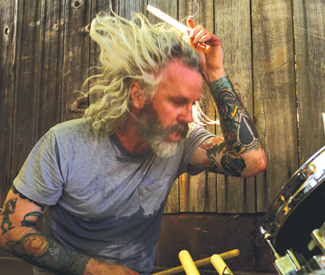
Andy Duvall arrived in San Francisco in 1995, moved with some friends into a flat where his rent was $250 a month. It was a great town for musician, and for 15 years, he was part of the local scene.

Then he looked around in 2010 and realized that he was paying $750 a month for a tiny room with a housemate he barely knew. “It was so hard to find a place I could afford,” Duvall, the former Zen Guerilla drummer who is now part of the experimental band Carleton Melton, told us.

So he packed up and moved across the Bay — and he’s never looked back. “When I moved out, I was afraid I’d totally miss SF,” he said. “But I got to Oakland, and now even if I could I wouldn’t move back.”

Duvall lives in a 900-square-foot place off 40th Street with his girlfriend; they split the $900 rent. “It just seems like there are more artistic and musical people around here,” he said. “I’m surrounded by musicians, instead of worrying that the person downstairs is going to try to get me kicked out of the building.”

Duvall’s main worry now? He sees the pattern that drove him out of San Francisco happening again. “In five years, the same thing is going to happen to Oakland,” he said. “This neighborhood is just exploding. It’s good, I guess — but it’s bad for the artists and musicians.”

Heading East: The photographer

7

This week’s Guardian takes a look at San Francisco versus Oakland — and asks whether the big city may have lost its caché to the East Bay

caitlin@sfbg.com

Sasha Kelley grew up in the East Bay. The 22-year old photographer moved to San Francisco for the love of art — but she moved back East for the same reason.

“I was expecting [SF] to be this free-loving, accepting, encouraging place where anything can happen and everything would be welcomed.” Kelley told the Guardian through a series of phone and email interviews. “But it’s a place that is already established, the different art scenes have been formed and branded. Unless you are fortunate enough to have your own space, you are almost forced to fall into line with the given formula.”

That wasn’t the kind of artistic guidelines Kelley was looking for when she moved to the Tenderloin to study at the Academy of Art. While in San Francisco, she started C Proof (c-proof.org), a site she uses to explore African American life.

But she was having trouble finding the black arts community in the city. Besides MoAD, “the big exception,” as she put it, “the voice of the black artist just wasn’t there.”

And the call of home was a BART ride away. After three years in SF, Kelley decided to move away from the cramped studio she shared with two other people to Oakland in the summer of 2011.

“Right now in Oakland there is a little more wiggle room for experimentation,” she said. “There is still a lot of room to grow, to hold space, and establish new norms.”

One day, attending a general assembly meeting of Occupy Oakland, she met artist Githinji Mbire, who was opening up Omiiroo, a community gallery just one block from the 12th Street BART station (400 14th St., Oakl.) Kelley spent eight hours there the first time she visited.

“We just talked about art,” Kelley said. “A vision of a community space where people could just be and where it’s not about the formal aspects of it, it’s just really the work and reaching out to people.”

Now, Kelley hosts Sunday dinners at Omiiroo to bring together local artists. It’s become a drop-in creative space where Mbire crafts his multimedia maps of Africa. Local vegan food activist Bryant Terry stops by to sell his tea and talk to passers-by during the neighborhood’s thriving monthly Art Murmur. Kelley thinks such a space is possible in SF, but it would depend on finding an investor. “It’s a lot easier to sustain yourself in the East Bay,” she said.

San Francisco’s loss

116

news@sfbg.com

San Francisco is increasingly losing its working and creative classes to the East Bay and other jurisdictions — and with them, much of the city’s diversity — largely because of policy decisions that favor expensive, market-rate housing over the city’s own affordable housing goals.

“It’s definitely changing the character of the city,” said James Tracy, an activist with Community Housing Partnership. “It drains a big part of the creative energy of the city, which is why folks came here in the first place.”

>>Is Oakland cooler than San Francisco? Oaklanders respond.

Now, as San Francisco officials consider creating an affordable housing trust fund and other legislative changes, it’s fair to ask: Does City Hall have the political will to reverse the trend?

Census data tells a big part of the story. In 2000, the median owner-occupied home in San Francisco cost $369,400, and by 2010 it had more than doubled to $785,200. Census figures also show median rents have gone from $928 in 2000 up to $1,385 in 2010 — and even a cursory glance at apartment listings show that rents have been steadily rising since then.

Tracy and other affordable housing activists testified at an April 9 hearing before the Board of Supervisors Land Use and Economic Development Committee on a new study by the Budget and Legislative Analyst, commissioned last July by Sup. David Campos, entitled “Performance Audit of San Francisco’s Affordable Housing Policies and Programs.”

“There’s a hearing right now at City Hall about our housing stock and how it’s been skewing upward toward those with higher incomes,” Board President David Chiu told us, noting that it is sounding an alarm that, “Creative individuals that make this place so special are being driven out of the city.”

Oakland City Council member Rebecca Kaplan said that San Francisco’s loss has been a gain for Oakland and other East Bay cities, which are enjoying a new cultural vibrancy that has so far been largely free of the gentrifying impacts that can hurt a city’s diversity.

“You can add more people without getting rid of anybody if you do it right. Most of development is looking at places that are now completely empty like the Lake Merritt BART station parking lot, empty land around the Coliseum, and the West Oakland BART station,” Kaplan told us. “We have to commit to revitalization without displacement.”

Yet the fear among some San Franciscans is that we’ll have just the opposite: displacement that actually hinders the city’s attempts at economic revitalization. “What’s at stake is the economic recovery of the city,” Tracy said. “You can’t have such a large portion of the workforce commuting into the city.”

TOO MANY CONDOS

A big part of the problem is that San Francisco is building plenty of market-rate (read: really expensive) housing, but not nearly enough affordable housing. The report Campos commissioned looked at how well the city did at meeting various housing construction goals it set for itself from 1999 to 2006 in its state-mandated Housing Element, which requires cities to plan for the housing needs of its population and absorb a fair share of the state’s affordable housing needs.

The plan called for 7,363 market-rate units, or 36 percent of the total housing construction, with the balance being housing for those with moderate, low, or very low incomes. Developers built 11,293 market rate units during that time, 154 percent of what was needed and 65 percent of the total housing construction. There were only 725 units built for those with moderate incomes (just 13 percent the goal) and just over half the number of low-income units needed and 83 percent of the very low-income goal met.

“We have to do a better job of monitoring and evaluating each project,” Chiu said. “Every incremental decision we make determines whether this will be a city for just the wealthy.”

The situation for renters is even worse. From 2001-2011, the report showed there were only 1,351 rental units built for people in the low to moderate income range, people who make 50-120 percent of the area median income, which includes a sizable chunk of the working class living in a city where about two-thirds of residents rent.

“The Planning Commission does not receive a sufficiently comprehensive evaluation of the City’s achievement of its housing goals,” the report concluded, calling for the planners and policymakers to evaluate new housing proposals by the benchmark of what kind of housing the city actually needs. Likewise, it concluded that the Board of Supervisors isn’t being regularly given information it needs to correct the imbalance or meet affordable housing needs.

Policy changes made under former Mayor Gavin Newsom also made this bad situation even worse. Developers used to build affordable housing required by the city’s inclusionary housing law rather than pay in-lieu fees to the city by a 3-1 ratio, but since the formulas in that law changed in 2010, 55 percent of developers have opted to pay the fee rather than building housing.

Also in 2010, Newsom instituted a policy that allowed developers to defer payment of about 85 percent of their affordable housing fees, resulting in an additional year-long delay in building affordable housing, from 48 months after the market rate project got permitted to 60 months now.

Tracy and the affordable housing activists say the city needs to reverse these trends if it is to remain diverse. “It’s not even debatable that the majority housing built in the city needs to be affordable,” Tracy said.

Mayor Ed Lee has called for an affordable housing trust fund, the details of which are still being worked out as he prepares to submit it for the November ballot. Chiu said that would help: “I will require a lot of different public policies, but a lot of it will be an affordable housing trust fund.”

GROWTH AND DIVERSITY

San Francisco’s problems have been a boon for Oakland.

“With much love and affection to my dear SF friends, I must say that Oakland is more fun,” Kaplan told us. “Also I think a lot of people are choosing to live in Oakland now for a variety of reasons that aren’t just about price. We have a huge resurgent art scene, an interconnected food, restaurant, and club scene, a place where multicultural community of grassroots artists is thriving, best known from Art Murmur.”

There is fear that Oakland could devolve into the same situation plaguing San Francisco, with rising housing prices that displace its diverse current population, but so far that isn’t happening much. Oakland remains much more racially and economically diverse than San Francisco, particularly as it attracts San Francisco’s ethnically diverse residents.

“We’re not looking at a situation where the people moving into town are necessarily predominantly white,” Kaplan said. “We’re having large growth in quite a range of communities, including growing Ethiopian and Eritrean and Vietnamese populations…If you don’t want to live in a multicultural community, maybe Oakland’s not your cup of tea.”

According to the 2010 census, a language other than English is spoken at home in 40.2 percent of Oakland households, compared to 25.4 percent in San Francisco. “Almost every language in the world spoken in Oakland,” Kaplan said.

African Americans make up 28 percent of Oakland’s population, compared to only 6.1 percent in San Francisco, and 6.2 percent of the population of California. In San Francisco, the number of black-owned businesses is dismal at 2.7 percent, compared to 4 percent statewide and 13.7 percent in Oakland. The census also finds that 25.4 percent Oaklanders are people of Latino origin, compared to San Francisco at 15.1 percent and 37.6 percent statewide. San Francisco is 33.3 percent Asian, compared to Oakland at 16.8 percent and all of California at 13 percent.

Both cities are less white than California as a whole; the state’s white population is 57.6 percent, compared to 34 percent in Oakland and 48.5 percent in San Francisco.

Gentrification shows its face differently depending on the neighborhood. Some say Rockridge, a trendy Oakland neighborhood where prices have recently increased, has gone too far down the path.

“Rockridge has been ‘in’ for a long time, but the prices are staggering and it isn’t as interesting any more,” Barbara Hendrickson, an East Bay real estate agent, told us.

The nationwide foreclosure crisis didn’t spare Oakland and may have sped up its gentrification process. “The neighborhoods are being gentrified by people who buy foreclosures and turn them into sweet remolded homes,” observed Hendrickson.

Yet Kaplan said many of these houses simply remain vacant, driving down values for surrounding properties and destabilizing the community. “I think we need a policy where the county doesn’t process a foreclosure until the bank has proven that they own the note,” said Kaplan, who mentioned that the city has had some success using blight ordinances to hold banks accountable for the empty buildings.

And as if San Francisco didn’t have enough challenges, Kaplan also noted another undeniable advantage: the weather. “The weather is really quite something,” she said. “I have days with a meeting in San Francisco and I always have to remember to bring completely different clothing. Part of why I wanted to live in California was to be able to spend more time outdoors, be healthy, bicycle, things like that. So that’s pretty easy to do over here in Oakland.”

Heading East: The flight from San Francisco

13

EDITORIAL There is no simple free-market solution to gentrification and displacement. There’s no way a crowded city like San Francisco can simply rely on the forces of supply and demand to protect vulnerable populations. And there’s no way the city’s flawed housing policy can prevent the loss of thousands of San Franciscans — particularly young, creative people who help keep a city lively — from fleeing to a town where they can actually afford the rent.

Richard Florida, the famous social and economic theorist who coined the term “creative class” argues that artists and writers and geeks and musicians are the forces that drive modern economies. His pioneering 2002 essay in the Washington Monthly was titled “Why cities without gays and rock bands are losing the economic development race.”

Florida’s something of an elitist and he ignores the contributions that tens of thousands of others (including retired people, union members and nonprofit workers) make a community. He idolizes tech culture and often ignores issues like class and race.

But he’s got a point: Nobody who’s doing anything cool wants to live in a city where everyone is rich and everything is clean and boring. And that’s the danger San Francisco faces.

Just go over to Oakland for a few days and talk to all the people who were once part of this city’s cultural scene. They’ll tell you what anyone with any sense knows: You don’t attract creative people to a city by giving out tax breaks for corporations and building fancy office space. The rock bands that Florida talks about aren’t going to stay in a city because it has high-end jobs for people with advanced degrees. Artists need a place where they can afford the rent.

San Francisco is still a great urban center, by any possible standard, and has all the qualities of diversity, openness, energy, politics and fun that have made generations of immigrants from all over the world want to make it their home. But at a certain point, housing becomes more important than all of the other development issues that local government can address.

Take Andy Duvall, a musician we interviewed who was part of San Francisco for 15 years before he was literally priced out of town. For half of what he was paying in the Mission, Duvall has more than twice the space in Oakland — and the situation is just getting worse. While most of the country is still mired in a deep housing slump (and parts of San Francisco are facing a foreclosure crisis), rents in this town are soaring, beyond the affordability of almost anyone who currently lives here. According to the city’s own statistics, only about 10 percent of San Franciscans can afford the rent on a median market-rate apartment. That means if they’re evicted or lose their homes, they have to leave town.

The supervisors held a hearing April 9 on affordable housing, and the message was profound: “Affordable housing preserves the neighborhood in more ways than one; residents are the foundation on which the economy is built. From any angle, if we can’t afford to live here, there is no city,” observed Val Sinckler, a Western Addition resident.

But while the mayor is working to attract companies that will pay high-end salaries to people who can afford to pay far more rent than the average San Franciscan, he’s a long way from coming up with the money to even begin to mitigate the problem.

An effective policy to preserve San Francisco requires strict regulation (to prevent evictions and displacement), a mandate that commercial developers build housing for their workforce and that residential developers meet the needs of low- and moderate-income residents — and a large investment of public money in affordable housing. If Lee isn’t willing to talk serious about those three crucial elements, then he’s presiding over the decline of one of the world’s coolest cities.

In their words: Oakland locals from this week’s Guardian cover

24

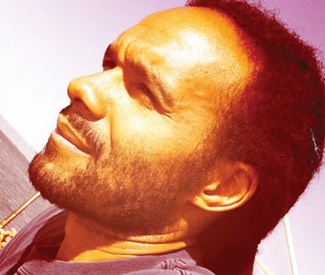
This week, the Guardian examines the issue of whether San Francisco is experiencing a cultural and economic exodus to the East Bay, especially Oakland. Our cover features creative folks from all over Oakland proper. They were asked the question “Is Oakland cooler than San Francisco?” and in return we got some pretty surprising answers (though, spoiler alert: the general consensus was “Hell Yes!”). Have a listen to their responses…

(Photos by Matthew Reamer)


Ali “Chief Saba” Ar Rasheed, Business Manager Easy Bay Dragons Motorcycle Club
“People often call Oakland ‘gritty’ compared to San Francisco… what I think they actually mean is more working-class.”


Adam Hatch, Owner Hatch Gallery/Co-founder Starline Project
“San Francisco is a visually appealing city but as far as where I’d want to live it’s Oakland.”


HOTTUB, Disco/Rap band (Clockwise from left: Jaysonik, Ambreezy, Lolipop, Funky Finger Mark, and CoCo Machete)
“Oakland in some ways is overshadowing San Francisco because artists can afford to live here,” Jaysonik.

Austin Barber, Guitarist and vocalist for Saviours
“I’ve always been more attracted to Oakland, mostly because of the music.”


Jessica Hobbs, Co-founder Flux Foundation
“I’ve found more openness to the art that I do… San Francisco is kind of a pain in the butt!”


Tanya Holland, Chef and Owner, Brown Sugar Kitchen/B-Side BBQ
“You actually know your neighbors which is a different experience than I had in San Francisco.”


Alfonso Dominguez, Architect/Owner Tamarindo Restaurant and Era Art Bar and Lounge
“It’s like comparing apples and pomegranates.”


Sam Strand, Artist/Co-founder Starline Project
“It’s a little rougher… but the fight is what makes it cooler. It’s like Detroit.”


Tyranny Allen, CEO of Marketing Kings
“We’ve got a lot more going on in Oakland. It’s the ultimate place to be in the Bay Area.”

Editorial: The flight from San Francisco

23

EDITORIAL There is no simple free-market solution to gentrification and displacement. There’s no way a crowded city like San Francisco can simply rely on the forces of supply and demand to protect vulnerable populations. And there’s no way the city’s flawed housing policy can prevent the loss of thousands of San Franciscans — particularly young, creative people who help keep a city lively — from fleeing to a town where they can actually afford the rent.

Richard Florida, the famous social and economic theorist who coined the term “creative class” argues that artists and writers and geeks and musicians are the forces that drive modern economies. His pioneering 2002 essay in the Washington Monthly was titled “Why cities without gays and rock bands are losing the economic development race.”

Florida’s something of an elitist and he ignores the contributions that tens of thousands of others (including retired people, union members and nonprofit workers) make a community. He idolizes tech culture and often ignores issues like class and race.

But he’s got a point: Nobody who’s doing anything cool wants to live in a city where everyone is rich and everything is clean and boring. And that’s the danger San Francisco faces.

Just go over to Oakland for a few days and talk to all the people who were once part of this city’s cultural scene. They’ll tell you what anyone with any sense knows: You don’t attract creative people to a city by giving out tax breaks for corporations and building fancy office space. The rock bands that Florida talks about aren’t going to stay in a city because it has high-end jobs for people with advanced degrees. Artists need a place where they can afford the rent.

San Francisco is still a great urban center, by any possible standard, and has all the qualities of diversity, openness, energy, politics and fun that have made generations of immigrants from all over the world want to make it their home. But at a certain point, housing becomes more important than all of the other development issues that local government can address.

Take Andy Duvall, a musician we interviewed who was part of San Francisco for 15 years before he was literally priced out of town. For half of what he was paying in the Mission, Duvall has more than twice the space in Oakland — and the situation is just getting worse. While most of the country is still mired in a deep housing slump (and parts of San Francisco are facing a foreclosure crisis), rents in this town are soaring, beyond the affordability of almost anyone who currently lives here. According to the city’s own statistics, only about 10 percent of San Franciscans can afford the rent on a median market-rate apartment. That means if they’re evicted or lose their homes, they have to leave town.

The supervisors held a hearing April 9 on affordable housing, and the message was profound: “Affordable housing preserves the neighborhood in more ways than one; residents are the foundation on which the economy is built. From any angle, if we can’t afford to live here, there is no city,” observed Val Sinckler, a Western Addition resident.

But while the mayor is working to attract companies that will pay high-end salaries to people who can afford to pay far more rent than the average San Franciscan, he’s a long way from coming up with the money to even begin to mitigate the problem.

An effective policy to preserve San Francisco requires strict regulation (to prevent evictions and displacement), a mandate that commercial developers build housing for their workforce and that residential developers meet the needs of low- and moderate-income residents — and a large investment of public money in affordable housing. If Lee isn’t willing to talk serious about those three crucial elements, then he’s presiding over the decline of one of the world’s coolest cities.


Burning Man awards art grants and resolves final ticket issues

14

It’s been a tough year for Black Rock City LLC (aka the Borg), the SF-based company that stages Burning Man, particularly with its ticket fiasco, the heaps of criticism that followed, and uneasiness about what this year’s event will look and feel like. As word of its annual art grants has gotten out over these last couple weeks, the grumblings of discontent have returned, this time mixed with early twinges of excitement about the event.

On the positive side, the Borg is giving away more than $700,000 – its most ever and a $100,000 increase over last year – to 47 art projects, many of them to Bay Area artists such as Michael Christian, Zac Carroll, Gregg Fleishman, Krysten Mate/Jon Sarriugarte, Otto Von Danger (whose Burn Wall Street project was inspired by the Occupy Wall Street movement), Flux Foundation (whose 2010 Temple of Flux we profiled), and David Best (the original Temple-builder who will do this year’s Temple after a three-year break).

Yet with 349 applicants seeking almost $5 million, there are lots of great local projects and artists that didn’t make the cut who will now be forced to aggressively raise money or consider scaling back or abandoning their plans. Among those are longtime artist Charlie Gadeken, Marco Cochrane (who for two years has been trying to complete Truth is Beauty, his follow-up to the spectacular Blissdance, the 40-foot tall nude woman who currently dances on Treasure Island), and the all-hands-on-deck Bottlecap Gazebo project that has been the subject of near-constant work by dedicated teams in San Francisco and Oakland.

The Bottlecap Gazebo crew has already been tapping its communities to collect and process about 100,000 beer bottle caps that are being smashed, stitched, and shaped into an ornate gazebo that incorporates the caps’ colors into its swirling design. Now they also need cash to complete the project, which you can give here.

Same thing with Cochrane, who is offering a unique opportunity tonight for you to help and watch how this amazing artist works. “Art & Politics: A Fundraiser for Truth is Beauty and Alix Rosenthal” will feature Cochrane doing a live sculpture of Rosenthal, with proceeds split between the project and Rosenthal’s DCCC campaign (she’s also a longtime burner, Borg volunteer, and friend of mine). Such sculptures are the first step in making his larger pieces, like Blissdance and his new 60-foot-tall nude woman. The event, which also features some great burner DJs, is 7pm-midnight at Project One.

Bettie June, who runs the Artery program for the Borg, said they had some very hard choices to make this year. “We had a huge jump in the number of people who applied for art grants, and the quality was really high. They were really strong and well thought out proposals,” she told us.

The Borg should be officially announcing its grants anytime now, but the applicants have all heard. My Flux family is hurriedly finishing other projects in its bay at American Steel in Oakland so it can focus on Zoa, which will combine fire-spewing steel seedpods with a wooden exterior that will burn away (in truly colorful and spectacular fashion, I hear) halfway through the week to reveal the inner core, which will go through it own metamorphosis, making it three sculptures in one. Yet, like most of the funded projects, they still have fundraising to do to cover the full project cost, and they currently have a Kickstarter campaign underway.

Bettie June singled out Zoa as one of the pieces she’s most excited about, also mentioning Burn Wall Street, Pier 2 (a bigger version of last year’s Pier by Carnelian Bay artist Matt Schultz, which this year will have a galleon crashed into it, which visitors can explore), Universe Revolves Around You (the latest kinetic project by Zachary Coffin using large boulders), and Circle Of Regional Effigies (35 installations by regional groups, up from 23 last year, that will burn simultaneously on Thursday night).

Some of the projects that got funded this year are updates and modifications of existing artworks, including Carroll’s Front Porch and Serpent Twins by Mate/Sarriugarte, although Bettie June said both have great new features (the latter project, a pair of mythical serpents that travel the playa, will have new lighting and sound systems to better tell the story of their interactions with one another).

“It was a big discussion and we’re pretty pleased with the results,” Borg board member Marian Goodell said of the art grants. “They’re funding a lot of great art.”

As for her other major preoccupation of the year – dealing with the fallout of a new ticketing system that left many veteran burners without tickets – Goodell said they’ve been sorting out that situation as well: distributing the final 10,000 tickets, which were going to be sold generally, through established theme camps.

Some sources have told us that demand from the theme camps had actually been less than anticipated, but Goodell said they still need to get tickets to various performers, volunteers, and art car crews. “We have a lot of people to take care of,” she said.

She also said that she’s been pleasantly surprised by the number of tickets that are being sold through the STEP ticket resale system that the Borg hurriedly established to redistribute tickets, with more than 500 being offered so far. “It’s a trickle, but it’s not stopping,” she said.

Yet there could still be a bit of grumbling to come over the tickets. The final decision for the Borg to make was whether to require ticket holders to register by name to control scalping – a decision it would need to make before tickets are mailed out in June – and sources say the Borg has decided not to do so.

With demand for tickets far exceeding anyone’s expectations this year, tickets selling out for the first time last year, and with a new system that many said could easily be gamed by scalpers, the unknown factor is how many were snapped up by scalpers who are charging exorbitant prices. The Borg has maintained that they think that number is fairly small, but we’ll see this summer.

Nonetheless, it’s good to see the anguish over tickets now starting to give way to excitement about the art projects now getting underway throughout the Bay Area, many of which are still looking for help. So go make some art.


Steven T. Jones, aka Scribe, is the author of The Tribes of Burning Man: How an Experimental City in the Desert is Shaping the New American Counterculture. He’ll be doing a reading and leading a discussion on the state of Burning Man from 6-7:30 pm on April 25 at the Bay Guardian office, 135 Mississippi St., SF.  


Here’s the complete list of this year’s funded art projects:  

Project Name

Artist Name

Hometown

Almost

michael christian

Berkeley, CA

Arc Harps

Jen Lewin

Boulder, CO

bapteme de feu 2.0

Anton Vidtiz-Ward

Telluride, CO

Bicycle Arpeggio

George Rahi

Bellingham, WA

Burn Wall Street

Otto Von Danger

Oakland, CA

Char Wash

Christopher Schardt

Oakland, CA

City of Lights

Gary Long

Los Angeles, CA

Dragon Smelter

Daniel Macchiarini

San Francisco, CA

EGO

Laura Kimpton & Michael Garlington

Vineburg, CA

Front Porch

Zac Carroll

Mill Valley, CA

Fusion Fire

Team What-Dat-Do

Seattle, WA

Harmonic Fire Pendula

Matthew Dockrey

Seattle, WA

Labyrinth of Colorful Cloud

Rob Fischer

Brooklyn, NY

Luminous Passage 2.0

Predock/Frane Architects vs Anderson/Predock

San Francisco, CA

Lune & Tide

Sarah Cockings, Laurence Symonds

London (UK)

Man Pavilion Pistil

Gregg Fleishman

Oakland, CA

MetaMorph

Chelsea Jenkins

Alta Loma, CA

Mooving Sculpture

David Boyer

Reno, NV

Murmuration

Jeff Maguire

Santa Monica, CA

Neverwas Haul

Shannon O’Hare

Vallejo, CA

Otic Oasis 2.0

Gregg Fleishman (Artist) and Melissa Barron (Conceptor)

Oakland, CA

Perception in the Absence of Reality

David Clay (Playa Name: Egg Shen)

Seattle, WA

Pier 2

Matt Schultz/ The Pier Group

Carnelian Bay, CA

Pins

Tom Woodall

Kennewick, WA

Pyropodium

Noah Rosenthal and Nathan Clark

Cleveland Heights, OH

Remembering Cap’n Jim

Dave Power

Pagosa Springs, CO

Reno Star

Mark Szulgit

Sebastopol, CA

Serpent Twins 

Jon Sarriugarte , Kyrsten Mate

Oakland, CA

Singularity Transmissions

Troy Stanley and TEAM RX/TX

Houston, TX

Star Seed

Kate Raudenbush

New York, NY

Starport 2.012 (Cafe Portal)

Carey Thompson

Novato, CA

sub-Sonarium

Benjamin Carpenter / Daniel Yasmin

Oakland, CA

Sun Bugs

Adel Kerpely

Brooklyn, NY

Super Street Fire

Seth Hardy & Site 3 coLaboratory

Toronto (CANADA)

Tesseract

James Reinhardt, Scott Chico Raskey

Seattle, WA

The Temple of Juno

David Best

Petaluma, CA

Third Space at Burning Man

ALEXANDER REHN & GREUTMANN & BOLZERN

San Francisco, CA

Through the Gorilla Glass

GUILD — Spencer Rand, Johnathan Wong, Andrea Ling, Patrick Svilans and Jonah Humphrey

Toronto (CANADA)

Timing is Everything

Charlie Smith

Atlanta, GA

Transcendental Cube

Joseph Quinn

Los Angeles, CA

Tree of Transformation

Dadara

Amsterdam (NETHERLANDS)

Tree of Transmutation

Kevin Christman

Talent, OR

Universe Revolves around You

Zachary Coffin

Atlanta, GA

Yoga Robot

Scott Harris

Telluride, CO

Zoa

Flux Foundation

San Francisco, CA

Zonotopia and the Two Trees

Rob Bell

San Francisco, CA

Green shopping guide: 8 sources of weekend-ready, enviro-friendly beauty

3

Beauty is said to only be skin-deep — but the businesses that use holistic, organic, and plant-based ingredients want to demolish this age-old idiom. You can simultaneously rejuvenate yourself and the planet by ditching those toxic, harmful products once and for all. Think of it! With their products and services, self-care is no longer akin to being vain or selfish. These eight local spas, soapmakers, and producers of flower-based essences align nature, commerce, and beauty so that the world can sustain that perfect summer glow. Check out the rest of this week’s guides to local sustainable shopping, in honor of our Green Issue

Illuminata Skin Care 

Rather than using harsh chemicals to camouflage damages, Illuminata believes in a holistic approach to clarifying the skin so that you don’t have to hide anything. Natural botanical products are used in an array of services like extractions, enzyme exfoliations, waxing, and purifying masks to create effective treatments for even the most sensitive skin types. The warm staff, and the even-warmer space, will have you relishing your own dewy radiance.  

Office hours Mon. and Thurs. 12:30pm-8pm; Tue. 1pm-8pm; Wed. 10am-8pm; Fri. 11am-6:30pm; Sat.-Sun. 10am-6pm 977 Valencia, SF. (415) 971-3943, www.illuminataskincare.com

Nectar Essences natural stress relief 

Flowers can light up a room but flower essences can uplift your mind. Nectar Essences is a local company making floral remedies made with flowers from the Atacama desert in Chile, wildflowers of North America, and the Amazon rainforest. They are concocted by trained practitioners and crafted to address sleeplessness, mental alertness, and stress.

Phone customer service hours Mon.-Fri. 9 a.m.-5 p.m. (415) 617-5589, www.nectaressences.com

Grateful Body food for the skin

Grateful Body’s no-fuss online store provides organic, vegan, natural, chemical-free, and synthetic-free skin care treatments for virtually all skin types and issues. Products are made with nutrient-rich elements like fresh fruits, mushrooms, herbs, seaweeds, and botanical oils to nourish the glummest under-eye circles, salvage the most parched skin, and remedy even the nastiest of toenail infections. 

Phone customer service hours Mon.-Fri. 10 a.m.-5 p.m. (510) 848-9292, www.gratefulbody.com

The Joys of Life organic shea butters 

This Oakland-based beauty product online store specializes in unrefined, organic shea butters and fine organic oils. Their handcrafted products are made with natural ingredients from Uganda and Ghana, and help detoxify, hydrate, and naturally enhance your skin.  

(510) 465-5065, www.thejoysoflife.com

Epic Center MedSpa  

MedSpa intertwines nature and science together through effective organic, light-based, non-toxic, crystal-free skin rejuvenation approaches to skin tightening, laser hair removal, and skin resurfacing treatments. Their space itself is a sustainable green-phenomenon made of eco-paints, recycled fabrics and wood, water conserving plumbing fixtures, and energy-reducing lighting.

Spa hours Mon. and Sat. 10 a.m.- 6 p.m.; Tues., Wed., Fri. 9:30 a.m.-7 p.m.; Thurs. 10:30 a.m.-7 p.m. 450 Sutter, Suite 800, SF. (415) 362-4754, www.skinrejuv.com

Apotheca 

This teeny wellness practice will surprise you with how many holistic approaches and services they can pack into their space. Personalized to meet each individual’s needs, Apotheca will have you in a therapeutic massage one minute, practicing Ayurveda yoga the next, and botanically waxing your brows before you leave their rustic-chic downtown space. 

Spa hours Mon.-Sun. 9 a.m.-9 p.m. 582 Market, Suite 612, SF. (415) 573-9077, www.apothecasf.com

Transcendentist  

That usual cloying odor of chemicals that accompanies the dentist disappears in this calm, eco-friendly practice. More so a wellness spa than a traditional dentist office, they will treat your pearly whites with biocompatible materials while giving you a healing foot massage to the relaxing beat of meditative tunes. 

Office hours Mon.-Fri. 9 a.m.-5 p.m. 3030 Ashby, Suite 101, (510) 841-3040, www.transcedentist.com

River Soap Company  

Dad is in charge of retail orders, mom is the national sales rep, and two sisters deal with daily operations in this natural soap shop. Their soaps are all vegetable based, biodegradable, cruelty-free, and are triple French-milled for a long-lasting, extra-lathering, non-gooey, velvety hand-washing experience. 

(800) 694-7627, www.riversoap.com

Who bombed Judi Bari?

5

THE GREEN ISSUE Darryl Cherney is determined. “I have a mission in life,” he says. “And that is to find out who bombed Judi Bari.” This week, a judge may have gotten him closer to that goal, ordering evidence in the case be sent to a lab for forensic testing.

Cherney was in the car with Bari, a fellow environmental activist from Earth First, when a pipe bomb wrapped with nails exploded, maiming Bari and leaving Cherney with serious injuries.

It was 1990, and the two were in Oakland on their way to speak about the upcoming Redwood Summer, three months of picketing, tree-sitting, and otherwise blocking the clear-cutting of the California redwoods.

The Redwood Summer went on, but not before Bari and Cherney were arrested: The Oakland Police Department said they had constructed the bomb themselves and were transporting it in the back seat.

Before Bari and Cherney went to trial, it became clear that the bomb had been under the front seat (Exhibit A: Bari’s shattered pelvis and the unscathed backseat), and that there was absolutely no evidence Bari or Cherney had known it was there, and the charges were dropped. But the true culprit was never found.

In 2002, Cherney sued the FBI for attempting to frame him and Bari (who died of breast cancer in 1997), and won. But he’s still set on testing the remaining evidence for DNA.

“We rely on the government to examine physical evidence in a violent criminal case, and when they fail to do that, we have to react,” Ben Rosenfeld, Cherney’s attorney, told the Guardian.

“It should be an open attempted-murder investigation.”

But the authorities not only weren’t investigating, they were seeking to destroy the evidence, something Cherney and his lawyers have been fighting. On April 2, they scored an important victory when U.S. District Court Judge Claudia Wilkens issued an order preserving the material and allowing its transfer to a Hayward forensic lab for testing.

In August 2010, government lawyers had unceremoniously announced that they planned to destroy the case’s remaining evidence, which includes remnants of this bomb and another one that partially exploded in Cloverdale two weeks earlier, as well as a hand-lettered sign that was near the Cloverdale bomb. The Cloverdale bomb and the bomb that exploded in Bari’s car were constructed similarly, and no one has been convicted of either attack. Because they contain unintentionally intact evidence, partially exploded bombs are “considered to be the Holy Grail in bombing investigations. That slightly exploded bomb in Cloverdale is key to solving the case,” said Cherney. Lawyers for Cherney responded with a motion calling instead for testing of the evidence; the government opposed the motion.

But at a Sept. 8, 2010 hearing, Magistrate Judge James Larson ordered the FBI to turn the evidence over to an independent analyst for testing.

Again, the feds opposed the order, and asked for a de novo review of the case, essentially asking that the court go over all previous briefings once again. The motion seemed like a stalling tactic, and it worked; the motion was pending in court for a year.

Recently, it was brought back up again, when the plaintiff’s motioned to move forward with testing the evidence. They suggested a lab in Hayward, Forensic Analytics Laboratories, and Wilkens agreed on April 2.

Bari’s case came out at the start of what became a large-scale FBI crackdown on environmental justice movements in the 1990s and throughout the 2000s. Activists protesting companies that they thought were harmful towards animals and the earth became a special target of the FBI in what became known as the “Green Scare.”

The era was characterized by crackdowns on the Earth Liberation Front and the Animal Liberation Front, although it also affected groups like Food Not Bombs and Earth First.

“The case was an early forerunner of what we call the Green Scare cases, where the government sets out to make examples of people it perceives as leaders to try to chill activism in the environmental movement,” said Rosenfeld. “It was quite a scary season for environmental activists.”

The Green Scare did a lot to quell environmental activism, and some who were arrested at its peak remain in prison. But it didn’t stop many — including Bari and Cherney — from continuing their work.

“Both Judi and I continued right out of jail. Actually, in jail the police wrote in their police report that I was trying to convert them to environmentalism,” laughed Cherney.

“I participated in Redwood Summer and the Headwater Forest Campaign right through 1999 and continued through 2003. And now I’m making a movie about it.”

The movie, Who Bombed Judi Bari? has been doing well since it had its world premiere at the SF Green Film Festival March 2.

The film’s reception is “definitely very gratifying,” says Mary Liz Thomson, the film’s director, who “spent a lot of time editing it living in a cabin on [Cherney’s] land up in the woods, using solar power.”

Now she’s touring California with sold-out screenings, as well as some free screenings, including a well-attended March 26 screening at Occupy Oakland.

Thomson says she has gotten positive feedback from occupiers and others currently working in social movements.

“We’re just at the beginning of our launch and people are saying that it’s really relevant right now. The timing was great”

Indeed, laws that build on the Green Scare have been rapidly passed in recent months, targeting other political groups.

Controversy flared after President Obama signed the National Defense Authorization Act, which allows the U.S. to detain suspects without charge. Attorney General Eric Holder claimed that the government can kill its own citizens abroad without trial. And on Feb. 27, The House of Representatives voted in favor of HR 347, the so-called “Anti-Occupy Bill.”

Who Bombed Judi Bari? is an important history lesson for those faced with these new challenges. And Cherney may finally be on track to finding out the answer to the title’s question.

We and Mr. Jones

1

caitlin@sfbg.com

THE GREEN ISSUE No one can accuse Van Jones of being a one trick pony. In the early days of his activist career he monitored police violence in the Bay Area, and from there gradually widened the frame of his activist efforts. Jones formed the Ella Baker Center for Human Rights in Oakland in 1996, then became a green jobs pioneer, promoting environmentally-friendly work in low income communities — a revolutionary tactic that eventually landed him a short-lived adviser position within President Obama’s Council on Environmental Quality.

In his new book Rebuild the Dream (Nation Books, 278pp, $25.99) Jones has expanded his talking points to include the ways in which the financial sector has let us down, how Obama only did what we forced him to do (we gotta yell louder, Jones says), and how we can help fix the economy by focusing on “collaborative consumption.” Call it holistic activism. He’s launched a national junket to talk Rebuild that will bring him to the Commonwealth Club on April 16.

It is perhaps this kind of nuanced approach that scared the bejeezus out of the conservative demagogues whose smear campaign convinced Jones to resign from his White House post in 2009. Leave it to Glenn Beck to shame someone for saying he wanted “a whole new system” (as Jones proclaimed in a speech at a youth climate change conference.) The conservative media accused Jones of a communist past — which was accurate enough — and of signing a 9/11 truther petition that said that George Bush had prior knowledge of the World Trade Center attacks. He was innocent of this last point, the organization in question admitted months later, to a deafening media silence.

But Jones hasn’t retracted his call for a new system. In fact, in the pages of Rebuild the Dream he seems to step into a post-resignation hybrid role, in which he is no longer an outsider activist, but still has no formal role in Washington, D.C. Accordingly, he seems less fired up by the actions of national politicians as the agenda-pushing energy of the Tea Party and Occupy movements, which his new book spends entire chapters analyzing and critiquing. Even certain innovative businesses get a shout-out.

“You have Kiva, Kickstarter, Airbnb, and Zip Car already beginning to point to a future economy where more people are sharing fewer things,” Jones told the Guardian in a phone interview last week. “That’s good for people and the planet. You are also are saving money and you’re relying on people and relationships rather than dollars, you’re refinancing your social capital.”

He calls this economic ethos “collaborative consumption,” and it’s a heady idea for proponents of self-sustaining communities. Building a new economy on this business model, however, will take some tweaking that’s not covered in Rebuild — the city-level debate on whether SF Airbnb users should be subject to the city’s 14 percent hotel tax is one current-day example of how things can get complicated.

Rebuild offers a fairly honest critique of Obama’s successes and failures during the president’s first year in office. Nonetheless, the timing of the book, with it’s underlying message that we need to stay engaged in the political system to achieve real change, seems somewhat cagily timed. Is Rebuild the Dream part of Obama’s re-election campaign?

“The answer is no,” Jones is quick to reply. “We’re a non-partisan organization, we don’t endorse political candidates.”

But the election year publication is no coincidence: he wants all candidates to start talking about fixing the institutional reasons behind inequality.

“The two factors once used to pull people out of poverty were home ownership and education,” he says. “Those have now become the two factors by which people are being pulled into poverty because of the underwater mortgage problem and the fact that kids are coming away from college with massive debt and no ability to get a job. We think that these are issues that the politicians need to be forced to respond to and rethink.”

VAN JONES

April 17, 7pm, $20

Commonwealth Club

595 Market, second floor, SF.

(415) 597-6700

www.commonwealthclub.org


Heads Up: 8 must-see concerts this week

0

This week, most of the crucial shows are hella local (as is that faux pas slang). What can you do? We’re all cogs in the Bay Area machine. And we happen to have a lot of impressive musicians within spitting distance. There are cheap shows spread across the hyper-local map starring Religious Girls, French Cassettes, Midnite Snaxxx, Thee Oh Sees, and Il Gato.

A few non-locals made the list too, we can’t all be #based here, of course – where would the fun be in that? Visiting out-of-towners Polyphonic Spree, Caroline Chocolate Drops, and more, remind us that bands like to tour here too. Give them your hard-earned cash to support the ubiquitous hard-wrought traveling musician travails.

Here are your must-see Bay Area concerts this week/end:

Polyphonic Spree
Reach for the light with the colorful, cultish goodness of joy-poppers Polyphonic Spree, still spreading that spaced out cheer.
With New Fumes
Tue/3, 8pm, $20.
Great American Music Hall
859 O’Farrell, SF
www.slimspresents.com
http://www.youtube.com/watch?v=rHJo_klmPcA

Il Gato
Baroque pop excellence returns — for those playing along at home, Il Gato graced the cover of the Guardian’s fall preview way back in 2011. Now the band is hard at work on its next album, and it recently set up a Kickstarter campaign to help ease the costs.
With Passenger & Pilot, Red Weather, Drew Victor
Thu/5, 8pm, $10
Cafe Du Nord
2170 Market, SF
(415) 861-5016
www.cafedunord.com
http://www.youtube.com/watch?v=dvquZoRE5hY

Religious Girls, Mister Loveless, B Hamilton, French Cassettes
Not only are these all delectable Oakland acts (save for French Cassettes: SF) – including returning GOLDIES champs/tribal percussionists/weirdo synthsters Religious Girls – but this show is an Art Murmur freebie. Show up early to catch all the acts, and remember to tip your bartenders.
Fri/6, 6pm, free
Uptown
1928 Telegraph, Oakl.
(510) 451-8100
www.uptownnightclub.com

Thrones
Thrones is just one dude: Seattle’s Joe Preston, the metal-grinding doom bassist/Moog-enthusiast who’s spent time on tastemaker labels Kill Rock Stars and Southern Lord, and played alongside Earth, the Melvins, and High on Fire.
With Helms Alee, Grayceon
Fri/6, 9:30pm, $10
Hemlock
1131 Polk, SF
(415) 923-0923
www.hemlocktavern.com
http://www.youtube.com/watch?v=XacI2AknauM

ALL THE CHILDREN SING: Adobe Books Benefit Concert with Thee Oh Sees
Psych-garage rock experts/locals Thee Oh Sees swoop in to support Adobe Books — the event is a fundraiser for the beloved shop suffering an imminent rent increase. The benefit also includes more real live rockers, a silent art auction, and stand-up comedy by local comedians George Chen (whose own experimental noise band, Chen Santa Maria, plays Bottom of the Hill Mon/9) and Anna Seregina.
With Sonny and the Sunsets, the Mallard
Sat/7, 8:30pm, $10-$20 sliding scale
Lab
2948 16th St., SF
Facebook: All The Children Sing
adobebooksbackroomgallery.blogspot.com
http://www.youtube.com/watch?v=z1bHddYhtDw

Carolina Chocolate Drops
This Grammy Award-having old-time string band from North Carolina just released its seventh joyous, foot-stomping blues album (Leaving Eden) and has a song (“Daughter’s Lament”) on the lauded Hunger Games soundtrack.
Sat/7, 8pm, $20
Slim’s
333 11th St., SF
(415) 255-0333
www.slimspresents.com
Check this killer banjo-and-fiddle cover of Blu Cantrell’s “Hit ‘Em Up Style”
http://www.youtube.com/watch?v=wKTXJUYiAT4

Bear in Heaven
“In the kaleidoscopic video for the album’s charming lead single, “The Reflection of You,” cameras zoom in and out on [Jon] Philpot, guitarist Adam Wills, and drummer Joe Stickney at a rapid pace as strobe lights flash beneath them. It’s a hyper-stimulating, entirely accurate depiction of the band’s sound; once the rollercoaster ride is over, you can think of nothing but jumping back in line and doing it all over again.” (Frances Capell).
See Frances’ full story in this week’s issue.
With Blouse, Doldrums
Sun/8, 8pm, $15
Independent
628 Divisadero, SF
(415) 771-1421
www.theindependentsf.com
http://www.youtube.com/watch?v=tjW5rkXiQdc

Midnite Snaxxx
Oakland’s favorite punky, lo-fi garage rockers, Midnite Snaxx — featuring Trashwomen’s Tina Lucchesi, and the Guardian’s Dulcinea Gonzalez, formerly of Loudmouths — return to the cavernous inner Knockout sanctum.
With White Murder, Glitz
Sun/8, 9pm
Knockout
3223 Mission, SF
(415) 550-6994
www.theknockoutsf.com

Oaksterdam University gets a Monday morning federal raid

31

Good morning cannabis patients. Hopefully you weren’t planning on attending horticulture classes at Oaksterdam University today. The cannabis school in the heart of downtown Oakland is being raided by IRS and the DEA with support from US Marshals right now. 

At this point, little is known about the motivations behind the raid. The Huffington Post reports that an IRS spokesperson could only say that the incursion was authorized by a federal search warrant. There are reports that Oaksterdam owner Richard Lee was also detained and then released early today. 

A throng of protesters have gathered around the taped-off entrance to Oaksterdam, holding signs, heckling official vehicles for lacking valid license plates. Andrew Deangelo, brother of founder of Harborside Health Center Steve Deangelo, pleaded with law enforcement guarding the doors to Oaksterdam to refuse similar assignments “to arrest sick and suffering people” in the future. The federal agents have so far removed documents, safes, and cannabis plants from Oaksterdam. 

Oaksterdam University was founded in 2007 by Richard Lee as a place where patients and caregivers could learn the necessary skills to grow quality cannabis. The syllabus now includes courses in cannabis politics, history, and the legal rights of patients. Lee was one of the primary forces behind the 2010 California ballot measure Proposition 19 that would have legalized marijuana for use across the board. One of the central figures in the cannabis community, this raid is a bold move in a creeping movement by the feds that is curtailing patient access of late. 

A call this morning to Anne Campbell Washington, Quan’s chief of staff, yielded little information regarding the city’s response. “We don’t have information on it yet, because it wasn’t our operation,” Washington said. 

The Guardian will have a reporter on the scene shortly, so check back here and in this week’s Herbwise print column for updates on the fate of the University. 

UPDATE: The LA Times has reported that Richard Lee’s house was also raided today. 

Breaking: hundreds with OccupySF ‘occupying’ building

40

UPDATE: Representatives of the Archdiocese have made clear that they will not make a decision regarding the building occupation until the morning 

OccupySF, along with at least 400 supporters and homeless advocacy groups, have entered a vacant ’building and plan to turn it into a community center. Participants served a free dinner, unrolled sleeping bags and tacked up posters in rooms marked “sleeping quarters” by organizers, and are currently meeting to decide next steps.

“Occupy San Francisco and Occupy Oakland originally were providing food and shelter to those who didn’t have it previously. That’s the plan I think, to provide food, shelter and a space for political organizing,” said protester Samantha Levens, 33, a deckhand on the Alameda-Oakland Ferry. 

The building, 888 Turk, is the former site of Westside Mental Health Center and has been vacant since the closure of that mental health clinic about five years ago. It is owned by the Archdiocese of San Francisco.

It is available for lease through HC&M Commercial Properties.

About 400 marched to the building at 4:30pm, trailed by an former AC Transit decorated and converted to a protest-party vehicle by Occupy Oakland. The march had the air of an April Fools Day Carnival, complete with clowns, jugglers, and a man dressed as Captain America alongside people with bandanas and Guy Fawkes masks. Protesters marched from Union Square on Geary, chanting “homes not jails” and ”housekeys not handcuffs.”

The march followed a rally in Union Square, in which homeless advocates from Berkeley, Oakland and Sacramento spoke to the crowd, and performers including the Mixcoatl Anahuac dance group and the Brass Liberation Orchestra kept the mood festive.

The protest was part of a national day to defend the rights of the homeless with protests in 17 cities. Paul Boden of the Western Regional Advocacy Project, which planned the Union Square protest, spoke speficically about Business Improvement Districts in San Francisco, which he claimed funell property taxes to businesses at the expense of the homeless.

When the march arrived at Turk and Gough, the site of the building, it had already been unlocked from the inside, and protesters on the roof held a sign reading “organize or starve.”

About 40 police officers provided an on-foot escort for the march. Officers as well as several police vehicles are currently standing by the “occupied” site, and declined to provide comment at this time. 

An OccupySF-associated building takeover occurred Jan. 20 just a few blocks away at the former Cathedral Hill Hotel. At the request of the building’s owners, police entered the building, and no occupiers remained the following morning.

“Occupy SF through the OccupySF commune has inhabited a vacant building for the purpose of creating a community center in the spirit of the buildings original intention, to create a center for health and healing,” according to a press release issued by the group.


Five weeks till “The Avengers”! What to watch while you’re counting down

0

The truth is, The Hunger Games will still be raking in mad dough this weekend. (Even Julia Roberts can’t step to Katniss Everdeen, and if John Carter is any indication of moviegoers’ fatigue of CG uber-spectacle, Wrath of the Titans is doomed. Though, to be fair, if anyone can step to Katniss Everdeen, it’s Liam Neeson.)

So. Your weekend options include: The Hunger Games, round two; re-watching last week’s zooby-zooby-zoo-tastic Mad Men season premiere over and over until episode two airs; or binging on all of Game of Thrones, season one, to prep for that show’s return to HBO (praise to R’hllor!) Also: Sat/31 and Sun/1 screenings remain of 1927 masterpiece/cinema event of the season Napoleon at Oakland’s Paramount. (Ain’t cheap, but worth it.)

If you really, really want to take in a new movie, the rep and art houses are the place to be Fri/30. Tom “Loki” Hiddleston squeezes in some acting cred ahead of The Avengers‘ May 4 release, starring opposite Oscar winner Rachel Weisz in the new one from Terence Davies (2000’s The House of Mirth):

The Deep Blue Sea Caught between the devil and the deep blue sea, filmmaker Terence Davies, much like his heroine, chooses a mutable, fluid sensuality, turning his source material, Terence Rattigan’s acclaimed mid-century play, into a melodrama that catches you in its tide and refuses to let go. At the opening of this sumptuous portrait of a privileged English woman who gives up everything for love, Hester (Rachel Weisz) goes through the methodical motions of ending it all: she writes a suicide note, carefully stuffs towels beneath the door, takes a dozen pills, turns on the gas, and lies down to wait for death to overtake her. Via memories drifting through her fading consciousness, Davies lets us in on scattered, salient details in her back story: her severely damped-down, staid marriage to a high court judge, Sir William (Simon Russel Beale), her attraction and erotic awakening in the hands of charming former RF pilot Freddie Page (Tom Hiddleston), her separation, and her ultimate discovery that her love can never be matched, as she hazards class inequities and ironclad gender roles. “This is a tragedy,” Sir William says, at one point. But, as Hester, a model of integrity, corrects him, “Tragedy is too big a word. Sad, perhaps.” Similarly, Sea is a beautiful downer, but Davies never loses sight of a larger post-war picture, even while he pauses for his archetypal interludes of song, near-still images, and luxuriously slow tracking shots. With cinematographer Florian Hoffmeister, he does a remarkable job of washing post-war London with spots of golden light and creating claustrophobic interiors — creating an emotionally resonant space reminiscent of the work of Wong Kar-wai and Christopher Doyle. At the center, providing the necessary gravitas (much like Julianne Moore in 2002’s Far From Heaven), is Weisz, giving the viewer a reason to believe in this small but reverberant story, and offering yet another reason for attention during the next awards season. (1:38) Embarcadero, Piedmont, Shattuck, Smith Rafael. (Kimberly Chun)

Liked A Separation, recent Oscar winner for Best Foreign Language Film? Here’s another standout Iranian film, The Hunter, not to be confused with the upcoming Australian film of the same title starring Willem Dafoe:

http://www.youtube.com/watch?v=K__lXagtZsQ

The Hunter Shot and set during Iran’s contentious 2009 Presidential campaign, The Hunter starts as a Kafka-esque portrait of quiet desperation in a cold, empty Tehran, then turns into a sort of existential thriller. The precise message may be ambiguous, but it’s no surprise this two-year-old feature has so far played nearly everywhere but Iran itself. Ali (filmmaker Rafi Pitts) is released from prison after some years, his precise crime never revealed. Told that with his record he can’t expect to get a day shift on his job as security guard at an automotive plant, he keeps hours at odds with his working wife Sara (Mitra Haijar) and six-year-old daughter Saba (Saba Yaghoobi). Still, they try to spend as much time together as possible, until one day Ali returns to find them uncharacteristically gone all day. After getting the bureaucratic runaround he’s finally informed by police that something tragic has occurred; one loved one is dead, the other missing. When his thin remaining hope is dashed, with police notably useless in preventing that grim additional news, Ali snaps — think Peter Bogdanovich’s 1968 Targets. He’s soon in custody, albeit in that of two bickering officers who get them all lost in the countryside. Pitts, a long-ago child performer cast here only when the actor originally hired had to be replaced, makes Ali seem pinched from the inside out, as if in permanent recoil from past and anticipated abuse. This thin, hunched frame, vulnerable big ears, and hooded eyes — the goofily oversized cap he wears at work seems a deliberate affront — seems so fixed an expression of unhappiness that when he flashes a great smile, for a moment you might think it must be someone else. He’s an everyman who only grows more shrunken once the film physically opens up into a natural world no less hostile for being beautiful. (1:32) Roxie. (Dennis Harvey)

Finally, a timely doc about the recently forced-to-resign-under-shady-circumstances prez of the Republic of Maldives, an island nation imperiled by the planet’s changing climate:

The Island President The titular figure is Mohamed Nasheed, recently ousted (by allies of the decades long dictator he’d replaced) chief executive of the Republic of Maldives — a nation of 26 small islands in the Indian Ocean. Jon Shenk’s engaging documentary chronicles his efforts up to and through the 2009 Copenhagen Climate Summit to gather greater international commitment to curbing greenhouse gas emissions. This is hardly do-gooderism, a bid for eco-tourism, or politics as usual: scarcely above sea level, with nary a hill, the Maldives will simply cease to exist soon if waters continue to rise at global warming’s current pace. (“It won’t be any good to have a democracy if we don’t have a country,” he half-jokes at one point.) Nasheed is tireless, unjaded, delightful, and willing to do anything, at one point hosting “the world’s first underwater cabinet meeting” (with oxygen tanks, natch) as a publicity stunt. A cash-strapped nation despite its surfeit of wealthy vacationers, it’s spending money that could go to education and health services on the pathetic stalling device of sandwalls instead. But do bigger powers — notably China, India and the U.S. — care enough about this bit-part player on the world stage to change their energy-use and economic habits accordingly? (A hint: If you’ve been mulling a Maldivian holiday, take it now.) Somewhat incongruous, but an additional sales point nonetheless: practically all the film’s incidental music consists of pre-existing tracks by Radiohead. (1:51) Embarcadero. (Harvey)

P.S. In honor of next Wed/4’s re-release of James Cameron’s Titanic in 3D … the immortal Titanic II (not coming to an IMAX near you anytime soon.)

“Looks like history’s repeating itself!”

Rep Clock

0

Schedules are for Wed/28-Tues/3 except where noted. Director and year are given when available. Double features are marked with a •. All times p.m. unless otherwise specified.

ARTISTS’ TELEVISION ACCESS 992 Valencia, SF; www.atasite.org. $6-10. “Tejido Conectivo Film Performance,” expanded cinema projects by Luis Macias and Adriana Vila, Fri, 8. “Other Cinema:” “OptrOnica,” animation with creative soundtracking by Jeremy Rourke, Thomas Carnacki, and more, Sat, 8:30.

CASTRO 429 Castro, SF; (415) 621-6120, www.castrotheatre.com. $7.50-10. The Wizard of Oz (Fleming, 1939), presented sing-along style, Fri-Sun, 2:30 and 7:30. This event, $10-15. •Shame (McQueen, 2011), Wed, 2:30, 7, and Take Shelter (Nichols, 2011), Wed, 4:35, 8:55. •Pretty Poison (Black, 1968), Thurs, 7, and Remember My Name (Rudolph, 1978), Thurs, 8:45.

CHRISTOPHER B. SMITH RAFAEL FILM CENTER 1118 Fourth St, San Rafael; (415) 454-1222, www.cafilm.org. $6.75-10.25. Boy (Waititi, 2010), call for dates and times. Jiro Dreams of Sushi (Gelb, 2011), call for dates and times. The Deep Blue Sea (Davies, 2011), March 30-April 5, call for times. The Salt of Life (de Gregorio, 2010), March 30-April 5, call for times.

DELANCEY STREET THEATER 600 Embarcadero, SF; www.eventbrite.com. $20. Miss Representation (Siebel Newsom, 2011), Sat, 7. With a panel discussion on “The State of the Woman.”

JEWISH COMMUNITY CENTER OF THE EAST BAY 1414 Walnut, Berk; www.brownpapertickets.com. $8. Torn (Kertsner, 2011), Thurs, 7:30.

PACIFIC FILM ARCHIVE 2575 Bancroft, Berk; (510) 642-5249, bampfa.berkeley.edu. $5.50-9.50. “Special Event: Kevin Brownlow:” book signing and reception, Fri, 5:30; “Abel Gance’s Napoleon: A Restoration Project Spanning a Lifetime,” illustrated lecture, Fri, 7. “Howard Hawks: The Measure of Man:” I Was a Male War Bride (1949), Sat, 6:30; Monkey Business (1952), Sat, 8:35; The Thing From Another World (Nyby, 1951), Tues, 7.

PARAMOUNT 2025 Broadway, Oakl; www.silentfilm.org. $40-120. Napoleon (Gance, 1927), with accompaniment by the Oakland East Bay Symphony, Sat-Sun, 1:30.

ROXIE 3117 and 3125 16th St, SF; (415) 863-1087, www.roxie.com. $6.50-10. “You Can’t Do That On Screen Anymore: Two Days With Frank Zappa:” From Straight to Bizarre: Zappa, Beefheart, and LA’s Lunatic Fringe (2012), Wed, 7. The Hunter (Pitts, 2010), March 30-April 5, call for times. “San Francisco Film Society Education Presents: Bay Area Experimental Cinema (1960-1970),” Mon, 7. This event, $20.

SF FILM SOCIETY CINEMA 1746 Post, SF. $10-11. The Sound of Noise (Simonsson and Nilsson, 2010), Wed-Thurs, 3, 5, 7, 9. House of Pleasures (Bonello, 2011), March 30-April 5, 2, 4:30, 7, 9:30 (Tues/3, shows at 2 and 4:30 only).

UNIVERSITY OF SAN FRANCISCO Presentation Theatre, 2350 Turk, SF; www.usfca.edu. Free. “Human Rights Film Festival,” 13 films addressing human rights abuses, Thurs-Sat.

YERBA BUENA CENTER FOR THE ARTS 701 Mission, SF; (415) 978-2787, www.ybca.org. $6-8. “Human Rights Watch Film Festival:” Pink Ribbons, Inc. (Pool, 2011), Thurs, 7 and 9. “Great Directors Speak:” “Sodankylä Forever”: •The Century of the Cinema and Yearning for the First Cinema Experience (Von Bagh, 2011), dialogues from the Midnight Sun Film Festival, Sun, 2.

Our Weekly Picks: March 28-April 3

0

WEDNESDAY 28

“How to Drink Like a Locavore” Rents in the Mission and Noe Valley rose 10 percent in the last six months? Sea changes are afoot in this city (as always). But let’s make lemonade with the lemons of increasing preciousness — the monied have certainly provided a market for the Bay’s burgeoning local liquor scene. Community service for having snapped up the rental market? Today, for $25 anyone can sample pours from more than six distilleries in the tony climes of the Commonwealth Club — the ambrosial offerings of St. George’s Spirits, Anchor, and Distillery No. 209 included. Oh, and there’ll be an expert panel of hoochmakers to educate on what you’re sipping. Ask them if they need a roommate. (Caitlin Donohue)

6:30 p.m., $7–<\d>$25

595 Market, SF

(415) 597-6700

www.commonwealthclub.org


Sea of Bees

To call Julie Baenziger’s brand of sweet, haunting, exasperated vocals unique is an understatement. The Sea of Bees leader hails from California’s Central Valley and creates dreamy, blissful folk rock with a small group of co-conspirators. Sea of Bees’ debut album, Songs for the Ravens (2010), received critical acclaim and carries a fair bit of angst (with subtlety, mind you). Its forthcoming LP, Orangefarben, out this spring, includes “Gnomes,” a dynamic, surreal track released last summer on EP. Baenziger’s songs focus on love, sadness, hope, and intimacy, and her soulful style and live candor will draw you in.(Mia Sullivan)

With Radiation City, the Loom

8 p.m., $10

Rickshaw Stop

155 Fell, SF

(415) 861-2011

www.rickshawstop.com


THURSDAY 29

The Ferocious Few

Oh the Ferocious Few, how do we love thee, let me count the ways. That with just a guitar and drum kit you are nonetheless able to create a rock’n’roll ruckus any five-piece combo would be lucky to emulate (one). That Francisco Fernandez’s vocals, a honeyed firewater blaze, haunt every BART-station-street-corner-park-bench you’ve ever played (two). That every lyric you’ve penned about love lost slices right through the heart and straight for the jugular (three).That despite the massive setback of getting your gear stolen (since recovered), you still made it to SXSW with aplomb to spare (four). That you’re headlining a gig, indoors for a change, just before we went into major FF withdrawal (five). There are more reasons, but we’re out of word count. Just go. (Nicole Gluckstern)

With Zodiac Death Valley, B. Hamilton

8 p.m., $14

Great American Music Hall

859 O’Farrell, SF

(415) 885-0750

www.slimspresents.com


FRIDAY 30

“Dance Anywhere”

The world is in the toilet, and at times it feels like a giant cosmic hand is just about to flush us all. But a glimmer of hope for humanity lurks amid events like “Dance Anywhere,” which advises even the two-left-footed among us to pause and bust a joyful move in as part of a coordinated, global public art movement. Check the event’s website to line up your time zone (in San Francisco, it’s noon), and limber up for your solo macarena — or find your way to a free professional performance. Bay Area participants include Anne Bluethenthal Dance (at SFMOMA), Raisa Simpson and Push Dance Co. (at the Oakland Museum of California), and Alyce Finwall Dance Theatre (on 343 Sansome’s rooftop deck). In the words of Footloose: dance your ass off! (Eddy)

Noon, free

Various locations

www.danceanywhere.org


Kevin Brownlow

“The visual resources of the cinema have never been stretched further than in Napoléon vu par Abel Gance.” — that’s what Academy-honored film historian Kevin Brownlow had to say about the 1927 epic in his silent film tome The Parade’s Gone By… Now, his decades of restoration work on the film are culminating with screenings at the Paramount Theater in Oakland (the remaining two are Sat/31 and Sun/1; visit www.silentfilm.org for info). Brownlow will appear at UC Berkeley’s Pacific Film Archive to present “Abel Gance’s Napoléon, A Restoration Project Spanning a Lifetime,” a discussion of his work, sure to be an invaluable companion to the movie itself, which will feature scenes from the film and live piano accompaniment from Judith Rosenberg. (Sam Stander)

Book signing and reception, 5:30 p.m.; on Napoleon, 7:00 p.m., $5.50–<\d>$9.50

Pacific Film Archive

2575 Bancroft Way, Berk.

(510) 642-1412

bampfa.berkeley.edu


“Computer Face: A Show by Kirk Read”

Make way Wolf Blitzer, writer-performer-instigator Kirk Read, following the campaign trail as a sex worker like Mother Courage hauling her wares after the armies of Europe, offers his own take on the Republican primaries — among so much else — in his latest performance piece, now up through this weekend at the Garage. Read’s theater work is often grouped, not unreasonably, under performance art, queer cabaret, and such, but he has a quality that feels sui generis and shouldn’t be missed. Exuding a charming combination of practical, everyday groundedness and unmoored fancy, Read is a pure artist, and Rick Santorum’s hot wet nightmare. (Robert Avila)

Through Sat/31, $10–$20

Garage

975 Howard, SF

(415) 518-1517

www.975howard.com


Galactic

For those who aren’t really into jam, think of Galactic as an incarnate of Phish with brass instead of wah; but really, if you have a soul and like fun, you should probably acquaint yourself with Galactic, as it represents jazz-funk jam at its finest. The group’s live shows have been known to induce expressive dance as well as impressive marijuana intake. The pulsing and ecstatic Carnivale Electricos, which came out this past Mardi Gras, is an ode to carnivale in New Orleans (the band’s home city) and Brazil, where people take the responsibility of engaging in lustful debauchery on this crazy night quite seriously. (Sullivan)

With Soul Rebels Brass Band, Corey Henry

Fri/30-Sat/31, 9 p.m., $41.50

Fillmore

1805 Geary, SF

(415) 346-6000

www.thefillmore.com


Filastine

Could there be anything more emblematic of the “global economy” — its giddy consumerism, its nomadic promise, its horrid displacement — than the lowly shopping cart? Audio-visual percussionist Filastine makes the shopping cart central to his transnational electro bass music project, zinging, plucking, and kicking its ribs to turn a metaphor into a dance party of resistance. His amazing latest video, “Colony Collapse,” was filmed at several sites of ecological disaster, pairing with the sites’ residents to make a fractured song of despair and hope. His live stage show, this appearance opening for Bay Area electro-jazz-hop collective Beats Antique, couples virtuoso live drumming and electronic grooves with a visual spectacle that holds crowds spellbound, a neat complement to the mobile dance parties and sonic activism he’s renowned for leading, from Tokyo to Barcelona. (Marke B.)

With Beats Antique, the Loyd Family Players

8 p.m., $25

Fox Theater

1807 Telegraph, Oakl.

(510) 548-3010

www.thefoxoakland.com


SATURDAY 31

Pilot 60

ODC’s Pilot Program is giving young choreographers a leg up, so to speak. Having an idea about making a dance is easy. Shaping it so that it makes sense to the choreographer as well as to an audience is tough. Being in the same boat with others, however, helps. Just ask the dozens of choreographers who over the years (this is Pilot’s 60th incarnation) have gone through this well structured, proven way to nudge budding professionals to the spotlight. Alison Williams, Samantha Giron, Milissa Payne Bradley, David Schleiffers, Lisa Fagan and Claudia Anata Hubiak will be presenting works this time around. (Rita Felciano)

Sat/31-Sun/1, 8 p.m., $12

ODC Dance Commons, Studio B

351 Shotwell, SF

(415) 863-9834

www.odctheater.org


SUNDAY 1

“Memorabilia from the Ira and Leonore Gershwin Trust”

Know your Gershwins: Ira was the older brother (born 1896), but he outlived George (born 1898) by nearly 50 years. Together, they were a songwriting dream team ruling Broadway and American popular song — but even after George’s death, Ira continued writing lyrics for the stage and screen. He died in 1983; his widow, Leonore, died in 1991 after devoting her later years to preserving the legacy of the talented brothers. Fans won’t want to miss the exhibition of items from the Ira and Leonore Gershwin Trust (sheet music, concert posters, family photos, awards), as well as related events, including a talk by Ira’s nephew Mike Strunsky (Mon/2) and performances of The Man That Got Away: Ira After George (April 13-15). (Eddy)

Through June 15

Gallery hours Mon.-Thurs., 7 a.m.-10 p.m.; Fri.-Sun., 7 a.m.-8 p.m., free

Jewish Community Center of San Francisco

Katz Snyder Gallery

3200 California, SF

www.jccsf.org


“April Fools With Miss Coco Peru”

Tempting as it might be to play a trick on some poor fool today, firing the opening shot in a prank war is risky — payback is, after all, a notorious bitch. Instead of getting your April Fool’s Day guffaws at the expense at someone else, why not show your appreciation for a razor-sharp and unfailingly glamorous comedian? Miss Coco Peru, star of screens big (1999’s Trick) and small (“Wee Britain”-era Arrested Development) — and, of course, of stage (Ugly Coco) — performs her latest, There Comes a Time, a no-holds-barred monologue reflecting on her colorful life in the spotlight. Earlier in the day, Miss Peru will be on hand for a short Q&A after a screening of 2003’s Girls Will Be Girls, a campy cult comedy (tantalizingly described as “every novel Jacqueline Susann’s ever written”) with a sequel due out this year. (Eddy)

Screening, noon, $10

Performance, 7 and 9:30 p.m., $29.95

Victoria Theatre

2961 16th St., SF

(415) 863-0611

www.ticketfly.com


Chain & the Gang

You’re either with Ian Svenonius or you’re against him. The shamanic leader of Nation of Ulysses, Make-Up, and Weird War (all quality on their own, according to me) inspires fervor, mirrored weirdness, and the occasional eye-roll (hey, I’ve seen it). His most recent project Chain & the Gang (touring now in support new LP, In Cool Blood ) doesn’t get any less quirked, so if you’re not in line with Svenonius, you won’t find it as thrilling as the rest of us. With a muffled scream here, a tambourine shake there, and a buzzing chainsaw guitar slicing through it all, Chain & the Gang is a testament to Svenonius’s continuity, and his ongoing ability to scrap genres, culling the best bits of the past — Southern blues, working man shuffles, post-punk, and mod — for his own future perfect. (Emily Savage)

With Neonates, the Smell

9 p.m., $9–$12

Brick and Mortar Music Hall

1710 Mission, SF

(415) 800-8782

www.brickandmortarmusic.com


TUESDAY 3

Field Report

Chris Porterfield used to be a member of the now-defunct Wisconsin-based act DeYarmond Edison with Justin Vernon (Bon Iver) and the men of Megafaun (Brad Cook, Phil Cook, Joe Westerlund). He also made music under the Conrad Plymouth moniker for a while but recently debuted his new project, Field Report, at SXSW — a lush and poetic picture of longing, nostalgia, and hope. The retrospection and emotionality wrapped into Porterfield’s folksy, bluesy Americana is easily relatable and will make you want to melt into his world. Field Report’s debut album, which was recorded in Vernon’s studio and produced by Paul Koderie, is due out in July. (Sullivan)

With Megafaun

9 p.m., $12

Cafe Du Nord

2170 Market, SF

(415) 861-5016

www.cafedunord.com


The Guardian listings deadline is two weeks prior to our Wednesday publication date. To submit an item for consideration, please include the title of the event, a brief description of the event, date and time, venue name, street address (listing cross streets only isn’t sufficient), city, telephone number readers can call for more information, telephone number for media, and admission costs. Send information to Listings, the Guardian Building, 135 Mississippi St., SF, CA 94107; fax to (415) 487-2506; or e-mail (paste press release into e-mail body — no text attachments, please) to listings@sfbg.com. Digital photos may be submitted in jpeg format; the image must be at least 240 dpi and four inches by six inches in size. We regret we cannot accept listings over the phone.