Nightlife

Slightly off-key

0

superego@sfbg.com

SUPER EGO "I was just in the bathroom splashing water on my knob," my excitable amigo Scottish Andy breathlessly dished at a mid-Market bathhouse-disco club last Saturday night. (You have to imagine this entire anecdote related in a hyper Scottish-Californian brogue. Like Highlander on poppers.) "And I heard someone majorly tooting in the stall. Snort. Snoooort. Like that. I thought, ‘someone is really sniffing the fuck out of their baggie in there.’ But then my friend came in and swung open the stall door and no one was in the stall.

"Marke! There’s a ghost doing coke in the bathroom!"

Perhaps that’s a metaphor for what dance floors around the world have sounded like for the past three years? Not just the whole disco-house-electro-wave-whatever revivalism thing, but a kind of ectoplasmic Hoovering of all of dance music’s past into a digital flush of half-heard echoes?

I drifted, boozily, from that club up to Triple Crown to check out Boston’s Soul Clap (www.soulclap.us), for my trick money the most rewarding DJ-production duo on the planet. The pair perfectly embody the now sound — ranging in reference from Motown to French electro, early blues to micro-house (with a special emphasis on late-’80s R&B) they smoothly discombobulate retro-fetishism to the point where you suddenly realize you’re throwing down hardcore to Chris Issak. Or are you? Soul Clap’s mid-tempo, ahistorical edits are cheeky sleight-of-ear. "There’s that wobbly brass blast from that early Heaven 17 12-inch floating over that Boyz II Men bass line," you think. But when you finally track it all down, you realize your self-satisfied trainspotting was slightly off. Soul Clap is making sounds that only sound like those sounds. Simulacrum disco. They have that now, on computers.

BONER FIESTA

Look, there are gonna be a lot of Cinco de Mayo parties — right now the thought of a shit-ton of drunk Americans celebrating Mexico seems, frankly, a relief. But only one party takes a sequin-sombreroed Alf as a mascot. That is electro-rock god Richie Panic’s weekly Wednesday Boner Party, and it will truly squeeze your lime and pop your piñata.

Wednesdays, 10 p.m., free. Beauty Bar, 2299 Mission, SF. www.beautybar.com

AYBEE

DJ Said’s soulful afro-house We & the Music monthly was off-the-chain at its April premiere (get there early) and shows no sign of stopping, this time around bringing in the fantastic Aybee of Deepblak Recordings. If you’re in the mood for dancing with a grin, I can’t recommend this enough.

Fri/7, 9 p.m., $7. 222 Hyde, SF. www.222hyde.com

SHOWNUFF

"I wanted to provide a remedy for music lovers who don’t usually catch live music late at night, a location that suits them, and prices that are easy on the pocket book," says promoter Conrad Schuman of his new Friday live-music happy hour, this week pumping with 11-piece funk explosion Stymie and the Pimp Jones Luv Orchestra, DJ Chris Orr, and Phleck. Don’t argue!

Fri/7, 5 p.m.-9 p.m., free. 111 Minna, SF. www.111minnagallery.com

THE TWELVES

Another intriguing duo, this time focusing on new electro from Brazil. I’m sweetly humming their new poppy-cowbell redo of Two Door Cinema Club’s "Something Good Can Work," which shows their range extends quite a bit beyond the "Rio de Janeiro’s answer to Daft Punk" descriptor they’ve been tagged with.

Fri/7, 10 p.m., $15. Mighty, 119 Utah, SF. www.mighty119.com

CHROME

The boys behind queer punk-rock extravaganzas Trans Am and Sissy Fit have revived their monthly nightlife ode to fixed-gear hotties (or whatever that new thing all the bike kids are into, I forget its name, I walk). DJs Pickle Surprise and Le Perv pump the rock and roll disco faggotry, while live electronic whiz SamuelRoy tunes the tranny.

Sat/8, 10 p.m., $5. Club 93, 93 Ninth St., SF.

Secrecy and criminality in the SFPD

15

Today’s Chronicle unveils more problems at the scandal-plagued San Francisco Police Department, as well as the District Attorney’s Office, raising new questions about their commitment to public accountability and protecting civil liberties at a time when the SFPD is seeking more authority and asking for the public’s trust.

At issue are police officers with criminal histories and disciplinary records serious enough to warrant disclosure to the criminal defendants that they testify against in court, which the story indicates is more than 80 officers. Such disclosures have been a standard requirement for almost 40 years, but neither police nor prosecutors in San Francisco have been making them, a revelation that could overturn hundreds of felony convictions because of this official misconduct, the Chron reports.

That bombshell comes in the wake the SFPD’s crime lab scandal, in which lab technician Deborah Madden – herself a court witness with a criminal history that should have been disclosed to defense attorneys – is suspected of regularly stealing from the seized narcotics that she tested.

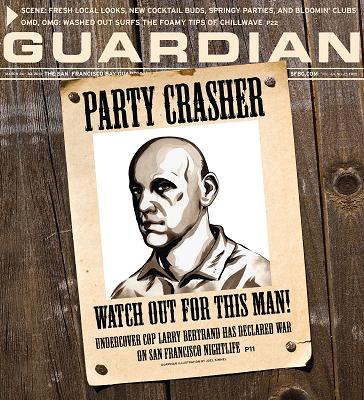
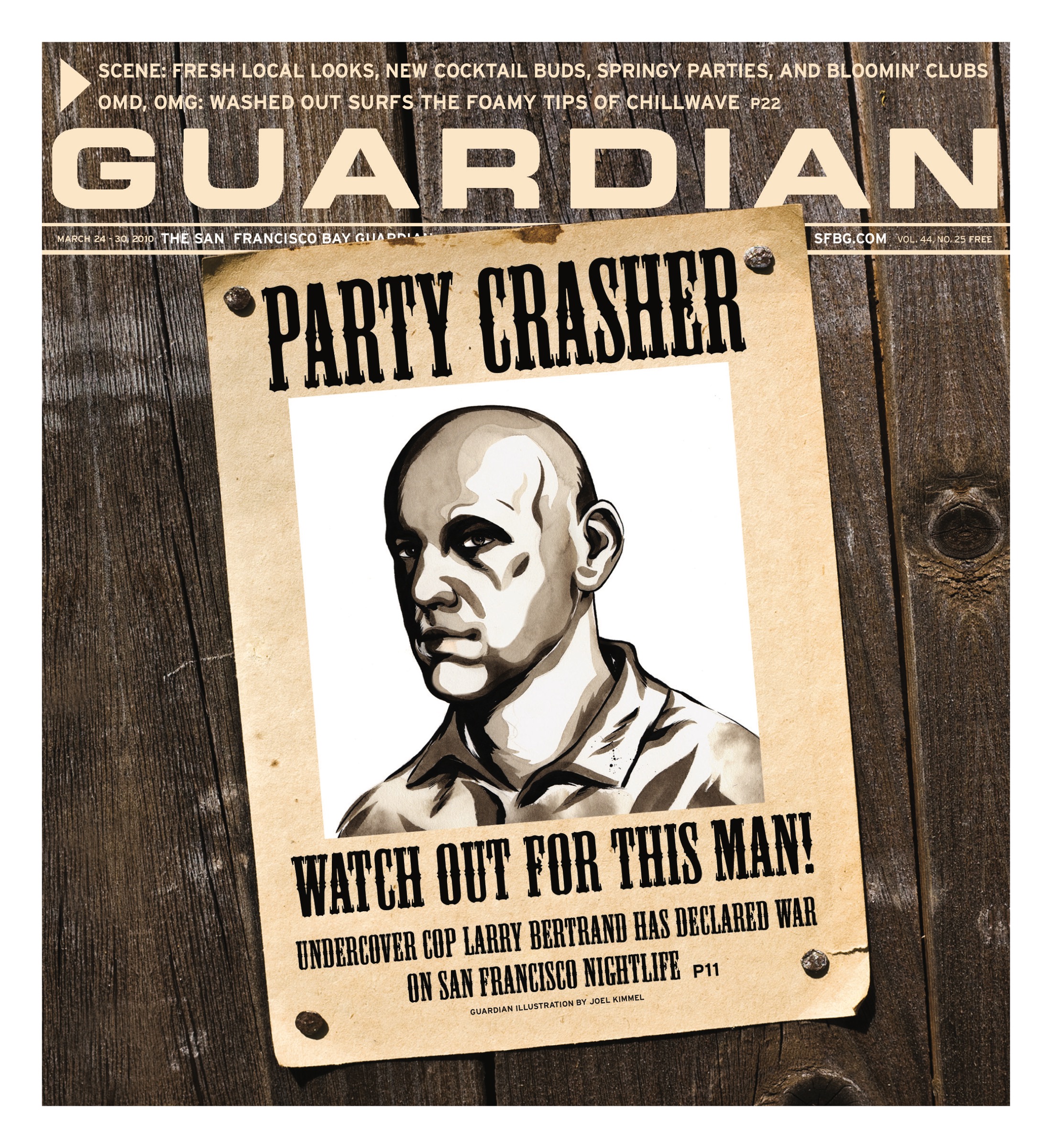
The SFPD and its undercover party-busting cop Larry Bertrand are also accused of harassing nightclub owners and patrons, busting private parties using excessive force and warrantless raids, and illegally seizing computers and other personal items – all while publicly seeking to discredit the Entertainment Commission and seize its power to shut down nightlife in the city, as well as seeking greater authority to roust and threaten vagrants by proposing a law to ban sitting or lying on city sidewalks.

SFPD officials have repeatedly claimed the agency can be trusted not to abuse these new authorities, but the latest revelations about criminal cops highlights how difficult it is for the public or the press to keep tabs on the agency.

The Guardian today sent the SFPD a Sunshine Ordinance request for the names and violations of the officers in question, but if the past is a predicator, it’s likely to be denied with the claim that such records are exempt under the Peace Officers Bill of Rights, a state law with strict privacy protections for cops.

Even defense attorneys who have well-established rights to examine an arresting officer’s criminal and disciplinary histories through what’s known at Pitchess motions are routinely stonewalled by the SFPD, say defense attorneys. For example, attorneys for Arash Ghandan, an alleged victim of Bertrand’s brutality and retaliation, are now having a hard time getting information on the officer’s history. “We are in a battle for Bertrand’s personnel file,” Ghanadan’s attorney, Steve Sommers, told the Guardian. “The city of San Francisco just does not hand over documents without a fight.”

In 2006, former SDPD attorney Reno Rapagnani and his wife, former SFPD Sgt. Leanna Dawydiak, raised the issue of SFPD secrecy, its pattern of routinely shielding problem officers from discipline and public scrutiny, and retaliating against whistleblowers – and were then subjected to a witch hunt that forced them out of the department.

More recently, SFPD and its powerful Police Officers Association succeeded in watering down an early warning system for violence-prone officers, removing a number of triggers – such as resisting arrest and assault on a police officer charges that often accompany cases of abusive police conduct – that had been recommended by a police practices expert and which are currently used in San Jose and other cities. 

Meanwhile, District Attorney Kamala Harris, a candidate for California Attorney General, is also being criticized for the latest scandal. Under the Penal Code, she bears the responsibility for ensuring that her prosecutors are doing background checks on all witnesses and sharing that information with defense attorneys.

“Ultimately, the district attorney has to answer for this. It is the prosecution’s duty to check the criminal backgrounds of officers called to testify. That never happened, and as a result, people have been denied fair trials,” Public Defender Jeff Adachi said in a press conference on the issue this morning.

The tough-on-crime era of the 1990s — when politicians, police, and prosecutors did all they could to create new laws and enforcement powers – is over, and we have a severely overcrowded prison system to show for its short-sightedness. But that mentality continues to guide the SFPD.

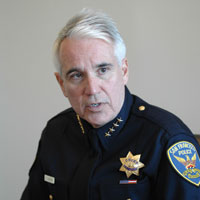
Since the arrival of Police Chief George Gascon from Arizona last August, SFPD has undertaken a series of crackdowns, including hundreds of drug arrests in the Tenderloin, raids on marijuana-growing operations in the Sunset and parties in SoMa, citing Dolores Park-goers for drinking, and, on Friday, giving at least two Critical Mass bicyclists tickets for amplified music. He’s also said he wants more power to discipline problem officers, but he has yet to show that’s anything more than just talk.

Perhaps now it’s time for the pendulum to swing back in favor of restoring damaged civil rights and raising our expectations of the agencies that have such power over our daily lives and freedom. The SFPD should adequately police itself before it looks for new ways to police the rest of us.   

Our 2010 Small Business Awards

culture@sfbg.com

The mallification of America continues apace, with faceless conglomerates training new generations of shoppers to look for the cheapest deals at bland big box outlets, regardless of what “cheap” might actually mean in terms of pollution, transportation, labor, and the local economy. (For starters, out of every $100 dollars spent at a big box, only $43 remains in the local economy, compared to $68 if you buy local.) But in San Francisco at least, the little guys keep on swinging, maintaining unique shops and service companies with a vibrant local feel and contributing to the patchwork of optimism, individuality, and community effort that make the city great. Each year, we honor several of them for sticking to their guns and pursuing their visions.


WOMEN IN BUSINESS AWARD

DEENA DAVENPORT, GLAMA-RAMA SALON

“The higher the hair, the closer to God,” a wise Southern drag queen once said. Here in San Francisco, one of our own heavenly salons, Glama-Rama, is about to get a whole lot more divine, expanding from its homey kitsch digs in SoMa to a new 2500 square foot space on Valencia Corridor, creating 16 new jobs. The driving force behind that expansion is owner Deena Davenport, who combined her hairdressing talent, natural business acumen, and deep connection to the local arts scene into a formula for sheer success when she opened Glama-Rama 11 years ago.

“My dream was not to have a business, but a community space,” Davenport told me. “I wanted a place for all my gifted friends to express themselves. Not just our excellent stylists, but artists, designers, musicians, event producers — we all came together to make this happen. I think that’s the key to our success. We work with all kinds of styles and we don’t price ourselves out of the nonprofit sector. That allows a great mix of clientele, and an element of comfort for everyone.”

Davenport, a creative blur, plans to kickstart a Valencia Corridor merchants association once she gets settled in, and dreams of a future in politics. (She currently hosts a show on Pirate Cat Radio and appears onstage in local productions.) “I’m fortunate to have always had great friends and great landlords — and to be in a business the Internet can’t compete with,” she says.

“By the way, the new space will be two shades of cream with gold accents,” Davenport adds, ever the stylish professional. “We’re taking off our Doc Martens and putting on some heels.” (Marke B.)

GLAMA-RAMA

304 Valencia, SF

415-861-4526

www.glamarama.com


GOLDEN SURVIVOR AWARD

CAFÉ DU NORD

It’s no secret that nightlife in San Francisco has taken a big hit lately. A combination of economic woes and persistent crackdowns by the Department of Alcoholic Beverage Control and local police, a.k.a. the War on Fun, has taken its toll — even on 100-year-old live-venue mainstays like Café Du Nord.

“It’s been tough for us and for everyone out there,” says Guy Carson, who took over the space with Kerry LaBelle in 2003. “They don’t call it ‘hard times’ for nothing. But we love what we do, and we know how to run a quality business. I’ve been promoting live shows since I was nine years old, so you know it’s what I love. You have to be willing to weather the storms.”

The intimate basement space retains its speakeasy vibe and velvet-curtained, cabaret-like setting, while playing host to mighty big names and burgeoning local upstarts. As a “venue with a menu” that serves food and puts on all ages and 18+ shows, Café Du Nord has been specifically targeted by the city and ABC for what Carson calls “differing interpretations of the law.” He looks forward to the upcoming launch of the new California Music and Culture Association, which will bring together several local venues and nightlife activists to fight the tide of local nightlife repression. “When we all work together, we can return the city’s nightlife to its former glory,” Carson says. (Marke B.)

CAFÉ DU NORD

3174 Market, SF

(415) 861-5016

www.cafedunord.com


GOOD NEIGHBOR AWARD

OPPORTUNITY FUND

Eric Weaver put his first nonprofit loan package together in 1995. His small startup, called Opportunity Fund, helped brothers who wanted to expand their pet shop borrow $17,000 for aquariums and fish. The deal worked out well; the pet store prospered, the money got repaid, and Opportunity Fund was on its way to becoming one of the most successful microlending outfits in California.

Weaver, a Stanford MBA and the fund’s CEO, now oversees a staff of 35 that makes loans to small businesses, most of them minority owned, that might have trouble getting financing from a traditional bank. And the nonprofit continues to grow by helping entrepreneurs in the Bay Area get the financing they need to create jobs and build community businesses. “We just made our 1,000th loan,” he told me. “We’re on target to make 200 loans this year, more than ever.”

Unlike most banks, Opportunity Fund sees its clients almost as partners. The staff takes time to help borrowers work up a successful business plan and learn how to manage their finances. “We do one-on-one business counseling with almost all of our clients,” Weaver said.

The group also helps finance affordable housing developments and offers individual development accounts (IDAs)— special savings accounts that come with financial training and grants — for everything from education to home purchases to putting aside the cash it now takes to become a U.S. citizen.

A recent study showed that Opportunity Fund has created or retained 1,200 in the Bay Area. “With a median loan size of $7,000, and a focus on making loans to people who have historically been underserved by banks, Opportunity Fund has been a particularly valuable resource for women, minority, and low-income entrepreneurs,” Weaver noted. He added that 73 percent of Opportunity Fund borrowers are members of an ethnic minority, and 90 percent of borrowers have incomes at or below 80 percent of area median income.

Imagine a traditional bank making a statement like that. (Tim Redmond)

OPPORTUNITY FUND

785 Market Street, Suite 1700, SF

408-297-0204

opportuityfund.org


CHAIN ALTERNATIVE AWARD

NORTHERN CALIFORNIA INDEPENDENT BOOKSELLERS ASSOCIATION

Independent booksellers are a wonder. Up against giant chains like Wal-Mart, facing technological changes like Kindle and online behemoths like Amazon.com (which doesn’t even have to pay state sales taxes), it’s hard to believe they can even survive. Yet they do — in fact, the Northern California Independent Booksellers Association keeps growing.

“The mainstream press wants to write about bookstores closing,” Calvin Crosby, NCIBA’s vice president, told me. “But actually, stores are opening. We have two new members this year.”

The booksellers group keeps the small, community-based stores in the public eye, with promotions, events like the annual NCIBA awards (see page 28) and political lobbying (NCIBA is a big supporter of a bill by Assembly Member Nancy Skinner, D-Berkeley, that would force Amazon to pay sales tax).

One of the group’s biggest tasks is education — reminding the public that local bookstores serve a critical function. “I was at a book-signing recently with a major author, and a bunch of people showed up with books they bought on Amazon and they wanted to trade them for signed copies,” Crosby, who is community relations director at Books Inc., recalled. “I had to explain to all of them that Amazon doesn’t pay taxes and hurts the locals.”

And with 300 bookseller members, NCIBA is helping preserve the notion that buying a book from someone who actually cares about books is an idea whose time will never pass. (Redmond)

NCIBA

1007 General Kennedy, SF.

415-561-7686

www.nciba.com


SMALL BUSINESS ADVOCATE AWARD

KEITH GOLDSTEIN

“Money spent in a small business — far, far more of it stays here in the neighborhood than with a chain store,” says Keith Goldstein, president of the Potrero Hill Association of Merchants and Businesses. A Potrero Hill resident since 1974, and owner of Everest Waterproofing and Restoration, Inc., Goldstein has spent the last six years with the merchant’s association promoting a sense of community in the inclined blocks of Potrero.

He’s overseen the growth of the Potrero Hill Festival from what he calls “a small affair” to a yearly event that’s “great for residents and businesses,” and also serves on the Eastern Neighborhood Advisory Committee, where he works on issues, like new transit plans, that affect local businesses.

Somehow he has found the time to start SEEDS (www.nepalseeds.org), a group that provides infrastructure and health support to underserved Tibetan villages, and is involved in Food Runners (www.foodrunners.org), an organization that links homeless shelters to food sources.

The superlative community member incorporates the ‘buy local’ mentality into every aspect of his life, even placing the administration of the health care plan for his 50 employees into the hands of a fellow Potrero Hill Merchant’s Association member. “It’s all richly rewarding,” Goldstein says of his hands-on role in his neighborhood’s economic viability. “I like to walk around the hill and be able to chat with my neighbors about quality of life issues.” (Caitlin Donohue)

KEITH GOLDSTEIN

Potrero Hill Association of Merchants and Businesses

1459 18th St., SF.

(415) 341-8949

www.potrerohill.biz


EMPLOYEE-OWNED BUSINESS AWARD

RED VIC MOVIE HOUSE

“Once it got going, it was like a perpetual-motion machine. And I have to say, I think it was the collective nature of the thing that’s kept the Red Vic going this long,” says Jack Rix, long time worker and cofounder of the Red Vic Movie House, which celebrates its 30th anniversary this year.

The Red Vic’s employees put a lot into the neighborhood theater’s showings of unique and classic flicks. Each worker-owner does a little of everything, from sweeping the lobby floor to washing dishes. “We’re all utility players here, this is very much a labor of love,” Rix says. Launched in 1980 by community organizers, the theater’s focus has not only been on providing great movies but doing it sustainably, installing solar paneling on the roof and eschewing paper products. “Back then I don’t think the phrase ‘green’ existed,” Rix recalls. “We were trying to be ‘green’ and we didn’t even know it!”

The Red Vic’s workers aren’t the only ones with a certain affection for the theater’s bench seating, environmentally friendly ceramic coffee mugs, and wooden popcorn bowls. Rix says some Upper Haight residents will wait for blockbusters to make their way out of “corporate” movie cinemas to the Red Vic’s second-run screen. “We’re very much a community theater,” he says proudly. (Donohue)

RED VIC MOVIE HOUSE

1727 Haight, SF

(415) 668-3994

www.redvicmoviehouse.com


CHAIN ALTERNATIVE AWARD

OTHER AVENUES

Nestled in a part of the city best known for its tiny pastel homes and bracing sea breezes, Ocean Beach’s Other Avenues is everything you could desire in a neighborhood grocery store: Warm atmosphere, vast swaths of bulk food bins, and a well-edited health food selection, including vitamins, medicines, and cheery shelves of produce. Plus health insurance for all its knowledgeable employees.

Trader who? No need for big box stores near Other Avenues, which has earned a loyal clientele in the 36 years since it first opened its doors. “Since we’re a co-op, I like to think of us as a giant organism,” says Other Avenues worker Ryan Bieber. “Occasionally we lose parts and regrow them. A lot of customers have been coming here for 10, 20 years.” Their loyalty might be in response to Other Avenues’ commitment to keeping its beachside clientele healthy and well. “The aim is to make sure that people have access to things like this,” says Bieber.

Asked what he thinks would happen if one of the chain grocery behemoths encroaches on the shop’s territory, Bieber is unconcerned. “I think people will come here regardless. [We] have been doing this forever and we take pretty good care of ourselves. I think our customers really respond to that. We wouldn’t want a world where there was only Whole Foods — that’d be too boring!” (Donohue)

OTHER AVENUES

3930 Judah, SF

(415) 661-7475

www.otheravenues.coop


ARTHUR JACKSON DIVERSITY IN SMALL BUSINESS AWARD

RAYMOND OW-YANG

Raymond Ow-Yang tends to downplay the impact he’s had on the North Beach-Chinatown artistic landscape. The owner of New Sun Hong Kong restaurant, Ow-Yang put up the funds to have the iconic Jazz Mural painted on the Columbus and Broadway walls of his Chinese restaurant. The artist Bill Weber approached him in 1988 — securing an approximately $70,000 aesthetic gift to the community that Ow-Yang has never sought public recognition for.

“Back then you’re young, you have no brain. I thought, this is nice — it’s something you do because you feel like it,” Ow-Yang recalls dismissively.

“Nice”is an understatement. The mural, which depicts famous San Francisco figures and scenes, has become one of the neighborhood’s visual joys, stopping tourists in their photo-snapping tracks. The gift reflects Ow-Yang’s commitment to the streets he grew up on

He immigrated to Chinatown from Canton in 1962, at age 13. A lifelong entrepreneur, Ow-Yang owned a photo studio, a floral shop, and a restaurant in Oakland’s Chinatown (the original Sun Hong Kong) before opening at 606 Broadway in 1989. The restaurant is open until 3 a.m. every day — a timetable residents can appreciate for more reasons than just Ow-Yang’s post-bar won ton soup. “Before, people were afraid to walk through this area,” says the businessman. “Now there’s a lot more foot traffic — the city even put up traffic lights. With the bright lights [from New Sun Hong Kong], it’s a lot safer in this area.” (Donohue)

RAYMOND OW-YANG

New Sun Hong Kong

606 Broadway, SF

(415) 956-3338


The voice of fun

0

steve@sfbg.com

In the midst of a crackdown on San Francisco nightlife, club operators, promoters, entertainers, and supporters of a vibrant urban scene have formed a new lobbying group that seeks to offer a united voice in favor of fun.

The California Music And Culture Association (CMAC), a nonprofit advocacy and education group, launches its first chapter in San Francisco this week.

Discussions about the need to organize have been going on for years among the owners of local nightclubs such as Bottom of the Hill, Mighty, DNA Lounge, and Café Du Nord. They were initially triggered by arbitrary enforcement actions by the California Alcoholic Beverage Control (ABC) and persistent noise complaints by a handful of NIMBY neighbors (see “Death of fun,” 5/24/06 and “Death of fun, the sequel,” 4/24/07).

But in recent months, conflicts between the culture-creators and enforcement agencies have come to head, driven by an aggressive crackdown on parties and clubs led by ABC agent Michelle Ott and San Francisco cop Larry Bertrand (see “The new war on fun,” March 23) and efforts by Mayor Gavin Newsom and other officials to blame youth violence on the entertainment industry.

“This is certainly as bad as it’s ever been,” said Guy Carson, owner of Café Du Nord and a CMAC board member who has run San Francisco nightclubs for 26 years. “We needed an organization that can speak for us.”

So dozens of nightlife advocates have pooled their resources to create CMAC. The organization is supported by membership dues and aims to follow a model similar to the San Francisco Bicycle Coalition, which has more than 11,000 members and has been effective at advocating for their interests.

What’s at stake, Carson said, is San Francisco’s reputation as a vibrant, world-class city that nurtures its artists and welcomes those who come into town for parties and events.

“Do we want to look like Walnut Creek?” Carson asked rhetorically. “I came here because I like a vibrant arts scene, and that requires an infrastructure. It doesn’t happen in a void.”

He said City Hall and the enforcement agencies have lost sight of the important role nightlife plays in creating the city’s culture, and how aggressive enforcement efforts can push club owners — many who are “struggling to survive,” Carson said — over the edge.

“There is a void in the political and public perception of nightlife,” said Frieda Edgette, an employee of the politically connected firm Barbary Coast Consulting, which helped launch CMAC. Edgette added that the group’s goal is “to empower and provide a voice for a constituency that hasn’t had a voice.”

Beyond advocating for the interests of members at city and state levels, CMAC will serve as an information clearinghouse on best practices for maintaining good neighborhood relations and research into the importance of the industry to the economy.

“I’m not sure club owners do all they can to foster good relationship with their neighbors,” said Tim Benetti, owner of Bottom of the Hill, a former deputy city attorney, and current CMAC board member. “So we can play a big role in educating our members.”

Yet he said that a far bigger problem has been the polarization between the nightlife community and entities that try to demonize and scapegoat it for problems ranging from noise to drugs to violence. “There is an antagonism that has developed between nightclubs and enforcement agencies, and we want to end that antagonism,” Benetti said. “Right now, there’s no dialogue.”

Or as Edgette said, “We want to bring all the parties to the table to have a holistic discussion about nightlife.”

So far, efforts to open up that dialogue have gone nowhere. Attorney Mark Webb, who represents some of the victims of harassment and brutality by Bertrand and Ott, publicly called on Newsom to mediate the dispute in March. But he was rebuffed, so last month he filed a racketeering case against the city, arguing that police shakedowns of legal activities amount to a criminal enterprise.

“I was quite disappointed at the reaction to this case,” Webb said. “It’s fallen on deaf ears in terms of trying to get Newsom or others in power to deal with it. Now it’s just in the pile of lawsuits.”

Last week the City Attorney’s Office had the case bumped up to federal court, and Webb said he has subpoenaed police records and sought depositions from Bertrand and his supervisors. Another lawsuit, brought by promoter Arash Ghanadan after he was arrested and, he charges, brutalized by Bertrand in retaliation for filing an earlier complaint, is also being contested by the city.

“We are in a battle for Bertrand’s personnel file,” said Ghanadan’s attorney, Steve Sommers, who is also seeking to depose Police Chief George Gascón about the matter.

State Sen. Mark Leno has helped to mediate the disputes and has been in touch with ABC chief Steve Hardy. “I think we’re going to see some improvement,” Leno said. “I don’t know how aware he was of the activities at the local level.”

Those activities include citing nightclubs for not serving enough food, repeatedly harassing customers at certain disfavored clubs, pursuing noise complaints on behalf of particularly sensitive neighbors, and announcing a crackdown on bars serving infused liquors.

Leno welcomed the creation of CMAC and said that it will be an important voice for a vital and under-appreciated industry, both in San Francisco and in Sacramento, where Leno unsuccessfully pushed legislation to extend the operating hours of nightclubs a few years ago.

“I applaud this effort,” Leno said of CMAC. “There is great wisdom to advocating for this on a statewide basis.” 

CMAC LAUNCH PARTY

With DJs J Boogie, Motion Potion, and more

Thu/May 6

7–11 p.m., $10

Mezzanine

444 Jessie, SF

Music listings

0

Music listings are compiled by Paula Connelly and Cheryl Eddy. Since club life is unpredictable, it’s a good idea to call ahead to confirm bookings and hours. Prices are listed when provided to us. Submit items at listings@sfbg.com.

WEDNESDAY 21

ROCK/BLUES/HIP-HOP

*Bronx, Violent Soho, Mariachi El Bronx, Sean Wheeler and Zander Schloss Independent. 8pm, $20.

Camera Obscura, Best Coast Great American Music Hall. 8pm, $20.

"Eclectic Live" Harlot, 46 Minna, SF; www.harlotsf.com. 9pm, $5. With Shande and Kill Moi.

His Name is Alive, Orange Peels, Kitten Bottom of the Hill. 9pm, $10.

Norah Jones, Sasha Dobson Fillmore. 8pm, $60.

Jookio Duo, Phil Musra Trio, Cottom Museum Café du Nord. 8:30pm, $15.

Panthelion Madrone Art Bar. 9:30pm, $5.

Talvin Singh presents Tablatronica Live, Janaka Selekta Bimbo’s 365 Club. 8pm, $25.

Taargus Taargus, Cola-Cola, What Now? Hemlock Tavern. 9pm, $6.

DANCE CLUBS

Booty Call Q-Bar, 456 Castro, SF; www.bootycallwednesdays.com. 9pm. Juanita Moore hosts this dance party, featuring DJ Robot Hustle.

Machine Sloane, 1525 Mission, SF; (415) 621-7007. 10pm, free. Warm beats for happy feet with DJs Sergio, Conor, and André Lucero.

Mary-Go-Round Lookout, 3600 16th St, SF; (415) 431-0306. 10pm, $5. A weekly drag show with hosts Cookie Dough, Pollo Del Mar, and Suppositori Spelling.

RedWine Social Dalva. 9pm-2am, free. DJ TophOne and guests spin outernational funk and get drunk.

Respect Wednesdays End Up. 10pm, $5. Rotating DJs Daddy Rolo, Young Fyah, Irie Dole, I-Vier, Sake One, Serg, and more spinning reggae, dancehall, roots, lovers rock, and mash ups.

Synchronize Il Pirata, 2007 16th St, SF; (415) 626-2626. 10pm, free. Psychedelic dance music with DJs Helios, Gatto Matto, Psy Lotus, Intergalactoid, and guests.

Yoruba Dance Sessions Bacano! Som., 2925 16th St, SF; (415) 558-8521. 9pm, free. With resident DJ Carlos Mena and guests spinning afro-deep-global-soulful-broken-techhouse.

THURSDAY 22

ROCK/BLUES/HIP-HOP

B Foundation, Pigeon John, Cubik and Origami Bottom of the Hill. 9pm, $12.

*Bar Feeders, Los Dryheavers, Steeples Knockout. 10pm, $6.

Bloody Beetroots, Tenderloins, Nisus Independent. 9pm, $16.

*Cuban Cowboys, Chicha Libre Rickshaw Stop. 8pm, $12.

Jrod Indigo Coda. 9:30pm, $7.

Mofo Party Band Bimbo’s 365 Club. 8pm, $16.

Phantom Kicks, Spesus Christ, Soap Collectors Hotel Utah. 9pm, $6.

*"RockAria" Davies Symphony Hall, 201 Van Ness, SF; www.sfgmc.org. 8pm, $15. San Francisco Gay Men’s Chorus, with guest Mission High School Chorus, perform rock tunes.

Sonata Arctica, Mutiny Within, Powerglove Slim’s. 8pm, $23.

Yo La Tengo, Camera Obscura Fillmore. 8pm, $26.50.

DANCE CLUBS

Afrolicious Elbo Room. 9:30pm, $5-7. DJs Pleasuremaker and Señor Oz spin Afrobeat, Tropicália, electro, samba, and funk.

Blue Moon Revue DNA Lounge. 9pm, $20. Swing, cabaret, and more.

Caribbean Connection Little Baobab, 3388 19th St, SF; (415) 643-3558. 10pm, $3. DJ Stevie B and guests spin reggae, soca, zouk, reggaetón, and more.

Drop the Pressure Underground SF. 6-10pm, free. Electro, house, and datafunk highlight this weekly happy hour.

Good Foot Yoruba Dance Sessions Bacano! Som., 2925 16th St, SF; (415) 558-8521. 9pm, free. A James Brown tribute with resident DJs Haylow, A-Ron, and Prince Aries spinning R&B, Hip hop, funk, and soul.

Gymnasium Matador, 10 Sixth St, SF; (415) 863-4629. 9pm, free. With DJ Violent Vickie and guests spinning electro, hip hop, and disco.

Half-way to Mitchfest El Rio. 6pm, $10-20 sliding scale. With DJ Sarah Westlake spinning funk disco and live performances of music, poetry, and more.

Kelley Stoltz Jukebox Amnesia. 10pm, free.

Koko Puffs Koko Cocktails, 1060 Geary, SF; (415) 885-4788. 10pm, free. Dubby roots reggae and Jamaican funk from rotating DJs.

Mestiza Bollywood Café, 3376 19th St, SF; (415) 970-0362. 10pm, free. Showcasing progressive Latin and global beats with DJ Juan Data.

Peaches Skylark, 10pm, free. With an all female DJ line up featuring Deeandroid, Lady Fingaz, That Girl, and Umami spinning hip hop.

Popscene 330 Rich. 10pm, $10. Rotating DJs spinning indie, Britpop, electro, new wave, and post-punk.

Tropicana Madrone Art Bar. 9pm. Salsa, cumbia, reggaeton, and more with DJ Don Bustamante and Sr. Saenz.

FRIDAY 23

ROCK/BLUES/HIP-HOP

Casual, BPos, Chosen Few, Sound Earth El Rio. 9pm, $10.

*Children of the Damned, Hatchet, Witchaven, Invection, DJ Rob Metal Thee Parkside. 9:30pm, $8.

Dark Star Orchestra Regency Ballroom. 8pm, $33.

Dear Hunter, Kay Kay and His Weathered Underground, Pine and Battery, Kinzie Affair Bottom of the Hill. 7pm, $12.

*Early Graves, He Who Cannot Be Named, Bomber Hemlock Tavern. 9:30pm, $6.

Japandroids, Avi Buffalo Independent. 9pm, $15.

Shelby Lynne, Findlay Brown, Ann Atomic Great American Music Hall. 9pm, $22.

Lydia Pense and Cold Blood Biscuits and Blues. 8 and 10pm, $20.

John Richardson Socha Café, 3235 Mission, SF; (415) 643-6848. 8:30pm, free.

"Rock, Strip, N Roll" Blue Macaw, 2565 Mission, SF; www.liveevilrocks.com. 9pm, $10. With Live Evil, Wildside, and Cookie Mongoloid, plus burlesque by Clandestine, Twilight Vixen Revue, and Sparkly Devil.

Josh Rouse, Bart Davenport Bimbo’s 365 Club. 9pm, $22.50.

Slackers, Phenomenauts, TomorrowMen, DJ Big Dwayne Slim’s. 9pm, $16.

Stripmall Architecture, Geographer, Delle Vellum Café du Nord. 9:30pm, $12.

Yo La Tengo, Thee Ohsees Fillmore. 9pm, $26.50.

Zoo Station, Minks Red Devil Lounge. 9:30pm, $10.

JAZZ/NEW MUSIC

Audium 9 1616 Bush, SF; (415) 771-1616. 8:30pm, $15.

Black Market Jazz Orchestra Top of the Mark. 9pm, $10.

Booker T. Herbst Theatre, 401 Van Ness, SF; www.sfjazz.org. 8pm, $25-55.

Eric Kurtzrock Trio Ana Mandara, Ghirardelli Square, 891 Beach, SF; (415) 771-6800. 8pm, free.

Madeline Peyroux Yoshi’s San Francisco. 8 and 10pm, $26.

Tin Cup Serenade Revolution Café, 3248 22nd St, SF; (415) 642-0474. 8:45pm, free.

FOLK/WORLD/COUNTRY

Locura, Makru Elbo Room. 10pm, $10.

Lucky Road Amnesia. 9pm, $5.

Rob Reich and Craig Ventresco Amnesia. 7pm, free.

Toshio Hirano Mercury Café, 201 Octavia, SF; (415) 252-7855. 7:30pm, free.

DANCE CLUBS

Activate! Lookout, 3600 16th St, SF; (415) 431-0306. 9pm, $3. Face your demigods and demons at this Red Bull-fueled party.

Alcoholocaust Presents Riptide Tavern. 9pm, free. DJ What’s His Fuck spins punk rock and other gems.

Blow Up Rickshaw Stop. 10pm, $10. With rotating DJs.

Bonobo Mezzanine. 9pm, $22.50. With YPPAH.

Exhale, Fridays Project One Gallery, 251 Rhode Island, SF; (415) 465-2129. 5pm, $5. Happy hour with art, fine food, and music with Vin Sol, King Most, DJ Centipede, and Shane King.

Fagsweat Rickshaw Stop. 6pm, $3. DJ Kuze spins at this happy hour for gay athletes and friends.

Fat Stack Fridays Koko Cocktails, 1060 Geary, SF; (415) 885-4788. 10pm, free. With rotating DJs Romanowski, B-Love, Tomas, Toph One, and Vinnie Esparza.

Gay Asian Paradise Club Eight, 1151 Folsom, SF; www.eightsf.com. 9pm, $8. Featuring two dance floors playing dance and hip hop, smoking patio, and 2 for 1 drinks before 10pm.

Good Life Fridays Apartment 24, 440 Broadway, SF; (415) 989-3434. 10pm, $10. With DJ Brian spinning hip hop, mashups, and top 40.

Gymnasium Stud. 10pm, $5. With DJs Violent Vickie and guests spinning electro, disco, rap, and 90s dance and featuring performers, gymnastics, jump rope, drink specials, and more.

Hot Chocolate Milk. 9pm, $5. With DJs Big Fat Frog, Chardmo, DuseRock, and special guest Sunshine Jones spinning old and new school funk.

House of Voodoo Medici Lounge. 9pm, $5. With DJs voodoo and Purgatory spinning goth, industrial, glam rock, and more.

J. Rocc Mighty. 10pm, $10.

Kev Choice with DJ Anannda Coda. 10pm, $10. Hip-hop, soul, and funk.

Look Out Weekend Bambuddha Lounge. 4pm, free. Drink specials, food menu and resident DJs White Girl Lust, Swayzee, Philie Ocean, and more.

M4M Fridays Underground SF. 10pm-2am. Joshua J and Frankie Sharp host this man-tastic party.

Psychedelic Radio Club Six. 9pm, $7. With DJs Kial, Tom No Thing, Megalodon, and Zapruderpedro spinning dubstep, reggae, and electro.

Rockabilly Fridays Jay N Bee Club, 2736 20th St, SF; (415) 824-4190. 9pm, free. With DJs Rockin’ Raul, Oakie Oran, Sergio Iglesias, and Tanoa "Samoa Boy" spinning 50s and 60s Doo Wop, Rockabilly, Bop, Jive, and more.

Trannyshack DNA Lounge. 10pm, $12. Michael Jackson tribute with performances by Holy McGrail, Raya Light, Candi Gurl, Suppositori Spelling, and more.

SATURDAY 24

ROCK/BLUES/HIP-HOP

Angel Island, Sons of Doug, Manzanita Hotel Utah. 9:30pm, $6.

Seth Augustus Revolution Café, 3248 22nd St, SF; (415) 642-0474. 8:45pm, free.

Dark Star Orchestra Regency Ballroom. 8pm, $33.

Dr. Dog, Sean Bones, Pepi Ginsberg Great American Music Hall. 9pm, $20.

Rick Estrin and the Nightcats Biscuits and Blues. 8 and 10pm, $20.

*Finntroll, Moonsorrow, Swallow the Sun, DJ Rob Metal Thee Parkside. 9pm, $20-40.

Ruth Gerson Hotel Utah. 8pm, $10.

HIJK, Teen Challenge, Wendy Darling Hemlock Tavern. 9:30pm, $7.

Hotel Eden, Kevin Beadles, Bias Tape Brainwash Café, 1122 Folsom, SF; www.brainwash.com. 8pm, free.

Alee Karim, Dry Spells, Sarees, Lake Millions Amensia. 9pm, $7.

Luce, Brad Wolfe, Felsen Slim’s. 9pm, $15.

*Rykarda Parasol, Tiny Television, Chambers Café du Nord. 9:30pm, $12.

Picture Atlantic, Bird By Bird, Please Do Not Fight Bottom of the Hill. 9pm, $12.

Re-Volts, Compton SF, Started-Its El Rio. 10pm, $7.

Reefrider, Lloyds Garage, Suck It Thee Parkside. 3pm, free.

Sleepy Sun, Late Young Rickshaw Stop. 8:30pm, $12.

*Wedding Present, Mister Loveless, Surf Cinema Independent. 9pm, $15.

Yo La Tengo, Sic Alps Fillmore. 9pm, $26.50.

JAZZ/NEW MUSIC

Audium 9 1616 Bush, SF; (415) 771-1616. 8:30pm, $15.

Eric Kurtzrock Trio Ana Mandara, Ghirardelli Square, 891 Beach, SF; (415) 771-6800. 8pm, free.

Marlena Teich Quintet Savanna Jazz. 8pm.

Madeline Peyroux Yoshi’s San Francisco. 8 and 10pm, $26.

Ricardo Scales Top of the Mark. 9pm, $15.

FOLK/WORLD/COUNTRY

Bossa 5-0 Socha Café, 3235 Mission, SF; (415) 643-6848. 8:30pm, free.

Gamelan Sekar Jaya School of the Arts, Main Theater, 555 Portola, SF; (510) 655-1227. 7pm, $20.

Ghost The Music Store, 66 West Portal, SF; (415) 664-2044. 2pm, free.

Ana Moura Palace of Fine Arts, 3301 Lyon, SF; www.sfjazz.org. 8pm, $25-55.

Tito Y Son de Cuba Red Poppy Art House. 8pm, $15.

DANCE CLUBS

Bar on Church 9pm. Rotating DJs Foxxee, Joseph Lee, Zhaldee, Mark Andrus, and Niuxx.

Barracuda 111 Minna. 9pm, $5-10. Eclectic 80s music with Djs Damon, Phillie Ocean, and Javier, plus free 80s hair and make-up by professional stylists.

Bootie DNA Lounge. 9pm, $6-12. Mash-ups with Adrian and Mysterious D.

Ceremony Knockout. 9pm, $10. With David J, Vinsantos, and DJ Yule B Sorry.

Colombia y Panama Coda. 10pm, $5. Latin with DJs Beto, Vinnie Esparza, and Guillermo.

Dead After Dark Elbo Room. 6-9pm, free. With DJ Touchy Feely.

4OneFunktion Elbo Room. 10pm, $5-10. Hip-hop with Eric Bobo, Rhettmatic, and F.A.M.E.

Go Bang! Deco SF, 510 Larkin, SF; (415) 346-2025. 9pm, $5. Recreating the diversity and freedom of the 70’s/ 80’s disco nightlife with DJs Steve Fabus, Nicky B., and special guest Prince Klassen.

HYP Club Eight, 1151 Folsom, SF; www.eightsf.com. 10pm, free. Gay and lesbian hip hop party, featuring DJs spinning the newest in the top 40s hip hop and hyphy.

Junk Food Love Madrone Art Bar. 9pm, $5. Hip-hop, soul, and reggae with DJ A-Ron, Sneak-E Pete, and Chilipino and Chardmo.

Reggae Gold Club Six. 9pm, $15. With DJs Daddy Rolo, Polo Mo’qz, Tesfa, Serg, and Fuze spinning dancehall and reggae.

Social Club Lookout, 3600 16th St, SF; (415) 431-0306. 9pm. Shake your money maker with DJs Lee Decker and Luke Fry.

Spirit Fingers Sessions 330 Ritch. 9pm, free. With DJ Morse Code and live guest performances.

SUNDAY 25

ROCK/BLUES/HIP-HOP

Aqua Teen Hunger Force Regency Ballroom. 8pm, $25.

Blue Oyster Cult, Medieval Knievel Slim’s. 8pm, $30.

Dr. Dog, Sean Bones, Pepi Ginsberg Great American Music Hall. 9pm, $20.

Sue Foley and Peter Karp Biscuits and Blues. 7:30 and 9:15pm, $20.

Mallard, Le Switch, Whispering Pines Hemlock Tavern. 9pm, $6.

Shearwater, Wye Oak, Hospital Ships Bottom of the Hill. 9pm, $12.

Shotwell, Kreamy ‘Lectric Santa, Dakota Slim Thee Parkside. 8pm. Benefit for Haiti. Other artists include Welfare Waifs and the Exhibionette, Alabaster Choad, Aquitted, Lost Perros Locos, and Ben the Comedian.

Emily Wells, Gabriel Kahane and Rob Moose, Timmy Straw Café du Nord. 8pm, $10.

JAZZ/NEW MUSIC

Charles Lloyd New Quartet Palace of Fine Arts, 3301 Lyon, SF; www.sfjazz.org. 7pm, $30-70.

Jazz Mafia’s Brass Bows and Beats Yoshi’s San Francisco. 3 and 7pm, $10-75.

Noel Jewkes, Larry Vuckovich, and Marky Quayle Bliss Bar, 4026 24th St, SF; (415) 826-6200. 4:30pm, $10.

Quijerema Coda. 8pm, $10.

FOLK/WORLD/COUNTRY

Gen-11, Longliner Thee Parkside. 3pm, free.

Underskore Orkestra, Mad Maggies Amnesia. 9pm, $7-10.

DANCE CLUBS

DiscoFunk Mashups Cat Club. 10pm, free. House and 70’s music.

Dub Mission Elbo Room. 9pm, $6. Dub, roots, and classic dancehall with Ludachris and Vinnie Esparza.

45Club Knockout. 10pm, free. Funky soul with dX the Funky Gran Paw, Dirty Dishes, and English Steve.

Fresh Ruby Skye. 6pm, $25. With the Perry Twins.

Gloss Sundays Trigger, 2344 Market, SF; (415) 551-CLUB. 7pm. With DJ Hawthorne spinning house, funk, soul, retro, and disco.

Honey Soundsystem Paradise Lounge. 8pm-2am. "Dance floor for dancers – sound system for lovers." Got that?

Jock! Lookout, 3600 16th St, SF; (415) 431-0306. 3pm, $2. This high-energy party raises money for LGBT sports teams.

Kick It Bar on Church. 9pm. Hip-hop with DJ Zax.

Lowbrow Sunday Delirium. 1pm, free. DJ Roost Uno and guests spinning club hip hop, indie, and top 40s.

Religion Bar on Church. 3pm. With DJ Nikita.

Stag AsiaSF. 6pm, $5. Gay bachelor parties are the target demo of this weekly erotic tea dance.

MONDAY 26

ROCK/BLUES/HIP-HOP

Keith Emerson and Greg Lake Regency Ballroom. 8pm, $41-65.

"Felonious Presents Live City Revue" Coda. 9pm, $7.

Nanci Griffith Yoshi’s San Francisco. 8pm, $40.

Growing, Eric Copeland, Death Sentence: Panda! Bottom of the Hill. 9pm, $14.

Sam Flax Keener and Higher Color, Part Time, Cosmetics Knockout. 9pm, $7.

Leon Redbone Great American Music Hall. 8pm, $25.

DANCE CLUBS

Bacano! Som., 2925 16th St, SF; (415) 558-8521. 9pm, free. With resident DJs El Kool Kyle and Santero spinning Latin music.

Black Gold Koko Cocktails, 1060 Geary, SF; (415) 885-4788. 10pm-2am, free. Senator Soul spins Detroit soul, Motown, New Orleans R&B, and more — all on 45!

Death Guild DNA Lounge. 9:30pm, $3-5. Gothic, industrial, and synthpop with Decay, Joe Radio, and Melting Girl.

M.O.M. Madrone Art Bar. 6pm, free. With DJ Gordo Cabeza and guests playing all Motown every Monday.

Manic Mondays Bar on Church. 9pm. Drink 80-cent cosmos with Djs Mark Andrus and Dangerous Dan.

Monster Show Underground SF. 10pm, $5. Cookie Dough and DJ MC2 make Mondays worth dancing about, with a killer drag show at 11pm.

Moonshine Mondays Dalva. 6pm, free. With DJ Blaze Orange spinning vintage country.

Network Mondays Azul Lounge, One Tillman Pl, SF; www.inhousetalent.com. 9pm, $5. Hip-hop, R&B, and spoken word open mic, plus featured performers.

Skylarking Skylark. 10pm, free. With resident DJs I & I Vibration, Beatnok, and Mr. Lucky and weekly guest DJs.

TUESDAY 27

ROCK/BLUES/HIP-HOP

Aqualung, Krista Polvere Swedish American Hall (upstairs from Café du Nord). 8pm, $20.
Everybody Was in the French Resistance … Now, AB and the Sea, Carletta Sue Kay Bottom of the Hill. 9pm, $12.
Nanci Griffith Yoshi’s San Francisco. 8pm, $40.
Larry and His Flask, Kemo Sabe, T&A Knockout. 6pm, free.
Liars, Fol Chen Slim’s. 8:30pm, $15.
Mary Onettes, Magic Bullets, Here Come the Saviours Rickshaw Stop. 8pm, $12.
Tempo No Tempo, Dinowalrus, Ingot Rot Hemlock Tavern. 9pm, $6.
Le Vice, Audia Fauna, Wooster Elbo Room. 9pm, $6.
DANCE CLUBS
Alcoholocaust Presents Argus Lounge. 9pm, free. "Stump the Wizard" with DJ Wizard and DJ What’s His Fuck.
Eclectic Company Skylark, 9pm, free. DJs Tones and Jaybee spin old school hip hop, bass, dub, glitch, and electro.
La Escuelita Pisco Lounge, 1817 Market, SF; (415) 874-9951. 7pm, free. DJ Juan Data spinning gay-friendly, Latino sing-alongs but no salsa or reggaeton.
Share the Love Trigger, 2344 Market, SF; (415) 551-CLUB. 5pm, free. With DJ Pam Hubbuck spinning house.


Force is the weapon of the weak: decrying the right’s violent rhetoric

16

American political discourse is being poisoned by some truly scary rhetoric from the right-wing, which is increasingly resorting to threats and condoning of violence, a trend that has played out in recent weeks right here on the Guardian’s Politics blog. Now is the time to recognize and stop it, just as a new coalition is calling for

San Francisco resident Greg Lee Giusti was arraigned in federal court this morning for making threatening phone calls to House Speaker Nancy Pelosi, one day after the arrest of Charles Alan Wilson for threatening to kill Sen. Patty Murray (D-Wash.). In both cases, the subject was the recent health care reform bill, the anger of the suspects stoked by misinformation and inflammatory rhetoric from top conservative politicians and media figures, as well as the Tea Party movement.

But these cases – along with the recent domestic terrorism plot by Christian fundamentalists and other incidents of overt and implied threats of violence – aren’t isolated examples; they are closer to the norm of rhetoric emanating from the right-wing these days, a trend not seen in this country since the months that led up to the bombing of the Oklahoma City federal building by right-wing radical Timothy McVeigh, the biggest act of domestic terrorism before 9/11.

Consider Giusti, who also wrote a scary letter to me and the Guardian in the midst of his threats against Pelosi, taking issue with our recent cover story that was critical of police crackdowns on SF nightlife. In additional to praising police violence and encouraging cops to “crack a few skulls open,” just like his NYPD cop uncle, who “knows how to inflect [sic] excruciating Paine [sic] on someone without leaving any signs of what happened.”

But Giusti was far from alone in promoting violence over the issues we’ve raised. SFPD Southern Station Capt. Daniel McDonough praised the sometimes-violent tactics of the two undercover cops who bust parties and nightclubs, strongly implying those tactics were justified to counter the unspecified threats of violence that nightclubs represent. “Because of their diligence and professionalism the amount of violence and disorder has been reduced,” McDonough wrote, echoing a troubling strain of right-wing political thought that condones violence to prevent even speculative threats of violence, a perspective that led us to invade Iraq.

And when I wrote about McDonough’s response yesterday, a commenter wrote that aggressive police tactics are justified because, “The unprecedented ascendancy of nightclubs and violation of the Constitutional rights of residents to peaceful use of their property calls for drastic measures.”

In a similar vein, our blog post this week on a newly released video of American soldiers in a helicopter opening fire on a crowd in Baghdad that included journalists and children while making disturbing comments that seemed to relish the opportunity to kill people also provoked some equally disturbing comments.

“So a couple of journalists embedded with terrorists killing Americans got wiped out…congrats to the shooters! A couple of terrorists in training got shot up in a terrorist rescue attempt…congrats to the shooters! Everyone on scene who died got what was coming to them,” one wrote, while another warned, “Raise a weapon against America or Americans and prepare to experience the worst day in the rest of your life. Hoowa!”

Even though the helicopter was miles away and the video showed no credible threats toward it or anyone else, supporters of the war seemed to think that quickly resorting to violence is acceptable. “This is the price we pay for are [sic] freedom. put yourself in that chopper and then put yourself on the ground they all no [sic] what can and will happen. It will happen at home again 911 just give it time. We will do are [sic] best to defend are [sic] country. GOD BLESS USA.”

And I will do my best to defend this country from right-wing extremists. That effort starts with challenging Sarah Palin’s winking exhortation for her followers to “lock and load,” and with letting commentators like Glenn Beck and Bill O’Reilly, on a nightly basis, cast liberals as enemies of the state to their well-armed listeners.

This is simply not OK, a point that’s being made by the prosecutors of Giusti and Wilson, as well as the new Stop Domestic Terrorism campaign by a coalition of organization concerns about the increasing violent rhetoric of the rights. 

“Law abiding Americans do not advocate violence against fellow Americans,” campaign spokesperson Brad Friedman said in a public statement. “As Americans, we all need to engage in a vigorous debate of the issues based on facts and reason rather than fear and prejudice.”

But even in San Francisco, it’s common for conservatives and so-called “moderates” to condone violence against the homeless, drug users, petty criminals, ravers, Critical Mass bicyclists, “illegal immigrants,” or others that they dismiss as “getting what’s coming to them” for daring to violate laws or social mores. I’ve personally had violence wished on me more times than I can count, in letters, phone messages, and to my face. 

As a full-time newspaper journalist for almost 20 years, I’ve dealt with right-wing crazies for a long time, but there are times when you can sense their indignation getting ratcheted up to dangerous levels. In 1994, I wrote stories for the Auburn Journal and Sacramento News & Review about right-wing “patriots” and “constitutionalists” that were part of the militia movement in Placer County.

They warned me that then-President Bill Clinton was an agent of the “New World Order” who was plotting a socialist takeover of the “real Americans,” and that violent resistance was necessary. They spun elaborate fantasies about the impending civil war, which they said the federal government had already started with their raids in Ruby Ridge and Waco. 

“You won’t be able to write an article like this anymore because the government will come and kick in your door and murder you and your children,” one militia member told me after my first article came out.

On April 19 of the next year, while I was working for the Santa Maria Times, I remember vividly when the federal building in Oklahoma City was bombed, killing 168 people. For the first 24 hours, most media outlets speculated that it was an attack by terrorists from the Middle East, but as soon as I heard it was the anniversary of the Waco incident, I knew exactly who was really responsible: the dangerous right wing extremism that pushed militia member Timothy McVeigh to attack his own country.

And now, it’s happening again. Overheated rhetoric on the right is casting Pelosi and fellow Democrats not just as political opponents, but as dangerous enemies of the “real Americans” that Palin claims to champion. They have, like Wilson said of Murray, “ a target on her back.”

When Sen. Leland Yee tried to find out how much Palin was being paid to speak at California State University-Stanislaus, he was aggressively attacked by her acolytes for trying to “take away her constitutional right to free speech,” according to an anonymous message left on his answering message yesterday, which his office shared with the Guardian. “Maybe we ought to have a homosexual with a long enough dick so he can stick it up his ass and fuck himself while he’s on stage giving a speech.”

Such crass, semi-literate, weirdly homophobic comments might be funny if they weren’t part of a larger, more dangerous trend in this country. Once again, a Democratic president is being actively accused of treasonous hostility to “real Americans” by major conservative figures with huge audiences, and once again, the lunatic fringe is being worked up into a frenzy.

The recently uncovered plot by Michigan militia members to murder police officers in the hopes of starting a holy war with the enemies of Christianity is just one indication for what this kind of rhetoric is leading to in isolated pockets around the country. Now is the time to put a stop to condoning violence in any of its forms, whether it’s cops cracking the skulls of clubbers or street denizens, soldiers firing on crowds of people, or citizens threatening our elected representatives.

“Force is the weapon of the weak,” said the radical pacifist-anarchist Ammon Hennacy, a quote that was often repeated by folk singer and progressive writer Utah Phillips, who I had the honor of covering at the same time I was covering the militia movement. It’s true, and at this difficult moment in our country’s history, let’s all try to stay strong.  

SFPD’s Capt. McDonough defends rogue cops

15

The San Francisco Police Department has steadfastly tried to ignore back-to-back cover stories in the Bay Guardian and SF Weekly that detailed the campaign of harassment and brutality against nightclubs and parties in SoMa by a pair of undercover cops.

The fact that those two cops – SFPC Officer Larry Bertrand and state agent Michelle Ott – have reportedly been absent from the scene in recent weeks might indicate that the department has heeded the outcry and put a leash on them. But now, in the “Captain’s Comments” in today’s Southern Station Newsletter, Capt. Daniel McDonough – who, along with Commander James Dudley, is believed by nightlife advocates to be behind the crackdown – has issued a full-throated defense of the pair’s actions.

Despite the fact that those actions (including repeated and selective harassment of certain clubs, illegal property seizures, threats and retaliation against complainants, and unnecessary force) have resulted in multiple legal actions against the city, McDonough claims they have somehow prevented unspecified “problems” and “violence and disorder.”

That negative claim is impossible to prove or disprove, but it’s certainly true that it was the arrival of aggressive cops at a January party that we wrote about that precipitated the “violence and disorder” that night.

McDonough writes, in full: 

There has been a recent deluge of articles about Nightlife in the Southern District.  The articles particularly focused on two fine individuals, Officer Bertrand of Southern Station and Agent Ott of the Alcoholic Beverage Commission. (ABC) 

One thing the articles didn’t have to focus on was the amount of violence occurring in the District at the late night venues.  This I believe has been directly related to the good work of these dedicated Officers.  In conjunction with the members of Southern Station, Officer Bertrand and Agent Ott would regularly inspect nightclubs and bars to ensure compliance with laws and codes that have been enacted to have an orderly establishment and to also stop the rampant amount of unpermitted parties that would arguably cause problems.  Because of their diligence and professionalism the amount of violence and disorder has been reduced.  Establishments that routinely would have numerous calls for services started to take responsibility to handle the influx of people and establish security procedures.  The benefits reaped by the citizens of San Francisco by the actions of Officer Bertrand and Agent Ott are measured in the lack of homicides shootings and knifings that haven’t occurred because of their good work.  They are to be commended.  I would also like to thank all of those establishment owners who communicate to me their positive relationships with those two officers.

Community Meeting 

Wednesday April 21 2010 6pm

Community Room

South Beach Harbor Pier 40

Man who threatened Pelosi sent hate mail to Guardian

Remember when we told you about that very special piece of fan mail from the guy who didn’t like our cover story about undercover cops targeting San Francisco nightlife?

Well, he appears to be the same person who just got picked up by the FBI for making threatening and harrassing phone calls to House Speaker Nancy Pelosi.

“[Federal officials] said he recited her home address and said if she wanted to see it again, she would not support the health care overhaul bill that since has been enacted,” according to the Chron piece about his arrest.

We didn’t publish his name with the post, because we weren’t able to verify his identity. But the name signed at the end of the email sent to the Guardian was Greg Giusti, and the Chronicle names Gregory Lee Giusti, 48, as the man who was arrested in San Francisco this afternoon after threatening Pelosi.

In his email to us, Giusti included the phrase “that ugly witch Nancy Pelosi.”

Some of our readers commenting on his over-the-top letter, which contained racist and homophobic language, wondered if it was some kind of joke. We wondered about that, too.

But as we wrote in our post, “Receiving a letter crammed with hate-filled speech while witnessing pockets of far-right extremists grab headlines, we thought it best not to ignore it, but to call attention to it.”

Original synth

33

marke@sfbg.com

MUSIC “In a time when people are becoming more and more isolated every day by the Internet, alone at their computers and staring at the tiny, sad glowing screens in their cellular hands, it only makes sense to me that we are all feeling a slight sense of loneliness and (hopefully) the desire for connection with others … Whereas 1980s groups responded to implicit cold, colorless alienation of the repressive regimes of Reagan-Thatcher-era politics and culture, today’s groups I think express a similar frustration responding to what I call ‘the culture of isolation.'”

That’s Pieter Schoolwerth, founder of Wierd Records, a New York City label dedicated to releasing records by contemporary acts that eerily mimic the sounds of obscure electronic new wave, in a recent interview with Austrian music journal Skug. Oddly in the context of connection, he’s talking about some of the most deliberately cold, enigmatic, bleak yet beguiling music ever produced — “lost” underground European and American music that came out roughly between 1979 and 1986 (if it came out at all), was inspired by goth, industrial, and synthpop giants like Throbbing Gristle, Joy Division, Bauhaus, the Cure, and Depeche Mode, and is only being rediscovered now.

It’s igniting fierce interest, with musicological fanatics digging up spooky swaths of unknown angular gems and a slew of current bands channeling the sound. Originally made in decaying urban centers with then-newly-affordable analog synthesizers and drum machines by dozens of often untraceable musical mavericks — Ausgang Verboten, Esplendor Geometrico, Das Kabinette, Eleven Pond, Nine Circles, Zwischenfall, Gerry and the Holograms — these unearthed and unearthly tunes from decades ago are beginning to seep into the Bay Area scene via a handful of excellent compilations, club nights, and musical visionaries. Can something be retro if hardly anyone heard it the first time? That’s just one of the intriguing questions that springs to mind. Meanwhile, humans are dancing. Here’s a mix of some of the originals:

ANGULAR COLDWAVE LAUNCH MIX by Angular Recording Co

COLD CONNECTION, CHAIN REACTION

This bracingly unfamiliar music (or rather, slightly familiar — you think you’re hearing some bizarre 1981 B-side by Soft Cell or Visage but it turns out to be a crazy one-off from Columbus, Ohio from that same year) was usually grouped at the time into three fuzzy genres that overlapped at many points, sharing among them a DIY spirit, a dystopian view of the future, an urge to map the melodramatic onto the automatic, erotic astringency, and pretension without pretentiousness. Yes, much of it veers into “Sprockets” territory, but that’s actually part of the appeal.

Dark wave was an umbrella term for goth rock, early industrial, and darker synthpop. It grafted lamentation and cavernous basslines over post-punk’s angular angst and icebox oddity, and was popularized by groups like Fad Gadget, Front 242, and Chris and Cosey and at clubs like London’s seminal Batcave. Cold wave was the French version of dark wave that skewed toward more Pong-like synth figures, fizzling chords, studied malaise, and gnomic haiku. (“Business man/Yet you kill the boss/Computer programs/Shadows in the night,” Lyonnaise duo Deux disaffectedly intone on 1983’s unshakeable “Game and Performance.”) Synth wave, or minimal synth, was a kind of prickly disco: chromatic, sparsely produced, brooding and moody, yet often quite catchy and dance floor-oriented.

All three genres are now generally lumped together as “wave” (or sometimes “retrograde”), which can include a vast array of other period sounds, from John Zorn-like no-wave jazz explosions to Dead Can Dance spooky-tribal incantations. Basically, if it feels like you’re listening to a late-night college radio program somewhere in the Midwest in 1984, one possibly called “Flash Frequencies” or “Shadow Talk,” you’ve caught the uncanny wave gist. If you imagine yourself a fishnet-gloved extra in the movie Liquid Sky who pronounces “paradise” as “pah-rahd-eyes,” then you definitely have.

Dark wavers Brynna and Domini at Club Shutter. Photo by Sadie Mellerio

But just because the sound aimed for frigidity doesn’t mean it didn’t build community. Wave acts may have been what some would call “unbranded,” but they operated within close-knit networks: cassettes were passed hand-to-hand, recording studios were shared in warehouse-based artists’ communes, fans around the world braved dangerous parts of town to attend wave-centric club nights. The music itself attempted to humanize the arctic pitch of analog synths by infusing it with longing, restlessness, ennui, and gloom.

Vice Angular “This is Cold Wave” Mix

Today, that naive sincerity, refreshing lack of self-conscious irony, and marketplace virginity translate into authenticity, appealing to retro aficionados who vomit a tad at goth’s Hot Topicality, the macho posturing that torpedoed industrial, or the Polly Estherization of new wave. (Like techno, soul, and disco before it, new wave retro is finally purging itself of excess baggage and mainstream complications by going minimal and original.) Dusted-off waveforms and hyperactive web forums attract a network of virtual seekers and posters who salivate at each discovery. Schoolwerth may be right about wave’s cry against a culture of Internet isolation — and the turn toward analog is a specific rejection of the digital — but like an anxious clan gathered around a silicon-chip fire, its current fans watch anxiously online for freshly exhumed and re-chilled visions to appear. Then they go play them at clubs. Here is something old that seems truly new.

FOREVER EXHUMED, FOREVER ORANGE EYES

Wierd Records’ contemporary roster of disquieted simulators, including the almost paranormally attuned Xeno and Oaklander and Led er Est, has been gaining global club-play traction — something many of the original artists, who drifted off into other, often fascinatingly mundane lives, could only have hoped for. (One example: Lidia the Rose, one half of Dutch act Nine Circles, abandoned musicmaking in the early ’80s to raise “a half dozen” children in a commune-like setting. It was only after one of her sons Googled her name that she realized there were fans of her extremely limited, cassette-only output. She has since started making music again.) And wave affectations have garnered larger attention from the breakthrough of experimental synthpop band Cold Cave, which draws on the sound’s pallid idiosyncrasies. “Hear sounds about yesterday’s pain today,” the band’s MySpace deadpans.

Notable contemporary Bay Area wave acts include the excellently jerky Muscle Drum, founded by long-term wave-proponent Rob Spector of the group Bronze, fog-shrouded darkwave duo Sleeping Desiress, cinematic dirgers After Dark, and exquisitely anguished quintet Veil Veil Vanish. The East Bay’s Katabatik Sound System has been producing lurching experimental-industrial music and events for a while, and V. Vale’s Re/Search crew has been exhuming rare tunes forever. A particular favorite around the Bay Guardian office lately is the Soft Moon, a melancholic, pitch-perfectly crepuscular project of punk veteran and graphic designer Luis Vasquez.

The Soft Moon

“Honestly, being associated with the wave phenomenon was a little surprising to me at first,” Vasquez told me, balking, like many retro-contemporizers I talked to, at being associated with any kind of scene. “But I think I understand why. My instrumental formula is similar because of the use of drum machines, synthesizers, rhythmic bass lines, and somber melodies. It could also just be the overall feeling my music has. I’m still not quite sure.”

http://www.youtube.com/watch?v=Ufcfo9K1yfI

On the classic side of things, two just-released, high profile compilations — The Minimal Wave Tapes (Minimal Wave/Stones Throw) and Wierd-curated Cold Waves and Minimal Electronics Volume 1 (Angular) — along with recent German comp Genotypes (Genetic Records) have made underground synth rarities more accessible to potential wavers.

“I was exposed to new wave at a young age via my older brother’s small collection of cassettes,” NYC’s Veronica Vasicka of the Minimal Wave label wrote in an e-mail. “Later I’d sneak out of my parents’ apartment at night to go dancing in the East Village. I really associate those teenage days of first discovering record shops and old VHS tapes of bands like Throbbing Gristle with the inspiration that led me to launch the Minimal Wave label.”

Vasicka coined the term minimal wave to encompass her fascination with both cold wave and minimal synth sounds. Her long-running Sunday night East Village Radio show has served as a beacon for American synth fans, and the incredible response to her extensive Web site (www.minimal-wave.org) has established her as the point-person for the movement. She has her own theory about why the sound seems right:

“On one hand, I am surprised that minimal wave has been so easily welcomed in this day and age. But on the other, and when looking at things from an economic standpoint, there’s a distinct parallel between what was happening during the late 1970s and early ’80s and now. The weak economy that led to the recession peak in 1983 is similar to what has been happening during the past several years. And it seems that cultural and artistic output tend to be affected by economic and social struggle. So perhaps this context has provided the openness necessary to embrace minimal, DIY synthesizer music.”

PASSING FIRES, STRANGE DESIRES

I’ve just entered Sub Mission Gallery for underground queer punk party Sissy Fit. The energy is edgy. Clouds of smoke drift in from outside. Patrons in black sway on the dance floor and eye each other from the benches lining the bare walls. DJ Pickle Surprise, whose style ranges from hardcore blasts to camp classics, puts on a throbbing track by early ’80s Marseille synthers Martin Dupont and I’m instantly transported back to my shadowy youth, spent skulking around the checkerboard dance floors of downtown Detroit clubs Bookie’s, Todd’s, and Liedernacht. I whip an imaginary cigarette holder to my pursed lips, checking to make sure my phantom pillbox hat is properly tilted. He follows that up with a selection of wave tracks old and new, including Storüng, Oppenheimer Analysis, and 2VM, that transforms the joint into an electro-sepulchral time portal. The added twist to this nostalgia trip is mystery — the music ventures beyond the “‘remember the 80s party” canon and into some uncanny partial-recall state.

DJ Pickle Surprise

“I find I’m playing this sound more and more,” Pickle Surprise, a.k.a. Joe Krebs, told me. He got into wave after attending one of the parties Wierd has been throwing in Brooklyn since 2003. “It can call up visions of lasers and line-dancing robots, but after getting to know it more, there’s something less cold or android about it, more of a human touch. It’s analog. There’s something supernatural as well. Like Videodrome, where you’re up in the middle of the night and get pulled into something on television. Something haunting that recalibrates you.”

“Did the passions of the artists shape the way the technology was used, or did the technology shape the people using it? NERD!” DJ Nary Guman, a.k.a. Joe Polastri, teased over e-mail. Along with DJ Inquilab, a.k.a. Nihar Bhatt, he puts on the monthly wave-friendly Warm Leatherette. They started their own party early last year because they found their tastes didn’t quite fit in anywhere. “Once I started digging I found out just how vast the field was,” Bhatt added. “It’s exciting to have something that can be danceable, experimental, popular, and punk at the same time.”

Other San Francisco parties that have embraced the sound include the monthly Shutter (www.myspace.com/clubshutter) at Elbo Room, which packs in the kohled and the beautiful with hits from Sisters of Mercy and Fields of the Nephilim among rarer tracks. Local band Jonas Reinhardt’s Synth City, every last Thursday of the month at the Attic (www.jonasreinhardt.com) mixes a wave feel into atmospheric krautrock and new age rambles. And the Radioactivity happy hour at 222 Hyde (www.222hyde.com) celebrates “low-budget synths and Cold War dance parties.”

LE DECADENCE ELECTRONIQUE

The party most faithful to the retrograde spirit, however, is the energetically opaque Nachtmusik, put on by DJs Josh Cheon, Justin, and Omar. Chilly green lasers strobe live performers, wave-o-philes gather in corners to trade track knowledge, and open-minded dancers try out new-old moves to alien beats. (Surprisingly, this insular music sounds really good loud in a crowd.)

Josh Cheon of Dark Entries Records. Photo by Jon Rivera

If anyone’s the heart of the Bay wave scene, it’s Cheon. One of our most important amateur musicologists, he was integral to the disco revival of the ’00s, tracking down and conducting in-depth interviews with gay bathhouse-era survivors and then moving on to international wave. For him, the music summons youthful memories of dancing at NYC’s the Bank to Clan of Xymox, Q Lazzarus, Cetu Javu, Wolfshiem, Beborn Beton, and VNV Nation. “From the first notes of Ministry’s With Sympathy and Depeche Mode’s Speak and Spell, I’ve been a sucker for synths,” he told me, laughing.


Death Domain by darkentriesrecords

In 2009, Cheon started Dark Entries Records (www.darkentriesrecords.com) to release some of his finds, including Second Decay, Zwischenfall, Those Attractive Magnets, and upstate New York’s Eleven Pond, whose “Watching Trees” has become a wave anthem of sorts. (He found Eleven Pond through a comment one of the members posted on SF synth collector Goutroy’s A Viable Commercial blog, goutroy.blogspot.com.)

Staying true to the “DIY vinyl retrograde” spirit, Dark Entries releases come in hand-numbered batches of 500, and for the most part the digital rights are kept by the artists themselves. There are no CDs.

He shrugs off the possibility that there’s little left to discover. “It’s like gold mine after gold mine,” Cheon told me. “There’s just so much out there — even the artists themselves are surprised to be reminded of this time in their lives that they’d mostly forgotten. It’s actually really touching when they find out there’s an intense interest in what they did in their youth. They’re just amazed.”

Later this year he’ll be releasing a Bay Area Retrograde (BART) compilation, highlighting our own historical wave purveyors. “What many people forget is San Francisco’s rich synthpop and new wave history, with bands like Voice Farm, Tuxedomoon, the Units, and the Club Foot scene for starters. [Factrix, Minimal Man, and Los Microwaves are some others.] But that’s just scratching the surface. I mean, who knows what great tracks are waiting to be heard? And what amazing stories behind them.”

NACHTMUSIK

Wed/14 and second Wednesdays, 10 p.m., $3

The Knockout

3223 Mission, SF

www.theknockoutsf.com

WARM LEATHERETTE

Fri/16 and third Fridays, 9 p.m., free

Space Gallery

1141 Polk, SF

www.myspace.com/warmleatherettesf

THE SOFT MOON

Tue/20, 8 p.m., pay what you can

21 Grand

416 25th St., Oakl.

www.myspace.com/thesoftmoon


Newsom wants more authority for party-crashing cops

12

At a time of rising concern about police crackdowns on San Francisco nightlife – including the use of unprovoked brutality, selective harassment, and punitive property seizures – it would seem a strange time to call for abolishing the Entertainment Commission and returning its authority to the San Francisco Police Department. But Mayor Gavin Newsom has now called for doing just that.

Newsom last week refused calls to get involved with mediating a nasty dispute between the SFPD and nightlife workers and advocates, who have filed claims and lawsuits against the city alleging improper police behavior, including a racketeering lawsuit and another lawsuit alleging police retribution against promoter Arash Ghanadan for complaining about mistreatment, for which Police Chief George Gascon is scheduled for a video deposition on April 8 (other depositions involving Gascon and the undercover partners Officer Larry Bertrand and ABC agent Michelle Ott will follow in coming weeks).

The police crackdown, the subject of recent cover stories in both the Guardian and the SF Weekly, has been underway for more than a year and nightlife advocates say it is reminiscent of the arbitrary police enforcement against disfavored clubs and parties in the late 1990s that led to the creation of the Entertainment Commission in the first place.

Making Newsom’s new stance even more puzzling, the commission has been responsive to the overhyped criticism of the commission by nightlife critics, some politicians, and the San Francisco Chronicle and Examimer. The commission voted last night to suspend Suede for shooting out front, a decision that Board of Supervisors President David Chiu (whose North Beach constituents have put pressure on him to rein in problem clubs) cast as a litmus test for the commission, and one it apparently passed. In addition, Commissioner Terrance Alan, who had been criticized for his conflicts of interest, last week announced that he will be stepping down from the commission when his term expires in June. 

“Isn’t anyone paying attention? It’s really got me baffled,” Alan said of the continuing calls to kill the commission. “I don’t know what this is about.”

He isn’t the only one. Commissioner Jim Meko, who had been critical of the commission’s industry-heavy makeup and reluctance to take aggressive action against problem clubs, told the Chronicle that turning permitting and enforcement over to the cops would be much worse.

Sen. Mark Leno, who as a supervisor created the commission back in 2002, agrees. He told us that he opposes the change proposed by Newsom.

“I strongly believe the original reasons for the creation of the commission, an inherent conflict in having the same body that enforces licensing to also issue those licenses, remains,” Leno told us.

Leno also noted that it was only in November that the Board of Supervisors voted to give the commission more authority to suspend the licenses of problem clubs, which they used with Suede, delivering the maximum penalty possible: a 30-day suspension.  

“If they just gave them additional authority, let’s give it a little time to work out before we talk about disbanding them,” Leno said. He also noted that it’s strange to see the mayor and supervisors criticizing the industry-heavy makeup of the commission considering that they’re the one who make those appointments: “That’s in the hands of the board and the mayor.”

Neither Chiu nor Newsom have returned our calls seeking comment, but several Guardian sources with long involvement in the conflict between the SFPD and the nightlife community say the cops – particularly hardasses like Commander James Dudley, who has often made comments critical of nightlife and its promoters — have long sought to have more power over nightclub, private parties, and the citizens who attend them.

But until there is a fair airing of and resolution to the trend of overzealous and belligerent enforcement actions by the SFPD, any move to give that agency more authority to kill the fun in San Francisco is likely to be met with heavy opposition.


UPDATE: David Chiu just got back to me, saying Newsom hadn’t consulted him before taking his stand and telling us, “I don’t agree that we need to abolish the commission.”

But as the supervisor from a sometimes-rowdy district that includes a couple of clubs where violence has occurred, Chiu does want to make some changes in how nightlife is governed in San Francisco, seeing a conflict between the Entertainment Commission’s role promoting nightlife and regulating it: “The Entertainment Commission has conflicting missions.”

Chiu said he would like to see nightclub permitting turned over to a body like the Interdepartmental Staff Committee on Traffic and Transportation (ISCOTT), which handles street closure permits and has representatives from several city agencies. It would exist alongside the Entertainment Commission, whose work Chiu said has become “overly politicized” in recent months.

At the same time, Chiu said, “I generally agree with” the Guardian’s coverage of the War of Fun, and said that he’s helped facilitate meetings with SFPD to deal with issues like the inappropriate police seizures of DJ’s laptops: “From my perspective, I want to make sure people’s civil rights aren’t being violated.”

But Chiu said the problem seems to lie more with the California Department of Alcoholic Beverage Control than the SFPD: “It appears the ABC has been inappropriately cracking down on the mainstream venues that are trying to do the right thing.”

Chiu said there isn’t a pressing need to act quickly on the Entertainment Commission issue and said that he would work with Leno on the solution, something Leno confirmed, telling us, “I have had some conversations with David Chiu and I’m going to get more involved.”

A very special piece of fan mail

The Guardian recently received a hostile letter in response to last week’s cover story, The New War on Fun, which spotlighted the aggressive tactics of two undercover officers at the center of a crackdown on San Francisco nightlife.

Unable to verify the author’s identity, we’ve withheld his name. As champions of free speech, however, we decided to give this writer an opportunity to share his opinion not just with the writers he seeks to attack, but a wider audience of readers, who undoubtedly also hold strong opinions. While this letter might amount to hot air from one individual whose opinion holds about as much sway as any internet troll creeping across the blogosphere, airing it can perhaps shed some light on the mindset of someone who would position progressive values — not to mention fun in San Francisco — squarely in the crosshairs. And it’s kind of funny, too.

The other thing is that the far right has touched off a great deal of discussion as of late, with its bizarro streak on full public display. Receiving a letter crammed with hate-filled speech while witnessing pockets of far-right extremists grab headlines, we thought it best not to ignore it, but to call attention to it.

Without further ado, here is the colorful opinion of one pissed-off Guardian reader, in mostly raw form. 

Dear MR Jones and MRS Bowe
I am writing to you about your story in the SF Bay Guardian Titled The New War On Fun. I think it is in bad taste the way you are putting down fine
officers like Larry Bertrand from the San Francisco police Dept And officer Michelle Ott from the Alcohol Beverage and Control these two officers are doing what they are paid to do and that is to protect the citizens of the city and County of San Francisco. And if they have to CRACK A FEW SKULLS OPEN TO DO IT SO BE IT. I wish this city had a few dozen more OFFICERS like Bertrand and OTTS. Then this city would be a much safer place to live. I mean if these promoters of theses events obey by the laws then everything would be fine but in my opinion these parties should not be allowed in the first place. For where ever A large Group of people gather and there is Booze present there bound to be trouble. and if these promoters are to STUPID to realize that then i say to bad for them if POLICE OFFICERS LIKE BERTRAND AND OTT HAVE TO BUST UP THE PARTY AND START DOING SOME HEAD BUTTING AND ARRESTING ALL THOSE INVOLVED all I can say to that is OH WELL MORE POWER TO THESE FINE EXAMPLES OF POLICE OFFICERS . Even if it means confiscating every piece of equipment there. And making a few arrest even better.

For I know that a lot of the people that attend these after hour events are MINORS and way under the legal drinking age. I know this for a fact for I have a good friend that use to be a bartender in one of these after hour clubs and he told me he has seen more teenagers in these clubs getting loaded to the gills. he told me that some of the other bartenders never asked to see there id’s they just took there money and gave them there drinks. My friend got reprimanded several times from the promoters of the event as well as his boss for asking for there ID’S. Look these places will let any one in if they just look older. OR they slip the Doorman a few bucks and he looks the other way. And all i can say about the Promoter’S AND THE OWNERS OF THE PLACES WHERE THESE PARTIES TAKE PLACE THEY SHOULD KNOW THAT FINE OUTSTANDING OFFICES LIKE LARRY BERTRAND AND MICHAEL OTT show up knowing there record for doing so is TOO BAD FOR THEM..

But on the other hand what can i expect from a LIBERAL YELLOW JOURNALISTIC RAG LIKE THE SF BAY GUARDIAN TO RUN A ONE SIDED PIECE OF TRASH STORY AND MAKING THE COPS LOOK LIKE THE BAD GUYS. AND MAKING THESE POOR PROMOTERS AND CLUB OWNERS AND PARTY GOER’S INNOCENT VICTIMS OF CIRCUMSTANCES. HELL THESE CLUB OWNERS ARE BREAKING THE LAW BY SELLING BOOZE TO UNDER AGE MINORS THEN THESE GUYS GET DRUNK AND THEN TRY TO DRIVE HOME WHERE SOME OF THESE IDIOTS BLOOD ALCOHOL IS WAY ABOVE THE LEGAL LIMIT. SO THEN THEY EITHER KILL SOME INNOCENT PERSON OR KILL THEM SELVES. AND ITS LIBERAL REPORTERS LIKE YOURSELVES AND THE BOARD OF STUPID-VISORS IN THIS CITY THAT AGREE TO THESE EVENTS.

If I were Mayor of this City I would call a press conference with every major news paper TV And Radio and make EXCELLENT EXAMPLES OF THESE TWO FINE OFFICERS. And to give them each a certificate of Merit and Valor in going beyond there call and line of duty. MR JONES AND MRS BOWE I bet you would be singing a different tune if someone you know and love got hurt or killed by someone who left one of these after hours events loaded with BOOZE and tried to drive home and got in to a wreck and killed themselves or killed or crippled an innocent person and that person could be someone you know. And then again knowing liberals like i do you might say oh-well they were just in the wrong place at the wrong time.

I Emailed a copy of yourarticle To my Uncle who is a retired NY CITY Police OFFICER of 40 years. And he has several awards and medals for Valor and Bravery and for doing things beyond the CALL OF DUTY. He Said if these STUPID PROMOTERS tried that in HIS CITY not only would they be facing jail time and major fines. they might have a little accident on the way to the squad car and to the station-house. He did not say what kind of accident but knowing him it would be one they would not forget. For my uncle is also an ex UNITED STATES NAVY SEAL TRAINER. SO he knows how to inflect excruciating Paine on someone without leaving any signs of what happened. My Uncle hates these SOB’S who throw these types of parties for legal reasons and for personal reasons. and he got infuriated when he read your article. HE called your paper A PIECE of SHIT paper that he would not even let his bird CRAP ON.

but he said what do you expect from a STUPID CITY LIKE SAN FRANCISCO WHERE THE F—– PRACTICALLY RUN THE TOWN. AND WHERE MOST OF THE PEOPLE VOTED FOR THAT N—– OBAMA. AND THAT UGLY WITCH NANCY PELOSI. WELL IKE I SAID I HOPE THAT THESE
PROMOTERS AND CLUB OWNERS GET MORE THEN JUST A SLAP ON THE WRIST AND A FINE I SAY THAT THEY SHOULD BE TOSSED IN JAIL AND OR PRISON FOR WHAT THEY ARE DOING HOLDING THESE EVENTS AND LETTING MINORS IN TO THESE EVENTS AND LETTING THEM GET STONED. BUT THEN IF IT WERE NOT FOR LEFTIST MAGAZINES LIKE THE SAN FRANCISCO BAY GUARDIAN THEY WOULD NOT GET ANY PUBLICITY AT ALL. AND IF THESE STUPID PROMOTERS AND CLUB OWNERS DON’T LIKE BEING FORCED TO OBEY THE LAW THEN LET THESE STINKING PROMOTERS AND CLUB OWNERS FACE THE FULL WRATH OF THE LAW . .

SO ALL I CAN SAY ABOUT YOUR ARTICLE IS IT IS A LEFT WINGED PIECE OF YELLOW JOURNALISM. THE SAME TYPE OF LEFT WINGED COMMUNISTIC PROPAGANDA THEY USE TO PUT OUT IN THE 60’S SO TAKE CARE YOU TWO PINKO COMMY AND TO YOUR LEFT WINGED COMMY PAPER YOU WRITE FOR. NO WOUNDER IT’S FREE NO ONE WOULD WANT TO BY IT. AND YOU HAVE TO PAY FOR YOUR PAPER BY LETTING SICK PROMOTERS OF PERVERTED PORNOGRAPHY ADVERTISE IN IT AND THESE SO CALLED DOPE DESPNCERIES WHO I THINK SHOULD BE ALL SHUT DONE PERMANENTLY AND THE PEOPLE WHO OWN THEM BE THROWN IN TO A MAXIMUM FEDERAL PRISON FOR AT LEAST 40 YEARS WITH NO CHANCE OF PAROLE.

SINCERELY,

[name withheld]

Bay Area Sistah Sound celebrate two years of femme beats

0

The ladies of Bay Area Sistah Sound know their place — and it’s in the beat kitchen. The all female DJ crew (which includes DJ Zita, the legendary Pam the Funkstress and newest addition to the cast, DJ Similak Chyld) is celebrating its second anniversary at 111 Minna on Fri/2. It seemed like a good time to reflect with the women on their past two years.

A lot has changed around these parts since DJ Zita moved back to the Bay area after living for a spell in Hawaii. Upon her return to San Francisco, she found the famously inclusive city lacking on the female pride front. “I noticed the fact that the [hip hop DJ] scene was male dominated. There were a lot of women, but they were all doing their own thing. There was no solidarity.” Zita, a founding member of Sisters in Sound, the first all woman group of DJs on the islands, decided to change all that.

It’s still true that when you go into a lot of the larger hip hop/R & B clubs in town these days, you’ll still encounter a dude heavy clientele. But the number of women-run groups and women-featured nights — and no, we’re not talking about the Lusty Lady — is on the rise. You’ve got Coo-yah Wednesdays at Paradise Lounge, with resident reggae spinners Daneekah and Green B, RRS Feed, Peaches at Skylark on Thursday nights, a funky — a funky, souly, hip hop affair orchestrated by promoter Masaye Waugh, who formerly slung drinks at Everlasting B.A.S.S. when the party was at club 330 Ritch.

“I really love the B.A.S.S. party,” says Waugh. “That was right around when I was learning about what it means to be a female DJ in the business.” Later, Masaye texts me “I was so excited and inspired by [Everlasting B.A.S.S.] and it made me understand/appreciate more what I had gotten into. Have you seen Pam scratch with her boob? That’s a party!”

Waugh understands why more and more women are choosing to work together, B.A.S.S. style. “It’s that communal feeling of working with other women,” she says. That sentiment of solidarity was what led DJ Zita to round up Pam the Funkstress and DJ Neta, who has since left to pursue family life and a PhD, to form a mainland female DJ crew. “Pam [of activist hip hop duo The Coup] and Neta were veterans,” Zita tells me. “They’d been holding down for a minute.”

Zita started inviting female singers and B-girls to perform with them each month, and found they were able to spin their own kind of nightlife. “There’s more of a vibe of respect for women at our parties,” says Zita, whose B.A.S.S. crowds tend to be majority female.

The DJ is excited to see B.A.S.S.’s contribution to women run nightlife in the city. “We’re inspiring other female DJs to come out,” says Zita, who had to upgrade from last year’s anniversary space to two room 111 Minna in order to accommodate B.A.S.S.’s growing fan base and lineup (eighteen woman DJs will be featured on Friday).

So what does year three hold for the ladies of B.A.S.S.? The addition of DJ Similak Chyld, for one. Similak, whose also scratched with Future Primitive Sound, had never been in an all female project before, and initially had some hesitations. But after having done some shows with the crew, she’s noticed some upsides to a gender specific crowd. “There’s no dudes that are there just to gawk,” the diminutive DJ says. “If there’s so many women, they tend to just shut the fuck up.” Plus, it’s a chance to spin with some women she’s looked up to for awhile. “Zita called me [to ask me to be a part of B.A.S.S.]- who calls people anymore? I remember being humbled and blown away. I mean, I saw Pam’s shows over ten years ago!”

Zita says future plans include the continued expansion of B.A.S.S.’s lineup, as well as global takeover. “We’d like to start touring beyond the Bay- down to Southern California, across the country, or… world tour! It’s going to be exciting to see what 2010 brings.”

Everlasting B.A.S.S. Two Year Anniversary

Fri/2 9 p.m., $5-20

111 Minna

111 Minna, SF

www.bassladydjs.com

Lawsuit could expose SFPD-ABC collaboration

43

Imminent legal actions against San Francisco, its Police Department, and the California Department of Alcohol Beverage Control could reveal whether a pair of undercover agents went rogue in harassing nightclubs and aggressively busting parties or whether they were acting at the direction of top officials.

Attorney Mark Webb – whose work on a racketeering lawsuit against the policing agencies was the subject of cover stories in the Guardian and the SF Weekly – told us that on Monday, he plans to file that racketeering claim against the city (which will then become a lawsuit if the city rejects it, as it routinely does) and a related lawsuit in Superior Court involving the rough, unnecessary arrest of bartender Javier Magallon and harassment of Mike Quan, owner of The Room, Playbar, and Mist. Narrated surveillance video associated with the case was posted on YouTube yesterday.

Central figures in the lawsuit are SFPD Officer Larry Bertrand and ABC agent Michelle Ott, plain-clothes partners in an aggressive crackdown on nightlife over the last year. Webb said he plans to immediately seek police records and communications and to depose Bertrand and Ott to try to determine who ordered the crackdown, why, and when higher-ups became aware of their aggressive tactics.

“I would like to know if Bertrand is being sent places or if he’s just a lone wolf, and the CADs will show that,” Webb said, referring to computer-assisted dispatch reports that track activities and communications involving individual officers. Those and other records that Webb can access through the court-ordered discovery process could finally shed light on what’s behind the crackdown.

Webb had sought to have Mayor Gavin Newsom mediate this dispute before the cases were filed, saying the racketeering lawsuit will be expensive and divisive, and all the nightlife community really wants is an end to the harassment and assurance that it wouldn’t restart once the media attention passes. And Webb did have conversations with top Newsom aide Mike Farrah and with Nicolas King, Newsom’s liaison to the SFPD, but neither indicated that Newsom was willing to get personally involved. Newsom spokesperson Tony Winnicker also told us Newsom preferred to let Police Chief George Gascon handle the matter.

So Webb said he now plans to move forward with litigation. “If they’re not answering the call at City Hall, let’s get into the arena,” Webb told us.

Webb is an experienced litigator who has won multi-million judgments and who started his career in New York City helping prosecute Racketeer Influenced and Corrupt Organizations (RICO) Act cases against the mob, and now he plans to use RICO laws against what he says is a city-state enterprise to interfere with lawful nightlife activities in San Francisco.

“Webb gets it. It’s a weird mentality, the really good trial attorneys, and Webb is that,” said attorney Mark Rennie, who has spent decades working with the city’s entertainment industry and has helped advise Webb on the case.

Among the parties involved in the RICO claim are those involved in Webb’s other lawsuit against the city, as well as Club Caliente, its owner Maurice Salinas, Azul, its owner John Bauer, New York nightclub owners Phillipe Rieser and David Brinkley, Vessel, and Siobhan Hefferman, who was arrested by Bertrand and Ott at a private party. Others may be added soon.

Great American Music Hall, Slims, and DNA Lounge also claim to have been harassed by the ABC and have been involved in several meetings that led up to Webb’s lawsuit, but they’re not taking part in the lawsuit yet, partially because they fear retribution from the ABC.

“I probably would have jumped in, but I don’t want to walk into a hearing suing the ABC,” Slims and GAMH general manager Dawn Holliday told us, referring to Slims’ April 1 appeals hearing stemming from noise complaint citations triggered by one particularly cranky neighbor.

DNA Lounge, which has regularly documented the harassment campaign on its blog, decided to wait with the other two clubs before joining the suit. “We thought it was important to stand as a community and there were too many venues that were worried about retribution from the police or ABC if they joined the suit,” DNA general manager Barry Synoground told us. 

But Synoground said he’s anxious to see what Webb’s suit unearths, noting that Bertrand and Ott haven’t been visible in recent weeks as complaints against them went public, and saying he thinks Commander James Dudley and other top SFPD brass are really driving this crackdown: “We may have taken one of his tools off the street, but he’ll find another.”

Synoground said most SFPD officers are very professional and they have no problem working with them, but Bertrand and Ott have unnecessarily and aggressively interfered with their business. Holliday goes even further in praising the SFPD, saying she has a good relationship with Bertrand and everyone in Southern Station, blaming her clubs’ troubles on the ABC and the unwillingness of top city officials to stand up for them.

So the internal SFPD communications, and those between the city and the ABC, could prove revealing. “On April 17, I can send out subpoenas to the cops and I can take Bertrand’s deposition 30 days from Monday,” Webb said, citing statutory response periods.  

Webb expressed confidence in his case and said the police shakedowns and harassment fit well with the RICO statute, which has been used against a wide variety of enterprises over the years, including government agencies.

In fact, an American Bar Association book, “Civil RICO: A definitive guide,” by Gregory P. Joseph, seems to support Webb’s confidence. “Any person injured in his business or property by reason of a violation of Section 1962 of this chapter may sue therefore in any appropriate United States district court and shall recover threefold the damages he sustains and the costs of the suit, including reasonable attorney fees.’ This simple sentence has generated an avalanche of litigation,” the book begins.

It makes clear the intent of Congress that RICO laws “shall be liberally construed to effectuate the remedial purposes” of targeted individual seeking protection from harassment. A 1981 U.S. Supreme Court ruling (U.S. vs. Turkette) made clear even legitimate enterprises such as government agencies could be sued, and a 1994 ruling (NOW vs. Scheidler) settled a long dispute over whether the racketeering needed to be economically motivated, finding that it doesn’t.

Racketeering was defined by Congress as simply committing any of a long list of “predicate acts,” which include violence or the threat of violence, kidnapping (including false arrest), extortion, physical interference with business, malicious prosecution, and abuse of authority, all of which Webb says apply in his case. He is also reviewing the Guardian’s Death of Fun coverage from the last four years to find more examples of predicate acts involving the SFPD.

The hardest part of proving his case could be to show that it interfered with interstate commerce, although Webb said that’s met by efforts by Bertrand and Ott to prevent Rieser and Brinkley from transferring a liquor license from New York. But “Civil RICO” also said caselaw has established that “RICO requires no more than a slight effect upon interstate commerce,” citing the 1989 case U.S. vs. Doherty.

Like many who have had run-ins with Bertrand and Ott, Webb said he’s anxious to see what he finds in discovery: “What’s fascinating about this is you can uncover the whole system.”

SCENE: NonStop Bhangra brings the dance

0

From Scene: The Guardian Guide to Bay Area Nightlife and Glamour — on stands now in the Guardian

You’ve always been the, shall we say, expressive one in your group. Eye-fluttering comes naturally to you. Your hands have been known to fly to your face at the slightest appearance of everyday anguish. You enjoy flouncing. So go east, young thang — straight to dramatic Bollywood.

Can’t quite swing the flight to Mumbai? You’re in luck, because since 2004, Vicki Virk and Suman Raj of the dholrhythms dance troupe, along with DJ Jimmy Love and others, have been holding monthly NonStop Bhangra club nights (www.nonstopbhangra.com) that turn the Rickshaw Stop into handclapping, bangle-clanging, whirling celebrations of bhangra, the dance music that drives Indian cinema. They spend the night’s first hour schooling audiences to bhangra basics, leaving each diva free to bob and spin for the rest of the night to the tunes of an ever more impressive lineup of dub, hip-hop, and electronica DJs and musicians. We caught up with Virk to chat about how she’s made this unconventional club night a multicultural institution in the Bay for the past six years.

SFBG How did you first come into contact with bhangra music?

VICKI VIRK I grew up in Punjab, India, and moved to the United States when I was around 12. My family’s culture has always involved bhangra music. Suman learned about Punjabi culture when she married my cousin and we became close soon after. We talked a bunch about doing something that was community-oriented, would bring a lot of people together, and was positive.

NonStop Bhangra all started accidentally — I never thought this is what I’d be doing! We started off by hosting a free dance class. I started dating DJ Jimmy Love, and when we wanted to celebrate our class anniversary, he suggested we host a party where all our students could practice their dance. We invited our family and friends and people really loved it, so we did another show a couple of months later. Then we approached the Rickshaw Stop, and it just turned into what it is now. It’s grown so much. We’re hosting our 65th party this month.

SFBG Has the night’s experience evolved since those beginnings as a bhangra showcase?

VV It has changed a lot, but the base of it has stayed the same. We now have a live element: hip hop and electronica DJs and drummers, and we’ve added lights. It’s a ritual now. We open the doors at nine, start the lesson, and the whole audience does it together. It’s better than a regular club night because participants get to learn it, watch it, and then do it. Bhangra’s easier to learn and has a happier vibe than other types of dancing. All kinds of people can dance to it regardless of ethnicity. Most of our crew is not Indian — we have white people, Koreans, Filipinos. The audience sees an eclectic group onstage and it reminds them that music is universal and full of passion.

SFBG How do the other genres mix with the bhangra sound?

VV Bhangra has a heavy bass, a four-four drum beat. It’s a really down-to-earth kind of music, and if you have good DJs, it goes really well with hip-hop and reggae. I explain it to people as the hip-hop of India. It’s what plays in all the clubs there regardless of the region.

SFBG Are people from India surprised to see bhangra performed in this all-inclusive way?

VV We did a show in front of the Contemporary Jewish Museum when one of our MC’s cousins was visiting from India — and the cousin was shocked at the diverse crowd. He was taking pictures, calling his friends back home. Bhangra is such a cultural dance. It hasn’t been taught that often outside the Punjabi community. And sometimes that community is concerned about the shows, they think maybe bhangra will be taken advantage of. But then they learn about what we are doing, and they love it. Now people bring their parents. We’ll have an older woman dancing next to a hipster kid! *

NON STOP BHANGRA

Third Saturdays, 9 p.m., $15–$20

Rickshaw Stop

155 Fell, SF

www.nonstopbhangra.com

SCENE: Jazz Mafia Keeps it in the family

1

Written by Lilan Kane. From Scene: The Guardian Guide to Bay Area Nightlife and Glamour — on stands now in the Guardian

Jazz in its most fashionable and handsome form found itself around a table at Coda recently. I had the pleasure of meeting with dapper Jazz Mafia members Adam Theis, Joe Bagale, and Dublin to gain some insight into their music and experiences as members of one of the Bay’s most youthful jazz ensembles.

The Mafia (www.jazzmafia.com), as one might expect, is a collective that incorporates several smaller groups containing dozens of members into a large and tuneful family. The first of these groups, Realistic Orchestra, was established about 10 years ago when various jazz forces of the Bay Area started to intertwine and jam together. (Other branches of the family include Brass Mafia, Spaceheater, and the Shotgun Wedding Quintet.)

Main Mafia figures Theis (trombonist, arranger, and bandleader) and Dublin (emcee, vocalist, rapper) are still at the forefront of Realistic Orchestra. They’ve held a Tuesday night residency at Coda for several years, rotating various Jazz Mafia acts. The night I interviewed them, singer and multi-instrumentalist Joe Bagale was taking the stage, with Theis manning the bass.

Before moving to the elegantly appointed Coda, the Mafia had a raucous six-year run at Bruno’s, racking up several awards and introducing jazz to a new generation of night-lifers. The sharpshooters have played with Lyrics Born, Santana, Bobby McFerrin, Sly and the Family Stone drummer Gregg Errico, and many more. A highlight: recently Joe was closing a Saturday night show with Donny Hathaway’s version of John Lennon’s song “Jealous Guy.” He was lost in the moment of it with his eyes closed and his heart pouring out into the microphone. He opened his eyes to find Stevie Wonder in front of him. Wonder got onstage and the band prompted him to revisit an old B-side cut, “All Day Sucker.” Suffice to say, the house was rocked and shocked.

But Mafia members’ interests aren’t limited to revamping standards with star power. In 2008, Theis won the prestigious Gerbode-Hewlett Foundation’s Emerging Composers Grant, which he used to fund his latest project, “Brass Bows and Beats,” a 50-minute innovative suite with strings, vocals, horns, a DJ, and even a didgeridoo. When Theis took the group to the Playboy Jazz Festival last year, host Bill Cosby called Bagale to the stage, facetiously suggested that the variety of genres in the piece would sound like skimming through all the channels of satellite radio really fast. Admittedly, this concept — infusing hip-hop, jazz, classical, soul, electronic, and more — is ambitious. But Brass Bows and Beats debuted with a sold-out performance at the Palace of Fine Arts in San Francisco last April and was deemed an artistic success. (Theis will also be jazzing up the San Francisco Symphony’s performance of Shostakovich’s Symphony 8 in April.)

Dublin, the MC of the group, adds a hip-hop element to the mix — and a connection to younger fans. He recently paired with producer Elon to release a solo record, Ease The Pain (Jazz Mafia Recordings), featuring singers Emily Schmidt and Forrest Day. And Bagale, although able to call up the deepest soul and sharpest wit in his vocal stylings, enjoys taking a background role as head vocal arranger. “One of the coolest experiences for me is to be able to write and arrange for other singers and not be the focal point,” he said.

About those arrangements — it’s in its orchestral distribution of sounds that the Mafia really shines. Its talented members have the capacity hear and highlight a dazzling array of instrumental lines, often numbering up to 45. Then the group’s arrangers write them out instrument by instrument, voice by voice, line by line. “To do one three-minute or so tune, I usually put in 50 to 100 hours,” Theis said.

In an attempt to reach more young jazz enthusiasts, the Mafia is planning a summer tour across Canada, New York, and New England, the first major tour it has undertaken. These young men and women are trying to expand the palette of the live scene, one arrangement at a time.

JAZZ MAFIA TUESDAYS

Tuesdays, 9 p.m., $7

Coda Lounge

1710 Mission, SF

www.codalive.com

ADAM THEIS AND ALL-STAR JAZZ MAFIA ENSEMBLE WITH SF SYMPHONY

April 2, 8 p.m., $15–$130

Davies Symphony Hall

201 Van Ness, SF

www.sfsymphony.org

JAZZ MAFIA TOUR FUNDRAISER FEATURING BRASS, BOWS, AND BEATS

April 25, 3 p.m. and 7 p.m., $25–$75

Yoshi’s SF 1330 Fillmore, SF

www.yoshis.com

Can Newsom save SF parties?

11

Why won’t Mayor Gavin Newsom save San Francisco’s nightlife and culture? That question was raised toward the end of this week’s cover story on party-crashing cops, but it’s worth highlighting here because Newsom seem uniquely suited to the task of mediating this damaging dispute.

Newsom owned a restaurant and bar before being elected mayor with the strong support of the San Francisco Police Officers Association. The business community is one of his key constituencies, and he constantly talking about the need to promote tourism, which relies on our cultural vitality. He’s the most natural, logical bridge for this divide.

That’s why attorney Mark Webb, who represents several clubs and individuals who have been harassed by SFPD Officer Larry Bertrand, has explicitly been calling for Newsom to get involved.

“I really believe his involvement could help us get to a place of calm,” Webb said. “We have to stop this petty infighting and we have to embrace the cause, which is to make San Francisco’s nightlife an inviting environment.”

DNA Lounge, which is not part of Webb’s lawsuit but has been fighting against harassment by Bertrand and the ABC, also wants to see Newsom broker some peace talks. 

“Absolutely, Gavin certainly has the juice to deal with this problem and we would welcome his involvement,” DNA general manager Barry Synoground told us. “We don’t know why there is such vehemence against nightlife and entertainment…What kills me is we have a large group of responsible purveyors, but we’re not being treated as such. We’re being treated like criminals.”

But Newsom has resisted the call, with his press secretary Tony Winnicker telling us, “I wouldn’t rule it out, but the mayor has department heads for that reason,” saying he preferred for Police Chief George Gascon to tell with it. But the problem is this isn’t a police issue, it’s a political one.

DNA Lounge (which has reguarly blogged the crackdown) has highlighted how SFPD Commander James Dudley sees nightlife in the city: as a nuisance to be abated, rather than an important culture to be embraced and celebrated. Winnicker claims that Newsom understands this: “The mayor understands the importance of a vibrant nightlife.”

But that understanding hasn’t translated into official city policy. Attorney Mark Rennie, who handles permitting and compliance issues for about 40 nightlife and culture clients, said that San Francisco has become notorious for making life difficult for club owners and other purveyors of fun. 

“The city has always had this love-hate relationship with nightclubs. But it’s really bad now,” Rennie said, noting how welcoming other local cities are toward nightclubs, which are important economic drivers. “Berkeley gets it. Oakland gets it. I don’t know why San Francisco doesn’t get it.”

Which is strange because, of all people, Newsom should get it. He should understand the natural tension between certain elements of both the police and nightlife communities and, valuing them both, try to find a way to solve this problem. So whatdaya say, Gavin? After you’re done try to clean up the mess you created with the labor unions, how about stepping in to address a problem that is closer to your sweet spot?


Image by Luke Thomas/Fog City Journal

Viva, chicas

0

SUPER EGO Your kiki, cross-eyed club correspondent just returned, ass-tanned and full of mescal, from Mexico D.F. You’d think with all the lithe, young emo Altinos running around the bright and trash-strewn apocalyptic neighborhoods, their anime hair-spikes poking through the eye-level smog, there’d be a hopping alternaqueer club scene. But no — although Marrakech mixed in some thrashy Mexi-core with retro-electro hits and Tom’s Leather Bar (no leather, but lots of opera and a surprise Dutch blowjob — don’t ask) served up bored go-gos so over it they surely must have been parodying the concept of bored go-gos. Tal vez no pensaron en esto. And El Viena brought some boot-kicking banda, bringing to mind our own outstanding La Bota Loca party, Saturdays at Oakland’s Club 21 (www.club21oakland.com).

Otherwise, it was wall-to-wall Gaga. I blame NAFTA. Still, the drag saved it. The regal, bodystockinged reinas of Butterflies had me choking on my free peanuts, singing along to Celia Cruz, and the heartfelt, ramshackle performances at Oasis floated on a sea of waved white hankies and tossed carnations. But the most magical moment happened at Club 33. Mexico City nightlife is in turmoil at the moment — a recent spate of violence has forced bars to close earlier than usual. So, at precisely 2 a.m., to avoid police attention, we were locked inside the tiny, dark, hipster-strewn 33, speakeasy-like, while a dead-on drag impersonation of ranchera legend Paquita La Del Barrio (who recently said she’d rather see a child die than be adopted by a gay couple, que?) crooned us into ethereal swoons beneath a dinky mirrorball. D.F. I love you.


SWEDISH INVASION

OK, I’m officially weirded out that Swedes are everywhere again. But hey, if they can Nordic-track the hip and the hop like rhymesters Looptroop, Adam Tensta, and Timbuktu and Chords then I’m all blue-eyed with it. They’ll be showing off the multicultural side of state socialism, with hyper-eclectic styles and jokester flair.

Thu/25, 9 p.m., $10. Club Six, 66 Sixth St., SF. www.clubsix1.com


THE NEW 7TH HEAVEN ROLLER DISCO

Rollerskating parties — CELLSpace’s Black Rock Roller Disco and Mighty’s Roller Disco have tackled them, nightlife-wise, to insanely popular and hilariously hip-bruising effect. Now Mezzanine tosses its sequined fedora in the rink, with glittering DJs Conor, Chris Orr, BT Magnum, and Jordan. Crack that whip.

Thu/25, 9 p.m., $5 entry/$5 skate rental. Mezzanine, 444 Jessie, SF. www.mezzaninesf.com


MOSSMOSS

Local quality techno whiz Alland Byallo’s Nightlight Music label (www.nightlight-music.com) has been hosting a primo monthly throwdown every fourth Friday at 222 Hyde, and the goodies keep coming — this month features a two-hour set by local blorpy stabber Mossmoss, whose playful glitches always pep my roll.

Fri/26, 10 p.m., $5. 222 Hyde, SF. www.222hyde.com


PRINCE LANGUAGE

If you missed DJ Greg Wilson at Triple Crown last week, I weep for you. The tasty, spooky rare funk, disco, global, soul, and New Wave re-edit wave keeps rolling over us, however. New York hottie Prince Language keeps it tight, chopped, and almost familiar — from Sharon Redd to the Rapture, Ahmed Fakroun to the Droyds.

Fri/26, 10 p.m., $8. SOM, 2925 16th St., SF. www.som-bar.com


TRANNYSHACK DAVID BOWIE TRIBUTE

Yes, we may have seen it all from the Trannyshackers — but trash drag can never really jump the Trannyshark. It’s foolproof! One of the club’s bloody jewels in its crown of regular tribute nights is this stardust fete, featuring, like, 40 queens and DJ Omar. (Watch for my favorite thin white drag, Kiddie.)

Fri/26, 10 p.m., $12. DNA Lounge, 375 11th St., SF. www.dnalounge.com


OTTER POPS

Gays: they are animals. Yet they’re so full of benefits. Combine your love of skinny, hairy queers with your yearning for philanthropy at this fuzzy shindig. Lightly furred cuties take the stage for a “Hot Otter Contest” (hopefully manscape-free), while $10 beer bust proceeds go to benefit the Marine Mammal Center. DJ Bus Station John helps you lick down to the stick. Purposes for porpoises? Positively.

March 27, 9 p.m., free. Lone Star Saloon, 1354 Harrison, SF. www.lonestarsaloon.com


STARGATE

If you haven’t checked out Temple’s sci-fi warper “Stargate-Portal Room” designed by artist Xavi, then this hyperdimensional celebration is calling out to you across the galaxy. Get alien with tech-breaks, acid crunk psych-heroes an-ten-nae, Deru, Lotus Drops, Phalanx, Drag’nfly, and dozens others.

March 28, 10 p.m., $5. Temple, 540 Howard, SF. www.templesf.com

The new War on Fun

46

news@sfbg.com

For several years, the Guardian has been running regular stories chronicling what we’ve dubbed the Death of Fun, a trend of official crackdowns and shakedowns on people who throw parties and festivals in San Francisco. In the last year, that trend has started to morph into an often brutal War on Fun, with a growing list of atrocities and casualties associated with this overzealous new approach to killing the city’s entertainment industry.

Why this is happening is baffling to those most affected: nightclub owners and workers, party promoters, DJs and VJs, fundraising activists, and people just out to have a good time without being harassed by a cop. But in recent months, we’ve learned much more about what’s happening and who the main perpetrators are.

Two undercover enforcers have been at the center of just about every recent case of nightclubs or private parties being raided without warrants and aggressively shut down, their patrons roughed up (see “Fun under siege,” 4/21/09) and their money, booze, and equipment punitively seized “as evidence” (see “Police seize DJs laptops,” 11/24/09) even though few of these raids result in charges being filed in court.

Officer Larry Bertrand of the San Francisco Police Department’s Southern Station and Michelle Ott, an agent with the California Department of Alcoholic Beverage Control, are plainclothes partners who spend their weekends undercover, crashing parties, harassing disfavored nightclubs, brutalizing party-goers, and trying to send the unmistakable message that they’re in charge of San Francisco nightlife. Neither responded to our interview requests.

Isolated incidents of intolerant cops and NIMBY citizens who repeatedly complain about certain clubs or festivals has been a problem for years (see “Death of fun,” 5/24/06 and “Death of fun, the sequel,” 4/24/07). Top city officials have opted to cancel events such as Halloween in the Castro District rather than try to manage them better, and the nightlife community has tried to organize in defense of its interests (see “Fighting for the right to party,” 7/1/08) with mixed results.

But the personal War of Fun by Bertrand and Ott seems to have galvanized and united the nightlife and festival community like never before, leading to the creation of a new California Music and Culture Association and prompting threats of a federal lawsuit alleging the ABC-SFPD collaboration is a racketeering scheme designed to harass, disrupt, and extort people engaged in otherwise lawful activity.

The myriad horror stories associated with Bertrand and Ott have also finally begun to draw attention from the Mayor’s Office, which has quietly pushed the SFPD to rein in Bertrand and change its policies on raiding parties and seizing property. State Sen. Mark Leno also has gotten involved, brokering a March 12 meeting between club owners and Steve Hardy, director of ABC (which, in addition to cracking down on nightclubs — see “Busting bars,” 6/23/09 — has recently announced a campaign against fruit-infused liquor).

“They were going to see how they could unwind this a bit,” Leno told us, adding that he was “infuriated” by stories of abusive treatment of the public. “The fear that it spreads through the community is unacceptable.”

The question now is what Hardy, Mayor Gavin Newsom, and Police Chief George Gascón — who has ordered some crackdowns and wants greater authority to discipline problem officers — is going to do about it.


CHAOS AT A STUDENT PARTY

It was after midnight on Jan. 31 when Krystal Peak, a journalist with San Francisco State University’s Golden Gate Xpress, received a call from her managing editor. There was a commotion and a swarm of police cars outside a student party at Seventh and Minna streets near her home, and she was asked to investigate.

She came upon the aftermath of a melee between police and partygoers that had taken place after a fundraising event at a SoMa warehouse art space was upended. The benefit was organized to raise legal funds for students who staged a building occupation at the University of California at Berkeley, in defiance of budget cuts.

The event was clearly chaotic, and it’s hard to sort out exactly what happened and when. City officials say the partiers were throwing bottles and firecrackers at the police; people at the event say the cops started it all.

But the tales partygoers tell about the behavior of Bertrand and Ott, the undercover enforcers, are similar to a series of other stories involving the pair, stories published in the Guardian and elsewhere.

There had been multiple arrests by the time Peak arrived on the scene. Numerous witnesses asserted that things were going along without incident until a fire marshal arrived in response to a complaint, and in short order, two officers who’d been there in plainclothes for hours — Bertrand and Ott — began shouting, tackling people, and kicking in doors.

Police Chief George Gascón acknowledged that the department has been targeting underground parties. “We get a lot of resident complaints about it,” he said in a recent Guardian interview. “We’re talking about a lot of the underground parties, or the parties where the promoters are exceeding their authorities to a number of people.”

Several hundred attended this particular party. Of the 11 people arrested, eight were either detained or cited and released. None faced underage drinking or drug charges. At least five were charged with resisting arrest. One individual was charged with vandalism, two were charged with battery on an officer, and two detained for being drunk in public.

Peak began photographing the scene: busted-up chairs, uniformed officers guarding the entrance, police cars everywhere. She zoomed her lens to capture the wreckage inside. None of the uniformed officers seemed to have a problem with her — but when she spotted the undercover officers with exposed badges, that changed.

The cops broke through the door, yelling. “They said, ‘This is an investigation, you’re not allowed to be here.'<0x2009> she said. “We told them we were with the press.” They threatened to arrest her.

Shortly after, the plainclothes officers crossed in front of her to an unmarked car. She took another picture. Bertrand, a tall guy with a shaved head, allegedly turned and grabbed her arm, and both officers shouted at her. “[Ott] said to me, ‘Your flash has impeded my investigation,'” Peak recounted. She was cuffed and arrested on the spot, and her camera was confiscated.

She was cited for obstruction of justice, but the charges were dropped. And she got her camera back — but says the SD memory card, where all the photos were stored — was missing.

“I flipped [the camera] open … and found the SD card was missing,” she said. She asked Bertrand where it was. “He said, ‘I don’t know what you’re talking about,'” Peak recalled. Bertrand, she recalled, then looked around at a group of officers watching the exchange, and announced, “This woman is refusing to leave. I’m going to have to re-arrest her.” Ott appeared, according to Peak, and insisted that there was no evidence the memory card had been in the camera in the first place.

“My camera will not ignite a flash unless there’s a memory card in there,” Peak explained. In the end, she left empty-handed — without photos of the undercover officers.


BUSTING DOORS

Earlier, when the party was in full swing, a 24-year-old California State University, Fullerton student visiting from Los Angeles says when the fire marshal entered, Bertrand flashed his badge, yelling at everybody to get out. “It was really aggressive from the get-go,” said the Fullerton student, who spoke on condition of anonymity because he had a pending legal case. “It’s very hard for me to describe the intensity to which this guy was busting down doors.”

Later, the young man from L.A. said, he was following people who left in a rush, and ran to catch up. “Shortly after, I felt a blow to the back right of my head,” he said. “My glasses flew off, and I was tackled to the ground. My forehead was being pushed straight into the ground and they were holding my hair. I kept repeating … please, I can’t see — I’m legally blind. I thought three or four officers were on top of me, and they were saying, ‘Fuck you, you little anarchist punk.'<0x2009>”

That’s when he said he felt a sensation like “a bunch of really intense bee stings on my left side, just above my hipbone.” He thought he was Tasered — and photos he showed us depict a skin burn. SFPD officers are not authorized to carry Tasers.

“It sounds like a stun gun, not a Taser gun,” Ken Cooper, a firearms and Taser instructor based in New York, noted when the incident was described to him.

When we shared the photos with SFPD’s media relations department, Lt. Lyn Tomioka noted, “I can tell you that we do not have any tool that would produce the type of wounds shown in the picture that you attached, or produce a stinging sensation.”

The L.A. visitor said he was delivered this explanation from an officer while in the holding cell: “One of your anarchist buddies must’ve had a Taser, ran over to you trying to get one of our officers, got you instead, and ran away.”

Cooper Brislain, a Web developer from Santa Cruz, told us his iMac was destroyed that night. A friend of the owners of the art space, he was there doing video mixing for the party, he explained. After the trouble started, he began carrying his computer and mixing equipment toward the door. “The uniformed officers were going to let me go. I told them, ‘I just came here to perform.’ They seemed OK,” he said. Then he encountered Bertrand.

He … grabbed me by the collar, led me over toward the wall, and sat me down,” Brislain told us. He says Bertrand and Ott seized his computer. Brislain says no charges were filed against him.

The morning after, he found that his computer had been smashed up. His friends found it in pieces at the bottom of the stairs. To this day, he says he has not been able to retrieve his ID, which was seized that night. “I tried calling [Bertrand] on his extension to leave a message and never heard back,” he says. “They told me he probably wouldn’t return voicemails.” The District Attorney’s Office has a different perspective. D.A. spokesperson Brian Buckelew said the partygoers were drunk and “going nuts on police.” People were throwing firecrackers, he said. “It obviously got out of hand, and people were throwing bottles at police,” he said.

The student from L.A. allegedly shoved a female officer, Buckelew said. According to the report, he said, police officers were taking someone into custody, and he tried to pull them free.

Nevertheless, even Chief Gascón agrees that it’s not okay to destroy someone’s personal property. “If in fact the allegations were proven to be the case that an officer took somebody’s laptop and threw it down the stairs,” Gascón told us, “that would be inappropriate, and that officer would be sanctioned accordingly.” He noted that he met with an attorney from the Electronic Frontier Foundation about a recurring trend of officers — Bertrand in particular — seizing DJ laptops at underground parties. “We’ve met with them and we’ve agreed to actually tighten up the protocols in how this would be handled,” Gascón noted.


A RICO SUIT

The list of local nightclub clubs that have been recently targeted by Bertrand and Ott or subjected to ABC sanctions is long. It includes Great American Music Hall, Slim’s, DNA Lounge, Mist, Whisper, the Room, Vessel, Azul, Butter, and Club Caliente (which closed down after its mostly Latino customers were scared away by repeated raids).

“Using the now familiar pattern and ruse of ABC authority, these raids have been without warrant and without probable cause, under the pretext of finding liquor violations,” attorney Mark Webb wrote in a claim against the city, describing the harassment of Caliente owner Maurice Salinas and later adding, “Despite numerous raids, the invading officers [Bertrand and Ott] managed to ‘uncover’ a single infraction: one customer used his brother’s ID card, claiming he was over 21 to gain entry. For this reason, Mr. Salinas was cited and fined, bullied, intimidated, and yelled at on the spot.”

Webb said such behavior isn’t legitimate police work, but unlawful harassment. In fact, this experienced litigator said it’s far closer to the shakedowns and extortion rackets familiar to him from the start of his legal career in the late 1970s prosecuting organized crime cases in New York City.

That’s why he’s threatening to bring a novel lawsuit against the city and ABC under federal Racketeer Influenced and Corrupt Organization (RICO) Act, a law designed go after the mob, but which has since been adapted to target entities ranging from the tobacco industry to the Los Angeles Police Department.

Webb told us that interference with legitimate business operations, such as running a nightclub, is the essence of RICO suits. As part of the case, Webb plans to submit a surveillance video that shows Bertrand kneeling on the neck of bartender Javier Magallon from The Room and twisting his arm. Webb gave us a copy of the video.

Another element of making a RICO case is the use of intimidation and retaliation against those who complain — which was central to a March 17 SF Weekly story about promoter Arash Ghanadan being inappropriately singled out for arrest by Bertrand as retaliation for filing a complaint against the officer with the Office of Citizen Complaints.

Webb says he has a strong case that he intends to file soon, but that most of his clients just want the SFPD to rein in Bertrand and stop facilitating ABC actions. “I want to have a sit-down with Gavin Newsom,” Webb said. “I am calling on Mayor Newsom to come in and mediate what would be an expensive, divisive fight that will generate national interest … I think this thing can go way quickly without litigation.”

Newsom press secretary Tony Winnicker, who said Newsom has brought concerns about Bertrand to the chief’s attention, didn’t immediately embrace Webb’s offer. “The mayor would rather leave it to the chief,” Winnicker said.

So the question for Gascón is whether he’s willing to take on the cowboy cops within the SFPD’s ranks. After all, Bertrand is also on the San Francisco Police Officers Association Board of Directors.

The nightlife community is organized like never before and plotting its next move in fighting a war it didn’t initiate and barely understands. Whether that war continues now seems to be a question for the party crashers and their supervisors.

End the nightlife crackdown

0

Harassing parties and clubs shouldn’t be a priority for a cash-strapped city’s police department

EDITORIAL Police Chief George Gascón has asked for more authority to crack down on rogue cops, and has vowed to clean up the small handful of bad actors who are giving the department an ugly reputation for violence and abuse. But before San Franciscans are going to trust the chief, he’s got to show some evidence that he’s serious — and cleaning up the mess that is Southern Station’s crackdown on nightlife would be a great place to start.

As Rebecca Bowe and Steven T. Jones report in this issue, the SFPD seems to be waging war on parties, clubs, and events, particularly in the SoMa area. And it’s not pretty. Undercover cops sneak into events then call in the troops, who make multiple dubious arrests and, according to widespread accounts, seize or destroy laptops and other DJ equipment and beat up and abuse participants.

It’s a pointless waste of law enforcement resources. In a city where a significant number of murders remain unsolved, where merchants complain about street-level crimes that could easily be addressed by foot patrols, and where the chief complains that he lacks the funds to address all the problems he’s facing, we can’t fathom why stopping nightlife is a top police priority. At the very worst, some participants and promoters might be guilty of holding an event without the proper permits — but nobody’s getting robbed, assaulted, or killed.

And the tactics used by the officers are needlessly violent, sometimes brutal. According to lawsuits and eyewitness accounts, SFPD officers have smashed laptops, kicked and beaten partygoers, and arrested people with little cause. A San Francisco lawyer is preparing to file a RICO Act lawsuit against the city, charging that the police are conspiring with state liquor-control officials to harass people engaged in lawful activity.

The policy directives behind this appear to come from Cdr. James Dudley, the former captain of Southern Station, and the officer most directly responsible for the crackdown is Larry Bertrand. Paired with an officer from the state Department of Alcoholic Beverage Control, Bertrand attends parties in plain clothes, sometimes dressed as a raver.

Complaints about Bertrand and the crackdowns are piling up. We’ve been writing about it for months. SF Weekly picked up the story last week. There are complaints filed with the city’s Office of Citizen Complaints and lawsuits pending. The chief may not have known about the problems at the crime lab, but he has to be aware of what Bertrand is up to.

Gascón should direct Dudley and Bertrand to back off — to halt the undercover work, end the seizure of personal property such as laptops and DJ gear (it’s not a crime to own a computer or speaker system), and work with the clubs and the nightlife community to devise reasonable systems for dealing with permit issues. And he needs to do it publicly, to let San Franciscans know that he’s addressing the issue.

Mayor Gavin Newsom needs to get involved too, and make a clear public statement that harassing parties and clubs isn’t the top priority for a cash-strapped city’s police department.

End the nightlife crackdown

5

EDITORIAL Police Chief George Gascón has asked for more authority to crack down on rogue cops, and has vowed to clean up the small handful of bad actors who are giving the department an ugly reputation for violence and abuse. But before San Franciscans are going to trust the chief, he’s got to show some evidence that he’s serious — and cleaning up the mess that is Southern Station’s crackdown on nightlife would be a great place to start.

As Rebecca Bowe and Steven T. Jones report in this issue, the SFPD seems to be waging war on parties, clubs, and events, particularly in the SoMa area. And it’s not pretty. Undercover cops sneak into events then call in the troops, who make multiple dubious arrests and, according to widespread accounts, seize or destroy laptops and other DJ equipment and beat up and abuse participants.

It’s a pointless waste of law enforcement resources. In a city where a significant number of murders remain unsolved, where merchants complain about street-level crimes that could easily be addressed by foot patrols, and where the chief complains that he lacks the funds to address all the problems he’s facing, we can’t fathom why stopping nightlife is a top police priority. At the very worst, some participants and promoters might be guilty of holding an event without the proper permits — but nobody’s getting robbed, assaulted, or killed.

And the tactics used by the officers are needlessly violent, sometimes brutal. According to lawsuits and eyewitness accounts, SFPD officers have smashed laptops, kicked and beaten partygoers, and arrested people with little cause. A San Francisco lawyer is preparing to file a RICO Act lawsuit against the city, charging that the police are conspiring with state liquor-control officials to harass people engaged in lawful activity.

The policy directives behind this appear to come from Cdr. James Dudley, the former captain of Southern Station, and the officer most directly responsible for the crackdown is Larry Bertrand. Paired with an officer from the state Department of Alcoholic Beverage Control, Bertrand attends parties in plain clothes, sometimes dressed as a raver.

Complaints about Bertrand and the crackdowns are piling up. We’ve been writing about it for months. SF Weekly picked up the story last week. There are complaints filed with the city’s Office of Citizen Complaints and lawsuits pending. The chief may not have known about the problems at the crime lab, but he has to be aware of what Bertrand is up to.

Gascón should direct Dudley and Bertrand to back off — to halt the undercover work, end the seizure of personal property such as laptops and DJ gear (it’s not a crime to own a computer or speaker system), and work with the clubs and the nightlife community to devise reasonable systems for dealing with permit issues. And he needs to do it publicly, to let San Franciscans know that he’s addressing the issue.

Mayor Gavin Newsom needs to get involved too, and make a clear public statement that harassing parties and clubs isn’t the top priority for a cash-strapped city’s police department.


Bless up, Sebastopol!

0

The Hopmonk Tavern’s dance floor is packed in front of the DJ tables onstage. Reggae beats, dub tracks — the guy scratching gleefully up there even throws in a funk/soul number for good measure. Irie people groove, and couples grind to the sounds, which mingle with the smoke in the air. At the other end of the venue, the Hopmonk’s home brewed ales are poured and there’s an entrance to an expansive patio, where greenery of all stripes sets the scene. This is Monday Night Edutainment with DJ Jacques and DJ Guacamole. And this is Sebastopol?

Maybe I’m the only to be surprised by this- that a town with a population just under eight thousand that’s better known for its apple orchards and vineyards, has been having its Monday nights taken over by a reggae party for nine years straight. But Jacques and Guac’s brainchild, Monday Night Edutainment, is not just a small town scene. The party pulls in its share of guest stars like Sister Carol, Norris Man, Mega Banton- even Pam the Funkstress has been known to pass through the joint on occasion. Jacques and Guac recently threw a get-down for International Women’s Day featuring an all female lineup, and have an upcoming 4/20 eve blowout featuring British artists Mad Professor, Chukki Starr and Gappy Ranks (April 19).

But when the two DJs, who operate as the WBLK Dancehall Massive, first started scratching on Mondays, the music’s ascendency in town wasn’t quite as evident. “Reggae shows would sometimes come through the Mystic Theatre in Petaluma, or the Last Day Saloon in Santa Rosa, but there was never really a reggae presence in Sebastopol,” says DJ Jacques, whose gigs have taken him as far as High Times’ Cannabis Cup in Amsterdam.

That began to change when the duo met each other, initially as jam band percussionists, at local drum circles and shows. Jacques was a transplant from Boston, Guacamole a native Californian- but their musical tastes were complimentary enough that the two started looking into collaborative efforts. “We have different lists of favorites. There’s definitely crossover between us- but that makes it more fun,” explains Jacques.

Eventually, they started a weekly reggae/dancehall night, originally at Irish pub Jasper O’Farrell’s, that would feature a type of performance they dubbed a ‘DJ set,’ where guest artists would sing over the ‘version,’ beats selected by the DJ. When unaccompanied by a vocalist, Guac and Jacques would play sets, occasionally trying to one-up each other to see who could throw down the nicest flow. “That makes for a dope session where we’re constantly trying new things,” says Jacques.

The sets garnered a reputation that started attracting heads from beyond Sebastopol’s farm fields and sleepily upscale boho downtown. “We have folks that come through every week from all over the Bay area,” says Jacques. “Many of our crowd are musicians or people who work in the service industry that have Monday nights off. The night of the party often attracts artists in the area for big name weekend shows. They drop into the Hopmonk, Jacques says, “to hang out and enjoy the vibes” as well as perform. Nowadays, Sebastopol reggae parties are increasing in popularity, perhaps an inevitable progression for an area heavy in ganja culture.

Even as they helped to expand the area’s musical horizons, for the WBLK Dancehall Massive duo the mission continues- not only to play reggae’s best new jams, but to bring freshness to the Sebastopol music scene. “As the person who introduces music to the masses, we have a responsibility to seek new songs, artist and styles,” philosophizes Jacques. “In the immortal words of George Clinton, ‘free your mind and your ass will follow.’” All the way up to Sonoma County? As the prime minister of funk commands, so shall it be.


Monday Night Edutainment w/ Jacques & Guac

9 p.m. every Monday, $5

Hopmonk Tavern

230 Petaluma, Sebastopol

(707) 829-7300

www.hopmonk.com

Pool loops

0

superego@sfbg.com

SUPER EGO “Don’t you think that scratching records might annoy the people who spent a long time in the studio making them?”

I’m snickering at a jaw-droppingly antiquated — yet actually quite relevant — video from 1983 titled “1st UK DJ to Mix Live on TV.” It features famous, fresh-faced turntablist Greg Wilson, gracefully fending off tin-eared questions from Tube program host Jools Holland while demonstrating to an antsy, angular-haired audience what this whole “mixing records” thing is about.

The scratching bit’s a hoot because Wilson — who recently emerged from an 18-year retirement and will be performing at Triple Crown on Friday — isn’t scratching at all. He’s merely cueing up the record, a simple act that draws gasps. “Well, that’s it, that’s the danger,” Wilson replies to Holland, poker-faced, his soft brown Afro unshaken. “But when a record’s been played in the club for a long time, people get a bit fed up hearing it, and it’s nice to hear it in a different way. And that’s why I kind of … play about with them a bit.”

Wilson goes on to blow post-punk minds by phasing on two — two — tables at once. Then he takes it to a whole other level by revving up his trademark, Steampunk-prophesying Revox B77 reel-to-reel effects machine, real-time sampling David Joseph’s Jheri curl-slick classic “You Can’t Hide (Your Love From Me),” filling out the back-end with sly loops and layering on psychedelic dub echoes. It’s a wondrous bit of analog theater that I imagine, in this “digital age” I keep hearing about, would cause the same kind of pop-culture rupture if played out on American Idol today.

Or maybe not so much. Two of the big nightlife media hooks of the past few years have been the disco revival and the vinyl resurgence — twinned digital-reactionary movements that recall the late-1990s hip-hop and soul crate-digging of hometown heroes like DJ Shadow and Ren the Vinyl Archeologist, a fruitful response to the CD reissue mania of that time. Every technology carves out an implicit niche for its own backlashes. Now, it swallows them too. Despite all the retro nostalgia, DJs need the Internet to get their mixes out and research rare tunes. Plastic and silicon moving in tandem — it’s a real mishmash.

Wilson, who spent his decks hiatus pursuing his production career, may still keep one hand on the vintage — that Revox B77 still travels with him — but he’s made no secret of his enthusiasm for new fad gadgets, and felt that with the simultaneous rise of disco re-fever and software hijinks, a comeback was due.

“I think it’s an exciting time,” he e-mailed me from Australia, in the midst of a bonkers world tour to support his latest compilation of rejiggers, Credit to the Edit, Vol. 2 (Tirk). “Some people pine for the old days. But great as they were, I don’t like to dwell on the past too much in a nostalgic way, but use it to inform the future. I like the way younger people, who didn’t directly experience the original disco era, are drawing influence from it, reshaping it from their own perspective here and now. For me, music — no matter how old it might be — is always alive and evolving, so I’m all for bringing it into a new context.”

Wilson made his name in the ’70s and ’80s by birthing the electro-funk movement in the U.K. (www.electrofunkroots.co.uk), which pipelined many hard-to-find American dance releases to British crowds, and he came of age in a world of DJ record pools — strategic vinyl-sharing cabals that hooked cash-strapped DJs up with record companies eager to get their releases heard. Record pool culture opened the doors for innumerable disco and funk edits: DJs wanted to sound unique, so they mixed (or had someone else mix) their own versions of hits, stamping them with an individual sonic imprint. Thus the hugely influential edit scene was born, paving the way for a spectrum of club remixes from genius and egregious.

No one handled edits quite like Wilson, whose pitch-perfect additions, stretches, and overlaps and live technique proved to be a bulletproof blueprint. The disco edit scene, a subsection of disco revivalism that also digs up more contemporary “lost” tracks, keeps looping back into view, the most recent fanatic attack including acts like Wolf + Lamb, Soul Clap, Les Edits Du Golem, and Tensnake, and labels like Rong, Wurst, and Ugly.

Our very own rulers of the local edit scene are King & Hound (www.myspace.com/garthgrayhound), a collaborative effort between two SF DJ legends, Garth and James Glass, on the Golden Goose label. The two met in the early ’90s at the notorious Record Rack music store and have lately released tasty versions of David Ian Xtravaganza’s kiki 1989 “Elements of Vogue” and Can’s space-groovy “A Spectacle.”

“I have quite a few of Greg’s records,” Garth told me over e-mail. “I recently rediscovered one of his early hip-hop records called ‘We Don’t Care’ by Ruthless Rap Assassins, which I bought in 1987!” Glass joined in, “I grew up in London listening to Greg’s mixes and I’d hear him out and about.” Both of them shake off suggestions of Wilsonian influence, however. “But we’re all doing the same thing — taking out the cheese and respecting the quality,” Glass said.

Wilson’s brilliant 2009 Essential Mix mix for the U.K.’s BBC1 radio found Massive Attack and Talking Heads sharing space with Geraldine Hunt and Chic, and reintroduced him to American ears (“I think that mix illustrates what I always strive for: connecting back but moving on,” he told me. “I was shocked at the overwhelmingly positive response.”) But to Bay players he was always in the loop, working with the invaluable Anthony Mansfield of the Green Gorilla crew and Qzen and even visiting Haight Street a few years back to feed his ’60s obsession.

I recently had the opportunity to explore a bit of the Bay Area’s record pool and disco edit past with DJ Jim Hopkins of the ubiquitous Twitch Recordings, and who currently spins eclectic sets at venues like 440 Castro and Trax. He’s no stranger to the edit scene, becoming one of the youngest edit contributors in the early ’80s to San Francisco disco and Hi-NRG record pool Hot Tracks and later, after Hot Tracks owner Steve Algozino passed away from AIDS, Rhythm Stick, helmed by Algozino’s protégée Jenny Spiers. (He also namechecks the Bay’s Disconet and New Wave-friendly Razor Maid.) Hopkins got his edit start as a teen in the ’70s, using the pause button on his dad’s tape deck to make his own edits, and soon grabbed professional attention. “Record companies wanted several versions of their records available for DJs, and record pools wanted to put out compilation issues for subscribers that featured unique takes on tracks, so I happily provided,” he told me. “It’s funny that those things are worth a fortune today.”

Hopkins just started an online organization called the San Francisco Disco Preservation Society (find it at www.twitchrecordings.com) to collect and celebrate Bay-centric edits and reel-to-reel mixes. “As for the edit scene now, there seem to be two kinds being produced. There are easy-sounding ones that just extend the good parts. Then there are more serious ones that take the original and make it into something new and more moody. I think that’s good for the future — because sometimes I have to laugh. Disco kids these days are pulling anything out of vinyl resale bins from 20 years ago and calling it ‘classic’ when most of it is crap. It was crap back then, too. Making it into anything different is doing it a favor, really.”

Read Marke B.’s full interview with Greg Wilson here.

GREG WILSON: CREDIT TO THE EDIT TOUR

Fri/19, 10 p.m.–4 a.m., $15/$20

Triple Crown

1772 Market, SF

www.triplecrownsf.com

HONEY SUNDAYS PRESENTS JIM HOPKINS

Sun/21, 10 p.m., $3

Paradise Lounge

1501 Folsom, SF

www.paradisesf.com


8th Annual Best Bartender in the Bay

0

Calling all Barflies, beer drinkers, highballers, and aficionados of the fine drink!!
It’s time to shine the spotlight on those who keeps us hydrated.  Vote for your favorite bartenders (and their venues) in the categories listed below.
1.    Craziest Bartender
2.    Bartender with the Best Cocktail – Include name of cocktail
3.    Sexiest Male Bartender
4.    Sexiest Female Bartender
5.    Best Shrink Behind the Bar
6.    Funniest Bartender (AKA The Godfrey*)
7.    Crankiest Bartender
The Bay Area’s favorites will be featured in Scene: The Guardian Guide to Nightlife and Glamour, coming March 24th!
*Named after our 1st bartender hall of fame inductee, three-time winner Meredith Godrey of the Horseshoe Tavern.

To vote email your favorite bartenders to promos@sfbg.com by 6pm on March 16th, subject “Best Bartender”.