


Today we talk about the future of weekly newspapers — what’s the role of a weekly in an era of 24-hour news cycles? And how will weeklies make money in the digital era? Listen after the jump.
News
PG&E’s priorities and the San Bruno pipeline

A few weeks ago, the Guardian reported that Pacific Gas & Electric Company was granted $5 million to upgrade a portion of its San Bruno gas pipeline, but never got around to doing it. A rupture along that section of pipe caused the deadly Sept. 9 explosion that took the lives of eight people, destroyed 37 homes, and left an entire San Bruno neighborhood traumatized.
What did PG&E spend the money on instead? Presumably, the $5 million went toward other repairs that were deemed to be higher priorities. But in the meantime, the company also managed to bankroll an eight-figure CEO salary, a state ballot initiative, and a controversial SmartMeter program, just to name a few. Just for comparison, here are a few examples of how $5 million breaks down for PG&E.
· It’s less than half the boss’ pay. According to Forbes.com, PG&E CEO Peter Darbee earned $10,559,428 in 2009 in total compensation. $5 million represents 47 percent of the top exec’s pay.
· It’s 10.8 percent of what PG&E spent on Proposition 16. The utility spent $46 million on Prop. 16, a failed June ballot initiative that would have effectively snuffed out PG&E’s competition from community choice aggregation programs. Had it poured just $41 million down the toilet instead, there might have been some left over for things like aging infrastructure.
· It’s .22 percent of PG&E’s SmartMeter program budget. Recent news reports about the former SmartMeter director, better known as a sock puppet, note that he presided over a $2.2 billion program before submitting his resignation. $5 million represents a mere fraction of one percent of the budget for the controversial SmartMeter program.
KPFA’s Morning Show purged
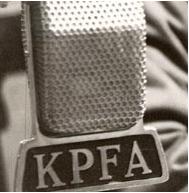
KPFA has always been part radical-left radio station and part radical-left soap opera. It’s a collection of talented shit disturbers supervised at times by wildly incompetent managers who report to a highly political elected board that is so packed with agendas it’s hard to imagine how anything ever gets done.
Every time KPFA and its parent Pacifica Foundation have money problems — and like most progressive organizations, money problems are a fact of life — there are layoff talks and discussions of cutbacks that lead to protests, counterprotests, and full-blown rehtorical wars.
And yet, every morning, I tune my radio to the Morning Show, and somehow, what comes over the airwaves is solid progressive journalism. Hosts Brian Edwards-Tiekert and Aimee Allison, with the support of news director Aileen Alfandary, always put on a good show (full dislosure: I’ve been a guest on it a few times).
So I was startled Nov. 10th to hear a show piped in from Los Angeles — and to learn that the entire Morning Show crew, including both Edwards-Tiekert and Allison, had been summarily fired.
The way Pacifica Executive Director Arlene Englehardt has described it, the move was made entirely for budgetary reasons. No question: KPFA’s budget is in the red, and that station had to borrow money to make payroll recently. And since the KPFA staff is unionized, layoffs are supposed to be made by seniority, which Englehardt also said tied her hands.
But actually, Edwards-Tiekert has more seniority than other people who weren’t alid off — and I have to say, this looks a lot more like a programming decision than a simple layoff.
It’s also a kind of crazy move: KPFA lives on listener support, and the Morning Show is the most lucrative program on the station when it comes to pledge drives. KPFA listeners want local content; in fact, since the Morning Show staff was laid off, listenership has plummetted. Figures I’ve obtained on web listenership (which is easy to track, and at KPFA ultimately tends to be similar to the overall listenership tends) show that the peak audience dropped more than 60 percent after the station started piping in outside content.
I can’t get Englehardt on the phone (possibly because of the Veterans Day holiday) but she made her case on KQED’s Forum Nov. 10th. You have to listen to this show; it’s only half an hour. Elglehardt is on with Larry Bensky, a former KPFA staffer, Polk Award winner, and one of the most respected progressive media voices in the country. And frankly, Bensky tears her arguments apart (in his brilliant, logical way) pointing out the insanity and inconsistency of what she’s done here.
I guess they’re going to try to do a new Morning Show, but I don’t know who is going to host it; according to Edwards-Tiekert, the unionized staff have agreed not to take each other’s jobs. And it’s hard to find people with the kind of experience and skill it takes to do something as complicated as hosting the Morning Show on KPFA.
I’ve tried in the past year to stay out of the drama at KPFA — I’m a KPFA member, a longtime supporter and a fan of what the station does, and I don’t think contant media scrutiny and leftist harping about every single cut and personnel decision in tough financial times does any good for the progressive cause. But this one seems to be a big mistake, and I don’t see how Englehardt is going to fix it.
You can listen to the last Morning Show talking about all of this and read the staff’s comments, and the details of how this went down, at the KPFA staff blog here.
Steve Li to be deported to Peru on Monday

Immigrant advocates report that the deportation of Steve Li, an honors student who was studying at City College until ICE (immigration and Customs Enforcement) picked him up in September, has been scheduled for Monday, November 15.
Advocates have argued that Li, who has lived here since he was 12 and apparently knows no one in Peru, where ICE plans to deport him, is eligible for the DREAM Act. So, they were especially upset when news of Li’s scheduled deportation hit the same day that Nancy Pelosi announced that she wants to move the DREAM Act during the lame duck session
In response, Li’s supporters are planning an all-day action at Sen. Barbara Boxer’s office at 1700 Montgomery Street on Friday November 12.
“People will be dressing in caps and gowns or nursing scrubs (Steve is a nursing student)” states a press release from Li’s supporters, who promise to phonebank ICE/Boxer/Feinstein and deliver letters to Boxer’s office tomorrow.
“Time is of the essence, we need Boxer or Feinstein to sponsor a private bill, or for John Morton at ICE to grant the deferred action before Steve is scheduled to aboard the plane on Monday,” the statement, which lists the phone numbers of Feinstein, Boxer and ICE’s John Morton, concludes.
PG&E exec fails as a spy

You’d think California’s largest utility company would know a thing or two about spying. From toxic groundwater plumes to deadly pipeline explosions, Pacific Gas & Electric Company has given plenty of Californians reason to mobilize against their practices, and countless campaigns have been launched against the monopolistic energy giant. Yet former SmartMeter program director William Devereaux revealed himself to be an amateur when he tried using an anonymous email address to infiltrate his activist opponents — with an account that displays his real name.
The Chronicle is reporting that Devereaux resigned from his post as director of the $2.2 billion SmartMeter program once the news broke that he’d been outed by the very anti-SmartMeter activists he later admitted to keeping tabs on.
It wasn’t too difficult to figure it out. Devereaux attempted to join an activist listserv for the EMF Safety Coalition, an organization that opposes SmartMeter installations. Apparently assuming that his name would be hidden, he signed his e-mail to Sandi Maurer, the group moderator, as “Ralph.” Here’s the message:
On Nov 4, 2010, at 3:23 PM, William Devereaux <manasota99@gmail.com> wrote:
Hi Sandi,
Sorry for the delay in getting back to you, I’ve been travelling a lot. I live in Oakland where Smart meters have been sweeping across town and wanted to learn more about them and join the conversation to see what I can do to help out here.
Thanks,
Ralph
Just a regular old SmartMeter-hating guy called Ralph. Except that until the news story broke, a Google search of the name beside his email address yielded countless PG&E press releases in which the utility executive publicly extolls the virtues of the electricity-usage meters, which activists fear will expose people to unhealthy levels of radiation. Now that he’s been outed, said Google search speaks to Devereaux’s rather deficient skills as an infiltrator instead.
“We think he’s been lurking on one of our lists for a couple of months,” activist Joshua Hart with Stop Smart Meters told the Guardian. Hart said SmartMeter protesters got a surprise when they showed up at a Sonoma County location a couple weeks ago to stage a demonstration against the PG&E contractor hired to install SmartMeters. By the time they got there, all of the contractor’s trucks and signs had vanished. It was like they’d known what to expect. “His judgment has been called into question,” Hart said, “and his honesty has been called into question.” Apparently, his career has now been called into question too.
Greenpeace and the Zuck

Greenpeace asked me to Facebook message Mark Zuckerberg today. Given the hullabaloo surrounding social networking and activism these days (and more specifically, Malcolm Gladwell’s controversial New Yorker piece on the subject), I should have been in some sense prepared for the Rainbow Warriors to request I open to my Facebook home page. The two entities they represent have become, if on some levels superficially, intertwined.
Perhaps my slight sense of shock was due to the fact that while viewing the campaign’s web page, which of course I stumbled across when an acquaintance hit it’s “Like” button last night, it struck me that this was just the sort that could make a difference. Zuckerberg is probably a guy that bases quite a bit of his decisions on messages that come through that inbox.
Greenpeace has a lot of these sorts of efforts: their current site lists a series of “online actions you can take now” that include:
– Stop nuclear investments!
– Call for an end to whaling in the Southern Ocean
– Call for a GE-free future
– Ask Princes Tuna to stop canning ocean destruction
Which, really, are all things I enjoy. I want to click them all, enter my email address a hundred times, feel better about my inability to personally stop the disastrous victory of the sit-lie measure in last week’s election.
But will it change Princes Tuna’s actions? I suppose there’s really two tiers we should talk about when we talk about activism, though they’re not mutually exclusive. One is the people that hit that “like” button (often willy nilly, judging from my more Internet-passionate friends), and two is the physical manifesters of activism. Let’s call them Internet and meat activists.
In his New Yorker article, Gladwell makes the point that these kinds of social networking campaigns’ strength is the astronomical number of people that can be mobilized to do one relatively simple thing. “But if you’re taking on a powerful and organized establishment you have to be a hierarchy,” he says, rightly filing the networks into another sort of organizational model. But Gladwell glosses over the fact that there even if social networks themselves don’t have actual heads, campaigns that use the Internet heavily often do. After all, I’ll wager that whosoever designed that Greenpeace effort (okay, a person that conferred heavily with the designers of that website) has ties to the clean energy movement that go beyond Internet messaging.
And there is other crossover between the two. From sit-lie to sweatshop protests, many rally participants these days are called to action from a social network announcement.
I went to a talk at the Commonwealth Club the other day by Twitter founders Biz Stone and Evan Williams in the week after the Gladwell article came out. Stone, in his customary jeans and black jacket, was adamant that Twitter — whose role in the Haiti disaster and the Iranian election was perhaps overstated — should remain a tool to aide social change, not be it’s agent.
Back to Greenpeace’s campaign thingy. This is how their campaign to get Zuckerberg to drop the coal fuel – with which he might be powering 1,963 billion kilowatt hours of electricity for the site by 2020 in his proposed Oregon data center, by the way – is described in its explanatory video (which is quite cute but makes me nervous about the accuracy of The Social Network because it seems to be influencing this really intimate perception of a CEO’s life that we’ve really only seen before in movies about Southern guitarists and tempermental heads of state):
[Childrens cartoon image of Mark Zuckerberg stripped naked atop a tall stack of money, between an ominous “coal” shirt marked “Unfriend” and a “wind energy” shirt marked “Friend”] But Mark Zuckerberg can still change his mind. And I know which one I would choose… And so do all his friends. [a big mouse hovers over the two buttons] If you let yourself down, you let your friends down. And with 500 million friends, it’s a long way down. [money stack vanishes, Zuckerberg falls down from a long, naked height]
Or just watch the video itself. Greenpeace vs. Facebook on coal
The campaign’s suggestions for how you can get involved? Read about the issue on their site and add your email address to their newsletter subscriber list are the only tangible “action ideas” readily visable, but I do both of those things and in a few minutes I have an email that says I should forward itself to my friends, and an email from “Eoin and the Cool IT team” that says I should send Mark Zuckerberg a Facebook message.
[sample email given] Hey Zuck! I love Facebook and use it all the time, but what’s up with this coal business? Haven’t you heard of climate change? A BIG company like Facebook can really benefit by going green. I hope you can make the right energy choices to save the planet and your millions of friendships. PEACE
Leaving aside the fact that Eoin probably isn’t on a nickname basis with the guy (maybe that’s a retro complaint), and perhaps need not sign off with such an aggressive usage of the word “peace,” I’m weirded out. Mostly because I just realized I’m not Mark Zuckerberg’s friend on Facebook – not by that site’s internal definition at least. Will my words mean the same, not coming from a Facebook friend? I could request his friendship, but isn’t it odd to become someone’s friend just to lecture them on their company’s sustainability practices?
And if I was his friend before, would my email matter any more? Much less send him tumbling, naked, down after a stack of dematerialized dollar bills? Maybe if I canceled my account altogether this will happen.
I was brought up a believer in the power of one’s vote. A lot of people get their info on voting from the Internet. I know the website you’re reading this on regularly crashes on election day because a bunch of people are checking out the SFBG endorsements. A lot of us get our political news from the Internet and there are way more news sites out there than before that say all kinds of kooky stuff but also the truth sometimes.
But is Mark Zuckerberg gonna switch to wind energy? Will Greenpeace send me word of an action that turns me into a meat activist on the issue? Maybe it’s on me – maybe I should take this info, as the Greensboro college students that instigated the lunch counter sit-ins that Gladwell praises in his piece took the guidance of the NAACP chapter of which they were members, and with it do something more bold.
Time’s gonna tell us on those questions, but the Zuck vs. Rainbow incident did leave me with an inkling of my feelings on the matter. Which are as follows: at least I signed up to receive the newsletters. If Greenpeace needs people for a boat ride up to Oregon, I have a shot of being on it. Social networks aren’t a end, but maybe they can be part of the means to social justice.
The jazz don
arts@sfbg.com
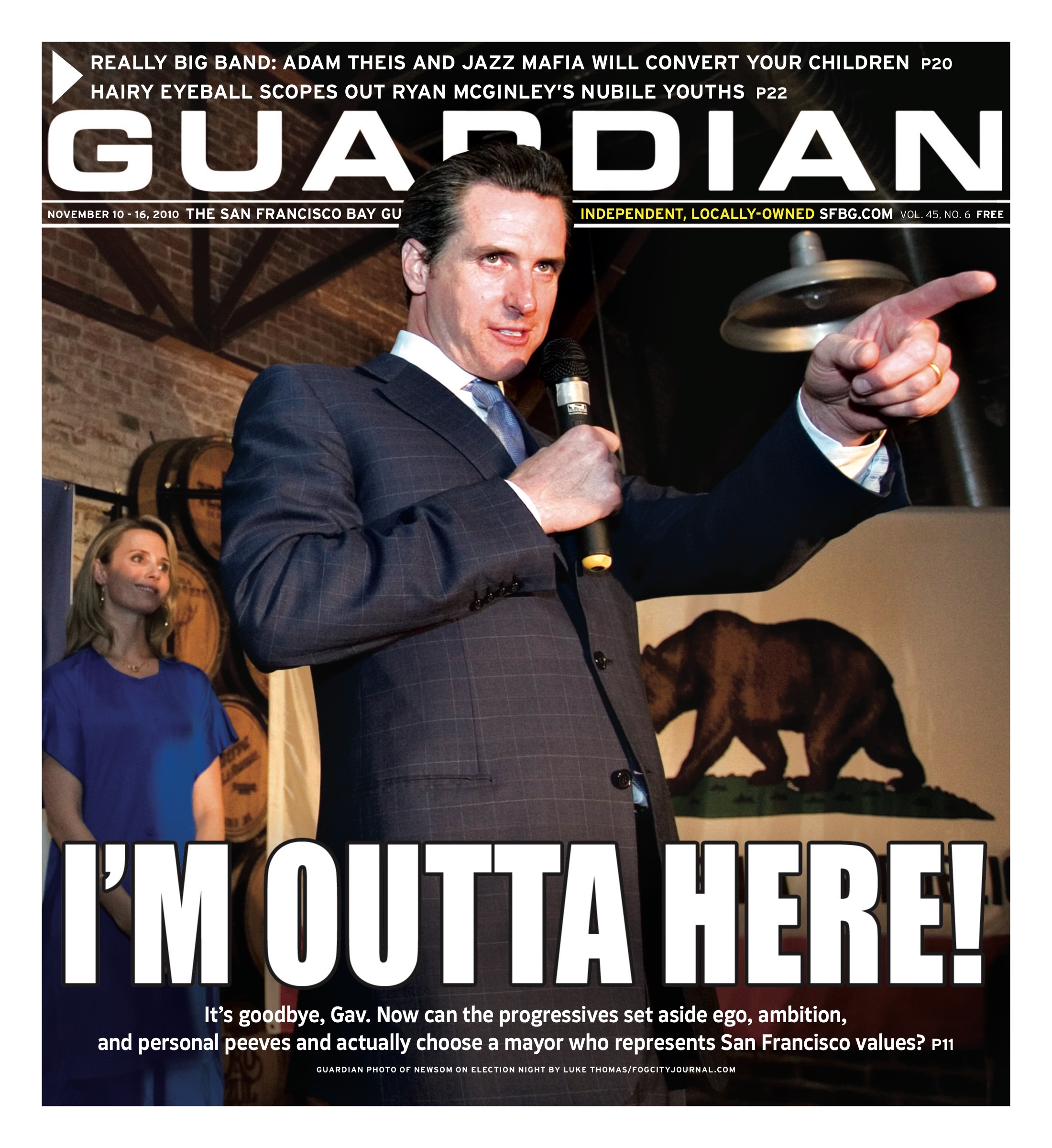
MUSIC Adam Theis says his school teachers always told him that to succeed, he’d have to learn how to focus. Surely what they meant was that he’d have to find enough things to focus on. For like all great connectors, Theis finds his genius in the multitudinous.
At least, that would explain why Theis’ loose network of funky jazz bands and musicians, the Jazz Mafia, has expanded to 70 members over the past decade — and why he has difficulties naming all the instruments he’s proficient at playing. His primary toy is the trombone, followed in no particular order by the electric bass, keyboards, tuba, conch shells, didgeridoo, and laptop.
Theis thrives on the large scale, and his current project has more moving parts than any he’s attempted in the past. A recent grant gave him the means to take a break from his 30-gigs-a-month schedule to compose a 50-piece orchestral symphonic score, Brass, Bows, and Beats. It debuted at the Palace of Fine Arts in 2009 and has since been touring jazz festivals across the continent. The production gathers together some of the Mafia’s finest wind, string, and percussion players, seats them behind hip-hop vocalists and MCs, and does much to convince one of the epic grandeur of hip-hop — if anyone still needs convincing in this day and age.
Brass, Bows, and Beats does all this while mixing a lot of other genres into the pot. Theis says he isn’t bothered by critics’ allegations that the work doesn’t rightly fit into the hip-hop tradition. “We’re not trying to do something that’s pure,” he says. “That’s pretty much never been the trip with our groups.” A friend who caught the piece’s SF debut summed up the scene aptly enough: “It’s like you’re watching something that has maybe never been done before.”
In the early aughts, Theis and many of the original members of his networks played a regular Tuesday night gig at North Beach’s Black Cat Club. The theme of those nights — when the Mafia was conceived — was improvisation. “We would always invite musicians to jump up — we’d give them space to do something and we’d vibe off it,” Theis says.
A recent transplant to the city, Theis couldn’t stop inviting in more players. “I’d meet an amazing new musician every day,” he explains. From these impromptu sessions came many of the Mafia’s lasting artistic collaborations. Even now, most Shotgun Wedding Quintet (Theis’ touring group) shows begin with a jam — some versions of which have made it into the score of the symphony.
You’d think that the guy that holds the Mafia baton would have an overarching vision for the crew. They’ve reached symphony status, and another orchestral piece is in the works. What’s next, a jazz army? A hip-hop city-state?
For now, Theis seems happy to let the capable musicians surrounding him riff off his beat. When I ask him about plans for the decade to come, he envisions his network becoming looser (“more of a structure for other musicians”), and the Jazz Mafia website (www.jazzmafia.com) morphing into a blog where one can read news about the bands involved, perhaps getting more involved with youth music education. Theis already holds concert-classes for hundreds of schoolkids at a time.
Which, of course, could mean Theis is on the hunt for new lieutenants. What can the Cosa Nostra do for you, young trumpeter?
JAZZ MAFIA’S 10TH ANNIVERSARY SHOW
Featuring The Realistic Orchestra with Latyrx
Sat/13, 9 p.m., $15–$20
Mezzanine
444 Jessie, SF
(415) 625-8880
Stage Listings
Stage listings are compiled by Guardian staff. Performance times may change; call venues to confirm. Reviewers are Robert Avila, Rita Felciano, and Nicole Gluckstern. Submit items for the listings at listings@sfbg.com. For further information on how to submit items for the listings, see Picks.
THEATER
ONGOING
Christian Cagigal’s Obscura: A Magic Show EXIT Cafe, 156 Eddy; (800) 838-3006, www.brownpapertickets.com. $15-25. Thurs-Sat, 8pm. Through Dec 18. Magician Christian Cagigal presents a mix of magic, fairy tales, and dark fables.
Comedy Ballet Exit Stage Left, 156 Eddy; (800) 838-3006, www.brownpapetickets.com. $10-20. Thurs-Sat, 8pm. Through Nov 20. Dark Porch Theatre’s latest (a reworked version of the piece it premiered at the Garage in July) is a fractured meta-theatrical tale about death. Not to put too fine a point on it, writer-director Martin Schwartz approaches the subject with what you might call deliberate absurdity, basking in whimsical inspiration with serious intent. Roxelana (a compellingly earnest Molly Benson) pursues an affair with the confident but completely in-over-his-head KC (Brandon Wiley), the handsome young employee of her husband (Scott Ragle), who goes tellingly by the moniker Baby Death God. Her three vaguely psychotic neighbors, meanwhile, known as The Intrepid Gentlemen (the amusingly anarchic trio of Natalie Koski-Karell, Bernard Norris, Matthew Von MeeZee), invite her to the wake for their dead dog, over whom they are unnaturally bereft. Between scenes an interviewer (Rachel Maize) queries members of the cast on a variety of subjects, including attitudes toward human sacrifice. (The actors feign indignation at the idea.) It all gradually comes to make some kind of sense, but letting go the effort to make any sense of it helps in the appreciation. Smoothing the way are likeable performances, not least Nathan Tucker’s wonderfully controlled hyperbole in the part of consummate thespian Foreplay. Integral and pleasingly unexpected passages of movement (choreographed by producer Margery Fairchild), as well as a permeating spirit of morbid fancy, further contribute to an intentionally jagged work that may be difficult to define but not hard to enjoy. (Avila)
Dracula’s School for Vampires Young Performers Theatre, Fort Mason Center, Bldg C, Third Floor, Room 300; 346-5550, www.ypt.org. $7-10. Sat, 1 pm; Sun, 1 and 3:30pm. Through Sun/14. Young Performers Theatre presents a Dracula comedy by Dr. Leonard Wolf.
*Equus Boxcar Theatre Playhouse, 505 Natoma; 776-1747, www.boxcartheatre.org. $10-25. Wed-Sat, 8pm. Through Nov 20. In the last year, it seems like there’s been more full-frontal nudity in Bay Area theatre than in the preceding ten years combined. One certainly hopes it’s not due to the economy. Of course, nudity isn’t the only reason you should go and see Boxcar Theatre’s Equus—but its presence is indicative of the overall bravery of the production. Minutely updated and Americanized by director Erin
Gilley, the tale of a troubled teen who mutilates a stable of horses without apparent provocation seems disconcertingly as plausible as when it first debuted in 1973. The uncomfortable parental dynamics as enacted by Laura Jane Bailey and Jeff Garret, the dogged pedantry of Michael Shipley’s Dysart, a man measuring out his desperation not with teaspoons but with tomes of Doric architecture. Most especially, rivaling the single-minded intensity of child crusaders, teenage suicide bombers, and accidental martyrs, 18-year-old Bobby Conte Thornton’s unflinching portrayal of Alan Stang ably taps into the extremist
impulses of adolescence. “Extremity,” Shipley reminds us, “is the point”, and it’s exactly what Thornton delivers, from his nervous misdirections, to the ferocious abandon of his midnight rituals. Artistic Director Nick a. Olivero’s skills as a set designer are suitably showcased by a convincingly stable-like thrust of rough planks and second story “loft” seating, while Krista Smith’s lighting subtly adds texture and depth. (Gluckstern)
Failure to Communicate The Garage, 975 Howard; (800) 838-3006, www.brownpapertickets.com. Call for prices. Fri-Sat 8pm; Sun, 2pm. Through Sun/14. One part Torey Hayden, and one part Dr. Pangloss, Veronica Gray (Jaimielee Roberts) is an artist in need of a job, and so takes the position of teaching assistant in a classroom for severely troubled children. At first it seems like a good fit for her — she’s unfazed by the student’s scare tactics and drawn to their talents, in particular the artistic streak displayed by the autistic Loomis (Geoff Bangs). But eventually the extreme stress of her responsibilities starts to effect her equilibrium, and the rest of the play becomes a sort of elegiac apology for her eventual request to be transferred, and the havoc it plays on the emotions of her students. A first foray into playwriting for Performers Under Stress company member Valerie Fachman, Failure to Communicate feels very much like a work in progress. Its strengths – compelling material, quirky characters, and an insider’s perspective on an overloaded educational system – are soon overwhelmed by its weak points: too many veiled references to various abuses without follow-up, too much random violence without consequences, too many lengthy transitions and choppy scenes which neither drive the skeletal plot nor flesh out the occasionally hilarious yet often frustratingly two-dimensional characters. As a concept, Failure is intriguing but I’m hoping there will be a version 2.0 in the future, with a tighter focus and more comprehensive character development. (Gluckstern)
*Hamlet Alcatraz Island; 547-0189, www.weplayers.org. By donation. Sat-Sun, times vary. Through Nov 21. Outside of an actual castle, it would hard to say what could serve as a more appropriate stand-in for Kronborg castle of Helsingør—also known as Elsinore—than the isolated fortress of Alcatraz Island, where WE Players are presenting Hamlet in all its tragic majesty. As audience members tramp along
stony paths and through prison corridors from one scene to the next, the brooding tension the site alone creates is palpable, and the very walls impart a sense of character, as opposed to window-dressing. Deftly leaping around rubble and rock, a hardy troupe of thespians and musicians execute the three-hour
production with neat precision, guiding the audience to parts of the island and prison edifice that aren’t usually part of the standard Alcatraz tour package. Incorporating movement, mime, live music, and carefully-engineered use of space, the Players turn Alcatraz into Denmark, as their physical bodies meld into Alcatraz. Casting actress Andrus Nichols as the discontent prince of Denmark is an incongruity that works, her passions’ sharp as her swordplay, the close-knit family unit of Laertes, Ophelia, and Polonius are emphatically human (Benjamin Stowe, Misti Boettiger, Jack Halton), and Scott D. Phillips plays the
appropriately militaristic and ego-driven Claudius with a cold steel edge. (Gluckstern)
Hedda Gabler Phoenix Theatre, 414 Mason; (800) 838-3006, www.offbroadwaywest.org. $35. Thurs-Sat, 8pm. Through Sat/13. The action unfolds in the parlor of the newly married Tesmans, young mediocre academic George (Adam Simpson) and town beauty Hedda, née Gabler (a crisp, tightly wound and nicely understated Cecilia Palmtag), a woman of exceptional intelligence, ambition and pride—to call her fiery wouldn’t be bad either, especially since she’s so fond of shooting off her late father’s pistols. Frustrated by her paltry new life, Hedda seeks news of an old flame, Eilert Lovborg (Paul Baird), via the admiring and vaguely lecherous Judge Brack (Peter Abraham) and a timid acquaintance from school days, Thea (Joceyln Stringer). The semi-wild but brilliant Lovborg has published a new book that imperils George’s chances for a professorship. Less interested in securing George’s career than controlling Lovborg’s destiny, Hedda soon manipulates events around her with bold determination and tragic consequences. Passionate, violent and psychologically complex, Henrik Ibsen’s titular heroine is at turns sympathetic and disturbing, an independent soul trapped in and warped by a society that allows her too little scope—a modern predicament that has inspired many modern and postmodern adaptations. Off Broadway West’s straight-ahead production of the late-19th-century drama, helmed by artistic director Richard Harder, remains faithful to the period setting. This includes Bert van Aalsburg’s respectable scenic design and Sylvia Kratins impressive costumes, as well as the old if fine translation by William Archer, who first introduced Ibsen to the English-speaking world. Unfortunately, the quaint diction is not handled with equal grace across an uneven cast. Palmtag’s solid, at times admirable performance in the lead, however, goes a good way toward grounding an otherwise patchy production. (Avila)
It’s All the Rage The Marsh, 1062 Valencia; (800) 838-3006, www.brownpapertickets.com. $20-50. Sat, 8:30pm; Sun, 7pm. Through Dec 5. The Marsh presents a new solo show by Marilyn Pittman.
Law and Order: San Francisco Unit: The Musical! EXIT Theater, 156 Eddy; (800) 838-3006, www.brownpapertickets.com. $10. Mon, 8pm. Through Mon/15. Funny But Mean comedy troupe extends its newest show at a new venue.
Marcus, or the Secret of Sweet American Conservatory Theater, 415 Geary; 749-2228, www.act-sf.org. $22-82. Call for dates and times. Through Nov. 21. American Conservatory Theater presents its contribution to the three-theater Bay Area debut of Tarell Alvin McCraney’s Brother/Sister Plays , completing the young African American playwright’s much-touted but generally underwhelming trilogy with a coming-of-age story about a gay 16-year-old (a sharp and likeable Richard Prioleau) in a small black community of the Louisiana bayou. A recurring dream haunts the still-closeted Marcus, while the man in it, the long-gone Oshoosi Size (a vital Tobie L. Windham), stalks the stage with an ominous-sounding message for his older brother, Ogun (played with listless, gathering despair by Gregory Wallace). But the action unfolding against Alexander V. Nichols’ gorgeously moody, shape-shifting backdrop (a video-based evocation of land, sky and built environment) has only a perfunctory urgency to it. The play, smoothly directed for maximum laughs by Mark Rucker, is more inclined toward amiable scenes of tentative concern by all (including three key female characters played brilliantly by Margo Hall), Marcus’s sexual initiation by a visitor from the Bronx (Windham), or the fraught but whimsical camaraderie between Marcus and childhood friends Osha (Shinelle Azoroh) and Shaunta (Omozé Idehenre). Last-minute intimations of Katrina, meanwhile, come as arbitrary and less than powerful. “Sweet” is the sexually knowing, ambiguous term attaching to Marcus—whom all seem to already know and more or less accept as gay—but it’s also a too apt description for this well-acted but overblown and forgettable play. (Avila)
Murder for Two: A Killer Musical Eureka Theatre, 215 Jackson; 252-8207, www.42ndstmoon.org. Runs Wed, 7pm; Thurs-Fri, 8pm, Sat, 6pm, Sun, 3pm. Through Nov 21. 42nd Street Moon presents a mix of Agatah Christie and musical comedy, by Kellen Blair and Joe Kinosian.
*Pearls Over Shanghai Thrillpeddlers’ Hypnodrome, 575 10th St; (8008) 838-3006, www.brownpapertickets.com. $30-69. Sat, 8pm. Through Dec 19. Thrillpeddlers’ acclaimed production of the Cockettes musical continues its successful run.
A Perfect Ganesh New Conservatory Theatre Center, 25 Van Ness; 861-8972, www.nctcsf.org. $22-40. Wed-Sat, 8pm; Sun, 2pm. Through Dec 19. New Conservatory Theatre Center presents the Terrence McNally play, directed by Arturo Catricala.
*Reluctant Brava Theater Center, 2781 24th St; 641-7657, www.brava.org. $10-25. Thurs, 8pm; Fri-Sat, 10pm. Through Sat/13. Joel Israel joins the likes of Eric Bogosian, Joe Frank, and Jack Nicholson (in The King of Marvin Gardens) in making the radio booth one of the more intimate yet far-reaching of metaphors—a hermetic recess of lonely, fervid minds that ranges over the collective unconscious by air, with the power to infiltrate the most vulnerable, unguarded corners of an unsuspecting populace. Shrewdly directed by Meiyin Wang, the New York playwright-performer’s cool, slyly seductive piece of theatrical psychopathology, Reluctant, makes an impressive West Coast debut in Brava’s appropriately intimate upstairs studio. There, on Sophia Alberts-Willis’s choice radio-studio set, and under Simone Hamilton’s moody lighting, the audience slips effortlessly into the hushed, anxious trance of Israel’s intoxicating noir storyteller. Nattily dressed in jacket and tie, and cooing deftly crafted prose over eerie nocturnal underscoring by sound designer Mark Valadez, the storyteller unfurls a performative “audio” spectacle at the borderline between imagination and deed—and maybe personality too. This guy is not to be trusted, especially opposite the woman he interviews (Brava’s artistic director Raelle Myrick-Hodges on opening night but played, in serial fashion, by a different actress each time). No, like any devil in your ear, you don’t want to trust him, but you don’t want to tune him out either. (Avila)
Shocktoberfest!! 2010: Kiss of Blood Hypnodrome Theatre, 575 10th; (800) 838-3006, www.brownpapertickets.com. $25-35. Thurs-Fri, 8pm. Through Nov 19. Thrillpeddlers’ seasonal slice of eyeball is comprised of three playlets variously splattered with platelets, all directed by Russell Blackwood and bridged by a rousing burst of bawdy song from the full cast. Rob Keefe’s Lips of the Damned (after La Veuve by Eugene Heros and Leon Abric) takes place in a rat-infested museum of atrocities just before the fumigating starts, as an adulterous couple—comprised of a kinky married lady (a vivacious Kara Emry) and a naïve hunk from the loading dock (Daniel Bakken)—get their kicks around the guillotine display, and their comeuppance from the jilted proprietor (Flynn DeMarco). Keefe’s delightfully off-the-wall if also somewhat off-kilter Empress of Colma posits three druggy queens in grandma’s basement, where they practice and primp for their chance at drag greatness, and where newly crowned Crystal (a gloriously beaming Blackwood) lords it over resentful and suspicious first-runner-up Patty Himst (Eric Tyson Wertz) and obliviously cheerful, non-sequiturial Sunny (Birdie-Bob Watt). When fag hag Marcie (Emry) arrives with a little sodium pentothal snatched from dental school, the truth will out every tiny closeted secret, and at least one big hairy one. Kiss of Blood, the 1929 Grand Guignol classic, wraps things up with botched brain surgery and a nicely mysterious tale of a haunted and agonized man (Wertz) desperate to have Paris’s preeminent surgeon (DeMarco) cut off the seemingly normal finger driving him into paroxysms of pain and panic. Well-acted in the preposterously melodramatic style of the gory genre, the play (among one or two other things) comes off in a most satisfying fashion. (Avila)
Susie Butler Sings the Sarah Vaughan Songbook Exit Theater Cafe, 156 Eddy; (510) 860-0997, www.brownpapertickets.com. $15-20. Sat, 8:30pm. Through Nov 20. Local actress and singer Susie Butler takes on the Sassy songbook.
The Tempest Exit on Taylor, 277 Taylor; (800) 838-3006, www.cuttingball.com. $15-20. Thurs-Sat, 8pm; Sun, 5pm (no show Nov 25). Cutting Ball Theater opens its 11th season with a three-person chamber version of the Shakespeare classic.
The Unexpected Man EXIT Theatre, 156 Eddy; (800) 838-3006, www.brownpapertickets.com. $18-25. Fri-Sat, 8pm; Sun, 3pm. Through Sun/14. Spare Stage revives Yasmina Reza’s ironic comedy, starring Ken Ruta.
*West Side Story Orpheum Theatre, 1192 Market; www.orpheum-theater.com. $88-378. Check for dates and times. Through Nov 28. Opening night of the touring Broadway revival coincided with game two of the World Series, and giddy Giants fans were loath to put away their smart phones until the final plea from the house managers. But then the curtain rose on perhaps the finest and most moving display of athleticism, professionalism, and grace to be found outside of AT&T Park. The 1957 musical, which updated Romeo and Juliet with a cross-cultural romance between Tony (Kyle Harris) and Maria (Ali Ewoldt) amid immigrant gangland New York, came instantly alive with all its storied potency—revved up for new millennium audiences with less reserved violence and the addition of a smattering of real Spanish throughout. David Saint’s excellent cast—including standout Michelle Aravena as Anita—and a nicely dynamic orchestra under conductor John O’Neill do satisfying justice to the jagged, jazzy modernism of Leonard Bernstein’s score, Stephen Sondheim’s soaring lyrics, Arthur Laurents’ smart book, and Jerome Robbins’ mesmerizing choreography (here re-created by Joey McKneely). At intermission, the house manager graciously announced the final winning score from the ballpark, and everyone cheered. It was a win-win situation. (Avila)
BAY AREA
Becoming Britney Center REPertory Company, Knight Stage 3 Theatre, 1601 Civic Drive, Walnut Creek; (925) 943-SHOW, www.centerREP.org. $25. Thurs-Sat, 8:15pm; Sun, 2:15pm. Through Sat/14. Center REPertory Company presents an original musical about a naïve pop star, written by Molly Bell and Daya Curley.
Burning Libraries: Stories From the New Ellis Island Laney College Theater, 900 Fallon, Oakl; (800) 838-3006, www.brownpapertickets.com. $15-25. Wed-Sat, 8pm, Sun, 3pm (also Sun/7, 7pm). Through Nov 14. Alice presents an evening-length theatrical performance spectacle, directed and co-written by Helen Stoltzfus.
Cinderella, Enchanted Julia Morgan Center for the Arts, 2640 College, Berk; (510) 665-5565, www.berkeleyplayhouse.org. $15-33. Call for run times. Through Dec 5. Frenchie Davis is plays the Fairy Godmother in this production of the Rogers and Hammerstein musical.
CTRL-ALT-DELETE Pear Avenue Theatre, 1220 Pear, Mountain View; (650) 254-1148, www.thepear.org. $15-30. Thurs-Sat, 8pm; Sun, 2pm. Through Nov 21. Pear Avenute Theatre presents the comedy by Anthony Clarvoe.
Dracula Center REPertory Company, 1601 Civic, Walnut Creek; (925) 943-SHOW, www.centerrep.org. $36-42. Wed, 7:30pm; Thurs-Sat, 8pm; Sun, 2:30pm (also Nov 20, 8pm). Through Nov 20. Eugene Brancoveanu stars as the Count in a production directed by Michael Butler.
*East 14th: True Tales of a Reluctant Player Marsh Berkeley, 2120 Allston, Berk; www.themarsh.org. $20-50. Dates and times vary. Through Nov 21. Don Reed’s solo play, making its Oakland debut after an acclaimed New York run, is truly a welcome homecoming twice over. (Avila)
*Loveland The Marsh Berkeley, 2120 Allston Way; (800) 838-3006, www.brownpapertickets.com. $20-50. Fri, 7pm; Sat, 5pm. Through Sat/13. Ann Randolph’s acclaimed one-woman comic show about grief returns for its sixth sold-out extension.
Palomino Aurora Theatre, 2081 Addison, Berk; (510) 843-4822, www.auroratheatre.org. $10-55. Wed-Sat, 8pm; Sun, 2 and 7pm; Tues, 7pm. Through Dec 5. David Cale brings his new solo play about a gigolo to Aurora Theatre for its Bay Area premiere.
Pirates of Penzance Novato Theatre Company Playhouse, 484 Ignacio, Novato; 883-4498, www.novatotheatercompany.org. $12-22. Thurs-Sat, 8pm; Sun, 3pm. Through Nov 21. Novato Theatre Company revives the popular Gilbert and Sullivan swashbuckling tale.
*The Play About the Naked Guy La Val’s Subterranean, 1834 Euclid, Berk; (800) 838-3006, www.brownpapertickets.com. $10-20. Thurs-Sat, 8pm (no show Nov 25). Through Dec 11. Impact Theatre presents an off-Broadway hit, written by David Bell and directed by Evren Odcikin.
Winter’s Tale Live Oak Theatre, 1301 Shattuck, Berk; (510) 649-5999, www.aeofberkeley.org. $12-15. Fri-Sat, 8pm (also Sat/14, 2pm; Nov 18, 8pm). Through Nov 20. Actor’s Ensemble of Berkeley presents the rarely-performed Shakespeare play.
Rock rolled
arts@sfbg.com
FILM Danny Boyle is a director whose projects seem chosen largely to have nothing in common with anything he’s done before. Mid-career at 54, he’s been good at a lot of things. But what, exactly, is his ideal fit?
Falling in the “good” department are 202’s 28 Days Later, which revivified the zombie flick at the cost of subsequent overexposure, not to mention introducing that whole “fast-moving zombie” conundrum. Children’s fantasy Millions (2004) had real charm almost overwhelmed by ADD; Sunshine (2007) was sci-fi so gorgeous you could almost ignore the black hole its narrative vanished into.
Not so hot were 1997’s A Life Less Ordinary and 2000’s The Beach, the latter from a novel that “couldn’t miss.” Which proved Boyle is capable of seizing on an approach entirely wrong for his material, his confidence unflagging to the bitter end. Shallow Grave (1994) was a cunning debut that owed a lot to John Hodge’s screenplay, yet made sure you couldn’t miss the directorial panache.
Which leaves 1996’s Trainspotting, the one perfect match of gonzo content and hyperactive execution. Plus 2008’s Slumdog Millionaire, of course — a Piccadilly masala of tragedy, coarse humor, melodrama, spectacle, outrageous fortune, grotesquerie, and whipped cream. Did Boyle and company truly fuse those elements, or just smash them haphazardly together? Most people were too dazzled by exoticism to care. But will its brief vogue eventually look like one of those pop anomalies more puzzling than nostalgic?
After that large-scale, Oscar-draped triumph, 127 Hours might seem starkly minimalist — if Boyle weren’t allergic to such terms. Based on Aron Ralston’s memoir Between a Rock and a Hard Place, it’s a tale defined by tight quarters, minimal “action,” and maximum peril: man gets pinned by rock in the middle of nowhere, must somehow free himself or die.
More precisely, in 2003 experienced trekker Ralston biked and hiked into Utah’s Blue John Canyon, falling into a crevasse when a boulder gave way under his feet. He landed unharmed … save a right arm pinioned by a rock too securely wedged, solid, and heavy to budge. He’d told no one where he’d gone for the weekend; dehydration death was far more likely than being found.
For those few who haven’t heard how he escaped this predicament, suffice it to say the solution was uniquely unpleasant enough to make the national news (and launch a motivational-speaking career). Yes, it was way worse than drinking one’s own pee.
Opinions vary about the book. It’s well written, an undeniably amazing story, but some folks just don’t like him. Alternating chapters between the canyon crisis and prior “hair-raising adventures,” Ralston is the life of every party, the apple of every eye. He’s forever leaping gung-ho into avoidable near-catastrophes (risking death by bear attack, drowning, etc.), then marveling at his luck in surviving them. Stuck passing long, possibly final hours in Blue John, he briefly experiences “regrets about not focusing on the people enough” in pursuit of “the essence of experience.” Example: once he lost two good friends by recklessly getting them near-killed in an avalanche. But oh well!
This being a Danny Boyle movie, it has of course has a much cooler soundtrack than Ralston would have mixtaped (it’s a no-Phish zone), albeit one sometimes quirky to a jarring fault. While hardly a pop-culture felon à la Baz Luhrmann, Boyle still easily errs on the side of excess flash. His 127 Hours has passages where the MTV-like cinematic gymnastics performed to keep us interested in a trapped hero are just trivializing and gratuitous.
Still, subject and interpreter match up better than one might expect, mostly because there are lengthy periods when the film simply has to let James Franco command our full attention. This actor, who has reached the verge of major stardom as a chameleon rather than a personality, has no trouble making Ralston’s plight sympathetic, alarming, poignant, and funny by turns. His protagonist is good-natured, self-deprecating, not tangibly deep but incredibly resourceful. Probably just like the real-life Ralston, only a tad more appealing, less legend-in-his-own-mind — a typical movie cheat to be grateful for here.
127 HOURS opens Fri/12 in San Francisco.
Dodging bullets
steve@sfbg.com
Progressives in San Francisco dodged a few bullets on election night, which was the highest hope that many held in a campaign season dominated by conservative money and messaging. The Board of Supervisors retained a progressive majority, Prop B’s attack on public employees went down, the wealthy will pay more property transfer taxes, and — perhaps the best news of all — Gavin Newsom is leaving for Sacramento a year before his mayoral term ends.
But economically conservative and downtown-backed campaigns and candidates scored the most election-night victories in San Francisco, killing a temporary hotel tax hike pushed hard by labor and several progressive-sponsored ballot measures, and winning approval for the divisive sit-lie ordinance and Prop. G, removing Muni driver pay guarantees, which had the widest margin of the night: 65-35 percent.
“Ultimately, downtown did well,” progressive political consultant Jim Stearns told us on election night, noting how aggressive spending by downtown business and real estate interests ended a string of progressive victories in the last several election cycles. He cited the likely election of Scott Wiener in District 8 and the strong challenge in District 2 by Mark Farrell to perceived frontrunner Janet Reilly, who had progressive and mainstream endorsements.
A preliminary Guardian analysis of reported spending by independent expenditure committees shows that groups affiliated with downtown or supporting more conservative candidates spent about $922,435, the biggest contributions coming from conservative businessman Thomas Coates and the San Francisco Board of Realtors, compared to $635,203 by more progressive organizations, mostly the San Francisco Democratic Party and San Francisco Labor Council.
That spending piggy-backed on national campaigns that were also skewed heavily to conservative and corporate-funded groups and messaging that demonized government and public employee unions, playing on people’s economic insecurities during a stubborn recession and jobless recovery.
Stearns said voters are having a hard time in this economy “and they don’t like to see the government spending.” He said national polls consistently show that people are more scared of “big government” than they are “big corporations,” even if San Francisco progressives tend to hold the opposite view.
And even that narrow defeat came after an almost unprecedented opposition campaign that included every elected official in San Francisco except the measure’s sponsor, Public Defender Jeff Adachi, and both the labor movement and many moderate groups.
“The campaign on this was extraordinary and caught fire at the end,” Alex Clemens, founder of Barbary Coast Consulting, said at SPUR’s Nov. 4 election wrap-up event. In particular, the message about how much Prop B would increase the health care costs on median-income city employees seemed to resonate with voters.
“We are really happy that Prop. B is going down because it was such a misguided measure. It was not well thought through,” Labor Council President Tim Paulson told the Guardian at the election night party labor threw with the San Francisco Democratic Party at Great American Music Hall. “San Francisco voters are the smartest in America.”
Paulson was also happy to see those voters approve taxing the transfer of properties worth more than $5 million, “because San Franciscans know that everyone has to pay their fair share.”
In the Board of Supervisors races, it was basically a status quo election that shouldn’t alter the body’s current politics dynamics much. Sup. Bevan Dufty will be replaced with fellow moderate Scott Wiener in D8 and Sup. Chris Daly by progressive Jane Kim in D6. The outcome of races to replace ideological wobbler Sup. Sophie Maxwell in D10 and conservative Michela Alioto-Pier in D2 may not be conclusively known for at least a few more days (maybe longer if the close races devolve into lawsuits), but neither is a seat that would diminish the board’s progressive majority.
Progressives could have made a gain if Rafael Mandelman had won in D8, but he was seven points behind Wiener on election night and even more after the initial ranked choice tally was run on Nov. 5. And in D6, fears that downtown-backed candidate Theresa Sparks might sneak past dueling progressive candidates Jane Kim and Debra Walker never materialized as Sparks finished far behind the lefty pair.
Consultant David Latterman, who worked for Sparks, told us on election night that he was surprised to see that Kim was the choice of 32 percent of early absentee voters “because we targeted those voters.” By comparison, Walker was at 20 percent and Sparks was at 21 percent in the initial returns, which tend to be more conservative. By the end of the night, Kim had 31.3 percent, Walker 27.7 percent, and Sparks just 16.5 percent.
“If she did that well with absentees, it seems like it was Jane’s race to win. If they choose Jane, they wanted Jane. It’s just that simple,” Latterman told us on election night.
At her election night party, Kim credited her apparent victory to a strong campaign that she said fielded 400 volunteers on Election Day, most wearing the bright red T-shirts that read “See Jane Run” on the back. “I feel good,” Kim told the Guardian. “What I’m really happy about is we ran a really good campaign.”
In the end, Kim’s campaign was put over the top by the second-place votes of Sparks’ supporters, with 769 votes going to Kim and 572 to Walker in the first preliminary run of ranked-choice voter tabulations. But despite the bad blood that developed between progressives in the Kim and Walker campaigns, Board President David Chiu, an early Kim supporter, sounded a conciliatory note, telling the Guardian on election night, “Given where Debra and Jane are, I’m glad that we’re going to keep this a progressive seat.”
Prison for killer cop
rebeccab@sfbg.com
On Nov. 5, former BART Police officer Johannes Mehserle was sentenced to two years in state prison for fatally shooting Oscar Grant, a 22-year-old African American rider, on the Fruitvale train platform on New Year’s Day 2009.
Mehserle, who is white, was convicted of involuntary manslaughter in July in an incident that has become charged with racial undertones. He received credit for 292 days served in jail so far, which will considerably reduce his time in prison. It was the lightest prison sentence he could have received for the crime.
Grant supporters gathered in Frank Ogawa Plaza in downtown Oakland to express anger and sorrow upon hearing news of the sentence. “I’m not shocked,” said Cat Brooks, who helped organize an afternoon rally for the Coalition for Justice for Oscar Grant. “But I’m disgusted and distraught. It seems like the justice system didn’t work.”
After the rally came to a close and night fell, protesters spilled into the streets and marched toward the Fruitvale BART Station, the scene of the crime. But after a dozen car windows were smashed along the way, police officers in riot gear corralled the group into a residential neighborhood. Police then placed 152 protesters under mass arrest, mostly on charges of unlawful assembly. Roughly two-thirds of those arrested were Oakland residents, according to the Oakland Police Department, while others were from Berkeley, San Francisco, Hayward, and other local cities.
COMMUNITY RESPONDS
A stage outside Oakland City Hall was transformed into a venue for personal expression in the wake of the sentencing. Community members lined up to air their frustrations and resolve to keep fighting. They piled flowers onto a shrine that had been created with a picture of Grant’s face. Some painted pictures, while others gave spoken word or hip-hop performances. Several told stories of loved ones who’d died in police shootings.
Cephus Johnson, Grant’s uncle, was at the Los Angeles courtroom where Mehserle was sentenced, but shared some thoughts with the Guardian beforehand. Asked what he’d thought when the verdict had been announced, Johnson said, “My first thought was that we’re witnessing the criminal justice system failing to work as it should have worked.” If the sentence fell short of the 14-year maximum, he said, “it will be another slap in the face, signifying that black and brown men are worthless.”
East Bay labor organizer Charles Dubois was among those attending the Nov. 5 rally. “Every black parent, every brown parent, lives with this nightmare of their children being killed by some cops because they thought they had a gun,” Dubois said in an interview with the Guardian. “It’s been happening since I was a kid. It’s been happening then and it’s happening now, and it’s going to keep happening until we do something.”
California Assemblymember Tom Ammiano (D-SF) also weighed in during a phone call with the Guardian. “This verdict is outrageous,” he said. “It’s Dan White all over again.”
JUDGE DROPS GUN ENHANCEMENT
Judge Robert Perry sided with arguments presented by Mehserle’s defense attorney, Michael Rains, when he levied a reduced punishment. Mehserle could have served up to 14 years prison for involuntary manslaughter committed while wielding a gun, but Perry tossed out the firearm enhancement.
“No reasonable trier of fact could have concluded that Mehserle intentionally fired his gun,” the judge was quoted in media reports as saying. But that appears to be what the jury found, as the prosecution argued in a presentencing memorandum.
“The evidence was presented regarding the use of the gun, and in discussing the use of the gun in the jury room, somehow or another the jury decided he had used the gun illegally,” criminal defense attorney and National Lawyers Guild observer Walter Riley told the Guardian. “One has to believe the jury expected him to have exposure to a greater amount of jail time because of that.”
Perry said he believed Mehserle suffered a “muscle memory accident” that led him to draw and fire his service weapon instead of his Taser, a cornerstone of the defense’s case.
Rains wrote to the court prior to sentencing that jurors should never have been allowed to apply the firearm enhancement to an involuntary manslaughter conviction “because in this case, there is no logical way to square a verdict of involuntary manslaughter and a finding that Mehserle intended to use his gun.”
Prosecutor David Stein of the Alameda County District Attorney’s Office countered that the jury’s conviction showed they believed Mehserle intended to shoot, but not to kill, Grant. Yet Perry agreed with the defense, conceding he had mistakenly permitted the jury to enhance Mehserle’s sentence.
Riley said he sympathized with frustrations over the gun enhancement getting dismissed. “The use of guns is too prevalent in circumstances where law enforcement comes in contact with young black people,” he said. “Our society — our civil society, our judicial authority, and our communities — have to hold government and law enforcement officers to a higher level of accountability in their interactions with citizens. When people with guns shoot an inordinate number of people of one group, it’s worth tremendous scrutiny.”
ANOTHER NIGHT IN JAIL
Twice before, activists took to the streets in furious protest over this case. In January 2009, things escalated to the point where cars were set ablaze. In July 2010, a street rally gave way to rioting and looting. So on Nov. 5, many downtown Oakland storeowners boarded up and closed business early in anticipation of a third wave of vandalism.
Yet the turnout was smaller than the previous events. And while there were reports of smashed car windshields and other instances of vandalism along the circuitous path of the march, there was far less property destruction.
The community affair outside Oakland City Hall ended around 6 p.m., when the permit expired. Soon after, activists spilled into the intersection of 14th and Broadway streets, then began advancing down 14th Street chanting “No Justice! No Peace!” and “The whole system is guilty!” The march turned right onto Madison Street, then left onto 10th Street.
A police helicopter with a spotlight kept pace overhead while it progressed, and when protesters reached Laney College, police officers in riot gear blocked them in. So protesters cut through a park and wandered in a pack until they reached the intersection of East 18th Street and Sixth Avenue in a residential neighborhood. Once again, police surrounded the protesters. This time, the crowd was trapped.
Rachel Jackson, an activist who was barricaded in, began sounding off. “We were going to Fruitvale,” she explained. “We wanted to go to the scene of the crime. All night the police have been trying to suppress our free speech.” When a nearby TV news reporter asked her about windows that had been busted along the march, she was incensed. “We will not equate glass with Oscar Grant’s life!” she responded. “If we have to come out ourselves and board up windows, we’ll do that. But what we are concerned with right now is murder.”
Reporters were allowed to exit the confined area, but if anyone else had been inclined to leave peacefully, they were unable to. Police issued a call on a megaphone telling activists, “You are all under arrest. Do not resist arrest.” By the time the mass arrest was underway, public information officer Jeff Thomason told a group of reporters that there were more police officers on the scene than protesters.
“When the rocks were being thrown, it was declared an unlawful assembly,” Thomason explained. He said a dispersal order had been issued simultaneously. Yet it would have been impossible for the trapped crowd to comply with such an order.
Meanwhile, a resident of the Oakland neighborhood who had come outside when the commotion began told the Guardian that she sympathized with the protesters. “The only thing I don’t condone is the vandalism,” said Dyshia Harvey, who surveyed the scene from behind a fence with her six-year-old son.
Harvey had been anticipating word of Mehserle’s sentencing. “I was upset. I was frustrated, angry, and hurt” by the outcome, she said. But she wasn’t surprised. “I already knew we weren’t going to get no justice,” she said. “For taking a life, 14 years isn’t enough. It makes you feel like there’s no justice in the justice system.”
NOT OVER YET
Alameda County District Attorney Nancy O’Malley has not stated whether her office will appeal Perry’s ruling. Rains told reporters in L.A. that he would appeal Mehserle’s involuntary manslaughter conviction.
Meanwhile, the Civil Rights Division of the U.S. Department of Justice released a statement indicating that a federal investigation is in the works. “The Justice Department and the U.S. Attorney’s Office for the Northern District of California have been closely monitoring the local prosecution of this case,” a USDOJ prepared statement notes. “Now that the state prosecution has concluded and consistent with department policy, we will thoroughly review the prosecution and its underlying investigation to determine whether further action is appropriate.”
BART settled a civil lawsuit filed on behalf of Grant’s daughter in January that is likely to total $5.1 million, according to civil rights attorney John Burris’ website. Two other lawsuits, one on behalf of Grant’s mother and one on behalf of five other men on the Fruitvale station platform that night, have been consolidated into a single trial that will begin in May 2011, Burris told the Guardian.
Meanwhile, Grant’s death marked just one of three police shootings that occurred Jan. 1, 2009 — the other two cases also sparked allegations of civil-rights violations, since both victims were African American men. Adolph Grimes, 22, was fatally shot 14 times, including 12 times in the back, by a group of New Orleans police officers, who erroneously believed he was a suspect who’d fled the scene of a shooting.
The same night, Robert Tolan, 23 — the son of a Major League Baseball player — was shot and seriously injured outside his home in an upscale Houston suburb by a police officer who mistakenly believed Tolan had stolen the vehicle he was driving. Sgt. Jeffrey Cotton, the white officer who shot him, was ultimately acquitted.
CREATIVE OUTLET
Not everyone in Oakland reacted to Mehserle’s sentence by charging through the streets. The Oscar Grant Foundation, which facilitated live art performances at Frank Ogawa Plaza Nov. 5, is calling for youth groups, Bay Area schools, and adults to participate in an art and poetry showcase inspired by Grant. Information can be found online at IamOscarGrant.org. The foundation is advertising a $1,000 grand prize. Three artists from the Trust Your Struggle Collective didn’t wait to join a contest, however, and spent the afternoon of Nov. 5 adorning plywood covering the Youth Radio building windows at 17th Street and Telegraph Avenue, a few blocks from Frank Ogawa Plaza.
The mural displayed a prominent image of Grant holding his daughter, Tatiana, who was four years old when Grant was killed. The pair are flanked by the names and figures of more than 20 people killed by police.
“We asked the youth inside what they wanted to see,” Miguel Perez, an artist with the Trust Your Struggle Collective, told the Guardian as he looked over the mural. “They said they wanted to see the names of people killed by police nationwide, not just in the Bay Area. The list is so huge, it’s hard to pick out specific names.”
Perez said Trust Your Struggle is a group of artists and educators with social-justice backgrounds who create art as activism. “Being a person of color, I’ve had racist stuff said to me by the police,” Perez said. “It seems like it’s slowly been changing for the past hundreds of years, but it’s still not enough — enough being fairness.” *
The next mayor
tredmond@sfbg.com
By the time a beaming Mayor Gavin Newsom took the stage at Tres Agaves, the chic SoMa restaurant, on election night, enough results were in to leave no doubt: the top two places on the California ballot would go to the Democrats. Jerry Brown would defeat Meg Whitman in the most expensive gubernatorial race in American history — and Newsom, who once challenged Brown in the primary and dismissed the office of lieutenant governor, would be Brown’s No. 2.
It might not be a powerful job, but Newsom wasn’t taking it lightly anymore. “We can’t afford to continue to play in the margins,” he proclaimed proudly, advancing a vague but ambitious agenda. “There is absolutely nothing wrong with California that can’t be fixed with what’s right with California.”
But around the city, as results trickled in for the local races, the talk wasn’t about Newsom’s role in the Brown administration, or the change the Democrats might bring to Sacramento. It was about the profound change that could take place in his hometown as he vacates the office of mayor a year early — and opens the door for the progressives who control the Board of Supervisors to appoint a chief executive who agrees with, and is willing to work with, the majority of the district-elected board.
At a time when the Republican takeover of Congress threatens to create gridlock in Washington, there’s a real chance that San Francisco’s government — often paralyzed by friction between Newsom and the board — could take on an entirely new direction. It’s possible that the progressives, long denied the top spot at City Hall, could put a mayor in office who shares their agenda.
This could be a turning point in San Francisco, a chance to put the interests of the neighborhoods, the working class, small businesses, the environmental movement, and economic justice ahead of the demands of downtown and the rich. All the pieces are in place — except one.
To make a progressive vision happen, the fractious (and in some cases, overly ambitious) elected leaders of the progressive movement will have to recognize, just for a little while, that it’s not about any individual. It’s not about David Chiu, or Ross Mirkarimi, or Chris Daly, or John Avalos, or Eric Mar, or David Campos, or Jane Kim, or Aaron Peskin. It’s not about any one person’s career or personal power.
It’s about a progressive movement and the issues and causes that movement represents. And if the folks with the egos and personal gripes and career designs can’t set them aside and do what’s best for the movement as a whole, then the opportunity of a generation will be wasted.
Folks: this is a hard thing for politicians to recognize. But right now it’s not about you. It’s about all of us.
It’s an odd time in San Francisco, fraught with political hazards. And it’s so confusing that no one — not the elected officials, not the pundits, not the lobbyists, not the insiders — has any clear idea who will occupy Room 200 in January.
Here’s the basic scenario, as described by past opinions of the city attorney’s office:
Under the state Constitution, Newsom will take office as lieutenant governor Jan. 3, 2011. The City Charter provides that a vacancy in the Mayor’s Office is filled by the president of the Board of Supervisors until the board can choose someone to fill the job until the end of the term — in this case, for 11 more months.
So if all goes according to the rules (and Newsom doesn’t try to play some legal game and delay his swearing-in), David Chiu will become acting mayor on Jan.3. He’ll also retain his job as board president.
On Jan. 4, the current members of the Board of Supervisors will hold a regularly scheduled Tuesday meeting — and the election of a new mayor will be on the agenda. If six of the current supervisors can agree on a name (and sitting supervisors can’t vote for themselves) then that person will immediately take office and finish Newsom’s term.
If nobody gets six votes — that is, if the board is gridlocked — Chiu remains in both offices until the next regular meeting of the board — a week later, when the newly elected supervisors are sworn in.
The new board will then elect a board president — who will also instantly become acting mayor — and then go about trying to find someone who can get six votes to take the top job. If that doesn’t work — that is, if the new board is also gridlocked — then the new board president remains acting mayor until January 2012.
There are at least three basic approaches being bandied about. Some people, including Newsom and some of the more conservative members of the board, want to see a “caretaker” mayor, someone with no personal ambition for the job, fill out Newsom’s term, allowing the voters to choose the next mayor in November, 2011. That has problems. As Campos told us, “The city has serious budget and policy issues and it’s unlikely a caretaker could handle them effectively.” In other words, a short-termer will have no real power and will just punt hard decisions for another year.
Then there’s the concept of putting in a sacrificial progressive — someone who will push through the tax increases and service cuts necessary to close a $400 million budget gap, approve a series of bills that stalled under Newsom, take the hits from the San Francisco Chronicle, and step out of the way to let someone else run in November.
The downside of that approach? It’s almost impossible for a true progressive to raise the money needed to beat a downtown candidate in a citywide mayor’s race. And it seems foolish to give up the opportunity to someone in the mayor’s office who can run for reelection as an incumbent.
Which is, of course, the third — and most intriguing — scenario.
The press, the pundits, and the mayor have for the past few months been pushing former Sup. Peskin as the foil, trying to spin the situation to suggest that the current chair of the local Democratic Party is angling for a job he wouldn’t win in a normal election. But right now, Peskin is no more a front-runner than anyone else. And although he’s made no secret in the past of wanting the job, he’s been talking of late more about the need for a progressive than about his own ambitions.
“If the board chose [state Assemblymember] Tom Ammiano, I would be thrilled to play a role, however small, in that administration,” Peskin told us.
In fact, Peskin said, the supervisors need to stop thinking about personalities and start looking at the larger picture. “If we as a movement can’t pull this off, then shame on us.”
Or as Sup. Campos put it: “We have to come together here and do what’s right for the progressive movement.”
Two years ago, the San Francisco left was — to the extent that it’s possible — a united electoral movement. In June, an undisputed left slate won a majority on the Democratic County Central Committee. In November 2008, Districts 1, 3, 5, and 11 saw consensus left candidates running against downtown-backed opponents — and won. In D9, three progressives ran a remarkably civil campaign with little or no intramural attacks.
The results were impressive. As labor activist Gabriel Haaland put it, “we ran the table.”
But that unity fell apart quickly, as a faction led by Daly sought to ensure that Sup. Ross Mirkarimi couldn’t get elected board president. Instead that job went to Chiu — the least experienced of the supervisors elected in that class, and a politician who is, by his own account, the most centrist member of the liberal majority.
This fall, the campaign to replace Daly in D6 turned nasty as both Debra Walker and Jane Kim openly attacked each other. Walker sent out anti-Kim mailers, and Kim’s supporters charged that Walker was part of a political machine — a damaging (if silly) allegation that created a completely unnecessary rift on the left.
And let’s face it: those fights were all about personality and ego, not issues or progressive strategy. Mirkarimi and Daly have never had any substantive policy disagreements, and neither did Walker and Kim.
In the wake of that, progressives need to come together if they want to take advantage of the opportunity to change the direction of the city. It’s not going to be easy.
“We’re good at losing,” Daly said. “I’m afraid we’re doing everything we can to blow it.”
The cold political calculus is that none of the current board members can count on six votes, and neither can Peskin or any of the other commonly mentioned candidates. The only person who would almost certainly get six votes today is Ammiano — and so far, he’s not interested.
“I know you never say never in politics, but I’m happy here in Sacramento. Eighty-six percent of the voters sent me back for another term, and I think that says something,” he told us.
It’s hardly surprising that someone like Ammiano, who has a secure job he likes and soaring approval ratings, would demur on taking on what by any account will be a short-term nightmare. The city is still effectively broke, and next year’s budget shortfall is projected at roughly $400 million. There’s no easy way to raise revenue, and after four years of brutal cuts, there’s not much left to pare. The next mayor will be delivering bad news to the voters, making unpleasant and unpopular decisions, infuriating powerful interest groups of one sort or another — and then, should he or she want the job any longer, asking for a vote of confidence in November.
Yet he power of incumbency in San Francisco is significant. The past two mayors, Newsom and Willie Brown, were reelected easily, despite some serious problems. And an incumbent has the ability to raise money that most progressives won’t have on their own.
Chiu thus far is being cautious. He told us his main concern right now is ensuring that the process for choosing the next mayor is open, honest, and legally sound. He won’t even say if he’s officially interested in the job (although board observers say he’s already making the rounds and counting potential votes).
And no matter what happens, he will be acting mayor for at least a day, which gives him an advantage over anyone else in the contest.
But some of the board progressives are unhappy about how Chiu negotiated the last two budget deals with Newsom and don’t see him as a strong leader on the left.
Ross Mirkarimi is the longest-serving progressive (other than Daly, who isn’t remotely a candidate), and he’s made no secret of his political ambitions. Then there’s Campos, an effective and even-tempered supervisor who has friendly relationships with the board’s left flank and with centrists like Bevan Dufty. But even if Dufty (who I suspect would love to be part of electing the first openly gay mayor of San Francisco) does support Campos, he’d still need every other progressive supervisor. Campos also would need Chiu’s vote to go over the top. Which means Chiu — who needs progressive support for whatever his political future holds — would have to set aside his own designs on the job to put a progressive in office.
In other words, some people who want to be mayor are going to have to give that up and support the strongest progressive. “If there’s someone other than me who can get six votes, then I’m going to support that person,” Campos noted.
Then there are the outsiders. City Attorney Dennis Herrera has already announced he plans to run in the fall. If the board’s looking for a respected candidate who can appeal to moderates as well as progressives, his name will come up. So will state Sen. Mark Leno, who has the political gravitas and experience and would be formidable in a re-election campaign in November. Leno doesn’t always side with the left on local races; he supported Supervisor-elect Scott Wiener, and losing D6 candidate Theresa Sparks. But he has always sought to remain on good terms with progressives.
All that assumes that the current board will make the choice — and even that is a matter of strategic and political dispute. If the lame duck supervisors choose a mayor — particularly a strong progressive — you can count on the San Francisco Chronicle, Newsom, and the downtown establishment to call it a “power grab” and cast doubt on the legitimacy of the winner.
“But choosing a mayor is the legal responsibility of this board and they ought to do their jobs,” Peskin said.
The exact makeup of the next board was still unclear at press time. Jane Kim is the likely winner in D6 and has always been a progressive on the School Board. She’s also close to Chiu, who strongly supported her. If Malia Cohen or Lynette Sweet wins D10, it’s unlikely either of them will vote for a progressive mayor.
Newsom also might try to screw things up with a last-minute power play. He could, for example, simply refuse to take the oath of office as lieutenant governor until after the new board is seated.
Chiu’s allies say it makes sense for the progressives to choose a mayor who’s not identified so closely with the left wing of the board, who can appeal to the more moderate voters. That’s a powerful argument, and Herrera and Leno can also make the case. The progressive agenda — and the city — would be far better off with a more moderate mayor who is willing to work with the board than it has been with the arrogant, recalcitrant, and distant Newsom. And if the progressives got 75 percent of what they wanted from the mayor (as opposed to about 10 percent under Newsom), that would be cause to celebrate.
But to accept that as a political approach requires a gigantic assumption. It requires San Franciscans to give up on the idea that this is still, at heart, a progressive city, that the majority of the people who live here still believe in economic and social justice. It means giving up the dream that San Francisco can be a very different place, a city that’s not afraid to defy national trends and conventional wisdom, a place where socioeconomic diversity is a primary goal and the residents are more important than the big companies that try to make money off them. It means accepting that even here, in San Francisco, politics have to be driven by an ever-more conservative “center.”
It may be that a progressive can’t line up six votes, that a more moderate candidate winds up in the Mayor’s Office. But a lot of us aren’t ready yet to give up hope.
Additional reporting by Noah Arroyo.
Alerts
alert@sfbg.com
WEDNESDAY, NOV. 10
Protest a Mexican dam
Help keep a village in Mexico from being flooded. Come to the Mexican Consulate to protest construction of the El Zapotillo Dam, which would submerge the town of Temacapulín, Jalisco, and provide water to a neighboring state that already loses 40 percent of its water supply in transmission. Join families of Temacapulín in a musical and peaceful protest to stop the dam.
12 p.m.–1p.m., free
Mexican Consulate
532 Folsom, SF
www.internationalrivers.org/node/5908
THURSDAY, NOV. 11
SF Public Press party
Join the nonprofit SF Public Press for drinks and appetizers, pick up a free copy of its latest newspaper, and meet the people who pull it all together.
5:30 p.m., $20 general admission
The Mechanics’ Institute
57 Post, SF
Watch The Big One
Michael Moore’s hilarious cross-country road movie plumbs the depths of corporate America, asking the question: at a time when corporations are posting record profits, why are so many Americans still in danger of losing their jobs? Moore embarks on a one-man campaign to persuade Fortune 500 companies to reconsider their downsizing decisions.
7:30 p.m., $5 donation
Humanity Hall, 390
27th St., Oakl.
www.humanisthall.net/wp/2010/10/17/film-the-big-one-2/
Rally Against KPFA’s cuts
Union workers at America’s first listener-sponsored radio station, KPFA 94.1 FM, have mobilized to oppose imminent cuts to KPFA staffing by their parent organization, the Pacifica Foundation. The Morning Show, Against the Grain, Hard Knock Radio, and KPFA Evening News all appear slated for severe program changes and/or decimating cuts.
4:30–6:30a.m., free
1925-29 Martin Luther King Jr. Way, Berk.
SATURDAY, NOV. 13
Indybay’s 10th Anniversary Celebration
Indybay, a hub for independent progressive news and activism, has been thriving for a decade, along with SF Bay Area and Santa Cruz Independent Media Centers and other projects. To celebrate and honor its many contributors, come hear form a diverse lineup of speakers from across Northern California discussing independent media’s role in social and environmental justice movements.
12 p.m., $10 donation
Continental Club
1658 12th St., Oakl.
www.indybay.org/newsitems/2010/09/11/18658427.php
SUNDAY, NOV. 14
Cultivating a Legacy of Hope
Be a part of the Filipino/American Coalition for Environmental Solidarity (FACES) first-ever community celebration, marking 10 years of building environmental justice and solidarity between the U.S. and the Philippines. Event features a palengke (market) of sustainable crafts, live performances from spoken word poet Aimee Suzara, Diwa Kulintang Ensemble, and guitarist Theresa Calpotura, along with delicious Filipino foods and more.
2–4:30 p.m., free
Bayanihan Community Center
1010 Mission St., SF
Mail items for Alerts to the Guardian Building, 135 Mississippi St., SF, CA 94107; fax to (415) 255-8762; or e-mail alerts@sfbg.com. Please include a contact telephone number. Items must be received at least one week prior to the publication date.
Election over, what next?
Dick Meister is a San Francisco-based columnist who has covered political and labor issues for a half-century as a reporter, editor , author and commentator. Visit him at his website, www.dickmeister.com.
OK, the election is over and labor, Democrats and the other good guys came up a bit short. But what now? What next for the good guys?
Well, for starters, organized labor and its Democratic Party allies must be ready to block Republican plans to try to enact legislation that would cut taxes for the very wealthy, slash Medicare funding, and possibly even privatize Social Security. I know that may sound alarmist and far-fetched. But that’s what Republican leaders are actually talking about.
After all, the GOP’s anti-labor corporate allies spent nearly a billion dollars on the election and they damn well want their money’s worth. Larry Cohen, president of the communications workers union, thinks it’s getting like the way elections were 100 years ago when the big trusts and robber barons made sure their voices were the only ones heard during election campaigns.
Not yet, Larry. Not quite. Unions were able to make a lot of highly effective noise that helped elect some important pro-labor Democrats and defeat several Tea Party candidates and other anti-labor wackos who argued, as the AFL-CIO’s Mike Hall notes, “that government should do nothing to improve the economy or protect working families during the worst economic crisis since the Great Depression.”
Let’s me take a little closer look at how the election went for organized labor and its political friends in two of the country’s most important states politically, numbers one and two in population, California and Texas.
In California, as the AFL-CIO says, unions were a key factor propelling notably pro-labor Democrat Jerry Brown to the governorship and pro-labor Democrat Barbara Boxer to a third term in the Senate. Those victories were especially sweet, since the opponents of Governor-elect Brown and Senator Boxer were former business executives with tons of money, including their own, to spend on their campaigns.
Former eBay CEO Meg Whitman spent more than $141 million of her own money on her losing campaign against Jerry Brown for governor. And though Carly Fiorina, former Hewlett-Packard CEO, spent several million of her own money on her campaign, the total was nowhere near the obscene amount that Whitman pulled from her own pocket for her campaign.
Anyway, Meg Whitman lost, and good for Californians for making that happen. Labor couldn’t imagine a worse anti-labor governor than Meg Whitman, or more labor-friendly governor than Jerry Brown, a worse anti-labor senator than Carly Fiorini, or more labor-friendly senator than Barbara Boxer.
It was a bit different in most other states. As Executive Director Rose Ann DeMoro of the California Nurses Association notes, the election of Democratic, pro-labor candidates in California “provided a national alternative to the conservative, corporate-oriented economic program that won so many other races nationwide.”
DeMoro praised California’s voters “for seeing through the fool’s gold promises that the path to economic recovery and job creation is through corporate tax breaks and shifting more wealth and resources to those who need it the least.”
The news isn’t so good out of Texas, where, as Jim Lane of the People’s World says, “the second largest delegation to the U.S. House of Representatives, already heavily leaning to the right, tilted drastically further on November 2 – plus, many of the most popular Texas Democratic leaders were defeated.
The re-election of Gov. Rick Perry was more bad news for labor and its allies, given what the People’s World’s Lane notes as Perry’s “far-right, anti-worker vision.” Reporter Lane says “progressive Texans are not looking forward to extending the years of being shamed about their home state, as we have been since GW Bush took the national stage.”
But at least the Texas labor movement was able to run what Lane calls “a strong and largely independent political campaign.” Unions even dared to run “one of their own,” former national AFL-CIO official Linda Chavez-Thompson, for lieutenant governor. But, as Lane notes, “Like all other statewide Democratic candidates, Chavez-Thompson’s campaign was buried by big money.”
So, what next for Texas, California – the whole country?
What’s next should be in large part to carry out what AFL-CIO and Democratic Party leaders have been advocating for many years – rebuilding of our long crumbling infrastructure
President Obama has a plan that calls for rebuilding 150,000 miles of roads, laying and maintaining 4,000 miles of railway tracks, restoring 150 miles of airport runways and , in doing so, providing badly needed jobs for many of the country’s millions of unemployed workers.
That’s how labor and political leaders can – and must – begin to deliver on their election campaign promises to, above all, do what it takes to create “jobs, jobs, jobs.”
Dick Meister is a San Francisco-based columnist who has covered political and labor issues for a half-century as a reporter, editor , author and commentator. Visit him at his website, www.dickmeister.com.
Pelosi seeks to remain her party’s leader

Nancy Pelosi has announced that she is running for House minority leader, citing the need to defend health care and Wall Street reforms and Social Security and Medicare. And my friend Donnie Fowler, a top national Democratic Party consultant, thinks that’s a very good thing, even if I have a few doubts.
“She is a fighter and can bring the majority back in 2012 and no one more progressive would beat her,” Fowler said as he shared the news of Pelosi’s announcement, responding to my skeptical initial reaction. He said that having Pelosi remain in a leadership position was the best hope for pushing San Francisco values in a tumultuous country that has moved the House far to the right.
The Bay Guardian and other leading San Francisco progressive voices have criticized Pelosi for allowing the wars in Iraq and Afghanistan to drag on, for not taking stronger stands on gay rights (from same-sex marriage to the military’s “don’t ask, don’t tell” policy), and for pushing flawed reforms of Wall Street and the health care system that left big corporations with too much power.
Fowler said Pelosi is “better in term of ideology and she’s a strong fighter,” but he conceded that she’s also a pragmatist, so she’ll often fight for outcomes that are not nearly as progressive as she would prefer, as she’s done recently. “She fights hard for what she can get today,” said Fowler, who has played leading roles in Democratic presidential and other campaigns and came in second in the race to chair the national party a few years ago. “Over the last two years, she has felt throttled by other parts of the Democratic Party and other leaders in Washington.”
But many of the moderate to conservative Democrats who have made Pelosi’s life so difficult were voted out of office on Tuesday, leaving a far more liberal caucus. “The biggest hit was to moderates and Blue Dogs, just because of where they live,” Fowler said, citing people such as Rep. Chet Edwards, who represented George W. Bush’s Crawford, Texas district, which now went Republican. “The caucus is going to be more liberal.”
Does that mean that Pelosi could sound a more full-throated defense of progressive values as minority leader? Yes, Fowler said, she could and should, but he’s still not sure whether she will. “The Democrats have got to say what they believe, they have to stand up for progressive values, and they have to be unashamed about it,” he said, noting that the centrist waffling was a factor in the party’s defeat this week, moreso than a genuine desire of the electorate to bring back the Republicans. “If you won’t stand up for yourself, people won’t believe that you’ll stand up for them.”
Right now, moderate Democrats are already starting to make the case that the party needs to be more economically conservative. Rep. Heath Shuler, a Blue Dog Democrat from North Carolina, has announced his intention to run for minority leader on a pro-business platform. It’s also possible progressives could mount a challenge from Pelosi’s left, such as Reps. Barbara Lee (who was the only vote against invading Afghanistan in 2001), Dennis Kucinich, or Raul Grijalva (the Arizona Democrat who co-chairs the Progressive Caucus with Rep. Lynn Woolsey).
Yet Fowler continues to believe that Pelosi is the best person to lead the party back through what’s expected to be a difficult couple years. But does it play into Republican hands to stick with their greatest foil, someone whose liberal politics and connection to a famously liberal city made her the focus in GOP attack ads?
Fowler dismissed that notion, saying that Republicans are going to demonize whoever leads the party. He said the Democrats could elect the most conservative good ole boy with a thick Southern accent “and they’ll still call him a liberal socialist.”
So then why not nominate an actual liberal socialist, someone who can bring a stronger critique of this country’s economic and political systems and set the country up for a more fundamental shift in 2012, someone like Lee, Kucinich, Grijalva, or Woolsey? To Fowler, that’s a bridge too far. Even with a more progressive caucus, he doesn’t think they could win, and he doesn’t think the party ought to move that far to the left anyway.
But what do you think, Guardian readers? Is this a time for Democrats to stay the course, or is this perhaps a moment for progressives to step up – unafraid of the Tea Party rhetoric – and start pushing everyone from President Obama on down to finally address inherent flaws in this country’s unsustainable economic and political systems?
Election 2010: Progressives keep D6 seat

While the outcome of the D6 supervisorial race won’t be known until all the ranked choice ballots get counted, it is clear that the seat will stay with the progressives as Jane Kim and Debra Walker vie to see how many voters liked them second best. And that was good enough news for Board President David Chiu.
“Given where Debra and Jane are, I’m glad that we’re going to keep this a progressive seat,” Chiu, a Kim supporter, told us at their election night party in the new club Public Works, which is right next to Kim’s Mission Street campaign headquarters.
The latest results show Kim with 3,780 votes (31.3 %), Walker with 3,337 votes (27.7%), and downtown-backed Theresa Sparks with 1,985 votes (16.5%), and the rest divided among 11 other candidates.
“I feel good,” Kim told the Guardian, although she seemed a little weary from running a strong campaign, noting that they had 400 volunteers on the street today, most of them wearing the bright red T-shirts that read “See Jane Run” on the back. “What I’m really happy about is we ran a really good campaign.”
Kim supporters on hand included Sup. John Avalos, transit activist Dave Snyder, progressive activists Julian Davis and Sunny Angulo, Chiu board aides Judson True and Cat Rauschuber, and a large group of young Asian-American activists.
“I really want to encourage people to get to get to know each other,” Kim told the crowd. “We live in a big city and a really diverse district.”
Stage Listings
Stage listings are compiled by Guardian staff. Performance times may change; call venues to confirm. Reviewers are Robert Avila, Rita Felciano, and Nicole Gluckstern. Submit items for the listings at listings@sfbg.com. For further information on how to submit items for the listings, see Picks. For complete listings, see www.sfbg.com.
THEATER
OPENING
Comedy Ballet Exit Stage Left, 156 Eddy; (800) 838-3006, www.brownpapetickets.com. $10-20. Previews Thurs/4, 8pm. Opens Fri/5, 8pm. Runs Thurs-Sat, 8pm. Through Nov 20. Dark Porch Theatre presents a genre-bending production written and directed by Martin Schwartz.
It’s All the Rage The Marsh, 1062 Valencia; (800) 838-3006, www.brownpapertickets.com. $20-50. Opens Sat/6, 8:30pm. Runs Sat, 8:30pm; Sun, 7pm. Through Dec 5. The Marsh presents a new solo show by Marilyn Pittman.
Murder for Two: A Killer Musical Eureka Theatre, 215 jackson; 252-8207, www.42ndstmoon.org. Previews Wed/3, 7pm; Thurs/4-Fri/5, 8pm. Opens Sat/6, 6pm. Runs Wed, 7pm; Thurs-Fri, 8pm, Sat, 6pm, Sun, 3pm. Through Nov 21. 42nd Street Moon presents a mix of Agatah Christie and musical comedy, by kellen Blair and Joe Kinosian.
A Perfect Ganesh New Conservatory Theatre Center, 25 Van Ness; 861-8972, www.nctcsf.org. $22-40. Previews Fri/5-Sat/6, 8pm; Nov 10-Nov 12, 8pm. Opens Nov 13, 8pm. Runs Wed-Sat, 8pm; Sun, 2pm. Through Dec 19. New Conservatory Theatre Center presents the Terrence McNally play, directed by Arturo Catricala.
The Tempest Exit on Taylor, 277 Taylor; (800) 838-3006, www.cuttingball.com. $15-20. Previews Fri/5-Sat/6, 8pm; Sun/7, 5pm. Opens Nov 11, 8pm. Runs Thurs-Sat, 8pm; Sun, 5pm (no show Nov 25). Cutting Ball Theater opens its 11th season with a three-person chamber version of the Shakespeare classic.
BAY AREA
Burning Libraries: Stories From the New Ellis Island Laney College Theater, 900 Fallon, Oakl; (800) 838-3006, www.brownpapertickets.com. $15-25. Previews Thurs/4-Fri/5. Opens Sat/6, 8pm. Runs Wed-Sat, 8pm, Sun, 3pm (also Sun/7, 7pm). Through Nov 14. Alice presents an evening-length theatrical performance spectacle, directed and co-written by Helen Stoltzfus.
Cinderella, Enchanted Julia Morgan Center for the Arts, 2640 College, Berk;; (510) 665-5565, www.berkeleyplayhouse.org. $15-33. Previews Sat/6, 2pm. Opens Sat/6, 7pm. Call for run times. Through Dec 5. Frenchie Davis is plays the Fairy Godmother in this production of the Rogers and Hammerstein musical.
CTRL-ALT-DELETE Pear Avenue Theatre, 1220 Pear, Mountain View; (650) 254-1148, www.thepear.org. $15-30. Previews Thurs/4, 8pm. Opens Fri/5, 8pm. Runs Thurs-Sat, 8pm; Sun, 2pm. Through Nov 21. Pear Avenute Theatre presents the comedy by Anthony Clarvoe.
The Play About the Naked Guy La Val’s Subterranean, 1834 Euclid, Berk; (800) 838-3006, www.brownpapertickets.com. $10-20. Previews Thurs/4-Fri/5, 8pm. Opens Sat/6, 8pm. Runs Thurs-Sat, 8pm (no show Nov 25). Through Dec 11. Impact Theatre presents an off-Broadway hit, written by David Bell and directed by Evren Odcikin.
ONGOING
Christian Cagigal’s Obscura: A Magic Show EXIT Cafe, 156 Eddy; (800) 838-3006, www.brownpapertickets.com. $15-25. Thurs-Sat, 8pm. Through Dec 18. Magician Christian Cagigal presents a mix of magic, fairy tales, and dark fables.
Dracula’s School for Vampires Young Performers Theatre, Fort Mason Center, Bldg C, Third Floor, Room 300; 346-5550, www.ypt.org. $7-10. Sat, 1 pm; Sun, 1 and 3:30pm. Through Nov 14. Young Performers Theatre presents a Dracula comedy by Dr. Leonard Wolf.
Equus Boxcar Theatre Playhouse, 505 Natoma; 776-1747, www.boxcartheatre.org. $10-25. Wed-Sat, 8pm. Through Nov 20. Boxcar Theatre kicks off its fifth season with Peter Shaffer’s drama, directed by Erin Gilley.
Failure to Communicate The Garage, 975 Howard; (800) 838-3006, www.brownpapertickets.com. Call for prices. Fri-Sat 8pm; Sun, 2pm. Through Nov 14. One part Torey Hayden, and one part Dr. Pangloss, Veronica Gray (Jaimielee Roberts) is an artist in need of a job, and so takes the position of teaching assistant in a classroom for severely troubled children. At first it seems like a good fit for her — she’s unfazed by the student’s scare tactics and drawn to their talents, in particular the artistic streak displayed by the autistic Loomis (Geoff Bangs). But eventually the extreme stress of her responsibilities starts to effect her equilibrium, and the rest of the play becomes a sort of elegiac apology for her eventual request to be transferred, and the havoc it plays on the emotions of her students. A first foray into playwriting for Performers Under Stress company member Valerie Fachman, Failure to Communicate feels very much like a work in progress. Its strengths – compelling material, quirky characters, and an insider’s perspective on an overloaded educational system – are soon overwhelmed by its weak points: too many veiled references to various abuses without follow-up, too much random violence without consequences, too many lengthy transitions and choppy scenes which neither drive the skeletal plot nor flesh out the occasionally hilarious yet often frustratingly two-dimensional characters. As a concept, Failure is intriguing but I’m hoping there will be a version 2.0 in the future, with a tighter focus and more comprehensive character development. (Gluckstern)
Glory Days Boxcar Studios, 125 Hyde; www.jericaproductions.com. $30. Fri-Sat, 8pm; Sun, 2pm. Through Nov 7. Jerica Prodcutions and the Royal Underground Theatre company present Nick Blaemire’s and James Gardiner’s one-act musical.
Habibi Intersection for the Arts, 446 Valencia; 626-2787, www.theintersection.org. $15-25. Thurs-Sun, 8pm. Through Sun/7. Intersection for the Arts and Campo Santo present the world premiere of a play by Sharif Abu-Hamdeh.
*Hamlet Alcatraz Island; 547-0189, www.weplayers.org. By donation. Sat-Sun, times vary. Through Nov 21. Outside of an actual castle, it would hard to say what could serve as a more appropriate stand-in for Kronborg castle of Helsingør—also known as Elsinore—than the isolated fortress of Alcatraz Island, where WE Players are presenting Hamlet in all its tragic majesty. As audience members tramp along
stony paths and through prison corridors from one scene to the next, the brooding tension the site alone creates is palpable, and the very walls impart a sense of character, as opposed to window-dressing. Deftly leaping around rubble and rock, a hardy troupe of thespians and musicians execute the three-hour
production with neat precision, guiding the audience to parts of the island and prison edifice that aren’t usually part of the standard Alcatraz tour package. Incorporating movement, mime, live music, and carefully-engineered use of space, the Players turn Alcatraz into Denmark, as their physical bodies meld into Alcatraz. Casting actress Andrus Nichols as the discontent prince of Denmark is an incongruity that works, her passions’ sharp as her swordplay, the close-knit family unit of Laertes, Ophelia, and Polonius are emphatically human (Benjamin Stowe, Misti Boettiger, Jack Halton), and Scott D. Phillips plays the
appropriately militaristic and ego-driven Claudius with a cold steel edge. (Gluckstern)
Hedda Gabler Phoenix Theatre, suite 601, 414 Mason; (800) 838-3006, www.offbroadwaywest.org. $35. Thurs-Sat, 8pm. Through Nov 13. The action unfolds in the parlor of the newly married Tesmans, young mediocre academic George (Adam Simpson) and town beauty Hedda, née Gabler (a crisp, tightly wound and nicely understated Cecilia Palmtag), a woman of exceptional intelligence, ambition and pride—to call her fiery wouldn’t be bad either, especially since she’s so fond of shooting off her late father’s pistols. Frustrated by her paltry new life, Hedda seeks news of an old flame, Eilert Lovborg (Paul Baird), via the admiring and vaguely lecherous Judge Brack (Peter Abraham) and a timid acquaintance from school days, Thea (Joceyln Stringer). The semi-wild but brilliant Lovborg has published a new book that imperils George’s chances for a professorship. Less interested in securing George’s career than controlling Lovborg’s destiny, Hedda soon manipulates events around her with bold determination and tragic consequences. Passionate, violent and psychologically complex, Henrik Ibsen’s titular heroine is at turns sympathetic and disturbing, an independent soul trapped in and warped by a society that allows her too little scope—a modern predicament that has inspired many modern and postmodern adaptations. Off Broadway West’s straight-ahead production of the late-19th-century drama, helmed by artistic director Richard Harder, remains faithful to the period setting. This includes Bert van Aalsburg’s respectable scenic design and Sylvia Kratins impressive costumes, as well as the old if fine translation by William Archer, who first introduced Ibsen to the English-speaking world. Unfortunately, the quaint diction is not handled with equal grace across an uneven cast. Palmtag’s solid, at times admirable performance in the lead, however, goes a good way toward grounding an otherwise patchy production. (Avila)
Law and Order: San Francisco Unit: The Musical! EXIT Theater, 156 Eddy; (800) 838-3006, www.brownpapertickets.com. $10. Mon, 8pm. Through Nov 15. Funny But Mean comedy troupe extends its newest show at a new venue.
Mary Stuart The Ashby Stage, 1901 Ashby, Berk; (510) 841-6500, www.shotgunplayers.org. $15-30. Thurs-Sat, 8pm; Sun, 5pm. (also Wed/3; 7pm). Through Sun/7. Shotgun Players presents Friedrich Schiller’s historical drama, directed by Mark Jackson.
*Pearls Over Shanghai Thrillpeddlers’ Hypnodrome, 575 10th St; (8008) 838-3006, www.brownpapertickets.com. $30-69. Sat, 8pm. Through Dec 19. Thrillpeddlers’ acclaimed production of the Cockettes musical continues its successful run.
*The Real Americans The Marsh MainStage, 1062 Valencia; (800) 838-3006; www.themarsh.org. $20-50. Wed-Fri, 8pm; Sun, 5pm. Through Nov 6. The fifth extension of Dan Hoyle’s acclaimed show, directed by Charlie Varon.
*Reluctant Brava Theater Center, 2781 24th St; 641-7657, www.brava.org. $10-25. Thurs, 8pm; Fri-Sat, 10pm. Through Nov 13. Joel Israel joins the likes of Eric Bogosian, Joe Frank, and Jack Nicholson (in The King of Marvin Gardens) in making the radio booth one of the more intimate yet far-reaching of metaphors—a hermetic recess of lonely, fervid minds that ranges over the collective unconscious by air, with the power to infiltrate the most vulnerable, unguarded corners of an unsuspecting populace. Shrewdly directed by Meiyin Wang, the New York playwright-performer’s cool, slyly seductive piece of theatrical psychopathology, Reluctant, makes an impressive West Coast debut in Brava’s appropriately intimate upstairs studio. There, on Sophia Alberts-Willis’s choice radio-studio set, and under Simone Hamilton’s moody lighting, the audience slips effortlessly into the hushed, anxious trance of Israel’s intoxicating noir storyteller. Nattily dressed in jacket and tie, and cooing deftly crafted prose over eerie nocturnal underscoring by sound designer Mark Valadez, the storyteller unfurls a performative “audio” spectacle at the borderline between imagination and deed—and maybe personality too. This guy is not to be trusted, especially opposite the woman he interviews (Brava’s artistic director Raelle Myrick-Hodges on opening night but played, in serial fashion, by a different actress each time). No, like any devil in your ear, you don’t want to trust him, but you don’t want to tune him out either. (Avila)
Shocktoberfest!! 2010: Kiss of Blood Hypnodrome Theatre, 575 10th; (800) 838-3006, www.brownpapertickets.com. $25-35. Thurs-Fri, 8pm. Through Nov 19. Thrillpeddlers’ seasonal slice of eyeball is comprised of three playlets variously splattered with platelets, all directed by Russell Blackwood and bridged by a rousing burst of bawdy song from the full cast. Rob Keefe’s Lips of the Damned (after La Veuve by Eugene Heros and Leon Abric) takes place in a rat-infested museum of atrocities just before the fumigating starts, as an adulterous couple—comprised of a kinky married lady (a vivacious Kara Emry) and a naïve hunk from the loading dock (Daniel Bakken)—get their kicks around the guillotine display, and their comeuppance from the jilted proprietor (Flynn DeMarco). Keefe’s delightfully off-the-wall if also somewhat off-kilter Empress of Colma posits three druggy queens in grandma’s basement, where they practice and primp for their chance at drag greatness, and where newly crowned Crystal (a gloriously beaming Blackwood) lords it over resentful and suspicious first-runner-up Patty Himst (Eric Tyson Wertz) and obliviously cheerful, non-sequiturial Sunny (Birdie-Bob Watt). When fag hag Marcie (Emry) arrives with a little sodium pentothal snatched from dental school, the truth will out every tiny closeted secret, and at least one big hairy one. Kiss of Blood, the 1929 Grand Guignol classic, wraps things up with botched brain surgery and a nicely mysterious tale of a haunted and agonized man (Wertz) desperate to have Paris’s preeminent surgeon (DeMarco) cut off the seemingly normal finger driving him into paroxysms of pain and panic. Well-acted in the preposterously melodramatic style of the gory genre, the play (among one or two other things) comes off in a most satisfying fashion. (Avila)
Sunset Limited SF Playhouse, 533 Sutter; 677-9596, www.sfplayhouse.org. $40-50. Tues-Wed, 7pm; Thurs-Fri, 8pm; Sat, 3 and 8pm. Through Nov 6. This 2006 play by Cormac McCarthy exhibits some of the best and worst of the celebrated author, but significantly more of the latter. It sets an aging white academic and failed suicide (Charles Dean) in a room with his rescuer and would-be savior, a poor black social worker (Carl Lumbly), who has just snatched him from a railway platform ahead of a tête-à-tête with a train called the Sunset Limited. Both characters remain nameless, emphasizing the abstract pseudo-Socratic dimensions attendant on the dialogue-driven realism here (staged with a knowing wink in director Bill English’s scenic design, a partially walled wood-framed shack with see-through slits between the thin horizontal planking). The black man is a born-again Christian and ex-con convinced Jesus has just given him a major assignment. His dogmatic certainty is matched by the white man’s nihilism and despair. “I believe in the primacy of the intellect,” the miserable prof tells his host, who’s locked the door on his self-destructive guest in an effort to buy time to change his mind. Leaving aside the historically clichéd, problematic and baggage-heavy dynamic of a poor black American devoted to the welfare of a rich white one, neither man moves from his respective position one inch (at least until perhaps and partially at the very end), which constrains the dramatic development. Moreover, both sides argue feebly, mainly by gainsaying whatever it is the other one says, making this not a great intellectual debate either. SF Playhouse’s production sets two fine actors at this heavy-handed twofer, but little can be done to redeem so static and arid an exercise. (Avila)
Susie Butler Sings the Sarah Vaughan Songbook Exit Theater Cafe, 156 Eddy; (510) 860-0997, www.brownpapertickets.com. $15-20. Sat, 8:30pm. Through Nov 20. Local actress and singer Susie Butler takes on the Sassy songbook.
The Unexpected Man EXIT Theatre, 156 Eddy; (800) 838-3006, www.brownpapertickets.com. $18-25. Fri-Sat, 8pm; Sun, 3pm. Through Nov 14. Spare Stage revives Yasmina Reza’s ironic comedy, starring Ken Ruta.
*West Side Story Orpheum Theatre, 1192 Market; www.orpheum-theater.com. $88-378. Check for dates and times. Through Nov 28. Opening night of the touring Broadway revival coincided with game two of the World Series, and giddy Giants fans were loath to put away their smart phones until the final plea from the house managers. But then the curtain rose on perhaps the finest and most moving display of athleticism, professionalism, and grace to be found outside of AT&T Park. The 1957 musical, which updated Romeo and Juliet with a cross-cultural romance between Tony (Kyle Harris) and Maria (Ali Ewoldt) amid immigrant gangland New York, came instantly alive with all its storied potency—revved up for new millennium audiences with less reserved violence and the addition of a smattering of real Spanish throughout. David Saint’s excellent cast—including standout Michelle Aravena as Anita—and a nicely dynamic orchestra under conductor John O’Neill do satisfying justice to the jagged, jazzy modernism of Leonard Bernstein’s score, Stephen Sondheim’s soaring lyrics, Arthur Laurents’ smart book, and Jerome Robbins’ mesmerizing choreography (here re-created by Joey McKneely). At intermission, the house manager graciously announced the final winning score from the ballpark, and everyone cheered. It was a win-win situation. (Avila)
BAY AREA
Becoming Britney Center REPertory Company, Knight Stage 3 Theatre, 1601 Civic Drive, Walnut Creek; (925) 943-SHOW, www.centerREP.org. $25. Thurs-Sat, 8:15pm; Sun, 2:15pm. Through Nov 14. Center REPertory Company presents an original musical about a naïve pop star, written by Molly Bell and Daya Curley.
Dracula Center REPertory Company, 1601 Civic, Walnut Creek; (925) 943-SHOW, www.centerrep.org. $36-42. Wed, 7:30pm; Thurs-Sat, 8pm; Sun, 2:30pm (also Nov 20, 8pm). Through Nov 20. Eugene Brancoveanu stars as the Count in a production directed by Michael Butler.
*East 14th: True Tales of a Reluctant Player Marsh Berkeley, 2120 Allston, Berk; www.themarsh.org. $20-50. Dates and times vary. Through Nov 21. Don Reed’s solo play, making its Oakland debut after an acclaimed New York run, is truly a welcome homecoming twice over. (Avila)
*The Great Game: Afghanistan Roda Theatre, 201 Addison, Berk; (510) 647-2949, www.berkeleyrep.org. $17-73. Call for times. Through Nov 7. Berkeley Rep presents the West Coast premiere of a three-part show about Afghanistan.
*Loveland The Marsh Berkeley, 2120 Allston Way; (800) 838-3006, www.brownpapertickets.com. $20-50. Fri, 7pm; Sat, 5pm. Through Nov 13. Ann Randolph’s acclaimed one-woman comic show about grief returns for its sixth sold-out extension.
Palomino Aurora Theatre, 2081 Addison, Berk; (510) 843-4822, www.auroratheatre.org. $10-55. Wed-Sat, 8pm; Sun, 2 and 7pm; Tues, 7pm. Through Dec 5. David Cale brings his new solo play about a gigolo to Aurora Theatre for its Bay Area premiere.
Pirates of Penzance Novato Theatre Company Playhouse, 484 Ignacio, Novato; 883-4498, www.novatotheatercompany.org. $12-22. Thurs-Sat, 8pm; Sun, 3pm. Through Nov 21. Novato Theatre Company revives the popular Gilbert and Sullivan swashbuckling tale.
Winter’s Tale Live Oak Theatre, 1301 Shattuck, Berk; (510) 649-5999, www.aeofberkeley.org. $12-15. Fri-Sat, 8pm (also Sun/7, and Nov 14, 2pm; Nov 18, 8pm). Through Nov 20. Actor’s Ensemble of Berkeley presents the rarely-performed Shakespeare play.
Election 2010: More good news on the state front
You can put this one in the bank: Brown is the next governor, Boxer remains a senator and Gavin Newsom is going to Sacramento, quite possibly on the coat tails of the man he at one point tried to challenge for the top job. And there’s more good news for Dems: Tom Torlakson looks solid for state superintendent of public instruction and Dave Jones is going to be the next insurance commissioner.
The only top Dem who isn’t faring well is Kamala Harris, who is lagging in her race against Steve Cooley for attorney general. This is a big one: Cooley wants to defend prop. 8.
GOLDIES 2010: Amanda Curreri

Five minutes into talking with Amanda Curreri over a slice and coffee at Mission Pie, I’ve agreed to take part in a piece she’s working on as part of Shadowshop, the in-gallery artists’ marketplace Stephanie Syjuco is organizing for SFMOMA’s upcoming survey of work made in the past decade.
“It’s called Afghanistan Insert,” Curreri explains, speaking in the measured fashion of someone who carefully considers her words. “I’m trying to insert Afghanistan into SFMOMA and into San Francisco’s art community.”
Curreri’s commitment to getting the local arts scene to engage with what has become commonly dubbed by the mainstream news media as “the forgotten war” is not just politically motivated. It’s also personal. Her husband has been working in Afghanistan for the past five months as a security contractor, during which he has sent her snapshots of local graffiti. They are documents of his ground truth.
Curreri plans on physically inserting herself and her husband’s images into Shadowshop, much in the same way she holds one of his pictures in the portrait accompanying this feature. Indeed, the photo, this profile, Curreri’s new status within the local arts community as a Goldie winner, and the conversations this increased attention might encourage will all become part of the discourse surrounding Insert Afghanistan and contributing to its impact.
All this is consonant with Curreri’s view of herself as more of an instigator than an artist. “I’m trying to make art that crosses out of the art world,” she says, echoing Joseph Beuys’ notion of social sculpture. Her projects thrive on participation, using the exhibition space as a kind of social laboratory in which she arranges shared cultural touchstones and institutions — campfire songs, the judicial process, family recipes — as prompts for personal reflection and shared conversation on the “big subjects” that undergird them: history, politics, memory, and in the case of Afghanistan Insert, their intersection within a seemingly endless and fruitless foreign occupation thousands of miles away.
Engaging with Curreri’s art often entails an extended encounter with the artist herself (given how unexpectedly my interview at Mission Pie has turned out, the reverse seems true as well). The last conversation I had with Curreri was this past July, when she videotaped my extemporaneous responses to her off-camera questioning about the topic of last words. My interview was to be incorporated into her concurrent exhibit “Occupy the Empty,” for which she transformed Ping Pong Gallery via hand-sculpted “props” into a courtroom in which various associates, friends, and strangers, such as myself, volunteered their time and testimony.
As with Insert Afghanistan, the inspiration for “Occupy the Empty” was also personal: after participating in a court hearing concerning her late father, Curreri found out it had been held in the same Massachusetts courthouse in which Italian-American anarchists Sacco and Vanzetti were sentenced to death in the early 20th century. Curreri, also of Italian-American descent, saw the coincidence as a chance to connect to that history and, in the process, build a community around a larger discussion of remembrance. Curreri recalls one participant for whom the show served an almost therapeutic function.
“I want to create art that has an interpersonal function, in real-time,” she says. “I want my work to set a specific frame around our inherent connectivity.”
Election 2010: Newsom in, Harris trailing
That’s based on very early results. But with Boxer’s numbers creeping up, and Newsom comfortably ahead, it looks as if San Francisco will be getting a new mayor in January. The very early results have Harris pretty far behind, but those numbers will change. Since the early returns are always conservative, thought, the news for Gav is very good.
Editor’s Notes
tredmond@sfbg.com
Here’s what really scares me about Republicans in Washington: they don’t want the economy to get better.
I’m not just saying that they’re wrong on the issues, or that their prescriptions — tax cuts for the rich, fewer regulations for big business, privatization of health care and Social Security — will only make things worse. I’m saying that, right now, in November 2010, the GOP leaders want continued high unemployment. They want Americans to suffer. They want conditions to get worse and worse — because all they really care about right now is defeating Barack Obama in 2012. And they know and I know and everyone else knows that if the economy improves, he’ll be a two-term president.
I’m not the only one who sees this open conspiracy. Former Secretary of Labor Robert Reich has been Twittering about it, and bloggers have been floating it out, but the mainstream news media doesn’t’ seem to want to take the risk of saying what’s right in front of everyone’s face: Republicans are lying, outright. They’ve campaigned on the promise that their ideas and agenda will put America back to work — but they know that’s not true. What the agenda is going to be is obstruction.
The Democrats have never done that, at least not in recent history. Oh, they fought W. on all sorts of policy issues, but they never tried to make sure that the country collapsed. That’s a big difference between the two parties, and it comes down to a basic question: How many people are you willing to hurt, how much suffering are you willing to promote, just to get back in power??
I’ve been talking to a lot of political activists, elected officials, and outside agitators of late about the next president of the Board of Supervisors (with all that implies) and I keep hearing the same name: David Campos.
Campos has been one of the great success stories of the class of 2008, an effective legislator who can work with just about everyone. He’s a solid progressive, but with a gentle personality — someone who sticks to his principles but doesn’t pick personal fights. I don’t know how he puts together six votes, but he might surprise us.
I’m writing this the day before the election and it comes out the day after, by which time Jerry brown will be the governor-elect, Barbara Boxer will have won another Senate term, and the Giants will be holding their World Series victory parade. You read it here last.