Nature

After dubstep

0

arts@sfbg.com

MUSIC Dom Maker and Kai Campos met a few years ago at university in South London, where they bonded over the emerging wobble of what would become the biggest underground music of the decade: dubstep. Campos introduced Maker to some tracks he was producing on his computer, and in a year’s time they both started making music together. These were the early years, before the duo became Mount Kimbie and would advance dubstep beyond its typically rigid hopscotch game between ferocious bass and synth rattle. Mount Kimbie got down on simple software, played around with some loops, sang a bit, and ventured out of their bedrooms to suck the life of countryside and alleyway sounds into hungry recording devices.

“I started using the computer because it was the only way I could record my music on my own,” Maker tells me during an e-mail correspondence. “I tried numerous times to start a band, but nothing came about. I thought I would try it myself, and I was surprised that some of the material came out sounding so electronic.”

That desire for a band’s musicality transferred over to Mount Kimbie’s unique approach to make songs that reside on the fence — surely now a sad, rotting wooden fence — separating dance hits and pastoral folk. The duo passed a demo of original beats around and caught the attention of Paul Rose, a.k.a. Scuba, head of the independent British label Hotflush Recordings, who signed them even though they don’t produce the sort of face-melting dubstep that incites one-hand-in-the-air frenzies. You can absorb Maker and Campos’ sounds while swinging in a deserted beachside playground. I’d say that it’s music for trains and spaceships, grottos or mountaintops. But hey, that’s just me.

Last year Mount Kimbie dropped the EPs Maybes and Sketch on Glass, both on Hotflush, two stunning odysseys into the future of digital sound. Maker’ and Campos’ efforts have culminated with this summer’s excellent full-length debut, Crooks and Lovers (also on Hotflush), an electronic soundscape prone to the sort of expansive emotional wandering that you typically hear only in dusty blues records.

“As we have progressed as Mount Kimbie, both of us have become more interested in looking at [different] ways of recording and creating sound than just through the use of software synths,” Maker says. “The album is very sample-based, along with a lot of our own field recordings and recorded guitar and vocals.” This amalgamation of live and digital sound taps into electricity of a listener’s nerve endings. Finally, some of the nebulous forms of technological feeling whirling with me — cultivated by years of video game playing and Internet surfing and everyday 21st century living — are affirmed, even vindicated. I’m one step closer to naming them.

There’s something urgent about Crooks and Lovers: It navigates a nebulous emotional tension so present in this age as we use gadgetry to bridge our loneliness and exuberance. “Tunnelvision” opens the record with a foreboding ambient noise. As if to spirit us away to the other side of that warp hole, the humming bass empties into a floral guitar riff marked by layers of scrambled vocals and softly burping electronics.

“[“Tunnelvison” is] made up almost entirely of material that we field recorded in a wind tunnel in the small village that I live in by the sea in Brighton,” Maker says. “It is interesting to work with sounds that have more feeling of place.” This sort of topography of emotion carries over throughout Crooks and Lovers. In “Before I Move Off,” a collage of bleeping keys washes over heavy percussion and a dreamy string melody. The songs continually build in a repetitive momentum toward release. Tension expands, contracts, and lets go, rotating in a feverish order.

Some songs linger within introspection. Round synthesized cords and off-kilter drum patterns enclose “Ruby” and “Carbonated” into an abyss that feels more like a great open sky than a frighteningly deep hole in Guatemalan soil. These cuts are matched by outward expressions of joy: “Mayor,” maybe the only banger on the record, lets the sub-bass erupt in helicopter jolts of energy over whirling keys that burst in gasps of smoke. But dubstep’s integral wobble is toned down here, a softer and less obnoxious gyration of energy that fits into the song’s methodical momentum. And always the fissured vocal cuts emerge from the shadows, coded and manipulated and barely recognizable, but striking — a reflection of our own inchoate inner gurgles of sound-patterns unable to organize themselves into the right words or shapes to let us express what we feel.

None of Mount Kimbie’s singles on Crooks and Lovers stand out with the same level of warmth and power as say “William” or “Serged” on their previous EPs. But the record is cohesive, meant to rise and fall in a full listening experience. It’s the sort of record that connects with common personal experiences, and then stretches them outward. After listening to it a few times — and it is a record that has immense replay value — I understand a bit more where Mount Kimbie is coming from and how they fit into today’s electronic music landscape.

If Burial is the fettered graveyard of the dubstep alter-verse, then Mount Kimbie is the haunted hillside where spectral ghosts, fleshed robots, and strange wisps of ephemeral life make their retreat during an indigo dusk that could just as easily be dawn. There’s something utterly enchanting there. Field recordings of everyday noise and mechanical grind weave slinky shapes around digital drum patterns that limp and leap and do windmills around sampled chirps and spherical bleeps. It’s a soundtrack for dissolution: the rigid lines between human and computer, sentience and thingness, city and nature, all melt away into the gushing blood that pumps through the sewer arteries beneath Mount Kimbie.

If my rampant speculations offend, then let me add that the loose framework of their resonant topography is very open to interpretation. “Mount Kimbie is a fictional creation that is just made up from two different names, both are part of the track name of a song by another band,” says Maker and Campos. “It is quite nice to be under a name that has no meaning and suggests nothing. We are not fans of being blatant with meanings.” And so the sun sets over the old town of dubstep. What’s next?

MOUNT KIMBIE

With Dntel, Asura, Mary Ann Hobbes and DJG

Sat/25, 9 p.m., $10

Mount Kimbie with Dntel, Asura, Mary Ann Hobbes, and DJG

Public Works

161 Erie, SF

(415) 932-0955

www.inticketing.com

Trash war hits Chamber of Commerce lunch

3

The San Francisco Chamber of Commerce is hosting a lunch with Recology today in an apparent effort to push a garbage transportation/disposal contract that the Board of Supervisors hasn’t yet approved.

The Guardian wrote about this ongoing landfill disposal contract dispute between Recology and Waste Management earlier this year, and to date, the Board has not voted on the matter.

But judging from the tone of the following press release, the Chamber, whose incoming chair elect is Recology Vice President John Legnitto, has already made its decision:

“Please join us for a lunch with Recology to learn about the San Francisco’s garbage by Green Rail to Ostrom Road project,” the Chamber states, noting that until the city’s goal of zero waste is reached, “some material will still need to be sent to landfill.”
“A panel of city officials from San Francisco and Oakland chose Recology Ostrom Road Landfill to receive garbage from San Francisco after the city’s current landfill agreement ends in 2015,” the Chamber continues, without bothering to note that this plan involves hauling the city’s waste all the way to Yuba County, which is three times further away than San Francisco’s current waste disposal contract with Waste Management at the Altamont Landfill, near Livermore.

“Officials say the plan to ship San Francisco’s garbage by Green Rail to Ostrom Road is the most cost-effective and environmental option for transporting waste,” the Chamber continues.  “Rail haul is at least three times more efficient than trucking, takes trucks off the road, and cuts fuel consumption and air emissions.” And it encourages folks to learn more about the plan to ship the city’s garbage to Ostrom Road, by visiting Recology’s Ostrom Road site:

Not to be outdone, Waste Management, Inc.has put together a video clip that features on-the-street interviews in downtown San Francisco with local residents–including an amazing “Statue Man” in Justin Herman Plaza– about its competing plan to convert San Francisco’s garbage into liquid natural gas that would then fuels its garbage trucks.

Meanwhile, the Sierra Club has asked the Board of Supervisors to schedule a public hearing. In a September 17 email, sent to Board President David Chiu and the rest of the Board, Rebecca Evans, chair of the Sierra Club’s San Francisco Group, requested that the Board hold a public information hearing on the current status of the City’s contract for landfill operations, starting in 2015.  

“Some months ago, the Department of the Environment ‘selected’ Recology’s proposal to transport San Francisco’s waste to Yuba County,” Evans notes. “A contract was to be released in June 2010.  We understand the confidential nature of contract negotiations but it is September and no further information has been made public.”

“To be clear, the San Francisco Bay Chapter has no policy position on the plan to move landfill operations from the current Waste Management Alameda County Altamont site to Recology’s Ostrom Road destination,” Evans clarifies. “However our chapter and the Club’s Mother Lode Chapter have strong interests in the proposal and how it might be carried out. We ask you to hold a hearing in the near future so that the public can have a fuller understanding of this important issue.”


Our Weekly Picks: September 15-21, 2010

0

WEDNESDAY 15


MUSIC

Head Cat

Boasting a bona fide all-star lineup of musicians, rockabilly super group the Head Cat features Lemmy Kilmister of Motorhead on bass and vocals, Slim Jim Phantom of the Stray Cats on drums, and Danny B. Harvey of the Rockats on guitar and piano. Breathing new life and a new attitude into classic tunes by Buddy Holly, Eddie Cochran, Carl Perkins, Johnny Cash, and others, the trio hits the road for a few special gigs whenever they can find the rare time in their mutually busy touring schedules. Fans can expect a new slew of hell-bent covers from their yet untitled forthcoming second album, along with a couple of original songs born from the same vein of the seminal sound that forged the template for all rock ‘n’ roll to come. (Sean McCourt)

With Red Meat and Bad Men

9 p.m., $20

Uptown

1928 Telegraph, Oakl.

www.uptownnightclub.com


THURSDAY 16


MUSIC

Wild Nothing

Don’t call it “chillwave:” Wild Nothing’s Jack Tatum makes woozy beach music that owes more to ’80s Cocteau Twins dream-pop than the recent lo-fi progeny who bear that wince-inducing label. The dream-pop badge is one Tatum wears proudly, initially gaining online chatter from a faithful rendition of Kate Bush’s “Cloudbusting” before releasing debut album Gemini, which features a lot of those deep drum machine sounds you used to hear out of Collins and Gabriel before they moved on to Disney theme songs and cover albums, respectively. Joining Tatum at this Popscene event is Swedish Balearic pop star Eric Berglund, of Tough Alliance fame, performing as DJ CEO. Don’t forget the beach ball! (Peter Galvin)

With DJ CEO and JJ

9 p.m., $10–$13

Popscene

330 Ritch, SF

www.popscene-sf.com

EVENT

“w00tstock”

Though the Revenge of the Nerds movies were made back in the 1980s, the collective social paradigm had yet to really shift in favor of our pocket protector-wearing brethren. But now, with the near ubiquity of computers, entertainment technology, and mainstream success of events like Comic-Con, the time has come to push those horn-rimmed glasses back up our noses and bask in the geek glory that is upon us. Join Adam Savage from Mythbusters, Wil Wheaton from Star Trek: The Next Generation, music-comedy team Paul and Storm, and others for a night of music, comedy, readings, films, demonstrations, and more that embrace geek pride. (McCourt)

Through Fri/17

7:30 p.m., $30

Great American Music Hall

859 O’Farrell, SF

(415) 885-0750

www.gamh.com


FRIDAY 17


FILM

The Room

Oh, hi. You know, we have a policy about not running sold-out events in Picks, and I suspect tickets for the Red Vic’s screenings of 2003’s The Room — hot commodities under any circumstances — are in scarce supply, especially since writer-director-producer-star Tommy Wiseau plans to attend each showing in person. But how could I naaaht include what just might be the cinematic event of the year? If you’ve seen The Room, you know whereof I speak. If you haven’t seen it, you are tearing me a part [sic]. Gather your spoons, your football, your red roses, your red dress, your pizza, your tuxedo, your drug debts, your green screen, your phone-tapping device, and your most romantic slow jamz — maybe that’ll be enough Room mojo to secure a front-row seat. (Cheryl Eddy)

Through Sat/18

8 p.m. and midnight, $15

Red Vic

1727 Haight, SF

(415) 668-3994

www.redvicmoviehouse.com


SATURDAY 18


MUSIC

Kele

Kele Okereke has a deeply soulful voice that forms the heart of his steady band, Bloc Party, consistently matching dramatic post-punk guitars and ruthless drums with gusto. But it appears Kele’s interests are more far-reaching than anyone ever thought: he brings those soulful vocals to a collection of chintzy U.K. house in his first ever solo album. The Boxer is a hodgepodge of ideas and styles that survives solely on the exuberance Okereke brings to each performance. He’s so happy to be making these songs, you can literally hear him smiling as he sings. (Galvin)

With Does It Offend You, Yeah?, Innerpartysystem, Aaron Axelsen, and Miles

9 p.m., $20

Mezzanine

444 Jessie, SF

(415) 625-8880

www.mezzaninesf.com

DANCE

Mary Armentrout Dance Theater

Mary Armentrout is a choreographer of keen perception and sharp intelligence. As an artist, her pieces are witty and wonderfully theatrical — yet they also explore important ideas. Unfortunately, she is not very prolific, so this premiere should be a real treat. The site-specific the woman invisible to herself explores issues around identity even as it questions the very nature of performance — as a state of being and as a theatrical practice. Armentrout structured woman as a solo for herself — and for Natalie Green, Nol Simonse, and Frances Rotario. It will be performed for small audiences at sunset in and around her studio, the Milkbar in East Oakland. (Rita Felciano)

Through Oct. 3

Sat.–Sun., 6:30 p.m. (times vary), $20

Milkbar at the Sunshine Biscuit Factory

851 81st St., Oakl.

(510) 845-8604

www.maryarmentroutdancetheater.com

EVENT

Creature Feature Night at AT&T Park

Beloved local TV horror host and writer John Stanley resurrects the classic Creature Features show for a spooktacular evening at the ballpark tonight — after cheering on the Giants as they take on the Milwaukee Brewers, fans can head out onto the field for some eerie entertainment, prizes, and limited edition T shirts. Then, under cover of darkness (and likely shrouded in a perfect scene-setting fog), the high tech scoreboard will transform into a giant movie screen, showing the 1954 Universal monster melee Creature From The Black Lagoon. Be sure to bring a blanket — and watch out for any beasts clamoring out of McCovey Cove! (McCourt)

6:05 p.m., $25

AT&T Park

24 Willie Mays Plaza, SF

www.sfgiants.com/specialevents

www.bayareafilmevents.com

EVENT

“A Tribute to Fess Parker”

For multiple generations of kids, Fess Parker was a true American hero. Though he was just an actor, he came to embody the stature and values of the roles he played, particularly those of Daniel Boone, and of course, the one he is most remembered for, Davy Crockett. Parker passed away earlier this year, but his legacy will live on in the hearts of his fans, who can celebrate his life and work this weekend with a series of Davy Crockett screenings and a special tribute event featuring members of his family. (McCourt)

Sat/18–Sun/19, 3 p.m. (also Sat/18, 10:15 a.m.), $5–$12

Walt Disney Family Museum Theater

104 Montgomery, Presidio, SF

(415) 345-6800

www.waltdisney.org

EVENT

UFO X Fest

Because you’ve only got 472 days left until 2012. Because that lenticular cloud you peeped over Mount Shasta on Labor Day weekend left you a little tingly. Because The X-Files hasn’t been on TV for eight years. Whatever the reason, mysterious forces are pulling you to UFO X Fest. G’wan, heed them — the two-day lineup of speakers, films, and collegiate paranoia is just the ticket for truthiness. Speakers include a chappie who has assembled a database of 142,000 recorded UFO sightings and a cryptohunter whose specialty lies in scrutinizing unexplained cattle mutilations. Through Sun/19. (Caitlin Donohue) 

9:30 a.m., $89.99 (weekend pass, $149.99)

Historic Bal Theater

14808 East 14th St., San Leandro

(510) 614-1224

www.ufoxfest.com


SUNDAY 19


MUSIC

Melvins

No strangers to the SF stage, Seattle’s iconoclastic sludge merchants the Melvins are back, with a new album, The Bride Screamed Murder, in tow. The band has long specialized in mind-bending songwriting and arrangement, and The Bride doesn’t disappoint, working in everything from free jazz to boot camp-style call-and-response — “Captain Beefheart playing heavy metal” according to guitarist/vocalist King Buzzo (and his legendary coiffure). The dual-drummered quartet (Big Business skinsperson Coady Willis joined in 2006) will be presaged by the delectably grungesque L.A.-by-way-of-SF trio Totimoshi, touring on 2008’s thumping Milagrosa but touting a new record very soon. (Ben Richardson)

With Totimoshi

9 p.m., $21

Slim’s

333 11th St, SF

(415) 255-0333

www.slims-sf.com

FILM


“Radical Light: Landscape as Expression”

San Francisco plays itself in dozens of Hollywood movies, but the avant-garde works featured in the inaugural “Radical Light” program explore the imaginary city, the one perpetually coming into shape through the fog and over the hills. Of the city’s topography, filmmaker-teacher Sidney Peterson noted with some delight, “The straight line simply resisted use.” Tonight’s bill draws on the works of artists similarly disinclined: Bruce Baillie’s lovely Ella Fitzgerald-scored camera movement (1966’s All My Life); Chris Marker’s science-fiction views of Emeryville trash sculptures (1981’s Junkopia); Dion Vigne’s electrifying survey of North Beach’s surfaces (1958’s North Beach); and in-person appearances from two established masters, Lawrence Jordan (1957-78’s Visions of a City) and Ernie Gehr (1991’s Side/Walk/Shuttle). (Max Goldberg)

6:30 p.m., $9.50

Pacific Film Archive

2575 Bancroft, Berk.

(510) 642-1412

www.bampfa.berkeley.edu


TUESDAY 21


MUSIC

Cloud Cult

The inspiration for much of Craig Minowa’s music with Cloud Cult is, and seemingly will always be, the sudden death of his two-year-old son in 2002. An event like that is likely to shape any man’s future. Although the Cloud Cult moniker existed previous to that devastating moment, it’s absolutely appropriate for a band that thrives on songs about the next life, fear, and pain. Let me backpedal a bit though, because while those are scary subjects, this is not scary music. We’re talking jubilant indie music here, and, judging the tunes apart from their lyrical content, Minowa crafts some wildly fun, experimental beats that prove that the things that shape you don’t have to define you. (Galvin)

With Mimicking Birds

8 p.m., $15

Independent

628 Divisadero, SF

(415) 771-1421

www.theindependentsf.com

FILM

“Robert Altman vs. Friendship!”

Of the three consecutive Robert Altman double-headers at the Roxie this week, I’ll put my money on this one every time. California Split (1974) remains one of the great troves of talk in American movies and a prime example of the director’s open sound design. In a just world, lovers of 1998’s The Big Lebowski would line up for Elliot Gould and George Segal as compulsive gamblers and friends, blurting out pearls on betting, the Seven Dwarves, stealing time, and California (“Everybody’s named Barbara”). As for 3 Women (1977), I still think I must have dreamed Shelley Duvall and Sissy Spacek being in the same movie. (Goldberg)

7 and 9 p.m., $6–10

Roxie Theater

3117 16th St., SF

(415) 863-1087

www.roxie.com 

The Guardian listings deadline is two weeks prior to our Wednesday publication date. To submit an item for consideration, please include the title of the event, a brief description of the event, date and time, venue name, street address (listing cross streets only isn’t sufficient), city, telephone number readers can call for more information, telephone number for media, and admission costs. Send information to Listings, the Guardian Building, 135 Mississippi St., SF, CA 94107; fax to (415) 487-2506; or e-mail (paste press release into e-mail body — no text attachments, please) to listings@sfbg.com. We cannot guarantee the return of photos, but enclosing an SASE helps. Digital photos may be submitted in jpeg format; the image must be at least 240 dpi and four inches by six inches in size. We regret we cannot accept listings over the phone.

Peruvian twist

0

arts@sfbg.com

FILM At first glance Undertow doesn’t really seem a bona fide "great"
movie — time will tell. But it manages so many qualities seldom found together, or pulled off at all, that respect is due. It’s sensuous and erotic without becoming puerile fantasy; renders remote, beach-y locations alluring without pandering postcard exoticism or turning the people who live there peasant-quaint. More impressive still, it seamlessly folds magic realism — that very literary quality — into an already well-in-progress narrative
without losing any of the emotional groundedness already established.

Plus: it takes bisexuality for granted, sans salaciousness or melodrama, even if two gender-differentiated loves here provide primary conflict. But the issue isn’t "Choose your side, fence-sitter." It’s "How to handle being in love with two people at once?" Which is always difficult — particularly when one is a guy and the other your wife.

Even today in San Francisco’s gay community you can find plenty of folks whose imagination can’t quite encompass bisexuality as more than a PC camouflage term for those who resist taking one side or another. They’re self-justifying sluts, or outwardly homophilic but inwardly homophobic types who cling to socially comfortable straight relationships while stringing along gay or lesbian ones they’re actually passionate about. Such are the stereotypes.

A reverse scenario is offered up in The Kids Are All Right, which I love — yet Julianne Moore’s very physical affair with Mark Ruffalo ultimately proves only that her "real" relationship is with Annette Bening. He’s a diversion; she’s not really bisexual, just menopausal-restless.

Like most stereotypes, all of the above are occasionally echoed in real life. But movies seldom illustrate the not-uncommon mindset that might fall in love or lust with a person regardless of gender. Societal judgment being what it is, such sexual egalitarianism is seldom an easy path.

Here, Miguel (Cristian Mercado) and Mariela (Tatiana Astengo) are their humble coastal village’s starriest young married couple, leaders at church and in general the kind of people everyone else just knows will do right. He’s a fisherman (the major industry there), she’s pregnant for the first time. They’re both thrilled about that.

Yet Miguel has a very big secret: a passionate affair with upper-class inlander Santiago (Manolo Cardona), who rented a beach cottage to paint nature but now lingers on out of fervent love. Having his cake and eating it too, Miguel is in anxiety-tinged heaven. He truly loves Santiago. But he also loves his wife, their unborn child, their village status. Imagining a life for them together, Santiago is tormented by Miguel’s absolute unwillingness to compromise his status quo.

At a certain point something occurs offscreen, and the dynamic between the two men changes. Not drastically, though — even as Undertow turns into a ghost story of sorts, its characters’ passions remain stubbornly problematic, just as they were before.

Javier Fuentes-Leon is an exceptionally assured debuting feature writer-director. Undertow might easily have let commercial tides drift it toward routine soft-core fantasy, like so many features traveling the annual gay-fest circuit to eventual DVD-Netflix-download profitability. But its attractive, scruffy male leads aren’t buffed that way, and Mariela isn’t a nag or third wheel but an equally sympathetic, fully dimensionalized player in a painfully awkward triangle.

Undertow won the Sundance World Dramatic Audience Award last January. That was one testimony it can’t be pigeonholed as a gay movie, any more than The Kids Are All Right is a mere chick flick. It challenges strictly gay and straight-identified audiences alike, finessing that so smoothly few who pony up will ultimately realize they’ve been finessed. It’s lovely, lyrical, near-universally romantic, and ends on a quiet grace note that is bittersweet perfection.

UNDERTOW opens Fri/17 in Bay Area theaters.

Witchy ways

0

le.chicken.farmer@gmail.com

CHEAP EATS How to tear down a chicken coop: Step one, build a chicken coop. I used scrap wood, found objects, and recycled nails and screws to make this one. At the time, I was going through a divorce, so my spirits were all light and buildery, and I whistled while I worked and didn’t get too upset if I got a splinter.

Suffering for one’s art, not to mention eggs, seemed noble and not at all frightening. I was in love with the woods and fresh air, high on my new sense of self, which I have come to see, in retrospect, as merely a phase: for five years and change, I found myself involved in a kind of a secular witchcraft.

No incantations or Shakespearean hullabaloo; without any belief whatsoever, barely even with intent, I lured little children into a large pot and cooked and ate them. Often in omelets! I didn’t know what I was doing. In fact, it took one of these omelets to point it out to me. The youngest, and one of the first, she stood before my brand-new-yet-already-ramshackle chicken coop, took one look at my outdoor bathtub, half a look at my black and pink punk rock rubber ducky, then stared at the 25-gallon pot on a propane burner that almost blocked the door to my crooked little shack.

"You’re kind of a witch, aren’t you?" she said, her great big eyes getting ever even bigger.

"Um, no, well, I think more of a chicken farmer, if you ask me," I said.

"But this is all so … so … witchy," she said.

So, OK, so I went with it. It’s my nature to just go with things. But I didn’t have any idea what witches do, except for live in funky shacks in the woods (like me) with their big noses (like mine) and crazy black cats (like Weirdo, R.I.P.) and either oversized ovens or giant pots for cooking kids in.

Before anyone burns me at the stake or, worse, tries to ruin my career as a nanny, let me explain metaphor to you. No — cut metaphor, let’s skip straight to dada. The children who I made into omelets were for the most part 40- and 50-something-year-old men with hairy bellies and hardly any heart, who had somehow or other neglected to grow up. They were off-the-beaten-path truck drivers, errant farm hands, recovering ax murderers, and homeless mushroomers. Whereas the little girls, the little girls were two: a psychotic psychologist and the above-mentioned big-eyed young ‘un, 29, a highly educated and queerish knows-a-witchy-woman-when-she-sees-one college perfessor.

In my experience the brainier they are, the harder they hurt. Step two, set down that rusty, dull hatchet and fix your drill. It’s true you are liable to think of ugly, downlifting things while deconstructing your chicken coop. All the spider webs, moldy hay, and fossilized chicken shit … how can you not be reminded of heartless, hopeless, imaginationless fucks?

Thing is, this is not the time for anger. That time has passed, and hopefully you have kicked and screamed and howled and yowled and beaten your poor pillow (or in my case, reading public) into submission. Deconstructing a chicken coop, on the other hand, requires precision. Ergo: Step three, stack all the neatly de-screwed boards and things in a Future Dump Run pile.

Step four, roll all the chicken wire in tight-as-possible rolls and stack it separately. Neatly. Remember: what you are doing is more sacred than building; you are tearing down. You are creating blank space — empty, meaningless, and therefore full of potential. You will want to leave this site as clean as possible for the next person, who is somewhere in the world creating just such a space for you. In the name of which …

Step five: rake, scrape, shovel, and dump what was the floor into what will be the next tenant’s garden. Now, city girl, get your city ass back to town, slow and stylingly, and find yourself a new favorite restaurant. No meat for you: half a falafel sandwich drenched in tahini and a cup o’ cream o’ broccoli, babe. You deserve this.

TWILIGHT CAFE

Mon.–Fri. 8 a.m.–7 p.m.

2600 McAllister, SF

(415) 386-6115

MC, V

Beer and wine

Mr. In-Between

0

arts@sfbg.com

STAGE During a lively discussion of aesthetics, Lord Henry Wotton (John Fisher) and painter Basil Hallward (Jef Valentine) pry open a Pandora’s box of idolatry, narcissism, and moral quicksand called The Picture of Dorian Gray. Oscar Wilde, author of the novel, is of course the aesthete par excellence. But this genuinely creepy, darkly sexy, and thought-filled Gothic — now imaginatively brought to life on the stage by Theatre Rhinoceros artistic director and playwright-director Fisher (Medea, the Musical) — reminds us that Wilde was a man prone to paradoxes that were anything but facile.

If Wilde was uncompromising in his aestheticism (not to mention his admirable embrace of social frippery), these qualities came charged with a devastating, subversive wit and an unquiet, compassionate intellect prone to probing questions about so-called human nature, as well as the nature of the social world he had inherited (still familiar in its essentials today, a century later). In a way, Dorian Gray is the dark dramatic counterpart to Wilde’s “The Soul of Man under Socialism,” his still must-read essay on the cultivation of the individual as the basis of a just society and vice-versa.

But to the play. The preternaturally beautiful young man of the title (essayed here with the perfect balance of innocence and ruthlessness by a captivating Aaron Martinsen) is a privileged orphan who comes under the wing of a painter, but the hierarchy is immediately inverted: it is Basil who comes under the power of the initially oblivious Dorian. So possessed (as opposed to merely “inspired”) is Basil by his subject that he paints a portrait well beyond his usual powers and jealously guards it from public eyes. Reluctantly introducing the boy to his friend, the consummate aristo-hedonist Lord Henry (played with a slightly brooding manner and delicate raunch by Fisher), Basil loses Dorian to the pull of Watton’s morally unbounded worldview. Soon Dorian utters a fateful wish: his soul in exchange for the eternal youth represented by his portrait. Wish granted, the portrait bears all the scars of aging and debauchery and evil in his stead, as he spirals into a moral abyss that consumes more than one life along the way.

In the principle roles, Fisher, Valentine, and Martinsen are worthy vehicles for the play’s elevated language and heightened realism. Valentine’s smart and engaging performance as Basil carries real weight and is a fresh surprise coming from a talented actor seen more often in drag than “straight” clothes (though even here, his natty, late-19th-century threads and pointed mustachio suggest a refugee from a barber shop quartet). The principals get strong support from Maryssa Wanlass and Celia Maurice in a variety of parts, and inconsistent help from the hard-working but less versatile Stephen Chun and Adam Simpson.

Fisher’s staging is apt and frequently inspired in a manner that suits the idea-driven material. The Eureka’s ample stage remains empty but for the odd chair, with an occasional sheen of light and shadow (from lighting designer Anthony Powers) suggesting the outdoors. This stark approach emphasizes the actors, whose smart period costumes, courtesy of the able Christine U’Ren, do most of the visual work in setting a period mood. The play’s characters are serenely unmoored in a way that compliments the story’s moral drift, swift conflation of time, and ethereally — and sexually — in-between quality.

Balletic, operatic touches (including light but compelling movement from choreographer Lia Metz, amid occasional bursts of Wagner and other Romantics) enhance the more lurid moments lovingly, while filling out the action with the most economical yet graceful of gestures. When modest theater actress Sybil Vane (a sharp and appealing Wanlass), victim of Dorian’s caprice, jumps to her death, the moment shifts from sturm und drang to a tragic tranquility. The actress throws up her hands and recedes slowly backward upstage, already of another world, as the back wall stops her cold, her vertical pose perfectly in line with the audience’s sight line as it follows her down to the ground.

The production has minor flaws. Chun and Simpson speak into offstage microphones to substitute for onstage servants and other minor parts, and the disparities within sound quality and volume, along with the tossed-off line readings, prove jarring. But any missteps are small ones. Moreover, despite a nearly three-hour run time, the play’s length isn’t a problem. Every word of Wilde’s put to use here — and Fisher has elegantly managed to include a lot of them — feels relevant, enticing, and necessary. If anything, the subtlety and thematic density of the speech demands a certain period of adjustment, and the two sets amount to full immersion in the heart of Dorian Gray. *

THE PICTURE OF DORIAN GRAY

Wed.–Sat, 8 p.m.; Sun, 3 p.m.;

(through Sept. 19); $15–$20

Eureka Theatre

215 Jackson, SF

(800) 838-3006

www.therhino.org

Our Weekly Picks: September 8-14, 2010

0

WEDNESDAY 8

DANCE

Project Thrust

Many might think the bigger the bust, the better. But when it comes to the female body, shit gets complicated. Tits are either too big, too small, too this, too that. “How, when, and why are women aware and unaware of their feminine features? When do women hide curves and when do they flaunt them? Is it difficult to sustain sexiness?” These are some of the crucial questions choreographer and dancer Malinda LaVelle — who has danced with the Foundry and is now an artist in residence at the Garage — explores with her dance company Project Thrust and its newest work, Project Bust. Whether you love or hate the twins, LaVelle’s bold and funny choreography will leave you with a profound new respect for the female form. (Katie Gaydos)

Through Thurs/9

8 p.m., $15

Garage

975 Howard, SF

(415) 518-1517

www.projectthrust.org


THURSDAY 9

THEATER

Jerry Springer the Opera

Time for a big, dramatic, Jerry Springer Show-style revelation: I’m the father of your baby! Uh, just kidding. Actually, I was going to say that I had to ask the Googles if The Jerry Springer Show is still on TV. And indeed, 19 seasons along, it is. Even if its zeitgeist was a few years ago, and the most scandalous stuff on the idiot box now comes courtesy of Real Housewives, there’s no excuse for any self-respecting Springer fan (oxymoron?) to miss Jerry Springer the Opera, which promises “strippers and rednecks, incest and coprophilia, Jesus, Satan, and the Virgin Mary, the Ku Klux Klan, and a lesbian dwarf.” Adventurous local company Ray of Light Theatre ushers in its 10th anniversary season with this lurid, award-winning spectacular. (Cheryl Eddy)

Through Oct. 16

Wed.–Sat., 8 p.m., $20–$36

Victoria Theatre

2961 16th St, SF

www.jerrysf.com


MUSIC

Apocalyptica

Thanks to Judgement Day, Grayceon, and Giant Squid, San Francisco concert-goers are familiar with the peculiar potency of heavy metal cello. Unlike those bands, however, Finland’s Apocalyptica consists entirely of cellists. Since its beginnings in 1993 (sawing out Metallica covers), the quintet (four cellos, drums) has built up a cult following and turned its talents toward writing original songs. A new album, 7th Symphony, was released Aug. 20, featuring collaborations with Dave Lombardo (strong) and Gavin Rossdale (weak). Apocalyptica’s live show, nevertheless, is not to be missed. If you’re never seen someone play a cello while standing up and headbanging — well, what’s taken you so long? (Ben Richardson)

with Dir En Grey, Evaline

8 p.m., $28

Regency Ballroom

1290 Sutter, SF

1-866-448-7849

www.theregencyballroom.com


FILM

“Infinite City: Cinema City”

Writer Rebecca Solnit’s “Infinite City: A San Francisco Atlas” mapmaking project has investigated butterflies, queer history, hippies, and the SF vs. L.A. rivalry. Now, and perhaps inevitably, Solnit and her collaborators turn their attention to local cinema. Tonight’s work-in-progress screening, “Housing Shadows and Projecting Fog,” includes films on film (and fog) by Andy Black and Sam Green, and Christian Bruno. Saturday’s sprawling “cinema crawl” invites the movie-minder to various theaters. Two highlights: the Roxie spreads sparkle with Pickup’s Tricks, Gregory Pickup’s 1973 profile of founding Cockette Hibiscus; and the obligatory Vertigo screening (1958) at the Vogue. (Eddy)

7 p.m., free with museum admission ($9–$18)

(Sat/11, “A Few Dream Palaces of San Francisco” cinema crawl, various venues and times)

Phyllis Wattis Theater

SF Museum of Modern Art

151 Third St., SF

(415) 357-4000

www.sfmoma.org


MUSIC

Coliseum

Having stormed out of Kentucky onto the national scene with 2007’s No Salvation LP, Coliseum took an abrupt left turn when it came time to write this year’s follow-up, House With A Curse. Throttling back the incendiary crust-punk crossover of their previous albums, the trio debuted a new drummer and a stately post-punk sound — its tempos, at least when compared to precedent, sound almost meditative. Despite the switch, the songwriting remains stellar, and mastermind Ryan Patterson’s throaty yowl is wielded with mastery. Joined by local troublemakers Walken on Potrero Hill’s lowest stage, the band will deploy its new bread and circuses. (Richardson)

With Burning Love, Walken, Buried at Birth

9 p.m., $8

Thee Parkside

1600 17th St., SF

(415) 252-1330

www.theeparkside.com


MUSIC

The Gories

Looking for some good clean fun? This ain’t the show for you. As their name suggests, garage-rock vets the Gories play dirty, sinister blues with vocals that wail about feral girlfriends, explosive girlfriends, and motorcycle heroes, intercut with harmonica blasts and impassioned, slightly insane woo-hoo!s. Formed in Detroit circa 1986 — when squares were jamming to Whitney Houston and “Addicted to Love” — the band’s sound suggests nothing about the ’80s; it’s more like the tunes you’d want to hear while drag-racing to a midnight rager in a cemetery. Singer Mick Collins went on to form the Dirtbombs, a band that’s commanded its own rightful following, and this Gories reunion gig is a rare affair indeed. Turn up early for Haunted George, a kindred lo-fi cat whose discography includes an album titled Pile O’ Meat. Have mercy! (Eddy)

With Haunted George and Nice Smile

8 p.m., $20

Independent

628 Divisadero, SF

(415) 771-1421

www.theindependentsf.com


FRIDAY 10


DANCE

Paul Laurey and Christine Bonasea

Paul Laurey grew up in the Blue Ridge Mountains of West Virginia; he was training to be a scientist when the desire to dance hit him. Christine Bonasea was born in France and also tried academia and dance. Dance won out for her as well. Now courtesy of Joe Landini’s RAW — or resident artist workshop, which offers no money but free rehearsal space — they are sharing an evening of independent choreography. Both work with excellent, equally committed fellow performers: Laurey in Pull, Push and Things that Matter with Christine Cali and Sonsheree Giles; Bonasea in the matter of things with Rosemary Hannon, Jorge Rodolfo de Hoyos, and Kira Kirsh. The thrill comes from watching good dancers taking new risks and committing themselves to new contexts. (Rita Felciano)

Through Sat/11

8 p.m., $15

Garage

975 Howard, SF

www.975howard.com


FILM

“Drawn From Life: Comic Books and Graphic Novels Adapted”

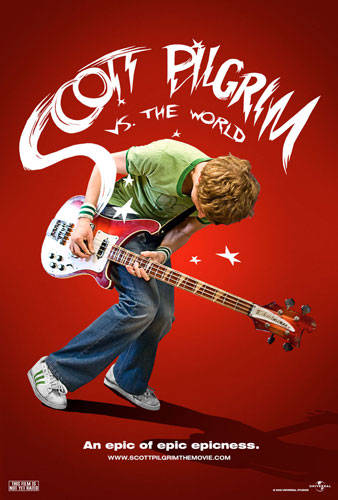
When it comes to adapting a work for film, some preexisting properties have proven more successful than others. Video games: bad; Jane Austen novels: better; comic books: blockbusters, even when the movie ends up sucking. There’s yet to be a Best Adapted Screenplay Oscar doled out for a graphic novel or comic adaptation, but can such a breakthrough be far off? Missing from the Pacific Film Archive’s lineup are Ghost World (2001) and Scott Pilgrim vs. the World (still in theaters), but as graphic novel geeks the world over await/assault news regarding the Y: The Last Man movie, there’s plenty of tiding-over afoot. Campy delight Flash Gordon (1980) kicks off the series, with Hellboy (2004), Popeye (1980), American Splendor (2003), and Wes Craven’s oft-overlooked 1982 Swamp Thing among future selections. (Eddy)

“Drawn From Life: Comic Books and Graphic Novels Adapted”

Through Oct 31, $5.50–$9.50

Pacific Film Archive

2575 Bancroft, Berk.

(510) 642-5249

www.bampfa.berkeley.edu


SATURDAY 11

COMEDY

Craig Ferguson

In the supposedly madcap, late-night TV landscape (see: 1996’s The Late Shift), it’s surprising that Craig Ferguson has ultimately emerged as the least traditional of them all. The Scottish comedian — accent and all — makes up jokes on the fly, curses like a sailor, and often references his past as an alcoholic, a bartender, and a punk band drummer, every night on The Late Late Show. But in sticking to his guns, Ferguson comes off as a real talent rather than a manufactured experience, and the program’s unpredictable nature is the real reason to tune in — who cares about the guests anymore? You don’t have to visit the L.A. studio to see the man work; this week he brings his wanton charm to Davies Symphony Hall. (Peter Galvin)

8 p.m., $45–$55

Davies Symphony Hall

201 Van Ness, SF

1-866-448-7849

www.ticketmaster.com


VISUAL ART

“Castration Myth”

So there was this artist named Rudolf Schwarzkogler who was affiliated with Viennese Actionism — a 1960s art movement that used the body as canvas and violence as paint — and in 1965 he scared the art world and discredited the avant-garde by cutting off his penis. Or so people thought; turns out it was just a friend and a filleted fish. Fast-forward 36 years to 9/11 and we have the whole world scared, the term post-avant, and not one, but two dismembered phalluses — this time for real. Is there another fish myth at stake? Seeing this exhibit of Rudolph’s “Aktion” performance photographs is one way to find out. (Spencer Young)

Through Oct. 9

6–8 p.m., free

Steven Wolf Fine Arts

2747 19th St, SF

(415) 263 3677

www.stevenwolffinearts.com


COMEDY

Dylan Moran

Perhaps best known to American audiences for his appearances in Shaun of the Dead and Run, Fatboy, Run, Irish comedian Dylan Moran is a huge hit in his native U.K., notably for his brilliant role as a cantankerous and drunk yet lovable book shop owner in the tragically short-lived BBC series Black Books. His live stand-up is where he’s really made his name though; biting, sarcastic, and side-splittingly hilarious observations of a variety of topics we all encounter in our day-to-day lives — along with ones that most of us presumably don’t, such as having a weekend tryst with a Smurf. (Sean McCourt)

8 p.m., $36

Marines Memorial Theatre

609 Sutter, 2nd floor, SF

(415) 771-6900

www.marinesmemorialtheatre.com


TUESDAY 14


MUSIC

Suckers

Taking equal parts David Bowie-fetishism, avant-garde pop, and the sort of world eclecticism pioneered by Paul Simon and Peter Gabriel — and recently invigorated by Yeasayer and Vampire Weekend — this Brooklyn band hits just the right measures of each to create its signature Suckers sound. While that description might lead you to believe the foursome’s sound might be aloof or reserved, its debut Wild Smile is surprisingly sunny, like a collection of the slowest dance songs. Forget the name, a sucker is the last thing you’d be for getting a ticket to this one. (Galvin)

With Menomena and Tu Fawning

Through Sun/15

8 p.m., $18

Great American Music Hall

859 O’Farrell, SF

(415) 885-0750

www.gamh.com 


The Guardian listings deadline is two weeks prior to our Wednesday publication date. To submit an item for consideration, please include the title of the event, a brief description of the event, date and time, venue name, street address (listing cross streets only isn’t sufficient), city, telephone number readers can call for more information, telephone number for media, and admission costs. Send information to Listings, the Guardian Building, 135 Mississippi St., SF, CA 94107; fax to (415) 487-2506; or e-mail (paste press release into e-mail body — no text attachments, please) to listings@sfbg.com. We cannot guarantee the return of photos, but enclosing an SASE helps. Digital photos may be submitted in jpeg format; the image must be at least 240 dpi and four inches by six inches in size. We regret we cannot accept listings over the phone.


Stimulating voltage

0

Don’t ask synthesizer inventor and electronic instrument designer Don Buchla (appearing Thu/9 as part of the 11th Annual San Francisco Electronic Music Festival) for a CD of his music. He’s more interested in following his curious muse — in this case, through the oft-uncharted territory of performance — than documenting his many experiments.

“It’s hard to have a CD that hasn’t been done yet,” the soft-spoken, even-keeled Buchla quips, deep within his Berkeley Victorian. He’s tucked behind a desk in a beige-carpeted, orderly studio-basement dotted with instruments — a hulking vibraphone dominates the space — and a few rainbow-colored 1960s- and ’70s-era lights. “None of my music can be recorded,” he adds. “It’s all theatrical in nature and involves a lot of visual simulations — stimulations.”

Buchla’s last performances were with saxophonist Peter Apfelbaum in Europe. His next appearance, a rare Bay Area one, will be in collaboration with Nine Inch Nails player Alessandro Cortini, for whom he made one of his Buchla Series 200e analog synthesizers. Using the 200e, a Thunder tactile surface MIDI controller, and various pieces of percussion, the two are making electronic and acoustic music with a distinct “element of chaos.” Buchla says they are striving for “unpredictability — allowing things to happen that we didn’t anticipate.”

In the meantime, forget about procuring a document of any of the practice sessions. Still, the inventor — who came out with his first modular synthesizer just months after Robert Moog in 1963 and created the first analog sequencer, among many other instruments — has made live CDs in the past. Indeed, his audiences would sometimes get a CD of the first half of a concert once the performance was completed and receive the second half in the mail. “If you want a record of the music,” he says, “the record should be the music you heard.”

If the live-recording-as-you-wait approach reminds you of the tape heads who devoted their energies to the Grateful Dead, you’re not far off: the Dead were onetime Buchla clients. He built their sound system — as well as the system on Ken Kesey’s bus — around the time he was doing sound and light at the Avalon Ballroom and the first Fillmore auditorium, as part of the North American Ibis Alchemical Company. Owsley Stanley, the Dead’s soundman and the onetime LSD cook, enlisted Buchla to make a Series 100 system for the band. “He wanted it to be very unique, so I painted all the panels candy-apple red,” Buchla remembers with a chuckle. “It was quite dazzling. It’s in their museum now, a collector’s item.”

Buchla’s instruments have all become collector’s items, from his Series 500, the first digitally controlled analog synth, to his all-in-one-paintbox Music Easel. “I usually can’t afford to keep them myself,” he says, laughing. “If I had, I’d be wealthy now.”

The first synthesizer that Buchla built in 1963 for composers Morton Subotnick and Ramon Sender at the San Francisco Tape Music Center was the fruit — the silver apple — of the UC Berkeley physics graduate drop-out and musique concrete composer’s roving curiosity. He’d learned that the Center had a three-track tape recorder, a marvel anywhere outside film studio contexts at the time. “I observed what they were using to compose electronic music,” Buchla remembers. “I proposed that instead of using the radar and gun sights and physics lab equipment and Hewlett-Packard oscillator, they build instruments intentionally geared toward electronic music. That was a revolutionary thought.”

In the 1984 book The Art of Electronic Music, Subotnick tells Jim Aikin that Buchla synthesizers are notable for “the way things are designed and laid out, so that a composer can impose his or her own personality on the mechanism. For example, Don always disassociated a voltage controlled amplifier from its control voltage source. That meant that the voltage source could be used for controlling anything. It wasn’t locked into a single use … That kind of sophistication has given him [a reputation] as the most interesting of all the people building this kind of equipment.”

The first Buchla Box, using touch-sensitive pads or ports rather than a standard keyboard, was funded with a $500 grant from the Rockefeller Foundation. Today it’s permanently ensconced at Mills College. On a side note, Buchla estimates it would easily go for $30,000. Buchla still tackles new designs — he has a multichannel filter that can serve as a Vocoder coming out next month — and his instruments, it seems, “don’t depreciate at all, so they’re good investments.”

“But I prefer to build them for playing.” 

11TH SAN FRANCISCO ELECTRONIC MUSIC FESTIVAL

Wed/8–Sat/11, various times, $10–$40 (pass)

(Alessandro Corti and Don Buchla perform Thurs/9, 8 p.m., $10–$16)

Brava Theatre (except Fri/10 at de Young Museum)

2781 24th St, SF

(415) 861-3257

www.sfemf.org

Azztronaughty

0

It’s impossible for me to think of Big Freedia without exploding into happy feathers. As the fierce national face of New Orleans’ bounce music movement (along with her drag daughter, Sissy Nobby), Freedia’s been shoehorned into several media narratives that don’t necessarily do her justice — popular performer who bridges a supposed gap between flamboyant gayness and macho rap, evidence that original regional roots music is still being generated in our monocultural-seeming musical world, post-Katrina beat-healer of ravished communities, anthropological curiosity. But she’s all that and more: a canny, hard-working force of nature who can really turn you out.

Bounce, with its quick-step, butt-thundering beats and hypersexual call-and-response template, has done a lot to push New Orleans back to the forefront of the American dance music scene. That a shoulder-shrugging attitude toward its superstar’s transgender appearance and cartoonish sexuality accompanies the sound should only surprise those who somehow missed Little Richard and Prince, not to mention Cameo and Cam’ron. Still, Freedia’s matter-of-fact, out-and-proud “Queen Diva” stance is all too rare in hip-hop. First-time listeners, after taking in Freedia’s feminine peacocking, still get floored when her gravelly voice orders straight crowds to “bend ovah like I told ya!” in her hit “Azz Everywhere.” (And then they do.)

Outsiders have called Freedia’s style “sissy bounce” — a niche label she rejects, and one that’s pretty inaccurate. Freedia’s first appearance in the Bay, last year at a San Francisco drag party, left the sissy audience completely befuddled. This time around, she’ll be in Oakland at a mixed affair put on by the fab Le Heat and Hella Gay parties. And now that she’s been featured everywhere from Diplo’s blog to The New York Times Magazine, Bay crowds may be ready to “jump back, shoot it up now, bitches get down” the Big Easy way.

Big Freedia Wed/9, 9 p.m., $10. The New Parrish, 579 18th St., Oakl. www.thenewparish.com


PEPE BRADOCK

The jazz-educated Frenchman could have been beamed up after he gifted the world with orchestral house classic “Deep Burnt” in 1999 and still been lionized. But he’s consistently delivered deep-streaming tracks that drop at just the right moments. He’ll be headlining the Staple boys’ ear-ticking Darkroom monthly with Fil Latorre and Javaight.

Thu/9, 9 p.m., $10. 222 Hyde, SF. www.222hyde.com


DRUMCODE: ADAM BEYER AND IDA ENGBERG

Attack of the Swedish techno giants! Drumcode label head Adam Beyer and “Disco Volante” hitmaker Ida Engberg bring news from the detail-oriented Stockholm scene to the perfectly curated weekly Base party at Vessel. My longtime local bass-maven crush Nikola Baytala warms up.

Thurs/9, 10 p.m., $15. Vessel, 85 Campton Place, SF. www.vesselsf.com


ARTIFICIAL

The debut of this dark wave, minimal synth, and rare post-punk party last month was fashionably bananas — don’t miss the follow up with DJ Justin of Nachtmusik, Banshee, Dreamweapon, Julian DeStrukt, and Nary Guman of Warm Leatherette.

Fri/10, 9:30 p.m., $7. Cat Club, 1190 Folsom, SF. www.sfcatclub.com


BACK TO SCHOOL

Aw, already? Meet and greet the new freshman class of clubgoers, probably wearing even more fantastically mismatched ensembles than previously imagined, at this electro blowout put on by the Blow Up kids. Tenderloins, Udachi, Sticky K, Lucky Date, Jeffrey Paradise, and more stoke your higher learning.

Sat/11, 9 p..m.–3 a.m., $15 for 18+, $10 for 21+. Kelly’s Mission Rock, 817 Terry Francois Blvd., SF. www.blowupsf.com


BLOOD, SWEAT, AND QUEERS

Bmore funk and booty jams from DJs Davo and Bunnystyle for two floors of hot queers in a Chinatown dive. ‘Nuff said!

Sat/11, 10:30 p.m., $5. Li Po Lounge, 916 Grant, SF.


MIXMASTER MIKE WITH DEL THE FUNKY HOMOSAPIEN

It’ll be a classic hip-hop throwdown when the Beastie Boys DJ and mind-warping rapper join forces at this Electronic Arts shindig. There’s something about a ” sexy exotic cars” showcase, too, but why burn the fossil fuels when you can inflame the brain cells? With DJs Sake One, Ren the Vinyl Archeologist, and more.

Sat/11, 9 p.m., free with RSVP at Mighty website. Mighty, 119 Utah, SF. www.mighty119.com

Blocking the bridge

1

sarah@sfbg.com

The Sierra Club and Golden Gate Audubon Society have sued to block the final environmental impact report on the Lennar Corp. redevelopment project, a move that could force reconsideration of a bridge over Yosemite Slough.

The suit against the city, Board of Supervisors, and Redevelopment Agency charges that the final EIR for Lennar’s Candlestick Point-Hunters Point Shipyard project was inadequate, in part because it didn’t consider all the impacts of the bridge or look properly at alternatives.

The move comes as no big surprise: these environmental groups vowed to file a suit within 30 days of the city’s August certification of the project EIR. But advocates hope it will lead to a change in the proposal.

Arthur Feinstein, a member of the Sierra Club’s San Francisco Bay Chapter, said the EIR didn’t comply with the California Environmental Quality Act, or CEQA.

The introduction to the Sierra Club suit notes that “the FEIR failed to identify or underestimated the significance of environmental impacts associated with the project; failed to address the alternative proposed by Arc Ecology, which provides for a bus rapid transit route around Yosemite Slough; and failed to provide adequate responses to comments on the draft EIR.”

Or as Feinstein puts it: “There’s a bridge, and it’s going through a nature area where they say the sound level from the buses will be the equivalent to standing 50 feet from a freeway.

“They say there is no impact and that you can’t have an undisturbed nature experience in an urban area, but you can,” Feinstein continued, pointing to the Presidio, Golden Gate Park, and Crissy Field as examples of places where you can have undisturbed experiences.

Feinstein noted that Candlestick Point State Recreation Area is the only large park on the city’s eastern shoreline, and the only park that people in the Bayview can access easily.

“The city boasts about how much it was improving the Bayview, but this park is the only major open space where you can get away from urban stress — and folks have a lot of stress in the Bayview,” Feinstein said. He added that building the bridge will involve sinking pilings in Yosemite Slough that will disturb wildlife and stir up PCBs and other known contaminants.

“Noise, light and glare all have impacts on wildlife, but the city’s EIR said these are insignificant because these critters are insignificant,” Feinstein said.

Feinstein noted that the city’s final environmental impact report did make a finding of overriding concern that the project will cause air pollution at levels that exceed Bay Area Air Quality Management District (BAAQMD) health standards.

“But [the city] decided that this was a regional problem, so they did not attempt any mitigations for the 25,000 new residents that this 700-acre redevelopment plan is supposed to bring into the Bayview — which already has the city’s highest asthma and cancer rate and the largest number of polluting sources,” Feinstein said. “But they could say that all buses going into the development need to be electrified, or they could limit the number of parking spaces the way they did at Octavia-Market and South of Market.”

Feinstein said the next step in this CEQA lawsuit in a pretrial negotiation session to see if a settlement can be reached. “We’re not looking for a long drawn out fight. We’re ready for one, but we’re also ready to negotiate because that’s how you achieve things.”

Feinstein also noted that the Sierra Club had to go to Los Angeles to hire a traffic consultant to work on its suit because Lennar has contracts with just about every shop in the Bay Area, thanks to its various projects at Hunters Point, Treasure Island, and Mare Island.

“The related problem is that the city is no longer looking at the project with a steely eye,” Feinstein said. “Instead, they have become the developer — except that they are working with Lennar and not reviewing Lennar’s plans with objectivity. By filing this lawsuit, we’re keeping the conversation about this project alive and reminding folks that you don’t have to take everything this mayor and his administration gives you.”

The Sierra Club/Audubon Society suit came four days after the San Francisco Chronicle reported that the California State Parks Foundation entered into an agreement with Lennar to help prepare conceptual designs that reportedly will be used as the basis for the actual bridge over the Yosemite Slough.

Some critics interpreted the timing of CSPF’s announcement, which the Chronicle reported under a confusing “Environmentalists to help design span” headline, as an attempt by Lennar’s well-oiled PR machine to undermine the Sierra Club/Audubon Society suit.

They also questioned CSPF’s independence from Lennar, and from the Mayor’s Office, because Guillermo Rodriguez Jr. from the Mayor’s Office of Economic and Workforce Development sits on CSPF’s board. So does Peter Weiner, a partner at Paul, Hastings, Janofsky & Walker, which has contracts with Lennar. Representatives from Southern California Edison, Toyota, the Walt Disney Company, Pacific Gas and Electric Co., and several other companies that either have contracts with Lennar or have given to Mayor Gavin Newsom’s campaign for lieutenant governor campaign also sit on the park foundation board.

CPSF’s President Elizabeth Goldstein told us that “as park supporters and defenders, we consider ourselves environmentalists.” CSPF originally planned to fight approval of the project’s final EIR when it came before the board in July. But unlike the Sierra Club, CSPF pulled its appeal at the last minute.

Goldstein told the Guardian that the foundation reversed its decision because it had initiated what she characterized as “a fruitful discussion with Lennar.”

“We wanted to play that out,” Goldstein said. “And now we’re glad we did, because the design criteria look quite good and hopefully will be compatible with the project.”

“What we’ve agreed with Lennar about is a set of design criteria to be applied to the bridge, she continued. “These criteria are intended to make sure the bridge fits aesthetically into the park as much as is possible. Lennar asked us, and we agreed, to develop the first set of conceptual plans — obviously in cooperation with them — to make sure that they are, from their first iteration, as sympathetic as possible to the park.”

Goldstein said that some of these design criteria are “quite global.”

“Some are big arcs of things that are very important to us, such as impact from light, glare and noise,” she said, noting that they don’t want to see the proposed bridge lighted at night, à la the Golden Gate Bridge.

“We want the environment at dusk to be as unimpacted as possible,” she said.

Other CSPF concerns are more situation specific.

“We want safe, attractive, easy-to-use signage,” Goldstein said, referring to need to help users and neighbors find their way around and across the bridge. “We also talk about minimizing piers in the water at the slough, and if possible, eliminating them altogether since they impact vehicles and kayaks.”

Goldstein agreed that the foundation’s roots are not in political advocacy. “We were founded as a philanthropic land acquisition partner to the Department of State Parks.” But she noted that the group was involved in blocking a proposed toll road through Orange County and is a leading supporter of Proposition 21, which seeks to raise nearly $500 million a year for state parks by tacking on an $18 vehicle registration fee that would give all vehicles registered in California free access to the majority of state parks.

As Feinstein observed, “The CSPF does great work, but they are not usually advocates for conservation and biodiversity. That is what the club and Audubon Society does.”

Stuart Flashman, attorney for the Sierra Club and the Golden Gate Audubon Society, said that in the long run the lawsuit won’t stop the project from going forward. “But in the short term, if the court finds that the EIR wasn’t adequate and that there are significant impacts from the bridge that could have been avoided, then the city has to go back and redo that part of the EIR, a process that could take two to four months. And if they conclude, yeah, the impacts from the bridge are unavoidable, then they’d have to redo it to go around the slough.”

Flashman says he hasn’t seen the proposal CPSF and Lennar are working on. “But as part of this suit, we are required to sit down with the city and see if we can settle — and we are hopeful we can do that.”

Film listings

0

Film listings are edited by Cheryl Eddy. Reviewers are Kimberly Chun, Michelle Devereaux, Peter Galvin, Max Goldberg, Dennis Harvey, Johnny Ray Huston, Louis Peitzman, Lynn Rapoport, Ben Richardson, and Matt Sussman. For rep house showtimes, see Rep Clock. For first-run showtimes, see Movie Guide. Due to the Labor Day holiday, theater information was incomplete at presstime.

OPENING

*The Agony and the Ecstasy of Phil Spector See “Agony Uncle.” (1:42) Roxie, Smith Rafael.

Bran Nue Dae An energetic screen translation of a 1990 Australian stage musical, Rachel Perkins’ film is tourist cliché spun into crowd-pleasing slop, like a Down Under Riverdance. Young Aboriginal Willie (Rockie McKenzie) escapes the “corrective” environ of a 1969 Perth Catholic boarding school and flees homeward, only to be pursued by mercilessly hammy Geoffrey Wright’s racist priest baddie. The crude humor, generic tunes, and hectically shot and dance-poor numbers have about as much to do with Aussie abo culture as The Lion King does with “Africa” — it’s prefab feel-good pap posing as multicultural representation. (1:28) Sundance Kabuki. (Harvey)

Change of Plans Emmanuelle Seigner stars in this ensemble comedy revolving around a dysfunctional Parisian dinner party. (1:40) Sundance Kabuki.

I’m Still Here Casey Affleck’s long-awaited Joaquin Phoenix documentary follows the maybe-crazy actor during his mountain man-bearded hip-hop phase. (1:48)

*Mademoiselle Chambon See “Mellow Noir.” (1:41)

Resident Evil: Afterlife Milla Jovovich picks up her guns again, this time to fight zombies in 3D. (1:30)

*White Wedding Every culture’s gotta have its own version of the wacky road-trip movie, in which a series of snafus (mechanical failure, miscommunication, booze, rednecks, farm animals, etc.) sidetrack hapless travelers en route to their (inevitably very important) destination. If the basic structure of Jann Turner’s White Wedding feels rather familiar, at least this South African import has its share of original charm. Groom-to-be Elvis (Kenneth Nkosi) misses a bus at the beginning of the film (we know he’s a nice guy, because he misses it helping a lost child), setting in motion a series of mostly comical disasters en route to his Johannesburg wedding. While his beloved, Ayanda (Zandile Msutwana), clashes with her mother over her choice of wedding (she wants a modern, sophisticated affair; mom wants a more traditional party) — and fends off the advances of a suave ex — Elvis and best friend Tumi (Rapulana Seiphemo, who co-wrote with Turner and Nkosi) attempt to cross miles of countryside despite fate throwing every kind of theoretical and metaphorical roadblock in their paths. One happy distraction is Rose (Jodie Whittaker), an English doctor grappling with travel woes of her own. There’s never any real doubt that Elvis and Ayanda will get hitched at film’s end, but White Wedding‘s journey, which is mostly featherlight despite some eye-opening insights into South Africa’s post-apartheid culture, is worth taking. (1:33) (Eddy)

A Woman, a Gun and a Noodle Shop Zhang Yimou remakes (kind of) the Coen Brothers’ 1984 Blood Simple. (1:35)

ONGOING

*The American George Clooney caught in a moodily paranoid, yet exquisitely photographed, ’70s-style suspense-arthouse death-trap? Belmondo and Beatty could empathize. Nonetheless, veteran rock photographer and Control (2007) director Anton Corbijn suffuses the chilly proceedings with a fresh, wintry beauty, the carefully balanced sense of highly charged tension and silky smoothness that a gunsmith would appreciate, and a resonance that feels personal. How else would an ex-rock shooter like Corbijn, who’s made iconic images of the Clash, U2, and others, connect with this tale of an assassin masquerading as a photographer, one who’s constantly glancing behind and around himself — justifiably wary of being caught in another killer’s sights — and seemingly just as wary of the director’s, and audience’s, gaze? A character who wouldn’t be out of place in a Camus novella or a Melville brooder, Jack/Edward, or more accurately “the American,” (Clooney) is in exile after a bad collision with a girlfriend and hitmen in Sweden and hiding out in a picturesque Italian village, conspicuously the more-cold-than-cool outsider and doing one immaculate job for a gorgeous mysterious woman (Thekla Reuten). Is he a good or bad guy? The local priest (Paolo Bonacelli), who knows and sees all like a great eye in the sky, is trying to find out, as is the most beautiful prostitute in town (Violante Placido). The answers are nowhere near as clear or as plainly painted as a Sergio Leone Western, although Corbijn nods to the maestro when stone-cold killer Henry Fonda, then playing shockingly against type, appears on a cafe TV screen in Once Upon a Time in the West (1968). But the director’s care and attention to beauty — as well as the lines carved in the face of Clooney’s lean, mean-looking American, a whore like any other — say more than words. (1:43) (Chun)

*Animal Kingdom More renowned for its gold rush history and Victorian terrace homes than its criminal communities, Melbourne, Australia gets put on the same gritty map as Martin Scorsese’s ’70s-era New York City and Quentin Tarantino’s ’90s Los Angeles with the advent of director-writer David Michôd’s masterful debut feature. The metropolis’ sun-blasted suburban homes, wood-paneled bedrooms, and bleached-bone streets acquire a chilling, slowly building power, as Michôd follows the life and death of the Cody clan through the eyes of its newest member, an unformed, ungainly teenager nicknamed J (James Frecheville). When J’s mother ODs, he’s tossed into the twisted arms of her family: the Kewpie doll-faced, too-close-for-comfort matriarch Smurf (Jacki Weaver), dead-eyed armed robber Pope (Ben Mendelsohn), Pope’s best friend Baz (Joel Edgerton), volatile younger brother and dealer Craig (Sullivan Stapleton), and baby bro Darren (Luke Ford). Learning to hide his responses to the escalating insanity surrounding the Codys’ war against the police — and the rest of the world — and finding respite with his girlfriend, Nicky (Laura Wheelwright), J becomes the focus of a cop (Guy Pearce) determined to take the Codys down — and discovers he’s going to have use all his cunning to survive in the jungle called home. Stunning performances abound — from Frecheville, who beautifully hides a growing awareness behind his character’s monolithic passivity, to the adorably scarifying Weaver — in this carefully, brilliantly detailed crime-family drama bound to land at the top of aficionados’ favored lineups, right alongside 1972’s The Godfather and 1986’s At Close Range and cult raves 1970’s Bloody Mama and 1974’s Big Bad Mama. (2:02) (Chun)

Avatar: Special Edition (2:51)

Cairo Time (1:29)

*Centurion Neil Marshall is the kind of filmmaker who inspires glee among horror and action junkies, but indifference among mainstream moviegoers. Centurion isn’t likely to change this. It’s the second century, and Romans are invading what’s now the Scottish Highlands, much to the displeasure of the Picts, the tribal people who’re already living there. Enter Quintus Dias (Michael Fassbender), a Roman soldier who becomes the de facto leader of an ever-shrinking group of men trapped behind enemy lines after their general (The Wire‘s Dominic West) is captured. Devotees of Marshall (2002’s Dog Soldiers, 2005’s The Descent, 2008’s Doomsday) will recognize certain elements: an ensemble cast, a military setting, the presence of a fierce female (Bond heroine Olga Kurylenko, who makes Pict warrior drag both spooky and sexy). Unlike his earlier films, though, there’s no supernatural twist; it’s just good old battlefield guts and gore. Sure, the romantic subplot feels a little forced, but this is genre filmmaking in its purest form, to be celebrated with gusto by those who appreciate grisly decapitations and the like. (Read my interview with Marshall at www.sfbg.com/pixel_vision.) (1:39) (Eddy)

The Concert (1:47)

Despicable Me Judging from the adorable, booty-shaking, highly merchandisable charm of its sunny-yellow Percocet-like minions, Despicable Me‘s makers have more than a few fond memories of the California Raisins. That gives you an idea of the 30-second attention-span level at work here. Thanks to Pixar and company, our expectations for animated features are high, but despite the single lob at Lehman Brothers aimed toward the grown-ups, the humor here is pitched straight at the eight and younger crowd: from the mugging, child-like minions to the all-in-good-fun, slightly quease-inducing 3-D roller-coaster ride. Gru (Steve Carell) is Despicable‘s also-ran supervillain — a bit too old and too unoriginal for a game that’s been rigged in the favor of the youthful, annoyingly perky Vector (Jason Segel), who’s managed to swipe the Giza Pyramids and become the world’s number one bad dude. When Vector steals away the crucial shrink ray needed for Gru’s plot to thieve the moon, the latter pulls out the big guns: three adorable orphans who have managed to penetrate Vector’s defenses with their fund-raising cookie sales. It turns out kids have their own insidiously heart-warming way of wrecking havoc on one’s well-laid plans. Filmmakers Pierre Coffin and Chris Renaud do their best to exploit the 3-D medium, but Avatar (2009) this is not. Nor will many adults be able to withstand the onslaught of cute undertaken by all those raisins, I mean, minions. (1:35) (Chun)

Dinner for Schmucks When he attracts favorable notice and a possible promotion from his corporate boss, Tim (Paul Rudd) is invited to an annual affair in which executives compete to see who can dig up the freakiest loser dweeb for everyone to snicker at. He literally runs into the perfect candidate: Barry (Steve Carrell), an IRS employee whose hobby is making elaborate tableaux with stuffed dead nice in tiny human clothes. He’s also the sort of person who, in trying to be helpful, inevitably wreaks havoc on the unlucky person being helped. Which means the 24 hours or so before the “Biggest Idiot” contest provide plenty of time for well-intentioned Barry to nearly destroy Tim’s relationship with a girlfriend (Stephanie Szostak), reunite him with Crazy Stalker Chick (Lucy Punch), and imperil his wooing of a multimillion-dollar account. Director Jay Roach (of the Austin Powers and Meet the Fockers series) has a full load of comedy talent on board here. So why are the results so tepid? This remake softens the bite of Francis Veber’s 1998 original French The Dinner Game by making Tim not a yuppie scumbag but a nice guy who just happens to have a jerk’s job (his company seizes ailing firms and liquidates them), and who doesn’t really want to expose hapless Barry to humiliation. But even with that satirical angle removed and a wider streak of sentimentality, it should cough up more laughs than it does. (1:50) (Harvey)

Dogtooth A man, his wife, and their three children live in a country house with a swimming pool and a huge yard enclosed by a high fence. So far, so good. But the kids, who don’t have names, appear to be in their 20s. They’ve never left the property, and they won’t, Dad (Christos Stergioglou) says, until they lose a “dogtooth,” at which time they’ll be mature enough to deal with the terrors of the outside world. In the meantime, they’re trapped in the only world they’ve ever known, carefully constructed by their domineering father. Greek writer-director Yorgos Lanthimos, who picked up the Prize Un Certain Regard at Cannes for this slice of disturbing domesticity, offers little explanation for Dad’s motives, or why Mom (Michelle Valley) goes along with his plan. The only hint comes from one of few scenes set outside the family’s compound, in which Dad goes to check on the progress of the family’s soon-to-be new dog. “Dogs are like clay, and our job here is to mold them,” the trainer explains. “Every dog is waiting for us to show it how to behave.” Indeed. It’s pretty clear Dad — master of his own private North Korea — is aware of that concept. Though Dogtooth‘s main themes enfold cruelty and child abuse, it also deploys the kind of black humor and button-pushing that fans of shock-trader Harmony Korine would appreciate. There is casual violence, extreme animal cruelty, full-frontal nudity, several disturbing sex scenes, and maybe the most alarming dance routine ever captured on film. (1:36) (Eddy)

Eat Pray Love The new film based on Elizabeth Gilbert’s chart-busting memoir, Eat Pray Love, benefits greatly from the lead performance by Julia Roberts, an actor who can draw from her own reserves of pathos when a project has none of its own. The adaptation, about a whiny American author farting around the globe in search of what amounts to spiritual room service, is nothing without her. The journey begins with the Type-A, book contract-inspired premise that Gilbert will travel to three appointed countries over the course of a year in order that, having thrice denied herself absolutely nothing, she might come out the other end a better-balanced human being. The first stop is Italy, where her entire plan is to finally unbutton her jeans and indulge in a celebrated cuisine, as if her home base of Manhattan were a culinary backwater. But this film is all about tired equivalencies, so Italy equals food, and expressive hand gestures, and “the art of doing nothing.” India, her next stop, equals enlightenment (her discovery that the guru she’s come to see is currently at an ashram in New York is an irony lost on the movie). And Bali, her final getaway, apparently equals contradictory but flattering aphorisms and thematically hypocritical romances. The sole appeal to a moviegoer here is aspirational. What’s so embarrassing about Eat Pray Love is its insistence that this appeal sprouts from the spiritual quest itself, and not just from the privilege that enables Gilbert to have such an extravagant quest in the first place. But then, self-awareness is supposed to be a obstacle to enlightenment. She’s got nothing to worry about there. (2:30) (Jason Shamai)

The Expendables Exactly what you’re expecting: a completely ludicrous explosion-o-thon about mercenaries hired by Bruce Willis to take down a South American general who’s actually a puppet for evil CIA agent-turned-coke kingpin Eric Roberts. Clearly, Sylvester Stallone (who directed, co-wrote, stars, and even coaxed a cameo out of Schwarzenegger) knows his audience, but The Expendables — bulging with a muscle-bound cast, including Dolph Lundgren, Terry Crews, Jason Statham, and Steve Austin, plus Jet Li, who suffers many a short-guy joke — is content to simply tap every expected rung on the 80s-actioner homage ladder. There’s no self-awareness, no truly witty one-liners, no plot twists, and certainly no making a badass out of any female characters (really, couldn’t the South American general’s daughter have packed some heat, or kicked someone in the balls — anything besides simply heaving her cleavage around?) The only truly memorable thing here is the inclusion of Mickey Rourke as Stallone’s tattoo-artist pal; I would possibly wager that Rourke was allowed to write his own weepy monologue, delivered in a close-up so extreme it’s more mind-searing than any of the film’s many machine-gun brawls. (1:43) (Eddy)

The Extra Man The polar opposite of buddy cop action flicks and spoofs a la The Other Guys, with only a faint resemblance to the bromances of Judd Apatow, Adam McKay, Will Ferrell, Seth Rogen, and so on, The Extra Man is a gently weird throwback to another era, much like its title character, Henry Harrison (Kevin Kline). Sweet, cross-dressing-curious teacher and would-be writer Louis Ives (Paul Dano) is drifting though life passively when he stumbles on eccentric playwright Harrison’s room-for-let and his oddball realm of hangers-on. A blustery, prickly, proudly misogynistic collector of Christmas balls, given to spasms of improvisational dancing, Harrison relishes his role as an escort to aged socialites, crankily shucking and jiving to score invites to fancy dinner parties and vacation homes in Florida. When Ives isn’t courting environmental magazine editor Mary (Katie Holmes) or hiding from the fearsome-looking wooly recluse Gershon (John C. Reilly), the mentor-able young man turns out to be more adept at the role than Harrison ever imagined. And like fossilized grande dames in Chanel, literate audiences also might be charmed by director-writer Shari Springer Berman’s unassuming, crushed-out bon mot, based on the novel by Jonathan Ames, to a few mannered, less-than-examined, happily twisted New York City subcultures. (1:45) (Chun)

Flipped I’m sure a “he said/she said” film exists that makes good on the premise, but Rob Reiner’s Flipped doesn’t quite cut it. Nestled safely in 1960s small-town America, the film is first narrated by Bryce, an eighth grader who’s spent the past four years rebuking the advances of Juli, the girl who lives across the street. Bryce is a pretty typical boy, bumbling and unsure of just what he wants, but soon the story “flips” and we see the same events narrated from Juli’s POV. Juli is drawn to Bryce’s “sparkling eyes,” yes, but with a poor family and an annoyingly sincere love for life, she has problems outside of lusting for Bryce. Based on a tween-hit novel by author Wendelin Van Draanen, the story’s familiarity perhaps stems from the source material — in my experience those sorts of novels rarely invite readers older than high school — and similarly in the case of Flipped, I think this might be something we should leave to the kids. (1:30) (Galvin)

Get Low Born from the true story of Felix Bush, an eccentric Tennessee hermit who invited the world to celebrate his funeral in advance of his own death, Get Low is a loose take on what might inspire a man to do a thing like that. It’s a small story, and unlikely to attract the attention of popcorn-addled viewers in the midst of the summer blockbuster season, but Get Low has a whopper of a character in Felix Bush. Robert Duvall becomes Bush, constructing a quiet man who sees it all and speaks only when he has something to say, and supporting roles from Sissy Spacek and Bill Murray are expectedly solid, but the real surprise is what a strong eye director Aaron Schnieder has. In allowing scenes to unfold on their own terms and in their own time, Schneider gives a real humanity to what could have been a Hallmark movie. (1:42) (Galvin)

*The Girl Who Played With Fire Lisbeth Salander is cooler than you are. The heroine of Stieg Larsson’s bestselling book series is fierce, mysterious, and utterly captivating: in the movie adaptations, she’s perfectly realized by Noomi Rapace, who has the power to transform Lisbeth from literary hero to film icon. Rapace first impressed audiences in The Girl With the Dragon Tattoo (2009), a faithful adaptation of Larsson’s premiere novel, and she returns as Lisbeth in The Girl Who Played With Fire. The sequel, as is often the case, isn’t quite on par with the original, but it’s still a page-to-screen success. And while the first film spent equal time on journalist Mikael Blomkvist (Michael Nyqvist), The Girl Who Played With Fire is almost entirely Lisbeth’s story. Sure, there’s more to the movie than the hacker-turned-sleuth — and the actor who plays her — but she carries the film. Rapace is Lisbeth; Lisbeth is Rapace. I’d watch both in anything. (2:09) Smith Rafael. (Peitzman)

Going the Distance If you live in San Francisco, don’t try to date someone in New York. It’s just not worth the hassle. But hey, maybe you’re as adorable as Drew Barrymore, and your boyfriend’s as charming as Justin Long — you can’t be expected to let a little geographical complication get in the way. That’s the driving force behind Going the Distance, a romcom that stars real-life couple Barrymore and Long as Erin and Garrett, two crazy kids trying to make it work cross-country. In many ways, the film is your standard boy-meets-girl story, but it’s cute enough that the predictability factor doesn’t really matter. The cast is universally strong, with bonus points to the standouts: It’s Always Sunny in Philadelphia‘s Charlie Day as Garrett’s embarrassing roommate, and Christina Applegate as Erin’s germaphobe sister. The humor is surprisingly sharp — and raunchy, which earned Going the Distance an R-rating. I’m not going to say Long’s bare ass is worth the price of admission, but it’s certainly a selling point. (1:43) (Peitzman)

Highwater The latest from the first family of surf movies comes courtesy of Dana Brown (2003’s Step Into Liquid), son of Bruce (1964’s The Endless Summer) and father of Wes (an up-and-comer who co-edited Highwater). The film focuses on Oahu’s legendary North Shore — “the one path all surfers must take,” per Dana’s occasionally woo-woo narration — and the annual big-wave contests held there each year. Though the majority of screen time is (of course) taken up by sweeping, slo-mo shots of pros tangling with looming walls of water, Highwater reaches out to civilian audiences with sidebars on the North Shore’s eccentric local culture, the science behind the 10-mile beach’s massive waves, and profiles of the sport’s more colorful characters. Brown is also careful to highlight the growing amount of women in the sport, who surf the exact same breaks as the men but earn far less prize money for it. Diehards might notice events in the film feel a bit dated, and indeed, Highwater was shot in 2005. But since surfers operate under the assumption that “one wave can make a person’s career” (especially if it’s captured on film), there’s presumably no sell-by date violation here. (1:30) (Eddy)

Inception As my movie going companion pointed out, “Christopher Nolan must’ve shit a brick when he saw Shutter Island.” In Nolan’s Inception, as in Shutter Island, Leonardo DiCaprio is a troubled soul trapped in a world of mind-fuckery, with a tragic-vengeful wife (here, Marion Cotillard) and even some long-lost kids looming in his thoughts at all times. But Inception, about a team of corporate spies who infiltrate dreams to steal information and implant ideas, owes just as much to The Matrix (1999), Eternal Sunshine of the Spotless Mind (2004), and probably a James Bond flick or two. Familiar though it may feel, at least Inception is based on a creative idea — how many movies, much less summer blockbusters, actually require viewer brain power? If its complex house-of-cards plot (dreams within dreams within dreams) can’t quite withstand nit-picking, its action sequences are confidently staged and expertly directed, including a standout sequence involving a zero-gravity fist fight and elevator ride. Though it’s hardly genius — and Leo-recycle aside — Inception is worth it, if you don’t mind your puzzle missing a few pieces. (2:30) (Eddy)

Jean-Michel Basquiat: The Radiant Child In 1986, filmmaker Tamra Davis was six years away from her breakthrough (1992’s Guncrazy; she also made 1998’s Half Baked and 2002 Britney Spears misfire Crossroads, and is married to one of the Beastie Boys). But she was already friends with artist Jean-Michel Basquiat, then at the height of his career. He died two years later of a heroin overdose, equally shaken by close friend Andy Warhol’s death and the pressures of his own skyrocketing fame. This tender doc weaves Davis’ 1986 interview with a low-key Basquiat (shot in a Beverly Hills hotel room) with recollections from his New York City circle (girlfriends, gallery owners, fellow artists, art critics). Though his art-world rise was breathtaking — he went from graffiti-scrawling kid to a hip painter whose works sold for hundreds of thousands (and now, multi-millions) — Davis’ doc suggests it was too much, too soon, creating distractions that first interfered with his creativity, then his well-being. Even if you don’t care for his art, Radiant Child is a compelling, insidery look at the dark side of celebrity. (1:34) (Eddy)

*Joan Rivers: A Piece of Work Whether you’re a fan of its subject or not, Ricki Stern and Annie Sundberg’s documentary is an absorbing look at the business of entertainment, a demanding treadmill that fame doesn’t really make any easier. At 75, comedian Rivers has four decades in the spotlight behind her. Yet despite a high Q rating she finds it difficult to get the top-ranked gigs, no matter that as a workaholic who’ll take anything she could scarcely be more available. Funny onstage (and a lot ruder than on TV), she’s very, very focused off-, dismissive of being called a “trailblazer” when she’s still actively competing with those whose women comics trail she blazed for today’s hot TV guest spot or whatever. Anyone seeking a thorough career overview will have to look elsewhere; this vérité year-in-the-life portrait is, like the lady herself, entertainingly and quite fiercely focused on the here-and-now. (1:24) (Harvey)

*The Kids Are All Right In many ways, The Kids Are All Right is a straightforward family dramedy: it’s about parents trying to do what’s best for their children and struggling to keep their relationship together. But it’s also a film in which Jules (Julianne Moore) goes down on Nic (Annette Bening) while they’re watching gay porn. Director Lisa Cholodenko (1998’s High Art) co-wrote the script (with Stuart Blumberg), and the film’s blend between mainstream and queer is part of what makes Kids such an important — not to mention enjoyable — film. Despite presenting issues that might be contentious to large portions of the country, the movie maintains an approachability that’s often lacking in queer cinema. Of course, being in the gay mecca of the Bay Area skews things significantly — most locals wouldn’t bat an eye at Kids, which has Nic and Jules’ children inviting their biological father (“the sperm donor,” played by Mark Ruffalo) into their lives. But for those outside the liberal bubble, the idea of a nontraditional family might be more eye-opening. It’s not a message movie, but Kids may still change minds. And even if it doesn’t, the film is a success that works chiefly because it isn’t heavy-handed. It refuses to take itself too seriously. At its best, Kids is laugh-out-loud funny, handling the heaviest of issues with grace and humor. (1:47) (Peitzman)

The Last Exorcism Latest in a long line of Louisiana preachers, genial extrovert Cotton Marcus (Patrick Fabian) isn’t even sure he believes in God anymore — but it’s the family business, and it’s a living. He definitely doesn’t believe in demonic possession, yet has presided over many an “exorcism” if only to fool the psychologically damaged into thinking they’re “cured” of delusional ails. But now he’s decided such hijinks might be more harmful than helpful. So to debunk the whole idea, he takes a documentary filmmaking crew on one last “soul-saving” trek, answering a desperate letter from a widowed farmer (Louis Herthum) whose 16-year-old daughter (Ashley Bell) is believed possessed. Cotton deploys theatrical tricks to rig an alleged purging of Satan’s minion. And it works … but this wouldn’t be a horror movie if that rationalist triumph didn’t turn out to be a false finish, followed by all kinds of inexplicable WTF. German director Daniel Stamm’s first English-language feature (written by Huck Botko and Andrew Gurland) is being positioned by Lionsgate as the next viral word-of-mouth horror sensation a la prior faux-docs The Blair Witch Project (1999) and Paranormal Activity (2007). But the “reality” illusion is more transparent here. Despite some clever buildup tactics, okay twists, and a handful of scares, this ultimately disappoints — a preview audience’s catcalls at its underwhelming fadeout suggested there will be no Last Exorcism 2. (1:27) (Harvey)

Lebanon Das Boot in a tank” has been the thumbnail summary of writer-director Samuel Maoz’s film in its festival travels to date, during which it’s picked up various prizes including a Venice Golden Lion. On the first day of Israel’s 1982 invasion (which Maoz fought in), an Israeli army tank with a crew of three fairly green 20-somethings — soon joined by a fourth with even less battle experience — crosses the border, enters a city already halfway reduced to rubble, and promptly gets its inhabitants in the worst possible fix, stranded without backup. Highly visceral and, needless to say, claustrophobic (there are almost no exterior shots), Lebanon may for some echo The Hurt Locker (2009) in its intense focus on physical peril. It also echoes that film’s lack of equally gripping character development. But taken on its own willfully narrow terms, this is a potent exercise in squirmy combat you-are-thereness. (1:33) Smith Rafael. (Harvey)

The Life and Times of Allen Ginsberg Here’s your chance to get to know the late poet before he’s portrayed by non-doppelgänger James Franco in the upcoming Howl. Whereas Howl, title drawn from his most famous and controversial creation, focuses on Ginsberg’s 1957 obscenity trial, Jerry Aronson’s 1994 doc offers a more sweeping take on his life. Friends and relatives (in both new and archival interviews), home-movie footage and photographs, talk show excerpts (William F. Buckley: so not down with the counterculture), and the man himself (reading his work, powerfully) help piece together what was undeniably a passionate and remarkable existence. (1:22) Roxie. (Eddy)

Lottery Ticket (1:39)

*Machete Probably the first movie that was initially conceived solely as a fake-movie trailer (as part of Quentin Tarantino and Robert Rodriguez’s 2007 Grindhouse), Rodriguez’s Machete emerges in full-length form to take on everyone’s sky-high expectations. I mean, the trailer promised motorcycles soaring through flames, a gun-toting priest, and the line “You just fucked with the wrong Mexican.” Fortunately, Machete the film does Machete the trailer proud; its deliberately silly revenge plot is both spot-on vintage homage and semi-serious commentary on America’s ongoing immigration debate. In addition, it features more severed limbs, gunshots to the head, irresponsible sex, and smirking Steven Seagal close-ups than any other movie in recent memory. Frequent Rodriguez supporting player Danny Trejo pretty much kills it as the title badass — but then, you already knew he would. (1:45) (Eddy)

*Mao’s Last Dancer Based on the subject’s autobiography of the same name, this Australian-produced drama chronicles the real-life saga of Li Cunxin (played as child, teen, and adult by Huang Wen Bin, Chengwu Guo, and Chi Cao), who was plucked from his rural childhood village in 1972 to study far from home at the Beijing Dance Academy. He attracted notice from Houston Ballet artistic director Ben Stevenson (Bruce Greenwood) during a cultural-exchange visit, and was allowed to go abroad for a Texas summer residency. At first the film looks headed toward well-handled but slightly pat inspirational territory pitting bad China against good America, as it cuts between Li’s grueling training by (mostly) humorless Party ideologues, and his astonishment at the prosperity and freedom in a country he’d been programmed to believe was a capitalist hellhole of injustice and deprivation. (Though as a Chinese diplomat cautions, not untruthfully, he’s only been exposed to “the nice parts.”) Swayed by love and other factors, Li created an international incident — tensely staged here — when he chose to defect rather than return home. But Jan Sardi’s script and reliable Aussie veteran Bruce Beresford’s direction refuse to settle for easy sentiment, despite a corny situation or two. Our hero’s new life isn’t all dream-come-true, nor is his past renounced without serious consequence (a poignant Joan Chen essays his peasant mother). The generous ballet excerpts (only slightly marred by occasional slow-mo gimmickry) offer reward enough, but the film’s greatest achievement is its honestly earning the right to jerk a few tears. (1:57) (Harvey)

*Mesrine: Killer Instinct This first half of a two-part film about notorious French bank robber Jacques Mesrine examines the early life of its subject, before he was a flamboyant, headline-grabbing folk hero. The very first scene uses 70s-style split-screens to revel Mesrine’s violent 1979 death; writer-director Jean-François Richet (2005’s Assault on Precinct 13) then jumps back 15 or so years for a glimpse of our (anti-) hero’s soldiering days in Algeria. Before long, “Jacky” (an outstanding Vincent Cassel, in a César-winning performance) is back in Paris, horrifying his upper-class parents and young wife by choosing the underworld over conventional pencil-pushing. (A near-unrecognizable Gérard Depardieu appears as a mob boss.) Killer Instinct, which is adapted from Mesrine’s own prison-penned autobiography, suffers from some standard biopic problems — it tries to cram in too much, and feels mighty rushed at times. But there’s still plenty of bad, bad behavior to enjoy, including the film’s spectacular last act, a breakneck recreation of one of the daring prison escapes that helped make Mesrine a legend. Continuation Mesrine: Public Enemy No. 1, which beings where this film ends, is now playing. (1:53) (Eddy)

*Mesrine: Public Enemy No. 1 If you see writer-director Jean-François Richet’s Mesrine: Killer Instinct (review below), you’re pretty much obligated to see this sequel, especially since the earlier film beings with the main character’s death, then flashes back and never catches up to it. This installment was actually filmed first, allowing star Vincent Cassell to pack on nearly 50 pounds to play the oldier, portlier version of the legendary French bank robber. Mesrine’s prowess as an escape artist allows him to spend much of this film on the lam with partner François (Mathieu Amalric) and girlfriend Sylvia (Ludivine Sagnier). Along the way, the headline-hungry crook declares himself a revolutionary, poses for Paris Match, kidnaps a billionaire, spends his ill-gotten money on diamonds and BMWs, tortures a journalist, and does as much as he can to further the Myth of Mesrine. The foreknowledge of Mesrine’s ultimate end lends a sense of ticking-clock doom; the first time we see it, in Killer Instinct, it’s from the point of view of Mesrine and Sylvia. Richet films the death scene here from the perspective of the police who tracked him, with increasing frustration, for years. Clever twists like this make it preferable to watch both films back-to-back, though Cassell’s commanding performance makes each a worthwhile stand-alone. (2:14) (Eddy)

Nanny McPhee Returns Emma Thompson is back as the titular Mary Poppins type who’s far from practically perfect, her extreme case of the uglies lessening whenever children in her charge learn a “lesson.” The family in need this time belongs to harried Isabel Green (Maggie Gyllenhaal, trying a little too hard like everyone here), who’s got way more than she can handle raising three unruly children and running an English farm while her husband’s away fighting World War II. Making matters worse is the arrival of a horribly bratty nephew and niece fleeing the London Blitz, not to mention the constant pestering of a brother-in-law (Rhys Ifans) who wants the farm sold to cover his secret gambling debts. Enter guess who, restoring order and civility with the thump of her magic walking stick. The first Nanny McPhee (2005) movie, adapted from Christianna Brand’s children’s books by Thompson and directed by Kirk Jones, was an old-fashioned delight adults could thoroughly enjoy. This sequel, again written by Thomson though directed by Susanna White, is roughly what Babe: Pig in the City (1998) was to the original Babe (1995): something endearingly simple and charming turned shrill, overproduced, and charmless, with way too many CGI animals doing stupid things (like porcine synchronized swimming). It’s bad enough that Ralph Fiennes and Ewan McGregor — no doubt beguiled by the earlier film — chose to do thankless cameos in such dross. But it’s pretty unforgivable that Dame Maggie Smith should suffer a career nadir as a senile old dear who at one point happily plops down on a big pat of cow shit. (1:48) (Harvey)

The Other Guys Will Ferrell and Adam McKay can do no wrong in some bro-medy aficionados’ eyes, but The Other Guys is no Talladega Nights: The Ballad of Ricky Bobby (2006) or Anchorman: The Legend of Ron Burgundy (2004). The other two Ferrell-McKay team-ups made short work of men’s jobs, in addition to genre filmmaking tropes, with crisper, cut-to-the-gag punchiness. And despite its laugh-out-loud first quarter — and some surprising TLC references by Michael Keaton, of all people, The Other Guys is about half a genuinely hilarious film that pokes fun at masculinity, as well as, interestingly, whiteness and beyond-the-pale, big-bucks white-collar crime. This lampoon of action buddy-cop flicks is dealt a semi-fatal blow when excess-loving, damage-dealing supercops Samuel Jackson and Dwayne Johnson exit, manically chewing scenery as they go. Two forgotten desktop jocks, forensic accounting investigator-with-a-past Allen (Ferrell) and ragaholic screwup Terry (Mark Wahlberg), must step it up when the dynamic duo dissipates, and go after crooked financier David Ershon (Steve Coogan). The second half of The Other Guys could have used some of the dramatic tension budding between buddy team Jackson-Johnson and reluctant cohorts Ferrell-Wahlberg, especially when Wahlberg begins to get bogged down in single-gear disbelief. But perhaps we should just be grateful for what few yuks we can glean from the atrocities of Great Recession-era robber barons. (1:47) (Chun)

The People I’ve Slept With Legions of walk-ons lay claim to the title role in the latest from Quentin Lee (1997’s Shopping for Fangs). The People I’ve Slept With‘s heroine, late-twentysomething L.A. dweller Angela (Karin Anna Cheung), leads a life of qualm-free sexual rapaciousness. That is, until the day when she finds herself — whether owing to a drunken bout of bad judgment or a breakdown in latex technology — pregnant, perplexed in regard to the issue of paternity, and forced to consult the thick stack of homemade baseball-style trading cards with which she documents her sexploits, using descriptive monikers and salient stats. Is Daddy dildo-lovin’ Mr. Hottie from down the hall? The smarmy gent with whom she briefly exchanged intimacies in the bathroom of a bar, a.k.a. Five-Second-Guy? Or the most appealing and least absurd contender, a local politico dubbed Mystery Man? Nothing in Angela’s track record suggests that the answer should matter as much as the location of the nearest Planned Parenthood clinic, but as in Knocked Up (2007), if it was less inexplicable, it would be a much shorter film. Instead, Angela, with the help of her snarky, romantically challenged gay BFF Gabriel (Wilson Cruz), sets off in pursuit of DNA samples from the likeliest candidates and, with slightly unhinged optimism, starts planning her nuptials. These events offer some very mild comedy and the occasional gross-out gag; the film’s maneuverings as Angela fumbles toward a position on motherhood, slutdom, and constructing the perfect life are sweet, earnest, and a little clumsy. (1:29) Viz Cinema. (Rapoport)

Piranha 3D (1:29)

Salt Angelina Jolie channels the existential crisis of Jason Bourne and the DIY spirit of MacGyver in a film positing that America’s most pressing concern is extant Russian cold warriors, who are plotting to reestablish their country’s pre-glasnost glory via nuclear holocaust and a Dark Angel–style army of spy kids. Jolie plays CIA agent Evelyn Salt, a woman who can stymie the top-shelf surveillance system at work using her undergarments and fashion a shoulder-mounted rocket out of interrogation-room furniture and cleaning supplies. These talents surface after Salt is accused of being a Russian operative in league with the aforementioned disturbers of the new world order and takes flight, with her agency coworkers (Liev Schreiber and Chiwetel Ejiofor) in hot pursuit. What ensues is a vicious and confounding assault on the highest levels of the U.S. government, most known rules of logic, and the viewer’s patience and powers of suspending disbelief. Salt’s off-the-ranch maneuverings are moderately engaging, particularly in the first leg of the chase, but clunky expository flashbacks, B-movie-grade dialogue, and an absurd plotline slow the momentum considerably. (1:31) (Rapoport)

*Scott Pilgrim vs. The World For fans of Bryan Lee O’Malley’s just-completed comics saga Scott Pilgrim, the announcement that Edgar Wright (2004’s Shaun of the Dead, 2007’s Hot Fuzz) would direct a film version was utterly surreal. Geeks get promises like this all the time, all too often empty (Guillermo del Toro’s Hobbit, anyone?). But miraculously, Wright indeed spent the past five years crafting the winning Scott Pilgrim vs. the World. The film follows hapless Toronto 20-something Scott Pilgrim (Michael Cera), bassist for crappy band Sex Bob-omb, as he falls for delivery girl Ramona Flowers (Mary Elizabeth Winstead), only to find he must defeat her seven evil exes — like so many videogame bosses — before he can comfortably date her. As it happens, he’s already dating a high-schooler, Knives (Ellen Wong), who’s not coping well with Scott moving on. Cera plays a good feckless twerp; his performance isn’t groundbreaking, but it dodges the Cera-playing-his-precious-self phenomenon so many have lamented. The film’s ensemble cast maintains a sardonic tone, with excellent turns by Alison Pill, Aubrey Plaza, and newcomer Wong. Jason Schwartzman is perfectly cast as the ultimate evil ex-boyfriend — there’s really no one slimier, at least under 35.The film brilliantly cops the comics’ visual language, including snarky captions and onomatopoetic sound effects, reminiscent onscreen of 1960s TV Batman. Sometimes this tends toward sensory overload, but it’s all so stylistically distinctive and appropriate that excess is easily forgiven. (1:52) (Sam Stander)

Soul Kitchen Director Fatih Akin (2004’s Head-On) offers a tribute to the German Heimat (“homeland”) film, as well as to his own hometown, Hamburg, with this gritty comedy set in a restaurant dubbed Soul Kitchen. Star Adam Bousdoukos, who co-wrote the script with Akin, really did own a similar greasy spoon, and his knowledge of what makes an eatery soar or fail is exaggerated here to humorous and occasionally surreal effect. Bousdoukos’ character, the scruffy Zinos, loves funk music; he’s also in an existential funk, having just seen his girlfriend move to Shanghai. What’s worse, he’s just injured his back, necessitating the hiring of snooty chef Shayn (Head-On‘s Birol Ünel); his ne’er-do-well brother (Moritz Bleibtreu) is freshly out of jail; and he owes big bucks to the local tax board. Also, an old childhood pal turned sleazy businessman (Wotan Wilke Möhring) is circling his property with sharky hunger. Will everything that can possibly go wrong, go wrong, with a side of ketchup and mayonnaise? Of course it will. Stylish direction and a game cast, including winning newcomer Anna Bederke as Zinos’ shot-gulping waitress, make Soul Kitchen a fun if non-essential diversion. (1:33) Smith Rafael. (Eddy)

Step Up 3D The third installment of the Step Up enterprise graduates performing arts high school and moves to the sidewalks, rooftops, and warehouses of New York City, as well as the occasional venue — part underground club, part ad-plastered sports arena — where packs of street dancers battle and mop up the floor with their rivals, employing only the weaponry of a fierce routine. That, and the fast-forward button in the editing suite — beyond drop kicks and droplets of water coming out of the screen at your face, Step Up 3D unabashedly adopts the choreographed F/X of contemporary action films, manipulating footage to make the dancers look like nimble, ferocious, supernatural creatures with a youthful disdain for gravity and the space-time continuum. There is a plot of sorts, involving a crew called the Pirates; their fearless leader Luke (Rick Malambri); his mysterious lady friend Natalie (Sharni Vinson); an NYU freshman named Moose (Adam Sevani of 2008’s Step Up 2: The Streets), who was, in Luke’s oft-repeated words, “born from a boombox” (or BFAB); and the warehouse wonderland where the Pirates live and train, amid a decor of tape-deck-womb walls and galleries of limited-edition sneakers. It’s best, though, not to follow along too closely on the rare occasions when director Jon Chu (Step Up 2) mistakenly lets more than four lines of earnest dialogue stack up without a dance-scene intervention. The near-continuous wave of choreographed outbursts is like eye candy injected with multiple shots of 5-Hour Energy drink, but those who flinch at the idea of Auto-Tuning dance performance may want to stay home and rent 2000’s Center Stage. (1:46) (Rapoport)

*The Switch Has any hard-working actor ever made as many mediocre, albeit vigorously marketed, movies as Jennifer Aniston? It seems like an age since her last good one, Nicole Holofcener’s Friends with Money (2006), though some might go as far back as 2002’s The Good Girl, her dramatic and cinematic breakthrough. Perhaps that dry spell seems extra long due to Aniston’s tabloid overexposure, or maybe it’s just the feeble conceits (a la 2009’s Love Happens) that Aniston allows herself to get roped into. In any case, armed with a sharp script based on a Jeffrey Eugenides short story and a less-than-perfect but comically well-equipped everyman foil in Jason Bateman, The Switch turns out to be a refreshing break from Aniston’s run of predictability: it’s actually good, girl (if a bit far-fetched that even a neurotic, successful financial whiz could be so emotionally constipated). Heeding her biological alarm clock over the objections of best friend Wally (Bateman), Kassie (Aniston) decides to get artificially inseminated by handsome, smart, and charming donor Roland (Patrick Wilson), but nothing goes according to plan when Wally gets wasted at her insemination party and — no use crying over spilled semen — woozily decides to substitute his own emissions for Roland’s. Funny, tender, heart-strings-tugging shenanigans ensue when Kassie returns to NYC after seven years with her adorable, neurotic mini-Wally Sebastian (Thomas Robinson). Bateman is as reliably excellent as ever. Blades of Glory (2007) directors Will Speak and Josh Gordon put care into the details — from the lighting, to the scene-swiping cameos by Juliette Lewis and Jeff Goldblum, to the on-point yet relatively realistic dialogue, and it shows, making this, along with The Kids Are All Right, a, ahem, seminal year for donor-coms. (1:56) (Chun)

*Takers Likely the best movie to be advertised on billboards all over Oakland in a while, Takers is one of those likeable, smart, and faintly ludicrous genre flicks — a gangsta B with a hip-hop heart, centered on a cadre of high-style, Rat Pack-like bank robbers — that redeems its playas all around. It gives T.I., in both starring and executive producer roles and tellingly emerging from the clink in his first scene, a career beyond the rap game and the pen: he’s a snottily charmismatic Little Caesar here, a slight, serpentine mini-Snoop. It gives the formidable Idris Elba (The Wire) as the group’s leader something to wrap his sonorous Cockney around as he plays off crack ‘ho sister (Marianne Jean-Baptiste) as if they were English-accented castaways on island L.A. It gives Paul Walker, the second-banana princeling of the urban action flick, something to do: namely function as Elba’s lieutenant. And it gives the benighted Chris Brown, who gets his share of fast-stepping glory via a nice, meaty chase scene, a way to recast and strive toward redeeming himself on the silver screen — while giving the little-girls-who-love-bad-boys something to scream about. See, something for everyone (except maybe Zoe Saldana, who gets saddled with the arm candy role). (1:57) (Chun)

*The Tillman Story To what extent is our government prepared to lie to us? Not just on a policy level, but a personal level, perverting actual instances of heroic self-sacrifice into propagandistic pablum? The answer during our prior White House administration was clearly: as far as possible, until caught. Perhaps the most egregious such instance was the case of Pat Tillman, who gave up a lucrative NFL contract, becoming a U.S. Army Ranger enlistee in a burst of genuine patriotic fervor post-9/11. He was subsequently killed in Afghanistan — but the “friendly fire” circumstances of that death, and its apparent cover-up, scandalized not only his military superiors but a command chain of deliberate disinformation stretching all the way to the White House. Amir Bar-Lev’s The Tillman Story is a documentary expose of unusual immediacy, narrative thrust, and outrage, which may partly stem from its being such a Bay Area story. The deceased subject’s South Bay family were diehard liberals dedicated to values that might be considered eccentric anywhere else. The mistake authorities made in casting Tillman’s death as a battlefield martyrdom — a scenario amply undermined by footage and testimony here — lay in underestimating the well-educated skepticism and doggedness of his blood relations, most notably mom, Mary. While other families might have simply accepted an official scenario, the Tillmans found logistical gaps, then pushed, and pushed. The Tillman Story is a journey toward justice (if not nearly enough). It’s engrossing, appalling, heartrending, and enraging, the nonfiction equivalent to last year’s underseen body bag drama The Messenger. (1:34) (Harvey)

Vampires Suck (1:40)

The Wildest Dream: Conquest of Everest The Everest documentary has, by now, become a genre unto itself. It’s got its own tropes (sweeping shots of the mountain’s face, somber voice-over philosophizing about the human struggle with nature) and its own canon (topped, perhaps, by the harrowing 1998 IMAX hit Everest). The latest entry into this field is National Geographic Entertainment’s The Wildest Dream, which chronicles early-20th century explorer George Mallory’s lifelong — and ultimately life-ending — quest to reach Everest’s summit, and modern mountaineer Conrad Anker’s attempt to recreate his predecessor’s final climb. Director Anthony Geffen unfolds his tale in standard adventure-doc fashion. We get a lot of scratchy footage from Mallory’s climbs, a few risibly awkward dramatic re-creations, and quite a lot of portentous voiceover work. These are worn techniques, to be sure, but that doesn’t make the story told any less compelling. Mallory himself emerges as a particularly fascinating figure — a talented and charming scholar, a devoted husband, and an irresponsible, borderline suicidal obsessive. It’s a shame that we’re only able to observe him at a century’s distance. (1:33) (Zach Ritter)

*Winter’s Bone Winter’s Bone has already won awards at the Berlin International Film Festival and the Sundance Film Festival, but it’s the kind of downbeat, low-key, quiet film that may elude larger audiences (and, as these things go, Oscar voters). Like Andrea Arnold’s recent Fish Tank, it tells the story of a teenage girl who draws on unlikely reserves of toughness to navigate an unstable family life amid less-than-ideal economic circumstances. And it’s also directed by a woman: Debra Granik, whose previous feature, 2004’s Down to the Bone, starred Vera Farmiga (2009’s Up in the Air) as a checkout clerk trying to balance two kids and a secret coke habit. Drugs also figure into the plot of the harrowing Winter’s Bone, though its protagonist, Ree Dolly (Jennifer Lawrence), is faced with a different set of circumstances: her meth head father has jumped bail, leaving the family’s humble mountain home as collateral; the two kids at stake are her younger siblings. With no resources other than her own tenacity, Ree strikes out into her rural Missouri community, seeking information from relatives who clearly know where her father is — but ain’t sayin’ a word. It’s a journey fraught with menace, shot with an eye for near-documentary realism and an appreciation for slow-burn suspense; Lawrence anchors a solid cast with her own powerful performance. Who says American independent film is dead? (1:40) (Eddy)


On the Cheap listings

0

On the Cheap listings are compiled by Paula Connelly. Submit items for the listings at listings@sfbg.com.

WEDNESDAY 8

California Nights California Historical Society Museum, 678 Mission, SF; (415) 357-1848. 5pm, free. Explore the history of California through the Historical Society’s collection of artwork and artifacts pertaining to the Gold Rush, California’s car culture, entertainment, nature, natural disasters, and agriculture. Open house to feature music and refreshments.

THURSDAY 9

Isabel Allende Fromm Hall, USF Main Campus, 330 Parker, SF; (415) 422-6828, reservations recommended. 5:45pm, free. Attend this book signing and interview with Chilean-American author Isabel Allende, one of the best known authors in Latin America whose books have been translated into 27 languages. Allende’s new book, Island Beneath the Sea, marks her return to historical fiction, with a nine year old heroine who is sold into slavery in eighteenth century Santo Domingo.

BAY AREA

Dreamgirls Jack London Square, 2 Webster, Oakl.; www.jacklondonsquare.com. 7:30pm, free. Channel your inner diva at this outdoor showing of Dreamgirls, the award winning musical about the history of Motown Records and The Supremes. There will also be a Motown karaoke contest with prizes.

FRIDAY 10

Ceramics Annual Herbst Pavilion, Fort Mason, Laguna at Beach, SF; www.ceramicsannual.org. Fri. and Sat. 10am-8pm, Sun. 10am-6pm; $10. Enjoy a comprehensive, current survey of ceramic art at this three day exhibition and fair featuring lectures, educational panels, tours, featured artwork by well-known artists, artistic childcare, and more. Kids under 18 get in for free.

Live Roleplaying Games Southern Exposure, 3030 20th St., SF; (415) 863-2141. 7:30pm, free. Since the birth of New Age sensibilities, people have sworn by the use of live role playing games to free oneself from the confines of social identity. Artist Brody Condon and Nordic live roleplaying game designers Bjarke Pedersen and Tobias Wrigstad will discuss the upcoming participatory performance on Sept. 16-18 called "LevelFive," talk about general character creation and preparation, and show examples of other live games from the past 10 years.

SATURDAY 11

Celebrate Larry Eigner Unitarian Center, 1187 Franklin, SF; www.sfsu.edu/~poetry. 7:30pm, $10. Attend this tribute to the life and work of Larry Eigner, a poet who overcame Cerebral palsy to become an influential figure in the Black Mountain school of poetry and also a major influence in the Language School of poetry, featuring readings by Richard Eigner, Robert Grenier, Norma Cole, Steve Dickison, Stephen Farmer, Jack and Adelle Foley, Kathleen Frumkin, and more.

Cooking Tomatoes and Peppers Ferry Plaza, 1 Ferry Building, Market at Embarcadero, SF; (415) 291-3276. 11am, free. Watch two seasonal cooking demonstrations using tomatoes and peppers, starting with Joyce Goldstein, author of Mediterranean Fresh, and followed by Sandra Keros, of Sandra Keros Inc. Pick up some tomatoes and peppers at the farmer’s market so you can go home and try out some of your new tricks.

Gesneriads San Francisco County Fair Building, 9th Ave. at Lincoln, SF; www.sfgesneriads.org. 10am, free. Start a collection or expand an existing one of these exotic and rare indoor plants which include African Violets, Flame Violets, Cape Primrose, Goldfish Plants, and many other varieties. Prices of cuttings range from $1-$3 and plants from $3-$8 or more for rare specimens. Experts will be on hand with tips and advice.

Power to the Peaceful Speedway Meadow, Golden Gate Park, SF; www.powertothepeacful.org. 9am-5pm, $5 suggested donation. Attend this unique music, arts, action, and yoga festival that aims to educate attendees on issues of social justice, non-violence, cultural coexistence, and environmental sustainability. The day starts with 1,000 yogis for peace, followed by an all-star line up of musical acts starting at 11am including Michael Franti and Spearhead, Rebelution, Rupa and the April Fishes, Sellassie, and more. Also featuring speakers, a DJ tent, exhibitors, food vendors, and more.

Solar Quest Meet at Koshland Park, Page at Buchanan, SF; www.sfbike.org. 9:45am, $5 donation. Take a tour of residential and commercial solar systems in San Francisco and learn how local efforts can help create a sustainable environment and economy, like how one San Franciscan organized her block to all go solar together. The two hour ride has an optional one and a half hour extension.

Writers with Drinks Make Out Room, 3225 22nd St., SF; www.writerswithdrinks.com. 7:30pm, $5-$10 sliding scale. This installment of the spoken word variety show featuring writers from different genres including novelist Brandon Sanderson, poet Shalija Patel, blogger Bonnie Burton, comedian Brian Malow, and fantasy writer Kristen Imani Kasai. Proceeds from the door to benefit StrangeHorizons, a science fiction webzine.

SUNDAY 12

Night Time Photowalk Meet at Fog City Diner, 1300 Batter, SF; www.trevorcarpenter.com. 7pm, free. Bring you camera and tripod for a night time photowalk along the Embarcadero, up past Coit Tower, to Fisherman’s Wharf, and ending in Fort Mason with experienced photowalker Trevor Carpenter. Photographers of all skill levels are welcome, even those with point-and-shoot cameras.

BAY AREA

Solano Stroll Solano between San Pablo and Alameda, SF; (510)527-5358. 10am-6pm, free. Catch the kickoff parade at 10am or a performance by one of 75 entertainers, or just enjoy the food booths, arts and crafts booths, games, art cars, and community non-profit and government organization booths. Bike parking, and free shuttle service from the North Berkeley BART station available.

From Alps to Arp

0

johnny@sfbg.com

MUSIC Taking its name from the 1982 final edition in Brian Eno’s ambient series, the On Land Festival is in some ways a younger relative of the San Francisco Electronic Music Festival (as well as a prelude to it). Attuned to grain of sound as much as volume, unlike popular music fests, it isn’t as concerned with expansion or unlikely pairings as with the enhanced appreciation that can result when artists with a kinship are brought together. Grouper is back, and this year, Oneohtrix Point Never appears amid online raves and a recent collaboration with Antony Hegarty. On Land also sees the return of former SF resident Alexis Georgopolous, who’s had a hand in two excellent 2010 albums, The Alps’ spring release Le Voyage (Type) and Arp’s brand-new The Soft Wave (Smalltown Supersound). Alps are playing On Land while Arp isn’t, but because the Guardian covered Le Voyage earlier this year, the time seemed right to check in with Georgopolous about The Soft Wave.

SFBG There is a more pastoral quality to the music of both The Soft Wave and FRKWYS, Vol. 3, your recent collaboration with Anthony Moore. To me this is interesting because I just got off the phone with a musician and former New Yorker who talked about the lack of nature in New York City in relation to the Bay Area. Arp’s music has a strong elemental feel to it, one suggestive of oceans or the cosmos, but this more pastoral atmosphere is new in a way, so I’m wondering about its inspirational sources.

Alexis Georgopolous I like the idea of conjuring the natural world with analog synthesizers. It’s true that the current vogue is for ultra-artificial sound. It’s become trendy to exploit all the present synth sounds that were off limits, that were just too cheesy. Some good music has come of that opening up of the floodgates — Ariel Pink, Oneohtrix, James Ferraro. But I can’t say I know where this zeitgeist is leading. It might not be good.

But though there are some new age gems to be found, I’m not into just anything that purports to be “cosmic” or has a synth on it and happens to be obscure or ignored.

SFBG The Soft Wave was recorded onto two-inch tape. What is it about two-inch tape that attract or appeals to you in terms of the resulting sound?

AG Most of my favorite records were recorded to tape. There’s just something about it, the way that things can sound far away but also very present. Now everything is just butted right up against your ears. There’s no space between you and the sound. It’s just a wall. If you record 16 tracks or less on two-inch, the space on the tape itself creates a spaciousness, a wide angle. If digital gives you a blank space to inform, tape adds its own atmosphere.

SFBG Was it a major step to move vocals to the foreground as you do on Soft Wave‘s “From a Balcony Overlooking the Sea”? I realize you’ve sung or used your voice a little before in other projects, but your voice is central to the song, and its arrival occurs within what otherwise is an instrumental recording. It’s a bold gesture in that context.

AG It was simply a song that needed to be sung, not just played. It was written at a time when I’d realized the California chapter of my life, significant as it was to me, was over. It was, um, emotional. I’d seen so many friends leave and though I still have many dear, dear friends in San Francisco, it just felt that the time had come and I would be doing something wrong if I chose to ignore it. I had to leave. It sounds desperately corny, but I was literally choking back tears when I did the first take — which we ended up using.

I’d written and demoed a number of songs with words and vocals for The Soft Wave sessions. But after listening to what had been recorded, “From A Balcony” seemed appropriate while the others seemed destined for another album, the next album.

Initially, the idea of including just one song with vocals on an album seemed bizarre. But then, the unlikeliness of it all — the fact that I couldn’t think of an album that did that — began to appeal to me. The next album will be entirely vocal songs. “From A Balcony” is the bridge to the next record.

SFBG “High Life” also marks an overt step into melodicism. In some ways it’s so immediate or classic it sounds like a cover (forgive my ignorance if it is indeed one). Can you tell me a bit about the creation of that song?

AG Ha! That’s great. Well, it’s my own tune. But I’d be curious to know if you know of a song that sounds like it! That reminds me of the story about Paul McCartney waking up with the melody from “Yesterday” in his head. It was already so fully formed, so familiar in his dream, he was convinced it probably wasn’t his own tune. Some record executives looked into it, really looked high and low for a preexisting song that sounded like it. They didn’t find it. So McCartney recorded the song. I think it’s the most covered song of all time. Alas, I digress!

“High Life” is just a joyful little tune. Something to lighten things up after recording “From A Balcony.” It’s a bit cheeky, innit? I was sort of going for a Holger Czukay solo album feel, when he was into West African music and Fairlight synthesizers. I love Malcolm McLaren’s track “Obatala” (from 1983’s Duck Rock). It’s always struck me as sounding a lot like late-’70s Can. Like ethnological synth forgery. Fourth world.

ON LAND FESTIVAL: ARP DJ SET

With Oneohtrix Point Never, White Rainbow, Pete Swanson, Operative, Robert A.A. Lowe, Eli Kezsler and Ashley Paul, Golden Retriever

Fri/3, 7:30 p.m., $10 ($45 for four-night festival pass)

Cafe du Nord

2170 Market, SF

(415) 861-5016

www.cafedunord.com

ON LAND FESTIVAL: THE ALPS

With Zelionople, Xela, Date Palms, Grasslung, Metal Rouge, Le Revelateur

Sat/4, 7:30 p.m. $10 ($45 for four-night festival pass)

Cafe du Nord

2170 Market, SF

(415) 861-5016

www.cafedunord.com

Burners in flux

39

steve@sfbg.com

Temples are the spiritual centers and gathering places for the communities that build them, standing as testaments to their faith. In traditional culture, they are lasting monuments. At Burning Man, these complex, beautiful structures are destroyed at the end of the festival.

Building something that takes months to plan, design, and construct but lasts only a week takes an unusual attitude and a faith — not in some unknowable deity, but in one another and the value of collective artistic collaboration. In many ways, the Temple of Flux, this year’s spiritual centerpiece on the playa, represents the essence of an event that is redefining the American counterculture.

Burning Man has been experiencing a renaissance in recent years as it moves from a wild bohemian celebration on the open frontier into a permanent counterculture with well-developed urban values, vast social networks, and regional manifestations around the world.

The Temple of Flux crew toiled for months in West Oakland’s huge, burner-run American Steel workspace, designing, cutting, painting, and assembling the parts and pieces of what would become five massive wooden structures. And for the last few weeks, they camped and worked in the desert to create what looks like a stunning series of peaks and canyons, dotted with caves and niches that tens of thousands of visitors will explore this week.

Even with volunteer labor, this 21,600 square foot project cost $180,000. And on Sunday, Sept. 5th, it will be completely destroyed by a carefully orchestrated fire. Yet its real value will linger on in the spirit, skills, and community that created it. And that’s true of many of the projects that comprise Black Rock City and this year’s particularly timely art theme: Metropolis: The Life of Cities.

The city that nearly 50,000 citizens build for Burning Man each year is one of world’s great urban centers while it stands, with mind-blowing art and world-class entertainment offered free to all in a stunning visual environment. The $210–$360 ticket that people buy to attend the event only entitles them to help build the city.

But it doesn’t last — the city is dismantled entirely, and some of the most impressive art is destroyed. Why do people devote months of their lives to build art that will be burned in a week?

An ambitious undertaking like the Temple of Flux required five carefully packed semi trucks to move and a mind-boggling logistical effort to construct in the hostile world of the Nevada desert. Making it happen was like a full-time unpaid job for four months for many of the more than 200 diverse volunteers.

I spent four months embedded with the crew and helped build the Temple, seeking to understand what drove the artists and builders. The question is pronounced, the answers varied, but it comes down to one of the defining characteristics of Burning Man: the process, the work, the experience, the challenge, and the ability to bond with and learn from others was far more important than the final product.

The three project principals and designers — Rebecca Anders, Jessica Hobbs, and PK Kimelman — have been lauded within the Burning Man community, but they say they are humbled by the efforts of the team that supported them and their vision.

“I was under the impression that I’d have to call in a lot of favors, but people have been coming out of the woodwork,” PK, a veteran of the Space Cowboys sound collective who is new to making large-scale art, told me in the desert. “It’s a very diverse group of people in their personalities and backgrounds, but it’s amazing how it’s become just one cohesive group without any factions.”

Indeed, a steady in-flow of volunteers showed up, ranging from experienced builders and grizzled Burning Man veterans to first-time burners (and a few who weren’t even attending the event) with no relevant skills but a desire to help in any way they can. Almost all said they were honored to simply be a part of the project and were willing to devote themselves to it.

“I’ve been amazed by people’s dedication and devotion. That doesn’t necessarily happen in the real world,” PK said.

This was a project that required an immense commitment, from raising the $120,000 needed to supplement a $60,000 art grant from Burning Man organizers to the thousands of person-hours required to build and burn it. And there were many unexpected obstacles to overcome along the way, such as when PayPal froze the group’s finances just as they were leaving for the playa.


BEFORE METROPOLIS

The only set pieces at Burning Man each year are the Man and the Temple, which get burned on successive nights as the week ends. Only the base of the Man changes each year, but the Temple gets designed from scratch. This is the first year the Temple isn’t a traditional building, but rather a throwback to precivilization.

The temple’s structure resembles five dunes, named for notable ridges, canyons, and land forms — Antelope, Bryce, Cayuga, Dumont, and El Dorado — the latter the biggest at more than 80 feet tall. Together they form sheltering canyons and create a contrast to the event’s Metropolis art theme and the tower that the Man stands on this year.

“Before we even discussed it together, we all gravitated toward the idea of natural formations, and the more we talked about it, the more it made sense. We wanted to relate Metropolis back to where we came from,” said Jessica Hobbs, who has done several large-scale artworks at Burning Man, last year creating Fishbug with fellow Temple artist Rebecca Anders.

Rebecca and Jess are veterans of the fire arts collective Flaming Lotus Girls (see “Angels of the Apocalypse,” 8/17/05), whose members are playing key roles with the Temple project as the group takes a year off. Rebecca has known PK since college and they’ve long talked about doing a big project together. The opportunity presented itself this year when Burning Man officials approached Jess and Rebecca about doing the Temple.

An architect by training, PK said the design and theme aren’t as incongruous as they might initially seem. “If the city was going to be architectural, then the Temple should stand in counterpoint to that and go back to where our collective enterprise began. Man originally sought shelter and dwelling in the land, in caves, and in canyons, and it was only after existing in the cradle of the earth, literally, that man then started making and building structures that became more and more elaborate … and we relate to it in very much the same way we once related to the peaks and canyons,” PK said.

Yet if the temple design seems to buck the Metropolis theme, the massive collaboration that created it epitomizes the urban ideal that Black Rock City is all about these days, as the chaotic frontier of old becomes a vibrant city with a distinctive DIY culture. The Temple of Flux drew together people of all skill sets from a wide variety of camps to design, build, fundraise, support, and create the nonprofit Flux Foundation to continue the collaboration into the future.

From the first meeting in mid-May, the project was broken down into teams devoted to design and structural engineering, fundraising, construction, a legal team (to create the nonprofit Flux Foundation, among other things), infrastructure and logistics, documentation, and the burn team, each headed by capable, experienced leaders (most of them women) with the authority to make myriad decisions big and small along the way.

“Big projects are really tough if I try to think about the whole thing all at once,” Jess told me June 6 during the regular Monday evening meeting and work session at American Steel.

Even at that early stage, before the design was done and all the wood had been ordered, there were already many moving parts to the project. A demonstration wall had been built to develop the look for the exterior cladding; a cutting station for creating the plywood strips for the cladding and a painting station for whitewashing them; 10 A-frames from Dumont — the smallest dune, the only one that would fit in the workspace — reached up about 20 feet and created a slow twist; scale models of the whole project were built and refined; and the whiteboard was filled with fundraiser dates and other project details.

Over the coming weeks, Dumont would be cladded with plywood strips and shapes, then torn apart and recladded, several times over, as part of the learning and training process. Caves and benches were added and refined. “This is the only one we can build in the shop, so this is our petri dish,” Rebecca said.

Johnny Poynton, a British carpenter and psychedelic therapist who didn’t really know anyone with the project but joined after his own request to Burning Man for “a ridiculous amount of money” for a lighthouse project was rejected, quickly became an integral member of the team, and perhaps its most colorful.

He had been going to Burning Man for 10 years with his son, Max, who is now 26. They each have been involved with a variety of camps, together and separately, something that has drawn them closer together. “It’s something we’ve bonded over, to say the least,” said Max, who worked hard on the Temple.

That kind of connecting through a shared purpose is important to Johnny, who quickly developed affectionate relationships with those on the project. He said it is the project, the shared vision, that unites people more than casual social connections. “For me, it’s not about how people are interconnected. It’s about what they want to do,” Johnny said.

Catie Magee, another former Flaming Lotus Girl, took on the role of project den mother, seeing to its myriad details while the principals initially focused on design and wrangling needed expertise and supplies. She was also dealing with Burning Man brass, who knew the project was underfunded but promised to make up for it with logistical support, free tickets, and as many early arrival passes as they needed to finish this labor-intensive project.

“From what we gather,” Catie said at the June 6 meeting of the passes needed to facilitate a large crew on the playa starting Aug. 13, “we get as many as we need.”


THE NATURE OF ART

The Flaming Lotus Girls, who work in steel and fire, have always focused on teaching and spreading the skills and knowledge to as many people as they could. But that was even easier to do with an accessible medium like wood, and all the more essential on a project of this scale. They needed as many people as possible to understand the design and do the work.

“A lot of us come from groups where we encourage empowerment and teaching,” Jess told the group during one meeting. “If the opportunity is there, please take it [and teach skills to someone who needs them].”

It was something all the leads encouraged throughout the project. “The design is about horizontal learning,” PK told group, referring to how the knowledge gets spread, with one person teaching another, who then teaches another.

The cladding on Dumont was placed and removed several times with different teams to hone the design and facilitate learning, waiting until late July to finally break it down and get its frames and cladding ready for transport to Burning Man. While the team used computer programs to design the structure and faces, the artistry came in modifying Dumont and letting it inform how the other dunes would look.

To represent the varied texture of hillsides, the plywood received a light latex whitewash, the wood grain showing through. Solid plywood sections would represent veins of solid rock, surrounded by the layers of sediment and dirt that would be created using strips of plywood randomly thatched together at varying angles.

“The metaphor we’re working for is the rock face with the various strata and how it changed over time,” Rebecca said.

“It’s important that it’s not an artist’s sketch,” PK said, but a work of art in progress. So as they learned from Dumont, studied photos of their dunes’ namesakes, and thought more about their art, the leads would draw new lines on the cardboard model they created, refining the design.

“I’m trying to use geological rules to do this. It’s all conceptual geology,” Jess said one Saturday in late June as she drew on the model with a pencil, shop glasses on her head, earplugs hanging about her neck, wearing a Power Tool Drag Races T-shirt.

In addition to doing freelance graphic design, she helps run All-Power Labs with her boyfriend, longtime Burning Man artist Jim Mason. “Work gets in the way,” said Jess, who was working on the temple project full-time. She supplemented her hands-on Burning Man art experience by studying at the San Francisco Art Institute, earning her MFA in 2005. So she brought an artistic eye to her innate social skills that made her an unflappable connecter of key people.

During a meeting at American Steel, PK said the architectural term for the way shapes are created that only fit together a few different ways is a “kit of parts,” adding, “It’s like building a puzzle without the box.”

Later, on the playa, he conveyed the concept to the group in a way that seemed downright zen. “The pieces will tell you the way more than the guidelines,” PK said of the cladding shapes and thatches. He said shapes have an inherent nature, something they want to be, and “they will show you the way if you let them.”

But the process was always more important than the product, something that was conveyed regularly through the project. At the July 12 meeting and work night, Jess, Rebecca, and Catie said the need for progress shouldn’t compromise the central mission of teaching and learning.

They told the temple crew that one woman working on the project complained that some of the more skilled men weren’t taking the time to teach her, and they said that was simply unacceptable. Rebecca even invoked the original Temple builder, artist David Best, who built all the Temples until 2005.

“David Best said, ‘Never take a tool out of a woman’s hand. It’s insulting and not OK.’ But I’d like to expand that and say never take a tool out of anyone’s hand,” Rebecca said. “Hopefully we can take on that sexism and some of the other isms in the world.”


TEMPLE OF FLUFF

Heavy equipment has become essential to creating the large-scale art that has been popping up in Black Rock City in recent years, so Burning Man has an Art Support Services crew to operate a fleet of cranes, construction booms, scissor lifts, and other equipment that big projects need.

For months, the Temple of Flux crew built sturdy frames that were carefully broken down for transportation on five tractor-trailers, along with hundreds of cladding thatches stacked on pallets, boxes of decorated niches, a tool room built in a shipping container, all the pieces and parts needed to create a smooth build on the playa.

“Then I get to pop in and help them make it art,” Davis, a.k.a. The Stinky Pirate, said as he prepared to take Lou Bukiet (a Flaming Lotus Girl in her early 20s) and a stack of thatches up in the boom lift on Aug. 23 to staple the cladding to the windward side of Cayuga, with Jess and her artistic eye spotting from the ground.

Davis has helped build Black Rock City every year since 1999 when he joined Burning Man’s Department of Public Works. In recent years, he has operated heavy equipment for a variety of notable artworks, such as Big Rig Jig and the Steampunk Treehouse. He said the groups do all the prep work and “I get to come in and be a star player.”

I began my work day on the playa ripping off cladding that had been placed on wrong the night before, an exercise that was a regular occurrence as the artists sought to perfect their work.

It was a little frustrating to undo people’s hard work, and Davis even told Jess before going up into the lift with Lou, “My goal is no more redoes, whatever time we have to take for a do.” Yet it was a minor quibble with a group he said was the best on the playa.

“This is a killer group. It’s probably the best crew I’ve gotten to work with,” Davis said, explaining that it was because of their attitude and organization. “Art is more than just building the art. It’s about community, and this group is really good at taking care of each other.”

Taking care of each other was a core value with this group. Not only did the Temple team have a full kitchen crew serving three hot, yummy meals a day and massage therapists to work out sore muscles, it also had a team of “fluffers” who brought the workers snacks, water, sunscreen, cold wet bandanas, sprays from scented water bottles, and other treats, sometimes topless or in sexy outfits, always with a smile and personal connection.

Margaret Monroe, one of the head fluffers, instructed her team to always introduce themselves to workers they don’t know and to touch them on the arms or back to make a physical connection and help them feel cared for and supported.

PK said he initially bristled at the high kitchen expense and other things that seemed extraneous to the cash-strapped project. “People are eating better here than they eat back at home,” he said. But he came to realize the importance of good meals and attentive fluffers: “If you keep people happy, then it’s fun. And if it’s fun, then it’s not like work.”


BUILT TO BURN

Don Cain is the head of the burn team, the group charged with setting the temple on fire. They worked out of his workspace and home in Emeryville, known as the Department of Spontaneous Combustion, which is like a burner clubhouse complete with bar, rigging, classic video games, old art projects, and the equipment to make new ones.

Don grew up in Georgia working in his dad’s machine shop and did stints as a police officer — where he cross-trained with the fire department and developed a bit of pyromania — and in the Army. After that, he lived in Humboldt and then came to the Bay Area to study art photography at San Francisco State University.

He attended his first Burning Man in 2000 “and my very first night there was epic.” So he immersed himself in the culture, making massive taiko drums for the burner musical ensemble The Mutaytor, creating liquid fuel fire cannons and building massive fire-spewing tricycles.

“I’ve been doing the fire stuff for a while and I have all my fingers and toes and I haven’t set anyone on fire yet,” Don told me in his shop.

So he was the natural choice to lead the team that will “choreograph the burn” of the Temple, as Don put it, an experienced group that loves geeking out on the best ways to burn things. “We have a collection of very experienced people in the fire stuff,” Don told me. “About 50 years of experience.”

The most basic goal was to create hundreds of “burn packs” made of paraffin, sawdust, burlap, and other flammable materials to “add a lot of calories in one spot, which is what we’re after,” he said. The burn packs, stacks of kindling, and tubes of copper and chlorine shavings to create a blue-green color were placed strategically throughout the Temple as soon as the framing was done.

The idea is to break down the structure before the cladding burns away so the A-frames aren’t standing up the air. “I would like to get the structure to collapse relatively quickly,” Don said. “Then we’ll have a pile of fuel that will burn for a while.”

They also created 13 “sawdust cannons” using the finest, cleanest sawdust from the cutting of wood at American Steel, one of many creative reuses of the project’s byproducts. Tubes of the sawdust, so fine they called it “wood flour,” were placed over buried air compressors that will be silently fired off during the burn to create flammable plumes. “I’ve taken the opportunity to turn this burn into more than just setting a structure on fire,” Don said.

The Temple is where burners memorialize those who have died, something that took on personal significance with the Department of Spontaneous Combustion crew when member Randall Issac died suddenly of cancer earlier this year.

So they created the largest cave in the Temple of Flux as a memorial to him, only to have Burning Man brass threaten to close it down because of concerns about the potential fire hazard. On Aug. 25, Burning Man fire safety director Dave X (who founded the Flaming Lotus Girls in 2000) led a delegation to inspect the Temple, which includes Bettie June from the Artery, lawyer Lightning Clearwater, Tomas McCabe from Black Rocks Arts Foundation, and fire marshal Joseph P.

“The thing we’re concerned about is closed spaces, ingress and egress,” said Dave X, who assembled all the relevant department heads to consider it together.

After touring the site with PK and Jess, the group eventually agreed that the risk was manageable if the Temple Guardians who will work shifts monitoring the project during the week watch out for certain things. “Their mantra needs to be no smoking, no fire,” Dave said. Joseph also said the caves needed to be named and a protocol developed for evacuation in case of accidental fire.

“The important thing is that whoever is calling in can use the terminology we use in our dispatch center,” Joseph said.

The fire arts were largely developed in the Bay Area by burners, who have developed an expertise and understanding that exceeds most civil authorities. And even though the Temple crew was like family to him, Dave X warned them, “You guys are in the yellow zone here where you’re taking precautions.”


KEEPING THE PACE

On the playa, a sense of camaraderie and common purpose propelled the Temple crew to make rapid progress on the project, working all day, every day, and most of every night. Given the uncertain weather on the playa, they still felt time pressure and the need to crack the whip on the crew periodically, particularly guarding against letting the great social vibe turn into a party that steals the focus from the work at hand.

“Let this temple be your highest priority,” Rebecca also said the night of Tuesday, Aug. 24, asking for a show of hands of when people were committing to work on the project: that night, the next morning, during the heat of the next day. “Look at each other and know that you’re making a commitment to yourselves and each other.”

That sort of hard sell, used several times during the week, hardly seemed necessary most of the time. People really were there to work long hours on the project and seemed to take great pride in it — even if many also took car trips during the hottest part of the day to the nearby reservoir and the on-playa hot springs Frog Pond and Trego. This was a treat for the crew, since they are all closed during Burning Man.

By Wednesday, Aug. 25, word arrived that windy, rainy weather was on the way that weekend, which got the group even more focused on finishing. “We need to ask everybody for a really big push,” Rebecca said.

“We are so close, so we need everyone to get out there and kick ass,” Jess said that evening. “We’re going to finish this tonight, and then we’re going to have fun for the rest of the time.”

And that’s what happened, with a huge crew working until the wee hours of the morning, leaving mostly fine-tuning to go as the winds began to pick up the next day, growing to zero-visibility dust storms by evening. But they finished with time to spare before the event began on Aug. 30, despite a nasty storm rolling in on the final weekend, complicating the breakdown of the camp and touched frayed nerves.

Seeing this massive project through was particularly poignant for PK, who suffered a seizure at Burning Man in 2001, leaving the playa with Rebecca and ending up getting a golf ball-sized brain tumor removed, the first of two craniotomies that left him partially paralyzed on his left side.

“I should have been dead by now if you look at the averages. I should have been dead a long time ago. So you learn to appreciate life in a slightly new way,” PK told me as the project was just getting underway. “The minute you give up the lust for life is the minute your life is over.

“Most importantly,” he continued, “you learn to appreciate the community, the people around you, and your support system.”

Catie, who has her master’s in public health and does evaluations and qualitative research, said the project was transformative for many of its participants. “It’s the capacity that has been built in people and the skills they’ve discovered,” Catie said of this project’s real value. “Even in West Oakland, people were having profound experiences. At the shop, I tell people it’s like being in love.”

And that love is likely to only grow as a spectacular fire consumes the Temple of Flux.

City Editor Steven T. Jones, who also goes by the playa name Scribe, is the author of the upcoming book The Tribes of Burning Man: How an Experimental City in the Desert Is Shaping the New American Counterculture, which draws from articles he has written for the Guardian on Flaming Lotus Girls, Burners Without Borders, Opulent Temple, Indie Circus, Borg2, and other Burning Man tribes.


Film listings

0

Film listings are edited by Cheryl Eddy. Reviewers are Kimberly Chun, Michelle Devereaux, Peter Galvin, Max Goldberg, Dennis Harvey, Johnny Ray Huston, Louis Peitzman, Lynn Rapoport, Ben Richardson, and Matt Sussman. For rep house showtimes, see Rep Clock. For first-run showtimes, see Movie Guide.

OPENING

*The American George Clooney caught in a moodily paranoid, yet exquisitely photographed, ’70s-style suspense-arthouse death-trap? Belmondo and Beatty could empathize. Nonetheless, veteran rock photographer and Control (2007) director Anton Corbijn suffuses the chilly proceedings with a fresh, wintry beauty, the carefully balanced sense of highly charged tension and silky smoothness that a gunsmith would appreciate, and a resonance that feels personal. How else would an ex-rock shooter like Corbijn, who’s made iconic images of the Clash, U2, and others, connect with this tale of an assassin masquerading as a photographer, one who’s constantly glancing behind and around himself — justifiably wary of being caught in another killer’s sights — and seemingly just as wary of the director’s, and audience’s, gaze? A character who wouldn’t be out of place in a Camus novella or a Melville brooder, Jack/Edward, or more accurately "the American," (Clooney) is in exile after a bad collision with a girlfriend and hitmen in Sweden and hiding out in a picturesque Italian village, conspicuously the more-cold-than-cool outsider and doing one immaculate job for a gorgeous mysterious woman (Thekla Reuten). Is he a good or bad guy? The local priest (Paolo Bonacelli), who knows and sees all like a great eye in the sky, is trying to find out, as is the most beautiful prostitute in town (Violante Placido). The answers are nowhere near as clear or as plainly painted as a Sergio Leone Western, although Corbijn nods to the maestro when stone-cold killer Henry Fonda, then playing shockingly against type, appears on a cafe TV screen in Once Upon a Time in the West (1968). But the director’s care and attention to beauty — as well as the lines carved in the face of Clooney’s lean, mean-looking American, a whore like any other — say more than words. (1:43) Cerrito, Presidio. (Chun)

Dogtooth See "Father Knows Best." (1:36) Sundance Kabuki.

Going the Distance If you live in San Francisco, don’t try to date someone in New York. It’s just not worth the hassle. But hey, maybe you’re as adorable as Drew Barrymore, and your boyfriend’s as charming as Justin Long — you can’t be expected to let a little geographical complication get in the way. That’s the driving force behind Going the Distance, a romcom that stars real-life couple Barrymore and Long as Erin and Garrett, two crazy kids trying to make it work cross-country. In many ways, the film is your standard boy-meets-girl story, but it’s cute enough that the predictability factor doesn’t really matter. The cast is universally strong, with bonus points to the standouts: It’s Always Sunny in Philadelphia‘s Charlie Day as Garrett’s embarrassing roommate, and Christina Applegate as Erin’s germaphobe sister. The humor is surprisingly sharp — and raunchy, which earned Going the Distance an R-rating. I’m not going to say Long’s bare ass is worth the price of admission, but it’s certainly a selling point. (1:43) California, Marina. (Peitzman)

Highwater The latest from the first family of surf movies comes courtesy of Dana Brown (2003’s Step Into Liquid), son of Bruce (1964’s The Endless Summer) and father of Wes (an up-and-comer who co-edited Highwater). The film focuses on Oahu’s legendary North Shore — "the one path all surfers must take," per Dana’s occasionally woo-woo narration — and the annual big-wave contests held there each year. Though the majority of screen time is (of course) taken up by sweeping, slo-mo shots of pros tangling with looming walls of water, Highwater reaches out to civilian audiences with sidebars on the North Shore’s eccentric local culture, the science behind the 10-mile beach’s massive waves, and profiles of the sport’s more colorful characters. Brown is also careful to highlight the growing amount of women in the sport, who surf the exact same breaks as the men but earn far less prize money for it. Diehards might notice events in the film feel a bit dated, and indeed, Highwater was shot in 2005. But since surfers operate under the assumption that "one wave can make a person’s career" (especially if it’s captured on film), there’s presumably no sell-by date violation here. (1:30) Metreon. (Eddy)

Jean-Michel Basquiat: The Radiant Child Director Tamra Davis, a personal friend of Basquiat’s, draws on her insider knowledge for this doc about the late artist. (1:34) Lumiere, Shattuck.

The Life and Times of Allen Ginsberg Here’s your chance to get to know the late poet before he’s portrayed by non-doppelgänger James Franco in the upcoming Howl. Whereas Howl, title drawn from his most famous and controversial creation, focuses on Ginsberg’s 1957 obscenity trial, Jerry Aronson’s 1994 doc offers a more sweeping take on his life. Friends and relatives (in both new and archival interviews), home-movie footage and photographs, talk show excerpts (William F. Buckley: so not down with the counterculture), and the man himself (reading his work, powerfully) help piece together what was undeniably a passionate and remarkable existence. (1:22) Roxie. (Eddy)

*Machete Probably the first movie that was initially conceived solely as a fake-movie trailer (as part of Quentin Tarantino and Robert Rodriguez’s 2007 Grindhouse), Rodriguez’s Machete emerges in full-length form to take on everyone’s sky-high expectations. I mean, the trailer promised motorcycles soaring through flames, a gun-toting priest, and the line "You just fucked with the wrong Mexican." Fortunately, Machete the film does Machete the trailer proud; its deliberately silly revenge plot is both spot-on vintage homage and semi-serious commentary on America’s ongoing immigration debate. In addition, it features more severed limbs, gunshots to the head, irresponsible sex, and smirking Steven Seagal close-ups than any other movie in recent memory. Frequent Rodriguez supporting player Danny Trejo pretty much kills it as the title badass — but then, you already knew he would. (1:45) Presidio. (Eddy)

*Mesrine: Public Enemy No. 1 If you see writer-director Jean-François Richet’s Mesrine: Killer Instinct (review below), you’re pretty much obligated to see this sequel, especially since the earlier film beings with the main character’s death, then flashes back and never catches up to it. This installment was actually filmed first, allowing star Vincent Cassell to pack on nearly 50 pounds to play the oldier, portlier version of the legendary French bank robber. Mesrine’s prowess as an escape artist allows him to spend much of this film on the lam with partner François (Mathieu Amalric) and girlfriend Sylvia (Ludivine Sagnier). Along the way, the headline-hungry crook declares himself a revolutionary, poses for Paris Match, kidnaps a billionaire, spends his ill-gotten money on diamonds and BMWs, tortures a journalist, and does as much as he can to further the Myth of Mesrine. The foreknowledge of Mesrine’s ultimate end lends a sense of ticking-clock doom; the first time we see it, in Killer Instinct, it’s from the point of view of Mesrine and Sylvia. Richet films the death scene here from the perspective of the police who tracked him, with increasing frustration, for years. Clever twists like this make it preferable to watch both films back-to-back, though Cassell’s commanding performance makes each a worthwhile stand-alone. (2:14) Embarcadero, Shattuck. (Eddy)

The People I’ve Slept With Legions of walk-ons lay claim to the title role in the latest from Quentin Lee (1997’s Shopping for Fangs). The People I’ve Slept With‘s heroine, late-twentysomething L.A. dweller Angela (Karin Anna Cheung), leads a life of qualm-free sexual rapaciousness. That is, until the day when she finds herself — whether owing to a drunken bout of bad judgment or a breakdown in latex technology — pregnant, perplexed in regard to the issue of paternity, and forced to consult the thick stack of homemade baseball-style trading cards with which she documents her sexploits, using descriptive monikers and salient stats. Is Daddy dildo-lovin’ Mr. Hottie from down the hall? The smarmy gent with whom she briefly exchanged intimacies in the bathroom of a bar, a.k.a. Five-Second-Guy? Or the most appealing and least absurd contender, a local politico dubbed Mystery Man? Nothing in Angela’s track record suggests that the answer should matter as much as the location of the nearest Planned Parenthood clinic, but as in Knocked Up (2007), if it was less inexplicable, it would be a much shorter film. Instead, Angela, with the help of her snarky, romantically challenged gay BFF Gabriel (Wilson Cruz), sets off in pursuit of DNA samples from the likeliest candidates and, with slightly unhinged optimism, starts planning her nuptials. These events offer some very mild comedy and the occasional gross-out gag; the film’s maneuverings as Angela fumbles toward a position on motherhood, slutdom, and constructing the perfect life are sweet, earnest, and a little clumsy. (1:29) Viz Cinema. (Rapoport)

Soul Kitchen Director Fatih Akin (2004’s Head-On) offers a tribute to the German Heimat ("homeland") film, as well as to his own hometown, Hamburg, with this gritty comedy set in a restaurant dubbed Soul Kitchen. Star Adam Bousdoukos, who co-wrote the script with Akin, really did own a similar greasy spoon, and his knowledge of what makes an eatery soar or fail is exaggerated here to humorous and occasionally surreal effect. Bousdoukos’ character, the scruffy Zinos, loves funk music; he’s also in an existential funk, having just seen his girlfriend move to Shanghai. What’s worse, he’s just injured his back, necessitating the hiring of snooty chef Shayn (Head-On‘s Birol Ünel); his ne’er-do-well brother (Moritz Bleibtreu) is freshly out of jail; and he owes big bucks to the local tax board. Also, an old childhood pal turned sleazy businessman (Wotan Wilke Möhring) is circling his property with sharky hunger. Will everything that can possibly go wrong, go wrong, with a side of ketchup and mayonnaise? Of course it will. Stylish direction and a game cast, including winning newcomer Anna Bederke as Zinos’ shot-gulping waitress, make Soul Kitchen a fun if non-essential diversion. (1:33) Embarcadero, Smith Rafael. (Eddy)

*The Tillman Story "See Notes on a Scandal." (1:34) Shattuck.

ONGOING

*Animal Kingdom More renowned for its gold rush history and Victorian terrace homes than its criminal communities, Melbourne, Australia gets put on the same gritty map as Martin Scorsese’s ’70s-era New York City and Quentin Tarantino’s ’90s Los Angeles with the advent of director-writer David Michôd’s masterful debut feature. The metropolis’ sun-blasted suburban homes, wood-paneled bedrooms, and bleached-bone streets acquire a chilling, slowly building power, as Michôd follows the life and death of the Cody clan through the eyes of its newest member, an unformed, ungainly teenager nicknamed J (James Frecheville). When J’s mother ODs, he’s tossed into the twisted arms of her family: the Kewpie doll-faced, too-close-for-comfort matriarch Smurf (Jacki Weaver), dead-eyed armed robber Pope (Ben Mendelsohn), Pope’s best friend Baz (Joel Edgerton), volatile younger brother and dealer Craig (Sullivan Stapleton), and baby bro Darren (Luke Ford). Learning to hide his responses to the escalating insanity surrounding the Codys’ war against the police — and the rest of the world — and finding respite with his girlfriend, Nicky (Laura Wheelwright), J becomes the focus of a cop (Guy Pearce) determined to take the Codys down — and discovers he’s going to have use all his cunning to survive in the jungle called home. Stunning performances abound — from Frecheville, who beautifully hides a growing awareness behind his character’s monolithic passivity, to the adorably scarifying Weaver — in this carefully, brilliantly detailed crime-family drama bound to land at the top of aficionados’ favored lineups, right alongside 1972’s The Godfather and 1986’s At Close Range and cult raves 1970’s Bloody Mama and 1974’s Big Bad Mama. (2:02) Shattuck, Sundance Kabuki. (Chun)

Avatar: Special Edition (2:51) 1000 Van Ness, SF Center, Sundance Kabuki.

Cairo Time (1:29) Embarcadero, Piedmont, Shattuck, Smith Rafael.

*Centurion Neil Marshall is the kind of filmmaker who inspires glee among horror and action junkies, but indifference among mainstream moviegoers. Centurion isn’t likely to change this. It’s the second century, and Romans are invading what’s now the Scottish Highlands, much to the displeasure of the Picts, the tribal people who’re already living there. Enter Quintus Dias (Michael Fassbender), a Roman soldier who becomes the de facto leader of an ever-shrinking group of men trapped behind enemy lines after their general (The Wire‘s Dominic West) is captured. Devotees of Marshall (2002’s Dog Soldiers, 2005’s The Descent, 2008’s Doomsday) will recognize certain elements: an ensemble cast, a military setting, the presence of a fierce female (Bond heroine Olga Kurylenko, who makes Pict warrior drag both spooky and sexy). Unlike his earlier films, though, there’s no supernatural twist; it’s just good old battlefield guts and gore. Sure, the romantic subplot feels a little forced, but this is genre filmmaking in its purest form, to be celebrated with gusto by those who appreciate grisly decapitations and the like. (Read my interview with Marshall at www.sfbg.com/pixel_vision.) (1:39) Lumiere, Shattuck. (Eddy)

The Concert (1:47) Clay.

Despicable Me Judging from the adorable, booty-shaking, highly merchandisable charm of its sunny-yellow Percocet-like minions, Despicable Me‘s makers have more than a few fond memories of the California Raisins. That gives you an idea of the 30-second attention-span level at work here. Thanks to Pixar and company, our expectations for animated features are high, but despite the single lob at Lehman Brothers aimed toward the grown-ups, the humor here is pitched straight at the eight and younger crowd: from the mugging, child-like minions to the all-in-good-fun, slightly quease-inducing 3-D roller-coaster ride. Gru (Steve Carell) is Despicable‘s also-ran supervillain — a bit too old and too unoriginal for a game that’s been rigged in the favor of the youthful, annoyingly perky Vector (Jason Segel), who’s managed to swipe the Giza Pyramids and become the world’s number one bad dude. When Vector steals away the crucial shrink ray needed for Gru’s plot to thieve the moon, the latter pulls out the big guns: three adorable orphans who have managed to penetrate Vector’s defenses with their fund-raising cookie sales. It turns out kids have their own insidiously heart-warming way of wrecking havoc on one’s well-laid plans. Filmmakers Pierre Coffin and Chris Renaud do their best to exploit the 3-D medium, but Avatar (2009) this is not. Nor will many adults be able to withstand the onslaught of cute undertaken by all those raisins, I mean, minions. (1:35) SF Center. (Chun)

Dinner for Schmucks When he attracts favorable notice and a possible promotion from his corporate boss, Tim (Paul Rudd) is invited to an annual affair in which executives compete to see who can dig up the freakiest loser dweeb for everyone to snicker at. He literally runs into the perfect candidate: Barry (Steve Carrell), an IRS employee whose hobby is making elaborate tableaux with stuffed dead nice in tiny human clothes. He’s also the sort of person who, in trying to be helpful, inevitably wreaks havoc on the unlucky person being helped. Which means the 24 hours or so before the "Biggest Idiot" contest provide plenty of time for well-intentioned Barry to nearly destroy Tim’s relationship with a girlfriend (Stephanie Szostak), reunite him with Crazy Stalker Chick (Lucy Punch), and imperil his wooing of a multimillion-dollar account. Director Jay Roach (of the Austin Powers and Meet the Fockers series) has a full load of comedy talent on board here. So why are the results so tepid? This remake softens the bite of Francis Veber’s 1998 original French The Dinner Game by making Tim not a yuppie scumbag but a nice guy who just happens to have a jerk’s job (his company seizes ailing firms and liquidates them), and who doesn’t really want to expose hapless Barry to humiliation. But even with that satirical angle removed and a wider streak of sentimentality, it should cough up more laughs than it does. (1:50) 1000 Van Ness, SF Center. (Harvey)

Eat Pray Love The new film based on Elizabeth Gilbert’s chart-busting memoir, Eat Pray Love, benefits greatly from the lead performance by Julia Roberts, an actor who can draw from her own reserves of pathos when a project has none of its own. The adaptation, about a whiny American author farting around the globe in search of what amounts to spiritual room service, is nothing without her. The journey begins with the Type-A, book contract-inspired premise that Gilbert will travel to three appointed countries over the course of a year in order that, having thrice denied herself absolutely nothing, she might come out the other end a better-balanced human being. The first stop is Italy, where her entire plan is to finally unbutton her jeans and indulge in a celebrated cuisine, as if her home base of Manhattan were a culinary backwater. But this film is all about tired equivalencies, so Italy equals food, and expressive hand gestures, and "the art of doing nothing." India, her next stop, equals enlightenment (her discovery that the guru she’s come to see is currently at an ashram in New York is an irony lost on the movie). And Bali, her final getaway, apparently equals contradictory but flattering aphorisms and thematically hypocritical romances. The sole appeal to a moviegoer here is aspirational. What’s so embarrassing about Eat Pray Love is its insistence that this appeal sprouts from the spiritual quest itself, and not just from the privilege that enables Gilbert to have such an extravagant quest in the first place. But then, self-awareness is supposed to be a obstacle to enlightenment. She’s got nothing to worry about there. (2:30) Cerrito, Empire, Marina, 1000 Van Ness, SF Center, Sundance Kabuki. (Jason Shamai)

The Expendables Exactly what you’re expecting: a completely ludicrous explosion-o-thon about mercenaries hired by Bruce Willis to take down a South American general who’s actually a puppet for evil CIA agent-turned-coke kingpin Eric Roberts. Clearly, Sylvester Stallone (who directed, co-wrote, stars, and even coaxed a cameo out of Schwarzenegger) knows his audience, but The Expendables — bulging with a muscle-bound cast, including Dolph Lundgren, Terry Crews, Jason Statham, and Steve Austin, plus Jet Li, who suffers many a short-guy joke — is content to simply tap every expected rung on the 80s-actioner homage ladder. There’s no self-awareness, no truly witty one-liners, no plot twists, and certainly no making a badass out of any female characters (really, couldn’t the South American general’s daughter have packed some heat, or kicked someone in the balls — anything besides simply heaving her cleavage around?) The only truly memorable thing here is the inclusion of Mickey Rourke as Stallone’s tattoo-artist pal; I would possibly wager that Rourke was allowed to write his own weepy monologue, delivered in a close-up so extreme it’s more mind-searing than any of the film’s many machine-gun brawls. (1:43) 1000 Van Ness. (Eddy)

The Extra Man The polar opposite of buddy cop action flicks and spoofs a la The Other Guys, with only a faint resemblance to the bromances of Judd Apatow, Adam McKay, Will Ferrell, Seth Rogen, and so on, The Extra Man is a gently weird throwback to another era, much like its title character, Henry Harrison (Kevin Kline). Sweet, cross-dressing-curious teacher and would-be writer Louis Ives (Paul Dano) is drifting though life passively when he stumbles on eccentric playwright Harrison’s room-for-let and his oddball realm of hangers-on. A blustery, prickly, proudly misogynistic collector of Christmas balls, given to spasms of improvisational dancing, Harrison relishes his role as an escort to aged socialites, crankily shucking and jiving to score invites to fancy dinner parties and vacation homes in Florida. When Ives isn’t courting environmental magazine editor Mary (Katie Holmes) or hiding from the fearsome-looking wooly recluse Gershon (John C. Reilly), the mentor-able young man turns out to be more adept at the role than Harrison ever imagined. And like fossilized grande dames in Chanel, literate audiences also might be charmed by director-writer Shari Springer Berman’s unassuming, crushed-out bon mot, based on the novel by Jonathan Ames, to a few mannered, less-than-examined, happily twisted New York City subcultures. (1:45) Opera Plaza. (Chun)

Flipped I’m sure a "he said/she said" film exists that makes good on the premise, but Rob Reiner’s Flipped doesn’t quite cut it. Nestled safely in 1960s small-town America, the film is first narrated by Bryce, an eighth grader who’s spent the past four years rebuking the advances of Juli, the girl who lives across the street. Bryce is a pretty typical boy, bumbling and unsure of just what he wants, but soon the story "flips" and we see the same events narrated from Juli’s POV. Juli is drawn to Bryce’s "sparkling eyes," yes, but with a poor family and an annoyingly sincere love for life, she has problems outside of lusting for Bryce. Based on a tween-hit novel by author Wendelin Van Draanen, the story’s familiarity perhaps stems from the source material — in my experience those sorts of novels rarely invite readers older than high school — and similarly in the case of Flipped, I think this might be something we should leave to the kids. (1:30) Opera Plaza. (Galvin)

Get Low Born from the true story of Felix Bush, an eccentric Tennessee hermit who invited the world to celebrate his funeral in advance of his own death, Get Low is a loose take on what might inspire a man to do a thing like that. It’s a small story, and unlikely to attract the attention of popcorn-addled viewers in the midst of the summer blockbuster season, but Get Low has a whopper of a character in Felix Bush. Robert Duvall becomes Bush, constructing a quiet man who sees it all and speaks only when he has something to say, and supporting roles from Sissy Spacek and Bill Murray are expectedly solid, but the real surprise is what a strong eye director Aaron Schnieder has. In allowing scenes to unfold on their own terms and in their own time, Schneider gives a real humanity to what could have been a Hallmark movie. (1:42) Albany, Empire, Opera Plaza. (Galvin)

*The Girl Who Played With Fire Lisbeth Salander is cooler than you are. The heroine of Stieg Larsson’s bestselling book series is fierce, mysterious, and utterly captivating: in the movie adaptations, she’s perfectly realized by Noomi Rapace, who has the power to transform Lisbeth from literary hero to film icon. Rapace first impressed audiences in The Girl With the Dragon Tattoo (2009), a faithful adaptation of Larsson’s premiere novel, and she returns as Lisbeth in The Girl Who Played With Fire. The sequel, as is often the case, isn’t quite on par with the original, but it’s still a page-to-screen success. And while the first film spent equal time on journalist Mikael Blomkvist (Michael Nyqvist), The Girl Who Played With Fire is almost entirely Lisbeth’s story. Sure, there’s more to the movie than the hacker-turned-sleuth — and the actor who plays her — but she carries the film. Rapace is Lisbeth; Lisbeth is Rapace. I’d watch both in anything. (2:09) Lumiere, Shattuck, Smith Rafael. (Peitzman)

Inception As my movie going companion pointed out, "Christopher Nolan must’ve shit a brick when he saw Shutter Island." In Nolan’s Inception, as in Shutter Island, Leonardo DiCaprio is a troubled soul trapped in a world of mind-fuckery, with a tragic-vengeful wife (here, Marion Cotillard) and even some long-lost kids looming in his thoughts at all times. But Inception, about a team of corporate spies who infiltrate dreams to steal information and implant ideas, owes just as much to The Matrix (1999), Eternal Sunshine of the Spotless Mind (2004), and probably a James Bond flick or two. Familiar though it may feel, at least Inception is based on a creative idea — how many movies, much less summer blockbusters, actually require viewer brain power? If its complex house-of-cards plot (dreams within dreams within dreams) can’t quite withstand nit-picking, its action sequences are confidently staged and expertly directed, including a standout sequence involving a zero-gravity fist fight and elevator ride. Though it’s hardly genius — and Leo-recycle aside — Inception is worth it, if you don’t mind your puzzle missing a few pieces. (2:30) Empire, 1000 Van Ness, Sundance Kabuki. (Eddy)

*Joan Rivers: A Piece of Work Whether you’re a fan of its subject or not, Ricki Stern and Annie Sundberg’s documentary is an absorbing look at the business of entertainment, a demanding treadmill that fame doesn’t really make any easier. At 75, comedian Rivers has four decades in the spotlight behind her. Yet despite a high Q rating she finds it difficult to get the top-ranked gigs, no matter that as a workaholic who’ll take anything she could scarcely be more available. Funny onstage (and a lot ruder than on TV), she’s very, very focused off-, dismissive of being called a "trailblazer" when she’s still actively competing with those whose women comics trail she blazed for today’s hot TV guest spot or whatever. Anyone seeking a thorough career overview will have to look elsewhere; this vérité year-in-the-life portrait is, like the lady herself, entertainingly and quite fiercely focused on the here-and-now. (1:24) Four Star. (Harvey)

*The Kids Are All Right In many ways, The Kids Are All Right is a straightforward family dramedy: it’s about parents trying to do what’s best for their children and struggling to keep their relationship together. But it’s also a film in which Jules (Julianne Moore) goes down on Nic (Annette Bening) while they’re watching gay porn. Director Lisa Cholodenko (1998’s High Art) co-wrote the script (with Stuart Blumberg), and the film’s blend between mainstream and queer is part of what makes Kids such an important — not to mention enjoyable — film. Despite presenting issues that might be contentious to large portions of the country, the movie maintains an approachability that’s often lacking in queer cinema. Of course, being in the gay mecca of the Bay Area skews things significantly — most locals wouldn’t bat an eye at Kids, which has Nic and Jules’ children inviting their biological father ("the sperm donor," played by Mark Ruffalo) into their lives. But for those outside the liberal bubble, the idea of a nontraditional family might be more eye-opening. It’s not a message movie, but Kids may still change minds. And even if it doesn’t, the film is a success that works chiefly because it isn’t heavy-handed. It refuses to take itself too seriously. At its best, Kids is laugh-out-loud funny, handling the heaviest of issues with grace and humor. (1:47) Bridge, Piedmont, Presidio, SF Center, Shattuck. (Peitzman)

The Last Exorcism Latest in a long line of Louisiana preachers, genial extrovert Cotton Marcus (Patrick Fabian) isn’t even sure he believes in God anymore — but it’s the family business, and it’s a living. He definitely doesn’t believe in demonic possession, yet has presided over many an "exorcism" if only to fool the psychologically damaged into thinking they’re "cured" of delusional ails. But now he’s decided such hijinks might be more harmful than helpful. So to debunk the whole idea, he takes a documentary filmmaking crew on one last "soul-saving" trek, answering a desperate letter from a widowed farmer (Louis Herthum) whose 16-year-old daughter (Ashley Bell) is believed possessed. Cotton deploys theatrical tricks to rig an alleged purging of Satan’s minion. And it works … but this wouldn’t be a horror movie if that rationalist triumph didn’t turn out to be a false finish, followed by all kinds of inexplicable WTF. German director Daniel Stamm’s first English-language feature (written by Huck Botko and Andrew Gurland) is being positioned by Lionsgate as the next viral word-of-mouth horror sensation a la prior faux-docs The Blair Witch Project (1999) and Paranormal Activity (2007). But the "reality" illusion is more transparent here. Despite some clever buildup tactics, okay twists, and a handful of scares, this ultimately disappoints — a preview audience’s catcalls at its underwhelming fadeout suggested there will be no Last Exorcism 2. (1:27) 1000 Van Ness, Shattuck. (Harvey)

Lebanon "Das Boot in a tank" has been the thumbnail summary of writer-director Samuel Maoz’s film in its festival travels to date, during which it’s picked up various prizes including a Venice Golden Lion. On the first day of Israel’s 1982 invasion (which Maoz fought in), an Israeli army tank with a crew of three fairly green 20-somethings — soon joined by a fourth with even less battle experience — crosses the border, enters a city already halfway reduced to rubble, and promptly gets its inhabitants in the worst possible fix, stranded without backup. Highly visceral and, needless to say, claustrophobic (there are almost no exterior shots), Lebanon may for some echo The Hurt Locker (2009) in its intense focus on physical peril. It also echoes that film’s lack of equally gripping character development. But taken on its own willfully narrow terms, this is a potent exercise in squirmy combat you-are-thereness. (1:33) Smith Rafael. (Harvey)

Lottery Ticket (1:39) 1000 Van Ness.

*Mao’s Last Dancer Based on the subject’s autobiography of the same name, this Australian-produced drama chronicles the real-life saga of Li Cunxin (played as child, teen, and adult by Huang Wen Bin, Chengwu Guo, and Chi Cao), who was plucked from his rural childhood village in 1972 to study far from home at the Beijing Dance Academy. He attracted notice from Houston Ballet artistic director Ben Stevenson (Bruce Greenwood) during a cultural-exchange visit, and was allowed to go abroad for a Texas summer residency. At first the film looks headed toward well-handled but slightly pat inspirational territory pitting bad China against good America, as it cuts between Li’s grueling training by (mostly) humorless Party ideologues, and his astonishment at the prosperity and freedom in a country he’d been programmed to believe was a capitalist hellhole of injustice and deprivation. (Though as a Chinese diplomat cautions, not untruthfully, he’s only been exposed to "the nice parts.") Swayed by love and other factors, Li created an international incident — tensely staged here — when he chose to defect rather than return home. But Jan Sardi’s script and reliable Aussie veteran Bruce Beresford’s direction refuse to settle for easy sentiment, despite a corny situation or two. Our hero’s new life
isn’t all dream-come-true, nor is his past renounced without serious consequence (a poignant Joan Chen essays his peasant mother). The generous ballet excerpts (only slightly marred by occasional slow-mo gimmickry) offer reward enough, but the film’s greatest achievement is its honestly earning the right to jerk a few tears. (1:57) Albany, Embarcadero, Sundance Kabuki. (Harvey)

*Mesrine: Killer Instinct This first half of a two-part film about notorious French bank robber Jacques Mesrine examines the early life of its subject, before he was a flamboyant, headline-grabbing folk hero. The very first scene uses 70s-style split-screens to revel Mesrine’s violent 1979 death; writer-director Jean-François Richet (2005’s Assault on Precinct 13) then jumps back 15 or so years for a glimpse of our (anti-) hero’s soldiering days in Algeria. Before long, "Jacky" (an outstanding Vincent Cassel, in a César-winning performance) is back in Paris, horrifying his upper-class parents and young wife by choosing the underworld over conventional pencil-pushing. (A near-unrecognizable Gérard Depardieu appears as a mob boss.) Killer Instinct, which is adapted from Mesrine’s own prison-penned autobiography, suffers from some standard biopic problems — it tries to cram in too much, and feels mighty rushed at times. But there’s still plenty of bad, bad behavior to enjoy, including the film’s spectacular last act, a breakneck recreation of one of the daring prison escapes that helped make Mesrine a legend. Continuation Mesrine: Public Enemy No. 1, which beings where this film ends, comes out Fri/3. (1:53) Embarcadero, Shattuck, Sundance Kabuki. (Eddy)

Nanny McPhee Returns Emma Thompson is back as the titular Mary Poppins type who’s far from practically perfect, her extreme case of the uglies lessening whenever children in her charge learn a "lesson." The family in need this time belongs to harried Isabel Green (Maggie Gyllenhaal, trying a little too hard like everyone here), who’s got way more than she can handle raising three unruly children and running an English farm while her husband’s away fighting World War II. Making matters worse is the arrival of a horribly bratty nephew and niece fleeing the London Blitz, not to mention the constant pestering of a brother-in-law (Rhys Ifans) who wants the farm sold to cover his secret gambling debts. Enter guess who, restoring order and civility with the thump of her magic walking stick. The first Nanny McPhee (2005) movie, adapted from Christianna Brand’s children’s books by Thompson and directed by Kirk Jones, was an old-fashioned delight adults could thoroughly enjoy. This sequel, again written by Thomson though directed by Susanna White, is roughly what Babe: Pig in the City (1998) was to the original Babe (1995): something endearingly simple and charming turned shrill, overproduced, and charmless, with way too many CGI animals doing stupid things (like porcine synchronized swimming). It’s bad enough that Ralph Fiennes and Ewan McGregor — no doubt beguiled by the earlier film — chose to do thankless cameos in such dross. But it’s pretty unforgivable that Dame Maggie Smith should suffer a career nadir as a senile old dear who at one point happily plops down on a big pat of cow shit. (1:48) 1000 Van Ness, SF Center. (Harvey)

The Other Guys Will Ferrell and Adam McKay can do no wrong in some bro-medy aficionados’ eyes, but The Other Guys is no Talladega Nights: The Ballad of Ricky Bobby (2006) or Anchorman: The Legend of Ron Burgundy (2004). The other two Ferrell-McKay team-ups made short work of men’s jobs, in addition to genre filmmaking tropes, with crisper, cut-to-the-gag punchiness. And despite its laugh-out-loud first quarter — and some surprising TLC references by Michael Keaton, of all people, The Other Guys is about half a genuinely hilarious film that pokes fun at masculinity, as well as, interestingly, whiteness and beyond-the-pale, big-bucks white-collar crime. This lampoon of action buddy-cop flicks is dealt a semi-fatal blow when excess-loving, damage-dealing supercops Samuel Jackson and Dwayne Johnson exit, manically chewing scenery as they go. Two forgotten desktop jocks, forensic accounting investigator-with-a-past Allen (Ferrell) and ragaholic screwup Terry (Mark Wahlberg), must step it up when the dynamic duo dissipates, and go after crooked financier David Ershon (Steve Coogan). The second half of The Other Guys could have used some of the dramatic tension budding between buddy team Jackson-Johnson and reluctant cohorts Ferrell-Wahlberg, especially when Wahlberg begins to get bogged down in single-gear disbelief. But perhaps we should just be grateful for what few yuks we can glean from the atrocities of Great Recession-era robber barons. (1:47) California, 1000 Van Ness, Presidio. (Chun)

Pirahna 3D (1:29) 1000 Van Ness.

Salt Angelina Jolie channels the existential crisis of Jason Bourne and the DIY spirit of MacGyver in a film positing that America’s most pressing concern is extant Russian cold warriors, who are plotting to reestablish their country’s pre-glasnost glory via nuclear holocaust and a Dark Angel–style army of spy kids. Jolie plays CIA agent Evelyn Salt, a woman who can stymie the top-shelf surveillance system at work using her undergarments and fashion a shoulder-mounted rocket out of interrogation-room furniture and cleaning supplies. These talents surface after Salt is accused of being a Russian operative in league with the aforementioned disturbers of the new world order and takes flight, with her agency coworkers (Liev Schreiber and Chiwetel Ejiofor) in hot pursuit. What ensues is a vicious and confounding assault on the highest levels of the U.S. government, most known rules of logic, and the viewer’s patience and powers of suspending disbelief. Salt’s off-the-ranch maneuverings are moderately engaging, particularly in the first leg of the chase, but clunky expository flashbacks, B-movie-grade dialogue, and an absurd plotline slow the momentum considerably. (1:31) 1000 Van Ness, Sundance Kabuki. (Rapoport)

*Scott Pilgrim vs. The World For fans of Bryan Lee O’Malley’s just-completed comics saga Scott Pilgrim, the announcement that Edgar Wright (2004’s Shaun of the Dead, 2007’s Hot Fuzz) would direct a film version was utterly surreal. Geeks get promises like this all the time, all too often empty (Guillermo del Toro’s Hobbit, anyone?). But miraculously, Wright indeed spent the past five years crafting the winning Scott Pilgrim vs. the World. The film follows hapless Toronto 20-something Scott Pilgrim (Michael Cera), bassist for crappy band Sex Bob-omb, as he falls for delivery girl Ramona Flowers (Mary Elizabeth Winstead), only to find he must defeat her seven evil exes — like so many videogame bosses — before he can comfortably date her. As it happens, he’s already dating a high-schooler, Knives (Ellen Wong), who’s not coping well with Scott moving on. Cera plays a good feckless twerp; his performance isn’t groundbreaking, but it dodges the Cera-playing-his-precious-self phenomenon so many have lamented. The film’s ensemble cast maintains a sardonic tone, with excellent turns by Alison Pill, Aubrey Plaza, and newcomer Wong. Jason Schwartzman is perfectly cast as the ultimate evil ex-boyfriend — there’s really no one slimier, at least under 35.The film brilliantly cops the comics’ visual language, including snarky captions and onomatopoetic sound effects, reminiscent onscreen of 1960s TV Batman. Sometimes this tends toward sensory overload, but it’s all so stylistically distinctive and appropriate that excess is easily forgiven. (1:52) California, Four Star, 1000 Van Ness. (Sam Stander)

Step Up 3D The third installment of the Step Up enterprise graduates performing arts high school and moves to the sidewalks, rooftops, and warehouses of New York City, as well as the occasional venue — part underground club, part ad-plastered sports arena — where packs of street dancers battle and mop up the floor with their rivals, employing only the weaponry of a fierce routine. That, and the fast-forward button in the editing suite — beyond drop kicks and droplets of water coming out of the screen at your face, Step Up 3D unabashedly adopts the choreographed F/X of contemporary action films, manipulating footage to make the dancers look like nimble, ferocious, supernatural creatures with a youthful disdain for gravity and the space-time continuum. There is a plot of sorts, involving a crew called the Pirates; their fearless leader Luke (Rick Malambri); his mysterious lady friend Natalie (Sharni Vinson); an NYU freshman named Moose (Adam Sevani of 2008’s Step Up 2: The Streets), who was, in Luke’s oft-repeated words, "born from a boombox" (or BFAB); and the warehouse wonderland where the Pirates live and train, amid a decor of tape-deck-womb walls and galleries of limited-edition sneakers. It’s best, though, not to follow along too closely on the rare occasions when director Jon Chu (Step Up 2) mistakenly lets more than four lines of earnest dialogue stack up without a dance-scene intervention. The near-continuous wave of choreographed outbursts is like eye candy injected with multiple shots of 5-Hour Energy drink, but those who flinch at the idea of Auto-Tuning dance performance may want to stay home and rent 2000’s Center Stage. (1:46) 1000 Van Ness, SF Center. (Rapoport)

*The Switch Has any hard-working actor ever made as many mediocre, albeit vigorously marketed, movies as Jennifer Aniston? It seems like an age since her last good one, Nicole Holofcener’s Friends with Money (2006), though some might go as far back as 2002’s The Good Girl, her dramatic and cinematic breakthrough. Perhaps that dry spell seems extra long due to Aniston’s tabloid overexposure, or maybe it’s just the feeble conceits (a la 2009’s Love Happens) that Aniston allows herself to get roped into. In any case, armed with a sharp script based on a Jeffrey Eugenides short story and a less-than-perfect but comically well-equipped everyman foil in Jason Bateman, The Switch turns out to be a refreshing break from Aniston’s run of predictability: it’s actually good, girl (if a bit far-fetched that even a neurotic, successful financial whiz could be so emotionally constipated). Heeding her biological alarm clock over the objections of best friend Wally (Bateman), Kassie (Aniston) decides to get artificially inseminated by handsome, smart, and charming donor Roland (Patrick Wilson), but nothing goes according to plan when Wally gets wasted at her insemination party and — no use crying over spilled semen — woozily decides to substitute his own emissions for Roland’s. Funny, tender, heart-strings-tugging shenanigans ensue when Kassie returns to NYC after seven years with her adorable, neurotic mini-Wally Sebastian (Thomas Robinson). Bateman is as reliably excellent as ever. Blades of Glory (2007) directors Will Speak and Josh Gordon put care into the details — from the lighting, to the scene-swiping cameos by Juliette Lewis and Jeff Goldblum, to the on-point yet relatively realistic dialogue, and it shows, making this, along with The Kids Are All Right, a, ahem, seminal year for donor-coms. (1:56) 1000 Van Ness. (Chun)

*Takers Likely the best movie to be advertised on billboards all over Oakland in a while, Takers is one of those likeable, smart, and faintly ludicrous genre flicks — a gangsta B with a hip-hop heart, centered on a cadre of high-style, Rat Pack-like bank robbers — that redeems its playas all around. It gives T.I., in both starring and executive producer roles and tellingly emerging from the clink in his first scene, a career beyond the rap game and the pen: he’s a snottily charmismatic Little Caesar here, a slight, serpentine mini-Snoop. It gives the formidable Idris Elba (The Wire) as the group’s leader something to wrap his sonorous Cockney around as he plays off crack ‘ho sister (Marianne Jean-Baptiste) as if they were English-accented castaways on island L.A. It gives Paul Walker, the second-banana princeling of the urban action flick, something to do: namely function as Elba’s lieutenant. And it gives the benighted Chris Brown, who gets his share of fast-stepping glory via a nice, meaty chase scene, a way to recast and strive toward redeeming himself on the silver screen — while giving the little-girls-who-love-bad-boys something to scream about. See, something for everyone (except maybe Zoe Saldana, who gets saddled with the arm candy role). (1:57) 1000 Van Ness, Shattuck. (Chun)

*The Two Escobars In America, the World Cup ends, and most sports fans turn their attentions elsewhere. In other countries, soccer is a year-round happening that inspires religious devotion. Putting this fact into perspectives both glorious and cruel is The Two Escobars, Jeff and Michael Zimbalist’s involving new doc about the rise of "narco-soccer" in Colombia, circa the coke-crazed 1980s and early 90s. One Escobar, we’ve all heard of: Pablo, a noted drug kingpin who was also a hero to the slum-dwellers who benefited from his donations of housing and, perhaps more importantly, soccer fields. A rabid footy fan himself, Pablo invested in Colombian teams, an influx of cash that helped the national team become one of the strongest in the world. Escobar number two is Andrés, the affable, wholesome defender who served as team captain in the 1994 World Cup. The events that caused both Escobars to meet untimely and brutal deaths are detailed here, by people who knew them well, in a moving, well-edited film that’s as cautionary as it is celebratory. Highly recommended. (1:40) Sundance Kabuki. (Eddy)

Vampires Suck (1:40) 1000 Van Ness.

The Wildest Dream: Conquest of Everest The Everest documentary has, by now, become a genre unto itself. It’s got its own tropes (sweeping shots of the mountain’s face, somber voice-over philosophizing about the human struggle with nature) and its own canon (topped, perhaps, by the harrowing 1998 IMAX hit Everest). The latest entry into this field is National Geographic Entertainment’s The Wildest Dream, which chronicles early-20th century explorer George Mallory’s lifelong — and ultimately life-ending — quest to reach Everest’s summit, and modern mountaineer Conrad Anker’s attempt to recreate his predecessor’s final climb. Director Anthony Geffen unfolds his tale in standard adventure-doc fashion. We get a lot of scratchy footage from Mallory’s climbs, a few risibly awkward dramatic re-creations, and quite a lot of portentous voiceover work. These are worn techniques, to be sure, but that doesn’t make the story told any less compelling. Mallory himself emerges as a particularly fascinating figure — a talented and charming scholar, a devoted husband, and an irresponsible, borderline suicidal obsessive. It’s a shame that we’re only able to observe him at a century’s distance. (1:33) Opera Plaza. (Zach Ritter)

*Winter’s Bone Winter’s Bone has already won awards at the Berlin International Film Festival and the Sundance Film Festival, but it’s the kind of downbeat, low-key, quiet film that may elude larger audiences (and, as these things go, Oscar voters). Like Andrea Arnold’s recent Fish Tank, it tells the story of a teenage girl who draws on unlikely reserves of toughness to navigate an unstable family life amid less-than-ideal economic circumstances. And it’s also directed by a woman: Debra Granik, whose previous feature, 2004’s Down to the Bone, starred Vera Farmiga (2009’s Up in the Air) as a checkout clerk trying to balance two kids and a secret coke habit. Drugs also figure into the plot of the harrowing Winter’s Bone, though its protagonist, Ree Dolly (Jennifer Lawrence), is faced with a different set of circumstances: her meth head father has jumped bail, leaving the family’s humble mountain home as collateral; the two kids at stake are her younger siblings. With no resources other than her own tenacity, Ree strikes out into her rural Missouri community, seeking information from relatives who clearly know where her father is — but ain’t sayin’ a word. It’s a journey fraught with menace, shot with an eye for near-documentary realism and an appreciation for slow-burn suspense; Lawrence anchors a solid cast with her own powerful performance. Who says American independent film is dead? (1:40) Empire, Four Star, Opera Plaza. (Eddy)

Portland’s Macro BrewFest cheers the chug

0

“Are you noting the hints of coriander in your Rolling Rock?” my buddy wants to know. On a late summer afternoon, the couples and regulars scattered around us throughout a southeast Portland, Oregon neighborhood dive are taking a break from the microbrews their city is known for. For them, it was all about the tall cans. And for a damn good reason – the proud beginning of what may well be the world’s first Macro BrewFest, which went down this past weekend.

Not that Glen Wallace, owner of festival host O’Malley’s Saloon and Grill, isn’t into fancy suds. Wallace, who moved to Portland from his native Boston nine years ago, came up with the idea while at one of Beervana’s (as Portland, site of a national record 30 in-city craft breweries, has been colloquially termed) many micro brew fests. 

“Me and my buddy were sitting there with our little plastic cups and our beer nickels,” Wallace, an affable chap, tells us as we drink to his new festival’s health at one of O’Malley’s streetside picnic tables, the Southeast Foster Road traffic whizzing by a few feet from our bench seats. The two friends were reflecting on the bum hand that cheap beers are dealt in a town that often prizes hops over national ad campaigns. “The macro and domestic beers really seem to get shunned a little bit,” Wallace says, whose own draft pulls are evenly split between local stars like Eugene’s Ninkasi Brewery, and old school pulls of Coors and Pabst Blue Ribbon. “And I tend to think in contrarian terms.”

O’Malley’s Saloon and Grill owner Glen Wallace and his macros

Credit to this oppositional nature his next move: Wallace placed an order for an obscene amount of 16 different kinds of suds, the beers that we all drink, but aren’t necessarily stomping at the bit to stand up for. I take a break from sampling wares so that he can proudly escorts me into his walk-in refrigerator, which at the three day festival’s start was piled with cases of Coors Banquet, Steel Reserve, Olympia, Old German, and Natural Ice. “We were going to stock Iron City too, but they had a canning problem in Pennsylvania or something like that,” he reflects.

To truly give the much maligned macrobrew it’s due, Wallace went big with the concept: a bluegrass night, a comedy night that with the help of a stand-up connected staffer attracted sign-ups from 34 amateur yucksters. He sold “beer passes” for five bucks, which got you four tall cans of the Americana elixir of your choice, and in this manner got rid of 800 beers in three days – a big event for a small dive bar. To get people invested in the concept he offered a bonus feature: ballots to vote on O’Malley’s new house beer. His “dark horse” favorite, the white and red cans of Rainier, took home top honors from his discerning patrons, which he seemed to be happy about. “I’ve had a few long nights with Rainier,” he told me.

And such was the world’s first Macro BrewFest – which, judging from the way Wallace was talking, may not be the world’s last. He’s looking into trademarking the event’s name. After all, he says, people are beginning to return to their old standbys in these economic hard times. Miller High Life will always be there for its fans, an important fact in a Beervana where unemployment is currently standing at 10.2%. Chug! 


Film listings

0

Film listings are edited by Cheryl Eddy. Reviewers are Kimberly Chun, Michelle Devereaux, Peter Galvin, Max Goldberg, Dennis Harvey, Johnny Ray Huston, Louis Peitzman, Lynn Rapoport, Ben Richardson, and Matt Sussman. For rep house showtimes, see Rep Clock. For first-run showtimes, see Movie Guide.

OPENING

Avatar: Special Edition Now with nine extra minutes? Wasn’t this movie long enough the first time? (2:51)

Cairo Time Patricia Clarkson plays a married magazine editor who unexpectedly falls in love while on vacation in Cairo. (1:29) Embarcadero, Piedmont, Shattuck, Smith Rafael.

*Centurion Neil Marshall is the kind of filmmaker who inspires glee among horror and action junkies, but indifference among mainstream moviegoers. Centurion isn’t likely to change this. It’s the second century, and Romans are invading what’s now the Scottish Highlands, much to the displeasure of the Picts, the tribal people who’re already living there. Enter Quintus Dias (Michael Fassbender), a Roman soldier who becomes the de facto leader of an ever-shrinking group of men trapped behind enemy lines after their general (The Wire‘s Dominic West) is captured. Devotees of Marshall (2002’s Dog Soldiers, 2005’s The Descent, 2008’s Doomsday) will recognize certain elements: an ensemble cast, a military setting, the presence of a fierce female (Bond heroine Olga Kurylenko, who makes Pict warrior drag both spooky and sexy). Unlike his earlier films, though, there’s no supernatural twist; it’s just good old battlefield guts and gore. Sure, the romantic subplot feels a little forced, but this is genre filmmaking in its purest form, to be celebrated with gusto by those who appreciate grisly decapitations and the like. (Read my interview with Marshall at www.sfbg.com/pixel_vision.) (1:39) Lumiere, Shattuck. (Eddy)

Flipped I’m sure a "he said/she said" film exists that makes good on the premise, but Rob Reiner’s Flipped doesn’t quite cut it. Nestled safely in 1960s small-town America, the film is first narrated by Bryce, an eighth grader who’s spent the past four years rebuking the advances of Juli, the girl who lives across the street. Bryce is a pretty typical boy, bumbling and unsure of just what he wants, but soon the story "flips" and we see the same events narrated from Juli’s POV. Juli is drawn to Bryce’s "sparkling eyes," yes, but with a poor family and an annoyingly sincere love for life, she has problems outside of lusting for Bryce. Based on a tween-hit novel by author Wendelin Van Draanen, the story’s familiarity perhaps stems from the source material — in my experience those sorts of novels rarely invite readers older than high school — and similarly in the case of Flipped, I think this might be something we should leave to the kids. (1:30) Embarcadero. (Galvin)

The Last Exorcism Latest in a long line of Louisiana preachers, genial extrovert Cotton Marcus (Patrick Fabian) isn’t even sure he believes in God anymore — but it’s the family business, and it’s a living. He definitely doesn’t believe in demonic possession, yet has presided over many an "exorcism" if only to fool the psychologically damaged into thinking they’re "cured" of delusional ails. But now he’s decided such hijinks might be more harmful than helpful. So to debunk the whole idea, he takes a documentary filmmaking crew on one last "soul-saving" trek, answering a desperate letter from a widowed farmer (Louis Herthum) whose 16-year-old daughter (Ashley Bell) is believed possessed. Cotton deploys theatrical tricks to rig an alleged purging of Satan’s minion. And it works … but this wouldn’t be a horror movie if that rationalist triumph didn’t turn out to be a false finish, followed by all kinds of inexplicable WTF. German director Daniel Stamm’s first English-language feature (written by Huck Botko and Andrew Gurland) is being positioned by Lionsgate as the next viral word-of-mouth horror sensation a la prior faux-docs The Blair Witch Project (1999) and Paranormal Activity (2007). But the "reality" illusion is more transparent here. Despite some clever buildup tactics, okay twists, and a handful of scares, this ultimately disappoints — a preview audience’s catcalls at its underwhelming fadeout suggested there will be no Last Exorcism 2. (1:27) Shattuck. (Harvey)

*Mesrine: Killer Instinct This first half of a two-part film about notorious French bank robber Jacques Mesrine examines the early life of its subject, before he was a flamboyant, headline-grabbing folk hero. The very first scene uses 70s-style split-screens to revel Mesrine’s violent 1979 death; writer-director Jean-François Richet (2005’s Assault on Precinct 13) then jumps back 15 or so years for a glimpse of our (anti-) hero’s soldiering days in Algeria. Before long, "Jacky" (an outstanding Vincent Cassel, in a César-winning performance) is back in Paris, horrifying his upper-class parents and young wife by choosing the underworld over conventional pencil-pushing. (A near-unrecognizable Gérard Depardieu appears as a mob boss.) Killer Instinct, which is adapted from Mesrine’s own prison-penned autobiography, suffers from some standard biopic problems — it tries to cram in too much, and feels mighty rushed at times. But there’s still plenty of bad, bad behavior to enjoy, including the film’s spectacular last act, a breakneck recreation of one of the daring prison escapes that helped make Mesrine a legend. Continuation Mesrine: Public Enemy No. 1, which beings where this film ends, comes out Sept 3. (1:53) Embarcadero, Shattuck. (Eddy)

Takers This just in: Hayden Christensen still getting work. (1:57) Shattuck.

*The Two Escobars In America, the World Cup ends, and most sports fans turn their attentions elsewhere. In other countries, soccer is a year-round happening that inspires religious devotion. Putting this fact into perspectives both glorious and cruel is The Two Escobars, Jeff and Michael Zimbalist’s involving new doc about the rise of "narco-soccer" in Colombia, circa the coke-crazed 1980s and early 90s. One Escobar, we’ve all heard of: Pablo, a noted drug kingpin who was also a hero to the slum-dwellers who benefited from his donations of housing and, perhaps more importantly, soccer fields. A rabid footy fan himself, Pablo invested in Colombian teams, an influx of cash that helped the national team become one of the strongest in the world. Escobar number two is Andrés, the affable, wholesome defender who served as team captain in the 1994 World Cup. The events that caused both Escobars to meet untimely and brutal deaths are detailed here, by people who knew them well, in a moving, well-edited film that’s as cautionary as it is celebratory. Highly recommended. (1:40) Sundance Kabuki. (Eddy)

ONGOING

*Animal Kingdom More renowned for its gold rush history and Victorian terrace homes than its criminal communities, Melbourne, Australia gets put on the same gritty map as Martin Scorsese’s ’70s-era New York City and Quentin Tarantino’s ’90s Los Angeles with the advent of director-writer David Michôd’s masterful debut feature. The metropolis’ sun-blasted suburban homes, wood-paneled bedrooms, and bleached-bone streets acquire a chilling, slowly building power, as Michôd follows the life and death of the Cody clan through the eyes of its newest member, an unformed, ungainly teenager nicknamed J (James Frecheville). When J’s mother ODs, he’s tossed into the twisted arms of her family: the Kewpie doll-faced, too-close-for-comfort matriarch Smurf (Jacki Weaver), dead-eyed armed robber Pope (Ben Mendelsohn), Pope’s best friend Baz (Joel Edgerton), volatile younger brother and dealer Craig (Sullivan Stapleton), and baby bro Darren (Luke Ford). Learning to hide his responses to the escalating insanity surrounding the Codys’ war against the police — and the rest of the world — and finding respite with his girlfriend, Nicky (Laura Wheelwright), J becomes the focus of a cop (Guy Pearce) determined to take the Codys down — and discovers he’s going to have use all his cunning to survive in the jungle called home. Stunning performances abound — from Frecheville, who beautifully hides a growing awareness behind his character’s monolithic passivity, to the adorably scarifying Weaver — in this carefully, brilliantly detailed crime-family drama bound to land at the top of aficionados’ favored lineups, right alongside 1972’s The Godfather and 1986’s At Close Range and cult raves 1970’s Bloody Mama and 1974’s Big Bad Mama. (2:02) Shattuck, Sundance Kabuki. (Chun)

Army of Crime In 1941 Paris, a group of resistance fighters — mostly foreign-born, many Jewish — form an underground network to sabotage the ever-growing Nazi presence in France. Their schemes range from the clever (playing loud piano to disguise the sound of a printing press) to the violent (grenades tossed under buses). Tension builds as the film progresses, though we learn in the first three minutes which characters will have "Died for France" at the end. In addition to its important historical lesson (with a modern-day nod toward the shifting definition of what makes a terrorist), Army of Crime also boasts a strong, easy-on-the-eyes ensemble cast and a depiction of wartime Paris that favors glamorous nostalgia. (2:13) Sundance Kabuki. (Eddy)

Cats and Dogs: The Revenge of Kitty Galore (1:40) 1000 Van Ness, SF Center.

The Concert (1:47) Clay.

Cyrus It’s tempting to label Mark and Jay Duplass’ Cyrus as "mumblecore goes mainstream." Yes, the mumblecore elements are all there: plentiful moments of awkward humiliation, characters fumbling verbally and sometimes physically in desperate attempts to establish emotional connections, and a meandering, character-driven plot, in the sense that the characters themselves possess precious little drive. The addition of bona fide indie movie stars John C. Reilly, Catherine Keener, and Marisa Tomei — not to mention Hollywood’s chubby-funny guy du jour, Jonah Hill — could lead some to believe that the DIY-loving Duplass brothers (2005’s The Puffy Chair, 2008’s Baghead) have gone from slacker disciples of John Cassavetes (informally known as "Slackavetes") to worshippers at the slickly profane (with a heart) altar of Judd Apatow. But despite the presence of Apatow protégé Hill (2007’s Superbad) in the title role, Cyrus steers clear of crowd-pleasing bombast, instead favoring small, relatively naturalistic moments. That is to say, not much actually happens. Mumblecore? More or less. Mainstream? Not exactly. Despite playing a character with some serious psychological issues, Hill comes off as likeable. Unfortunately the movie is neither as broadly comic nor as emotionally poignant as it needs to be — the two opposing forces seem to cancel each other out like acids and bases. (1:32) Four Star. (Devereaux)

Despicable Me Judging from the adorable, booty-shaking, highly merchandisable charm of its sunny-yellow Percocet-like minions, Despicable Me‘s makers have more than a few fond memories of the California Raisins. That gives you an idea of the 30-second attention-span level at work here. Thanks to Pixar and company, our expectations for animated features are high, but despite the single lob at Lehman Brothers aimed toward the grown-ups, the humor here is pitched straight at the eight and younger crowd: from the mugging, child-like minions to the all-in-good-fun, slightly quease-inducing 3-D roller-coaster ride. Gru (Steve Carell) is Despicable‘s also-ran supervillain — a bit too old and too unoriginal for a game that’s been rigged in the favor of the youthful, annoyingly perky Vector (Jason Segel), who’s managed to swipe the Giza Pyramids and become the world’s number one bad dude. When Vector steals away the crucial shrink ray needed for Gru’s plot to thieve the moon, the latter pulls out the big guns: three adorable orphans who have managed to penetrate Vector’s defenses with their fund-raising cookie sales. It turns out kids have their own insidiously heart-warming way of wrecking havoc on one’s well-laid plans. Filmmakers Pierre Coffin and Chris Renaud do their best to exploit the 3-D medium, but Avatar (2009) this is not. Nor will many adults be able to withstand the onslaught of cute undertaken by all those raisins, I mean, minions. (1:35) SF Center. (Chun)

Dinner for Schmucks When he attracts favorable notice and a possible promotion from his corporate boss, Tim (Paul Rudd) is invited to an annual affair in which executives compete to see who can dig up the freakiest loser dweeb for everyone to snicker at. He literally runs into the perfect candidate: Barry (Steve Carrell), an IRS employee whose hobby is making elaborate tableaux with stuffed dead nice in tiny human clothes. He’s also the sort of person who, in trying to be helpful, inevitably wreaks havoc on the unlucky person being helped. Which means the 24 hours or so before the "Biggest Idiot" contest provide plenty of time for well-intentioned Barry to nearly destroy Tim’s relationship with a girlfriend (Stephanie Szostak), reunite him with Crazy Stalker Chick (Lucy Punch), and imperil his wooing of a multimillion-dollar account. Director Jay Roach (of the Austin Powers and Meet the Fockers series) has a full load of comedy talent on board here. So why are the results so tepid? This remake softens the bite of Francis Veber’s 1998 original French The Dinner Game by making Tim not a yuppie scumbag but a nice guy who just happens to have a jerk’s job (his company seizes ailing firms and liquidates them), and who doesn’t really want to expose hapless Barry to humiliation. But even with that satirical angle removed and a wider streak of sentimentality, it should cough up more laughs than it does. (1:50) 1000 Van Ness, SF Center. (Harvey)

*The Disappearance of Alice Creed The reliably alarming Eddie Marsen (concurrently Life During Wartime‘s pederast) plays bullying Vic, one-half of a criminal duo — with puppyish Danny (Martin Compston) his younger subordinate — who abduct grown child of wealth Alice (Gemma Arterton) for ransom in a carefully-thought-out kidnapping. This simple setup, for the most part very simply set in the two abandoned-apartment-complex rooms where Alice is held captive, allows talented British writer-director J. Blakeson to spring a number of escalating narrative surprises. The whole endeavor is almost too chamber-scaled to justify being seen on the big screen (let alone being shot in widescreen format). But it does have some mighty satisfying tricks up its sleeve. (1:40) Sundance Kabuki. (Harvey)

Eat Pray Love The new film based on Elizabeth Gilbert’s chart-busting memoir, Eat Pray Love, benefits greatly from the lead performance by Julia Roberts, an actor who can draw from her own reserves of pathos when a project has none of its own. The adaptation, about a whiny American author farting around the globe in search of what amounts to spiritual room service, is nothing without her. The journey begins with the Type-A, book contract-inspired premise that Gilbert will travel to three appointed countries over the course of a year in order that, having thrice denied herself absolutely nothing, she might come out the other end a better-balanced human being. The first stop is Italy, where her entire plan is to finally unbutton her jeans and indulge in a celebrated cuisine, as if her home base of Manhattan were a culinary backwater. But this film is all about tired equivalencies, so Italy equals food, and expressive hand gestures, and "the art of doing nothing." India, her next stop, equals enlightenment (her discovery that the guru she’s come to see is currently at an ashram in New York is an irony lost on the movie). And Bali, her final getaway, apparently equals contradictory but flattering aphorisms and thematically hypocritical romances. The sole appeal to a moviegoer here is aspirational. What’s so embarrassing about Eat Pray Love is its insistence that this appeal sprouts from the spiritual quest itself, and not just from the privilege that enables Gilbert to have such an extravagant quest in the first place. But then, self-awareness is supposed to be a obstacle to enlightenment. She’s got nothing to worry about there. (2:30) Empire, Marina, 1000 Van Ness, SF Center, Sundance Kabuki. (Jason Shamai)

The Expendables Exactly what you’re expecting: a completely ludicrous explosion-o-thon about mercenaries hired by Bruce Willis to take down a South American general who’s actually a puppet for evil CIA agent-turned-coke kingpin Eric Roberts. Clearly, Sylvester Stallone (who directed, co-wrote, stars, and even coaxed a cameo out of Schwarzenegger) knows his audience, but The Expendables — bulging with a muscle-bound cast, including Dolph Lundgren, Terry Crews, Jason Statham, and Steve Austin, plus Jet Li, who suffers many a short-guy joke — is content to simply tap every expected rung on the 80s-actioner homage ladder. There’s no self-awareness, no truly witty one-liners, no plot twists, and certainly no making a badass out of any female characters (really, couldn’t the South American general’s daughter have packed some heat, or kicked someone in the balls — anything besides simply heaving her cleavage around?) The only truly memorable thing here is the inclusion of Mickey Rourke as Stallone’s tattoo-artist pal; I would possibly wager that Rourke was allowed to write his own weepy monologue, delivered in a close-up so extreme it’s more mind-searing than any of the film’s many machine-gun brawls. (1:43) 1000 Van Ness, Sundance Kabuki. (Eddy)

The Extra Man The polar opposite of buddy cop action flicks and spoofs a la The Other Guys, with only a faint resemblance to the bromances of Judd Apatow, Adam McKay, Will Ferrell, Seth Rogen, and so on, The Extra Man is a gently weird throwback to another era, much like its title character, Henry Harrison (Kevin Kline). Sweet, cross-dressing-curious teacher and would-be writer Louis Ives (Paul Dano) is drifting though life passively when he stumbles on eccentric playwright Harrison’s room-for-let and his oddball realm of hangers-on. A blustery, prickly, proudly misogynistic collector of Christmas balls, given to spasms of improvisational dancing, Harrison relishes his role as an escort to aged socialites, crankily shucking and jiving to score invites to fancy dinner parties and vacation homes in Florida. When Ives isn’t courting environmental magazine editor Mary (Katie Holmes) or hiding from the fearsome-looking wooly recluse Gershon (John C. Reilly), the mentor-able young man turns out to be more adept at the role than Harrison ever imagined. And like fossilized grande dames in Chanel, literate audiences also might be charmed by director-writer Shari Springer Berman’s unassuming, crushed-out bon mot, based on the novel by Jonathan Ames, to a few mannered, less-than-examined, happily twisted New York City subcultures. (1:45) Opera Plaza. (Chun)

Get Low Born from the true story of Felix Bush, an eccentric Tennessee hermit who invited the world to celebrate his funeral in advance of his own death, Get Low is a loose take on what might inspire a man to do a thing like that. It’s a small story, and unlikely to attract the attention of popcorn-addled viewers in the midst of the summer blockbuster season, but Get Low has a whopper of a character in Felix Bush. Robert Duvall becomes Bush, constructing a quiet man who sees it all and speaks only when he has something to say, and supporting roles from Sissy Spacek and Bill Murray are expectedly solid, but the real surprise is what a strong eye director Aaron Schnieder has. In allowing scenes to unfold on their own terms and in their own time, Schneider gives a real humanity to what could have been a Hallmark movie. (1:42) Albany, Embarcadero, Piedmont. (Galvin)

*The Girl Who Played With Fire Lisbeth Salander is cooler than you are. The heroine of Stieg Larsson’s bestselling book series is fierce, mysterious, and utterly captivating: in the movie adaptations, she’s perfectly realized by Noomi Rapace, who has the power to transform Lisbeth from literary hero to film icon. Rapace first impressed audiences in The Girl With the Dragon Tattoo (2009), a faithful adaptation of Larsson’s premiere novel, and she returns as Lisbeth in The Girl Who Played With Fire. The sequel, as is often the case, isn’t quite on par with the original, but it’s still a page-to-screen success. And while the first film spent equal time on journalist Mikael Blomkvist (Michael Nyqvist), The Girl Who Played With Fire is almost entirely Lisbeth’s story. Sure, there’s more to the movie than the hacker-turned-sleuth — and the actor who plays her — but she carries the film. Rapace is Lisbeth; Lisbeth is Rapace. I’d watch both in anything. (2:09) Lumiere, Shattuck, Smith Rafael. (Peitzman)

*I Am Love I Am Love opens in a chilly, Christmastime Milan and deliberately warms in tandem with its characters. Members of the blue-blood Recchi family are content hosting lavish parties and gossiping about one another, none more than the matriarch Emma (Tilda Swinton). But when prodigal son Edoardo befriends a local chef, Emma finds herself taken by both the chef’s food and his everyman personality, and is reminded of her poor Soviet upbringing. The courtship that follows is familiar on paper, but director Luca Guadagnino lenses with a strong style and small scenes acquire a distinct energy through careful editing and John Adams’ unpredictable score. Swinton portrays Emma’s unraveling with the same gritty gusto she brought to Julia (2008), and her commitment to the role recognizes few boundaries. You’ve probably seen this story before, but it has rarely been this powerful. (2:00) Opera Plaza. (Galvin)

Inception As my movie going companion pointed out, "Christopher Nolan must’ve shit a brick when he saw Shutter Island." In Nolan’s Inception, as in Shutter Island, Leonardo DiCaprio is a troubled soul trapped in a world of mind-fuckery, with a tragic-vengeful wife (here, Marion Cotillard) and even some long-lost kids looming in his thoughts at all times. But Inception, about a team of corporate spies who infiltrate dreams to steal information and implant ideas, owes just as much to The Matrix (1999), Eternal Sunshine of the Spotless Mind (2004), and probably a James Bond flick or two. Familiar though it may feel, at least Inception is based on a creative idea — how many movies, much less summer blockbusters, actually require viewer brain power? If its complex house-of-cards plot (dreams within dreams within dreams) can’t quite withstand nit-picking, its action sequences are confidently staged and expertly directed, including a standout sequence involving a zero-gravity fist fight and elevator ride. Though it’s hardly genius — and Leo-recycle aside — Inception is worth it, if you don’t mind your puzzle missing a few pieces. (2:30) Empire, Marina, 1000 Van Ness, Sundance Kabuki. (Eddy)

*Joan Rivers: A Piece of Work Whether you’re a fan of its subject or not, Ricki Stern and Annie Sundberg’s documentary is an absorbing look at the business of entertainment, a demanding treadmill that fame doesn’t really make any easier. At 75, comedian Rivers has four decades in the spotlight behind her. Yet despite a high Q rating she finds it difficult to get the top-ranked gigs, no matter that as a workaholic who’ll take anything she could scarcely be more available. Funny onstage (and a lot ruder than on TV), she’s very, very focused off-, dismissive of being called a "trailblazer" when she’s still actively competing with those whose women comics trail she blazed for today’s hot TV guest spot or whatever. Anyone seeking a thorough career overview will have to look elsewhere; this vérité year-in-the-life portrait is, like the lady herself, entertainingly and quite fiercely focused on the here-and-now. (1:24) Four Star, Opera Plaza. (Harvey)

*The Kids Are All Right In many ways, The Kids Are All Right is a straightforward family dramedy: it’s about parents trying to do what’s best for their children and struggling to keep their relationship together. But it’s also a film in which Jules (Julianne Moore) goes down on Nic (Annette Bening) while they’re watching gay porn. Director Lisa Cholodenko (1998’s High Art) co-wrote the script (with Stuart Blumberg), and the film’s blend between mainstream and queer is part of what makes Kids such an important — not to mention enjoyable — film. Despite presenting issues that might be contentious to large portions of the country, the movie maintains an approachability that’s often lacking in queer cinema. Of course, being in the gay mecca of the Bay Area skews things significantly — most locals wouldn’t bat an eye at Kids, which has Nic and Jules’ children inviting their biological father ("the sperm donor," played by Mark Ruffalo) into their lives. But for those outside the liberal bubble, the idea of a nontraditional family might be more eye-opening. It’s not a message movie, but Kids may still change minds. And even if it doesn’t, the film is a success that works chiefly because it isn’t heavy-handed. It refuses to take itself too seriously. At its best, Kids is laugh-out-loud funny, handling the heaviest of issues with grace and humor. (1:47) Bridge, California, Piedmont, Presidio, SF Center. (Peitzman)

Lebanon "Das Boot in a tank" has been the thumbnail summary of writer-director Samuel Maoz’s film in its festival travels to date, during which it’s picked up various prizes including a Venice Golden Lion. On the first day of Israel’s 1982 invasion (which Maoz fought in), an Israeli army tank with a crew of three fairly green 20-somethings — soon joined by a fourth with even less battle experience — crosses the border, enters a city already halfway reduced to rubble, and promptly gets its inhabitants in the worst possible fix, stranded without backup. Highly visceral and, needless to say, claustrophobic (there are almost no exterior shots), Lebanon may for some echo The Hurt Locker (2009) in its intense focus on physical peril. It also echoes that film’s lack of equally gripping character development. But taken on its own willfully narrow terms, this is a potent exercise in squirmy combat you-are-thereness. (1:33) Lumiere, Smith Rafael. (Harvey)

Lottery Ticket (1:39) 1000 Van Ness.

*Mao’s Last Dancer Based on the subject’s autobiography of the same name, this Australian-produced drama chronicles the real-life saga of Li Cunxin (played as child, teen, and adult by Huang Wen Bin, Chengwu Guo, and Chi Cao), who was plucked from his rural childhood village in 1972 to study far from home at the Beijing Dance Academy. He attracted notice from Houston Ballet artistic director Ben Stevenson (Bruce Greenwood) during a cultural-exchange visit, and was allowed to go abroad for a Texas summer residency. At first the film looks headed toward well-handled but slightly pat inspirational territory pitting bad China against good America, as it cuts between Li’s grueling training by (mostly) humorless Party ideologues, and his astonishment at the prosperity and freedom in a country he’d been programmed to believe was a capitalist hellhole of injustice and deprivation. (Though as a Chinese diplomat cautions, not untruthfully, he’s only been exposed to "the nice parts.") Swayed by love and other factors, Li created an international incident — tensely staged here — when he chose to defect rather than return home. But Jan Sardi’s script and reliable Aussie veteran Bruce Beresford’s direction refuse to settle for easy sentiment, despite a corny situation or two. Our hero’s new life
isn’t all dream-come-true, nor is his past renounced without serious consequence (a poignant Joan Chen essays his peasant mother). The generous ballet excerpts (only slightly marred by occasional slow-mo gimmickry) offer reward enough, but the film’s greatest achievement is its honestly earning the right to jerk a few tears. (1:57) Albany, Embarcadero, Sundance Kabuki. (Harvey)

Nanny McPhee Returns Emma Thompson is back as the titular Mary Poppins type who’s far from practically perfect, her extreme case of the uglies lessening whenever children in her charge learn a "lesson." The family in need this time belongs to harried Isabel Green (Maggie Gyllenhaal, trying a little too hard like everyone here), who’s got way more than she can handle raising three unruly children and running an English farm while her husband’s away fighting World War II. Making matters worse is the arrival of a horribly bratty nephew and niece fleeing the London Blitz, not to mention the constant pestering of a brother-in-law (Rhys Ifans) who wants the farm sold to cover his secret gambling debts. Enter guess who, restoring order and civility with the thump of her magic walking stick. The first Nanny McPhee (2005) movie, adapted from Christianna Brand’s children’s books by Thompson and directed by Kirk Jones, was an old-fashioned delight adults could thoroughly enjoy. This sequel, again written by Thomson though directed by Susanna White, is roughly what Babe: Pig in the City (1998) was to the original Babe (1995): something endearingly simple and charming turned shrill, overproduced, and charmless, with way too many CGI animals doing stupid things (like porcine synchronized swimming). It’s bad enough that Ralph Fiennes and Ewan McGregor — no doubt beguiled by the earlier film — chose to do thankless cameos in such dross. But it’s pretty unforgivable that Dame Maggie Smith should suffer a career nadir as a senile old dear who at one point happily plops down on a big pat of cow shit. (1:48) 1000 Van Ness, Presidio, Shattuck. (Harvey)

The Other Guys Will Ferrell and Adam McKay can do no wrong in some bro-medy aficionados’ eyes, but The Other Guys is no Talladega Nights: The Ballad of Ricky Bobby (2006) or Anchorman: The Legend of Ron Burgundy (2004). The other two Ferrell-McKay team-ups made short work of men’s jobs, in addition to genre filmmaking tropes, with crisper, cut-to-the-gag punchiness. And despite its laugh-out-loud first quarter — and some surprising TLC references by Michael Keaton, of all people, The Other Guys is about half a genuinely hilarious film that pokes fun at masculinity, as well as, interestingly, whiteness and beyond-the-pale, big-bucks white-collar crime. This lampoon of action buddy-cop flicks is dealt a semi-fatal blow when excess-loving, damage-dealing supercops Samuel Jackson and Dwayne Johnson exit, manically chewing scenery as they go. Two forgotten desktop jocks, forensic accounting investigator-with-a-past Allen (Ferrell) and ragaholic screwup Terry (Mark Wahlberg), must step it up when the dynamic duo dissipates, and go after crooked financier David Ershon (Steve Coogan). The second half of The Other Guys could have used some of the dramatic tension budding between buddy team Jackson-Johnson and reluctant cohorts Ferrell-Wahlberg, especially when Wahlberg begins to get bogged down in single-gear disbelief. But perhaps we should just be grateful for what few yuks we can glean from the atrocities of Great Recession-era robber barons. (1:47) California, 1000 Van Ness, Presidio. (Chun)

Pirahna 3D (1:29) 1000 Van Ness.

Salt Angelina Jolie channels the existential crisis of Jason Bourne and the DIY spirit of MacGyver in a film positing that America’s most pressing concern is extant Russian cold warriors, who are plotting to reestablish their country’s pre-glasnost glory via nuclear holocaust and a Dark Angel–style army of spy kids. Jolie plays CIA agent Evelyn Salt, a woman who can stymie the top-shelf surveillance system at work using her undergarments and fashion a shoulder-mounted rocket out of interrogation-room furniture and cleaning supplies. These talents surface after Salt is accused of being a Russian operative in league with the aforementioned disturbers of the new world order and takes flight, with her agency coworkers (Liev Schreiber and Chiwetel Ejiofor) in hot pursuit. What ensues is a vicious and confounding assault on the highest levels of the U.S. government, most known rules of logic, and the viewer’s patience and powers of suspending disbelief. Salt’s off-the-ranch maneuverings are moderately engaging, particularly in the first leg of the chase, but clunky expository flashbacks, B-movie-grade dialogue, and an absurd plotline slow the momentum considerably. (1:31) 1000 Van Ness, Sundance Kabuki. (Rapoport)

*Scott Pilgrim vs. The World For fans of Bryan Lee O’Malley’s just-completed comics saga Scott Pilgrim, the announcement that Edgar Wright (2004’s Shaun of the Dead, 2007’s Hot Fuzz) would direct a film version was utterly surreal. Geeks get promises like this all the time, all too often empty (Guillermo del Toro’s Hobbit, anyone?). But miraculously, Wright indeed spent the past five years crafting the winning Scott Pilgrim vs. the World. The film follows hapless Toronto 20-something Scott Pilgrim (Michael Cera), bassist for crappy band Sex Bob-omb, as he falls for delivery girl Ramona Flowers (Mary Elizabeth Winstead), only to find he must defeat her seven evil exes — like so many videogame bosses — before he can comfortably date her. As it happens, he’s already dating a high-schooler, Knives (Ellen Wong), who’s not coping well with Scott moving on. Cera plays a good feckless twerp; his performance isn’t groundbreaking, but it dodges the Cera-playing-his-precious-self phenomenon so many have lamented. The film’s ensemble cast maintains a sardonic tone, with excellent turns by Alison Pill, Aubrey Plaza, and newcomer Wong. Jason Schwartzman is perfectly cast as the ultimate evil ex-boyfriend — there’s really no one slimier, at least under 35.The film brilliantly cops the comics’ visual language, including snarky captions and onomatopoetic sound effects, reminiscent onscreen of 1960s TV Batman. Sometimes this tends toward sensory overload, but it’s all so stylistically distinctive and appropriate that excess is easily forgiven. (1:52) California, Four Star, Presidio. (Sam Stander)

Step Up 3D The third installment of the Step Up enterprise graduates performing arts high school and moves to the sidewalks, rooftops, and warehouses of New York City, as well as the occasional venue — part underground club, part ad-plastered sports arena — where packs of street dancers battle and mop up the floor with their rivals, employing only the weaponry of a fierce routine. That, and the fast-forward button in the editing suite — beyond drop kicks and droplets of water coming out of the screen at your face, Step Up 3D unabashedly adopts the choreographed F/X of contemporary action films, manipulating footage to make the dancers look like nimble, ferocious, supernatural creatures with a youthful disdain for gravity and the space-time continuum. There is a plot of sorts, involving a crew called the Pirates; their fearless leader Luke (Rick Malambri); his mysterious lady friend Natalie (Sharni Vinson); an NYU freshman named Moose (Adam Sevani of 2008’s Step Up 2: The Streets), who was, in Luke’s oft-repeated words, "born from a boombox" (or BFAB); and the warehouse wonderland where the Pirates live and train, amid a decor of tape-deck-womb walls and galleries of limited-edition sneakers. It’s best, though, not to follow along too closely on the rare occasions when director Jon Chu (Step Up 2) mistakenly lets more than four lines of earnest dialogue stack up without a dance-scene intervention. The near-continuous wave of choreographed outbursts is like eye candy injected with multiple shots of 5-Hour Energy drink, but those who flinch at the idea of Auto-Tuning dance performance may want to stay home and rent 2000’s Center Stage. (1:46) 1000 Van Ness, SF Center. (Rapoport)

*The Switch Has any hard-working actor ever made as many mediocre, albeit vigorously marketed, movies as Jennifer Aniston? It seems like an age since her last good one, Nicole Holofcener’s Friends with Money (2006), though some might go as far back as 2002’s The Good Girl, her dramatic and cinematic breakthrough. Perhaps that dry spell seems extra long due to Aniston’s tabloid overexposure, or maybe it’s just the feeble conceits (a la 2009’s Love Happens) that Aniston allows herself to get roped into. In any case, armed with a sharp script based on a Jeffrey Eugenides short story and a less-than-perfect but comically well-equipped everyman foil in Jason Bateman, The Switch turns out to be a refreshing break from Aniston’s run of predictability: it’s actually good, girl (if a bit far-fetched that even a neurotic, successful financial whiz could be so emotionally constipated). Heeding her biological alarm clock over the objections of best friend Wally (Bateman), Kassie (Aniston) decides to get artificially inseminated by handsome, smart, and charming donor Roland (Patrick Wilson), but nothing goes according to plan when Wally gets wasted at her insemination party and — no use crying over spilled semen — woozily decides to substitute his own emissions for Roland’s. Funny, tender, heart-strings-tugging shenanigans ensue when Kassie returns to NYC after seven years with her adorable, neurotic mini-Wally Sebastian (Thomas Robinson). Bateman is as reliably excellent as ever. Blades of Glory (2007) directors Will Speak and Josh Gordon put care into the details — from the lighting, to the scene-swiping cameos by Juliette Lewis and Jeff Goldblum, to the on-point yet relatively realistic dialogue, and it shows, making this, along with The Kids Are All Right, a, ahem, seminal year for donor-coms. (1:56) 1000 Van Ness, Shattuck. (Chun)

Tales from Earthsea Drawn from Ursula K. Le Guin’s Earthsea series of fantasy novels, the feature debut of Goro Miyazaki, the legendary Hayao Miyazaki’s son, is the latest to come out of Japan’s Studio Ghibli. It tells the story of angsty patricidal prince-refugee Arren, who finds himself in the company of the wise Archmage Sparrowhawk and must help him and his friends defeat a Maleficent-esque evil sorcerer. But this film’s fantastical world tends too often toward the unengagingly mundane, with a cast of half-baked archetypes battling over overwrought metaphysical concepts. To boot, too many of the weird creatures and unreal elements seem reminiscent of the elder Miyazaki’s creations in films like Princess Mononoke (1997) and Spirited Away (2001). Ghibli is famed for its relentlessly creative productions, but Earthsea misses the mark, even if it is entirely watchable. It’s worth noting that Le Guin herself has written a lengthy piece on the film’s many problems. (1:55) Sundance Kabuki. (Stander)

*Toy Story 3 You’ve got a friend in Pixar. We all do. The animation studio just can’t seem to make a bad movie — even at its relative worst, a Pixar film is still worlds better than most of what Hollywood churns out. Luckily, Toy Story 3 is far from the worst: it’s actually one of Pixar’s most enjoyable and poignant films yet. Waiting 11 years after the release of Toy Story 2 was, in fact, a stroke of genius, in that it amplifies the nostalgia that runs through so many of the studio’s releases. The kids who were raised on Toy Story and its first sequel have now grown up, gone to college, and, presumably, abandoned their toys. For these twentysomethings, myself included, Toy Story 3 is a uniquely satisfying and heartbreaking experience. While the film itself may not be the instant classic that WALL-E (2008) was, it’s near flawless regardless of a viewer’s age. Warm, funny, and emotionally devastating—it’s Pixar as it should be. (1:49) Shattuck. (Peitzman)

Vampires Suck (1:40) 1000 Van Ness.

The Wildest Dream: Conquest of Everest The Everest documentary has, by now, become a genre unto itself. It’s got its own tropes (sweeping shots of the mountain’s face, somber voice-over philosophizing about the human struggle with nature) and its own canon (topped, perhaps, by the harrowing 1998 IMAX hit Everest). The latest entry into this field is National Geographic Entertainment’s The Wildest Dream, which chronicles early-20th century explorer George Mallory’s lifelong — and ultimately life-ending — quest to reach Everest’s summit, and modern mountaineer Conrad Anker’s attempt to recreate his predecessor’s final climb. Director Anthony Geffen unfolds his tale in standard adventure-doc fashion. We get a lot of scratchy footage from Mallory’s climbs, a few risibly awkward dramatic re-creations, and quite a lot of portentous voiceover work. These are worn techniques, to be sure, but that doesn’t make the story told any less compelling. Mallory himself emerges as a particularly fascinating figure — a talented and charming scholar, a devoted husband, and an irresponsible, borderline suicidal obsessive. It’s a shame that we’re only able to observe him at a century’s distance. (1:33) Opera Plaza. (Zach Ritter)

*Winter’s Bone Winter’s Bone has already won awards at the Berlin International Film Festival and the Sundance Film Festival, but it’s the kind of downbeat, low-key, quiet film that may elude larger audiences (and, as these things go, Oscar voters). Like Andrea Arnold’s recent Fish Tank, it tells the story of a teenage girl who draws on unlikely reserves of toughness to navigate an unstable family life amid less-than-ideal economic circumstances. And it’s also directed by a woman: Debra Granik, whose previous feature, 2004’s Down to the Bone, starred Vera Farmiga (2009’s Up in the Air) as a checkout clerk trying to balance two kids and a secret coke habit. Drugs also figure into the plot of the harrowing Winter’s Bone, though its protagonist, Ree Dolly (Jennifer Lawrence), is faced with a different set of circumstances: her meth head father has jumped bail, leaving the family’s humble mountain home as collateral; the two kids at stake are her younger siblings. With no resources other than her own tenacity, Ree strikes out into her rural Missouri community, seeking information from relatives who clearly know where her father is — but ain’t sayin’ a word. It’s a journey fraught with menace, shot with an eye for near-documentary realism and an appreciation for slow-burn suspense; Lawrence anchors a solid cast with her own powerful performance. Who says American independent film is dead? (1:40) Empire, Four Star, Opera Plaza, Shattuck. (Eddy)

Our Weekly Picks: August 18-24, 2010

0

WEDNESDAY 18

THEATER

Macbeth

Cal Shakes follows its recent production of MacHomer with the original Macbeth — and proof that pop culture is but a palimpsest. This company always manages to inject new life into any well-known or overdone Shakespeare play and here, the troupe remains loyal to the dark side of everyone’s favorite regicidal maniac. The website boasts that this version doesn’t “shy away from the brutal, violent nature of the work,” so it would be imprudent of you to bring your children. Macbeth, with all its insoluble blood stains, C-sections, and beheadings will remind you of how fucked up the theater really could be back in the 1600s. (Ryan Lattanzio)

Through Sept. 12

Tues-Sun, performance times vary, $20–$65

California Shakespeare Theater

100 California Shakespeare Theater Way, Orinda

(510) 548-9666

www.calshakes.org


EVENT

“Tick-Tock: Linear and Visceral Expressions of Time”

In conjunction with its Now and When exhibition (on view through Sept. 4), the San Francisco Arts Commission is hosting a discussion on time between Jeannene Przyblysk, executive director of the San Francisco Bureau of Urban Secrets, and Alexander Rose, executive director of the Long Now Foundation. Time, they will argue, doesn’t just operate on a linear schedule: the past and future can be bent, juxtaposed, and collaged into other events and moments that allow the malleability of memory and untethering of tomorrow. The effects of this loosening carry a visceral register. Baby, this is moving too fast, can we slow it down a bit to figure things out? (Spencer Young)

6:30-8 p.m., free (reservations required)

SFAC Main Gallery

401 Van Ness, SF

(415) 554-6080

www.sfartscommission.org


MUSIC

WAVVES

Twentysomething Nathan Williams has had a pretty unbelievable couple of years, teeter-tottering between indie blog success and proud poster child for a recent glut of lazy-sounding DIY bands. Williams does little to sway critics from seeing him only as the latter — most of his lyrics glorify either weed or “being bored” — but there has always been a charming immediacy to his lackadaisical approach. Having stumbled on a winning blueprint like that, it comes as a surprise to listen to Williams’ latest album, King of the Beach, and find that the musician appears to have grown weary of making that same record over and over again. In dropping a lot of the scuzz and picking up the late Jay Reatard’s solid backing band, Beach primes Williams as the poster child for something completely different: the party record of the summer. (Peter Galvin)

With Young Prisms

7:30 p.m., $14

Rickshaw Stop

155 Fell, SF

(415) 861-2011

www.rickshawstop.com


THURSDAY 19

THEATER

“Solo Performance Workshop Festival”

From under the radar comes this showcase of new and recently acclaimed solo performance, as the Solo Performance Workshop celebrates five years developing original work in StageWerx’s sub–Sutter Street lair. The venue may be underground, but shows spawned under direction of founders Bruce Pachtman (Don’t Make Me Look Too Psychotic) and performer-director W. Kamau Bell (The W. Kamau Bell Curve) have gone on to far-flung success. Some of these — including Jennifer Jajeh’s I Heart Hamas and Enzo Lombard’s Love, Humiliation, and Karaoke — return for the two-week fest, which also launches Bell’s latest venture: AAAAAAAAAARGH!: A Solo Comedy About How Frustrating Frustration Can Be. All of which stands to be pretty satisfying, actually. (Robert Avila)

Through Aug. 29

Thurs.–Sat., 8 p.m.; Sun., 7 p.m., $20–$30

StageWerx Theatre

533 Sutter, SF

www.stagewerx.org


VISUAL ART

“Photographer: unknown

Photography has served a casual or practical purpose in countless lives ever since cameras were widely available to the public. Still, most amateur photographers in years past probably never expected their work to be up on a gallery wall. Taking the opposite approach, Robert Tat Gallery seeks out vernacular photographs (photos not intended as art) worthy of appreciation in a new context. Their “accidental art” photos are “generally acquired at flea markets, antique stores, estate sales, or literally just ‘found.'” The gallery’s press release traces the appreciation of such found photos back to the Dada movement. But since we still haven’t fully realized the wealth of art around us, it’s exciting to see a gallery celebrating the supposedly mundane. (Sam Stander)

Through Nov. 27

Tues.–Sat., 11 a.m.–5:30 p.m. and by appointment, free

Robert Tat Gallery

49 Geary, Suite 211, SF

(415) 781-1122

www.roberttat.com


FRIDAY 20

DANCE

Stepology’s 2010 Bay Area Rhythm Exchange

It’s time to tap into the spirit of Gregory Hines and Fred Astaire. Stepology (the nonprofit tap organization founded by renowned tap dancer John Kloss) makes it easy to channel the tap masters with the annual Bay Area Tap Festival. Inspiring dancers and nondancers alike, Stepology’s week-long tap extravaganza brings some of the nation’s most talented tappers together to lead classes, workshops, and demonstrations. The festival culminates with the Bay Area Rhythm Exchange, an annual concert performance. Acclaimed musicians and tap artists Channing Cook Holmes, John Kloss, Mark Mendonca, Jason Rogers, Dormeshia Sumbry-Edwards, Sam Weber, and Lukas Weiss (to name a few) grace the stage at this year’s Rhythm Exchange. (Katie Gaydos)

Through Aug. 21

8 p.m., $25

Herbst Theatre

401 Van Ness, SF

(415) 392-4400

www.stepology.com


SATURDAY 21

FILM

Bassem Yousri

Catch two experimental documentaries by Bassem Yousri, a recipient of a 2009-10 Kala Fellowship, as part of the ongoing series “Residency Projects,” featuring works by all the fellowship artists. Yousri’s films, Keep Recording (2009) and Still Recording, are set in Cairo and Philadelphia, respectively. His premise is the same for each: use a low-budget video camera and record footage of the city and its people. In Godfrey Reggio fashion, Yousri navigates unfamiliar urban contexts, and the films’ meanings arise through this kind of episodic assembling where artist is at the mercy of environment. (Lattanzio)

2 p.m., free

Kala Gallery

2990 San Pablo, Berk

(510) 841-7000

www.kala.org


MUSIC

“Joe Strummer Tribute”

A tribute show can be a dicey prospect, especially if the artist being honored isn’t alive to comment. Sometimes it’s better to leave a dead legend’s legacy well enough alone instead of trying to embroider it posthumously. Still, when it comes to someone like Joe Strummer, different rules apply. Annual tributes to the punk pioneer have been held in SF for the past seven years, and something tells me that their focus on local bands would have gibed well with Strummer’s music-to-the-people ethos. This year’s show features the Armagideons, the Hooks, Monkey, Sistas in the Pit, Stigma 13, and Interecords, and its proceeds benefit Strummerville, a charity that provides funds and support to struggling musical talents the world over. (Zach Ritter)

9 p.m., $10

Bottom of the Hill

1233 17th St., SF

(415) 621-4455

www.bottomofthehill.com


DANCE

“House Special 2010”

ODC Theater’s “House Special” gives selected choreographers two weeks to create new dance works before premiering them in the intimate ODC Dance Commons. Now the two weeks are up and the show is ready. Although vastly different in terms of choreographic styles and interests, the three artists in residence all share a common passion for social activism. Brazilian native Tania Santiago and her dance company Aguas Da Bahia explore the deep roots of Afro-Brazilian traditions; Jesselito Bie’s Steamroller Dance Company’s newest work Big Homo Love Explosion explores sexuality, gender, and race; while Pearl Ubungen’s SF Bardo Project investigates the cultural landscape of the city while contemplating death and dying from a Tibetan Buddhist perspective. (Gaydos)

8 p.m., $15

ODC Dance Commons

351 Shotwell, SF

(415) 863-9834

www.odctheater.org


EVENT

Art and Soul Festival

No “adjectives on the typewriter” can quite sum up why Cake was a perfect soundtrack for the 1990s, and an even better one for the shift into the aughts and beyond. This year, for the 10th anniversary of Oakland’s Art and Soul Festival, John McCrea and his fellow fellas bring rockable irony to the Main Stage. Don’t remember “Shadow Stabbing” or “Never There”? Fear not. Cake hasn’t released a studio album since 2004, so this show will definitely jog your memory with the hits — and very few of the songs in their canon aren’t hits. Hailing from Sacramento, this band seems to understand West Coast sensibilities of spliffs, catchy riffs, and kicking it with friends to some music under a Saturday sunset. (Lattanzio)

Sat/21, 12:30 p.m. (Cake plays at 4:30 p.m.);

Sun/22, 12:45 p.m., $8–$15

12th and Broadway, Oakl

www.artandsouloakland.com


SUNDAY 22

FILM

Endless Love

Critically mauled at the time, this 1981 adaptation of Scott Spencer’s acclaimed novel is being offered up for “rediscovery and reevaluation” by the ever-idiosyncratic local Film on Film Foundation. Martin Hewitt plays David, a high school senior who finds the warm family vibe he lacks at home at the Butterfields, where 15-year-old daughter Jade (Brooke Shields, still wet from 1980’s The Blue Lagoon) is his girlfriend. But his passion for her runs a little too hot, even for this very free-thinking clan, and when he’s banned from future contact, he concocts a scheme to restore his status that turns disastrous. An amour fou melodrama further inflamed by director Franco Zeffirelli’s customary gauzy romanticism — and providing him with opportunity for more exposed boy butt than 1968’s Romeo and JulietEndless Love likewise swoons over roiling teenage libidos with a near-gaga intensity. There is a certain amount of adult actor hysteria and overripe sweetness, as well as only semi-convincing eroticism. But Shields is perfectly adequate in her last adolescent part, and Hewitt, whose career didn’t last, is excellent as the obsessed BF whose love is maybe a little too endless. Other attractions include a very young James Spader as Jade’s snarky older brother and Tom Cruise (his first role) as one of their friends. Yes, the book was better (if also a little overripe). But belying its camp reputation, this movie is actually pretty good. (Dennis Harvey)

4 p.m., $8

Pacific Film Archive

2757 Bancroft, Berk.

www.filmonfilm.org


TUESDAY 24

MUSIC

Bad Brains

Ever since their seminal 7-inch debut, 1980’s Pay to Cum, the Bad Brains have hewed a truly bizarre path through the musical landscape, perfecting punk rock and reggae on the strength of jazz fusion-honed technical ability and a commitment to speed. Their career (and that of unpredictable singer H.R.) has been peripatetic for many years now, but despite the profusion of Jah-loving jam-outs at recent shows, there’s only one Bad Brains, and they’re not getting any younger. Go to see — without hyperbole — one of the most unique bands to ever play rock ‘n’ roll. (Ben Richardson)

With Broun Fellinis

9 p.m., $26

Slim’s

333 11th St, SF

(415) 255-0333

www.slims-sf.com 


The Guardian listings deadline is two weeks prior to our Wednesday publication date. To submit an item for consideration, please include the title of the event, a brief description of the event, date and time, venue name, street address (listing cross streets only isn’t sufficient), city, telephone number readers can call for more information, telephone number for media, and admission costs. Send information to Listings, the Guardian Building, 135 Mississippi St., SF, CA 94107; fax to (415) 487-2506; or e-mail (paste press release into e-mail body — no text attachments, please) to listings@sfbg.com. We cannot guarantee the return of photos, but enclosing an SASE helps. Digital photos may be submitted in jpeg format; the image must be at least 240 dpi and four inches by six inches in size. We regret we cannot accept listings over the phone.


Stage Listings

0

Stage listings are compiled by Guardian staff. Performance times may change; call venues to confirm. Reviewers are Robert Avila, Rita Felciano, and Nicole Gluckstern. Submit items for the listings at listings@sfbg.com. For further information on how to submit items for the listings, see Picks. For complete listings, see www.sfbg.com.

THEATER

OPENING

BAY AREA

Antony & Cleopatra Forest Meadows Ampitheatre, 1475 Grand, San Rafael; 499-4488, www.marinshakespeare.org. $20-35. Previews Fri/20-Sun/22, 8pm. Opens August 28, 8pm. Runs Fri-Sat, 8pm; Sun, 4pm. Through Sept 25. Marin Shakespeare Company’s summer season continues with the tale of the Egyptian queen.

In the Wound John Hinkel Park, Berk; (510) 841-6500, www.shotgunplayers.org. $10 (no one turned away). Opens Sat/21, 3pm. Runs Sat-Sun, 3pm (also Sept 5, 3pm). Through Oct 3. Shotgun Players present a unique take on the Iliad, written and directed by ian tracy.

Macbeth Bruns Ampitheater, 100 California Shakespeare Way, Orinda; (510) 548-9666, www.calshakes.org. $34-70. Previews Wed/18-Fri/20, 8pm. Opens Sat/21, 8pm. Runs Fri-Sat, 8pm; Sun, 4pm (also Sept 11, 2pm). California Shakespeare Theater presents the tale of unbridled ambition and its consequences, directed by Joel Sass.

Trouble in Mind Aurora Theatre, 2081 Addison, Berk; (510) 843-4822, www.auroratheatre.org. $10-55. Previews Fri/20-Sat/21 and Tues/24, 8pm; Sun/22, 2pm. Opens August 26, 8pm. Run Wed-Sat, 8pm; Sun, 2 and 7pm; Tues, 7pm. Through Sept 26. Aurora Theatre presents Alice Childress’ look at racism through the lens of theater.


ONGOING

Abigail: The Salem Witch Trials Temple SF, 540 Howard; www.templesf.com. $10. Thurs/19, August 26, 9pm. Through August 26. Buzz Productions, with Skycastle Music and Lunar Eclipse Records, presents an original rock opera based on the Salem witch trials.

Divalicious New Conservatory Theatre Center, 25 Van Ness; 861-8972, www.nctcsf.org. $22-28. Wed-Sat, 8 p.m.; Sun, 2pm. Through Sun/22. Leanne Borghesi takes on the music of legends ranging from Garland to Midler.

Don’t Ask New Conservatory Theatre Center, 25 Van Ness; 861-8972; www.nctcsf.org. $24-36. Wed-Sat, 8pm; Sun, 2pm. Through Sept 19. New Conservatory Theatre Center presents the West Coast premiere of Bill Quigley’s play about the affair between a Private and his superior.

Gilligan’s Island: Live on Stage! The Garage, 975 Howard; (800) 838-3006, www.brownpapertickets.com. $15-20. Sun, 8pm. Through August 29. Moore Theatre and SAFEhouse for the Performing Arts brings the TV show to the stage, lovey.

Party of 2 Shelton Theater, 533 Sutter; (800) 838-3006, www.partyof2themusical.com. $25-29. Sun, 3pm. Through Sept 12. A new show written by Morris Bobrow.

Peter Pan Threesixty Theater, Ferry Park (on Embarcadero across from the Ferry Bldg); www.peterpantheshow.com. $30-125. Tues and Thurs, 7pm; Fri-Sat, 7:30pm (also Sat, 2pm); Wed, 2pm; Sun, 1 and 5pm. Through August 29. JM Barrie’s tale is performed in a specially-built 360-degree CGI theater.

*Posibilidad, or Death of the Worker Dolores Park and other sites; 285-1717, www.sfmt.org. Free. Sat-Sun, 2pm; also Sept 6, 2pm; Sept 17, 8pm. Through Sept 17. It may have been just a coincidence, but it certainly seems auspicious that the San Francisco Mime Troupe, itself collectively run since the 1970’s, would preview their latest show Posibilidad on the United Nations International Day of Cooperatives. The show, which centers around the struggles of the last remaining workers in a hemp clothing factory (“Peaceweavers”), hones in on the ideological divide between business conducted as usual, and the impulse to create a different system. Taking a clip from the Ari Lewis/Naomi Klein documentary The Take, half of the play is set in Argentina, where textile-worker Sophia (Lisa Hori-Garcia) becomes involved in a factory takeover for the first time. Her past experiences help inform her new co-workers’ sitdown strike and takeover of their own factory after they are told it will close by their impossibly fey, new age boss Ernesto (Rotimi Agbabiaka). You don’t need professional co-op experience to find humor in the nascent collective’s endless rounds of meetings, wince at their struggles against capitalistic indoctrination, or cheer the rousing message of “Esta es Nuestra Lucha” passionately sung by Velina Brown, though in another welcome coincidence, the run of Posibilidad also coincides with the National Worker Cooperative conference being held in August, so if you get extra inspired, you can always try to join forces there. (Gluckstern)

Sex Tapes for Seniors Victoria Theatre, 2961 16th; (800) 838-3006. $20-40. Fri-Sat, 8pm; Sun, 2pm. Through Sun/22. Older people have sex. It’s a revelation, incredibly, for the new, blandly do-goody yoga instructor (Erin Reis) at a retirement village called Shambhala Springs in the premiere of Mario Cossa’s sweet, sassy, but somewhat sterile and long-winded new musical. It’s maybe an eye-opener too for anyone in the audience too young to remember doing it in the Sixties—let alone in your sixties—and by eye-opener we mainly mean the ability to keep at least one eye open the entire show. Older audiences may find more to appreciate here. The odd cast of characters includes three couples—one straight (Charmaine Hitchcox and Terry Stokes), two gay (Phillipe Coquet and John Hutchinson; Rebecca Mills and Carolyn Zaremba), and a single widow (Nancy Helman Shneiderman) who dates but keeps another marriage at bay. (I promised myself I wouldn’t use the word feisty, but she is, as are several of the others.) They come up with a plan to make and sell the titular product, much to the horror of relatives and some other residents. But the storyline has more do to with individual relationships and the challenges of aging gracefully and living well. Performances are uneven, entrances routinely late, but there’s a built-in charm to that. Tyler Flanders’ music, however, generally limps along (despite dutiful treatment by a three-piece band) and Cossa’s lyrics only rarely stir. Although at least once all hell breaks loose: in the rousing, if not exactly arousing, number devoted to the fellatic benefits of dentures. Indeed, this play should probably have an NC-71 rating. (Avila)

*Show and Tell Thick House, 1695 18th St; (800) 838-3006, www.symmetrytheatre.com. Thurs-Sat, 8pm; Sun, 5:30 pm. Through Sun/22. $25. Symmetry Theatre Company, an impressive new group dedicated to addressing gender disparity in the casting of professional actors, makes a memorable debut with this expertly crafted, sinuous drama about the psychological aftermath—and tangled social roots—of a bombing in a small-town schoolroom from playwright (and former SF rez) Anthony Clarvoe (Control+Alt+Delete). The sole survivor of the horrific and mysterious attack is the stunned, deeply perplexed teacher (an affecting, quietly intense Chloe Bronzan), soon surrounded by grief-stricken parents demanding their childrens’ remains and a tight-knit, jaded forensics team led by a gradually smitten FBI agent (a suavely imposing Robert Parsons). Julia Brothers, Wylie Herman, Jessica Powell, and Erika Salazar round out a strong ensemble under the assured direction of Laura Hope, whose engaging production leaves much to think about in the realm of private turmoil and public chaos—including the nature of grief, modernity’s systemic violence, and the disorder generated and managed by the self-same state. Kate Boyd’s lush, strikingly ambiguous video design (featuring a set of evocative childrens’ drawings) and Cliff Caruthers’ beautifully spare and haunted sound (featuring a delicate stream of child voices) add measurably to the expanse of the play’s existential and political universe. (Avila)

Skin Tight CounterPULSE, 1310 Mission; www.counterpulse.org. $20 ($35 for gala opening). Thurs-Sat, 8pm. Through August 28. Rapid Descent Physical Performance Company presents the SF premiere of Gary Henderson’s play.

*Streetcar Named Desire Boxcar Playhouse, 505 Natoma; 776-1747, www.boxcartheatre.org. $15-25. Wed-Sat, 8pm. Through Sept 4. It’s no small feat, creating a sultry southern summer circa 1940’s smack-dab in the middle of a typically frosty San Francisco summer circa right here right now, but Boxcar Theatre rises admirably to the challenge. Rebecca Longworth’s creative staging of Tennessee Williams’ “A Streetcar Named Desireincludes musical interludes, ghostly apparitions, and the clattering of a cleverly impersonated streetcar that shakes the walls of Matt McAdon’s simply-detailed tenement flat and the spirits of one Blanche DuBois (Juliet Tanner), while the deliberately-muted lighting (Stephanie Buchner) and period-appropriate sound (Ted Crimy), add the appropriate layers of southern discomfort to the unfolding action. Especially captivating to watch are the performances of supporting characters Stella (Casi Maggio) and Mitch (Brian Jansen), who seem to almost helplessly orbit the hot flame of Stanley Kowalski’s sun (Nick A. Olivero) and the grimly flickering satellite of Blanche’s waning moon. As he does in “Cat on a Hot Tin Roof,” Seth Thygesen stands in for one dearly-departed, in this case Blanche’s old beau, Allan Gray, whose abrupt suicide de-magnetized her moral compass. And in addition to a saucy turn as next-door neighbor Eunice, Linnea George tracks the fractured emotions of the main characters on her mournful violin. (Nicole Gluckstern)

*This Is All I Need NOHspace, 2840 Mariposa; www.mugwumpin.org. Thurs-Sun, 8pm. Through Sept 4. $15-20. In our obsession with possessions, just who possesses who? Mugwumpin’s inventive, hilarious and repeatedly surprising new work—captivated and captivating—reminds us that a possession isn’t just a thing but also a (colonized) state of being. But there’s no manifesto here, so much as a multifaceted, deftly staged exploration of a theme so central to this bare and incredibly cluttered existence that we hardly even notice it. The four person ensemble (Madeline H.D. Brown, Joe Estlack, Erin Mei-Ling Stuart, and Christopher W. White), sharply co-directed by Liz Lisle and Jonathan Spector, brings various states of being and relation to life with aplomb—amid swift transformations of time and place, provocative contrasts and parallels, dexterous vocalizations, and supple and satisfyingly offbeat choreography. I’m purposely leaving out the details of the vignettes and the sometimes-startling mise en scène because it’s better that way. All you really need now is the price of a ticket. (Avila)

This World Is Good Phoenix Theater, 414 Mason; 913-7272, www.sleepwalkerstheatre.com. Thurs-Sat, 8pm. Through August 28. $18-24. The 1990s are giving way to a millennial moment of anti-climax known as Y2K, but the anxiety and dread are real, and the bloodiest century in human history looks poised to be outdone by the doom-drones of the next. Making at least academic sense of all that angst is Ally (Dina Percia), a brilliant young Latina writing her doctoral dissertation on Grunge and its landscape of youth alienation. Her best friend and occasional lover is a smitten young English prof (Damian Lanahan-Kalish), a dork with a degree and the pet name Scrotum Face. But as she delves into the world of ideas, Ally loses track of her family: single mother Emmy (Tessa Koning-Martinez) and, more tragically, talented but emotionally tortured younger brother Sam (Shoresh Alaudini), whose battered mind and compassionate heart craft a graphic story around a new “super hero” with no costume, no parallel identity, and indeed no special powers. When her family collapses, Ally reassembles the pieces from a new vantage, outside the ivory tower, where she makes art from a sort of crystalline “ordinariness” that complements her brother’s all-too-ordinary super hero. This World Is Good is the opening gambit in a new trilogy by local playwright J.C. Lee called This World and After, all being presented by Sleepwalkers Theatre this season. Artistic director Tore Ingersoll-Thorp helms a competently acted production, which helps lend Lee’s ambitious scope its tangible human proportions, though in truth the characters do not always feel fully drawn. There’s a fine monologue from Sam, both chilling and exhilarating, but also a proclivity throughout for awkwardly poetical speeches over dialogue. Still, there’s subtlety and real humor in the best parts, and enough here to want to see more. (Avila)

What Mama Said About Down There Our Little Theater, 287 Ellis; 820-3250, www.theatrebayarea.org. $15-25. Thurs-Sun, 8pm. Through August 28. Writer-performer-activist Sia Amma presents this largely political, a bit clinical, inherently sexual, and utterly unforgettable performance piece.

BAY AREA

Blithe Spirit Live Oak Theatre, 1301 Shattuck, Berk; (510) 649-5999, www.aeofberkely.org. $12-15. Fri-Sat, 8pm; also Thurs/19, 8pm. Through Sat/21. Actors Ensemble of Berkeley essays the eternal Noel Coward comedy, about a (naturally) Coward-esque writer (Stanley Spenger) who for the purposes of research and any passing amusement it may provide invites over a celebrated medium (an amusingly puffed-up Chris Macomber), only to have her inadvertently summon the ghost of his ex-wife (Erin J. Hoffman), who mischievously begins to drive a wedge between him and his new wife (Shannon Veon Kase). Director Hector Correa’s not-always-fitting casting choices contribute to a drearily perfunctory tone at the outset, which makes the first scenes somewhat painful going. However, Spenger proves admirably dry and restrained in the lead, and things pick up measurably with the arrival of the titular ghost, played with playful, bounding energy and notable grace by Hoffman. (Avila)

*East 14th: True Tales of a Reluctant Player Marsh Berkeley, 2120 Allston, Berk; www.themarsh.org. $20-50. Dates and times vary. Through Sept 12. Don Reed’s solo play, making its Oakland debut after an acclaimed New York run, is truly a welcome homecoming twice over. (Avila)

*Machiavelli’s The Prince Berkeley City Club, 2315 Durant, Berk; (510) 558-1381, www.centralworks.org. $14-25. Thurs-Sat, 8 p.m.; Sun, 5pm. Through Sun/22. Set in an intimate salon-space in the Berkeley City Club, this stage adaptation of one of the most famous documents on political power ever written gains a certain conversational quality. In fact, the script, penned by Gary Graves, is really just one long conversation—an imagined encounter between Nicolo Machiavelli and the man he dedicated his treatise to, Lorenzo de Medici II. Machiavelli (Mark Farrell) has been called by de Medici (Cole Alexander Smith) to possibly regain favor in his court after a long banishment. With him he brings a notebook of his musings on gaining and retaining political power, which he bestows on Lorenzo for him to read. As the Duke of Florence, Smith plays his character with the measured dignity and watchful countenance of a career mobster. He protests the extremism of his former teacher’s philosophy of rule even as he is casually seduced by its implications. Farrell’s Machiavelli tries to play his position with calculated Mephistopheles cool. However, he cannot escape the obvious taint of his own failures, and eventually, for all his talk of power, he is revealed to be ultimately powerless, though his ideas remain with de Medici, long after he himself is let go. (Gluckstern)

The Norman Conquests The Ashby Stage, 901 Ashby, Berk; (510) 841-6500, www.shotgunplayers.com. $20-25. Dates and times vary. Through Sept 5. Shotgun Players presents Alan Ayckbourn’s comic trilogy.

The Taming of the Shrew Forest Meadows Amphitheatre, 1475 Grand, San Rafael; (415) 499-4488, www.marinshakespeare.org. $20-25. Fri-Sun, 8pm; also Sun, 4pm and 5pm. Through Sept 26. Marin Theatre Company presents a swashbuckling version of the classic.

PERFORMANCE/DANCE

Bay Area Rhythm Exchange War Memorial and Performing Arts Center, Herbst Theatre, 401 Van Ness; 392-4400, www.stepology.com. Fri/20-Sat/21, 8pm. $17-25. Bay Area Tap Festival artists perform.

“Disoriented” Stage Werx Theater, 533, Sutter; www.brownpapertickets.com. Thurs/19, 8pm, $20. A trio of solo performances by Zahra Noorbakhsh, Colleen “Coke” Nakamoto, and Thao P. Nguyen.

“House Special” ODC Dance Commons, 351 Shotwell; www.odctheater.com. Sat/21, 8pm, $15. New work by Pearl Ubungun, Jesseilto Bie, and others.

Landscape With the Fall of Icarus Climate Theater, 470 Florida; www.brownpapertickets.com. Fri/20-Sat/21, 8pm, $15. Samauel Topiary presents an evening-length performance work.

“Sinners and Salivation-Themed Drag King Contest” DNA Lounge, 375 11th; www.sfdragkingcontest.com. Fri/20, 8pm (band) and 10pm (show), $20-35. The 15th annual contest, with special guest Jane Wiedlin, benefiting PAWS.

BAY AREA

“New Works Festival” Lucie Stern Theatre, 1355 Middlefield, Palo Alto; (650) 463-1960, www.theatreworks.org. Dates and times vary. Through August 22. $15-25 ($75 for festival pass). TheatreWorks presents its ninth annual festival.

Small business wins big

1

tredmond@sfbg.com

Six years after the Guardian filed a lawsuit accusing SF Weekly and its chain owner of illegal predatory pricing, the California Court of Appeals has issued a precedent-setting ruling that not only affirms the Guardian’s claims but strikes a dramatic blow for small independent businesses in California.

A three-judge panel concluded Aug. 11 that the state’s Unfair Practices Act protects businesses from cutthroat predators that sell a product below cost with the intent of injuring competition. The judges, Robert L. Dondero, who wrote the decision, and James J. Marchiano and Sandra L. Margulies, who concurred, directly rejected an argument that would have undermined the historic law and concluded that the state of California has every right to provide small merchants with greater antitrust protections than the federal government.

It marked the first time that a state appeals court had weighed in on whether California’s UPA should be enforced under the weaker federal standard. The ruling offers broad protections to small companies trying to survive against the market power of giant chains.

The Guardian sued SF Weekly and the New Times chain, now owned by Village Voice Media, in 2004, claiming that the Weekly was systematically selling ads below cost in an effort to put the local competitor out of business.

Evidence presented in a six-week trial in 2008 showed that the Weekly had lost money every single year since New Times bought the paper in 1995. The Phoenix-based chain poured tens of millions of dollars into propping up the Weekly, while the Weekly’s sales staff sold ads at a fraction of the cost needed to support the operation — all with the goal of taking business away from the Guardian.

“We have before us the case of an ongoing, comprehensive, below-cost pricing scheme instigated and executed conjointly by two parties,” the court concluded.

It was a classic case study in what the UPA, which dates back to 1913, was designed to prevent: a big, wealthy corporation using its deep pockets to cripple a local competitor. The court decision notes that shortly after New Times bought SF Weekly in 1995, New Times Executive Editor Mike Lacey announced that he would use the chain’s deep pockets to assault the Guardian. “The essence of Lacey’s message was that he wanted to ‘put the Guardian out of business,'<0x2009>” the ruling states. “The sales representatives were made aware that advertising could be ‘sold below cost’ if needed ‘in order to make a sale’ and the resources of New Times would cover the loses, even over a term of many years.”

The end result, trial records showed: SF Weekly and the East Bay Express, which New Times bought in 2001, lost a total of $24 million between 1996 and 2007. (The Express was sold in 2007 to local owners.)

A San Francisco jury ruled March 5, 2008 that the Weekly and New Times had violated the law and awarded the Guardian more than $6 million. The statute allows for treble damages, and Judge Marla Miller increased the award to $15.6 million. With interest and attorney’s fees, the verdict now exceeds $22 million.

New Times appealed, raising two central issues. The verdict, the chain argued, was invalid because the Guardian never demonstrated which individual accounts it lost because of which specific below-cost sales. And the law itself was dubious because it doesn’t require a plaintiff to prove that a predatory competitor had the ability to recoup its losses after driving the smaller outfit out of business.

Throughout the trial and afterward, Andy Van De Voorde, VVM’s executive associate editor, repeatedly belittled the suit on the grounds that the Guardian didn’t present individual instances of lost ads. But the court rejected that argument, saying that nothing in the UPA mandated a showing of individual below-cost sales; the fact that the Weekly lost money for 10 years, and that its overall ads prices were far below its total cost of operations, was plenty of evidence of illegal sales. The Guardian, the ruling states, was not “required to prove the precise amounts of damages attributable to the loss of individual customers or sales.” In fact, that standard would make predatory pricing cases of this nature — with thousands of sales over many years, almost impossible to pursue — particularly, the court noted, when “it is the wrongful acts of the defendant that have created the difficulty in proving the amount of lost profits.”

The recoupment argument was critical: New Times wanted the court to force the state to adopt a federal standard that since the 1980s has pretty much gutted federal antitrust law.

The appeals court justices resoundingly rejected that claim, ruling that the state Legislature has every right to pass laws protecting small businesses against acts that the federal courts may be willing to allow. And it’s clear that the UPA contains no mention of recoupment.

“We do not lightly imply terms or requirements that have not been expressly included in the statute,” the ruling states.

New Times argued, both in court and in its published reports, that laws against anticompetitive conduct must protect consumers, not businesses; if one company cuts prices, that helps consumers — and unless there’s evidence that a lack of competition in the future would cause prices to go up, then the law shouldn’t prohibit below-cost sales.

But the Appeals Court took a different approach, concluding that this particular state law was not only designed to protect consumers in the short term, but small businesses (and thus overall competition) in the long term.

That’s consistent with the history of the Unfair Practices Act, which was written during California’s progressive era, when reformers were concerned about large businesses (particularly supermarket chains) driving local markets out of business. It was, James R. McCall, a professor at UC Hastings College of Law, wrote in the Pacific Law Journal, “the first comprehensive modern state predatory pricing statute.”

In a 1997 article, McCall noted that federal courts had undermined much of the power of antitrust laws such as the Sherman Antitrust Act, such that “by 1980, the era of expansive application of antitrust acts in federal courts had ended.” However, the California law, later copied in six other states, “is precisely drawn to eliminate defined commercial practices such as predatory pricing.”

Joseph Hearst, an East Bay attorney and appellate specialist who helped write the Guardian’s appeal brief, noted that the court had taken the questions in the appeal very seriously. “It is obvious the court did an enormous amount of independent research — quoting cases neither side had mentioned in their briefs and demonstrating a mastery of the topic,” he said. “The court was clearly aware of the issues at stake, not only in this case but in future cases involving the Unfair Practices Act. They carefully explored how the UPA is different from federal predatory pricing law and pointed out that the UPA, in some respects, sets a much tougher standard than federal law, which is why they could confidently say that it does not require the federal ‘recoupment’ standard.”

Ralph Alldredge, the Guardian’s lead trial and appellate attorney, noted that “this is the most direct attack upon the viability of the UPA since its constitutionality was challenged unsuccessfully in the 1940s. By rejecting it, the Court of Appeal has confirmed that the UPA cannot be subverted by importing federal standards which have made below cost pricing claims impossible to win in federal court.”

He added: “Think of what that means for big-box retailers, which have used below-cost selling on some products to attract customers away from small, independently owned grocery, hardware, drug, and department stores.”

The Weekly has an entire section of its website devoted to the lawsuit, which it calls “stupid” and “absurd.” The trial, the Weekly argues, was “marred by judicial error and emotional anti-chain arguments.” At one point, the paper even argued that the Guardian was delaying its response to the New Times appeal briefs because we feared losing the appeal.

But as of press time, the Weekly had not published a word on the Appeals Court ruling. It’s the first time anything has happened in the case that the Weekly hasn’t covered. I e-mailed Van De Voorde to ask for comment, but he hasn’t gotten back to me.

PS The Guardian‘s legal team, which did a stunning job at every level, consisted of Richard Hill, E. Craig Moody, and Ralph Alldredge at the trial level, assisted by Joseph Hearst in the appeal and by Jay Adkisson and Travis Farnsworth on the collection efforts.

Jamie Stewart on orange juice, armpits, bird calls, and ambient music

0

On Friday 8/13, Berkeley Art Museum is hosting a project that is threefold: the visual art of David Wilson, short films curated by Max Goldberg, and the music of Jamie Stewart (Xiu Xiu). To find out more about this unusual collaboration, I spoke to Mr. Stewart on the phone about his contribution and how he anticipates the night will go down.

SFBG The BAM website says that you’re debuting a “new composition in field recording inspired by the night, animal calls, and quietness.” This is a little vague, so could you tell me more about what your performance is going to be?
Jamie Stewart I’ve always been really impressed with people who went to art school but I’ve never had any opportunity. Probably in the past six or seven years I’ve become a really avid birdwatcher and one of the things that I initially, having been so involved in music, enjoyed about birdwatching is that it was something completely visual for me. Most bird calls are completely bizarre so I had since become almost focused on listening to bird calls but almost in a way that’s detached from the birds itself. In the middle of this increased interest I find myself inexplicably in North Carolina and a big part of the recreational culture here is hunting. There’s a lot of hunting stores and being a vegan obviously, I’m not totally interested in hunting. In these stores there were rows and rows of different animal calls and a lot of these are really horrifying-sounding. If you blow into them, you hear some of the most harsh noise music ever imaginable. A lot of the hunting bird calls sound like the environment completely exploding. So I’ve racked up a pretty hardy collection of these.

SFBG How might you categorize this work into a genre?
JS It’s an ambient piece. I have a really extensive collection of gongs and animal calls and I will be using these together but with long periods of silence. It’s an attempt to incorporate ideas of 1950s minimalist composition insofar as focusing on the pauses in sound, animal sounds, and a certain amount of physicality.

SFBG How are you going to do it?
JS I think I’ll be running mostly. It will end up utilizing a fair amount of space. So far, there will be gongs placed on two different sides of the room and I have these two gongs I got in Korea recently, and various bird calls will be placed throughout the room. Part of the idea is to have [the piece] be in relative darkness and move as quickly as possible at predetermined intervals with each of the items that can make sound, to have a combination of intense rustling and physicality, and intense sounds, in addition to certain electronica. Short periods of super intense activity and miserable, intense sound, and then no source of sound.

SFBG How is this similar or different to Xiu Xiu?
JS It has absolutely nothing to do with Xiu Xiu at all. That has a specific aesthetic and philosophy, whereas this is more about being less defined, about subconscious experiences, and to be more experiential, whereas Xiu Xiu is an attempt to be about something that is very linear. I can feel what it is about but it is difficult to say what it is about. I think it will be emotionally clear but I think to put it into words will be more difficult, which is something I appreciate because usually I have to be as clear as possible.

SFBG Is this your first venture into museums and visual art?
JS When I was growing up, I used to do a lot of disruptive performance art –– we would shave our armpits into orange juice, the dumbest things possible. It wasnt a performance, I think we were just trying to irritate people. I’ve played the Gameboy occasionally. I’ve composed a fair amount of ambient music. I recorded a 13-disc series [available with a subscription]. I didn’t put it online, so I guess it was available to 50 people on Earth. This piece is probably more minimalist than some of that.

SFBG Who are some ambient artists that have inspired you in the making of this work?
JS A couple (like Rhys Chatham) but it was really inspired by natural sounds and more of a coming to terms with different ways in how people regionally deal with ideas of nature. [Being from California] I have a hippie-ized idea of what nature is for. Rhys Chatham is so preposterously minimalist. Chestnut and I saw how long we could endure listening to it. It’s called “Two Gongs” but my piece plays differently. Two gongs for an hour, very limited changes in the tonal shading. A lot of ambient music that I find difficult to endure or that is unpleasant I find particularly fascinating. It ends up being less of a musical experience and more of a psychological and physical experience. Its a combination of being inspired by the sonic tools that people use to destroy nature. Hopefully it’s just interesting. I don’t think Rhys Chatham was trying to do anything unpleasant either.

Edgar Wright vs. the World

0

Go here to read Sam Stander’s review of Scott Pilgrim vs. the World in this week’s Guardian. What follows is Stander’s complete interview with director Edgar Wright.

San Francisco Bay Guardian: What is your favorite visual effect or sight gag in all of Scott Pilgrim?

Edgar Wright: Oh my god. There’s so much … I probably have to pick, off the top of my head, I like watching the twins scene because it was only very recently finished, so I’d have to pick that.
 
SFBG: How did you originally get involved in adapting Scott Pilgrim?

EW: I was given the book six years ago, when the first volume came out, by … the producers who had kind of leapt on the rights to it before it was even in bookstores. And I really loved the book, and I thought it would be a really interesting thing to try and adapt. At that point there was only the one book. [We] began a five-year process of working on it as [author Bryan Lee O’Malley] continued to develop the books, so the development of the film and the books kind of went in tandem in places. So it’s kind of been, six years ago I was given the book, and now the final book just was released, and the film is coming out, too.
SFBG: How many books were there when the film was in production? Were there four?

EW: By the time we started filming, there were five and the sixth book had been kind of half-written. But over the course of the production, I’m thinking of various stages where we stalled for time as much as we could, so that we could get as much material as possible. But there was a decision made early on that the two things would have to be different beasts, and Bryan was certainly aware of that, and understood that that would be the case. In a way, I think he actually preferred there being two different versions, that the film could be an alternate-reality version of the comic.
 
SFBG: But you still definitely kept a lot of the details of the comic. I was curious what inspired the choice to visually represent sound effects.

EW: I kind of figured that, you know, it’s a huge part of comics that most people completely jettison, because usually comic book adaptations are striving for reality. I thought, as well, it made sense within Scott Pilgrim that the character would choose to live his life like that, that Scott Pilgrim, as a character who’s grown up on a diet of Saturday morning cartoons and gaming, would actually choose to live his life that way if he could, and have points pop up and sound effects pop out when the doorbell rings. Because the books are funny and imaginative, it was just a way of embracing that kind of imagination within the artwork. It wasn’t a film where we had to strive for absolute realism like The Dark Knight. We had a chance to embrace the bubblegum, pop art nature of the artwork.

SFBG: It reminded me in places of the opening titles to ’60s Batman, which I enjoyed.

EW: Oh, I was always a fan of that show as a kid. I like some of those ’60s comic book adaptations that would embrace the form of the comics a little more. I guess, you know, in the ’80s, with the Tim Burton Batman, comic book movies started to strive for legitimacy, but we didn’t really have to do that with this. It was something where we could actually have fun with the form.
 
SFBG: I was wondering if the characters of Shaun from Shaun of the Dead or Tim from Spaced — how you see them in relation to Scott as a protagonist, or even Ramona?

EW: I think Scott Pilgrim has some things in common with Shaun and Tim Bisley. Tim Bisley and Shaun are both older than Scott Pilgrim, and I think maybe, you know, Tim is in his mid-20s, so he’s a bit more frustrated than Scott Pilgrim is. I think Scott Pilgrim is still in that sort of stage in his life where he’s powered by blind optimism, and I don’t think he’s necessarily a character who’s been worn down by the harsh realities of life yet, and that kind of effects everything he does, in terms of — the way that he pursues Ramona is like the way you pursue a shiny object in a videogame. I don’t think he’s really had his hard knocks yet, and this film is slightly about him getting his karmic comeuppance. I think Shaun is Scott Pilgrim plus about ten years, where he’s kind of settled into a slightly more lazy, depressed state. He’s kind of given up, slightly.
 
SFBG: I was curious, who came first: Gideon or Jason Schwartzman?

EW: Gideon came first. There was a drawing of Gideon back in 2004. I remember when I first read the first book, there was the first book and the script for the second book, but then there were also sketches of all the other exes and their stats that Bryan had drawn. So he’d drawn all of them way back in 2004. But the Gideon sketch back in 2004 looks uncannily like Jason and what he eventually drew for the sixth book.
 
SFBG: In light of having just made a movie entirely referencing videogames, what do you have to say to Roger Ebert’s constant claim that videogames aren’t a form of art?

EW: I think that the film shows both the good and the bad, in a way, in terms of, there’s elements of Scott Pilgrim’s character as maybe a slightly thoughtless person in the way that he powers through life and doesn’t necessarily think about the feelings of the people around him, and even treating them sometimes like bit players on his quest, that that shows maybe a downside to being lost in the world of gaming, and he’s forced to face the consequences later in the film. But then, I think sometimes the criticism about videogames stems from games that are pretty generic, because there is art and brilliant design and amazing ideas at work in gaming and game design, and I think that that would be difficult to deny, in a sense, that there are artists as good as the people working at Pixar working in games today.

But I think that some of the negative articles that are written about games are usually referring to games that are more generic and just concentrate on violence and destruction, that are kind of Xeroxes of films. So I think sometimes there are probably some games that undo the good work done by others, maybe. I’m sure that’s part of it. And then you get videogame adaptations … that are Xeroxes of a Xerox. I can see where that criticism comes from, I don’t necessarily agree with it, because I feel like … on a design level, Nintendo has become sort of the Walt Disney for our era, in a way. I mean, the characters are so identifiable and so beloved. And you get some games that are just works of beauty and interaction, so I can see it go both ways, you know. I would hope Roger Ebert would enjoy this film on the basis that we namechecked Beyond the Valley of the Dolls, so I would hope we could score brownie points even if he didn’t like the videogame stuff in it.
 
SFBG: With the development of the characters, certainly a lot of the comedy of the characters in the comics comes from playing with various stereotypes — of the way people behave in relationships, also jokes about Knives’ Chinese heritage and Wallace being gay, and different characters coming from different contexts like that. I was curious what level of depth do you perceive these characters having, as opposed to being sort of absurd caricatures?

EW: Well, I think a lot of those people came from friends and colleagues of Bryan Lee O’Malley, because Toronto is a very multicultural society, and Bryan himself is half Irish and half Japanese. The two characters you just mentioned, I know Knives and Wallace are based on real people. In the books at least, and certainly in the film, it’s an attempt to show actually a very ethnic community. We tried, in terms of the gay characters in the film to kind of, in hopefully a progressive way, not make a big deal about it. I’m actually quite proud that we have a PG-13 rating when sometimes that has been, you know — depicting homosexual relationships is sometimes frowned upon by the MPAA, or given a more restrictive rating. So it’s actually nice in a studio comedy to have characters who are gay and out, and there’s no stigma about it whatsoever.
 
SFBG: Definitely, in the United States, Shaun of the Dead and Hot Fuzz are really seen as archetypally very English comedies. Were you trying to work as a Canadian comedy director with Scott Pilgrim, or how do you see it relating to that?

EW: I don’t know, I’ve always found that question difficult to answer because I don’t really know how my sense of humor or what I find funny particularly relates to Britain, because I grew up on comedy from all around the world. Obviously, I really like a lot of British comedy, but a lot of my favorite comedy films are American. I wouldn’t like to thing that my sense of humor is completely defined by where I’m from. So I didn’t try and put a Canadian hat on to direct Scott Pilgrim. I tried to just be myself.
 
SFBG: I was curious about the music in the movie. I thought it was really interesting that you got some of the bands that it seemed like Bryan Lee O’Malley was sort of lampooning in the comic to do the actual music, and I was wondering what the process was for picking those bands and getting them involved.

EW: Basically, we had an embarrassment of riches in terms of the people that came on to collaborate. I know that Bryan had drawn Envy Adams based on a live shot of Metric in performance … but I think that most of the bands are a mélange of bands that he played with when he was in a band himself. I think some of the bands in Scott Pilgrim are kind of lampooning his own efforts, and other bands that were doing that circuit at the time. But, you know, in terms of the artists coming on board, everybody was really excited to be a part of it. And I think in the case of the bands, they got to also play a part, they’re sort of almost cast as characters in the film. I mean, Broken Social Scene’s songs in the film don’t sound anything like Broken Social Scene, and Beck was channeling his earlier, fuzzier roots. So I think people had fun playing a part rather than playing themselves. Even the Metric track that’s in the film is them almost doing a pastiche of themselves. In that case, with the track “Black Sheep,” [Metric frontwoman] Emily Haines had said it was a track they left off the last album because they thought it maybe sounded like somebody doing an impression of Metric. And so when I heard that, I said, ‘Well, that’s the song that we want!’”
 
SFBG: You also worked on the screenplay for the upcoming Tintin film, right?
EW: I did. Not for very long, sadly, because I got busy on Scott Pilgrim, but I worked on a couple of drafts, and it was very exciting to work on.
 
SFBG: Was that adaptation-of-a-comic experience similar to Scott Pilgrim or notably different?

EW: Well, different in the sense that [Tintin creator] Hergé is dead, so you don’t get a chance to — in that case, radically different, because you’re only going on his work and his life, rather than actually being able to talk to the creator himself. Unlike with Scott Pilgrim, I couldn’t call Hergé every day, so I could only go on reading those books and trying to recapture how I felt about them when I was eight when I read them.
 
SFBG: All right, anything else you want to say about the film?

EW: Go and see it in theaters.

Scott Pilgrim vs. the World opens Fri/13 in Bay Area theaters.

‘Love Over 60’ adds wisdom to poetic desire

0

   
    It’s fair to say that a lot of Western love poetry is biased towards youth and the male perspective. You could blame the influence of the British Romantics, who for all their unquestionable genius were essentially a bunch of horny twentysomethings who discovered that eloquence could get them laid. You could trace the prejudice back to Renaissance sonneteers, to the Greco-Roman Classics, or even to the general patriarchal bent of our culture. Politics—identity politics included—are pretty inimical to art, and you’d be missing the point if you looked at the whole corpus of poems dealing with sex and desire and saw only a conspiracy to propagate male supremacy and ageism. Still, it doesn’t make you a philistine if you point out that female voices—especially the older ones—are sometimes excluded from this particular canon.
    Last Thursday’s reading at Moe’s books didn’t explicitly acknowledge these realities, but it didn’t exactly have to. The title of the new compilation from which the evening’s content was culled—Love Over 60: An Anthology of Women’s Poems (Mayapple Press, 126 pages, $16.95)—is tough to read as anything but a rebuttal to those who see erotic verse as a young man’s game. The poems themselves dealt with love in a variety of forms—we heard lots about sexual love, sure, but there were also plenty of lines dedicated to its maternal, aesthetic, and metaphysical cousins.
    The first poet who read was Ellery Akers, an occasional writer of fiction and self-described naturalist. Akers presented two pieces, each of which combined a biologist’s fascination with minute organic phenomena with a poet’s worshipful awe of nature. In “The Naturalist in Love,” her eroticism was frank and explicit, though it always arrived filtered through a scrim of natural metaphor. Her overall ethos is pantheistic, drawing no division between her desire for her partner and her all-encompassing love of the natural world. It was vibrant, zesty, smart stuff, but Akers did employ the occasional hackneyed image, especially when she explored the erotic potential—“slide its wet petals apart”– of flowers. 
    Akers was followed by Gail Entrekin, who dished out a rapid series of witty, slice-of-life vignettes. These pieces were charming, funny, and insightful, but they were hampered somewhat by their resolute literalism. There’s nothing that says a poem has to be obscure or packed with dense figurative language, but snappy lines are generally a poor substitute for truly arresting imagery. The exception was her closing poem “Recovery Room,” a shattering but ultimately hopeful portrayal of long-term illness.
    After Entrekin, Kathie Isaac-Luke, a Registered Nurse and the editor of Caesura literary journal, took the mike. Her poems were rife with choice language—the line “I cannot walk her to the stars that guide her” from the parental ode “Blame Aphrodite” really stuck in my head. Furthermore, “Alchemy,” her wistful, joyous paean to classic cinema, seemed the most deeply-felt and potentially the strongest piece read that evening. 
    Following that, things got a little darker.  The final three poets—Rosalie Nelson, Carol Wade Lundberg, and Ellaraine Lockie—expressed degrees of sorrow and anger that hadn’t been present in the preceding poems. This sometimes got a little heavy-handed, particularly in Lockie’s “Translation of a facelift.” She made up for it, though, with her wonderfully ambivalent dialogue “Wings Clipped,” which managed to combine an amusing intergenerational exchange with an overwhelming sense of existential dread. Wade Lundberg’s “Under a Thin Film of Ice” was similarly ambivalent, and ended up being one of the evening’s highlights.
    If the reading—and by extension the collection—had a unifying theme, it was experience. Taken together, the poems implied that a lifetime of love and loss doesn’t make the palate jaded, but instead makes it richer, allowing for an appreciation of subtle hues and undertones. There’ll always be a place in poetry for callow young men, but if Love Over 60 is any indication, perhaps they could benefit from occasionally listening to their elders.