Movies

Big kids appreciating little movies — “Celestial Navigations” explores the work of Al Jarnow

0

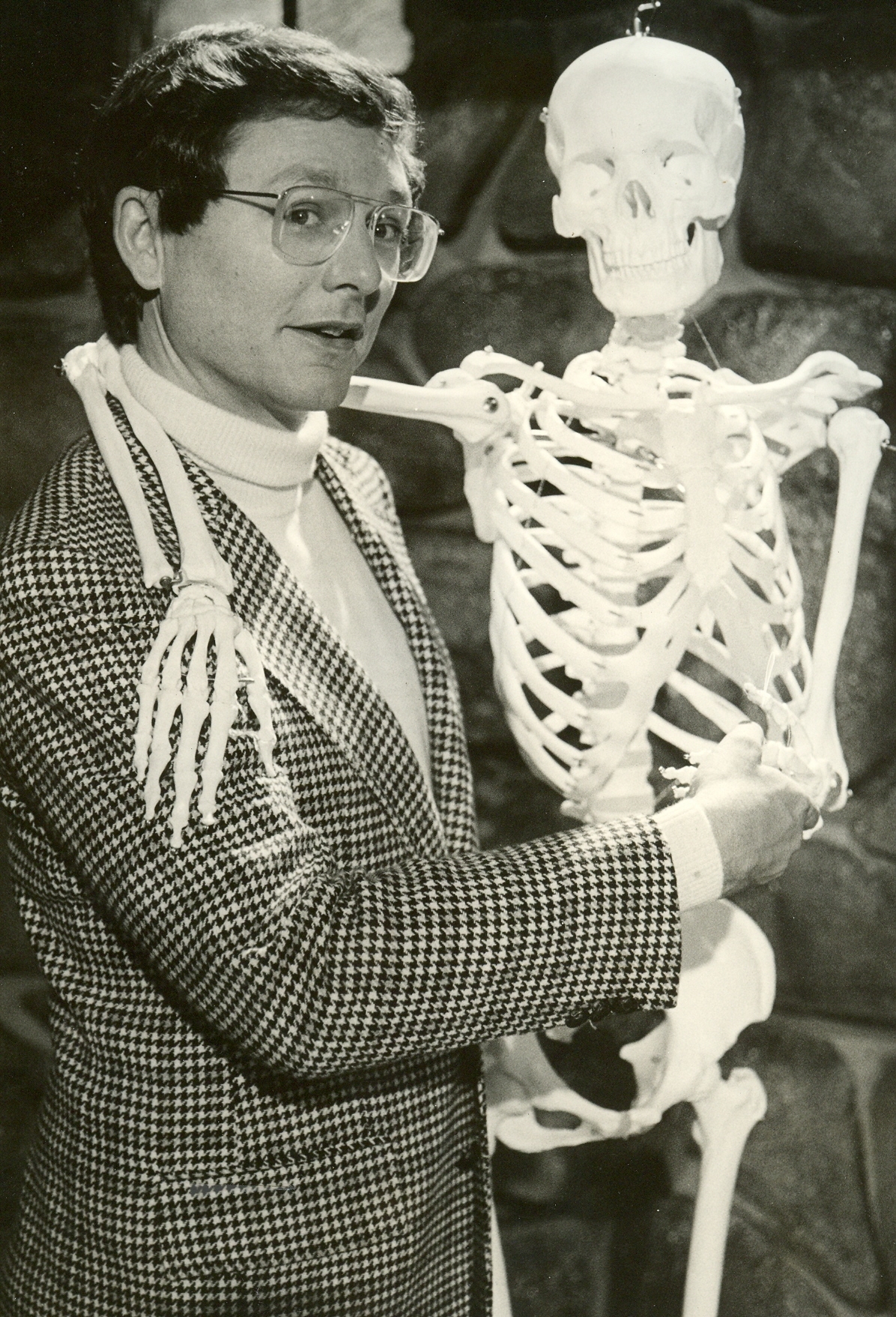
It was science disguised by fun, flashy animation, and people everywhere ate that stuff up like it was a bowl of chocolate-covered bran. Filmmaker Al Jarnow is a dude who managed to make learning fun on Sesame Street and far more intersting than the overbearing bird and crabby monster in a can. Most people had no idea who was creating the incredible shorts that appeared on that show, but if you were a kid or parented one in the past 50 years, you’re bound to recognize his work. And now with an escavation of over 45 films, Celestial Navigations — playing Thurs/22 at Red Vic Movie House — brings Jarnow’s magic back for some instant reminiscing.

Colors flashed, stop motion and time-lapse techniques mystified, and simple, beautiful cartoons turned every day objects and topics into a beautiful experiment gone right. Jarnow’s films played for years and expanded minds in the wee morning hours prior to the school bell’s ring and the punch of the time card. Jarnow educated through psychadelic hypnosis, the eyes of eager audiences glazed over while the fast-paced, brightly-colored animations whizzed across the television screen. I was an ’80s tyke who rolled out of bed excited to watch Sesame Street’s “cool” movies (and Kermit, of course) and when I found them years later on You Tube, the situation is nearly identical: bowl of cereal, blanket, couch and eyes glued to the flashing screen.

Celestial Navigations is the Numero Group‘s first foray into the world of cinema and they’ve collected, color corrected and remastered a flashy bunch of classic Jarnow. The film also includes a 30-minute documentary on Jarnow’s creative process, which I’m hoping boils down his steps in a 3-2-1 Contact Style.


Celestial Navigations: The Short Films of Al Jarnow

Thurs/22, 7:15pm, 9:30pm, $6-9

Red Vic Movie House

1727 Haight, SF

www.redvicmoviehouse.com


“The Loved Ones:” the complete interview!

0

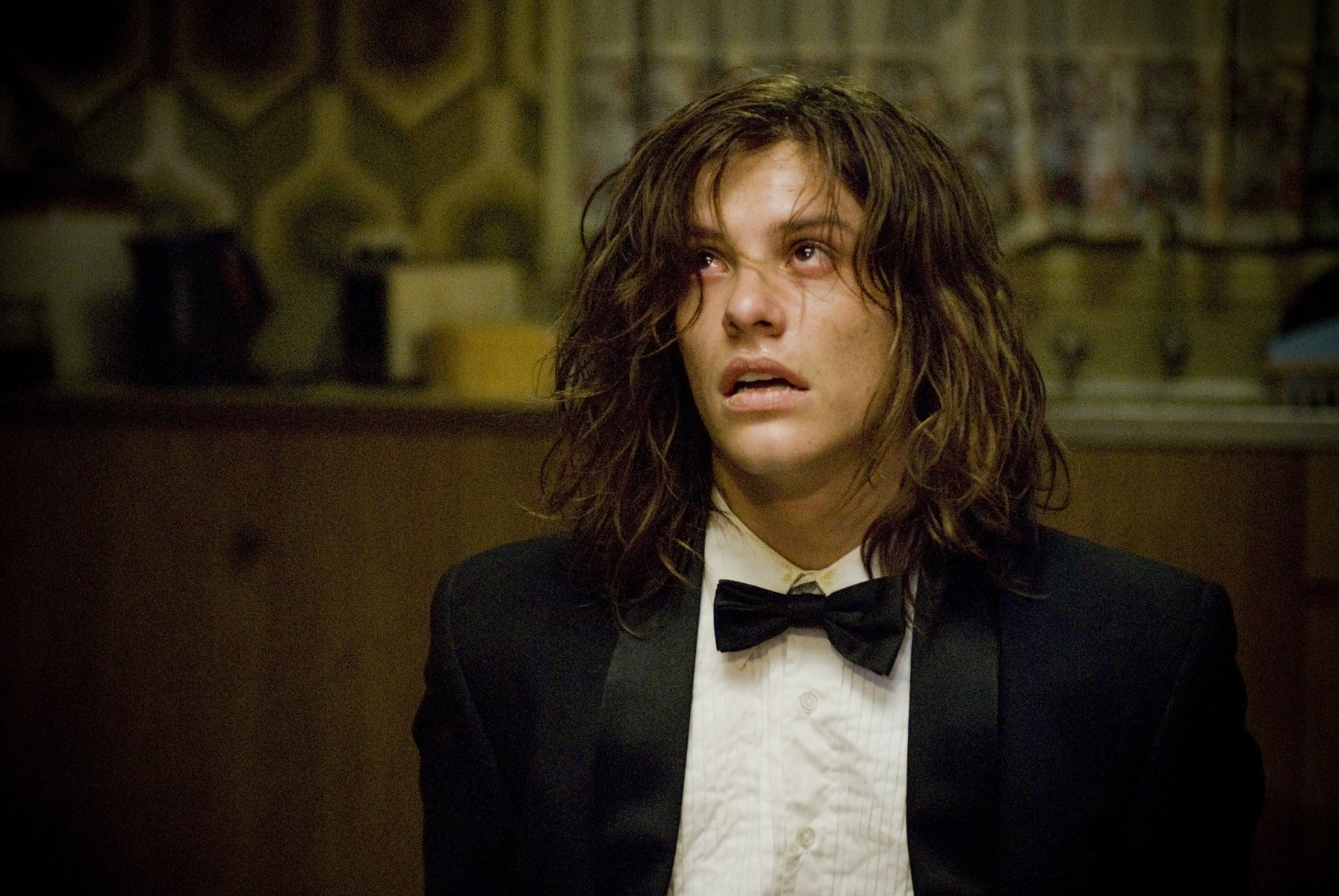
Pegged by some as “Misery meets Pretty in Pink,” Sean Byrne’s instant horror mini-classic is by turns poignant, funny, grotesque, alarming, and finally very, very satisfying. It’s sure to be a hit again in the San Francisco International Film Festival‘s Late Show section. Between festival travels, Byrne was back home in Melbourne when he answered my email queries.

San Francisco Bay Guardian:
The movie really throws you for a loop by spending the first stretch on serious psychological drama, then springing something entirely different.

Sean Byrne: Well, I needed [to establish] a hero who was uniquely qualified to survive hell. Someone who is conditioned to pain, who feels like they deserve to suffer. He’s a cutter or self-mutilator, someone who tries to block out emotional pain with physical pain. He’s a kid with a death wish who’s forced to endure a literal hell and in the process realizes he’s got everything to live for.

SFBG: Your central female character is more interesting than the usual horror movie villainness in that she’s so spoiled she thinks she’s a victim, which then excuses her behaving monstrously. Where did that come from?

SB: I was thinking about what could make a signature, iconic, highly marketable villain and I noticed how my five-year-old niece, along with almost every little girl, is obsessed with wearing pink. It’s part of the magic and fantasy stage of childhood, where they actually believe the Disney line “someday [my] prince will come.” So then I started thinking, well, what if our villain is a teenager with raging hormones but still somehow stuck in this spoiled, childish, pre-operational stage of development. I imagined “Princess” as a teenage version of that irritating kid in the supermarket who demands lollies and won’t stop screaming until she gets them!

SFBG: I like that her favorite song is self-pity anthem “Not Pretty Enough.” Has Kasey Chambers had any reaction to the film?

SB: I tried to stay within the horror genre but at the same time subvert the conventions, and having our troubled hero listen to heavy metal (the “devil’s music”) and our villain listen to a top-of-the-pops ballad like “Not Pretty Enough” was a way of doing that. As far as I know Kasey hasn’t seen the film. I’m dying to know how she’ll react.

SFBG: Did any particular films inspire you, in general or in making this film in particular?

SB: My filmic influences were a real mash up. Structurally the film is closest to Misery (1990) but tonally there are shades of Carrie (1976), Dazed and Confused (1993), Footloose (1984), The Terminator (1984), The Texas Chainsaw Massacre (1974 original), The Evil Dead (1981), Henry: Portrait of a Serial Killer (1986), [and the works of directors] David Lynch, Gaspar Noe, Michael Haneke, John Hughes, and even Walt Disney. The way Tarantino juxtaposes violence and comedy was a big influence. I’m also a huge David Fincher and P.T. Anderson fan. Audiences may recognize some of the influences but hopefully the film, as a whole, will be a fresh experience.

SFBG: A difference between this movie and those associated with “torture porn” is that here both victims and perps are pretty complicated characters.

SB: I hope so. I did my research and tried to get inside the heads of these characters before I started writing. Characters in horror movies are often one-dimensional cardboard cutouts. But really great ones like The Shining (1980), The Exorcist (1973), and Rosemary’s Baby (1968) delve into the psychology of the moment. They answer the question: how do ordinary people react to extraordinary situations honestly? They explore our base instincts with emotional authenticity.

I’ve made a horror movie, so I don’t want to sound hypocritical, but in my opinion movies that focus on the stalking bogeyman are actually kind of immoral because as an audience we’re almost forced to barrack for the killer. We know they won’t die (because there’s always a sequel) and we know nothing about the people being hunted and what makes them tick. So the main point of interest becomes, how much bare flesh am I going to see and how inventively gruesome is the next kill going to be? To me that’s not real horror. Real horror is having a relationship with the dark, extreme side of human nature and getting inside the cruelest of minds then genuinely caring about the people who are trapped in this terrifying web.

SFBG: The film really does dish out some horrifying abuse, though — did you ever pull back on how graphic it would be?

SB: No. Never. I’m not a fan of PG-13 horror. The middle ground is pretty boring — that’s why it’s called the middle ground. But we’re a balls-to-the wall pop-horror movie and as a fan growing up loving horror movies, I know what I like and I think I know what other true horror fans like, and we like to be pushed. Audiences go to horror movies to be scared. The brief is to freak them out so why hold back?

SFBG: Did anyone suggest you take out the whole comedy subplot involving the best friend’s dream date with the school’s goth chick? Although it works — both on its own and to provide some relief from the main action, which might be unbearable to watch without some interruption.

SB: The first draft of the screenplay was basically confined to the farmhouse, where most of the horror plays out, but it began to feel a bit suffocating. Like Misery, The Loved Ones is a kind of claustrophobic horror and also like Misery, which cuts to the sheriff and his wife for light relief, there are moments when the audience needs to take a breath, wipe their sweaty palms and maybe even have a nervous chuckle before preparing for the next white-knuckle onslaught.

SFBG: It’s a good thing your lead actress has already done some other, very different things, since otherwise she might be typecast forever as the horror-movie Girl from Hell.

SB: Yes, Robin McLeavy is an incredibly well-respected theater actress. She recently played Stella opposite Cate Blanchett’s Blanche in Liv Ullmann’s version of A Streetcar Named Desire, and won a Hayes Award for her performance, which is Washington’s answer to the Tonys.

SFBG: Upcoming projects? Have you gotten any overtures from major studios/producers?

SB: I’m writing a home invasion thriller with a unique twist, am attached to a medical thriller, which is a modern reworking of the Jekyll and Hyde story, and I’m in discussions with major studios and producers about a couple of other projects that I’d better keep quiet about for now.

The Loved Ones
San Francisco International Film Festival
May 2, 10:30 p.m., Castro, 429 Castro, SF
May 6, 3 p.m., Kabuki, 1881 Post, SF
www.sffs.org

Taking the Waters

0

arts@sfbg.com

SFIFF Jessica Rabbit was just drawn that way, Foster Brooks just happened to stumble on his “lovable lush” act, and likewise, actor-writer-producer Derek Waters — he of Drunk History fame — just sounds like he started poking around in the liquor cabinet earlier in the day. In the same way, we all happened to just look up from our many open browser screens and realize our attention spans have drastically shrunk — one of the many reasons Waters believes the histories have been so popular, leading to offers from HBO to produce a Drunk History sketch show and spinning off a host of homemade copycat videos on YouTube.

“Attention spans are way too small to watch whole movies,” says the 30-year-old Waters, speaking from Los Angeles. “I think if these came out in the ’70s, I don’t know how popular they would be.” And who can blame the pretenders, justly inspired by the shorts — and the sight of soused comedians relating their favorite great moments in history (while occasionally losing their lunch or lying down to get more comfy) while actors like Michael Cera, Jack Black, and Will Ferrell reenact out all the blurry details, down to Ben Franklin’s improbable “Holy shit … there’s a fucking lightning storm happening right now outside!”

The fact that creator Waters could get actors like Crispin Glover and John C. Reilly to play, for instance, the battling Thomas Edison and Nikola Tesla is yet another plus. “Edison was publicly electrocuting animals to prove his point,” Waters says. “And to see Crispin Glover doing that was a dream come true.”

No fear that Drunk History will swallow up cable — or traditional academic — programming, though Waters says his old teachers have e-mailed to tell him they’ve shown the films to their students. “I think Drunk History is funny for five minutes,” he says. “I don’t think you can ask too much of a drunk person.” The actor is doing a HBO series called Derek Waters Presents LOL instead (“I like to say it stands for ‘Lots of Losers.’ I guess you write what you know”), remaining committed to the short, funny form, as well as the dream of turning his 13th Grade short, set at a community college, into a full-fledged series.

All that makes Waters a primo candidate for a drunken evening at the theater with Wholphin DVD magazine editor Brent Hoff. He’ll be showing relevant shorts such as Bob Odenkirk’s gut-busting The Pity Card — part of Waters’ and The Big Bang Theory‘s Simon Helberg’s online short series Derek and Simon — and talking about that film, as well as, no doubt, the work he’ll contribute to Wholphin‘s next edition.

Incidentally, Wholphin‘s latest issue, its 11th, is a doozy: “It’s the most edible-looking yet,” quips Hoff in San Francisco. “All bubblegum-y colors.” It includes Ramin Bahrani’s Plastic Bag short with poignant hilarious voice-of-the-bag narration by Werner Herzog, in addition to an excerpt from Bitch Academy, a doc about Russian women taking a class on how to snag millionaires — a grim, scary variant of the cheese-cloaked Millionaire Matchmaker — which Hoff describes as “the most terrifying thing we’ve ever put out.”

More terrifying that listening to writer Eric Falconer lose his eight vodka cranberries and then get back up to talk American history? For some, it might be a draw. “There’s something fascinating,” Waters observes, “about someone so passionate about something but not moving forward at all.”

A DRUNKEN EVENING WITH DEREK WATERS AND WHOLPHIN

Mon/26, 9:30 p.m.

Sundance Kabuki

1881 Post, SF

www.sffs.org


Live on screen

0

johnny@sfbg.com

SFIFF All those with curious minds, step right up, we have live cinema waiting for you in this dark room. The idea of “live” or performance-generated movies has taken on a new vitality recently via the light-projecting likes of Bruce McClure, whose ear-splitting and eye-blasting appearances in San Francisco usually sell out. On a smaller local level, Konrad Steiner’s neo-benshi programs have united local writers and a wide variety of filmic subject matter in creative and sometimes entertaining ways. At the San Francisco Film Festival, live music by bands for silent works has become a reliable main attraction. But Sam Green’s and Dave Cerf’s new meta-documentary Utopia in Four Movements adds a new facet to the phenomenon: instead of utilizing an over-familiar voice-over, it unites live narration by Green with a musical performance overseen by Cerf, allowing for degrees of spontaneity and change.

Utopian, isn’t it? At the Mission bar the Phone Booth on an early Monday evening, Green can’t help but tease out his thoughts on the very word. “To me, utopia is almost a metaphor for hope, or hope in the imagination,” he says, shortly after we’ve been flirted with (and flashed) by one fierce female patron. “It’s about trying to be hopeful these days, which is hard. Utopia is almost a way to make up hope. In some ways it’s so preposterous. The word even has negative connotations these days — people are told not to be utopian.” Half an hour later, he returns for another analogy or two: “Utopia is a thing that never really exists. It’s like a flower — it always wilts. Even if there’s a moment of great utopian energy, it can’t last.”

Utopia may not exist in fully realized forms, but the quartet of mutations in Utopia in Four Movements (five if you count the movie) fascinate as real-life fables. The first segment explores Esperanto, which was invented in the late 19th century with the aim of its becoming a universal, international language. As Green puts it, Esperanto is “a wonderful idea that can’t be,” an idea that he illustrates with short direct portraits of contemporary Esperanto speakers that, uncannily, takes on a colors-of-Benneton feel.

Esperanto has also yielded some memorable black-and-white cinema, namely a 1965 Esperanto horror film shot in Big Sur by Conrad Hall, which stars a pre-Star Trek William Shatner. San Francisco movie maniacs may recognize Incubus through the efforts of Will The Thrill and Other Cinema’s Craig Baldwin. “William Shatner wrote a memoir in which he talks about it,” Green says, before adding some information that reflects Utopia‘s ever-changing nature –and utopia’s pitfalls. “I’m trying to do an interview with him because he’s practically the most famous person to have spoken Esperanto. But the world’s most famous Esperanto person is probably [financier] George Soros.”

The idea of utopia isn’t new to Green, whose best-known feature The Weather Underground (2002) digs deep into the multi-faceted realm of ’60s radicalism, riding out its actions and repercussions. The second part of Utopia, set in Cuba, adds a new chapter to Green’s explorations of thorny political contradiction. Like Assata Shakur, the segment’s subject lives in Cuba as a fugitive. In the present, she’s engaged with Cuban hip-hop, but she remains tied to her past as a radical in America. “It’s about the last embers of revolution,” says Green.

One of Utopia‘s movements examines the potential of forensice science in a manner quite different from pro-law enforcement US true crime television, showing how the smallest reinforcement can be regained from sites of mass tragedy. But the movie’s sojourn in China is in some ways its most vivid. There, Green takes an extended trip to the world’s largest shopping mall, in China. The subject matter is akin to dramas such as Jem Cohen’s Chain and Jia Zhangke’s The World (both from 2004), but this is a case of reality trumping fiction. “Almost every article I read about China and capitalism talked about how the world’s largest mall was there now,” says Green. “But nobody described it as a total failure. We were at the mall for ten days, and it was soul-killing. There’s something about a gigantic failed mall that is profoundly depressing.” Luckily, an encounter with a Teletubby who eventually removed its mask added some life to the experience.

The world’s largest shopping mall — at least for now: Green says it is slated to be bulldozed — may be grim, but it’s also richly symbolic when history is integrated to the picture. “Victor Gruen who essentially invented the [shopping] mall in the US in the 1950s was a socialist who came to America,” Green says, as “This Monkey’s Gone to Heaven” gives way to “I Feel Love” on the Phone Booth jukebox. “In turn the mall has gone to China, and the grounds of cultural revolution became the site of a government-funded bust of a mall. In a way, it’s the trajectory of the 20th century.

Today, we tiptoe into the 21st century, with a new president and old-new ways of seeing and making movies. “A year ago, when I was looking at [Utopia], people were saying ‘Aren’t you going to change everything because of Obama?’,” Green remarks. “It felt like cotton candy hope. When [U.S. presidents] are the limits of your possibility, it’s pretty lame.” Truth: Green may have used utopia in his title, but perhaps it’s time to come up with some fresh formulations of hope as well. *

UTOPIA IN FOUR MOVEMENTS

Sun/25, 9:30 p.m., Kabuki

Love, guts, and glory

0

arts@sfbg.com

SFIFF Though there were far starrier, more expensive films debuting in the Midnight Madness section of last year’s Toronto Film Festival, the category’s prize and foot-stomping audience favor was stolen by a low-budget Australian film that arrived with no fanfare, no name actors, and a writer-director who’d made no prior features.

Sean Byrne’s The Loved Ones focuses on small-town teenager Brent (Xavier Samuel), who’s severely depressed from a recent tragedy but rouses himself to attend the school prom — or would have, if he wasn’t hijacked instead for one of the most harrowing first dates in film history.

Pegged by some as "Misery meets Pretty in Pink," this instant horror mini-classic is by turns poignant, funny, grotesque, alarming, and finally very, very satisfying. It’s sure to be a hit again in the San Francisco International Film Festival’s Late Show section. Between festival travels, Byrne was back home in Melbourne when he answered my e-mail queries.

SFBG The movie really throws you for a loop by spending the first stretch on serious psychological drama, then springing something entirely different.

Sean Byrne Well, I needed [to establish] a hero who was uniquely qualified to survive hell. Someone who is conditioned to pain, who feels like they deserve to suffer. He’s a cutter or self-mutilator, someone who tries to block out emotional pain with physical pain. He’s a kid with a death wish who’s forced to endure a literal hell, and in the process realizes he’s got everything to live for.

SFBG Your central female character is more interesting than the usual horror movie villains in that she’s so spoiled she thinks she’s a victim, which then excuses her behaving monstrously. Where did that come from?

SB I was thinking about what could make a signature, iconic, highly marketable villain and I noticed how my five-year-old niece, along with almost every little girl, is obsessed with wearing pink. It’s part of the magic and fantasy stage of childhood, where they actually believe the Disney line "someday [my] prince will come." So then I started thinking, well, what if our villain is a teenager with raging hormones but still somehow stuck in this spoiled, childish, preoperational stage of development. I imagined "Princess" as a teenage version of that irritating kid in the supermarket who demands lollies and won’t stop screaming until she gets them.

SFBG I like that her favorite song is self-pity anthem "Not Pretty Enough." Has Kasey Chambers had any reaction to the film?

SB I tried to stay within the horror genre but at the same time subvert the conventions. And having our troubled hero listen to heavy metal (the "devil’s music") and our villain listen to a top-of-the-pops ballad like "Not Pretty Enough" was a way of doing that. As far as I know, Kasey hasn’t seen the film. I’m dying to know how she’ll react.

SFBG A difference between this movie and those associated with "torture porn" is that here both the victims and the perps are pretty complicated characters.

SB I hope so. I did my research and tried to get inside the heads of these characters before I started writing. Characters in horror movies are often one-dimensional cardboard cutouts. But really great ones like The Shining (1980), The Exorcist (1973), and Rosemary’s Baby (1968) delve into the psychology of the moment. They answer the question: how do ordinary people react to extraordinary situations honestly? They explore our base instincts with emotional authenticity.

SFBG The film really does dish out some horrifying abuse, though — did you ever pull back on how graphic it would be?

SB No. Never. I’m not a fan of PG-13 horror. The middle ground is pretty boring — that’s why it’s called the middle ground.

THE LOVED ONES

May 2, 10:30 p.m., Castro

May 6, 3 p.m., Sundance Kabuki


MORE ON SFBG.COM For an extended version of Dennis Harvey’s interview with Sean Byrne, visit www.sfbg.com/pixel_vision

Join the cult!

0

cheryl@sfbg.com

SFIFF If you know San Francisco’s cult movie culture, you know Midnight Mass, the Bridge Theatre’s long-running celebration of late-night movies. And if you know Midnight Mass, then you most certainly know Peaches Christ, the event’s fabulously dressed and tressed hostess.

Many local film fans are already hip to the reason Peaches — and her civilian alter ego, Joshua Grannell — declared that 2009 would be the last year for Midnight Mass’ popular summer-weekend series. Grannell just completed his first feature film, All About Evil, about a mousy librarian named Deb (a killer Natasha Lyonne) who blossoms, rather terrifyingly, into a horror filmmaker named “De-bor-ah” after she inherits the Victoria Theatre. Deborah’s frighteningly, er, realistic short films begin drawing crowds to the struggling, single-screen movie house, with teenage horror geek Steven (Thomas Dekker of Terminator: The Sarah Connor Chronicles) looking on first in admiration, then suspicion. Also along for the ride are some familiar faces from Midnight Mass, including John Waters superstar Mink Stole and Cassandra “Elvira” Peterson.

A perfect fit for San Francisco International Film Festival’s Late Show series, All About Evil makes its world premiere at the fest, though it’ll be screening at the Castro Theatre rather than the Victoria, its central filming location.

“The Castro is just like, how can you not want to be at the Castro?” Grannell said. We were sitting outside of Farley’s on Potrero Hill — not one of Grannell’s usual haunts, but multiple friends of his still happened by. Peaches Christ is well-loved in this town, people. “I definitely didn’t want [the premiere] to be at the Kabuki, mostly because of what the movie is about. I think they’ve done a nice job with the Kabuki, but I was writing the movie while living and breathing at the [single-screen] Bridge.”

And lest ye forget, the Castro has a glorious stage. The SFIFF screening will be “like Midnight Mass,” Grannell explained. “But because it’s gonna be the world premiere and I have access to some of the cast, we’re actually incorporating them into the show. Natasha will be there and will do the Q&A. Mink is doing a number with me, and Thomas is doing his own rock number with all the young cast. Which is kind of unique — when do you get to go to a movie, and the cast is doing a show before the screening?”

Of course, Peaches Christ, who has a pretty delightful cameo in the film, will also host. “It’s kind of a marrying of Midnight Mass with All About Evil,” Grannell said. “And it’s kind of a surreal moment for me. We’ve spent 13 years creating live entertainment to celebrate all my favorite movies and now we get to do it for our own movie.”

Fortunately, the celebration isn’t going to be limited to one night. After SFIFF, Peaches and company plan to hit the road, taking the film and a scaled-down version of their live show to different venues (Austin, Texas’ Alamo Drafthouse is tops on the list). Grannell said that All About Evil will also have a limited theatrical release (playing midnight circuits, of course). For faithful locals, he’s giving the Victoria its due later this year.

“I thought, what are we gonna do in San Francisco? The world premiere doesn’t seem like enough. So we’re going to do a run with a full stage show in October,” he said. “We’re calling it ‘environmental theater,’ where we transform the Victoria back to the character it plays in the movie. I kind of think of it as a haunted house, where the characters will be interacting with you as you walk through the doors.”

Grannell is a huge cult movie fan, and his movie clearly references that. But he’d rather you didn’t call his movie a cult film just yet.

“[If All About Evil became a cult movie], that would be a dream come true. But it’s not that yet. There’s a long, long way to go, and only a few movies become that, truly,” he said. “But it’s sort of frustrating: ‘New cult movie All About Evil to have its world premiere!’ It’s like, how can it be a cult movie? Nobody’s seen it yet! I’m hoping that maybe someday I can go see All About Evil at someone else’s Midnight Mass. Someone else’s midnight series. Because then it’s really pure. Cause then it’s like, wow.”

ALL ABOUT EVIL

May 1, 10:45 p.m.

Castro

429 Castro, SF

www.sffs.org

Rep Clock

0

Schedules are for Wed/21–Tues/27 except where noted. Director and year are given when available. Double features are marked with a •. All times are p.m. unless otherwise specified.

ARTISTS’ TELEVISION ACCESS 992 Valencia, SF; www.atasite.org. $6-8. Crime Wave (Paisz, 1986), Fri, 8. Films by Kerry Laitala with music by Eats Tapes, Sat, 8:30.

CAFÉ OF THE DEAD 3208 Grand, Oakl; (510) 931-7945. Free. "Independent Filmmakers Screening Nite," Wed, 6:30.

CASTRO 429 Castro, SF; (415) 621-6120, www.castrotheatre.com. $7.50-10. The Lady from Shanghai (Welles, 1948), Wed, 7:30. Presented by Turner Classic Movies with Peter Bogdanovich and Jan Wahl introducing the film; sign up for free tickets at www.tcm.com/roadtohollywood. San Francisco International Film Festival, Thurs. See film listings. "Kubrick:" •Full Metal Jacket (1987), Fri, 7, and The Shining (1980), Fri, 9:15; •A Clockwork Orange (1971), Sat, 2:15, 8:30, and Barry Lyndon (1975), Sat, 5; •Spartacus (1960), Sun, 1:15, 7, and Paths of Glory (1957), Sun, 5:10; •The Killing (1956), Tues, 1:30, 5:10, 8:55, and Dr. Strangelove (1964), Tues, 3:15, 7.

CHRISTOPHER B. SMITH RAFAEL FILM CENTER 1118 Fourth St, San Rafael; (415) 454-1222, www.cafilm.org. $6.50-10. Exit Through the Gift Shop (Banksy, 2010), call for dates and times. The Girl With the Dragon Tattoo (Oplev, 2009), call for dates and times. The Greatest (Feste, 2009), call for dates and times. Vincere (Bellocchio, 2009), call for dates and times. May I Be Frank, Thurs, 6:30. Benefit for Beyond Hunger; tickets are $20-40. "Red Riding Trilogy:" Red Riding 1974 (Jarrold, 2009), Fri and Tues, 6:30; Sat, 2; Red Riding 1980 (Marsh, 2009), Sat and April 28, 6:30; Sun, 2; Red Riding 1983 (Tucker, 2009), Sun-Mon and April 29, 6:30.

FOUR STAR 2200 Clement, SF; www.lntsf.com. $7-9. Sleeping and Waking, Fri-Tues, check website for times.

HUMANIST HALL 390 27th St, Oakl; www.humanisthall.org. $5. A Sea Change (Ettinger, 2009), Wed, 7:30.

JACK LONDON SQUARE PAVILION THEATER 98 Broadway, Oakl; www.oakuff.org. Free. "Oakland Underground Film Festival: Leading Local Talent:" Everyday Black Man (Madden, 2009), Fri, 7:30; A Life Taken (Banville, 2009) with "A Day Late in Oakland" (Stauffer, 2008), Fri, 9:30.

MECHANICS’ INSTITUTE 57 Post, SF; (415) 393-0100, rsvp@milibrary.org. $10. "CinemaLit Film Series: Day and Noir:" Side Street (Mann, 1950), Fri, 6.

MUSEUM OF THE AFRICAN DIASPORA 685 Mission, SF; (415) 358-7200, www.moadsf.org. $5-10. Sabar: Life is a Dance (Nwoffiah, 2009), Fri, 5 and 7:30; Sat, 4 and 7.

PACIFIC FILM ARCHIVE 2575 Bancroft, Berk; (510) 642-5249, www.bampfa.berkeley.edu. $5.50-9.50. "Film 50: The History of Cinema:" The Beaches of Agnès (Varda, 2009), Wed, 3. "Dotted Lines: Women Filmmakers Connect the Past and the Present:" DDR/DDR (Siegel, 2008), Wed, 7:30. San Francisco International Film Festival, April 23-May 6. See film listings.

PIEDMONT 4186 Piedmont, Oakl; (510) 464-5980. $5-8. "Cult Classics Attack 5:" Coffy (Hill, 1973), Fri-Sat, midnight.

RED VIC 1727 Haight, SF; (415) 668-3994. $6-10. "Invisible Children Film Festival," films about Uganda, Wed, 7. "Celestial Navigations: The Short Films of Al Jarnow," Thurs, 7:15, 9:30. Labyrinth (Henson, 1986), Fri-Sun, 7:15, 9:25 (also Sat-Sun, 2, 4:15). Youth in Revolt (Arteta, 2009), Mon-Tues, 7:15, 9:15.

ROXIE 3117 and 3125 16th St, SF; (415) 863-1087, www.roxie.com. $5-9.75. Breath Made Visible (Gerber, 2009), Wed-Thurs, 8:30. It Came from Kuchar (Kroot, 2009), Wed-Thurs, 7, 9. The Most Dangerous Man in America: Daniel Ellsberg and the Pentagon Papers (Ehrlich and Goldsmith, 2009), Wed-Thurs, 6:30. Call for Fri-Tues shows and times.

SAN FRANCISCO PUBLIC LIBRARY Koret Auditorium, 100 Larkin, SF; www.sfpl.org. Free. "Canines on Camera:" Year of the Dog (White, 2007), Thurs, noon.

STONESTOWN TWIN 501 Buckingham, SF; (415) 221-8182. $7.50-10.25. The Harimaya Bridge (Woolfolk, 2009), April 23-29, call for times.

VIZ CINEMA New People, 1746 Post, SF; www.newpeopleworld.com/films. $8-10. Gravity’s Clowns (Mori, 2009), Wed-Thurs, call for times.

YERBA BUENA CENTER FOR THE ARTS 701 Mission, SF; (415) 978-2787, www.ybca.org. $6-8. "The Word and the Image: Films by Marguerite Duras:" Nathalie Granger (1972), Thurs, 7:30. "Renée Green: Endless Dreams and Time-Based Streams:" The Last Angel of History (Akomfrah), Sat, 2.

Editor’s Notes

0

Tredmond@sfbg.com

The San Francisco Chamber of Commerce decided this month to release a scorecard ranking the members of the Board of Supervisors on business-related issues. The idea was pretty clear: make the progressives on the board appear “anti jobs” — although some of the selections (naming rights for Candlestick Park?) weren’t really jobs issues at all. And the scorecard wasn’t about jobs (after all, the biggest employers in San Francisco are public agencies); it was about the downtown agenda.

We typically wait until election time to review how the supes voted over the past two years, but since the Chamber is launching its assault early, we thought we’d add a dose of reality. On page 13, you can find our list of 20 key votes on a broad range of progressive issues and see how the district supervisors did.

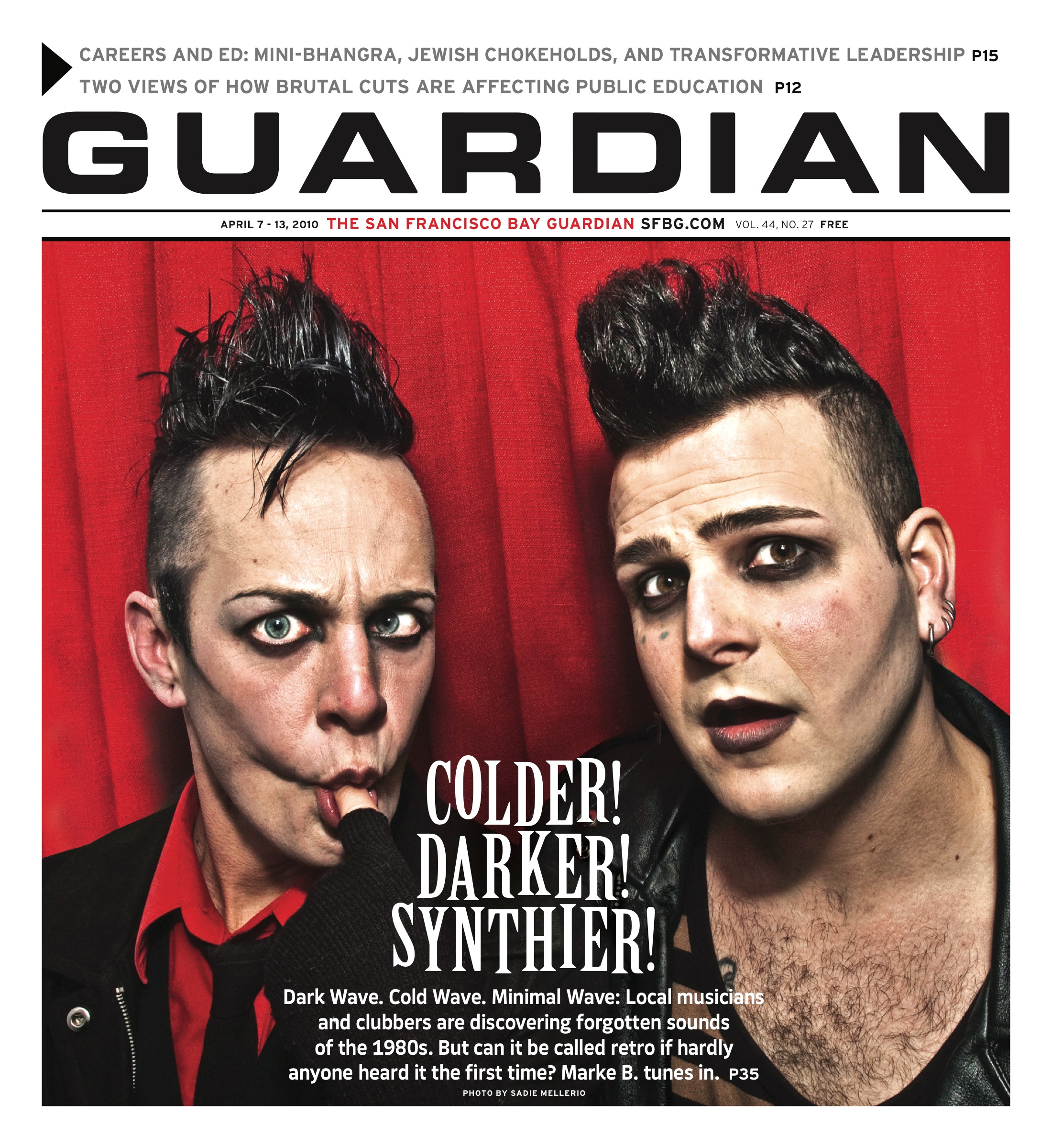
There’s another guide in this issue, too — our annual look at the San Francisco International Film Festival. And in honor of the festival, we’ve done something unusual. There are two different versions of the Guardian cover, highlighting two different movies. Go ahead — collect ’em both. 


The Daily Blurgh: Sugar & Sassy & Death & Taxes (Donald Duck remix)

0

Curiosities, quirks, oddites, and items from around the Bay and beyond

The 53rd San Francisco International Film Festival takes place next week, but over in France preparations are being made to reset the international festival circuit clock when Cannes ’10 kicks off in May. The full-line up has been announced, and I am already curious about the new titles from Apichatpong Weerasethakul, Godard, Gregg Araki, Hong Sangsoo, Alejandro González Iñárritu, and many more. Here’s to some of these being snatched up for SFIFF 54. And yes, there were movies 54 years ago.

*******

Pot without THC: O’Douls for stoners or scientific breakthrough?

*******

Phil Bronstein pushes for journalist Fight Club: “But it’s much more lively to measure breath on the mirror of our business by its deathmatches, where our history is rich and passionate. In the 1800’s, San Francisco rivals in the newspaper world were shooting each other on the street. Charles de Young, a Chronicle founder, popped a cap in politician Isaac Kalloch. De Young’s brother, M.H., was shot by businessman Adolph Spreckels over an article in the paper. And James King, editor of the Daily Evening Bulletin, was killed right downtown on Montgomery.”

********

We completely surrender to Sugar & Sassy — and will beg them to join our electroclash-revival band. Or at least lend their names.

*********

Did you notice the Angry Americans today in Union Square (and I’m not talking about the moms who narrowly snatched that pair of Burberry mules at Lohman’s)?

*********

No one told us there would be a BLOOD CANNON!!!!!

*********

Happy tax day from Motorhead:

*********

And so, courtesy of Wonkette, does “A Walt Disney Donald Duck” — guns! guns! guns!

http://www.youtube.com/watch?v=vr9qpeOjmuQ

Live Shots: Spoon, Fox Theater, 04/13/2010

0

I’ll take one scoop of rock perfection, one scoop of edgy lyrics and a sprinkle of groovy drum beats. Oh, and I’m going to need a Spoon for that.


Spoon concerts are like entering an ice cream parlor of melodies and sampling a menagerie of musical flavors. The band performed at the Fox Theater on Tuesday evening, rocking out to an overly ecstatic, sold-out audience. They just came out with the new album Transference in January and are touring the US and the world to celebrate their new musical masterpiece. Spoon, which has been around since the early ’90s, is one of those bands whose music you hear in movies and TV shows and just always seem to be around. They create songs you want to dance to, sing along to and take with you as a soundtrack for your road trip. But Spoon will never be a vanilla band, I’d say they’re more mint chip with a swirl of caramel. Or maybe rocky road.

http://www.youtube.com/watch?v=xVsdpqJVrJg

Fashion Armageddon? Nah, it’s just the great American Apocalypse

3

By Chhavi Nanda

The majority of mankind is under the misconception that an apocalypse is primarily associated with the end of the world – some sort of eschatological final battle. Perhaps it’s the slew of movies such as 2012 or The Road influencing our mind to veer into that territory. But an apocalypse doesn’t necessarily mean an ending — even adherents of the Book of Revelations know there’s a next chapter. An apocalypse is defined as “the lifting of a veil or a revelation.”  Late last month, a fashionable veil was lifted: a new collective Web site of vintage fashion, entitled American Apocalypse, was exposed to the world.

I attended the first editorial shoot for American Apocalypse. The motif of the shoot was “Clown, Chola”. Although Urban Dictionary defines chola as “the girls my brother gets pregnant,” there’s much more to a chola than that, obviously. The chola aesthetic includes thick eyeliner, thin drawn on eyebrows, lip liner, gelled hair, high pony tails, gold chains, piercings, tattoos, flannel shirts, Converse or Nikes. And of course she has to be a ruthless gangbanger. You know, like that Lean Like a Chola song says “lean like a chola way up high, thick eye liner in my eye, cruise all day, drink all night, got four kids with three guys.”

I walked down Geary Street at around 11:30am; the models were standing outside of Harput’s Union smoking their cigarettes in anticipation for the shoot to start. None of them had their makeup on yet and their hair wasn’t done either. I didn’t feel as guilty walking into the shoot hung over from the Friday night before. The owner of the store, Gus, greeted me kindly. Then the models, photographers, clothing stylist, make up artist, and the rest of the crew scurried down to the gritty basement of Harputs, where the shoot took place.

There were boxes, bags, and racks full of beautiful clothes and accessories. I was overwhelmed, and for a brief second wanted to jeopardize everything to run away with all these clothes, hoping no one would notice, but in my better judgment, I just stuck around for the shoot. The hairsprays, gels, doorknocker earrings, and – yes! — the paisley bandanas came out. As hair and make-up was being done, a nice mix of Spice Girls, Gucci Mane, and indubitably Bone Thugs and Harmony played in the background, to get the girls in a “Thug Life” mood.

Witnessing all the make-up and hair getting done I could finally see the vision coming in clearly. Envision this scenario with me: Bozo the Clown meets Frida Kahlo, if Frida Kahlo lived in this day in age and was a little more badass. After hours and hours (and several eyeliners), the girls were ready.  They modeled both in the basement and on the busy streets around Union Square. People in traffic and pedestrians watched curiously.

The shoot included some of San Francisco most exclusive models; Fernanda Toledo, Alexis Hutt, Alexandra Kammen, Annalise Lundeen, and Ali Lovell. The mastermind that painted their faces so they were ready to perform in the Chola Circus was Matt Wanaraksa. The hair was a collective effort from the models and stylists.

The creative minds behind the shoot were Sam Banks along with Brooke Candy, also assisting on the set was Rachel Esterline. Esterline has been a stylist for the last six years and has generously opened up not only her own wardrobe, but also several of her clients’ to give a helping hand while American Apocalypse builds up its stock. Her clients include some of San Francisco most elite and fashion-conscious women that strut down Maiden Lane after their weekly yoga and meditation classes. Although Rachel is a prominent stylist, Brooke Candy and Sam Banks were the visionaries behind this shoot. Sam and Brooke, coordinated, conducted creative direction, and styled the models head to toe, while Rachel directed and did the photography for the shoot.

At some point in this decade, the word vintage was added to the fashion bible. Vintage used to be a word that was applied to wines or some grandfather’s Bentley. But somehow between drinking vintage wine and driving vintage cars, a woman walking in to a room with a vintage dress suddenly gained the right to have a holier-than-thou persona. If you admire my dress, I would retort with a smirk, “I know you want it, but too fucking bad, it’s vintage.  You can’t have it. “  There is just something about rummaging through an obscure thrift shop or junk yard, or the closet of a underground fashionista that gives one a thrill of being an individual. American Apocalypse gives us the opportunity to have those pieces in our closet that we know no one else out there has, while still remaining fashionable. It isn’t the end of the world, just a fashion revelation.  

AMERICAN APOCALYPSE

www.americanapocalypse415.com

Hey kids! It’s Panique time!

0

CULT DVD Alejandro Jodorowsky and Fernando Arrabal have overlapped their whole lives. The Chilean Jodorowsky and Spanish Arrabal arrived in Paris is the mid-1950s, eventually cofounding (with late, lesser remembered artist French artist Roland Topor) the Mouvement Panique — a post-surreallist group named after the god Pan and dedicated to “terror, humor, simultaneity.” The two initially focused on theatrical performance and have in subsequent decades created massive bodies of plays, poetry, novels, visual art (paintings for Arrabal, comic books for Jodorowsky), and more. Internationally, they’ve been most widely experienced as filmmakers of some notoriety whose sporadic work in that medium was busiest during the wide-open late 1960s and early ’70s.

Jodorowsky, of course, rates high on any cineaste’s list of cult idols for the blood-soaked spaghetti western Christ parable El Topo (1970) and mystical-baroque colossus The Holy Mountain (1973), both recently freed from decades of legal trouble for legitimate DVD release. Arrabal’s films have been even harder to see and have fallen into comparative obscurity, partly because they’re less “fun” despite sharing much in the way of striking, shocking, and frequently blasphemous imagery.

In 2005 Cult Epics brought out a collection comprising his first three features: Viva la muerte (1970) and The Guernica Tree (1975), two violently grotesque fantasias about the Spanish Civil War whose dead included his own assassinated painter father, a loyal Republican; plus I Will Walk Like a Crazy Horse (1972), a no-less surreal yet strangely touching love story of sorts between an urban playboy on the run and the three-foot-tall male desert hermit.

Given their penchant for full-frontal nudity, antifascist politics, desecration of religious iconography, and other MPAA-unratable themes, perhaps the weirdest overlap between the two most famous “Panique” insurrectionists is that each once strayed into the alien realm of family entertainment. (They no doubt seized this inapt moment as a respite from perpetual funding woes, which famously scuttled Jodorowsky’s ready-to-go Dune and his El Topo sequel.)

Unsurprisingly, the results did not send Disney into a market-dominance panique. In fact, Jodorowsky’s 1978 for-hire project Tusk was, at least until recently. one of the most infamously unseen movies ever made, a literally and figuratively elephantine India adventure deemed unwatchable for any audience. Check out the cruddy French-language dupe with Spanish subtitles on YouTube and see how far curiosity gets you.

Arrabal’s kid flick wasn’t quite so fully buried, but it too has remained an obscure object of completist desire. Fortunately his second and final DVD collection from Cult Epics just arrived to fill that need. Nominally released in 1982, French-Canadian coproduction The Emperor of Peru stars Mickey Rooney — there goes the scenery in one big chew — as a wuvvable wheelchair-bound eccentric found living in the forest by three children on summer holiday. A former steam train engineer, he teaches them to run an abandoned locomotive so they can take their Cambodian-refugee friend back home to his parents. Never mind that there’s probably not much rail linking the South of France and Phnom Penh, let alone that in 1982 the Khmer Rouge remained very active.

How many children’s films would have dialogue like “Father’s in a concentration camp”? Emperor‘s real raison d’être, in any case, is its myriad fantasy sequences, sprung from the childish imagination of Toby (Jonathan Starr). In his daydreams he’s a firefighter or astronaut whose heroic deeds are applauded by such bystanders as Napoleon Bonaparte. Amid the goofy, mostly innocuous proceedings are stray moments of unmistakable Arrabal — as when Rooney, in full Arabian Nights regalia, is surrounded at imperial court by dwarf attendants. (Arrabal has a thing for little people.)

The new collection also includes Car Cemetery, a 1983 New Wave “punk” pose fest with Gallic pop king Alain Bashing as a postapocalyptic rock star Christ (ouch indeed). Among other rarities are Arrabal’s delightful hour-long 1992 video Farewell, Babylon!, a collage of past works, impish narrative, and sampled New Yorkers including Spike Lee and Melvin Van Peebles.

Keep the faith

0

arts@sfbg.com

MUSIC My original topic for this article was how indie-rock artists exploit modern R&B and soul music for their nefarious gains. I planned to center my rage at Village Voice “Pazz & Jop” doofuses who ignore future soul overachievers like Sa-Ra Creative Partners; random idiots who bop around to the likes of Trey Songz and T-Pain in ironic, condescending fashion; rock-crit gatekeepers like Pitchfork’s Scott Plagenhoef, who claimed on ilovemusic.com that “I think your best bet is to turn music crit readers into R&B fans, not R&B fans into music crit readers,” as if R&B fans (re: black people?) aren’t smart enough to develop critical philosophy; recidivists who shill for mercury-laden masterpieces like Iggy Pop’s Funhouse and Weezer’s Pinkerton while shunning slickly produced wonders like Aretha Franklin’s Sparkle and Mary J. Blige’s My Life; and any dumbass who wails about how great Motown and Stax 45s are but stubbornly blocks them from the all-important Great Rock Albums canon, arguing that soul artists make classic singles, but not classic albums (in other words, sit in the back of the bus).

The turning point for my paranoid hipster conspiracy would be Little Dragon, who will conveniently return to San Francisco on April 14 for a gig at the Independent. Hailing from Sweden, Little Dragon fuses neo-soul and R&B with the whimsicality of electronic pop. So, for several minutes, I asked lead singer Yukimi Nagano to pick apart Little Dragon’s sound. It seemed silly in retrospect, and not just because Little Dragon already does that on its Web site. Nagano exudes a cool serenity that tames you like Pixar movies temper sugar-addled children and grownups. Focusing on her influences feels like analyzing the computers Pixar uses — worthwhile from a factual standpoint, but ultimately missing the point.

“My favorites were Faith Evans and Brandy, then also a lot of classics like Prince. I love Erykah Badu and a bunch of different stuff,” Nagano said. She and her bandmates — Erik Bodin, Frederik Wallin, and Hakan Wirenstrand — write songs in the classic pop format, blending in “electronic sounds and electronic music because you can experiment so much with it. We have so many different influences, everything from South African house music to soul, R&B, hip-hop and whatever. All the guys produce, and everyone has their own character in writing, so that also gives our albums a lift. It’s not just one person making everything.” Nagano’s character, so to speak, “is that I try to be free in my writing. And people can hear the soul influences in my vocals, I guess.”

Little Dragon’s 2007 self-titled debut was full of slow-burning ballads that owed as much to modern R&B, with its singers’ penchant for subdued melisma and jazzy inflections, as to the synthesized blue tones of 1980s New Wave. “No love left in here/No love in this room/No love in my soul left for you,” she sang on “No Love,” her dourness seeping through the downbeat track. A poetic writer, she used her bandmates’ atmospheric melancholia to coin strangely elliptical lines: “Walking down the stairs, anonymous detached, on the corner I turn, I turn, I turn left.” Not surprisingly, there is homage of sorts to Billie Holiday in “Stormy Weather,” although the lyrics concern something else.

Last year’s Machine Dreams also had lollygaggers wandering aimlessly about, but the music was fuller and more vibrant. Instead of ballads with sad little keyboard riffs, there were panoplies of sounds, from the percussion titters of “A New” to the dense yet airy washes of “Fortune.” Much of the album is kookily uptempo, with clockwork rhythms reminiscent of Howard Jones and Thomas Dolby (in a good way). “Playing live [during the tour for the first album] made us want to pick up the tempo,” Nagano said. “We really love playing dance music. There’s nothing as great as seeing people dancing.”

As Little Dragon pushes in a new direction, the R&B sounds that once inspired them drift into the past. The band is listening to different stuff now, like Depeche Mode, DJ Cleo, and Gui Buratto. “Obviously the first album was written a long time ago, and it’s been a few years. Those songs were written even before 2007. They were already old for us then. Time has passed and you change.”

Machine Dreams is a qualitative leap from the debut album, which Nagano dismisses as “demos” that the group’s label, Peacefrog Records, released without their permission. (She was pleasantly surprised when audiences responded so well to it.) And if Little Dragon is better equipped to harness its current Kraftwerk obsession than the R&B passions of the past, then so be it. Regardless, the results don’t sound like anything else.

“I love music so much, and the guys do as well,” Nagano said. “You know how you get that kick from something you haven’t heard, and get inspired? It’s a great kick to have in your life. We want to find that as often as we can.” That seems painfully obvious to me. *

LITTLE DRAGON

With VV Brown, HOTTUB

Tues/13–Wed/14, 9 p.m., $20 ($30 for two days)

Independent

628 Divisadero, SF

(415) 771-1421

www.theindependentsf.com

Way out Middle East

0

arts@sfbg.com

FILM One frontier in which Israel remains politically left-forward is that of gay rights. Civil marriage, military service, foreign-partner naturalization, and job discrimination issues are all much more progressively legislated than in the U.S. — let alone the rest of the Middle East, where flogging, prison, or even execution punish homosexual "crimes." Nonetheless, as in much of the world today, fundamentalist religious currents endanger progress already made and still being worked toward.

Three out of five films in the "Out in Israel" series at the Roxie deal with strife between gay and Orthodox religious communities. Copresented by San Francisco’s Jewish Film Festival, they’re all part of a larger lineup of April events assembled by the Israeli Consulate in honor of Israel’s Gay Pride Month.

The oldest feature here is from 1992, though it feels like 1972 — Amos Guttman’s 16mm-shot Amazing Grace has the technical simplicity and variably professional acting of early gay-themed movies from just about any nation, whatever their era. And like most such, it’s a downer in which everyone is depressed, isolated, and broke. Young Jonathan (Gal Hoyberger) is fed up, especially with his quarrelsome family and slutty ex-boyfriend, when he meets handsome new neighbor Thomas (Sharon Alexander). Unfortunately the New York City-returned older musician is more interested in using drugs than love to drown his HIV-positive self-pity.

Israel’s gay cinema pioneer, Guttman died of AIDS the following year at age 38 without achieving anything like the popular success that greeted Eytan Fox a decade later. Fox’s 2002 international breakthrough Yossi and Jagger, originally made for local TV, stars Ohad Knoller and Yehuda Levi as IDF officers stationed in a mountain bunker on the Lebanon border. They’re carrying on a giddy affair almost no one knows about till tragedy intervenes. But Avner Bernheimer’s astute screenplay is still only half done: the rest of Fox’s finest effort to date finds closeted grief exacerbated by psychological theft and stinging injustice.

Moving from secular to religious conflict, the remaining "Out in Israel" features focus on clashes with those who view homosexuality’s mere existence as an affront to God. Nitzan Giladi’s documentary Jerusalem Is Proud to Present (2007) opens with Jewish, Muslim, and Christian clerics — united at last — condemning the city’s planned hosting of the 2006 International World Pride Parade as "nothing less than the attempted spiritual rape of this holy city." Violent rioting by Orthodox sects, death threats to gay leaders, and more attempts to shut down the event before it happens, succeeding somewhat yet also prompting righteous obstinacy from the LGBT community. One can laugh queasily at the grandmotherly type who claims HIV infection will jump 300 percent because those gays "just grab people" for their "orgies." But you’ll want to sucker-punch the loudmouthed Brooklyn rabbi who flies in just to spew his smirking homophobia.

Two recent features illustrate the impasse between homosexuality and ultra-Orthodox values in intimate dramatic terms. Haim Tabakman’s debut feature, 2009’s Eyes Wide Open (the only series program with a ticket charge; all others are free), watches trouble brew when a kosher butcher (Zohar Shtrauss) grows dangerously fond of the alluring new assistant Ezri (Ran Danker), whose reputation as a "curse to righteous men" precedes him. While borderline mannered in its minimalist dialogue and direction, the film packs a potent
punch.

Contrastingly not at all interested in restraint is Avi Nesher’s The Secrets (2007), about two girls (Ania Bukstein, Michal Shtamler) discovering Sapphic love at a women’s seminary. They also embark on a secret program of ritual cleansings for a prison-released French murderess (Fanny Ardant, atypically hammy) dying of both cancer and heart disease. It’s too bad the series’ sole lesbian feature is so melodramatically over the top. Then again, it’s probably pretty tasteful by the standards of a director previously associated with schlock like 2000’s Raw Nerve (Mario Van Peebles meets Nicollette Sheridan!) and 2001’s Tales from the Crypt Presents: Voodoo.

OUT IN ISRAEL

April 8–29, free–$8

Roxie

3117 16th St, SF

Film listings

0

Film listings are edited by Cheryl Eddy. Reviewers are Kimberly Chun, Michelle Devereaux, Max Goldberg, Dennis Harvey, Johnny Ray Huston, Erik Morse, Louis Peitzman, Lynn Rapoport, Ben Richardson, and Matt Sussman. The film intern is Peter Galvin. For rep house showtimes, see Rep Clock. For first-run showtimes, see Movie Guide.

OPENING

After.Life Christina Ricci plays a girl who may or may not have died in a car accident; Liam Neeson plays a creepy funeral director who may or may not know the truth. (runtime not available)

Date Night Don’t you kinda wish Steve Carell and Tina Fey were married IRL? (1:27) Presidio.

The Greatest Pierce Brosnan and Susan Sarandon play a couple dealing with the death of their oldest son — and the sudden appearance of a girl (Carey Mulligan) claiming to be pregnant with their grandson. (1:36) Embarcadero, Shattuck, Smith Rafael.

2012: Time for Change Author and outspoken advocate of using psychedelics to commune with spirits, Daniel Pinchbeck hosts this flimsy documentary about his search for a means to end contemporary culture’s addiction to consumerism and apathy. It has little to do with the prophetic year of the title. Instead, Pinchbeck’s thesis is that the year should represent a turning point in a society that is shirking its responsibility for its abuse of the earth and its people. I think we can all agree that contemporary culture is a tad self-indulgent, but Pinchbeck devalues his argument by spending an enormous amount of film time hyping psychedelic experiences and yoga as the answer to these issues. Lacking on-screen charisma himself, Pinchbeck turns to celebrity star power to punch things up. Notable are a sit-down with Sting who recounts an ayahuasca experience, David Lynch explaining transcendental meditation, and a talk with Ellen Page on the value of "shoveling goat shit." The film is so rambling and unfocused that by its end I wasn’t sold on any of its points. I knew 2012 just wouldn’t be the same without John Cusack. (1:25) Lumiere. (Galvin)

The Warlords No doubt following the lead of John Woo’s Red Cliff (2008), this three-year-old Chinese epic is not quite as epic, but definitely worth a watch. It’s set during the Taiping Rebellion of the 1860s; Jet Li is joined by Andy Lau and Takeshi Kaneshiro as he leads a force of Qing rebels. The intricacies of Chinese history are initially daunting, but thankfully the film’s true themes of brotherhood and betrayal are pretty universal. Though director Peter Chan is not known for his action films, The Warlords‘ battlefield sequences are plenty fun. Unfortunately, the non-combat stuff — i.e., anytime Chan appears interested in playing up the emotional drama between his three leads — are the least developed aspects of the film. It’s possible that certain sequences were more fleshed out in the film’s original cut (the "international" version is shortened by 15 minutes) but by skimping on important character moments, The Warlords feels incredibly lopsided. (1:50) Lumiere, Shattuck. (Galvin)

When You’re Strange Johnny Depp narrates Tom DiCillo’s Doors documentary. (1:30)

ONGOING

Ajami You may recognize the title of Yaron Shoni and Scandar Copti’s debut collaboration as one of five films nominated for a 2010 Academy Award in the Foreign Category. Though it didn’t bring home the grand prize, Ajami remains a complex and affecting story about desperation and its consequences in a religiously-mixed town in Israel. As we follow the lives of four of Ajami’s residents the narrative shifts perspective almost maddeningly, switching characters seemingly at the height of each story’s action. But once all of the stories fully intersect, the final product has the distinction of feeling both meticulously calculated and completely natural. I was most impressed to learn that Shani and Copti prepared their actors with improvised role-playing rather than scripts. By withholding what was going to happen in a scene before shooting, we are treated to looks of surprise and emotion on actor’s faces that never feel unnatural. Attaining such a level of realism may be Ajami‘s crowning achievement; it can’t have been easy to make a foreign world feel so familiar. (2:00) Elmwood. (Galvin)

Alice in Wonderland Tim Burton’s take on the classic children’s tale met my mediocre expectations exactly, given its months of pre-release hype (in the film world, fashion magazines, and even Sephora, for the love of brightly-colored eyeshadows). Most folks over a certain age will already know the story, and much of the dialogue, before the lights go down and the 3-D glasses go on; it’s up to Burton and his all-star cast (including numerous big-name actors providing voices for animated characters) to make the tale seem newly enthralling. The visuals are nearly as striking as the CG, with Helena Bonham Carter’s big-headed Red Queen a particularly marvelous human-computer creation. But Wonderland suffers from the style-over-substance dilemma that’s plagued Burton before; all that spooky-pretty whimsy can’t disguise the film’s fairly tepid script. Teenage Alice (Mia Wasikowska) displaying girl-power tendencies is a nice, if not surprising, touch, but Johnny Depp’s grating take on the Mad Hatter will please only those who were able to stomach his interpretation of Willy Wonka. (1:48) Cerrito, 1000 Van Ness, SF Center, Sundance Kabuki. (Eddy)

*Breath Made Visible Ruedi Gerber’s documentary throws a sympathetic and fascinating light on the work of dance pioneer Anna Halprin. Weaving on-camera interviews with former collaborators, family members, and Halprin herself into excerpts from current and past work suggests decades and decades thoughtfully lived by an artist who had the guts to be herself. Again and again the camera returns to the now legendary The Deck, which husband and landscape architect Lawrence Halprin built so she could do her work while their children were growing. One of this film’s loveliest aspects is to see the deck changing just as Halprin does. Wisconsin-raised and East Coast-oriented, her moving to the California of the 1940s had isolated her from mainstream dance influences. But it also had opened vistas — to nature and through nature into herself — that she might not have able to achieve otherwise. The film may be conventionally structured but what emerges is a portrait of an anything but conventional woman, artist and thinker. (1:20) Elmwood, Roxie, Smith Rafael. (Rita Felciano)

The Bounty Hunter There’s a real feeling of impotence in reviewing a movie whose ad was pasted on the side of the bus you took to the screening. This thing is determined to be seen, and that’s a true shame. Those who heed the call of the ubiquitous marketing campaign will have to sit through a dull parade of contrivances concerning a bounty hunter (Gerard Butler) whose latest catch is his court-skipping ex-wife (Jennifer Aniston). She’s a hotshot city journalist who’s forced to continue her investigation of a police cover-up while handcuffed to a car door and bickering with her old flame. The trajectory of the plot is obvious enough, but there’s so little chemistry between the two actors that the inevitable reconciliation practically constitutes a twist ending. Aniston saw fit not to whine her way through this role, which is something, but nothing nearly as complimentary can be said about Butler. He emotes in lurches, with the presence of a guy who’s not sure acting is the right direction for his life but still really wants to give it a go. If "This. Is. Sparta!" weren’t burned into my brain I would swear the man had never been in front of a camera before. (1:50) 1000 Van Ness, SF Center. (Jason Shamai)

Chloe The theme of undependable narrative surfaces in Atom Egoyan’s newest film, Chloe (a remake of French director Anne Fontaine’s 2003 Nathalie), but here the artifice — of the premise itself — is so hard to move past as to feel at times like a barrier, rather than a passageway into the interior of a handful of lives. We do see interiors, in the beautiful, chilly household of Catherine (Julianne Moore), a Toronto doctor who suspects that her professor husband, David (Liam Neeson), may be cheating on her. And one of the more haunting images in the film is the painful sight of Catherine drifting through their home at night, barred from the rooms where her husband and teenage son (Max Thieriot) carry on their private, unknowable lives.

Why this unbearable situation would lead her to contact Chloe (Amanda Seyfried), a beautiful young call girl she just met, and hire her to engineer an interaction with David to test his fidelity, is not quite clear. Nonetheless, one masochistic transaction leads to another, and in a series of lavish and exquisite settings, we, along with Catherine, are treated to the erotic details of Chloe’s encounters with David, which begin to charge the connection between the two women as well. Moore’s work is as fine as ever, but Egoyan has settled for something here: trying to beguile and seduce us. And in the end, this is more disturbing, and surprising, than the rather sharp turn Chloe makes into the landscape of the erotic thriller, where it takes the shape of an unbelievable story we’ve been told many times before. (1:36) Elmwood, Four Star, Presidio, SF Center, Sundance Kabuki. (Rapoport)

*City Island The Rizzo family of City Island, N.Y. — a tiny atoll associated historically with fishing and jurisdictionally with the Bronx — have reached a state where their primary interactions consist of sniping, yelling, and storming out of rooms. These storm clouds operate as cover for the secrets they’re all busy keeping from one another. Correctional officer Vince (Andy Garcia) pretends he’s got frequent poker nights so he can skulk off to his true shameful indulgence: a Manhattan acting class. Perpetually fuming spouse Joyce (Julianna Margulies) assumes he’s having an affair. Daughter Vivian (Dominik García-Lorido) has dropped out of school to work at a strip joint, while the world class-sarcasms of teenager Vinnie (Ezra Miller) deflect attention from his own hidden life as an aspiring chubby chaser. All this (plus everyone’s sneaky cigarette habit) is nothing, however, compared to Vince’s really big secret: he conceived and abandoned a "love child" before marrying, and said guilty issue has just turned up as a 24-year-old car thief on his cell block. Writer-director Raymond De Felitta made a couple other features in the last 15 years, none widely seen; if this latest is typical, we need more of him, more often. Perfectly cast, City Island is farcical without being cartoonish, howl-inducing without lowering your brain-cell count. It’s arguably a better, less self-conscious slice of dysfunctional family absurdism than Little Miss Sunshine (2006) — complete with an Alan Arkin more inspired in his one big scene here than in all of that film’s Oscar-winning performance. (1:40) Embarcadero, Shattuck. (Harvey)

Clash of the Titans The minds behind Clash of the Titans decided their movie should be 3D at the last possible moment before release. Consequently, the 3D is pretty janky. I don’t know what the rest of the film’s excuse is. Clash of the Titans retreads the 1981 cult classic with reasonable faithfulness, though Ray Harryhausen’s stop-motion effects have been (of course) replaced with CG renderings of all the expected monsters, magic, gods, etc. Liam Neeson and Ralph Fiennes — as other reviews have pointed out: Schindler’s List (1993) reunion! — glow and glower as Zeus and Hades, while Sam Worthington (2009’s Avatar) once again fills the role of bland hero, this time as a snooze-worthy Perseus. You might have fun in the moment with Clash of the Titans, but it’s hardly memorable, and certainly nowhere near epic. (1:58) Empire, 1000 Van Ness, Presidio, SF Center, Sundance Kabuki. (Eddy)

Crazy Heart "Oh, I love Jeff Bridges!" is the usual response when his name comes up every few years for Best Actor consideration, usually via some underdog movie no one saw, and the realization occurs that he’s never won an Oscar. The oversight is painful because it could be argued that no leading American actor has been more versatile, consistently good, and true to that elusive concept "artistic integrity" than Bridges over the last 40 years. It’s rumored Crazy Heart was slotted for cable or DVD premiere, then thrust into late-year theater release in hopes of attracting Best Actor momentum within a crowded field. Lucky for us, this performance shouldn’t be overlooked. Bridges plays "Bad" Blake, a veteran country star reduced to playing bars with local pickup bands. His slide from grace hasn’t been helped by lingering tastes for smoke and drink, let alone five defunct marriages. He meets Jean (Maggie Gyllenhaal), freelance journalist, fan, and single mother. They spark; though burnt by prior relationships, she’s reluctant to take seriously a famous drunk twice her age. Can Bad handle even this much responsibility? Meanwhile, he gets his "comeback" break in the semi-humiliating form of opening for Tommy Sweet (Colin Farrell) — a contemporary country superstar who was once Bad’s backup boy. Tommy offers a belated shot at commercial redemption; Jean offers redemption of the strictly personal kind. There’s nothing too surprising about the ways in which Crazy Heart both follows and finesses formula. You’ve seen this preordained road from wreckage to redemption before. But actor turned first-time director Scott Cooper’s screenplay honors the flies in the windshield inherited from Thomas Cobb’s novel — as does Bridges, needless to say. (1:51) Opera Plaza, Red Vic, Shattuck, Sundance Kabuki. (Harvey)

Diary of a Wimpy Kid Spoiler alert: nothing happens in Diary of a Wimpy Kid. That was OK when it was just a book—author Jeff Kinney’s illustrated novel works due in large part to his whimsical drawings and tongue-in-cheek humor. It’s a kids’ book, but it’s fun for adults, too. The same can’t be said for the film adaptation: Diary of a Wimpy Kid sticks close to its source material without the creativity necessary to make it work on the big screen. As in the book, Greg Heffley (Zachary Gordon) navigates the treacherous terrain of middle school, struggling to cope with an awkward best friend, a brutal older brother, and parents who just don’t understand. All the actors turn in solid performances — Gordon is a particularly good find. But there’s so little here to work with. The best that can be said about Diary of a Wimpy Kid is that it’s cute and mostly harmless: a pleasant diversion for young’uns, and a tolerable bore for the parents they drag along. (2:00) 1000 Van Ness. (Peitzman)

*The Ghost Writer Roman Polanski’s never-ending legal woes have inspired endless debates on the interwebs and elsewhere; they also can’t help but add subtext to the 76-year-old’s new film, which is chock full o’ anti-American vibes anyway. It’s also a pretty nifty political thriller about a disgraced former British Prime Minister (Pierce Brosnan) who’s hanging out in his Martha’s Vineyard mansion with his whip-smart, bitter wife (Olivia Williams) and Joan Holloway-as-ice-queen assistant (Kim Cattrall), plus an eager young biographer (Ewan McGregor) recently hired to ghost-write his memoirs. But as the writer quickly discovers, the politician’s past contains the kinds of secrets that cause strange cars with tinted windows to appear in one’s rearview mirror when driving along deserted country roads. Polanski’s long been an expert when it comes to escalating tension onscreen; he’s also so good at adding offbeat moments that only seem tossed-off (as when the PM’s groundskeeper attempts to rake leaves amid relentless sea breezes) and making the utmost of his top-notch actors (Tom Wilkinson and Eli Wallach have small, memorable roles). Though I found The Ghost Writer‘s ZOMG! third-act revelation to be a bit corny, I still didn’t think it detracted from the finely crafted film that led up to it. (1:49) California, Cerrito, Embarcadero, Piedmont, Presidio, Sundance Kabuki. (Eddy)

The Girl on the Train André Téchiné’s beautifully photographed, ripped-from-the-headlines film explores the events that led a young Parisian girl to lie about being the victim of an anti-semitic attack. Téchiné’s dramatization fails as an account of the incident, but the film manages to evoke a powerfully mysterious tone due largely to two stellar performances, by Émilie Dequenne as the 20-something Jeanne and Catherine Deneuve as her persistent mother. Much of the running time follows Jeanne’s experiences before the fabrication, as she falls for (and moves in with) a young wrestler named Franck, before a tragic event causes Jeanne to invent the famous lie. An arty exploration into the psychology of victimization that happens to be anchored by a real-life event, The Girl on the Train may disappoint those looking for easy answers but is undeniable as a showcase for some outstanding acting. (1:42) Elmwood, Four Star. (Galvin)

*The Girl With the Dragon Tattoo By the time the first of Stieg Larsson’s so-called "Millennium" books had been published anywhere, the series already had an unhappy ending: he died (in 2004). The following year, The Girl With the Dragon Tattoo became a Swedish, then eventually international sensation, its sequels following suit. The books are addicting, to say the least; despite their essential crime-mystery-thriller nature, they don’t require putting your ear for writing of some literary value on sleep mode. Now the first of three adaptive features shot back-to-back has reached U.S. screens. (Sorry to say, yes, a Hollywood remake is already in the works — but let’s hope that’s years away.) Even at two-and-a-half hours, this Girl With the Dragon Tattoo by necessity must do some major truncating to pack in the essentials of a very long, very plotty novel. Still, all but the nitpickingest fans will be fairly satisfied, while virgins will have the benefit of not knowing what’s going to happen and getting scared accordingly. Soon facing jail after losing a libel suit brought against him by a shady corporate tycoon, leftie journalist Mikael Blomkvist (Michael Nyqvist) gets a curious private offer to probe the disappearance 40 years earlier of a teenage girl. This entangles him with an eccentric wealthy family and their many closet skeletons (including Nazi sympathies) — as well as dragon-tattooed Lisbeth Salander (Noomi Rapace), androgynous loner, 24-year-old court ward, investigative researcher, and skillful hacker. Director Niels Arden Oplev and his scenarists do a workmanlike job — one more organizational than interpretive, a faithful transcription without much style or personality all its own. Nonetheless, Larsson’s narrative engine kicks in early and hauls you right along to the depot. (2:32) Albany, Embarcadero, Piedmont, Smith Rafael. (Harvey)

Green Zone Titled for the heavily-guarded headquarters of international occupation in Baghdad, Green Zone reunites director Paul "Shaky-Cam" Greengrass with star Matt Damon, the two having previously collaborated on the last two Bourne films. Instead of a super-soldier, this time around Damon just plays a supremely insubordinate one as he attempts to uncover the reason why his military unit can’t find any of Saddam’s WMDs. With the aid of the CIA, a Wall Street Journal reporter and a friendly Iraqi, Damon goes rogue in order to suss out the source of the misinformation. The Iraq War action is decent if scarce, but an overindulgence in (you guessed it) shaky-cam and political jargon cannot hide the fact that Green Zone‘s plot is simplistic and probably light on actual facts. Damon makes a fine cowboy-cum-hero, but the effectiveness of the mix of patriotism and Pentagon paranoia will vary based on your penchant for such things. Still, Green Zone moves fast enough that it remains worth a matinee for conspiracy thriller aficionados. (1:55) 1000 Van Ness. (Galvin)

Greenberg Roger Greenberg (Ben Stiller) is 40, and you might think he’s going through a midlife crisis — if he hadn’t been in pretty much this same crisis for 15 years or more. Still very edgy and fragile after a nervous breakdown-sparked institutional stay, he’s holing up at the comfortable Hollywood home of a big-deal brother while the latter and family are on vacation in Vietnam. (The implication being that Roger is most welcome here when no one else actually has to endure his prickly, high maintenance company.) While in residence he reconnects with old friends including the ex-girlfriend (Jennifer Jason Leigh) he dumped yet never quite got over — though clearly she did — and the ex-bandmate (Rhys Ifans) he burned by wrecking their one shot at a major-label deal. He also gets involved, kinda-sorta, with big bro’s personal assistant Florence (mumblecore regular Greta Gerwig), whose passivity and low self-esteem make her the rare person who might consider a relationship with someone this impossible. Like all Noah Baumbach films, especially the slightly overrated Squid and the Whale (2005) and vastly underrated Margot at the Wedding (2007), his latest pivots around a pathologically self-absorbed and insensitive protagonist who exasperates anyone unlucky or blind enough to fall into his or her orbit. Working from a story co-conceived by spouse Leigh, Baumbach’s script sports his usual sharp dialogue, penetrating individual scenes, and narrative surprises. But it also gets stuck in dislikable Roger’s rut, finding conflict easily but stubbornly resisting even the smallest useful change. For all its amusing and uncomfortable moments, Greenberg emerges a dual character slice with no real point. Neither Roger or Beth reward long scrutiny (least of all as a hapless potential couple), while the few screen minutes Ifans and Leigh get make you wish their roles had hijacked the focus instead. (1:40) Empire, Piedmont, Shattuck, SF Center, Sundance Kabuki. (Harvey)

*Hot Tub Time Machine How can you hate a movie called Hot Tub Time Machine? Even those who pooh-pooh poop jokes have to admire a movie so unapologetically upfront about its ludicrous storyline. A group of friends who’ve drifted apart (Rob Corddry plays the maybe-suicidal asshole; Craig Robinson, the emasculated never-did-nothing; John Cusack, the recently-dumped workaholic) reunite for a ski weekend at the resort that hosted the most debaucherous party of their youth. Along for the ride, which soon includes a trip back to 1986 courtesy of you-know-which device, is Cusack’s character’s internet-obsessed nephew (Clark Duke), whose terror over leaving the plugged-in 21st century is soon superceded by his realization that any disruption of the past will likely erase his very existence. Hot Tub Time Machine‘s 80s nostalgia (Chevy Chase cameo!) enfolds an homage to the Back to the Future films (Crispin Glover cameo!), as well as Cusack’s early career (see: immortal 1985 ski-slope classic Better Off Dead), but it’s very much a movie of our times. See it now while the Twitter and Tiger jokes are still timely, and before the next R-rated comedy comes along to up the ante on dick jokes. (1:55) California, Marina, 1000 Van Ness. (Eddy)

How to Train Your Dragon (1:38) Empire, Marina, 1000 Van Ness.

The Hurt Locker When the leader of a close-knit U.S. Army Explosive Ordnance Disposal squad is killed in action, his subordinates have barely recovered from the shock when they’re introduced to his replacement. In contrast to his predecessor, Sgt. James (Jeremy Renner) is no standard-procedure-following team player, but a cocky adrenaline junkie who puts himself and others at risk making gonzo gut-instinct decisions in the face of live bombs and insurgent gunfire. This is particularly galling to next-in-command Sanborn (Anthony Mackie). An apolitical war-in-Iraq movie that’s won considerable praise for accuracy so far from vets (scenarist Mark Boal was "embedded" with an EOD unit there for several 2004 weeks), Kathryn Bigelow’s film is arguably you-are-there purist to a fault. While we eventually get to know in the principals, The Hurt Locker is so dominated by its seven lengthy squad-mission setpieces that there’s almost no time or attention left for building character development or a narrative arc. The result is often viscerally intense, yet less impactful than it would have been if we were more emotionally invested. Assured as her technique remains, don’t expect familiar stylistic dazzle from action cult figure Bigelow (1987’s Near Dark, 1989’s Blue Steel, 1991’s Point Break) — this vidcam-era war movie very much hews to the favored current genre approach of pseudo-documentary grainy handheld shaky-cam imagery. (2:11) Opera Plaza. (Harvey)

The Last Song Had a hunch that Miley Cyrus’ poor posture at the Oscars couldn’t be chalked up to a too-tight strapless — or worry about a red-carpet wardrobe malfunction? Who knew Cyrus was nursing a method hangover from The Last Song, in which she plays Ronnie Miller, a rebellious piano prodigy acting out against her parents and in particular her music teacher father Steve (Greg Kinnear). Cyrus’ physical contribution to the role is to slouch, sneer, and pout like a pug dog with scoliosis, making her the weakest link, performance-wise, in this latest weeper by America’s favorite sentimentalist, novelist Nicholas Sparks (Dear John, 2004’s The Notebook). Everything here depends on Ronnie’s transformation from sullen teen stuck in a small Southern coastal town for the summer with pops and an adorable younger brother Jonah (Bobby Coleman) — she’s determined to undermine her own talents (though the George Winston-like compositions don’t make you fearful for the loss to music at large) — to a happy and responsible young adult primed to do the right thing (too-good-to-be-true suitor Will, played by Liam Hemsworth, helps her learn to trust). All of which isn’t to say that Cyrus isn’t pretty to look at or without charm (although Coleman steals scenes from her left and right) nor is it her fault that director Julie Anne Robinson succumbs to a Touched by an Angel moment as CGI-generated sun beams pour through a stained-glass window, a mawkish moment that actually elicited giggles from the otherwise smitten crowd of true believers all around me. (1:47) Sundance Kabuki. (Chun)

*The Last Station Most of the buzz around The Last Station has focused on Helen Mirren, who takes the lead as the Countess Sofya, wife of Leo Tolstoy (Christopher Plummer). Mirren is indeed impressive — when is she not? — but there’s more to the film than Sofya’s Oscar-worthy outbursts. The Last Station follows Valentin Bulgakov (James McAvoy), hired as Tolstoy’s personal secretary at the end of the writer’s life. Valentin struggles to reconcile his faith in the anarchist Christian Tolstoyan movement with his sympathy for Sofya and his budding feelings for fellow Tolstoyan Masha (Kerry Condon). For the first hour, The Last Station is charming and very funny. Once Tolstoy and Sofya’s relationship reaches its most volatile, however, the tone shifts toward the serious — a trend that continues as Tolstoy falls ill. After all the lighthearted levity, it’s a bit jarring, but the solid script and accomplished cast pull The Last Station together. Paul Giamatti is especially good as Vladimir Chertkov, who battles against Sofya for control of Tolstoy’s will. You’ll never feel guiltier for putting off War and Peace. (1:52) Shattuck. (Peitzman)

*The Most Dangerous Man in America: Daniel Ellsberg and the Pentagon Papers For many, Daniel Ellsberg is a hero — a savior of American First Amendment rights and one of the most outspoken opponents of the Vietnam war. But as this documentary (recently nominated for an Academy Award) shows, it’s never an an easy decision to take on the U.S. government. Ellsberg himself narrates the film and details his sleepless nights leading up to the leak of the Pentagon Papers — the top secret government study on the Vietnam war — to the public. Though there are few new developments in understanding the particulars of the war or the impact the release of the Papers had on ending the conflict, the film allows audiences to experience the famous case from Ellsberg’s point of view, adding a fresh and poignantly human element to the events; it’s a political documentary that plays more like a character drama. Whether you were there when it happened or new to the story, there is something to be appreciated from this tale of a man who fell out of love with his country and decided to do something about it. (1:34) Red Vic, Shattuck, Smith Rafael. (Galvin)

*Mother You can guarantee that a movie titled Mother is not gonna be a love fest, ever. And through the lens of The Host (2006) director-writer Bong Joon-ho, motherly love becomes downright monstrous — though altogether human. Much credit goes to the wonderful lead actress Kim Hye-ja as the titular materfamilias, who’s frantically self-sacrificing, insanely tenacious, quaintly charming, wolfishly fearsome, and wildly guilt-ridden, by turns. On the surface, she’s a sweetly innocuous herbalist and closet acupuncturist — happily, and a wee bit too tightly, tethered to her beloved son Yoon Do-joon (Won Bin). He’s a slow-witted, forgetful, and easily confused mop-top who flies into deadly rages when taunted or called a "’tard." When Do-joon is quickly arrested and charged with the murder of schoolgirl Moon Ah-jung (Mun-hee Na), Mom snaps into action with a panic-stricken, primal ferocity and goes in search of the killer to free her boy. But there’s more to Do-joon, his studly pal Jin-tae (Ku Jin), and Moon Ah-jung than meets the eye, and Mother discovers just how much she’s defined, and twisted, herself in relation to her son. Bong gives this potentially flat and cliched noirish material genuine lyricism, embedding his anti-heroine in a rural South Korean landscape like a penitent wandering in an existential desert, gently echoing filmmakers such as Ingmar Bergman and Abbas Kiarostami and beautifully transcending genre. (2:09) Bridge, Shattuck. (Chun)

Our Family Wedding America Ferrera and Lance Gross play a couple of lovebirds who must jump through some serious family hoops before they get married in the mostly serviceable Our Family Wedding. What begins as a dual Guess Who’s Coming to Dinner, with the differences in each family’s traditions forcing complications and compromises, soon loses sight of its matrimonial plot as the focus steers towards a childish rivalry between the fathers. While it’s being marketed as a goofy comedy, the final product seeks a relatively sentimental tone, which makes the few slapstick moments — like a goat trying to rape Academy Award-winning actor Forest Whitaker — seem pretty inappropriate. Still, for some audiences the well-tread plot will act as comfort food: they fight, they make up, and it all ends in a big wedding where we watch the characters dance for damn near ten minutes. (1:41) Four Star. (Galvin)

*A Prophet Filmmaker Jacques Audiard has described his new film, A Prophet, as "the anti-Scarface." Yet much like Scarface (1983), A Prophet bottles the heady euphoria that chases the empowerment of the powerless and the rise of the long-shot loner on the margins. In its almost-Dickensian attention to detail, devotion to its own narrative complexity, and passion for cinematic poetry, A Prophet rises above the ordinary and, through the prism of genre, finds its own power. The supremely opportunistic, pragmatically Machiavellian intellectual and spiritual education of a felon is the chief concern of here. Played by Tahar Rahim with guileless, open-faced charisma, Malik is half-Arab and half-Corsican — and distrusted or despised by both camps in the pen. When he lands in jail for his six-year sentence, he’s 19, illiterate, friendless, and vulnerable. His deal with the devil — and means of survival — arrives with Reyeb (Hichem Yacoubi), temporarily locked up before his testifies against the mob. Corsican boss Cesar Luciani (Niels Arestrup) wants him dead, and Malik is tagged to penetrate Reyeb’s cell with a blade hidden in mouth. After Malik’s gory rebirth, it turns out that the teenager’s a seer in more ways than one. From his low-dog position, he can eyeball the connections linking the drugs entering the prison to those circulating outside, as well as the machinations intertwining the Arab and Corsican syndicates. It’s no shock that when Cesar finds his power eroding and arranges prison leaves for his multilingual crossover star that Malik serves not only his Corsican master, but also his own interests, and begins to build a drug empire rivaling his teacher’s. Throughout his pupil’s progress, Audiard demonstrates a way with Henri Cartier-Bresson’s decisive moment, and when Malik finally breaks with his Falstaffian patriarch, it makes your heart skip a beat in a move akin to the title of the director’s last film. This Eurozone/Obama-age prophet is all about the profit — but he’s imbued with grace, even while gaming for ill-gotten gain. (2:29) Lumiere, Shattuck, Smith Rafael. (Chun)

The Runaways In Floria Sigismondi’s tale of the rise and fall of a 1970s all-girl band, LA producer Kim Fowley (Michael Shannon) proclaims that the Runaways are going to save rock and roll. It’s hard to gauge the sincerity of this pronouncement, but you can certainly hear, in songs like "Cherry Bomb" and "Queens of Noise," how the band must have brightened a landscape overrun by kings of prog rock. Unfortunately, a handful of teenagers micromanaged by a sleazy, abusive nutcase proved not quite up to the task, though the band did launch the careers of metal guitarist Lita Ford (Scout Taylor-Compton) and, more famously, Joan Jett (Kristen Stewart). Sigismondi’s film entertainingly sketches the Runaways’ beginnings in glam rock fandom and gradual attainment of their own rabid fan base. We get Currie lip-synching Bowie to catcalls at the high school assembly, Jett composing "Cherry Bomb" with Fowley, glamtastic hair-and-wardrobe eye candy, pills-and-Stooges-fueled intra-band fooling around, and five teenage girls sent off sans chaperone on an international tour with substantial quantities of hard drugs in their carry-on luggage. What follows is less pretty: a capsule version of the band’s disintegration after the departure of bottoming-out 16-year-old lead singer Cherie Currie (Dakota Fanning). In a film darkened by Currie’s trajectory, Jett’s subsequent success is a feel-good coda, but it’s awkwardly attached and emblematizes one of The Runaways‘ main problems. When the band begins to fall apart, the film doesn’t know which way to turn and ends up telling no one’s story well. (1:42) 1000 Van Ness, SF Center. (Rapoport)

Sakuran Oh the pretty colors! Elaborate headpieces, brightly colored floors and walls, and the silky smoke of the opium pipe steal every scene of this Japanese film about a rebellious girl sold into courtesanship. Anna Tsuchiya brings that same punk-rock attitude that made her such a treat to watch in Kamikaze Girls (2004) to the role of Kiyoha, a young courtesan whose defiant attitude diverts the spotlight from the head orian and sets her whole Edo-era pleasure-house abuzz. Based on a manga series, the story itself feels a little light and cliché if you’ve seen any films set in this period, but Tsuchiya has created a distinct character in Kiyoha who happily feels out of place in 1700s Japan. As captivating as she is, there’s no denying that the costume and set-design are the true stars of Sakuran. (1:41) Viz Cinema (www.newpeopleworld.com). (Galvin)

Secret of Kells The preceding year was such great one for feature animation that the 2010 Oscar category could have been credibly filled twice over. Four nominees were predictable major U.S. studio productions — but the fifth was neither another such, nor one of several terrific if slightly off-the-beaten-path titles like Ponyo, A Town Called Panic, or Sita Sings the Blues. Instead, it was this hitherto barely-seen European co-production vaguely inspired by Irish history and mythology. Orphaned Brendan, raised by stern uncle Cellach (voice of Brendan Gleeson) in a medieval monastery, is intrigued by the vast forest outside its walls (where he’s forbidden to roam) and by a visiting master illuminator’s work on a "magical" book. Though overall this first feature by co-directors Tomm Moore and Nora Twomey might look best on the small screen — its line-drawing character designs are as simple as those in a 60s "Fractured Fairy Tale" — it’s been justifiably praised for some bold color and minimalist design elements. However, Kells is so preoccupied with those abstract backgrounds (which will likely confuse children by bearing little resemblance to the intended locations) that there’s no attention paid toward basic story clarity and involvement. Villains supernatural ("The Dark One") and mortal (Viking invaders) are virtually interchangeable; after 75 minutes you might realize you still have no idea just what the book is, or why it’s so important. Though clearly targeted as an audience, kids are likely to grow bored fast, and so might you. (1:15) Embarcadero, Shattuck. (Harvey)

She’s Out of My League From the co-writers of the abysmal Sex Drive (2008), She’s Out of My League could be another 90-minute assemblage of gross-out humor, dick jokes, and unabashed homophobia. As it turns out, the latest offering from Sean Anders and John Morris is legitimately funny — far better than the trailer (and that half-assed title) would have you believe. The adorkable Jay Baruchel stars as Kirk, a hapless loser who finds himself dating bonafide hottie Molly (Alice Eve). Once you get past the film’s silly conceit — Kirk’s only "movie ugly," and personality goes a long way — you’re left with a surprisingly charming comedy. The characters are amusing and the wit is sharp. Not to mention the fact that She’s Out of My League offers a downright heartfelt message. There’s a sincerity here that feels genuine instead of just tacked-on: yeah, yeah, it’s about what’s inside that counts, but there’s more to it than that. Ignore the dreadful "jizz in my pants" scene, and the movie’s almost an old-fashioned romcom. (1:44) 1000 Van Ness. (Peitzman)

Shutter Island Director Martin Scorsese and muse du jour Leonardo DiCaprio draw from oft-filmed novelist Dennis Lehane (2003’s Mystic River, 2007’s Gone Baby Gone) for this B-movie thriller that, sadly, offers few thrills. DiCaprio’s a 1950s U.S. marshal summoned to a misty island that houses a hospital for the criminally insane, overseen by a doctor (Ben Kingsley) who believes in humane, if experimental, therapy techniques. From the get-go we suspect something’s not right with the G-man’s own mind; as he investigates the case of a missing patient, he experiences frequent flashbacks to his World War II service (during which he helped liberate a concentration camp), and has recurring visions of his spooky dead wife (Michelle Williams). Whether or not you fall for Shutter Island‘s twisty game depends on the gullibility of your own mind. Despite high-quality performances and an effective, if overwrought, tone of certain doom, Shutter Island stumbles into a third act that exposes its inherently flawed and frustrating storytelling structure. If only David Lynch had directed Shutter Island — it could’ve been a classic of mindfuckery run amok. Instead, Scorsese’s psychological drama is sapped of any mystery whatsoever by its stubbornly literal conclusion. (2:18) California, 1000 Van Ness, Sundance Kabuki. (Eddy)

A Single Man In this adaptation of Christopher Isherwood’s 1964 novel, Colin Firth plays George, a middle-aged gay expat Brit and college professor in 1962 Los Angeles. Months after the accidental death of Jim (Matthew Goode), his lover for 16 years, George still feels worse than bereft; simply waking each morning is agony. So on this particular day he has decided to end it all, first going through a series of meticulous preparations and discreet leave-takings that include teaching one last class and having supper with the onetime paramour (Julianne Moore) turned best friend who’s still stuck on him. The main problem with fashion designer turned film director Tom Ford’s first feature is that he directs it like a fashion designer, fussing over surface style and irrelevant detail in a story whose tight focus on one hard, real-world thing — grief — cries for simplicity. Not pretentious overpackaging, which encompasses the way his camera slavers over the excessively pretty likes of Nicholas Hoult as a student and Jon Kortajarena as a hustler, as if they were models selling product rather than characters, or even actors. (In fact Kortajarena is a male supermodel; the shocker is that Hoult is not, though Hugh Grant’s erstwhile About a Boy co-star is so preening here you’d never guess.) Eventually Ford stops showing off so much, and A Single Man is effective to the precise degree it lets good work by Goode, Moore and especially the reliably excellent Firth unfold without too much of his terribly artistic interference. (1:39) Opera Plaza. (Harvey)

*The Sun It may have taken five years for Alexander Sokurov’s The Sun (2005) to reach local theaters, but then the Russian master’s contemplation of Emperor Hirohito’s last days as Godhead is decidedly out of time. Painterly and slow like all Sokurov’s work, the film specifically follows his estranged reconstructions of Hitler’s retreat with Eva Braun (1999’s Moloch) and Lenin’s demise (2000’s Taurus). In August 1945, Hirohito broke with tradition by making a direct appeal to the Japanese people to end military operations; soon thereafter he renounced his divine rights. The Sun‘s elliptical narration intuits the emperor’s paled existence, and Issey Ogata’s lead performance, centering on a fish-out-of-water puckering of the lips, amply conveys the shuttered hours of a man who, in experience if not in fact, is not quite human. The muted use of available light and a disquieting sound design (faraway air-raid sirens yield to the barest brush of a finger) eschew historiography’s harsh glare, instead returning primal scenes of power to a dreamlike state of unknowing. Sokurov’s most hallucinatory effects are reserved for ashen views of firebombed Tokyo which float free from perspective or clear boundary; a brief fantasy in which fish-like warplanes spew apocalyptic destruction suggests the emperor’s childlike imagination and set the stage for his historical date with General MacArthur, realized by Sokurov less as a diplomatic breakthrough than a leaden twilight. (1:50) Lumiere, Shattuck. (Goldberg)

Vincere Given the talent involved, Vincere should be a better film that it is. Director Marco Bellocchio has a lengthy track record of successes, and star Giovanna Mezzogiorno is one of the biggest names in contemporary Italian cinema. The based-on-a-true-story plot is certainly worthy of being filmed: Mezzogiorno plays Ida Dalser, secret wife of Mussolini and mother of the dictator’s first-born son. When Ida begins to make trouble for Il Duce by publicly proclaiming their marriage, she is locked away in a mental hospital. But while Vincere‘s subject is compelling, the film as a whole falls flat. Moments of greatness are few and far between, and the rest of the movie gets by on mediocrity. It’s likely the fault lies with the script, which is too scattered and unfocused to maintain an audience’s focus. Why after almost two hours of watching Ida’s struggle are we suddenly left with her son’s descent into madness? How depressing that a film about a woman forgotten by history is, itself, mostly forgettable. (2:02) Albany, Clay, Smith Rafael. (Peitzman)

Waking Sleeping Beauty Hollywood history is full of epic rivalries, juicy scandals, multi-million-dollar mistakes, and triumphant comebacks. Sometimes, all of the above and more can be contained within a single studio, or even a single studio division, or even a single studio division during a finite number of years, as illustrated by this insidery peek at Disney’s animation division. The doc gives a bit of background, but focuses its attentions on 1984-1994, a ten-year span that saw the floundering department struggle through post-Walt, identity-crisis blues before blossoming into a rejuvenated powerhouse. Waking Sleeping Beauty director Don Hahn was a producer on the Oscar-nominated Beauty and the Beast (1991), so he’s uniquely positioned to tell the story as it unfolded, using home movies and countless interviews. High points include a glimpse of late composer Howard Ashman introducing his demo for the iconic Little Mermaid (1989) tune "Under the Sea" (it was Ashman’s idea to give the crab character a Jamaican accent), and plenty of dish on the legendary Jeffrey Katzenberg-Michael Eisner feud. (1:26) Opera Plaza. (Eddy)

*The White Ribbon In Michael Haneke’s The White Ribbon, his first German-language film in ten years, violence descends on a small northern German village mired in an atmosphere of feudalism and protestant repression. When, over the course of a year, a spate of unaccountable tragedies strikes almost every prominent figure as well as a powerless family of tenant farmers, the village becomes a crucible for aspersion and unease. Meanwhile, a gang of preternaturally calm village children, led by the eerily intense daughter of the authoritarian pastor, keep appearing coincidentally near the sites of the mysterious crimes, lending this Teutonic morality play an unsettling Children of the Corn undertone. Only the schoolteacher, perhaps by virtue of his outsider status, seems capable of discerning the truth, but his low rank on the social pecking order prevent his suspicions from being made public. A protracted examination on the nature of evil — and the troubling moral absolutism from which it stems. (2:24) Four Star. (Nicole Gluckstern)

Why Did I Get Married Too? (2:01) 1000 Van Ness, Shattuck.

REP PICKS

*"Out in Israel Film Series" See "Way Out Middle East." Roxie.

Game Theory: San Francisco ShEvil Dead vs. Oakland Outlaws, 4/3/10

6

Caitlin Donohue isn’t a sports writer. But she sure likes to win. Check out the last installment of “Game Theory” here. Oh, and give us a shout if you’ve got a big game coming up in the Bay.


I expected a lot from my first roller derby. Clotheslining, fishnets, snarling. Beer. I had high hopes. And I found all that — and believe me, I found it good, you don’t get $3 Pyramid Ales at just any sporting event. But I also stumbled unwittingly into a world of highly unorthodox female empowerment, a world where ladies have serious thigh muscles and sweat blithely through their heavy makeup. It’s a place that reclaims sports for the XX chromosones of today. And I liked it.


Clearly, the closer a sporting arena’s vibe is to that of the Thunderdome, the better your spectator experience. At Fort Mason Center’s Herbst Pavilion, where the ShEvil Dead was set to take on the Oakland Outlaws (both teams in the Bay Area Derby Girls’ League), there was little room for the genteel derby onlooker — if such a thing does indeed exist. 


The chaos and din of the standing room only bleachers and the rows upon rows of fans sitting on the concrete floor went far to blur the lines between the audience and the women tearing circles around the pink tape demarcated oval track in the middle of the Pavilion. The energy was super hyped, channeled completely towards the female gladiators on the floor. Handmade signs were held up lauding individual players, and cheap tamales and booze vendors (Maker’s Mark is a sponsor) confirmed that derby lacks much of the pretense, and ego that mar other sporting events. The arena had completely sold out and the crowd of 1,600 set a new record for league attendance.


A ShEvil Dead skater beats the drum for the derby bout against the Oakland Outlaws to start


The bout began with some enthusiastic theatrics from both sides– glory laps taken by each ShEvil Dead team member as her name was announced by a commentator that was barely audible over the reverberating boos and cheers from the crowd. Derby games only come every once in awhile — the next match for the Outlaws isn’t until May — so every one counts. Particularly this one. 


“Last year, we lost a coach and a lot of players,” says Dead captain/coach Windigo Jones, whose online player bio explains she grew up in Northern Ontario, “chasing ever larger prey through the northern boreal forests.” This bout was an opportunity for the squad (which had been down to “eight or nine players, when a normal team has something like 22,” according to Jones) to show the world how far they’d come. 


It’s all a touching story for Jane Hammer, captain/coach of the Outlaws — but not touching enough that she wanted the other team to win. “We were a little nervous for this one,” Hammer tells me.


The ShEvil Dead do indeed make the game interesting. Watching the game from the safety of the sidelines, I didn’t see as much, oh I don’t know, animosity as I had expected in the player-on-player collisions, but there’s no doubt that these women are playing to win. Each play, or “jam” is a long, grinding affair where the elected “jammer” must slip through the pack of players from both teams, lapping everyone to get points before she is inevitably shoved careening from the marked track.


Oh yeah, we’re jammin’. I wanna jam it with you


There’s a lot of hip throwing, and grunting — sights and sounds that fit into what I expected of a derby bout. But there was also an unexpected element. These ladies were elite athletes. Skating quick circles around a track barely larger than a basketball court is no joke — and they were doing it while being buffeted and beaten by a bevy of butch beauties (sorry, I got catch up). They had the healthy stink of women un self consciously immersed in sport, despite their boy shorts and red lipstick.


The climax comes in a pivotal play towards the end of the second period. Hammer, jamming for the Outlaws, goes to the penalty box, and the Dead’s jammer, Knock Knock, gets knock-knocked off her feet, hard. So hard, in fact, that the starred spandex helmet panty that marks her as the jammer flies off her head. 


The jammer hat is what officially defines the jammer in the derby rule book. Whoever has that stretchy diaper on their head is the motor behind their team’s game. And without a designated jammer, your team is totally ass backwards . But just a week ago the Dead had practiced plays involving passing that jammer panty, and veteran Mexican Jumping Mean recalled the lesson instantly during the bout. She  swooped in for the star, replacing it on her own helmet, and racked up some vital points for the Dead before the Outlaws had time to react.


 “Only a real veteran would have thought to do that,” says her captain/coach Windigo Jones. “I was so proud of her.” The Outlaws ended up winning the bout, but only barely. “It came down to the last jam,” says Hammer.


Later on, I chatted with both coach/captains about the match, and what derby has meant to them. “This is a kind of empowerment you just can’t find anywhere else,” says three year veteran Hammer. She started skating while growing up in Las Vegas, where “you hung out at the rink, because that was the thing to do.” She quickly got into the scene upon her arrival in the Bay Area. 


Nowadays, she’s a legend. “Oh, everyone knows who Miss Jane is!” says aspiring roller derb-ette exclaims as she guides me to the locker rooms at half time. 


Half time in a close game brings a chance for the Outlaws to rehydrate, refocus, and reamp for battle


The league’s set up seems to encourage a culture of respect and camaraderie between players of all levels. It takes a shape similar to that of Manchester United; teams like the Outlaws and ShEvil Dead compete against each other in the regular season, but often have league wide practices together and combine their best players to represent them on the Bay Area Derby All Stars. That’s the travel team which rolls hard for the Bay against Women’s Flat Track Derby Association squads from all over the nation. The All Stars, of which Jones and Hammer are both members, are currently ranked 20th in the country, down from a standing in the top ten not too long ago. “We have a lot of work to do,” admits Hammer.


“The crowd we had Saturday was totally unexpected for me. It’s amazing how much this league has grown over the past few years,” says Jones, who entered the league around the same time as Hammer. It was a time when, Jones says “the league would take on pretty much anyone who was willing to learn the skills — they were pretty desperate for players.” 


That’s not the case anymore. Hammer hesitantly attributes the soaring popularity of derby in part to movies like last year’s Whip It, whose sexy depiction of the sport might have contributed to the sell out crowd at Saturday’s bout (the attendance of 1,600 was a league record). Still, the movie seemed to “Hollywood” the derby scene a little. “Underage skaters? That’s not really what we’re about,” Hammer tells me. This fledgling sport has a lot to deal with when it comes to how it will be represented in mainstream consciousness.


But there’s no doubt that more and more ladies will be getting their kicks in heavy eyeliner and elbow pads. BAD has announced that it’s putting its new West Oakland practice space to use this summer with a rec league, designed not only for retired league veterans but also “girls who might not have the most advanced skate skills. We’re going to have an introductory course to teach people the basic rules,” says Hammer. 


Like all the derby stars I talked to, the coach of the Outlaws was invested in the contributions that rookies make to her league’s future. The rec league seems like a great opportunity to evangelicize the uplift (and rock hard leg muscles) that come from a life in the derby. Just get your game face on, ladies. Hammer’s insistent that the rec league be no “walk in yoga class.” “We’re going to evaluate people’s skills like the system we use for who makes the [competitive] league. We have to add everybody onto our [practice space’s] insurance, so we’ve got to have some discretion when it comes to who plays. It’s a safety thing.”


Bay Area Derby Girls’ next league game:


Oakland Outlaws vs. TBA


May 1 doors @ 6:30 p.m., game @ 8:30 p.m., $10-12


Herbst Pavilion


Fort Mason Center, SF


www.bayareaderbygirls.com


Oh Baby, Neon Indian was made in the ’80s

0

Miniature scrunchies, neon-colored jumpers and babysitters who insisted the tube stay tuned to MTV— awwwww, weren’t ‘80s babies the coolest? I may be partial, due to the fact that I was born in said decade, but so was Alan Palomo, a.k.a. the synth-wizard behind Neon Indian— playing Fri/26 at Mezzanine— and he’s an ’88 boy whose cheeks and beats I always wanna squeeze. 

Fuzzy, freaky and so videogame-esque, Neon Indian is Palomo’s solo project, following the rapid success of his other electro gig, VEGA. The debut album, Psychic Chasms [Lefse 2009], is a charming mix of steady beats with whirling lasers and wired hiccups. “Should Have Taken Acid With You” is genius— Palomo’s baby-smooth vocals romping around the electronic rattles and laser toys. 


I called up Palomo on a Sunday afternoon while he was in Austin, laying low before the SXSW storm that would take over the following day. Even through his use of big, fancy words, I thoroughly enjoyed being distracted with the thought of his full head of baby curls blowing in the Texas breeze (slightly creepy, yes).


SFBG- How would you describe Neon Indian’s sound using verbs?

Palomo– Reactive. Warped. Like solving a sudoku. And this is going to sound like a L’Oreal commercial, but translucent and shimmering. Klodisesphocick?


SFBG- Ok, now you’re just making up cool words…

Palomo–  How about pastel-nauseating?


SFBG- Tell me about another art form that has influenced your music?

Palomo– I’ve been renting a lot of movies and they seem to be following a pattern: meandering characters, though well intentioned. Like Vagabond (1985)– a French film about a female hobo traveling through various towns.  


(Palomo stops to admire an old couple cruising around him on a tandem bike).


SFBG- Sometimes your lyrics seem pretty obscure, or maybe I just get distracted by the lasers— what do you like to write songs about?

Palomo– Nothing makes for better art than relationships. Yikes. They’re fascinating. My music comes off as effervescent, people describe it as happy, but I have to have a little ambivalence in there, too. 


SFBG- So when you make music, it’s in your bedroom and it’s just you. How does this transfer to a live show?

Palomo- We’ve done a lot of recontextualizing. I’ve had to sacrifice a little bit here and there so people have something to look at. It’s alienating if not— go to a live show, get a drink and look at your watch. So we’ve really worked on making it palpable. 


(The tandem goes by again—followed by an obnoxiously loud motorcycle). 


Palomo- Wow that guy’s motorcycle is ridiculous. Really? Those machines don’t bring pleasure to anyone but yourself, sir. 


SFBG- Have people been dancing at your shows?

Palomo– At first they have quixotic looks on their faces, but then three or four songs in they realize this requires some physical movement, like ok, I’m not on the couch, wearing headphones and my Snuggie. And then yes. They dance— in a Peyote-dazed way.


SFBG- So ‘80s baby, what are some ‘80s elements have weaseled their way into your music? Favorite culture-tid bits from that era?

Palomo- Definitely Sega Genesis, Sonic (The Hedgehog) 3. All that rushing music in the underwater level. Brings about such a primitive mechanism in my brain. I really liked the Sega soundcard. It’s like a crappy sampler, condensed, crunchy, weird— a great, low quality sampler. 


SFBG- What are you going to do the rest of afternoon?

Palomo– Some some weed and watch Kids in the Hall. 


SFBG- Ah, I hate that show. 

Palomo– What? (He says with complete shock). I used to take sick days in middle school so I could stay home and watch it. 


Neon Indian

Fri/26, 9pm, $15

444 Jessie, SF

www.mezzaninesf.com


Director Atom Egoyan talks remakes, marriage, and “Chloe”

0

Canadian director Atom Egoyan (1994’s Exotica, 1997’s The Sweet Hereafter) was recently in town to discuss Chloe, his latest film, which producer Ivan Reitman commissioned him to direct. Based on, but markedly different from, the 2003 French film Nathalie, Chloe follows the unexpected course of events triggered when the middle-aged Catherine (Julianne Moore), suspecting her husband David (Liam Neeson) of having an affair, hires luxe call-girl Chloe (Amanda Seyfried) to tempt him.

San Francisco Bay Guardian: Do you know what attracted Ivan Reitman to this project?

Atom Egoyan: My only clue, really, is that in looking at his filmography, he made a film [in 1993] called Dave, which I enjoyed because it really is also a study of a marriage, a marriage that had gone completely cold. Sigourney Weaver plays the wife of a president, played by Kevin Kline, and they can’t stand each other. He dies, and a ringer is brought in, also played by Kevin Kline. All they have to do is make public appearances, because this couple doesn’t talk to each other in private at all. And she finds herself strangely falling in back love with her husband, and of course it isn’t her husband, it’s a surrogate. I think I understand why the person who made that film would be attracted to Chloe, because it’s dealing with similar themes.

SFBG: This is the first time you’ve directed a feature film script you haven’t written. Have you been approached before?

AE: Oh yes, all the time [gestures to two stacks at the end of the table, two and four inches thick, respectively]. I’ve had an agent since Exotica, sending me scripts. I was actually about to do a script after Exotica, a thriller, with Warner Brothers, and I spent a year in LA. And like anyone else, you can spend time there and have meetings and sort of not make movies. And I had an opportunity in Canada to make a certain type of  movie, so I went back and made The Sweet Hereafter, and I didn’t really ever regret that decision. I’m still sent scripts all the time. And some of them are tempting, some of them are films that you’d be interested in watching, but my question is, would I be able to spend a year, year-and-a-half, two years making the film, and remaining interested, and then talking about it?

SFBG: The script contains some of the recurrent themes in your work — identity, secrets, history; were there any other aspects that drew you to it?

AE: It was the study of a marriage. I thought it was a challenge to deal with this issue and this script that was written by a women, dealing with this very specific issue of a woman who feels she’s disappearing, and the crisis that it brings on in her, but also the very extreme action that she takes as a result. She wants to prove her husband is having an affair, and there are other ways of doing that than hiring a prostitute [laughs]. What she wants to do is not just prove he’s having an affair, but re-eroticize an image of him. because she can’t do that herself. There is something that Chloe’s stories are eliciting in her that she’s finding very compelling, and it’s a reconnection with her husband, a connection she once had. Unbeknownst to her, I think Chloe is finding it very powerful telling these stories to her of these encounters which she actually is having, though not necessarily [exactly as she is describing them]. It’s basically the story of these two women’s fantasies colliding in ways that they aren’t necessarily aware of.

SFBG: Did Reitman have something in mind that he wanted to change or add to the original film, a specific reason for wanting a remake? Had you seen Nathalie, and did you think about doing a remake?

AE: That’s the strange thing, I’ll tell you. I did see Nathalie, at the Toronto Film Festival in 2003. I enjoyed the film, and I know [director] Anne Fontaine, she’s a friend, someone I’ve known in Paris. It never would have occurred to me to do a remake. I wouldn’t have thought it was a particularly interesting premise to explore, but Ivan did. And then Ivan hired Erin Cressida Wilson to write the script, and by the time I got the script, it was intriguing. There were problems with it for me — it really pushed the thriller aspect way too far, so I felt it had to be pulled back, because the ending in the script I got was wildly different.

SFBG: Did you change anything else? The names are so tailored to the characters — “Catherine” means “pure,” “Chloe” means “blooming,” and “David” means “beloved” — that I wondered whether you or Erin had chosen them.

AE: Erin did. I think Erin’s incredibly attendant to all those things. She’s a really great writer and it was really a pleasure working with her, but I think there were things she felt she was being pushed to bring forward, certain more formulaic expectations of where the film should go. [Egoyan describes the specifics of making the ending less melodramatic. Redacted to avoid spoilers.] That alteration tonally just changes the whole film. I never wanted to demonize Chloe — I mean, the instigator in all this is Catherine, in a way, and I felt for Chloe and I wanted that to form our sense of who she was.

SFBG: You normally have great compassion for and involvement with your characters — and yet we never really find out anything about Chloe, not even if that’s really her name. Was there originally more story or backstory for her?

AE: Yeah, there was. But I think we must understand through the nature of her interaction with Catherine that there’s something she hasn’t received in her life, and I think we can figure that out, there are clues to that. I just didn’t want to make it too explicit because that felt reductive.

SFBG: She’s not really getting all that much from Catherine, is she?

AE: But she is. And it’s only my interpretation, I never want to assert orthodoxy over these movies, because I want them to be open, but I see that [how she comes to feel about] Catherine, all that she has from Catherine really is that someone is listening to her so attentively, listening to her tell stories about her day-to-day life. She’s paid to be forgotten. When they meet, Chloe’s crying in a bathroom cubicle, there’s some crisis that she’s experiencing, and from the moment that she meets Catherine, although you could say she sees her as a prospective client, I think there’s something in the first gesture, something that Catherine does, in that first touch — Chloe over-responds to it, maybe, but she needs to at that point.

SFBG: I wondered if this difference, that we never find out more about Chloe, was rooted in the fact that you hadn’t written the script.

AE: I have to admit, there is something, in retrospect, talking about it now, almost a year later, to do with Adoration [Egoyan’s 2009 film, starring his wife and longtime collaborator Arsinee Khanjian]. The deployment of exposition in the last part of that movie just doesn’t work for me somehow, when they begin to actually explain who they are. I really love the beginning of that film, the way it’s structured, and the way these [metaphoric] balls are being juggled — I don’t need to know exactly where and why, exactly what Arsinee is doing. Both these films involve  women are trying to get into the house of someone they either are in love with or were in love with. But if you make the comparison with Arsinee’s character in Adoration, the audience cannot have access to why that woman in that strange outfit wants to get into this house. There’s no way that that invites identification, and yet there’s tension and mystery….

SFBG: There was originally also more story and backstory on the son?

AE: Yes, Max Thieriot’s a really wonderful actor and he has a great story, which we had to cut. This will be on the  “deleted scenes” on the DVD. There’s a conversation with Catherine and Chloe about Catherine’s background….

SFBG: How long would the film have been if —

AE: The problem really wasn’t about the length, it just became unwieldy, it didn’t play right.

SFBG: The original script was set here. Was San Francisco’s iconic status as a locus for hedonism and sexual freedom a significant factor in Wilson’s original script?

AE: Yes, but there were things about it that made me recoil, because first, I was trying to wrap my head around the issue, how do you photograph this city in a way that hasn’t been shown before, when it’s been so detailed through films. My attraction to filming in Toronto is that it’s a place with a very distinct iconography — except most people don’t know what it is, so it creates this interesting tension. We’ve shown this film to a lot of people outside of Toronto, especially outside of Canada, and they’re going, “Where. Is. This. Place?” They feel they should know but they don’t.

SFBG: Because we’ve all seen Toronto masquerading as New York.

AE: Exactly. Toronto is like Chloe, paid to be something else. It becomes a controlling metaphor throughout the film.

SFBG: Was it relevant at all to the making of this movie that you and Arsinee had separated?

AE: We’re trying again. But I’ll be honest, it was a tough time for us when I was shooting, so . . . a lot of reflection on marriage. So this ended up being a strange and personal movie, and I was very thankful for Erin to have written it, because there is no way I could have gone to these [emotional] places as I was experiencing that. But we’re in a better place now.

Chloe opens Fri/26 in Bay Area theaters. Go here for Lynn Rapoport’s review of the film in this week’s Guardian.

Moore and less

0

FILM The people in Atom Egoyan’s movies have a tendency to be hiding things — pieces of their history, damages inflicted along the way, and complex motivations that are keys to our understanding of how the lives in a knotted web intersect and affect one another. We follow these expressive yet withholding characters, often back and forth through time, and collect subjective and fractional versions of the truth. Like the films themselves, Egoyan’s touch can be heavy — the characters saddled with exposition, the presence of coincidence at the intersections verging on the magical. He’s also proved that his intricate planning can backfire spectacularly (see: 2005’s Where the Truth Lies). But the results of his maneuverings rarely feel inconsequential: we are told, and have reason to believe, that our actions, our ideas, and even our untrustworthy narrations are freighted with meaning, for ourselves and those around us, in our peripheral vision and far out of sight.

The theme of undependable narrative surfaces in Egoyan’s newest film, Chloe (a remake of French director Anne Fontaine’s 2003 Nathalie), but here the artifice — of the premise itself — is so hard to move past as to feel at times like a barrier, rather than a passageway into the interior of a handful of lives. We do see interiors, in the beautiful, chilly household of Catherine (Julianne Moore), a Toronto doctor who suspects that her professor husband, David (Liam Neeson), may be cheating on her. And one of the more haunting images in the film is the painful sight of Catherine drifting through their home at night, barred from the rooms where her husband and teenage son (Max Thieriot) carry on their private, unknowable lives.

Why this unbearable situation would lead her to contact Chloe (Amanda Seyfried), a beautiful young call girl she just met, and hire her to engineer an interaction with David to test his fidelity, is not quite clear. Nonetheless, one masochistic transaction leads to another, and in a series of lavish and exquisite settings, we, along with Catherine, are treated to the erotic details of Chloe’s encounters with David, which begin to charge the connection between the two women as well.

Moore’s work is as fine as ever, and she invests with pathos the role of a woman anxiously examining both her marriage and herself for signs of frailty and decay. But Egoyan has settled for something here: trying to beguile and seduce us. And in the end, this is more disturbing, and surprising, than the rather sharp turn Chloe makes into the landscape of the erotic thriller, where it takes the shape of an unbelievable story we’ve been told many times before. (Lynn Rapoport)

CHLOE opens Fri/26 in Bay Area theaters.

To read Mara Math’s interview with Atom Egoyan, go here.

It lives again — Creature Features rises from the grave

0

Seemingly rising from the grave like so many of the monsters and ghouls that it showcased over a 14-year run on local television, the beloved Bay Area show Creature Features is being resurrected once again to satiate fans’ undying thirst for the creepy, kooky and campy.

On Thursday night, John Stanley (who took over hosting the program from the late Bob Wilkins in 1979) will be on hand at the Balboa Theater for a recreation of what an original “Creature Features” episode would have been like circa the early 1980s, including a full feature film, interview segments, mini-movie, and even the vintage commercials that ran during the breaks. This particular show is a rare treat, as many of the original tapings were simply recorded over once they aired, as was the common practice by television stations in those days to save money.

Several of the interviews and segments have survived over the years, however, thanks to Stanley asking for certain tapes to be saved, and also in part to now-official Creature Features archivist Tom Wyrsch collecting tapes and reels during the show’s initial run from 1971 to 1984.

“You have to remember, the show started when there was no VCR, so no one was really thinking in terms of ‘we can get these on tape some day,’” says Stanley. “I was just thinking ‘maybe someday I’ll want to replay that interview,’ if it was with an important actor like Christopher Lee or something.”

One such interview that Stanley is particularly fond of, and will be shown at the event, is an entertaining multi-part chat with Frank Gorshin, perhaps best known for his work playing “The Riddler” in the 1960s “Batman” TV show. “He seemed to just be totally relaxed,” says Stanley. “I think he was quite surprised when he saw I had all these photographs of him, and the amount of preparation that we had put into the interview.”

The main feature will be Horror Express, a 1972 flick starring Christopher Lee, Peter Cushing and Telly Savalas, featuring a monster terrorizing a continent-crossing train, and the evening will also feature one of Stanley’s mini-movies, The Demon Strikes Back, a short not seen since 1980. Fans attending the event can also pick up a new series of DVDs that Stanley and Wyrsch have put together, to take home and relive the experience in their own living rooms on a late Saturday night.

Though it’s been more than 25 years since the show left the air, the people behind it still find a faithful following at event after event throughout the Bay Area.

“It’s amazing to me that Creature Features lives as never before,” says Stanley. “But when those who used to watch the show see it now, they are suddenly transported back through time—it’s like looking through an old photo album or reliving happy moments of one’s adolescence.”

CREATURE FEATURES
Thu/25, 7 p.m., $6.50-$9
Balboa Theater
3630 Balboa, SF
(415) 221-8184
www.balboamovies.com
www.stanleybooks.net

Film listings

0

Film listings are edited by Cheryl Eddy. Reviewers are Kimberly Chun, Michelle Devereaux, Max Goldberg, Dennis Harvey, Johnny Ray Huston, Erik Morse, Louis Peitzman, Lynn Rapoport, Ben Richardson, and Matt Sussman. The film intern is Peter Galvin. For rep house showtimes, see Rep Clock. For first-run showtimes, see Movie Guide.

OPENING

Chloe See "Moore and Less." (1:36) Elmwood, SF Center, Sundance Kabuki.

Greenberg Roger Greenberg (Ben Stiller) is 40, and you might think he’s going through a midlife crisis — if he hadn’t been in pretty much this same crisis for 15 years or more. Still very edgy and fragile after a nervous breakdown-sparked institutional stay, he’s holing up at the comfortable Hollywood home of a big-deal brother while the latter and family are on vacation in Vietnam. (The implication being that Roger is most welcome here when no one else actually has to endure his prickly, high maintenance company.) While in residence he reconnects with old friends including the ex-girlfriend (Jennifer Jason Leigh) he dumped yet never quite got over — though clearly she did — and the ex-bandmate (Rhys Ifans) he burned by wrecking their one shot at a major-label deal. He also gets involved, kinda-sorta, with big bro’s personal assistant Florence (mumblecore regular Greta Gerwig), whose passivity and low self-esteem make her the rare person who might consider a relationship with someone this impossible. Like all Noah Baumbach films, especially the slightly overrated Squid and the Whale (2005) and vastly underrated Margot at the Wedding (2007), his latest pivots around a pathologically self-absorbed and insensitive protagonist who exasperates anyone unlucky or blind enough to fall into his or her orbit. Working from a story co-conceived by spouse Leigh, Baumbach’s script sports his usual sharp dialogue, penetrating individual scenes, and narrative surprises. But it also gets stuck in dislikable Roger’s rut, finding conflict easily but stubbornly resisting even the smallest useful change. For all its amusing and uncomfortable moments, Greenberg emerges a dual character slice with no real point. Neither Roger or Beth reward long scrutiny (least of all as a hapless potential couple), while the few screen minutes Ifans and Leigh get make you wish their roles had hijacked the focus instead. (1:40) Piedmont, Shattuck. (Harvey)

Hot Tub Time Machine At last, Crispin Glover returns to his time-travel movie roots! (1:55) California.

How to Train Your Dragon Yet another 3D cartoon for the kiddies. At least this one is about Vikings. (1:38)

*The Sun It may have taken five years for Alexander Sokurov’s The Sun (2005) to reach local theaters, but then the Russian master’s contemplation of Emperor Hirohito’s last days as Godhead is decidedly out of time. Painterly and slow like all Sokurov’s work, the film specifically follows his estranged reconstructions of Hitler’s retreat with Eva Braun (1999’s Moloch) and Lenin’s demise (2000’s Taurus). In August 1945, Hirohito broke with tradition by making a direct appeal to the Japanese people to end military operations; soon thereafter he renounced his divine rights. The Sun‘s elliptical narration intuits the emperor’s paled existence, and Issey Ogata’s lead performance, centering on a fish-out-of-water puckering of the lips, amply conveys the shuttered hours of a man who, in experience if not in fact, is not quite human. The muted use of available light and a disquieting sound design (faraway air-raid sirens yield to the barest brush of a finger) eschew historiography’s harsh glare, instead returning primal scenes of power to a dreamlike state of unknowing. Sokurov’s most hallucinatory effects are reserved for ashen views of firebombed Tokyo which float free from perspective or clear boundary; a brief fantasy in which fish-like warplanes spew apocalyptic destruction suggests the emperor’s childlike imagination and set the stage for his historical date with General MacArthur, realized by Sokurov less as a diplomatic breakthrough than a leaden twilight. (1:50) Shattuck. (Goldberg)

Waking Sleeping Beauty Hollywood history is full of epic rivalries, juicy scandals, multi-million-dollar mistakes, and triumphant comebacks. Sometimes, all of the above and more can be contained within a single studio, or even a single studio division, or even a single studio division during a finite number of years, as illustrated by this insidery peek at Disney’s animation division. The doc gives a bit of background, but focuses its attentions on 1984-1994, a ten-year span that saw the floundering department struggle through post-Walt, identity-crisis blues before blossoming into a rejuvenated powerhouse. Waking Sleeping Beauty director Don Hahn was a producer on the Oscar-nominated Beauty and the Beast (1991), so he’s uniquely positioned to tell the story as it unfolded, using home movies and countless interviews. High points include a glimpse of late composer Howard Ashman introducing his demo for the iconic Little Mermaid (1989) tune "Under the Sea" (it was Ashman’s idea to give the crab character a Jamaican accent), and plenty of dish on the legendary Jeffrey Katzenberg-Michael Eisner feud. (1:26) Embarcadero. (Eddy)

ONGOING

Ajami You may recognize the title of Yaron Shoni and Scandar Copti’s debut collaboration as one of five films nominated for a 2010 Academy Award in the Foreign Category. Though it didn’t bring home the grand prize, Ajami remains a complex and affecting story about desperation and its consequences in a religiously-mixed town in Israel. As we follow the lives of four of Ajami’s residents the narrative shifts perspective almost maddeningly, switching characters seemingly at the height of each story’s action. But once all of the stories fully intersect, the final product has the distinction of feeling both meticulously calculated and completely natural. I was most impressed to learn that Shani and Copti prepared their actors with improvised role-playing rather than scripts. By withholding what was going to happen in a scene before shooting, we are treated to looks of surprise and emotion on actor’s faces that never feel unnatural. Attaining such a level of realism may be Ajami‘s crowning achievement; it can’t have been easy to make a foreign world feel so familiar. (2:00) Shattuck. (Galvin)

Alice in Wonderland Tim Burton’s take on the classic children’s tale met my mediocre expectations exactly, given its months of pre-release hype (in the film world, fashion magazines, and even Sephora, for the love of brightly-colored eyeshadows). Most folks over a certain age will already know the story, and much of the dialogue, before the lights go down and the 3-D glasses go on; it’s up to Burton and his all-star cast (including numerous big-name actors providing voices for animated characters) to make the tale seem newly enthralling. The visuals are nearly as striking as the CG, with Helena Bonham Carter’s big-headed Red Queen a particularly marvelous human-computer creation. But Wonderland suffers from the style-over-substance dilemma that’s plagued Burton before; all that spooky-pretty whimsy can’t disguise the film’s fairly tepid script. Teenage Alice (Mia Wasikowska) displaying girl-power tendencies is a nice, if not surprising, touch, but Johnny Depp’s grating take on the Mad Hatter will please only those who were able to stomach his interpretation of Willy Wonka. (1:48) Castro, Empire, 1000 Van Ness, SF Center, Sundance Kabuki. (Eddy)

*The Art of the Steal How do you put a price on something that’s literally priceless? The Art of the Steal takes an absorbing look at the Barnes Collection, a privately-amassed array of Post-Impressionist paintings (including 181 Renoirs) worth billions — and the many people and corporate interests who schemed to control it. Founder Albert C. Barnes was an singular character who took pride in his outsider status; he housed his art in a specially-constructed gallery far from downtown Philadelphia’s museum scene, and he emphasized education and art appreciation first and foremost. But he had no heirs, and after his death in 1951, opportunists began circling his massive collection; the slippery political and legal dealings that have unfolded since then are nearly as jaw-dropping as Barnes’ prize paintings. Philly documentarian Don Argott has a doozy of a subject here, and his skillful, even suspenseful film does it justice. (1:41) Smith Rafael. (Eddy)

The Blind Side When the New York Times Magazine published Michael Lewis’ article "The Ballad of Big Mike" — which he expanded into the 2006 book The Blind Side: Evolution of a Game — nobody could have predicated the cultural windfall it would spawn. Lewis told the incredible story of Michael Oher — a 6’4, 350-pound 16-year-old, who grew up functionally parentless, splitting time between friends’ couches and the streets of one of Memphis’ poorest neighborhoods. As a sophomore with a 0.4 GPA, Oher serendipitously hitched a ride with a friend’s father to a ritzy private school across town and embarked on an unbelievable journey that led him into a upper-class, white family; the Dean’s List at Ole Miss; and, finally, the NFL. The film itself effectively focuses on Oher’s indomitable spirit and big heart, and the fearless devotion of Leigh Anne Tuohy, the matriarch of the family who adopted him (masterfully played by Sandra Bullock). While the movie will delight and touch moviegoers, its greatest success is that it will likely spur its viewers on to read Lewis’ brilliant book. (2:06) Oaks. (Daniel Alvarez)

Brooklyn’s Finest "Really? I mean, really?" asked the moviegoer beside me as the final freeze-frame of Brooklyn’s Finest slapped our eyeballs. Yes, that’s the sound of letdown, despite the fact that Brooklyn’s Finest initially resembled a promisingly gritty juggling act in the mode of The Wire and Cop Land (1997), Taxi Driver (1976) and Training Day (2001). Bitter irony flows from the title — and from the lives, loves, bad habits, pressure-cooker stress, and unavoidable moral dilemmas of three would-be everyday cops, all occupying several different rungs on a food chain where right and wrong have an unpleasant way of switching sides. Eddie (Richard Gere) is the veteran officer just biding his time till he gets his pension, all while comforting himself with the meager sensuous attentions of hooker Chantel (Shannon Kane). Sal (Ethan Hawke) is the bad detective, stealing from the dealers to fund a dream home for his growing family with Angela (Lili Taylor). Tango (Don Cheadle) is the undercover detective who has cultivated friendships with dealers like Caz (Wesley Snipes) and sacrificed his marriage for a long-promised promotion from his lieutenant (Will Patton) and his superior (Ellen Barkin, in likely the most misogynist portrayal of a lady with a badge to date). You spend most of Brooklyn’s Finest waiting for these cops to collide in the most unfortunate, messiest way possible, but instead the denouement leaves will leave one wondering about unresolved threads and feeling vaguely unsatisfied. In any case, director Antoine Fuqua and company seem to pride themselves on their tough-minded if at times cartoonish take on law enforcement, with Hawke in particular turning in a memorably OTT and anguished performance. (2:13) 1000 Van Ness. (Chun)

The Bounty Hunter There’s a real feeling of impotence in reviewing a movie whose ad was pasted on the side of the bus you took to the screening. This thing is determined to be seen, and that’s a true shame. Those who heed the call of the ubiquitous marketing campaign will have to sit through a dull parade of contrivances concerning a bounty hunter (Gerard Butler) whose latest catch is his court-skipping ex-wife (Jennifer Aniston). She’s a hotshot city journalist who’s forced to continue her investigation of a police cover-up while handcuffed to a car door and bickering with her old flame. The trajectory of the plot is obvious enough, but there’s so little chemistry between the two actors that the inevitable reconciliation practically constitutes a twist ending. Aniston saw fit not to whine her way through this role, which is something, but nothing nearly as complimentary can be said about Butler. He emotes in lurches, with the presence of a guy who’s not sure acting is the right direction for his life but still really wants to give it a go. If "This. Is. Sparta!" weren’t burned into my brain I would swear the man had never been in front of a camera before. (1:50) 1000 Van Ness, SF Center, Sundance Kabuki. (Jason Shamai)

The Crazies Disease and anti-government paranoia dovetail in this competent yet overwhelmingly non-essential remake of one of George A. Romero’s second-tier spook shows. In a small Iowa hamlet overseen by a benevolent sheriff (Timothy Olyphant) and his pregnant wife (Radha Mitchell), who’s also the town doctor, a few odd incidents snowball into all-out chaos when a mysterious, unmarked plane crashes into the local water supply. Before long, the few residents who aren’t acting like homicidal maniacs are rounded up by an uber-aggressive military invasion. Though our heroes convey frantic panic as they try to figure out what the hell is going on, The Crazies never achieves full terror mode. It’s certainly watchable, and even enjoyable at times. But memorable? Not in the slightest. (1:41) 1000 Van Ness. (Eddy)

Crazy Heart "Oh, I love Jeff Bridges!" is the usual response when his name comes up every few years for Best Actor consideration, usually via some underdog movie no one saw, and the realization occurs that he’s never won an Oscar. The oversight is painful because it could be argued that no leading American actor has been more versatile, consistently good, and true to that elusive concept "artistic integrity" than Bridges over the last 40 years. It’s rumored Crazy Heart was slotted for cable or DVD premiere, then thrust into late-year theater release in hopes of attracting Best Actor momentum within a crowded field. Lucky for us, this performance shouldn’t be overlooked. Bridges plays "Bad" Blake, a veteran country star reduced to playing bars with local pickup bands. His slide from grace hasn’t been helped by lingering tastes for smoke and drink, let alone five defunct marriages. He meets Jean (Maggie Gyllenhaal), freelance journalist, fan, and single mother. They spark; though burnt by prior relationships, she’s reluctant to take seriously a famous drunk twice her age. Can Bad handle even this much responsibility? Meanwhile, he gets his "comeback" break in the semi-humiliating form of opening for Tommy Sweet (Colin Farrell) — a contemporary country superstar who was once Bad’s backup boy. Tommy offers a belated shot at commercial redemption; Jean offers redemption of the strictly personal kind. There’s nothing too surprising about the ways in which Crazy Heart both follows and finesses formula. You’ve seen this preordained road from wreckage to redemption before. But actor turned first-time director Scott Cooper’s screenplay honors the flies in the windshield inherited from Thomas Cobb’s novel — as does Bridges, needless to say. (1:51) Piedmont, 1000 Van Ness, Shattuck, Sundance Kabuki. (Harvey)

Diary of a Wimpy Kid Spoiler alert: nothing happens in Diary of a Wimpy Kid. That was OK when it was just a book—author Jeff Kinney’s illustrated novel works due in large part to his whimsical drawings and tongue-in-cheek humor. It’s a kids’ book, but it’s fun for adults, too. The same can’t be said for the film adaptation: Diary of a Wimpy Kid sticks close to its source material without the creativity necessary to make it work on the big screen. As in the book, Greg Heffley (Zachary Gordon) navigates the treacherous terrain of middle school, struggling to cope with an awkward best friend, a brutal older brother, and parents who just don’t understand. All the actors turn in solid performances — Gordon is a particularly good find. But there’s so little here to work with. The best that can be said about Diary of a Wimpy Kid is that it’s cute and mostly harmless: a pleasant diversion for young’uns, and a tolerable bore for the parents they drag along. (2:00) 1000 Van Ness. (Peitzman)

*An Education The pursuit of knowledge — both carnal and cultural — are at the tender core of this end-of-innocence valentine by Danish filmmaker Lone Scherfig (who first made her well-tempered voice heard with her 2000 Dogme entry, Italian for Beginners), based on journalist Lynn Barber’s memoir. Screenwriter Nick Hornby breaks further with his Peter Pan protagonists with this adaptation: no man-boy mopers or misfits here. Rather, 16-year-old schoolgirl Jenny (Carey Mulligan) is a good girl and ace student. It’s 1961, and England is only starting to stir from its somber, all-too-sober post-war slumber. The carefully cloistered Jenny is on track for Oxford, though swinging London and its high-style freedoms beckon just around the corner. Ushering in those freedoms — a new, more class-free world disorder — is the charming David (Peter Sarsgaard), stopping to give Jenny and her cello a ride in the rain and soon proffering concerts and late-night suppers in the city. He’s a sweet-faced, feline outsider: cultured, Jewish, and given to playing fast and loose in the margins of society. David can see Jenny for the gem she is and appreciate her innocence with the knowing pleasure of a decadent playing all the angles. The stakes are believably high, thanks to An Education‘s careful attention to time and place and its gently glamored performances. Scherfig revels in the smart, easy-on-eye curb appeal of David and his friends while giving a nod to the college-educated empowerment Jenny risks by skipping class to jet to Paris. And Mulligan lends it all credence by letting all those seduced, abandoned, conflicted, rebellious feelings flicker unbridled across her face. (1:35) Oaks, Smith Rafael. (Chun)

*The Ghost Writer Roman Polanski’s never-ending legal woes have inspired endless debates on the interwebs and elsewhere; they also can’t help but add subtext to the 76-year-old’s new film, which is chock full o’ anti-American vibes anyway. It’s also a pretty nifty political thriller about a disgraced former British Prime Minister (Pierce Brosnan) who’s hanging out in his Martha’s Vineyard mansion with his whip-smart, bitter wife (Olivia Williams) and Joan Holloway-as-ice-queen assistant (Kim Cattrall), plus an eager young biographer (Ewan McGregor) recently hired to ghost-write his memoirs. But as the writer quickly discovers, the politician’s past contains the kinds of secrets that cause strange cars with tinted windows to appear in one’s rearview mirror when driving along deserted country roads. Polanski’s long been an expert when it comes to escalating tension onscreen; he’s also so good at adding offbeat moments that only seem tossed-off (as when the PM’s groundskeeper attempts to rake leaves amid relentless sea breezes) and making the utmost of his top-notch actors (Tom Wilkinson and Eli Wallach have small, memorable roles). Though I found The Ghost Writer‘s ZOMG! third-act revelation to be a bit corny, I still didn’t think it detracted from the finely crafted film that led up to it. (1:49) California, Piedmont, Sundance Kabuki. (Eddy)

*The Girl With the Dragon Tattoo By the time the first of Stieg Larsson’s so-called "Millennium" books had been published anywhere, the series already had an unhappy ending: he died (in 2004). The following year, The Girl With the Dragon Tattoo became a Swedish, then eventually international sensation, its sequels following suit. The books are addicting, to say the least; despite their essential crime-mystery-thriller nature, they don’t require putting your ear for writing of some literary value on sleep mode. Now the first of three adaptive features shot back-to-back has reached U.S. screens. (Sorry to say, yes, a Hollywood remake is already in the works — but let’s hope that’s years away.) Even at two-and-a-half hours, this Girl With the Dragon Tattoo by necessity must do some major truncating to pack in the essentials of a very long, very plotty novel. Still, all but the nitpickingest fans will be fairly satisfied, while virgins will have the benefit of not knowing what’s going to happen and getting scared accordingly. Soon facing jail after losing a libel suit brought against him by a shady corporate tycoon, leftie journalist Mikael Blomkvist (Michael Nyqvist) gets a curious private offer to probe the disappearance 40 years earlier of a teenage girl. This entangles him with an eccentric wealthy family and their many closet skeletons (including Nazi sympathies) — as well as dragon-tattooed Lisbeth Salander (Noomi Rapace), androgynous loner, 24-year-old court ward, investigative researcher, and skillful hacker. Director Niels Arden Oplev and his scenarists do a workmanlike job — one more organizational than interpretive, a faithful transcription without much style or personality all its own. Nonetheless, Larsson’s narrative engine kicks in early and hauls you right along to the depot. (2:32) Albany. (Harvey)

Green Zone Titled for the heavily-guarded headquarters of international occupation in Baghdad, Green Zone reunites director Paul "Shaky-Cam" Greengrass with star Matt Damon, the two having previously collaborated on the last two Bourne films. Instead of a super-soldier, this time around Damon just plays a supremely insubordinate one as he attempts to uncover the reason why his military unit can’t find any of Saddam’s WMDs. With the aid of the CIA, a Wall Street Journal reporter and a friendly Iraqi, Damon goes rogue in order to suss out the source of the misinformation. The Iraq War action is decent if scarce, but an overindulgence in (you guessed it) shaky-cam and political jargon cannot hide the fact that Green Zone‘s plot is simplistic and probably light on actual facts. Damon makes a fine cowboy-cum-hero, but the effectiveness of the mix of patriotism and Pentagon paranoia will vary based on your penchant for such things. Still, Green Zone moves fast enough that it remains worth a matinee for conspiracy thriller aficionados. (1:55) Empire, 1000 Van Ness, Sundance Kabuki. (Galvin)

The Hurt Locker When the leader of a close-knit U.S. Army Explosive Ordnance Disposal squad is killed in action, his subordinates have barely recovered from the shock when they’re introduced to his replacement. In contrast to his predecessor, Sgt. James (Jeremy Renner) is no standard-procedure-following team player, but a cocky adrenaline junkie who puts himself and others at risk making gonzo gut-instinct decisions in the face of live bombs and insurgent gunfire. This is particularly galling to next-in-command Sanborn (Anthony Mackie). An apolitical war-in-Iraq movie that’s won considerable praise for accuracy so far from vets (scenarist Mark Boal was "embedded" with an EOD unit there for several 2004 weeks), Kathryn Bigelow’s film is arguably you-are-there purist to a fault. While we eventually get to know in the principals, The Hurt Locker is so dominated by its seven lengthy squad-mission setpieces that there’s almost no time or attention left for building character development or a narrative arc. The result is often viscerally intense, yet less impactful than it would have been if we were more emotionally invested. Assured as her technique remains, don’t expect familiar stylistic dazzle from action cult figure Bigelow (1987’s Near Dark, 1989’s Blue Steel, 1991’s Point Break) — this vidcam-era war movie very much hews to the favored current genre approach of pseudo-documentary grainy handheld shaky-cam imagery. (2:11) Shattuck. (Harvey)

*The Last Station Most of the buzz around The Last Station has focused on Helen Mirren, who takes the lead as the Countess Sofya, wife of Leo Tolstoy (Christopher Plummer). Mirren is indeed impressive — when is she not? — but there’s more to the film than Sofya’s Oscar-worthy outbursts. The Last Station follows Valentin Bulgakov (James McAvoy), hired as Tolstoy’s personal secretary at the end of the writer’s life. Valentin struggles to reconcile his faith in the anarchist Christian Tolstoyan movement with his sympathy for Sofya and his budding feelings for fellow Tolstoyan Masha (Kerry Condon). For the first hour, The Last Station is charming and very funny. Once Tolstoy and Sofya’s relationship reaches its most volatile, however, the tone shifts toward the serious — a trend that continues as Tolstoy falls ill. After all the lighthearted levity, it’s a bit jarring, but the solid script and accomplished cast pull The Last Station together. Paul Giamatti is especially good as Vladimir Chertkov, who battles against Sofya for control of Tolstoy’s will. You’ll never feel guiltier for putting off War and Peace. (1:52) Albany. (Peitzman)

*The Most Dangerous Man in America: Daniel Ellsberg and the Pentagon Papers For many, Daniel Ellsberg is a hero — a savior of American First Amendment rights and one of the most outspoken opponents of the Vietnam war. But as this documentary (recently nominated for an Academy Award) shows, it’s never an an easy decision to take on the U.S. government. Ellsberg himself narrates the film and details his sleepless nights leading up to the leak of the Pentagon Papers — the top secret government study on the Vietnam war — to the public. Though there are few new developments in understanding the particulars of the war or the impact the release of the Papers had on ending the conflict, the film allows audiences to experience the famous case from Ellsberg’s point of view, adding a fresh and poignantly human element to the events; it’s a political documentary that plays more like a character drama. Whether you were there when it happened or new to the story, there is something to be appreciated from this tale of a man who fell out of love with his country and decided to do something about it. (1:34) Shattuck, Smith Rafael. (Galvin)

*Mother You can guarantee that a movie titled Mother is not gonna be a love fest, ever. And through the lens of The Host (2006) director-writer Bong Joon-ho, motherly love becomes downright monstrous — though altogether human. Much credit goes to the wonderful lead actress Kim Hye-ja as the titular materfamilias, who’s frantically self-sacrificing, insanely tenacious, quaintly charming, wolfishly fearsome, and wildly guilt-ridden, by turns. On the surface, she’s a sweetly innocuous herbalist and closet acupuncturist — happily, and a wee bit too tightly, tethered to her beloved son Yoon Do-joon (Won Bin). He’s a slow-witted, forgetful, and easily confused mop-top who flies into deadly rages when taunted or called a "’tard." When Do-joon is quickly arrested and charged with the murder of schoolgirl Moon Ah-jung (Mun-hee Na), Mom snaps into action with a panic-stricken, primal ferocity and goes in search of the killer to free her boy. But there’s more to Do-joon, his studly pal Jin-tae (Ku Jin), and Moon Ah-jung than meets the eye, and Mother discovers just how much she’s defined, and twisted, herself in relation to her son. Bong gives this potentially flat and cliched noirish material genuine lyricism, embedding his anti-heroine in a rural South Korean landscape like a penitent wandering in an existential desert, gently echoing filmmakers such as Ingmar Bergman and Abbas Kiarostami and beautifully transcending genre. (2:09) Shattuck. (Chun)

Our Family Wedding America Ferrera and Lance Gross play a couple of lovebirds who must jump through some serious family hoops before they get married in the mostly serviceable Our Family Wedding. What begins as a dual Guess Who’s Coming to Dinner, with the differences in each family’s traditions forcing complications and compromises, soon loses sight of its matrimonial plot as the focus steers towards a childish rivalry between the fathers. While it’s being marketed as a goofy comedy, the final product seeks a relatively sentimental tone, which makes the few slapstick moments — like a goat trying to rape Academy Award-winning actor Forest Whitaker — seem pretty inappropriate. Still, for some audiences the well-tread plot will act as comfort food: they fight, they make up, and it all ends in a big wedding where we watch the characters dance for damn near ten minutes. (1:41) 1000 Van Ness. (Galvin)

*A Prophet Filmmaker Jacques Audiard has described his new film, A Prophet, as "the anti-Scarface." Yet much like Scarface (1983), A Prophet bottles the heady euphoria that chases the empowerment of the powerless and the rise of the long-shot loner on the margins. In its almost-Dickensian attention to detail, devotion to its own narrative complexity, and passion for cinematic poetry, A Prophet rises above the ordinary and, through the prism of genre, finds its own power. The supremely opportunistic, pragmatically Machiavellian intellectual and spiritual education of a felon is the chief concern of here. Played by Tahar Rahim with guileless, open-faced charisma, Malik is half-Arab and half-Corsican — and distrusted or despised by both camps in the pen. When he lands in jail for his six-year sentence, he’s 19, illiterate, friendless, and vulnerable. His deal with the devil — and means of survival — arrives with Reyeb (Hichem Yacoubi), temporarily locked up before his testifies against the mob. Corsican boss Cesar Luciani (Niels Arestrup) wants him dead, and Malik is tagged to penetrate Reyeb’s cell with a blade hidden in mouth. After Malik’s gory rebirth, it turns out that the teenager’s a seer in more ways than one. From his low-dog position, he can eyeball the connections linking the drugs entering the prison to those circulating outside, as well as the machinations intertwining the Arab and Corsican syndicates. It’s no shock that when Cesar finds his power eroding and arranges prison leaves for his multilingual crossover star that Malik serves not only his Corsican master, but also his own interests, and begins to build a drug empire rivaling his teacher’s. Throughout his pupil’s progress, Audiard demonstrates a way with Henri Cartier-Bresson’s decisive moment, and when Malik finally breaks with his Falstaffian patriarch, it makes your heart skip a beat in a move akin to the title of the director’s last film. This Eurozone/Obama-age prophet is all about the profit — but he’s imbued with grace, even while gaming for ill-gotten gain. (2:29) Shattuck, Smith Rafael. (Chun)

Remember Me Ominously set in New York City during the summer of 2001, Remember Me, starring Robert Pattinson (of the Twilight series) and Emilie de Ravin (of TV’s Lost), pretty much answers the question of whether it’s still too soon to make the events of September 11 the subject of a date movie. Or rather, not the subject so much as the specter waiting just off-camera for its walk-on while brooding 21-year-old Tyler Hawkins (Pattinson) quotes Gandhi, gets into brawls, gets drunk, writes letters to his dead brother, and otherwise channels despondency and rage into various salubrious outlets. One of these is romancing (under circumstances severely testing the viewer’s credulity) de Ravin’s Ally Craig, grappling somewhat more constructively with her own familial tragedy. Ally is the sort of self-possessed, strong-willed young woman whose instincts, shortly after she’s been backhanded by her drunk father (Chris Cooper), tell her to placate and have sex with her drunk boyfriend when he comes home enraged after battling his own father (Pierce Brosnan). She is there to teach Tyler, through quirky habits like eating dessert first, what director Allen Coulter (2006’s Hollywoodland) wishes to teach us: that time is short and one must fill one’s life with meaningful actions — like throwing a fire extinguisher through a window to convince a classroom of tweens to stop bullying one’s little sister. The film is seeded with allusions to an impending catastrophe that feels less integrated than exploited. And it’s uncomfortable seeing the fall of the towers used to make the ground shake under a sweet, fairly depthless depiction of love and grief. (2:08) Empire, 1000 Van Ness, Sundance Kabuki. (Rapoport)

Repo Men If you are considering going to see Repo Men you’ll need to go ahead and turn off your brain first — the guy who wrote it sure did. The script is jam-packed with contrivances and tonal inconsistencies, which is a shame because the plot had potential. In a near future when mechanical replacement organs are a reality, Jude Law plays Remy, an ex-soldier hired by the Union to find recipients that cannot afford their bills and repossess their artificial organs to return to the manufacturer. After a freak accident, Remy needs a replacement organ himself and when he can’t pay, the Union sends his childhood friend and ex-partner Jake (Forest Whitaker) to retrieve it. Repo Men is at its best when it embraces its cartoonishness, when the film is so stupid that it transcends the hodge-podge story and glows with goofy grotesque action. If you can, stick around ’til the climax that includes an Old Boy (2003) homage (rip-off) and one of the more laugh-out-loud ridiculous endings I’ve seen in a long time. But high-art, this ain’t. (1:53) 1000 Van Ness, Shattuck, Sundance Kabuki. (Galvin)

The Runaways In Floria Sigismondi’s tale of the rise and fall of a 1970s all-girl band, LA producer Kim Fowley (Michael Shannon) proclaims that the Runaways are going to save rock and roll. It’s hard to gauge the sincerity of this pronouncement, but you can certainly hear, in songs like "Cherry Bomb" and "Queens of Noise," how the band must have brightened a landscape overrun by kings of prog rock. Unfortunately, a handful of teenagers micromanaged by a sleazy, abusive nutcase proved not quite up to the task, though the band did launch the careers of metal guitarist Lita Ford (Scout Taylor-Compton) and, more famously, Joan Jett (Kristen Stewart). Sigismondi’s film entertainingly sketches the Runaways’ beginnings in glam rock fandom and gradual attainment of their own rabid fan base. We get Currie lip-synching Bowie to catcalls at the high school assembly, Jett composing "Cherry Bomb" with Fowley, glamtastic hair-and-wardrobe eye candy, pills-and-Stooges-fueled intra-band fooling around, and five teenage girls sent off sans chaperone on an international tour with substantial quantities of hard drugs in their carry-on luggage. What follows is less pretty: a capsule version of the band’s disintegration after the departure of bottoming-out 16-year-old lead singer Cherie Currie (Dakota Fanning). In a film darkened by Currie’s trajectory, Jett’s subsequent success is a feel-good coda, but it’s awkwardly attached and emblematizes one of The Runaways‘ main problems. When the band begins to fall apart, the film doesn’t know which way to turn and ends up telling no one’s story well. (1:42) 1000 Van Ness, SF Center. (Rapoport)

She’s Out of My League From the co-writers of the abysmal Sex Drive (2008), She’s Out of My League could be another 90-minute assemblage of gross-out humor, dick jokes, and unabashed homophobia. As it turns out, the latest offering from Sean Anders and John Morris is legitimately funny — far better than the trailer (and that half-assed title) would have you believe. The adorkable Jay Baruchel stars as Kirk, a hapless loser who finds himself dating bonafide hottie Molly (Alice Eve). Once you get past the film’s silly conceit — Kirk’s only "movie ugly," and personality goes a long way — you’re left with a surprisingly charming comedy. The characters are amusing and the wit is sharp. Not to mention the fact that She’s Out of My League offers a downright heartfelt message. There’s a sincerity here that feels genuine instead of just tacked-on: yeah, yeah, it’s about what’s inside that counts, but there’s more to it than that. Ignore the dreadful "jizz in my pants" scene, and the movie’s almost an old-fashioned romcom. (1:44) 1000 Van Ness, SF Center. (Peitzman)

Shutter Island Director Martin Scorsese and muse du jour Leonardo DiCaprio draw from oft-filmed novelist Dennis Lehane (2003’s Mystic River, 2007’s Gone Baby Gone) for this B-movie thriller that, sadly, offers few thrills. DiCaprio’s a 1950s U.S. marshal summoned to a misty island that houses a hospital for the criminally insane, overseen by a doctor (Ben Kingsley) who believes in humane, if experimental, therapy techniques. From the get-go we suspect something’s not right with the G-man’s own mind; as he investigates the case of a missing patient, he experiences frequent flashbacks to his World War II service (during which he helped liberate a concentration camp), and has recurring visions of his spooky dead wife (Michelle Williams). Whether or not you fall for Shutter Island‘s twisty game depends on the gullibility of your own mind. Despite high-quality performances and an effective, if overwrought, tone of certain doom, Shutter Island stumbles into a third act that exposes its inherently flawed and frustrating storytelling structure. If only David Lynch had directed Shutter Island — it could’ve been a classic of mindfuckery run amok. Instead, Scorsese’s psychological drama is sapped of any mystery whatsoever by its stubbornly literal conclusion. (2:18) California, 1000 Van Ness, Sundance Kabuki. (Eddy)

Editor’s Notes

6

Tredmond@sfbg.com

In 2003, after the United States invaded Iraq, a San Francisco Chronicle technology columnist named Henry Norr got fired for participating in an antiwar demonstration. Marching against the war, the Chron’s managers decided, was a conflict of interest. Although Norr didn’t write about politics, or international affairs, or anything other than computers, he was sent packing.

A year later, Chronicle reporter Rachel Gordon was barred from covering the biggest story in town — Mayor Gavin Newsom’s decision to allow same-sex marriages — because she’d married her same-sex partner. Again the paper’s editors went up on their big high horses and pronounced her conflicted.

So how come it’s fine for columnist and former mayor Willie Brown — who writes about politics all the time — to work as a flak for Pacific Gas and Electric Co.?

Brown was on hand to represent PG&E March 17 at a California Public Utilities Commission hearing on Proposition 16, a statewide ballot measure aimed at blocking public power. He sat with the PG&E executives and said in public that he was there on PG&E’s behalf. PG&E has been a client of his private law firm, and he acknowledged that the company "sought my counsel" over the past few years.

Sounds like a lot more obvious conflict than anything Norr or Gordon did.

But guess what? The Chron has a different standard for celebrity former mayors who carry water for corrupt utilities. When we asked Chronicle editor Ward Bushee about Brown’s obvious conflict, here’s what he said: "Willie Brown writes a popular weekly column for the Chronicle, and readers frequently tell us that they look forward to reading his informed insights and entertaining opinions on issues ranging from politics to movies.

"Our readers like his column to a large degree because he’s the Willie Brown with a long and colorful political history and many connections," he continued. "Willie is not an employee or a member of the Chronicle staff but his columns go through standard editing procedures. He understands conflict of interest as well as anyone. I’m confident that he would not use his column to promote or benefit outside interests or clients. But if you feel differently, why don’t you contact him and ask him these questions directly."

Um, actually, Mr. Bushee, you need a history lesson. Brown was notorious for using his position as speaker of the state Assembly to promote the interests of his private law clients — something that could have gotten him disbarred in 47 states (but not this one). So he has a long history of "promoting … outside interests or clients."

And I did try to contact him. The first time I called, he answered his phone but said he was too busy to talk. I’ve left messages since then, and he hasn’t called back.

For the record, I enjoy Brown’s column too. And for the record, I have no problem with a journalist taking stands on issues. I speak about issues all the time — on panels, on the radio, at community events … anytime anyone’s willing to listen, I’ll tell you what I think. Which is pretty much what you read right here.

But I never get paid for advocating for anyone, certainly not PG&E. And I don’t like double standards.

Frankly, Bushee is wrong here. If Willie Brown can show up as PG&E’s spokesperson at a public hearing on a major political issue and still cover San Francisco and California politics as a columnist (without, by the way, ever disclosing in his column that a major player in the political world is a private client of his), then the Chron should give Henry Norr his job back. And Rachel Gordon should be able to write about the politics of same-sex marriage. Because this looks really, really bad.