Movies

Grub

4

paulr@sfbg.com

DINE When cultural historians of the future gather to argue the question of when and where Valencia Street finally jumped the shark, they might find themselves concentrating on the changes that came to a single block, between 18th and 19th streets, early in the presidency of Barack Obama. They might, in particular, find themselves considering a place called Grub, which sounds like a greasy joint of some kind where people eat with their fingers but is in reality a gorgeously designed restaurant that flows from a plate-glass façade through a nouveau-mod dining room to a glowing blue bar that looks like something from Star Wars, or Las Vegas.

It’s the sort of place you wouldn’t have found on Valencia as recently as five years ago, and it suggests, to me — along with the nearby The Summit, with its matching plate-glass façade — that a basic shift in sensibility is occurring. Like the Ferry Plaza farmers market, Valencia Street and its establishments now get mentioned in the travel section of The New York Times, and this kind of publicity means tourists, coming as if to some exotic game preserve. Tourists fundamentally change the nature of whatever it is they’re coming to experience, almost as in a chemical reaction.

None of this is to imply that Grub itself is an unworthy restaurant. It is highly worthy, with a value-intensive menu that includes authentic grub like burgers and mac ‘n’cheese, as well as such highfalutin treats like osso buco. (Is it just me, or has osso buco suddenly become trendy?)

Both the burgers and mac ‘n’ cheese are offered in “bar” (ie, design your own) mode. Your burger choices include beef, buffalo, vegetarian, ahi tuna, and portobello mushroom. The ahi burger ($12) consists of five ounces of seared filet. You can add cheeses and condiments to your heart’s content, but given the priciness and quasi-delicacy status of ahi, we thought it decadent to slather it with pickled red onions and bacon. Our suave server (a godlet who might have just stepped from the set of one of those Twilight movies) recommended the wasabi aioli, which did indeed bring a moistening intensity, though the sandwich remained a little frail, pale, and delicate, like a child who needs to get outside more.

Plunging into the mac ‘n’ cheese bar, by contrast, is like going to a gym where everyone is insanely worked out. All the variations (base price $9) include white and sharp cheddar cheeses and a gratin of grana padano breadcrumbs — more than enough flavor thrust to reach escape velocity. But you can tart up your crock with everything from truffle oil to grilled steak ($1 per extra ingredient) and some savories in between. Truffle oil is, for me, one of the world’s most overrated (and overpriced) food items — with lobster (a favorite of the godlet) not far behind — and I thought it more or less got lost amid the meatiness of the mushrooms and bite of the cheese. The steak stood up better, adding a hint of smokiness and enough weight to make the dish a meal unto itself.

But the menu offers other meals unto themselves, too, with a bit more polish. Grilled tiger prawns ($15) were arranged atop a butternut squash risotto heavily leavened with Parmesan cheese, whose tang balanced what otherwise might have become a cloying sweetness. A filet of Pacific snapper ($16) was “crusted” — “smeared” would have been more accurate — with what seemed like crab-cake batter and seated on a pad of celery-root puree with a pool of carrot-butter-white wine sauce and watercress salad. And the osso buco ($17) arrived in autumnal, rather grave guise atop mashed potatoes with a burgundy-charged sauce and fried shoestring carrots. The meat was fork-tender, and as someone who’s been making osso buco for years (from the same Patty Wells recipe), I can tell you this isn’t a given, even with long simmering. As for mashed potatoes instead of the more traditional risotto: eh. The potatoes did have a dense, mousseline-like velvetiness, which led me to suspect the involvement of tons of butter. But then, at higher-end sort of greasy spoon, you would expect a higher grade of grease, and butter is the grease of the gods, or at least godlets.

GRUB

Dinner: nightly, 6 p.m.–12:30 a.m.

Brunch: Sat.–Sun., 10 a.m.–2:30 p.m.

758 Valencia, SF

(415) 431-GRUB (4782)

www.grubsf.com

Beer and wine

AE/MC/V

Noisy

Wheelchair accessible


Don’t trip

0

New Rkelly album out Dec 14th that I will soon be immensely non-ironically enjoying
2:48 PM  Dec10th via web

sometimes listening to KMEL all day feels like an insane psychological experiment
4:15 PM Dec 9th via web

Damn…Aretha Franklin is dying? 🙁
3:02 AM Dec 9th via Echofon

nothing is worse than a one man beatbox loop station band unless he is breakdancing or juggling or doing graffiti at the same time
11:31 PM Dec 5th via web

reggie watts- the quirky comedian who incorporates beat box loop station songs into his act. I will regret that youtube search for life.
11:16 PM Dec 5th via web

Just informed someone who didn’t know that dio was dead. Heavy moment
7:36 PM Dec 3rd via Echofon

I wonder what kind of pussy the guys in Trans-siberian orchestra get?
11:10 PM Dec 1st via web

2nd bubba sparxx record is so good.
Sunday, Nov 28, 2010 10:51:05 PM via web

Your house is my nitrous den. I leave my gear there RT @ALEXISPENNEY just saw the cannister and balloons that @swiftumz left in our pantry
2:04 PM Nov 25th via Echofon

K-Ci and JoJo have a reality show!!
2:24 PM Nov 25th via web

everyones “beatles on itunes” jokes fucking suck
2:24 PM Nov 17th via web

wow…singer from blur and FLEA are working on an album of AFRICAN music with Tony Allen…THIS IS NOT A JOKE
1:01 PM Nov 17th via web

“I like any bar I can lay down in”
11:14 PM Nov 12th via Echofon

Been thinking about the west Memphis three a lot lately- about how much I don’t care.
11:12 PM Nov 12th via Echofon

trey songz “bottoms up”is like the best shit out right now.
1:32 PM Nov 12th via web

wow just saw the most racist mcrib commercial ever
5:49 PM Nov 11th via web

leaving hateful comments on local bands youtube pages
12:36 AM Nov 11th via web

I’d like a time lapse film of the healthy, fresh organic food I buy at the beginning of the week slowly wilting in my fridge.
11:55 PM Nov 10th via web

Jackée and Rodney Dangerfields duet of “Great balls of fire” is the definitive version of that song.
5:41 PM Nov 6th via Echofon

@HunxandhisPunx watching ladybugZ 🙂
4:49 PM Nov 6th via Echofon

almost every outkast song gets exponentially shittier each time you hear it.
5:14 PM Nov 15th via web

Die Antwoord is like the worst phenomenon
12:51 PM Nov 5th via web

Big Momma’s House 3 better be in 3D
5:48 PM Oct 27th via web

I hope Eddie Rabbitt wasn’t a stage name because that’s a bad one
1:51 AM Oct 24th via Echofon

I love a rainy night (RIP Eddie Rabbit)
1:50 AM Oct  24th via Echofon

just told drake to shut up and angrily turned off the radio.
1:56 PM Oct 21st via web

they need to invent more dimensions so movies can have more sequels
5:17 PM Oct 11th via web

really happy the Usher/Tre Songz tour is called the “OMG tour”. Gonna be bummed when this era is over.
12:29 PM Oct 7th via web

Always excited to meet someone with an “Anticon” hoody cuz I can tell them all about actual good music to listen to. Especially rap
9:18 PM Oct 1st via Echofon

Last night while complaining about Marley children, I was informed that marc bolans son performs t Rex covers under the name “Rolan Bolan”
3:53  PM Sept 28th via Echofon

wearing a different michael jackson shirt than yesterday.
3:15 PM Sept 15th via web

true story: when I saw pantera in high school I threw an employees hat I took from taco bell onstage and dimebag wore it for the whole show!
2:09 AM Sept 14th via web

making more hits with superproducer @mylesusa today!
6:57 PM Sept 11th via the web

I do really love how earth wind and fire never abandoned the kalimba.
5:23 AM Sept 4th via web

spent 21$ at 7-11 now playing guitar in the mirror as things are heating up
4:52 AM Sept 4th via Echofon

Congratulations to Cee Lo for writing a song worse than “crazy”, no fuck YOU cee lo.
6:51 PM Sept 3 via Echofon

the playlist entitled “me” on my itunes is morphing into a super good album
12:06 AM Sept 2 via web

BART tickets are the best DIY floss
2:35 AM August 13th via Echofon

So stoked on my team of super producers @mylesusa @commasounds @staylucid @swiftumz
10:47 PM Aug 11th via Echofon

@HarlemWhateverr put on the Go-betweens and call it a day. Duh
12:03 PM July 30th via Echofon in reply to HarlemWhateverr

The Hannah Montana movie on second viewing blurs the lines of reality way more than inception or the matrix.
2:12 AM July 19th via Echofon

She also described someone she thought was cute as “thom yorke-like”…double doozy
7:41 PM July 13th via Echofon

Not talking to this lady anymore who isn’t excited about Weird Als upcoming show at the Warfield. #dealbreaker
7:40 PM July 13 via Echofon

lyric from the new prince song: “from the heart of minnesota, here comes the purple yoda” #notjoking
10:58 AM July 12th via web

Starting mixtape at 3am…no Jim Nabors
3:09 AM July 9th via Echofon

Jim Nabors record thrown out of my 4th story window #jimnabors
3:07AM July 7th via Echofon

Listening to Jim Nabors record #timeforbed
3:06 AM July 7th via Echofon

i’m wearing swim trunks and an oversize ICP shirt right now
10:19 PM July 6th via web

“someone spilled a beer in the doritos?” actual quote
2:29 AM July 3rd via Echofon

my iPhone recognizes “chillwave” as a word
11:05 July 1 via Echofon

I wish someone would just organize a flash mob of people punching themselves in the face
11:16 PM Jun 25th via web

Hmmm I wonder how that new sushi place that just opened across the street from the JAIL is…
4:15 PM Jun 25th via Echofon

listening to GAS at work, makes my whole day like an episode of twin peaks
3:01 PM Jun 25th via web

JAH- please make it rain on everyone trying to see Pavement tonight. =D
1:16 PM Jun 25th via web

Toni tone Tony “house of music” LP hasn’t left my record player for a week. A seriously great album.
1:11 AM Jun 24th via Echofon

Whoa macy gray is on TV…always wondered what happened to him
12:52 AM Jun 24th via Echofon

@truepanther sorry dean-nice try, but i’m already signed
3:13 AM Jun 19th via web in reply to truepanther

inhaling insane amounts of sour diesel and listening to durutti column right now #lifeisgood
2:58 AM Jun 19th via web

I should go to bed but I can’t stop listening to mercyful fate #worshipsatan
1:07 AM Jun 17th via web

ouch! curtis mayfield just made me shed a little tear right here at my desk
2:47 PM Jun 11th via web

maybe betty white could join RUNDMC as the DJ???
5:55 PM Jun 3rd via web

is anything stupider than graffiti? Maybe beatboxing?
1:04 PM May 25th via web

Every time I clean my room I find a hit of E
7:07 PM May 18th via Echofon

Listening to Alice Coltrane “universal consciousness” and I have not one shitty thing to say about it. #positivity #universalconsciousness
6:53 PM May 18th via web

this improvisation battle between brian setzer and the country bears fiddle player is intense
11:59 PM May 17th via web

i’ve already given country bears a four star rating on netflix based on the first three minutes.
11:18 PM May 17th via web

holy shit this live action country bears movie is fucking horrifying!!!
11:17 PM May 17th via web

Every time wyclef says “one time” on killing me softly a small part of me dies #shutupandlettheladysing
11:35 AM May 5 via Echofon

I reckon cypress hills bongo player is among the best i’ve ever seen #\:=D
10 PM April 20th via Echofon

These children just handed us a lit joint as big as my index finger
8:55 PM April 20th via Echofon

A new teenage fanclub album and big mommas house 3 in the same year? regained my will to live.
1:15 Pm April 20th via Echofon

I wish the voice in my head was Lee Hazelwoods or Harry Nillsons, maybe then I’d listen to my conscience.
3:41 Pm April 16th via web

Fuck you bjork, you’re the dave matthews band of weird chicks
5:50 PM Mar 31st via Echofon

Bob Marley’s kids are whiter than Michael Jackson’s kids
10:24 PM Mar 17th via Echofon

The oscars r so backwards…that lady is going to win for ‘the hurt locker’ when she should have won for ‘point break’
11:08 PM Mar 4 via Echofon

“do you like noise music?” “no I like that song on the new cat food commercial”
4:44 PM Mar 4 via Echofon

Kinda wish yoko would stop talking about peace and stuff and just brag to the crowd about how great it felt to be filthy rich
10:40 PM Feb 23rd via Echofon

I’m excited to see yoko Ono tomorrow because deerhoof is opening and I want to hate on them
6:20 PM Feb 22nd via Echofon

seriously “on the beach” is like the last thing i’d want to listen to on the beach
12:43 PM Jan 29th via web

Just got asked my favorite question when I’m carrying a guitar in public. “Do you play music?”
3:29 PM Jan 23rd via Echofon

KMEL just had a mini Aaliyah marathon. Not complaining.
4:53 PM Jan 14th via web

I’m confident that I can play guitar better than the following people – Bono, mick jagger, eddie vedder, and the guy from puddle of mudd
12:59 Am Jan 8th via web

“puddle of mudd” performing on tv. shit like this amazes me.
12:57 AM Jan 8th via web

I’m serious when I say the lady who plays the cello for the go betweens can outshred anyone
4:36 PM Jan 6th via Echofon

swiftumz’ album Don’t Trip is coming out on Holy Mountain in spring 2011

To the bone

0

DANCE/MUSIC There are a lot of interesting things in Brontez Purnell’s room. Giant self-made posters of Josephine Baker (“The most famous black party kid ever,” he says), Arthur Evans’ Witchcraft and the Gay Counterculture, and the legendary Harlem Renaissance publication Fire!!. An arrangement of Polaroid Instamatic nude shots of old flames and interview subjects from his zine, Fag School. A few more Instamatic shots – of him and his mom and grandmother. A framed letter from Kathleen Hanna. An autographed copy of the Go-Go’s’ Talk Show. A typewriter. Effects pedals. On a window ledge, a CD by his uncle, the late blues guitarist J.J. Malone. On his bed, a well-worn paperback of Lady Sings the Blues, next to a Teenage Mutant Ninja Turtles pillow. But the most interesting presence in the room is Brontez himself.

“I grew up with a strong Southern Baptist influence,” Brontez says, when I ask about the role of ritual in his dance projects. “These days I’m not as likely to disregard what that did to me and how it set my way of thinking about the world into motion. I talk to my mom, who is a devout Christian and also totally wild-ass, every day. But for the first 15 years of my life, I was at a place where, every Sunday, the most conservative people could scream their heads off. It wasn’t pretentious, it was to the bone. It’s part of the reason I’ve never had trouble dancing at [rock] shows or getting into the energy of the moment.”

Long before Brontez burned up the stage as a key member of Gravy Train!!!!, he was the talk of the Bay Area rock scene because of his uninhibited energy. “Sometimes, in Gravy Train!!!!, or especially when I was younger, people would sexualize me in this way that was weird to me,” he recalls. “I just felt like I was being more punk than sexy. Sometimes I’d jump in the crowd and people would finger me, or rip off my underwear, and I was put off or taken aback. I felt like I was this baby with whiplash.”

No longer a baby with whiplash, the Brontez of today is still punk rock, but also well-read – and a dancer. This Friday, he’s debuting a trio of live dance pieces, and a trio of dance films (The Beats are Falling Down, Itxel, and Free Jazz) made with Gary Gregerson, as part of a Berkeley Art Museum program curated by Betty Nguyen. Shot in black-and-white and kindred in spirit with works by Yvonne Rainer (“Her ideas about task-oriented choreography, and choreography that deals with the everyday, are so fact-based,” he says), the movies are a natural extension from the dynamic dance video that Irwin Swirnoff made for “Sha-Boo Lee,” by Brontez’s band, Younger Lovers. They’ve got an electric charge — they’re inspiring.

“What I like about Gary [Gregerson] and Irwin [Swirnoff] is that there is always a sense of naturalness with them,” says Brontez. “In the Bay Area, there can be this cult of clutter – everyone has their Cockette thing going, and everything has to be splattered with glitter and fuzzy purple rhinestones. With the art I make, there isn’t a lot of high concept and high camp going on. I’m literally trying to tell a story that I want to let breathe. Both Gary and Irwin are respectful of that.”

This directness is present in Rock Flawless (Bachelor), the latest Younger Lovers album, which features contributions from Bare Wires’ Matthew Melton and drummer Taaji Malik (who is also present in Gregerson’s films), as well as bandmate Mateo Corona. Recorded next door to Aunt Charlie’s Lounge at a studio on the corner of Turk and Taylor in SF, Rock Flawless trades the vagaries of romance for the truth. “When I wrote about a boy on [2008’s] Newest Romantic, it was ‘la la la’ and flowery, but on Rock Flawless I’ll write about a specific boy, in a specific neighborhood – like the Lower Haight – that fucked me over.”

Brontez also throws in a killer cover, of “Heartbroken,” by T2 featuring Jodie Aysha. He’s typically candid about its inspiration. “I first heard [the song] during this Adam4Adam trick,” he says. “I went to this guy’s house and he was a total freak. He had this way-too-close relationship with his dog. I hugged him and the dog ran off the bed and he said, ‘She hates when you take my energy away like that.’ We were fucking and he had on his Pandora and that song came on, and I was like, ‘What is this? This is what’s up!’”

What’s up for Brontez today? For starters, his neighborhood in West Oakland, where warehouse spaces like Sugar Mountain, Ghost Town, and Copland are putting on shows. “On the weekend, you see so many white kids it’s like Woodstock,” he laughs. “What’s happening here isn’t going on in San Francisco. But during the weekdays, you see the nice cars that drive by to get heroin and crack, and the regular neighborhood people.”  

What’s also going on is a strong dedication to making things happen, and making dance. “My biological clock is ticking, ticking, going ‘What have you done, girl?’,” Brontez jokes. “It’s nice to sit around waiting on boys to love you, but in the meantime…” In the meantime, he’s reading up on Rainer, Katherine Dunham, and Martha Graham. He’s watching AXIS Dance Company rehearsals. He’s drawing on his studies with choreographers Eric Kupers and Nina Haft. He’s getting set to act with Jesse Hewit and others in a film by Travis Mathews. He’s leading dance workshops. And he’s giving any “fucking squares” in dance a loving “a kick in the ass,” flyering shows punk rock-style, and choreographing pieces involving witch dancers and preachers, with titles like Whenever I Hit the Floor, I’m Like a Fucking Hurricane.

“Thank god I also read a lot of rock ‘n’ roll autobiographies,” Brontez says. “Because all of my favorite artists say the same thing: ‘They did not love me enough.’ This year, I’m going to find out who my brothers and sisters are, so we can start doing shows together.”

L@TE FRIDAY NIGHTS AT BAM/PFA: BRONTEZ WITH BRILLIANT COLORS
7:30 p.m. (DJ Myles Cooper at 6:30 p.m.), $7
Berkeley Art Museum, Gallery B
2626 Bancroft, Berk.
(510) 642-0808

bampfa.berkeley.edu

Valley of the (killer) dolls

0

CHUCKY CHEESE It’s hard not to fall in love with Jennifer Tilly. Star of hits big (1997’s Liar Liar) and cult (1996’s Bound), she’s an Oscar-nominated (for 1994’s Bullets Over Broadway) actor who also happens to be a champion poker player. Though she specializes in dim-bulb sexpots, Tilly is no dummy — witness her hilarious turn in 2004’s Seed of Chucky. In addition to providing the voice for killer doll Tiffany (whom she also portrayed in 1998’s Bride of Chucky) she also plays “Jennifer Tilly,” a character who kinda but not really resembles the real Jennifer Tilly.

Seed of Chucky, directed by Child’s Play series creator Don Mancini, is the most gleefully campy Chucky film to date (John Waters cameo!) San Francisco’s favorite horror hostess, Peaches Christ, is bringing Tilly and Mancini to town for a special pre-Valentine’s Day screening. What better excuse to talk with Chucky’s main squeeze?

SFBG Are you excited about the Seed of Chucky event with Peaches Christ?

Jennifer Tilly We are so thrilled to be getting the Peaches Christ treatment. We loved the trailer — Don Mancini was like, “Oh my God, this is so exciting!” He’s the one who created the Chucky series. I don’t know if you’ve noticed, but over the years the franchise has just gotten more and more warped, and I really think the true spirit of Don Mancini is starting to come through.

SFBG I remember the first few Child’s Play movies did actually try to be scary.

JT A lot of people say that they were so scared when they saw the first Chucky movies that they couldn’t have any dolls around. But by now, everybody knows what Chucky is about. When we did Bride of Chucky, I think, there’s a line where somebody goes, “Oh my God, Chucky isn’t even scary. He’s so ’80s.” So when Don did Seed of Chucky, he just decided to go to town with it. Don just kind of got free reign to do whatever he wanted — though the studio did give him some notes when they got the first draft. They said, “It’s too funny. It’s too gay. And there’s too much Jennifer Tilly.” When he told me that, I thought, “How could there be too much Jennifer Tilly”? (Laughs.)

SFBG Did you have a hand in creating the “Jennifer Tilly” character?

JT After Bride of Chucky, Don became one of my very best friends. When he said I was going to play myself in Seed of Chucky, I said, “Oh, you have to make me an over-the-hill, horrible, obnoxious diva.” The studio was saying, “She’s too unlikable. She’s the protagonist, she should be likeable!” They didn’t understand that we were sort of deconstructing the genre. But a lot of the lines that were in the movie, I actually came up with — like when Tiffany is dragging Jennifer Tilly’s unconscious body, she goes, “Fuck, she’s fat!” Which was something I just ad-libbed. There were a lot of lines about how my career was in the toilet, like the famous line “I’m an Oscar nominee, and now I’m fucking a puppet!” The only thing Don had me do that I didn’t want to do was throw up in my purse. But I’m a pro. (Laughs.)

http://www.youtube.com/watch?v=FqtxZUvu4lQ

SFBG I heard that Don Mancini is planning a return-to-scary remake of Child’s Play (1988). Are you involved in that?

JT There are a lot of rumors — they definitely have the go-ahead to make the next Chucky movie, and I think that was one of the ideas. The other idea was to continue the Seed of Chucky story, because people really like the character of (Chucky’s child) Glen-Glenda. I honestly think we’ve come too far to turn back now. (Laughs.) I think the idea behind the remake is that we have so many more special effects, so you could do it so much more realistically. But I don’t think a good horror movie is about having the most brilliant special effects. It’s in the writing and the presentation and the acting.

Also, I just think the direction that Chucky is going — I’ve made over 60 movies, but everywhere I go, the No. 1 movie that people know me from is Bride of Chucky. I go to foreign countries where they don’t know any English at all, and they point at me and yell “Bride of Chucky!” And Don conceived Seed of Chucky as being a cross between Sunset Boulevard (1950) and Ordinary People (1980) — it’s not just a slasher film. There’s something for everybody!

WHEN CHUCKY MEETS PEACHES CHRIST

Sat/12, 8 p.m., $20

Victoria Theatre

2961 16th St., SF

www.peacheschrist.com


Landmark to loudness

0

MUSIC Happy Sanchez’s office is above the cafe, by the entrance. There are only a couple of windows. One opens onto the parking lot, where a car alarm blares during our interview. The other is dark; below it are the building’s two hourly rehearsal rooms. Aside from the vibration of a double bass revving, we’re cut off from the activity going on at Secret Studios. As the owner, Happy makes up for this isolation with a wall of closed-circuit TVs showing the hallways and common areas tying the Studio’s 130 monthly rehearsal spaces together.

“Mostly it’s just about dealing with the headaches of running a business,” Sanchez says. The headaches, when your clients are all musicians, can be numerous. Bands arrive at 2 a.m., fresh from a gig, and decide to toss utility carts down the stairs. People try to smoke inside, piss in the parking lot, live in their units. Watch out for speed freaks. Make sure women aren’t being harassed. “Sometimes I feel like I’m the principal of the school,” Sanchez says.

Sometimes it’s just plain traumatic. “The one thing that upset me the most, this fucking guy was pissed at his girlfriend, took her cat, put it in the [rehearsal] room, and left it for weeks. Fucking poor cat was skin and bones by the time the girlfriend came and asked me to look for it. Most I’ve ever been upset at anyone. He was banned.”

“But most of the time people are pretty cool,” Sanchez is quick to add. “The people who are on the lease are level-headed. It’s always the friend or the guy that’s just hanging out that makes problems.” There is reason for me to doubt this statement, having just heard Sanchez tell another story about being held up at gunpoint by a rapper who wants his demo tape. But I’m still inclined to believe him, given the sheer number of clients he’s come in contact with in the 25 years since he took a job as a studio manager at Secret Studios, back when it was a small two-room operation.

At the time, Secret, like most of the studios in town, was about hourly rehearsal and recording space. The two units of Secret Studios were originally at Third St., before a mid-1980s move to 215 Napoleon St. in a building with lots of neighbors. “Mostly we did a lot of punk rock recordings, back in ’87,” Sanchez remembers. “This guy David [Pollack], who I later bought the studio from, at the time I was just working for him and he set me up with all these gigs.” They’d rent the place out for parties, for extra money. “Metallica rented it, back in the days when I guess they were big in Europe but they weren’t really that big, yet. Before the Black Album [1991’s Metallica] came out, when they blew up.”

Those involved in Secret during the Napoleon Street era attempted to confine major sessions to nighttime, but it eventually became clear — as the neighbors bitched — that a different location was needed. After the owner sold the business to Sanchez (“Basically, he gave it to me at minimal cost”), he was able to expand and then move into 50 units at the current location on 2200 Cesar Chavez St. The large warehouse with a single floor of small rooms was previously the sound stage for the talk radio TV drama Midnight Caller.

Sanchez credits some of his success to timing. “I got in at the right time. It’s just more expensive to build nowadays. People have tried to build big studios like this and it’s just not affordable anymore. They see it as easy money, but it’s not easy to pull off.”

One person who tried — and succeeded — was Greg Koch, who developed the nearly 180-unit Downtown Rehearsal in 1992. Earlier, Sanchez had passed on its Third Street location. “It was shady at night when most of my clients would be around,” he says. “That building was cheap, though. They couldn’t give it away.”

Downtown was a major competitor until the summer of 2000, when Koch attempted to evict all of his tenants without notice in an attempt to flip the property for a huge profit. In the process, he instigated a musical community revolt, resulting in a large cash settlement and the formation of a then-hopeful, now apparently stagnant nonprofit, SoundSafe. At the time of the turmoil, Secret Studios was still expanding to its current size of 130 units. “I basically opened my units and saw a huge influx of bands,” Sanchez says.

Sanchez has had many models for what Secret Studios should — and shouldn’t — be. He recalls that Francisco Studios, a Turk Street basement space, had a bathroom out of Trainspotting. He’s quick to admit that since he’s taken over the business, there have been mistakes and failures. A plan to start the International DJ Academy in the front offices of the building, with a partner who managed Invisibl Skratch Piklz, fizzled. “They never could quite get it off the ground,” he says. “It was a good concept, but I think they needed someone to run it as a business.” Along with a rap studio that was going at the time, the academy devolved into something that included a barber shop and a night club before Sanchez had to shut it down.

Which, technically, makes two rap studios Sanchez had to end. Back in the late 1980s, at Secret’s old location, there was a lot of money to be made from hip-hop. “These rappers were coming in and you could pretty much just charge them anything,” Sanchez says. “I think there was always the drug dealer in the background financing it. I swear, we had like three clients over time that got murdered. The first time it was kind of a shock. They found the guy in a trunk in Oakland. The second guy got murdered on the night of the earthquake in 1989. The scene just got too crazy. Gangster rap came out, and the whole vibe changed. It got really hardcore.” After a hold-up occurred at the studio and an expensive keyboard was stolen, Sanchez stepped away from the rap game in 1991.

Many artists have come through Secret Studios, but it’s not something Sanchez brags about. In part this stems from his respect for overall security, a high priority when theft is a concern. But it also has to do with his respect for confidentiality. The music business exposed him to a lot of drugs in the ’80s, and he himself struggled with addiction. From 1989 until 1992, he hosted a Narcotics Anonymous gathering — the Straight Edge Rockers meeting — in the studio on Sunday nights. “There were a couple people there that you would definitely know their names,” he says. “I’m actually thinking about getting it going again. It’s not as easy to pull off, but I always thought that meeting was so cool. There are a lot of people in the music industry that need that.”

Sanchez is desensitized to stardom. He’ll say that no one really big has ever been at Secret Studios, then rattle off a long list of names: the Dead Kennedys, Michael Franti, the Go-Gos, EPMD, Romeo Void, Chris Isaak, Mike Pistel, Toots Hibbert. Some of these connections are long relationships, some are incidental. MC Hammer rehearsed at Secret before he was big (but had the parachute pants). Gene Simmons came down in a limo.

Sanchez is happy with his success so far and grateful for the freedom to be a musician with a stable business. With another 10 years on the lease (which he hopes to extend to when his two-and-a-half-year-old son reaches adulthood), he’s satisfied with assuming a more administrative role at Secret. He does the books, handles the day-to-day issues, and makes his own music, composing for movies and television as the Latin Soul Syndicate.

For a lot less drama, Sanchez is a little less in the know about his clients and their role in the scene of the moment. A while ago, for example, he needed to contact a band about a bill. But the band was on tour, and he was referred to its business manager. He went online to look it up. He had no idea who the band was until he Googled “The Dodos” and a video popped up showing the band playing on The Late Show with David Letterman.

www.secretstudios.com

arts@sfbg.com

Dreadfully fun

0

Dead Space 2

(Visceral Games/Electronic Arts), Xbox 360, PS3, PC

GAMER Survival horror might be the game genre most affected by the environment it’s played in. You’ll see the best results when a player agrees to meet the title halfway: turning out the lights and turning up the volume. Then it’s up to the developers to deliver on their half of the equation. Though generally lauded when it released in 2008, the original Dead Space launched with promise but ultimately was content to repeat itself for the majority of its playtime.

Dead Space 2 delivers. An homage to movies like 1979’s Alien and 1997’s Event Horizon (which it most closely resembles), the Dead Space series is set in a future where space travel allows humans to embark on “planet cracking” missions, wherein all celestial bodies of the galaxy are prime meat for resource-exhausting expeditions. On one such expedition the shuttle finds an alien artifact, contagion, blah blah blah … zombies. A pretty first-rate “previously on” feature in the main menu will catch anyone up to speed.

As engineer Isaac Clarke, it’s up to you to survive this “necromorph” outbreak, this time aboard a space station named the Sprawl. Armed with a ton of weaponry and a little kinetic energy module, you’ll have to escape another apocalypse of the undead, as always by dismembering their arms and legs (and tentacles).

Perhaps taking a cue from last year’s Mass Effect 2‘s streamlining successes, Dead Space 2 is far more linear and cinematic than its predecessor. But unlike that other similarly space-themed sequel, the divide between what is lost and what is gained in the transition is far less apparent. In embracing the hallmarks of any good survival horror series — jump scares, the feeling of dread around each corner, and limited supplies — this sequel is less about innovation than it is about refinement.

Contrary to the drab shuttle hallways of the first game, the Sprawl was once a bustling metropolis and the environments you encounter are much more varied. From a church to a mall to zero-gravity space walks, the freshness in each area keeps it exciting. While the scares range from terrifyingly atmospheric (a bloodstained and deserted daycare center is especially eerie) to inelegant “monster closets” where enemies pop out of vents as you walk past, the game is never boring.

After a promising debut and a bit of a misstep with the God of War-aping Dante’s Inferno (2010), with Dead Space 2 developer Visceral Games has crafted an adventure that begs to be played more than once. Aspects remain overly familiar but, like the best franchises, the Sprawl provides players with a compelling setting and sense of dread that they’ll happily return to.

Century-old smut hits the Red Vic

0

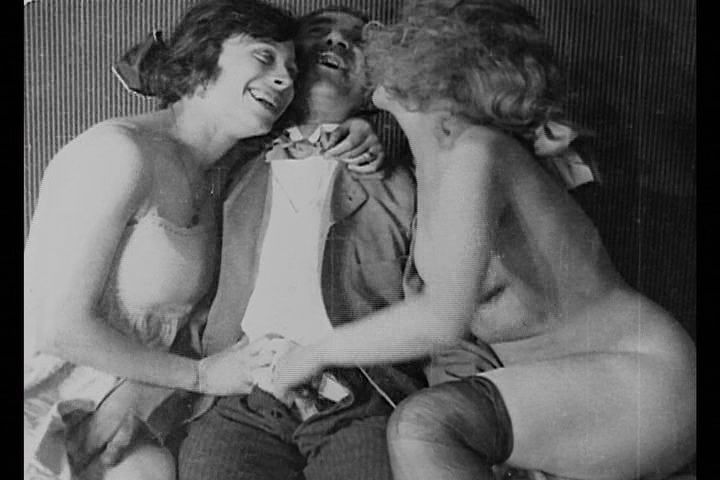
Sex education, y’all. Despite the fact that today’s parents outsource math lessons to Blue’s Clues, play time to iPhones, and secret homosexual programming to Gabba Gabba Hey!, the continuing furor over sex education in schools just refuses to quit talking, finish its drink, and go home. But, as a reclaimed 1900s reel of French brothel movies showing at the Red Vic Movie House this weekend (Fri/28 – Mon/31) proves, sex ed has always been around – it just used to happen in whorehouses.

The Good Old Naughty Days is a 69 (ha! Really!)-minute collection of silent shorts that were found in a well-to-do French family’s attic nearly a century after they were filmed. Most likely, according to the film’s producer Michel Reilhac, they were shot by conventional film crews on their day off. They’re low-budget affairs whose most salient expense was the fees of the prostitutes who starred in them — men and women whose bodies are un-siliconed and unaware of the histrionic boinking that would some day pass for erotic film. The movies were co-opted by brothels, who would play them in their waiting rooms as young gentleman killed time before their whoring. 

Which was, of course, where young cats learned about sex back in those days. When they showed up as virgins to the bordello, berets and handlebar mustaches a-twitchin’, these were the films to at least prevent them from shouting “qu’est-ce que c’est!” when their lady of the evening shuffled off her chemise (or their gentleman of the night his breeches, lest we forget). There’s gay and lesbian couplings, even priests and nuns — these last having a good time with candles.

Judging from The Good Old Naughty Days, them last century folk even got down in ways that we cultured cyborgs might find a wee bit mutt-like – apparently there’s a scene with a pooch unconcerned with which species recieves his Rover. In an interview with the UK Guardian (our namesake, holler), Reilhac says a few women took offense at this inter-mammal consorting at an early screening, to which he had this to offer: “thank God I took out the duck scene.”

But do not mourn the loss of this duck scene, San Francisco. Go out and be ever so naughty at the Red Vic – the two and four p.m. showings on Saturday and Sunday might make for a tasty post-brunch educational session. Just remember there is no sex-for-money waiting for you by the popcorn machine. Just wooden bowls, probably.


The Good Old Naughty Days

Fri/28 – Mon/31 7:15 and 9:15 p.m. (also Sat/29 – Sun/30 2 and 4 p.m.), $8

Red Vic Movie House

1727 Haight, SF

(415) 668-3994

www.redvicmoviehouse.com


Que tristeza

0

arts@sfbg.com

FILM Whether or not they planned it from the beginning — though there was certainly grandiosity there at the start — Alejandro González Iñárritu and Guillermo Arriaga have been interesting as probably the first major narrative filmmakers to make post-NAFTA globalization their ongoing subject. The three-part Amores Perros (2000), while set entirely in Mexico City, found within it layers of society as remote from one another (if united in a fatalism, brutality, and one “accidental” twist of fate) as if they were continents apart.

Moving north into Hollywood funding and movie stars, the effortfully bleak 21 Grams (2003) again mixed up chronology, crisscrossing multiple story threads, and with big issues — religion, recovery, mortality — crossing literal and figurative borders. Babel (2006) went whole-hog, leaping from sunny SoCal and merely baked Northern Mexico to frenetic Tokyo and the Moroccan desert, finding or manufacturing crises everywhere, hang-wringing out questions you might boil down to “Can’t we all get along?” Or perhaps, to use the name of onscreen director Joel McCrea’s proposed pretentious magnum opus in Sullivan’s Travels (1941), O Brother, Where Art Thou?

These movies played God way beyond the ken of average auteurism, deus ex machinizing all over the joint to place actors in award-worthy emotional extremis and give us extended doses of that feeling experienced by characters in movies who shake their fists at the unforgiving sky and shout “WHHHHYYYY!?!!!” They were fairly humorless, highly contrived, and eager that you appreciate both qualities. They were also structurally ingenious, and in extended passages — like Rinko Kikuchi’s night on ecstasy and the Mexican wedding in Babel — purely cinematically dazzling. All these films speak to social injustice, the rising desperation that turns problem-solving violent, to connectivity (and disconnectivity) across cultures and economies. But what exactly director Iñárritu and scenarist Arriaga were saying was often much less persuasive, or clear, than the sheer bravado of their ambitions.

It was certainly hard to imagine one — intricately mapped screenplays, showily accomplished filmmaking — without the other. But the two indeed had a falling out after Babel, reportedly in part because Iñárritu (whose films are now “A Film By Iñárritu”) was kinda hogging the glory, downplaying his creative partner’s contribution.

So Arriaga wrote and directed 2008’s The Burning Plain, another elaborate multistory miserabilist exercise, albeit one that critics and audiences were catastrophically cold toward. Now Iñárritu is flying solo with Biutiful — oh, you just know that title is hiding a cruel irony — and it, too, is a problem.

Instead of weaving multiple story arcs in different locations to encapsulate man’s inhumanity to man circa now, he (working as scenarist for the first time, with Nicolás Biacobone and the late Armando Bo credited as cowriters) simply unloads several characters and continents’ worth of woe onto one continuous story. Or rather, one sagging man: Uxbal (Javier Bardem), a wearily hustling dude of all trades who seems to be keeping half of Barcelona’s marginalia afloat, if barely. He mediates between corrupt police who require bribes (then still fuck him over), illegal Chinese immigrant sweatshop workers who make designer purse knockoffs, the illegal African immigrants who sell them, and the bosses who just want him to exploit everybody faster and harder. It’s all falling apart even as he keeps slapping fresh papier-mâché on the teetering gray-market apparatus.

Meanwhile, he’s dad to two adorable young children and failed (but still trying) savior to their mother, who is bipolar with a vengeance. He’s also got a fuckup brother and various other satellites revolving around his warm but ebbing sun. Plus Uxbal can talk to dead people. You heard me. They generally tell him to inform surviving friends and lovers “Don’t worry, be happy,” which incites grateful tears. (Though nobody here is ever, ever happy.) All this and bloody urine too — no wonder our hero, reluctantly consulting a doctor, can’t quite believe the news he gets. Cancer? Terminal? Like, soon?!? As if he doesn’t already have enough on his plate. Now they’re just going to take the plate.

Biutiful dumps all this grief on Bardem’s shoulders and danged if he doesn’t just about hold up the whole movie, refusing to ham, marching through this two-hour Passion of Uxbal with enough wry dignity and palpable exhaustion to almost achieve credibility. Still, he’s a movie star, and that becomes one more way in which Iñárritu turns harsh “realism” into excess. This director is at his best in primarily visual set pieces, but his script here provides few such opportunities: the film flickers alive during an early police chase and a shocking later sweatshop discovery (though we’ve seen it coming). The scenes with Maricel Álvarez as crazy ex-wife Marambra are also effective because her character is complicated in ways that go beyond mere schematic usefulness in the movie’s overall whatsit of suffering piled upon suffering.

Biutiful isn’t a bad movie, but it attempts to mean so much there’s something painful in the degree to which it doesn’t move us as planned. Rather than making a universal statement about humanity at millennial wit’s end — with Bardem as Incredible Shrinking Everyman — Iñárritu has made a high-end soap opera teetering on the verge of empathy porn. He was better with Guillermo Arriaga, and vice versa.

BIUTIFUL opens Fri/28 in Bay Area theaters.

Gorgeous George

0

TRASH She’s an unstoppable force, that Sherri Frankenstein. As embodied by Linda Martinez in an anything-but-soggy serial by George Kuchar, Sherri is endlessly buffeted by life — shoved, mutilated, or worse by rapacious characters ever-eager to administer injections. She’s prone to oracular gestures so lengthy and dizzyingly impulse-driven that their conclusions directly contradict the reality around her. But whether she’s carousing at a go-go club or distractedly presiding over a Dracula’s castle-turned-home for wayward women, Sherri’s is a spirit that will not be snuffed.

Sherri’s odyssey begins in 2003’s Kiss of Frankenstein, a screen adaptation of a 2003 play’s torrid and torrential vomitous verbiage. Shot in three hours for $500 and post-dubbed in a bathroom, Kiss is an orgy of all that Kuchar in dramatic mode has to offer — a DayGlo video update of the old dark house scenario of his and Curt McDowell’s classic Thundercrack! (1975) with live action-meets-animation interiors that outdo Dario Argento’s Suspiria (1977) in terms of lurid décor. Martinez’s sheer organza negligee is only the raciest fabric in a dance of the 700 veils to rival Kenneth Anger’s Puce Moment (1949). The dreamy-eyed male lead’s hairy chest and right nipple peeks out from a torn pajama top. A maze of maniacal monologues and mythical machinations — listening to Kuchar’s characters rattle off narration, one can’t help but ponder the narcissistic nature of memoir — in the form of a hungry Hungarian “pilgrimage for the palate,” the first chapter in Kuchar’s monstrous equivalent to Wagner’s Ring includes a sudden ax attack rendered in the style of William Castle.

Fresh from an acid facial, Sherri is back and pig-biting mad in 2005’s The Fury of Frau Frankenstein, another of Kuchar’s collaborations with his students at San Francisco Art Institute. Abandoning Kiss‘s monologues for title cards and visual tale-spinning, Fury introduces Sherri’s buxom niece Leticia, whose fate is watched by a Ryan Gosling-like newspaper reporter named Bruce. (In a bit part, young filmmaker Sarah Hagey almost steals the movie while her man is stolen.) Kuchar unleashes a blitz of post-production video effects, placing party scenes within envelopes and sprinkling digital glitter on Sherri’s face. Shot for $100 less than its predecessor, Fury is pure cinematic gluttony on a budget: a stew is stirred with a dismembered hand, a glimmering spider web curtain from the previous movie returns as one character’s cape, and a bat scurries across a floor in a manner that evokes not just the ravenous killer brains of the 1958 British horror flick Fiend Without a Face, but also furry slippers.

Technical difficulties prevented a viewing of the climax of Kuchar’s Frankenstein Cycle, 2008’s Crypt of Frankenstein. But Sherri returns in a sequel to the series, 2010’s Jewel of Jeopardy, whose cast includes an M.D. A little weary and slurry and lost in the length and relentlessness of her monologues, she’s soon helpless — gleefully so — to stop a Dracula who “burns quite easily” as he feasts on the “nubile necks” of her female charges, administering “hellish hickeys.” Here, the prop-mad and pixelated fervor of Kuchar’s meta-montage reaches its apex: digital blood drapes the screen, hairdos morph into spider webs, a character is beaten with his own severed leg, a Santa Claus wall hanging beams green rays from its eyes, Martinez’s flesh is visually rhymed with a Frankenstein mask, and the cast is momentarily lost in a blizzard of animated hearts and stars that would bring a blush to the face of the Lucky Charms leprechaun.

It’ll end in puke, of course, but anyone with a hungry eye should welcome the Roxie’s decision to put three nights of movies by George Kuchar on its menu. Or a hungry heart: the cheerful gastric onslaughts of Kuchar’s Frankenstein cycle are countered by the disarmingly poignant mortal attention to digestion and bodily function in his recent diary films, Vintage Visits, The Nutrient Express, and Dribbles, all from 2010. The time is right to gorge with George. 

BY, FOR, AND ABOUT GEORGE KUCHAR

Fri/28–Sun/30, $6–$10 (Fri/28: The Frankenstein Cycle; Sat/29: It Came From Kuchar plus two Kuchar shorts; Sun/30: new video diaries by George Kuchar)

Roxie Theater

3117 16th St., SF

(415) 863-1087

www.roxie.com

Film Listings

0

Film listings are edited by Cheryl Eddy. Reviewers are Kimberly Chun, Michelle Devereaux, Peter Galvin, Max Goldberg, Dennis Harvey, Johnny Ray Huston, Louis Peitzman, Lynn Rapoport, Ben Richardson, and Matt Sussman. For rep house showtimes, see Rep Clock. For first-run showtimes, see Movie Guide at www.sfbg.com. For complete film listings, see www.sfbg.com.

OPENING

Biutiful See “Que Tristeza.” (2:18) California.

*Ip Man 2: Legend of the Grandmaster There’s an ounce of irony that the Wing Chun master who ended up popularizing martial arts throughout the world by way of his most famous pupil, Bruce Lee, would still be the subject of contention (see dueling biopics like Wong Kar-wai’s forthcoming The Grandmasters) and the center of passionate nationalism. In 2008’s Ip Man, the modest master (Donnie Yen) pit his considerable skills against the karate of the invading Japanese army, and here, in ’50s Hong Kong, he tests his skills against the British colonists’ boxing champion. Imperial villainy is painted in broad strokes, but that’s the only predictable stumble in this otherwise step-above effort, with its handsome, sepia-toned art direction and its martial arts choreography by Sammo Hung. As 2 opens, the noble Ip Man has survived the tribulations of WWII only to find himself tussling with rival martial arts groups in rough-and-tumble HK in his efforts to start a Wing Chun school. His most formidable opponent is the powerful master Hung Chun-nam (Hung, who threatens to steal scenes from an earnest if adept Yen), until the two are finally brought together by shared Chinese family values in the ugly face of colonial injustice. The focus of this sequel, once pegged to Ip Man and Lee’s relationship, shifted when director Wilson Yip and company failed to finalize film rights with the star’s descendants, yet much like its near-saintly subject, Ip Man 2 succeeds despite all obstacles. (1:48) Four Star, Shattuck. (Chun)

*Lemmy: 49% Motherfucker, 51% Son Of A Bitch One thing is certain: Motorhead’s Lemmy Kilmister is a total badass. Greg Olliver and Wes Orshoski’s adoring portrait is strongest when it captures the legend going about his everyday business: rocking out onstage before thousands; obsessing over a video game at his favorite Sunset Strip hangout, the Rainbow; kicking it at his humble, jam-packed, rent-controlled apartment. The seemingly ageless Lemmy (he’s 65!) is a fascinating character, a complete original who does whatever he likes (gambles, collects Nazi memorabilia as an offshoot of his military-history fascination, speed) and doesn’t particularly give a fuck what anyone thinks. This lifestyle works only because he is such an inherently cool cat, with a mystifying ability to put away endless amounts of booze and drugs. As such, he’s worshiped not just by average-human Motorhead fans, but also a huge array of celebrities, many of whom were apparently lining up to appear in this film. Some participants make sense (Ozzy Osbourne), others (Billy Bob Thornton?) just pad the doc’s already overlong running time. Still, despite quite a bit of unnecessary fawning, Lemmy offers an entertaining look at the man behind the myth — and pretty leads one to believe that the myth is, indeed, 100 percent real. (1:57) Roxie. (Eddy)

The Mechanic B-movie bros Jason Statham and Ben Foster play assassins with revenge on the brain. (1:40)

Nenette Veteran French documentarian Nicolas Philibert’s latest spends just over an hour gazing into the infinitely weary visage of its title figure, a Bornean orangutan who’s spent nearly all of her 40 years as a star resident at the zoo within Paris’ Jardin des Plantes. Now very old by the species’ standards, she’s “had three husbands and wore them all out” — as her longest-running attendant says — along with four babies, one of whom still lives with her. As Nenette can’t speak for herself, the director lets humans try to do so while revealing much about themselves, from the institution’s multinational visitors (one child regards the doughy, pendulant-breasted subject and says “She’s almost as big as Mum!”) as well as her professional keepers, who reveal some surprising insights into Nenette’s personality. One of the latter waxes philosophic about the “life in captivity” that has left Nenette so inert and seemingly depressed: “she spends her whole life doing nothing. Everything comes to her. She doesn’t have to fight or resist or come up with ways to deal with things. She’s like a kept woman, a hairy one. A victim of her rarity.” In its wry and modest way, Philibert’s film ponders the relationship between keepers and kept, wondering if in response to an endless parade of spectator curiosity Nenette might simply be thinking “When are they going to leave me alone?” It is preceded by the director’s 11-minute Night Falls on the Menagerie. (1:17) Lumiere, Shattuck. (Harvey)

The Rite Anthony Hopkins plays a priest whose exorcism-y past comes back to haunt him. (1:47) Shattuck.

ONGOING

*Another Year (2:09) Albany, Embarcadero.

Barney’s Version (2:12) Embarcadero, Shattuck, Sundance Kabuki.

Bhutto (1:51) Opera Plaza.

*Black Swan (1:50) California, Empire, 1000 Van Ness, Piedmont, Presidio, Sundance Kabuki.

*Blue Valentine Sometimes a performance stands out and grabs attention for embodying a particular personality type or emotional state that’s instantly familiar yet infrequently explored in much depth at the movies. What’s most striking about Derek Cianfrance’s Blue Valentine is the primary focus it lends Michelle Williams’ role as the more disgruntled half of a marriage that’s on its last legs whether the other half knows that or not. Ryan Gosling has the showier part — his Dean is mercurial, childish, more prone to both anger and delight, a babbler who tries to control situations by motor-mouthing or goofing through them. But Williams’ Cindy has reached the point where all his sound and fury can no longer pass as anything but static that must be tuned out as much as possible so that things get done. Things like parenting, going to work, getting the bills paid, and so forth. It’s taken a few years for Cindy to realize that she’s losing ground in her lifelong battle for self-improvement with every exasperating minute she continues to tolerate him. Williams’ bile-swallowing silences and the involuntary recoil that greets Dean’s attempts to touch Cindy are the film’s central emotional color: that state in which the loyalty, obligation, fear, pity, or whatever has kept you tied to a failing relationship is being whittled away by growing revulsion. Gosling’s excellent stab at an underwritten part is at a disadvantage compared to Williams, who just about burns a hole through the screen. (1:53) 1000 Van Ness, SF Center, Shattuck, Sundance Kabuki. (Harvey)

Casino Jack (1:48) Opera Plaza.

Country Strong (1:51) 1000 Van Ness.

The Dilemma (1:58) 1000 Van Ness, SF Center.

Evangelion 2.0: You Can (Not) Advance (1:52) Viz Cinema.

The Fighter (1:54) Marina, 1000 Van Ness, SF Center, Sundance Kabuki.

*The Girl Who Kicked the Hornet’s Nest (2:28) Opera Plaza.

*The Green Hornet (1:29) 1000 Van Ness, SF Center, Sundance Kabuki.

*I Love You Phillip Morris (1:38) Lumiere.

*The Illusionist (1:20) Clay, Shattuck, Smith Rafael.

Inside Job (2:00) Lumiere, Shattuck.

The King’s Speech (1:58) Albany, Embarcadero, Empire, Marina, 1000 Van Ness, Piedmont, Sundance Kabuki.

No Strings Attached The worst thing about No Strings Attached is its advertising campaign. An eyeroll-worthy tagline — “Can sex friends stay best friends?” distracts from the fact that this is a sharp and satisfying romantic comedy. Perhaps it’s not the most likely follow-up to Black Swan (2010), but Natalie Portman is predictably charming, and Ashton Kutcher proves he’s leading man material after all. They’re aided by an exceptional supporting cast, including indie darlings Greta Gerwig and Olivia Thirlby, and underrated comic actors Lake Bell and Mindy Kaling. No Strings Attached is a welcome return to form from director Ivan Reitman, who gave us classics like Ghostbusters (1984) before tainting his image with Six Days Seven Nights (1998) and My Super Ex-Girlfriend (2006). There are likely going to be many who will dismiss Reitman’s latest out of hand — and with those misleading trailers and posters, it’s hard to blame them. But I advise you to give No Strings Attached a chance: at the very least, it’ll counter the image of Portman tearing at a stubborn hangnail. (1:50) 1000 Van Ness, Presidio. (Peitzman)

*Nuremberg: Its Lesson For Today (1:18) Opera Plaza, Shattuck, Smith Rafael.

127 Hours (1:30) Presidio.

*Rabbit Hole (1:32) Embarcadero.

Season of the Witch (1:38) 1000 Van Ness.

*The Social Network (2:00) Four Star, Shattuck.

Somewhere (1:38) SF Center, Shattuck.

Tangled (1:32) 1000 Van Ness.

Tron: Legacy (2:05) 1000 Van Ness.

*True Grit (1:50) California, Empire, Four Star, 1000 Van Ness, Presidio, SF Center, Sundance Kabuki.

*Two in the Wave Emmanuel Laurent chronicles the hugely influential French nouvelle vague through the lives of its flagship auteurs in Two in the Wave. Raised in hardscrabble poverty, Francois Truffaut made films that reflected an increasingly sentimental yearning for the middle class. Jean-Luc Godard was raised in Swiss bourgeois comfort — yet he gravitated toward a Marxist proletarianism perversely avant-garde in the extreme. Both shared (and fought over) onscreen muse Jean-Pierre Léaud, plucked from Parisian streets to star in Truffaut’s 1959 The 400 Blows. One might reasonably conclude from evidence here that Truffaut, dead from a brain tumor in 1984, was the greater artist — or at least humanitarian. Yet coldly intellectual, ever-more-bilious Godard continues into his 80s, last year’s abstract Film Socialisme restoring him to rarefied critical if not popular favor. This dual portrait reaches an ingratiating zenith toward its end, when we see surviving interviewee Léaud growing up onscreen, anxious to please twin mentors. The Roxie’s weeklong showcase is double-billed with all five films in which the actor played Truffaut alter ego Antoine Doinel, from Blows to 1979’s Love on the Run. (1:33) Roxie. (Harvey)

The Way Back Master director Peter Weir returns to the man-versus-nature-and-each-other canvas of his previous film, 2003’s Master and Commander: The Far Side of the World, for this truth-based tale about a multinational crew of gulag escapees during the early days of World War II. Figuring he’d rather take his chances battling the elements (bitter cold, extreme heat, wolves, bounty-hunting natives, would-be cannibals) than face certain death doing back-breaking work in Siberia, Polish prisoner Janusz (Jim Sturgess from 2007’s Across the Universe) organizes a breakout. Joining him are a ragtag group, most of whom have been incarcerated for minor offenses that nonetheless rankled the ruling Communists. (One exception: Colin Farrell’s heavily tattooed, knife-wielding career criminal.) As the men, including taciturn American Mr. Smith (Ed Harris), slog across treacherous terrain, they lose some of their own numbers, and pick up another fugitive, fragile teenager Irina (Saoirse Ronin). The Way Back is a high-quality production, and certainly one of recent years’ most successful attempts at this kind of survivalist epic. But it throws exactly no curveballs (see: Werner Herzog’s 2006 Rescue Dawn, similar but far less predictable), and like its characters trudges toward a dutifully noble finish. (2:13) Bridge, Shattuck. (Eddy)<\!s>


La Frontera

0

arts@sfbg.com

HAIRY EYEBALL Walking through Tracey Snelling’s 10-year survey at Rena Bransten brings to mind the famous opening tracking shot of Orson Welles’ 1958 noir Touch of Evil. For over three tension-ratcheting minutes Welles’ camera — all swooping omniscience — takes in the garish sights and sounds of a tourist outpost along the U.S.-Mexico border as it tails an American car that, unbeknownst to the couple behind the wheel, has been planted with a bomb that’s about to go off.

Much like the back lot border-town surveyed by Welles, the Oakland-based Snelling pays repeated visits to liminal spaces: empty strip malls, dusty souvenir shops, seedy motels, and bygone roadside attractions. From her intricate miniature models of these buildings — many outfitted with ambient noise soundtracks, realistic interior lighting, looped video clips of “occupants,” and distressed paint jobs — to the mock-ups of the sort of neon signage once seen along Route 66 that greet you as soon as you walk into the gallery, Snelling’s art drops us somewhere south of some border, just on the edge of town, and definitely on the wrong side of the tracks.

The locations Snelling chooses are for the most part generic and yet deeply familiar. This is in no small part due to their recurrence as archetypical backdrops in pop culture and Hollywood films, something her art self consciously plays with. Take Big El Mirador, a large sculpture of an adobe hotel, for which Snelling has set up six DVD players behind the piece (coordinated with a sync box) to play a different film clip through each of the building’s six window to give the illusion of action happening in the rooms. Other models feature clips swiped from movies that feature similar structures, or are, as with the sculpture of Norma Desmond’s mansion from Sunset Boulevard, miniature versions of buildings from films.

At the same time, Snelling’s obsessive eye for detail — whether getting the fluorescent glare right inside a convenience store or building a perfectly weathered Tecate billboard — make each environment feel more “true-to-life,” inviting the viewer, much as a child does with a doll house, to construct narratives for the often-unseen occupants of these ghost town dioramas.

In other pieces Snelling situates the viewer as the occupant. In the space of a few steps one goes from looking at the exterior of model of the Motel El Diablo to standing in what could presumably be one of its rooms, complete with a cramped single bed, dresser, bad art on the wall, and more suggestively, a pair of black high heels casually tossed on the floor. Another life-size installation is a walk-through gift shop filled with to the brim with motion-activated tchotchkes, fake kachina dolls, Chinatown good luck dragons, and Hindu religious posters.

This scalar slip ‘n’ slide between life-sized and downsized only further adds to the fun house atmosphere generated by Snelling’s lovingly crafted and decidedly lonely monuments to displacement.


MARKING TIME

Max Cole’s acrylic-on-linen paintings feature alternating arrangements of two horizontal elements — ramrod straight lines of varying widths and small vertical hatch-marks — executed in varying shades of gray, black, brown, and white.

Like the painter Agnes Martin, Cole is an abstract precisionist whose canvases function as time cards, that with each tick, document to an almost zero-degree the entire span of their own creation.

And like Martin, Cole’s paintings are also rooted in the natural world, despite their superficial resemblance to, say, ruled writing paper. Titles such as Briscone Pine welcome one to see the grooves and ruts of tree bark, or in the case of the show’s name, “Terra Firma,” geologic strata, in these painting’s large bands and delicate vertical marks. *

TRACEY SNELLING: 10-YEAR RETROSPECTIVE

Through Jan. 29, free

Rena Bransten

77 Geary, SF

(415) 982-3292

www.renabranstengallery

MAX COLE: TERRA FIRMA

Through Feb. 12, free

Haines Gallery

49 Geary, SF

(415) 397-8114

www.hainesgallery.com

Here, kitty kitty

0

VINTAGE SEXY CINEMA “Ooh-la-la!” For decades this nonsense phrase personified “Continental” knowingness of a nature heavily suggestive to Yanks and yoinks raised under the buzz-kill shadow of a nation founded by Puritans. Just what did it mean? Oral knowledge unbeknownst to Oral Roberts? Sneaky-Pete glimpses of furry minx? Houses of ill repute and burgundy upholstery? Whatever: for long decades, Americans figured Old Europe knew sensual pleasures we were too nouveau to grasp, let alone grapple with.

Hollywood evinced salacious interest in exotic European sirens from early days — seminal silent vamp Theda Bara was credited with all kinds of exotic origin, though her actual city of birth was not-so-decadent Cincinnati. Soulful exported sensuality spanned subsequent decades from Garbo and Dietrich to “heady” Hedy Lamarr and driven-snow Scandinavian (till she got pregnant and left her husband for Rossellini) Ingrid Bergman.

These celluloid goddesses were afforded regal glamour and mystique, as if the Atlantic crossing kept foreign emotions remote. But after World War II, something happened. For one thing, Silvana Mangano exposed substantial melons in the florid post-neorealist melodrama of 1949’s agricultural potboiler Bitter Rice. She ignited a craze for voluptuous Euro-babes that lasted at least two decades, until censorship’s downfall rendered merely-hinted nudity as chaste as Mary Poppins.

Those glory days of international starlet innuendo are commemorated in “Love Kittens,” a new First Run Features DVD box comprising four vintage features of maximum retro spiciness. Two-star Agnès Laurent, which the sage L.A. Times then proclaimed had “a better figure than Mademoiselle Bardot!” Form-fitting duds notwithstanding, she now seems as merely cute as squeaky-clean contemporary Sandra Dee. Her first exported sensation was 1957’s The Nude Set, a.k.a. Mademoiselle Striptease, in which she’s a provincial student pressed to impress her fiancé by practicing the ecdysiast art form in a Parisian basement jazz club. Fear not: this delicious dunce is soon ushered safe back to bourgeois complacency by her stalwart if questionably faithful betrothed.

That same year, she guest-starred in Les Collegiennes, released in the U.S. as The Twilight Girls. The real star is Chanel model and Life magazine cover girl Marie-Hélène Arnaud, playing a newly arrived teacher at a girls academy. One of her charges is Catherine Deneuve — a barely recognizable 13-year-old making her screen debut in scenes restored from their originally cut U.S. release. Laurent is the high-born adolescent whose arrival at the school triggers scandalous entanglements.

Defined by another girl’s line “Please stop crying … whatever it is you’re thinking of now!” this melodramatic curio is like 1969’s The Prime of Miss Jean Brodie meets 1931’s Mädchen in Uniform meets you-name-it. (Lesbian sentiments are signaled by theremin noodling. Why? Because they’re weird!) Yet it’s largely a smart, sophisticated, just-sporadically-lurid tale that might’ve been better appreciated had it not been billed as “sexy, secretive, seductive” exploitation. It probably didn’t help that scenes crudely inserted after principal photography added two dormitory dwellers much inclined to shed bras and bounce a lot.

Laurent’s vogue was brief — she retired from the screen a half-century ago, dying just last year at age 74 — in contrast to “Teutonic temptress” Elke Sommer, who still occasionally acts in one of her purported seven language fluencies. She had planned, in fact, on becoming a diplomatic translator when modeling called instead. Winning a pageant on vacation in Italy, she got discovered by neorealist pioneer Vittorio De Sica and was soon hopping around the continent as the latest blonde bombshell dropped in Bardot’s wake. By 1963 she’d hit Hollywood, prettying up increasingly dismal mainstream dreck like Boy, Did I Get a Wrong Number! (1966) and Deadlier Than the Male (1967).

But first she impersonated a Frenchwoman in her two “Love Kittens” opuses, both directed by semi-forgotten Gallic sexploitation expert Max Pecas. She was just 21 — though already very worldly, not to mention curvy — in 1961’s Daniella by Night, playing a model whose work travel sinks her in a Roman potboiler of espionage, blackmail, and murder. (This intrigue’s gist is summed up by one character’s great line: “Apparently, everyone’s jealous of everyone else.”) Our heroine’s virtue is mortally endangered in several circumstances that threaten to separate her from clothing. It would take too long here to explain the pretzel logic by which Danielle must strip before a nightclub audience, then exit with horny American sailors, in order to escape assassination.

In Pecas’ 1963 Sommer vehicle Sweet Ecstasy — one should note certain territories saw it as Sweet Violence — she’s a crass seductress willing to play free-trade merchandise amid a yachtload of quasi-beatnik spoiled rich kids. Eventually she’s redeemed by caring enough to discourage a boy from participating in the craziest variation ever on a chicken contest, involving blindfolded leaps from construction-site cranes.

The difference between these European “sex” flicks and those coming just a few years later is remarkable. There’s so much plot, so many name actors (at least ones familiar to arthouse audiences at the time), and so much production gloss floating the tame exploitation elements, with their ludicrous excuses for toplessness. When heavily painted Sommer was steaming up screens as still import-only Eurobabe (“Nudest Elke Sommer is filmdom’s friskiest frisk!” Playboy exhaled), her movies weren’t exactly classy, but they weren’t Z-grade trash, either.

Her Pecas films remain treasure troves for Francopop enthusiasts: the first was co-scored by Charles Anzavour, the second featured songs by Johnny Halladay. By 1968 — still well before hardcore’s advent — collapsing censorship standards meant racy stuff could predominate, with only a slender g-string of narrative coverage required. Sommer might have been cheesecake — but she was too famous to give it up that freely.

Bend over the rainbow

11

marke@sfbg.com

SEX/TV “We get to shoot all over San Francisco,” Jack Shamama of NakedSword.com tells me over the phone, a wicked lilt tiptoeing into his voice. “How great is that?”

Double entendres! He’s referring to Golden Gate, the spunky episodic porn Web series he wrote with Michael Stabile, which just wrapped up its first season and will begin a second season in February. The weekly series runs on the Naked Sword site, with a new episode debuting every week to a substantial viewership that values glossy production and polished presentation.

Although there’s no grand soap opera-like family tree of intersecting characters and storylines, each episode does feature quite a bit of plot, at least by wank-flick standards, and solid back stories for the various players. (Sample: “Robert is an unemployed writer who spends his days at cafes. He’s got a real interest in humanity, and is garrulous and friendly. He’s almost always dressed casually. Robert lives in the grittier Castro-adjacent neighborhood of the Lower Haight.” Robert gets crammed full of a two-foot-long cone-shaped black dildo. But I digress.)

GOLDEN GATE TRAILER (er, NSFW)

Pornisodic series have been done before — the sprawling Wet Palms comes to mind — but this is the first that really focuses on San Francisco. Shamama and Stabile being our perennial enfants terribles of porn, there’s some fun with San Francisco archetypes in each episode as well, bringing together, say, a high-powered downtown investor with a struggling Mission District artist who pimps himself out online for rent money. And while there are a few problems with verisimilitude (that struggling artist has waxed eyebrows and an all-over tan), there are plenty of spot-on in-jokes. In one episode, a couple of almost-hipster rockers get approached by a groupie for sex — but first they hand him a flyer for their band’s show at Bottom of the Hill.

After we dished a bit about the scheduling woes of porn stars in the Internet Age and the purported whereabouts of 1990s bear porn pioneer Steve “Titpig” Hurley, I asked Shamama a few questions about Golden Gate.

SFBG What pricked you into Golden Gate action?

Jack Shamama In the past, Naked Sword has teamed up with partners to produce hardcore content, behind-the-scenes specials, porn event coverage, and our regular talk show, “The Tim and Roma Show.” But for our first completely in-house production, we knew we had to come up with something big that wouldn’t run out of steam, since we wanted it to be a weekly series. The concept that kept coming up was the city itself.

Gay porn was pretty much invented in San Francisco and even today maybe as much as 75 percent of it is still filmed here, but you really wouldn’t know it since most of it’s filmed on sets. Those movies that do spotlight San Francisco generally end up giving people a dumbed-down CliffsNotes “gay Disneyland” version of SF, with an opening shot of the Golden Gate Bridge and credits rolling over a shot of the giant rainbow flag in the Castro.

We figured we owed San Francisco a bit more than that. Our tagline is “Enter the land of impulse and desire.” The city ends up being sort of like the main character. For each episode, we bring together two opposing types of San Francisco men to show the different sides of the city.

SFBG Everyone talks about how major porn studios are being killed by amateur websites. But you guys are going in the opposite direction, with glossy production values, old-fashioned plot-oriented scenes, big name stars, and timed release dates …  

JS Golden Gate is definitely an anomaly in the porn marketplace — but I think that at this point, its uniqueness is a plus. There’s still a huge audience out there that wants this type of meticulously produced, quality product, and I don’t think they should be ignored just because there are other types of porn being made.

Many people automatically equate “amateur” with “plotless” — but really it’s the same plot over and over again. “Straight guy sucks his first dick” could describe seven-eighths of amateur porn. That can be hot but yeah, we get it. We want to explore other kinds of fantasy. And, along with our executive producer Tim Valenti, we want to do it in a quality way. Even though our actors get down and dirty, we’re not ashamed of having a little class.

SFBG How difficult is it to produce a weekly porn series?  

JS It can get tough to write episodes at that pace and to keep everything straight — scouting locations, shooting stills, scheduling stars. One challenging aspect to production I didn’t anticipate was finding filming locations. Since each episode takes places in a different neighborhood, it’s taking us out of our comfort zone. There are lots of guys who live in the Castro who want to have a gay porn shot in their apartment, but some other neighborhoods can be tricky. We’ve lucked out and been able to shoot in some amazing apartments so far, though. I really didn’t expect it to become real estate porn, but I don’t think anyone’s complaining.

Another thing is making sure our script is malleable enough to adapt to the actors and direction. We shoot the sex part before the scripted part, so the actors won’t get too bored. And even though in our scripts Mike and I try to go beyond just clichéd “fuck me harders” during the sex parts, when it comes down to it, we want our actors to have hot sex, not worry about delivering their lines. And we want our director, Chris Ward, to be free to match his sexual vision to our scripted intentions. He’s one of the biggest names in porn — no one tells Chris Ward how to film a sex scene. He’s incredible.

SFBG Any hot scenarios you can share from the upcoming season?

JS A pair of Mormon missionaries don’t quite know what they’re getting into when they knock on the door of a certain fetishy Alamo Square leather daddy. That one ought to be fun.

Going commando

0

CHEESY, SLEAZY CINEMA Last year found Jack Abramoff a peculiarly hot commodity at the movies, especially if you consider he spent most of the year in federal prison and hadn’t exercised his own Hollywood ambitions in nearly a quarter-century.

But then his recent on-screen exposure was not of an ilk he’d have chosen for himself: as subject of a documentary (2010’s Casino Jack and the United States of Money) and biographical drama (plain Casino Jack, also 2010) both depicting the now-infamous Washington, D.C., lobbyist as personification of that Shrub Era conservative jingoism, corrupt backdoor business deals, egomania, and greed that helped land us in our current economic craphole. And which got him four years, ending last month even as former Republican House Majority leader and BFF Tom DeLay faced the start of his own money-laundering slammer stint.

Abramoff was not likely to have enjoyed either portrait, not even as semi-sympathetically (albeit poorly) portrayed by Academy Award-winning thespian Kevin Spacey in the weaker film. If he’d been able to invent his own starring vehicle, no doubt it would have been more a flatteringly bold cross of 1987’s Wall Street (the Michael Douglas part), 1960’s Exodus (the Paul Newman as he-man crusader for Israel part) and 1980s Rocky-Rambo Stallone (the whole enchilada, from bulging biceps to rippling Old Glory and Commie-wasting weaponry). In the Reagan America of his physical if not yet political prime, he really was a bit of all those things: bodybuilder, Zionist, rabid anti-Red.

Whether he ever harbored dreams of being a celluloid hero, or was always content to become a real-life Supermensch, Abramoff did once make a movie — exactly one — exemplifying his beliefs and self-image in suitably cartoonish fashion, before realizing Hollywood’s corridors of power were puny game for a real man. So he moved on to the more hallowed halls of D.C. and Manhattan. But first, there was Red Scorpion.

This 1988 actioner starred 6-foot, 5-inch Swedish meatball Dolph Lundgren, hot from playing the robo-Russkie villain in Rocky IV (1985) and He-Man in Masters of the Universe (1987), as a “perfect killing machine” sent by evil Soviet commanders to assassinate a resistance leader in a fictive African nation under the thumb of Communist oppressors.

Tending not to play well with others, Lt. Nikolai Rachenko spends his first night here in jail for “disorderly conduct” — after a few drinks he’d kicked open a saloon door, beat up half the patrons, and machine-gunned the joint. Boys will be boys. He shares a cell with a local freedom fighter (Al White) and an American reporter (M. Emmet Walsh at his formidably most-obnoxious). For no obvious reason our steroid miracle of a KGB enforcer decides moments later to switch sides and help them escape. This effort requires killing about a million extras playing Russian and Cuban military occupiers to the tune of Little Richard’s “Good Golly Miss Molly.” (Because nothing says “Democracy rocks!” like the orgasmic trills of an African American queen.)

Slowly-dawning ability to feel empathy for suffering peoples indicated by the heavings of his perpetually oiled torso and completely unintelligible mutterings, Nikolai is recaptured by former masters and made to endure homoerotic torture. He escapes again, staggering through the desert alone, shirtless and shiny. Bushmen rescuers teach this Golden Bwana something or other — like Billy Jack, he sweats, grunts, and hallucinates toward enlightenment — and give him a scorpion tattoo as diploma.

Now armed spiritually as well as abdominally to do good, his reappearance in civilization spurs Walsh to call this juiced Russki “the gutsiest goddamn sonuvabitch I ever met.” (Arne Olsen’s screenplay, from the brothers Jack and Robert Abramoff’s story idea, is seldom even this articulate.)

The climactic triumphant popular uprising at one point hinges on Lundgren lifting a truck out of a sandtrap with his bare bulging guns, a bit included purportedly because Jack Abramoff was an iron-pumping addict himself at the time. (What makes the scene funnier is that it evidently occurred to no one that Nikolai’s load would be lightened if Walsh got his fat ass out of the truck cab for a minute.)

A movie rife with bad dialogue badly spoken — you’ll gulp as White seemingly enthuses “When we arrive there will be a celebration and much fisting!” — ends aptly with the worst pronunciation ever of “Fucken’ A.” Our heroes are then freeze-framed while strolling over another umpteen freshly killed Commies.

Red Scorpion was shrugged off as what it basically was, yet another Rambo ripoff arriving toward the tail end of that subgenre’s lifespan. (A theatrical flop, it did well enough on tape and cable to prompt 1994’s in-name-only sequel Red Scorpion 2, on which the Abramoffs got executive producer credits.) There certainly are more cheap, inept, laughable, senseless, just plain dumb films of its ilk — though this one does excel at dumbness — and unlike many it does have one good joke, involving a grenade and a decapitated hand. Otherwise, if not for its primary motivator’s subsequent antics, Red Scorpion would be just another forgotten B-grade cultural relic.

But the Beverly Hills-raised Abramoff — who spent the earlier part of the 1980s as an aggressive far-right youth activist — intended this first-last cinematic venture as a stealth combo of dynamite popular entertainment and anti-Red Menace propaganda. He modeled the character of “Mombaka’s” resistance savior Sundata (played by Ruben Nthodi) on real-life Angolan anti-Marxist rebel warlord Jonas Savimbi, a darling of later Cold War hawks. (Others would soon call him “a charismatic homicidal maniac.”)

It is still debated whether Red Scorpion‘s $16 million budget was secretly funded primarily by the South African government and/or military. Abramoff denies it — though he had already spearheaded support of the apartheid regime as College Republican National Committee chairman and founder of the dubiously named think tank, International Freedom Foundation. In any case, once protestors got wind of the production shooting in South Africa-controlled Namibia — defying an international boycott — a skittish Warner Bros. pulled out as distributor. (Scorpion was then picked up in the U.S. by Shapiro-Glickenhaus, who later gave us 1990’s Frankenhooker and 1992’s Basket Case 3: The Progeny.)

The shoot was fraught. Some actors and crew complained they were never paid; production was suspended for three months when money ran out; star attraction Lundgren was apparently quite the hulking handful on and off set. Afterward, Abramoff — who’d converted to Orthodox Judaism at age 12 after seeing Fiddler on the Roof (1971) — blamed the film’s potty-mouthed and violent excesses on director Joseph Zito (of future Tea Party fan Chuck Norris’ own 1985 anti-Commie classic Invasion U.S.A.) He founded something called the Committee For Traditional Jewish Values in Entertainment as penance.

That noble latter endeavor was abandoned about five seconds later, however, since by then Abramoff realized he had better things to do than mess around with pansy-ass showbiz. Among his future, better-known achievements — the ones that got him top billing as Inmate 27593-112 — were bilking casino-owning Native American tribes, keeping third world factory sweatshops safe from investigation, pimping Congress to myriad corporations, and otherwise pedaling corruption ’round the globe, all while clutching family values and raving against the Godforsaken liberals. He was ever so righteous about doing wrong.

Today, he’s free, if uncharacteristically silent, having finished both his hoosegow stint and a halfway-house stay during which he worked for below minimum wage at a Baltimore kosher pizzaria. One suspects he will not be flippin’ pie in the future, however. Sibling Robert Abramoff is still in the biz, producing such fascinating-sounding recent projects as 2009’s Pauly Shore and Friends, 2009’s Jesus People: The Movie, and 2010’s Dino Mom.

Lundgren, recently looking fine (if downsized) in 2010’s all-star Expendables, now directs his own direct-to-DVD action vehicles. Still fighting the good fight, alongside Israeli special forces and South African mercenaries, Savimbi died in a hail of machine-gun fire eight years ago. That event helped end Angola’s civil war after nearly three decades. And Red Scorpion lives on, more or less. I found my used VHS copy at Rasputin Music for 50 cents. Fucken’ A!

Woman on the verge

0

FILM Sometimes a performance stands out and grabs attention for embodying a particular personality type or emotional state that’s instantly familiar yet infrequently explored in much depth at the movies. What’s most striking about Derek Cianfrance’s Blue Valentine is the primary focus it lends Michelle Williams’ role as the more disgruntled half of a marriage that’s on its last legs whether the other half knows that or not. Ryan Gosling has the showier part — his Dean (the actor’s second bad husband in a month, following All Good Things) is mercurial, childish, more prone to both anger and delight, a babbler who tries to control situations by motor-mouthing or goofing through them.

But Williams’ Cindy has reached the point where all his sound and fury can no longer pass as anything but static that must be tuned out as much as possible so that things get done. Things like parenting, going to work, getting the bills paid, and so forth. Dean hasn’t just lost his antic charm; his act is now clearly a poor cover for basic incompetence. He is an obstacle, an irritant whose clowning, fits of pique, and perpetual failure to be useful have become the domestic equivalent of fingernails on chalkboard.

It’s taken a few years for Cindy to realize that she’s losing ground in her lifelong battle for self-improvement with every exasperating minute she continues to tolerate him. Williams’ bile-swallowing silences and the involuntary recoil that greets Dean’s attempts to touch Cindy are the central emotional color of Blue Valentine: that state in which the loyalty, obligation, fear, pity, or whatever has kept you tied to a failing relationship is being whittled away by growing revulsion. Cindy is quiet because if she were to stop bottling it up for just a moment, ugly final truths would scream out.

It’s only a matter of time before that moment arrives, though Valentine maintains suspense (and avoids turning into a dirge) by scrambling time — we see this couple at their start and end, the chronology a bit confusing at first. Their paths cross when she’s an aspiring med student and he works for a moving company. Scenes of their courtship are charmingly spontaneous but also a bit conspicuously actor-improv, the two stars trotting out cute unexpected skills (he sings like a 1920s crooner, she demonstrates how to memorize all the presidents’ names) that seem to be their own, not Dean and Cindy’s.

Making only his second narrative feature after 12 years of documentaries, Cianfrance has said he’d sat on Valentine‘s finished screenplay that entire span, so that by the time funding was in place he’d become “bored” with it. He now wanted the actors to use it only as a structural springboard for their own character insights and dialogue. (You have to wonder how credited cowriters Joey Curtis and Cami Delavigne felt about that decision, particularly since they’ve barely been mentioned in all the film’s acclaim since the 2010 Sundance Film Festival.) That approach works better in the flashback scenes between Cindy and her problematic family (as well as Mike Vogel as her then boyfriend Bobby) than those with Dean, or his own with coworker Marshall (Marshall Johnson), which somewhat heavy-handedly spell out Dean’s need to belong to somebody.

But it pays off richly in Blue Valentine‘s present-tense majority, which finds several years’ passage has exposed rather than strengthened a commitment originally made under considerable duress. (Bobby’s carelessness had left Cindy pregnant at the worst possible time, allowing barely-known suitor Dean to rush in as rescuer. The scene in which she nearly has an abortion will strike many as the film’s most uncomfortably intimate — certainly more so than the two tame bits of mimed cunnilingus that initially won Valentine a ridiculous NC-13 rating.) Now the couple are settled in working-class suburban New England, with a modest house, an adorable daughter of about five (Faith Wladyka as Frankie), and a dog that has ominously been missing some hours.

Cindy works as a nurse in an area hospital; Dean appears to be a stay-at-home dad. But we immediately sense the extent to which his not handling that job very well compounds the exhaustion created by hers. Daddy is a great playmate, beer and cigarette already in hand at high noon. Ergo it seems like a fun idea that he and Frankie should jump on the bed to wake up mommy — never mind that her shift probably ended just hours before and her cries to be allowed more sleep sound desperate. Breakfast is another time Dad wants to play, heedless of the reality that a squirmy child must be fed and dressed in time for Mom to drop her off at daycare on the way to work.

His notion of a tension releaser is to insist that Frankie stay overnight with grandpa so her parents can “get drunk and make love.” Though Cindy insists, “I’m not going to some cheesy sex motel” (one that, further, will require she drive back two hours to work first thing the next morning), that is exactly the plan forced on her.

Said motel’s stupid fantasy “Future Room” (resembling a community-theatre USS Enterprise) becomes the stage for their marital Götterdämmerung. Cindy starts pounding drinks to dull the pain. Dean tries turning on the old wacky charm, prompting her comment, “I thought the whole point of coming here was to have a night without kids.” It’s downhill from there.

Blue Valentine is raw and uncompromising, if not quite great. It suffers from the fact that while we fully understand where Cindy’s coming from (particularly the horrors of her parents’ marriage, a model she’s determined not to recreate), Dean remains something of a blank. Gosling provides his usual detailed performance, but grasping the insecure failure Dean is now — and that she should have recognized from the start — doesn’t fully compensate for our having no idea how he got that way. A couple mumbled sentences about a missing mother and musician father feel forced. Like the actor’s role in All Good Things, Gosling’s Dean is trying very hard to impersonate the man he’d like to be. But in that film we glimpsed some formative void; here the void is structural, the character self-invention not a condition so much as an actor filling in a surface without getting beneath it. Gosling’s excellent stab at an underwritten part is also at a disadvantage in that Williams just about burns a hole through the screen. It’s hard to believe she spent years as a fairly interchangeable teen star and Next Big Thing before 2005’s Brokeback Mountain revealed a startling propensity for very serious, ordinary, long-suffering women doggedly bailing out sinking canoes.

Her range is as yet an unknown — next up is My Week With Marilyn (yes, Monroe), which might not sound a natural fit, though clearly she has the craft to go way past mere breathy sexpot imitation. As her very different role in Valentine underlines, she has an uncanny knack for capturing every nuance in essentially uncomplicated personalities. Cindy is probably the least colorful, exciting, or humorous major female role of last year by conventional fiction standards. Williams manages to make her very ordinariness completely engrossing.


BLUE VALENTINE opens Fri/7 in Bay Area theaters.

Don’t forget the Motor City

0

arts@sfbg.com

FILM/CULTURE There is the Detroit of mythology, and then there is the reality — half-abandoned, yet rife with some greater potential — beneath the myths. Local archivist Rick Prelinger sets his sights on both in Lost Landscapes of Detroit, an assemblage of private and commercially-produced films spanning from the peak of the Model T to the era of the gas guzzler. As arranged by Prelinger, Lost Landscapes is a provocative counterpoint to the urban portraiture of his Lost Landscapes of San Francisco series. Gazing from both sides of the automobile window, it reveals Hollywood’s relationship with the Motor City during the golden age of the movie theater, and the potential and the limits of other obsolescent industries: film and print media. Immersed in a mammoth project involving home movies (he says he’s “only” watched 1,200 of the ones he’s assembled for it), Prelinger recently discussed Lost Landscapes of Detroit, on the eve of its first West Coast screening.

SFBG One thing I like about your Lost Landscapes programs is their dynamic and open-ended shifts between industrial and home movies, black-and-white and color, silence and sound.

RICK PRELINGER These are assemblies, but also quickie films. I like the form. One thing I’m interested in is elevating unedited material — raw footage — to the same level that something dramatized or contrived might enjoy.

I like to think of home movies as homemade crafts, and you establish that through difference. When you show something industrial, with all the weird tropes we all now know — even if we didn’t grow up with them, we see them on The Simpsons — it’s a way of building a stronger sense of what is particular to home movies.

SFBG How did Lost Landscapes of Detroit come about?

RP I started traveling to Detroit in 1982 to talk to retirees from production companies there, the biggest of which was Jam Handy. Jam Handy Organization made something like 7,000 motion pictures and tens of thousands of film strips, and no one knows this. They used to say — and it might be apocryphal — that more film was exposed in Detroit than in New York and Hollywood combined. Detroit was within 400 miles of most of the industrial production and most of the population of America. It was a strategic place.

In ’82, Detroit was already stressing, there was a recession. For the first time, I saw fast food outlets and banks and suburban malls that were derelict — now we’ve gotten kind of used to that. I loved the city. I must have gone back 20 times since.

SFBG What was the response like when you screened Lost Landscapes of Detroit in Detroit?

RP We set out 150 chairs, and when it was time for the show, there were 425 people. It was an amazing audience — racially mixed, union people, people from Ann Arbor, people who had moved to Oakland and Macomb County, people coming for the white flight nostalgia thing.

Afterward, there was almost an hour of discussion. One comment that was so great came from the woman who runs the Black Theater program at Wayne State [University]. She said it was a perfect blend of nostalgia and provocation.

I’ve always been really anti-nostalgic, but you have to acknowledge that nostalgia is a major subjective and social force. It’s deeply wired. To inflect that with the idea of provocation worked for me. I don’t want [to put together] another America apocalypse movie. Detroit really isn’t about all that — there’s still 300 or 400,000 people in the city who are going to work 9-to-5.

The other thing about Lost Landscapes of Detroit is that there’s nothing about Hudson’s in the film. Everybody goes on in a senile way about Hudson’s and how wonderful it was — let’s get over it, you know? We have two things we have to get over if we’re going to move forward, May ’68 and Hudson’s.

SFBG Lost Landscapes contains a film about a newspaper coverage of an antiwar protest that is interesting because it doesn’t look to quote the protest figures who are usually lionized, and because it foregrounds another 20th-century industry in trouble: newspapers and print media. Same with the movie of the Detroit News’ June Brown talking with an ex-daily News reader who does her hair. It’s an off-the-cuff but perfectly precise discussion of racial bias in journalism.

RP It’s kind of like looking to the periphery for the inside truth. I’ve always found that to be true, and it relates to the kind of film I collect and the material I foreground. There it is, in some industrial film — intelligent, critical city residents demanding a certain level of media accountability.

SFBG There’s a show-not-tell tactic to your placement of archival footage. Lost Landscapes begins with a black-and-white industrial newsreel trumpeting that “any picture of America without automobiles is hopelessly out of date.” It ends with a silent color home movie in which the city’s name is spelled out in greenery.

RP I hate the course that recent documentaries have taken, in which they have characters undergoing crises that are resolved in Act 3. It’s like Mad Libs. Dramatically, most documentaries today are almost identical.

I’ve been working on a long-form film about travel, mobility, and tourism in America, largely comprised of home movie footage. It’s based on the idea that there’s nothing more attractive and seductive and fascinating than traveling, especially by car. We’ve come to see it not just as an entitlement, but as a right. But how can we think about this in a period where you can’t afford gas at $4 a gallon, or there may not be any fuel anymore? It’s thinking toward a time when mobility isn’t a given.

LOST LANDSCAPES OF DETROIT

Jan.12, 7:30 p.m., free

CounterPULSE

1310 Mission, SF

(800) 838-3006

www.counterpulse.org

On the Cheap Listings

0

On the Cheap listings are compiled by Caitlin Donohue. Submit items for the listings at listings@sfbg.com. For further information on how to submit items for the listings, see Picks.

WEDNESDAY 29

Snowboard movie night The Riptide, 3639 Taraval, SF; (415) 681-8433, www.riptidesf.com. 9pm, free. It’s absolutely dumping on Tahoe, but you’re stuck “working” tomorrow at your “place of employment”? Square. But Riptide forgives you – in fact, the Sunset bar is hosting a night of free snowboarding movies, free snacks, and muchos drink specials. Sponsored by SFO Snowboards, you might score some free gear in their bi-monthly raffle.

THURSDAY 30

Wizard of Oz Paramount Theatre, 2025 Broadway, Oakl.; (510) 465-6400, www.paramounttheatre.com. 7Pm, $5. Honestly, five dollars just to tool around in the art deco splendor of the Paramount Theatre would be well worth your money – but once they throw in a screening of the uber-classic adventure in Weirdo Land (sorry Scarecrow, y’all are bizarre), you can hardly afford not to go. Don’t we all want to click together our ruby slippers and wish ourselves away to good, old-fashioned fun?

FRIDAY 31

Japanese New Year’s bell-ringing ceremony Asian Art Museum, 200 Larkin, SF; (415) 581-3500, www.asianart.org. 10am-2pm, free with $12 museum admission. Guarantee luck and lovin’ in 2011 with this day of art activities and traditional community ceremony. Numbered tickets, assigned on a first-come-first-served basis will be on offer if you’d like to ring the museum’s 2,100 pound, 16th century bell from the Tajima province in Japan.

Roller Disco New Year’s Eve CellSpace, 2050 Bryant, SF; (415) 648-7562, www.cellspace.org. 9:30, $10. Black Rock Roller Disco, the purveyors of a thousand scraped knees over the past 10 years at Burning Man, truck out their well-loved rink for your countdown to 2011. Tire of wheeling yourself around? Dance slightly more agilely in the back room’s new wave lounge.

Jon Sugar’s all ages rock and comedy New Year’s Eve Tikka Masala, 1668 Haight, SF; gawksf@yahoo.com. 8pm-1am, free. The founder of Gay Artists and Writers Kollective (GAWK) Jon Sugar hosts a night of actors, DJs, and alternative art of all stripes at this welcoming party for the young and old.

Vampire Tour SF Corner of California and Taylor, SF; (650) 279-1840, www.sfvampiretour.com. 8-10pm, $20. The cold ones were not an invention of Stephanie Meyer, believe it or not. In fact, vamps have been amongst us for the longest, particularly if you believe Kitty Nasarow, who loves to bring us mortals around on her immortal historical tours and claims to have been turned frigid by none other than Count D himself. Learn about the blood-suckers’ role in the creation of SF.

SATURDAY 1

Kwanzaa imani ceremony Marcus Bookstore, 1712 Fillmore, SF; (415) 292-6172. 3pm, free. The culmination to SF’s holiday celebration of unity, self-determination, responsibility, purpose, and creativity takes places at the country’s longest-operating African-American owned bookstore. The imani rite focuses on faith in one’s people, parents, teachers, and the righteousness of struggle – happy thoughts for a new year of challenges.

Victorian 12th Night Ball Masonic Lodge, 100 N Ellsworth, San Mateo; www.peers.org. 7pm, $15-20. New Year’s Eve is over, so you’ve already let it all hang out – time to cinch it back in with this Dickens-era period ball. A 7pm dance lesson will teach you all you need to know about Viennese and rotary waltzes – come in your bustled, beauteous Victorian garb to enjoy a light English buffet and dancing with the Period Events and Entertainments Re-Creation Society.

MONDAY 3

Pilates to the People The Long Haul Infoshop, 3124 Shattuck, Berk.; (510) 540-0751, www.eastbayfreeskool.wikia.com. 7-8:30pm, donations. Silly you – you thought pilates was just for MILFs who lunch and their yappy little bow-wows? The core strength-building workout can actually be a blessing for all those who are looking to build a firm center in their lives. You can check out the miracle of healthy muscles at this weekly East Bay Free Skool offering – and check out the anarcho lit at the Long Haul while you’re at it.

TUESDAY 4

“Feast of Words” literary potluck SOMArts Cultural Center, 934 Brannan, SF; (415) 863-1414, www.feastofwords.eventbrite.com. 7-9pm, $5-12. Just right to take the edge off of your holiday come down: a foodie-writer potluck to which you must bring edibles, readables, or both. The evening’s program includes a talk by writer Faith Adiele, snacks from Canvas Underground, and a quick write competition based around the theme of “blurred identity.”