Mission

Deutch maneuver

0

le.chicken.farmer@gmail.com

CHEAP EATS “Berlin is awesome,” Kayday writes me, from Berlin. “We should all live here.”

Amazingly, I answer her in German. “Genau,” I write.

Berlin is awesome, true. But it’s one thing May through September, and something very much else the rest of the time. Is my opinion.

Kayday lives in Seattle, and complains about the weather there from September through July.

She doesn’t want to live in Germany, I feel certain.

When she was here, just a few weeks ago, she wanted to eat at Schmidt’s, maybe for practice. So we did. No complaints from me. Schmidt’s has the best wild boar sausage in all of San Francisco.

We also ate at my new favorite Chinese restaurant, in the Richmond, but I’m not going to tell you yet about that. Maybe next week. If you’re good.

Wild boar sausage, I’m pretty sure I already told you about. There’s Rice Broker though, in the Mission, which is another place where Kayday and me ciao’d down.

“Hi,” I said.

“Hello.”

“Hola.”

And she tried to answer — probably in German — but couldn’t, because something had gone down the wrong pipe. Maybe, I’m thinking, a sesame seed. Or a teeny tiny speck of almond?

Both things were in her rice bowl, which was the two skewers of lemongrass beef one, with whole orange slices, string beans, and, yeah, almonds and sesame seeds.

Now, I’ve seen people choking in restaurants before. I’ve even been the person choking in restaurants. It’s no big thing. You cough, you turn red, you hold up your finger to let your dining companions know that, no, in fact you don’t need the Heimlich. Yet. And then you drink some water, cough some more, tear up a little, feel like an idiot, and continue eating.

So happens, the wrong-pipe problem is a recurring theme for me, in life. I have lots and lots of sympathy and patience, and too am ready — if necessary — to spring into action. Ever the nanny, I am trained in CPR and so forth.

“Hello?” I said again. “Are you quite sure you don’t need the Heimlich?”

“I’m OK,” Kayday said. “I just need to go for a walk.” And she excused herself. “Be right back.” And left.

This was a first.

I digged into my own bowl, which was rice porridge with pork-and-ginger meatballs, bok choy, and cilantro. It was excellent, and went down very smoothly.

While I ate, though, I couldn’t take my eyes off of Kayday’s bowl, which was beautiful. The meat, as yet untouched, glistened on its skewers. The orange slices shone forth, like little sunsets. The beans — it was just a beautiful bowl of food. Calling to me.

Kayday is a dear and good friend. She’s an important part of my band. It occurred to me she could choke and die outside on the sidewalk. Still, I decided not to eat her food. When she came back, I would ask. And she would share.

Then, the hell with it, I reached across the table and tried a piece of meat from her skewer. Tough city, go figure!

But, like I says, mine was very good. The meatballs were almost as smooth as the porridge, and good and gingery. And I loved my edamame snack bowl, with dandelion and cane vinegar.

Come to think of it, she’d had a snack bowl appetizer too. Pickled daikon and carrots. And I can’t remember now if I even tasted it, but it sounds pretty good, no?

Of course, this isn’t Kentucky Fried Chicken. But to its credit it isn’t Spork either. And even though it choked my friend, I like that Rice Broker is there. Here in the hood.

And anyway, she survived. She came back.

“Hello,” I said.

She said, “Hi.”

RICE BOWL

Wed-Sun 6-10pm

1058 Valencia, SF.

(415) 643-5000

Cash only

Beer and wine


Hard to be a filmmaker

0

arts@sfbg.com

FILM In 1987, Soviet critics were polled to create a list of the nation’s greatest films. Landing on top was a movie still little-known abroad, whose maker has completed just five features in 45 years — one of which he doesn’t even consider truly his own work.

My Friend Ivan Lapshin (1984) likely wouldn’t have gotten near that exalted status if original, party-line-towing critics had had their way. After its well-received first screening, Aleksei Guerman’s own studio Lenfilm launched a broadside of attacks and demanded half his film be re-shot, though ultimately (more to spare additional costs than anything else) it remained unchanged.

Three years following a belated release, Ivan Lapshin was officially the “best Russian movie ever.” It was a remarkable turnabout for a director whose efforts had been — and in different ways would continue to be — perpetually thwarted, sometimes banned outright. In personal demeanor Guerman has been called “almost comically grim,” doubtless the result of so much uphill struggle. Yet that dour affect runs counter to the tenor of his most striking films, which are anarchic and borderline surreal, couching tragedy in absurdist humor and messy high spirits.

Yerba Buena Center for the Arts’ two-week series “War and Remembrance: The Films of Aleksei Guerman” brings to SF all of this slim oeuvre, little of which has been seen outside Russia save in festival appearances, cut form, or poor transfers that diminish the director’s mastery of complicated traveling shots in moody black and white.

Guerman (sometimes translated as “German”) was raised in Leningrad as the son of Yuri Guerman, a celebrated author who managed never to fall out of Stalin’s favor. Aiming to be a doctor, he hit cinema instead — first as a student and assistant, then co-directing 1967’s The Seventh Companion with the more established Grigori Aronov. The two fought throughout production of this sober drama about a Tsarist military officer converting to Socialist ideals, and Guerman has disavowed the end product.

He had sole credit on 1971’s Trial on the Road, another redemption tale — former Nazi collaborator surrenders to the Red Army, then re-infiltrates Axis forces to destroy an ammunitions train — but one judged insufficiently “heroic” by the government. It went unseen until 1986, when Gorbachev’s perestroika era liberated numerous long-banned films. A second World War II tale, Twenty Days Without War (1976), managed to escape censure with its melancholy portrait of a soldier on hometown furlough. It hinted at the looser, anecdotal, community-as-protagonist approach to come.

Still, Ivan Lapshin was a surprise leap toward humor, incident over conventional narrative, childhood memory as warm, boisterous yet melancholy blur á la Amarcord (1973) or Mon oncle Antoine (1971). (Though no sensibility could be more purely Russian than Guerman’s.) Based on stories by the director’s father, its main event is one that hasn’t happened yet when the film begins — Stalin’s first “Great Purge,” which would sweep away many of the moderately criminal or just eccentric figures portrayed in this fictive 1935 provincial town. Everyone here is a little mad, driven to distraction by the chaos of a grand collectivist experiment, spinning wild as if anticipating the cold smack down they were about to suffer. The amorphous structure some initially found off-putting now seems Ivan Lapshin‘s boldest, defining trait, the thing that keeps it floating in midair.

Despite that precedent, beleaguered Khrustalyov, My Car! — production dogged this time not by Soviet watchdogs, but by unreliable international funders — was greeted with walkouts and “disaster” judgments at its 1998 Cannes bow. Yet many of the same critics, overwhelmed at first by its wholesale abandonment of realism and coherence for phantasmagoria, pronounced it a masterpiece after second or third viewings. Framed like Ivan Lapshin as a child’s memory of (later) Stalinist life, its 150 minutes lunge still further toward a Fellini-like grotesque-carnival clutter of excesses, from the hospital where “unauthorized death [is] prohibited!” to the delivery truck in which our macho surgeon protagonist is shockingly assaulted in a spontaneous gay orgy. He’s ordered resuscitate the already dead Stalin, an impossible task capping an insane rule; the film’s last words (the director’s own?) are a voiced-over “Fuck it all!” Khrustalyov is a monumental clutter of energy and invention, so jerry-built that the fear it might collapse at any moment is part of its indelible rush.

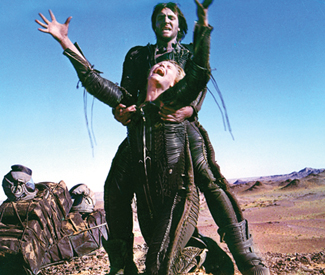
Guerman is, logically enough, headed next to outer space — his adaptation of Soviet sci-fi classic Hard To Be a God took five years (starting in 2000!) to shoot, and is still being edited, thwarting hopes for Cannes premiere this month. Adversity may not have invaded his career by invitation, but one gets the sense that by now, at age 75, it is his most trusted collaborator.

WAR AND REMEMBRANCE: THE FILMS OF ALEKSEI GUERMAN

May 17-31, $6-$8

Yerba Buena Center for the Arts

701 Mission, SF

www.ybca.org


Rep Clock May 9-15, 2012

0

Schedules are for Wed/9-Tue/15 except where noted. Director and year are given when available. Double and triple features are marked with a •. All times pm unless otherwise specified.

ARTISTS’ TELEVISION ACCESS 992 Valencia, SF; www.atasite.org. $7. “Other Cinema:” “Occupy Cinema!,” works from and inspired by the Occupy movement, Sat, 8:30.

CASTRO 429 Castro, SF; (415) 621-6120, www.castrotheatre.com. $7.50-11. Check website for shows and times.

CHRISTOPHER B. SMITH RAFAEL FILM CENTER 1118 Fourth St, San Rafael; (415) 454-1222, www.cafilm.org. $6.75-10.25. Bully (Hirsch, 2012), call for dates and times. The Deep Blue Sea (Davies, 2011), call for dates and times. Letters From the Big Man (Munch, 2011), call for dates and times. Marley (Macdonald, 2012), call for dates and times. Monsieur Lazhar (Falardeau, 2011), call for dates and times. “World Ballet on the Big Screen:” The Bright Stream from the Bolshoi Ballet, Moscow, Tue, 6:30. This event, $15. First Position (Kargman, 2011), May 11-17, call for times. Lou Harrison: A World of Music (Soltes, 2012), Sun, 7.

ELMWOOD 10070 San Pablo, El Cerrito; www.rialtocinemas.com. Free. “Community Cinema:” Strong! (Wyman, 2012), Wed, 7.

PACIFIC FILM ARCHIVE 2575 Bancroft, Berk; (510) 642-5249, bampfa.berkeley.edu. $5.50-9.50. No screenings scheduled.

ROXIE 3117 and 3125 16th St, SF; (415) 863-1087, www.roxie.com. $6.50-10. Gerhard Richter Painting (Belz, 2011), Wed-Thu, 7, 9. Hit So Hard (Ebersole, 2011), Thu, 8:45. Jeff, Who Lives at Home (Duplass and Duplass, 2011), Thu, 7. “I Wake Up Dreaming 2012: The French Have a Name for It!”: •I, The Jury (Essex, 1953), Fri, 6:10, 9:45, and The Big Combo (Lewis, 1955), Fri, 8, 11:30; •Knock On Any Door (Ray, 1949), Sat, 4, 8, and Edge of Doom (Robson, 1950), Sat, 2, 6, 10; •Such a Pretty Little Beach (Allegret, 1949), Sun, 3, 8, and Detour (Ulmer, 1945), Sun, 4:45, 9; The Pretender (Wilder, 1947), Sun, 1:30, 6:30; •The Strange Mr. Gregory (Rosen, 1945), Mon, 6:40, 9:20, and Return of the Whistler (Lederman, 1948), Mon, 8; •Highway 13 (Berke, 1948), Tue, 6:40, 9:30, and The Devil’s Henchman (Friedman, 1949), Tue, 8.

SAN FRANCISCO STATE UNIVERSITY McKenna Theatre, Creative Arts Bldg, 1600 Holloway, SF; (415) 338-2467, creativearts.sfsu.edu. $5-9. “SF State’s 52nd Annual Film Finals,” Fri, 7.

“SAUSALITO FILM FESTIVAL” Various North Bay venues; www.sausalitofilmfestival.com. Fourth annual festival highlighting features, shorts, animation, and documentaries, Fri-Sun.

SF FILM SOCIETY CINEMA 1746 Post, SF. $10-11. The Day He Arrives (Hong, 2011), Wed-Thu, 3, 5, 7, 9. Here (King, 2011), May 11-17, 1:45, 6:30. Michael (Schleinzer, 2011), May 11-17, 4:15, 9.

SAN FRANCISCO MUSEUM OF MODERN ART 151 Third St, SF; www.sfcinematheque.org. $10. “Seconds of Eternity IV:” Galaxie (Markopoulos, 1966), Thu, 7.

SUNDANCE KABUKI 1881 Post, SF; www.sundancecinemas.com. “San Francisco Opera’s Grand Opera Cinema Series:” Il Trittico, Tue/15, 7 and May 19, 10:30am.

VORTEX ROOM 1082 Howard, SF; www.myspace.com/thevortexroom. $7 donation. “Starship Vortex:” •Dark Star (Carpenter, 1974), Thu, 9, and To the Stars By Hard Ways (Viktorov and Viktorov, 1982), Thu, 11.

YERBA BUENA CENTER FOR THE ARTS 701 Mission, SF; (415) 978-2787, www.ybca.org. $6-8. “Discovering Andrzej Zulawski:” The Third Part of the Night (1971), Thu, 7:30; The Devil (1972), Sat, 7:30; On the Silver Globe (1976/1988), Sun, 2.

Film Listings May 9-15, 2012

0

Film listings are edited by Cheryl Eddy. Reviewers are Kimberly Chun, Max Goldberg, Dennis Harvey, and Lynn Rapoport. For rep house showtimes, see Rep Clock at www.sfbg.com. Complete film listings also posted at www.sfbg.com.

OPENING

Dark Shadows Conceptually, there’s nothing wrong with attempting to turn a now semi-obscure supernaturally themed soap opera with a five-year run in the late 1960s and early ’70s into a feature film. Particularly if the film brings together the sweetly creepy triumvirate of Tim Burton, Johnny Depp, and Helena Bonham Carter and emerges during an ongoing moment for vampires, werewolves, and other things that go hump in the night. Depp plays long-enduring vampire Barnabas Collins, the undead scion of a once-powerful 18th-century New England family that by the 1970s — the groovy decade in which the bulk of the story is set — has suffered a shabby deterioration. Barnabas forms a pact with present-day Collins matriarch Elizabeth (Michelle Pfeiffer) to raise the household — currently comprising her disaffected daughter, Carolyn (Chloë Grace Moretz), her derelict brother, Roger (Jonny Lee Miller), his mournful young son, David (Gulliver McGrath), David’s live-in lush of a psychiatrist, Dr. Hoffman (Carter), and the family’s overtaxed manservant, Willie (Jackie Earle Haley) — to its former stature, while taking down a lunatic, love-struck, and rather vindictive witch named Angelique (Eva Green). The latter, a victim of unrequited love, is the cause of all Barnabas’s woes and, by extension, the entire clan’s, but Angelique can only be blamed for so much. Beyond her hocus-pocus jurisdiction is the film’s manic pileup of plot twists, tonal shifts, and campy scenery-chewing by Depp, a startling onslaught that no lava lamp joke, no pallid reaction shot, no room-demolishing act of paranormal carnality set to Barry White, and no cameo by Alice Cooper can temper. (2:00) California, Four Star, Presidio.

Darling Companion When the carelessness of self-absorbed surgeon Joseph (Kevin Kline) results in the stray dog adopted by Beth (Diane Keaton) going missing during a forest walk, that event somehow brings all the fissures in their long marriage to a crisis point. Big Chill (1983) director Lawrence Kasdan’s first feature in a decade hews back to the more intimate, character-based focus of his best films. But this dramedy is too often shrilly pitched and overly glossy (it seems to take place in a Utah vacation-themed L.L. Bean catalog), with numerous talented actors — including Richard Jenkins, Dianne Wiest, Mark Duplass, Elisabeth Moss, and Sam Shepard — playing superficially etched characters that merely add to the clutter. Most cringe-inducing among them is Ayelet Zurer’s Carmen, a woman of Roma extraction who apparently has a crystal ball in her psychic head and actually speaks lines like “My people have a saying….” (1:43) Embarcadero. (Harvey)

First Position Bess Kargman’s documentary follows a handful of exceptional young ballet dancers, ranging in age from 10 to 17, over the course of a year as they prepare for the Youth America Grand Prix, the world’s largest ballet scholarship competition. Those who make it from the semifinals (in which some 5,000 dancers aged 9 to 19 perform in 15 cities around the world) to the finals (which bring some 300 contestants to New York City) compete for scholarships to prestigious ballet schools, dance-company contracts, and general notice by both the judges and the company directors in the audience. The film’s subjects come from varied backgrounds — 16-year-old Joan Sebastian lives and studies in NYC, far from his family in Colombia; 14-year-old Michaela was born in civil war-torn Sierra Leone and adopted from an orphanage by an American couple in Philadelphia; 11-year-old Aran, an American, lives in Italy with his mother while his father serves in Kuwait. The common threads in their stories are the daily sacrifices made by them as well as their families, whose energies and other resources are largely poured into these children’s single-minded pursuit. We get a vague sense of the difficult world they are driving themselves, in nearly every waking hour, to enter. But the film largely keeps its focus on the challenges of preparing for the competition, offering us many magnificent shots of the dancers pushing their bodies to mesmerizing physical extremes both on- and offstage. (1:34) Embarcadero, Piedmont, Shattuck, Smith Rafael. (Rapoport)

God Bless America Middle-aged office drone Frank (Joel Murray) is not having a good day-week-month-year-life. His ex-wife is about to happily remarry; his only child is a world-class brat who finds father-daughter time “boring;” his neighbors are a young couple who only get more loudly obnoxious when politely asked to keep the noise down. When that and insistent migraines keep Frank awake night after night, the parade of pundit and reality stupidities on TV only turn his insomnia into wide awake fury. Then he’s fired from his job for unjust reasons — on the same day he gets a diagnosis of brain cancer. Mad as hell, not-gonna-take-it-anymore, he impulsively decides to make a “statement” by assassinating a viral-video poster child for “entitlement.” This attracts admiring attention from extremely pushy, snarky teen Roxy (Tara Lynne Barr), who appoints herself Bonnie to his reluctant Clyde. They drive around the country bestowing “big dirt naps” on other exemplars of what’s wrong with America today, including religious hate mongers, rude moviegoers, and the purveyors of American Idol-type idiotainment. Comedian Bobcat Goldthwait’s latest feature as writer-director has its head in the right place, and so many good ideas, that it’s a pity this gonzo satire-rant runs out of steam so quickly. Aiming splattering paintball gun at the broadest possible targets, it covers them with disdainful goo but not as much wit as one would like. Plus, Barr’s hyper precocious smart mouth is yet another annoying Juno (2007) knockoff — never mind that she counts Diablo Cody among her (many) pet peeves. If God Bless winds up closer to Uwe Boll’s Postal (2007) than, say, Network (1976) in scattershot impact, it nonetheless almost makes it on sheer outré audacity and will alone. A movie that hates everything you hate should not be sneezed at; if only it hated them with more parodic snap, thematic depth and narrative structure. (1:44) Bridge, Shattuck. Harvey)

Here Sparks fly when a satellite-mapping expert (Ben Foster) meets a photographer (Lubna Azabal) while traveling in Armenia. (2:00) SF Film Society Cinema.

Last Call at the Oasis If you like drinking water, or eating food, or using mass-produced physical objects, and you also enjoy not being poisoned by virulent chemicals such as hexavalent chromium and atrazine, you probably want to see — but most likely won’t much enjoy — Jessica Yu’s latest documentary, about the impending global water crisis. Or rather, the crisis, the film makes clear, that has already arrived in many parts of the world and — in the sense that it’s about a shortage of safe drinking water — in many parts of the United States. The Academy Award–winning Yu, whose previous films include the 2004 Henry Darger documentary In the Realms of the Unreal, invites various experts to lay out the alarming facts for us, as we sit in the theater clutching our bottles of Dasani. Last Call’s talking heads include UC Irvine professor Jay Famiglietti, the Pacific Institute’s Peter Gleick (who, regardless of February’s firestorm over an ethical lapse, speaks eloquently here), journalist Alex Prud’homme, whose book The Ripple Effect the documentary is based on, and Erin Brockovich. An unexpected appearance by Jack Black in the role of potential future spokesperson for potable recycled water (one name under consideration: Porcelain Springs) adds levity to a film that is short on silver linings, as well as solutions. The title conveys the sort of gallows humor occasionally displayed by Yu’s subjects — one of whom ponders for a moment the situation he’s just described and then offers this succinct summary: “We’re screwed.” (1:45) Embarcadero, Shattuck. (Rapoport)

Michael Michael follows a few months in the lives of a pedophile (Michael Fulth) and his captive (David Rauchenberger). It is no surprise that Austrian director Markus Schleinzer previously worked for Michael Haneke: the film’s cold, inanimate aesthetic is the means for psychological torture, on the part of both Michael’s prisoner, and the audience. Michael, a sociopath who works in an office by day, keeps the boy, a pensive 10-year-old named Wolfgang, in a basement behind a bolted door. He visits him nightly, and allows the boy to dine with him. As master and slave go about their mundane routine their level of comfort with one another is just as unsettling as the off-screen sex. Equally disturbing is how Michael manages to maintain such a normal life on the surface. After he tries to bring a new victim home and fails, Wolfgang starts to find ways to push his captor’s buttons. In spite of the loud subject, rarely has such formal reticence registered as this horrifying. (1:36) SF Film Society Cinema. (Ryan Lattanzio)

Otter 501 A young woman comes to the aid of an orphaned otter pup in this narrative-doc hybrid shot in the Bay Area. (1:24) Presidio.

The Perfect Family Having survived years of hardship by dint of her faith, devout Catholic Eileen Cleary (Kathleen Turner) now lets nothing stand between her and the heavy-handed pursuit of grace — including her own family’s perceived imperfections. The past, in which long-sober husband Frank (Michael McGrady) was an abusive alcoholic, is not discussed. The present — in which ne’er-do-well son Frank Jr. (Jason Ritter) is not yet divorced yet already involved with a Protestant manicurist (Kristen Dalton), while otherwise exemplary daughter Shannon (Emily Deschanel) insists on marrying and child-raising with another woman (Angelique Cabral) — is ignored when it can’t be nagged into submission. These modern aberrations from the Pope-embraced allowable lifestyles must be addressed, however, when Eileen’s endless charitable toil gets her nominated as Catholic Woman of the Year. This would be her crowning achievement, but naturally something’s gotta give: either her family’s going to at least pretend it’s “normal,” or she’s got to grow more accepting at the potential loss of her big moment in the spotlight. Directed by Anne Renton, written by Paula Goldberg and Claire V. Riley, The Perfect Family is an ensemble dramedy (also encompassing Richard Chamberlain and Elizabeth Peña) that trundles as effortfully as its stressed-out protagonist from sitcomish humor to tearjerking, leaving no melodramatic contrivance unmilked along the way. Its intentions (primarily gay-positive ones, in line with the scenarists’ prior features) are good. But the execution is like a sermon whose every calculated chuckle and insight you anticipate five minutes before you hear it. To see Turner really excel as a controlling mother, rent 1994’s Serial Mom again. (1:24) Sundance Kabuki. (Harvey)

The Road It’s rare that a film from the Philippines gets a commercial release in the US, and The Road is the first horror movie to be widely distributed here. The story is inspired by the tragic tale of the Chiong sisters, allegedly raped and murdered in 1997. The case inspired a sensational, controversial trial, explored in detail in the excellent recent doc Give Up Tomorrow (which screened at the 2012 San Francisco International Asian American Film Festival). Unfortunately, the true story is better than the fictional one; though Yam Laranas’ backwoods creep show has plenty of atmosphere, its flashback-within-a-flashback structure can feel a bit incoherent. Also bummers: the identity of the villain — who comes packaged with a tidy, here’s-my-motivation back story — is patently obvious well before the final reel, and once you get used to The Road‘s silent corpse-ghosts popping up amid the foliage, they cease to wield much shock value. (1:50) Presidio. (Eddy)

ONGOING

The Artist With the charisma-oozing agility of Douglas Fairbanks swashbuckling his way past opponents and the supreme confidence of Rudolph Valentino leaning, mid-swoon, into a maiden, French director-writer Michel Hazanavicius hits a sweet spot, or beauty mark of sorts, with his radiant new film The Artist. In a feat worthy of Fairbanks or Errol Flynn, Hazanavicius juggles a marvelously layered love story between a man and a woman, tensions between the silents and the talkies, and a movie buff’s appreciation of the power of film — embodied in particular by early Hollywood’s union of European artistry and American commerce. Dashing silent film star George Valentin (Jean Dujardin, who channels Fairbanks, Flynn, and William Powell — and won this year’s Cannes best actor prize) is at the height of his career, adorable Jack Russell by his side, until the talkies threaten to relegate him to yesterday’s news. The talent nurtured in the thick of the studio system yearns for real power, telling the newspapers, “I’m not a puppet anymore — I’m an artist,” and finances and directs his own melodrama, while his youthful protégé Peppy Miller (Bérénice Béjo) becomes a yakky flapper age’s new It Girl. Both a crowd-pleasing entertainment and a loving précis on early film history, The Artist never checks its brains at the door, remaining self-aware of its own conceit and its forebears, yet unashamed to touch the audience, without an ounce of cynicism. (1:40) Opera Plaza, Shattuck. (Chun)

The Best Exotic Marigold Hotel (1:42) Albany, SF Center, Sundance Kabuki.

Bully Anyone who’s ever been a kid on the wrong side of a bully — or was sensitive and observant enough not to avert his or her eyes — will be puzzling over the MPAA’s R rating of this doc, for profanity. It’s absurd when the gory violence on network and basic cable TV stops just short of cutting characters’ faces off, as one blurred-out bus bully threatens to do to the sweet, hapless Alex, dubbed “Fish Face” by the kids who ostracize him and make his life hell on the bus. It’s a jungle out there, as we all know — but it’s that real, visceral footage of the verbal (and physical) abuse bullied children deal with daily that brings it all home. Filmmaker Lee Hirsch goes above and beyond in trying to capture all dimensions of his subject: the terrorized bullied, the ineffectual school administrators, the desperate parents. There’s Kelby, the gay girl who was forced off her beloved basketball team after she came out, and Ja’Maya, who took drastic measures to fend off her tormenters — as well as the specters of those who turned to suicide as a way out. Hirsch is clearly more of an activist than a fly on the wall: he steps in at one point to help and obviously makes an uplifting effort to focus on what we can do to battle bullying. Nevertheless, at the risk of coming off like the Iowa assistant principal who’s catching criticism for telling one victim that he was just as bad as the bully that he refused to shake hands with, one feels compelled to note one prominent component that’s missing here: the bullies themselves, their stories, and the reasons why they’re so cruel — admittedly a daunting, possibly libelous task. (1:35) Metreon, Smith Rafael. (Chun)

The Cabin in the Woods If the name “Joss Whedon” doesn’t provide all the reason you need to bum-rush The Cabin in the Woods (Whedon produced and co-wrote, with director and frequent collaborator Drew Goddard), well, there’s not much more that can be revealed without ruining the entire movie. In a very, very small nutshell, it’s about a group of college kids (including Chris “Thor” Hemsworth) whose weekend jaunt to a rural cabin goes horribly awry, as such weekend jaunts tend to do in horror movies (the Texas Chainsaw and Evil Dead movies are heavily referenced). But this is no ordinary nightmare — its peculiarities are cleverly, carefully revealed, and the movie’s inside-out takedown of scary movies produces some very unexpected (and delightfully blood-gushing) twists and turns. Plus: the always-awesome Richard Jenkins, and in-jokes galore for genre fans. (1:35) Four Star, Metreon, 1000 Van Ness, Shattuck. (Eddy)

Chimpanzee (2:00) Metreon, 1000 Van Ness, Shattuck.

The Day He Arrives Korean auteur (Woman Is the Future of Man, 2004) Hong Sang-soo’s latest exercise in self-consciousness, this black-and-white, fable-like study of a frustrated filmmaker (Yu Jun-sang), returning home to Seoul to visit an old friend after spending time in the countryside teaching, adds up to a kind of formal palimpsest. Surrounded by sycophants, vindictive former leading men, and women who seem to serve a purely semiotic purpose, he participates in an endless loop of drink, smoke, and conversation in a series of dreamlike scenes that play on the theme of coincidence and endless variation. Hong’s layering of alternate scenarios at times feels like a bit of a gimmick, but the way he infuses specific urban spaces with forlorn significance in mostly static shots is affecting — even if the film’s ultimate narrative slightness has the cut-and-paste haphazardness of fridge poetry magnets. (1:19) SF Film Society Cinema. (Michelle Devereaux)

The Deep Blue Sea Caught between the devil and the deep blue sea, filmmaker Terence Davies, much like his heroine, chooses a mutable, fluid sensuality, turning his source material, Terence Rattigan’s acclaimed mid-century play, into a melodrama that catches you in its tide and refuses to let go. At the opening of this sumptuous portrait of a privileged English woman who gives up everything for love, Hester (Rachel Weisz) goes through the methodical motions of ending it all: she writes a suicide note, carefully stuffs towels beneath the door, takes a dozen pills, turns on the gas, and lies down to wait for death to overtake her. Via memories drifting through her fading consciousness, Davies lets us in on scattered, salient details in her back story: her severely damped-down, staid marriage to a high court judge, Sir William (Simon Russel Beale), her attraction and erotic awakening in the hands of charming former RF pilot Freddie Page (Tom Hiddleston), her separation, and her ultimate discovery that her love can never be matched, as she hazards class inequities and ironclad gender roles. “This is a tragedy,” Sir William says, at one point. But, as Hester, a model of integrity, corrects him, “Tragedy is too big a word. Sad, perhaps.” Similarly, Sea is a beautiful downer, but Davies never loses sight of a larger post-war picture, even while he pauses for his archetypal interludes of song, near-still images, and luxuriously slow tracking shots. With cinematographer Florian Hoffmeister, he does a remarkable job of washing post-war London with spots of golden light and creating claustrophobic interiors — creating an emotionally resonant space reminiscent of the work of Wong Kar-wai and Christopher Doyle. At the center, providing the necessary gravitas (much like Julianne Moore in 2002’s Far From Heaven), is Weisz, giving the viewer a reason to believe in this small but reverberant story, and offering yet another reason for attention during the next awards season. (1:38) Opera Plaza, Smith Rafael. (Chun)

The Five-Year Engagement In 2008’s Forgetting Sarah Marshall, viewers were treated to the startling, tragicomic sight of Jason Segel’s naked front side as his character got brutally dumped by the titular perky, put-together heartbreaker. In The Five-Year Engagement, which he reunited with director Nicholas Stoller to co-write, Segel once again sacrifices dignity and the right to privacy, this time in exchange for fake orgasms (his own), ghastly hand-knit sweaters, egregious facial-hair arrangements, and various other exhaustively humiliating psychological lows — all part of an earnest, undying quest to make people giggle uncomfortably. Segel plays Tom, a talented chef with a promising career ahead of him in San Francisco’s culinary scene (naturally, food carts get a cameo in the film). On the one-year anniversary of meeting his girlfriend, Violet (Emily Blunt), a psychology postgrad, he asks her to marry him in a meticulously planned, gloriously botched proposal scene coengineered by Tom’s oafish friend Alex (Chris Pratt), little realizing that this romantic gesture will soon lead to successive frozen winters in the Midwest (Violet gets offered a job at the University of Michigan), loss of professional stature, cabin fever, mead making, bow-hunting accidents, the titular nuptial postponement, and other, more gruesome events. The humor at times descends to some banally low depths as Segel and Stoller explore the terrain of the awkward, the poorly socialized, and the playfully grotesque. But Segel and Blunt present a believable, likable relationship between two warm, funny, flawed people, and, however disgusted, no one should walk out before a scene in which Violet and her sister (Alison Brie) channel Elmo and Cookie Monster to elaborate on the themes of romantic idealism and marital discontent. (2:04) Marina, 1000 Van Ness, SF Center, Vogue. (Rapoport)

Footnote (1:45) Opera Plaza, Shattuck.

Friends With Kids Jennifer Westfeldt scans Hollywood’s romantic comedy landscape for signs of intelligent life and, finding it to be a barren place possibly recovering from a nuclear holocaust, writes, directs, and stars in this follow-up to 2001’s Kissing Jessica Stein, which she co-wrote and starred in. Julie (Westfeldt) and Jason (Adam Scott) are upper-thirtysomething New Yorkers with two decades of friendship behind them. He calls her “doll.” They have whispered phone conversations at four in the morning while their insignificant others lie slumbering beside them on the verge of getting dumped. And after a night spent witnessing the tragic toll that procreation has taken on the marriages of their four closest friends — Bridesmaids (2011) reunion party Leslie (Maya Rudolph), Alex (Chris O’Dowd), Missy (Kristen Wiig), and Ben (Jon Hamm), the latter two, surprisingly and less surprisingly, providing some of the film’s darkest moments — Jason proposes that they raise a child together platonically, thereby giving any external romantic relationships a fighting chance of survival. In no time, they’ve worked out the kinks to their satisfaction, insulted and horrified their friends, and awkwardly made a bouncing baby boy. The arrival of significant others (Edward Burns and Megan Fox) signals the second phase of the experiment. Some viewers will be invested in latent sparks of romance between the central pair, others in the success of an alternative family arrangement; one of these demographics is destined for disappointment. Until then, however, both groups and any viewers unwilling to submit to this reductive binary will be treated to a funny, witty, well crafted depiction of two people’s attempts to preserve life as they know it while redrawing the parameters of parenthood. (1:40) Sundance Kabuki. (Rapoport)

Gerhard Richter Painting O to be a eye in the studio, simply taking in a master’s process. Anyone who’s wondered how artist Gerhard Richter makes his monumental paintings — or even just idly pondered art making in general — gets that rare chance with this fascinating, elegant portrait of a man and his method. After capturing Richter for the first time in 15 years in her 2007 short on his stained glass window at the Cologne Cathedral, filmmaker Corinna Belz was entrusted with pointing a camera at the artist as he worked a new series of abstractions and prepared for a major retrospective. Through unusual archival footage, brief discussions of his past, and glimpses of everyone from Richter’s wife to his US dealer Marian Goodman, we end up with a privileged window in the German maker’s world and utterly riveting footage of Richter in the studio — applying color to canvas; taking a squeegee to the blobs and splotches; scraping, manipulating, and morphing the hues with a mesmerizing combination of improvisation and consideration; and then stepping back to study the results, occasionally out loud. Even more than a glance into a workspace, it’s a light into the mind of the man who has recharged painting and its myriad approaches, techniques, and ideas with new relevance. (1:37) Roxie. (Chun)

Headhunters Despite being the most sought-after corporate headhunter in Oslo, Roger (Aksel Hennie) still doesn’t make enough money to placate his gorgeous wife; his raging Napoleon complex certainly doesn’t help matters. Crime is, as always, the only solution, so Roger’s been supplementing his income by stealthily relieving his rich, status-conscious clients of their most expensive artworks (with help from his slightly unhinged partner, who works for a home-security company). When Roger meets the dashing Clas Greve (Nikolaj Coster-Waldau of Game of Thrones) — a Danish exec with a sinister, mysterious military past, now looking to take over a top job in Norway — he’s more interested in a near-priceless painting rumored to be stashed in Greve’s apartment. The heist is on, but faster than you can say “MacGuffin,” all hell breaks loose (in startlingly gory fashion), and the very charming Roger is using his considerable wits to stay alive. Based on a best-selling “Scandi-noir” novel, Headhunters is just as clever as it is suspenseful. See this version before Hollywood swoops in for the inevitable (rumored) remake. (1:40) Clay, Piedmont, Shattuck. (Eddy)

Hit So Hard Along with Last Days Here, which screened earlier this year as part of the San Francisco Independent Film Festival, Hit So Hard is one of the most inspiring rock docs in recent memory. Patty Schemel was the drummer for Hole circa Live Through This, coolly keeping the beat amid Courtney Love’s frequent Lollapalooza-stage meltdowns after Kurt Cobain’s 1994 death. Offstage, however, she was neck-deep in substance abuse, weathering several rounds of rehab even after the fatal overdose of Hole bandmate Kristen Pfaff just months after Cobain (who appears here in Schemel’s own remarkable home video footage). P. David Ebersole’s film gathers insight from many key figures in Schemel’s life — including her mother, who has the exact voice of George Costanza’s mother on Seinfeld, and a garishly made-up, straight-talking Love — but most importantly, from Schemel herself, who is open and funny even when talking about the perils of drug addiction, of the heartbreak of being a gay teen in a small town, and the ultimate triumph of being a rock ‘n’ roll survivor. (1:43) Roxie. (Eddy)

The Hunger Games Katniss Everdeen (Jennifer Lawrence) is a teenager living in a totalitarian state whose 12 impoverished districts, as retribution for an earlier uprising, must pay tribute to the so-called Capitol every year, sacrificing one boy and one girl each to the Hunger Games. A battle royal set in a perilous arena and broadcast live to the Capitol as gripping diversion and to the districts as sadistic propaganda, the Hunger Games are, depending on your viewpoint, a “pageant of honor, courage, and sacrifice” or a brutal, pointless bloodbath involving children as young as 12. When her little sister’s name comes up in the annual lottery, Katniss volunteers to take her place and is joined by a boy named Peeta Mellark (Josh Hutcherson), with whom she shares an old, unspoken bond. Tasked with translating to the screen the first installment of Suzanne Collins’s rabidly admired trilogy, writer-director Gary Ross (2003’s Seabiscuit, 1998’s Pleasantville) telescopes the book’s drawn-out, dread-filled tale into a manageable two-plus-hour entertainment, making great (and horrifying) use of the original work’s action, but losing a good deal of the narrative detail and emotional force. Elizabeth Banks is comic and unrecognizable as Effie Trinket, the two tributes’ chaperone; Lenny Kravitz gives a blank, flattened reading as their stylist, Cinna; and Donald Sutherland is sufficiently creepy and bloodless as the country’s leader, President Snow. More exceptionally cast are Woody Harrelson as Katniss and Peeta’s surly, alcoholic mentor, Haymitch Abernathy, and Stanley Tucci as games emcee Caesar Flickerman, flashing a bank of gleaming teeth at each contestant as he probes their dire circumstances with the oily superficiality of a talk show host. (2:22) 1000 Van Ness, SF Center, Sundance Kabuki. (Rapoport)

Jeff, Who Lives at Home The failure-to-launch concept will always thrive whenever and wherever economies flail, kids crumble beneath family trauma, and the seduction of moving back home to live for free with the parental units overcomes the draw of adulthood and individuation. Nevertheless brotherly writing and directing team Jay and Mark Duplass infuse a fresh, generous-minded sweetness in this familiar narrative arc, mainly by empathetically following those surrounding, and maybe enabling, the stay-at-home. Spurred by a deep appreciation of Signs (2002) and plentiful bong hits, Jeff (Jason Segel) decides to go with the signals that the universe throws at him: a mysterious phone call for a Kevin leads him to stalk a kid wearing a jersey with that name and jump a candy delivery truck. This despite the frantic urging of his mother (Susan Sarandon), who has set the bar low and simply wants Jeff to repair a shutter for her birthday, and the bad influence of brother Pat (Ed Helms), a striving jerk who compensates for his insecurities by buying a Porsche and taking business meetings at Hooters. We never quite find out what triggered Jeff’s dormancy and Pat’s prickishness — two opposing responses to some unspecified psychic wound — yet by Jeff, Who Lives at Home‘s close, it doesn’t really matter. The Duplass brothers convince you to go along for the ride, much like Jeff’s blessed fool, and accept the ultimately feel-good, humanist message of this kind-hearted take on human failings. (1:22) Sundance Kabuki. (Chun)

Jiro Dreams of Sushi Celebrity-chef culture has surely reached some kind of zeitgeist, what with the omnipresence of Top Chef and other cooking-themed shows, and the headlines-making power of people like Paula Deen (diabetes) and Mario Batali (sued for ripping off his wait staff). Unconcerned with the trappings of fame — you’ll never see him driving a Guy Fieri-style garish sports car — is Jiro Ono, 85-year-old proprietor of Sukiyabashi Jiro, a tiny, world-renowned sushi restaurant tucked into Tokyo’s Ginza station. Jiro, a highly-disciplined perfectionist who believes in simple, yet flavorful food, has devoted his entire life to the pursuit of “deliciousness” — to the point of sushi invading his dreams, as the title of David Gelb’s reverential documentary suggests. But Jiro Dreams of Sushi goes deeper than food-prep porn (though, indeed, there’s plenty of that); it also examines the existential conflicts faced by Jiro’s two middle-aged sons. Both were strongly encouraged to enter the family business — and in the intervening years, have had to accept the soul-crushing fact that no matter how good their sushi is, it’ll never be seen as exceeding the creations of their legendary father. (1:21) Embarcadero, Shattuck. (Eddy)

The Lady Luc Besson directs Michelle Yeoh — but The Lady is about as far from flashy action heroics as humanly possible. Instead, it’s a reverent, emotion-packed biopic of Nobel Peace Prize winner Aung San Suu Kyi, a national hero in Burma (Myanmar) for her work against the country’s oppressive military regime. But don’t expect a year-by-year exploration of Suu’s every accomplishment; instead, the film focuses on the relationship between Suu and her British husband, Michael Aris (David Thewlis). When Michael discovers he’s dying of cancer, he’s repeatedly denied visas to visit his wife — a cruel knife-twist by a government that assures Suu that if she leaves Burma to visit him, they’ll never allow her to return. Heartbreaking stuff, elegantly channeled by Thewlis and especially Yeoh, who conveys Suu’s incredible strength despite her alarmingly frail appearance. The real Iron Lady, right here. (2:07) Lumiere. (Eddy)

Letters From the Big Man Don’t fear the yeti. Filmmaker Christopher Munch (1991’s The Hours and Times) gets back to nature — and a more benevolent look at the sasquatch — with the engrossing Letters From the Big Man. Sarah (Lily Rabe, Jill Clayburgh’s daughter, perhaps best known for her ghostly American Horror Story flapper) is a naturalist and artist determined to get off trail, immerse herself in her postfire wilderness studies in southwestern Oregon, and leave the hassles and heartbreak of the human world behind. She’s far from alone, however, as she senses she’s being tailed — even after she confronts another solo hiker, Sean (Jason Butler Harner), who seems to share her deep love and knowledge of the wild. What emerges — as Sarah lives off the grid, sketches soulful-eyed Bigfoots, and powers her laptop with her bike — is a love story that might bear a remote resemblance to Beauty and the Beast if Munch weren’t so completely straight-faced in his belief in the big guys. The question, the mystery, isn’t whether or not sasquatch exist, according to the filmmaker, who paces his tale as if it were as big and encompassing as an ancient forest — rather, whether we can hold onto a belief in nature and its unknowables and coexist. (1:44) Smith Rafael. (Chun)

A Little Bit of Heaven Kate Hudson goes without make-up (but keeps her flowing curls) to play Marley, a New Orleans advertising exec whose social life of drunken good times and booty calls is rudely interrupted by a colon cancer diagnosis. Her movie-perfect friends (Lucy Punch as the artsy one; Rosemarie DeWitt as the pregnant one; Romany Malco as the gay one) and worried parents (Kathy Bates, Treat Williams) gather ’round as Marley undergoes various treatments and works on her personality flaws. Once Gael García Bernal shows up to play her doctor (and yes, that’s some icky boundary-crossing, but come on — it’s GGB!), a romance conveniently enters the mix as well. This is the kind of Hollywood-disease flick where God appears in the wisecracking, champagne-sipping guise of Whoopi Goldberg — and the talented Peter Dinklage (also of Game of Thrones) appears in one scene as an escort whose sole purpose is reveal his nickname, thereby giving the movie its title. (1:46) Metreon. (Eddy)

The Lucky One Iraq War veteran Logan (Zac Efron) beats PTSD by walking with his German shepherd from Colorado to the Louisiana bayou, in search of a golden-haired angel in cutoff blue jean short shorts (Taylor Schilling). His stated (in soporific voice-over) aim is to meet and thank the angel, who he believes repeatedly saved his life in the combat zone after he plucked her photograph from the rubble of a bombed-out building. The snapshot offers little in the way of biographical information, but luckily, there are only 300 million people in the United States, and he manages to find her after walking around for a bit. The angel, or Beth, as her friends call her, runs a dog kennel with her grandmother (Blythe Danner) while raising her noxiously Hollywood-precocious eight-year-old son (Riley Thomas Stewart) and fending off the regressive advances of her semi-villainous ex-husband (Jay R. Ferguson). Logan’s task seems simple enough, and he’s certainly walked a fair distance to complete it, but rather than expressing his gratitude, he becomes tongue-tied in the face of Beth’s backlit blondness and instead fills out a job application and proceeds to soulfully but manfully burrow his way into her affections and short shorts. Being an adaptation of a Nicholas Sparks novel, The Lucky One requires some forceful yanking on the heartstrings, but director Scott Hicks (1999’s Snow Falling on Cedars, 1996’s Shine) is hobbled in this task by, among other things, Efron’s wooden, uninvolved delivery of queasy speeches about traveling through darkness to find the light and how many times a day a given woman should be kissed. (1:41) SF Center. (Rapoport)

Marley Oscar-winning documentarian Kevin Macdonald (1999’s One Day in September; he also directed Best Actor Forest Whitaker in 2006’s The Last King of Scotland) takes on the iconic Bob Marley, using extensive interviews — both contemporary (with Marley friends and family) and archival (with the musician himself) — and performance and off-the-cuff footage. The end result is a compelling (even if you’re not a fan) portrait of a man who became a global sensation despite being born into extreme poverty, and making music in a style that most people had never heard outside of Jamaica. The film dips into Marley’s Rastafari beliefs (no shocker this movie is being released on 4/20), his personal life (11 children from seven different mothers), his impact on Jamaica’s volatile politics, his struggles with racism, and, most importantly, his remarkable career — achieved via a combination of talent and boldness, and cut short by his untimely death at age 36. (2:25) California, Embarcadero, Smith Rafael. (Eddy)

Marvel’s The Avengers The conflict — a mystical blue cube containing earth-shattering (literally) powers is stolen, with evil intent — isn’t the reason to see this long-hyped culmination of numerous prequels spotlighting its heroic characters. Nay, the joy here is the whole “getting’ the band back together!” vibe; director and co-writer Joss Whedon knows you’re just dying to see Captain America (Chris Evans) bicker with Iron Man (a scene-stealing Robert Downey Jr.); Thor (Chris Hemsworth) clash with bad-boy brother Loki (Tom Hiddleston); and the Hulk (Mark Ruffalo) get angry as often as possible. (Also part of the crew, but kinda mostly just there to look good in their tight outfits: Jeremy Renner’s Hawkeye and Scarlett Johansson’s Black Widow.) Then, of course, there’s Nick Fury (Samuel L. Jackson) running the whole Marvel-ous show, with one good eye and almost as many wry quips as Downey’s Tony Stark. Basically, The Avengers gives you everything you want (characters delivering trademark lines and traits), everything you expect (shit blowing up, humanity being saved, etc.), and even makes room for a few surprises. It doesn’t transcend the comic-book genre (like 2008’s The Dark Knight did), but honestly, it ain’t trying to. The Avengers wants only to entertain, and entertain it does. (2:23) Balboa, Marina, Metreon, 1000 Van Ness, Presidio, Sundance Kabuki. (Eddy)

Mirror Mirror In this glittery, moderately girl-powery adaptation of the Snow White tale (a comic foil of sorts to this summer’s gloomier-looking Snow White and the Huntsman), Julia Roberts takes her turn as stepmom, to an earnest little ingenue (Lily Collins) whose kingly father (Sean Bean) is presumed dead and whose rather-teeny-looking kingdom is collapsing under the weight of fiscal ruin and a thick stratum of snow. Into this sorry realm rides a chiseled beefcake named Prince Alcott (Arnie Hammer), who hails from prosperous Valencia, falls for Snow White, and draws the attentions of the Queen (Roberts) from both a strategic and a libidinal standpoint. Soon enough, Snow White (Snow to her friends) is narrowly avoiding execution at the hands of the Queen’s sycophantic courtier-henchman (Nathan Lane), rustling up breakfast for a thieving band of stilt-walking dwarves, and engaging in sylvan hijinks preparatory to deposing her stepmother and bringing light and warmth and birdsong and perennials back into fashion. Director Tarsem Singh (2000’s The Cell, 2011’s Immortals) stages the film’s royal pageantry with a bright artistry, and Roberts holds court with vicious, amoral relish as she senses her powers of persuasion slipping relentlessly from her grasp. Carefully catering to tween-and-under tastes as well as those of their chaperones, the comedy comes in various breadths, and there’s meta-humor in the sight of Roberts passing the pretty woman torch, though Collins seems blandly unprepared to wield her power wisely or interestingly. Consider vacating your seats before the extraneous Bollywood-style song-and-dance number that accompanies the closing credits. (1:46) Metreon. (Rapoport)

Monsieur Lazhar When their beloved but troubled teacher hangs herself in the classroom — not a thoughtful choice of location, but then we never really discover her motives — traumatized Montreal sixth-graders get Bachir Lazhar (Fellag), a middle-aged Algerian émigré whose contrastingly rather strict, old-fashioned methods prove surprisingly useful at helping them past their trauma. He quickly becomes the crush object of studious Alice (Sophie Nelisse), whose single mother is a pilot too often away, while troublemaker Simon (Emilien Neron) acts out his own domestic and other issues at school. Lazhar has his own secrets as well — for one thing, we see that he’s still petitioning for permanent asylum in Canada, contradicting what he told the principal upon being hired — and while his emotions are more tightly wrapped, circumstances will eventually force all truths out. This very likable drama about adults and children from Quebec writer-director Philippe Falardeau doesn’t quite have the heft and resonance to rate among the truly great narrative films about education (like Laurent Cantet’s recent French The Class). But it comes close enough, gracefully touching on numerous other issues while effectively keeping focus on how a good teacher can shape young lives in ways as incalculable as they are important. (1:34) Lumiere, Piedmont, Shattuck, Smith Rafael. (Harvey)

The Pirates! Band of Misfits Aardman Animations, home studio of the Wallace and Gromit series as well as 2000’s Chicken Run, are masters of tiny details and background jokes. In nearly every scene of this swashbuckling comedy, there’s a sight gag, double entendre, or tossed-off reference (the Elephant Man!?) that suggests The Pirates! creators are far more clever than the movie as a whole would suggest. Oh, it’s a cute, enjoyable story about a kind-hearted Pirate Captain (Hugh Grant) who dreams of winning the coveted Pirate of the Year award (despite the fact that he gets more excited about ham than gold) — and the misadventures he gets into with his amiable crew, a young Charles Darwin, and a comically evil Queen Victoria. But despite its toy-like, 3D-and-CG-enhanced claymation, The Pirates! never matches the depth (or laugh-out-loud hilarity) of other Aardman productions. Yo ho-hum. (1:27) 1000 Van Ness, SF Center. (Eddy)

The Raven How did Edgar Allan Poe, dipsomaniac, lover of 13-year-old child brides, and teller of tales designed to make the flesh creep and crawl, wind up, at age 40, nearly dying in the gutter and spending his last days in a Baltimore hospital, muttering incoherent imprecations about a mysterious fellow named Reynolds? In The Raven, director James McTeigue (2006’s V for Vendetta) makes the case for a crafty, sociopathic serial killer having played a role in the famous yet impoverished writer’s sad, derelict demise. Recently returned to the dark, thickly fog-machined streets of Baltimore, Poe, vehemently embodied by John Cusack, is chagrined to learn from one Detective Fields (Luke Evans) that someone has begun using his macabre stories (“The Pit and the Pendulum” to particularly gory effect) to enact a series of murders. When the killer successfully gains Poe’s full attention by seizing his ladylove, Emily Hamilton (Alice Eve), the pileup of bodies inspires a few last outbursts of genius. The trail of literary clues feels a bit forced, and Cusack’s Poe possesses an admirable quantity of energy, passion, and general zest for life for one so roundly indicted — by everyone from his editor to his barkeep to his sweetheart’s roundly repellent father (Brendan Gleeson) — as a useless, used-up slave to opiates and alcohol. But the script is smart enough and the action absorbing enough to keep us engaged as Poe attempts to rescue Emily and the film attempts to rescue Poe’s reputation through imagined heroics of both the pen and the sword. (1:50) 1000 Van Ness, SF Center. (Rapoport)

Safe The poster would be slightly more on-point if its suave thug of a star, Jason Statham, were hiding behind the scrunched-faced Catherine Chan rather than the other way around — because at times it’s tough to see this alternately enjoyable and credibility-taxing action flick as more than some kind of naked play for the Chinese filmgoer. Jamming the screen with a frantic kineticism, director-writer Boaz Yakin seems to be smoothing over the problems in his vaguely stereotype-flaunting, patchy puzzle of a narrative with a high body count: the cadavers pile like those in an old martial arts flick — made in Asia, it’s implied, where life is cheap and spectacle is paramount. Picking up in the middle, with flashbacks stacked like firewood, Safe opens on young math prodigy Mei (Chan) on the run from the Russian mafia. A pawn and virtual slave of the Chinese mob, she holds a number in her head that all sorts of ruthless crime factions want. To her rescue is mystery man Luke Wright (Statham), who has had his own deadly tussle with the same Russian baddies and is now on the street and on the verge of suicide, believe it or not. It’s tough to wrap your head around the fact that any of Statham’s rock-hard tough guys could possibly crumble — or even have a sense of humor. You’ll need one to accept the ludicrous storyline as well as the notion that a jillion bullets could be fired and never hit his superhuman street-fighting man. (1:35) Metreon, 1000 Van Ness. (Chun)

Salmon Fishing in the Yemen In Lasse Hallström’s latest film, a sheikh named Muhammed (Amr Waked) with a large castle in Scotland, an ardent love of fly-fishing, and unlimited funds envisions turning a dry riverbed in the Yemeni desert into an aquifer-fed salmon-run site and the surrounding lands into an agricultural cornucopia. Tasked with realizing this dream are London marketing consultant Harriet Chetwode-Talbot (Emily Blunt) and government fisheries scientist Alfred Jones (Ewan McGregor), a reluctant participant who refers to the project as “doolally” and signs on under professional duress. Despite numerous feasibility issues (habitat discrepancies, the necessity for a mass exodus of British salmon, two million irate British anglers), Muhammed’s vision is borne forward on a rising swell of cynicism generated within the office of the British prime minister’s press secretary (Kristin Scott Thomas), whose lackeys have been scouring the wires for a shred of U.K.-related good news out of the Middle East. Ecology-minded killjoys may question whether this qualifies. But putting aside, if one can, the possible inadvisability of relocating 10,000 nonnative salmon to a wadi in Yemen — which is to say, putting aside the basic premise — it’s easy and pleasant enough to go with the flow of the film, infected by Jones’s growing enthusiasm for both the project and Ms. Chetwode-Talbot. Adapted from Paul Torday’s novel by Simon Beaufoy (2009’s Slumdog Millionaire), Salmon Fishing is a sweet and funny movie, and while it suffers from the familiar flurried third-act knotting together of loose ends, its storytelling stratagems are entertaining and its characters compellingly textured, and the cast makes the most of the well-polished material. (1:52) Opera Plaza, Piedmont, Shattuck. (Rapoport)

A Separation Iran’s first movie to win Berlin’s Golden Bear (as well as all its acting awards), this domestic drama reflecting a larger socio-political backdrop is subtly well-crafted on all levels, but most of all demonstrates the unbeatable virtue of having an intricately balanced, reality-grounded screenplay — director Asghar Farhadi’s own — as bedrock. A sort of confrontational impartiality is introduced immediately, as our protagonists Nader (Peyman Moadi) and Simin (Leila Hatami) face the camera — or rather the court magistrate — to plead their separate cases in her filing for divorce, which he opposes. We gradually learn that their 14-year wedlock isn’t really irreparable, the feelings between them not entirely hostile. The roadblock is that Simin has finally gotten permission to move abroad, a chance she thinks she must seize for the sake of their daughter, Termeh (Sarina Farhadi). But Nader doesn’t want to leave the country, and is not about to let his only child go without him. Farhadi worked in theater before moving into films a decade ago. His close attention to character and performance (developed over several weeks’ pre-production rehearsal) has the acuity sported by contemporary playwrights like Kenneth Lonergan and Theresa Rebeck, fitted to a distinctly cinematic urgency of pace and image. There are moments that risk pushing plot mechanizations too far, by A Separation pulls off something very intricate with deceptive simplicity, offering a sort of integrated Rashomon (1950) in which every participant’s viewpoint as the wronged party is right — yet in conflict with every other. (2:03) Four Star, Opera Plaza. (Harvey)

Sound of My Voice Gripped with the need to do something important before they shrivel up and turn 30, Peter (Christopher Denham) and Lorna (Nicole Vicius) pretend to join a mysterious cult with the aim of making a documentary exposé. Their target: an alluring woman named Maggie (co-writer Brit Marling) — all golden hair and new-age wisdom — who lives in a basement and claims to be from the future. What Maggie is preparing her followers for is never quite explained, with their secret handshakes and all-white attire, but director and co-writer Zal Batmanglij builds up plenty of subtle dread: there’s a visit to a shooting range (shades of last year’s Martha Marcy May Marlene), Maggie’s whispery references to an impending civil war, and Peter’s diminishing ability to resist his faux-guru’s prove-your-faith demands. Just when you think you have Maggie figured out (as when she’s put on the spot to sing a song “from the future”), Batmanglij and Marling add another layer of ambiguity. An intriguing presence, Marling also wrote herself a juicy role in 2011’s Another Earth; it’ll be interesting to see if she can hold her own in a movie that doesn’t paint her character as the center of the universe. (1:25) Lumiere. (Eddy)

Think Like a Man (2:02) Metreon, 1000 Van Ness, Shattuck, Sundance Kabuki.

The Three Stooges: The Movie (1:32) Metreon.

Titanic 3D (3:14) Metreon, 1000 Van Ness.

21 Jump Street One of the more pleasant surprises on the mainstream comedy landscape has to be this, ugh, “reboot” of the late-’80s TV franchise. I wasn’t a fan of the show — or its dark-eyed, bad-boy star, Johnny Depp — back in the day, but I am of this unexpectedly funny rework overseen by apparent enthusiast, star, co-writer, and co-executive producer Jonah Hill, with a screenplay by Scott Pilgrim vs. the World (2010) co-writer Michael Bacall. There’s more than a smidge of Bacall’s other high school fantasy, Project X, in the buddy comedy premise of nerd (Hill’s Schmidt) meets blowhard (Channing Tatum’s Jenko), but 21 Jump Street thankfully leapfrogs the former with its meta-savvy, irreverent script and har-dee-har cameo turns by actors like Ice Cube as Captain Dickson (as well as a few key uncredited players who shall remain under deep cover). High school continues to haunt former classmates Schmidt and Jenko, who have just graduated from the lowly police bike corps to a high school undercover operation — don’t get it twisted, though, Dickson hollers at them; they got this gig solely because they look young. Still, the whole drug-bust enchilada is put in jeopardy when the once-socially toxic Schmidt finds his brand of geekiness in favor with the cool kids and so-called dumb-jock Jenko discovers the pleasures of the mind with the chem lab set. Fortunately for everyone, this crew doesn’t take themselves, or the source material, too seriously. (1:49) Metreon, 1000 Van Ness, Sundance Kabuki. (Chun)

Warriors of the Rainbow: Seediq Bale The head count — as in decapitated noggins — of this epic thrashathon almost rivals that of 2010’s 13 Assassins (hell, maybe even 1976’s Master of the Flying Guillotine), so, er, does that make this high-minded endeavor by Wei Te-Sheng (2008’s Cape No. 7) any more or less worth squirming through? The feeling is mixed — part disgust, part fascination — when it comes to this little-known part of Taiwan’s indigenous history. Moura Rudo (first-time aborigine actor Lin Ching-tai, he of the superheroically muscular calves) is the leader of the once-fierce, now-barely contained Seediq tribe — here depicted as the almost supernaturally gifted hunters of Taiwan’s mountainous jungles. As a young man he waged a valiant guerrilla war of resistance, armed with only shotguns and machetes and the like, against the Japanese colonizers, who took over the island from 1895 to 1945. But the indignities and humiliations his tribesmen suffer at the hands of the police finally spur them to action. Embarking on what would become known as the Wushe Incident Rebellion, the men form a coalition with other aboriginal tribes to undertake a clearly suicidal mission, standing up for their identity and becoming “Seediq Bale,” or true men, capable of crossing a rainbow bridge to meet their ancestors in the next world. All of which sounds noble — and the filmmaker interjects moments of grace, as when Mouna intones a folk ballad alongside his dead father, and foregrounds the intriguing cultural similarities between the Seediq and Japanese warrior codes of honor. Yet as compelling Warrior‘s concept is — and as heartfelt as it seems — it fails to rise above its treatment of violence, at the unnerving center of everything: the cheesily bug-eyed gore, overwrought sentimentality, and sheer bloody body count come off as closer to classic drive-in exploitation than that of a lost, vital history that needs to be remembered. (2:30) Metreon. (Chun)

Wrath of the Titans Playing fast and loose with Greek myths but not agile enough to kick out a black metal jam during a flaming underworld power-grab, Wrath of Titans is, as expected, a bit of a CGI-crammed mess. Still, the sword-and-sandals franchise has attracted scads of international actorly talent — the cast is enriched this time by Édgar Ramírez (2010’s Carlos), Bill Nighy, and Rosamund Pike — and you do get at least one cool monster and paltry explication (Cerberus, which bolts from earth for no discernible reason except that maybe all hell is breaking loose). Just because action flicks like Cloverfield (2008) have long dispensed with narrative handlebars doesn’t mean that age-old stories like the Greek myths should get completely random with their titanic tale-spinning. Wrath opens on the twilight of the gods: Zeus (Liam Neeson) is practically groveling before Perseus (Sam Worthington) — now determined to go small, raise his son, and work on his fishing skills — and trying to persuade him to step up and help the Olympians hold onto power. Fellow Zeus spawn Ares (Ramírez) is along for the ride, so demigod up, Perseus. In some weird, last-ditch attempt to ream his bro Zeus, the oily, mulleted Hades (Ralph Fiennes) has struck a deal with their entrapped, chaotic, castrating fireball of a dad Cronus to let them keep their immortality, on the condition that Zeus is sapped of his power. Picking up Queen Andromeda (Pike) along the way, Perseus gets the scoop on how to get to Hell from Hephaestus (Nighy playing the demented Vulcan like a ’60s acid casualty, given to chatting with mechanical owl Bubo, a wink to 1981 precursor Clash of the Titans, which set the bar low for the remake). Though there are some distracting action scenes (full of speedy, choppy edits that confuse disorientation for excitement) and a few intriguing monsters (just how did the Minotaur make it to this labyrinth?), there’s no money line like “Release the Kraken!” this time around, and there’s way too much nattering on about fatherly responsibility and forgiveness —making these feel-good divinities sound oddly, mawkishly Christian and softheaded rather than mythically pagan and brattily otherworldly. Wasn’t the appeal of the gods linked to the fact that they always acted more like outta-hand adolescents than holier-than-thou deities? I guess that’s why no one’s praying to them anymore. (1:39) Metreon. (Chun) *


Stage Listings May 9-15, 2012

0

Stage listings are compiled by Guardian staff. Performance times may change; call venues to confirm. Reviewers are Robert Avila, Rita Felciano, and Nicole Gluckstern. Submit items for the listings at listings@sfbg.com. For further information on how to submit items for the listings, see Picks.

THEATER

OPENING

“DIVAfest” Exit Theatreplex, 156 Eddy, SF; (415) 673-3847, www.theexit.org. $15-25. May 9-27. Three solo shows, plus singer-songwriters, readings, and art displays, highlight this festival honoring female artists.

Endgame and Play American Conservatory Theater, 415 Geary, SF; (415) 749-2228, www.act-sf.org. $10-95. Previews Wed/9-Sat/12 and Tue/15, 8pm (also Sat/12, 2pm). Opens May 16, 8pm. Runs Tue-Sat, 8pm (also Wed, Sat-Sun, 2pm; no matinees Wed/9, Sun/13, May 16, or May 23; May 22 performance at 7pm). Through June 3. ACT presents two absurd dark comedies by Samuel Beckett.

A Raisin in the Sun Buriel Clay Theater, African American Art and Culture Complex, 762 Fulton, SF; 1-800-838-2006, www.african-americanshakes.org. $10-35. Opens Sat/12, 8pm. Runs Fri-Sat, 8pm (no show May 25); Sun, 3pm. Through May 27. African-American Shakespeare Company performs Lorraine Hansberry’s classic drama.

BAY AREA

The Odyssey Angel Island; (415) 547-0189, www.weplayers.org. $40-76 (some tickets include ferry passage). Opens Sat/12, 10:30am-4pm (does not include travel time to island). Runs Sat-Sun and Fri/18, May 25, and June 1, 10:30am-4pm. Through July 1. We Players present Ava Roy’s adaptation of Homer’s epic poem: an all-day adventure set throughout the nature and buildings of Angel Island State Park.

ONGOING

Act One, Scene Two Phoenix Arts Association Theatre, 414 Mason, Ste 601, SF; www.un-scripted.com. $10-20. Thu/10-Sat/12, 8pm. Un-Scripted Theater Company performs the beginning of a new, unfinished play by a local author — and creates an ending on the spot once the script runs out.

“Bay One Acts Festival” Boxcar Theatre, 505 Natoma, SF; www.bayoneacts.org. $25-45. Wed/9-Sat/12, 8pm (also Sat/12, 3pm). Ten bold and adventurous short plays by local playwrights, performed two full programs running in repertory.

Down to This Exit Stage Left, 156 Eddy, SF; www.sleepwalkerstheatre.com. $12-20. Thu-Sat, 8pm. Through May 26. Thirty-something Charlie (Derek Fischer) plays this little game with himself where he tosses a rotten egg at the kitchen trash as if he were making a free-throw in sudden-death overtime. This little moment, innocent and ordinary on the surface, puzzles one-night stand Donna (Tonya Narvaez) after she happens on the scene. That she would be baffled, even momentarily disturbed by so common a flight of sports-dude imagination is our first taste of the strained mechanics of Adam Chanzit’s slight pulp revenge tale: sure enough, this game of chance turns out to be a (pretty ridiculous) psychopathology ruling Charlie’s world. When a moment later his equally imbalanced and estranged wife (Kendra Lee Oberhauser), fresh from prison and packing heat, bursts in on the two lovebirds, Charlie’s fate-game will become the tortured trope in a table-turning showdown between all three — plus Charlie’s hapless roommate (Jomar Tagatac) and his crew-cut–sporting sidekick (Shane Rhoades). Chanzit offers some mild surprises and amusing banter along the way in Sleepwalkers’ world premiere — helmed by artistic director Tore Ingersoll-Thorp — but the plot and characters are stretched thin, and the tension often grows slack despite the able and likable cast. By the time the story climaxes in a coin-toss of an ending (designed to work out one of two ways, depending), it’s too big a muddle to generate more than a momentary quiver of anticipation over anybody’s fate. (Avila)

Fwd: Life Gone Viral Marsh San Francisco, 1062 Valencia, SF; (415) 282-3055, www.themarsh.org. $20-50. Thu, 8pm; Sat, 8:30pm; Sun, 7pm. Through June 10. The internet becomes comic fodder for creator-performers Charlie Varon and Jeri Lynn Cohen, and creator-director David Ford.

*Hot Greeks Hypnodrome Theatre, 575 10th St, SF; www.brownpapertickets.com. $30-35. Thu-Sat, 8pm. Extended through May 19. Cheap thrills don’t come much cheaper or more thrilling than at a Thrillpeddlers musical extravaganza, and their newly remounted run of Hot Greeks affords all the glitter-dusted eye-candy and labyrinthian plot points we’ve come to expect from their gleefully exhibitionist ranks. Structured as loosely as possible on Aristophanes’ Lysistrata, Greeks appropriately enough follows the trials and tribulations of a college sorority tired of “losing” their boyfriends to the big football match every year (Athens U vs. Sparta Tech). Pledging to withhold sex from the men unless they call off the game results in frustration for all, only partially alleviated by the discovery that sexual needs can be satisfied by “playing the other team,” as it were. But like other Cockettes’ revivals presented by the Thrillpeddlers, the momentum of the show is carried forward not by the rather thinly-sketched narrative, but by the group song-and-dance numbers, extravagant costuming (and lack thereof), ribald wordplay, and overt gender-fuckery. In addition to many TP regulars, including a hot trio of Greek columns topped with “capital” headdresses who serve as the obligatory chorus (Steven Satyricon, Ste Fishell, Bobby Singer), exciting new additions to the Hypnodrome stage include a bewigged Rik Lopes as stalwart sister Lysistrata, angelically-voiced Maggie Tenenbaum as the not-so-angelic Sodoma, and multi-faceted cabaret talent Tom Orr as heartthrob hunk Pendulum Pulaski. (Gluckstern)

It’s All the Rage Studio Theater, Marsh San Francisco, 1062 Valencia, SF; (415) 282-3055, www.themarsh.org. $15-50. Thu, 8pm; Sat, 8:30pm, Sun, 7pm. Extended through May 27. Longtime comedian and radio host Marilyn Pittman’s solo play wrestles with the legacy of her parents’ violent deaths in a 1997 murder-suicide initiated by her father. It’s disturbing material that Pittman, a stout middle-aged woman with a gregarious and bounding personality, approaches indirectly via a good deal of humor — including recounting the first time she did her growing-up-lesbian bit before her mother in a DC comedy club. But the pain and confusion trailing her for 13 years is never far behind, whether in accounts of her own battle with anger (and the broken relationships it has left in its wake) or in ominous memories of her too complacent mother or her charming but domineering father, whose controlling behavior extended to casually announcing murderous dreams while policing the boundaries of his marriage against family interference. A fine mimic, Pittman deploys a Southern lilt in playing each parent, on a stage decorated with a hint of their Southwestern furnishings and a framed set of parental photographs. In not exactly knowing where to lay blame for, or find meaning in, such a horrifying act, the play itself mimics in subtler form the emotional tumult left behind. There’s a too brief but eerie scene in which her veteran father makes reference to a murder among fellow soldiers en route to war, but while PTSD is mentioned (including as an unwanted patrimony), the 60-minute narrative crafted by Pittman and director David Ford wisely eschews any pat explanation. If transitions are occasionally awkward and the pace a bit loose, the play leaves one with an uncomfortable sense of the darker aspects of love, mingled with vague concentric histories of trauma and dislocation in a weird, sad tale of destruction and staying power. Note: review from the show’s 2009 run at the Marsh San Francisco. (Avila)

Killing My Lobster Chops Down the Family Tree TJT, 470 Florida, SF; www.killingmylobster.com. $10-22. Thu/10-Fri/11, 8pm; Sat/12, 7 and 10pm; Sun/13, 7pm. The sketch comedy troupe performs a new show inspired by contemporary families.

“San Francisco International Arts Festival” Various venues, SF; www.sfiaf.org. Free-$70. Through May 20. Performance festival featuring theater and dance from Cuba, Iran, Russia, the U.S., China, Japan, Estonia, and more.

Tenderloin Exit on Taylor, 277 Taylor, SF; (415) 525-1205, www.cuttingball.com. $10-50. Thu, 7:30pm; Fri-Sat, 8pm (also Sat, 2pm); Sun, 5pm. Through May 27. Annie Elias and Cutting Ball Theater artists present a world premiere “documentary theater” piece looking at the people and places in the Cutting Ball Theater’s own ‘hood.

To Be Young, Gifted and Black: Honoring Lorraine Hansberry In Her Own Words Gough Street Playhouse, Trinity Episcopal Church, 1620 Gough, SF; www.custommade.org. $22-28. Thu-Sat, 8pm; Sun, 7pm. Through May 27. Custom Made Theater and Multi Ethnic Theater collaborate on this tribute to the groundbreaking playwright.

The Waiting Period MainStage, Marsh San Francisco, 1062 Valencia, SF; (415) 282-3055, www.themarsh.org. $15-50. Fri, 8pm; Sat, 5pm. Extended through July 7. Brian Copeland (comedian, TV and radio personality, and creator-performer of the long-running solo play Not a Genuine Black Man) returns to the Marsh with a new solo, this one based on more recent and messier events in Copeland’s life. The play concerns an episode of severe depression in which he considered suicide, going so far as to purchase a handgun — the title coming from the legally mandatory 10-day period between purchasing and picking up the weapon, which leaves time for reflections and circumstances that ultimately prevent Copeland from pulling the trigger. A grim subject, but Copeland (with co-developer and director David Ford) ensures there’s plenty of humor as well as frank sentiment along the way. The actor peoples the opening scene in the gun store with a comically if somewhat stereotypically rugged representative of the Second Amendment, for instance, as well as an equally familiar “doood” dude at the service counter. Afterward, we follow Copeland, a just barely coping dad, home to the house recently abandoned by his wife, and through the ordinary routines that become unbearable to the clinically depressed. Copeland also recreates interviews he’s made with other survivors of suicidal depression. Telling someone about such things is vital to preventing their worst outcomes, says Copeland, and telling his own story is meant to encourage others. It’s a worthy aim but only a fitfully engaging piece, since as drama it remains thin, standing at perhaps too respectful a distance from the convoluted torment and alienation at its center. (Avila)

The Wrong Dick Dark Room Theater, 2263 Mission, SF; www.darkroomsf.com. $20. Thu-Sat, 8pm. Through May 26. Ham Pants Productions presents a noir-inspired comedy set in San Francisco.

Zorba Eureka Theater, 215 Jackson, SF; (415) 255-8207, www.42ndstmoon.org. $20-50. Wed, 7pm; Thu-Fri, 8pm; Sat, 6pm; Sun, 3pm. Through May 20. 42nd Street Moon performs Kander and Ebb’s musical salute to Greece.

BAY AREA

Anatol Aurora Theatre, 2081 Addison, Berk; www.auroratheatre.org. $30-55. Wed/9-Sat/12, 8pm; Sun/13, 2 and 7pm. Aurora Theatre Company performs a world premiere translation of Arthur Schnitzler’s drama about the love life of an Viennese philanderer.

Crevice La Val’s Subterranean, 1834 Euclid, Berk; www.impacttheatre.com. $10-20. Thu-Sat, 8pm. Through June 9. Impact Theatre and PlayGround present Lauren Yee’s world premiere play about 20-something siblings whose couch-potato lives are uprooted when a chasm opens up in their living room.

A Hot Day in Ephesus Live Oak Theatre, 1301 Shattuck, Berk; info@aeofberkeley.org. $12-15. Fri-Sat, 8pm; Sun/13, 2pm. Through May 19. Actors Ensemble performs the world premiere of a musical based on Shakespeare’s Comedy of Errors.

In Paris Berkeley Repertory Theatre, Roda Theatre, 2015 Addison, Berk; (510) 647-2949, www.berkeleyrep.org. $22.50-125. Wed/9, 7pm; Thu/10-Sat/12, 8pm (also Sat/12, 2pm); Sun/13, 2pm. Mikhail Baryshnikov stars in Dmitry Krymov’s romantic new play.

*The Kipling Hotel: True Misadventures of the Electric Pink ’80s New venue: Marsh Berkeley, 2120 Allston, Berk; (415) 282-3055, www.themarsh.org. $20-50. Sat, 8:30pm; Sun, 7pm. Extended through June 10. This new autobiographical solo show by Don Reed, writer-performer of the fine and long-running East 14th, is another slice of the artist’s journey from 1970s Oakland ghetto to comedy-circuit respectability — here via a partial debate-scholarship to UCLA. The titular Los Angeles residency hotel was where Reed lived and worked for a time in the 1980s while attending university. It’s also a rich mine of memory and material for this physically protean and charismatic comic actor, who sails through two acts of often hilarious, sometimes touching vignettes loosely structured around his time on the hotel’s young wait staff, which catered to the needs of elderly patrons who might need conversation as much as breakfast. On opening night, the episodic narrative seemed to pass through several endings before settling on one whose tidy moral was delivered with too heavy a hand, but if the piece runs a little long, it’s only the last 20 minutes that noticeably meanders. And even with some awkward bumps along the way, it’s never a dull thing watching Reed work. (Avila)

Lucky Duck Julia Morgan Theatre, 2640 College, Berk; www.berkeleyplayhouse.org. $17-35. Thu/10-Sat/12, 7pm (also Sat/12, 2pm); Sun/13, noon and 5pm. Berkeley Playhouse performs a musical inspired by the “Ugly Duckling” tale.

Not Getting Any Younger Marsh Berkeley, 2120 Allston, Berk; (415) 282-3055, www.themarsh.org. $15-50. Fri, 8pm; Sat, 5pm. Through May 19. Marga Gomez is back at the Marsh, a couple of too-brief decades after inaugurating the theater’s new stage with her first solo show — an apt setting, in other words, for the writer-performer’s latest monologue, a reflection on the inevitable process of aging for a Latina lesbian comedian and artist who still hangs at Starbucks and can’t be trusted with the details of her own Wikipedia entry. If the thought of someone as perennially irreverent, insouciant, and appealingly immature as Gomez makes you depressed, the show is, strangely enough, the best antidote. Note: review from the show’s 2011 run at the Marsh San Francisco. (Avila)

Oleanna Berkeley City Club, 2315 Durant, Berk; www.theatrefirst.com. $15-30. Thu/10-Sat/12, 8pm; Sun/13, 5pm. TheatreFIRST performs David Mamet’s tense two-charater drama.

Red Berkeley Repertory Theatre, Thrust Stage, 2025 Addison, Berk; (510) 647-2949, www.berkeleyrep.org. $14.50-83. Wed/9, 7pm; Thu/10-Fri/11, 8pm; Sat/12, 2pm. Mark Rothko (David Chandler) isn’t the only one painting with a broad brush in this labored and ultimately superficial two-hander by John Logan, enjoying a competent but underwhelming production by outgoing Berkeley Rep associate artistic director Les Waters. Set inside the late-1950s New York studio of the legendary abstract expressionist at the height of his fame, the play introduces a blunt and brash young painter named Ken (John Brummer) as Rothko’s new hired hand, less a character than a crude dramatic device, there first as a sounding board for the pompous philosophizing that apparently comprises a good chunk of the artist’s process and finally as a kind of mirror held up to the old iconoclast in challenging proximity to a new generation that must ultimately transcend Rothko’s canvases in turn. The dialogue holds up signs announcing intellectual and aesthetic depths but these remain surface effects, reflecting only platitudes, while the posturing tends to reduce Rothko to caricature. Much of the self-consciously reluctant filial interaction here smacks of biographical sound bites or heavy-handed underscoring of theme, and tends toward the outright hokey when touching on the credulity-bending subject of Ken’s murdered parents — with the attendant shades this adds to Rothko’s and the play’s chosen color palette. (Avila)

The World’s Funniest Bubble Show Marsh Berkeley, TheaterStage, 2120 Allston, Berk; (415) 826-5750, www.themarsh.org. $8-50. Extended run: May 5-27 (Sat-Sun, 11am); June 3-July 15 (Sun, 11am). Louis “The Amazing Bubble Man” Pearl returns with this kid-friendly, bubble-tastic comedy.

PERFORMANCE/DANCE

BATS Improv Bayfront Theater, Fort Mason Center, Marina at Laguna, SF; www.improv.org. Fri, 8pm, through May 25: “Director’s Cut!,” $20. Sat, 8pm, through May 26: “Improvised Murder Mystery,” $20.

“Bijoux: Seven-Year Beeyotch!” Martuni’s, Four Valencia, SF; (415) 241-0205. Sun/13, 7pm. $7. Trauma Flintstone hosts an eclectic queer variety show with a Mother’s Day theme.

“Comedy Returns to El Rio” El Rio, 3158 Mission, SF; www.elriosf.com. Mon/14, 8pm. $7-20. With comedians Shazia Mirza, Marga Gomez, Jeff Applebaum, Brendan Lynch, and Lisa Geduldig.

“Elect to Laugh” Studio Theater, Marsh San Francisco, 1062 Valencia, SF; (415) 282-3055, www.themarsh.org. Tue, 8pm. Ongoing through Nov 6. $15-50. Will Durst and friends perform in this weekly political humor show that focuses on the upcoming presidential election.

“Feast of Words: A Literary Potluck” SOMArts Cultural Center, 934 Brannan, SF; feastofwords.somarts.org. Tue/15, 7pm. $5-12. With author Cassie J. Sneider and culinary guest Kuukua Dzigbordi Yomekpe.

“A Funny Night for Comedy” Actors Theatre of San Francisco, 855 Bush, SF; (415) 345-1287, www.natashamuse.com. Sun/13, 7pm. $10. Mother’s Day is the theme of this comedy showcase.

“Let Me Entertain You” Venetian Room, Fairmont San Francisco, 950 Mason, SF; www.bayareacabaret.org. Sat/12, 8pm. $45. Tony winner Laura Benanti performs her solo cabaret.

“Listen to Your Mother San Francisco” Cowell Theater, Fort Mason Center, Marina at Laguna, SF; (415) 345-7575, www.listentoyourmothershow.com. Thu/10, 7pm. $25. 826 Valencia benefits from this reading event fearuting 12 local writers sharing stories of motherhood.

“Second Sundays” CounterPULSE, 1310 Mission, SF; www.counterpulse.org. Sun/13, 2-4pm. Free. Works-in-progress showings from Deborah Karp Dance Projects, detour dance, and Sarah Keeney/floating rib dance project.

Our Weekly Picks: May 9-15, 2012

0

WEDNESDAY 9

Lotus Plaza

Lotus Plaza soaks innocent, introspective lyrics in bright, ambient noise. Its sound is somewhat of an Animal Collective meets Real Estate phenomenon, as repetition, staccato, washed out haze, and subtle, ’60s-inspired surfy guitar riffs predominate. Lotus Plaza — the solo project of Deerhunter’s guitarist Lockett Pundt — released its sophomore LP, Spooky Action at a Distance, early last month. You’ll get lost in this album’s consuming drone and echoing vocals, which focus on escape, living with yourself, and the future. Pundt has cited influences ranging from Stereolab to My Bloody Valentine to Gary Numan, so listen up! (Mia Sullivan)

With Wymond Miles, Mirror Mode

7:30pm, $12

Rickshaw Stop

155 Fell, SF

(415) 861-2011

www.rickshawstop.com


THURSDAY 10

“Plantosaurus Rex: Prehistoric Plants at the Conservatory of Flowers”

If you thought exotic nature sightings in Golden Gate Park were limited to bison, swans, and the occasional coyote, it’s time to put on your Jeff Goldblum sunglasses and stroll over to the Conservatory of Flowers. Not only does “Plantosaurus Rex,” which opens today, host life-sized model dinosaurs — including a baby Stegosaurus chillin’ in the foliage, and a toothy Tyrannosaurus poking its head through the Conservatory roof — it also features an evolutionary journey through prehistoric plant life, some of which might look familiar (if oddly-proportioned): huge ferns, giant seed pods, etc. Good fun for pint-sized budding paleontologists and full-grown botany nerds alike. (Cheryl Eddy)

Through Oct. 21

Tue-Sun, 10am-4pm, free–$7

Conservatory of Flowers

100 John F. Kennedy, Golden Gate Park, SF

www.conservatoryofflowers.org


“Barbary Coast and Beyond”

You hear “Gold Rush” and a stream of shimmering images pan across your mind’s eye; you hear “Barbary Coast” and the raucous calls of drunken sailors and ladies of the night fill your mental ear. But what of the actual music of this period, when Caruso was carousing the City by the Bay and tinny saloon pianos were banging out civic-pride singalongs like “California, Here I Come” and “Hello, Frisco, Hello”? The SF Symphony is hopping into the sepia-toned wayback machine to bring to life the astonishingly fertile local musical milieu of the period from the Gold Rush to the Panama-Pacific Exhibition, full of tunes brought to SF by famous old-time performers like Ole Bull and Luisa Tetrazzini. The journey is narrated by beloved Beach Blanket Babylon emeritus Val Diamond. (Marke B.)

Also Fri/11 and Sat/12. 8pm, $35–$140

Davies Symphony Hall

201 Van Ness, SF

(415) 864-6000

www.sfsymphony.org


Dead Milkmen

With its humorous and unorthodox take on punk rock back when hardcore was the norm, The Dead Milkmen set itself apart in the scene when it first formed in Philadelphia in 1983, gradually earning a following with fan-favorite tunes such as “Bitchin’ Camaro,” “The Thing That Only Eats Hippies,” and what would become its biggest mainstream success, “Punk Rock Girl.” After a 13-year break up and the passing of original bassist Dave Schulthise, the band reunited in 2008, and released The King In Yellow last year, bringing back its joyously clever songs and sound for fans to dance around and sing-along with like the old days. (Sean McCourt)

With Terry Malts

9pm, $23

Slim’s

333 11th St., SF

(415) 255-0333

www.slimspresents.com


FRIDAY 11

“The Last Drive-In Presents: 16mm Movie Night”

Benefiting Lost Weekend’s Cinecave, this event was set up by a couple of former rep house projectionists, screening so-bad-they’re-good (to mock) 16mm movies complete with classic trailers and snack bar reels to recreate the drive-in experience. (Without, I guess, the car and the crappy metal speakers to hang on the window.) The UK sci-fi double for the night includes The Crawling Eye (1958), which has been described as a surprisingly good picture…until the appearance of the remarkably bad feature creature, and the illogically titled, They Came from Beyond Space (1967). (Ryan Prendiville)

7pm, $5–$10 suggested donation Alley Cat Books 3036 24th St., SF (415) 824-1761

Facebook: AlleyCatBooks


Black Moth Super Rainbow

The mysterious TOBACCO flings heavy, analog-laden funk tracks that spark parties and haunt listeners in their dreams. But the progenitor of modern psychedelic-pop brings sunniness (slightly) as the lead of Black Moth Super Rainbow. Compared to TOBACCO’s dark and stormy skies, BMSR is a tehnicolor-saturated spring day. Listeners float in fuzzy synths, retro distortions, and vocoded TOBACCO vocals, while a current of punchy beats carries them along. TOBACCO scrapped a BMSR album slated for release in 2011, but fans should be excited that a new album is in the works. (Kevin Lee)

With Lumerians, Gramatik, Flako, Zackey Force Funk, Mophone, Annalove, DJ Dials, DJ Sodapop

10pm, $20

103 Harriet, SF

(415) 932-0955

www.1015.com


Savoy

This Boulder, Colo.-based “electro dubstep rock” trio remixes hits from the likes of Chromeo, Dire Straights, and the Beastie Boys with synthesizers and a drum kit. The result is a palpable wall of bass-heavy, dance-your-ass-off-worthy electronic sound. DJs Ben Eberdt and Gray Smith and drummer Mike Kelly have been going at it since their undergrad days at the University of Colorado. Savoy’s influences range from French house music to Phish, and the group has made inroads in the festival scene this year. (It played SXSW and is on the bill for Wakarusa.) Expect a dizzying light show, a high-energy dance party, and ecstasy in all of its forms. (Sullivan)

With Redeye, Robot.Mafia, Cutterz

9pm $16

Great American Music Hall

859 O’Farrell, SF

(415) 885-0750

www.slimspresents.com


SATURDAY 12

Cyro Baptista

Cyro Baptista’s collaboration list reads like a very compelling who’s who in the music industry — Herbie Hancock, Yo-Yo Ma, Serge Gainsbourg, Paul Simon, and John Zorn are among the greats who have worked with the Brazilian composer and percussionist. Born and raised in São Paulo, Baptista floats between jazz and world music. His eye-catching Beat the Donkey project was a multicultural percussion and dance show, featuring Baptista banging on some PVC pipe and buckets. New project Banquet of the Spirits, featuring bassist Shani Blumenkrantz and fingerstyle guitarist Tim Sparks, explores some of Zorn’s previous work dedicated to the Jewish Diaspora, with twists of Brazilian and Middle Eastern styles. (Lee)

With Tim Sparks and Shanir Blumenkrantz

8pm, $25

Swedish American Hall

2174 Market, SF

(415) 861-5016

www.sfjazz.org


Eskmo

Local producer Brendan Angelides creates electronica that somehow manages to sound both tightly produced and expansive at the same time. The easy but fair comparison is to Ninja Tune labelmate Amon Tobin, and the two have collaborated under the guise Eskamon on Angelides’ own Ancestor record label. Many electronic listeners will know Angelides through his alias Eskmo and his multi-layered post-hip hop on 2010’s Eskmo EP, but new work under the moniker Welder is just as provocative. On last fall’s Florescence, classical strings and pianos intertwined with Angelides’ intricate beat production, like a symphony embarking on a mellow jazz jam session. (Lee)

With Love & Light, DJ Dials, U9Lift

9pm, $15

Mezzanine

444 Jessie, SF

(415) 625-8880

www.mezzaninesf.com


SUNDAY 13

How Weird Street Faire

How do you know the summer festival season has truly sprung? Follow the breakdancing purple fuzzy dude through the rabbithole of deepest SoMa, choose the third key (probably) and enter a musical and artistic wonderland where the spirit number is 13 — not the unlucky 13, the brilliantly Bizarro 13 signifying 13 writhing blocks of neon freakiness and 13 stages pumping ravey local sounds. This is also the thirteenth How Weird Faire (on May 13!), celebrating 13 moons with the costume theme “Time,” which may or may not have something to do with galactic tones or Mayan glyphs, but definitely with “good times” in general. Jam out to the likes of the Sunset, Forward, Pink Mammoth, and tons of other DJ crews, peruse many Vendors from Beyond the Cosmic Edge, and revel in our delightful homegrown insanity. (Marke B.)

Noon-8pm, $10 donation requested

Howard and Second Street, SF

www.howweird.org


MONDAY 14

Herman Dune

Fans of Jonathan Richman, David Berman, Stephin Merritt, or anyone else who expertly blurs the line between twee earnestness and winking sarcasm will find plenty to love about Herman Dune. Recently boiled down to its core as a two-piece, the Parisian group is touring in support of 2011’s Strange Moosic, its latest batch of quirky anti-folk and bouncy indie-pop. Nearly every song in the band’s now impressively deep catalogue contains at least one endearing or sly lyrical gem courtesy of lead singer David-Ivar Herman Dune’s charming vocal delivery. Check out single “Tell Me Something I Don’t Know” and its Jon Hamm-starring music video to get a sense of the feel-good world the duo creates. (Landon Moblad)

With the Sam Chase, DJ Britt Govea

8pm, $14

Independent

628 Divisadero, SF

(415) 771-1421

www.theindependentsf.com


TUESDAY 15

“Celebrating 35 Years of Star Wars Comic Books: An Evening with Howard Chaykin and Steve Leialoha”

A long time ago, in a galaxy far, far away… more specifically 1977 New York, representatives from LucasFilm contacted Marvel Comics about creating an adaptation of their upcoming sci-fi flick Star Wars, which of course, went on to be one of the most successful film franchises of all time, but also a beloved and long-running comic title. Artists Howard Chaykin and Steve Leialoha, who worked on those early issues, will be on hand tonight for a 35th anniversary celebration of all things Sith and Jedi in the comic realm, along with a discussion and presentation about their work hosted by comedians Michael Capozzola and Joe Klocek. (McCourt)

7-9pm, $7

Cartoon Art Museum

655 Mission, SF

(415) CAR-TOON

www.cartoonart.org


Ana Tijoux

When the title track from Chilean rapper Ana Tijoux’s 1977 played over a montage of perpetual fuckup Jesse Pinkman riding shotgun with Mike the Cleaner on the latest season of AMC’s Breaking Bad, it was the type of moment that TiVo was made for, or maybe just sent viewers to their phones, trying to figure out who was responsible for that particularly cinematic song. Tijoux — who was born in France during Pinochet’s reign — has an infectiously cool flow and a conscious, no bullshit attitude that comes across in any language. Both political and personal Tijoux now returns with the album La Bala featuring “Shock,” a response to the recent student movements in Chile. (Prendiville)

With Los Rakas, Raw G

8pm, $15

Independent

628 Divisadero, SF

(415) 771-1421

www.theindependentsf.com


The Guardian listings deadline is two weeks prior to our Wednesday publication date. To submit an item for consideration, please include the title of the event, a brief description of the event, date and time, venue name, street address (listing cross streets only isn’t sufficient), city, telephone number readers can call for more information, telephone number for media, and admission costs. Send information to Listings, the Guardian Building, 135 Mississippi St., SF, CA 94107; fax to (415) 487-2506; or e-mail (paste press release into e-mail body — no text attachments, please) to listings@sfbg.com. Digital photos may be submitted in jpeg format; the image must be at least 240 dpi and four inches by six inches in size. We regret we cannot accept listings over the phone.

Love on wheels

2

In honor of our annual bike issue, we wanted to highlight a few of the free-wheeling people that polished our spokes this year. Keep on pumpin’!

KAREN WEINER AND BRETT THURBER, NEW WHEEL

On a family-oriented strip of Cortland Avenue perched halfway up the precipitous heights of Bernal Hill, husband-wife team Karen Weiner and Brett Thurber have invested their all in an enterprise some would deem experimental: the first electric bike shop in San Francisco.

Photo by Mirissa Neff

“San Francisco is really the perfect place for these bikes,” said Thurber when we went on a test ride with him and Weiner around the city. Iron-thighed fixie fans notwithstanding, he’s right — there are some neighborhoods in this city where the average bear will only be able to bring a bike if he or she pushes it up the final blocks of incline. For older bikers, the e-bikes (as they are lovingly dubbed by their adherents) make it possible to zip around town, car and fancy-free. Plus, they are disturbingly fun — when else can you cruise up Twin Peaks and still be breathing easy when you reach that panoramic view?

Other stores around town do sell certain models of e-bikes, but Thurber and Weiner’s new New Wheel is the first place to specialize in them. It stocks European and Canadian-made models in addition to retrofitting kits so that normie bikes can be tricked out with motors capable of doubling one’s pedaling power.

Thurber says business has been steadily growing, and that he’s noticed that the electric bike is not a purchase taken lightly by consumers — often times a customer will come by the store six or seven times before taking that heady ride into pedal power (perhaps indicative of the bikes’ spendy pricetags.)

“People are really making this mindful shift instead of listening to us be like ‘just do it,'” says the man who hopes to be SF’s e-bike proselytizer. (Caitlin Donohue)

New Wheel, 420 Cortland, SF. (415) 524-7362, www.newwheel.net


PAUL JORDAN’S BIKE CAVALRY

Twenty years ago, Critical Mass began demonstrating the power and potential of mass bike rides to make a political statement by seizing space from cars and confounding the authorities. Almost 10 years ago, anti-war cyclists in San Francisco borrowed Critical Mass tactics to interfere with business as usual on daily Bikes Not Bombs rides that also proved effective and hard to police. Today, as the tides of protest again rise with the Occupy Wall Street and related movements, Paul Jordan and other founders of the new collective SF Bike Cavalry ( sfbikecavalry.org) are reviving and expanding the concept.

Photo by Tim Daw

“It’s all kinda new, definitely more of a buzzword at this point,” Jordan, a 38-year-old painting contractor, said when we caught up with him and his cycling comrades during last week’s May Day marches. “But the idea is to use bicycles for activism.”

As they demonstrated on May Day, even a dozen or so cyclists can send loud messages to passersby or nimbly create opportunities for marchers to safely seize the streets, all while riding more-or-less legally. And they can use whimsy — silly costumes, funny signs, big smiles, blowing bubbles — to defuse any tensions.

“It’s hard to be mad when you’re stuck in traffic if you see bubbles,” Jordan said as he reloaded the bubble machine on the back of his bike. “I see bubbles as a very good activist tool.”

The Cavalry is a fairly new venture, which Jordan first displayed for big Jan. 20 protests, but he sees it as something with enormous potential: “We want to figure out how to grow this bigger.” (Steven T. Jones)

SAM KROYER AND RENITA TAYLOR, ROLL SF

Sometimes it seems like the Mission has as many bike shops as taquerias, but the neighborhoods east of Potrero lacks the same double-wheelin’ bounty. Sam Kroyer and Renita Taylor met in their Bernal Heights neighborhood, where Kroyer used to run a repair shop out of his garage. Taylor is an avid biker, and the two decided to meld their respective strengths — Kroyer’s mechanical prowess and Taylor’s business know-how — and create a service-oriented shop near Potrero Hill for every type of rider.

Photo by Mirissa Neff

“We’re really trying to make it for everybody, from entry-level commuter bikers to bikers with really crazy exotic $20,000+ bikes,” Kroyer says. Kroyer has 25 year of experience as a bike mechanic, and Taylor is a sharp businesswoman who spent several years working in the entertainment industry.

Roll SF seems like an outpost in an area not known, for now, as a cycling nexus, but its atmosphere is friendly and accessible. A long wooden table runs through the center of the shop, welcoming guests to sit down and stay awhile — to use the shop’s free wi-fi while they wait, watch and ask questions, or eat dinner. Kroyer provides you with his utmost attention and quickly diagnoses your bike. If it’s a fast fix, he’ll handle it promptly with the grace cultivated by years spent engaging with a multifaceted machine. “We’re trying to make sure you come away with a great experience — that you feel like you’ve really gotten something taken care of properly,” Kroyer says. (Mia Sullivan)

275 Rhode Island, SF. (415) 701-ROLL, www.rollsanfrancisco.com


SONS OF SCIENCE

Are you on a motherfucking bike? Tell me you’re reading this on a motherfucking bike, doing the Tour de Fuck You. Sing with me, “No greenhouse gas! A tiny carbon footprint up your ass!” Then launch into the wickedest bike horn solo ever.

You know what I’m talking about. “Motherfucking Bike” by Sons of Science (sonsofscience.bandcamp.com), the profane viral hymn to SF peddlin’ that’s closing in on a million YouTube views and has been Tweeted liberally by the likes of Russell Crowe and Juliette Lewis. Sure it plays on every fixie hipster stereotype you can image — it’s the “Shit San Franciscans Say” for mutton-chopped, skinny-pantsed, non-fat latte-quaffing riders — but it’s pretty damn funny. (And catchy. It is maniacally catchy. So be warned.)

Sons of Science are a freewheeling trio: Ward Evans and John Benson, who direct for Sausage Films (www.sausagefilms.com), and Hector Perez, a.k.a. Horn Solo. “We’ve known each other for years and just recently decided to collaborate for fun, and it clicked. It was a great excuse to do a video. For this track we were also very lucky to feature Tim Brooks, formerly of the Young Offenders, who plays the ‘Angry Commuter’. He brought a pantsload of energy and genuine cyclist cred,” Evan told me. Also featured: the guys from that delicious new MASH shop (www.mashsf.com) near Duboce Park.

When asked about his own motherfucking bike heroes, Evans replied, “A guy named Joff Summerfield rode a penny farthing around the globe. He’d be right up there.” (Marke B.)


20 percent by 2020

52

steve@sfbg.com

There’s no doubt that San Francisco is one of the best cities in the United States for bicyclists, a place where near universal support in City Hall has translated into regular cycling infrastructure improvements and pro-cyclist legislation, as a slew of activists and politicians will attest to on May 10 after dismounting from their Bike to Work Day morning rides.

But even the most bike-friendly U.S. cities — including Portland, Ore., Davis, Chicago, and New York City — are still on training wheels compared to our European counterparts, such as Amsterdam and Copenhagen, where around 30 percent of all vehicle trips are by bike. By comparison, even the best U.S. cities are still in the low single digits. [Correction: Davis, which stands alone among U.S. cities, is actually at about 15 percent bike mode share]

Board President David Chiu and other city officials proposed to aggressively address that gap two years ago after returning from a fact-finding trip to Europe that also included Ed Reiskin, executive director of the San Francisco Municipal Transportation Agency (SFMTA), the agency charged with implementing city policies that favor transit riders, cyclists, and pedestrians over motorists.

Chiu sponsored legislation setting the goal of having 20 percent of all vehicle trips in San Francisco be by bike by the year 2020 and calling for the SFMTA to do a study on how to meet that goal. It was overwhelmingly approved by the Board of Supervisors and signed by Mayor Ed Lee, who has regularly cited it and proclaimed his support for what it now official city policy.

But the city will fail to meet that goal, probably by a significant amount, unless there is a radical change on our roadways.

The latest SFMTA traffic survey, released in February, showed that bikes represent about 3.5 percent of vehicle trips, a 71 percent increase in five years. While the San Francisco Bicycle Coalition (SFBC) lauded that gain as “impressive,” it would mean a 571 percent increase in the next seven years to meet the 2020 goal.

The SFMTA study on how to meet the goal is long overdue, with sources telling us its potentially controversial conclusions have it mired by internal concerns and divisions. SFMTA spokesperson Paul Rose told us in March that it was coming out in April, and now he won’t say when to expect it and he won’t even make its authors available to answer our questions.

“We want to make sure everything is addressed before the plan is finalized,” he told us, acknowledging that it’s been a difficult process. “The challenge of reaching the goal is ambitious.”

Chiu acknowledges that the goal he set probably won’t be met and expressed frustration with the SFMTA. “I’m disappointed that two years after we set that goal, there is still no plan,” he told us, adding that to make major gains “will take leadership at the top” and a greater funding commitment to this cost-effective transportation option: “We’re spending budget dust on something that we say is a priority for the city.”

Reiskin also seemed to acknowledge the difficulty in meeting the goal when we asked him about it and he told us, “To get to 20 percent would be a quantum leap, no question, but the good news is there’s strong momentum in the right direction.”

Yet on Bike to Work Day, it’s worth exploring why we’re failing to meet our goal and how we might achieve it. What would have to happen, and what would it look like, to have 20 percent of traffic be people on bikes?


CLOSING THE GAP

SFBC Executive Director Leah Shahum said that all the group’s studies show safety concerns are by far the biggest barrier to getting more people on bikes. Most people are simply scared to share space with automobiles, so SFBC’s top priority has been creating more bikes lanes, particularly lanes that are physically separated from traffic, known as cycletracks, like those on a portion of Market Street.

“We’ve seen it time and again, when you build, they will come,” Shahum said. “People want to feel safe. They want dedicated space on the roadways.”

SFBC’s Connecting the City proposal calls for the creation of four crosstown colored cycletracks totaling 100 miles. Other bike activists emphasize the importance of projects that close key gaps in the current bike network, such as the dangerous section along Oak and Fell streets that separates the Panhandle from the Wiggle, scary spots that deter people from cycling.

That safety concern — and the possibilities for making cycling a more attractive option to more people — extends to neighborhood streets that don’t have bike lanes, where Shahum said measures to slow down automobile traffic and increase motorist awareness of cyclists would help. “What we’re talking about is a calmer, safer, greener, neighborhood-focused street,” she said.

Bike advocates say the goal is to make cycling a safe and attractive option for those 8 to 80 years old, a goal that will require extensive new bike infrastructure — not just new bike lanes, but also more dedicated bike parking — as well as education programs for all road users.

“What I hope is on the drawing board is infrastructure that will make more people feel safe riding, particularly women,” SFMTA board member Cheryl Brinkman, a regular cyclist, told us.

Shahum also praised the Bay Area Rapid Transit District’s new Bike Plan, which seeks to double the percentage of passengers who bike to stations (from 4 percent now up to 8 percent in 10 years), saying Muni should also take steps to better accommodate cyclists. And she praised the city’s bike-sharing program that will debut in August, making 1,000 bikes available to visitors.

But to realize the really big gains San Francisco would need to hit 20 percent by 2020 would take more than just steadily increasing the mileage of bike lanes, says Jason Henderson, a San Francisco State University geography professor who is writing a book on transportation politics. It would take a systemic, fundamental shift, one either deliberately chosen or forced on the city by dire circumstances.

“If gasoline goes to $10 per gallon, sure, we’ll get to 20 percent just because of austerity,” Henderson said. But unless energy prices experience that kind of sudden shock, which would idle cars and overwhelm public transit, thus forcing people onto bikes, getting to 20 percent would take smart planning and political will. In fact, it will require the city to stop catering to drivers and accommodating cars.

Henderson noted that bicycle mode share is as high as 10 percent in some eastern neighborhoods, such as the Mission District, Lower Haight, and in some neighborhoods near Civic Center. “In this part of the city, Muni is crowded and young people get tired of Muni being such a slow option,” Henderson said. “If you live within a certain radius of downtown, it’s easier to bike.”

To build on that, he said the city needs to limit the number of parking spaces built in residential projects in the city core even more than it does now, as well as adding substantially more affordable units. “The most bikeable parts of the city have massive rent increases,” he said. “We have to make sure affordable housing is wrapped around downtown.”

Henderson said city leaders need to show more courage in converting car lanes and street parking spaces into bike lanes, creating bike corridors that parallel those focused on cars or transit, and exempting most bike projects from the detailed environment review that slow their implementation. At the same time, he said the city needs to drastically expand Muni’s capacity to give people more options and compensate for bike improvements that may make driving slower.

“If you want 20 percent bike mode share, you need 30 percent on transit,” he said, noting that public transit ridership in San Francisco is now about 17 percent, far less than in the great bike cities of Amsterdam and Copenhagen, which made a commitment to reducing reliance on the automobile starting in the 1970s. “It’s like a puzzle.”


BARRIERS AND BACKLASH

The kind of active urban planning that Henderson advocates would be anathema to many San Franciscans, particularly people like Rob Anderson, the blogger and activist who sued San Francisco over the lack of studies supporting its Bike Plan and created a four-year court injunction against bike projects that just ended two years ago.

“The only way you could get to 20 percent is creating gridlock in San Francisco. I don’t think it’s going to happen. City Hall is adopting a slogan as transportation policy,” he told us. “It’s a statement of pro-bike, anti-car principle, but it’s not a realistic transportation policy.”

Anderson considers bicycles to be dangerous toys that will never be used by more than a small minority of city residents, believing the majority will always rely on automobiles and there will be a huge political backlash if the city continues to take space from cars for bikes or open space.

Many city officials and cycling advocates say making big gains means convincing people like Anderson that bicycles are not just a viable transportation option, but an important one to facilitate given global warming, oil wars, public health issues, and traffic congestion that will only worsen as the population increases.

“We need to help all San Franciscans see cycling as a legitimate transportation option,” Chiu said. Or as Shahum put it, “It’s prioritizing space for biking, walking, and transit over driving.”

Shahum said the city’s political leaders seem to get it, but she doesn’t feel the same sense of urgency from the city’s planners.

“I feel like the bureaucracy needs to get on board. We have strong political support and the public support is growing,” Shahum said. “We’ve set ambitious, worthwhile, and I think achievable goals, yet nobody is holding the city accountable….It can’t just be a political platitude, it needs to be an actual plan with measureables and people held accountable.”

She cited studies showing that the most bike-friendly cities in the U.S. are spending between $8 million and $40 million a year on bike infrastructure and education programs, “but San Francisco is spending more like $2-3 million, which is peanuts…San Francisco has got to start putting its money where its mouth is to improve biking numbers.”

It’s cheap and easy to stripe new bike lanes. “It’s one of the best investments we can make in terms of mode share,” Reiskin said. That makes cycling advocates question the city’s true commitment to goals like the 2020 policy. “We will need more investment,” Chiu said, “but compared to other modes of transportation, it is far cheaper per mile.”


POLITICAL WILL

So why then has San Francisco slipped back into a slow pace for doing bike projects following a year of rapid improvements after the bike injunction was lifted? And why does the city set arbitrary goals that it doesn’t know how to meet? The answer seems to lie at the intersection of the political and the practical.

“We need a more detailed and comprehensive strategy that says this is where we need to be in five years and this is how we get there,” Sup. David Campos, who chairs the San Francisco Transportation Authority, told us. “I feel like the commitment is there, but it’s a question of what resources you have to devote to that goal.”

But it’s also a question of how those resources are being used, and whether political leaders are grabbing at low-hanging fruit rather than making the tough choices to complete the city’s bike network and weather criticisms like those offered by Anderson.

It often seems as if SFMTA is still prioritizing political projects or experimenting in ways that waste time and money. For example, the most visible improvement to the bike network in the last year, and the one most often cited by Mayor Lee, is the new cycletracks on JFK Drive in Golden Gate Park. But they do little to make cycling more attractive and they may even exacerbate tensions between cyclists and drivers.

It was one of two major bike projects that Mayor Lee announced on Bike to Work Day last year, and it seemed to have more to do with politicians announcing more bike lane mileage that with actually improving the bike network.

The other project Lee announced, just a few blocks of bike lanes on Fell and Oak streets, really was a significant bike safety advance that SFBC has been seeking for several years. But Lee failed to live up to his pledge to install them by the end of 2011 after neighbors complained about the lost parking spots, and the project was pushed back to next year at the earliest.

“We’re talking about three blocks. It’s relatively small in scope but huge in impacts,” Shahum said of the project. “If the pace of change on these three blocks is replicated through the city, it’ll take hundreds of years to meet the [20 percent] goal.” But Lee Press Secretary Christine Falvey said: “The mayor is very much committed to the aggressive goals set to get to 20 percent by 2020 and the city is moving in the right direction. He has also always supported the Oak Fell project and we’re seeing progress.” Yes, but not the kind of progress the city would need to make to meet its own goal. “Chicago is really the leader right now,” Shahum said, noting Chicago Mayor Rahm Emanuel’s commitment to building 25 miles a year of new cycletracks and the city’s advocacy for getting more federal transportation money devoted to urban cycling improvements. “Where does San Francisco fit in this? Do we want to be at that level or not?”

GUEST OPINION: The politics of retribution

122

By Debra Walker and Krissy Keefer

We have been shocked and saddened by the perpetual attack on Ross Mikarimi and his family.

To Ross’s credit, he took responsibility in the criminal case he faced, and accepted a plea bargain to a non-domestic-violence misdemeanor that the district attorney concluded served the interests of justice.

He and his wife, Eliana Lopez, had resolved their dispute before the betrayed disclosure to the police and the media by the trained but unlicensed attorney that began the criminal case. The plea bargain was vetted and all legal ethicists consulted concluded that the plea bargain could not be the basis of any action against Ross for the now infamous term “official misconduct.” Ross was ordered into counseling.

Since the criminal case ended we have watched the mayor, domestic-violence advocates, and the majority of the print media, collectively pass judgment without connection to reality, with devastating consequences to Ross Mirkarimi, his family and the people of San Francisco.

Mayor Ed Lee suspended Ross without a hearing and without pay. In other words, the mayor acted against Ross without due process. City Attorney Dennis Herrera has merely repeated all of the unsubstantiated allegations from a newspaper opinion piece in the form of a pleading — and actually submitted this as fact, further embarrassing our city.

Barring further intervention by the courts, the Board of Supervisors and the Ethics Commission will now be forced to publicly weigh in on the concluded criminal case that occurred before Ross was in office.

Was the punishment laid out by the courts not enough? Are we going to all sit back and watch as San Francisco engages in a public political assassination of a progressive elected official? At what point does it stop? 

Clearly it hasn’t stopped with Ross. Now the mayor and the city attorney have begun the attack on his campaign manager and well-known City Hall aide Linette Peralta-Hayes. Who is next? It could be any of us, of you.

As close friends of Ross and Eliana, we can attest to the fact that this family has paid dearly for their now very public fight and we all should hope for a healing. It does not bring justice to any women’s issues to have such a public display of retribution and revenge. Blowing this out of proportion like this has been only sets the stage for the continued backlash against women’s real issues.

If there were not a complete attack on women’s rights at this time in our country, this might be easier to stomach. Not one thing about this has advanced the rights of women or the understanding of domestic violence. Instead, the criminal justice system has been manipulated to further a political agenda of removing an elected official from office.

We all make mistakes in life. There have been several recent occasions involving officials actually in office where their behavior was questioned.  One issues involved sexual contact with a subordinate, another involved domestic violence and others involved substance abuse. In not one of these instances has the person been removed office.

To remove Ross from office is political and nothing else.

People are purportedly so outraged on behalf of abused women everywhere. But where is the outrage about the coordinated attack on choice in our country or about the documented inhumanities perpetrated against women throughout the world, even today?  Or equal pay, or adequate healthcare? What about the families losing their homes to greedy banks? Nothing of substance gets done on these issues. Instead, attention is focused away from the important issues to the personal shortcomings of the politicians seeking to address those issues.

From the impeachment efforts against Clinton to the allegations against the Wikileaks activist, there are over-amped attacks aimed to politically destroy the target in the press.  “Due process” and “innocent until proven guilty” are essentially thrown out the pressroom window. 
In the name of domestic violence, the mayor and the city attorney have removed an elected official from office. Domestic violence advocates are being used to further an agenda that is hypocritical and ultimately will undermine and dis-empower us all.

Ross Mikirimi was the only progressive elected in the last election. Ross has always been an ideological feminist. The established power brokers in City Hall did not want Ross to be sheriff. They do not want someone who advocates for diversity. They do not want someone who supports the rights of the people to implement the Compassionate Use Act and maintain cannabis dispensaries. They do not want a sheriff who will stand up to the federal government.  They do not want a sheriff who will stand with the 99 percent.

San Francisco is a great city not because of intolerance but because of tolerance. The strength of the city came about because of respect for diversity and encouragement of diversity. Ross stands for those principles.

Ross made a mistake in his personal relationship. Eliana Lopez, his wife, has clearly forgiven him. Each of us should do the same. To do otherwise is to disrespect Lopez.

Are we going to trust City Hall to be the arbitrators of conduct?  And are we really going to sit by and watch as they systematically throw untrue, unfounded, unsubstantiated accusations at whomever they want? Really?

To use this incident as the basis for this coup is without precedent. City Hall’s actions are without basis in fact and without foundation in law.

We believe that the mayor, among others, is doing what he wants to under the guise of women’s rights. We do not want to be used in that way.

There is something very wrong with what is happening — and sadly if this public political assassination can happen to Ross and his family, it can and will happen to anyone of us. Ask Linette Peralta Hayes.
 
Krissy Keefer is artist director, Dance Mission Theater. Debra Walker, an artist, is political development chair of the California Democratic Party Women’s Caucus.

Street Threads: Sunday Streets Edition

0

Valencia Street launched its monthly Sunday Streets pilot program this past weekend — several blocks of the street will be blocked off on the first Sunday of the month for the next four months, in order to see if similar programs might work across the city. Photographer Ariel Soto-Suver of Street Threads photo (and book!) fame was on the scene to snap the looks. We’ll be presenting her selections here all week. 

Today’s Look: Jonieann, Mission Sunday Streets

Tell us about your look: “I wear whatever is cheap at thrift stores.”

Wiener goes after historic preservation

40


Sup. Scott Wiener is pushing a bill that would make it more difficult to create historic districts in San Francisco, and it’s already cleared the Land Use and Economic Development Committee.

UPDATE: Milk Club calls on Sup. Olague to drop her support for the bill.

The measure hasn’t received a lot of news media attention, but it could have a far-reaching effect on development in San Francisco.

In essence, the Wiener bill amends two parts of the city planning code to tighten the requirements for designating a part of the city as a protected historic area — a designation that makes it harder to demolish or substantially alter buildings.
Developers and some property owners dislike the historic designation. Perservationists see it as a way to prevent the destruction of buildings and neigbhorhoods that are a part of the city’s heritage.

Classic example: In the 1980s, members of the Residential Builders Association were tearing down vintage Victorians in the Richmond district and replacing them with boxy, multi-unit apartments that were worth more money than a single-family home. The builders made a lot of quick cash; the city lost some elegant old houses that can never be replaced.

They couldn’t do that as easily in Alamo Square, which is a historic district.

On the other hand, the owners of those stately well-protected houses in these special districts have to go through increased Planning Department scrutiny any time they want to make any substantial alteration in the structure.

Context: Less than 1 percent of the developed part of San Francisco is currently in a historic district. It’s not a huge deal, and most people don’t pay any attention to this stuff.

But it’s important, and here’s why: One, this city doesn’t care enough about its past — but more important, preservation is a tool that can be used to prevent very bad things from happening.

If we’d had good historic preservation laws in the 1970s, the International Hotel could have been designated an historic structure and wouldn’t have been demolished. Same, possibly, for the Goodman Building. Preservation laws could have been used to fight some of the horrors of redevelopment, which mowed down African American and Filipino neighborhoods in the 1960s and 1970s.

Some of Wiener’s suggestions are relatively benign. He wants to exempt affordable housing units from the laws that apply to historic districts, and Sup. Christina Olague, his co-sponsor, wants an economic hardship exemption so that the owners of buildings, particularly in communities of color, can avoid expensive battles over minor repairs and alterations.

I’m fine with all of that. I’m all for it. Good idea. Although it’s not fair to say that this process was driven by a concern for affordable housing; I spoke to Peter Cohen, at the Council of Community Housing Organizations, and he told me that the idea didn’t come from his crew. Not one affordable housing activist showed up at the Land Use hearing to support the Wiener bill.

But the measure also adds more burdens to the process of designating an historic district. It mandates a written survey of all property owners and occupants in an area proposed for historic designation — an expensive and cumbersome thing that isn’t required for commercial development, demolitions, zoning changes, massive market-rate housing projects, full-on gentrification, or anything else that screws up neighborhoods.
It requires the Planning Commission to consider whether historic preservation conflicts with “the provision of housing to meet the city’s regional housing needs allocation,” which is odd because the commission didn’t consider that when it approved 8 Washington, which directly conflicts with the city’s housing needs allocation, or when it’s allowed 20,000 units of mostly high-end housing over the past decade without any provision for the proper corresponding amount of affordable housing.

In short, it gives opponents of historic preservation more ways to stop new protections. That’s going to make developers very happy.

I asked Wiener why he decided to do this, what the problem was that this law is meant to solve. His answer: There are lots of potential new historic districts (including where he lives, in the Duboce Park and Dolores Street areas) and he wants to be sure that there’s a “robust community process.” Excuse me, Supervisor: There’s a robust community process every time anyone does anything in this town, and designating a historic district is no different.

Also: “A lot of people believe that in some situations, historic preservation can be taken to the extremes. This is a real hot topic for the city.”

Now here’s where it gets interesting (and even more complicated). There’s a neighborhood group called the Mission Dolores Neighborhood Association that’s been trying for almost seven years to get the area between Market and 20, Valencia and Sanchez designated a historic district. Peter Lewis, a musician who has been leading the battle, told me that he got involved because developers were tearing down some important old buildings (a Willis Polk building on Dolores and 15th came down a few years ago) and he wanted to halt it.
The group’s got sophistication and resources — MDNA has raised $80,000 for the necessary studies and has been working the the Planning Department and the Historic Preservation Commission.

Wiener is opposed to the idea — particularly the concept of including the Dolores Street median (designed by John Mclaren, he of Golden Gate Park fame) and Dolores Park in the district. The median’s already a state landmark.

“He’s been very polite to us, but he’s made it clear he doesn’t want to see streets or parks included in any historic designation,” Lewis told me.
Why? Well, for one thing, the Planning Department is talking about building bulb-outs on Dolores as a traffic-calming measure. Historic designation for the median might make that more difficult. And Lewis opposes the bulb-outs for all the wrong reasons: “They just want to get people out of their cars,” he said, dismissively.

But really: Is this all worth pushing a measure that could undermine preservation and encourage demolitions and bad development all over the city? Is the current system really all that bad? Didn’t a measure to strengthen historic preservation (placed on the ballot with an 11-0 vote on the Board of Supervisors) just pass overwhelmingly two years ago?

Because it seems to me that this is a solution in search of a problem.


Sunday Streets coming to — and staying in — the Mission

2

Sunday Streets – the once-controversial closure of streets to automobiles so they can be fully used by pedestrians, cyclists, and skaters, temporarily expanding the amount of open space in San Francisco – has become a popular monthly event and it rotates among neighborhoods around the city. And as the organizers prepare for this Sunday’s event in the Mission, where its biggest and best incarnations are held, city officials today announced an expansion of the program: the Mission will now host Sunday Streets on the first weekend of each month through the summer.

“Sunday Streets really comes to life and realizes its full potential when it’s in the Mission,” Ed Reiskin, executive director of the San Francisco Municipal Transportation Agency, said this morning at a press conference on the steps of City Hall.

The business community initially resisted the idea when it was proposed five years ago by Mayor Gavin Newsom and its chief sponsor, the nonprofit Livable City, concerned that customers would have a hard time getting to stores. But just the opposite has proven true as the popular events fill the streets with thousands of people.

“When Sunday Streets started, I know there was a little apprehension, we even felt it in the Mission,” Sup. David Campos, who represents the Mission. “But the neighborhood has come together to embrace the project.”

Mayor Ed Lee called the expansion of Sunday Streets “a great pilot program for San Francisco” and said that it represents “our openness to learning to use our streets differently.”

San Francisco was the third city in the country to hold these street closures – known as cicolvias in Bogota, Columbia, which pioneered the concept – following Portland, Ore. (the first, and one that we covered) and New York City. This Sunday’s event runs from 11 am to 4 pm, mostly along Valencia and 24th streets.

Little City Gardens in bloom

1

Photos by Bowerbird Photography

“This is a secret magic place in the city,” said Bonnie, a volunteer at Little City Gardens. She crouched over a bed of orange and yellow marigolds, lovingly forming them into golden bouquets.

After tromping around the one acre farm, made up of several city lots and surrounded by family homes, Sam Love and I could tell that, yes, this was a magic place. There were watchful birds, gigantic bees, plump artichokes, and baby chives growing under tents shaped by old bike tire frames.

I got the owners of the garden, Brooke and Caitlyn, to stop in front of their adorable handcrafted greenhouse for a portrait together before they hurried off to continue snipping salad greens. It was a busy day at the garden because they had to finish harvesting in time for that evening’s farmers’ market in the Mission. Can’t get fresher than that!

In addition to selling produce at the market, the Little City Garden distributes CSA boxes and supplies local restaurants with incredibly local greens. Brooke and Caitlyn describe what they’re doing as an agriculture experiment to see if it’s possible for two people to eke a living off a little farm in the big city. Transforming a vacant lot into a thriving vegetable garden takes time, ingenuity and lots of hard work (not to mention a green thumb), but when the result is the thriving and vibrant Little City Gardens, it seems well worth the effort. Imagine if every city block had its own urban garden and all your neighbors could get their salad greens from just around the corner. A beautiful dream that Little City Gardens will hopefully make just a little more possible for all of us.

Only real change can avert more conflict

44

This week’s May Day events brought together immigrant groups, labor unions, and activists with the Occupy movement to confront gross inequities in our economic and political systems. That’s a healthy democratic exercise, even if it sometimes provokes tense standoffs with police and property interests. But the day was marred by violence that didn’t need to happen, and that’s a dangerous situation that could only get worse.

The Oakland Police Department debuted new crowd control policies to manage marches of several thousand people, and there were some improvements over its previous “military-type responses” that have placed the OPD under the oversight of federal courts. For example, when the decision was made to clear Frank Ogawa Plaza around 8:30 p.m., police allowed escape routes (instead of using dangerous kettle-and-arrest tactics), clearly visible public information officers were available to answer questions, and people were allowed to return shortly thereafter.

“We’re not attempting to permanently clear the plaza, we just want things to settle down,” OPD spokesperson Robyn Clark told me at the scene.

But the OPD continues to provoke conflicts and mistrust with its confrontational tactics, even as it argues that such tactics are actually intended to improve its approach to handling large demonstrations. “Today’s strategy focused on swiftly addressing any criminal behavior that would damage property or jeopardize public or officer safety. Officers were able to identify specific individuals in the crowd committing unlawful acts and quickly arrest them so the demonstration could continue peacefully,” OPD wrote in press release late Tuesday night.

That sounds nice, but it’s only partially true, and the entire situation is a lot more complicated and volatile than that. Clark and witnesses told me at the scene that the dispersal order came after police charged into a crowd of several hundred, perhaps more than 1,000, to arrest someone with a stay-away order and were met with an angry reaction from the crowd.

What did they expect? The city decided to seek stay-away orders against many Occupy Oakland protesters – a barely constitutional act that only fans divisions between the city and protesters – and then to execute them at a time when elements of both sides were itching for a fight anyway. Perceptions become reality in a scene like that, which can quickly escalate out of control (which is what happened – almost all the property damage in Oakland occurred after the plaza was cleared by police).

“These pigs can’t wait to come in here and bust us up,” speaker Robbie Donohoe told the crowd shortly before the sound permit ended at 8 pm, warning people to leave soon is they didn’t want to assume the risk of a violent confrontation with police.

It wasn’t an unreasonable expectation after watching police decked out in riot gear, loaded down with tear gas canisters, and gathered around an armored vehicle with military-style LRAD sound weapon since mid-afternoon. Donohoe wasn’t advocating violence, but an important revolutionary and constitutional principle: the right to assemble and seek redress of our grievances.

“They didn’t have a permit in Egypt, they didn’t have a permit in Tunisia, and we don’t need a permit here! If you want to stay, you stay!” he said.

Many Americans share that viewpoint, and they’re frustrated that political corruption and economic exploitation have continued unabated since the Occupy Wall Street movement began almost eight months ago. And many young people – particularly the Black Bloc kids who show up with shields and weapons, ready to fight – are prepared to take those frustrations out in aggressive ways, as we saw Monday night during their rampage through the Mission District.

Witnesses and victims of that car- and storefront-smashing spree are understandably frustrated both with the perpetrators and the San Francisco Police Department, whose officers watched it happen and did nothing to stop it or apprehend those who did it. SFPD spokesperson Daryl Fong told us it just happened too quickly, with less than 20 officers on hand to deal with more than 150 vandals.

“Obviously, you have people with hammers, crowbars, and pipes engaged in this kind of act, with the number of officers involved, it was challenging and difficult to control,” he told us.

In both Oakland and San Francisco, the reasons for the escalation of violence were the same: police officer safety. That’s why OPD asserts the right to use overwhelming force against even the slightest provocation, and it’s why the SFPD says they could do nothing even when the Mission Police Station came under attack.

Now, I’m not going to second-guess these decisions by police, even though we should theoretically have more control over their actions than any of us do those of angry Black Bloc kids, although I do think both of these sides are looking for trouble and invested in the paradigm of violent conflict.

Rather, I think it’s time for our elected leaders, from Mayor Ed Lee to President Barack Obama, to stop giving lip service to supporting the goals and ideals of the Occupy movement and start taking concrete actions that will benefit the 99 percent and diffuse some of these tensions. This is dangerous game we’re all planning, and we’re teetering on the edge of real chaos that will be difficult to reel back in once it begins.

“We are not criminals. We are workers, we pay rent, we own homes,” Alicia Stanio, an immigrant and labor organizer for the Pacific Steel Casting Company, told a crowd of thousands that had gathered in San Antonio Park in Oakland, where three marches converged on their way to City Hall, carefully monitored by a phalanx of cops.

She and thousands like her didn’t march or speak or risk violence on May Day just because they like being in the streets. They’re desperate for change, real change, and it’s time that our leaders begin to deliver it before things really get out of hand in this country.


Shawn Gaynor contributed to this report.

Appetite: More Upper highs and Valley loves

0

In this week’s Appetite column in the paper, I ran down my picks for the best spots to eat a quality meal (without the expense of other areas) in the Upper Haight and Cole Valley region. Below are more of my favorites from my home ‘hood, including picks for coffee, brunch, and cocktails — including delicious sangria, a cheese gem, and a woeful tale of a hot dog scramble to avoid.

COFFEE: Coffee has long been rough in the Haight. Until Haight Street Market opened a Blue Bottle kiosk in their store, one couldn’t get a proper cup. While appealing cafes like Reverie boast a welcome back patio, and the La Boulange chain on Cole serves substantial pastries, none offers a cappuccino or espresso to satisfy coffee snobs. But just in the last week or so, there’s a quiet coffee revolution afoot with two new cafes. Flywheel Coffee Roasters looks like a hipster Mission coffee spot with a handful of laptops and industrial-stark interior. Though they aren’t going the foam art/microfoam route at this point and they have not begun roasting their own beans in-house as they plan to, initial cups are promising. The other new spot is Stanza in the Coco Luxe space. They’ll be doing coffee cuppings on the first Thursday of each month (7pm) and have their coffee roasted by Augies in Southern California. They DO have foam art and proper cappuccinos. A welcome neighborhood addition.

BRUNCH: I’ve never gotten Zazie‘s endless brunch waits. Sure, it’s a charming, little Parisian space, though I’ve had better luck with non-brunch meals. But for 1-2 hour waits (they do have a nice system now that alerts you when your table is ready), it’s amazingly mediocre. Personally, I wouldn’t wait any amount of time for mediocre. There are so many delicious brunches in the city, I am flummoxed as to why, after all these years, this remains many locals’ favorite. The original Pork Store Cafe likewise has waits (though not as painful as Zazie’s) which I likewise don’t find worth it. I once had a “sausage” scramble here that was hot dog slices. What it does have is quirky, old school diner charm and clientele. My brunch recommend in the ‘hood, though, is always Magnolia. Arriving before noon, I’ve never had a wait and the food is quality (plus there’s Blue Bottle coffee and beers).

FOOD: Kezar Bar (the one on Cole, not the pub on Stanyan) can occasionally surprise with above-average bar food, like giant potato pancakes with Andouille sausage, applesauce, sour cream – in a cozy, pub atmosphere. Despite the crowds and its faded glory, there’s still something appealing about the original Cha Cha Cha. Maybe it’s Mother Mary presiding over the bar, plants surrounding tables for that tropical effect, the festive atmosphere, plantains and black beans, or that damn tasty sangria. Citrus Club‘s food is pretty hit and miss – downright average, really (who has time for that in this city?) – but many adore it because it’s cheap and easy Asian “fusion” (they mix and match Asian cuisines with abandon).

For burgers, if you’re not eating Magnolia’s fab burger, local chain Burgermeister is the best bet as Burger Urge just doesn’t cut it. Since the ’70s, Say Cheese is a tiny Cole Valley gem of a market. Their small selection of cheeses, meats, wines, chocolates, is well curated, the staff are responsive and they make worthy deli sandwiches (like Cajun turkey, creole mustard, pepperoncini, pepper havarti), ideal to take to nearby parks.

DRINK: Us spirits and cocktail lovers have a soft spot for Aub Zam Zam. This is not cutting edge cocktails. It’s a slice of SF history, with a strong spirits selection and older, seasoned bartenders who are knowledgeable and sweet (since lovably cantankerous Bruno passed away, God rest his soul, there’s no kicking people out on a whim anymore). They make a mean gin martini, boozy and bright. The space evokes the Art Deco era with an exotic, Moroccan slant. Divey and dingy, it’s a classic I hope we’ll never lose.

Subscribe to Virgina’s twice-monthly newsletter, The Perfect Spot, www.theperfectspotsf.com

Taste of Potrero: Fundraiser for Daniel Webster Elementary

0

All of San Francisco’s top restaurants and bars in one room at the same time?

That is exactly what Taste of Potrero is offering with a lineup including Ame, Local Mission Eatery, Nojo and Skool to just name a few. Pair that with cocktails from the Homestead and Comstock and wines from Urbanite Cellars, and you’ll have a truly fantastic event.

An added bonus is the fact that all proceeds go to Daniel Webster Elementary (DWE) School. DWE is a struggling public school in potrero hill slated for closure just five years ago. The reason DWE still here today is because of the strong local community rallying together to save it, and then maintaining that support with fundraisers like Taste of Potrero. We look forward to seeing you on May 10th!

Buy your tickets HERE!

Star search

0

arts@sfbg.com

MUSIC Singer-songwriter Meklit Hadero’s album On a Day Like This garnered tons of praise and cemented her status as SF’s flower-adorned local celebrity. As a TED fellow and the Red Poppy Art House’s former artistic director, Hadero also established an ability to cross-pollinate her far-reaching talents.

But with her latest project, Copperwire (www.copperwiremusic.com), it now appears that the chanteuse is ready to cross into music’s final frontier. Copperwire’s music tells stories about connection and distance through cosmic metaphors. The group just released its debut album Earthbound and is currently bringing its hip-hop space opera to life-forms across the country.

[You can have a listen to exerpts from the album and more from Hadero on the creative process here.]

SFBG: What is Copperwire?

MEKLIT HADERO: Copperwire is myself and two Ethiopian-American emcees, Gabriel Teodros and Burntface. The whole project started with a song called “Phone Home.” We were sitting on a couch and we just looked at each other and suddenly put our index fingers out, and when they touched we all said “phone home.” We were like wait a minute, because ET also stands for Ethiopia. It started from that spark, and we ended up writing the song in two to three hours.

SFBG: From there you decided to make a full-length album?

MH: Well, we didn’t want to just make a record. We wanted to tell a story in a way that felt relevant and fresh to all of us. Earthbound uses metaphors of intergalactic distances to talk about diaspora and cultural connection and disconnection.

Last December I became a member of the SF Amateur Astronomers. I was hosting the deYoung’s Van Gogh Starry Night event and the Amateur Astronomers were around the pond outside. They had about nine or 10 different telescopes that you could look through. I saw the moon, but I also saw Jupiter and four of its moons. It was an incredibly impactful moment for me, especially since I’d been thinking about the reality of these distances that we talk about.

Gabriel had been reading a book by Neti Okorafor, who’s a Nigerian science fiction writer who wrote a book about the Sudan in the future. And all three of us are total science fiction buffs. I love Star Trek.

SFBG: You’re a Trekkie?

MH: The Next Generation… TNG, that’s my era. Yes, I know that I’m revealing my inner dorkiness. Anyway we’d been talking about making a record together for years, and after being in Ethiopia together we were just like it’s time. Crossing that distance while these metaphors were churning kind of came out in the story.

SFBG: Do you relate Copperwire to intergalactic ’70s acts like Funkadelic?

MH: Definitely. It’s also in the line of Outkast, Janelle Monae, David Bowie. It definitely feels like it’s in an intergalactic lineage.

SFBG: Tell me about the star sounds that factor into Earthbound.

MH: While we were recording I saw a posting by one of my fellow TED fellows about an installation in the Bavarian forest that had been done with star sounds. I sent her an email asking “What are these star sounds and how can I get some?” We figured out how to use them in our beats using a program called the isotope spectrum, and used the star sounds in combination with a whole bunch of instruments.

SFBG: What about the star guitar?

MH: The idea for the star guitar came after we’d stopped recording and I’d been wanting to figure out how to do it live. Jon Jenkins from NASA’s Keppler Mission made the star sounds based on their oscillations of light. You can say I want 50 percent star and 50 percent guitar, or you can say I want 30 percent star and 70 percent guitar. You can also hybridize just the highs or just the lows. I’m still experimenting. There are a bunch of different sounds, but I’ve chosen a few that I particularly like.

SFBG: How many different stars are you working with?

MH: Right now I’m working with two stars.

SFBG: Do you know their names?

MH: I don’t and I don’t know where they are, that’s one thing I want to talk with Jon about. But he’s also posting a whole host of new star sounds so I’ll have a lot more to choose from pretty soon. *

COPPERWIRE

With Bocafloja

Sat/5, 9pm, $12

Rickshaw Stop

155 Fell, SF

(415) 861-2011

www.rickshawstop.com

This is your brain on Zulawski

0

arts@sfbg.com

FILM To the extent he’s known at all, Polish director Andrzej Zulawski is known in the U.S. for the only movie of his that’s gotten any real exposure here: Possession, a scandalous 1981 Cannes prize-winner considered to have some commercial potential due to its “horror” elements, including a creature designed by FX master Carlo Rambaldi. Its American distributor cut the film from 127 to 80 minutes, radical surgery turning an already logic-defying narrative into a complete madhouse abstraction with its own considerable charms — though don’t tell that to Zulawski, who hated the truncated results.

Thrown into 1983 grindhouse bills, this version flummoxed mainstream horror fans (too arty) and critics (too distasteful), but earned a cult following eventually surprised to learn there was a very different, longer, at-least somewhat-coherent Possession also in existence. One making it clear that for all its bloody, fantastical, even mystical flights, this movie was what Zulawski claimed all along: a portrait of a marriage in painful dissolution, with Isabelle Adjani and Sam Neill standing in for the director and his first wife (Polish actress Malgorzata Braunek). Even if dramatizing that relationship’s collapse somehow required such metaphorical leaps as Adjani keeping dismembered body parts in her refrigerator and being fucked (happily!) by a tentacled slime monster.

Repaying endless viewings (bonus: after a few you can actually decipher Adjani’s impenetrably accented English), brilliantly acted, and oddly touching despite its myriad outrages, Possession is like nothing else — except, that is, the director’s other films. Five will be shown in the Yerba Buena Center for the Arts series “From A Whisper to a Scream: Discovering Andrzej Zulawski” this week and next. Watching more than one in close proximity may be hazardous to your mental health, but what the hell.

Now apparently retired at 71, Zulawski was born in Lvov, educated all over Europe thanks to his intellectual family’s diplomatic ties, and assisted Andrzej Wajda on several 1960s films. His first feature, The Third Part of the Night (1971), set the precedent: it was as fevered as its hero, already fragile when the senseless murder of his wife (Braunek) and child by Nazi occupiers turns him into a dervish of frantic motion and impulse. Is he mad? Hallucinating? Already dead? “You behave like the wind,” a friend tells him, a judgment applicable to almost any Zulawski feature or character. This debut won acclaim, but was warily viewed by the Polish government. His next, 1972’s The Devil, an even more berserk Pilgrim’s Progress through war-torn 18th century Poland, was banned outright.

http://www.youtube.com/watch?v=J_YOfyMcIwM

Zulawski responded by moving to France, where 1975’s The Most Important Thing: Love, a heated cry against (and of) present-day orgiastic perversity — “Force yourself to look at what revolts you the most,” as one participant puts it — was a success. As a result, Polish authorities invited him back to adapt a great-uncle’s literary sci-fi epic. An allegorical tale of Earth’s civilization grotesquely recreated on another planet, On the Silver Globe was two years into production and 80 percent shot in 1977 when the same authorities shut it down, destroying sets and costumes for good measure. A decade later, Zulawski turned the striking extant footage into both a semi-realized spectacular and a chronicle of its own undoing — 166 minutes’ auto archaeology.

These films are screening at YBCA, though unfortunately the director’s eight French ventures (apart from French-German co-production Possession, showing in an uncut, new 35mm print) were unavailable for inclusion. Most starring subsequent on and off-screen partner Sophie Marceau, they range from 1985’s astonishing Parisian-gangster Dostoyevsky update L’amour Braque to the overblown soap operatics of 2000’s Fidelity, his last work to date.

A sole later Polish endeavor completes YBCA’s quintet. Szamanka‘s sheer extremity — of cinematic and performance frenzy, of often literal wrestling with sex, violence, religion, philosophy, and politics — crystallizes the best, worst, and most purely Zulawskienne (an actual French coinage meaning “over the top”) of this singular career. An older anthropology prof (Bouguslaw Linda) and gorgeous, unlikely engineering student (Iwona Petry) fuck, fuck, fuck around Warsaw, as compulsively and destructively as the duo in 1976’s In the Realm of the Senses, with an endpoint anticipating Hannibal’s cannibal-licious last supper.

Reviled in Poland, barely glimpsed elsewhere, the 1996 film was notorious before it was finished, with Zulawski accused of wildly mistreating 20-year-old “discovery” Petry. She refused to comment, but immediately abandoned acting and reportedly sought spiritual succor in India. Even the sturdier Adjani said it took her years to get over making Possession. What to say about a director who drives actors over the brink? Only that the emotions — as is sometimes said of the millions spent on lavish productions — are all right up there on screen.

“FROM A WHISPER TO A SCREAM: DISCOVERING ANDRZEJ ZULAWSKI”

May 3-13, $6-$8

Yerba Buena Center for the Arts

701 Mission, SF

(415) 978-2878

www.ybca.org

On the Cheap Listings May 2-8, 2012

0

On the Cheap listings are compiled by Soojin Chang. Submit items for the listings at listings@sfbg.com. For further information on how to submit items for the listings, see Picks.

WEDNESDAY 2

Thee Oh Sees Public Works, 161 Erie, SF. (415) 932-0955, www.publicsf.com. 9pm, free with RSVP. The FADER and Captain Morgan are hosting a free show tonight featuring San Francisco’s most delightfully chaotic psych-rock band.

Photobooth film basics workshop Photobooth, 1193 Valencia, SF. (415) 824-1248, www.photoboosf.com. 7pm-9pm, free. Bring that seemingly useless analog camera you scavenged at the bottom of the sales bin at a thrift store and learn just how to put Instagram to shame. Classes fill up quickly so reserve your spot by sending an email to classes@photoboothsf.com.

THURSDAY 3

Guacamole Mash-Off NextSpace SF, 28 2nd St., SF. (415) 514-0456, www.nextspace.us. 6:30pm-8:30pm, $5 to attend; free if you compete. What does the perfect guacamole taste like? We are all more than happy to be the guinea pigs for this experiment. Bring an appetite and avocado expertise — NextSpace will supply the fresh ingredients and free beer.

FRIDAY 4

Amoeba Art show 2928 Telegraph, Oakl. (510) 549-1125, www.amoeba.com. 6pm-11pm, free. Amoebites not only know every record known to humankind in exquisite detail, but also make art themselves. Check out the creative works of the music store’s staff while noshing on vegan baked goods by Fat Bottom Bakery. Live DJs will be spinning all night, and if you need to step outside for some air, Oakland Art Murmur will be outside to greet you.

“The Dick Show” visual art exhibit of penises Center for Sex and Culture, 1349 Mission, SF. (415) 902-2071, www.sexandculture.org. 6pm-9pm, free. Which side is the penis’ best side? What makes a penis better than a dildo? What would life be like without penises? Participating artists have tackled such questions head on, and have expressed their enlightened answers in the form of a collective art show.

“First Friday Follies” burlesque and creepy puppet show Stork Club, 2330 Telegraph, Oakl. (510) 444-6174, sfburlesque.blogspot.com. 9pm, free. Sultry dancing accompanied by sinister dolls bring to mind the words “blissful terror.” Come see how sexy strange can be at Oakland Art Murmur’s most confusingly seductive after party. You won’t be able to peel your eyes away.

SATURDAY 5

Moonlight hike Sports Basement Presidio, 610 Old Mason, SF. (800) 869-6670, www.sportsbasement.com. 6:30pm-9:30pm, free. If you feel like you haven’t seen a clear night sky in a while or have started to unconsciously accept building lights as stars, it’s time to take a walk away from the city. Attendance is limited and is on a first-come, first-served basis.

Filmmaking open house and free margarita party Bay Area Video Coalition, 2727 Mariposa, SF. (415) 861-3282, www.bavc.org. 12:30pm-6pm, free. Take a workshop on DSLR cinematography, learn about the latest innovations in the world of Adobe, and talk with professionals about the nuances of the tech and film industries — all while working your way around the salt rim of your celebratory margarita.

Vagabond Indie Craft Fair Urban Bazaar, 1371 9th Ave, SF. (415) 664-4442, vagabondsf.wordpress.com. Through Sunday 6. Noon-7pm, free. Independent craftspeople are like vagabonds or gypsies in a sense, because they travel around selling their art and don’t rely on factory-made consumer culture. In Urban Bazaar’s backyard garden this weekend, you will find free sewing classes taught by local talent, bake sales benefiting high school art programs, and enough handmade gems to gift to friends for years.

Free Comic Book Day 2012 In various participating comic stores. Comic Experience, 305 Divisadero, SF; Neon Monster, 901 Castro, SF; Mission: Comics and Art, 3520 20th St., SF; Jeffrey’s Toys, 685 Market, SF; Fantastic Comics, 2026 Shattuck, Berk. www.freecomicbookday.com. All day, free. For one day a year only, participating stores give away comic books absolutely free of charge to whoever walks through their doors.

SUNDAY 6

Urban Air Market Octavia at Hayes, SF. www.urbanairmarket.com. 11am-6pm, free. Urban Air Market is a curated fashion festival featuring 150 independent designers — all of whom were carefully chosen based on their originality, quality, and method of sustainability in design. Live music will be playing all day as you mosey around the market’s impressive collection of handcrafted jewelry, one-of-a-kind clothing, and unique home décor.

MONDAY 7

SFMade Week Open Factories: Ritual Coffee Roasters Ritual Coffee, 1050 Howard, SF. (415) 641-1024, www.sfmadeweek.org.1pm-2pm, $10. SFMade Week is a weeklong touring extravaganza that celebrates San Francisco’s manufacturing sector. Learn about the crafty techniques and detailed science that precede every perfectly smooth cup of Ritual coffee from their roastery team in SOMA.

Beatles Karaoke Night Cafe Royale, 800 Post, SF. (415) 441-4099, www.caferoyale-sf.com. 8pm, free. Ditch the droning, flat audio and the creepy screen playing completely unrelated videos. It’s just you, the live pianist, and “Michelle” tonight.

TUESDAY 8

“Raise the Macallan” scotch tasting benefit event for Charity Water The Regency Ballroom, 1300 Van Ness, SF. (415) 673-5716, www.raisethemacallan.com. 8pm, $5. Drinking scotch to benefit a charity for water (www.charitywater.org) is a bit strange. But who cares? From time to time you have to revel in the beautiful contradictions that make up life — especially the ones that involve whisk

Stage Listings May 2-8, 2012

0

Stage listings are compiled by Guardian staff. Performance times may change; call venues to confirm. Reviewers are Robert Avila, Rita Felciano, and Nicole Gluckstern. Submit items for the listings at listings@sfbg.com. For further information on how to submit items for the listings, see Picks.

THEATER

OPENING

Down to This Exit Stage Left, 156 Eddy, SF; www.sleepwalkerstheatre.com. $12-20. Opens Thu/3, 8pm. Runs Thu-Sat, 8pm. Through May 26. Sleepwalkers Theatre performs a pulpy thriller with two possible endings.

“San Francisco International Arts Festival” Various venues, SF; www.sfiaf.org. Free-$70. May 2-20. Performance festival featuring theater and dance from Cuba, Iran, Russia, the U.S., China, Japan, Estonia, and more.

The Wrong Dick Dark Room Theater, 2263 Mission, SF; www.darkroomsf.com. $20. Opens Thu/3, 8pm. Runs Thu-Sat, 8pm. Through May 26. Ham Pants Productions presents a noir-inspired comedy set in San Francisco.

Zorba Eureka Theater, 215 Jackson, SF; (415) 255-8207, www.42ndstmoon.org. $20-50. Previews Wed/2, 8pm; Thu/3-Fri/4, 8pm. Opens Sat/5, 6pm. Runs Wed, 7pm; Thu-Fri, 8pm; Sat, 6pm; Sun, 3pm. Through May 20. 42nd Street Moon performs Kander and Ebb’s musical salute to Greece.

BAY AREA

Crevice La Val’s Subterranean, 1834 Euclid, Berk; www.impacttheatre.com. $10-20. Previews Thu/3-Fri/4, 8pm. Opens Sat/5, 8pm. Runs Thu-Sat, 8pm. Through June 9. Impact Theatre and PlayGround present Lauren Yee’s world premiere play about 20-something siblings whose couch-potato lives are uprooted when a chasm opens up in their living room.

ONGOING

Act One, Scene Two Phoenix Arts Association Theatre, 414 Mason, Ste 601, SF; www.un-scripted.com. $10-20. Thu-Sat, 8pm. Through May 12. Un-Scripted Theater Company performs the beginning of a new, unfinished play by a local author — and creates an ending on the spot once the script runs out.

*The Aliens SF Playhouse, 533 Sutter, SF; (415) 677-9596, www.sfplayhouse.org. $20-70. Wed/2-Thu/3, 7pm; Fri/4-Sat/5, 8pm. On the heels of Aurora Theatre’s production of Body Awareness, SF Playhouse introduces local audiences to another of contemporary American playwright Annie Baker’s acclaimed plays, in a finely tailored West Coast premiere directed by Lila Neugebauer. The Aliens unfolds in the days just around July 4, at slacker pace, in the backyard of a Vermont café (lovingly realized to palpable perfection by scenic designer Bill English), daily haunt of scruffy, post-Beat dropouts and sometime band mates Jasper (a secretly brooding but determined Peter O’Connor) and KJ (a charmingly ingenuous yet mischievous Haynes Thigpen). New employee and high school student Evan (a winningly eager and reticent Brian Miskell) is at first desperate to get the interlopers out of the “staff only” backyard but is just lonely enough to be seduced into friendship and wary idolatry by the older males. What unfolds is a small, sweet and unexpected tale of connection and influence, amid today’s alienated dream-sucking American landscape — same as it ever was, if you ask Charles Bukowski or Henry Miller, both points of reference to Jasper and KJ, who borrow Bukowski’s poem The Aliens for one of their many band names. An appropriate name for the alienated, sure, but part of the charm of these characters is just how easy they are to recognize, or how much we can recognize ourselves in them. Delusions of grandeur reside in every coffee house across this wistful, restless land. It’s not just Jasper and KJ who may be going nowhere. A final gesture to the young and awkward but clearly capable Evan suggests, a little ambiguously to be sure, that there’s promise out there yet for some. But more than that: the transaction makes clear by then that there are no fuck-ups, really; not among people with generous and open hearts — never mind how fucked up the country at large. (Avila)

“Bay One Acts Festival” Boxcar Theatre, 505 Natoma, SF; www.bayoneacts.org. $25-45. Wed-Sat, 8pm (also Sat/5 and May 12, 3pm); Sun, 3 and 7pm. Through May 12. Ten bold and adventurous short plays by local playwrights, performed two full programs running in repertory.

Fwd: Life Gone Viral Marsh San Francisco, 1062 Valencia, SF; (415) 282-3055, www.themarsh.org. $20-50. Thu, 8pm; Sat, 8:30pm; Sun, 7pm (no show Sun/6). Through June 10. The internet becomes comic fodder for creator-performers Charlie Varon and Jeri Lynn Cohen, and creator-director David Ford.

*Hot Greeks Hypnodrome Theatre, 575 10th St, SF; www.brownpapertickets.com. $30-35. Thu-Sat, 8pm. Extended through May 19. Cheap thrills don’t come much cheaper or more thrilling than at a Thrillpeddlers musical extravaganza, and their newly remounted run of Hot Greeks affords all the glitter-dusted eye-candy and labyrinthian plot points we’ve come to expect from their gleefully exhibitionist ranks. Structured as loosely as possible on Aristophanes’ Lysistrata, Greeks appropriately enough follows the trials and tribulations of a college sorority tired of “losing” their boyfriends to the big football match every year (Athens U vs. Sparta Tech). Pledging to withhold sex from the men unless they call off the game results in frustration for all, only partially alleviated by the discovery that sexual needs can be satisfied by “playing the other team,” as it were. But like other Cockettes’ revivals presented by the Thrillpeddlers, the momentum of the show is carried forward not by the rather thinly-sketched narrative, but by the group song-and-dance numbers, extravagant costuming (and lack thereof), ribald wordplay, and overt gender-fuckery. In addition to many TP regulars, including a hot trio of Greek columns topped with “capital” headdresses who serve as the obligatory chorus (Steven Satyricon, Ste Fishell, Bobby Singer), exciting new additions to the Hypnodrome stage include a bewigged Rik Lopes as stalwart sister Lysistrata, angelically-voiced Maggie Tenenbaum as the not-so-angelic Sodoma, and multi-faceted cabaret talent Tom Orr as heartthrob hunk Pendulum Pulaski. (Gluckstern)

It’s All the Rage Studio Theater, Marsh San Francisco, 1062 Valencia, SF; (415) 282-3055, www.themarsh.org. $15-50. Thu, 8pm; Sat, 8:30pm, Sun, 7pm. Extended through May 27. Longtime comedian and radio host Marilyn Pittman’s solo play wrestles with the legacy of her parents’ violent deaths in a 1997 murder-suicide initiated by her father. It’s disturbing material that Pittman, a stout middle-aged woman with a gregarious and bounding personality, approaches indirectly via a good deal of humor — including recounting the first time she did her growing-up-lesbian bit before her mother in a DC comedy club. But the pain and confusion trailing her for 13 years is never far behind, whether in accounts of her own battle with anger (and the broken relationships it has left in its wake) or in ominous memories of her too complacent mother or her charming but domineering father, whose controlling behavior extended to casually announcing murderous dreams while policing the boundaries of his marriage against family interference. A fine mimic, Pittman deploys a Southern lilt in playing each parent, on a stage decorated with a hint of their Southwestern furnishings and a framed set of parental photographs. In not exactly knowing where to lay blame for, or find meaning in, such a horrifying act, the play itself mimics in subtler form the emotional tumult left behind. There’s a too brief but eerie scene in which her veteran father makes reference to a murder among fellow soldiers en route to war, but while PTSD is mentioned (including as an unwanted patrimony), the 60-minute narrative crafted by Pittman and director David Ford wisely eschews any pat explanation. If transitions are occasionally awkward and the pace a bit loose, the play leaves one with an uncomfortable sense of the darker aspects of love, mingled with vague concentric histories of trauma and dislocation in a weird, sad tale of destruction and staying power. Note: review from the show’s 2009 run at the Marsh San Francisco. (Avila)

Killing My Lobster Chops Down the Family Tree TJT, 470 Florida, SF; www.killingmylobster.com. $10-22. Thu-Sat, 8pm (May 12, shows at 7 and 10pm); Sun, 7pm. Through May 13. The sketch comedy troupe performs a new show inspired by contemporary families.

Tenderloin Exit on Taylor, 277 Taylor, SF; (415) 525-1205, www.cuttingball.com. $10-50. Opens Thu/3, 7:30pm. Runs Thu, 7:30pm; Fri-Sat, 8pm (also Sat, 2pm); Sun, 5pm. Through May 27. Annie Elias and Cutting Ball Theater artists present a world premiere “documentary theater” piece looking at the people and places in the Cutting Ball Theater’s own ‘hood.

Thunder Above, Deeps Below Bindlestiff Studio, 185 Sixth St, SF; www.brownpapertickets.com. $20-25. Thu/3-Sat/5, 8pm. Bindlestiff presents A. Rey Pamatmat’s dramatic comedy about three homeless young adults.

The Waiting Period MainStage, Marsh San Francisco, 1062 Valencia, SF; (415) 282-3055, www.themarsh.org. $15-50. Fri, 8pm; Sat, 5pm. Extended through May 26. Brian Copeland (comedian, TV and radio personality, and creator-performer of the long-running solo play Not a Genuine Black Man) returns to the Marsh with a new solo, this one based on more recent and messier events in Copeland’s life. The play concerns an episode of severe depression in which he considered suicide, going so far as to purchase a handgun — the title coming from the legally mandatory 10-day period between purchasing and picking up the weapon, which leaves time for reflections and circumstances that ultimately prevent Copeland from pulling the trigger. A grim subject, but Copeland (with co-developer and director David Ford) ensures there’s plenty of humor as well as frank sentiment along the way. The actor peoples the opening scene in the gun store with a comically if somewhat stereotypically rugged representative of the Second Amendment, for instance, as well as an equally familiar “doood” dude at the service counter. Afterward, we follow Copeland, a just barely coping dad, home to the house recently abandoned by his wife, and through the ordinary routines that become unbearable to the clinically depressed. Copeland also recreates interviews he’s made with other survivors of suicidal depression. Telling someone about such things is vital to preventing their worst outcomes, says Copeland, and telling his own story is meant to encourage others. It’s a worthy aim but only a fitfully engaging piece, since as drama it remains thin, standing at perhaps too respectful a distance from the convoluted torment and alienation at its center. (Avila)

BAY AREA

Anatol Aurora Theatre, 2081 Addison, Berk; www.auroratheatre.org. $30-55. Tue and Sun, 7pm (also Sun, 2pm); Wed-Sat, 8pm. Through May 13. Aurora Theatre Company performs a world premiere translation of Arthur Schnitzler’s drama about the love life of an Viennese philanderer.

A Hot Day in Ephesus Live Oak Theatre, 1301 Shattuck, Berk; info@aeofberkeley.org. $12-15. Fri-Sat, 8pm; May 13, 2pm. Through May 19. Actors Ensemble performs the world premiere of a musical based on Shakespeare’s Comedy of Errors.

In Paris Berkeley Repertory Theatre, Roda Theatre, 2015 Addison, Berk; (510) 647-2949, www.berkeleyrep.org. $22.50-125. Tue and Thu-Sat, 8pm (also Sat, 2pm); Wed, 7pm; Sun, 2pm. Through May 13. Mikhail Baryshnikov stars in Dmitry Krymov’s romantic new play.

*The Kipling Hotel: True Misadventures of the Electric Pink ’80s New venue: Marsh Berkeley, 2120 Allston, Berk; (415) 282-3055, www.themarsh.org. $20-50. Sat/5, 8:30pm; Sun/6, 7pm. This new autobiographical solo show by Don Reed, writer-performer of the fine and long-running East 14th, is another slice of the artist’s journey from 1970s Oakland ghetto to comedy-circuit respectability — here via a partial debate-scholarship to UCLA. The titular Los Angeles residency hotel was where Reed lived and worked for a time in the 1980s while attending university. It’s also a rich mine of memory and material for this physically protean and charismatic comic actor, who sails through two acts of often hilarious, sometimes touching vignettes loosely structured around his time on the hotel’s young wait staff, which catered to the needs of elderly patrons who might need conversation as much as breakfast. On opening night, the episodic narrative seemed to pass through several endings before settling on one whose tidy moral was delivered with too heavy a hand, but if the piece runs a little long, it’s only the last 20 minutes that noticeably meanders. And even with some awkward bumps along the way, it’s never a dull thing watching Reed work. (Avila)

Lucky Duck Julia Morgan Theatre, 2640 College, Berk; www.berkeleyplayhouse.org. $17-35. Thu and Sat, 7pm (also Sat, 2pm); Sun, noon and 5pm (additional performance May 11, 7pm). Through May 13. Berkeley Playhouse performs a musical inspired by the “Ugly Duckling” tale.

Not Getting Any Younger Marsh Berkeley, 2120 Allston, Berk; (415) 282-3055, www.themarsh.org. $15-50. Fri, 8pm; Sat, 5pm. Through May 19. Marga Gomez is back at the Marsh, a couple of too-brief decades after inaugurating the theater’s new stage with her first solo show — an apt setting, in other words, for the writer-performer’s latest monologue, a reflection on the inevitable process of aging for a Latina lesbian comedian and artist who still hangs at Starbucks and can’t be trusted with the details of her own Wikipedia entry. If the thought of someone as perennially irreverent, insouciant, and appealingly immature as Gomez makes you depressed, the show is, strangely enough, the best antidote. Note: review from the show’s 2011 run at the Marsh San Francisco. (Avila)

Oleanna Berkeley City Club, 2315 Durant, Berk; www.theatrefirst.com. $15-30. Thu-Sat, 8pm; Sun, 5pm. Through May 13. TheatreFIRST performs David Mamet’s tense two-charater drama.

Red Berkeley Repertory Theatre, Thrust Stage, 2025 Addison, Berk; (510) 647-2949, www.berkeleyrep.org. $14.50-83. Tue and Thu-Fri, 8pm; Wed, 7pm; Sat-Sun, 2pm (also Sat, 8pm; no 8pm show May 12; Sun, 7pm). Extended through May 12. Mark Rothko (David Chandler) isn’t the only one painting with a broad brush in this labored and ultimately superficial two-hander by John Logan, enjoying a competent but underwhelming production by outgoing Berkeley Rep associate artistic director Les Waters. Set inside the late-1950s New York studio of the legendary abstract expressionist at the height of his fame, the play introduces a blunt and brash young painter named Ken (John Brummer) as Rothko’s new hired hand, less a character than a crude dramatic device, there first as a sounding board for the pompous philosophizing that apparently comprises a good chunk of the artist’s process and finally as a kind of mirror held up to the old iconoclast in challenging proximity to a new generation that must ultimately transcend Rothko’s canvases in turn. The dialogue holds up signs announcing intellectual and aesthetic depths but these remain surface effects, reflecting only platitudes, while the posturing tends to reduce Rothko to caricature. Much of the self-consciously reluctant filial interaction here smacks of biographical sound bites or heavy-handed underscoring of theme, and tends toward the outright hokey when touching on the credulity-bending subject of Ken’s murdered parents — with the attendant shades this adds to Rothko’s and the play’s chosen color palette. (Avila)

The World’s Funniest Bubble Show Marsh Berkeley, TheaterStage, 2120 Allston, Berk; (415) 826-5750, www.themarsh.org. $8-50. Extended run: May 5-27 (Sat-Sun, 11am); June 3-July 15 (Sun, 11am). Louis “The Amazing Bubble Man” Pearl returns with this kid-friendly, bubble-tastic comedy.

PERFORMANCE/DANCE

“Comedy SuperPAC: Promoting Good Comedy and Great Causes Since 2012!” Hemlock Tavern, 1131 Polk, SF; www.hemlocktavern.com. Mon/7, 7pm. $5. Nate Green and W. Kamau Bell present this ongoing comedy showcase; this week’s performers are Chris Garcia, Brendan McGowan, Jeff Kreisler, and Brandie Posey.

“Cutting Ball Theater Hidden Classics Reading Series” Exit on Taylor, 277 Taylor, SF; www.cuttingball.com. Sun/6, 1pm. Free. Readings of three one-act August Strindberg plays.

“Elect to Laugh” Studio Theater, Marsh San Francisco, 1062 Valencia, SF; (415) 282-3055, www.themarsh.org. Tue, 8pm. Ongoing through Nov 6. $15-50. Will Durst and friends perform in this weekly political humor show that focuses on the upcoming presidential election.

“Gaia Grrrls” Dance Mission Theater, 3316 24th St, SF; www.brownpapertickets.com. Fri/4-Sat/5, 8pm (also Sat/5, 4pm); Sun/6, 4pm. $17. Dance Brigade’s Grrrl Brigade performs a contemporary dance-drama that takes on war and climate change.

“May Day: CounterPULSE’s Performance Festival-Fundraiser” CounterPULSE, 1310 Mission, SF; www.counterpulse.org. Thurs/3-Sat/5, 8pm. $30-150. Local dancers and performers come together to raise funds for the venue, a haven for experimental and risk-taking work.

“Picklewater Clown Cabaret: Cabaret of Sexy Sex!” Stage Werx Theatre, 446 Valencia, SF; www.brownpapertickets.com. Mon/7, 7 and 9pm. $15. Physical comedy, music, and mayhem.

“Radar Spectacle” Verdi Club, 2424 Mariposa, SF; www.radarproductions.org. Fri/4, 8pm. $15. Radar Lab benefits from this performance featuring music from Mirah, a reading by Armistead Maupin, a live art auction, and more.

“See Mom, I Didn’t Forget!” Shelton Theater, 533 Sutter, SF; www.brownpapertickets.com. Sun/6, 2 and 7pm. $30. “Familial craziness” is the theme of this solo performance showcase in honor of Mother’s Day.

Smuin Ballet Yerba Buena Center for the Arts, 701 Mission, SF; www.smuinballet.org. Wed/2-Sat/5, 8pm (also Sat/5, 2pm); Sun/6, 2pm. $25-62. Program includes the West Coast premiere of Val Caniparoli’s Swipe and the world premiere of Ma Cong’s Through. *