Media

Poll says SF loves tech buses, doesn’t ask Spanish speakers

163

San Franciscans love tech, they’re totally cool with the Google buses, and care more about job creation than the cost of living, according to a newly released poll of San Franciscans by the Bay Area Council.

But though the poll asked respondents these questions in English and Cantonese, the pollsters left out one pretty important group of people in this debate: Spanish speakers. Yes, a poll about tech buses and the tech industry, and tangentially gentrification — which is now hitting the Mission District hard — failed to ask Spanish speaking voters any questions in their native tongue.

“Considering the tech industry’s impact on the Mission district, that’s a little suspcious,” Cynthia Crews, of the League of Pissed Off Voters told us. That’s an understatement. The “Our Mission: No Eviction” protest last October turned out hundreds of Mission residents, many Latino, against the gentrification of the neighborhood (and the lax regulations of the Google buses). The first Google bus protest took place on 24th and Valencia, in the Mission district.

Assemblyman Tom Ammiano said it was especially important to include Spanish-speaking voters. “San Francisco is a very multicultural city,” he said. “Even if the [polling] results were the same,” by polling Spanish speakers, “it would be a truer picture.”

The San Francisco Municipal Transportation Agency announced a pilot program to study the use of commuter shuttles, including tech buses (known commonly as Google buses), but also shuttles from hospitals and universities. The pilot program came to a halt when a coalition of advocates filed an appeal of the pilot program under the California Environmental Quality Act, known as CEQA. Those concerns will be heard at City Hall next Tuesday. The shuttles impacted Latino populations in the Mission particularly hard, leading advocates to say question why their voices were not heard in the poll.

Rufus Jeffris, a spokesperson for the Bay Area Council, who commissioned the poll, told us they just wanted answers on how to move the conversation around tech forward. “Clearly we’re in a time of economic growth, but we want to make sure we’re focused ont he right solutions,” he said.

And the number of Spanish-speaking likely voters was not significant enough to warrant the expense of including them in that conversation, Jeffris told us.

The poll said San Francisco voters’ opinions differed from news coverage of the shuttles: “Despite what it may look like from recent media coverage, a majority of voters have a positive opinion of the shuttle buses and support allowing buses to use Muni stops.”

Of course you’ll find a lot of voters in favor of the Google buses if you fail to interview a major voting bloc of the city that actually lives near them. Latinos make up 15 percent of the city’s population, according to 2012 US Census data. But Jeffris said that may not matter.

“The universe of likely voters does not always mirror [the population],” he said. “Not everyone in the city’s population votes.” Ruth Bernstein, a principal of EMC Research, the pollsters, said the Cantonese speakers usually comprise 9 percent of likely voters.

The poll found that “Tech workers are viewed unfavorably by only a minority.” Just 17 percent of respondents were unfavorable of the tech industry to some degree, while 70 percent were favorable in some fashion. 

pollshuttle

An excerpt from the poll saying most San Franciscans view Google buses favorably.

 But the methodology of the poll may have been flawed regardless of who they talked to. Bernstein told the Guardian that the questions were crafted in sessions between the EMC Research and the Bay Area Council.

“We did a draft,” she said, “and then worked with the Bay Area Council until they were satisfied with what we did.”

The Bay Area Council is a noted pro-business organization, casting a particular narrative behind the questions it asks. Notably, it didn’t ask about the shuttles’ direct ties to displacement in neighborhoods. It did, however, ask many questions about the Google buses, or “shuttles.”

“All I can tell you is what we saw,” Berstein told us, of her company’s methodology. “There are certainly people not happy about [the shuttles]. The voters aren’t opposed to them, but they want regulations.” 

SEIU Local 1021 Political Director Chris Daly was more plain spoken about the business interests behind this poll. “Well it looks like Jim Wunderman seeking a paycheck!” Daly said, referring to the Bay Area Council’s CEO and President. “Get the nice folks at EMC to do a poll for you, probably costs you close to 20 grand. They’ll get a good day of press out of it tomorrow.”

But even if the poll turned out to be the same, or similar, if it included voices of Spanish speakers, Daly said it still wouldn’t get to the heart of the issue.

“Even if the public does like tech shuttles, it has no bearing on the CEQA hearing Tuesday to determine if the City followed categorical law on this ridiculous policy,” he said. “They claim [the shuttles have] no significant environmental impact. “When it comes to displacement, when it comes to air quality and cancer rates, clearly these things are having a huge impact on San Francisco’s environment.”

And though the corporate shuttles do take cars off the road, if those same shuttles displace low-income workers into the suburbs, those low-income workers will then have to drive into San Francisco for work.

The tech workers get to ditch their cars, and the low-income workers will be forced to drive. Sounds just about as equitable as this poll.

If you’d like to see the poll for yourself, we’ve embedded the slides showing the results below.

San Francisco Shuttle Survey by FitztheReporter

Unanswered question on SF housing

3

Nobody has a good answer to San Francisco’s most basic housing problem: How do we build the housing that existing city residents need? It was a question the Guardian has been posing for many years, and one that I again asked a panel of journalists and housing advocates on March 14, again getting no good answers.

The question is an important one given Mayor Ed Lee’s so-called "affordability agenda" and pledge to build 30,000 new housing units, a third of them somehow affordable, by 2020. And it’s a question that led to the founding 30 years ago of Bridge Housing, the builder of affordable and supportive housing that assembled this media roundtable.

"There really isn’t one thing, there needs to be a lot of changes in a lot of areas to make it happen," was the closest that Bridge CEO Cynthia Parker came to answering the question.

One of those things is a general obligation bond measure this fall to fund affordable housing and transportation projects around the Bay Area, which Bridge and a large coalition of other partners are pushing. That would help channel some of the booming Bay Area’s wealth into its severely underfunded affordable housing and transit needs.

When I brought up other ideas from our March 12 Guardian editorial ("Lee must pay for his promises") for capturing more of the city’s wealth — such as new taxes on tech companies, a congestion pricing charge, and downtown transit assessment districts — Parker replied, "We’d be in favor of a lot of that."

Yet it’s going to take far more proactive, aggressive, and creative actions to really bridge the gap between the San Francisco Housing Element’s analysis that 60 percent of new housing should be below-market-rate and affordable to those earning 120 percent or less of the area median income, and the less than 20 percent that San Francisco is actually building and promoting through its policies. (Steven T. Jones)


No charges in CCSF protest

The two formerly jailed City College student protesters can now breathe a sigh of relief, as they learned March 19 that the District Attorney’s Office won’t be filing criminal charges against them.

Otto Pippenger, 20, and Dimitrios Philliou, 21, were detained by SFPD following a violent clash during a City College protest on March 13. Their ideological and physical fight for democracy at their school is also the subject of one of our print articles in this week’s Guardian ("Democracy for none," March 18). Philliou’s attorney confirmed to the Guardian that charges were not pursued by the District Attorney’s Office.

"The charges have been dropped for now, in terms of the criminal case," said Rachel Lederman, president of the San Francisco chapter of the National Lawyers Guild, which is representing Philliou.

But, she noted, they’re not out of the fire yet.

"The fight is not over for them," she said, "as it’s possible they’ll face school discipline."

Heidi Alletzhauser, Pippenger’s mother, told the Guardian that Vice Chancellor Faye Naples indicated the two would face some sort of disciplinary hearing, though Naples told Alletzhauser that Pippenger would not be expelled. (Joe Fitzgerald Rodriguez)


Activists cross the border

Last November, the Guardian profiled Alex Aldana, a queer immigration activist who was born in Mexico but came to Pomona, California with his mother and sister on a visa at the age of 16 ("Undocumented and unafraid," 11/12/14).

On March 18, Aldana joined a group of undocumented immigrants in a protest at the US border crossing at Otay Mesa in San Diego. Chanting together as a group, they marched over the border and presented themselves to U.S. Immigration and Customs and Border protection agents, whom they asked for asylum.

Among the immigrants who surrendered to immigration agents were women, children, and teens. Some are separated from their husbands, children, and families in the US and, like my own mother (see "They deported my mom," March 11), wish to be reunited.

The youth protesters were brought to the US earlier in childhood, but deported to Mexico after being taken into custody and detained by US Immigration and Customs Enforcement. Some would have qualified to remain under the Dream Act, but were forced to leave the country before it was signed into law.

The protesters marched toward the turnstiles that separate Mexico and the US, chanting "Yes we can," and "No human is illegal."

A few feet from the gates, the group paused to listen to a final pep talk from Aldana.

The action was captured and recorded in real time on U-Stream. About 16 minutes into the video, he can be seen addressing the crowd, fist raised. "We have nothing to lose but our chains," Aldana told the group. Then, in Spanish, he said, "Without papers," to which his fellow protesters responded, "without fear."

They made their way to the turnstiles and one by one they walked through, straight into custody of US border guards. As they crossed the border, they told a cameraperson where they hoped to go. They named cities, such as Phoenix and Tucson, and states, such as Alabama, Oregon, and North Carolina. But each one said, in English or Spanish, "we’re going home."

It was part of a series of organized border crossings by the National Immigrant Youth Alliance, to highlight the experiences of young people who lived for years in the United States but were deported due to their immigration status. In Aldana’s case, he traveled to Mexico voluntarily, due to a family emergency. (Francisco Alvarado)


Oakland settles with injured Occupier

Iraq War veteran and injured Occupy Oakland protester Scott Olsen, 26, won a settlement of $4.5 million from the city of Oakland in a federal lawsuit, his attorneys announced March 21.

At the tail end of a thousands-strong 2011 Occupy Oakland protest, an Oakland Police Department officer fired a beanbag directly into Olsen’s head, causing serious and lasting brain injury. His attorney, Rachel Lederman, said that was why the payout was so high.

"His bones were shattered, part of his brain was destroyed," she told the Guardian. "He’d been working as a computer system network administrator. He’s not going back to that kind of work, and it compensates him for his wage loss for his lifetime."

But in the end, she said, "No amount of money can put his head back together." (Joe Fitzgerald Rodriguez)


Guardian seeks columnists

The Bay Guardian is looking for a pair of new freelance writers to do separate monthly columns covering the technology industry and economic/social justice issues. The two new columns would go into a rotation we’re tentatively calling Soul of the City, along with Jason Henderson’s Street Fight column and a new environmental column by News Editor Rebecca Bowe that we’ll debut in our Earth Day issue.

For the technology column, we want someone with a deep understanding of this industry, its economic and personality drivers, and the role it could and should play in the civic life of San Francisco and nearby communities. We aren’t looking for gadget reviews or TechCrunch-style evangelizing or fetishizing of the tech sector, but someone with an illuminating, populist perspective that appeals to a broad base of Guardian readers.

The other column, on economic and social justice issues, would cover everything from housing rights to labor to police accountability issues, with an eye toward how San Francisco can maintain its diversity and cultural vibrancy. We want someone steeped in Bay Area political activism and advocacy, but with an independent streak and fearless desire to speak truth to power.

We strongly encourage candidates of color, young people, and those representing communities that need a stronger voice in the local political discourse to apply.

If you’re interested, please sent your qualifications and concepts, along with one sample column and ideas for future columns, to Editor-in-Chief Steven T. Jones at steve@sfbg.com. Help us escalate this fight for the soul of the city by adding your voice to the Guardian’s mix.

Alerts: March 26 – April 1, 2014

0

THURSDAY 27

The Road To Single-Payer: Truly Universal Healthcare Unitarian Universalists Center, 1187 Franklin, SF. sanfranpda@aol.com. 7pm, free. As the basic flaws of the Affordable Care Act become increasingly obvious, more people are demanding a truly universal healthcare program based on single-payer financing. Bills have been introduced in Congress and several states are moving toward implementing their own single-payer system. Single-payer will not happen by itself. At our March 27 Forum, leading single-payer activists will describe how their organizations are working to bring about real healthcare reform in the US and how we can support their efforts.


FRIDAY 28

A Sliver of Light: Three Americans Imprisoned in Iran Los Altos High School, 201 Almond, Los Altos. www.commonwealthclub.org. 7pm, $20 or $8 for students. In summer 2009, Shane Bauer, Josh Fattal, and Sarah Shourd made international headlines when they were hiking and unknowingly crossed into Iran. The three Americans were captured by border patrol, accused of espionage, and ultimately imprisoned for two years in Tehran’s infamous Evin Prison. Together they share their harrowing story of hope and survival.


MONDAY 31


Cesar E. Chavez Holiday Breakfast Mission Language and Vocational School, 2929 19th, SF. www.cesarchavezday.org. 8-10am, $60. There will be a breakfast concocted by the Latino Culinary Academy to commemorate and celebrate the life and work of civil rights leader Cesar Chavez. The event will include the presentation of the Cesar E. Chavez Legacy Awards and special guest speaker Juanita Chavez, daughter of civil rights leader Dolores Huerta and niece of Cesar Chavez. All proceeds benefit the Cesar E. Chavez Holiday Parade and Festival.


TUESDAY 1


Other Voices: Build Democracy, End Corporate Rule Community Media Center, 900 San Antonio, Palo Alto. www.peaceandjustice.org. 7pm, free. Right now, there’s a true grassroots effort in the works to end corruption by putting an initiative on the November ballot called Build Democracy, End Corporate Rule. The goal of this effort is to reverse the U.S. Supreme Court’s ruling in Citizens United v. Federal Election Commission. Join us for this live TV broadcast and take part right in the studio with us. We devote a substantial portion of every forum to dialogue with our audience members. So come with your questions, comments and ideas and be a part of it!

Seeking technology and economic/social justice columnists

78

The Bay Guardian is looking for a pair of new freelance writers to do separate monthly columns covering the technology industry and economic/social justice issues. The two new columns would go into a rotation we’re tentatively calling Soul of the City, along with Jason Henderson’s Street Fight column and a new environmental column by News Editor Rebecca Bowe that we’ll debut in our Earth Day issue.

For the technology column, we want someone with a deep understanding of this industry, its economic and personality drivers, and the role it could and should play in the civic life of San Francisco and nearby communities. We aren’t looking for gadget reviews or TechCrunch-style evangelizing or fetishizing of the tech sector, but someone with an illuminating, populist perspective that appeals to a broad base of Guardian readers. 

The other column, on economic and social justice issues, would cover everything from housing rights to labor to police accountability issues, with an eye toward how San Francisco can maintain its diversity and cultural vibrancy. We want someone steeped in Bay Area political activism and advocacy, but with an independent streak and fearless desire to speak truth to power.

We envision the columns running on a monthly rotation at around 1,100-1,400 words each, with the potential to sometimes run longer and to even be featured on our cover when circumstances warrant. Columns can focus on a single issue or multiple items. Pay is 10-15-cents per word depending on the depth of reporting required. We strongly encourage candidates of color, young people, and those representing communities that need a stronger voice in the local political discourse to apply.

If you’re interested, please sent your qualifications and concepts, along with one sample column and ideas for future columns, to Editor-in-Chief Steven T. Jones at steve@sfbg.com. Help us escalate this fight for the soul of the city by adding your voice to the Guardian’s mix.    

Youth immigration activists cross the border to protest deportations

Last November, the Guardian profiled Alex Aldana, a queer immigration activist who was born in Mexico but came to Pomona, California with his mother and sister on a visa at the age of 16.

Yesterday [Tue/18], Aldana joined a group of undocumented immigrants in a protest at the U.S. border crossing at Otay Mesa in San Diego.

Chanting together as a group, they marched over the border and presented themselves to U.S. Immigration and Customs and Border protection agents, whom they asked for asylum.

Among the immigrants who surrendered to immigration agents were women, children, and teens. Some are separated from their husbands, children, and families in the US and, like my own mother, wish to be reunited.

The youth protesters were brought to the U.S. earlier in childhood, but deported to Mexico after being taken into custody and detained by U.S. Immigration and Customs Enforcement. Some would have qualified for the Dream Act, but were forced to leave the country before it was signed into law.

The protesters marched toward the turnstiles that separate Mexico and the U.S., chanting “Yes we can,” and “No human is illegal.”

A few feet from the gates, the group paused to listen to a final pep talk from Aldana.

The action was captured and recorded in real time on U-Stream. About 16 minutes into the video, he can be seen addressing the crowd, fist raised. “We have nothing to lose but our chains,” Aldana told the group. Then, in Spanish, he said, “Without papers [documents],” to which his fellow protesters responded, “without fear.”

They made their way to the turnstiles and one by one they walked through, straight into custody of U.S. border protection agents. As they crossed the border, they told a cameraperson where they hoped to go. They named cities, such as Phoenix and Tucson, and states, such as Alabama, Oregon, and North Carolina. But each one said, in English or Spanish, “we’re going home.”

It was part of a series of organized border crossings, organized by the National Immigrant Youth Alliance, to highlight the experiences of young people who lived for years in the United States but were deported due to their immigration status.

In Aldana’s case, he traveled to Mexico voluntarily, due to a family emergency.

“After ten years in California, Alex traveled to Mexico three months ago to care for his ill grandmother,” notes an online petition addressed to President Barack Obama and Secretary of Homeland Security Jeh Johnson, circulated by the Dream Activist network in support of allowing Aldana to return.

The Gay-Straight Alliance network has also voiced support, saying LGBT deportees are in especially precarious situations because they are more likely to be targeted with violence.

“Over these past few months, [Aldana] has been shocked to discover how crime and corruption make life particularly difficult for the LGBTQ community in Mexico,” the Dream Activist petition notes. “In Guadalajara alone, 128 gay and lesbian people have been killed, and none were reported as hate crimes. Now he wants to return to La Quinta because his mother and siblings need him.”

Activist Yordy Cancino Mendez, who also participated in an organized border crossing, become a target of violence in Mexico due to his sexual orientation. “He has been followed from the metro to his house trying to be kidnapped. He fears daily for his life,” according to the petition written in his support.

Here’s a video of him speaking about what life has been like in Mexico, uploaded by the National Immigrant Youth Alliance.

As a teenager in the U.S., Aldana and his family faced severe domestic violence at home at the hands of their father, who harassed him for being gay and tried to stop him from going to school. For a time, he lived in shelters to escape that abusive situation.

Now Aldana wishes to return to the U.S., to continue his education and support his sister, who qualifies for the California Dream Act. As an activist, he’s widely admired as a “courageous and visionary leader in both the LGBT and immigrant rights communities,” said Jon Rodney of the California Immigrant Policy Center.

A birds’ eye view of the Otay Detention Facility, from Google maps.

Media representatives from the U.S. Department of Homeland Security could not be reached for comment. Officials at the Otay Detention Facility, where Aldana was reportedly being held as of Tue/18, declined to comment.  

Film Listings: March 19 – 25, 2014

0

Film listings are edited by Cheryl Eddy. Reviewers are Kimberly Chun, Dennis Harvey, Lynn Rapoport, Sam Stander, and Sara Maria Vizcarrondo. For rep house showtimes, see Rep Clock.

OPENING

Afternoon of a Faun: Tanaquil Le Clercq Writer-director Nancy Buirski’s documentary follows the short, brilliant career of a young dancer named Tanaquil Le Clercq, who came up in the New York City ballet world of the 1940s and ’50s. Le Clercq was discovered by George Balanchine, married him (as three other dancers had done before her), sparked a paradigm shift in the ballet world regarding what was considered the quintessential dancer’s body, had numerous ballets set on her by Balanchine and Jerome Robbins, and then, at the peak of her career, at age 27, was stricken by polio and left paralyzed in both legs. The film takes its time moving toward this catastrophe, recounting Le Clercq’s early adult life through interviews with her contemporaries and tracking her professional progress through gorgeous archival footage of her performances. Equally moving archival material are the letters from a longtime correspondence between Le Clercq and Robbins that documented two very different periods of her life: the first, when Robbins was choreographing ballets for her, including Afternoon of a Faun, and professing his love; the second, after her paralysis, when she wrote him a series of poignant communications describing her impressions of her illness and her new, circumscribed world. The film has some trouble holding on to its center — as in life, Balanchine proves a magnetic force, and Afternoon of a Faun feels inexorably drawn to his professional and personal details. We don’t get enough of Le Clercq, which you could say is the tragedy of her story — nobody did. But the letters do provide a sense of someone resourceful and responsive to life’s richness and joys, someone who would get past this crisis and find a way to reshape her life. (1:31) Opera Plaza. (Rapoport)

Anita In 1991, Anita Hill found herself at the center of a political firestorm when she testified about being sexually harassed by US Supreme Court nominee Clarence Thomas. “The issue became my character as opposed to the character of the nominee,” she recalls in Anita, a revealing new documentary from Academy Award-winning filmmaker Freida Mock (1994’s Maya Lin: A Strong Clear Vision). Twenty years after she first made headlines, Hill recounts her story in the same eloquent voice familiar to anyone who watched her testimony; her first-person narrative, paired with accounts by her supporters, stresses the consequences many women suffer from daring to speak out. The documentary, which shows how one woman’s forthrightness about sexual harassment can upturn her life, also explores the ways in which Hill’s Bush-era notoriety laid the foundation for a prolific career dedicated to battling sexual harassment and women’s oppression. She became an unlikely icon, and a role model for women battling similar circumstances. On the other hand, Thomas still sits on the bench. (1:17) Embarcadero, Shattuck. (Laura B. Childs)

Bad Words Settling a grudge score whose precise origin remains unclear until late in the game, world-class misanthrope Guy Trilby (Jason Bateman) is celebrating his 40th birthday by competing in a national spelling bee. Yes, spelling bees are generally for children, and so is this one. But Guy has found a legal loophole permitting his participation, and the general hate wending his way from contest staff (Allison Janney, Philip Baker Hall) — let alone the tiger-mom-and-dad parents ready to form a lynch mob — is just icing on the cake where he’s concerned. What’s more, as some sort of majorly underachieving near-genius, he’s in fact well equipped to whup the bejesus out of overachieving eight-year-olds when it comes to saying the right letters out loud. The only people on his side, sorta, are the online journalist (Kathryn Hahn) reporting on his perverse quest, and the insidiously cute Indian American competitor (Rohan Chand) who wants to be besties, or perhaps just to psych him out. (Note: The tyke’s admitted favorite word is “subjugate.”) Written by Andrew Dodge, this comedy in the tradition (a little too obviously) of 2003’s Bad Santa and such provides the always enjoyable Bateman with not only a tailor-made lead role, but a directorial debut as well. He does just fine by both. Yet as nicely crafted and frequently-pretty-funny Bad Words is, at core it’s a rather petty movie — small, derivative, and cynically mean-spirited without the courage of genuine biliousness. It’s at once not-half-bad, and not half as badass as it pretends to be. (1:29) Shattuck. (Harvey)

Child’s Pose See “Smotherly Love.” (1:52) Opera Plaza, Shattuck.

Dark House Nick (Luke Kleintank) has the most depressing superpower since X-Men‘s Rogue: whenever he touches someone destined for a violent death, he has a vision of his or her terrible demise. On a rare visit to his institutionalized mother (Lesley-Anne Down), amid her ravings about “things in the walls,” she confesses that Nick’s father is still alive. After she dies, he inherits a folder stuffed with wrinkled papers — including the deed to an old mansion that’s been haunting his dreams since childhood. With his best friend and pregnant girlfriend in tow, Nick sets out to find the apparently cursed dwelling (wide-eyed locals refer to it as “Wormwood”). What they find is best not revealed here, though it does involve Tobin “Jigsaw from the Saw movies” Bell. This latest from controversial director Victor Salva borrows multiple elements from his 2001 horror breakout Jeepers Creepers (backwoods locations and folklore, murderous fellows in duster coats, superstition vis-à-vis the number 23, etc.) but sprawls beyond that film’s taut road-trip-from-hell structure, and has far more characters prone to making stupid decisions. There’s also the issue of having a certain, uh, monster intone orders to its followers via any available furnace vent — it’s funny every time, and it sure ain’t intended to be. (1:42) Presidio. (Eddy)

Divergent Shailene Woodley stars as a post-apocalyptic hero in this sci-fi action film based on the popular YA novel by Veronica Roth. (2:20) Balboa, Marina.

Enemy Adam (Jake Gyllenhaal) is an associate history professor living the usual life of quiet desperation in a very smoggy, beige, vaguely dystopian Toronto when he makes a startling discovery: glimpsed in the background of an otherwise forgettable movie rental is someone who is his complete doppelganger. Intrigued, he discovers the identity of actor Anthony (Jake again), and pokes around in the latter’s life enough to discover that they both have blonde partners (Adam’s girlfriend Mélanie Laurent, the other dude’s pregnant wife Sarah Gadon), though beyond that and the eerie physical-vocal resemblances, they’re near-opposites — Anthony is more confident, successful, assertive, and belligerent by far. Their paths-crossing isn’t going to be a good thing. Just how bad it will get depends on how you read a mysterious, perverse opening sequence and some increasingly surreal imagery scattered throughout. The second of director Denis Villeneuve’s back-to-back Gyllenhaal collaborations is very different from last year’s long, intricate, real-world thriller Prisoners. Based on a José Saramago novel (The Double), it sports the same ominous, metaphorical fantasticism that was previously translated to the screen in the widely disliked (but faithful) 2008 Blindness — another movie that played better if you know where its source material is coming from. This intriguing Kafkaesque paranoid puzzle is not to be confused with Richard Ayoade’s forthcoming Dostoevsky-derived The Double, starring Jesse Eisenberg. Actually, go ahead and confuse them — they’re stylistically distinct but otherwise practically the same fable-nightmare. (1:30) Marina, Vogue. (Harvey)

Le Week-End Director Roger Michell and writer Hanif Kureishi first collaborated two decades ago on The Buddha of Suburbia, when the latter was still in the business of being Britain’s brashest multiculti hipster voice. But in the last 10 years they’ve made a habit of slowing down to sketching portraits of older lives — and providing great roles for the nation’s bottomless well of remarkable veteran actors. Here Lindsay Duncan and Jim Broadbent play a pair of English academics trying to re-create their long-ago honeymoon’s magic on an anniversary weekend in Paris. They love each other, but their relationship is thorny and complicated in ways that time has done nothing to smooth over. This beautifully observed duet goes way beyond the usual adorable-old-coot terrain of such stories on screen; it has charm and humor, but these are unpredictable, fully rounded characters, not comforting caricatures. Briefly turning this into a seriocomedy three-way is Most Valuable Berserker Jeff Goldblum as an old friend encountered by chance. It’s not his story, but damned if he doesn’t just about steal the movie anyway. (1:33) Embarcadero, Smith Rafael. (Harvey)

Muppets Most Wanted On a European tour, the Muppets get caught up in a comedic criminal caper (as they do), with human supporting characters played by Tina Fey, Ricky Gervais, and Ty Burrell. (1:46) Balboa, Presidio.

Nymphomaniac: Volume I Found battered and unconscious in a back alley, Joe (Charlotte Gainsbourg) is taken in by good Samaritan Seligman (Stellan Skarsgaard), to whom she explains “It’s all my fault — I’m just a bad human being.” But he doesn’t believe there are such things. She seeks to enlighten him by narrating the story of her life so far, from carnally curious childhood to sexually voracious adulthood. Stacy Martin plays her younger self through a guided tour of excesses variously involving Christian Slater and Connie Nielsen as her parents; a buncha guys fucked on a train, on a teenage dare; Uma Thurman as one histrionically scorned woman; and Shai LaBeouf as a first love who’s a cipher either because he’s written that way, or because this particular actor can’t make sense out of him. For all its intended provocation, including some graphic but unsurprisingly (coming from this director) unerotic XXX action, von Trier’s latest is actually less offensive than much of his prior output: He’s regained his sense of humor here, and annoying as its “Look at me, I’m an unpredictable artist” crap can be (notably all the stuff about fly-fishing, cake forks, numerology, etc. that seems randomly drawn from some Great Big Book of Useless Trivia), the film’s episodic progress is divertingly colorful enough. But is Joe going to turn out to be more than a two-dimensional authorial device from a director who’s never exactly sussed women (or liked people in general)? Will Nymphomaniac arrive at some pointed whole greater than the sum of its naughty bits? The answer to both is probably “Nah.” But we won’t know for sure until the two-hour second half arrives (April 4) of a movie that, in fairness, was never really intended to be split up like this. (1:50) Embarcadero, Shattuck. (Harvey)

Shirin in Love This blandly TV-ready romantic comedy stars Nazanin Boniadi as a ditzy child of privilege in Beverly Hills’ Iranian-American community. Sent by her aggressively shallow magazine-editor mother (Anita Khalatbari) to find an elusive best-selling novelist for an interview, she not only stumbles upon that author (Amy Madigan) but discovers she’s already had a meet-cute with the latter’s hunky son (Riley Smith) under embarrassing circumstances. Will Shirin be able to shrug off the future her family has planned for her (including Maz Jobrani as a plastic-surgeon fiancé ) in order to, y’know, find herself? The very obvious answer takes its sweet time arriving in writer-director Ramin Niami’s innocuous film, which hews to a stale lineup of formulaic genre conventions even when relying on whopping coincidences to advance its predictable plot. The novelty of its particular social milieu goes unexplored in a movie that reveals even less about assimilated modern US Persian culture than My Big Fat Greek Wedding (2002) did about Greek Americans. (1:45) AMC Bay Street 16. (Harvey)

Tiger and Bunny: The Rising Based on the Japanese anime series (and a 2012 film, Tiger and Bunny: The Beginning), this lighthearted look at superheroes with human problems imagines a world in which the blaring Hero TV channel tracks the movements of various caped crusaders, who compete against each other for points as they race to defeat random villains. All of the heroes, who we meet both in and out of costume, work for the same parent company, and each has a corporate sponsor whose logo is a prominent part of his or her ensemble. (Heroes are big business, after all.) In the first film, we met “Wild Tiger,” a bumbling single dad, who’s reluctantly paired with talented new kid “Bunny.” They clash at first, but eventually prove a powerful team. In The Rising, a douchey new boss relegates Tiger to the junior-varsity Second League, while Bunny gets an annoying new partner, “Golden Ryan.” Meanwhile, a mysterious trio of baddies menaces the city, forcing all of the heroes to work together whether they want to or not. The most surprising part of The Rising is its sensitive development of the “Fire Emblem” character. Presented as a mincing gay stereotype in the first film, here he’s given a sympathetic back story via dream sequences that detail his youthful exploration of cross-dressing and personal identity struggles. Encouraging, to say the least. (1:48) New People. (Eddy)

ONGOING

About Last Night (1:40) Metreon.

American Hustle David O. Russell’s American Hustle is like a lot of things you’ve seen before — put in a blender, so the results are too smooth to feel blatantly derivative, though here and there you taste a little Boogie Nights (1997), Goodfellas (1990), or whatever. Loosely based on the Abscam FBI sting-scandal of the late 1970s and early ’80s (an opening title snarks “Some of this actually happened”), Hustle is a screwball crime caper almost entirely populated by petty schemers with big ideas almost certain to blow up in their faces. It’s love, or something, at first sight for Irving Rosenfeld (Christian Bale) and Sydney Prosser (Amy Adams), who meet at a Long Island party circa 1977 and instantly fall for each other — or rather for the idealized selves they’ve both strained to concoct. He’s a none-too-classy but savvy operator who’s built up a mini-empire of variably legal businesses; she’s a nobody from nowhere who crawled upward and gave herself a bombshell makeover. The hiccup in this slightly tacky yet perfect match is Irving’s neglected, crazy wife Rosalyn (Jennifer Lawrence), who’s not about to let him go. She’s their main problem until they meet Richie DiMaso (Bradley Cooper), an ambitious FBI agent who entraps the two while posing as a client. Their only way out of a long prison haul, he says, is to cooperate in an elaborate Atlantic City redevelopment scheme he’s concocted to bring down a slew of Mafioso and presumably corrupt politicians, hustling a beloved Jersey mayor (Jeremy Renner) in the process. Russell’s filmmaking is at a peak of populist confidence it would have been hard to imagine before 2010’s The Fighter, and the casting here is perfect down to the smallest roles. But beyond all clever plotting, amusing period trappings, and general high energy, the film’s ace is its four leads, who ingeniously juggle the caricatured surfaces and pathetic depths of self-identified “winners” primarily driven by profound insecurity. (2:17) Metreon, 1000 Van Ness, Piedmont, Sundance Kabuki. (Harvey)

Better Living Through Chemistry (1:31) Metreon.

Dallas Buyers Club Dallas Buyers Club is the first all-US feature from Jean-Marc Vallée. He first made a splash in 2005 with C.R.A.Z.Y., which seemed an archetype of the flashy, coming-of-age themed debut feature. Vallée has evolved beyond flashiness, or maybe since C.R.A.Z.Y. he just hasn’t had a subject that seemed to call for it. Which is not to say Dallas is entirely sober — its characters partake from the gamut of altering substances, over-the-counter and otherwise. But this is a movie about AIDS, so the purely recreational good times must eventually crash to an end. Which they do pretty quickly. We first meet Ron Woodroof (Matthew McConaughey) in 1986, a Texas good ol’ boy endlessly chasing skirts and partying nonstop. Not feeling quite right, he visits a doctor, who informs him that he is HIV-positive. His response is “I ain’t no faggot, motherfucker” — and increased partying that he barely survives. Afterward, he pulls himself together enough to research his options, and bribes a hospital attendant into raiding its trial supply of AZT for him. But Ron also discovers the hard way what many first-generation AIDS patients did — that AZT is itself toxic. He ends up in a Mexican clinic run by a disgraced American physician (Griffin Dunne) who recommends a regime consisting mostly of vitamins and herbal treatments. Ron realizes a commercial opportunity, and finds a business partner in willowy cross-dresser Rayon (Jared Leto). When the authorities keep cracking down on their trade, savvy Ron takes a cue from gay activists in Manhattan and creates a law evading “buyers club” in which members pay monthly dues rather than paying directly for pharmaceutical goods. It’s a tale that the scenarists (Craig Borten and Melisa Wallack) and director steep in deep Texan atmospherics, and while it takes itself seriously when and where it ought, Dallas Buyers Club is a movie whose frequent, entertaining jauntiness is based in that most American value: get-rich-quick entrepreneurship. (1:58) Embarcadero. (Harvey)

Elaine Stritch: Shoot Me The last time Elaine Stritch was in San Francisco was in 2003 for the Tony-winning Elaine Stritch: At Liberty. Then in her mid-70s, the legendary actress and singer appeared on a bare stage for a revealing song-studded solo confessional about love, ambition, alcoholism, and the jumble of a career in a theatrical golden age. It was an irresistible look back at (and behind) a brilliant and rocky career that began in 1946, and continues. She advances and expands that conversation in director and producer Chiemi Karasawa’s 80-minute portrait, Elaine Stritch: Shoot Me. Arguably still more fascinating and frank in her mid-80s, Stritch proves once again an undeniable presence — uncensored, irascible, charming, and witty — but it’s all now balanced with a more pronounced vulnerability, captured in disarmingly honest moments of reflection, struggle, and even crisis. Made over the course of two years of intimate observation, the film chronicles Stritch as she prepares for a number of returns. One is to the stage, to sing Stephen Sondheim again, the composer with whom she is indelibly identified; the other is her relocation back to Michigan, where she grew up in the 1930s. The two years spent shooting the life of a living legend, an elderly yet very active one with a well-earned reputation for being difficult, could not have been a walk in the park. Shoot Me (whose playful title might be thought to run in two directions at once) makes a virtue of that at times, no doubt, exasperating bargain; the camera, there every step of the way, seems thoroughly mesmerized. (1:21) Opera Plaza. (Robert Avila)

Frozen (1:48) Metreon, 1000 Van Ness.

The Grand Budapest Hotel Is this the first Wes Anderson movie to feature a shootout? It’s definitely the first Anderson flick to include a severed head. That’s not to say The Grand Budapest Hotel, “inspired by” the works of Austrian novelist Stefan Zweig, represents too much of a shift for the director — his intricate approach to art direction is still very much in place, as are the deadpan line deliveries and a cast stuffed with Anderson regulars. But there’s a slightly more serious vibe here, a welcome change from 2012’s tooth-achingly twee Moonrise Kingdom. Thank Ralph Fiennes’ performance as liberally perfumed concierge extraordinaire M. Gustave, which mixes a shot of melancholy into the whimsy, and newcomer Tony Revolori as Zero, his loyal lobby boy, who provides gravitas despite only being a teenager. (Being played by F. Murray Abraham as an older adult probably helps in that department.) Hotel‘s early 20th century Europe setting proves an ideal canvas for Anderson’s love of detail — the titular creation rivals Stanley Kubrick’s rendering of the Overlook Hotel — and his supporting cast, as always, looks to be enjoying the hell out of being a part of Anderson’s universe, with Willem Dafoe, Jeff Goldblum, and Adrien Brody having particularly oversized fun. Is this the best Wes Anderson movie since 2001’s The Royal Tenenbaums? Yes. (1:40) SF Center, Sundance Kabuki. (Eddy)

Gravity “Life in space is impossible,” begins Gravity, the latest from Alfonso Cuarón (2006’s Children of Men). Egghead Dr. Ryan Stone (Sandra Bullock) is well aware of her precarious situation after a mangled satellite slams into her ship, then proceeds to demolition-derby everything (including the International Space Station) in its path. It’s not long before she’s utterly, terrifyingly alone, and forced to unearth near-superhuman reserves of physical and mental strength to survive. Bullock’s performance would be enough to recommend Gravity, but there’s more to praise, like the film’s tense pacing, spare-yet-layered script (Cuarón co-wrote with his son, Jonás), and spectacular 3D photography — not to mention George Clooney’s warm supporting turn as a career astronaut who loves country music almost as much as he loves telling stories about his misadventures. (1:31) Castro, Metreon, 1000 Van Ness. (Eddy)

The Great Beauty The latest from Paolo Sorrentino (2008’s Il Divo) arrives as a high-profile contender for the Best Foreign Language Film Oscar, already annointed a masterpiece in some quarters, and duly announcing itself as such in nearly every grandiose, aesthetically engorged moment. Yes, it seems to say, you are in the presence of this auteur’s masterpiece. But it’s somebody else’s, too. The problem isn’t just that Fellini got there first, but that there’s room for doubt whether Sorrentino’s homage actually builds on or simply imitates its model. La Dolce Vita (1960) and 8 1/2 (1963) are themselves swaying, jerry-built monuments, exhileratingly messy and debatably profound. But nothing quite like them had been seen before, and they did define a time of cultural upheaval — when traditional ways of life were being plowed under by a loud, moneyed, heedless modernity that for a while chose Rome as its global capital. Sorrentino announces his intention to out-Fellini Fellini in an opening sequence so strenuously flamboyant it’s like a never-ending pirouette performed by a prima dancer with a hernia. There’s statuary, a women’s choral ensemble, an on-screen audience applauding the director’s baffled muse Toni Servillo, standing in for Marcello Mastroianni — all this and more in manic tracking shots and frantic intercutting, as if sheer speed alone could supply contemporary relevancy. Eventually The Great Beauty calms down a bit, but still its reason for being remains vague behind the heavy curtain of “style.” (2:22) Four Star, Opera Plaza. (Harvey)

Her Morose and lonely after a failed marriage, Theodore (Joaquin Phoenix) drifts through an appealingly futuristic Los Angeles (more skyscrapers, less smog) to his job at a place so hipster-twee it probably will exist someday: beautifulhandwrittenletters.com, where he dictates flowery missives to a computer program that scrawls them onto paper for paying customers. Theodore’s scripting of dialogue between happy couples, as most of his clients seem to be, only enhances his sadness, though he’s got friends who care about him (in particular, Amy Adams as Amy, a frumpy college chum) and he appears to have zero money woes, since his letter-writing gig funds a fancy apartment equipped with a sweet video-game system. Anyway, women are what gives Theodore trouble — and maybe by extension, writer-director Spike Jonze? — so he seeks out the ultimate gal pal: Samantha, an operating system voiced by Scarlett Johansson in the year’s best disembodied performance. Thus begins a most unusual relationship, but not so unusual; Theodore’s friends don’t take any issue with the fact that his new love is a machine. Hey, in Her‘s world, everyone’s deeply involved with their chatty, helpful, caring, always-available OS — why wouldn’t Theo take it to the next level? Inevitably, of course, complications arise. If Her‘s romantic arc feels rather predictable, the film acquits itself in other ways, including boundlessly clever production-design touches that imagine a world with technology that’s (mostly) believably evolved from what exists today. Also, the pants they wear in the future? Must be seen to be believed. (2:00) Sundance Kabuki. (Eddy)

The Lego Movie (1:41) 1000 Van Ness, SF Center.

Love and Demons A man (Chris Pfleuger) in the midst of a midlife crisis, a woman (Lucia Frangione) starting to realize she’s completely dissatisfied with her life — does this relationship have a chance? Enter each partner’s personal demon, eager to have a hand in shaping events in what turns into a not-so-friendly competition. At first, the intervention seems helpful; the male demon encourages the man, a wannabe screenwriter, to get a better job, clean up the apartment, and blurt out feel-good-isms like “I want to build something together.” But what’s this about murder? Meanwhile, the female demon (Arnica Skulstad Brown) appears to be the ultimate gal pal, stroking the woman’s ego by telling her she could do so much better, going on shopping sprees with her, and sharing her stay-skinny coke stash. Temptations ahoy! Written, directed by, and costarring local filmmaker JP Allen (as the male demon, he’s the cast’s cigarette-smoking, smirking high point) this intriguing look at modern love earns bonus points for its excellent use of SF locations — and creative editing that helps break up the film’s many voice-overs and fourth-wall-breaking moments. (1:24) Roxie. (Eddy)

The Lunchbox Ila (Nimrat Kaur) is a self-possessed housewife and a great cook, whose husband confuses her for another piece of furniture. She tries to arouse his affections with elaborate lunches she makes and sends through the city’s lunchbox delivery service. Like marriage in India, lunchbox delivery has a failure rate of zero, which is what makes aberrations seem like magical occurrences. So when widow Saajan (Irrfan Khan) receives her adoring food, he humbly receives the magical lunches like a revival of the senses. Once Ila realizes her lunchbox is feeding the wrong man she writes a note and Saajan replies — tersely, like a man who hasn’t held a conversation in a decade — and the impossible circumstances lend their exchanges a romance that challenges her emotional fidelity and his retreat from society. She confides her husband is cheating. He confides his sympathy for men of lower castes. It’s a May/December affair if it’s an affair at all — but the chemistry we expect the actors to have in the same room is what fuels our urge to see it; that’s a rare and haunting dynamic. Newcomer Kaur is perfect as Ila, a beauty unmarked by her rigorous distaff; her soft features and exhausted expression lend a richness to the troubles she can’t share with her similarly stoic mother (Lillete Dubey). Everyone is sacrificing something and poverty seeps into every crack, every life, without exception — their inner lives are their richness. (1:44) Clay, Smith Rafael. (Vizcarrondo)

The Monuments Men The phrase “never judge a book by its cover” goes both ways. On paper, The Monuments Men — inspired by the men who recovered art stolen by the Nazis during World War II, and directed by George Clooney, who co-wrote and stars alongside a sparkling ensemble cast (Cate Blanchett, Matt Damon, John Goodman, Jean Dujardin, Bob Balaban, Hugh “Earl of Grantham” Bonneville, and Bill Fucking Murray) — rules. Onscreen, not so much. After they’re recruited to join the cause, the characters fan out across France and Germany following various leads, a structural choice that results in the film’s number one problem: it can’t settle on a tone. Men can’t decide if it wants to be a sentimental war movie (as in an overlong sequence in which Murray’s character weeps at the sound of his daughter’s recorded voice singing “White Christmas”); a tragic war movie (some of those marquee names die, y’all); a suspenseful war movie (as the men sneak into dangerous territory with Michelangelo on their minds); or a slapstick war comedy (look out for that land mine!) The only consistent element is that the villains are all one-note — and didn’t Inglourious Basterds (2009) teach us that nothing elevates a 21st century-made World War II flick like an eccentric bad guy? There’s one perfectly executed scene, when reluctant partners Balaban and Murray discover a trove of priceless paintings hidden in plain sight. One scene, out of a two-hour movie, that really works. The rest is a stitched-together pile of earnest intentions that suggests a complete lack of coherent vision. Still love you, Clooney, but you can do better — and this incredible true story deserved way better. (1:58) Four Star, Metreon, 1000 Van Ness, Piedmont. (Eddy)

Mr. Peabody and Sherman Mr. P. (voiced by Ty Burrell) is a Nobel Prize-winning genius dog, Sherman (Max Charles) his adopted human son. When the latter attends his first day of school, his extremely precocious knowledge of history attracts jealous interest from bratty classmate Penny (Ariel Winter), with the eventual result that all three end up being transported in Peabody’s WABAC time machine to various fabled moments — involving Marie Antoinette, King Tut, the Trojan Horse, etc. — where Penny invariably gets them in deep trouble. Rob Minkoff’s first all-animation feature since The Lion King 20 years ago is spun off from the same-named segments in Jay Ward’s TV Rocky and Bullwinkle Show some decades earlier. It’s a very busy (sometimes to the brink of clutter), often witty, imaginatively constructed, visually impressive, and for the most part highly enjoyable comic adventure. The only minuses are some perfunctory “It’s about family”-type sentimentality — and scenarist Craig Wright’s determination to draw from history the “lesson” that nearly all women are pains in the ass who create problems they must then be rescued from. (1:30) Four Star, 1000 Van Ness, Presidio, SF Center. (Harvey)

Need for Speed Speed kills, in quite a different way than it might in Breaking Bad, in Aaron Paul’s big-screen Need for Speed. “Big” nonetheless signals “B” here, in this stunt-filled challenge to the Fast and the Furious franchise, though there’s no shame in that — the drive-in is paved with standouts and stinkers alike. Tobey (Paul) is an ace driver who’s in danger of losing his auto shop, also the hangout for his pals (Scott Mescudi, Rami Malek, Ramon Rodriguez) and young sidekick Pete (Harrison Gilbertson), when archrival Dino (Dominic Cooper) arrives with a historic Mustang in need of restoration. Tragedy strikes, and Tobey must hook up with that fateful auto once more to win a mysterious winner-takes-all race, staged by eccentric, rich racing-fiend Monarch (Michael Keaton). Along for the ride are the (big) eyes and ears for the Mustang’s new owner — gearhead Julia (Imogen Poots). All beside the point, since the racing stunts, including a showy helicopter canyon save, are the real stars of Speed, while the touchstone for stuntman-turned-director Scott Waugh — considering the car and the final SF and Northern California race settings — is, of course, Bullitt (1968), which is given an overt nod in the opening drive-in scene. The overall larky effect, however, tends toward Smokey and the Bandit (1977), especially with Keaton’s camp efforts at Wolfman Jack verbiage-slanging roaring in the background. And despite the efforts of the multicultural gallery of wisecracking side guys, this script-challenged popcorn-er tends to blur what little chemistry these characters have with each other, skip the residual car culture insights of the more specific, more urban Fast series, and leave character development, in particular Tobey’s, in the dust in its haste to get from point A to B. (2:10) Metreon, 1000 Van Ness. (Chun)

Non-Stop You don’t want to get between Liam Neeson and his human shield duties. The Taken franchise has restyled the once-gentle acting giant into the type of weather-beaten, all-business action hero that Harrison Ford once had a lock on. Throw in a bit of the flying-while-addled antihero high jinks last seen in Flight (2012) and that pressured, packed-sardine anxiety that we all suffer during long-distance air travel, and we have a somewhat ludicrous but nonetheless entertaining hybrid that may have you believing that those salty snacks and the seat-kicking kids are the least of your troubles. Neeson’s Bill Marks signals the level of his freestyle alcoholism by giving his booze a stir with a toothbrush shortly before putting on his big-boy air marshal pants and boarding his fateful flight. Marks is soon contacted by a psycho who promises, via text, to kill one person at a time on the flight unless $150 million is deposited into a bank account that — surprise — is under the bad-good air marshal’s name. The twists and turns — and questions of who to trust, whether it’s Marks’ vaguely likeable seatmate (Julianne Moore) or his business class flight attendant (Michelle Dockery) — keep the audience on edge and busily guessing, though director Jaume Collet-Serra doesn’t quite dispel all the questions that arise as the diabolical scheme plays out and ultimately taxes believability. The fun is all in the getting there, even if the denouement on the tarmac deflates. (1:50) 1000 Van Ness, Presidio, SF Center. (Chun)

Particle Fever “We are hearing nature talk to us,” a physicist remarks in awe near the end of Particle Fever, Mark Levinson’s intriguing doc about the 2012 discovery of the Higgs boson particle. Earlier, another scientist says, “I’ve never heard of a moment like this in [science] history, where an entire field is hinging on a single event.” The event, of course, is the launch of the Large Hardon Collider, the enormous machine that enabled the discovery. Though some interest in physics is probably necessary to enjoy Particle Fever, extensive knowledge of quarks and such is not, since the film uses elegant animation to refresh the basics for anyone whose eyes glazed over during high-school science. But though he offers plenty of context, Levinson wisely focuses his film on a handful of genial eggheads who are involved in the project, either hands-on at the European Organization for Nuclear Research (CERN), or watching from afar as the mighty LHC comes to life. Their excitement brings a welcome warmth to the proceedings — and their “fever” becomes contagious. (1:39) Embarcadero. (Eddy)

RoboCop Truly, there was no need to remake 1987’s RoboCop, Paul Verhoeven’s smart, biting sci-fi classic that deploys heaps of stealth satire beneath its ultraviolent imagery. But the inevitable do-over is here, and while it doesn’t improve on what came before, it’s not a total lost cause, either. Thank Brazilian filmmaker José Padilha, whose thrilling Elite Squad films touch on similar themes of corruption (within police, political, and media realms), and some inspired casting, including Samuel L. Jackson as the uber-conservative host of a futuristic talk show. Though the suit that restores life to fallen Detroit cop Alex Murphy is, naturally, a CG wonder, the guy inside the armor — played by The Killing‘s Joel Kinnaman — is less dynamic. In fact, none of the characters, even those portrayed by actors far more lively than Kinnaman (Michael Keaton, Gary Oldman, Jackie Earle Haley), are developed beyond the bare minimum required to serve RoboCop‘s plot, a mixed-message glob of dirty cops, money-grubbing corporations, the military-industrial complex, and a few too many “Is he a man…or a machine?” moments. But in its favor: Though it’s PG-13 (boo), it’s also shot in 2D (yay). (1:50) Metreon, 1000 Van Ness. (Eddy)

Stalingrad Behold, Russia’s highest-grossing blockbuster of all time, which presents (in 3D IMAX) a very small story contained within the enormous titular World War II battle, previously dramatized by the West in 2001’s Enemy at the Gates. Stalingrad begins in the aftermath of the 2011 Japanese earthquake, in which an aid worker tells stories to a group of trapped German tourists as they await rescue. Seems the man’s mother, a Russian teenager during the Battle of Stalingrad, met five Red Army soldiers who bonded while fighting the invading Nazis, and helped her survive while all kinda, sorta, falling for her at the same time. There are plenty of lavish battle scenes for war-movie buffs — likely the only people who will seek out this film during its limited US run, and it is interesting to see a WW2 tale with zero American perspective or involvement — but the film is earnest to a fault, with plot holes that may or may not be a result of cultural and language barriers. And speaking of the plot: isn’t the bloody, epic tale of Stalingrad compelling enough without awkward romance(s) shoehorned in? Eliminate that, and you eliminate the need for that ham-fisted frame story, too. (2:15) Metreon. (Eddy)

3 Days to Kill (1:40) 1000 Van Ness.

300: Rise of An Empire We pick up the 300 franchise right where director Zack Snyder left off in 2006, with this prequel-sequel, which spins off an as-yet-unreleased Frank Miller graphic novel. In the hands of director Noam Murro, with Snyder still in the house as writer, 300: Rise of an Empire contorts itself, flipping back and forth in time, in an attempt to explain the making of Persian evil prince stereotype Xerxes (Rodrigo Santoro) —all purring androgyny, fashionable piercings, and Iran-baiting, Bush-era malevolence — before following through on avenging 300‘s romantically outnumbered, chesty Spartans. As told by the angry, mourning Spartan Queen Gorgo (Lena Headey of Game of Thrones), the whole mess apparently began during the Battle of Marathon, when Athenian General Themistokles (Sullivan Stapleton) killed Xerxes’s royal father with a well-aimed miracle arrow. That act ushers in Xerxes’s transformation into a “God King” bent on vengeance, aided and encouraged by his equally vengeful, elegantly mega-goth naval commander Artemisia (Eva Green), a Greek-hating Greek who likes to up the perversity quotient by making out with decapitated heads. In case you didn’t get it: know that vengeance is a prime mover for almost all the parties (except perhaps high-minded hottie Themistokles). Very loosely tethered to history and supplied with plenty of shirtless Greeks, taut thighs, wildly splintering ships, and even proto-suicide bombers, Rise skews toward a more naturalistic, less digitally waxy look than 300, as dust motes and fire sparks perpetually telegraph depth of field, shrieking, “See your 3D dollars hard at work!” Also working hard and making all that wrath look diabolically effortless is Green, who as the pitch-black counterpart to Gorga, turns out to be the real hero of the franchise, saving it from being yet another by-the-book sword-and-sandal war-game exercise populated by wholesome-looking, buff, blond jock-soldiers. Green’s feline line readings and languid camp attitude have a way of cutting through the sausage fest of the Greek pec-ing order, even during the Battle of, seriously, Salamis. (1:43) Metreon, 1000 Van Ness, Sundance Kabuki. (Chun)

12 Years a Slave Pop culture’s engagement with slavery has always been uneasy. Landmark 1977 miniseries Roots set ratings records, but the prestigious production capped off a decade that had seen some more questionable endeavors, including 1975 exploitation flick Mandingo — often cited by Quentin Tarantino as one of his favorite films; it was a clear influence on his 2012 revenge fantasy Django Unchained, which approached its subject matter in a manner that paid homage to the Westerns it riffed on: with guns blazing. By contrast, Steve McQueen’s 12 Years a Slave is nuanced and steeped in realism. Though it does contain scenes of violence (deliberately captured in long takes by regular McQueen collaborator Sean Bobbitt, whose cinematography is one of the film’s many stylistic achievements), the film emphasizes the horrors of “the peculiar institution” by repeatedly showing how accepted and ingrained it was. Slave is based on the true story of Solomon Northup, an African American man who was sold into slavery in 1841 and survived to pen a wrenching account of his experiences. He’s portrayed here by the powerful Chiwetel Ejiofor. Other standout performances come courtesy of McQueen favorite Michael Fassbender (as Epps, a plantation owner who exacerbates what’s clearly an unwell mind with copious amounts of booze) and newcomer Lupita Nyong’o, as a slave who attracts Epps’ cruel attentions. (2:14) 1000 Van Ness. (Eddy)

Veronica Mars Since the cult fave TV show Veronica Mars went off the air in 2007, fans of the series, about a smart, cynical teenager who solves mysteries and battles her high school’s 1 percenters — a sort of adolescent noir minus the ex nihilo patois of Rian Johnson’s 2005 Brick — have had their hopes raised and dashed several times regarding the possibility of a big-screen coda. While that sort of scenario usually involves a few of the five stages of grief, this one has a twist happy ending: a full-length film, directed by show creator Rob Thomas and cowritten by Thomas and show producer-writer Diane Ruggiero (with a budget aided by a crowdfunding campaign), that doesn’t suck. It’s been a decade since graduation, and Veronica Mars (Kristen Bell) has put a continent between herself and her creepy, class war–torn hometown of Neptune, Calif. — leaving behind her P.I. vocation and a track record of exposing lies, corruption, and the dark side of the human soul in favor of a Columbia law degree and a career of covering up same. But when Logan Echolls (Jason Dohring), her brooding, troubled ex, gets charged with the murder of his pop star girlfriend and asks Veronica for help, she can’t resist the pull of what she admits is a pathological impulse. Plus, it’s her 10-year reunion. And indeed, pretty much anyone who had a character arc during the show’s three seasons makes an appearance — plus (naturally) James Franco, Dax Shepard (Bell’s husband), and (oddly) Ira Glass. It could have been a cameo fusillade, but the writing here is as smart, tight, funny, and involving as it was on the TV series, and Thomas and Ruggiero for the most part manage to thread everyone in, taking pressure off a murder mystery that falls a little flat, updating the story to reflect current states of web surveillance and pop cultural mayhem, and keeping the focus on the joy of seeing Veronica back where she belongs. (1:43) Metreon, 1000 Van Ness. (Rapoport)

The Wind Rises Hayao Miyazaki announced that Oscar nominee The Wind Rises would be his final film before retiring — though he later amended that declaration, as he’s fond of doing, so who knows. At any rate, it’d be a shame if this was the Japanese animation master’s final film before retirement; not only does it lack the whimsy of his signature efforts (2001’s Spirited Away, 1997’s Princess Mononoke), it’s been overshadowed by controversy — not entirely surprising, since it’s about the life of Jiro Horikoshi, who designed war planes (built by slave labor) in World War II-era Japan. Surprisingly, a pacifist message is established early on; as a young boy, his mother tells him, “Fighting is never justified,” and in a dream, Italian engineer Giovanni Caproni assures him “Airplanes are not tools for war.” But that statement doesn’t last long; Caproni visits Jiro in his dreams as his career takes him from Japan to Germany, where he warns the owlish young designer that “aircraft are destined to become tools for slaughter and destruction.” You don’t say. A melodramatic romantic subplot injects itself into all the plane-talk on occasion, but — despite all that political hullabaloo — The Wind Rises is more tedious than anything else. (2:06) Embarcadero, Sundance Kabuki. (Eddy)

The Wolf of Wall Street Three hours long and breathless from start to finish, Martin Scorsese’s tale of greed, stock-market fraud, and epic drug consumption has a lot going on — and the whole thing hinges on a bravado, breakneck performance by latter-day Scorsese muse Leonardo DiCaprio. As real-life sleaze Jordan Belfort (upon whose memoir the film is based), he distills all of his golden DiCaprio-ness into a loathsome yet maddeningly likable character who figures out early in his career that being rich is way better than being poor, and that being fucked-up is, likewise, much preferable to being sober. The film also boasts keen supporting turns from Jonah Hill (as Belfort’s crass, corrupt second-in-command), Matthew McConaughey (who has what amounts to a cameo — albeit a supremely memorable one — as Belfort’s coke-worshiping mentor), Jean Dujardin (as a slick Swiss banker), and newcomer Margot Robbie (as Belfort’s cunning trophy wife). But this is primarily the Leo and Marty Show, and is easily their most entertaining episode to date. Still, don’t look for an Oscar sweep: Scorsese just hauled huge for 2011’s Hugo, and DiCaprio’s flashy turn will likely be passed over by voters more keen on honoring subtler work in a shorter film. (2:59) 1000 Van Ness, SF Center, Sundance Kabuki. (Eddy) *


On the Rise: Meklit Hadero

0

How to describe a Meklit Hadero performance? Warm, bluesy upright bass; bright trumpet and saxophone. Elements of classic ’60s folk by way of acoustic guitar, a lean toward R&B and soul, lyrics that blend personal and political, the intimate and the universal. The unmistakable influence of the music of Ethiopia — the singer’s country of birth — shapes her music as it darts between genres. But what sucks you in, what keeps your eyes and ears locked on Meklit, what makes an unselfconscious Damn start to grow at the back of your mouth is her voice: Lilting, sensuous, capable of the leap from staccato jazz-cat to honeyed songbird, she conveys both fragility and great strength in a single line.

Meklit, who often goes by her first name, grew up in Washington DC, Iowa, Brooklyn, and Florida after her family moved to the US when she was just shy of two years old. Throughout the moves, she was always singing. “As a kid I saw two paths…[one] that led to a kind of cult of fame, which wasn’t really my thing. The second path was a more academic approach to music, which I also didn’t like,” she says. “I was interested in music that engaged with the world around it, and artists who were cultural voices that mattered.”

She didn’t begin making music professionally until moving to San Francisco, however, post-Yale, at age 24. Here, she found an artists’ community that was “still reeling from the first dot-com bust,” with “artists picking up the slack and making noise with all sorts of street-level organizing.” The Red Poppy Art House and the Mission Arts and Performance Project both served as launching pads for her live performances, which led to recording. Ten years later, she’s been a TED Global Fellow, served as an artist-in-residence at NYU, and completed musical commissions for the San Francisco Foundation and the Brava Theatre.

Meklit’s second full-length album, We Are Alive, has her backed by Darren Johnston on trumpet, Lorca Hart on drums, and Sam Bevan on bass. The record is currently garnering critical praise from NPR, USA Today, and other national media hot-shots, and the year is shaping up to be a busy one — in addition to touring North America and traveling to Rio for a TED conference, Meklit will be working on an arts installation with YBCA called “Home (Away From) Home” with Ethiopian and Eritrean artists based in the Bay Area. We in the Bay Area also get her record release show, at Great American Music Hall on April 2.

Influences: Caetano Veloso taught me that you could write a song about anything, Aster Aweke taught me that the human voice can express absolutely any emotion if you lead it the right way. Michael Jackson taught me that you can create an entire dance style all on your own. Nina Simone taught me that the raw moments are what stay with people once the song is done. Miles Davis taught me to never sit still and sit on a sound that is bring you success. Keep moving! John Coltrane taught me that you can hear when sound comes from intense inner searching. David Byrne taught me that a little humor and absurdity goes along way.

The first album I ever loved was Michael Jackson’s Thriller. I remember being four years old and dancing to it in the living room of our tiny Iowa apartment. I really wore the entire record out. I even wrote a fan letter to MJ when I was five. It took more than a year but his fan club wrote back.

Weirdest/coolest thing that’s happened at a show? In 2011, I went on a tour of Ethiopia with my band. We were performing at the foot of the ancient castles in Gondar, with electricity borrowed from the local Red Cross. It had been storming all day long and the power in the whole city suddenly went down. Folks started driving their cars with the headlights on to light the stage. The sense of possibility was palpable. My cousin, emcee Gabriel Teodros, climbed on top of another car and begin rapping to the crowd from there. Suddenly, the electricity was back, the crowd went wild, and the band continued to play. That was pretty epic.

www.meklitmusic.com

The unanswered question: How do we bridge SF’s affordable housing gap?

186

Nobody has a good answer to San Francisco’s most basic housing problem: How do we build the housing that existing city residents need? It was a question the Guardian has been posing for many years, and one that I again asked a panel of journalists and housing advocates on Friday, again getting no good answers.

The question is an important one given Mayor Ed Lee’s so-called “affordability agenda” and pledge to build 30,000 new housing units, a third of them somehow affordable, by 2020. And it’s a question that led to the founding 30 years ago of Bridge Housing, the builder of affordable and supportive housing that assembled Friday’s media roundtable.

“There really isn’t one thing, there needs to be a lot of changes in a lot of areas to make it happen,” was the closest that Bridge CEO Cynthia Parker came to answering the question.

One of those things is a general obligation bond measure this fall to fund affordable housing and transportation projects around the Bay Area, which Bridge and a large coalition of other partners are pushing. That would help channel some of the booming Bay Area’s wealth into its severely underfunded affordable housing and transit needs.

When I brought up other ideas from last week’s Guardian editorial for capturing more of the city’s wealth — such as new taxes on tech companies, a congestion pricing charge, and downtown transit assessment districts — Parker replied, “We’d be in favor of a lot of that.”

Yet it’s going to take far more proactive, aggressive, and creative actions to really bridge the gap between the San Francisco Housing Element’s analysis that 60 percent of new housing should be below-market-rate and affordable to those earning 120 percent or less of the area median income, and the less than 20 percent that San Francisco is actually building and promoting through its policies.

Stated another way, about 80 percent of housing we’re building is for a small minority of city residents, or the wealthy people that these developers hope to attract to the city. And we’re not building housing for the vast majority of city residents. That is a recipe for gentrification, displacement, and destruction of San Francisco as a progressive-minded city.

Parker parroted Lee and other pro-development boosters, including SPUR, in arguing that city needs to make it easier and faster for developers to build new housing of all types. “In San Francisco, we do need to expedite the [housing] entitlement process,” Parker said.

But when asked whether meeting or exceeded Lee’s housing production goals would ever bring the price of market-rate housing down to the level where someone more 120 percent of AMI — which HUD recently set at $81,550 for single San Franciscans, or $116,500 for a family of four — Parker conceded that it wouldn’t.

The bottom line for San Francisco and its overheated real estate market is we can never built our way to affordability. The only way to build housing that most people can afford is with public subsidies, and San Francisco just isn’t asking enough from its wealthy individuals, corporations, and developers to create an Affordable Housign Trust Fund that is anywhere near big enough to meet the real demand.

That kind of assertion seems radical by the standards of today’s skewed political (and online) discourse. But when I raised it to a panel that included Bridge Housing officials, members of SPUR and HOPE SF, and a panel of journalists from such pro-development outlets as San Francisco Business Times, San Francisco Magazine, SocketSite, The Registry SF, KQED, and TechCrunch (as well as the more Guardian-aligned Mother Jones), nobody had any good answers or remedies to that basic question that we’ve raised again and again.

Instead, some of the business journalists offered a more sober assessment of what’s to come than most of this city’s pro-development boosters, noting a few signs of irrational exhuberance in the local economy.

The Registry’s Vladimir Bosanac said he’s observed a recent trend of developers buying up unentitled land, indicating more optimism in the sustainability of this development boom than market conditions might warrant. Adam Koval of SocketSite, an early predicter of the last dom-com crash, also voiced sketicism in the pervasive “this time is different” faith in the tech sector, noting how realms such as gaming and online coupons are losing steam and predicting that commercial rents are plateauing.

“I think there are some real gut checks coming up,” Koval said of the tech sector and the sustainability of its growth and valuations.

Perhaps it’s also time for a gut check by Mayor Lee and others who argue that we can build our way to housing affordability without any major new efforts to capture more of the wealth now being generated in San Francisco, wealth that might not be here later if we continue avoiding the question of how to provide the housing that San Francisco needs. 

‘Budapest,’ ‘Mars,’ and more: CAAMFest + new movies!

1

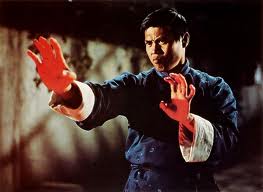
Last night heralded the opening of the Center for Asian American Media’s CAAMFest; it runs through March 23 at the Castro Theatre, 429 Castro, SF; Great Star Theater, 636 Jackson, SF; New Parkway Theater, 474 24th St, Oakl; New People Cinema, 1746 Post, SF; Pacific Film Archive, 2575 Bancroft, Berk; and Sundance Kabuki Cinemas, 1881 Post, SF. For tickets (most shows $12) and complete schedule, visit www.caamedia.org. For commentary, see “The Art of Martial Arts,” “Telling Tales, ” and “Women With Movie Cameras.”

New movies after the jump.

Better Living Through Chemistry Sam Rockwell, Olivia Wilde, and Michelle Monaghan star in this dark comedy about a mild-mannered pharmacist whose life is upended when he meets a pill-addicted trophy wife. (1:31) 

Elaine Stritch: Shoot Me See “Shooting Straight.” (1:21)

The Face of Love Five years after her husband, Garrett (Ed Harris), drowns while on vacation for their 30th anniversary, Nikki (Annette Bening) chances upon his exact double, Tom (Harris again). She pretends to be a divorcée and hides all photographic evidence that would out her reason for pursing Tom, an easygoing art professor and painter who actually is divorced (he’s buddies with his ex, a low-key Amy Brennemen). To her delight, he reciprocates her interest — but as their relationship grows, it becomes harder to conceal the, uh, doppelgänger situation from Nikki’s adult daughter (Jess Weixler) and neighbor (Robin Williams), a widower who’s jealous of Nikki’s new love. Harris and especially Bening are great — and they’re great together — but The Face of Love, from director and co-writer Arie Posin (2005’s The Chumscrubber), is the romantic melodrama equivalent of a one-joke comedy (with at least one Vertigo-inspired scene, and a drippy score that underlines every emotional story beat). The end to Nikki’s agonizing charade, and the end of the movie, can’t come soon enough. (1:32) (Cheryl Eddy)

Generation War German import Generation War was originally called Our Mothers, Our Fathers, to underline the relevancy of the discussion it’s presumably trying to stir at home — even if for many viewers the war generation would have been their grandparents’. Directed by Philipp Kadelbach and written by Stefan Kolditz, it starts out in dismayingly hackneyed fashion as we’re introduced to our youthful protagonists. Celebrating a birthday in 1941 near the war’s start, when Axis victory seems assured, they pose for a photo you know damn well is going to be the heart-tugging emblem of innocence horribly lost for the next 270 minutes. Fast-paced yet never achieving the psychological depth of similarly scaled historical epics, Generation War grows most interesting in its late going, when for all practical purposes the Allies have already won the war, but Germany continues to self-destruct. Imminent peace provides no relief for protagonists who’ve survived only to find themselves fucked no matter what side they stay on, or surrender to. That moral and situational complexity is too often missing in a narrative that aims for sympathy via simplicity. The underrated recent film version of The Book Thief (2013) was criticized for soft-pedaling the era, but it was about (and from the viewpoint of) somewhat sheltered Aryan children living in a civilian wartime. Generation War’s characters are of exactly the age to be fully indoctrinated young zealots, yet none of them seems touched by National Socialist dogma. Of course such naiveté is designed to maximize their later disillusionment. But War doesn’t even try to approach the serious analysis of national character in something like Ursula Hegi’s great novel Stones from the River, in which we come to understand how time, propaganda, and preyed-upon weaknesses can turn a town of perfectly nice Germans into fascists capable of turning a blind eye toward the Final Solution. Note: longer review here(4:30) (Dennis Harvey)

The Grand Budapest Hotel Is this the first Wes Anderson movie to feature a shootout? It’s definitely the first Anderson flick to include a severed head. That’s not to say The Grand Budapest Hotel, “inspired by” the works of Austrian novelist Stefan Zweig, represents too much of a shift for the director — his intricate approach to art direction is still very much in place, as are the deadpan line deliveries and a cast stuffed with Anderson regulars. But there’s a slightly more serious vibe here, a welcome change from 2012’s tooth-achingly twee Moonrise Kingdom. Thank Ralph Fiennes’ performance as liberally perfumed concierge extraordinare M. Gustave, which mixes a shot of melancholy into the whimsy, and newcomer Tony Revolori as Zero, his loyal lobby boy, who provides gravitas despite only being a teenager. (Being played by F. Murray Abraham as an older adult probably helps in that department.) Hotel‘s early 20th century Europe setting proves an ideal canvas for Anderson’s love of detail — the titular creation rivals Stanley Kubrick’s rendering of the Overlook Hotel — and his supporting cast, as always, looks to be enjoying the hell out of being a part of Anderson’s universe, with Willem Dafoe, Jeff Goldblum, and Adrien Brody having particularly oversized fun. Is this the best Wes Anderson movie since 2001’s The Royal Tenenbaums? Yes. (1:40) (Cheryl Eddy)

Love and Demons A man (Chris Pfleuger) in the midst of a midlife crisis, a woman (Lucia Frangione) starting to realize she’s completely dissatisfied with her life — does this relationship have a chance? Enter each partner’s personal demon, eager to have a hand in shaping events in what turns into a not-so-friendly competition. At first, the intervention seems helpful; the male demon encourages the man, a wannabe screenwriter, to get a better job, clean up the apartment, and blurt out feel-good-isms like “I want to build something together.” But what’s this about murder? Meanwhile, the female demon (Arnica Skulstad Brown) appears to be the ultimate gal pal, stroking the woman’s ego by telling her she could do so much better, going on shopping sprees with her, and sharing her stay-skinny coke stash. Temptations ahoy! Written, directed by, and costarring local filmmaker JP Allen (as the male demon, he’s the cast’s cigarette-smoking, smirking high point) this intriguing look at modern love earns bonus points for its excellent use of SF locations — and creative editing that helps break up the film’s many voice-overs and fourth-wall-breaking moments. (1:24) (Cheryl Eddy)

Need for Speed Breaking Bad‘s Aaron Paul stars in this tale of a breakneck cross-country car race, an adaptation of the popular video game. (2:10)

Particle Fever “We are hearing nature talk to us,” a physicist remarks in awe near the end of Particle Fever, Mark Levinson’s intriguing doc about the 2012 discovery of the Higgs boson particle. Earlier, another scientist says, “I’ve never heard of a moment like this in [science] history, where an entire field is hinging on a single event.” The event, of course, is the launch of the Large Hardon Collider, the enormous machine that enabled the discovery. Though some interest in physics is probably necessary to enjoy Particle Fever, extensive knowledge of quarks and such is not, since the film uses elegant animation to refresh the basics for anyone whose eyes glazed over during high-school science. But though he offers plenty of context, Levinson wisely focuses his film on a handful of genial eggheads who are involved in the project, either hands-on at the European Organization for Nuclear Research (CERN), or watching from afar as the mighty LHC comes to life. Their excitement brings a welcome warmth to the proceedings — and their “fever” becomes contagious. (1:39) (Cheryl Eddy)

Veronica Mars Since the cult fave TV show Veronica Mars went off the air in 2007, fans of the series, about a smart, cynical teenager who solves mysteries and battles her high school’s one percenters — a sort of adolescent noir minus the ex nihilo patois of Rian Johnson’s 2005 Brick — have had their hopes raised and dashed several times regarding the possibility of a big-screen coda. While that sort of scenario usually involves a few of the five stages of grief, this one has a twist happy ending: a full-length film, directed by show creator Rob Thomas and cowritten by Thomas and show producer-writer Diane Ruggiero (with a budget aided by a crowdfunding campaign), that doesn’t suck. It’s been a decade since graduation, and Veronica Mars (Kristen Bell) has put a continent between herself and her creepy, class war–torn hometown of Neptune, Calif. — leaving behind her P.I. vocation and a track record of exposing lies, corruption, and the dark side of the human soul in favor of a Columbia law degree and a career of covering up same. But when Logan Echolls (Jason Dohring), her brooding, troubled ex, gets charged with the murder of his pop star girlfriend and asks Veronica for help, she can’t resist the pull of what she admits is a pathological impulse. Plus, it’s her 10-year reunion. And indeed, pretty much anyone who had a character arc during the show’s three seasons makes an appearance — plus (naturally) James Franco, Dax Shepard (Bell’s husband), and (oddly) Ira Glass. It could have been a cameo fusillade, but the writing here is as smart, tight, funny, and involving as it was on the TV series, and Thomas and Ruggiero for the most part manage to thread everyone in, taking pressure off a murder mystery that falls a little flat, updating the story to reflect current states of web surveillance and pop cultural mayhem, and keeping the focus on the joy of seeing Veronica back where she belongs. (1:43) (Lynn Rapoport)

This Week’s Picks: March 12 -18, 2014

0

WEDNESDAY 12

Freddie Rainbow Presents “Gender Night”

It’s no secret that comedy is a male-dominated business. For years, there’s been this stereotype that women aren’t funny. Honestly, how often do you see a comedy with a female lead? While movies like Bridesmaids and Ghost World are few and far between, over the past couple of years, women in entertainment have been speaking out against this double standard. “Gender Night” is the most recent development. Comedian and ardent supporter of gender equality Freddie Rainbow presents an encore presentation of comedy from California’s finest comediennes. Expect jokes about shopping and love as well as fart jokes. Girls fart too, get over it. “The only reason to miss this show is if you hate women,” says the comedy club website. “Please don’t hate women.” (Laura B. Childs)

8pm, $15

Punch Line Comedy Club

444 Battery, SF

(415) 397-7573

www.punchlinecomedyclub.com


THURSDAY 13

Shpongle

For more than 15 years, English DJ and producer Simon Posford and Australian flutist Raja Ram have collaborated to produce expansive, mind-bending, psychedelic music. Fans are still raving about how Shpongle rocked Oakland’s Fox Theatre just before Halloween 2011, when Posford and Ram played with a live band and an ensemble of colorful dancers. Posford, who takes to the decks for this show in support of the duo’s latest album Museum of Consciousness (Twisted Records), was a major contributor to the frenetic psy-trance scene that blossomed in Britain in the early ’90s. Those early musical influences shine through in the track “How the Jellyfish Jumped the Mountain,” an intricate, mid-tempo, 10-minute journey through filtered melodies, distorted vocal samples and catchy basslines. (Kevin Lee)

With Desert Dwellers, Vokab Kompany

8 pm, $27.50 presale, $30 at the door

The Regency Ballroom

1300 Van Ness, SF

(415) 673-5716

http://www.theregencyballroom.com


IDEO’s David Kelley

IDEO founder David Kelley and his brother Tom Kelley believe that we are watered-down versions of what we could be. On the heels of their bestselling The Art of Innovation, the businessmen brothers have written Creative Confidence, a book that challenges the idea that only some people are creative, suggesting that creativity is not innate but rather a skill. At this JCC event, the IDEO founder and Stanford University professor will speak about unlocking our creative potential; the night will also include a guest lecture by the pioneer for modern journalism and story-telling, Douglas McGray, editor-in-chief of Pop-Up Magazine and the brand new California Sunday Magazine. (Childs)

7pm, $25

Jewish Community Center of San Francisco

3200 California, SF

(415) 292-1200

www.jccsf.com


Little Minsky’s Burlesque Cabaret

Boasting what some have called both the best pizza and jazz in the city (can you really beat that combination?), Club Deluxe is bringing back Little Minsky’s Burlesque Cabaret every second Thursday of the month. If you like your cocktails stiff and your burlesque dancers flexible, this is the night for you. Take a trip back in time with a lovely lineup of vintage cabaret performers and Prohibition-era jazz musicians. The night is sure to get hot and heavy, but in the classiest of ways, of course. (Childs)

10pm, $5

Club Deluxe

1511 Haight, SF

(415) 552-6949

www.pizza-deluxe.com


FRIDAY 14

Screen Printing for Newbies – Late Night Edition

Remember the good old days, when your parents signed you up for various art classes or random activities just so they didn’t have to deal with you on the weekends or school breaks? Workshop SF is oddly reminiscent of summer camp. With Jameson lamps, metallic saws, and only the necessary amount of clutter, the NoPa studio offers awesome classes from Sewing 101 to Hair Bootcamp to Pickling 101. Tonight, they offer a special late night edition of “Screen Printing for Newbies.” Learn the basics of silkscreen printing with an hour-long, hands-on tutorial and two hours of time to print. Bring your own printing supplies or come empty-handed — either way you’ll walk out with some cool designs printed on paper, T-shirts, and even beer koozies. (Childs)

8pm, $42

Workshop

1789 McAllister, SF

(415) 874-9186

www.workshopsf.org


Stephen Petronio

It’s been a while since we have seen Stephen Petronio’s dancers fill a local stage with the interlocking complexities of choreography so fiercely layered — and performed at such speed — that the mind sometimes had difficulties in absorbing it all. Apparently, given the newest work’s name, we can expect some slower passages. In Like Lazarus Did, Petronio and his 10 dancers are dancing about death and resurrection, not exactly a hot topic on the traveling dance circuit. But perhaps the subject makes sense for a dancer-choreographer who is close to 60, who was the first male dancer with Trisha Brown — whose troupe is currently on life support — and whose own company is celebrating its 30th anniversary this year. So happy birthday and many more to come. (Rita Felciano)

March 14-15, 7:30pm, $35-50

Yerba Buena Center for the Arts

700 Howard St. SF

(415) 978-2787

www.ybca.org


SATURDAY 15

Magic, Color, Flair: The World of Mary Blair

With a keenly creative outlook and modernist style mixed with bold, beautiful colors, artist Mary Blair helped inspire and design some of the most beloved films and attractions made by Walt Disney Studios during the 1940s and ’50s, including Peter Pan, Cinderella, and Alice In Wonderland. This new exhibit features 200 works that examine not only her seminal time and iconic output with Disney but also her early years, as well as her later work as an illustrator for advertising, theatrical sets, clothing, children’s books, and much more. (Sean McCourt)

Through Sept. 7, 2014

10am-6pm, Wed-Mon, $10 for Blair exhibit only, museum combo ticket $17-$25

The Walt Disney Family Museum

104 Montgomery, SF

www.waltdisney.org


Sureando: Rambling through the South

There is a difference between listening through your ears and listening through your heart. For the latter, there’s nothing better than the voice of Chilean cellist Mochi Parra. This performance will see Parra teaming up with Peruvian native bass virtuoso and Berkeley Jazz School teacher David Pinto to present a concert of South American musical jewels that will undoubtedly set a precedent for the possibilities of these two instruments. There’s nothing sparse about this: Pinto’s six-stringed bass seems to dialogue with Mochi commanding interpretations, and the duo’s original arrangements combine to create an exquisite orchestration right at the edges of the unpredictable nueva canción styles. (Fernando A. Torres)

7pm, $15

Red Poppy Art House

2698 Folsom, SF

(415) 826-2402

www.redpoppyarthouse.org


The San Francisco International Chocolate Salon

In the market for a sugar rush? Now in its 8th year, this annual smorgasbord of all things cocoa-based promises “55,000 square feet of chocolate,” in the form of tastings, demonstrations, new product launches, author talks, wine pairings, a “Chocolate Art Gallery,” and more. Artisan chocolatiers, confectioners, and self-proclaimed chocolate aficionados from all over the globe will converge at the Fort Mason Center to hear from locals like John Scharffenberger, chocolate maker at, yes, Scharffen Berger Chocolate, as well as chocolate-obsessed celebrities from the cooking show world. Let’s get real: It’s been a month since we had any heart-shaped truffles and there are still a few weeks to go until Cadbury Creme Eggs. Our sweet tooth needs this. (Emma Silvers)

10am, $20 -$30, discounts for kids

Fort Mason Center

2 Marina Blvd, SF

www.sfchocolatesalon.com


SUNDAY 16

Portland Cello Project

Compelling mysteries arise whenever the Portland Cello Project is slated to perform. What sort of ensemble will participate? Will they go all cellists, or will they incorporate some combination of vocals, horns, winds, and percussion? Moreover, what sort of music will they play? Known as an “indie music orchestra,” PCP (an affectionate nickname from fans) unabashedly reappropriates rap, rock, and pop artists, from Kanye West’s upbeat “All of the Lights” to Radiohead’s melancholic “Karma Police,” into provocative covers that defy easy genre classification. The Project’s most stirring renditions seem to come from slowing down a track and teaming up with a powerful voice, which seems to naturally emphasize the emotional power of the cello. Accompanied by vocalist Chanticleer Tru, the Project’s take on Beck’s “Don’t Act Like Your Heart Isn’t Hard” is a particularly devastating, soul-laden heartbreaker. (Lee)

8pm, $22 presale, $26 at the door

Yoshi’s San Francisco

1330 Fillmore, SF

(415) 655-5600

www.yoshis.com


Sunday Sampler at the Berkeley Rep School of Theatre

If you’ve spent more time practicing your Oscar acceptance speech than you’d perhaps like to admit, come out of hiding: Three times a year, the professional thespians at the Berkeley Repertory’s School of Theatre hold an afternoon of free acting workshops that are entirely open to the public, to serve as a preview of the school’s upcoming programming. Classes for youth, teens, and adults are available, from Beginning Acting and Musical Theatre to Playwriting and “Acting Violence” — aka how to stage a swordfight without actually injuring your coworkers or yourself. Even if you never go pro, you never know when that last one could come in handy. (Silvers)

1pm, free

Berkeley Repertory School of Theatre

2071 Addison, Berkeley

(510) 647–2972

www.berkeleyrep.org


MONDAY 17

Crossroads Irish-American Festival with Katherine Hastings

For those whose ideal St. Patrick’s Day celebration is a little more literary, a little less passing-out-in-your-own-green-puke, this evening honoring the legacy of Irish-American poetry, featuring Sonoma County Poet Laureate Katherine Hastings, should be just the ticket. With her recently published Nighthawks, Hastings has established herself as a poet unafraid to tackle controversial current events in her work, but there’s a constant undercurrent of appreciation for nature — she previously edited What Redwoods Know: Poems from California State Parks as a benefit for the struggling California State Parks Foundation. And because poets do know how to have fun: Irish soda bread and other Irish treats will be served. (Silvers)

7pm, free

BookShop West Portal

80 West Portal, SF

www.irishamericancrossroads.org


TUESDAY 18

Free to Play advance screening

This feature-length documentary, produced by video game developer Valve, takes viewers inside the world of competitive gaming — sorry, e-sports — as three professional gamers travel the world, competing for a $1 million prize in the first Dota 2 International Tournament. What was once considered a niche interest is now serious business, with trading and politics that mirror professional sports; Dota 2, a five-person team sport, is especially big in China, where one wealthy man recently bought an entire team for $6 million. This premiere will feature a live Q&A with the film’s creators and other special guests. (Silvers)

8pm, $25

Castro Theatre

429 Castro, SF

www.castrotheatre.com


The Guardian listings deadline is two weeks prior to our Wednesday publication date. To submit an item for consideration, please include the title of the event, a brief description of the event, date and time, venue name, street address (listing cross streets only isn’t sufficient), city, telephone number readers can call for more information, telephone number for media, and admission costs. Send information to Listings, the Guardian, 225 Bush, 17th Flr., SF, CA 94105; or email (paste press release into email body — no attachments, please) to listings@sfbg,com. Digital photos may be submitted in jpeg format; the image must be at least 240 dpi and four inches by six inches in size. We regret we cannot accept listings over the phone.

Film Listings: March 12 – 18, 2014

0

Film listings are edited by Cheryl Eddy. Reviewers are Kimberly Chun, Dennis Harvey, Lynn Rapoport, Sam Stander, and Sara Maria Vizcarrondo. For rep house showtimes, see Rep Clock.

CAAMFEST

The Center for Asian American Media’s CAAMFest runs March 13-23. Major venues include the Castro Theatre, 429 Castro, SF; Great Star Theater, 636 Jackson, SF; New Parkway Theater, 474 24th St, Oakl; New People Cinema, 1746 Post, SF; Pacific Film Archive, 2575 Bancroft, Berk; and Sundance Kabuki Cinemas, 1881 Post, SF. For tickets (most shows $12) and complete schedule, visit www.caamedia.org. For commentary, see “The Art of Martial Arts,” “Telling Tales, ” and “Woman With a Movie Camera.”

OPENING

Better Living Through Chemistry Sam Rockwell, Olivia Wilde, and Michelle Monaghan star in this dark comedy about a mild-mannered pharmacist whose life is upended when he meets a pill-addicted trophy wife. (1:31) Balboa.

Elaine Stritch: Shoot Me See “Shooting Straight.” (1:21) Opera Plaza, Shattuck.

The Face of Love Five years after her husband, Garrett (Ed Harris), drowns while on vacation for their 30th anniversary, Nikki (Annette Bening) chances upon his exact double, Tom (Harris again). She pretends to be a divorcée and hides all photographic evidence that would out her reason for pursing Tom, an easygoing art professor and painter who actually is divorced (he’s buddies with his ex, a low-key Amy Brennemen). To her delight, he reciprocates her interest — but as their relationship grows, it becomes harder to conceal the, uh, doppelgänger situation from Nikki’s adult daughter (Jess Weixler) and neighbor (Robin Williams), a widower who’s jealous of Nikki’s new love. Harris and especially Bening are great — and they’re great together — but The Face of Love, from director and co-writer Arie Posin (2005’s The Chumscrubber), is the romantic melodrama equivalent of a one-joke comedy, with at least one Vertigo-inspired scene, and a drippy score that underlines every emotional story beat. (1:32) Embarcadero. (Eddy)

Generation War German import Generation War was originally called Our Mothers, Our Fathers, to underline the relevancy of the discussion it’s presumably trying to stir at home — even if for many viewers the war generation would have been their grandparents’. Directed by Philipp Kadelbach and written by Stefan Kolditz, it starts out in dismayingly hackneyed fashion as we’re introduced to our youthful protagonists. Celebrating a birthday in 1941 near the war’s start, when Axis victory seems assured, they pose for a photo you know damn well is going to be the heart-tugging emblem of innocence horribly lost for the next 270 minutes. Fast-paced yet never achieving the psychological depth of similarly scaled historical epics, Generation War grows most interesting in its late going, when for all practical purposes the Allies have already won the war, but Germany continues to self-destruct. Imminent peace provides no relief for protagonists who’ve survived only to find themselves fucked no matter what side they stay on, or surrender to. That moral and situational complexity is too often missing in a narrative that aims for sympathy via simplicity. The underrated recent film version of The Book Thief (2013) was criticized for soft-pedaling the era, but it was about (and from the viewpoint of) somewhat sheltered Aryan children living in a civilian wartime. Generation War‘s characters are of exactly the age to be fully indoctrinated young zealots, yet none of them seems touched by National Socialist dogma. Of course such naiveté is designed to maximize their later disillusionment. But War doesn’t even try to approach the serious analysis of national character in something like Ursula Hegi’s great novel Stones from the River, in which we come to understand how time, propaganda, and preyed-upon weaknesses can turn a town of perfectly nice Germans into fascists capable of turning a blind eye toward the Final Solution. (4:30) Embarcadero, Opera Plaza. (Harvey)

The Grand Budapest Hotel Is this the first Wes Anderson movie to feature a shootout? It’s definitely the first Anderson flick to include a severed head. That’s not to say The Grand Budapest Hotel, “inspired by” the works of Austrian novelist Stefan Zweig, represents too much of a shift for the director — his intricate approach to art direction is still very much in place, as are the deadpan line deliveries and a cast stuffed with Anderson regulars. But there’s a slightly more serious vibe here, a welcome change from 2012’s tooth-achingly twee Moonrise Kingdom. Thank Ralph Fiennes’ performance as liberally perfumed concierge extraordinaire M. Gustave, which mixes a shot of melancholy into the whimsy, and newcomer Tony Revolori as Zero, his loyal lobby boy, who provides gravitas despite only being a teenager. (Being played by F. Murray Abraham as an older adult probably helps in that department.) Hotel‘s early 20th century Europe setting proves an ideal canvas for Anderson’s love of detail — the titular creation rivals Stanley Kubrick’s rendering of the Overlook Hotel — and his supporting cast, as always, looks to be enjoying the hell out of being a part of Anderson’s universe, with Willem Dafoe, Jeff Goldblum, and Adrien Brody having particularly oversized fun. Is this the best Wes Anderson movie since 2001’s The Royal Tenenbaums? Yes. (1:40) California. (Eddy)

Love and Demons A man (Chris Pfleuger) in the midst of a midlife crisis, a woman (Lucia Frangione) starting to realize she’s completely dissatisfied with her life — does this relationship have a chance? Enter each partner’s personal demon, eager to have a hand in shaping events in what turns into a not-so-friendly competition. At first, the intervention seems helpful; the male demon encourages the man, a wannabe screenwriter, to get a better job, clean up the apartment, and blurt out feel-good-isms like “I want to build something together.” But what’s this about murder? Meanwhile, the female demon (Arnica Skulstad Brown) appears to be the ultimate gal pal, stroking the woman’s ego by telling her she could do so much better, going on shopping sprees with her, and sharing her stay-skinny coke stash. Temptations ahoy! Written, directed by, and costarring local filmmaker JP Allen (as the male demon, he’s the cast’s cigarette-smoking, smirking high point) this intriguing look at modern love earns bonus points for its excellent use of SF locations — and creative editing that helps break up the film’s many voice-overs and fourth-wall-breaking moments. (1:24) Opera Plaza. (Eddy)

Need for Speed Breaking Bad‘s Aaron Paul stars in this tale of a breakneck cross-country car race, an adaptation of the popular video game. (2:10)

Particle Fever “We are hearing nature talk to us,” a physicist remarks in awe near the end of Particle Fever, Mark Levinson’s intriguing doc about the 2012 discovery of the Higgs boson particle. Earlier, another scientist says, “I’ve never heard of a moment like this in [science] history, where an entire field is hinging on a single event.” The event, of course, is the launch of the Large Hardon Collider, the enormous machine that enabled the discovery. Though some interest in physics is probably necessary to enjoy Particle Fever, extensive knowledge of quarks and such is not, since the film uses elegant animation to refresh the basics for anyone whose eyes glazed over during high-school science. But though he offers plenty of context, Levinson wisely focuses his film on a handful of genial eggheads who are involved in the project, either hands-on at the European Organization for Nuclear Research (CERN), or watching from afar as the mighty LHC comes to life. Their excitement brings a welcome warmth to the proceedings — and their “fever” becomes contagious. (1:39) Embarcadero, Shattuck. (Eddy)

Veronica Mars The cult-beloved TV show hits the big screen, with Kristen Bell reprising her breakout role as the titular sleuth. (1:43)

ONGOING

About Last Night (1:40) Metreon.

American Hustle David O. Russell’s American Hustle is like a lot of things you’ve seen before — put in a blender, so the results are too smooth to feel blatantly derivative, though here and there you taste a little Boogie Nights (1997), Goodfellas (1990), or whatever. Loosely based on the Abscam FBI sting-scandal of the late 1970s and early ’80s (an opening title snarks “Some of this actually happened”), Hustle is a screwball crime caper almost entirely populated by petty schemers with big ideas almost certain to blow up in their faces. It’s love, or something, at first sight for Irving Rosenfeld (Christian Bale) and Sydney Prosser (Amy Adams), who meet at a Long Island party circa 1977 and instantly fall for each other — or rather for the idealized selves they’ve both strained to concoct. He’s a none-too-classy but savvy operator who’s built up a mini-empire of variably legal businesses; she’s a nobody from nowhere who crawled upward and gave herself a bombshell makeover. The hiccup in this slightly tacky yet perfect match is Irving’s neglected, crazy wife Rosalyn (Jennifer Lawrence), who’s not about to let him go. She’s their main problem until they meet Richie DiMaso (Bradley Cooper), an ambitious FBI agent who entraps the two while posing as a client. Their only way out of a long prison haul, he says, is to cooperate in an elaborate Atlantic City redevelopment scheme he’s concocted to bring down a slew of Mafioso and presumably corrupt politicians, hustling a beloved Jersey mayor (Jeremy Renner) in the process. Russell’s filmmaking is at a peak of populist confidence it would have been hard to imagine before 2010’s The Fighter, and the casting here is perfect down to the smallest roles. But beyond all clever plotting, amusing period trappings, and general high energy, the film’s ace is its four leads, who ingeniously juggle the caricatured surfaces and pathetic depths of self-identified “winners” primarily driven by profound insecurity. (2:17) Metreon, 1000 Van Ness, Piedmont, Shattuck, Sundance Kabuki. (Harvey)

Beijing Love Story Writer-director-star Chen Sicheng adapts his 2012 Chinese TV series, adding movie stars Carina Lau and Tony Leung Ka-fai to the cast to up the big-screen wattage. The film follows an array of couples, starting with Chen and real-life wife Shen Yan as a young couple forced to make some hard choices after an unplanned pregnancy. “What’s love? It’s like a ghost. Everyone’s heard of it, nobody’s seen it,” the reluctant father-to-be’s cynical friend tells him. Said friend has been hitched for years; the film’s next storyline follows what happens when his wife finds out he’s been cheating (as it turns out, she has some secrets of her own). At one point, the action shifts from Beijing to Greece (for the Lau-Leung segment), before returning to the city for a teenage love story involving a cello prodigy who wants to compete on TV, and a boy who can “see auras,” among other fanciful talents. Finally, an elderly man embarks on a series of blind dates, looking for a second chance at love, with a twist that’s obvious to anyone who’s ever seen a rom-com before. By the time this flowery Valentine’s card of a movie reaches its melodramatic conclusion, it’s abundantly clear that Chen knows his target audience — see: the film’s multiple Titanic (1997) references — and that he’s a huge fan of the romance genre himself. (2:02) Metreon. (Eddy)

Bethlehem Teenaged Sanfur (Shadi Mar’i) is the younger brother of Ibrahim (Hisham Suliman), a leader in Palestinian militant group al-Aqsa Martyrs’ Brigades. When the latter claims responsibility for a suicide bombing in the center of Jerusalem, the Israelis want Ibrahim dead or in custody, immediately. That ought to be easy enough, since Sanfur is not just a potential freedom fighter himself but also, contrarily, an informant to Israeli Secret Service officer Razi (Tsahi Halevy). Their relationship is complex, to say the least, with an aspect of genuine paternal bonding even as Razi’s superiors pressure him to treat the youth as an expendable asset; Sanfur in turn resents the position he’s been cornered into. Just how he got there isn’t revealed until near the end of this taut thriller, co-written by Palestinian Ali Waked and Israeli director Yuval Adler, and acted with considerable power by non professional leads. Bethlehem isn’t quite as strikingly accomplished or ingeniously plotted as the concurrent, similarly themed Omar. But it delivers its own cumulative punch as characters likewise cross ethical and political lines in increasingly desperate efforts at self-preservation that can only end one bleak, bitter way. (1:39) Opera Plaza. (Harvey)

Dallas Buyers Club Dallas Buyers Club is the first all-US feature from Jean-Marc Vallée. He first made a splash in 2005 with C.R.A.Z.Y., which seemed an archetype of the flashy, coming-of-age themed debut feature. Vallée has evolved beyond flashiness, or maybe since C.R.A.Z.Y. he just hasn’t had a subject that seemed to call for it. Which is not to say Dallas is entirely sober — its characters partake from the gamut of altering substances, over-the-counter and otherwise. But this is a movie about AIDS, so the purely recreational good times must eventually crash to an end. Which they do pretty quickly. We first meet Ron Woodroof (Matthew McConaughey) in 1986, a Texas good ol’ boy endlessly chasing skirts and partying nonstop. Not feeling quite right, he visits a doctor, who informs him that he is HIV-positive. His response is “I ain’t no faggot, motherfucker” — and increased partying that he barely survives. Afterward, he pulls himself together enough to research his options, and bribes a hospital attendant into raiding its trial supply of AZT for him. But Ron also discovers the hard way what many first-generation AIDS patients did — that AZT is itself toxic. He ends up in a Mexican clinic run by a disgraced American physician (Griffin Dunne) who recommends a regime consisting mostly of vitamins and herbal treatments. Ron realizes a commercial opportunity, and finds a business partner in willowy cross-dresser Rayon (Jared Leto). When the authorities keep cracking down on their trade, savvy Ron takes a cue from gay activists in Manhattan and creates a law evading “buyers club” in which members pay monthly dues rather than paying directly for pharmaceutical goods. It’s a tale that the scenarists (Craig Borten and Melisa Wallack) and director steep in deep Texan atmospherics, and while it takes itself seriously when and where it ought, Dallas Buyers Club is a movie whose frequent, entertaining jauntiness is based in that most American value: get-rich-quick entrepreneurship. (1:58) Embarcadero, Presidio, Shattuck, Sundance Kabuki. (Harvey)

Frozen (1:48) Metreon, 1000 Van Ness, Shattuck.

Gloria The titular figure in Sebastian Lelio’s film is a Santiago divorcee and white collar worker (Paulina Garcia) pushing 60, living alone in a condo apartment — well, almost alone, since like Inside Llewyn Davis, this movie involves the frequent, unwanted company of somebody else’s cat. (That somebody is an upstairs neighbor whose solo wailings against cruel fate disturb her sleep.) Her two children are grown up and preoccupied with their adult lives. Not quite ready for the glue factory yet, Gloria often goes to a disco for the “older crowd,” dancing by herself if she has to, but still hoping for some romantic prospects. She gets them in the form of Rodolfo (Sergio Hernandez), who’s more recently divorced but gratifyingly infatuated with her. Unfortunately, he’s also let his daughters and ex-wife remain ominously dependent on him, not just financially but in every emotional crisis that affects their apparently crisis-filled lives. The extent to which Gloria lets him into her life is not reciprocated, and she becomes increasingly aware how distant her second-place priority status is whenever Rodolfo’s other loved ones snap their fingers. There’s not a lot of plot but plenty of incident and insight to this character study, a portrait of a “spinster” that neither slathers on the sentimental uplift or piles on melodramatic victimizations. Instead, Gloria is memorably, satisfyingly just right. (1:50) Opera Plaza. (Harvey)

Gravity “Life in space is impossible,” begins Gravity, the latest from Alfonso Cuarón (2006’s Children of Men). Egghead Dr. Ryan Stone (Sandra Bullock) is well aware of her precarious situation after a mangled satellite slams into her ship, then proceeds to demolition-derby everything (including the International Space Station) in its path. It’s not long before she’s utterly, terrifyingly alone, and forced to unearth near-superhuman reserves of physical and mental strength to survive. Bullock’s performance would be enough to recommend Gravity, but there’s more to praise, like the film’s tense pacing, spare-yet-layered script (Cuarón co-wrote with his son, Jonás), and spectacular 3D photography — not to mention George Clooney’s warm supporting turn as a career astronaut who loves country music almost as much as he loves telling stories about his misadventures. (1:31) Castro, Metreon, 1000 Van Ness, Presidio. (Eddy)

The Great Beauty The latest from Paolo Sorrentino (2008’s Il Divo) arrives as a high-profile contender for the Best Foreign Language Film Oscar, already annointed a masterpiece in some quarters, and duly announcing itself as such in nearly every grandiose, aesthetically engorged moment. Yes, it seems to say, you are in the presence of this auteur’s masterpiece. But it’s somebody else’s, too. The problem isn’t just that Fellini got there first, but that there’s room for doubt whether Sorrentino’s homage actually builds on or simply imitates its model. La Dolce Vita (1960) and 8 1/2 (1963) are themselves swaying, jerry-built monuments, exhileratingly messy and debatably profound. But nothing quite like them had been seen before, and they did define a time of cultural upheaval — when traditional ways of life were being plowed under by a loud, moneyed, heedless modernity that for a while chose Rome as its global capital. Sorrentino announces his intention to out-Fellini Fellini in an opening sequence so strenuously flamboyant it’s like a never-ending pirouette performed by a prima dancer with a hernia. There’s statuary, a women’s choral ensemble, an on-screen audience applauding the director’s baffled muse Toni Servillo, standing in for Marcello Mastroianni — all this and more in manic tracking shots and frantic intercutting, as if sheer speed alone could supply contemporary relevancy. Eventually The Great Beauty calms down a bit, but still its reason for being remains vague behind the heavy curtain of “style.” (2:22) Opera Plaza. (Harvey)

Her Morose and lonely after a failed marriage, Theodore (Joaquin Phoenix) drifts through an appealingly futuristic Los Angeles (more skyscrapers, less smog) to his job at a place so hipster-twee it probably will exist someday: beautifulhandwrittenletters.com, where he dictates flowery missives to a computer program that scrawls them onto paper for paying customers. Theodore’s scripting of dialogue between happy couples, as most of his clients seem to be, only enhances his sadness, though he’s got friends who care about him (in particular, Amy Adams as Amy, a frumpy college chum) and he appears to have zero money woes, since his letter-writing gig funds a fancy apartment equipped with a sweet video-game system. Anyway, women are what gives Theodore trouble — and maybe by extension, writer-director Spike Jonze? — so he seeks out the ultimate gal pal: Samantha, an operating system voiced by Scarlett Johansson in the year’s best disembodied performance. Thus begins a most unusual relationship, but not so unusual; Theodore’s friends don’t take any issue with the fact that his new love is a machine. Hey, in Her‘s world, everyone’s deeply involved with their chatty, helpful, caring, always-available OS — why wouldn’t Theo take it to the next level? Inevitably, of course, complications arise. If Her‘s romantic arc feels rather predictable, the film acquits itself in other ways, including boundlessly clever production-design touches that imagine a world with technology that’s (mostly) believably evolved from what exists today. Also, the pants they wear in the future? Must be seen to be believed. (2:00) 1000 Van Ness, SF Center, Shattuck, Sundance Kabuki. (Eddy)

The Lego Movie (1:41) 1000 Van Ness, Presidio, SF Center.

The Lunchbox Ila (Nimrat Kaur) is a self-possessed housewife and a great cook, whose husband confuses her for another piece of furniture. She tries to arouse his affections with elaborate lunches she makes and sends through the city’s lunchbox delivery service. Like marriage in India, lunchbox delivery has a failure rate of zero, which is what makes aberrations seem like magical occurrences. So when widow Saajan (Irrfan Khan) receives her adoring food, he humbly receives the magical lunches like a revival of the senses. Once Ila realizes her lunchbox is feeding the wrong man she writes a note and Saajan replies — tersely, like a man who hasn’t held a conversation in a decade — and the impossible circumstances lend their exchanges a romance that challenges her emotional fidelity and his retreat from society. She confides her husband is cheating. He confides his sympathy for men of lower castes. It’s a May/December affair if it’s an affair at all — but the chemistry we expect the actors to have in the same room is what fuels our urge to see it; that’s a rare and haunting dynamic. Newcomer Kaur is perfect as Ila, a beauty unmarked by her rigorous distaff; her soft features and exhausted expression lend a richness to the troubles she can’t share with her similarly stoic mother (Lillete Dubey). Everyone is sacrificing something and poverty seeps into every crack, every life, without exception — their inner lives are their richness. (1:44) Albany, Clay. (Vizcarrondo)

The Monuments Men The phrase “never judge a book by its cover” goes both ways. On paper, The Monuments Men — inspired by the men who recovered art stolen by the Nazis during World War II, and directed by George Clooney, who co-wrote and stars alongside a sparkling ensemble cast (Cate Blanchett, Matt Damon, John Goodman, Jean Dujardin, Bob Balaban, Hugh “Earl of Grantham” Bonneville, and Bill Fucking Murray) — rules. Onscreen, not so much. After they’re recruited to join the cause, the characters fan out across France and Germany following various leads, a structural choice that results in the film’s number one problem: it can’t settle on a tone. Men can’t decide if it wants to be a sentimental war movie (as in an overlong sequence in which Murray’s character weeps at the sound of his daughter’s recorded voice singing “White Christmas”); a tragic war movie (some of those marquee names die, y’all); a suspenseful war movie (as the men sneak into dangerous territory with Michelangelo on their minds); or a slapstick war comedy (look out for that land mine!) The only consistent element is that the villains are all one-note — and didn’t Inglourious Basterds (2009) teach us that nothing elevates a 21st century-made World War II flick like an eccentric bad guy? There’s one perfectly executed scene, when reluctant partners Balaban and Murray discover a trove of priceless paintings hidden in plain sight. One scene, out of a two-hour movie, that really works. The rest is a stitched-together pile of earnest intentions that suggests a complete lack of coherent vision. Still love you, Clooney, but you can do better — and this incredible true story deserved way better. (1:58) 1000 Van Ness, Piedmont, SF Center, Shattuck, Sundance Kabuki. (Eddy)

Mr. Peabody and Sherman Mr. P. (voiced by Ty Burrell) is a Nobel Prize-winning genius dog, Sherman (Max Charles) his adopted human son. When the latter attends his first day of school, his extremely precocious knowledge of history attracts jealous interest from bratty classmate Penny (Ariel Winter), with the eventual result that all three end up being transported in Peabody’s WABAC time machine to various fabled moments — involving Marie Antoinette, King Tut, the Trojan Horse, etc. — where Penny invariably gets them in deep trouble. Rob Minkoff’s first all-animation feature since The Lion King 20 years ago is spun off from the same-named segments in Jay Ward’s TV Rocky and Bullwinkle Show some decades earlier. It’s a very busy (sometimes to the brink of clutter), often witty, imaginatively constructed, visually impressive, and for the most part highly enjoyable comic adventure. The only minuses are some perfunctory “It’s about family”-type sentimentality — and scenarist Craig Wright’s determination to draw from history the “lesson” that nearly all women are pains in the ass who create problems they must then be rescued from. (1:30) Four Star, 1000 Van Ness, Presidio, SF Center. (Harvey)

Non-Stop You don’t want to get between Liam Neeson and his human shield duties. The Taken franchise has restyled the once-gentle acting giant into the type of weather-beaten, all-business action hero that Harrison Ford once had a lock on. Throw in a bit of the flying-while-addled antihero high jinks last seen in Flight (2012) and that pressured, packed-sardine anxiety that we all suffer during long-distance air travel, and we have a somewhat ludicrous but nonetheless entertaining hybrid that may have you believing that those salty snacks and the seat-kicking kids are the least of your troubles. Neeson’s Bill Marks signals the level of his freestyle alcoholism by giving his booze a stir with a toothbrush shortly before putting on his big-boy air marshal pants and boarding his fateful flight. Marks is soon contacted by a psycho who promises, via text, to kill one person at a time on the flight unless $150 million is deposited into a bank account that — surprise — is under the bad-good air marshal’s name. The twists and turns — and questions of who to trust, whether it’s Marks’ vaguely likeable seatmate (Julianne Moore) or his business class flight attendant (Michelle Dockery) — keep the audience on edge and busily guessing, though director Jaume Collet-Serra doesn’t quite dispel all the questions that arise as the diabolical scheme plays out and ultimately taxes believability. The fun is all in the getting there, even if the denouement on the tarmac deflates. (1:50) 1000 Van Ness, Presidio, SF Center, Shattuck. (Chun)

Omar Palestine’s contender for Best Foreign Language Film is a mighty strong one, with a top-notch script and direction by previous nominee Hany Abu-Assad (2006’s Paradise Now). After he’s captured following the shooting of an Israeli soldier, the titular freedom fighter (a compelling Adam Bakri) is given an unsavory choice by his handler (Waleed F. Zuaiter): rot in jail for 90 years, or become an informant (or “collaborator”) and rat out his co-conspirators. The situation is further complicated by the fact that Omar is in love with Nadia (Leem Lubany, blessed with a thousand-watt smile), the younger sister of his lifelong friend, Tarek (Iyad Hoorani), who planned the attack. Betrayals are imminent, but who will come out ahead, and at what price? Shot with gritty urgency — our hero is constantly on the run, ducking down alleys, scaling walls, scrambling across rooftops, sliding down drainpipes, etc. — Omar brings authenticity to its embattled characters and setting. A true thriller, right up until the last shot. (1:38) Shattuck, Smith Rafael. (Eddy)

Philomena Judi Dench gives this twist on a real-life scandal heart, soul, and a nuanced, everyday heft. Her ideal, ironic foil is Steve Coogan, playing an upper-crusty irreverent snob of an investigative journalist. Judging by her tidy exterior, Dench’s title character is a perfectly ordinary Irish working-class senior, but she’s haunted by the past, which comes tumbling out one day to her daughter: As an unwed teenager, she gave birth to a son at a convent. She was forced to work there, unpaid; as supposed penance, the baby was essentially sold to a rich American couple against her consent. Her yarn reaches disgraced reporter Martin Sixsmith (Coogan), who initially turns his nose up at the tale’s piddling “human interest” angle, but slowly gets drawn in by the unexpected twists and turns of the story — and likely the possibility of taking down some evil nuns — as well as seemingly naive Philomena herself, with her delight in trash culture, frank talk about sex, and simple desire to see her son and know that he thought, once in a while, of her. It turns out Philomena’s own sad narrative has as many improbable turnarounds as one of the cheesy romance novels she favors, and though this unexpected twosome’s quest for the truth is strenuously reworked to conform to the contours of buddy movie-road trip arc that we’re all too familiar with, director Stephen Frears’ warm, light-handed take on the gentle class struggles going on between the writer and his subject about who’s in control of the story makes up for Philomena‘s determined quest for mass appeal. (1:35) Albany. (Chun)

Pompeii There’s not a single original idea in Resident Evil series prolonger Paul W.S. Anderson’s take on the legendary volcanic eruption, but what did you expect? Among its cast, only Kiefer Sutherland (as a lasciviously evil Roman senator) seems to be enjoying himself, camping it up alongside deeply serious young leads Emily Browning and Kit Harington. The mop-topped Game of Thrones stud doesn’t expand his brooding act beyond what we’ve seen him do in Westeros — though it’s likely he expanded his workout routine, what with all the muscular emoting he gets to do in the gladiator ring. The tissue-thin plot involves forbidden romance, revenge, a couple of swipes at big-city corruption, and male bonding ‘twixt Harington and Lost‘s Adewale Akinnuoye-Agbaje, who brings a certain amount of gravitas to his one-dimensional slave character. But the film’s most interesting player is giant Mount Vesuvius, which grumbles in the background as it readies for its big scene — reassuring the audience that deadly chunks will eventually spew all over this mediocre movie and hasten its necessary conclusion. (1:45) Metreon, 1000 Van Ness. (Eddy)

The Rocket When a terrible accident befalls a Laotian family already in a bad situation — they’re being displaced from their home thanks to a massive dam-building project — 10-year-old Ahlo (Sitthiphon Disamoe) is blamed, with particular malice coming from his superstitious grandmother, who believes the boy has been cursed since birth. In the squalid relocation camp, Ahlo finds a buddy in Kia (adorbs Loungnam Kaosainam), who lives with her James Brown-obsessed uncle (Thep Phongam), who provides drunken comic relief — but not without a certain sadness, since he’s a former soldier still suffering, like Laos itself, from the aftereffects of war. Ahlo may be unlucky, but he’s also crafty and fearless, and when he hears about a rocket-building competition offering a much-needed cash prize, he seizes the chance to prove to his family that he’s no bad penny. Though The Rocket was made in Laos, it’s from Australian writer-director Kim Mordaunt, who frames his simple story with gorgeous photography and an admirable lack of sentimentality. He’s also found a winner in first-time actor Disamoe, who’s a natural. (1:36) Shattuck, Smith Rafael. (Eddy)

RoboCop Truly, there was no need to remake 1987’s RoboCop, Paul Verhoeven’s smart, biting sci-fi classic that deploys heaps of stealth satire beneath its ultraviolent imagery. But the inevitable do-over is here, and while it doesn’t improve on what came before, it’s not a total lost cause, either. Thank Brazilian filmmaker José Padilha, whose thrilling Elite Squad films touch on similar themes of corruption (within police, political, and media realms), and some inspired casting, including Samuel L. Jackson as the uber-conservative host of a futuristic talk show. Though the suit that restores life to fallen Detroit cop Alex Murphy is, naturally, a CG wonder, the guy inside the armor — played by The Killing‘s Joel Kinnaman — is less dynamic. In fact, none of the characters, even those portrayed by actors far more lively than Kinnaman (Michael Keaton, Gary Oldman, Jackie Earle Haley), are developed beyond the bare minimum required to serve RoboCop‘s plot, a mixed-message glob of dirty cops, money-grubbing corporations, the military-industrial complex, and a few too many “Is he a man…or a machine?” moments. But in its favor: Though it’s PG-13 (boo), it’s also shot in 2D (yay). (1:50) Metreon, 1000 Van Ness. (Eddy)

7 Boxes If Paraguayan cinema can make such a splash with wheelbarrow chases, one wonders what Outer Mongolia can do with dolly races. Despite its determinedly lo-fi look and feel — US reality TV looks downright slick in comparison — and some very camp acting, 7 Boxes demands respect, like the scruffy street urchins it champions, for its will to cobble together movie magic out of gritty, street-level material. The scene is Asunción’s municipal marketplace. Fascinated by the pirated DVD crime dramas playing out on the screens around him, wheelbarrow delivery boy Victor (Celso Franco) is determined to get a camera of his own — attached, of course, to a way-too-expensive phone. It seems far out of reach, until butchers offer him a US $100 bill to cart seven mysterious boxes away until the coast is clear. The meat purveyors’ regular cart-pusher Nelson (Victor Sosa Traverzi) is desperate to get those boxes — and get paid — instead, and Victor has to depend on his mouthy, spunky friend Liz (Lali Gonzalez) to help him out, as they grapple with cops and robbers, attempt to collect, and uncover the boxes’ nasty secrets. Like charismatic leads Ferreira and Gonzalez, 7 Boxes is full of promise. Directors Juan Carlos Maneglia and Tana Schembori pour considerable energy into 7 Boxes‘ somewhat absurd wheelbarrow high jinks and attempt to humanize their characters while capturing some of the multicultural, screen-laden complexity of anarchic 21st-century urban life in Paraguay. Detracting from the cause are some of the more OTT, unintentionally laughable performances, gratuitous narrative twists, and the alternately jerky and fluid video work — which, appropriately enough, looks to be shot from a phone and, in spite of the moviemakers’ moments of bravura editing and inventive swings in and out of the marketplace labyrinth, never manages to rise above the unlovely. (1:45) Roxie. (Chun)

Stalingrad Behold, Russia’s highest-grossing blockbuster of all time, which presents (in 3D IMAX) a very small story contained within the enormous titular World War II battle, previously dramatized by the West in 2001’s Enemy at the Gates. Stalingrad begins in the aftermath of the 2011 Japanese earthquake, in which an aid worker tells stories to a group of trapped German tourists as they await rescue. Seems the man’s mother, a Russian teenager during the Battle of Stalingrad, met five Red Army soldiers who bonded while fighting the invading Nazis, and helped her survive while all kinda, sorta, falling for her at the same time. There are plenty of lavish battle scenes for war-movie buffs — likely the only people who will seek out this film during its limited US run, and it is interesting to see a WW2 tale with zero American perspective or involvement — but the film is earnest to a fault, with plot holes that may or may not be a result of cultural and language barriers. And speaking of the plot: isn’t the bloody, epic tale of Stalingrad compelling enough without awkward romance(s) shoehorned in? Eliminate that, and you eliminate the need for that ham-fisted frame story, too. (2:15) Metreon. (Eddy)

3 Days to Kill (1:40) Metreon, 1000 Van Ness.

300: Rise of An Empire We pick up the 300 franchise right where director Zack Snyder left off in 2006, with this prequel-sequel, which spins off an as-yet-unreleased Frank Miller graphic novel. In the hands of director Noam Murro, with Snyder still in the house as writer, 300: Rise of an Empire contorts itself, flipping back and forth in time, in an attempt to explain the making of Persian evil prince stereotype Xerxes (Rodrigo Santoro) —all purring androgyny, fashionable piercings, and Iran-baiting, Bush-era malevolence — before following through on avenging 300‘s romantically outnumbered, chesty Spartans. As told by the angry, mourning Spartan Queen Gorgo (Lena Headey of Game of Thrones), the whole mess apparently began during the Battle of Marathon, when Athenian General Themistokles (Sullivan Stapleton) killed Xerxes’s royal father with a well-aimed miracle arrow. That act ushers in Xerxes’s transformation into a “God King” bent on vengeance, aided and encouraged by his equally vengeful, elegantly mega-goth naval commander Artemisia (Eva Green), a Greek-hating Greek who likes to up the perversity quotient by making out with decapitated heads. In case you didn’t get it: know that vengeance is a prime mover for almost all the parties (except perhaps high-minded hottie Themistokles). Very loosely tethered to history and supplied with plenty of shirtless Greeks, taut thighs, wildly splintering ships, and even proto-suicide bombers, Rise skews toward a more naturalistic, less digitally waxy look than 300, as dust motes and fire sparks perpetually telegraph depth of field, shrieking, “See your 3D dollars hard at work!” Also working hard and making all that wrath look diabolically effortless is Green, who as the pitch-black counterpart to Gorga, turns out to be the real hero of the franchise, saving it from being yet another by-the-book sword-and-sandal war-game exercise populated by wholesome-looking, buff, blond jock-soldiers. Green’s feline line readings and languid camp attitude have a way of cutting through the sausage fest of the Greek pec-ing order, even during the Battle of, seriously, Salamis. (1:43) Balboa, Marina, Metreon, 1000 Van Ness, Sundance Kabuki. (Chun)

Tim’s Vermeer “I’m not a painter,” admits Tim Jenison at the start of Tim’s Vermeer. He is, however, an inventor, a technology whiz specializing in video engineering, a self-made multimillionaire, and possessed of astonishing amounts of determination and focus. Add a bone-dry sense of humor and he’s the perfect documentary subject for magicians and noted skeptics Penn & Teller, who capture his multi-year quest to “paint a Vermeer.” Inspired by artist David Hockney’s book Secret Knowledge: Rediscovering the Lost Techniques of the Old Masters, Jenison became interested in the theory that 17th century painters used lenses and mirrors, or a camera obscura, to help create their remarkably realistic works. He was especially taken with Vermeer, feeling a “geek kinship” with someone who was able to apply paint to canvas and make it look like a video image. It took some trial-and-error, but Jenison soon figured out a way that would allow him — someone who barely knew how to hold a brush — to transform an old photograph into a strikingly Vermeer-like oil painting. He decides to recreate The Music Lesson (1662-65), using only materials Vermeer would have had access to, and working from an exact replica of the room in Vermeer’s house where the painting was made. A few slow moments aside (“This project is a lot like watching paint dry,” Jenison jokes), Tim’s Vermeer is otherwise briskly propelled by the insatiable curiosity of the man at its center. And Jenison’s finished work offers a clear challenge to anyone who subscribes to the modern notion that “art and technology should never meet.” Why shouldn’t they, when the end results are so sublime? (1:20) Balboa. (Eddy)

12 Years a Slave Pop culture’s engagement with slavery has always been uneasy. Landmark 1977 miniseries Roots set ratings records, but the prestigious production capped off a decade that had seen some more questionable endeavors, including 1975 exploitation flick Mandingo — often cited by Quentin Tarantino as one of his favorite films; it was a clear influence on his 2012 revenge fantasy Django Unchained, which approached its subject matter in a manner that paid homage to the Westerns it riffed on: with guns blazing. By contrast, Steve McQueen’s 12 Years a Slave is nuanced and steeped in realism. Though it does contain scenes of violence (deliberately captured in long takes by regular McQueen collaborator Sean Bobbitt, whose cinematography is one of the film’s many stylistic achievements), the film emphasizes the horrors of “the peculiar institution” by repeatedly showing how accepted and ingrained it was. Slave is based on the true story of Solomon Northup, an African American man who was sold into slavery in 1841 and survived to pen a wrenching account of his experiences. He’s portrayed here by the powerful Chiwetel Ejiofor. Other standout performances come courtesy of McQueen favorite Michael Fassbender (as Epps, a plantation owner who exacerbates what’s clearly an unwell mind with copious amounts of booze) and newcomer Lupita Nyong’o, as a slave who attracts Epps’ cruel attentions. (2:14) Embarcadero, Four Star, Marina, 1000 Van Ness, Shattuck, Sundance Kabuki. (Eddy)

The Wind Rises Hayao Miyazaki announced that Oscar nominee The Wind Rises would be his final film before retiring — though he later amended that declaration, as he’s fond of doing, so who knows. At any rate, it’d be a shame if this was the Japanese animation master’s final film before retirement; not only does it lack the whimsy of his signature efforts (2001’s Spirited Away, 1997’s Princess Mononoke), it’s been overshadowed by controversy — not entirely surprising, since it’s about the life of Jiro Horikoshi, who designed war planes (built by slave labor) in World War II-era Japan. Surprisingly, a pacifist message is established early on; as a young boy, his mother tells him, “Fighting is never justified,” and in a dream, Italian engineer Giovanni Caproni assures him “Airplanes are not tools for war.” But that statement doesn’t last long; Caproni visits Jiro in his dreams as his career takes him from Japan to Germany, where he warns the owlish young designer that “aircraft are destined to become tools for slaughter and destruction.” You don’t say. A melodramatic romantic subplot injects itself into all the plane-talk on occasion, but — despite all that political hullabaloo — The Wind Rises is more tedious than anything else. (2:06) California, Embarcadero, Sundance Kabuki. (Eddy)

The Wolf of Wall Street Three hours long and breathless from start to finish, Martin Scorsese’s tale of greed, stock-market fraud, and epic drug consumption has a lot going on — and the whole thing hinges on a bravado, breakneck performance by latter-day Scorsese muse Leonardo DiCaprio. As real-life sleaze Jordan Belfort (upon whose memoir the film is based), he distills all of his golden DiCaprio-ness into a loathsome yet maddeningly likable character who figures out early in his career that being rich is way better than being poor, and that being fucked-up is, likewise, much preferable to being sober. The film also boasts keen supporting turns from Jonah Hill (as Belfort’s crass, corrupt second-in-command), Matthew McConaughey (who has what amounts to a cameo — albeit a supremely memorable one — as Belfort’s coke-worshiping mentor), Jean Dujardin (as a slick Swiss banker), and newcomer Margot Robbie (as Belfort’s cunning trophy wife). But this is primarily the Leo and Marty Show, and is easily their most entertaining episode to date. Still, don’t look for an Oscar sweep: Scorsese just hauled huge for 2011’s Hugo, and DiCaprio’s flashy turn will likely be passed over by voters more keen on honoring subtler work in a shorter film. (2:59) Marina, 1000 Van Ness, Sundance Kabuki. (Eddy) *


 

The art of martial arts

0

cheryl@sfbg.com

CAAMFEST Prolific producer Sir Run Run Shaw, an iconic figure for kung fu movie fans, died Jan. 7 at age 106 after an epic career in cinema. (Amazingly, he did not retire until 2011.) CAAMFest screens a trio of films in tribute: Li Han-hsiang’s musical The Kingdom and the Beauty (1959); King Hu’s Come Drink With Me (1966), a major influence on Ang Lee’s 2000 Crouching Tiger, Hidden Dragon — both feature lethal leading lady Cheng Pei-pei; and Chang-hwa Chung’s cult classic 1972 King Boxer (Five Fingers of Death), which one assumes Quentin Tarantino can recite in his sleep. (You only have to get as far as the title sequence to hear music he used to memorable effect in the Kill Bill films.)

Hong Kong International Film Festival Society Executive Director Roger Garcia penned Shaw’s obituary for the Jan. 13 Wall Street Journal, noting that “[Shaw’s] life and career grew alongside movies’ evolution from the black-and-white silents to today’s global media industry.” Shaw and his brother Runme opened Hong Kong’s largest studio in 1959, “a potent artistic and business combination that ushered in the era of Mandarin film production.” Shaw Brothers Studio “revolutionized the martial arts genre” via collaborations with directors like Come Drink With Me‘s Hu; it also served as a launch pad for actors who became international stars, like Jackie Chan.

I caught up with the HK-based Garcia by email to ask him a few more questions about the late, great Sir Run Run Shaw.

SF Bay Guardian The Shaw Brothers had an enormous filmography. What stands out about the three films in CAAMFest’s tribute?

Roger Garcia The films reflect some of the characteristics of Shaw Brothers Studio’s output at the time, when Mandarin language production dominated the HK film scene. Li Han-hsiang’s King and the Beauty is exemplary of the “quality” costume picture and Huangmei opera films of the time. It also features the great director King Hu in it — he was Li’s protégé. [He directed] Come Drink With Me, generally regarded as a groundbreaking martial arts film with its innovative staging. The film made a star of Cheng Pei-pei. She had previously featured in some Shaw Bros musicals and was a dancer originally. King Boxer is interesting because it was made by one of the best Korean action filmmakers, Chang-hwa Chung. It was a characteristic of the Shaw Brothers to bring in directors from other Asian countries to basically remake some of their native hits. [Another example] is Umetsugu Inoue, who specialized in remaking his hit Japanese musicals into Mandarin Shaw Brothers movies.

SFBG What other Shaw Brothers films do you recommend?

RG The most interesting are the films by Lau Kar-leung, especially Executioners From Shaolin (1977) and Dirty Ho (1979), which are masterpieces of the genre. 36th Chamber of Shaolin (1978) is also popular and an enjoyable film.

Other works are the coded lesbian and gay films, especially 1972’s Intimate Confessions of a Chinese Courtesan, which is a staggering work about lesbian love and intrigue by Chu Yuan. It is a pinnacle of gay cinema. I also find the camp aspect of Chang Cheh’s The Singing Thief (1969) quite charming.

SFBG What is Shaw’s lasting legacy?

RG I think in terms of film — because we must not forget he created TVB, the major Chinese TV corporation, and was also a major philanthropist in the last years of his life — he brought Chinese cinema to the post-war world. He also had a vision of pan-Asian cinema with distribution and production around the region that we are perhaps only catching up with now! *

“TRIBUTE: RUN RUN SHAW”

Sat/15, 2pm, The Kingdom and the Beauty; 5pm, Come Drink With Me; 8pm, King Boxer, $12 per film

Great Star Theater

636 Jackson, SF

www.caamedia.org


Telling tales

0

cheryl@sfbg.com

CAAMFEST The feel-good movie of last year’s Center for Asian American Media film festival was The Cheer Ambassadors, a documentary charting the high-flying accomplishments of Bangkok University’s cheerleading team. This year’s The Road to Fame taps the same performance theme, but there’s an undercurrent of melancholy that tugs at each of its peppy subjects. The setting is Beijing’s Central Academy of Drama, where young adults envision careers like those of celebrity alums Gong Li and Zhang Ziyi. The reality, of course, is that the majority of them will struggle to get any job after graduation, much less realize their show-biz fantasies.

Added pressure is applied by the kids’ parents. Though Chinese youth may have adopted Western-style dreams of the spotlight, many in the older generation were denied the chance to go to college or experience any freedom of occupational choice. All of The Road to Fame‘s featured subjects are in the 19-to-21 age range, born in the era of China’s one-child policy, so the incentive to succeed is particularly urgent, for both financial and emotional reasons. With two parents and four grandparents looking on, “There are six pairs of eyes on only one child,” points out drama teacher Liu Hongmei, whose own martial-arts movie career was supplanted by her desire to work with students.

http://www.youtube.com/watch?v=uzaI2IW0hLk

Given all of these factors, the choice of musical Fame — about a performing-arts school teeming with wannabe stars — as the kids’ final showcase is wonderfully apt. As a bonus, American teachers with Broadway bona fides (the lead has a hint of Corky St. Clair flair) have come to China to work with the students, including standouts like charismatic Chen Lei, who comes from “a simple family” that expects her to take care of them, frustrating her desires to work abroad; and Wu Heng, a talented singer with luxuriant pop-star hair whose parents joke (or are they joking?) about him supporting them. Tension arises during casting, and the expected backstage drama ensues as “A” and “B” casts are chosen and the kids — already fearing the uncertainty of life post-graduation — start to get a sense of how difficult making it will be. On a side note, The Road to Fame is the latest from Chinese-born, US-educated blogger and filmmaker (2005’s Beijing or Bust) Hao Wu, who was detained by Chinese authorities in 2006 while filming a documentary on Christian Chinese house churches. (Presumably, the government viewed musical theater as a more “appropriate” topic.)

Along with The Road to Fame, CAAMFest’s documentary competition is composed almost entirely of urgently contemporary tales. In American Arab, Iraqi American filmmaker Usama Alshaibi takes a deeply personal look at what it’s like to live in the US — specifically, small-town Iowa — post-9/11 with the first name “Usama.” (The results are not entirely surprising.) More compelling is Dianne Fukami and Eli Olson’s Stories From Tohoku, a sensitive study of Japanese still struggling to rebuild after the devastating 2011 earthquake and tsunami. Interviews with survivors, as well as Japanese Americans (including Kristi Yamaguchi, who visits the region to lend support), illuminate the incredible resilience of people whose communities were completely flattened.

“My history has disappeared, so at this point, all I can do is enjoy my life,” says one woman as she points out where her house used to stand. Though not everyone reacted with such calmness — a chef who volunteered at a relief center recalls becoming resentful amid increasing demand for his services — there’s an overall sense that the culture’s embrace of what Zen Buddhism terms “Gaman,” or “enduring the seemingly unbearable with patience and dignity,” helps Japanese recoup from tragedy, be it war, internment camps (in the case of Japanese Americans), or natural disaster.

Less elegantly crafted but no less searing is Duc Nguyen’s Stateless, about the handful of Vietnamese people still holding out hope for resettlement after years or even decades of living as illegal aliens in the Philippines. Aided by a determined lawyer whose practice seems to be their only source of advice and hope, the refugees — unable to return home and live under a post-war regime that’s marked them as troublemakers — struggle to get by, with the golden promise of asylum in the US shimmering just out of reach. It’s a moving tale, but it’s compressed into a 55-minute film that sometimes comes up short on context.

The sole film with experimental leanings in the documentary competition is Lordville, a quiet exploration of the nearly abandoned town of Lordville, NY. Though a few determined eccentrics have kept the population of the oft-flooded burg from dipping to zero, it’s the past that filmmaker Rea Tajiri, a Lordville resident, is most interested in, thanks to her ownership of a home owned by one of the town’s founders. Native American history, misty roads, broken-down houses, ever-present flowing water, and the musings of neighbors, a genealogist, and an environmental scientist fill in this portrait of a place where natural and human history are often at odds, and yet are inextricably bound.

The remaining films in the doc competition: Tenzin Tsetan Choklay’s Bringing Tibet Home, about a Tibetan artist who smuggles soil out of his embattled homeland for an installation in India; Masahiro Sugano’s Cambodian Son, about Cambodian American poet and activist Kosal Khiev; and Esy Casey’s Jeepney, about the Philippines’ iconic public-transport buses. *

CAAMFEST

March 13-23, most shows $12

Various SF and East Bay venues

www.caamedia.org


SF bans water bottles

27

San Francisco continues to lead the way in the nation’s environmental policy, with the Board of Supervisors on March 4 voting unanimously to bar the city from buying plastic water bottles and to ban distribution of plastic water bottles smaller than 21 ounces on city property starting Oct. 1. The ban excludes city marathons and other sporting events.

"We all know with climate change, and the importance of combating climate change, San Francisco has been leading the way to fight for our environment," Board President David Chiu, who authored the legislation, said at the hearing. "That’s why I ask you to support this ordinance to reduce and discourage single-use, single-serving plastic water bottles in San Francisco."

Chiu held up a water bottle at the board meeting, a quarter of the way full with oil, to illustrate how much oil is used in the production and transport of plastic water bottles. He also reminded San Franciscans that the current fad of buying bottled water only started in the 1990s when the bottled water industry mounted a huge ad campaign that got Americans buying bottled water.

Somehow, Chiu noted, "for centuries, everybody managed to stay hydrated." (Francisco Alvarado)

Mass action against Keystone XL

Nine environmental activists were arrested in San Francisco for marching through the financial district and entering One Spear Tower on March 3, the building that houses local offices of the State Department, to express opposition to the proposed Keystone XL pipeline.

A day earlier, a mass protest against the oil pipeline was staged outside the White House in Washington, D.C. Roughly 200 protesters were arrested after using plastic zip ties to lock themselves to the White House fence.

Meanwhile, thousands more have made a vow — at least in the sense of clicking to add their name to a petition — to engage in peaceful civil disobedience if President Barack Obama grants ultimate approval for the oil infrastructure project, which would transport 830,000 barrels of crude oil from Canada to the Gulf Coast.

Nonprofit Credo Action has created an online petition urging people to get ready to respond with peaceful civil disobedience if the pipeline wins final approval. (Rebecca Bowe)

City weighs lawsuit over Airbnb

The San Francisco City Attorney’s Office is finally preparing to take action against the illegal short-term housing rentals facilitated by Airbnb, something we’ve been hearing that the Examiner also reported on March 6 ("SF landlords could face legal fight over rentals on Airbnb, other services"), an action that would address the company’s apparent stall tactics.

Despite a business model that violates a variety of San Francisco laws — most notably zoning, planning, and tenant regulations — and Airbnb’s flagrant flouting of a two-year-old city ruling that it should be collecting and paying the city’s transient occupancy tax (see "Into thin air," Aug. 6), the City has appeared unwilling or unable to enforce its laws or address these issues.

"We’re aware of multiple housing allegations, including some that community leaders have brought to us," City Attorney’s Office spokesperson Matt Dorsey told the Guardian, confirming that the office is considering taking legal action to enforce local laws governing short-term housing rentals but refusing to provide details.

Board of Supervisors President David Chiu took on the problem over a year ago, working with the company and its critics to develop compromise legislation that would legalize and tax the activities of Airbnb and its hosts, but the multi-layered legal and logistical challenges in doing so have so far proven too much for the otherwise effective legislator.

"My staff has held meetings with Planning staff and its enforcement team to discuss enforcement and related challenges. We’ve also been in touch with the City Attorney’s Office on these issues," Chiu told the Guardian, saying he and his staff have recently been focused on other tenants and secondary unit legislation, but they "plan to refocus on our shareable housing efforts soon." (Steven T. Jones)

Blaming pedestrians

ABC7 News Investigative Team’s new "investigative report" on pedestrian safety stirred controversy last week as street safety advocates called out the video for its insensitivity towards pedestrian deaths and lax attitude towards unsafe drivers.

Streetsblog SF and others in San Francisco said the report engaged in "victim blaming."

ABC7’s pedestrian safety coverage comes on the heels of a number of high-profile traffic collision deaths, including that of 6-year-old Sofia Liu, killed on New Year’s Eve. Since then, the Walk First program to create safer streets has garnered more attention, culminating in Mayor Ed Lee’s announcement today to partially fund safety improvements to the city’s most dangerous intersections, to the tune of $17 million — improvements that languished due to funding gaps since the program was announced in April.

But making all the needed improvements though would cost $240 million, according to city estimates, and that funding has yet to be identified. Suffice to say, the traffic enforcement debate still rages in San Francisco, with emphasis on the word ‘rage.’

"We’ve seen ‘blame the pedestrians’ from police and in the media," Leah Shahum, executive director of the San Francisco Bike Coalition, said at a pedestrian safety hearing in January. Police Chief Greg Suhr that night apologized for his officers’ lax enforcement of drivers, and focus on pedestrians, and pledged to change policies to focus on drivers going forward.

It’s too bad ABC 7’s I-Team didn’t get that memo.

"In San Francisco, simply stepping off the curb can be deadly," ABC reporter Dan Noyes narrates in their video report. The word ‘deadly’ is capped off with a Hollywood-style musical flourish, like a horror movie moments before the big scare.

"Pedestrians are making mistakes over and over again," Noyes narrates. The video cuts to pedestrian after pedestrian looking at cell phones, jaywalking, or otherwise engaging in unsafe behavior. It’s fair to say the piece, headlined "I-Team investigates what’s causing pedestrian deaths," places responsibility of pedestrian safety squarely on the shoulders of pedestrians. (Joe Fitzgerald Rodriguez)

High-speed challenges

The California High Speed rail project has been facing resistance that threatens to derail the project. Not only has public support for the $68 billion project wavered in recent years, now the project faces a legal battle that could delay the project before the first rail is laid.

On March 4, Sacramento County Superior Court Judge Michael Kenny ruled that a lawsuit brought on by King County can go to trial. The lawsuit raises questions about the legality of using 2008’s voter-approved Prop 1A funding, $9.95 billion worth of bonds, to upgrade and electrify Caltrain’s tracks and incorporate them into the high speed system.
Another concern was that the proposed high-speed system would not be able to pull through with its promise of a 2 hour 40 minute nonstop ride from downtown San Francisco to Los Angeles’ Union Station if the high speed system had to share tracks with Caltrain.

The lawsuit also threatens to leave San Francisco’s new $4.5 billion Transbay Terminal without its planned underground high speed rail station, which could be disastrous for that project as well.

None of this seems to faze Rod Diridon, executive director of the Mineta Transportation Institute based out of San Jose State University and former founding board member of the California High-Speed Rail Authority Board. He told the Guardian: "I think that [the project] will happen now. I think that our wonderful governor and our legislative leaders are going make it happen now…. If it was delayed it would only be a matter of time before it came back." (Francisco Alvarado)

Watchdogs in action

1

news@sfbg.com

The Society of Professional Journalists, Northern California, will honor the following James Madison Freedom of Information Award winners during a March 20 banquet. Details on their work and the dinner are available at www.spjnorcal.org.


VOICE FOR PRISONERS

Throughout his 29-year journalism career, Peter Sussman, a retired San Francisco Chronicle editor, advocated for greater media access to prisoners and fought to uphold the rights of inmate journalists. In the 1980s, federal prison officials cracked down on inmate Dannie “Red Hog” Martin for writing to Sussman to share what life was like behind bars.

The retaliation spurred an epic battle over free speech within prison walls, and Sussman responded by publishing Martin’s regular writings about prison life, and later co-authoring a book with him titled Committing Journalism: The Prison Writings of Red Hog.

In the mid-’90s, Sussman fought state prison officials’ restrictions on media interviews with prisoners. He also helped write and sponsor statewide legislation to overturn limits restricting media access to prisons. Sussman will receive the Norwin S. Yoffie Award for Career Achievement.


GUIDING ASPIRING JOURNALISTS

Beverly Kees Educator Award winner Rob Gunnison is a former instructor and administrator at UC Berkeley’s Graduate School of Journalism, where he arrived after spending 15 years covering government and politics in Sacramento for the San Francisco Chronicle.

As a longtime instructor of a course called “Reporting and Writing the News,” Gunnison has continued to educate hungry young journalists on how to seek public records and carry out investigative reporting projects.


EXPOSING ATROCITIES

Peter Buxton will be honored with the FOI Whistleblower/Source Award. In 1972, Buxton played a key role in alerting the press to the ongoing operation of the Tuskegee syphilis experiments, where African American sharecroppers were intentionally exposed to the disease, without treatment or their knowledge, so researchers could study its progression.

By the time the story was related to the press, 28 men had died of syphilis, and 100 others had died of related complications. That leak helped spur Congressional hearings on the practice beginning in 1973, ultimately spurring a complete overhaul of federal regulations. A class-action lawsuit was filed, resulting in a $10 million settlement.


EXPOSING BART’S SCHEME

Reporter Tom Vacar of KTVU pushed for records determining whether replacement drivers that BART was training to help break last year’s labor strike were qualified to safely operate the trains, eventually finding that they had been simply rubber-stamped by the California Public Utilities Commission.

Those findings proved gravely significant on Oct. 21 when two workers on the tracks were killed by a BART train operated at the time by an uncertified trainee, an accident still being investigated by the National Transportation Safety Board.


STANDING FOR SUNSHINE

California Sen. Leland Yee is once again being honored by SPJ Norcal for his work on sunshine issues, including last year criticizing Gov. Jerry Brown and other fellow Democrats who had sought to weaken the California Public Records Act, instead seeking to strengthen the ability of the courts to enforce the law.


FIGHTING THE CITY

Freelance journalist Richard Knee’s Distinguished Service Award caps a 12-year fight for open government in a city eager to stash its skeletons securely in closets.

Knee is a longtime member of the San Francisco’s Sunshine Ordinance Task Force, created in 1994 to safeguard the city’s Sunshine Ordinance, and he has fought to maintain its power and relevance.

Over the years, many city agencies have fought against the task force, from the City Attorney’s Office to a group of four supervisors who claimed the task force was wasting public money, a struggle that is still ongoing.


BADGES AND ACCOUNTABILITY

The Lake County News and its co-founders Elizabeth Larson and John Jensen will received a News Media Award for a protracted legal battle with local law enforcement for a simple journalistic right: interview access.

The scrappy local paper detailed allegations that Lake County Sheriff Frank Rivero and his deputies wrongfully detained suspects on trumped up charges, made threats, conducted warrantless home searches, and violated suspects’ civil rights.

Rivero’s office responded by blacklisting the paper from interviews, a fundamental building block of news coverage. The paper sued the Lake County Sheriff’s Department, eventually winning its battle to obtain the right to keep asking the sheriff the tough questions.


PROTECTING THEIR SOURCES

When Saratoga High School student Audrie Potts committed suicide in September 2012, her parents alleged she was pushed over the edge by cyber bullying over photos of Potts at a party. High school journalists Samuel Liu, Sabrina Chen, and Cristina Curcelli of The Saratoga Falcon scooped the sensational national media outlets that descended on the story, but they were subpoenaed by the Potts family to reveal their sources.

They refused, citing California’s shield law in a successful legal defense that strengthened the rights of student journalists. As Liu said, “We are not willing to destroy our journalistic integrity by giving up our confidential sources, we got this information on the condition of anonymity, from people that trusted us.”


BUYING FRIENDS AT CITY HALL

Bay Guardian News Editor Rebecca Bowe and Reporter Joe Fitzgerald Rodriguez are being honored with a Journalist Award for “Friends in the Shadows,” (10/8/13) our investigation of the shady ways that developers and other powerful players buy influence at City Hall.

“Their detailed and thorough account explored a trail of money through myriad city agencies and departments,” the awards committee wrote, noting how the paper “used public records, interviews and independent research to probe how developers, corporations and city contractors use indirect gifts to city agencies to buy influence.”


NEWS FROM INSIDE

For accomplishing “extraordinary journalism under extraordinary circumstances,” The San Quentin News is being honored with a News Media Award. It is California’s only inmate-produced newspaper, and one of the few in existence worldwide.

The San Quentin News publishes about 20 pages monthly, and has a press run of 11,500 for inmates, correctional officers, staff, and community members. It’s distributed to 17 other prisons throughout California.

Under the scrutiny of prison authorities, the inmate journalists and volunteers wound up covering a historic prison hunger strike, the overcrowding of the prison population, and the denial of compassionate release for a dying inmate, an octogenarian with a terminal illness.


EXPOSING TORTURERS

The Western Hemisphere Institute for Security Cooperation (WHINSEC), better known as the name it held prior to 2001, the School of the Americas, is a combat training school for Latin American soldiers and commanders, with many graduates going on to commit human rights atrocities.

School of the Americas Watch founder Judith Litesky, a former nun, and Theresa Cameranesi, filed a lawsuit in federal court in San Francisco seeking the list of those who had gone though courses that include counter insurgency techniques, sniper training, psychological warfare, military intelligence and interrogation tactics.

Last year, the pair won a significant victory when a federal judge in Oakland ruled that the government could not cite national security reasons in withholding the names. Although the case is ongoing, they are being honored with a Citizen Award.


FIGHTING CORPORATE SNOOPS

In 2008, journalists from The New York Times and BusinessWeek looked to Terry Gross of Gross Belsky Alonso for legal counsel in a case against Hewlett-Packard. In a staggering display of corporate snooping, the tech giant had illegally obtained private telephone records of the journalists, in an attempt to gain access to the identities of their sources.

Gross has also defended journalists against police in cases regarding media access for breaking-news events, and he’s helped to expand the rights of online journalists. This year, Gross will receive the FOI Legal Counsel Award.


BAD BRIDGE, GOOD JOURNALIST

Sacramento Bee Senior Investigative Reporter Charles Piller will be honored with a Journalist Award for exposing corrosion problems in the long delayed, cost-plagued eastern span of the San Francisco-Oakland Bay Bridge. His breaking story and subsequent follow-ups revealed Caltrans’ inadequate corrosion testing, as well as inadequate responses to bridge inspectors who for more than two years warned Caltrans of water leaks and corrosion — only to go unheeded.


SUNSHINE COLUMNIST

Editorial and Commentary Award winner Daniel Borenstein, who writes for the Bay Area News Group, issued a strong response to a legislative attack on California’s Public Records Act last year, ultimately helping to defeat proposed changes that would have gutted the law.

“Without the state Public Records Act, we would never know about the Oakley City Manager’s $366,500 taxpayer-funded mortgage scheme, the Washington Township hospital CEO’s $800,000-plus annual compensation or the retired San Ramon Valley fire chief’s $310,000 yearly pension,” Borenstein wrote in one of his columns. “We would be ignorant of broken bolts on the Bay Bridge, the cover-up of Moraga teachers sexually abusing students, a BART train operator who collected salary and benefits totaling $193,407, the former BART general manager who received $420,000 the year after she was fired or the Port of Oakland executives who spent $4,500 one night at a Texas strip club.”

Three upcoming events on housing in San Francisco

There are a few upcoming opportunities to have your say in the ongoing dialogue about the San Francisco tenants’ struggle as long-term renters grapple with rising rents and the threat of displacement.

Amid the housing pressure, a thriving tenants’ rights movement has unfolded in the city to spur multiple legislative pushes for reform. These conversations (and the art exhibit to piece these issues together on a deeper level) are timely.

Wed/12: San Francisco Neighborhoods on the Brink: A Panel Discussion on Displacement, Gentrification, Rising Rents & the Loss of Affordable Housing

Hosted by San Francisco Poet Laureate Alejandro Murguia, this panel discussion will feature comments by District 11 Sup. John Avalos, Public Policy Director of the Chinatown Community Development Center Gen Fujioka, and SFUSD teacher and Ellis Act target Sarah Brant.

An announcement description says the discussion will focus on the “dilemma facing long-time residents and renters of modest means — and the gutting and gentrification of San Francisco — as real estate speculation and a quickly widening income gap drive rents to dizzying heights while the rental supply dwindles.”

Details here.

“There’s a difference between a neighborhood changing—which is natural and organic—versus the destruction of a neighborhood, its history and legacy, which is what is happening right now in the Mission District.” Alejandro Murguía

Wed/12: “Sólo Mujeres: HOME / inside out” – An interdisciplinary exhibit at the Mission Cultural Center for Latino Arts

Curated by Susana Aragón and Indira Urrutia, this exhibition features 24 women artists in exploring the symbolic space of home through a variety of mediums, including installation, painting, photography, sculpture, poetry, video and mixed media. Artists include Yolanda Lopez, Xuchi Eggleton, Ximena Sosa, Windsong, Susana Aragón, Sofía Elías, Tina Escaja, Tanya Marie Vlach, Rebeca García Gonzales, Solange Bonilla Leahy, Natalia Anciso, Melanie Lacy Kusters, Marta R, Zabaleta, Mariella Zevallos, Indira Urrutia, Gabriela Luz Sierra, Flor Khan, Fan Warren, Cristina Ibarra, Clara Cheeves, Carmen Lang, Camila Perez-Goddard, Anna Simson, Alejandra Rassvetaieff, Adriana Camarena.

From the announcement: “A home is a place that is close to our heart, it triggers self-reflection, thoughts about who someone is or used to be or who they might become. Each room or space is connected to memories, feelings, ideas, dreams, etc. As part of the exhibit, the gallery will be transformed into a house which rooms will be delimited by see through fabric to show the fragility of housing in The San Francisco’s Mission District.

It opens at 7pm with a live performance by María José Montijo and Diana Gameros. Details here.

Wed/19: Affordable housing from multiple perspectives

The Noe Valley Democratic Club is hosting what it calls “a distinguished and authoritative panel of experts” who will speak about affordable housing in the Bay Area. What’s interesting about this event is that it will bring together folks who are leading a citywide push at the grassroots level to strengthen tenants’ rights, as well as people from more developer-friendly entities such as SPUR (San Francisco Bay Area Planning and   Research Association) and the San Francisco Housing Action Committee.

The panelists will include:

Sarah Karlinsky, (panel moderator), Deputy Director of SPUR (San Francisco Bay Area Planning and   Research Association)

Douglas Shoemaker, President of Mercy Housing California, a non-profit dedicated to affordable      housing development, fundraising and services.

Teresa Yanga, Deputy Director of the Mayor’s Office of Housing

Tim Colen , Executive Director of San Francisco Housing Action Committee

Fernando Martí, Co-Director of the Council of Community Housing Organizations (CCHO)

Sara Shortt, Executive Director of the San Francisco Housing Rights Committee 

Details here.

One final tidbit, tangentially related at best. Salon has a great article, Gentrifying the dharma” How the 1 percent is hijacking mindfulness, which thoughtfully examines a trend that has led Buddhists to fear that their religion is turning into a designer drug for the elite.”

(A few weeks ago activists with Eviction Free San Francisco disrupted a Google panel about mindfulness, triggering a decidedly unenlightened onstage tug-of-war over a banner.)

Best quote is from the Dalai Lama, who sees things this way: “Capitalism only takes the money. Then, exploitation.”

“Are Alt Weeklies Over?” Hell no! We’re needed now more than ever.

31

The New York Times yesterday ran an insightful and widely circulated op-ed from a fellow alt-weekly editor, Baynard Woods of Baltimore City Paper, that emphasized the important role that a staff of full-time alt-weekly journalists play in urban life, a niche that neither big daily papers nor online-only outlets can replicate.

“An alt weekly has a staff of paid reporters and editors whose jobs are not only to know the city, but to love it, to hate it, and to be an integral part of it, cajoling, ridiculing, praising and skewering city officials, artists and entrepreneurs alike, while giving voices to the ‘city folk,’” Woods wrote after ruing the economic forces that have hobbled our profession and given rise to the article’s headline: “Are Alt Weeklies Over?”

As someone who has worked for four alt-weeklies in California after starting my career at daily newspapers, I can attest to the unique and valuable role that they played in each of those cities: San Luis Obispo, Monterey, Sacramento, and San Francisco. Eschewing the tired and unattainable goal of “objective journalism,” the alt-weeklies help provide a bottom-up framing of local issues and serve as a check on the dominant economic and political forces.

When I made the transition from dailies to alt-weeklies in 1995, I felt like a whole new world had been opened up for me, a feeling that I’ve heard expressed by many others in my business. Daily newspaper writers generally hew to the orthodoxy of their local Chamber of Commerce in economic coverage, while political news tends to split the difference between the two major political parties.

But in a dynamic world with major long-term problems that aren’t being addressed in a serious way — from global warming and environmental degradation to extreme wealth disparities and lack of investment in critical public infrastructure — sometimes the Chamber, the Democrats, and the Republicans are all wrong.

Saying so often falls to the alt-weekly writers and editors who can speak with a clear and true voice, and who can back up their perspective with years of diligent reporting to support it. When the Guardian says PG&E corrupts our political system, that’s not a statement of opinion, but a conclusion backed up by dozens of well-reported articles going back decades. In this instantaneous yet forgetful society we’re creating, that kind of institutional knowledge is invaluable.

That’s especially true when it comes to city life and the struggles we cover all day, every day, something that writers who strive for clicks from readers around the world can’t provide. Locally based reporters working local beats with adequate resources is essential to civic accountability.  

For example, it’s easy for us to see how the current displacement crisis will change San Francisco in unacceptable ways, and to see the echoes of previous political moments — the freeway revolts of the ‘60s, the anti-Manhattanization struggles of the ‘70s, resistance to trickle down economics in the ‘80s, warnings about the last dot-com economic cleansing in the ‘90s — in this current political moment. So we amplify the many voices crying out for reform and we’re willing to call our untrustworthy politicians and business leaders on their bullshit. We’re not afraid to call the liars “liars.”

“Alt weeklies can be harsh in their criticism, whether it’s aimed at a blowhard politician or an overrated artist. Some people say we’re too eager to charge people with selling out, with trafficking in an insular cultural elitism. But alt weeklies don’t simply delight in being mean; they are harsh because they care about the city and what goes on in it,” Woods wrote.

We at the Guardian love San Francisco, and we’re going to keep fighting for its soul — and the panopoly of inspired and inspiring people who feed that soul — with everything we’ve got, and neither the people who fund our paychecks nor those who populate our blogs are going to deter us from that mission.