

The juicy goodness of excellent psych is worth revisiting no matter how far back it was released — hence this darting glance at Witch, the Zambian ‘70s rock fivesome, and its 1975 full-length, Lazy Bones!!, released a few months back by QDK Media. Licensed from vocalist Emanyeo Jagari Chanda (the last surviving member of the group is now a foreman at a uranium mining operation in a remote Zambian village) , this gem from the so-called Zam Rock scene rumbles as fiercely as any combo off an early Nuggets comps (see badass rump-shaker “Off Ma Boots”). There are plenty of wah-wah-wonderful super-fuzz guitar rave-ups (“Tooth Factory”) here, mixed in a blood-pumping dose of James Brown-style funk (“Little Clown”) and some Mahavishnu-touched jams (the levitating “October Night”). Worth comparing to the recently reissued work by Death, the lost black rockers of Detroit? Perhaps, though Witch turns out to be in a fabulous league of its own — spurring me to search out other ‘70s African rock obscuros like Blo and Ofege.
Media
Judge sets hearing on contempt order for SF Weekly’s bank

Superior Court Presiding Judge James McBride April 1 granted a motion by the San Francisco Bay Guardian to set a hearing for the Bank of Montreal, the lead bank for the SF Weekly and its parent chain, to show cause why it should not be held in contempt of court for interfering with a judge’s order in the Guardian’s attempt to collect on its $2l million plus judgment in a 2008 predatory pricing trial.
McBride set the hearing for April 30 and said that he would not hear the case but would assign another judge to hear it.
He said at the beginning of his remarks that the Guardian in its briefs had established a prima facie case for a hearing.
After hearing oral arguments from Guardian attorneys Richard Hill and Jay Adkisson, and Bank of Montreal attorney
Dan Falk, McBride ruled in favor of the Guardian’s motion.
The motion addresses the latest twist in the efforts by the Weekly’s parent company, Village Voice Media, to duck payment of the judgment. For more than two years, since a jury ruled in the Guardian’s favor, VVM and the Weekly have been hiding behind a complex corporate structure and a cozy relationship with a banking syndicate and have refused to pay the debt.
The Guardian has seized two of the Weekly’s vehicles and the rent that subtenants pay the Weekly, and on March 9th, Court Commissioner Everette A. Hewlett Jr. ordered the Weekly to turn over half of its ad revenue to the Guardian.
The Guardian contacted the Weekly’s advertisers and advised them of the order. But, according to the Guardian brief, “after BMO received notice of the 9 March 2010 order, it began contacting all of the advertisers subject to the Assignment Order and instructed them to disregard that order and make payments directly to BMO.”
The Bank of Montreal, which heads a banking syndicate that has helped finance VVM’s expansion over the years, argues that VVM owes $77 million on a loan, and on March 12th, the syndicate declared the loan in default. That, the bank argues, means that BMO gets all of VVM’s money and that the Guardian is second in line.
However, the chain was valued just two years ago at $191 million, and under California law, BMO is required to marshal the assets of VVM – that is, to do an inventory of what the company owns and what it’s worth – so that other debtors can be paid.
“I have three times requested in writing to BMO that they marshal the assets of SF Weekly LP and New Times Media LLC, however BMO has never responded,” Adkisson stated in his court filing.
Hewlett has already said in open court that “it is possible that [BOM is] in contempt of court.”
The Guardian will be back in court April 14th asking that a receiver be appointed to take control of SF Weekly’s finances.
The banks in the syndicate that are holding the VVM debt (as of March, 2009) are Bank of Montreal, U.S. Bank, Wells Fargo, WestLB AG, Rabobank, BNP Paribas, and Brown Brothers Harrimann. You can read Adkisson’s filing here (PDF)
Did Fox dump Yee to spare Palin?

Fox News seems to be having a hard time playing the victim card in the controversy over Sarah Palin’s upcoming speech at a cash-strapped California State University campus, for which she’s being paid an undisclosed — but likely huge — amount of money. And the network has been jerking around the chief critic of the deal, Sen. Leland Yee (D-SF), as it looks for a way to martyr poor Palin, a new Fox News commentator.
As we wrote, the issue that Yee raised and generated media attention for was why CSU-Stanislaus and its foundation were able to cut a secret deal with Palin. Yee was scheduled to appear on Fox’s America Live with Megyn Kelly on Wednesday about the controversy, but Yee chief of staff Adam Keigwin told us Fox News cancelled the appearance less than an hour before taping.
“They probably saw that this was indefensible and they didn’t want negative publicity for Palin,” Keigwin speculated.
But then Fox News representatives called again, and this time they wanted Yee to appear on tonight’s (April 2) The O’Reilly Factor with Bill O’Reilly, and Keigwin said Yee reluctantly agreed to do so: “I was a little hesitant to do it, knowing it’s a no-win situation, but we decided to do it,” Keirwin said of the show that O’Reilly dominates in bullying fashion.
But then, a couple hours later, Fox called back. “The producer called to ask, ‘Now you’re saying she shouldn’t speak, right?’” No, Keigwin explained, the issue was one of disclosing how much she was being paid and whether public funds were involved, and nobody was trying to censor her.
“So he said, ‘We’re looking for someone who doesn’t think she should speak at all,’” Keigwin said. Eventually, the producers decided to nix Yee again and instead tap some CSU students who were allied with Yee. They’ve already taped their interviews, so we’ll see what happens once they’re edited over several hours and turned into tonight’s broadcast.
Meanwhile, Yee is still waiting for a response from CSU officials about the Palin gig, and Keigwin said CalAware and the California First Amendment Coalition have also formally requested public records associated with the appearance, the disclosure deadline for which is next week.
Yee is the chair of the recently created Senate Select Committee on California’s Public Records and Open Meeting Laws, and Keigwin said, “This could be the subject of our first hearing.”
Extreme museum live blogging!

You think you know mammals? You don’t know mammals. Those were the fighting words thrown at me by the Academy of Sciences with their invitation to the media preview of “Extreme Mammals,” a furry, live-birthin’ romp of a good time that opens up to the public Sat/3. The invite also promised a look into the museum’s famed dead thing vault, typically only accessible to swashbuckle biologists and moneybanks VIP tour guests. I saddled up and rode out to Golden Gate Park to investigate the goings-on. Only thing was, the event was structured around “live blogging.” I asked around the Guardian office, but none of us really seemed to know what that was, so I just wrote down what my cell phone clock for each note I took. I find the numbers made everything look more scientific, enjoy.
2:10 Arrive at museum. Holy hell, there’s more families here than there will be at the Embarcadero when the zipline comes!
2:12 Coffee fixins and pagolin inspired/furry cupcakes! I heart press junkets. The chaps from wired.com and I discuss Life. Mammals now, please.
2:16 Greg Harrington, executive director of Academy, welcomes junketers. “You’re on the edge of extreme. As we know, anything extreme today is totally cool and totally exciting.” Museum folk, though not the hippest songs on the album, are adorably enthusiastic.
2:17 Shout out to the indricotherium, the biggest land animal. He’s 20 tons of love.
2:22 Enter exhibit. Four legged mega-muppet with floppy nose greets us as only a lifelike recreation can. He’s the reproduction of an animal discovered by Darwin during his voyage on the Beagle and looks like a big, brown Gonzo. Carol Tang, director of the mueseum’s public programs, tells us for all we know, he could have been purple in real life. Extreme!
2:26 A fossil with it’s skin and stomach content still intact? Extreme!
2:30 Unicorns! Oh wait, just a narwal’s modified skull tooth. Extreme.
2:31 Per tour guide’s suggestion, I “engage” with a mammoth’s tooth. Very rippley.
2:32 Kitty skulls galore.
2:33 “People are the most extreme of all!” says Carol, as she stands next to a THUNDER-JAWED, SPOTTED HYENA THAT IS THE RELATED TO WHALES.
2:34 “Engage” with the glyptodont’s freaky tiled armor. Yeesh.
2:36 Here come the pagolins! Armored anteaters — the 50 Cents of West African savannahs that have large termite populations.

2:40 Tang says this guy, a biological link between whales and land animals was “probably a little awkward on land.” He looks like the dopey sidekick in a Disney movie.
2:41 “Engage” with skunk pelt. Feels like kitty. Extreme?
2:44 Flying squirrels can’t really fly. FAKERS
2:46 Echidna display asks us “is egg laying extreme?”
2:47 Proboscis monkey = penis nose.

2:48 I would give this squirrel peanuts if I saw it in the park. If I wasn’t incapacitated by the acid flashback it would doubtlessly trigger.

2:50 Fanged hippo!
2:51 Live blogging would be better with an actual Internet device in hand.
2:52 Am I the least wired person here? Wait, there’s a British guy with a notepad. Score, I’m not the only analog.
2:52 Was the smilodon the happiest of all dinos?
2:55 Band name spotting: Dire Wolf. They’ve found 3,600 of them in the La Brea tar pits. Such a rockstar way to go.

2:57 Wall of freaky things we’re still discovering (24 new mammals worldwide each year!). Want to squeeze the striped rabbit, found in 1999 near border of Laos and Vietnam.
2:58 Tube lipped nectar bat. Tongue is longer than rest of body. Discovered in 2005. Sick name, massive tongue: ultimate ladies’ man/bat.
3:04 Batodonoides vanhouteni. A nickel sized lemur. Smallest mammal eva!
3:05 Vamos to the vaults! Holler at Claude, the albino croc, en route.
3:06 Museum staff-only area. Woman steps out of elevator carrying what looks to be dead ospreys in Ziploc freezer bags. We also pass signs for the “visualization studios”? What the devil do these scientists have going on back here?
3:08 Answer to question: a five story library of 26 million dead animal samples. “The most tangible and complete collection of biodiversity on earth,” sez Jack Dumbacher, the museum’s curator of birds and mammals. Well then!
3:11 Dumbacher: “Let’s pull open a drawer!”
3:17 Omg. Have you ever seen an otter skeleton? They are sway backed hilarity!

3:20 Galen Rathburn, grey faced scholar of the grey faced sengi, shows us how he gets down.
3:21 Sengis are related to elephant sea cows.
3:22 Galen is wearing a studded belt and pocketchain, and is given to holding up obscure mammals while saying things like “that one I collected in Kenya in 1970.”
3:23 “We’re off to Namibia at the end of this month.” According to Galen, shuttling never before seen dead animals through airport security presents unique challenges. This man embodies adventure.
3:27 I thought it was a dodo, but it was only a wandering albatross. Yawn.
3:43 Type specimens (preserved animal used to define its species)/extinct animal cabinet cracked open. Wonders unfold.
3:47 Within, an egg from the Madagascar elephant bird. It’s fucking massive.

3:49 Field mice, bunnies, boxes tied up with ribbon — it’s a taxonomist’s rendition of a Beatrix Potter book.
3:52 “Does the Academy collect plants?” “We sure do! Our plant collection is… extreme!”
3:53 I love my job.
3:55 I drop my camel (?) cupcake meant for later home consumption. Frosting everywhere. Junket over. Thumbs up on mammals, y’all.
“Extreme Mammals: The Biggest, Smallest and Most Amazing Mammals of all Time”
opens Sat/3 (through September 12), $14.95-24.95
Academy of Sciences
55 Music Concourse, SF
(415) 379-8000
Levada takes on the Times

Cardinal William Levada, former archbishop of San Francisco Catholic Archdiocese of San Francisco, has penned a caustic response to recent New York Times articles and editorials that were critical of how the church and Pope Benedict XVI have handled sexual abuse cases involving priests over the years, calling the coverage “deficient by any reasonable standards of fairness that Americans have every right and expectation to find in their major media reporting.”
This bold, Spiro Agnew-like counterattack on the press during a time of mounting evidence of a covered-up pedophilia epidemic in the church is all the more notable given that Levada is the Prefect of the Congregation for the Doctrine of the Faith, an office then-Cardinal Ratzinger held before becoming Pope Benedict XVI, helping to place that office in charge of all reports of pedophiliac priests, a move that critics have charged was made to shield the church from criticism.
“I ask the Times to reconsider its attack mode about Pope Benedict XVI and give the world a more balanced view of a leader it can and should count on,” Levada writes, giving a far more charitable view of the current pope than the general public is feeling right now.
Rather than these defensive counterattacks on the Times’ solid journalism and analysis, Levada should realize that this tactic is precisely the attitude that has people concerned about the church, which has yet to fully atone for its many sins, including those committed by the Pope.
Back home in San Francisco, the church continues to stiff the city for millions of dollars in real estate transfer taxes involving the deed transfers of hundreds of properties under Levada’s leadership, a strange move that many critics have speculated was done to shield church assets from the claims of sexual abuse victims.
To me, this seems deficient by any reasonable standards of morality and openness that Americans have every right and expectation to find in their major religious institutions, particularly one that aspires to leadership that we can and should count on.
Zion I is home and grown

Marriage, jobs, cars— ten years can be a stretch for a lot of things in our world, but the hip-hop created by Zion I is still fresh after a decade, the signs of wear and tear only showing on the albums themselves. Producer AmpLive and emcee Zumbi make up the Bay Area duo—playing Thurs/1 at the Rickshaw Stop and Fri/2 at the Independent— who have just returned from a 35-city tour around the country. Zumbi says they’re officially “ready to vibe with the hometown crowd.”
“The tour was great, but I need to get my life and routine back together,” Zumbi said over the phone while prepping for his regular show on Oakland’s Youth Radio. Sharing the bill with Cali-raggae stars Rebelution and Soja, the laid-back hippy crowd proved to be quite different than the fans Zion I usually sees when they share the stage with other hip-hop artists.
“A lot less ego and a lot more energy,” he said, noting that the tour consistently had an average of one to three thousand people in the audience. “Usually on a tour, it fluctuates. Some nights are big and others just have 50 people. The consistency brought out a lot of energy. Every night was so exciting— never a drag.”
His favorite stop on the tour was definitely New Orleans. The massive amounts of reconstruction throughout the city reminded him a lot of where he calls home— West Oakland.
“The old Victorian houses, next to the new condos and all the construction. New Orleans was like my neighborhood three times over. It was nuts.”

Back on his home turf, Zion I is the same cat you met back in the late ‘90s: prominently loaded with thick, luscious beats from AmpLive’s unpredictable bag of tricks and smooth, conscious lyrics from the mouth of Zumbi. Funk, soul, D&B, and space vibes remain as they have throughout Zion I’s career, but their sixth and most recent release, The Takeover (Gold Dust Media, 2009), really hits home by honing in on these qualities. Sharp hooks, anchored melodies and beats that bump make this album congruent with Kanye-style hits.
“We switched up our process and did lots of revisions on this album. We’d change up one song like two, three or four times. I’d write three or four raps for each beat,” he said, which is quite a contrast to the previously process: Amp would make the beat, Zumbi would write the rhyme and they’d record.
Such a drastic change in work ethic doesn’t just come out of nowhere.
“Well, we’ve been in this for ten years…” he starts out. “And Amp just got married and had baby. And we both just bought houses.” The truth comes out: they’ve grown up. And so has their music. “We’re ready to take on more responsibilities. This is where we are. We are grown men with something to say.”
Zumbi considers each song like a journal entry, a story in each song that reflects where these two men have been, what they’ve seen and the thoughts the journey has inspired.
And he wraps it up in one perfect statement: “One of the most beautiful things in life is to watch an artist evolve.”
Zion I
Thurs/April 1
Rickshaw Stop
155 Fell St, SF
9pm, $18/20
Fri/April 2
Independent
628 Divisadero Street, SF
9pm, $18/20
Three things I learned at SxSW

arts@sfbg.com
EVENTS/MUSIC South by Southwest is a mega-clusterfuck. Even its name is too crowded. Neither Austin’s locals nor the festival’s veterans have the time or patience to mouth the four syllables; they simply call it “South by” — dropping the more descriptive region designator of the two altogether. Given the rumor that Austin’s population doubles from 1 million to 2 million during the 10-day event, this abstraction is befitting. Despite the few interactions I had with some of the locals — venue staff, college partiers, pedicab drivers, homo-projecting cowboys, and homeless beer can recyclers — I can’t say I’ve seen Austin, only the spectacle they call SX.
The festival is sectioned into three categories: interactive, film, and music. Interactive and music never blend (not officially, at least), just as geeks and rock stars are like oil and vinegar. But film overlaps both. Each camp is roughly five days long, and each is jack-in-the-box-packed with all-day events ranging from industry-celebrity keynotes, to trade shows, to corporate-sponsored tent parties, to “Come as You Are Yoga” and other “stress-relieving” seminars. Having unfettered access to all three, including any unofficial events and parties I caught wind of, was equivalent to being handed a golden ticket to the Wonka Factory and told, “Eat up. Whatever you find, it’s yours.”
The problem, as with most sprawling, supersized festivals, is that there is too much to consume. Too many things are happening simultaneously, and too many sound enticing, so you end up spending the majority of your mornings trying to navigate the best-patterned routes by RSVPing to and marking down upwards of 20 events a day on three different schedules (there’s a printed, online, and iPhone app schedule, each with varying levels of accuracy and event details). After you’ve lined up all your top-tier choices and fallbacks for the day and mapped out their requisite times and locations, you have to go do it, to experience everything the tech, film, and music world has to offer.
Herein lies the other problem. Hordes of other festival fanatics have this same golden ticket. They, too, are running around with intricately-woven agendas and too much on their plate. But due to logistical hangups — feeding and relieving the body, small talk with recognized faces, getting lost on Austin’s manic Sixth Street or on the labyrinthine trade show floor of the Convention Center — these itineraries disintegrate like dominoes made of dust. You make it to a few events you planned for, if they aren’t over capacity, and then you catch glimpses — shards, really — of several others throughout the day as you hopscotch around downtown Austin.
This isn’t so bad. I got to see and hear a lot in 10 days. Approximately 30 panels, 10 films, and 40 music acts. For someone who eats his food too fast, this should feel normal — or at least somewhat familiar. But it doesn’t. Not being able to digest any of the fragmented sensory input because there’s always something beckoning around the corner, I now empathize with poor Violet Beauregarde. Revealingly, the majority of the discourse and conversation surrounding SxSW took place through Twitter feeds, thumbs up/down responses, and the words “awesome” or “lame” yelled or whispered in a neighbor’s ears. The Q&A sessions for the festival’s panels and films were cut short or canceled entirely due to rigid time constraints, and interviews or thoughtful debate were ransacked by over-stimulation that collectively crippled attention spans. Engagement, as it turned out, seemed to be hiding elsewhere.
SPEED X SOUND = WHITE NOISE
“Nothing is free,” said media critic Douglas Rushkoff in a keynote that kicked off this year’s SxSW. This was the first event I attended, as well as the one I retained the most from due to the week’s subsequent madness. Unfortunately, Rushkoff never got a chance to explain what he meant by this because he was pressed for time and needed to finish rattling off the rest of his “commands” — in a talk titled “Program or be Programmed: 10 Commands for A Digital Age” — lest the fest rep at the back of the auditorium threaten him again by tracing her thumb across her throat. As the week wore on, I realized what he meant by this — or at least what he meant in the context of SxSW.
Pepsi, Red Bull, Sobe, Monster Energy drinks, 42 Degree Vodka, Miller Light, Zone energy bars, Camel cigarettes, Harley Davidson motorcycle rides — all free. ChapStick, T-shirts, backpacks, sunglasses, Levi’s, hand-towels pressed into hockey pucks replete with complimentary guitar picks, contests to win iPhones and automobiles, you name it: free. Everywhere I went during SxSW (yes, even the bathrooms had shwag) some recent college grad was hocking some product with some company’s logo on it at me like celebratory confetti.
It was like communism meets Disneyland for a few days, until I realized I was spending most of my time standing in lines and staring into the expanses of yet another sponsorship spectacle. It’s like being in a live commercial. Sure, commercials are fun and zany, but when a lady scolded me for having a Red Bull in a Monster-sponsored area, all of a sudden I realized the fences, registration cards, and other trappings of “free.”
But SxSW is all about the unofficial, word-of-mouth, other-side-of-the-tracks, free stuff. Or at least this is what everyone tells you. At least what all the die-hard, seasoned SxSWers swear by — those who refuse to buy badges or pay for a single event. This is how my SXSW fantasy originally formed when a friend who went a few years previous raved about seeing Gang of Four in a parking garage.
Unfortunately, I saw nothing of the sort. I did glean some tired trends in tech, like the limitations of copyright and the potentials of crowd-sourcing and community; see a few fine foreign films, including The Red Chapel, which paradoxically and intimately reveals North Korean ideology via Danish comedians; catatonically experience Black Rebel Motorcycle Club slow down time; feed a nostalgia for stage-diving during 7 Seconds’ youth-crew anthem “Young ‘Till I Die”; and develop a newfound music crush on local psych-rock band the Fresh & Onlys. But with 2,000 bands and 2,000 sponsors clamoring for your attention, it’s difficult to separate the good from the bad and, more important, the great from the good.
There really is no way to do SxSW “right.” You either do extensive research, include yourself in a network of like-minded people, and only pick the best available options, or you experience as much as possible and digest — or vomit, depending on your pace — all of it the following week, when the toxins have finally run their course and the buzzing in your ears returns to a low, numb hum.
Our Weekly Picks
THURSDAY 1
FILM
Gumby Dharma
When he created the characters Gumby and Pokey in the 1950s, Art Clokey indelibly imbedded himself into modern pop culture, making a lasting and loving impression on generations of fans. That magical connection is chronicled in the Emmy-winning 2005 documentary Gumby Dharma, which delves into the beloved animator’s long life, canvassing the more well-known side of Clokey and his artistic triumphs, as well as several personal tragedies and his search for a spiritual path. Clokey, who passed away in January, had a studio in Sausalito for many years, and his life and creations will be celebrated tonight at a screening of the wonderful documentary, with its producers and several special guests in attendance. (Sean McCourt)
7 p.m., $6.50–$9
Balboa Theater
3630 Balboa, SF
(415) 221-8184
EVENT
Craft Bar
Oh, the infamous Bill Cosby sweater — that oversized knit with a plethora of shapes and colors that makes you cringe at the sight of it. Yeah, that one. Well, now you can air that old thing out and put it to some use at Craft Bar. Enjoy a night of dexterity and drinks as DIY virtuoso Katy Kristin demonstrates how to chop up that old throw and create plush stuffed animals and snuggly beer cozies. Before you know it, you’ll be downing tall cans at Zeitgeist with your new cozy. (Elise-Marie Brown)
6 p.m., $5 (free with student ID)
Museum of Craft and Folk Art
51 Yerba Buena Lane, SF
(415) 227-4888
DANCE/PERFORMANCE
Reggie Wilson and Andréya A Ouamba: The Good Dance—Dakar/Brooklyn
Reggie Wilson’s San Francisco debut in 2007 disappointed because it only presented a few short pieces he had created in the 1990s. But at least it whetted the appetite for more substantial work similar to what he had presented in other Bay Area venues. Now all is forgiven. The Good Dance—Dakar/Brooklyn, co-commissioned by YBCA, is a full-evening dance theater piece by Wilson and Senegalese choreographer Andréya Ouamba that explores a mutual preoccupation: the continued presence of the past in our lives. The Mississippi and the Congo serve as the central metaphors for this cross-cultural collaboration of dance, text, and vocals by Wilson’s Fist & Heel Performance Group and Ouamba’s Compagnie 1er Temps. (Rita Felciano)
8 p.m. (through Sat/3), $25–$30
Yerba Buena Center for the Arts
700 Howard, SF
(415) 978-ARTS
VISUAL ART
“A Dog’s Life (with a Special Appearance by Cats)”
A collection of funny cartoons focusing on man’s best friend — along with some pals in the feline world — the new exhibit “A Dog’s Life (with a Special Appearance by Cats)” draws from the Schmulowitz Collection of Wit and Humor at the San Francisco Public Library. Among the selections on display are works from artists such as James Thurber, George Booth, and Charles Schulz. Snoopy is in the house. (McCourt)
9 a.m.–8 p.m. (through May 31), free
San Francisco Public Library
Skylight Gallery, sixth floor
100 Larkin, SF
(415) 557-4277
COMEDY
Marga’s Laugh Party: April Fools Edition!
Marga Gomez threw an uproarious laugh party in February. Now she’s back to host another night of laughter, dancing, and, of course, boozin’. Special guest W. Kamau Bell is celebrating the release of his new comedy CD, Face Full of Flour (Rooftop Comedy Productions). Other comedians on the bill include Gomez, Yayne Abeba, Tessie Chua, Loren Kraut, and Bucky Sinister, while DJ Sammy Franco brings the music. (Brown)
8 p.m., $10
Cafe du Nord
2170 Market, SF
(415) 861-5016
FRIDAY 2
EVENT/VISUAL ART
“A Benefit for Ed Hannigan: WonderCon Weekend Party”
As an artist for DC and Marvel comics back in the 1970s and ’80s, Ed Hannigan helped bring to life titles such as Batman, Green Arrow, Spider Man, and more. Now suffering from multiple sclerosis, Hannigan is getting help from some superheroes. The nonprofit Hero Initiative takes care of ailing artists, many of whom have spent their careers as contractors and have no pensions or retirement funds. Tonight the organization is sponsoring a benefit party to raise money for Hannigan’s care, with several artists, such as Sergio Aragones (MAD, Groo), in attendance. The festivities include an auction of rare items. (McCourt)
8 p.m., $10–$35 sliding scale
Cartoon Art Museum
655 Mission, SF
(415) 227-8666
EVENT/VISUAL ART
Lower Haight Art Walk
Art openings and events are notorious for their intimidating nature. The art might be hard to “get,” and the elitists might challenge you on the difference between modern and postmodern perspectives when the reason you went in the first place was to snack on the free-range chicken tacos and sip homemade kombucha. The Lower Haight Art Walk, on the other hand, won’t give you a headache. Expect an evening of bar-hopping, live music, dancing, and — of course — art shows sprinkled throughout a four-block stretch in the Haight. Who knows, you might even like what you see and buy a piece or two. (Brown)
7 p.m., free
400–700 Haight, SF
SATURDAY 3
COMEDY
Mo’nique
In Anthony Hamilton’s “Sister Big Bones” video, the R&B singer makes an ass of himself for Mo’nique’s curves, donning disguises and crashing his cruiser bike just to get closer to the bodacious lady’s heat. He’s not the only one with a crush. The stand-up comedian has made some of the bravest career choices in the business, augmenting her BET talk show with TV specials in which she talked with women in federal prison and, most famously, her role in last year’s Precious as the most horrific mother of all time — which made her a lock for the Best Supporting Actress Oscar. It’s easy to forget that on top of everything, she’s real funny too. Check her stand-up act this weekend — just be prepared to walk away with some more unrequited love in your life. (Caitlin Donohue)
8 p.m., $39.50–$59.50
Paramount Theater
2025 Broadway, Oakl.
(800) 745-3000
MUSIC/CLUB
Hard French
Look, hot queers into anything but ancient circuit techno and contemporary plasticene ladybots: I adore your Sunday beer busts, your Friday happy hours, your Monday-night free-for-alls (and all-for-mes). But when it comes to a jam-packed Saturday-afternoon dance party rocking girl groups, boogaloo, and garage stompers, it’s finally oui the hard way — Hard French, that is, a raucous party filling the weekend void with BBQ animals on the grill, marinated animals on the patio and dance floor, and DJ Carnitas and Brown Amy on the tables. DJ Bus Station John joins them this time around for some meaty amuse-bouches. My only quibble? It’s only once a month. Hélas! (Marke B.)
3–8 p.m., $5
El Rio
3158 Mission, SF
(415) 282-3325
EVENT
Vinyl Addiction Launch Party
Vinyl toys — they’re surprisingly intriguing, aren’t they? Cute little round-headed rabbits and bears, baby dolls and yetis, usually with some subversive detail. That baby doll cranks its mouth open in a scream, and on closer inspection, the rabbit appears to be a necro-bunny, back from the grave. Maybe your little yeti’s sheer smoothness freaks you out after a while. What do they get up to on their shelves, late at night? Jesse Hernandez is on a mission to figure it out. The artist’s new online show, Vinyl Addiction, focuses on the creators of these little monsters, which are popping up all over as offshoots of the manga and graffiti scenes. Watch the premiere in New People’s trippy theater and celebrate the birth of something different in the art world. (Donohue)
7–10 p.m., free
New People
1746 Post, SF
(415) 525-8630
SUNDAY 4
MUSIC/EVENT
Nobunny’s 9th Annual Easter Egg Bash
Can you imagine performing in a stinky, sweaty bunny mask for nine-plus years? Well, I guess you still wouldn’t have it as bad as Buckethead. Nobunny is garage-punker Justin Champlin, and this bunny shows no sign of giving up his floppy-eared head anytime soon, going so far as to stand in for the Easter Bunny himself at today’s Easter Egg Bash. Known for singing pants-less and drunk — often into a microphone shaped like a carrot — Nobunny puts on a show for those of us who like a little spectacle with our music. Go ahead and give a Muppet a hug — just don’t get any yolk in your hair. (Peter Galvin)
With the Bananas, Mayyors, Rantouls, Splinters, and Sir Lord Von Raven
8 p.m., $10
New Parish
579 18th St., Oakl.
(510) 444-7474
MUSIC
Hot Air Music Festival
Easter in San Francisco may mean hunky Jesi and egg-rolling nunnery, but we contemporary music lovers will be squealing “Good Lord” all day (polymodally chromatically, of course) at the San Francisco Conservatory of Music’s Hot Air marathon. Three wide-eared conservatory graduates — Matthew Cmiel, Andrew Meyerson, and Carolyn Smith — have put together eight straight hours’ worth of rare live aural pyrotechnics, including works by lionized off-beaters Steve Reich, Gyorgy Ligeti, and Lou Harrison, as well as wonderful newbies Mason Bates, Missy Mazzoli, and Luciano Chessa. Add in puppets, the Picasso Quartet, and local bass clarinet duo SQWONK, and that bunny is cooked. We’re stayin’ indoors. (Marke B.)
2–10 p.m., free
SF Conservatory of Music
50 Oak, SF
(415) 864-7326
MONDAY 5
EVENT/FILM
“SFFS Film Arts Forum: Tales from Terror Town”
The premiere of Peaches Christ’s feature-length directorial debut, All About Evil, is just around the corner, and to whet everyone’s appetite for the nail-polish-hued blood, Christ herself — a.k.a. Joshua Grannell — is on hand tonight to discuss the perils and pleasures of making a movie with more talent (including Mink Stole, Natasha Lyonne, and teen idol Thomas Dekker) than money. Christ will be joined by the Butcher Brothers, whose new movie, The Violent Kind, is a biker bloodbath. (Johnny Ray Huston)
7 p.m., $8 ($5 for members)
Mezzanine
444 Jessie, SF
(925) 866-9559
TUESDAY 6
EVENT/VISUAL ART
“The Roadmap to Extinction: Are Humans Disappearing?”
Every once in a while, a wise man I know will tire of the endless discussion about the impending death of Earth. “It’s not going to be the end of the planet; it’s just going to be the end of us!” he is wont to exclaim. Truly, our global importance wanes as our carbon emissions wax. This self-extermination is the subject of a photo exhibit at this info night–reception for the Global Justice Ecology Project, an organization that works on the topics of climate justice and forest protection. In a uniquely San Franciscan convergence, the night’s learning is going down at Good Vibrations — a store whose arsenal of procreation-inspiring implements might huskily whisper “no” to the photo exhibition’s pressing query. (Donohue)
5:30–7:30 p.m., free
Good Vibrations
1620 Polk, SF
(415) 345-0400 www.globaljusticeecology.com www.goodvibes.com The Guardian listings deadline is two weeks prior to our Wednesday publication date. To submit an item for consideration, please include the title of the event, a brief description of the event, date and time, venue name, street address (listing cross streets only isn’t sufficient), city, telephone number readers can call for more information, telephone number for media, and admission costs. Send information to Listings, the Guardian Building, 135 Mississippi St., SF, CA 94107; fax to (415) 487-2506; or e-mail (paste press release into e-mail body — no text attachments, please) to listings@sfbg.com. We cannot guarantee the return of photos, but enclosing an SASE helps. Digital photos may be submitted in jpeg format; the image must be at least 240 dpi and four inches by six inches in size. We regret we cannot accept listings over the phone.
Radio: It’s about local, dammit
By Johnny Angel Wendell
arts@sfbg.com
As the 2010 midterm elections approach, so rises the heat level in one of the American news media’s most vitriolic battlegrounds: AM (and increasingly FM) news/talk radio. Dominated almost entirely by the American right in all its permutations, the genre is part of what Hillary Clinton once deemed a "vast right-wing conspiracy." And while she may have overstated the case somewhat, talk radio is the angry white male’s jungle drum. As the broadcast point for the economic and social theorizing emanating from billionaire-funded think tanks like the Heritage Foundation and American Enterprise Institute, as well as repeating anti-government (when the government is not being run by Republicans) doggerel whose roots run all the way back to Father Coughlin’s screeds in the 1930s, it’s as effective a tool for mounting outrage (which is never aimed at corporate America, a telling sign, populism-wise).
Because of this obvious one-sidedness masquerading as news, many media critics on the left have demanded the reinstatement of the Fairness Doctrine — a law enacted in 1949 that required the holders of broadcast licenses to present issues of public importance in a way that a government commission deemed fair and equal, so both sides of an issue got equal time. The doctrine remained the standard by which talk radio operated until it was repealed in the late 1980s. Shortly after that, Rush Limbaugh began his ascent to the summit of talk radio, becoming its most popular voice. If the Fairness Doctrine was still in place, however, that might never have happened.
President Obama has said that he has no interest in restoring the doctrine, claiming it’s a distraction. Despite the fact that reinstating it would personally benefit yours truly as a left-leaning talk show host, I’m also opposed to it — it does not solve what truly ails talk radio today.
What’s really wrong with talk isn’t the imbalance between right and left — it’s local vs. national, live vs. syndicated. Tune in to nearly 80 percent of talk outside of morning and afternoon drive time, and it’s one national show after another: Rush Limbaugh, Sean Hannity, Glenn Beck, Dr. Laura. Their politics are irrelevant — they’re broadcasting on local frequencies and not discussing local events.
Talk radio does not need partisan balance. At this point, half the country gets its news from the Internet, where thousands of Web sites provide every conceivable point of view. What talk does need — and badly — is a requirement that stations devote at least half their time to local issues. Most of the day or part of the evening should be devoted to what actually affects the audience — schools, traffic, cops, corruption, our kids, our money, what we see and hear right in front of us.
Radio chains might scream bloody murder at this because syndication is cheaper. But the two most popular AM stations in the state — KFI AM640 in Los Angeles and KGO 810 in San Francisco — are locally-based stations. KGO has no syndicated programming at all Monday through Friday, and consistently has been the top-rated station in the city.
A Fairness Doctrine would be seen (rightfully so) as a way to shut up the right. But a 50/50 Doctrine would not — and given that the polarity of opinion on local issues is less (because it’s real and present), the blatant disregard for fact would evaporate quickly. This is worth lobbying for — if anything meant "bringing it all back home," local talk would be the optimal place to begin. *
Johnny Angel Wendell is a talk show host at KTLK AM 1150 in Los Angeles and has been on Green 960 and KIFR 106.8 in SF.
Yee’s two-fer: Bashing Palin while promoting sunshine

Sen. Leland Yee scored a two-fer yesterday when he blasted a California State University organization for hiding how much it’s playing Sarah Palin for a speaking gig, raising an important sunshine issue and knocking Palin’s populism-for-pay schtick in the process. And at the heart of the issue is how public education institutions increasingly use foundations to avoid accountability.
That issue was recently raised in San Francisco, when City College Foundation sought to keep its financial dealings secret. The Guardian sounded the alarm last month, and City College Trustee John Rizzo, who led the fight for more sunshine, negotiated a more open arrangement that the Board of Trustees unanimously approved last week.
“We got most of what we wanted,” Rizzo told us. “Most of the things are open and they have to give us a quarterly report on donations.”
Yee – who the Society of Professional Journalist-NorCal recently honored with a James Madison Award for his struggles to promote greater government transparency and protections for journalists – has long been fighting for more sunshine in the CSU and UC systems, which is particularly important as they make deep cuts to higher education spending. For example, Yee’s Senate Bill 330 would explicitly require those systems to adhere to the California Public Records Act.
“These are public institutions that should embrace transparency and accountability,” Yee said yesterday in a press release announcing his request that CSU-Stanislaus’s foundation disclose how much it is paying Palin for a $500 per head speech on June 25. The press release triggered a front-page story in today’s San Francisco Chronicle, with CSU and foundation officials rebuffing Yee’s request.
So now, Yee gets to bash Palin and make an important stand for sunshine, both of which will likely help his nascent campaign to be elected mayor of San Francisco next year.
As Yee wrote in a letter to campus President Hamid Shirvani, who also serves as the chair of the foundation: “The sensational nature of former Governor Palin’s political commentary, coupled with an ongoing book tour, has allowed her to charge top dollar for speaking engagements. As was reported in the media, her speaking appearances typically command $100,000 per event. To that end, I request the foundation to respond to the following issues: 1. Is the former governor being compensated by the CSUS Foundation in any form for her participation in the event on June 25th? If so, please describe the amount and nature of the compensation being awarded to the former governor. 2. Please disclose any contracts between the former governor and the CSUS Foundation involving the June 25 speaking engagement.”
Later in the press release, he added: “The CSU should immediately disclose how much money is being diverted from students to pay Sarah Palin’s exorbitant speaking fees. At a time when students are struggling to afford an education at CSU, I would hope that spending potentially hundreds of thousands of dollars on a guest speaker for a black-tie gala would be low on the priority list. Money that is spent on bringing an out-of-touch former politician to campus could be spent on scholarships and other financial assistance during these challenging budget times.”
Win or lose, this is the right fight for Yee, both morally and politically. Go git ‘er!
Us and the Weekly: It wasn’t personal
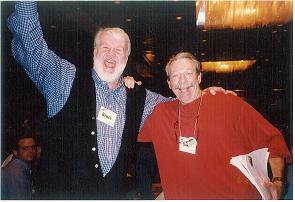
I really liked The Stranger’s article a couple of weeks ago about our battle with SF Weekly and it’s corporate parent, Village Voice Media. Eli Sanders is a good reporter, and he got most of it right.
But he did the same thing that a lot of people covering this legal battle have done, and it’s starting to get annoying. Everyone seems to want to play this as a battle of egos between Guardian Editor and Publisher Bruce Brugmann and VVM Executive Editor Mike Lacey. It’s as if we filed suit against them — and endured years of litigation and now collection efforts — just out of spite. It’s as if we were willing to go through all this just because Bruce didn’t like Mike Lacey.
Here’s Sanders’ spin:
These two men have hated each other for decades, but with increasing venom since 1995, when Lacey showed up in San Francisco in cowboy boots to announce that he and his partners had just purchased the tiny SF Weekly and planned to make a huge success of it.
The thing is, Bruce and Mike haven’t hated each other for decades. They weren’t terribly close, but they got along fine — and sometimes, they were political allies. In 1997, three years AFTER Lacey’s company bought our competitor, SF Weekly, the two joined forces at an Association of Alternative Newsweeklies convention in Montreal to help push a bylaws measure that kept daily newspapers out of our trade association. And as the picture above shows, they were almost, sorta, kinda pals. At least for a few minutes.
The last thing we wanted to do was sue these guys. It wasn’t personal; we had no choice. Sure, the Guardian and VVM have very different approaches to journalism and politics, but we’d have been happy to compete with them — the way newspapers with different viewpoints should, on a level playing field. And for all the rhetoric on all sides, the legal animosity only started when the Weekly actively tried to put us out of business by selling ads below cost.
I dunno; the VVM people have been awfully rude to me of late, and I guess they like this mano-a-mano shit, but the reality is: We sued to stop illegal conduct that was threatening our business. That’s the real story.
Lawsuit could expose SFPD-ABC collaboration
Imminent legal actions against San Francisco, its Police Department, and the California Department of Alcohol Beverage Control could reveal whether a pair of undercover agents went rogue in harassing nightclubs and aggressively busting parties or whether they were acting at the direction of top officials.
Attorney Mark Webb – whose work on a racketeering lawsuit against the policing agencies was the subject of cover stories in the Guardian and the SF Weekly – told us that on Monday, he plans to file that racketeering claim against the city (which will then become a lawsuit if the city rejects it, as it routinely does) and a related lawsuit in Superior Court involving the rough, unnecessary arrest of bartender Javier Magallon and harassment of Mike Quan, owner of The Room, Playbar, and Mist. Narrated surveillance video associated with the case was posted on YouTube yesterday.
Central figures in the lawsuit are SFPD Officer Larry Bertrand and ABC agent Michelle Ott, plain-clothes partners in an aggressive crackdown on nightlife over the last year. Webb said he plans to immediately seek police records and communications and to depose Bertrand and Ott to try to determine who ordered the crackdown, why, and when higher-ups became aware of their aggressive tactics.
“I would like to know if Bertrand is being sent places or if he’s just a lone wolf, and the CADs will show that,” Webb said, referring to computer-assisted dispatch reports that track activities and communications involving individual officers. Those and other records that Webb can access through the court-ordered discovery process could finally shed light on what’s behind the crackdown.
Webb had sought to have Mayor Gavin Newsom mediate this dispute before the cases were filed, saying the racketeering lawsuit will be expensive and divisive, and all the nightlife community really wants is an end to the harassment and assurance that it wouldn’t restart once the media attention passes. And Webb did have conversations with top Newsom aide Mike Farrah and with Nicolas King, Newsom’s liaison to the SFPD, but neither indicated that Newsom was willing to get personally involved. Newsom spokesperson Tony Winnicker also told us Newsom preferred to let Police Chief George Gascon handle the matter.
So Webb said he now plans to move forward with litigation. “If they’re not answering the call at City Hall, let’s get into the arena,” Webb told us.
Webb is an experienced litigator who has won multi-million judgments and who started his career in New York City helping prosecute Racketeer Influenced and Corrupt Organizations (RICO) Act cases against the mob, and now he plans to use RICO laws against what he says is a city-state enterprise to interfere with lawful nightlife activities in San Francisco.
“Webb gets it. It’s a weird mentality, the really good trial attorneys, and Webb is that,” said attorney Mark Rennie, who has spent decades working with the city’s entertainment industry and has helped advise Webb on the case.
Among the parties involved in the RICO claim are those involved in Webb’s other lawsuit against the city, as well as Club Caliente, its owner Maurice Salinas, Azul, its owner John Bauer, New York nightclub owners Phillipe Rieser and David Brinkley, Vessel, and Siobhan Hefferman, who was arrested by Bertrand and Ott at a private party. Others may be added soon.
Great American Music Hall, Slims, and DNA Lounge also claim to have been harassed by the ABC and have been involved in several meetings that led up to Webb’s lawsuit, but they’re not taking part in the lawsuit yet, partially because they fear retribution from the ABC.
“I probably would have jumped in, but I don’t want to walk into a hearing suing the ABC,” Slims and GAMH general manager Dawn Holliday told us, referring to Slims’ April 1 appeals hearing stemming from noise complaint citations triggered by one particularly cranky neighbor.
DNA Lounge, which has regularly documented the harassment campaign on its blog, decided to wait with the other two clubs before joining the suit. “We thought it was important to stand as a community and there were too many venues that were worried about retribution from the police or ABC if they joined the suit,” DNA general manager Barry Synoground told us.
But Synoground said he’s anxious to see what Webb’s suit unearths, noting that Bertrand and Ott haven’t been visible in recent weeks as complaints against them went public, and saying he thinks Commander James Dudley and other top SFPD brass are really driving this crackdown: “We may have taken one of his tools off the street, but he’ll find another.”
Synoground said most SFPD officers are very professional and they have no problem working with them, but Bertrand and Ott have unnecessarily and aggressively interfered with their business. Holliday goes even further in praising the SFPD, saying she has a good relationship with Bertrand and everyone in Southern Station, blaming her clubs’ troubles on the ABC and the unwillingness of top city officials to stand up for them.
So the internal SFPD communications, and those between the city and the ABC, could prove revealing. “On April 17, I can send out subpoenas to the cops and I can take Bertrand’s deposition 30 days from Monday,” Webb said, citing statutory response periods.
Webb expressed confidence in his case and said the police shakedowns and harassment fit well with the RICO statute, which has been used against a wide variety of enterprises over the years, including government agencies.
In fact, an American Bar Association book, “Civil RICO: A definitive guide,” by Gregory P. Joseph, seems to support Webb’s confidence. “Any person injured in his business or property by reason of a violation of Section 1962 of this chapter may sue therefore in any appropriate United States district court and shall recover threefold the damages he sustains and the costs of the suit, including reasonable attorney fees.’ This simple sentence has generated an avalanche of litigation,” the book begins.
It makes clear the intent of Congress that RICO laws “shall be liberally construed to effectuate the remedial purposes” of targeted individual seeking protection from harassment. A 1981 U.S. Supreme Court ruling (U.S. vs. Turkette) made clear even legitimate enterprises such as government agencies could be sued, and a 1994 ruling (NOW vs. Scheidler) settled a long dispute over whether the racketeering needed to be economically motivated, finding that it doesn’t.
Racketeering was defined by Congress as simply committing any of a long list of “predicate acts,” which include violence or the threat of violence, kidnapping (including false arrest), extortion, physical interference with business, malicious prosecution, and abuse of authority, all of which Webb says apply in his case. He is also reviewing the Guardian’s Death of Fun coverage from the last four years to find more examples of predicate acts involving the SFPD.
The hardest part of proving his case could be to show that it interfered with interstate commerce, although Webb said that’s met by efforts by Bertrand and Ott to prevent Rieser and Brinkley from transferring a liquor license from New York. But “Civil RICO” also said caselaw has established that “RICO requires no more than a slight effect upon interstate commerce,” citing the 1989 case U.S. vs. Doherty.
Like many who have had run-ins with Bertrand and Ott, Webb said he’s anxious to see what he finds in discovery: “What’s fascinating about this is you can uncover the whole system.”
Our Weekly Picks
>>WEDNESDAY 24
MUSIC
Mi Ami
I’m thankful for Mi Ami. Without the SF band that is two thirds ex-Black Eyes members, I’d be more wistful about that band’s untimely collapse. Listening to Mi Ami is like visiting an old friend; it’s even the next logical step in the evolution of that unmistakable Black Eyes sound. Sure, there are lots of drums and rhythmic bass, and the squealing vocals of Daniel Martin-McCormick are one-of-a-kind, but Mi Ami’s songs are longer, more about repetition and atmosphere. With a sophomore LP due this spring, Mi Ami’s abrasive sound isn’t ever going to snag an MTV spot — but they’ll always have a reliably loyal following of listeners to show for it. (Peter Galvin)
With High Places and Protect Me
8:00 p.m., $10
Rickshaw Stop
155 Fell, SF
(415) 861 2011
EVENT
“Luna Negra: A Night of Performance for and by Women”
It’s only right that during Women’s History Month, we sit down and listen to writers like Roxanne Dunbar-Ortiz. Born to a landless father/farmer and Native American mother in Oklahoma, Dunbar-Ortiz built a life around supporting the struggle of the disenfranchised. She protested the Vietnam War and played major roles in the Native American civil rights movement and publicizing U.S. treachery against the Sandinistas during the contra war. She’ll be joined onstage by other spoken word voices, Afro-Caribbean music, dancers, an Ecuadorian curandera, and not one Y chromosome. (Caitlin Donohue)
7 p.m. , $5–$7
Mission Cultural Center for Latino Arts
2868 Mission, SF
(415) 643-5001
>>THURSDAY 25
EVENT/MUSIC
Healing Haiti: An Evening of Arts and Culture
The Haiti benefits of recent weeks often bring together more talented artists than you’d normally find on a single bill. This one is no exception. The Berkeley label Wide Hive (celebrating its 10th anniversary) and the music workshop Own the Mic are uniting with the Element Lounge to put on a show that includes everything from belly dancing to new Bay Area R&B, with gift baskets and raffles thrown in. Tribal Mystics will bring the belly dance, while the music lineup includes DJing by Matt Cali and vocal turns by new voices Alexis Rose, Charito Soriano, Yvette Plant, and Guardian writer Lilan Kane. Radio mainstay Jamillions is one headliner — all proceeds go to Yele Haiti. (Johnny Ray Huston)
9 p.m., $5–$7
Element Lounge
1028 Geary, SF
(415) 440-1125
www.ownthemic.org/healing-haiti
DINE/EVENT
Querido Viejo Tequila Tasting Event
At some point, everyone has a bad run-in with tequila. It could be downing too many margaritas at your coworkers’ wedding or putting back shots because your friends thought you “weren’t quite drunk enough.” We all know this stuff is strong and not to be messed with. Fortunately, Querido Viejo Tequila is offering a tasting where you can actually enjoy the flavors and aromas and not feel pressured to pound one right after the other. This local distiller has been fermenting pure agave for years and is sharing its new line of hooch. The Terrace Room’s 180-degree view overlooks Lake Merritt, so be sure to bring a camera and enjoy the sunset. But remember: pace yourself. (Elise-Marie Brown)
6 p.m.; $2 tequila, $5 appetizer
Terrace Room
1800 Madison, Oakl.
(510) 903-3771
MUSIC
Ana Tijoux
As one of Chile’s most respected lady MCs, Ana Tijoux is different from the summery South American songstresses who often breeze through town. Born into exile, Tijoux began life in France, where her Chilean father and French mother fled during Pinochet’s cruel regime. As a teenager, she returned to her father’s homeland and quickly found a home in Santiago’s burgeoning hip-hop scene. It was there that she earned her cred as a conscious “rapera.” Her upcoming solo release 1977 (Nacional Records) drops lyrics that reflect on the year of her birth, and that unique moment in Chile’s turbulent history that heavily influenced her own. (Mirissa Neff)
With Funky C and Joya; DJ set by Juan Data
8 p.m., $12–$15
La Peña Cultural Center
3105 Shattuck, Berk.
(510) 849-2568
>>FRIDAY 26
MUSIC
Nite Jewel
She pops in a blank 8-track cassette and takes a deep breath before pressing the ‘Record’ button. Romona Gonzalez, the L.A. lady behind Nite Jewel, insists on making and mixing her sound with old gadgets. She hits play on another deck, letting the beats of early ’90s hip-hop and R&B reverberate on the speakers, while her fingers plunk out lace-lined synth-sounds. Nite Jewel is absolutely ideal for a hazy discotheque or any smoky bedroom with glowing stars on the ceiling. Gonzalez sings and the ghostly melodies bounce and swirl, pulling listeners into a desirable, hypnotic state. She is Debbie Deb, Bronx pop, and alternative disco all at once, layering sounds and personalities that pulse and push, yet still manage to relax and soar. (Amber Schadewald)
With Neon Indian, DJ set by Jonas Reinhart
9 p.m., $15
Mezzanine
444 Jessie, SF
(415) 625-8880
DANCE
Ballet Folclorico de Mexico de Amalia Hernandez
Ballet Folclorico de Mexico de Amalia Hernandez is one of the best in the grand tradition of researching indigenous dances and adapting them to the proscenium theater. It’s also a legendary family-run institution led by the daughter of anthropologist/dancer Amalia Hernandez, who founded the company in 1951. The dances still encompass a wide spectrum of the Mexican experience: an initial quasi-mystical encounter between Aztec gods and humans, the struggle for independence; and the carnivals associated with religious festivals. But they also include choreographies inspired by such mundane activities as games, hunting and wedding rituals. (Rita Felciano)
8 p.m., $25–$65
Marin Veterans Memorial Auditorium
10 Avenue of the Flags, San Rafael
(415) 499-6800
FILM/SEX
Too Much Pussy! Feminist Sluts in The Queer X Show
What do you get when you put seven ladies — musicians, artists, activists, sex workers, and porn stars — in a van and send them around Europe with the duty to discover the line between art and pornography? You get Too Much Pussy, a sex-positive road movie by Emilie Jouvet. The camera follows the group of radical women in and out of nightclubs in Paris, Berlin and Stockholm during the summer of 2009. They span sexual (dis)orientations and gender expressions and the experiences they gather are just as diverse: political, inspiring, sexy and frustrating. Chat up two of the stars, Madison Young and Sadie Lune, after the film for even more dirty secrets. (Schadewald)
8 p.m., $10–$15
Femina Potens
2199 Market, SF
(415) 864-1558
>>SATURDAY 27
MUSIC
Audio Alchemy: Kid Koala
Who doesn’t love Dan the Automator? From Dr. Octagon to Handsome Boy Modeling School, Loveage, and Deltron 3030, this guy is one of our favorite DJs. Fess up. He is. And here’s another reason to love: he’s presenting Kid Koala in Audio Alchemy, a bimonthly mixing of live music with top DJs at Yoshi’s. Yoshi’s has been been on some other for a minute now. Last year’s sessions with 9th Wonder, Black Quarterback and Manicato in the front room; Alan Marshall, De La Soul, Gil Scot Heron, and Amiri Baraka in the auditorium; swank mixers thrown by the dandies at Brooklyn Circus — they’ve got a tight off-hours scene. One that seems to be fusing together some tastier elements of our desolate culture. (D. Scot Miller)
With DJ Shortkut and the Jazz Mafia All-Stars
10:30 p.m., $20
Yoshi’s SF
1330 Fillmore, SF
(415) 655-5600
DANCE
ODC Pilot 56: “My Young Nostalgic Life”
ODC’s Pilot program showcases are a deal for audiences who like the thrill of discovery. They’re also a break for young choreographers, who get 11 weeks in a supportive environment to create work even as they learn ancillary skills such as marketing, program design, and production and box office management. Since the first Pilot in 1990, close to 300 choreographers have gone through this gentle boot camp. Pilot 56 features six women who collectively decided that “My Young Nostalgic Life” best describes ideas they want to explore through dance. (Felciano)
8 p.m. (also Sun/28, 5 and 8 p.m.), $12
ODC Commons
351 Shotwell, SF
(415) 863-9834
MUSIC
Soweto Gospel Choir
Times are tough in Soweto. Fault me for stating the obvious to provide context for the Soweto Gospel Choir. Are they joyful? Yes. Are they melodious? Uh-huh. Do their voices meld from ululatory to raspy to soaring to proud to a blend of gospel noise and traditional African rhythm? Do audiences come away clapping and laughing and smiling fit to beat the band? Sing it! Part of the group’s elation may have to do with the runaway success of their mission — providing shelter and hope to AIDS orphans in their home communities. So far they’ve toured the world performing for some pretty receptive big dogs — Nelson Mandela, Oprah and Archbishop Desmond Tutu, to name a few. (Donohue)
8 p.m., $25–$65
Paramount Theatre
2025 Broadway, Oakl.
(415) 575-6100
EVENT
Pearls Over Shanghai Kabuki Makeup Class
If the only knowledge you have of Kabuki makeup comes from Memoirs of a Geisha, don’t droop your head in embarrassment — instead, take a class on the traditional Japanese art form. RetroFit Vintage is offering a chance to educated the misinformed or the curious on what it takes to create the perfect Noh heroine. Kegel Kater will apply the makeup for her role as a whore, angel, and lotus dancer in Thrillpeddlers’ Pearls Over Shanghai. (Brown)
3–5 p.m., free
RetroFit Vintage
910 Valencia, SF
(415) 550-1530
EVENT
“Muchas Voces Una Vision/Many Voices One Vision”
What is the function of a poet laureate, exactly? I’m fairly certain I’ve never seen one designing fanciful special boards for the neighborhood diner, or doing anyone’s English homework. How can we put these decorated people of the pen to work? Happily, the dilemma is being resolved in fine fashion this weekend, when SF’s official bards past and present join forces and rattle off original lines to benefit the people of Haiti. Catch readings by poet laureate Diane di Prima and her predecessors Devorah Major and Jack Hirschman. They’ll be joined by more than 30 other artists. (Donohue)
7 p.m. , $10 (suggested donation)
La Peña Cultural Center
3105 Shattuck, Berk.
(415) 849-2568
>>MONDAY 29
MUSIC
Nellie McKay
You probably didn’t see it coming, but now that Nellie McKay’s As Normal as Blueberry Pie: A Tribute to Doris Day (Verve) is out, it’d be tough to come up with a more suitable pairing. Musician, comedienne, actress — if there’s one thing McKay isn’t, it’s predictable. But who knew she’d pay genuine homage to one of the swinginest singers of the 1950s? Setting aside her often self-depreciating wit, McKay reintroduces Day to a new generation of fans with irresistible exuberance and charm. To make it a truly classy affair, the Great American is going for the sit-down experience. (Galvin)
With Howard Fishman
8:00 p.m., $21
Great American Music Hall
859 O’Farrell, SF
(415) 885-0750
MUSIC
Taylor Texas Corrugators
As founder and leader of legendary Southern California punk rockers Black Flag — he started the band and its record label, SST — Greg Ginn has earned his place in the DIY underground pantheon. The famously hard-working artist has never been complacent, and he comes to the city tonight with his new project, the Taylor Texas Corrugators. The Corrugators finds the guitarist leaning in a more Western swing direction, but, as always, with a host of other musical influences thrown in to keep things evolving. (Sean McCourt)
With Guella and Barney Caldron
8 p.m., $10
Red Devil Lounge
1695 Polk, SF
(415) 447-4730 www.reddevillounge.com
* The Guardian listings deadline is two weeks prior to our Wednesday publication date. To submit an item for consideration, please include the title of the event, a brief description of the event, date and time, venue name, street address (listing cross streets only isn’t sufficient), city, telephone number readers can call for more information, telephone number for media, and admission costs. Send information to Listings, the Guardian Building, 135 Mississippi St., SF, CA 94107; fax to (415) 487-2506; or e-mail (paste press release into e-mail body — no text attachments, please) to listings@sfbg.com. We cannot guarantee the return of photos, but enclosing an SASE helps. Digital photos may be submitted in jpeg format; the image must be at least 240 dpi and four inches by six inches in size. We regret we cannot accept listings over the phone.
Street view

By Skyler Swezy
news@sfbg.com
The Haight-Ashbury is out-of-control, according to some recent news reports and testimony by cops and other backers of the proposed sit-lie ordinance. They report street toughs brazenly smoking crack, blocking sidewalks, spitting on babies, and intimidating citizens with pit bulls.
As this story goes, dangerous thugs have replaced harmless beggars. They’ve gone from annoying to menacing, a change police say they’re helpless to address without legislation banning sitting or lying on sidewalks, which Mayor Gavin Newsom and Police Chief George Gascón introduced March 1.
Proponents and opponents have attended City Hall meetings and voiced their arguments in the media. The police, homeless rights advocates, Haight Street business owners, residents, Newsom, and columnists have spoken their piece. But what do the street kids, who haven’t been heard from in this debate, have to say for themselves?
So on March 19, I spent the day walking the Haight to get the perspective from the street, asking kids what they think is going on?
It’s 3 p.m. and I’m standing on the southwest corner of Central and Haight streets next to a Bob Marley mural painted on the side of a liquor store. A cop car cruises by. With no thugs or panhandlers in sight, I head toward Golden Gate Park along the south side of the street.
On the corner of Masonic and Haight, there are some well-kept teens perched against the wall of X-Generation. Clutching shopping bags, they are not panhandlers, but they sit on the ground because Haight Street doesn’t have benches, except for one on Stanyan facing the park.
These kids clearly aren’t the targets of this ordinance, so I move on to the notorious Haight-Asbury intersection, which is also devoid of vagabonds. An old woman and young boy, both well-dressed, squat in front of Haight Asbury Vintage, watching shoppers pass by.
Almost at the end of the block, outside a closed storefront, a scruffy young man is perched on a back pack holding a battered piece of cardboard that reads “SMILES/HAVE A NICE DAY!? OR NIGHT.”
“You have a beautiful smile,” he croons to passersby. Most stare straight ahead, some smile without making eye contact; a woman in her 30s asks to take his picture. Jay is 18, has a scarce beard and crust in the corners of his sleepy pale blue eyes. He is from Ohio and says he has been bumming on Haight and sleeping in the park for about three months. He hitchhiked to San Francisco because his sister is “a back-stabbing crack head, so I left.”
He doesn’t think panhandling has become more aggressive recently, but that business owners “just want to be asses.” He’s not much of a talker and more interested in smiles, so I leave Jay to his work.
On the next block I meet Kevin Geoppo, 31, cupping a handful of coinage, sitting on the window ledge of a storefront under renovation. Kevin says he’s a heroin addict who grew up in Orlando, Fla., and made his way to San Francisco years ago. He’s obtained an SRO and primary care doctor, but can’t get a job.
He sees both sides of the sit/lie law debate. “Those who sit and lie do cause a lot trouble, stir up energy that isn’t needed to [hurt] tourism, and [threaten] violence, so I can understand why this is being talked about,” he says.
At the same time, he is wary of how the police would use the law and at whom it would be directed. He doesn’t think things are getting worse, but he says the panhandling and menacing attitudes of some kids ebb and flow as different groups pass through the city.
“A lot of these yuppie, rich, bureaucrat people are trying to clean up everything because if you take a left or a right anywhere off Haight Street, it’s rich people living in those houses,” he says. I let him get back to business and proceed down the street.
I decide to drop into Aub Zam Zam cocktail lounge for a veteran bartender’s opinion. Owner Bob Harpe is behind the horseshoe bar, slicing limes and chatting with long-time Haight resident Paul Zmudzinski.
Harpe doesn’t have problems with aggressive or congregating street kids. “If you ask them to move and treat them with a general level of respect, they go on their way.”
He believes the rising number of homeowners in the neighborhood and businesses catering to a more affluent clientele are behind the recent uproar. “The rents on Haight Street have escalated dramatically, so boutique owners have to pump up their prices. Then you get more affluent shoppers who are turned off by the skuzzy-looking street kids coming through,” Harpe says. “The whole thing is kind of disgusting.”
Back outside, I head to the next block and come across Kasper who is “flying a sign” that reads “SEX!!! NOW THAT I HAVE YOUR ATTENTION, SPARE ANY $$$?”
He is a 33-year-old traveler who just landed back on Haight, having spent the last three weeks in Berkeley. He’s headed north to a 420 Rainbow gathering and then to Idaho for work. With combat boots, Army pants, and a neck tattoo, he’s a tough-looking guy with a soft-spoken voice.
“They don’t understand all the money they’ll lose. We panhandle money in the street and then spend it in the stores here,” Kasper says. “Those liquor stores rely on street people.”
He says many tourists come to the Haight to see people playing guitars, banging drums, and selling their hemp trinkets. And when it comes to instances of violence or aggressiveness, those are limited to a few of the community and could happen anywhere, regardless of a sit-lie law.
“These things are heavy,” he says nodding to his backpack. “To have to stand, hold your straps, and fly a sign to get something to eat is just ridiculous.”
McDonalds is the last establishment before Golden Gate Park, which serves as a three-mile squatter haven stretching to the Pacific Ocean. Beneath the golden arches, three guys are singing an improvised McDonalds song, but two busted guitar strings kills their burger ballad hustle.
The three agree to an interview and form a semicircle on the sidewalk. Stoney, 19, the guitar player, is wearing sunglasses, a backwards cap, and is heavily scarred on his arms and neck. “Are you against weed?” he asks, before hitting a pipe carved from a deer antler.
Angelo, 23, is a self-dubbed vagabond originally from Virginia. He just got out of jail for selling weed to a cop in the Tenderloin. Nick, 18, wears a mighty Afro and says almost nothing.
Two bike cops zip up and tell us to move it. “You’re blocking the sidewalk,” one cop says. Everyone stands up. “It’s not illegal yet, dude!” Stoney yells back toward the cops as we cross Stanyan to enter the park.
Stoney and Angelo agree with each other that lawmakers are focusing on the bad actions of a few to push all street kids off Haight. “We have the right to use the sidewalk just like anyone else,” Angelo says. “It’s crazy, man. We’re all just fuckin’ a bunch of cells put together, floating around a ball of fire in space.”
The sit-lie ordinance could be considered by the Board of Supervisors next month. For details on a March 27 citywide protest of the measure, visit www.standagainstsitlie.org.
The new War on Fun
news@sfbg.com
For several years, the Guardian has been running regular stories chronicling what we’ve dubbed the Death of Fun, a trend of official crackdowns and shakedowns on people who throw parties and festivals in San Francisco. In the last year, that trend has started to morph into an often brutal War on Fun, with a growing list of atrocities and casualties associated with this overzealous new approach to killing the city’s entertainment industry.
Why this is happening is baffling to those most affected: nightclub owners and workers, party promoters, DJs and VJs, fundraising activists, and people just out to have a good time without being harassed by a cop. But in recent months, we’ve learned much more about what’s happening and who the main perpetrators are.
Two undercover enforcers have been at the center of just about every recent case of nightclubs or private parties being raided without warrants and aggressively shut down, their patrons roughed up (see “Fun under siege,” 4/21/09) and their money, booze, and equipment punitively seized “as evidence” (see “Police seize DJs laptops,” 11/24/09) even though few of these raids result in charges being filed in court.
Officer Larry Bertrand of the San Francisco Police Department’s Southern Station and Michelle Ott, an agent with the California Department of Alcoholic Beverage Control, are plainclothes partners who spend their weekends undercover, crashing parties, harassing disfavored nightclubs, brutalizing party-goers, and trying to send the unmistakable message that they’re in charge of San Francisco nightlife. Neither responded to our interview requests.
Isolated incidents of intolerant cops and NIMBY citizens who repeatedly complain about certain clubs or festivals has been a problem for years (see “Death of fun,” 5/24/06 and “Death of fun, the sequel,” 4/24/07). Top city officials have opted to cancel events such as Halloween in the Castro District rather than try to manage them better, and the nightlife community has tried to organize in defense of its interests (see “Fighting for the right to party,” 7/1/08) with mixed results.
But the personal War of Fun by Bertrand and Ott seems to have galvanized and united the nightlife and festival community like never before, leading to the creation of a new California Music and Culture Association and prompting threats of a federal lawsuit alleging the ABC-SFPD collaboration is a racketeering scheme designed to harass, disrupt, and extort people engaged in otherwise lawful activity.
The myriad horror stories associated with Bertrand and Ott have also finally begun to draw attention from the Mayor’s Office, which has quietly pushed the SFPD to rein in Bertrand and change its policies on raiding parties and seizing property. State Sen. Mark Leno also has gotten involved, brokering a March 12 meeting between club owners and Steve Hardy, director of ABC (which, in addition to cracking down on nightclubs — see “Busting bars,” 6/23/09 — has recently announced a campaign against fruit-infused liquor).
“They were going to see how they could unwind this a bit,” Leno told us, adding that he was “infuriated” by stories of abusive treatment of the public. “The fear that it spreads through the community is unacceptable.”
The question now is what Hardy, Mayor Gavin Newsom, and Police Chief George Gascón — who has ordered some crackdowns and wants greater authority to discipline problem officers — is going to do about it.
CHAOS AT A STUDENT PARTY
It was after midnight on Jan. 31 when Krystal Peak, a journalist with San Francisco State University’s Golden Gate Xpress, received a call from her managing editor. There was a commotion and a swarm of police cars outside a student party at Seventh and Minna streets near her home, and she was asked to investigate.
She came upon the aftermath of a melee between police and partygoers that had taken place after a fundraising event at a SoMa warehouse art space was upended. The benefit was organized to raise legal funds for students who staged a building occupation at the University of California at Berkeley, in defiance of budget cuts.
The event was clearly chaotic, and it’s hard to sort out exactly what happened and when. City officials say the partiers were throwing bottles and firecrackers at the police; people at the event say the cops started it all.
But the tales partygoers tell about the behavior of Bertrand and Ott, the undercover enforcers, are similar to a series of other stories involving the pair, stories published in the Guardian and elsewhere.
There had been multiple arrests by the time Peak arrived on the scene. Numerous witnesses asserted that things were going along without incident until a fire marshal arrived in response to a complaint, and in short order, two officers who’d been there in plainclothes for hours — Bertrand and Ott — began shouting, tackling people, and kicking in doors.
Police Chief George Gascón acknowledged that the department has been targeting underground parties. “We get a lot of resident complaints about it,” he said in a recent Guardian interview. “We’re talking about a lot of the underground parties, or the parties where the promoters are exceeding their authorities to a number of people.”
Several hundred attended this particular party. Of the 11 people arrested, eight were either detained or cited and released. None faced underage drinking or drug charges. At least five were charged with resisting arrest. One individual was charged with vandalism, two were charged with battery on an officer, and two detained for being drunk in public.
Peak began photographing the scene: busted-up chairs, uniformed officers guarding the entrance, police cars everywhere. She zoomed her lens to capture the wreckage inside. None of the uniformed officers seemed to have a problem with her — but when she spotted the undercover officers with exposed badges, that changed.
The cops broke through the door, yelling. “They said, ‘This is an investigation, you’re not allowed to be here.'<0x2009> she said. “We told them we were with the press.” They threatened to arrest her.
Shortly after, the plainclothes officers crossed in front of her to an unmarked car. She took another picture. Bertrand, a tall guy with a shaved head, allegedly turned and grabbed her arm, and both officers shouted at her. “[Ott] said to me, ‘Your flash has impeded my investigation,'” Peak recounted. She was cuffed and arrested on the spot, and her camera was confiscated.
She was cited for obstruction of justice, but the charges were dropped. And she got her camera back — but says the SD memory card, where all the photos were stored — was missing.
“I flipped [the camera] open … and found the SD card was missing,” she said. She asked Bertrand where it was. “He said, ‘I don’t know what you’re talking about,'” Peak recalled. Bertrand, she recalled, then looked around at a group of officers watching the exchange, and announced, “This woman is refusing to leave. I’m going to have to re-arrest her.” Ott appeared, according to Peak, and insisted that there was no evidence the memory card had been in the camera in the first place.
“My camera will not ignite a flash unless there’s a memory card in there,” Peak explained. In the end, she left empty-handed — without photos of the undercover officers.
BUSTING DOORS
Earlier, when the party was in full swing, a 24-year-old California State University, Fullerton student visiting from Los Angeles says when the fire marshal entered, Bertrand flashed his badge, yelling at everybody to get out. “It was really aggressive from the get-go,” said the Fullerton student, who spoke on condition of anonymity because he had a pending legal case. “It’s very hard for me to describe the intensity to which this guy was busting down doors.”
Later, the young man from L.A. said, he was following people who left in a rush, and ran to catch up. “Shortly after, I felt a blow to the back right of my head,” he said. “My glasses flew off, and I was tackled to the ground. My forehead was being pushed straight into the ground and they were holding my hair. I kept repeating … please, I can’t see — I’m legally blind. I thought three or four officers were on top of me, and they were saying, ‘Fuck you, you little anarchist punk.'<0x2009>”
That’s when he said he felt a sensation like “a bunch of really intense bee stings on my left side, just above my hipbone.” He thought he was Tasered — and photos he showed us depict a skin burn. SFPD officers are not authorized to carry Tasers.
“It sounds like a stun gun, not a Taser gun,” Ken Cooper, a firearms and Taser instructor based in New York, noted when the incident was described to him.
When we shared the photos with SFPD’s media relations department, Lt. Lyn Tomioka noted, “I can tell you that we do not have any tool that would produce the type of wounds shown in the picture that you attached, or produce a stinging sensation.”
The L.A. visitor said he was delivered this explanation from an officer while in the holding cell: “One of your anarchist buddies must’ve had a Taser, ran over to you trying to get one of our officers, got you instead, and ran away.”
Cooper Brislain, a Web developer from Santa Cruz, told us his iMac was destroyed that night. A friend of the owners of the art space, he was there doing video mixing for the party, he explained. After the trouble started, he began carrying his computer and mixing equipment toward the door. “The uniformed officers were going to let me go. I told them, ‘I just came here to perform.’ They seemed OK,” he said. Then he encountered Bertrand.
“He … grabbed me by the collar, led me over toward the wall, and sat me down,” Brislain told us. He says Bertrand and Ott seized his computer. Brislain says no charges were filed against him.
The morning after, he found that his computer had been smashed up. His friends found it in pieces at the bottom of the stairs. To this day, he says he has not been able to retrieve his ID, which was seized that night. “I tried calling [Bertrand] on his extension to leave a message and never heard back,” he says. “They told me he probably wouldn’t return voicemails.” The District Attorney’s Office has a different perspective. D.A. spokesperson Brian Buckelew said the partygoers were drunk and “going nuts on police.” People were throwing firecrackers, he said. “It obviously got out of hand, and people were throwing bottles at police,” he said.
The student from L.A. allegedly shoved a female officer, Buckelew said. According to the report, he said, police officers were taking someone into custody, and he tried to pull them free.
Nevertheless, even Chief Gascón agrees that it’s not okay to destroy someone’s personal property. “If in fact the allegations were proven to be the case that an officer took somebody’s laptop and threw it down the stairs,” Gascón told us, “that would be inappropriate, and that officer would be sanctioned accordingly.” He noted that he met with an attorney from the Electronic Frontier Foundation about a recurring trend of officers — Bertrand in particular — seizing DJ laptops at underground parties. “We’ve met with them and we’ve agreed to actually tighten up the protocols in how this would be handled,” Gascón noted.
A RICO SUIT
The list of local nightclub clubs that have been recently targeted by Bertrand and Ott or subjected to ABC sanctions is long. It includes Great American Music Hall, Slim’s, DNA Lounge, Mist, Whisper, the Room, Vessel, Azul, Butter, and Club Caliente (which closed down after its mostly Latino customers were scared away by repeated raids).
“Using the now familiar pattern and ruse of ABC authority, these raids have been without warrant and without probable cause, under the pretext of finding liquor violations,” attorney Mark Webb wrote in a claim against the city, describing the harassment of Caliente owner Maurice Salinas and later adding, “Despite numerous raids, the invading officers [Bertrand and Ott] managed to ‘uncover’ a single infraction: one customer used his brother’s ID card, claiming he was over 21 to gain entry. For this reason, Mr. Salinas was cited and fined, bullied, intimidated, and yelled at on the spot.”
Webb said such behavior isn’t legitimate police work, but unlawful harassment. In fact, this experienced litigator said it’s far closer to the shakedowns and extortion rackets familiar to him from the start of his legal career in the late 1970s prosecuting organized crime cases in New York City.
That’s why he’s threatening to bring a novel lawsuit against the city and ABC under federal Racketeer Influenced and Corrupt Organization (RICO) Act, a law designed go after the mob, but which has since been adapted to target entities ranging from the tobacco industry to the Los Angeles Police Department.
Webb told us that interference with legitimate business operations, such as running a nightclub, is the essence of RICO suits. As part of the case, Webb plans to submit a surveillance video that shows Bertrand kneeling on the neck of bartender Javier Magallon from The Room and twisting his arm. Webb gave us a copy of the video.
Another element of making a RICO case is the use of intimidation and retaliation against those who complain — which was central to a March 17 SF Weekly story about promoter Arash Ghanadan being inappropriately singled out for arrest by Bertrand as retaliation for filing a complaint against the officer with the Office of Citizen Complaints.
Webb says he has a strong case that he intends to file soon, but that most of his clients just want the SFPD to rein in Bertrand and stop facilitating ABC actions. “I want to have a sit-down with Gavin Newsom,” Webb said. “I am calling on Mayor Newsom to come in and mediate what would be an expensive, divisive fight that will generate national interest … I think this thing can go way quickly without litigation.”
Newsom press secretary Tony Winnicker, who said Newsom has brought concerns about Bertrand to the chief’s attention, didn’t immediately embrace Webb’s offer. “The mayor would rather leave it to the chief,” Winnicker said.
So the question for Gascón is whether he’s willing to take on the cowboy cops within the SFPD’s ranks. After all, Bertrand is also on the San Francisco Police Officers Association Board of Directors.
The nightlife community is organized like never before and plotting its next move in fighting a war it didn’t initiate and barely understands. Whether that war continues now seems to be a question for the party crashers and their supervisors.
Masthead
To submit an event, organization, or business for editorial consideration, please click here.
The San Francisco Bay Guardian has been printing the news and raising hell since 1966. A member of the Association of Alternative Newsweeklies, we publish a paper issue every Wednesday containing indepth news reports, progressive opinions, thoughtful and entertaining arts and culture coverage, local guides, and comprehensive listings of the most interesting Bay Area events. We update our SFBG.com blogs and Internet content daily with breaking news, slideshows, event reviews and previews, and dynamic features.
We distribute 50,000 copies of the Bay Guardian each week. If you’d like to advertise with us, please click here or call the numbers below. If you’d like to submit an event or business for coverage consideration, please click here. For general questions or comments, please call (415) 255-3100. Join our Facebook community here and follow us on Twitter here. We love to hear from our readers!
TO SUBMIT AN EVENT OR BUSINESS FOR CONSIDERATION, PLEASE CLICK HERE.
THE SAN FRANCISCO BAY GUARDIAN
835 Market, Suite 550
San Francisco, CA 94103
EDITORIAL, CIRCULATION, BUSINESS (415) 255-3100
FAX (415) 437-3657, (415) 255-8955
LOCAL/NATIONAL ADVERTISING (415) 255-4600
FAX (415) 487-2594
FAX (415) 621-2016
THE SAN FRANCISCO BAY GUARDIAN
835 Market, Suite 550
San Francisco, CA 94103
EDITORIAL, CIRCULATION, BUSINESS (415) 255-3100
LOCAL/NATIONAL ADVERTISING (415) 255-4600
EXECUTIVE EDITOR Marke Bieschke, marke (at) sfbg.com
EDITOR Steven T. Jones, steve (at) sfbg.com
EDITORIAL SENIOR EDITOR, ARTS AND ENTERTAINMENT Cheryl Eddy, cheryl (at) sfbg.com
NEWS EDITOR Rebecca Bowe, rebecca (at) sfbg.com
MUSIC EDITOR Emma Silvers, esilvers (at) sfbg.com
STAFF WRITER Joe Fitzgerald Rodriguez, joe (at) sfbg.com
EDITOR-AT-LARGE Bruce B. Brugmann, bruce (at) sfbg.com
General arts and culture inquiries: arts (at) sfbg.com
News tips: news (at) sfbg.com
COLUMNISTS Jessica Lanyadoo, Marcia Gagliardi, Stuart Schuffman
CONTRIBUTING WRITERS Chris Albon, Robert Avila, David Bacon, Garrett Caples, Michelle Devereaux, Camper English, Rita Felciano, Peter Galvin, Shawn Gaynor, Nicole Gluckstern, Max Goldberg, Gary Hanauer, Dennis Harvey, Justin Juul, Martin A. Lee, Erick Lyle, Sean McCourt, D. Scot Miller, Erik Morse, Patrick Porgans, J.B. Powell, Mosi Reeves, Ben Richardson, Marcy Sheiner, Norman Solomon, Matt Sussman, Juliette Tang, Michelle Tea, Andrew Tolve, Andre Torrez
ART
ART DIRECTOR Brooke Robertson
CONTRIBUTING ARTISTS Keeney and Law Photography, Pat Mazzera, Rory McNamara, Matthew Reamer, Charles Russo, Luke Thomas, Tom Tomorrow
PRODUCTION
PRODUCTION MANAGER Bill Evans
ASSISTANT PRODUCTION MANAGER Doran Shelley
CIRCULATION
CIRCULATION MANAGER Mike Higgins
BUSINESS
CONTROLLER Sandra Lange
SALES AND MARKETING
ADVERTISING DIRECTORS Ari Spanier and Holly Nicolson
AD SALES Emily Forster
MARKETING Devyn McNichol and Tai Barchuk
SAN FRANCISCO MEDIA COMPANY
PRESIDENT Dennis Francis
PUBLISHER Glenn Zuehls
GENERAL MANAGER Pat Brown
Banks declare SF Weekly and parent company in loan default
The Bay Guardian’s lawsuit against SF Weekly and its parent company took a dramatic turn this week when a banking syndicate announced that Village Voice Media has defaulted on its $77 million loan.
San Francisco Superior Court Commissioner Everett A. Hewlett, Jr. also ordered that all of the Weekly’s advertising income be sequestered in an account designated by the Guardian and held there until April 5, when the Guardian will ask the court to appoint a receiver to take control of the Weekly’s assets.
The Weekly and its parent owe the Guardian more than $21 million as the result of a 2008 lawsuit verdict. A San Francisco jury found that the Weekly had sold ads below cost in an effort to damage the Guardian.
The case is on appeal, but the Weekly and Village Voice Media haven’t posted an appeal bond — essentially an insurance policy that would guarantee payment of the judgment. So the Guardian has the legal right to collect the money.
VVM has been hiding its money behind a complex corporate structure, but in recent weeks the Guardian has won a series of court decisions that have allowed us to seize two Weekly vehicles, all of the income that the newspaper’s subtenants pay for leasing office space, and 50 percent of the Weekly’s ad revenue (and 100 percent of the revenue from credit card payments).
In an effort to block us from collecting that revenue, the Weekly filed a motion March 16 seeking a restraining order that would have stopped the Guardian from contacting Weekly advertisers. The court refused to issue the order – but as part of its application, VVM disclosed some rather dramatic facts.
Among the exhibits filed in court: A March 12 letter from the Bank of Montreal, which leads a banking syndicate that has helped VVM expand and advance its alternative newspaper empire. The letter, signed by Managing Director Thomas McGraw, states that because of the “recent economic downturn and the resulting financial difficulties,” VVM had been “unable to meet its amortization payments” and had been forced to renegotiate the loan in June, 2009. That new agreement had required that VVM send all of its profits — that is, “all revenue above its costs, plus a minimal operating cushion” — directly to the bank.
And now that the Guardian has been awarded a lien on all of the Village Voice papers and the right to half the Weekly’s income, the bank had declared VVM in default on the entire loan, which now stands at $77 million.
The default allows the bank to claim that it has the first right to any Weekly ad revenue, and VVM lawyer Randall Farrimond tried to make that argument to Commissioner Hewlett. But Hewlett was skeptical: “The Court never determined that the Bank of Montreal had any rights that had been adjudicated yet,” Hewlett said at a March 16 hearing. In fact, after hearing that the bank had sent its own letters to Weekly advertisers ordering them to send payments directly to the bank, Hewlett noted:
“Now, I’m not terribly sympathetic with Bank of Montreal doing what they did. “I mean it is possible that, absent some adjudication of their interests, that they are in contempt of court by interfering with the Court’s order.”
Hewlett said he had no intention of granting the restraining order or changing the essence of his earlier ruling — that the Guardian had the right to half SF Weekly’s income stream. But to save the advertisers from confusion over who to pay, he ordered that all money collected from advertisers be placed in a bank account chosen by the Guardian, in a bank that was not part of Bank of Montreal’s syndicate.
The Guardian will be back in court April 5 to ask for the appointment of a receiver, who would take control of the Weekly’s business operations and, under court guidance, divide any revenue between the Guardian and any other creditors.
In the meantime, VVM and the Bank of Montreal have asked a judge in Delaware – where SF Weekly is formally incorporated – to block collection efforts in California.
At a surprise hearing where the Guardian’s lawyers were given only five minutes warning and had no opportunity to present any evidence, the Delaware Chancery Court was nonetheless very skeptical of Bank of Montreal’s claims, and essentially ruled only to maintain the status quo until the Court could make a more informed decision.
The case continues to draw extensive news media interest; the Stranger, a Seattle alternative paper, ran a lengthy, detailed story on the case March 17.
You can read the key documents (including a declaration from Weekly publisher Josh Fromson and the bank letters) in the recent filing here. (PDF)
Coming soon to “a San Francisco sidewalk near you”

Early this month, San Francisco Police Chief George Gascon explained to the Guardian his rationale for a proposed sit / lie ordinance, which would make it illegal to sit down or lie down on San Francisco sidewalks. “We’re responding to quite frankly what is a tremendous groundswell of pressure from residents and business people about very aberrant, aggressive behavior,” he said. “We don’t have an existing tool to deal with that behavior,” in the form of other city ordinances, he said.
The proposal has been discussed officially during public hearings at the San Francisco Police Commission, the Board of Supervisors Public Safety Committee, and in a series of editorials at local media outlets. It’s shaping up to be quite controversial.
And if an upcoming event sparked by the debate surrounding sit-lie is any indication, there is a “tremendous groundswell of pressure” on the other side of the coin, too. A group of organizers who recently created a Facebook group called “San Francisco Stands Against Sit-Lie” are also the architects behind a daylong event to be staged on city sidewalks called “Sidewalks are for People!” The event will be held March 27, on “A San Francisco Sidewalk Near You,” according to the event announcement.
What exactly will take place on the sidewalks is largely undefined, but it all sounds very, um, San Francisco. “On Saturday, March 27 people all over San Francisco will be doing what they love on the city’s sidewalks and they will be inviting family, friends, and neighbors to join them,” the event page explains. “Music, barbecue, yoga, lemonade stand, read, relax, art, talk, sun bathe, chess, meditate, tai chi, eat, knit, dance, paint, write, sit, lie down, play, chalk drawings, sing, DJ, drums, chill — Anything!”
Andy Blue won’t take credit for anything more than helping to brainstorm this event idea and doing some Facebooking, but he’s clearly excited about all the various forms the sidewalk shindigs could take. “We knew that if the word [about a sit-lie ordinance] got out to a broader audience, people would be really alarmed,” Blue told the Guardian. “We want to show that San Francisco is unified in its celebration of public space and civil liberties.” The proposed law, he added, “doesn’t represent what this city is about.”
Groups who have been named as opponents of a sit/ lie ordinance include the AIDS Housing Alliance of SF, Axis of Love SF, Causa Justa :: Just Cause (CJJC), the Coalition on Homelessness, Creating Alternatives to Castro Homelessness (CATCH), Haight-Ashbury Neighborhood Council (HANC), the Harvey Milk LGBT Democratic Club, the Homeless Youth Alliance, the Housing Rights Committee of SF, La Raza Centro Legal & Day Labor Program, the SF Lawyers’ Committee for Civil Rights, the National Lawyers’ Guild, POOR Magazine/Poor News Network, Pride at Work, San Francisco Tenants’ Union, and the St. Anthony Foundation.
“So far, in the mainstream media, there’s been a very narrow discussion and it’s been driven by fear, and it’s been driven by people who don’t live in San Francisco,” Blue said in a swipe at San Francisco Chronicle columnist C.W. Nevius, who lives in Walnut Creek and has penned a series of editorials complaining about street kids harassing business patrons in the Haight-Ashbury neighborhood. “We want to show that there are people all over the city who don’t want this draconian law.”
So you think you can choreograph?

arts@sfbg.com
DANCE On March 11, at the eighth Dance Discourse Project — an ongoing series of artist-driven discussions sponsored by CounterPULSE and Dancers’ Group — the topic was “Dance in Pop Culture.” Reality shows like So You Think You Can Dance? and Dancing With the Stars have raised questions about their effect on theater-based dance. Most participants agreed that these media-driven programs have created at least one beneficial change. For reasons cultural and historic, large sections of the population still think of dance as something unknown and unfamiliar. The popularity of these programs — controversial as they are in terms of artistic quality — have made dance more accessible and democratized the art.
The night after that discussion, democratization of a different type took place in the Mission. It was time for another entry in Dance Mission Theater’s long-running “Choreographer’s Showcase” series. Twice a year a cattle call goes out to dancers in the Bay Area. It’s not for a chance to audition or submit a proposal to be considered by experts. Rather, it’s a wide-open process: you have something you want to show, let ’em know — first come, first served.
The result is a freewheeling two hours of dance, with usually about 12 soloists and groups. They range from the barely competent to the highly professional. The house is packed with family and friends who come to cheer their favorites and are exposed to a wide spectrum of theatrical dance. This latest show was no different.
Three soloists stood out. Herve Kayos Makaya’s La Lutte Continue, performed by the choreographer, showed a superb dancer dragging two heavy burlap bags before bursting into an explosive African and Western vocabulary mix of leaping feet and racing arms. Currently a work in progress, the finished Lutte is something to look forward to at the CubaCaribe Festival in late April. First Creation had choreographer-dancer Alison Hammond scoot around the floor, shaking a tambourine. Kneeling on the floor, flowing hair obscuring her head, she deployed neck muscles the size of a prizefighter into a rollicking earthquake before sending her long legs into crotch-exposing propeller rotations. Surely this was one of the oddest performances seen on that stage. Liz Brent’s masked that person you meet was so short it was over before you noticed it. Though tentative, the idea of using hands as a primary expressive tool warrants further exploration.
I have a soft spot for the large Strong Pulse Crew, Kirstin E. Williams’ hip-hop student group from City College. For some of the dancers, it’s a chance to shine; for others, it’s a chance to try, and there is room here for all. Bringin’ It Back Remix featured a welcome dream section in which the dancers choreographed their own parts. Meanwhile, Kimberly B. Valmore teaches college students using a ballet-based eclectic vocabulary. The imagistic Answer the Call, with a central couple surrounded by an ensemble moved with a pulsating febrile intensity, nicely balanced stasis against full-force propulsion. Some of Valmore’s dancers have professional potential. Silvana Sousa’s samba choreography for Syncope of Brazil highlighted the difference between dancers and performers. Except for the three soloists, these samba dancers were too self-consciously awkward to bring to their performance that all-important ingredient called projection.
Two companies managed to create compelling emotional atmospheres. Lee Parmino and Janey Madamba’s Awakening made good use of a small corps in a piece that suggested disruption and healing of a relationship. There was something vaguely ominous in Hilary Palanza’s bent-over and head-butting duets A Perplexing and Brief Study of My Loss. She was shattered by more the score’s sounds of breaking glass.
Our Weekly Picks
WEDNESDAY 17
DANCE
Ben Levy
Folk and social dancing exert a pull on the imagination because they allow for participation even if you have two left feet. Ben Levy’s Intimate Visibility — part of Dancers Group’s ONSITE program, which sponsors free public performances in primarily outdoor locations — is a contemporary version of the informal dances at family gatherings. Instead of making friends on Facebook, Levy suggests trying it on the street. He designed the piece for video installation, dancers, and a flash mob. Unlike ONSITE’s first participant, Patrick Makuakane, who put his “Hit and Run” Hula dancers on a city bus and performed, more or less randomly, at 10 different locations on a single day, Levy is traveling his intimate show for hundreds through March 26. (Rita Felciano)
8 p.m., free
Washington Square, SF
9 p.m., free
Union Square, SF
415-920-9181
MUSIC
Filthy Thieving Bastards
Prepare yourself for a punk rock Paddy’s Day with an all-star lineup that’ll do Brendan Behan proud. Counting members of the Swingin’ Utters among their rank, the Filthy Thieving Bastards combine the influences of their independent upbringing with the sounds of the legendary Pogues and other folk-fueled rockers. The band’s material runs from stripped down working-class ballads to raucous tunes. Special guests include Blag Dahlia of the Dwarves, Zander Schloss of the Circle Jerks, and Sean Wheeler of Throwrag. (Sean McCourt)
8 p.m., $10
Thee Parkside
1600 17th St., SF
(415) 252-1330
MUSIC
Gomez
After winning the Mercury Music Prize for its debut album Bring It On (Hut/Virgin) in 1998, Gomez didn’t bask in its newfound success. Instead, it headed back to the studio, created another album, and hasn’t looked back since. Twelve years later, the “How We Operate” rockers from across the pond are on the brink of their sixth studio album, A New Tide (ATO). Opening acts for its three-night stint include Buddy, One eskimO, and the Little Ones. (Elise-Marie Brown)
9 p.m. (through Fri/19), $28
Great American Music Hall
859 O’Farrell, SF
(415) 885-0750
THURSDAY 18
MUSIC
Bassekou Kouyate & Ngoni Ba
It was only a matter of time before the swirling, seductive sounds of West Africa made significant inroads into American indie music, and the past couple years have finally seen that come to a rightful fruition. A case in point is Sub Pop’s launch of its world music offshoot Next Ambiance, whose first release I Speak Fula by Mali’s Bassekou Kouyate & Ngoni Ba is an intoxicating brew of soaring griot sing-song and near-mystical finger-picking on Kouyate’s native ngoni lute. (Brady Welch)
With DJ Said
8 p.m., $20–$25
Slim’s
333 11th St., SF
(415) 255-0333
MUSIC
Shout at the Devil Karaoke
I go to my share of live shows, but some of my best 2010 musical experiences have been courtesy of Shout at the Devil Karaoke. Traveling KJ Nathan is gradually accumulating a song list that’ll please or at least appease those with a taste for metal, and there are other odd delights (Strawberry Switchblade’s “Since Yesterday,” anyone?) mixed in with the standards. For some reason, I’m drawn to Foreigner lately. Maybe it’s my double vision. But my ears have enjoyed Genevieve’s note- and look-perfect update of Olivia Newton John’s “Magic,” and the way anyone can walk in off the street and blow everyone away. (Johnny Ray Huston)
9 p.m., free
Pissed Off Pete’s
4528 Mission, SF
(415) 584-5122
www.facebook.com/pages/shout-at-the-devil-karaoke
FILM
Monsturd and Retardead Double Feature
San Francisco schlockmeisters Rick Popko and Dan West are hard at work on a brand-new bad-taste should-be classic (the concept in five words or less: Satanists in wine country). But there’ll be no shortage of fake blood and goofy jokes at a night highlighting their previous efforts: 2008’s lower-education zombie epic Retardead, and their greatest contribution to cinema to date, 2003’s Monsturd. The prison escapee-turned-monster is made of poop, people! POOP! You can’t run! You can’t hide! You can’t even take a shit in peace! Thrillville’s Will the Thrill oversees the fecal festivities, while Meshugga Beach Party strums live surf jams. (Cheryl Eddy)
7:30 p.m., $10
Four Star
2200 Clement, SF
(415) 666-3488
MUSIC
Groove Armada
London-based electronic smoothies Groove Armada live on the same knife’s edge of popular dance music favored by mega-acts like Crystal Method and Sasha and Digweed. Underground snobs (ahem) love to hate them because, while the music of these go-to stadium-fillers can evoke moody atmospherics and fractured hipbones in equal measure, it never quite pushes into intellectually interesting territory. Plus, like, my mom’s really into them. But we also hate to love them — no matter how many forests of Glo-sticks we have to mow down, we’ll still try to make it to the speakers at their live shows. The new Black Light (OM) has shaky vocal moments, but the beat keeps knockin’. Wear your shades to the Fillmore, though, because the light show’s the real star. (Marke B.)
8 p.m. (also Fri/19), $30
The Fillmore
1805 Geary, SF
(415) 346-6000
FRIDAY 19
MUSIC
“Zigaboogaloo: A Celebration of Legendary Funk Drummer Zigaboo Modeliste with an All-Star New Orleans Funk Revue”
Zigaboo Modeliste, best known from his work with the Meters, is one of the best drummers and percussionists in the American funk scene. He’s in the Bay for a three-night run, joined by New Orleans natives Dr. John (keys), Nicholas Payton (trumpet), Donald Harrison (sax) and others for an all-star funk revue. A prolific songwriter as well, Ziggy has written more than 200 tunes. The “godfather of groove,” his music has been featured in movies like 1997’s Jackie Brown and has been sampled by Queen Latifah, Run DMC, NWA, Ice Cube, and other hip-hop icons. (Lilan Kane)
8 and 10 p.m. (also Sun/21, 2 and 7 p.m.), $5–$35
Yoshi’s
510 Embarcadero West, Oakl.
(510) 238-9200
MUSIC
Harlem Gospel Choir
The beat of the tambourine, uplifting cries of the soprano section, and echoing reverberations of the organ merge to create the colossal sound that is gospel music. From the historically rich jazz neighborhood in New York, the world-renowned Harlem Gospel Choir brings soul-enriching hymns to the Jewish Community Center. Be prepared to spend the evening clapping your hands and stomping your feet. (Brown)
8 p.m., $45
Jewish Community Center of San Francisco
3200 California, SF
(415) 292-1200
MUSIC
Sunshine Anderson
Under the management of Macy Gray, Sunshine Anderson debuted with her 2001 album Your Woman (Atlantic Records). Her hit single “Heard It All Before” reached No. 3 on the R&B charts. With songs everyone can relate to and a husky, sexy voice everyone wants to hear, Sunshine now records and performs with Matthew Knowles’ label. Tonight she’s joined by East Bay soul singers FEMI and Viveca Hawkins. Three voices in one night — treat yourself to a triple threat. (Kane)
9 p.m., $16,
Shattuck Down Low
2284 Shattuck, Berk.
(510) 705-1151
MUSIC
Mandolin Magic with Avi Avital
Oh, the mandolin, a miniature relative of the guitar. I’ve always admired musicians who could master playing chords on such a small neck while plucking on the tiny strings, and Avi Avital is no exception. The multifaceted Israeli musician attended Padua Conservatory. Tonight he plays live renditions of Bach’s Concerto in A Minor, Golijov’s “Last Round,” and Beethoven’s Andante con Variazioni, accompanied by a double string quartet. (Brown)
8 p.m., free
Herbst Theatre
401 Van Ness, SF
(415) 248-1640
SATURDAY 20
EVENT
Ub Iwerks
Before he was 007, Sean Connery played a small-town Irishman in the 1959 Disney favorite Darby O’Gill and the Little People. The role helped get the attention of Bond producers, but the real star of the movie was the Nodal Point Camera. By creating the correct scale between actors portraying humans and short, mythical creatures, the new technology helped give life to the film’s story of an old man’s run-ins with the king of the leprechauns. This afternoon, Don Iwerks discusses how his father, the legendary Ub Iwerks (who also helped animate the first Mickey Mouse cartoons and contributed to special effects for Alfred Hitchcock’s 1963 The Birds) created the camera. (McCourt)
3 p.m., $10
Walt Disney Family Museum Theater
104 Montgomery, SF
(415) 345-6800
DANCE
Chitresh Das Dance Company
Dancers in their 30s often know that a career change is imminent. So what is 65-year-old Chitresh Das doing dancing with Jason Samuels Smith, who is more than 30 years his junior? Setting the floorboards afire with percussive dancing that is virtuosic. Just to keep it “simple,” two of the four feet on stage are barefoot, with 25 pounds of bells attached to them. If you haven’t seen these two master practitioners — kathak for Das, tap for Smith — this is the time. The show has an early curtain because a gala dinner follows (separate tickets required). (Felciano)
6 p.m., $35–$75
Palace of Fine Arts
3601 Lyon, SF
(415) 392-4400
MONDAY 22
MUSIC
Monday Soul Series presents Jamillions
You may have heard Jamillions on Wild 94.9 or 106 KMEL or seen his name on the back of someone’s album — the man has recorded with major players including Traxamillion, Too Short, and Clyde Carson. With either a microphone or a pen in his hand, he breaks the current mold in a world of auto-tuning and ghostwriting. He’s busy recording his debut album and is ready to give a little live preview. Gracious, talented, and driven, Jamillions just might find himself in the same ranks as Ne-Yo and Usher one day. (Kane)
10 p.m., free
Air Lounge
492 Ninth Street, Oakl.
(510) 444-2377
TUESDAY 23
MUSIC
Imelda May
Mainstream American audiences got their first glimpse of Irish chanteuse Imelda May at this year’s Grammy Awards, where she sang with Jeff Beck in tribute to the late Les Paul. But the dervish from Dublin has been rocking stages for more than a decade in the U.K.. Taking the sounds of traditional rockabilly and giving them an injection of her own infectious energy and style, May can make listeners swoon at a ballad like “Falling In Love With You Again” or jump to attention on searing rockers like “Johnny Got A Boom Boom.” She’s opening for Jamie Cullum, but you can be sure the next time she’s stateside she’ll be the well-deserving headliner. (McCourt)
8 p.m., $35
Fillmore
1805 Geary, SF
(415) 371-5500
MUSIC
Devendra Banhart and the Grogs
The first time I saw Devendra Banhart perform, he refused to begin playing until someone in the audience supplied him with drugs. It’s difficult to say how much he was playing into his role as the forerunner of “freak-folk,” but both his musical and social experiments indicate that he is unpredictable. Ridiculously prolific and sometimes experimental to a fault, Banhart has spent the last decade mining psychedelic pop, Laurel Canyon folk balladry and R&B, often singing in Spanish. On his Warner Bros. debut What Will Be, his sound remains as schizophrenic as ever but shows a bit more restraint. Perhaps the slippery white whale of a style Banhart’s been seeking all these years is finally within reach. (Peter Galvin)
With Dorothy and the Originals
8 p.m., $25
Warfield Theatre
982 Market, SF
(415) 775-7722 www.thewarfieldtheatre.com The Guardian listings deadline is two weeks prior to our Wednesday publication date. To submit an item for consideration, please include the title of the event, a brief description of the event, date and time, venue name, street address (listing cross streets only isn’t sufficient), city, telephone number readers can call for more information, telephone number for media, and admission costs. Send information to Listings, the Guardian Building, 135 Mississippi St., SF, CA 94107; fax to (415) 487-2506; or e-mail (paste press release into e-mail body — no text attachments, please) to listings@sfbg.com. We cannot guarantee the return of photos, but enclosing an SASE helps. Digital photos may be submitted in jpeg format; the image must be at least 240 dpi and four inches by six inches in size. We regret we cannot accept listings over the phone.
Pool loops
superego@sfbg.com
SUPER EGO “Don’t you think that scratching records might annoy the people who spent a long time in the studio making them?”
I’m snickering at a jaw-droppingly antiquated — yet actually quite relevant — video from 1983 titled “1st UK DJ to Mix Live on TV.” It features famous, fresh-faced turntablist Greg Wilson, gracefully fending off tin-eared questions from Tube program host Jools Holland while demonstrating to an antsy, angular-haired audience what this whole “mixing records” thing is about.
The scratching bit’s a hoot because Wilson — who recently emerged from an 18-year retirement and will be performing at Triple Crown on Friday — isn’t scratching at all. He’s merely cueing up the record, a simple act that draws gasps. “Well, that’s it, that’s the danger,” Wilson replies to Holland, poker-faced, his soft brown Afro unshaken. “But when a record’s been played in the club for a long time, people get a bit fed up hearing it, and it’s nice to hear it in a different way. And that’s why I kind of … play about with them a bit.”
Wilson goes on to blow post-punk minds by phasing on two — two — tables at once. Then he takes it to a whole other level by revving up his trademark, Steampunk-prophesying Revox B77 reel-to-reel effects machine, real-time sampling David Joseph’s Jheri curl-slick classic “You Can’t Hide (Your Love From Me),” filling out the back-end with sly loops and layering on psychedelic dub echoes. It’s a wondrous bit of analog theater that I imagine, in this “digital age” I keep hearing about, would cause the same kind of pop-culture rupture if played out on American Idol today.
Or maybe not so much. Two of the big nightlife media hooks of the past few years have been the disco revival and the vinyl resurgence — twinned digital-reactionary movements that recall the late-1990s hip-hop and soul crate-digging of hometown heroes like DJ Shadow and Ren the Vinyl Archeologist, a fruitful response to the CD reissue mania of that time. Every technology carves out an implicit niche for its own backlashes. Now, it swallows them too. Despite all the retro nostalgia, DJs need the Internet to get their mixes out and research rare tunes. Plastic and silicon moving in tandem — it’s a real mishmash.
Wilson, who spent his decks hiatus pursuing his production career, may still keep one hand on the vintage — that Revox B77 still travels with him — but he’s made no secret of his enthusiasm for new fad gadgets, and felt that with the simultaneous rise of disco re-fever and software hijinks, a comeback was due.
“I think it’s an exciting time,” he e-mailed me from Australia, in the midst of a bonkers world tour to support his latest compilation of rejiggers, Credit to the Edit, Vol. 2 (Tirk). “Some people pine for the old days. But great as they were, I don’t like to dwell on the past too much in a nostalgic way, but use it to inform the future. I like the way younger people, who didn’t directly experience the original disco era, are drawing influence from it, reshaping it from their own perspective here and now. For me, music — no matter how old it might be — is always alive and evolving, so I’m all for bringing it into a new context.”
Wilson made his name in the ’70s and ’80s by birthing the electro-funk movement in the U.K. (www.electrofunkroots.co.uk), which pipelined many hard-to-find American dance releases to British crowds, and he came of age in a world of DJ record pools — strategic vinyl-sharing cabals that hooked cash-strapped DJs up with record companies eager to get their releases heard. Record pool culture opened the doors for innumerable disco and funk edits: DJs wanted to sound unique, so they mixed (or had someone else mix) their own versions of hits, stamping them with an individual sonic imprint. Thus the hugely influential edit scene was born, paving the way for a spectrum of club remixes from genius and egregious.
No one handled edits quite like Wilson, whose pitch-perfect additions, stretches, and overlaps and live technique proved to be a bulletproof blueprint. The disco edit scene, a subsection of disco revivalism that also digs up more contemporary “lost” tracks, keeps looping back into view, the most recent fanatic attack including acts like Wolf + Lamb, Soul Clap, Les Edits Du Golem, and Tensnake, and labels like Rong, Wurst, and Ugly.
Our very own rulers of the local edit scene are King & Hound (www.myspace.com/garthgrayhound), a collaborative effort between two SF DJ legends, Garth and James Glass, on the Golden Goose label. The two met in the early ’90s at the notorious Record Rack music store and have lately released tasty versions of David Ian Xtravaganza’s kiki 1989 “Elements of Vogue” and Can’s space-groovy “A Spectacle.”
“I have quite a few of Greg’s records,” Garth told me over e-mail. “I recently rediscovered one of his early hip-hop records called ‘We Don’t Care’ by Ruthless Rap Assassins, which I bought in 1987!” Glass joined in, “I grew up in London listening to Greg’s mixes and I’d hear him out and about.” Both of them shake off suggestions of Wilsonian influence, however. “But we’re all doing the same thing — taking out the cheese and respecting the quality,” Glass said.
Wilson’s brilliant 2009 Essential Mix mix for the U.K.’s BBC1 radio found Massive Attack and Talking Heads sharing space with Geraldine Hunt and Chic, and reintroduced him to American ears (“I think that mix illustrates what I always strive for: connecting back but moving on,” he told me. “I was shocked at the overwhelmingly positive response.”) But to Bay players he was always in the loop, working with the invaluable Anthony Mansfield of the Green Gorilla crew and Qzen and even visiting Haight Street a few years back to feed his ’60s obsession.
I recently had the opportunity to explore a bit of the Bay Area’s record pool and disco edit past with DJ Jim Hopkins of the ubiquitous Twitch Recordings, and who currently spins eclectic sets at venues like 440 Castro and Trax. He’s no stranger to the edit scene, becoming one of the youngest edit contributors in the early ’80s to San Francisco disco and Hi-NRG record pool Hot Tracks and later, after Hot Tracks owner Steve Algozino passed away from AIDS, Rhythm Stick, helmed by Algozino’s protégée Jenny Spiers. (He also namechecks the Bay’s Disconet and New Wave-friendly Razor Maid.) Hopkins got his edit start as a teen in the ’70s, using the pause button on his dad’s tape deck to make his own edits, and soon grabbed professional attention. “Record companies wanted several versions of their records available for DJs, and record pools wanted to put out compilation issues for subscribers that featured unique takes on tracks, so I happily provided,” he told me. “It’s funny that those things are worth a fortune today.”
Hopkins just started an online organization called the San Francisco Disco Preservation Society (find it at www.twitchrecordings.com) to collect and celebrate Bay-centric edits and reel-to-reel mixes. “As for the edit scene now, there seem to be two kinds being produced. There are easy-sounding ones that just extend the good parts. Then there are more serious ones that take the original and make it into something new and more moody. I think that’s good for the future — because sometimes I have to laugh. Disco kids these days are pulling anything out of vinyl resale bins from 20 years ago and calling it ‘classic’ when most of it is crap. It was crap back then, too. Making it into anything different is doing it a favor, really.”
Read Marke B.’s full interview with Greg Wilson here.
GREG WILSON: CREDIT TO THE EDIT TOUR
Fri/19, 10 p.m.–4 a.m., $15/$20
Triple Crown
1772 Market, SF
HONEY SUNDAYS PRESENTS JIM HOPKINS
Sun/21, 10 p.m., $3
Paradise Lounge
1501 Folsom, SF
Buying power
news@sfbg.com
California voters are about to be bombarded by more than $50 million in political advertising designed to convince them to approve a pair of measures desperately sought by two powerful corporations with a long history of lies and political corruption.
Will this brazen and transparently self-serving effort work? And what does it say about the state of modern politics — particularly California’s money-driven initiative system — that these deceptive campaigns just might convince voters to cast ballots against their own interests?
The corporations have every incentive to try to buy the election — and if they win, it could encourage others to follow. By spending tens of millions of dollars on a campaign today, they will potentially save and earn many times that over the long run. It’s a business decision, plain and simple.
If Pacific Gas & Electric Co. can pass Proposition 16, which requires a two-thirds vote for any municipalities to do renewable energy projects and deliver that power directly to consumers, that will kill the chances of government-backed rivals popping up to compete. It will save the company the tens of millions of dollars it regularly spends to defeat public power campaigns across the state.
If Mercury Insurance is successful with Proposition 17, which overturns part of the landmark insurance reform measure Prop. 103 and would allow companies to increase the car insurance premiums for new drivers and those whose coverage has lapsed, a company notorious for mistreating customers and defying regulators will be able to greatly increase its market share and profits.
Both measures are strongly opposed by legitimate consumer rights groups, public interest advocates, and almost all of San Francisco’s elected officials. But both corporations have proven to be unusually effective over the years at using lavish spending — with money extracted from consumers — to convince private groups and public officials from both major parties to do their bidding.
And plenty of public officials who ought to be opposing the measures are either on the wrong side or silent.
Will Mercury-backed Californians for Fair Auto Insurance Rates (which calls itself Cal-FAIR) be able to convince voters that Prop. 17 is really about saving drivers money? And will PG&E-financed Californians to Protect our Right to Vote succeed in making the case that supermajority thresholds are a needed safeguard against the electricity schemes of elected officials?
That all depends on how informed voters are when they cast their ballots.
MERCURY RISING
Mercury Insurance founder and chairman George Joseph became a billionaire by offering car insurance policies to California drivers who were at a higher risk for accidents than most other companies would accept, charging them expensive rates and then challenging their claims.
When Forbes magazine named Joseph the 283rd richest American in 2005, with an estimated worth of $1.2 billion, it wrote laudably about the practice in describing him: “Numbers guru earned Harvard math and physics degree in three years. Began as actuarial trainee at Occidental Life for $225 a month, quit after realizing salesmen made more. Created own property and casualty insurance company. The Mercury General 1962: targeted customers having trouble getting auto insurance; aggressively investigated suspicious claims. Took public 1985.”
Mercury currently has about $2.3 billion in market capital and a stock price that has roughly doubled in the year since the company began funding a $3.5 million signature-gathering effort to place Prop. 17 on the June ballot. That may be a coincidence, but it’s certainly true that Mercury’s fortunes are tied up with California motorists.
The company’s most recent annual report, filed with the U.S. Securities and Exchange Commission last month, shows California car insurance policies are the lion’s share of the company’s business. Almost 80 percent of its premiums are in California (followed by Florida, Texas, and New Jersey), and 83.2 percent of its $2.6 billion in total premiums cover private passenger cars (as opposed to commercial auto, homeowners, and other insurance products). In California, 81 percent of Mercury customers earned “good driver” discounts, while 19 percent are in higher-risk categories, paying much higher monthly premiums.
California’s car insurance regulation system was created almost entirely by the 1988 pro-consumer ballot measure Prop. 103. That initiative established a system of regulatory oversight and financial transparency, cutting premiums by about 20 percent and limiting what companies could consider when assigning rates.
The main rating factors, in descending order of importance, are customers’ driving safety records, number of miles they drive each year, and the number of years they have been driving — which all have a direct relationship to the odds of having an accident.
Before Prop. 103 went into effect in 1990, insurance companies could pretty much charge whatever they wanted, based on whatever criteria they saw fit. And that freedom became a gold mine in 1984 when the California Legislature required all drivers to have car insurance.
“After that, everyone in the marketplace is required to buy insurance and there’s no protection against how much insurance companies could charge you for it, or even if they refused to sell it to you because of where you lived or the color of your skin. There were just no protections,” said Harvey Rosenfield, founder of Consumer Watchdog.
So Rosenfield wrote Prop. 103 and he’s been battling Mercury Insurance ever since. They’ve tangled in the halls of the Legislature, where politicians from both major parties have received millions of dollars in campaign contributions to push bills to undermine Prop. 103. They’ve fought in court in countless hearings over more than two decades, most recently on March 12 in a dispute over Prop. 17 ballot language and arguments. And they’ve fought in the court of public opinion, right up to today, as Rosenfield leads the fight to defeat Prop. 17.
“One of the most pernicious practices after the Legislature said you have to buy insurance was that when you went to the insurance companies and said, ‘OK, I’m required by law to buy insurance, now sell it to me.’ They’d say, well you didn’t have it before, so we’re not going to sell it to you now. Or, you didn’t have it before so therefore we’re going to surcharge you and double the price of insurance. Talk about a Catch 22,” Rosenfield said.
Rosenfield and other consumer advocates appealed to legislators, but, he said, “Of course, the Legislature was too beholden to the insurance lobbyists to do any of the proposals that we were offering, so we went to the ballot box in 1988.” And despite an $80 million campaign financed by the insurance industry, Rosenfield’s group won — sort of.
“No longer would your ZIP code be the dominant determinant for how much you pay,” Rosenfield said. But the struggle to implement the law continued. “That battle, just to get that put it in place, we didn’t win that until 20 years after [Prop.] 103 began. We won basically in 2006, 18 years later, after court challenges and going to the [insurance] commissioner.”
INSURANCE POLITICS
Mercury was one of the major industry players challenging Prop. 103 in court. The company also deftly worked the political system, most scandalously through former Senate President Pro Tem Don Perata, a Democrat now running for mayor of Oakland. Mercury not only gave extensive political contributions to Perata, who then carried legislation for Mercury, including a bill to basically do what Prop. 17 would do, but a San Francisco Chronicle investigation in 2004 found that Mercury’s cash allegedly went into Perata’s personal account in a money-laundering scheme that reportedly triggered an FBI investigation and raid on Perata’s house (no charges were ultimately filed).
Rosenfield described how the company operates in the political arena: “Mercury realizes it’s going to lose the civil suit, goes to Sacramento, spreads a fortune in campaign contributions, and lo and behold, gets a bill passed overriding this provision of Prop. 103, legalizing its surcharges. [Gov. Gray] Davis vetoes it in 2002 on the grounds it violates Prop. 103. Another year goes by, Mercury spreads even more money around, and this time Davis is in a recall election and needs Mercury’s money. So he takes the money — it’s $100,000 or more — and Davis signs the bill. We have to go to court and challenge the bill as an unconstitutional amendment to Proposition 103, which we finally succeed in doing and it’s upheld by the Court of Appeals in 2005. All that time, Mercury is overcharging people. Ultimately, Mercury is told that the law you sponsored is invalid and you can’t do it anymore, so it stops in 2005 — 10 years of wanton, brazen violation of the law. And that brings us to the Mercury initiative.”
Joseph refused to talk to us (he grants almost no press interviews) and Mercury spokesperson Coby King referred questions to Kathy Fairbanks, who heads the Mercury-sponsored Cal-FAIR.
But when we noted that this group is supposedly independent of Mercury, and that my questions were about the company’s history of hostility to Prop. 103, King finally made this comment: “Prop. 103 is the law of the land, but to the extent there are improvements that can be made that are pro-business and pro-consumer, Mercury has not been shy about acting in the public interest.”
POWER PLAYS
Another corporation that has not been shy about flexing its muscle in the political arena is SF-based PG&E, California’s largest and most influential utility company. It is single-handedly bankrolling the Yes on 16 Campaign. Dubbed the “Taxpayers Right to Vote Act,” Prop. 16 was crafted by a Sacramento public relations outfit and law firm that have long histories with PG&E. Its goal: end the expansion of public power in California.
The utility has amassed a war chest of funding to sink into passing Prop. 16, which would make it difficult for municipal governments to break into the electricity business by requiring a two-thirds vote at the ballot before any such efforts could get underway.
Last month, PG&E executives notified shareholders that the estimated $35 million expenditure for the Prop. 16 campaign would affect individual share values by 6 cents to 9 cents. Following on the heels of this news brief was the revelation that PG&E CEO Peter Darbee received a total compensation of $9.4 million in 2009, reflecting a 9 percent pay spike from the previous year, according to the Associated Press.
Since PG&E Corp., the parent corporation, derives 100 percent of its revenue from PG&E Co., the utility company regulated by the California Public Utilities Commission, critics have argued that PG&E is using ratepayers’ money to finance a campaign ultimately designed to limit ratepayers’ ability to choose their electricity provider.
As the utility seeks to alter the state constitution with Prop. 16, it is also boldly pursuing a rate hike of roughly 20 percent by 2011. Winning the Prop. 16 campaign could trigger an economic boon for PG&E since it would dramatically decrease the potential for municipal competitors to spring up and win over customers with lower rates, cleaner power, and more reliable service. Locking in such a monopoly would leave consumers with little choice but to endure rate hikes.
If Prop. 16 fails, however, the utility company’s financial outlook will be dicey. If twin efforts at green, community choice aggregation (CCA) programs moving steadily forward in San Francisco and Marin County prove successful, PG&E could see a depletion of its customer base from those territories and any other municipalities that follow suit.
What this means is that the stakes are high — and PG&E is prepared to pull out every trick in the book to win the Yes on 16 campaign. And yes, there actually is a playbook for how to use deceptive tactics to win these campaigns, a copy of which was obtained by the Guardian.
PG&E’S PROPAGANDA MANUAL
The San Francisco public relations firm Solem & Associates, which has worked with PG&E for nearly 30 years, has produced a step-by-step guide tailored specifically to its anti-public-power campaign needs. This hefty insiders’ playbook is titled “Defending Your Shareholder-Owned Electric Company Against New Municipalization Threats: A Tactical Guide.”
Jonathan Kaufman and Anne Solem, both executive vice presidents, are listed as coauthors. Kaufman is a white-haired guy with owl-like spectacles who can be seen regularly in the public seating section in meetings at City Hall, furiously scribbling notes, whenever the city’s green CCA program is up for discussion. He did not return the Guardian’s calls for comment.
The key strategy explained in Solem & Associates’ playbook is to create the impression that there are influential community leaders and a grassroots coalition agitating independently for the company’s agenda — when in fact the entire campaign is funded, organized, and run by one corporation.
Although the playbook never comes out to state just how the utility should go about persuading these “community allies” to see things their way, it makes it clear such allies are crucial to convince legislators, voters, and the general public that electricity programs run by municipal entities are “fraught with financial risks and other hazards.”
The playbook even recommends seeing to it that “independent” studies are published with findings that support this claim. “To provide third-party credibility to your company’s point of view … develop various reports and studies that analyze the risks and costs involved in a new public power takeover,” the playbook suggests. “It is preferable that the studies come from an independent group rather than your company.”
At certain junctures, Kaufman and Solem blatantly encourage the electric company to engage in misleading practices to hide the influence of campaign consultants working to advance a corporate agenda. “Develop opinion editorials and draft letters to the editor,” the playbook instructs. “Then ask your community supporters to personalize them and submit them to local newspapers.”
It’s interesting, given this advice, that a Twitter feed posted recently by Californians to Protect Our Right to Vote, a PG&E-bankrolled front group set up to promote the Yes on 16 campaign, highlights two different op-eds in the Fresno Bee and Sacramento Bee published within two days of one another. Both editorials were written in support of Prop.16 — one from a former sheriff of Sacramento, and the other from a former city council member of Fresno. Both editorials mention budget cuts to police and fire departments in the second paragraph. Both express surprise at the publications’ editorials against Prop. 16 in the fourth paragraph. Both cite the same statistic in the second-to-last paragraph. And both conclude with the words: “Taxpayers Right to Vote Act.” Is it a strange coincidence?
The playbook contains specific instructions for media-relations techniques, too. “Identify several community and business leaders who are willing to serve as spokespersons for your company,” the playbook recommends. “Try to keep the community leadership out in front of the reporters. Your community supporters can be much more effective with the media than perhaps your company’s own spokesperson.”
In other words: Try not to let anyone know that this is nothing more than a special-interest campaign.
Solem & Associates also suggests planting people at key local government meetings (in case of public comment, “provide them with talking points,” Solem & Associates recommends).
ON THE GROUND
How these tactics get played out in real life can be seen this year in the fight between the PG&E and Mercury front groups, and the eclectic coalition of grassroots organizations and public officials who are opposing them.
Jeff Shields, general director of South San Joaquin Irrigation District, a body governed by five elected board members, described how PG&E operates in testimony to a legislative hearing in Sacramento last month.
“PG&E attends every board meeting of SSJID, often taking video and tape recordings of our meetings, and they fund political consulting firms to campaign against our efforts and pepper us with Public Records Act requests,” he said. “Never once has a voter in our service area had the opportunity to cast a vote to allow PG&E to provide service and never have our citizens been afforded an option to vote for a PG&E Board member or attend — let alone record — a PG&E meeting.”
Yet all of the rhetoric by PG&E’s Californians to Protect the Right to Vote perversely casts the measure as about voting rights, even though this undemocratic measure protects an unelected power provider and is promoted with money that ratepayers didn’t approve for the purpose. “I am a California veteran,” Shields said. “I defended this country in uniform and I am appalled that PG&E has stated in no uncertain terms that its shareholders are paying to amend our constitution. If that is true, then it is important to examine who those shareholders are.”
He pointed out that Barclays Global Investors U.K. Holdings, Ltd., a U.K. bank, owns roughly 4 percent of PG&E shares, while JP Morgan Chase & Co. owns around 2.5 percent. “If these foreign banks and Wall Street institutional investors are truly at will to manipulate the California Constitution and this legislature has no ability to prevent that, God help us all, for the greed that motivates PG&E’s Proposition 16 is only the first thread to be pulled from the fabric that binds our society.”
John Geesman, a former member and director of the California Energy Commission, raised the possibility that if the utility is able to amass so much funding for a ballot initiative, its rates are too high. “The indisputable truth is that PG&E’s rates are set by the CPUC to provide capital to invest in needed infrastructure. If rates are so generous that PG&E can create a $35 million slush fund for political adventurism, something is seriously wrong.”
Indeed, Sup. Ross Mirkarimi, who shepherded the creation of this city’s CCA, Clean Power SF, told a recent Harvey Milk Democratic Club forum that the campaign raises larger concerns about corporate power.
“Know what? If we’re gonna lose, we go down as warriors. And if we win, then we win not for San Francisco or Marin, but we win to address the very fact that Washington is not moving in the direction we would like addressing climate change,” Mirkarimi said. “The complete corporate hubris and arrogance in that they think they can continue to operate in the way that they have is unimaginable.”
The people representing these corporations and their front groups, such as Cal-FAIR director Kathy Fairbanks, stressed to us the “broad coalitions” that support their measures. Those coalitions include “consumer groups” such as Consumers First and Consumer Coalition of California — each which seem to be comprised of only single individuals that back business-friendly measures each election.
Fairbanks defends claims that Prop. 16 would lower rates for most Californians, citing state figures that 80 percent of drivers in the state have continuous coverage and therefore could quality for the discount even if they change carriers to a provider like Mercury that generally offers lower rates than many of its competitors.
And while she grudgingly acknowledges that premium discounts for some are always offset by increases for others, she said the measures would create more “competitive markets” that would cause insurance companies to lower costs and decrease rates across-the board. “They’re going to do whatever they need to do to get more customers,” she said.
Asked whether Mercury’s bad reputation, and the difficulty many voters will have in believing that they’re spending millions of dollars to lower the premiums they collect, hurt the campaigns chances of winning, she said, “Voters are not going to do anything more than read the measures and vote in their interests.”
Rosenfield agreed that this campaign could turn on who can convince voters where their interests lie. “Here’s the issue in a nutshell: will California voters be duped by a $20 million insurance initiative campaign in which the insurance company has to hide behind a phony front group?”
COMPLICIT DEMOCRATS?
After Prop. 17 qualified for the ballot last year, the struggle to defeat it moved into the office of Attorney General Jerry Brown — who is running for the Democratic Party nomination for governor — and again Rosenfield was frustrated by the unwillingness of powerful Democrats to challenge Mercury Insurance.
The Attorney General’s Office writes the ballot title and summary for all initiatives. Given the complexity of insurance law and attractiveness of claims by proponents that the measure would save consumers money (“as much as $250 per year” for “your family,” proponents claim in their ballot arguments), the language of the summary could decide the outcome of the election.
Initially, last August, the AG’s office summarized the measure as “allows insurance companies to increase or decrease the cost of auto insurance based on a driver’s coverage history,” something that seemed to accurately capture what it would do.
“Mercury went crazy because I guess their polling showed that if voters read that it allowed insurance companies to raise your premium, they wouldn’t vote for it. So Mercury made a completely cosmetic change to the ballot measure, refiled it, and this time, magically, the title and summary comes back from Jerry Brown’s office: ‘allows insurance companies to discount your premiums.’ Nothing about raising them, nothing about surcharges. It was outrageous,” Rosenfield told us when we met with him on Feb. 9.
Consumer Watchdog formally challenged the language and issued press releases shaming Brown, which resulted in a minor scandal in which a Brown aide got fired for illegally recording a telephone conversation he had with Chronicle reporter Carla Marinucci about the issue. By Feb. 5, Brown’s office had retreated slightly, including the line “may allow insurance companies to increase costs of insurance to drivers who do not quality for a discount,” but it came below the emphasis on the discount and had weak language that didn’t reflect reality.
Eventually, after Rosenfield submitted studies proving this reality to the AG’s office, it issued language that Consumer Watchdog finds fair and accurate: “Permits companies to reduce or increase cost of insurance depending on whether driver has a history of continuous insurance coverage.”
Then something strange happened. Due to what AG’s spokesperson Christine Gaspara labeled a “clerical error,” the office inadvertently sent the old, weaker “may allow” language over to the Secretary of State’s Office. And because they didn’t realize this before the deadline passed, the AG had to sue the state and its ballot printer to get the correct language in the voter guide.
On March 12, Judge Allen Sumner ruled against Mercury, so the language will read: “Will allow insurance companies to increase costs of insurance to drivers who do not have a history of continuous coverage,” which the official ballot argument against Prop. 17 says will be “$1,000/year (based on Mercury’s numbers).”
Meanwhile, Rosenfield has also been jousting with Assembly Member Dave Jones (D-Sacramento), who is running for Insurance Commissioner this year, trying to shore up his opposition to Prop. 17 over the last few months. When we spoke last month, Rosenfield said Jones privately said he opposed the measure but had yet to do so publicly.
But Jones, who has a strong voting record supporting consumer rights, told us the criticism wasn’t accurate, and that he has consistently opposed the measure. “As I campaign throughout the state, I point to Prop. 17 as a measure that we should defeat … Certainly what Mercury is proposing in Prop. 17 would be bad policy and I oppose it. It undermines Prop. 103.”
Like Rosenfield and other critics of the measure, Jones said the measure is bad for all Californians because it makes insurance more expensive for those who haven’t had coverage. “The danger here is that the dramatic price increases could cause these drivers to drive without insurance — and that is dangerous for all of us,” reads a statement on his Web site.
But the cached Web site function on Google shows that statement was the only one of nine issue statements that wasn’t on the site as of Jan. 30. Asked when the statement was posted, Jones told us he directed staff to include it “some time ago, but we’ve had some issues with our site. It may have gone up recently for all I know.”
Jones’ Democratic primary challenger, Assembly member Hector de la Torre (D-Los Angeles County), has made an issue of his stand on the measure, telling us, “I came out very clearly and strongly on the measure and I wasn’t calculating or cautious … I came out against it months ago and I’m working within the Democratic Party to have them oppose it.”
The state party has yet to take a stand on the measure, and neither Democratic Party executive director Bob Mulholland nor chair John Burton returned our calls on the issue, just as Rosenfield told us he “can’t get Burton to return my calls.” But he remains hopeful the party will oppose the measure at its April convention and put money into defeating it.
“I’d like to think the Democrats will stand up against this insurance company, but Mercury Insurance is very politically connected and the Democratic Party, as we know all too well lately, doesn’t seem to have that kind of backbone,” Rosenfield said.
San Francisco Democratic Party chair Aaron Peskin said he’s confident the state party will join the fight to defeat it: “This is a complete abuse of the initiative process and the voters of California should not be fooled.”
BAD ACTORS
Rosenfield isn’t the only one who has battled with Mercury for many years. “I’ve been after them for 20 years, so this is not a new issue for me,” said U.S. Rep. John Garamendi (D-East Bay), who served as California’s first Insurance Commissioner from 1991 to 1995 and then again from 2003 to 2007. “He [Joseph] has refused to accept the fact that the world has changed around him.”
Beyond just trying to change the rules, Mercury has blatantly ignored them, as a decade’s worth of documents from the Department of Insurance that were released last month show, triggering upcoming legislative inquiries. In 275 pages unearthed by the Chronicle and then obtained by the Guardian, Mercury documents show the company illegally discriminating against certain professions, including soldiers, artists, bartenders, and traveling salespeople.
The Department of Insurance, now headed by a Republican, singles out Mercury as an especially bad actor with a history of hostility to regulation. As Rosenfield told us Feb. 9, “Here’s what California Insurance Commissioner Steve Poizner said about Mercury in a case that’s actually going to be heard tomorrow in Oakland. This is a quote: ‘Mercury’s lengthy history of serious misconduct and its attitude, contempt towards and/or abuse of its customers, the commissioner, its competition, and the Superior Court are all relevant to determining the penalty needed to best ensure the protection of the public for future violations and wrongdoing.’ In my 22 years of working on insurance stuff, I’ve never heard the Department of Insurance refer to a company like that.”
And here in San Francisco, the Guardian has a long history of exposing political corruption by PG&E, from essentially bribing local officials to give it control of the city electricity system — in direct violation of the Raker Act, the federal legislation that authorized the city to construct O’Shaughnessy Dam — to illegally funneling money into anti-public-power campaigns (one such violation in 2002 resulted in the largest fine ever issued by the San Francisco Ethics Commission).
The record on both companies is clearly malevolent, their political dealings utterly corrupt. Good government advocates say Props. 16 and 17 represent a clear litmus test on the power of corporations to push their interests ahead of the general public’s in California.
“To me, it’s a classic case study of what’s going on with the initiative process in California and politics in general,” said Derek Cressman, western regional director of Common Cause. “These are two initiatives literally sponsored by corporations to push very narrow interests.”
“They are laws designed to give a financial advantage to a specific industry or company,” Garamendi said, adding that he is afraid the effort may be successful. “Money talks. It always has, particularly in propositions, and the odds are money will talk again.”
Sen. Mark Leno (D-SF), who also opposes both measures, was a bit more hopeful: “Californians have been savvy in the past, and I do believe they’ll be able to see through the tens of millions of dollars in misleading ads.”