Media

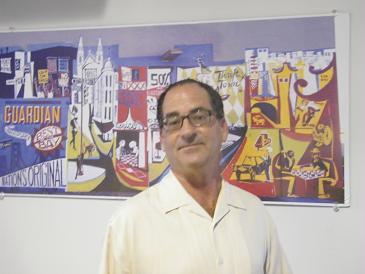
Steve Moss: the big duck

68

WORKING DOGGEDLY TO PIN DOWN THE EDITOR OF THE POTRERO VIEW WHO IS ALSO A CANDIDATE FOR SUPERVISOR FROM DISTRICT 10

We’ve been trying to pin Steve Moss down on some key questions.  Over the weekend, I sent him some questions by email.  He responded, but ducked or ignored the real points and never gave us any straight answers.

Here’s our exchange, my questions and his answers — unedited,  followed by some comments from me as we doggedly try to make sense of where Steve Moss really stands on key issues in the district.


Dear Steve,

In your October, pre-election issue of the Potrero View, your signed column
compares the Guardian with Fox News and states that we are both  “advocacy groups disguised as news purveyors” who “whip mostly anonymous commentators on their websites to call political candidates ‘weasle, lying, doucebags’ and worse.” You also state that “these same outlets barely take the time to edit–much less fact check–their stories.”

As you know, our reporter Sarah Phelan has done factual reporting on you and your campaign (http://www.sfbg.com/2010/09/14/five-things-you-should-know-about-steve-moss) and she and I have both checked with you to respond to our points before publication.  We will continue our policy by submitting these email questions to you in advance of publication. Our deadline is 5 p.m. on Monday

l. What specific facts do you find inaccurate in our previous reporting on you and your campaign? (You mixed up a comment on a blog with Phelan’s actual story and reporting. Was this intentional?)

2. How much money have you and your various profit and nonprofit enterprises accepted from PG&E during this past year?

How much money have you accepted in total from PG&E during your many years of operating  your profit and nonprofit enterprises? Why did you change the pro-public power View of Ruth Passen to a PG&E-friendly View under your ownership?  (For example, Passen always supported public power but you as the new owner  refused to support the last public power initiative and said it was “too contentious.”)

3. Campaign finance records show that Thomas Coates, a Republican who spent $l million trying to overturn rent control in California in 2008, has just dumped
$45,000 into the so-called Alliance for Jobs and Sustainable Growth in support of your candidacy.  Public records also show that you served a cure or quit notice
to a tenant in your rent-controlled building in District 8. Would you comment on this? And would you state whether you support or oppose rent control?

4.  On the front page of the October View, your lead story reported on the troubles of the Neighborhood House under the headline, “NABE Reeling Under City Budget Cuts.” Your story noted that the Nabe had lost “nearly $400,000 in funding from the Department of Human Services (DHS) and the Department of Children, Youth and Their Families” and that individual donations had dropped by 75 per cent. The result, your story noted, was that the NABE “has been forced to eliminate teen-focused programming, reduce elementary school offerings by 25 per cent, lay-off staff and impose pay cuts.”

Each year, the NABE sponsors the Potrero Hill festival as a benefit to raise much-needed funds. This year the benefit was more critical than ever to reduce its  crippling deficit. Just as the View was going to press earlier this month,  I got a call at the Guardian from a representative of the festival with a startling bit of information. I was told that you, as the owner and editor-publisher of the View, and a candidate for supervisor from our district, were  refusing to run a full page ad for the festival, a key piece of the NABE’s promotion on the hill,if the ad contained the logo of the Guardian as a festival sponsor. 

The representative was concerned that, if you wouldn’t run the NABE ad, that the Guardian as a media sponsor wouldn’t run a NABE ad in the Guardian.
(I told him not to worry, do what he had to do to get the ad in the View, and that the Guardian would run the ad and double up on its promotion for the festival. The Guardian logo did not appear on the Nabe ad in the View but did appear on all other NABE promotions.)

Why did you make this threat to the NABE and its festival benefit? Were you serious?

5. You said in your endorsement interview at the Guardian that, if you were elected supervisor, you would give up the View. Do you still plan to do that, if elected? If so, how would you do that?

 
 Steve Moss responds:

1.  The entire way you’ve covered the District 10 election has been slanted towards the candidate you prefer, and against the candidates you dislike.  From this perspective the Guardian is not serving the role of a newspaper, but rather is acting as an independent expenditure committee on behalf of its chosen candidates and causes.  I’d be happy to select a panel of five independent journalists — you pick two, I’ll pick two, and the four can pick one — to render an opinion about how you’ve run the Guardian during this election cycle, and how I’ve run the View.

2.  In 2010 I believe SF Power has received less than $25,000 in payments related to the small business demand-response program it operates, as sanctioned by the California Public Utility Commission.  I’ve already provided you and your reporter with multiple responses to your requests about SF Power’s successfull advocacy related to CPUC orders requiring PG&E to fund programs focusing on working families and small businesses, all of which, as I’ve repeatedly pointed out, are a matter of public record.

The View has published several articles about community-based energy systems, and effective ways to achieve local control over the power grid, during my tenure as publisher. They are available on our website.

3.  I read about Coats’ contribution in Bay Citizen.  As you know, this donation was made to an independent expenditure committee over which I have no control and almost no knowledge.  I have stated throughout the campaign, and directly to the Tenants Union, that I believe current rent control policy should remain unmolested.

4.  I made no threat to the NABE.  In fact, the festival was featured on the front page of the November issue, with a story inside, and a full page ad.

5.  Yes.  A new editor will be found to run the View if I’m elected to office.


Okay, You aren’t responsive.   Let me try again, point by point:

l. I am not running for office. You are.  Please tell me where we are factually wrong in any of our reporting on you and your campaign.

As you know, we have contacted you in advance of publication for comment. And you have written us twice with generalities but no specifics on inaccurate reporting.

2. You defend your PG&E payments on the basis that it’s actually money from the California Public Utilities Commission that PG&E is required by law to put up for energy efficiency projects. However, Loretta Lynch, former president of the CPUC, told me that PG&E decides who gets the money and that fund recipients that “cross PG&E” are in danger of getting their funds cut off.

In other words, if  you  want to continue to fund your organization with upwards of more than $l million over three years, you must avoid angering the utility.  This may explain why the Potrero View under your ownership has switched from its historic position supporting public power under former owner Ruth Passen to going easy on PG&E and ducking a position on the most recent public power initiative (Proposition H).

The background: Your  non profit collected  $1,290,000 from the CPUC for energy efficiency projects over the past three years, according to SF Power’s annual revenues and estimated budgets from 2008 to 2010 as provided on its website.

The breakdown: $500,000 in 2008, $440,000 in 2009, $350,000 in 2010.

You  also got $150,000 from the San Francisco Public Utilities Commission in 2008 and $125,000 in 2009.  Your  non profit also got $50,000 chunks each year from the Richard and Rhoda Goldman fund, where his wife Debbie Findling works.   The Lisa and Douglas Goldman Fund kicked in $5,000 in 2008 and 2009.  The  Potrero View contributed $5,000 in 2008, $4,500 in 2009, and $5,000 in 2010.  A footnote stated that SF Power “is also informally negotiating with the California Air Resources Board, San Francisco’s Office of the Mayor, Mirant Corporation, and Pacific Gas and Electric Company, among others, for project funding support.”  Did you get any additional money from Mirant, PG&E,  the Mayor, or anybody else? Are you still negotiating? If not, when did you stop?

Lynch explained that “all energy efficiency programs in California are funded by ratepayer dollars that are collected by the utilities as part of each ratepayer’s utility bill.  Thus, California ratepayers, big and small, pay for all energy efficiency programs and each and every program is funded by ratepayers, not utilities.”

She said that the CPUC “sets broad parameters for each utility concerning the amount of overall energy efficiency savings to be achieved and in what customer classes (residential, small business, large business,etc.). But the utilities choose the program providers. The CPUC simply reviews the overall package provided by the utilities to check to see whether the energy efficiency savings targets are met.”

Thus, PG&E each year decides  the amount of money going to SF Community Power. Lynch noted that  some non profit people told her, when she was a commissioner, that “if you crossed PG&E, they would stop the funding.”
 
Lynch mentioned a meeting with you  that showed  PG&E’s influence on you, your non profit and the View. .
She said that, shortly after she was termed out as a CPUC  commissioner in 2009, you  asked her to meet with  him at Farleys coffee shop and asked her to serve on the board of his nonprofit. “I thanked him and said that he should consider my relationship with PG&E before making that offer if he was funded through PG&E, as PG&E and I have a very contentious relationship,  and that they would not be happy if I were on the board. He thanked me for telling him and agreed that I should not serve on the board.”  Lynch lives on Potrero Hill.

3. I followed up my rent control question:  “If state law were amended to allow it, would you support extending rent control to vacant apartments?”  No answer.

4. I got a call from Keith Goldstein, president of the Potrero Hill Association of Merchants and Businesses and co-chair of the festival. He had gotten an email from you  that read: “Please have the festival’s pr agent remove the Guardian’s logo from any complimentary ad the View is providing the festival in this month’s paper.” Why did you make  such an unprofessional move?   Would you have backed out of sponsoring this event if the Guardian logo had remained? Is that how you would behave as a supervisor?

5. If elected, do you plan to sell the View?  Will you continue to operate your non profit and take chunks of money from PG&E? If elected, would your income from PG&E disquality you from voting on PG&E and energy issues? At what point would you sever your relations, if at all,  with your non profit and PG&E?

6. If  you lose, will you (as your wife suggested in an email to friends) move back to your house on Liberty St in Distict 8?

We anxiously  await your response. B3

Our Weekly Picks: October 20-26

0

THURSDAY 21

THEATER

“The Laramie Residency”

Just when you thought it was safe to come out of the closet, a chilling spike in suicide rates among gay teenagers who have been bullied or harassed has reemerged as national news. Which makes this rare double-header of The Laramie Project and its sequel, The Laramie Project: Ten Years Later, Epilogue uncannily apropos. Written in response to the notorious murder of Matthew Shepard, a young gay man in small-town Wyoming, both plays were created from hundreds of interviews with the inhabitants of Laramie. The results offer a detailed examination of how violence affects not only the perpetrators victims, but an entire community. “The Laramie Residency” also includes a special Thursday dialogue between director and coauthor Moisés Kaufman and Tony Taccone of the Berkeley Rep. (Nicole Gluckstern)

Thurs/21, 7 p.m.; Fri/22–Sat/23, 8 p.m., $10–$55

Jewish Community Center of San Francisco

3200 California, SF

(415) 292-1233

www.jccsf.org

FILM/PERFORMANCE

All About Evil: The Peaches Christ Experience in 4-D”

Horror fans are well familiar with the tag line for Wes Craven’s 1972 Last House on the Left: “To avoid fainting, keep repeating ‘It’s only a movie … It’s only a movie…'” Well, it wouldn’t be Halloween in San Francisco without Peaches Christ, whose alter ego, the less-flashy but no less fabulous filmmaker Joshua Grannell, brings his All About Evil to life at the very Mission District theater where it was shot. The film and its accompanying pre-show performance have been out roaming the U.S. and the U.K. for the past several months; expect the hometown gig to be extra-specially spooky, with musical and multimedia numbers by Peaches and Evil cast members. And since the Victoria plays an important supporting role in the film, expect interactive surprises galore. Only a movie? Don’t be so sure! (Cheryl Eddy)

Through Sun/24

8 p.m., $20

Victoria Theater

2961 16th St, SF

www.peacheschrist.com

MUSIC

Joshua Bell with the San Francisco Symphony

An average street performer isn’t always average. In 2007, the acclaimed violinist Joshua Bell participated in an experiment in which he played for 45 minutes as an anonymous busker in the D.C. Metro. The few who bothered to pause in their morning bustle and pull out their headphones realized they were in the presence of greatness. Renowned worldwide, virtuoso Bell joins the San Francisco Symphony in Bruch’s Violin Concerto No. 1. Conducted by James Conlon, the evening also includes Wagner’s Prelude to Act I of Die Meistersinger von Nürnberg, as well as Dvorák’s In Nature’s Realm and the overtures to Carnival and Othello. (Emmaly Wiederholt)

Thurs.–Sat., 8 p.m.; Sun, 2 p.m., $15–$150

Davies Symphony Hall

201 Van Ness, SF

www.sfsymphony.org

MUSIC

Steve Lawler

You can either love or hate seminal Ibiza club Space, and there’s been plenty of room to do both in its 20-year history. But just when you throw up your hands in a bad way at all the astringent trance, tipsy Brits, and noodling minimal, boom!, a DJ comes along who can drag you back to the dance floor. Rightly respected Brit Steve Lawler, known as the “King of Space,” scored that tiara by leapfrogging styles and keeping his sets limber. There’s some fluttering bass, chunky old-school breakdowns, and searing tech in his bag as well as, gasp, snippets of wistful melody. Lawler especially rocks the hard-driving, samba-esque Spanish-Berlin sound that’s become Ibiza’s best recent export. (Marke B.)

9:30 p.m., $10–>$20

Vessel

85 Campton Place, SF

(415) 433-8585

www.vesselsf.com

DANCE

Kunst-Stoff and LEVYdance

Dancers are famous for their kinesthetic memory. Without activating the brain, their muscles recall whole dances — or at least fragments. Show them a step or two and the rest follows. But dancers also seem to be able to dig even deeper, into something akin to an ancestral memory. It may take personal affinity but also a lot of hard research to unearth the kind of treasure trove that then can be used creatively. Two temperamentally different choreographers, Yannis Adoniou, of Greek descent, and Ben Levy, from a Jewish-Persian family, have done the excavations. Adoniou’s Rebetiko, commissioned by CounterPULSE’s Performing Diaspora Program, and Levy’s Our Body Remembers should make for an intriguing evening of might be called “kinetic history.” (Rita Felciano)

Through Oct. 30

Thurs.–Sat. and Sun/24, 8 p.m., $18

ODC Theater

3153 17th St., SF

(415) 863-9834

www.odctheater.org

FRIDAY 22

MUSIC

Stone Foxes

Let’s talk foxes, shall we? The native gray one is uncommon in San Francisco. The exotic red species, however, is a regular interloper of the Presidio. The Stone Foxes, four young dudes who play mean blues, are more like the former: genuine, rare, and always a treat to see in the wild. Sometimes you don’t want indie or nu-gaze or psych-doom-metal — you simply need real rock ‘n’ roll. Their sophomore album Bears and Bulls was released this past July, and though not as raw as their killer debut, it exudes a new and natural confidence. This is their official vinyl release show, so bring extra cash. (Kat Renz)

With Soft White Sixties and Real Nasty

10 p.m., $12

Bottom of the Hill

1233 17th St., SF

(415) 621-4455

www.bottomofthehill.com DANCE

Paco Gomes and Dancers

In his choreography, Brazilian-born Paco Gomes speaks with a powerfully articulated and mature voice. His dances beautifully integrate modern and Afro-Brazilian influences; as a company director he gathers around him — and trains — multi-ethnic dancers who seem to thrive under his tutelage. Now, with guest choreographers Jorge Silva and J. Pazmino, Gomes is presenting Amor O, an evening of works old and new that circles around love: of self, of friends, and also as remembered and lived within families. In addition, the program includes an excerpt of a new work in progress planned for an upcoming international tour. It examines love within another “family,” the Orixas, from the Yoruba religion. Perhaps it’s a consolation that in the world of the gods, not everything went smoothly either. (Felciano)

Through Sat/23

8 p.m., $15

Garage

975 Howard, SF

(415) 518-1517

www.975howard.com

MUSIC

Karl Blau

Eclectic K Records artist Karl Blau throws a wrench into the indie/folk scene with a chameleon-like ability to work within multiple genres. Ignoring the usual expectations of singer-songwriter stereotypes, Blau is known to inject everything from hip-hop and electronic influences to world and reggae music into his solo albums. He’s also worked with some notable names in Phil Elvrum (The Microphones, Mount Eerie) and Laura Veirs. Blau can currently be found playing bass for droney doom-metal band, Earth. It’ll be interesting to see how he melds all these elements together in a live setting. (Landon Moblad)

With Dina Maccabee and Birds and Batteries

7 p.m., free ($5 donation suggested)

Viracocha

998 Valencia, SF

(415) 374-7048

www.viracochasf.com

MUSIC

Lyrics Born

If it was any other rapper describing his newest album as “more synth-oriented” and “dealing with a lot of issues that are more mature than the last few albums, from abandonment to betrayal to incredible joy,” I’d say watch out for a lawsuit from one Mr. West. But since half of Latryx (with Lateef the Truthspeaker) and cofounder of Quannum Records, Lyrics Born is known for bringing his own brand of substance to the scene while pushing the genre forward. His new material, which features emerging artists Trackademicks, Francis and the Lights, and Sam Sparro, will be on display at this release party. (Ryan Prendiville)

With Chali 2na and the House of Vibe and Rakaa

9 p.m., $25

Independent

628 Divisadero, SF

(415) 771-1421

www.theindependentsf.com

SATURDAY 23

MUSIC

Triptykon

After almost 30 years in the arena, Tom G. Warrior has earned his status as heavy metal royalty. The Swiss singer and guitarist formed Hellhammer in 1982 and went on to found Celtic Frost two years later. Both bands contributed immeasurably to the development of extreme metal, and their influence reverberates throughout the genre today. Having parted ways with Celtic Frost in 2008, Warrior formed Triptykon, planning to pick up where Monotheist (Celtic Frost’s 2006 LP) left off. The new band’s music combines slabs of doomy guitar, razor-wire black metal, and Warrior’s paint-peeling vocals, breaking down genre boundaries in pursuit of heaviness. Come out and play. (Ben Richardson)

With 1349 and Yakuza

9 p.m., $23

Slim’s

333 11th St, SF

(415) 255-0333

www.slims-sf.com

EVENT

“SF DocFest Roller Disco Costume Party”

Have you ever stared longingly at the roller skaters in Golden Gate Park? Always wanted to join in but too embarrassed by your lack of boogie? Still hung up over the accident you had at a fifth grade skate party? Well, get over it. The Roller Disco Costume Party offers a simple solution: anonymity. As part of DocFest, admission is free with a ticket stub or just $5 if you strap on your best costume (which could potentially double as padding in case of collision.) (Prendiville)

8 p.m., free–$10

CELLSpace

2050 Bryant, SF

www.sfindie.com

MUSIC

Taj Mahal, Toumani Diabaté, Vieux Farka Touré

Tonight the Paramount plays host to a blues exploration featuring American bluesman Taj Mahal, Malian kora player Toumani Diabaté, and Malian guitarist Vieux Farka Touré. To trace the roots of the blues immediately leads to Africa, and in particular to Mali, and each of these three frontmen represents a different facet of that exploration. Mahal has spent decades reinterpreting the blues through far-flung musical traditions from the Caribbean and Hawaii to Europe and Latin America; Diabaté brings to the fore the centuries old West African tradition of the kora; and Touré, the torch-bearing son of the late Ali Farka Touré, represents a more recent cross-pollination of traditional Malian sounds with American blues and rock. While each of the three musicians is a monster in his own right, together they represent a veritable blues trifecta. (Mirissa Neff)

8 p.m., $25–$75

Paramount Theatre

2025 Broadway, Oakl.

(510) 465-6400

EVENT

“B.Y.O.Q.: Bring Your Own Queer”

Gurla-Q, you better bring it: a cavalcade of queer artists, musicians, and performers is avalanching Golden Gate Park for a full day of heady debauchery. Vinyl soul from the Hard French party DJs, homo-futurist sounds from Honey Soundsystem, Las Bomberas de la Bahia’s Afro-Puerto Rican percussion and dance, local indie faves Excuses for Skipping, fashion shows, a candygram booth, art displays, and so much more to turn you hot pink with multitasking. Plus, special guest John Cameron Mitchell giving you Hedwig fierceness. The annual B.Y.O.Q. has been a sweet, sweet success, conjuring up the activist days of yore while introducing some amazing new talent. Don’t wrap your internal pansy up in a plain brown bag, let her shine and shine. (Marke B.)

Noon–6 p.m., free

Golden Gate Park Music Concourse, SF

www.byoq.org

SUNDAY 24

MUSIC

Reigning Sound

Reigning Sound burst out of the gates in 2002 with the garage-punk classic, Time Bomb High School. Since then, the Tennessee-based group — performing as part of the ninth Budget Rock festival — has continued to refine its brand of country, soul, and classic R&B touches by way of organ-filled, distorted guitar-driven rock ‘n’ roll, most recently on 2009s Love & Curses. The band also recently backed up original Shangri-la member Mary Weiss on her 2007 comeback album, further evidence of the range its capable of. As far as modern garage rock goes, Reigning Sound is as classy and fun a group that you’re likely to find. (Moblad)

With Flakes, Ty Segall, and Touch-Me-Nots

9 p.m., $15

Bottom of the Hill

1233 17th St, SF

(415) 621-4455

www.bottomofthehill.com 

The Guardian listings deadline is two weeks prior to our Wednesday publication date. To submit an item for consideration, please include the title of the event, a brief description of the event, date and time, venue name, street address (listing cross streets only isn’t sufficient), city, telephone number readers can call for more information, telephone number for media, and admission costs. Send information to Listings, the Guardian Building, 135 Mississippi St., SF, CA 94107; fax to (415) 487-2506; or e-mail (paste press release into e-mail body — no text attachments, please) to listings@sfbg.com. We cannot guarantee the return of photos, but enclosing an SASE helps. Digital photos may be submitted in jpeg format; the image must be at least 240 dpi and four inches by six inches in size. We regret we cannot accept listings over the phone.

Newsom could be headed for victory

11

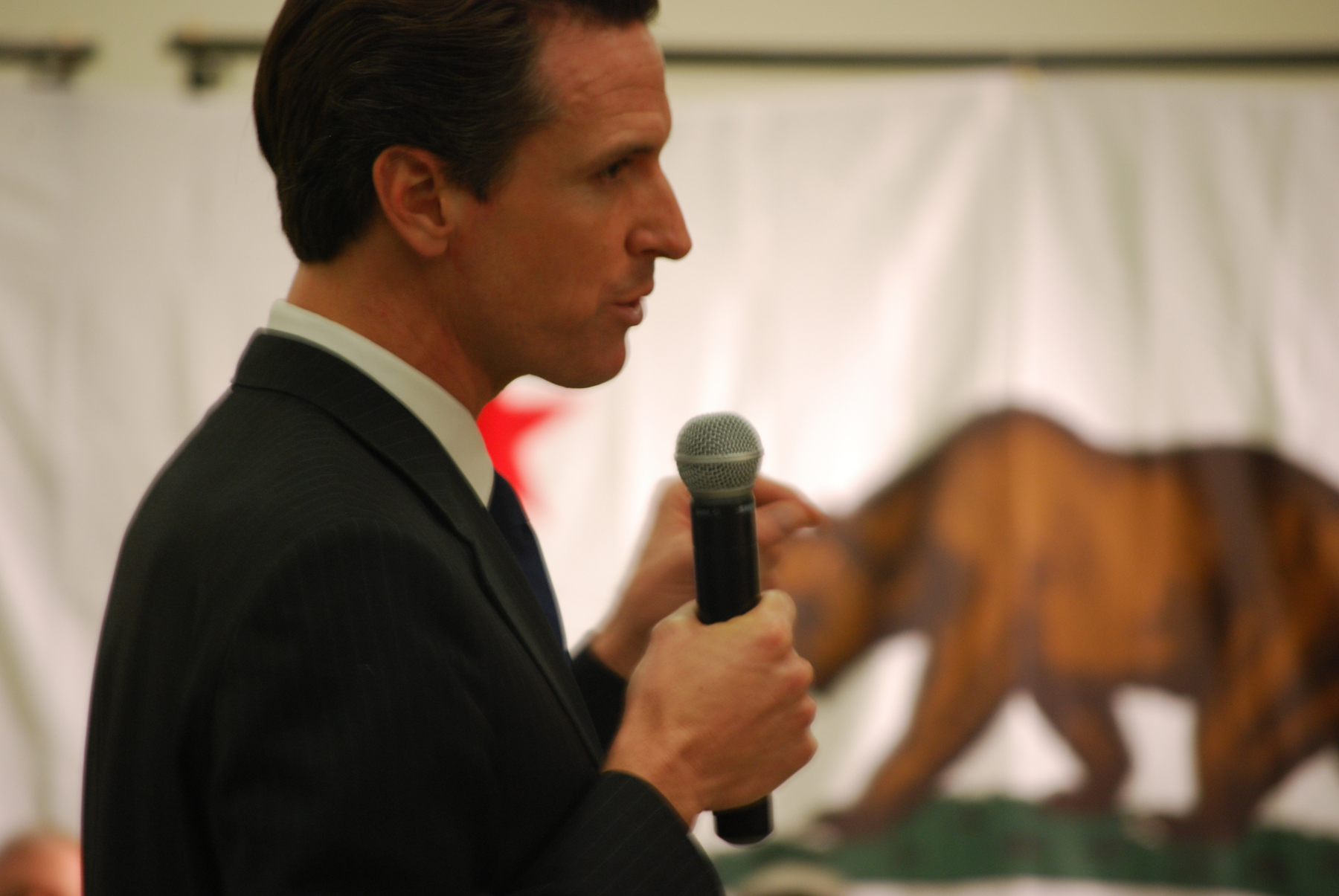
Gavin Newsom seems poised to win his race for lieutenant governor, at least as indicated by his opponent Abel Maldonado’s increasingly desperate campaign tactics and Newsom’s string of newspaper endorsements, including the Spanish language La Opinion, which chose to pass over a moderate Latino that it has endorsed in the past. The only question now is voter turnout, and whether Newsom’s negatives would be enough to drag him down if the Democratic base stays home in this lackluster election.

In its endorsement in Sunday’s paper, La Opinion wrote, “We are deeply disappointed that in this election [Maldonado] has opted for an opportunistic strategy of using images of undocumented criminals to earn political points. This is unacceptable and his charges against Newsom on this issue are inaccurate.” The reference was to Maldonado’s wild charges in an Oct. 15 debate that Newsom created San Francisco’s sanctuary city policies and was responsible for the fatal shootings of Bologna family members, allegedly by an undocumented immigrant who had once been in city custody. The reality was that Newsom inherited the sanctuary city policy and unilaterally weakened it after the Bologna shooting, even refusing to implement legislation approved by the Board of Supervisors (which Newsom vetoed but the board overrode) to require due process before those arrested are turned over to the feds for possible deportation.

While the paper didn’t seem to understand that Newsom has snubbed his nose at San Francisco progressives and petulantly fed a particularly divisive style of politics here, they do rightfully give him credit for running a complicated city, unlike the conservative city of Santa Maria where Maldonado was mayor and always did the bidding of the Chamber of Commerce, something I observed while working at the Santa Maria Times at the time. “The Democratic candidate has implemented solid, progressive management while leading a diverse city during a deep budget crisis. Newsom has proven to be creative, resourceful, and sensitive while forging alliances that improve the quality of life for his city’s residents,” La Opinion wrote. 

Then yesterday, as the Los Angeles Times reports on its blog, when Newsom held a campaign event trumpeting his support by Latino leaders such as Los Angeles Mayor Antonio Villaraigosa and labor leader Dolores Huerta, Maldonado showed up and sat in the back with his advisers during the event. Now that’s just strange.

A California Democratic Party e-mail blast this afternoon used a series of rhetorical questions to describe the campaign’s episodes: “So was Maldonado’s bizarre behavior an egotistical attempt to intimidate other Latinos who came to the event to support Newsom? Does he feel entitled to the appointed position now that he actually has to compete for voters in a real election? Is he desperate for media attention? Or does he just enjoy being a spectator, watching his opponent secure key Latino endorsements while his own campaign falls apart?”

But the real question is whether Democrats can mobilize enough voters to overcome Newsom’s negatives, from his arrogance to his personal foibles. When I did a search for Gavin Newsom’s name on Yahoo, which automatically guesses what you’re asking for based on past queries, the first three that listed were “Gavin Newsom girlfriend,” “Gavin Newsom divorce,” and “Gavin Newsom affair,” an apparent reference to his admitted affair with Ruby Rippey Tourk, who worked for him and was married to his reelection campaign manager.

So, if you support Newsom for this office — or even if you’re just anxious for him to leave San Francisco a year before his mayoral term expires — don’t forget to get out there and vote.

How they’re sitting

182

caitlin@sfbg.com

I’ve been hanging out with the Haight Street kids. Over the course of a week or so, I smoked weed, drank malt liquor, witnessed nasty run-ins with police officers — all events that anyone who has walked down the sidewalks of that legendary street would expect. But I also met people who’d give away their last dollar to a friend, people who know a thing or two about community, and people who don’t see sidewalks only as thoroughfares to commerce.

Ironically, though the homeless kids on Haight are the explicit inspiration for Proposition L, the sit-lie measure on the Nov. 2 ballot, their voices have been significantly absent from the vitriolic debate on its merits and faults. Ironic because of all people, it’s these young men and women — and the citizens of San Francisco who interact humanely with them — who could teach us the most about what public space in San Francisco could be.

I didn’t just stand with a notebook, fire questions, and walk away. I took a seat and spent time with the kids, to see for myself whether its true that they’re harassing people, letting their dogs run amok, and generally ruining everyone’s lives as much as sit-lie supporters say they are. That it turned out to be uplifting was an added bonus. I got to see what many don’t on their way to shop for souvenir bongs, retro dresses, and designer skateboards — the reason young people from around the country come to the neighborhood.

It doesn’t have anything to do with fancy Victorians and boutiques, which may explain the disconnect between the street kids and their detractors. They come for the legacy of individuals brave enough to slough off social mores that Haight-Ashbury residents are so ostensibly proud of — not to mention the companionship of others who are comfortable with their rejection of and by society. They come to share stories and pipes and encouragement, and it was cool to watch a streetscape in San Francisco that wasn’t geared solely to commerce.

And while the young people I talked to told me how much they liked to travel, to live free of convention and without ties to the workday world, after a while most acknowledged that they had left behind families who couldn’t or didn’t care for them, home situations that were uncomfortable enough to make life on the streets seem like a better alternative.

Although violent incidents, uncivil behavior, and threatening dogs are well-documented by other news sources, I didn’t see any of that when I was hanging out on Haight. That doesn’t mean that these things don’t exist — but it might suggest that some of the strident supporters of Prop. L are seeing what they want to see.

SPANGING

Steven, who asked us not to use his full name, is 20 and homeless. He grew up in Stockton, became a welder after high school, then decided he “didn’t want the hassle” of staying put for a wage job. His fingernails play host to an ungodly amount of dirt, but his tight blonde curls, pretty golden eyes (“they look like a lion’s!” says one friend in amazement) and mellow, generous demeanor make him a popular hub among his homeless peers.

It doesn’t hurt that he sells weed, small amounts at a time to passing tourists and acquaintances. He silently passes a pipe around to his companions with the slightest provocation. Steven approached me on the street before he knew I was a journalist, a fact that seemed to make little difference to him.

He says he came to the Haight “for the people,” for the area’s reputation of open souls and unconventional artists that originated in the glory days of Janis Joplin and the Grateful Dead. Like most of the kids I talked to, he eschewed the often dangerous shelter scene to sleep in Golden Gate Park or nearby Buena Vista Park despite the police surveillance that could result in spendy fines for park camping.

Although Steven’s worldly possessions fit into the large camping backpack he carries with him 24 hours a day, and even though he’s been living on Haight less than nine months — broken by a jaunt to Eugene, Ore., where he found it “too rainy” to join the town’s expansive street kid community — he doesn’t plan on being homeless forever. It’s just that nothing about this economic climate inspires him to sell his freedom for a paycheck. He plans to go to a four-year college eventually. He sees an education as the only way to get a “real” job. “But until then, why not do this?” he asks. I’m not sure if he’s waiting for my answer.

“This” is sit on Haight Street and “spange,” the term used for “flying a sign” and asking shoppers and neighbors walking by for money, often in a creative way. Of the many crimes street kids are guilty of in the eyes of supporters, spanging is the only one Prop. L would effect.

If Francisco voters approve it, anyone who sits or reclines on the sidewalk (with exceptions for the handicapped and those with permits — but not for the tired, workers on breaks, or people waiting for buses) will be subject to a fine of $50 to $100 for the first offense and $300 to $500, or a maximum of 10 days in jail, for someone found guilty twice within 24 hours of unduly supporting his or her body on the sidewalk between 7 a.m. and 11 p.m. Similar laws can be found up and down the West Coast — although Portland’s was pulled from the books last year after being found unconstitutional because it targeted the homeless.

I ask street kid after street kid why they’ve chosen this lifestyle. Many wouldn’t have it any other way. “Why do people want us off the street?” says Oz, a 21 year old from upstate New York who deals alongside Steven. “Probably because they can’t do this themselves.”

Though I’m skeptical at first, after a while I see why the unconventional group of “travelers” on Haight choose to spend their time spanging. Conversations get struck up with the most unusual people — the old hippie who bought a new Mad Hatter cap for the weekend, the suburban woman who might or might not like to buy some weed (she can’t decide). When a few businesses ask us to move so they can sweep the sidewalk or clear a doorway, the street kids I’m watching relocate with little protest. Many who walk past Steven seemed to find humor in his sign, which that day reads “Are you one paycheck away from having this be your job too?” He says he likes to switch his message daily. “Keep it fresh.”

By hanging out with the spangers, I get to see a Haight Street with human interaction at its core. People walk by, often dropping off surprisingly generous gifts: a ex-Grateful Dead roadie with a massive beard who lives in Fairfax and stopped by the neighborhood for a quick lunch with his daughter parks in front of Steven’s group and approaches them. “You kids hungry? You look like you could use a pizza.”

He emerges a half-hour later with a large cheese pie and drives away after chatting for a few minutes about the old days, to the glee of the group (many of the street kids are Dead Heads). The kids eat their fill, then start handing out the remaining pizza to people walking by, a comic role reversal. “I like to support the community — they get back all the money they get sucked out of them,” Steven tells me.

“NARCOTIC FUELED, ANTISOCIAL THUGS”

The campaign to put a sit-lie ordinance into effect in San Francisco kicked into gear with a Saturday morning stroll. As San Francisco Chronicle columnist C.W. Nevius — who regularly publicizes complaints against the Haight street kid culture — reported Feb. 27, Mayor Gavin Newsom recently relocated to the neighborhood and saw evidence of drug use on the main stretch of Haight where he was walking with his infant daughter. “As God as my witness, there’s a guy on the sidewalk smoking crack,” Newsom reportedly said.

The mayor threw his support behind a sentiment already being voiced by the Haight Ashbury Improvement Association, a resident-merchant alliance in the area. HAIA sees the street kids as disruptive outsiders. “These are not the flower children of the 1960s. It’s narcotic fueled, antisocial thugs who act like a quasi-gang,” Ted Loewenberg, president of the association, was quoted as saying in Business Week.

Adds the Prop L website: ” … the Haight-Ashbury district — once synonymous with peace and love — this corridor is now a hot spot for street bullies, pit bulls, and drug abuse.” It’s a deft cultural lobotomy that dissociates drugs from the Summer of Love, and a devious one that implies that street kids weren’t major players in that social revolution.

As for the bullies, I didn’t see any violence from the street kids in the days and nights I spent out on Haight Street.

I couldn’t get cops to talk to me about it, either. There were two police officers on foot traversing Haight’s main strip and I introduced myself when they stood chatting with a coffee shop owner in the afternoon sunshine and asked them about the sort of neighborhood complaints they regularly received about the street kids.

“No comment,” Cop No. 1 told me. Okay, Cop No. 2, your thoughts? “I don’t speak English.”

To my requests that they share their view of crime on Haight, I could get one response: “It’s complicated.” Later, when I returned to write down their badge numbers, they were standing silently, staring at a lone young man sitting against a wall next to his skateboard. The kid was looking at the ground. Eventually they handcuffed him and put him in a police car while he pleaded meekly about it “only being a little bit of weed — and I was only skateboarding on the sidewalk.”

The most aggression I witnessed from any party took place while I was tapping my feet to a group of traveling bluegrass musicians performing around 10 p.m. on a Thursday. Their cover of Del Shannon’s “Runaway” had inspired an older homeless man to strike up a curiously graceful stomp dance on the sidewalk. He was so drunk and fully immersed in the music that the bottle of Jim Beam in his flailing hand didn’t even register when the police officer approached him and asked, “What do you think you’re doing?”

The musicians began to pack up. “I could have told you this would happen 20 minutes ago,” one tells me, nodding toward the old man. “Don’t say a word or I’ll fucking take you in,” said the cop, who poured out the half-full bottle and wrote a ticket for the older man, who had made a few feeble protests that ended abruptly with the cop’s obscenity.

The officer said he’d received a complaint about the music, a line I heard from each cop I came into contact with on Haight — including one officer who cautioned a family with a toddler to pack up the bracelets they were selling to pay the towing charges on their van. “People don’t like to see people with kids out here, you better move it along,” the cop said.

“I’ve seen aggression because people start shit,” Steven tells me when I ask him about his experience with street violence. A man has just walked by chanting “dirty, dirty” in Steven’s and his friends’ faces. “They don’t like to see people sit on the ground.”

“There are people who come down here just to make themselves look better,” chimes in Oz. “Like ‘ha ha ha, I have air conditioning.’ All kinds of people start shit”

I asked if they knew they were the focus of a massive political debate in San Francisco. “No, what debate?” asked Steven.

“You mean sit-lie?” Oz asks. “It probably has to do with tourism. I don’t see why else they would do that.”

Even the most well-known recent case of Haight Street violence — which was reported June 11 by New York Times reporter Scott James as having “inspired a grass roots movement” that propelled Prop. L, seems to be a question of mutual aggression on the two sides of the street kids issue.

The story goes that a man named Thomas was hosing down the sidewalk in front of his house — a practice that is growing more common in the Haight to make property inhospitable to the homeless. He found himself “surrounded and engaged in a heated confrontation,” as James reports. Thomas reportedly shouted “Do you want a piece of me?” and a scuffle erupted between him and Chad Potter, a 26-year old homeless man, culminating with Potter being arrested and set free the next day. Thomas says Potter and friends continued to harass him after the incident.

James Orr, 24, is busking with his flute when I meet him sitting by a store that sells flowing hippie skirts and bumper stickers that command future tailgaters to “Coexist.” He’s looking to trade his wind instrument for a banjo, which he plays in addition to guitar. A rolling stone, Orr is in town for the Hardly Strictly Bluegrass festival that weekend — he travels the country going to festivals, and even scored a job recently at upstate New York’s Mountain Jam for the event’s blog site, taking photos with a borrowed camera of performances by (ex-member of The Band) Levon Helm and Michael Franti.

Orr’s quite erudite and eager to “say something articulate” about the situation of the street kids and travelers on Haight. He tells me that yeah, he’s seen aggression go down here on occasion. But he resents those situations leading to laws against sitting on the street.

“It’s another example of the few that do mess up casting a bad light on everyone else. Most of us just want to make some money, put a smile on someone’s face.” As a busker, he finds it baffling that people who are against the presence of the homeless would want him to stop plying his trade by making sitting illegal. “You should point out also that it’s how we make money!” he exclaims.

THE PIT BULLS

Snarling ruffians on frayed rope leashes stalking the city streets! As evidenced by the Civil Sidewalks campaign, dogs — specifically pit bulls — are another source of controversy on the pavement. Last December, SFist identified a C.W. Nevius tirade against the breed as example of its ongoing feature “Pit Bull Hate Watch.” The paper has pointed out that the demonized dogs can make great members of society and are often the subject of a media smear campaign.

But for many homeless youth, their dogs aren’t the means of imposing chaos on the gentry. They keep them for the same reasons we do: friendship, protection, love — and during the days I spent on Haight, it was a pleasure to pat the doggies while interviewing their owners. Most were as gentle and laid back as the kids they sprawled next to, a reasonably expected result from the 24 hours a day of socialization with humans that the homeless lifestyle affords.

Smiley is an inveterate street kid unlikely to go indoors anytime soon. “I don’t know how to do anything else,” she tells me. Now in her early 20s with a shock of magenta, purple, and dirty blonde hair and fanciful purple ear plugs that pierce her lobes before spiraling nearly to her shoulders, she’s been traveling since she was 12 — “a Bohemian by blood,” as she puts it. Not only did her parents move their household regularly throughout her childhood, but their heritage is Romani, from the traveling tribes of Eastern Europe.

For Smiley, travel outside the bounds of business trips and weekend vacations is her life’s norm, and Haight Street’s legacy resounds in her nomadic soul. “Most of the people that travelers idolize were here,” she tells me.

Smiley has a year-old behemoth black mutt with droopy eyes. He obliges her as she leans into him holding her spanging sign, which tells the world the pup needs Benadryl for an upcoming van ride to Southern California. “He’s carsick,” she tells me sheepishly. She admits that the dog can limit her mobility on public transportation, but his benefits outweigh his cost. He keeps her warm at night — and, more important for a young woman who is often on her own, he protects her. For a moment breaking out of tough girl mode, she tell me, “oh yeah, I don’t have to worry about anything when he’s around.”

We talk about the perceived threat of dogs on Haight Street. “They want us to leash them, which I guess I understand — but look at that!” A well-dressed woman in her 40s has her Chihuahua off its leash and it has run into the busy street, with her in hot pursuit. “That dog’s out of control,” Smiley smiles.

PISS

Sitting against a mural on a wall where Haight meets Clayton, I watch Piss, an outgoing, gangly guy in his early 20s with a curly blonde mohawk in a growing-out stage. I ask him where he got his unusual moniker. “I like to get drunk and piss on things,” he says.

Well. Originally from Billings, Mont., Piss has been traveling since his mid-teens. “Let’s just say me and my family don’t get along,” he tells me.

His answers to my questions about why he’s on the streets follow a path I see with many of the younger homeless youth: they insist that the lure of the open road was too hard to ignore, but eventually reveal that their parents kicked them out or were unable to care for them at a young age. Many, like Juju, another small-time weed dealer I met, bounced from family member to family member until frictions with them and their significant others left no recourse but the street.

Piss says he’s been to every state in the country, plus Canada and Mexico. With so many years on the road, he is, as they say, letting his freak flag fly. Piss has a blue, vaguely tribal tattoo that curls around his right eye. He’s wearing white tube socks on the dirty pavement. At first glance, he could be crazy — and maybe he is. Whatever his motivation for travel, it’s not to blend in with the locals.

Piss is also actively spanging passersby in a manner that oscillates between off-putting and charming. “You got some money for some crack and ice cream?” he inquires of a passing trio of young women. They shake their head, but before they’re gone completely he continues “I’m just kidding! I don’t like ice cream! Hey miss, you have a nice ass … day!”

Over the course of the hour that I watch him a stand up routine emerges. Beneath the grime, he’s a charismatic kid with an enviable sense of comedic timing.

As he ranges up and down a 20-foot stretch of sidewalk, belly laughs are elicited from a few targets, dollars surfacing here and there. One man carrying an accordion and wearing an expensive-looking pair of leather Chaco sandals donates a handful of strawberries to Piss and to those of us acting as his entourage.

But Piss’ play is a little rough — like a big puppy — and he’s alienating the people who don’t crack up over crack. A couple of people walk away quickly from his petitions shaking their heads over one of the zingers, their suspicions confirmed about those rowdy Haight Street kids.

He’s not doing anything more than what young travelers do all over the world. Thousands of families bid see you later to young adults en route to Prague, Peru, and Perth each year, where they lug their dirty backpacks through the world’s most wondrous towns.

Of course, these kids aren’t sleeping in the public parks of Cuzco — but in countries with plenty of cheap travelers’ hostels, you don’t have to. And though international flights cost more than the van rides and freight train hops that brought in most of the Haight Street kids, backpackers abroad do the same things: take fewer showers and flaunt social norms — not because they want to cause a problem for the natives of the lands they pass through, but because they are young, and discovering themselves for the first time, and can’t see much past that. Piss isn’t being violent, but he has lost the language to deal with “normies” and he’s seen as unpredictable to the not-traveling, not-disenfranchised around him. Which to those who see public space as a place that should be predictable, mean he’s a threat.

The clash between the settled and transient in the Haight is not new. Indeed, it’s what made the neighborhood famous. As far back as the mid-1960s, officials have been simultaneously fighting and publicizing the Haight’s worldwide reputation as a traveler’s meeting place, a place with a culture of loosened societal moorings and enlightenment through free love, drugs, and art.

Businesses claim that the omnipresent homeless drive away paying customers from Haight Street. It a curious claim in an area where the vagrant hippie culture made the place the tourist attraction it is today, and one that is belied by the entry of Whole Foods, which plans to open a branch this year at a lot at Haight and Stanyan vacant since 2006. When contrasted with the Tenderloin — another neighborhood with a visible street community — and its chronic problems attracting a grocery store, the Haight street kids’ effect on local commerce doesn’t seem to be all that grave.

They certainly aren’t making the place any less desirable of a neighborhood to live in for the wealthy. Real estate website Trulia.com puts the median listing price for homes in the Haight-Ashbury neighborhood at $962,264.

The Haight Street kids I spoke could all too easily see what sit-lie would mean for San Francisco. When you control public space, you control who is in public space — and they have no illusions about whether or not they’re included in the perfect world of those who push the measure. If it’s enacted, the subculture that made Haight famous — part of which still survives today in a different form — would be gone, leaving it sterile and safe for the head shops and clothing boutiques, an even less authentic version of the ’60s love fest their patrons come to the street for. One wonders if a scrubbed-clean Haight is even what the residents and business owners who have thrown their lot behind sit-lie truly want, or if they’ve been duped into sit-lie’s efficacy by the same forces that on a national level have convinced us that curtailing civil liberties will lead to freedom for the real Americans. It comes down to this: What do we want Haight Street to be? Do we want to capitalize and benefit from the accepting, messy, wildly creative legacy the 20th century endowed our streets, or do we want a clean, friendly, outdoor mall? The powers of homogenization and gentrification can demonize the little heathens on Haight Street all they want, but they’ve miscalculated if they think that they don’t belong in San Francisco — after all, Haight created them, not the other way around.

Our 44th Anniversary Issue also includes stories by Sarah Phelan on SF’s disadvantaged youth, Rebecca Bowe’s look at ageing out of the foster care system, and Tim Redmond’s editorial on the issues facing our rising generation

On the cheap listings

0

Events listings are compiled by Caitlin Donohue. Submit items for the listings at listings@sfbg.com.

WEDNESDAY 20

hell strung and crooked Release Party The Beat Museum, 540 Broadway, SF; www.thebeatmuseum.com. 6pm, free. The Beat Museum helps to present a night of intensely creative bards from the world over in anticipation of the release of their new poetry tome.

Smack Dab Open Mic Magnet, 4122 18th St., SF; wwwmagnetsf.org. 8pm, free. All ages and genders are welcome to this open mic, which sets a medley of musicians and poets onstage to the tune of five minutes a piece. No open mic traumas here, people.

THURSDAY 21

Art Attack One Year Anniversary supperclub, 657 Harrison, SF; www.visualsby3.com. 9:30 pm, $8. The flopsy, floozy art performance group celebrates its first 365 days on this earth with a burlesque-off featuring Alotta Boutté, Scotty the Blue Bunny, and more local A-listers from the world of tassels and tease.

"Graphic Details: Confessional Comics by Jewish Women" Cartoon Art Museum, 655 Mission, SF; (415) CAR-TOON, www.cartoonart.org. 7pm, $5. Beyond the kvetch and kibitz, female Jewish cartoonists have proven themselves adept at a stark, honest rendering of life in the 21st century. Hear them discuss their art at this panel discussion.

Jo Scott-Coe Books Inc., 2275 Market, SF; (415) 864-6777, www.booksinc.net. 7:30 pm, free. An ex-public school teacher exposes the subtle and overt forms of violence in the education system in her latest book, which she’ll discuss at this bookstore klatch.

BAY AREA

Homeless Connect Health Fair Multi Service Center, 2362 Bancroft, Berk; (510) 809-8516, www.sites.google.com/site/bfhphealth. Noon, free. Vision screenings, STD tests, flu shots, therapist and addiction referrals, haircuts, and more at this gathering of service providers for the homeless.

FRIDAY 22

UN-65 Muir Woods Walking Tour Cathedral UN Grove, Muir Woods, Sausalito; (415) 267-1866; www.una-sf.org. 11am, free. Advance registration requested. Mark 65 years of the United Nations’ brand of global collaboration with this trek through the redwoods, a cup of tea, and some Qi Gong — a path braved by UN founders in 1945.

Fog City Necropolis 354 5th St., SF; (415) 606-2503. 7pm, 10pm. Take a tour through SF’s interactive haunted house, whose theme this year is a truly scary trope: eviction! Evade the undead grasp of Jack Kerouac, Frida Kahlo, the crazy cat man of the Presidio, and more so that you can live to pay rent again.

BAY AREA

"Analysis of the Tea Party Movement" UC Berkeley Alumni House, Bancroft and Telegraph, Berk; www.ccsrwm.berkeley.edu/conferences. 8:30am-5:30am, free. Political scientists and sociologists take a look at America’s most grating political movement: are the Tea Partiers part of a grass roots campaign, a media-driven construction, or something in between?

SATURDAY 23

Actors Theatre Season Kick-Off Actors Theatre, 855 Bush, SF; (415) 345-1287; www.actorstheatresf.org. 7 pm, $10. A cabaret to celebrate the new stage season, featuring the psychedelic tropes of comedian Wil Franken, and the world premiere of William Blake Sings the Blues, penned by the theater’s own company member.

Bernal Yoga Literacy Series Bernal Yoga, 461 Cortland, SF; (4125) 643-9007, www.bernalyoga.com. 8pm, $5 suggested donation. Tsering Wangmo Dhopma and Stephen O’Connor, writers both, will fill the chakras of this neighborhood ayurvedic space with readings from their recent publications.

Bring Your Own Queer Festival Music Concourse, Golden Gate Park, SF; www.byoq.org. Noon-6pm, free. Pack a gay in your rucksack for this community collaboration of art, performance, and music, featuring DJ collectives Honey Soundsystem and Hard French, the Bay Area Derby Girls, and a rescue dog fashion show.

Drag Racing Day Velma’s, 2246 Jerrold, SF; (415) 824-4606. Noon, by donation. A Bayview family needs help raising funds for their drag racing team. They make their own motors and transmissions! Grab a bite at this neighborhood restaurant while you watch racing footage and dad Mike Henery’s presentation to interested young people.

Potrero Hill History Night International Studies Academy, 655 De Haro, SF; (415) 863-0784. 5:30 pm barbeque, $6; 7 pm historical program, free. A movie on Potrero Hill public housing, urban gardening in the neighborhood, and hood tales from 50-year residents like "Goat Hill Phil."

Seismic Safety Fair San Francisco General Hospital, 1001 Potrero, SF; www.sfdph.org/dph/rebuildsfgh. 9am, free. Feeling a little shaky? SF General’s setting aside a day to explain the base-isolated design of its new earthquake retrofitting. It’s meant to be the most seismically-resistant plan available today, so go on and get grounded.

BAY AREA

Cal Science and Engineering Festival Haas Pavilion, Bancroft, Berk; (510) 642-0352, www.scienceatcal.berkeley.edu/festival. 10am, free. Kids been clamoring to touch a real human brain? Bring ’em to this hands-on extravaganza of natural science — for free.

Fantastic Fountain Thistle Recovery Work Party Highway 92-W and I-280-N, San Mateo. 9am, free with RSVP. Remove invasive pampas grass and Australian tea tree so that our small bristly friend the fountain thistle can continue to live long and prosper in the Bay Area.

SUNDAY 24

Sunday Streets: Civic Center and Tenderloin Civic Center Plaza, SF; www.sundaystreetssf.com. 10 am- 3pm, free. The last Sunday Streets car-free community event takes the action to the heart of downtown, with clear biking and walking from a roller disco outside the Asian Art Museum to the Tenderloin National Forest.

Tricycle Music Fest West Various libraries and times, SF; www.sfpl.org/tricycle. Free. Three wheel from library to library or plunk the kiddies in front of a show of their choosing for this day of kids’ music, that effervescent establisher of early literary skills.

Maxwell disappoints by endorsing Sweet

10

To be honest, I wasn’t surprised that termed-out Sup. Sophie Maxwell endorsed D10 candidate Lynette Sweet yesterday. Just disappointed. And it’s not just because Sweet refused to come into the Guardian this fall for an endorsement interview (a stance that suggests that Sweet would be depressingly inaccessible to reporters that haven’t drunk her Kool-Aid—a stance that, unfortunately, reminds me of Mayor Gavin Newsom’s attitude towards the media).

I’d been hearing rumors that Maxwell was going to endorse Sweet since February, when Sweet, who’d already racked up Mayor Gavin Newsom’s D10 blessing at that point, showed up alongside Maxwell at the city’s kickoff event for Black history month.

Then there was the fact that during an interview in February for the Guardian’s kickoff article about the D10 race, Sweet spouted phrases that sounded eerily similar to Maxwell’s words.
“D10 is a pretty diverse district, but there is only one common thread: the need for economic development,” Sweet told me.

But a few days earlier when I interviewed Maxwell about a third, and ultimately unsuccessful, attempt to recall her , Maxwell talked of common threads:

 “I’m waiting for people to have a better understanding of what this community is, what the common thread running through it is, and how to use rank choice voting,” Maxwell said, by way of explaining why she wasn’t willing to endorse anyone that early in the race.

Now, it’s understandable that Maxwell would be looking for a candidate to carry on her legacy. But it she was looking for a moderate black female candidate  then why not endorse Malia Cohen, who isn’t hampered by all of Sweet’s dirty laundry—and has raised the most money in the race, so far?

Could it be that Cohen wouldn’t be down for the kind of dirty deal making that was par for the course back in the days when Willie Brown was still mayor and Sweet was the swing vote that crowned Lennar as master developer at the shipyard/Candlestick Point?

Rumor has it that Maxwell is upset at all the corporate money that’s flooding into this race in support of Steve Moss—and that she asked the other candidates to hold a press conference in which they decry this practice. Rumor also has it that Sweet signaled her willingness to join Tony Kelly, Dewitt Lacy, Chris Jackson and Eric Smith–to name a few–in making such a statement. But it hasn’t happened, yet. And the corporate money keeps rolling in for Moss.

Meanwhile, with three weeks until the election, D10 forums are beginning to sound like a parody of a “Lost” episode featuring a 22-member cast that all claim to represent the city’s polluted and economically depressed southeast sector:

“One of us is a BART director, one of us worked at City Hall, one of us is a community advocate, one of us is a City College Board member, one of us is a civil rights attorney, one of us is an affordable housing development director, one of us is a bio-diesel advocate, one of us is a public safety advocate, one of us was raised in the Bayview, one of us served on the Navy’s Restoration Advisory Board,” and so on.

I’m not saying this is wrong. Hell, I love all this diversity of choices. but I am concerned that, come election night, the progressive vote will get split into a million pieces, while deep-pocketed conservative forces like the Chamber of Commerce and Golden Gate Restaurant line up behind one candidate in an attempt to crush candidates that would stand up to their powerful influence at City Hall and truly represent the D10 community

Yes, there is ranked choice voting, and it’s unlikely that one candidate will win a majority of the vote in the first round. But it’s critical at this venture that progressives develop a winning strategy. D10 candidate Ed Donaldson told me recently that if a candidate who doesn’t represent the community’s concerns gets elected, then the community would respond just as they did around Maxwell—and organize a recall.

But wouldn’t it be better if the community can come together behind three truly progressive candidates and help them win the November election?

One of the key challenges in this race will be to win votes in Visitacion Valley, as well as in the Bayview and/or Potrero Hill.

In his latest column in the Chron, former mayor and Sweet supporter Willie Brown alluded to the importance of this in a city with ranked-choice voting:”It’s not getting much attention, but someone has finally figured out how to get the Asian vote out,” Brown observed.”You do it by mail. You get ballots and ballot books into every household, then have the whole family sit down together. The kids help with the translation, everyone talks things over and everyone votes.”

Meanwhile, D10 candidate Tony Kelly told me that Marlene Tran, who is tri-lingual (English, Cantonese, Vietnamese) and has a good handle on community issues in Viz Valley, has confirmed that Kelly is her second-ranked choice (presuming that she votes for herself in first place. of course).

Not a bad strategy–and one that other progressives need to consider, given ranked choice voting–and the brutal reality that they are going to be massively outspent in the next three weeks.


Our Weekly Picks: October 13-19

0

WEDNESDAY 13

MUSIC

Vader

Vader’s history stretches back almost 30 years. Borrowing Darth’s moniker might not have been the world’s most original idea, but they were likely among the first to have done it. The Polish death metal stalwarts formed in 1983 in Olstzyn, deep behind the Iron Curtain. Successful demo recordings got them hooked with Earache Records, and the band has been pillaging the world’s stages ever since. Guitarist-singer Piotr Wiwczarek is the only original member left in the fold, but the band’s anthemic music is as potent as ever, mixing impossibly thick blast beats with heavy slabs of neoclassical melody. Their upcoming album Return to the Morbid Reich is a nod to the 1990 demo that made their name; this tour, they’re inviting you along for the ride. (Ben Richardson)

With Immolation, Abigail Williams, Lecherous Nocturne, and Pathology

6:30 p.m., $22

DNA Lounge

375 11th St., SF

(415) 626-1409

www.dnalounge.com


THURSDAY 14

DANCE

Lines Ballet

The story of Scheherazade and her 1,001 nights of tales to postpone her beheading by the Persian king has intrigued and captivated audiences for ages. Choreographer Alonzo King’s dance adaptation Scheherazade delves beyond the story to explore themes ranging from the symbolism of abused women to the transformative power imbued in the tales. The company of chiseled titans dance alongside tabla master Zakir Hussain’s score, which incorporates traditional Persian instrumentation into the original classical composition by Rimsky-Korsakov. The piece premiered in Monaco last December; San Franciscans can now experience King’s artistic rendering of Scheherazade’s classic tale for themselves. (Emmaly Wiederholt)

Through Oct. 24

Thurs/14, 7 p.m.; Fri.–Sat., 8 p.m.;

Sun., 5 p.m.; Oct. 20–21, 7:30 p.m., $25–$75

Yerba Buena Center for the Arts

Novellus Theater

700 Howard, SF

(415) 978-2787

www.linesballet.org


FILM

“Jim Henson and Friends: Inside the Sesame Street Vault”

Consider the Muppet. Made of foam and googly eyes, set atop spindly legs under a mop of primary-color hair, these brave figures have become our children’s teachers on a level unparalleled in the world of infotainment. We’re talking street, of course — Sesame Street, which since its 1969 debut has won 97 Emmy awards, more than any other show. Yerba Buena Center for the Art is running a series of Sesame clip collections, and today’s viewing pays homage to the contributions of the show’s early creative team, with a special furry hug to creator Jim Henson, and little-seen guest appearances from the show’s early days. (Caitlin Donohue)

7:30 p.m. (also Sat/16, 2 p.m.), $6–$8

Yerba Buena Center for the Arts

701 Mission, SF

(415) 978-2787

www.ybca.org


DANCE

“CounterPULSE’s Performing Diaspora: Sri Susilowati”

Stripping world dance of its trappings is quite the rage these days. But few have done it so radically as Indonesian classical dancer did Sri Susilowati at last year’s Performing Diaspora festival. Yet this was the same artist who, only a few months before at the Ethnic Dance Festival, had performed an exquisite, contemporary Javanese mourning dance. Now she is back, having been invited to expand on her 2009 piece. Susilowati may look one of those ethereal dance creatures whose bodies are so stylized that it’s difficult to think of them having earthly passions. Yet they do. Hint on Susilowati: food. Another Indonesian dancer, Prumsodun Ok, opens the show for her. (Rita Felciano)

Thurs/14–Sat/16, 8 p.m.; Sun/17, 3 p.m., $24

CounterPULSE

1310 Mission St./SF

(415) 626-2060

www.brownpapertickets.com


MUSIC

Fresh and Onlys and Kelley Stoltz

San Francisco-based artists the Fresh and Onlys and Kelley Stoltz will both have new albums on hand at this double CD release blowout. The new Fresh and Onlys disc, Play It Strange, showcases the band’s garage-rocky spin on 1960s pop, and was recorded for the first time outside of a DIY studio setup with Comets on Fire producer Tim Green. Stoltz releases his newest batch of throwbacks to the Beatles’ and Beach Boys’ style of sunny pop with To Dreamers. This is a perfect night to come out and support local music. (Landon Moblad)

With Carletta Sue Kay

9:30 p.m., $12

Café Du Nord

2170 Market, SF

(415) 861-5016

www.cafedunord.com


FRIDAY 15

DANCE

Dandelion Dancetheater

Known for its loud, provocative works merging dance, drama, and music, Dandelion Dancetheater turns its attention to motherhood in MamaLOVE: Seeds of Winter. The seven-women cast explores mom-related themes by diffusing fairy tales, myths, and lullabies to discover the context and relevance of the cultural archetypes and stereotypes surrounding motherhood. Each evening brings a rotating roster of guest mama-choreographers: Mary Carbonara, Tammy Cheney, Laura Elaine Ellis, Suzanne Gallo, Dana Lawton, Laura Renaud-Wilson, and Chingchi Yu. Directed by Kimiko Guthrie, the show promises to be haunting, hilarious, and not to be missed as the mom-artists address the complexities of love, loss, connection, and independence. (Wiederholt)

Though Oct. 24

Fri-Sat, 8 p.m.; Sun, 7 p.m. (also Oct. 24, 3 p.m.), $12-15

Shawl Anderson Dance Center

2704 Alcatraz, Berk.

(510) 654-5921

www.dandeliondancetheater.org


SATURDAY 16

MUSIC

Longplayer San Francisco: 1,000 Years in Three Simultaneous Acts”

As a founding member of legendary rabble-rousers the Pogues, Jem Finer helped the band deconstruct traditional Irish music and create a new musical creature out of its varied influences. Taking this willingness to experiment with different sounds and ideas and bringing it to another level, Finer composed Longplayer, a piece designed to last 1,000 years and played on instruments such as Tibetan bowl gongs. Today’s special performance will be a 1,000-minute excerpt performed by 18 musicians on a custom-built, 60-foot-wide circular “instrument” — so slow down and take some time to absorb some art that goes against today’s faster-is-better mentality. (Sean McCourt)

7 a.m.–11:40 p.m., $25–$28

Yerba Buena Center For The Arts Forum

701 Mission, SF

(415) 978-2787

www.ybca.org


EVENT

“ODC Theater’s JumpstART”

Several years and millions of bucks in the making, ODC is at last ready to unveil its new state-of-the-art “cultural campus” in the Mission in a celebratory free day of “dance, theater, performance, and community.” With more than 20 performers and organizations participating, there will be something for everybody — yes, even clogging — at this one-of-a-kind public offering. A glance at the roster includes such names as Scott Wells and Dancers, Robert Moses’ Kin, Killing My Lobster, Youth Speaks, and of course ODC/Dance, all curated by ODC Theater director Rob Bailis in collaboration with the likes of choreographer Joe Goode, world music expert Lilly Kharrazi, and playwright-director Mark Jackson. (Robert Avila)

Noon–11 p.m., free (tickets available one hour prior to each performance)

ODC Theater

3153 17th St, SF

(415) 863-9834

www.odcdance.org


DANCE

Trolley Dances

I still wish they’d call them Street Car Dances instead of Trolley Dances, because that’s what they are, but the name is a registered trademark and has its origins in San Diego (where they actually have trolleys). However, there is nothing else I would change on these annual easy-rider events. They are pure fun, and curator Kim Epifano always comes up with an intriguing lineup of entertainers. This year you’ll see, among others, dancers from Joe Goode Performance Group, Sara Shelton Mann, Ensohza Minyoshu (traditional Japanese folk music and dance), and Sunset Chinese Folk Dance Group. And do look out for a special treat on Ninth Ave for our animal friends, courtesy of brilliant maskmaker Mike Stasiuk. Boarding takes place at Duboce Park. (Felciano)

Through Sun/17

11 a.m. (runs every 45 minutes until 2:45 p.m.), free with Muni fare ($2)

Duboce at Scott, SF

(415) 226-1139

www.epiphanydance.org


EVENT

ArtSpan Open Studios

Do you ever want to stroll into other people’s homes simply from sweet curiosity? Perhaps you covet thy neighbor’s art, or maybe just appreciate light and shadow and like talking with the peeps who represent it? Do all three at the largest and oldest open studios event in the country. The self-guided art tour is ongoing through October, but this weekend doors will open in the artsy northern and eastern neighborhoods. From the nude drawings of Derriere Guard (ahem, Beavis) to the ultraviolet photos of South African succulents, it’s the best opportunity to get to know your local artists. And maybe take home a derriere or two. (Kat Renz)

Through Oct. 31

Sat.–Sun., 11 a.m.–-6 p.m., free

Bayview, Excelsior, Financial District, North Beach, Potrero, Russian Hill, SoMa,Tenderloin

(415) 861-9838

www.artspan.org


SUNDAY 17

MUSIC

BATUSIS

Featuring two of the founding architects of punk rock — guitarists Sylvain Sylvain from the New York Dolls and Cheetah Chrome from the Dead Boys — Batusis already has its street cred and headliner status firmly in place. Taking its name from the groovy dance that Adam West performed in the campy 1960s Batman TV show, the band came together and released a new self-titled EP earlier this year that’s steeped in the sounds that earned these six string slingers their place in the punk pantheon in the first place. This dynamic duo may not be so young anymore, but they’re sure as hell just as loud and snotty. (McCourt)

With Re-Volts

8 p.m., $12–$15

Thee Parkside

1600 17th St., SF

(415) 252-1330

www.theeparkside.com


MONDAY 18

MUSIC

David Bazan

Previously known for fronting the popular indie-rock project Pedro the Lion, David Bazan has returned to working under his own name. His most recent solo album, Curse Your Branches, covers some religious-themed lyrical ground that fans should be familiar with by now, like the tales of sinners losing their way and Bazan grappling with his own faith. But it also presents itself in a much more upbeat, poppier setting than we’re used to, often at odds with the reflective and sometimes dark themes of the songs. Moody, country-tinged Baltimore duo Wye Oak opens. (Moblad)

8 p.m., $15

Independent

628 Divisadero, SF

(415) 771-1421

www.theindependentsf.com 


The Guardian listings deadline is two weeks prior to our Wednesday publication date. To submit an item for consideration, please include the title of the event, a brief description of the event, date and time, venue name, street address (listing cross streets only isn’t sufficient), city, telephone number readers can call for more information, telephone number for media, and admission costs. Send information to Listings, the Guardian Building, 135 Mississippi St., SF, CA 94107; fax to (415) 487-2506; or e-mail (paste press release into e-mail body — no text attachments, please) to listings@sfbg.com. We cannot guarantee the return of photos, but enclosing an SASE helps. Digital photos may be submitted in jpeg format; the image must be at least 240 dpi and four inches by six inches in size. We regret we cannot accept listings over the phone.


Alerts

0

alert@sfbg.com

WEDNESDAY, OCT. 13

Commune and resist

Dubbed the Community and Resistance Tour, this two-hour event seeks to connect the BP oil spill, expressions of racism in Jena, La., and organizing women in prison. Come hear Jordan Flaherty and other speakers discuss these and other struggles for justice and liberation. The event is sponsored by Left Turn Magazine and other radical and independent media projects.

7 p.m.–9 p.m., free

Station 40

3030-B 16th St., SF

www.communityandresistance.wordpress.com


THURSDAY, OCT. 14

Get radical for our schools

Sisters Organized for Public Education hosts a community meeting to develop strategies for opposing further cuts to the public school system. Come beforehand and get to know people at the buffet with vegetarian options.

7 p.m. lecture, free;

6:15 buffet, $7.50 donation New Valencia Hall

625 Larkin, Suite 202, SF

415-864-1278


Food sovereignty for Haiti

Discussion focused on how food justice and sovereignty are working on the ground in Haiti, here in the Bay Area, and elsewhere. The lively event is hosted by Weyland Southon of KPFA’s Hard Knock Radio and features keynote speaker Pierre Labossiere, a Haitian activist with HaitiAction Committee, and performances by Tacuma King and Bay Area youth Arts.

7 p.m., $10

Humanist Hall

390 27th St., Oakl.

510-548-2220, ext 233


FRIDAY, OCT. 15

Turn a New Leaf

Gay Shame San Francisco holds this community meeting to discuss the closing of the New Leaf LGBTQ Counseling Center and what it calls the medicalization of life, criminalization of illness, and growth of the prison-military-medical-nonprofit-industrial complex.

11:30 a.m., free

Market and Ninth streets, SF

www.gayshamesf.org


SATURDAY, OCT. 16

Our planet, ourselves

“Earth at Risk: Building a Resistance Movement To Save the Planet” is a daylong event designed to highlight the dire threat that reckless industrialization poses to the planet and build a resistance movement around possible solutions. Host Derrick Jensen interviews 10 people who each hold an impassioned critique of overindustrialized civilization and who offer solutions.

9 a.m.–5 p.m., free

Seven Hills Conference Center

San Francisco State University

1600 Holloway, SF

www.derrickjensen.org


Foraged Health

Take a class on medicinal plants available in California. The class is taught by Tellur Fenner of Blue Wind Botanical Medicine Clinic. Come learn what Mother Earth has to offer underfoot and overhead.

1 p.m. – 4 p.m., $20 members; $30 public

18 Reasons

593 Guerrero, SF

www.brownpapertickets.com/event/130794


Radical Mental Health

This grassroots media project was created by and for people struggling with that catch-all term, “mental disorders.” Filmmaker Ken Paul Rosenthal presents his poetic documentary Crooked Beauty, which documents Jack McNamara’s journey from psychiatric patient to mental health advocate. Benefits San Francisco’s Icarus Project.

6 p.m.–9 p.m., $5–$10 suggested donation

California Institute for Integral Studies

1453 Mission, SF

www.crookedbeauty.com 

Mail items for Alerts to the Guardian Building, 135 Mississippi St., SF, CA 94107; fax to (415) 255-8762; or e-mail alerts@sfbg.com. Please include a contact telephone number. Items must be received at least one week prior to the publication date.

Chron drops the “i” bomb, again

2

Today’s article on the front page of the Chronicle’s Bay Area section doesn’t use  “illegals” in its actual story about undocumented students and in-state college fees.

But it does use it in its headline.

This headline-text disconnect suggests that Chron reporter Bob Egelko wasn’t part of the decision to run today’s “Tuition break for illegals targeted” headline.

That’s the good news. The bad news is that it’s 2010, but some folks still don’t get what’s offensive about using the “i” word when referring to immigrants without paperwork—a situation that doesn’t make them “illegal,” no matter what right wing fear-mongers say.

As the National Association of Hispanic Journalists points out, in its guidelines for covering immigration, being here without paperwork is a civil violation, not a crime.

In an article published in September 2009, NAHJ said it was troubled with a growing trend in the news media to use the word “illegals” as shorthand for “illegal aliens”.

“Using the word in this way is grammatically incorrect and crosses the line by criminalizing the person, not the action they are purported to have committed,” NAHJ stated, as it called on the media to never use “illegals” in headlines.

“Shortening the term in this way also stereotypes undocumented people who are in the United States as having committed a crime. Under current U.S. immigration law, being an undocumented immigrant is not a crime, it is a civil violation,” NAHJ continued. “Furthermore, an estimated 40 percent of all undocumented people living in the U.S. are visa overstayers, meaning they did not illegally cross the U.S. border. In addition, the association has always denounced the use of the degrading terms ‘alien’ and ‘illegal alien’ to describe undocumented immigrants because it casts them as adverse, strange beings, inhuman outsiders who come to the U.S. with questionable motivations. Aliens is a bureaucratic term that should be avoided unless used in a quote.”

I’m pretty sure there’d be an uproar if the Chron used the “n” word to describe black people or the “f” word to describe gays—unless they were quoting racists or homophobes. So, please, guys, get a clue and stop dropping the “i” word, even if it takes up less room in your headlines.


Our Weekly Picks: October 6-12, 2010

0

WEDNESDAY 6

MUSIC

Caribou

Electronic music whiz Dan Snaith, a.k.a. Caribou, has a spirited stage show. In contrast to the solo job of the albums, Caribou gigs include a full live band and have been known to feature multiple drummers and percussionists (including Snaith himself), plus trippy, projected visuals. For a taste of his knack for polishing 1960s psych and ’70s krautrock weirdness with a modern dance club sheen, check out this year’s Polaris Music Prize runner-up, Swim, or 2003’s excellent Up In Flames. (Landon Moblad)

With Emeralds

9:30 p.m., $18

Regency Ballroom

1290 Sutter, SF

1-800-745-3000

www.theregencyballroom.com


THURSDAY 7

PERFORMANCE

Ralph Lemon

Early in his career Ralph Lemon made intimate, highly formal, nonnarrative dances. Then he engaged in huge, multiyear, multidisciplinary enterprises that took him from Abidjan to Beijing and Kyoto. Now he has come home — sort of. Lemon was raised in Minnesota, but in researching his family he encountered a now 102-year old Mississippian with whom he has worked for the last eight years on How Can you Stay in the House and Not Go Anywhere? The work consists of a performance, film, and visual arts installation — all on one ticket. Lemon’s work has always been well considered and choreographically cogent. No reason to think How Can You? will diverge from the norm. (Rita Felciano)

Through Sat/9

8 p.m., $25–$30

Novellus Theater

Yerba Buena Center for the Arts

701 Mission, SF

(415) 978-2787

www.ybca.org


MUSIC

Glass Candy

The music industry is a fickle mistress, and when bands take a long time to release material it becomes really easy to forget their past accomplishments. Take Glass Candy: it’s been a minute since the band made any significant waves, instead laying low the past few years and releasing 12-inch singles on trusty record label Italians Do It Better. The band’s style is a mash of disco and contemporary electronics that recall the best John Carpenter scores if they had blasé vocals by Nico. Candy’s singer Ida No remains the group’s greatest asset, and her delivery manages to be silly and sexy at the same time. This show proves that Italians Do It Better understands how to properly conduct a comeback, casting Candy, the label’s biggest successes, as headliners on an all-star bill that includes spin-off outfit Chromatics and, most surprisingly, label owner Mike Simonetti with a DJ set. (Peter Galvin)

With Chromatics, DJ Mike Simonetti, Soft Metals, and DJ Omar

9 p.m., $15

Rickshaw Stop

155 Fell, SF

(415) 861-2011

www.rickshawstop.com


MUSIC

Tera Melos

Roseville three-piece Tera Melos storms Bottom of the Hill for a night of loud, mathy, prog-inspired rock ‘n’ roll. With new album Patagonian Rats fresh off the presses, Tera Melos seems poised to make some noise in indie-rock circles all over the country. Guitarist Nick Reinhart possesses a bottomless bag of wildly frantic riffs and finger taps, while the rhythm section thrashes along with shifting time signatures and complex song structures. Tera Melos isn’t the first or only band to make this kind of music these days, but it’s certainly one of the best. (Moblad)

With Skinwalker and Glaciers

9 p.m., $10

Bottom of the Hill

1233 17th St., SF

(415) 621-4455

www.bottomofthehill.com


DANCE

Margaret Jenkins Dance Company

If you are at all interested in seeing out how mature artists — let’s say, with a track record of more than 35 years — keep turning out good work, there is probably no better way than to keep watching the Margaret Jenkins Dance Company. Jenkins’ MO — she suggests ideas; the dancers come up with responses; she edits the responses — has worked remarkably well, even for San Francisco Ballet dancers, who certainly are not trained along the lines of individual responsibility. This one-night stand offers a return of the wondrous first section of last year’s Other Suns I and a preview peek at Light Moves. Jenkins works for the first time with multimedia artist Naomie Kremer, who creates moving images based on her own paintings. (Felciano)

8 p.m., $18–$26

Jewish Community Center of San Francisco

3200 California, SF

(415) 292-1200

www.jccsf.org/arts


FRIDAY 8

MUSIC

Fool’s Gold

Drag rock is very big right now. Who needs authenticity when you can see a band like Edward Sharpe and the Magnetic Zeros being all folk, as if everyone just forgot about Ima Robot? (Oh wait, we did.) Well, same deal with Fool’s Gold and afropop. Of course, Vampire Weekend tries to do the same thing (it’s also known as Graceland-ing), but Fool’s Gold doesn’t have that annoying ka-ching of a cash register in every one of its songs. With a pair of ’60s throwbacks opening, it should make for a musical voyage through time and space. (Ryan Prendiville)

With Bitter Honeys and Soft White Sixties

8:30 p.m., $12

Rickshaw Stop

155 Fell St., SF

(415) 861-2011

www.rickshawstop.com


MUSIC

“Tankcrimes Brainsqueeze”

Tankcrimes is a resolutely underground Oakland record label, kicking out small-scale, mostly vinyl releases of criminally overlooked punk and metal bands. Focusing on breakneck tempos, DIY values, and that delicious intersection between punk’s manic energy and metal’s lumbering power, the label has nurtured a small stable of unimpeachable acts. “Tankcrimes Brainsqueeze” is a two-day festival celebrating these crossover crusaders, headlined by Richmond, Va., party animals Municipal Waste and Oakland’s own splattercore dungeon masters Ghoul. Hard-punning death metallers Cannabis Corpse will also appear. Look forward to 48 hours of demented double-time, disemboweled corpses, and decimated beer supplies. (Ben Richardson)

With Vitamin X, Toxic Holocaust, Direct Control, A.N.S., Voetsek, Ramming Speed, and more

Fri/8, 7:30 p.m.; Sat/9, 7 p.m., $15–$17 (two-day pass, $30)

Oakland Metro

630 Third St., Oakl.

(510) 763-1146

www.oaklandmetro.org


MUSIC

Davy Jones

As a member of the Monkees, Davy Jones was one of the original teen idols — he sang lead on some of their biggest hits, including “Daydream Believer” and “A Little Bit Me, A Little Bit You.” Unlike many of the other early pop heartthrobs, however, he has since gone on to a highly successful four-decade (and counting) career in show biz. His many other memorable performances and appearances over the years include a variety of acclaimed stage roles, television cameos (think The Brady Bunch) and solo albums. Expect a little bit of everything at these intimate shows. (Sean McCourt)

Fri/8, 8 p.m.; Sat/9-Sun/10, 7 p.m.

(also Sat/9, 9:30 p.m.), $45–$47.50

Rrazz Room

Hotel Nikko

222 Mason, SF

(415) 866-3399

www.therrazzroom.com


SATURDAY 9

EVENT

“Behind the Scenes on Treasure Island with Harrison Ellenshaw”

Now considered a swashbuckling classic, Disney’s Treasure Island (1950) was the first entirely live-action film that the studio produced. And one of the people who helped bring the tale of Long John Silver to life was the immensely talented Peter Ellenshaw, who created a series of matte paintings that provided the wondrous sense and grand scope of the various background scenes. His son Harrison, an equally accomplished artist in his own right (having worked on projects such as The Empire Strikes Back (1980)) will be on hand today to discuss his father’s work on the perennial pirate favorite, sharing some of his family’s history and the secrets that went into creating the magic for Walt Disney. (McCourt)

3 p.m., $9–$12;

Screenings, 1 and 4 p.m. daily through Oct. (except today), $5–$7

Walt Disney Family Museum Theater

104 Montgomery, Presidio, SF

(415) 345-6800

www.waltdisney.org


MONDAY 11

DANCE

WestWave Dance Festival

Monday nights are livening up this fall during WestWave Dance’s 19th annual contemporary choreography festival. Designed to allow new and established choreographers to develop and present work without the hassles of self-production, the festival presents 20 choreographers from the Bay Area and beyond in four showcases through December. Evening two of the series is an eclectic mix of choreographers hailing from various backgrounds and aesthetics: Viktor Kabaniaev, Tammy Cheney, Rachel Barnett, Annie Rosenthal Parr, and Kara Davis’ project-agora deliver to audiences a sampling of what our rich and unique contemporary dance scene has to offer. (Emmaly Wiederholt)

8 p.m., $22

Cowell Theater

Fort Mason Center

Marina at Laguna, SF

www.westwavedancefestival.org


MUSIC

Valient Thorr

Chapel Hill, N.C’.s Southern rocking punks Valient Thorr may sound good on record, but they have to be seen to be believed. Frontperson “Valient Himself” is a bearded lunatic, flying around the stage and spreading the rock gospel with the verbose alacrity of a storefront preacher. The band behind him provides no-holds-barred punk-rock rave-ups with a hefty dose of Southern rock filigree and a dash of unhinged weirdness. New platter The Stranger was produced by knob-god Jack Endino, who thickened the sound without diluting the band’s digressive tendencies. The Thorriors will be cranking it out from atop Bottom of the Hill’s lofty stage, raining down sweat while they do it. (Richardson)

With Red Fang and FlexXBronco

9 p.m., $12

Bottom of the Hill

1233 17th St., SF

(415) 626-4455

www.bottomofthehill.com


TUESDAY 12

MUSIC

PS I Love You

Sure, the White Stripes blew the doors open for guitar drum duos to rock and have mainstream success, but the Black Keys proved that it wasn’t all just a quasi-incestuous fluke. Now all the boys feel comfortable doing it together. We’re not going to try and claim that Ontario, Canada’s PS I Love You is the only stripped down, sticks and picks outfit in town tonight, but if the spiraling, echoing post-pop songs off their just released first album (the single “Facelove” in particular) are any indication, you’d be hard up to find one that gives it to you like this. (Prendiville)

With Gold Medalists and Downer Party

9 p.m., $7

Hemlock Tavern

1131 Polk St., SF

www.hemlocktavern.com 


The Guardian listings deadline is two weeks prior to our Wednesday publication date. To submit an item for consideration, please include the title of the event, a brief description of the event, date and time, venue name, street address (listing cross streets only isn’t sufficient), city, telephone number readers can call for more information, telephone number for media, and admission costs. Send information to Listings, the Guardian Building, 135 Mississippi St., SF, CA 94107; fax to (415) 487-2506; or e-mail (paste press release into e-mail body — no text attachments, please) to listings@sfbg.com. We cannot guarantee the return of photos, but enclosing an SASE helps. Digital photos may be submitted in jpeg format; the image must be at least 240 dpi and four inches by six inches in size. We regret we cannot accept listings over the phone.


Valley highs

0

arts@sfbg.com

FILM This year’s Mill Valley Film Festival, the 33rd — we’ll refrain from crucifying it — brings the usual assortment of visiting celebrities starting their Oscar thumpage early at an event with a rep for anticipating next February’s Academy winners. Some have local roots (Annette Bening, Sam Rockwell, James Franco), some don’t (Alejandro González Iñárritu, Edward Norton, Julian Schnabel).

All will be happy, or at least willing, to discuss their creative process from the Rafael or Sequoia stages. But insight into the artistic mind is also available in several lower-profile programs about Bay Area innovators in various media, most made by Bay Area filmmakers.

Tom Ropelewski’s Child of Giants: My Journey With Maynard Dixon and Dorothea Lange is both an appreciation of brilliance — the late, briefly married titans of 20th century Western painting and photography — and a measurement of how difficult it can be to live with. Like many true mavericks, Dixon and Lange drew little distinction between their artistic and personal lives, operating by rules of their own devising that others had to either obey or get the hell out of the way.

Not given much choice in the matter were their two sons, interviewed here. Overshadowed and occasionally neglected by parents (biological and step-) whose notions of progressive upbringing could be dictatorial and harshly critical, one played the passive-obedience card, while the other rebelled to the point of youthful homelessness. Still, they’re forgiving — as a granddaughter puts it, “I can’t pass judgment because I’m not a genius.”

There are no next-generation tattlers in the happier creative vistas of Elizabeth Federici and Laura Harrison’s Space, Land and Time: Underground Adventures with Ant Farm and Emiko Omori’s Ed Hardy: Tattoo the World. The first chronicles the architectural, performance, and media-manipulation of the 1970s SF trickster collective most famously responsible for Amarillo, Texas, automotive cemetery Cadillac Ranch, which one admirer calls “the greatest human undertaking since the Tower of Babel — which failed, and [this] prevailed.” SoCal custom car fanatic and surfer-turned-SF- counterculture-celeb Hardy provides an endearingly modest guide through a career that, perhaps more than any other, revolutionized and popularized U.S. body art.

Among Bay Area narrative features, Scared New World (2005) director Chris Brown’s new Fanny, Annie and Danny hews back to the train-wreck parenting theme. Its three disparately damaged adult siblings seem tragicomedically bad enough company until we meet the monster who made them. Mother Edie (Colette Keen) presides over their climactic Christmas dinner like a lion tamer snapping bullwhip over yelping puppies. Seldom have sing-along carols sounded so hateful.

Ranging farther afield, MVFF 2010 likewise offers a chance to be first on your block to see this year’s Oscar bait (The King’s Speech, 127 Hours) and A-list festival favorites (Blue Valentine, Tiny Furniture). But since those will be coming round soon enough to regular theaters, you’d be better off sampling some of the many features unlikely to be seen again hereabouts.

Several happen to be beautifully photographed foreign titles sharing a certain religious-allegorical dimension. Based on a Gabriel García Márquez story, Hilda Hidalgo’s Costa Rican-Colombian Of Love and Other Demons finds a teenage, early colonialist-era noble dragged to a nunnery, where her rabies symptoms are taken for demonic possession — and where she awakens a priest’s well-buried sensual side. Vardis Marinakis’ Greek Black Field finds a 17th century novice fleeing her convent with a wounded military deserter; in the forest primeval, their own sensual awakening hits a surprising major hurdle. Adán Aliaga’s gorgeous black and white Estigmas follows a burly gentle giant whose picaresque adventures are cursed and redeemed by bleeding stigmata that mysteriously appear on his hands one day.

Special events include an Oct. 8 concert celebrating what would have been John Lennon’s 70th birthday; on Oct. 16 Tim Rutili’s eccentric supernatural whimsy All My Friends Are Funeral Singers, with live accompaniment by his band Califone. Then there’s the Oct. 12 revival of 30-year-old The Empire Strikes Back, the best Star Wars movie. (I might also call it the only really good one, but dare not risk the wrath of fanboys.) Who’s to say a certain Marin resident, employer, and longtime MVFF supporter won’t drop by for the occasion? You never know. 

MILL VALLEY FILM FESTIVAL

Oct 7–17, most shows $12.50

Various venues in Mill Valley, Corte Madera, and San Rafael

1-877-874-6833

www.mvff.com

Endorsements 2010: San Francisco candidates

53

SUPERVISOR, DISTRICT 2


JANET REILLY


Frankly, we were a little surprised by the Janet Reilly who came in to give us her pitch as a District 2 supervisorial candidate. The last time we met with her, she was a strong progressive running for state Assembly as an advocate of single-payer health care. She was challenging Fiona Ma from the left, and easily won our endorsement.


Now she’s become a fiscal conservative — somewhat more in synch with her district, perhaps, but not an encouraging sign. Reilly seems to realize that there’s a $500 million budget deficit looming, but she won’t support any of the tax measures on the ballot. She’s against the hotel tax. She’s against the real estate transfer tax on high-end properties. She’s against the local car tax. She opposed Sup. David Chiu’s business tax plan that would have shifted the burden from small to larger businesses (even though it was clear from our interview that she didn’t understand it).


She talked about merging some of the nonprofits that get city money, about consolidating departments, and better management — solutions that might stem a tiny fraction of the red ink. But she wouldn’t even admit that the limited tax burden on the very rich was part of San Francisco’s budget problem.


Her main proposal for creating jobs is more tax credits for biotech, life sciences, and digital media and more public-private partnerships.


It’s too bad, because Reilly’s smart, and she’s far, far better than Mark Farrell, the candidate that the current incumbent, Michela Alioto-Pier, is backing. We wish she’d be realistic about the fiscal nightmare she would inherit as a supervisor.


On the positive side, she’s a strong supporter of public power and she has good connections to the progressive community. Unlike Alioto-Pier, she’d be accessible, open-minded, and willing to work with the progressive majority on the board. That would be a dramatic change, so we’ll give her the nod.


We were also impressed with Abraham Simmons, a federal prosecutor who has spent time researching city finance on the Civil Grand Jury. But he supports sit-lie, Prop. B and Prop. S, and opposes most new tax proposals and needs more political seasoning.


DISTRICT 4


NO ENDORSEMENT


We’ve always wanted to like Carmen Chu. She’s friendly, personable, intelligent, and well-spoken. But on the issues, she’s just awful. Indeed, we can’t think of a single significant vote on which she’s been anything but a call-up loyalist for Mayor Newsom. She even opposed the public power measure, Prop. H, that had the support of just about everyone in town except hardcore PG&E allies.


She’s running unopposed, and will be reelected. But we can’t endorse her.


DISTRICT 6


1. DEBRA WALKER


2. JANE KIM


3. GLENDON “ANNA CONDA” HYDE


CORRECTION: In our original version of this endorsement, we said that Jim Meko supports the sit-lie ordinance. That was an error, and it’s corrected below.


A year ago, this race was artist and activist Debra Walker’s to lose. Most of the progressive community was united behind her candidacy; she’d been working on district issues for a couple of decades, fighting the loft developers during the dot-com boom years and serving on the Building Inspection Commission. Then School Board member Jane Kim decided to enter the race, leaving the left divided, splitting resources that might have gone to other critical district races — and potentially helping to put the most pro-business downtown candidate, Theresa Sparks, in a better position to win.


Now we’ve got something of a mess — a fragmented and sometimes needlessly divisive progressive base in a district that’s key to holding progressive control of the board. And while neither of the two top progressive candidates is actively pursuing a credible ranked-choice voting strategy (Kim has, unbelievably, endorsed James Keys instead of Walker, and Walker has declined to endorse anyone else), we’re setting aside our concern over Kim’s ill-advised move and suggesting a strategy that is most likely to keep the seat Chris Daly has held for the past 10 years from falling to downtown control.


Walker is far and away our first choice. She understands land use and housing — the clear central issues in the district — and has well thought-out positions and proposals. She says that the current system of inclusionary housing — pressing market-rate developers to include a few units of below-market-rate housing with their high-end condos — simply doesn’t work. She supports an immediate affordable housing bond act and a long-term real estate transfer tax high enough to fund a steady supply of housing for the city’s workforce. She told us the city ought to be looking at planning issues from the perspective of what San Francisco needs, not what developers want to build. She’s in favor of progressive taxes and a push for local hiring. We’re happy to give her our first-place ranking.


Jane Kim has been a great SF School Board member and has always been part of the progressive community. But she only moved into District 6 a year and a half ago — about when she started talking about running for supervisor (and she told us in her endorsement interview that “D6 is a district you can run in without having lived there a long time.”) She still hasn’t been able to explain why she parachuted in to challenge an experienced progressive leader she has no substantive policy disagreements with.


That said, on the issues, Kim is consistently good. She is in favor of indexing affordable housing to market-rate housing and halting new condo development if the mix gets out of line. She’s for an affordable housing bond. She supports all the tax measures on this ballot. She’s a little softer on congestion pricing and extending parking-meter hours, but she’s open to the ideas. She supports police foot patrols not just as a law-enforcement strategy, but to encourage small businesses. She’d be a fine vote on the board. And while we’re sympathetic to the Walker supporters who would prefer that we not give Kim the credibility and exposure of an endorsement, the reality is that she’s one of two leading progressives and would be better on the board than the remaining candidates.


Hyde, a dynamic young drag queen performer, isn’t going to win. But he’s offered some great ideas and injected some fun and energy into the race. Hyde talks about creating safe injection sites for IV drug users to reduce the risk of overdoses and the spread of disease. He points out that a lot of young people age out of the foster-care system and wind up on the streets, and he’s for continuum housing that would let these young people transition to jobs or higher education. He talks about starting a co-op grocery in the Tenderloin. He proposes bus-only lanes throughout the district and wants to charge large vehicles a fee to come into the city. He’s a big advocate of nightlife and the arts. He lacks experience and needs more political seasoning, but we’re giving him the third-place nod to encourage his future involvement.


Progressives are concerned about Theresa Sparks, a transgender activist and former business executive who now runs the city’s Human Rights Commission. She did a (mostly) good job on the Police Commission. She’s experienced in city government and has good financial sense. But she’s just too conservative for what remains a very progressive district. Sparks isn’t a big fan of seeking new revenue for the city telling us that “I disagree that we’ve made all the cuts that we can” — even after four years of brutal, bloody, all-cuts budgets. She doesn’t support the hotel tax and said she couldn’t support Sup. David Chiu’s progressive business tax because it would lead to “replacing private sector jobs with public sector jobs” — even though the city’s own economic analysis shows that’s just not true. She supports Newsom’s sit-lie law.


Sparks is the candidate of the mayor and downtown, and would substantially shift the balance of power on the board. She’s also going to have huge amounts of money behind her. It’s important she be defeated.


Jim Meko, a longtime neighborhood and community activist, has good credentials and some solid ideas. He was a key player in the western SoMa planning project and helped come up with a truly progressive land-use program for the neighborhood. But he supports Prop. B and is awfully cranky about local bars and nightlife.


James Keys, who has the support of Sup. Chris Daly and was an intern in Daly’s office, has some intriguing (if not terribly practical) ideas, like combining the Sheriff’s Department and the Police Department and making Muni free). But in his interview, he demonstrated a lack of understanding of the issues facing the district and the city.


So we’re going with a ranked-choice strategy: Walker first, Kim second, Hyde third. And we hope Kim’s supporters ignore their candidate’s endorsement of Keys, put Walker as their second choice, and ensure that they don’t help elect Sparks.


DISTRICT 8


RAFAEL MANDELMAN


This is by far the clearest and most obvious choice on the local ballot. And it’s a critical one, a chance for progressives to reclaim the seat that once belonged to Harvey Milk and Harry Britt.


Mandelman, a former president of the Milk Club, is running as more than a queer candidate. He’s a supporter of tenants rights, immigrants’ rights, and economic and social justice. He also told us he believes “local government matters” — and that there are a lot of problems San Francisco can (and has to) solve on its own, without simply ducking and blaming Sacramento and Washington.


Mandelman argues that the public sector has been starved for years and needs more money. He agrees that there’s still a fair amount of bloat in the city budget — particularly management positions — but that even after cleaning out the waste, the city will still be far short of the money it needs to continue providing pubic services. He’s calling for a top-to-bottom review of how the city gets revenue, with the idea of creating a more progressive tax structure.


He’s an opponent of sit-lie and a supporter of the sanctuary city ordinance. He supports tenants rights and eviction protection. He’s had considerable experience (as a member of the Building Inspection Commission and Board of Appeals and as a lawyer who advises local government agencies) and would make an excellent supervisor.


Neither of the other two contenders make our endorsement cut. Rebecca Prozan is a deputy city attorney who told us she would be able to bring the warring factions on the board together. She has some interesting ideas — she’d like to see the city take over foreclosed properties and turn them into housing for teachers, cops, and firefighters — and she’s opposed to sit-lie. But she’s weak on tenant issues (she told us there’s nothing anyone can do to stop the conversion of rental housing into tenancies-in-common), doesn’t seem to grasp the need for substantial new revenues to prevent service cuts, and doesn’t support splitting the appointments to key commissions between the mayor and the supervisors.


Scott Wiener, a deputy city attorney, is a personable guy who always takes our phone calls and is honest and responsive. He’s done a lot of good work in the district. But he’s on the wrong side of many issues, and on some things would be to the right of the incumbent, Sup. Bevan Dufty.


He doesn’t support public power (which Dufty does). He says that a lot of the city’s budget problems can’t be solved until the state gets its own house in order (“we can’t tax our way out of this”) and favors a budget balanced largely by further cuts. In direct contrast to Mandelman, Wiener said San Franciscans “need to lower our expectations for government.” He wants broad-based reductions in almost all city agencies except Muni, “core” public health services, and public safety. He doesn’t support any further restrictions on condo conversions or TICs. And he has the support of the Small Property Owners Association — perhaps the most virulently anti-tenant and anti-rent control group in town.


This district once gave rise to queer political leaders who saw themselves and their struggles as part of a larger progressive movement. That’s drifted away of late — and with Mandelman, there’s a chance to bring it back.


DISTRICT 10


1. TONY KELLY


2. DEWITT LACY


3. CHRIS JACKSON


District 10 is the epicenter of new development in San Francisco, the place where city planners want to site as many as 40,000 new housing units, most of them high-end condos, at a cost of thousands of blue-collar jobs. The developers are salivating at the land-rush opportunities here — and the next supervisor not only needs to be an expert in land-use and development politics, but someone with the background and experience to thwart the bad ideas and direct and encourage the good ones.


There’s no shortage of candidates — 22 people are on the ballot, and at least half a dozen are serious contenders. Two — Steve Moss and Lynette Sweet — are very bad news. And one of the key priorities for progressives is defeating the big-money effort that downtown, the police, and the forces behind the Van Ness Avenue megahospital proposal are dumping into the district to elect Moss.


Our first choice is Tony Kelly, who operates Thick Description Theater and who for more than a decade has been directly involved in all the major neighborhood issues. He has a deep understanding of what the district is facing: 4,100 of the 5,300 acres in D10 have been rezoned or put under the Redevelopment Agency in the past 10 years. Planners envision as many as 100,000 new residents in the next 10 years. And the fees paid by developers will not even begin to cover the cost of the infrastructure and services needed to handle that growth.


And Kelly has solutions: The public sector will have to play a huge role in affordable housing and infrastructure, and that money should come from higher development fees — and from places like the University of California, which has a huge operation in the district and pays no property taxes. Kelly wants to set up a trigger so that if goals for affordable housing aren’t met by a set date, the market-rate development stops. He supports the revenue measures on the ballot but thinks we should go further. He opposes the pension-reform measure, Prop. B, but notes that 75 percent of the city’s pension problems come from police, fire, and management employees. He wants the supervisors to take over the Redevelopment Agency. He’s calling for a major expansion of open space and parkland in the district. And he thinks the city should direct some of the $3 billion in short-term accounts (now all with the Bank of America) to local credit unions or new municipal bank that could invest in affordable housing and small business. He’s a perfect fit for the job.


DeWitt Lacy is a civil-rights lawyer and a relative newcomer to neighborhood politics. He speaks passionately about the need for D10 to get its fair share of the city’s services and about a commitment to working-class people.


Lacy is calling for an immediate pilot program with police foot patrols in the high-crime areas of the district. He’s for increasing the requirements for developers to build affordable housing and wants to cut the payroll tax for local businesses that hire district residents.


Lacy’s vision for the future includes development that has mixed-use commuter hubs with shopping and grocery stores as well as housing. He supports the tax measures on the ballot and would be willing to extend parking meter hours — but not parking fines, which he calls an undue burden on low-income people.


He’s an outspoken foe of sit-lie and of gang injunctions, and with his background handling police abuse lawsuits, he would have a clear understanding of how to approach better law-enforcement without intimidating the community. He lacks Kelly’s history, experience, and knowledge in neighborhood issues, but he’s eminently qualified and would make a fine supervisor.


Chris Jackson, who worked at the San Francisco Labor Council and serves on the Community College Board, is our third choice. While it’s a bit unfortunate that Jackson is running for higher office only two years after getting elected to the college board, he’s got a track record and good positions on the issues. He talks of making sure that blue-collar jobs don’t get pushed out by housing, and suggested that the shipyard be used for ship repair. He wants to see the city mandate that landlords rent to people with Section 8 housing vouchers. He supports the tax measures on the ballot, but also argues that the city has 60 percent more managers than it had in 2000 and wants to bring that number down. He thinks the supervisors should take over Redevelopment, which should become “just a financing agency for affordable housing.” He wants to relocate the stinky sewage treatment plant near Third Street and Evans Avenue onto one of the piers and use the area for a transit hub. He’s still relatively unseasoned, but he has a bright political future.


Eric Smith, a biodiesel activist, is an impressive candidate too. But while his environmental credentials are good, he lacks the breadth of knowledge that our top three choices offer. But we’re glad he’s in the race and hope he stays active in community politics.


Malia Cohen has raised a lot of money and (to our astonishment) was endorsed No. 2 by the Democratic Party, but she’s by no means a progressive, particularly on tenant issues — she told us that limiting condo conversions is an infringement of property rights. And she’s way too vague on other issues.


Moss is the candidate of the big developers and the landlords, and the Chamber of Commerce is dumping tens of thousands of dollars into getting him elected. He’s got some good environmental and energy ideas — he argues that all major new developments should have their own energy distribution systems — but on the major issues, he’s either on the wrong side or (more often) can’t seem to take a stand. He said he is “still mulling over” his stand on sit-lie. He supports Sanctuary City in theory, but not the actual measure Sup. David Campos was pushing to make the policy work. He’s not sure if he likes gang injunctions or not. He only moved back to the district when he decided to run for supervisor. He’s way too conservative for the district and would be terrible on the board.


Lynette Sweet, a BART Board member, has tax problems (and problems explaining them) and wouldn’t even come to our office for an endorsement interview. The last thing D10 needs is a supervisor who’s not accountable and unwilling to talk to constituents and the press.


So we’re going with Kelly, Lacy, and Jackson as the best hope to keep D10 from becoming a district represented by a downtown landlord candidate.


SAN FRANCISCO BOARD OF EDUCATION


MARGARET BRODKIN


KIM-SHREE MAUFAS


HYDRA MENDOZA


Three seats are up on the School Board, and three people will get elected. And it’s a contested race, and in situations like that, we always try to endorse a full slate.


This fall, it was, to put it mildly, a challenge.


It’s disturbing that we don’t have three strong progressive candidates with experience and qualifications to oversee the San Francisco Unified School District. But it seems to be increasingly difficult to find people who want to — and can afford to — devote the time to what’s really a 40-hour-a-week position that pays $500 a month. The part-time school board is an anachronism, a creature of a very different economic and social era. With the future of the next generation of San Franciscans at stake, it’s time to make the School Board a full-time job and pay the members a decent salary so that more parents and progressive education advocates can get involved in one of the most important political jobs in the city.


That said, we’ve chosen the best of the available candidates. It’s a mixed group, made up of people who don’t support each other and aren’t part of anyone’s slate. But on balance, they offer the best choices for the job.


This is not a time when the board needs radical change. Under Superintendent Carlos Garcia, the local public schools are making huge strides. Test scores are up, enrollment is increasing, and San Francisco is, by any rational measure, the best big-city public school district in California. We give considerable credit for that to the progressives on the board who got rid of the irascible, secretive, and hostile former Superintendent Arlene Ackerman and replaced her with Garcia. He’s brought stability and improvement to the district, and is implementing a long-term plan to bring all the schools up to the highest levels and go after the stubborn achievement gap.


Yet any superintendent and any public agency needs effective oversight. One of the problems with the district under Ackerman was the blind support she got from school board members who hired her; it was almost as if her allies on the board were unable to see the damage she was doing and unable to hold her accountable.


Our choices reflect the need for stability — and independence. We are under no illusions — none of our candidates are perfect. But as a group, we believe they can work to preserve what the district is doing right and improve on policies that aren’t working.


Kim-Shree Maufas has been a staunch progressive on the board. She got into a little trouble last year when the San Francisco Chronicle reported that she’d been using a school district credit card for personal expenses. That’s not a great move, but she never actually took public money since she paid back the district. Maufas said she thought she could use the card as long as she reimbursed the district for her own expenses; the rules are now clear and she’s had no problems since. We don’t consider this a significant enough failure in judgment to prevent her from continuing to do what she’s been doing: serving as an advocate on the board for low-income kids and teachers.


Maufas is a big supporter of restorative justice and is working for ways to reduce suspensions and expulsions. She wants to make sure advanced placement and honors classes are open to anyone who can handle the coursework. She supports the new school assignment process (as do all the major candidates), although she acknowledges that there are some potential problems. She told us she thinks the district should go back to the voters for a parcel tax to supplement existing funding for the schools.


Margaret Brodkin is a lightening rod. In fact, much of the discussion around this election seems to focus on Brodkin. Since she entered the race, she’s eclipsed all the other issues, and there’s been a nasty whisper campaign designed to keep her off the board.


We’ve had our issues with Brodkin. When she worked for Mayor Newsom, she was part of a project that brought private nonprofits into city recreation centers to provide services — at a time when unionized public employees of the Recreation and Parks Department were losing their jobs. It struck us as a clear privatization effort by the Newsom administration, and it raised a flag that’s going to become increasingly important in the school district: there’s a coming clash between people who think private nonprofits can provide more services to the schools and union leaders who fear that low-paid nonprofit workers will wind up doing jobs now performed by unionized district staff. And Brodkin’s role in the Newsom administration — and her background in the nonprofit world — is certainly ground for some concern.


But Brodkin is also by far the most qualified person to run for San Francisco school board in years, maybe decades. She’s a political legend in the city, the person who is most responsible for making issues of children and youth a centerpiece of the progressive agenda. In her years as director of Coleman Advocates for Children and Youth, she tirelessly worked to make sure children weren’t overlooked in the budget process and was one of the authors of the initiative that created the Children’s Fund. She’s run a nonprofit, run a city department, and is now working on education issues.


She’s a feisty person who can be brusque and isn’t always conciliatory — but those characteristics aren’t always bad. Sup. Chris Daly used his anger and passion to push for social justice on the Board of Supervisors and, despite some drawbacks, he’s been an effective public official.


And Brodkin is full of good ideas. She talks about framing what a 21st century education looks like, about creating community schools, about aligning after-school and summer programs with the academic curriculum. She wants the next school bond act to include a central kitchen, so local kids can get locally produced meals (the current lunch fare is shipped in frozen from out of state).


Brodkin needs to remember that there’s a difference between being a bare-knuckles advocate and a member of a functioning school board. But given her skills, experience, and lifetime in progressive causes, we’re willing to give her a chance.


We also struggled over endorsing Hydra Mendoza. She works for Mayor Newsom as an education advisor — and that’s an out-front conflict of interest. She’s a fan of Obama’s Education Secretary, Arne Duncan, whose policies are regressive and dangerous.


On the other hand, she cares deeply about kids and public education. She’s not a big supporter of charter schools (“I’ve yet to see a charter school that offers anything we can’t do ourselves,” she told us) and while she was on the wrong side of a lot of issues (like JROTC) early in her tenure, over the past two years she’s been a good School Board member.


There are several other candidates worth mentioning. Bill Barnes, an aide to Michela Alioto-Pier, is a good guy, a decent progressive — but has no experience in or direct connection to the public schools. Natasha Hoehn is in the education nonprofit world and speaks with all the jargon of the educrat, but her proposals and her stands on issues are vague. Emily Murase is a strong parent advocate with some good ideas, but she struck us as a bit too conservative (particularly on JROTC and charter schools.) Jamie Wolfe teaches at a private school but lacks any real constituency or experience in local politics and the education community.


So given a weak field with limited alternatives, we’re going with Maufas, Brodkin and Mendoza.


SAN FRANCISCO COMMUNITY COLLEGE BOARD


JOHN RIZZO


The San Francisco Community College District has been a mess for years, and it’s only now starting to get back on track. That’s the result of the election of a few progressive reformers — Milton Marks, Chris Jackson, and John Rizzo, who now have enough clout on the seven-member board to drag along a fourth vote when they need it.


But the litany of disasters they’ve had to clean up is almost endless. A chancellor (who other incumbent board members supported until the end) is now under indictment. Public money that was supposed to go to the district wound up in a political campaign. An out-of-control semiprivate college foundation has been hiding its finances from the public. The college shifted bond money earmarked for an arts center into a gigantic, expensive gym with a pool that the college can’t even pay to operate, so it’s leased out to a private high school across the street.


And the tragedy is that all three incumbents — two of whom should have stepped down years ago — are running unopposed.


With all the attention on the School Board and district elections, not one progressive — in fact, not one candidate of any sort — has stepped forward to challenge Anita Grier and Lawrence Wong. So they’ll get another term, and the reformers will have to continue to struggle.


We’re endorsing only Rizzo, a Sierra Club staffer who has been in the lead in the reform bloc. He needs to end up as the top vote-getter, which would put him in position to be the board president. Rizzo has worked to get the district’s finances and foundation under control and he richly deserves reelection.


BART BOARD OF DIRECTORS, DISTRICT 8


BERT HILL


It’s about time somebody mounted a serious challenge to James Fang, the only elected Republican in San Francisco and a member of one of the most dysfunctional public agencies in California. The BART Board is a mess, spending a fortune on lines that are hardly ever used and unable to work effectively with other transit agencies or control a police force that has a history of brutality and senseless killing.


Fang supports the suburban extensions and Oakland Airport connector, which make no fiscal or transportation sense. He’s ignored problems with the BART Police for 20 years. It’s time for him to leave office.


Bert Hill is a strong challenger. A professional cost-management executive, he understands that BART is operating on an old paradigm of carrying people from the suburbs into the city. “Before we go on building any more extensions,” he told us, “we should take care of San Francisco.” He wants the agency to work closely with Muni and agrees there’s a need for a BART sunshine policy to make the notoriously secretive agency more open to public scrutiny. We strongly endorse him.


ASSESSOR-RECORDER


PHIL TING


San Francisco needs an aggressive assessor who looks for every last penny that big corporations are trying to duck paying — but this is also a job that presents an opportunity for challenging the current property tax laws. Phil Ting’s doing pretty well with the first part — and unlike past assessors, is actually stepping up to the plate on the second. He’s been pushing a statewide coalition to reform Prop. 13 — and while it’s an uphill battle, it’s good to see a tax assessor taking it on. Ting has little opposition and will be reelected easily.


PUBLIC DEFENDER


JEFF ADACHI


Adachi’s done a great job of running the office that represents indigent criminal defendants. He’s been outspoken on criminal justice issues. Until this year, he was often mentioned as a potential progressive candidate for mayor.


That’s over now. Because Adachi decided (for reasons we still can’t comprehend) to join the national attack on public employees and put Prop. B on the ballot, he’s lost any hope of getting support for higher office from the left. And since the moderate and conservative forces will never be comfortable with a public defender moving up in the political world, Adachi’s not going anywhere anytime soon.


Which is fine. He’s doing well at his day job. We wish he’d stuck to it and not taken on a divisive, expensive, and ill-conceived crusade to cut health care benefits for city employees.


SAN FRANCISCO SUPERIOR COURT


SEAT 15


MICHAEL NAVA


To hear some of the brahmins of the local bench and bar tell it, the stakes in this election are immense — the independence of the judiciary hangs in the balance. If a sitting judge who is considered eminently qualified for the job and has committed no ethical or legal breaches can be challenged by an outsider who is seeking more diversity on the bench, it will open the floodgates to partisan hacks taking on good judges — and force judicial candidates to raise money from lawyers and special interests, thus undermining the credibility of the judiciary.


We are well aware of the problems of judicial elections around the country. In some states, big corporations that want to influence judges raise and spend vast sums on trial and appellate court races — and typically get their way. In Iowa, three judges who were willing to stand on principle and Constitutional law and declare same-sex marriage legal are facing what amounts to a well-funded recall effort. California is not immune — in more conservative counties, liberal judges face getting knocked off the bench by law-and-order types.


It’s a serious issue. It’s worth a series of hearings in the state Legislature, and it might be worth Constitutional change. Maybe trial-court elections should be eliminated. Maybe all judicial elections should have public campaign financing. But right now, it’s an elected office — at least in theory.


In practice, the vast majority of the judicial slots in California are filled by appointment. Judges serve for four-year terms but tend to retire or step down in midterm, allowing the governor to fill the vacancy. Unless someone files specifically to challenge an incumbent, typically appointed judge, that race never even appears on the ballot.


The electoral process is messy and political, and raising money is unseemly for a judicial officer. But the appointment process is hardly pure, either — and governors in California have, over the past 30 years, appointed the vast majority of the judges from the ranks of big corporate law firms and district attorney’s offices.


There are, of course, exceptions, and Gov. Arnold Schwarzenegger has been better than his predecessor, Democrat Gray Davis. But overall, public interest lawyers, public defenders, and people with small community practices (and, of course, people who have no political strings to pull in Sacramento) have been frustrated. And it’s no surprise that some have sought to run against incumbents.


That’s what’s happening here. Michael Nava, a gay Latino who has been working as a research attorney for California Supreme Court Justice Carlos Moreno, was going to run for a rare open seat this year, but the field quickly got crowded. So Nava challenged Richard Ulmer, a corporate lawyer appointed by Schwarzenegger who has been on the bench a little more than a year.


We will stipulate, as the lawyers say: Ulmer has done nothing wrong. From all accounts, he’s a fine judge (and before taking the bench, he did some stellar pro bono work fighting for reforms in the juvenile detention system). So there are two questions here: Should Nava have even filed to run against Ulmer? And since he did, who is the better candidate?


It’s important to understand this isn’t a case of special interests and that big money wanting to oust a judge because of his politics or rulings. Nava isn’t backed by any wealthy interest. There’s no clear parallel to the situations in other areas and other states where the judiciary is being compromised by electoral politics. Nava had every right to run — and has mounted an honest campaign that discusses the need for diversity on the bench.


Ulmer’s supporters note — correctly — that the San Francisco courts have more ethnic and gender diversity than any county in the state. And we’re not going to try to come to a conclusion here about how much diversity is enough.


But we will say that life experience matters, and judges bring to the bench what they’ve lived. Nava, who is the grandson of Mexican immigrants and the first person in his family to go to college, may have a different perspective on how low-income people of color are treated in the courts than a former Republican who spent his professional career in big law firms.


We were impressed by Nava’s background and knowledge — and by his interest in opening up the courts. He supports cameras in the courtrooms and allowing reporters to record court proceedings. He told us the meetings judges hold on court administration should be open to the public.


We’re willing to discuss whether judicial elections make sense. Meanwhile, judges who don’t like the idea of challenges should encourage their colleagues not to retire in midterm. If all the judges left at the end of a four-year term, there would be plenty of open seats and fewer challenges. But for now, there’s nothing in this particular election that makes us fear for the independence of the courts. Vote for Nava.


>>BACK TO ENDORSEMENTS 2010

On the Cheap listings

0

On the Cheap listings are compiled by Paula Connelly. Submit items for the listings at listings@sfbg.com.

WEDNESDAY 6

Bawdy Storytelling Blue Macaw, 2565 Mission, SF; www.litquake.org. 7pm, $10. Hear real people sharing their bona fide sexual exploits in ten minutes or less. Storytellers are an eclectic mix of authors, poets, comedians, actors, and regular people, including Tim Barsky, Stephen Elliot, Johnny Funcheap, Jow Klocek, Joe Kukura, and Morgan.

THURSDAY 7

"Fierce" Visual Aid Gallery, Suite 905, 57 Post, SF; (415) 777-8242. 5:30pm, free. This exhibition comments on the horror of the AIDS pandemic by showing work by two artists whose lives were cut short by AIDS. Featuring John B. Davis’ (1964-1992) photographs based on images of his own body titled, "Fearless Gaze," and two Sylvain Klaus’ (1959-1996) mixed media paintings from the series titled, "Mourning Wall." Hosted by Visual Aid, a non-profit that helps support artists living with life-threatening diseases.

National Cemetery Walk San Francisco National Cemetery, 1 Lincoln, SF; (415) 561-4323. 10am, free. Learn about the interesting lives of the people buried in the San Francisco National Cemetery, including a Union spy, an Indian scout, Buffalo Soldiers, and 28,000 U.S. Servicemen and Servicewomen, 35 of whom received the Congressional Medal of Honor. Call to make a reservation.

FRIDAY 8

Day of the Dead Exhibition SOMArts, 934 Brannan, SF; (415) 552-1770. 6pm, free. The father and son curatorial team of Rene Yañez and Rio Yañez, with assistance from architect Nick Gomez, challenge artists to use their creative visions to look at personal loss, as well as local and global issues. This year, over 70 artists will create installations about contemporary issues. Through November 2, the Day of the Dead.

SATURDAY 9

"Art Publishing Now" Southern Exposure, 3030 20th St., SF; (415) 863-2141. Sat. 11am-10pm, Sun. 11am-6pm; free. This two-day event is dedicated to the investigation and showcasing of art publishing practices in the Bay Area including a summit on Saturday featuring a panel discussion with leading creators of print, online, and experimental publications, and an art publishing fair on Sunday that will showcase upcoming projects.

Four Short Docs San Francisco Main Library, 100 Larkin, SF; (415) 557-4400. 11am, free. Attend this screening of four short documentaries from the National Geographic All Roads Film Festival, including Owners of the Water: Conflict and Collaboration over Rivers, Daughters of the Revolution, Earth Day in Attawapiskat, and Weaving the Wisdom.

Lit Crawl Various venues along the Valencia Street Corridor in the Mission District, SF; www.litquake.org. Phase I 6pm-7pm, Phase II 7:15pm-8:15pm, Phase III 8:30pm-9:30pm; free. Get your fill of literary entertainment at galleries and bars across the Mission, where each phase offers crawlers a choice of attending readings happening simultaneously at over a dozen venues. With best-selling authors, poets, professors, bawdy story-tellers, amateurs, and professionals, it’ll be tough to choose three.

"Loneliest Species on Earth" Presidio Native Plant Nursery, 1244 Appleton, SF; www.wildequity.org. 10am; free, RSVP required. Hear the story of the last wild Presidio Manzanita plant, learn how the last one was discovered, and learn about the efforts biologists are taking to germinate the Manzanita’s seeds in order to continue the lineage. Part of the Golden Gate National Park Endangered Species Big Year series.

Nude Peace Day East side of Baker Beach, Presidio, SF; www.fkkfreebodyculture.com. Noon, free. Following the 2010 Nude Beach Olympics, join other Free Body Culture enthusiasts for a day of body paint, no tan lines, and community in the name of freedom and peace. Adults of all genders and orientations welcome.

BAY AREA

Oaktoberfest Fruitvale at MacArthur, Oakl.; (510) 839-3100. 11am-6pm, free. Walk around the sunny East Bay and try beer from over 20 local craft breweries, including Pyramid, Lagunitas, 21st Amendment, Triple Rock, Pacific Coast, Drake’s Brewing Company, and more. Featuring live music bringing the traditional sounds of Munich to Oakland, street food, including traditional German dishes, an eco fair, and more.

SUNDAY 10

Social Justice with Claudette Colvin San Francisco Main Library, 100 Larkin, SF; (415) 557-4400. 1:30pm, free. Attend this social justice event featuring a conversation between Enid Lee and Civil Rights legend Claudette Colvin, who refused to give up her seat to a white person on a Montgomery bus in 1955 and was the star witness in the federal case Browder v. Gayle, which desegregated the Montgomery buses. Also featuring a performance piece by Awele Makeba and a performance by poet, activist, and spoken word artist Bryonn Bain.

BAY AREA

Say No to Torture Revolution Books, 2425 Channing, Berk.; (510) 848-1196. 7 p.m., $5-$10 sliding scale. In honor of anti-torture week hear authors discuss their work and findings on the topic of torture. Featuring investigative journalist Justine Sharrock, author of Tortured: When Good Soldiers Do Bad Things, and journalist and historian Andy Worthington, author of The Guantánamo Files.

TUESDAY 12

Left in the Dark City Lights Bookstore, 261 Columbus, SF; (415) 362-8193. 7pm, free. Authors R.A. McBride and Julie Lindow celebrate twentieth century movie theatres and movie going in this book titled, Left in the Dark: Portraits of San Francisco Movie Theatres, a collection of personal essays and fine art photographs that casts the theatres as characters within the city’s cultural landscape.

Nevius pushes for another crackdown, but it’s not an agenda

28

At last week’s California Music and Culture Association forum on San Francisco’s war on fun, I was on a media panel with San Francisco Chronicle columnist CW Nevius that answered questions posed by the audience, and Nevius steadfastly denied that he has any kind of agenda in writing so regularly about the need to crackdown on nightlife and streetlife. But his column today is yet another example proactively pushing that very agenda.

Nevius (who didn’t respond to my inquiry on the issue this morning or a follow-up this afternoon) was a Chronicle sportswriter for 20 years before being given a Metro news column that consistently has a reactionary, politically unsophisticated take on San Francisco life, following in the mold of predecessor Ken Garcia. His recent crusades include calling for crackdowns on the homeless in Golden Gate Park, on young people on the streets of the Haight and downtown, and on nightclubs whose patrons have engaged in violence, trumpeting “public safety” as the political priority that trumps everything else.

On Sept. 19, Nevius published yet another column promoting the sit-lie ordinance that he has championed since even before its official inception, which Mayor Gavin Newsom placed on the November ballot as Measure L. In that column, “City citations show need for sit-lie,” Nevius detailed how those cited for quality-of-life infractions such a blocking sidewalks or public drinking or urination – mostly poor vagrants on the margins of society – rarely get significantly punished by the courts. Using painfully tortured logic that I still don’t understand, he used that situation as an argument for creating a new quality-of-life infraction – sitting or lying on sidewalks – that would probably be similarly ignored by both its targets and the courts.

“Only the most stubborn sidewalk sitter stays in place, daring the officer to write a citation. Sit/lie, by encouraging that kind of common sense compliance, should actually cut down on the number of cases coming through the court system, a system that is demonstrably ineffective,” Nevius wrote, making the argument that a new category of crimes will somehow lower the number of people headed into the court system. Again, I don’t understand the logic either, and Nevius hasn’t responded to my inquiries.

But today, Nevius follows up that column with the “news” that some city officials are now considering developing a pilot program for socking it to the top 40 “sidewalk scofflaws,” as Nevius labels them. Both columns feature the same cop, Officer Gary Buckner, who writes a lot of these quality-of-life tickets, and the same officials who share Nevius’ public safety priorities and love to score political points with conservatives and moderates by scapegoating the poor and homeless.

During the CMAC forum, I copped to the Guardian’s perspective and the fact that we do promote an agenda that seeks to make San Francisco a more progressive and tolerant place, acknowledging and sometimes celebrating urban realities, even when they are sometimes loud, stinky, and perhaps a little scary. Hey, that’s life the big city.

But Nevius and the Chronicle pretend that they aren’t pushing back with an agenda of their own, one that seeks to impose on this great city the conservative values of Walnut Creek, where Nevius lived until earlier this year, where everything is well-scrubbed and the poor are effectively policed into the shadows or edges of town. Nevius says that he’s just an objective journalist covering the news, something that most San Franciscans see as laughably dishonest.

Of course they’re pushing an agenda in collaboration with the cops, Mayor Gavin Newsom and reactionary politicians of his ilk, and the downtown interests who value tourist dollars more than the lives and rights of the poorest San Franciscans. And if they were more honest about that intention, and willing to publicly debate our respective positions in good faith, I’m confident that most San Franciscans would share the Guardian’s agenda for the city.

C’mon, Chuck, what do you say?

Getting our rocks off: a historical perspective

4

San Francisco is waiting for its Boogie Nights. Unbeknownst to Hollywood, our fair berg was the infant creche of hardcore pornography, spawning a subculture of porn theaters that thrived despite police harassment and political pressure.

We were number one! Luckily, a few brave men are resurrecting our porn golden age money shot – read on for a first look at documentary The Smut Capital of America and an interview with the director himself, Michael Stabile.


Smut Capital is by no means Stabile’s first porn rodeo. The co-editor of Gay Porn Blog, he and Smut Capital editor-cinematographer Ben Leon are both mainstays in the SF gay porn scene. The two were researching their upcoming doc on the life of gay smut powerhouse Falcon Studios founder Chuck Holmes when Stabile came across a New York Times article that inspired the title of their new project, which is a work in progress for which the team is fundraising in order to release the finished film in 2011.

“Until then I’d always thought of it as an industry that emerged from LA, but San Francisco was actually the city that birthed the porno theater. It was the beginning of the sexual revolution, and in a lot of ways these directors were documenting this newly found freedoms.” Stabile attributes the renaissance to hippie women “with really no hangups,” a progressive zeitgeist that had seized the city in the late sixties and early seventies, and film processing studios that were willing to develop sexually explicit material. By the era’s zenith in 1972, there were porno film theaters in neighborhoods across the city.

Not that everyone was down to get all that action on screen. Dianne Feinstein, first in her post as the city’s first female president of the Board of Supervisors and then as SF’s first female mayor, led a crusade focused on cleaning up the Tenderloin, which incidentally included sweeping the neighborhood free of its supply of adult movie houses. What ensued was an orchestrated harassment policy that different porn theaters dealt with in different ways.

Established theaters, Stabile says, actually benefited from the police and media persecution. “They’d come in with cameras, it’d be on the five o clock news and it would be great for them,” he says. “Advertising was very limited at the Chronicle. Feinstein would come in with her troops and would detail everything that was going on. Suddenly there was a way to talk about it, so people would flood into the theaters.” The Mitchell Brothers grew so adept at playing the cat and mouse game, he says, that they would post Feinstein’s office number on their marquee under the words “call for a good time.”

But not everyone prospered. Smaller theaters that depended on a few workers to operate, like Alex DeRenzy’s Screening Room, suffered when police would take key staffers on pointeless joyrides around town before booking them on charges of vice crime. Eventually factors like these, and more importantly the advent of video porn in the 1980s pulled the adult film business down to Los Angeles.

The move shifted the purpose of sex films away from their original role in the Sexual Revolution. Says Stabile “People were doing it here because they enjoyed it, because they wanted their own sexualities represented. It’s not like that in LA for the most part, where even a lot of the gay studios are owned by straight men looking to turn a profit.”

But don’t worry, the party’s not over. One of Stabile’s main goals with the film is not just to highlight good sex gone by, but that which cums and goes even today. When asked whether SF is still a presence in the world of porn, he had no equivocation. “Its one of the great untold stories in the local media – San Francisco has a huge porn presence. Raging Stallion, Falcon, Hot House – seven of the top ten gay porn studios are located up here, there’s Kink.com, porn writers like Violet Blue,” he says.

It appears that the tech savvy and sexual freedom that led to our capital crowning are still alive and well on these city streets. Phew! Now you may now go back to your regularly scheduled local porn browsing.

Our Weekly Picks: September 29-October 5, 2010

0

WEDNESDAY 29

MUSIC

Kylesa

The devil went down to Georgia, and sprinkled enough hoodoo in the water to cultivate quite a metal scene. But it ain’t just Mastodon and Baroness splitting ears in the town squares. Kylesa — you know, the band with the two drummers, the badass chick guitarist-vocalist (she’s one of two guitarists and one of three vocalists), and the coolest cover art in the biz — is about to drop its fifth full-length, Spiral Shadow. The title of lead track “Tired Climb” belies the album’s fierce riffs and heavy energy. But let’s stop pretending you weren’t going to this show anyway — local mighties High on Fire headlining the glorious Great American? With the added bonus of two ironclad openers? Can’t miss, hesher. (Cheryl Eddy)

With High On Fire and Torche

8 p.m., $20

Great American Music Hall

859 O’Farrell, SF

1-888-233-0449

www.gamhtickets.com


THURSDAY 30

DANCE

Mark Morris Dance Company

Just because his company has become a perennial audience favorite doesn’t mean we should ignore Mark Morris. After all, the acclaim is justified: there’s nobody else who — after 30 years of working — can still surprise and delight (and sometimes disappoint) us the way Morris can. This time he is bringing three West Coast premieres. If the buzz wafting in from the East Coast is any indication, the new Socrates set to Satie’s oratorio “Socrate” (piano and voice) should be outstanding. It will be performed with the stark Behemoth — Morris’ only no-music piece — and Looky, his bemused take on pretentious museum-going in which the inmates take over the show. (Rita Felciano)

Thurs/30–Sat/2, 8 p.m.;

Sun/3, 3 p.m., $34–$72

Zellerbach Hall

Bancroft at Telegraph, UC Berkeley, Berk.

(510) 642-9988

www.calperformances.org


DANCE

Lizz Roman and Dancers

San Francisco’s Gingerbread Danzhaus is the only venue in the city to provide dance studio space to professional companies while also serving as a nightclub in the after-hours. This weekend it will also be the seat of Lizz Roman and Dancers new site-specific work This Dance This Place, which aims to bring the architecture of Danzhaus to life through an interactive dance performance challenging viewers to really see the nooks and crannies of the space. With a live sound score, collaborative lighting and costume design, and dancers streaming from every danceable doorway, crevice, and ledge, this performance is sure to provoke thought on where and how dance is presented. (Emmaly Weiderholt)

Through Oct. 9

Thurs.–Sat., 8 p.m., $20

Danzhaus

1275 Connecticut, SF

www.lizzromananddancers.com


FRIDAY 1

DANCE

Nina Haft and Company

A few years ago, visitors to Zaccho Dance Theatre’s third-story performance space could look down onto San Francisco’s last working farm. The Bayside venue seems uniquely appropriate for Nina Haft’s site-specific Debris/Flows. Collaborating with German-born, Italian-trained Claudia Borna, the two women transformed this former warehouse space into a natural environment for 12 dancers to explore both outer and inner landscapes. In addition to watching the performance, audiences can contribute to Zaccho’s environment by planting seeds and eating food from local gardens. The dozen dancers will help you navigate the labyrinth. (Felciano)

Fri/1–Sat/2, 8 p.m. (also Sat/2, 6 p.m.);

Sun/3, 6 p.m., $12–>$18

Zaccho Dance Theatre

1777 Yosemite, Suite 330, SF

(510) 325-5646

www.brownpapertickets.com


MUSIC

Drums

A lot of the Drums’ music mines the sounds of the 1950s, smooshing it up with the more saccharine output of the Smiths and New Order, but there’s a lull halfway through the New York City band’s debut album where its intentions really become clear. A slower song than the rest of the album, “Down By The Water” mimics the believable earnestness of ’50s crooners completely without pretension. The Drums have been accused of lacking individualism, which is a fairly valid criticism considering you could drop some of their more upbeat tracks into a Smiths album and no one would bat an eye. But in latching onto eras where simplicity was something to be celebrated, the band succeeds by being sincere when tongue in cheek would have been way “cooler.” (Peter Galvin)

With the Young Friends

9 p.m., $15

Independent

628 Divisadero, SF

(415) 771-1421

www.theindependentsf.com


DANCE

SMUIN BALLET

Although the Smuin Ballet may be considered a relatively small ballet company, there’s nothing small about the renowned choreographers and kick-ass dancers Smuin attracts. Founded by Michael Smuin in 1994 and now under the artistic direction of Celia Fushille, the company presents classical ballet with a contemporary edge. It kicks off its 2010-11 home season with a fall program that includes the world premiere of Oh, Inverted World — set to the indie rock band the Shins and choreographed by the illustrious Trey McIntyre — as well as Michael Smuin’s twangy Bluegrass/Slyde and his more lyrical Brahms-Haydn Variations. (Katie Gaydos)

Through Oct. 9

8 p.m. (no show Mon/4);

Additional shows Sat/2–Sun/3, 2 p.m.), $20–$62

Palace of Fine Arts Theater

3301 Lyon, SF

(415) 978-2787

www.smuinballet.org


SATURDAY 2

FILM

The Incredible Shrinking Man

Ever get the feeling you’re being dwarfed by what’s going on around you in life? Well, that’s exactly what happens to the main character in the 1957 Jack Arnold sci-fi classic The Incredible Shrinking Man, in which a freak accident causes him to get smaller and smaller with every passing day. Featuring a host of inventive special effects and memorable scenes (among them his epic battle with a house spider), the movie screens tonight as part of the San Francisco Film Society’s annual “Film In The Fog” event. Let’s hope nature cooperates and offers up a little bit of a spooky mist to make for a cool and creepy early Halloween celebration. (Sean McCourt)

5 p.m. picnic, 7 p.m. film, free

Presidio, Moraga at Arguello, SF

www.sffs.org


MUSIC

The Sword

Austin, Texas, retro-metallers the Sword are in space. This summer, new album Warp Riders saw them rocket into full-fledged concept album territory, weaving a epic saga of interplanetary travel and mystical sci-fi warriors on a loom composed of Orange amplifiers. As fall descends, they’re taking the tunes and tales on the road, and their SF date marks the second stop on a grueling national run. Fans will be eager to bask in a bevy of new songs performed live, and the band’s adroit playing on the new record bodes extremely well for the experience. Prepare for blast-off! (Ben Richardson)

With Karma to Burn and Mount Carmel

8:30 p.m., $20

Regency Ballroom

1290 Sutter, SF

1-800-745-3000

www.theregencyballroom.com


FILM

American Splendor

Who is Cleveland’s most beloved figure? A few months ago the answer may have seemed obvious: superhuman baller LeBron James. At least until he got on the ESPN grandstand and announced he was going to Miami. Four days later Harvey Pekar died, and it put everything in perspective. A cranky file clerk who wrote wonderfully mundane comics about life’s pedestrian absurdities for more than 30 years, Pekar was an unlikely fit for the limelight (with legendary Letterman appearances to prove it). Fame found him nonetheless, culminating in this 2003 biopic featuring not only a suitable portrayal by the continually wincing Paul Giamatti, but also the inimitable figure himself. A fine entry into a persistent legacy. (Ryan Prendiville)

8:30 p.m., $5.50–$9.50

Pacific Film Archive

2575 Bancroft, Berk.

(510) 642-5249

www.bampfa.berkeley.edu


SUNDAY 3

EVENT

Estria Invitational Graffiti Battle

Graffiti’s outgrown furtive leaps over cyclone fencing and dark alley deployment. These days street art is a community builder, the old pros from the 1980s golden age having become teachers and respected figures in the art world. But that doesn’t mean it’s gotten stuffy. Case in point: Bay Area graff legend Estria Miyashiro’s free annual spray-off in the park. Names that are no strangers to the city’s bus stops, brick walls, and freight trains will be present to participate in and judge live painting: Nate1, Crayone TWS, and 2009’s champ Vogue TDK among them. Mix in stencil workshops, a youth sketchbook competition, and artist signings, and you’ve got a multi-generational homage to the art of aerosol. (Caitlin Donohue)

11 a.m.–5 p.m., free

DeFremery Park

1651 Adeline, Oakl.

(510) 895-5700

www.estriabattle.com


MONDAY 4

MUSIC

Guitar Wolf

In the future, anthropologists will study Guitar Wolf to calculate the speed of pop culture. The musical equivalent of Engrish, the trio channels Ramones-era punk rock (leather and all) to create Japanese “jet rock ‘n’ roll,” a louder, noisier, and enjoyably unintelligible hybrid. Tonight the band ends its first U.S. tour in five years, also the first since the death of bassist Billy. “However, it is not, not necessary to worry,” lead singer Seiji says on the band’s website. “New bassist player U.G.! U.G. is terrible! It is jet terrible! It fight! It fight rock! I will show Guitar Wolf is reborn to you!” (Prendiville)

With Hans Condor, Midnite Snaxxx, and DJ Classic Bar Music

9 p.m., $15

Bottom of the Hill

1233 17th St., SF

(415) 621-4455

www.bottomofthehill.com


TUESDAY 5

MUSIC

Guided By Voices

Ringleader Robert Pollard is rounding up the rest of indie rock giants Guided By Voices for a one-time reunion tour to commemorate Matador Records’ 21st anniversary. And this isn’t some half-ass reunion, either. This is the GBV lineup of the mid-1990s that spawned much-beloved albums such as Bee Thousand and Alien Lanes. Pollard’s been just as prolific on his own as he was before the group’s breakup in 2004, but there is just no comparing his solo work to GBV’s catalog. Don’t miss your chance to see one of the most influential indie rock bands of the past 20 years one last time. (Landon Moblad)

With Times New Viking

8 p.m., $24

Warfield

982 Market, SF

(415) 345-0900

www.thewarfieldtheatre.com 


The Guardian listings deadline is two weeks prior to our Wednesday publication date. To submit an item for consideration, please include the title of the event, a brief description of the event, date and time, venue name, street address (listing cross streets only isn’t sufficient), city, telephone number readers can call for more information, telephone number for media, and admission costs. Send information to Listings, the Guardian Building, 135 Mississippi St., SF, CA 94107; fax to (415) 487-2506; or e-mail (paste press release into e-mail body — no text attachments, please) to listings@sfbg.com. We cannot guarantee the return of photos, but enclosing an SASE helps. Digital photos may be submitted in jpeg format; the image must be at least 240 dpi and four inches by six inches in size. We regret we cannot accept listings over the phone.

How lame is the San Francisco Chronicle?

5

Pretty goddam lame.

Bruce Brugmann always says that the way to tell where a big-city daily newspaper stands is to look at its endorsements for mayor and United States Senate. And on Sept, 26, the Chronicle endorsed for United States Senate and said:

Man, we suck. In a race with a crystal-clear choice, we can’t make up our minds. So we won’t endorse either of them.

The Guardian’s done a few “no endorements” too — but only in races where an incumbent who’s really bad is unopposed, or where the outcome is pretty much pre-determined and we want to make a statement. In a race like this, ducking the question is completely irresponsible. One of these two women is going to get elected to the United States Senate — and the outcome of the vote will have major national significance. Make a choice, folks. The voters have to.

Stay tuned for our local and statewide endorsements issue, coming out October 6. Listen to our interviews with the candidates here.

Still no peace treaty in SF’s War on Fun

1

Boiling outrage over the city’s boundary-pushing crackdown on San Francisco nightlife may have slowed to a simmer since the spring, when overzealous enforcement efforts (harassing club owners, confiscating computers from DJs, dumping booze down the drain like Prohibition Era agents, etc.) prompted back-and-back cover stories in the Bay Guardian and SF Weekly. But the fallout is still unfolding in ways that could eventually cause real problems for the city.

A trial date has been set for a year from now in what could be an expensive and ground-breaking racketeering lawsuit brought on behalf of several victims of the plain-clothed, party-crashing duo of San Francisco Police Officer Larry Bertrand and California Department of Alcoholic Beverage Control Officer Michelle Ott.

Since their aggressive and seemingly moralistic crusade against clubs and parties was publicized, both have had their wings clipped by their supervisors, but the damage was done and the check still hasn’t been paid. Attorney Mark Webb, who brought the lawsuit, has deposed both Bertrand and Ott and he says they gave testimony that was damaging to themselves and the city’s legal position. And Webb says he’s just getting warmed up.

“I still want to take [Mayor Gavin] Newsom’s deposition,” Webb told us. “He’s a named defendant and I want to know what he knew about this.”

The SFPD didn’t seem chastened by the bout of bad publicity, at least if their recent cancellation of the Lovevolution parade was any indicator. And Board of Supervisors President David Chiu this week introduced legislation that would require party promoters to register with the city and require that clubs work only with registered promoters, an apparent reaction to the shooting of a German tourist near Union Square and other episodes of nighttime violence.

“The lack of oversight of fly-by-night party promoters has led to avoidable tragedies,” Chiu said in a press release announcing the legislation.

Meanwhile, the organization that formed to counter the crackdown and scapegoating of nightlife purveyors, the California Music and Culture Association, has continued to advocate for a more reasoned response to problems that Chiu and other politicians have sought to blame on nightclubs.

Tomorrow (Fri/24), CMAC will host its latest event, a Meet the Press Luncheon at which I and other journalists will be appearing to discuss nightlife issues and how they are covered in the media, with some supervisorial candidates also expected to attend. The event is at noon at Mezzanine, 444 Jessie Street, SF.

Our Weekly Picks: September 22-28, 2010

0

WEDNESDAY 22

MUSIC

Mary Wilson

As one of the founding members of the Supremes, Mary Wilson sang on countless classic rock, R&B, soul, and doo-wop hits, including “Baby Love,” “Come See About Me,” “Stop! In The Name Of Love,” “Back In My Arms Again,” and many, many more. While that legendary group’s rise to fame has been celebrated in fictionalized form with the hit film and stage production Dreamgirls, Wilson has continued to perform and record, wowing fans with her outstanding voice that still powerfully belts out her hits, along with her interpretations of jazz standards. Fans can expect a bit of both when she comes to the city for a series of special, intimate shows. (Sean McCourt)

Wed/22-Sat/25, 8 p.m.; Sun/26, 7 p.m., $40–$55

Rrazz Room

Hotel Nikko

222 Mason, SF

1-866-468-3399

www.therrazzroom.com


EVENT

Jonathan Safran Foer

Every once in a while, a nonfiction book arrives that makes my head hurt, my tear ducts blow, and my appetite long for more discerning times ahead. Last time it was The Omnivore’s Dilemma. This time it’s Eating Animals, the author of loss literature Everything is Illuminated and Extremely Loud and Incredibly Close Jonathan Safran Foer’s voyage into the depraved bowels of our country’s factory farms. Since I lack the power of Safran Foer’s elegant prose, lemme summarize his findings: they are a stain upon our earth. Let him tell you himself at this benefit for the ever-fantastic 826 Valencia. (Caitlin Donohue)

8 p.m., $20

Herbst Theater

401 Van Ness, SF

(415) 392-4400

www.cityarts.net


DANCE

Alyce Finwall Dance Theater and PunkkiCo Dance

From the outside, a red door is all that distinguishes performing arts venue the Garage from other warehouse-like SoMa buildings. Once inside, the intimate space seems too small to function as a theater. Yet the diverse range of upcoming and established choreographers that RAW (the venue’s resident artist workshop) hosts always manages to bring explosive dance to the small, box-like space. This week RAW hosts PunkkiCo Dance and Alyce Finwall Dance Theater. Using the Garage’s interior space for inspiration, choreographer Raisa Punkki and her company present End Trance, a piece exploring large movement within claustrophobic spaces. Similarly, Alyce Finwall Dance Theater (directed by choreographer-dancer Finwall) explores explosive and raw movement in a piece that investigates femininity, beauty, and identity, to name a few. (Katie Gaydos)

Through Thurs/23

8 p.m., $15

Garage

975 Howard, SF

(415) 518-1517

www.975howard.com


THURSDAY 23

MUSIC

Big Boi

When is Outkast dropping its next album? When it damn well feels like it, that’s when. In the meantime, get up with the more elegant side of the ATL hip-hop duo — the checkered space-ghetto luxe of André 3000’s “Hey Ya!” partied hard, but when you found your dance partner and were ready to really get down, where’d you turn? “The Way You Move,” that’s where. Big Boi’s double time flows fill in languorous beats on new solo album Sir Lucious Leftfoot: The Son of Dusty Chico, which Jive demurred on because it was too much “a piece of art.” Their loss, and when Def Jam picked it up again, our gain. (Donohue)

8 p.m., $35

Regency Ballroom

1300 Van Ness, SF

www.theregencyballroom.com


EVENT

Oktoberfest by the Bay

Can’t make it all the way to Munich this year to mark the 200th anniversary of Oktoberfest? Then throw on your lederhosen and dirndls and bring your appetite for beer, bratwurst, and Bavarian-themed good times and head down to our own San Francisco waterfront for the 11th annual Oktoberfest by the Bay. A smorgasbord of food awaits to soak up the specialty suds being offered up by Spaten, as will a host of bands playing traditional music for all the partygangers raising their steins and dancing the schuhplattln. Prost! (McCourt)

Thurs/23–Fri/24, 5 p.m.–midnight; Sat/25, 11 a.m.–midnight;

Sun/26, 11 a.m.–6 p.m., $25–$30

Pier 48 (across from AT&T Park), SF

1-888-746-7522

www.oktoberfestbythebay.com


FRIDAY 24

PERFORMANCE

3 For All

Some veteran performers think they know it all already, feeling sufficient unto themselves. But despite the dizzying level of expertise evinced by 3 For All’s Rafe Chase, Stephen Kearin, and Tim Orr, these guys still take suggestions. In fact, they don’t do what they do without a little help from the audience, by way of nouns, adjectives, and odd phrases shouted out in eager expectation that these three improv masters will take their idea and transform it into a breathless and hysterical wonder of theatrical spontaneity. Really, if you haven’t seen 3 For All do its thing, you haven’t seen all that improv has to offer. These are the troupe’s last San Francisco performances of 2010. (Robert Avila)

Through Sat/25

8 p.m., $22–$25

Bayfront Theater

Fort Mason Center, Bldg. B

Marina at Laguna, SF

www.improv.org


FILM

“Radical Light: Return to Canyon, Program II”

Filmmaker Bruce Baillie first conceived of Canyon Cinema as a communal gathering in the redwood groves between Oakland and Moraga. The screenings showcased fresh, avant-garde work and self-produced newsreels, along with classic serials and government films. “We’d sit under the trees in the summer with all the dogs and people and watch,” Baillie once reminisced to interviewer Scott MacDonald. Canyon came down the mountain soon enough, but this special 50th anniversary event revives its original al fresco spirit. The show features many fine Canyon films new and old, as well as a newsreel produced by the kids of the Canyon School with help from USF’s film students. Baillie will be there too, still tossing the seeds of creative growth. (Max Goldberg)

6 p.m., free

Canyon School

187 Pinehurst, Canyon

www.sfcinematheque.org


EVENT

“24 Days of Central Market Arts: Kick-off Event”

In an area known for its uninviting sights and smells, visitors to the central Market Street area can instead treat themselves to the sights and sounds of art during 24 Days of Central Market Arts. The three-week festival kicks off today with LEVYdance, Robert Moses’ Kin, and Kunst-Stoff, followed by Cali & Co & The Welcome Matt, and vocalist Joshua Klipp with Sarah Bush Dance Project. Saturday continues with performers including La Alternativa and Hope Mohr Dance. The event culminates Sunday with more performances, belly dance classes, an improv dance jam, and indie rockers Handshake. (Emmaly Wiederholt)

Through Oct. 17

Kick-off: Fri/24, 1–2 p.m. and 5–7 p.m.;

Sat/25-Sun/26, 1–-5 p.m., free

Mint Plaza

Fifth St. between Market and Mission, SF

www.centralmarketarts.org


DANCE

Lenora Lee

In Lenora Lee’s Passages, politics and art work in tandem to tell the story of one person. Yet the piece also speaks for the courage and determination of thousands of others who left — and still leave — everything behind to make a better life for themselves, their children, and in Lee’s case, a grandchild. Lee’s grandmother was married in China and spent 10 years waiting to reunite with her husband on Gold Mountain, as California was called. She became an anchor in the little girl’s life, one in which dance lessons and visits with Grandma fused. The interdisciplinary Passages — with media design by Olivia Ting and a score by Francis Wong — commemorates the centennial of the Angel Island Immigration Station. (Rita Felciano)

Fri/24–Sat/25, 8 p.m.; Sun/26, 2:30 p.m., $20

Dance Mission Theater

3316 24th St., SF

1-800-838-3006

www.asianimprov.org


SUNDAY 26

MUSIC

Git Some

Gotta love hard rockers — and even harder livers — like those in Denver’s Git Some. Mixing hardcore maximalism with post-punkin’ Jesus Lizard freewheelery, the foursome — founded by ex-Planes Mistaken for Stars members Chuck French and Neil Keener — tear through bulldozers à la “There Is So Much Blood” and thrashers such as “Entrails for the Altar” on the new Loose Control with the barely harnessed ferocity of zombies served a groaning sideboard of fresh body parts. Translation: meaty satisfaction — the added wrinkle being the occasional butt-wiggling, cheese-gobblin’ guitar-god flourish found on, say, “Broken Bodies Glisten.” Taste the glove — and Git Some love? (Kimberly Chun)

With Pins of Light and Hazzard’s Cure

8 p.m., $6

Knockout

3223 Mission, SF

(415) 550-6994

www.theknockoutsf.com


TUESDAY 28

MUSIC

Odd Nosdam

Get your cerebral and head-bopping fix at this show featuring two all-star experimental electronic artists. The Bay Area’s Odd Nosdam makes sound collages with ideas and samples pulled from the worlds of hip-hop, ambient music, drone, and indie-rock, often set among creative drum patterns you can still tap your foot to. Austria-based musician Christian Fennesz (see music feature) combines spacey, manipulated electric guitar with dissonant textures and glitchy beats. Either of these guys playing on their own would make for a fantastic show. Together, for $10 per set, you’d be a fool to miss it. (Landon Moblad)

With Fennesz

8 p.m., $20

Swedish American Hall (above Café Du Nord)

2170 Market, SF

(415) 861-5016

www.cafedunord.com


EVENT

Guillermo del Toro

In addition to directing superbly haunting, dark, atmospheric films like Hellboy (2004) and Pan’s Labyrinth (2006), Guillermo del Toro also pens novels (with cowriter Chuck Hogan), the second of which, The Fall, hits stores this week. Though the topic of vampires may seem worn out to some, with the teenybopper Twilight series driving some genre fans to swear they’ll stake themselves at the mention of one more fang-based outing, del Toro brings the bite back into the fold with this second part of a planned trilogy of tales. Join the talented artist for a special evening of discussion about his work on the written page and silver screen. (McCourt)

7:30 p.m., $12–$75

Sundance Kabuki Theater

1881 Post, SF

1-800-838-3006

www.booksmith.com 


The Guardian listings deadline is two weeks prior to our Wednesday publication date. To submit an item for consideration, please include the title of the event, a brief description of the event, date and time, venue name, street address (listing cross streets only isn’t sufficient), city, telephone number readers can call for more information, telephone number for media, and admission costs. Send information to Listings, the Guardian Building, 135 Mississippi St., SF, CA 94107; fax to (415) 487-2506; or e-mail (paste press release into e-mail body — no text attachments, please) to listings@sfbg.com. We cannot guarantee the return of photos, but enclosing an SASE helps. Digital photos may be submitted in jpeg format; the image must be at least 240 dpi and four inches by six inches in size. We regret we cannot accept listings over the phone.

The District 8 dilemma

13

tredmond@sfbg.com

Gabriel Haaland, a longtime queer labor activist, was talking to a friend from District 8 the other day, chatting about the race for a supervisor to fill the shoes of Harvey Milk, Harry Britt, Mark Leno, and Bevan Dufty. “She told me that she didn’t know who to vote for,” Haaland said, “because she didn’t know who the progressive was in the race.”

For supporters of Rafael Mandelman, that’s a serious challenge. “The polls are very consistent,” Haaland said. “Most of the voters in D-8 would prefer a progressive over a moderate, and when they know who the progressive is, they support that candidate.”

But oddly enough, although District 8 — the Castro, Noe Valley, and parts of the Mission — is one of the most politically active parts of the city, where voter turnout is consistently high, the supervisorial race is getting only limited media attention. The neighborhood and queer papers are doing a good job of covering the race, but for the rest of the media, it’s as if nothing’s happening. And that’s left voters confused about what ought to be a very clear choice.

The San Francisco Chronicle featured the District 6 race on the front page Sept. 19, with a long story about how demographic changes in the South of Market area would affect the successor to Sup. Chris Daly. District 10, with the mad political scrum of 22 candidates, no clear front runner and endorsements all over the map, has received considerable media attention.

Yet D–8 — which offers by far the most striking distinctions between candidates and the sharpest divisions over issues — has been flying under the radar.

Three major candidates are in the race, two gay men and a lesbian. All of them, for what it’s worth, are lawyers. Rafael Mandelman, who works for a firm that advises cities and counties, has the support of the vast majority of progressive leaders and organizations. Rebecca Prozan, a deputy district attorney, and Scott Wiener, a deputy city attorney, are very much on the moderate-centrist (some would say, by San Francisco standards, conservative) side of the political spectrum.

“As Barbara Boxer has said in her ads, the choice is clear,” Aaron Peskin, chair of the local Democratic Party and a Mandelman backer, told us. “Not to exaggerate, but this is like Boxer v. Carly Fiornia, and Rafael is our Boxer.”

Yet by almost all accounts, Wiener is ahead in the race.


ON THE ISSUES

The San Francisco Board of Supervisors has been roughly divided in the past decade between the progressive camp and moderate camp. And while those labels are hard to define (the Chronicle won’t even use the term “progressive,” preferring “ultraliberal”), most observers have a basic grip on the differences.

The moderates, who tend to support Mayor Gavin Newsom, are social liberals but fiscal conservatives. They talk about the city surviving budget red ink without major tax increases. They talk about controlling government spending and increasing public safety. The progressives generally see local government as underfunded after four years of brutal cuts and support the idea of raising new revenue to fill the gap. They support tenants over landlords, seek stronger protections for affordable housing, support Sanctuary City, and oppose sit-lie.

Certainly with Wiener and Mandelman, it’s abundantly clear where the candidates fall. The two agree on some things (they both oppose Prop. B, the pension-reform measure that would reduce health care payments for the children of city employees) and they both support nightlife. But overall, they take very different political stands.

Wiener told us, for example, that the city’s structural budget problems won’t be solved without cuts. “We’re not going to able to tax our way out of this,” he said in an endorsement interview. “We have to lower our expectations for government.”

Other than Muni, public safety, and core public health services, cuts “will have to be across the board,” he said. “What are the things we really can’t do without?”

Wiener supports the sit-lie proposal, saying that he doesn’t think the local police have the tools they need to get poorly behaving people off the streets. He doesn’t support Sup. Ross Mirkarimi’s measure mandating foot patrols because, he told us, he doesn’t think the supervisors should micromanage the Police Department.

Sup. Bevan Dufty, who currently holds the D–8 seat, has voted with the progressives occasionally — but almost never on tenant issues. And Wiener, who has the support of the rabidly anti-tenant Small Property Owners of San Francisco, is likely to follow that approach. Although he told us he supports rent control (which just about everyone in local politics agrees on at this point), he’s not a fan of additional protections against evictions and condo conversions. “I’m not prepared to go beyond what we have now” on eviction protections, he said. He supported Newsom’s plan to allow people to buy their way out of the waiting list and lottery for condo conversions.

And when it comes to public power, he’s to the right of the incumbent: Dufty has said repeatedly that he supports the city taking over Pacific Gas and Electric Co.’s infrastructure and putting the city in control of a full-scale public power system. Wiener says he supports community choice aggregation (CCA), but not full-scale public power.

Mandelman is a big supporter of local government and says, without hesitation, that the city needs more revenue. “The public sector is dramatically underfunded,” he told us in a recent interview. “There’s great wealth in the city and it needs to be tapped to preserve public services.” Mandelman said he’s not “tax happy,” but told us that the structure of how the city raises revenue is a mess. He supports a top-to-bottom review of the city’s revenue base with the goal of making taxation more progressive — and bringing in enough money to fund crucial services.

Mandelman is a foe of sit-lie, which he sees as punitive and ineffective. He opposes gang injunctions and supports Sanctuary City. And he’s a strong advocate for tenants, supporting stronger eviction protections and limits on condo conversions that take away affordable rental stock.

“You have to look at the candidates and ask what their priorities are,” he said. “Are the displacement of long-time residents critically important or something that’s not on the top of the list? Do you believe we need to rebuild the safety net? Or is queer politics all about property values?”

Prozan told us that she’s the one who can “bring the two sides together” and said that, like Dufty, she is “right up the middle.” She supports the hotel tax and the vehicle license fee and opposes sit-lie, but also thinks gang injunctions are a useful tool for law enforcement. She doesn’t see any reason to split appointments between the mayor and the supervisors for the board that oversees Muni or the Redevelopment Agency. She doesn’t think the city can or should do anything more about the conversion of rental property to tenancies in common, but supports the idea of taking over foreclosed properties to create housing for teachers, cops, and firefighters. So it’s safe to say the Prozan would probably be similar to the incumbent — with the progressives on a few things, against them on others.


UNDER THE RADAR?

Wiener and Mandelman agree on two basic points: there are stark differences between the candidates — and the city’s major media outlets aren’t paying enough attention. That’s probably because the relatively tame politics doesn’t compare to the sort of wild excitement you see in Districts 6 and 10.

“There’s less chaos than some of the other districts,” Wiener said. “The three major candidates are all hard-working, respected people who have all lived in the district a while.”

He also agreed that he and Mandelman have “very different visions” for the district and the city, and that there are sharp contrasts and divisions between the two candidates.

Prozan also argued that the political differences on issues aren’t going to be the only — or even the deciding — factor for many voters. “I think they’re looking for who’s got the courage and independence to do what’s right,” she told us.

But Mandelman told us there’s a crucial story here that needs to be told: “It’s a definitional fight about what the queer community is about in 2010. As goes D–8, so goes San Francisco.”

PG&E’s secret pipeline map

9

news@sfbg.com

>>CLICK HERE TO VIEW THE FULL-SIZE PG&E SECRET PIPELINE MAP (PDF)

It’s been nearly two weeks since the pipeline in San Bruno exploded and killed four people, injuring many more and destroying 37 homes. And it’s left a lot of people in San Francisco wondering: could it happen here?

Of course it could. PG&E has more than 200 miles of major gas pipelines under the city streets that are scheduled to be replaced — and that means they’re reaching the end of their useful life. Just like the pipe that blew up in San Bruno.

Are any running under your home or business? PG&E isn’t going to tell you.

That’s bad. “The public has a right to this information,” City Attorney Dennis Herrera told us. And Sup. Ross Mirkarimi has introduced a resolution calling on PG&E to make the locations of its pipelines, electric lines, and other potentially parts of the company’s infrastructure public.

But here’s what worse: even the city’s public safety departments — the ones that would have to respond to a catastrophic event involving a gas main break — don’t know where those lines are.

“I’m still looking for that map myself,” said Lt. Mindy Talmadge, a spokesperson for the Fire Department.

The city’s Public Utilities Commission, which, among other things, digs its own trenches to install and repair water pipes, doesn’t have the PG&E map. Neither does the the California PUC, which regulates PG&E.

It might also make sense for the City Planning Department to have the map; after all, zoning an area for the future development of dense housing that sits on top of an explosive gas main might be an issue. “People need to start holding PG&E accountable,” Planning Commission member Christina Olague told us. “Why shouldn’t PG&E release [the map] given the recent tragedy?”

PG&E insists that the exact location of the gas mains should remain secret because someone might want to use the information for a terrorist attack. But if the San Francisco Fire Department and Department of Emergency Services can’t get the map of the pipelines, something is very wrong. Even Sup. Sean Elsbernd, who has been allied with PG&E against public power issues, agreed that “the public safety agencies should certainly have that information.”

The Mirkarimi resolution urges PG&E “to cooperate with the city’s request for infrastructure information.” Mayor Gavin Newsom has already appointed the fire chief and city administrator to conduct a utility infrastructure safety review that would evaluate the location, age, and maintenance history of every pipeline underneath city streets.

Not every state allows utilities to keep this information secret. In both Washington and Texas, maps of underground pipelines are easily accessible, said Carl Weimer, executive director of the Bellingham, Washington-based nonprofit Pipeline Safety Trust. Texas even has an online system, he said.

But in California, PG&E keeps even essential safety agencies in the dark. If a fire came near where a PG&E pipeline was buried — or if an earthquake fractured some of the lines and gas started to leak — Talmadge said the San Francisco Fire Department wouldn’t be able to do anything about the explosive gas except call PG&E. Only the private utility can shut off the gas, which is under high pressure in the main lines.

“We radio to our dispatch center and request PG&E to respond … They would contact PG&E and have them respond,” she explained.

The department doesn’t prepare specifically for that sort of event. “We do not have a specific gas leak training … it would be more of a hazardous material training,” Talmadge said.

The remarkable thing is that much of the data the city doesn’t have — and PG&E won’t give up — can be pulled together from publicly accessible data. The major news media, particularly The Bay Citizen, have been pursuing the story and have run pieces of the map. Several newspapers and websites have published rough maps outlining where the major underground pipes are.

But as far as we know, nobody’s done a full-scale look at what the existing public records show.

Using information that the U.S. Department of Transportation has put on the Web, we’ve managed to put together a pretty good approximation of the secret map PG&E doesn’t want you to see.

We took a map from the DOT’s Pipeline and Hazardous Materials Safety Administration and layered it over a map of San Francisco. The maps of the southeast part of the city are more accurate; the information on gas mains going through the north and west side of town are sketchier. But the lines appear to run parallel to major streets, and we’ve put together a guide that at the very least can tell you if there’s a potentially explosive gas line in your neighborhood — and maybe even under your street.

Obviously, every house or business that has natural gas service — and that’s most of San Francisco — is hooked up to a gas pipe, and those feeder pipes run under almost every street. But the gas in those lines is under much lower pressure than the gas in the 30-inch main lines shown on this map, where pressure can reach 200 pounds per square inch. It was a main pipe that blew up under San Bruno.

It’s not surprising that the southeast — traditionally the dumping ground for dangerous and toxic materials — would have the most gas mains, and the most running through residential areas. One line, for example, snakes up Ray Street and jogs over to Delta Street on the edge of McLaren Park and near a playground. It continues under Hamilton and Felton streets, under the Highway 280 and onto Thornton Street before heading into the more industrial areas near Evans Avenue.

Another main line goes under the south side of Bernal Heights, running below Banks Street, around the park, then down Alabama Street to Precita Street, where it connects with 25th Street. That line then heads to Potrero Hill, where it follows Rhode Island Street to 20th Street.

Research assistance by Nichole Dial.


Ednorsement interviews: Bus drivers on Prop. G

3

Advocates for Muni drivers came to the Guardian this week to make the case for voters to reject Proposition G, which would remove their pay guarantees from the city charter, and to argue that the union has been unfairly demonized by Mayor Gavin Newsom, Sup. Sean Elsbernd and other city officials in an effort to deflect blame for problems with the troubled transit system.


The group included top Transport Workers Union Local 250A officials Irwin Lum and Rafael Cabrera, Bob Planthold with Senior Action Network, and Frank Lara with More Public Transit Coalition (which was spearheaded by the ANSWER Coalition). “Muni is broken and needs drastic change. It needs to be changed from the top to the bottom,” Lum began.


Yet he said targeting Muni drivers, most of whom are people of color doing a difficult job in one of the country’s most complex systems, doesn’t solve a problem that goes far beyond work rules and salaries. The problem lies with lack of resources and the political will to pursue them, they said, which is why the union supported proposals to reform the Municipal Transportation Authority governing structure and pursue significant revenue options, which were discussed but ultimately abandoned by the Board of Supervisors earlier this year.


“Too many people at City Hall are looking to cover their political rear ends,”said Planthold, who advocates for the rights of those with disabilities and has studied transit systems around the country.


Newsom has repeatedly singled out TWU as the one public employee union that didn’t agree to givebacks to help close the city’s budget deficit, and even some progressives have told the Guardian that the union hasn’t done itself any favors with its intransigent stance. But Lum said union leaders were prepared try to sell their members on a deal that included forgoing raises and accepting unpaid furlough days but that Newsom was too quick to leak news of the deal to the media for political reasons, causing TWU members to dig in and reject the deal before that education process could begin.


While the city and MTA may save $10 million through the measure, they said that was small change compared to the system’s real needs, which they estimated to be around $125 million, much of which could be brought in by creating transit assessment districts to charge big employers whose workers rely on Muni.


Click below to read the complete interview.


TWU by endorsements2010