Mayor

Apathy and the arboretum

5

OPINION Nobody believed it could happen, that the ordinance might pass. On the face of it, it seemed inconceivable. The very idea that visitors would have to pay to enter a public park appeared absurd, and had been rejected only the year before. Some believed the hype and were convinced that this would help solve the budget deficit. Others expected someone besides themselves would take action, or believed that that the $7 fee, once imposed, would apply only to nonresidents.

So, by and large, people sat on their hands. Meanwhile, the San Francisco Botanical Garden Society at Strybing Arboretum, the driving force behind the privatization of the arboretum in Golden Gate Park, was using the camouflage of hard times to mask the absurdity of its proposal. The way had been carefully paved. A real estate developer and Bolinas resident handpicked by Mayor Gavin Newsom to head the Recreation and Park Commission voiced his enthusiasm. The rubber-stamp commission he heads passed it on to the Board of Supervisors. Despite the presence of his grandfather’s native plant garden within the arboretum, the mayor lent his support.

The society had craftily employed lobbyist Sam Lauter, who had set up meetings between individual supervisors and wealthy trustees.

The strategy succeeded. Astonishingly, only three supervisors voted against the ordinance imposing a fee on entrance to the arboretum. Leading the charge for the measure was John Avalos, who had added a “sunset” clause along with other vaguely worded amendments. At the hearing, the ever-congenial Chris Daly accused opponents of “elitism.” No public comment was permitted, and no supervisor questioned Recreation and Parks Department head Phil Ginsberg, although Eric Mar did announce his intention to join the Botanical Garden Society.

Much was made about union jobs — as though holding three gardeners’ salaries hostage to the passing of a privatization ordinance was a reasonable proposition.

As things stand now, the society is planning to allow its members free admission to the arboretum. Given that the reason for the $7 fee is all about the budget, this makes no logical sense. Low-income people and the undocumented (not to mention the homeless) will be excluded.

The society is also planning to build a $13 million glorified greenhouse that would have its own entrance on John F. Kennedy Drive. No community discussion has been held, but that has not deterred the society from soliciting the state to pay $7 million toward this so-called “sustainable gardening center,” an edifice that would likely memorialize the likes of Dede Wilsey or similar donor.

So what’s a good citizen to do? If you value public free space, the wings of the society need to be clipped. The best way to do this is to directly contact the offices of your supervisors, especially Sups. John Avalos (554-6975), David Campos (554-5144), David Chiu (554-7450),Michela Alioto-Pier (554-7752), Sean Elsbernd (554-6516) and Carmen Chu (554-7460). And vociferously voice your feelings.

Otherwise, the fee will not sunset next year — or any year.

Harry S. Pariser is a long-term resident of the Inner Sunset. You can join the Yahoo! group at groups.yahoo.com/group/keepthearboretumfree.

Following Newsom’s money trail to City Hall and beyond

8

The Chronicle reports that Jennifer Matz of the Mayor’s Office of Economic and Workforce Development is the leading contender to replace Mayor Michael Cohen, who announced his resignation yesterday as Gavin Newsom’s top economic advisor.

Newsom’s most recent campaign finance filings in the Lt. Governor’s race show that Matz contributed $1,000 to the Newsom for California campaign.

Matz’s contribution pales in comparison to the $2,000 that PG&E’s Dana Williamson put into Newsom’s hat, or the $2,500 that Barbara Streisand dropped, the $5,000 that the Building Owners and Managers Association (BOMA) plunked down, and  the $12,5000 that the Southwest Regional Council of Carpenters injected into the race.

But it’s the same amount the Teamsters coughed up, venture capitalist Joanna Rees popped for, Charles Schwab’s Ann Insley threw down, AT&T’s Ken McNeely gave, and realtor Victor Makras contributed to Newsom last month, helping his campaign raise $345,654 between May 23 and June 30.

And hopefully, if Matz becomes the next director of MOEWD, the Chron will run the correct photo when they write articles about her, something that can’t be said for the print edition of the article about Cohen’s resignation on Chronicle news stands today…

Farewell, Mayor Michael Cohen

2

No one who has been closely tracking the shipyard development will be surprised that Michael Cohen. Mayor Gavin Newsom’s top economic advisor, is leaving City Hall.  Folks have long speculated that city officials would start jumping ship–and even become real estate developers themselves–the minute the ink dried on Newsom’s signature on the deal.

But they might be surprised to know that during Cohen’s visits to China, the media has been describing him  as “Deputy Mayor of San Francisco.”

http://www.chinadaily.com.cn/metro/2009-10/13/content_8786067.htm

But as DCCC chair Aaron Peskin recently quipped, “The Chinese media got it all wrong. That’s because Cohen is the real mayor of San Francisco.”

Cohen told the Examiner today that he does not plan to work for the big companies that he has been doing business with in recent years….so, stay tuned.

Eating humble pie with Glendon “Anna Conda” Hyde

22

It was with a sinking feeling that I read the comments that Glendon “Anna Conda” Hyde’s supporters left on the Guardian’s website last week, after I wrote about the DCCC questionnaires last week—and managed to screw up by omitting Conda/Hyde from my hasty round up.

“How is it that you’ve omitted Anna/Glendon from your election roundup?” was one of many similar comments made by Conda/Hyde’s outraged supporters. “This looks awfully like PREJUDICE, darlings. You should be ashamed of yourselves. Anna/Glendon’s candidacy is not a joke. S/he is one of the most promising progressive voices in SF. Wake up.”

So, I picked up the phone, and called Conda/Hyde to offer my humble apologies.

And today we sat down and talked about the role of the media and political endorsement clubs in propping up the marginalization of marginalized candidates and communities—and the role of radical queers in pushing back against the status quo and the political machines.

Conda/Hyde kicked off by recalling how the DCCC offered congratulations on the campaign’s artwork.

“But then they said you are not a viable candidate, and have you thought about taking the spotlight off yourself,” Conda/Hyde claimed.

(After our interview, I put in a call to DCCC chair Aaron Peskin. He had no recollection of the conversation going down quite like that. But Peskin also noted that the DCCC had done a ton of interviews recently.

“I like Glendon and I remember him appearing,” Peskin said. “But I don’t remember anyone telling him he was not viable.”

But with 26 candidates in the D. 6 race, and 27 candidates in the D. 10 race, it’s likely that some similar-minded candidates in those contests may decide, or be advised, to rally together between now and the election to increase the chances that  “the bad guys” don’t win, right?

“You’d think,” Peskin said. “That’s why I dropped out of the Board of President’s race when Willie Brown’s guy looked like he was going to win, and as a result, Matt Gonzalez won the race.”)

Anyways, back to my interview with Conda/Hyde, who also claimed that D. 6 candidate h.brown recently got barred from a small business debate in SoMa.

I wasn’t at that particular forum, or the D. 10 debate that the SF Young Dems recently hosted in the Bayview.

But I have watched videos of the outrage that was triggered at the Young Dems forum, when D. 10 candidates Dianne Wesley Smith, Nyese Joshua, Ed Donaldson, Marie Harrison and Espanola Jackson were excluded from the debate, even though the Bayview is where they are based.

And it’s similar to the outrage that Conda/Hyde supporters understandably felt when their candidate’s positions on issues like Mayor Gavin Newsom’s sit-lie legislation weren’t included in my original summary of the DCCC questionnaire. Especially since Conda/Hyde led the pushback against Newsom’s sit-lie measure.

“Marginalized districts, marginalized candidate voices,” Conda/Hyde observed.

The point Conda/Hyde is making here is that all candidates bring unique voices and perspectives to a race, and they provide marginalized communities with a rare opportunity to push back against powerful interests and ill-advised measures before this or that political machine can shoe horn its preferred slate into office.

“I was the first candidate to come out against sit-lie aggressively,” Conda/Hyde noted, by way of example.

At this point in our conversation, Labor leader and DCCC member Gabriel Haaland, who sat in on today’s meeting and voiced sharp criticism of my Conda/Hyde omission last week, chimed in.

“So many candidates were ducking sit-lie, so when I introduced a resolution opposing sit-lie at the DCCC, so many people were pissed off,” Haaland said. “And it was refreshing to see Anna Conda vocally opposing sit-lie in drag on Polk Street.”

Haaland added that he’d be working for Conda/Hyde’s campaign, “if not for a 15 year friendship with Debra Walker.”

And then he pointed to the central role that radical queers have played in pushing for political change.

“The first queer to run for elected office was a drag queen,” Haaland observed. “Radical queers have always been leading the movement, busting a move and changing the world. And Anna Conda is more the Harvey Milk of the race, in my opinion.”

“You reflect my radical queer positions more,” Haaland continued, addressing Conda/Hyde direct.  “And you have a real base in the district in a way that Theresa Sparks does not. But people are moving into the district and having bases created for them.”

Conda/Hyde then observed that plans are afoot for an inclusionary District 6 forum.

“Jane Kim and I are getting together to do a forum that includes all the D. 6 candidates,” Conda/Hyde said, “We’ll be including James Keys, Dean Clark and Fortunate ‘Nate’ Payne, who are all out there working hard on their campaigns, as well.”

The ability to raise funds is often an indicator of whether a candidate is viable. Campaign finance records show that Conda/Hyde has applied for public funds, the application is under review, and that Jane Kim, Jim Meko, Theresa Sparks, Debra Walker and Elaine Zamora have qualified for public financing in the D. 6 race.

That level of public fund raising is only bested by D. 10 where Malia Cohen, Kristine Enea, Chris Jackson, Tony Kelly, DeWitt Lacy, Steven Moss, Eric Smith and Lynette Sweet have already qualified for public financing, and Diane Wesley Smith, has her application under review.

(In D. 2, Kat Anderson and Abraham Simmons have already qualified for public funding. In D. 8, Rafael Mandelman, Rebecca Prozan and Scott Wiener have already qualified, and Bill Hemenger’s application is under review.)

At the end of our meeting, Conda/Hyde talked about name recognition problems.
“I have a lot of name recognition as Anna Conda, and not as much as Glendon Hyde,” Conda/Hyde noted, choosing to pose as Glendon Hyde next to his D. 6 campaign sign.
“I think I’ve already proven that I’m a drag queen,” Hyde explained.

“And not just a pretty face,” Haaland concluded.


Hot sexy events Aug 18-24

0

Two words to understand why sex at Burning Man requires some amount of pre-playa study: alkaline dust. You do not want the stuff getting in while you do, lemme tell ya. So it is a very, very nice thing that Pink, one of Mission Control’s pansexy sex parties, is providing a primer on playa pussy (Fri/20). Subjects covered in the course? How to look for sexy in the barely clothed insta-city, tips for romping through the heat and psychedelia, and the importance of spray bottles when you’re getting with that neon fur-clad bunny you met by the ice stand.


Queer, Poly, and Under 30

So, what’s that like? Apparently, enough are interested in the successful maneuverings in the world of polyamory by the under-30 set that the Center for Sex and Culture planned a panel on the subject. Your experts? Among others, Jiz Lee, genderqueer porn star; Allison Moon, former mayor of Burning Man’s Camp Beaverton’s Home for Wayward Girls, and moderator Reid Mihalko, sex-help web guru. 

Thurs/19 7-9 p.m., $10 suggested donation

Center for Sex and Culture

1519 Mission, SF

(415) 255-1155 

www.sexandculture.org


Spunk

You know us youngsters, always listening to them iPod contraptions. Well now there’s a way for the gay men among us to shuffle up the tunes and their partners at the same time. I’m talking about Spunk, the weekly party for 18-29 year old members at Eros, which promises that the evening’s soundtrack will be comprised of “music most often heard on ipods, and swapped among friends.” Mmmm racy vagueness… 

every Thursday 4 p.m.- 12 a.m., $8

Eros 

2051 Market, SF

(415) 255-4921 

www.erossf.com


Pre-Pink Playa Sex Playshop

Pay good attention to your teachers – Doctor Friendly and Miss Pringle know what they’re talking about when it comes to Black Rock booty. Stay after the course for a little pre-fest warmup: the Pink party is on directly after. Come gussied up in next week’s costume to inject an extra hit of playa pizazz.

Fri/20 9-10:15 p.m., $20-30 members only

Mission Control 

2519 Mission, SF

www.missioncontrolsf.org


The Mystery and Seduction of Electro Play

Lady Ripplee Severin has this to say about her first, electrifying BDSM experience: “I found myself seduced and lured to the sound, sent and feel of this visceral form of BDSM play. The first time that violet wand touched my skin, I knew then I was hooked.” She sure sells the shock, no? Bring your electrical device if you’re well-versed in this kind of play – and curious bottoms, come prepared to be turned on. 

Sat/21 6-8 p.m.

Email BigPinkHouseSF@gmail.com for location and price

www.soj.org/calendar


Keeping It Hot in an LTR

It sounds like a sexy sportscar, no? But Lisa Skye Carle is actually using “LTR” to refer to a “long term relationship” – shhh don’t let the secret get out! Sometimes, the fact that you and your sweetie have been together forever can seem like a fact you want to forget in the bedroom. But it just doesn’t have to be like that. This course promises to show you lust and laviciousness, even in eyes you know as well as your own. 

Tues/24 6-8 p.m., $25-30

Good Vibrations

1620 Polk, SF

(415) 345-0400

www.goodvibes.com


The Eyes Have It/Swap It Out!

So you’ve got your Folsom Street Fair outfit picked out, but that black eyeliner is hard to apply! And come to think of it, the black platforms you have aren’t quite the same black as your bustier and cape… man, something just isn’t right. No worries, my leather love, the Citadel’s got you covered. Bethie Bee is presenting a two part course on makeup and fashion this week. Makeup is Tues, when basic looks are covered, and on Wednesday a clothing swap is being held to make sure you’re fly for the Fair.

Tues/24 8-10 p.m., $20

Weds/25 7:30-9:30 p.m., free if you bring 5 items or more

SF Citadel 

1277 Mission, SF

(415) 626-1746

www.sfcitadel.org


SF Chamber attacks — lamely

0

The right-wing San Francisco Chamber of Commerce has had a pretty bad track record in local electoral politics in recent years, and its latest attack ads on progressive members of the Board of Supervisors demonstrates why: the group’s muddled and hypocritical messaging is barely comprehensible to the average San Franciscan.

The San Francisco Chronicle this morning announced the new ad campaign, the first salvo resulting from strategy sessions with Mayor Gavin Newsom and other downtown players, and the article included a funny conflict about whether or not the Chronicle is giving free advertising space to the effort.

But the ads themselves are even funnier – although inadvertently so – asking voters whether “your city supervisor” prefers “buses or benefits,” “parks or pensions,” or “paychecks or pinkslips.” Apparently, the Chamber is trying to capitalize on this political season’s fashionable attacks on public employee pensions and benefits, but the false choices that the Chamber sets up actually say more about its own promotion of this sort of zero-sum game within the public sector.

Hundreds of city employees have gotten pink slips in the last couple years directly because Newsom and the Chamber have sabotaged proposed revenue measures, even those that would help small businesses. They’ve played cynical political games that have cut Muni service and caused fares to double since Newsom became mayor, with Muni money diverted to help fund the paychecks, benefits, and pensions of police and firefighters – core Newsom constituencies to whom he gave overly generous deals to secure their early support for his 2007 re-election – while recently negotiating a deal that would exempt them from being affected by Jeff Adachi’s pension reform measure for another two years.

But targets of the ads don’t even need to know this whole backstory to see that the ads are simply false choices, lamely presented. Another swing and a miss from the once-mighty Chamber.

Democrats divided

25

Update:This online article contains a correction concerning the DCCC’s vote on Sup. Sean Elsbernd’s Muni pay guarantees (Prop. G). In the print version of this article, the Guardian reported that the DCCC had voted “to recommend a no vote” on Prop. G. This is incorrect. The DCCC voted “not to endorse” Prop. G. As Elsbernd points out, “This is a key distinction.”

Sarah@sfbg.com

With fewer than 10 weeks to go until a pivotal November election, the San Francisco Democratic County Central Committee (DCCC) approved a package of endorsements at its Aug. 11 meeting, giving the nod to mostly progressive candidates and rejecting Mayor Gavin Newsom’s most divisive ballot measures.

This crucial election could alter the balance of power on a Board of Supervisors that is currently dominated by progressives, and that new board would be seated just as it potentially gets the chance to appoint an interim mayor.

That’s what will happen if Newsom wins his race for lieutenant governor. The latest campaign finance reports show that Newsom has raised twice as much money as the Republican incumbent, former state Sen. Abel Maldonado. But the two candidates are still neck-and-neck in the polls.

Although the DCCC supports Newsom in the race, it is resisting his agenda for San Francisco, voting to oppose his polarizing sit-lie legislation (Prop. L), a hotel tax loophole closure (Prop. K) that would invalidate the hotel tax increase that labor unions placed on the ballot, and his hypocritical ban on local elected officials serving on the DCCC (Prop. H).

Shortly after the vote, the San Francisco Chronicle reported that Newsom called an emergency closed-door meeting with some of his downtown allies to discuss the upcoming election. “We just wanted to get on the same page on what’s going on locally, what’s going with the ballot initiatives, where people are on the candidates for supervisor,” Newsom told the newspaper.

DCCC Chair Aaron Peskin, who regularly battled with Newsom during his tenure as president of the Board of Supervisors, voted with the progressive bloc against Newsom’s three controversial measures. But he told us that he was glad to see the mayor finally engage in the local political process.

Sup. David Campos kicked off the DCCC meeting by rebuffing newly elected DCCC member Carole Migden’s unsuccessful attempt to rescind the body’s endorsement of Michael Nava for Superior Court Judge, part of a push by the legal community to rally behind Richard Ulmer and other sitting judges.

Things got even messier when the DCCC endorsed the candidates for supervisor. In District 2, the DCCC gave the nod to Janet Reilly, snubbing incumbent Sup. Michela Alioto-Pier, who is running now that Superior Court Judge Peter Busch has ruled that she is not termed out (a ruling on City Attorney Dennis Herrera’s appeal of Busch’s ruling is expected soon).

In District 6, where candidates include DCCC member Debra Walker, School Board President Jane Kim, Human Rights Commission Executive Director Theresa Sparks, neighborhood activist Jim Meko, and drag queen Glendon Hyde (a.k.a. Anna Conda), the club endorsed only Walker, denying Kim the second-place endorsement she was lobbying for.

But in District 8, where candidates include progressive DCCC member Rafael Mandelman, moderate DCCC member Scott Wiener, and moderate Rebecca Prozan, the politics got really squirrelly. As expected, Mandelman got the first-place nod with 18 votes: the progressive’s bare 17-vote majority on the 33-member body plus Assembly Member Leland Yee.

Yet because Yee supports Prozan and David Chiu, the Board of Supervisors president who was also part of the DCCC progressive slate, had offered less than his full support for Mandelman, a deal was cut to give Prozan a second-place endorsement.

That move caused some public and private grumbling from Jane Kim’s supporters, who noted that Kim is way more progressive than Prozan and said she should have been given the second-place slot in D6.

A proxy for John Avalos even tried to get the DCCC to give Walker and Kim a dual first-place endorsement, but Peskin ruled that such a move was not permitted by the group’s bylaws. Then DCCC members Eric Mar and Eric Quezada argued that Kim should get the club’s second-choice endorsement.

But Walker’s supporters argued that Kim only recently moved into the district and changed her party affiliation from the Green Party to the Democratic Party, and Kim’s supporters failed to find the 17 votes they needed.

“District 6 has an amazing wealth of candidates and I look forward to supporting many of them in future races,” Gabriel Haaland told his DCCC colleagues. “I will just not be supporting them tonight.”

Wiener told the group he would not seek its endorsement for anything below the top slot. “I’m running for first place and I intend to win,” Wiener said, shortly before Prozan secured the club’s second-choice endorsement.

In District 4, the DCCC endorsed incumbent Carmen Chu, who is running virtually unopposed. The DCCC also endorsed Bert Hill’s run for the BART Board of Directors, where he hopes to unseat James Fang, San Francisco’s only elected Republican.

The body had already decided to delay its school board endorsements until September and ended up pushing its District 10 supervisorial endorsement back until then as well because nobody had secured majority support.

“I think it’s because they want to give members of the DCCC a chance to learn more about some of the candidates,” District 10 candidate Dewitt Lacy told the Guardian. “I don’t think folks have spent enough time to make an informed decision.”

D10 candidate Chris Jackson agreed, adding, “The progressives in this race have brought our issues to the forefront.”

“I think it’s appropriate,” concurred D10 candidate Isaac Bowers. “D10 is a complicated district. It’s wise to wait and see how it settles out.”

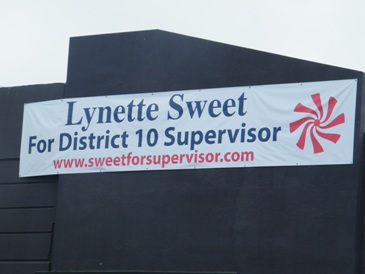
The main thing that needs to be resolved is which candidate in the crowded field will emerge as the progressive alternative to Lynette Sweet, who has the support of downtown groups and mega-developer Lennar Corp.

After the meeting, Walker said different races require different political strategies. “I think it’s hard in the progressive community, where so many of us know each other and even our supporters know the other candidates and are their supporters in other scenarios,” Walker said.

“But the Democratic Party makes decisions not just based on politics,” she continued. “So the endorsement is about being viable and successfully involved in Democratic issues. And even though I want to encourage everyone to run, and we have that ability with ranked choice voting and public financing, when it comes to straight-on politics, the goal is winning.”

Walker said the vote on D8 reflected the reality that Mandelman was having trouble getting the necessary number of votes. “I know Rebecca and I know Rafael, and Rafael was my clear first choice,” Walker said.” Rafael asked me to consider voting for Rebecca—and I voted for her as my second choice.”

Walker predicts she’ll have union support behind her campaign, while Kim, who leads in fundraising, will have independent expenditure committees that will support her campaign.

“My consultant says it’s a $250,000 race, and unfortunately the viability is based on that reality, the funds, the money,” Walker observed.

On the fall ballot measures, the DCCC voted to recommend a no vote on Public Defender Jeff Adachi’s measure to make city employees pay more for the pension and healthcare costs (Prop. B), Sup. Sean Elsbernd’s Health Service Board Elections (Prop. F,) and Newsom’s three controversial measures. And they voted “no endorsement” on Elsbernd’s measure to remove from the charter Muni pay guarantees (Prop. G). 

But the DCCC did vote to endorse a local vehicle registration fee surcharge (Prop. AA), Newsom’s earthquake retrofit bond (Prop. A), Sup. Chris Daly’s proposed legislation to require mayoral appearances at board meetings (Prop. C), Chiu’s measure to allow noncitizen voting in school board elections (Prop. D), Sup. Ross Mirkarimi’s Election Day voter registration (Prop. E), former Newsom campaign manager Alex Tourk’s Saturday voting proposal (Prop. I) Labor’s hotel tax (Prop. J ), Mirkarimi’s foot patrols measure (Prop. M) and Avalos’ real estate transfer tax (Prop. N).

With just about everybody opposed to Adachi’s measure going after public employee unions, Walker observed that Adachi probably wishes he had done it differently now. But looking into the future, Walker sees opportunities for the party to come back together.

“There’s an opportunity to start a dialogue because everyone is hurting,” Walker said. “The more we don’t have a proactive solution, the more we get caught at the bottom.”

And in a feel-good vote for the frequently divided body, the DCCC also voted overwhelmingly to endorse the statewide initiative to legalize and tax marijuana (Prop. 19). Normally local party committees don’t take a position on state initiatives, but because the California Democratic Party took no position on Prop. 19, the DCCC had permission to weigh in.

As Peskin put it before the enthusiastic marijuana vote, “Raise your hands — high.”

Editor’s Notes

4

tredmond@sfbg.com

I suppose I should be thrilled that 40 of the richest people in the United States have agreed to give away half their money before they die. Actually, it kind of makes me sick.

The concept is called the Giving Pledge, and Bill Gates and Warren Buffet started it. The two have been on the phones this summer, dialing up other really, really rich people and asking them to sign on. I’ve got nothing against Gates and Buffet (well, Gates has always been into world domination, so that’s a problem, but Buffet seems a decent sort for a billionaire). In fact, Buffet has promised to give away 99 percent of his $47 billion, which would leave him and his heirs with just a paltry $470 million.

Even that much money fits into New York Mayor (and billionaire) Michael Bloomberg’s entirely accurate statement: “The reality of great wealth is that you can’t spend it and you can’t take it with you.”

That’s the thing: You can’t spend that much money, and you can’t take it with you, and the United States used to be the kind of country that disdained inherited monarchy. Bloomberg says he wants his kids to have to work for a living, which is nice, although even after he gives away half his wealth, none of them are likely to miss any meals or have trouble paying the rent. His children, and their children, and their children, will all be able to afford to go to good schools and colleges, even if the public education system in America completely collapses for lack of adequate funding.

The irony is that, for the most part, these exceptionally rich people who feel so good about giving their money to charities of their choosing (which then honor them with awards and testimonials and dinners) oppose the notion of raising taxes on high incomes.

The problem with charity is that it won’t ever really reduce the gap between the rich and the poor in this country. The only way you do that is with aggressive, effective government action: by taxing the great wealth when it comes in (as income) and when it goes out (as estates) — and then, through a democratic process involving elected representatives, deciding where the money should go.

The Bill and Melinda Gates Foundation is wonderful, I guess, but it won’t provide mental health care for homeless people in San Francisco. That’s a government job. It also won’t ensure that every kid in America gets quality preschool, good teachers, schools that aren’t falling apart, and access to a college education. That’s what we pay taxes for.

But wait a minute. There’s never enough money for these things, because we keep cutting taxes on the rich. Instead, these guys can give money to their own pet projects — and pay no taxes at all. It’s charity! It’s a tax write-off!

I wanna throw up.

New approach for the new U.S. attorney

0

EDITORIAL Joseph Russoniello, the U.S. attorney who terrorized immigrants, city employees, and medical marijuana growers, is finally out of office, replaced Aug. 13 by an Obama nominee screened by Sen. Barbara Boxer. Melinda Haag is the second female U.S. attorney in California history and the first since the 1920s. She’s taking over an office that pushed all the wrong priorities and served as an outpost of Bush administration values in Democratic Northern California, and she needs to turn that around, quickly and visibly.

President Obama has made it clear that he doesn’t want his Justice Department wasting valuable resources busting people who grow, sell, and use pot for medicine. And while the president has been slow and far too cautious on immigration reform, he has resisted the nativist movement and harsh attacks on undocumented immigrants. But a U.S. attorney has a tremendous amount of discretion on law enforcement priorities, and Haag could easily slide along, refusing to break with the policies of her predecessor.

That would be a serious mistake, one that would reflect poorly not only on the Obama administration but on Boxer, who under the traditions of Senatorial courtesy played a central role in choosing Haag.

The new U.S. attorney should:

Disband the grand jury that’s been investigating whether city employees violated federal law by failing to turn suspected illegal immigrants over to immigration authorities. The grand jury started sending subpoenas to city agencies two years ago and raised the specter that some local juvenile justice workers might face charges. The move set off policy changes by Mayor Gavin Newsom that have led to more than 100 young people being torn from their families and sent to federal immigration detention centers.

The grand jury operates at the U.S. attorney’s discretion, and while its activities are secret, Haag could and should announce that the investigation is closed and no charges are pending.

Inform City Attorney Dennis Herrera that no city employee will face federal criminal charges for complying with the city’s Sanctuary Ordinance. The threat of criminal charges has given Newsom cover for refusing to implement a sanctuary law that the supervisors passed over his veto. The law, sponsored by Sup. David Campos, directs city workers not to turn juveniles over to Immigration Control and Enforcement until they’ve been convicted of a felony. Herrera asked Russoniello for assurance that city employees could implement the law without fear of federal indictment, and the Republican appointee refused. Haag should give Herrera, and all city employees, written assurance that she won’t press charges over the sanctuary policy.

Stop the pot busts — and don’t try to undermine Prop. 19. Even after U.S. Attorney General Eric Holder made clear that he isn’t interested in harassing medical cannabis operations, local growers and outlets remain fearful of federal prosecution. And if the state’s voters legalize pot this fall, as appears likely, the weed will still be illegal under federal law. Haag needs to let the FBI and Drug Enforcement Administration know that she’s not going to take any cases involving legitimate medical marijuana operations — and that she won’t use her office to undermine state law if Prop. 19 passes.

Of course, if the U.S. attorney’s office stops wasting time and money cracking down on pot growers and immigrants, the lawyers who work under Haag may have time to do some more relevant and worthwhile law enforcement. They could, for example, start looking into enforcing a federal law called the Raker Act, which requires San Francisco to operate a public power system.

Community Congress convened

1

news@sfbg.com

About 60 San Francisco citizens voted just before 1 p.m. on Aug. 15 to adopt a progressive platform of approximately 100 policy recommendations they hope will define the agenda of candidates and elected officials in coming years and offer a contrasting vision for the city to that of downtown corporate interests.

Sunday’s culmination of the 2010 Community Congress represented almost a year’s work by some 400 San Franciscans and dozens of community-based organizations, according to the Congress’ draft recommendations. The congress convened all day Aug. 14, at the University of San Francisco’s Fromm Hall, where participants engaged in breakout groups aimed at addressing four distinct local policy categories: health and human services; Muni and public transportation; affordable housing and tenant rights; and community-based economic development.

Recommendations in the four areas were drafted prior to the congress and published by the Guardian (see “Reinvention of San Francisco,” Aug. 4 and “Ideas that work: a plan for a new San Francisco,” Aug. 11), but planning group coordinator Calvin Welch said between a one-quarter and one-third were rewritten and amended during the breakout sessions on Saturday and by the congress as a whole on Sunday. Representatives from the breakout groups are working to finalize all the last-minute amendments and hope to post a final document by on the congress’ website (www.sfcommunitycongress.wordpress.com) by Aug. 20.

“This is a group of left-progressive people trying to articulate a left-progressive view for the city that is distinct from the cynicism of the [San Francisco] Chronicle and [Mayor] Gavin Newsom’s message,” Welch told the Guardian after the vote.

Gail Gilman facilitated the final adoption session on Aug. 15, passing a microphone to those who wished to speak or propose amendments while pushing the group to stick to the schedule. “I think we produced a solid progressive platform that will gain traction in the upcoming supervisors race,” Gilman told the Guardian outside the congress. “We’re hoping to have actionable items implemented over the next five years.”

Some of the congress’ ambitious agenda had to be put on hold, either because consensus couldn’t be reached or groups simply ran out of time. The Muni group’s recommendation to delay the Central Subway Project and use those funds to address “Muni’s backlog of operating, maintenance, and capital improvement needs” was tabled, as was decentralizing control of expenditures in health and human services out of the mayor’s hands. However, several agencies that the congress hopes to create, including a “canopy” entity to manage San Francisco’s public health system, would have direct budgetary control over city departments.

Health and human services group coleader and Bayview-Hunters Point Foundation Executive Director Jacob Moody told the crowd about a question posed early in the congress that informed his group’s recommendations: How do we create a city where people can live, work, and prosper together?

Welch admitted that some of policy recommendations would be difficult to realize and would draw the ire of powerful political groups in San Francisco, but he insisted that creating a municipal bank, an economic redevelopment agency, and a health and human services planning agency, and implementing several of the Muni group’s recommendations, were actionable in the short term.

“Some others would need to wait until the election of a new mayor,” Welch said. “I hope we can get some mayoral candidates to endorse some of these proposals.”

Sunnydale/southeast neighborhood community organizer Sharen Hewitt said that although there were often disagreements at the congress, the most important aspect of the event to her was that everyone learned from the perspectives of others.

“Tension is not always bad,” Hewitt told the Guardian at the event. “Everybody came here with biases and interests. Everybody needs to leave here with more. I’m damn near 60 years old and I grew half an inch today.”

Sunday’s congress and policy platform were modeled after San Francisco’s first Community Congress, which took place in 1975. But Welch told us this congress was entirely new. “To the extent that there is a historical aspect, 35 years ago we tried to figure out a way to bring people together. And 35 years later, young people want to do the same thing.”

“Diamond” Dave Whittaker, a modern Emperor Norton-esque San Francisco personality, closed the congress with a poem. “The basis of real social change is happening here,” he said. “And we need to continue casting a wider net, finding the thread, and letting it flourish.”

Two steaming non-scandals

24

The political press is all over two of the big non-scandals of the day, Jerry Brown’s pension and Jeff Adachi’s budget. Let’s start with ol’ Jer’.


You can say a lot of things about Jerry Brown, and I’ve said a lot of them myself, but the guy has never tried to enrich himself off the public dollar. Fact is, Jerry’s about as cheap as you can get, and hates to spend money — his money, campaign money, public money. In some ways, he’s responsible for Prop. 13, because he was such a cheapskate as governor in the 1970s that he ran up a huge billion-dollar-plus surplus in Sacramento at a time when property taxes were soaring.


But Matt Drudge, playing off public anger at state employee pensions, decided that Brown was “double dipping,” citing and OC Register report, and suddenly, the former gov’s secret pension was big news. But wait, the Chron actually figured it out: Brown isn’t drawing any pension at all right now. If he were to retire after about 25 years of service as secretary of state, governor, mayor of Oakland, attorney general and a Supreme Court clerk, he’d be eligible for a pension of $78,450 — considerably less than your average San Francisco cop or firefighter. Knowing Jerry, he’ll probably decline it anyway.


In other words: No story.


Then there’s Jeff Adachi’s budget. I know, it looks bad for a guy who’s trying to cut worker pensions and health care to be seeing budget increases and still leave the city with a $2 million legal tab for work he refused to handle. But really, this is old news — Adachi’s been warning for a couple of years that he was going to have to decline cases (and thus stick the city with a private legal bill). And let’s remember: The staff in the Public Defender’s Office handles almost twice as many cases as they ought to.


Adachi’s ballot initiative annoys me — he’s going after city employee benefits instead of looking at where the city can raise new revenue. And he’s acting like a lone wolf, demanding that his office is properly staffed and launching an initiative that attacks public employee unions instead of trying to work with them.


But I don’t blame him for being agressive in pushing for adequate funding for his shop — I wish the director of public health was willing to try as hard to avoid cutbacks instead of going along with whatever the mayor proposes. And his current budget is nowhere near as scandalous as what happens every single year with police and fire.


Man charged in fatal hit and run

Last week’s Guardian cover story highlighted a number of efforts to make cycling safer and more viable in San Francisco, such as ongoing San Francisco Bike Plan projects that will create separated bike zones. Sadly, none of it was enough to prevent the tragic death of a German tourist who was hit while riding a bike on Friday, Aug. 13, by an intoxicated driver behind the wheel of a 1989 Mercedes Benz.

Police had little information about Nils Linke, who would have turned 22 next month, other than that he was visiting San Francisco from Germany. Linke was hit at 10:39 p.m. Friday night on Masonic Avenue near Turk Boulevard, according to police spokesperson Lt. Lyn Tomioka. “They are really working very hard on this case,” Tomioka said. “It is an active and ongoing investigation.”

Joshua Calder, 37, was arrested and charged with gross vehicular manslaughter while intoxicated, felony drunk driving, felony hit-and-run causing death, driving with a blood-alcohol content above the legal limit, and driving without proof of insurance. Police originally believed Calder to be an Oakland resident, but he gave a San Francisco address, Tomioka said.

SF Streetsblog picked up the story, providing an insider’s scoop on efforts to address traffic conditions in that area. Here’s an excerpt:

“For years now, advocates and residents who live on and near Masonic Avenue have been trying to get the SFMTA to turn Masonic into a complete street, replete with bicycle and pedestrian amenities that would slow traffic, and make it a safer place for everyone. At a recent community meeting, the agency offered four options to do that, including a cycle track.

The [San Francisco Municipal Transportation Agency] has been hearing loud calls to fix Masonic since 2008 when 500 residents signed a petition citing speed concerns. It was hand delivered to SFMTA Chief Nat Ford. … “We’ve put about four options out there now to really look at how to redesign that street,” said Ford. “Unfortunately, Masonic could use some traffic calming. I have to be cautious, because you can imagine, this is a very litigious situation. Our hearts go out to the family of the young man who got killed, but we have to also make sure that we’re making prudent legal steps going forward in dealing with this issue.”

The Streetsblog report also notes that a group called Fix Masonic — which has been working to improve safety conditions in that area — has been receiving phone calls about the incident.

Linke is the second German tourist to be killed in San Francisco since the start of August. On Aug. 8, Mechthild Schroeer, 50, was killed after being caught in the crossfire of a gun battle near a Union Square venue. Efforts have been made recently to clamp down on violence outside San Francisco nightclubs, with Mayor Gavin Newsom signing legislation last week to strengthen the Entertainment Commission’s ability to revoke permits for clubs that attract trouble. While drunk driving was clearly a factor in this latest hit and run, city efforts to adress community concerns near Masonic and to crack down on dangerous driving that endangers cyclists could serve to prevent tragedies like the one that took Linke’s life.

Will the Potrero power plant be shut down by the end of the year?

At the beginning of 2010, the official word was that an undersea high-voltage power line called the Trans Bay Cable would go live in February, supplying up to 40 percent of San Francisco’s power. This was the missing piece of the puzzle that would finally lead to the shuttering of Mirant’s Potrero power plant, which activists and city officials have railed against for years.

But February came and went. March, April, May, June, and July brought the same story, and the Potrero power plant kept chugging away. Good news for the roughly 30 employees who work there, bad news for nearby residents with lung problems.

August rolled around, and we decided to ask San Francisco Mayor Gavin Newsom what the deal was.

“We’re very close to making an announcement,” Newsom said at an Aug. 9 press conference, and added that he has been working closely with the head of the California Independent System Operator (Cal-ISO), Yakout Mansour, who has “made it a priority.” Then Newsom found a way to work in something about his bid for lieutenant governor. “I made it clear that I’m not leaving till it’s shut down,” he said, and reminded us that he fully intends to leave for Sacramento in January.

Why the seven-month delay? Newsom’s press secretary, Tony Winnicker, chimed in to say the setback had something to do with how the Trans Bay Cable “couldn’t carry capacity,” which didn’t sound too good for a $500 million project. But project spokesperson P.J. Johnston sounded confident in a recent telephone message, saying work crews have identified the problem and corrected it. “We still believe we can go operational this year,” Johnston said.

Apparently, the delay resulted from a technical issue involving some faulty sub-module parts, which have since been replaced. “Hopefully this fix did the trick,” Johnston said.

“We’ve been doing testing since June with Siemens,” he added, referring to Siemens Power Transmission & Distribution, Inc., a partner in the project development. “We started a second round of testing here in August, and we should be doing so for several weeks, well into September.”

If the Trans Bay Cable goes live before the end of 2010 and the Cal-ISO finally releases the Potrero power plant from a requirement that says it “must run,” the result will be an improvement in air quality in San Francisco – particularly for residents in Dogpatch and Bayview Hunter’s Point neighborhoods.

However, the Trans Bay Cable will ultimately be bringing in power from somewhere else, and for now, the bulk of that electricity will still be generated by fossil fuels. The other end of the 53-mile, high-voltage undersea cable will connect to power sources in the city of Pittsburg. Mirant operates two major electricity generation units there — one is 50 years old and the other is 38 years old — for a total capacity of 1,311 megawatts. It sells the power to Pacific Gas & Electric Co. PG&E is seeking state approval to build two more power plants in Antioch and Oakley, located a bit further east of Pittsburg in Contra Costa County.

A report by Pacific Environment explores the potential health impacts of PG&E’s proposed power plants, highlighting the toxic landmarks that already mar the air quality in that area.

“Contra Costa County already contains more than its share of polluting industries,” Pacific Environment notes, “including over a dozen power plants, five oil refineries, several chemical plants, and many other industrial facilities. Due to the volume of pollution already located in Eastern Contra Costa, the increased emissions from these two new power plants are likely to exacerbate already-high rates of respiratory and other diseases. The report also concludes that PG&E does not need the power plants, as the utility already has more than 30 percent of the power needed in ‘peak’ conditions.”

Maybe Newsom will boast someday about being the San Francisco mayor who worked with the Cal-ISO to shut down the Potrero power plant. But at the state level, a sustainable solution is one that would leave residents of Pittsburg, Antioch, and Oakley breathing easier too.

Same-sex marriages set to resume in California

0

Same-sex marriages in California will resume on Aug. 18, barring a higher court issuing a stay. Judge Vaughn Walker today announced that he is removing the stay against new same-sex marriages that was in place since his ruling last week that Proposition 8, the 2008 ballot measure banning gay men and lesbians from getting married, was unconstitutional.

“Because proponents fail to satisfy any of the factors necessary to warrant a stay, the court denies a stay except for a limited time solely in order to permit the court of appeals to consider the issue in an orderly manner,” Walker wrote.

Mayor Gavin Newsom sent out a press release announcing that San Francisco will begin performing marriages again – just as it did in 2004 when Newsom permitted same-sex couples to apply for license, setting off California’s rollercoaster ride on the issue – as soon as it is allowed to do so.

“From the beginning, I have strongly agreed with Judge Walker’s decision that the right to marry deserves equal protection under the law as guaranteed by the Constitution of the United States. Today’s decision by Judge Walker to lift the stay on marriage discrimination on August 18th is another victory for the fundamental American idea that all people deserve equal rights and treatment under the law,” Newsom said in the prepared statement.

Immigrant advocates accuse ICE of “pattern of dishonesty”

13

A coalition of national civil rights organizations held a August 10 press conference to discuss recently released internal government documents that they say reveal “a pattern of dishonesty” regarding Immigration and Customs Enforcement (ICE)  “Secure Communities” (S-Comm) program.

Representatives with the National Day Laborer Organization Network (NDLON), the Center for Constitutional Rights (CCR), and the Kathryn O. Greenberg Immigration Justice Clinic of the Benjamin N. Cardozo School of Law noted that though ICE officials have declared their intention to expand S-Comm into every jurisdiction in the country by 2013, information about the program has been scarce, and development of its operational details has been shrouded in secrecy.

The coalition also pointed to a July 27 letter that U.S. Congresswoman Zoe Lofgren recently wrote to Secretary Janet Napolitano and Attorney General Eric Holder as evidence that ICE led Congress to believe that SecureComm is a voluntary, and not a mandatory, program.

In her letter, Lofgren, who is chair of the House of Representatives’ subcommittee on Immigration, Citizenship, Refugees, Border Security and International Law,  asks for “a clear opt-out procedure for municipalities that do not wish to participate in the S-Comm program.”

“As we discussed, Secure Communities is a voluntary program that relies upon the resources of both of your agencies [referring to DHS and DOJ] in order to provide State, local, and federal law enforcement agencies with information related to the immigration status of persons booked into our nation’s jails and prisons,” Lofgren wrote.

“I am aware that some local law enforcement agencies have expressed concern that participating in Secure Communities will present a barrier to their community policing efforts and will make it more difficult for them to implement a law enforcement strategy that meets their community’s public safety needs,” Lofgren observed.

“There appears to be significant confusion about how local law enforcement agencies may ‘opt out’ of participating in Secure Communities,” Lofgren continued.

Lofgren notes that staff from her House subcommittee were briefed on this program by ICE and were informed that localities could opt out simply by making such a request to ICE, while subsequent conversations with ICE and FBI CJIS added  to the confusion by suggesting that this might not be so.

“Please provide me with a clear explanation of how local law enforcement agencies may pot out of Secure Communities by having the fingerprints they collect and submit to the SIBs checked against criminal, not immigration, databases,” Lofgren concludes.

To date, Lofgren has not received a reply, a press spokesperson in her office confirmed.

Immigration rights advocates charge that S-Comm, which is operative in 544 jurisdictions in 27 states, functions like the controversial 287(g) program and Arizona’s SB1070, making state and local police central to the enforcement of federal immigration law.

They say the program, which automatically runs fingerprints through immigration databases for all people arrested, targets them for detention and deportation even if their criminal charges are minor, eventually dismissed, or the result of an unlawful arrest.

After reviewing the recently released ICE documents and other information, advocates for NDLON said they found evidence supporting their claim that ICE has been dishonest with the public and with local law enforcement regarding S-Comm’s true mission and impact.

“While ICE markets S-Comm as an efficient, narrowly tailored tool that targets ‘high threat’ immigrants, it actually functions as a dragnet for funneling people into the mismanaged ICE detention and removal system,” stated a NDLON press release. “ICE’s own records show that the vast majority (79 percent) of people deported due to S-Comm are not criminals or were picked up for lower level offenses.”

They also charge that the program serves as a smokescreen for racial profiling, allowing police officers to stop people based solely on their appearance and arrest non-citizens, knowing that they will be deported, even if they were wrongfully arrested and are never convicted.

“Preliminary data confirms that some jurisdictions, such as Maricopa County Arizona, have abnormally high rates of non-criminal S-Comm deportations,” NDLON continued.

 “Lastly, the impression ICE fosters that S-Comm is not mandatory and jurisdictions can opt out is riddled with questions,” they conclude.

 “These records reveal a dangerous trend,” said NDLON Executive Director Pablo Alvarado. “This program creates an explosion of Arizona-like enforcement at a time when the results have proven disastrous. Thanks to S-Comm, we face the potential proliferation of racial profiling, distrust of local police, fear, and xenophobia to every zip code in America.”

 “S-Comm co-opts local police departments to do ICE’s dirty work at significant cost to community relations and police objectives,” said CCR attorney Sunita Patel. “Without full and truthful information about the program’s actual mission and impact, police are operating in the dark. The bottom line is that thrusting police into the business of federal immigration enforcement isn’t good for anyone.”

 “ICE is racing forward imposing its S-Comm program on new states and localities every day, without any meaningful dialog or public debate,” warned Bridget Kessler, a teaching fellow at the Immigration Justice Clinic of the Benjamin N. Cardozo School of Law.

The three organizations vow to litigate for the release of more data and records “to uncover the truth behind S-Comm and other ICE efforts to draft local police into immigration enforcement.”

Also speaking at the Aug. 10 press conference was San Francisco Sheriff Mike Hennessey. Earlier this summer, Hennessey blew the whistle on S-COmm, after attending a meeting in May at which ICE revealed it was going to switch the program on in San Francisco in June.

But despite Hennessey’s efforts to opt San Francisco out of the program, S-Comm went live June 8 in San Francisco.

“We were told we could opt out through the State Attorney General’s Office,” Hennessey said, recalling how AG Jerry Brown’s office told him that San Francisco could only opt out through the feds.

“We were given the run around,” Hennessey said.“It’s a program forced upon individual local law enforcement agencies, no matter what the local community wants,” Hennessey said.

Henessey worries that the program is having a chilling effect on community policy efforts.

“Witnesses and victims of crime won’t come forward for fear they will be deported,” he said.

Henessey notes that ICE has detained folks who were arrested for minor traffic violations, and whose charges were subsequently dropped, as well as folks with no criminal records.

“My Board of Supervisors, my Police Commission and my mayor have said they would rather not participate in deportations at that level,” Hennessey noted.

He worries that the program could be expanded to include employment record checks.

“They say the program won’t be used for civil purposes, but it’s already being used for federal employment checks,” Hennessey said. “This further isolates minority communities from the mainstream.”

What DCCC questionnaires reveal about Adachi reform, sit-lie and marijuana

20

The DCCC makes its endorsements for the November election on August 11. And in preparation for that crucial endorsement, candidates filled out questionnaires that are posted online, providing fodder for those interested in Jeff Adachi’s pension reform, Mayor Gavin Newsom’s sit-lie ordinance, and the legalization of marijuana, amongst other measures.

But before we get to those issues, I have to admit I was a bit surprised to see that D. 10 candidate Malia Cohen, who has already secured the endorsements of Sally Lieber, Fiona Ma and Aaron Peskin, says on her DCCC questionnaire that she supports the death penalty.

Now, to be fair, advocating for or against the death penalty isn’t the duty of the Board of Supervisors. And I haven’t yet caught up with Cohen yet to clarify why she holds this stance, (or whether it was one big typo, though I somehow doubt it). So, I’ll be sure to update this post, once I have a chance to talk to Cohen, who was busy at yet another candidate forum, when I was writing this entry. UPDATE: Cohen says she does not support the death penalty, and that she inadvertently misanswered the question. (Thanks for clearing up the mystery, Malia, and being gracious about it in the process.)

I should mention that Peskin also endorsed D. 10 candidate Tony Kelly.

And I should also note that while D. 10 candidate Lynette Sweet’s questionnaire says she supports Jeff Adachi’s pension and healthcare reform, Sweet’s campaign says that’s not the case, pointing to how Sweet said at the Potrero Hill Democratic Club’s August 2 D. 10 forum that what Adachi did wasn’t a bad thing, but the way he went about it was.

I quoted Sweet saying those very words in a previous post, and Sweet’s campaign manager Shane Mayer told me that he forwarded what I wrote about that meeting to the DCCC to clarify Sweet’s position. But Mayer got testy when I asked him about the rent, or rather the lack of rent, that Sweet, who Mayor Gavin Newsom has already endorsed, appears to be paying for her campaign headquarters at 25 Division Street (at Rhode Island).

As Beyond Chron tells it, the deal looks more than a bit fishy, and appears to be bankrolled by the Visovichs, a family with Republican leanings that supported Mayors Willie Brown and Newsom in past election campaigns.

 Mayer tried to dismiss the Beyond Chron article as a “hit piece”.

“The article focuses on only one candidate,” Mayer said. “We’re paying fair market rate, and using only a small portion of a warehouse. When we moved in, we didn’t have lights.”

But Sweet isn’t the only D. 10 candidate to come under Beyond Chron’s fire in recent days: fellow D. 10 candidate Steve Moss also took flak for receiving $500 from Andrew Zacks, the landlord attorney famous for doing Ellis Act evictions.

While on the phone with Moss recently, I asked what he thought about Newsom’s sit-lie ordinance, Moss said he hadn’t made up his mind yet.

And in his DCCC questionnaire, Moss also waxes ambiguous on sit-lie. “There’s clearly a lack of civility in certain areas of the city,” Moss wrote. “And in Bayview-Hunters Point, youth loitering can create conditions that create violence. However, it’s not clear to me that sit-lie is an appropriate response to this issue, and that it won’t result in unintended consequences. For example, sidewalks in Bayview-Hunters Point are also often used for peaceful gathering of neighbors, which is community-building and non-threatening.”

Makes me wonder what Moss and the rest of the candidates think about City Attorney Dennis Herrera’s recent gang injunction in Viz Valley…

UPDATE: I should add here that termed-out D.6 Sup. Chris Daly has just endorsed legislative aide and D.6 candidate James Keys, whose DCCC answers I’ve included in my round up of some of the candidate responses to this year’s DCCC questionnaire. UPDATE: And for all the Glen “Anna Conda” Hyde supporters, my humble apologies for omitting your candidate’s positions in my first post on this issue:

Chiu’s non-citizen voting in School Board elections
Supportive of non-citizen voting:  Adachi, Sup. Michela Alioto-Pier and D. 2 challenger Janet Reilly, D. 6 candidates Glen “Anna Conda” Hyde, James Keys, Jane Kim, Jim Meko, Debra Walker and Theresa Sparks. D. 8 candidates Rafael Mandelman, Rebecca Prozan and Scott Wiener. D. 10 candidates Isaac Bowers, Cohen, Chris Jackson, Tony Kelly, Dewitt Lacy and Eric Smith.
Opposed: D.2 candidates Farrell and Berwick, D. 4 incumbent Carmen Chu, and D. 10 candidates Kristine Enea and Lynette Sweet.

Newsom’s ban on dual office holding

Supportive: Berwick, Farrell, Glen “Anna Conda” Hyde, Meko, Enea.

“Yes. Better distribution of power,” Anna Conda said.

Opposed: Adachi, Alioto-Pier, Reilly, Keys, Kim, Walker, Sparks, Mandelman, Sweet, Lacy, Kelly, Cohen, Wiener, Jackson, Smith and Prozan.
“This measure is the result of petty politics between the mayor and the Board,” Prozan, who contributed S100 to Newsom’s Lt. Governor campaign, famously wrote on her DCCC questionnaire.

Newsom’s Sit-Lie Ordinance
Supportive: Farrell, Alioto-Pier, Reilly, Chu, Sparks, Wiener and Sweet.
Opposed: Adachi, Berwick, Glen “Anna Conda” Hyde, Keys, Kim, and Walker. Mandelman and Prozan. Cohen, Jackson, Kelly, Lacy and Smith.

Adachi’s Pension Reform
Supportive: Adachi, Berwick, Meko, and Sweet
Opposed: Chu, Farrell and Reilly. Glen “Anna Conda” Hyde, Keys, Kim, Walker and Sparks. Mandelman, Prozan and Wiener. Cohen, Jackson, Kelly, Lacy and Smith.
No position, yet: Alioto-Pier.

Legalization of pot (Prop. 19)
Supportive: Adachi, Berwick. Glen “Anna Conda” Hyde, Keys, Kim, Meko, Sparks, and Walker. Mandelman, Prozan and Wiener. Cohen, Jackson, Kelly, Lacy, Smith and Sweet.
Opposed: Chu and Farrell

No position, yet: Alioto-Pier, Janet Reilly.

Hard to tell: Moss.

“I philosophically support this measure but am concerned that its economic and social implications haven’t been carefully considered, nor its interaction with federal law,” Moss wrote on his DCCC questionnaire.

Sparks for her part just clarified that she mistakenly answered “No” on two DCCC questionnaire items: “Do you opposeprivatization of essential government services,” and “Will you oppose anti-worker initiatives that seek to undermine the ability of union leaders to carry out will of members and engage in political activities.”

“I meant to answer yes, as I explained at my DCCC interview,” Sparks said. “I was confused by the double negatives.”

While she was on the phone, Sparks also admitted that the pace on the campaign trail is getting intense with forums and meetings every night.

“David Campos, who has been a good friend since we were both on the Police Commission, recently told me, ‘win or lose, you need to schedule a few weeks off in November when the election is over,’” Sparks said.

Campos is right. To all the candidates on the campaign trial, here’s wishing you lots of energy and calm in the weeks to come. And see you at the DCCC forum.

<!–[endif]–>

DCCC endorsements will test progressive unity

2

When the San Francisco Democratic County Central Committee convenes tomorrow (Aug. 11) evening to vote on its endorsements for the November races and ballot measures, the clout and unity of its slim progressive majority will be tested in a few high profile contests where the outcome isn’t entirely clear.

As I reported last week, progressives occupy only about 17 of the 33 seats, so any defectors from the slate that won in June could create some squirrely politics or backroom deals. Progressive supervisorial candidates Rafael Mandelman from District 8 and Debra Walker from District 6 are widely expected to get the top endorsements in their races, but Rebecca Prozan in D8 and Jane Kim (and possibly Jim Meko) in D6 each have some progressive supporters on the committee and could make a play for the second slot in the ranked-choice voting election. D8 candidate Scott Wiener, the former DCCC chair, will probably also try to get some kind of spot on the slate but is likely to be met with fairly unified progressive opposition.

The District 10 endorsement will be a free-for-all with no clear progressive consensus alternative to downtown-backed candidate Lynette Sweet yet emerging from the crowded field. Party chair Aaron Peskin has endorsed Malia Cohen and Tony Kelly in that race, but Chris Jackson, Dewitt Lacy, Kristine Enea, and other candidates also have progressive backing, so it could be tough for any of them to get to 17 votes at this point. But in District 2, Janet Reilly appears to have the endorsement locked down, despite a judge allowing incumbent Sup. Michela Alioto-Pier to run for a third term.

On the local ballot measures, the progressive majority is likely to endorse the revenue measures (a hotel tax increase pushed by labor, a transfer tax on properties worth over $5 million, and a small local vehicle license fee surcharge) and reject Public Defender Jeff Adachi’s measure to increase how much city employees pay for health care and into their pensions and Sup. Sean Elsbernd’s measure to end pay guarantees for Muni drivers (although not even progressives are feeling much love for the recalcitrant Transportation Workers Union these days).

The aggressive effort by the legal community to overturn the DCCC endorsement of Michael Nava for judge – waged on behalf of Judge Richard Ulmer, a recent appointee of Gov. Arnold Schwarzenegger, ostensibly over judicial independence but also as a way of sucking up to judges that lawyers want to curry favor with – is expected to fail, mostly because it requires a two-thirds vote. An ordinance to ban sitting or lying on sidewalks that is being pushed by Mayor Gavin Newsom, Police Chief George Gascon, and San Francisco Chronicle columnist CW Nevius is also likely to be soundly rejected by the party.

DCCC endorsements usually carry quite a bit of weight in heavily Democratic San Francisco, getting the candidates on party slate cards and entitling them to other party resources. Any races that don’t yield a majority endorsement this week would get pushed back to the September meeting, when the DCCC will consider school board endorsements.

The fun starts at 6 p.m. at the Unite-Here Local 2 office at 209 Golden Gate Avenue.

Finally, some logic on same-sex marriage

0

EDITORIAL Judge Vaughn Walker’s historic decision overturning Proposition 8 was remarkable not so much for its conclusion, but because it has taken so long for a federal court to conclude that same-sex marriage does no conceivable harm to anyone.

The legal scholars can debate whether this particular civil rights issue deserves strict scrutiny or must meet only a rational-basis test. And everyone knows the case will eventually wind up in the U.S. Supreme Court, where nine justices will decide whether official discrimination can be legal in the United States of America.

But what Walker did was crucial — he devoted the vast majority of his 138-page decision to discussing the facts of the case. As Bob Egelko notes in a nice San Francisco Chronicle piece Aug. 8, Walker provided a forum for the public debate that should have happened around the ballot measure but never did. Prop. 8 was decided after political consultants used carefully honed messages designed to play on people’s emotions; the real facts of the matter were hardly ever discussed on a statewide level.

The facts of the matter, as the record clearly shows and Walker eloquently related, are simple: there’s nothing wrong with same-sex marriage. The ability of same-sex couples to marry has no impact on the rights of opposite-sex couples. There is also no legal reason to believe that something rooted in an old tradition — from a time when gender roles were rigidly prescribed — has, in and of itself, any validity. "Tradition alone," Walker noted, citing a 1970 U.S. Supreme Court case, "cannot form a rational basis for a law." Furthermore, studies show that children brought up by same-sex couples fare just as well (and in some studies, better) than children raised in traditional households.

In fact, the judge concluded, the only real reason Prop. 8 supporters put the measure on the ballot is that they don’t like gay and lesbian people: "Proposition 8 was premised on the belief that same-sex couples simply are not as good as opposite-sex couples. Whether that belief is based on moral disapproval of homosexuality, animus toward gays and lesbians, or simply a belief that a relationship between a man and a woman is inherently better than a relationship between two men or two women, this belief is not a proper basis on which to legislate."

That record of factual evidence will make it harder for the Ninth Circuit Court of Appeals or Supreme Court to overturn Walker’s ruling. And the very essence of his decision — that no harm comes to anyone in society when same-sex couples are allowed to wed — is ample reason for him to deny any stay while the case is on appeal. A stay, which would leave Prop. 8 in effect for several more years while the case works its way through the system, would make sense only if some irreparable harm would come to some party. There’s no such harm — real or potential or imaginable — to anyone or anything except institutional and personal bigotry.

The decision demonstrates another crucial factor, one that politicians of both parties should pay attention to this fall. Courts tend to (slowly) reflect changing attitudes in society. And while the polls are still inconclusive, the demographics are not: Almost nobody under 30 opposes same-sex marriage, and every year that passes, California and the country come closer to the day when Prop. 8 will seem as silly as anti-miscegenation laws.

Both Attorney General Jerry Brown and Gov. Arnold Schwarzenegger have asked Walker not to stay his ruling. Sen. Barbara Boxer has hailed the decision. But Republican gubernatorial candidate Meg Whitman and Senate contender Carly Fiorina remain adamantly opposed to same-sex marriage. Brown and Boxer shouldn’t be afraid to make this part of their campaigns. There’s not a whole lot to bring young people to the ballot this fall, and making Prop. 8 an issue can only help the Democrats.

It’s also worth remembering that nearly every Democratic leader in the nation blanched when San Francisco, under Mayor Gavin Newsom did the right thing and legalized same-sex marriage in 2004. We warned then that Sens. Boxer and Dianne Feinstein, Speaker Nancy Pelosi, and the rest of the Washington crew would wind up on the wrong side of history. And now that a judge who has never been known as a leftist (or even a liberal) has made the case that marriage is a civil right and discrimination is never legally acceptable, they ought to admit they were wrong.

Finally, some logic on same-sex marriage

11

Same-sex marriage does no conceivable harm to anyone

EDITORIAL Judge Vaughn Walker’s historic decision overturning Proposition 8 was remarkable not so much for its conclusion, but because it has taken so long for a federal court to conclude that same-sex marriage does no conceivable harm to anyone.

The legal scholars can debate whether this particular civil rights issue deserves strict scrutiny or must meet only a rational-basis test. And everyone knows the case will eventually wind up in the U.S. Supreme Court, where nine justices will decide whether official discrimination can be legal in the United States of America.

But what Walker did was crucial — he devoted the vast majority of his 138-page decision to discussing the facts of the case. As Bob Egelko notes in a nice San Francisco Chronicle piece Aug. 8, Walker provided a forum for the public debate that should have happened around the ballot measure but never did. Prop. 8 was decided after political consultants used carefully honed messages designed to play on people’s emotions; the real facts of the matter were hardly ever discussed on a statewide level.

The facts of the matter, as the record clearly shows and Walker eloquently related, are simple: there’s nothing wrong with same-sex marriage. The ability of same-sex couples to marry has no impact on the rights of opposite-sex couples. There is also no legal reason to believe that something rooted in an old tradition — from a time when gender roles were rigidly prescribed — has, in and of itself, any validity. “Tradition alone,” Walker noted, citing a 1970 U.S. Supreme Court case, “cannot form a rational basis for a law.” Furthermore, studies show that children brought up by same-sex couples fare just as well (and in some studies, better) than children raised in traditional households.

In fact, the judge concluded, the only real reason Prop. 8 supporters put the measure on the ballot is that they don’t like gay and lesbian people: “Proposition 8 was premised on the belief that same-sex couples simply are not as good as opposite-sex couples. Whether that belief is based on moral disapproval of homosexuality, animus toward gays and lesbians, or simply a belief that a relationship between a man and a woman is inherently better than a relationship between two men or two women, this belief is not a proper basis on which to legislate.”

That record of factual evidence will make it harder for the Ninth Circuit Court of Appeals or Supreme Court to overturn Walker’s ruling. And the very essence of his decision — that no harm comes to anyone in society when same-sex couples are allowed to wed — is ample reason for him to deny any stay while the case is on appeal. A stay, which would leave Prop. 8 in effect for several more years while the case works its way through the system, would make sense only if some irreparable harm would come to some party. There’s no such harm — real or potential or imaginable — to anyone or anything except institutional and personal bigotry.

The decision demonstrates another crucial factor, one that politicians of both parties should pay attention to this fall. Courts tend to (slowly) reflect changing attitudes in society. And while the polls are still inconclusive, the demographics are not: Almost nobody under 30 opposes same-sex marriage, and every year that passes, California and the country come closer to the day when Prop. 8 will seem as silly as anti-miscegenation laws.

Both Attorney General Jerry Brown and Gov. Arnold Schwarzenegger have asked Walker not to stay his ruling. Sen. Barbara Boxer has hailed the decision. But Republican gubernatorial candidate Meg Whitman and Senate contender Carly Fiorina remain adamantly opposed to same-sex marriage. Brown and Boxer shouldn’t be afraid to make this part of their campaigns. There’s not a whole lot to bring young people to the ballot this fall, and making Prop. 8 an issue can only help the Democrats.

It’s also worth remembering that nearly every Democratic leader in the nation blanched when San Francisco, under Mayor Gavin Newsom did the right thing and legalized same-sex marriage in 2004. We warned then that Sens. Boxer and Dianne Feinstein, Speaker Nancy Pelosi, and the rest of the Washington crew would wind up on the wrong side of history. And now that a judge who has never been known as a leftist (or even a liberal) has made the case that marriage is a civil right and discrimination is never legally acceptable, they ought to admit they were wrong.

Ideas that work: a plan for a new San Francisco

6

OPINION San Francisco is a city of tremendous riches and problems — a locus of wealth, inequality, innovation, creativity, and sometimes stifling resistance by political and economic power brokers. It’s time to break through. We have the ability, and opportunity, to create a whole new set of economic, social, and political relationships between people and government. On everything from municipal banking, to Muni reform, to public-controlled sustainable energy production and community-driven budgeting, we have a flood of ideas from thinkers and activists across the city.

The Aug. 14-15 Community Congress at the University of San Francisco will focus on turning those ideas into a political platform the city can implement. Last week, we described the vision; this week, we offer some proposals that will be discussed at the event; following the event, others will be posted at sfbg.com.

The event runs Aug. 14 from 9 a.m.–5 p.m. and Aug. 15 from 9 a.m.–1 p.m. at USF’s McLaren Conference Center. For information, go to www.sfsummitcongress.wordpress.com. (Karl Beitel and Christopher Cook)

1. A MUNICIPAL BANK


San Francisco is rich — it has $16.1 billion in assets, with a net worth of $6.5 billion, according to the city treasurer. With a little maneuvering and political will, roughly a half-billion of that money could be devoted to creating a municipal bank: a fiscally solvent, federally insured economic engine that would invest in community development projects serving underfunded activities and endeavors, providing significant economic and social benefits to the residents of San Francisco.

With its own public bank, San Francisco could begin to fund and promote more community-centered forms of economic development. Worker co-ops, for instance, could get loans for projects that are socially beneficial and economically viable. The bank could also help generate new homegrown industries that produce both revenue and social value to the city. This would help democratize the city economy, giving financial muscle to community-based projects and neighborhood-serving businesses.

Over a period of three to five years, a modest portion of the city’s liquid investments can be transferred to create to the new bank. The bank could use this pool of capital to extend low-interest, long-term loans for projects located in San Francisco. The bank would offer a full spectrum of retail banking services, such as money market accounts, to attract additional deposits to supplement funds from the city.

A municipal bank has potential to grow into a major economic force in the city for financing community-centered development. With the right up-front commitment from the city, the total asset portfolio of loans and other investments would grow far beyond this initial public investment — representing a significant infusion of loan capital into currently underserved segments of the credit market in San Francisco.

The municipal bank would be a member-owned, federally chartered, and federally insured credit union. It would engage in rigorous vetting of loan applicants. But because the bank would not run as a profit-maximizing enterprise, loan officers would explicitly consider projects in light of their economic viability and potential contribution to the economic, social, and cultural well being of San Francisco.

Priority could, for instance, be given to loans for affordable housing development and community economic development. In particular, the bank could prioritize businesses and enterprises that represent alternative models of ownership such as worker co-ops and worker collectives, and smaller, community-serving, locally-based, social enterprise-type businesses.

To ensure that the bank’s lending activities reflect the need for more democratic modes of credit and finance, governance and oversight could include representation from social groups and constituents normally excluded from corporate governance. The bank’s member-owners would elect the board of directors.

Municipal bank funds would be completely separate from the city’s general fund, with strict firewalls imposed to assure that lending activities do not become intermingled in any way with the annual appropriations process.

By creating its own bank, San Francisco would be a national model for community-based development and economic democracy. It would be a national first, and has the potential to transform how cities think about local economic development. (Beitel)

2. HOUSING SAN FRANCISCO


Since the beginning of the dot-com boom, San Francisco has seen displacement of low-income families from rent-controlled housing in alarming numbers. Much of this displacement has been happening through conversion of small residential apartment buildings (between four and 12 units) into tenancy in common units. Small-site displacement tends to target seniors, disabled people, and working class families — and many of the units that were converted were, under rent control, de facto affordable housing.

In addition, over the past 15 years the city has lost 4,370 units due to Ellis Act evictions. At the same time, the city’s housing production model favors larger projects because of the economies of scale possible for new construction of big projects, with 70 or more units. While these projects are important in adding to the city’s affordable housing stock, sites to accommodate giant developments are in short supply.

So how do we address San Francisco’s chronic affordable housing crisis. First, stabilize low-income communities and preserve diverse neighborhoods by encouraging the city to invest in developing a small sites acquisition and rehabilitation program that could help nonprofits take over and operate affordable rental housing for low-income tenants. That property could also be converted to limited equity housing cooperatives and community land trust properties.

Next, the city should ban all TICs from becoming condos. The city can give landlords and speculators a choice: If you want your property to be eligible for condo conversion, with all the economic benefits that come with that designation, then you need to follow the process and abide by tenant protections in the condo law. If you want to ignore the condo law, then you’re stuck with a TIC.

To further protect renters, prior to sale of a renter-occupied unit, the city could require the owner to offer tenants the right to buy the unit, at a price based on the last best offer from a bona fide purchaser.

The Rent Board also needs reform. The panel, which oversees rent increases, consists of five members: two landlords, two tenants, and one homeowner. All are appointed by the mayor. We suggest three tenants, two landlords, and two homeowners — with the appointments split between the mayor and the supervisors.

There also must be a permanent, local source of funding for affordable housing development. A progressive increase in the real estate transfer tax could generate $45 million annually.

We further support Sup. Ross Mirkarimi’s proposed legislation that would protect resident’s rights during relocation and ensure their right to return to buildings that have been redeveloped. (Amy Beinart and the Council of Community Housing Organizations)

3. THE CRISIS IN CARE


More than any other American city, San Francisco relies on a network of faith- and community-based nonprofits to deliver critical health and human services to its poorest and sickest residents. More than 15,000 people are employed in this sector, which had a total budget of almost $800 million in 2000.

Health and human service nonprofits play a significant role in providing a substantial portion of the city’s services for seniors, people with AIDS, the homeless, children and youth, people with special physical and mental needs, and those who suffer from substance abuse.

Yet this critical sector finds itself bearing the brunt of cuts and reduction in services caused by the fiscal crisis facing San Francisco.

So what can we do? Here are seven suggestions.

First, conduct a coordinated citywide health and human services needs assessment driven by neighborhoods and communities.

Second, working with service users, service providers, and city employees, create a 10-year plan for health and human services that can guide yearly budget considerations.

Third, as the city implements the 2009 ballot measure that calls for a two-year budget cycle informed by five-year financial plans, require department heads and commissions to include the perspective of professional service providers and service users, including a standards analysis plan and a narrative about the impact on services.

Fourth, open a dialogue with the foundation community on addressing the changing needs of the nonprofit human services community, including community needs, accountability, and funding cycles.

Fifth, depoliticize the request-for-proposals (RFP) process by moving it out of city departments and into the Controller’s Office.

Sixth, require city departments that contract with nonprofit health and human service providers to complete their implementation of the recommendations to streamline the city’s contracting and monitoring processes approved by the 2003 City Nonprofit Contracting Task Force, and ensure that current procedures and processes are consistent with those recommendations.

And seventh, preserve services for the most vulnerable San Franciscans by focusing on revenue solutions to the city’s ongoing structural budget deficit, including November 2010 campaigns to increase the hotel tax and the real property transfer tax. (Debbi Lerman, Human Services Network)

4. BUILDING WORKER COOPERATIVES


Although these are hard times, there’s an opportunity for San Francisco to realize a new model of economic sustainability — by supporting worker cooperatives.

The worker cooperative model is a business form well-suited to the diverse needs of urban areas and is already viable in a broad variety of sectors including manufacturing, service, and retail. A key aspect of worker cooperative development is that its goal is not just the creation of jobs; it’s also about making business ownership accessible.

An inspiring new model of economic development is currently taking place with the Evergreen Cooperatives in Cleveland. In an ambitious effort, anchor institutions such as the local universities, hospitals, and the City of Cleveland have established procurement agreements with developing worker cooperatives rooted in the struggling urban communities of Cleveland (where unemployment rates are as high as 25 percent). The goal is to redirect the estimated $3 billion that these anchor institutions spend on goods and services toward worker cooperatives in the communities where these institutions are located. The first two business models underway are a commercial laundry service and a solar installation company.

There’s also a lot of inspiring work already being done by the worker cooperative community in the Bay Area. The Arizmendi Association continues to develop new worker-owned bakeries despite the economic recession. This fall, Arizmendi will launch its second SF location in the Mission District, creating new jobs and opportunities for local residents to have ownership over their work. Rainbow Grocery and Other Avenues are two extremely successful, long-lasting worker-owned grocery stores in San Francisco.

The city ought to officially recognize the worker cooperative model as both viable and preferable, and include it in the city’s various efforts of economic development. And city officials should take a leadership role in reimagining what a vibrant economy could look like and begin to promote worker cooperatives as central to that vision. (Poonam Whabi, Rick Simon, Steve Rice, Inno Nagara, and Nadia Khastagir)

D. 10 candidates split on Lennar’s plan

3

One of the key questions at the Potrero Hill Democratic Club’s forum for D. 10 candidates revolved around Lennar’s Candlestick Point-Hunter’s Point Shipyard redevelopment plan.

The current Board of Supervisors recently approved Lennar’s plan by a 10-1 vote (D.6 Sup. Chris Daly dissented). Following that vote, Mayor Gavin Newsom rushed to sign twelve pieces of legislation that approve and enable what could shape up to be the largest redevelopment project in San Francisco´s history.

“Today is a historic day for San Francisco and a testament to so many who have worked for more than a decade to secure this critical engine for our City´s economic future,” Newsom said in a press statement, after he signed off on the Lennar deal. “I want to thank Sup. Sophie Maxwell for spearheading this effort throughout her entire tenure on the Board of Supervisors and our State and Federal representatives including Speaker Pelosi and Senator Feinstein as we take a giant leap forward towards our shared vision of jobs, housing, and hope for the Bayview-Hunters Point community.”

But with Maxwell termed out in January, the successful candidate in the D. 10 race stands to inherit a plan that has been approved, but apparently isn’t funded yet. And by my accounting, the majority of the candidates who spoke at the D. 10 forum expressed reservations with Lennar’s proposal, with only a few firmly against it, and only a few firmly in favor of it. But read their comments, decide for yourself–and keep tracking this fascinating race!

 
Asked how she would have voted on Lennar’s plan, Lynette Sweet, who voted to make Lennar the shipyard’s master developer when she was a member of the Redevelopment Commission in 1999, said she would have approved it.
“I voted for it then, and I would have voted for it now,” Sweet said. “And I want to be the person who shepherds it through in the next eight years.” But Sweet also sought to reduce the many ongoing questions about the plan–including housing affordability levels, local job creation, air quality impacts, and the  Navy’s related shipyard clean-up–to one simplistic issue: the bridge over Yosemite Slough.

“There’s been a lot of controversy over a bridge,” Sweet said. “But we don’t give up on people for a bridge. We just can’t.”

Eric Smith said he was supportive of the plan and the community benefits agreement, but he voiced criticism of the project’s environmental Impact report (EIR).
“The project’s EIR wasn’t perfect,” Smith noted. “And I wasn’t a huge fan of the bridge, but I’ve walked around Alice Griffith [a dilapidated public housing project in the Bayview] and when you see folks with moldy pipes, broken ceilings, and rats, it moves you. So, I’m supportive of it, and I’m supportive of the community benefits agreement [that the SF Labor Council negotiated with Lennar] and the jobs it can bring.”

Nyese Joshua said she would have voted against the plan, starting years ago.
“I would have voted to stop that project in 2006, when the dust issue was going on,” Joshua said. “And it’s a misnomer to claim the Board voted 10-1 for Lennar,” Joshua contined, as she pointed out that five progressive supervisors on the Board voted against the bridge and for air quality analysis, greater affordability and greater workforce protections. But ultimately, this progressive core was unable to pass those amendments, because Sups. Maxwell, Bevan Dufty, Sean Elsbernd, Carmen Chu, Michela Alioto-Pier and Board President David Chiu did not support them.
“That 10-1 vote is being called a pyrrhic victory,” Joshua added.


Kristine Enea indicated that she would have voted yes, but with reservations.
“I would have consistently voted yes to amendments, but there was no comprehensive transportation analysis,” Enea said.
Enea, who has served on the now disbanded Navy’s Hunter’s Point Shipyard Restoration Advisory Board, noted that she is “intimately familiar with the technical data,” surrounding the Navy’s shipyard clean-up plans.
“And I live a stone’s throw from the shipyard, and I believe we are safe,” Enea added.
“There is hope soon to be a restored public process on the Navy’s clean up,” Enea continued, referring to the Navy’s 2009 decision to dissolve the RAB.“But we need to be very vigilant that cleanup of Parcel E2.”

Malia Cohen said she would have supported Lennar’s plan,
“Lennar has dominated the lion’s share of our conversations,” Cohen said, noting that there are a bunch of redevelopment projects in the southeast. “So, we can’t be singular in our vision of what we want our community to look like. We can’t let Lennar dominate. But I’d have supported the project because I believe what Lennar represents is an extraordinary opportunity for us to pick ourselves up, organize and collectively voice what we’d like our community to look like. It’s imperative that Lennar’s plan moves forward, but it has to be environmentally sound.”

Steve Moss said he probably would have voted for the project’s EIR, but voiced concern about the lack of affordability within the project’s 10,500 units of housing.
“But nothing is more toxic than the shipyard than the conversation about the shipyard,” Moss added, noting that the Navy and US EPA have collectively committed to spend millions and millions on shipyard cleanup, but the community doesn’t trust the process.
“So, what went wrong with the conversation in a community that is clearly wounded?” Moss said. “We need to start having honest conversations. And we’re programming a lot of housing [within the Lennar development,] but not enough jobs.”

Stephen Weber said he would have voted for it.
“ I believe that we need it, that we can’t wait any longer,” Weber said. “But it goes back to oversight. It’s the responsibility of the city to make sure the developer and everyone connected to the development is held accountable and is made to follow through on procedures, and make sure affordable housing is mixed into the plan. It has to be a neighborhood built on diversity.”

Isaac Bowers said he’d have been in favor of sending the plan back to Redevelopment to be amended.
“This is a very difficult decision,” Bowers observed. “We all know that the area has suffered from many decades of neglect. But when I looked closely at the plan’s environmental impact report and the process, I didn’t think the range of alternatives for the bridge were sufficient. The demands for [greater oversight] of the shipyard clean-up were legitimate. The analysis of how many jobs in research and development was insufficient. There was no analysis of displacement. There were inadequate levels of truly affordable housing. We need to look at real jobs when we look at development. And the Redevelopment Agency has to be put back under the control of the Board. It can’t be allowed to put out fake projects that don’t benefit the community.”

Diane Wesley Smith suggested she’d have voted no when she pointed to Lennar’s “trail of broken promises.”
“And talk about collusion,” Wesley Smith said. “ I understand this was a done deal, five years ago.”

Geoffrea Morris said she would have voted no.
“There was a lot of money, a lot of power pushing the shipyard project,” Morris said.
“If this happened in any other community [in the city], it wouldn’t have happened,” Morris continued. And they wouldn’t have got rid of the [Navy’s community-based] restoration advisory board,” Morris added.”But ours is a poor community of minority people and a majority are African Americans.”

Chris Jackson said he would have voted yes, but with amendments.
“I would have supported the plan, but with amendments to ensure the full clean-up of the shipyard to residential standards, and to work towards on agreement on the bridge,” Jackson said.
 “We are a better city than just saying no,” Jackson continued, as he outlined ways to ensure that local workers get decent paying jobs, the community gets an expanded health clinic, the city includes a cooperative housing and land trust element to provide affordable housing, and the city is required to provide a supplemental environmental impact report.

Tony Kelly said he would have voted no–and noted that he was the only candidate to publicly testify against the certification of project’s EIR.
“I was the only candidate to testify against the environmental impact report and in support of the appeal [that three separate groups brought after the Redevelopment and Planning Commissions voted to certify the city’s EIR for Lennar’s plan],” Kelly said.
‘Michael Cohen, the Mayor of San Francisco,” Kelly half-jokingly continued, “has said the project is not going to be started to be built for at least 4 to 5 years. So, how can the city say, you must support the plan now, when it’s not going to happen for a long time?”

Marlene Tran said she can’t support the plan until the shipyard’s cleaned up.
Tran explained that initially, when Arc Ecology’s Saul Bloom gave the community a presentation about the plan, she was intrigued.
“It seemed to bring a lot of promises, but then Bloom presented ten of the deficiencies with the plan,” Tran said, referring to heavy metals and other toxins on the shipyard.
“I will make sure they will do the clean-up first,” Tran said. “If we go for it, and then construction workers and residents, get sick…well, there’s no way I can condone the project, until it’s absolutely clean. And what if the developer goes bankrupt?”

Espanola Jackson gave folks a history lesson
“When I learned that the shipyard was a Superfund site was not until 1990, because we was illiterate about environmental justice in a black community,” Jackson recalled. “I thought environmental justice was white kids chasing whales. But then I went to Monterey and learned about restoration advisory boards [RABs].”

Noting that the local community got its own RAB in 1994, Jackson recalled how former Mayor Willie Brown appointed Lynette Sweet to the Redevelopment Commission, before the Commission voted 4-3 in 1999 to select Lennar as master developer for the shipyard.
“Willie Brown brought in Lynette Sweet to be the swing vote to bring Lennar into the community,” Jackson said.

DeWitt Lacy said he wouldn’t have supported the plan, as it was, and given the Board’s limited ability to amend it under the city charter.
“I’d have supported the plan, if I’d had the power to amend the project’s environmental impact report and get it done right,” Lacy explained.
Lacy faulted the plan for carving up a state park, building a bridge over an environmentally sensitive slough, and not doing enough to ensure local jobs or guarantee benefits.
“Folks didn’t believe it was important for black folks to have state park land, but it’s important for our kids to have this,” Lacy said. “The state has spent $5 million to rehabilitate Yosemite Slough… And a ‘good faith’ agreement [around local hiring quotas] doesn’t get it for me. We have to have absolute certainties to make sure our people get the benefits.”


You can watch video of both the D. 10 forums, which were moderated by Keith Goldstein, here. And stay tuned for coverage of the endorsements and financing behind each candidates’ campaign. D. 10 is already shaping up to be one of the most fascinating and pivotal races in the fall.


Chiu left out of Gascon’s Community Ambassadors loop

2

SFPD Chief George Gascon kicked off today’s press conference about a Community Ambassadors program on the Third Street corridor by saying that it’s a grassroots pilot.

“This is not a police program, it’s a community program,” Gascon said, as he introduced Adrienne Pon from the Mayor’s Office to speak about what is being framed as a trailblazing effort to address violence on public transit at a time when money is tight all around.

Board President David Chiu, Sups. Carmen Chu, Sophie Maxwell and Eric Mar, and Chinese Chamber of Commerce consultant Rose Pak were also in attendance and everyone was all smiles and put on an apparent show of solidarity for what appears to be a desperately needed program

But Chiu did not know that the press conference was happening, when I called him last night for details. I’d assumed that he would be in the loop as the Board President and the most visible of the city’s top Asian American political leaders. But as Chiu confirmed today, he only was briefed a few hours before it took place.

Asked what was going on, Chiu waxed diplomatic.
“As you know, I didn’t know about it yesterday when you called,” Chiu said. “So, when I heard about it, I called the Chief and he sent the information. I’m happy this is happening.”

Oddly, when I called the SFPD this morning to confirm that today’s press conference was happening, I was asked who had told me about it. By then, I also knew that D. 10 candidate Marlene Tran was going to be speaking at the press conference. And while it’s great that Tran is an advocate for public safety programs, it’s weird that a candidate on the November ballot was in Gascon’s press conference loop, when Board President Chiu was not.

“We are in a neighborhood with serious public safety concerns,” Chiu told reporters today. “The issues that come from one of our ethnic communities are of concern for us all.

“We are working with the Mayor’s Office and the Chief,” Chiu continued, noting that the Board has been working hard to restore funding for violence prevention programs and to ensure there is funding for a new program for translation services.

“A multi-ethnic program is the type of program we need to move the healing process forward,” Chiu said, thanking the SFPD and the District Attorney’s Office for working to help victims of violence get help and translation services.

Sup. Maxwell talked about how the Ambassadors Program will be good for seniors, young people and very very young people.
“We need to make sure we continue these kinds of programs,” Maxwell said.

Sup. Eric Mar thanked AT& T for providing cell phones to the 12 outreach workers who have been trained as Community Ambassadors.
And Pon of the Mayor’s Office promised that this would be the first of many efforts to address public safety concerns.
‘There is no place for violence in the community,” Pon said. “Any time anyone gets hurt, it rips a hole in the fabric of society. It’s not just the recent acts of physical violence and threats against some of our residents. No one should have to contend with being spit upon and name-calling and threats.”

Thanking Sharen Hewitt, Rose Pak and “the courageous community members who came forward,” Pon said the pilot program will last until mid-September and will focus on the Number 9-San Bruno bus and the T-Third line. Funding is coming from the city’s general fund and federal job stimulus funds.

“Unfortunately, those funds are going to end in September, so we’re looking for funding from the corporate community,” Pon said, referring to AT&T.

She described the Community Ambassadors program as a “non-law enforcement presence.”
“People can get along regardless of their cultural and linguistic differences,” Pon said.

AT& T California President Ken McNeely talked about his company’s “long and storied history”, noting that the first transcontinental call happened over 100 years ago and involved a call from San Francisco’s Chinatown to New York City.

“We’re in the business of really connecting people,” McNeely said.

Sup. Carmen Chu said the pilot program is the beginning of efforts to build community across ethnic lines.
“It starts to sends a message about what we want to accomplish,” Chu said.
“Crime is not something we want to see tolerated,” Chu continued.

On August 3, the Board considered legislation that Chu authored to implement higher penalties for crimes on and around Muni. Like the Community Ambassadors program, Chu’s legislation came in response to recent attacks on Asian Americans by African-American teens. In one case, a group beat a 57-year-old woman then pushed her onto the tracks. In another, an 83-year-old man died in the hospital after he was assaulted.

If passed, Chu’s legislation would increase the penalties for aggressive pursuit and loitering while carrying a concealed weapon to $1,000 if the crime occurred on or around MUNI (as opposed to $500 for the same crime committed elsewhere.) The Board also recommended that juveniles convicted of these crimes be given community service or in-home sentences instead of probation or juvenile hall.

Police Commission President Dr. Joe Marshall was also on hand today to voice his enthusiasm for the Community Ambassadors pilot.
“This is pretty cool,” Marshall said. “We got a model. I don’t know if any other cities are doing this, but they should be. I commend the ambassadors for being involved.”

And D. 10 candidate Marlene Tran said the program represented an opportunity to work “for peace and harmony.”
“This is an auspicious occasion,” Tran said, noting that there would be “double happiness” in the Asian American community over two community hubs, one in Viz Valley, the other in the Bayview.
“We encourage more collaboration amongst our community,” she said.

Rose Pak, consultant to the Chinese Chamber of Commerce, hinted that she would be squeezing more money out of AT&T.
“I knew we had a problem, and I knew who to go to,” Pak said, noting that she wasn’t not going to let AT&T “get away with pilot support.”
“I expect them to write a big check,” she said.

Pon told reporters that the Community Ambassadors speak a total of seven languages: English, Cantonese, Mandarin, Vietnamese, Spanish, Samoan and Hawaiian.

But when reporters asked how City Attorney Dennis Herrera’s newly announced gang injunction against two warring street gangs, the Down Below Gangsters and Towerside Gang, in Viz Valley, might be compromised by the Community Ambassadors program, Gascon stepped forward.
“If thoughtfully implemented, gang injunctions can be a powerful tool,” Gascon said, noting he believes the Community Ambassadors will be a model that “we’d like to take to other neighborhoods.”

But how can 12 people armed solely with AT&T cell phones and fluorescent yellow jackets tackle what seems primarily to be youth violence against Asians? And what will happen in six weeks when the pilot program’s funding dries up?
“For the past two weeks, and continuously until mid-September, they are going through training at the SFPD and the MTA,” Pon said, noting that some of this training involved cultural and linguistic competency training.

“We’re building a pilot,” Pon continued. “The phones are preprogrammed to speed dial the SFPD, and we recruited these 12 ambassadors from over a hundred candidates in the Jobs Now program’s census outreach team. So, they are used to working in public and are comfortable with working with individuals of diverse backgrounds and ethnicities.

Pon acknowledged that the pilot has a shoestring budget.
“We are seeking private and foundation funding, so I’ll be doing lots of grant writing,” Pon continued, noting that a permanent program would need “at least half a million dollar budget.”

Asked if the Mayor’s Office was kept in the loop about today’s event more than Chiu, Pon smiled.

“SFPD called the conference and we are all making sure that we are working together,” Pon said.

But AT&T’s Ken McNeely was happy to talk about his company’s efforts to provide cell phones for connecting with first responders.
“Public-private partnerships are critically important,” McNeely told the Guardian.
“We’ve made education one of our key pillars for giving back,” he said. “ For us all to do well, it’s going to take public private partnerships.”

Judge rules that says same-sex marriage ban is unconstitutional

0

Judge Vaughn Walker’s ruling that California’s Prop. 8 is unconstitutional got Assemblymember Tom Ammiano, Mayor Gavin Newsom and City Attorney Dennis Herrera issuing praise-filled statements today. And Herrera’s statement included comments that reaffirmed the pivotal role that the City Attorney’s Office played in this landmark case.

“U.S. District Court Judge Vaughn Walker has issued a powerful, thoughtful, and well-reasoned decision,” Ammiano said. “In overturning Proposition 8, this court fulfilled its legacy as a champion for equality.  The court recognized that it is unconstitutional to put a minority’s rights up for a popular vote.  Today’s decision reaffirmed our U.S. Constitution’s promise of equality for all.”

Newsom, who stuck out his neck in 2004 when he decided to issue marriage licenses to same-sex couples, said Walker’s decision, “is a victory for the fundamental American idea enshrined in our Constitution that separate is not equal and that all people deserve equal rights and treatment under the law. It is a victory for the thousands of California couples, their families and friends whose lives and loving, committed relationships have once again been affirmed in the eyes of the law.

“As Judge Walker states in his ruling,” Newsom continued, “Proposition 8 fails to advance any rational basis in singling out gay men and lesbians for denial of a marriage license. Indeed, the evidence shows Proposition 8 does nothing more than enshrine in the California Constitution the notion that opposite-sex couples are superior to same-sex couples. Because California has no interest in discriminating against gay men and lesbians, and because Proposition 8 prevents California from fulfilling its constitutional obligation to provide marriages on an equal basis, the court concludes that Proposition 8 is unconstitutional.’

“In the words of Dr. King, ‘the arc of history is long, but it bends towards justice.’” Newsom commented. “Today in California, history took another great step for all Americans towards fully realizing the principals of equality and fairness on the long march to justice. I salute the team of Ted Olsen, David Boies and City Attorney Dennis Herrera for so clearly and eloquently presenting the case against Prop 8. We will look to their commitment and wisdom again as the fight for marriage equality moves through appeal and, one day, to the Supreme Court of the United States.”

Herrera, for his part, said the ruling, “strikes a resonant chord against discrimination that should not only withstand appeal, but change hearts and minds.”

“I’m extremely grateful to Judge Walker for a thorough and well reasoned decision that powerfully affirms the U.S. Constitution’s promise of equal protection,” Herrera said. He noted that today’s federal court decision relied on key arguments and evidence presented by his office about the adverse governmental consequences of Prop. 8, the 2008 ballot measure, which eliminated fundamental marriage rights for same-sex partners in California. 

Nearly a year ago, Walker granted Herrera’s motion to intervene in the case, which the American Foundation for Equal Rights orginally filed on behalf of two California couples. Today, Herrera noted that San Francisco was the first government in U.S. history to sue to strike down marriage laws that discriminate against same-sex partners.

“And the San Francisco City Attorney’s Office is the only party to have played a role in virtually every iteration of the legal battle for marriage equality in California,” Herrera continued, noting that his office entered the fight for equal marriage rights in defense of Newsom’s decision to issue marriage licenses to same-sex couples in 2004. 

“Later, the office sued to strike down the anti-same sex marriage exclusion in state courts, a legal endeavor that ultimately succeeded with the California Supreme Court’s landmark ruling in 2008,” Herrera continued.  “Later that year, after California voters narrowly passed Proposition 8, the City was among the co-plaintiffs to challenge the amendment in the California Supreme Court; that effort was unsuccessful.” 

But while today’s news is a hopeful sign, same-sex couples are urged not to rush to get a license from City Hall, at least not just yet: Shortly after issuing the ruling, Judge Walker issued a temporary stay, and an appeal is expected.