Local

Alerts

0

alert@sfbg.com

WEDNESDAY, JUNE 23

Remembering torture victims


Commemorate U.N.-enacted International Day in Support of Victims of Torture at this screening of The Response, a courtroom drama based on the transcripts of the Guantanamo Bay military tribunals. Featuring guest speakers from UCSF and SF State, members of Survivors International, Amnesty International, and Health Professionals Against Torture.

6 p.m., free

Amnesty International SF Office, Suite 210

350 Sansome, SF

(415) 546-2080

Water bond happy hour


Join the Food and Water Watch team in helping to get voters to reject the California water bond on the November ballot. Meet others who care about the issues and discuss a sustainable water future for California and how water issues effect us all. Raffles of stainless steel water bottles benefit Food and Water Watch, a local nonprofit corporate accountability organization.

6 p.m., free

Elixir Bar

3200 16th St., SF

www.foodandwaterwatch.org

THURSDAY, JUNE 24

Radically queer


Radical Women celebrates LGBTIQ month with a panel discussion titled "Queer Radicals: Strategies for Our Movement." Queer and transgender activists will discuss how to build a militant movement for LGBT liberation. Pre-discussion buffet with vegetarian options available at 6:15 p.m. for $7.50. Call for information about childcare.

7 p.m., free

New Valencia Hall

Suite 202

625 Larkin, SF

(415) 864-1278

SATURDAY, JUNE 26

Protest Big Oil


Join thousands for a beach lie-in to create a "slash oil" image that will be photographed from a helicopter. Arrive no later than 10:30 a.m. to participate. Attendees will receive an overhead postcard of the event. Then at noon, join Hands Across the Sand, an international statement on protecting coastlines from oil pollution. Carpooling, biking, or taking public transit to the events is highly encouraged.

10 a.m.; free, donations accepted

Ocean Beach

1000 Great Highway, SF

www.slashoil.blogspot.com

www.handsacrossthesand.org

SUNDAY, JUNE 27

Have a good cry


Attend this "cry-in" against the commercialization and corporate sponsorship of the Gay Pride festival. Wear your most morbidly gothic clothing, bring your favorite sad songs, and share your best morose attitude with other queer people and allies eulogizing the demise of the grassroots queer community.

2 p.m., free

San Francisco LGBT Center

1800 Market, SF

www.gayshamesf.org

MONDAY, JUNE 28

Honduras resistance


Watch three videos presented by the Bay Area Latin America Solidarity Coalition (BALASC) on the 2009 military coup in Honduras. Proceeds benefit the Popular Resistance in Honduras.

8 p.m., $6

Artists’ Television Access

992 Valencia, SF

www.balasc.org

A tale of animal liberation


Hear activist and former prisoner Andy Stepanian tell how he stood up to one of the world’s largest contract animal testing labs, was charged with terrorism, and served three years in federal prison.

7 p.m., free

Station 40

3030B 16th St., SF

www.sparrowmedia.net

Mail items for Alerts to the Guardian Building, 135 Mississippi St., SF, CA 94107; fax to (415) 437-3658; or e-mail alert@sfbg.com. Please include a contact telephone number. Items must be received at least one week prior to the publication date.

In defense of Bay to Breakers

32

By Conor Johnston

OPINION An op-ed piece in the June 9 issue of Guardian (“When the rich can sit on the sidewalks“) was the latest in a rash of negative media stories about Bay to Breakers. I am not going to respond to that article specifically, except to thank the Guardian for giving us equal time.

For 99 years, Bay to Breakers has been lifting the city’s spirits, bringing fun, tax revenue, millions of tourism dollars, and nationwide attention to San Francisco. If ever we needed those things, it’s now, when we have record deficits, 47,000 people out of work, and may lose the football team that is named after us.

So let’s set the record straight.

Bay to Breakers does not cost taxpayers a dime. The event pays for all costs, including cleanup. And the permit fees and tourism generate tax revenue. ING probably dropped its sponsorship for reasons unrelated to B2B. Sponsors come and go. B2B will find another. Bay to Breakers is a financial boon for San Francisco. The event attracts thousands of people to the city; 49 of 50 states were represented by participants in 2008. The average tourist spends $505 in the local economy. Bay to Breakers is and always has been peaceful. There were fewer than five arrests reported this year. I have never seen a fight at B2B, not once, in seven years. Bay to Breakers remains enormously popular. There are about 100,000 participants and spectators, including many world-class runners.

This said, there are problems at B2B, namely public urination and the overall impact on the neighborhoods. We absolutely acknowledge that. But unlike the critics, we still believe in this city’s ability to solve problems.

How do we do it? Not with prohibitions — they are a retreat, not a policy. Sound policy takes effort, collaboration, and commitment. Let’s get the stakeholders together — neighborhood groups, race organizers, race supporters, SFPD, and city officials — and create a plan to protect the neighborhoods while preserving the race’s spirit.

Our group, Citizens for the Preservation of Bay2Breakers, is committing to raise money for 100 additional multiperson urinals and to leading the cultural campaign for more responsibility among participants. And we have other ideas:

Ticket people who urinate on or disturb private property.

Rent more toilets.

Implement multiperson urinals, which are six times more efficient and are one-third of the cost per user.

Improve the barricades to keep participants on course.

Increase revenue with a tiered registration for non-runners.

Host an event in the park that attracts participants out of the neighborhoods sooner.

I see in Bay to Breakers a celebration of what it means to be San Francisco, to be capable, to be unafraid of free expression and unapologetic of diversity.

I see world-class runners lined up next to 30-somethings in Elvis costumes. I see convalescent patients lining the sidewalk, smiling and taking pictures with Rambo and Cinderella. I see mothers pushing costumed babies. I see 100,000 happy faces. But most of all, I see a century-old civic institution that is worth fighting for. *

Conor Johnston is co-chair of Citizens for the Preservation of Bay2Breakers and a resident of District 5.

How SF can get $50 million a year from PG&E

1

EDITORIAL Sup. John Avalos, who chairs the Budget Committee, is looking for ways to bring another $100 million into the city’s coffers this year. There’s a hotel tax initiative headed for the fall ballot. He’s talking about an increase in the real-estate transfer tax for high-end properties. And he and his colleagues are looking into a tax on commercial rents.

Those are all valid ideas. But there’s another way the city can bring in as much as $50 million more a year — without raising anyone’s taxes. It just involves increasing the franchise fee Pacific Gas and Electric Co. pays to the city.

PG&E uses the city’s streets and rights-of-way to run its gas lines and electricity cables; the company doesn’t pay rent for that space. Instead, it pays an annual franchise fee to the city, a percentage of its gross sales. Other utilities pay, too — Comcast, for example, pays 5 percent of its gross to San Francisco every year for its cable-TV franchise.

PG&E pays 0.05 percent for electricity sales, and 1 percent for natural gas.

That deal was reached in 1939. The Board of Supervisors back then gave PG&E the lowest franchise fee in California, a pittance, a fraction of what other cities and counties charge — and the contract has no expiration date. It’s a perpetual deal, something highly unusual.

Sup. Ross Mirkarimi wants to open up the 72-year-old contract for renegotiation and raise the fee significantly. It seems like a perfectly reasonable idea — Berkeley charges PG&E 5 percent for electricity. San Diego charges 3.5 percent. If the city is desperately scrambling for money to close the budget gap, why are we leaving so many millions on the table?

The numbers are big. In 2008, according to the Controller’s Office, PG&E paid San Francisco $3.5 million for electricity sales and $3.16 million for gas. If the city raised both fees to the level that cable TV providers pay, the general fund would pick up another $50 million.

It seems crazy that a franchise deal signed seven decades ago, by a board that was in PG&E’s pocket, should tie the hands of elected officials today. Most legislative bodies have rules barring any laws that would tie the hands of future legislators forever.

It’s particularly ironic for this to happen in the only city in the United States that is mandated by federal law (the Raker Act) to run a public power system.
But according to City Attorney Dennis Herrera, raising the fee would be very difficult; California law allows perpetual utility franchises. If Herrera is right (and no city attorney has ever been willing to challenge PG&E on this), then the state Legislature needs to act.

One idea from Mirkarimi’s office: simply mandate that all perpetual utility franchises increase every year by the cost of living index, up to a maximum of, say, 5 percent. If all the years since 1939 were counted, the city would be at the max today.

An even simpler option: the state could outlaw perpetual franchise deals — something that should have been done years ago — and mandate that all existing deals expire on, say, Jan. 1, 2011. That would give San Francisco six months to negotiate a new deal with PG&E, and the money from that deal would save a lot of city services.

Both Assembly Member Tom Ammiano and state Sen. Mark Leno have expressed interest in a bill that would open up San Francisco’s franchise fee, and both told us that they’re looking into it. Leno already has a bill barring PG&E from using ratepayer money on political campaigns; potentially, a franchise fee amendment could be added to it. The deadline for introducing bills for this session has already passed, so it would be a little tricky to find a way to change state law in the next few months. But it’s worth a try: there’s never been a time when PG&E was less popular in Sacramento. The company violated its own agreement with the Legislature, promising to support the law authorizing local community choice aggregation systems then turned around and spent nearly $50 million to overturn it.

Leno and Ammiano should pursue a bill as soon as possible to get rid of one of the great scandals in city history, a sweetheart deal in 1939 that has saved PG&E billions and cost the city dearly.

The Daily Blurgh: Corpse flower is not a ’90s Goth band

1

Curiosities, quirks, oddites, and items from around the Bay and beyond

I would love to hear what Judge Judy would say to the Petaluma mother who, passed out after drinking tequila, let her 2-year-old daughter wander out of her house. Barefoot. Oy.

*****
Where exactly is the Tenderloin?

*****
These are the people in your neighborhood: Mythbusters host Adam Savage has moved to the Mission.

*****
“Porn is like sausage, it tastes better when you don’t see how it’s made.” Thankfully, SFBG alum Josh Rotter went to a local, ahem, sausage factory so you wouldn’t have to.

*****
I hope this sort of thing never happens in San Francisco.

*****
Even if it didn’t have such a fucking cool name, you should still check out the rare Corpse Flower at the UC Botanical Garden. It’s supposed to be in full bloom around July 1st, but will only stay open for a day or two.

Mundo Via Afrika: Roll up your shorts and kick it

0

World Cup fever has produced its share of pop tributes and hot girls visuals. You get both combined in the vibrant video for local boy Gavin Hardkiss‘ “Mundo Via Afrika!”

Ammiano wants to clean up crime labs

1

Why could the San Francisco crime lab operate with so many problems for such a long time? One reason: There’s little or no effective state oversight or regulation of local crime labs in California.


That seems like a glaring problem — crime labs can mean the difference between guilt and innocent, the difference between a long prison term and a free life, between an innocent party getting wrongly convicted and a guilty party getting away with murder.


Assemblymember Tom Ammiano told me he’s worried that problems in cities and counties are going to continue unless somebody’s paying attention — so he’s introducing a bill that would create some form of state oversight body to monitor crime labs and make sure they maintain credible standards.


“I think it’s like the BART Police, they aren’t going to reform unless the state tells them they have to,” Ammiano said. He’s going to have legislation drafted shortly.

Live Shots: 54th Annual North Beach Festival, 6/20/10

0

You know it’s summer time in the City when the smell of smoky meat wafts up your nostrils and jazzy tunes wind their way down the streets. As the marathon of fairs and festivals continues, where better to spend this weekend than at the North Beach Festival?

There were some amazing chalk artists scratching masterpieces into the asphalt, sweet tunes sung by the lovely Amanda King, sunbathers in Washington Square Park and lots of local vendors hawking their unique wares. Did I mention that the sun came out to play, too? It was a San Francisco wonder.

The Gaza resolution

25

I know that the discussion over the John Avalos/Sophie Maxwell resolution on the Gaza flotilla took a long time, and kept the supervisors and assorted city employees at work until midnight, and Sweet Melissa says that cost the city some money. And she makes the same argument we hear all the time when these things come up:


Run for Congress. Jump onto a plane. Send money to a worthy organization. But don’t pat yourselves on the back for a job well done for getting a resolution passed at the San Francisco Board of Supervisors. No one cares what supervisors in San Francisco think about foreign policy — not other governments, not the U.S. government and especially not those of us who live here.


And while I agree that the Avalos/Maxwell resolution was long, and isn’t going to change anyone’s foreign policy, and a lot of the other supervisors wish the thing had never come up and consider it a terrible time suck, let me gently argue the contrary.


I remember back in 1984, when a group of Berkeley activists put a measure on that city’s ballot calling on the United States to reduce its aid to Israel by the amount that Israel was spending on settlements in the occupied territories. It bitterly divided the Berkeley City Council, stirred up a giant fuss on the city’s left and led to a long, dramatic meeting of the progressive coalition called Berkeley Citizens Action. BCA was at that point the equivalent of a political party that dominated city politics.


There were some BCA members who thought the measure was horrible, anti-semitic and needed to be killed. There were some who argued that the situation in the occupied territories was so bad that Americans needed to take a stand. There were others who said this was none of Berkeley’s business — much as a lot of San Francisco pundits say that the Avalos resolution was none of San Francisco’s business.


But I was there and I watched all of this come down — and in the end, it was a good thing for Berkeley, for progressive politics, and for the way the left in the Bay Area thought about the Middle East.


Lee Halterman, who was an aide to then-Rep Ron Dellums, chaired the BCA meeting where the measure was debated, and he did a fabulous job — everyone got a chance to speak, nobody was cut off, the discussion was remarkably civil and in the end, the group voted not to endorse either side. “This was healthy for BCA,” Halterman told me afterward. “This was a discussion that we needed to have.”


I didn’t know much of anything about the politics of Israel’s settlement policies back then, and I got quite an education. The Arab-American Anti-Discrimination committee folks came down to the Guardian and — calmly, without harsh rhetoric, explained why the continuing settlement construction was creating a serious obstacle to future peace (they were absolutely right). I learned that John B. Oakes, the former editorial page editor of the New York Times, had written a series of columns saying, in essence, that building all the new settlements was going to make a two-state solution almost impossible. Slowly, political observers who fully supported Israel on almost every issue were starting to question the Israeli government’s actions.


We heard the other side, too: Anna Rabkin, the Berkeley city auditor and an icon on the Berkeley left, came in and told us how painful this would be to progressive Jews and how harmful it would be to the progressive agenda. She made a powerful, impassioned argument. 


And all of this came to a head with a ballot campaign that generated both heat and light. We endorsed Measure E (I wrote the endorsement myself); it went down overwhelmingly, but it got a lot of people thinking. I think today it would pass overwhelmingly. And while the usual snipers complained the “Berserkeley” was wasting everyone’s time and money on a foreign policy statement that nobody would pay attention to anyway, I think a lot of us were glad it happened.


And I think that the members of Congress who represented the Bay Area were paying close attention.


So let’s not trash the Avalos/Maxwell resolution so quickly. Sometimes these debates are good; sometimes they help the local voters — who, after all, decide who to elect to Congress, the U.S. Senate and the White House — hear conflicting sides of a complicated story.


The Gaza flotilla wasn’t just about breaking the blockade; it was about getting people in the United States to pay attention to a terrible situation that the daily papers and TV stations typically ignore. I don’t see why it’s so bad for the San Francisco supervisors to help spread that word. 

The public-employee pension fight

11

Public employees are getting attacked on all fronts, and one of the major issues is pensions. Forum did a show on it this morning, and all the usual suspects were there arguing that the public is outraged, that pensions are out of control, that nobody in the private sector gets these kinds of deals and that high pensions are damaging the very social programs that progressives love. Jeff Adachi, SF’s public defender, is making some of the same arguments in his pension-reform proposal.


Let me add a little perspective.


First of all, the majority of the public-sector workers who get pensions in CA don’t get huge payouts — the average pension, SEIU’s Terry Brennand pointed out on the show, is a little over $2,000 a month. Teachers get a little more, but they don’t get social security; they give up that federal benefit in exchange for pensions that pay maybe $3,000 a month.


There are serious problems with pensions — and most of them involve two categories of workers: Management employees and public safety. Those $100K-plus pensions? Check em out. In San Francisco, anyway, and I’m sure it’s the same in most of the state, the majority of them go to cops, firefighers and people in senior positions who manage to figure out how to bump their pay scales up in their final years.


The bigger cost may be retiree health care — but that’s a bit misleading, too. If we had a single-payer health care system, we wouldn’t need to worry about all these retiree health costs busting state and local budgets. And if retired public employees weren’t getting health care through a pension system, a lot of them would wind up in the public-health system anyway, through Medicare or Medi-Cal; we, the taxpayers, would be covering that cost anyway.


You want to save money on pensions? Quit giving the cops and prison guards everything they want.

Feliz cumple, Tamale lady!

0

Jack Daniels and I were hanging out late last week at the 500 Club when in she came. No one was particularly hungry, but when the Tamale Lady’s there, the Tamale Lady’s there, so we ate. And along with my cheese and rajas ‘male, she passed me a flier. “Virginia, it’s your birthday next week?” It was, and to celebrate, her traditional fiesta/documentary is going down at Zeitgeist Mon/21.

Writing about the Tamale Lady is frustrating, because what angle, exactly, are you going to take? She makes delicious tamales? Well obviously. She is nice to punks, and hooligans? Anyone who has ever taken a bench at Zeitgeist can tell you that. I went ahead and enlisted her documentarian, Cecil B. Feeder, to help make this blog post interesting.

“I love her tamales, I always have.” Great, thanks Cecil. Actually, he did have a theory as to her continued late night allure. “I think she’s human enough to know that it doesn’t matter what people think of you – it’s what you think of yourself.” And if what you think of yourself is drunk and hungry, well than you’ve found your savior in Virginia “Tamale Lady” Ramos.

Feeder will be screening his 2004 film on Virginia’s life, “Our Lady of Tamale,” on the patio wall of the Zeit at Monday festivities – the same place he debuted the movie six years ago, on the night that big wooden “Tamale Lady” plaque was first erected near the front door inside the Zeitgeist bar. Where’d that thing come from, anyway?

According to Ramos, the plaque was made for a SOMarts benefit for a man with cancer many years ago that she catered. After the party, she took it home, but when she showed up for her film debut/birthday party, she found the sign hanging near Zietgeist’s formidable selection of draft beers and famously surly bartenders. “I said ‘who brought my board in here!’ ” Ramos told me. Turns out, her kids had put it up there to honor her. “I’m telling you, I don’t know why they bring it out here!”

She kind of wanted it back. But to be honest, it looked nice up there, and Ramos concluded that the man for whom the original benefit had been thrown (who has since passed away), had engineered its placement in spirit. “I realized he wants to keep it over there, because he wants people to know my name,” she says. A tamale lady’s work, she realized, is never done.

A word about Mr. Feeder’s involvement – after seeing his flick Meter Maid Me Massacre (introduced on his Youtube as “ “The Gone with the Wind” of kung fu zombie movies”), Ramos approached him about making a documentary of her life. What exactly drew Ramos to Feeder’s vision of parking ticket revenge? Has Ramos had issues of her own from past times improperly parking her tamale wagon?

Well, we’re not really sure. “I always thought she was ambitious, you know?” Feeder told me over the phone. “At the time, I had just started making films. I thought about it and I said, ‘you know what Virginia, I don’t think we can make a straight documentary – but we can make a rockumentary!’ ”


And a rockumentary was made.

Our Lady of Tamale is comprised of scenes from the life of Virginia, backed by over 50 songs composed by local musicians especially for the occasion. They debuted it at the Zeit in honor of her 50th birthday party – a tradition that continues on Monday, with another screening of the film, some additional Feeder shorts, and a performance by his band.

Oh, and there will be free booze, according to Feeder. “Speakeasy and Zeitgeist are donating beer, four kegs flowing until they’re gone!” Some of the proceeds from the night (should those kegs be tapped), will go to Feeder’s plane ticket to Bolivia, where he’s in the midst of filming a documentary about an Engineers Without Borders project in progress.

“Hey Honey, It’s My Birthday!”: The Tamale Lady’s 57th Birthday Celebration
Mon/21 6-10 p.m., free
Zeitgeist
199 Valencia, SF
(415) 255-7505
www.cecilbfeeder.com
www.zeitgeistsf.com

Newsom’s plan for DCCC domination

4

Gavin’s not quite ready to take over the world, or even California, but he’s not leaving office without trying to mess up the progressive majority on the Democratic County Central Committee. The plan he hatched June 15: Ban elected city officials from sitting on the DCCC. The idea: Get rid of Supervisors David Campos, David Chiu, John Avalos and Eric Mar. The overall plan: With the progressive supervisors — who have high name recognition and thus get easily elected — gone, the Newsom allies can take back control of the local Democratic Party.


It’s a pretty blatant move — far beyond Aaron Peskin’s so-called coup. And I must say, it’s a bit hypocritical.


See, the DCCC isn’t just made up of 24 elected members. Every San Francisco Democrat who holds state or national office — or who is a candidate for state or national office — is also an automatic member. So Senator Diane Feinstein is a DCCC member; so is House Speaker Nancy Pelosi, Assemblymember Tom Ammiano and Sen. Mark Leno. And guess who gets a seat this fall? Lt. governor candidate Gavin Newsom. People like Feinstein and Pelosi never show up; at best, they send a proxy. They rarely pay much attention to the local party, don’t help out much with party fundraising, don’t even come to the party’s annual dinner (Newsom didn’t show this year, even though he’s the mayor of a Democratic city.)


There have been members of the Board of Supervisors on the DCCC for years. The late Sue Bierman was always a member, and actually cared about and paid attention to the local Democratic Party. Leslie Katz was a member as a supe, and still is. It’s never been that big a deal to anyone — until the progressives starting winning seats. Then suddenly it’s a horrible conflict.


The real conflict has nothing to do with city officials sitting on the committee; it’s the fundraising issue. The city’s campaign finance rules don’t apply to DCCC races, so candidates for DCCC who are also running for supervisor — Scott Wiener, Rafael Mandelman, Debra Walker — can raise unlimited money for their DCCC races and use that additional name recognition for the fall elections. The thing is, I think most of the candidates who benefit from this loophole agree that it needs to be fixed; Mandelman certainly does, and he’s told me that several times. I couldn’t reach Walker or Wiener this morning, but I’d be very surprised if both of them wouldn’t endorse some kind of contribution limits for DCCC races.


I asked Newsom’s press spokesperson, Tony Winnicker, if the mayor would support fundraising limits. Apparently he doesn’t (or at least, he doesn’t want to push the issue):


“For this November’s local ballot, which the Mayor can place an initiative on, we propose eliminating the potential conflict that exists between City officeholders also holding office as elected County Party Committee members.”


How about getting rid of all the elected officials, and creating a real grassroots county committee? No, that won’t fly with Newsom either. Winnicker:


It’s appropriate for state and federal Democratic elected officials from San Francisco to serve on the Democratic County Central Committee.


The city/local offices — Mayor, Board, Treasurer, Assessor, City Atty, Sheriff, District Atty, Public Defender — are nonpartisan offices who have direct oversight over City business. That’s the difference and conflict. This is a local initiative, so our focus and concern is local good government and local conflicts or appearance of conflicts.


From everything I can figure, Newsom doesn’t want campaign-finance reform and doesn’t want to put the party in the hands of local activists; he just wants to get rid of the supervisors who take positions he doesn’t like. That seems like a pretty bad way to make public policy. 


UPDATE: Just talked to Scott Wiener, who told me he agrees that the whole issue of DCCC campaign spending ought to be on the table. And he said he is not at this point prepared to support Newsom’s initiative. “I have concerns with the number of elected officials on the DCCC,” he said, “but there are times when it’s entirely appropriate to have people who have a demonstrated commitment to the DCCC and then get elected supervisor to stay on it.”

Muni workers and common sense

7

I’m never the one arguing that city workers should take pay cuts, furloughs, benefit cuts or layoffs when there are ways to bring in new revenue. Remember: Layoffs and furloughs are, by definition, service cuts. And it’s a good thing to have city employees make enough money to live in San Francisco, raise families, send their kids to college etc. Maintaining a middle class in San Francisco through public-sector jobs is a fine use of taxpayer dollars (particularly if those dollars can come from the rich).


But I have to say: The Muni workers union isn’t being very smart. Refusing to accept any concessions at a time when every other union in the city — particularly SEIU Local 1021, whose members typically earn a lot less money than the bus drivers — have stepped up to the plate and accepted painful cut is politically foolish.


And for the Muni union leaders to say that the system’s budget problems aren’t their responsibility sounds terrible. Most other city employee unions show some loyalty to the people they serve, and are interested in making their departments work, and understand that in very bad times, everyone’s got to give a little.


The problem is that Sup. Sean Elsbernd wants to change the way Muni workers are paid, and his ballot measure could lead to significant pay cuts and work-rule changes, things the union really doesn’t want. And every headline about Muni workers refusing concessions gives Elsbernd more signatures, more supporters and more votes. 

Elsbernd blocks state budget resolution

1

The Democratic leadership in the state Assembly has a budget plan that challenges the entire approach Gov. Schwarzenegger is taking on the state budget. It’s not perfect; it relies on borrowing (although it’s borrowing against the revenues from a new oil severance tax). But it will, Speaker John Perez says, save more than 400,000 jobs. And it’s way, way better than what the governor wants to do. “It’s good,” Assembly member Tom Ammiano, who has always been willing to challenge party leadership and take progressive stands. “It’s something we can support.”

Among other things, it would bring San Francisco another $40 million next year as part of a plan to end the raids on city and county treasuries.

So the Dems in the Assembly are trying to get cities, counties and school boards to endorse their plan. Sup. David Chiu did the honors in San Francisco, asking the supes to approve, on consent calendar, a fairly innocuous resolution endorsing the so-called “Jobs Budget.” Nobody objected — except Sup. Sean Elsbernd, who demanded that the measure be sent to committee for further review.

I don’t get that; San Francisco’s support won’t determine the future of this budget, and it’s not a huge deal — but Elsbernd’s a Democrat, he doesn’t like what the governor is doing, and if this could help even a little bit with the forces pushing for an alternative, what’s the big deal?

Well, I talked to Elsbernd about it (one of the things I respect about Elsbernd is that he never ducks questions; unlike some politicians I know, he always returns my calls, always responds, is willing to have an intelligent discussion and doesn’t try to hide). His argument: “I’m not following the details of the state budget yet. I would love to hear a little more about it.” His concern is with the borrowing; “I’m sure,” he said (perhaps a bit sarcastically) “that President Chiu will be able to explain to me why this isn’t just kicking the can down the road.”

He went further: “If the mayor tried to balance the budget by borrowing money with general obligation bonds, you guys would blast him, right?” Well, not necessarily, I told him. Sometimes, governments ought to borrow money, to save and create jobs during an economic downtown. In fact, that’s exactly what President Obama did, borrowing heavily and adding to the already massive federal debt with a stimulus plan that probably prevented the recession from becoming another depression.

I mean, didn’t Sup. Elsbernd support the Obama stimulus package?

“Frankly, Tim,” he said, “I’ve been too busy trying to do my job in San Francisco to be taking a stand on state and federal issues.”

Okay, Sean — it’s a good line. But every elected official in every city in America was paying attention to the Obama economic plans. And SF supervisors have to be paying attention to the state budget. Counties are, in part, the local arms of the state; making sure there’s money to do what the state tells us is part of the job.

Eux Autres on World Cup fever and Midnight Special love

2

World Cup fever is here, and in honor of anthems past, local pop merchants Eux Autres have created an unofficial song and video for the event. The band’s singer-guitarist Nicholas Larimer is following the action, which requires him to wake up early in the morning, but the midnight hour is another time that he knows a thing or two about. He has a keen appreciation of Burt Sugarman’s Midnight Special, a TV gem that, under the watchful eye of Mary Hart’s current husband (then married to Carol Wayne), presented live performances by chart-topping acts from 1972 until 1981. I asked him to choose five favorite moments from the show and sound off about them.  

Eddie Money, “Baby Hold On”
SFBG What do you think of Eddie’s somewhat Jaggeresque but East Coast tuff – complete with tie over bare chest – look here? The band on this clip is pretty tight and he sounds great.
Nicholas Larimer I always liked this song, but I never expected this performance to blow me away. He absolutely nails it. An epic performance. And then the camera pans over and you see he’s doing it all in front of an audience of silent people sitting there with their hands in their laps.

AC/DC, “Sin City”
SFBG That’s quite an intro AC/DC gets here – double your rock star pleasure. How long do you think it took Bon to get into and out of the jeans he’s wearing? If Eux Autres could build their own Sin City, what would it include?
NL The first time I saw this, I thought they couldn’t possibly top that tag team Nugent/Tyler intro, but I was wrong. The thing about Bon’s pants is not only are they unbelievably tight, the waist is oddly high. I always like to imagine this song is about Kurriemuir, Scotland, where Bon Scott was born, and where my ancestors hail from. After visiting, I have a feeling this isn’t true.

Fleetwood Mac, “Over My Head”
SFBG
It’s always good to cast a vote for Ms. McVie. I like the effect of her face projected within the moon.

NL I always like to stick up for Ms. McVie. I feel like her songs don’t get enough credit from some people. The backdrop is my favorite part of this performance, edging out Lindsay Buckingham’s kimono. 

The Bee Gees, “Nights On Broadway”

SFBG This is sort of a bridge between the Saturday Night Fever-era Bee Gees and the folkier, rockier Bee Gees. They possess an impressive array of keyboards. Robin has this sort of permanently tear-y look. This song has an excellent interlude. Doesn’t it seem like musicianship of this caliber was common back then, and rare today? 

NL This does seem like the bridge between early and late Bee Gees. I think that’s why I like it so much. They were in the process of harnessing the power of the falsetto, but not yet abusing it. This is one of my favorite songs ever, by any band. Robin’s near nude outfit is crazy, and then he does those weird dance moves. The level of musicianship on all of these clips is higher than today. I guess it was just required that if you were in a band, you were insanely tight live. So many of the Midnight Special performances sound better than the actual records.

Heart, “Crazy On You”
SFBG
Terrific extended guitar intro by Nancy Wilson here. Is this your favorite Heart song?
NL Yes. The vocals have always seemed so difficult to me. This is flawless.


Zion I’s Amp Live steps into the solo album spotlight

1

It’s hard to think of a Bay hip hop DJ with a more diverse footprint than Amp Live. Rising to prominence as the mixing half of duo Zion I, he’s since spread his futuristic tinkerings through tracks featuring Goapele, Too Short, Charlie 2na, and Del the Funky Homosapien. More recently, he funked up Radiohead’s In Rainbows – dubbing his new vision Rainydayz Remixes, and releasing it to the public before, well, really clearing it with the music’s progenitors. In exchange for his hip hop creativity, he received a cease and desist order from the band. Luckily, their camps found a way to talk it out, and Radiohead eventually gave Amp Live the go ahead to offer up the project, which you can still find on his Myspace page as a free download (he also issued a creative, yet heartfelt apology for his role in the conflict).

We caught up with Amp Live via email on his Mexico vacation – where he’s no doubt “amping” (ha!) up for his CD release party this weekend (Shattuck Down Low, Sat/19). You might recognize some of the other cats that will be onstage; Amp Live’s graciously sharing the playbill with Kev Choice, Deuce Eclipse, Trackademicks — and Zion I will take over as the headliner. 

Murder at the Discotech‘s first single, “Gary Is a Robot” featuring Tracademicks and Mr. Micro is one play from being your 2010 summer anthem


San Francisco Bay Guardian: You’ve said in the past that you’ve been looking at adding more “live music” performance on stage to your DJ sets. Can you explain what you are looking at with that?

Amp Live: I think live [music] is very important in creating a good show. During my production set, I create music on the spot using live video and visuals, and will also feature other musicians. 


SFBG: What kind of unique resources did you find coming up as a musician in the Bay? Besides your music, is there any one artist today that you think speaks most eloquently about what it’s like to live out here?

AL: There is definitely a large amount of accomplished and talented musicians in the Bay Area. So many tight drummers, keyboardist, horn players, singer, etc. That makes it easy in collaborations and studio work. I like what comes from the DJ Shadow camp. I think he captures the vibe out here pretty well. Also, like what Traxamillion is doing. 


SFBG: Your DJing, and general work as an artist, make it clear that you’ve got very deep skills when it comes to technology. Where do you think you would have wound up if it hadn’t been for music? 

AL: Well, I graduated from college with a bachelor’s in science. I was going to go to medical school basically, and be a cardiologist. 


SFBG: What ways will the Amp Live solo shows differ from the performances you’ve done as part of Zion I?

AL: The main difference is that it is mostly me on stage, so it’s all eyes on what I am doing. I have to keep the crowd engaged. 


Sat/19 9 p.m., $15-20

Shattuck Down Low

2284 Shattuck, Berkeley

(510) 548-1159

www.amplivesworld.com 

www.shattuckdownlow.com

Quick Lit: June 16-June 22

0

Literary readings, book tours, and talks this week

Voices of James Joyce, Fungi-Inspired Poems, The Queer Art of Failure, well read women, and more.

Wednesday, June 16

“The Voices of James Joyce”
It’s the 9th annual Bloomsday Celebration, an evening of readings of old and new favorites from Joyce’s Ulysses and Dubliners with traditional song and music. Performances by actors Robert Ayres, Bruce Bierman, Renee Gibbons, Oonagh Kavanagh, Laura Sheppard, and Maurice Wren.
7 p.m., $12
Mechanics’ Institute
57 Post, SF
(415) 393-0100
www.milibrary.org

Thursday, June 17

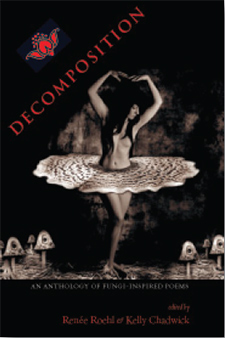
Decomposition

Celebrate mushrooms in poetry at this reading from the new anthology, Decomposition: Fungi-Inspired Poems, a collection of classic and comtemporary mushroom poems.
7 p.m., free
Ecology Center Store
2530 San Pablo, Berk.
(510) 548-3402

InsideStorytime Legends
Enjoy readings from Christina Sunley, author of The Tricking of Freya, Anne Finger, author of Call Me Ahab, Nicholas Nicastro, author of Antigone’s Wake, and others.
6:30 p.m., $3-$5 sliding scale
Café Royale
800 Post, SF
(415) 505-0869
www.insidestorytime.com


Lee Kravitz

The former editor of Parade presents this memoir about his mid-life journey to tie up loose ends titled, Unfinished Business: One Man’s Extraordinary Year of Trying to Do the Right Things.
7:30 p.m., free
Books Inc. Alameda
1344 Park, Alameda
(510) 522-2226

Eric Poole
Poole will read from his new memoir about his childhood in the Midwest in the 1970s, Where’s My Wand.
7:30 p.m., free
Books Inc.
2275 Market, SF
(415) 864-6777

“The Value of Stuff”
Attend this unique conversation with Anne Leonard, author of the book and popular movie The Story of Stuff, and Raj Patel, author of The Value of Nothing.
7 p.m., $10-$20 suggested donation
The David Browner Center
2150 Allston, Berk.
http://earthisland.org/events/stuff

Friday, June 18

The Madonnas of Echo Park
Author Brando Skyhorse gives voice to the Mexican-American community of Echo Park, CA.
7 p.m., free
Books Inc. SF Opera Plaza
601 Van Ness, SF
(415) 776-1111

The Velvet Rage
Popular psychologist and author Alan Downs reads from his ground breaking new book.
7:30 p.m., free
Books Inc. Castro
2275 Market, SF
(415) 864-6777

Saturday, June 19

Backseat Saints
Joshilyn Jackson presents this novel full of sly wit and off-kilter characters.
7 p.m., free
Books Inc. Berkeley
1760 4th St., Berk.
(510) 525-7777


The Daddy Shift

Celebrate Father’s Day early at this discussion and reading with author Jeremy Adam Smith of his new book, The Daddy Shift: How Stay-at-Home Dads, Breadwinning Moms, and Shared Parenting Are Transforming the American Family. Smith with also be joined by authors Jeff Gillenkirk and Mike Adamick.
5 p.m., free
The Green Arcade
1680 Market, SF
(415) 431-6800

Watermark
Meet author Vanitha Sankaran at this reading and signing of her new book about the mute daughter of a papermaker in a small French village in 1320.
2 p.m., free
Borders
200 King, SF
(415) 357-9931

Monday, June 21

Burning Wire
Jeffery Deaver presents his newest Lincoln Rhyme novel, about the brilliant criminologist and his partner.
7:30 p.m., free
Books Inc. Alameda
1344 Park, Alameda
(510) 522-2226

Visit from the Goon Squad
Jennifer Egan brings us a book about time, survival, and the sparks ignited by colliding destinies.
7:30 p.m., free
Books Inc. Marina
2251 Chestnut, SF
(415) 931-3633

Well-Read Lives
Author Barbara Sicherman will read and discuss her new book Well-Read Lives: How books inspired a generation of American Women.
5:30 p.m., free
University Press Books
2430 Bancroft, Berk.
(510) 548-0585

Women, Food, and God
Geneen Roth talks about overeating and the underlying reasons for using food as an emotional buffer.
7:30 p.m., free
Books Inc. Berkeley
1760 4th St., Berk.
(510) 525-7777

Tuesday, June 22

Face to Face: Children of the AIDS crisis in Africa
View a slideshow about the AIDS crisis in Africa with authors Ruthann Richter and Karen Ande. Co-sponsored by the Orphan Support League and in conjunction with a local gallery.
7 p.m., free
Books Inc. Berkeley
1760 4th St., Berk.
(510) 525-7777

“Sizzle!”
Enjoy this month’s enstallment of  Femina Potens’ literary series
“The Queer Art of Failure.” Featuring Jack Halberstam, author of Female Masculinity, providing his unique perspective on Genderqueer life.
8 p.m., $10
Femina Potens Art Gallery
2199 Market, SF
http://feminapotens.org

Hot sexy events June 16-22

0

How’s this fix for ailing municipal governments across the country; quit using law enforcement to harass sex workers doing their thing. Good, right? The Desiree Alliance would have to agree. The sex worker led advocate coalition is taking over Las Vegas next month for their annual conference, where they’ll discuss implementation of the harm reduction, political advocacy, and health services they provide for fellow escorts. Sexy guest speakers include Stephen Eliot (who will lead a storytelling session, and speak in an expert panel on taking your sex worker art to the next level), and Lauren McClubbin (an ACLU lawyer and Las Vegas performer).

But they need your help to make it all the awesomeness it can be. A big old public performance-demonstration is planned for the Strip — but the gambling tourists won’t get their dose of reality unless the Alliance raises the $2,500 they need to make the damn thing happen. You can donate on their Kickstarter page here. And learn more about the group’s antics right here, if you’re wondering. And now, in local news…

——————————————-

Asking For What You Want in the Bedroom and Beyond

Do you find it difficult to speak up for what you want between the sheets? Out of the sheets? In life, generally speaking? Well, who doesn’t, really (besides maybe Kanye West). Enter Marcia Baczynski, whose skills as a relationship counselor and sex educator lead her to create Cuddle Party – and this class, which gives you some excellent universal pointers on how to speak up and get yours.

Wed/16 8-9:30 p.m.

Center for Sex and Culture

1519 Mission, SF

(415) 255-1155

www.sexandculture.org

——————————————-

Latex Fashion School

Polly Pandemonium has been making high quality latex couture since 1995 in the London fetish scene, and now she wants to teach you, her San Francisco disciples! Learn about the shiniest, stretchiest, naughtiest ways to DIY. Apparently, it’s a very forgiving medium for the beginning seamstress or seamster.

Wed/16 6-9 p.m., $250

central SF location

(415) 269-8616

email polly@superstaravatar.com for information and reservations

www.latexfashionschool.com

——————————————-

Daddy and Boy: A Journey

Daddy Sal (founder of The Exiles) and boyjean, long time activists in the leather community, explicate their daddy/boy BDSM relationship, and go into the different dynamics of ways to be romantically involved for the long run in the domme/sub rainbow.

Fri/18 8-10 p.m., $4-10

Women’s Building

3543 18th St., SF

www.theexiles.org

——————————————-

Rope Dance: Dynamic Passionate Movements

Japanese bondage expert Midori leads you in this course on dancing, stretching, seducing, connecting… on the ropes. Bring a yoga mat, comfy clothes to move in and your sexiest, sassiest ‘tude.

Sun/20 2-5 p.m., $30 solo, $50 couple

SF Citadel

1277 Mission, SF

(415) 626-1746

www.sfcitadel.org

——————————————-

David Jedeikin

What usually happens when you give up your liver in a risky transplant to your ailing man? Usually not a sexy solo journey around the world. But life is complicated, and that’s what happened to Mr. Jedeikin, whose “flashpacking” (apparently a term used to describe the party backpacker) took him all over the world to the sexiest spots and parties in the gay world. In his book Wander the Rainbow, we get to hear about his trysts with exchange students in Beijing, and sex club bartenders in Berlin. So read all about it, sticky hands – and get your copy signed at this in store appearance.

Tues/22 7:30 p.m., free

A Different Light bookstore

489 Castro, SF

(415) 431 0891

www.adleventscastro.blogspot.com

——————————————-

Amos Mac’s “Boys in their Bedrooms”

A photographic exhibition of the city’s hottest FTMs in their pjs and Power Ranger blankies shot by photog extraordinaire Amos Mac. DJ Katastrophe will spin as you take in the sexy studs featured in Original Plumbing magazine.

Tues/22 7 p.m., free

The Lexington Club

3464 19th St., SF

(415) 863-2052

www.originalplumbing.com

Deep red bells

0

A few months ago, Impact Theater premiered Enrique Urueta’s Learn to Be Latina, a raucous satire of market-driven multiculturalism that pivoted on the ethnic dos-and-don’ts of the music industry. That production only partly prepares one for Crowded Fire’s premiere of the Bay Area playwright’s latest effort, Forever Never Comes. There’s a notable strain here of the effervescent humor that propelled Latina (beginning with Forever ‘s blithe subtitle, A Psycho-Southern Queer Country Dance Tragedy), as well as a similar concern with the trials of cultural and sexual identity, familial roots, and the will to be oneself. But Forever is a darker, more complex story, a working-class gothic that draws inspiration from Urueta’s own background as a gay Latino growing up in a small Virginia town. But if the play’s reach is admirably wider, its focus is disappointingly fuzzier.

Its central character is Sandra (Marilet Martinez), a young Latina burdened with guilt after the suicide of her gay brother Ricardo (Shoresh Alaudini), and living again in semirural South Boston, Va., with her sad, widowed mother (Carla Pantoja) whose first language is somewhat ominously slipping away from her like her disintegrating family.

Sandra, stalked by a mysterious demon named the Fox Confessor (Lawrence Radecker), “has a debt to pay” associated with feelings of culpability for her brother’s death, and Fox Confessor is keen to collect it, haunting her dreams (including in several ghostly folk dance sequences) and menacing her small circle of friends and loved ones. Although the other characters do not see him, we witness this mischievous, brooding underworld figure alternately pacing the stage or revealed, courtesy of Marilee Talkington’s eerie video design, in isolated “snapshots” of the action that appear projected onto a screen at the back.

While running from what seems like the mythological incarnation of her grief-stricken conscience, Sandra reconnects hesitantly with ex-girlfriend Deborah, now called Dylan (a compelling Kathryn Zdan). A transgender preop bent on escape to San Francisco, Dylan is back in town to visit her pregnant unwed sis, Beth Ann (Marissa Keltie), on the eve of their parents’ 25th wedding anniversary. Dylan remains smitten with Sandra. Sandra, however, seems almost as uncomfortable with Dylan’s physical transformation as Dylan’s mother (Michele Levy), a compulsively chatty, addled woman stunned into a rare moment of silence by the unexpected arrival of her one-time daughter.

Beth Ann, meanwhile, negotiates life with her oddball family; haunted best friend Sandra; and abusive, domineering boyfriend Hunter (a solid Daniel Petzold) while confining herself to soda pop at the local watering hole and doing her best not to smoke another Virginia Slim. Soon a tragic accident — if it is an accident and not the handiwork of the increasingly impatient Fox Confessor — throws everyone off-balance, and Dylan and Sandra back into each other’s arms, while setting up a parallel between two grief-stricken households and their contrasting crises of identity and unity. As Fox Confessor stirs up more and more trouble, the way forward remains unclear, multiple possible endings hovering over the action thanks to an out-of-sequence scene in which Sandra and Dylan flee for the West Coast in a blood-stained car.

Sandra and Dylan’s relationship adds momentum to the story, which otherwise tends to dissipate among its various subplots. Ironically, the central issue of Sandra’s guilt and her debt to Fox Confessor lacks the requisite poignancy and urgency, at least partly because there’s little sense of a relationship between Sandra and her deceased brother (who has only a flickering afterworld presence here, despite a key intervention near the end). The only hint of a tangible sibling connection comes when Sandra, in one of the more comical moments, repeats Ricardo’s detailed impressions of San Francisco to Dylan, at length and seemingly verbatim.

Director Mary Guzmán (who also helmed Learn to Be Latina) gets some nice performances across a generally strong cast. But the staging — around Emily Greene’s elegantly elemental thrust stage, complete with intermittent sheets of rain heralding Fox Confessor’s serious mischief — can be lackluster. The dose of underworld dosey doe, for example, proves sluggish and repetitive, despite sound designer Colin Trevor’s steady injections of the gorgeously moody songs of Neko Case. In the end, the play’s defiantly romantic spirit has charm, but Forever Never Comes leaves too much hanging.

FOREVER NEVER COMES

Wed-Sat, 8 p.m. (through June 26), $10–$30

Boxcar Playhouse

505 Natoma, SF

(800) 838-3006

www.boxcartheatre.org


Our Weekly Picks: June 16-22, 2010

0

WEDNESDAY 16

THEATER/DANCE

The Tosca Project

American Conservatory Theater artistic director Carey Perloff and San Francisco Ballet choreographer Val Caniparoli have teamed up with an all-star cast of ACT actors and San Francisco Ballet principal dancers (Lorena Feijoo, Pascal Molat, and Sabina Allemann) to bring theater and dance to one stage. Tracing the history of SF’s famous Tosca Café, The Tosca Project at ACT journeys through the love, loss, and popular dances of the past century to a soundtrack (featuring everything from Stravinsky to Hendrix) as diverse as the café’s ever-changing clientele. (Katie Gaydos)

Through June 27

Tues.–Sat., 8 p.m. (also Wed. and Sat., 2 p.m.); Sun, 2 p.m., $15–$85

American Conservatory Theater

415 Geary, SF

(415) 749-2228

www.act-sf.org/0910/tosca/index

THURSDAY 17

PERFORMANCE

Fresh Meat Festival

It’s that time again when Sean Dorsey brings tranny and queer performers for a love feast of dance, humor, music theater, and just about any other form of performance you could want. Most remarkable perhaps is how the Fresh Meat Festival — a tiny, local event only a few years ago — has grown into a national forum for often very polished performers who stick their necks out in every direction. Part of the festival’s fun is people-watching; some audience members’ get-ups nearly rival what’s seen on stage. Highlights from the lineup include world premieres of Dorsey’s take on Craigslist’s Missed Connections, Annie Danger’s media-style life coaching session, and SoliRose’s music-theater reflections about life in the Middle East. (Rita Felciano)

Thurs/17-Sat/19, 8 p.m.; Sun/20, 7 p.m., $17–$20

Z Space @ Theater Artaud

450 Florida, SF

www.brownpapertickets.com

MUSIC

U.S. Bombs

Boasting one of the most unpredictable, energetic, and enthralling bandleader of any punk band ever to set foot in front of an audience, U.S. Bombs has cultivated an incendiary reputation thanks to singer, legendary skateboarder, and all-around “master of disaster,” Duane Peters. Combining sounds culled from old school influences like the Clash and mixing them with the raw, adrenaline-pumping attitude needed while attacking a half-pipe, the band’s lineup has gone through several variations. But no matter which members of punk rock royalty he has behind him, Peters is guaranteed to steal the spotlight and make for a show you won’t likely soon forget. (Sean McCourt)

With the Forgotten, Druglords of the Avenues, and Cunt Sparrer

8 p.m., $14

Slim’s

333 11th St., SF

(415) 255-0333

www.slims-sf.com

EVENT

Decomposition reading

It’s sometimes said that, like pop songs, all good poems are ultimately about either love or death. Instinctively, I think most of us know this to be incorrect. Sometimes, though, we need a little reminder, which is where events like this one come in handy. Decomposition is an anthology of fungi-themed poetry from throughout the ages — apparently, many of America’s most seminal wordsmiths, including Sylvia Plath and Emily Dickinson, drew tremendous inspiration from the lowly mushroom (and no, not like that). Leading this tour of verse’s dark, dewy reaches will be editor Kelly Chadwick and poet Charlotte Innes. (Zach Ritter)

7–9 p.m., free

Ecology Center Store

2530 San Pablo, Berk.

(510) 548-3402

www.ecologycenter.org

FRIDAY 18

DANCE

Great Integration: A Chamber Hip-Hop Opera

By calling Great Integration — an allegory about the end of times — a hip-hop opera, choreographer Raissa Simpson and composer-pianist JooWan Kim may be on to something. Hip-hop is music, it’s dance, it’s poetry, and above all it’s a way of being. It means living on the edge, on unstable ground and embracing the subversive. Longtime East Bay activist and Integration contributor MC Kirby Dominant can attest to that. As far as the opera part is concerned, the Chinese and the Italians discovered centuries ago that opera is a messy, all-encompassing form of theater splendidly suited for big topics. Sounds just about right for all aspects of Integration. On opening night, jazz vocalist Christopher Nicholas joins Kim’s Ensemble Mik Nawooj and Simpson’s Push Dance Company. (Felciano)

Fri/18–Sat/19, 8 p.m., $15–$25

ODC Commons

351 Shotwell, SF

(415) 863-9834

www.brownpapertickets.com/event/104653

MUSIC

QM

Do you like hip-hop? Do you like cheap booze? Get your ass down to Hotel Utah for a stiff double dose of both and party like your parents are outta town. Local rapper QM of the Rec-League, self-described as “your favorite rapper’s favorite rapper to drink with,” is finally releasing his latest album, Happy Hour, and is throwing his own happy hour to celebrate. QM’s clever punch lines and West Coast sound may not change your political views, but they just might leave you hung over. Throw in $1 PBRs and Happy Hour grab bags filled with the album, a beer koozie, and other surprises, and Hotel Utah’s guaranteed to get wild. Be prepared for a drunken good time, and keep some aspirin and water ready for the morning after. (Ben Hopfer)

With Rec-League, Adverse, and Parable Paul

9 p.m., $10

Hotel Utah

500 Fourth St., SF

(415) 546-6300

www.routinefly.com

EVENT

“Cultural Encounters: Friday Nights at the de Young”

If you’re one of those people for whom a croissant is a “kwah-sahn,” then this week’s Friday Soirée at the de Young Museum, presented in partnership with the Alliance Française, should cater to your Francophiliac tastes. Though not French himself, Rich Kuhns accompanies the “Birth of Impressionism” exhibit as a strolling accordionist. The Bay Area monsieur of musette hearkens back to traditional French sounds — he plays Jacques Brel and Edith Piaf, of course — while also adding some contemporary flair to the fête. Following his performance, Dr. Alexandra Amati-Camperi lectures on the Fête de la Musique, French singer-songwriter Eric John Kaiser performs, and you can make your own found object instrument with Kim Erickson, described as an “art diva” by the de Young website. It’s no coincidence that the word “cliché” is French,” but zut alors, clichés never sounded so good. (Ryan Lattanzio)

5–8:45 p.m., free

de Young Museum

50 Hagiwara Tea Garden Drive, SF

(415) 750-3600

www.deyoung.famsf.org

FILM

Top of the Food Chain

Bluntly retitled Invasion! for its American release, Canadian filmmaker John Paizs’ homage to 1950s sci-fi films, Top of the Food Chain (1999), is the second of his films to screen at Artists’ Television Access in as many months. Previously, the auteur worked on beloved Canadian comedy series Kids in the Hall, but his films have a miniscule presence on the Internet — a few blog reviews here and there, and only two relevant YouTube clips. However, both of those clips are of hilariously non sequitur musical numbers, so that’s a promising sign. Indeed, Paizs’ fetishization of a seemingly outdated genre should be right at home alongside ATA’s usual assemblage of experimental video art. (Sam Stander)

8 p.m., $6

Artists’ Television Access

992 Valencia, SF

(415) 824-3890

www.atasite.org

PERFORMANCE

Miriam’s Well

This cultural and artistic mashup tells the stories of Mary, Maryam, and Miriam from the Christian, Muslim, and Jewish traditions connecting across time and distance at an ancient water well, the source of life and strife in a world that has yet to come to terms with how we can come together around our most basic shared needs. The performance involves dance, live music, poetry, and readings of sacred texts by a variety of acclaimed artists, from creator and dancer Miriam Peretz to musicians the Qadim Ensemble and master percussionist Pezhham Ackavass to spoken word artist Lana Nasser. It’s a story of visionary women leading all us past our historical and still-growing divisions and toward the realization that “without peace the well will soon run dry.” (Steven T. Jones)

8 p.m., $20

Grace Cathedral

1100 California, SF

(415) 749-6355

www.brownpapertickets.com/event/97354

SATURDAY 19

EVENT/PERFORMANCE

Birthfest and The Dynamite Show

FouFouHa!, San Francisco’s uniquely zany clown dance troupe, wants to take you on a strange journey all the way from a woman’s womb to a glitzy reality show set in Hollywood. That may seem like a long road to travel, but with troupe founder and performance director/choreographer Maya Culbertson-Lane, a.k.a. MamaFou, behind the wheel, it’s sure to be a fun ride. The play, which runs at Brava June 17-26, follows the Fous as they audition to be humiliated on television, exploring the role of the fool in society. But this show is preceded by a film festival on midwifery, with proceeds benefiting the Foundation for the Advancement of Midwifery, which recently helped MamaFou deliver her second child. What’s the connection? As she explains, it’s about power, “the power to not give into social fears created by a system run by money — in this case Hollywood and insurance companies.” With live music by the Gomorrans Social Aide and Pleasure Club and a photo exhibit by Eric Gillet. (Jones)

Birthfest, noon-6 p.m.; The Dynamite Show, 8 p.m., $20–$40

Brava Theater

2781 24th St., SF

www.foufouha.com

www.birthfest.com

EVENT

StreetSmARTS Community Extravaganza

It’s afternoon in the Tenderloin, and muralist Jet Martinez has been sponsored by the SF Arts Commission to paint traditional Oaxacan embroidery flowers in Cedar Alley. His audience: a man who has been yelling “I’m gonna kill you!” to no one in particular all day. The guy starts to approach him, and when he gets close enough says this to Jet in a low, articulate voice: “We really appreciate what you’re doing for the community.” Don’t ever let them tell you art doesn’t matter. Celebrate the beautiful walls created through StreetSmARTS with b-boys, DJs, and a midnight unveiling of “The Elements of Hip Hop,” a indoor gallery of works by the muralists themselves. (Caitlin Donohue)

Sat/19, 6 p.m., free

African American Art and Culture Complex

762 Fulton, SF

(415) 252-2598

www.sfartscommission.org

MONDAY 21

MUSIC

Brian Jonestown Massacre

Who Killed Sgt. Pepper? the Brian Jonestown Massacre asks in the title of its latest album. It’s possible bandleader Anton Newcombe did, if you recall how insane he was in Ondi Timoner’s documentary Dig! (2004). The San Francisco-bred band returns to the Fillmore in conjunction with its new release — a rather disquieting listen with plenty of dissonant space noise and expletives to make for a psychedelic headbanger’s wet dream. Newcombe, steeped in notoriety since Dig! and its frenetic portrait of the artist as a disturbed man, has been honing his sound since 1990. If you can separate art and artist (or don’t even bother — it makes things more interesting), BJM is one of today’s only bands that should be allowed to remain as prolific as it is. (Lattanzio)

9 p.m., $22.50

Fillmore

1805 Geary, SF

(415) 346-6000

www.livenation.com The Guardian listings deadline is two weeks prior to our Wednesday publication date. To submit an item for consideration, please include the title of the event, a brief description of the event, date and time, venue name, street address (listing cross streets only isn’t sufficient), city, telephone number readers can call for more information, telephone number for media, and admission costs. Send information to Listings, the Guardian Building, 135 Mississippi St., SF, CA 94107; fax to (415) 487-2506; or e-mail (paste press release into e-mail body — no text attachments, please) to listings@sfbg.com. We cannot guarantee the return of photos, but enclosing an SASE helps. Digital photos may be submitted in jpeg format; the image must be at least 240 dpi and four inches by six inches in size. We regret we cannot accept listings over the phone.

Love stories, politics, yodeling, and more: Frameline 34 short takes

2

The Secret Diaries of Miss Anne Lister (James Kent, UK, 2010) A BBC production set in the northern English countryside of the early 19th century, James Kent’s The Secret Diaries of Miss Anne Lister depicts the amatory adventures of a gentlewoman landowner (Maxine Peake) in search of a “female companion” with whom to live out her days. The narrative is somewhat breathless, the seductions equally so and yet a bit anemic, and our strong-willed, fearless heroine is admirable without being entirely engaging. Still, besides tapping into the Jane Austen slash fiction demographic, this tale of pre-Victorian bodice ripping and skirt lifting among the female gentry offers the considerable thrill of being adapted from the actual secret diaries of the titular Miss Lister, decoded by a biographer 150 years after her death. A documentary in the festival, Matthew Hill’s The Real Anne Lister, offers a complementary version of her story. Thurs/17, 7 p.m., Castro. (Lynn Rapoport)

I Killed My Mother (Xavier Dolan, Canada, 2009) The title I Killed My Mother suggests a different kind of movie from what it actually is. But that’s OK: though not a crime thriller, the film is still a tightly wound, high stakes drama. Writer-director Xavier Dolan stars as Hubert, the angsty son of the titular mother. When you consider that Dolan’s script is autobiographical — and that he was only 20 when the film was made — his performance becomes all the more impressive. As the mother, Chantale, Anne Dorval is also a force to be reckoned with. Despite its presence as part of a queer film festival, I Killed My Mother is not all that “gay” in the traditional “gay movie” sense. Hubert’s relationship with Antonin (François Arnaud) is secondary — what’s important is how his refusal to share it with his mother affects her. That helps make the movie a refreshing alternative to many more mainstream offerings. Sat/19, 6:45 p.m., Castro. (Louis Peitzman)

The Owls (Cheryl Dunye, USA, 2010) Expectations are high for The Owls: writer-director Cheryl Dunye again collaborates with Guinevere Turner, V.S. Brodie, and other notable queer performers — you can’t not think of classics like Go Fish (1994) and The Watermelon Woman (1996). The Owls isn’t quite at that level, but it’s a fairly thought-provoking piece. Four middle-aged lesbians — played by Dunye, Turner, Brodie, and Lisa Gornick — accidentally kill a younger lesbian and try to cover up the murder. Their ages are central: the fear of getting older is a major thematic concern. So, too, ideas of gender identity, with the introduction of androgynous Skye (Skyler Cooper). But Dunye breaks the fourth wall, staging her film as a pseudo-mockumentary with both the characters and the actors offering commentary. At just over an hour, The Owls can’t sustain all the back-and-forth, and too many intriguing ideas are left unfinished. Fri/18, 7 p.m., Castro. (Peitzman)

The Topp Twins: Untouchable Girls (Leanne Pooley, New Zealand, 2009) It’s hard to name an American equivalent of New Zealand’s Topp Twins — a folk-singing, comedy-slinging, cross-dressing duo who’re the biggest Kiwi stars you’ve never heard of (but may be just as beloved as, say, Peter Jackson in their homeland). Recent inductees in the New Zealand Music Hall of Fame, the fiftysomething Jools and Lynda, both lesbians, sing country-tinged tunes that slide easily from broad and goofy (with an array of costumed personas) to extremely political, sounding off on LGBT and Maori rights, among other topics. Even if you’re not a fan of their musical style, it’s undeniable that their identical voices make for some stirring harmonies, and their optimism, even when a serious illness strikes, is inspiring. This doc — which combines interviews, home movies, and performance footage — will surely earn them scores of new stateside fans. Sun/20, 3:45 p.m., Castro. (Cheryl Eddy)

Out of the Blue (Alain Tasma, France, 2007) Wearily preparing for a dinner party on a day they’ve both forgotten is their anniversary, Marion (Mireille Perrier) suddenly realizes her 22-year-marriage to Paul (Robin Renucci) is dead. Her decision to end it, however, comes as an infuriating surprise to him and a destabilizing one to their teenage daughter Justine (Chloé Coulloud). They all get quite a surprise when Marion’s new friendship with younger, flamenco-dancing female antiques dealer Claude (Rachida Brakni) turns into something more. This latest in a long line of very good French made-for-TV dramas at Frameline typically handles its complex load of familial and sexual issues with grace and intelligence, if with an occasional excess of high dramatics. Sun/20, 9:30 p.m., Roxie. (Dennis Harvey)

The Consul of Sodom (Sigfrid Monleón, Spain, 2009) Late Spanish poet Jaime Gil de Biedma was many things: an intellectual, aesthete, hedonist, bohemian, discotheque owner, Communist sympathizer (though the Party wouldn’t have him), publisher, more-or-less out gay man, and an occasional lover of flamboyant women like Bel (played by pop singer Bimba Bose). Sheltered by wealth and privilege — to the extent possible in Franco’s Spain — he dabbled in ghetto flesh, sometimes on trips abroad for his family’s tobacco family. As portrayed by actor Jordi Mollá and director Sigfrid Monleon, he’s a mixture of arrogance,
compassion, self-destruction, and shark-like perpetual motion. Seldom missing a chance to drop some full-frontal nudity or a kitschy period song (from 1950s to 80s), this biographical drama — which has been decried as overly sensationalized by some Spanish cultural watchdogs, including a few of the subject’s surviving cronies — is a shamelessly flamboyant and entertaining portrait of a life lived large. Sun/20, 9:30 p.m., Castro. (Harvey)

Dzi Croquettes (Tatiana Issa and Raphael Alvarez, Brazil, 2009) Whatever magic fairy dust fuelled the Cockettes’ glitter-covered hippy drag must’ve drifted down south to Brazil to inspire the similarly named Dzi Croquettes. Of course, that’s not the real origin of the equally colorful cabaret troupe, whose fantastic story is told in Raphael Alvarez and Tatiana Issa’s riveting and rollicking documentary. Blending Ziegfeld Follies-style glamour with agitprop, Dzi Croquettes were more polished and more overtly political than their North American sisters; something which frequently landed the group in hot water with José Sarney’s dictatorship. Finding an unlikely and unexpected advocate in Liza Minnelli, Dzi Croquettes fled their homeland in the mid 70s, becoming the unexpected toast of Europe until AIDS began to take its toll. Filled with delightful archival footage and insightful interviews with alumni, Dzi Croquettes is a joyful affirmation of the power of art (and a feathered boa or two) to effect positive change. Mon/21, 11 a.m., Castro. (Matt Sussman)

Brotherhood (Nicolo Donato, Denmark, 2009) It’s hard to feel much sympathy for neo-Nazis. Perhaps that goes without saying, but Danish film Brotherhood asks us to do just that: Lars (Thure Lindhardt) and Jimmy (David Dencik) meet in the service of Hitler’s ideals, then find themselves drawn to each other. As they struggle to come to terms with their attraction, we’re supposed to care. Fat chance. Although Lars initially disproves of the neo-Nazis, he becomes quickly (read: unrealistically) interested in their cause. Soon, he’s writing his own anti-Pakistani propaganda. And Jimmy is devoted to the movement from the get-go, even condemning “faggots” despite his own same-sex attraction. Maybe I’d feel differently if either Lars showed any sign of internal conflict. Neither displays a sense of regret over being a racist, xenophobic, anti-semitic asshole. They’re down with the gay but only in relation to each other. Who gives a crap if these two make it work? Mon/21, 9:30 p.m., Castro. (Peitzman)

Plan B (Marco Berger, Argentina, 2009) It’s the oldest story in the book: boy meets girl, boy loses girl, boy seduces girl’s new boyfriend. OK, maybe not, but the set-up isn’t entirely unheard of either. It’s a credit to Plan B’s sharp aesthetic and strong performances that it still feels fresh. The Argentinean export stars Manuel Vignau as Bruno. When his girlfriend Laura (Mercedes Quinteros) breaks up with him, he decides to get revenge by making his move on Laura’s supposedly bisexual boyfriend Pablo (Lucas Ferraro). If you’ve seen any romantic comedy ever, you know that what begins as a game for Bruno becomes true love. But Plan B doesn’t go the comedy route, and instead offers a compelling, somewhat subtle drama. The love affair is slow but well-paced, so that the inevitable conclusion feels earned and completely satisfying. Mon/21, 9:30 p.m., Elmwood; June 24, 6:30 p.m., Victoria. (Peitzman)

Undertow (Javier Fuentes-León, Peru, 2009) This sexy and delicate drama is a bisexual triangle that continues beyond the grave. In a Peruvian coastal hamlet, fisherman Miguel (Cristian Mercado) loves his pregnant wife and fellow church leader Mariela (Tatiana Astengo). But he’s also having a secret, passionate affair with Santiago (Manolo Cardona), an urbanite who moved there to paint the land- and seascapes, and who chafes at the restrictions Miguel places on their relationship. At a certain point one character dies, and writer-director Javier Fuentes-León seamlessly handles Undertow’s transition to magical realism. The leisurely story doesn’t go where one expects, ending on a perfect grace note of bittersweet acceptance. Tues/22, 7 p.m., Castro. (Harvey)

Children of God (Kareem J. Mortimer, Bahamas, 2009) Likely the first gay-themed film not just shot in but produced by the Bahamas, Kareem J. Mortimer’s first feature is an occasionally heavy-handed but consistently engrossing mix of romance, religion, and homophobia. Johnny (Johnny Ferro) is a withdrawn Nassau art student who’s a target of gay taunts and bashers. A teacher who says his paintings lack emotion gives him keys to her cottage on the “ultimate landscape” of isle Eleuthera, where he promptly meets the aggressively friendly and inquisitive Romeo (Stephen Tyrone Williams). Also headed here is Lena (Margaret Laurena Kemp), righteous wife of pastor Ralph (Ralph Ford), with whom she shares a strong penchant to publicly denounce the moral threat of “the gays.” She has, however, just left her husband after he furiously denied giving her VD — to confess might reveal that he is, in fact, playing around on the downlow. That’s just the starting point for a complicated, perhaps over-ambitious but sometimes powerfully sensual and poignant film that is definitely amongst this year’s Frameline highlights. June 23, 9:30 p.m., Castro. (Harvey)

Spring Fever (Lou Ye, China, 2009) Shot surreptitiously and chock full of gay sex, Chinese director Lou Ye’s latest film isn’t likely to earn him any additional slack from Chinese government censors (his 2006 film, Summer Palace, got him banned from filmmaking for five years after he failed to preview it before it screened at Cannes). Using hand-held cameras, public settings, and natural lighting, Lou follows Wang Ping (Wu Wei), who’s been having a passionate, messy affair with travel agent Jiang Cheng (Qin Hao). Things get more complicated when the snoop Wang’s wife hires to follow her closeted husband winds up pursuing the two men in ways he never imagined. What Spring Fever lacks in continuity and psychological depth, it makes up for with sexual candor and a genuine frisson of risk, given the secretive conditions under which it was made. That thrill doesn’t quite last through the film’s duration, but as a document of defiance Spring Fever is commendable. June 24, 9:30 p.m., Castro. (Sussman)

The String (Medhi Ben Attia, France/Belgium, 2010) The cross-cultural coming out drama is a perennial at LGBT film festivals, but Medhi Ben Attia’s assured debut feature presents a familiar tale in new surroundings with flashes of charm. Handsome architect Malik (Antonin Stahly) returns to his posh, Tunisian homestead from France to lay his father to rest, fully intent on coming out to his overly doting, oblivious mother (former Fellini muse Claudia Cardinale). But when he falls for hunky house-boy Bilal (Salim Kechiouche), he finds that the truth has a way of outing itself. Although Attia unspools his film’s titular metaphor rather quickly (having hid his true feelings for so long, Malik feels continuously “tied-up” by a piece of imaginary string), he deserves credit for his nuanced portrayal of gay life in the Maghreb and his inspired casting of Cardinale, who can’t help but radiate an Auntie Mame-ish joie de vivre even when the script calls for “disappointed” over “daffy.” June 25, 7 p.m., Victoria. (Sussman)

Hideaway (Francois Ozon, France, 2009) The very French insouciance with which Francois Ozon usually treats his characters and narratives sometimes makes a film seem perilously slight — yet more often than not he manages to pull off a surprising climactic resonance. Which is the case with this latest. When they both overdose on heroin, Mousse (Isabelle Carré) wakes up pregnant in the hospital — but her boyfriend doesn’t wake at all. Declining his mother’s offer to pay for an abortion, she retreats to a friend’s empty seaside chateau. There she gets an unexpected visitor in Raul (Louis-Ronan Choisy), her late lover’s surviving sibling. Their prickly interplay (and his affair with a local handyman) sometimes seems to be drifting pleasantly nowhere in particular — yet it does end up somewhere, rather poignantly. June 25, 9:30 p.m., Castro. (Harvey)

From Beginning to End (Aluízio Abranches, Brazil/Argentina/Spain, 2009) Just about the definition of upscale gay male softcore, this “big brother” fantasy has nothing to do with George Orwell. Its protagonists are inseparable Brazilian half-brothers (played as adults by Joao Gabriel Vasconcellos and Rafael Cardoso) whose bond caves in to the physical once parental boundaries are removed by mom’s death. This over-the-top kinship is tested when the younger bro is invited to train as a swimmer in the Olympics … in Russia. Near-plotless and borderline senseless, this shamelessly sexy tale from The Three Marias (2002) director Aluízio Abranches succeeds as a guilty pleasure on the sheer, convincing ardor he and his actors bring to their “taboo” love story. June 26, 6 p.m., Castro. (Harvey)

Howl (Rob Epstein and Jeffrey Friedman, USA, 2010) Beatniks get the Mad Men treatment — with a cast that includes that AMC hit’s Jon Hamm, playing the lawyer who defended the publisher of Allen Ginsberg’s quintessential rebel yell, Lawrence Ferlinghetti, against obscenity charges in San Francisco’s most celebrated trial of the 1950s. It’s fun to see that anally nostalgic aesthetic translated to ramshackle North Beach apartments and sophomoric, filthy-mouthed literary heroes. Not so much fun: the overly literal animation chosen by the directors (famed documentarians Rob Epstein and Jeffrey Friedman). Yes, parts of “Howl,” the poem, are animated — unfortunately in a style that calls to mind bad 1980s French Canadian pseudo-spiritual arthouse schlock. Still, this brief slice of beats is juicy, confined to the trial and the tale of Ginsberg’s poetic and sexual awakening. James Franco is wonderful as the young, self-obsessed, epically needy yet still irresistible crank. It was the first time I found myself wishing to see more of Ginsberg naked. June 27, 7:30 p.m., Castro. (Marke B.)

Frameline34: San Francisco International LGBT Film Festival
June 17-27, most shows $8-15
Castro, 429 Castro, SF; Roxie, 3117 16th St, SF; Victoria, 2961 16th St, SF; Rialto Cinemas Elmwood, 2966 College, Berk
www.frameline.org

Reel groundbreaking

0

FRAMELINE Appropriately enough, Kathy Wolfe — founder and CEO of this year’s Frameline Award winner, Wolfe Video — realized her calling while attending a Frameline screening.

“Somewhere around 1979, I went to a Frameline screening of [pioneering 1977 doc] Word is Out. Within the body of that film, there’s a challenge to make a difference,” she remembers, speaking from her San Jose office. “I started working in my local public access television station, and for four years I studied and worked in every aspect of video production. At the end of that, I actually had a few documentary-style pieces and some women’s music videos I wanted to sell. In order to get more serious, I took out a business license, and that was in 1985. But I very much was inspired by the challenge in the movie. Our mission today is very similar to the mission we had at that time: to make these images more available to the world at large so that people would feel empowered to come out.”

Today, Wolfe Video is the leading exclusive distributor of LGBT films, which they do via film festivals, video stores, video on demand, and the Internet, including their website, Wolfevideo.com. Their catalog includes hits like Big Eden (2000) and Claire of the Moon (1992), as well as the entire performance catalog of Lily Tomlin — whose early support helped the company make key contacts with distribution networks and retail outlets. According to president Maria Lynn, who joined in 1993, the fact that Wolfe Video is celebrating its 25th anniversary is a testament to the increasing popularity of LGBT films.

“[In 1985] the gay genre, as it were, was considered small and unknown. Now it’s a very significant genre in independent film. Between Wolfe distributing them, and filmmakers making them, and festivals like Frameline screening them, it has created its own category within independent film,” she says. “We have a lot of movies now that have a more mainstream appeal, for example Undertow, which is going to be a centerpiece at Frameline, is a beautiful film from Peru. And the way people talked about Brokeback Mountain as being about love — people will talk about this one similarly. It touches people very deeply and it is not limited to a gay and lesbian audience as well. That’s one of the biggest things that’s changed: the filmmakers have really been able to branch out, whether it’s with casting, or better stories, or bigger budgets.” 

FRAMELINE AWARD: WOLFE VIDEO

With Undertow Tues/22, 7 p.m., Castro

Ironside

1

paulr@sfbg.com

DINE When the Giants opened their new baseball stadium on China Basin 10 years ago, an improvement in ballpark food was immediately noted. You could have ahi tuna while watching Barry Bonds, and this was — at least for some, at least for a time — an ethereal combination. The ballpark even had a fancy restaurant attached, Acme Chophouse, but the shift in food culture rippled beyond the stadium proper into the surrounding blocks, which were rapidly becoming residential.

Because baseball is the core of all-Americana, it isn’t surprising that baseball-influenced food has a definite American flavor. Yes, in many ways San Francisco is the least American of American cities, and we love our ahi tuna, but we like mac ‘n’ cheese too. And no place I’ve been to lately in the environs of the baseball park more nicely captures in food this complex sense of city and country than Ironside.

The restaurant opened last autumn on Second Street, just a half-block or so from the ballpark. And if you sit at a window table on a mild evening, watching the crowd either assembling or dispersing, you have the pleasant sense of peeking in on a Fellini film: faces, body shapes, clothes, shoes, conversations, emotional fields, all drifting past like fish in a huge aquarium.

Not that the inside is hard on the eyes. It’s a handsome confection of wood, brick, glass, and stainless steel, the blending of rustic-industrial and über-urban that at its best, as here, is simultaneously minimal and warm. The look is a cozier version of nearby Zuppa’s. The food, though, is another story — a lovable hodgepodge executed with verve and presented with exuberance.

In the American grain we have the mac ‘n’ cheese ($9), made with Gruyère and (for aromatic effect) smoked cheddar cheese — just enough style to be distinctive but not so much as to become an overwrought mess. Also: meatballs ($8), in a spicy tomato sauce and presented with elegant but semi-useless points of toasted baguette. Incidentally, are meatballs American, Italian-American, Italian, or Swedish?

Salads (for me) seldom command much interest, but Ironside’s arugula salad ($10) is a modest masterpiece: a green carpet of baby leaves dotted with chunks of crispy prosciutto, ribbons of shaved fennel, spicy pecans, and sections of blood orange. The binding agent is nominally a white balsamic vinaigrette, but really it’s the lovely balance of salty, tart, sharp, and crunchy. To get the full reaction you have to be sure to get a bit of each constituent in every bite, which can be tricky.

Flammenkuchen ($10) is the German word for the Alsatian flatbread known in French as tarte flambée. I haven’t seen one of these on a local menu since the demise of mc2 in the dot-com crash of nine years ago. Ironside’s toppings — of bacon, beer-braised scallions, and crème fraïche — are pretty much the traditional ones. We liked the light, crispy crust but found that the pie as a whole needed a bit of salt, maybe because crème fraïche isn’t as salty as cheese.

Bigger plates are at greater risk for becoming dull than are their smaller siblings, probably because a main dish in our culture is usually a big chunk of flesh that tends to overwhelm everything around it. A seared filet of bluenose sea bass ($19) the size of a bar of soap is a sizable piece of protein, but at Ironside it isn’t permitted to take over the dish. In fact, it could almost be seen as an accompaniment or condiment to the large, colorful heap of shelling beans on one side of the plate and the berm of crispy kasha on the other, with a cordon of luminous carrot beurre blanc — a wonderful, simple idea — to sew things up.

Such a final saucing flourish would have helped at least one of the desserts, the brownie and banana sundae ($7), which was really more of a big — and chewy and moist — brownie flanked by banana halves and topped with a scoop of vanilla ice cream and some whipped cream, than a sundae, which, strictly speaking, would be ice-cream-centric. The drizzling of chocolate sauce seemed unequal to the task of holding all this together.

Our handsome young server could have been an extra from Milk. I hadn’t seen such evocative facial hair since those long-ago days when actual clones roamed the earth. He thanked us profusely for everything. As Joan Crawford might have put it, just whom is thanking whom here?

IRONSIDE

Lunch: Mon.–Fri., 11 a.m.–2:30 p.m.

Dinner: Tues.–Sat., 5:30–10 p.m.

680A Second St., SF

(415) 896-1127

www.ironsidesf.com

Beer and wine

Mc/V

Noisy

Wheelchair accessible

True grit

0

cheryl@sfbg.com

FILM Winter’s Bone has already won awards at the Berlin International Film Festival and the Sundance Film Festival, but it’s the kind of downbeat, low-key, quiet film that may elude larger audiences (and, as these things go, Oscar voters). Like Andrea Arnold’s recent Fish Tank, it tells the story of a teenage girl who draws on unlikely reserves of toughness to navigate an unstable family life amid less-than-ideal economic circumstances. And it’s also directed by a woman: Debra Granik, whose previous feature, 2004’s Down to the Bone, starred Vera Farmiga (2009’s Up in the Air) as a checkout clerk trying to balance two kids and a secret coke habit.

Drugs also figure into the plot of the harrowing Winter’s Bone, though its protagonist, Ree Dolly (Jennifer Lawrence), is faced with a different set of circumstances: her meth head father has jumped bail, leaving the family’s humble mountain home as collateral; the two kids at stake are her younger siblings. With no resources other than her own tenacity, Ree strikes out into her rural Missouri community, seeking information from relatives who clearly know where her father is — but ain’t sayin’ a word.

It’s a journey fraught with menace, shot with an eye for near-documentary realism and an appreciation for slow-burn suspense. Who says American independent film is dead? I spoke with Granik and Lawrence when they were in San Francisco before the local premiere of Winter’s Bone at the San Francisco International Film Festival.

SFBG How did you two come together?

Jennifer Lawrence I read the script, and it was the best female role I’d ever seen, and such a good movie. I basically wouldn’t let them not hire me. I was in L.A. — that’s where I auditioned — and then when I heard they were auditioning girls in New York, I flew to New York like a psycho.

Debra Granik She didn’t act like a psycho, but she did have one thing going for her: she came off a red-eye.

JL I did not look glamorous!

DG In my mind I was like, “That’s so right on.” In American filmmaking, the expectations of physical perfection can sometimes be almost a jail cell, if you will. And it can be the one thing that makes a character not believable. Everything about them is shouting, “This couldn’t be your life experience!” So it’s something actors really have to make a commitment to, and be open to that. And not everybody is.

SFBG Winter’s Bone depicts the Ozarks as an extremely closed-off world, even for a character who is born into it. How did you get access?

DG It took a lot of brick-building to get there, and a lot of repeat visits. It took having people read the novel [by Daniel Woodrell]. We had certain proposals: “This is what we’d like to do. Your property has these houses on it. It could really populate Ree’s world, but please read this book and know what it’s about.” Over time, and with the help of a man from the local community, that dialogue continued — we needed someone local, absolutely, to make the discussion meaningful and honest between everybody.

SFBG The supporting cast includes known faces like Deadwood‘s John Hawkes, who plays Ree’s unstable uncle, but also several amateur actors. How was it working with them?

JL I love it. They’re very natural. They’re not straining to think, “What should I say next?” I thought they were terrific. I thought they were better than I was.

SFBG Popular culture loves to portray backwoods folks as banjo-picking hicks, but Winter’s Bone avoids stereotypes. What was your approach?

DG The first thing that comes to mind — the overarching concept — is the word “and.” Ree Dolly can have a chemically dependent uncle who’s a big problem, and he has some very intense loyalties to the family in his own gnarly, difficult, convoluted, tragic way. [The film isn’t trying to] make an ethical or puritanical judgment on drug taking or anything. This has left her in a very raw and difficult position, and she’s got really intense family values of her own. She cares about her two siblings. So I think people recognize the and. That’s our hope — that audiences will vibe off the and of the whole thing.

WINTER’S BONE opens Fri/18 in Bay Area theaters.

Tale of two landfills

2

Sarah@sfbg.com

Everyone should make a pilgrimage to the landfill where their city’s garbage is buried. For San Francisco residents to really understand the current trash situation — and its related issues of transportation, environmental justice, greenhouse gas reduction, corporate contracting, and pursuing a zero waste goal — that means taking two trips.

The first is a relatively short trek to Waste Management’s Altamont landfill in the arid hills near Livermore, which is where San Francisco’s trash has been taken for three decades. The next is a far longer journey to the Ostrom Road landfill near Wheatland in Yuba County, a facility owned by Recology (formerly NorCal Waste Systems, San Francisco’s longtime trash collector) on the fertile eastern edge of the Sacramento Valley, where officials want to dispose of the city’s trash starting in 2015.

Both these facilities looked well managed, despite their different geographical settings, proving that engineers can place a landfill just about anywhere. But landfills are sobering reminders of the unintended consequences of our discarded stuff. Plastic bags are carried off by the wind before anyone can catch them. Gulls and crows circle above the massive piles of trash, searching for food scraps. And the air reeks of methane, a potent greenhouse gas that is second only to carbon dioxide as a manmade cause of global warming.

It’s also a reminder of a fact most San Franciscans don’t think much about: The city exports mountains of garage into somebody else’s backyard. While residents have gone a long way to reduce the waste stream as city officials pursue an ambitious strategy of zero waste by 2020, we’re still trucking 1,800 tons of garbage out of San Francisco every day. And now we’re preparing to triple the distance that trash travels, a prospect some Yuba County residents find troubling.

“The mayor of San Francisco is encouraging us to be a green city by growing veggies, raising wonderful urban gardens, composting green waste and food and restaurant scraps,” Irene Creps, a San Franciscan who owns a ranch in Wheatland, told us. “So why is he trying to dump San Francisco’s trash in a beautiful rural area?”

Behind that question is a complicated battle with two of the country’s largest private waste management companies bidding for a lucrative contract to pile San Francisco’s trash into big mountains of landfill far from where it was created. This is big and dirty business, one San Francisco has long chosen to contract out entirely, unlike most cities that at least collect their own trash.

So the impending fight over who gets to profit from San Francisco’s waste, a conflict that is already starting to get messy, could illuminate the darker side of our throwaway culture and how it is still falling short of our most wishful rhetoric.


TALKING TRASH

The recent recommendation by a city committee to leave the Altamont landfill and turn almost all the city’s waste functions — collection, sorting, recycling, and disposal — over to Recology (see “Trash talk,” 3/30) angered Waste Management as well as some environmentalists and Yuba County residents.

WM claimed the contract selection process had been marred by fraud and favoritism, and members of YUGAG( Yuba Group Against Garbage) charged that sending our trash on a train through seven counties will affect regional air quality and greenhouse gas emissions and target a poor rural community. Observers also want details such as whether San Francisco taxpayers will have to pay for a new rail spur and a processing facility for organic matter.

Mark Westlund of the Department of Environment told the Guardian that negotiations between the city and Recology are continuing and the contract bids remain under seal. “Hopefully they’ll be concluded in the near future,” Westlund said. “I can’t pinpoint an exact date because the deal is still being fleshed out, but some time this summer.”

Under the tentative plan, Recology’s trucks would haul San Francisco’s trash across the Bay Bridge to Oakland, where the garbage would be loaded onto trains three times a week and hauled to Wheatland. Recology claims its proposal is better for the environment and the economy because it takes trucks off the road and removes organic matter from the waste before it reaches the landfill and turns into methane gas.

But WM officials reject the claim, noting that both facilities will convert methane to electricity, energy now used to fuel the trucks going to Altamont. The landfill produces 8.5 MW of electricity annually, some of which is converted into 4.7 million gallons of liquid natural gas used by 300 trucks. The Ostrom Road facility would produce far less methane, using it to create 1.5 MW of electricity annually.

Recology officials say removing organic matter to produce less methane is an environmental plus because much of the methane from Altamont escapes into the atmosphere and adds to global warming, although WM claims to capture 90 percent of it. Yet David Assman, deputy director of the San Francisco Department of the Environment, doesn’t believe WM figures, telling us that they are “not realistic or feasible.”

State and federal environmental officials say about a quarter of the methane gas produced in landfills ends up in the atmosphere. “But they acknowledge that this is an average. Some landfills can be worse, others much better if they have a good design. And there is no company that has done as much work on this as Waste Management,” company spokesperson Chuck White told us, citing WM-sponsored studies indicating a methane capture rate as high as 92 percent. “The idea of 90 percent capture of methane is very credible if you are running a good operation.”

Ken Lewis, director of WM’s landfills, said the facility’s use of methane to cleanly power its trucks has been glossed over in the debate over this contract. “We’re just tapping into the natural carbon cycle,” Lewis told us.

But Recology spokesperson Adam Alberti (who works for Singer & Associates, San Francisco’s premier crisis communications firm) counters that it’s better to avoid producing methane in the first place because some of it escapes and adds to global warming, which Recology claims it will do by sorting the waste, in the process creating green jobs in the organics recycling and reducing the danger of the gases leaking or even exploding.

“But what has Recology done to show us that the capture rate at their Ostrom landfill is on the high side?” Lewis asks. “Folks in San Francisco say it’s not possible, but we’ve got published reports.”

Assman admits that San Francisco won’t be able to ensure that other municipalities that use Ostrom Road will be focusing on organics recycling. While questions remain about how that facility will ultimately handle a massive influx of garbage, Altamont has been housing the Bay Area’s trash for decades. And even though San Francisco’s current contract will expire by 2015, this sprawling facility nestled in remote hillsides can still handle more trash for decades to come.


ZERO SUM

Perhaps the most striking aspect of the Altamont landfill is the 30-foot-tall fence that sits on a ridge on the perimeter of the facility. It’s covered with plastic bags that have escaped the landfill and rolled like demonic tumbleweeds along what looks like a desolate moonscape.

Wind keeps the blades turning on the giant Florida Power-owned windmills that line the Altamont hills, but it also puffs plastic bags up like little balloons that take off before the bulldozers can compress them into the fill. Lewis said he bought a special machine to suck up the bags, and employs a team of workers to collect them from the buffer zone surroundinge site.

Although difficult to control or destroy, plastic bags are not a huge part of the waste volume. San Francisco has already banned most stores from using them, and the California Legislature is contemplating expanding the ban statewide in a effort to limit a waste product now adding to a giant trash heap in the middle of the Pacific Ocean.

“Plastic bags are a visual shocker,” said Marc Roberts, community development director for the city of Livermore. “In that sense, they are similar to Styrofoam. It’s pretty nasty stuff, can get loose, and doesn’t break down. But they’re not a major part of the volume.”

Yet Roberts said that these emotional triggers give us a peek into the massive operations that process the neverending stream of waste that humans produce and don’t really think about that often.

“Our world is so mechanized,” Roberts observed. “Stuff disappears in middle of night, and we don’t see where it goes.”

San Francisco officials confirm that the trend of disappearing stuff in the night will continue, no matter which landfill waste disposal option the city selects.

“No matter what option, it’s going to involve some transportation to wherever,” Assman said. Currently, Recology and WM share control over San Francisco’s waste stream. But that could change if the waste disposal contract goes to Recology.

A privately-held San Francisco firm, Recology has the monopoly over San Francisco’s waste stream from curbside collection to the point when it heads to the landfill. Waste Management, a publicly-traded company that is the nation’s largest waste management operation, owns 159 of the biggest landfills in the nation, including Altamont, the seventh-largest capacity landfill in the nation.

San Francisco started sending its trash to Altamont in 1987, when it entered into a contract with Waste Management for 65 years or 15 million tons of capacity, a level expected to be hit by 2015, triggering the current debate over whether it would be better to send San Francisco’s waste on a northbound train.


TRAIN TO WHEATLAND

Creps, 76, a retired school teacher, warns folks to watch out for rattlesnakes as she shows them around this flood-prone agricultural community.

“This is an ancient sea terrace, and now it’s fertile grazing ground between creeks,” Creps said as we walked around the ranchland that Creps’ grandfather settled when he came to California in 1850. Today he lies buried here in a pioneer cemetery, along with Creps’ adopted daughter, Sophie, who was killed at age 27 after she witnessed a friend’s murder in Oakland in 2006.

Creps’ cousin, Bill Middleton, who grows walnuts on a ranch adjacent to hers, worries about the landfill’s potential impact on the groundwater. “The water table is really high here, so you’ve go a whole pond of water sitting under this thing,” Middleton said.

Wheatland’s retired postmaster, Jim Rice, recalled that when the landfill opened on Ostrom Road in the 1980s, individual cities had veto power over any expansion plans. “But Chris Chandler, who was then the Assembly member for Sutter County and is now a judge, carried a bill in legislature to do away with veto power,” Rice said.

“So we lost out and ended up with a dump,” Middleton said.

Creps believes the landfill should be for the use of local residents only. “There’s a lot of development going on around here and the population is going to grow,” she said. “But at this rate, this landfill will be used up before Yuba and the surrounding counties can use it. And that’s not fair. They think they can get a foothold in places off the beaten path.”

Yet not everyone in Yuba County hates San Francisco’s Ostrom Road plan. On June 7, the Yuba-Sutter Economic Development Corporation backed Recology’s plan to build a rail spur to cover the 100 yards from the Union Pacific line to the landfill site.

EDC’s Brynda Stranix said the garbage deal is still subject to approval by San Francisco officials, but will bring needed money to the county. “The landfill is already permitted to take up to 3,000 tons of garbage a day and it’s taking in about 800 tons a day now,” Stranix said.

If the deal goes through, it would triple the current volume at the landfill, entitling Yuba County to $22 million in host fees over 10 years.

Recology’s Phil Graham clarified that Ostrom Road is considered a regional landfill, one that has already grown to 100 feet above sea level and is permitted to rise another 165 feet into the air. “So even with the waste stream from San Francisco,” he said, “we’ll still be operating well under the tonnage limits.”

“The world has changed. Federal regulations come in, and landfill operations change,” Recology’s Alberti said as we toured the site. “And there really are no longer any local landfills. This one is already operating, accepting regional waste.”

He claimed that Livermore residents had similar concerns to those now expressed in Yuba County when San Francisco’s waste started going to Altamont. Livermore and Sierra Club brought a lawsuit around plans to expand the dump, a suit that forced WM to create an $10 million open space fund.

Alberti said he understands that people like Creps are concerned. “But we are not seeking an expansion. The only thing we are asking for is a rail track.

“From our point of view it’s simple,” he continued. “We have the facility; Ostrom Road is close to rail; and it’s not open to the public. So it’s a tightly contained working area.”

Graham, the facility’s manager, also dismissed concerns that the landfill might harm the groundwater or the health of the local environment. “A lot of people don’t know how highly regulated we are,” he said. “That’s why we are having public meetings. Our compass is out in the community. These are people we work and live with.”

Alberti said YUGAG and other opponents of the landfill aren’t numerous. “If we draw the circle wider to the two-county area, how many people even know a landfill is operating here?”

Graham takes that as a testament to how well the facility is operated. “I consider that a compliment. Obviously, we weren’t causing any problems.”


TRASH MONOPOLY

Those who run both landfills say they recognize that their industry’s heyday is over, and that the future will bring a more complicated system that sends steadily less trash to the landfills.

“Eventually we will be all out of business,” Alberti predicted. “One reason we changed our name was knowing that landfills are not sustainable. And that’s a significant difference. Waste Management is the largest landfill owner in the world. Recology is a recycling company that owns a few landfills and, for that reason, does innovative things like the food scraps program.”

But the company with the new green name has traditionally been a powerhouse in San Francisco’s trash industry, becoming a well-entrenched monopoly after buying out two local competitors — Sunset Scavenger and Golden Gate Disposal and Recycling — a triad that has long held exclusive rights over the city’s waste.

The 1932 Refuse Collection and Disposal Ordinance gave the company now calling itself Recology a rare and enviably monopoly on curbside collection, one that had no expiration date and would be difficult to change. “So legally, it’s not an option,” Assman said.

Retired Judge Quentin Kopp, a former member of the Board of Supervisors and California Legislature, got involved in an unsuccessful effort to break Recology’s curbside monopoly in the 1990s when the company then known as NorCal Waste asked for another rate increase. But he found the contractual structure to be almost impossible to break.

“The DPW director examines all the allowable elements and makes recommendations to the Rate Board,” Kopp said. “And the Rate Board consists of three people: the chief administrative officer, the controller, and the general manager of the San Francisco Public Utilities Commission.”

SFPUC General Manager Ed Harrington says Recology’s curbside monopoly is unusual compared to other places, but it also makes the company a strong contender to the landfill contract. “It comes down to economies of scale. If you don’t have a contract with a facility that does recycling or waste disposal, you can collect the garbage, but where are you going to take it?”

Harrington said the situation was better before Recology purchased Sunset Scavenger, which mostly handled residential garbage, and Golden Gate, which mostly handled commercial garbage. Today, he said, the city has little control over commercial garbage rates or Recology’s overall finances. “That made it more difficult, and we only set the rate of residential garbage collection,” Harrington observed. “They have never come before the rate appeal board over commercial rates. I have asked who subsidizes whom, the commercial or the residential, and they say they think the commercial. But we have no ability to govern or manage those rates.”

WM’s Skolnick said a positive outcome of the current contract negotiations would be to break Recology’s monopoly on curbside collection. “We have to work to keep our business. That’s the competitive process. But we have a competitor that can encroach into our area even though we can’t encroach on San Francisco. And they claim to have one of the most competitive rates in the country — but try getting those numbers,” he said.

WM’s David Tucker added: “We’d like if San Francisco jumped into the 21st century and had a competitive bid process.”


DIRTY BUSINESS

The battle between WM’s local landfill option and Recology’s plan for a longer haul but with more diversion of organic materials is complicated, so much so that the local Sierra Club chapter has yet to take a position.

Glen Kirby of the Sierra Club’s Alameda County chapter told the Guardian that the Sierra Club’s East Bay, San Francisco, and Yuba chapters are taking a “wait and see what becomes public next” stance for now. But insiders say the club’s national position is against landfill gas conversion projects like that at Altamont, possibly favoring Recology’s bid.

Recology proponents claim the Sierra Club didn’t initially oppose landfill gas conversions because its members in the East Bay benefit from an open space fund that WM pays into as mitigation for a 1980 expansion at the Altamont. And Alberti claimed that WM’s analysis of greenhouse gas emissions from the competing waste transportation plans was flawed.

“Their calculation is a shell game. And it relies on Recology using diesel when we are using green biodiesel trains. This is not your grandfather’s train any more. One train equals 200 trucks,” Alberti said.

But WM’s Lewis defends the company’s analysis, which showed Recology’s bid to be worse for greenhouse gas emissions than WM’s.

“Landfill gas is a byproduct of an existing system,” Lewis said, noting that 43 percent of the trash buried at Altamont comes from San Francisco. The implication is that a large part of the methane in the landfill comes from — and benefits — San Francisco.

“We are delivering waste products that contain organics,” he said. “We realized that we could flare methane [to burn it up] or produce electricity. California has very aggressive landfill gas requirements, and the collection rates are relatively good at most sites. But once you’ve collected it, what to do? Historically, they flared the gas. Twenty years ago, there was not a lot of technology to allow anything else.”

Lewis says WM began producing electricity from the gas in 1987. “What we do in the future is decoupled from what was giving us the methane in the past,” he said. “Today we are managing what was brought here 15-20 years ago. It’s your hamburger, cardboard, and paper that has been sitting up there since 1998. We’re doing something good with something that we used to flare.”

“If Altamont was closed today, the gas yield coming off it would be enough to produce 10,000 gallons a day for the next 25 years,” WM’s Bay Area president Barry Skolnick interjected.

And Lewis observed that if you take organics out of the waste stream, as Recology proposes, that matter has value, whether in a digester to produce energy or a composting operation. That complicates the comparison of the two bids.

“We agree that if you can get that waste out in a clean form, that’s a good thing,” Lewis said. “But composting is a very highly polluting approach. In the process of degrading, it gives off a lot of volatiles and carbon dioxide. So air districts have not traditionally been very positive on sitting aerobic composting facilities.”


WHAT’S NEXT?

The contract that San Francisco has tentatively awarded to Recology is for 5 million tons or 10 years, whichever comes sooner. As such, it’s a much smaller contract than the city’s 1987 contract with WM, mostly because the future is uncertain.

But trucks will remain a part of the equation. Recology is proposing to continue driving 92 truckloads of garbage over the Bay Bridge per day, possibly to keep the Teamsters happy, frustrating transportation advocates who believe direct rail haul or barges across the bay would be greener options.

In December 2009, Mayor Gavin Newsom and Bob Morales, director of the Teamsters Union Waste Division, cowrote an op-ed in the Sunday Sacramento Bee, in which they argued the case for increased recycling and composting as a “zero waste” strategy for California and as a way to generate green jobs and reduce global warming.

“Equally important for the future of our green economy is that recycling and composting mean jobs,” Newsom and Morales wrote. “The Institute for Local Self-Reliance reports that every additional 10,000 tons recycled translates into 10 new frontline jobs and 25 new jobs in recycling-based manufacturing.”

Newsom and Morales clarified that they do not support waste-to-energy or landfilling as part of their zero waste vision.

“It makes no sense to burn materials or put them in a hole in the ground when these same materials can be turned into the products and jobs of the future,” they stated.

Yet WM’s Skolnick sees a certain hypocrisy in San Francisco turning its back on the methane gas that its garbage helped create at Altamont over the past three decades. “Here’s a very progressive city, and we want to take their waste from the last 30 years and use gas from it to fuel their trucks,” he said. “But they want to haul waste three times as far to Wheatland. What does that say about San Francisco’s mission to become the greenest city?”

David Pilpel, a political activist who has followed the contract, agreed that San Francisco officials can’t simply walk away from Altamont and call it a green move, but he would like to see the city use rail rather than trucks. “Instead of putting stuff on long-haul trucks, put it on a rail gondola and haul it around the peninsula to Livermore,” he said. “The Altamont expansion was for San Francisco’s purposes. So to say now, ‘We’ll go elsewhere,’ is lame.”

Sally Brown, a research associate professor at the University of Washington, acknowledges that landfills have done a great job of giving us places to dump our stuff and can be skillfully engineered to release less methane and capture more productive biogases.

“However, we are entering a new era where resources are limited and carbon is king,” Brown wrote in the May 2010 edition of Biocycle magazine. “In this new era, dumping stuff may cease to be an option because that stuff has value. and that value can be efficiently extracted for costs that are comparable to or lower than the costs — both environmental and monetary — associated with dumping.”

The San Francisco Board of Supervisors will vote on the contract later this year, deciding whether to validate the Department of the Environment’s choice of Recology or go with WM. Either way, lawsuits are likely to follow.