Local

The myth of the overpaid public employee

31

Lots of press — as there should be  — on the new UC Berkeley study that debunks the myth of the overpaid public employee. The Chron had a decent story this morning, The Bay Citizen, which has been reporting pretty heavily on high wages and pensions in the public sector, acknowledged the study today. It’s a pretty big deal: Since much of the poltics of 2010 seems to be about bashing public employees and complaining about bloated pensions, some hard reality — backed up with a sophisticated regression analysis — was badly needed.

And the study is prettty clear: public employee salaries and pensions are not the cause of California’s (or San Francisco’s) budget problems:

The Great Recession continues to leave a great deal of economic pain and scarring in its wake. But, the
vilification of government workers is sorely misplaced and has left the real culprits of this devastating
downturn off the hook. Compensation received by public sector employees is neither the cause—nor can
it be the solution—to the state’s financial problems. Only an economic recovery can begin to plug the hole
in the state’s budget. Unfortunately, the current budget balancing efforts in California are anti-simulative
and further act to depress demand in an economy already operating way below capacity. Budget cuts have
helped to keep California’s unemployment rate well into the double-digits for over a year and a half—and
there is no end in sight. Thousands of California public employees have lost their jobs and many more
have forgone pay through forced furloughs and their families have experience considerable pain and disruption.
All the workers who have lost their jobs or took cuts in pay or benefits were made to do so not
because of their work performance, or because their services were no longer needed, nor because they were
overpaid. They were simply causalities among a list of millions of hard working innocent victims of a financial
system run amuck. Public sector workers help our communities to thrive and provide services that
make it worthwhile to live in them—it is wrong to blame them for the fallout from the greatest economic
downturn since the Great Depression. 

The study’s out in enough time to make a potential difference in the election — on both the state and the local level, attacks on public employees are driving major campaigns. Meg Whitman is all about tying Jerry Brown to those evil unions, and Prop.B, the measure to cut health care and pensions for city employees, is a wedge issue. A little logic shows that it’s not only misleading but factually wrong to blame the public-sector workers for the recession.

Avalos initiates LOCAL SF

5

Sups. John Avalos, Sophie Maxwell, David Campos and Board President David Chiu, plus community advocates, construction contractors, neighborhood leaders and union members rallied outside City Hall today to announce the launch of LOCAL SF, a campaign for local opportunities and hiring for San Francisco residents. 

And this afternoon, Avalos introduces the first measure of this campaign–legislation mandating local hiring on publicly funded construction projects.

Avalos’ local hiring legislation is a major departure from the city’s current First Source Program. In place for the past decade,First Source only requires contractors on publicly subsidized projects to show “good faith” efforts to meet a local hiring goal of 50 percent. 

By contrast, Avalos’ proposed legislation will require contractors to meet local hiring goals that will be phased in over the next few years.

“My legislation will ensure that San Franciscans have a guaranteed shot to work on the City’s public works projects and that the local dollars invested in public infrastructure be recycled back into San Francisco’s economy and local communities,” Avalos said in a press release,

Avalos’ introduction of this mandated local hiring legislation comes on the heels of a report from the the Mayor’s Office of Economic and Workforce Development that shows only a 20 percent local hire rate in 29 publicly-funded projects, despite the 50 percent local hiring goal and good faith efforts of the city’s First Source program.

Avalos says his local hiring legislation was developed over a series of stakeholders meetings with representatives from city agencies, the Mayor’s Office, labor and building trades, the environmental community, neighborhood advocates, contractors, local hiring advocates and unemployed workers, And he vows to keep this roundtable approach going, as his legislation moves forward.

“Over the next few weeks, I intend to keep a dialogue going with all of these stakeholders to strengthen the legislation as it moves through the legislative process,” Avalos said.
  
His legislation is scheduled to be heard in the Board’s Land Use and EconomicDevelopment Committee in November. And it comes not a moment too soon: with unemployment rates remaining high and major construction projects in the pipeline, it’s critical that city leaders ensure that any related work really benefits the local community.

The Western is back! Final thoughts on TIFF ’10

0

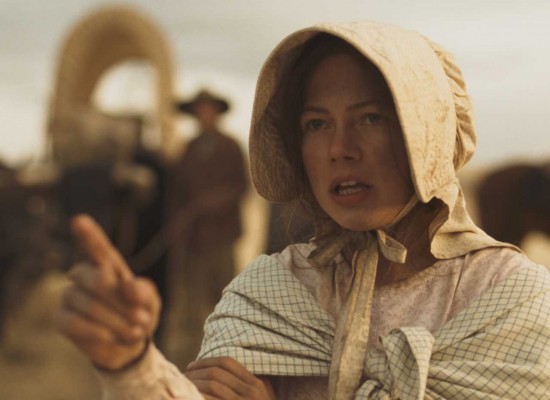
When I interviewed director Kelly Reichardt at the 2008 Toronto Film Festival about her gut-wrenching masterpiece Wendy & Lucy (2008), she spoke of watching many old Westerns in preparation for her next project. She delivered the exquisite Meek’s Cutoff at the 2010 Toronto Film Festival. The film follows three families as they make their trek along the Oregon Trail circa 1845. As they follow their hired mountain man through the Cascade Mountains they start to question if their leader really knows where he is leading them. And when they come across a Cayuse American Indian, the emigrants are forced to question who to trust. While Wendy & Lucy seemed inspired by the Italian Neo-Realists Vittorio De Sica and Roberto Rossellini, Meek’s Cutoff draws upon cinema’s earliest documentaries, like Robert Flaherty’s Nanook of the North (1922).

Collaborator Jon Raymond, who also wrote Reichardt’s Old Joy (2006) and Wendy & Lucy, uncovered the infamous story of Meek’s Cutoff while doing local research in Oregon. The tale seems perfect for Reichardt’s distinctive visual storytelling by exploring humble characters who are confronting everyday troubles while taking a journey outside of their natural habitat. The striking style strips down her character’s actions and allows the viewer to feel the weight of each procedure. Since Reichardt emphasizes her camera over dialogue, the solitary result can culminate in a truly transcendental experience for a viewer, while for others (like at the press screening in Toronto) a long nap. Somehow the fact that a film can evoke such extreme yet internal reactions conjures up the cinema of Yasujiro Ozu and most recently, Claire Denis.
With the rare exception of William Wellman’s brutal epic Westward the Women (1951), based on a story by Frank Capra, Meek’s Cutoff offers one of few female points of view towards the migration of early pioneers. While researching for the film, Reichardt read many old diaries, which women mainly wrote during the time period. These diaries uncovered the immense loneliness that women felt, one of which found a wife writing she was keeping a diary in case her husband should ever want to know her. Michelle Williams (actress of the year with her combined profound performances in Derek Cianfrance’s Blue Valentine, Martin Scorsese’s Shutter Island, and now Meek’s Cutoff) leads the way even with very subtle and minimal interactions.

While Meek’s Cutoff contextualizes the misrepresentation of women in the Western, it also confronts how the American Indian has been misunderstood on the silver screen with a beautifully nuanced debut performance by Rod Rondeaux, whose prior credits are 35 films working as a stuntman in films like James Mangold’s 3:10 To Yuma (2007) and Chris Eyre’s Skins (2002). Yet, much like Wellman’s Westward the Women, the dynamics between characters feels very contrary to most other Westerns. Screenwriter Raymond explained at Toronto, “Instead of being clearly centered on the individual, the community is the main character, with all the tensions and contradictions inherent in any community.”  

The Western genre seems to have been overlooked this past couple of decades by younger audiences, in the mainstream as well as the art crowd. Yet with David Milch’s HBO series Deadwood (2004), John Hillcoat’s The Proposition (2005), Andrew Dominik’s The Assassination of Jesse James by the Coward Robert Ford (2007) and the Coen Brothers’ upcoming remake of True Grit (2010) hot on their heels of their Oscar-winning No Country For Old Men (2007), there seems to be something more complex in these revisionist films that attempt to revise any previous re-visioning. (Neo-Revisionism?) Are they allegories exposing our country’s 250 year confusion with “illegal” border crossings? Are they dissecting our current political transitions between administrations? Or are they just giving us a more realistic look at the individual pioneers who helped “settle” the Wild, Wild West? However you view it, Kelly Reichardt’s quiet, unassuming journey does so by being the best film of 2010. (The Pacific Film Archive is showcasing Kelly Reichardt with a retrospective November 11-13; Reichardt will appear in person.)

Top Eleven Films from The 2010 Toronto Film Festival

1. Meek’s Cutoff – Kelly Reichardt (USA)

2. Another Year – Mike Leigh (UK)

3. Hell Roaring Creek – Lucien Castaing-Taylor (USA)

4. A Useful Life – Federico Veiroj (Spain/Uruguay)

5. Boxing Gym – Frederick Wiseman (USA)

6. Leap Year – Michael Rowe (Mexico)

7. Kaboom! – Gregg Araki (USA)

8. The Illusionist – Sylvain Chomet (based on a Jacques Tati screenplay) (UK/France)

9. You Will Meet A Tall Dark Stranger – Woody Allen (UK)

10. Black Swan – Darren Aronofsky – (USA)

11. Essential Killing – Jerzy Skolimowski – (Poland)

Jesse Hawthorne Ficks is the Film History Coordinator at the Academy of Art University and programs MiDNiTES FOR MANiACS, a monthly series at the Castro Theatre that celebrates dismissed, underrated, and overlooked cinema.

Get angry and make ’em do it!

9

After crashing the country’s economy and turning the world against us, Republicans are clawing their way back into power by stoking voter anger at political and economic systems that are stacked against the common citizen, a tactic that progressives need to adopt if we ever hope to move our agenda forward.

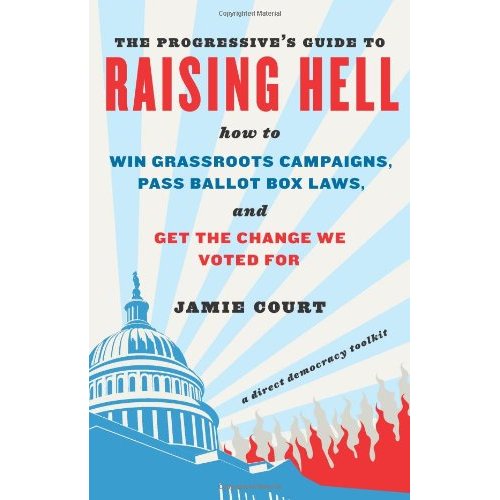
“Anger, not hope, is the fuel of political and economic change,” Jamie Court, head of Consumer Watchdog, writes in his new book, The Progressive’s Guide to Raising Hell: How to win grassroots campaigns, pass ballot box laws, and get the change we voted for (Chelsea Green Publishing, 2010).

Court writes that progressives are rightfully disappointed and disillusioned that after helping to elect President Barack Obama, he and Congressional Democrats turned around and gave Wall Street, the military-industrial complex, and the health insurance companies everything they wanted, with Obama even caving in on requiring all Americans to purchase health insurance, something he opposed as a candidate.


Yet Court said politicians never do the right thing and push progressive political change unless they’re forced to do so. He opened the book with a scene in which President Franklin Delano Roosevelt met with progressive political leaders, listened to their proposals, and then told them, “I agree. I am all for your plan. Now make me do it.”

It’s a concept that the conservative Tea Party movement understands well, and even though they may be crazy and wrongheaded in their utterly unsustainable and destabilizing policy agenda, they have effectively used anger as a political tool, and as a result, the NY Times reports they are poised to wield a disproportionate amount of political power after this election.

It’s the same story on the local level, where the only real anger in this election cycle is coming from those mad at public employee unions and their pension deals, and vagrants who sit uncivilly on sidewalks. These people will keep pushing for what they expect, but many progressives act as if it’s enough to prevent truly heinous Republicans like Meg Whitman from taking power, rather than trying to push Jerry Brown or Board of Supervisors’ progressives from day one to start empowering people over corporations.

“After the vote, power vacuums fill with familiar values, if not faces. Promises give way to fiscal realities, hope succumbs to pragmatism, and ambition concedes to inertia. The old tricks of interest group – confuse, diffuse, scare – prevail over the better angels of American nature,” Court writes, relaying a familiar electoral pattern.

Yet in this election, when the best outcome seems to be simply dodging a bullet, is there any hope for progressive political change? Isn’t the system just too broken? I asked Court these questions when he stopped by the Guardian office for a chat recently, and he retains a belief that with the right kind of tactics and agenda, progressives can still seize the political initiative and power.

http://www.youtube.com/watch?v=J3RD0YObHok

“I wrote it to reengage progressives because they are so despondent,” Court told me. “It’s about how to use anger and focus anger…Politicians don’t answer polite mobs, they only answer angry mobs and the Tea Party is the only angry mob in the room.”

Progressive have understandable doubts about the responsiveness of the current political system, but Court said, “I know if we don’t try to make it work, we’re never going to get there.”

And his book lays out the path to get there, step by step, based on some of the legislative and political successes that Consumer Watchdog and other progressives have had in recent years, such as rejecting the well-funded corporate con jobs in Propositions 16 and 17 earlier this year. Yet it involves an approach based on principle and not parties, and with being relentless in pursuing the kind of world we need.

“If you want to fight corporate power, you have to fight Democrats and Republicans,” Court said.

Specifically, Court is calling for progressives to push a California ballot measure that would establish a public health care option here, the very thing that Obama and the Democrats failed to include in their health reform package, and which will dash any hopes of it working if the people are forced to rely on unregulated insurance company products.

“The biggest thing is mandatory health insurance, which is a ticking time bomb,” Court said, one set to go off in 2014 when that aspect of Obama’s health care reform kicks in.

Corporate and political power working together seem to be a force too strong to overcome, but as Court writes, “Public opinion is the most powerful force in the world. While it can be muted, distracted, and co-opted, it cannot be controlled, except by the public.”

Markus James’ West African happiness surplus

0

In an age of endless crossover between most conceivable forms of music, it’s but small surprise that a Caucasian man from Virginia is making blues with West African witch doctors. What rarely gets discussed in these cross-ocean collaborations is the social aspect of the fusion. What did the artists eat for lunch the day they recorded that track? In what language was the “and-a-one” that started off the first take? 

We had the opportunity to chat over the phone with Bay Area artist Markus James, who has parlayed his time with Malian string musicians into elemental blues tracks. You can hear them on both his new album, Snakeskin Violin, and at his live show (at the Ashkenaz, Fri/22) with The Wassonrai, who are West African musicians that rep for jam band track longevity – strains of which James says is indigenous everywhere from Mali to Jackson, Mississippi — into their already formidable blend of blues past and present. James said (and we’re paraphrasing here) that the secret to fusion collaborations all lies in your location-resonation, but that’s just his perspective.


San Francisco Bay Guardian: When did you first hear African music? Did you know right at the start the depths you would dive into it?

Markus James: I don’t know if anyone really knows what is going to take them. The lights really went on for me when I heard Ali Farka Toure. He played traditional West African music on the electric guitar and it came out sounding like John Lee Hooker. That was where I really felt the powerful connection between all the music I grew up loving: rock, and soul music, and of course blues music, and the connection between that and its ancient roots in West Africa.


SFBG: What did African music pick up in the United States to become blues?

MJ: The roots of blues music go way back, specifically to pentatonic [five note as opposed to our eight note system] music traditions there. Pentatonic music really resonates with what we think of as blues music. There is a direct correlation between what I call country blues, or old school blues music, and some of these music traditions that I’m talking about in West Africa. Not just the notes and the musical scale, but the groove, the rhythm. For example, in West Africa women are often pounding the millet for that evening’s food. The have this six-foot tall piece of wood – it’s like a mortar and pestle. Another woman, or a girl, is scooping it back underneath so that the wood hits the grain. They get these rhythms going that are like goom-chack-goom-chack. Then people start playing on calabashes with this rhythm, and the rhythm is virtually identical to what we call the shuffle rhythm that you hear in a lot of old blues music, Chicago blues music, and rock music. If you go over to West Africa and you start playing what we call country blues, people will just start playing along with it and they’ll say oh, that’s our music.


SFBG: On “I Won’t Let It” you perform spoken word over the music. Is there a legacy in African music of that spoken word tradition?

MJ: Absolutely. There’s a whole caste of artists called griots. Their specialty is preserving history through story-songs, but also singing praise songs to whoever’s in power at the time. They will break into long passages of rhythmically chanted tone-poem language. That’s all there. 


SFBG: You do a lot of cross-culture collaboration. Does the dynamic get tricky when you come from one of the wealthiest nations in the world?

MJ: Not really. I’ll give you an example. I was introduced to a 75-year old man who is the spiritual leader of the Holehoire religion in Timbuktu, Mali. He is what we would call a healer, or in older parlance, a witch doctor. He is like a medium, and his whole role in the community is to communicate with the jinn, their spirits. His instrument is a gourd with the skin of a river snake stretched across it, the string is horse hair. He has a whole repertoire of melodies and rhythms that he plays, the purpose of which are to call certain spirits for certain purposes, to ask for rain, or to ask for good luck, a million things.

He came over to our adobe-walled house where I had my little set-up going and we started playing music together. I was playing guitar and he was shifting back and forth between his two instruments, and he would sing a little line and I would sing something. I told him, I’m making a recording in blues, which is an African-American tradition, if this thing turns out pretty good I might put it on a CD – and I’m paying him, which he’s happy about. And I said before I do anything I want to bring it back to you because I know this is really – I don’t know how I said it to him but I’d say it to you, this is really deep waters. This is considered the pre-voodoo religion. He said sure, fine, great, I hope somebody enjoys it.

The next year I came back and I played him what I had made out of it, it’s this song on Snakeskin Violin, it’s called “Sundown Pearl” I played it for him and he started beaming and smiling and saying this is very good, this is going to be very successful. When I see him I give him something which anticipates the day when I might get some royalties from it. My friends that I’ve made there, it’s hard for them to understand that I’m not really selling a lot of CDs here but they’re very happy that there’s a revenue stream.


SFBG: You’re a vegetarian. I’m curious — I’m a vegetarian too – how is it to travel in Africa without eating meat?

MJ: They assumed at first that I must be deranged. It was absolutely inconceivable that someone could live without eating meat. Even the West African artists I perform with here in the US, it’s taken them awhile to accept it, even though they know other people here. I’m trying to think what it would be like to tell someone here. It’d be like saying I went down to the Bay and I just skipped across it to Berkeley. 


SFBG: You can’t even do it with food — our society has such an individualized view of eating. 

MJ: You know, I’m eating rice down there without the meat sauce, but I’m still in this communal meal zone. My friends will explain, he’s a vegetarian, and that means he doesn’t believe in eating meat, and he appears to be healthy. Something that I could not have foreseen was that I’d become a emissary for vegetarianism in West Africa.

People say, you come from a rich country, and they come from a poor country, so what is politically correct? I think when some people go to West Africa they resonate with it, they connect with it. You come to realize that what we think of as wealth and poverty is very relative to our perspective. Here you might say that we’re wealthy because we have a car, or a house, or roads that allow you to go 60 miles per hour. What we have may not necessarily translate into what they would consider to be joy, happiness, abundance, peacefulness. They’re certainly not stuck in traffic jams and trying to make mortgage payments. We might be looking at a little of a joy deficit and over there they have a happiness surplus. I know that’s simplistic, but that’s my perception. 


Markus James and the Wassonrai

Fri/22 9:30pm, $10-12

Ashkenaz

1317 San Pablo, Berk.

(510) 525-5054

www.ashkenaz.com


The 20th annual Potero Hill Festival

0

It’s the little festival with a big view. Potrero Hill, the home of the Guardian, is hosting the 20th annual festival with of a “New Orleans” Style Brunch created by the California Culinary Academy and an exciting street fair on 20th Street between Missouri & Wisconson Streets. Enjoy music, food, crafts and activities for the young and old alike.

Potrero Hill Festival
Date: October 16, 2010, 11am-4pm
Location: 20th Street Between Missouri & Wisconson Streets

New Orleans Jazz Brunch
Location: Potrero Hill Neighborhood House, 953 De Haro Street
Date: October 16, 2010, 9:00am-1:00pm

Before the Festival, join the Festival Committee and the Potrero Hill Neighborhood House for an annual tradition – a lavish and delicious brunch catered by the California Culinary Academy featuring Dixieland music and superb bay views.

Festival Performances & Activities

  • Main and Side Stage including performances by some of the area’s most exciting performers.
  • Kids Area including bouncy house, petting zoo, pony rides, performer stage and more
  • Snack the Hill: A variety of food from Potrero Hill restaurateurs and more
  • Over 40 Potrero Hill and local artists, merchants & nonprofit organizations

Marketing

  • Collectible Posters will be posted on Potrero Hill and beyond
  • Advertising in Potrero View & the San Francisco Bay Guardian
  • Online campaign including a website, social marketing and email campaign

Attendance

  • Festival has an expected attendance of over 7,500 Potrero Hill & San Francisco Residents
  • New Orleans Jazz Brunch will be attended by as many as 500 Potrero Hill and San Francisco Residents

Benefits the Potrero Hill Neighborhood House

The Potrero Hill Festival will support the programs of the Potrero Hill Neighborhood House (NABE). The NABE is an invaluable community resource that provides important programs for the community, including youth and senior nutrition, employment and supplemental education programs and programs for developmentally disabled adults.

From here, cinema

0

I saw my first movie when I was four or five: it was a revival of 101 Dalmations (1961), and I liked it enough to ask my mother if we could sit through it a second time (we did). I saw my second first movie when I was 19: it was a nine-minute short by Bruce Baillie titled Valentin de las Sierras (1967), and after seeing it I knew film history must be full of secrets. It was only after moving to Berkeley a few years later that I began to contextualize Baillie’s tactile daydream of a Mexican village — a singular vision, to be sure, but one emblematic of a regional avant-garde as difficult to survey as San Francisco itself.

Here’s to trying: “Radical Light”‘s ambitious ecology of alternative film and video in the Bay Area encompasses an invaluable anthology of firsthand accounts, secondhand appreciations, and historical overviews; a film series with many artists-in-attendance and restored prints (through the winter at the Pacific Film Archive and various SF Cinematheque affiliates); and a gallery show of ephemera at the Berkeley Art Museum.

To first address the question underlying the whole series: why here? Some of the book’s contributors offer fanciful conjectures: it must be the ghost of Muybridge, an island ecology, a city that won’t hold a straight line, the quality of light, or, more realistically, the influence of the Beats’ vow of poverty. While I’m attracted to environmental speculations like these, it seems important not to let them overshadow the essential evidence of hard work without promise of financial compensation or art world status. This is clearest in the Bay Area’s rich tradition of artist-run, self-reliant screenings: museum takeovers, backyard hoedowns, and basement salons.

It would be difficult to overstate the importance of Frank Stauffacher’s post-World War II “Art in Cinema” series at the San Francisco Museum of Art (before it became “modern”) in establishing this climate of creative investment. Handsome as hell and himself a fine filmmaker, Stauffacher audaciously placed cinema in an art context, colliding European avant-gardes, Hollywood outliers, and homegrown talent in a museum setting a few decades ahead of schedule. In essence, he prepared the audience for what became known as independent filmmaking (before that term was commoditized). Which is more remarkable: that Stauffacher showed Christopher Maclaine’s still incendiary The End (1953), precipitating a chair-clearing uproar, or that he fronted Maclaine (a bagpipe-playing speed freak known as North Beach’s Antonin Artaud when there was plenty of competition) the funds to make this unsellable thing? Most of “Art in Cinema”‘s audience wasn’t ready for The End, but one young spectator found it a revelation: his name was Stan Brakhage.

Less than 10 years later, after Stauffacher’s tragic death in 1955, Baillie and his Canyon Cinema collaborators (notably, Chick Strand and Ernest Callenbach) came down from the hills over Oakland and expanded their bohemian screenings to include public production equipment, a journal, and the distribution co-op that is today run by filmmaker Dominic Angerame. The early Canyon group’s ambitions were local, but nonetheless represented an alternative cinema practice as profoundly liberating as that of their Nouvelle Vague contemporaries — one taken up by the dozen or so major series (e.g. No Nothing Cinema, Total Mobile Home, Other Cinema) and college film departments (especially San Francisco Art Institute and San Francisco State University) detailed in “Radical Light.”

Though wildly eclectic in form and content, the “Radical Light” films cohere around a widespread distrust of moral authority, whether political or aesthetic, as well as an abiding interest in the bending truths of portraiture, documentary, ethnography, and found footage. The anarchic and mystical are preferred modes, though not mutually exclusive ones. There is a long tradition of collaboration between filmmakers and, perhaps more strikingly, with poets, painters, and musicians. To cite but a few examples: Larry Jordan’s Visions of a City (1979, begun 1957) is drawn from material shot to accompany readings by Michael McClure and Philip Lamantia; Bruce Conner did lightshows at the old Avalon Ballroom before making music videos for Devo and documenting the Mabuhay Gardens punk scene; and Brakhage made In Between (1955) while living with Robert Duncan and Jess (and set the film to a John Cage composition). Early “Art in Cinema” habitués like Jordan Belson, Harry Smith, and James Broughton all approached film from different mediums, and later artists like Nathaniel Dorsky, Warren Sonbert, and Konrad Steiner explored the poetic or musical resonances of moving images. It runs the other way too — unsurprisingly, it takes someone like poet Bill Berkson to get Dorsky’s films in a (parenthetical) nutshell: “(Without being stupid about it, Dorsky really seems to put every conscious instant up against the growth chart of Eternity.)”

Indeed, all these films burn brightly as you watch. Witness all the different ways in which the makers seek to alter the cinematic experience, turning it into a Zen monastery (Dorsky), paranoid classroom (Craig Baldwin), troubled innerspace (Gunvor Nelson), innocent grindhouse (George and Mike Kuchar), confessional (Lynn Hershman Leeson), firing squad (Maclaine), astral plain (Belson), cross-examination (Trinh T. Minh-ha), beat street (Dion Vigne), all-night roadhouse (Conner), “unguided playground” (how Ernie Gehr described the images in his 1991 film, Side/Walk/Shuttle, two weeks ago), and on and on. If “Radical Light”‘s chronologically-based film programs serve an informative purpose similar to the well-labeled sectioning of a botanical garden, the thematic programs come off more as a noisy farmers market where the full variety of produce jams a narrow aisle. As always, the fruit tastes best when you know where it came from.

RADICAL LIGHT: ALTERNATIVE FILM AND VIDEO IN THE SAN FRANCISCO BAY AREA

Through April 30, 2011, $5.50–$10

(Book launch Fri/15, 7:30 p.m.)

Pacific Film Archive

2575 Bancroft, Berk.

Berkeley Art Museum

2626 Bancroft, Berk.

(510) 642-0808

bampfa.berkeley.edu/visit

Spread ’em

0

The city has its fair share of microclimates, microbreweries, microlocal eateries, and even microtrannies. Also: micronightlife. The wobbly stilettos of North Beach on Fridays, the indie electro tang of Mondays in the Castro (served especially kinky at DJ Richie Panic and Key&Kite’s packed “nutter-butter” Wanted weekly — Mondays, 9 pm, free, QBar, 456 Castro, www.sfwanted.com), the late night surf-rock bar crawls out near Ocean Beach … It’s easy to stereotype some of our heirloom hotspots — or get locked into them — but, um, you’re the one who brings the party, so spread it around a tad.

Here are some off-the-blackout-path watering holes I’ve recently had the pleasure of stumbling out of, none too pricey: The Republic (3213 Scott, SF. www.republicsf.com) in the Marina is, yes, a fancy sports bar, but it’s a chill place to meet friends and mingle with a shockingly snob-free and diverse crowd. Glittery lodge Swank (488 Presidio, SF. 415-346-7431) in Laurel Heights didn’t destroy my credit rating, and its cozy fireplace is perfect for the rainy nights ahead. Cole Valley’s EOS (901 Cole, SF. www.eossf.com) is perf for sipping a spot of primo vino and N Judah people-watching. Bloom’s Saloon (1318 18th St., SF. 415- 552-6707) in Potrero Hill still has the best beer-guzzling view of the city, even if it recently had to rope off the patio due to complaints, boo. And tony new SoMa resto Heaven’s Dog (1148 Mission, SF., www.heavensdog.com) has a gangbusters bar, with nom-nom pre-Prohibition concoctions like the gingered Monk Buck and kicky Daisy de Santiago, surely some Chilean child’s drag handle.

If you missed the bonkers opening weeks of the civic-minded Public Works (161 Erie, SF. www.publicsf.com), you’ll soon be hooked by the late-night club and gallery’s crazy-canny programming, like the one-off return of gloriously debaucherous shindig Fag Fridays (Fri/15, 9 p.m.-4 a.m., $10), with DJs David Harness, Rolo, and Juanita More and the future dub power of Surefire Sound (Sat/16, 9 p.m.-4 a.m., $15), with Bristol steppers Pinch and Gemmy. Public Works was launched by a who’s who of local nightlife talent, including longtime invisible hand of the SF club scene Pete Glikshtern, who’s also behind the neato new Jones (620 Jones, SF. www.620-jones.com), which rightly focuses on its enormous outdoor terrace and downtown-glamour feel.

One of the zazzliest transformations on the scene, however, has to be that of 11th Street Corridor mainstay Holy Cow (1535 Folsom, SF. www.theholycow.com) which just got a knockout steampunky makeover by artist Dara Young. Fear not, “woo!” girls and bro-bros, your chartered party limos will still drop you off to top-40 bliss Thursday through Saturday. But owner Bill Herrmann is expanding the Cow’s party palate, by giving the homo-futurist Honey Soundsystem’s weekly Honey Sundays (Sundays, 9 p.m., $3) a new home, now that Paradise Lounge has bit the dust. (Holy Cow was the original site of the Stud in the 1960s, so edgy queer nightlife comes full circle.) And there are more pleasant shocks on the way. Herrmann’s a guy I can’t help but adore — a slick Burner with a head-turning look, he genuinely enjoys hosting parties, whether the clientele is gelled-up meatmarketeers or post-techno fairies. Expanding definitions!


MERCURY SOUL

Techno meets classical when composer Mason Bates and conductor Benjamin Schwartz thread live orchestral performances through thumping DJ sets at this roving party (www.mercurysoul.org). It’ll give you auditory shivers on the dance floor.

Thu/14, 9 p.m., $8–$10. The New Parrish, 579 18th St., Oakl. www.thenewparrish.com and Fri/15, 5 p.m.–9 p.m., $5, 111 Minna, SF. www.111minnagallery.com


ELECTRIC WIRE HUSTLE

Electronic soul outfit from New Zealand that manages the neat trick of combining D’Angelo steaminess, Avalanches effects, and DJ Shadow atmospherics. With smoothie singer Jesse Boykins III.

Fri/15, 10 p.m., $10. SOM, 2925 16th St., SF. www.som-bar.com


GASLAMP KILLER

L.A. future bass slammer always gets heads banging with his special brand of experimental fuzz. I’m living for the stoner cosmic-laptop kids this year. With Daedelus, 12th Planet, and Teebs.

Fri/15, 10 p.m.–4 a.m., $15. 103 Harriet, SF. www.1015.com 


Hot sexy events October 13-19

0

Support your local sex workers! We are lucky to live in a city where those salacious somebodies that will take their kits off in the name of our pleasure and payment don’t have to lay down and take it when the man gets all censorious and grabby – lucky to live in a city where St. James’ Infirmary exists, that is. The Lusty Ladies agree, and on Sat/16 they’re holding their annual Playday for St. J’s – 16 hours of girl-on-girl-on-call for justice.

For there was a time where if you got picked up providing sex to paying customers, you got stuck. We’re talking hypodermic needles – part of a policy that used to go down in SF that forced sex workers to give up blood samples in jail for mandatory STD testing. As you can imagine, this was not always done in the most respectful of manners. Enter St. James’, founded by sex worker advocacy group COYOTE (Call Off Your Old Tired Ethics). The center holds a health clinic, trainings and support groups, hormone therapy programming, peer counseling, and oh so much more. Why on earth not head down to the Lusty to make sure our ladies – and gentlemen – of the night continue to be treated as such?

Original Plumbing Bathhouse Reception

Celebrate the notion that a photo-heavy magazine of transmen is one of the most hot publication debuts to hit the racks in 2010 – Original Plumbing’s fourth issue is out! And it features a hunky lineup of working stiffs, all of whom will be at the wine and cheese reception, open to all genders and levels of ab definition.

Thu/14 7 p.m., free

Eros

2051 Market, SF

(415) 255-4921

www.originalplumbing.com


Spanking and Paddling

Don’t worry, consoles the description of this Edu Kink offering: “there will be plenty of spanking time.” That’s because even though this is technically a class on spanking – its possible childhood associations, how to deal with them should they arise, on technique, and enjoying the spank on the receiving end – Edu Kink’s Paideia workshop series has a focus on lecture leading to experience. So prepare you that booty, naughty kids.

Fri/15 7:30-10:30 p.m., $15-$25 sliding scales

SF Citadel

1277 Mission, SF

(415) 626-1746

www.edukink.org


Pink Blues Dance

What better way to amp up for Mission Control’s pansexual play party than this week’s warmup: a chance to swing those hips to the down ‘n’ out blues on the dance floor. Costumes not required, but membership to the club (and a smile) is. 

Fri/15 9 p.m.-2:30 a.m., $20-$30 members only

Mission Control 

2519 Mission, SF

www.missioncontrolsf.org 


Naked Girls Reading

What’s that chill that just ran down your spine? Are you frozen in fear by a classic ghost story, channeling the pre-Halloween vibe – or are you just naked? It could easily be both at this storytelling series that pairs the city’s sexologists and stage presences with a favorite book, a mic, and little else. Watch for the SF Ghost Society’s Elissa Fricano’s tales of personal encounters with the world beyond.

Sat/16 8 p.m., $15-$20

Center for Sex and Culture

1519 Mission, SF

(415) 225-1155

www.sexandculture.org


Peter Acworth’s Birthday Deviance

Everyone needs a little extra attention on their birthday. And on the founder of Kink.com’s 40th, you can only imagine what form that personal touch will take. Our town’s foremost world-class fetish porn palace opens its virtual doors to members who want to join in on the fun online. Visit www.theupperfloor.com on Saturday evening and watch live as hot doms and slaves create sexy mayhem during a celebratory dinner in Peter’s honor.

Sat/16 6:30-11 p.m., free for Kink.com members, $.25 cents per minute for nonmembers

www.theupperfloor.com


Lusty Lady Playday RXXX

That’s right, get your dirty, dirty prescription for a Saturday in the hospital – or rather, nurse’s office. The Lusties will be pulling on the rubber gloves for a day of sexual healing. Girl-on-girl action all day long, with a portion of the proceeds going to everyone’s favorite hustler health care provider, St. James’ Infirmary.

Sat/16 11 a.m.-3 a.m., $5 before 10 p.m., $10 after

The Lusty Lady

1033 Kearny, SF

(415) 391-3126

www.lustyladysf.com


How To Be a Top Presenter

Have you been there, done that when it comes to the sex education classes at Good Vibes and the host of other venues around our pervy city that like to teach on the tactics of titillation? Take your love of lovin’ to the next level with this little one-off. Dr. Charlie Glickman is sharing the secrets of his sexpert trade: how to plan and orchestrate sex ed for adults.

Tues/19 6-8 p.m., $20-$25

Good Vibrations

1620 Polk, SF

(415) 345-0500

www.goodvibes.com


Moving portraits

0

cheryl@sfbg.com

WRITERS ISSUE The Metreon is handy if you require 10 different Inception showtimes. But watching a movie there is not same as seeing one — even the same one — at a circa-1922 palace like the Castro Theatre, a space lovingly dedicated to the specific pleasure of Going To The Movies. Edited by Julie Lindow (a former Castro employee), the brand-new Left in the Dark: Portraits of San Francisco Movie Theatres (Charta Art Books, $39.95) compiles essays from Bay Area film advocates, paying homage to San Francisco’s dwindling population of theaters. The book is illustrated by photographer R.A. McBride’s colorful, often haunting images of spaces robust (the Roxie) and ravaged (the New Mission).

Cinephiles will recognize most of the contributors, including San Francisco International Asian American Film Festival director Chi-hui Yang (topic: Chinatown cinemas); Landmark Theatre cofounder and current Balboa Theatre proprietor Gary Meyer (a personal timeline of his life as an exhibitor); and Guardian writer D. Scot Miller (a look at theaters in the onetime “Harlem of the West,” the Fillmore), among others. There’s also an interview with author Rebecca Solnit, who points out that the shared-experience aspect of movie-going is lost in a multiplex environment. Buying a ticket in a theater inside a mall, she writes, “you don’t have that funny sudden spiritual bond that this person next to you in line, who looks so different, also wants to see cowboys.”

Even before they met, Lindow and McBride had a mutual interest in local theaters. “I had been thinking about doing a book to help the movie theaters. At a party that Melinda Stone [another of Left in the Dark‘s essayists] had, I met Rebecca [McBride] and she had started her series of [theater] photographs. So we thought, that might make a great book if we combine these two things together. And then she handled the photos, and I handled the text.” The collaborative spirit continued to the selection of contributors. Lindow says making a connection with one author would lead to her to another; she describes the writing process as a true community effort.

By contrast, McBride found that accessing every venue she wanted to document wasn’t easy (she was flatly denied access to Cow Hollow’s Metro shortly before it closed). She also made some surprising discoveries (a toilet in the projection booth at the Clay, for example).

“There were over 100 theaters at one point in the San Francisco Bay Area — and I’ve only photographed 19 of them,” McBride says, with a certain amount of wistfulness. “One my favorites was the Coronet, which is now gone.”

LEFT IN THE DARK: PORTRAITS OF SAN FRANCISCO MOVIE THEATRES

Wed/13, 5:30 p.m. reception;

7 p.m., slideshow with R.A. McBride

SF Camerawork

657 Mission, second floor, SF

www.sfcamerawork.org

More events at www.leftinthedark.info


Our Weekly Picks: October 13-19

0

WEDNESDAY 13

MUSIC

Vader

Vader’s history stretches back almost 30 years. Borrowing Darth’s moniker might not have been the world’s most original idea, but they were likely among the first to have done it. The Polish death metal stalwarts formed in 1983 in Olstzyn, deep behind the Iron Curtain. Successful demo recordings got them hooked with Earache Records, and the band has been pillaging the world’s stages ever since. Guitarist-singer Piotr Wiwczarek is the only original member left in the fold, but the band’s anthemic music is as potent as ever, mixing impossibly thick blast beats with heavy slabs of neoclassical melody. Their upcoming album Return to the Morbid Reich is a nod to the 1990 demo that made their name; this tour, they’re inviting you along for the ride. (Ben Richardson)

With Immolation, Abigail Williams, Lecherous Nocturne, and Pathology

6:30 p.m., $22

DNA Lounge

375 11th St., SF

(415) 626-1409

www.dnalounge.com


THURSDAY 14

DANCE

Lines Ballet

The story of Scheherazade and her 1,001 nights of tales to postpone her beheading by the Persian king has intrigued and captivated audiences for ages. Choreographer Alonzo King’s dance adaptation Scheherazade delves beyond the story to explore themes ranging from the symbolism of abused women to the transformative power imbued in the tales. The company of chiseled titans dance alongside tabla master Zakir Hussain’s score, which incorporates traditional Persian instrumentation into the original classical composition by Rimsky-Korsakov. The piece premiered in Monaco last December; San Franciscans can now experience King’s artistic rendering of Scheherazade’s classic tale for themselves. (Emmaly Wiederholt)

Through Oct. 24

Thurs/14, 7 p.m.; Fri.–Sat., 8 p.m.;

Sun., 5 p.m.; Oct. 20–21, 7:30 p.m., $25–$75

Yerba Buena Center for the Arts

Novellus Theater

700 Howard, SF

(415) 978-2787

www.linesballet.org


FILM

“Jim Henson and Friends: Inside the Sesame Street Vault”

Consider the Muppet. Made of foam and googly eyes, set atop spindly legs under a mop of primary-color hair, these brave figures have become our children’s teachers on a level unparalleled in the world of infotainment. We’re talking street, of course — Sesame Street, which since its 1969 debut has won 97 Emmy awards, more than any other show. Yerba Buena Center for the Art is running a series of Sesame clip collections, and today’s viewing pays homage to the contributions of the show’s early creative team, with a special furry hug to creator Jim Henson, and little-seen guest appearances from the show’s early days. (Caitlin Donohue)

7:30 p.m. (also Sat/16, 2 p.m.), $6–$8

Yerba Buena Center for the Arts

701 Mission, SF

(415) 978-2787

www.ybca.org


DANCE

“CounterPULSE’s Performing Diaspora: Sri Susilowati”

Stripping world dance of its trappings is quite the rage these days. But few have done it so radically as Indonesian classical dancer did Sri Susilowati at last year’s Performing Diaspora festival. Yet this was the same artist who, only a few months before at the Ethnic Dance Festival, had performed an exquisite, contemporary Javanese mourning dance. Now she is back, having been invited to expand on her 2009 piece. Susilowati may look one of those ethereal dance creatures whose bodies are so stylized that it’s difficult to think of them having earthly passions. Yet they do. Hint on Susilowati: food. Another Indonesian dancer, Prumsodun Ok, opens the show for her. (Rita Felciano)

Thurs/14–Sat/16, 8 p.m.; Sun/17, 3 p.m., $24

CounterPULSE

1310 Mission St./SF

(415) 626-2060

www.brownpapertickets.com


MUSIC

Fresh and Onlys and Kelley Stoltz

San Francisco-based artists the Fresh and Onlys and Kelley Stoltz will both have new albums on hand at this double CD release blowout. The new Fresh and Onlys disc, Play It Strange, showcases the band’s garage-rocky spin on 1960s pop, and was recorded for the first time outside of a DIY studio setup with Comets on Fire producer Tim Green. Stoltz releases his newest batch of throwbacks to the Beatles’ and Beach Boys’ style of sunny pop with To Dreamers. This is a perfect night to come out and support local music. (Landon Moblad)

With Carletta Sue Kay

9:30 p.m., $12

Café Du Nord

2170 Market, SF

(415) 861-5016

www.cafedunord.com


FRIDAY 15

DANCE

Dandelion Dancetheater

Known for its loud, provocative works merging dance, drama, and music, Dandelion Dancetheater turns its attention to motherhood in MamaLOVE: Seeds of Winter. The seven-women cast explores mom-related themes by diffusing fairy tales, myths, and lullabies to discover the context and relevance of the cultural archetypes and stereotypes surrounding motherhood. Each evening brings a rotating roster of guest mama-choreographers: Mary Carbonara, Tammy Cheney, Laura Elaine Ellis, Suzanne Gallo, Dana Lawton, Laura Renaud-Wilson, and Chingchi Yu. Directed by Kimiko Guthrie, the show promises to be haunting, hilarious, and not to be missed as the mom-artists address the complexities of love, loss, connection, and independence. (Wiederholt)

Though Oct. 24

Fri-Sat, 8 p.m.; Sun, 7 p.m. (also Oct. 24, 3 p.m.), $12-15

Shawl Anderson Dance Center

2704 Alcatraz, Berk.

(510) 654-5921

www.dandeliondancetheater.org


SATURDAY 16

MUSIC

Longplayer San Francisco: 1,000 Years in Three Simultaneous Acts”

As a founding member of legendary rabble-rousers the Pogues, Jem Finer helped the band deconstruct traditional Irish music and create a new musical creature out of its varied influences. Taking this willingness to experiment with different sounds and ideas and bringing it to another level, Finer composed Longplayer, a piece designed to last 1,000 years and played on instruments such as Tibetan bowl gongs. Today’s special performance will be a 1,000-minute excerpt performed by 18 musicians on a custom-built, 60-foot-wide circular “instrument” — so slow down and take some time to absorb some art that goes against today’s faster-is-better mentality. (Sean McCourt)

7 a.m.–11:40 p.m., $25–$28

Yerba Buena Center For The Arts Forum

701 Mission, SF

(415) 978-2787

www.ybca.org


EVENT

“ODC Theater’s JumpstART”

Several years and millions of bucks in the making, ODC is at last ready to unveil its new state-of-the-art “cultural campus” in the Mission in a celebratory free day of “dance, theater, performance, and community.” With more than 20 performers and organizations participating, there will be something for everybody — yes, even clogging — at this one-of-a-kind public offering. A glance at the roster includes such names as Scott Wells and Dancers, Robert Moses’ Kin, Killing My Lobster, Youth Speaks, and of course ODC/Dance, all curated by ODC Theater director Rob Bailis in collaboration with the likes of choreographer Joe Goode, world music expert Lilly Kharrazi, and playwright-director Mark Jackson. (Robert Avila)

Noon–11 p.m., free (tickets available one hour prior to each performance)

ODC Theater

3153 17th St, SF

(415) 863-9834

www.odcdance.org


DANCE

Trolley Dances

I still wish they’d call them Street Car Dances instead of Trolley Dances, because that’s what they are, but the name is a registered trademark and has its origins in San Diego (where they actually have trolleys). However, there is nothing else I would change on these annual easy-rider events. They are pure fun, and curator Kim Epifano always comes up with an intriguing lineup of entertainers. This year you’ll see, among others, dancers from Joe Goode Performance Group, Sara Shelton Mann, Ensohza Minyoshu (traditional Japanese folk music and dance), and Sunset Chinese Folk Dance Group. And do look out for a special treat on Ninth Ave for our animal friends, courtesy of brilliant maskmaker Mike Stasiuk. Boarding takes place at Duboce Park. (Felciano)

Through Sun/17

11 a.m. (runs every 45 minutes until 2:45 p.m.), free with Muni fare ($2)

Duboce at Scott, SF

(415) 226-1139

www.epiphanydance.org


EVENT

ArtSpan Open Studios

Do you ever want to stroll into other people’s homes simply from sweet curiosity? Perhaps you covet thy neighbor’s art, or maybe just appreciate light and shadow and like talking with the peeps who represent it? Do all three at the largest and oldest open studios event in the country. The self-guided art tour is ongoing through October, but this weekend doors will open in the artsy northern and eastern neighborhoods. From the nude drawings of Derriere Guard (ahem, Beavis) to the ultraviolet photos of South African succulents, it’s the best opportunity to get to know your local artists. And maybe take home a derriere or two. (Kat Renz)

Through Oct. 31

Sat.–Sun., 11 a.m.–-6 p.m., free

Bayview, Excelsior, Financial District, North Beach, Potrero, Russian Hill, SoMa,Tenderloin

(415) 861-9838

www.artspan.org


SUNDAY 17

MUSIC

BATUSIS

Featuring two of the founding architects of punk rock — guitarists Sylvain Sylvain from the New York Dolls and Cheetah Chrome from the Dead Boys — Batusis already has its street cred and headliner status firmly in place. Taking its name from the groovy dance that Adam West performed in the campy 1960s Batman TV show, the band came together and released a new self-titled EP earlier this year that’s steeped in the sounds that earned these six string slingers their place in the punk pantheon in the first place. This dynamic duo may not be so young anymore, but they’re sure as hell just as loud and snotty. (McCourt)

With Re-Volts

8 p.m., $12–$15

Thee Parkside

1600 17th St., SF

(415) 252-1330

www.theeparkside.com


MONDAY 18

MUSIC

David Bazan

Previously known for fronting the popular indie-rock project Pedro the Lion, David Bazan has returned to working under his own name. His most recent solo album, Curse Your Branches, covers some religious-themed lyrical ground that fans should be familiar with by now, like the tales of sinners losing their way and Bazan grappling with his own faith. But it also presents itself in a much more upbeat, poppier setting than we’re used to, often at odds with the reflective and sometimes dark themes of the songs. Moody, country-tinged Baltimore duo Wye Oak opens. (Moblad)

8 p.m., $15

Independent

628 Divisadero, SF

(415) 771-1421

www.theindependentsf.com 


The Guardian listings deadline is two weeks prior to our Wednesday publication date. To submit an item for consideration, please include the title of the event, a brief description of the event, date and time, venue name, street address (listing cross streets only isn’t sufficient), city, telephone number readers can call for more information, telephone number for media, and admission costs. Send information to Listings, the Guardian Building, 135 Mississippi St., SF, CA 94107; fax to (415) 487-2506; or e-mail (paste press release into e-mail body — no text attachments, please) to listings@sfbg.com. We cannot guarantee the return of photos, but enclosing an SASE helps. Digital photos may be submitted in jpeg format; the image must be at least 240 dpi and four inches by six inches in size. We regret we cannot accept listings over the phone.


Downtown massively outspends progressives

17

With only three weeks until the election, downtown interests are massively outspending progressive groups.(Conservative estimates suggest a 5:1 ratio, based on an analysis of campaign finance disclosures at the Ethics Commission.) And these downtown interests have plenty in reserve, as cash is funneled into a bunch of improbably-named political action committees that hope to influence the outcome of district elections and local measures on the fall ballot.

The Alliance for Jobs and Sustainable Growth, which is backed by the Chamber of Commerce, the SF Police Officers Association, and United Health Care Workers, recently got an infusion of cash from the conservative-minded Building Owners and Managers Association and Golden Gate Restaurant Association. And the alliance is already spending gobs of money in support of Theresa Sparks in D6, Scott Wiener in D8 and Steve Moss in D10.

The Coalition for Sensible Government, which recently received a $100,000 injection of cash from the SF Association of Realtors, is spending in support of Sparks in D6, Wiener and Rebecca Prozan in D8, and Lynette Sweet and Moss in D10. The coalition is also spending in support of Proposition G (transit operator wages) and Prop. L (Newsom’s sit-lie legislation)  and in opposition to Prop. M (community policing/ foot patrols) and Prop N (property transfer tax).

And a PAC consisting of the Coalition for Responsible Growth, Plan C, San Franciscans for a Better Muni, SF Forward (sponsored by the SF Chamber of Commerce and SPUR) received $85,000 from the Committee on Jobs, $60,000 from the SF Association of Realtors, and $35,000 from SF Forward.

This PAC, which has already spent $466,000 this year, recently plunked down $1,000 to produce a voter guide for Plan C–a group that focuses on condo conversions and is endorsing Sparks in D6, Wiener in D8, and Sweet (as its first ranked choice) and Moss (as its second ranked choice) in D10.

It isn’t surprising that downtown PACs have deep pockets and almost identical slates. But it is a bit of a shocker that their slates are apparently almost identical to the Small Business Advocates, a group that has somewhat differing values and only a couple hundred members.

Reached by phone, SBA director Scott Hauge said the group has a couple hundred members–and claimed that SBA’s Board supports Sparks in D6, Moss in D10, and supports Measures G, K, L and opposes Measures J, M & N.

Hauge acknowledged that these positions are identical to those of downtown interests.
“We have been working with large companies,” Hauge said, claiming that small and big business’ interests are “the same” in this particular election cycle.

To date, neither the Chamber’s Steve Falk nor UHW’s Leon Chow have replied to the Guardian’s calls about the genesis of their so-called Alliance for Jobs and Sustainable Growth (Chow posted a comment on our politics blog and that is really not the same as a live conversation.)

But Tim Paulson, executive director of the San Francisco Labor Council wasn’t afraid to go on record in opposition to the Alliance and its 2010 slate.

“We’re really disappointed that there are labor organizations that feel they have to team up with Golden Gate Restaurant Association, which is against healthcare, and with CPMC [California Pacific Medical Center], which is working to keep nurses from joining a union,” Paulson said. “This alliance does not reflect what the San Francisco labor movement is about.”

A door hanger that the Labor Council distributed in conjunction with the SF Democratic Party confirms that both organizations support Debra Walker in D6 and Rafael Mandelman in D8. But while the Dem Party supports DeWitt Lacy, Malia Cohen and Eric Smith (in that order) in D10, the Labor Council only supports Cohen and Chris Jackson (in that order) in D10.

But despite their differing D10 candidate slate, both these progressive groups support Measures J, M and N, and oppose Measures B, K and L.

“When we see the Hotel Council stoop to attack Mike Casey, one of the greatest labor leaders in SF history, for fighting hotels who want to take away healthcare and diminish the retirement benefits for workers who make $25K to $30K a year, that’s really disturbing,” Paulson said, referring to a recent op-ed in the SF Examiner that was written by Patricia Breslin, executive director of the Hotel Council.

“And any union that makes an alignment with groups that don’t share the values of the San Francisco Labor Council, that’s really disturbing to me and the Labor Council,” Paulson said.

Noting that downtown is spending buckets of money on the election, Paulson observed that the Labor Council’s values are about “sharing the wealth.”

“So we don’t want Measure B [Jeff Adachi’s pension reform] or K (Newsom’s hotel tax) or L (Newsom’s sit-lie legislation),” Paulson concluded. “And we have three solid weeks to do this.”

To tell the truth

0

cheryl@sfbg.com

FILM Have you heard the one about the hook-handed killer who stalks little kids deep in the woods? Filmmakers Barbara Brancaccio and Joshua Zeman met as adults, but they both grew up on Staten Island, hearing stories of a local boogeyman nicknamed Cropsey — campfire tales that took on more sinister shades when a girl with Down syndrome went missing in 1987. Turns out a lot of children vanished from Staten Island over the years. Was the urban legend real?

Brancaccio and Zeman’s fascinating documentary, Cropsey, is obsessed with answering this question. The film follows the recent trial of transient Andre Rand — convicted of that 1987 kidnapping and suspected by a fearful community of more terrible crimes. Was bringing Rand up on new charges the result of a witch hunt, or was justice finally being served? Cropsey, which considers layers of details (from circumstantial evidence to wild rumors), encourages the viewer to form his or her own opinion on the case. Along the way, there are visits to abandoned mental hospitals, discussions of Satanism, and glimpses of hidden histories stashed all over Staten Island.

As Brancaccio and Zeman worked on Cropsey, they became so involved with the material that they weren’t sure what to believe themselves. “We each had a viewpoint about whether [Rand] was guilty or innocent, and it switched during the middle of the filming,” Zeman recalls. “At times we didn’t know what to think. I think that’s something we wanted to convey to the audience. There was definitely enough doubt to go around.”

Unsurprisingly, given its subject matter, Cropsey is genuinely scary. (It’s attracted horror fans for that reason, including director Peter Jackson, who recently requested a copy.) “At times it’s part crime thriller, at times it plays like a narrative horror film,” Zeman says. “That was not an easy task — we really had to play with the tone [while editing] and figure out what kind of movie we wanted to make. Also, how do you make a documentary seem literally scary? Thing is, filming the movie, we were scared all the time. We weren’t creating an emotion that wasn’t there — we would come home from shooting and have nightmares.”

Rand, who communicated with the filmmakers from prison via a series of incoherent letters, hasn’t seen Cropsey — yet. In the meantime, fans of the doc can be assured the legend will live on: “We’re trying to work on a narrative remake of Cropsey,” Zeman says. “There was so much we couldn’t put in the doc, so rather than make Cropsey 2: Electric Boogaloo, we’re going to try and tell some other parts of the story in a narrative version.”


PARTY AT GROUND ZERO

Cropsey made its local debut at the 2009 San Francisco Documentary Film Festival; this year’s DocFest kicks off with Everyday Sunshine: The Story of Fishbone, codirected by San Franciscan Chris Metzler (2004’s Plagues and Pleasures on the Salton Sea). Sunshine, which Metzler made with Lev Anderson (Salton Sea co-helmer Jeff Springer served as Sunshine‘s cinematographer and editor), is a lively, revealing look at cult SoCal ska-punk rockers Fishbone.

Its formation — circa 1979, in a San Fernando Valley junior high newly filled with bussed-in South Central kids — is explored via animation, which is used periodically throughout the film. The film’s quirkier stylistic choices offer evidence that Sunshine was made by two guys who don’t like traditional music docs. It’s a label they resist because it could potentially limit the film’s audience.

“I find music documentaries kind of boring and formulaic,” admits Anderson, who worked on Taggart Siegel’s 2005 doc The Real Dirt on Farmer John. A lifelong music fan, his father took him to a Fishbone concert when he was 10 years old. “But I figured if you could make a music documentary that would be interesting, have good characters, have a good story, and be able to reflect on some larger cultural issues — I thought that would be the Fishbone story.”

Anderson, who met Metzler at a Salton Sea-era film festival party and pitched him the Fishbone idea on the spot, was confident the band would be an ideal subject. “I knew that we could interview just about anybody in popular music, from Ice-T to Mike Watt, Flea to George Clinton — I knew that those were all people who were aware of Fishbone in one way or another. The musical legacy they have is inspiring. If you’re going to do one music documentary, that’s the one, because you can talk to everybody.”

In addition to chatting with famous faces (and getting longtime Fishbone fan Laurence Fishburne to narrate), the filmmakers spent months on the road with the band, capturing the infectious energy of its live shows in addition to behind-the-scenes tension. Past members chime in, but the main protagonists are bassist-vocalist Norwood Fisher and lead vocalist-saxophone player Angelo Moore. Their intertwining stories offer a poignant portrait of creative soulmates who’ve weathered many storms (personality conflicts, legal and money troubles, an industry that didn’t know how to categorize them) without once giving up on their music.

Metzler sees Sunshine‘s appeal as extending beyond Fishbone fans, or even music fans. “We’re hoping that the people who come to see the film are the same sort of people who were attracted to the Salton Sea film,” he says. “People who want to watch an engaging, offbeat story about these eccentric personalities and their perseverance to do things their own way. The Fishbone story is an outsider tale about these guys who fit in everywhere — yet didn’t fit in anywhere, all at the same time.”

CROPSEY

Fri/15–Tues/19, $6–$10

Red Vic

1727 Haight, SF

www.redvicmoviehouse.com

SF DOCFEST

Oct. 15–28, $11

Roxie

3117 16th St., SF

www.sfindie.com


Lost city

2

arts@sfbg.com

WRITERS ISSUE With its vast divide between the rich and poor, its lusty appetite for sex, and its backroom real estate deals, it would seem that even the boutique and completely gentrified San Francisco of today offers to writers of crime fiction a rich vein of noir opportunity. Yet the lone novelist today determinedly probing the dark side of San Francisco’s endless battle to clean up the streets is Peter Plate. His latest novel, Elegy Written on a Crowded Street (Seven Stories Press, 176 pages, $13.95), is Plate’s ninth in a hardboiled writing career that spans the era of out of control gentrification in San Francisco. With little fanfare or support, against the real life backdrop of police sweeps of the homeless and the start of the dot com boom, Plate has produced a shelf of books that represent a lonely, yet noble and deeply radical literary effort to write noir crime fiction in which not the cops but the criminals are the protagonists.

Plate’s novels are full of delicious hooks. They reliably begin with some of the best premises in noir fiction today. Fogtown (Seven Stories Press, 2004) opens as a crowd of Market Street homeless and down and outers witness the crash of an armored Brinks truck at dawn that temporarily fills the desolate street with crisp, new hundred dollar bills. In Police and Thieves (Seven Stories Press, 1999), Doojie, a small-time Capp Street weed dealer, accidently witnesses the murder of a homeless man by a police officer and spends the rest of the book on the run from the murderous cop who seeks to silence him.

Like Doojie, Plate’s characters are always in the wrong place at the wrong time, unwilling spectators as the city changes around them. The free money in Fogtown offers the Market Street dwellers a tantalizing glimpse of the kind of new carefree life being lived all around them by the rich who have newly arrived to the city. Yet, like the upscale new eateries and clubs popping up everywhere, the money is off limits to them, and those who take the money instantly become, like Doojie, hunted by police. Plate’s strength is in conveying the hopelessness and despair of lone characters pitted in Doestoyevskian battle with societal forces far greater than they are. As they are slowly ground down by this struggle, we feel their terror, incomprehension and paranoia. As the drug dealer and SRO hotel manager, Jeeter, says in Fogtown, “Rights? You don’t have any rights. You have choices. That’s all you have. And you made the wrong one.”

In this context, noir fiction for Plate is protest fiction. A longtime street activist, Plate writes with the gut instincts of a protester, taking his novels right to the barricades where different visions of San Francisco violently clash. One Foot Off The Gutter (Incommunicado, 1995), is a mordant postcard from a Mission District just about to enter its gentrification era in which a homeless cop, a Latino gang member, and a yuppie doctor all covet the same Victorian houses at 21st Street and Folsom. Soon The Rest Will Fall (Seven Stories, 2006) is set in the Trinity Plaza Apartments on Market Street at the height of housing activists’ struggle to save the low income housing from demolition. Plate has so reliably found the pulse of change in the city that at times his work has blurred tragically with reality. Police and Thieves ends with a fire at the Crown Hotel on Valencia Street. Just months after the book’s publication, the real life Crown Hotel burned to the ground.

Since Plate finished his Mission Quartet at the close of the dot-com era, he has turned his attention to San Francisco’s Main Street, Market Street. Recently, in its inaugural issue, the incipient local newspaper San Francisco Public Press reported that one lone real estate speculator owns 62% of the vacant real estate between 5th and 6th on Market Street and that he is willfully leaving those properties vacant until he can make the money he thinks he deserves off of the property. Those uselessly abandoned and boarded up buildings at the very heart of the city are the recurring backdrop for much of Elegy Written On a Crowded Street, perhaps Plate’s darkest and most emotional work to date.

Elegy is not so much a traditional crime fiction thriller, but a lyrical roman noir in which police and thieves battle not each other but the stifling conditions of the city. Plate’s latest evokes Don Carpenter’s 1966 classic Hard Rain Falling (reissued this year by New York Review of Books), an unrelenting work that also took place largely on Market Street. Carpenter’s novel brings to life the old dive 24-hour pool halls and dirty hotel rooms of a 1950s San Francisco where the promise of the Gold Rush American West has faded. The novels’ restless young pool hustlers and small time thieves can only shuttle aimlessly back and forth in the new remote control city, like the 8 Ball, waiting to fall. Elegy’s characters are their descendents, still on Market Street and still waiting.

Down this mean street walks May Jones a tough, hard-drinking bail bondswoman, who is nearing forty with no prospects. Like everyone around her, Jones dreams of escape from the city. Even Jones’ clients are leaving for Portland. “It’s got trees. Good people. Cheap housing,” an erstwhile, young crusty-punk bank robber earnestly tells Jones as she prepares to skip bail. But Jones is condemned to remain, while all around her are the undead ghosts of those already disappeared and the soon to be departed. The cleaned up San Francisco is haunted. The living are exhausted. Jones says to herself, “I have pipelines to the lands of the dead.’

Jones echoes the food stamp caseworker, Charlene Hassler from Plate’s welfare reform novel, Snitch Factory (Incommunicado, 1996). Like Hassler, Jones is being worn down between the insatiable needs of her clients and the treacherous intrigues that surround her job. Jones’ client is Mary Anderson, a pregnant twenty-year-old African-American who has killed her boyfriend, the SFPD’s star snitch on Fillmore Street. By keeping her client out of jail, Jones finds herself on the cops’ shitlist and in fear for her life. As in other Plate novels, a police hunt for Jones ensues. As in other recent Plate novels, after the initial hook, the plot soon becomes murky and this hunt becomes elliptical and hard to follow, perhaps even a bit ridiculous. A plot sideline in which Jones has a brief fling with a dyke she meets at the End Up goes nowhere. The ghosts of Lenin and punk rock legend, Will Shatter make surprise cameos that stretch the reader’s credulity. Yet, Plate’s spot on descriptions of Market Street today and the universe of dread his characters inhabit there remains compelling throughout and one never doubts that the unraveling narrative is what life feels like for his characters. Plate writes with a tightly wound urgency throughout and Elegy makes a persuasive case that what is happening at 5th and Market today is happening to the city as a whole.

Fantastical plot aside, it is the weight of the dead that is the true subject of Elegy. The book opens with a dreamy scene, shrouded in fog, in which Jones watches the dead body of one of her former clients as it bobs up and down in the surf, unable to either reach the shore or go under for good. Some policemen have waded into the water to grapple with the dead man and bring him in, but the body proves too difficult to apprehend and the cops are pulled down with the it into the crashing waves. Throughout Elegy, Plate’s characters similarly bob along, paralyzed and unable to take decisive action, only pulling each other down, and as the novel ends, May Jones is more or less back where she started. Sadly, like many of Plate’s recent books, the novel fails to fully satisfy because there is no resolution to the plot. Plate’s characters do not seem changed by their ordeal; they only become more numb. Yet perhaps that is the point. Plate seems to be saying that as long as the city fails to grapple with its own dead, nothing can change, and the city is condemned to go around and around in a sort-of netherworld, reliving its past traumas in new conflicts. “It’s a moment in hell that should be taking place beneath the ground,” Plate writes of a brutal police assault on a drunken derelict in Elegy, and it sums up the whole book. The dead won’t stay buried.

While an elegy is a funeral song, a lamentation for the dead, it also suggests a last word. With Elegy has Plate said all he has to say about San Francisco? One hopes not. Perhaps no writer working today has left such a record of what it feels like to live in the American city in the era of gentrification. Yet, in life as in Plate’s fiction, knowing the truth can take its toll, as Doojie finds out when he is hunted by the police for the truth he alone knows. By the end of Elegy, May Jones has spent so much time wallowing in the murky depths where her clients dwell, that her identification with them is complete and her fate has become inseparable from theirs.

The exhausted tone of Elegy suggests that like Jones, Plate, the lifelong activist and engaged writer, has perhaps stared into the abyss too long. Nonetheless, his nine novels are a significant achievement, the life’s work of a doggedly engaged writer. In each book, I have found scenes that remain unforgettable in my own mind and that have permanently altered my own perceptions of San Francisco and its streets. While Plate’s novels are each flawed in their own way, I love them with the Algren-like compassion he clearly has for his memorable characters, like the homeless cop who lives in his squad car in Gutter, and the ex-con who robs a pot club while dressed like Santa Claus in Soon the Rest Will Fall. Taken as a whole, Plate’s novels offer a compelling and defiant portrait of the psychic toll the disappearance of loved people, places, and opportunity from the city has taken on those left behind.


Big Oil’s false choice

0

rebeccab@sfbg.com

Tapping into voters’ economic insecurities at a time of record high unemployment rates, out-of-state oil interests say addressing global warming will cost California more jobs. But a broad coalition that includes environmentalists and top business groups argue that just the opposite is true, saying the economy will suffer if we suddenly kill the incentives now driving the clean energy industry, one business sector that actually grew during the recession.

Proposition 23 would indefinitely suspend Assembly Bill 32, California’s Global Warming Solutions Act. Texas oil companies are bankrolling the initiative, spending millions of dollars to convince voters that they must choose between saving jobs and saving the environment. Since jobs are more important right now, they argue, the environment will have to wait.

But the other side — which includes groups such as the Chamber of Commerce, whose top priority is always job creation — is promoting the compelling idea that the path to economic recovery lies in rising to the challenge of climate change. They argue that addressing global warming now isn’t just about avoiding more out-of-control wildfires, diminishing crop yields, prolonged intense droughts, coastal flooding, and other calamities that climate scientists say global warming will bring to California. It’s also about creating jobs now and trying to lower California’s 12.4 percent unemployment rate, the third highest nationwide.

The push to defeat Prop. 23 has brought together prominent business people, public-health advocates like the American Lung Association, big green organizations such as the Sierra Club, and environmental-justice advocates who are pushing for green jobs as a way to fend off poverty and tackle air quality problems in disadvantaged neighborhoods. If the coalition of unlikely allies is successful, Big Oil’s comfortable lock on the energy market could be thrown off balance by California’s emerging green economy.

“Ultimately, we think it’s going to be a David vs. Goliath battle, because they have very deep pockets,” said No on 23 campaign spokesperson Steve Maviglio. “The proponents are playing to the fears of those most affected by the economy.”

When voters decide on this one, it will signify a choice to proceed down one of two paths at an important crossroads. A global climate summit in Copenhagen late last year failed to produce an effective response to climate change. A push for a federal cap-and-trade system to combat global warming yielded similarly disappointing results. AB32 presents a third chance to set a new standard, and a precedent, for curbing greenhouse gas emissions. But if Prop. 23 passes, environmentalists will have struck out.

A report issued in July by the National Academy of Sciences lays bare the far-reaching implications of policy decisions around climate change. “Emissions reductions choices made today matter in determining impacts experienced not just over the next few decades,” the report notes, “but in coming centuries and millennia.”


CLOSE RACE

In 2006, Gov. Arnold Schwarzenegger signed AB32, mandating a statewide reduction of greenhouse gases to 1990 levels by the year 2020. The law is slated to go into full effect in January 2012, when a cap-and-trade system will make it more costly and burdensome for major polluters to continue burning high quantities of fossil fuels, among other strategies.

The law helps alternative energy companies and creates incentives for large and small businesses to green their operations. Prop. 23, deceptively titled the “California Jobs Initiative,” would suspend AB32 until the state’s unemployment rate drops to 5.5 percent for four consecutive quarters. A decade could pass before such a market condition is in place — in the past 40 years, it’s occurred just three times.

Speaking at the Commonwealth Club in Santa Clara in September, Schwarzenegger blasted Texas-based oil companies Tesoro Corporation and Valero Energy Corporation, which have contributed a combined $5.6 million to the Prop. 23 campaign, for trying to deceive California voters. “They are creating a shell argument that this is about saving jobs,” Schwarzenegger said. “Does anybody really believe that these companies, out of the goodness of their black oil hearts, are spending millions and millions of dollars to protect jobs? It’s not about jobs at all, ladies and gentlemen. It is about their ability to pollute and thus protect their profits.”

Prop. 23 has been unpopular even among many traditional right-wing and business interests. Oil giants Chevron and BP have remained neutral on it. Republican gubernatorial candidate Meg Whitman also renounced it, but straddled the fence by vowing to suspend AB32 for a year anyway.

According to a breakdown of campaign spending issued by opponents, oil interests contributed 97 percent of the funding for Prop. 23, while out-of-state interests were responsible for 89 percent. Kansas-based Koch Industries, run by billionaire siblings David and Charles Koch, dropped $1 million into the effort. The Koch brothers have been singled out as the financial backbone of the Tea Party.

Yet despite bipartisan opposition in Sacramento, polls suggest Prop. 23 could be a close race. A recent Los Angeles Times poll showed a dead heat among California voters, with 40 percent in favor, 38 percent opposed, and about one-fifth of likely voters undecided. The television commercials advocating Yes on 23 drive home a simple yet misleading message: “Save jobs. Stop the energy tax.” A spokesperson from the Yes on 23 campaign did not return the Guardian’s calls seeking comment.

Ironically, jobs are also the cornerstone of the No on 23 campaign’s arguments. “We have very heavy hitters who see this as a job killer,” Maviglio said. The campaign is highlighting the fact that the only economic area that has experienced growth amid the recession is green tech.

Democratic gubernatorial candidate Jerry Brown referenced green jobs as a bright hope for economic recovery in a televised debate against Whitman, and the prospect of green job creation as a way to alleviate poverty is clearly articulated in The Green Collar Economy, a widely influential book by Green for All founder Van Jones. Green for All has joined the Greenlining Institute and a host of 80 organizations statewide in a united front against Prop. 23, called Communities United Against Prop. 23, which is part of the larger opposition campaign dubbed Communities United Against the Dirty Energy Prop.

Low-income communities and communities of color will be disproportionately affected if Prop. 23 wins, said Orson Aguilar, executive director of the Greenlining Institute. “The communities we represent are feeling a double impact,” Aguilar noted. “They’re suffering from pollution,” since power plants and polluting industries tend to be sited in low-income communities, “and they’re suffering from unemployment and the economic crisis. There definitely is a double-whammy.”


LOCAL MOMENTUM

At a recent green business symposium hosted by Urban Solutions, a nonprofit that aids small businesses and seeks to create job opportunities in low-income communities, a Castro District merchant explained her decision to enter green-business certification process. “I’m dedicated to going green because, No. 1, it’s the right thing to do,” said Elaine Jennings, who runs Small Potatoes Catering & Events. “No. 2, it’s the right thing to do. And No. 3, it’s the right thing to do.”

But the moderator of the panel, a business reporter, wasn’t as interested in the moral rationale — instead, she followed up by asking whether going green was a wise financial move. Anthony Tsai, green business program manager at Urban Solutions, made the case that it is. Water bills have gone up 40 percent since 2000, Tsai said. Electricity costs have gone up 60 percent and waste disposal fees have increased 250 percent. By conserving energy and water and reducing waste, small businesses can save money during tough economic times.

Aguilar sees energy-efficiency building retrofits as an opportunity to create jobs for disadvantaged populations. In order to comply with the climate regulations under AB32, energy-efficiency retrofits would have to be completed to hit conservation targets. “We have thousands, if not millions, of buildings in California that need to be retrofitted,” he said. “A lot of people who are out of work are in the construction industry. Latinos and African Americans were hit hard when construction fell.” With energy retrofits and solar-panel installations on the agenda, AB32 could be good news for electricians, too, Aguilar said.

There are signs that AB32 is already giving green business a lift. A manufacturer of electric delivery trucks, for example, relocated from Mexico to California’s Central Valley late last year. A wind-energy company recently relocated to San Diego from Spain. The solar industry is growing faster in California, particularly in the Bay Area, than anywhere else nationwide. And in the past five years, roughly $9 billion in venture capital investment has gone into clean tech industries, with more going to California than any other state.

“Prop. 23 would essentially pull the rug out from under this explosive growth, which we’re experiencing during a recession,” Maviglio noted.

Jeanine Cotter, CEO of Luminalt, an independently owned San Francisco solar and installation company, is active in the campaign to defeat Prop. 23. “There is an entire ecosystem that feeds off of good policy,” Cotter said. If Prop. 23 passes, “we will lose the spark that we have and we will go backward.”

Despite the economic downturn, Luminalt experienced its best year in 2009 in the six-year history of the company, and if AB32 goes into effect in 2012 as planned, the demand for new solar installations will only grow. But with less than a month to go before the election, Cotter said she was alarmed by the lack of awareness about Prop. 23, even among environmentalists.

“We were at West Coast Green with No on 23 literature,” she said, referencing a widely attended green-business conference, “and I was shocked at how many people didn’t know what it is.”


RISKING IT

Small business owners and conscience-driven activists aren’t the only ones touting this theory of a new energy economy. The San Francisco Chamber of Commerce, a fiscally conservative business association that is often at odds with environmentalists and progressives, is actively campaigning against Prop. 23 — and it’s not out of any sense of moral duty.

If Prop. 23 succeeds, explained Chamber spokesperson Rob Black, it will scare off the venture capitalists. “For them, water’s like money,” he explained. “It will flow to the easiest place to invest.” Regulation like AB32 guarantees a return on investment for climate-friendly technology, he added. But if that regulatory structure is thrown into question, investors may flee overseas because investing would be too risky. “If we walk away from clean tech, the next Microsoft will be a Chinese company,” Black said.

Donnie Fowler, a political consultant who has worked for Al Gore and other top Democrats, is a senior adviser to the Clean Economy Network and a leader in the effort to defeat Prop. 23. Oil companies “went to Washington and spent hundreds of millions” lobbying against climate change regulations, Fowler pointed out. “Now they’ve opened up a second front. If California goes backward, all of those senators and Congressional representatives will say, ‘No way … I’m surely not taking a political risk. If they went backward, there’s no reason we should go forward.'”

Fowler said that for environmentalists, voting No on 23 could be seen as an affirmation of statewide efforts to address climate change in a meaningful way. “This is a real opportunity,” he said, “for Californians to stand up and say we’ve had enough. We are going to take a stand — right now.”

www.stopdirtyenergyprop.com

www.communitiesagainstprop23.com

East Bay endorsements 2010

31

BART BOARD DISTRICT 4

ROBERT RABURN

Incumbent Carole Ward Allen has been a disappointment, part of the moribund BART establishment that wastes money on pointless extensions, ignores urban cores, and can’t control its own police force. Robert Raburn, a bicycle activist with a PhD in transportation and urban geography, would be a great replacement. If he’s elected, and Bert Hill wins in San Francisco, BART will have two more progressive transit activists to join Tom Radulovich. Vote for Raburn.


BERKELEY CITY AUDITOR

ANN-MARIE HOGAN

Hogan’s running unopposed and we see no reason not to support her for another term.


BERKELEY CITY COUNCIL

DISTRICT 1

LINDA MAIO

Maio in the past has had a decent progressive track record, but lately she’s been something of a call-up vote for Mayor Tom Bates. We’re not thrilled with her more recent positions years (against raising condo conversion fees and for new high-rises downtown), but she has no strong credible opponents. Green Party Jasper Kingeter has never run for elective office before and needs more seasoning.

DISTRICT 4

JESSE ARREGUIN

Arreguin and Kriss Worthington hold down the progressive wing on the City Council. He’s pushed the Berkeley police to stop impounding the cars of undocumented immigrants and is a foe of the development-at-all costs mentality of the mayor.

DISTRICT 7

KRISS WORTHINGTON

It’s disappointing that Mayor Tom Bates and his allies are trying to get rid of Worthington, who by our estimation is the best, hardest-working, and most progressive member of the City Council. He’s been willing to stand up to the mayor when he’s wrong — and has managed to force developers to build more affordable housing. He’s against the mayor’s downtown plan, but sees a way forward to a compromise that includes all the positive elements without big high-rises. Vote for Worthington.

DISTRICT 8

STEWART JONES

Gordon Wozniak, the incumbent, is the most conservative member of the City Council and has been a bad vote on almost everything. He’s going to be tough to beat in this district, but we’re giving the nod to Jones, a teacher, Green Party member, and neighborhood activist. He lacks experience, but almost anyone would be better than Wozniak.


BERKELEY RENT BOARD

ASA DODWORTH

LISA STEPHENS

JESSE TOWNLEY

PAM WEBSTER

DAVE BLAKE

KATHERINE HARR

There’s a six-person tenant slate running, with endorsements from Worthington, Arreguin, and other progressive leaders. The members couldn’t find an easy mnemonic, so they’ve used the last letters of their last names, which, in the right order, add up to SHERRY. We’ve listed them in the order they’ll appear on the ballot.


OAKLAND CITY AUDITOR

COURTNEY RUBY

Ruby’s moved the office forward a bit, and we don’t see any argument to replace her.


OAKLAND MAYOR

1. REBECCA KAPLAN

2. JEAN QUAN

The danger in this race is Don Perata, the former state Senate president, longtime power broker, and friend of developers who has, at the very least, a checkered ethical record that led at one point to a five-year federal corruption investigation (the investigation ended with no charges filed). Perata wants to use the mayor’s office to continue his role as a regional kingpin, and he has the support of Pacific Gas and Electric Co. and the big developers. No thanks.

Two strong progressive challengers are taking him on. Our first choice is Rebecca Kaplan, an at-large City Council member who is full of great, innovative ideas for Oakland. She wants to enforce an Oakland-first hiring law, work on transit-oriented development, and encourage small businesses that can attract some of the $2 billion a year Oakland loses in retail sales from local residents who shop out of town.

Kaplan told us she thinks that if Proposition 19 passes and local government has the right to regulate legal marijuana, Oakland is perfectly situated to take advantage of the new law. By combining pot sales and possibly on-site consumption with new restaurants, bike lanes, and street-level amenities, the city could revitalize neighborhoods and bring in significant new tax revenue.

She’s a big bicycle advocate, would consider a progressive city income tax, and is a strong supporter of public power. She also has a practical sense of how to solve problems.

Jean Quan has been active in Oakland politics for decades. She served 12 years on the school board, eight on the City Council, and has the experience, skills, and vision to run the city. She’s also almost tied in the polls with Perata, despite being outspent dramatically (and being the subject of some nasty, inaccurate Perata hit pieces). She told us she wants to be a cheerleader for the public schools, to work with local businesses, expand the high school internship program, and add city wrap-around services to public schools. She’s had a long, impressive record on environmental issues (she worked with San Francisco on a plastic bag ban and wrote Oakland’s Styrofoam ban). She recognizes that much of the city’s budget problem comes from the police department and police pensions. But she’s a little less aggressive than Kaplan about raising new revenue, and while she fully supports Prop. 19 and the Oakland plan for allowing commercial marijuana operations, she is, in her own words, “relatively conservative” on how far Oakland should go to allow sales and use in the city.

Kaplan’s got more of the cutting-edge progressive vision. Quan’s got more experience and a longer track record. They’re the two choices to beat Perata and save Oakland’s future, and we’re happy that ranked-choice voting allows us to endorse them both.


OAKLAND CITY COUNCIL

DISTRICT 2

JENNIFER PAE

Patricia Kernighan is among the most conservative votes on the council. She’s also representing a wealthy, conservative hills district and will be hard to beat. We’re endorsing Jennifer Pae, community outreach director for the East Bay Voter Education Consortium. She has the backing of progressives like Supervisor Keith Carson and Berkeley City Council Member Kriss Worthington (as well as the Alameda County Green Party). She’s a long shot, but better than the incumbent.

DISTRICT 4

DANIEL SWAFFORD

The front-runners in this race are probably Libby Schaaf, a former aide to Ignacio de la Fuente; Melanie Shelby, a small business owner; and Daniel Swafford, a business consultant. Schaaf is too close to her old boss. We liked Shelby, but she’s awfully vague on solutions to Oakland’s problems — and she voted for Prop. 8. She now says her position on same-sex marriage is “evolving,” and she supports equal rights for all couples. But that’s an awfully big issue to have taken an awfully wrong stand on just two years ago.

This leaves Swafford, a neighborhood activist who grew up in Oakland and was City Council Member Jean Quan’s appointee to the Neighborhood Crime Prevention Council and is a strong advocate of community policing. He gets the nod.

DISTRICT 6

JOSE DORADO

Conventional wisdom says Desley Brooks is almost certain to get reelected to this seat. Her only competition comes from Nancy Sidebotham, whose platform is all cops all the time, and Jose Dorado, a bookkeeper with little political experience. Brooks is a fierce advocate for her district and has been tough on banks and good on pushing local hiring, but has too many ethical problems to merit our endorsement. She has never denied that she kept her boyfriend’s daughter on as a $5,000-a-month aide while the young woman was a full-time student at Syracuse University in New York. When San Francisco Chronicle columnist Chip Johnson challenged some of her ethical lapses, she sued him for libel (the case was dismissed).

Dorado is a neighborhood activist who is running a grassroots campaign and, while he needs more experience, he’s raising good issues (like public financing of elections). And unlike Sidebotham, he’s supporting the revenue measures on the ballot.


East Bay Ballot Measures

BERKELEY MEASURE H

SCHOOL FACILITIES TAX

YES

The East Bay cities have done a much better job than San Francisco at using parcel taxes — a poor substitute for property taxes but still a relatively progressive form of revenue — to support schools and other public services. Measure H would continue an existing tax on residential and commercial buildings — 6.3 cents per square foot on residences and 9.4 cents on businesses — to pay for maintenance on public school buildings. Vote yes.


BERKELEY MEASURE I

SCHOOL BONDS

YES

Measure I is a $210 million bond act to expand and upgrade the public schools. Vote yes.


BERKELEY MEASURE T

CANNABIS PERMITS

YES

Measure T is on the ballot as part of Berkeley’s effort to implement Prop. 19, the statewide pot-legalization measure. Berkeley and Oakland are both ahead of San Francisco in planning for legal marijuana. Prop. T would allow six medical cannabis clinics with cultivation permits, but restrict future industrial pot uses to industrial districts. Vote yes.


OAKLAND MEASURE L

SCHOOL TAX

YES

Another parcel tax for schools, this one $195 a year for 10 years, essentially to offset state cuts. There’s an exemption for low-income taxpayers. Vote yes.


OAKLAND MEASURE V

CANNABIS TAXES

YES

If Oakland goes ahead with its plans to allow large-scale cultivation and passes this tax hike on pot sales (to $50 per $1,000 of gross revenue for medical pot and $100 per $1,000 for recreational pot) the city could take in as much as $30 million a year — almost enough to offset the budget deficit. Vote yes.


OAKLAND MEASURE W

PHONE LINE TAX

YES

Another creative — if imperfect — way to raise some revenue, Measure W puts a modest $1.99 a month tax on phone lines to raise money for the general fund. Vote yes.


OAKLAND MEASURE X

POLICE PARCEL TAX

NO

We typically support any reasonable tax on property to pay for public services, but we can’t back this one. Measure X would impose a fairly high ($360 a year) parcel tax on single-family homes — entirely to pay for cops. The police union has been intractable, refusing to give back any of its generous pension benefits to help solve the budget deficit. We can’t see raising taxes for that department alone when so much of Oakland is hurting for money.


OAKLAND MEASURE BB

POLICE FUNDING

YES

Measure BB would allow Oakland to continue collecting violence-prevention money under a previous ballot measure even if the police department falls below a mandated staffing level. It would give the City Council more flexibility in addressing public safety. Vote yes.


>>VIEW OUR COMPLETE ENDORSEMENTS FOR THE 2010 ELECTION

On the cheap listings

0

On the Cheap listings are compiled by Paula Connelly. Submit items for the listings at listings@sfbg.com.

WEDNESDAY 13

“How to Cook Like a Scientist” Bazaar Café, 5927 California, SF; (415) 831-5620. 7pm, free. Meet Jeff Potter, author of Cooking for Geeks, who combines cooking with Mythbusters to create a food-as-science, cooking experience for those who like to know how things work.

THURSDAY 14

Sparring with Beatnik Ghosts Beat Museum, 540 Broadway, SF; (415) 399-9626. 7pm, free. This ongoing multimedia poetry series returns to the Beat Museum with host Daniel Yaryan and featuring readings by David Meltzer, San Francisco Poet & Beat Icon, Ellyn Maybe & Her Band, Steve Arntson, Jerry Ferraz, Martin Hickle, Richard Loranger, Whitman McGowan, Ginger Murray, Julie Rogers, Margery Snyder, and Chris Vannoy.

FRIDAY 15

Mark I. Chester Benefit Mark I. Chester Studio, 1229 Folsom, SF; (415) 621-6294. 7pm; free, donations encouraged. Celebrate Mark I. Chester’s 60th birthday while helping to raise funds for a new book. View Chester’s current exhibit, “Doing Time on Folsom St: a 30 year retrospective of fine art gay radical sex photography” and enjoy readings and performances by Carol Queen, Tom Orr, Seth Eisen and Jesse Hewitt and more. Sponsored by the Center for Sex and Culture.

“Writing Our Word, Speaking Our Minds, Telling Out Stories” San Francisco Main Library, Latino/Hispanic Community Meeting Room, 100 Larkin, SF; (415) 557-4400. 6pm, free. Featuring readings by and about lesbians with disabilities with Elana Dykewomon, Barbara Ruth, Teya Schaffer, Dominika Bednarska, and the Mothertongue Feminist Theater Collective.

SATURDAY 16

“The Classics” 1:AM Gallery, 1000 Howard, SF; (415) 861-5089. 5:30pm, free. Attend the closing reception for this exhibit, curated by Nate1, that brings together original vintage work from the artists that put San Francisco on the graffiti map and defined Bay Area graffiti style. Guest speaker Spie will give an informative tour of the exhibit on Bay Area graffiti.

Halloween Bazaar Modern Eden Gallery, 403 Francisco, SF; (415) 420-2898. 7pm, free. End your day of touring open studios in North Beach, as part of SF Open Studios’ weekend two, at this spooky-themed trunk show featuring wares by local artists JuJu by Sarah, Marya Zoya Taxidermy Courture, Blackbird Bazaar, Squid Rose designs, and more plus pumpkin carving and painting, music, drinks, and treats. Costumes encouraged.

Potrero Hill Festival 20th street between Missouri and Wisconsin, SF; www.potrerofestival.com. 11am-4pm, free. Soak up the best of Potrero Hill at this street fair with a view featuring local merchants and residents selling their wares, arts, and crafts, two stages with live music, food from Potrero Hill restaurateurs, information booths, and kids activities including a bouncy house, petting zoo, pony rides, and performances.

Taste of Fillmore Fillmore between Post and Jackson, SF; www.tasteoffillmore.com. 1pm-6pm; free admission, $20 for wrist band. Buy a wrist band and enjoy food and wine tastings at boutiques and restaurants, or just walk around and check out some live jazz, walk through home décor scenes installed on the sidewalks, watch cooking demonstrations, fashion shows, and more.

Trolley Dances Meet at the Harvey Milk Center for Recreational Arts at Duboce Park, Scott at Duboce, SF; www.epiphanydance.org. 11am-2:45pm, tours leave every 45 min.; free with MUNI fare. Get out of the theater and into the streets with traveling performances by Epiphany Productions SDT, Joe Goode Performance Group, Sara Shelton Mann, and more as they take you from Duboce Park to the SF Botanical Garden in Golden Gate Park for several unique performance locations.

“The Wild Kitchen” Omnivore Books on Food, 3885a Cesar Chavez, SF; (415) 282-4712. 3pm, free. Hear authors Connie Green and Sara P. Scott discuss their book, The Wild Kitchen: Seasonal Foraged Foods and Recipes, and the increasing popularity of wild delicacies. Green sells her gathered goods across the country to Napa Valley’s finest chefs, so before you buy that expensive meal, consider the free buffet that is California.

Writers with Drinks Make Out Room, 3225 22nd St., SF; (415) 647-2888. 7:30pm, $5-$10 sliding scale. This installment of the monthly spoken word variety show features Marcia Clark, Ken Scholes, Jamie Freveletti, Stephen O’Connor, Kirya Traber and Daniel Allen Cox. Proceeds to benefit the Center for Sex and Culture.

Yerba Buena Fair Yerba Buena Gardens, Mission between 3rd and 4th St., SF; (415) 644-0728. 11am-3pm, free. Celebrate the Yerba Buena neighborhood at the fair featuring live music, dancing, acrobats, neighborhood food vendors, street food vendors, art and history walks, prizes and giveaways, kids activities, and more.

SUNDAY 17

Capsule Hayes Valley Park, Octavia at Hayes, SF; www.capsulesf.com. 11am-6pm, free. Enjoy this fashion design open air market and community party where you can browse locally made clothing, upcycled jewelry and accessories, steampunk-inspired wear, graphic tees, kids clothes, and designer housewares while listening to live music by members of the Jazz Mafia, Brent Bishop and the Part Poopers, and more.

Fiesta on the Hill Cortland between Bocana and Folsom, SF; (415) 206-2140. 10am-6pm, free. Join your friends and neighbors for the 22nd annual Fiesta to benefit the Bernal Heights Neighborhood center, an organization that works to maintain the ethnic, cultural, and economic diversity of Bernal Heights. This alcohol free family event to feature a petting zoo, pony rides, a pumpkin patch, non-profit booths, live music, food vendors and more.


Stage listings

0

Stage listings are compiled by Guardian staff. Performance times may change; call venues to confirm. Reviewers are Robert Avila, Rita Felciano, and Nicole Gluckstern. Submit items for the listings at listings@sfbg.com. 

THEATER

OPENING

Habibi Intersection for the Arts, 446 Valencia; 626-2787, www.theintersection.org. $15-25. Previews Thurs/14-Sun/17, 8pm. Opens Mon/18, 8pm. Runs Thurs-Sun, 8pm. Through Nov 7. Intersection for the Arts and Campo Santo present the world premiere of a play by Sharif Abu-Hamdeh.

Nina and the Monsters Shotwell Studios, 3252A 19th; 509-8656, 509-8656. $10-15. Opens Fri/15, 8pm. Runs Fri-Sat, 8pm (also Sun/17 and Oct 24, 2pm). Ninjaz of Drama with Footloose present a modern-day fairy tale.

Proof Exit Stage Left Theatre, 156 Eddy; www.belljartheatre.com. $20. Opens Fri/15, 8pm. Runs Fri-Sat, 8pm. Through Oct 30. Bell Jar Theatre presents David Auburn’s award-winning play.

Susie Butler Sings the Sarah Vaughan Songbook Exit Theater Cafe, 156 Eddy; (510) 860-0997, www.brownpapertickets.com. $15-20. Opens Sat/16, 8:30pm. Runs Sat, 8:30pm. Through Nov 20. Local actress and singer Susie Butler takes on the Sassy songbook.


ONGOING

Absolutely San Francisco Phoenix Theatre, Stage 2, 414 Mason; 433-1235, www.absolutelysanfrancisco.com. $20-25. Fri-Sat, 8pm. Through Oct 23. A one-woman musical starring Karen Hirst, with book and music by Anne Doherty.

Anita Bryant Died For Your Sins New Conservatory Theatre Center, 25 Van Ness; 861-8972, www.nctcsf.org. $24-40. Wed-Sat, 8pm; Sun, 2pm. Through Oct 24. New Conservatory Theatre Center presents a show by Brian Christopher Williams.

*The Brothers Size Magic Theatre, Bldg D, Fort Mason Center; 441-8822, www.magictheatre.org. $20-60. Dates and times vary. Through Sun/17. Magic Theatre presents the West Coast premiere of Tarell Alvin McCraney’s play, directed by Octavio Solis.

Cat on a Hot Tin Roof Actors Theatre, 855 Bush; 345-1287, www.actorstheatresf.org. $26-38. Wed-Sat, 8pm. Through Oct 22. Actors Theatre presents Tennessee Williams’ sultry, sweltering tale of a Mississippi family, directed by Keith Phillips.

Christian Cagigal’s Obscura: A Magic Show EXIT Cafe, 156 Eddy; (800) 838-3006, www.brownpapertickets.com. $15-25. Thurs-Sat, 8pm. Through Dec 18. Magician Christian Cagigal presents a mix of magic, fairy tales, and dark fables.

Disoriented Off-Market Theater, 960 Mission; (800) 838-3006, www.brownpapertickets.com. $20. Sun, 7pm. Through Oct 17. A trio of solo performances by Asian-American women.

A Funny Thing Happened on the Way to the Forum Eureka Theatre, 215 Jackson; 255-8207, www.42ndstmoon.org. Wed, 7pm; Thurs-Fri, 8pm; Sat, 6pm; Sun, 3pm (also Sat/16, 1pm). Through Oct 24. 42nd Street Moon presents the Sondheim musical farce, starring Megan Cavanagh.

Futurestyle ’79 Off-Market Theater, Studio 250, 965 Mission; (800) 838-3006, www.brownpapertickets.com. $15-20. Wed, 8pm. Through Oct 27. A fully improvised episodic comedy played against the backdrop of SF in 1979.

Hamlet Alcatraz Island; 547-0189, www.weplayers.org. By donation. Sat-Sun, times vary. Through Nov 21. Outside of an actual castle, it would hard to say what could serve as a more appropriate stand-in for Kronborg castle of Helsingør—also known as Elsinore—than the isolated fortress of Alcatraz Island, where WE Players are presenting Hamlet in all its tragic majesty. As audience members tramp along stony paths and through prison corridors from one scene to the next, the brooding tension the site alone creates is palpable, and the very walls impart a sense of character, as opposed to window-dressing. Deftly leaping around rubble and rock, a hardy troupe of thespians and musicians execute the three-hour production with neat precision, guiding the audience to parts of the island and prison edifice that aren’t usually part of the standard Alcatraz tour package. Incorporating movement, mime, live music, and carefully-engineered use of space, the Players turn Alcatraz into Denmark, as their physical bodies meld into Alcatraz. Casting actress Andrus Nichols as the discontent prince of Denmark is an incongruity that works, her passions’ sharp as her swordplay, the close-knit family unit of Laertes, Ophelia, and Polonius are emphatically human (Benjamin Stowe, Misti Boettiger, Jack Halton), and Scott D. Phillips plays the appropriately militaristic and ego-driven Claudius with a cold steel edge. (Gluckstern)

IPH… Brava Theater, 2781 24th St, 647-2822, www.brava.org. $15-35. Thurs-Sat, 8pm. Through Sat/16. Brava Theatre and African-American Shakespeare Company present the US premiere of an adaptation of Iphigenia at Aulis.

*Jerry Springer the Opera Victoria Theatre, 2961 16th; www.jerrysf.com. $20-36. Wed-Sat, 8pm. Through Sat/16. Highbrow meets low in one big, boisterous mono-brow middle as one of the baser of daytime talk-show hosts meets his audience and maker—or anyway Jesus and Satan—in a TV show purgatory that really is purgatory. The form is operatic, the subject matter the stuff of soap, and the resulting tawdry spectacle all but irresistible in Ray of Light Theatre’s production of the 2003 British musical by Richard Thomas (music, book and lyrics) and Stewart Lee (book and lyrics). If the conceit feels a bit one-note, it’s a note taken very cleverly and ably for all its worth. A smart, smarmy and dyspeptic Patrick Michael Dukeman excels in the title role, as the chorus, meanwhile, comprised of Jerry’s rabid studio audience, puts the unbridled hooligan glee in glee club, lending Wagnerian weight to such key phrases as “step-dad” or “chick with a dick.” The grand and just slightly sleazy Victoria Theatre makes the perfect venue for this fine irreverence, filling it charmingly with rafter-shaking vulgarity and mayhem.

Kiss of Blood Hypnodrome Theatre, 575 10th; (800) 838-3006, www.brownpapertickets.com. $25-35. Thurs-Fri, 8pm. Through Nov 19. Thrillpeddlers’ seasonal slice of eyeball is comprised of three playlets variously splattered with platelets, all directed by Russell Blackwood and bridged by a rousing burst of bawdy song from the full cast. Rob Keefe’s Lips of the Damned (after La Veuve by Eugene Heros and Leon Abric) takes place in a rat-infested museum of atrocities just before the fumigating starts, as an adulterous couple—comprised of a kinky married lady (a vivacious Kara Emry) and a naïve hunk from the loading dock (Daniel Bakken)—get their kicks around the guillotine display, and their comeuppance from the jilted proprietor (Flynn DeMarco). Keefe’s delightfully off-the-wall if also somewhat off-kilter Empress of Colma posits three druggy queens in grandma’s basement, where they practice and primp for their chance at drag greatness, and where newly crowned Crystal (a gloriously beaming Blackwood) lords it over resentful and suspicious first-runner-up Patty Himst (Eric Tyson Wertz) and obliviously cheerful, non-sequiturial Sunny (Birdie-Bob Watt). When fag hag Marcie (Emry) arrives with a little sodium pentothal snatched from dental school, the truth will out every tiny closeted secret, and at least one big hairy one. Kiss of Blood, the 1929 Grand Guignol classic, wraps things up with botched brain surgery and a nicely mysterious tale of a haunted and agonized man (Wertz) desperate to have Paris’s preeminent surgeon (DeMarco) cut off the seemingly normal finger driving him into paroxysms of pain and panic. Well-acted in the preposterously melodramatic style of the gory genre, the play (among one or two other things) comes off in a most satisfying fashion. (Avila)

Last Days of Judas Iscariot Gough Street Playhouse, 1620 Gough; (510) 207-5774, www.CustomMade.org. $10-30. Thurs-Sat, 8pm; Sun, 7pm. Through Oct 30. Custom Made Theatre Company presents the 2005 play by New York’s Stephen Adly Guirgis (Our Lady of 121st Street, Jesus Hopped the A Train), which places purgatorial Judas (Kristoffer Alberto Barrera) on trial to determine his deserved fate for dropping a dime on Jesus and all that jazz. Flamboyant, sycophantic and horny prosecutor El-Fayoumy (Ben Ortega) and defense attorney Loretta (Amelia Avila) call between them a series of brow-raising witnesses—including Mother Teresa (Brandy Leggett), Sigmund Freud (Catz Forsman), and Satan (Richard Wenzel)—as Judas (seated on the upper tier of Sarah Phykitt’s suitably imposing split-level set) stares stoically in relative silence or appears in a series of childhood flashbacks. Characteristically funny and streetwise, as well as versed in the Catholic rigmarole as filtered through a NYC-boroughs sensibility, Guirgis’s play is also unusually tedious in its jokey, poky unfolding since—offering not much more than a cipher in the largely mute Iscariot—the proceedings lack a strong sense of dramatic stakes. It feels more like a revue than a play, or like an unnecessarily long-winded excuse for the final, well-turned concluding monologue by a heretofore marginal character (a speech delivered with admirable understatement by director Brian Katz). (Avila)

Love Song Exit Theatre, 156 Eddy; (800) 838-3006, www.brownpapertickets.com. $20. Thurs-Fri, 8pm; Sat, 3 and 8pm. Through Oct 23. An offbeat comedy by John Kolvenbach, directed by Loretta Janca.

Mary Stuart The Ashby Stage, 1901 Ashby, Berk; (510) 841-6500, www.shotgunplayers.org. $15-30. Thurs-Sat, 8pm; Sun, 5pm. (also Oct 20, Oct 27, Nov 3; 7pm). Through Nov 7. Shotgun Players presents Friedrich Schiller’s historical drama, directed by Mark Jackson.

*The Real Americans The Marsh MainStage, 1062 Valencia; (800) 838-3006; www.themarsh.org. $20-50. Wed-Fri, 8pm; Sun, 5pm. Through Nov 6. The fifth extension of Dan Hoyle’s acclaimed show, directed by Charlie Varon.

*Scapin American Conservatory Theatre, 415 Geary; 749-2228, www.act-sf.org. $10-90. Tues-Sun, times vary. Through Oct 23. Bill Irwin, the innovative former Pickle Family clown and neo-vaudevillian turned Broadway star, makes a San Francisco return at the helm—and in the title role—of American Conservatory Theater’s production of Moliere’s classic farce. It’s an excuse for some arch meta-theatrical high jinx as well as expert clowning, a love fest really, with many fine moments amid a general font of fun whose heady purity seems like it should fall under some FDA regulation or other—clearly, somebody has paid someone to look the other way, and for once the corruption is unreservedly welcome. Joining the fun is Irwin’s old comrade-in-arms and, here, sacks, Geoff Hoyle, as miserly and dyspeptic daddy Geronte. Other ACT regulars and veterans flesh out a winning cast, among them the ever versatile and inimitable Gregory Wallace as Octave, a flouncing Steven Anthony Jones as put-out patriarch Argante, René Augesen as boisterously unlikely “virgin” Zerbinette, and a wonderfully adept and scene-stealing Judd Williford in the role of Scapin sidekick Sylvestre. As for Irwin, his comedic sensibility shows itself scrupulously apt and timeless at once, and his sure, lithesome performance intoxicating and age-defying. As a director, moreover, he gives as generously to each of his fellow performers as he does to his adoring, lovingly tousled audience. (Avila)

The Shining: Live The Dark Room, 2263 Mission; 401-77891, www.darkroomsf.com. $7-10. Fri-Sat, 8pm. Through Oct 23. The Dark Room becomes the Overlook Hotel in this stage production of the horror classic.

Sunset Limited SF Playhouse, 533 Sutter; 677-9596, www.sfplayhouse.org. $40-50. Tues-Wed, 7pm; Thurs-Fri, 8pm; Sat, 3 and 8pm. Through Nov 6. This 2006 play by Cormac McCarthy exhibits some of the best and worst of the celebrated author, but significantly more of the latter. It sets an aging white academic and failed suicide (Charles Dean) in a room with his rescuer and would-be savior, a poor black social worker (Carl Lumbly), who has just snatched him from a railway platform ahead of a tête-à-tête with a train called the Sunset Limited. Both characters remain nameless, emphasizing the abstract pseudo-Socratic dimensions attendant on the dialogue-driven realism here (staged with a knowing wink in director Bill English’s scenic design, a partially walled wood-framed shack with see-through slits between the thin horizontal planking). The black man is a born-again Christian and ex-con convinced Jesus has just given him a major assignment. His dogmatic certainty is matched by the white man’s nihilism and despair. “I believe in the primacy of the intellect,” the miserable prof tells his host, who’s locked the door on his self-destructive guest in an effort to buy time to change his mind. Leaving aside the historically clichéd, problematic and baggage-heavy dynamic of a poor black American devoted to the welfare of a rich white one, neither man moves from his respective position one inch (at least until perhaps and partially at the very end), which constrains the dramatic development. Moreover, both sides argue feebly, mainly by gainsaying whatever it is the other one says, making this not a great intellectual debate either. SF Playhouse’s production sets two fine actors at this heavy-handed twofer, but little can be done to redeem so static and arid an exercise. (Avila)

Superior Donuts TheatreWorks at the Mountain View Center for the Performing Arts, 500 Castro; (650) 463-1960, www.theatreworks.org. $19-67. Tues-Wed, 7:30pm; Thurs-Fri, 8pm; Sat, 2 and 8pm; Sun, 2 and 7pm. Through Oct 31. TheatreWorks presents Tracy Letts’ tale of friendship and redemption in a Chicago donut dispensary.

Zombie Town Stage Werx Theatre, 533 Sutter; www.stagewerx.org. (800) 838-3006, www.brownpapertickets.com. $24. Thurs-Sat, 8pm (also Oct 31, 5pm). Through Oct 31. Catharsis Theatre Collective presents a documentary play about zombie attacks in Texas.


BAY AREA

Angels in America, Part One Pear Avenue Theatre, 1220 Pear, Mtn View; (650) 254-1148, www.thepear.org. $15-30. Thurs-Fri, 8pm; Sat, 2 and 8pm; Sun, 2pm. Through Sat/16. Pear Avenue Theatre kicks off its fall “Americana” program with the Tony Kushner play.

*Compulsion Berkeley Repertory Theatre, Thrust Stage, 2025 Addison; (510) 647-2949, www.berkeleyrep.org. $29-85. Dates and times vary. Through Oct 31. Director Oscar Eustis of New York’s Public Theater marks a Bay Area return with an imaginatively layered staging of Rinne Groff’s stimulating new play. Compulsion locates the momentous yet dauntingly complex cultural-political outcomes of the Holocaust in the career of a provocative Jewish American character, Sid Silver, driven by real horror, sometimes-specious paranoia, and unbounded ego in his battle for control over the staging of Anne Frank’s Diary. A commandingly intense and fascinatingly nuanced Mandy Patinkin plays the brash, litigious Silver, based on real-life writer Meyer Levin, a best-selling author who obsessively pursued rights to stage his own version of Anne Frank’s story. The forces competing for ownership of, and identification with, Anne Frank and her hugely influential diary extend far beyond her father Otto, Silver, or the diary’s publishers at Doubleday (represented here by a smooth Matte Osian in a variety of parts; and a vital Hannah Cabell, who doubles as Silver’s increasingly alarmed and alienated French wife). But the power of Groff’s play lies in grounding the deeply convoluted and compromised history of that text and, by extension, the memory and meanings of the Holocaust itself, in a small set of forceful characters—augmented by astute use of marionettes (designed by Matt Acheson) and the words of Anne Frank herself (partially projected in Jeff Sugg’s impressive video design). The productive dramatic tension doesn’t let up, even after the seeming grace of the last-line, which relieves Silver of worldly burdens but leaves us brooding on their shifting meanings and ends. (Avila)

*East 14th: True Tales of a Reluctant Player Marsh Berkeley, 2120 Allston, Berk; www.themarsh.org. $20-50. Dates and times vary. Through Nov 21. Don Reed’s solo play, making its Oakland debut after an acclaimed New York run, is truly a welcome homecoming twice over. (Avila)

*Loveland The Marsh Berkeley, 2120 Allston Way; (800) 838-3006, www.brownpapertickets.com. $20-50. Fri, 7pm; Sat, 5pm. Through Nov 13. Ann Randolph’s acclaimed one-woman comic show about grief returns for its sixth sold-out extension.

Waiting to inhale

0

news@sfbg.com

Much of the controversy around Proposition 19, which would legalize marijuana in California for even nonmedical uses, involves speculation about what comes next. Hash bars on Market Street? Packs of joints next to the cigarettes in Mission District bodegas? Bags of green buds available with the bongs for sale on Haight Street? They are questions that have yet to get serious consideration in the city where the medical marijuana movement was launched.

The measure would give local governments almost complete control over how to regulate recreational-use cannabis sales in much the same way that cities set their own standards for medical marijuana dispensaries, a realm in which San Francisco has shown real leadership and created a well-functioning, successful, and legitimate industry (see “Marijuana goes mainstream,” Jan. 27).

But San Franciscans have been slow to prepare for the post-Prop. 19 world, with some other Bay Area cities leaving it in the dust on these issues. Oakland City Council Member Rebecca Kaplan, who is now running for mayor, not only spearheaded that city’s ballot measures on taxing recreational pot sales and permitting large scale growing operations, she’s actively talking using the Amsterdam model to revitalize the city’s downtown business district.

“[Hash bars] absolutely potentially would be part of the mix,” Kaplan told us when we asked about the issue during her mayoral endorsement interview, seeing it as part of a multipronged economic development strategy.

When asked if Oakland should have places where people could go to blaze legally, something Oakland doesn’t allow in its medical marijuana dispensaries, Kaplan said, “Yes. Oh yeah, we’re definitely gonna have those. The only question is gonna be whether the consumption facilities are separate from [those for] sales,” or if they’re under the same roof.

Kaplan thinks this will be part of the winning strategy that takes cannabis use off street corners while acknowledging its appeal to visitors and “synergy with the restaurants. When I talk about wanting to replicate the Amsterdam model in Oakland … it doesn’t just mean that you have … a regulated cannabis facility. You also have restaurants, shops, pedestrian safety, nice lighting, patio dining, musicians, artists.”

She points out that although an Oakland-regulated cannabis industry may use current alcohol regulation as a template, the two substances would not be sold alongside each other. “Frankly, ABC [California Department of Alcoholic Beverage Control) will freak out.” That means, at least in Oakland, you won’t be able to purchase cannabis at bars, liquor, or grocery stores.

On this side of the bay, Sup. Ross Mirkarimi — who wrote the regulations on the city’s medical marijuana facilities — says it is “extremely premature” to contemplate Amsterdam-esque hash bars. “That would have to occur within a strong regulatory framework,” he said, one the Board of Supervisors has yet to envision. San Francisco attorney David Owen, who has helped advise some medical marijuana purveyors, said some dispensaries currently allow on-site medication, and San Francisco might legislate to extend the practice to bars.

Meanwhile other California cities such as Berkeley and Oakland are anticipating Prop. 19’s passage much more proactively. Berkeley’s Measure S would tax cannabis businesses, applying different rates to for profit med-use cannabis businesses, nonprofit med-use businesses, and rec-use businesses (which won’t exist unless Prop 19 passes). The measure would secure medical-use cannabis for low-income patients and tighten regulations on Berkeley’s current med-use dispensaries and cultivators regardless of how Prop. 19 fares. There’s also a Measure T on the ballot that would establish a new committee that, in the event that Prop. 19 passes, would advise city officials on how to implement it.

Berkeley City Council Member Kriss Worthington said planning for the post-Prop. 19 world is smart to “synchronize a forward movement on the state and local level” and to “hit the ground running,” a sentiment that Kaplan also voiced for Oakland and one shared by other cities.

Stockton’s Measure I would tax rec-use cannabis businesses at a higher rate than med-use businesses. Sacramento’s Measure C is similar, containing a provision for a rec-use tax range if Prop. 19 passes. Richmond’s Measure V would tax 5 percent of gross sales of cannabis, and could apply to rec-use businesses too. Oakland’s Measure V would add a 5 percent tax to other taxes already on med-use cannabis, and put a 10 percent sales tax on rec-use cannabis. Measure H, on Rancho Cordova’s ballot, would tax personal cultivation at a higher tax on any square footage beyond the 25 square feet that Prop 19 specifies. Long Beach’s Measure B would establish a business license tax on the city’s potential recreational cannabis businesses. Even Albany, which has no dispensaries, would tax for-profit and nonprofit dispensaries differently through its Measure Q.

But Mirkarimi said he would like to tax marijuana cultivation, and has even voiced support for med-use cannabis dispensaries working directly with SF General Hospital to provide to patients, “thereby segregating a special use” and keeping cannabis prices low or nonexistent based on patient needs.

So if Prop. 19 passes, where will San Franciscans be able to purchase rec-use cannabis? Current med-use dispensaries may be a logical choice. “We already have the infrastructure,” said SF dispensary Medithrive co-owner Daniel Bornstein.

Whereas alcohol purveyors are accustomed to providing one barrier to purchase (when they card the buyer), dispensaries such as Medithrive offer many. “We already card and only accept patronage from those with a valid doctor recommendation. We also require he/she become a member of the dispensary and limit to one visit per day.”

When he contemplates whether Medithrive might provide rec-use cannabis in the future, Bornstein says “If [the city adopts] a responsible statute that’s fair, we would welcome the opportunity to offer a broadened service to more people.”

That avenue troubles Mirkarimi. “I don’t know how that works,” he said. Rec-use cannabis purchase would require no doctor’s notes and could occur within a for-profit business model. How would dispensaries legally reconcile making money under their nonprofit status? “I don’t want to put that burden on them,” Mirkarimi said.

Prop. 19 offers other potential implementation conundrums. For example, the measure will only give local governments the option to legalize the limited cultivation/sale of cannabis. Legalization won’t be compulsory. Therefore, it is likely that a post-Prop. 19-approved California will become a patchwork of alternating “dry” and “wet” municipalities.

So let’s say you’re on a road trip and you pass through many cities that all treat cannabis differently. Bornstein and his Medithrive partner Misha Breyburg worry about such a “patchwork of legal complexity.” But Prop. 19 provides for the legal transport of cannabis through cities that prohibit its sale, and California Assemblymember Tom Ammiano has already proposed legislation to smooth out the rough spots in Prop. 19 and answer open questions.

So for now, everyone is just waiting to see what state voters do.


OFA opens SF office, hosts debate watch party

12


President Obama’s political operation, Organizing For America, is opening its first San Francisco office today (Tues/12), just in time to hold a watch party for this evening’s final California gubernatorial debate between Jerry Brown and Meg Whitman. So stop by 1406 Valencia at 6:30 for the debate, or stop by at 4 pm to watch Obama greet the crowd via video hookup.

Emily Dulcan, OFA’s California communications director, said the office will be focused on get-out-the-vote efforts for the Nov. 2 election, including phone banking and precinct walking for races that include Brown for Governor, U.S. Sen. Barbara Boxer’s reelection effort, Congressional races, and even some local measures.

“A lot of our volunteers hover between local races and the big races,” said Dulcan, who said she was starting to feel good about the chances of Democrats doing well at the polls. “People are really starting to see what’s at stake in this election. We can go back to the failed policies of the Republicans and President George W. Bush, or we can move forward under President Obama.”

While history and many pundits predict the Democrats will lose seats in Congress this fall – mostly because of the stubbornly bad economy and the fact that the party in power usually loses ground in the midterm elections – recent computer modeling by the New York Times showed there’s an almost unprecedented amount of uncertainty in forecasting how this election will really go. And that it could largely depend on which party can get out the vote in a fairly lackluster election season.

Lacy’s face disfigured on Dem/Labor doorhanger

31

With only three weeks to go until the election. the dirty campaign tricks get stickier.

Top of the list of dirty tricks this week is the person(s) who pasted “Vote Malia Cohen” stickers atop the image of D10 candidate Dewitt Lacy on door hangers that the SF Democratic Party and the SF Labor Council produced  jointly for the November 2010 election. According to Lacy supporters, the offending stickers cropped up primarily on door hangers distributed on Potrero Hill, where Lacy lives, works and has a strong following.

The door hanger features a photo of Jerry Brown for Governor on one side—and thumbnails of the Dem/Council’s local picks on the other. These local picks include Newsom for Lt. Governor, Kamala Harris for Attorney General, Janet Reilly for D2 Supervisor, Carmen Chu for D4 supervisor, Debra Walker for D6 supervisor, Rafael Mandelman for D8 Supervisor and Dewitt Lacy and Malia Cohen for D10–except you can’t see Lacy’s face on the doorhangers that have been disfigured by Cohen stickers.

Historically, the SF Democratic Party only includes the picture of its top ranked candidate on door hangers, and this fall, the DCCC (the endorsing body of the local Dem Party) endorsed Lacy as its first-ranked candidate, Cohen as its second ranked candidate and Eric Smith as its third ranked candidate.

“But we included both Dewitt and Malia on this door hanger because we are doing it with the Labor Council and we have two different first-ranked candidates,” former Board President and current DCCC chair Aaron Peskin told the Guardian, noting that the Labor Council endorsed Cohen as top-ranked and Chris Jackson as its second-ranked candidate.

Cohen’s campaign manager Megan Hamilton told the Guardian that the Cohen campaign was “aware” of the stickers.
“But we did not put the stickers there,” Hamilton said.

Lacy, who dropped by the Guardian with dozens of defaced door hangers in hand, said a stream of supporters have complained about this latest dirty trick.

‘It’s misleading,” Lacy said. ‘If folks haven’t been paying attention, they won’t understand that I have been endorsed as the Democratic Party’s top choice.”

Lacy said the door hangers were distributed a couple of weeks ago at the DCCC’s election season kick-off event to people who were going to walk precincts.
”Of course, at that time, the door hangers weren’t terribly disfigured by someone sticking a ‘vote for Malia Cohen’ sticker over my smiling face,” Lacy added. “But it shows that these folks are nervous about the inroads my campaign has been making in this race. After each forum we have had folks come up to us and say they are excited by our campaign because they are looking for hope and leadership that really represents them.”

So what does Lacy, the top choice of the Democratic Party, look like when he doesn’t have a sticker over his face?

All smiles, after he completed his interview with the Guardian, which gave him its second-ranked endorsement in the D10 race, with Tony Kelly in top place and Chris Jackson in third.

Labor’s promise

0

Dick Meister, former labor editor of the SF Chronicle and KQED-TV Newsroom, has covered labor and politics for a half-century. Contact him through his website, www.dickmeister.com, which includes more than 250 of his columns.


The AFL-CIO and its affiliated unions know what they must do to grow and strengthen the labor movement for the benefit of all Americans. They must recruit and train millions of young workers, particularly young women and minority workers.  It is they who will join with others to shape our future.

Union organizers are already focusing clearly on reaching out to young would-be members who are often skeptical of union promises to help them win, not only better pay and working conditions, but also a meaningful voice in community affairs.
Participants in one of several recent AFL-CIO meetings on the subject noted that a key issue among young workers, as among so any others in these perilous economic times, is their inability to find a job or to pay for higher education. While unionization, of course, does not guarantee workers jobs or money to pay for higher education, it certainly gives them to at least a good chance of finding work or earning a college degree.

AFL-CIO Secretary Treasurer Liz Shuler told another gathering that outreach to young people is a top labor priority. But she said that, even though young workers need unions, they generally don’ t know much about them. That’s in part because they are less likely than young people in earlier generations to have a family member or neighbor to talk to them about unionization and its rewards.

Unions, of course, usually win agreements from employers for, among other fringe benefits, health insurance.  But recent surveys show that about one-third of young workers have no health insurance.  The surveys show in general “a massive decline” in the economic situation of the young. One-third of those surveyed say they often can’t pay their bills, for instance. Only about half have paid sick days and must work so even if ill.

A survey done recently by the federal Bureau of Labor Statistics cautions that  “unions must become more diverse and open up more opportunities for young workers and women in leadership or they will move on to other social justice organizations.”

The AFL-CIO’s James Parks noted that “while acknowledging the significant gains for women in the workplace made possible by unions and their growing diversity in the union movement, the federal report urges unions to do even more to become more open.”

The national AFL-CIO has moved further in that direction by requiring state and local AFL-CIO bodies to establish concrete goals for diversifying the leadership of their member unions.

There’s also been efforts to movement to meet the complaints of young members and would-be members that union leaders  are often able to stay in office far too long, blocking younger candidates for union office from assuming leadership posts. .  That would be eased by an AFL-CIO proposal for unions to set term limits for elective leadership positions.

At any rate, this much is very, very clear: Unions need the young if they are to prosper and grow, and the young need unions if they are to realize their full potential as citizens. Together, unions and the young can bring important new strength to the country.

Dick Meister, former labor editor of the SF Chronicle and KQED-TV Newsroom, has covered labor and politics for a half-century. Contact him through his website, www.dickmeister.com, which includes more than 250 of his columns.

Appetite: 3 recent food books pique our palates

0

These three books (one factual journey, one memoir, one cookbook) have two things in common: they’re all new this year and centered around food.

TWAIN’S FEAST by Andrew Beahrs — Andrew Beahrs, an East Bay local, displays his affection for the great Mark Twain in this thoroughly researched book. Twain’s Feast explores the history of foods Twain waxed eloquent about that are either gone entirely or slowly making their way back into the American landscape.  Experiencing food and coffee in his European travels “as tasteless as paper”, Twain found American cooking of his time “generous”, “genuine”, “real”. Of course, the prairie hens he grew up with, fresh possum and raccoon, New Orleans’ sheep-head and croakers, and the “heaven on the half shell” of San Francisco’s own oysters and mussels, are largely extinct or rare nowadays.

The book is, yes, a poignant ode to the pre-mass-produced, homogenized, dangerously grown American “food” we now know. It’s also a hopeful challenge to the reader, worded gently in the epilogue: “… choices about what we eat help to determine which American landscapes survive and thrive.”

There are many worthy stories here, both for the Twain aficionado and food historian. What I came away with, besides a reminder to support the craftswomen and men making food and growing animals with care (which we’re heavily blessed with in the Bay Area), was Twain’s insataible passion for robust flavor, a hunger to drink life to the dregs. I relate to the way he eats… and heartily writes about it.

As Beahrs says, “… Twain’s love for a dish was inseparable from his love of life.” Amen.

HUNGRY TOWN by Tom Fitzmorris — Make no bones about it, I have a mad love affair with New Orleans, a city you hear me go on about often enough. Naturally, I ate up (no pun intended) Tom Fitzmorris‘ new Hungry Town, a leading Nola restaurant reviewer both in print and on the radio for decades.

He knows the city’s food scene intimately: its history, key players, essential recipes (included in the book), and the post-Katrina struggle that has brought the culinary magic of the ultimate Southern city back to even greater heights (and more restaurants) than before the storm. His post-Katrina assessments are honest insights into just how torn apart families and businesses were, including his own. But he unabashedly claims: “Food Saves New Orleans”.

I value his commitment to Creole and Cajun as the “default” styles of cooking in New Orleans, essential to the city’s future. He states: “The genius of New Orleans cooking is not that we cook better than anyone else. It’s that nobody in the world cooks our local specialties – except when they consciously imitate us (usually badly, I’ve found). The day that our food fails to be flagrantly distinctive… is the day we become Anywhere, USA. That’s also the day I’m leaving town.”

THE SUNSET COOKBOOK — Cooks take note: 10/19 is the release date of the massive, 1000+ recipe tome that is the latest edition of the Sunset Cookbook. It’s a fine one. Not only are the clean, bright photos dangerous to peruse on an empty stomach, but the book manages to be both approachable and widely comprehensive, with sections on every aspect of a meal you can think of from bread to cocktails to preserves and pickles.

Sunset magazine‘s food editor, Margo True, is also the book’s editor and she maintains a cohesive standard of ‘farmers-market-fresh’ ingredients with regional Western foods. Yes, Sunset magazine is based in the Bay Area, so California ethos displays prominently with international influences married to a rich range of produce. But the styles of cooking cover the world, showcasing food of the West as what it truly is: global.

Many recipes tempt me here, including this snack and shake:

Avocado Fries
SERVES 6 | TIME 30 minutes

Canola oil for frying
1⁄4 cup flour
1⁄4 tsp. kosher salt, plus more to taste
2 eggs, beaten to blend
11⁄4 cups panko (Japanese-style bread crumbs)
2 firm-ripe medium Hass avocados, pitted, peeled, sliced into 1⁄2-in. wedges

1. Preheat oven to 200°. In a medium saucepan, heat 11⁄2 in. oil until it registers 375° on a deep-fry thermometer.

2. Meanwhile, mix flour with salt in a shallow plate. Put eggs and panko in separate shallow plates. Dip avocado wedges in flour, shaking off excess. Dip in egg, then panko to coat. Set on two plates in a single layer.

3. Fry a quarter of the avocado wedges at a time until deep golden, 30 to 60 seconds. Transfer wedges to a plate lined with paper towels. Keep warm in oven while cooking remainder. Sprinkle with salt to taste.

California Date Shake
One of the great foods of the Sunshine State, the date shake is exactly what you want to be slurping while visiting baking-hot date country near Palm Springs. Our favorite shake is the one at Shields Date Gardens, in Indio. Shields uses its own date “crystals”—dehydrated Deglet Noor and Blonde dates (the latter is one of its signature varieties). You can order these online or substitute fresh, as we’ve done here. This shake is sensational with a shot of rum stirred in.

Makes 1 shake (11⁄3 cups) | TIME 10 minutes

4 pitted Medjool dates (about 3 oz.), coarsely chopped
1⁄4 cup very cold milk
11⁄4 cups high-quality vanilla ice cream

In a blender, blend dates and milk until smooth and super-frothy. Add ice cream and pulse a few times, until just blended.

Subscribe to Virgina’s twice monthly newsletter, The Perfect Spot