Local

Localized Appreesh: Dreams

1

Localized Appreesh is our weekly thank-you column to the musicians that make the Bay. Each week a band/music-maker with a show, album release, or general good news is highlighted and spotlit. To be considered, contact emilysavage@sfbg.com.

The voice of Billie Holiday blended with a drop of folk and an electro-infused ka-pow of Afro-pop. It’s the stuff of dreams, isn’t it? Sort of. Dreams, besides being the mind’s subconscious porthole, is a new East Bay indie supergroup. Lead by Emily Ritz (of Honeycomb and Yesway) and keyboardist Rob Shelton (of the Moanin Dove) and backed by steel guitar, vibraphone, and a hand-held rhythm section (along with drums), the group skips through genres, time, and traditional percussion expectations.

It’s been a pretty big month for the seven-piece act. First, it was featured as one of the first bands on Porto Franco Records’ new video series (see vid below), then it released its first single, and this week, Dreams plays a magical musical single release extravaganza: Thursday at Beatbox. The show, which includes a free copy of the single for the first 30 attendees, will also have some fun non-musical elements. The band invited artists and projectionists to add visual elements. And the release warns, “Expect mimes.” Also, how weird is it that scientists may now be able to recreate scenes from our subconscious using imaging technology?

Year and location of origin: Rob: Emily and I started experimenting with sounds and writing songs together in 2009, but we didn’t really settle on the full band with all the members until we started recording earlier this year. We first started playing in the converted basement of a 1906-era emergency shelter in Oakland, Calif.
Band name origin: I had the idea to create this band while traveling in Ecuador and Peru in 2008, and was originally going to call it Los Suenos, but since none of really speak Spanish, I thought it would be better it in our native tongue. When I first presented it to the band, we weren’t really sure if we wanted to use it, so we’d show up to rehearsal and just sit there spitting out out band names for hours. Some of the losers: Goodie Bag, Boyfriend, Chimera, Blood Orange.
Band motto: Lush
Description of sound in 10 words or less: Electric Afro psych popscicle (faux pop).
Instrumentation: Rhodes and synth bass: Rob Shelton; Vocals and Jawbone: Emily Ritz; Drums: Jake Nochimow; Vibraphone, Percussion: Andrew Maguire; Percussion, Vibraphone: Geneva Harrison ; Bass, Lap Steel Guitar: Jesse Cafiero; Electric Guitar: Zac Rubin-Rattet
Most recent release: We’re doing our first release on September 29. An A & B side single entitled “With You,” which has Thao Nguyen guesting on back-up vocals. We’ve been recording at San Francisco’s Tiny Telephone studios on and off for the past four months, and it’s really exciting to finally be releasing something.
Best part about life as a Bay Area band: Being around such a vibrant and diverse music scene and being able to collaborate with all different types of artists.
Worst part about life as a Bay Area band: We’ve got it pretty good here, and almost the whole band is living in Oakland now, which makes it easy to rehearse. Probably the worst part is that BART doesn’t run super late, so when you’ve got fans coming from Oakland to SF, everyone’s catching that 12:20 train back under the bay, sometimes in the middle of your set.
First cassette record/cassette tape/or CD ever purchased: Embarrassing, Twenty Eight Teeth by Buck O’ Nine. I used to be in a ska band.
Most recent record/cassette tape/CD/or Mp3 purchased/stolen from the Web: Purchased –  Age of Adz by Sufjan Stevens. Stolen/Borrowed: Laughing Stock by Talk Talk
Favorite local eatery and dish: Shakin’ Jesse at Rudy’s Can’t Fail Cafe. Guinness, espresso, and ice cream – can’t go wrong with that.

UnderCover Presents: Dreams Single Release Party
With Tartufi, and Debbie Neigher
Thurs/29, 8:30 PM doors, $10 cover
BeatBox
314 11th St, SF
www.beatboxsf.com
Facebook: Event

Porto Franco Records captures Dreams:
http://www.youtube.com/watch?v=Ebe0gbOcc6Y: 

Foreplay: Two pre-Folsom scenes

0

As Folsom Street Fair (Sat/24) looms over us like a leather daddy with an itchy whip paw, the city readies itself for the roughest, naughiest, sweatiest weekend of the year. Yesterday, I ran all over the city checking in with the sex scene. I kept my clothes mostly on, but then it is only Thursday… 

Monarchy-Andrew Wedge fitting at Mr. S Leather

“This is Spartaaa!” I’m standing outside one of SoMa’s crucial leather one-stops with an old hand local kink photographer Rich Trove (check his site after the Fair for shots of your flings in the sunshine) and a fashion journalist from the Chronicle. Guess which one is trying to explain to the other what a traditional S&M harness looks like?

Our motley crew has been assembled by Folsom Street Fair’s executive director Demetri Moshoyannis to lurk around Mr. S‘s fitting room while British synthpoppers Monarchy was being fitted for their custommade Andrew Wedge harnesses. The band will be wearing them at their FSF performance on Sunday at 5:10 p.m. on the 12th Street stage. 

“We have no idea what we’re in for,” smiled a member of the band’s entourage. Of course, that wasn’t exactly true — keyboardist Andrew Armstrong attended the fair with a friend six years ago. 

“It kind of freaked me out in a good way,” said Armstrong, modeling the tight neoprene half-tank that Wedge (who vends high end fur and leather designs from places like the Castro’s Sui Generis) had fit over he and his bandmate’s white dress shirts and under the sharp black blazers they were sporting. 

“There’s something a bit religious about it,” he said of Wedge’s designs, which had been agreed upon after a series of emails between the two of them. “It’s futuristic, but masculine as well. Even though we’re basically wearing bra tops.”

“England is very prudish. Well, we take these things seriously, but we do it behind closed doors,” he continued. Again, I found it hard to take him at his word, seeing as the band supplied its own imposing, matching black latex masks for the occasion. They don’t go out in public without them, it turns out, a comment on the nature of celebrity. 

The crew and designer lined up for one last photo opportunity in front of Mr. S’s black leather and harness covered four post king-sized bed. “Not in front of the dildos!” cautioned Moshoyannis. “We want these to be pictures they can use.” Clearly he meant in the Chronicle. 

Side note: if you’re still checking for some sexy threads for this weekend, you could do worse than check out Mr. S’s new sports section. Complete with urinals on the walls and an impressive selection of wrestling singlets, I found myself especially turned on by the display of $12 Style Pig knee socks. I picked some up in red, or as the helpful sales assistant clarified, fisting.


Good Vibrations’ Indie Erotic Film Festival at the Castro Theatre

Best reason to finally buy an iPhone: the Ohmibod Freestyle G. I snagged the mp3 compatible vibrator (really, really feel the rhythmn on your favorite beats) at the IXFF’s pre-party upstairs at the Castro, where Jiz Lee, Carol Queen, Kitty Stryker, and other SF local lustfuls drank cocktails of St. George absinthe and rootbeer, slapped on costume mustaches and generally enjoyed the burlesque stylings of Twilight Vixen Revue. 

When the short erotic film competition began, it got surprisingly jocky. Lucia Aniello’s Dildo Sport, Kelly Robinson and Oscar Salisbury’s Fight, Flight, Or Fuck, and Rollo Wenlock’s computer-aged 30 Love all featured tennis, so I guess the New York Times article was onto something with that balls metaphor

“30 love” – short film. from Rollo Wenlock on Vimeo.


Not everything was heavy breathing-appropriate, either. SF’s own Levni Yilmaz entered one of his backlit Magic Marker-ed creations from his series “Tales of Mere Existence,” What Would Penis Do?, a look at his awkward childhood forays into sexual activity. There was the quirky bunnies and peanuts and women’s rooms in Always, Only, Ever — an entry from Barbara Benas of Brooklyn — not to mention an I-guess-hot tryst between a female American soldier and burkha-clad woman in a designer cave, Julien Rotterman’s Salam and Love

But some of it was. Erika Lust — who earlier this week had an IXFF evening dedicated to her erotic, high glamour European flicks — shared Love Hotel, a threesome flick that made a trip to Barcelona seem highly advisable. Sadly, as the evening’s hosts (Peaches Christ, Hugs Bunny, Lady Bear, and Dr. Carol Queen — when Carol Queen plays the evening’s straightman you know you’re in for it) pointed out, Lust edited out all signs of genitals. Sigh.

The evening’s winner, as determined by an overwhelming audience response at the end of the night, was La Putiza. Created by Mexican director Gerardo Delgado, the short flick combined erotic comic art, overblown superhero crusading, and joyful, copious amounts of gay sex. Sure, the aesthetic was refined and the lead actor was fuckable, but one suspects that the secret to Delgado’s success, entering into this most phallic of all SF weekends, went back to Peaches Christ’s gleeful promise at the start of the night’s program: 30-foot penises. For Good Vibes’ interview with the filmmaker, voyage here

Thanks Castro Theatre, hope we didn’t make too much of a mess. 

Fear not Folsom first-timers: advice through the lens of local photographers

0

Folsom weekend has arrived and if you’re new to the game, you’ve got all kinds of decisions to contemplate before running out onto the leather field. Those who trot through the gates minus preparation are still going to win on visuals and play, but those who put in just a minute of pre-fair prep will really score– hard. The best place to garner suggestions is obviously via a Folsom veteran, but take it a step further and open your orifices to advice from those who not only make it a point to attend, but whose job it is to professionally observe, capture, and display erotic action at the fair and beyond.

Fear No Art features 17 local photographers and a body of work that will make you cum, gasp, smile, and laugh (not necessarily in that order). From intense bondage, hardcore sex, pretty toys, notes on death and loss, and even a woman strung like a harp, this collection is going to get you all revved up for the weekend’s plethora of sexual opportunities. Since these photographs are more so for offering inspiration and not the obvious logistical advice you may need for your first-time Folsom adventure, a handful of the artists have offered up some helpful hints to get you off in the right direction.

patti_beadles

Patti Beadles

SFBG: Give us a couple notes on etiquette– what to do or not to do? Are there rules?

Beadles: Be respectful. Don’t touch people without permission. Looking is OK but gawking is tacky. Try not to sound like a drunken frat boy by making crude passes at people. 

SFBG: What to wear? Ahh, the choices!

Beadles: Wear whatever you feel comfortable and sexy in. Leather is good. Lace is good. Heels are good. Boots are good. Whatever you wear, remember that you have to spend the afternoon in it while walking around in the hot sun!


morgan

Morgan Weinert

SFBG: Give us three must-sees for newbies.

Weinert: 1. The boot black stand at the intersection of Dore and Folsom. Make sure to tip your boot black! 2. Venus’ Playground. Great performances are open for all to watch but the women/trans only space is a great place to get out of the crowd. 3. The Kink.com booth is a crazy place to watch some interesting public performances. The Kink.com models and directors never hold back!

SFBG: What to wear? It’s so last minute…

Weinert: Multi-Kulti is a great place to get fishnet body suits, sequined booty-shorts, and false eyelashes. Clothes Contact is full of awesome vintage lingerie and great dresses– most of it sold by the pound!


rosen

Michael Rosen

SFBG: Name your absolute must-try?

Rosen: Five dollars gets you three minutes of spanking, flogging, or foot worship via one of the ladies of Fantasy makers, a local BDSM establishment. Five dollars can also get you three minutes to fondle the ample breasts of a beautiful, green-haired lady. All proceeds go to charity, this year to the Center for Sex and Culture. 

SFBG: What should I wear?

Rosen: Dress to impress, or not. Nudity is OK; wear clothing you can stuff into a fanny pack. The police are cool, but they will tell you to stop any sexual touching. Bring your camera. Leave your “certified panty/jockstrap inspector” t-shirt at home. It’s OK to wear a law enforcement officer’s uniform, as long as it’s not from the SF Police. 

mim

Mim Weisburd

SFBG: Three must-sees?

Weisburd: 1. Fear No Art Exhibit 2. My Daddy’s hot ass 3. All your friends nekkid in the sunshine

SFBG: How about a must-try?

Weisburd: Something you have never ever done before.


shilo

Shilo McCabe

SFBG: Thoughts on etiquette?

McCabe: 1. Please refrain from taking photos without permission. 2. Don’t touch anyone without permission– seriously. Just because someone is showing a little (or a lot!) of skin doesn’t mean it’s there for you to touch. 3. Leave the kids at home! It’s kind of unnerving to see parents pushing strollers or walking around with toddlers in hand.

SFBG: What to wear?

McCabe: I always suggest to my friends that the most important things to wear are sunscreen and shit-kicking boots– in case you have to kick shit. 


Fear No Art (Opening Reception)

Fri/23, 7 p.m. to 11 p.m., donations accepted 

Mark I Chester studio

1229 Folsom St, SF

http://markichester.com

Live Shots: Hightower, Walken, and Black Cobra at YBCA

0

It was all head banging and high-flying guitar yesterday evening in the Yerba Buena Center for the Arts’ outdoor sculpture garden. With the wailing thrash of Hightower, the electric doom of Walken, and two-man hardcore power of Black Cobra, the event, dubbed Metal Mania, was a success.

Groups of bewildered black-shirted fans slowly started to gather near 6 p.m. to catch Hightower, mostly climbing to the stone bleachers to sit for the still-early opening set. Hightower didn’t seem to mind, they appeared genuinely stoked to be there, all big hair head shaking and quick-footed shoeless drumming. But no one seemed more appreciative then metal maniac-quilter Ben Venom, the artist who pitched the show to YBCA in the first place.

He stood for every band, nodded along with the rapid-fire drumming, and at one point during Black Cobra’s sublimely heavy performance (extra credit: the band’s next SF show is with Kyuss and the Sword), I believe Venom spun around to give the finger to the upscale highrises behind us — but that could just be wishful thinking on my part.

Those who attended owe Venom a thank-you because it was a incomparable experience, such noise and vigor in such a peaceful space, opportunity otherwise unknown. We got to wander the museum’s decorated halls, then head outside to catch three epic local acts. Let’s say it together: Thank you for bringing metal to the museum, Venom.


All photos by Chris Stevens.

Moving the planet: The beat quickens in Buenos Aires

0

In Day Two of our series on Moving Planet Day organizers and events around the world (check out yesterday’s chat with San Francisco MPD planner Morgan Fitzgibbons), we’re taking it south to Buenos Aires. 

You might remember Matias Kalwill, founder of the bike-art website La vida en bici, from my article this summer on his city’s emerging bike culture. Since we last checked in, Kalwill has become the leading bike advocate in his city of nearly 13 million people. Over the last few months, Kalwill and his La vida en bici team have been painting a plaza not far from where he grew up. Their goal is to make Plaza Luna de Enfrente — which already includes a playground for the neighborhood kids — the first “bicifriendly” plaza in Buenos Aires. It’ll make a great backdrop for the day of political action and personal development that Kalwill and the Moving Planet Day organizers have planned.

Check out what Saturday will feel like in Argentina — we caught up with Kalwill via email last night in the middle of his pedal-powered preparations. Check in next week when we’ll hear about how the day went from an organizer in Austin, Tex. as well as other places around the globe. 


SFBG: What is your role in your city’s Moving Planet Day events?

MK: I’m organizing the event. I invited Greenpeace Argentina, FARN, ITDP, and other NGO’s to participate. I’m also hosting a conference on “biking for sustainable development” and am the main author of the project proposal letter that will be handled to representatives of the National Congress on Saturday. I wrote the series “Moving Cities” for Treehugger Latin America, which had support from 350.org addressing urban mobility and the road to the MP events in Latin American cities.

Matias Kalwill and David Byrne on the musician and bike activist’s recent trip to Argentina. 

SFBG: What inspired you to get involved?

MK: The chance to put on a high impact action connecting bikes and sustainability. The opportunity to share a common effort with people from all over the world. Bill Mckibben’s work, wich is amazing. Previous 350.org’s events in which I participated. The idea that we could share what’s happening in Buenos Aires with the rest of the country.

Buenos Aires’ Plaza Luna de Enfrente with it’s bici-friendly makeover — ready to go for Sat/24’s festivities. 

SFBG: What does your city have planned for Saturday?

MK: We will be doing live art and music and conferences and personal workshops in the Plaza Luna de Enfrente, and then a ride to deliver a project proposal to representatives of the National Congress. The proposal aims to have urban cycling declared “of interest for the sustainable development of the country” by the Congress and can be read here. If eventually this project is aproved by the Congress, it will become a tool for local bike advocates, politicians, and activists all over Argentina. Awesome!


SFBG: How many people are expected to attend?

MK: I’m guessing 50 to 200.


SFBG: Why is this such a big deal?

MK: I feel it’s another step forward in the road to urban sustainable mobility. In this case, it’s a big one since there will be so many people doing similiar things at the same time. And because so much energy from all over the world will be focused on a few ideas it will be a strong push to get more people involved in the positive and urgent changes we are riding for.


SFBG: What do you hope that this day achieves?

MK: More visibility for these problems and more commitment to the solutions for sustainable mobility and climate change.


SFBG: How will you transport yourself to the festivities?

MK: With my dear bike of course!


SFBG: Complete this sentence: We can reverse the causes of man-made climate change if we…

MK: Come up with exciting and accessible ways to engage people in low-impact city life. Bikes are an excellent example of this: make it sexy and sustainable and available, and the hype is on!


Moving Planet Day Bay Area

Sat/24 10 a.m.-6 p.m., free

March starts at Justin Herman Plaza, SF

Afternoon activities at Civic Center Plaza, SF

www.moving-planet.org

Guardian forum: Everybody loves public power

114

The Guardian candidates’ forum was a blast — standing room only at the LGBT Center, a great, lively crowd, and most of the candidates for mayor showed up. Not Ed Lee, though — we invited him, but he was a no-show. That’s typical — he’s skipped the vast majority of the mayoral debates and events, and when he does show up, he leaves early.

We set out to pin the candidates down on five key issues that came out of the Guardian’s summer issues forums. Shaw San Liu, our moderator, forced the mayoral contenders to give us yes-or-no answers, and our all-star celebrity panel of answer analyzers (Sue Hestor, Corey Cook and Fernando Marti) weighed in and raised signs to tell us whether the candidate had said Yes, No, or Waffled.

The questions:

1. Will you support the creation of a municipal bank to offer access to credit to small business instead of relying on tax breaks for economic development?

 2. Will you support a freeze on condo conversions and the development of new market-rate condos until the city has a plan and the financing in place to meet the General Plan goal of 60 percent of all new units available at below market rate — and then index new market-rate housing to the creation of affordable units?

3. Do you have a viable plan to bring $250,000 a year in new revenue into the city to address the structural budget deficit?

4. Will you agree to opt out of the federal secure communities program and will you reverse Mayor Newsom’s policy and direct all local law-enforcement agencies not to cooperate with immigration authorities?

 5. Will you support a proposal to either buy out PG&E’s San Francisco facilities or build a new city grid through a bond act so that San Francisco will control its own energy distibution system?

Only John Avalos answered Yes to all five. But it was remarkable how many of the candidates supported most or all of the progressive agenda we’ve developed. Every single candidate voiced support for a municipal bank. And every one of them said Yes to buying out PG&E’s distribution system so the city could run it’s own electric utility.

They had a lot more trouble with the notion of a freeze on new market-rate housing and condo conversions, and not all of them could explain how they would bring in $250,000 in new revenue. But I give them all credit for showing up and facing the tough questions and saying that, for the most part, they wanted to promote a progressive agenda.

Here are the scores:

John Avalos: Y, Y, Y, Y, Y

David Chiu: Y, W, Y, Y, Y

Bevan Dufty: Y, N, Y, Y,Y

Dennis Herrera: Y, W, Y, Y, Y

Phil Ting: NA. NA, Y, Y, Y (He came late and missed the first two)

Joanna Rees: Y, N, N, Y, Y

Leland Yee: Y, W, W, Y, Y

Jeff Adachi: Y, W, Y, Y, Y

Terry Baum: Y, Y, N, Y, Y

So five waffles on housing policy; nobody wants to stand up and say that we’re building too much housing for the rich and that it has to stop until we catch up with affordable housing. (At least Dufty was honest and told us he doesn’t want to cut off TIC and condo conversions).

I’m waiting for the video and I’ll post it when I get it.

SF restaurants cheat on health care

18

For years, I’ve wondered about those “health-care surcharges” that pop up on menus at local restaurants. The owners say they have to charge extra to pay for the city’s health-care ordinance, which always struck me as odd: You don’t see “avocado price hike surcharge” or “rent-went-up” surcharge or “PG&E rate hike” surcharge — restaurants, like other businesses, typically roll those factors into their normal prices.

This is political: A lot of restaurants opposed the law, which requires employers to pay for health insurance, and they’re sticking that little sign out there to make San Franciscans think the government is driving up the price of a meal.

Now: I would actually be willing to pay an extra 3 percent or even 5 percent for a nice dinner if I thought that money was going to make sure the cooks and waiters and bus staff could go to the doctor when they get sick. But it turns out, according to the Wall Street Journal, that we’re getting scammed — the surcharges often don’t go for health care at all. The restaurants just pocket the money.

In an investigation of 40 local restaurants — most of them high-end places where dinner for two can cost $100 or more — the Journal found that the vast majority of the money collected for health care never goes to the employees:

One Market, which says its annual revenue exceeds $5 million, is one of at least 40 San Francisco restaurants identified by The Wall Street Journal that tell customers they are charging extra in the name of health-care benefits, but which end up spending less than a third of what they allocate. The data come from forms that restaurants filed with the city, which the Journal obtained under California’s public records law. No restaurant mentioned in this article disputed the data.

Wayfare Tavern, the downtown restaurant owned by celebrity chef Tyler Florence, says on its menu that it adds 3.5% to every bill to cover health-care costs. Last year, it earmarked $63,724 for health care but only spent $6,013, the city data show. Café Flore, which adds 35 cents to every bill in the name of health care, spent nothing on health expenses for its employees last year. Trademark, which has a 3.5% surcharge, also spent nothing on employee health expenses last year, the data show.

Worse, this appears to be an intentional way to skirt the law:

In most cases, the plans are administered by a third party. Some of these companies tout how HRAs are a loophole around the San Francisco Heath Care Ordinance. “If the funds are not needed (And many are not!!!) the employer wins because the unused funds stay with them…not the City,” says a brochure from BeneFlex HR Resources Inc.

BeneFlex ensures restaurants inform workers about the HRA to “make sure it’s handled the way it’s supposed to,” says Mark Schmersahl, the firm’s vice president. Still, he says, “There are going to be times when the employer comes out ahead.”

I recognize that the city puts a lot of demands on small business, and a lot of them are expensive — and again, if a restaurant owner has to raise prices a few percentage points to pay for health insurance, I’ll pay — that’s the price of eating out in San Francisco.

But this isn’t how the health-care law was supposed to work — and it’s the reason Sup. David Campos is trying to change it. Campos has a bill that would stop employers from keeping money that was supposed to go for health care. “It’s also a consumer-protection law,” Campos told me. “People are being defrauded here.”

Other Cinema remembers Helen Hill with “The Florestine Collection”

0

Other Cinema kicks off its fall 2011 season Sat/24 with a bittersweet program: the local premiere of Helen Hill‘s The Florestine Collection — her last film, left unfinished after her 2007 death, completed thanks to the dedicated efforts of her husband, Paul Gailiunas. Hill was only 36 when she was shot to death by an intruder (still unidentified) who broke into her New Orleans, LA home; her husband was injured but survived, and the couple’s toddler thankfully escaped unharmed.

South Carolina-born Hill made her first film at age 11, attended Harvard for undergrad, and received her MFA from California Institute of the Arts. Her unique animation techniques (including cut-out puppets) drew from the fairy-tale works of groundbreaking German animator Lotte Reiniger (whose remarkable filmography stretched from the 19-teens up through the 1970s) as well as DIY methods like hand-processing. She was continually inspired by her adopted hometown of New Orleans, as well as her chosen activist causes, including Food Not Bombs and animal rights. She also created the 2001 reference tome Recipes for Disaster: a Handcrafted Film Cookbooklet.

http://www.youtube.com/watch?v=o7ReG3l_9fM

Hill’s upbeat, friendly attitude (“I love New Orleans!”) and excitement at helping to set up the New Orleans Film Collective (you can also catch a glimpse of her pet potbellied pig!) are evident in this 2003 interview with Timecode: NOLA. The Florestine Collection was inspired by a particularly special day in 2001 (detailed in this interview with Gailiunas) when Hill discovered some 100 handmade dresses discarded after the recent death of an elderly seamstress. Hill’s reaction (per the article: “‘This is the best trash-pile find in the world!’ she exclaimed”) was followed by curiosity about the woman’s identity; the film reflects her findings. Joy and wonder, it seems, were two of Hill’s most accessible emotions — and despite her tragic, terrible death, her work lives on to inspire other creative thinkers and free spirits.

Other Cinema’s program also includes a slew of work by other experimental animators, including Martha Colburn, Kelly Sears, Jim Trainor, Janie Geiser, and more; the fall season runs through Dec. 17 and includes nights dedicated to such diverse topics as Muzak, Mexico and Canada, eco-horror films, social media, and Marshall McLuhan. In other words, fans of strange and unusual cinema: your Saturday nights are set until 2012.

Sat/24, 8:30 p.m., $6
Artists’ Television Access
992 Valencia, SF
www.othercinema.com

Presenting the Hottest Ass in the Bay

3

Hundreds of you voted for almost two dozen Bay Buns 2011 contestants — but there could only be one fine-paired derriere that cracked the competition (and will strut away with a goodie basket from Good Vibrations).

Ladies, gentlemen, and others, a drumroll and cued up copy of “Baby Got Back” for … MIKAELA of the Excelsior. W00T! Thanks to all our wonderful contestants — and get that butt of yours ready for bay Buns 2012!


On Guard!

1

news@sfbg.com


CENTRAL SUBTERFUGE

While supporters of the controversial Central Subway project — from Mayor Ed Lee and his allies in Chinatown to almost the entire Board of Supervisors — dismiss the growing chorus of critics as everything from ill-informed to racist, they refuse to address the biggest concerns about the project.

In a nutshell, the main concerns center on serious design flaws (such as the lack of direct connections to either Muni or BART), the city’s responsibility for any cost overruns on this complex $1.6 billion project, its estimated $15.2 million increase to Muni’s already strained annual operating budget (a figure used by the Federal Transportation Administration, well over the local estimate of $1.7 million), and the city’s unwillingness to implement its own plans for improving north-south transit service on congested Stockton Street rather than relying solely on such an expensive option for serving Chinatown that doesn’t start until 2019.

Judge Quentin Kopp, a longtime former legislator, called this summer’s grand jury report, “Central Subway: Too Much Money for Too Little Benefit,” the best he’s ever read and one that should be heeded. He recently wrote a letter to top state officials urging them to reconsider the $488 million in state funding pledged to the project. As we reported last week, mayoral candidate Dennis Herrera is also challenging a project that he supported before its most recent cost overruns and design changes.

But supporters of the project pushed back hard on Sept. 14, using taunts and emotional rhetoric that avoided addressing the core criticisms. “Beneath the unfounded criticism about costs is actually a disagreement over values. The grand jury report relied upon by critics makes a only brief and superficial criticism about costs,” Norman Fong and Mike Casey wrote in an op-ed in last week’s Guardian.

Actually, the 56-page grand jury report goes into great detail about why it believes cost overruns are likely, citing the myriad risks from tunneling and SFMTA’s administrative shortcomings and history of mismanagement, including on this project’s less-complicated first phase, the T-Third line, which was 22 percent over budget and a year and half late in completion. Even with the contingencies built into the Central Subway budget, the report notes that a similar overrun would increase the local share of this project from $124 million to more than $150 million.

Mayor Lee purportedly addressed criticism of the project during the Question Time session in the Sept. 14 Board of Supervisors meeting, prompted by a loaded question from Sup. Sean Elsbernd offering Lee the “opportunity to move beyond the clichés and one-liners of political campaigns.”

But Lee’s answer was classically political, touting the estimated 30,000 jobs it would create, praising those who have pushed this project since the 1980s, offering optimistic ridership estimates (that exceed current FTA figures by about 9,000 daily riders), and ignoring concerns about whether the city can cover the ever-increasing capital and operating costs.

“Now is the time to support the Central Subway,” Lee said, flashing his trademark mustachioed grin.

We called the normally responsive Elsbernd, who prides himself on his fiscal responsibility, twice, to ask about financial concerns surrounding the project and he didn’t call back. During their mayoral endorsement interviews with the Guardian last week, we also asked Sups. John Avalos and David Chiu to address how they think the city will be able to afford this project, and neither had good answers about the most substantive issues (listen for yourself to the audio recordings on our Politics blog).

Once Congress gives final approval to $966 million in federal funding for this project sometime in the next couple months, the city will be formally committed to the Central Subway and all its costs. It’s too bad that, even during election season, all its supporters have to offer to address valid concerns are “clichés and one-liners.”(Steven T. Jones)


BLACK AGENDA

Mayoral candidates faced tougher questions than usual at a Sept. 15 forum hosted by the Harvey Matthews Bayview Hunters Point Democratic Club. Whereas debates hosted in the Castro and Mission Bay, for instance, featured questions on how candidates planned to clean up city streets, what they thought about AT&T’s plan to place utility boxes on city sidewalks, or how they’d promote a more business-friendly environment, residents brought a thornier set of concerns to the Bayview Opera House.

One question pointed to an alarming statistic based on U.S. Census data and cited by racial justice advocates, showing that residents of the predominantly African American Bayview Hunters Point have a life expectancy that’s 14 years lower, on average, than that of residents of the more well-to-do Russian Hill.

Someone else asked about improving mental health services for lower-income community members struggling with post-traumatic stress syndrome (PTSD). High unemployment figured in as a key concern. And one member of the audience wanted to know how candidates planned to “improve the behavior of the police,” alluding to the mid-July officer-involved shooting that left 19-year-old Seattle resident Kenneth Harding dead, triggering community outrage.

Mayor Ed Lee attended the beginning of the forum but left early to attend an anniversary celebration for the Bayview Hunters Point Foundation; other participants included Terry Joan Baum, Jeff Adachi, Bevan Dufty, Dennis Herrera, David Chiu, Michela Alioto-Pier, and Joanna Rees.

Answers to Bayview residents’ sweeping concerns varied, yet many acknowledged that the southeastern neighborhood had been neglected and ill-served by city government for years.

“There is no economic justice here in Bayview Hunters Point,” Adachi said. “There never has been. That’s the reality.” He pointed to his record in the Pubic Defender’s Office on aggressively targeting police misconduct, and played up his pension reform measure, Prop. D, as a vehicle for freeing up public resources for critical services.

Dufty, who has repeatedly challenged mayoral contenders to incorporate a “black agenda” into their platforms, spoke of his vision for a mayor’s office with greater African American representation, and emphasized his commitment to improving contracting opportunities for minority-owned businesses.

Herrera, meanwhile, was singled out and asked to explain his support for gang injunctions, an issue that has drawn the ire of civil liberties groups. “I only support gang injunctions as a last resort,” he responded. “We shouldn’t have to use them. But … people should be able to walk around without being caught in a web of gang violence. I put additional restrictions on myself to go above and beyond what the law requires, to make sure that I am balancing safe streets with protecting civil liberties.”

Herrera asserted that gang violence had been reduced by 60 percent in areas where he’d imposed the controversial bans on contact between targeted individuals, and noted that the majority of those he’d sought injunctions against in Oakdale weren’t San Francisco residents.

Baum brought questions about a lack of services back to the overarching issue of the widening income and wealth gaps. “Right now, the money is being sucked upward as we speak,” she said. “We have to bring that money back down.”

She closed with her signature phrase: “Tax the rich. Duuuuh.” (Rebecca Bowe)


DUFTY REMEMBERS

The selection of Ed Lee as interim (or not-so-interim) mayor of San Francisco was one of those moments that left just about everyone dazed — how did a guy who wasn’t even in town, who had shown no interest in the job, who had never held elective office, suddenly wind up in Room 200?

Well, former Sup. Bevan Dufty, who was going to nominate Sheriff Mike Hennessey and switched to providing the crucial sixth vote for Lee at the last minute, told us the story during his mayoral endorsement interview last week.

Remember: Lee, as recently as a few days earlier, had told people he didn’t want to be mayor. “An hour before the meeting, Gavin (Newsom) called Michela (Alioto-Pier) and me into his office and said Ed Lee had changed his mind,” Dufty told us. He walked out of the Mayor’s Office uncommitted, he said, and even Newsom wasn’t sure where Dufty would go.

After two rounds of voting, with Dufty abstaining, there were five votes for Lee. So Dufty asked for a recess and went back to talk to Newsom — where he was told that the mayor thought the reason the progressives were supporting Hennessey was that the sheriff had agreed to get rid of about 20 mayoral staffers — including Chief of Staff Steve Kawa, “who had engineered Ed Lee running.”

So Kawa, with Newsom’s help, preserved his job and power base. “It’s all turnabout,” Dufty said. “I figure Mike Hennessey’s had a couple of beers and a couple of good times thinking about my vote. But that’s politics.” (Tim Redmond)


ALMOST FREE?

Friends and supporters of Shane Bauer and Josh Fattal were kept in a state of agonizing suspense over whether the two men, both 29, would be released from the Iranian prison where they’ve been held for more than two years following an ill-fated hiking trip in Iraqi Kurdistan.

On Sept. 13, Iranian President Mahmoud Ahmadinejad stated publicly that Bauer and Fattal could be freed “in a couple of days.” The announcement brought hope for family and friends who, just weeks earlier, had absorbed the news that the men were sentenced to eight years in prison after an Iranian court found them guilty of committing espionage, a charge that the hikers, the United States government, religious leaders, and human rights advocates have characterized as completely baseless.

Reports followed that the Iranian judiciary would commute the hikers’ sentences and release them in exchange for bail payments totaling $1 million. But by Sept. 16, when supporters gathered in San Francisco in hopes that of an imminent announcement, they were instead greeted with new delays.

The constantly shifting accounts hinted at internal strife within the Iranian government, and contributed to the sense that Bauer and Fattal were trapped as pawns in a power struggle. By Sept. 19, their Iranian lawyer remained in limbo, awaiting the signature of a judge who was scheduled to return from vacation Sept. 20.

“Shane and Josh’s freedom means more to us than anything and it’s a huge relief to read that they are going to be released,” the hikers’ families said in a statement Sept. 13. “We’re grateful to everyone who has supported us and looking forward to our reunion with Shane and Josh. We hope to say more when they are finally back in our arms.” (Rebecca Bowe)

Our Weekly Picks: September 21-27

0

WEDNESDAY 21

Veronica Falls CANCELLED

Apparently, this UK indie rock band found its relaxed retro pop sound right from the get-go. Singles “Found Love in a Graveyard” and “Beachy Head” combined jangly, propulsive rhythms with light, morbid lyrics for a result that could easily find an anachronistic home in the recent remake of Brighton Rock (and not just because every video for the band looks like it was ran through a Hipstamatic app.) Now with a self-titled debut album on Slumberland Records, Veronica Falls is scheduled to tour in support of the Drums and Dum Dum Girls next month. This will be their West Coast record release show. (Ryan Prendiville)

With The Mantles, Brilliant Colors

9 p.m., $13

Brick and Mortar Music Hall

1710 Mission, SF

(415) 800-8782

www.brickandmortarmusic.com


THURSDAY 22

Teengirl Fantasy at Icee Hot

They put something in the water over at Oberlin. Beach House, Blondes, Teengirl Fantasy. Now at work in the real world, which includes opening for Crystal Castles, Teengirl Fantasy has found a style that’s just as likely to draw from the pop charts as it is from their academic pedigree. A little Lil Jon on one track, a little Raymond Scott on the next. With cooled, slo-mo beats and hyped up MCs turned down, the result is an aural muscle relaxant, allowing you to focus on making bedroom eyes across the dance floor. Teengirl Fantasy comes our way to play monthly party Icee Hot. (Prendiville)

With Total Freedom, Magic Touch (Damon Palermo), Shawn Reynaldo, and Rollie Fingers

10 p.m., $5-10

Public Works

161 Erie, SF

(415) 932-0955

www.publicsf.com


FRIDAY 23

Smuin Ballet

The late Michael Smuin was not one of my favorite choreographers. But he left behind a substantial inheritance that had gained him respectable audiences. Smuin choreographed one his most serious pieces, “Stabat Mater” — Dvorak’s response to the death of his infant daughter — in the aftermath of 9/11. He also loved to play with pop eroticism; “The Eternal Idol” — you can see its inspiration at the Legion of Honor — and “Tango Palace” showcase that propensity. Amy Seiwert premieres what she calls her “most “Smuinesque” piece yet — to Patsy Cline. Not the least of the company’s attractions these days is the quality of its dancers. Parking around the Palace — because of the Doyle Drive reconstruction — is somewhat restricted, so plan for extra time. Muni 43 goes there as well. (Rita Felciano)

9/23-Oct.1

$25-62

Palace of Fine Arts, San Francisco

(415) 556-5000

www.smuinballet.org


FRIDAY 23

“Hong Kong Cinema”

Though this is the San Francisco Film Society’s first-ever Hong Kong Cinema mini-fest, there’s no shortage of HK film fanatics in this town, what with the SF International Asian American Film Festival, the programming at Frank Lee’s Four Star Theatre, and even the occasional HK flick that arrives via Hollywood. If you dug Benny Chan’s now-at-the-Four-Star Shaolin, you won’t want to miss his City Under Siege, about bank-robbing, superpowered circus performers. Also on tap: another superhero action comedy, Vincent Kok’s (Pixar-inspired?) Mr. and Mrs. Incredible; Clement Chan and Yan Yan Mak’s multigenerational drama Merry-Go-Round; All About Love, from Ann Hui (her latest, A Simple Life, has been tearing up the international fest circuit); Law Wing-cheong’s kidnap thriller Punished (starring Anthony Wong, always full of win); Alex Law’s coming-of-age drama Echoes of the Rainbow; and rom-com Don’t Go Breaking My Heart, a genre departure for action man Johnnie To. (Cheryl Eddy)

Through Sun/25, $13–$20

San Francisco Film Society New People Cinema

1746 Post, SF

www.sffs.org


FRIDAY 23

SF Cocktail Week: Barbary Coast Bazaar

San Franciscans have long enjoyed a romance with alcohol — from the debauchery of the Barbary Coast era, to the modern renaissance of the artisan cocktail, the city knows how to knock ’em back. Celebrate this high-proof history with SF Cocktail Week, which features a variety of tastings, dinners, seminars, and parties, including “Barbary Coast Bazaar,” a huge fete inside the Old Mint. Expect a roaring 1920s themed party, with vintage circus acts such as stilt walkers, jugglers, contortionists, magicians, and carnival games, along with food, and of course, a wide variety of tasty cocktails. (Sean McCourt)

SF Cocktail Week events run through 9/25, pricing varies

Barbary Coast Bazaar, 9/23

8-11 p.m., $85–$95

The Old Mint

88 5th St., SF

www.sfcocktailweek.com


SATURDAY 24

Moving Planet Worldwide Rally Day

You can make yourself sick thinking about it: what are you going to tell your kids (or — hey sexy single! — the neighbor’s kids) when they ask you what you did to stop climate change back when we still had a chance and the Bayview-Sunset commute didn’t call for a rowboat? Are we creeping you out? Then let us recommend Moving Planet Day. A worldwide rally for sustainability, it’s sponsored by 350.org and will include Sept. 24 actions from Buenos Aires to Nairobi. In SF, a march of self-propelled peoples on foot, bike, and skate will trek from Justin Herman Plaza to the Civic Center, where an afternoon of speakers, music, and other events awaits. (Caitlin Donohue)

10-a.m.-6 p.m., free

March starts at Justin Herman Plaza, SF

Afternoon activities at Civic Center Plaza, SF

www.moving-planet.org


Hank 3

The grandson of country music royalty, Hank Williams III, or as he’s now known, Hank 3, continues to hone his own brand of diverse music, releasing not one, but four brand new albums this month: Ghost to a Ghost/Guttertown, a double record in a country vein, Attention Deficient Domination, with more of a “hellbilly” feeling, and Cattle Callin, which is more on the metal side of things. The modern torch bearer of outlaw country is promising that this tour will touch on all of them, which he released through his own label, Hank 3 Records, and that fans can expect a two-and-a-half to thee-hour set at each barn burning show. (McCourt)

8:30 p.m., $26

The Regency Ballroom

1290 Sutter, SF

www.theregencyballroom.com


SATURDAY 24

Celsius 7

The superchill but often splendidly goofy Bay rapper, a former member of the Psychokinetics crew, hails from one of the golden ages of local hip-hop — that late ’90s-early ’00s period when earnest showmanship and a healthy dose of good humor trumped aggro attention-seeking, niche genre overload, and crass product placement. Cel’s kept himself busy through Bay rap’s recent twists and turns, though, traveling the world and dropping some ace tracks, all the while staying true to his roots. This release party for his poppin’ second solo album, Life Well Spent (which features a nice roster of collaborators including Dirt Nasty, iLL MEDiA, and Baby Jaymes) will showcase his grin-inducing verbal dexterity, be loaded with special guest appearances, and serve as a convention of true school heads. (Marke B.)

9 p.m., $10 (includes copy of album)

Shattuck Downlow

2284 Shattuck, Berk.

(415) 455-4735

www.shattuckdownlow.com


SUNDAY 25

Chinatown Music Festival

The Yerba Buena Center for the Arts has an exhibit going on called “Daily Lives,” a group showing by local Asian American artists that takes prosaic trinkets and uses them to express the psychic winds that ruffle our insides. This weekend, “Daily Lives” is taking this exploration of the private, public. Put on your dark glasses and check out the sidewalk art exhibit in Chinatown — where your ambling will be soundtracked by a day of rad live music; traditional tunes from the SF Guzheng Society and pianist Jon Jang (who will be sharing his recently-penned homage to the Xinhai Revolution of 1911), plus more modern grooves by the grown-up local kids in Jest Jammin’ and the SF Latin Jazz Youth Ensemble. (Donohue)

1-7 p.m., free

Portsmouth Square Kearny between Clay and Washington, SF

www.apiculturalcenter.org


SUNDAY 25

Ladytron

Given the harder direction that Ladytron has gone in over the last few albums — even touring with Nine Inch Nails — I was not expecting what I heard on Gravity the Seducer: ABBA. Whether or not they were invoking the Swedish gods of pop on purpose, the opener “White Elephant” sets a tone for a lighter album. Not simply a step backwards to the sounds of Ladytron’s early albums, it’s its most synthetically dreamy, spaced out record yet. Of course, harder and softer are relative terms with the band, which has generally stuck to a distinctive sound, becoming electronic pop mainstays and developing a cult following in the process. (Prendiville)

With SONOIO, Polaris at Noon, and DJ Omar

8 p.m., $25

The Regency Ballroom

1300 Van Ness, SF

(800) 745-3000

www.theregencyballroom.com


MONDAY 26

Dr Ruth

We all fondly recall Dr. Ruth Westheimer as the funny, entertaining, and educational “sexpert” that hit the mainstream media in the 1980s and 90s, but did you know her amazing background before she was a household name? Born in 1928 in Germany, she lost her parents in the Holocaust, and actually fought (and was wounded) as a sniper during Israel’s war of independence. The icon will be touching on all these subjects, along with her new book, Heavenly Sex: Sexuality in the Jewish Tradition, at tonight’s special event. (McCourt)

7 p.m., $20–$35

Jewish Community Center of San Francisco

3200 California St., SF

(415) 292-1200

www.jccsf.org


TUESDAY 27

Tony Bennett Night

As San Francisco Giants fans know, whenever the team wins a game here at home, the crowd exits the ballpark to the sounds of the legendary crooner Tony Bennett’s signature song “I Left My Heart In San Francisco.” The 85-year-old icon performed the song live at last year’s World Series, and the team is honoring him with this special event where he will be celebrated in a pre-game ceremony. He also will perform a short set, and fans will receive a “Tony Bennett” bobblehead that has a sound chip that plays his beloved ode to our city by the bay. (McCourt)

Game starts at 7:15 p.m.; arrive early for pre-game events. Pricing varies; see website for current availability.

AT&T Park

24 Willie Mays Plaza, SF

(415) 972-2000

www.sfgiants.com/specialevents


TUESDAY 27

Nurses

If you listened to Nurses’ earliest album, you might not recognize the groovy melodic rock trio that stands before you today, presenting 2011’s Dracula (Dead Oceans). In the past five years, the harmonic freak-folk band — with a penchant for toy instruments and pianos — has gone through lineup changes, sound modifications, and location shifts. The two Nurses mainstays, singer-guitarist Aaron Chapman and singer-keyboardist John Bowers, have lived in the sweet sunshine of San Diego, close quarters during cold winters — the tour van in Chicago — and finally, settled in the dewy DIY spirit of Portland, Oreg., where they gained drummer James Mitchell, and further developed their technique. But that’s the test of a true musician, isn’t it? The ability to roll with the punches, to grow, to evolve. (Emily Savage)

With Dominant Legs

9 p.m., $12

Cafe Du Nord

2170 Market, SF

(415) 861-5016

www.cafedunord.com


The Guardian listings deadline is two weeks prior to our Wednesday publication date. To submit an item for consideration, please include the title of the event, a brief description of the event, date and time, venue name, street address (listing cross streets only isn’t sufficient), city, telephone number readers can call for more information, telephone number for media, and admission costs. Send information to Listings, the Guardian Building, 135 Mississippi St., SF, CA 94107; fax to (415) 487-2506; or e-mail (paste press release into e-mail body — no text attachments, please) to listings@sfbg.com. Digital photos may be submitted in jpeg format; the image must be at least 240 dpi and four inches by six inches in size. We regret we cannot accept listings over the phone.

Film Listings

0

OPENING

Abduction A teenager (Taylor Lautner) sets out to find his true identity (duh, dude, everyone knows you’re a werewolf) in John Singleton’s action thriller. (1:46)

*The Black Power Mixtape 1967-1975 Cinematic crate-diggers have plenty to celebrate, checking the results of The Black Power Mixtape 1967-1975. Swedish documentarian Göran Hugo Olsson had heard whispers for years that Swedish television archives possessed more archival footage of the Black Panthers than anyone in the states — while poring through film for a doc on Philly soul, he discovered the rumors were dead-on. With this lyrical film, coproduced by the Bay Area’s Danny Glover, Olsson has assembled an elegant snapshot of black activists and urban life in America, relying on the vivid, startlingly crisp images of figures such as Stokely Carmichael and Huey P. Newton at their peak, while staying true to the wide-open, refreshingly nonjudgmental lens of the Swedish camera crews. Questlove of the Roots and Om’Mas Keith provide the haunting score for the film, beautifully historicized with shots of Oakland in the 1960s and Harlem in the ’70s. It’s made indelible thanks to footage of proto-Panther school kids singing songs about grabbing their guns, and an unforgettable interview with a fiery Angela Davis talking about the uses of violence, from behind bars and from the place of personally knowing the girls who died in the infamous Birmingham, Ala., church bombing of 1963. (1:36) Embarcadero, Piedmont, Shattuck. (Chun)

City of Life and Death There have been a number of recent works about the “rape of Nanking,” but perhaps none tackles the brutal nature of Nanjing’s fall with as much beauty as City of Life and Death. Shot in striking black and white, the film depicts the invasion of China’s capital by Japanese forces from a number of points of view, including that of a Japanese soldier. It can be difficult at times to become emotionally attached to characters within such a restless narrative, but the structure goes a long way toward keeping the proceedings balanced. The stunningly elaborate sets and cinematography alone are worth the price of admission, and it’s amazing that such detail was achieved with a budge of less than $12 million. But it is the unflinching catalog of the some 300,000 murders and rapes that took place between 1937 and 1938 in Nanjing that will remain with you long after watching. (2:13) Opera Plaza. (Peter Galvin)

Dolphin Tale A wayward dolphin with an injured tail is rescued by marine biologists, befriends a little boy and his single mother (Ashley Judd), and somehow Kris Kristofferson and Morgan Freeman are involved. Admit it, you’re weeping already. (1:53) Presidio.

Farmageddon First-time director Kristin Canty embarked on this documentary after discovering the healing power of raw milk in helping her child’s allergies. And it shows. Farmaggedon really should have been titled A Raw Deal for Raw Milk, considering its primary focus on several small family-operated dairies and the souring treatment they have received from government bureaucrats, spurring Canty’s activist act of making this movie. Larry and Linda Failace of Three Shephard’s Cheese in Vermont (the latter wrote her own book, 2007’s Mad Sheep: The True Story Behind the USDA’s War on a Family Farm) seem to have suffered the most, driven out of business when the sheep they brought over legally, with all the required quarantines, were seized and destroyed by the government agents on the pretext that the animals might spread “mad cow” disease. The sight of Linda Failace breaking into tears reading her daughter’s words about how the sheep were like her brothers and sisters is heart-breaking. Undermining such powerful, outrageous material are Canty’s textbook missteps: the director has major problems organizing her seemingly scattershot, lopsided material into a coherent and, er, organic whole, and lets her many sources drone on without a strong narrative through-line. All of this makes Farmaggedon a bit of a struggle to watch, although the dirt Canty digs up is likely to justifiably raise the hackles of progressive foodies. (1:30) Roxie, Smith Rafael. (Chun)

*Killer Elite Jason Statham has a lot going on, in addition to devastatingly attractive male-pattern balding: along with fellow Brit Daniel Craig, he’s one of the most believable action heroes in the cineplex today. This continent-hopping, Bourne-ish exercise, kitted out with piercingly loud sound design, comes chock-full of promise in the form of Statham, Robert De Niro, and Clive Owen, wielding endless firearms and finding new deadly uses for bathroom tile — you don’t want to be caught solo in anger management class with these specialists in cinematic rageaholism. Mercenary assassin Danny (Statham) wants out of the game after a traumatic killing involving way too much eye contact with a small child. Killer coworker Hunter (De Niro) pulled him out of that tight spot, so when the aging gunman is held hostage, Danny must emerge from hiding in rural Australia and take on a seemingly impossible case: avenge the deaths of a dying sheik’s sons, who were gunned down by assorted highly trained British military hotshots, get them to confess, and make it all look like an accident. Oh, yes, and try to make sure his own loved ones aren’t killed in the process. Dancing backwards as fast as he can is those retired Brits’ guardian angel-of-sorts, Spike (Owen), another intense, dangerous fellow with too much time on his hands. Throw in my favorite Oz evil-doer Adewale Akinnuoye-Agbaje as Danny and Hunter’s boss, some welcome been-there twinkle from De Niro, as well as a host of riveting fight scenes (and that ’00s cliché: sudden death by bus/truck/semi), and you have diverting popcorn killer. (1:40) Presidio. (Chun)

Moneyball As fun as it is to watch Brad Pitt listen to the radio, work out, hang out with his cute kid, and drive down I-80 over and over again, it doesn’t quite translate into compelling cinema for the casual baseball fan. A wholesale buy-in to the cult of personality — be it A’s manager Billy Beane or the actor who plays him — is at the center of Moneyball‘s issues. Beane (Pitt) is facing the sad, inevitable fate of having to replace his star players, Jason Giambi and Johnny Damon, once they command the cash from the more-moneyed teams. He’s gotta think outside of the corporate box, and he finds a few key answers in Peter Brand (a.k.a. Paul DePodesta, played by Jonah Hill), who’s working with the sabermetric ideas of Bill James: scout the undervalued players that get on base to work against better-funded big-hitters. Similarly, against popular thought, Moneyball works best when director Bennett Miller (2005’s Capote) strays from the slightly flattening sunniness of its lead actor and plunges into the number crunching — attempting to visualize the abstract and tapping into the David Fincher network, as it were (in a related note, Aaron Sorkin co-wrote Moneyball‘s screenplay) — though the funny anti-chemistry between Pitt and Hill is at times capable of pulling Moneyball out of its slump. (2:13) Marina. (Chun)

*My Afternoons with Margueritte There’s just one moment in this tender French dramedy that touches on star Gerard Depardieu’s real life: his quasi-literate salt-of-the-earth character, Germain, rushes to save his depressed friend from possible suicide only to have his pretentious pal pee on the ground in front of him. Perhaps Depardieu’s recent urinary run-in, on the floor of an airline cabin, was an inspired reference to this moment. In any case, My Afternoons With Margueritte offers a hope of the most humanist sort, for all those bumblers and sad cases that are usually shuttled to the side in the desperate ’00s, as Depardieu demonstrates that he’s fully capable of carrying a film with sheer life force, rotund gut and straw-mop ‘do and all. In fact he’s almost daring you to hate on his aging, bumptious current incarnation: Germain is the 50-something who never quite grew up or left home. The vegetable farmer is treated poorly by his doddering tramp of a mother and is widely considered the village idiot, the butt of all the jokes down at the cafe, though contrary to most assumptions, he manages to score a beautiful, bus-driving girlfriend (Sophie Guillemin). However the true love of his life might be the empathetic, intelligent older woman, Margueritte (Gisele Casadesus), that he meets in the park while counting pigeons. There’s a wee bit of Maude to Germain’s Harold, though Jean Becker’s chaste love story is content to remain within the wholesome confines of small-town life — not a bad thing when it comes to looking for grace in a rough world. (1:22) Embarcadero, Shattuck. (Chun)

Restless See “Twee of Life.” (1:35) Lumiere, Shattuck.

*3 The press literature for 3, Tom Tykwer’s latest, throws around references to classic Hollywood screwball comedies, but this romantic drama is far too self-conscious, serious, and almost pretentious to ever completely ape the mercury lightness of that genre. Apart from one slightly jarring fantasy sequence or two, this polyamorous love story is all about contemporary Berlin bohemia, from hero Hanna’s (Sophie Rois) immersion in the worlds of science and art, to her increasingly plastic relationship with partner Simon (Sebastian Schipper). On the edge of their 20th anniversary, the smart, stylish 40-ish bohos are still in love, though a younger, perpetually amused-looking doctor Adam (Devid Striesow) threatens to turn their two-decade itch into something much more involved. Tykwer kicks off his high-minded romp with a pas de trois, sprinkling split-screen interludes into the program as he goes, but such devices fall away — sucking the viewer into its heady, seductive undertow — beneath the sheer eroticism of these sexual empiricists’ couplings, particularly in the humid, Cat People-like scenes set in a Badeschiff pool, which comes to resemble a carnally charged hothouse as envisioned by Olafur Eliasson. (1:59) Sundance Kabuki. (Chun)

ONGOING

Bucky Larson: Born to Be a Star (1:36) 1000 Van Ness.

Circumstance Thirteen (2003) goes to Tehran? The world of sex, drugs, and underground nightclubs in Iran provides the backdrop for writer-director Maryam Keshavarz’s lusty, dreamy take on the passionate teenagers behind the hijabs. Risking jail and worse are the sassy, privileged Atafeh (Nikohl Boosheri) and the beautiful, orphaned Shireen (Sarah Kazemy), who, much like young women anywhere, just want to be free — to swim, sing, dance, test boundaries, lose, and then find themselves. The difference here is that they’re under constant, unnerving surveillance, in a country where more than 70 percent of the population is less than 30 years old. Nevertheless, within their mansion walls and without, beneath graffitied walls and undulating at intoxicating house parties, the two girls begin to fall in love with each other, as Atafeh’s handsome, albeit creepy older brother Mehran (Palo Alto-bred Reza Sixo Safai) gazes on. The onetime musical talent’s back from rehab, has returned to the mosque with all the zeal of the prodigal, and has hooked up with the Morality Police that enforces the nation’s cultural laws. Filmed underground in Beirut, with layers that permit both pleasure and protest (wait for the hilarious moment when 2008’s Milk is dubbed in Farsi), Circumstance viscerally transmits the realities and fantasies of Iranian young women on the verge. (1:45) Embarcadero, Shattuck. (Chun)

*Cold Fish Did you love (or find yourself baffled by) Sion Sono’s Love Exposure during its Roxie run? Sono’s Cold Fish is similarly occupied with indoctrination, masochism, and extreme behavior. However, it’s also somewhat better able to sustain a tone of hysteria escalating toward dementia. An unhappy family (father Mitsuru Fukikoshi, daughter Hikari Kajiwara, stepmother Megumi Kagurazaka) is yanked into the orbit of a tropical-fish tycoon (Denden) who at first seems a boisterous benefactor providing shock therapy to their depressed lives out of simple altruism. But he and his bombshell wife (Asuka Kurosawa) soon reveal sides not just sinister but psychopathic, ensnaring all three in diabolical doings that encompass murder, rape, grisly corpse disposals, and more. Structured like Love Exposure as one long countdown to a transformative moment, Cold Fish pushes black comedy way beyond the bounds of taste with an oddly neutralizing good cheer. It’s a manic Grand Guignol set to the soothing kitsch strains of retro Hawaiian-flavored lounge music. (2:24) Roxie. (Harvey)

Colombiana (1:47) 1000 Van Ness.

*Connected: An Autoblogography About Love, Death, and Technology Local filmmaker Tiffany Shlain (founder of the Webby Awards) takes a look at 21st century connections, both technological and personal, in this documentary. And the film gets very personal at times; constructed mostly as a video collage (using animation, stock footage, etc.), its few original clips come from Shlain family movies, which become more poignant when it’s revealed that the filmmaker’s beloved father, an author and brain surgeon, is dying of brain cancer. Shlain’s film draws some of its themes from her father’s 1999 book The Alphabet Versus the Goddess, a study of literacy’s effect on male-female dynamics over history, and the film is dedicated to him. But though the Shlain family’s struggles with loss and life (the filmmaker was pregnant when her father died) form Connected‘s thru line, the film’s probing, lively exploration of links (on- and offline) is universally relatable, and ultimately quite thought-provoking. (1:20) Embarcadero, Shattuck. (Eddy)

*Contagion Tasked with such panic-inducing material, one has to appreciate director Steven Soderbergh’s cool head and hand with Contagion. Some might even dub this epic thriller (of sorts) cold, clinical, and completely lacking in bedside manner. Still, for those who’d rather be in the hands of a doctor who refuses to talk down to the patient, Contagion comes on like a refreshingly smart, somewhat melodrama-free clean room, a clear-eyed response to a messy, terrifying subject. A deadly virus is spreading swiftly — sans cure, vaccine, or sense — starting with a few unlikely suspects: globe-trotting corporate exec Beth (Gwyneth Paltrow), a waiter, a European tourist, and a Japanese businessman. The chase is on to track the disease’s genesis and find a way to combat it, from the halls of the San Francisco Chronicle and blog posts of citizen activist-journalist Alan (Jude Law), to the emergency hospital in the Midwest set up by intrepid Dr. Mears (Kate Winslet), to a tiny village in China with a World Health investigator (Marion Cotillard). Soderbergh’s brisk, businesslike storytelling approach nicely counterpoints the hysteria going off on the ground, as looting and anarchy breaks out around Beth’s immune widower Mitch (Matt Damon), and draws you in — though the tact of making this disease’s Typhoid Mary a sexually profligate woman is unsettling and borderline offensive, as is the predictable blame-it-on-the-Chinese origin coda. (1:42) California, Empire, Marina, 1000 Van Ness, Sundance Kabuki. (Chun)

Crazy, Stupid, Love Keep the poster’s allusion to 1967’s The Graduate to one side: there aren’t many revelations about midlife crises in this cleverly penned yet strangely flat ensemble rom-com, awkwardly pitched at almost every demographic at the cineplex. There’s the middle-aged romance that’s withered at the vine: nice but boring family man Cal (Steve Carell) finds himself at a hopeless loss when wife and onetime teenage sweetheart Emily (Julianne Moore) tells him she wants a divorce and she’s slept with a coworker (Kevin Bacon). He ends up waxing pathetic at a slick nightclub where he catches the eye of the well-dressed, spray-tanned smoothie Jacob (Ryan Gosling), who appears to have taken his ladies man stance from the Clooney playbook. It’s manly makeover time: GQ meets Pretty Woman (1990)! Cut to Cal and Emily’s babysitter Jessica (Analeigh Tipton), who is crushing out on Cal, while the separated couple’s tween Robbie (Jonah Bobo) hankers for Jessica. Somehow Josh Groban worms his way into the mix as the dullard suitor of Hannah (Emma Stone) in a hanging chad of a storyline that must somehow be resolved in this mad, mad, mad, mad — actually, the problem with Crazy, Stupid, Love is that it isn’t really that crazy. It tries far too hard to please everybody in the theater to its detriment, reminding the viewer of a tidy, episodic TV series (albeit a quality effort) like Modern Family more than an actual film. Likewise I yearned for a way to fast-forward through the too-cute Jessica-Robbie scenes in order to get back to the sleazy-smart, punchy complexity of Gosling, playing adeptly off both Carrell and Stone. (1:58) SF Center, Shattuck, Sundance Kabuki. (Chun)

The Debt On paper, The Debt has a lot going for it: captivating history-based plot, “it” actor Jessica Chastain, Helen Mirren vs. Nazis. And while the latest from John Madden (1998’s Shakespeare in Love) is fairly entertaining, the film is ultimately forgettable. Chastain plays Rachel, a member of an Israeli team tasked with capturing a Nazi war criminal and bringing him to justice. Mirren is the older Rachel, who is haunted by the long-withheld true story of the mission. Although The Debt traffics in spy secrets, it’s actually rather predictable: the big reveal is shrug-worthy, and the shocking conclusion is expected. So while the entire cast — which also includes Tom Wilkinson, Sam Worthington, and Ciaran Hinds — turn in admirable performances, the script is lacking what it needs to make The Debt an effective drama or thriller. Like 2008’s overrated The Reader, the film tries to hide its inadequacies under heavy themes and the dread with which we remember the Holocaust. (1:54) Four Star, 1000 Van Ness, Sundance Kabuki. (Peitzman)

Detective Dee and the Mystery of the Phantom Flame (2:02) Embarcadero, Shattuck, Sundance Kabuki.

*Drive Such a lovely way to Drive, drunk on the sensual depths of a lush, saturated jewel tone palette and a dreamlike, almost luxurious pacing that gives off the steamy hothouse pop romanticism of ’80s-era Michael Mann and David Lynch — with the bracing, impactful flecks of threat and ultraviolence that might accompany a car chase, a moody noir, or both, as filtered through a first-wave music video. Drive comes dressed in the klassic komforts — from the Steve McQueen-esque stances and perfectly cut jackets of Ryan Gosling as the Driver Who Shall Remain Nameless to the foreboding lingering in the shadows and the wittily static, statuesque strippers that decorate the background. Gosling’s Driver is in line with Mann’s other upstanding working men who hew to an old-school moral code and are excellent at what they do, regardless of what side of the law they’re working: he likes to keep it clear and simple — his services as a wheelman boil down to five minutes, in and out — but matters get messy when he falls for sweet-faced neighbor Irene (Carey Mulligan), who lives down the hall with her small son, and her ex-con husband (Oscar Isaac) is dragged back into the game. Populated by pungent side players like Albert Brooks, Bryan Cranston, Ron Perlman, and Christina Hendricks, and scattered with readily embeddable moments like a life-changing elevator kiss that goes bloodily wrong-right, Drive turns into a real coming-out affair for both Danish director Nicolas Winding Refn (2008’s Bronson), who rises above any crisis of influence or confluence of genre to pick up the po-mo baton that Lynch left behind, and 2011’s MVP Ryan Gosling, who gets to flex his leading-man muscles in a truly cinematic role, an anti-hero and under-the-hood psychopath looking for the real hero within. (1:40) Empire, 1000 Van Ness, Presidio, SF Center, Sundance Kabuki. (Chun)

*The Future Dreams and drawings, cats and fantasies, ambition and aimlessness, and the mild-mannered yet mortifying games people play, all wind their way into Miranda July’s The Future. The future’s a scary place, as many of us fully realize, even if you hide from it well into your 30s, losing yourself in the everyday. But you can’t duck July’s collection of moments, objects, and small gestures transformed into something strangely slanted and enchanted, both weird and terrifying, when viewed through July’s looking glass. Care and commitment — to oneself and others — are two vivid threads running through The Future. Cute couple Sophie (July) and Jason (Hamish Linklater) — unsettling look-alikes with their curly crops — appear at first to be sailing contently, aimlessly toward an undemanding unknown: Jason works from home as a customer-service operator, and Sophie attempts to herd kiddies as a children’s dance instructor. But enormous, frightening demands beckon — namely the oncoming adoption of a special-needs feline named Paw-Paw (voiced by July as if it’s a traumatized, innocent child). Lickety-splitsville, they must be all they can be before Paw-Paw’s arrival. The weirdness of the familiar, and the kindness of strangers, become ways into fantasy and escape when the couple bumps up against the limits of their imagination. This ultra-low-key horror movie of the banal is obviously remote territory for July (2005’s Me and You and Everyone We Know). The Future is her best film to date and finds her tumbling into a kind of magical realism or plastic fantastic, embodied by a talking cat that becomes the conscience of the movie. (1:31) Roxie. (Chun)

The Guard Irish police sergeant Gerry Boyle (Brendan Gleeson) is used to running his small town on his own terms — not in a completely Bad Lieutenant (1992) kind of way, though he’s not afraid to sample drugs and hang with hookers. More like, he’s been running the show for years, and would prefer that big-city cops stay the hell out of his village. Alas, a gang of drug smugglers is doing business in the area, so an officious group of investigators from Dublin (horrors!) and America (in the form of an FBI agent played by Don Cheadle) soon descend. His mother’s dying, his brand-new partner’s missing, and between all the interlopers on both sides of the law, Boyle’s having a hard time having a pint in peace. Good thing he’s not as simple-minded as all who surround him think he is. Writer-director John Michael McDonagh (brother of playwright Martin, who directed 2008’s In Bruges — also starring Gleeson) puts an affable Irish spin on what’s essentially a pretty typical indie comedy, with some pretty typical crime-drama elements layered atop. Boyle’s character is memorably clever, but the film that contains him never quite elevates to his level. (1:36) Lumiere, Shattuck, Sundance Kabuki. (Eddy)

*The Hedgehog You needn’t possess the rough, everyday refinement of the characters of The Hedgehog to appreciate this debut feature by director-screenwriter Mona Achache — just an appreciation for a delicate touch and a tender heart. Eleven-year-old Paloma (the wonderful Garance Le Guillermic) is too smart for her own good, bored, neglected by her parents, and left to fend for herself with only her considerable imagination and a camcorder. She drifts around her fishbowl of privilege, a deluxe art nouveau-style apartment building in Paris, leveling her all-too-wise gaze on its denizens and plotting certain suicide on her 12th birthday — that is until a new resident appears in her viewfinder: a kindly Japanese gentleman Kakuro Ozu (Togo Igawa). He has as much of a connoisseur’s eye as Paloma — the proof is in his unlikely focus of attention, the building’s concierge Renée Michel (Josiane Balasko, resembling a burly Gertrude Stein), who hides her cultured and bookish inclinations behind a gruff, drab exterior. They recognize in each other a reverence for an almost monkish life of the mind, the austere elegance of wabi-sabi, and the transient beauty of rough-hewn imperfection, even in the sleek, well-heeled heart of the City of Light. To the credit of Achache, working with Muriel Barbery’s novel, these unlikely fragile friendships between outsiders take hold in a way that sidesteps preciousness and stays with you long after its pages have turned. (1:40) Smith Rafael. (Chun)

The Help It’s tough to stitch ‘n’ bitch ‘n’ moan in the face of such heart-felt female bonding, even after you brush away the tears away and wonder why the so-called help’s stories needed to be cobbled with those of the creamy-skinned daughters of privilege that employed them. The Help purports to be the tale of the 1960s African American maids hired by a bourgie segment of Southern womanhood — resourceful hard-workers like Aibileen (Viola Davis) and Minny (Octavia Spencer) raise their employers’ daughters, filling them with pride and strength if they do their job well, while missing out on their own kids’ childhood. Then those daughters turn around and hurt their caretakers, often treating them little better than the slaves their families once owned. Hinging on a self-hatred that devalues the nurturing, housekeeping skills that were considered women’s birthright, this unending ugly, heartbreaking story of the everyday injustices spells separate-and-unequal bathrooms for the family and their help when it comes to certain sniping queen bees like Hilly (Bryce Dallas Howard). But the times they are a-changing, and the help get an assist from ugly duckling of a writer Skeeter (Emma Stone, playing against type, sort of, with fizzy hair), who risks social ostracism to get the housekeepers’ experiences down on paper, amid the Junior League gossip girls and the seismic shifts coming in the civil rights-era South. Based on the best-seller by Kathryn Stockett, The Help hitches the fortunes of two forces together — the African American women who are trying to survive and find respect, and the white women who have to define themselves as more than dependent breeders — under the banner of a feel-good weepie, though not without its guilty shadings, from the way the pale-faced ladies already have a jump, in so many ways, on their African American sisters to the Keane-eyed meekness of Davis’ Aibileen to The Help‘s most memorable performances, which are also tellingly throwback (Howard’s stinging hornet of a Southern belle and Jessica Chastain’s white-trash bimbo-with-a-heart-of-gold). (2:17) California, Empire, 1000 Van Ness, Presidio, SF Center, Sundance Kabuki. (Chun)

I Don’t Know How She Does It I don’t know how a likable comedian like Sarah Jessica Parker does it — meaning, such mediocre material as this mom-com. Parker may have parlayed her Sex and the City fame into a fashion, fragrance, and spin-off franchises, but she still hasn’t quite found her stride away from Carrie Bradshaw, though her Lucille Ball-esque physical comedy here — pulling down her skirt in mid-mommy-frazzle in front of her high-powered client — can be cute. Kate (Parker) just might be the busiest mom in the world: she’s juggling two kids, a hubby whose own career is on the rise (Greg Kinnear), and a major fund idea, which she has to sell to an attractive banking bigwig (Pierce Brosnan). Poor, poor privileged mom — in the trenches of the still-unadorable field of banking, with her obviously sizable salary, enviable Boston duplex, flaky-nice nanny, and bubbly single-mom friend (Christina Hendricks)! The biggest assist comes from her careerist aide, played by Olivia Munn, who grabs the biggest laughs with her deadpan delivery. (1:35) 1000 Van Ness. (Chun)

The Lion King 3D (1:29) 1000 Van Ness, SF Center, Shattuck, Sundance Kabuki.

*Love Crime Early this year came the announcement that Brian De Palma was hot to do an English remake of Alain Corneau’s Love Crime. The results, should they come to fruition, may well prove a landmark in the annals of lurid guilty-pleasure trash. But with the original Love Crime finally making it to local theaters, it’s an opportune moment to be appalled in advance about what sleazy things could potentially be done to this neat, dry, fully clothed model of a modern Hitchcockian thriller. No doubt in France Love Crime looks pretty mainstream. But here its soon-to be-despoiled virtues of narrative intricacy and restraint are upscale pleasures. Ludivine Sagnier plays assistant to high-powered corporate executive Christine (Kristin Scott Thomas). The boss enjoys molding protégée Isabelle to her own image, making them a double team of carefully planned guile unafraid to use sex appeal as a business strategy. But Isabelle is expected to know her place — even when that place robs her of credit for her own ideas — and when she stages a small rebellion, Christine’s revenge is cruelly out of scale, a high-heeled boot brought down to squash an ant. Halfway through an act of vengeance occurs that is shocking and satisfying, even if it leaves the remainder of Corneau and Nathalie Carter’s clever screenplay deprived of the very thing that had made it such a sardonic delight so far. Though it’s no masterpiece, Love Crime closes the book on his Corneau’s career Corneau (he died at age 67 last August) not with a bang but with a crisp, satisfying snap. (1:46) Albany, Clay, Smith Rafael. (Harvey)

Mary Lou A musical fable for fans of Glee, Hedwig and the Angry Inch (2001), The Adventures of Priscilla, Queen of the Desert (1994), and Bollywood, the latest from Eytan Fox (2002’s Yossi and Jagger) is a drag-flavored dramedy (Israel’s first?) Originally a hit miniseries in its home country, Mary Lou screens at the Castro in one big chunk jammed with singing, dancing, and a dreamy cast. Pouty Ido Rosenberg stars as Meir, a gay boy obsessed with finding the mother who left him when he was 10. After a disastrous graduation party, Meir flees his homophobic high school for the worldly environs of Tel Aviv, where he soon becomes a drag star named Mary Lou, after his mother’s favorite song. Love, loss, friendship, tragedy, joy, coming-of-age, and quite a few elaborate musical numbers soon transpire — the plot is not without clichés, to be sure, but it’s hard to hate on anything possessed of such sparkly energy. Not familiar with Svika Pick, the Israeli legend whose music provides much of the soundtrack? It matters not, especially if you’re a fan of deliriously corny pop tunes. (2:30) Castro. (Eddy)

Midnight in Paris Owen Wilson plays Gil, a self-confessed “Hollywood hack” visiting the City of Light with his conservative future in-laws and crassly materialistic fiancée Inez (Rachel McAdams). A romantic obviously at odds with their selfish pragmatism (somehow he hasn’t realized that yet), he’s in love with Paris and particularly its fabled artistic past. Walking back to his hotel alone one night, he’s beckoned into an antique vehicle and finds himself transported to the 1920s, at every turn meeting the Fitzgeralds, Gertrude Stein (Kathy Bates), Dali (Adrien Brody), etc. He also meets Adriana (Marion Cotillard), a woman alluring enough to be fought over by Hemingway (Corey Stoll) and Picasso (Marcial di Fonzo Bo) — though she fancies aspiring literary novelist Gil. Woody Allen’s latest is a pleasant trifle, no more, no less. Its toying with a form of magical escapism from the dreary present recalls The Purple Rose of Cairo (1985), albeit without that film’s greater structural ingeniousness and considerable heart. None of the actors are at their best, though Cotillard is indeed beguiling and Wilson dithers charmingly as usual. Still — it’s pleasant. (1:34) Albany, Embarcadero, Piedmont. (Harvey)

Mozart’s Sister Pity the talented sister of a world-shaking prodigy. Maria Anna “Nannerl” Mozart, who may have had just as much promise as a composer as her younger brother, according to Rene Féret’s Mozart’s Sister. A scant five years older, enlisted in the traveling family band led by father-teacher Leopold (Marc Barbe), yet forced to hide her music, being female and forbidden to play violin and compose, Nannerl (Marie Féret, the filmmaker’s daughter) tours the courts of Europe and is acclaimed as a keyboardist and vocalist but is expected to share little of her brother’s brilliant future. Following a chance carriage breakdown near a French monastery, Nannerl befriends one of its precious inhabitants, a daughter of Louis XV (Lisa Féret, another offspring), which leads her to Versailles, into a cross-dressing guise of a boy, and puts her into the sights of the Dauphin (Clovis Fouin, who could easily find a spot in the Cullen vampire clan). He’s seduced by her music and likewise charms Nannerl with his power and feline good looks — what’s a humble court minstrel to do? The conceit of casting one’s daughters in a narrative hinging on unjustly neglected female progeny — shades of Sofia Coppola in The Godfather: Part III (1990)! — almost capsizes this otherwise thoughtful re-imagination of Maria Anna’s thwarted life; despite the fact Féret has inserted his children in his films in the past, both girls offer little emotional depth to their roles. Nevertheless, as a feminist rediscovery pic akin to Camille Claudel (1988), Mozart’s Sister instructs on yet another tragically quashed woman artist and might inspire some righteous indignation. (2:00) Bridge, Shattuck, Smith Rafael. (Chun)

*One Day Why do romantic comedies get such a bad rap? Blame it on the lame set-up, the contrived hurdles artificially buttressed by the obligatory chorus of BFFs, the superficial something-for-every-demographic-with-ADD multinarrative, and the implausible resolutions topped by something as simple as a kiss or as conventional as marriage, but often no deeper, more crafted, or heartfelt than an application of lip gloss. Yet the lite-as-froyo pleasures of the genre don’t daunt Danish director Lone Scherfig, best known for her deft touch with a woman’s story that cuts closer to the bone, with 2009’s An Education. Her new film, One Day, based on the best-selling novel by David Nicholls, flirts with the rom-com form — from the kitsch associations with Same Time, Next Year (1978) to the trailer that hangs its love story on a crush — but musters emotional heft through its accumulation of period details, a latticework of flashbacks, and collection of encounters between its charming protagonists: upper-crusty TV presenter Dexter (Jim Sturgess) and working-class aspiring writer Emma (Anne Hathaway). Their quickie university friendship slowly unfolds, as they meet every St. Swithin’s Day, July 15, over a span of years, into the most important relationship of their lives. Despite the blue-collar female lead and UK backdrop that it shares with An Education, One Day feels like a departure for Scherfig, who first found international attention for her award-winning Dogme 95-affiliated Italian for Beginners (2000). (1:48) 1000 Van Ness, Piedmont. (Chun)

*Our Idiot Brother If you thought 1998’s The Big Lebowski had eked all the humor that it could from the Dude, well, screenwriter (and Vanity Fair contributor) Evgenia Peretz, her not-so-idiotic brother (director Jesse Peretz), and star Paul Rudd would differ. They correctly guessed that there are still laughs to be wrung from a shaggy stoner in floral jams, only this time with less fuuuck-s and more benevolent, idiot-savant good vibrations. Dazed and confused broheim 2.0 (Rudd) is glimpsed through the jaded, harried prism of his three dysfunctional, supposedly normal sisters: frumpadelic mom Liz (Emily Mortimer), queen-bitch Vanity Fair writer Miranda (Elizabeth Banks), and slatternly would-be comedian Natalie (Zooey Deschanel). A good-hearted naïf who’s easily entrapped by a uniformed police officer claiming to need some pity doobage, Ned has just emerged from the joint and is now couch-surfing among his sibs, exposing the hypocrisies of bourgie-hipster Brooklyn, as well as the infidelities and vanities of family, friends, and partners (Steve Coogan, Rashida Jones, Adam Scott, and Hugh Dancy) as he goes, in his own good-natured, aw-shucks way. As innocuous (and desexualized) as Andy Griffith beneath the hippie trappings, this dude-with-a-little-d knows where his real family is — with his dog, Willie Nelson, who loves him just as unconditionally. Beastie besties have never seemed so innocent as they are in this proudly feel-good comedy, and despite a cringe-y, saccharine soundtrack and lackadaisical pacing, Rudd’s charismatic sunny slacker and some pointed jabs at the follies of the cooler-than-thou save this indie-that-could. (1:36) 1000 Van Ness, Sundance Kabuki. (Chun)

*Point Blank Not for nothing did Hollywood remake French filmmaker Fred Cavaye’s last film, Anything for Her (2008) as The Next Three Days (2010) — Cavaye’s latest, tauter-than-taut thriller almost screams out for a similar rework, with its Bourne-like handheld camera work, high-impact immediacy, and noirish narrative economy. Point Blank — not to be confused with the 1967 Lee Marvin vehicle —kicks off with a literal slam: a mystery man (Roschdy Zem) crashing into a metal barrier, on the run from two menacing figures until he is cornered and then taken out of the action by fate. His mind mainly on the welfare of his very pregnant wife Nadia (Elena Anaya), nursing assistant Samuel (Gilles Lellouche) has the bad luck to stumble on a faux doctor attempting to make sure that the injured man never rises from his hospital bed. As police wrangle over whose case this exactly is — the murder of an industrialist seems to have expanded the powers of the stony-faced, monolithic Commandant Werner (Gerard Lanvin) — Samuel gets sucked into the mystery man’s lot, a conspiracy that allows them to trust no one, and seemingly impossibly odds against getting out of the mess alive. Cavaye never quite stops applying the pressure in this clever, unrelenting cat-and-mouse and mouse-and-his-spouse game, topping it with a nerve-jangling search through a messily chaotic police station. (1:24) Opera Plaza. (Chun)

*Rise of the Planet of the Apes “You gotta love a movie where the animals beat up on the humans,” declared my Rise of the Planet of the Apes companion. Indeed, ape must not kill ape, and this Planet of the Apes prequel-cum-remake of Conquest of the Planet of the Apes (1972) takes the long view, back to the days when ape-human relations were still high-minded enough to forbid smart apes from killing those well-armed, not-so-bright humanoids. I was a fan of the original series, but honestly, I approached Rise with trepidation: I dreaded the inevitable scenes of human cruelty meted out to exploited primates — the current wave of chimp-driven films seems focused on holding a scary, shaming mirror up to the two-legged mammalian violence toward their closest living genetic relatives. It’s a contrast to the original series, which provided prisms with which to peer at race relations and generational conflict. But I needn’t have feared this PG-13 “reboot.” There’s little CGI-driven gore, apart from the visceral opening and the showdown, though the heartbreak remains. Scientist Will (James Franco, brow perpetually furrowed with worry) is working to find a medicine designed to supercharge the brain in the wake of Alzheimer’s — a disease that has struck down his father (John Lithgow). When the experimental chimp that responds to his serum becomes violently aggressive, the project is shut down, although the primate leaves behind a surprise: a baby chimp that Will and his father name Caesar and raise like a beloved child in their idyllic Bay Area Victorian. Growing in intelligence as he matures, Caesar finds himself torn by an existential dilemma: is he a pet or a mammal with rights that must be respected? Rise becomes Caesar’s story, rendered in heart-wrenching, exhilarating ways — to director Rupert Wyatt and his team’s credit you don’t miss the performance finesse of Roddy McDowell and Kim Hunter in groundbreaking prosthetic ape face in the original movies — while resolving at least one question about why humans gave up the globe to the primates. One can only imagine the next edition will take care of the lingering question about how even the cleverest of apes will feed themselves in Muir Woods. (1:50) 1000 Van Ness, SF Center. (Chun)

Sarah’s Key (1:42) Four Star, Opera Plaza.

*Senna When Ayrton Senna died in 1994 at the age of 34, he had already secured his legacy as one of the greatest and most beloved Formula One racers of all time. The three-time world champion was a hero in his native Brazil and a respected and feared opponent on the track. This eponymous documentary by director Asif Kapadia is nearly as dynamic as the man himself, with more than enough revving engines and last minute passes to satisfy your lust for speed and a decent helping Ayrton’s famous personality as well. Senna was a champion, driven to win even as the sometimes-backhanded politics of the racing world stood in his way. A tragic figure, maybe, but a legend nonetheless. You don’t have to be an F1 fan to appreciate this film, but you may wind up one by the time the credits roll. (1:44) Opera Plaza, Smith Rafael. (Cooper Berkmoyer)

Straw Dogs Never could I have predicted there would be a day when the violent finale of Straw Dogs would be met with raucous cheers. The original 1971 film was produced within a morally ambiguous social climate and remains one of director Sam Peckinpah’s most controversial efforts; contemporary audiences trained to applaud a payoff of blood and gore are likely in the wrong headspace for a film like this. The remake, which sends a good-natured screenwriter (James Marsden) on a retreat in his wife’s (Kate Bosworth) sweaty Southern hometown where they find themselves at odds with a group of good ol’ boys, remains powerful and just as uncomfortable and mean as Peckinpah’s version, but it’s in service of a moral outcome that’s more in line with its commercial placement: ultimately it takes the road of “man becomes protector” over “man becomes monster.” If you have no interest in the original, you will find a fair bit of talent in this remake, but without the cynical attitude it can be hard to separate Straw Dogs from any other horror-movie-of-the-week. (1:50) 1000 Van Ness, SF Center, Shattuck. (Galvin)

The Tree of Life Mainstream American films are so rarely adventuresome that overreactive gratitude frequently greets those rare, self-conscious, usually Oscar-baiting stabs at profundity. Terrence Malick has made those gestures so sparingly over four decades that his scarcity is widely taken for genius. Now there’s The Tree of Life, at once astonishingly ambitious — insofar as general addressing the origin/meaning of life goes — and a small domestic narrative artificially inflated to a maximally pretentious pressure-point. The thesis here is a conflict between “nature” (the way of striving, dissatisfied, angry humanity) and “grace” (the way of love, femininity, and God). After a while Tree settles into a fairly conventional narrative groove, dissecting — albeit in meandering fashion — the travails of a middle-class Texas household whose patriarch (a solid Brad Pitt) is sternly demanding of his three young sons. As a modern-day survivor of that household, Malick’s career-reviving ally Sean Penn has little to do but look angst-ridden while wandering about various alien landscapes. Set in Waco but also shot in Rome, at Versailles, and in Saturn’s orbit (trust me), The Tree of Life is so astonishingly self-important while so undernourished on some basic levels that it would be easy to dismiss as lofty bullshit. Its Cannes premiere audience booed and cheered — both factions right, to an extent. (2:18) California, Lumiere. (Harvey)

*Warrior Those wondering why the mixed martial arts scene has captured the imagination of so many can finally understand what the fuss is all about, now that it comes filtered through a melodramatic narrative akin to The Fighter (2010). Warrior‘s mis-en-scene is immediately recognizable: a prodigal returns, in the form of Tom Conlon (Tom Hardy). Once a talented teenage wrestler, the now-battered man is the damaged youngest son of alcoholic ex-boxer Paddy Conlon (Nick Nolte). Tom wants his father to train him for a major mixed martial arts tournament with a multimillion-dollar purse, though the two obviously still have a deadly hold on each other — the repentant Paddy is on the wagon and the emotionally bruised Tom harbors secrets he won’t reveal — and battle with cutting comments rather than fists. Tom isn’t the only prodigal in the house: Paddy has lost the trust of Tom’s bro, Brendan (Joel Edgerton), a former fighter and present-day physics high school teacher who’s struggling to make ends meet with an underwater mortgage. Though Warrior is no Raging Bull (1980), it almost outdukes The Fighter in terms of its brutal bouts, conveying the swift, no-holds-barred action of MMA in the ring, while giving actors plenty of drama to wrap their jowls ’round — particularly in Nolte’s case. His tore-up turn as an all-excuses patriarch is as heartbreaking as a solid kick to the jaw. (2:19) California, 1000 Van Ness, SF Center. (Chun)


Film listings are edited by Cheryl Eddy. Reviewers are Kimberly Chun, Michelle Devereaux, Max Goldberg, Dennis Harvey, Louis Peitzman, Lynn Rapoport, Ben Richardson, and Matt Sussman. For rep house showtimes, see Rep Clock.


Film Listings

0

OPENING

Abduction A teenager (Taylor Lautner) sets out to find his true identity (duh, dude, everyone knows you’re a werewolf) in John Singleton’s action thriller. (1:46)

*The Black Power Mixtape 1967-1975 Cinematic crate-diggers have plenty to celebrate, checking the results of The Black Power Mixtape 1967-1975. Swedish documentarian Göran Hugo Olsson had heard whispers for years that Swedish television archives possessed more archival footage of the Black Panthers than anyone in the states — while poring through film for a doc on Philly soul, he discovered the rumors were dead-on. With this lyrical film, coproduced by the Bay Area’s Danny Glover, Olsson has assembled an elegant snapshot of black activists and urban life in America, relying on the vivid, startlingly crisp images of figures such as Stokely Carmichael and Huey P. Newton at their peak, while staying true to the wide-open, refreshingly nonjudgmental lens of the Swedish camera crews. Questlove of the Roots and Om’Mas Keith provide the haunting score for the film, beautifully historicized with shots of Oakland in the 1960s and Harlem in the ’70s. It’s made indelible thanks to footage of proto-Panther school kids singing songs about grabbing their guns, and an unforgettable interview with a fiery Angela Davis talking about the uses of violence, from behind bars and from the place of personally knowing the girls who died in the infamous Birmingham, Ala., church bombing of 1963. (1:36) Embarcadero, Piedmont, Shattuck. (Chun)

City of Life and Death There have been a number of recent works about the “rape of Nanking,” but perhaps none tackles the brutal nature of Nanjing’s fall with as much beauty as City of Life and Death. Shot in striking black and white, the film depicts the invasion of China’s capital by Japanese forces from a number of points of view, including that of a Japanese soldier. It can be difficult at times to become emotionally attached to characters within such a restless narrative, but the structure goes a long way toward keeping the proceedings balanced. The stunningly elaborate sets and cinematography alone are worth the price of admission, and it’s amazing that such detail was achieved with a budge of less than $12 million. But it is the unflinching catalog of the some 300,000 murders and rapes that took place between 1937 and 1938 in Nanjing that will remain with you long after watching. (2:13) Opera Plaza. (Peter Galvin)

Dolphin Tale A wayward dolphin with an injured tail is rescued by marine biologists, befriends a little boy and his single mother (Ashley Judd), and somehow Kris Kristofferson and Morgan Freeman are involved. Admit it, you’re weeping already. (1:53) Presidio.

Farmageddon First-time director Kristin Canty embarked on this documentary after discovering the healing power of raw milk in helping her child’s allergies. And it shows. Farmaggedon really should have been titled A Raw Deal for Raw Milk, considering its primary focus on several small family-operated dairies and the souring treatment they have received from government bureaucrats, spurring Canty’s activist act of making this movie. Larry and Linda Failace of Three Shephard’s Cheese in Vermont (the latter wrote her own book, 2007’s Mad Sheep: The True Story Behind the USDA’s War on a Family Farm) seem to have suffered the most, driven out of business when the sheep they brought over legally, with all the required quarantines, were seized and destroyed by the government agents on the pretext that the animals might spread “mad cow” disease. The sight of Linda Failace breaking into tears reading her daughter’s words about how the sheep were like her brothers and sisters is heart-breaking. Undermining such powerful, outrageous material are Canty’s textbook missteps: the director has major problems organizing her seemingly scattershot, lopsided material into a coherent and, er, organic whole, and lets her many sources drone on without a strong narrative through-line. All of this makes Farmaggedon a bit of a struggle to watch, although the dirt Canty digs up is likely to justifiably raise the hackles of progressive foodies. (1:30) Roxie, Smith Rafael. (Chun)

*Killer Elite Jason Statham has a lot going on, in addition to devastatingly attractive male-pattern balding: along with fellow Brit Daniel Craig, he’s one of the most believable action heroes in the cineplex today. This continent-hopping, Bourne-ish exercise, kitted out with piercingly loud sound design, comes chock-full of promise in the form of Statham, Robert De Niro, and Clive Owen, wielding endless firearms and finding new deadly uses for bathroom tile — you don’t want to be caught solo in anger management class with these specialists in cinematic rageaholism. Mercenary assassin Danny (Statham) wants out of the game after a traumatic killing involving way too much eye contact with a small child. Killer coworker Hunter (De Niro) pulled him out of that tight spot, so when the aging gunman is held hostage, Danny must emerge from hiding in rural Australia and take on a seemingly impossible case: avenge the deaths of a dying sheik’s sons, who were gunned down by assorted highly trained British military hotshots, get them to confess, and make it all look like an accident. Oh, yes, and try to make sure his own loved ones aren’t killed in the process. Dancing backwards as fast as he can is those retired Brits’ guardian angel-of-sorts, Spike (Owen), another intense, dangerous fellow with too much time on his hands. Throw in my favorite Oz evil-doer Adewale Akinnuoye-Agbaje as Danny and Hunter’s boss, some welcome been-there twinkle from De Niro, as well as a host of riveting fight scenes (and that ’00s cliché: sudden death by bus/truck/semi), and you have diverting popcorn killer. (1:40) Presidio. (Chun)

Moneyball As fun as it is to watch Brad Pitt listen to the radio, work out, hang out with his cute kid, and drive down I-80 over and over again, it doesn’t quite translate into compelling cinema for the casual baseball fan. A wholesale buy-in to the cult of personality — be it A’s manager Billy Beane or the actor who plays him — is at the center of Moneyball‘s issues. Beane (Pitt) is facing the sad, inevitable fate of having to replace his star players, Jason Giambi and Johnny Damon, once they command the cash from the more-moneyed teams. He’s gotta think outside of the corporate box, and he finds a few key answers in Peter Brand (a.k.a. Paul DePodesta, played by Jonah Hill), who’s working with the sabermetric ideas of Bill James: scout the undervalued players that get on base to work against better-funded big-hitters. Similarly, against popular thought, Moneyball works best when director Bennett Miller (2005’s Capote) strays from the slightly flattening sunniness of its lead actor and plunges into the number crunching — attempting to visualize the abstract and tapping into the David Fincher network, as it were (in a related note, Aaron Sorkin co-wrote Moneyball‘s screenplay) — though the funny anti-chemistry between Pitt and Hill is at times capable of pulling Moneyball out of its slump. (2:13) Marina. (Chun)

*My Afternoons with Margueritte There’s just one moment in this tender French dramedy that touches on star Gerard Depardieu’s real life: his quasi-literate salt-of-the-earth character, Germain, rushes to save his depressed friend from possible suicide only to have his pretentious pal pee on the ground in front of him. Perhaps Depardieu’s recent urinary run-in, on the floor of an airline cabin, was an inspired reference to this moment. In any case, My Afternoons With Margueritte offers a hope of the most humanist sort, for all those bumblers and sad cases that are usually shuttled to the side in the desperate ’00s, as Depardieu demonstrates that he’s fully capable of carrying a film with sheer life force, rotund gut and straw-mop ‘do and all. In fact he’s almost daring you to hate on his aging, bumptious current incarnation: Germain is the 50-something who never quite grew up or left home. The vegetable farmer is treated poorly by his doddering tramp of a mother and is widely considered the village idiot, the butt of all the jokes down at the cafe, though contrary to most assumptions, he manages to score a beautiful, bus-driving girlfriend (Sophie Guillemin). However the true love of his life might be the empathetic, intelligent older woman, Margueritte (Gisele Casadesus), that he meets in the park while counting pigeons. There’s a wee bit of Maude to Germain’s Harold, though Jean Becker’s chaste love story is content to remain within the wholesome confines of small-town life — not a bad thing when it comes to looking for grace in a rough world. (1:22) Embarcadero, Shattuck. (Chun)

Restless See “Twee of Life.” (1:35) Lumiere, Shattuck.

*3 The press literature for 3, Tom Tykwer’s latest, throws around references to classic Hollywood screwball comedies, but this romantic drama is far too self-conscious, serious, and almost pretentious to ever completely ape the mercury lightness of that genre. Apart from one slightly jarring fantasy sequence or two, this polyamorous love story is all about contemporary Berlin bohemia, from hero Hanna’s (Sophie Rois) immersion in the worlds of science and art, to her increasingly plastic relationship with partner Simon (Sebastian Schipper). On the edge of their 20th anniversary, the smart, stylish 40-ish bohos are still in love, though a younger, perpetually amused-looking doctor Adam (Devid Striesow) threatens to turn their two-decade itch into something much more involved. Tykwer kicks off his high-minded romp with a pas de trois, sprinkling split-screen interludes into the program as he goes, but such devices fall away — sucking the viewer into its heady, seductive undertow — beneath the sheer eroticism of these sexual empiricists’ couplings, particularly in the humid, Cat People-like scenes set in a Badeschiff pool, which comes to resemble a carnally charged hothouse as envisioned by Olafur Eliasson. (1:59) Sundance Kabuki. (Chun)

ONGOING

Bucky Larson: Born to Be a Star (1:36) 1000 Van Ness.

Circumstance (1:45) Embarcadero, Shattuck.

*Cold Fish (2:24) Roxie.

Colombiana (1:47) 1000 Van Ness.

*Connected: An Autoblogography About Love, Death, and Technology Local filmmaker Tiffany Shlain (founder of the Webby Awards) takes a look at 21st century connections, both technological and personal, in this documentary. And the film gets very personal at times; constructed mostly as a video collage (using animation, stock footage, etc.), its few original clips come from Shlain family movies, which become more poignant when it’s revealed that the filmmaker’s beloved father, an author and brain surgeon, is dying of brain cancer. Shlain’s film draws some of its themes from her father’s 1999 book The Alphabet Versus the Goddess, a study of literacy’s effect on male-female dynamics over history, and the film is dedicated to him. But though the Shlain family’s struggles with loss and life (the filmmaker was pregnant when her father died) form Connected‘s thru line, the film’s probing, lively exploration of links (on- and offline) is universally relatable, and ultimately quite thought-provoking. (1:20) Embarcadero, Shattuck. (Eddy)

*Contagion (1:42) California, Empire, Marina, 1000 Van Ness, Sundance Kabuki.

Crazy, Stupid, Love (1:58) SF Center, Shattuck, Sundance Kabuki.

The Debt (1:54) Four Star, 1000 Van Ness, Sundance Kabuki.

Detective Dee and the Mystery of the Phantom Flame (2:02) Embarcadero, Shattuck, Sundance Kabuki.

*Drive Such a lovely way to Drive, drunk on the sensual depths of a lush, saturated jewel tone palette and a dreamlike, almost luxurious pacing that gives off the steamy hothouse pop romanticism of ’80s-era Michael Mann and David Lynch — with the bracing, impactful flecks of threat and ultraviolence that might accompany a car chase, a moody noir, or both, as filtered through a first-wave music video. Drive comes dressed in the klassic komforts — from the Steve McQueen-esque stances and perfectly cut jackets of Ryan Gosling as the Driver Who Shall Remain Nameless to the foreboding lingering in the shadows and the wittily static, statuesque strippers that decorate the background. Gosling’s Driver is in line with Mann’s other upstanding working men who hew to an old-school moral code and are excellent at what they do, regardless of what side of the law they’re working: he likes to keep it clear and simple — his services as a wheelman boil down to five minutes, in and out — but matters get messy when he falls for sweet-faced neighbor Irene (Carey Mulligan), who lives down the hall with her small son, and her ex-con husband (Oscar Isaac) is dragged back into the game. Populated by pungent side players like Albert Brooks, Bryan Cranston, Ron Perlman, and Christina Hendricks, and scattered with readily embeddable moments like a life-changing elevator kiss that goes bloodily wrong-right, Drive turns into a real coming-out affair for both Danish director Nicolas Winding Refn (2008’s Bronson), who rises above any crisis of influence or confluence of genre to pick up the po-mo baton that Lynch left behind, and 2011’s MVP Ryan Gosling, who gets to flex his leading-man muscles in a truly cinematic role, an anti-hero and under-the-hood psychopath looking for the real hero within. (1:40) Empire, 1000 Van Ness, Presidio, SF Center, Sundance Kabuki. (Chun)

*The Future (1:31) Roxie.

The Guard (1:36) Lumiere, Shattuck, Sundance Kabuki.

*The Hedgehog (1:40) Smith Rafael.

The Help (2:17) California, Empire, 1000 Van Ness, Presidio, SF Center, Sundance Kabuki.

I Don’t Know How She Does It I don’t know how a likable comedian like Sarah Jessica Parker does it — meaning, such mediocre material as this mom-com. Parker may have parlayed her Sex and the City fame into a fashion, fragrance, and spin-off franchises, but she still hasn’t quite found her stride away from Carrie Bradshaw, though her Lucille Ball-esque physical comedy here — pulling down her skirt in mid-mommy-frazzle in front of her high-powered client — can be cute. Kate (Parker) just might be the busiest mom in the world: she’s juggling two kids, a hubby whose own career is on the rise (Greg Kinnear), and a major fund idea, which she has to sell to an attractive banking bigwig (Pierce Brosnan). Poor, poor privileged mom — in the trenches of the still-unadorable field of banking, with her obviously sizable salary, enviable Boston duplex, flaky-nice nanny, and bubbly single-mom friend (Christina Hendricks)! The biggest assist comes from her careerist aide, played by Olivia Munn, who grabs the biggest laughs with her deadpan delivery. (1:35) 1000 Van Ness. (Chun)

The Lion King 3D (1:29) 1000 Van Ness, SF Center, Shattuck, Sundance Kabuki.

*Love Crime (1:46) Albany, Clay, Smith Rafael.

Mary Lou A musical fable for fans of Glee, Hedwig and the Angry Inch (2001), The Adventures of Priscilla, Queen of the Desert (1994), and Bollywood, the latest from Eytan Fox (2002’s Yossi and Jagger) is a drag-flavored dramedy (Israel’s first?) Originally a hit miniseries in its home country, Mary Lou screens at the Castro in one big chunk jammed with singing, dancing, and a dreamy cast. Pouty Ido Rosenberg stars as Meir, a gay boy obsessed with finding the mother who left him when he was 10. After a disastrous graduation party, Meir flees his homophobic high school for the worldly environs of Tel Aviv, where he soon becomes a drag star named Mary Lou, after his mother’s favorite song. Love, loss, friendship, tragedy, joy, coming-of-age, and quite a few elaborate musical numbers soon transpire — the plot is not without clichés, to be sure, but it’s hard to hate on anything possessed of such sparkly energy. Not familiar with Svika Pick, the Israeli legend whose music provides much of the soundtrack? It matters not, especially if you’re a fan of deliriously corny pop tunes. (2:30) Castro. (Eddy)

Midnight in Paris (1:34) Albany, Embarcadero, Piedmont.

Mozart’s Sister (2:00) Bridge, Shattuck, Smith Rafael.

*One Day (1:48) 1000 Van Ness, Piedmont.

*Our Idiot Brother (1:36) 1000 Van Ness, Sundance Kabuki.

*Point Blank (1:24) Opera Plaza.

*Rise of the Planet of the Apes (1:50) 1000 Van Ness, SF Center.

Sarah’s Key (1:42) Four Star, Opera Plaza.

*Senna (1:44) Opera Plaza, Smith Rafael.

Straw Dogs Never could I have predicted there would be a day when the violent finale of Straw Dogs would be met with raucous cheers. The original 1971 film was produced within a morally ambiguous social climate and remains one of director Sam Peckinpah’s most controversial efforts; contemporary audiences trained to applaud a payoff of blood and gore are likely in the wrong headspace for a film like this. The remake, which sends a good-natured screenwriter (James Marsden) on a retreat in his wife’s (Kate Bosworth) sweaty Southern hometown where they find themselves at odds with a group of good ol’ boys, remains powerful and just as uncomfortable and mean as Peckinpah’s version, but it’s in service of a moral outcome that’s more in line with its commercial placement: ultimately it takes the road of “man becomes protector” over “man becomes monster.” If you have no interest in the original, you will find a fair bit of talent in this remake, but without the cynical attitude it can be hard to separate Straw Dogs from any other horror-movie-of-the-week. (1:50) 1000 Van Ness, SF Center, Shattuck. (Galvin)

The Tree of Life (2:18) California, Lumiere.

*Warrior (2:19) California, 1000 Van Ness, SF Center.


Film listings are edited by Cheryl Eddy. Reviewers are Kimberly Chun, Michelle Devereaux, Max Goldberg, Dennis Harvey, Louis Peitzman, Lynn Rapoport, Ben Richardson, and Matt Sussman. For rep house showtimes, see Rep Clock.
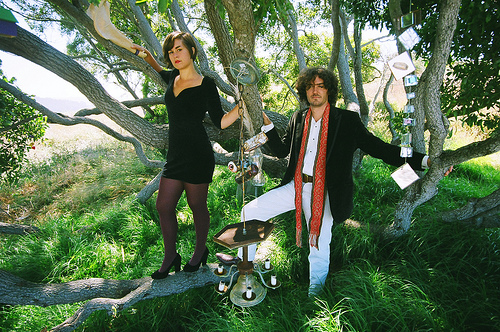
A case for Avalos, Yee and Dufty

121

OPINION Like all of us, SEIU 1021 can take three dates to the prom when it comes to voting for mayor, but narrowing it down in a field of so many candidates was still challenging. After a month-long process, we arrived at a dual endorsement of Supervisor John Avalos and State Senator Leland Yee for first and second choice, and Supervisor Bevan Dufty for our third choice.

It’s a diverse slate, and the choices are representative of the constituencies, perspectives and priorities in our membership.

Yee’s record on labor issues in Sacramento has been impeccable, and he has long been a staunch supporter of our union, so endorsing him was a no-brainer. The Guardian asked me personally, as I am also a transgender activist, how I could support Leland after his vote against transgender health benefits. Frankly, I was disappointed in how my response was framed.

Leland approached transgender activists a number of years ago and apologized for his vote. Instead of denying or rationalizing like other politicians might do, he had the courage to come to a community meeting of transgender activists, stand in front of us, admit he was wrong, and apologize. For people to continue to attack an individual for having a true change of heart is very discouraging. We would never make any advancement of our rights if we continued to shun those who have come to understand and support the transgender fight for equality. In fact, Yee’s support was critical to the collective effort to save Lyon-Martin, a clinic that is a key service provider for trans folks, after it almost closed earlier this year.

That’s why so many in the transgender community now support Yee so strongly and why he has become an even closer, tested ally through this experience.

SEIU 1021 has always had a very close relationship with John Avalos. Avalos has been a steadfast supporter of crucial social and health- care services, and has been a leader in creating needed progressive revenue measures. But most importantly, John understands how essential jobs are for lifting people out of poverty and stimulating the local economy for everyone in San Francisco.

Last year, he introduced a Local Hire ordinance that is becoming a real jobs generator in our city and a national model. Like many of our members when they first started working for the city, workers hired under the Local Hire ordinance may for the first time have a living-wage job with benefits.

And while some in labor have been critical of this legislation — in fact, it cost him the endorsement of the San Francisco Labor Council — that’s a short-sighted criticism.

As more people are employed in San Francisco with living wage jobs, they spend money in San Francisco, boosting tax revenues and in turn creating more jobs across the city. Moreover, this visionary legislation has other benefits — workers coming from low-income communities bring a new found pride in and community spirit to what could be otherwise economically depressed areas. That’s why SEIU 1021 supports Avalos, and why I am proud to endorse him as well.

Rounding out SEIU’s endorsements in this campaign is former Supervisor Bevan Dufty. Dufty has a history of supporting preserving city services. Some have argued that Dufty can’t handle downtown pressure, and yet, Dufty has consistently supported public power, took a stance against Sit-Lie despite intense pressure, and several years ago, at a critical juncture for Tom Ammiano’s signature health care legislation, Healthy San Francisco, he didn’t blink when we called on him to be our 8th vote. In fact, he committed to the bill, unequivocally, and called on other supervisors, like Fiona Ma, to say it was time. She immediately co-sponsored and eventually it was a unanimous 11-0 vote.

For labor and progressives, Ammiano’s Healthy San Francisco legislation was the single most important piece of legislation of the last decade. And while history has been rewritten, and Lt. Gov. Gavin Newsom now takes credit for the legislation, then-Mayor Newsom did not come on board until after Dufty declared his support, and as the 8th supporter, created a veto-proof majority.

Each of these candidates have shown their capacity to grow and transform as leaders making them the best choices for progressive labor, and we believe for the San Francisco. Whatever you do, you have three votes, make them count. 

Gabriel Haaland is a transgender labor activist and the SEIU 1021 San Francisco political coordinator.


SF’s foreclosure crisis

2

EDITORIAL Here’s a great issue for the San Francisco mayor’s race: The big banks that the city uses to hold nearly half a billion in cash deposits are part of a group of financial institutions that are costing the taxpayers $115 million.

That’s the amount the city will wind up paying to cover the lost property taxes and other costs associated with home foreclosures, according to a new report. And the authors of the report, the Community Reinvestment Coalition and the Alliance of Californians for Community Empowerment, estimate that San Francisco homeowners are going to lose a total of $6.9 billion in value because of the foreclosure crisis.

Most of the discussion around foreclosures has focused on the national picture — but there’s plenty the city can do.

The numbers are alarming: 16,355 San Francisco homeowners are underwater on their mortgages, meaning they owe more than the house is currently worth. By 2012, the report estimates, 12,410 local homes will be in foreclosure.

That means 12,400 families facing displacement — which adds to the homeless crisis, puts more pressure on the rental housing market and most likely will force many people who work in the city to find housing a long commute away.

Foreclosures also drive down the value of neighboring property — which means the city collects less property tax. The cost of sending deputy sheriffs out to evict families, of patrolling and monitoring vacant houses, dealing with increased crime in the area — all of that adds up. According to the report, every foreclosure costs the city $19,229. Add up the loss of property taxes and the direct costs to taxpayers and the bill exceeds $115 million.

Two of the top four banks involved in foreclosures in California are Wells Fargo and Bank of America. Those just happen to be two of the three banks that have to contract to handle the city’s cash accounts — which contain $406 million, according to an Aug. 16, 2011 report by Budget Analyst Harvey Rose. So the city is giving its money to banks that are costing the city money.

The banks aren’t paupers, either — and have accepted huge amounts of federal tax money. B of A and Wells together received $270 billion in bailout money — and both are now making nice profits (enough that the CEO of Wells, John Stumpf, earned $17 million last year). They can afford to write down the underwater mortgages and arrange for foreclosure relief for people behind on the bills.

The report suggests that the banks be charged a fee — between $10,000 and $20,000 — for each foreclosure. That would offset the costs and provide a disincentive for throwing families out on the street. The candidates for mayor ought to be pushing that — but the city can do more.

The supervisors ought to call a hearing on the crisis and demand that the B of A and Wells executives come down and explain why they’re moving so slowly on write-downs and relief. And they should be told, in very clear terms, that the city will no longer put a penny of its money in banks that are damaging, instead of investing in, San Francisco.

Free Farm Stand faces an uncertain fall harvest after call from Rec and Parks Department

1

Every Sunday at the Parque Niños Unidos in the Mission, an eager group of people gather to receive free, organic food from the Free Farm Stand. The incredible project has been going on since since 2008 and has to date given out almost 17,000 pounds of fresh produce.

This is the brainchild of Tree Rub, a volunteer who started the project “to create a network of neighbors and local farmers who grow fruit, vegetables, and flowers and share their surplus with the community and especially with those in need.” But last Sunday Tree announced that the SF Recreation and Parks Department had received two complaints that the Free Farm Stand is “having a negative impact on the park.”

He was also informed that the group would need a permit for its tent, which it set up to protect to food and volunteers from the sun. Tree says he applied for a permit in 2008 but “never heard back” from authorities.

Sometime the produce that’s given out is extremely ripe and almost past it’s peak, but the savvy San Franciscans who receive the Free Farm Stand’s food (the bounty can include heirloom tomatoes and sun-kissed white peaches) are happy to take the time to can and preserve them. The stand not only creates access to extremely nutritious foods, it saves them from getting composted. Tree also distributes organic seedlings so that people can grow their own veggies and then share any surplus they might have with the community — a feedback loop of neighbors nourishing each other.

I contacted the permits office at SF Rec and Park to ask about the future of the Free Farm Stand and got a message back from Dana Ketcham, the permits and reservations manager.

According to Ketcham, her office doesn’t want to shut down the Free Farm Stand, but employees there “have received complaints that families feel overwhelmed by the crowds as they use this park with their children.”

As of two weeks ago, people waited in line outside of the park, and were only actually in the park when receiving produce. Since the lines have gotten long, last Sunday a new system had been implemented in which numbers are handed out so that people can relax in the grass until it their turn to get food.

Ketcham said that parks are “not authorized places for distribution of food” and “that we needed to give the organizer time to find a new location.” The Free Farm Stand has until October 15th to find an alternative location.

As a long time patron of the Free Farm Stand, this came as very sad news. Tree has created an amazing community that feels like a gigantic potluck. You can meet up with friends and enjoy the sunshine there, in addition to getting fresh food for dinner.

Ketcham suggested the Free Farm Stand re-locate to an “empty parking lot” in her email to me. That plan would mar the beauty of having the stand alongside a community garden where people sometimes wander while they wait and are able to relax in the shade of a tree.

I made of a video of the Free Farm Stand right when it opened, back when it was still a pretty small operation. Tree was handing out jars of honey from his personal bee hives and sprouts. Now, there’s the Free Farm and more than 200 people receiving food each week. It would be a horrible loss to San Francisco if Free Farm Stand disappears.

If you know of any locations where the Free Farm Stand might be able to re-locate, please contact Tree at: iamtree99@gmail.com.


Eclectic al fresco: Video picks from this weekend’s Bay Vibes Fest

0

Judging from the gentleman blowing washing machine-sized bubbles at Dolo yesterday, it’s summer in San Francisco. Capitalize on the Ked-melting hit by hitting up one of the most local-local day long fests the city has to offer: the fourth annual Bay Vibes Festival, which is being held Sat/24 in the sunny Dogpatch patio of Cafe Cocomo. 

Need to brush up on your local talent? The mashup of genres on tap at Bay Vibes has the power to clue you into the Bay’s music scene in one fell swoop. The kawaii sitar trill of Gabby La La, the Latin-funk-hip-hop block party that is Bayonics, good-natured, furry hat-wearing world jams from Dogman Joe and cute boy cello playing by Alma Desnuda. We’ll make it easy for you to decide to go — videos after the jump.

Some of the talent taking the stage at Club Cocomo this Saturday: 

Gabby La La — “Alarm Clock”

Jethro Jeremiah — “Gust of Wind” (live at Mojo Cafe)

Alma Desnuda feat. Merton — “Baduquai”

La Gente — “Compromiso”

Antioquia — “Humans Do”

Bay Vibes Festival

Sat/24 2 p.m.-2 a.m., $15-100

Cafe Cocomo

650 Indiana, SF

www.bayvibessf.com


Localized Appreesh: The 21st Century

0

Localized Appreesh is our weekly thank-you column to the musicians that make the Bay. Each week a band/music-maker with a show, album release, or general good news during those seven days is highlighted and spotlit. To be considered, contact emilysavage@sfbg.com.

Last fall, eclectic new folk act the 21st Century was given the opportunity of a lifetime: a chance to record with legendary producer Stephen Short  (the former owner of Trident Studios who has worked with David Bowie, the Clash, Paul McCartney, Queen, Echo and the Bunnymen et. al.). The Bay Area eight-to-nine piece was thrilled but too broke to cover all the costs of making the album, plus, there were travel commitments (Short is based in Texas).

The forward-thinking futurists harnessed modern technology: they set up a Kickstarter page. With the $10,000+ funding in place (thanks to 187 backers), the band recorded late last  year, and the album will be released in November. Before that release, however, the 21st Century will play a show as part of the ongoing Mission Creek Music and Art Festival.

Year and location of origin: 2010, SAN FRANCISCO/OAKLAND/BERKELEY
Band name origin: The name originates from a few different places. One is ambition. We’re an eight (and occasionally a nine) piece with orchestrated horns and four part harmonies and a couple of kitchen sinks so we wanted to name ourselves in a way that reflected that bold and without limits musical attitude. We also felt that we’d spent much of our lives hearing our times and our generation defined for us in ways that we didn’t relate to so we thought why don’t we take a stab at it and have a say in the matter. Hence THE 21ST CENTURY. Oh and I also remember hearing Elvis Costello saying that he named himself after the two largest acts he could think of — a pretty gutsy move. I thought — now that’s a good idea, but let’s raise him one.
Band motto: Unofficially, it’s probably ‘What would Bruce Springsteen Do?”
Description of sound in 10 words or less: Intricate arrangements, colorful harmonies, brass, lyrical surrealism and off-beat pop sensibility.
Instrumentation: Electric, Acoustic and bass guitars, drums, keys, horns, lots of percussion and lots of singing.
Most recent release: THE CITY, Coming Soon…November 2011.
Best part about life as a Bay Area band: People want to be friends.
Worst part about life as a Bay Area band: The bars and clubs close too early. 2 a.m.? Come on.
First record/cassette tape/or CD ever purchased: The single of “Under Pressure” by David Bowie and Freddy Mercury. I thought I was getting Vanilla Ice.
Most recent record/cassette tape/CD/or Mp3 purchased/borrowed from the Web: Wilco’s The Whole Love & Girls Father, Son, Holy Ghost.
Favorite local eatery and dish: Al Pastor at El Metate–dynamite.And the Cold House Noodles at Yamo.

Mission Creek Music and Art Festival
Ongoing through Sept. 30
Multiple venues through San Francisco and Oakland
www.mcmf.org

The 21st Century
Sept. 28, 9 p.m. $8
The New Parish
579 18th St., Oakl.
Event info

Live at the Starry Plough:

The mud flies

24

Dennis Herrera is out with an ad attacking Ed Lee — and it’s just the beginning of what we’re going to see as the top-tier candidates try to knock the front-runner down.

All the credible polls show Lee at least 10 points out in front. They also show that he has about 30 percent of the voters — which means 70 percent are either undecided or like another candidate. So he’s hardly invincible.

But with so many candidates in the race — most of them competing in the mashup in the middle, without strikingly different policy ideas — the strategists for Leland Yee, Jeff Adachi and Herrera have all decided that attack ads are in order. And the ads all seem to have the same basic theme: Lee is controlled by outside interests.

“Ed Lee says he gets things done,” the new Herrera ad says. “But what’s he doing — and who’s he doing it for?”

There’s a picture of Lee and Rose Pak. There’s a swipe at the Central Subway. There’s a pretty damning charge about Lee trying to raise garbage rates and then getting campaign help from Recology, the local garbage monopoly. And there’s an obvious shot at Lee for calling PG&E “a great corporation.”

The ad ends with some odd Republican lapel pins on the jackets of some unidentified dark-suited gentlemen as the voice-over says:

“Ed Lee’s getting it done — for his friends and his contributors, not for us.”

Hmmm. I didn’t see the Republican connection, but Matt Dorsey, Herrera’s press person, told me that one of the independent expenditure committees raising soft money for Lee is run by a big Republican player. Not sure how many people will get that — but on the other hand, there’s just so much in this ad. The Herrera camp has to figure some of it will stick.

Nothing new, really,  nothing others haven’t brought up. But it’s just the start; expect a lot more trash talk over the next few weeks as Lee tries to stay above the fray and his opponents try to force him to fight.


Editorial: SF’s foreclosure crisis–the city shouldn’t put another penny in banks that are destroying San Francisco

8


Here’s a great issue for the San Francisco mayor’s race: The big banks that the city uses to hold nearly half a billion in cash deposits are part of a group of financial institutions that are costing the taxpayers $115 million.

That’s the amount the city will wind up paying to cover the lost property taxes and other costs associated with home foreclosures, according to a new report. And the authors of the report, the Community Reinvestment Coalition and the Alliance of Californians for Community Empowerment, estimate that San Francisco homeowners are going to lose a total of $6.9 billion in value because of the foreclosure crisis.

Most of the discussion around foreclosures has focused on the national picture — but there’s plenty the city can do.

The numbers are alarming: 16,355 San Francisco homeowners are underwater on their mortgages, meaning they owe more than the house is currently worth. By 2012, the report estimates, 12,410 local homes will be in foreclosure.

That means 12,400 families facing displacement — which adds to the homeless crisis, puts more pressure on the rental housing market and most likely will force many people who work in the city to find housing a long commute away.

Foreclosures also drive down the value of neighboring property — which means the city collects less property tax. The cost of sending deputy sheriffs out to evict families, of patrolling and monitoring vacant houses, dealing with increased crime in the area — all of that adds up. According to the report, every foreclosure costs the city $19,229. Add up the loss of property taxes and the direct costs to taxpayers and the bill exceeds $115 million.

Two of the top four banks involved in foreclosures in California are Wells Fargo and Bank of America. Those just happen to be two of the three banks that have to contract to handle the city’s cash accounts — which contain $406 million, according to an Aug. 16, 2011 report by Budget Analyst Harvey Rose. So the city is giving its money to banks that are costing the city money.

The banks aren’t paupers, either — and have accepted huge amounts of federal tax money. B of A and Wells together received $270 billion in bailout money — and both are now making nice profits (enough that the CEO of Wells, John Stumpf, earned $17 million last year). They can afford to write down the underwater mortgages and arrange for foreclosure relief for people behind on the bills.

The report suggests that the banks be charged a fee — between $10,000 and $20,000 — for each foreclosure. That would offset the costs and provide a disincentive for throwing families out on the street. The candidates for mayor ought to be pushing that — but the city can do more.

The supervisors ought to call a hearing on the crisis and demand that the B of A and Wells executives come down and explain why they’re moving so slowly on write-downs and relief. And they should be told, in very clear terms, that the city will no longer put a penny of its money in banks that are damaging, instead of investing in, San Francisco.


Endorsement interviews: Dennis Herrera

13

Dennis Herrera has an interesting challenge: as city attorney, he’s been barred by law, legal ethics and custom from taking stands on a lot of the legislative and political issues facing the city. He couldn’t, for example, say he opposes a law that he might later have to defend in court. But now that he’s running for mayor, he’s liberated himself, and he’s started to talk about specific challenges facing the city.

Herrera told us he thinks this is the most important mayor’s race in the past 20 years and said that local government is going to have to play more of a role taking care of things that the federal and state governments will no longer do. He talked about the “culture of an organization” and his experience running a large office. He said that the city can’t cut its way out of its budget problems and he supports “additional revenues,” including a higher real-estate transfer tax, a more progressive payroll tax and (possibly) a commercial rent tax.

He supports an affordable housing bond — but wouldn’t call for a moratorium on market-rate housing and condo conversions.

Video and complete audio are after the jump.

Herrera by endorsements2011