Local

Contemplating Appetite

1

virginia@sfbg.com

APPETITE My adventures in food and drink have been the subject of my SFBG Appetite column for nearly three years online at SFBG.com. As of last month, you now also find me in print every week. Many have asked where I am going with this column — some expecting a formal weekly review, others a mix of subjects and directions. The latter is true. I cannot replace former Guardian food critic Paul Reidinger’s eloquence and decades-long experience as a food writer (and I’m glad to say we will continue to hear from him in various articles). I take this opportunity to explain where I’ve come from and my philosophy in covering the edible world.

First and foremost, I bring to the table passion. From mostly Italian and German stock, I’ve eaten heartily since early childhood in Oklahoma and Missouri, 16 total years of my youth in Southern California and New Jersey (just outside LA and NYC respectively), and travel over five continents. As an incessant reader and writer since girlhood, books first opened me up to the world, though I dreamed of having my own adventures to write about. Moving to San Francisco a decade ago, I was wowed not only by its unique, radiant beauty, but by the consistent quality of food, spending spare dollars eating out constantly. Though SF wasn’t the immediate love affair for me New York was, it is a love that has only increased each year, the home I would happily end up in. This city still takes my breath away.

Patricia Unterman’s original San Francisco Food Lover’s Guide was my food bible in those early days. I connected with her quest for the authentic, no matter the cuisine. I ate my way through neighborhoods, marking up her book (and all my dining guides) until I had been to every single restaurant, market, and bar in its pages. Eventually, requests asking me where to go and what to eat reached a fever pitch, so my husband (and partner in taste and travel) helped create my own humble website, The Perfect Spot, to share my reviews and finds. I’ve been sending out a bi-weekly newsletter for nearly four years based on my writings for the site. I also write for an ever-increasing number of magazines and websites.

“Diet,” “lowfat,” and “hold the cream” are words you’ll never hear me say. My hunger for food as adventure means I make it a goal to have no food prejudices. Many say, “I’ll try anything once,” but my philosophy is to keep trying anything I don’t like until I do. The food may not have been prepared properly; it was perhaps of poor quality; maybe the palate wasn’t quite ready for it — dishes still deserve to be known at their best. I spent years trying to overcome my aversion to uni (sea urchin), for example. Eating chef David Bazigran’s brilliant uni flan at Fifth Floor early this year was a revelation. I realized it was uni’s texture, not its of-the-sea flavor, turning me off. I’ve enjoyed uni ever since, though only when ultra-fresh. From personal experience, I know one can change one’s abhorrence of a food, and in so doing expand one’s horizons another inch, uncovering another of life’s simple delights.

Sometimes fear arises around unfamiliar foods — and the unfamiliar in general. Without variety and a vast range of expression, the world loses it color — and its joy. While sameness can be comforting (and there’s a time for that), it is entirely boring. To go through any part of life bored or complacent is simply lazy. As with music or books, one can discover unknown lands with a few new ingredients, enlivened by the hands of a gifted, caring chef. Whether food cart or fine dining, there’s no reason to settle for mediocrity, not with the unreal produce, vision, and talent surrounding us.

Internationally, I’ve fallen in love with black pudding in Ireland, extreme spice in Thailand, Tyrolean food in the Italian Alps. I’ve explored wine chateaus in Bordeaux, agave fields in Mexico, gin distilleries and cocktail labs in London, whisk(e)y houses in Scotland and Ireland. I’ve frequented restaurants, coffee havens, bars, chocolate shops, farmers markets everywhere. I sample obsessively and comparatively. Rather than one single review, I prefer to cover a mixture of highlights in any given week. I’m opinionated, yes, but don’t care much for snark, flippancy, or jadedness. Though honest assessment is crucial, rather than rip apart the few not doing it well, I’d rather focus on the many having fun with or perfecting their craft.

My “holy trinity” of US cities for food and culture, though, consists of New York, New Orleans, and San Francisco. Travel is one of life’s greatest gifts, yet when I cannot afford to go, I am able to travel in my own city. Authentic foods transport me back to the place in which that food was illuminated — anchovies on the coast of Italy, bastilla in Morocco, Creole cream cheese in New Orleans, or bahn mi in Vietnam. It helps to live in a place as international and cosmopolitan as SF. But even in nondescript towns, I uncover gems. The hunt is a key part of the thrill.

Besides travel, you’ll notice I also write about drink… a lot. Whether coffee, spirits, and cocktails (my first love), wine and beer (the ultimate food accompaniments), my knowledge of drink grows along with the culinary. Even at 21, I wanted a grown-up atmosphere in which to imbibe, detesting noisy, crowded “scenes.” Drink, for me, is similar to food: it’s about quality, artistry, and adventure, not buzz or quick consumption. A memorable meal isn’t complete without the right sip to begin, pair, or end with.

As with food, Northern California was instrumental in furthering my taste for fine drink, though global explorations have shaped my standards of comparison. It started with cocktails years ago as SF (and, of course, NYC) lead the way in reviving classics, and creating experimental, culinary drinks. The artistry and history behind these drinks intrigued me, connecting to my Old World, retro, jazz-loving self.

Delving into cocktails inevitably led to my great love of craft spirits, many of our country’s trailblazers and innovators being based right here. (Thank you, St. George, Charbay, Germain-Robin, Anchor Distilling, et. al.) Our local Wine Country and craft beer pioneers like Fritz Maytag likewise have shaped the world, while local personalities such as Kermit Lynch and Rajat Parr in the wine realm are experts on global glories in drink.

What makes a great meal? Service, setting, and, of course, food are crucial. Ultimately, I see eating as a communal ritual. A thoughtfully-prepared meal surprises and nourishes the body and spirit. We engage (or should — put those cell phones away!) over a meal, reflect on our day, truly taste, actually look at and listen to each other. Expect me to share with you the best tastes and backdrops from these moments.

While I don’t expect our tastes to be the same, I do look forward to embarking on delicious adventures together throughout the food realm. *

BEST NEW OPENINGS OF 2011

In the spirit of ushering in my print column, I recap the year with my list of 2011’s best new openings, realizing we still have a few weeks worth of openings left:

CASUAL

Wise Sons Deli www.wisesonsdeli.com. Although not getting a brick and mortar location until 2012, this pop-up deli (every Tuesday at the Ferry Plaza) was one of the year’s great new delights, filling a gaping vacancy of quality Jewish food with excellent babka, bialy, and corned beef.

Hot Sauce and Panko 1545 Clement, SF. (415) 387-1908, www.hotsauceandpanko.com. With an impressive array of hot sauces from around the world, addictive chicken wings in a crazy range of sauces (tequila-chipotle-raspberry jam!), this quirky take-out also has a hilarious blog.

Mission Cheese 736 Valencia, SF. www.missioncheese.net. Mission Cheese serves not only lush cheeses and wines, but some of the best grilled cheese sandwiches around in a chic cafe setting.

MID-RANGE

Bar Tartine 561 Valencia, SF. (415) 487-1600, www.bartartine.com. Though not a new opening, I refer to the complete revamp and Eastern European-influenced menu under chef Nick Balla that happened this year. Unusual dishes, Hungarian and beyond, and Balla’s impeccable technique make this menu unlike any other.

Boxing Room 399 Grove, SF. (415) 430-6590, www.boxingroomsf.com. It’s refreshing to get some New Orleans breezes in SF from a Louisiana chef making his own Creole cream cheese and frying up fresh alligator.

Nojo 231 Franklin, SF. (415) 896-4587, www.nojosf.com. We’ve had a glut of izakayas open over the past few years, but this one stands above in warm, hip atmosphere and consistently delightful food.

Park Tavern 1652 Stockton, SF. (415) 989-7300, www.parktavernsf.com. From the owners of Marlowe, this immediately feels like the buzzing destination restaurant of Washington Square Park for satisfying American food with gourmet edge.

Jasper’s Corner Tap 401 Taylor, SF. (415) 775-7979, www.jasperscornertap.com. All things to all people: comfortable meet-up spot with perfect cocktails, craft beers and wines aplenty, and the food is consistently heartwarming.


Her way

4

arts@sfbg.com

DANCE Early in the 20th century, Ezra Pound declared “the artist is the antenna of the race.” True or false? Do artists have the ability to predict the future, or are they stuck in the present?

Krissy Keefer, artistic director of Dance Brigade and Dance Mission Theater, tends to side with Pound. While she wouldn’t go as far as writer-performer Guillermo Gómez-Peña, who considers the artist a shaman, she does think that “there is something about the artistic process that opens your brain to see into the future, to see things happening before they actually happen.”

This weekend Keefer and her troupe are celebrating the 35th anniversary of Dance Brigade and its antecedents the Wallflower Order. The performances, all with free admission, include a retrospective of works spanning the last three decades, plus the 2009 Great Liberation Upon Hearing, based on the Tibetan Book of the Dead; Keefer created the work after losing two close friends within the same year.

Women taking charge of their own fate may not be news today, but in 1975, Wallflower’s five female warriors were pioneers. The turmoil of the post-Vietnam era and the rise of feminism had created a climate in which audiences hungered for dance that spoke to their lives. Many of them were women. The company was made up of contentious women, strong dancers, committed activists. They were not about to be stopped, much like their “grandmothers” Isadora Duncan and Martha Graham or, in terms of politics, the characters in 1964 Chinese ballet The Red Detachment of Women.

Most remarkably, Keefer’s commitment to make art addressing issues that matter has not waned — she’s as ready as ever to mount the barricades and make her voice heard through art. In retrospect, it is surprising how much of her past work was highly prescient.

She recently called my attention to my reservations about her having drenched one section of the 2002 Cave Women in images of extreme destruction and war. (At the time, the bloodiness seemed over the top). Almost immediately, all hell broke loose in Afghanistan and the Middle East. Revolutionary Nutcracker Sweetie, a huge success from 1987-1997, features one-percenters the McGreed family, an abused undocumented servant in Clara, and a homeless Sugar Plum Fairy. Issues that were under the radar at the time have become headlines.

Appearing in Nutcracker — with an excellent, Tchaikovsky-based score by jazz composer Mary Watson — were then-little-known artists like Axis Dance Company and aerial dance pioneer Terry Sendgraff; Keith Hennessy played the McGreed’s renegade son.

For all her predilection for “making art that includes themes of social responsibility and dealing with real situations with real people,” Keefer is also very much a creature of the theater. The work has to stand on its artistic feet, perhaps not surprising for a woman who trained as dancer at age six — long before she knew what she wanted to dance about.

The 2005 Dry/Ice, a look at the effects of global warming, for instance, was a commission from the San Francisco International Arts Festival. Now who else, except someone who besotted by the stage, would lug a cast-iron bathtub, weighing over 300 pounds, into Theater Artaud for two performances? “I just wanted to do something about the environment,” she recalls. (Al Gore’s An Inconvenient Truth came out the next year.)

In the 2004 Spell, a collaboration with Hennessy, Keefer became a raging goddess-witch figure doing an exorcism for peace and economic justice. It was a power performance that, given the lives many people have today, probably would play well in the suburbs.

Keefer also takes her social activism outside the theater. In 2000, when she felt that the criteria for acceptance to the San Francisco Ballet School were unjustifiable — based on the experiences of her daughter, eight years old at the time — she complained loud and clear. It started discussions about the female dancer’s body at the time when academics had barely touched the subject. In 2006, she was so furious about the country’s priorities that she ran for Congress. Of course, she knew that she wouldn’t win — but she wanted to take a stand. Even her parents encouraged her to do so. “I can’t believe that I ran against Nancy Pelosi when she was poised to become Speaker of the House,” she laughs today.

Meditation has helped Keefer step away from anger, what she called her “habitual response” to injustice. The resolve was shaken, however, this past summer, when — coming back from a successful East Coast and Caribbean tour with Liberation — all the costumes (transported via Greyhound, the only shipping the company could afford) were stolen. “What can you do?” she shrugs. This Mother Courage of dance will just put her shoulder to the wheel a little harder. 


“FROM WALLFLOWER ORDER TO DANCE BRIGADE: A 35-YEAR RETROSPECTIVE CELEBRATION”

Fri/18-Sat/19, 8 p.m.; Sun/20, 2 p.m., free

Novellus Theater

Yerba Buena Center for the Arts

700 Howard, SF www.dancebrigade.org


“MORE THAN THE SUM OF ITS PARTS:” LOCAL ARTS LUMINARIES TOAST DANCE BRIGADE


DANCE From Brady Street to Dance Mission and beyond, Krissy [Keefer] has been one of the true champions of our dance community, in no small part due to her own artistry. The spirit of her work is visually and musically rich, fundamentally diverse, and deeply committed to social relevance — attributes she’s manifested on so many levels in a long and vital career. Rob Bailis, Former Artistic Director, ODC Theater

In the dance ecology of the Bay Area, Dance Brigade, and especially Krissy Keefer, play such vital role. I can’t think of anyone else as fierce about what she believes in, what she cares about, and how she creates work to reflect those beliefs. In many ways she is our conscience when we might waver in the face of budget cuts and the endless struggle to get money to do work. Because she is so strong about this herself, I really count on her to keep us honest around our vision and our integrity of purpose. Kenneth J. Foster, Executive Director, Yerba Buena Center for the Arts

Krissy Keefer’s life energy is totally invested in professional, community-based, inclusive, and affordable feminist art. She has consistently supported women artists for over 30 years. It is no easy task to maintain an artistic vision and a financially secure organization, and to be able to deal with the high volume of traffic that is required to run a studio anywhere, much less in the most expensive city in the U.S. That piece of real estate at 24th and Mission has always been a port in the storm for the dance community. Mary Alice Fry, Artistic Director, Footloose Dance Company and Shotwell Studios

What makes Dance Brigade’s work special and important is how they take on the big issues facing the world and then find a way to make us laugh. Krissy Keefer is the Jon Stewart of the dance world! Krissy’s perspective, passion and tenacity are testament to the company’s longevity; that a Dance Brigade show dealing with war, greed, or even addressing violence towards women, can be entertaining is powerful. Krissy, in her wonderfully brash and focused manner, has the ability to remind us that we are citizen-dancers, that we need to participate, and that big messages, abstract dance and the hope for social change can happily co-exist on stage. Wayne Hazzard, Executive Director, Dancers’ Group

Dance Brigade’s legacy in the Bay Area is huge. By not allowing their company to become mainstream, they paved the way for alternate companies to see that there is a place at the table for work that is not shiny, slick and influenced by institutional homogenization. Dance Brigade has demonstrated by example that contemporary dance can be messy, political, and uncomfortable. By blurring the lines between politics and art, a whole new generation of politicized artists have been given permission to emerge and that has infused Bay Area dance with a lot of new ideas and energy. Joe Landini, Director, The Garage

Krissy and the Dance Brigade have been at the forefront of bringing political concerns into the theater. They have paved the way, both artistically and practically, for dozens of politically engaged artists who may or may not identify with their work. To me, Dance Mission is a physical embodiment of the importance of the Dance Brigade’s values of democracy. It’s not easy to separate the artistic and the community legacy of Dance Brigade’s work; it’s the combination that makes them so powerful. Jessica Robinson Love, Executive and Artistic Director, CounterPULSE

When Dance Brigade emerged in San Francisco in the mid-’80s as an outgrowth of the nearly-mythical Wallflower Order, they brought together a number of tendencies that were already percolating in the dance community: using dancers of widely varying body types, introducing world music (sometimes performed by the dancers), spoken word, and text narrative, circus and vaudeville tricks and, always, no-holds-barred political content. Dance Brigade inspired other companies to be braver through their example of what might be called gonzo feminist dance. Krissy and her dancers and collaborators took these disparate influences and turned them into powerhouse performances where the whole was more than the sum of its parts. Kary Schulman, Director, Grants for the Arts. (Compiled by Rita Felciano)

State of the occupations

0

rebeccab@sfbg.com

The police evictions of OccupyOakland and OccupyCal over the last week, and the looming threat of another attempt to evict OccupySF, presented challenges for the Bay Area protests just as similar police crackdowns targeted Occupy encampments in Portland, Denver, New York, and other cities nationwide.

These fast-moving developments also come at a time when university students from around California will be descending on San Francisco for a Nov. 16-17 University of California Board of Regents meeting that was canceled this week because of public safety concerns. All of this adds up to a big and unpredictable moment for the widening movement (see “The growing 99 percent,” 11/9).

So we’ve decided to start a regular feature to track the latest developments in an Occupy movement that seems adamant about standing its ground even as it’s forced to deal with threats from police, organizing challenges, and the coming of winter.


#OCCUPYCAL GROWS UP FAST

Students at the University of California at Berkeley burst onto the Occupy scene Nov. 9 with the launch of OccupyCal, a student-led protest that made waves nationally after university police advanced on around 500 students in Sproul Plaza, the historic epicenter of the Free Speech Movement, and struck them with batons after they tried to set up camp.

UCB police made 39 arrests in two separate actions against protesters, fueling student protesters’ resolve at a general assembly convened afterward that drew more than 1,000 people and lasted well into the night. At around 1:30 am, students voted to hold a student strike on Nov. 15 in solidarity with others throughout the UC system.

The harsh police response prompted condemnation from the Free Speech Movement Archives (FSM-A). “It appears that the campus police are in need of remedial education concerning fundamental protections offered by the US Constitution — including First Amendment rights to Free Speech and Free Assembly that were clearly recognized and enshrined on the UCB campus 47 years ago on these very steps,” the group noted in an open letter.

UC Berkeley Chancellor Robert J. Birgeneau, who was out of the country during the violent police crackdown, issued a statement on Nov. 14 ordering a third-party investigation of the clash and granting amnesty under the Student Code of Conduct to all students who were arrested for blocking police from removing the encampment.

“It was only yesterday that I was able to look at a number of the videos that were made of the protests on November 9. These videos are very disturbing. The events of last Wednesday are unworthy of us as a university community. Sadly, they point to the dilemma that we face in trying to prevent encampments and thereby mitigate long-term risks to the health and safety of our entire community,” he wrote. “Most certainly, we cannot condone any excessive use of force against any members of our community.”


#OCCUPYSF, THE NEXT BATTLEGROUND

At press time, student and labor groups that were planning to converge on the UC Regents meeting at UCSF Mission Bay on Nov. 16 by the thousands were deciding how to respond to the meeting cancellation, but protests are still planned for that day, with support from OccupySF.

Meanwhile, Mayor Ed Lee continues to insist that OccupySF break camp, but instead it has only grown larger, with the tents spreading out from Justin Herman Plaza onto the nearby sidewalk along Market Street in front of the Federal Reserve. At press time, protesters feared what seemed an imminent police raid, particularly now that the election is over and busloads of student protesters were headed into town.


TRAGEDY STRIKES #OCCUPYOAKLAND

On Nov. 10, Kayode Ola Foster, 25, suffered a fatal gunshot wound to the head following an argument, just yards from the Occupy Oakland encampment in Frank Ogawa Plaza (Oscar Grant Plaza to the occupiers who’d camped there for a solid month).

A somber mood settled over the plaza in the hours following the shooting as the tent city dwellers absorbed the gravity of the situation, and occupy activists held a candlelight vigil. Although initial reports suggested Foster had no relationship to the camp, police later said they believed he and one of two shooting suspects had spent time there.


#OCCUPYOAKLAND GETS THE BOOT

Three days after the fatal shooting near the OccupyOakland encampment sparked a hard-line response from local government officials, the camp was dismantled in an early morning police raid Nov. 14, the second to befall the occupation since it began a month ago. That evening, thousands marched back to the plaza in response to the raid and held a general assembly.

On the night of the raid, it took several hours for police to arrive at 14th and Broadway streets, where protesters began congregating in the intersection around 2 a.m. in anticipation of the forced eviction from camp. Law enforcement came en masse, with mutual aid support from seven different regional law enforcement agencies.

While two lines of riot police formed an L-shaped formation blocking protesters’ access to the plaza and nearby streets, hundreds more poured into the plaza to dismantle tents, flatten structures, and make arrests. Police arrested 32, the majority of whom belonged to a group of clergy members from the occupation’s Interfaith Coalition tent who sat calmly together in the plaza and sang by candlelight as they waited for police. Occupiers who witnessed the dismantling of the camp from behind police barricades yelled out, “Shame! Shame! Shame!”

Steven T. Jones contributed to this report.

Uh oh … feds raid pot clubs in Seattle

10

The feds have launched a coordinated series of raids on medical marijuana dispensaries in the Pacific Northwest. The Stranger in Seattle has extensive coverage:

Federal agents and local law enforcement are executing a volley of raids on medical-marijuana disperses throughout Western Washington this afternoon, according to several sources, who say some of the proprietors are being handcuffed and taken away in squad cars. Thus far, we’ve received reports of busts in Olympia, Lacey, Tacoma, Puyallup, and Seattle.

The Cannabis Defense Coalition has posted a tally of 14 dispensaries raided today.

The raids are leaving patients empty handed and it’s not clear what comes next or whether any of the Western Washington clubs will survive.

This is very bad news, and you have to wonder:

The feds have threatened pot clubs across California and shut down at least two in San Francisco. They’re trying to shut down a lot more in the Seattle area. At least 14 mayors have been on a conference call to coordinate strategy against the Occupy movement. Are the feds involved in that, too?

Is November the month that governments across the country, working together, are going to strike back at medical pot and Occupy? What possible reason could the Obama administration have to do that, one year before an election that he won’t win without the support of the people who are getting arrested, evicted, abused and forced to lose their medical suppliers?

What the fuck is going on?


Localized Appreesh: The Spyrals

0

Localized Appreesh is our weekly thank-you column to the musicians that make the Bay. Each week a band/music-maker with a show, album release, or general good news is highlighted and spotlit. To be considered, contact emilysavage@sfbg.com.

You remember using spirographs as a child — drawing endless, satisfying colorful curves with your extensive color pencil collection? You could probably bust that out again and give the Spyral’s Sunflower Microphone seven-inch single (released today, a precursor to the upcoming 2012 album) a spin. The wave-like reverb of garage guitar meets a lower 13th Floor Elevators-y howl here, a surfy psychedelic dream. Check out Side A on the Spyrals’ Bandcamp page.

Also, give a listen to the San Francisco psych-pop trio’s output from earlier this year Clouds, equally mind rolling, equally appropriate for an afternoon spent lazily spinning creative circles. And then, even further back, there’s the entrancing song “Soul,” from 2009, and its captivating video, laced with surf and war imagery (see the vid below).

To celebrate the release of Sunflower Microphone this week, the Spyrals play Hemlock Tavern on Thursday.

Year and location of origin:
2009, San Francisco
Band name origin: Time being a never ending spiral. We’re trying to capture a time, good or bad, and share it with the people.
Band motto: It’s gotta groove.
Description of sound in 10 words or less: Best shit you heard in a long while.
Instrumentation: Guitar, vox, bass, drums
Most recent release: Single comes out November 15. Album out early 2012.
Best part about life as a Bay Area band: There’s no shortage of people doing interesting stuff.
Worst part about life as a Bay Area band: There’s no shortage of people doing crap.
First record/cassette tape/or CD ever purchased: Digital Underground Sex Packets.
Most recent record/cassette tape/CD/or Mp3 purchased/borrowed from the Web: Downloaded the Gories I Know You Be Houserockin the other day.
Favorite local eatery and dish: That’s a tough one. Probably Los Compadres. It’s a family owned Taqueria in South City, near where we rehearse. Damn good carnitas.

The Spyrals
With Michael Beach, Hypatia Lake
Thurs/17, 9 p.m.,$6
Hemlock Tavern
1131 Polk, SF
(415) 923-0923
www.hemlocktavern.com

Vintage Spyrals video:
http://www.youtube.com/watch?v=QNXvaKymGz0

Is SF moving to the right?

92

The Bay Citizen/New York Times thinks so. The headline on the story — “more conservative is the new normal” — says it all. Matt Smith (formerly of our price-fizing rival SF Weekly) and Gerry Shih say the Nov. 8 election signals a turn to the right for this famously liberal city:

But Tuesday’s election signaled a palpable shift: In addition to Lee, a pro-business moderate, voters overwhelmingly picked George Gascón, the law-and-order former police chief — and former Republican — as district attorney.

“To whoever thinks San Francisco is loopy and left-wing, this election basically said, ‘No, it’s really not,’” said David Latterman, associate director of the Leo T. McCarthy Center for Public Service and the Common Good at the University of San Francisco. “We just elected an ex-Republican, pro-death penalty district attorney by a landslide. Just ponder that.”

Well: It’s interesting that they call Lee a “pro-business moderate,” which is probably accurate but differs from how Lee’s more progressive supporters see the new mayor. But while they talk about Gascon, they conveniently leave out the fact that San Francisco has elected the first solid progressive to a citywide office in a long, long time. Ross Mirkarimi — a former Green Party member and without a doubt one of the most left-leaning supervisors — won a tight, contested race for sheriff running honestly as a progressive. I think you have to go back to 1987, when Art Agnos ran for mayor as the candidate of the left, to find another example of a progressive champion winning all across town.

The interesting element of all of this — and something I think Smith and Shih got absolutely right — is that the demographic makeup of the city is changing, and has been for a while:

“From a political perspective, the tech companies are employing young workers who often prefer to live in San Francisco, even if they commute to Silicon Valley, said Wade Randlett, a Bay Area technology executive and top fund-raiser for President Obama.”

Wade Randlett is not my favorite person in local politics, but the point he makes is valid — and it’s not happening by accident. Virtually all of the new housing that’s been built in San Francisco in the past decade has been aimed at wealthy people, a lot of them young tech types who commute from the city to Silicon Valley. The other people moving into new housing are empty-nest retirees from places like Marin County. If you walk through the new condo buildings in Soma, the residents are mostly white, with a few Asians; there are almost no African Americans, very few families and essentially zero working-class people.

For years, downtown groups (including Randlett’s former employer, SFSOS) have pushed for this kind of housing, and some of them have been very open about their goal: By bringing in more rich people and tech workers, you can change the politics of the city. Housing activist Calvin Welch puts it succinctly: Who lives here, votes here.

That’s the reason why land use and housing are so critically important in this town. If poor and working-class people are pushed out to make way for a more upscale set of residents, then progressives who talk about taxing the wealthy to provide services for the poor will have a harder time getting elected.

It’s not a conspiracy; it’s an open, stated policy goal of the people who spent vast sums of money electing Ed Lee.


The (theater)-sporting life: BATS Improv turns 25!

0

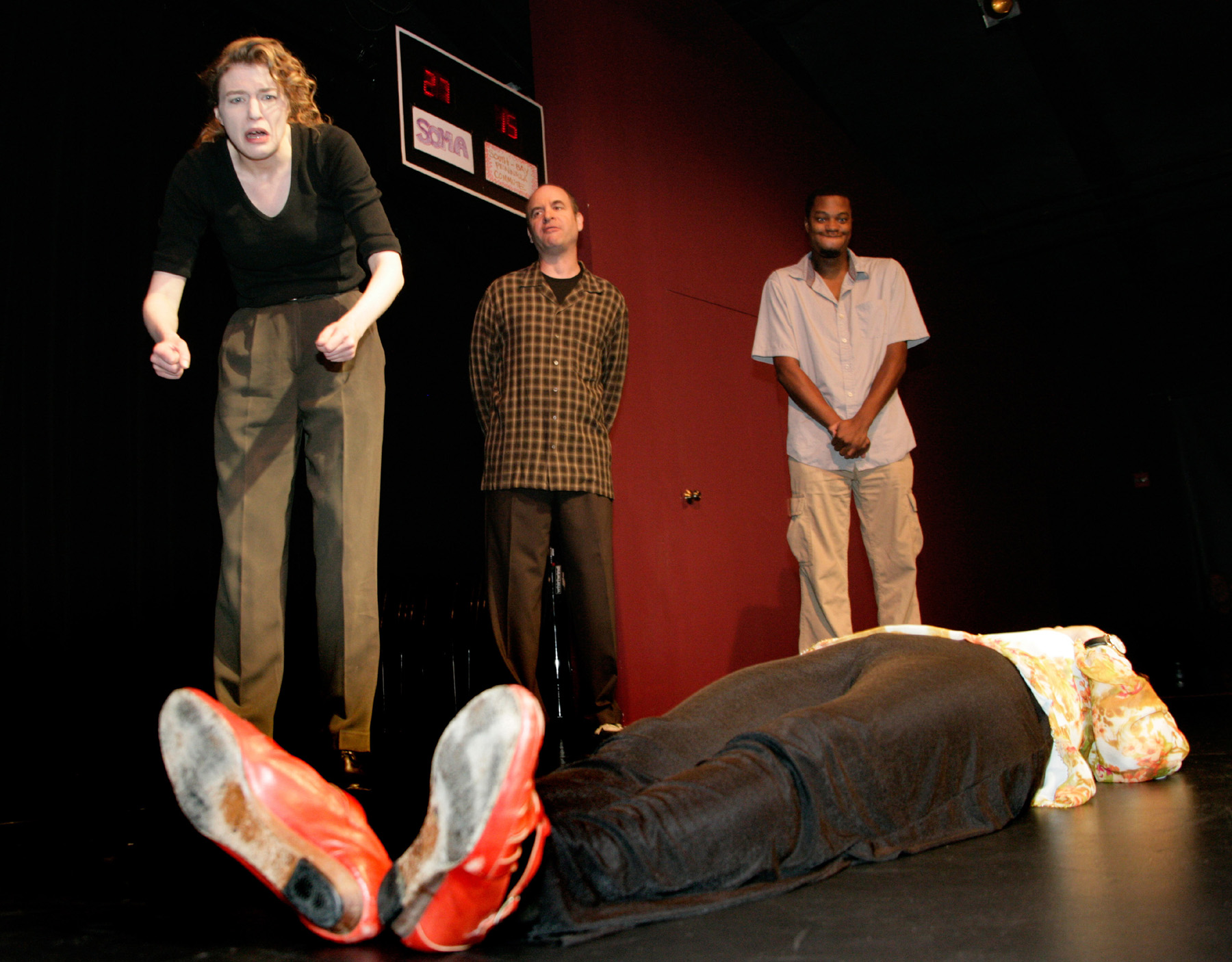
It was 1986, the year of Top Gun, Dallas, “Hands Across America,” and “Papa Don’t Preach.” In San Francisco, a comedy troupe called Fratelli Bologna joined forces with Seattle Theatresports’ Rebecca Stockley, and the rest was history. Bay Area Theatresports, now known as BATS Improv, marks its 25th anniversary this year with a special show Sat/12 — a one-off celebration smack-dab in the company’s already-packed calendar of weekly shows. How does an arts organization stay so energetic after 25 years? Could a certain flair for improv have something to do with it? I spoke with BATS artistic director Kasey Klemm to get the scoop.

San Francisco Bay Guardian: What’s your history with the company?

Kasey Klemm: I started taking classes at BATS when I was 17, back in 1997. I’ve been with the organization ever since. I just became artistic director in April of this year. I’m just at the beginning of my three-year term.

SFBG: Is that an elected position?

KK: It’s an open job position, so anyone in the main stage company is allowed to apply for it. People put together their artistic vision for where they want to develop and see the company grow, and move toward, as well as some organizational stuff. How they kind of functionally see the company working with each other, and developing as artists as well, so that we’re not just staying stagnant and doing the same stuff, and we keep challenging each other. And also, a proposed six-month calendar.

SFBG: How do you think BATS has managed to stick around for 25 years?

KK: This organization has got a tremendous amount of heart behind it, and it really is the people that make it [that way]. We were just looking at some old photos that we had blown up for our lobby for the 25th anniversary display, and we have this company photo from, I think it was 1989. And it was about nine people who were with us in ’89, still with us today. Phenomenal actors, and not people who are staying here because they have no other choice, but because the work that we do is so rewarding, both for the audience and personally as an artist. It’s really a thrill to literally go do something new every night. It’s exciting and the craft of it keeps you coming back for more.

I also think it’s because we’re an organization that really values stories, and stories that are driven by relationships and truth, versus trying to make something funny happen. That keeps people connected and interested much more than trying to be funny, or if this were a group where people were trying to outshine each other. But there’s a real passion for telling truthful, connected stories. And what happens is, because it’s being improvised, the result is often much more hilarious than anything that could have been written.

SFBG: So does BATS identify as a comedy group, or more just as a theater troupe?

KK: We self-identify more as a theater group. In some of our marketing, we started using the term “comedy theater,” but the word theater is really important and central to what we do, because it’s not about doing sketches or telling jokes. It’s about creating theater that an audience can connect with and can be moved by, whether it’s moved to uproarious laughter, or tears sometimes. We’re after that sincere stuff, the sincere human experiences that are traditionally at the roots of theater.

SFBG: Do you think having strong improv skills has helped the company beyond just performing onstage?

KK: Absolutely. There’s a culture of yes, and being inclusive, so it’s an organization where everybody’s voice gets to be heard. We’re really good at communicating with each other, because you need to be. And we honor that kind of direct and honest communication with each other. Everybody knows that everybody else is here for the same reason: because we love doing theater-based improvisation. We’re a group that all has the same goal: we’re all artistically in pursuit of a very special kind of theater that we think only gets created through making it up on the spot.

With that, you get to know each other very well. Our main stage company is 19 people right now, some of whom have been around for the whole 25, some who are as new as having joined us last year. But because of the way we work onstage, we’re very connected to each other.

SFBG: Why do you think Bay Area audiences love improv so much?

KK: Well, it’s not boring! There’s a lot of theater out there that for whatever reason, doesn’t connect with every audience. An experimental new play might not be any good. But if we’re in the middle of something, we’ve got the ability to go, “Hey, this is not very good. Let’s change it up, let’s start again.” And everybody can laugh with the release of that kind of tension or pressure, so you don’t have to sit through stuff that’s not working.

As an audience member, when you’re watching the improv happen onstage, you’re much more engaged than in a scripted play, because you know the actors are creating it on the spot, so there’s a part of you that’s always creating these shadow stories: “Oh, I bet those two characters are going to end up romantically linked together.” So they’re creating the story with us. And it’s a much more engaging type of theater than one that’s just being told to the audience.

I think that’s why you get those moments where 200 people laugh at the same time, because we’ve just put our finger on something that everybody was thinking, whether it was conscious or subconscious. We tap into this kind of group experience with it, and there’s this explosion of laughter that happens from just hitting some sort of primal truth that exists in that moment, in that theater, with these particular actors onstage, and these particular audience in the house.

SFBG: What’s the backstory on the 25th anniversary show this weekend?

KK: This weekend we’re celebrating the 25th anniversary of the first Theatresports show in San Francisco. So 25 years ago there was a group of local actors that was kind of housed by a group called Fratelli Bologna, who brought their friend down from Seattle, Rebecca Stockley, who’s now with us here at BATS. And she started teaching some workshops on the Theatresports format, which is creating theater with this kind of imaginary hook of it being a competition that draws people forward in their seats the same kind of way that a sporting event would, and gives the actors a lot of opportunities to create a lot of different types of theater in one night.

For a scene where there wasn’t much improvisation happening, there were mostly scripted actors, to be able to work in film noir, and Tennessee Williams, and play a silly game all on the same night created this kind of magic that everyone got really inspired by. So 25 years ago on November 10, 1986, they did the first public performance of Theatresports in San Francisco, and there was such a great response from the audience and from the players that those players went, “There’s something here. We want to keep doing this!” So that group went on and formed Bay Area Theatresports, which is now known as BATS Improv.

On Saturday night, we’re going to have a Theatresports match that’s going to be hosted by one of our founding members, and it’s going to feature two teams of improvisers that are a mix of some of our most veteran players, and some of our newest players, and they’re going to do about a 70-minute Theatresports match, and after that we’re going to hold a champagne and dessert reception with the cast and audience. We’re going to have people there from our history who’ve been important to us, longtime fans, etc. So it’s going to be a big community celebration.

SFBG: What else is coming up for BATS Improv?

KK: More great theater! We’re doing Theatresports on Friday nights through the end of the year. On Saturday nights in November we’re doing a format called “Family Drama,” which is an improvised three-act play, done very much in the classical stage play format. It’s a single set that the audience helps endow at the beginning of the show; each actor only plays one character, there are no cuts or time jumps. It’s a very straight-ahead, relationship-driven, three-act play.

In December, we’re bringing back a show called “Very Merry Murder Mystery!,” which is a British whodunnit with the hook being that not even the improvisers know who committed the murder. It’s a very strongly character-driven piece that feels very much like a big, silly Agatha Christie play. It’s a really fun show filled with a bunch of surprises.

“BATS Improv 25th Anniversary”
Sat/12, 8 p.m., $30
Bayfront Theater
Fort Mason Center, Marina at Laguna, SF
(415) 474-6776
www.improv.org

Wag the dog: The SF kennel that makes your apartment look like kibble

2

Wiggle that paw into your trusty Birkin for a spare $150 this holiday season — you’re staying in the best room in town. Of course, the hospitality staff there is going to be a little hands-on. They’ll wake you at 6 a.m., feed you breakfast, put you in a play group with future-friends that share your weight, age, and temperment. They’ll read you a short story during nightly “cuddletimes” and make sure your owners can see you on the livefeed at all times. Also, in this scenario you are a dog.

“People don’t want a kennel these days,” Jose Gonzales, director of guest services at the Mission’s Wag Hotel, is showing me through his kennel’s state-of-the-art facilities. “They want a safe, clean, convenient place to leave their pet.”

Wag’s first branch opened in Sacramento in 2005, at which time Gonzales tells me “we really, literally redefined pet care.” Redefined it to mean luxury summer camp for the dander set, that is.

Where’s my mint. Guardian photo by Caitlin Donohue

The center is open 24 hours a day. In Wag’s parlance, its human customers are “parents,” individuals who need only peek at their iPhones and the hotel’s playroom livestreams shown thereon to determine whether Pawla Abdul needs another dog biscuit (Gonzales says he is wont to call in requests that employees give snacks to his own pooch when he leaves his furry friend to Wag). 

Wag smells more like air freshener than canine as the two of us explore its bowels, Gonzales imparting a stream of information and myself dutifully following after. Here are the glistening, occasionally flatscreen-bedecked two-room enclosures that house steerage boarders (the dog bowl in the door means the “room” has been serviced), the vast playrooms looked down upon by even more vast skylights. 

There are 239 of these quarters at Wag. Usually there are less than 100 dogs staying in them, although at peak times over holidays, there can be enough to necessitate 50 to 60 employees, when it’s “all paws on deck,” as Gonzales puns. There is a rooftop garden for dogs that love to feel the sun on their furry faces, even report cards given to each parent at their offspring-from-another-bitch’s terminus at Wag. These rate Puppy’s bowel movements, and cite the friends they’ve made at Wag by breed and name. There are special activities planned intermittently, like the 12 Days of Winter event from Dec. 1-16 that will afford the dogs opportunities to take photos on Santa’s lap and have staff members design stockings for them that suit their personalities. 

Reading selections in the Wag Suite. Guardian photo by Caitlin Donohue

But for some, this comfort is not enough. And there is still a chance for your young pup to be the first guest at the $150 a night Golden Gate Suite.

This is the grand finale of Gonzales’ tour. Here, in a secluded hallway far from the whines and yelps of steerage, a genteel canine can while away the three to four days that constitute the average stay at the hotel, in jet-setting style. 

A double bed (slung low to the floor, no jumping for the dogs of the one percent) with organic sheets, layers of pillows, and a faux fur throw is the centerpiece of the room, which rather resembles a slick private double in a high-end hostel. Upon the pillows rest a box of doggy “chocolates” made by a local artisan and a plush remote control, which does not operate the large flatscreen on one side of the room where room occupants will view their owners each night for a heart-warming Skype chat. 

There is also a stack of books for storytime on a coffee table. “I personally like The Giving Tree,” Gonzales tells me. “But that’s a personal favorite.”

“A lot of people thought that the room was built to be over the top,” he reflects, shortly before we call in a golden labrador named Montana to lounge for my camera on the bed and whine impatiently for the box of artisan treats Gonzales has safely hid behind his back. “But we built it to be practical. We looked at what a dog needs and what will make the client and dog super-happy.”

This super-happiness, Wag has decided, lies in bridging the gap between pet and human when the two must be geographically separated. To mimic the home environment, Golden Gate Suite patrons can even sit down with hotel employees to determine which Pandora channel their beloved four-legger will listen to. 

On the occasion of my visit, classical is playing throughout the hotel. “We’ve had different feedback from clients that they don’t want their dog listening to classical,” says the director of guest services. “Maybe they want movie noise. Yeah, dogs don’t watch movies. But we want them to feel at home.”


Wag Hotel

25 14th St., SF

(415) 876-0700

www.waghotels.com

Dick Meister: Labor and the occupiers: a natural fit

0

LABOR & THE OCCUPIERS: A NATURAL FIT

By Dick Meister

Dick Meister, former labor editor of the SF Chronicle and KQED-TV Newsroom and a former city editor of the Oakland Tribune, has covered labor and politics for a half-century as a reporter, editor, author and commentator. Contact him through his website, dickmeister.com, which includes more than 300 of his columns.

Think of what a combined effort by unions and the Occupy Wall Street movement could do to weaken the tight grip of corporate greed on the economy. Think of how it could greatly strengthen both the labor movement and the occupiers.

OWS and labor have worked together in some locations. But many occupiers consider labor a part of the economic and political establishment that they’re protesting, and fear that union leaders might try to take control of their movement, which, unlike unions, is based on direct rather than representative democracy.

And labor is not happy that OWS has no clearly identified leaders or formal demands, which of course is how unions operate.

Unions and the occupiers, however, have the same powerful enemies. They need each other if they are to overcome them. It seems to me that unions are in the best position to bring the two much closer together.

So, how to go about it? Unions need to make clear, in words and deeds, that they are indeed facing the same problems and opponents as the occupiers and that they need to join together so as to act as forcefully as possible to overcome their mutual enemies. They must make clear as well that union leaders do not want to take over their movement, but seek to strengthen it.

There’s an old, but still highly effective tactic that labor must stress to its potential OWS friends. It’s called solidarity.

Clearly identified unionists must march and otherwise demonstrate with occupiers, join them in their rallies and in their tent cities and elsewhere. They should provide them with food, blankets, medical care and other necessities. They should organize joint actions and show that labor leaders are doing important work in the occupiers’ behalf.

At the same time, unions should make clear that they do not support the destructive vandals who’ve tried to attach themselves to the OWS movement.

If necessary, labor should also take dramatic actions such as were taken November 2nd by Occupy Oakland protestors who had been camped in front of Oakland’s City Hall for close to a month. They led a rally and then a march of some 7,000 people through downtown Oakland to the city’s port, one of the most important on the West Coast.

Occupiers and their supporters forced the port to close by blocking delivery trucks from loading or unloading cargo on the docks. At any rate, many dock workers, union members all, didn’t show up for work.

The march and port closure were planned as part of a citywide general strike that, while drawing many words of support from Oaklanders and others, was not widely supported otherwise.

Most notable among those who showed their support physically as well as verbally were more than 300 teachers who did not report to school. Some other teachers used the day to explain the nature of such protests to their students.

Unions certainly have had a long experience in doing what needs to be done to build the strength for battling powerful economic and political enemies. During the Great Depression, for instance, unions waged massive organizing drives to recruit workers and give them the strength they needed to overcome the greedy oppressors of the 1930s. That led to the laws that guarantee workers the right to unionization and regulate their hours and other working conditions.

Like the union activists of the thirties, occupiers have helped focus widespread attention on the financial interests which are responsible for battering the economy and on what the financial interests must do to make it right.

That has helped OWS gain support from the AFL-CIO, and from more than two dozen national unions and many of their local affiliates. Some of the unions have made participation in the occupy movement a major activity.

Unions already have spent lots of money and put lots of members into the occupiers battles to win much better treatment for workers from the same forces that are denying decent treatment to unionists.

A partnership of labor and the Occupy Wall Street movement could very well lead to reforms as far-reaching and vital as those won by activists eight decades ago.

Dick Meister, former labor editor of the SF Chronicle and KQED-TV Newsroom and a former city editor of the Oakland Tribune, has covered labor and politics for a half-century as a reporter, editor, author and commentator. Contact him through his website, dickmeister.com, which includes more than 300 of his columns.

Guardian editorial: End the death penalty in 2012

0

It’s time to end the death penalty in California. And November, 2012, may be the best chance.

A coalition led by the ACLU is launching a campaign for a ballot initiative to end executions in this state. All the pieces are in place: an outmoded, dysfunctional system that a growing number of law-enforcement veterans say is a waste of time an money. An emerging majority of California voters who no longer support the death penalty. And what’s shaping up to be a well-funded, well-organized campaign aiming for a vote in a presidential election year, when turnout will be relatively high.

The moral and human case against the death penalty is obvious — giving the state the power to kill people is wrong. The implementation of the system is, to say the least, arbitrary and capricious: Poor people and people of color are way more likely to face capital punishment than white people who have money. Many, if not most, of the people on death row have serious mental health issues, organic brain damage or were victims of abuse. No other civilized country in the developed world still allows executions.

But there’s also hard, cold, financial evidence that the current system isn’t working, evidence that appeals to conservatives. Simply put, the death penalty is a phenomenal waste of money. Since 1978, a recent Los Angeles Times study showed, California has spent $4 billion to execute a grand total of 13 people. That’s $308 million per killing.

It costs $184 million more a year to keep 714 people on death row than it would cost if they were serving life without parole. It costs millions more to prosecute and defend capital cases (a relatively low-cost death penalty prosecution still costs $1 million more than a high-priced LWOP case) and the state spends more than $300,000 per inmate for publicly subsidized defense.

Most of the death row inmates have no appeals lawyers; the cost of appeals is so high, and the work so difficult, that few private lawyers will take those cases, and the wait for a publicly funded attorney is more than 15 years. Victims get little closure from executions, since the process (properly, and by law) takes so long and is so drawn out. In fact, the most common cause of death on death row is old age.

Then there’s the fact that the drugs used in California executions are no longer made in the United States — and imported drugs may not meet U.S. quality standards. So the lethal-injection protocol now in place — which is, by itself, cruel and unusual punishment — may not survive legal challenges.

So it’s time. Local governments in San Francisco and the East Bay should endorse the effort and help promote the ballot measure. The coalition needs money and volunteers for signature gathering. Go to safecalifornia. org and sign up.

GOLDIES 2011

0

Although the Goldies have been around for 23 years, the question arises with annual predictability: Goldies? What are the Goldies? The name is shorthand for the Guardian Outstanding Local Discovery awards — and it represents the Guardian’s annual celebration of local musicians, filmmakers, dancers, choreographers, and theater and visual artists (plus, this year, a film programmer and a poet) who have affixed their unique stamps on the Bay Area’s diverse, ever-changing arts scene.

Goldies winners produce work that stands out for being exciting, provocative, influential, inspiring, and even awe-inspiring. In 2011, with depressing financial news crowding the headlines and mind-numbing product churning from the mainstream entertainment maw, it is particularly crucial to honor and encourage those who’ve stayed true to their creative pursuits — be they makers of crush-worthy bubblegum punk rock, outrageously hilarious performance art, nimble and athletic dance routines, or symbolically-charged high heels carved from ice.

The 2011 Goldie winners were selected by a group of Guardian editors and contributors, including Emily Savage, Robert Avila, Garrett Caples, Rita Felciano, Nicole Gluckstern, Max Goldberg, and Matt Sussman. Thanks to all who participated, and thanks to you for reading the Guardian and supporting Bay Area arts. Most importantly, thanks to all Goldies winners past and present. They are people who, as writer Caples remarks of 2011 Lifetime Achievement winner David Meltzer, “make San Francisco great.” (Cheryl Eddy)

>>DANCE: SAN FRANCISCO HIP HOP DANCEFEST

>>THEATER: PHILIP HUANG

>>MUSIC: RELIGIOUS GIRLS

>>DANCE: KATIE FAULKNER

>>VISUAL ART: ANA TERESA FERNANDEZ

>>FILM: PAUL CLIPSON

>>MUSIC: DIRTY CUPCAKES

>>VISUAL ART: TAMMY RAE CARLAND

>>LIFETIME ACHIEVEMENT: INGRID EGGERS

>>LIFETIME ACHIEVEMENT: DAVID MELTZER

GOLDIES 2011: Tammy Rae Carland

1

GOLDIES The beds in the photographs are like any other unmade beds — messes of rumpled sheets and dented pillows occasionally punctuated by a stray article of clothing or a curious pet. Except that they are not like other beds: they are, as the title of Tammy Rae Carland’s 2002 series of depopulated portraits informs the viewer, “lesbian beds.”

The distinction is crucial, critical. A smart conceptual retort to the hoary stereotype of lesbian bed death, Carland’s photographs of one of the places where women share their lives (and their bodies) with other women also make clear the political stakes of representing even the most quotidian objects.

At the same time, there is nothing in or about the photographs that signifies “lesbian.” Indeed, it is very banality of the images’ content, the very familiarity of the scene that is repeatedly depicted in “Lesbian Beds,” that makes them so immediately relatable. And yet to uncouple these photographs from the title which brackets them would be to disregard the difference the entire series makes visible.

This sometimes uneasy mix of representational politics and sentimental attachment to objects is at the core of Carland’s work. She cites her longtime involvement in the queer and feminist punk scenes that sprung up in Pacific Northwest in the early ’90s — where she made zines, ran a gallery space, booked shows and, later, ran the successful and politically progressive indie label Mr. Lady Records with her partner — as a catalyst for her interest in, “marginal identities and marginal bodies.”

“[And] not just in regards to sites of oppression,” explains Carland — who has lived in Oakland for close to a decade and now chairs the California College of the Arts’ photography department — “but alternative sites where people function.” It is often the material possessions accumulated at those sites, rather than the people themselves, that catch Carland’s sympathetic eye and form the genesis for a new project. For her series “Outposts,” it was the (unpopulated) encampments within the “women born, women only” space of the Michigan Womyn’s Music Festival. In “My Inheritance,” Carland turned the camera on the inventory of her late mother’s apartment — the entirety of which could fit in a paper grocery bag.

Carland’s latest project, “I’m Dying Up Here,” which was recently featured as part of Yerba Buena Center for the Arts’s triennial Bay Area Now 6, takes a different tack, focusing on stand-up comedy and the figure of the self-deprecating comedian. Pieces include staged photographs of local female performers, their faces often obscured, caught mid-routine, as well as a bar stool and microphone — the tools of the trade — cast in white porcelain.

Like beds, the comedy club stage is also a site of vulnerability, albeit a public one. For female comedians, the price of admission is often predicated on making themselves the butt of their own jokes. The melancholy and tender pieces in “I’m Dying Up Here” convey that moment, pregnant with empowerment but also the threat of rejection. A joke, like an artwork, can always flop or the audience just might not get it. A bed is just a bed; but then it isn’t, if two women share it. Carland’s work routinely foregrounds this riskiness while extending a reassuring hand as if to say, “it’s ok if this fails, because we both still tried.”

GOLDIES 2011: San Francisco Hip Hop DanceFest

1

GOLDIES “Five, six, seven, eight!” Micaya — teacher, choreographer, and unstoppable producer of the San Francisco Hip Hop DanceFest (the 2011 edition is coming up Nov. 18-20 at the Palace of Fine Arts) — is counting off for her beginners’ class at ODC. Some of these Saturday-morning devotees are skinny; others are not. One has gray hair, most do not; some are dancers, while some … “They are all dancers. We are all dancers,” Micaya (who often calls herself “Mama”) insists after class.

There is something, perhaps not exactly maternal, but definitely loving and encompassing about the way she talks about dance in general and the Hip Hop DanceFest in particular. No matter whether she is, as now, in worn pedal pushers and thick-bottom sneakers or, as emcee at the Palace, in five-inch heels and a tight skirt barely longer than the heels are high — one way or the other, you get a sense that she feels a personal responsibility for the dancers in her life.

As a producer Micaya is a phenomenon. She has single-handedly moved hip-hop from the studio and community hall to a proscenium theater, giving it widespread recognition and enthusiastic audiences. Uniquely, she has done so by honoring the art as a social activity and in its more theatrically evolved expressions. On Micaya’s stage there is room for the recreational dancer and the professional. Significantly, she refers to all of them as “companies,” preferring that term to “crews” or “troupes.” “It’s a matter of respect,” she insists.

Yet the Hip Hop DanceFest, now in its 13th year, started on a hunch. In the late 1980s, Micaya had just arrived from the South, a dirt poor single mom with her small son in tow. “I know what it means to live on food stamps,” she remembers. But she had two kinds of wealth: love for dance (ballet, Latin, modern, jazz, African, hip-hop) and an embracing attitude towards difference, something to which she credits her upbringing. Teaching hip-hop in San Francisco, she offered yearly recitals at Dance Mission. “They always sold out,” she remembers. So she started a festival, and “that’s when I found out how big and rich Bay Area hip-hop is.”

This year the festival had over 100 applicants, from as far away as Kenya and Uganda. Seventeen of them — local, national and international — made the cut. Yet Micaya is a still frustrated producer: so much good art, so little money. No matter, she’ll soon be back on the Palace of Fine Arts stage, pointing to the dancers and exhorting audiences to “give ’em love!”

GOLDIES 2011: Religious Girls

2

GOLDIES If they suddenly became stupidly rich, the trio behind Oakland’s Religious Girls would purchase a warehouse to turn into an all-ages venue/home-recording studio, with maybe some laser tag. Or they’d buy a food cart. If that isn’t the epitome of the modern Bay Area band, I don’t what is.

Gutted, then formed from the meat of other local acts, Religious Girls — Nicholas Cowman, Guy Culver, and Christopher Danko — became a unit in the summer of 2008. When asked if Oakland influenced their sound, Danko says, “It really did. We came together in Oakland, and grew together, our music as well.” The arty noise act’s music is that of the futurist multitasker: overflowing synth and samplers, beeping keyboard, near-tribal drumming, and three wordless chanting vocalists. Conspicuously absent are the given instruments of traditional rock ‘n’ roll.

The band is electrifying live, all loose limbs, hard-hitting drums solos, and musty, foggy chants, formed in a claustrophobic circle (more like a triangle, to be mathematically accurate), each musician clearly feeding off the energy of the others. This past summer, the rest of the country got to catch the live act — the Religious Girls (time to note: no actual females play in the band) spent 45 days on the road on their own Shred Til We Ded tour. They toured the East Coast in a giant school bus (dubbed “The Rad Bus”) with Blastoids and the Prophet Nathan, both of Tennessee, and from that trip fondly recall “jumping off a bridge and riding a waterfall in Washington, making a whirlpool with Japanther in Montana, and [getting] the stomach flu!”

The cross-country journey was in support of the recently released 12-inch EP Midnight Realms, which came out on two labels, Everybodies Stomached (in L.A.) and Echolalic Records (Seattle). To be released yet again next year, this time on German label Alien Transistor, the record is fraught with mind-expanding moments of ecstasy. The thrill of the twinkling keyboard build-up in “OG” (named for BART cop shooting victim Oscar Grant) plateaus with guttural screams and fuzzy daggers of laser synth, breaking down into near chiptune digi-video game bleeps and clacking drums. It’s pieces like this that explain the band’s magnetism, having been described as “feral and bubbly,” “fucking MONSTERS” (in a YouTube comment), and “like a more ambient Battles “(okay, that last one was me).

And in truth, it’s just really getting started, the momentum building thanks in no small part to the EP. The band is in the final stages of mixing its full-length record, set to be released next year, and has more tour plans in 2012: the trio will hit the West Coast in January, and take its first European jaunt in April after SXSW — where they’ll undoubtedly pick up a few additional fans, further spreading the good word on Oakland sound.

The growing 99 percent

0

steve@sfbg.com

In recent weeks, the Bay Area has been roiled by anger and frustration with how the rich have grown richer while the rest of us endure underemployment, foreclosures, and deep cuts to public education and services, peaking with the Nov. 2 Oakland General Strike that drew more than 10,000 people into the streets to demand economic justice.

The Occupy Wall Street movement — and its many local manifestations, including OccupySF and Occupy Oakland — has been the main vehicle for those populist passions for the last two months, with the support of the labor movement. But now, student and faculty groups from California’s three public university systems are about to get involved in the fight in a big way.

Student and labor groups allied with the ReFund California coalition are planning a week of action for Nov. 9-16, culminating that final day in demonstrations outside the California State University Board of Trustees meeting in Fullerton and University of California Board of Trustees meeting at the UCSF campus in San Francisco’s Mission Bay.

Those protests aim to connect the problem of deep cuts and tuition hikes in the public university systems with the larger issue of wealthy individuals and corporations that haven’t been paying their fair share. The coalition wants the boards to pledge support for a five-point action plan that includes taxes on the wealthy, removing commercial property from Prop. 13 caps on property taxes, restoration of cuts to higher education, a sales tax on Wall Street financial transactions, and pressuring banks to reduce mortgage debt on underwater homes.

Charlie Eaton, a ReFund California organizer from United Auto Workers Local 2865, which represents teaching assistants at UC, notes that many UC and CSU board members also sit on the boards of major banks and corporations that have contributed to the current financial crisis and which have been in the crosshairs of the Occupy Wall Street movement.

“It’s really a club of California’s corporate elites,” Eaton said. “It’s about saying to these folks: if you aren’t willing to actively support paying your fair share, or at least get out of the way, we can’t let it be business as usual at the Wall Street institutions that you help run.”


NO BUSINESS AS USUAL

He said there’s a direct connection between the actions of these corporate boards and lack of resources in California for public education and services, so it’s only right that these powerful board members — from Regent Richard Blum, the investment banker husband of Sen. Dianne Feinstein, to Trustee Bill Hauck, former head of the California Business Roundtable — support the needs of the 99 percent.

“We’ll be there to call on them to sign the pledge,” Eaton said of the Nov. 16 meetings. “And if they aren’t prepared to make that pledge, we’re headed to the Financial District to make sure there is no business as usual for these corporations.”

That day of action will echo the last ReFund California protest in San Francisco, the Sept. 29 “Make Banks Pay” march through the Financial District that was one of the first high-profile demonstrations involving OccupySF. The march was several hundred strong, targeting major financial institutions including a Chase Bank branch on Market Street that was occupied by protesters, resulting in six arrests.

When we asked Eaton whether the Occupy movement would lend its energy and numbers to these ReFund California protests, he said, “We’re embedded in the Occupy movement, so it’s not quite right to say it’s something the Occupy movement might help with…I think the Occupy Wall Street movement shows we can make them pay.”

Meanwhile, the next day (Nov. 17), Occupy Wall Street plans to march the 11-mile length of Manhattan in a day of action that will be supported by solidarity marches by Occupy encampments across the country. That is also the day that a two-campus strike is being threatened by the California Faculty Association.

“I think that day is going to be a busy day all around the nation,” Kim Geron, a political science professor at CSU East Bay and vice president of the CFA, told us.

On Nov. 7, the CFA Board of Directors authorized one-day strikes for Nov. 17 at the CSU East Bay and CSU Dominguez Hills campuses to protest CSU Chancellor Charles B. Reed’s decision to withhold negotiated faculty pay raises. It would be the first faculty strike in the system since 1983, although a strike was authorized in 2007 but called off after a negotiated settlement.

After the vote, according to a statement put out to members, CFA President Lillian Taiz told her board, “We hope this carefully targeted strike, which symbolizes both our anger and our commitment to fairness, will lead to changes in his priorities and his positions. If it does not, the CFA leadership—and the CSU faculty we represent—are prepared to escalate the fight.”


DUCKING THE TAX ISSUE

CSU spokesperson Mike Uhlenkamp said the campuses will remain open despite the strikes. “We expect it to be business as usual,” he said. As for the pledge that ReFund California is seeking, “We don’t get into advocating between taxing and not taxing,” he said, saying that’s a state decision and “we’re not going to push them to make that determination.”

Guardian calls to the UC President’s Office were not returned by press time. A spokesperson for Gov. Jerry Brown, who is the subject of a student letter-writing campaign urging him to tax the rich and stop cutting public services, continued to blame Republicans.

“We too are deeply concerned about cuts to the state’s universities and colleges, which is why the Governor pushed for a solution to our budget deficit that included extending revenues. Unfortunately, Republicans in the Legislature refused to even allow the people of California to vote on the measure, which could have helped prevent future cuts,” Brown spokesperson Evan Westrup responded via email.

When we asked whether Brown was simply giving up, how he planned to deal with the problem, and why Brown has not followed up his campaign pledge to tax the rich with any proposals to do so, he wrote simply, “There are a number of ways to pursue additional revenue moving forward and these options are being considered.”

Geron said there is a clear connection between problems in the CSU system and the hoarding of resources by the richest one percent of Americans, the main critique of Occupy Wall Street, a movement driven largely by current and recent college students.

“We are part of it. One of our slogans is we are the 99 percent and we teach the 99 percent,” Geron told us.

While the CFU is focused on decisions by the Chancellor’s Office — indeed, the strike is legally allowed only because the chancellor broke the contract by withholding negotiated pay increases — Geron said those decisions were made in a climate of deep funding cuts prompted by the state budget crisis.

“Obviously, the economic crisis is a lot of the reason why all this happened. It’s part of a larger crisis that is going on about how to fund the public good, including higher education,” Geron said. “Students are paying a lot more and getting a lot less. That’s the heart of what’s going on.”

The UC Student Association is taking part in the ReFund California week of action, but has not yet voted to participate in direct action against corporations on Nov. 16, Executive Director Matt Haney told us. But he said that many UC students will still take part in that action, just as they’ve been taking part in the Occupy movement.

“It’s the same frustrations. We have to get out there and start pushing this ourselves,” he told us. “We need to show the state that things can’t just keep moving along as they have. We have to put a stop to business as usual. The economic collapse is what destroyed the UC system.”

Haney sees the student, labor, and Occupy movements starting to come together in a very natural way. “It has really put the wind in the sails of student activists to see the energy of the Occupy movement,” Haney said. “There is a coming together of students and labor, and it’s overlapping with the Occupy movement in a powerful way.” *

Find details about the ReFund California Week of Action at www.makebankspaycalifornia.com.

Rat trap

0

news@sfbg.com

The contents of the ubiquitous bright yellow packages of a common household product are making some local activists go green. Residents are roiling against rats in Berkeley, Marin is trying to attract owls to eat them, and San Francisco is busy persuading stores to stop selling some of the most popular rat baits even before the federal government pulls the plug on pellet-type rodent poisons.

A battle is brewing between the $1 billion pesticide industry that makes D-Con and other common pellet-form rat and mouse poisons and the Environmental Protection Agency, which said June 4 it would either cancel and ban them or, depending on what they contain, require them to be sold with a childproof device.

Several of the makers of the rodenticides have gone to court to fight the proposal, which was supposed to go into effect by now. And four of the companies — Woodstream, Inc., Liphatech, Inc., Reckitt Benckiser, and Spectrum Group — won’t commit to stop making the products during the appeal process. In a press release, Reckitt said its anti-rat pellets are safe and "lawful for sale" unless a court orders otherwise. After the ban announcement, Alan Pryor, Liphatech’s sales director, called the EPA "an agency run wild."

In January, the EPA sued Reckitt in an attempt to instigate misbranding proceedings against the firm’s pellet products instead of canceling them, which could take courts a year or two to decide. But a district court ruled in favor of the company, calling the agency’s bid to speed things up via misbranding "arbitrary, capricious, an abuse of discretion and contrary to law."

The stakes are enormous. Rodent pellet products are strong sellers at hardware stores. Rodent prevention "is an issue throughout the year," says Paulino Tamayo, pest control buyer for San Francisco’s Cliff’s Variety. "Customers are constantly inquiring about it."

One reason: up to 4,000 children under the age of five are reportedly bitten by rats, which carry more than 70 known diseases, in large cities in the U.S. per year, according to the Centers for Disease Control & Prevention. It’s not just children who are seeing the rats.

On Sept. 20, disgusted subway workers demonstrated at New York’s Jamaica Central Terminal, where rats were reported multiplying and even infiltrating train cars. Claiming cutbacks by the MTA were contributing to increased trash and waving a banner reading "New Yorkers Deserve A Rat-Free Subway," members of Transport Workers Union Local 100 persuaded thousands of riders to sign a web petition. The New York Daily News reported the MTA is eliminating 254 cleaning jobs.

Steve Owens, assistant administrator for EPA’s Office of Chemical Safety & Pollution Prevention, said the EPA issued the change to "keep our children and pets safe from these poisons." Every year, the American Association of Poison Control Centers receives 12,000-15,000 reports of kids under the age of six being exposed to rodent bait.

Some analysts think the unreported exposure rate could be 10 times as high; the EPA estimates it’s four times as much. A 2006 EPA study found that of 68,005 children under six exposed to rodenticides, 18,084 had to be treated at a health care facility.

And according to the ASPCA’s National Animal Poison Control Center, tens of thousands of pets, livestock, and wildlife are being poisoned by rodenticides per year. "It’s common," says Dr. Camille DeClementi, senior director of the NAPCC. "Dogs frequently get into bait."

The EPA wants to ban 20 products with brodifacoum, which is in D-Con, and three other chemicals (bromadiolone, difethialone, and difenacoum) for use in residences. But pesticides with the chemicals could still be used by exterminators and farm owners. On Sept. 7, the agency said it would meet Nov. 29 to consider "scientific conclusions" supporting its decision; it’s accepting comments through Nov. 15.

One looming question: will the ban work? Some mom and pop shop owners are so desperate for sales in the recession that they’ve turned to offering dirt-cheap but illegal rat poisons, often from China. On Sept. 19, 12 people were arrested in New York City’s Chinatown for selling brodifacoum and sodium fluoroacetate-laced products which, because they look like cookies, could attract children, Manhattan District Attorney Cyrus Vance said at a news conference. The U.S. has forbidden use of sodium fluoroacetate against rats since 1972.

And while commending the EPA "for trying to reduce the risk of poisoning," DeClementi says that although the new regulations would stop most cats from being poisoned, many dogs will simply chew open the poison-strewn blocks, called "bait stations," that will be required if the regulations take effect. "Dogs," she says, "explore the world with their mouths. The same thing that makes the bait attractive to rodents will make it attractive to dogs. Dogs will seek the stations out."

Worse yet, DeClementi, a veterinarian who’s been with the ASPCA since 1999, predicts that the ban will produce an unintended consequence: if they lose in court, pest control companies will switch to selling a class of other, even more deadly poisons known as "first generation" rodenticides.

And their two most likely choices, believes DeClementi, will be bromethalin, a neurotoxin which causes paralysis or seizures that are almost impossible to treat, and cholecalciferol, a form of vitamin D which, in high doses, induces kidney failure that requires lengthy and expensive treatment.

"I wonder if sterlizing rodents would work better?" she asks. "But would eating rats on birth control also kill birds of prey?"

For now, she favors products that catch rodents "in a little house," such as rat zappers, and telling bird lovers to "keep their bird seed in containers instead of bags."

Others favor more natural approaches. After rats seeking warm places to nest caused a reported $5,000–<\d>$7,000 in damage to vehicles by chewing their carpets and other parts in the garage of the Marin County Civic Center, the county, in cooperation with the Hungry Owl Project, spent less than $1,000 to put up six barn owl boxes adjacent to the San Rafael building September 10. Each owl family can consume up to 5,000 of the voracious vermin per year.

Meanwhile, not everyone is waiting for the EPA’s rules to go into effect. Retailers around the USA are starting to withdraw rat pellet bait products.

Now that the EPA has published its rule change, stores in New York must, under state law, take the rat bait products off their shelves. And after the discovery of four dead Cooper’s hawks, three of which tested positive for rodenticide poisoning, activists in California say they will press for the enactment of a similar law.

"I’m outraged at the makers of these rodenticides for not caring about people or the welfare of animals," says Lisa Owens Viani, who founded Raptors Are The Solution (RATS) this summer after a Cooper’s hawk was found dead on a sidewalk off Berkeley’s Bancroft Street, four years after three other Cooper’s hawks died in her Berkeley neighborhood. Tests by the University of California at Davis showed the sidewalk hawk had ingested the rodenticides brodifacoum and diphacinone; two of the other birds tested positive for brodifacoum.

"The companies that are fighting (the EPA) are some of the same ones that make rodent traps," she says. "They will still have plenty of other products to sell."

Owens Viani, who led a jam-packed organizing meeting of RATS August 26, says part of her motivation to act is "a personal thing. I have lots of animals. My vet told me he’s seen lots of dogs, cats, and horses that have been poisoned by rats."

"A little girl was devastated to come across the young juvenile hawk that had bled to death on the sidewalk," she says.

"At first, I went door to door and passed out fliers, asking if anyone else was finding dead birds, for a five block radius," remembers Owens Viani. She discovered that although most bird books say Cooper’s hawks eat other birds, a local photographer had shot images of them also feeding rats to their young.

RATS plans to urge hardware and chain stores in the San Francisco Bay Area to immediately stop selling the products named by the EPA. "We want to push them along," says Owens Viani. "People are really concerned about this problem. They are tired of relying on poisons."

Meanwhile, on Sept. 9, San Francisco sent letters to about 140 hardware stores, big box stores, and garden centers, asking them to voluntarily "pledge to stop ordering" the affected products by Sept. 15. Signed by Melanie Nutter, director of the city’s Department of Environment, the letter included a list of "alternative rat and mouse baits" that meet the EPA’s standards.

"The EPA is being hamstrung" by the court battle, says Chris Geiger, San Francisco’s green purchasing manager. "The products in question are highly toxic. We think we owe it to the people of San Francisco to let them know about this situation and to encourage them not to sell or buy this stuff."

"The good thing is that there are other things people will buy instead," adds Geiger.

It isn’t the first time San Francisco’s been involved in the rodenticides controversy. In 2007, it virtually banned the use of rodenticides on city-owned properties, except for sewers, "where," says Geiger, "there’s nothing else we know of that can be used" to kill rats.

Sensing a potentially explosive issue that could pit environmentalists against people with health concerns about rats, Geiger says the city is trying to work with store owners in order to avoid trouble. "We want to help vendors not have people picketing outside their hardware outlets," he says. In coming weeks, San Francisco plans to hold community meetings to deal with consumer concerns about rodenticides.

So far, more than 15 stores have complied with the request. Among them: Sloat Garden Centers’ entire chain, including its stores in San Francisco, Mill Valley, San Rafael, Kentfield, Novato, and Danville; Papenhausen Hardware, in West Portal; and Cliff’s Variety, in the Castro.

Says Cliff’s Tamayo: "We’re selling out what little we have left of the old products and have already restocked our shelves with new items." At first, Tamayo considered slashing prices to lure worried customers back to the store. "I thought I might have to put them on sale," he says. But after getting only four complaints, Cliff’s is, at least for now, staying the course.

As for Owens Viani, she says it’s also now time to push the state to do what San Francisco is doing but on steroids, by having the Golden State order harmful rodenticide products removed from stores. "We want California to pass a law, so we are going to approach a legislator to get a bill going," says Viani, who lives in the flatlands of Berkeley, which is a prime breeding area for rats.

For information about the next meeting of RATS or to help the group succeed, please go to www.hungryowl.org/kboib or contact Owens Viani at lowensvi@sbcglobal.net.

Rep Clock

0

Schedules are for Wed/9-Tues/15 except where noted. Director and year are given when available. Double and triple features are marked with a •. All times p.m. unless otherwise specified.

ARTISTS’ TELEVISION ACCESS 992 Valencia, SF; www.atasite.org. $6-10. “Brazil on Screen:” Bandido de Luz Vermelha (Sganzerla, 1968), with “O Vermelha Luz do Bandido” (Jorge, 2009), Fri, 8. “Other Cinema:” works by archival compilation master Bill Morrison, Sat, 8:30.

CASTRO 429 Castro, SF; (415) 621-6120, www.castrotheatre.com. $7.50-10. “Woody Wednesdays:” •Annie Hall (Allen, 1977), Wed, 3, 7, and Hannah and Her Sisters (Allen, 1986), Wed, 4:50, 8:50. The Man Who Fell to Earth (Roeg, 1976), Thurs, 2:30, 5:15, 8. “Midnites for Maniacs: Lost in No Man’s Land:” •FernGully: The Last Rainforest (Kroyer, 1991), Fri, 7:30; Romancing the Stone (Zemeckis, 1984), Fri, 9:30, and Ishtar (May, 1987), Fri, 11:45. $12 for all three films. “3rd I International South Asian Film Festival:” Gamperaliya (Peries, 1964), Sat, noon; I Am Sindhutai Sapkal (Mahadevan, 2010), Sat, 2:30; A Letter of Fire (Handagama, 2005), Sat, 5:10; Delhi Belly (Deo, 2011), Sat, 9:15. More info at thirdi.org/festival. •Flash Gordon (Hodges, 1980), Sun, 2, 4, and Dune (Lynch, 1984), Sun, 4:10, 9:15.

CHRISTOPHER B. SMITH RAFAEL FILM CENTER 1118 Fourth St, San Rafael; (415) 454-1222, www.cafilm.org. $6.75-10.25. Le Havre (Kaurismäki, 2011), Nov 11-17, call for times. Crimebuster: A Son’s Search for His Father (Dematteis, 2011), Sun, 2. Between Two Worlds (Kaufman and Snitow, 2011), Mon, 7.

EMBARCADERP CENTER CINEMA One Embarcadero Center, SF; www.sffs.org. $12-20. “New Italian Cinema:” A Quiet Life (Cupellini, 2010), Sun, 1; The First Assignment (Cecere, 2010), Sun, 3:45; Our Life (Luchetti, 2010), Sun, 6:30, 9:30; It’s Happening Tomorrow (Luchetti, 1988), Mon, 6:30; Ginger and Cinnamon (Luchetti, 2003), Mon, 9; 20 Cigarettes (Amadei, 2010), Tues, 6:30; One Life, Maybe Two (Aronadio, 2010), Tues, 9:15.

EXPLORATORIUM McBean Theater, 3601 Lyon, SF; www.exploratorium.edu. $5. “The Last Kodachrome Movie: Recent Works in Obsolete Color,” Wed, 7:30.

NINTH STREET INDEPENDENT FILM CENTER 145 Ninth St, SF; www.artwithimpact.org. Free. Slingshot Hip-Hop (Salloum, 2008), Thurs, 6.

PACIFIC FILM ARCHIVE 2575 Bancroft, Berk; (510) 642-5249, bampfa.berkeley.edu. $5.50-9.50. “Alternative Visions:” El Valley Centro (Benning, 1999), Wed, 7:30. “Romani Culture:” The Shutka Book of Records (Manic, 2005), Thurs, 7:30. “Southern (Dis)Comfort: The American South in Film:” House by the River (Lang, 1950), Fri, 7; The Fugutive Kind (Lumet, 1960), Fri, 8:50. “Abbas Kiarostami: The Fragility of Life:” And Life Goes On… (1992), Sat, 6 and Sun, 3. “Jeanne Moreau: Enduring Allure:” Jules and Jim (Truffaut, 1961), Sat, 8; Touchez pas au grisbi (Becker, 1953), Sun, 4:50. “Kino-Eye: The Revolutionary Cinema of Dziga Vertov:” Stride, Soviet! (The Moscow Soviet in the Present, Past, and Future) (1926), Tues, 7.

PALACE OF FINE ARTS 3301 Lyon, SF; (415) 554-0525, www.americanindianfilminstitute.com. Free-$20. “36th Annual American Indian Film Festival,” Thurs-Sat.

ROXIE 3117 and 3125 16th St, SF; (415) 863-1087, www.roxie.com. $5-9.75. “3rd I International South Asian Film Festival:” Big in Bollywood (Bowles and Meehan, 2011), Wed, 7:20; “The Family Circus: Local Short Films,” Thurs, 7:20; Ashes (Naidu, 2010), Thurs, 9:30; Patang (Bhargava, 2010), Fri, 7:20; Semshook (Kumar, 2010), Fri, 9:45; Flying Fish (Pushpakumara, 2011), Sun, noon; Way of Life (Driver, 2011), Sun, 12:20; The Boxing Ladies (Nandakumar, 2011), plus shorts, Sun, 2:30; The Image Threads (Vijay, 2010), Sun, 2:40; Play Like a Lion: The Legacy of Maestro Ali Akbar Khan (Mellars, 2011), Sun, 4:30; What Is Time? (Pasha, 2009), Sun, 6; Pudhupettai (Selvaraghavan, 2006), Sun, 7:20. More info at thirdi.org/festival. Gainsbourg: The Man Who Loved Women (Forneri, 2011), Wed-Thurs, 7, 9. “International BowWow Doggy Film Festival,” Sat, 12:30. This event, $10-90. Public Speaking (Scorsese, 2010), Mon-Tues, 7, 8:45.

SAN FRANCISCO PUBLIC LIBRARY Koret Auditorium, 100 Larkin, SF; www.sfpl.org. Free. “Bay Area Community Cinema Series:” We Still Live Here (Makepeace, 2011), Tues, 5:45.

VORTEX ROOM 1082 Howard, SF; www.myspace.com/thevortexroom. $5 donation. “The Vortex Incarnate:” •Bedazzled (Donen, 1967), Thurs, 9, and The Car (Silverstein, 1977), Thurs, 11.

WALT DISNEY FAMILY MUSEUM 104 Montgomery, the Presidio, SF; www.waltdisney.org. $12-20. “The 11th Hour: A Sampling of Shorts from World War II,” Fri, repeats throughout the day starting at 11am.

YERBA BUENA CENTER FOR THE ARTS 701 Mission, SF; (415) 978-2787, www.ybca.org. $6-8. Urbanized (Hustwit, 2011), Wed-Thurs, 4, 6, 8. “Manila! Manila!”, reading and screening with author R. Zamora Linmark, Fri, 7 (free event). The Dream of Eleuteria (Zuasola, 2010), Sat, 7:30; Sun, 2.

Stage Listings

0

Stage listings are compiled by Guardian staff. Performance times may change; call venues to confirm. Reviewers are Robert Avila, Rita Felciano, and Nicole Gluckstern. Submit items for the listings at listings@sfbg.com. For further information on how to submit items for the listings, see Picks.

THEATER

OPENING

Fela! Curran Theatre, 445 Geary, SF; www.shnsf.com. $31-200. Opens Tues/15, 8pm. Runs Wed-Sat, 8pm (also Wed and Sat, 2pm; no show Nov 24); Sun, 2pm (also Nov 27, 7:30pm). Through Dec 11. The life and music of Nigerian superstar Fela Kuti is captured in this show with choreography by Bill T. Jones.

Forgetting the Details Bindlestiff Studio, 185 Sixth St, SF; www.nicolemaxali.com. $20. Opens Thurs/10, 8pm. Runs Thurs-Sat, 8pm; Sun/13, 3pm. Through Nov 19. Nicole Maxali performs her solo work about the effects of Alzheimer’s.

The Importance of Being Earnest Notre Dame Senior Plaza, Community Room, 347 Dolores, SF; (650) 952-3021. Free. Opens Fri/11, 7:30pm. Runs Fri, 7:30pm; Sat-Sun, 3pm. Through Nov 20. 16th Street Players perform the Oscar Wilde classic.

Language Rooms Thick House, 1695 18th St, SF; www.brownpapertickets.com. $20-28. Previews Thurs/10-Fri/11, 8pm. Opens Sat/12, 8pm. Runs Thurs-Sat, 8pm (no show Nov 24); Sun, 7pm (no show Sun/13). Through Dec 4. Golden Thread Productions and Asian American Theater Company present the West Coast premiere of Yussef El Guindi’s dark comedy.

SexRev: The José Sarria Experience CounterPULSE, 1310 Mission, SF; (415) 552-4100, www.therhino.org. $10-25. Previews Thurs/10-Sat/12 and Nov 17-18, 8pm (also Sat/12, 10:30pm); Sun/13, 3pm. Opens Nov 19, 8pm. Runs Thurs-Sat, 8pm (also Sat, 10:30pm; no show Nov 24); Sun, 3pm. Through Nov 27. Theatre Rhinoceros performs John Fisher’s musical celebration of America’s first queer activist — a hit for the company in 2010.

BAY AREA

The Soldier’s Tale Aurora Theatre, 2081 Addison, Berk; (510) 843-4822, www.auroratheatre.org. $10-55. Previews Fri/11-Sat/12 and Nov 16, 8pm; Sun/12, 2pm; Tues/15, 7pm. Opens Nov 17, 8pm. Runs Tues, 7pm; Wed-Sat, 8pm; Sun, 2 and 7pm. Through Dec 18. Aurora Theatre presents a re-imagined version of Igor Stravinsky’s 1918 musical by Tom Ross and Muriel Maffre.

ONGOING

Absolutely San Francisco Alcove Theater, 414 Mason, Ste 502, SF; (415) 992-8168, www.thealcovetheater.com. $32-50. Sun, 6pm; starting Nov 19, Thurs and Sat, 8pm. Through Dec 29. Not Quite Opera Productions presents Anne Nygren Doherty’s musical about San Francisco, with five characters all portrayed by Mary Gibboney.

Almost Nothing, Day of Absence Lorraine Hansberry Theatre, 450 Post, SF; (415) 474-8800, www.lhtsf.org. $43-53. Wed-Sat, 8pm (also Sat, 2pm); Sun, 2pm. Through Nov 20. The Lorraine Hansberry Theatre christens its grand new home near Union Square with two well-acted one-act plays under sharp direction by artistic director Steven Anthony Jones. Almost Nothing by Brazilian playwright Marcos Barbosa marks the North American premiere of an intriguing and shrewdly crafted Pinteresque drama, wherein a middle-class couple (Rhonnie Washington and Kathryn Tkel) returns home from an unexpected encounter at a stop light that leaves them jittery and distracted. As an eerie wind blows outside (in David Molina’s atmospheric sound design), their conversation circles around the event as if fearing to name it outright. When a poor woman (Wilma Bonet) arrives claiming to have seen everything, the couple abandons rationalization for a practical emergency and a moral morass dictated by poverty and class advantage — negotiated on their behalf by a black market professional (Rudy Guerrero). Next comes a spirited revival of Douglas Turner Ward’s Civil Rights–era Day of Absence (1965), a broad satire of Southern race relations that posits a day when all the “Neegras” mysteriously disappear, leaving white society helpless and desperate. The cast (in white face) excel at the high-energy comedy, and in staging the text director Jones makes a convincing parallel with today’s anti-immigrant laws and rhetoric. But if the play remains topical in one way, its too-blunt agitprop mode makes the message plain immediately and interest accordingly pales rapidly. (Avila)

Annapurna Magic Theatre, Bldg D, Fort Mason Center, Marina at Laguna, SF; (415) 441-8822, www.magictheatre.org. $20-60. Opens Wed/9, 8pm. Showtimes vary, through Dec 4. Magic Theatre performs Sharr White’s world premiere drama about love’s longevity.

How to Love Garage, 975 Howard, SF; www.pustheatre.com. $15. Fri-Sat, 8pm; Sun, 2pm. Through Nov 20. Three demigod-like personalities at the center of the earth are charged with answering life’s mysteries, big and small, but find themselves stymied by their latest task, namely, explaining “how to love.” They have only a week to do it, for some reason, or humanity will be consigned to everlasting consternation, or something like that — coherence is not a priority here — anyway: stakes are high. Their boss, the Magistrate (Geo Epsilanty), has them present their findings each day, but each of them — the Very Sexy One (Jessica Schroeder in sassy lingerie), the Stern One (Gloria MacDonald in girl-school uniform), and the Young One (Brian Martin in caped crusader outfit) — comes up with bupkus. Finally, the Young One gets the inspiration to kidnap a surface-dwelling earthling (Valerie Fachman) to help them figure it all out. Local playwright Megan Cohen’s mumbling comedy, directed with robust attention to blocking and movement by Scott Baker for Performers Under Stress, is far too skit-like a conceit to merit its two plodding acts. More to the point, its humor is very silly but generally dim. Despite being set at the center of the earth, this is too shallow and glancing an investigation of love to intrigue or tickle the genuinely curious. (Avila)

*The Kipling Hotel: True Misadventures of the Electric Pink ’80s Marsh San Francisco, 1062 Valencia, SF; (415) 282-3055, www.themarsh.org. $15-50. Sat/12, 8:30pm; Sun/13, 7pm. This new autobiographical solo show by Don Reed, writer-performer of the fine and long-running East 14th, is another slice of the artist’s journey from 1970s Oakland ghetto to comedy-circuit respectability — here via a partial debate-scholarship to UCLA. The titular Los Angeles residency hotel was where Reed lived and worked for a time in the 1980s while attending university. It’s also a rich mine of memory and material for this physically protean and charismatic comic actor, who sails through two acts of often hilarious, sometimes touching vignettes loosely structured around his time on the hotel’s young wait staff, which catered to the needs of elderly patrons who might need conversation as much as breakfast. On opening night, the episodic narrative seemed to pass through several endings before settling on one whose tidy moral was delivered with too heavy a hand, but if the piece runs a little long, it’s only the last 20 minutes that noticeably meanders. And even with some awkward bumps along the way, it’s never a dull thing watching Reed work. (Avila)

Making Porn Box Car Theatre Studios, 125A Hyde, SF; www.brownpapertickets.com. $25-50. Thurs, 8pm; Thurs, 8pm; Fri-Sat, 9pm; Sun, 7pm. Extended through Nov 27. Ronnie Larsen brings back his crowd-pleasing comedy about the gay porn industry.

*”Master Harold” … and the Boys Phoenix Theater, 414 Mason, Ste 601, SF; 1-800-838-3006, www.offbroadwaywest.org. $18-40. Thurs-Sat, 8pm. Through Nov 19. Based loosely on personal history, Athol Fugard’s drama explores institutionalized racism in South Africa’s apartheid era ensconced in the seemingly innocuous world of a Port Elizabeth tea room. The play opens during a rainy afternoon with no customers, leaving the Black African help, Willie (Anthony Rollins-Mullens) and Sam (LaMont Ridgell), with little to do but rehearse ballroom dance steps for a big competition coming up in a couple of weeks. When Hally (Adam Simpson), the owner’s son, arrives from school, the atmosphere remains convivial at first then increasingly strained, as events happening outside the tea room conspire to tear apart their fragile camaraderie. The greatest burdens of the play are carried by Sam, who fills a range of roles for the increasingly pessimistic and emotionally-stunted Hally — teacher, student, surrogate father, confidante, and servant — all the while completely aware that their mutual love is almost certainly doomed to not survive past Hally’s adolescence, and possibly not past the afternoon. Ridgell rises greatly to the challenges of his character, ably flanked by Rollins-Mullens, and Simpson; he embodies the depth of Sam’s humanity, from his wisdom of experience, to his admiration for beauty, to his capacity to bear and finally to forgive Hally’s need to lash out at him. It is a moving and memorable rendering. (Gluckstern)

More Human Than Human Dark Room Theater, 2263 Mission, SF; (415) 401-7987, www.brownpapertickets.com. $25. Thurs-Sat, 8pm. Through Nov 19. B. Duke’s dystopian drama is inspired by Philip K. Dick.

Not Getting Any Younger Marsh San Francisco, Studio Theater, 1062 Valencia, SF; (415) 826-5750, www.themarsh.org. $15-50. Thurs-Fri, 8pm; Sat, 8:30pm; Sun, 3pm. Extended through Dec 17. Marga Gomez is back at the Marsh, a couple of too-brief decades after inaugurating the theater’s new stage with her first solo show — an apt setting, in other words, for the writer-performer’s latest monologue, a reflection on the inevitable process of aging for a Latina lesbian comedian and artist who still hangs at Starbucks and can’t be trusted with the details of her own Wikipedia entry. If the thought of someone as perennially irreverent, insouciant, and appealingly immature as Gomez makes you depressed, the show is, strangely enough, the best antidote. (Avila)

*The Odyssey Aboard Alma, Hyde Street Pier, San Francisco Maritime National Historic Park, SF; www.weplayers.org. $160. Fri/11-Sat/12 and Nov 18, 12:30pm. Heralding their hugely ambitious Spring 2012 production of The Odyssey, which will take place all over Angel Island, the WE Players are tackling the work on a slightly smaller scale by staging it on the historic scow schooner Alma, which is part of the Maritime National Historical Park fleet docked at the end of Hyde Street Pier. Using both boat and Bay as setting, the essential chapters of the ten-year voyage — encounters with the Cyclops, Circe, the Underworld, the Sirens, Aeolus, the Laestrygonians, and Calypso — are enacted through an intriguing mash-up of narration, choreography, sea chanteys, salty dog stories (like shaggy dog stories, but more water-logged), breathtaking views, and a few death-defying stunts the likes of which you won’t see on many conventional stages. High points include the casual swapping of roles (every actor gets to play Odysseus, however briefly), Ross Travis’ masked and flatulent Prometheus and sure-footed Hermes, Ava Roy’s hot pants-clad Circe, Charlie Gurke’s steady musical direction and multi-instrumental abilities, and the sail itself, an experiential bonus. Landlubbers beware, so much time facing the back of the boat where much of the action takes place can result in mild quease, even on a calm day. Take advantage of the downtime between scenes to walk around and face forward now and again. You’ll want to anyway. (Gluckstern)

Oh, Kay! Eureka Theatre, 215 Jackson, SF; (415) 255-8207, www.42ndstmoon.org. $20-50. Wed, 7pm; Thurs-Fri, 8pm; Sat, 6pm; Sun, 3pm. Through Nov 20. 42nd Street Moon performs George and Ira Gershwin’s Prohibition-set comedy.

*On the Air Pier 29 on the Embarcadero (at Battery), SF; (415) 438-2668, love.zinzanni.org. $117 and up (includes dinner). Wed-Sat, 6pm; Sun, 5pm. Through Dec 31. Teatro ZinZanni’s final production at its longtime nest on Pier 29 is a nostalgia-infused banquet of bits structured around an old-time radio variety show, featuring headliners Geoff Hoyle (Geezer) and blues singer Duffy Bishop. If you haven’t seen juggling on the radio, for instance, it’s pretty awesome, especially with a performer like Bernard Hazens, whose footing atop a precarious tower of tubes and cubes is already cringingly extraordinary. But all the performers are dependably first-rate, including Andrea Conway’s comic chandelier lunacy, aerialist and enchanting space alien Elena Gatilova’s gorgeous “circeaux” act, graceful hand-balancer Christopher Phi, class-act tapper Wayne Doba, and radio MC Mat Plendl’s raucously tweeny hula-hooping. Add some sultry blues numbers by raunchy belter Bishop, Hoyle’s masterful characterizations (including some wonderful shtick-within-a-shtick as one-liner maestro “Red Bottoms”), a few classic commercials, and a healthy dose of audience participation and you start to feel nicely satiated and ready for a good cigar. Smoothly helmed by ZinZanni creative director Norm Langill, On the Air signals off-the-air for the popular dinner circus — until it can secure a new patch of local real estate for its antique spiegeltent — so tune in while you may. (Avila)

*Pellas and Melisande Cutting Ball Theater, Exit on Taylor, 277 Taylor, SF; 1-800-838-3006, www.cuttingball.com. $10-50. Thurs, 7:30; Fri-Sat, 8pm (also Sat, 2pm); Sun, 5pm. Through Nov 27. The Frog Prince, Rapunzel, the Swan Maiden: shimmering strands of each timeless tale twist through the melancholy tapestry of the Maurice Maeterlinck play Pelleas and Melisande, which opens Cutting Ball Theater’s 12th season. Receiving a lushly atmospheric treatment by director and translator Rob Melrose, this ill-fated Symbolist drama stars Joshua Schell and Caitlyn Louchard as the doomed lovers. Trapped in the claustrophobic environs of an isolated castle at the edge of a forbidding forest and equally trapped in an inadvertent love triangle with the hale and hearty elder prince Golaud (Derek Fischer), Pelleas’ brother and Melisande’s husband, the desperate, unconsummated passion that builds between the two youngsters rivals that of Romeo and Juliet’s, and leads to an ending even more tragic — lacking the bittersweet reconciliation of rival families that subverts the pure melodrama of the Shakespearean classic. Presented on a spare, wooden traverse stage (designed by Michael Locher), and accompanied by a smoothly-flowing score by Cliff Caruthers, the action is enhanced by Laura Arrington’s haunting choreography, a silent contortionism which grips each character as they try desperately to convey the conflicting emotions which grip them without benefit of dialogue. Though described by Melrose as a “fairy tale world for adults,” the dreamy gauze of Pelleas and Melisande peels away quickly enough to reveal a flinty and unsentimental heart. (Gluckstern)

*Race American Conservatory Theater, 415 Geary, SF; (415) 749-2228, www.act-sf.org. $10-85. Opens Wed/26, 8pm. Wed/9-Sat/12, 8pm (also Wed/9 and Sat/12, 2pm); Sun/13, 2pm. A very rich older white guy (Kevin O’Rourke) accused of sexually assaulting a poor woman of color looks for representation from the racially diverse firm headed by Jack (Anthony Fusco) and Henry (Chris Butler) with assistance from Jack’s African American protégé, Susan (Susan Heyward). With shades of Oleanna and Speed the Plow, David Mamet’s fleet new play mixes race and gender in the so-called justice system (in fact solely adversarial in the playwright’s unsurprising view, with winning being the only point). The result is an ultimately vindictive struggle both volatile and familiar. Some of that familiarity naturally stems from the world beyond the playwright’s immediate control — especially with the odor of the Dominique Strauss-Kahn affair still in the air — but the play’s action feels managed throughout by a political worldview too, um, black-and-white to register as up-to-the-moment. That said, muscular writing and the strong and appealing cast under intelligent direction by Irene Lewis guarantee an enjoyable, crackerjack production from American Conservatory Theater. (Avila)

Savage in Limbo Actors Theatre of San Francisco, 855 Bush, SF; (415) 345-1287, www.actorstheatresf.org. $26-38. Wed-Sat, 8pm. Through Dec 3. Actors Theatre of San Francisco performs John Patrick Shanley’s edgy comedy.

“Shocktoberfest 12: Fear Over Frisco” Hypnodrome Theatre, 575 10th St, SF; (415) 377-4202, www.thrillpeddlers.com. $25-35. Thurs-Sat, 8pm. Through Nov 19. In its annual season-scented horror bid, Thrillpeddlers joins forces with SF’s Czar of Noir, writer-director Eddie Muller, for a sharply penned triplet of plays that resurrect lurid San Francisco lore as flesh-and-blood action. In the slightly sluggish but intriguing Grand Inquisitor, a solitary young woman modeling herself on Louise Brooks in Lulu (an alluringly Lulu-like Bonni Suval) believes she has located the Zodiac killer’s widow (a sweet but cagey Mary Gibboney) — a scenario that just can’t end well for somebody, yet manages to defy expectations. An Obvious Explanation turns on an amnesiac (Daniel Bakken) whose brother (Flynn de Marco) explains the female corpse in the rollaway (Zelda Koznofski) before asking bro where he hid a certain pile of money. Enter a brash doctor (Suval) with a new drug and ambitions of her own vis-à-vis the hapless head case. Russell Blackwood directs The Drug, which adapts a Grand Guignol classic to the hoity-toity milieu of the Van Nesses and seedy Chinatown opium dens, where a rough-playing attorney (an ever persuasive Eric Tyson Wertz) determines to turn a gruesome case involving the duplicitous Mrs. Van Ness (an equally sure, sultry Kära Emry) to his own advantage. The evening also offers a blackout spook show and some smoothly atmospheric musical numbers, including Muller’s rousing “Fear Over Frisco” (music composed by Scrumbly Koldewyn; accompaniment by Steve Bolinger and Birdie-Bob Watt) and an aptly low-down Irving Berlin number — both winningly performed by the entire company. (Avila)

Shoot O’Malley Twice StageWerx, 446 Valencia, SF; www.viragotheatre.org. Thurs-Sat, 8pm (no show Nov 24). Through Nov 26. Virago Theater Company performs Jon Brooks’ world-premiere existential comedy.

Sitting in a Circle Intersection for the Arts, 925 Mission, Ste 109, SF; www.brownpapertickets.com. $15-25. Fri/11-Sat/12, 8pm. We are here to question the ways we present ourselves, communicate, and commune, but the masks never really come off and — unlike, say, a general assembly meeting down at Occupy SF — a circle of equals never really forms in this new work by the Erika Chong Shuch Performance Project, debuting at Intersection for the Arts’ new downtown space. The audience sits in or around a large circle of chairs, initially bathed in the harsh glow of office-space fluorescence. This much is as expected. But as the room transforms (amid production designer Allen Willner’s protean, mood-shifting lighting scheme) into some in-between world of personal-transformation workshop, talk show confessional, art therapy session, and psychic retreat, the accompanying conceit of spontaneous open-ended “coming together” gives way to a highly choreographed, largely jocular entertainment managed by a group of seven performers planted among the assembled. The results are varied, sometimes amusing, sometimes pushy, and usually too stylized or arch to be very moving or discerning. But a dance solo by adroit 13-year-old Rio Mezey Anderson comes as an unexpected, mesmerizing moment that — in its channeling of pure, unguarded expression — is also the evening’s most authentic. (Avila)

Sticky Time Brava Theater, 2781 24th St, SF; www.vanguardianproductions.com. $15-40. Wed-Sat and Mon/14, 8pm. Through Nov 18. Crowded Fire and Vanguardian Productions present playwright-director Marilee Talkington’s multimedia science fiction about a woman running out of time in the worst way. The prolix and histrionic story is the real sticking point, however, in this otherwise imaginatively staged piece, which places its audience on swivel chairs in the center of Brava’s upstairs studio theater, transformed by designer Andrew Lu’s raised stage and white video screens running the length of the walls into an enveloping aural (moody minimalistic score by Chao-Jan Chang) and visual landscape. Thea (Rami Margron) heads a three-person crew of celestial plumbers managing a sea of time “threads,” an undulating web of crisscrossing lines (in the impressive video animation by Rebecca Longworth). The structure is plagued by a mysterious wave of “time quakes” that Tim (Lawrence Radecker) thinks he may have figured out. Coworker Emit (Michele Leavy), meanwhile, goofing around like a hyperactive child, spots some sort of beast at work in the ether. When Thea gets stuck by a loose thread, she becomes something of a time junky, desperate to relive the color-suffused world of love and family lost somewhere in space-time as reality starts to unravel (with a dramatic assist from cinematographer Lloyd Vance) and the crew seeks help from a wise figure in a tattered gown (Mollena Williams). A little like a frenetic, stagy version of Andrey Tarkovsky’s Solaris (1972), the story gets credit for dramatizing some confounding facts about time and space at the particle level but might have benefited from less dialogue and more mystery — just as the audio-visual experience works best when the house lights are low. (Avila)

The Temperamentals New Conservatory Theatre Center, 25 Van Ness, SF; (415) 861-8972, www.nctcsf.org. $25-45. Previews Wed/9-Fri/11, 8pm. Opens Sat/12, 8pm. Runs Wed-Sat, 8pm; Sun, 2pm. Through Dec 18. New Conservatory Theatre Center performs Jon Marans’ drama about gay rights during the McCarthy era.

Totem Grand Chapiteau, AT&T Park, Parking Lot A, 74 Mission Rock, SF; cirquedusoleil.com/totem. $58-248.50. Tues-Sun, schedule varies. Extended through Dec 18. Cirque Du Soleil returns with its latest big-top production.

Two Dead Clowns Box Car Theatre Studios, 125A Hyde, SF; www.brownpapertickets.com. $20. Fri-Sat, 7pm. Through Nov 26. Ronnie Larsen’s new play explores the lives of Divine and John Wayne Gacy.

The Waiting Period MainStage, Marsh San Francisco, 1062 Valencia, SF; (415) 282-3055, www.themarsh.org. $15-35. Fri, 8pm; Sat, 5pm. Through Nov 26. Brian Copeland (Not a Genuine Black Man) presents a workshop production of his new solo show.

*Working for the Mouse Exit Theatre, 156 Eddy, SF; www.brownpapertickets.com. $22. Thurs-Sat, 8pm (no performances Nov 24-26). Through Dec 17. It might not come as a surprise to hear that even “the happiest place on earth” has a dark side, but hearing Trevor Allen describe it during this reprise of 2002’s Working for the Mouse will put a smile on your face as big as Mickey’s. With a burst of youthful energy, Allen bounds onto the tiny stage of Impact Theatre to confess his one-time aspiration to never grow up — a desire which made auditioning for the role of Peter Pan at Disneyland a sensible career move. But in order to break into the big time of “charactering,” one must pay some heavy, plush-covered dues. As Allen creeps up the costumed hierarchy one iconic cartoon figure at a time, he finds himself unwittingly enmeshed in a world full of backroom politics, union-busting, drug addled surfer dudes with peaches-and-cream complexions, sexual tension, showboating, job suspension, Make-A-Wish Foundation heartbreak, hash brownies, rabbit vomit, and accidental decapitation. Smoothly paced and astutely crafted, Mouse will either shatter your blissful ignorance or confirm your worst suspicions about the corporate Disney machine, but either way, it will probably make you treat any “Casual Seasonal Pageant Helpers” you see running around in their sweaty character suits with a whole lot more empathy. (Note: review from the show’s recent run at La Val’s Subterranean in Berkeley.) (Gluckstern)

BAY AREA

Annie Berkeley Playhouse, Julia Morgan Center for the Arts, 2640 College, Berk; (510) 845-8542, www.berkeleyplayhouse.org. $17-35. Thurs-Sat, 7pm; Sun, noon and 5pm. Through Dec 4. Berkeley Playhouse performs the classic musical.

Doubt: A Parable Live Oak Theatre, 1301 Shattuck, Berk; www.aeofberkeley.org. $12-15. Fri-Sat, 8pm; Sun/13, 2pm. Through Nov 19. Actors Ensemble of Berkeley performs John Patrick Shanley’s Pulitzer-winning drama.

How to Write a New Book for the Bible Thrust Stage, 2025 Addison, Berk; (510) 647-2949, www.berkeleyrep.org. $14.50-73. Tues, Thurs-Sat, 8pm (also Sat, 2pm; no show Nov 18); Wed and Sun, 7pm (also Sun, 7pm). Through Nov 20. An aspiring writer who later becomes a priest, Bill (Tyler Pierce) is the caregiver for his aging mother (Linda Gehringer) during her long bout with cancer. His father (Leo Marks), though already dead, still inhabits his mother’s flickering concept of reality, made all the more dreamlike by her necessary dependence on pain medication. His brother (Aaron Blakely), meanwhile, has returned from Vietnam with survivor guilt but lands a meaningful career as a schoolteacher in the South. The latest from playwright Bill Cain (Equivocation, 9 Circles) is a humor-filled but sentimental and long-winded autobiographical reflection on family from the vantage of his mother’s long illness. It gets a strong production from Berkeley Rep, with a slick cast under agile direction by Kent Nicholson, but it plays as if narrator Bill mistakenly believes he’s stepped out of an Arthur Miller play, when in fact there’s little here of dramatic interest and far too much jerking of tears. (Avila)

Rambo: The Missing Years Cabaret at Marsh Berkeley, 2120 Allston, Berk; (415) 282-3055, www.themarsh.org. $15-50. Thurs-Fri, 7pm; Sat, 8:30pm. Through Dec 10. Howard “Hanoi Howie” Petrick presents his solo show about being an anti-war demonstrator — while also serving in the Army.

*Rita Moreno: Life Without Makeup Berkeley Repertory Theatre, Roda Theatre, 2015 Addison, Berk; (510) 647-2949, www.berkeleyrep.org. $14.50-73. Wed/9, 7pm; Thurs/10 and Sat/12-Sun/13, 2pm; Fri/11, 8pm. The life of stage and screen legend Rita Moreno is a subject that has no trouble filling two swift and varied acts, especially as related in anecdote, song, comedy, and dance by the serene multiple–award-winning performer and Berkeley resident herself. Indeed, that so much material gets covered so succinctly but rarely abruptly is a real achievement of this attractively adorned autobiographical solo show crafted with playwright and Berkeley Rep artistic director Tony Taccone. (Avila)

Sam’s Enchanted Evening TheaterStage at Marsh Berkeley, 2120 Allston, Berk; (415) 282-3055, www.themarsh.org. $15-50. Thurs-Fri, 8pm; Sat, 8:30pm. Through Nov 26. The Residents wrote the script and did the musical arrangements for this musical, featuring singer Randy Rose and pianist Joshua Raoul Brody.

The World’s Funniest Bubble Show Marsh Berkeley, TheaterStage, 2120 Allston, Berk; (415) 826-5750, www.themarsh.org. $8-50. Sun, 11am. Through Nov 20. Louis “The Amazing Bubble Man” Pearl returns with this kid-friendly, bubble-tastic comedy.

Film Listings

0

Film listings are edited by Cheryl Eddy. Reviewers are Kimberly Chun, Max Goldberg, Dennis Harvey, Lynn Rapoport, and Matt Sussman. For rep house showtimes, see Rep Clock.

OPENING

*Bedazzled and The Car After several weeks of delivering some fairly purgatorial cinematic meditations on Mephistopheles, the Vortex Room’s final demonic double bill is da bomb. First up is mother of all cult comedies Bedazzled (1967), in which Goon Show regulars Peter Cook and Dudley Moore ramped up their anticipation of Monty Python-esque absurd sketch-humor outrages by positing themselves as wily Devil and major chump in a not-so-swinging contemporary London. Moore’s besotted (with the divine Eleanor Bron) Wimpy Burger employee gets seven wishes for true happiness in exchange for his soul, but each fantasy granted — ranging from animation to killer pop-star satire to nuns on trampolines — somehow comes with a fly in its ointment. Too ahead of its time for popular success (despite an elongated cameo by reigning sexpot Raquel Welch as Lillian Lust), Bedazzled is now a bit dated, but still bloody marvelous. One doubts that compound adjective was ever applied to The Car (1977), which came out a decade later and sort of managed to couple 1975’s Jaws and 1976’s The Omen (albeit without achieving anywhere near their success). A killer car — a black Continental Mark III, to be precise — trolls around the Southwest edging bicyclists off cliffs, mowing down pedestrians, even attacking potty-mouthed schoolteachers inside their homes. (This last scene alone is definitely worth the price of admission.) What’s more, there appears to be no driver, suggesting this vehicle is fueled by pure evil. James Brolin at his hairiest is the local sheriff whose guns alone can’t save the town. Unquestionably silly, The Car nonetheless remains the Rolls Royce of supernaturally-possessed-automotive-transportation movies. Vortex Room. (Harvey)

*El Bulli: Cooking in Progress Oh to be a fly on the wall of El Bulli — back in 2008 and 2009, when director Gereon Wetzel turned his lens on the Spanish landmark, it was considered the best restaurant in the world. This elegantly wrought documentary, covering a year at the culinary destination (now closed), allows you to do just that. Wetzel opens on chef-owner Ferran Adrià shutting down his remarkable eatery for the winter and then drifting in and out of his staff’s Barcelona lab as they develop dishes for the forthcoming season. Head chef Oriol Castro and other trusted staffers treat ingredients with the detached methodicalness of scientists — a champignon mushroom, say, might be liquefied from its fried, raw, sous-vide-cooked states — and the mindful intuition of artists, taking notes on both MacBooks and paper, accompanied by drawings and much photo-snapping. Fortunately the respectful Wetzel doesn’t shy away from depicting the humdrum mechanics of running a restaurant, as Adrià is perpetually interrupted by his phone, must wrangle with fishmongers reluctant to disclose “secret” seasonal schedules, and slowly goes through the process of creating an oil cocktail and conceptualizing a ravioli whose pasta disappears when it hits the tongue, tasting everything as he goes. Energized by an alternately snappy and meditative percussive score, this look into the most influential avant-garde restaurant in the world is a lot like the concluding photographs of the many menu items we glimpse at their inception — a memorable, sublimely rendered document that leaves you hungry for more. (1:48) Embarcadero. (Chun)

Le Havre Aki Kaurismäki’s second French-language film (following 1992’s La Vie de Boheme) offers commentary on modern immigration issues wrapped in the gauze of a feel good fairy tale and cozy French provincialism a la Marcel Pagnol. Worried about the health of his hospitalized wife (Kaurismäki regular Kati Outinen), veteran layabout and sometime shoe shiner Marcel (Andre Wilms) gets some welcome distraction in coming to the aid of Idrissa (Blondin Miguel), a young African illegally trying to make way to his mother in London while eluding the gendarmes. Marcel’s whole neighborhood of port-town busybodies and industrious émigrés eventually join in the cause, turning Le Havre into a sort of old-folks caper comedy with an incongruously sunny take on a rising European multiculturalism in which there are no real racist xenophobes, just grumps deserving comeuppance. Incongruous because Kaurismäki is, of course, the king of sardonically funny Finnish miserabilism — and while it’s charmed many on the festival circuit, this combination of his usual poker-faced style and feel-good storytelling formula may strike others as an oil-and-water mismatch. (1:43) Clay, Smith Rafael. (Harvey)

Immortals Tarsem Singh (2006’s The Fall) directs Mickey Rourke and Stephen Dorff in this CG-laden mythology adventure. (1:50) Presidio.

*Into the Abyss: A Tale of Death, a Tale of Life How remarkable is it that, some 50-plus features along, filmmaker Werner Herzog would become the closest thing to a cinema’s conscience? This time the abyss is much closer to home than the Amazon rainforest or the Kuwaiti oil fields — it lies in the heart of Rick Perry country. What begins as an examination of capital punishment, introduced with an interview with Reverend Richard Lopez, who has accompanied Texas death row inmates to their end, becomes a seeming labyrinth of human tragedy. Coming into focus is the execution of Michael Perry, convicted as a teenager of the murder of a Conroe, Tex., woman, her son, and his friend — all for sake of a red Camaro. Herzog obtains an insightful interview with the inmate, just days before his execution, as well as his cohort Jason Burkett, police, an executioner, and the victims’ family members, in this haunting examination of crime, punishment, and a small town in Texas where so many appear to have gone wrong. So wrong that one might see Into the Abyss as more related to 1977’s Stroszek and its critical albeit compassionate take on American life, than Herzog’s last tone poem about the mysterious artists of 2010’s Cave of Forgotten Dreams (and it’s also obviously directly connected to next year’s TV documentary, Death Row). The layered tragedies and the strata of destroyed lives stays with you, as do the documentary’s difficult questions, Herzog’s gentle humanity as an interviewer, and the fascinating characters that don’t quite fit into a more traditional narrative — the Conroe bystander once stabbed with a screwdriver who learned to read in prison, and the dreamy woman impregnated by a killer whose entire doomed family appears to be incarcerated. (1:46) Embarcadero. (Chun)

J. Edgar The usual polished, sober understatement of Clint Eastwood’s directing style and the highlights-compiling CliffsNotes nature of Dustin Lance Black’s screenplay turn out to be interestingly wrong choices for this biopic about one of the last American century’s most divisive figures. Interesting in that they’re perhaps among the very few who would now dare viewing the late, longtime FBI chief with so much admiration tempered by awareness of his faults — rather than the other way around. After all, Hoover (played by Leonardo DiCaprio) strengthened his bureau in ways that, yes, often protected citizens and state, but at what cost? The D.C. native eventually took to frequently “bending” the law, witch-hunting dubious national enemies (he thought the Civil Rights movement our worst threat since the bomb-planting Bolshevik anarchists of half a century earlier), blackmailing personal ones, weakening individual rights against surveillance, hoarding power (he resented the White House’s superior authority), lying publicly, and doing just about anything to heighten his own fame. A movie that internalized and communicated his rising paranoid megalomania (ironically Hoover died during the presidency of Nixon, his equal in that regard) might have stood some chance of making us understand this contradiction-riddled cipher. But J. Edgar is doggedly neutral, almost colorless (literally so, in near-monochrome visual presentation), its weird appreciation of the subject’s perfectionism and stick-to-it-iveness shutting out almost any penetrating insight. (Plus there’s Eastwood’s own by-now-de rigueur soundtrack of quasi-jazz noodling to make what is vivid here seem more dull and polite.) The love that dare not speak its name — or, evidently, risk more than a rare peck on the cheek — between Hoover and right-hand-man/life companion Clyde Tolson (Armie Hammer, very good if poorly served by his old-age makeup) becomes both the most compelling and borderline-silly thing here, fueled by a nervous discretion that seems equal parts Black’s interest and Eastwood’s discomfort. While you might think the directors polar opposites in many ways, the movie J. Edgar ultimately recalls most is Oliver Stone’s 1995 Nixon: both ambitiously, rather sympathetically grapple with still-warm dead gorgons and lose, filmmaker and lead performance alike laboring admirably to intelligent yet curiously stilted effect. (2:17) Marina. (Harvey)

Jack and Jill Adam Sandler plays a dude who has a Thanksgiving from hell thanks to his twin sister (played by an in-drag Adam Sandler). Somehow Al Pacino is also involved. (runtime not available) Presidio.

*Melancholia Lars von Trier is a filmmaker so fond of courting controversy it’s like he does it in spite of himself — his rambling comments about Hitler (“I’m a Nazi”) were enough to get him banned from the Cannes Film Festival earlier this year, where Melancholia had its debut (and star Kirsten Dunst won Best Actress). Oops. Maybe after the (here’s that word again) controversy that accompanied 2009’s Antichrist, von Trier felt like he needed a shocking context for his more mellow latest. Pity that, for Melancholia is one of his strongest, most thoughtful works to date. Split into two parts, the film follows first the opulent, disastrous, never-ending wedding reception of Justine (Dunst) and Michael (Alexander Skarsgard), held at a lavish estate owned by John (Kiefer Sutherland), the tweedy husband of Justine’s sister, Claire (Charlotte Gainsbourg). Amid the turmoil of arguments (John Hurt and Charlotte Rampling as Justine and Claire’s divorced parents), pushy guests (Stellan Skarsgard as Justine’s boss), livid wedding planner (Udo Kier, amazing), and hurt feelings (Michael is the least-wanted groom since Kris Humphries), it’s clear that something is wrong with Justine beyond just marital jitters. The film’s second half begins an unspecified amount of time later, as Claire talks her severely depressed, near-catatonic sister into moving into John’s mansion. As Justine mopes, it’s revealed that a small planet, Melancholia — glimpsed in Melancholia‘s Wagner-scored opening overture — is set to pass perilously close to Earth. John, an amateur astronomer, is thrilled; Claire, fearful for her young son’s future and goaded into high anxiety by internet doomsayers, is convinced the planets will collide, no matter what John says. Since Justine (apparently von Trier’s stand-in for himself) is convinced that the world’s an irredeemably evil place, she takes the news with a shrug. Von Trier’s vision of the apocalypse is somber and surprisingly poetic; Dunst and Gainsbourg do outstanding work as polar-opposite sisters whose very different reactions to impending disaster are equally extreme. (2:15) Embarcadero. (Eddy)

Octubre This downtempo drama directed by Daniel and Diego Vega follows Clemente (Bruno Odar), a stone-faced moneylender living in a shabby apartment in Lima, Peru. Clemente’s days couldn’t be more bleak. When he’s not dealing with clients over his kitchen table — appraising watches and jewelry, handing out or collecting cash — he’s eating egg sandwiches and paying cold visits to prostitutes. When one of them leaves a baby girl in his apartment, Clemente goes on a search for the mother. Meanwhile, he enlists a client, Sofía (Gabriela Velásquez), as a live-in nanny for the baby. Both Sofía and the baby add some life and color to Clemente’s apartment and ultimately, his reclusive existence. Octubre is a slow rolling and muted film that’s interested in detail. Most of the time, you’re searching Clemente’s stony face (Odar’s acting is superb and unbroken), hoping he might betray a thought or even better, a feeling — he does. (1:23) SFFS New People Cinema. (James H. Miller)

ONGOING

Anonymous Hark, what bosom through yonder bodice heaves? If you like your Shakespearean capers OTT and chock-full of fleshy drama, political intrigue, and groundling sensation, then Anonymous will enthrall (and if the lurid storyline doesn’t hold, the acting should). Writer John Orloff spins his story off one popular theory of Shakespeare authorship — that Edward de Vere, the 17th Earl of Oxford, was the true pen behind the works attributed to William Shakespeare of Stratford-upon-Avon. Our modern-day narrator (Derek Jacobi) foregrounds the fictitious nature of the proceedings, pulling back the curtain on Ben Jonson (Sebastian Armesto) staging his unruly comedies for the mob, much to the amusement of a mysterious aging dandy of a visitor: the Earl of Oxford (Rhys Ifans). Hungry for the glory that has always slipped through his pretty fingers, the Earl yearns to have his works staged for audiences beyond those in court, where Queen Elizabeth I (Vanessa Redgrave as the elder regent, daughter Joely Richardson as the lusty young royal) dotes on them, and out of the reach of his puritan father-in-law Robert Cecil (David Thewlis), Elizabeth’s close advisor, and he devises a plan for Jonson to stage them under his own name. But much more is triggered by the productions, uncovering secret trysts, hunchback stratagems, and more royal bastards than you can shake a scepter at. Director Roland Emmerich invests the production with the requisite high drama — and camp — to match the material, as well as pleasing layers of grime and toxic-looking Elizabethan makeup for both the ladies and the dudes who look like ladies (the crowd-surfing, however, strikes the off-key grunge-era note). And if the inherent elitism of the tale — could only a nobleman have written those remarkable plays and sonnets? — offends, fortunately the cast members are more than mere players. Ifans invests his decadent Earl with the jaded gaze and smudgy guyliner of a fading rock star, and Redgrave plays her Elizabeth like a deranged, gulled grotesque. (2:10) 1000 Van Ness, SF Center, Sundance Kabuki. (Chun)

*Drive Such a lovely way to Drive, drunk on the sensual depths of a lush, saturated jewel tone palette and a dreamlike, almost luxurious pacing that gives off the steamy hothouse pop romanticism of ’80s-era Michael Mann and David Lynch — with the bracing, impactful flecks of threat and ultraviolence that might accompany a car chase, a moody noir, or both, as filtered through a first-wave music video. Drive comes dressed in the klassic komforts — from the Steve McQueen-esque stances and perfectly cut jackets of Ryan Gosling as the Driver Who Shall Remain Nameless to the foreboding lingering in the shadows and the wittily static, statuesque strippers that decorate the background. Gosling’s Driver is in line with Mann’s other upstanding working men who hew to an old-school moral code and are excellent at what they do, regardless of what side of the law they’re working: he likes to keep it clear and simple — his services as a wheelman boil down to five minutes, in and out — but matters get messy when he falls for sweet-faced neighbor Irene (Carey Mulligan), who lives down the hall with her small son, and her ex-con husband (Oscar Isaac) is dragged back into the game. Populated by pungent side players like Albert Brooks, Bryan Cranston, Ron Perlman, and Christina Hendricks, and scattered with readily embeddable moments like a life-changing elevator kiss that goes bloodily wrong-right, Drive turns into a real coming-out affair for both Danish director Nicolas Winding Refn (2008’s Bronson), who rises above any crisis of influence or confluence of genre to pick up the po-mo baton that Lynch left behind, and 2011’s MVP Ryan Gosling, who gets to flex his leading-man muscles in a truly cinematic role, an anti-hero and under-the-hood psychopath looking for the real hero within. (1:40) Bridge, SF Center. (Chun)

50/50 This is nothing but a mainstream rom-com-dramedy wrapped in indie sheep’s clothes. When Adam (Joseph Gordon-Levitt) learns he has cancer, he undergoes the requisite denial, anger, bargaining, depression, and acceptance like a formality. Aided by his bird-brained but lovable best friend Kyle (Seth Rogan), lovable klutz of a counselor Katherine (Anna Kendrick), and panicky mother (Anjelica Huston), Adam gets a new lease on life. This comes in the form of one-night-stands, furious revelations in parked cars, and a prescribed dose of wacky tobaccy. If 50/50 all sounds like the setup for a pseudo-insightful, kooky feel-goodery, it is. The film doesn’t have the brains or spleen to get down to the bone of cancer. Instead, director Jonathan Levine (2008’s The Wackness) and screenwriter Will Reiser favor highfalutin’ monologues, wooden characters, and a Hollywood ending (with just the right amount of ambiguity). Still, Gordon-Levitt is the most gorgeous cancer patient you will ever see, bald head and all. (1:40) Bridge, Four Star, 1000 Van Ness, SF Center, Sundance Kabuki. (Ryan Lattanzio)

Footloose Another unnecessary remake joins the queue at the box office, aiming for the pockets of ’80s-era nostalgics and fans of dance movies and naked opportunism. A recap for those (if there are those) who never saw the 1984 original: city boy Ren McCormack moves to a Middle American speck-on-the-map called Bomont and riles the town’s inhabitants with his rock ‘n’ roll ways — rock ‘n’ roll, and the lewd acts of physicality it inspires, i.e., dancing, having been criminalized by the town council to preserve the souls and bodies of Bomont’s young people. Ren falls for wayward preacher’s daughter Ariel Moore — whose father has sponsored this oversolicitous piece of legislation — and vows to fight city hall on the civil rights issue of a senior prom. Ren McCormack 2.0 is one Kenny Wormald (prepped for the gig by his tenure in the straight-to-cable dance-movie sequel Center Stage: Turn It Up), who forgoes the ass-grabbing blue jeans that Kevin Bacon once angry-danced through a flour mill in. Otherwise, the 2011 version, directed and cowritten by Craig Brewer (2005’s Hustle & Flow), regurgitates much of the original, hoping to leverage classic lines, familiar scenes, and that Dance Your Ass Off T-shirt of Ariel’s. It doesn’t work. Ren and Ariel (Dancing with the Stars‘ Julianne Hough) are blandly unsympathetic and have the chemistry of two wet paper towels, the adult supporting cast should have known better, and the entire film comes off as a tired, tuneless echo. (1:53) Four Star. (Rapoport)

*Gainsbourg: The Man Who Loved Women Those hungry for more of the real Serge Gainsbourg — after being tantalized and teased by Joann Sfar’s whimsical comic book-inspired feature — will want to catch this documentary by Pascal Forneri for many of the details that didn’t fit or were skimmed over, here, in the very words and image of the songwriter and the many iconic women in his life. Much of the chanson master’s photographic or video history seems to be here — from his blunt-force on-camera proposition of Whitney Houston to multiple, insightful interviews with the love of his life, Jane Birkin, as well as the many women who won his heart for just a little while, such as Brigitte Bardot, Juliette Gréco, Françoise Hardy, and Vanessa Paradis. Gainsbourg may be marred by its somewhat choppy, mystifying structure, at times chronological, at times organized according to creative periods, but overriding all are the actual footage and photographs loosely, louchely assembled and collaged by Forneri; delightful pre-music-videos Scopitones of everyone from France Gall to Anna Karina; and the gemlike, oh-so-quotable interviews with the mercurial, admirably honest musical genius and eternally subversive provocateur. Quibble as you might with the short shrift given his later career—in addition to major ’70s LPs like Histoire de Melody Nelson and L’Homme à tête de chou (Cabbage-Head Man) — this is a must-see for fans both casual and seriously seduced. (1:45) Roxie. (Chun)

The Ides of March Battling it out in the Ohio primaries are two leading Democratic presidential candidates. Filling the role of idealistic upstart new to the national stage — even his poster looks like you-know-who’s Hope one — is Governor Mike Morris (George Clooney), who’s running neck-and-neck in the polls with his rival thanks to veteran campaign manager (Philip Seymour Hoffman) and ambitious young press secretary Steven (Ryan Gosling). The latter is so tipped for success that he’s wooed to switch teams by a rival politico’s campaign chief (Paul Giamatti). While he declines, even meeting with a representative from the opposing camp is a dangerous move for Steven, who’s already juggling complex loyalties to various folk including New York Times reporter Ida (Marisa Tomei) and campaign intern Molly (Evan Rachel Wood), who happens to be the daughter of the Democratic National Party chairman. Adapted from Beau Willimon’s acclaimed play Farragut North, Clooney’s fourth directorial feature is assured, expertly played, and full of sharp insider dialogue. (Willimon worked on Howard Dean’s 2004 run for the White House.) It’s all thoroughly engaging — yet what evolves into a thriller of sorts involving blackmail and revenge ultimately seems rather beside the point, as it turns upon an old-school personal morals quandary rather than diving seriously into the corporate, religious, and other special interests that really determine (or at least spin) the issues in today’s political landscape. Though stuffed with up-to-the-moment references, Ides already feels curiously dated. (1:51) Marina, 1000 Van Ness, Sundance Kabuki. (Harvey)

In Time Justin Timberlake moves from romantic comedy to social commentary to play Will Salas, a young man from the ghetto living one day at a time. Many 12-steppers may make this claim, but Salas literally is, because in his world, time actually is money and people pay, say, four minutes for a cup of coffee, a couple hours for a bus ride home from work, and years to travel into a time zone where people don’t run from place to place to stay ahead of death. In writer-director Andrew Niccol’s latest piece of speculative cinema, humans are born with a digitized timepiece installed in their forearm and a default sell-by date of 25 years, with one to grow on — though most end up selling theirs off fairly quickly while struggling to pay rent and put food on the table. Time zones have replaced area codes in defining social stature and signaling material wealth, alongside those pesky devices that give the phrase “internal clock” an ominous literality. Niccol also wrote and directed Gattaca (1997) and wrote The Truman Show (1998), two other films in which technological advances have facilitated a merciless, menacing brand of social engineering. In all three, what is most alarming is the through line between a dystopian society and our own, and what is most hopeful is the embattled protagonist’s promises that we don’t have to go down that road. Amanda Seyfried proves convincible as a bored heiress to eons, her father (Vincent Kartheiser) less amenable to Robin Hood-style time banditry. (1:55) 1000 Van Ness, SF Center. (Rapoport)

Johnny English Reborn (1:41) Four Star.

*Like Crazy Jacob (Anton Yelchin) and Anna (Felicity Jones) meet near the end of college; after a magical date, they’re ferociously hooked on each other. Trouble is, she’s in Los Angeles on a soon-to-expire student visa — and when she impulsively overstays, then jets home to London for a visit months later, her re-entry to America is stopped cold at LAX. (True love’s no match for homeland security.) An on-and-off long-distance romance ensues, and becomes increasingly strained, even as their respective careers (he makes furniture, she’s a magazine staffer) flourish. Director and co-writer Drake Doremus (2010’s Douchebag) achieves a rare midpoint between gritty mumblecore and shiny Hollywood romance; the characters feel very real and the script ably captures the frustration that settles in when idealized fantasies give way to the messy workings of everyday life. There are some contrivances here — Anna’s love-token gift from Jacob, a bracelet engraved “Patience,” breaks when she’s with another guy — but for the most part, Like Crazy offers an honest portrait of heartbreak. (1:29) SF Center. (Eddy)

*Love Crime Early this year came the announcement that Brian De Palma was hot to do an English remake of Alain Corneau’s Love Crime. The results, should they come to fruition, may well prove a landmark in the annals of lurid guilty-pleasure trash. But with the original Love Crime finally making it to local theaters, it’s an opportune moment to be appalled in advance about what sleazy things could potentially be done to this neat, dry, fully clothed model of a modern Hitchcockian thriller. No doubt in France Love Crime looks pretty mainstream. But here its soon-to be-despoiled virtues of narrative intricacy and restraint are upscale pleasures. Ludivine Sagnier plays assistant to high-powered corporate executive Christine (Kristin Scott Thomas). The boss enjoys molding protégée Isabelle to her own image, making them a double team of carefully planned guile unafraid to use sex appeal as a business strategy. But Isabelle is expected to know her place — even when that place robs her of credit for her own ideas — and when she stages a small rebellion, Christine’s revenge is cruelly out of scale, a high-heeled boot brought down to squash an ant. Halfway through an act of vengeance occurs that is shocking and satisfying, even if it leaves the remainder of Corneau and Nathalie Carter’s clever screenplay deprived of the very thing that had made it such a sardonic delight so far. Though it’s no masterpiece, Love Crime closes the book on his Corneau’s career Corneau (he died at age 67 last August) not with a bang but with a crisp, satisfying snap. (1:46) Lumiere. (Harvey)

*Margin Call Think of Margin Call as a Mamet-like, fictitious insider jab at the financial crisis, a novelistic rejoinder to Oscar-winning doc Inside Job (2010). First-time feature director and writer J.C. Chandor shows a deft hand with complex, writerly material, creating a darting dance of smart dialogue and well-etched characters as he sidesteps the hazards of overtheatricality, a.k.a. the crushing, overbearing proscenium. The film opens on a familiar Great Recession scene: lay-off day at an investment bank, marked by HR functionaries calling workers one by one into fishbowl conference rooms. The first victim is the most critical — Eric Dale (Stanley Tucci), a risk-management staffer who has stumbled on an investment miscalculation that could potentially trigger a Wall Street collapse. On his way out, he passes a drive with his findings to one of his young protégés, Peter (Zachary Quinto), setting off a flash storm over the next 24 hours that will entangle his boss Sam (Kevin Spacey), who’s agonizing over his dying dog while putting up a go-big-or-go-home front; cynical trading manager Will (Paul Bettany); and the firm’s intimidating head (Jeremy Irons), who gets to utter the lines, “Explain to me as you would to a child. Or a Golden Retriever.” Such top-notch players get to really flex their skills here, equipped with Chandor’s spot-on script, which manages to convey the big issues, infuse the numbers with drama and the money managers with humanity, and never talk down to the audience. (1:45) Sundance Kabuki. (Chun)

*Martha Marcy May Marlene If Winter’s Bone star Jennifer Lawrence was the breakout ingénue of 2010, look for Martha Marcy May Marlene‘s Elizabeth Olsen to take the 2011 title. Both films are backwoodsy and harrowing and offer juicy roles for their leading starlets — not to mention a pair of sinister supporting roles for the great John Harkes. Here, he’s a Manson-y figure who retains disturbing control over Olsen’s character even after the multi-monikered girl flees his back-to-the-land cult. Writer-director Sean Durkin goes for unflashy realism and mounds on the dread as the hollow-eyed Martha attempts to resume normal life, to the initial delight of her estranged, guilt-ridden older sister (Sarah Paulson). Soon, however, it becomes clear that Things Are Not Ok. You’d be forgiven for pooh-poohing Olsen from the get-go; lavish Sundance buzz and the fact that she’s Mary-Kate and Ashley’s sis have already landed her mountains of pre-release publicity. But her performance is unforgettable, and absolutely fearless. (1:41) Sundance Kabuki. (Eddy)

Midnight in Paris Owen Wilson plays Gil, a self-confessed “Hollywood hack” visiting the City of Light with his conservative future in-laws and crassly materialistic fiancée Inez (Rachel McAdams). A romantic obviously at odds with their selfish pragmatism (somehow he hasn’t realized that yet), he’s in love with Paris and particularly its fabled artistic past. Walking back to his hotel alone one night, he’s beckoned into an antique vehicle and finds himself transported to the 1920s, at every turn meeting the Fitzgeralds, Gertrude Stein (Kathy Bates), Dali (Adrien Brody), etc. He also meets Adriana (Marion Cotillard), a woman alluring enough to be fought over by Hemingway (Corey Stoll) and Picasso (Marcial di Fonzo Bo) — though she fancies aspiring literary novelist Gil. Woody Allen’s latest is a pleasant trifle, no more, no less. Its toying with a form of magical escapism from the dreary present recalls The Purple Rose of Cairo (1985), albeit without that film’s greater structural ingeniousness and considerable heart. None of the actors are at their best, though Cotillard is indeed beguiling and Wilson dithers charmingly as usual. Still — it’s pleasant. (1:34) Opera Plaza. (Harvey)

Moneyball As fun as it is to watch Brad Pitt listen to the radio, work out, hang out with his cute kid, and drive down I-80 over and over again, it doesn’t quite translate into compelling cinema for the casual baseball fan. A wholesale buy-in to the cult of personality — be it A’s manager Billy Beane or the actor who plays him — is at the center of Moneyball‘s issues. Beane (Pitt) is facing the sad, inevitable fate of having to replace his star players, Jason Giambi and Johnny Damon, once they command the cash from the more-moneyed teams. He’s gotta think outside of the corporate box, and he finds a few key answers in Peter Brand (a.k.a. Paul DePodesta, played by Jonah Hill), who’s working with the sabermetric ideas of Bill James: scout the undervalued players that get on base to work against better-funded big-hitters. Similarly, against popular thought, Moneyball works best when director Bennett Miller (2005’s Capote) strays from the slightly flattening sunniness of its lead actor and plunges into the number crunching — attempting to visualize the abstract and tapping into the David Fincher network, as it were (in a related note, Aaron Sorkin co-wrote Moneyball‘s screenplay) — though the funny anti-chemistry between Pitt and Hill is at times capable of pulling Moneyball out of its slump. (2:13) Marina, 1000 Van Ness, Sundance Kabuki. (Chun)

Oranges and Sunshine At the center of this saga of lives ripped apart by church and state is Margaret Humphreys, the Englishwoman who uncovered the scandalous mass deportation of children from England to Australia. In one of her most rewarding roles since The Proposition (2005), her last foray to Oz, Watson portrays the English social worker who in the ’80s learns of multiple cases of now-adult orphans in Australia who don’t know their real name or even age but remember that they once lived in the UK. She starts to explore the past of victims such as Jack (Hugo Weaving) and Len (David Wenham) and tries to reunite them with their families, including mothers who were told their youngsters were adopted into real families. In the course of her work, and at the expense of her own family life, Humphreys discovers the horrors that befell many young deportees — as child slave-laborers — and the corruption that extends its fingers into government and the Catholic church. In his first feature film, director Jim Loach, son of crusading cinematic force Ken Loach, turns over each stone with care and compassion, finding the perfect filter through which to tell this well-modulated story in Watson, whose Humphreys faces harassment and post-traumatic stress disorder in her quest to heal the children who were lured overseas in the hope that they would ride horses to school and pick oranges off a tree for breakfast. (1:45) Opera Plaza. (Chun)

*Paranormal Activity 3 A prequel to a prequel, this third installment in the faux-home-movie horror series is as good as one could reasonably hope for: considerably better than 2010’s part two, even if inevitably it can’t replicate the relatively fresh impact of the 2007 original. After a brief introductory sequence we’re in 1988, with the grown-up sisters of the first two films now children (Chloe Csengery, Jessica Tyler Brown) living with a recently separated mom (Lauren Bitter) and her nice new boyfriend (Christopher Smith). His wedding-video business provides the excuse for many a surveillance cam to be set up in their home once things start going bump in the night (and sometimes day). Which indeed they do, pretty quickly. Brown’s little Kristi has an invisible friend called Toby she says is “real,” though of course everyone else trusts he’s a normal, harmless imaginary pal. Needless to say, they are wrong. Written by Christopher Landon (Paranormal Activity 2, 2007’s Disturbia) and directed by the guys (Henry Joost, Ariel Schulman) who made interesting nonfiction feature Catfish (2010), this quickly made follow-up does a good job piling on more scares without getting shameless or ludicrous about it, extends the series’ mythology in ways that easily pave way toward future chapters, and maintains the found-footage illusion well enough. (Excellent child performances and creepy camcorder “pans” atop an oscillating fan motor prove a great help; try to forget that video quality just wasn’t this good in ’88.) Not great, but thoroughly decent, and worth seeing in a theater — this remains one chiller concept whose effectiveness can only be diminished to the point of near-uselessness on the small screen. (1:24) 1000 Van Ness. (Harvey)

*Point Blank Not for nothing did Hollywood remake French filmmaker Fred Cavaye’s last film, Anything for Her (2008) as The Next Three Days (2010) — Cavaye’s latest, tauter-than-taut thriller almost screams out for a similar rework, with its Bourne-like handheld camera work, high-impact immediacy, and noirish narrative economy. Point Blank — not to be confused with the 1967 Lee Marvin vehicle —kicks off with a literal slam: a mystery man (Roschdy Zem) crashing into a metal barrier, on the run from two menacing figures until he is cornered and then taken out of the action by fate. His mind mainly on the welfare of his very pregnant wife Nadia (Elena Anaya), nursing assistant Samuel (Gilles Lellouche) has the bad luck to stumble on a faux doctor attempting to make sure that the injured man never rises from his hospital bed. As police wrangle over whose case this exactly is — the murder of an industrialist seems to have expanded the powers of the stony-faced, monolithic Commandant Werner (Gerard Lanvin) — Samuel gets sucked into the mystery man’s lot, a conspiracy that allows them to trust no one, and seemingly impossibly odds against getting out of the mess alive. Cavaye never quite stops applying the pressure in this clever, unrelenting cat-and-mouse and mouse-and-his-spouse game, topping it with a nerve-jangling search through a messily chaotic police station. (1:24) Opera Plaza. (Chun)

Puss in Boots (1:45) 1000 Van Ness, Presidio.

Real Steel Everybody knows what this movie about rocking, socking robots should have been called. Had the producers secured the rights to the name, we’d all be sitting down to Over The Top II: Child Endangerment. Absentee father Charlie Kenton (Hugh Jackman) and his much-too-young son Max (Dakota Goyo) haul their remote-controlled pugilists in a big old truck from one underground competition to the next. Along the way Charlie learns what it means to be a loving father while still routinely managing to leave cherubic Max alone in scenarios of astonishing peril. Seriously, there are displays of parental neglect in this movie that strain credulity well beyond any of its Rock ‘Em Sock ‘Em elements. Fortunately the filmmakers had the good sense to make those elements awesome. The robots look great and the ring action can be surprisingly stirring in spite of the paper-thin human story it depends on. And as adept as the script proves to be at skirting the question of robot sentience, we’re no less compelled to root for our scrappy contender. Recommended if you love finely wrought spectacle but hate strong characterization and children. (2:07) 1000 Van Ness. (Jason Shamai)

Revenge of the Electric Car The timing is right for Chris Paine to make a follow-up to his 2006 Who Killed the Electric Car?, a celebrity-studded doc examining the much-mourned downfall of GM’s EV1 — with gas prices so high and oil politics so distressing, even drivers who don’t consider themselves radical environmentalists are interested in going electric, as choices aplenty flood the marketplace. The aptly-titled Revenge of the Electric Car makes nice with GM’s Bob Lutz as he readies the release of the Chevy Volt. It also profiles Silicon Valley’s own electric car startup, Tesla; tracks Nissan’s top gun Carlos Ghosn as he pushes the Nissan Leaf into production; and even digs up an off-the-grid mechanical wizard known as “Gadget,” who makes his living converting regular autos (if a Porsche is “regular”) into vehicles with plug-in power. The film makes it clear that for most of these folks, business comes first — sure, it’s great to be green, but you have to make green, too — and there’s some tension when the crash of 2008 threatens the auto industry’s enthusiasm for planet-friendly innovations. But there’s far more optimism here than Paine’s first Electric Car film, not to mention a refreshing lack of Mel Gibson. (1:30) Lumiere. (Eddy)

The Rum Diary Hunter S. Thompson’s writing has been adapted twice before into feature form. Truly execrable Where the Buffalo Roam (1980) suggested his style was unfilmable, but Terry Gilliam’s Fear and Loathing in Las Vegas (1998) duly captured a “gonzo” mindset filtered through quantities of drugs and alcohol that might kill the ordinary mortal — a hallucinatory excess whose unpleasant effectiveness was underlined by the loathing Fear won in most quarters. Now between those two extremes there’s the curiously mild third point of this Johnny Depp pet project, translating an early, autobiographical novel unpublished until late in the author’s life. Failed fiction writer Paul Kemp (Johnny Depp) thinks things are looking up when he’s hired to an English-language San Juan newspaper circa 1960 — though it turns out he was the only applicant. A gruff editor (Richard Jenkins), genially reckless photographer flatmate (Michael Rispoli) and trainwreck vision of his future self (Giovanni Ribisi) introduce him to the thanklessness of writing puff pieces for the gringo community of tourists and robber barons. One of the latter (Aaron Eckhart as Sanderson) introduces him to the spoils to be had exploiting this tax-shelter island “paradise” without sharing one cent with its angrily cast-aside, impoverished natives. Sanderson also introduces Kemp to blonde wild child Chenault (Amber Heard), who’s just the stock Girl here. Presumably hired for his Withnail & I (1987) cred, Bruce Robinson brings little of that 1987’s cult classic’s subversive cheek to his first writing-directing assignment in two decades. Handsomely illustrating without inhabiting its era, toying with matters of narrative and thematic import (American colonialism, Kemp-slash-Thompson finding his writing “voice,” etc.) that never develop, this slack quasi-caper comedy ambles nowhere in particular pleasantly enough. But the point, let alone the rage and outrageousness one expects from Thompson, is missing. On the plus side, there’s some succulent dialogue, as when Ribisi asks Depp for an amateur STD evaluation: “Is it clap?” “A standing ovation.” (2:00) Four Star, 1000 Van Ness, Sundance Kabuki. (Harvey)

The Skin I Live In I’d like to think that Pedro Almodóvar is too far along in his frequently-celebrated career to be having a midlife crisis, but all the classic signs are on display in his flashy, disjointed new thriller. Still mourning the death of his burn victim wife and removed from his psychologically disturbed daughter, brilliant-but-ethically compromised plastic surgeon Robert (played with smoldering creepiness by former Almodóvar heartthrob Antonio Banderas) throws himself into developing a new injury-resistant form of prosthetic skin, testing it on his mysterious live-in guinea pig, Vera (the gorgeous Elena Anaya, whose every curve is on view thanks to an après-ski-ready body suit). Eventually, all hell breaks loose, as does Vera, whose back story, as we find out, owes equally to 1960’s Eyes Without a Face and perhaps one of the Saw films. And that’s not even the half of it — to fully recount every sharp turn, digression and MacGuffin thrown at us would take the entirety of this review. That’s not news for Almodóvar, though. Much like Rainer Werner Fassbinder before him, Almodóvar’s métier is melodrama, as refracted through a gay cinephile’s recuperative affections. His strength as a filmmaker is to keep us emotionally tethered to the story he’s telling, amidst all the allusions, sex changes and plot twists torn straight from a telenovela. The real shame of The Skin I Live In is that so much happens that you don’t actually have time to care much about any of it. Although its many surfaces are beautiful to behold (thanks largely to cinematographer José Luis Alcaine), The Skin I Live In ultimately lacks a key muscle: a heart. (1:57) Embarcadero, Sundance Kabuki. (Sussman)

*Sutro’s: The Palace at Land’s End Filmmaker Tom Wyrsch (2008’s Watch Horror Films, Keep America Strong and 2009’s Remembering Playland) explores the unique and fascinating history behind San Francisco’s Sutro Baths in his latest project, an enjoyable documentary that covers the stories behind Adolph Sutro, the construction of his swimming pools, and the amazingly diverse, and somewhat strange collection of other attractions that entertained generations of locals that came to Land’s End for amusement. Told through interviews with local historians and residents, the narrative is illustrated with a host of rarely-seen historic photographs, archival film footage, contemporary video, and images of old documents, advertisements and newspapers. The film should appeal not only to older viewers who fondly remember going to Sutro’s as children, and sadly recall it burning down in 1966, but also younger audiences who have wandered through the ruins below the Cliff House and wondered what once stood there. (1:24) Balboa. (Sean McCourt)

Tower Heist The mildest of mysteries drift around the edges of Tower Heist — like, how plausible is Ben Stiller as the blue-collar manager of a tony uptown NYC residence? How is that Eddie Murphy’s face has grown smoother and more seamless with age? And how much heavy lifting goes into an audience member’s suspension of disbelief concerning a certain key theft, dangling umpteen floors above Thanksgiving parade, in the finale? Yet those questions might not to deter those eager to escape into this determinedly undemanding, faintly entertaining Robin Hood-style comedy-thriller. Josh Kovacs (Stiller) is the wildly competent manager of an upscale residence — toadying smoothly and making life run perfectly for his entitled employers — till Bernie Madoff-like penthouse dweller Arthur Shaw (Alan Alda) is arrested for big-time financial fraud, catching the pension fund of Josh’s staffers in his vortex. After a showy standoff gets the upstanding Josh fired, he assembles a crew of ex-employees Enrique (Michael Peña) and Charlie (Casey Affleck), maid Odessa (Gabourey Sidibe), and foreclosed former resident Mr. Fitzhugh (Matthew Broderick), as well as childhood friend, neighbor, and thief Slide (Murphy). Murphy gets to slink effortlessly through supposed comeback role — is he vital here? Not really. Nevertheless, a few twists and a good-hearted feel for the working-class 99 percent who got screwed by the financial sector make this likely the most likable movie Brett Ratner has made since 2006’s X-Men: The Last Stand — provided you can get over those dangles over the yawning gaps in logic. (1:45) Balboa, 1000 Van Ness, Presidio. (Chun)

A Very Harold and Kumar 3D Christmas Delivery of a mystery package to the crash pad Kumar (Kal Penn) no longer shares with now-married, successfully yuppiefied Harold (John Cho) forces the former to visit the latter in suburbia after a couple years’ bromantic lapse. Unfortunately Kumar’s unreconstructed stonerdom once again wreaks havoc with Harold’s well-laid plans, necessitating another serpentine quest, this time aimed toward an all-important replacement Xmas tree but continually waylaid by random stuff. Which this time includes pot (of course), an unidentified hallucinogen, ecstasy, a baby accidentally dosed on all the aforementioned, claymation, Ukrainian mobsters, several penises in peril, a “Wafflebot,” and a Radio City Music Hall-type stage holiday musical extravaganza starring who else but Neil Patrick Harris. Only in it for ten minutes or so, NPH manages to make his iffy material seem golden. But despite all CGI wrapping and self-aware 3D gratuitousness, this third Harold and Kumar adventure is by far the weakest. While the prior installments were hit/miss but anarchic, occasionally subversive, and always good-natured, Christmas substitutes actual race jokes for jokes about racism, amongst numerous errors on the side of simple crassness. There are some laughs, but you know creators Jon Hurwitz and Hayden Schlossberg are losing interest when the majority of their gags would work as well for Adam Sandler. Cho and Penn remain very likeable; this time, however, their movie isn’t. (1:30) 1000 Van Ness. (Harvey)

*Weekend In post-World War II Britain, the “Angry Young Man” school excited international interest even as it triggered alarm and disdain from various native bastions of cultural conservatism. Alan Sillitoe’s Saturday Night and Sunday Morning (1958) discomfited many by depicting a young factory grunt who frequently wakes in a married woman’s bed, chases other available tail, lies as naturally as he breathes, and calls neighborhood busybodies “bitches and whores.” Today British movies (at least the ones that get exported) are still more or less divided by a sort of class system. There’s the Masterpiece Theatre school of costumed romance and intrigue on one hand, the pint-mouthed rebel yellers practicing gritty realism on another. Except contemporary examples of the latter now allow that Angry Young Men might be something else beyond the radar once tuned to cocky, white male antiheroes. The “something else” is gay in Weekend, which was shot in some of the same Nottingham locations where Albert Finney kicked against the pricks in the 1960 film version of Saturday Night. The landscape has changed, but is still nondescript; the boozy clubs still loud but with different bad music. It’s at one such that bearded, late-20s Russell (Tom Cullen) wakes up next morning with a hangover next to no married lady but rather Glen (Chris New). It would be unfair to reveal more of Weekend‘s plot, what little there is. Suffice it to say these two lads get to know each other over less than 48 hours, during which it emerges that Russell isn’t really “out,” while Glen is with a vengeance — though the matter of who is more emotionally mature or well adjusted isn’t so simple. Writer-director Andrew Haigh made one prior feature, a semi-interesting, perhaps semi-staged portrait of a male hustler called Greek Pete (2009). It didn’t really prepare one for Weekend, which is the kind of yakkety, bumps and-all romantic brief encounter movies (or any other media) so rarely render this fresh, natural, and un-stagy. (1:36) Lumiere. (Harvey)

The Woman on the Sixth Floor There is a particular strain of populist European comedy in which stuffy northerners are loosened up by liberating exposure to those sensual, passionate, loud, all-embracing simple folk from the sunny south. The line between multicultural inclusion and condescension is a thin one these movies not infrequently cross. Set in 1960, Philippe Le Guay’s film has a bourgeoisie Paris couple hiring a new maid in the person of attractive young Maria (Natalia Verbeke). She joins a large group of Spanish women toiling for snobbish French gentry in the same building. Her presence has a leavening effect on investment counselor employer Jean-Louis (Fabrice Luchini), to the point where he actually troubles to improve the poorly housed maids’ lot. (Hitherto no one has cared that their shared toilet is broken.) But he also takes an inappropriate and (initially) unwanted romantic interest in this woman, lending a creepy edge to what’s intended as a feel-good romp. (For the record, Verbeke is about a quarter-century younger than Luchini — a difference one can’t imagine the film would ignore so completely if the genders were reversed.) Le Guay’s screenplay trades in easy stereotypes — the Spanish “help” are all big-hearted lovers of life, the Gallic upper-crusters (including Sandrine Kiberlain as J-L’s shallow, insecure wife) emotionally constipated, xenophobic boors — predictable conflicts and pat resolutions. As formulaic crowd-pleasers go, it could be worse. But don’t be fooled — if this were in English, there’d be no fawning mainstream reviews. In fact, it has been in English, more or less. And that ugly moment in cinematic history was called Spanglish (2004). (1:44) Opera Plaza. (Harvey)


Editor’s notes

0

tredmond@sfbg.com

I really can’t get that upset about the broken bank windows in Oakland. This is minor stuff, a tiny part of what has been largely a peaceful Occupy movement. The windows have been replaced, the banks and their insurance companies have paid for it, the Occupy people helped clean up … whatever.

The problem was that the folks who went a bit Seattle ’99 on Oakland weren’t thinking too clearly — or else they didn’t care about the differences between then and now, and here and there, and why property destruction in downtown Oakland in the fall of 2011 is a bad strategic idea.

There are always folks at a big Bay Area demonstration who want to cause some mayhem. It happened during the protests against the Iraq War, and it happened during the Oscar Grant protests, and I figured it would happen when thousands of people convenened in the East Bay for what was dubbed a general strike. Sometimes it’s spontaneous anger (see: Oscar Grant), and it’s hard to argue with; sometimes it’s sparked by police riots and violence, and while it’s hard to blame protesters for fighting back.

I’m not here to attack the black bloc or denounce anarchists or get into the whole battle over whether property destruction counts as violence. Been there, done that, got the circle-A t-shirt. I just want the Occupy movement, in Oakland and San Francisco and the rest of the country, to continue to grow and develop and become an agent of real change in a way that we haven’t seen in decades. The potential is there; this could really happen.

And that requires not just debate and discussion and theory and action; it requires political strategy.

I’m not talking about turning the refreshingly leaderless and nonhierarchical, consensus-based structure into something more traditional. I’m talking about the protesters considering the way their actions are portrayed in the news media, their ability to build crucial alliances — and frankly, their willingness to be good neighbors.

Folks: You now live in downtown Oakland and downtown San Francisco. You’ve turned empty public spaces into lively, exciting communities. That’s a positive thing.

There are other people who share downtown Oakland, and some of them are evil corporations but some are small local businesses who are hurting, just like the rest of the 99 percent. So make alliances, shop local, and don’t trash the place. That’s just smart politics.

End the death penalty in 2012

6

EDITORIAL It’s time to end the death penalty in California. And November 2012 may be the best chance.

A coalition led by the ACLU is launching a campaign for a ballot initiative to end executions in this state. All the pieces are in place: an outmoded, dysfunctional system that a growing number of law-enforcement veterans say is a waste of time an money. An emerging majority of California voters who no longer support the death penalty. And what’s shaping up to be a well-funded, well-organized campaign aiming for a vote in a presidential election year, when turnout will be relatively high.

The moral and human case against the death penalty is obvious — giving the state the power to kill people is wrong. The implementation of the system is, to say the least, arbitrary and capricious: Poor people and people of color are way more likely to face capital punishment than white people who have money. Many, if not most, of the people on death row have serious mental health issues, organic brain damage or were victims of abuse. No other civilized country in the developed world still allows executions.

But there’s also hard, cold, financial evidence that the current system isn’t working, evidence that appeals to conservatives. Simply put, the death penalty is a phenomenal waste of money. Since 1978, a recent Los Angeles Times study showed, California has spent $4 billion to execute a grand total of 13 people. That’s $308 million per killing.

It costs $184 million more a year to keep 714 people on death row than it would cost if they were serving life without parole. It costs millions more to prosecute and defend capital cases (a relatively low-cost death penalty prosecution still costs $1 million more than a high-priced LWOP case) and the state spends more than $300,000 per inmate for publicly subsidized defense.

Most of the death row inmates have no appeals lawyers; the cost of appeals is so high, and the work so difficult, that few private lawyers will take those cases, and the wait for a publicly funded attorney is more than 15 years. Victims get little closure from executions, since the process (properly, and by law) takes so long and is so drawn out. In fact, the most common cause of death on death row is old age.

Then there’s the fact that the drugs used in California executions are no longer made in the United States — and imported drugs may not meet U.S. quality standards. So the lethal-injection protocol now in place — which is, by itself, cruel and unusual punishment — may not survive legal challenges.

So it’s time. Local governments in San Francisco and the East Bay should endorse the effort and help promote the ballot measure. The coalition needs money and volunteers for signature gathering. Go to safecalifornia. org and sign up.