Live

Cinemagic

0

cheryl@sfbg.com

FILM It’s Crossroads time again — the annual San Francisco Cinematheque festival of experimental, avant-garde, abstract, and otherwise difficult-to-easily-categorize works carefully curated for adventurous, open-minded filmgoers.

In other words, if you’re counting down to the next Transformers flick, this may not be your jam. But there’s an eager Bay Area audience for the other end of the cinematic spectrum, as evidenced by the fact that Crossroads’ “Nathaniel Dorsky: Three Premieres” program, which is being presented twice at Yerba Buena Center for the Arts, is already sold out.

Fortunately, there are eight other programs, two of which focus on Ben Rivers and Ben Russell’s A Spell to Ward Off the Darkness, which makes its Bay Area premiere after receiving much buzz on the international festival circuit. Robert A.A. Lowe (also known as Lichens, he’s a solo musician who performs with local doom droners Om on occasion) plays the film’s central character, a nameless wanderer who drifts through its three segments in pursuit of some mysterious ideal. First, he’s a commune dweller — no context is given, but its residents are clearly international, with varying accents and languages, and the directors have said it’s set on an Estonian island.

It’s an idyllic place: leafy, creative, and harmonious, populated by a group that’s more back-to-the-land intellectual than hippie. There are newborn babies, towheaded children with painted faces, adults-only group saunas, and a geodesic dome. “This whole process is unpredictable. It’s important to keep in mind, the visions and ideas are just guidelines,” one man reflects; he’s referring to the group’s pursuit of what one woman calls “utopian architecture,” but he could also be giving viewing instructions for this film.

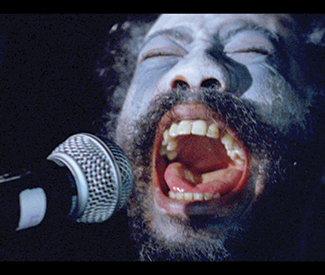
It’s useful advice, especially when Spell shifts settings. Lowe’s quiet observer is now a man roaming solo through the Finnish woods; the camera gazes into the landscape from afar as he climbs up and down trails, up and down through the frame. Occasionally, he stops by a small house, seemingly abandoned but still containing certain odd objects (needlepoint pictures, stacks of tabloids, floral curtains). Nature fascinates the camera — including, yes, multiple long shots of lichens — but so does Lowe, specifically his eyes, which are held in close-up after he’s shown dabbing white makeup on his face. Suddenly, we see the house engulfed in flames, there’s a cut to black, and then we hear the exact right music to show after an inferno: black metal, that most deliberately lo-fi and ear-shredding of heavy musical subgenres.

For metal fans, this sequence could prove the most controversial — there aren’t any Scandinavians in the mix, and one of the dudes is from Liturgy. (Like, do they even burn churches in Brooklyn, man?) But even music snobs will have a hard time resisting Spell‘s spell, or giving kudos for the film’s title treatment — a slightly more readable interpretation of the spidery font favored by extreme musicians, encasing words that echo the film’s surprisingly optimistic undercurrent.

Co-director Rivers appears in person at the film’s Fri/4 screening; Sat/5, he’ll give an artist’s talk, moderated by SF Cinematheque’s Steve Polta, at the Kadist Art Foundation, where the film will be exhibited as a “three-part spatialized architectural video installation.”

The rest of Crossroads is given over to shorts programs, assembled with characteristic creativity (Program 3 “is focused on abstract animation-graphic cinema, environmentalism, and crack pot exploration,” according to Polta), with co-producing credits given to Cinema Arts at the Exploratorium and the San Francisco Dance Film Festival on selected nights. There will also be a “live cinema” program (with live experimental music), and works by notable locals, including recent Guardian GOLDIE award winners Malic Amalya and Paul Clipson. *

CROSSROADS 2014

Thu/3-Sun/6, $5-10

Victoria Theatre

2961 16th St, SF

Kadist Art Foundation

3295 20th St, SF

www.sfcinematheque.org

Peep peep

0

marke@sfbg.com

SUPER EGO Three signs that our nightlife spring has sprung, sure as the annual return of the swallows to Blow Buddies: the Sunset season opener party, Hard French’s outdoor re-emergence, and the star-studly LGBT Center gala Soiree.

Our queer old-school soul treasure Hard French (Sat/5, 2pm-8pm, $8. El Rio, 3158 Mission, SF. www.elriosf.com) will pack El Rio’s patio every first Saturday here on out with the joyous sounds of frugging and jiving. Later, all the drag, queer, and club luminaries will brighten up Soiree (Sat/5, 6:30pm-midnight, $95. City View, 135 Fourth St, SF. sflgbtcenter.eventbrite.com) — the proceeds go for job and economic skills training for LGBT youth, many of them homeless. This year’s theme is “A jazz tribute to the Beat generation,” so don’t forget your beret and bongos. Performances galore.

Sunset (Sun/6, 11am-7pm, $5–$120. Stafford Lake Park, Novato, www.tinyurl.com/sunsetopener2014) is one of our most storied party crews — this is its 20th anniversary. And the huge, yearly season opener blast is like one big, very big, family picnic. There are rave babies, and their own rave babies! And thousands of smiles. And of course special surprise guests and a raging afterparty back in the city. Bring your picnic basket.

PS My column went to press just as I was hearing the sad news of DJ Frankie Knuckles’ passing. Here’s a list of parties this weekend that will be truly great tributes to his spirit and legacy.


ANTHONY PARASOLE

Good ol’ four-on-the-floor house, with a bit of ethereal heft behind it, from this prominent, hunky New York DJ. With the UK’s Leon Vynehall, whose glorious “Step or Stone (Breath or Bone)” was one of the best tracks of last year.

Fri/4, 10pm-3am, $10–$15. Public Works, 161 Erie, SF. www.publicsf.com


DICK SLAP

High and dirty times at the Eagle whenever this fantastic party from Seattle comes to town courtesy of force of nature DJ Nark. Get into it with DJs Chip Mint and Guy Ruben, towering drag hosteses Jem Jehova and VivvyAnne ForeverMore, “camera in her wig” videographer Drewnicorn, and a dance floor packed with hot scruffs.

Sat/5, 9pm, $7. The Eagle,  398 12th St, SF. dickslaplyfe.tumblr.com


VIN SOL

One of our own, coming up fast with his Sooo Wavey label and housey Sade edits. He’s at one of our sweetest (and least expensive!) parties, Push the Feeling, with local player Cherushii, whose excellent recent Queen of Cups EP can get anyone moving.

Sat/5, 9pm, free before 10pm with RSVP online, $6. Underground SF, 424 Haight, SF. www.do415.com/pushthefeeling


MARTIN BUTTRICH

Caught this hugely popular German (now based in LA) cat a couple times in the past few years, and he really delivers on that deliciously deep, if now a bit retro, post-minimal Berlin-Ibiza sound. It’s all in his perfect control. With beloved Doc Martin and Francesa Lombardo.

Sat/5, 10pm-4am, $17–$25. Public Works, 161 Erie, SF. www.publicsf.com


TRIBUTE TO JOSH EZELLE

One of SF’s foundational house DJs, Josh Ezelle, passed away last month suddenly in Thailand, leaving behind a newborn son and oceans of friends. This tribute fundraiser brings together many of our best players to celebrate his life in music and dance: Jeno, Garth, Markie, Charlotte the Baroness, Toph One, M3, and others.

Sat/5, 9pm-4am, $15–$20. Monarch, 101 Sixth St., SF. www.monarchsf.com


SERGE GAINSBOURG DANCE PARTY

Oui, oui, the fab enfants terribles of Bardot A Go Go are back — with a shagadelic shindig featuring the naughty, existentialist, oh-so-cool tunes of Serge and other mod icons of his ilk. Zip up your thigh high boots and get le groovy.

Sat/5, 9pm, $10, all ages. Rickshaw Stop, 155 Fell, SF. www.rickshawstop.com


WORLDLY

The Worldly parties have brought a, well, worldly electronic music flavor to the SF scene for more than a decade — this live extravaganza and CD release party will electrify anyone into cutting edge global grooves. With Dub Kirtan Allstars, Janaka Selekta, DJ Dragonfly, and tons more.

Sat/5, 9pm-3am, $15. F8, 1192 Folsom, SF. www.tinyurl.com/worldlysf2014


TRENTEMOLLER

Moody Danish techno: it’s catchier than you think. Andres Trentemoller crossed over from the dance floor long ago, pairing with an array of vocalists to create a lilting indie atmosphere with electronic movement around the edges. And he actually makes it work.

Sun/6, 8:30pm, $25. Mezzanine, 444 Jessie, SF. www.mezzaninesf.com


Bloodshed in Bernal Heights

34

rebecca@sfbg.com

On Friday morning, March 21, the day that Alejandro Nieto was shot and killed by San Francisco Police Department officers, he went to the gym with his friend Byron Pedroza. It was something they did often, Pedroza said; the two of them had signed up for gym memberships together. “He’d be like, ‘B, get up. Let’s go work out.'”

Nieto and Pedroza had met at El Toro nightclub, where Nieto worked as a security guard for nearly two years. The club, which attracts Latino clientele and hosts live performances on Mondays, has tight security: There are several guards equipped with Tasers.

“He was the type of person who’d help me a lot,” Pedroza said. “Thanks to him, I went to college,” enrolling at City College of San Francisco.

Nieto was a semester away from completing his degree in administration of justice. He was studying on scholarship, in pursuit of his goal to become a youth probation officer. Nieto drove a ’95 Chevy Caprice — an old police car, Pedroza said — and they fixed it up together.

Ramiro Del Rio, Nieto’s co-worker at El Toro, described him as punctual and considerate. He’d seen Nieto in stressful situations before, when dealing with drunk and rowdy bar patrons. “He was very calm,” Del Rio said of Nieto. “He would always want to talk to the person without using aggressive force.”

Nieto favored juice and soda instead of alcohol, he said, but after he started working out, “it was straight water.” Also, “He was Buddhist.”


HIS WORK TASER

Nieto had been scheduled to work that night, March 21. Instead, he was killed in Bernal Heights Park from multiple gunshot wounds inflicted by rounds fired by at least four officers. It’s unknown exactly how many bullet wounds Nieto sustained; friends said they believed at least 14 rounds had been fired.

As of March 31, the San Francisco Medical Examiner still had not released autopsy results. The officers involved had been placed on paid leave. Nieto’s community remained stunned by his sudden death, staging a march through the Mission the following weekend to protest what they viewed as an unjust use of deadly force.

According to a transcript from a 911 call placed minutes before the shooting, which Police Chief Greg Suhr read aloud during a March 25 public meeting at Leonard Flynn Elementary School held to discuss the incident, officers opened fire within three and a half minutes of arriving at Bernal Heights Park.

Police were responding to calls reporting a man “with a gun on his hip. A black handgun,” according to the call record, which Suhr read aloud. Police did not reveal the identity of the caller, but noted that the caller was not a police officer.

A neighbor who declined to be named told the Bay Guardian that shortly before the shooting, two men walking down the pedestrian pathway on the park’s north slope alerted a jogger of a man ahead with a gun on his hip. The jogger, who came within 50 feet of the man, reported noticing that he was “pacing back and forth” and “air boxing.”

The person who phoned 911 also initially reported seeing a man pacing back and forth. But minutes later, the anonymous caller reported to 911 dispatchers, “He is eating chips … but resting his hand on the gun.”

In reality, there was no gun — it was Nieto’s Taser, carried in a holster. Friends who spoke at a March 24 vigil said they believed Nieto had headed up there to eat a burrito while looking out at the city from the top of the hill, a place he often went to clear his head.

A sergeant from the Ingleside station and other police officers arrived at the scene minutes after receiving reports of a man with a gun, Suhr said at the public meeting. Police faced Nieto from a distance of about 75 feet, up a hill.

“When the officers asked him to show his hands, he drew the Taser from the holster,” Suhr said. Nieto then told police to show their hands, and pointed the Taser at the officers, Suhr told a large crowd in attendance. Due to the distance, the chief said, the officers did not see the yellow markings that would have alerted them that it was a Taser and not a gun.

“These particular Tasers, as soon as they’re drawn, they emit a dot, a red dot,” Suhr said. “When the officers saw the laser sight on them, tracking, they believed it to be a firearm, and they fired at Mr. Nieto.” Believing he had a gun, Suhr said, police “fired in defense of their own lives.” In a later interview, he confirmed that officers would not have used lethal force had they known Nieto possessed a Taser instead of a firearm.

Both Pedroza and Del Rio said Nieto had shown them his new Taser, and said it emits a red dot only when one pushes a button to turn it on. According to a Taser operating manual, the stun gun has a range of 15 feet.

Asked how many 911 calls were placed, Suhr said he did not have that information. When the Bay Guardian contacted the Department of Emergency Management to request audio from 911 calls, it was denied on the grounds that “it is part of an ongoing criminal investigation.”


COMMUNITY OUTRAGE

For several hours following Suhr’s explanation, friends and community members took turns at the microphone to vent outrage, frustration, and sadness over Nieto’s death. Many referenced an overarching trend of police violence directed against black and Latino youth.

Some voiced skepticism of the police account. Benjamin Bac Sierra — an English instructor at City College and friend of Nieto’s, who had once driven down Mission Street with him during a low rider parade, shouting “si se puede!” to cheering onlookers — told the Guardian, “In my heart, I do not believe that he pointed his Taser at the officers.”

At the gym, on the morning of the day Nieto died, Pedroza said, “I could tell he had a lot on his mind.” Nieto had told him it had to do with a woman he’d been seeing, a mother of three. “He was in love with her,” Pedroza said.

Yet Nieto’s relationship with Yajaira Barrera Estrada had created a conflict between him and Arthur Vega, Barrera Estrada’s three children’s father, whom Nieto had once been friends with. Public records list Vega as Barrera Estrada’s husband, and show the two living at separate addresses. It had culminated in a physical confrontation outside Barrera’s home several weeks earlier, during which Nieto allegedly stunned Vega with his Taser. Vega’s account, as described in a court filing requesting a temporary restraining order, suggests this was unprovoked; Pedroza said Nieto had believed Vega was going to harm him and might have a gun. Vega could not be reached for comment.

After that incident, Pedroza described Nieto as seeming worried and easily distracted. Pedroza believed that in the weeks leading up to the shooting, the conflict had caused Nieto to fear for his life.

Court records show that Barrera Estrada had also filed a request for a temporary restraining order against Nieto stemming from that incident, which was partially granted pending an April 11 hearing. When we reached Barrera Estrada by phone, she declined to discuss it, saying only: “Alex was an excellent person. I don’t know why the media is writing bad things about him. I don’t know why the police shot him. He was an excellent person with me.”

At the meeting, Suhr noted that Nieto was prohibited from owning a firearm due to a history of mental illness. Del Rio said he hadn’t seen evidence of this in Nieto’s behavior at the nightclub, where he spent five or six nights a week. “He never seemed crazy or mentally ill when he was working.” According to state records, Nieto obtained registration to work as a guard/patrolperson in June of 2007, which required completion of a 40-hour course.

As the crowd listened at the town hall meeting, Nieto’s father, Refugio, told Sup. David Campos that police had arrived at his home in the afternoon the day after the shooting, then questioned him about his son prior to revealing that he had been killed. Then police confiscated his car, Refugio Nieto told Campos, saying it was needed for an investigation. Then, according to Pedroza, police also went to Barrera Estrada’s residence, notified her of his death, and searched the premises.

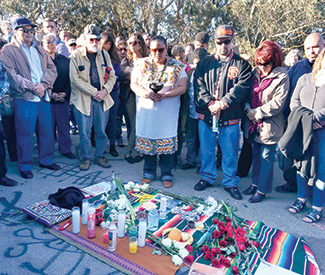
Just before sunset on March 24, about 150 friends and community supporters gathered for a vigil in memory of Nieto. They lit candles, sang, burned incense, and conducted Buddhist chants in honor of his spiritual practice.

Sup. John Avalos said he’d known Nieto through Coleman Advocates for Children & Youth. “What we saw in Alejandro was that he had a really big heart,” Avalos said. He added, “Blood’s been shed, in this case, by people we’re supposed to trust. But … we have a lot of difficulty trusting our police, because from time to time, these things happen.”

Massage therapists hope for a happy ending

3

The California Massage Therapy Council, a statewide body that licenses massage practitioners, may expire at the end of this year unless extended by the California Legislature. Some anti-prostitution crusaders say reverting to local control will make it easier to shut down covert brothels, but the practitioners fear a return to the bad old days, when stigmas and stereotypes overcomplicated their lives.

On one side of the debate are the massage therapists, who say that the council protects them from unfair discrimination, replaces a patchwork of local ordinances, and provides a greater level of respectability to their profession. However, an array of city officials, police departments, and powerful groups such as the League of California Cities argue that the CAMTC makes it easier for illicit massage parlors to get away with prostitution and human trafficking.

“I receive complaints from neighbors all the time about certain establishments,” said Sup. Katy Tang about her supervisorial district in San Francisco’s Sunset District. “We can inspect, but we have no ability to enforce any of our regulations. If there are any penalties, we can’t enforce them.”

Tang’s frustration stems from Senate Bill 731, legislation that was signed into law in 2008. That bill created the CAMTC, a nonprofit organization that has the authority to certify massage practitioners and therapists in California. Prior to the creation of this body, each city and county enacted its own certification procedures, leading to a messy patchwork of rules all over the state.

Before the CAMTC, “there were 550 different kinds of regulations from city to city,” said Ahmos Netanel, CEO of the organization. “Within a radius of one mile, you can have a situation where different cities have their own standards. One city may require no training, and another right next door may require 1,000 hours.”

A massage provider working in California pre-2009 not only had to be savvy with the medley of laws, but also needed to purchase expensive licenses for each city he or she planned to practice in. The CAMTC creates a universal—though voluntary—system, where licensed practitioners can travel and work freely around the state.

The contentious part of the law comes from the protection that it offers to licensed practitioners. Any establishment that employs all CAMTC-certified massage providers is exempt from city ordinances that target massage businesses. Law enforcement agencies claim that these restrictions impede their ability to crack down on illegal parlors, but the massage therapists say that they are necessary to fight off discriminatory laws.

Some of these unfair regulations targeted entire establishments, such as zoning rules that forced all massage businesses into run-down or dangerous parts of town, with the assumption that they were brothels. Massage providers argued that this was neither fair nor safe for, say, a 75-year-old woman seeking out massage for arthritis, or a soon-to-be mom trying to obtain a pre-natal massage.

Other laws targeted the therapists themselves. Stacey DeGooyer, a certified massage therapist in the Bay Area, remembers times when practicing massage meant mandatory STD testing and reminders from police to not wear undergarments as exterior clothing.

“I remember thinking, ‘Wow, this is for my profession?'” DeGooyer said, decrying being subjected to “archaic prostitution laws.” Most massage providers aren’t looking to be on par with physicians, but they also don’t want to be on par with prostitutes.

Currently, San Francisco has its own certification program that is regulated by the Department of Public Health. To practice massage in the city, the provider must have a license from either the city or the CAMTC. However, only those who have the state CAMTC license can legally call themselves a “licensed massage” therapist or practitioner.

Tang has been one of the most outspoken critics of the CAMTC in San Francisco, urging the Legislature to let the body sunset at the end of the year.

“I wouldn’t say that I’m against [the CAMTC], but there are structural flaws in how it was designed,” Tang said. “It was created for good reasons, since there were so many jurisdictions and they wanted to standardize it and create a cohesive process. But there are jurisdictions like San Francisco where we have our own robust process.”

The number of massage establishments have surged since the adoption of the CAMTC, which critics use as evidence for a growing number of illicit parlors. But Netanel said his group’s worked to prevent prostitutes from getting licensed in the first place. Out of over 63,000 applicants, Netanel said, the group has never certified a single person who has been convicted of illicit activities. It also utilizes an online complaint form to report questionable behavior, and respond to all complaints within 24 hours.

“Even with those who criticize [the CAMTC], we share the same goals,” Netanel said. “We want a safe, healthy, and reliable certification process, so consumers can trust their therapists. Even more, we want to put an end to illegal massage parlors so they are no longer categorized with honest providers.” (Brian McMahon)

HOT MAIL

Last week’s Bay Guardian featured a cover story on homelessness in San Francisco (“San Francisco’s untouchables”), including communications between local residents and the city’s Homeless Outreach Team, which we obtained in a public records request. So we thought we’d share a few message from the more than 100 we received.

“I don’t know where to begin,” one resident wrote. “I feel between mad, disgusted, and frustrated. This homeless encampment keeps growing. … The city has put up wire fencing only to be cut through by the homeless. … It is within 100 yards of my $1.2M condo.”

Another said: “Something is deeply wrong with San Francisco policy. Cultivating the Bohemian San Francisco style is nice but … it is as if we were in a deteriorated undeveloped country. We live in downtown San Francisco, not in the favelas, which is what it feels like.”

Still another complainant wrote: “Bags distributors are installed in the parks in order to help dog lovers clean up after their dogs, which is completely normal, but nothing is done for all the human beings who stroll, do drugs, eat, sleep, urinate, defecate and so on, on the sidewalks.”

Sometimes these complaints result in HOT visits to homeless encampments. But the emails suggest that while the HOT does approach homeless folks to try and persuade them to access services or go to a shelter, the service workers don’t always have full services to direct them to if the homeless individuals agree to do so.

Psychiatric social worker Jason Albertson, who is part of the HOT, explained this dilemma in an email sent in mid-January. His email noted that the HOT had encountered some homeless people in the vicinity of Harriet Alley and Manolo Draves Park, in response to a neighbor’s urging.

They’re “primarily in transit, meaning that they camp in different places each night and are not regulars,” he explained. “So far, nobody has wanted to enter into shelter or discuss other access to treatment or services.” But even if they had, he said, there wouldn’t be too many options for moving forward with recovery.

“At this time, our case management support is limited with identified clients waiting,” he wrote. “So capacity for full service is limited.” (Rebecca Bowe)

WHITHER GOOGLE BUSES

As the Board of Supervisors prepared for an April 1 hearing to consider an environmental appeal of the San Francisco Municipal Transportation Agency’s program for regulating Google buses and other private shuttles to the Silicon Valley, which charges them one dollar per stop, both sides marshaled their troops.

The pro-business Bay Area Council released a poll of San Franciscans claiming that most of us love tech, we’re totally cool with the Google buses, and we care more about job creation than the cost of living. The group wrote: “Despite what it may look like from recent media coverage, a majority of voters have a positive opinion of the shuttle buses and support allowing buses to use Muni stops.”

SF.citi, an alliance of San Francisco tech companies, touted the poll as it sent out an email blast that reads like a call to arms: “Divisive shuttle opponents are now suing the City to challenge this pilot program before it has the chance to get off the ground. We need YOU to tell the Board of Supervisors in person that you want them reject this lawsuit and let the pilot program go forward.”

Progressive activists countered in a similar tone: “Please join us to support the appeal and to tell the city to hold Big Tech accountable for the actual impact they have on our communities and neighborhoods.”

The hearing was scheduled after Guardian press time, so check www.sfbg.com/politics to find out what happened. (Joe Fitzgerald Rodriguez)

Alerts: April 2 – 8, 2014

0

WEDNESDAY 2


Anti-eviction march

24th and Mission BART Station, SF. evictionfreesf.org. 11:30am, free. Eviction Free San Francisco will lead “a spirited lunchtime march and picket” to the Mission offices of Vanguard Properties, in response to an Ellis Act eviction that has been filed against longtime tenant Benito Santiago, a Duboce Triangle resident who was born and raised in San Francisco.

THURSDAY 3


Public meeting on tech shuttle plan

City Hall, 1 Dr Carlton B Goodlett, SF. 3pm, free. The San Francisco Board of Supervisors will vote on a controversial pilot program that will allow private shuttles, such as Google buses, to use Muni bus stops for a fee of $1 per stop per day. The program, approved by the San Francisco Metropolitan Transportation Agency in January, has been appealed on the grounds that it should undergo a full environmental review under the California Environmental Quality Act. The Board will vote on whether the appeal should move forward.


FRIDAY 4


IMPACT

Laney College, 900 Fallon, Oakl. www.destinyarts.org. 7:30pm, $20. This is the opening night of IMPACT, a full-length work featuring a cast of 42 talented youth ages 9 to 18 performing a combination of hip-hop, modern and aerial dance, theater, spoken word, rap and song. This group has chosen to take a stand around issues that have powerful impact on themselves, their communities and their world: Environmental destruction, unhealthy food and water, negative attitudes about their bodies, and violence of all kinds.


Talk: Robots and new media

Banatao Auditorium, Sutardja Dai Hall, UC Berkeley. 2594 Hearst, Berk. robotsandnewmedia.com. 9am-5pm, free. The Center for New Media at UC Berkeley will host this daylong symposium to explore “a new range of more social, personal, expressive, nurturing, and emotional robotic platforms and applications.” Featuring talks by philosopher Hubert Dreyfus of UC Berkeley, Mark Pauline of Survival Research Labs, UC Berkeley robotics professor Ken Goldberg and more.


SATURDAY 5


SF LGBT Center’s Annual Soiree

City View at Metreon, 135 4th St, SF. tinyurl.com/lgbtsoiree. 6:30-8pm VIP reception; party admission 8pm-midnight; $150 or $95 respectively. Come out in support of San Francisco’s Lesbian Gay Bisexual Transgender (LGBT) Community Center, which offers free services like career counseling, job fairs, social activities, mentorships, youth meals, daycare and a space for LGBT people to organize and secure equal rights. With a hosted bar, gourmet morsels, silent auction, music, dancing and live entertainment it promises to be a fancy affair.

SUNDAY 6

Ending Solitary Confinement Berkeley Fellowship of Unitarian Universalists’ Hall, 1924 Bonita, Berk. www.bfuu.org. 2pm, $5-10 suggested donation, no one turned away for lack of funds. Laura Magnani of the American Friends Service Committee will be speaking on Solitary Confinement in California prisons, and what we can do to work to abolish it or promote its more limited use. She will be joined by Marie Levin, sister of a prisoner who has organized and participated in prisoner hunger strikes in the past few years.

Late entries: !!!, Janet Mock, DJ Shadow, Joey Negro, Kadet Kuhne, more

0

Sometimes we get word of cool things after press time, things you should totally go to. Here are some.

FRIDAY 28

>>JANET MOCK — author, trans activist, and inspiration — will appear tonight at the LGBT Center. She’s kicking off a weekend-long celebration that will culminate in SF’s first Trans Visibility Day on Monday. 

>>DJ SHADOW: The legendary SF turntablist has just been added to a killer lineup at 1015 Folsom.


SATURDAY 29

>>!!! DJs — the revered dance-punk band (and all-around cool guys) shows us what it’s got on the tables, late-night at Audio SF.

>>KADET KUHNE — fave local artist, who takes contemporary concepts like virtual reality and 3-D printing and gives them an artistic spin, will give a live sound performance to accompany her current show at Krowswork in Oakland.

>>JOEY NEGRO — Storied disco and house DJ brings 25 years of experience to Mighty, and the party will be amazing. 

https://www.youtube.com/watch?v=3MLNWhqdNn8


SUNDAY 30

>>“LIKE A PRAYER” — The wonderful San Francisco Album Project concludes its run with this Madonna album, as usual reinterpreted by crazy drag queens into an arty masterpiece. At the Stud.


Inside the Homeless Outreach Team

This week’s Bay Guardian features a cover story on homelessness in San Francisco.

For that story, we reached out to the San Francisco Department of Public Health to interview members of the city’s Homeless Outreach Team, public workers who interact directly with people who live on the city’s streets.

Access was denied. It’s not clear why DPH was unwilling to allow a press interview with members of the HOT team, but our requests did coincide with a March 19 Board of Supervisors Budget and Finance Committee hearing regarding a $1.3 million budget supplemental to expand its capacity.

The item was approved 4-1. Sup. John Avalos, who opposed it, said the city ought to come up with a more comprehensive plan to address homelessness.

As Sup. Jane Kim noted in an interview for the story, “If you’re just going to increase the HOT team, but not services, then you’re just sending people out to harass homeless people.”

Meanwhile, thanks to emails we recently obtained in response to a public records request, we now have a clearer picture of the HOT team’s day-to-day activities.

Apparently, efforts to expand the HOT team are being made in the context of city officials being contacted frequently by neighbors who complain that they are very bothered by the sight of homeless people.

A records request yielded more than 100 pages of such complaints. Some are quite dramatic.

“I don’t know where to begin,” one resident wrote. “I feel between mad, disgusted, and frustrated. This homeless encampment keeps growing. … The city has put up wire fencing only to be cut through by the homeless. … It is within 100 yards of my 1.2M condo.”

Another said: “Something is deeply wrong with San Francisco policy. Cultivating the Bohemian San Francisco style is nice but … it is as if we were in a deteriorated undeveloped country. We live in downtown San Francisco, not in the favelas, which is what it feels like …”

Still another complainant wrote: “Bags distributors are installed in the parks in order to help dog lovers clean up after their dogs, which is completely normal, but nothing is done for all the human beings who stroll, do drugs, eat, sleep, urinate, defecate and so on, on the sidewalks.”

Sometimes these complaints result in HOT team visits to homeless encampments that have been described. But the emails suggest that while the city’s HOT team does approach homeless folks to try and persuade them to access services or go to a shelter, the service workers don’t always have full services to direct them to if the homeless individuals agree to do so.

Psychiatric social worker Jason Albertson, who is part of the HOT team, explained this dilemma in an email sent in mid-January. His email noted that the HOT team had encountered some homeless people in the vicinity of Harriet Alley and Manolo Draves Park, in response to a neighbor’s urging.

They’re “primarily in transit, meaning that they camp in different places each night and are not regulars,” he explained. “So far, nobody has wanted to enter into shelter or discuss other access to treatment or services.” But even if they had, he said, there wouldn’t be too many options for moving forward with recovery.

“At this time, our case management support is limited with identified clients waiting,” he wrote. “So capacity for full service is limited.”

Aloha, partner

0

culture@sfbg.com

THE WEEKNIGHTER Weekends are for amateurs. Weeknights are for pros. That’s why each week Broke-Ass Stuart (www.brokeassstuart.com) will be exploring a different San Francisco bar, bringing you stories about the places and people who make San Francisco one of the most phenomenal cities in the world. Who wants a drink?

It was nighttime in North Beach and that series of New York Magazine articles had come out earlier in the day. You know the ones: They were saying how San Francisco was more New York than New York, and then demonstrated it by needling us on how tech was ruining our wonderful town. I was bummed.

It was like reading about the reasons they closed Tu-Lan a while back: You knew terrible things were happening, but up until then you were able to suspend your disbelief. I’d finished a vodka soda at Mr. Bing’s with a friend and then decided to see what else I could drink my way into. I imagine it’s that same sentiment that lands most people in Hawaii West (729 Vallejo, SF. 415-362-3220).

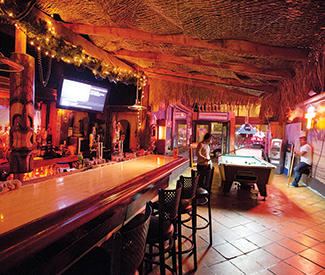
Even though I’d miraculously never been there before, this divey North Beach tiki bar felt like home as soon as I walked in. A guy was face-timing with his girlfriend while playing himself at pool, soul and funk emanated from the Music Choice channel on the TV, and a legless foosball table sat abandoned on a side table. It was my kind of rundown, my kind of weird. The bartender asked my name and then introduced me to the six or seven other patrons sitting at the bar. Their friendliness was overwhelming.

“How the fuck have I never been in here before?” I asked myself as I looked at the scores of pool trophies, tiny drink umbrellas, and the laminated poster suggesting a slew of different tropical cocktails. Hawaii West had been around for roughly 50 years, the bartender told me, but she didn’t know much about its history. I gave her my info and asked her to have the owner contact me so I could find out.

A few days later I got a text from Nolan Kellet, Hawaii West’s owner, a union roofer who’s been a building inspector on military bases throughout the US for the past decade. In our conversation he told me how his grandmother moved from Hawaii to SF in the early ’60s and opened the Aloha Café. His father, one-time president of Amalgamated Transit Union Local 1225, reopened the place in 1969 naming it Hawaii West, while his mother worked there serving longshoremen in the ’70s and ’80s and Academy of Art students in the ’90s.

“I remember as young boy in the early ’70s,” Kellet told me, “Hells’ Angels frequented the bar until the police station moved in across the street. I remember motorcycles lined up and down both sides of Vallejo Street. Wish I had some pics. They gave me rides through the Broadway tunnel and around Fisherman’s Wharf at a young age.”

Old bars are like the rings inside a tree trunk, they’re witnesses to history and become a record of it simply by existing. Hawaii West exemplifies this brilliantly. Walking in, you know great stories live there, you just have to dig a little deeper to get them.

“You guys get busy?” I asked the bartender as I was leaving. “Not really,” she told me. “You can pretty much come here with a group of friends anytime and take over the place.” I walked out of there drunk and smiling because I realized New York Magazine had missed a crucial point: We still have Hawaii West.

Stuart Schuffman aka Broke-Ass Stuart is a travel writer, poet, and TV host. You ca find his online shenanigans at BrokeAssStuart.com 

This Week’s Picks: March 26 – April 1, 2014

0

WEDNESDAY 26

Carcass

For nearly 30 years now, British metal titans Carcass have been a pioneer in the grindcore and melodic death metal genres, from their musical style and sound to lyrical content and artwork. After releasing a slew of records now considered classics, including 1993’s landmark Heartwork (Earache) the band eventually called it quits for 10 years before reforming in 2007. With original members Jeff Walker and Bill Steer still bashing out vocals, guitar, and bass, the foursome released Surgical Steel (Nuclear Blast) last year, their first new record in a decade and a half. The Black Dahlia Murder, Repulsion, Gorguts, and Noisem also appear tonight, as part of the Decibel Magazine Tour. (Sean McCourt)

6:30pm, $28.50-$30

Regency Ballroom

1300 Van Ness, SF

www.theregencyballroom.com


Linda Perhacs

In 1970, a dental hygienist living in LA’s Topanga Valley cut a record called Parallelograms. This album, Linda Perhac’s debut, went on virtually unlistened-to for the next 35 years. Dug up by diligent audiophiles, the record was passed around, becoming a cult-classic gem of hippie-era folk. One of these newfound fans was indie musician Devandra Banhart, who coaxed Perhacs into the studio with him in 2003. Seven years later, she would play her first live show…ever. Now Perhacs has been sampled by Daft Punk, covered by Opeth, and adored by many more fans than anyone could have predicted. This year, the 44-years-in-the-making follow up to Parallelograms has finally been released on Sufjan Stevens’ Asthmatic Kitty label, and Perhacs is hitting the road, finally getting the recognition her deeply resonant and ethereally beautiful songwriting deserves. (Haley Zaremba)

9pm, $20

The Chapel

777 Valencia, SF

(415) 551-5157

www.thechapelsf.com


THURSDAY 27

Sharon Jones and the Dap-Kings

Last year, just three months before the Dap-Kings’ fifth studio album was slated for release, frontwoman Sharon Jones was diagnosed with stage two pancreatic cancer. But Jones is a fighter. A former bank security guard, corrections officer, and starving artist, Jones is no delicate flower. Now, after surgery and chemo, Jones and company are back on the road to support the rip-roaring Give the People What They Want, the most unintentionally aptly titled album ever. For those who have never seen Sharon Jones and the Dap-Kings over the course of the band’s 12-year career, know this: they are inhuman. Their musicianship is impeccable, their energy unstoppable, their groove makes it impossible to stand still. And then there’s Jones. She didn’t achieve commercial success until middle age, and she dances like she’s been storing up her energy and radiance for her entire life. As she’s proven through her career and in her battle with cancer, she is a force of nature — wild, unflappable, and unbeatable. (Zaremba)

With Valerie June

8pm, $35

Fillmore

1805 Geary, SF

(415) 346-3000

www.thefillmore.com


Madonna Look-Alike Night

“Only when I’m dancing can I feel this free.” Cat Club is honoring our favorite material girl this Thursday night. While you can’t truly re-live the Reagan years without Madonna’s top hits, SoMa’s favorite cat-themed nightclub is hosting a special rendition of its weekly “Class of 1984” dance party, and this tribute goes way beyond the music. Strap on your Boy Toy belts, cone bras, and fingerless leather gloves for the Madonna Look-Alike Contest. (The $6 cover charge is waived for all those in costume before 11pm, and the contest begins at 11:30pm.) Madonna’s most iconic songs and music videos along with many other New Wave and pop one-hit wonders will be playing all night long. Gyrate the night away in your favorite queen of pop fashion, whether it’s the corseted wedding gown and lace veil of “Like A Virgin,” the Marilyn Monroe-inspired silhouette from “Express Yourself,” or the boyish bad girl look à la “Papa Don’t Preach.” Make Madge proud! (Laura B. Childs)

9pm, $6

Cat Club

1190 Folsom, SF

(415) 703-8965

www.sfcatclub.com


FRIDAY 28

Mamma Mia!

Disco is back and very much alive! One of Broadway’s most acclaimed musicals makes its way to SHN Orpheum Theatre tonight through April 6. Mamma Mia! is one of those feel-good shows for everyone, whether you’re a newcomer or a cult-following veteran. With a soundtrack by immortal Swedish pop titans ABBA, exuberant disco costumes, and slapstick comedy, the musical follows a young girl’s quest to find her father on the eve of her wedding. The audience is the winner during this 150-minute performance. Expect to sing along to chart-topping hits such as “Super Trouper,” “Take A Chance on Me,” and others — you’ll leave the show with a smile across your face and (careful) “Dancing Queen” in your head for days. (Childs)

8pm, $40-$160

SHN Orpheum Theatre

1192 Market, SF

(888) 746-1799

www.shnsf.com


Johnny Guitar, the Musical

Calling all railroad tramps! There are no other Westerns quite like Nicholas Ray’s 1954 Johnny Guitar. Starring Joan Crawford (as a brazen saloon owner), Mercedes McCambridge (as a feisty local who hates her; conveniently, the actors hated each other in real life, too), and Sterling Hayden (as the titular outlaw), Johnny Guitar also features a bank robber named “the Dancin’ Kid,” unintentionally(?) hilarious dialogue, and a helluva theme song performed by Peggy Lee. Campy and action-packed, it’s perfect fodder for a musical; first adapted in 2004, the Off-Broadway hit makes its Bay Area premiere at the Masquers Playhouse. (Cheryl Eddy)

Through April 26

Runs Fri-Sat, 8pm; Sun, 2pm (no show Sun/30), $22

Masquers Playhouse

105 Park Place, Point Richmond

www.masquers.org


Work MORE! #6

Under the guiding hand of founder and creative director Mica Sigourney, Work MORE! aims to “provide a platform for collaborative artmaking that utilizes drag to disturb traditional notions of beauty, femininity, and masculinity while promoting interdisciplinary collaborations among artists,” according to its mission statement. Its latest incarnation: drag queens paired with fine artists. The resulting non-performative works go on display at an opening that features (what else?) a drag show; future events include a “fake docent tour” with Laura Arrington and Phillip Huang, and a panel discussion on “Illegitimate Art” with co-curator Cara Rose DeFabio. (Eddy)

Exhibit runs through April 24

Opening party and performance tonight, 7pm, free

SOMArts Gallery

934 Brannan, SF

www.cargocollective.com/workmore


SATURDAY 29


Sagrada: The Mystery of Creation

“I am not a creator,” the architect Antonio Gaudi once said. “I only copy.” Purely original or not, Barcelona’s Sagrada Familia, an enormous church that blends Gothic and Art Nouveau forms that imitate the rolling hills and landscapes of the Catalan countryside, is not exactly a common sight to behold. With only eight of its 18 steeples built and an ambitious blueprint, the Sagrada Familia has been under construction for 132 years with no end in sight. Stefan Haupt’s documentary Sagrada: The Mystery of Creation explores the cathedral’s construction — delayed by Gaudi’s death and by the complexity of the building’s designs — through the voices of the artisans working on the cathedral and its historical and philosophical context. Like the construction itself, the film moves slowly, pondering the unfinished masterpiece Gaudi left behind, and delivers sublime cinematography exploring Sagrada’s unusual shapes and meditative history. Get caught up in the rapture at the Yerba Buena Center for the Arts. (Childs)

7:30pm, $10

Yerba Buena Center for the Arts

701 Mission, SF

(415) 978-2787

www.ybca.org


The Apache Relay

Since getting their start just a few short years ago, Nashville-based band The Apache Relay have come a long way — they’ve released several well-received albums, and toured with acts such as Mumford and Sons. Mixing Springsteen-esque rock with the sweet country sounds of their adopted hometown, the band’s new, self-titled album, out on So Recordings, was put to tape at Fairfax Recordings — the former location of legendary Sound City Studios. The first single from the record (which hits stores April 22), “Katie Queen of Tennessee,” takes inspiration from another icon of the recording industry, namely Phil Spector and his “Wall of Sound.” With The Lonely Wild and The Soil & The Sun. (McCourt)

9pm, $12

The Chapel

777 Valencia, SF

(415) 551-5157

www.thechapelsf.com


SUNDAY 30

Beauty and the Beast Sing-Along

Come and relive your childhood — assuming your childhood included adults in princess-themed costume contests — at the best Castro Theatre sing-along event of the year. At 23 years old, Disney’s Beauty and the Beast on a big screen is still, well, beautiful — from the rich, ahead-of-its-time animation and cinematography to Angela Lansbury’s tear-jerking rendition of the title song to non-stop, grown-up-funny quips from an ensemble cast that, for a brief moment, made us all covet furniture that came to life and gave us advice in French accents. In addition to the aforementioned costume contest, all attendees receive a goodie bag with bubbles, noisemakers, and other accessories to be used en masse at exciting points in the film. It’s tradition — and as Cogsworth always says, “If it’s not Baroque, don’t fix it.” (Emma Silvers)

2:30pm and 7pm, $16 general/$10 kids

Castro Theatre

429 Castro, SF

www.castrotheatre.com


MONDAY 31

Opening Day Viewing Party at AT&T Park

Giants fans, we can stop counting down the days, obsessing over every news nugget about Timmy’s mustache that comes out of Spring Training — the 2014 baseball season is on. Though the boys are on the road for Opening Day, the Giants organization isn’t one to miss the chance to throw a party (er, cash in on fandom), so they’re opening the ballpark to fans who want to watch the season opener, with sweetheart Madison Bumgarner pitching against the Diamondbacks, on a very big screen. Admission is free, as are hot dogs for the first 5000 orange-and-black-clad die-hards through the door. Beers, we assume, will still be roughly $40 a pop. (Silvers)

5:30pm, free

AT&T Park

24 Willie Mays Plaza, SF

www.giants.mlb.com


TUESDAY 31

Alvin Ailey American Dance Theater

One of the most encouraging things that can happen to a highly successful, well-established dance company is a willingness to change gear. When Robert Battle assumed the artistic directorship of the Alvin Ailey American Dance Theater, you immediately felt a new spirit entering the much beloved ensemble. The dancers have always been astounding; now to see them in appropriately challenging choreography is simply exhilarating. These three programs are bringing the best of Ailey, but also some of the best of this generation’s choreographers. The astoundingly inventive and also deeply spiritual Ronald K. Brown’s Four Corners is not to be missed. Yes, Revelations is still with us; but perhaps one of these years it can be retired for a while, and Ailey will still be Ailey. (Rita Felciano)

April 1-5, 8pm,

also April 5, 2pm, April 6, 3pm

$30-92

Cal Performances

Zellerbach Hall

Berkeley

(510) 642-9988

www.calperformances.org


The Guardian listings deadline is two weeks prior to our Wednesday publication date. To submit an item for consideration, please include the title of the event, a brief description of the event, date and time, venue name, street address (listing cross streets only isn’t sufficient), city, telephone number readers can call for more information, telephone number for media, and admission costs. Send information to Listings, the Guardian, 225 Bush, 17th Flr., SF, CA 94105; or email (paste press release into email body — no attachments, please) to listings@sfbg,com. Digital photos may be submitted in jpeg format; the image must be at least 240 dpi and four inches by six inches in size. We regret we cannot accept listings over the phone.

Rep Clock: March 26 – April 1, 2014

0

Schedules are for Wed/26-Tue/1 except where noted. Director and year are given when available. Double and triple features marked with a •. All times pm unless otherwise specified.

ARTISTS’ TELEVISION ACCESS 992 Valencia, SF; www.atasite.org. $7-12. “Gaze #7: Generation Loss,” independent films and videos made by women, Thu, 8. Other Cinema: “Christian Divine’s Imperial 80s Cinema,” Sat, 8:30.

BALBOA THEATRE 3630 Balboa, SF; cinemasf.com/balboa. $10. “Popcorn Palace:” The Wizard of Oz (Fleming, 1939), Sat, 10am. Matinee for kids.

BERKELEY FELLOWSHIP OF UNITARIAN UNIVERSALISTS 1924 Bonita, Berk; www.bfuu.org. $5-10. •International Inquiry into 9/11, and 9/11 Into the Academic Community, Thu, 7. With filmmaker Ken Jenkins and Peter Phillips of Project Censored.

CASTRO 429 Castro, SF; (415) 621-6120, www.castrotheatre.com. $8.50-11. “Philip Seymour Hoffman (1967-2014):” •Synedoche, New York (Kaufman, 2008), Wed, 7, and Punch-Drunk Love (Anderson, 2002), Wed, 9:15; •Jack Goes Boating (Hoffman, 2010), Thu, 6, and Magnolia (Anderson, 1999), Thu, 8; “Midnites for Maniacs:” •Happiness (Solondz, 1998), Fri, 7:20, and 25th Hour (Lee, 2002), Fri, 9:45. “Drag Queens of Comedy,” with Coco Peru, Sasha Soprano, Lady Bunny, Shangela, Pandora Boxx, Bianca Del Rio, and DWV, Sat, 7 and 10. Hosted by Heklina and Peaches Christ. Advance tickets ($35-100) at thedragqueensofcomedy.eventbrite.com. Beauty and the Beast (Trousdale and Wise, 1991), presented sing-along style, March 30-April 6, 7 (also Sun/30 and April 6, 2:30; no show April 5).

CHRISTOPHER B. SMITH RAFAEL FILM CENTER 1118 Fourth St, San Rafael; (415) 454-1222, www.cafilm.org. $6.50-$10.75. times. Le Week-End (Michell, 2013), Wed-Thu, call for times. Nymphomaniac: Volume I (von Trier, 2013), March 28-April 3, call for times. “Science On Screen:” Journey of the Universe (Kennard and Northcutt, 2011), Mon, 7.

CLAY 2261 Fillmore, SF; www.landmarktheatres.com. $10. “Midnight Movies:” The Rocky Horror Picture Show (Sharman, 1975), Sat, midnight. with the Bawdy Caste performing live.

HUMANIST HALL 390 27th St, Oakl; www.humanisthall.org. $5. Human Resources Part II (Noble), Wed, 6:30.

JEWISH COMMUNITY CENTER OF SF Kanbar Hall, 3200 California, SF; jccsf.org/arts. $25. “Jewish Cult Classics Marathon:” •The Plot Against Harry (Roemer, 1969); The Mad Adventures of Rabbi Jacob (Oury, 1973); and The Troupe (Nesher, 1978), Sun, noon.

MECHANICS’ INSTITUTE 57 Post, SF; milibrary.org/events. $10. “CinemaLit Film Series: Mystique of the City: Films Shot in San Francisco:” Tucker: The Man and His Dream (Coppola, 1988), Fri, 6.

PACIFIC FILM ARCHIVE 2575 Bancroft, Berk; (510) 642-5249, bampfa.berkeley.edu. $5.50-9.50. “Jokers Wild: American Comedy, 1960-1989:” “Everything You Always Wanted to Know About Sex:* but Were Afraid to Ask (Allen, 1972), Fri, 7; Young Frankenstein (Brooks, 1974), Fri, 8:50. “The Brilliance of Satyajit Ray:” Days and Nights in the Forest (1970), Sat, 6:30; The Adversary (1970), Sun, 5:15. “Jean-Luc Godard: Expect Everything from Cinema:” Two or Three Things I Know About Her (1966), Sat, 8:45. “Afterimage: Ross McElwee and the Cambridge Turn:” Backyard (McElwee, 1984), plus other biographical shorts, Sun, 2:30; Photographic Memory (McElwee, 2011), Tue, 7.

ROXIE 3117 and 3125 16th St, SF; (415) 863-1087, www.roxie.com. $6.50-11. “I Wake Up Dreaming” benefit: The Argyle Secrets (Endfield, 1948), Wed, 7, and D.O.A. (Maté, 1950), Wed, 9:30. This event, $25; benefits the upcoming noir film series (May 16-25) at the Roxie. “Frameline Encore:” Intersexion (Lahood, 2012), Thu, 7. Free screening. Cheap Thrills (Katz, 2014), March 28-April 3, 7, 9 (also Sat-Sun, 5). Mistaken for Strangers (Berninger, 2013), March 28-April 3, 7, 8:45 (also Sat-Sun, 3:30, 5). “Czech That Film: A Festival of Current Czech Cinema:” Honeymoon (Hrebejk, 2013), Sun, 4; Don Juans (Menzel, 2013), Mon, 7; Colette (Cieslar, 2013), Tue, 7; Lousy Bastards (Kašparovský, 2013), April 2, 7.

YERBA BUENA CENTER FOR THE ARTS 701 Mission, SF; www.ybca.org. $8-10. “Design and Architecture Films Showcase:” •Tadao Ando: From Emptiness to Infinity (Frick, 2013), and The Successor of Kakiemon (Raes, 2012), Thu, 7:30; Sagrada: The Mystery of Creation (Haupt, 2013), Sat, 7:30, and Sun, 2. *


Theater Listings: March 26 – April 1, 2014

0

Stage listings are compiled by Guardian staff. Performance times may change; call venues to confirm. Reviewers are Robert Avila, Rita Felciano, and Nicole Gluckstern. Submit items for the listings at listings@sfbg.com.

THEATER

OPENING

Every Five Minutes Magic Theatre, Fort Mason Center, Marina at Laguna, SF; www.magictheatre.org. $20-60. Previews Wed/26-Sat/29 and April 2, 8pm; Sun/30, 2:30pm; Tue/1, 7pm. Opens April 3, 8pm. Runs Tue, 7pm; Fri-Sat, 8pm (also April 9, 2:30pm); Sun, 2:30pm (also April 6, 7pm). Through April 20. Magic Theatre presents the world premiere of Linda McLean’s drama about a man’s homecoming after years behind bars.

The Habit of Art Z Below Theatre, 470 Florida, SF; www.therhino.org. $15-25. Previews Thu/27-Fri/28, 8pm. Opens Sat/29, 8pm. Runs Wed-Sat, 8pm; Sun, 3pm. Through April 13. Theatre Rhinoceros performs a “very British comedy” by History Boys author Alan Bennett.

I Never Lie: The Pinocchio Project Phoenix Theatre, 414 Mason, SF; www.99stockproductions.org. $15. Previews Fri/28, 8pm. Opens Sat/29, 8pm. Runs Fri-Sat and April 10, 8pm; Sun, 5pm. Through April 12. 99 Stock Productions performs Meredith Eden’s bold fairytale retelling.

“Standing On Ceremony: The Gay Marriage Plays” New Conservatory Theatre Center, 25 Van Ness, SF; www.nctcsf.org. $25-45. Previews Wed/26-Fri/28, 8pm. Opens Sat/29, 8pm. Runs Wed-Sat, 8pm; Sun, 2pm. Through April 27. New Conservatory Theatre Center performs short plays about marriage equality by Mo Gaffney, Neil LaBute, Wendy MacLeod, Paul Rudnick, and others.

BAY AREA

East 14th Marsh Berkeley, 2120 Allston, Berk; www.themarsh.org. $20-50. Opens Fri/21, 8pm. Runs Fri, 8pm; Sat, 8:30pm. Through April 26. Don Reed’s hit autobiographical solo show returns to the Marsh Berkeley.

Johnny Guitar, the Musical Masquers Playhouse, 105 Park Place, Point Richmond; www.masquers.org. $22. Opens Fri/28, 8pm. Runs Fri-Sat, 8pm; Sun, 2pm (no show Sun/30). Through April 26. Masquers Playhouse performs the off-Broadway hit based on the campy Joan Crawford Western.

Sleuth Center REPertory Company, 1601 Civic, Walnut Creek; www.centerrep.org. $33-54. Previews Fri/28-Sat/29, 8pm; Sun/30, 2:30pm. Opens Tue/1, 7:30pm. Runs Wed, 7:30pm; Thu-Sat, 8pm (also April 26, 2:30pm); Sun, 2:30pm. Through April 26. Center REPertory Company performs Anthony Shaffer’s classic, Tony-winning thriller.

Vampire Lesbians of Sodom and Sleeping Beauty or Coma Live Oaks Theater, 1301 Shattuck, Berk; www.viragotheatre.org. $28. Previews Fri/28, 8pm. Opens Sat/29, 8pm. Runs Thu-Sat, 8pm; Sun, 2pm. Through April 19. Virago Theatre Company performs Charles Busch’s outrageous double bill.

ONGOING

Bauer San Francisco Playhouse, 450 Post, SF; www.sfplayhouse.org. Tue-Thu, 7pm; Fri-Sat, 8pm (also Sat, 3pm); April 13, 2pm. Through April 19. San Francisco Playhouse presents the world premiere of Lauren Gunderson’s drama about artist Rudolf Bauer.

Feisty Old Jew Marsh San Francisco Main Stage, 1062 Valencia, SF; www.themarsh.org. $25-100. Sat, 8pm; Sun, 7pm (Sun/30 show at 2pm). Extended through May 4. Charlie Varon performs his latest solo show, a fictional comedy about “a 20th century man living in a 21st century city.”

Foodies! The Musical Shelton Theater, 533 Sutter, SF; www.foodiesthemusical.com. $32-34. Fri-Sat, 8pm. Open-ended. AWAT Productions presents Morris Bobrow’s musical comedy revue all about food.

Hundred Days Z Space, 450 Florida, SF; www.zspace.org. $10-100. Wed and Sun, 7pm; Thu-Sat, 8pm. Through April 6. Married musical duo the Bengsons (Abigail and Shaun) provide the real-life inspiration and guiding rock ‘n’ roll heart for this uneven but at times genuinely rousing indie musical drama, a self-referential meta-theater piece relating the story of a young couple in 1940s America who fall madly in love only to discover one of them is terminally ill. As an exploration of love, mortality, and the nature of time, the story of Sarah and Will (doubled by the Bengsons and, in movement sequences and more dramatically detailed scenes, by chorus members Amy Lizardo and Reggie D. White) draws force from the potent musical performances and songwriting of composer-creators Abigail and Shaun Bengson (augmented here by the appealing acting-singing chorus and backup band that also feature El Beh, Melissa Kaitlyn Carter, Geneva Harrison, Kate Kilbane, Jo Lampert, Delane Mason, Joshua Pollock). Playwright Kate E. Ryan’s book, however, proves too straightforward, implausible, and sentimental to feel like an adequate vessel for the music’s exuberant, urgent emotion and lilting, longing introspection. Other trappings of director Anne Kauffman’s elaborate production (including an inspired set design by Kris Stone that echoes the raw industrial shell of the theater; and less-than-inspired choreography by the otherwise endlessly inventive Joe Goode) can add texture at times but also prove either neutral figures or distracting minuses in conveying what truth and heft there is in the material. Ultimately, this still evolving world premiere has a strong musical beat at its core, which has a palpable force of its own, even if it’s yet to settle into the right combination of story and staging. (Avila)

Lottie’s Ghosts Brava Theater Center, 2781 24th St, SF; www.brava.org. $20. Thu-Sat, 8pm (no show Fri/28); Sun, 3pm. Through April 6. Dancer, storyteller, and Brava artist-in-residence Shakiri presents a new work based on her novel of the same name.

Lovebirds Marsh San Francisco Studio, 1062 Valencia, SF; www.themarsh.org. $15-50. Thu-Fri, 8pm; Sat, 8:30pm. Extended through April 12. Theater artist and comedian Marga Gomez presents the world premiere of her 10th solo show, described as “a rollicking tale of incurable romantics.”

Mommy Queerest Exit Studio, 156 Eddy, SF; www.divafest.info. $15-25. Fri/28-Sat/29, 8pm. Sex scenes in solo shows might sound a little onanistic, but in the right circumstances a door jam or a love seat can serve as a fine co-star. Stand-up comic and actor Kat Evasco demonstrates as much in this raunchy and high-spirited story of her sexual awakening as a lesbian-identifying bisexual, coming out in a household dominated by her closeted mother, a Filipina American drama queen with a long-term female companion she insists is the “gay” one. Presented by Guerrilla Rep and the Exit Theatre’s DIVAfest, and directed by Guerrilla Rep’s John Caldon (who co-wrote the play with Evasco), the story follows a familiar and predictable arc in some ways — familial hypocrisy giving way to inspirational cross-generational understanding — and the characterizations and set-ups (including a family feud on Jerry Springer) come with not always inspired choices. Moreover not all the jokes land where they should in a performance that starts as stand-up but immediately shifts into the style of a solo-play confessional. (A more thoroughgoing subversion of the stand-up format might have produced more complex, less foreseeable results.) At the same time, there’s no denying Evasco’s charm and energy, or her buoyant comedic talent, which makes it easier to forgive the play’s structural shortcomings. (Avila)

Pearls Over Shanghai Hypnodrome Theatre, 575 10th St, SF; www.thrillpeddlers.com. $30-35. Thu-Sat, 8pm. Through May 31. Thrillpeddlers present the fifth anniversary revival production of its enormously popular take on the 1971 Cockettes musical.

“Risk Is This … The Cutting Ball New Experimental Plays Festival” Exit on Taylor, 277 Taylor, SF; www.cuttingball.com. Free ($20 donation for reserved seating). Fri/28-Sat/29, 8pm. Five new works in staged readings, including two from Cutting Ball resident playwright Andrew Saito.

The Scion Marsh San Francisco, 1062 Valencia, SF; www.themarsh.org. $15-60. Thu-Fri, 8pm; Sat, 5pm. Through April 18. In his latest solo show, Brian Copeland (Not a Genuine Black ManThe Waiting Period) explores an infamous crime in his hometown of San Leandro: the 2000 murder of three government meat inspectors by Stuart Alexander, owner of the Santos Linguisa Factory. The story is personal history for Copeland, at least indirectly, as the successful comedian and TV host recounts growing up nearby under the common stricture that “rules are rules,” despite evidence all around that equity, fairness, and justice are in fact deeply skewed by privilege. Developed with director David Ford, the multiple-character monologue (delivered with fitful humor on a bare-bones stage with supportive sound design by David Hines) contrasts Copeland’s own youthful experiences as a target of racial profiling with the way wealthy and white neighbor Stuart Alexander, a serial bully and thug, consistently evaded punishment and even police attention along his path to becoming the “Sausage King,” a mayoral candidate, and a multiple murderer (Alexander died in 2005 at San Quentin). The story takes some meandering turns in making its points, and not all of Copeland’s characterizations are equally compelling. The subject matter is timely enough, however, though ironically it is government that seems to set itself further than ever above the law as much as wealthy individuals or the bogus “legal persons” of the corporate world. The results of such concentrated power are indeed unhealthy, and literally so — Copeland’s grandmother (one of his more persuasive characterizations) harbors a deep distrust of processed food that is nothing if not prescient — but The Scion’s tale of two San Leandrans leaves one hungry for more complexity. (Avila)

She Rode Horses Like the Stock Exchange Thick House, 1695 18th St, SF; www.crowdedfire.org. $15-35. Wed-Sat, 8pm. Through April 12. Crowded Fire kicks off its 2014 season with the world premiere of Amelia Roper’s dry comedy about financial disaster.

Shit & Champagne Rebel, 1772 Market, SF; shitandchampagne.eventbrite.com. $25. Fri-Sat, 8pm. Open-ended. D’Arcy Drollinger is Champagne White, bodacious blond innocent with a wicked left hook in this cross-dressing ’70s-style white-sploitation flick, played out live on Rebel’s intimate but action-packed barroom stage. Written by Drollinger and co-directed with Laurie Bushman (with high-flying choreography by John Paolillo, Drollinger, and Matthew Martin), this high-octane camp send-up of a favored formula comes dependably stocked with stock characters and delightfully protracted by a convoluted plot (involving, among other things, a certain street drug that’s triggered an epidemic of poopy pants) — all of it played to the hilt by an excellent cast that includes Martin as Dixie Stampede, an evil corporate dominatrix at the head of some sinister front for world domination called Mal*Wart; Alex Brown as Detective Jack Hammer, rough-hewn cop on the case and ambivalent love interest; Rotimi Agbabiaka as Sergio, gay Puerto Rican impresario and confidante; Steven Lemay as Brandy, high-end calf model and Champagne’s (much) beloved roommate; and Nancy French as Rod, Champagne’s doomed fiancé. Sprawling often literally across two buxom acts, the show maintains admirable consistency: The energy never flags and the brow stays decidedly low. (Avila)

The Speakeasy Undisclosed location (ticket buyers receive a text with directions), SF; www.thespeakeasysf.com. $70 (gambling chips, $5-10 extra; after-hours admission, $10). Thu-Sat, 7:40, 7:50, and 8pm admittance times. Extended through May 24. Boxcar Theater’s most ambitious project to date is also one of the more involved and impressively orchestrated theatrical experiences on any Bay Area stage just now. An immersive time-tripping environmental work, The Speakeasy takes place in an “undisclosed location” (in fact, a wonderfully redesigned version of the company’s Hyde Street theater complex) amid a period-specific cocktail lounge, cabaret, and gambling den inhabited by dozens of Prohibition-era characters and scenarios that unfold around an audience ultimately invited to wander around at will. At one level, this is an invitation to pure dress-up social entertainment. But there are artistic aims here too. Intentionally designed (by co-director and creator Nick A. Olivero with co-director Peter Ruocco) as a fractured super-narrative — in which audiences perceive snatches of overheard stories rather than complete arcs, and can follow those of their own choosing — there’s a way the piece becomes specifically and ever more subtly about time itself. This is most pointedly demonstrated in the opening vignettes in the cocktail lounge, where even the ticking of Joe’s Clock Shop (the “cover” storefront for the illicit 1920s den inside) can be heard underscoring conversations (deeply ironic in historical hindsight) about war, loss, and regained hope for the future. For a San Francisco currently gripped by a kind of historical double-recurrence of the roaring Twenties and dire Thirties at once, The Speakeasy is not a bad place to sit and ponder the simulacra of our elusive moment. (Avila)

Tipped & Tipsy Marsh Studio Theater, 1062 Valencia, SF; www.themarsh.org. $15-50. Sat, 5pm; Sun, 7pm. Through April 6. Last fall’s San Francisco Fringe Festival began on a high note with Jill Vice’s witty and deft solo, Tipped & Tipsy, and the Best of Fringe winner is now enjoying another round at solo theater outpost the Marsh. Without set or costume changes, Vice (who developed the piece with Dave Dennison and David Ford) brings the querulous regulars of a skid-row bar to life both vividly and with real quasi–Depression-Era charm. She’s a protean physical performer, seamlessly inhabiting the series of oddball outcasts lined up each day at Happy’s before bartender Candy — two names as loaded as the clientele. After some hilarious expert summarizing of the do’s and don’ts of bar culture, a story unfolds around a battered former boxer and his avuncular relationship with Candy, who tries to cut him off in light of his clearly deteriorating health. Her stance causes much consternation, and even fear, in his barfly associates, while provoking a dangerous showdown with the bar’s self-aggrandizing sleaze-ball owner, Rico. With a love of the underdog and strong writing and acting at its core, Tipsy breezes by, leaving a superlative buzz. (Avila)

Twisted Fairy Tales Shelton Theater, 533 Sutter, SF; www.leftcoasttheatreco.org. $15-25. Thu-Sat, 8pm. Through April 5. Left Coast Theatre Co. performs the world premiere of seven one-act LGBT-themed plays based on classic children’s stories.

The Two Chairs Bindlestiff Studios, 185 Sixth St, SF; www.performersunderstress.com. $10-30. Thu-Sat, 8pm; Sun, 2pm. Through April 13. Performers Under Stress performs Charles Pike’s new play, described as “No Exit as a love story set in Napa on the Silverado Trail.”

Venus in Fur Geary Theater, 415 Geary, SF; www.act-sf.org. $20-120. Opens Wed/26, 8pm. Runs Wed-Sat and Tue, 8pm (also Sat, 2pm; Tue/1, show at 7pm); Sun, 7pm. Through April 13. American Conservatory Theater performs a new production of David Ives’ 2012 Tony-nominated play.

The World of Paradox Garage, 715 Bryant, SF; www.paradoxmagic.com. $12-15. Mon, 8pm. Through April 7. Footloose presents David Facer in his solo show, a mix of magic and theater.

The World’s Funniest Bubble Show Marsh San Francisco, 1062 Valencia, SF; www.themarsh.org. $8-11. Sun, 11am. Extended through May 25. The popular, kid-friendly show by Louis Pearl (aka “The Amazing Bubble Man”) returns to the Marsh.

Wrestling Jerusalem Intersection for the Arts, 925 Mission, SF; www.theintersection.org. $20-30. Thu-Sat, 7:30pm; Sun, 2pm. Through April 6. Intersection for the Arts presents Aaron Davidman in his multicharacter solo performance piece about Israel and Palestine.

BAY AREA

Accidental Death of an Anarchist Berkeley Repertory Theatre, Roda Theatre, 2015 Addison, Berk; www.berkeleyrep.org. $29-99. Tue and Thu-Sat, 8pm (no show April 18; also Sat and April 17, 2pm); Sun, 2 and 7pm. Through April 20. Berkeley Rep presents comic actor Steven Epp in Dario Fo’s explosive political farce, directed by Christopher Bayes,

Arms and the Man Barn Theatre, 30 Sir Francis Drake, Ross; www.rossvalleyplayers.com. $13-26. Thu, 7:30pm; Fri-Sat, 8pm; Sun, 2pm. Through April 13. Ross Valley Players perform George Bernard Shaw’s romantic comedy.

Bread and Circuses La Val’s Subterranean, 1834 Euclid, Berk; www.impacttheatre.com. $20-25. Thu-Sat, 8pm; Sun, 7pm. Through April 6. Impact Theatre performs “a cavalcade of brutal and bloody new short plays” by various contemporary playwrights.

The Coast of Utopia Ashby Stage, 1901 Ashby, Berk; www.shotgunplayers.org. $20-35 (three-show marathon days, $100-125). Previews Wed/26-Fri/28. Opens Sat/29. Part Three: Salvage runs through April 27; Part One: Voyage runs March 26-April 17; Part Two: Shipwreck runs March 27-April 19. Three-play marathon, April 5 and 26. Through April 27. Check website for showtime info. Shotgun Players performs Tom Stoppard’s epic The Coast of Utopia trilogy, with all three plays performed in repertory.

Fool For Love Pear Avenue Theatre, 1220 Pear, Mtn View; www.thepear.org. $10-35. Thu-Sat, 8pm; Sun, 2pm. Through April 6. Pear Avenue Theatre performs Sam Shepard’s iconic play, about a pair of former lovers who reunite at a lonely desert motel.

Geezer Marsh Berkeley, 2120 Allston, Berk; www.themarsh.org. $25-50. Thu, 8pm; Sat, 5pm. Through April 26. Geoff Hoyle moves his hit comedy about aging to the East Bay.

The Lion and the Fox Berkeley City Club, 2315 Durant, Berk; www.centralworks.org. $15-28. Thu/27-Sat/29, 8pm; Sun/30, 5pm. Central Works performs a prequel to its 2009 hit, Machiavelli’s The Prince, which depicts a face-off between Niccolo Machiavelli and Cesare Borgia.

Once On This Island Lucie Stern Theatre, 1305 Middlefield, Palo Alto; www.theatreworks.org. $19-73. Wed/26, 7:30pm; Thu/27-Sat/29, 8pm (also Sat/29, 2pm); Sun/30, 2 and 7pm. TheatreWorks performs the Tony-nominated musical about a star-crossed love affair in the tropics, inspired by Hans Christian Andersen’s The Little Mermaid.

PERFORMANCE/DANCE

Caroline Lugo and Carolé Acuña’s Ballet Flamenco Peña Pachamama, 1630 Powell, SF; www.carolinalugo.com. Sat/29-Sun/30, April 6, 12, 19, and 30, 6:15pm. $15-19. Flamenco performance by the mother-daughter dance company, featuring live musicians.

“Dance Anywhere” Various locations; www.danceanywhere.org. Fri/28, noon. Free. Add yourself to this international public-art happening — or catch performances by local pros, busting loose at public venues like the Yerba Buena Gardens (Lizz Roman and Dancers) and the Embarcadero in Oakland (Pink Puppy Project). Check the website for a complete list.

Dandelion Dancetheater with Ysaye M. Barnwell ODC Theater, 351 Shotwell, SF; www.dandeliondancetheater.org. Wed/26, 7:30pm. $7-12. One-night-only collaboration between the dance company and the Sweet Honey and the Rock vocalist, performing Tongues/Gather.

“Drag Queens of Comedy” Castro Theatre, 429 Castro, SF; thedragqueensofcomedy.eventbrite.com. Sat/29, 7 and 10pm. $35-100. With Coco Peru, Sasha Soprano, Lady Bunny, Shangela, Pandora Boxx, Bianca Del Rio, and DWV, plus hosts Heklina and Peaches Christ.

“Dream Queens Revue” Aunt Charlie’s Lounge, 133 Turk, SF; www.dreamqueensrevue.com. Wed/26, 9:30pm. Free. Drag with Collette LeGrande, Ruby Slippers, Sophilya Leggz, Bobby Ashton, and more.

Daisy Eagan Society Cabaret, Hotel Rex, 562 Sutter, SF; www.societycabaret.com. Fri/28-Sat/29, 8pm. $25-45. The Tony winner performs her new solo show, One For My Baby.

“Honest to God” Dance Mission Theater, 3316 24th St, SF; www.dancemission.com. Fri/28-Sat/29, 8pm; Sun/30, 7pm. $20. Dance company Number9 performs its latest evening-length work.

Jim Jeffries Warfield, 982 Market, SF; www.thewarfieldtheatre.com. Fri/28, 8pm. $37.50. The actor-comedian (Legit) performs his new live show, Day Streaming.

Sean Keane Purple Onion at Kells, 530 Jackson, SF; www.purpleonionatkells.com. Fri/28-Sat/29, 7:30pm. $10. The SF comedian performs.

“A Killer Story” Mechanics’ Institution, 57 Post, SF; www.milibrary.org. Wed/26-Thu/27, 7pm. $15-25. Staged dramatic reading of Dan Harder’s noir play.

“Luster: An American Songbook” Davies Symphony Hall, 201 Van Ness, SF; www.sfgmc.org. Wed/26, 8pm. $25-75. San Francisco Gay Men’s Chorus performs works by Gershwin, Porter, Ellington, and Berlin, as well as the world premiere of a tribute to Tyler Clementi.

“Magic at the Rex” Hotel Rex, 562 Sutter, SF; www.magicattherex.com. Sat, 8pm. Ongoing. $25. Magic and mystery with Adam Sachs and mentalist Sebastian Boswell III.

Mona Khan Company Garage, 715 Bryant, SF; ticketfly.com/event/475517. Sun/30, 5:30 and 7:30pm. $20. The Indian contemporary dance company presents Soch, a night of vignettes.

“The Naked Stage” Bayfront Theater, B350 Fort Mason Center, SF; www.improv.org. Sat/29, 8pm. $20. BATS Improv performs a completely improvised play.

“ODC/Dance Downtown” Yerba Buena Center for the Arts Theater, 700 Howard, SF; www.ybca.org. Wed/26-Thu/27, 7:30pm; Fri/28-Sat/29, 8pm; Sun/30, 4pm. $20-75. The acclaimed contemporary dance company marks its 43rd season with world premiere boulders and bones, inspired by the work of artist Andy Goldsworthy, among other works.

“Pilot 64 — Sound Bodies: New Dance and Live Music” ODC Theater, 3153 17th St, SF; www.odcdance.org. Fri/28-Sat/29, 8pm. $15. Choreographers work in close collaboration with composers and musicians.

“Point Break Live!” DNA Lounge, 373 11th St, SF; www.dnalounge.com. April 4, 7:30 and 11pm. $25-50. Dude, Point Break Live! is like dropping into a monster wave, or holding up a bank, like, just a pure adrenaline rush, man. Ahem. Sorry, but I really can’t help but channel Keanu Reeves and his Johnny Utah character when thinking about the awesomely bad 1991 movie Point Break or its equally yummily cheesy stage adaptation. And if you do an even better Keanu impression than me — the trick is in the vacant stare and stoner drawl — then you can play his starring role amid a cast of solid actors, reading from cue cards from a hilarious production assistant in order to more closely approximate Keanu’s acting ability. This play is just so much fun, even better now at DNA Lounge than it was a couple years ago at CELLspace. But definitely buy the poncho pack and wear it, because the blood, spit, and surf spray really do make this a fully immersive experience. (Steven T. Jones)

Push Dance Company Museum of the African Diaspora, 685 Mission, SF; push.eventbrite.com. Sat/29-Sun/30, 1 and 3pm. $10-25. The company presents the premiere of a dance installation, Point Shipyard Project, inspired by the community living near the toxic Hunters Point Naval Shipyard.

Right Now Improv Trio Exit Theatre, 156 Eddy, SF; therightnowatexittheatre.eventbrite.com. Fri/28-Sat/29, 8pm. $20. The all-female comedy improv troupe performs, plus special guest Huge, an improv musical comedy duo.

“The Romane Event Comedy Show: Grand Hiatus Show” Make-Out Room, 3225 22nd St, SF; www.pacoromane.com. Wed/26, 8pm. $10. Comedian Paco Romane hosts his ninth-anniversary show, the last regular entry in his “Romane Event” series, with an all-star lineup that includes Marga Gomez, Joe Tobin, Kaseem Bentley, Sean Keane, David Gborie, and others.

“Women on the Move” Brava Theater, 2781 24th St, SF; www.dancemission.com. Fri/28, 8pm. $15-30. Singers Holly Near and Gina Breedlove, plus Dance Brigade and Grrrl Brigade, perform at this Grrrl Brigade benefit. Come early (7pm) for the silent auction and raffle.

“Work MORE! #6” SOMArts Gallery, 934 Brannan, SF; cargocollective.com/workmore. Fri/28, 7pm. Free. Mica Sigourney (a 2014 SOMArts Commons Curatorial Residency recipient) presents the opening-night party and interactive drag show to celebrate a new exhibit of drag performer and artist collaborations.

BAY AREA

“MarshJam Improv Comedy Show” Marsh Berkeley, 2120 Allston, Berk; www.themarsh.org. Fri, 8pm. Ongoing. $10. Improv comedy with local legends and drop-in guests.

“Placas: The Most Dangerous Tattoo” Laney College Theater, 900 Fallon, Oakl; www.sfiaf.org. Wed/26-Sat/29, 8pm. $12-40. Ric Salinas of Culture Clash stars in Paul S. Flores’ acclaimed play about one man’s struggle to keep his family together amid street violence in the Mission. *


Film Listings: March 26 – April 1, 2014

0

Film listings are edited by Cheryl Eddy. Reviewers are Kimberly Chun, Dennis Harvey, Lynn Rapoport, Sam Stander, and Sara Maria Vizcarrondo. For rep house showtimes, see Rep Clock.

OPENING

Cesar Chavez “You always have a choice,” Cesar Chavez (Michael Peña) tells his bullied son when advising him to turn the other cheek. Likewise, actor-turned-director Diego Luna had a choice when it came to tackling his first English-language film; he could have selected a less complicated, sprawling story. So he gets props for that simple act — especially at a time when workers’ rights and union power have been so dramatically eroded — and for his attempts to impact some complicated nuance to Chavez’s fully evident heroism. Painting his moving pictures in dusty earth tones and burnt sunlight with the help of cinematographer Enrique Chediak, Luna vaults straight into Chavez’s work with the grape pickers that would come to join the United Farm Workers — with just a brief voiceover about Chavez’s roots as the native-born son of a farm owner turned worker, post-Depression. Uprooting wife Helen (America Ferrera) and his family and moving to Delano as a sign of activist commitment, Chavez is seemingly quickly drawn into the 1965 strike by the Mexican workers’ sometime rivals: Filipino pickers (see the recent CAAMFest short documentary Delano Manongs for some of their side of the story). From there, the focus hones in on Chavez, speaking out against violence and “chicken shit macho ideals,” hunger striking, and activating unions overseas, though Luna does give voice to cohorts like Dolores Huerta (Rosario Dawson), growers like Bogdanovitch (John Malkovich), and the many nameless strikers — some of whom lost their lives during the astonishingly lengthy, taxing five-year strike. Luna’s win would be a blue-collar epic on par with 1979’s Norma Rae, and on some levels, he succeeds; scanning the faces of the weathered, hopeful extras in crowd scenes, you can’t help but feel the solidarity. The people have the power, as a poet once put it, and tellingly, his choice of Peña, stolidly opaque when charismatic warmth is called for, might be the key weakness here. One suspects the director or his frequent costar Gael García Bernal would make a more riveting Chavez. (1:38) (Chun)

Cheap Thrills Craig (Pat Healy) is having the worst day of his life — but it’s going to get a lot worse before a new day dawns. Already in dire financial need supporting his loving wife (Amanda Fuller) and baby, he discovers they’re about to be evicted from their apartment. And far from getting a hoped-for raise at his job, he’s being laid off. Amidst this bitter news he runs into party-hearty, slightly gamey old high school bud Vince (Ethan Embry), who convinces him that the best immediate medicine is a drink or three. At the bar they are aggressively befriended by a deep pocketed couple consisting of overly palsy Colin (David Koechner) and his frigidly cool — but hawt — younger wife Violet (Sara Paxton). On the pretext that it’s in pursuit of fun on her birthday, these strangers propose a series of dares to be performed (and competed over) by the two reunited classmates. The cash-money stakes rise as the “dares” escalate in antisocial behavior, humiliation, harm to others, and harm to oneself; milquetoast Craig’s desperate circumstances make him a reluctant but willing participant dismayed to discover that Vince is a greedy competitor whose empathy vanishes at the sight of a greenback. This cheerfully mean black comedy, written by Trent Haaga and David Chirchirillo, is a first directorial feature for E.L. Katz, who’d previously contributed as a scenarist to some interesting early features by indie horror regulars Adam Wingard and Adam Gierasch. This kind of exercise in can-we-top-this-yes-we-can bad taste has been done better on occasion — and less well on many more. Cheap Thrills ultimately balances the cynical, clever, and exploitative to degrees that give good guilty pleasure, particularly if you’re not the guilt-inclined type. (1:25) Roxie. (Harvey)

Ernest & Celestine Belgian animators Vincent Patar and Stéphane Aubier are best known for the stop-motion shorts series (and priceless 2009 subsequent feature) A Town Called Panic, an anarchic, absurdist, and hilarious creation suitable for all ages. Their latest (co-directed with Benjamin Renner) is … not like that at all. Instead, it’s a sweet, generally guileless children’s cartoon that takes its gentle, watercolor-type visual style from late writer-illustrator Gabrielle Vincent’s same-named books. Celestine (voiced by Pauline Brunner) is an orphaned girl mouse that befriends gruff bear Ernest (the excellent Lambert Wilson), though their improbable kinship invites social disapproval and scrapes with the law. There are some clever satirical touches, but mostly this is a softhearted charmer that will primarily appeal to younger kids. Adults will find it pleasant enough — but don’t expect any Panic-style craziness. (1:20) Embarcadero, Shattuck. (Harvey)

“I Wake Up Dreaming 2014 Preview Night” Elliot Lavine’s latest Roxie film noir series, which starts May 16, gets an advance jump-start with this special fundraiser evening Wed/26. The program will include live music, intoxicating libations, the auctioning of relevant memorabilia, and more. Plus, of course, there are movies. The big attraction is The Argyle Secrets, an extremely rare 1948 mystery-thriller (even Lavine hadn’t seen it until this 16mm print surfaced just recently) written and directed by the intriguing Cy Endfield, a Yalie whose idiosyncratic screen career spanned from novelty MGM shorts to programmers (1949’s Joe Palooka in the Big Fight, 1952’s Tarzan’s Savage Fury) to big-budget adventures (Mysterious Island, Zulu) and 1969’s Fellini-esque kinkfest misfire DeSade. Based on his own radio drama, Secrets revolves around a sheath of incriminating papers (we never really find out more about them) sought by a variety of shady types. Caught up in their midst is a William Gargan’s exceptionally loutish “hero,” a newspaper reporter not at all shy about misleading police or manhandling (even punching out) women in pursuit of a good story. (The two ladies he plays rough with here had very wholesome futures: Barbara Billingsley later essayed Mrs. Clever on Leave It to Beaver, while San Francisco-born Marjorie Lord likewise played mom on the even longer-running sitcom Make Room for Daddy.) It’s a dirt-cheap independent production with a rather seedy atmosphere, colorfully broad character types and one very convoluted, possibly senseless plot. The festivities will also include Rudolph Mate’s classic original 1950 D.O.A., with Edmund O’Brien as an accountant whose San Francisco vacation turns into a desperate race to discover who has fatally poisoned him, and why. Roxie. (Harvey)

Jodorowsky’s Dune See “Lost in Space.” (1:30) Embarcadero.

Mistaken for Strangers Tom Berninger, brother to the National vocalist Matt Berninger, is the maker of this doc — ostensibly about the band but a really about brotherly love, competition, and creation. It spins off a somewhat genius conceit of brother vs. brother, since the combo is composed of two sets of siblings: twins Aaron and Bryce Dessner on guitars and Scott and Bryan Devendorf on bass and drums respectively. The obvious question — what of singer Matt and his missing broheim? Turns out little bro Tom is one of those rock fans — of metal and not, it seems, the National — more interested in living the life and drinking the brewskis than making the music. So when Matt reaches out to Tom, adrift in their hometown of Cincinnati, to work as a roadie for the outfit, it’s a handout, sure, but also a way for the two to spend time together and bond. A not-quite-realized moviemaker who’s tried to make his own Z-budget scary flicks but never seems to finish much, Tom decides to document, and in the process gently poke fun at, the band (aka his authority-figures-slash-employers), which turns out to be much more interesting than gathering their deli platters and Toblerone. The National’s aesthetic isn’t quite his cup of tea: they prefer to wrap themselves in slinky black suits like Nick Cave’s pickup band, and the soft-spoken Matt tends to perpetually stroll about with a glass of white wine or bubbly in hand when he isn’t bursting into fourth-wall-busting high jinks on stage. Proud of his sib yet also intimidated by the National’s fame and not a little envious of the photo shoots, the Obama meetings, and the like, Tom is all about having fun. But it’s not a case of us vs. them, Tom vs. Matt, he discovers; it’s a matter of connecting with family and oneself. In a Michael Moore-ian sense, the sweet-tempered Mistaken for Strangers is as much, if not more so, about the filmmaker and the journey to make the movie than the supposed subject. (1:15) Roxie. (Chun)

Noah Russell Crowe, Jennifer Connelly, and Emma Watson star in Darren Aronofsky’s take on the Bible tale. (2:07) Presidio, Shattuck.

Sabotage Arnold Schwarzenegger plays the head of a DEA task force that runs afoul of a drug cartel. (1:49)

ONGOING

Afternoon of a Faun: Tanaquil Le Clercq Writer-director Nancy Buirski’s documentary follows the short, brilliant career of a young dancer named Tanaquil Le Clercq, who came up in the New York City ballet world of the 1940s and ’50s. Le Clercq was discovered by George Balanchine, married him (as three other dancers had done before her), sparked a paradigm shift in the ballet world regarding what was considered the quintessential dancer’s body, had numerous ballets set on her by Balanchine and Jerome Robbins, and then, at the peak of her career, at age 27, was stricken by polio and left paralyzed in both legs. The film takes its time moving toward this catastrophe, recounting Le Clercq’s early adult life through interviews with her contemporaries and tracking her professional progress through gorgeous archival footage of her performances. Equally moving archival material are the letters from a longtime correspondence between Le Clercq and Robbins that documented two very different periods of her life: the first, when Robbins was choreographing ballets for her, including Afternoon of a Faun, and professing his love; the second, after her paralysis, when she wrote him a series of poignant communications describing her impressions of her illness and her new, circumscribed world. The film has some trouble holding on to its center — as in life, Balanchine proves a magnetic force, and Afternoon of a Faun feels inexorably drawn to his professional and personal details. We don’t get enough of Le Clercq, which you could say is the tragedy of her story — nobody did. But the letters do provide a sense of someone resourceful and responsive to life’s richness and joys, someone who would get past this crisis and find a way to reshape her life. (1:31) Opera Plaza. (Rapoport)

American Hustle David O. Russell’s American Hustle is like a lot of things you’ve seen before — put in a blender, so the results are too smooth to feel blatantly derivative, though here and there you taste a little Boogie Nights (1997), Goodfellas (1990), or whatever. Loosely based on the Abscam FBI sting-scandal of the late 1970s and early ’80s (an opening title snarks “Some of this actually happened”), Hustle is a screwball crime caper almost entirely populated by petty schemers with big ideas almost certain to blow up in their faces. It’s love, or something, at first sight for Irving Rosenfeld (Christian Bale) and Sydney Prosser (Amy Adams), who meet at a Long Island party circa 1977 and instantly fall for each other — or rather for the idealized selves they’ve both strained to concoct. He’s a none-too-classy but savvy operator who’s built up a mini-empire of variably legal businesses; she’s a nobody from nowhere who crawled upward and gave herself a bombshell makeover. The hiccup in this slightly tacky yet perfect match is Irving’s neglected, crazy wife Rosalyn (Jennifer Lawrence), who’s not about to let him go. She’s their main problem until they meet Richie DiMaso (Bradley Cooper), an ambitious FBI agent who entraps the two while posing as a client. Their only way out of a long prison haul, he says, is to cooperate in an elaborate Atlantic City redevelopment scheme he’s concocted to bring down a slew of Mafioso and presumably corrupt politicians, hustling a beloved Jersey mayor (Jeremy Renner) in the process. Russell’s filmmaking is at a peak of populist confidence it would have been hard to imagine before 2010’s The Fighter, and the casting here is perfect down to the smallest roles. But beyond all clever plotting, amusing period trappings, and general high energy, the film’s ace is its four leads, who ingeniously juggle the caricatured surfaces and pathetic depths of self-identified “winners” primarily driven by profound insecurity. (2:17) Metreon, 1000 Van Ness, Piedmont, Shattuck. (Harvey)

Anita In 1991, Anita Hill found herself at the center of a political firestorm when she testified about being sexually harassed by US Supreme Court nominee Clarence Thomas. “The issue became my character as opposed to the character of the nominee,” she recalls in Anita, a revealing new documentary from Academy Award-winning filmmaker Freida Mock (1994’s Maya Lin: A Strong Clear Vision). Twenty years after she first made headlines, Hill recounts her story in the same eloquent voice familiar to anyone who watched her testimony; her first-person narrative, paired with accounts by her supporters, stresses the consequences many women suffer from daring to speak out. The documentary, which shows how one woman’s forthrightness about sexual harassment can upturn her life, also explores the ways in which Hill’s Bush-era notoriety laid the foundation for a prolific career dedicated to battling sexual harassment and women’s oppression. She became an unlikely icon, and a role model for women battling similar circumstances. On the other hand, Thomas still sits on the bench. (1:17) Opera Plaza. (Laura B. Childs)

Bad Words Settling a grudge score whose precise origin remains unclear until late in the game, world-class misanthrope Guy Trilby (Jason Bateman) is celebrating his 40th birthday by competing in a national spelling bee. Yes, spelling bees are generally for children, and so is this one. But Guy has found a legal loophole permitting his participation, and the general hate wending his way from contest staff (Allison Janney, Philip Baker Hall) — let alone the tiger-mom-and-dad parents ready to form a lynch mob — is just icing on the cake where he’s concerned. What’s more, as some sort of majorly underachieving near-genius, he’s in fact well equipped to whup the bejesus out of overachieving eight-year-olds when it comes to saying the right letters out loud. The only people on his side, sorta, are the online journalist (Kathryn Hahn) reporting on his perverse quest, and the insidiously cute Indian American competitor (Rohan Chand) who wants to be besties, or perhaps just to psych him out. (Note: The tyke’s admitted favorite word is “subjugate.”) Written by Andrew Dodge, this comedy in the tradition (a little too obviously) of 2003’s Bad Santa and such provides the always enjoyable Bateman with not only a tailor-made lead role, but a directorial debut as well. He does just fine by both. Yet as nicely crafted and frequently-pretty-funny Bad Words is, at core it’s a rather petty movie — small, derivative, and cynically mean-spirited without the courage of genuine biliousness. It’s at once not-half-bad, and not half as badass as it pretends to be. (1:29) Marina, Piedmont, Shattuck, SF Center. (Harvey)

Child’s Pose The Romanian New Wave that began making waves internationally about a decade ago is as far from guilty pleasure genre terrain as possible, being heavy on the very long takes, cryptic narratives, and bleak realism of a particular, stratifying form of high art cinema. At last, however, it has its very own terrifying monster movie of sorts — since nothing has been quite as skin-crawling a filmic experience in a while as watching Luminita Gheorghiu as a Bucharest grande dame practicing her particular form of Machiavellian maternal concern in Child’s Pose. Gheorghiu’s Cornelia is introduced kvetching about her son’s girlfriend; you sense right away she wouldn’t approve of anyone who complicated her successful apron-string strangulation of said only child. When she gets an emergency call with some bad news — her thirtysomething “boy,” driving recklessly on a country road, has hit and killed an actual boy — she immediately sets about intimidating the local police. This might be a heartrending tale of sacrifice and love under tragic circumstances, if it weren’t for the fact that Cornelia is palpably a horrible, horrible person, and her son — who shows no signs of being much better — hates her guts. This Golden Bear winner by Calin Peter Netzer, who co-wrote it with Razvan Radulescu, is a bit over infatuated with hand-held jerky-cam at first, a distracting aesthetic choice that does not heighten the immediacy of its mostly cold, conversational scenes. But Netzer settles down after a while, his film’s impact gathering as the camera grows more and more still. When Cornelia meets with the parents of the dead child, she tries every trick in the book to manipulate them. It’s a bravura performance of grief, empathy, and desperation, such that Cornelia might even believe it herself. Like her peroxided hair, the emotions she expresses have been inauthentic for so long she can no longer tell the difference. (1:52) Opera Plaza. (Harvey)

Dallas Buyers Club Dallas Buyers Club is the first all-US feature from Jean-Marc Vallée. He first made a splash in 2005 with C.R.A.Z.Y., which seemed an archetype of the flashy, coming-of-age themed debut feature. Vallée has evolved beyond flashiness, or maybe since C.R.A.Z.Y. he just hasn’t had a subject that seemed to call for it. Which is not to say Dallas is entirely sober — its characters partake from the gamut of altering substances, over-the-counter and otherwise. But this is a movie about AIDS, so the purely recreational good times must eventually crash to an end. Which they do pretty quickly. We first meet Ron Woodroof (Matthew McConaughey) in 1986, a Texas good ol’ boy endlessly chasing skirts and partying nonstop. Not feeling quite right, he visits a doctor, who informs him that he is HIV-positive. His response is “I ain’t no faggot, motherfucker” — and increased partying that he barely survives. Afterward, he pulls himself together enough to research his options, and bribes a hospital attendant into raiding its trial supply of AZT for him. But Ron also discovers the hard way what many first-generation AIDS patients did — that AZT is itself toxic. He ends up in a Mexican clinic run by a disgraced American physician (Griffin Dunne) who recommends a regime consisting mostly of vitamins and herbal treatments. Ron realizes a commercial opportunity, and finds a business partner in willowy cross-dresser Rayon (Jared Leto). When the authorities keep cracking down on their trade, savvy Ron takes a cue from gay activists in Manhattan and creates a law evading “buyers club” in which members pay monthly dues rather than paying directly for pharmaceutical goods. It’s a tale that the scenarists (Craig Borten and Melisa Wallack) and director steep in deep Texan atmospherics, and while it takes itself seriously when and where it ought, Dallas Buyers Club is a movie whose frequent, entertaining jauntiness is based in that most American value: get-rich-quick entrepreneurship. (1:58) Sundance Kabuki. (Harvey)

Divergent Based on the blockbuster dystopian-future YA novel by Veronica Roth (the first in a trilogy), Divergent is set in a future city-state version of Chicago in which society is divided into five character-based, color-coded factions: Erudite, Amity, Candor, Abnegation, and Dauntless. Like her peers, Beatrice Prior (Shailene Woodley), the film’s Abnegation-born teenage heroine, must choose a permanent faction — with the help of a standardized aptitude test that forgoes penciling in bubbles in favor of virtual reality psychic manipulation. When the test fails to triangulate her sole innate personality trait, she learns that she belongs to a secret, endangered sixth category: Divergent, an astonishing set of people who are not only capable of, say, acts of selflessness but can also produce intelligent thought, or manifest bravery in the face of danger. Forced to hide her aberrant nature in a society whose leaders (Kate Winslet) are prone to statements like “The future belongs to those who know where they belong,” and seemingly bored among Abnegation’s hive of gray cardigan-wearing worker bees, Beatrice chooses Dauntless, a dashing gang of black-clad, alterna-rock music video extras who jump on and off moving trains and live in a warehouse-chic compound whose dining hall recalls the patio at Zeitgeist. Fittingly, a surly, tattooed young man named Four (Theo James) leads Beatrice, now Tris, and her fellow initiates through a harsh proving regimen that, if they fail, will cast them into an impoverished underclass. Director Neil Burger (2006’s The Illusionist, 2011’s Limitless) and the behemoth marketing force behind Divergent are clearly hoping to stir up the kind of madness stoked by the Twilight and Hunger Games series, but while there are bones a-plenty to pick with those franchises, Divergent may have them beat for pure daffiness of premise and diameter of plot holes — and that’s after screenwriters Evan Daugherty and Vanessa Taylor’s major suturing of the source material’s lacunae. The daffiness doesn’t translate into imaginative world-building, and while a couple of scenes convey the visceral thrills of life in Dauntless, the tension between Tris and Four is awkwardly ratcheted up, and the film’s shift into a mode of crisis is equally jolting without generating much heat. (2:20) Balboa, Marina, Metreon, 1000 Van Ness, Sundance Kabuki. (Rapoport)

Frozen (1:48) Metreon.

The Grand Budapest Hotel Is this the first Wes Anderson movie to feature a shootout? It’s definitely the first Anderson flick to include a severed head. That’s not to say The Grand Budapest Hotel, “inspired by” the works of Austrian novelist Stefan Zweig, represents too much of a shift for the director — his intricate approach to art direction is still very much in place, as are the deadpan line deliveries and a cast stuffed with Anderson regulars. But there’s a slightly more serious vibe here, a welcome change from 2012’s tooth-achingly twee Moonrise Kingdom. Thank Ralph Fiennes’ performance as liberally perfumed concierge extraordinaire M. Gustave, which mixes a shot of melancholy into the whimsy, and newcomer Tony Revolori as Zero, his loyal lobby boy, who provides gravitas despite only being a teenager. (Being played by F. Murray Abraham as an older adult probably helps in that department.) Hotel‘s early 20th century Europe setting proves an ideal canvas for Anderson’s love of detail — the titular creation rivals Stanley Kubrick’s rendering of the Overlook Hotel — and his supporting cast, as always, looks to be enjoying the hell out of being a part of Anderson’s universe, with Willem Dafoe, Jeff Goldblum, and Adrien Brody having particularly oversized fun. Is this the best Wes Anderson movie since 2001’s The Royal Tenenbaums? Yes. (1:40) California, 1000 Van Ness, Piedmont, Presidio, SF Center, Sundance Kabuki, Vogue. (Eddy)

Gravity “Life in space is impossible,” begins Gravity, the latest from Alfonso Cuarón (2006’s Children of Men). Egghead Dr. Ryan Stone (Sandra Bullock) is well aware of her precarious situation after a mangled satellite slams into her ship, then proceeds to demolition-derby everything (including the International Space Station) in its path. It’s not long before she’s utterly, terrifyingly alone, and forced to unearth near-superhuman reserves of physical and mental strength to survive. Bullock’s performance would be enough to recommend Gravity, but there’s more to praise, like the film’s tense pacing, spare-yet-layered script (Cuarón co-wrote with his son, Jonás), and spectacular 3D photography — not to mention George Clooney’s warm supporting turn as a career astronaut who loves country music almost as much as he loves telling stories about his misadventures. (1:31) Metreon. (Eddy)

The Great Beauty The latest from Paolo Sorrentino (2008’s Il Divo) arrives as a high-profile contender for the Best Foreign Language Film Oscar, already annointed a masterpiece in some quarters, and duly announcing itself as such in nearly every grandiose, aesthetically engorged moment. Yes, it seems to say, you are in the presence of this auteur’s masterpiece. But it’s somebody else’s, too. The problem isn’t just that Fellini got there first, but that there’s room for doubt whether Sorrentino’s homage actually builds on or simply imitates its model. La Dolce Vita (1960) and 8 1/2 (1963) are themselves swaying, jerry-built monuments, exhileratingly messy and debatably profound. But nothing quite like them had been seen before, and they did define a time of cultural upheaval — when traditional ways of life were being plowed under by a loud, moneyed, heedless modernity that for a while chose Rome as its global capital. Sorrentino announces his intention to out-Fellini Fellini in an opening sequence so strenuously flamboyant it’s like a never-ending pirouette performed by a prima dancer with a hernia. There’s statuary, a women’s choral ensemble, an on-screen audience applauding the director’s baffled muse Toni Servillo, standing in for Marcello Mastroianni — all this and more in manic tracking shots and frantic intercutting, as if sheer speed alone could supply contemporary relevancy. Eventually The Great Beauty calms down a bit, but still its reason for being remains vague behind the heavy curtain of “style.” (2:22) Four Star, Opera Plaza. (Harvey)

Her Morose and lonely after a failed marriage, Theodore (Joaquin Phoenix) drifts through an appealingly futuristic Los Angeles (more skyscrapers, less smog) to his job at a place so hipster-twee it probably will exist someday: beautifulhandwrittenletters.com, where he dictates flowery missives to a computer program that scrawls them onto paper for paying customers. Theodore’s scripting of dialogue between happy couples, as most of his clients seem to be, only enhances his sadness, though he’s got friends who care about him (in particular, Amy Adams as Amy, a frumpy college chum) and he appears to have zero money woes, since his letter-writing gig funds a fancy apartment equipped with a sweet video-game system. Anyway, women are what gives Theodore trouble — and maybe by extension, writer-director Spike Jonze? — so he seeks out the ultimate gal pal: Samantha, an operating system voiced by Scarlett Johansson in the year’s best disembodied performance. Thus begins a most unusual relationship, but not so unusual; Theodore’s friends don’t take any issue with the fact that his new love is a machine. Hey, in Her‘s world, everyone’s deeply involved with their chatty, helpful, caring, always-available OS — why wouldn’t Theo take it to the next level? Inevitably, of course, complications arise. If Her‘s romantic arc feels rather predictable, the film acquits itself in other ways, including boundlessly clever production-design touches that imagine a world with technology that’s (mostly) believably evolved from what exists today. Also, the pants they wear in the future? Must be seen to be believed. (2:00) Sundance Kabuki. (Eddy)

The Lego Movie (1:41) 1000 Van Ness, SF Center.

The Lunchbox Ila (Nimrat Kaur) is a self-possessed housewife and a great cook, whose husband confuses her for another piece of furniture. She tries to arouse his affections with elaborate lunches she makes and sends through the city’s lunchbox delivery service. Like marriage in India, lunchbox delivery has a failure rate of zero, which is what makes aberrations seem like magical occurrences. So when widow Saajan (Irrfan Khan) receives her adoring food, he humbly receives the magical lunches like a revival of the senses. Once Ila realizes her lunchbox is feeding the wrong man she writes a note and Saajan replies — tersely, like a man who hasn’t held a conversation in a decade — and the impossible circumstances lend their exchanges a romance that challenges her emotional fidelity and his retreat from society. She confides her husband is cheating. He confides his sympathy for men of lower castes. It’s a May/December affair if it’s an affair at all — but the chemistry we expect the actors to have in the same room is what fuels our urge to see it; that’s a rare and haunting dynamic. Newcomer Kaur is perfect as Ila, a beauty unmarked by her rigorous distaff; her soft features and exhausted expression lend a richness to the troubles she can’t share with her similarly stoic mother (Lillete Dubey). Everyone is sacrificing something and poverty seeps into every crack, every life, without exception — their inner lives are their richness. (1:44) Albany, Clay. (Vizcarrondo)

The Monuments Men The phrase “never judge a book by its cover” goes both ways. On paper, The Monuments Men — inspired by the men who recovered art stolen by the Nazis during World War II, and directed by George Clooney, who co-wrote and stars alongside a sparkling ensemble cast (Cate Blanchett, Matt Damon, John Goodman, Jean Dujardin, Bob Balaban, Hugh “Earl of Grantham” Bonneville, and Bill Fucking Murray) — rules. Onscreen, not so much. After they’re recruited to join the cause, the characters fan out across France and Germany following various leads, a structural choice that results in the film’s number one problem: it can’t settle on a tone. Men can’t decide if it wants to be a sentimental war movie (as in an overlong sequence in which Murray’s character weeps at the sound of his daughter’s recorded voice singing “White Christmas”); a tragic war movie (some of those marquee names die, y’all); a suspenseful war movie (as the men sneak into dangerous territory with Michelangelo on their minds); or a slapstick war comedy (look out for that land mine!) The only consistent element is that the villains are all one-note — and didn’t Inglourious Basterds (2009) teach us that nothing elevates a 21st century-made World War II flick like an eccentric bad guy? There’s one perfectly executed scene, when reluctant partners Balaban and Murray discover a trove of priceless paintings hidden in plain sight. One scene, out of a two-hour movie, that really works. The rest is a stitched-together pile of earnest intentions that suggests a complete lack of coherent vision. Still love you, Clooney, but you can do better — and this incredible true story deserved way better. (1:58) Four Star, Metreon, Piedmont. (Eddy)

Mr. Peabody and Sherman Mr. P. (voiced by Ty Burrell) is a Nobel Prize-winning genius dog, Sherman (Max Charles) his adopted human son. When the latter attends his first day of school, his extremely precocious knowledge of history attracts jealous interest from bratty classmate Penny (Ariel Winter), with the eventual result that all three end up being transported in Peabody’s WABAC time machine to various fabled moments — involving Marie Antoinette, King Tut, the Trojan Horse, etc. — where Penny invariably gets them in deep trouble. Rob Minkoff’s first all-animation feature since The Lion King 20 years ago is spun off from the same-named segments in Jay Ward’s TV Rocky and Bullwinkle Show some decades earlier. It’s a very busy (sometimes to the brink of clutter), often witty, imaginatively constructed, visually impressive, and for the most part highly enjoyable comic adventure. The only minuses are some perfunctory “It’s about family”-type sentimentality — and scenarist Craig Wright’s determination to draw from history the “lesson” that nearly all women are pains in the ass who create problems they must then be rescued from. (1:30) Four Star, 1000 Van Ness, Presidio, SF Center. (Harvey)

Muppets Most Wanted Building on the success of The Muppets, Jim Henson’s beloved creations return to capitalize on their revitalized (and Disney-owned) fame. This follow-up from Muppets director James Tobin — technically, it’s the seventh sequel to the original 1979 Muppet Movie, as Dr. Bunsen Honeydew points out in one of the film’s many meta moments — improves upon the 2011 film, which had its charms but suffered by concentrating too much on the Jason Segal-Amy Adams romance, not to mention annoying new kid Walter. Here, human co-stars Ricky Gervais, Tina Fey, and others (there are more cameos than you can count) are relegated to supporting roles, with the central conflict revolving around the Muppets’ inability to notice that Constantine, “the world’s most dangerous frog,” has infiltrated their group, sending Kermit to Siberian prison in his place. Constantine and his accomplice (Gervais, whose character’s last name is “Badguy”) use the Muppets’ world tour as a front for their jewel-heist operation; meanwhile, his infatuated warden (Fey) forces Kermit to direct the annual gulag musical. Not helping matters are a bumbling Interpol agent (Ty Burrell) and his CIA counterpart (Sam the American Eagle, natch). Really, all that’s needed is a simple plot, catchy songs, and plenty of room to let the Muppets do their thing — Miss Piggy and Animal are particularly enjoyable here; Walter’s still around, but he’s way more tolerable now that he’s gotten past his “man or muppet” angst — and the film delivers. All the knowing winks to the grown-up fans in the audience are just an appreciated bonus. (1:46) Balboa, 1000 Van Ness, Presidio, SF Center, Shattuck. (Eddy)

Need for Speed Speed kills, in quite a different way than it might in Breaking Bad, in Aaron Paul’s big-screen Need for Speed. “Big” nonetheless signals “B” here, in this stunt-filled challenge to the Fast and the Furious franchise, though there’s no shame in that — the drive-in is paved with standouts and stinkers alike. Tobey (Paul) is an ace driver who’s in danger of losing his auto shop, also the hangout for his pals (Scott Mescudi, Rami Malek, Ramon Rodriguez) and young sidekick Pete (Harrison Gilbertson), when archrival Dino (Dominic Cooper) arrives with a historic Mustang in need of restoration. Tragedy strikes, and Tobey must hook up with that fateful auto once more to win a mysterious winner-takes-all race, staged by eccentric, rich racing-fiend Monarch (Michael Keaton). Along for the ride are the (big) eyes and ears for the Mustang’s new owner — gearhead Julia (Imogen Poots). All beside the point, since the racing stunts, including a showy helicopter canyon save, are the real stars of Speed, while the touchstone for stuntman-turned-director Scott Waugh — considering the car and the final SF and Northern California race settings — is, of course, Bullitt (1968), which is given an overt nod in the opening drive-in scene. The overall larky effect, however, tends toward Smokey and the Bandit (1977), especially with Keaton’s camp efforts at Wolfman Jack verbiage-slanging roaring in the background. And despite the efforts of the multicultural gallery of wisecracking side guys, this script-challenged popcorn-er tends to blur what little chemistry these characters have with each other, skip the residual car culture insights of the more specific, more urban Fast series, and leave character development, in particular Tobey’s, in the dust in its haste to get from point A to B. (2:10) Metreon, 1000 Van Ness. (Chun)

Non-Stop You don’t want to get between Liam Neeson and his human shield duties. The Taken franchise has restyled the once-gentle acting giant into the type of weather-beaten, all-business action hero that Harrison Ford once had a lock on. Throw in a bit of the flying-while-addled antihero high jinks last seen in Flight (2012) and that pressured, packed-sardine anxiety that we all suffer during long-distance air travel, and we have a somewhat ludicrous but nonetheless entertaining hybrid that may have you believing that those salty snacks and the seat-kicking kids are the least of your troubles. Neeson’s Bill Marks signals the level of his freestyle alcoholism by giving his booze a stir with a toothbrush shortly before putting on his big-boy air marshal pants and boarding his fateful flight. Marks is soon contacted by a psycho who promises, via text, to kill one person at a time on the flight unless $150 million is deposited into a bank account that — surprise — is under the bad-good air marshal’s name. The twists and turns — and questions of who to trust, whether it’s Marks’ vaguely likeable seatmate (Julianne Moore) or his business class flight attendant (Michelle Dockery) — keep the audience on edge and busily guessing, though director Jaume Collet-Serra doesn’t quite dispel all the questions that arise as the diabolical scheme plays out and ultimately taxes believability. The fun is all in the getting there, even if the denouement on the tarmac deflates. (1:50) 1000 Van Ness, SF Center. (Chun)

Nymphomaniac: Volume I Found battered and unconscious in a back alley, Joe (Charlotte Gainsbourg) is taken in by good Samaritan Seligman (Stellan Skarsgaard), to whom she explains “It’s all my fault — I’m just a bad human being.” But he doesn’t believe there are such things. She seeks to enlighten him by narrating the story of her life so far, from carnally curious childhood to sexually voracious adulthood. Stacy Martin plays her younger self through a guided tour of excesses variously involving Christian Slater and Connie Nielsen as her parents; a buncha guys fucked on a train, on a teenage dare; Uma Thurman as one histrionically scorned woman; and Shai LaBeouf as a first love who’s a cipher either because he’s written that way, or because this particular actor can’t make sense out of him. For all its intended provocation, including some graphic but unsurprisingly (coming from this director) unerotic XXX action, von Trier’s latest is actually less offensive than much of his prior output: He’s regained his sense of humor here, and annoying as its “Look at me, I’m an unpredictable artist” crap can be (notably all the stuff about fly-fishing, cake forks, numerology, etc. that seems randomly drawn from some Great Big Book of Useless Trivia), the film’s episodic progress is divertingly colorful enough. But is Joe going to turn out to be more than a two-dimensional authorial device from a director who’s never exactly sussed women (or liked people in general)? Will Nymphomaniac arrive at some pointed whole greater than the sum of its naughty bits? The answer to both is probably “Nah.” But we won’t know for sure until the two-hour second half arrives (April 4) of a movie that, in fairness, was never really intended to be split up like this. (1:50) Embarcadero, Shattuck, Smith Rafael. (Harvey)

Particle Fever “We are hearing nature talk to us,” a physicist remarks in awe near the end of Particle Fever, Mark Levinson’s intriguing doc about the 2012 discovery of the Higgs boson particle. Earlier, another scientist says, “I’ve never heard of a moment like this in [science] history, where an entire field is hinging on a single event.” The event, of course, is the launch of the Large Hardon Collider, the enormous machine that enabled the discovery. Though some interest in physics is probably necessary to enjoy Particle Fever, extensive knowledge of quarks and such is not, since the film uses elegant animation to refresh the basics for anyone whose eyes glazed over during high-school science. But though he offers plenty of context, Levinson wisely focuses his film on a handful of genial eggheads who are involved in the project, either hands-on at the European Organization for Nuclear Research (CERN), or watching from afar as the mighty LHC comes to life. Their excitement brings a welcome warmth to the proceedings — and their “fever” becomes contagious. (1:39) Embarcadero, Shattuck. (Eddy)

RoboCop Truly, there was no need to remake 1987’s RoboCop, Paul Verhoeven’s smart, biting sci-fi classic that deploys heaps of stealth satire beneath its ultraviolent imagery. But the inevitable do-over is here, and while it doesn’t improve on what came before, it’s not a total lost cause, either. Thank Brazilian filmmaker José Padilha, whose thrilling Elite Squad films touch on similar themes of corruption (within police, political, and media realms), and some inspired casting, including Samuel L. Jackson as the uber-conservative host of a futuristic talk show. Though the suit that restores life to fallen Detroit cop Alex Murphy is, naturally, a CG wonder, the guy inside the armor — played by The Killing‘s Joel Kinnaman — is less dynamic. In fact, none of the characters, even those portrayed by actors far more lively than Kinnaman (Michael Keaton, Gary Oldman, Jackie Earle Haley), are developed beyond the bare minimum required to serve RoboCop‘s plot, a mixed-message glob of dirty cops, money-grubbing corporations, the military-industrial complex, and a few too many “Is he a man…or a machine?” moments. But in its favor: Though it’s PG-13 (boo), it’s also shot in 2D (yay). (1:50) Metreon. (Eddy)

Shirin in Love This blandly TV-ready romantic comedy stars Nazanin Boniadi as a ditzy child of privilege in Beverly Hills’ Iranian-American community. Sent by her aggressively shallow magazine-editor mother (Anita Khalatbari) to find an elusive best-selling novelist for an interview, she not only stumbles upon that author (Amy Madigan) but discovers she’s already had a meet-cute with the latter’s hunky son (Riley Smith) under embarrassing circumstances. Will Shirin be able to shrug off the future her family has planned for her (including Maz Jobrani as a plastic-surgeon fiancé ) in order to, y’know, find herself? The very obvious answer takes its sweet time arriving in writer-director Ramin Niami’s innocuous film, which hews to a stale lineup of formulaic genre conventions even when relying on whopping coincidences to advance its predictable plot. The novelty of its particular social milieu goes unexplored in a movie that reveals even less about assimilated modern US Persian culture than My Big Fat Greek Wedding (2002) did about Greek Americans. (1:45) AMC Bay Street 16. (Harvey)

300: Rise of An Empire We pick up the 300 franchise right where director Zack Snyder left off in 2006, with this prequel-sequel, which spins off an as-yet-unreleased Frank Miller graphic novel. In the hands of director Noam Murro, with Snyder still in the house as writer, 300: Rise of an Empire contorts itself, flipping back and forth in time, in an attempt to explain the making of Persian evil prince stereotype Xerxes (Rodrigo Santoro) —all purring androgyny, fashionable piercings, and Iran-baiting, Bush-era malevolence — before following through on avenging 300‘s romantically outnumbered, chesty Spartans. As told by the angry, mourning Spartan Queen Gorgo (Lena Headey of Game of Thrones), the whole mess apparently began during the Battle of Marathon, when Athenian General Themistokles (Sullivan Stapleton) killed Xerxes’s royal father with a well-aimed miracle arrow. That act ushers in Xerxes’s transformation into a “God King” bent on vengeance, aided and encouraged by his equally vengeful, elegantly mega-goth naval commander Artemisia (Eva Green), a Greek-hating Greek who likes to up the perversity quotient by making out with decapitated heads. In case you didn’t get it: know that vengeance is a prime mover for almost all the parties (except perhaps high-minded hottie Themistokles). Very loosely tethered to history and supplied with plenty of shirtless Greeks, taut thighs, wildly splintering ships, and even proto-suicide bombers, Rise skews toward a more naturalistic, less digitally waxy look than 300, as dust motes and fire sparks perpetually telegraph depth of field, shrieking, “See your 3D dollars hard at work!” Also working hard and making all that wrath look diabolically effortless is Green, who as the pitch-black counterpart to Gorga, turns out to be the real hero of the franchise, saving it from being yet another by-the-book sword-and-sandal war-game exercise populated by wholesome-looking, buff, blond jock-soldiers. Green’s feline line readings and languid camp attitude have a way of cutting through the sausage fest of the Greek pec-ing order, even during the Battle of, seriously, Salamis. (1:43) Metreon, 1000 Van Ness, Sundance Kabuki. (Chun)

Tiger and Bunny: The Rising Based on the Japanese anime series (and a 2012 film, Tiger and Bunny: The Beginning), this lighthearted look at superheroes with human problems imagines a world in which the blaring Hero TV channel tracks the movements of various caped crusaders, who compete against each other for points as they race to defeat random villains. All of the heroes, who we meet both in and out of costume, work for the same parent company, and each has a corporate sponsor whose logo is a prominent part of his or her ensemble. (Heroes are big business, after all.) In the first film, we met “Wild Tiger,” a bumbling single dad, who’s reluctantly paired with talented new kid “Bunny.” They clash at first, but eventually prove a powerful team. In The Rising, a douchey new boss relegates Tiger to the junior-varsity Second League, while Bunny gets an annoying new partner, “Golden Ryan.” Meanwhile, a mysterious trio of baddies menaces the city, forcing all of the heroes to work together whether they want to or not. The most surprising part of The Rising is its sensitive development of the “Fire Emblem” character. Presented as a mincing gay stereotype in the first film, here he’s given a sympathetic back story via dream sequences that detail his youthful exploration of cross-dressing and personal identity struggles. Encouraging, to say the least. (1:48) New People. (Eddy)

Veronica Mars Since the cult fave TV show Veronica Mars went off the air in 2007, fans of the series, about a smart, cynical teenager who solves mysteries and battles her high school’s 1 percenters — a sort of adolescent noir minus the ex nihilo patois of Rian Johnson’s 2005 Brick — have had their hopes raised and dashed several times regarding the possibility of a big-screen coda. While that sort of scenario usually involves a few of the five stages of grief, this one has a twist happy ending: a full-length film, directed by show creator Rob Thomas and cowritten by Thomas and show producer-writer Diane Ruggiero (with a budget aided by a crowdfunding campaign), that doesn’t suck. It’s been a decade since graduation, and Veronica Mars (Kristen Bell) has put a continent between herself and her creepy, class war–torn hometown of Neptune, Calif. — leaving behind her P.I. vocation and a track record of exposing lies, corruption, and the dark side of the human soul in favor of a Columbia law degree and a career of covering up same. But when Logan Echolls (Jason Dohring), her brooding, troubled ex, gets charged with the murder of his pop star girlfriend and asks Veronica for help, she can’t resist the pull of what she admits is a pathological impulse. Plus, it’s her 10-year reunion. And indeed, pretty much anyone who had a character arc during the show’s three seasons makes an appearance — plus (naturally) James Franco, Dax Shepard (Bell’s husband), and (oddly) Ira Glass. It could have been a cameo fusillade, but the writing here is as smart, tight, funny, and involving as it was on the TV series, and Thomas and Ruggiero for the most part manage to thread everyone in, taking pressure off a murder mystery that falls a little flat, updating the story to reflect current states of web surveillance and pop cultural mayhem, and keeping the focus on the joy of seeing Veronica back where she belongs. (1:43) Metreon, 1000 Van Ness. (Rapoport)

Le Week-End Director Roger Michell and writer Hanif Kureishi first collaborated two decades ago on The Buddha of Suburbia, when the latter was still in the business of being Britain’s brashest multiculti hipster voice. But in the last 10 years they’ve made a habit of slowing down to sketching portraits of older lives — and providing great roles for the nation’s bottomless well of remarkable veteran actors. Here Lindsay Duncan and Jim Broadbent play a pair of English academics trying to re-create their long-ago honeymoon’s magic on an anniversary weekend in Paris. They love each other, but their relationship is thorny and complicated in ways that time has done nothing to smooth over. This beautifully observed duet goes way beyond the usual adorable-old-coot terrain of such stories on screen; it has charm and humor, but these are unpredictable, fully rounded characters, not comforting caricatures. Briefly turning this into a seriocomedy three-way is Most Valuable Berserker Jeff Goldblum as an old friend encountered by chance. It’s not his story, but damned if he doesn’t just about steal the movie anyway. (1:33) Albany, Embarcadero, Smith Rafael, Sundance Kabuki. (Harvey)

The Wind Rises Hayao Miyazaki announced that Oscar nominee The Wind Rises would be his final film before retiring — though he later amended that declaration, as he’s fond of doing, so who knows. At any rate, it’d be a shame if this was the Japanese animation master’s final film before retirement; not only does it lack the whimsy of his signature efforts (2001’s Spirited Away, 1997’s Princess Mononoke), it’s been overshadowed by controversy — not entirely surprising, since it’s about the life of Jiro Horikoshi, who designed war planes (built by slave labor) in World War II-era Japan. Surprisingly, a pacifist message is established early on; as a young boy, his mother tells him, “Fighting is never justified,” and in a dream, Italian engineer Giovanni Caproni assures him “Airplanes are not tools for war.” But that statement doesn’t last long; Caproni visits Jiro in his dreams as his career takes him from Japan to Germany, where he warns the owlish young designer that “aircraft are destined to become tools for slaughter and destruction.” You don’t say. A melodramatic romantic subplot injects itself into all the plane-talk on occasion, but — despite all that political hullabaloo — The Wind Rises is more tedious than anything else. (2:06) California, Embarcadero, Sundance Kabuki. (Eddy) *


 

Alerts: March 26 – April 1, 2014

0

THURSDAY 27

The Road To Single-Payer: Truly Universal Healthcare Unitarian Universalists Center, 1187 Franklin, SF. sanfranpda@aol.com. 7pm, free. As the basic flaws of the Affordable Care Act become increasingly obvious, more people are demanding a truly universal healthcare program based on single-payer financing. Bills have been introduced in Congress and several states are moving toward implementing their own single-payer system. Single-payer will not happen by itself. At our March 27 Forum, leading single-payer activists will describe how their organizations are working to bring about real healthcare reform in the US and how we can support their efforts.


FRIDAY 28

A Sliver of Light: Three Americans Imprisoned in Iran Los Altos High School, 201 Almond, Los Altos. www.commonwealthclub.org. 7pm, $20 or $8 for students. In summer 2009, Shane Bauer, Josh Fattal, and Sarah Shourd made international headlines when they were hiking and unknowingly crossed into Iran. The three Americans were captured by border patrol, accused of espionage, and ultimately imprisoned for two years in Tehran’s infamous Evin Prison. Together they share their harrowing story of hope and survival.


MONDAY 31


Cesar E. Chavez Holiday Breakfast Mission Language and Vocational School, 2929 19th, SF. www.cesarchavezday.org. 8-10am, $60. There will be a breakfast concocted by the Latino Culinary Academy to commemorate and celebrate the life and work of civil rights leader Cesar Chavez. The event will include the presentation of the Cesar E. Chavez Legacy Awards and special guest speaker Juanita Chavez, daughter of civil rights leader Dolores Huerta and niece of Cesar Chavez. All proceeds benefit the Cesar E. Chavez Holiday Parade and Festival.


TUESDAY 1


Other Voices: Build Democracy, End Corporate Rule Community Media Center, 900 San Antonio, Palo Alto. www.peaceandjustice.org. 7pm, free. Right now, there’s a true grassroots effort in the works to end corruption by putting an initiative on the November ballot called Build Democracy, End Corporate Rule. The goal of this effort is to reverse the U.S. Supreme Court’s ruling in Citizens United v. Federal Election Commission. Join us for this live TV broadcast and take part right in the studio with us. We devote a substantial portion of every forum to dialogue with our audience members. So come with your questions, comments and ideas and be a part of it!

San Francisco’s untouchables

64

Rebecca@sfbg.com

In one sense, San Francisco’s homeless residents have never been more visible than they are in this moment in the city’s history, marked by rapid construction, accelerated gentrification, and rising income inequality. But being seen doesn’t mean they’re getting the help they need.

Not long ago, Lydia Bransten, who heads security at the St. Anthony’s Foundation on 150 Golden Gate, happened upon a group of teenagers clustered on the street near the entrance of her soup kitchen. They had video cameras, and were filming a homeless man lying on the sidewalk.

“They were putting themselves in the shot,” she said.

Giggling, the kids had decided to cast this unconscious man as a prop in a film, starring them. She told them it was time to leave. Bransten read it as yet another example of widespread dehumanization of the homeless.

“I feel like we’re creating a society of untouchables,” she said. “People are lying on the street, and nobody cares whether they’re dead or breathing.”

Condominium dwellers and other District 6 residents of SoMa and the Tenderloin are constantly bombarding Sup. Jane Kim about homelessness via email — not to express concern about the health or condition of street dwellers, but to vent their deep disgust.

“This encampment has been here almost every night for several weeks running. Each night the structure is more elaborate. Why is it allowed to remain up?” one resident wrote in an email addressed to Kim. “Another man can be found mid block, sprawled across the sidewalk … He should be removed ASAP.”

In a different email, a resident wrote: “The police non-emergency number is on my quick dial because we have to call so often to have homeless camps removed.”

It’s within this fractious context that the city is embarking on the most comprehensive policy discussions to take place on homelessness in a decade.

In 2004, city officials and community advocates released a 10-Year Plan to Abolish Chronic Homelessness. One only needs to walk down the street to understand that this lofty objective ultimately failed; people suffering from mental illness, addiction, and poverty continue to live on the streets.

Most everyone agrees that something should be done. But while some want to see homelessness tackled because they wish undesirable people would vanish from view, others perceive a tragic byproduct of economic inequality and a dismantled social safety net, and believe the main goal should be helping homeless people recover.

“The people living in poverty are a byproduct of the system,” said Karl Robillard, a spokesperson for St. Anthony’s. “We will always have to help the less fortunate. That’s not going to go away. But we’re now blaming those very same people for being in that situation.”

sabrina

Sabrina: “The streets can be mean.”

Guardian photo by Rebecca Bowe


HOMELESS MAGNET?

A common framing of San Francisco’s “homeless problem” might be called the magnet theory.

The city has allocated $165 million to homeless services. Over time, it has succeeded in offering 6,355 permanent supportive housing units to the formerly homeless. Nevertheless, the number of homeless people accounted for on the streets has remained stubbornly flat. The city estimates there are about 7,350 homeless people now living in San Francisco.

Since the city has invested so much with such disappointing results, the story goes, there can only be one explanation: Offering robust services has drawn homeless people from elsewhere, like a magnet. By demonstrating kindness, the city has unwittingly converted itself into a Mecca for the homeless, spoiling an otherwise lovely place for all the hardworking, law-abiding citizens who contribute and pay taxes.

That theory was thoroughly debunked in a Board of Supervisors committee hearing on Feb. 5.

“The idea of services as a magnet, … we haven’t seen any empirical data to support that,” noted Peter Connery of Applied Survey Research, a consultant that conducted the city’s most recent homeless count. “The numbers in San Francisco are very consistent with the other communities.”

He went on to address the question on everyone’s mind: Why haven’t the numbers decreased? “Even in this environment where there have obviously been a tremendous number of successes in various departments and programs,” Connery said, “this has been a very tough economic period. Just to stay flat represents a huge success in this environment.”

As former President Bill Clinton’s campaign team used to say: It’s the economy, stupid.


LIFE OUTSIDE

For Sabrina, it started with mental health problems and drug addiction. She grew up in Oakland, the daughter of a single mom who worked as a housecleaner.

“Drugs led me the wrong way, and eventually caught up with me,” she explained at the soup kitchen while cradling Lily, her Chihuahua-terrier mix.

“I had nothing, at first. You have to learn to pick things up. Eventually, I got some blankets,” she said. But she was vulnerable. “It can get kind of mean. The streets can be mean — especially to the ladies.”

She found her way to A Woman’s Place, a shelter. Then she completed a five-month drug rehab program and now she has housing at a single room occupancy hotel on Sixth Street.

“You don’t realize how important those places are,” she said, crediting entry into the shelter and the drug-rehab program with her recovery.

Since the 10-year plan went into effect, Coalition on Homelessness Director Jennifer Friedenbach told us, emergency services for homeless people have been dramatically scaled back. Since 2004, “We lost about a third of our shelter beds,” she explained. About half of the city’s drop-in center capacity was also slashed.

“Between 2007 to 2011, we had about $40 million in direct cuts to behavioral health,” she said at the Feb. 5 hearing, seizing on the lack of mental health care, one of the key challenges to reducing homelessness.

“The result of all three of these things, I can’t really put into words. It’s been very dramatically negative. The increase in acuity, impact on health,” she said, “those cannot be overstated.”

The need for shelters is pressing. The city has provided funding for a new shelter for LGBT homeless people and a second one in the Bayview, but it hasn’t kept up with demand. And for those who lack shelter, life is about navigating one dilemma after another, trying to prevent little problems from snowballing into something heinous.

Consider recent skirmishes that have arisen around the criminalization of homelessness. Department of Public Works street cleaning crews have sprayed homeless people trying to rest on Market Street. Sitting or lying on the sidewalk can result in a ticket. There are few public restrooms, but urinating on the street can result in a ticket. There are no showers, but anyone caught washing up in the library bathroom could be banned from the premises. Sleeping in a park overnight is illegal.

“The bad things that happen are when people don’t see homeless people as people,” said Bevan Dufty, the mayor’s point person on homelessness. “That’s the core of it — to be moved away, to be pushed away, citing people, arresting people.”

Friedenbach said the tickets and criminalization can ultimately amount to a barrier to ending homelessness: “You’re homeless, so you get a ticket, so they won’t give you housing, because you wouldn’t pay the ticket. And so, you’re stuck on the streets.”


ORDINARY EMERGENCIES

A man slumped over his lunch tray and fell to the floor. Within minutes, a medical crew had arrived on the scene, set up a powder-blue privacy screen, and cleared away a table and chairs to administer emergency care.

Throughout the dining hall, most continued lifting forkfuls of mashed potatoes, broccoli, and shredded meat to their mouths, unfazed. Volunteers clad in aprons continued to set down heaping lunch trays in front of diners who held up laminated food tickets. At St. Anthony’s, where between 2,500 and 3,000 hot meals are served daily to needy San Franciscans, this sort of thing happens all the time.

“A lot of our guests are subject to seizures, for one reason or another,” Robillard told me by way of explanation. Behind him, a pair of medics hovered over the man’s outstretched body, his face invisible behind the screen. “In almost all cases, they’re fine.”

Seizures are just one common ailment plaguing the St. Anthony’s clientele, a mix of homeless people, folks living on the economic margins, and tenants housed in nearby single room occupancy hotels.

Jack, an elderly gentleman with a gray beard and stubs on one hand where fingers used to be, told me he’d spent years in prison, battled a heroin addiction, and sustained his hand injury while serving in the military. He previously held jobs as a rigger and a train operator, and said he became homeless after his mother passed away.

St. Anthony’s staff members mentioned that Jack had recently awoken to being beaten in the head by a random attacker after he’d fallen asleep on the sidewalk near a transit station.

A petite woman with a warm demeanor, who introduced herself as Kookie, said she’d been homeless last August when she faced her own medical emergency. “I was in the street,” she said. “I didn’t know I was having a stroke.”

She’d been spending nights on the sidewalk on Turk Street, curled up in a sleeping bag. When she had the stroke, someone called an ambulance. Her emergency had brought her unwittingly into the system. At first, “They couldn’t find out who I was.”

She said she’d stayed in the hospital for six months. Once she’d regained some strength, care providers connected her with homeless services. Now Kookie stays at a shelter on a night-by-night basis, crossing her fingers she’ll get a 90-day bed. She’s on a wait-list to be placed in supportive housing.

Kookie unzipped a tiny pouch and withdrew her late husband’s driver’s license as she talked about him. Originally from Buffalo, NY, she lived in Richmond while in her early 20s and took the train to San Francisco, where she worked as a bartender. She’s now 60.

“When I was not homeless, I used to see people on the ground, and I never knew I would live like that,” she said. “Now I know how it is.”

kookie

Kookie: “I used to see people on the ground, and I never know I would live like that.”

Guardian photo by Rebecca Bowe

HOUSING, HOUSING, HOUSING

Way back in 2003, DPH issued an in-depth report, firing off a list of policy recommendations to end homelessness in San Francisco once and for all. The product of extensive research, the agency identified the most important policy fix: “Expand housing options.”

“Ultimately, people will continue to be threatened with instability until the supply of affordable housing is adequate, incomes of the poor are sufficient to pay for basic necessities, and disadvantaged people can receive the services they need,” DPH wrote. “Attempts to change the homeless assistance system must take place within the context of larger efforts to help the very poor.”

Fast forward more than a decade, and many who work within the city’s homeless services system echo this refrain. The pervasive lack of access to permanent, affordable housing is the city’s toughest nut to crack, but it doesn’t need to be this way.

At the committee hearing, Friedenbach, who has been working as a homeless advocate for 19 years, spelled out the myriad funding losses that have eviscerated affordable housing programs over time.

“We’ve had really huge losses over the last 10 years in housing,” she said. “We’ve lost construction for senior and disability housing. Section 8 [federal housing vouchers] has been seriously cut away at. We’ve lost federal funding for public housing. There were funding losses in redevelopment.”

A comprehensive analysis by Budget and Legislative Analyst Harvey Rose found the city — with some outside funding help — has spent $81.5 million on permanent supportive housing for the formerly homeless.

That money has placed thousands of people in housing. Nevertheless, a massive unmet need persists.


WAITING GAME

Following the hard-hitting economic downturn of 2008 and 2009, San Francisco saw a spike in families becoming homeless for the first time. Although a new Bayview development is expected to bring 70 homeless families indoors, Dufty said 175 homeless families remain on a wait-list for housing.

Yet the wait-list for Housing Authority units has long since been closed. And many public housing units continue to sit vacant, boarded up. Sup. London Breed said at a March 19 committee hearing that fixing those units and opening them to homeless residents should be a priority.

DPH’s Direct Access to Housing program, which provides subsidized housing in SROs and apartments, was also too overwhelmed to accept new enrollees until just recently. Since the applicant pool opened up again in January, 342 homeless people have already signed up in search of units, according to DPH. But only about a third of them will be placed, the results of our public records request showed.

Meanwhile, the city lacks a pathway for moving those initially placed in SROs into more permanent digs, which would free up space for new waves of homeless people brought in off the street.

City officials have conceptualized the need for a “housing ladder” — but if one applies that analogy to San Francisco’s current housing market, it’s a ladder with rungs missing from the very bottom all the way to the very top.

In the last fiscal year, HSA allocated $25 million toward subsidized housing for people enrolled in the SRO master-lease program. “It’s often talked about as supportive housing,” Friedenbach notes. “But supportive housing under a federal definition is affordable, permanent, and supportive.”

In SROs, which are notoriously rundown — sometimes with busted elevators in buildings where residents use canes and wheelchairs to get around — people can fork over 80 percent of their fixed incomes on rent.

“An individual entering our housing system should have an opportunity to move into other different types of housing,” Dufty told the supervisors. “It’s really important that people not feel that they’re stuck.”

Amanda Fried, who works in Dufty’s office, echoed this idea. “Our focus has to be on this ladder,” she told us. “If people move in, then they have options to move on. What happens now is, we build the housing, people move in, and they stay.”


START OF THE CYCLE

Homelessness does begin somewhere. For Joseph, a third-generation San Franciscan who grew up in the Mission and once lived in an apartment a block from the Pacific Ocean, the downward spiral began with an Ellis Act eviction.

After losing his place, he stayed with friends and family members, sometimes on the streets, and occasionally using the shelter system (he hated that, telling us, “I felt safer in Vietnam”). He now receives Social Security benefits and lives in an SRO.

Homelessness is often a direct consequence of eviction. Last year, the city allocated an additional $1 million for eviction defense services. Advocates hope to increase this support in the current round of budget talks. The boost in funding yielded measurable results, Friedenbach pointed out, doubling the number of tenants who managed to stave off eviction once they sought legal defense.

There’s also a trend of formerly homeless residents getting evicted from publicly subsidized housing. Since 2009, the Eviction Defense Collaborative has counted 1,128 evictions from housing provided through HSA programs. Since most came from being homeless, they are likely returning to homelessness.

Dufty said more could be done to help people stay housed. “Yes, we’re housing incredibly challenged individuals. And we have to recognize that allowing those individuals to be evicted, without the city using all of our resources to intervene to help that person, that’s not productive,” he said. “It’s debilitating to the person. It’s just not good.”

Fried said the city could do more to provide financial services to people who were newly housed. “You were homeless on the street — you know you didn’t pay some bill for a long time. Really that’s the time, once you’re housed and stable, to say, ‘let’s go back and pull your credit.’ Once we have people in housing, how are we increasing their income?”

Gary

Gary: “If I knew how to fix it, I would.”

Guardian photo by Mike Koozmin

SEARCH FOR SOLUTIONS

The reopening of [freespace], a community space at Sixth and Market temporarily funded by a city-administered grant, attracted a young, hip crowd, including many tech workers. A girl in a short white dress played DJ on her laptop, against a backdrop where people had scrawled their visions for positive improvements in the city. Some of the same organizers are helping to organize HACKtivation for the Homeless, an event that will be held at the tech headquarters of Yammer on March 28. The event will bring together software developers and homeless service providers to talk about how to more effectively address homelessness.

“The approach we’re talking about is working with organizations and helping them build capacity,” organizer Ilana Lipsett told us. The idea is to help providers boost their tech capacity to become more effective. And according to Kyle Stewart of ReAllocate, an organization that is partnering on the initiative, “The hope is that it’s an opportunity to bridge these communities.”

Other out-of-the box ideas have come from City Hall. Sup. Kim, who stayed at a homeless shelter in 2012 during a brief stint as acting mayor, said she was partially struck by how boring that experience was — once a person is locked into a shelter, there is nothing to do, for 12 hours.

She wondered: Why aren’t there services in the shelters? Why isn’t there access to job training, counseling, or medical care in those facilities? Why are the staffers all paid minimum wage, ill-equipped to deal with the stressful scenarios they are routinely placed in? Her office has allocated some discretionary funding to facilitate a yoga program at Next Door shelter, in hopes of providing a restorative activity for clients and staff.

More recently, Sup. Mark Farrell has focused on expanding the Homeless Outreach Team as an attempt to address homelessness. Farrell recently initiated a citywide dialogue on addressing homelessness with a series of intensive hearings on the issue. He proposed a budgetary supplemental of $1.3 million to double the staff of the HOT team, and to add more staff members with medical and psychiatric certification to the mix.

But the debate at the March 19 Budget and Finance Committee hearing grew heated, because Sup. John Avalos wanted to see a more comprehensive plan for addressing homelessness. “I’m interested in people exiting homelessness,” he said. “I’d like there to be a plan that’s more baked that has a sense of where we’re going.”

Farrell was adamant that the vote was not about addressing homelessness in the broader sense, but expanding outreach. “We have to vote on: do we believe, as supervisors, that we need more outreach on our streets to the homeless population or do we not?” he said.

Sup. Scott Wiener defined it as an issue affecting neighborhoods. “When we’re actually looking at what is happening on our streets, it is an emergency right now,” he said. “It’s not enough just to rely on police officers.”

When other members of the board said homeless advocates should be integrated into the solution, Wiener said, “The stakeholders here are not just the organizations that are doing work around homelessness, they are the 830,000 residents of San Francisco … It impacts their neighborhoods every day.”

Asked what she thought about it, Kim told us she believed sending more nurses and mental-health service providers into the city’s streets was a good plan — but she emphasized that it had to be part of a larger effort.

“If you’re just going to increase the HOT team, but not services,” she said, “then you’re just sending people out to harass homeless people.”


STILL OUT THERE

Mike is 53, and he’s lived on the streets of San Francisco for five years. He was born in Massachusetts, and his brothers and sisters live in Napa. We encountered him sitting on the sidewalk in the Tenderloin. “I don’t like shelters,” he explained. “I got beat up a couple times, there were arguments.” So he sleeps under a blanket outside. “It’s rough,” he said. “I do it how I can.”

A few blocks away we encountered Gary, who said he’s been homeless in San Francisco for 17 years. He was homeless when he arrived from Los Angeles. He said he’d overdosed “a bunch of times,” he’s gone through detox five times, and he’s been hospitalized time and again. “Call 911, and they’ll take care of you pretty good.”

Gary is an addict. “If I knew how to fix it, I would,” he said. “Do yourself a favor, and lose everything. It’s like acting like you’re blind.”

Gary and Mike, chronically homeless people who have been on the streets for years, are HOT’s target clientele. “My slice of the pie is the sickest, the high-mortality, they’re often the ones that are laid out in the street,” said Maria Martinez, a senior staff member at DPH who started the HOT program.

“I went through years of the 10-Year plan,” she added. “Do I feel like I could take this money [the HOT team supplemental] and do something effective with it? Yes. Do I think there’s a lot of other things that we could address? Yes.”

Pressed on what broader solutions would look like, she said, “There has to be an exit into permanent housing. I’ve seen that we’ve been creative around that. We can make lives better. I say that vehemently. And permanent housing is critical to exiting out of homelessness.”

Mike

Guardian photo by Mike Koozmin

Gimme 5: Must-see shows this week

0

Spring has sprung, kiddos, and you know what that means: Rebirth. Renewal. Easter, or Passover, or your special garden ritual where you fashion yourself a bedsheet-toga and weave plant wreaths to celebrate the Roman goddess of flowers while chanting for rain (keep doing it! It’s working!). Kate Bush is touring for the first time in 35 years, Veruca Salt is getting back together, and the Pixies are putting out their first new full-length since 1991. By happy coincidence, most of the shows our Guardian music writers recommended this week are in the same boisterous, rejuvenating spirit. Get out there and dance until you’ve sweated out the winter’s whiskey consumption, and let the rain wash you clean on your way home.

WED/26

Linda Perhacs
In 1970 a dental hygienist living in LA’s Topanga Valley cut a record called Parallelograms. This album, Linda Perhac’s debut, went on virtually unlistened-to for the next 35 years. Dug up by diligent audiophiles, the record was passed around, becoming a cult-classic gem of hippie-era folk. One of these newfound fans was indie musician Devandra Banhart, who coaxed Perhacs into the studio with him in 2003. Seven years later, she would play her first live show…ever. Now Perhacs has been sampled by Daft Punk, covered by Opeth, and adored by many more fans than anyone could have predicted. This year, the 44-years-in-the-making follow-up to Parallelograms has finally been released of Sufjan Stevens’ Asthmatic Kitty label, and Perhacs is hitting the road, finally getting the recognition her deeply resonant and ethereally beautiful songwriting deserves. — Haley Zaremba

[Check out our 2010 feature on Parallelograms here for more.]

9pm, $20
The Chapel
777 Valencia, SF
(415) 551-5157
www.thechapelsf.com

Carcass
For nearly 30 years now, British metal titans Carcass have been a pioneer in the grindcore and melodic death metal genres, from their musical style and sound to lyrical content and artwork. After releasing a slew of records now considered classics, including 1993’s landmark Heartwork (Earache) the band eventually called it quits for 10 years before reforming in 2007. With original members Jeff Walker and Bill Steer still bashing out vocals, guitar, and bass, the foursome released Surgical Steel (Nuclear Blast) last year, their first new record in a decade and a half. The Black Dahlia Murder, Repulsion, Gorguts and Noisem also appear tonight, as part of the Decibel Magazine Tour. — Sean McCourt
6:30pm, $28.50-$30
Regency Ballroom
1300 Van Ness, SF
www.theregencyballroom.com

https://www.youtube.com/watch?v=wevkyUlwFFg

THU/27

Sharon Jones and the Dap-Kings
Last year, just three months before the Dap-Kings’ fifth studio album was slated for release, frontwoman Sharon Jones was diagnosed with stage two pancreatic cancer. But Jones is a fighter. A former bank security guard, corrections officer, and starving artist, Jones is no delicate flower. Now, after surgery and chemo, Jones and company are back on the road to support the rip-roaring Give the People What They Want, the most unintentionally aptly titled album ever. For those who have never seen Sharon Jones and the Dap-Kings in their 12-year career, know this: they are inhuman. Their musicianship is impeccable, their energy unstoppable, their groove makes it impossible to stand still. And then there’s Jones. She didn’t achieve commercial success until middle age, and she dances like she’s been storing up energy and radiance for her entire life. As she’s proven through her career and in her battle with cancer, she is a force of nature — wild, unflappable, and unbeatable. — Haley Zaremba
With Valerie June
8pm, $35
Fillmore
1805 Geary, SF
(415) 346-3000
www.thefillmore.com

FRI/28

Sheila E.
Behind every Prince — not to mention Marvin Gaye, Diana Ross, Herbie Hancock, Lionel Richie, Stevie Nicks, Beyoncé, J-Lo, and a relatively insane list of other pop and R&B mega-stars — there’s been Sheila E. The Oakland native and indisputable queen of drummers, so well-known for lending her percussion and sass to support some of the great vocalists and guitarists of the past three decades, has put out her first solo album in 12 years, the aptly titled Icon. She’s celebrating with three consecutive nights at Yoshi’s (Oakland, of course); each includes a meet-and-greet portion of the evening in the club, as well. If you can think of anything to say other than “UM HI DID YOU KNOW THAT YOU’RE THE COOLEST LADY EVER” — we can’t — you should probably hit that, too. — Emma Silvers
8pm and 10pm, $33
Yoshi’s Oakland
510 Embarcadero West, Oak.
(510) 238-9200
www.yoshis.com

SAT/29

The Apache Relay
Since getting their start just a few short years ago, Nashville-based band The Apache Relay have come a long way — they’ve released several well-received albums, and toured with acts such as Mumford and Sons. Mixing Springsteen-esque rock with the sweet country sounds of their adopted hometown, the band’s new, self-titled album, out on So Recordings, was put to tape at Fairfax Recordings — the former location of legendary Sound City Studios. The first single from the record (which hits stores April 22), “Katie Queen of Tennessee,” takes inspiration from another icon of the recording industry, namely Phil Spector and his “Wall of Sound.” — Sean McCourt
With The Lonely Wild and The Soil & The Sun
9pm, $12
The Chapel
777 Valencia, SF
(415) 551-5157
www.thechapelsf.com

Teen dystopian drama! Sex addicts! Muppets! Yep, it’s new movie time

0

So many new movies this week to choose from, film fans! Better just cancel all your plans, and also any notions you had about eating and sleeping. Read on for our takes on the latest in teen dystopia, the new Anita Hill doc, the latest Muppets caper, and part one of Lars von Trier’s sex-addiction saga. AND MORE!

http://www.youtube.com/watch?v=Zc8Qw8xC7lQ

Afternoon of a Faun: Tanaquil Le Clercq Writer-director Nancy Buirski’s documentary follows the short, brilliant career of a young dancer named Tanaquil Le Clercq, who came up in the New York City ballet world of the 1940s and ‘50s. Le Clercq was discovered by George Balanchine, married him (as three other dancers had done before her), sparked a paradigm shift in the ballet world regarding what was considered the quintessential dancer’s body, had numerous ballets set on her by Balanchine and Jerome Robbins, and then, at the peak of her career, at age 27, was stricken by polio and left paralyzed in both legs. The film takes its time moving toward this catastrophe, recounting Le Clercq’s early adult life through interviews with her contemporaries and tracking her professional progress through gorgeous archival footage of her performances. Equally moving archival material are the letters from a longtime correspondence between Le Clercq and Robbins that documented two very different periods of her life: the first, when Robbins was choreographing ballets for her, including Afternoon of a Faun, and professing his love; the second, after her paralysis, when she wrote him a series of poignant communications describing her impressions of her illness and her new, circumscribed world. The film has some trouble holding on to its center — as in life, Balanchine proves a magnetic force, and Afternoon of a Faun feels inexorably drawn to his professional and personal details. We don’t get enough of Le Clercq, which you could say is the tragedy of her story — nobody did. But the letters do provide a sense of someone resourceful and responsive to life’s richness and joys, someone who would get past this crisis and find a way to reshape her life. (1:31) (Lynn Rapoport)

Anita In 1991, Anita Hill found herself at the center of a political firestorm when she testified about being sexually harassed by US Supreme Court nominee Clarence Thomas. “The issue became my character as opposed to the character of the nominee,” she recalls in Anita, a revealing new documentary from Academy Award-winning filmmaker Freida Mock (1994’s Maya Lin: A Strong Clear Vision). Twenty years after she first made headlines, Hill recounts her story in the same eloquent voice familiar to anyone who watched her testimony; her first-person narrative, paired with accounts by her supporters, stresses the consequences many women suffer from daring to speak out. The documentary, which shows how one woman’s forthrightness about sexual harassment can upturn her life, also explores the ways in which Hill’s Bush-era notoriety laid the foundation for a prolific career dedicated to battling sexual harassment and women’s oppression. She became an unlikely icon, and a role model for women battling similar circumstances. On the other hand, Thomas still sits on the bench. (1:17) (Laura B. Childs)

Bad Words Settling a grudge score whose precise origin remains unclear until late in the game, world-class misanthrope Guy Trilby (Jason Bateman) is celebrating his 40th birthday by competing in a national spelling bee. Yes, spelling bees are generally for children, and so is this one. But Guy has found a legal loophole permitting his participation, and the general hate wending his way from contest staff (Allison Janney, Philip Baker Hall) — let alone the tiger-mom-and-dad parents ready to form a lynch mob — is just icing on the cake where he’s concerned. What’s more, as some sort of majorly underachieving near-genius, he’s in fact well equipped to whup the bejesus out of overachieving eight-year-olds when it comes to saying the right letters out loud. The only people on his side, sorta, are the online journalist (Kathryn Hahn) reporting on his perverse quest, and the insidiously cute Indian American competitor (Rohan Chand) who wants to be besties, or perhaps just to psych him out. (Note: The tyke’s admitted favorite word is “subjugate.”) Written by Andrew Dodge, this comedy in the tradition (a little too obviously) of 2003’s Bad Santa and such provides the always enjoyable Bateman with not only a tailor-made lead role, but a directorial debut as well. He does just fine by both. Yet as nicely crafted and frequently-pretty-funny Bad Words is, at core it’s a rather petty movie — small, derivative, and cynically mean-spirited without the courage of genuine biliousness. It’s at once not-half-bad, and not half as badass as it pretends to be. (1:29) (Dennis Harvey)

Child’s Pose See “Smotherly Love.” (1:52) 

Dark House Nick (Luke Kleintank) has the most depressing superpower since X-Men‘s Rogue: whenever he touches someone destined for a violent death, he has a vision of his or her terrible demise. On a rare visit to his institutionalized mother  (Lesley-Anne Down), amid her ravings about “things in the walls,” she confesses that Nick’s father is still alive. After she dies, he inherits a folder stuffed with wrinkled papers — including the deed to an old mansion that’s been haunting his dreams since childhood. With his best friend and pregnant girlfriend in tow, Nick sets out to find the apparently cursed dwelling (wide-eyed locals refer to it as “Wormwood”). What they find is best not revealed here, though it does involve Tobin “Jigsaw from the Saw movies” Bell. This latest from controversial director Victor Salva borrows multiple elements from his 2001 horror breakout Jeepers Creepers (backwoods locations and folklore, murderous fellows in duster coats, superstition vis-à-vis the number 23, etc.) but sprawls beyond that film’s taut road-trip-from-hell structure, and has far more characters prone to making stupid decisions. There’s also the issue of having a certain, uh, monster intone orders to its followers via any available furnace vent — it’s funny every time, and it sure ain’t intended to be. (1:42) (Cheryl Eddy)

Divergent Based on the blockbuster dystopian-future YA novel by Veronica Roth (the first in a trilogy), Divergent is set in a future city-state version of Chicago in which society is divided into five character-based, color-coded factions: Erudite, Amity, Candor, Abnegation, and Dauntless. Like her peers, Beatrice Prior (Shailene Woodley), the film’s Abnegation-born teenage heroine, must choose a permanent faction — with the help of a standardized aptitude test that forgoes penciling in bubbles in favor of virtual reality psychic manipulation. When the test fails to triangulate her sole innate personality trait, she learns that she belongs to a secret, endangered sixth category: Divergent, an astonishing set of people who are not only capable of, say, acts of selflessness but can also produce intelligent thought, or manifest bravery in the face of danger. Forced to hide her aberrant nature in a society whose leaders (Kate Winslet) are prone to statements like “The future belongs to those who know where they belong,” and seemingly bored among Abnegation’s hive of gray cardigan-wearing worker bees, Beatrice chooses Dauntless, a dashing gang of black-clad, alterna-rock music video extras who jump on and off moving trains and live in a warehouse-chic compound whose dining hall recalls the patio at Zeitgeist. Fittingly, a surly, tattooed young man named Four (Theo James) leads Beatrice, now Tris, and her fellow initiates through a harsh proving regimen that, if they fail, will cast them into an impoverished underclass. Director Neil Burger (2006’s The Illusionist, 2011’s Limitless) and the behemoth marketing force behind Divergent are clearly hoping to stir up the kind of madness stoked by the Twilight and Hunger Games series, but while there are bones a-plenty to pick with those franchises, Divergent may have them beat for pure daffiness of premise and diameter of plot holes — and that’s after screenwriters Evan Daugherty and Vanessa Taylor’s major suturing of the source material’s lacunae. The daffiness doesn’t translate into imaginative world-building, and while a couple of scenes convey the visceral thrills of life in Dauntless, the tension between Tris and Four is awkwardly ratcheted up, and the film’s shift into a mode of crisis is equally jolting without generating much heat. (2:20) (Lynn Rapoport)

Enemy Adam (Jake Gyllenhaal) is an associate history professor living the usual life of quiet desperation in a very smoggy, beige, vaguely dystopian Toronto when he makes a startling discovery: glimpsed in the background of an otherwise forgettable movie rental is someone who is his complete doppelganger. Intrigued, he discovers the identity of actor Anthony (Jake again), and pokes around in the latter’s life enough to discover that they both have blonde partners (Adam’s girlfriend Mélanie Laurent, the other dude’s pregnant wife Sarah Gadon), though beyond that and the eerie physical-vocal resemblances, they’re near-opposites — Anthony is more confident, successful, assertive, and belligerent by far. Their paths-crossing isn’t going to be a good thing. Just how bad it will get depends on how you read a mysterious, perverse opening sequence and some increasingly surreal imagery scattered throughout. The second of director Denis Villeneuve’s back-to-back Gyllenhaal collaborations is very different from last year’s long, intricate, real-world thriller Prisoners. Based on a José Saramago novel (The Double), it sports the same ominous, metaphorical fantasticism that was previously translated to the screen in the widely disliked (but faithful) 2008 Blindness — another movie that played better if you know where its source material is coming from. This intriguing Kafkaesque paranoid puzzle is not to be confused with Richard Ayoade’s forthcoming Dostoevsky-derived The Double, starring Jesse Eisenberg. Actually, go ahead and confuse them — they’re stylistically distinct but otherwise practically the same fable-nightmare. (1:30) (Dennis Harvey)

Le Week-End Director Roger Michell and writer Hanif Kureishi first collaborated two decades ago on The Buddha of Suburbia, when the latter was still in the business of being Britain’s brashest multiculti hipster voice. But in the last 10 years they’ve made a habit of slowing down to sketching portraits of older lives — and providing great roles for the nation’s bottomless well of remarkable veteran actors. Here Lindsay Duncan and Jim Broadbent play a pair of English academics trying to re-create their long-ago honeymoon’s magic on an anniversary weekend in Paris. They love each other, but their relationship is thorny and complicated in ways that time has done nothing to smooth over. This beautifully observed duet goes way beyond the usual adorable-old-coot terrain of such stories on screen; it has charm and humor, but these are unpredictable, fully rounded characters, not comforting caricatures. Briefly turning this into a seriocomedy three-way is Most Valuable Berserker Jeff Goldblum as an old friend encountered by chance. It’s not his story, but damned if he doesn’t just about steal the movie anyway. (1:33) (Dennis Harvey)

Muppets Most Wanted Building on the success of The Muppets, Jim Henson’s beloved creations return to capitalize on their revitalized (and Disney-owned) fame. This follow-up from Muppets director James Tobin — technically, it’s the seventh sequel to the original 1979 Muppet Movie, as Dr. Bunsen Honeydew points out in one of the film’s many meta moments — improves upon the 2011 film, which had its charms but suffered by concentrating too much on the Jason Segal-Amy Adams romance, not to mention annoying new kid Walter. Here, human co-stars Ricky Gervais, Tina Fey, and others (there are more cameos than you can count) are relegated to supporting roles, with the central conflict revolving around the Muppets’ inability to notice that Constantine, “the world’s most dangerous frog,” has infiltrated their group, sending Kermit to Siberian prison in his place. Constantine and his accomplice (Gervais, whose character’s last name is “Badguy”) use the Muppets’ world tour as a front for their jewel-heist operation; meanwhile, his infatuated warden (Fey) forces Kermit to direct the annual gulag musical. Not helping matters are a bumbling Interpol agent (Ty Burrell) and his CIA counterpart (Sam the American Eagle, natch). Really, all that’s needed is a simple plot, catchy songs, and plenty of room to let the Muppets do their thing — Miss Piggy and Animal are particularly enjoyable here; Walter’s still around, but he’s way more tolerable now that he’s gotten past his “man or muppet” angst — and the film delivers. All the knowing winks to the grown-up fans in the audience are just an appreciated bonus. (1:46) (Cheryl Eddy)

Nymphomaniac: Volume I Found battered and unconscious in a back alley, Joe (Charlotte Gainsbourg) is taken in by good Samaritan Seligman (Stellan Skarsgaard), to whom she explains “It’s all my fault — I’m just a bad human being.” But he doesn’t believe there are such things. She seeks to enlighten him by narrating the story of her life so far, from carnally curious childhood to sexually voracious adulthood. Stacy Martin plays her younger self through a guided tour of excesses variously involving Christian Slater and Connie Nielsen as her parents; a buncha guys fucked on a train, on a teenage dare; Uma Thurman as one histrionically scorned woman; and Shai LaBeouf as a first love who’s a cipher either because he’s written that way, or because this particular actor can’t make sense out of him. For all its intended provocation, including some graphic but unsurprisingly (coming from this director) unerotic XXX action, von Trier’s latest is actually less offensive than much of his prior output: He’s regained his sense of humor here, and annoying as its “Look at me, I’m an unpredictable artist” crap can be (notably all the stuff about fly-fishing, cake forks, numerology, etc. that seems randomly drawn from some Great Big Book of Useless Trivia), the film’s episodic progress is divertingly colorful enough. But is Joe going to turn out to be more than a two-dimensional authorial device from a director who’s never exactly sussed women (or liked people in general)? Will Nymphomaniac arrive at some pointed whole greater than the sum of its naughty bits? The answer to both is probably “Nah.” But we won’t know for sure until the two-hour second half arrives (April 4) of a movie that, in fairness, was never really intended to be split up like this. (1:50) (Dennis Harvey)

Shirin in Love This blandly TV-ready romantic comedy stars Nazanin Boniadi as a ditzy child of privilege in Beverly Hills’ Iranian-American community. Sent by her aggressively shallow magazine-editor mother (Anita Khalatbari) to find an elusive best-selling novelist for an interview, she not only stumbles upon that author (Amy Madigan) but discovers she’s already had a meet-cute with the latter’s hunky son (Riley Smith) under embarrassing circumstances. Will Shirin be able to shrug off the future her family has planned for her (including Maz Jobrani as a plastic-surgeon fiancé ) in order to, y’know, find herself? The very obvious answer takes its sweet time arriving in writer-director Ramin Niami’s innocuous film, which hews to a stale lineup of formulaic genre conventions even when relying on whopping coincidences to advance its predictable plot. The novelty of its particular social milieu goes unexplored in a movie that reveals even less about assimilated modern US Persian culture than My Big Fat Greek Wedding (2002) did about Greek Americans. (1:45) (Dennis Harvey)

Tiger and Bunny: The Rising Based on the Japanese anime series (and a 2012 film, Tiger and Bunny: The Beginning), this lighthearted look at superheroes with human problems imagines a world in which the blaring Hero TV channel tracks the movements of various caped crusaders, who compete against each other for points as they race to defeat random villains. All of the heroes, who we meet both in and out of costume, work for the same parent company, and each has a corporate sponsor whose logo is a prominent part of his or her ensemble. (Heroes are big business, after all.) In the first film, we met “Wild Tiger,” a bumbling single dad, who’s reluctantly paired with talented new kid “Bunny.” They clash at first, but eventually prove a powerful team. In The Rising, a douchey new boss relegates Tiger to the junior-varsity Second League, while Bunny gets an annoying new partner, “Golden Ryan.” Meanwhile, a mysterious trio of baddies menaces the city, forcing all of the heroes to work together whether they want to or not. The most surprising part of The Rising is its sensitive development of the “Fire Emblem” character. Presented as a mincing gay stereotype in the first film, here he’s given a sympathetic back story via dream sequences that detail his youthful exploration of cross-dressing and personal identity struggles. Encouraging, to say the least. (1:48) New People. (Cheryl Eddy)

“These stories are ours, too” — South Asian women’s collective celebrates a decade of ‘Yoni Ki Baat’

20

Growing up in San Francisco, I was never sheltered from sexuality. Whether it was the naked runners at Bay to Breakers or the same-sex lovebirds kissing on street corners, there has always been an honest dialogue about love, sex, and gender in my hometown. But that makes it easy to take for granted.

For over a decade, the South Asian Sisters, a Bay Area arts collective, has been cultivating a community of diverse and progressive women of South Asian origin who want to talk openly about sex. While to many outsiders India is the land of Kama Sutra and tantric sex, to those who grew up in South Asian communities, the openness just isn’t there. Talk of sexuality comes in the form of rumors, whispers, and shameful glances, explains Vandana Makker, a member of the South Asian Sisters.

In a grassroots effort to build a candid conversation about these taboo issues, South Asian Sisters has grown into a national movement inviting an open discussion of gender and sexuality — empowering women of South Asian descent across the country. Their efforts come to a head with the yearly rendition of Yoni Ki Baat, a live performance of Vagina Monologues-inspired sketches. The show is comprised of a dozen or so performances by South Asian Sisters, all aimed at bringing light to the silent oppression that’s been going on in South Asian culture for centuries.

This weekend’s shows, on March 22 and 23, will mark Yoni Ki Baat’s 10th Anniversary with three special performances at the iconic and historic Women’s Building in the Mission. Whether painful, funny, disturbing, or powerful, each performance furthers the honesty so vital to these women. I reached out to the diverse women from the South Asian Sisters collective to better understand what this project means to them. 

SF Bay Guardian Why is Yoni Ki Baat important to you?
 

Creatrix Tiara: Born and raised in Malaysia, I found it difficult to find a community of people who were willing to talk about issues like gender, sexuality, and race openly and freely — especially as a Bangladeshi, a much-maligned racial minority in Malaysia. Joining YKB was really refreshing and helpful in finding people who could relate to feeling liminal in those areas — having to navigate cultural norms versus wider societal taboos and stereotypes, never quite fitting in one world or another. People don’t tend to associate South Asians with a lot of issues around gender and sexuality. How can South Asians be kinky? Queer? Into masturbation in strange places? Unthinkable. YKB shows that hey, these stories are ours too, no matter what anyone says.

Micropixie: Growing up in London at the time that I did, and then later moving to Paris, and then back to the UK, I did not have a community of progressive, feminist, radical South Asian women around me. In fact I did not know such a type of woman even existed until I moved to San Francisco 10 years ago. It was wonderful to see my first Yoni Ki Baat 7 years ago and then later join the team of organizers. I love the stories and relate to all of them even those that do not pertain to my personal experience. But I especially love the women in the show, both the performers and the writers…talking about sex, sexuality, and actually so much more. It’s a brave thing we are doing, and for some of the girls it’s the first time they are on stage; personally, my own family was horrified!

ykb

Indira Chakrabarti: The show is especially important to me since I wrote for the first show a decade ago! Then, I wrote and performed for the second one. It is so meaningful to me to be back. I fell out of touch for a variety of reasons but have always believed in the importance of providing this space for women, especially South Asian Women, to have their true voices heard.

Anjali Verma Ruvalcaba: When I first auditioned for YKB I was a 20-year-old college student at UC Berkeley with a newly shaved head. I was already facing stigma and criticisms from both family and friends for wanting to experiment and “discover myself,” so to say that I was nervous going in to it is definitely putting it mildly. Once I got there I was welcomed by such open, kind, genuine, friendly, and loving faces that I knew I had found a very sacred place to call my own, finally, and I haven’t looked back since as this will be my 9th year performing. YKB gave me my first and only set of older sisters to look up to, who understood me, accepted me, inspired me, and kept challenging me to strive for my goals, and whether near or far now, they have all helped mold me into the stronger more honest and more grounded version of my self that I am today, for which I’ll be eternally grateful.

Amruta: There are not many spaces where we, as women, are free to speak within and from our cultural context—where we are best understood, especially if this context involves one or more terribly different cultures. Within this rich diversity, each of us represents an intersection of colors, cultures, places and languages. To have this opportunity, to be yourself amidst this diversity, and at the same time to once a year slip into another’s skin and extend our empathy, is rare. YKB is an invaluable space where we have this opportunity to present, from a woman’s perspective, the multiplicity of the South Asian diaspora.

Barnali Ghosh: The pieces in YKB challenged my assumptions of who South Asian women are as well as assumptions I had about myself and what I was capable of when it came to speaking about these taboo issues. I have met and become friends with so many brave women through being part of the production. Performers are both amateurs and professionals and often women for whom it is the first time doing any kind of performance. There is no director and the cast provides the feedback, support and guidance that allow all of us to find our voice. This kind of non-hierarchical process is not something most of us are used to. But if we trust in it, it works out most of the time and in the case of YKB, in mind-blowing ways.

Neha Shah: I was thrilled to discover YKB about five years ago. I was in Washington, D.C. then, brought my mom to the show where I performed someone else’s piece. Her attending the show was a turning point in our evolving relationship and her realization that I am being an independent young woman. I think it broke the awkward barriers that are typical of Indian parent-child relationships where you just don’t discuss dating and sex.

ykb

SFBG What are you most excited about for the 10th anniversary performance of Yoni Ki Baat?

Creatrix Tiara: The piece I’m performing [The Word of Violence] is one of the earliest pieces in YKB’s history, but the writer has never been able to see it performed live. She’ll be attending this show and will see it performed for the first time. It’s nerve-racking but I hope I am able to give her piece the love and justice it deserves!

Anjali Verma Ruvalcaba: I am excited to simply be celebrating this with everyone who’s written, performed, and witnessed the show. There’s a lot of heart, blood, sweat, and tears that goes into this year after year. It’s all 110 percent volunteer-driven and based, which I can’t even begin to express how thankful I am because without that drive, or passion, we cannot build the emotional space needed to support one another through this process and then convince folks of our stories, be they ours or someone else’s, on stage for the world to see.

Bernali Ghosh: For me personally, I am excited about reprising a funny piece I did 2 years ago. Before I performed it for YKB I didn’t know that I could do humor as a performer. Humor can be really important to healing and way to balance some of our more serious topics, so I am looking forward to sharing laughs with the audience again!

Vandana Makker: Each piece holds a special memory for me, and it’s like looking through an old family photo album and reminiscing about all the things we’ve been through. I’m so proud of the show and what it’s grown to become and can’t wait to give it a proper birthday party.

Amruta: Yoni Ki Baat is the simple message emerging from this dizzying diversity. I am excited to be part of this established tradition that has repeatedly brought to the fore an array of experiences with which we can all empathize

Indira Chakrabarti: I’m anxious and nervous to perform my piece after a decade-long hiatus but am so cozy in a warm hug of support and encouragement from my sisters.

Neha Shah: This an amazing milestone for the movement. Social change via the arts is a necessary and effective way to bridge disparate ideologies—the diversity of voices that YKB has brought together is not a small feat. It reminds me of my favorite quote: “Never doubt that a small group of thoughtful, committed citizens can change the world. Indeed, it is the only thing that ever has.”

Yoni Ki Baat 10th anniversary shows

Sat/22, 6:30pm; Sun/23, 12:30pm (this show open to those who self-identify as female) and 5pm
$15 advance, $20 at the door
Women’s Building
3543 18th St, SF
Yoni Ki Baat online


Bicycling and equity: Heed the call, expand the movement

87

STREET FIGHT In the face of increased gasoline prices and congestion, more public awareness of the relationship between greenhouse gas emissions and driving, and interest in physical activity, bicycling has experienced a mini-boom throughout the US. Chicago, Minneapolis, New York, Pittsburgh, Portland, Seattle, Washington, DC, and many smaller university cities, such as Boulder and Madison, have seen impressive increases in utilitarian bicycling.

In San Francisco, 3.5 to 6 percent of all trips are made by bicycle, amounting to roughly 150,000 bicycle trips in the city each day, a jump from around 1 percent of trips in the 1990s. The majority of these trips are for utilitarian purposes such as shopping and commuting, not recreation. Stand on Market and 10th streets on any weekday and you’ll see that bicycling has surged in San Francisco. In parts of Hayes Valley, the Mission, and Upper Market, over 10 percent of commuting is by bicycle. The city’s official goal — 9 percent of all citywide trips by 2018 and 20 percent in the next decade — is important for making San Francisco more livable.

But it’s also fundamental for making San Francisco more equitable. That’s right, equitable.

In many respects, bicycling is among the most equitable forms of urban transportation because it is affordable and accessible to almost everyone. Bicycling is far cheaper, safer, healthier, and cleaner than driving, and when considering global equity, far saner for a national climate policy. And for many low income workers, bicycling is also an affordable conveyance that enables not just physical mobility but also financial stability.

Indeed, US Transportation Secretary Anthony Foxx points out that nationally, a third of all bike trips are made by adults making under $30,000 and that the bicycle can have a substantial role in reducing the overall cost of living for the working class. But unfortunately lower class, non-white cyclists are also more likely to be in fatal collisions.

Speaking at the annual National Bicycle Summit in Washington, DC, earlier this month, Foxx, an African American former mayor of Charlotte, N.C., said that the federal government needs to devote more attention to making bicycling part of everyday life for the working class. Emphasizing the need for safety and convenience, Foxx was especially enthused about cycletracks — bikeways that are fully separated from automobiles and offer space for women, children, and older Americans to safely navigate cities by bike.

Foxx’s address followed a day of equity-themed panels and plenaries attended by more than 700 people. The League of American Bicyclists, focused on lobbying Congress and the White House, announced a new equity agenda to reach out to women, people of color, and to focus on reinvigorating a more progressive and egalitarian tone for bicycle advocacy.

Social justice advocates and community organizers had a strong presence at the summit, which has historically reflected a whiter, upper-middle-class male constituency. One presenter discussed bicycling and women’s prison rehabilitation, sharing how women who suffered from abuse, drug addiction, and imprisonment found bicycle riding to be normalizing and helpful for personal growth and for managing depression and anxiety.

A panel session titled “Learning from Los Angeles” showed how advocacy for bicycling can also come from community-based organizations, not just bicycle groups. Social justice issues are fundamental to LA’s inner city bicycle movement; over a third of South Central Los Angeles households are car free, and community organizers there have made a clearer connection between economic inequity and environmental problems.

Advocates from New York City chimed in that it was time for a “minority bicycle coalition” to advocate for women, minorities, and immigrant bicycle delivery workers. They pointed out that New York’s new and much-vaunted bike infrastructure has mainly spread in more affluent, white parts of Manhattan and Brooklyn, while Queens is overlooked. A speaker from the NAACP put obesity and public health at the center of the civil rights agenda and remarked on how the bike lifestyle should be brought to African American neighborhoods.

A discussion of emerging bike share systems asked how to expand to minority populations, and provided examples of how Boston subsidizes bike share membership for low income members. Boston also relaxes the charges for exceeding 30-minute rides and is figuring out ways to enable those without credit cards to participate.

Once a cynic about bike share, I experienced firsthand the benefits of a truly extensive, practical bike share system in Washington, DC (note to San Francisco — it was NOT covered in Wells Fargo or Google corporate logos). If bike share is extended to the Excelsior, Bayview, Balboa Park, Daly City, and SF State, it will work for the working class and students.

One of the most inspiring personas at the Bike Summit was Terry O’Neill, director of the National Organization for Women, who asked that bicycle advocates get beyond simply advocating for bikes. O’Neill prodded cyclists to ask: What do we need to do to make bicycling useful to women? And then she laid it out eloquently. Build affordable housing — lots of it — in areas where it is most needed, such as affluent Montgomery County, a suburb of DC, or in places like Hayes Valley and Silicon Valley. By creating the spatial proximity that makes cycling practical, women (and men) can incorporate cycling while balancing jobs, household chores, and children. This would do more to increase bicycling (and equity) than simply striping new bike lanes.

Her point is that for cycling to be logical for women, especially in complex metropolitan areas like DC or the Bay Area, well-planned and centrally located affordable housing is key. Perhaps it is time for the San Francisco Bike Coalition and Silicon Valley Bike Coalition, with their wealth of talent and donors, to create staff positions focusing on the bicycle-housing nexus and build strong partnerships with those who are fighting to build and preserve affordable housing in job- and amenity-rich areas.

Dovetailing from that, the newly elected mayor of Pittsburgh, Bill Peduto, himself a convert to bicycling, urged bicycle advocates to be an active partner in local progressive political coalitions and to work with non-bike groups such as labor unions and housing advocates. Peduto was among a handful of prominent politicians, mostly mayors and members of Congress, espousing the wisdom of linking bicycling and equity as part of the urban agenda.

The overall message is clear. Cities need to move beyond the neoliberal creative class storyline about bicycling, which says that a successful city is one that has a youthful, fit, but affluent stratum for bicycles. We need to be careful about praising the bicycle as a profitable economic development strategy for Realtors who up the rent as part of a commodified package of livability.

Sure, it’s great to see a bike lane on mid-Market, and there should definitely be more. But a successful city is not one where developers and Realtors see bike lanes and gentrify the neighborhood. A successful city is one where working class women feel safe to bike, where teachers, construction workers, and nurses can use the bicycle for many local trips, where African Americans and Latinos feel included in the bicycling movement, and where service workers and immigrants can safely maneuver the city and region by bicycle without fear of being hit by a car or truck. And the true mark of success is when all of these people can afford to live in the city and travel by bicycle.

Theater Listings: March 19 – 25, 2014

0

Stage listings are compiled by Guardian staff. Performance times may change; call venues to confirm. Reviewers are Robert Avila, Rita Felciano, and Nicole Gluckstern. Submit items for the listings at listings@sfbg.com.

THEATER

OPENING

Lottie’s Ghosts Brava Theater Center, 2781 24th St, SF; www.brava.org. $20. Previews Thu/20, 8pm. Opens Fri/21, 8pm. Runs Thu-Sat, 8pm (no show March 28); Sun, 3pm. Through April 6. Dancer, storyteller, and Brava artist-in-residence Shakiri presents a new work based on her novel of the same name.

Pearls Over Shanghai Hypnodrome Theatre, 575 10th St, SF; www.thrillpeddlers.com. $30-35. Opens Thu/20, 8pm. Runs Thu-Sat, 8pm. Through May 31. Thrillpeddlers present the fifth anniversary revival production of its enormously popular take on the 1971 Cockettes musical.

She Rode Horses Like the Stock Exchange Thick House, 1695 18th St, SF; www.crowdedfire.org. $15-35. Previews Thu/20-Sat/22, 8pm. Opens Mon/24, 8pm. Runs Wed-Sat, 8pm. Through April 12. Crowded Fire kicks off its 2014 season with the world premiere of Amelia Roper’s dry comedy about financial disaster.

The Two Chairs Bindlestiff Studios, 185 Sixth St, SF; www.performersunderstress.com. $10-30. Previews Thu/20-Fri/21, 8pm. Opens Sat/22, 8pm. Runs Thu-Sat, 8pm; Sun, 2pm. Through April 13. Performers Under Stress performs Charles Pike’s new play, described as “No Exit as a love story set in Napa on the Silverado Trail.”

Venus in Fur Geary Theater, 415 Geary, SF; www.act-sf.org. $20-120. Previews Wed/19-Sat/22 and Tue/25, 8pm (also Sat/22, 2pm); Sun/23, 7pm. Opens March 26, 8pm. Runs Wed-Sat and Tue, 8pm (also Sat, 2pm; April 1, show at 7pm); Sun, 7pm. Through April 13. American Conservatory Theater performs a new production of David Ives’ 2012 Tony-nominated play.

BAY AREA

The Coast of Utopia Ashby Stage, 1901 Ashby, Berk; www.shotgunplayers.org. $20-35 (three-show marathon days, $100-125). Previews March 20-28. Opens March 29. Part Three: Salvage runs March 20-April 27; Part One: Voyage runs March 26-April 17; Part Two: Shipwreck runs March 27-April 19. Three-play marathon, April 5 and 26. Through April 27. Check website for showtime info. Shotgun Players performs Tom Stoppard’s epic The Coast of Utopia trilogy, with all three plays performed in repertory.

ONGOING

Bauer San Francisco Playhouse, 450 Post, SF; www.sfplayhouse.org. Previews Wed/19-Fri/21, 8pm. Opens Sat/22, 8pm. Runs Tue-Thu, 7pm; Fri-Sat, 8pm (also Sat, 3pm); Sun/23 and April 13, 2pm. Through April 19. San Francisco Playhouse presents the world premiere of Lauren Gunderson’s drama about artist Rudolf Bauer.

Children Are Forever (All Sales are Final!) Stage Werx Theatre, 446 Valencia, SF; www.brownpapertickets.com. $15. Fri/21-Sat/22, 8pm. Writer-performer and comedian Julia Jackson’s well acted and consistently funny autobiographical solo show details her and her female partner’s attempt to adopt a newborn girl from a young African American mother in Florida. Along the way, Jackson’s smart script details the trials, red tape, and unexpected market incentives in the field of adoption for a same-sex, interracial couple. If the generally involving story nevertheless attenuates a little across its two-act structure, Coke Nakamoto’s precise direction (which builds on original direction by W. Kamau Bell) offers a lively framework for Jackson’s excellent characterizations as well as her frank and interesting commentary on the social, political messiness of certain natural urges. (Avila)

Crystal Springs Eureka Theatre, 215 Jackson, SF; www.crystalspringstheplay.com. $20-65. Fri/21-Sat/22, 8pm; Sun/23, 2pm. Eureka Theatre presents Kathy Rucker’s world-premiere drama about parenting in the digital age.

Feisty Old Jew Marsh San Francisco Main Stage, 1062 Valencia, SF; www.themarsh.org. $25-100. Sat, 8pm; Sun, 7pm (March 30 show at 2pm). Extended through May 4. Charlie Varon performs his latest solo show, a fictional comedy about “a 20th century man living in a 21st century city.”

Foodies! The Musical Shelton Theater, 533 Sutter, SF; www.foodiesthemusical.com. $32-34. Fri-Sat, 8pm. Open-ended. AWAT Productions presents Morris Bobrow’s musical comedy revue all about food.

Hundred Days Z Space, 450 Florida, SF; www.zspace.org. $10-100. Wed and Sun, 7pm; Thu-Sat, 8pm. Through April 6. Married musical duo the Bengsons (Abigail and Shaun) provide the real-life inspiration and guiding rock ‘n’ roll heart for this uneven but at times genuinely rousing indie musical drama, a self-referential meta-theater piece relating the story of a young couple in 1940s America who fall madly in love only to discover one of them is terminally ill. As an exploration of love, mortality, and the nature of time, the story of Sarah and Will (doubled by the Bengsons and, in movement sequences and more dramatically detailed scenes, by chorus members Amy Lizardo and Reggie D. White) draws force from the potent musical performances and songwriting of composer-creators Abigail and Shaun Bengson (augmented here by the appealing acting-singing chorus and backup band that also feature El Beh, Melissa Kaitlyn Carter, Geneva Harrison, Kate Kilbane, Jo Lampert, Delane Mason, Joshua Pollock). Playwright Kate E. Ryan’s book, however, proves too straightforward, implausible, and sentimental to feel like an adequate vessel for the music’s exuberant, urgent emotion and lilting, longing introspection. Other trappings of director Anne Kauffman’s elaborate production (including an inspired set design by Kris Stone that echoes the raw industrial shell of the theater; and less-than-inspired choreography by the otherwise endlessly inventive Joe Goode) can add texture at times but also prove either neutral figures or distracting minuses in conveying what truth and heft there is in the material. Ultimately, this still evolving world premiere has a strong musical beat at its core, which has a palpable force of its own, even if it’s yet to settle into the right combination of story and staging. (Avila)

Lovebirds Marsh San Francisco Studio, 1062 Valencia, SF; www.themarsh.org. $15-50. Thu-Fri, 8pm; Sat, 8:30pm. Extended through April 12. Theater artist and comedian Marga Gomez presents the world premiere of her 10th solo show, described as “a rollicking tale of incurable romantics.”

Mommy Queerest Exit Studio, 156 Eddy, SF; www.divafest.info. $15-25. Fri-Sat, 8pm. Through March 29. Sex scenes in solo shows might sound a little onanistic, but in the right circumstances a door jam or a love seat can serve as a fine co-star. Stand-up comic and actor Kat Evasco demonstrates as much in this raunchy and high-spirited story of her sexual awakening as a lesbian-identifying bisexual, coming out in a household dominated by her closeted mother, a Filipina American drama queen with a long-term female companion she insists is the “gay” one. Presented by Guerrilla Rep and the Exit Theatre’s DIVAfest, and directed by Guerrilla Rep’s John Caldon (who co-wrote the play with Evasco), the story follows a familiar and predictable arc in some ways — familial hypocrisy giving way to inspirational cross-generational understanding — and the characterizations and set-ups (including a family feud on Jerry Springer) come with not always inspired choices. Moreover not all the jokes land where they should in a performance that starts as stand-up but immediately shifts into the style of a solo-play confessional. (A more thoroughgoing subversion of the stand-up format might have produced more complex, less foreseeable results.) At the same time, there’s no denying Evasco’s charm and energy, or her buoyant comedic talent, which makes it easier to forgive the play’s structural shortcomings. (Avila)

“Risk Is This … The Cutting Ball New Experimental Plays Festival” Exit on Taylor, 277 Taylor, SF; www.cuttingball.com. Free ($20 donation for reserved seating). Fri-Sat, 8pm. Through March 29. Five new works in staged readings, including two from Cutting Ball resident playwright Andrew Saito.

The Scion Marsh San Francisco, 1062 Valencia, SF; www.themarsh.org. $15-60. Thu-Fri, 8pm; Sat, 5pm. Through April 18. In his latest solo show, Brian Copeland (Not a Genuine Black ManThe Waiting Period) explores an infamous crime in his hometown of San Leandro: the 2000 murder of three government meat inspectors by Stuart Alexander, owner of the Santos Linguisa Factory. The story is personal history for Copeland, at least indirectly, as the successful comedian and TV host recounts growing up nearby under the common stricture that “rules are rules,” despite evidence all around that equity, fairness, and justice are in fact deeply skewed by privilege. Developed with director David Ford, the multiple-character monologue (delivered with fitful humor on a bare-bones stage with supportive sound design by David Hines) contrasts Copeland’s own youthful experiences as a target of racial profiling with the way wealthy and white neighbor Stuart Alexander, a serial bully and thug, consistently evaded punishment and even police attention along his path to becoming the “Sausage King,” a mayoral candidate, and a multiple murderer (Alexander died in 2005 at San Quentin). The story takes some meandering turns in making its points, and not all of Copeland’s characterizations are equally compelling. The subject matter is timely enough, however, though ironically it is government that seems to set itself further than ever above the law as much as wealthy individuals or the bogus “legal persons” of the corporate world. The results of such concentrated power are indeed unhealthy, and literally so — Copeland’s grandmother (one of his more persuasive characterizations) harbors a deep distrust of processed food that is nothing if not prescient —but The Scion’s tale of two San Leandrans leaves one hungry for more complexity. (Avila)

Shit & Champagne Rebel, 1772 Market, SF; shitandchampagne.eventbrite.com. $25. Fri-Sat, 8pm. Open-ended. D’Arcy Drollinger is Champagne White, bodacious blond innocent with a wicked left hook in this cross-dressing ’70s-style white-sploitation flick, played out live on Rebel’s intimate but action-packed barroom stage. Written by Drollinger and co-directed with Laurie Bushman (with high-flying choreography by John Paolillo, Drollinger, and Matthew Martin), this high-octane camp send-up of a favored formula comes dependably stocked with stock characters and delightfully protracted by a convoluted plot (involving, among other things, a certain street drug that’s triggered an epidemic of poopy pants) — all of it played to the hilt by an excellent cast that includes Martin as Dixie Stampede, an evil corporate dominatrix at the head of some sinister front for world domination called Mal*Wart; Alex Brown as Detective Jack Hammer, rough-hewn cop on the case and ambivalent love interest; Rotimi Agbabiaka as Sergio, gay Puerto Rican impresario and confidante; Steven Lemay as Brandy, high-end calf model and Champagne’s (much) beloved roommate; and Nancy French as Rod, Champagne’s doomed fiancé. Sprawling often literally across two buxom acts, the show maintains admirable consistency: The energy never flags and the brow stays decidedly low. (Avila)

The Speakeasy Undisclosed location (ticket buyers receive a text with directions), SF; www.thespeakeasysf.com. $70 (gambling chips, $5-10 extra; after-hours admission, $10). Thu-Sat, 7:40, 7:50, and 8pm admittance times. Extended through May 24. Boxcar Theater’s most ambitious project to date is also one of the more involved and impressively orchestrated theatrical experiences on any Bay Area stage just now. An immersive time-tripping environmental work, The Speakeasy takes place in an “undisclosed location” (in fact, a wonderfully redesigned version of the company’s Hyde Street theater complex) amid a period-specific cocktail lounge, cabaret, and gambling den inhabited by dozens of Prohibition-era characters and scenarios that unfold around an audience ultimately invited to wander around at will. At one level, this is an invitation to pure dress-up social entertainment. But there are artistic aims here too. Intentionally designed (by co-director and creator Nick A. Olivero with co-director Peter Ruocco) as a fractured super-narrative — in which audiences perceive snatches of overheard stories rather than complete arcs, and can follow those of their own choosing — there’s a way the piece becomes specifically and ever more subtly about time itself. This is most pointedly demonstrated in the opening vignettes in the cocktail lounge, where even the ticking of Joe’s Clock Shop (the “cover” storefront for the illicit 1920s den inside) can be heard underscoring conversations (deeply ironic in historical hindsight) about war, loss, and regained hope for the future. For a San Francisco currently gripped by a kind of historical double-recurrence of the roaring Twenties and dire Thirties at once, The Speakeasy is not a bad place to sit and ponder the simulacra of our elusive moment. (Avila)

Tipped & Tipsy Marsh Studio Theater, 1062 Valencia, SF; www.themarsh.org. $15-50. Sat, 5pm; Sun, 7pm. Through April 6. Last fall’s San Francisco Fringe Festival began on a high note with Jill Vice’s witty and deft solo, Tipped & Tipsy, and the Best of Fringe winner is now enjoying another round at solo theater outpost the Marsh. Without set or costume changes, Vice (who developed the piece with Dave Dennison and David Ford) brings the querulous regulars of a skid-row bar to life both vividly and with real quasi–Depression-Era charm. She’s a protean physical performer, seamlessly inhabiting the series of oddball outcasts lined up each day at Happy’s before bartender Candy — two names as loaded as the clientele. After some hilarious expert summarizing of the do’s and don’ts of bar culture, a story unfolds around a battered former boxer and his avuncular relationship with Candy, who tries to cut him off in light of his clearly deteriorating health. Her stance causes much consternation, and even fear, in his barfly associates, while provoking a dangerous showdown with the bar’s self-aggrandizing sleaze-ball owner, Rico. With a love of the underdog and strong writing and acting at its core, Tipsy breezes by, leaving a superlative buzz. (Avila)

Twisted Fairy Tales Shelton Theater, 533 Sutter, SF; www.leftcoasttheatreco.org. $15-25. Thu-Sat, 8pm. Through April 5. Left Coast Theatre Co. performs the world premiere of seven one-act LGBT-themed plays based on classic children’s stories.

The World of Paradox Garage, 715 Bryant, SF; www.paradoxmagic.com. $12-15. Mon, 8pm. Through April 7. Footloose presents David Facer in his solo show, a mix of magic and theater.

Wrestling Jerusalem Intersection for the Arts, 925 Mission, SF; www.theintersection.org. $20-30. Thu-Sat, 7:30pm; Sun, 2pm. Through April 6. Intersection for the Arts presents Aaron Davidman in his multicharacter solo performance piece about Israel and Palestine.

Yellow New Conservatory Theatre Center, 25 Van Ness, SF; www.nctcsf.org. $25-45. Wed/19-Sat/22, 8pm; Sun/23, 2pm. Playwright Del Shores (Sordid Lives, Southern Baptist Sissies) returns to his native South — while detouring from previous camp-comedy treatments — with this affirming family drama set in Vicksburg, Miss., about a progressive white couple whose marriage and family are rocked in the wake of their son’s illness. Kate (Dana Zook) and Bobby (Andrew Nance) are celebrating 19 years together. Their oldest son, Dayne (Damion Matthews), is a handsome high school senior and football star; their daughter, Gracie (Ali Haas), is his high-strung younger sister, a drama devotee in more ways than one with plans to be the next Meryl Streep. Gracie’s best friend, Kendall (Maurice André San-Chez), is an effeminate young man with a golden singing voice but a strict fundamentalist mother (Linsay Rousseau) from whom he must hide his plan to join Gracie in the school’s production of Oklahoma! Kendall’s fractured family encourages his tight orbit around Gracie’s — including Dayne, on whom Kendall has an impossible-to-disguise crush — all of whom accept the closeted, innocent youth unequivocally. But when Dayne comes down with a rare liver disease (the title has nothing to do with race, which is not explored here, but references, at a literal level, the sickly color that overcomes Dayne at one point), the seemingly ideal family itself fractures along lines of a deeply buried secret regarding his paternity. Amid their worry for Dayne’s future, and the painful dynamic opened between Kate and Bobby, Kendall’s mother moves in with proselyting zeal, alienating her son to the point of total rejection, but also adding to an already volatile tension between his adoptive parents. Helmed by New Conservatory Theatre Center’s founding artistic director, Ed Decker, the production achieves (after some initial warming up) decent performances across the cast, which, along with Shores’ careful plotting and consistent humor, helps keep this sentimental, somewhat too neat story involving until the end. (Avila)

BAY AREA

Accidental Death of an Anarchist Berkeley Repertory Theatre, Roda Theatre, 2015 Addison, Berk; www.berkeleyrep.org. $29-99. Tue and Thu-Sat, 8pm (no show April 18; additional 2pm shows Thu/20 and April 17; also Sat, 2pm, but no matinee Sat/22); Sun, 2 and 7pm. Through April 20. Berkeley Rep presents comic actor Steven Epp in Dario Fo’s explosive political farce, directed by Christopher Bayes,

Arms and the Man Barn Theatre, 30 Sir Francis Drake, Ross; www.rossvalleyplayers.com. $13-26. Thu, 7:30pm; Fri-Sat, 8pm; Sun, 2pm. Through April 13. Ross Valley Players perform George Bernard Shaw’s romantic comedy.

Bread and Circuses La Val’s Subterranean, 1834 Euclid, Berk; www.impacttheatre.com. $20-25. Thu-Sat, 8pm; Sun, 7pm. Through April 6. Impact Theatre performs “a cavalcade of brutal and bloody new short plays” by various contemporary playwrights.

Fool For Love Pear Avenue Theatre, 1220 Pear, Mtn View; www.thepear.org. $10-35. Thu-Sat, 8pm; Sun, 2pm. Through April 6. Pear Avenue Theatre performs Sam Shepard’s iconic play, about a pair of former lovers who reunite at a lonely desert motel.

Geezer Marsh Berkeley, 2120 Allston, Berk; www.themarsh.org. $25-50. Thu, 8pm; Sat, 5pm. Through April 26. Geoff Hoyle moves his hit comedy about aging to the East Bay.

The Lion and the Fox Berkeley City Club, 2315 Durant, Berk; www.centralworks.org. $15-28. Thu-Sat, 8pm; Sun, 5pm. Through March 30. Central Works performs a prequel to its 2009 hit, Machiavelli’s The Prince, which depicts a face-off between Niccolo Machiavelli and Cesare Borgia.

The Music Man Julia Morgan Theater, 2640 College, Berk; www.berkeleyplayhouse.org. $17-60. Thu/20-Fri/21, 7pm; Sat/22, 1 and 6pm; Sun/23, noon and 5pm. There’s trouble in River City! See it unfold amid all those trombones at Berkeley Playhouse.

Once On This Island Lucie Stern Theatre, 1305 Middlefield, Palo Alto; www.theatreworks.org. $19-73. Tue-Wed, 7:30pm; Thu-Sat, 8pm (also Sat, 2pm); Sun, 2 and 7pm. Through March 30. TheatreWorks performs the Tony-nominated musical about a star-crossed love affair in the tropics, inspired by Hans Christian Andersen’s The Little Mermaid.

PERFORMANCE/DANCE

“Attractive Camp” Lost Weekend Video, 1034 Valencia, SF; www.eventbrite.com. Sun/23, 8pm. $10. Stand-up comedy, sketch comedy, and short films with Greg Edwards, Sean Keane, Lydia Popovich, and others.

“Awaiting Dawn” Dennis Gallagher Arts Pavilion, 66 Page, SF; internationalsf.org/awaiting_dawn. Thu/20-Sat/22 and March 27-28, 7pm; March 29, 2pm. $10-30. The French-American International School presents this series of performances exploring the intersections of art, education, and democracy.

Caroline Lugo and Carolé Acuña’s Ballet Flamenco Peña Pachamama, 1630 Powell, SF; www.carolinalugo.com. Sat/22, March 30, April 6, 12, 19, and 30, 6:15pm. $15-19. Flamenco performance by the mother-daughter dance company, featuring live musicians.

“Comedy Returns to El Rio” El Rio, 3158 Mission, SF; www.brownpapertickets.com. Thu/20, 8pm. $7-20. Stand-up with Steve Lee, Bob McIntyre, Johan Miranda, Kat Evasco, and Lisa Geduldig.

Feinstein’s at the Nikko Hotel Nikko, 222 Mason, SF; www.feinsteinssf.com. This week: Jason Grae’s “49 1/2 Shades of Grae,” Thu/20, 8pm, $25-35; Vonda Shepard, Fri/21, 8pm, $40-55.

Flamenco Del Oro Emerald Tablet, 80 Fresno, SF; www.emtab.org. Fri/21, 8pm. $15 suggested donation. Flamenco dance and music.

“Izzies Dance Awards” Brava Theater Center, 2781 24th St, SF; www.brava.org. Mon/24, 6-8pm. Free. The 28th annual Isadora Duncan Dance Awards honors achievements by members of the Bay Area dance community, with awards for choreography, performance, visual design, and other categories.

Richard Lewis Cobb’s Comedy Club, 915 Columbus, SF; www.cobbscomedyclub.com. Fri/21, 8pm; Sat/22-Sun/23, 7pm (also Sat/22, 9:15pm). $25. The comedian performs.

“Luster: An American Songbook” Davies Symphony Hall, 201 Van Ness, SF; www.sfgmc.org. March 25-26, 8pm. $25-75. San Francisco Gay Men’s Chorus performs works by Gershwin, Porter, Ellington, and Berlin, as well as the world premiere of a tribute to Tyler Clementi.

“Magic at the Rex” Hotel Rex, 562 Sutter, SF; www.magicattherex.com. Sat, 8pm. Ongoing. $25. Magic and mystery with Adam Sachs and mentalist Sebastian Boswell III.

Mona Khan Company Garage, 715 Bryant, SF; ticketfly.com/event/475517. Sun/23 and March 30, 7:30pm (also March 30, 5:30pm). $20. The Indian contemporary dance company presents Soch, a night of vignettes.

“The Naked Stage” Bayfront Theater, B350 Fort Mason Center, SF; www.improv.org. Sat, 8pm. Through March 29. $20. BATS Improv performs a completely improvised play.

“ODC/Dance Downtown” Yerba Buena Center for the Arts Theater, 700 Howard, SF; www.ybca.org. Thu/20-Sat/22 and March 28-29, 8pm; Sun/23 and March 30, 4pm; March 26-27, 7:30pm. $20-75. The acclaimed contemporary dance company marks its 43rd season with world premiere boulders and bones, inspired by the work of artist Andy Goldsworthy, among other works.

“Paper Wing” NOHspace, 2840 Mariposa, SF; www.theatreofyugen.org. Fri/21-Sat/22, 8pm. $15-35. Sculptural costume artist Sha Sha Higby presents a new solo performance.

“Point Break Live!” DNA Lounge, 373 11th St, SF; www.dnalounge.com. April 4, 7:30 and 11pm. $25-50. Dude, Point Break Live! is like dropping into a monster wave, or holding up a bank, like, just a pure adrenaline rush, man. Ahem. Sorry, but I really can’t help but channel Keanu Reeves and his Johnny Utah character when thinking about the awesomely bad 1991 movie Point Break or its equally yummily cheesy stage adaptation. And if you do an even better Keanu impression than me — the trick is in the vacant stare and stoner drawl — then you can play his starring role amid a cast of solid actors, reading from cue cards from a hilarious production assistant in order to more closely approximate Keanu’s acting ability. This play is just so much fun, even better now at DNA Lounge than it was a couple years ago at CELLspace. But definitely buy the poncho pack and wear it, because the blood, spit, and surf spray really do make this a fully immersive experience. (Steven T. Jones)

“Sausage Fest Comedy Show” Club OMG, 43 Sixth St, SF; www.clubomgsf.com. Tue/25, 8pm. $10. Charlie Ballard hosts this night of shirtless comedy, with Mark Smalls, Hayden Greif-Neill, Mark Burg, Noah Gain, and others.

Sidra Bell Dance New York Dance Mission Theater, 3316 24th St, SF; www.dancemission.com. Fri/21-Sun/23, 8pm. $12-20. The NYC-based movement arts company performs garment and STELLA as part of its San Francisco season.

“Silenced” and “The CONTACT Project” CounterPULSE, 1310 Mission, SF; www.counterpulse.org. Thu/20-Sat/22, 8pm; Sun/23, 2pm. Counterpulse’s Artist Residency Commissioning Program presents a double bill by its winter residents. Dancer-choreographer Charya Burt’s Silenced blends traditional and modern dance as well as live music in a pointed homage to Cambodian pop star Ros Sereysothea, an iconic face and voice of the swinging Cambodian Sixties who ended up among the two million Cambodians murdered during the genocide under Pol Pot and the Khmer Rouge (1975–1979). Backed by dancers Sandra Ruano and Ravy Mey and guitarist Nahuel Bronzini, Burt creates charming moments within a limited narrative arc, embodying in dance and song the artistry and resilience of her subject, who brought Cambodian sensibilities to Western popular musical forms. An enveloping montage of archival images by video designer Olivia Ting and a period score of Sereysothea’s hits supplemented by composer Alexis Alrich add further context and atmosphere. Choreographer Krista DeNio’s The CONTACT project reconfigures the theater space in an intimate exploration of the experiences and perspectives of male and female American military veterans. Created in collaboration with the performers (Daniel Bear Davis, Sonia Decker, Katarina Eriksson, Remi Frazier, Stephen Funk, Hope Hutman, Daniel Lippel, William McQueen, Utam Moses, Susan Pfeffer, Misty Rose Snyder, and Tina Taylor), some of whom are actual veterans, the piece is perhaps necessarily jagged in shape and execution, but DeNio offers connective tissue in the form of group movement and staging. Some of this brings audience members into the fold and even literally following in the steps of the vets, here the subjects and agents of an artificial and unraveling conformity. The emphasis on validating the personal experience of veterans is a political act in itself, and can make for some emotionally potent moments, although the rough balance strived for here can also inhibit a more rigorous political understanding and critique of ever-expanding American militarism. (Avila)

“Sister Spit 2014” Elbo Room, 647 Valencia, SF; www.radarproductions.org. Wed/19, 8pm. $10. Also Thu/20, 8pm, free, Mills College, Student Union, 5000 MacArthur, Oakl. Also Fri/21, 8pm, $10, Rock Paper Scissors Collective, 2278 Telegraph, Oakl. Michelle Tea hosts the 2014 “spring fling” performances by the groundbreaking queer and feminist literature series. Performers include Rhiannon Argo, Dia Felix, Chinaka Hodge, Beth Lisick, Jerry Lee Abram, and Virgie Tovar, plus special guests.

“Sorya! 2014: We Are Still At It” NOHspace, 2840 Mariposa, SF: www.brownpapertickets.com. Sat/22-Sun/23, 2pm; Mon/24, 7pm. Theatre of Yugen presents its 35th anniversary season with a performance by founder Yuriko Doi in the kyogen play Kawakami.

BAY AREA

“Fleetwood Mask: The Ultimate Tribute to Fleetwood Mac” Live Oak Theatre, 1301 Shattuck, Berk; www.theatrefirst.com. Sat/22, 8pm; Sun/23, 2pm. $30. Theatrical tribute to the iconic rock band.

“MarshJam Improv Comedy Show” Marsh Berkeley, 2120 Allston, Berk; www.themarsh.org. Fri, 8pm. Ongoing. $10. Improv comedy with local legends and drop-in guests.

Pilobolus Marin Veterans’ Memorial Auditorium, 10 Avenue of the Flags, San Rafael; www.marincenter.org. Sat/22, 8pm. $20-75. The dance company performs an eclectic program of past work and three Bay Area premieres.

“Poetry Express” Himalayan Flavors, 1585 University, Berk; poetryexpressberkeley.blogspot.com. Mon, 7pm. Free. Ongoing. This week: Ambrose Mohler, plus open mic. *


On the Rise: Avalon Emerson

1

That delectable boom you hear on dance floors across the city and SoundCloud mixes throughout the cloud-cosmos, overlayed with an earworm diced-diva sample and frenzy-inducing keyboard clang? It’s “Pressure,” the January release from DJ and techno wiz Kahley Avalon Emerson (who goes by her last two names) on local label Icee Hot.

“Pressure’s” a seven-minute beast, and B-side “Quoi” is even deeper, with a smooth acid tune-up mix from the Tuff City Kids. The entire epic shebang has been invading parties like Honey Soundsystem, As You Like It, Icee Hot itself, and Emerson’s own monthly blast, Play It Cool.

And although “Pressure” has been hitting hard in the UK and Australia as well, Emerson is all about transmitting her electronic savvy with a distinctly San Franciscan sensibility. “My next release will drop March 25th on another SF (by way of Paris) label called Spring Theory,” she told us. “It’s called ‘Church of SoMa,’ affectionately named after a big 12-room house in that neighborhood, where I lived and learned to DJ when I first moved here in 2009. It’s more dubby and deep, and it features me singing and playing the Fender Rhodes.”

Emerson came here “to work in tech and get out of Arizona,” but she’s always expressed herself musically. “I’ve been a songwriter since I was a little girl. I was first bit by the studio bug in high school when I bought a few different kinds of microphones, pirated Cool Edit Pro, and recorded my friends’ garage bands. I always liked recording and producing much more than ‘jamming.'”

Heady electronic and house artists like dark-dubby Berliner Shed and Detroit mad scientists Theo Parrish and Carl Craig inspired her to explore more experimental production techniques, and she’s been working with expressionistic, pioneering guitar-software performer Christopher Willits “who has helped me engineer my tracks in his beautiful studio in the East Bay.”

‘Church of SoMa” will help cement Emerson’s emergence on the world techno scene, but she’s got plenty of tunes – and local inspiration — in the vault to keep her momentum going. “For the most part, my music is made to be listened to on a big club sound system — it’s a playful expression of my interests.”

How do you survive here as a musician? What’s the best and worst thing about being a musician in the Bay Area?

SF is not really a place people move to in order to pursue music, and since we’ve been in quite a bit of national news lately, it’s somewhat exotic to be from here. Other than that, it’s so far away from Europe and the East Coast that it’s a little harder to tour. Being a DJ in a 2 o’clock shutdown town with a dwindling selection of alternative music spaces can be a drag, too. But there are venues here like Public Works that have a great sound system and staff, and impressive artists like Matrixxman, Aria Rostam, and Some Ember (who have a killer live show). Also, I love the pho here.

Weirdest thing that’s happened at a show?

Well, last month in Seattle the drugged-out asshat playing after me dropped his Traktor laptop on my record just as I was finishing up my set. I then punished him by playing the entirety of Sinead O’Connor’s “Nothing Compares 2 U,” which is not an easy song or vibe to follow up.

Avalon Emerson on SoundCloud